Up to 3.7 million Australian households have been hit by food insecurity this year – many for the first time.
Of these households, four in five say the reason is the rising cost of living, as interest rate rises and many other cost increases force them to make unwelcome trade-offs – such as food.
These figures come from a new hunger survey from Foodbank, which found almost half of us (48%) now feel anxious about putting food on the table or struggle to access food consistently. About 70% of those polled said rising food prices were a reason for their food insecurity and 48% reported cutting back on buying fresh food.
Cutting back on food waste helps control costs. But what about growing your own food – is that financially sensible? Yes, to a degree. It’s generally not feasible to grow enough food to support yourself. But done cleverly and cheaply, you can cut your food bills with fresh greens, vegetables, herbs and even by foraging.
Growing food on the cheap
If you don’t already have an established veggie patch or balcony garden, the set-up cost can be enough to put you off.
It’s worth looking first to see if there are community gardens near you. These let you grow your own food without having to shell out for garden beds, compost and gardening tools.
Some gardens have been running for decades. They’re usually run by local like-minded gardeners who can share their knowledge of what grows well where you are.
For those hoping to grow closer to home, you could consider “guerrilla gardening”, where you convert your neighbourhood nature strips to food gardens. Before starting, it’s important to check if your local planning laws allow it. Some councils do, but some do not. To get started, consult the guidelines by Farmers of the Urban Footpath.
Established community gardens are an easy way to start growing your own food. Shutterstock
If you have the space, you could set up your own veggie patch. Many raised garden beds operate as closed systems, saving water and nutrients for later use by the plants. Good quality growing compost will improve harvest yields and save you money longer term.
What about apartment residents? If you have sunlight, you can grow food cheaply. Old food-safe containers, plastic pots or even repurposed household items can be an easy way to start growing. Make sure to consider potential contaminants if you take this approach, to make sure your soil and the food growing in it is clean.
If you get more serious, you could even dispense with soil entirely and look at retail hydroponic units. These allow you to produce a vast quantity of leafy greens from seed in just two or three weeks. While more expensive up front, hydroponics offer a more controlled growing environment to ensure higher yields and protect your plants against extreme or unpredictable weather as the climate changes.
Does it make financial sense?
If you plant onions, cabbage and broccoli, you’ll find they take up space in the garden, grow reasonably slowly and only yield a harvest once. Similarly, it’s not usually worth planting carrots and potatoes as they’re among the cheapest to buy.
Instead, go for plants that offer you several harvests over many weeks. These include herbs, lettuces, cucumbers, zucchinis, silverbeets, peas, beans and tomatoes. Consult sites such as Gardenate for month-by-month guides on what to grow in your growing zone, as well as tips on companion planting and how long until you can eat your produce.
When you’re starting out, it can be easy to get carried away by the thought of exotic vegetables. Artichokes? Rhubarb? Asparagus? But to cut your food bill, focus on what your household actually eats.
It’s common for beginner vegetable gardeners to plant once and then wait. But this can result in a glut and then nothing. Instead, explore succession planting, where you plant new plants every few weeks to extend your harvest.
When it’s time to harvest, pick only what you need for each meal. Lettuce and herbs are great because they can be picked by the leaf. That means there’s little to no waste and the plant can regrow. Savings add up particularly fast for herbs. Coriander, oregano and so on are often the most expensive produce per kilogram. Worse, they’re sold in bunches too big for one meal and can then quietly rot in your fridge.
Grow and swap
Sharing your excess veggies, lemons and eggs is a great way to share the abundance of your crops with like-minded people. You can also do produce swaps. Sharing harvests is as old as agriculture, but what’s new now is the variety of ways we can share it, whether by app, website or regular meeting.
Perhaps the ultimate way to avoid any cost associated with growing your own is not to do it at all. Instead, you could make the most of foraging and edible weeds – going out and actively looking for food.
It’s not new – during the Great Depression, many Australians supplemented food from the markets with rabbits, dandelions and foraged fruit. It’s important to be respectful in where and how you harvest – and be mindful of the safety of the produce. Avoid foraging near busy roads, for instance, as the soil may have lead or other heavy metals in it.
Edible weeds like mallow (Malva parviflora) sprout seemingly everywhere in gardens and suburbs. Shutterstock
The largest edible weeds and foraging Facebook group in Australia has almost 90,000 people. Communities like this are an excellent source of knowledge, suggestions and recipes, such as swapping mallow for expensive kale when you make kale chips. Of course, it’s vitally important to eat only what is safe. When starting out, use foraging guides to confirm identification.
Whatever you choose, the most important benefit of growing or foraging your own produce are the social connections you can make. After all, times are tough and one of the best things we can do is stay connected to our local communities and feel comforted by knowing we’re not alone – help is at hand.
Horticulturist and green infrastructure expert Michael Casey contributed to this article
Kate Neale receives research and project funding from various not-for-profit organisations for her work in therapeutic horticulture. She is a member of Therapeutic Horticulture Australia and has previously been a Foodbank Ambassador. She also runs her own consultancy business Digability.
At a White House briefing early this week, Joe Biden’s press secretary, Karine Jean-Pierre, was asked whether there’d been any thought of postponing Anthony Albanese’s state visit because of the Middle East conflict.
No, she said, highlighting the importance of alliances and reassuring that the president could handle more than one thing at a time.
From Albanese’s vantage point it’s extraordinary that, in the space of a fortnight, he’s breaking bread with the two most powerful men in the world, Biden and China’s Xi Jinping.
Of course, when an Australian prime minister is invited to Washington, he or she has to go. This trip, partly a consolation prize for Biden having to pull out the Quad meeting earlier this year, has been particularly important as Australia tries to push along the implementation of the AUKUS agreement.
But, domestically, the timing is not great for Albanese. As pictures came in of the glamorous black-tie White House state dinner (later overshadowed by another dreadful shooting in America), many Australian families were facing a fresh bout of anxiety about their mortgage payments.
Wednesday’s September-quarter figures, showing inflation is still uncomfortably high, set off speculation about whether the Reserve Bank will increase interest rates again, either after its meeting on Tuesday week, Melbourne Cup Day, or in December.
The bank is usually Delphic about its intentions, and new governor Michele Bullock is showing herself a master at that game.
In her first major speech as governor, delivered before the inflation figures, Bullock said the bank’s “focus remains on bringing inflation back to target within a reasonable timeframe, while keeping employment growing”.
It was possible this could be done without changing the cash rate, she said. But there were risks and the bank’s board “will not hesitate to raise the cash rate further if there is a material upward revision to the outlook for inflation”. The board would receive more information before its meeting that would be important for this assessment, she said.
She left similar uncertainty when she appeared before a Senate estimates hearing on Thursday, saying the inflation number “was pretty much where we thought it would come out”. As for whether it made a rate rise more or less likely, “I wouldn’t like to say more or less likely – we’re still looking at it.”
Bullock has her standing on the line with this decision. As her predecessor, Philip Lowe, found, misjudgments can bring both reputational damage and public odium for the bank’s governor, who is much more an exposed public figure these days.
Treasurer Jim Chalmers had multiple messages after the inflation number. The annual figure was in line with expectations, he said, but inflation was too high and would be so for too long. These figures didn’t take in the fallout from the Middle East conflict – that’s an unknown still to come. He emphasised (drawing on the Australian Bureau of Statistics data) that the government’s various measures (energy relief, child care and the like) are “taking some of the edge off these pressures that Australians are feeling”.
The point is, however, that whatever the government has done is for the average household only at the margin.
Many people have already moved from fixed low-interest loans to higher rate loans. But many are still facing that cliff. According to Reserve Bank data, about 520,000 loans are estimated to roll over in the second half of 2023 and another 450,000 loans will roll onto higher rates in 2024.
The government hopes Bullock will hold the line on rates in the next two months. A pre-Christmas rise would really put pressure on it. It mightn’t be responsible for the trouble but it rode to power promising to relieve cost-of-living pressures. Since then those pressures have become a great deal worse.
If this issue were to take a serious toll on Labor’s popularity over coming months, that would be likely to restrict the government’s scope to pursue its broader objectives.
Maybe Chalmers had this in mind when he spoke on Wednesday at the Political Book of the Year function (where the winner was Niki Savva for Bulldozed, her account of Scott Morrison’s demise). Chalmers reflected that the mood was rather more sombre than on the previous two occasions.
“Part of that, of course, is the recognition that people are under pressure, in some cases very serious pressure, we saw that again in today’s inflation numbers and addressing this challenge is our highest priority,” he told the audience.
“But also because, on top of this, we’ve had the Voice knocked back. There’s a new and escalating conflict in the Middle East, risking innocent lives and putting pressure on communities here at home. And we just lost one of the finest Australians, a wonderful Queenslander, Bill Hayden.”
Chalmers went on to observe that “political writing is writing about power”, and said: “The best speech delivered off the cuff in this room [at the National Press Club] was about power and purpose.
“When Paul Keating stood up here at the end of 1990, surrounded by journalists, he was mourning the loss of Chris Higgins [treasury secretary who had just died], and he spoke of our generational responsibilities to lead. Marrying-up power and purpose, in the service of something important.”
Chalmers recalled “the first time I met Paul, when interviewing him for my thesis. He gave me some free advice that went something like ‘why don’t you stop thinking about power and start exercising it?’”
Both Hayden and Keating have been role models for Chalmers. As the final treasurer in the Whitlam government, Hayden pursued budgetary rigour (in his case in the most difficult circumstances). Keating was the driver (with PM Bob Hawke) of an impressive agenda of economic reforms.
These days the public appetite for change is not what it was in the 1980s, when Keating was pushing through his measures. If the cost-of-living crisis persists for a long time, the opportunity for reforms will be further constrained. The political cost, however, could extend well beyond that.
So far, the public haven’t turned their wrath onto the government. The cost-of-living dragon has wreaked its havoc on families. If it starts to consume the government’s support, it could eat a lot of political capital very quickly.
Michelle Grattan does not work for, consult, own shares in or receive funding from any company or organisation that would benefit from this article, and has disclosed no relevant affiliations beyond their academic appointment.
Bruce Lehrmann has been publicly named as the high profile man accused of raping a woman in Toowoomba two years ago.
Lehrmann, a former federal Liberal staffer, was accused by former colleague Brittany Higgins of raping her in a ministerial office in 2019. The case went to trial but that was aborted after improper behaviour by a juror. Lehrmann has always maintained his innocence.
A change in Queensland law recently came into effect which allows accused sex offenders to be named following being charged, rather than only after being committed for trial, as previously.
Lehrmann, 28, sought to keep his name suppressed in relation to the Toowoomba matter. But magistrate Clare Kelly rejected the argument for continued suppression of his identity. On Thursday the Queensland Supreme Court upheld her decision.
While Lehrmann’s name could not previously be published, it was widely known in political, legal and media circles that he was the man accused. He was commonly referred to, in connected with the Queensland case, as a “high profile” man.
Media companies fought the attempt at continued suppression.
Lehrmann is charged with two counts of rape alleged to have occurred in Toowoomba in October 2021.
In Thursday’s hearing Lehrmann’s barrister Andrew Hoare, arguing Kelly’s decision had been in error, highlighted mental health risks from identification. But Rob Anderson, for media companies, noted Lehrmann had appeared, identified, in media interviews.
Backing the magistrate’s decision, Justice Applegarth said it was “open to a reasonable decision-maker to not be satisfied that the non-publication order was necessary to protect the safety” of Lehrmann.
Applegarth said: “Rather than lower his public profile and retreat from the media spotlight, the applicant chose for whatever reason to appear more than once on national television and revisit events that had triggered his mental illness in early 2021”.
Lehrmann has defamation action on foot against Network 10, journalist Lisa Wikenson and the ABC.
Michelle Grattan does not work for, consult, own shares in or receive funding from any company or organisation that would benefit from this article, and has disclosed no relevant affiliations beyond their academic appointment.
Keith Rankin, trained as an economic historian, is a retired lecturer in Economics and Statistics. He lives in Auckland, New Zealand.
The Ponzi financial model operates much more broadly than the fraudulent Ponzi schemes associated the likes of players Bernie Madoff and Charles Ponzi. In particular, the model can and does operate without the fraudulent deception of these renowned schemers. And it can operate on a global scale.
Ponzi finance takes place when ‘investors’ (people wishing to make money from unspent money) advance saved funds to ‘players’ (understood by ‘investors’ as ‘intermediaries’ such as banks or funds managers). Ponzi players then use the funds for their own gratification (gambling or consumption) rather than reinvesting those funds into a venture which would be expected to yield a profit. Instead of servicing the ‘investors’ with genuine earnings, Ponzi players service existing ‘investors’ by borrowing from new ‘investors’. A Ponzi player ‘borrows from Peter to pay Paul’, rather than paying Paul out of income earned. Peter and Paul are example ‘investors’. (In a fraudulent scheme, one could say ‘rob’ instead of ‘borrow’; although even in fraudulent schemes ‘investors’ only actually lose when the scheme unravels.)
(Note that ‘investor’ is one of the most ambiguous words in the English language. In correct economic language, a saver is not an investor; but a true financial intermediary – such as a legitimate bank – is an investor. An investor is a spender, or a direct financer of spending; a purchaser or manufacturer of new assets. A true investor is neither a saver nor a consumer nor a purchaser of existing real or financial assets. Essentially, an investor operates a productive business or acts in a businesslike way, sinking capital and awaiting an eventual return in the form of profit or interest. Investment is ‘giving up something real to create greater future value’. Investment is not the purchase of existing assets in the hope that those assets can be sold in the future at a higher price; such speculative behaviour is gambling, though not all gambling is imprudent. Genuine investment may be called productive gambling, whereas speculative ‘investment’ is unproductive gambling.)
Non-fraudulent Ponzi finance takes place when there is no overt deception. ‘Players’ and ‘investors’ are open about their activities, though there may be degrees of naivete or self-deception on the part of either.
The nation-state Ponzi model
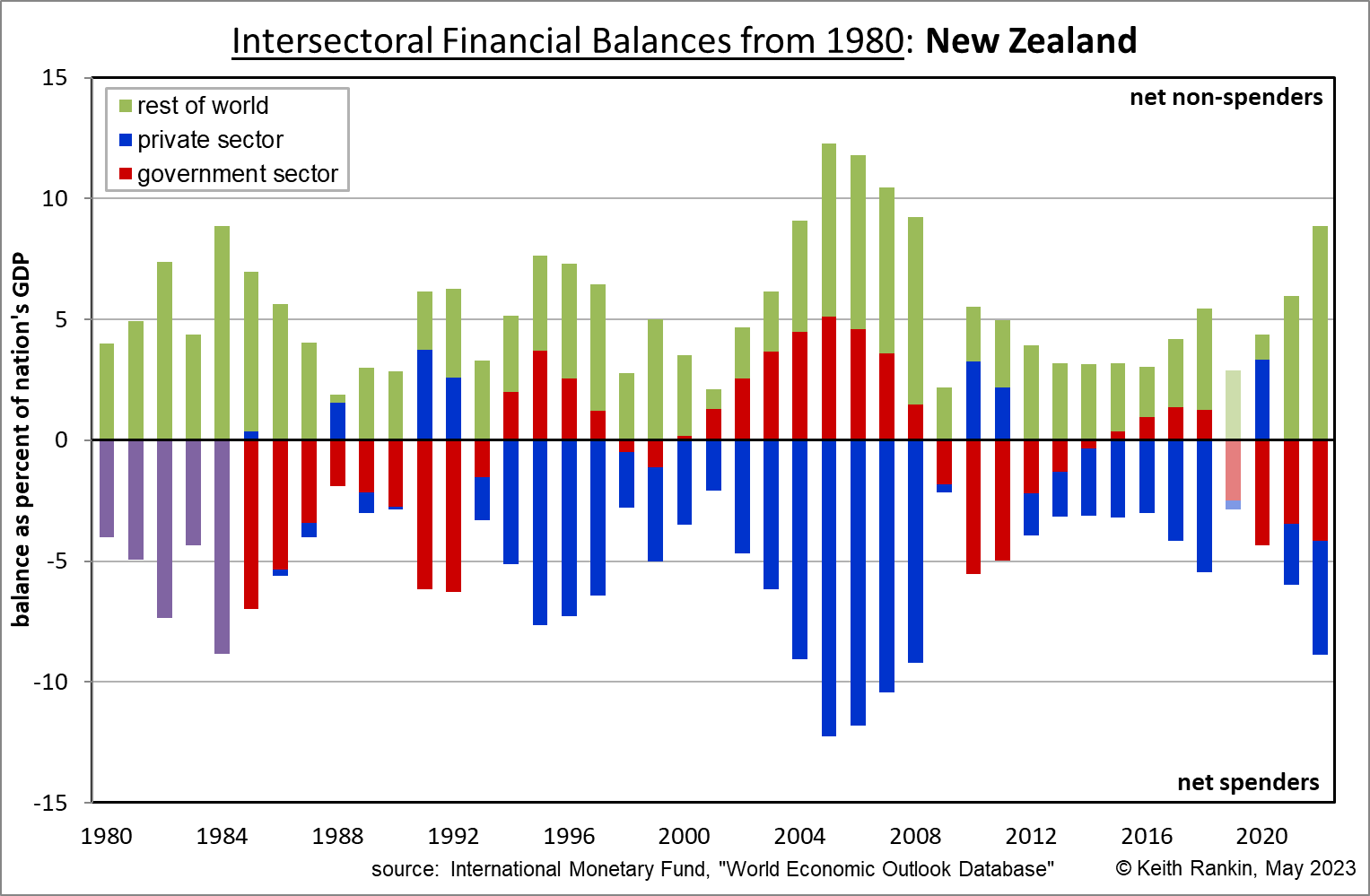
A ‘nation-state actor’ is not the same as a government. A nation-state such as New Zealand, when considered as an economy or as a financial actor, may be called New Zealand Incorporated (NZ Inc. for short). The chart here (Intersectoral financial balances from 1980: New Zealand, from Visualising Countries’ Deficits and Debts, Surpluses and Credits, Evening Report, 29 May 2023) shows, from 1993, the telltale fingerprint of a nation-state ‘player’ adopting the Ponzi financial model as its ‘business model’. New Zealand Inc. is the player in this chart. ‘Peter’ and ‘Paul’ are represented (in green) as the ‘foreign sector’. Paul has always been very happy to ‘invest’ in New Zealand Inc. because Peter keeps supplying the funds which pay Paul. Likewise, Paul pays Peter. There is an ongoing long-term flow of funds from foreign savers to New Zealand consumers as well as to other foreign savers. Much of it is channelled through asset markets; thus the end-consumers are often people who sell their houses or shares to speculative ‘investors’.
The funds from foreign Paul and foreign Peter are channelled into the New Zealand private sector, supporting a mix of private consumption, private speculation, and private investment. The Government gets its cut, indirectly, by taxing the indebted and profligate private sector. In New Zealand, unlike some other nation-state economies, the government is usually able to collect most of the taxes that it levies; so the government is enriched by the process while looking ‘squeaky clean’; the government is taxing debt rather than incurring debt.
While the Ponzi financial model was not fully operable in New Zealand until 1993, it was established in 1985 with the deregulation of the financial sector and the adoption of a monetary policy which ensured that interest rates would be high enough to attract Peter’s and Paul’s money.
We should note that, before 1985, it was also normal for New Zealand to receive a substantial net inflow of foreign funds. But, until then, New Zealand Inc. was following a traditional development model. In that development model, New Zealand – and especially the New Zealand government – was an active borrower, with the foreign sector sufficiently responding to New Zealand’s requests for investment funds. As an active borrower, those pre-1985 debts would be serviced out of incomes generated because of those debts.
In the development financial model, government deficits are a central feature, driving the economic development of the nation-state. In the Ponzi financial model, governments feed off private deficits; while not always in surplus, governments tend to be surplus-seeking. In the development model, governments are the active party. In the Ponzi financial model, the Reserve Bank – the immediate player – sends interest-rate signals to foreign Peter and foreign Paul; Peter and Paul become the rentier ‘investors’, and the banking system of the nation-state is the Ponzi intermediary. In New Zealand at least, the Reserve Bank plays this financial game in part of its own volition; and in part because it is mandated by the government to do so, through the Policy Targets Agreement which David Seymour wishes to modify. The irony is that the Policy Targets Agreement is the ultimate in Government intervention, which is most strongly advocated by those who otherwise claim to be anti-interventionists.
National economies which pursue the Ponzi financial model have overvalued exchange rates for their national currencies; this is the result of the ongoing inflow of foreign funds from the many Peter and Paul ‘investors’. That is the key feature and consequence of setting elevated interest rates, where ‘elevated’ means interest rates sufficiently high to successfully bid for Peter’s and Paul’s spare money.
Excess elite consumption in New Zealand is thus underwritten by foreign ‘investors’, foreign Peter and foreign Paul; indeed, such excess consumption – debt-financed enjoyment – has been funded in that way in New Zealand since 1985, when the floating exchange rate mechanism was introduced. New Zealand has become one economy in which the foreign-exchange market is dominated by ‘investors’ and ‘players’ rather than by exporters and importers. Not in the top-fifty economies in the world based on gross domestic product (GDP), New Zealand Incorporated is among the top 15 in foreign-exchange transactions.
While private sector deficits in New Zealand did not become prominent until 1993, we may see from Governments run financial deficits; it’s their role to do so (Evening Report, 17 Oct) that private sector surpluses are the global norm, and when global private sector balances approach zero then trans-national financial crises are the result. New Zealand only shows private sector surpluses during financial crises, and even then these private surpluses are smaller than in most other countries.
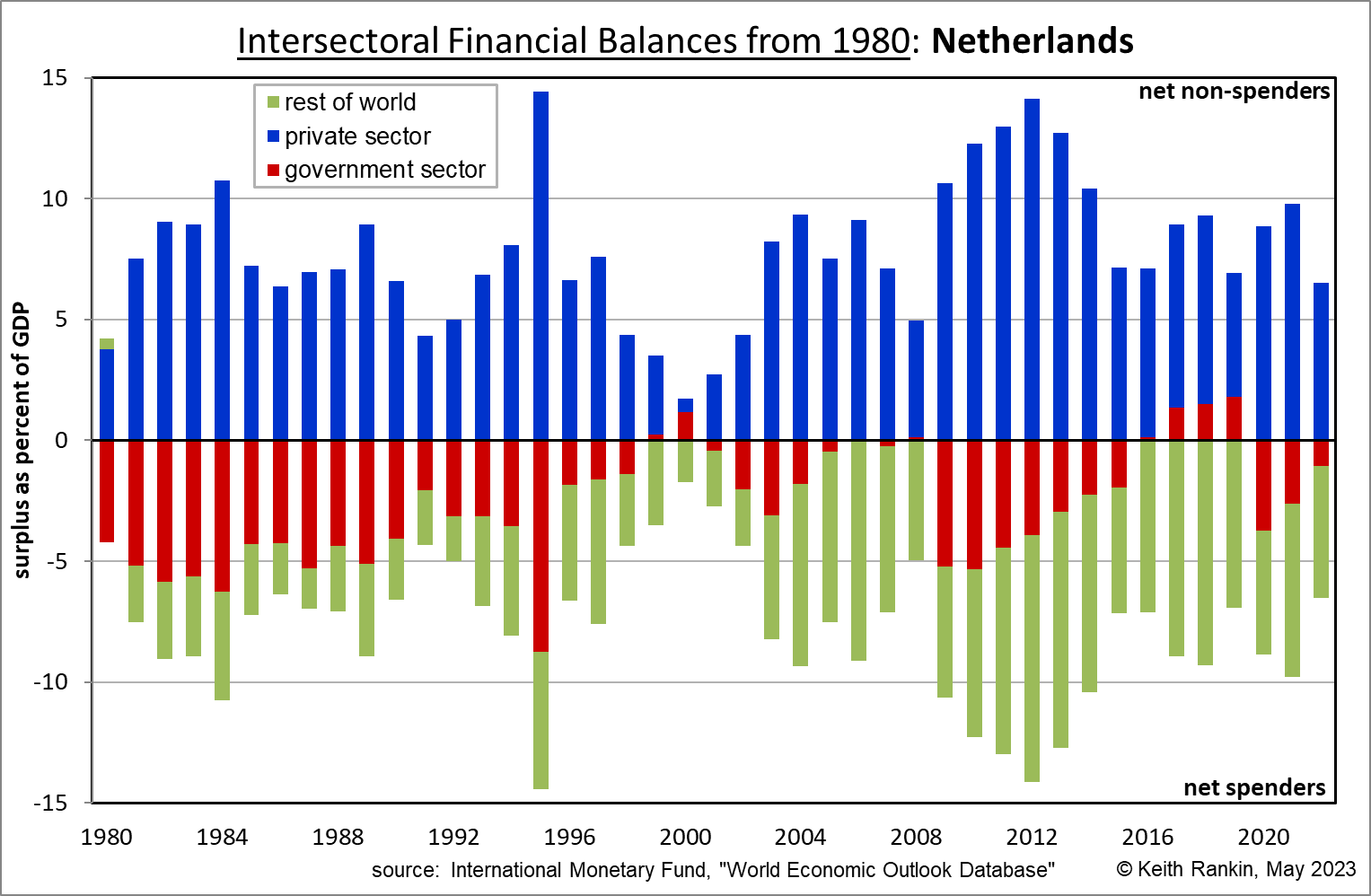
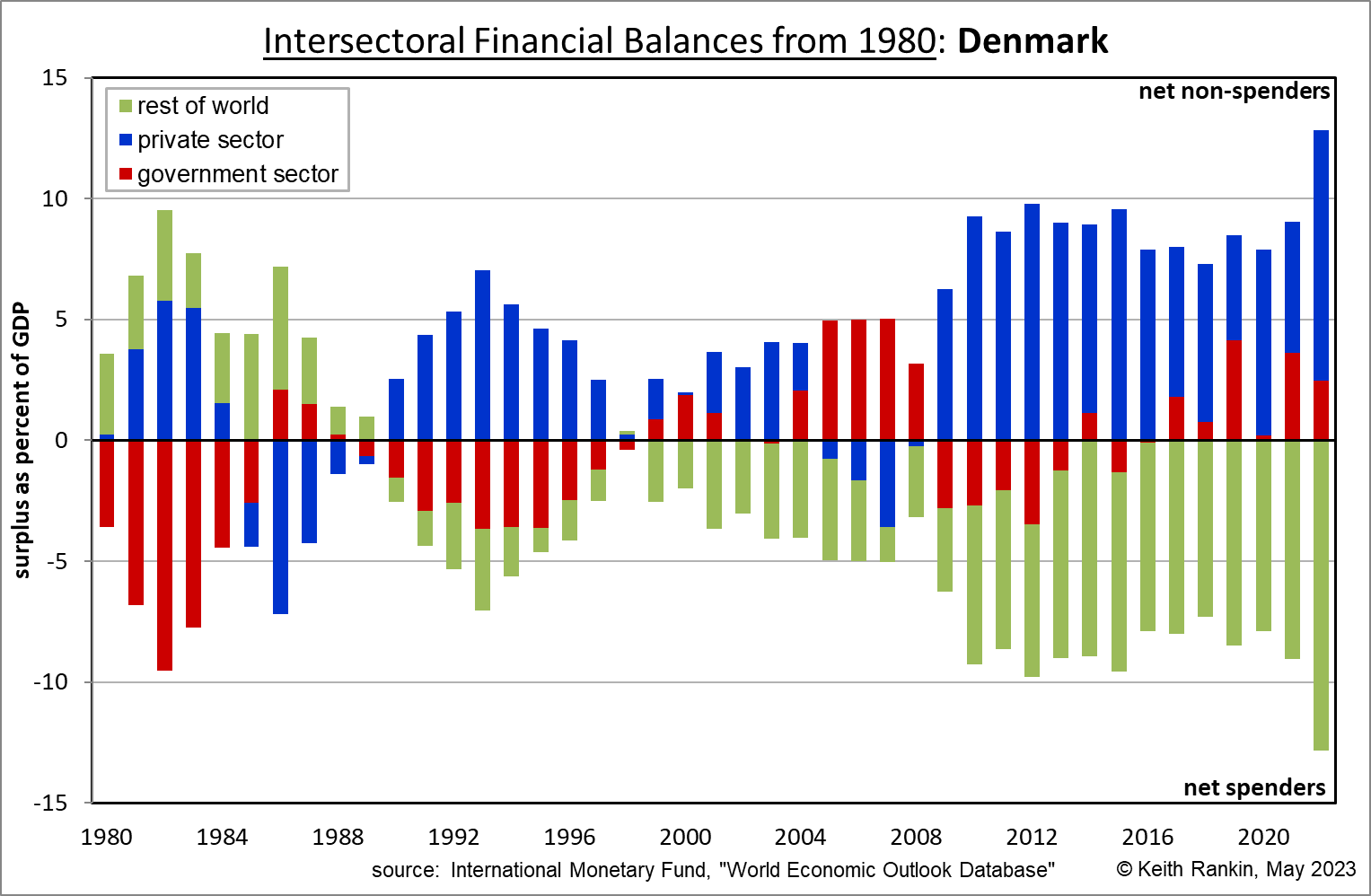
To see the converse financial model, we may note these two countries: Netherlands and Denmark. These countries, with their financial signatures opposite to New Zealand’s, in slightly different ways pursue the ‘mercantilist financial model’, which relies on an undervalued exchange rate. (Noting that a central feature of the Ponzi nation-state financial model is an overvalued exchange rate.) Netherlands, if you like, is Paul. And Denmark is Peter. Whereas New Zealand’s consumers – especially its elite consumers – overconsume, Netherlands’ and Denmark’s underconsume. Netherlands’ Paul and Denmark’s Peter transfer material enjoyment to New Zealand consumers. In general, in the Ponzi financial model, ‘investors’ transfer consumption enjoyment to ‘players’.
Netherlands is a small nation-state within the Eurozone of the European Union. And Denmark, though in the European Union, has its own currency and banking system, untied to the European Central Bank. Denmark Inc. is the closest to being the antithesis to New Zealand Inc. As such, it became the best-known country in the world for its negative interest rates, which its Reserve Bank operated from 2012 to 2022. (Refer Reuters 22 July 2022, Denmark’s decade-long experiment with negative rates seen ending soon.)
The Netherlands’ case is more complex; it is linked to an unstable (and perhaps unique) example of the Ponzi financial game; the example which operated within the Eurozone during the first decade of this century. In that 2000s’ scenario, inflation in the southern European Union countries created an effective currency overvaluation there, and an effective currency undervaluation in the north of the Eurozone. Netherlands became the northern exemplar, while Greece was the southern exemplar. The dynamic in this case was the ‘investors’ in Eurozone north whereas the south was the ‘player’. In this case the game crashed in the early 2010s, and now the Eurozone as a whole is playing the role of ‘investor’ in the same global Ponzi game which New Zealand and Denmark (and others) have been playing since the 1990s.
Why do I call this game a ‘transfer’ from ‘investors’ to ‘players’? If we look back over the decades, we see a direct subsidisation of ‘player’ living standards by ‘investors’. Under conventional financial principles, this would be called a player ‘liability’ rather than a ‘transfer’. However, the issue is that players’ debt to income ratios have not been increasing, thanks to a mix of economic growth and inflation. (This economic growth is largely despite the engagement with Peter and Paul, not because of their ‘investment’ in us.) New Zealand as a player has never had to repay its debts to its Peter and Paul ‘investors’. NZ Inc. services these debts with ease, by enlarging these debts. This debt servicing becomes even easier when global inflation diminishes the accrued debts as well as the interest payable. Nevertheless, New Zealand continues to play the Ponzi game; in order to keep its exchange rate overvalued, New Zealand must pay Paul by borrowing more from Peter than it is paying to Paul. The player pays its interest (and any repayments) from newly borrowed funds.
Iceland’s banks played the same Ponzi game in the mid-2000s. It got severely burned by the 2008 Global Financial Crisis. But, after what amounted to a painless bankruptcy, Iceland Inc. recovered soon enough.
What applied in the past will not necessarily apply in the future. Global deflation, if that happens in the future, would increase the debt-to-GDP ratio of NZ Inc. But global stagflation looks to be a much more likely bet for much of the next twenty years. New Zealand’s accumulated debts to date would then largely disappear into the ether of financial history. New yet-to-be-incurred debts would probably enjoy the same fate. Nevertheless, New Zealand’s financial game will end when there are no longer willing Peters to facilitate New Zealand’s servicing of Paul. Paul might even ask for repayment in full. New Zealand’s exchange rate would then fall, and Paul’s payout in New Zealand dollars would convert to a lesser amount of Euros. The only substantial consequence for New Zealand would be that the Peters and Pauls of this world would no longer see New Zealand as exceptional; would no longer see New Zealand as a player who would pay them higher ‘risk-free’ returns than other players.
Is it a Problem?
This state of affairs is not (and has not been) a problem for any of the participants, because they are all ‘consenting adults’, and all parties have been rewarded so far. Indeed as noted in my Governments run financial deficits; it’s their role to do so (Evening Report, 17 Oct), this is a case where two wrongs do seem to make a right. Two forms of destabilising financial behaviour – mercantilist and Ponzi – offset each other. So long as the Danes and the Dutch keep playing their game, they (taken together) do not want to be paid out simultaneously; they want to keep playing. Repayment for them would mean that their incorporated countries, long-used to private sector surpluses, having to enjoy deficits; they would have to spend more than they earn, something they are not used to and have never been comfortable with.
Looking back over the last 30 years, New Zealanders have benefitted; and Dutch and Danes have lost, though they would have lost by more if they had ‘invested’ elsewhere at lower interest rates. They have been the givers, and New Zealanders have been the takers; and have been the takers without any form of systemic financial default.
However, this Ponzi financial model is a past and present problem in that it has substantial adverse distributional implications for New Zealand (high domestic wealth and income inequality); and, distributional implications for Netherlands and Denmark too (less domestic inequality than they otherwise would have had). In this sense, it is Netherlands and Denmark – not New Zealand – who become the winners of the game.
The differences, domestically, are linked to the interest rates. New Zealand’s financial model depends on setting interest rates above the norm for economically advanced nation-states. Netherlands and Denmark’s mercantilist model depends on setting interest rates below that norm. High interest rates create inequality; and perpetuate cost-of-living crises; crises which are ameliorated by the overvalued exchange rate keeping elite consumption cheap. Low interest rates in Netherlands and Denmark diminish inequality, reduce the costs of housing and other basic needs, and, through their undervalued exchange rates, raise the prices of elite consumables.
Summary
The New Zealand economy has worked according to a simple Ponzi model since 1985. The model relies to a degree on New Zealand exceptionalism which works by creating the perception in world financial markets that New Zealand is a sure bet: both ‘safe’ and providing ‘investors’ with relatively high returns. The model relies on the government’s anti-inflation mandate to justify the higher domestic interest rates required.
Interest rates in New Zealand are set to ensure an inflow of foreign savings which stimulates (while indebting) New Zealand’s private sector, and which sees significant amounts of that credit pass through the private sector into government coffers.
New Zealand’s Ponzi financial model is stable so long as New Zealand retains its exceptional status in foreign perception. Is New Zealand’s Ponzi financial model stabilising? Yes, given the mercantilist games played elsewhere in the global financial ecosystem. How will the model fare in the next Great Depression? Possibly no worse than Iceland fared in the 2008 Global Financial Crisis.
Should New Zealand Incorporated shift to another financial model? Yes, because ultimately two wrongs do not make a right. And because this model underpins the increasingly grotesque inequality we see in Aotearoa New Zealand. And because the two extranational Ponzi games which we are familiar with from the late 2000s, that played by Iceland’s banks and that played by the Southern Eurozone (including Ireland who got away with it; see Economic Growth, Ireland compared to Australasia, Evening Report, 12 Oct 2023), both crashed and burned soon enough.
————-
Keith Rankin (keith at rankin dot nz), trained as an economic historian, is a retired lecturer in Economics and Statistics. He lives in Auckland, New Zealand.
The recent award of the 2023 Nobel prize in physiology or medicine to Katalin Karikó and Drew Weissman highlights the growing importance of RNA technology in the medical world, with many potential applications beyond COVID vaccines.
But until now, one of the major hindrances in making this technology more widely available globally, and in translating research into clinical use, has been the need for proprietary products, often licensed by pharmaceutical companies.
Detailed methodology to deliver RNA vaccines to cells was also not easily available to the research community.
For these reasons we have published a protocol detailing how to make and package RNA with commercially available reagents.
How RNA therapies work
RNA stands for ribonucleic acid. It is a type of genetic material, which can act as a messenger (mRNA), that translates information held in DNA into specific proteins.
The concept behind RNA therapies is elegant and simple, in theory. There are two distinct components: the RNA payload and the fatty envelope, made of lipid nanoparticles, which safely delivers the payload to cells.
Once inside a cell, the lipid envelope releases the RNA, enabling it to act as a messenger that will be read and translated to make specific therapeutic proteins. In COVID vaccines, the manufactured protein mirrors the spike protein of the SARS-CoV-2 virus, training our immune system to recognise and remember it for a robust future immune defence.
It is hard to believe now, but even in the early 2000s RNA therapies were widely considered to be a pipe dream. There were several hurdles in place that, until relatively recently, were considered insurmountable.
Karikó and Weissman’s discovery revolutionised our understanding of how cells detect and react to different RNA structures.
Their discovery allowed therapeutic RNAs to be synthesised so they could avoid destruction by the body before the RNA had a chance to carry out its task. Their seminal paper was published in 2005 – 15 years before the COVID pandemic.
Throughout this time, a viable delivery system was being developed as well. RNA is a negatively charged, unstable molecule and cannot maintain its structure in the body without some sort of protective casing.
Two critical advancements are essential. First, the lipid nanoparticles are ionised. This allows the encapsulation of the negatively charged RNA with a positively charged envelope. Then, before injection into the body, this assemblage is converted to a neutral pH, reducing potential toxicity in the body.
Second, a method to achieve consistency in the particle size of the lipid nanoparticles was developed. Size consistency matters because it enhances the vaccine’s uptake by cells in the body.
Time in the spotlight
By the time the COVID pandemic arrived, the essential components to make a viable RNA vaccine had emerged. RNA vaccines were especially appealing as they can be rapidly synthesised in the lab using just the genetic code of the virus.
As a result, the research field progressed rapidly. In addition to pharmaceutical development, several research groups around the world started work on RNA technology, applying it to a plethora of different diseases, including cancer, gene therapy and vaccines for different infectious diseases.
However, intellectual property constraints surrounding the lipid nanoparticle envelope raised production costs and affected investment prospects. This meant that while research and design could move forward, taking the findings into the clinic was not possible without paying the premiums to license certain reagents.
The result has been that labs around the world are developing their own techniques from scratch, leading to a grossly inefficient system.
The democratisation of RNA technology
Our research expedites the method development process by providing a springboard others can launch off. It is a standardised technique researchers can use as a baseline for RNA therapies without the need for proprietary products.
This will mean more people around the world will be able to bring RNA technology into the clinic, broadening its scope, impact and safety.
Current lipid nanoparticle formulations have also been optimised for a generalised immune defence, rather than specific tissue-targeted immune responses. Unhindered research in this area may unlock findings that allow very specific organs or even cells to be targeted.
It will also enable more universities and even schools to teach and research this technology and improve it for applications beyond those that will be commercially profitable.
We have only seen the tip of the iceberg in terms of the therapeutic potential of RNA technology. By democratising this technology, we can more fully explore and harness its myriad possible therapies.
This work was supported by funding from New Zealand Ministry of Business Innovation and Employment (RTVU1603 and Vac 19008), Research Trust of Victoria University of Wellington (project number 400662) and The Hugh Green Foundation.
In International relations, realism refers to the view that States have interests and use relative power capabilities to pursue those interests in an anarchic world order lacking a superordinate power or Leviathan (that is, a condition that Hobbes referred to as the “state of nature’). Conversely, idealism refers to the better angels and perfectibility of humankind, seeing a desire for cooperation as being equally as strong as the urge to enter into conflict with others. Constructivism tries to bridge the gap between realism and idealism by positing that the creation and expansion of international institutions designed to foster cooperation and diminish conflict is a means to constrain anarchy in world affairs. International systems analysis serves as a meta-theory that sees the world order in quasi-organic terms, as an evolving entity that is more than the sum of its aggregate parts and which has an unconscious logic and process of its own that is a collective response to the machinations of individual States and other non-State actors, thereby mirroring the invisible hand of the economic market when it comes to determining efficiency at a systemic level.
Classic realism dates back to Otto von Bismarck and has it most recent exponents in Henry Kissinger and John Mearsheimer. Idealism draws its inspiration from Woodrow Wilson, and constructivism owes its reputation to Alexander Wendt. International systems theory is the brainchild of Morton Kaplan. The works of these authors and others such as Hans Morgenthau and Kenneth Waltz continue to be the guideposts for current practitioners throughout the West (the list is illustrative only, as the number of authors involved in International relations theorising is great).
Realism posits that States have core and secondary interests; that threats are existential, imminent, or incidental; that States may have allies and enemies but do not have friends because interest, not affection is what defines their relationships; that wars are defensive or offensive in nature and are fought for existential and imminent reasons that can lead to pre-emptive strikes against existential and imminent threats as well as preventative attacks to reduce the possibility of an adversary reaching imminent threat status. Wars of opportunity are discouraged because they can lead to uncertain and unexpected outcomes and do not involve existential or imminent threats or core interests; wars of necessity are fought because they have to be, as they involve core interests and are fought against existential or imminent threats.
The current world moment has seen another development, one that is less salubrious in part because it originates from within authoritarian regimes like those governing Russia, the PRC, DPRK, Turkey, Iran and other contemporary dictatorships. The basic premise of this school of thought, which I will call “authoritarian realism” is that a new world order must be created that replaces the Western-centric liberal international order that has been present in world affairs for the last sixty or so years and which has dominated the landscape of international relations since the end of the Cold War. The latter is the system that we see in the form of the UN and other international organisations like the ILO, WTO, WHO, IMF, EU, OAS, OAU, PIF, SPC, NATO, SEATO, UNITAS, ASEAN, IADB, World Bank and a word salad of other regional and multilateral organisations.
For authoritarian realists, these organisations constitute an institutional straitjacket that constrains their freedom of manoeuvre on the global stage as well as that of most of what is now known as the “Global South:” post-colonial societies locked into subordinate positions as a consequence of Western imperialism and neo-imperialism. For authoritarian realists, the supposed ideals that liberal international institutions espouse and what they were constructed to pursue were done for and by Western colonial and neo-colonial powers seeking to establish an undisputed hierarchical status quo when it comes to how international affairs and foreign policy is conducted. More pointedly, in authoritarian realist eyes now is the time for that hierarchy to be challenged because the balance of power between the liberal democratic West and emerging non-Western contenders has shifted away from the former and towards the latter.
That is due to the fact that in the transitional period after the US lost its status as sole superpower “hegemon” in world affairs (stemming from 9/11, its ill-advised invasion of Iraq, long-term and futile engagement in Afghanistan and other conflict zones as well as it mounting internal divisions), the world has been moving to a new order in which other Great Powers compete for prominence, and in which the norms and rules-based liberal internationalist system has been replaced by norm erosion, norm violations and conflict on the part of uncooperative nation-States and non-State actors pursuing their goals outside of established institutional parameters.
This is, in other words, the state of nature or anarchy that Hobbes wrote about on which realists are most focused upon. Liberal rules and norms are no longer universally binding so the default option is to use national power capabilities to pursue individual and collective interests unfettered by self-binding adherence to dysfunctional and biased global institutions. It should therefore not be surprising that a new global arms race has developed over the past decade involving the full spectrum of force, including advanced submarines and nuclear-tipped intercontinental and intermediate missile systems.
In realist views power is relative rather than absolute and covers a host of material and ideological dimensions–economic base, diplomatic acumen, military might, internal political and social stability and ideological consensus, and so forth. Adversaries must calibrate their responses to others based on their assessments of relative aggregate power vis a viseach other as well as other States and international actors. For authoritarian realists it is clear that the West is in decline on most power dimensions, especially morally, culturally and politically as exemplified by the US in the last decade. The West still has economic, military and diplomatic power, but the rise of the PRC, India (nominally democratic but increasingly authoritarian in practice), Russia, Turkey, Iran and lesser dictatorships, coupled with an rightwing authoritarian shift in places like Hungary, the US, Italy and France, demonstrates that the halcyon days of liberal democracy are now past. All talk of climate change, work-life balance, LBGTQ rights and indigenous voice notwithstanding, progressivism (either class-or identity-based) is not making significant gains on the world stage, at least in the eyes of realists in both the West as well as the South and East.
Most fundamentally, what separates the democratic and authoritarian realists is not power per se, but values. For authoritarian realists the liberal democratic West is in decline, overcome by its own excesses, degeneracy, corruption, inefficiencies, vacilliatory leaders and other affronts to the “natural” or “traditional” order of things. In contrast, modern authoritarians (including those in the West) value hierarchy, efficiency, unity of purpose, the demographic superiority of their dominant in-groups, decisive leadership and strength of resolve. Freedoms of speech, association and features such as judicial independence from political authority are seen by authoritarians as easily exploitable Achilles Heels through which division and disunity can be fomented in liberal democracies using disinformation, misinformation, graft and other influence campaigns. Liberal democrats are egalitarian “betas.” Authoritarian realists are self-identified “Alphas.” Consequently, the current word moment is seen as a window of opportunity for authoritarian realists to press their relative (Alpha) advantage in order to re-draw the global geopolitical map and its institutional superstructure. This redrawing project can be considered the authoritarian (neo) version of constructivism on the world stage.
The Russian invasion of Ukraine and the Hamas attack on Israel are examples of how Russia practices authoritarian realism directly and indirectly. The idea in the first instance was to redraw the map of Europe via direct aggression on a former vassal state, assuming that NATO and the EU were too divided and weak after BREXIT and Trump when it came to a collective response. That would impede military support for Ukraine, thereby facilitating a Russian victory on Europe’s southeaster flank, something that would further divide and weaken European resolve to confront Russia, leading in turn to more Russian “assertiveness” along its Western Front. Although that assumption proved false and in fact has backfired at least for the moment, the original concept of exploiting perceived Western weakness was and is clearly at play given ongoing divisions within Western nations about if and how to continue supporting the Ukrainian military effort. The end game of that conflict has yet to be written and could well play into Russia’s favour if extended indefinitely until Western electorates tire of supporting governments that continue to direct resources towards someone else’s war.
Hamas’s attack on Israel came after long-term planning, training and equipping involving its two major sponsors: Iran and Russia (who are military partners). Here the goal is to use the attack and the expected Israeli over-reaction (collective punishment of Gazan civilians for Hamas’s crimes) to sow discord within the Arab world and beyond. Although the official response from most Western governments and corporate media is (at times jingoistically) pro-Israel, pro-Palestinian demonstrations across the world have laid bare the broader social-political divisions aggregated around the conflict. Moreover, other than the US and UK, no major power is offering military support to Israel, and China and Russia have both condemned the Israeli response without mentioning Hamas in their pronouncements (and in fact are silent partners with Iran in supplying war materiel to Shiite militias like Hezbollah, Hamas, Houthis and the al-Sadr brigades in Iraq, even while both maintain strong economic ties to Israel). Sunni Arab governments such as those of Saudi Arabia and the UAE, which have worked to normalise relations with Israel, have now had to backtrack in the face of unrest emanating from the Arab street, and the prospects of the conflict expanding to several fronts in Southern Lebanon, the Golan Heights and West Bank and even spilling over into a major regional war involving Syria, Iran and their patrons cannot be discounted. All of which will help redefine the geopolitics of the Middle East as well as its relationship to extra-regional interlocutors regardless of the specific outcome of this latest iteration of what has become a perpetual war.
Source: Wikimedia Commons, 2023.
In the South and East China Seas, the Sino-Indian border and the borderlands of Tibet and Bhutan, the PRC has engaged in aggressive military diplomacy, using force to annex foreign territories and present a new territorial status quo to its neighbours. As with the Russian interventions in Georgia and Ukraine, these usurpations have been declared unlawful by international courts and condemned by international organisations like the UN. And yet, because of alack of enforcement power–and will–on the part of the International community as currently represented by its institutional edifice of regional bodies and international organisations, these moves have been only lightly challenged, gone largely unpunished and certainly have not been reversed. The result is a new status quo in East Asia in which PRC sovereignty is claimed and de facto accepted well to the West of its recognised interior land borders and far to the South of its littoral seas.
PLANS carrier Liaoning (CV-16) conducting air operations with Shenyang J-15 PLAn fighter. Source: Wikipedia Commons 2022.
In the authoritarian realist mindset, moves to take advantage of the current moment in order to redraw the international geopolitical order, including its institutional foundations, are critical to their survival as independent powers. The PRC is driven by a desire to finally achieve its rightful place as a Great Power after centuries of humiliation by foreign powers. For Russia it is about re-claiming its place as an Empire. For lesser dictatorships it is about using national power to move unconstrained in the global arena, unencumbered by the protocols, norms and niceties of the liberal internationalist order. For all of these authoritarians, marshalling their resources in a common effort to undermine and replace Western institutions is a giant step towards real freedom of action in which relative power is the sole determinant of what a nation-State can and cannot do when it comes to foreign relations. If one is charitable, there might even be a bit of idealism attached to these various projects, as authoritarian realists use soft power applications in order to help the Global South out from under the yoke of Western post-colonial imperialism once and for all even as they empower themselves by doing so.
Some of this is evident in projects like the PRC Belt and Road Initiative, which is a global developmental project that is designed to challenge and replace Western developmental assistance and cement the PRC’s position as the foremost provider of infrastructure investment and financial aid to the Global South. In parallel, both Russia and China have expanded their military alliance networks in the Middle East and Sub-Saharan Africa while courting more engagement with Latin American and Central Asia countries (India and Pakistan, respectively). Russia and the PRC have quietly revived and assumed stewardship of the so-called BRICS bloc of nations, including expanding its membership to include Argentina, Egypt, Ethiopia, Iran, Saudi Arabia and the UAE in 2024. On both economic and military fronts, authoritarian realists are constructing an alternative to the liberal international order.
All of this manoeuvring has added a new twist to the long transitional moment that the international system is undergoing and in fact has altered the way in which the emerging systemic realignment is being shaped. Rather than the anticipated move from a unipolar world dominated by the US to a multipolar world in which the US shared space as a Great Power with emerging and re-emerging Great Powers like the PRC, India, Russia, Japan and perhaps Brazil and/or others, what is coming into shape is a new bipolar world made up of competing constellations or networks of like-minded nation-States, to which are being added non-State technology actors looking for economic opportunity in increasingly loose regulatory environments brought about by the erosion of international rules and norms in the field of transnational commerce.
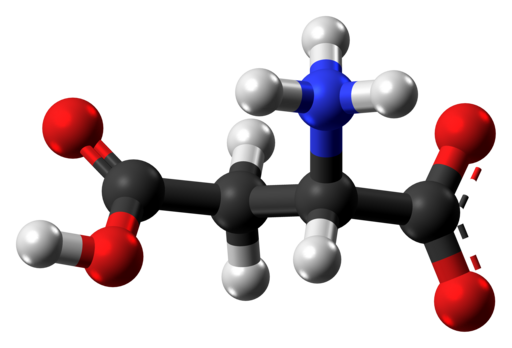
Multipolarity is not always symmetric in nature or geopolitics. This is an aspartic acid molecule. Source: Wikimedia Commons 2017.
There is some time to go before the full shape of the new bipolar “constellation” order is confirmed. Authoritarian realists will retain their own nation-centric views even if their interests overlap in the bipolar constellation format. Western nations will need to revise their approaches to world affairs and in particular their positions vis a vis the post-colonial Global South given the competition for the South’s attention provided by the authoritarian realists. All of this makes for uncertain and fluid times in which the best hedge is multi-level power multiplication with focused application by the emerging constellations of competing States and associated non-State actors. How the wars in Ukraine and in Gaza turn out will give us a relatively short-term glimpse into what the geopolitical order will look like by the end of the decade because technology, will and multinational commitment are now being put to the test in both new and old ways in those arenas.
Two things are worth noting. At this critical juncture it is by no means assured which side of the emergent bipolar constellation balance of power will be favoured over the long term. What is certain is that only one side is actively working to re-make the world order in that image, Those are the authoritarian realists.
Drug detection dogs are a street-level policing strategy that has now been used in Australia for more than 25 years.
The stated intent of this policy was to target drug supply. However, in 2006, the NSW Ombudsman showed most people detected by the dogs either had no drugs at all or were people who use drugs – not those who supply drugs.
Since that time, increasing evidence has challenged the effectiveness and legality of this policing strategy. In addition, a 2018 study of people who use drugs found Australia had one of the highest reported incidences of drug dog encounters. This occurred most often at festivals, on public transport, and in licensed premises.
In fact, policing and law enforcement, including police drug dogs operations, accounts for nearly two-thirds of Australian government spending on illegal drugs.
Evidence suggests drug dogs do not deter people from using drugs. However, much of the evidence base for these arguments focuses on festival settings. Relatively little is known about experiences in non-festival settings and among different groups of people who use drugs (that is, those who do not typically attend festivals).
Our recent research shows police drug dogs are both an ineffective and inequitable strategy, which may carry health, social, and legal risks.
We have recently published two studies about police drug dog encounters among two samples of people who regularly use drugs. The Ecstasy and Related Drug Reporting System (EDRS) includes interviews with people who regularly use ecstasy and/or other illicit stimulants, and the Illicit Drug Reporting System (IDRS) includes interviews with people who regularly inject drugs.
An ineffective strategy
We used data from our surveys with people who regularly use ecstasy to describe drug dog encounters at music festivals. This included how individuals responded to the presence of dogs and how they prepared for anticipated encounters.
We found encounters with drug dogs at festivals were common. In fact, the vast majority (94%) of those who reported such encounters said they had anticipated the presence of drug dogs. However, rather than being deterred from using or carrying drugs into the festival, participants reported taking steps to try to avoid detection by dogs.
Consistent with previous research, those who expected to see police drug dogs at the festival described trying to hide their drugs well, or taking their drugs before entering the festival. Both of these approaches to avoiding detection have been shown to increase the risk of overdose and other adverse events, a cause for considerable concern following the deaths of two men at a New South Wales music festival in October.
Our findings reinforce concerns that the growing normalisation of drug dogs may actually be reducing their efficacy. Based on our research, we believe drug detection dogs should no longer be used in festival settings.
In a second study, we explored encounters with drug detection dogs in non-festival settings among different groups of people who use drugs.
We found both samples of people commonly reported encounters with drug dogs in locations beyond festivals. These occurred most often at public transport hubs and other public places.
Compared with those who regularly inject drugs, those who regularly use ecstasy were more likely to have reported an encounter with drug dogs in non-festival settings over the last 12 months (32% and 21%, respectively). By contrast, we found people who inject drugs were over three times more likely to report being stopped and searched by police, and to experience criminal justice consequences, despite being no more likely to be carrying drugs at the time of encounter.
We cannot provide a definitive reason for this discrepancy. However, it seems plausible that it is reflective of sociodemographic differences between the two samples. That is, our sample of people who inject drugs experience much higher levels of social disadvantage and previous engagement with the criminal justice system.
Existing evidence indicates that prior interactions with police increase the likelihood of a stop and/or search encounter with police drug dogs. It also shows people who inject drugs often experience police harassment, violence, and stigmatising language. Although the latter of these accounts relate to police encounters more broadly, it could be argued that drug detection dogs are being used in Australia as tools to target, harass and criminalise the most marginalised groups of people who use drugs in society.
Continued use of drug detection dogs may exacerbate health and social harms to an already marginalised group. Such strategies are also in conflict with Australia’s national drug strategy objective of harm minimisation, and with Australia’s commitments under human rights laws to provide access to health care and to protect individuals, families and communities from drug related harm.
Our findings, combined with the existing research, suggest police drug dogs are ineffective and inequitable. They should be removed from all community settings, including music festivals, public transportation hubs, and other public places.
Caitlin Hughes currently receives funding from the Australian Research Council, Swiss Federal Office of Public Health, SA Law Foundation, United Nations Development Programme and CentreCare SA. She is President of the International Society for the Study of Drug Policy.
Rachel Sutherland currently holds an NHMRC Investigator Fellowship (#1197241). She previously received untied educational grants from Seqirus for post-marketing surveillance of opioid medications in Australia. Funding from this organisation has now ceased and was for work unrelated to this project.
Daisy Gibbs does not work for, consult, own shares in or receive funding from any company or organisation that would benefit from this article, and has disclosed no relevant affiliations beyond their academic appointment.
Source: The Conversation (Au and NZ) – By Kimberley Crofts, Doctoral Student in Sustainable Transitions, School of Design, University of Technology Sydney
The closures affect at least 1,200 jobs in the Queensland outback community of 21,000 people. Those affected include mine workers, contractors, suppliers and businesses.
Questions raised by the closures have wider relevance for how other towns and regions across Australia manage mines as they come and go.
All mines close. However, the impact of future closures on communities is rarely front of mind when mines open. This means the issue of how towns effectively manage a mine’s closure can be treated as an afterthought.
One important way to ensure towns and regions can manage mining and its impacts is for community perspectives to inform public policymaking and planning. The period before a mine opens is the ideal time to openly discuss how its life – and its end of life – will play out for the community. This includes any Indigenous people on whose land mining is to take place.
Swiss multinational Glencore now owns Mount Isa Mines, which has been in international hands almost since inception.
The early owners brought international ideas of industrial relations and town planning to the region. This encompassed a financial guarantee to deliver a railway to the town and strategic planning of infrastructure to attract the right type of miner – a family man who was more likely to establish roots in the town.
Townspeople’s voices were not heard in this early planning. While the original owners wished to create a “business with a soul”, this may have been less benevolent than it seems. It appears this was just an early forebear of the concept of a social licence to operate.
The ability for mining companies to “buy” a social licence to operate can been seen by communities as problematic. As noted in previous research, “measures taken by extractive industries to build support or ‘social licence’ for their developments are in fact experienced by these participants as destructive of community life”.
Once a mine is established, the focus is very much on ongoing operations. Mines seek to present themselves as part of local communities, but they typically remain very large, multinational businesses. That is, they are in the local community but not part of it.
Government support for mines typically continues through this period, through financial and other measures. But financial benefits rarely accrue to communities, with mining royalties significantly less than they could be.
Queensland recently changed coal royalties so the rate increases as coal prices increase. It’s an important step for the state to secure the funds needed for the transition away from coal.
But this sort of forward thinking isn’t common. Mines typically deliver short-term financial gains to mine owners and wages for mine workers.
Set against these benefits, the costs tend to be social and environmental.
One obvious example is the inevitable environmental destruction that comes with mining.
Children in Mount Isa have elevated levels of lead in their blood, with those living closest to the smelter recording the worst school test results. Jason Benz Bennee/Shutterstock
While those involved in mining receive financial benefits, the rest of the community can often find itself at an economic disadvantage. “Two-speed economies” can be seen in such mining towns. In Muswellbrook in the Hunter Valley, New South Wales, for example, housing disadvantage is rising among those who aren’t benefiting from a mining wage.
Looking ahead, the people of Mount Isa undoubtedly face significant challenges, including a far less stable climate. Ensuring community voices are heard in planning mine closure is key to ensuring towns and regions benefit during and after mining.
After the Mount Isa mine closures were announced, the Queensland government pledged up to A$20 million for an “economic structural adjustment package” to support affected workers. Glencore is expected to match that funding.
On a local level, the Mount Isa City Council has actively worked towards securing the city’s future. In 2019 the council released a prospectus aimed at attracting investment “to diversify the city’s economy to reduce the impact of this minerals boom-bust cycle”.
While funding is available and the council is committed to forward planning, what does structural adjustment really mean for the community?
Managing all of the intersecting issues requires the hand of a co-ordinating authority. Yet if all planning is done at arm’s length, it will not be able to draw on the community’s deep insights about place.
A wider problem
As the energy transition continues, Australia can expect to see many more mines close. These include coal mines in the Hunter Valley and Victoria’s Latrobe Valley.
And as the transition accelerates, we might expect to see other mines open, as renewable energy industries seek the critical minerals they need. This week, for example, the federal government announced $2 billion in funding to support the critical minerals industry.
While all government support will be welcomed, it’s time to bring planning back down to the local level. Residents know their towns intimately. They should be involved in actively shaping their towns’ futures.
The authors do not work for, consult, own shares in or receive funding from any company or organisation that would benefit from this article, and have disclosed no relevant affiliations beyond their academic appointment.
Source: The Conversation (Au and NZ) – By Kazi Mizanur Rahman, Associate Professor of Healthcare Innovations, Faculty of Health Sciences and Medicine, Bond University
Australia’s bushfire season is officially under way during an El Niño. And after three wet years, and the plant growth that comes with it, there’s fuel to burn.
With the prospect of catastrophic bushfire comes smoke. This not only affects people in bushfire regions, but those in cities and towns far away, as smoke travels.
People with a lung condition are among those especially affected.
Bushfire smoke pollutes the air we breathe by increasing the concentration of particulate matter (or PM).
Once inhaled, small particles (especially with a diameter of 2.5 micrometres or less, known as PM2.5) can get deep into the lungs and into the bloodstream.
Emergency department visits and hospital admissions for asthma-related symptoms riseafter exposure to bushfire smoke.
Smoke from the bushfires in summer 2019/20 resulted in an estimated 400 deaths or more from any cause, more than 1,300 emergency department visits for asthma symptoms, and more than 2,000 hospital admissions for respiratory issues.
Even if symptoms are not serious enough to warrant emergency medical attention, exposure to bushfire smoke can lead to cough, nasal congestion, wheezing and asthma flares.
Monitor your local air quality by downloading one or both of these apps:
AirSmart from Asthma Australia has live air-quality information to help you plan and act
AirRater, developed by Australian scientists, can be another useful app to monitor your environment, track your symptoms and help manage your health.
During times of poor air quality and smoke stay indoors and avoid smoke exposure. Close windows and doors, and if you have one, use an air conditioner to recirculate the air.
Avoid unnecessary physical activity which makes us breathe more to deliver more oxygen to the body, but also means we inhale more polluted air. Consider temporarily moving to a safer residence.
Well-fitting N95/P2 masks can reduce your exposure to fine smoke particles if you must travel. However they can make it more difficult to breathe if you are unwell. In that case, you may find a mask with a valve more comfortable.
Taking your regular preventer medication ensures your lung health is optimised before the danger period.
Ensure you have a written action plan. This provides you with clear instructions on how to take early actions to prevent symptoms deteriorating or to reduce the severity of flare-ups. Review this plan with your GP, share it with a family member, pin it to the fridge.
Make sure you have emergency medication available, know when to call for help, and what medication to take while you wait. You may consider storing an emergency “reliever puffer” in your home or with a neighbour.
High-efficiency particulate air (HEPA) filters can reduce smoke exposure inside the home during a fire event by 30-74%. These filters remove particulate matter from the air.
A spacer, which is a small chamber to contain inhaled medication, can help you take emergency medication if you are breathing quickly. You may want to have one to hand.
The authors do not work for, consult, own shares in or receive funding from any company or organisation that would benefit from this article, and have disclosed no relevant affiliations beyond their academic appointment.
If you have hay fever, you’ve probably been sneezing a lot lately.
Sneezing is universal but also quite unique to each of us. It is a protective reflex action outside our conscious control, to remove irritants from inside our nose.
You can sometimes stop a sneeze by holding your nose or pressing underneath it. This is related to the gate control theory of pain and the idea you can change neural responses with external stimulation. But given the velocity of a sneeze, it might not be a good idea to stop it after it has started.
These are the “ah” and the “tchoo” phases of a sneeze.
On the exhalation of a sneeze, your tongue is lifted to the roof of your mouth. This closes off the back of the mouth so the air is forced mostly through your nose. The air expelled through the nose flushes out the irritants that caused the sneeze. The “tch” sound of a sneeze is the reflexive touching of the tongue to the roof of your mouth.
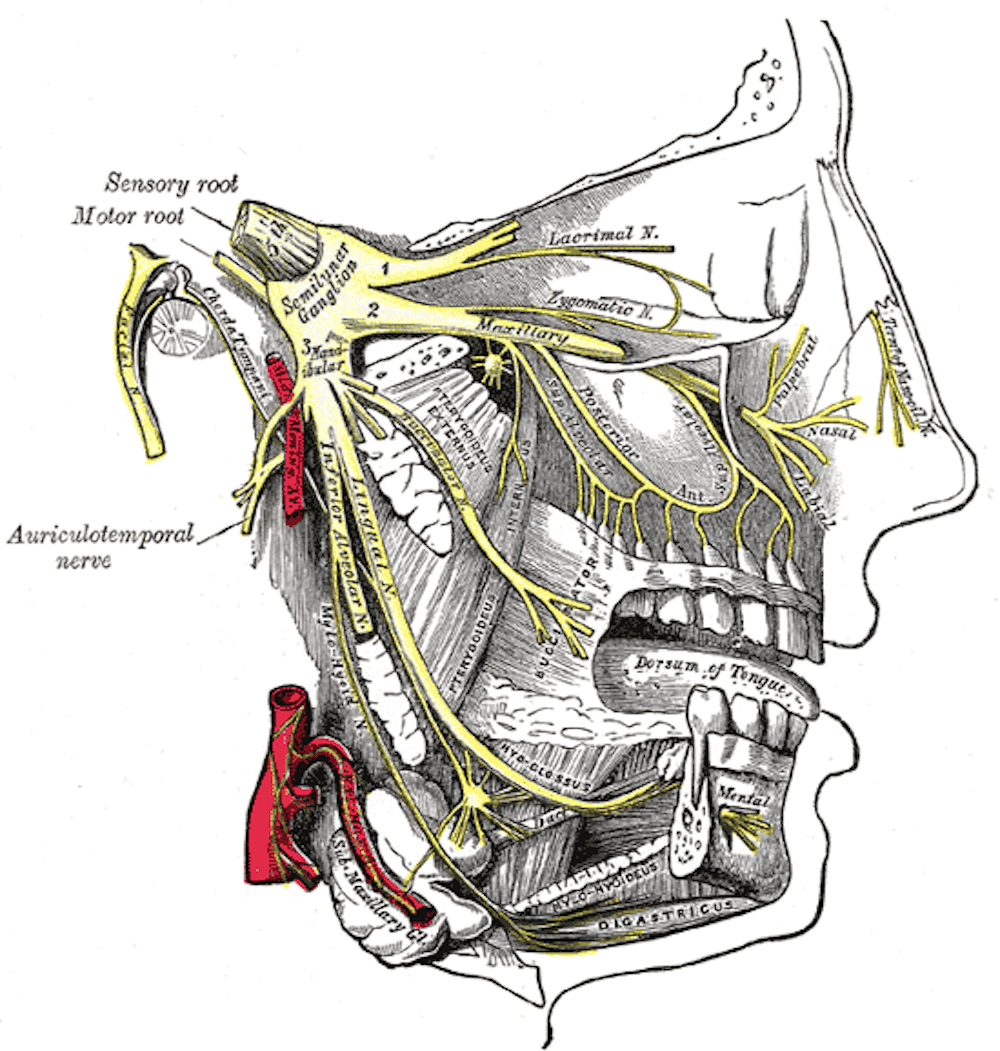
Activating the trigeminal touch nerve, can overwhelm the sneeze reflex. Shutterstock
The left and right trigeminal nerves carry sensory information from the face to the brain. This includes touch, pain and irritation sensory information from the facial skin and from inside the nose and mouth. Within each trigeminal nerve are thousands of individual nerve branches that each carry a specific type of sensory information.
Sensory nerves travel to the brain via the spinal cord. The sensory nerves that carry pain and irritant signals are narrow, whereas those that carry touch information are wider and faster.
In the spinal cord, these nerves communicate with each other via interneurons before sending their message to the brain. The interneurons are the “gates” of the gate control theory of pain.
A nerve carrying a pain signal tells the interneuron to “open the gate” for the pain signal to reach the brain. But the larger nerves that carry touch information can “close the gate” and block the pain messages getting to the brain.
This is why rubbing an injured area can reduce the sensation of pain.
One study showed stimulating the trigeminal nerves by moving the jaw reduced tooth pain. We can observe this in action when babies instinctively bite on things or pull their ear when they are teething. These actions can stimulate the trigeminal touch nerves and reduce pain signals via the gate control mechanism.
So does putting your finger under your nose stop a sneeze?
There are many suggestions of how to stop a sneeze. These include pulling your ear, putting your tongue to the roof of your mouth or the back of your teeth, touching your nose, or even sticking your finger in your nose.
All of these stimulate the trigeminal touch nerves with the goal of telling the interneurons to “close the gate”. This can block the irritant signals from reaching the brain and triggering a sneeze.
What if an irritant in your nose has triggered a sneeze response, but you’re somewhere it might be considered inappropriate to sneeze. Should you stop it?
So it’s probably best to try and prevent the sneeze reflex by treating allergies or addressing irritants. Failing that, embrace your personal sneeze style and sneeze into a tissue.
The authors do not work for, consult, own shares in or receive funding from any company or organisation that would benefit from this article, and have disclosed no relevant affiliations beyond their academic appointment.
Far-right and neo-Nazi groups pose a significant ongoing threat to national security, in Australia and globally. It is crucial to counter their hateful ideology, which has no place in Australian society.
However, banning specific symbols and gestures is a tricky thing to do.
So with each state going its own way, how are these laws working together? And importantly, how will we know if they’re effective?
Over the last 16 months, Victoria, NSW and Tasmania have enacted laws banning the public display of Nazi symbols and salutes. Victoria was the first; it chose initially to ban only the Nazi Swastika .
New South Wales and Tasmania ban “Nazi symbols”, which is likely broader than the Victorian law. The courts will have a bigger say in whether something qualifies as one.
This should be simple enough for the most recognisable, such as the Swastika or Schutzstaffel (SS), but the question will be trickier if the law is enforced more broadly.
For example, neo-Nazi groups often use numbers like 14 (to indicate a 14-word white supremacist slogan) or 88 for “Heil Hitler” (because H is the 8th letter of the alphabet). The Anti-Defamation League maintains a large database of these sorts of hate symbols.
It is unclear which could provide the basis for a charge under NSW and Tasmanian law.
In Tasmania, the same law bans Nazi gestures. That was the first Australian law to criminalise the Sieg Heil salute, followed by Victoria.
Neo-Nazi groups use the salute in public places to intimidate, spread fear, raise their profile and recruit new members.
These laws all target public displays of Nazi ideology. This would include, for example, hanging a Nazi flag from a bridge, or waving Swastika signs at a neo-Nazi rally, but not letterbox drops or possessing Nazi paraphernalia at home.
All the laws include exemptions where symbols are displayed for legitimate religious, artistic, legal, historical, or educational purposes.
The federal government has also put forward its own national ban laws, but those are yet to pass parliament.
How do Queensland’s laws compare?
In two key ways, Queensland’s laws take a broader approach.
First, the laws do not list any prohibited symbols. In fact, they do not mention anything about the Nazi party or its symbols. Instead, a list will be made and updated in regulations.
This will, in theory, allow the Queensland government to adapt to new hate symbols as the need arises. But it’s unusual to give the executive so much power in determining the scope of a crime.
No one knows, at this point, what the laws will actually ban. It is a crucial aspect of the rule of law that laws state clearly when conduct is a crime.
To ban a symbol or gesture, the Attorney-General must first consult with the chair of the Crime and Corruption Commission and the Human Rights and police commissioners.
She can recommend a symbol be listed if she is satisfied that it is “widely known” to represent an ideology of “extreme prejudice”.
Given the large numbers of hate symbols used by extremist groups, with varying degrees of public knowledge about them, seeking clear advice on this question could prove difficult.
Second, Queensland’s approach is not limited to public displays. It includes publishing and public distribution. The main question is whether a member of the public might reasonably feel menaced, harassed or offended.
This will give law enforcement tools to address a wider range of behaviours, such as handing out neo-Nazi flyers in public, but it raises some difficult questions.
It is not clear, for example, whether publication would include posting on social media, or whether public distribution would include letterbox drops, as the content cannot be seen from a public place.
Whether members of the community might feel menaced, harassed or offended will be clear where a group uses recognisable Nazi symbols, hate speech and physical intimidation in public spaces. But it will be a trickier question elsewhere.
For example, a lot of far-right content online is more subtle, spreading effectively through memes and humour.
How consistent are the laws?
Victoria, Tasmania and NSW’s laws are broadly consistent, with Queensland as a clear outlier.
The penalties also vary significantly, ranging from three months imprisonment in Tasmania (or six months for a repeat offence in a short time), to six months in Queensland, to 12 months in NSW and Victoria.
These inconsistencies are not necessarily a bad thing.
One of the benefits of a federal system is that states can create different laws and later fall in line if best practice emerges.
But it does suggest a degree of experimentation, with no consensus on the most effective approach.
In any state, neo-Nazi groups may simply avoid prosecution under these laws by adapting the symbols, slogans and gestures they use.
For example, they already use the “OK” hand symbol to indicate white power. It would be difficult, even under Queensland’s approach, to ban this otherwise mundane gesture.
However, if the groups are prevented from using their most recognisable and intimidating symbols, it will rob them of key recruitment tools and reduce their ability to spread fear and hatred.
A group of white supremacists using the OK hand symbol and signs saying 14 and 88 is still intimidating, but less so than the same group using the Swastika and Sieg Heil salute.
In addition, the laws will allow police to disrupt and arrest those who pose a threat to our communities. This will need to be done in a way that does not escalate tensions at a public rally or protest.
In any case, the criminal law serves a moral purpose as well as a practical one. These developing laws send a clear signal that Nazi ideology has no place in Australian society.
Keiran Hardy does not work for, consult, own shares in or receive funding from any company or organisation that would benefit from this article, and has disclosed no relevant affiliations beyond their academic appointment.
This article is the next in The Conversation’s six-part series on insomnia, which charts the rise of insomnia during industrialisation to sleep apps today. Read other articles in the series here.
Do you have difficulty falling asleep? Do you stay awake for a long time at night? Do these sleep problems make you feel fatigued, strung-out, or exhausted during the day? Has this been happening for months?
If so, you’re not alone. About 12-15% of Australian adults have chronic insomnia.
You might have tried breathing exercises, calming music, white noise, going to bed in a dark and quiet bedroom, eating different foods in the evening, maintaining a regular sleep pattern, or reducing caffeine. But after three to four weeks of what seems like progress, your insomnia returns. What next?
spending more time in bed often results in more time spent awake in bed, which can make insomnia patterns worse
drinking coffee and taking naps might help get you through the day. But caffeine stays in the system for many hours, and can disrupt our sleep if you drink too much of it, especially after about 2pm. If naps last for more than 30 minutes, or occur after about 4pm, this can reduce your “sleep debt”, and can make it more difficult to fall asleep in the evening
drinking alcohol might help you fall asleep quicker, but can cause more frequent awakenings, change how long you sleep, change the time spent in different “stages” of sleep, and reduce the overall quality of sleep. Therefore, it is not recommended as a sleep aid.
If your symptoms have lasted more than one or two months, it is likely your insomnia requires targeted treatments that focus on sleep patterns and behaviours.
So, the next stage is a type of non-drug therapy known as cognitive behavioural therapy for insomnia (or CBTi for short). This is a four to eight week treatment that’s been shown to be more effective than sleeping pills.
It involves education about sleep, and offers psychological and behavioural treatments that address the underlying causes of long-term insomnia.
You can do this one-on-one, in a small group with health professionals trained in CBTi, or via self-guided online programs.
You can do this therapy in a group, one-on-one or online. Shutterstock
Some GPs are trained to offer CBTi, but it’s more usual for specialist sleep psychologists to offer it. Your GP can refer you to one. There are some Medicare rebates to subsidise the cost of treatment. But many psychologists will also charge a gap fee above the Medicare subsidy, making access to CBTi a challenge for some.
If CBTi doesn’t work for you, your GP might be able to refer you to a specialist sleep doctor to see if other sleep disorders, such as obstructive sleep apnoea, are contributing to your insomnia.
It can also be important to manage any mental health problems such as depression and anxiety, as well as physical symptoms such as pain that can also disrupt sleep.
Some lifestyle and work factors, such as shift-work, might also require management by a specialist sleep doctor.
Sleeping pills are not the recommended first-line way to manage insomnia. However, they do have a role in providing short-term, rapid relief from insomnia symptoms or when CBTi is not accessible or successful.
Traditionally, medications such as benzodiazepines (for example, temazepam) and benzodiazepine receptor agonists (for example, zolpidem) have been used to help people sleep.
However, these can have side-effects including a risk of falls, being impaired the next day, as well as tolerance and dependence.
Melatonin – either prescribed or available from pharmacies for people aged 55 and over – is also often used to manage insomnia. But the evidence suggests it has limited benefits.
Are there new treatments? How about medicinal cannabis?
Two newer drugs, known as “orexin receptor antagonists”, are available in Australia (suvorexant and lemborexant).
These block the wake-promoting pathways in the brain. Early data suggests they are effective in improving sleep, and have lower risk of potential side-effects, tolerance and dependence compared with earlier medicines.
However, we don’t know if they work or are safe over the long term.
Medicinal cannabis may be one option in the future. But trials so far have been mixed. Shutterstock
In an Australian survey, more than half of people using medicinal cannabis said they used it to treat insomnia. There are reports of significant benefit.
But of the four most robust studies so far, only one (led by one of us, Jen Walsh) has demonstrated an improvement in insomnia after two weeks of treatment.
So we need to learn more about which cannabinoids – for example, delta-9-tetrahydrocannabinol, cannabidiol or cannabinol – and which doses may be beneficial. We also need to learn who can benefit most, and whether these are safe and effective over the long term.
If you’ve had trouble sleeping for a short time (under about a month) and nothing you try is working, there may be underlying reasons for your insomnia, which when treated, can provide some relief. Your GP can help identify and manage these.
Your GP can also help you access other treatments if your insomnia is more long term. This may involve non-drug therapies and/or referral to other services or doctors.
For more information about insomnia and how it’s treated, see the Sleep Health Foundation’s online resource.
Alexander Sweetman is a Senior Program Manager at the Australasian Sleep Association, the peak sleep health scientific and advocacy body in Australia and New Zealand, and has academic status at Flinders University. Dr Sweetman reports previous research funding and/or consultancy work for; the National Health and Medical Research Council, The Hospital Research Foundation, Flinders University, Flinders Foundation, ResMed, Philips, Cerebra, Re-Time, and Australian Doctor.
Jen Walsh is affiliated with the Centre for Sleep Science at The University of Western Australia and the West Australian Sleep Disorders Research Institute at Sir Charles Gairdner Hospital. She is a director of the Australian Sleep Association (ASA), and a member of the Australia and New Zealand Sleep Science Association (ANZSSA) and Sleep Health Foundation (SHF).
Jen Walsh has received research funding (past) from the NHMRC, Sir Charles Gairdner Hospital research advisory committee, Australia and New Zealand College of Anaesthetists (ANZCA), Oventus Pty Ltd, Nyxoah Pty Ltd, Zelira Therapeutics Ltd and Incannex Healthcare Ltd. She is currently receiving research funding from CHC Helicopter Australia and Chevron Australia Pty Ltd. She also receives consultancy fees from Invicta Medical and Melius Consulting.
Jen Walsh was the first author of a medicinal cannabis trial mentioned in this article.
Nicole Grivell is involved in the Australasian Sleep Association as a co-chair of the Primary Care Council and as a member of the Conference Committee.
She currently has PhD funding from Flinders University and an NHMRC-funded Partnership Grant. She has previously received PhD funding from the Flinders Foundation in the form of a Nick Antic Sleep Research PhD Scholarship.
This article is part of a series by The Conversation, Getting to Zero, examining Australia’s energy transition.
Many of the big wind and solar farms planned to help Australia achieve net zero emissions by 2050 will be built on the lands and waters of First Nations peoples. More than half of the projects that will extract critical minerals to drive the global clean energy transition overlap with Indigenous-held lands.
Australia’s Pilbara and Kimberley regions have high rates of Indigenous land tenure, while hosting some of world’s best co-located solar and wind energy resources. Such abundance presents big opportunities for energy exports, green steel and zero carbon products.
Almost 60% of Australia is subject to some level of First Nations’ rights and interests, including exclusive possession rights (akin to freehold) over a quarter of the continent. So the stakes for all players are high.
In 2020, after news Rio Tinto had legally destroyed the sacred Juukan Gorge rock shelter in order to gain access to more than $100 million worth of iron ore, we wrote an article questioning how much legal say First Nations people would have over massive new wind and solar farms planned for their Country. We asked whether the move to a zero-carbon economy “would be a just transition for First Nations?”
The long but hopeful journey back from Juukan Gorge
Much has happened in the past three years, and while more needs to be done, some signs are promising.
First, the furore and subsequent parliamentary inquiry following the Juukan Gorge incident forced the resignation of Rio Tinto boss Jean-Sebastien Jacques. Companies were put on notice that they can no longer run roughshod over First Nations communities. Research in progress indicates the clean energy industry has heard this message.
Second, in 2021 the First Nations Clean Energy Network – a group of prominent First Nations community organisers, lawyers, engineers and financial experts – was created and began to undertake significant advocacy work with governments and industry.
The network has released several useful guides on best practice on First Peoples’ Country. Again, research indicates the clean energy industry is paying attention to the work of the network.
Third, there is a question whether the Native Title Act allows large-scale clean energy developments to go ahead without native title holders’ permission. We are increasingly convinced the only way such developments will gain approval through the Native Title Act is through an Indigenous Land Use Agreement.
Moreover, Queensland and Western Australia have both implemented policies and South Australia is developing legislation that make it clear these states will require renewable energy developers to negotiate an agreement with First Nations land holders. Because these agreements are voluntary, native title holders can refuse to allow large wind and solar farms on their Country.
As always, these decisions come with caveats. Governments can compulsorily acquire land, and many of the power imbalances we observed in our earlier article persist. These include the power corporations have – unlike most Indigenous communities – to employ independent legal and technical advice about proposed projects, and to easily access finance when a community would like to develop a project itself.
Promising partnerships on the road to net zero
Are First Nations peoples refusing to have wind and solar projects on their land? No, they are not. Many significant proposed projects announced in the last few years show huge promise in terms of First Nations ownership and control.
In Western Australia the partnership between Yindjibarndi Aboriginal Corporation and renewable energy company ACEN plans to build three gigawatts of solar and wind infrastructure on Yindjibarndi exclusive possession native title. Mirning traditional owners hold equity stakes in one of the largest green energy projects in the world, the massive Western Green Energy Hub located on their lands in the great Australian Bight.
Further north, Balanggarra traditional owners, the MG Corporation and the Kimberley Land Council have together announced a landmark East Kimberley Clean Energy project aimed at producing green hydrogen and ammonia for export.
Across the border in the Northern Territory, Larrakia Nation and the Jawoyn Association have created Desert Springs Octopus, a majority Indigenous-owned company backed by Octopus Australia.
Still, much more needs to happen to provide Indigenous communities with proper consent and control. In its 2023 amendments to allow for renewable energy projects on pastoral leases, the Western Australian government could have given native title holders more control but it chose not to. And much needed reforms to cultural heritage laws in WA were scrapped following a backlash from farmers.
In New South Wales, some clean energy developers seem to be avoiding Aboriginal lands, perhaps because they think it will be easier to negotiate with individual landholders. The result is lost opportunities for partnership, much needed know-how and mutual benefit.
In the case of critical mineral deposits on or near lands subject to First Nations’ title, not nearly enough has been done to ensure these communities will benefit from their extraction.
Why free, prior and informed consent is crucial
To ensure the net zero transition is just, First Nations must be guaranteed “free, prior and informed consent” to any renewable energy or critical mineral project proposed for their lands and waters, as the UN Declaration of the Rights of Indigenous Peoples makes clear.
So long as governments can compulsorily acquire native title to expedite a renewable energy project and miners are allowed to mine critical minerals (or any mineral) without native title holders’ consent, the net zero transition will transgress this internationally recognised right.
The Commonwealth government has agreed in principle with the recommendations of the Juukan Gorge inquiry to review native title legislation to address inequalities in the position of First Nations peoples when they are negotiating access to their lands and waters.
The meaningful participation of First Nations rights holders is critical to de-risking clean energy projects. Communities must decide the forms participation takes – full or part ownership, leasing and so on – after they have properly assessed their options. Rapid electrification through wind and solar developments cannot come at the expense of land clearing and loss of biodiversity.
Ongoing research highlights that when negotiating land access for these projects, First Nations people are putting protection of the environment first when negotiating the footprint of these developments. That’s good news for all Australians.
Ganur Maynard was formerly a member of the steering committee of the First Nations Clean Energy Network.
Brad Riley, Janet Hunt, and Lily O’Neill do not work for, consult, own shares in or receive funding from any company or organisation that would benefit from this article, and have disclosed no relevant affiliations beyond their academic appointment.
One of the socially redeeming features of mass media has always been its communal aspect, the fact people are drawn together into a shared experience based on network programming. Of course, this, in the English-speaking world at least, has been driven by the desire for profit through selling advertising space to corporations.
In the era of narrowcasting, smaller and smaller audiences can now be targeted online, on various social media sites and channels, on podcast and other apps, and on streaming services, so we feel like we are now able to consume what we want, when we want, even as megacorporations still control the content, and it’s still produced for profit. The result of this is greater social atomisation.
Monolith, the new Australian film from first-time feature director Matt Vesely and writer Lucy Campbell, is one of the first Australian films to critically navigate the ramifications of narrowcasting technology.
The film follows a podcast journalist, brilliantly played by Lily Sullivan, as she investigates a lead from an anonymous email for her latest show, “Beyond Believable: A Show that Unmasks the Mysteries.”
People around the world have been receiving mysterious black bricks – from Germany to the US to Australia – and this seems suitable fodder for an episode.
Her investigation takes her across the globe and back through time to the 1980s and the Cold War. We watch as she interviews people, often using ethically dubious practices, and assembles the material entirely from inside her home.
The show becomes rapidly successful – we, as well as the main character, recognise its ridiculousness, and this seems to be a dig at new media culture: the idea that this kind of sensationalist, alien-hunting garbage would capture the hearts and minds of the world is preposterous.
Her life, mirroring the investigation, becomes increasingly strange as her own repressed history begins to surface. The dark, moody interiors of her house begin to suggest the inside of a black brick. She starts looking sick, she smokes obsessively, she trembles with anxiety.
What is the monolith?
What is the brick, the monolith of the film’s title? We never definitively find out (which some viewers will surely find annoying). The bricks communicate with each recipient in a personal language related to their memory and history, reflecting their hopes, prejudices and – most pronouncedly – paranoid nightmares.
They may be some kind of alien artefacts that communicate with the recipient “from far, far away,” as Klaus, a German art collector and brick recipient says to the journalist. Or as a recipient from Ohio says, “It’s trying to tell me something and I’ve got to listen […] Something awful is coming.”
Maybe the bricks are an allegory for the contemporary world and the disappearance of social bonds, representing the alienation structured into personal (or narrowcast) communication systems. The obscurity with which the film represents the bricks seems to call for this kind of allegorical reading.
The portrayal of a single character’s descent into a living nightmare could easily become hammy, but Sullivan manages to keep the viewer entranced with her controlled, brilliantly understated performance. Joining Sullivan are the voices of some well-known Australian actors including Damon Herriman, Kate Box and Erik Thomson.
The strange solitude of interpersonal communication
The strange solitude of interpersonal communication in the global information economy underpins the whole thing, and the screen is replete with a plethora of different technologies reflecting this – talking head videos online, audio recording, editing and streaming, mobile phones, smart houses, close-ups of digital text.
We see, first hand, the sadness (and terror) of the journalist’s solitude and alienation – all she seems to do (alarmingly, perhaps, like many people in a post-COVID world) is talk to people on the phone and look stuff up on the internet. At the same time, we watch her go about the day-to-day business of living – making food in the kitchen, eating, showering at night – her deep solitude foregrounded throughout.
The final section of the film is a touch underwhelming, with the whole thing resolving too neatly in a personal register (whereas what had driven the enigma of the bricks was their social aspect – the fact people all over the world had also received a brick).
Rather than developing into a full-on surreal nightmare (which would have made a better film, one suspects, in the vein of media horror thrillers like Lost Highway or The Ring, the ripples of which radiate throughout this) everything comes together in a way that seems a bit too neat.
There are carefully dispensed echoes of class critique thrown in, fitting the current strain of fantastic cinema that seems to think a film needs an explicitly polemical dimension to speak to the zeitgeist.
Similarly, the doomed, portentous tone becomes a little annoying in the final third – it feels like a space film, but without the necessary existential dread that space elicits – and there is a fair quotient of nonsense underpinning the narrative.
Despite this, Monolith remains an effective fantasy-thriller, remarkably engaging given its limitations – one location, one actor (well, two, including pet turtle Ian).
It’s also refreshing to see a high concept Australian film, as opposed to the usual social realist and period dramas.
Like an episode of Black Mirror – but without the heavy-handedness of many episodes of that show – Monolith thinks through the cultural and social implications of new technologies. It considers how we both reflect and are shaped by technology.
Monolith is a decidedly low-key film, but this should not be mistaken for dull. It is an arresting chiller, extremely tightly performed and made, low budget and, thankfully – and unlike virtually everything else playing in cinemas today – not overlong. Given its interest in contemporary audio-visual technologies, it will probably play best in the cinema, one of the last communal bastions against the blissful and anonymously smooth technological hell of narrowcasting.
Monolith is in cinemas from October 26.
Ari Mattes does not work for, consult, own shares in or receive funding from any company or organisation that would benefit from this article, and has disclosed no relevant affiliations beyond their academic appointment.
There was time when the family washing machine would last decades, with each breakdown fixed by the friendly local repairman. But those days are long gone.
Today, it is often faster, easier and cheaper to replace household items, even when they are meant to be repairable.
And the problem is likely to worsen as more appliances use software. This allows manufacturers to limit the lifespan of their products. Copyright rules on that software are making repairs even more difficult – and potentially illegal.
So what can be done to protect consumers and the environment from appliances with deliberately short lives? Our research found changes are needed to a range of laws, including copyright law, to enshrine the consumer’s “right to repair”. The government can look overseas to see how this can be done.
While there is no single definition or set of requirements, a number of countries (including the United Kingdom, France, Australia and parts of the United States) are introducing laws establishing the right to repair, albeit to varying degrees.
But New Zealand has yet to make, or indeed propose, any such legislation.
Beyond repair – software locks
Crucially, the right to repair is not limited to simply repairing broken electronics and appliances.
Consumers are then forced to choose between using expensive authorised repairers to “service” the printer, to continue paying a subscription, or to throw away their “bricked” appliance (one that has become as functional as a brick).
Hacking a software lock is possible, but it can be a technical challenge and also a legal nightmare. Professional repairers are concerned about infringing copyright and other intellectual property rights if they repair items.
And they have every reason to be worried, with manufacturers using “intellectual property as a weapon” against independent repairers.
In New Zealand, software locks called “technology protection measures” (TPMs), are protected under the Copyright Act. Independent repairers who circumvent a TPM to repair or maintain a product are committing an offence and if prosecuted are liable for a fine of up to NZ$150,000 or up to five years in prison, or both.
But some countries have recognised that manufacturers are illegitimately using copyright to prevent repair. In the US there are narrow exceptions for circumventing software locks to repair some goods. But these are temporary and need to be reconsidered and renewed every three years.
The growing practice of “parts pairing” – allowing manufacturers to prevent a product operating correctly, if at all, after the installation of a spare part – means circumventing TPMs will not resolve all the software lock issues.
It’s a complex problem and any ban on parts pairing would require careful consideration.
Overseas, Apple has a “self-service repair” programme, meant to allow independent repairs of Apple products. In practice, the programme has been largely unworkable due to Apple’s demands – including handing over customers’ personal information, agreeing to years of audits, and signing non-disclosure agreements simply to get the parts.
Some of the harm of parts pairing could be mitigated by implementing a repairability label scheme, as introduced in France.
Such schemes require manufacturers to include labels outlining the repairibility of an item, and what it is likely to cost. This helps consumers make an informed decision about what they are buying, but it also requires an independent watchdog to ensure the information is accurate.
While the global right-to-repair movement is growing, none of the solutions being implemented overseas are straightforward, and all require significant legislative effort.
That said, New Zealand needs to address the issue of product reliability and longevity as an environmental issue and a consumer right.
Alexandra Sims is a member of the Right to Repair Coalition Aotearoa, which is advocating for right to repair legislation in New Zealand. She also served as a board member of ConsumerNZ between 2009-2015.
Trish O’Sullivan does not work for, consult, own shares in or receive funding from any company or organization that would benefit from this article, and has disclosed no relevant affiliations beyond their academic appointment.
Last weekend Australia had a big win when China agreed to review over the next five months its prohibitive tariffs on Australian wine, This weekend Trade Minister Don Farrell hopes to finally land a long-awaited free trade deal with the European Union, for which negotiations have been going on for years.
Farrell tells the Conversation’s podcast that if agreement can’t be reached, Australia will need to walk away because the Europeans will be entering election season.
At the end of the day, my job is to make a decision on the national interest. And if on balance, the things that are good about the European trade agreement outweigh the things that are bad – because there’s always bad things in agreements – then I feel I’ve got an obligation to the Australian people to say yes, we’ll sign this agreement.
If we haven’t got a deal, the Europeans move into their electoral cycle for elections next year. And I think we will have lost the opportunity for two, perhaps three years to come back and resolve this.
Next week Farrell will leave with Prime Minister Anthony Albanese for China. That country now has removed or, in the case of wine, is moving to remove all the trade restrictions it imposed on Australia – with the exception of those on lobsters and a handful of meat exporters.
There is light at the end of the tunnel. I think Australian [wine] producers should start thinking about getting their product back into China as quickly as they can after that date, at a zero tariff. The [Chinese] minister himself has confirmed to me just how much he likes Australian wine. The Chinese have got a very strong palate for Australian wine and I’m confident that once we get that tariff removed, we’ll get Australian wine back onto Chinese supermarkets and into restaurants.
We have found alternative markets for our lobster, but not at the price that the Chinese were buying, so it’s a significant issue. And there’s one or two abattoirs in Australia who during COVID volunteered to suspend their exports because they had COVID in their abattoirs. They have not yet been given permits to go back in. But again, that’s just a process issue and I think with a bit more push on our part, we’ll get both the lobster and the meat back in to China.
In the podcast Farrell, who is also Special Minister of State, canvasses his progress on electoral donations and spending caps. Independents have expresed some reservations about the government’s intentions, exchanging views with him at a recent meeting.
I don’t agree with [the independents’] assessment of what the impact of caps will do to the election result. In fact, in many ways I think they themselves will be beneficiaries of such a system.
I’ll keep talking with them. I’ve given them an assurance that, as with the other political parties, I’ll talk with them. I hope they will see that caps are necessary to stop really wealthy Australians buying election results.
The reality is we’ve seen over the last two federal elections really, really rich Australians seeking to buy election results. And I don’t think that adds to democracy in this country. I think that takes away from democracy.
Michelle Grattan does not work for, consult, own shares in or receive funding from any company or organisation that would benefit from this article, and has disclosed no relevant affiliations beyond their academic appointment.
Source: The Conversation (Au and NZ) – By John Hawkins, Senior Lecturer, Canberra School of Politics, Economics and Society, University of Canberra
Shutterstock
Today’s figures from the Australian Bureau of Statistics show inflation fell in the September quarter for the third consecutive quarter.
But petrol prices kept it uncomfortably high.
After reaching a 30-year high of 7.8% at the end of 2022, annual inflation as measured by the quarterly index slid to 7% in the March quarter, fell further to 6% in the June quarter and has now slipped to 5.4% in the September quarter.
These quarterly results are consistent with the more experimental monthly measure which also shows annual inflation trending down since December.
On that measure annual inflation has been broadly falling since December, but has been climbing since it hit a low of 4.9% in July, hitting 5.6% in September largely in response to higher petrol prices and rents.
Helping bring down inflation in the September quarter were falls in the price of fruit and vegetables.
The bureau said an unusually warm winter improved yields for salad vegetables such as tomatoes, capsicums and lettuce and increased supply of berries.
But pushing it up were increases in the price of insurance (14.7% over the year to September), healthcare (5.4%) and petrol (7.9%).
Holding inflation back were three budget measures Treasurer Jim Chalmers said had a combined effect of knocking 0.5 percentage points off inflation:
measured electricity prices increased 4.2% in the September quarter. The bureau said without the rebates announced in the budget, the increase would have been 18.6%
measured childcare prices fell 13.2% in the quarter. The bureau said without the subsidies introduced in July they would have climbed 6.7%
measured rent increased 2.2% in the quarter. The bureau said without the increase in rent assistance announced in the May budget the increase would have been 2.5%.
To get a better idea of what would be happening were it not for unusual and outsized moves, the bureau calculates what it calls a trimmed mean measure of “underlying inflation”.
This excludes the 15% of prices that climbed the most in the quarter (notably petrol) and the 15% of prices that climbed the least or fell. Watched closely by the Reserve Bank, it also shows inflation falling, and down to 5.2%.
The fall in Australia’s inflation since 2022 is in line with falls in other Western nations including the United States, Canada and the United Kingdom.
Each has been brought about by an easing of supply bottlenecks and slowing economic activity in response to higher interest rates, and each has recently stalled in response to higher oil prices.
(In one nation not graphed – China – there has been almost no increase in prices over the past year, resulting in an inflation rate of near zero.)
Global oil prices climbed sharply in July after Saudi Arabia and Russia decided to cut production, a year and a half after Russia invaded Ukraine, pushing up oil prices in February 2022.
In the words of the new Reserve Bank governor Michele Bullock, the world keeps getting hit with “shock after shock after shock”.
What happens from here on in Australia will depend not only on the global oil price, which is expressed in US dollars, but also on the US-Australian dollar exchange rate which has fallen 6% since July, pushing up the price of petrol in Australian dollars.
The good news, so far, is that since the end of September (since the period covered by the inflation figures released today) the price of petrol has eased.
Where they go from here will largely depend on whether the Israel-Gaza conflict spreads to countries that produce oil.
What’s it mean for rates?
Petrol prices aside, inflationary pressures appear to be easing in Australia.
The interest rate increases engineered by the Reserve Bank have slowed spending and have yet to have their full impact.
Although the decade-long decline in unemployment appears to have halted there is no sign of an alarming wages break-out.
In the minutes of its October board meeting the Reserve Bank indicated it would be examining today’s inflation numbers closely when it next meets on Melbourne Cup Day November 7, warning it had
a low tolerance for a slower return of inflation to target than currently expected.
In her first speech as governor this week Michele Bullock reiterated that the board would “not hesitate to raise the cash rate further” if there was a material upward revision to the outlook for inflation.
Today, Treasurer Jim Chalmers said the view of his department was that the outlook for inflation had not materially changed.
The Bank will release its revised forecasts on November 10. The last lot, in August, had inflation dropping from 6% in June to a little over 4% in December.
While today’s result of 5.4% is a little bit above this trajectory, the underlying measure, 5.2% is almost on track.
This means while it may make the board members even more anxious, today’s inflation figure probably hasn’t made another interest rate rise more likely.
Of course, what the board does is up to it. It will decide in a fortnight.
John Hawkins is a former economic analyst and forecaster in the Reserve Bank and Australian Treasury.
There are rules in war. International humanitarian law regulates what combatants can and can’t do, with the goal of protecting civilians and limiting suffering.
Most of these laws were developed during the 19th and 20th centuries. But in our own century a new kind of battlefield has emerged: the domain of cyberattacks, digital campaigns and online information operations. All these have played a heightened role in Russia’s war in Ukraine and, increasingly, in the current Israel–Hamas conflict.
There is a persistent myth that cyberspace is a lawless wild west. This could not be further from the truth. There is a clear international consensus that existing laws of war apply online.
In the past month, we have seen three significant developments in this area. Rules for “civilian hackers” have begun to gain traction. A new international humanitarian report has recommended ways forward for governments, tech companies and others. And the International Criminal Court has for the first time signalled that it considers cyber warfare to fall within its jurisdiction.
Rules for hacktivists
On October 4 2023, two advisers to the International Committee of the Red Cross proposed a set of rules for “civilian hackers” during war. The proposals include things like “do not conduct any cyber operation against medical and humanitarian facilities” and “when planning a cyber attack against a military objective, do everything feasible to avoid or minimize the effects your operation may have on civilians”.
The authors were motivated by evidence of online attacks disrupting banks, companies, pharmacies, hospitals, railway networks and civilian government services.
Cyber, digital and information operations – used alongside “real-world” military operations – have risen into the mainstream during Russia’s war in Ukraine. Many operations are carried out by civilian groups not formally connected to the military.
These manoeuvres are not spectacular. However, as Jeremy Fleming (former head of GCHQ, United Kingdom’s electronic spy agency) put it:
it was never our understanding that a catastrophic cyberattack was central to Russia’s use of offensive cyber in their military doctrine. To think otherwise, misjudges how cyber has an effect in military campaigns. That’s not to say that we haven’t seen cyber in this conflict. We have – and lots of it.
After the proposed rules for civilian hackers were published, something extraordinary happened.
Two of the largest hacktivist groups actively engaged on opposite sides of the war in Ukraine are the Russian-affiliated Killnet and the Ukrainian IT Army. Spokespeople for both groups vowed to the BBC they would uphold the rules.
Digital threats during armed conflict
It is not just actors in Ukraine, and not just hacktivist groups, who must comply with the laws of war in cyberspace.
On October 18, the International Committee of the Red Cross published the final report of its global advisory board on digital threats during armed conflicts.
The report is the culmination of two years of work. The board comprises a diverse group of experts spanning the geopolitical spectrum, including the United States, Russia, China, South Africa, Mexico, India and Australia (including me).
We worked on “the international consensus that the established principles and rules of [international humanitarian law] apply to all forms of warfare and to all kinds of weapons, be they new or old, digital or physical”.
To safeguard civilians against digital threats, the report includes 25 action-oriented recommendations for belligerents, states, tech companies and humanitarian organisations.
In 2021, Russia, China, the US, Australia and every country in the United Nations went one step further, explicitly recognising the application of the laws of war to cyber operations.
The International Committee of the Red Cross – its mission being “to prevent suffering by promoting and strengthening humanitarian law and universal humanitarian principles” – has also affirmed this many times, including via the reports above.
The International Criminal Court weighs in
Of course, agreeing to the rules doesn’t prevent irresponsible actors from breaking them. And this is where the third significant development comes in.
In September 2023, Karim A.A. Khan, the prosecutor of the International Criminal Court, signalled the court would begin “collecting and reviewing” evidence of cyber warfare. It will also examine “misuse of the internet to amplify hate speech and disinformation, which may facilitate or even directly lead to the occurrence of atrocities”.
This is the first time the International Criminal Court has expressly indicated cyber warfare and misuse of the internet fall within its jurisdiction. This puts governments, militaries, tech companies and hacktivists on notice that they do not act with impunity in cyberspace.
As the war drags on in Ukraine and conflict escalates between Israel and Hamas (including increasing reports of hacktivism), all parties would do well to reflect that the rules of cyber warfare are clear.
Bombs or bytes, missiles or malware, international humanitarian law applies.
Professor Johanna Weaver was a member of the ICRC Global Advisory Board on Digital Threats During Armed conflict referred to in this article.
The High Court ruled last week that Victoria’s road-user charge for electric vehicle (EV) drivers is unconstitutional. Because the court decided it’s an excise, only the Commonwealth can now impose such a tax.
The Victorian government introduced the controversial distance-based charge in 2021. The court decision will likely derail similar plans by other states.
Current road taxes are blunt instruments that don’t reflect the true costs of driving to society. The fuel excise does not properly account for traffic congestion or emissions. It makes no allowance for people’s ability to pay. Car registration fees are also not related to the amount of travel, congestion or emissions produced by driving.
Hence the need for road-user charges. To understand public attitudes to such charges in Australia, we surveyed more than 900 people in Melbourne and Sydney. The results of this research showed a good appetite for road taxation reform in the nation’s two largest cities.
Only about a third of respondents opposed road-user charges to reduce traffic congestion in their cities. And support increased when they were told the revenue would be used to improve traffic infrastructure and public transport. The findings offer insights into how road-user charging could be rolled out successfully across the nation.
For our research, we surveyed a representative sample of 929 people (373 in Melbourne and 556 in Sydney) in April 2022 (Melbourne) and November 2022 (Sydney).
A majority of respondents (70% in Sydney and 65% in Melbourne) supported the introduction of measures to reduce traffic congestion in their respective cities.
When specifically asked if they would support road-user charges, only 32% of respondents in both cities opposed the idea. Around 29% of respondents in Sydney and 34% of respondents in Melbourne were undecided.
They were then told the revenue raised would be used to improve all forms of transport infrastructure and services. Levels of opposition and uncertainty fell.
In particular, respondents in both cities were most supportive of road-user charges if the revenue raised was used to improve public transport. Opposition fell to 20% in Sydney and to 23% in Melbourne. The percentage of undecided respondents fell to 24% in Sydney and to 30% in Melbourne.
Around 96% of respondents in Melbourne owned a private car, compared to 90% in Sydney. These cars were the main means of transport for most respondents (75% Melbourne, 64% Sydney). Average vehicle occupancy was 1.25 people per vehicle in Melbourne and 1.27 in Sydney.
Sydney had a higher proportion of public transport users (27% Sydney, 16% Melbourne). Around 7% of respondents in both cities preferred walking and micro-mobility, such as bikes and scooters, as their main means of getting around.
Savings affect willingness to pay road-user charges
We found willingness to pay a road-user charge varies with the level of expected savings.
Around 66% of respondents in both cities were willing to pay a road-user charge if it saved them up to $800 a year on registration fees and fuel taxes. Another 13% of respondents in Sydney and 11% in Melbourne were willing to pay the charge if savings exceeded $800 a year.
Around 55% of respondents in Sydney and 46% in Melbourne would be willing to pay a congestion charge if it cut their total daily travel times by 10 to 30 minutes. Another 18% of respondents in both cities would pay the charge if it cut travel times by more than 30 minutes.
Jonas Eliasson, architect of Stockholm’s congestion pricing scheme, explains how subtly nudging just a small percentage of drivers to stay off major roads can end traffic jams.
Many factors influence public opposition to road-user charging. These include distrust in governments, uncertainty about benefits, and concerns over equity. Other barriers include understanding how the scheme works, complexity of implementation, and uncertainty about how revenues will be used.
In our survey, the undecided respondents said they needed more information to better understand the user-pays approach and its benefits. International studies have reported the same response.
Information campaigns to demystify road-user charging and highlight its benefits can win over undecided people.
Road tax system is broken
The road taxes in place today – which include fuel excise and motor vehicle ownership taxes – are near breaking point, according to political, policy and business leaders. Soaring electric vehicle sales will hasten the decline in fuel excise revenues.
Victoria’s levy of 2.8 cents for each kilometre travelled (2.3 cents for plug-in hybrids) was intended to raise revenue from drivers who don’t pay fuel excise. The High Court decision has prompted warnings of major hits to state coffers.
Tax reviews, peak bodies such as Infrastructure Victoria and experts have long called for road-user charges to replace current road taxes.
Aside from the decline in revenue, another problem with fuel excise is that drivers with different travel patterns pay the same tax. There will be drivers who travel in regional Victoria or in an outer suburb of Sydney for local shopping or school drop-offs who pay the same excise as a driver who travels into the city centre or other congested areas. This means fuel excise is less effective for reducing traffic congestion and emissions than road-user charges.
But to be effective and fair, these must be applied to all vehicles as part of a holistic national approach. It will help to manage travel demand, cut emissions and raise revenue to maintain transport infrastructure.
The High Court decision has placed road taxation reform squarely on the national agenda. But any road-user charging scheme that targets only electric vehicles would be a missed opportunity for meaningful reform.
Our survey findings show Australia is ready for a rational and transparent discussion about road-user charging on all vehicles, not only electric vehicles.
The findings show a majority of people would support such charges if they are transparent, equitable and replace or reduce other road taxes. Support would increase if the public is assured the revenue will be used to improve all transport infrastructure, not only roads.
If well planned and implemented, a national approach to road-user charges can raise enough revenue to replace the fuel excise tax. It will also ease congestion, promote sustainable transport and help achieve Australia’s targets for cutting transport emissions.
Hussein Dia receives funding from the Australian Research Council, the iMOVE Cooperative Research Centre, Transport for New South Wales, Queensland Department of Transport and Main Roads, Victorian Department of Transport and Planning, Department of Infrastructure, Transport, Regional Development, Communications and the Arts, and Beam Mobility Holdings.
Hadi Ghaderi receives funding from the iMOVE Cooperative Research Centre, Transport for New South Wales, Queensland Department of Transport and Main Roads, Victorian Department of Transport and Planning, Department of Infrastructure, Transport, Regional Development, Communications and the Arts, IVECO Trucks Australia limited, Innovative Manufacturing Cooperative Research Centre, Victoria Department of Education and Training, Bondi Laboratories, Australian Meat Processor Corporation, 460degrees and Passel.
Tariq Munir acknowledges the financial support received in the form of a PhD scholarship from Swinburne University and the government of Pakistan. He also acknowledges the PhD top-up scholarship received from the iMOVE CRC and supported by the Cooperative Research Centres program, an Australian government initiative.
People in developed countries spend an average of nine to ten hours a day sitting. Whether it’s spending time in front of a computer, stuck in traffic, or unwinding in front of the TV, our lives have become increasingly sedentary.
This is concerning because prolonged time spent sitting is linked to a number of health issues including obesity, heart disease, and certain types of cancers. These health issues can contribute to earlier death.
But a new study suggests that for people over 50, getting just 22 minutes of exercise a day can lower the increased risk of premature death from a highly sedentary lifestyle.
The team combined data from two studies from Norway, one from Sweden and one from the United States. The studies included about 12,000 people aged 50 or older who wore wearable devices to track how active and sedentary they were during their daily routines.
Participants were followed up for at least two years (the median was 5.2 years) during the study period, which spanned 2003-2020.
Analyses took several lifestyle and health factors into account, such as education, alcohol intake, smoking status, and previous history of heart disease, cancer and diabetes. All this data was linked to national death registries.
A 22 minute threshold
A total of 805 participants died during follow up. The researchers found people who were sedentary for more than 12 hours a day had the highest risk of death (a 38% higher risk than people who were sedentary for eight hours).
However, this was only observed in those who did less than 22 minutes of moderate to vigorous physical activity daily. So for people who did more than 22 minutes of exercise, there was no longer a significantly heightened risk – that is, the risk became generally similar to those who were sedentary for eight hours.
Higher daily duration of physical activity was consistently associated with lower risk of death, regardless of total sedentary time. For example, the team reported an additional ten minutes of moderate to vigorous physical activity each day could lower mortality risk by up to 15% for people who were sedentary less than 10.5 hours a day. For those considered highly sedentary (10.5 hours a day or more), an additional ten minutes lowered mortality risk by up to 35%.
The study had some limitations
The team couldn’t assess how changes in physical activity or sedentary time over several months or years may affect risk of death. And the study included only participants aged 50 and above, making results less applicable to younger age groups.
Further, cultural and lifestyle differences between countries may have influenced how data between studies was measured and analysed.
Ultimately, because this study was observational, we can’t draw conclusions on cause and effect with certainty. But the results of this research align with a growing body of evidence exploring the relationship between physical activity, sedentary time, and death.
The good news is, even short bouts of exercise can have these positive effects. In this study, the 22 minutes wasn’t necessarily done all at once. It was a total of the physical activity someone did in a day, and would have included incidental exercise (activity that’s part of a daily routine, such as climbing the stairs).
Several studies using wearable devices have found short bursts of high-intensity everyday activities such as stair climbing or energetic outdoor home maintenance activities such as mowing the lawn or cleaning the windows can lower mortality, heart disease and cancer risk.
A recent study using wearable devices found moderate to vigorous bouts of activity lasting three to five minutes provide similar benefits to bouts longer than ten minutes when it comes to stroke and heart attack risk.
Routines such as desk jobs can foster a sedentary lifestyle that may be difficult to shift. But mixing short bursts of activity into our day can make a significant difference towards improving our health and longevity.
Whether it’s a brisk walk during lunch, taking the stairs, or even a short at-home workout, this study is yet another to suggest that every minute counts.
The authors do not work for, consult, own shares in or receive funding from any company or organization that would benefit from this article, and have disclosed no relevant affiliations beyond their academic appointment.
Dominique Lee was training in radiation oncology when she was invited to join her supervisor to discuss a training opportunity. Instead, she was drugged and sexually assaulted.
Lee reported the crime, and John Kearsley was sentenced two years later. Kearsley has since been sentenced for another sexual assault against the daughter of a patient.
For Lee, the impact of that assault has been profound. “It’s taken almost ten years to look at myself in the mirror and not feel shame and hate,” she says. “All I wanted to do was stop him from hurting other women, and that was my one agenda. I wasn’t set out to destroy his career. He did that on his own.”
Lee is not alone. It is always difficult to measure how often sexual harassment and assault occurs, but global estimates suggest around 33% of doctors in training have experienced sexual harassment in the workplace. Women are at higher risk and especially women in training.
One of the study authors, Tamzin Cummings, told The Guardian:
No one should need to call for a code of conduct that says, in essence, ‘please do not molest your work colleagues or students’, and yet this is one of the actions our report recommends.
This week, I convened a meeting of medical leaders in Canberra to explore why doctors in Australia are vulnerable to sexual harassment. And we drafted a set of safety standards to prevent this in future.
Doctors work in a rigid hierarchy, and train for more than 12 years to obtain their specialist qualifications. They have a lot to lose from disclosing assault and harassment.
In Lee’s victim impact statement, she acknowledged how differences in power made junior doctors vulnerable:
Before pleading guilty to these assault charges, the perpetrator used to hold a high position in a well-known cancer centre and he was a respected member of the community. I, on the other hand, was still a trainee.
Doctors often work and live in environments that make them vulnerable. It is common for doctors to live in hospitals when on call, or when placed in rural communities where they lack their usual social supports.
It is normal to discuss sex and human bodies during training, so survivors often feel it took them too long to pick up early signs of escalating abuse, like intrusive sexual comments.
Doctors work in close physical proximity, particularly in surgery, so it can also be easy to excuse inappropriate touching which can feel like an “accident”. Exposure to discrimination and harassment is so common, they become “too used to it”.
Doctors work in close physical proximity, where inappropriate touching might be brushed off as an ‘accident’. Shutterstock
Several of the doctors in our 2019 study on sexual harassment commented that women doctors walk a fine line, trying to be strong, competent and capable, while also being “a good girl, being approachable and being nice to the nursing staff”. Female doctors do not want to be seen as “troublemakers”, because it impacts their careers.
Doctors report the culture of self-sacrifice in medicine can normalise abuse, and can mean young doctors accept harassment as “part of the job”.
Wellness programs can be a way of side-stepping workplace obligations, emphasising individual resilience without addressing the harassment problem. We call this “weaponising wellness”.
Medical workplaces are highly diverse, which makes regulation challenging. Doctors work in hospitals, aged care facilities, solo doctor rural practices, large corporate community health centres, research institutes, universities and even people’s homes. Many are contractors or small business owners, which means they do not have the same structural protections of employees.
Even if they want to report, it’s hard to work out where to do so. Lee reported to the police, and her case was heard by a criminal court. However, she could have reported to her professional college, hospital, medical defence organisation, medical board, Human Rights Commission, union or any number of other avenues. No wonder survivors are confused.
This week, my colleagues and I brought together 140 experts at Old Parliament House to tackle this difficult problem.
We had international leaders from law, medical education, health-care management, psychiatry and psychology, Medical Boards, doctors’ health advisory services and various medical workplaces. We had representatives from Australia, New Zealand the UK and Pakistan. One of our participants was from an Antarctic research station. Some were students or doctors in training. Most had decades of experience.
The purpose of the summit was simple: to identify and address the features of medical workplaces that make doctors particularly vulnerable, and address them.
We recognise that many features of medicine are common to all workplaces. We wanted to build on existing frameworks and legislative requirements like Respect at Work, not replace them.
The summit addressed why doctors are vulnerable and how this can be addressed. Shutterstock
We drafted a set of sexual safety standards, that can apply to all medical workplaces and add to the legislative requirements we are already required to meet.
These standards include preventing sexual harassment and identifying, supporting and managing high-risk targets, perpetrators and environments in medical workplaces. They also encompass reducing the trauma of the reporting process, and the compassionate rehabilitation of survivors.
We mapped the options for reporting, developing a resource for survivors to choose and navigate the complex systems available to them.
Importantly, we established a community of diverse, passionate, expert global leaders across medicine who are determined to use their skills in managing complexity to reduce sexual harm in the profession.
Medicine has unique challenges, but we are not the only profession tackling this difficult problem. We manage physical and psychological trauma every day, and we are experts in navigating complexity. It’s time we used our skills to heal our own profession.
In the DC movie Justice League, Flash asks Bruce Wayne aka Batman, “What are your superpowers again?” to which Wayne replies, “I am rich.”
In tawdry fashion, life has imitated art with Visy chair Anthony Pratt reportedly boasting that “being rich is my superpower”.
The expose by Nine media has provided compelling insights into how big business influences politics. It also shows the urgent need to reform political funding laws.
The power of big business
The expose suggests a concerted effort by Pratt to cultivate relationships of political influence through three strategies:
large political contributions regularly making him the top political donor
lobbying including through meetings with ministers and their advisers, and holding fundraisers at his mansion, Raheen
employing former senior political leaders such as Tony Abbott and Paul Keating.
There is, however, no smoking gun linking the use of Pratt’s wealth to direct favours, and there is no suggestion of any illegality.
Is there then no problem with corruption?
In McCloy v New South Wales, the High Court emphasised how there can still be corruption in the absence of quid pro corruption. Specifically:
“clientelism” corruption, which “concerns the danger that officeholders will decide issues not on the merits or the desires of their constituencies, but according to the wishes of those who have made large financial contributions valued by the officeholder”
war-chest corruption, where “the power of money may […] pose a threat to the electoral process itself”.
As the Pratt case demonstrates, what we should be concerned about is the risk of clientelism corruption. The goal of Pratt’s various efforts appears to be relationships of reciprocity, where his business interests receive a favourable hearing.
The risk of clientelism corruption is of course not unique to Pratt. It is present with other large contributors to major political parties, including businesses and unions.
In all these cases, the risk of clientelism corruption is linked to war-chest corruption, as it is the demand for campaign spending that drives the need for political contributions.
There is now a meaningful opportunity to address the corruption risks of political funding.
The Albanese Labor government has committed to reforming federal political finance laws based on a report by the Commonwealth Joint Standing Committee on Electoral Matters.
strengthening disclosure obligations through “real-time” disclosure and reducing the disclosure threshold to $1,000
caps on political donations
caps on expenditure
administrative funding (to assist with compliance with new laws)
increased public funding
additional resources for the Australian Electoral Commission.
This is the first time in more than three decades that a federal government has committed to wholesale reform of political finance laws. The last time was in 1991, when a ban on political advertising was found to be unconstitutional.
As electoral law expert Graeme Orr has pointed out, there is now an opportunity for “lasting reform”.
If effectively designed (and there is much devil in the detail), the measures the government has committed to will go a long way to addressing the corrupting risks of political funding.
Caps on political contributions will directly limit large contributions. Caps on political spending are aimed at reducing demand for political contributions as well as addressing the unfairness resulting from escalating campaign spending.
Lobbying reform is essential
The government’s reform agenda left out one crucial area: the regulation of lobbying.
But opposing changes to political finance laws not only squanders this rare reform opportunity, but represents a triumph for those who use big money to unduly influence politics.
A more nuanced approach is necessary to secure, in Teal MP Monique Ryan’s words, “(r)oot and branch reform of political campaign funding to ensure fairness and a level playing field for all candidates”.
The path forward is not to reject any change to political finance laws, but to ensure these changes promote fairness – including to independent and new candidates.
Pratt’s dealings have highlighted the potentially corrosive role of big money in Australian politics. A silver lining might be that it gives greater impetus to long-overdue reform of federal political finance laws.
Joo-Cheong Tham has received funding from the Australian Research Council, the Australian Council of Trade Unions, European Trade Union Institute and International IDEA. He is a Director of the Centre for Public Integrity; a National Councillor and Victorian Division Assistant Secretary (Academic Staff)-elect of the National Tertiary Education Union.
Electric vehicle owners in Victoria couldn’t be blamed for wondering if they might get their money back after the High Court found the state’s zero and low-emission vehicle road-user charge to be unconstitutional.
The government, facing massive budgetary pressures – don’t mention the Commonwealth Games – might also have its own questions to ask about the court putting an end to the tax.
Better known as the “EV tax” (and dubbed by its critics as the worst electric vehicle policy in the world), the charge meant that a registered owner of an electric or hydrogen vehicle had to pay the state government 2.8 cents for each kilometre that the vehicle travelled on public roads. Plug-in hybrid vehicle owners were charged at a lower rate of 2.3 cents.
What the court found
A majority of the justices held that this state “charge” was, in reality, an excise tax. Under the Constitution, only the federal parliament may impose excise taxes.
Victoria has, as a result, had to stop collecting this tax. Other states that were thinking of imposing such taxes have also put their plans on ice.
The state reportedly had hoped to raise $30 million through this tax over a four-year period. Since its introduction in 2021, about $5 million has been collected.
So, what happens with this money now?
Is there a legal obligation for the state to pay a refund?
One might think that, if tax may be exacted only under valid laws, and a law is shown to have been invalid from its inception, surely it would be axiomatic, if not common sense, that it would be necessary to return the money?
You could be forgiven for thinking so.
However, as has been observed: the law is an ass (at least sometimes).
To get technical, the availability of restitution from public authorities (for instance, in relation to invalid demands for money) is an intractable issue which has been the subject of much debate.
Specifically, the legal position in Australia on the recovery of unconstitutional taxes remains unsettled.
The law can get tricky
There currently appears to be no general right to a refund based solely on the invalid nature of a tax.
Oh, if only things were that straightforward.
Instead, a claimant is required to establish that, for example, the tax was paid due to a mistake of law (for instance, as to the validity or applicability of the purported tax).
Or that the tax was paid because of legally unfounded threats made to the taxpayer by the authorities.
However, with $378 being about the average amount of the tax paid by each vehicle operator per year, litigation to recover the tax might prove to be uneconomical.
The case-by-case nature of the enquiry required into whether a particular claimant actually made a mistake or was in fact baselessly threatened, might also make a class action difficult.
But wait, there’s more! Victoria’s statute of limitations states:
despite anything to the contrary in any other Act, if money paid by way of tax or purported tax is recoverable because of the invalidity of an Act or provision of an Act, a proceeding for the recovery of that money must (whether the payment was made voluntarily or under compulsion) be commenced within 12 months after the date of payment.
Put simply, this means that, even if a vehicle operator has satisfactory evidence to establish a legal entitlement to restitution of the invalid tax paid, recovery of the full amount of the tax that has been paid over the years may not be possible.
I say “may”, if only because the validity of this provision of the statute is itself not beyond constitutional doubt.
Fortunately for those who’ve paid the tax, Victoria’s road transport regulator, VicRoads, has reportedly said that, although specifics regarding the timeline and amount are still to be determined, a refund process will definitely be put in place.
Otherwise, Victoria may not be able to have its excise but might, effectively, still get to keep it.
Eu-Jin Teo is an independent external member of the Law Institute of Victoria’s Taxation and Revenue Committee, State Taxes Committee, and Administrative Review and Constitutional Law Committee. He does not own a motor vehicle of any description.
Throughout history, rice has remained an important food staple. It supports the nutritional needs of more than half of the global population.
While you might be familiar with a handful of types, there are more than 40,000 different varieties of cultivated rice – a testament to the diversity and adaptability of this staple crop.
Rice, much like other grains, is the edible starchy kernel of a grass plant. In fact, the vast majority of rice varieties (although not all) belong to just one species – Oryza sativa.
If you have ever found yourself at the supermarket, overwhelmed by the number of rice options available, you are not alone. From aromatic Thai “jasmine” rice used in curries, to the “basmati” rice of India and the sticky “arborio” for making creamy Italian risotto, each variety, or cultivar, is distinguished by its grain length, shape and colour.
Each cultivar also has its own flavour, texture and unique nutrient properties. To make things more complicated, some varieties are higher in anthyocyanins – antioxidants that protect the body’s cells from damage. These rice varieties are known by their colour – for example, red or black rice.
Oryza sativa is a major food crop – a grass plant cultivated into thousands of varieties. Lakhan Rakshit/Shutterstock
What is brown rice?
Compared to white rice, brown rice is a whole grain with only the inedible outer hull removed. It is largely grown in India, Pakistan and Thailand.
To make white rice, the bran (outer shell) of the grains is removed. In brown rice, the bran and germ (core of the grain) are still intact, giving this type of rice its tan colour and high fibre content. Brown rice naturally contains more nutrients than white rice, including double the amount of dietary fibre and substantially higher magnesium, iron, zinc and B group vitamins, including folic acid.
Brown rice also contains polyphenols and flavonoids – types of antioxidants that protect the body from stress.
It is often sold as a longer grain option and has a similar nutty flavour to black and red rice cultivars, though some chefs suggest the texture is slightly chewier.
Brown rice owes its colour and texture to the fact it contains bran – the fibrous outer layer of the grain. pro ust/Shutterstock
Fancy black rice
While not as common as other varieties, black rice – also called purple rice due to its colouring – is high in anthocyanins. In fact, black rice contains the same antioxidant type that gives “superfoods” like blueberries and blackberries their deep purple colour.
The Oryza sativa variant of black rice is grown primarily in Asia and exported globally, while the Oryza glaberrima variant is native to and grown only in Africa. Among black rices there are also different shades, from japonica black rice, Chinese black rice, Thai black rice through to Indonesian black rice.
With its antioxidant properties, some would argue black rice is one of the healthiest choices due to its protective effects for heart health and metabolic diseases.
Black rice can be a short, medium or long grain and has only the outermost layer (inedible hull) removed for consumption. The bran and germ remain intact, similar to brown rice, making it a high fibre food. Black rice has been described by some foodies to have a mild nutty and even slightly sweet flavour.
Black rice is also known as purple rice due to its colour when cooked. Alp Aksoy/Shutterstock
Similar to black rice, red rice, or Oryza rufipogon, is a medium or long grain variety coloured by its anthocyanin content. Interestingly, it is considered an edible weed growing alongside other rice varieties and primarily grown in Asia as well as Northern Australia.
The difference in colour compared to black rice types is due to the amount and type of anthyocyanins (specifically catechins and epicatechins) in red rice.
Red rice also contains more iron and zinc compared to white, black or brown varieties. The anthocyanins found in red rice are used as a pigment for colouring other foods such as liquor, bread and ice cream.
Red rice has different types of antioxidants in it, giving the grains their russet red colour. sungong/Shutterstock
Is riceberry a type of rice, too?
Despite the slightly confusing name, riceberry rice was originally developed in Thailand as a cross between a local jasmine rice and local purple rice variety, creating a lighter, purple-coloured grain.
Increasingly available in Asian grocers across Australia, this type of rice has a more favourable nutrient profile than brown rice and has a shorter cooking time similar to that of white jasmine rice.
Rice has many nutritional benefits besides providing the body with carbohydrates – its primary fuel source. Rice contains more than 15 essential vitamins and minerals including folic acid, magnesium, iron and zinc and is naturally gluten free, making it an appropriate substitute for people living with coeliac disease.
Brown, red and black rices are also whole grains, recommended as part of a healthy eating pattern.
In addition, different cultivars of rice have a low glycaemic index or GI – a measure of the speed at which carbohydrates raise blood sugar levels.
Generally speaking, the more colourful the rice variety, the lower its GI. This is a particularly important consideration for people living with diabetes.
Less frequently consumed rice varieties have nutritional benefits, including their anthocyanin and fibre content. However, they can be harder to find and are often pricier than more common white and brown varieties.
If you enjoy trying foods with unique flavours, try experimenting with black or red rice varieties. Whatever the colour, all types of rice have a place in a balanced diet.
Yasmine Probst receives funding from Multiple Sclerosis Australia and has previously received funding from various industry groups that are not affiliated with the topic of this article. She is affiliated with the National Health and Medical Research Council, Multiple Sclerosis Plus and Multiple Sclerosis Limited.
Karen Zoszak receives funding from the Australian Government Research Training Program.
Olivia Wills receives funding from Multiple Sclerosis Australia.
Understanding the current war between Israel and Hamas in Gaza requires context and history. These charts aim to show changes in the region that have occurred over time to put some of the events in perspective.
This first chart shows the history of Israeli settlements in the West Bank. The map shows when and where those settlements were built – the darker red colour indicates a more recent settlement, while pink is older. The grey dots indicate settlements that didn’t have verified establishment dates.
Settlement started to become a policy of the Israeli government in earnest after the 1967 Six Day War, which resulted in the Israeli seizure of the West Bank and Gaza from Jordanian and Egyptian control, respectively. Some settlements are small, with less than 100 people, while others have grown into large towns of thousands with their own industrial areas.
The data was collected from a number of sources, including the UN Office for the Coordination of Humanitarian Affairs (OCHA); Peace Now, an Israel based non-governmental organisation that tracks settlements; and B’Tselem, another Israeli-based organisation that tracks human rights violations allegedly committed by Israel in the Palestinian territories.
The legality of these settlements is a source of much debate, though under international law — specifically Article 49 of the Fourth Geneva Convention — they are considered illegal.
To get a deeper picture of how the settlements have encroached on Palestinian land, we need to rewind to the 1990s and the Oslo Accords. These were a series of agreements between the Israeli government and the Palestinian Liberation Organisation (PLO) that sought to establish the boundaries of control in the West Bank and Gaza.
The Oslo II Accords divided the West Bank into parcels that were controlled by Israel, the Palestinian Authority or a joint operation. Initially, Oslo II was designed to provide a framework to hand over territory in the West Bank and Gaza to the government of an eventual Palestinian state. Settlement has made this eventuality near impossible.
The borders on the map above are complex and are close to overlapping, leaving some Palestinian-controlled areas completely cut off from one another.
The West Bank is split into three main areas, called Area A, Area B and Area C.
In Area A, which is red on the map, the Palestinian Authority has civil and security control.
Area B, in blue, is a joint control zone, with Israel maintaining security and the Palestinian Authority looking after civil affairs such as schools, health and the economy.
Area C, in green, is the Israeli-controlled sector. Israeli settlements are mostly built in these areas.
The major West Bank city of Hebron was also split internally into H1 and H2, pink and yellow respectively on the map. H2 is controlled by Israel and H1 by the Palestinian Authority.
Displaced people and conflicts
Conflicts over the years in the Gaza strip have forced many people to evacuate their homes. Many of these internally displaced people find their way to refugee camps and shelters run by various organisations.
Israel’s 2004 disengagement policy was a plan to remove Israeli troops and settlements from Gaza. Prior to the policy, there were 21 civilian settlements in Gaza, with around 8,500 Israelis. Also, the expansion of the buffer zone at the Rafah crossing (at the border with Egypt) from 2000 resulted in the destruction of a third of the refugee camp there and 16,000 Palestinians being internally displaced.
The chart below shows the recent build-up of internally displaced people in UN Relief and Works Agency-run shelters in Gaza during October. The sudden increase in the Deir al Balah, Rafah and Khan Younis areas, all in the southern end of Gaza, since October 12 came after Israel ordered residents in northern Gaza to evacuate to the south. Many expected Egypt might also open its borders at Rafah.
Since Hamas’ attack on October 7, which started the recent hostilities, there has been a sharp increase in conflict events within Gaza and the West Bank. The map below shows where and when those events have occurred. The data is from the Armed Conflict Location & Event Data Project, a US-based organisation that collects information on crisis events, including violence and protests.
The volume and swiftness of the events means that data tracking is a few days behind the most recent action.
And the blast at al-Ahli Arab Hospital on October 18, which killed hundreds of Palestinians, is the latest in a upward trend of incidents involving health care workers in Israel and the Palestinian territories. The chart below tracks those incidents since 2018. The data is from the OCHA and was filtered down to show the four main perpetrators.
Andrew Thomas does not work for, consult, own shares in or receive funding from any company or organisation that would benefit from this article, and has disclosed no relevant affiliations beyond their academic appointment.
The Uluru Statement from the Heart called for Voice, treaty and truth. On October 14, Australians said “no” to the Voice to the Parliament, choosing not to enshrine an Aboriginal and Torres Strait Islander advisory body in the Constitution. Many Indigenous Australians are devastated, seeing the result as a dismissal of their place and status on this continent.
But this is not the whole story.
The national focus on the Voice referendum has obscured remarkable developments at the state and territory level.
Treaty has been a longstanding aspiration of Aboriginal and Torres Strait Islander peoples. However, the fact that no treaties were ever signed on this continent means many Australians have little knowledge about what a treaty is.
International law sets out a clear standard for what makes an agreement a treaty. A treaty must satisfy three conditions.
First, a treaty acknowledges Indigenous peoples are a distinct political community different to other Australians. Indigenous people are the only group of people in Australia who owned, occupied and governed the continent before colonisation. This recognition also acknowledges the historic and contemporary injustices that invasion has caused.
Second, a treaty is a political agreement reached by a fair process of negotiation between equals. Negotiation helps ensure everyone’s (both Indigenous and non-Indigenous) interests can be considered. But securing a fair negotiation process can be difficult in practice, given the unequal power imbalances that exist between Indigenous people and the settler state.
Third, treaties involve both sides – in this instance, Indigenous and non-Indigenous Australians – committing to promises that bind the parties in an ongoing relationship of mutual obligation and shared responsibility. Given a treaty is built on the recognition of Indigenous peoples’ inherent sovereignty, a treaty will provide for some degree of culturally appropriate self-government. What this looks like in practice will be worked out in negotiations.
Where are the State and Territory treaty processes at now?
State governments across the country have agreed to begin treaty processes. Each has faced its own challenges and moved at different paces.
Victoria has made the most progress. In 2018, a representative body of Aboriginal Victorians was established. The First Peoples’ Assembly of Victoria has worked in partnership with the government to develop the institutions necessary to pursue treaty negotiations. Together, they have created the country’s first truth commission, an independent treaty authority to oversee negotiations, a self-determination fund to support Aboriginal Victorians and a treaty negotiation framework. Early next year in Victoria, the first formal treaty negotiations in this country are likely to begin.
Complications have emerged in the Northern Territory. The NT treaty commissioner delivered a final report in 2022, calling for a permanent, independent treaty and truth commission. The government largely dismissed the report in December 2022. While the government said it would provide more details soon, Aboriginal Territorians are still waiting for an announcement on what comes next.
South Australia was one of the first jurisdictions to commit to treaty in December 2016. However, the process was abandoned with a change of government in 2018. Since the election of the Malinauskas Labor government, treaty is back on the agenda. Earlier this year, South Australia passed a law to create a Voice to the South Australian parliament. It is expected a treaty process will soon follow, though details are scarce.
Progress has proven slow in the ACT and Tasmania.
The ACT government declared it was open to talking treaty in 2018. But a difficult consultation process put treaty on pause. Some First Nations people in the ACT have since adopted a different focus, seeking recognition of their native title.
In Tasmania, the government received the Pathway to Truth-Telling and Treaty report in 2021. Although the government accepted its recommendations, little progress has been made. An Aboriginal advisory group is consulting with communities about pathways forward for truth-telling and treaty, but no timetable has been provided.
In other jurisdictions, the path is more complicated. New South Wales has yet to get started on a treaty, but the referendum result has worried the government. In March, the incoming Labor government announced it would establish a three-person, independent treaty commission to lead consultations with First Nations communities across the state. That process was to begin after the referendum. Reports suggest it is now being reviewed.
For several years, Queensland had made steady progress on treaty. In March, the Path to Treaty Act was passed by the Queensland parliament with bipartisan support. The act establishes a First Nation Treaty Institute and a truth-telling and healing inquiry.
In the wake of the referendum, however, the LNP opposition has stated it will abandon the process. The Labor government has confirmed it will push on. The 2024 state election may determine whether a Queensland treaty process continues over the long term.
The federal government has committed to implementing the Uluru Statement from the Heart “in full”. Although focused on the Voice referendum, the government provided $5.8 million to the National Indigenous Australians Agency last year to consider the development and design of a national treaty process.
The failed Voice referendum will likely lead the government to postpone. It will not, however, eliminate the need for a national process for treaty.
The failed referendum casts a long shadow over the state and territory treaty processes. It is too simple, however, to suggest the result will necessarily lead to the collapse of treaty talks. The impact will be felt differently across the country.
The scale of the defeat in Queensland, for example, where more than 68% of voters rejected the proposed amendment, has put the treaty process in real jeopardy.
In other states, however, the situation may be different. The process is yet to really begin in NSW and the slow and steady steps in Victoria have ensured a broad base of political support. This support did not evaporate on referendum night.
It is worth remembering some states and territories commenced their treaty processes because, as former Victorian MP Gavin Jennings said, they were “not convinced that you can wait for a national process that has never ever delivered in relation to righting these wrongs”.
Many Australians will continue to support treaty regardless of the referendum.
The authors do not work for, consult, own shares in or receive funding from any company or organisation that would benefit from this article, and have disclosed no relevant affiliations beyond their academic appointment.
Source: The Conversation (Au and NZ) – By Richard Baka, Adjunct Fellow, Olympic Scholar and Co-Director of the Olympic and Paralympic Research Centre, Institute for Health and Sport, Victoria University
At the International Olympic Committee’s recent session in Mumbai, India it officially ratified five sports being added to the existing 28 core sports for the 2028 Los Angeles summer games.
Of these five, several will be making their first-ever appearance, namely squash and flag football, while others have had a long gap between inclusion – lacrosse in 1904 and 1908, cricket in 1900 and baseball/softball coming back in after a gap since the Tokyo 2021 games.
Until 1992, the IOC allowed sports to be added to the Olympic Games by the local organising committee as “demonstration events”. Under this arrangement, the 1956 Melbourne games included baseball and Australian Rules football. Over the years, a large number of other host cities trialled a variety of sports, but only a few stayed in the games.
Nowadays, the Olympic Agenda 2020 + 5 serves as a major IOC policy document about how the games should operate. A recent change sees the local organising committee recommending what sports should be added to their particular games.
Faced with an IOC guideline to cap the summer games at approximately 10,500 athletes and to stay within a 19-day schedule, means there are limitations to new sports being added. Besides the 28 core sports guaranteed inclusion in the summer olympics (although these core sports can be altered by the IOC), what are the criteria used for any new additions?
Inspiring the next generation: The inclusion of new sports in the Olympics is a strategic move to attract younger athletes who may not be involved in traditional Olympic sports.
Innovation and adaptation: Many of the recently added sports represent new and innovative approaches to competition and showcase the ability of the games to adapt to the changing times.
Diversity: The inclusion of different sports is a way of embracing cultural diversity and promoting global reach to regions that may not have traditionally been strongly represented at the Olympics. For example, it is expected that by adding cricket, the sub-continent, with its huge population base including India, Pakistan, Sri Lanka and Bangladesh, will develop an enhanced interest in the olympics.
Popularity and integrity: How popular is the sport worldwide? Is it played in a number of countries and does it have a significant number of participants? Is the respective world sporting federation “squeaky clean” and does it have strong and effective leadership? Most importantly, is it devoid of sport integrity issues (such as significant doping and governance faults)?
Screen dream: Is the sport going to be exciting to watch for television viewers? Since broadcasting rights is the major source of revenue for the games, the IOC wants to cater to the broadcasters’ and audience’s preferences.
Corporate cash: New sports in the olympics tend to attract corporate interest and sponsorship from new sources. This helps to secure the financial stability of the games and aligns with the IOC’s wish to diversify its revenue streams.
Leaving a legacy: Since facility legacy has become an extremely important criterion, will any newly built facilities be useful post-games? There is a very strong push to eliminate costly facilities that later become “white elephants” – a strong criticism of the 2004 Athens Olympics.
Gender equality: There has been a concerted effort by the IOC to ensure a 50-50 gender ratio. The recent addition of mixed “co-ed” events seen in many winter sports has the potential to expand into several summer sports (for example, mixed relays in swimming or athletics).
Host nation’s preferences: In the new process of selecting sports, the IOC has given a lot of flexibility to the local organising committee to evaluate and make recommendations.
So given all of this, what sports might we expect to be added for the Brisbane 2032 games? Here are some early thoughts.
The favourites
Cricket: It is being introduced in 2028 and should remain in the games in 2032 due to its popularity in the host nation and strong support from the sub-continent.
Lacrosse: This is a sport in which Australia is again expected to do well. As it will be played in a modified six-person format (similar to rugby 7s) and using a shot clock, nations traditionally not strong in the current version of this sport – with its bigger field and larger number of players – may begin to take an interest and support its inclusion.
Sport climbing, surfing and skateboarding: All of these had their debut in Tokyo 2021 and will likely remain in the program. Surfing, in particular, will be popular in beach-crazed LA, and should be a no-brainer for sunny Queensland.
Baseball/softball: These should be back in the 2028 games after a short hiatus. As Australia is normally quite competitive in these sports and a medal contender, they are a strong chance be included.
Flag football: It will no doubt be assessed after its LA 2028 debut. The fact that the NFL in the US is actively supporting this initiative enhances its chances of remaining in the program.
Breakdancing: This popular, youth-friendly sport making its debut in the Paris games, was somewhat surprisingly not selected for LA in 2028. This does not preclude its addition to the 2032 games, especially if it proves to be a hit in 2024.
Netball: There will be a strong push to have it included by the Brisbane organising committee, but its limited worldwide profile will work against it.
E-sports: Competitive video gaming has experienced explosive growth worldwide in recent years. Although it offers a unique blend of skill, strategy, and technology is it deemed worthy of an Olympic guernsey as it lacks athletic prowess? However, the IOC is monitoring it very closely and recently announced a new standalone E-sports games, which could possibly lead to it making an appearance in the mainstream games.
Long shots
Surf lifesaving: These would be a perfect beach activity for these games and a sport in which Australia would be a medal favourite. But a limited worldwide profile harms its chances.
Pickleball: It is one of the world’s fastest growing sports and quickly gaining a following in Australia. As it is played on tennis courts it is not a big cost factor for the host city. But it may take a few more years of growth and lobbying to get into the games.
Motorsports, karate and kickboxing: All three put in a bid for the LA games and were not successful. They are not likely to be included in the Brisbane games, as they appear to have limited widespread support among the large IOC membership.
AFL: This is a real long shot, as too few countries play this sport and the host nation would dominate.
Four years from now, the IOC must decide on the sports for the 2032 Brisbane games. New sports breathe fresh life into the Olympic movement, ensuring its relevance and appeal.
With lobbying by many sports to capture a spot on the program, much can happen between now and then. The Brisbane 2032 Olympic Organising Committee must attempt to strike a balance between its recommendations to the IOC for final approval, while at the same time trying to put an “Aussie slant” on the sporting program.
Richard Baka does not work for, consult, own shares in or receive funding from any company or organisation that would benefit from this article, and has disclosed no relevant affiliations beyond their academic appointment.
People who hoard and their families often feel ashamed and don’t get the support they need. Clutter can make it hard to do things most of us take for granted, such as eating at the table or sleeping in bed.
In the gravest cases, homes are completely unsanitary, either because it has become impossible to clean or because the person saves garbage. The strain on the family can be extreme – couples get divorced, and children grow up feeling unloved.
So why do people with hoarding disorder hoard? And how can we help?
Research has shown genetic factors can play a role in hoarding. Shutterstock
Hoarding involves this same type of object attachment, as well over-reliance on possessions and difficulty being away from them.
Research has shown genetic factors play a role but there is no one single gene that causes hoarding disorder. Instead, a range of psychological, neurobiological, and social factors can be at play.
Although some who hoard report being deprived of material things in childhood, emotional deprivation may play a stronger role.
People with hoarding problems often report excessively cold parenting, difficulty connecting with others, and more traumatic experiences.
They may end up believing people are unreliable and untrustworthy, and that it’s better to rely on objects for comfort and safety.
People with hoarding disorder are often as attached or perhaps more attached to possessions than to the people in their life.
Their experiences have taught them their self-identity is tangled up in what they own; that if they part with their possessions, they will lose themselves.
The person ends up avoiding these tasks, which leads to unmanageable levels of clutter.
Some end up believing it’s better to rely on objects rather than people. Shutterstock
Not everyone takes the same path to hoarding
Most people with hoarding disorder also have strong beliefs about their possessions. For example, they are more likely to see beauty or usefulness in things and believe objects possess human-like qualities such as intentions, emotions, or free will.
Many also feel responsible for objects and for the environment. While others may not think twice about discarding broken or disposable things, people with hoarding disorder can anguish over their fate.
This need to control, rescue, and protect objects is often at odds with the beliefs of friends and family, which can lead to conflict and social isolation.
Not everyone with hoarding disorder describes the same pathway to overwhelming clutter.
Some report more cognitive difficulties while others may have experienced more emotional deprivation. So it’s important to take an individualised approach to treatment.
How can we treat hoarding disorder?
There is specialised cognitive-behavioural therapy (CBT) tailored for hoarding disorder. Different strategies are used to address the different factors contributing to a person’s hoarding.
Cognitive-behavioural therapy can also help people understand and gradually challenge their beliefs about possessions.
They may begin to consider how to remember, connect, feel safe, or express their identity in ways other via inanimate objects.
Treatment can also help people learn the skills needed to organise, plan, and discard.
Regardless of their path to hoarding, most people with hoarding disorder will benefit from a degree of exposure therapy.
This helps people gradually learn to let go of possessions and resist acquiring more.
Exposure to triggering situations (such as visiting shopping centres, op-shops or mounds of clutter without collecting new items) can help people learn to tolerate their urges and distress.
Treatment can happen in an individual or group setting, and/or via telehealth.
Research is underway on ways to improve the treatment options further through, for example, learning different emotional regulation strategies.
Sometimes, a harm-avoidance approach is best
Addressing the emotional and behavioural drivers of hoarding through cognitive behavioural therapy is crucial.
But hoarding is different to most other psychological disorders. Complex cases may require lots of different agencies to work together.
For example, health-care workers may work with fire and housing officers to ensure the person can live safely at home.
When people have severe hoarding problems but are reluctant to engage in treatment, a harm-avoidance approach may be best. This means working with the person with hoarding disorder to identify the most pressing safety hazards and come up with a practical plan to address them.
We must continue to improve our understanding and treatment of this complex disorder and address barriers to accessing help.
This will ultimately help reduce the devastating impact of hoarding disorder on individuals, their families, and the community.
Jessica Grisham has received funding from the International Obsessive-Compulsive Disorder Foundation.
Keong Yap receives funding from the International Obsessive-Compulsive Disorder Foundation.
Melissa Norberg has received funding from the International Obsessive-Compulsive Disorder Foundation and the Psyche Foundation for her research on hoarding disorder.
Source: The Conversation (Au and NZ) – By Liam Burke, Associate Professor and Cinema and Screen Studies Discipline Leader, Swinburne University of Technology
Australian kids today have greater access to screen entertainment than any generation before. Across smartphones, tablets, laptops and the old-school TV set, streaming services mean there is an endless supply of kids’ content from around the globe.
But as our new research shows, many Australian parents still want Australian-made content for their kids because it reflects local experiences. It also tends to balance fun with education.
What is happening to Australian kids’ content?
In 2020, the federal government removed quotas for local children’s television on free-to-air commercial networks. This has had a significant impact on what is available on our screens.
In August, the Australian Communications and Media Authority found Australian children’s content on commercial broadcasters had dropped by 84% between 2019 and 2022.
Meanwhile, with Network 10 now a subsidiary of global media conglomerate Paramount, pay TV children’s channel Nickelodeon moved from cable to free-to-air in August this year.
So at a time when Australian kids’ content is disappearing from TV screens, hit overseas shows like PAW Patrol (a program about cartoon rescue dogs), SpongeBob SquarePants and Blaze and the Monster Machines are more available to Australian families than ever before.
There was a huge drop in locally made children’s shows on Australian commercial TV between 2019 and 2022. Helena Lopes/Pexels, CC BY-SA
Our research
We surveyed Australian parents as part of a broader research project on Australian children’s television cultures.
The national survey involved 333 parents of children 14 years and under between August and October 2022.
We asked about how Australian families find, watch and value local kids’ TV in an era of streaming services and global distribution.
Our research suggests Australian parents strongly value local TV content for their kids. Of those surveyed, 83% say it is important their children see Australian-made programs. As a New South Wales dad-of-one explained:
[local TV] leans into our unique heritage without alienating those who have other experiences. Teaching about what it means to be Australian without creating a firm definition.
When asked what characteristics make “good” Australian children’s shows, parents said relatability, positive messages and humour were key. A Queensland father described how local shows instil
Australian values like fair play and helping your mate as opposed to the US-style ‘look out for number one’.
Parents also explained how humour was relaxed but not crude. As a mother-of-two remarked “poop jokes are fine” – a reference to how rude moments from Bluey have been cut by international distributors.
Showing Australian reality on TV
Perhaps unsurprisingly, parents identified Bluey as the show most watched by their youngest (65%) and oldest child (39%).
Most parents also highlighted education as an important feature of Australian children’s TV. Many drew contrasts with international content to make the point that Australian children’s television tends to pair education with fun and does not “talk down” to children.
Highlighting Little J & Big Cuz – an animated series about two Indigenous Australian children living with their Nanna – a Tasmanian father celebrated how local kids TV
doesn’t shy away from the reality that kids experience and incorporates the wide variety of ‘real Australia’ without being cliched.
A mum from a Canadian-Australian household noted how, unlike overseas content, local shows such as Kangaroo Beach highlight things that are important to Australian life, such as water and sun safety. Similarly, a Melbourne mum emphasised how local specificity is important for young children.
it can be hard to explain why we can’t get snow in the winter in Australia.
Kids are still watching TV on TV
In an era of seemingly endless streaming services, we asked about the devices parents use to access children’s television.
A huge 95% of surveyed households still use television sets to watch children’s shows and content. But the most popular “channels” are almost exclusively streaming services, such as ABC’s video-on-demand services (93%), Netflix (73%), YouTube (66%) and Disney+ (60%). The next most popular devices were tablets (53%) and smartphones (30%), while older children often used computers (21%).
Streaming services without clearly demarcated “kids” sections or that are not well-known for “all-ages” entertainment were less frequently used than those with prominently placed areas for children’s programming.
Four times as many parents identified Disney+ as a service their children use compared to Prime Video, despite Prime Video having a similar number of Australian subscribers.
We also asked parents about what features and functionality they value in streaming services.
They are concerned about safety, with participants identifying parental settings and controls as the most important feature of streaming services so their children don’t end up watching inappropriate content.
Parents also emphasised the importance of streaming services having content that can be watched together, with nine out of ten parents watching TV with their kids (usually at weekends).
Bluey was the show parents were most eager to watch with their children (60%) Other programs parents were happy to watch with their kids included time-tested Disney movies like The Lion King and Frozen and Australian favourites like Play School and Little Lunch – a program set in a suburban primary school.
At a time when audiences have access to shows from across the globe on multiple devices, the Australian parents in our research still value content that communicates local experiences and culture.
However, with protections for the Australian children’s television sector removed it remains to be seen how long can locals such as Bluey fend off overseas rivals like PAW Patrol.
If you’re a parent or guardian with children up to 14 you can participate in our current research on the role of local children’s TV by taking this short survey.
Arkie was created by illustrator Nathan Jurevicius 21 years ago. She has evolved into graphic novels, console and virtual reality games, collectable vinyl toys – and now an animated feature film.
Arkie (Jillian Nguyen) lives on a vibrant peninsula with her dad Blister (Rob Collins).
Blister has the ability to regenerate life, and uses this gift to tend to the organic life of the peninsula. When he is captured by Chihoohoo (Tim Minchin) and taken to the dazzling city of lights ruled by the notorious Dr Maybee (Sam Neill), Arkie is forced to leave the safety of the peninsula to save her father.
Watching Scarygirl, I was struck by the way rich visual metaphors and ecological backdrop in animated films can be part of this communication solution.
An expanding and visual scary-verse
With growing streaming demand for original content, Australia has been going through an animation and VFX industry boom. Scarygirl marks a 3D animated feature film release that incorporates Australian accents, colloquialisms and sensibilities for a global audience.
Filled with fantastical world-building, character and creature design, the Scarygirl universe mimics our concern for the natural world and the need for human-nature connection.
With some darker themes in the story around biodiversity loss, the film introduces a healthy level of cynicism concerning capitalism, technological innovation and progress.
We follow Arkie’s journey as she discovers the world is not exactly as it seems. Madman Entertainment
A feast for the eyes, Scarygirl emulates a toy aesthetic and feels like stop-motion. A visually communicated story has an immense power and influence over the way society is formed.
In my research on how illustration practice works within society, Jurevicius told me illustration is
like reinventing folk tales and fairy tales of cultures that aren’t necessarily real, or they are real, but they are a reimagining of tales that perpetuate the idea of storytelling.
Personal experience is fundamental device in the way Jurevicius’ illustration, and now animation, shares metaphors and mythologies of the natural world and family life through anthropomorphism of the human condition.
In Scarygirl we follow Arkie’s journey as she discovers the world is not exactly as it seems. Jurevicius created Scarygirl out of “a deep love for a new daughter”:
one of the biggest themes for me in this ever-expanding folktale is what it means to be part of a family in all its shapes and forms.
Jurevicius draws on Baltic heritage and traditions of storytelling in his work: we must keep telling stories of our own lives to shape history. Through animation, he articulates his particular experience of the world, capturing a version of reality.
As Arkie starts to explore beyond her peninsula, she comes to realise family can be built from the friends and allies you meet on your journey.
At the heart of Scarygirl is the complex relationship between a father and daughter: how we resonate with and find a way through to connect with our parents’ views of us, find responsibility within ourselves, and develop confidence in our own identity and choices.
The film has an authenticity and earnestness built into the plight of Arkie as she seeks to make the best choices with the information provided.
Animation has the ability to circumvent time, space and gravity and physical decay. Madman Entertainment
Animation has the ability to circumvent time, space and gravity and physical decay or bodily change. Characters in animation become the masked version of ourselves. In Scarygirl, we explore the human experience through the eyes of an octopus, rabbit and hybrid Chihuahua.
Scarygirl is built within a deep visual universe which relies on physics, a toy-like texture and a strong use of light and colour to communicate the mood.
Animators have to make the fantastical world feel as real as possible so Arkie moves like a human. As we move through the acts of the story, colour indicates place and the stages of the story, like the darkness when she meets the threshold guardian Tweedweller (Deborah Mailman) and the tree of knowledge.
The magic of animation means creators can play with time and space and the narrative structure. There is a wonderful sequence in the middle of the film that utilises a 2D style to shift back in time when Arkie was too young to remember.
Illustration, animation and visual storytelling sit across all parts of our lives. Stories like this one can help us realise our connection to place, culture, the environment around us and the stewardship and responsibility we have to the natural world.
Ari Chand does not work for, consult, own shares in or receive funding from any company or organisation that would benefit from this article, and has disclosed no relevant affiliations beyond their academic appointment.
The 2023 election saw a changing of the guard in Māori political representation.
Several parliamentary stalwarts lost their seats to members of the “kōhanga reo generation” – Māori under the age of 45 whose school years coincided with the revitalisation of the te reo Māori through full immersion education.
In the Te Tai Tonga electorate, te Pāti Māori’s Takuta Ferris (44) beat Labour’s Rino Tirikātene, who had held the seat since 2011 and was part of a political dynasty. Labour’s Cushla Tangaere-Manuel (44) won the Ikaroa-Rāwhiti electorate – gaining almost 3,000 more votes than te Pāti Māori’s Meka Whaitiri.
Whaitiri had held the seat for Labour since 2013 before switching to te Pāti Māori in early 2023. The Green Party’s Tamatha Paul (26) won the Labour Party’s stronghold in Wellington Central.
Most notably, te Pāti Māori’s Hana Rāwhiti Maipi-Clarke beat Labour’s Nanaia Mahuta for the Hauraki-Waikato electorate. Mahuta was first elected in 1996, before 21-year-old Maipi-Clarke was born, and is one of New Zealand’s longest serving wāhine Māori MPs.
This incoming cohort of Māori politicians was raised in a different cultural environment than their elders.
Over the past four decades, the role of Māori language and culture in New Zealand has changed. Māori language is more visible, and issues affecting Māori – such as self-determination – have become part of the mainstream political discourse.
So what makes these incoming Māori leaders different from those who came before them?
Children of the revolution
Both Maipi-Clarke and Paul have been vocal on issues faced by rangatahi Māori and young people in general. Both have openly supported takatāpui (LGBTQ+) communities and climate justice movements. They have also advocated for better housing options across Aotearoa, particularly for Māori and rangatahi.
While supporting similar goals, the two have different backgrounds and experiences with their whakapapa Māori (Māori ancestory).
Don’t be scared, because the kōhanga reo generation are here, and we have a huge movement and a huge wave of us coming through.
The kōhanga reo movement was established in the 1982 to stem the rapid loss of te reo Māori. In 1900, 95% of Māori children entering the school system were fluent. By 1960, this had dropped to 25%. And by 1979, there was a real concern te reo Māori would become an extinct language.
But while te reo Māori revitalisation has started to bring the language back from the brink, fears for its future remain. As of 2021, 7.1% of the general public spoke te reo Māori “fairly well”. And 23% of Māori said they spoke te reo Māori as one of their first languages.
The identity, worldview and political aspirations of Māori who have grown up in the kōhanga reo movement have been influenced by the language – and by extension cultural – revitalisation efforts.
According to the Ministry of Education, students from households that reported emphasising aspects of Māori identity, language and culture reported higher levels of whānau (family) wellbeing than Māori students in families where those elements were absent.
While Paul didn’t grow up enmeshed in her whakapapa Māori, she shares Maipi-Clarke’s commitment to decolonisation and tino rangatiratanga (Māori self-determination) – albeit from a different political party platform.
Paul and Maipi-Clarke (along with Ferris and Tangaere-Manuel) are not the first Māori politicians to commit to these ideas. But they are part of a generation where being Māori, and expressing the overarching goals of the Māori community, have become increasingly normalised.
One example of this shift is the way New Zealanders now view the Te Tiriti o Waitangi/Treaty of Waitangi. In a 2014 survey of voters, 15% believed the Treaty should play a larger role in New Zealand law. This rose to 18% in 2017 and 27% in 2020.
Backlash and abuse
Despite a wider embrace of Māori language and culture in New Zealand, both Paul and Maipi-Clarke have spoken about the abuse and racism they faced on the campaign trail – and, in Paul’s case, as a Wellington City councillor.
In 2022, a group of Māori councillors, including Paul, spoke out about the abuse they received when speaking te reo Māori or advocating for Māori interests.
Paul said she faced this abuse while campaigning for her seat on the city council:
There was definitely a really small but very hateful minority group of people who would follow candidates around and livestream them, and whenever the candidates would speak Māori they would yell at them […] while they were livestreaming and tell them to speak English.
Challenges ahead
So, while the rise of the kōhanga reo generation points to a shift in how Māori are viewed in New Zealand, there are still pockets resistant to change. Nothing can be taken for granted.
The possibility of a referendum on the Treaty of Waitangi, among other issues, means this new generation of Māori political leaders will have to keep fighting to hold on to the social and political gains made over the past four decades.
At the same time, this kōhanga reo generation will need to keep pushing for progress in health, justice and social equity – areas where Māori still fall behind other groups in New Zealand.
With at least the next three years in opposition, it remains to be seen how the kōhanga reo generation handles those challenges – and whether the parliamentary mainstream is ready for a different style of Māori leadership.
Annie Te One does not work for, consult, own shares in or receive funding from any company or organisation that would benefit from this article, and has disclosed no relevant affiliations beyond their academic appointment.
Source: The Conversation (Au and NZ) – By Kelly Lewis, Research Fellow in the Australian Research Council Centre of Excellence for Automated Decision-Making and Society (ADM+S), and the Emerging Technologies Lab at Monash University, Monash University
As armed conflict continues to play out in the Israel–Gaza war, a separate battle is raging to control the narrative being presented to the world.
Eyewitness accounts, verified facts and culturally sensitive reporting are competing with misinformation, political propaganda and irresponsible journalism.
The horrific events of the war, along with responses from across the world, underscore the dangers of diplomatic inaction. It also raises questions about the role digital activism plays in shaping the power dynamics that govern war and politics.
In the United Kingdom, Jewish schools have been closed in London and Jewish institutions across the country have reported a 400% spike in antisemitic incidents since the war began. In Berlin, violence broke out as petrol bombs were thrown at a synagogue in an antisemitic attack.
What is ‘digital activism’?
“Digital activism” can be thought of as any digitally enabled form of activism and political participation. For scholars, however, digital activism is a conceptual troublemaker that is considered broad, ambiguous and contested. But its function is especially significant in times of conflict and war.
So, does digital activism actually lead to change? What are its implications, and limitations?
Digital activism also helped build collective networks of solidarity and resistance in social movements such as the 2011 Egyptian uprising and Occupy Wall Street. In the Russia–Ukraine war, digital activism helped shape participation in conflict-related mobilisation.
And in the context of Israel and Palestine, research has shown digital activism can influence the opinions of both international and domestic audiences, which in turn directly affects events on the ground and the dynamics of conflict.
Citizens and public figures have taken to social media platforms to express outrage and solidarity, perform fact-checking, coordinate aid efforts and inject cultural and historical nuance into discussions.
Online accounts of events allow war to be studied using digital forensics. They may also become evidence in open-source investigations into human rights violations, such as those conducted by Bellingcat and Forensic Architecture.
Activists have also used platforms to counter state repression of information, helping them maintain political autonomy and control how they are represented. However, these platforms often also become sites of control and censorship.
Digital activism as a weapon
While digital activism can serve productive purposes, it can also have unintended and disastrous consequences. Digital activists on mainstream social media platforms must navigate a highly complex online landscape.
The battle to control the narrative of war in these spaces has become almost as intense as the physical acts that define war.
Digital rights groups monitoring regional social media activity say the censorship of pro-Palestinian voices is at a level not seen since the May 2021 Israel-Palestine conflict. Researchers say the level of hate speech, mis- and disinformation on social media is at unprecedented levels. However, it can’t be studied systematically because tools to assess the impact are not available for independent verification.
There’s no shortage of posts using dehumanising language and disinformation to delegitimise the suffering of Palestinians. And people who rush to publish content without verifying it can also end up doing harm.
How to engage responsibly
For those of us bearing witness to the events unfolding, there are ways we can act responsibly and humanely to maximise benefit and minimise harm.
The history of the Israel–Palestine conflict is complex and storied. Digital activism based on ahistorical and culturally illiterate perspectives is unhelpful.
Before you share a post, take responsibility to educate yourself and reflect on your biases and knowledge limitations. The roots of this conflict have to be understood within a specific cultural, colonial and imperial historic context which dates back to the signing of the Balfour Declaration in 1917.
3. Foster tolerance
Pluralism and healthy debate are essential for democracy. We should find ways to have difficult but respectful conversations with people who have different views to us. It is important to have a media diet that exposes you to different perspectives. Without tolerance, we can’t recognise and reinforce our collective humanity.
Kelly Lewis does not work for, consult, own shares in or receive funding from any company or organization that would benefit from this article, and has disclosed no relevant affiliations beyond their academic appointment.
Source: The Conversation (Au and NZ) – By Tim Lindsey, Malcolm Smith Professor of Asian Law and Director of the Centre for Indonesian Law, Islam and Society, The University of Melbourne
On Valentine’s Day next year, Indonesia will go to the polls for its most important election in ten years.
The incumbent president, Joko Widodo (known as “Jokowi”), has built a broad supporting coalition of political parties and oligarchs, which has delivered stability but also power and wealth for a small elite. He has also presided over a period of increasing democratic regression, marked by an erosion of the independence of institutions like the anti-corruption commission, inaction on claims of human rights violations, and litigation to silence critics of the government.
Despite this, Jokowi remains immensely popular, with some opinion polls indicating that 80% of citizens support him. He would likely win again if he ran. However, after two five-year terms, he is constitutionally barred from a third, and proposals to change the rules to keep him in the palace have failed.
This is of deep concern to his political allies, who are reluctant to lose their privileged positions. So, for many months, politicians and oligarchs have been manoeuvring to find a way to keep their grip on power.
Their solution now seems to be aligning behind the minister for defence, Prabowo Subianto.
At first glance, he is an unlikely choice: a cashiered general and former son-in-law of the authoritarian Soeharto, who ruled Indonesia for more than three decades. Prabowo has been accused of human rights abuses, including in Timor and Papua, and alleged involvement in the abduction and murders of activists around the time of the collapse of Soeharto’s New Order regime in 1998.
Prabowo never faced trial, although several of his men were tried and convicted. The allegations against him meant he was, for years, denied a visa to enter the US. He has denied the allegations against him.
More recently, Prabowo ran against Jokowi in two bitterly fought election campaigns (2014 and 2019), which polarised Indonesia.
However, Prabowo is a member of an elite family, and, despite his previous election losses, can be expected to poll well. After he lost in 2019, Jokowi effectively co-opted him by offering him a seat in cabinet. He has been a compliant member of the administration ever since. Now he is Jokowi’s preferred candidate.
After months of uncertainty, Jokowi and his circle have come out strongly in support for Prabowo, with Jokowi’s son, Gibran Rakabuming Raka, announced as his vice presidential running mate in recent days.
This has sparked enormous controversy, for two reasons.
First, Jokowi is a member of former President Megawati Soekarnoputri’s PDI-P party, which backs another candidate, Ganjar Pranowo. Prabowo and Ganjar are running almost neck and neck, with Ganjar sometimes slightly ahead. If Jokowi’s supporters now give their votes to Prabowo, this might be enough to beat Ganjar.
Megawati is sure to see this as a massive betrayal by Jokowi, and she and her party will do whatever they can to stop Prabowo and Gibran.
Second, the 2017 Election Law says candidates for presidential or vice presidential office must be at least 40 years old. Gibran is only 36. Last week, this obstacle was conveniently overcome when the Constitutional Court ruled there was an exception to this age limit if the candidate had previously held elected office as a regional head. Gibran happens to be the mayor of Solo and so is now eligible.
Knocking out a statutory age limit for candidates might not seem a big issue, but this case has caused a huge scandal in Indonesia.
The problem is the court’s chief justice, Anwar Usman, also happens to be Jokowi’s brother-in-law and Gibran’s uncle. The conflict of interest is obvious. But Anwar refused to recuse himself.
This was significant because the case was decided by five judges to four. Anwar had cast the deciding vote.
Reversal of three similar cases
Legally, the most controversial part of the decision is its reversal of three decisions the court read out earlier on the same day about precisely the same minimum age requirement. In those cases, the court had maintained the minimum age limit for presidential and vice presidential candidates.
As one of the dissenting judges in Gibran’s case pointed out, Anwar did not attend a meeting of judges last month to decide the three other cases. In that meeting, the judges voted by a majority of six to two to maintain the minimum age limit.
However, two days later, Anwar did attend a meeting to decide the Gibran case, during which the judges voted to remove the requirement. As dissenting judge Arief Hidayat wrote in his judgment, Anwar claimed he had not attended the first meeting to discuss the three other cases because of “health reasons”, not out of a conflict of interest.
The court’s decisions in all four cases were read out the same day, and, to the surprise of many, the final decision overruled the others.
The implication here is clear. When the chief justice did not attend the judges’ meeting on the initial three cases, the court was clearly in favour of maintaining the minimum age (and thus blocking Gibran). But when he did attend the final meeting, a number of judges switched sides and changed their decisions.
This reeks of political manipulation and interference. Professor Saldi Isra, perhaps the most-respected judge on the Constitutional Court for his expertise and integrity, expressed it this way in his dissenting judgment:
I am confused, I am really confused how to start my dissenting opinion. Because since setting foot in the Constitutional Court building as a Constitutional Court judge on 11 April 2017 […] this is the first time I have experienced an event so ‘extraordinarily strange’ and which can be said to defy reasonable expectation: The court changing its position and attitude in a flash.
The court has now paved the way for Gibran to run in the election. Critics joke the court’s name should be changed to “Mahkamah Keluarga” (the “Family Court”).
Undermining the court’s independence
The Constitutional Court is Indonesia’s first and only court with the power to review statutes. It was a key institution that emerged from the reforms after Soeharto’s fall. But many now see this decision as marking the end of the court’s independence. This is because it comes against a background of other obvious attempts to undermine its independence.
Earlier this year, the court’s serving deputy chief justice, Aswanto, was removed by the national legislature for perceived disloyalty. In fact, all he did – along with other judges – was raise questions about the constitutionality of a law that was enacted without adequate public participation. This just happened to be Jokowi’s signature Job Creation “Omnibus” Law.
Aswanto’s removal put the court’s other judges on notice that they could share his fate if they went against the government, particularly in big cases. Many suspect Aswanto’s removal was front of mind for the judges in Gibran’s minimum age case.
While there have yet to be any polls conducted since Gibran’s entry into the race, many expect the court’s decision means Prabowo will emerge as the favourite. And if he and Gibran win, Jokowi and the elite group around him may well expect to extend their influence and privilege for years to come.
However, the decision may also spell the end of Constitutional Court as an independent check and balance on Indonesia’s increasingly powerful rulers. That does not bode well for the country’s fragile democracy.
Tim Lindsey receives funding from The Australian Research Council.
Simon Butt receives funding from the Australian Research Council.
Source: The Conversation (Au and NZ) – By Flavia Cicuttini, Head, Musculoskeletal Unit DEPM, and Head Rheumatology Unit, Alfred Hospital, Monash University
Hand osteoarthritis causes pain and stiffness that can significantly impede a person’s ability to carry out activities of daily living such as dressing and eating, and to enjoy leisure activities.
Despite the significant effects hand osteoarthritis has on people’s lives, treatments are limited and often don’t work.
But relief could be on the way after our recent study found that an existing, affordable medication improves pain in patients with hand osteoarthritis.
Treatment is tricky
Finding treatments that work for hand osteoarthritis has been difficult because until recently we didn’t understand the causes of the condition. Many doctors are still taught that osteoarthritis is caused by “wear and tear” due to ageing and that inflammation is not an important factor in hand osteoarthritis.
However, research over recent years has shown this is not correct. Inflammation appears common in people with painful hand osteoarthritis and often leads to damage to joints.
Pharmaceutical companies have performed studies to see if their new medications that work very well in other inflammatory joint diseases such as rheumatoid arthritis will also work for patients with hand osteoarthritis.
We wanted to understand why. These medications each target one single chemical in the body that causes inflammation, so we wondered if a medicine with a wider mechanism of action, which interrupts the processes causing inflammation in a number of different ways, might work in hand osteoarthritis.
This led us to consider whether methotrexate, a medication used for rheumatoid arthritis since the 1980s, might work for hand osteoarthritis. Methotrexate is an attractive option because doctors are familiar with how to use it, and it has been used in many patients over many years, so we know it’s safe.
It’s also relatively cheap (about $100 per year) so has the potential to be available to many patients compared with more expensive treatments that have been trialled. The biologic disease-modifying anti-rheumatic drugs, for example, can cost more than $10,000 per year.
In a survey we did before starting our study, we actually found that many rheumatologists were already prescribing methotrexate “off label” to treat patients with hand osteoarthritis because there was little else to offer them.
In our trial, we compared a standard dose of methotrexate (20mg taken orally once a week) to a placebo among patients with hand osteoarthritis and inflammation.
We selected people with hand osteoarthritis who had pain on most days in the last three months and moderate pain in the last seven days. We did hand X-rays to show they had osteoarthritis and not some other condition. We also did a magnetic resonance image (MRI) to make sure there was inflammation present.
We studied 97 people – 50 on methotrexate and 47 on the control medication – and followed them for six months.
As with most studies of osteoarthritis, we found that pain improved over the first month in both the control and methotrexate groups. This may be because people often enter a study when their pain is at its worst, so there is some improvement back to their baseline.
However, we found that the pain level did not improve any further in the control group but continued to improve in the methotrexate group. In the methotrexate group there was improvement at three months and even more so at six months. Across the full six months, the improvement in pain in the methotrexate group was twice as much as in the control group.
There are a number of limitations to our study. As it lasted six months, further work is needed to see if the pain continues to improve if people are treated for longer.
We also need to see whether methotrexate can reduce joint damage. This can be done by following people over one to two years and taking an X-ray to assess the condition of their joints after treatment.
Based on the results of our study, doctors may consider discussing the option of prescribing methotrexate with their patients who have significant symptoms of hand osteoarthritis.
The most common side effects of methotrexate are nausea and loss of appetite which are easily managed in most patients. Less common side effects include inflammation of the liver and a drop in the number of white blood cells. But a patient taking methotrexate will have regular blood tests to pick these problems up early if they occur.
A number of unanswered questions remain. We need to work out how long to use methotrexate for, whether it stops joint damage and which patients are most likely to benefit from methotrexate. We are especially keen to see if it helps women who can be highly affected by hand osteoarthritis that develops around menopause.
Last night ABC’s Four Corners investigated the problem-plagued Snowy 2.0 pumped hydro power station, focusing on a bogged tunnelling machine, toxic gas and an unexpected volume of sludge.
The original Snowy Hydro scheme is regarded as a major nation-building project for Australia. But will Snowy 2.0 be seen the same way? Shutterstock
How did we get here?
In March 2017, then-Prime Minister Malcolm Turnbull announced the project, lauding it as a game changer for our clean-energy revolution.
In his memoir, Turnbull dubbed Snowy 2.0 “the single most important and enduring decision of the many I made on energy”.
Alas, Snowy 2.0 has not gone well. The warning signs were there from the start. Both the government-appointed Snowy Hydro Board and federal government were warned they had greatly under-costed it, underestimated the construction time and failed to recognise the damage it would do to the Kosciuszko National Park.
In August this year, the government bumped up funding for Snowy 2.0 to A$12 billion – triple the October 2018 figure, when the final decision was made to go ahead, and six times what Turnbull first claimed it would cost in March 2017. That’s before counting the new transmission lines through the controversial HumeLink and VNI West transmission projects. When complete, Snowy 2.0 plus transmission could cost upwards of $20 billion – over ten times the figure Turnbull claimed.
Energy minister Chris Bowen put the Snowy failures and blowouts down to poor execution. Was it still worthwhile? Yes, he said. But Bowen also admits to being swayed by the sunk cost – the government has already spent over $4 billion on it.
Snowy Hydro’s new CEO Dennis Barnes has claimed that while costs have blown out, the public benefits have increased as well.
To date, nothing has been released to substantiate claims of extra benefit despite requests by journalists and by the Senate. All that has been released is a one-page press release and a highly redacted report.
What are the lessons here?
Pumped hydro is essentially a hydroelectricity plant with the ability to pump water back up to the top reservoir. You use cheap power to pump it uphill, and run water back down through turbines to generate power as needed.
The technology isn’t new. It had a previous burst of popularity in developed nations in the 1970s. But since then, there’s been very little pumped hydro built except in China.
Since the 1970s, Australia has had three pumped-hydro generators supplying the National Electricity Market, two in New South Wales and one in Queensland. Data on their generation shows they have only a minor role in energy storage.
None of these are comparable to Snowy 2.0, which would be vastly bigger than any we’ve built before. Snowy 2.0 has by far the longest tunnels – 27 kilometres – of any pumped-hydro station ever built.
Even our smaller pumped-hydro projects are proving harder to complete than expected. The depleted Kidston gold mine in Queensland is being converted to a 250 megawatt pumped-hydro station. The project is much simpler and smaller than Snowy 2.0 and has had extensive policy and financial support by federal and state governments. But it too is running over budget and late, although not remotely close to the same extent as Snowy 2.0.
These projects present hard and expensive engineering problems. They do not deliver economies from learning because each is different from the other.
By contrast, chemical batteries are increasingly standardised. They’re attracting huge investment in research and production. They improve the capacity of existing transmission. They’re made in factories so become cheaper as the industry scales, they have much lower capital outlays per unit of storage, so you get a much quicker payback. And you can resell them easily.
How did we make such an expensive mistake?
One simple explanation is that it was a political decision. The original Snowy Hydro scheme is famed as a nation-building project in post-war Australia. Snowy 2.0 was framed in the same way. Then there’s the need to be seen to “do something”, with economic and technical merit a distant third place.
But there’s another factor – a failure to acknowledge the pace of technology change in ever-better solar panels and wind turbines as well as in battery storage. Apparently insurmountable problems are being solved quickly, such as rapid manufacturing and installation of solar panels, the ability to harness low quality winds, and producing batteries able to service different markets at different points in the grid.
Given the pace of change, it would seem sensible to make the most of cheaper solutions which can be built quickly and don’t lock us in or out to technologies for the long term.
In practice, that means we should focus first on Australia’s huge potential for solar on warehouse and factory rooftops close to our cities. It’s easy to store rooftop solar surpluses for local use. We should make the most of the enormous local potential before reaching for complex, risky, expensive and distant alternatives.
By analogy, don’t try to summit the mountain before climbing its foothills. From base camp, we are bound to find the mountain looks quite different to how we imagined it from a great distance.
Energy expert Ted Woodley contributed to this article.
Bruce Mountain does not work for, consult, own shares in or receive funding from any company or organisation that would benefit from this article, and has disclosed no relevant affiliations beyond their academic appointment.
Want to keep working after you’ve reached pension age?
The Australian government has just made it a little bit easier, increasing the amount you can earn per year from work before losing some of your pension by A$4,000 on an ongoing basis.
Late last year, it temporarily upped the so-called work bonus from $7,800 per year to $11,800 to “incentivise pensioners into the workforce”. It was part of the government’s response to its September jobs and skills summit.
It meant pensioners could earn an underwhelming $227 per week from work without harming their pension, up from the previous $150.
The rules for older workers are very different in New Zealand. In fact, if Australia adopted New Zealand’s approach, we could have an extra 500,000 willing workers – a fair chunk of them paying tax.
What’s NZ doing differently for older workers?
Last month, as part of his employment white paper, Australian Treasurer Jim Chalmers made the increase to $227 per week permanent.
But it’s doing an underwhelming job. In Australia, 15.1% of the population aged 65 and older are in some kind of paid work, up from 14.7% a year earlier.
In contrast, in New Zealand the proportion has just hit 26%. That’s right: more than one-quarter of New Zealanders aged 65 and older are employed.
It’s a similar story if we look at how Australia and New Zealand compared to others internationally on labour force participation (which covers those in paid work plus people actively looking for it).
New Zealand wants to see that number rise further. It has been talking about 33.1% of its population aged 65 or more in paid work, which is what Iceland has.
What is New Zealand doing for over-65s that Australia is not?
You won’t find it mentioned in either treasury’s employment white paper (released in September) or intergenerational report (released in August) – even though National Seniors Australia pointed it out in submissions.
One crucial thing New Zealand is not doing is annoying pensioners who work.
Australian pensioners in paid work get called in for discussions with Centrelink, if it looks as if they are at risk of doing too many hours and going over the $227 per week limit.
The more you work, the more your pension is cut
Pensioners who do go over the $227 per week limit lose half of every extra dollar they earn in a cut to their pension.
Plus tax, this means they lose a total of 69% of what they earn over the limit where their tax rate is 19%, and 82.5% on the portion of earnings taxed at 32.5%.
Last year’s jobs summit also set up a Women’s Economic Equality Taskforce. It reported this week, drawing attention to the “disincentive rates” facing second earners (usually women) who return to work after caring for children.
It said that taking the loss of benefits, tax and childcare costs together, the penalty for returning to work was more than half of what was earned on the first three days of the week, and up to 110% of what was earned on the fourth and fifth days.
My point here is that the losses facing age pensioners who attempt to work are of a similar order – in Australia but not in New Zealand.
Australia’s rules aren’t just stopping pensioners from taking on extra hours. They seem to stop them taking up paid work at all.
There were 2.6 million Australians on the age pension in June this year. Only 83,925 reported income from working. That’s just 3.2%.
NZ pensioners keep their pensions
What’s different about New Zealand is that New Zealand’s pensioners don’t face a penalty if they work. They simply face income tax.
In New Zealand, the age pension (which is called superannuation, making it confusing for Australians) is paid to everyone of pension age. There’s no income test or assets test. You get it because you are a citizen or permanent resident.
Australia wouldn’t need to go as far as New Zealand to get the same benefit. We would simply need to ditch the pension income test in cases where that income came from paid work, leaving the assets test in place.
If we made that change – and if the same proportion of older Australians chose to work as New Zealanders – we would soon have an extra half a million older Australians able to step into fields such as teaching, where there are 15,500 vacancies, and health care and social assistance, where there are 68,100 vacancies.
It would cost the federal government money because it’d put more Australians of pension age on the pension.
But it’d cost less if we abolished the special tax concession for seniors and pensioners, known as the seniors and pensioners tax offset. In New Zealand, senior citizens face the same tax rates as everyone else.
And it would cost less as more pensioners earned wages and paid income tax.
Calculations prepared for National Seniors Australia by Deloitte suggest that beyond a certain point, the change would become revenue-positive – actually boosting federal coffers – as the extra income tax revenue outweighed the cost of the extra pensions.
Australians hold an unusually high number of $100 notes. Shutterstock
Tapping into the cash economy
Importantly – and here’s where we get to a fact National Seniors might not like me mentioning – that would happen not only because more senior Australians were employed, but also because more senior Australians were employed legitimately.
It’s hard to get a handle on how many senior Australians are working and being paid in cash, which they store rather than bank to avoid tripping the income test. But we do know this.
At the end of March, there were 18 Australian $100 notes in circulation for each Australian resident, an astonishingly high proportion given the use of cash for transactions is collapsing.
In New Zealand at the end of March, there were just five New Zealand $100 notes in circulation for each New Zealand resident.
That may be just a coincidence.
But New Zealand is certainly making it easier for retirees to work legitimately, rather than stay at home or accept cash in hand.
Peter Martin is Economics Editor of The Conversation.
The government and the Greens have agreed to a review of the significant cost threshold. It is the backbone of Australia’s migration health requirement, which all applicants for Australian visas are required to meet.
The threshold is used to refuse visas if an applicant or their child has a health condition or disability likely to incur “a significant cost to the Australian community” to treat or support.
Those who recall the many recommendations of the 2010 Inquiry into the Migration Treatment of Disability,
which were never implemented, will question whether yet another review will bring change. An open letter signed by more than 100 disability and human rights advocates earlier this year called for immediate reform rather than further review.
But Home Affairs Minister Clare O’Neil and Immigration Minister Andrew Giles both acknowledge the current migration health framework is broken. Community consultation with disability advocates is underway – so there is reason to hope this review might be different.
The significant cost threshold is set at $51,000 over a maximum period of ten years. Visa applicants whose costs are predicted to exceed that limit will fail the migration health requirement and may be told to leave Australia.
New Zealand’s significant cost threshold is now NZ$81,000 (A$74,792) over five years.
The Australian Institute of Health and Welfare’s most recent report into our national health expenditure (made up of medical and hospital costs) suggests it is currently about A$7,900 per person per year.
That figure does not include disability services or other community services such as education support, which are all included in assessment of the significant cost threshold.
On that basis, $51,000, or just 64.5% of the average community cost of health care for Australians over a ten-year period, seems extraordinarily meagre and certainly not “significant”.
Education support is where many applicants with a child with disability hit a brick wall. Whereas the cost of both “regular” education and English as a second language is deemed a community investment, “special” education support is considered a cost. Any child assessed as requiring such support for more than two years will fail the migration health requirement. The fresh review will address this inequity.
The review will also look at the situation of families living in Australia on temporary visas who then have a child born with a disability or health issue. They are subsequently refused a permanent visa for which they would otherwise be eligible.
Some visas enable an applicant to argue for a “waiver” or to set aside the migration health requirement, on the grounds that the social and economic benefits they bring to Australia outweigh the costs. The process is protracted and painful. One applicant wrote:
This process was incredibly invasive, for me, my immediate family and my broader family. I was forced to ask my wider family for very intimate financial information, and then supply that information to the government […] The very fact that my family and I had to go through this process was quite demeaning.
The whole process is emotionally draining and is constantly at the back of our minds […] Having our child being seen as burden in the very community that we are actively contributing in is very unfortunate.
Waivers are available for a select range of visas and to about half of all visa applicants. For the other 50% of applicants – including people applying for general skilled migration visas and even those invited by state governments to fill jobs in high demand – there is no opportunity to argue for a waiver; the visa is simply refused.
Aneesh Kollikkara and Krishna Aneesh, both working in Western Australia in critical industries, were refused permanent visas because their son has Down syndrome. They were finally granted visas after the federal immigration minister intervened in 2023.
Similarly, Qasim Butt was on track for a permanent skilled visa until his son was born with a life-threatening health condition. The family’s visa was refused in 2017. Their son was unable to depart Australia because of his condition and the family requested ministerial intervention, which was granted more than five years later.
The 2010 inquiry argued all visa applicants should have the opportunity to demonstrate that the benefits they bring to Australia outweigh their notional community costs. The government committed to this
“in principle” but failed to see it through.
Minister Giles has said “any child born in Australia and adversely affected by the migration health rules can apply for ministerial intervention after merits review”. He has promised to prioritise such cases. But under current guidelines, ministerial intervention cannot take place until an obligatory, tedious and expensive journey through refusal at the department level and then an appeal. Long Administrative Appeals Tribunal delays might mean families spend years in limbo, waiting for a decision.
This review has great potential to improve the circumstances of future applicants for visas. For that reason alone is to be welcomed. However, it does not help those applicants still waiting for a decision or whose visas have already been refused.
While we do not yet know the full terms of reference, a review which fails to address the fact that the Migration Act is exempt from the Disability Discrimination Act and is at odds with the United Nations Convention on the Rights of Persons with Disability still leaves gaping loopholes.
Jan Gothard is affiliated with the Welcoming Disability Campaign and Down Syndrome Australia. She is an adjunct Associate Professor at Murdoch University and a Registerd Migration Agent (MARN 1569102) specialising in health and disabilty with Estrin Saul Lawyers.
Algerian democracy activist Ahmed Zaoui, a New Zealand citizen, has been charged with subversion by police in his homeland.
Ahmed Zaoui. Image courtesy of Radio New Zealand.
Zaoui was arrested at gunpoint three weeks ago, after holding a political meeting at his home.
He had released a statement on behalf of the Islamic Salvation Front calling for peaceful political dialogue, amid the current economic and political crisis.
Zaoui’s New Zealand lawyer, Deborah Manning, said he was a former elected member of parliament in his own country and was being “arbitrarily detained for his political opinion”.
“We have learned in recent days that Mr Zaoui has been charged with subversion, under a new law in Algeria… and has been transferred to Koléa Prison. This prison is known for its overcrowding and harsh conditions,” she said.
“Over the weekend, I submitted a request to the United Nations Working Group on Arbitrary Detention, requesting them to make an urgent appeal to the Algerian Authorities, on the basis that his detention is arbitrary (as it is for political reasons) and due to concerns for Mr Zaoui’s health.”
Zaoui was a diabetic, and his family – who were only allowed to see him for 15 minutes every two weeks – feared for his health, she said.
Recognised as a refugee by New Zealand 20 years ago, he entered Algeria on a New Zealand passport.
“Mr Zaoui returned to Algeria to be with family in recent years, as the political situation appeared to be settling,” Manning said.
“He was planning to return to New Zealand later this year and to live between Algeria and New Zealand.”
His arrest came amid a recent crackdown on political activists and journalists, including arrests and detentions.
“His arrest was not expected and has been a shock to all,” Manning said.
“Just days before Mr Zaoui’s arrest, the UN expert on the right to peaceful assembly and association made a statement at the end of a 10-day official visit to Algeria, calling on the government to allow peaceful assembly and association.”
The New Zealand Ministry of Foreign Affairs and Trade was offering “advice and assistance”, Manning said.
“Mr Zaoui, and his family are grateful for the support they have received from New Zealand since his arrest.”
They wanted him to be released, so he could return to live in New Zealand with his family, she said.
This article is republished under a community partnership agreement with RNZ.
In the wash-up, many are asking what the path to reconciliation is now.
Some answers may lay in other settler societies.
North American Indians provide an example of how representation can occur, without having to amend the constitution.
Change in the face of harsh laws
After 350 years of losing wars, land, and sovereignty, American Indians altered their approach to engaging with the federal government in the mid-20th century.
The National Congress of the American Indians (NCAI), a consulting organisation to the government, was central to this change.
Although American Indians could not alter their history, they did reverse its trajectory.
By the 1940s, they were about to face an era of government policies so harsh it is referred to as the Termination Period.
Federal laws took away tribal rights once promised by treaties. Government programs tried to end American Indian communities through assimilation.
In 1944, American Indians created the National Congress of the American Indians. Many of those involved had worked as government officials and had a good understanding of the system.
Despite its name, it can’t make laws, like the US Congress.
Rather, it is an organisation that lobbies and educates the government, like other industry and special interest groups.
Because of the work of the National Congress of American Indians, Indigenous Americans are served better by hundreds of programs and millions of dollars in funding. thaths/flickr, CC BY-NC
Changing the trajectory
Remarkably, by the late 1960s, through the National Congress of American Indians’ efforts, American Indians had not only survived, but the Termination Period had given way to tribal self-determination.
The National Congress of American Indians advocated for legislation such as:
Healthy foods, grown by tribes, are making a comeback on reservations that were once rural food deserts.
Of course, there’s a lot more progress still to be made. American Indian men have the lowest average life expectancy of any ethnic group in the US. Issues with addiction, unemployment and trauma still loom large.
But compared to the situation 80 years ago, we’ve come a long way.
Progress in real time
My tribe describes the transformation of this period in a short story.
In the 1970s, our tribe had the following items in our posession: a trailer, a desk, and the phonebook sitting on top of it.
Our numerous ventures now contribute one billion Australian dollars to the regional economy.
We run clinics, house elders, provide daycare, and our youth thrive in schools and careers.
We were able to build on the momentum created by the National Congress of American Indians and take control of our future.
The Congress focuses on policy. It mainly employs experts who research proposals, suggest changes to legislation, meet with government representatives, and provide reports to the public.
Because of their work, American Indians are served better by hundreds of programs and millions of dollars in funding.
The National Congress of American Indians does this without being enshrined in the constitution.
In their nearly 80 years, the organisation has built social capital and credibility.
Because it’s so trusted, it secures funding from tribes, corporations, and government agencies. With yearly financial surpluses, it has set aside millions of dollars in assets to safeguard its future.
A voice in a different form
There has been a long history of trying to establish Indigenous representation at the federal level in Australia.
Most recently in 2009, Aboriginal communities established the National Congress of Australia’s First Peoples.
It’s hardly surprising a key lesson its leaders learnt was the need for stable funding. Being written into the constitution was seen as the way to get this.
The rationale is understandable, but amending a country’s constitution is a strong measure.
Perhaps constitutional change was too big a logistical and psychological issue for the public to accept. A body like the National Congress of American Indians could be the alternative.
It would require long-term, bipartisan funding. The political appetite for such a plan is unclear.
But financial certainty could enable Aboriginal people to provide essential consultation and help train future leaders.
It may also prove more palatable for voters across the political spectrum.
In North America, such a lobbying and policy organisation has helped ensure much better outcomes for its Indigenous people.
With the right support, the same could be achieved in Australia.
Yancey Orr does not work for, consult, own shares in or receive funding from any company or organisation that would benefit from this article, and has disclosed no relevant affiliations beyond their academic appointment.
Launched in 2015, WomSAT (Wombat Survey and Analysis Tool) is a citizen science project and website that allows “wombat warriors” to report sightings of wombats, their burrows, and even their cube-shaped poops.
The project initially aimed to uncover information on all things wombat from across Australia, particularly threats. Its ultimate aim is to support conservation, informed by an enhanced understanding of wombat biology.
WomSAT also aims to educate the wider community by using the hashtag #WombatWednesday to spread the word. The project has resulted in raising the profile of wombats in the broader community.
People have jumped onboard to support the charismatic species, and thousands of posts have been shared via social media.
To date, citizen scientists across Australia have reported more than 23,000 wombat sightings to WomSAT. These sightings have recently been analysed and the findings published in Australian Mammalogy and Integrative Zoology.
Importantly, the data have given us new insights into where to find two of the biggest threats: Australia’s wombat roadkill hotspots, and the worst areas for sarcoptic mange (a disease related to scabies).
Wombats are large, mostly grass-eating native Australian marsupials. They play an essential role in maintaining biodiversity as ecological engineers. Through their burrowing, they maintain soil health and create habitat to support other plants and animals.
There are three species of wombats: the critically endangered northern hairy-nosed wombat (Lasiorhinus krefftii), the threatened southern hairy-nosed wombat (L. latifrons), and the bare-nosed or common wombat (Vombatus ursinus).
Northern hairy-nosed wombats are critically endangered. Photo by Graham and Linda Lee, used with permission from The Wombat Foundation.
Like most Australian native animals, wombats are under threat on many different fronts – habitat destruction, changed fire regimes, competition from introduced species, and even direct persecution by humans, as they are deemed pests by some. The bare-nosed wombat is particularly impacted by roadkill and sarcoptic mange.
The new data reported to WomSAT have identified roadkill hotspots and factors affecting wombat vehicle collisions.
Several areas were identified as roadkill hotspots, including Old Bega Road and Steeple Flat Road in southern New South Wales. Most wombat roadkill deaths occurred in winter, and sadly most appeared otherwise healthy.
Having better data and identifying these roadkill hotspots will ultimately reduce road risks for people and wombats. We can target these hotspots using mitigation strategies such as reduced speeds, signage and barriers to prevent wombat crossing and avoid collisions.
A wombat killed on a road, being marked to indicate its pouch has been checked. Hayley Stannard
Mangy marsupials
WomSAT data have also revealed that wombat populations in closer proximity to urban areas have more wombats with sarcoptic mange. Mange is a disease caused by the Sarcoptes scabiei mite.
In people this mite causes scabies. But in wombats, the disease is fatal if left untreated. The mites cause disease by burrowing into the skin of wombats, causing extreme itchiness and discomfort. Eventually it leads to large open wounds, and the wombat dies from secondary infections.
For sarcoptic mange reports, the season was not statistically significant, but rainfall was. This could potentially be because scabies mites thrive in more humid environments, but more research is needed.
Interestingly, our field research has also indicated that rainfall contributes to higher occurrence of sarcoptic mange in specific populations we have monitored over several years.
Overall, roadkill events and sarcoptic mange are two of the biggest threats to bare-nosed wombats. As we continue to track both over time, it will help us to better understand and mitigate these threats.
A wild wombat affected by sarcoptic mange. Photo by John Creighton, used with permission.
You can become a wombat warrior too
Recent upgrades to WomSAT will now allow GPS location data embedded in photos taken using smartphones. Importantly, this means users can upload wombat sightings when they come back into phone signal or internet range.
Users can also now upload information where wombats are not found, which provides important information on wombat distribution and abundance.
Another new feature on WomSAT will assist wildlife carers to directly monitor and record treatment of wombats with sarcoptic mange in the field. In the past, treatment regimes have rarely been recorded. This will benefit the wider wildlife care network by highlighting areas where wombats are currently being treated, as well as new areas where wombats require treatment.
In the longer term, the resource will also help to support the development of better treatment regimes by recording treatment methods and tracking wombats (through photographs) to help monitor their recovery.
Regardless of the level of experience with wombats, everyone can get involved and become a wombat warrior. You can do so by reporting sightings of wombats and their burrows to the WomSAT website via a mobile phone or computer.
Ongoing reporting to WomSAT will provide more insights into these amazing marsupials. It can be used to assist with determining wombat distribution and abundance patterns, as well as help manage the threats they face.
Julie Old received funding from Emirates Airlines, Wolgan Valley Resort and Spa and NSW NPWS Curb Mange Grant to establish and upgrade the WomSAT website.
Hayley Stannard does not work for, consult, own shares in or receive funding from any company or organization that would benefit from this article, and has disclosed no relevant affiliations beyond their academic appointment.