Page 515

Māori councillors condemn racism faced in NZ local government role

By Ashleigh McCaull, RNZ News Te Ao Māori reporter

Māori councillors have detailed the torrents of abuse and racism they say they face in their role.

It is something Local Government New Zealand says it has to confront as it tries to make councils more diverse.

It comes as its new programme Te Āhuru Mōwai aims to provide a safe space and support for first time Māori councillors.

Ruapehu District councillor Vivienne Hoeta has had many instances of discrimination in her role.

She recalls one conversation with another councillor over lunch which left her speechless.

“Well your people should be alright, they’ve raised the benefit. I’m like, ‘um actually, I have a degree, my children have degrees, so does my husband and most of my family are well educated on both sides.’

“‘Aw, no no no, I don’t mean you, I mean in general’,” she said.

‘What about the drawings?’
Or the time she was at a public meeting in Taumaranui speaking alongside Māori colleague Elijah Pue when she was asked:

“What do you think about the drawings on your fellas faces, won’t that get mixed up with gangs. The room went quiet, a few kuia in the background answered him but I actually didn’t know at the time how to answer that question.

“All I did was say, ‘can you explain your relevance to the long term plan with regards to that statement’. [To] which that Pākehā gentleman said, ‘aw I’d like to hear from someone educated’,” she said.

It had also been felt by Wellington Councillor Tamatha Paul during her first campaign in 2019.

“There was definitely a really small but very hateful minority group of people who would follow candidates around and livestream them and whenever the candidates would speak Māori they would yell at them on their livestream, while they were livestreaming and tell them to speak English.”

It’s racism like this that has forced Local Government New Zealand, which represents all 78 councils to launch a new mentoring programme, Te Āhuru Mōwai, for newly elected Māori members.

Māori governance group Te Maruata chair Bonita Bigham hopes it will help.

Tackling things that get ‘tricky’
“We hope that the strength of our Te Maruata network will enable those people to feel that they’ve got others to reach out to, that they’ve got experienced members within local government who can advise them and assist them when they find things are getting a bit tricky,” said Bigham.

Viv Hoeta is optimistic it will make a difference.

“This mentoring programme is so integral for supporting new Māori that are going to come in and have to deal with that and giving them the support to deal with it in a way that is mana enhancing, but that is also professional and shows the light of who Māori are,” said Hoeta.

Thirty-two councils across the motu are bringing in Māori wards this year and that means 50 new Māori councillors.

The hope is that will help better reflect the population.

Bonita Bigham said it was essential for Māori councillors to want to stay.

“It’s really important that our people feel like they’re supported enough, that they can see that there is a role and that there voices are valued and that their contributions are critical to the ongoing decision making of the councils in a robust and diverse decision making of council,” said Bigham.

Survey showed racism
Earlier this week, a Local Government New Zealand survey showed 49.5 percent of councillors had experienced racism or gender discrimination.

Tamatha Paul warned new candidates being in council was not a comfortable place to be for Māori.

“We put ourselves in these positions and we put ourselves forward because we want to prevent harm to our people. We do it because we want to make sure that our people have a critical outcome with their non-Māori counterparts.

“And we want to show the people that Māori ways of being and doing things are good for everybody,” Paul said.

A sentiment shared by Hastings Councillor and Ngāti Kahungunu chair Bayden Barber, who agreed it wasn’t easy.

“Council can be a lonely place for a Māori councillor. So you might have one, or two. Some councils wouldn’t even have a Māori on there,” he said.

This article is republished under a community partnership agreement with RNZ.

Print Friendly, PDF & Email

Article by AsiaPacificReport.nz

Pandemic effect on human rights ‘catastrophic’, says Samoan report

RNZ Pacific

Samoa’s Ombudsman Luamanuvao Katalaina Sapolu says the human rights effects from the covid-19 pandemic have been catastrophic.

She has just submitted Samoa’s eighth State of Human Rights Report to Parliament.

Luamanuvao said that over the past two years families had lost loved ones, businesses suffered, unemployment rates increased, and freedom of movement was restricted.

She said there had also been a grave impact on children’s right to education, and the right to health continues to be challenged with resources stretched to the maximum.

But she said human rights principles continued to play an important role in addressing discrimination and inequality and providing inclusion of everyone in the prevention of, and recovery from covid-19.

The report provided an analysis of the impact of the pandemic and government measures on the rights and freedoms of Samoans, especially on the most vulnerable groups.

The report also included recommendations for the government to ensure its covid-19 measures were consistent with the constitution, domestic laws, and policies safeguarding human rights, as well as Samoa’s international human rights obligations.

This article is republished under a community partnership agreement with RNZ.

Print Friendly, PDF & Email

Article by AsiaPacificReport.nz

USP forced to cut costs as Fiji still refuses to pay grant for third year

The University of South Pacific’s vice-chancellor says Fiji’s failure to pay its grant contribution for the third year in a row is affecting the regional university’s operations and students, reports ABC’s Pacific Beat.

The Fiji government has refused to pay its grant since 2019 and did not allocate funding for its USP grant in the latest national budget.

Professor Pal Ahluwalia said the university had been able to keep operations going by prioritising spending, and cutting back on certain areas, like maintenance.

“The impact of not getting these grants from Fiji has been extensive on our students,” he said.

The university is a regional institution with 12 member countries paying grants based on the number of students attending.

Professor Ahluwalia said other member countries have been paying their contributions and are committed to keeping its operations going.

No sign Fiji government will pay up
RNZ Pacific reports that the Fijian government has no intention of paying the money it owes to USP.

In the Bainimarama government’s Budget estimates, no money has been allocated to the USP for third year after after it failed to get its way over the removal of the Professor Ahluwalia.

The debt is now estimated to be more than F$80 million (NZ$50 million) dollars.

USP's Suva campus
USP’s Suva campus … Image: Wikicommons

This comes at a time when the Pacific Islands Forum (PIF), chaired by Prime Minister Voreqe Bainimarama, stressed at its summit the importance of regionalism.

The regional university, perhaps the best expression of this regionalism, is seen to be under threat because Fiji — the main beneficiary — is not paying its way.

Last year the two staff associations at the USP accused the Fiji government of conducting a vendetta against the Professor Ahluwalia by withholding the funding.

Staff at USP allege the Fiji government is still conducting a vendetta against the vice chancellor.

Ethical principles
The staff associations said that this was testimony to the ethical principles and good governance that Professor Ahluwalia had championed.

Other tertiary institutions in Fiji are set to receive substantial grants from the government.

According to The Fiji Times, the Fiji government’s budget estimates revealed eight higher education institutions had been allocated $48.9 million in the 2022-2023 Budget.

Grants will be given to University of Fiji ($2.3 million), Fiji National University ($45 million), Corpus Christi ($94,236), Fulton College ($103,918); Monfort Technical Institute ($338,912), Monfort Boys Town ($492,212), Sangam Institute of Technology ($114,411) and Vivekananda Technical Centre ($128,196).

This article is republished under a community partnership agreement with RNZ.

Article by AsiaPacificReport.nz

Even if TikTok and other apps are collecting your data, what are the actual consequences?

Source: The Conversation (Au and NZ) – By Ausma Bernot, PhD Candidate, Griffith University

Shutterstock

By now, most of us are aware social media companies collect vast amounts of our information. By doing this, they can target us with ads and monetise our attention. The latest chapter in the data-privacy debate concerns one of the world’s most popular apps among young people – TikTok.

Yet anecdotally it seems the potential risks aren’t really something young people care about. Some were interviewed by The Project this week regarding the risk of their TikTok data being accessed from China.

They said it wouldn’t stop them using the app. “Everyone at the moment has access to everything,” one person said. Another said they didn’t “have much to hide from the Chinese government”.

Are these fair assessments? Or should Australians actually be worried about yet another social media company taking their data?

What’s happening with TikTok?

In a 2020 Australian parliamentary hearing on foreign interference through social media, TikTok representatives stressed: “TikTok Australia data is stored in the US and Singapore, and the security and privacy of this data are our highest priority.”

But as Australian Strategic Policy Institute (ASPI) analyst Fergus Ryan has observed, it’s not about where the data are stored, but who has access.

On June 17, BuzzFeed published a report based on 80 leaked internal TikTok meetings which seemed to confirm access to US TikTok data by Chinese actors. The report refers to multiple examples of data access by TikTok’s parent company ByteDance, which is based in China.


Read more:
Concerns over TikTok feeding user data to Beijing are back – and there’s good evidence to support them


Then in July, TikTok Australia’s director of public policy, Brent Thomas, wrote to the shadow minister for cyber security, James Paterson, regarding China’s access to Australian user data.

Thomas denied having been asked for data from China or having “given data to the Chinese government” – but he also noted access is “based on the need to access data”. So there’s good reason to believe Australian users’ data may be accessed from China.

Is TikTok worse than other platforms?

TikTok collects rich consumer information, including personal information and behavioural data from people’s activity on the app. In this respect, it’s not different from other social media companies.

They all need oceans of user data to push ads onto us, and run data analytics behind a shiny facade of cute cats and trendy dances.

However, TikTok’s corporate roots extend to authoritarian China – and not the US, where most of our other social media come from. This carries implications for TikTok users.

Hypothetically, since TikTok moderates content according to Beijing’s foreign policy goals, it’s possible TikTok could apply censorship controls over Australian users.

This means users’ feeds would be filtered to omit anything that doesn’t fit the Chinese government’s agenda, such as support for Taiwan’s sovereignty, as an example. In “shadowbanning”, a user’s posts appear to have been published to the user themselves, but are not visible to anyone else.

It’s worth noting this censorship risk isn’t hypothetical. In 2019, information about Hong Kong protests was reported to have been censored not only on Douyin, China’s domestic version of TikTok, but also on TikTok itself.

Then in 2020, ASPI found hashtags related to LGBTQ+ are suppressed in at least eight languages on TikTok. In response to ASPI’s research, a TikTok spokesperson said the hashtags may be restricted as part of the company’s localisation strategy and due to local laws.

In Thailand, keywords such as #acab, #gayArab and anti-monarchy hashtags were found to be shadowbanned.

Within China, Douyin complies with strict national content regulation. This includes censoring information about the religious movement Falun Gong and the Tiananmen massacre, among other examples.

The legal environment in China forces Chinese internet product and service providers to work with government authorities. If Chinese companies disagree, or are unaware of their obligations, they can be slapped with legal and/or financial penalties and be forcefully shut down.

In 2012, another social media product run by the founder of ByteDance, Yiming Zhang, was forced to close. Zhang fell into political line in a public apology. He acknowledged the platform deviated from “public opinion guidance” by not moderating content that goes against “socialist core values”.

Individual TikTok users should seriously consider leaving the app until issues of global censorship are clearly addressed.

But don’t forget, it’s not just TikTok

Meta products, such as Facebook and Instagram, also measure our interests by the seconds we spend looking at certain posts. They aggregate those behavioural data with our personal information to try to keep us hooked – looking at ads for as long as possible.

Some real cases of targeted advertising on social media have contributed to “digital redlining” – the use of technology to perpetuate social discrimination.

In 2018, Facebook came under fire for showing some employment ads only to men. In 2019, it settled another digital redlining case over discriminatory practices in which housing ads were targeted to certain users on the basis of “race, colour, national origin and religion”.

And in 2021, before the US Capitol breach, military and defence product ads were running alongside conversations about a coup.

Then there are some worst-case scenarios. The 2018 Cambridge Analytica scandal revealed how Meta (then Facebook) exposed users’ data to the political consulting firm Cambridge Analytica without their consent.

Cambridge Analytica harvested up to 87 million users’ data from Facebook, derived psychological user profiles and used these to tailor pro-Trump messaging to them. This likely had an influence on the 2016 US presidential election.

A phone shows a TikTok video playing on the screen, with a person mid-dance.
To what extent are we willing to ignore potential risks with social platforms, in favour of addictive content?
Shutterstock

With TikTok, the most immediate concern for the average Australian user is content censorship – not direct prosecution. But within China, there are recurring instances of Chinese nationals being detained or even jailed for using both Chinese and international social media.

You can see how the consequences of mass data harvesting are not hypothetical. We need to demand more transparency from not just TikTok but all major social platforms regarding how data are used.

Let’s continue the regulation debate TikTok has accelerated. We should look to update privacy protections and embed transparency into Australia’s national regulatory guidelines – for whatever the next big social media app happens to be.

The Conversation

Ausma Bernot does not work for, consult, own shares in or receive funding from any company or organisation that would benefit from this article, and has disclosed no relevant affiliations beyond their academic appointment.

ref. Even if TikTok and other apps are collecting your data, what are the actual consequences? – https://theconversation.com/even-if-tiktok-and-other-apps-are-collecting-your-data-what-are-the-actual-consequences-187277

What do TikTok, Bunnings, eBay and Netflix have in common? They’re all hyper-collectors

Source: The Conversation (Au and NZ) – By Brendan Walker-Munro, Senior Research Fellow, The University of Queensland

Shutterstock

You walk into a shopping centre to buy some groceries. Without your knowledge, an electronic scan of your face is taken by in-store surveillance cameras and stored in an online database. Each time you return to that store, your “faceprint” is compared with those of people wanted for shoplifting or violence.

This might sound like science fiction but it’s the reality for many of us. By failing to take our digital privacy seriously – as former human rights commissioner Ed Santow has warned – Australia is “sleepwalking” its way into mass surveillance.

Privacy and the digital environment

Of course, companies have been collecting personal information for decades. If you’ve ever signed up to a loyalty program like FlyBuys then you’ve performed what marketing agencies call a “value exchange”. In return for benefits from the company (like discounted prices or special offers), you’ve handed over details of who you are, what you buy, and how often you buy it.

Consumer data is big business. In 2019, a report from digital marketers WebFX showed that data from around 1,400 loyalty programs was routinely being traded across the globe as part of an industry worth around US$200 billion. That same year, the Australian Competition and Consumer Commission’s review of loyalty schemes revealed how many of these loyalty schemes lacked data transparency and even discriminated against vulnerable customers.

But the digital environment is making data collection even easier. When you watch Netflix, for example, the company knows what you watch, when you watch it, and how long you watch it for. But they go further, also capturing data on which scenes or episodes you watch repeatedly, the ratings of your content, the number of searches you perform and what you search for.

Hyper-collection: a new challenge to privacy

Late last year, the controversial tech company ClearView AI was ordered by the Australian information commissioner to stop “scraping” social media for the pictures it was collecting in its massive facial recognition database. Just this month, the commissioner was investigating several retailers for creating facial profiles of the customers in their stores.

This new phenomenon – “hyper-collection” – represents a growing trend by large companies to collect, sort, analyse and use more information than they need, usually in covert or passive ways. In many cases, hyper-collection is not supported by a truly legitimate commercial or legal purpose.

Digital privacy laws and hyper-collection

Hyper-collection is a major problem in Australia for three reasons.

First, Australia’s privacy law wasn’t prepared for the likes of Netflix and TikTok. Despite numerous amendments, the Privacy Act dates back to the late 1980s. Although former Attorney-General Christian Porter announced a review of the Act in late 2019, it has been held up by the recent change of government.

Second, Australian privacy laws are unlikely on their own to threaten the profit base of foreign companies, especially those located in China. The Information Commissioner has the power to order companies to take certain actions – like it did with Uber in 2021 – and can enforce these through court orders. But the penalties aren’t really big enough to discourage companies with profits in the billions of dollars.


Read more:
83% of Australians want tougher privacy laws. Now’s your chance to tell the government what you want


Third, hyper-collection is often enabled by the vague consents we give to get access to the services these companies provide. Bunnings, for example, argued that its collection of your faceprint was allowed because signs at the entry to their stores told customers facial recognition might be used. Online marketplaces like eBay, Amazon, Kogan and Catch, meanwhile, supply “bundled consents” – basically, you have to consent to their privacy policies as a condition of using their services. No consent, no access.

TikTok and hyper-collection

TikTok (owned by Chinese company ByteDance) has largely replaced YouTube as a way of creating and sharing online videos. The app is powered by an algorithm has already drawn criticism for routinely collecting data about users, as well as the ByteDance’s secretive approach to content moderation and censorship.

For years, TikTok executives have been telling governments that data isn’t stored in servers on the Chinese mainland. But these promises might be hollow in the wake of recent allegations.

Cybersecurity experts now claim that not only does the TikTok app routinely connect to Chinese servers, but that users’ data is accessible by ByteDance employees, including the mysterious Beijing-based “Master Admin”, which has access to every user’s personal information.

Then, just this week, it was alleged that TikTok (owned by Chinese company ByteDance) can also access almost all the data contained on the phone it is installed on – including photos, calendars and emails.

Under China’s national security laws, the government can order tech companies to pass on that information to police or intelligence agencies.

What options do we have?

Unlike a physical store, we don’t get a lot of choice about consenting to digital companies’ privacy policies and how they collect our information.

One option – supported by encryption expert Vanessa Teague at ANU – is for consumers simply to delete offending apps until their creators are willing to submit to greater data transparency. Of course, this means locking ourselves out of those services, and it will only have a big impact in the company if enough Australians join in.


Read more:
Facial recognition is on the rise – but the law is lagging a long way behind


Another option is “opting-out” of intrusive data collection. We’ve done this before – when My Health records became mandatory in 2019, a record number of us opted out. Though these opt-outs reduced the usefulness of that digital health record program, they did demonstrate that Australians can take their data privacy seriously.

But how exactly can Australians opt-out of a massive social app like TikTok? Right now, they can’t – perhaps the government needs to explore a solution as part of its review.

A further option being explored by the Privacy Act review is whether to create new laws that would allow individuals to sue companies for damages for breaches of privacy. While lawsuits are expensive and time-consuming, they might just deliver the kind of financial damage to big companies that could change their behaviour.

No matter which option we take, Australians need to start getting more savvy with their data privacy. This might just mean we actually read those terms and conditions before agreeing, and being prepared to “vote with our feet” if companies won’t be honest about what they’re doing with our personal information.

The Conversation

Brendan Walker-Munro receives funding from the Australian Government through Trusted Autonomous Systems, a Defence Cooperative Research Centre funded through the Next Generation Technologies Fund.

ref. What do TikTok, Bunnings, eBay and Netflix have in common? They’re all hyper-collectors – https://theconversation.com/what-do-tiktok-bunnings-ebay-and-netflix-have-in-common-theyre-all-hyper-collectors-187274
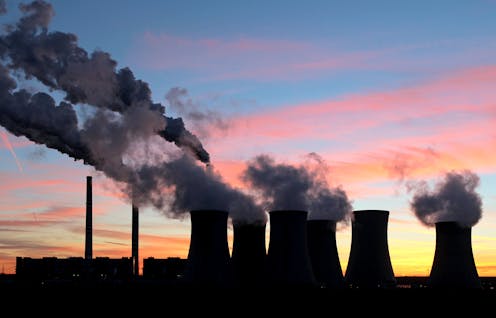
Natural systems in Australia are unravelling. If they collapse, human society could too

Source: The Conversation (Au and NZ) – By Liz Hanna, Honorary Associate Professor, Australian National University

Shutterstock

In the long-delayed State of the Environment report released this week, there is one terrifying sentence: “Environmental
degradation is now considered a threat to humanity, which could bring about societal collapses.”

Hyperbole? Sadly not.

Climate change has already warmed Australia 1.4℃ and changed rainfall in some regions. Natural ecosystems are already struggling from land clearing, intensive agriculture, soil degradation and poor water management. Climate changes and related sea level rise are making this worse. It’s a mistake to think this won’t affect us.

It can be easy to live in cities and believe you’re somehow walled off from environmental disaster. This is a fiction. Healthy environments provide clean air, clean food, clean water and a safe place to live – all essential to a healthy life.

Our lives will not be easy if we continue eating away at the ecosystems that prop us up. It is no exaggeration to say societal collapse is a possible outcome.

Why is the news so bad?

Every day, we rely on services provided by healthy ecosystems.

The long-delayed report shows the sobering consequences of wilful disregard for environmental protection and focusing on natural resource exploitation. Burning fossil fuels causes climate change and ocean acidification. Land clearing destroys existing ecosystems. Intensive agriculture reduces biodiversity.

Australia’s fragile ecosystems are acutely vulnerable to decades of environmental disregard. Swathes of the continent are increasingly flipping from extreme drought and devastating fires to unprecedented floods under highly variable rainfall patterns. In the last few years, unprecedented bushfires and floods have forced thousands out of their homes. This worsens housing shortages, income insecurity and human health.

Our land temperatures have increased by 1.44°C since 1910. Very high monthly maximum temperatures have increased sixfold over the 60-year period since 1960. These effects have come from a 1.1℃ rise globally. We’re still on track for 3℃. This is highly problematic as humans have limited capacity to withstand heat exposure, and ecosystems suffer in the heat.

4 things a well-functioning environment does for us

1. Clean food

Food systems require intact ecosystems to remain productive, without which crop yields and rural incomes drop. Hunger can ensue. The consequences of food shortages to date in Australia have been small compared with other countries. But with repeated intense droughts, heatwaves, fires and floods these shortages could rapidly escalate. In 2008, we saw riots and social upheaval across multiple continents. A key cause was the global food crisis. This year, food prices have skyrocketed again in the wake of Russia’s invasion of Ukraine.

2. Clean air

Australia has traditionally had some of the cleanest air in the world. But smoke from the megafires over the Black Summer of 2019–2020 caused 417 deaths, as well as thousands of hospital admissions. Health costs were estimated at almost $A2 billion. People lost days at work and at school, and some will have ongoing health problems. Climate change is predicted to steadily worsen our bushfires.

3. Adequate clean water

Water is essential for human life, health and activity, and the healthy functioning of ecosystems. As the driest inhabited continent, Australia’s water is one of our most valuable resources. Unfortunately, it is often poorly managed. Many Indigenous communities do not have clean, healthy drinking water, while dozens of non-Indigenous communities had to truck water in during the last drought.

Land clearing disrupts ecosystems, threatens biodiversity and can alter stream flow and water quality. Run-off from agriculture damages aquatic ecosystems and encourages algal blooms and species loss. Again, this isn’t just pain for the environment.

The Murray–Darling Basin is home to more than 2.2 million people and more than four million people depend on these rivers for their water. Already, the basin’s rivers and catchments are rated as poor or very poor.

4. Liveable climate

Climate change is pushing the south-west of Western Australia into a new normal of near-permanent drought. This has already massively reduced the inflows into Perth’s dams, requiring more use of groundwater and desalination. South-eastern Australia is also drying, stressing plants and animals. We’re already seeing agricultural productivity dropping. As parts of Australia dry out, it’s hard to see how drought-prone towns and regions will remain viable.


Read more:
This is Australia’s most important report on the environment’s deteriorating health. We present its grim findings


What will happen if we don’t repair the environment?

Humans can only withstand heat up until a point. After that, exposure to extreme heat leads to damage to tissues and organs, and, eventually damage and death. The same goes for the livestock we rely on, which are at risk of serious health threats from heat. Heat hits weight gain, milk production and reproductive success.

Wheat stalks
The profitability of crops like wheat has been hit already.
Shutterstock

The profitability of broadacre crops such as wheat and barley is an estimated 22% less since 2000 than it would have been if climate change wasn’t happening. In turn, this is leaving many Australians in rural and regional communities facing worsening incomes and health.

Irrigation water is less reliable, while increases in temperature reduce both quantity and quality of fruit and vegetable crops. The nutritional value of foods also declines under extreme heat.

In short, we can no longer pretend we live in a world walled off from nature. Damaging nature damages humans. Think of the cartoon trope where a character cuts off the tree branch they’re sitting on.

We have created these problems collectively. To avoid social upheaval, we have to repair the damage – together.

The federal government’s newly announced Environmental Protection Agency is a good start. It must be adequately resourced and have powers to enforce compliance.

Beyond that, we urgently need coordinated policies, sound supporting science and effective data systems, prioritised actions, commitment and investment and community support.


Read more:
This is Australia’s most important report on the environment’s deteriorating health. We present its grim findings


The Conversation

Liz Hanna currently chairs the Environmental Health Working Group for the World Federation of Public Health Association, and is an Honorary Associate Professor at the ANU Fenner School of Environment and Society. She has received research funding from the NHMRC and the Governments of Australia, Victoria, New South Wales and The Pacific Community, formerly the South Pacific Commission.

Prof Mark Howden is a Vice Chair of the IPCC Working Group II

ref. Natural systems in Australia are unravelling. If they collapse, human society could too – https://theconversation.com/natural-systems-in-australia-are-unravelling-if-they-collapse-human-society-could-too-187263

Yes, the state of the environment is grim, but you can make a difference, right in your own neighbourhoood

Source: The Conversation (Au and NZ) – By Kylie Soanes, Postdoctoral Fellow, School of Ecosystem and Forest Sciences, The University of Melbourne

Shutterstock

The newly released State of the Environment report paints a predictably grim picture. Species are in decline, ecosystems are at breaking point, and threats abound. For many of us, it can feel like a problem that’s too big, too complex and too distant to solve.

But this report also shows every Australian can be on the conservation frontline. We can save species in the places we live and work. According to the report, Australia’s cities and towns are home to more than 96% of our population and 46% of threatened species. We have mapped the occurrence of hundreds of threatened species in urban areas.


Read more:
This is Australia’s most important report on the environment’s deteriorating health. We present its grim findings


We share our cities with iconic koalas, charming gang-gang cockatoos and floral wonders like Caley’s grevillea. And, as the report notes, some species are found only in urban areas – our cities and towns are the last chance to save them from extinction. What an incredible opportunity to reconnect Australians with our fantastic natural heritage and protect it at the same time.

Our research shows a huge appetite for saving nature in cities. Councils, industry and community groups all over the country are working to make change.


Read more:
The 39 endangered species in Melbourne, Sydney, Adelaide and other Australian cities


Here are five things we can think about to improve the state of our city environments.

1. Small but mighty

Don’t have a lot of space? That’s OK! Whether it’s a small pond, garden strip or solitary gum tree, these often provide a key resource that isn’t found elsewhere in the nearby landscape. This means they pack a punch when it comes to supporting local nature.

And resources like these all add up. Researchers found that a collection of small, urban grassland reserves supported more native plants, and rarer species, than just a few large reserves.

So while making one small change might feel futile, it can make a big difference.

2. Embracing the ‘in between’

Conservation doesn’t just happen in nature reserves, which is good, because urban areas don’t have many. Backyards are already making huge contributions through “gardens for wildlife” initiatives.


Read more:
Want to help save wildlife after the fires? You can do it in your own backyard


But what about the more unconventional spaces? We found city-dwelling species take advantage of roadsides, schoolyards, carpark gardens, railway stations and rooftops. These are all opportunities for us to make a little more space for nature in cities.

3. Grand designs for wildlife

People aren’t the only ones facing a housing crisis – wildlife struggle too. The tree hollows, rock piles and fallen wood that many species call home are often removed in favour of sleek lines and tidy urban spaces.

You can provide valuable real estate for local critters by adding nesting boxes, bee hotels and lizard lounges. And simply leaving a designated “messy patch” in your garden improves the local habitat too.

4. Creative connections

Moving safely through cities can be risky for wildlife. They have to navigate cars, fences, roaming pets and swathes of concrete.

Many councils and road agencies are looking at creative ways to help wildlife get from A to B. Solutions range from rope bridges for western Sydney’s sugar gliders and tunnels for Melbourne’s bandicoots to forested bridges for Brisbane’s bush birds. Some gardeners in Bunbury even built their own backyard “possum bridges” to help the endangered western ringtail possum in their neighbourhoods.

Overpass with vegetation planted on it spans a road
The forested bridge across Compton Road, Brisbane, enables wildlife to travel safely between two areas of natural habitat.
Kylie Soanes, Author provided


Read more:
10 million animals are hit on our roads each year. Here’s how you can help them (and steer clear of them) these holidays


5. People power

Having threatened species live close to people is typically seen as bit of “negative’” in the conservation world. But this closeness can be an advantage if the community is aware and engaged.

Orchids like the sunshine diuris and Frankston spider orchid would surely be extinct if not for countless hours of volunteer work, crowd-funding and the passion of the local community.

Get involved through your local council or “Friends of” groups to see how you can support nature in your neck of the woods.

Urban habitats – often small and scrappy, always valuable

There are so many wonderful ways to support nature in cities. Recent examples include conservation goats saving native skinks, floating habitat rafts in city waterways and using flowerpots on concrete sea walls to support marine life. New ideas are being explored and tested all over the country.

The Living Seawalls project is restoring biodiversity along the seawalls that account for over half of the foreshore around Sydney Harbour.

Some of the best examples bring all these ideas together. For example, Melbourne’s Pollinator Corridor, led by the Heart Gardening Project, helps individual community members convert their own small urban patch into a bee-friendly garden. When complete, 200 individual gardens will create an 8km pollinator paradise between two of the city’s largest parks.

Right now, efforts to save nature in cities are driven by champions – individuals in our communities, local councils or industry who see an opportunity to make a difference, no matter how small, and fight to make it happen. Imagine what we could achieve if more of us pitched in.

So, look around. Can you add just one small patch? Contact your local council about turning a neglected roadside strip into a pollinator paradise? Or maybe set up a little B&B for wildlife in your backyard?


Read more:
B&Bs for birds and bees: transform your garden or balcony into a wildlife haven


Wes Mountain/The Conversation, CC BY-ND

The Conversation

Kylie Soanes previously received funding from the Australian Governments National Environmental Science Program. She is affiliated with the Ecological Society of Australia and Science and Technology Australia.

ref. Yes, the state of the environment is grim, but you can make a difference, right in your own neighbourhoood – https://theconversation.com/yes-the-state-of-the-environment-is-grim-but-you-can-make-a-difference-right-in-your-own-neighbourhoood-187259

Election promises should be costed before polling day, otherwise it’s too late

Source: The Conversation (Au and NZ) – By Stephen Bartos, Professor of Economics, University of Canberra

Wouldn’t you know it? Last Thursday the Parliamentary Budget Office released more than 1,000 pages of costings, for promises in the election we just had.

They came in 16 parts, each separately downloadable, along with a video message, charts and tables, explanations, and summaries.

It was a lot of work, but it was too late to have an impact. We’d already voted.


The report was covered briefly by the Canberra Times, a couple of regional papers, and online site Crikey. It garnered close to zero attention.

In its wake, the shadow treasurer Angus Taylor issued a media release attacking Labor for increasing the projected budget deficit.

But that too was old news. During the campaign, Labor had said that’s what it would do.

The ratio of attention paid to the number of pages produced was dismal.

The letter of the law

This isn’t the fault of the Parliamentary Budget Office. It is required by law to release the report 30 days after the election. It doesn’t have the power to compel the parties to submit lists of their policies for analysis until 5pm on election eve.

Getting even that power was a close-run thing. Treasurer Wayne Swan added the requirement to the legislation in a 2013 amendment.

Trouble is, it is hard to discern from the public record why he did it. The explanatory memorandum and speeches assert it will be good for transparency and accountability but do not explain how.

Definitionally, to the extent there is more detailed information, there is greater transparency. But if the information is delivered after people have voted, it’s worth asking how it could improve accountability.

Data should be useful

It can’t be taken for granted that more data equals more accountability. Data needs to be used for something – to spark debate, or inform votes.

NSW had a Parliamentary Budget Office before the Commonwealth, which means the amendment might have been based on a NSW requirement for major parties to give the NSW office a list of their policies.

But the difference is that in NSW the report is published five days before the election. There’s a chance it can swing votes.


Read more:
Elections used to be about costings. Here’s what changed


Publishing it after the election, as the Commonwealth office does, means it is almost guaranteed to be ignored.

Does anyone really care what the costs were for the party that lost? Or those for the Greens or even the Member for Indi, who wasn’t required to take part but in 2022 did so voluntarily?

The information about the party that won might be useful, but it will soon be overtaken by the October budget which will provide updated costings.

Not that there is anything wrong with the PBO report. It is comprehensive, detailed, and has excellent methodology.

It goes beyond the numbers provided by the parties and includes discussion of measures that affect the government’s balance sheet but not the budget balance. But it’s at the wrong time.

It is far from the only long and complicated report with almost no impact. And if all that mattered was the direct cost of producing it, it wouldn’t much matter.

But there’s an opportunity cost: the other things the PBO staff weren’t doing while they were working long hours producing those 1,000-plus belated pages.

Before the election would be useful

The PBO produces research reports, budget explainers, chart packs and many other highly useful information pieces. Particularly notable was a timely and relevant series of publications on the budget impact of COVID-19.

Somewhere in Parliament House there’s an empty bookshelf full of unwritten reports that weren’t produced because of the time the PBO spent on reports like this one.

If the PBO published a report on promises before the election – accepting likely gaps due to time pressures or late promises – it could actually inform voters.


Read more:
Costing the promises: what is a Parliamentary Budget Office?


There is however a major barrier in the legislation. Whereas in normal times the PBO has to deal confidentially with costings requests, if a request is submitted during a campaign, the PBO is required to make policy and its costing public.

No sensible party is going to take the risk of submitting a policy, having it made public, and then finding out it is unaffordable.

The only policies anyone submits to the PBO in the caretaker period after an election is called are

  • those from minor parties – they don’t mind if their policies get negative publicity for being expensive, they are grateful if anyone notices them at all

  • policies where the costs are predictable or known

Changing this, and requiring the PBO to release summaries of the budget impact of promises (say) five days before the vote (as happens in NSW) would make the effort it puts in worthwhile.


Stephen Bartos was NSW Parliamentary Budget Officer for the 2015 and 2019 elections.

The Conversation

Stephen Bartos was NSW Parliamentary Budget Officer for the 2015 and 2019 elections. He has written for Crikey and The Mandarin.

ref. Election promises should be costed before polling day, otherwise it’s too late – https://theconversation.com/election-promises-should-be-costed-before-polling-day-otherwise-its-too-late-187149

Publishers vs the Internet Archive: why the world’s biggest online library is in court over digital book lending

Source: The Conversation (Au and NZ) – By Joanne Gray, Lecturer in Digital Cultures at The University of Sydney, University of Sydney

Shutterstock

Earlier this month, the Internet Archive asked a US court to end a lawsuit filed against it by four large book publishers.

The Internet Archive is a not-for-profit organisation founded in 1996 that lends digital copies of books, music, movies and other digitised content to the public. It aims to support people with print disabilities, preserve digital content for future generations and democratise access to knowledge.

The publishers say the Internet Archive’s digital lending practices amount to wilful copyright infringement. Authors have also complained the site hosts pirated content.

The Internet Archive says it is behaving like an ordinary library, as it only loans digital copies of physical books it owns. Its supporters at the Electronic Frontiers Foundation say the publishers simply want “to control how libraries may lend the books they own”.

The National Emergency Library

Publishers were particularly concerned about the “National Emergency Library” set up by the Internet Archive in March 2020. This temporary project aimed to give teachers access to digital teaching materials in the face of widespread library closures due to the COVID-19 pandemic.

In June 2020, the publishers Hachette, Penguin Random House, HarperCollins and John Wiley & Sons filed a copyright infringement action. The publishers appear to want to shut down not just the National Emergency Library, but all of the Internet Archive’s book-lending practices.

The publishers claim the Internet Archive is engaging in wilful mass copyright infringement by lending digital books without permission from and payment to publishers.

The Internet Archive argues that, because it allows only one person at a time to borrow a digital book, it is simply replicating regular library lending. However, this restriction was temporarily relaxed for the National Emergency Library.

Ordinary library lending does not require a payment to publishers. Once a library purchases a book, the library is free to lend it out to its members.

The publishers are arguing that digital books are not equivalent to physical books and should be treated differently under the law.

Copyright déjà vu?

Didn’t Google already win the argument about digital books years ago? Yes and no.

Google began digitising library books in 2002. In 2005, book publishers and authors brought a high-profile lawsuit against Google for copyright infringement, which took a decade to resolve.


Read more:
How to protect authors after Google Books wins its ‘fair use’ case, again


In the case against Google, US courts decided that making full copies of books and displaying snippets of those books to the public in the Google Books database is a “fair use”.

When deciding for Google, the courts paid particular attention to the historical purpose of copyright, which is to serve the public interest in access to knowledge.

A question of markets

But the Google Books decision does not mean book publishers will lose again against the Internet Archive.

In the United States, when deciding whether a use is fair or not, courts need to consider the extent to which the copyright owner’s markets are harmed.

Because book publishers often lend e-books commercially (including to libraries), the Internet Archive could be seen as harming that aspect of publishers’ market.

The Internet Archive argues it is simply acting as a library, but the court may rule differently.
Shutterstock

It could be said that, by providing online access to books in full, the Internet Archive is doing for free what the publishers do for payment.

This is different to the Google Books decision, in which providing access to snippets of books in Google’s database was considered to potentially enhance the market for books.

What counts as fair use?

The flexibility of fair use is one thing the Internet Archive has on its side, however.

There is room for the court to assess the public benefit of the Internet Archive’s lending practices which, as the National Emergency Library exemplifies, are undeniably strong.

Assessing whether the public interest arguments are strong enough to overcome the weight of the market harm may be key to deciding who wins this case.


Read more:
Selling MP3s? You should have stuck with CDs


The Internet Archive may also have difficulty establishing that its practices are simply an extension of the traditional role of libraries, and beyond the boundaries of publisher’s legitimate markets.

In a case in 2013 involving a “second-hand” market for digital copies of music, US courts decided that emulating analogue models of dissemination was not enough to evade copyright infringement.

Access matters in the digital age

Underlying this recent dispute is a now decades-old tension between media industries born before and after the advent of the internet.

Prior to the internet, media and entertainment businesses made money by selling individual copies of content (think books, CDs, DVDS).

But individual copies have lost value in the internet era. Online, we seek access to content rather than ownership of copies of content.

Streaming platforms make it easy to access music or video online without owning it, but the situation for books is less clear.
Shutterstock

In the music and video industries, subscription or ad-supported streaming services such as Spotify and Netflix have largely prevailed.

However, the lawsuit against the Internet Archive shows we have not yet, in 2022, found the right legal and economic settings for access-based book-publishing models to thrive.

Finding a way forward

Entities like Internet Archive have been trying to operate in the grey area between old and new by, for example, limiting access to match the number of print books in storage.

Rather than aiming to eliminate these grey areas, publishers should look to these activities as evidence of unmet demand and a failure to be agile in times of crisis.

Publishers should adapt their dissemination models to the needs of society.

Rather than institute restrictive terms and conditions for access, they should work with libraries to build sustainable models for dissemination that ensure books are available to people who need access to our shared knowledge and culture.


Read more:
What is a book in the digital age?


The Conversation

The authors do not work for, consult, own shares in or receive funding from any company or organisation that would benefit from this article, and have disclosed no relevant affiliations beyond their academic appointment.

ref. Publishers vs the Internet Archive: why the world’s biggest online library is in court over digital book lending – https://theconversation.com/publishers-vs-the-internet-archive-why-the-worlds-biggest-online-library-is-in-court-over-digital-book-lending-187166

The UK just hit 40℃ for the first time. It’s a stark reminder of the deadly heat awaiting Australia

Source: The Conversation (Au and NZ) – By Andrew King, Senior Lecturer in Climate Science, The University of Melbourne

A severe heatwave in Western Europe is shattering temperature records – including in the United Kingdom, where temperatures exceeded 40℃ on Tuesday for the first time on record.

The village of Coningsby in eastern England reached 40.3℃ – provisionally the hottest temperature in UK history. The record was previously held by Cambridge, which reached 38.7℃ in 2019.

I’m a scientist interested in climate change and extreme weather. I grew up in the UK and remember major heatwaves in 2003 and 2006 during my school holidays.

Traditionally, temperatures above 30℃ in the UK are considered hot. But to see temperatures already exceeding 40℃ is shocking.

Summer heat may be far from people’s minds here in Australia. But Europe’s ordeal is yet another sign that changes in Earth’s climate have already reached dangerous levels. If the UK can reach 40℃, Australia must brace for even deadlier temperatures.

A nation ill-prepared

Europe’s heatwave spread across Spain, Portugal and southern and western France, before a strong southerly wind fanned continental air across the English Channel. Background warming due to climate change boosts the odds of such severe heat.

In 2020, a UK Met Office study found under the current climate, there was likely a less than 1% chance of seeing 40℃ anywhere in the UK in a given year. Without human-caused climate change it would be virtually impossible.

The UK is simply not used to heat on this scale. In fact, buildings there are generally designed to retain heat rather than cool down. A report last year found fewer than 5% of homes were air-conditioned.

Urban green space in the UK – which can help cool cities – has also declined in recent years.

The Met Office on Friday issued the first ever “red warning” heat alert, which said “illness and death may occur among the fit and healthy, and not just in high-risk groups”. It advised people to:

Close curtains on rooms that face the sun to keep indoor spaces cooler and remember it may be cooler outdoors than indoors. Drink plenty of fluids and avoid excess alcohol, dress appropriately for the weather and slow down when it is hot. Be on the lookout for signs of heat related illness. Cool your skin with water, slow down and drink water.

The death toll from the current heatwave is not yet known, but experts say it could be in the thousands across Europe.

But not all Britons see the extreme heat as a potentially lethal event. One Conservative MP went so far as to accuse those taking precautions against the heat of being “cowards” and “snowflakes”.

And media reports have routinely featured images of people sunbathing on beaches and eating ice cream in parks. Research shows this may create a false impression that spending time in the sun during heatwaves is safe.


Read more:
Britain isn’t built to withstand 40°C – here is where infrastructure is most likely to fail


sign on highway warns motorists about extreme heat
Not all Britons see the extreme heat as a potentially lethal event.
Owen Humphreys/AP

Lessons for Australia

Australia has, of course, experienced many days with temperatures of 40℃ or more. But we struggle when it persists for several days.

Research shows the impacts of climate change are accelerating rapidly across ecosystems, food production, cities and towns, and health and well-being.

Heatwaves kill more Australians than any other extreme weather event. Hospitals are strained as admissions rise. Public transport can be disrupted, energy supplies come under pressure, and the bushfire risk increases.

Experts say extreme heat also poses a substantial threat to Australia’s economy.

In January this year, temperatures in the Western Australian town of Onslow peaked at 50.7℃ – equalling the Australian record.

Globally, the number of days over 50℃ has doubled since the 1980s. Such temperatures are still rare in Australia. But as climate change worsens, more extremely hot days will occur across the continent.

Australia has warmed by around 1.4℃ since 1910, well ahead of the global average of 1.1℃. Even if warming is kept below 2℃, Sydney and Melbourne are expected to see 50℃ days in coming years.

In the summer of 2019-20 the Western Sydney suburb of Penrith came close, reaching 48.9℃.


Read more:
This WA town just topped 50℃ – a dangerous temperature many Australians will have to get used to


red sun against trees in silhouette
Australian cities should brace for 50℃ days.
Dave Hunt/AAP

No time to waste

Greenhouse gas emissions have warmed the world, including Western Europe. This raises the likelihood of more extreme high temperatures, including records broken by wide margins.

The UK heatwave is just the latest reminder of what’s in store for Australia and the world as the climate changes. Last year, a severe heatwave in western North America led to temperatures approaching 50℃ in Canada and broke records in parts of the Pacific Northwest.

Clearly, nations everywhere must consider measures to better handle future heatwaves. This is especially important in Australia, the driest inhabited continent on Earth. Here, drought and severe fire conditions can exacerbate the harms caused by extreme heat.

The UK government is under fire for ignoring previous expert calls to create a national heat risk strategy. Australia must also do a better job on heatwave planning.

Finally, rapid emissions reduction is needed to limit further global warming. Until we reach net-zero greenhouse gas emissions globally, the planet will continue to warm. We have the time and tools to avert an even worse planetary catastrophe, but we must act now.


Read more:
Australia ranks last out of 54 nations on its strategy to cope with climate change. The Glasgow summit is a chance to protect us all


The Conversation

Andrew King receives funding from the National Environmental Science Program.

ref. The UK just hit 40℃ for the first time. It’s a stark reminder of the deadly heat awaiting Australia – https://theconversation.com/the-uk-just-hit-40-for-the-first-time-its-a-stark-reminder-of-the-deadly-heat-awaiting-australia-187347

The Albanese government has announced the next speaker of the house. What’s the role and why is it important?

Source: The Conversation (Au and NZ) – By John Hawkins, Senior Lecturer, Canberra School of Politics, Economics and Society, University of Canberra

The Albanese government has chosen its candidate to be the new speaker.

Milton Dick has been the member for Oxley in Queensland since 2016. The former Brisbane City Councillor is almost certain to be formally endorsed by the House of Representatives when the new parliament meets on July 26.

He was chosen in a factional deal ahead of Rob Mitchell, the second deputy speaker since 2013. Mitchell was Labor’s nominee when the respected Tony Smith stepped down as speaker in November 2021. But the Liberal Andrew Wallace was chosen along party lines, and is now the third shortest-serving speaker, after Ian Sinclair (1998) and the very obscure Carty Salmon (1909-10).

Dick’s selection should continue the pattern of the speaker being effectively chosen by the government. Like most speakers, he’s not regarded as a ministerial contender.

Why not an independent speaker?

Given Labor’s small majority in the House of Representatives, there had been conjecture that a cross-bencher may have been chosen.

Indeed, had Labor fallen short of a majority, the members themselves may have done so. Andrew Wilkie, first elected in 2010, was mentioned as having the requisite parliamentary experience. Rebekha Sharkie, a member since 2016, had also been suggested, by fellow cross-bencher Zali Steggall.

An independent incumbent could have strengthened the government’s position by virtue of the speaker only voting in the house when a casting vote is needed to resolve a tie.

But there’s a strong convention that speakers do not participate in policy debates. This is a big ask for any independent. The very first speaker, Frederick Holder, was a man of strong opinions who vented frustration over an “almost overwhelming desire to step out of the chair and tear off the gag”.

Albanese has also avoided emulating Prime Minister Joseph Cook. He came to office in 1913 with a one seat majority that saw the speaker, Elliot Johnson, repeatedly exercising a casting vote.

The opposition tried hard to catch Johnson and the government short through motions of censure and of dissent from the chair, and by refusing pairs. Yet Johnson used his casting vote in only ten of 69 divisions during this short-lived government, with most votes in the house then, as now, not being terribly controversial.


Read more:
Andrew Wallace becomes the new speaker – a role that’s never been more important in Australian politics


The role of the speaker

Given the Labor government’s small majority, the speaker’s role will be especially important in this parliament. The much larger cross-bench will be arguing for a greater voice.

There’s a push to make question time more informative. One suggestion is to cut back on “Dorothy Dixers”. These are questions typically concocted by ministers’ staff to be asked by compliant government backbenchers. Ministers invariably give prepared answers praising their own performance and disparaging the opposition.

Dick is no doubt pleased to have this prestigious post. His portrait will one day hang in the halls of parliament for posterity. On formal occasions, the speaker ranks ahead of the chief justice, the deputy prime minister and former prime ministers in the official table of precedence.

Yet speakers pretend to be reluctantly dragged to the position. This rather cute charade reflects a British political tradition. Standing up to the king as parliament’s representative was once a decidedly dangerous pastime.

The speaker is the House of Representative’s “principal officer”. The incumbent has wide ceremonial and administrative functions in Parliament House, many being shared with the president of the Senate.

The most public role speakers have is presiding over the debates in the House, ensuring these are conducted according to standing orders. This makes their job anything but a sinecure. Most Australians are well aware of televised images of the incumbent perched in the speaker’s chair at the head of the chamber during question time trying to manage 150 attention-hungry MPs.

Tolerance of procedural mistakes is next to zero, and blunders are slow to be forgotten. One speaker, Stephen Martin, was only half joking when he said his experience as a rugby league referee and high school teacher was good preparation.


Read more:
Question Time reforms are worthy but won’t solve the problem of a broken political culture


Why is the speaker important?

A good speaker is a bulwark against the worst excesses of political partisanship. Truly effective ones determine the tone of the house. They skilfully exercise their personal authority with a seemingly light touch.

Most have successfully balanced party loyalty with wider expectations of the office. They struck a workable compromise between partiality to their own government and keeping favouritism within bounds the opposition could tolerate.

Only a few, such as the truculent Archie Cameron in the 1950s, faced persistent opposition calls for resignation. Such qualified non-partisanship was probably helped by the speakership not usually having served as a stepping stone into the ministry.

This pragmatic model is supported by deep roots in our little appreciated parliamentary history and in the wider Australian “fair go” ethos. But it should never be taken for granted. It needs to be defended against the remorseless politicisation of public life.

The new speaker is likely to be sorely tested by the opposition, a near standard experience for freshly minted presiding officers. All eyes will be on whether Dick emulates the example set by Tony Smith, whose impartiality stretched to preparedness to defy his party peers. Typically, speakers step back from party politics, with many having chosen not to attend party room or caucus meetings.

Like Smith, Dick will have the support of the Clerk of the House Claressa Surtees and her staff in the Department of the House of Representatives. The department has been spared the worst of the hollowing out of skills and independence afflicting so much of the mainstream public service.

How Dick performs and is treated by both sides of the House will be an important reality check of the new government’s goal of lifting the standards of our political culture. Expectations, and hopes, are high!

The Conversation

John Hawkins was a former adviser to the House Economics Committee and secretary of the Senate Economics Committee. He contributed six essays to the Biographical Dictionary of the House of Representatives.

Stephen Wilks was employed by the ANU in 2018-2020 using funding from the Department of the House of Representatives to research Speakers and Clerks of the House of Representatives. His employment with the ANU has subsequently been funded by the ANU itself.

ref. The Albanese government has announced the next speaker of the house. What’s the role and why is it important? – https://theconversation.com/the-albanese-government-has-announced-the-next-speaker-of-the-house-whats-the-role-and-why-is-it-important-184135

Why it’s more important than ever for workplaces to have staff well-being plans

Source: The Conversation (Au and NZ) – By Dougal Sutherland, Clinical Psychologist, Te Herenga Waka — Victoria University of Wellington

Shutterstock/thanun vongsuravanich

A recent survey of New Zealand workplaces revealed more than a third have no workplace well-being plan in place. Yet it is necessary, now more than ever, for organisations to understand what a healthy work environment looks like and to provide it for their employees.

The 2015 Health and Safety at Work Act requires workplaces to look after the physical and mental health and well-being of their staff. This means looking at work through a health and safety lens and understanding the risks that affect people’s well-being at work.

For many organisations, the legislation took them into new and unknown territory. Our experience working with organisations was that, understandably, many efforts initially focused on managing stress and mental illness only after they occurred.

However, evidence clearly points to the importance of having a proactive strategy to prevent psychological harm occurring in the first place – having the fence at the top of the cliff as well as the ambulance at the bottom.

The issue of workplace burnout has received lots of attention of late, particularly in relation to people working in the health sector. But, even beyond this, there is clear evidence aspects of work design, organisation and management as well as employees’ social and environmental context play a major role in workers’ psychological and physical health.


Read more:
A burnt-out health workforce impacts patient care


These psychosocial factors should be the focus of workplace well-being plans. Failure to address them can directly contribute to mental health problems in employees, including depression.

Recommendations for a well-being plan

A recent World Health Organization (WHO) report on mental health listed three key recommendations to prevent mental ill health at work:

  1. organisational interventions to identify, remove or mitigate psychosocial risks

  2. mental health training for managers to identify and support healthy work practices and healthy workers

  3. interventions for employees to increase their personal coping capacity.

Historically, many workplaces have focused on the last recommendation. But to focus solely on boosting individuals’ coping abilities can place the blame on the person and mask the impact of broader environmental factors.

Our experience working with organisations suggests interventions that only target individuals and not the broader organisation implicitly give the message that employees are to blame if they’re not “resilient enough” to cope with overwhelming workloads and unmanageable deadlines.

Individually focused interventions can also be met with cynicism and lack of buy-in from employees.

A workers' hands sorting apples
Boosting individual workers’ coping abilities is not enough and risks making them feel they are to blame.
Shutterstock/industryviews

Feedback from managers and staff leaders indicates many have monitored employee well-being implicitly and spontaneously in the past (for example, noting when a team member is looking down or feeling upset). But with many workplaces moving to hybrid models of staff working partly from home, these strategies may no longer be effective.

Training managers to spot signs of languishing in people working remotely is a new but much-needed component of many well-being plans.


Read more:
Languishing: what to do if you’re feeling restless, apathetic or empty


Considering employees’ personal circumstances

There are a few tips organisations should keep in mind when implementing these recommendations.

Firstly, it’s crucial to ask employees about what is stressing them. Use this information as a basis for your plan. It is vital to use a form of survey or assessment developed specifically for this purpose, rather than just guessing or assuming you know what your people think. This means you can track changes in well-being over time.

Secondly, involving employees in the design of any well-being plan will likely increase buy-in and improve uptake of any interventions.

Thirdly, employers need to consider both work and non-work factors. Some work factors may be obvious (such as bullying, high workload, exposure to traumatic material), while others may be less so (level of autonomy at work, being consulted about change) yet still critical. Non-work factors may include financial stress and parenting or relationship difficulties.

vv
With many workplaces moving to hybrid models of staff working partly from home, other factors affect people’s well-being.
Getty Images

Some organisations may blanch at the thought of a workplace helping with aspects of employees’ private lives. But to do so may be a crucial component in contributing towards their well-being.

In addition to reducing risks, a good well-being plan promotes positive aspects of a workplace. These are the things that make employees want to be there, such as a great office environment, a culture of appreciation, and “fringe benefits” that come with the job.

Psychological well-being in the workplace may still be relatively new territory for many organisations and it’s tempting to pluck the low-hanging fruit by simply providing some extra tools to workers. A comprehensive well-being plan that addresses psychosocial factors will help expand interventions and prove the old adage that prevention is better than cure.


Amanda Wallis and Erika Clarry, at Umbrella Wellbeing, have contributed to this article.

The Conversation

Dougal Sutherland works for Victoria University of Wellington and Umbrella Wellbeing.

ref. Why it’s more important than ever for workplaces to have staff well-being plans – https://theconversation.com/why-its-more-important-than-ever-for-workplaces-to-have-staff-well-being-plans-186807

Game of Thrones star Emilia Clarke is missing ‘quite a bit’ of her brain. How can people survive and thrive after brain injury?

Source: The Conversation (Au and NZ) – By Anthony Hannan, Head of Neural Plasticity and NHMRC Senior Research Fellow, Florey Institute of Neuroscience and Mental Health

In a recent interview, Game of Thrones star Emilia Clarke spoke about being able to live “completely normally” after two aneurysms – one in 2011 and one in 2013 – that caused brain injury. She went on to have two brain surgeries.

An aneurysm is a bulge or ballooning in the wall of a blood vessel, often accompanied by severe headache or pain.

So how can people survive and thrive despite having, as Clarke put it, “quite a bit missing” from their brain?

The key to understanding how brains can recover from trauma is that they are fantastically plastic – meaning our body’s supercomputer can reshape and remodel itself.


Read more:
Growing up in a disadvantaged neighbourhood can change kids’ brains – and their reactions


Our fantastically plastic brains

Brains can adapt and change in incredible ways. Yours is doing it right now as you form new memories.

It’s not that the brain has evolved to deal with brain trauma or stroke or aneurysms; our ancestors normally died when that happened and may not have gone on to reproduce. In fact, we evolved very thick skulls to try to prevent brain trauma happening at all.

No, this neural plasticity is a result of our brains evolving to be learning machines. They allow us to adapt to changing environments, to facilitate learning, memory and flexibility. This functionality also means the brain can adapt after certain injuries, finding new pathways to function.

A lot of organs wouldn’t recover at all after serious damage. But the brain keeps developing through life. At a microscopic level, you’re changing the brain to make new memories every day.

This extraordinary kilogram and a half of soft tissue sitting in your skull – with more power and capacity than even the most powerful supercomputer – has an incredible ability to adapt.

What does it mean to say parts of the brain are ‘missing’?

The brain needs a constant and steady supply of oxygenated blood. When it is injured – for example by an aneurysm, sudden impact against the inside of the skull, stroke or surgery – oxygen supply can be interrupted.

Sometimes, a piece is surgically removed or a region dies off due to lack of oxygen.

For example, sometimes a person with epilepsy doesn’t respond to drugs. Thanks to extraordinary brain imaging techniques, we can potentially work out the exact place in the brain the seizure is starting and remove part of the brain.

CT brain scans
CT scans can reveal ‘missing’ sections of brain due to injury or shrinkage.
Shutterstock


Read more:
Brain stimulation can rewire and heal damaged neural connections, but it isn’t clear how – research suggests personalization may be key to more effective therapies


So how does the brain adapt after injury?

Your brain has about 100 billion neurons and over a trillion synapses (a junction between two neurons, across which an electrical impulse is transmitted). They are constantly rewiring themselves in response to new experiences, to store and retrieve information.

With brain injury, the changes can be bigger; you get certain rewiring around the injury. These synapses can rearrange themselves to work around the damaged part.

Axons (long, threadlike parts of a nerve cell that can conduct electrical impulses) form nerve fibres that get sent out to new spots in response to signals they are getting from the damaged area.

A diagram of components of brain tissue.
Your brain has about 100 billion neurons.
Shutterstock

But there’s another form of plasticity called neurogenesis. This involves little pockets in the brain where new neurons continue to be born throughout life. And there’s evidence that after brain injury these neural stem cells can be stimulated and migrate to the area of injury and make new neurons.

Neurorehabilitation might include physical rehabilitation and speech rehabilitation. And there is also research into using drugs to enhance neuroplasticity. That might also apply to slower forms of degeneration such as in Parkinson’s or Huntington’s disease.

As Clarke notes, not everyone has a significant recovery after traumatic brain injury; a lot of people experience ongoing disability.

Many factors affect the way the brain responds to rehabilitation, including the extent and position of the brain injury, genetics, lifestyle and life history.

Some people also experience personality change after a traumatic brain injury.

The textbook case was Phineas Gage, who was involved in an accident in the 1840s that saw a metal rod thrust through his head, destroying a large part of his frontal lobe. He was able to survive and recover but his personality changed.


Read more:
Post-COVID psychosis occurs in people with no prior history. The risk is low but episodes are frightening


What can you do to give your brain its best chance in life?

I want to end with a message about the five factors of brain health:

  1. diet: emerging evidence shows a relationship between brain health and body health, including your gut microbiome, so ensuring your diet is broadly healthy is good for your brain, as well as the rest of your body

  2. stress: high levels of chronic stress can be bad for the brain

  3. sleep: we know good sleep hygiene is very important for a healthy brain

  4. cognitive or mental exercise: this is uniquely beneficial for the brain and can potentially slow brain ageing

  5. physical exercise: physical activity is as good for your brain as it is for your body.

Even though you can’t do anything about your genetics, you can change your lifestyle to give your brain its best chance and potentially slow down brain ageing.

The healthier your brain is, the more likely it will be able to rewire itself and heal if injured, and be resilient to the negative aspects of brain ageing, such as Alzheimer’s disease and other forms of dementia, so these can be delayed or prevented.


Read more:
What is it about the human brain that makes us smarter than other animals? New research gives intriguing answer


The Conversation

Anthony Hannan receives funding from the NHMRC and the ARC and some philanthropic funding for medical research.

ref. Game of Thrones star Emilia Clarke is missing ‘quite a bit’ of her brain. How can people survive and thrive after brain injury? – https://theconversation.com/game-of-thrones-star-emilia-clarke-is-missing-quite-a-bit-of-her-brain-how-can-people-survive-and-thrive-after-brain-injury-187285

Playing on good feelings: when ‘eudaimonic’ social media goes bad

Source: The Conversation (Au and NZ) – By Renee Barnes, Senior Lecturer, Journalism, University of the Sunshine Coast

Shutterstock

Twenty-something Melburnian Harrison Pawluck could be doing worse things than building a TikTok audience through “random acts of kindness”.

He’s not out on the streets pulling risky pranks or provoking angry confrontations. He doesn’t promote bogus cryptocurrency schemes, cancer cures or conspiracy theories. Instead he films strangers’ reactions to him doing things such as paying for their groceries or handing them flowers.

Even so, the controversy sparked by his most successful video to date (viewed nearly 65 million times) underlines the problematic ethics of “feel-good” content – both for creators and consumers.

The 19-second video shows Pawluck asking an elderly woman in a food hall to hold a bouquet of flowers as he puts on a jacket. He then wishes her a lovely day and walks off. “I hope this made her day better,” the caption reads. It didn’t.

Harrison’s
CC BY

Since becoming aware of the viral video, Melbourne woman Maree has spoken out about feeling patronised and exploited. Pawluk has offered an apology of sorts, but said he won’t stop make such videos:

I know my true intentions and I know that, if I can inspire even 1% of the people that watch my content to go out there and do something good, I have done something that I believe is good for the world.

This defence would work better if Pawluck weren’t monetising his videos. The fact there’s market for such content, however, raises questions. How can content be truly altruistic with so many commercial factors at play?

What is eudaimonic media?

From holding life-affirming signs in malls to hugging strangers, giving homeless people huge wads of cash and rescuing stray animals, “random acts of kindness” have proved a popular video genre on social media channels.

In media studies we call these videos “eudaimonic media” – from the ancient Greek word “eudaimonia”. This is often translated as meaning “happiness” but the philosopher Aristotle used it to refer to the highest human good – to living a life of virtue.

Aristotle's 'eudaimonic ethics' concerned living a life of moral excellence.
Aristotle’s ‘eudaimonic ethics’ concerned living a life of moral excellence.
Shutterstock

In contrast to hedonistic media – content that’s all about personal gratification and pleasure – eudaimonic media is meant to make us reflect on life’s purpose, potential, virtue and meaning.

Feel-good outweighs feel-bad

For all the focus on social media’s capacity to promote “engagement” through sensationalism, polarisation and appealing to people’s worst emotions, the market for eudaimonic content remains far bigger.


Read more:
Anger is all the rage on Twitter when it’s cold outside (and on Mondays)


A survey of more than 777 million Facebook posts in 2019, for example, found “love” emojis accounted for about half of all video reactions in 2018 (compared with 4.5% “angry” emojis).

Facebook’s most watched video that year, with more than 361 million views, was of Jay Shetty, a Hindu monk turned life coach/influencer giving an inspirational talk to school students (scored with poignant piano music).

Jay Shetty's homily to school students was the most viewed video on Facebook in 2018.
Jay Shetty’s homily to school students was the most viewed video on Facebook in 2018.
Jay Shetty/Facebook, CC BY

All up Shetty reportedly earned US$1 million in Facebook advertising revenue in 2018 – something certainly to inspire Pawluck and his collaborators.

Show me the eudaimonia!

Studies indicate that eudaimonic media can be a “moral motivator”, inspiring prosocial behaviour.

But there’s a clear ethical problem when content creators have high hedonistic motivations – fame and fortune – to make “feel-good” videos. With that pressure, “acts of kindness” can become performative, even exploitative.

Part of any social media influencer’s strategy is a form of performance, of course. But with a “eudaimonic” content creator, it’s hard to reconcile virtuous action with contrived scenarios where the people being filmed are being used as a means to an end.


Read more:
Giving out flowers on TikTok: is this a ‘random act of kindness’ or just benevolent ageism?


We’re all responsible

It would be easy to focus on Pawluck and his fellow content creators, but this is part of the bigger systemic problem with social media: that it is often antisocial even when appearing, superficially, to be prosocial.

The bottom line with the entire social media business model is that appealing to, amplifying and manipulating emotions is a surefire way to increase engagement and monetise content.

This is where we all, as social media users, have the power to contribute to the higher good. We must be more discerning about the type of content we are encouraging people like Pawluck to make though our clicks and comments.


Read more:
What our negative comments and consumer gripes on social media reveal about us


Watching that video might have momentarily made us feel good, but did the content creator actually do good? Are they upfront about their financial motivations? Have they sought permission from their unwitting subjects?

As Maree noted after she unwittingly became the star of the latest commercially-motivated social media trend:

I feel like clickbait.

Consider the impact of your next hit of a feel-good video of a rescued dog or giving those less fortunate money or food. Is this a eudaimonic or money-making moment?


Read more:
Social media regulation: why we must ensure it is democratic and inclusive


The Conversation

Renee Barnes does not work for, consult, own shares in or receive funding from any company or organization that would benefit from this article, and has disclosed no relevant affiliations beyond their academic appointment.

ref. Playing on good feelings: when ‘eudaimonic’ social media goes bad – https://theconversation.com/playing-on-good-feelings-when-eudaimonic-social-media-goes-bad-187074

Does Australia’s harsh asylum seeker policy matter to the average Australian? It depends whether they have to get off the couch

Source: The Conversation (Au and NZ) – By Jill Sheppard, Senior Lecturer, School of Politics and International Relations, Australian National University

The Albanese government’s turnback of a Sri Lankan asylum seeker vessel just a day after being sworn in suggests it’s business as usual for Australia’s treatment of arrivals by boat.

Ever since the 2001 Tampa Incident – when a freighter rescued several hundred drowning refugees from a dilapidated fishing boat but was prevented from bringing them to Australian shores – “boat arrivals” have featured prominently in public debates.

Australia’s draconian refugee policies receive bipartisan support and high public approval, despite attracting widespread criticism overseas.

In new research, we asked Australians what they thought of the country’s boat arrivals policy – and studied whether their views changed when they were told the policies breached international law, were immoral, or harmed Australia’s international reputation.

International criticism

The UN has repeatedly told Australia its boat arrivals policies violate international law, including a key anti-torture treaty. They also breach the UN Convention on the Rights of the Child.

Doctors Without Borders says the mental health suffering in detention facilities is among the worst it has seen. Others describe the facilities as cruel and inhumane.

Still others argue Australia’s policy harms its international reputation, entrenching the nation’s pariah status on the issue.

Our study

Our recent research involved a survey using a nationally representative sample of over 2,000 Australians.

We found that over 56% of them agreed or strongly agreed with the policy. Only 37% disapproved or strongly disapproved. That’s generally consistent with what other surveys have found, although those views may be shifting.

We were also specifically interested in whether it matters how Australia’s policy is framed.

After (randomly) dividing our respondents into four groups, we then told one group that Australia’s policy breached international law, one group that it was immoral, and one group that it harmed Australia’s international reputation. The fourth group received no additional information.


Read more:
Australia’s temporary visa system is unfair, expensive, impractical and inconsistent. Here’s how the new government could fix it


Everyone who received negative information was more critical of current policy. It isn’t altogether surprising that negative information makes people more negative. But given how entrenched Australia’s policy has become, it’s interesting that attitudes are still movable.

Even more interestingly, we found that describing current policy as a breach of international law is far more effective at dampening support than describing it as morally egregious or harmful to our international reputation.

Of the three frames, the international reputation argument got the least traction. This lends some credence to former Prime Minister Tony Abbott’s claim that Australians are “sick of being lectured to by the UN”.

Getting people to act is much harder

We did find emphasising international law or morality makes people more willing to mobilise (compared to accentuating reputational harm).

But overall, most people just aren’t motivated to take political action – even if they strongly dislike the policy.

Our study found less than 30% of respondents were willing to sign a petition against current policy, and less than 10% were interested in protesting or donating.


Read more:
The ‘Biloela family’ are going home – but what will Labor do with thousands of other asylum seekers in limbo in Australia?


These findings are consistent with a longstanding body of research which shows people are less willing to mobilise as the costs of action go up.

They also corroborate an age-old challenge for activists. Most forms of political activism involve some cost in terms of time or money. Particularly when your own rights or interests aren’t at stake, turning that outrage into action rarely looks as appealing as staying on the couch.

The Conversation

Jill Sheppard is the recipient of an Australian Research Council Discovery grant (DP210101517).

Jana von Stein does not work for, consult, own shares in or receive funding from any company or organisation that would benefit from this article, and has disclosed no relevant affiliations beyond their academic appointment.

ref. Does Australia’s harsh asylum seeker policy matter to the average Australian? It depends whether they have to get off the couch – https://theconversation.com/does-australias-harsh-asylum-seeker-policy-matter-to-the-average-australian-it-depends-whether-they-have-to-get-off-the-couch-180779

In Finucane & Smith’s Future. Joy. Club. the joy is much more than the sum of its parts

Source: The Conversation (Au and NZ) – By Chris Thompson, Lecturer, Australian Catholic University

Jodie Hutchinson

Review: Future. Joy. Club., Finucane & Smith

The theatre of the occasion starts with a selfie-seat at the foot of the staircase: floral garlands, red backcloth and a teal throne complete with hand-held mirror ball. We’re all posting on our socials even before we enter.

Then it is up the stairs to the red carpet and a delightfully dinky ticket box – also draped in red – flanked by cast members and ushers who greet us like long lost friends and guide us to our tables in the dim, candlelit room.

At one end, a beautiful proscenium arch stage has been erected with a gold backdrop, red sashed curtains, candelabra-style lights and a catwalk thrusting into the auditorium where more members of the cast are mingling.

On any other night, this would be the La Trobe Ballroom in the Sofitel Melbourne Hotel at the Paris end of Collins Street. Tonight, it is Finucane & Smith’s Future. Joy. Club.


Read more:
Strippers on film: battlers, showgirls and hustlers


Dedication to the audience

Performer/writer/director Moira Finucane and writer/director Jackie Smith first joined forces as Finucane & Smith to present The Burlesque Hour in 2004.

Their work valorises burlesque, vaudeville and variety entertainment, injecting them with sharp, witty and often confrontational political and social provocations, drawing together an exceptionally talented and diverse family of performing artists.

Sophie Koh with a guitar.
Finucane & Smith draw together an exceptionally talented and diverse family of performing artists.
Jodie Hutchinson

The line between that show and this is marked by numerous works in venues as wildly different as 45 Downstairs, the Spiegeltent at Luna Park and the Hares & Hyenas bookshop.

At the heart of each of their productions is the company’s dedication to the experience of each member of their audience, a generosity of spirit even more evident in Future. Joy. Club.

Re-engaging with the audience experience – especially one as visceral as this – is at the heart of Finucane’s opening monologue underscored by the wonderful Rachel Lewindon at the grand piano playing a version of Cabaret’s Willkommen, evoking an era somewhere between silent movies and 1940s Hollywood nightclubs.

Finucane reminds us of what we’ve all shared over the past two years and reaffirms we must never forget how central to our culture and humanity our artists are.

A celebration

Mama Alto gives us a haunting version of the Roberta Flack hit The First Time Ever I Saw Your Face. Indie pop singer-songwriter Sophie Koh’s interpretation of Radiohead’s Creep is hypnotic.

Jazida – a captivating stripteaser, fan dancer and fire artist – delivers a remarkable lightshow embedded in her fans. The graceful, elegant gestural movements of classical Indian dancer Govind Pillai embody the term “boylesque”.

Statuesque in a red satin gown, “tradie by day, drag queen by night” Iva Rosebud strips back to a gold corset, then a strip of black tape, then nothing at all. Soulful Ngarluma jazz and blues singer Lois Olney and guitarist Dave Johnson round out the night with a languid rendition of George Gershwin’s Summertime.

Lois Olney had the audience in tears.
Jodie Hutchinson

Even the stage management of this show is entertaining, predominantly handled by Monkey (aka acrobat Kathryn Niesche, complete with articulated tail) who scoots around the stage setting up and clearing away – but she’s not alone. The precision mechanics of the show are equally shared by all members of the cast.

There’s a tendency when writing about theatre like this to start a sentence with the words “the highlight of the night was …”. No such sentence would be appropriate here. No one performance outshines another, in this finely plotted progression through emotions.

In one moment the room is in tears as Olney sings a song inspired by her brothers’ deaths in custody. The next moment, there is laughter and applause as Finucane invents an extemporised story created from audience prompts (in this case the words nadir, darling and manifesto) against the three minutes of sand flowing in an egg timer held by Mama Alto.

Moira Finucane in a red cape.
Moira Finucane is credited as ‘club host and chief alchemiser’. It is an apt description.
Jodie Hutchinson

Future. Joy. Club. is a celebration of the body, of the voice, of diversity, of fluidity, of inclusion, of what happens when we all come together to share the performance experience.

In the program, Finucane is credited as “club host and chief alchemiser”. It is an apt description. The alchemy of this family of artists, designers and technicians promotes an optimism for how we can be better with each other in the way we are in the world. It creates a joy more than the sum of its parts.

Perhaps the positivity and optimism exuding from this show could be the future we all embrace.

The joy, however, is firmly in the present.

Future. Joy. Club. is at the Sofitel Melbourne on Collins until August 7.


Read more:
Strapped, packed and taking the stage: Australia’s new drag kings


The Conversation

Chris Thompson does not work for, consult, own shares in or receive funding from any company or organisation that would benefit from this article, and has disclosed no relevant affiliations beyond their academic appointment.

ref. In Finucane & Smith’s Future. Joy. Club. the joy is much more than the sum of its parts – https://theconversation.com/in-finucane-and-smiths-future-joy-club-the-joy-is-much-more-than-the-sum-of-its-parts-186918

NSW is trying to make the selective school application process fairer – but is it doing enough?

Source: The Conversation (Au and NZ) – By Christina Ho, Associate professor, University of Technology Sydney

Mick Tsikas/AAP

The NSW state government has just announced a major overhaul of its selective school program. From the 2023 intake, up to 20% of the places on offer will be set aside for students from a disadvantaged background.

This is in response to long-held concerns these highly sought-after public schools were dominated by students from advantaged backgrounds.

But does this change do enough? How else can we ensure all students get a fair shot at a coveted selective school place?

What are selective schools?

Selective schools are public high schools where students sit a test in year six to be accepted in year seven. In NSW, the exam tests English, maths and “thinking skills” (largely based on logical reasoning).

It is very competitive to get a place. Selective schools are among the very top performers in the state in year 12 exams and many parents view them as as pathway to success.

The number of applicants for selective high schools increased from 14,961 in 2019 to 15,660 applications for 2023 for 4,248 places.

The first selective high school opened in 1849 and they include some of NSW’s oldest schools. Having increased in number since the 1980s, there are now 51 fully or partially selective schools around the state (this is compared to just four in Victoria).


À lire aussi :
New South Wales has 48 selective schools, while Victoria has 4. There’s an interesting history behind this


Their aim is to provide an environment for gifted students who may not have the same stimulation in a mainstream setting, and to give them a cohort of like minds.

But while the curriculum may be more accelerated, the rest of the set up is just like any other public school. The teachers are public school teachers and the facilities are public school facilities.

Selective schools only favour some gifted students

A 2018 NSW Department of Education review found the selection system for selective schools needed serious updating.

It found “unintended barriers” in the application process may be deterring some students from disadvantaged backgrounds, Indigenous students, students with disability and students in rural and remote areas from putting their hands up.

Researchers, including myself, have also pointed out how selective high schools are among the most “socio-educationally” advantaged in the state, surpassing even prestigious private schools. Socio-educational advantage is based on parents’ education and occupation, the school’s geographic location and proportion of Indigenous students.

A significant announcement … but

Overall, this announcement is a very significant and positive step. This is the first time since the release of the 2018 review that the state government has tried to address these equity issues in a meaningful way.

But it is not the complete answer and the details matter.


À lire aussi :
Selective schools mainly ‘select’ advantage, so another one won’t ease Sydney’s growing pains


A key concern is getting disadvantaged students to apply for selective places, through new targeted campaigns. For example, in April the Sydney Morning Herald reported the number of Indigenous students applying, being offered and accepting places was at its lowest level in four years, with just 29 students accepting a spot last year compared with 48 in 2018.

This entire program relies on the students applying for these schools in the first place. If they don’t apply, then these places will revert back to regular applicants.

A spokesperson for the NSW education department says it has a “program of work in place to increase awareness […] in under-represented groups”. However, given this change has only just been announced and begins immediately (for next year’s intake) there has not been a chance to promote the new rules to disadvantaged students and their families.

What about other ways to apply?

If there is a broader mix of ways to identify students (beyond the application process), this would maximise the chances of students from a diverse range of backgrounds going to selective schools.

One way would be to allow primary schools to nominate gifted or high potential students who wouldn’t otherwise apply. After all, there will always be a cohort of disadvantaged families who just won’t have the application, or test preparation, on their radar.

Then there’s the test

We also need to think beyond the test itself.

The test has been adjusted to make it less “coachable”, with less emphasis on maths and more on English. But I know from my research that the coaching industry has adapted, for example, by providing students with hundreds of sample “thinking skills” questions.

The admissions criteria are always going to favour kids who are good at tests and who have been trained to do this particular test. This in and of itself favours families who have the time and money to train their kids up for the test.

The test only measures a narrow range of abilities, when the NSW government’s high potential and gifted education policy defines “potential” as not just intellectual, but also creative, social-emotional and physical. The selective schools test does not identify students with these abilities.

Don’t forget the mainstream system

Lastly, we can’t forget the mainstream comprehensive public school sector.

Inevitably, this is where the vast bulk of gifted students are taught. Providing opportunities for all gifted students requires that all public schools are able to offer acceleration and enrichment programs to those who need them.

The door to the selective system may have opened slightly wider, but these schools are not the only solution when it comes to educational opportunity.

The Conversation

Christina Ho receives funding from the Australian Research Council.

ref. NSW is trying to make the selective school application process fairer – but is it doing enough? – https://theconversation.com/nsw-is-trying-to-make-the-selective-school-application-process-fairer-but-is-it-doing-enough-187283

Masks are ‘strongly suggested’ by health authorities as the winter COVID wave hits. Here’s how effective they are

Source: The Conversation (Au and NZ) – By Thea van de Mortel, Professor, Nursing and Deputy Head (Learning & Teaching), School of Nursing and Midwifery, Griffith University

Health departments are predicting another COVID surge related, in part, to more easily transmitted new variants and waning immunity.

Given COVID cases are rising and likely underestimated, Chief Medical Officer Paul Kelly has strongly suggested people wear masks in indoor spaces.

So it’s important to get across how effective they are and which type to choose. Is it worth dusting off last year’s cloth masks, using a surgical mask, or going out to buy some N95 respirators to wear over the coming weeks?


Read more:
6 steps to making a COVID plan, before you get sick


COVID spread and the effects of winter

The SARS-CoV-2 virus (which causes COVID) spreads mainly through breathing in contaminated droplets or aerosols (tiny particles that are left when fine droplets dry out) released into the air when an infectious person breathes, talks, laughs, shouts, coughs or sneezes. This can happen even when they don’t have any symptoms.

Larger droplets fall to the ground quickly, so distancing yourself from others gives you some protection. Aerosols, though, can hang in the air for hours and travel all around a room.

So you can be infected by aerosols indoors even at a distance from an infectious person or after they have left the room.

COVID case numbers tend to increase during winter. This may be because:

  • the virus remains viable (able to cause an infection) for longer in cool and less humid conditions

  • we tend to remain indoors when it’s cold, and sharing indoor spaces with others increases the risk of contracting COVID.


Read more:
COVID hospitalisations and deaths are rising faster than cases – but that doesn’t mean more severe disease


Which indoor spaces are the most risky?

The most risky indoor settings are:

  • places where people are talking loudly, laughing, singing or shouting, because more droplets and aerosols are released

  • rooms where ventilation is poor, as the contaminated particles are not being quickly removed

  • spaces that are crowded or where you are exposed for a longer period, as the risk goes up with extended contact.

In other words, spending two minutes in a small shop with an open door and one other person present is less risky than sitting in a crowded indoor bar for hours where everyone is talking loudly to be heard over the background noise.

What can I do?

Wearing a mask or respirator can protect you and others in the community from COVID infection. Some people are at greater risk of severe illness due to old age or poorly functioning immune systems.

As the table below shows, when both the infected and uninfected person wear a mask or respirator, the protection is greater than if just one of them wears one.


Reproduced with permission of the Center for Infectious Disease Research and Policy (CIDRAP), University of Minnesota.
Lisa M Brosseau, Author provided

What is the difference between a mask and respirator?

Respirators are specifically designed to a standard that prevents 95% of particles from getting through them. So they drastically reduce airborne spread.

Surgical masks are designed primarily to prevent spread of large droplets, so they can stop an infected person spreading disease. This is called source control.

Cloth and surgical masks filter out viral particles by having multiple layers. Respirators (N95s, also called P2s) are more effective at filtering very small particles, because not only do they have multiple fibres, but are made of a type of plastic mesh with a charge that attracts and traps viruses and other particles.

The highly charged physics of respirators.

Unlike masks, respirators are also designed to have a tight fit to the face so air enters the lungs only after passing through the respirator. Cloth or surgical masks allow some air entry around the edges because they are not so tightly fitted.

How well do masks and respirators work?

To assess COVID risk and masks, we have to rely on studies in which we are unable to control exactly what people’s exposure to the virus is. This is because we can’t deliberately put people in risky settings. But that means the results are less clear-cut than if we could control the duration and concentration of disease around each subject.

One meta-analysis (pooled results from multiple studies) of the performance of surgical masks versus respirators in healthcare workers found respirators tended to provide better protection than surgical masks, but the difference was not statistically significant. However, staff were more likely to wear respirators when they were working in high-risk areas with greater exposure to COVID, so the results were biased against respirators.

A recent community study compared the effectiveness of masks or respirators with no masks. People who had received a positive COVID PCR result were matched by age, gender and locality, with people who had a negative result. They were surveyed about their mask or respirator use in indoor public settings two weeks before the test.

Those who always wore any type of mask or respirator in indoor public spaces were 56% less likely to test positive than those that never wore one. There was an 83% reduction in the odds of getting a positive test in those who wore a respirator, compared with a 66% reduction in those wearing surgical masks. Those wearing a cloth mask had lower odds of having a positive PCR test result than those wearing no mask, but the difference was not statistically significant.

Those who wore any mask or respirator most of the time had better outcomes than those who wore them some of the time or not at all.

OK, so you’re reaching for a respirator. But which one?

If you are using an N95/P2 respirator, find a brand that fits snugly to your face. Try a few to find one that is most comfortable for you. Note they are not designed for children. And they don’t work well for people with beards, as the hair affects the seal.

Once worn, the respirator is considered contaminated so sanitise your hands before and after handling it, and store it in a paper bag between uses so it can dry out. Don’t reuse the device if it gets dirty, if the straps break or become loose, or if the strip over the nose breaks.

And remember: your mask or respirator is useless if you wear it under your nose.


Read more:
Time to upgrade from cloth and surgical masks to respirators? Your questions answered


The Conversation

Thea van de Mortel teaches into the Griffith University postgraduate Infection Prevention and Control programs.

ref. Masks are ‘strongly suggested’ by health authorities as the winter COVID wave hits. Here’s how effective they are – https://theconversation.com/masks-are-strongly-suggested-by-health-authorities-as-the-winter-covid-wave-hits-heres-how-effective-they-are-187006

It was long thought these fossils came from an eagle. Turns out they belong to the only known vulture species from Australia

Source: The Conversation (Au and NZ) – By Ellen K. Mather, Adjunct associate lecturer, Flinders University

The extinct species may have been a relative of the living Griffon Vulture (pictured). Shutterstock

In 1905, a fragment of a fossil wing bone discovered near the Kalamurina Homestead, South Australia, was described as an extinct eagle and named Taphaetus lacertosus, meaning “powerful grave eagle”.

Now research published by myself and mycolleagues can reveal this species was no eagle at all. It was an “Old World” vulture, which we have renamed Cryptogyps lacertosus, or “powerful hidden vulture”.

This is the first time one of these scavenging raptors has been found to have lived in Australia. Living more than tens of thousands of years ago, we believe Cryptogyps likely died out with ancient Australia’s megafauna. There’s much about the species we’ve yet to find out.

A woman in a lab with fossil bones
Here’s me at the Flinders University palaeontology lab, holding the fossil vulture tarsus (left) and a tarsus of a living vulture species (right).
Author provided

A puzzling absence

Vultures are birds of prey that feed almost exclusively on decaying flesh. They play a vital role in their ecosystems by speeding up the consumption of carcasses. In this way, they assist in redistributing nutrients, and help limit the spread of diseases.

They can be divided into two groups. “New World” vultures inhabit North and South America and belong to their own distinct family. “Old World” vultures are found in Africa, Europe and Asia, and belong to the same family as eagles and hawks.

Considering they’re so widespread today, it’s surprising vultures long appeared absent from Australia. It’s even stranger when you look at the fossil record across South-East Asia, where vulture fossils have been found as far south as the Indonesian island of Flores. Surely they could have flown a little further?

What’s more, the Australian environment would have been well-suited to support vultures until about 50,000 years ago. Back then, megafaunal marsupials were widespread and abundant across the continent, and would have provided plentiful carcasses for scavengers.


Read more:
This giant kangaroo once roamed New Guinea – descended from an Australian ancestor that migrated millions of years ago


The shape of a scavenger

We aren’t the first to consider there might be vultures in Australia’s fossil record. Other palaeontologists have previously suggested some Australian bird fossils could belong to vultures, and the Kalamurina “eagle” was one such example.

My colleagues and I wanted to find out if this really was the case, and so we began comparing the fossil bones of Cryptogyps to a wide range of living birds of prey, including vultures.

Being scavengers, vultures have a very different musculature and bone structure to eagles. This fact proved to be crucial in confirming Cryptogyps lacertosus was indeed a vulture.

Tarsi of Wedge-tailed eagle and fossil vulture
A silhouette size comparison of a Wedge-tailed Eagle (left) and Cryptogyps lacertosus (right), and tarsi comparisons of both below.
Ellen Mather, Wedge-tailed Eagle silhoutette derived from photo by Vicki Nunn.

The material used in our research included the original wing bone from the Kalamurina Homestead, two identical wing bone fragments from the Wellington Caves in New South Wales, and two “tarsi” (lower leg bones) – one from Wellington Caves and the other from Leaena’s Breath Cave in Western Australia. All of these bones are thought to belong to Cryptogyps.

Close examination of the bones, and comparison to eagles and vultures from around the world revealed their muscle scars and structure are more vulture-like than eagle-like, especially for the tarsi. This strongly indicates they belonged to a scavenger.

To further test this, we placed the fossils in an evolutionary tree with other birds of prey. Our results confirmed what the comparison suggested: Cryptogyps was indeed a vulture, and potentially a close relative of the Griffon Vulture found across Europe and Asia.

The life and death of a species

Based on the leg bones, we can infer Cryptogyps didn’t actively hunt and grab prey with powerful talons. Rather, it would have scavenged dead animals as vultures do now.

At this point in time, we don’t have enough of the skeleton to know exactly what Cryptogyps lacertosus looked like, or what it ate.

It could have been a social species, gathering in large flocks around the corpses of megafauna such as Diprotodon or Protemnodon. Or perhaps it was a solitary bird, searching and feeding alone, or in pairs. It may have fed on the soft insides of the body, or may have preferred the tougher muscle and skin.

Gaining this information will require more discoveries in the future. What isn’t in question, however, is that like all vultures today Cryptogyps lacertosus would have played an important role in ecosystem health.

Fossils of Cryptogyps are believed to date from the Middle to Late Pleistocene, somewhere between 770,000 and 40,000 years ago. Its extinction was very likely related to the demise of Australia’s megafauna around 60,000–40,000 years ago.

As large-bodied animals died off, the supply of carcasses scavengers need to survive would have dwindled significantly. Starvation would have become common, breeding attempts less successful and eventually the total population would have fallen below the threshold needed to survive.

Other more generalist raptors such as Wedge-tailed Eagles and Black Kites subsequently filled the reduced scavenging niche.

Camera is zoomed in on the top half of a Wedge-tailed Eagle
The Wedge-tailed Eagle is the largest bird of prey in Australia today.
Shutterstock

Australia has the sobering distinction of being the only continent to lose its vultures entirely. Sadly, around half of all living vultures today are endangered and under threat of extinction.

And the consequences of this decline have been dire, including increased disease transmission in both animal and human populations, potential impacts on the nutrient cycle, and the restructuring of ecosystems.


Read more:
The endangered condor surprised researchers by producing fatherless chicks. Could ‘virgin birth’ rescue the species?


The Conversation

Ellen K. Mather does not work for, consult, own shares in or receive funding from any company or organisation that would benefit from this article, and has disclosed no relevant affiliations beyond their academic appointment.

ref. It was long thought these fossils came from an eagle. Turns out they belong to the only known vulture species from Australia – https://theconversation.com/it-was-long-thought-these-fossils-came-from-an-eagle-turns-out-they-belong-to-the-only-known-vulture-species-from-australia-187017

Climate, conflict, collapse: how drought destabilised the last major precolonial Mayan city

Source: The Conversation (Au and NZ) – By Stanley Serafin, Senior lecturer, UNSW Sydney

Bradley Russell, Author provided

The city of Mayapán was the largest Mayan city from approximately 1200 to 1450 AD. It was an important political, economic and religious centre, and the capital of a large state that controlled much of northwestern Yucatan in present day Mexico.

When the Spanish arrived in the early 1500s, Mayapán was fondly remembered and Mayans proudly claimed descent from its former citizens. But inherent instability meant that it was doomed to fail.

Or so the story went. This narrative has influenced views of this important city, and this period of Mayan civilisation more broadly, for some time.

In a new study, my collaborators and I show that warfare, collapse and abandonment at Mayapán were not inevitable. Instead, they were exacerbated by drought.

Traces of a massacre

Experts from a wide range of fields worked together to piece together this story. The team included included archaeologists, biological anthropologists, geologists and paleoclimatologists.

Archaeologists led by Carlos Peraza Lope of the Instituto Nacional de Antropología e Historia of Mexico and Marilyn Masson of the University at Albany – State University of New York have been investigating the ruins of Mayapán intensively since 1996 and 1999, respectively. Intermittent work has been going on at the site since the 1950s.

Archaeologists have been investigating the site of Mayapán since the 1950s.
Bradley Russell, Author provided

Researchers have long suspected that Mayapán collapsed violently, based on early colonial documents. These records describe a revolt led by the noble Xiu family that resulted in the massacre of the ruling Cocom family.

When archaeologists from the Carnegie Institute of Washington started to investigate the site in the 1950s, they were not surprised to find buried bodies that had not been given the usual respectful funerary treatment.

Desecration and destruction

I am a bioarchaeologist, which means my job was to look for evidence of trauma in the skeletons that may have contributed to the deaths of these individuals. This evidence would support the idea of a violent collapse of the city.

Most burials lacked evidence of violence. However, some exhibited injuries such as an embedded arrowheads, stabbing wounds or blunt force trauma to the skull.

The signs of violence were concentrated in important contexts at the site and found in association with evidence of desecration and deliberate destruction. It seems some of the site’s own elite inhabitants had been the targets of violence.

Rising violence

To find out when this conflict occurred, and how it related to changes in climate, required a large number of high-precision radiocarbon dates and paleoclimate data from the vicinity of Mayapán.

These analyses were carried out in the labs of Douglas Kennett of the University of California, Santa Barbara, David Hodell at the University of Cambridge, and colleagues.

As a result, we now have more radiocarbon dating information for Mayapán than for any other Mayan site.

The temple of Kukulkan, dedicated to the feathered serpent deity, was at the heart of Mayapán’s most sacred precinct.
Susan Milbrath, Author provided

Paleoclimate data, meanwhile, was obtained from a stalagmite recovered from a cave directly beneath the site’s principal temple pyramid, which was dedicated to the feathered serpent deity Kukulkan.

These analyses revealed that episodes of violence became more common later in the site’s history, corresponding with evidence of drought that began in the late 1300s and continued into the 1400s.

One mass grave in particular, recovered in Mayapán’s most sacred precinct at the foot of the temple of Kukulkan, appeared to date to around the time of the city’s purported collapse in the mid-1400s. Remarkably, this was confirmed through radiocarbon analyses, corroborating historical accounts of the site’s violent overthrow at this time.

Drought and decline

But the story does not end there.

Radiocarbon dating also provided the surprising result that Mayapán’s population started falling after approximately 1350 AD. Indeed, the city was already largely abandoned by the time of its famous collapse in the mid 1400s.


Read more:
Climate change hastened ancient civilisations’ collapse: study


It may be that as drought continued through the late 1300s, the residents of Mayapán started voting with their feet.

After Mayapán’s fall, the city’s former inhabitants returned to their ancestral homelands in different parts of the Yucatan Peninsula. By the time of Spanish contact in the early 1500s, the peninsula was divided into a number of independent provinces, some of which were thriving.

Climate migration

Although from a vastly different time and place, our study contributes to current efforts to combat global climate change.

When environmental conditions were favourable, populations expanded. But when conditions deteriorated, this put pressure on social and political institutions.


Read more:
‘Climigration’: when communities must move because of climate change


Mayapán’s people migrated away from the city to cope with the change in climate. While migration may be less of a solution in the face of today’s climate change, due to global population levels, climate refugees are expected to rapidly grow in number without significant action by governments and citizenry alike.

Big questions, big collaboration

To address big questions such as this requires a level of multidisciplinary collaboration that is difficult to achieve but essential.

Importantly, local Yucatecan Mayan communities have been integral to this process. Inhabitants of the equally ancient town of Telchaquillo, located just outside Mayapán, have contributed to this work in innumerable ways, including excavation, artifact cleaning, processing and analysis.


Read more:
Rainfall clues link climate change to Maya collapse


The Conversation

Stanley Serafin does not work for, consult, own shares in or receive funding from any company or organization that would benefit from this article, and has disclosed no relevant affiliations beyond their academic appointment.

ref. Climate, conflict, collapse: how drought destabilised the last major precolonial Mayan city – https://theconversation.com/climate-conflict-collapse-how-drought-destabilised-the-last-major-precolonial-mayan-city-187165

Australia and New Zealand have a golden opportunity to build stronger ties in the Pacific – but will they take it?

Source: The Conversation (Au and NZ) – By Joanne Wallis, Professor of International Security, University of Adelaide

The Pacific Islands Forum leaders’ meeting hosted by Fiji last week was the first to be held in person since 2019. Following a particularly challenging period, it was an opportunity for leaders to reconnect and agree to the 2050 Strategy for the Blue Pacific Continent. This document provides a blueprint for enhanced collaboration in the region over the next three decades.

Forum leaders’ meetings are critically important opportunities for Australia and New Zealand to deepen relationships and capitalise on being the only two non-island state members at the regional table.

This was even more visible this year, as the forum did not hold the traditional post-forum partners’ dialogue. This meant dialogue partners such as the US and China did not have the usual formal opportunity to meet forum leaders in Suva, although US Vice President Kamala Harris addressed forum members virtually.

Has Australia’s role in the Pacific changed?

Prime Minister Anthony Albanese brought a refreshing change in Australia’s tone and attitude to the forum. He was aided by a policy platform that includes action on climate change, as well as improvements to Australia’s labour mobility schemes and opportunities for permanent migration to Australia for Pacific people.

Perhaps buoyed by his experience, when asked whether China’s influence in the Pacific had been weakened, Albanese responded that “Australia’s influence – which historically has been a country of great significance to the region – has been enhanced by this meeting”.

But the Australian government should be wary about overestimating any increase in its influence. Albanese will soon realise there is an important difference between presence and influence. It will take much more than a few days in Suva to achieve the latter.

While the Albanese government is still finding its feet, its commitments on climate change are insufficiently ambitious and undermined by plans to approve more coal and gas projects.

Conscious of the need to rebuild unity after a challenging few years, this meeting was not designed to push Australia, or indeed any other member, too hard. But the pressure on Australia will remain.


Read more:
Amplifying narratives about the ‘China threat’ in the Pacific may help China achieve its broader aims


Having been in office since 2017, New Zealand Prime Minister Jacinda Ardern is a familiar face at forum meetings. But while Ardern and her foreign minister, Nanaia Mahuta, have travelled extensively to other parts of the globe over the past year, their presence in the Pacific has been light. Although the meeting was an opportunity for them to reconnect in the Pacific, there is no indication they intend to build on that momentum by increasing their engagement with the region.

Ardern may discover that her catchphrase of New Zealand “being in and of the Pacific” is no match for physically showing up. And physically showing up is no match for real connection.

New Zealand Prime Minister Jacinda Ardern gave no indication her country would increase its engagement with the Pacific.
Samuel Rillstone/AAP

Indeed, during the forum leaders’ week there were multiple occasions when Ardern and Albanese (or at least Mahuta and Australian Foreign Minister Penny Wong) should have shown up to listen and learn about Pacific perspectives on critical regional issues, such as the historic signing of an agreement on the maritime border between Fiji and Solomon Islands.

Gaps in the trans-Tasman alliance

The forum also highlighted widening gaps in the trans-Tasman alliance. The Albanese government’s proposals concerning Australia’s Pacific policy approach stand in contrast to the Ardern government’s lack of concrete policy. The Ardern government will need to address this if it is to remain a credible partner to the Pacific – and a credible ally of Australia’s.


Read more:
Australia should not overstate the threat of China in the Pacific, and mend relationships in the region


The shift brought about by the Albanese government has altered the dynamics within the forum, and the Pacific more broadly. New Zealand can no longer rely on looking good in comparison to Australia. This suggests the Ardern government needs to review its approach in the Pacific. The rhetoric of New Zealand’s “Pacific identity” needs to involve deeper engagement that reflects Ardern’s call for a “family first” approach.

The announcement of the Partners in the Blue Pacific initiative in Washington last month suggests other partners seeking to be more involved in the region are likely to apply pressure to both Australia and New Zealand to clarify their regional roles.

Albanese and Ardern have a great opportunity to change their countries’ relationships in the Pacific. Whether they take it remains to be seen.
Rick Rycroft/AAP

As the only forum members that are part of this initiative, Australia and New Zealand have an important role in ensuring its commitment to “forum centrality” plays out in practice. In the first instance, they should ask difficult questions about why the initiative was done for, rather than with, the Pacific, and is operating outside the forum’s existing mechanisms for partner co-ordination.

Alongside this, China is likely to continue seeking support for its regional security and economic pact, putting more pressure on Pacific regionalism.

An Albanese-Ardern alliance could play an important role in facilitating Pacific-led regionalism and working with Pacific states to mediate the interest of outside partners. The next few months will tell us whether they recognise and take advantage of this opportunity.

The Conversation

Joanne Wallis receives funding from the Australian Research Council and the Australian Department of Defence.

Anna Powles receives funding from the Australian Research Council.

Solstice Middleby receives funding for her PHD from the Australian Research Council.

ref. Australia and New Zealand have a golden opportunity to build stronger ties in the Pacific – but will they take it? – https://theconversation.com/australia-and-new-zealand-have-a-golden-opportunity-to-build-stronger-ties-in-the-pacific-but-will-they-take-it-186924

COVID hospitalisations and deaths are rising faster than cases – but that doesn’t mean more severe disease

Source: The Conversation (Au and NZ) – By Adrian Esterman, Professor of Biostatistics and Epidemiology, University of South Australia

Australia is currently in its third Omicron wave (second if you live in Western Australia). This one is caused by the subvariants BA.4 and BA.5.

New variants gain an advantage over previous variants by being able to spread more rapidly. This could be because they can replicate faster, are better able to latch onto human cells, or are better able to escape immunity.

Experts are worried our health system will soon be overwhelmed, and then there is the potential loss of loved ones. At this point, the number of COVID cases is rising but still well short of the peak seen early this year. Yet hospitalisations and deaths are nearing previous peaks. What is going on?


Read more:
How are Australia and NZ managing the rising COVID winter wave – and is either getting it right?


A gentler curve

The first wave of Omicron, caused by subvariant BA.1, began last November, with the epidemic curve rising sharply like a cliff face to about 100,000 cases a day nationally at its peak in early January.

The second wave, caused by Omicron BA.2, had a gentler curve, and peaked at the end of March with more than 60,000 cases per day.

The BA.4 and BA.5 curve is looking gentler still, with current daily case numbers at about 40,000. The peak is expected in August.

It is unclear why we are seeing these changes in successive Omicron waves, but it could be due to different levels of immunity in the population over time, along with changes in the genetic makeup of the subvariants.


Read more:
Australia is heading for its third Omicron wave. Here’s what to expect from BA.4 and BA.5


People admitted to hospital with COVID

The graph below plots cases in Australia versus hospitalisations this year.

As hospitalisations usually occur on average one week after diagnosis, the cases have been lagged by seven days. In other words, cases on January 1 2022 are plotted against hospitalisations on January 8 2022. However, it should be noted this diagnosis-to-hospitalisation time is from 2020, and might be different now.

Reported COVID cases.
Author provided

Clearly, since the beginning of June, hospitalisations have been increasing at a faster rate than case numbers. But does this necessarily mean BA.4 and BA.5 are causing a more severe disease?

ICU admissions

Hospitalisations are a bit difficult to interpret as there is no agreed definition of what a hospitalisation is. For example, do you include hospital in the home, or patients diagnosed after they have been admitted for something else?

Admissions to hospital intensive care units (ICUs) are much easier to interpret. If someone is admitted to ICU, they are critically ill.

The chart below shows ICU admissions as a percentage of hospitalisations. The average time from being admitted to ICU after admission to hospital is one day, so no lagging has been applied here (with the same caveat about 2020 data as before).

COVID ICU admissions.
Author provided

Clearly, since the beginning of the year there has been a declining proportion of patients admitted to the ICU, and it has now levelled out at about 3.2%.

However, there are potentially many factors to consider. First, there are only a limited number of ICU beds, which could keep ICU numbers for COVID artificially low.

Lower numbers of COVID-19 patients in ICU could simply be a result of increasing deaths in ICU.

At the same time, better hospital treatment with antivirals such as Paxlovid, Lagevrio and Remdesivir, and monoclonal antibodies like Regdanvimab could be keeping hospitalised patients out of the ICU.


Read more:
COVID drugs in Australia: what’s available and how to get them


The winter effect

Winter sees an increase in respiratory diseases such as pneumonia, influenza and now COVID, as well as heart diseases.

Many people who are already in hospital may also have COVID, or may get COVID in hospital, but it’s not the primary reason they are there, and this has likely increased during the current winter season.

Cases that are undiagnosed or not reported

The number of diagnosed daily cases is only an estimate, with the true number of cases likely several times greater. This is because:

  • asymptomatic people don’t usually test themselves without a good reason

  • those with symptoms might think it is just a common cold and not test themselves, especially in winter

  • those who test themselves with a rapid antigen test (RAT) have a reasonable chance of a false negative result, especially in the first 48 hours

  • some people who test positive on a RAT might not report the result to authorities

  • the definition of a reinfection has changed from 3 months to 28 days after the initial infection. This means many reinfections would have been missed until now.

In other words, the increasing number of hospitalisations we are seeing might be due to more undiagnosed cases in the community in the past few weeks. This week, the South Australian chief health officer said sewage testing indicated there were likely many more COVID cases than those being reported.

Lives lost

Finally, the graph below plots cases in Australia versus deaths. As deaths likely occur on average two weeks after diagnosis, the cases have been lagged by 14 days (this estimate is based on 2021 data). In other words, cases on January 1 2022 are plotted against hospitalisations on January 15 2022.

Australian COVID cases compared to deaths.
Author provided

COVID deaths are now going up at a faster rate than cases. Again, this could simply be because there are more people in hospital with COVID plus other illnesses because of winter, leading to a higher death rate. This could also be why we are seeing more deaths now.

So, a discussion about whether the current wave caused by BA.4 and BA.5 is leading to more severe disease is complicated. Even though the charts show hospitalisations and deaths increasing faster than case numbers, this could be the winter effect, under-diagnosis or under-reporting – or a combination of these factors.

Regardless, we do know our health system is under increasing pressure, with not only more patients, but also increasing numbers of doctors, nurses and ambos off sick with COVID.

The best thing we can do to try and relieve this pressure is protect ourselves and others. This is not difficult. We simply need to make sure we are up-to-date with our booster shots, and wear a face mask when out and about.


Read more:
When can I get my next COVID booster or fourth dose? What if I’ve recently had COVID? Can I get my flu shot at the same time?


The Conversation

Adrian Esterman does not work for, consult, own shares in or receive funding from any company or organization that would benefit from this article, and has disclosed no relevant affiliations beyond their academic appointment.

ref. COVID hospitalisations and deaths are rising faster than cases – but that doesn’t mean more severe disease – https://theconversation.com/covid-hospitalisations-and-deaths-are-rising-faster-than-cases-but-that-doesnt-mean-more-severe-disease-187163

Biceps instead of boobs and butts: how Natalie Portman’s Mighty Thor brings us a new physical reality for female superheroes

Source: The Conversation (Au and NZ) – By Ashika Paramita, PhD Candidate, Deakin University

Marvel Studios

Thor: Love and Thunder, the latest movie in the Marvel Cinematic Universe, has just hit Australian cinemas. Following Thor’s adventure in the aftermath of Avengers: Endgame, the film re-introduces Jane Foster, played by Natalie Portman, now as the Mighty Thor.

The Mighty Thor’s introduction adds to Marvel Universe’s growing roster of female superheroes, which includes characters such as Black Widow, Scarlet Witch, Captain Marvel, and Ms. Marvel.

But, more than just another name on the list, the Mighty Thor represents another type of female superhero: one who is physically strong and with the biceps to show for it.

Becoming the Mighty Thor

Jane Foster first appeared in Marvel Comics’ Journey into Mystery #84 as a nurse employed by Dr. Donald Blake, Thor’s alter-ego. In her early appearances, she serves as Thor’s love interest, often the damsel-in-distress in Thor’s daring exploits.

The Marvel Universe introduces Jane Foster in Thor as an accomplished astrophysicist. But, much like her counterpart in the comics, Foster’s arc revolves around being Thor’s love interest.

Marvel Comics’ Mighty Thor.
Marvel Comics

In the comics, Foster takes up Thor’s mantle after picking up the enchanted hammer Mjolnir following the original Thor losing his “worthiness”. And although Stan Lee and John Buschema emphasise that female superheroes in Marvel comics should be drawn “to look smooth and soft as opposed to the muscular, angular rendition of a man”, Foster’s Thor is anything but. As the Mighty Thor, Foster’s weak body, ridden with terminal cancer, transforms into a strong, statuesque body befitting a goddess warrior.

Thor: Love and Thunder loosely draws from Foster’s character arc in the comics. Natalie Portman’s Foster first appears in the film as she is undergoing treatment for her stage-four cancer. Having learned that Mjolnir gives its wielder great health, she travels to New Asgard seeking the hammer. Sensing Foster’s presence, the shattered pieces of Mjolnir restore itself and chooses Foster as its new wielder, transforming her into the Mighty Thor.

Portman, whose past roles often capitalise on her petite figure, spent 10 months training to “get as big as possible”. Fans got a first glimpse of Portman’s portrayal of the goddess of thunder in the film’s teaser trailer.

Like her comics counterpart, Marvel’s cinematic Mighty Thor sports a prominently muscular physique. When set photos of Portman in full Thor gears surfaced, the internet lost its collective mind over her jacked arms.

Natalie Portman and Chris Hemsworth as Thors.
Marvel Studios

A different embodiment of the female superhero

The hyper-sexualisation of female superheroes in film is nothing new. Characters such as Catwoman, Black Widow and Wonder Woman have all suffered this fate. They are sexualised through their dialogues and mannerisms, not to mention the exposing costumes highlighting their bums and breasts, often with exposed cleavages. In the poster for Captain America: The Winter Soldier, for example, Black Widow is posed and positioned in a way that align the viewers with a sexualising gaze.

Scarlett Johansson in the Captain America: The Winter Soldier poster.
IMDB

Films such as Black Panther and Captain Marvel have taken a better approach in representing their female characters.
The women in these films are neither visually objectified nor defined by their roles as love interests. Instead, they unapologetically display their agency, skills and powers. Thor: Love and Thunder takes another step forward in the representation of embodiment of female heroism and power.

The Mighty Thor’s depiction in Thor: Love and Thunder is not without its problems, including her function in the narrative as a love interest and a tool for Thor’s character development. But, the character opens the possibility for a more diverse and inclusive representation of women’s bodies in mainstream superhero movies.

In addition to the more practical superhero suit, the Mighty Thor does not shy away from showing her muscles. This is why the character is a refreshing departure from the hyper-sexualisation of female superheroes before her.


Read more:
For the love of Thor! Why it’s so hard for Marvel to get its female superheroes right


Representations of female superpowers are often limited by gendered stereotypes. This is exemplified by the “hands off” power sets most female superheroes have, such as Scarlet Witch’s magic, Jean Grey’s telekinesis, and Emma Frost’s telepathy. The Mighty Thor is one of the rare examples where a female superhero is characterised by explicitly physical powers.

In a recent interview, Portman noted that her physical transformation to embody the character gave her an empowering “state of mind as a woman”. For female audiences as well, the Mighty Thor’s physical stature is a powerful visual representation.

Additionally, representations of women’s bodies in popular culture reflect gender conventions that associate femininity with slender and soft bodies. With the rare appearances of muscular women on the big screen, the Mighty Thor introduces a different physical representation that challenges traditional gender expectations of what femininity looks like.

As cultural products, superheroes not only reflect our culture but also inform our understanding of it, including the discourse around gender. So, representation of diversity – in terms of race, sex, gender, economics, sexual orientation, and shape – is important. We need more representation of different ethnic and cultural backgrounds. We also need more representation women of all shapes – tall, short, small, or large. For this reason, the Mighty Thor is a valuable addition to the new wave of strong female superheroes in the Marvel Cinematic Universe.

The Conversation

Ashika Paramita does not work for, consult, own shares in or receive funding from any company or organization that would benefit from this article, and has disclosed no relevant affiliations beyond their academic appointment.

ref. Biceps instead of boobs and butts: how Natalie Portman’s Mighty Thor brings us a new physical reality for female superheroes – https://theconversation.com/biceps-instead-of-boobs-and-butts-how-natalie-portmans-mighty-thor-brings-us-a-new-physical-reality-for-female-superheroes-186716

Reinfection will be part of the pandemic for months to come. Each repeat illness raises the risk of long COVID

Source: The Conversation (Au and NZ) – By John Donne Potter, Professor, Research Centre for Hauora and Health, Massey University

Shutterstock/Elizaveta Galitckaia

The latest Omicron variant BA.5 is fast becoming dominant worldwide, including in New Zealand and Australia. As it continues to surge, reinfection will become increasingly common and this in turn means more people will develop long COVID.

The two most concerning aspects of long COVID are its high prevalence (up to 30% of those infected) and a link between reinfection and a higher risk of harmful outcomes.

American science writer Ed Yong, commenting on government responses to the pandemic, described them as a case of débrouillez-vous, which approximates to “you work it out – you’re on your own”.

In the face of official attitudes that are increasingly laissez-faire towards the continuing pandemic, many people no longer take even those precautions over which we have individual control: mask wearing, physical distancing and choosing carefully whether to attend crowded events. The consequences are an increase in both daily case numbers and the lurking burden of long COVID.

Omicron’s first variant, BA.1, emerged in late 2021, substantially different – clinically and genetically – from earlier variants. It displaced the Delta variant and, in early 2022, was itself replaced by BA.2.

The degree to which BA.2 had evolved away from BA.1 is far greater than the genetic distance between the original version of SARS-CoV-2 and the Delta variant. BA.5, a sub-variant of BA.2, is now quickly overtaking other variants.

Recent data from the US Centers for Disease Control and Prevention show the rapid rise of the BA.5 variant and its replacement of other Omicron variants.
US CDC, Author provided

Omicron variants, and BA.5 specifically, show several worrying features. They can evade immunity acquired through earlier infections and breakthrough infections in vaccinated people. BA.5 is better able to infect cells, acting more like Delta than the previous Omicron variants.


Read more:
Long COVID affects 1 in 5 people following infection. Vaccination, masks and better indoor air are our best protections


What we know about long COVID

SARS-CoV-2 is not unique in its ability to cause post-acute symptoms and organ damage. Unexplained chronic disability occurred in a minority of patients after Ebola, dengue, polio, the original SARS and West Nile virus infections.

What is different is the sheer size of this pandemic and the number of people affected by long COVID. One of the absolutely critical issues about long COVID is that we should not underestimate it. It is now clear from multiple large studies that:

  • It is a set of syndromes

  • it affects multiple organs and systems

  • it resolves in some but remains persistent in others

  • it can be markedly debilitating

  • its risk is reduced by vaccination

  • its pathology is poorly understood

  • we are just beginning to find ways to predict risk and monitor its course

  • and management is, at best, ad hoc.

Perhaps most crucially, reinfection may now become a feature of the pandemic for at least the next 12 to 36 months, raising the risk of long COVID with each repeat infection.


Read more:
Why are there so many new Omicron sub-variants, like BA.4 and BA.5? Will I be reinfected? Is the virus mutating faster?


Some large studies in Denmark, England, and the US show 20-30% of people who tested positive for COVID-19 experienced at least one post-acute symptom, up to 12 months after infection. Symptoms included loss of smell and taste, fatigue, shortness of breath, reduced limb strength, concentration difficulties, memory disturbance, sleep disturbance and mental or physical exhaustion.

In England, the prevalence of persistent symptoms was higher in women and older people. Obesity, smoking or vaping, hospitalisation and deprivation were also associated with a higher probability of persistent symptoms. Those who were hospitalised with COVID in the UK showed even more severe outcomes.

A young woman not feeling well.
Long COVID affects all age groups, but younger people have a higher risk for heart-rhythm disturbances.
Shutterstock/Starocean

In the US, younger survivors were at higher risk than people over 65 for heart-rhythm disturbances and musculo-skeletal pain. This is consistent with other observations that long COVID is not a disorder only of older age.

However, older survivors had a statistically significantly higher risk of developing certain conditions, including kidney failure, clotting disorders, cerebrovascular disease (stroke), type 2 diabetes, muscle disorders and a variety of neurologic and psychiatric conditions.

A US study involving more than five million people shows the risk of long COVID increases with the number of reinfections. But vaccination consistently reduces the risk of long COVID as well as severe disease, hospitalisation, ICU and death.


Read more:
Hybrid immunity: a combination of vaccination and prior infection probably offers the best protection against COVID


The century-old lesson we’re yet to apply

There are lessons from the 1918-19 influenza pandemic that we need to bring back into our repertoire, not for a month or two but for the long term.

Japan adopted mask wearing as a key public-health element on a short list of available measures. As science writer Laura Spinney notes in her excellent 2017 coverage of the flu pandemic’s history, it “probably marked the beginning of the practice of mask wearing to protect others from one’s own germs”.

In Japan, mask use was compulsory for some, such as the police. In some towns, people were not permitted on public transport or allowed to enter a theatre without a mask. Japan had the lowest death rate of all Asian countries in the flu pandemic and is looking to be close to the lowest cumulative mortality in the OECD for the COVID-19 pandemic.

A couple dressed in kimono and wearing protective face masks walk down deserted stairs at Kiyomizu-dera Temple, a popular tourist destination in Japan.
Mask wearing has protected people in Japan during the flu pandemic a century ago and again now as new Omicron variants continue to surge.
Buddhika Weerasinghe/Getty Images

During the 1918-19 pandemic, the US, unlike Europe, put considerable effort into public-health interventions, which reduced total mortality. San Francisco, St Louis, Milwaukee and Kansas City had the most effective interventions, reducing transmission rates by 30-50%.

In historian Geoffrey Rice’s Black November and Black Flu (together the most comprehensive coverage of the 1918-19 pandemic in Aotearoa), there are some photographs of people wearing masks and a reference to “gauze masks” for shop keepers. However, there is little evidence to suggest mask wearing was widespread or encouraged in New Zealand.

The influential Italian newspaper Corriere della Sera reported daily death tolls during the 1918-19 flu pandemic until civil authorities asserted it was stirring up anxiety and forced it to stop. As Spinney notes, people could see the exodus of dead bodies from their neighbourhoods and the silence was provoking even more anxiety.

The pandemic and the silence conspired to confuse people about the efficacy of public-health measures and compliance dropped off even further. People drifted back to church and race meetings – and left masks at home. Public-health infrastructure collapsed.

Vaccines (not available a century ago) are almost all that stands between us and a similar collapse. We would remain stronger and healthier – and reduce the burden of long COVID – if we increased vaccination coverage and universally adopted Japanese-style regular mask use and physical distancing.

The Conversation

John Donne Potter does not work for, consult, own shares in or receive funding from any company or organisation that would benefit from this article, and has disclosed no relevant affiliations beyond their academic appointment.

ref. Reinfection will be part of the pandemic for months to come. Each repeat illness raises the risk of long COVID – https://theconversation.com/reinfection-will-be-part-of-the-pandemic-for-months-to-come-each-repeat-illness-raises-the-risk-of-long-covid-186733

Nicaragua celebrates 43 years of revolution: a clash between reality and media misrepresentation

Source: Council on Hemispheric Affairs – Analysis-Reportage

Print Friendly, PDF & Email

John Perry
Masaya, Nicaragua

July 19th is a day of celebration in Nicaragua: the anniversary of the overthrow of the Somoza dictatorship. But the international media will have it penciled in their diaries for another reason: it’s yet another opportunity to pour scorn on Nicaragua’s Sandinista government. We’ll hear again about how the government “clamps down on dissent,”[1] about its “political prisoners,”[2] its recent “pantomime election,”[3] its “damaging crackdown on civil society”[4] and much more. All of these accusations have been answered but the media will continue to shut out any evidence that conflicts with the consensus narrative about Nicaragua, that its president, Daniel Ortega, has “crushed the Nicaraguan dream.”[5]

Mainstream media tells its own story

Since the violent, U.S.-directed coup attempt in 2018, in which more than 200 people died, it has been very difficult to find objective analysis of the political situation in Nicaragua in mainstream media, much less any examination of the revolution’s achievements. In disregarding what is actually happening in the country, the media is ignoring and excluding the lived experience of ordinary Nicaraguans, as if their daily lives are irrelevant to any judgment about the direction the country is taking. Most notably, instead of recognizing that 75% of Nicaraguan voters supported the government in last November’s election, in which two-thirds of the electorate participated, the result is seen as “a turn toward an openly dictatorial model.”[6] This judgment is backed by confected claims of electoral fraud from “secret poll watchers,”[7] which ignore COHA’s strong evidence that no fraud took place.[8]

Streets show the political reality

In the run-up to the anniversary of the revolution on July 19th, Sandinista supporters have been filling the streets of every main city with celebratory marches. In Masaya, where I live, I took part in a procession with around 3,000 people and discovered afterwards that three other marches took place at the same time in different parts of Masaya, with even more people participating in each of those. People have much to celebrate: the city was one of those most damaged by the violent coup attempt in Nicaragua four years ago, but has since lived in peace.

During the attempted coup, for three months the city of Masaya was controlled by armed thugs (still regularly described in the media as “peaceful” protesters). Five police officers and several civilians were killed. The town hall, the main secondary school, the old tourist market and other government buildings were set on fire. Houses of Sandinista supporters were ransacked. Shops were looted and the economic life of one of Nicaragua’s most important commercial centers was suspended. My own doctor’s house went up in flames and a friend who was defending the municipal depot when it was ransacked was kidnapped, tortured and later had to have an arm amputated as a result.

So one strong motive for the marches is to reaffirm most people’s wishes that this should never happen again: 43 years ago a revolutionary war ended in the Sandinistas’ triumph over Somoza, but this was quickly followed by the U.S.-sponsored Contra attacks that cost thousands more lives. For anyone over 35, the violence in 2018 was a sickening reminder of these wars. Since then, not the least of the government’s achievements is that Nicaragua has returned to having the lowest homicide level in Central America,[9] and people want it to stay that way.

Progress under Sandinistas is not recognized internationally

But this is far from the government’s only success since it returned to power in 2007. It inherited a country broken by 17 years of neoliberal governments by and for the rich (after the Sandinistas lost power in the 1990 election). Nothing worked during those years: there were daily power cuts, roads were in shocking disrepair, some 100,000s of children didn’t go to school and poverty was rampant. When the Sandinistas regained the presidency in 2007, and helped by the alliance with Hugo Chávez’s Venezuela and a boom in commodities prices, the government began a massive investment program. For the second poorest country in Latin America, the transformation was remarkable.

Take the practical issues that affect everyone. Power cuts stopped because the new government quickly built small new power stations and then encouraged massive investment in renewable energy. Electricity coverage now reaches over 99% of households, up from just 50% in 2016, with three-quarters now generated from renewables. Piped water reaches 93% of city dwellers compared with 65% in 2007. In 2007, Nicaragua had 2,044 km of paved roads, mostly in bad condition. Now it has 4,300 km, half of them built in the last 15 years, giving it the best roads in Central America.[10]

Its remarkable advances in health care were evidenced by how Nicaragua handled the COVID-19 pandemic, with (according to the World Health Organization[11]) a level of excess mortality far lower than that of many wealthier countries in Latin America, including neighboring Costa Rica. It now has one of the world’s highest levels of completed vaccinations against the virus (83%),[12] exceeding levels in the U.S. and many European countries. There has been massive investment in the public health service: Nicaragua has built 23 new hospitals in the past 15 years and now has more hospital beds (1.8 per 1,000 population)[13] than richer countries such as Mexico (1.5) and Colombia (1.7).[14] The country has one of the highest regional levels of public health spending, relative to GDP (“PIB” in Spanish – see chart), and its service is completely free.

Nicaragua is 6th out of 17
Latin American countries in public health investment

Source: Centre for Economic and Social Rights, p.58. https://www.amnesty.org/es/documents/amr01/5483/2022/es/

Look at education. School attendance increased from 79% to 91% when charges imposed by previous governments were abolished; now pupils get help with uniforms and books and all receive free school lunches. Free education now extends into adulthood, so out of a population of 6.6 million, some 1.7 million are currently receiving public education in some form. Under neoliberal governments illiteracy rose to 22% of the population, and now it’s down to 4-6%.

Strides in gender parity: another victory

Nicaraguan women have been integral to the revolution. More than half of ministerial posts are held by women, an achievement for which Nicaragua is ranked seventh in the world in gender equality in 2022.[15] Only two countries in Latin America and the Caribbean have a smaller gender pay gap than Nicaragua. More than a third of police officers are female and there are special women’s centers in 119 police stations. Maternal health has been significantly improved, with maternal mortality falling from 92.8 deaths per 100,000 live births in 2006, to 31.6 in 2021, a reduction of 66%.[16] This is partly due to the 180 casas maternas where women stay close to a hospital or health center for the weeks before giving birth. The state also provides family planning free of charge in all health centers, including tubal ligations for women who do not wish to have more children. It is also true, of course, that abortion is illegal, but (unlike in other Latin American countries) no woman or doctor has ever been prosecuted under this law.

At the moment, people’s biggest concern is the state of the economy and the cost-of-living crisis. Nicaragua has advantages here, too: it is more than 80% self-sufficient in basic foodstuffs and prices have been controlled because the government is capping the cost of fuel (both for vehicles and for cooking). Nicaragua’s economy grew by more than 10% in 2021, returning to 2019, pre-pandemic economic levels, although growth was still not sufficient for the country to recover from the economic damage caused by the 2018 coup attempt. Government debt (forecast to be 46% of GDP in 2022) is lower than its neighbors, especially that of Costa Rica (70%), where poverty now extends to 30% of the population. However, Nicaragua and Costa Rica are economically interdependent, and the latter’s economic problems are a large part of the explanation for the growth in migration by Nicaraguans to the United States.[17]

Daniel Ortega enjoys high approval ratings

These are only a few of the factors that underlie people’s support for Daniel Ortega’s government. And this support continues: according to polling by CID Gallup,[18] in early January President Ortega was more popular than the then presidents of Honduras, Costa Rica or Guatemala. M&R Consultants, in a more recent poll,[19] found that Ortega has a 70% approval rating and ranks second among Latin American presidents. This was obvious when huge numbers of Nicaraguans celebrated November’s election result and it is still obvious as they go out onto the streets during “victorious July”.

At a meeting with Central American foreign ministers in June 2021, U.S. Secretary of State Blinken urged governments “to work to improve the lives of people in our countries in real, concrete ways.”[20] Blinken deliberately ignores the ample proof that Daniel Ortega’s government is not only doing that but has been more successful in this respect than any other Central American government. Yet the more that the international media parrot Washington’s criticisms of Daniel Ortega, the more that people here will reaffirm their support for his government.

John Perry is a COHA Senior Research Fellow and  writer living in Masaya, Nicaragua.

[Main photo: Sandinista supporters in Masaya, July 2022. Credit: John Perry] 


Sources

[1] “Nicaragua Seizes Universities, Inching Toward Dictatorship,” https://www.nytimes.com/2022/02/14/world/americas/nicaragua-universities-ortega-dictatorship.html

[2] “Nicaragua’s Secretive Ruling Family Reaches Out Quietly to the U.S.,” https://www.nytimes.com/2022/05/05/world/americas/nicaragua-ruling-family-us.html

[3] “Statement by President Joseph R. Biden, Jr. on Nicaragua’s Sham Elections,” https://www.whitehouse.gov/briefing-room/statements-releases/2021/11/07/statement-by-president-joseph-r-biden-jr-on-nicaraguas-sham-elections/

[4] “Nicaragua shuts down 50 non-profits in new crackdown,” https://www.bbc.com/news/world-latin-america-61333797

[5] “Daniel Ortega and the Crushing of the Nicaraguan Dream,” https://www.nytimes.com/2021/07/04/opinion/daniel-ortega-nicaragua-election.html

[6] “Nicaragua Descends Into Autocratic Rule as Ortega Crushes Dissent,” https://www.nytimes.com/2021/11/07/world/americas/nicaragua-election-ortega.html

[7] “The secret-poll watchers of Nicaragua. How they monitored a questionable presidential election,” https://www.latimes.com/world-nation/story/2021-11-10/how-hundreds-of-nicaraguans-secretly-monitored-the-presidential-election

[8] “If there was ‘fraud’ in Nicaragua’s elections, where is the proof?” https://www.coha.org/if-there-was-fraud-in-nicaraguas-elections-where-is-the-proof/

[9] See https://www.statista.com/statistics/947781/homicide-rates-latin-america-caribbean-country/

[10] “Nicaragua posee las mejores carreteras de Centroamérica,” https://revistamyt.com/nicaragua-posee-las-mejores-carreteras-de-centroamerica/

[11] See https://www.who.int/data/stories/global-excess-deaths-associated-with-covid-19-january-2020-december-2021

[12] See https://ourworldindata.org/covid-vaccinations

[13] See the Nicaraguan government White paper, downloadable at https://www.el19digital.com/app/webroot/tinymce/source/2020/00-Mayo/25%20MAYO/AL%20PUEBLO%20DE%20NICARAGUA%20Y%20AL%20MUNDO-%20INFORME%20SOBRE%20EL%20COVID-19.pdf

[14] See https://www.cia.gov/the-world-factbook/field/hospital-bed-density/

[15] The World Economic Forum’s Global Gender Gap report for 2022 (https://www.weforum.org/reports/global-gender-gap-report-2022/)

[16] “Nicaragua ha logrado disminuir la mortalidad materna,” https://radiolaprimerisima.com/noticias-generales/destacado/nicaragua-ha-logrado-disminuir-la-mortalidad-materna/v

[17] “The UN Refugee Agency is exaggerating the number of Nicaraguan refugees,” https://www.coha.org/the-un-refugee-agency-is-exaggerating-the-number-of-nicaraguan-refugees/

[18] See https://www.cidgallup.com/publicaciones.php

[19] See https://www.myrconsultores.com/mr_pop-panoptico-de-opinion-publica-1ra-edicion-correspondiente-al-primer-trimestre-2022/

[20] “Blinken urges Central America to defend democracy to alleviate migration,” https://ticotimes.net/2021/06/02/blinken-urges-central-america-to-defend-democracy-to-alleviate-migration

International expert to review Reserve Bank as deputy governor says households in ‘fairly good position’ on rate rises

Source: The Conversation (Au and NZ) – By Michelle Grattan, Professorial Fellow, University of Canberra

Carolyn Wilkins, Bank of Canada

An international expert on monetary policy, Carolyn Wilkins, is one of a three-member panel that will conduct a broad review of the Reserve Bank, including its objectives and the interaction of monetary and fiscal policy.

Professor Wilkins is an external member of the financial policy committee of the Bank of England and former senior deputy governor to the Bank of Canada.

The other panelists are professor Renee Fry-McKibbin, interim director of the Crawford School of Public Policy at the Australian National University, and Gordon de Brouwer, recently appointed by the Albanese government as Secretary for Public Sector Reform.


Read more:
Rates climb to 1.35% – RBA on mission to whip inflation


The terms of reference and the panelists will be announced formally by Treasurer Jim Chalmers at a news conference on Wednesday.

Chalmers said in a statement: “Australia is facing a complex and rapidly changing economic environment, as well as a range of long-term economic challenges.

“This is an important opportunity to ensure that our monetary policy framework is the best it can be, to make the right calls in the interests of the Australian people and their economy.

“The Review will consider the RBA’s objectives, mandate, the interaction between monetary, fiscal and macroprudential policy, its governance, culture, operations, and more,” Chalmers said.

Households in good position

Meanwhile in a Tuesday speech Michele Bullock, a deputy governor of the bank, said that on balance “as a whole households are in a fairly good position” to cope with interest rate rises.

“The sector as a whole has large liquidity buffers, most households have substantial equity in their housing assets, and lending standards in recent years have been more prudent and have built in larger buffers for interest rate increases,” Bullock said.

“Much of the debt is held by high-income households that have the ability to service their debt and many borrowers are already making repayments well above what is required.

“Furthermore, those on very low fixed-rate loans have some time to prepare themselves for higher interest rates.”


Read more:
The RBA’s pre-COVID failure to cut interest rates faster may have cost as much as 270,000 jobs


But although this was the overall situation, Bullock said some households would be in a more difficult position.

“While in aggregate it seems unlikely that there will be substantial financial stability risks arising from the household sector, risks are a little elevated. Some households will find interest rate rises impacting their debt servicing burden and cash flow.

“While the current strong growth in employment means that people will have jobs to service their mortgages, the way the risks play out will be influenced by the future path of employment growth.

“This, along with the board’s assessment of the outlook for inflation, will be important considerations in deciding the size and timing of future interest rate increases.”

Bullock’s comments come as another rate rise looms early next month.

Bipartisan review

The review of the bank has been supported by both sides of politics.

Chalmers said it is the first wide-ranging inquiry into the bank since the current monetary policy arrangements started in the 1990s.

Critics have recently targeted the bank’s forecasting and setting of monetary policy. In particular, it flagged it would not be raising interest rates before 2024, only to then have to resort to doing so to address ballooning inflation.

An open letter from 12 leading economists, published in The Conversation in May, called for a review that was completely independent of both the government and the bank, ideally headed by an internationally recognised foreign expert.


Read more:
Open letter: the RBA review should be independent of government


“No institution can be expected to independently or credibly review itself,” the letter said. “A foreign perspective would bring valuable external scrutiny to the process and enable a benchmarking of the RBA against its overseas counterparts.”

Lowe had appeared to resist the idea of an open review in March when he said he hoped that one of the things that would come out of it would be a Canadian-style bureaucratic review every five years.

“It is depoliticised, it is kind of technical, and the government, through the Canadian Treasury, and the central bank work on a re-commitment,” he said.

Among the signatories to the letter were economists Saul Eslake, Chris Richardson, Peter Tulip, Danielle Wood, Richard Holden, Steven Hamilton and former RBA board member Warwick McKibbin, who is married to Renee Fry-McKibbin who will be on the review panel.

Composition of board in the mix

The inquiry will consult experts and the public and report in March.

Centrally the inquiry will examine the bank’s objectives, including the “continued appropriateness of the inflation targeting framework”.

It will look at “the interaction of monetary policy with fiscal and macroprudential policy, including during crises and when monetary policy space is limited”.

While this will cover macroprudential governance arrangements, the Australian Prudential Regulation Authority’s statutory role and functions are excluded.


Read more:
Why the RBA should go easy on interest rate hikes: inflation may already be retreating and going too hard risks a recession


The inquiry will assess how the bank is meeting its objectives, “including its choice of policy tools, policy implementation, policy communication, and how trade-offs between different objectives have been managed”.

It will scrutinise the bank’s governance and accountability. This will take in the structure and composition of the board – opening up the debate about the balance between expertise and other factors in appointments – and the appointments process.

While the terms of reference also cover the bank’s management and recruitment, some areas including banknote production will be excluded from the review.

The Conversation

Michelle Grattan does not work for, consult, own shares in or receive funding from any company or organisation that would benefit from this article, and has disclosed no relevant affiliations beyond their academic appointment.

ref. International expert to review Reserve Bank as deputy governor says households in ‘fairly good position’ on rate rises – https://theconversation.com/international-expert-to-review-reserve-bank-as-deputy-governor-says-households-in-fairly-good-position-on-rate-rises-187288

‘Bad and getting worse’: Labor promises law reform for Australia’s environment. Here’s what you need to know

Source: The Conversation (Au and NZ) – By Laura Schuijers, Deputy Director, Australian Centre for Climate and Environmental Law and Lecturer in Law, University of Sydney

Federal Environment Minister Tanya Plibersek acknowledges “it’s time to change” after the State of the Environment report revealed a bleak picture of Australia’s natural places.

In a speech on Tuesday, Plibersek foreshadowed a suite of reforms to Australia’s environment policies, including new legislation to go before parliament next year. Plibersek told reporters:

Australia’s environment is bad and getting worse, as this report shows, and much of the destruction outlined in the State of the Environment Report will take years to turn around. Nevertheless, I am optimistic about the steps that we can take over the next three years.

The changes will be informed by the government’s response to Professor Graeme Samuel’s independent review of federal environment law. That review found the law, the Environment Protection and Biodiversity Conservation (EPBC) Act, has failed to safeguard Australia’s vulnerable plants, animals, and ecological communities.

Having been in the minister’s chair for only six weeks, Plibersek was hesitant to outline major policy initiatives and said the government would consult widely before making changes. She says overhauling Australia’s environmental protections will be “challenging” and public views on the right policy response will differ wildly.

Our collective expertise spans environmental law and ecosystem processes. Here, we consider whether today’s announcements go far enough to restore and protect Australia’s precious natural assets.


Read more:
This is Australia’s most important report on the environment’s deteriorating health. We present its grim findings


What’s been promised?

Plibersek’s speech contained a couple of new announcements, and a reiteration of previous policy pledges. As well as committing to a response to the Samuel review by the end of the year, these include:

  • setting clear environmental standards with explicit targets

  • fundamental reform of national environmental laws and a new national level Environmental Protection Agency to enforce them

  • expanding Australia’s national estate to protect 30% of land and 30% of oceans by 2030

  • producing better and more shareable environmental data to better track progress and decline

  • including environmental indicators in the government’s new “wellbeing budget

  • supporting investment into blue carbon projects, such as restoring mangroves and seagrasses

  • doubling the number of Indigenous rangers to 3,800 this decade and increasing funding for Indigenous protected areas.

  • enshrining a higher national emissions reduction target into law.

These important changes are likely to lead to environmental gains. But the key will be ensuring progress is independently monitored, and that new laws and targets can be amended as needed.

Changes urgently needed

The commitment to expand Australia’s national estate may be comforting, but it misses crucial context. As the report notes, the overall level of protection within reserves has fallen.

In fact, in some of our most prized protected areas, threatened species are declining. These include northern quolls, northern brown bandicoots and pale field-rats in Kakadu National Park.

Researchers estimated in 2019 that we spend only 15% of what’s needed to avoid extinctions and recover threatened species. Expanding protected areas means little unless accompanied by adequate funding for species recovery.


Read more:
One cat, one year, 110 native animals: lock up your pet, it’s a killing machine


The report also recognises invasive species as one of the biggest threats to native biodiversity. In particular, feral and domestic cats have played a leading role in most of Australia’s mammal extinctions since colonisation.

Controlling invasive species such as feral cats will be difficult without developing new management strategies that can be applied at scale. This will require more investment in research and adequate resources to trial, test and monitor approaches.

Cat
Cats have been a leading cause of mammal extinctions in Australia since colonisation.
Shutterstock

Rates of land clearing also continue to soar, as Plibersek noted. But we’re yet to see details of how the federal government plans to address this crucial issue.

Nonetheless, Plibersek spoke optimistically about cooperating with state and territory governments, who are primarily responsible for forests in their jurisdictions.

The next five-yearly review of the Regional Forest Agreements – made between federal and state governments – offer an important opportunity. These agreements broadly exempt logging operations from federal environmental law.

Cooperating with the states will be important in addressing the environmental challenges posed by, for instance, native forest logging in Victoria, which has contributed to the greater glider being recently listed as endangered.

New environmental law for 2023

Plibersek noted the importance of climate change as a cumulative threat to the pressures already affecting the environment.

While she reinforced her election promise to legislate emissions cuts, she skirted around how climate change’s harms to biodiversity could be incorporated into environmental law. A fundamental issue with the EPBC Act is that there’s no explicit mention of climate change.

This could be a problem if federal support continues to be given to new projects that could also undermine emissions targets. For example, the federal government recently approved Western Australia’s Scarborough-Pluto gas project. It is set to be one of Australia’s most emissions-intensive developments.

Another crucial problem with the EPBC Act, as Professor Graeme Samuel recognised is his review, is that it operates in a piecemeal way.

Instead of protecting the environment holistically, it’s triggered when individual projects are likely to affect specific aspects of the environment, such as a threatened species.

When triggered, the act requires an assessment of a project’s potential impact, but doesn’t require any specific measurable outcomes once the project has gone ahead.


Read more:
The ultra-polluting Scarborough-Pluto gas project could blow through Labor’s climate target – and it just got the green light


It also focuses on lists of species and places, rather than the interactions within and between environmental systems. It will be impossible for the new government to adequately respond to the Samuel review without acknowledging this major flaw.

The proposal to introduce national environment standards next year will make a positive difference. It needs to operate not as a vague reference point, but as a ceiling.

We can’t afford to fail

Continuing to ignore the damning evidence revealed in the report today will worsen Australia’s biodiversity crisis. Not only will further losses lead to more extinctions, they will also compromise our ecosystems’ ability to support us.

Biodiversity loss has been heralded as one of the top threats to the global economy, ranking third behind climate change and extreme weather events.

Australia’s extinction track record is among the world’s worst. Failing to make the necessary legal and policy reforms could not only represent a missed opportunity to restore past losses, but also lock in further decline for decades.

The report shows the best time to take action has passed. The second best time is now.

The Conversation

Laura Schuijers is a member of the International Union for Conservation of Nature’s World Commission on Environmental Law and has previously received funding for her research from the Australian federal government.

Thomas Newsome is a member of the Australian Mammal Society and Ecological Society of Australia, is on the Council of the Royal Zoological Society of NSW, and is President of the Australasian Wildlife Management Society. No funding beyond support from The University of Sydney (employer) was provided specifically for this work.

ref. ‘Bad and getting worse’: Labor promises law reform for Australia’s environment. Here’s what you need to know – https://theconversation.com/bad-and-getting-worse-labor-promises-law-reform-for-australias-environment-heres-what-you-need-to-know-186562

3 lessons from Australia’s ‘climate wars’ and how we can finally achieve better climate policy

Source: The Conversation (Au and NZ) – By Rebecca Pearse, Lecturer, Australian National University

Shutterstock

Last week, two influential environmental groups warned the Greens not to stymie progress on Australia’s climate policy. In an unusual intervention, Greenpeace and the Australian Conservation Foundation urged the Greens to “play a constructive role” with Labor or risk being blamed for holding climate policy back.

The groups want the Greens to back Labor’s policy for a 43% cut in emissions by 2030 and net-zero emissions by 2050 – then to push for more ambitious targets later. But Greens leader Adam Bandt has described Labor’s policy as “weak” and the party has the numbers to block Labor’s bill in the Senate.

Tensions over strategy in and beyond parliament are a normal part of social movements and the policy process. Plus, it’s just plain hard to broker agreements for ambitious and effective climate policy.

But as my research has shown, Australia’s long-lasting climate wars offer three painful lessons we shouldn’t ignore this time around.

1. We need to find common ground between idealists and realists

It’s easy to dismiss the Greens and their allies in the environment movement as naive idealists. But at this historic moment, what constitutes realism is a matter of both political strategy and science.

The last time the green movement intensely debated carbon targets was in 2008. Then, the Rudd Labor government proposed a carbon pollution reduction scheme with a goal of a 5-15% emissions cut by 2020. The Greens argued it was inadequate and compensated polluters too generously.

In response, established green groups like the ACF and World Wildlife Fund for Nature and union peak bodies formed a coalition that backed Labor’s scheme and publicly disagreed with the stance of the Greens and most smaller green groups (including Greenpeace). By the end of 2009 the environment movement was split.

The big green groups identified as realists. They saw the scheme as imperfect, but were optimistic they could influence and improve it over time.

The grassroots wing of the environment movement, including new groups like Rising Tide and the Australian Youth Climate Coalition and GetUp!, was not convinced. They felt the big green groups were closing the window of opportunity too soon by agreeing to Labor’s scheme ahead of parliamentary debate. Given the grave climate threat, they wanted more and faster progress on emissions reduction.

Both the Greens and these newer groups believed Labor’s scheme was, as Greens leader Bob Brown put it at the time, “worse than doing nothing”. In particular, they objected to the weak emissions target, corporate windfalls and loose carbon offset rules.

Climate emergency sign
Newer environment groups pushed for faster and greater action.
Shutterstock

After Rudd was replaced as party leader, Labor shelved the scheme, drawing criticism from the Greens and green groups of all stripes.

So what’s changed 14 years later? Labor wants the Greens and independent senators to support a bill legislating a symbolic goal (the 2030 target) without much detail about how it will achieve this.

For now, most green groups appear willing to support Labor’s carbon target legislation as long as the target is a genuine “floor” on ambition and there is an effective policy “ratchet” that can be used later. This is a Greens strategy straight from the 2008–09 period. But they are even clearer now that the ratchet should address coal and gas expansions.

2. Carbon markets don’t depoliticise climate policy

The legacy of the Rudd government’s weak carbon trading scheme lived on in the Gillard government’s 2011 carbon farming laws and the Abbott government’s Direct Action Plan. It left our main federal climate policy as a deeply flawed carbon offset scheme tied to incredibly loose caps on Australia’s heavy emitters.


Read more:
The election shows the conservative culture war on climate change could be nearing its end


Carbon trading and offsets are a remarkably indirect way to deal with the climate problem. Emissions trading regulates emissions at the end of the pipe and tend to be designed in way that provide far too much flexibility about where and when emissions are cut.

Existing evidence suggests carbon prices have not caused actual emissions reduction. Now it seems that Labor may end up using the existing safeguard mechanism and carbon offset scheme to reach its 2030 target.

Market mechanisms, particularly emissions trading and offsetting, emerged as a political solution to industry resistance to climate policy.

In 2009, former CSIRO economist Clive Spash published compelling criticism of carbon trading schemes. He outlined the gap between textbook theory of emissions trading and the realpolitik of industry influence over price design – and rubbished the idea you fossil fuel emissions can be offset by land carbon emissions.

Creating “credits” from land ecosystems should not be used to compensate for fossil fuel emissions. In terms of regulatory practice, land offsets are broken by design.

This week Labor will introduce a second piece of legislation to renew the Climate Change Authority’s role in measuring progress. This has green group support. But it’s doubtful expert advice alone will ramp up ambition.

No single piece of legislation will fully tackle this crisis. We urgently need strategies investing in new industries and transition arrangements in the communities most affected by the turbulence of economic transition.

3. Energy industry policy could be effective climate policy

Politically, carbon markets have not helped broker consensus between political parties and with industry.

Tightening the loose baselines of industrial facilities and removing the link to offsets would make the safeguard mechanism more effective. Direct industry regulation like this sends a very efficient and clear market signal.

At present, environment groups are supporting the case for direct energy industry policy. In the decade since the climate wars began, most of Australia’s green groups have split off to work on electricity market reform and local campaigns to stop coal and gas expansion.

Expanding renewables and transitioning away from coal and gas require planned industrial restructuring at state and federal levels and careful diplomacy with our trading partners. These issues were never going to be addressed with a carbon price alone.

Every green group will need to push Labor to keep coal and gas in the ground. And hold Labor to account on the policy mechanisms it will have to ramp up if the government is serious about climate mitigation.

Most members of environment groups would identify as political realists. They know perfect policies are impossible. Here’s hoping they can pressure our reluctant government to get on with things.


Read more:
There’s a smart way to push Labor harder on emissions cuts – without reigniting the climate wars


The Conversation

Rebecca Pearse receives funding from the Australian Research Council. In 2007-2014 she was a volunteer for Friends of the Earth. During this time she was a volunteer with its national climate justice campaign (2010-2013), and a member of its management committee (2013-2014).

ref. 3 lessons from Australia’s ‘climate wars’ and how we can finally achieve better climate policy – https://theconversation.com/3-lessons-from-australias-climate-wars-and-how-we-can-finally-achieve-better-climate-policy-187000

Giving out flowers on TikTok: is this a ‘random act of kindness’ or just benevolent ageism?

Source: The Conversation (Au and NZ) – By Natasha Ginnivan, Interdisciplinary Research Fellow, UNSW Sydney

sk/Unsplash

In June, 22-year-old Harrison Pawluk filmed himself staging a “random act of kindness”, giving a bunch of flowers to an older woman sitting alone in a Melbourne food court.

His video went viral on TikTok, attracting 57 million views within a week.

Comments on the post included, “when she started crying, I couldn’t hold it back” and “wow that was so beautiful I swear I would cry”.

Acts of kindness can boost wellbeing for the giver, the recipient, and even the viewers of selfless acts. Social media influencers have found ways to commodify this by presenting them as random and unexpected.

But this gesture was interpreted by Maree, the woman targeted for the video, as an artificially staged production that left her feeling “dehumanised” and like “clickbait” for tabloid fodder.

In the media, individuals aged over 60 are often depicted as a homogeneous group of elderly people who lack personality, social identity or individuality.

It’s not just a “random act of kindness”. Pawluk’s actions – and some of the media coverage – unearths a much bigger problem of “benevolent ageism”.


À lire aussi :
Friday essay: grey-haired and radiant – reimagining ageing for women


What is benevolent ageism?

When we talk about ageism, people often think of overt acts such as older people being explicitly told they are dressed “inappropriately” for their age, or an employer refusing to hire someone for a job because of their age.

But not all ageism is overt. “Everyday ageism” is a more subtle yet pervasive component that informs our impressions of older people. This could be assumptions about what older people’s preferences are because of their age group, or that by a certain age most people should be “slowing down”.

Benevolent ageism is where these every day biases manifest in the belief that older people need special “help” or “support”.

An older white woman holds a Queer flag.
Everyday ageism might manifest in assuming someone’s politics because of their age.
Rene Böhmer/Unsplash

Benevolent ageism manifests in the way people sometimes use pet names or baby talk to address older people; an emphasis on pitying people above a certain age; or the importance placed on “protecting” older people during the COVID pandemic.

Commenters on Pawluk’s video said “[the flowers] made her feel so good and it looks like she might have needed it”, “she is so cute” and “I miss my grandma!”.

Benevolent ageism leads to false assumptions or inaccurate and limiting stereotypes about older people being “warm but not competent” and lacking individuality.

In Pawluk’s video, Maree is framed as being sad and alone. Speaking to ABC Radio, Maree expressed frustration at being presented as “the elderly woman who drank a takeaway cup of coffee”.

“It’s the patronising assumption that women, especially older women, will be thrilled by some random stranger giving them flowers,” she told the ABC.

Our implicit biases

Benevolent ageism is hiding in plain sight.

Our own ageist biases can show up in everyday judgements we make about people’s capacity to work, how they dress or whether they are in need of assistance or attention because of their age.

Ageist characterisations are culturally reinforced by media portrayals, and have the effect of categorising “older people” – particularly women – as being lonely and in need of pity.

An older Asian man reads a newspaper.
Just because an older person is alone, this doesn’t mean they are lonely.
Mark Hang Fung So/Unsplash

A recent report from the World Health Organization shows one in every two people shows moderate to high levels of ageist attitudes, with their definition of ageism encompassing stereotypes (how we think), prejudice (how we feel) and discrimination (how we act) towards others or oneself based on age.

The Australian Human Rights Commission found that 90% of Australians agree that ageism exists in Australia.

Age discrimination commissioner Kay Patterson calls ageism “the least understood form of discriminatory prejudice” and “more pervasive and socially accepted than sexism and racism”.

Internalised ageism, in which we unconsciously hold these own ageist attitudes against ourselves, negatively impacts our functional health as we age and can even shorten our own lifespan.


À lire aussi :
Retirement communities: ageism exists even among the elderly – new research


Stereotypes facing older women

These TikTok random acts of kindness can have the unfortunate overtone of the twin prejudices of ageism and sexism. Older women targeted in this way can be left feeling like their identity is reduced to being just an older lady in need of pity.

When interviewed by The Project, Pawluk apologised to Maree. He claims he does not target people based on their age.

But the assumptions made about Maree – and other women to whom he has offered flowers – are embedded in age-old stereotypes about older women: that they are sad or lonely, and in need of support.

An older Black woman dances
90% of Australians believe ageism exists in Australia.
Paris Lopez/Unsplash

There is nothing wrong with greeting another person regardless of their age. But the framing of this TikTok video is a clear example of ageist stereotypes manifesting as a show of concern.

Much of the news reporting and comments surrounding the event were also examples of everyday ageism. The Daily Mail described the video as a “heartwarming moment [where] a total stranger gives an elderly woman a bunch of flowers before she bursts into tears”.

Although likely not the initial intention of the gesture, this social media craze of capturing supposed “random acts of kindness” can have the undesired effect of diminishing the perceived social value of the target to whom the protagonist is trying to show kindness.

We should take this as a moment to pause and address our own unconscious biases and our subtle forms of everyday ageism of the benevolent kind.

The Conversation

Natasha Ginnivan works for the University of New South Wales, School of Psychology. She receives funding for her projects from the ARC Centre of Excellence in Population Ageing Research and the UNSW Ageing Futures Institute. She is also a volunteer contributor to MEAx Australia, is a member of the Australian Association of Gerontology, the NSW Older Women’s Network and is an associate of the UNSW Human Rights Institute.

Kaarin Anstey receives funding from the Australian Research Council and the National Health and Medical Research Council. She is Director of the UNSW Ageing Futures Institute, and affiliated with the ARC Centre of Excellence in Population Ageing and Neuroscience Research Australia.

ref. Giving out flowers on TikTok: is this a ‘random act of kindness’ or just benevolent ageism? – https://theconversation.com/giving-out-flowers-on-tiktok-is-this-a-random-act-of-kindness-or-just-benevolent-ageism-187064

‘Wellbeing’. It’s why Labor’s first budget will have more rigour than any before it

Source: The Conversation (Au and NZ) – By Peter Martin, Visiting Fellow, Crawford School of Public Policy, Australian National University

What if the most important thing in Jim Chalmers’ first budget is the thing his critics are writing off as a gimmick?

Australia’s new treasurer has a lot on his plate. He has commissioned a complete review of the way the Reserve Bank works, he is drawing up a statement to parliament he says people will find “confronting” and he is preparing the second of two budgets in one year; in October, updating the Coalition’s budget in March.

In what some see as a gimmick, it will be Australia’s first budget to benchmark its measures against their impact on the wellbeing of the Australian people: Australia’s first “wellbeing budget”.


Read more:
Beyond GDP: Chalmers’ historic moment to build wellbeing


When Chalmers proposed the idea in opposition, the treasurer at the time, Josh Frydenberg, described it as “laughable”.

Wellbeing was “doublespeak for higher taxes and more debt”.

Frydenberg asked parliament to imagine Chalmers delivering his first budget, the one he will deliver on October 25, “fresh from his ashram deep in the Himalayas, barefoot, robes flowing, incense burning, beads in one hand, wellbeing budget in the other”.

But here’s the thing. In an important way, Chalmers first “wellbeing budget” will have more rigour than any of the budgets prepared by Frydenberg or any of his predecessors.

It’ll be the first to have a stab at cost-benefit analysis.

Budgets are usually three things: a statement of accounts, with measures that will have an impact on the accounts (and sometimes measures that won’t), as well as the legislation needed to authorise another year’s worth of expenditure.

What they don’t do, as a rule, is assess the impact of those measures, even the impact on the economy.

Measures without outcomes

Frydenberg’s first budget for example, in 2019, included a measure named “lower taxes for hard-working Australians”.

The budget papers described what the measure would do and its impact on the budget, but not its impact on the economy.

The calculations may well have been carried out, but they weren’t included in the budget, as was typical. The budget papers told us what was being done, but not what it would do.

Then Treasurer Joe Hockey removed the table of winners and losers.
Mick Tsikas/AAP

Until 2014 the budget papers at least told us who the budget would make better off and worse off. The standard table identified the impact of the budget as a whole on 17 different types of households at different types of incomes.

Prime Minister Tony Abbott and Treasurer Joe Hockey removed it in their first budget, perhaps because they didn’t want the winners and losers to become apparent, and it hasn’t returned.

The budget papers neither tell us what the budget will do to economic growth, nor what it will do to incomes, nor what it will do to the environment or anything else other than the budget’s bottom line.

Which is a pity, because the budget is massive.

The government takes in just short of one quarter of all the dollars spent in Australia and pays out slightly more than one quarter of the dollars earned.

The balance between that income and spending is called the budget deficit or surplus. It matters, but so too does what that income and spending does.

Encompassing rather than replacing GDP

What Chalmers is proposing, and what New Zealand and Scotland are doing, and what Canada is working towards, is a scorecard of how budget measures affect the things that matter, including how much we produce: gross domestic product.

During the first Rudd government, Angela Jackson was deputy chief of staff to Finance Minister Lindsay Tanner. Reflecting on that time at last week’s Australian Conference of Economists, she said it was astounding that the expected effects of budget measures weren’t made explicit.

It meant what happened couldn’t be assessed against expectations.


Read more:
Australia’s wellbeing budget: what we can – and can’t – learn from NZ


Introducing measurables wouldn’t be about supplanting GDP, but about including it along with other measures of prosperity as outcomes against which the budget could be assessed, along with measures of health, the environment, gender, children’s welfare, and the welfare of Aboriginal and Torres Strait Islander people.

It would let us see whether we are making progress or going backwards on the environment (where we seem to be going backwards) and on living standards, inequality, health and other things, and what the budget is doing about it.

The Australian Bureau of Statistics was on to this back in 2008 when it introduced a short-lived publication called Measures of Australia’s Progress that reported on whether what came to be 26 key indicators were going forwards or backwards.


ABS Measures of Australia’s Progress 2013


Australian Bureau of Statistics

Australia’s Treasury was on to it earlier, in 2004, introducing its own wellbeing framework for internal use. It understands the concept.

Taking that concept public will improve or weed out budget measures before they are announced. They will need to demonstrate that they can improve wellbeing, or at least not make it worse.


Read more:
Beyond GDP: here’s a better way to measure people’s prosperity


After it is established, it will require future treasurers to level with the public about the impact of what they are proposing in the same way as Coalition treasurer Peter Costello’s Charter of Budget Honesty required future treasurers to level with the public about the cost of what they were proposing.

It’s already shaping up as Chalmers’ most important legacy.


Read more:
The budget is a window into the treasurer’s soul. Here’s what to look for


The Conversation

Peter Martin does not work for, consult, own shares in or receive funding from any company or organisation that would benefit from this article, and has disclosed no relevant affiliations beyond their academic appointment.

ref. ‘Wellbeing’. It’s why Labor’s first budget will have more rigour than any before it – https://theconversation.com/wellbeing-its-why-labors-first-budget-will-have-more-rigour-than-any-before-it-187160

Inflation is 2022’s boogeyman. How can we address rising living costs, while helping bring it down?

Source: The Conversation (Au and NZ) – By Stephen Hickson, Economics Lecturer and Director Business Taught Masters Programme, University of Canterbury

Getty Images

An entire generation has never experienced life with high inflation. But that is set to change. Countries like Australia, Canada, the United Kingdom and others are reporting rising inflation. In New Zealand, inflation has climbed to its highest rate in 32 years. Our collective inexperience with the scourge of inflation, and how to solve it, could be a real problem.

For those experiencing high inflation for the first time, it is helpful to understand just what economists and politicians are talking about.

Inflation is a sustained increase in overall prices. Not everything goes up by the same amount but when people are having to pay more each week, month or year for the same basket of goods and services then that’s inflation.

Inflation is harmful in many ways. It works like rust – slowly eating away at the value of your money. Inflation affects all of us. It doesn’t matter what the face value of your money is – what matters is the quantity of goods and services you can buy with it.

The real value of money

One easy way to understand inflation is to look at what you can buy for the money you have.

Suppose at the start of the year your $100 note bought you 20 cups of coffee. However, inflation pushes coffee from $5 to $6 a cup. By the end of the year, your same $100 only buys you 16 cups of coffee. The face value of your money is the same but its real value (in terms of the number of coffees you can buy) has gone down. Your money is worth less now than a year ago.

This rise in costs hurts wage earners who have limited opportunity to renegotiate their wages.


Read more:
Why wages should keep up with inflation: the economic case for getting a pay rise


Inflation also hurts those on fixed incomes such as beneficiaries and superannuitants who only receive periodic adjustments.

Rising inflation hurts savers who find the real value of their savings going down if returns on savings don’t keep up with inflation – which they currently aren’t.

Inflation can benefit borrowers who have the same debt at the end of the year but the value of that debt is lower in real terms. Providing there is at least some inflation adjustment to their income, borrowers have to sacrifice less to repay their debt.

While this sounds good, it’s not. It encourages poor borrowing decisions and discourages savings.

Young woman looking at a grocery receipt.
Inflation has risen to levels not seen for three decades. Consumers will feel the squeeze as their purchasing power drops.
Getty Images

The all-encompassing impact of inflation

In a progressive tax system, inflation hurts salary and wage earners who get pushed into higher tax brackets as they receive inflation adjustments to their pay.

Inflation can also cause issues at a national level.

If one country’s inflation rate is higher than their trading partners then its currency falls in value. In the early 1970s, the NZ dollar was worth almost US$1.50. Our higher inflation rates of the 70s and 80s saw it fall to around US$0.50 by the mid 80s.

This drop in value limits what we can buy from overseas – things like life-saving drugs will become more expensive for us if we don’t get inflation down and others do.


Read more:
Sky-high mortgages, 7.1% inflation, and a 20% chance of recession. How the Conversation’s panel sees the year ahead


The causes of inflation can come from good intentions

Inflation is too much money chasing too few goods.

If central banks push more money into circulation, there is a real risk of inflation. A big increase in demand for goods from, for example, an increase in government spending can also trigger inflation. So can supply chain disruptions that reduce the goods available (meaning the same amount of money chasing fewer goods).

Unfortunately, all these triggers are currently in play as countries respond to a series of global crises.

The invasion of Ukraine and ongoing COVID-19 supply chain disruptions have reduced the goods available. Governments globally have boosted spending to support their economies. But this latter factor has been put on steroids by central banks being willing to purchase government debt.

Man with mask pushing supermarket trolly.
Russia’s war in Ukraine and the ongoing COVID-19 pandemic has caused a cost-of-living crisis.
Getty Images

Unintended consequences

The RBNZ bought billions of government bonds to keep interest rates low as part of its “large scale asset purchases” programme.

In New Zealand, the average money growth between 1995 and 2019 was about 8% per year. This accommodates a growing population, a growing economy and a little bit of inflation (a little bit is OK). In the last two years money supply has grown by around 30% per year.

Of course it’s easy to look back with the benefit of hindsight. Those who made the decisions at the time don’t have that luxury.


Read more:
Swelling grocery bills are pummeling the poorest – who spend over a quarter of their incomes on food


The RBNZ is now they are having to wind back their asset purchases and raise interest rates to rein in inflation.

Some argue the RBNZ has been distracted and has dropped the ball on their key job and we are now facing the risk the inflation genie is out of the bottle.

Whether that criticism is justified or not, the RBNZ will now have to act decisively to reduce inflation. But getting inflation down is never painless.

Households with mortgages will find their weekly budgets squeezed as interest rates rise. Firms will face falling demand from consumers with less to spend. Job growth will dry up – though New Zealand is in the fortunate position of starting with very low unemployment.


Read more:
1970s-style stagflation now playing on central bankers’ minds


Regardless, the RBNZ must do the job they got back in 1989 with the passing of the Reserve Bank of New Zealand Act. New Zealand’s central bank is the only one that can control monetary conditions; it’s the only one that can get inflation under control.

The same could be said for many of the countries facing growing inflation.

If central banks don’t take decisive action, we could get a sharp reminder of just how bad inflation can be.

The Conversation

Stephen Hickson does not work for, consult, own shares in or receive funding from any company or organization that would benefit from this article, and has disclosed no relevant affiliations beyond their academic appointment.

ref. Inflation is 2022’s boogeyman. How can we address rising living costs, while helping bring it down? – https://theconversation.com/inflation-is-2022s-boogeyman-how-can-we-address-rising-living-costs-while-helping-bring-it-down-187154

COVID vaccines for children under 5 are almost here. Here’s what parents need to know

Source: The Conversation (Au and NZ) – By Daryl Cheng, Consultant Paediatrician & Medical Lead, Melbourne Vaccine Education Centre, Murdoch Children’s Research Institute

Shutterstock

COVID vaccines for children as young as six months look set to be available in the coming months, now the Therapeutic Goods Administration has approved the Moderna vaccine for babies and young children.

The vaccine has been approved for children aged six months to five years. However, we need to wait for advice from the Australian Technical Advisory Group on Immunisation (ATAGI) to provide further scientific advice and recommendations around an immunisation program. Given no vaccines are currently manufactured in Australia, we will also need to wait for availability of supply before the program can commence.

Australia’s approval of the Moderna vaccine for this age group follows a similar move in the United States in June.

Here’s what parents need to know ahead of Australia’s rollout of the Moderna vaccine to these younger children, the last remaining age group to receive COVID vaccines.


Read more:
COVID-19 in babies – here’s what to expect


Why vaccinate this age group?

COVID case numbers are still high. So with the threat of Omicron sub-variants and other potential variants, expansion of COVID vaccines to young children will be a welcome relief for many concerned parents and families.

Children are less likely to have severe outcomes or complications from COVID compared with adults. However, they continue to experience high levels of infection. This disrupts their schooling, childcare and other activities. When they are sick, their parents need to take time off work to care for them.

Severe disease can also happen in previously healthy children, and not just in children at higher risk because of underlying medical conditions.

While the total number of admissions to hospital from COVID infection in children is small, a large proportion of these have been children under five years.

That’s because they are more likely to need supportive care, such as observation and hydration, than older children.

Preschoolers playing at daycare with blocks at table
When preschoolers are sick, they lose opportunities to learn and play with their friends.
Shutterstock

Children are also at risk of a severe COVID complication known as multi-system inflammatory syndrome. This requires admission to hospital and possibly the intensive care unit. We know vaccination protects children from this life-threatening condition.

The long-term effects and implications of COVID in children are also still not fully understood. Long COVID appears to be much less common in children than in adults, occurring in less than 2–3% of children. So, prevention of infection in children is still a priority.


Read more:
Do kids get long COVID? And how often? A paediatrician looks at the data


My child’s had COVID. Do they still need a shot?

Many parents may be unsure of the benefit of vaccines if their child has already had COVID, especially if they weren’t that unwell.

However, the World Health Organization says protection from vaccinating someone who has already caught COVID (known as providing hybrid immunity) is stronger than that provided by either vaccination or infection alone.

Importantly, hybrid immunity offers superior protection against severe COVID compared with infection-induced or vaccine-induced immunity alone. However, it is unclear whether this hybrid immunity will persist with new variants.


Read more:
If I’ve already had COVID, do I need a vaccine? And how does the immune system respond? An expert explains


The wider family and community benefit too

The benefits of vaccination extend beyond direct protection. The mRNA vaccines (Moderna, Pfizer) reduce transmission of SARS-CoV-2, the virus that causes COVID, although less so with the Omicron variant.

Nevertheless, the vaccines remain an important way to protect both young children and those around them.

They can help to ensure young kids can still go to kindergarten, play with their friends, travel and visit their grandparents.

Grandmother cuddling young grandson, nose to cheek
Vaccinated young children protects vulnerable people around them.
Shutterstock


Read more:
Should my child have a COVID vaccine? Here’s what can happen when parents disagree


Does the vaccine work?

The Moderna vaccine is available for children from six months to five years, with two doses needed to complete the course.

The dose is one-quarter of the adult dose (25 micrograms instead of 100 micrograms), and should be given at least four weeks apart.

The Moderna clinical trials demonstrated adequate vaccine effectiveness in younger infants and children. It showed a 51% effectiveness against COVID infection in children between six months to two years, and 37% effectiveness in children between two and five years.

It’s too soon to say how much protection vaccination will protect preschoolers against multi-system inflammatory syndrome, but we do expect some protection.


Read more:
More than 100 Australian kids have had multisystem inflammatory syndrome after COVID. What should parents watch for?


Is the vaccine safe?

Health worker putting on bandaid on upper arm of young child after vaccination
The most common side effects include a painful arm, mild fever, headache and tiredness.
Shutterstock

Of course, we need to balance the benefits with any risks, and all vaccines have side effects.

In both real-world data and clinical trials, the number and rate of reports of side effects from COVID vaccines in young children are lower than for adults.

Most of the common and expected side effects in young children occur in the first 24–48 hours and include a fever, painful arm, headache and tiredness.

There were no serious adverse events such as myocarditis (heart inflammation), anaphylaxis (life-threatening immune reaction) or multi-system inflammatory syndrome detected during the clinical trials for this age group for either vaccine.

There are also no currently detected longer-term safety concerns with mRNA vaccines in the paediatric age group.

Once the COVID vaccines are available for this age group, side effects will be monitored and documented through AusVaxSafety and other surveillance systems, as they have been for other age groups, and other childhood vaccines.


Reliable information about COVID vaccines for children is available from the Melbourne Vaccine Education Centre, the Australian department of health and your child’s GP.

The Conversation

Margie Danchin receives funding from Commonwealth and State Governments, NHMRC, DFAT and WHO. She is chair, Collaboration in Social Science and Immunisation (COSSI).

Daryl Cheng does not work for, consult, own shares in or receive funding from any company or organisation that would benefit from this article, and has disclosed no relevant affiliations beyond their academic appointment.

ref. COVID vaccines for children under 5 are almost here. Here’s what parents need to know – https://theconversation.com/covid-vaccines-for-children-under-5-are-almost-here-heres-what-parents-need-to-know-185215

6 steps to making a COVID plan, before you get sick

Source: The Conversation (Au and NZ) – By Oliver Frank, Senior Research Fellow, Discipline of General Practice, and Specialist General Practitioner, University of Adelaide

Shutterstock

With COVID cases, hospital admissions and deaths resurging, every Australian needs to know what they can do to reduce their risk of becoming seriously unwell.

Last week, Minister for Health and Aged Care Mark Butler advised Australians who are at higher risk of becoming seriously unwell with COVID to consult their GPs and make a plan for what they will do if they are infected.

But what should you ask your GP? And what information can you provide them with to ensure you have a COVID plan in place and can access the right treatment when you need it?


Read more:
Australia is heading for its third Omicron wave. Here’s what to expect from BA.4 and BA.5


Antivirals for mild cases

Two oral COVID treatments are available on the Pharmaceutical Benefits Scheme for use at home by people who have been diagnosed with mild COVID illness and who are at elevated risk of becoming seriously ill: Lagevrio and Paxlovid.

To reduce the risk of progression to severe disease and hospitalisation, these treatments must be started as soon as possible, within five days of when symptoms start.

Nirmatrelvir plus ritonavir (Paxlovid) is the more effective of these two treatments but it can have complex interactions with many common medicines.

Working out whether a person qualifies for these treatments, whether the treatments are safe for them and giving appropriate advice often takes more than 20 minutes in a consultation with your GP.

You can reduce the stress on yourself and on your GP and their practice by discussing these questions while you are well and before any COVID infection is suspected or detected.

older man on phone
If you have a regular GP, go see them and check your eligibility for COVID antivirals.
Shutterstock

A 6-step plan to stay as well as possible

1. Find a GP

If you don’t yet have a usual GP or general practice, choose one now and ask for an appointment of at least 30 minutes. The purpose of this consultation is for the GP to gain an understanding of your state of health, and so you can make a plan together for what you and the GP will do if you are infected with COVID.

Medicare benefits are payable in these circumstances only for in-person consultations – but you should attend the general practice only if you are well and not a close contact of someone with COVID.


Read more:
People attending GPs aren’t getting all the preventive health care they need. Here’s what could help


2. Check your eligibility

If you already have a usual GP or practice, make an appointment with them and check whether you are eligible for PBS-subsidised oral antiviral treatment. Should you be diagnosed with COVID infection, it is important to be prepared as treatment must start as soon as possible.

The eligibility criteria for subsidised antiviral COVID treatments have recently been expanded. Now people aged 70 years and older can access the treatments, as can people over 50 with two or more risk factors, Aboriginal or Torres Strait Islander people over 30 with two or more risk factors, and people with compromised immunity who are over 18.

If you meet the criteria, or you are not sure whether you are in a higher risk group, ask for an appointment with your GP to check eligibility and to make a plan.


Read more:
COVID drugs in Australia: what’s available and how to get them


3. Get all the COVID vaccinations you’re due

Have all doses of COVID vaccine recommended for your age and health status, as soon as you are eligible for each dose. The currently recommended numbers of doses are: two doses for children aged 5 to 15 years; three doses for adolescents and adults aged 16 to 29 (additional doses are recommended for children and adolescents with disabilities or chronic conditions); three doses for adults aged 30 to 49 with an optional fourth dose; and four doses for adults over 50.

ATAGI recommends vaccination to prevent serious illness and death from COVID.


Read more:
COVID vaccination recommendations evolve over time. Who is due for which dose now?


4. Get your flu vaccine too

Have this year’s influenza vaccine now if you have not already received it. The influenza vaccine is recommended for everybody over six months old and is available from GPs and pharmacies.

The influenza vaccine can be given at the same time as a COVID vaccine. Some GPs and pharmacies charge a consultation or service fee for administering the vaccine.

If you aren’t sure how many doses of COVID vaccine you have had or when you received them, or whether you have had this year’s influenza vaccine, you can check in your My Health Record or you can view your COVID vaccinations though your MyGov account that you have linked to Medicare. Your GP can also check for you during a consultation.


Read more:
Which flu shot should I choose? And what are cell-based and ‘adjuvanted’ vaccines?


5. Mask up

Wear an effective mask (preferably not a cloth one) everywhere you can’t physically distance yourself from other people. This is especially important in indoor crowded places, as well as in places where masks are required such as health and aged care facilities. Continue with hand hygiene too.


Read more:
Time to upgrade from cloth and surgical masks to respirators? Your questions answered


6. Check your medicine cabinet

Make a list of the medicines (including supplements and over the counter drugs) that you’re taking and how often you take them.

If you are able to, check online whether you are using any medicines that are known to interact with COVID drugs. Some people prescribed Paxlovid will have to stop or reduce the dose of one or more of their usual medicines while using it. Others might not be able to use Paxlovid safely, in which case one of the other treatment options can be considered.

The online tool can generate and save a report with any known interactions between Paxlovid and your usual medicines. Then you can email or show that list to your GP once you have made an appointment for a consultation. Your GP will also be able to check potential drug interactions for you during your pre-COVID appointment.


Read more:
I’m at home with COVID. When do I need to see a doctor? And what treatments are available?


The Conversation

Oliver Frank does not work for, consult, own shares in or receive funding from any company or organisation that would benefit from this article, and has disclosed no relevant affiliations beyond their academic appointment.

ref. 6 steps to making a COVID plan, before you get sick – https://theconversation.com/6-steps-to-making-a-covid-plan-before-you-get-sick-187158

Interview with Mythical Cuban Troubadour, Silvio Rodríguez: “I am closing ranks with my people who have been subjected to systematic torture for six decades”

Source: Council on Hemispheric Affairs – Analysis-Reportage

Print Friendly, PDF & Email

By Arturo López Levy
Oakland, California.

I don’t remember when I started listening to Silvio Rodríguez’ songs. It must have been during college prep, once I was grown up and wanted to be able to express things better so that the ones that I loved would be more receptive to what I had to say. Since then, I have followed Silvio as a friend that he never knew he had. Sometimes I agreed with him, sometimes I disagreed, but I always admired his art and the way he used his own voice without echoing others. In the United States, at my universities, Silvio helped open doors for me with other Latin Americans who knew his songs.

Silvio performing at the Zócalo in Mexico, June 10th, 2022 (Photo credit: Kaloian Santos)

When I met him in person in Washington, DC, as the Cuban embassy re-opened in 2015 after the reinstatement of diplomatic relations, he honored me with an embrace and a finger to my chest, saying that he had read my writing. Today I had the opportunity to interview him and discuss his talent without false equivalencies (to remind us of Jorge Mañach), but also without feigned formalities. For some inexplicable reason, the refrain “guajirito soy” kept running through my head. Following are the questions posed by an admirer and the responses of an artist and follower of Martí who was kind enough to answer them.

Silvio, you have sung about love in its most sublime and all-encompassing forms—love of a woman, nature, the family, one’s mother, wife, children, your town, San Antonio de los Baños, our heroes, Martí, Agramonte, and Cuba, the homeland. You have sung of love for Latin America, an identity, and humanity “homeland is humanity.” How do you mix all of those loves? Is it just a matter of feeling, or—in the style of your blog Segunda cita—as an intellectual public figure who rationalizes his passions?

I once heard Alfredo Guevara say that nations of people, out of their need for an identity, start by taking an inventory of themselves: their geography, their flora and fauna, the physical and spiritual characteristics of their people, etc. Over the years I came to realize that even more happens to those of us with a vocation to sing, because we begin by describing what surrounds us—both objectively and subjectively. Both reactions are a self-recognition of what makes consciousness: a sort of totemic act that consists of naming things. We all know that the world exists, because we see it, we feel it. But some of us need to sing about it so that reality can take on a life of its own and perhaps become complete.

Support this progressive voice and be a part of it. Donate to COHA today. Click here

Also, although like everyone else I was born with intellect, I have never seen myself as an intellectual. I have always had a sort of vocation to be a communicator. Segunda cita was an accident, one finding that led to others. Its highest form of expression was when it became a community, with all the complexities that involves. That, in a way, was its purpose, because during the first months I did not put any limits on it and there were all kinds of comments, some of them vulgar and offensive. That led me to moderate the blog, although internally I regretted some of the openness that was lost. Then I began to insist on  candor combined with respect for others. And little by little, that spirit impregnated the space. Obviously, I was the first one who had to learn. It may be that I’ve tried to rationalize some passion (that is human), although I also try to explain why.

What does it mean to love Cuba in the 21st century, the supposed time of globalization and internationalization? How important is it for your children, grandchildren, and those who may follow to know that “In Tampa your grandfather spoke with Martí,” the Apostle of Cuban independence?

Cubans celebrating May 1st, Labor Day, in Habana (Photo credit: Nath Zamorano).

I have that privilege because my grandfather Félix’s father, Pancho Domínquez, was one of the Cuban cigar rollers who worked in the harvest in Tampa every year at the end of the 19th century, a time when a million cigars were manufactured in that Floridian city every year.

My grandfather never told me why he was in Tampa; I learned many years later from Dr. Beatriz Marcheco and her DNA studies. My grandfather only told me that while he was at a warehouse in Tampa as a child, a gentleman had asked him why he was in the country, and he answered that his father worked in a certain cigar factory. The gentleman smiled and told him that this was a coincidence, because a few days later he was going to visit his dad’s workplace to speak to the workers.

My grandfather always ended the story by saying, “And that kind man was José Martí.”

It is true that the times, periods of history, can color our loves and perceptions of things. This is much more so today, given the quantity and quality of so much content. But in addition to the overwhelming variety that technology offers us, the fact is that no one can be born today and say that their grandfather met Martí in Tampa. Surely that is why I sang about it, slightly envious of my Grandpa Félix.

You once said that you did not see Cuba “as an altar or a cathedral that one goes to.” Does being Cuban imply some responsibility? Do we Cubans have some defect that you feel you share? What do you think of the position in Cuba establishing an equivalency between being a patriot and being a revolutionary?

I have never understood such sanctification. It may be because of my way of seeing what is essential, in addition to the blindness implied in the concept of “sacred,” something untouchable. Everything that is respected, even that which is venerated, is so for more or less profound reasons which certainly can be explained.

Obviously, there is diversity in being Cuban, and I imagine this is more or less the same for any nationality. The intensity, I believe, depends on each person’s background. There are lives and circumstances that obviously determine one’s supreme adherence to oneself, to oneself above all else. There are others who do not so much feel that way, or who relegate this to another plane because they see themselves as part of a collective whole, as if the common fate were real life. The latter is something like a honeybee with a hive mentality. As for myself, I feel good when I see myself as part of a whole—a people and their history. In this I find an explanation that partially helps to explain the great mystery of life. I believe that this greatly helped my family with its modest mark on our national history. It also helps that when I was ten years old I read Emilio Roig’s Introduction (published 1953) to “La Edad de Oro” by Martí called “Martí y los niños. Martí niño.” (Marti and the children. Marti, the child.)

Finally, I believe there can be patriotic sentiments that do not agree with aspects of the Revolution or the Cuban government. But I do not believe that those who ask for  blockades or interventions against their own country can be patriots.

Several academics have written that New Latin American song, of which Nueva Trova was an essential part, was an important source of an alternative culture—not only alternative to oligarchic power and right-wing military dictatorships, but also to a more traditional left. What did it mean for you to be part of that movement? What did you experience when singing in those countries after the openings at the end of the 1980s, as a result of pacts and political compromises?

Fortunately, from a very young age I liked to read history, literature, and scientific texts. Having participated in the Literacy Campaign** helped me understand that the country was expanding intellectually. This awareness helped me a few years later when I began to write songs. I prepared my first themes during my years of military service, without having debated anyone about such a job. That is why it was so gratifying when I left the army and began to discover young people who had done the same as I. Little by little, we created an esprit de corps, a sense of ourselves as a generation, which the press also began to perceive and to write about.

Casa de las Américas contributed greatly to our consolidation and the continuation of our generation of troubadours. Not only did it allow us a space in which to perform our songs, but we also furthered our knowledge of Latin America. For example, the first time I heard a Violeta Parra record was in Haydeé Santamaria’s house. Thanks to that connection, we were able to share with intellectuals such as Mario Benedetti, Roque Dalton, Julio Cortázar, and many others, without mentioning the privilege of listening to conversations with Lezama or José Zacaría Tallet, whom I even visited.

Miguel Ángel Revilla, President of México Andrés Manuel López Obrador and Silvio at Palenque, México, November 28, 2015. (Photo credit: Niurka González, Silvio’s wife).

Later, Alfredo Guevara invited us to found the Grupo de Experimentación Sonora (Musical Experimentation Group) and work for the Cuban Cinematography Institute. By this time, Pino Solanas included my song “La Era Está Pariendo un Corazón” in his documentary “La Hora de los Hornos.” One day Isabel Parra visited me and we began to sing together. Daniel Viglieti arrived and recorded his record “Trópicos” with our group. We provided accompaniment for Soledad Bravo on the song “Santiago de Chile,” for a documentary by Juan Carlos Tabío. And at the Cuban Cinematography Institute we did a two-week-long identity concert which we called Cuba-Brazil.

In September of 1972 Noel Nicola, Pablo Milanés, and I were invited by Gladys Marín to the IV Congress of Young Communists of Chile. There we sang every night at the club belonging to the Parra family, along with the most well-known singers and bands, including, of course, Víctor Jara. That was a tremendous experience, not only professionally, but also in terms of commitment. The coup occurred one year later and we experienced a very tense moment in that revolution, which was painful in many ways because the left was criticizing Allende as much as the right. We were also tested personally, because more than once we were surprised by street demonstrations that were disbursed with clubs and tear gas.

In 1974 Noel and I were invited to 7 Días con el Pueblo, a new song festival put on by a trade union in the Dominican Republic. There we met Mercedes Sosa, whom we had seen in Havana, and we met Catalonian Francesc Pi de la Sierra and Spaniards Ana Belén and Víctor Manuel. The brothers and sisters who hosted us were Sonia Silvestre and Víctor Víctor, and we were fortunate to hear the very young Luís Díaz. Los Guaraguao of Venezuela were there. And the stadiums, that were always full, roared, “Joaquín Balaguer, a murderer in power!” while the police stood by powerlessly. When it all ended a colonel correctly told us we had 24 hours to leave the country.

Starting in 1975 we began to visit Mexico more than once a year. We participated in almost all the events organized by  Uruguayan exiles. The first to play was always Alfredo Zitarrosa, and the band Sanampay was always there, comprised primarily of exiled Argentinians and some former members of Herque Mapu (Hebe Rosell and Naldo Labrín). That is where we were when Tania Libertad arrived from Peru. We were friends of the extraordinary Amparo Ochoa, Oscar Chávez, Marcial Alejandro, and Gabino Palomares. And we saw people come to interpret the transcendence of Eugenia León and Guadalupe Pineda.

I never managed to meet Violeta Parra personally, but I was able to approach Yupanqui in Berlin in February of 1985 when we both played at the Festival of Political Song sponsored by Free German Youth in what was still the GDR. I saw him in a concert he gave at a theater along with my friend Ángel Parra, who accompanied him on some pieces because arthritis kept Yupanqui from moving his fingers. Later we saw each other a few times in Buenos Aires and on one of those occasions Eduardo Aute accompanied me. A few months before his death, Don Ata honored me by attending one of my concerts at the Gran Rex, which I of course dedicated to him.

It is quite true that we did all of that very pleased to be part of anti-imperialist Latin America, with a very strong cultural and historical identity. I still carry that satisfaction with me. I can say that it is one of the experiences I am most grateful to have had.

You were just in Mexico where, for several nights, you filled the National Auditorium singing “El Necio” (the Fool), once dedicated “to Fidel, now to Andrés Manuel [López Obrador].” What did Fidel Castro, and the opportunity to speak to him, mean for your personal story as a Cuban? How do you view the New Left in the hemisphere, often called the pink tide, for whom AMLO of Mexico is a central figure?

In the late 1950s, the people were very much against the dictatorship. Imagine, the revolution triumphed one month after I turned 12. We learned about Fidel from Radio Rebelde, which we listened to very softly some nights. Fidel was a great symbol. For some reason, I never saw him as a god; I always understood him to be a special man, but a man just the same.

The first time I was close to him was in 1961, when he came to send off those of us working in the Literacy Campaign who were leaving from Varadero to the far reaches of Cuba the next day. I was directly below the podium; little by little I made my way up. I recall my astonishment upon seeing that his beard was reddish brown and not black, as it looked in photographs. There I heard everything he told us about the importance of our mission and for the first time, I felt like part of something big, something more than just myself.

I exchanged a few words with him in 1984 when Pablo and I returned from our first trip to Argentina, which received a lot of coverage in the Argentine press and other places. Casa de las Américas gave us a reception upon our return, and all of a sudden, he showed up. He stayed for a long time, engaging in a fraternal exchange with everyone. At the end, they took a few photos and the next day we were on the front page of Granma.

I learned from my friend Julio Le Riverend that in 1968 Fidel had asked what happened to me at the so-called “little Congress” prior to a Congress on Education and Culture that was held that year. Alfredo Guevara later corroborated that Fidel had said that taking an artist’s job away was not right (I had been kicked out of a cultural agency), and that if there was some kind of problem, it should be discussed.

Later I had other opportunities to talk to him, particularly towards the end of the 1980s when I prepared a plan to build better recording studios in Cuba. One day I was surprised to receive an invitation to a lunch Fidel was giving for Rafael Alberti. In the middle of the lunch Fidel asked me if I could stay a bit afterwards, and I said yes. It was to ask me about the studios I said I wanted to have built. That was the beginning of all that was done afterwards.

“El necio,” to some degree, is a song about Fidel. He is a man who at times seems to act illogically, whose arm could not be twisted, whose moral clarity could confront any adversity. I say “to some degree” because El necio also includes a lot about my own journey and how I see certain things. And in what many people see as strength and determination, I describe as someone who simply accepts his destiny, the factors from within and without that converged to write one’s story. I believe that I express this quite clearly when I say,

I do not know what destiny is,
As I went along, I was what I was.
God over there, may be divine,
I will die as I lived.

One topic that is quite present in your blog Segunda cita is the economic, trade, and financial blockade that successive U.S. governments have maintained against the Cuban people. I admire your clear position that it is a fundamental cause of the problems in Cuba. This matters, because today the regime change strategy imposed from outside, which is upheld by some supposedly moderate sectors, is to minimize its relevance and advocate for alleged flexibility on issues of sovereignty. How important do you think AMLO is—who has a flexible relationship and even integration with the United States—to the issue of Latin American dignity when he demands total opposition to the blockade with no concessions?

There are many interpretations around the blockade and why Cuba has so many problems. There are the extremes: those who blame everything on the blockade, and then those who blame the Cuban government. But when those who maintain the blockade discover any measure the provides breathing room to Cuba, they say it is providing oxygen to the regime so they eliminate it. This leaves no doubt that they know Cuba would be better off without the blockade. It exposes the depth of malice in their intentions and the monstruous scope of their practice. Gabo [García Márquez] was right when he called the blockade against Cuba genocide.

I dedicated “El necio” to Andrés Manuel because he has dared to defend Cuba like few others. And because defending us is to defend the right of any nation to be as it wishes to be and to resolve its internal problems without interference or harassment from anyone. AMLO is a living example of the spirit of Juárez, who said that “respect for the rights of others is peace.” Bolívar, Martí can be found in him, as they were in Fidel.

And it would not surprise me if the ultra-left were to call Andrés Manuel pseudo left. The troubadours of my generation were called the same by extreme leftist Cubans when we defended the Revolution with rock rhythms, such as in “Cuba va.”

During the Obama years you gave memorable concerts all over the United States. I saw you live at the mythical Paramount Theatre in Oakland and later at Carnegie Hall in New York, that paragon of U.S culture, where you played to packed auditoriums. What was typical of your notable presence there were the Latinos and Cubans who sang along with your songs. What do you think of the proposition that the United States is now a Latin American country, too?

Pete Seeger attended the second concert we gave in Carnegie Hall. He had turned 90 a year earlier and I was not able to attend his tribute because my visa did not arrive on time. We had a very special exchange later on that night, which was the last time I saw him. He told me that he knew that Latin America and Cuba could not make progress because of the interventionist policy of his country’s government. He was very ashamed of this and visibly moved. I know that many other U.S. citizens feel this way, although one does not need to be so lucid to have feelings of equity and respect for one’s neighbor.

I do not doubt that the United States, to some degree, is also a Latin American country today. It is likely that some day this ingredient may come to have a positive influence on its policies. But it is obvious that many Latinx people that go there do so because there are not enough opportunities in our countries. That is why, the more opportunities we have at home, the less people need to migrate and the fewer tensions there are with the United States over migration. That was the approach Andrés Manuel had with Trump when he talked about building his border wall. I have more faith in that approach, at least for now, than any positive influence that may stem from having a large number of our people over there.

Silvio and Pete Seeger at Carnegie Hall, June 2010 (Photo credit: Miriam Berkley).

You were present during the ceremony when the Cuban Interest Section in Washington, DC turned into an embassy, where we met for the first time. What vision do you have about the role of patriotic emigration on the future of Cuba and its relationship with the United States? Would you give a concert in Miami some day?

I believe that the future of Cuba includes the responsibility to help of all those who love her. This happens in any family. Those who make a commitment, those who express solidarity, are those who respond to problems constructively. I am capable of respecting and working with those who do not think like me. I hope that this grows.

As for a concert in Miami, are there poor neighborhoods there? I would like to have a concert there, in a neighborhood

On at least one occasion, in 1986, Carlos Alberto Montaner tried to incite Pablo Milanés and you to change sides and place your artistic success at the service of the regime change strategy imposed from the outside. You answered, “No one pays us to defend what we believe in. Every day we do a rigorous but necessary examination of our own consciences, and if we disagree with something, just as when we agree, we sing and assume the task in Cuba and wherever necessary.” Has it been hard, this “need to live without a price,” at the same time that you conduct “a rigorous but necessary examination” of your conscience? Have you ever thought of alternatives?

Living in Cuba, materially speaking, can be tough for anyone, Arturo. Even for those who have enjoyed some success and have some money. If you live in Miami or Madrid, no one questions your good fortune.

Back in 1961 (when I was 14 years old) we began to experience shortages, particularly of medicines. We got momentary relief when members of Brigade 2506 [Cuban Exiles caught at the Bay of Pigs] were exchanged for supplies. But the material limitations the Cuban people have suffered, all kinds of inconveniences, shortages in daily life, would suffice to write a series a thousand times juicier than The Sopranos, or even the Bible; the crucified one would not be one man but a whole population.

As for the circulation of ideas, this has also been complicated. The ultra-defensive mentality brought on by so many acts of aggression and some formulaic interpretations of what a socialist society should be, creates conflict. There have been compulsive periods, times which mark the lives of many people and which bring us down.

The truth is that throughout time, in all countries and systems there have been good people and less good people. There are intelligent beings and non-intelligent ones everywhere. In all settings there are honest, altruistic people who are in solidarity with others; there are also mediocre, opportunistic and corrupt people. It never occurred to me to blame the Revolution for a bad time I may have experienced. Ever since I was young, I have realized that these are matters of human beings, circumstances. One day you get kicked, but the next day someone kisses you.

Starting with oneself, there is nothing perfect in this world, sometimes not even the ideas that seemed best at a previous time. Factors that raise questions always arise, sowing doubt, expanding our perspective. This occurs naturally, without outside intervention. But just imagine what is provoked by a project for the emancipation of a small country that is challenging the most powerful and vicious interests on the planet.

We were recently talking about such issues on Otra cita (https://otracitasc.blogspot.com), the blog that continues where mine, Segunda cita, left off. We came to the conclusion that thinking is very important, but what we do after we think is even more important.

In the US, without excluding Miami, there are Cuban emigrants who hold patriotic values. The right wing has tried to construct an identity that requires taking on their bitterness and hatred, but many, including those who were born there, feel a dual identity because they are from there but also from Cuba to multiple degrees. Being a North American does not invalidate their being Cuban, and vice-versa. I have cousins in Miami who left Cuba in the 1950s and 1960s who had to listen to your songs with their car windows closed during times of intolerance. Is that no longer necessary? How important is the cultural exchange between the United States and Cuba, as well as between Cubans in Cuba and those in the United States in terms of a rapprochement?

I do not have the slightest doubt, and I said this several times when there was distrust over Obama’s openness, that with this exchange Cuba’s interests would win out. What I am saying is that in the United States they have a distorted image of what Cuba is, even more distorted than what Cubans may think of the US. And I think that is why most of the US administrations do not allow their citizens to go to Cuba. They don’t like what might result from that exchange because the Americans could arrive and meet people who are fun, friendly, well-educated, and appealing. In addition to any economic benefits we might get from such an exchange, how could they continue to justify their policy of suffocating a population like that?

In “Llegué por San Antonio de los Baños” you sing of Martí’s vision that “homeland is humanity” that starts where we are born. One area in which we Cubans could cooperate despite our differences is by improving our towns and cities, countryside, rivers, dams, and beaches. For example, in China and Vietnam many emigres contribute a lot and even invest in and collaborate with their hometowns and the land of their ancestors. How important is what you call “the universal detail of my native region” to be “a little bit better and much less selfish?”

“… But the universal detail
of my native region
was a man
opening a trail on the clock.”

This means that everywhere we have something basic in common: we are born as human beings and the succession of generations gives us the opportunity to learn and improve.

Downtown Habana (photo credit: Patricio Zamorano).

I have lived my 75 years in Cuba and can affirm responsibly that here we are more than ready to share with any nation, of course including with the United States of America.

It is impossible to compare us with China or Vietnam. No bank in the world will give a loan to Cuba because the United States, thanks to its extraterritorial laws, would impose millions of dollars in fines. There are very few shipping companies that dare to send ships with supplies to Cuba, because the US would then prohibit those ships from entering its ports. China is a very wealthy country with many natural resources. Vietnam is smaller but also rich. It endured plunder, indignities, and wars, but it is not currently blockaded and trades freely with the world, even the United States. We Cubans have been denied that for over 60 years, and when we have been allowed to trade, we are forced to pay in cash with suitcases full of dollars.

We distribute our doctors and vaccines around the world. Thousands of professionals from the third world have been educated at our universities. For decades Cuba has been showing that it is a civilized country, that it works on the basis of peaceful coexistence—we promoted and hosted the Colombian peace talks. However, Cuba has been stigmatized by an imperial government with a long history of abuse in many places.

I am quite aware that we need to be a little bit better (and sometimes more than a little bit) in some ways. But it is up to us to fix our shortcomings and it is inadmissible that we be blackmailed for that, as if we were a stain. For this reason, out of basic decency, I will first of all close ranks with my people who have been subjected to systematic torture for six decades. Some US leaders are lacking not a little bit, but a large dose of humanity. I hope that our descendants over there will understand this and decide to act accordingly.

Arturo López-Levy is a Senior Research Fellow at the Council on Hemispheric Affairs (COHA). He is a professor of international relations and politics at Holy Names University in Oakland, California, and author of “Raúl Castro and the New Cuba: A Close-up of Change.” Twitter, @turylevy.

This interview was translated from the original Spanish by Jill Clark-Gollub, COHA’s Assistant Editor/Translator.

Cubans celebrating May 1st, Labor Day, in Habana (Photo credit: Nath Zamorano).

What’s climate got to do with electoral reform? More than you might think

Source: The Conversation (Au and NZ) – By Joo-Cheong Tham, Professor, Melbourne Law School, The University of Melbourne

What do electoral laws, social media, climate change and secure work have in common?

All have been prioritised for reform by the Labor government – and all are areas where democratic reform is essential. In fact, the links between these four priorities provide a unique opportunity for change.

Disinformation and manipulation

The age-old problem of political falsehoods has been given steroids by the speed, targeting and anonymity of digital media. Disinformation is besieging democracies across the world – and Australia is not immune.

To tackle the “deceit [that is] degrading our democracy” Labor’s national platform commits the government to introducing truth in political advertising laws. Recently reiterated by Special Minister of State Don Farrell, this pledge should be welcomed. While truth in political advertising laws must be carefully designed, measures are undoubtedly needed to protect the information environment in which Australian democracy operates.

Indeed, the reform focus should broaden to other forms of political manipulation enabled by “big data”. It should grapple with the threats to democracy and political autonomy posed by “surveillance capitalism”, including micro-targeting and the “choice architecture” created by big tech companies. These tools have fuelled (echo chamber polarisation and put a premium on emotional appeals.

A key priority here, which dovetails with the government’s data transparency initiatives, is “radical transparency”. The other is coverage of digital campaigning under political finance laws, to which we’ll return.

Money in politics

Labor’s national platform commits the government to

minimise the disproportionate influence of vested interests in the democratic process [including] through the introduction of spending caps.

Laissez-faire regulation has not only resulted in the federal government becoming a laggard domestically and internationally. It has also allowed excessive campaign spending, notably by Clive Palmer and his United Australia Party, which undermines the fairness of elections. Farrell has confirmed Labor’s commitment to “overdue campaign finance reform”.

To be effective, spending caps should cover all digital campaigning (including “cyber armies” and the gathering and use of data. They should be accompanied by other measures, particularly:

• a real-time donation disclosure system

controls on government advertising in the lead-up to elections

robust regulation of lobbying.

Connecting with climate

Democracy and the climate crisis are linked by money. As David Attenborough has pointed out, powerful vested interests are “the most formidable obstacle” to switching to clean energy. Australia bears out the truth of this observation: our fossil fuel industries have blocked climate action for decades. And political donations and lobbying are a key part of their arsenal.

Effective political finance regulation has multiple dividends: it promotes political equality, curbs corruption and enables climate action.


Read more:
Australia has a once in a lifetime opportunity to break the stranglehold fossil fuels have on our politics


But there is a deeper connection between democracy and the climate crisis. The very same features lauded as democracy’s defining virtues – popular sovereignty, the accountability and responsiveness of elected officials, public debate and deliberation – can hinder climate action.

Democracy at its worst – dominated by inexpert and ineffectual judgements, short-termism, and slow, cumbersome policy processes – can seem like a fair-weather regime unable to navigate crises, and particularly existential crises such as climate change. For some, “democracy is the planet’s biggest enemy”.

The climate crisis will require significant democratic innovation to deal with shortcomings in the way our democracy operates. Four pillars of reform are central: a democratic planning state; an ethos of solidarity; invigorated multilateralism; fair and inclusive politics.

But the conversation has barely begun; progressing it should be one of the reform priorities of the Labor government.

The world of work

The final priority for electoral reform puts democracy to work – literally.

The climate crisis highlights the importance of democratising work. The Intergovernmental Panel on Climate has stressed that a climate-safe future requires “rapid, far-reaching and unprecedented changes in all aspects of society”. The International Labour Organization has said the impact of the climate crisis on the world of work will be “akin to an industrial revolution”.

Critical here are “a just transition of the [fossil fuel] workforce and the creation of decent work and quality jobs”, as emphasised by the Paris Agreement.

The International Labour Organization has identified workers’ voices (including through trade unions) as an essential element of a just transition. Labor’s policy platform affirms the Paris Agreement’s “requirement for just transition planning involving local communities, unions, and industry”.

A manifesto signed by more than 6,000 leading scholars proposes similar action, issuing a call to “[d]emocratise firms; decommodify work; stop treating human beings as resources so that we can focus together on sustaining life on this planet”.

A just transition connects the Labor government’s climate action with its secure work agenda. Voice security is a key part of labour security.

Democracy should extend to workplaces. After all, our working lives are a key part of our lives.


Read more:
Australia’s next government must start talking about a ‘just transition’ from coal. Here’s where to begin


Labor’s constitution recognises this fact by calling for

the application of democracy in industry to increase the opportunities for people to work in satisfying, healthy and humane conditions; and to participate in and to increase their control over the decision making processes affecting them.

Australia’s democracy faces serious challenges – challenges that also provide opportunities to more fully realise democracy as a system in which “the will of the people shall be the basis of authority in government”.

The Conversation

Joo-Cheong Tham has received funding from the Australian Research Council, the Australian Council of Trade Unions, European Trade Union Institute and International IDEA. He is a Director of the Centre for Public Integrity; a National Councillor and Victorian Division Assistant Secretary (Academic Staff)-elect of the National Tertiary Education Union.

ref. What’s climate got to do with electoral reform? More than you might think – https://theconversation.com/whats-climate-got-to-do-with-electoral-reform-more-than-you-might-think-186817

Will NASA rename the James Webb Space Telescope? A space expert explains the Lavender Scare controversy

Source: The Conversation (Au and NZ) – By Alice Gorman, Associate Professor in Archaeology and Space Studies, Flinders University

NASA

The first images from the James Webb Space Telescope are astounding. With its deep infrared eyes, the telescope is illuminating regions of the Universe with never-before-possible clarity.

The telescope is a collaboration between NASA, the European Space Agency and the Canadian Space Agency. More than 300 universities, companies, space agencies and organisations are involved.

In the excitement, it’s easy to forget the Webb telescope has been the subject of controversy. It’s named after a NASA administrator who has been associated with the persecution of queer people in the “Lavender Scare” of the 1950s and ‘60s.


Read more:
A cosmic time machine: how the James Webb Space Telescope lets us see the first galaxies in the universe


Who was James E. Webb?

James Edwin Webb was born in 1906 in North Carolina. He gained degrees in education and law, and spent time in the US Marine Corps.

He held a senior position in the State Department from 1949 until the early 1950s.

In 1961, US President John F. Kennedy appointed Webb to the position of NASA administrator, the second since the agency was established in 1958.

In this role, he was responsible for the Apollo program to land humans on the Moon. He was very successful in lobbying for support from Congress, and also navigated NASA through the difficult aftermath of an incident in which three Apollo 1 astronauts lost their lives in a capsule fire on the ground.

Three men in suits with an award certificate
From L to R: James Webb, Wernher von Braun, and Kurt Debus at a Kennedy Space Centre award ceremony in 1964.
NASA

Webb pushed for science to be prioritised in the Cold War environment, where every space mission was a political tool. He also promotedpsychological warfare” (or propaganda).

Webb left NASA in 1968, before Apollo 11 flew to the Moon. In later life, he served on various advisory boards and was involved with the Smithsonian Institution, the US flagship cluster of museums, education and research centres. He died in 1992.

What was the ‘Lavender Scare’?

During the Cold War, Western capitalist democracies feared communist infiltration. This became known as the “Red Scare”. The “Lavender Scare” was entwined with this paranoia.

Proponents of these ideas argued that because of the social stigma attached to their sexuality, LGBTQ+ people were at risk of being blackmailed into becoming Soviet spies. From the late 1940s, under the influence of Republican politician Joseph McCarthy, LGBTQ+ people were purged from US government employment.

Webb’s exact role in the Lavender Scare is hotly debated. Several astronomers petitioning to have the telescope renamed have noted Webb (while at the State Department) was involved in high-level meetings about Lavender Scare policies.

In a Scientific American article last year, authors led by cosmologist Chanda Prescod-Weinstein wrote:

The records clearly show that Webb planned and participated in meetings during which he handed over homophobic material. There is no record of him choosing to stand up for the humanity of those being persecuted.

But according to a 2021 Nature article:

David Johnson, a historian at the University of South Florida in Tampa who wrote the 2004 book The Lavender Scare, says he knows of no evidence that Webb led or instigated persecution. Webb did attend a White House meeting on the threat allegedly posed by gay people, but the context of the meeting was to contain the hysteria that members of Congress were stirring up. ‘I don’t see him as having any sort of leadership role in the Lavender Scare,’ says Johnson.

Is it any better if Webb was passively enacting the policies rather than leading the persecution? Other government departments did actively oppose the investigation and sacking of LGBTQ+ employees.

Echoes of controversy

Space instruments are usually named via a consultation process, often with the public invited to contribute their ideas. It’s also not unusual for spacecraft names to be changed. For example, the 1991 Gamma Ray Observatory was renamed after physicist Arthur Holly Compton after its launch.

The Webb telescope’s name was reportedly chosen by NASA administrator Sean O’Keefe in 2002.

NASA’s official response to the controversy is that there is “no evidence at this point that warrants changing the name of the telescope”.

Whatever Webb’s role in the Lavender Scare, the question for some observers seems to come down to whether he was personally homophobic.

Framing the issue like this has echoes of another controversy: the complicity of German rocket scientist Wernher von Braun in the Third Reich.

Von Braun, who was a member of the Nazi Party and an SS officer, played a pivotal role in the US space program.

Today, NASA mentions von Braun’s Nazi past on its website. But space historian Michael J. Neufeld says “his Nazi record was not widely known until after his death”.

Many excuse von Braun’s political allegiance by arguing he just wanted to launch rockets into space.


Read more:
Two experts break down the James Webb Space Telescope’s first images, and explain what we’ve already learnt


Where to from here?

The James Webb Space Telescope is a touchstone for issues that have come to the fore in recent times.

For example, there has been a backlash against the memorialisation of colonial “heroes” who perpetrated violence against Indigenous and enslaved people, leading to statues all over the world being toppled.

Some decry the idea of inclusivity as the ultimate in “wokeness”. Others argue maintaining historical barriers to participation in science – based on race, class, gender and disability – means we lose potential talent.

Science is meant to be objective and have no prejudice. In reality, scientists and science administrators are people like any others, with their own ideologies and flaws.

The question is whether we judge them by the standards of their time, or by those we hold today.

In the end, perhaps we should remember that the Outer Space Treaty of 1967 proclaims that space belongs to all humanity.

The Conversation

Alice Gorman is a member of the Advisory Council of the Space Industry Association of Australia, and Vice-President of the Adelaide Chapter of the American Institute of Aeronautics and Astronautics.

ref. Will NASA rename the James Webb Space Telescope? A space expert explains the Lavender Scare controversy – https://theconversation.com/will-nasa-rename-the-james-webb-space-telescope-a-space-expert-explains-the-lavender-scare-controversy-187076

Will NASA rename the James Webb Space Telescope? An space expert explains the Lavender Scare controversy

Source: The Conversation (Au and NZ) – By Alice Gorman, Associate Professor in Archaeology and Space Studies, Flinders University

NASA

The first images from the James Webb Space Telescope are astounding. With its deep infrared eyes, the telescope is illuminating regions of the Universe with never-before-possible clarity.

The telescope is a collaboration between NASA, the European Space Agency and the Canadian Space Agency. More than 300 universities, companies, space agencies and organisations are involved.

In the excitement, it’s easy to forget the Webb telescope has been the subject of controversy. It’s named after a NASA administrator who has been associated with the persecution of queer people in the “Lavender Scare” of the 1950s and ‘60s.


Read more:
A cosmic time machine: how the James Webb Space Telescope lets us see the first galaxies in the universe


Who was James E. Webb?

James Edwin Webb was born in 1906 in North Carolina. He gained degrees in education and law, and spent time in the US Marine Corps.

He held a senior position in the State Department from 1949 until the early 1950s.

In 1961, US President John F. Kennedy appointed Webb to the position of NASA administrator, the second since the agency was established in 1958.

In this role, he was responsible for the Apollo program to land humans on the Moon. He was very successful in lobbying for support from Congress, and also navigated NASA through the difficult aftermath of an incident in which three Apollo 1 astronauts lost their lives in a capsule fire on the ground.

Three men in suits with an award certificate
From L to R: James Webb, Wernher von Braun, and Kurt Debus at a Kennedy Space Centre award ceremony in 1964.
NASA

Webb pushed for science to be prioritised in the Cold War environment, where every space mission was a political tool. He also promotedpsychological warfare” (or propaganda).

Webb left NASA in 1968, before Apollo 11 flew to the Moon. In later life, he served on various advisory boards and was involved with the Smithsonian Institution, the US flagship cluster of museums, education and research centres. He died in 1992.

What was the ‘Lavender Scare’?

During the Cold War, Western capitalist democracies feared communist infiltration. This became known as the “Red Scare”. The “Lavender Scare” was entwined with this paranoia.

Proponents of these ideas argued that because of the social stigma attached to their sexuality, LGBTQ+ people were at risk of being blackmailed into becoming Soviet spies. From the late 1940s, under the influence of Republican politician Joseph McCarthy, LGBTQ+ people were purged from US government employment.

Webb’s exact role in the Lavender Scare is hotly debated. Several astronomers petitioning to have the telescope renamed have noted Webb (while at the State Department) was involved in high-level meetings about Lavender Scare policies.

In a Scientific American article last year, authors led by cosmologist Chanda Prescod-Weinstein wrote:

The records clearly show that Webb planned and participated in meetings during which he handed over homophobic material. There is no record of him choosing to stand up for the humanity of those being persecuted.

But according to a 2021 Nature article:

David Johnson, a historian at the University of South Florida in Tampa who wrote the 2004 book The Lavender Scare, says he knows of no evidence that Webb led or instigated persecution. Webb did attend a White House meeting on the threat allegedly posed by gay people, but the context of the meeting was to contain the hysteria that members of Congress were stirring up. ‘I don’t see him as having any sort of leadership role in the Lavender Scare,’ says Johnson.

Is it any better if Webb was passively enacting the policies rather than leading the persecution? Other government departments did actively oppose the investigation and sacking of LGBTQ+ employees.

Echoes of controversy

Space instruments are usually named via a consultation process, often with the public invited to contribute their ideas. It’s also not unusual for spacecraft names to be changed. For example, the 1991 Gamma Ray Observatory was renamed after physicist Arthur Holly Compton after its launch.

The Webb telescope’s name was reportedly chosen by NASA administrator Sean O’Keefe in 2002.

NASA’s official response to the controversy is that there is “no evidence at this point that warrants changing the name of the telescope”.

Whatever Webb’s role in the Lavender Scare, the question for some observers seems to come down to whether he was personally homophobic.

Framing the issue like this has echoes of another controversy: the complicity of German rocket scientist Wernher von Braun in the Third Reich.

Von Braun, who was a member of the Nazi Party and an SS officer, played a pivotal role in the US space program.

Today, NASA mentions von Braun’s Nazi past on its website. But space historian Michael J. Neufeld says “his Nazi record was not widely known until after his death”.

Many excuse von Braun’s political allegiance by arguing he just wanted to launch rockets into space.


Read more:
Two experts break down the James Webb Space Telescope’s first images, and explain what we’ve already learnt


Where to from here?

The James Webb Space Telescope is a touchstone for issues that have come to the fore in recent times.

For example, there has been a backlash against the memorialisation of colonial “heroes” who perpetrated violence against Indigenous and enslaved people, leading to statues all over the world being toppled.

Some decry the idea of inclusivity as the ultimate in “wokeness”. Others argue maintaining historical barriers to participation in science – based on race, class, gender and disability – means we lose potential talent.

Science is meant to be objective and have no prejudice. In reality, scientists and science administrators are people like any others, with their own ideologies and flaws.

The question is whether we judge them by the standards of their time, or by those we hold today.

In the end, perhaps we should remember that the Outer Space Treaty of 1967 proclaims that space belongs to all humanity.

The Conversation

Alice Gorman is a member of the Advisory Council of the Space Industry Association of Australia, and Vice-President of the Adelaide Chapter of the American Institute of Aeronautics and Astronautics.

ref. Will NASA rename the James Webb Space Telescope? An space expert explains the Lavender Scare controversy – https://theconversation.com/will-nasa-rename-the-james-webb-space-telescope-an-space-expert-explains-the-lavender-scare-controversy-187076

Celebrity deepfakes are all over TikTok. Here’s why they’re becoming common – and how you can spot them

Source: The Conversation (Au and NZ) – By Rob Cover, Professor of Digital Communication, RMIT University

One of the world’s most popular social media platforms, TikTok, is now host to a steady stream of deepfake videos.

Deepfakes are videos in which a subject’s face or body has been digitally altered to make them look like someone else – usually a famous person.

One notable example is the @deeptomcriuse TikTok account, which has posted dozens of deepfake videos impersonating Tom Cruise, and attracted some 3.6 million followers.

Deepfakes gained a lot of media attention last year, with videos impersonating Hollywood actor Tom Cruise going viral.

In another example, Meta CEO Mark Zuckerberg seems to be confessing to conspiratorial data sharing. More recently there have been a number of silly videos featuring actors such as Robert Pattinson and Keanu Reeves.

Although deepfakes are often used creatively or for fun, they’re increasingly being deployed in disinformation campaigns, for identity fraud and to discredit public figures and celebrities.

And while the technology needed to make them is sophisticated, it’s becoming increasingly accessible, leaving detection software and regulation lagging behind.

One thing is for sure – deepfakes are here to stay. So what can we do about them?

Varying roles

The manipulation of text, images and footage has long been a bedrock of interactivity. And deepfakes are no exception; they’re the outcome of a deep-seated desire to participate in culture, storytelling, art and remixing.

The technology is used extensively in the digital arts and satire. It provides more refined (and cheaper) techniques for visual insertions, compared to green screens and computer-generated imagery.

Deepfake technology can also enable authentic-looking resurrections of deceased actors and historical re-enactments. They may even play a role in helping people grieve their deceased loved ones.

Comedian Jordan Peele provides a voiceover of a deepfake with former US President Barack Obama.

But they’re also available for misuse

At the same time, deepfake technology is thought to present several social problems such as:

  • deepfakes being used as “proof” for other fake news and disinformation

  • deepfakes being used to discredit celebrities and others whose livelihood depends on sharing content while maintaining a reputation

  • difficulties providing verifiable footage for political communication, health messaging and electoral campaigns

  • people’s faces being used in deepfake pornography.

The last point is of particular concern. In 2019, deepfake detection software firm Deeptrace found 96% of 14,000 deepfakes were pornographic in nature. Free apps such as the now-defunct DeepNude 2.0 have been used to make clothed women appear nude in footage, often for revenge porn and blackmail.

In Australia, deepfake apps have even allowed perpetrators to circumvent “revenge porn” laws – an issue expected to soon become more severe.

Beyond this, deepfakes are also used in identity fraud and scams, particularly in the form of video messages from a trusted “colleague” or “relative” requesting a money transfer. One study found identity fraud using digital manipulation cost US financial institutions US$20 billion in 2020].

A growing concern

The creators of deepfakes stress the amount of time and effort it takes to make these video look realistic. Take Chris Ume, the visual effects and AI artist behind the @deeptomcruise TikTok account. When this account made headlines last year, Ume told The Verge “you can’t do it by just pressing a button”.

But there’s good evidence deepfakes are becoming easier to make. Researchers at the United Nation Global Pulse initiative have demonstrated how speeches can be realistically faked in just 13 minutes.

As more deepfake apps are developed, we can expect lesser-skilled people to increasingly produce authentic-looking deepfakes. Just think about how much photo editing has boomed in the past decade.

Legislation, regulation and detection software are struggling to keep up with advances in deepfake technology.

In 2019, Facebook came in for criticism for failing to remove a doctored video of American politician Nancy Pelosi, after it fell short of its definition of a deepfake.

In 2020, Twitter banned the sharing of synthetic media that may deceive, confuse or harm people (except where a label is applied). TikTok did the same. And YouTube banned deepfakes related to the 2020 US federal election.


À lire aussi :
Instead of showing leadership, Twitter pays lip service to the dangers of deep fakes


But even if these are well-meaning policies, it’s unlikely platform moderators will be able to react to reports and remove deepfakes fast enough.

In Australia, lawyers at the NSW firm Ashurst have said existing copyright and defamation laws could fall short of protecting Australians against deepfakes.

And while attempts to develop laws have begun overseas, these are focused on political communication. For example, California has made it illegal to post or distribute digitally manipulated content of a candidate during an election – but has no protections for non-politicians or celebrities.

How to detect a deepfake

One of the best remedies against harmful deepfakes is for users to equip themselves with as many detection skills as they can.

Usually, the first sign of a deepfake is that something will feel “off”. If so, look more closely at the subject’s face and ask yourself:

  • is the face too smooth, or are there unusual cheekbone shadows?

  • do the eyelid and mouth movements seem disjointed, forced or otherwise unnatural?

  • does the hair look fake? Current deepfake technology struggles to maintain the original look of hair (especially facial hair).

Context is also important:

  • ask yourself what the figure is saying or doing. Are they disavowing vaccines, or performing in a porn clip? Anything that seems out of character or contrary to public knowledge will be relevant here

  • search online for keywords about the video, or the person in it, as many suspicious deepfakes will have already been debunked

  • try to judge the reliability of the source – does it seem genuine? If you’re on a social media platform, is the poster’s account verified?

A lot of the above is basic digital literacy and requires exercising good judgment. Where common sense fails, there are some more in-depth ways to try to spot deepfakes. You can:

  • search for keywords used in the video to see if there’s a public transcript of what’s being said – outlets often cover quotes by high-profile politicians and celebrities within 72 hours

  • take a screenshot of the video playing and do a Google reverse image search. This can reveal whether an original version of the video exists, which you may then compare to the dubious one

  • run any suspicious videos featuring a “colleague” or “relative” by that individual directly.

Finally, if you do manage to spot a deepfake, don’t keep it to yourself. Always hit the report button.


À lire aussi :
Fake viral footage is spreading alongside the real horror in Ukraine. Here are 5 ways to spot it


The Conversation

Rob Cover ne travaille pas, ne conseille pas, ne possède pas de parts, ne reçoit pas de fonds d’une organisation qui pourrait tirer profit de cet article, et n’a déclaré aucune autre affiliation que son organisme de recherche.

ref. Celebrity deepfakes are all over TikTok. Here’s why they’re becoming common – and how you can spot them – https://theconversation.com/celebrity-deepfakes-are-all-over-tiktok-heres-why-theyre-becoming-common-and-how-you-can-spot-them-187079

Why China’s challenges to Australian ships in the South and East China Seas are likely to continue

Source: The Conversation (Au and NZ) – By Adam Lockyer, Associate Professor in Strategic Studies, Macquarie University

Last week it was reported an Australian warship had, in early July, been closely followed by a Chinese guided-missile destroyer, a nuclear-powered attack submarine, and multiple military aircraft as it travelled through the East China Sea.

This incident followed a confrontation on May 26, when an Australian maritime surveillance plane was dangerously intercepted by a Chinese fighter over the South China Sea.

Reportedly, the Chinese fighter flew treacherously close to the Australian plane, releasing flares, before cutting across its path and dropping chaff (a cloud of aluminium fibre used as a decoy against radar).

While there are good reasons not to exaggerate these events, the bad news is these incidents are almost certain to continue. When they do occur, it’s important to place them within their broader historical and geopolitical context and not sensationalise them – we must not frame them as if we’re on the brink of war.

The good news: 3 reasons not to panic

There are three reasons why the significance of these events shouldn’t be exaggerated.

First, Asia’s seas are among the world’s busiest. The warships of different navies are constantly operating in close proximity with each other and most of these interactions are professional and even courteous. This includes most encounters with the Chinese navy.

A second, and related, point is that both the Chinese and Australian navies have grown significantly in size over the past decade. More ships means more total days at sea, which means more opportunities for the navies to come into contact.

Most of these encounters are innocuous. In our research on Australia’s naval diplomacy, for instance, the team at Macquarie University investigated reports a Chinese ship had spied on HMAS Adelaide visiting Fiji.

The reality, however, was the Chinese ship was deployed semi-permanently to the South Pacific as a satellite relay and regularly came in-and-out of Suva (Fiji’s capital) for supplies. It was nothing more than a chance run-in.

Third, although confrontations aren’t common, they are also far from unprecedented. During the Cold War, the warships of the United States and the Soviet Union frequently sparred. Few forward deployments occurred without some contact with the opposing forces that may have included overflights, shadowing or dangerous manoeuvring.

Indeed, potentially dangerous interactions were common enough that in 1972 the Americans and Soviets signed the Incidents at Sea (INCSEA) agreement. The agreement spelt out the “rules of the road”. The superpowers also committed to an annual meeting between their senior naval officers, with the hosting responsibility alternating between them.

The agreement didn’t eliminate incidents at sea, but it did create a mechanism for the two parties to vent their frustrations, voice their protests and work constructively on solutions. As the meetings were between the two nations’ top professional naval officers, there was a high degree of mutual respect and a genuine attempt to make the seas a safer place for their sailors.


Read more:
Japan signals a ‘sense of crisis’ over Taiwan — this is why it is worried about China’s military aims


The bad news: these incidents will continue

The US attempted to replicate their Soviet agreement with China. In 1998, the US and China agreed to the Military Maritime Consultative Agreement, which copied many of the successful parts of the Soviet agreement, including the annual meeting between their admirals to discuss concerning incidents.

The challenge, however, is that the geopolitical backdrop to the US-China agreement is significantly different from its Cold War antecedent. During the Cold War, tensions at sea rose and fell just as they did on land. However, the areas where the Soviet Union attempted to assert its claims (such as the Sea of Okhotsk and the Barents Sea) were isolated and icy and generally unimportant to everyone except the Soviets. The Americans would prod there occasionally on intelligence gathering, freedom of navigation operations, or simply to rile up their rivals – but on the whole both sides understood the game.

In contrast, China has claimed exclusive coastal territorial sovereignty over the majority of the South China Sea, the Taiwan Strait and large parts of the East China Sea. These are among the most geopolitically important and busiest waterways in the world.

Beijing’s options for convincing regional states to recognise its claims are limited, especially when foreign navies continue to traverse these waters, dismissively ignoring China’s sovereignty declarations.


Read more:
Friday essay: if growing US-China rivalry leads to ‘the worst war ever’, what should Australia do?


Beijing has few options

Politically, China could attempt to horse trade, such as we’ll treat you as the custodians of the South Pacific if you accept our claims to the South China Sea. Or use economic and diplomatic coercion.

In Australia’s case, neither of these strategies are likely to be successful as they would undermine our relationship with the US, and there’s the fear China will renege in the future.

This leaves tactical deterrence. Describing how deterrence works, American economist Thomas Schelling used the analogy of two people in a row boat where one starts “rocking the boat” dangerously, threatening to tip it over unless the other one does all the rowing. The threat is shared equally between them, but the boat rocker is counting on the other to back down because their appetite for risk is lower.

Confrontations in the air and sea are risky for both the perpetrator and the target. On 1 April 2001, for instance, a Chinese fighter collided with an American signals intelligence aircraft. The American plane was forced to make an emergency landing on Hainan Island, while the Chinese plane crashed and the pilot died.

What China is counting on is Australia not being as risk tolerant as they are. They hope Australia will blink first. But, Australia has shown no indication it will stop deploying to the region. Indeed, the aircraft that was threatened and damaged by chaff on May 26 was one of two Australian aircraft flying out of the Philippines at the time. The Australians were not deterred and the second aircraft appears to have flown missions on May 27, May 30 and June 2 through the same airspace as the incident occurred.

As China and Australia have few other options than to continue doing what they’re doing, these incidents look likely to continue.

When they occur, however, it’s important they’re not taken out of their historical and operational contexts.

The Conversation

Adam Lockyer receives funding from the Department of Defence through its Strategic Policy Grant Program. The funding supports his ongoing research on conventional maritime deterrence.

ref. Why China’s challenges to Australian ships in the South and East China Seas are likely to continue – https://theconversation.com/why-chinas-challenges-to-australian-ships-in-the-south-and-east-china-seas-are-likely-to-continue-187061

COVID drugs in Australia: what’s available and how to get them

Source: The Conversation (Au and NZ) – By Nial Wheate, Associate Professor of the Sydney Pharmacy School, University of Sydney

Shutterstock

With COVID case numbers expected to rise in Australia over the coming weeks and months there is significant concern the numbers of severely sick patients may overwhelm hospitals.

Thankfully, over time we are learning more about COVID and now have a range of medicines that are effective in treating it, including antivirals.

Which medicine a patient receives, if they even need one at all, will depend on the severity of their symptoms and whether they have any underlying health problems.


Read more:
How are Australia and NZ managing the rising COVID winter wave – and is either getting it right?


Here is what we have in our COVID arsenal

When the COVID pandemic began, we didn’t have any drugs to treat the virus. Instead, we had to rely on drugs that could treat COVID symptoms while the body healed itself.

Now we have a range of recommended COVID medicines that are either antivirals or antibody-based drugs. These are suitable for both hospitalised and at-home patients and include lagevrio, remdesivir, paxlovid, evusheld and sotrovimab.

In Australia, there are other antibody drugs available but they are not currently widely used. This includes ronapreve, which is less effective against the omicron strain of the virus, and regkirona which is still being explored in clinical trials.

Other drugs are also used for COVID but, again, they don’t treat the virus. Instead they are mostly used to reduce inflammation in the lungs.

These medicines have all been shown to work in human clinical trials and are either fully or provisionally approved by the Australian Therapeutic Goods Administration for the treatment of COVID.

Each COVID medicine works in a different way. Evusheld and sotrovimab comprise antibody molecules that neutralise the virus and block its entry into human cells, whereas paxlovid works by stopping a key enzyme the virus needs to replicate. Both lagevrio and remdesivir work by getting incorporated into the virus’ genetic material and causing mutations to stop the virus from replicating.

Paxlovid and lagevrio come in tablet form while remdesivir, sotrovimab, and evusheld come as injections that need to be administered by a doctor.

older man sick in bed with tissue
Who you are and whether you are at home or in hospital will determine your treatment.
Shutterstock


Read more:
Australia approves two new medicines in the fight against COVID. How can you get them and are they effective against Omicron?


The right drug for the right patient

Clinical guidelines direct health staff as to which drug they need to administer to each patient.

Most people who test positive for COVID will not need treatment with an antiviral drug, as current COVID variants tend to induce mild symptoms that can be managed with rest and isolation at home.

For some patients managing COVID at home, certain health factors mean their doctor will prescribe a COVID drug. This includes people who have a poor functioning immune system, those who are not vaccinated or are not up-to-date with vaccinations, and those who are at a high risk of severe disease.

These risk factors include respiratory conditions such as asthma, cardiovascular diseases including high blood pressure, obesity, diabetes and kidney failure.

Where you’re treated

If a patient is sick enough to need hospitalisation, specialist doctors will decide if and what COVID drug to prescribe.

If a COVID drug is needed for an at-home patient both lagevrio and paxlovid are available on the Pharmaceutical Benefits Scheme (PBS) for specific people including those over 70, or those over 50 who have one of the risk factors mentioned earlier.

Immunocompromised people over the age of 18, and people who identify as Aboriginal or Torres Strait Islander origin who are over 30 and at high risk, are also eligible for PBS-subsidised lagevrio or paxlovid.

These drugs can be prescribed by a general practitioner (GP) and accessed through a local community pharmacy. If a patient is not able to see their GP in person, a COVID drug can be prescribed by booking a telehealth appointment with a doctor. The drug can then be delivered to their home from their local pharmacy. Importantly, these drugs must be started within five days of symptom onset.

In some instances an at-home COVID patient may require an injection-only drug such as remdesivir or evusheld, which are only available through the patient’s local hospital network. Sotrovimab is another COVID drug that is only administered in healthcare facilities. This is because patients need to be monitored after they receive the infusion. General practitioners will refer their patients to a local hospital for these treatments.


Read more:
I have mild COVID – should I take the antiviral Paxlovid?


What about side effects?

All medicines have side effects, even common medications like paracetamol and aspirin.

If patients do experience side effects, these are likely to be specific to the drug being taken. Some of the possible side effects of lagevrio include mild to moderate diarrhoea, nausea and dizziness in less than 2% of those trialled.

For paxlovid, side effects can include changes in taste, diarrhoea, headache, and vomiting. Serious side effects, which affect fewer than 2% of patients, include liver problems which can cause prolonged nausea or vomiting, loss of appetite, stomach pain, yellowing eyes or skin, and dark urine.

Some of the side effects of remdesivir include rash, sweating, fever, shortness of breath, swelling, changes in blood pressure or heart rate, nausea, and shivering.

Patients who experience side effects while taking a COVID drug should see their doctor if they are concerned. If a patient experiences any severe side effects, such as signs of liver problems, then they should call their doctor immediately or go straight to their local hospital.

The Conversation

Associate Professor Wheate in the past has received funding from the ACT Cancer Council, Tenovus Scotland, Medical Research Scotland, Scottish Crucible, and the Scottish Universities Life Sciences Alliance. He is a Fellow of the Royal Australian Chemical Institute, a member of the Australasian Pharmaceutical Science Association, and member of the Australian Institute of Company Directors. Nial is the science director of Canngea Pty Ltd, chief scientific officer of Vairea Skincare LLC, and a Standards Australia panel member for sunscreen agents.

Elise Schubert is a registered pharmacist and a PhD Candidate receiving scholarship from the University of Sydney and Canngea Pty Ltd.

Dr Pegah Varamini has received funding from the National Breast Cancer Foundation, Therapeutic Innovation Australia (TIA), Pipeline Accelerator Grant, SPARK Oceania, Tour de Cure, Sydney Catalyst, Controlled Release Society, and Australian Pain Society. She is a lecturer and the head of Breast Cancer Targeting & Drug Delivery laboratory at the University of Sydney Pharmacy School. Pegah is affiliated with the World Health Organisation as a scientific advisor within the Global Breast Cancer Initiative and is the Co-Chair of NanoPharma cluster within NanoHealth Initiative at the Sydney Nano Institute.

ref. COVID drugs in Australia: what’s available and how to get them – https://theconversation.com/covid-drugs-in-australia-whats-available-and-how-to-get-them-186907

- ADVERT -

MIL PODCASTS
Bookmark
| Follow | Subscribe Listen on Apple Podcasts

Foreign policy + Intel + Security

Subscribe | Follow | Bookmark
and join Buchanan & Manning LIVE Thursdays @ midday

MIL Public Webcast Service


- Advertisement -
- Advertisement -
- Advertisement -
- Advertisement -
- Advertisement -