Page 509

Northern Territory Chief Minister Natasha Fyles has resigned. How did we get here?

Source: The Conversation (Au and NZ) – By Rolf Gerritsen, Professorial Research Fellow, Northern Institute, Charles Darwin University

When it was announced this afternoon that the Northern Territory’s Chief Minister Natasha Fyles had resigned, few could say it was unexpected.

She has been under increasing pressure on several fronts, chief among them the failure to disclose shares she held, prompting accusations of having a conflict of interest.

In the role for around 18 months, Fyles’ Labor government has been in the spotlight for everything from increased crime rates in Alice Springs to the controversial decision to approve fracking in the Beetaloo Basin.

So what’s behind Fyles quitting the territory’s top job, and what’s next for the government?


Read more:
High Court, then what? NT remote housing reforms need to put Indigenous residents front and centre


A surprise ascent to leadership

Fyles was sworn in as chief minister in May 2022, following the resignation of Michael Gunner.

She won the leadership against expectations, despite being Gunner’s protege. The left faction, which has a majority of two in the party caucus, had backed Nicole Manison. But two members defected and voted for Fyles instead, securing her victory in the leadership ballot.

Fyles has been the member for Nightcliff since 2012 and held a range of important portfolios before her promotion, including health and Attorney-General.

Her leadership style has been not unlike most of the new generation of politicians: speaking in short, sharp sentences with authoritative confidence.

But she’s overseen some odd and sometimes unpopular decisions.

The $11 million Nightcliff Police Station was built in her electorate, despite being just a seven-minute drive from Casuarina station. Allegations of pork-barrelling were quick to follow, especially after reports emerged of the facility having half the staff promised.

There was also the matter of the Palmerston Hospital, which opened in 2018, when Fyles was health minister. It’s since been plagued by understaffing and underfunding.

Two key undoings

Smaller controversies aside, there have been two main pressure points for Fyles’ leadership.

The first is crime in remote communities, especially the much-publicised plight of Alice Springs.

While the issue is hardly unique to the city, the national interest generated by the removal and reinstatement of the alcohol bans shone a large and often unflattering light on crime rates across the Northern Territory.


Read more:
‘Cheap police’: Four Corners shows the dangers of private policing in the NT and why First Nations people are more at risk


The fact the federal government intervened to create the role of the Regional Controller – a role the Commonwealth funds and manages – shows how little confidence they had in the territory government.

The second, more recent problem is the revelations around Fyles’ potential conflicts of interest.

It was revealed earlier this week the chief owns shares in South32, a company that owns a manganese mine on Groote Eylandt. She hadn’t disclosed this, despite appearing to have owned them since 2015.

Locals have been lobbying for years for the mine to be tested for its potential impact on human health, but to no avail.

It wasn’t even the first instance in the past month of undisclosed shares coming to light. In November, Fyles divested her minor stake in gas company Woodside Energy.

But the final nail in the coffin came last week, when matters swirling around Fyles were referred to the territory’s corruption watchdog.

One of her senior political advisors, Gerard Richardson, co-owns a company that lobbied on behalf of mining company Tamboran – a company that has large stakes in multiple projects in the NT.

While she dug her heels in, the news went down like a lead balloon in the electorate, and likely in the party room too.

A salvagable government?

Politics in the Top End is a strange beast. Fyles stepping down as leader doesn’t necessarily mean she takes the government down with her.

The way politics plays out in the territory has long been down to the happiness or unhappiness of key interest groups.

With some electorates containing just 5,000 people or so, the blessing (or lack thereof) of recreational fishers or the police association, for example, can have a disproportionate affect.

So in choosing its next leader, the Labor party will be considering who appeals most to the most important groups.


Read more:
‘We haven’t got anybody’: new research reveals how major parties are dying in remote Australia


That’s why the current Minister for Recreational Fisheries (among many other things), Joel Bowden, might be in with a shot. The former Richmond footballer might have the right appeal with those who are most electorally influential.

But the government will have to contend with an increase in environment-focused politics in the lead-up to the next election in 2024.

Conservationist issues have gathered momentum in the past few years and their potential impact should not be underestimated. Greens and conservationists appear to be gaining increasing Indigenous support.

The next leader will need to be agile enough to deal with these newer forces, but compelling enough to win the party a third term in government.

The Conversation

Rolf Gerritsen does not work for, consult, own shares in or receive funding from any company or organisation that would benefit from this article, and has disclosed no relevant affiliations beyond their academic appointment.

ref. Northern Territory Chief Minister Natasha Fyles has resigned. How did we get here? – https://theconversation.com/northern-territory-chief-minister-natasha-fyles-has-resigned-how-did-we-get-here-220137

2023 was the year of generative AI. What can we expect in 2024?

Source: The Conversation (Au and NZ) – By T.J. Thomson, Senior Lecturer in Visual Communication & Digital Media, RMIT University

Midjourney image by T.J. Thomson

In 2023, artificial intelligence (AI) truly entered our daily lives. The latest data shows four in five teenagers in the United Kingdom are using generative AI tools. About two-thirds of Australian employees report using generative AI for work.

At first, many people used these tools because they were curious about generative AI or wanted to be entertained. Now, people ask generative AI for help with studies, for advice, or use it to find or synthesise information. Other uses include getting help coding and making images, videos, or audio.

So-called “prompt whisperers” or prompt engineers offer guides on not just designing the best AI prompts, but even how to blend different AI services to achieve fantastical outputs.

AI uses and functions have also shifted over the past 12 months as technological development, regulation and social factors have shaped what’s possible. Here’s where we’re at, and what might come in 2024.


Read more:
AI to Z: all the terms you need to know to keep up in the AI hype age


AI changed how we work and pray

Generative AI made waves early in the year when it was used to enter and even win photography competitions, and tested for its ability to pass school exams.

ChatGPT, the chatbot that’s become a household name, reached a user base of 100 million by February – about four times the size of Australia’s population.

Some musicians used AI voice cloning to create synthetic music that sounds like popular artists, such as Eminem. Google launched its chatbot, Bard. Microsoft integrated AI into Bing search. Snapchat launched MyAI, a ChatGPT-powered tool that allows users to ask questions and receive suggestions.

GPT-4, the latest iteration of the AI that powers ChatGPT, launched in March. This release brought new features, such as analysing documents or longer pieces of text.

Also in March, corporate giants like Coca-Cola began generating ads partly through AI, while Levi’s said it would use AI for creating virtual models. The now-infamous image of the Pope wearing a white Balenciaga puffer jacket went viral. A cohort of tech evangelists also called for an AI development pause.


Read more:
The Pope Francis puffer coat was fake – here’s a history of real papal fashion


Amazon began integrating generative AI tools into its products and services in April. Meanwhile, Japan ruled there would be no no copyright restrictions for training generative AI in the country.

In the United States, screenwriters went on strike in May, demanding a ban of AI-generated scripts. Another AI-generated image, allegedly of the Pentagon on fire, went viral.

In July, worshippers experienced some of the first religious services led by AI.

In August, two months after AI-generated summaries became available in Zoom, the company faced intense scrutiny for changes to its terms of service around consumer data and AI. The company later clarified its policy and pledged not to use customers’ data without consent to train AI.

In September, voice and image functionalities came to ChatGPT for paid users. Adobe began integrating generative AI into its applications like Illustrator and Photoshop.

By December, we saw an increased shift to “Edge AI”, where AI processes are handled locally, on devices themselves, rather than in the cloud, which has benefits in contexts when privacy and security are paramount. Meanwhile, the EU announced the world’s first “AI Law”.


Read more:
AI: the world is finally starting to regulate artificial intelligence – what to expect from US, EU and China’s new laws


Where to from here?

Given the whirlwind of AI developments in the past 12 months, we’re likely to see more incremental changes in the next year and beyond.

In particular, we expect to see changes in these four areas.

Increased bundling of AI services and functions

ChatGTP was initially just a chatbot that could generate text. Now, it can generate text, images and audio. Google’s Bard can now interface among Gmail, Docs and Drive, and complete tasks across these services.

By bundling generative AI into existing services and combining functions, companies will try to maintain their market share and make AI services more intuitive, accessible and useful.

At the same time, bundled services make users more vulnerable when inevitable data breaches happen.

Higher quality, more realistic generations

Earlier this year, AI struggled with rendering human hands and limbs. By now, AI generators have markedly improved on these tasks.

At the same time, research has found how biased many AI generators can be.

Some developers have created models with diversity and inclusivity in mind. Companies will likely see a benefit in providing services that reflect the diversity of their customer bases.

Growing calls for transparency and media standards

Various news platforms have been slammed in 2023 for producing AI-generated content without transparently communicating this.

AI-generated images of world leaders and other newsworthy events abound on social media, with high potential to mislead and deceive.

Media industry standards that transparently and consistently denote when AI has been used to create or augment content will need to be developed to improve public trust.

Expansion of sovereign AI capacity

In these early days, many have been content playfully exploring AI’s possibilities. However, as these AI tools begin to unlock rapid advancements across all sectors of our society, more fine-grained control over who governs these foundational technologies will become increasingly important.

In 2024, we will likely see future-focused leaders incentivising the development of their sovereign capabilities through increased research and development funding, training programs and other investments.

For the rest of us, whether you’re using generative AI for fun, work, or school, understanding the strengths and limitations of the technology is essential for using it in responsible, respectful and productive ways.

Similarly, understanding how others – from governments to doctors – are increasingly using AI in ways that affect you, is equally important.


Read more:
Artificial intelligence is already in our hospitals. 5 questions people want answered


The Conversation

T.J. Thomson receives funding from the Australian Research Council. He is an affiliate with the ARC Centre of Excellence for Automated Decision Making & Society.

Daniel Angus receives funding from the Australian Research Council. He is a Chief Investigator with the ARC Centre of Excellence for Automated Decision Making & Society.

ref. 2023 was the year of generative AI. What can we expect in 2024? – https://theconversation.com/2023-was-the-year-of-generative-ai-what-can-we-expect-in-2024-219808

An AI-driven influence operation is spreading pro-China propaganda across YouTube

Source: The Conversation (Au and NZ) – By David Tuffley, Senior Lecturer in Applied Ethics & CyberSecurity, Griffith University

Shutterstock

A recent investigation from the Australian Strategic Policy Institute (ASPI) has revealed an extensive network of YouTube channels promoting pro-Chinese and anti-US public opinion in the English-speaking world.

The operation is well-coordinated, using generative AI to rapidly produce and publish content, while deftly exploiting YouTube’s algorithmic recommendation system.

How big is the network?

Operation “Shadow Play” involves a network of at least 30 YouTube channels with about 730,000 subscribers. At the time of writing this article the channels had some 4,500 videos between them, with about 120 million views.

According to ASPI, the channels gained audiences by using AI algorithms to cross-promote each other’s content, thereby boosting visibility. This is concerning as it allows state messaging to cross borders with plausible deniability.

The network of videos also featured an AI avatar created by British artificial intelligence company Synthesia, according to the report, as well as other AI-generated entities and voiceovers.

While it’s not clear who is behind the operation, investigators say the controller is likely Mandarin-speaking. After profiling the behaviour, they concluded it doesn’t match that of any known state actor in the business of online influence operations. Instead, they suggest it might be a commercial entity operating under some degree of state direction.

These findings double as the latest evidence that advanced influence operations are evolving faster than defensive measures.

Influencer conflicts of interest

One clear parallel between the Shadow Play operation and other influence campaigns is the use of coordinated networks of inauthentic social media accounts, and pages amplifying the messaging.

For example, in 2020 Facebook took down a network of more than 300 Facebook accounts, pages and Instagram accounts that were being run from China and posting content about the US election and COVID pandemic. As was the case with Shadow Play, these assets worked together to spread content and make it appear more popular than it was.


Read more:
Scams, deepfake porn and romance bots: advanced AI is exciting, but incredibly dangerous in criminals’ hands


Is current legislation strong enough?

The current disclosure requirements around sponsored content have some glaring gaps when it comes to addressing cross-border influence campaigns. Most Australian consumer protection and advertising regulation focuses on commercial sponsorships rather than geopolitical conflicts of interest.

Platforms such as YouTube prohibit deceptive practices in their stated rules. However, identifying and enforcing violations is difficult with foreign state-affiliated accounts that conceal who is pulling their strings.

Determining what is propaganda, as opposed to free speech, raises difficult ethical questions around censorship and political opinions. Ideally, transparency measures shouldn’t unduly restrict protected speech. But viewers still deserve to understand an influencer’s incentives and potential biases.

Possible measures could include clear disclosures when content is affiliated directly or indirectly with a foreign government, as well as making affiliation and location data more visible on channels.

How to spot deceptive content?

As technologies become more sophisticated, it’s becoming harder to discern what agenda or conflict of interest may be shaping the content of a video.

Discerning viewers can gain some insight by looking into the creator(s) behind the content. Do they provide information on who they are, where they’re based and their background? A lack of clarity may signal an attempt to obscure their identity.

You can also assess the tone and goal of the content. Does it seem to be driven by a specific ideological argument? What is the poster’s ultimate aim: are they just trying to get clicks, or are they persuading you into believing their viewpoint?

Check for credibility signals, such as what other established sources say about this creator or their claims. When something seems dubious, rely on authoritative journalists and fact-checkers.

And make sure not to consume too much content from any single creator. Get your information from reliable sources across the political spectrum so you can take an informed stance.

The bigger picture

The advancement of AI could exponentially amplify the reach and precision of coordinated influence operations if ethical safeguards aren’t implemented. At its most extreme, the unrestricted spread of AI propaganda could undermine truth and manipulate real-world events.

Propaganda campaigns may not stop at trying to shape narratives and opinions. They could also be used to generate hyper-realistic text, audio and image content aimed at radicalising individuals. This could greatly destabilise our societies.

We’re already seeing the precursors of what could become AI psy-ops with the ability to spoof identities, surveil citizens en masse, and automate disinformation production.

Without applying an ethics or oversight framework to content moderation and recommendation algorithms, social platforms could effectively act as misinformation mega-amplifiers optimised for watch-time, regardless of the consequences.

Over time, this may erode social cohesion, upend elections, incite violence and even undermine our democratic institutions. And unless we move quickly, the pace of malicious innovation may outstrip any regulatory measures.

It’s more important than ever to establish external oversight to make sure social media platforms work for the greater good, and not just short-term profit.


Read more:
Facebook’s algorithms fueled massive foreign propaganda campaigns during the 2020 election – here’s how algorithms can manipulate you


The Conversation

David Tuffley does not work for, consult, own shares in or receive funding from any company or organisation that would benefit from this article, and has disclosed no relevant affiliations beyond their academic appointment.

ref. An AI-driven influence operation is spreading pro-China propaganda across YouTube – https://theconversation.com/an-ai-driven-influence-operation-is-spreading-pro-china-propaganda-across-youtube-219962

NZ’s new government is getting tough on gangs – but all the necessary laws already exist

Source: The Conversation (Au and NZ) – By Kris Gledhill, Professor of Law, Auckland University of Technology

The new coalition government has made its campaign promise to crack down on gangs a priority in its 100-day action plan. But whether the new “get tough” policy genuinely plugs gaps in existing legislation is very much open to question.

The policy was laid out in a letter of expectations to the police commissioner from new police minister Mark Mitchell in early December, including: banning gang patches in public, stopping public gang meetings, and preventing gang members communicating with each other.

The government also promises extra police powers to search for guns, and to make gang membership an aggravating feature at sentencing.

We all have a right to be safe from harm, including harm by gangs. But there are already many relevant offences in the law that exist to protect the general public.

No need for new law

First, it is already an offence to be in a criminal gang. Section 98A of the Crimes Act 1961 allows up to ten years’ imprisonment for participating in an “organised criminal group”. This involves three or more people who aim to commit serious violence, or who benefit from offending, liable for at least four years’ imprisonment.

As with most serious criminal offences, a guilty mind is required: you have to know it is a criminal group, realise your involvement might contribute to criminal activity, and also be aware the criminal activity might help the criminal group.


Read more:
New Zealand needs a new gang strategy – political consensus would be a good start


It is also a criminal conspiracy to agree to commit offences. And our “joint enterprise” law in section 66(2) of the Crimes Act means those who agree to commit one offence are also guilty of other foreseeable offences committed by the group.

There are also many offences against public order in the Summary Offences Act 1981, including disorderly or offensive behaviour, and associating with those convicted of theft, violence or drugs offending.

As well, there is the Prohibition of Gang Insignia in Government Premises Act 2013. This bans gang insignia in or on premises operated by central and local government, including schools, hospitals and swimming pools, but not Kāinga Ora housing.

Guns and gangs

The Arms Act 1983 makes the privilege of obtaining a firearms licence dependent on being a “fit and proper person”; gang membership and convictions already mean this test is not met.

Section 18 of the Search and Surveillance Act 2012 allows the police to search any person or place if they reasonably suspect a breach of the Arms Act.

And when it comes to sentencing, section 9(1) of the Sentencing Act 2002 already requires judges to consider an offence to be worse if committed as part of organised criminal activity.

The Criminal Proceeds (Recovery) Act 2009 allows the seizure of criminal gains even if there has not been a conviction.

In short, if arresting our way out of a problem works, there are already many criminal justice tools. We should also note that the apparent growth in gang membership has occurred despite these various offences and powers.

Rights and their limits

We also need to ask whether the new anti-gang measures breach fundamental principles such as human rights. These are part of New Zealand law, through the New Zealand Bill of Rights Act 1990 and the common law. They also reflect international standards that New Zealand has agreed to respect.

Everyone has the right to freedom of expression, which includes proclaiming gang affiliation. There is also the right to associate with others, and to assemble peacefully.

But all of these rights have to be balanced against other interests. The Bill of Rights Act sums this up by allowing “reasonable limits” that “can be demonstrably justified in a free and democratic society”.


Read more:
Policing by consent is not ‘woke’ — it is fundamental to a democratic society


Essentially, legislation that restricts rights requires a legitimate purpose. This is usually easy to show. But it is also necessary to consider whether such restrictions work and do so in a way that is proportionate to the breach of rights.

We have an idea what the courts might say. For example, in Morse v Police, the Supreme Court decided burning the New Zealand flag during an Anzac Day parade to protest New Zealand involvement in Afghanistan was not offensive behaviour, because it did not go beyond what people should be expected to tolerate in a democracy.

And in Schubert v Wanganui District Council, the High Court decided the ban on gang patches in all public places in the district went too far; the evidence did not show that something more tailored would have been as effective.

Tackling membership is the challenge

The government might suggest its main aim is to extend the 2013 legislation banning gang patches in government premises to all public places. But that legislation is probably acceptable because it has limits.

The Bill of Rights Act also protects against discrimination. Here we have to recall that Māori are disproportionately imprisoned, and disproportionately affected by socioeconomic factors (including abuse in state care and incarceration) that seem linked to gang recruitment.


Read more:
Despite claims NZ’s policing is too ‘woke’, crime rates are largely static — and even declining


Since it is likely that action against gangs will affect Māori to a greater extent, a Waitangi Tribunal claim may be expected.

To abide by existing human rights provisions in the law, the government will need to craft various exceptions to the ban on gang patches, or to people meeting or communicating with each other.

Alternatively, if it is comfortable with breaches of human rights, it can make that clear. This is possible because the Bill of Rights Act can be sidestepped by parliament using legislative language that precludes consistency with such rights.

This would still leave the law in breach of New Zealand’s international obligations, with resulting reputational damage.

But we should also be mindful that criminal justice powers represent an ambulance at the bottom of the cliff. People’s right to be safe is more likely to be secured by other steps that turn people away from gang membership in the first place.

The Conversation

Kris Gledhill is currently working on a project relating to the Sentencing Act 2002 the expenses for which are funded by the Borrin Foundation. He is also a co-opted member of the Criminal Bar Association’s Executive Committee. The views expressed in this article are his own.

ref. NZ’s new government is getting tough on gangs – but all the necessary laws already exist – https://theconversation.com/nzs-new-government-is-getting-tough-on-gangs-but-all-the-necessary-laws-already-exist-217557

Australia’s freight used to go by train, not truck. Here’s how we can bring back rail – and cut emissions

Source: The Conversation (Au and NZ) – By Philip Laird, Honorary Principal Fellow, University of Wollongong

Shutterstock

Until the 1960s, railways dominated freight across every distance bar the shortest. Much freight went by sea, and some by truck.

But then trucking grew, and grew, and grew, while rail’s share of freight outside mined ore has shrunk and domestic shipping freight is diminished. By the mid-70s, trains carried only about 23% of domestic non-bulk freight (such as consumer goods) and trucks took 65.5%.

By 2021–22, trains took just 16.7% and trucks took almost 80%. Just 2% of freight between Melbourne and Sydney now goes by rail, while road freight is projected to keep growing.

That’s a problem, given heavy trucks are big emitters. Rail uses roughly a third of the diesel as a truck would to transport the same weight. Transport now accounts for 21% of Australia’s emissions. While electric cars and the long-awaited fuel efficiency standards are projected to cut this by seven million tonnes, trucking emissions are expected to keep growing.

It won’t be easy to change it. But if we improve sections of railway track on the east coast, we could at least make rail faster and more competitive.

How did road freight become dominant?

Since the 1970s, the volume of freight carried by Australia’s rail and road have both grown. But rail’s growth has largely been in bulk freight, such as the 895 million tonnes of iron ore and 338 million tonnes of coal exports in 2022–23.

Road freight has grown enormously due largely to non-bulk freight such as consumer goods. Freight carried by road has grown from about 29 billion tonne-kilometres in 1976–77 to 163 billion tonne-kilometres in 2021–22. (A tonne-kilometre measures the number of tonnes carried multiplied by distance). In that period, non-bulk freight carried by rail increased from about 10 to 34 billion tonne-kilometres.

Why? An official report gives key reasons such as expanding highway networks and higher capacity vehicles such as B-doubles.

Spending on roads across all levels of government is now more than A$30 billion a year.

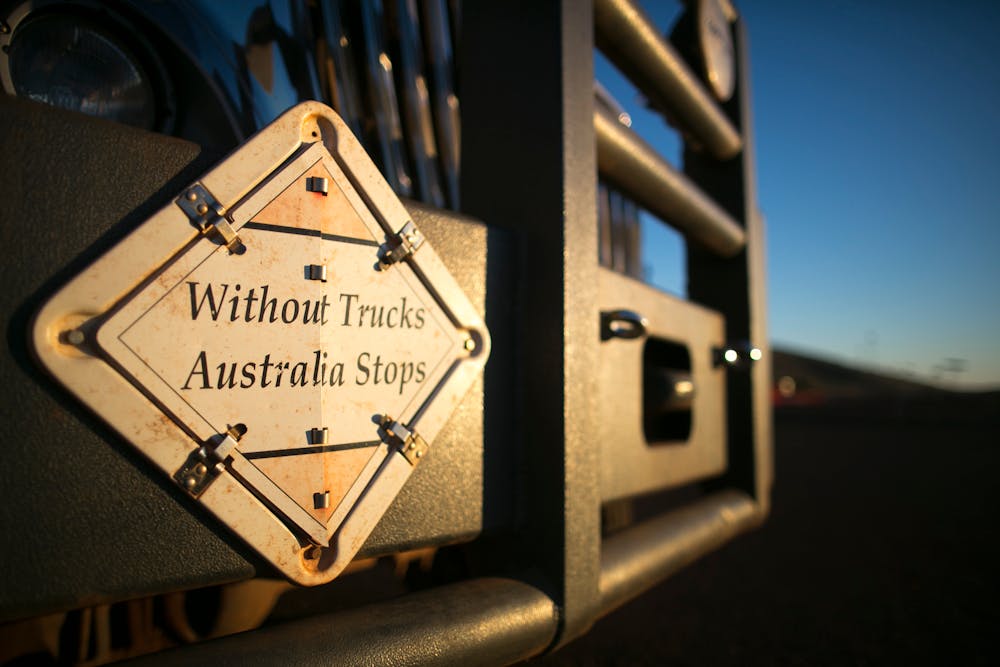
front of truck with sign saying without trucks Australia stops
From freight trains to road trains: trucks have taken the throne from trains.
Shutterstock

Federal grants enabled the $20 billion reconstruction of the entire Hume Highway (Melbourne to Sydney), bringing it up to modern engineering standards. A similar sum was spent on reconstructing most of the Pacific Highway (Sydney to Brisbane).


Read more:
Transport emissions have doubled in 40 years – expand railways to get them on track


What do our trains get? In 2021–22, the Australian Rail Track Corporation had a meagre $153 million to maintain its existing 7,500 kilometre interstate network.

This is separate from the 1,600km Inland Rail project which will link Melbourne to Brisbane via Parkes when complete. If the massive Inland Rail project is completed in the 2030s, it could potentially cut Australia’s freight emissions by 0.75 million tonnes a year by taking some freight off trucks. But this freight-only line is some way off – the first 770km between Beveridge in Victoria and Narromine in New South Wales is expected to be complete by 2027.

As a result, the authority maintaining Australia’s interstate rail tracks is “really struggling with maintenance, investment and building resilience”, according to federal Infrastructure Minister Catherine King.

This makes it harder for rail to compete, as Paul Scurrah, CEO of Pacific National, Australia’s largest private rail freight firm has said:

Each year, billions in funding is hardcoded in federal and state government budgets to upgrade roads and highways, which then spurs on greater access for bigger and heavier trucks […] Rail freight operators pay ‘full freight’ rates to run on tracks plagued by pinch points, speed restrictions, weight limits, sections susceptible to frequent flooding, and a lack of passing opportunities on networks shared with passenger services

What would it take to make rail more viable?

By 2030, road freight emissions are expected to increase from 37 to 42 million tonnes, while railway emissions stay steady at four million tonnes.

The need to cut freight emissions has been recognised by the Australian government, which has accelerated a review of the national freight and supply chain strategy.

To date, much attention in Australia and overseas has centred on finding ways to lower trucking emissions.

There are other ways. One is to shift some freight back to rail, which forms part of Victoria’s recent green freight strategy. This will be assisted by new intermodal terminals allowing containers to be offloaded from long-distance trains to trucks for the last part of their journey.

The second way is to improve rail freight energy efficiency. Western Australia’s long, heavy iron ore freight trains are already very energy efficient, and the introduction of battery electric locomotives will improve efficiency further. Our interstate rail freight on the eastern seaboard is much less efficient.

While the Inland Rail project is being built, we urgently need to upgrade the existing Melbourne–Sydney–Brisbane rail corridor, which has severe restrictions on speed.

To make this vital corridor better, there are three main sections of new track needed on the New South Wales line to replace winding or slow steam-age track. They’re not new – my colleagues and I first identified them more than 20 years ago.

These new sections are:

  1. Wentworth – about 40km of track stretching from near Macarthur to Mittagong
  2. Centennial – about 70km of track from near Goulburn to Yass
  3. Hoare – about 80km of track from near Yass to Cootamundra.

If we replaced 260km of steam-age track with these three sections and another 10km elsewhere, we would cut two hours off the Melbourne–Sydney freight transit time. Energy use would fall at least 10%. Better still, faster tilt trains could then run, potentially halving the Sydney–Melbourne passenger trip to 5.5 hours.

Track straightening on the Brisbane–Rockhampton line in the 1990s made it possible to run faster tilt trains and heavier, faster freight trains.

One challenge is who would build this. This year’s review of the Inland Rail project amid cost and time blowouts has raised questions over whether the ARTC is best placed to do so.

One thing is for sure: business as usual will mean more trucks carrying freight and more emissions. To actually tackle freight emissions will take policy reform on many fronts.


Read more:
Shifting freight to rail could make the Pacific Highway safer


The Conversation

Philip Laird owns shares in some transport companies and has received funding from two rail-related CRCs as well as the ARC. He is affiliated, inter alia, with the Chartered Institute of Logistics and Transport, the Railway Technical Society of Australasia and the Rail Futures Institute. The opinions expressed are those of the author.

ref. Australia’s freight used to go by train, not truck. Here’s how we can bring back rail – and cut emissions – https://theconversation.com/australias-freight-used-to-go-by-train-not-truck-heres-how-we-can-bring-back-rail-and-cut-emissions-219332

Amid allegations of price gouging, it’s time for big supermarkets to come clean on how they price their products

Source: The Conversation (Au and NZ) – By Sanjoy Paul, Associate Professor, UTS Business School, University of Technology Sydney

Denys Kurbatov/Shutterstock

With inflation driving up the cost of living, many are dreading not just the hassle of a big grocery shop, but also the bruising cost.

But while Australians struggle with their budget and spending, several major supermarkets made large profits in 2022–23. Coles and Woolworths, for example, made net profits of A$1.1 billion and A$1.62 billion, respectively.

Allegations of price gouging by Australian supermarkets have even led to a Senate inquiry into supermarket pricing.

Coles chief executive Leah Weckert has promised to appear at the inquiry, saying the company “works hard to keep prices affordable for Australian households […]” and is ready to “engage in an informed discussion on the factors that influence supermarket pricing.”

Woolworths Group chief executive Brad Banducci, meanwhile, said he welcomes the chance to explain to the Senate “how we are working to balance the needs of our customers, our team and our suppliers in the context of economy-wide inflationary pressure”.

But why wait until a Senate inquiry to explain all that? There’s an opportunity now for the big supermarkets to be more transparent about how they decide what prices to put on products.


Read more:
Feeling lonely? Too many of us are. Here’s what our supermarkets can do to help


Allegations of price gouging

It’s not just politicians and customers complaining about supermarket prices.

Australian farmers have also accused Coles and Woolworths of price gouging for fruits and vegetables, claiming supermarkets profit too much from their crops.

The National Farmers’ Federation has called for greater transparency from the supermarkets on how they decide prices.

A recent survey by AUSVEG (the peak industry body for the Australian vegetable and potato industries) found 34% of vegetable growers are considering leaving the industry in the next 12 months as they struggle to turn a profit.

When asked about calls for more transparent pricing, a Woolworths spokesperson told The Conversation:

We publish both our average gross margin and EBIT (earnings before interest and taxes) margin transparently in our public financial reports.

Supply chain costs are different for every product and they are constantly fluctuating, as are our buying costs in the case of fresh food like fruit and vegetables.

Shoppers are very savvy. We operate in a highly competitive industry and we know our customers will – and do – shop around to find the best value.

As we start to see the rate of inflation ease, we will continue to focus on delivering savings to our customers.

Coles was also contacted for comment but did not reply before publication deadline.

Factoring in many costs

When a retailer buys products from their suppliers, it involves a supply chain that includes supply, manufacturing, transportation and distribution, warehouse and storage.

There are several costs – such as product costs, transportation fees, labour, rent, inventory and more – involved at every step of the process.

The supermarket must factor in all costs, as well as its profit margin, when it sets the selling price for a product.

Organisations usually have these cost breakdowns as part of their internal decision-making – but they don’t typically disclose these calculations to their customers.

Not disclosing the cost breakdowns

The problem for supermarkets is that when they don’t disclose details such as their buying price or supply chain costs, it can contribute to anger among customers and suppliers.

Apple and Pear Australia Limited – the national peak industry body for apple and pear growers – has called for retailers to demonstrate greater price transparency, saying, “frustration at the behaviour of the major retailers has again angered many growers”.

Of course, supermarkets use several pricing strategies to win customer support – such as locking in prices for a certain period of time, everyday low prices on key products, specials, price-matching and discounts.

Supermarkets spend millions of dollars on these price-related advertisements, but perhaps they would get more community support by simply disclosing cost breakdowns on their websites and in-store to show their commitment to transparent and fair pricing.

Transparent and fair pricing

Research shows price transparency helps businesses build trust with their customers.

Many major retailers already have this information for internal decision-making, so could display this online and in stores.

Yes, prices change constantly due to factors outside their control – such as fuel prices, shipping problems or even supply chain issues linked to global conflict. But being more open with customers about these issues could help repair relationships and their public image.

Perhaps there may even be a role for government, which could collaborate with supermarkets and retailers to develop policies for transparent and fair pricing.

Everyday Australians deserve to be treated fairly and given the information they need about how major supermarkets price their products, so they can make informed decisions at the checkout.


Read more:
‘A weird dinging sound that everyone dreads’: what rapid deliveries mean for supermarket workers


The Conversation

Sanjoy Paul does not work for, consult, own shares in or receive funding from any company or organisation that would benefit from this article, and has disclosed no relevant affiliations beyond their academic appointment.

ref. Amid allegations of price gouging, it’s time for big supermarkets to come clean on how they price their products – https://theconversation.com/amid-allegations-of-price-gouging-its-time-for-big-supermarkets-to-come-clean-on-how-they-price-their-products-219316

Women want to see the same health provider during pregnancy, birth and beyond

Source: The Conversation (Au and NZ) – By Hazel Keedle, Senior Lecturer of Midwifery, Western Sydney University

Tyler Olson/Shutterstock

In theory, pregnant women in Australia can choose the type of health provider they see during pregnancy, labour and after they give birth. But this is often dependent on where you live and how much you can afford in out-of-pocket costs.

While standard public hospital care is the most common in Australia, accounting for 40.9% of births, the other main options are:

  • GP shared care, where the woman sees her GP for some appointments (15% of births)
  • midwifery continuity of care in the public system, often called midwifery group practice or caseload care, where the woman sees the same midwife of team of midwives (14%)
  • private obstetrician care (10.6%)
  • private midwifery care (1.9%).

Given the choice, which model would women prefer?

Our new research, published BMC Pregnancy and Childbirth, found women favoured seeing the same health provider throughout pregnancy, in labour and after they have their baby – whether that’s via midwifery group practice, a private midwife or a private obstetrician.


Read more:
More than 6,000 women told us what they wanted for their next pregnancy and birth. Here’s what they said


Assessing strengths and limitations

We surveyed 8,804 Australian women for the Birth Experience Study (BESt) and 2,909 provided additional comments about their model of maternity care. The respondents were representative of state and territory population breakdowns, however fewer respondents were First Nations or from culturally or linguistically diverse backgrounds.

We analysed these comments in six categories – standard maternity care, high-risk maternity care, GP shared care, midwifery group practice, private obstetric care and private midwifery care – based on the perceived strengths and limitations for each model of care.

Overall, we found models of care that were fragmented and didn’t provide continuity through the pregnancy, birth and postnatal period (standard care, high risk care and GP shared care) were more likely to be described negatively, with more comments about limitations than strengths.

What women thought of standard maternity care in hospitals

Women who experienced standard maternity care, where they saw many different health care providers, were disappointed about having to retell their story at every appointment and said they would have preferred continuity of midwifery care.

Positive comments about this model of care were often about a midwife or doctor who went above and beyond and gave extra care within the constraints of a fragmented system.

Baby being cleaned after birth
Sometimes midwives and doctors in the public system exceeded expectations.
Inez Carter/Shutterstock

The model of care with the highest number of comments about limitations was high-risk maternity care. For women with pregnancy complications who have their baby in the public system, this means seeing different doctors on different days.

Some respondents received conflicting advice from different doctors, and said the focus was on their complications instead of their pregnancy journey. One woman in high-risk care noted:

The experience was very impersonal, their focus was my cervix, not preparing me for birth.


Read more:
1 in 10 women report disrespectful or abusive care in childbirth


Why women favoured continuity of care

Overall, there were more positive comments about models of care that provided continuity of care: private midwifery care, private obstetric care and midwifery group practice in public hospitals.

Women recognised the benefits of continuity and how this included informed decision-making and supported their choices.

The model of care with the highest number of positive comments was care from a privately practising midwife. Women felt they received the “gold standard of maternity care” when they had this model. One woman described her care as:

Extremely personable! Home visits were like having tea with a friend but very professional. Her knowledge and empathy made me feel safe and protected. She respected all of my decisions. She reminded me often that I didn’t need her help when it came to birthing my child, but she was there if I wanted it (or did need it).

However, this is a private model of care and women need to pay for it. So there are barriers in accessing this model of care due to the cost and the small numbers working in Australia, particularly in regional, rural and remote areas, among other barriers.

Women who had private obstetricians were also positive about their care, especially among women with medical or pregnancy complications – this type of care had the second-highest number of positive comments.

This was followed by women who had continuity of care from midwives in the public system, which was described as respectful and supportive.

However, one of the limitations about continuity models of care is when the woman doesn’t feel connected to her midwife or doctor. Some women who experienced this wished they had the opportunity to choose a different midwife or doctor.

What about shared care with a GP?

While shared care between the GP and hospital model of care is widely promoted in the public maternity care system as providing continuity, it had a similar number of negative comments to those who had fragmented standard hospital care.

Considering there is strong evidence about the benefits of midwifery continuity of care, and this model of care appears to be most acceptable to women, it’s time to expand access so all Australian women can access continuity of care, regardless of their location or ability to pay.


Read more:
Birthing on Country services centre First Nations cultures and empower women in pregnancy and childbirth


The Conversation

Hazel Keedle is affiliated with the Australian College of Midwives. Funding for this study was from a School of Nursing and Midwifery Partnership Grant through Western Sydney University, The Qiara Vincent Thiang Memorial Award and Maridulu Budyari Gumal SPHERE Maternal, Newborn and Women’s Clinical Academic Group funding.

Hannah Dahlen has received funding from the National Health and Medical Research Commission, the Australian Research Council, the Medical Research Future Fund (funding and for this study and funding from a School of Nursing and Midwifery Partnership Grant through Western Sydney University), The Qiara Vincent Thiang Memorial Award and Maridulu Budyari Gumal SPHERE Maternal, Newborn and Women’s Clinical Academic Group funding.

ref. Women want to see the same health provider during pregnancy, birth and beyond – https://theconversation.com/women-want-to-see-the-same-health-provider-during-pregnancy-birth-and-beyond-217803

‘Politically neutral’ Russian athletes can now enter the Olympics – but don’t expect many to compete

Source: The Conversation (Au and NZ) – By Keith Rathbone, Senior Lecturer, Modern European History and Sports History, Macquarie University

Earlier this month, the International Olympic Committee (IOC) announced Russian and Belarussian athletes will be able to compete in the 2024 Paris Olympics if they are politically neutral. The decision from the committee’s executive board reversed an earlier ban.

The IOC made this change even though the Russian National Olympic Committee remains suspended from competition for its violation of “the territorial integrity of the National Olympic Committee of Ukraine”. For its part, Russia rejects the decision.

The committee’s decision has enraged Western leaders, particularly those in Ukraine. Ukrainian Foreign Minister Dmytro Kuleba accused the committee of effectively giving “[…] Russia the green light to weaponize the Olympics”.

While it might seem like a good idea not to hold individual athletes responsible for the decisions of governments, the decision is more complicated that it appears.


Read more:
Refugee team offers a way for Russian and Belarusian dissidents to compete at the Paris Olympics


Athletes caught in the middle

More than 30 Western nations, including Australia, have previously called for a complete ban on Russian participation in the Games.

IOC President Thomas Bach defended his decision by arguing “individual athletes cannot be punished for the acts of their governments”.

The ruling came with strict conditions. Athletes must not be open supporters of the Russian invasion and they cannot be affiliated with Russian or Belarussian military or security services.

They cannot compete under their home country’s flag, or with national emblems or anthems.

The committee estimates that only 11 athletes – six Russians and five Belarussians – will qualify under these regulations.

The committee has been slowly working towards this policy since the spring of 2023.

The call may seem reasonable. After all, why should Russian and Belarussian athletes, especially those not supportive of the invasion, suffer from the actions of their government?

But it’s not quite that cut and dry.

Different, inconsistent approaches

The rule change seems inconsistent. As the committee continues to ban the participation of Russian teams, not all neutral Russian and Belarussian athletes will be able to participate.

Sporting federations can also continue to ban Russian and Belarussian athletes from competition and therefore qualification for the Games. World Athletics President Seb Coe confirmed that the organisation will continue to ban them.

By contrast, World Taekwondo and World Judo have both allowed Russian and Belarussian athletes to compete in qualification.

In September, the International Paralympic Committee also decided neutral athletes can compete.

What can Ukraine’s allies do?

With the Paris 2024 games only seven months away, the IOC’s decision seems final. But frustrated Western leaders have other options.

In the past year, Western officials have threatened to boycott the Olympics if Russian and Belarussian athletes competed.

There is a long history of politically motivated Olympic boycotts and threatened boycotts. In 1980, the United States and 66 other countries boycotted the Moscow games in response to the Soviet Invasion of Afghanistan. Eight other countries, including Australia, competed under an Olympic flag to signal their opposition to the invasion.


Read more:
In a year of sporting mega-events, the Brisbane Olympics can learn a lot from the ones that fail their host cities


In 1984, in response, the Soviet Union and its allies boycotted the summer Olympics in Los Angeles.

A boycott of the Paris Olympics would be devastating to the organisers, but it remains very unlikely. France is a Western nation and a strong supporter of Ukraine. President Emmanuel Macron recently encouraged the European Union to continue supporting the beleaguered nation.

As a more palatable approach, Western leaders could ban athletes from Russia and Belarus from competing in international athletic competitions in Western Europe in the run-up to the games. This would likely make it impossible for any athletes from those countries to qualify for spots in Paris.

As historian Heather Dichter has shown, travel bans have a long history in the Olympics.

In the 1960s, there was a NATO-wide ban on East German athletes travelling to compete in events in Western European countries. This effectively barred them from participation in several major sporting competitions and from qualifying for the Olympics.

Some Western leaders have already attempted to use this strategy against Russian and Belarussian athletes. Polish President Andrzej Duda refused to issue visas to Russian and Belarussian fencers for a qualification competition in June. The International Fencing Federation moved the matches to Bulgaria where the neutral athletes could compete.


Read more:
Gender inequality will still be an issue at the Paris 2024 Olympics — despite the Games being gender-balanced


As a more drastic step, French officials could simply ban all Russian and Belarussian athletes from travelling to Paris during the Olympics. The committee would likely have no recourse at this late date.

It would would align with the approach of some other EU member nations that ban Russian tourism and travel.

However, the French National Olympic Committee would likely oppose such a move. They might worry that it threatens the viability of their likely future 2030 Winter Olympic Games.

At a time when so much international attention has turned to the Israel/Hamas war, will leaders, however frustrated, do anything in response?

Only time will tell, but one thing’s for sure: whatever happens will be carefully calculated to account for the vast array of geopolitical moving parts.

The Conversation

Keith Rathbone does not work for, consult, own shares in or receive funding from any company or organisation that would benefit from this article, and has disclosed no relevant affiliations beyond their academic appointment.

ref. ‘Politically neutral’ Russian athletes can now enter the Olympics – but don’t expect many to compete – https://theconversation.com/politically-neutral-russian-athletes-can-now-enter-the-olympics-but-dont-expect-many-to-compete-219796

Do dog ‘talking buttons’ actually work? Does my dog understand me? Here’s what the science says

Source: The Conversation (Au and NZ) – By Susan Hazel, Associate Professor, School of Animal and Veterinary Science, University of Adelaide

Shutterstock

Is your dog bothered by something but you can’t work out what? Do you wish they could tell you?

There’s a huge range of dog “talking” buttons on the market that now claim to let your dog do this. A very basic kit will set you back about $15, while more sophisticated ones can cost hundreds of dollars.

But is there any evidence these products work?

How the buttons work

The idea behind these buttons is simple. You record yourself speaking a word such as “treat” or “outside” into each button, after which the word is played back each time the button is pressed. Your dog can supposedly be trained to understand the words coming from the buttons, and use them to communicate with you.

Talking buttons are an example of augmentative and alternative communication. To put it simply, they’re a method of communication that doesn’t use speech. In humans, similar devices are valuable for people with autism or intellectual disability, or those suffering from a stroke or other neurological condition.

Can dogs learn complex communication?

A dog could figure out to press talking buttons through a process called operant conditioning – the same process used to teach dogs simple commands such as “sit”. When a dog performs a behaviour and receives something they want, such as a treat, they’re more likely to continue that behaviour.

The idea of dogs “talking” to humans with buttons was started by Christina Hunger, a speech language pathologist who understood the use of augmentative and alternative communication devices. Hunger claims to have taught her dog Stella more than 50 words and phrases up to five-words long.

Understanding human language is too complex a task for a dog. Sometimes it may seem like dogs can very perform complex tasks – such as driving a car – when they link simple behaviours learned through operant conditioning. But they’ve just learned simple behaviours that are linked together – they haven’t learned how to drive.


Read more:
Anxious dogs have different brains to normal dogs, brain scan study reveals


Alternative explanations

There are simple explanations for what may seem like complex behaviour in animals. For one thing, animals excel in picking up our body language. As a result, they may appear to understand more than they actually do.

Clever Hans the horse is the perfect example. Hans gained prominence in the early 1900s for allegedly being able to do mathematics. Even his trainer believed he could count. It was only when the trainer was no longer present that people realised Hans was relying on involuntary cues in the trainer’s body language to “solve” problems, and couldn’t actually count.

Dogs are probably even better than horses at picking up on our body language cues. As the first domesticated species, they’ve spent thousands of years working out what we’re likely to do next. Just think of all the times your dog has rushed to the door even before you’ve picked up their leash.

When we train dogs to use talking buttons, they’re probably learning using operant conditioning to some extent. For example, they learn that pressing a button can lead to a reward.

But in cases where dogs seem to be able to string multiple buttons together to say something advanced, or where they can press the “right” button when asked, they’re likely just responding to their owner’s body language. And they probably wouldn’t be able to replicate the behaviour if a new pet-sitter was making the command.

We need more data

Federico Rossan, director of the Comparative Cognition Lab at UC San Diego, is working on a large project analysing results from dogs using talking buttons.

Although FluentPet (a business that sells pet communication products) is involved, the study is reported to be independent. That means a person who doesn’t have a conflict of interest will analyse and report the results.

Data collection started in late 2020, but so far no evidence has been published. Until then, the best “evidence” we have for these products is anecdotal reporting coming from dog owners who are probably biased (since they’d like to think their dog is very clever).


Read more:
If humans disappeared, what would happen to our dogs?


Could it do any harm?

It matters when we treat our dogs differently depending on what we think they are thinking.

One example is when we assume dogs feel guilty for certain actions. For instance, when you come home and your dog has chewed up your favourite rug, they might look “guilty” as you scold them, but they’re actually just responding to your reaction. Studies have shown dogs can’t experience the human emotion of guilt.

That’s why you shouldn’t punish your dog when you come home to a chewed-up carpet. They won’t associate your yelling or smacking with their action from hours earlier.

The reality is some dogs will simply be more interested in interacting with talking buttons than others. There’s no good reason to think these dogs are therefore smarter than others.

Should I buy talking buttons?

If you can recognise and account for the potential risks mentioned above, then buying talking buttons won’t do any harm to you or your dog (apart from putting a dent in your wallet).

That said, there are myriad ways to communicate with your dog without needing such a device. Chaser the border collie learned how to retrieve 1,022 toys by name without an augmentative device.

However you do it, spending time with your dog using positive reinforcement training will benefit both of you. Dogs are amazing, unique animals with whom we can communicate in all kinds of ways, and they don’t need to understand our language for this.

Talking buttons could be harmful if a dog’s refusal to use them changes their owner’s attitude towards them.
Shutterstock

The Conversation

Susan Hazel receives funding from the Waltham Foundation and is associated with the Dog & Cat Management Board of South Australia, RSPCA South Australia and Animal Therapies Ltd.

Eduardo Fernandez receives funding from the Waltham Foundation.

ref. Do dog ‘talking buttons’ actually work? Does my dog understand me? Here’s what the science says – https://theconversation.com/do-dog-talking-buttons-actually-work-does-my-dog-understand-me-heres-what-the-science-says-219807

5 ways to avoid weight gain and save money on food this Christmas

Source: The Conversation (Au and NZ) – By Nick Fuller, Charles Perkins Centre Research Program Leader, University of Sydney

As Christmas approaches, so does the challenge of healthy eating and maintaining weight-related goals. The season’s many social gatherings can easily tempt us to indulge in calorie-rich food and celebratory drinks. It’s why we typically gain weight over Christmas and then struggle to take it off for the remainder of the year.

Christmas 2023 is also exacerbating cost-of-living pressures, prompting some to rethink their food choices. Throughout the year, 71% of Australians – or 14.2 million people – adapted their eating behaviour in response to rising costs.

Fortunately, there are some simple, science-backed hacks for the festive season to help you celebrate with the food traditions you love without impacting your healthy eating habits, weight, or hip pocket.


Read more:
When Christmas comes so do the kilos. New research tracks Australians’ yo-yo weight gain


1. Fill up on healthy pre-party snacks before heading out

If your festive season is filled with end-of-year parties likely to tempt you to fill up on finger foods and meals high in fat, salt, and sugar and low in nutritional value, have a healthy pre-event snack before you head out.

Research shows carefully selected snack foods can impact satiety (feelings of fullness after eating), potentially reducing the calories you eat later. High-protein, high-fibre snack foods have the strongest effect: because they take longer to digest, our hunger is satisfied for longer.

Person pours a handful of mixed nuts
Nuts are a good option.
Shutterstock/NazarBazar

So enjoy a handful of nuts, a tub of yoghurt, or a serving of hummus with veggie sticks before you head out to help keep your healthy eating plan on track.

2. Skip the low-carb drinks and enjoy your favourites in moderation

Despite the marketing promises, low-carb alcoholic drinks aren’t better for our health or waistlines.

Many low-carb options have a similar amount of carbohydrates as regular options but lull us into thinking they’re better, so we drink more. A survey found 15% of low-carb beer drinkers drank more beer than they usually would because they believed it was healthier for them.

A typical lager or ale will contain less than 1.5 grams of carbohydrate per 100 ml while the “lower-carb” variety can range anywhere from 0.5 grams to 2.0 grams. The calories in drinks come from the alcohol itself, not the carbohydrate content.

Next time you go to order, think about the quantity of alcohol you’re drinking rather than the carbs. Make sure you sip lots of water in between drinks to stay hydrated, too.

3. Don’t skimp on healthy food for Christmas Day – it’s actually cheaper

There’s a perception that healthy eating is more expensive. But studies show this is a misconception. A recent analysis in Victoria, for example, found following the Australian Dietary Guidelines cost the average family A$156 less a fortnight than the cost of the average diet, which incorporates packaged processed foods and alcohol.


Read more:
Trying to spend less on food? Following the dietary guidelines might save you $160 a fortnight


So when you’re planning your Christmas Day meal, give the pre-prepared, processed food a miss and swap in healthier ingredients:

  • swap the heavy, salted ham for leaner and lighter meats such as fresh seafood. Some seafood, such as prawns, is also tipped to be cheaper this year thanks to favourable weather conditions boosting local supplies

  • for side dishes, opt for fresh salads incorporating seasonal ingredients such as mango, watermelon, peach, cucumber and tomatoes. This will save you money and ensure you’re eating foods when they’re freshest and most flavoursome

Woman holds platter at Summer Christmas lunch outdoors
Swap in healthier ingredients.
PeopleImages.com – Yuri A/Shutterstock
  • if you’re roasting veggies, use healthier cooking oils like olive as opposed to vegetable oil, and use flavourful herbs instead of salt

  • if there’s an out-of-season vegetable you want to include, look for frozen and canned substitutes. They’re cheaper, and just as nutritious and tasty because the produce is usually frozen or canned at its best. Watch the sodium content of canned foods, though, and give them a quick rinse to remove any salty water

  • give store-bought sauces and dressings a miss, making your own from scratch using fresh ingredients.

4. Plan your Christmas food shop with military precision

Before heading to the supermarket to shop for your Christmas Day meal, create a detailed meal plan and shopping list, and don’t forget to check your pantry and fridge for things you already have.

Eating beforehand and shopping with a plan in hand means you’ll only buy what you need and avoid impulse purchasing.


Read more:
Bring a plate! What to take to Christmas lunch that looks impressive (but won’t break the bank)


When you’re shopping, price check everything. Comparing the cost per 100 grams is the most effective way to save money and get the best value. Check prices on products sold in different ways and places, too, such as nuts you scoop yourself versus prepacked options.

5. Don’t skip breakfast on Christmas Day

We’ve all been tempted to skip or have a small breakfast on Christmas morning to “save” the calories for later. But this plan will fail when you sit down at lunch hungry and find yourself eating far more calories than you’d “saved” for.

Research shows a low-calorie or small breakfast leads to increased feelings of hunger, specifically appetite for sweets, across the course of the day.

What you eat for breakfast on Christmas morning is just as important too – choosing the right foods will help you manage your appetite and avoid the temptation to overindulge later in the day.

Studies show a breakfast containing protein-rich foods, such as eggs, will leave us feeling fuller for longer.

So before you head out to the Christmas lunch, have a large, nutritionally balanced breakfast, such as eggs on wholegrain toast with avocado.

At the Boden Group, Charles Perkins Centre, we are studying the science of obesity and running clinical trials for weight loss. You can register here to express your interest.


Read more:
5 ways to make Christmas lunch more ethical this year


The Conversation

Nick Fuller works for the University of Sydney and has received external funding for projects relating to the treatment of overweight and obesity. He is the author and founder of the Interval Weight Loss program.

ref. 5 ways to avoid weight gain and save money on food this Christmas – https://theconversation.com/5-ways-to-avoid-weight-gain-and-save-money-on-food-this-christmas-219114

From laggard to leader? Why Australia must phase out fossil fuel exports, starting now

Source: The Conversation (Au and NZ) – By Fergus Green, Lecturer in Political Theory and Public Policy, UCL

For years large fossil fuel producersincluding Australia — have expanded fossil fuel production while maintaining rhetorically that the world needs to reduce greenhouse gas emissions. But global emissions are overwhelmingly caused by the extraction, transport and burning of fossil fuels. Unless fossil fuels are phased out, emissions will grow and the climate crisis will worsen.

At COP28 climate negotiations in Dubai, which wrapped up last week, this fact finally became the centre of attention. And fossil fuel producers were feeling the pressure — forced to defend their expansion of fossil fuels or change their tune.

Interestingly, Australia seems to be doing the latter, at least rhetorically. While successive governments have worked assiduously to keep fossil fuel production out of the spotlight at the UN talks, Climate Change Minister Chris Bowen said Australia supports the global phasing out of fossil fuels in energy systems by 2050. Clearly eager to avoid being seen as the villain at the talks, Bowen named Saudi Arabia as the main blocker to an agreement on phasing out fossil fuels.

But the text of COP decisions matters much less than the actions states and companies take. Australia — one of the world’s largest producers and exporters of fossil fuel-based carbon dioxide — is fuelling the problem, not solving it. Currently, Australian companies are moving to expand fossil fuel production: more than 100 major coal, oil and gas projects are in planning, at a cost of around A$200 billion. Some of these are “carbon bombs,” likely to add huge quantities of emissions.

Why Australia faces charges of hypocrisy

The Albanese government has already approved a number of new fossil fuel projects, embracing the fossil fuel expansionism of its conservative predecessors. But now that Australia has declared support for a global phase-out of fossil fuels, it must curtail its own exports or face continued charges of hypocrisy.

How could Australia do that while managing the fallout? Interestingly, Bowen’s rhetoric at COP contained the seeds of an answer: a “phase out of fossil fuels is Australia’s economic opportunity as [a] renewable energy superpower”. In line with this sentiment, Australia should adopt the mission of leading the Asia-Pacific region to a prosperous future by simultaneously phasing out its fossil fuel exports while phasing up its clean energy exports; by becoming a clean energy superpower instead of a dirty energy one.

Doing so would require a dramatic shift in Australia’s international climate posture: from a defensive, parochial, technocratic stance aimed at protecting fossil fuel expansion to proactive, outward-looking and pragmatic leadership; from merely focusing on its own territorial emissions to using all powers at its disposal in its sphere of influence.


Read more:
Hard-fought COP28 agreement suggests the days of fossil fuels are numbered – but climate catastrophe is not yet averted


First a new project ban, then a net zero plan

Our coal and gas exports are entirely within our sovereign control, and give us enormous leverage over our regional trading partners. No one is suggesting stopping fossil fuel exports overnight. But we could start by banning new projects, and then convening our regional partners to work out a plan to phase out existing production and consumption. Australian leadership would involve supporting our neighbours —through investment, trade and aid —to ensure their populations can access energy from zero-carbon sources, just as we’re aspiring to do at home.

Phasing out fossil fuel exports is thus best conceptualised as part of a shift in our foreign and trade policy aimed at securing our and our region’s prosperity against the existential threat of climate change — and amid a global pivot to clean energy. Call it “cooperative decarbonisation”. Viewed in this light, the typical objections to a fossil fuel phase-out in Australia look pathetic.

The weak objections to a phase-out

The first objection claims we are not responsible for the overseas emissions produced from burning our exported coal and gas. This falsely conflates Australia’s national interest in reducing emissions globally with its international legal responsibility for reporting emissions locally.

Nothing in the Paris Agreement prevents a country from taking actions that would reduce or avoid emissions in another country. It is reckless and self-defeating to concern ourselves only with emissions produced on our territory when our power to influence global emissions is so much greater. Let’s hope that Bowen’s rhetorical shift at COP28 signals acceptance of this fact.

The second objection is that leaving our fossil fuels in the ground will not affect global emissions, because if we don’t sell our coal and gas, someone else will. Aside from its immorality (the “drug dealer’s defence”), the objection defies Economics 101: if you reduce supply of a product, its price goes up, causing demand to contract. Other countries might supply some of the shortfall, but Australia is such a big producer that it is implausible to think we could exit the coal and gas markets without dramatically reducing global emissions.

Moreover, it’s shortsighted to think of fossil fuel export policy in isolation from the wider foreign policy choices we face. Australia’s current foreign policy is to promote our coal and gas exports: we literally pay public servants to help multinational companies sell more coal and gas. But if we gave our diplomats the nobler mission of leading our region’s decarbonisation, our leadership would help to make trade in fossil fuels redundant.

The last oft-heard objection is that phasing out fossil fuel production would cost too much. The foreign-owned corporations that produce most of our coal and gas pay little tax and employ relatively few people, while capturing billions of dollars in state and federal government subsidies. Scaling up as a clean energy superpower could bring more economic growth, jobs and tax revenue than would be lost from fossil fuels — especially if we taxed the fossil fuel industry properly on its way out.


Read more:
Hyped and expensive, hydrogen has a place in Australia’s energy transition, but only with urgent government support


Phase-outs can be done: lessons from overseas

Denmark, France, Ireland and Costa Rica are among a number of countries that have foregone new fossil fuel exploration and production opportunities; others are working to phase out existing operations. Doing so is undoubtedly challenging: firms, workers and the communities in which fossil fuel operations are located understandably tend to resist policies that would close their industry.

But government support can smooth the transition. The Spanish government, for instance, negotiated a “just transition agreement” with unions and businesses to phase out coal mining, support affected workers and invest in their communities. My coauthors and I found this strategy actually increased the government’s vote share at a subsequent election in the coal regions.

A phase-out of fossil fuel production is entirely feasible for a country with our resources, skills and diverse economy. The standard objections provide fossil fuel companies, and the politicians they’ve captured, with convenient excuses for cashing in while the planet — and Australia — burns. It’s time, instead, for bold actions that lead us and our region to a prosperous, fossil-free future.


Read more:
COP28 deal confirms what Australia already knows: coal is out of vogue and out of time


The Conversation

Fergus Green is affiliated with the Powering Past Coal Alliance – is a coalition of national and subnational governments, businesses and organisations working to advance the transition from unabated coal power generation to clean energy. He is a member of the Alliance’s Just Transition Expert Group.

ref. From laggard to leader? Why Australia must phase out fossil fuel exports, starting now – https://theconversation.com/from-laggard-to-leader-why-australia-must-phase-out-fossil-fuel-exports-starting-now-219912

Planting pine or native forest for carbon capture isn’t the only choice – NZ can have the best of both

Source: The Conversation (Au and NZ) – By Sebastian Leuzinger, Professor of Environmental Science, Auckland University of Technology

New Zealand’s per-capita contribution to carbon emissions is very high by international comparison. But so too is its potential to mitigate climate change by planting forests to quickly sequester large amounts of carbon.

There is sometimes passionate debate about how best to do this. Should we continue establishing radiata pine plantations, or focus instead on planting New Zealand native trees?

Arguments for and against each option exist – but there is also a third way that could achieve the best of both worlds: planting radiata pine forests that are not harvested, but instead transitioned over time into native forests through targeted management.

We need to cut emissions drastically. But we also need to remove as much CO₂ from the atmosphere as possible, especially over the next 20 years. A transitional forest model is a powerful way to help achieve this.

Farming carbon using trees

As trees grow they absorb CO₂ from the atmosphere and lock the carbon into wood, leaves, roots and soil.

The New Zealand Emissions Trading Scheme (ETS) provides income from growing trees to store carbon. It is a key tool for meeting domestic and international climate change targets, including the 2050 target set by the Climate Change Response Act 2002.

A newly planted native forest will absorb approximately 40 tonnes of atmospheric CO₂ per hectare over ten years. By contrast, an exotic radiata pine forest will achieve five to ten times this amount over the same period.


Read more:
Meeting the long-term climate threat takes more than private investment – 10 ways NZ can be smart and strategic


In other words, to absorb a given quantity of carbon during the early stages of reforestation, it will take five to ten times more farmland using natives. Because of this enormous advantage of exotics over natives, there is a place for exotic carbon farming.

Some object to pine planting on purely aesthetic grounds – they just don’t like the look of radiata forests. And we agree there are some places where pine is just not appropriate for the landscape. But the urgency to mitigate climate change means we need to turn as much unprofitable pasture into forest as possible.

Radiata forests are also criticised for being monocultures that lack biodiversity. But the pasture they replace is also a monoculture that contains even less biodiversity. Planting trees on pasture also reduces gross emissions by reducing animal stock and therefore methane emissions.

We can’t plant too many trees

A year of emissions in Aotearoa New Zealand equals 78.8 million tonnes CO₂ equivalent, based on 2020 figures. To offset this for a ten-year period would require planting roughly 20 million hectares of pasture in native trees, then waiting ten years for them to grow.

The total area of Aotearoa is 26.9 million hectares, with 3 million of those being mountains. Therefore, another treeless country of a similar size would be required to fully offset its emissions using native trees alone. Using radiata pine would require 2 to 4 million hectares.

At an individual level, just one return trip from Auckland to London for one person will produce approximately 11 tonnes of CO₂ emissions. To offset this would require planting over a quarter of a hectare (almost an acre) of native trees, and waiting ten years for them to grow.

On current projections, Aotearoa will need to purchase 100 million tonnes of offshore carbon credits to meet its international commitments. According to Treasury calculations, this will cost between NZ$3.3 billion to $23 billion between now and 2030.

Obviously, the country cannot offset all its emissions by planting trees, native or exotic. Reducing emissions in the first place is the priority. But from a climate perspective, we cannot plant too many trees of any kind.


Read more:
We’re burning too much fossil fuel to fix by planting trees – making ‘net zero’ emissions impossible with offsets


Restoring biodiversity over time

One of the criticisms levelled at exotic carbon forests is that the carbon storage is not permanent because of the shorter lifespan of pine. But pine plantations in New Zealand can keep accumulating carbon for at least a century if they’re not harvested.

Also, the carbon storage is permanent if exotic forests are transitioned into self-sustaining native forests. This process occurs naturally, but can and should be accelerated by targeted management.

Because radiata pine needs a lot of light to grow, its own seedlings will not establish beneath its canopy. Therefore, pine will naturally decline over time and
gradually be replaced by native forest, a process that occurs naturally but takes many decades.


Read more:
Cyclone Gabrielle triggered more destructive forestry ‘slash’ – NZ must change how it grows trees on fragile land


To provide crucial structural and species diversity, and to expedite the transition process, native trees requiring plenty of light need to be planted, and pine trees need to be thinned. This is nothing like commercial harvesting, so the problems associated with forestry “slash” do not arise.

Fruiting natives will attract birds and enhance seed dispersal. At the same time, the income from carbon credits through the ETS can be used for further plantings, and also to fund intensive animal pest control – a critical step towards rebuilding native forests.

Eventually, this strategy will provide both permanent carbon storage and carbon capture that continue way beyond a century. But within decades we would also see the return of large areas of highly biodiverse native forests.

The Conversation

Sebastian Leuzinger is a professor of ecology at Auckland University of Technology and occasionally consults for New Zealand Carbon Farming. He has received funding from the Royal Society in the past.

Len Gillman is co-chair of the Waitakere Ranges Pest free Alliance. He has acted as an independent consultant for local government and carbon farmers on climate change mitigation, climate effects mitigation and native forest restoration ecology.

ref. Planting pine or native forest for carbon capture isn’t the only choice – NZ can have the best of both – https://theconversation.com/planting-pine-or-native-forest-for-carbon-capture-isnt-the-only-choice-nz-can-have-the-best-of-both-217772

Is it OK to let my kids watch the same show over and over again?

Source: The Conversation (Au and NZ) – By Laura Scholes, Associate Professor and ARC Principal Research Fellow, Australian Catholic University

Ivan Samkov/Pexels , CC BY

Are you sure you want Frozen again? You’ve already seen it 20 times!

Do you find your children asking to watch the same TV shows and movies, or play the same video games over and over (and over again)? Perhaps you also find yourself thinking it would be better if they had a more varied screen-time diet.

The good news is, it’s perfectly OK for children to watch and repeat. In fact, it can help them learn.


Read more:
‘Screen time’ for kids is an outdated concept, so let’s ditch it and focus on quality instead


Children learn through repetition

Children have a lot to learn about themselves and the world. A big part of the way they do this is through repetition.

This applies to learning to walk, talk and read. But it can also be said for TV shows, movies and video games with a storyline such as Stardew Valley.

Children may start by learning about the plot. On subsequent viewings they may pick up more details about the characters, the songs, the context or even the subtle twists and turns of the plot.

So this offers children insights into different characters, stories and ideas. These different perspectives offer valuable opportunities for learning about people and the world.

Repeat watching also enables immersion into a make-believe world that provides comfort. Just like adults might enjoy catching up on old episodes of Seinfeld or Friends, or watching Love, Actually each Christmas.

A young boy sits on a couch with a TV remote.
Children learn through repetition, and this applies to TV as well.
Kampus Production/Pexels, CC BY

A unique opportunity

When a child watches something over and over, this also opens up unique learning opportunities because they get to know the story so well.

Once a child is very familiar with a storyline, they can have deep discussion to help them think critically about what they are watching, especially once they’ve reached primary-school age.

Together, you can share ideas and consider alternative viewpoints to those offered in the story. Together, you can also question the assumptions in the characters’ actions and the storyline.

This will help your child’s critical thinking and help them evaluate information in the rest of their lives. It can also help them weigh up positive and negative attributes of characters, plots and beliefs that form part of the storyline.

Ultimately, this can help your child learn to reason and make judgements about controversial issues, and hopefully learn to do this in a respectful way.

How can you talk to your kids about their favourite shows?

If you want to have a thorough discussion with your child about their favourite program or game, set aside some time when you are not rushed.

Prepare by watching the program or movie, or playing the game before the discussion. Show excitement at the prospect of this time with your child and be prepared to listen carefully.

It is important for the discussions to be a two-way exchange where you both listen to each other (and not just a parent telling the child what the story is about or alternatively nodding along while the child gives their version).

The trick is to ask questions that do not have one right answer. Many stories bring up issues of ethics, morals, conflict, relationships, social issues and offer insights into the life of others. You could ask your child:

  • what they think the message in the story might be? Then ask them to justify their response with evidence from the story

  • about alternative perspectives. For example, maybe the movie was about the way someone’s actions affect others (rather than the power of magic or the triumph of goodies over baddies or the importance of family. Or maybe it was all of these things.)

You could also ask:

  • why they think character A did B? Then ask them if they agree with the actions or would have done something different themselves. Then ask them to justify their answer.

The aim is to discuss alternative messages and justify the response with examples from the story.

In this way you are helping your child make meaning in their world – a vital skill as they grow up.

So, next time the same show or movie goes on again, relax. It may be annoying for you to hear the same songs or storyline for the 1,000th time, but there are benefits for your child.


Read more:
TV can be educational but social media likely harms mental health: what 70 years of research tells us about children and screens


.

The Conversation

Laura Scholes has received funding from the Australian Research Council.

ref. Is it OK to let my kids watch the same show over and over again? – https://theconversation.com/is-it-ok-to-let-my-kids-watch-the-same-show-over-and-over-again-218042

Alvin Purple at 50: how ‘boobs and pubes’ led Australian screen’s sexual (and sexist) revolution

Source: The Conversation (Au and NZ) – By Michelle Arrow, Professor of History, Macquarie University

Umbrella Entertainment

Fifty years ago this week, the first blockbuster of the Australian new wave hit Australian cinemas. Directed by Tim Burstall and starring Graeme Blundell, Alvin Purple was a bawdy sex comedy about an unprepossessing young man who was irresistible to women.

It was a hit, screening for months after its release. A sequel, Alvin Rides Again, quickly followed in 1974, and a short-lived television series aired in 1976.

However, the jiggling flesh and bed-hopping antics of Alvin Purple were probably not what Australian politicians had in mind when they devised policies to create a local film industry in the late 1960s.

A wave of new nationalism

In the wake of global political and economic shifts, including the United Kingdom’s decision to join the European Common Market in 1973, Australia undertook a reevaluation of its national identity. Intellectuals and politicians believed culture, and film in particular, could foster this process and promote Australia to the world in an era of “new nationalism”.

The Holt and Gorton Liberal governments established the Australian Council for the Arts in 1967 and the Australian Film Development Corporation (AFDC) in 1970.

This embrace of government support for the arts was new. Government funding expanded the national significance and box office reach of Australian cinema. The Australian Film Development Corporation was encouraged to back popular, rather than arthouse films, with the aim of growing a commercially viable film industry.

The impact of this investment was quickly felt: while just 17 feature films were made in Australia in the 1960s, more than 150 were made in the 1970s.

Alvin Purple was the first big hit of this new era in Australian film, a standard-bearer of the new nationalism. As with so many images of Australian identity, such as the Anzac and the bushman, the new nationalism was represented by a white bloke: in this case, the Ocker. The Ocker was keen on colourful language, beer and women, in that order.

The Ocker was crucial to the new film industry, just as he had been the new radical Australian theatre of the late 1960s. Many of those involved in theatre would go on to shape Australian film, including Burstall and Blundell.

Australia’s new cinema classification system – which replaced the older system of strict censorship – was the second key ingredient in Australian cinema’s new wave. The Ocker films were almost all bawdy comedies which took advantage of the new R rating for films introduced in 1971. Alvin Purple’s abundant nudity – what one reviewer described as “boobs and pubes” – was one of the reasons it became a hit.


Read more:
Paul Hogan and the myth of the white Aussie bloke


An Aussie sex comedy

In making Alvin Purple, Tim Burstall wanted to create “a sex comedy with […] purely Australian ingredients”.

Alvin Purple is indeed an Australian sex comedy but the joke is on Alvin: despite his view sex is “overrated”, he is bewilderingly irresistible to women of all ages, from screaming schoolgirls to the wife of his school principal, to the psychologist he sees in a bid to avoid sex.

To a generation of Australians raised on The Benny Hill Show (as I was), Alvin Purple looks like just another 70s sex comedy. It was as unpopular with critics as it was a hit with Australian audiences. But dig a little deeper and we can see how the film not only responded to the rise of the women’s movement, but also how it became a touchstone for feminists who were outraged by Australia’s sexist culture.

The central conceit of Alvin Purple – that he is an average bloke who is utterly irresistible to women – was an appealing male fantasy in an era of sexual liberation. Almost every female character in the film wants to have sex with Alvin. Director Burstall admitted to Cleo magazine in 1975 that Alvin Purple was a fantasy, “and if you want to get heavy, a male chauvinist fantasy”.

In the film’s opening scene, Alvin is riding a tram and, looking around at the alluringly dressed female passengers, complains:

How can you keep your mind off [sex] when it’s being flung at you every moment of the day?

Indeed, the women around him seem to invite his objectifying gaze: one woman wears a t-shirt reading “women should be obscene and not heard”, and Alvin fantasises about ripping another woman’s shirt open to expose her bare breasts. The film conflated the sexual revolution with women’s liberation.

For some Australian feminists, Alvin Purple was a symbol of Australian sexism. In 1974, two feminist protesters picketed the set of Burstall’s next film with placards reading “smash sexist movies” and “Burstall sexist shit”.

Sandra Hall, reviewing the film for The Bulletin described it as

cheerfully sexist […] there is flesh everywhere but the motivations are made of cardboard and the women are universally stupid.

In spite of, or perhaps because of this, Alvin Purple remains one of Australia’s highest-grossing films of all time. It is one of only three films made in the 1970s to make it into Screen Australia’s list of 100 top grossing local films.

Alvin Purple demonstrated Australians were ready to embrace local stories on their cinema screens. But the film’s legacy is complicated by its thin and stereotypical representation of women.

We cannot simply write the film’s sexism off as a product of a different time when women were criticising it for that very reason when it was released. Alvin still placed men at the centre of Australian stories, and that’s something we’re still wrestling with, 50 years on.


Read more:
Don’s Party at 50: an achingly real portrayal of the hapless Australian middle-class voter


The Conversation

Michelle Arrow receives funding from The Australian Research Council.

ref. Alvin Purple at 50: how ‘boobs and pubes’ led Australian screen’s sexual (and sexist) revolution – https://theconversation.com/alvin-purple-at-50-how-boobs-and-pubes-led-australian-screens-sexual-and-sexist-revolution-218420

Have we been trying to prevent suicides wrongly all this time?

Source: The Conversation (Au and NZ) – By Michael Kyron, Research Fellow, School of Psychological Science, The University of Western Australia

witsarut sakorn/Shutterstock

Traditional approaches to preventing suicide have focused on “who is at risk?” The aim is to identify an individual and to help them get support.

But that approach doesn’t seem to be working. Australia’s suicide rates have remained stubbornly high. There was an increase in the rate of suicides from 2012 to 2022.

We often do not know who is most vulnerable to suicide, and if we do, we struggle to efficiently target resources to them when they need it most. So we need a fresh approach.

Maybe we’ve been asking the wrong question all this time. Rather than asking “who is at risk?” we should also ask “when is a person at risk?”

We know depression increases suicide risk, but on a given day most depressed people will not consider suicide. We need to know when a person’s risk has risen to help them access support immediately.

Our preliminary research conducted in a Perth psychiatric hospital, and published recently, suggests this might be worth pursuing.


Read more:
Focusing on people at ‘high risk’ of suicide has failed as a suicide prevention strategy


What we did

We conducted a “proof of concept” study involving inpatients at the psychiatric hospital Perth Clinic. Patients were invited to complete questionnaires on iPads in each room. Over more than a decade, more than 20,000 patients participated in the study, resulting in about 350,000 completed questionnaires.

We then examined questionnaire data from 110 inpatients who attempted suicide in the hospital over an average 25-day period. These patients were typically female (78%) and had a diagnosis of major depression or an anxiety disorder. They were 14 to 77 years old.

Of note, nurses had rated roughly half as having “no” to “low risk” of suicide, based on interviews with patients.

We then looked for patterns in the data to see if we could see who and when someone was at increased short-term risk of attempting suicide.


Read more:
How do I do ‘suicide watch’ at home?


What we found

We found that on the day of a suicide attempt, a person’s perception they were a burden to friends and family increased greatly.

The day before a suicide attempt, patients reported an increased loss of hope in their lives. They perceived they could not change things that mattered to them.

We used this data to develop an algorithm to monitor spikes in these and other key risk factors that may signal increased short-term risk of suicide attempts.

This algorithm, now live in the hospital, alerts staff to at-risk patients to facilitate targeted and immediate interventions when the risk of attempted suicide is at its highest.


Read more:
How to ask someone you’re worried about if they’re thinking of suicide


How can we apply these findings?

Key signals we identified as indicators of short-term risk of suicide – perceptions of burden or hopelessness – are often not matched by reality.

While people may think they are a burden, their friends and family members disagree. Far from being burdened, those friends and family are the ones who struggle to know how and when to give the assistance they desperately want to provide. Likewise, a perception of hopelessness is often transient and doesn’t always reflect reality.

So clinical staff can work with patients to help them re-evaluate these misguided beliefs, and to collaboratively develop coping strategies.

For instance, a core belief of “I am a burden” is replaced by “I wouldn’t think a loved one was a burden if they were suffering.”

Nurse comforting patient, one hand on shoulder, one on hand on knee
Clinical staff work with patients to help them re-evaluate their perceptions.
Monkey Business Images/Shutterstock


Read more:
What makes a good psychologist or psychiatrist and how do you find one you like?


Where to now?

The aim now is to trial our approach in a larger number of psychiatric patients, across multiple sites across Australia, to see if this gives staff enough time to intervene and prevent imminent suicides.

We’re also hoping to test our methods in the community. This includes predicting the risk of suicide among school students, and remotely monitoring people at risk of suicide who present to primary care, such as their GP.

For instance, we are working with GPs to extend Perth Clinic’s daily monitoring system to track the symptoms of GP patients between appointments. Through this approach the GPs can monitor the effectiveness of medications or identify periods of heightened risk that can be addressed at future appointments.

Our approach is just one aspect of suicide prevention. We also need to address the complex web of societal, socioeconomic and other factors that contribute to the type of distress we see in people contemplating suicide.


If this article has raised issues for you, or if you’re concerned about someone you know, call Lifeline on 13 11 14. In an emergency, call 000.

The Conversation

Andrew Page is a research consultant to Perth Clinic where the research was conducted. The research has been supported by the Australian Research Council’s Linkage Scheme where Perth Clinic was the industry partner.

Michael Kyron does not work for, consult, own shares in or receive funding from any company or organisation that would benefit from this article, and has disclosed no relevant affiliations beyond their academic appointment.

ref. Have we been trying to prevent suicides wrongly all this time? – https://theconversation.com/have-we-been-trying-to-prevent-suicides-wrongly-all-this-time-218022

Have we been trying to prevent suicides wrong all this time?

Source: The Conversation (Au and NZ) – By Michael Kyron, Research Fellow, School of Psychological Science, The University of Western Australia

witsarut sakorn/Shutterstock

Traditional approaches to preventing suicide have focused on “who is at risk?” The aim is to identify an individual and to help them get support.

But that approach doesn’t seem to be working. Australia’s suicide rates have remained stubbornly high. There was an increase in the rate of suicides from 2012 to 2022.

We often do not know who is most vulnerable to suicide, and if we do, we struggle to efficiently target resources to them when they need it most. So we need a fresh approach.

Maybe we’ve been asking the wrong question all this time. Rather than asking “who is at risk?” we should also ask “when is a person at risk?”

We know depression increases suicide risk, but on a given day most depressed people will not consider suicide. We need to know when a person’s risk has risen to help them access support immediately.

Our preliminary research conducted in a Perth psychiatric hospital, and published recently, suggests this might be worth pursuing.


Read more:
Focusing on people at ‘high risk’ of suicide has failed as a suicide prevention strategy


What we did

We conducted a “proof of concept” study involving inpatients at the psychiatric hospital Perth Clinic. Patients were invited to complete questionnaires on iPads in each room. Over more than a decade, more than 20,000 patients participated in the study, resulting in about 350,000 completed questionnaires.

We then examined questionnaire data from 110 inpatients who attempted suicide in the hospital over an average 25-day period. These patients were typically female (78%) and had a diagnosis of major depression or an anxiety disorder. They were 14 to 77 years old.

Of note, nurses had rated roughly half as having “no” to “low risk” of suicide, based on interviews with patients.

We then looked for patterns in the data to see if we could see who and when someone was at increased short-term risk of attempting suicide.


Read more:
How do I do ‘suicide watch’ at home?


What we found

We found that on the day of a suicide attempt, a person’s perception they were a burden to friends and family increased greatly.

The day before a suicide attempt, patients reported an increased loss of hope in their lives. They perceived they could not change things that mattered to them.

We used this data to develop an algorithm to monitor spikes in these and other key risk factors that may signal increased short-term risk of suicide attempts.

This algorithm, now live in the hospital, alerts staff to at-risk patients to facilitate targeted and immediate interventions when the risk of attempted suicide is at its highest.


Read more:
How to ask someone you’re worried about if they’re thinking of suicide


How can we apply these findings?

Key signals we identified as indicators of short-term risk of suicide – perceptions of burden or hopelessness – are often not matched by reality.

While people may think they are a burden, their friends and family members disagree. Far from being burdened, those friends and family are the ones who struggle to know how and when to give the assistance they desperately want to provide. Likewise, a perception of hopelessness is often transient and doesn’t always reflect reality.

So clinical staff can work with patients to help them re-evaluate these misguided beliefs, and to collaboratively develop coping strategies.

For instance, a core belief of “I am a burden” is replaced by “I wouldn’t think a loved one was a burden if they were suffering.”

Nurse comforting patient, one hand on shoulder, one on hand on knee
Clinical staff work with patients to help them re-evaluate their perceptions.
Monkey Business Images/Shutterstock


Read more:
What makes a good psychologist or psychiatrist and how do you find one you like?


Where to now?

The aim now is to trial our approach in a larger number of psychiatric patients, across multiple sites across Australia, to see if this gives staff enough time to intervene and prevent imminent suicides.

We’re also hoping to test our methods in the community. This includes predicting the risk of suicide among school students, and remotely monitoring people at risk of suicide who present to primary care, such as their GP.

For instance, we are working with GPs to extend Perth Clinic’s daily monitoring system to track the symptoms of GP patients between appointments. Through this approach the GPs can monitor the effectiveness of medications or identify periods of heightened risk that can be addressed at future appointments.

Our approach is just one aspect of suicide prevention. We also need to address the complex web of societal, socioeconomic and other factors that contribute to the type of distress we see in people contemplating suicide.


If this article has raised issues for you, or if you’re concerned about someone you know, call Lifeline on 13 11 14. In an emergency, call 000.

The Conversation

Andrew Page is a research consultant to Perth Clinic where the research was conducted. The research has been supported by the Australian Research Council’s Linkage Scheme where Perth Clinic was the industry partner.

Michael Kyron does not work for, consult, own shares in or receive funding from any company or organisation that would benefit from this article, and has disclosed no relevant affiliations beyond their academic appointment.

ref. Have we been trying to prevent suicides wrong all this time? – https://theconversation.com/have-we-been-trying-to-prevent-suicides-wrong-all-this-time-218022

Labor regains lead in Newspoll after tie, but Freshwater has a 50–50 tie

Source: The Conversation (Au and NZ) – By Adrian Beaumont, Election Analyst (Psephologist) at The Conversation; and Honorary Associate, School of Mathematics and Statistics, The University of Melbourne

A national Newspoll, conducted December 11–15 from a sample of 1,219, gave Labor a 52–48 lead, a two-point gain for Labor since the previous Newspoll three weeks ago that had a 50–50 tie. Primary votes were 36% Coalition (down two), 33% Labor (up two), 13% Greens (steady), 7% One Nation (up one) and 11% for all Others (down one).

Anthony Albanese’s ratings were 50% dissatisfied (down three) and 42% satisfied (up two), for a net approval of -8, up five points. Peter Dutton’s net approval improved four points to -9. Albanese led Dutton as better PM by an unchanged 46–35.

The graph below shows Albanese’s net approval in Newspoll since late 2022. While his net approval in this Newspoll is a recovery, he’s still well below net zero.

In my coverage of the previous Newspoll, I said other polls conducted at about the same time had narrow Labor leads, with Morgan giving the Coalition a 50.5–49.5 lead.

The polling now suggests Labor’s lead is increasing slightly. This may be explained by an improvement in economic sentiment. Morgan’s consumer confidence index was up 4.4 points last week to 80.8, the highest it has been since February.

Freshwater poll tied at 50–50

A national Freshwater poll for The Financial Review, conducted December 15–17 from a sample of 1,109, had a 50–50 tie, a one-point gain for the Coalition since September. Primary votes were 39% Coalition (up two), 31% Labor (down two), 13% Greens (steady) and 16% for all Others (steady).

The Poll Bludger said Freshwater polls have been two or three points worse for Labor than the nearest Newspoll. This poll is better for Labor if Freshwater’s pro-Coalition lean is accounted for.

Albanese’s net approval was down two to -5, while Dutton’s was up eight to -2. Albanese led Dutton by 43–39 as preferred PM (46–37 in September). The Liberals had a net +3 approval, while Labor’s was -3 and the Greens were -16. Jacinta Price’s net approval was +7, Penny Wong’s was +5 and Barnaby Joyce’s was -17.

On issue salience, there was a six-point drop in cost of living to 71% and an eight-point rise in immigration to 13% (but this is only the eighth most important issue). The Coalition led Labor by five points on cost of living, up from one point in September. On immigration, the Coalition led by 13 points, up from five.

YouGov poll: Greens gain at Labor’s expense

A YouGov national poll, conducted December 1–5 from a sample of 1,555, gave Labor a 51–49 lead, unchanged since the previous YouGov poll in mid-November. Primary votes were 37% Coalition (up one), 29% Labor (down two), 15% Greens (up two), 7% One Nation (steady) and 12% for all Others (down one).

The Poll Bludger said this is Labor’s lowest primary vote in any poll since the last election. If repeated at an election, it would be Labor’s lowest since the first federal election in 1901.

Albanese’s net approval slumped nine points to -16, while Dutton’s net approval was down two to -9. Albanese led Dutton by 46–36 as preferred PM, with this ten-point margin down from 14 previously.

Essential poll: Labor’s lead increases

In last week’s federal Essential poll, conducted December 6–10 from a sample of 1,102, Labor led by 49–46 including undecided, out from 48–47 three weeks ago. Primary votes were 34% Coalition (steady), 31% Labor (steady), 13% Greens (steady), 6% One Nation (down one), 2% UAP (up one), 9% for all Others (up one) and 5% undecided (down one).

Voters were asked to rate Albanese and Dutton from zero to ten. Ratings of 0–3 were counted as negative, 4–6 as neutral and 7–10 as positive. Albanese was at 37–32 negative (35–33 in November). Dutton was at 37–28 negative (35–32 previously).

Big businesses and the government were thought to have too much power, while individuals, workers and small business were thought to not have enough. The most important issues voters wanted the government to address were energy prices, housing affordability and grocery prices.

Trust in various institutions has taken a double digit hit across the board since this question was last asked in September 2022.

Asked whether 2023 had been a good or bad year for various entities, the only one voter thought had had a better 2023 than 2022 were large companies and corporations (up ten points on net good to +36). There was a 22-point slump in “your personal financial situation” to -27 and a 14-point slump in the Australian economy to -41.

On what happened in 2023 relative to expectations at the beginning of the year, 49% said it had been worse than expected, 34% as expected and 13% better than expected. For 2024, 32% said it would be worse than 2023, 30% no different and 24% better.

Redbridge poll, Morgan poll and additional Resolve questions

A federal Redbridge poll conducted December 6–11 from a sample of 2,010, gave Labor a 52.8–47.2 lead, a 0.7-point gain for the Coalition since the previous Redbridge poll in early November. Primary votes were 35% Coalition (steady), 33% Labor (down one), 13% Greens (down one) and 19% for all Others (up two).

By 53–33, voters thought Labor was not focused on the right priorities (50–36 in November). By 47–33, they thought the Coalition was not ready for government (50–30 previously).

In last week’s federal Morgan poll, conducted December 4–10 from a sample of 1,719, Labor led by 51–49, unchanged since the previous week. Primary votes were 37% Coalition (down 0.5), 30.5% Labor (down two), 14% Greens (up 1.5), 5% One Nation (steady), 7.5% independents (down one) and 6% others (up two).

I covered a federal Resolve poll two weeks ago that still gave Labor a large lead. Voters were told net migration to Australia was about 160,000 per year before COVID, but fell to negligible levels during the pandemic. To make up for this, it increased to 184,000 last year and was over 400,000 this year.

On this level of immigration, 62% thought it too high, 23% about right and 3% too low. On next year’s expected 260,000 net migration, 55% said too high, 25% about right and 5% too low. By 57–16, voters thought the government was handling immigration in an unplanned and unmanaged way rather than a carefully planned and managed way.

Victorian Resolve poll: Labor far ahead

A Victorian state Resolve poll for The Age, conducted with the federal November and December Resolve polls from a sample of 1,093, gave Labor 37% of the primary vote (down two since October), the Coalition 31% (down one), the Greens 11% (down one), independents 14% (up four) and others 6% (down one).

Resolve doesn’t give a two party estimate until near elections, but analyst Kevin Bonham estimated a Labor lead by 56.5–43.5, a one-point gain for the Coalition since October. Resolve’s federal polls have been far better for Labor than other polls.

New Labor Premier Jacinta Allan’s lead as preferred premier over Liberal leader John Pesutto narrowed to 34–22 from 38–19 in October. By 57–22, voters thought students should attend school and protest outside school time, rather than miss school for rallies.

Annastacia Palaszczuk resigns

On December 10, Queensland Labor Premier Annastacia Palaszczuk announced she would resign as premier at the end of last week, and as Member for Inala by the end of this year. A byelection will be needed in Inala, which Palaszczuk won by 78.2–21.8 against the Liberal Nationals in 2020.

Steven Miles replaced Palaszczuk as Labor leader and premier last Friday after he was elected unopposed by Labor MPs.

Palaszczuk has been premier since leading Labor to a surprise victory at the 2015 state election, but she has become increasingly unpopular. I wrote two weeks ago that Labor is likely to lose the next election due in October 2024.

WA Redbridge poll: Labor has huge lead

The next Western Australian state election is in March 2025. A Redbridge poll was reported by The Poll Bludger on Saturday. It gave Labor a 59.4–40.6 lead, from primary votes of 44% Labor, 29% Liberals, 4% Nationals, 11% Greens, 3% One Nation and 9% for all Others. This would be a 10% swing to the Liberals from the record 2021 Labor landslide, but it’s still a huge lead for Labor.

The federal WA Redbridge poll gave Labor a 55.2–44.8 lead, unchanged from the 2922 federal WA result of 55.0–45.0 to Labor. The sample size was 1,200.

The Conversation

Adrian Beaumont does not work for, consult, own shares in or receive funding from any company or organisation that would benefit from this article, and has disclosed no relevant affiliations beyond their academic appointment.

ref. Labor regains lead in Newspoll after tie, but Freshwater has a 50–50 tie – https://theconversation.com/labor-regains-lead-in-newspoll-after-tie-but-freshwater-has-a-50-50-tie-219404

Israel-Hamas war: a ceasefire is now in sight. Will Israel’s prime minister agree?

Source: The Conversation (Au and NZ) – By Ian Parmeter, Research Scholar, Centre for Arab and Islamic Studies, Australian National University

The mistaken killing of three Israeli hostages by the Israeli Defense Forces (IDF) at the weekend has substantially increased pressure on Israeli Prime Minister Benjamin Netanyahu to accept a ceasefire in the war against Hamas.

The Biden administration is exerting maximum pressure to convince the Israeli government that the downsides of its prosecution of the war, particularly the shockingly high Palestinian civilian death toll, now outweigh the potential gains.

During a visit to Israel earlier this month, Secretary of State Antony Blinken told Netanyahu and his cabinet they would have to end the offensive by the new year.

National Security Advisor Jake Sullivan visited Israel on the weekend to deliver the same message, emphasising that the US wanted to see results on its demands to Israel to avoid civilian casualties in Gaza.

Defence Secretary Lloyd Austin is currently on a trip to the Middle East, including a stopover in Israel to discuss the “eventual cessation of high-intensity ground operations and air strikes”.

Earlier in the month, Austin warned that Israel’s killing of Palestinian civilians risked driving them into the arms of the enemy – replacing “a tactical victory with a strategic defeat”.

Finally President Joe Biden, who won enormous kudos in Israel for his visit in the immediate aftermath of the Hamas attacks on October 7, has publicly warned that Israel’s “indiscriminate bombing” of Gaza is losing it international support.

The US, if not Israel (which regards the UN as biased against it) will be concerned at the UN General Assembly vote on December 12 demanding a ceasefire. Though the resolution is non-enforceable, the large majority – 153 of the 190 members – was a clear indication of growing international opposition to the war.

The majority in favour of a similar resolution in October was 120. The US stood out as the only UN Security Council member to vote against the December resolution.


Read more:
Gaza war: US-Israel relationship is in period of transition as Biden says Israel is losing support


Israeli forces credibility reduced

To underline these messages, a leaked US intelligence assessment has claimed 40-45% of the 29,000 air-to-surface ground munitions Israel has used in Gaza have been “dumb” (unguided) bombs. This disclosure effectively undercuts the Israel Defense Force’s claim that its strikes have been only at proven Hamas targets.

Details of the accidental killing of the three hostages, as they have emerged at the weekend, further reduce the credibility of the Israeli forces’ claims to be operating with full regard to international humanitarian law. The three were holding a white cloth, had their hands in the air and were calling to the soldiers in Hebrew.

An Israeli Defense Force official has said the case was “against our rules of engagement” and an investigation was happening at the “highest level”.

The tragedy has given renewed impetus to the campaign by families of the more than 100 remaining hostages and their numerous supporters. They want the government to prioritise negotiations for the release of the captives over the war against Hamas. Demonstrations took place in Tel Aviv after news of the three hostages’ deaths.


Read more:
A brief history of the US-Israel ‘special relationship’ shows how connections have shifted since long before the 1948 founding of the Jewish state


So far Netanyahu and his Defense Minister, Yoav Gallant, are holding firm that the operation to destroy Hamas must continue. Gallant has said that only intense military pressure on Hamas will create conditions for release of more hostages.

Netanyahu likely to continue the conflict

Netanyahu has a number of reasons for continuing the war.

In the inevitable postwar inquiry into the security lapses that led to the horrific Hamas attack on October 7, major blame is certain be laid on him. That inquiry won’t be held while the war proceeds.

But Netanyahu will be aware that his only chance of avoiding the sort of withering criticism that would force him from office is to make good on his pledge to totally eliminate Hamas, and to find and recover the remaining hostages. That will take much more time than Biden seems willing to allow him.

Unfortunately for Netanyahu, he cannot yet claim victory on the basis of decapitating the Hamas leadership. The movement’s political ruler in Gaza, Yahya Sinwar, and its military leader, Mohammed Deif, are still at large. They’re probably somewhere in the vast tunnel network beneath Gaza. If Israel were to capture or kill these two, Netanyahu would be able to claim substantial vindication.

The Biden administration’s pressure is of less concern to Netanyahu. He is practised at staring down US presidents, particularly Democratic ones. In 2009 he defied President Barack Obama’s call for a freeze on settlement building in the West Bank.

In 2015 he even breached protocol by accepting a Republican invitation to visit Washington to address a joint sitting of Congress without calling on Obama.

Within Israel, Netanyahu is helped by the fact that Israelis have only a partial picture of the human toll their country’s campaign is having on Palestinian civilians.

The ABC Global Affairs Editor, John Lyons, who was based in Jerusalem for many years and understands Hebrew, reported after a recent visit to Israel:

[…] most Israelis do not see pictures (on their televisions) of injured Palestinian women and children or the destruction of Gaza into kilometre after kilometre of rubble […] Israelis are watching a sanitised war […] They are bewildered at why the world is increasingly uncomfortable at the high civilian casualty rate.

Resumption of hostage negotiations

That said, Netanyahu has bowed to the hostages lobby by reversing a decision that the head of Mossad, David Barnea, should cease negotiations in Qatar for more hostage releases. Barnea met Qatar’s prime minister in Europe last week. No details were available at time of writing.

But Hamas continues to make demands that Israel would find hard to accept: no further hostage releases until the war ends; and insistence that a deal would involve release of large numbers of Palestinian prisoners, including high-profile militants.

In the background, a worry for both Israel and the US is that support for Hamas has risen substantially in the West Bank since the war started.


Read more:
Under pressure, Netanyahu agrees to a ceasefire and hostage deal with Hamas. Are his days now numbered?


Polling between November 22 and December 2 by the Palestinian Centre for Policy and Survey Research indicated that backing for Hamas had risen from 12% in September to 44% at the beginning of December. This is shown also in the number of green Hamas flags in evidence when Palestinian prisoners were freed during the pauses in fighting in late November.

The polling even showed that support for Hamas in Gaza over the same period had risen from 38% to 42%.

Netanyahu may get lucky if his forces find Sinwar and Deif. In the meantime, a decision on continuation of the war rests with him.

The Conversation

Ian Parmeter does not work for, consult, own shares in or receive funding from any company or organization that would benefit from this article, and has disclosed no relevant affiliations beyond their academic appointment.

ref. Israel-Hamas war: a ceasefire is now in sight. Will Israel’s prime minister agree? – https://theconversation.com/israel-hamas-war-a-ceasefire-is-now-in-sight-will-israels-prime-minister-agree-219958

North Queensland’s record-breaking floods are a frightening portent of what’s to come under climate change

Source: The Conversation (Au and NZ) – By Steve Turton, Adjunct Professor of Environmental Geography, CQUniversity Australia

Unprecedented rain brought by Tropical Cyclone Jasper has triggered widespread flooding in far north Queensland, forcing thousands of people to evacuate. Cairns airport is closed, roads are extensively damaged and residents in the city’s northern beaches are cut off by floodwaters.

Some rain gauges in the Barron and Daintree River catchments recorded more than 2m of rain over recent days, and more rain is expected. Water levels in the lower Barron River have smashed the previous record set by devastating floods in March 1977. On Monday morning, the Daintree River was more than 2m higher than the previous 118-year-old flood level, recorded in 2019.

The full impacts of the flood are not yet clear. But there’s likely to be significant damage to properties and public infrastructure, and negative effects for industries such as tourism and agriculture. Recovery is likely to take many months.

So let’s take a closer look at what caused this emergency – and what to expect as climate change worsens.

A ‘sweet spot’ for torrential rain

Tropical Cyclone Jasper crossed the coast north of Cairns on Wednesday last week, tracking over the remote Indigenous community of Wujal Wujal. Damage from wind and storm surge was minimal, but Jasper still produced more than 800mm of rain across the Daintree and Mossman River catchments.

Late Wednesday, the cyclone was downgraded to a tropical low. It crossed southern Cape York Peninsula and headed towards the Gulf of Carpentaria. By Friday, local tourism agencies and operators announced they were back in business, inviting visitors back to the region.

However, by Saturday morning, a significant rainfall and flood emergency was unfolding across a 360 kilometre swathe from Cooktown to Ingham. So what happened?

The ex-cyclone stalled just inland from the southeast Gulf of Carpentaria, creating a sweet spot for torrential rain known as a “stationary convergence zone”. Incredibly moist tropical winds collided over a narrow zone between Port Douglas and Innisfail. This effect converged with northerly winds from the Gulf of Carpentaria and southeast trade winds from the Coral Sea. Local mountain ranges created extra uplift. All this led to non-stop torrential rain for 48 hours.

As a result, an emergency situation rapidly grew across Cairns and the Barron River delta to its immediate north.

Townsville floods: similar but different

This extreme flood event bears some similarity to that which caused significant damage to Townsville in February 2019. Both were associated with a stationary convergence zone caused by a stalled tropical low located to their northwest. In the case of Townsville, the tropical low did not budge for more than ten days. In that time, Townsville received the equivalent of a year’s average rainfall.

Otherwise, the two events are very different.

Firstly, the Townsville floods occurred during a neutral year – that is, in the absence of the climate drivers La Niña and El Niño. But the current flood event has occurred during an El Niño, when tropical cyclones are much less likely to occur in the Australian region, especially in early December.

Secondly, the deep tropical low that caused the 2019 Townsville floods was embedded in an active monsoon trough, which sucked in very moist equatorial air from Indonesia. But unusually, Cyclone Jasper did not form in such conditions. The monsoon trough is still to appear and form over northern Australia.


Read more:
Why Australia urgently needs a climate plan and a Net Zero National Cabinet Committee to implement it


What’s climate change got to do with it?

As 2023 closes as the warmest year on record, there is growing global concern about the rise of extreme weather events such as floods, droughts and heatwaves.

The atmosphere and oceans are warming due to increasing emissions of greenhouse gases, largely caused by burning fossil fuels. This has led to a greater risk of extreme rainfall and flooding, such as the events we’re seeing now in far north Queensland.

For every 1°C rise in average global temperature, the atmosphere can hold an extra 7% water vapour. When the right atmospheric “triggers” are in place, this extra water vapour is released as intense rainfall.

It’s too soon to attribute the current extreme rain and flooding to climate change. But as the world continues to warm, such events will become more frequent and severe.

Already, extreme flood events globally are becoming more regular and their magnitude is breaking many long-term rainfall and river flood records.


Read more:
As extreme downpours trigger flooding around the world, scientists take a closer look a global warming’s role


Looking ahead

Once the immediate crisis in North Queensland has subsided, local and state authorities will need to grapple with how to deal with the “new normal” of extreme weather events. The big question is: are they prepared?

Since the big Barron River flood in March 1977, considerable residential and commercial development has been permitted across the river’s floodplain. In many cases, these earlier developments were approved without full consideration of future floods. Many were also approved before local government planning started taking sea level rise into consideration.

The wider Cairns community will recover from this extreme event and will hopefully take on board any problems identified in the emergency responses. In future, emergency planning must take the effects of climate change more seriously. This includes increases in sea level, and more intense tropical cyclones, storm surges, rainfall and flooding.

As of this month, a climate emergency had been declared in 2,351 jurisdictions and local government areas around the world. As a result, many jurisdictions have developed response plans. In Australia, local governments should recognise climate change threats and risks by formally declaring a climate emergency.

The Conversation

Steve Turton has previously received funding from the Australian government.

ref. North Queensland’s record-breaking floods are a frightening portent of what’s to come under climate change – https://theconversation.com/north-queenslands-record-breaking-floods-are-a-frightening-portent-of-whats-to-come-under-climate-change-220039

A long-dead soprano has taken to the stage with the Melbourne Symphony Orchestra. Are holograms the future?

Source: The Conversation (Au and NZ) – By Shelley Brunt, Associate professor, Music Industry, RMIT University

I was recently among a curious Melbourne audience who turned out to see a hologram of the long-dead soprano Maria Callas singing with the Melbourne Symphony Orchestra.

The stage was moodily lit, with 30 musicians in shadows. Loud reverberating footsteps foreshadowed Callas’ entrance and indicated potential humanness. When she eventually appeared centre stage, the audience gasped. Ripples of laughter followed when she and conductor Daniel Schlosberg played out a manufactured exchange of acknowledgement.

The Callas hits were performed, from Bellini’s Casta Diva from Norma to Bizet’s L’amour est un oiseau rebelle from Carmen. But there were limitations to the success. While the live orchestral sounds filled Hamer Hall, the vocals were clearly directed from the speakers, rather than the hologram at centre stage.

I felt an uncomfortable silence lingering before and after each song. The Callas hologram delayed the momentum. She bowed, inviting the audience to clap again, and coyly berated the conductor when he started before she was ready. The audience waited, and it all seemed to drag on.

This is one of the limitations of combining live music and a pre-recorded voice: you can’t respond to the temperament of the audience. You can’t speed it up when required.

Those seated around me did not seem to share my concerns. A version of Callas – the woman known as La Divina, “the divine one” – had been digitally resurrected, and that was enough for now.

Hologram performances across the world

The audience was never fooled by the technology. Instead, they were awe-struck. A phrase I heard murmured over and over was: “how do they do it?”.

“They” are BASE Xperiential, an American media company which also created Roy Orbison, Buddy Holly and Whitney Houston holograms.

But the “how” part of the question can be complex. In simple terms, holograms are created when laser lights project a 3D video of a person onto a transparent yet reflective surface, such as a screen. The projected figure lip-syncs to existing vocal recordings, and the live musicians play along.

This is not a unique phenomenon.

Callas in Concert has been performed across the world since 2018. Tupac performed beyond the grave at Coachella in 2012. Elvis Presley duetted posthumously with Celine Dion in front of a studio audience for American Idol in 2007. A hologram of the beloved Taiwanese superstar Teresa Teng recently toured Asia.

Artists who are still living are also creating hologram concerts.
Performance-shy ABBA can now get back on stage via avatars of their 1979 selves for their lucrative show Voyage. Earlier this month, KISS wound up their final live tour and announced they “have been immortalised and reborn as avatars to rock forever” in digital form.


Read more:
Abba and Tupac in the metaverse: how digital avatars could be the bankable future of band touring


A living legacy

Are hologram concerts a good thing? They are for performers. Possibly.

A hologram can continue to tour long after a singer’s physical body has expired. It keeps them in the public imagination – after all, a star’s image is contingent upon public awareness – and continues to be a lucrative source of income for the copyright holder.

Unlike people, holograms can be in many places at the one time, and aren’t restricted by travel. Artists can perform with their holographic peers such as Coldplay’s 2021 collaboration with BTW holograms for their single My Universe on The Voice finale.

For audiences, the benefits are significant.

As the brother of Teresa Teng noted, hologram performances are also moments of nostalgia for those who want just one more gig.

A hologram performance might be the only way you can see a performer who died before you were born, or see a star who never toured Australia, or see a dream line-up of artists who never performed together.

But audience reactions are mixed.

I conducted a study with a colleague from the Kyoto University of the Arts, asking Japanese audiences their responses to AI Hibari, an AI deep learning hologram of Misora Hibari, who died in 1986.

This hologram replicated her fashion style, musical timing, unique vocal techniques and performance gestures, and performed several songs the real Hibari never did, including Let it Go from Frozen.

While some audience members at the Tokyo performances were visibly moved to tears, others said the hologram was “profaning the dead”, manipulating the memory of the real Hibari, and posing an existential threat to the live music industry.

Where to next?

Audiences have high expectations for digital images. Poor-quality holograms fall into the “uncanny valley” – that point when we feel revulsion because they are not quite human.

We’re sceptical about how the images of the dead are used. They have no say or recourse of action. What if Maria Callas never wanted to be performing as a hologram decades after her death?

We’re cynical about greedy copyright holders and gatekeepers in the music industry. Who is making the money from hologram performances? In death, control and power have shifted away from the singer.

And we’re worried about overreach. The enormous progress of AI and the growing public acceptance of virtual singers means more hologram performances will grace our concert halls. And they will be singing songs that they never performed when they were alive.

Holograms have been around for a long time, and I think they are here to stay in spite of these ethical dilemmas. Even though holograms are inherently gimmicky, inquisitive audiences will still flock to see the latest technological developments in music performance. And judging from the appreciative crowd at the Callas concert, the thrill of seeing La Divina again overrides any human concerns.


Read more:
Holograms and AI can bring performers back from the dead – but will the fans keep buying it?


The Conversation

Shelley Brunt does not work for, consult, own shares in or receive funding from any company or organisation that would benefit from this article, and has disclosed no relevant affiliations beyond their academic appointment.

ref. A long-dead soprano has taken to the stage with the Melbourne Symphony Orchestra. Are holograms the future? – https://theconversation.com/a-long-dead-soprano-has-taken-to-the-stage-with-the-melbourne-symphony-orchestra-are-holograms-the-future-219716

Housing and the Albanese government: a mid-term report card

Source: The Conversation (Au and NZ) – By Hal Pawson, Professor of Housing Research and Policy, and Associate Director, City Futures Research Centre, UNSW Sydney

The Albanese government can justly claim to have reasserted Commonwealth leadership on housing since its election in 2022. Media attention has focused mainly on the legislative stoush with the Greens over the Housing Australia Future Fund. But that’s only one element of a raft of initiatives from Canberra over this time.

Many Australians have recently felt the impact of sharply rising rent and mortgage payments as household numbers and interest rates surged in the post-COVID period. However, several fundamental and enduring housing problems have been escalating for decades. These include:

To seriously confront these challenges, the government will need to expand its initiatives and tackle reforms of taxes and regulations, which it has avoided to date.


Read more:
What are young Australians most worried about? Finding affordable housing, they told us


Tackling housing on 4 fronts

The government’s commitments so far can be largely broken down into four policy themes.

1. Direct assistance for low-income groups

The Housing Australia Future Fund is the largest initiative in this area. The goal is to fund 30,000 new social and affordable homes over five years.

Under the National Housing Accord, another 10,000 affordable rental homes are funded over this period.

However, the unmet need for social and affordable housing exceeds 600,000 units, so these targets remain modest.

Also in the direct assistance category is the May budget’s one-off 15% boost to Commonwealth Rent Assistance. While accurately claimed as “the largest increase in more than 30 years”, maximum payments remain far below market rents. As economist Bruce Bradbury argued, the increase should have been 100%.

These initiatives are significant contributions to relieving rental stress when compared to the previous decade of federal inaction. However, that is a low bar.

2. Direct assistance to first-home buyers

This batch of measures includes expansion of the Coalition-established low-deposit mortgage scheme, now branded the First Home Guarantee. Qualifying first-home buyers can secure a home loan with a down-payment of only 5% of property value – rather than the standard 20% deposit.

There’s also the government’s Help to Buy proposal. Under this shared-equity model, government takes a 30-40% interest in a dwelling acquired by a qualifying home buyer. The buyer’s home loan and equity contribution are much smaller as a result.

But the government may battle to secure Senate approval for this scheme. The Coalition opposes it, saying first-home buyers will dislike the idea of “[having Anthony] Albanese at the kitchen table with you, owning part of your home”. The Greens have queried the workability of proposed scheme rules.

3. Boosting housing supply

The main push here has been the National Housing Accord agreed with state governments and others in late 2022. Signatories must do their best to enable construction of at least 1 million homes – and up to 1.2 million – from 2024 to 2029. This would increase current construction rates by about a third, so it’s a challenging target.

The modest federal investment in social and affordable homes supports the accord aspirations.

More importantly, A$3 billion in new federal funding for the New Home Bonus aims to “incentivise states and territories to undertake the reforms necessary to boost housing supply and increase housing affordability”. This approach appears to emulate recent efforts in the UK and Canada.

It remains to be seen if this will work in Australia. There is reason to be sceptical about any strategy to make housing more affordable based on the belief that “inadequate” supply is largely due to planning restrictions. The main consideration for private developers and their financial backers is expected market conditions when newly built homes are to be sold.


Read more:
Councils are opening the door to tiny houses as a quick, affordable and green solution


If the prime minister is serious about achieving his government’s targets, he may need to consider more direct government involvement in housing production. Much greater social housing investment would be needed in any case to genuinely address the scale of unmet need. He might even contemplate a union-sponsored proposal to use a corporate super-profits tax to fund massively stepped-up social housing construction.

Equally, state and territory governments could look to revive the state-commissioned build-for-sale programs of the 1950s and 1960s. That is, homes built for sale at cost price on land owned by government or acquired for the purpose under compulsory powers.


Read more:
To deliver enough affordable housing and end homelessness, what must a national strategy do?


4. Institutional reform

Fragmented and inadequate policymaking capacity bears much of the blame for Australia’s weak record on housing in recent decades.

In response, the Albanese government has to its credit set up an expert panel, the National Housing Supply and Affordability Council, and a national housing agency, Housing Australia. However, Housing Australia has been designated as purely a delivery agency with no policymaking remit. This seems highly questionable – especially as the housing minister lacks her own department of government.

Even more concerning are indications that the proposed National Housing and Homelessness Plan may fall far short of providing a fit-for-purpose rationale for the government’s post-2022 initiatives and, more importantly, a meaningful framework for the much more ambitious reforms Australia badly needs.


Read more:
Homeless numbers have jumped since COVID housing efforts ended – and the problem is spreading beyond the big cities


A promising start, but can do better

In the first half of its term, the Albanese government made progress on almost all its election pledges on housing. It also brought forward other notable initiatives. This activity corresponds quite well with key dimensions of Australia’s multi-faceted housing challenge.

At the same time, announced measures are somewhat disparate and many are extremely modest alongside the scale of these problems. To make a real difference, they will need to be expanded and extended over a longer time. They must be complemented by tax and regulatory reforms as yet eschewed.

If the measures to date prove to be a down payment on ambitious and purposeful future action, they may come to be seen as significant. If not, policy analysts of the 2030s will deem them of little importance.


This article draws on a fuller housing policy paper published in a special issue of the Journal of Australian Political Economy along with mid-term assessments of the Albanese government’s performance across a range of other policy areas.

The Conversation

Hal Pawson receives research funding from the Australian Research Council, from the Australian Housing and Urban Research Institute, from Queensland Council of Social Service, from the Lord Mayor’s Charitable Fund, City of Melbourne, and from Crisis UK. He is also a non-Exec Director at Community Housing Canberra and a part-time unpaid advisor to ACT Senator David Pocock.

ref. Housing and the Albanese government: a mid-term report card – https://theconversation.com/housing-and-the-albanese-government-a-mid-term-report-card-219389

Data poisoning: how artists are sabotaging AI to take revenge on image generators

Source: The Conversation (Au and NZ) – By T.J. Thomson, Senior Lecturer in Visual Communication & Digital Media, RMIT University

T.J. Thomson, Author provided

Imagine this. You need an image of a balloon for a work presentation and turn to a text-to-image generator, like Midjourney or DALL-E, to create a suitable image.

You enter the prompt: “red balloon against a blue sky” but the generator returns an image of an egg instead. You try again but this time, the generator shows an image of a watermelon.

What’s going on?

The generator you’re using may have been “poisoned”.

What is ‘data poisoning’?

Text-to-image generators work by being trained on large datasets that include millions or billions of images. Some generators, like those offered by Adobe or Getty, are only trained with images the generator’s maker owns or has a licence to use.

But other generators have been trained by indiscriminately scraping online images, many of which may be under copyright. This has led to a slew of copyright infringement cases where artists have accused big tech companies of stealing and profiting from their work.

This is also where the idea of “poison” comes in. Researchers who want to empower individual artists have recently created a tool named “Nightshade” to fight back against unauthorised image scraping.

The tool works by subtly altering an image’s pixels in a way that wreaks havoc to computer vision but leaves the image unaltered to a human’s eyes.

If an organisation then scrapes one of these images to train a future AI model, its data pool becomes “poisoned”. This can result in the algorithm mistakenly learning to classify an image as something a human would visually know to be untrue. As a result, the generator can start returning unpredictable and unintended results.

Symptoms of poisoning

As in our earlier example, a balloon might become an egg. A request for an image in the style of Monet might instead return an image in the style of Picasso.

Some of the issues with earlier AI models, such as trouble accurately rendering hands, for example, could return. The models could also introduce other odd and illogical features to images – think six-legged dogs or deformed couches.

The higher the number of “poisoned” images in the training data, the greater the disruption. Because of how generative AI works, the damage from “poisoned” images also affects related prompt keywords.


Read more:
Do AI systems really have their own secret language?


For example, if a “poisoned” image of a Ferrari is used in training data, prompt results for other car brands and for other related terms, such as vehicle and automobile, can also be affected.

Nightshade’s developer hopes the tool will make big tech companies more respectful of copyright, but it’s also possible users could abuse the tool and intentionally upload “poisoned” images to generators to try and disrupt their services.

Is there an antidote?

In response, stakeholders have proposed a range of technological and human solutions. The most obvious is paying greater attention to where input data are coming from and how they can be used. Doing so would result in less indiscriminate data harvesting.

This approach does challenge a common belief among computer scientists: that data found online can be used for any purpose they see fit.

Other technological fixes also include the use of “ensemble modeling” where different models are trained on many different subsets of data and compared to locate specific outliers. This approach can be used not only for training but also to detect and discard suspected “poisoned” images.

Audits are another option. One audit approach involves developing a “test battery” – a small, highly curated, and well-labelled dataset – using “hold-out” data that are never used for training. This dataset can then be used to examine the model’s accuracy.

Strategies against technology

So-called “adversarial approaches” (those that degrade, deny, deceive, or manipulate AI systems), including data poisoning, are nothing new. They have also historically included using make-up and costumes to circumvent facial recognition systems.

Human rights activists, for example, have been concerned for some time about the indiscriminate use of machine vision in wider society. This concern is particularly acute concerning facial recognition.

Systems like Clearview AI, which hosts a massive searchable database of faces scraped from the internet, are used by law enforcement and government agencies worldwide. In 2021, Australia’s government determined Clearview AI breached the privacy of Australians.


Read more:
Australian police are using the Clearview AI facial recognition system with no accountability


In response to facial recognition systems being used to profile specific individuals, including legitimate protesters, artists devised adversarial make-up patterns of jagged lines and asymmetric curves that prevent surveillance systems from accurately identifying them.

There is a clear connection between these cases and the issue of data poisoning, as both relate to larger questions around technological governance.

Many technology vendors will consider data poisoning a pesky issue to be fixed with technological solutions. However, it may be better to see data poisoning as an innovative solution to an intrusion on the fundamental moral rights of artists and users.

The Conversation

T.J. Thomson receives funding from the Australian Research Council through DE230101233 ‘Addressing the Crisis of Local Visual News in Regional and Remote Australia’, DP210100859 ‘Amplifying Voices from the Royal Commission into Aged Care’, and LP220100208 ‘Addressing Misinformation with Media Literacy through Cultural Institutions’. He is an affiliate with the ARC Centre of Excellence for Automated Decision Making & Society, CE200100005.

Daniel Angus receives funding from the Australian Research Council through Discovery Projects DP200100519 ‘Using machine vision to explore Instagram’s everyday promotional cultures’, DP200101317 ‘Evaluating the Challenge of ‘Fake News’ and Other Malinformation’, and Linkage Project LP190101051 ‘Young Australians and the Promotion of Alcohol on Social Media’. He is a Chief Investigator with the ARC Centre of Excellence for Automated Decision Making & Society, CE200100005.

ref. Data poisoning: how artists are sabotaging AI to take revenge on image generators – https://theconversation.com/data-poisoning-how-artists-are-sabotaging-ai-to-take-revenge-on-image-generators-219335

What we don’t understand about China’s actions and ambitions in the South China Sea

Source: The Conversation (Au and NZ) – By Edward Sing Yue Chan, Postdoctoral Fellow in China Studies, Australian National University

In recent weeks, China’s activities in the South China Sea have raised more concerns in the region. Its ships have collided with Filipino vessels, fired water cannon at others and used sonar pulses close to an Australian ship, injuring its divers.

The United States and its allies view this increasingly assertive behaviour as evidence China seeks to challenge the established maritime order, marking it as a “revisionist” power.

The US and its allies have a fairly straightforward view on the South China Sea. They believe these should be open waters accessible to all states and Southeast Asian countries should be able to enjoy their rights to their exclusive economic zones along their shorelines.

But how does China perceive its rights and legitimacy in governing the South China Sea? And how does it view the broader maritime order? Understanding this viewpoint is crucial to deciphering China’s actions in the ongoing disputes in the sea.

An evolving approach to the South China Sea

China’s approach to disputes in the South China Sea and East China Sea has been guided by the same principle since the country began opening up in the 1980s. The policy, established by former leader Deng Xiaoping, said China would “set aside sovereignty disputes and seek joint development” in the seas.

This principle took as a given Chinese sovereignty over the waters. Chinese policy elites expected other countries would recognise this sovereignty when engaging in joint development projects with China, such as offshore gas fields. Moreover, they insisted participating nations agree to set aside disputes in favour of common interests.


Read more:
Explainer: why is the South China Sea such a hotly contested region?


But this approach, seen by Chinese scholars and some within the government as a step back from China’s sovereignty claims in exchange for economic gains, did not yield anticipated results.

In the 2000s, Chinese scholars recognised a growing gap in expectations. They noted that engaging in joint development projects did not necessarily build confidence or create closer ties between China and other claimants to the seas.

They argued other nations had taken advantage of China’s step-back policy to assert their own claims, undermining China’s legitimacy to its own sovereignty over the waters.

The surge in great power competition between China and the US in recent years further complicated the situation. This prompted Beijing to address China’s maritime claims more urgently as public opinion turned increasingly assertive, fuelling resentment of the US over the South China Sea.

China turns more assertive

A significant turning point came in 2012 with a stand-off between the Philippines navy and Chinese fishing vessels in the Scarborough Shoal. The shoal lies about 200 kilometres (124 miles) off the Philippines coast and inside its exclusive economic zone. China seized the shoal and the Philippines launched a case with the Permanent Court of Arbitration.

This marked a shift in Chinese rhetoric about its approach to maritime claims and set the stage for the conflicts we’ve seen in the South China Sea since then.

From the Chinese perspective, it has been essential to reassert the country’s sovereignty and jurisdiction in the region.

To achieve this, Beijing has pursued actions to “rule the sea by law”. This has involved extensive land reclamation projects on atolls (which China was reluctant to do under former leader Hu Jintao), the strengthening of China’s coast guard, regular patrols of the sea, and reforms to domestic maritime laws.

Chinese intellectuals justify these actions based on two principles.

First, they argue China has historic rights to govern much of the South China Sea based on the nine-dash line, making the implementation of domestic laws in the area legitimate.

Second, aligning with the Communist Party’s directive of “ruling the country by law”, these measures ensure clear laws and regulations are in place to govern China’s maritime domain. They strengthen China’s jurisdiction over the contested seas, justifying its steps to build military facilities on islands there.

These activities have been very controversial and have faced international legal challenges. Merely imposing domestic laws and regulations does not automatically legitimise China’s maritime claims and interests.

After China rejected the arbitration tribunal ruling against it in the case brought by the Philippines, the perception in much of the world was that Beijing was violating international laws.

Within China, however, this rejection solidified a consensus among policy elites that the current maritime order was “unfair”.


Read more:
Don’t be fooled by Biden and Xi talks − China and the US are enduring rivals rather than engaged partners


A ‘fair and reasonable’ maritime order

In response, China has sought to garner international support for its claims and, more broadly, its worldview.

To do this, Beijing has promoted the establishment of a “fair and reasonable” maritime order. China’s 14th Five-Year Plan explicitly outlines this goal in 2021, as part of an overarching goal of creating a maritime “Community of Common Destiny”。

This objective aligns primarily with the party’s view, much trumpeted by President Xi Jinping, of the “rise of the East and decline of the West”. The aim is to shift the existing maritime order from one dominated by the West to one based on what Beijing calls “true multilateralism”.

With its “Community of Common Destiny”, China is promoting itself as a global leader in ocean governance and suggesting what it deems a better alternative. This narrative, according to Beijing, has gained support in the Global South.

Bending rules to its advantage

Western strategists often label China a revisionist force challenging the established international order. However, such a characterisation oversimplifies China’s ambitions in ocean governance.

China does not appear intent on preserving or altering the established order. Instead, Beijing has demonstrated a propensity to bend specific rules within the existing framework to align with its interests, using its institutional influence.

Because these international rules lack a uniform understanding around the world, China is adept at navigating the grey areas.


Read more:
Five things that the west doesn’t understand about China’s foreign policy


Ultimately, China aims to dominate the existing maritime governance agreements and treaties, allowing it to impose its own agenda and safeguard its maritime rights and interests. Of course, not all countries view China’s ambitions favourably. The Philippines and Vietnam, in particular, oppose China’s unilateral statements on the South China Sea, perceiving them as assertions of regional hegemony.

I’m not seeking to justify China’s actions here, but rather to provide insight into the internal perspectives driving its actions.

China’s influence in ocean governance is clearly on the rise. Western powers and China’s neighbours need to better understand Beijing’s approach in expanding its maritime interests because future relations in the South China Sea depend on it.

The Conversation

Edward Sing Yue Chan is affiliated with Australian Centre on China in the World, Australian National University.

ref. What we don’t understand about China’s actions and ambitions in the South China Sea – https://theconversation.com/what-we-dont-understand-about-chinas-actions-and-ambitions-in-the-south-china-sea-216068

Is it OK to take antidepressants while pregnant?

Source: The Conversation (Au and NZ) – By Alka Kothari, Associate Professor, Faculty of Medicine, The University of Queensland

Motortion Films/Shutterstock

Mental health conditions including anxiety and depression are among the most common disorders affecting women during pregnancy and after birth.

Evidence shows mental health conditions in pregnancy increase the risk of complications for the mother and baby.

However, there is some stigma around taking antidepressants while pregnant or breastfeeding. So how should women decide whether or not to take antidepressants during these periods?


Read more:
Antidepressants and pregnancy: study didn’t find they actually cause autism


Mental health in pregnancy and after birth

Untreated anxiety and depression in pregnancy have been linked to an increased risk of stillbirth, premature birth, low birth weight and low APGAR scores (a test done at birth to check the baby’s health in various domains).

In addition, anxiety or depression during pregnancy may lead to increased maternal weight gain, substance use or smoking. These lifestyle factors can also lead to complications for the baby.

Anxiety and depression during and after pregnancy can affect bonding between mother and baby, and hinder the child’s behavioural and emotional development.

Meanwhile, complications in the pregnancy may worsen mental health symptoms for the mother.

Not coping during pregnancy and especially after giving birth is demoralising and puts women at risk of self-harm. Suicide is a leading cause of maternal death in Australia in the year after giving birth.

Treatment options

Depending on the severity of symptoms, treatment options for women during and after pregnancy range from social and emotional support (for example, support groups) to psychological interventions (such as cognitive behavioural therapy) to medical treatments (for example, antidepressants).

Understandably, many women are reluctant to take medications during pregnancy and while breastfeeding due to concerns the drugs may cross over to the baby and cause complications. Historical instances such as the use of thalidomide for morning sickness, which resulted in severe structural abnormalities in thousands of children, naturally make pregnant women worried.


Read more:
Thalidomide survivors are receiving an apology for the pharmaceutical disaster that changed pregnancy medicine


Robust evidence about medication use in pregnancy is lacking. This may be due to ethical limitations around trialling medications in pregnant women. The limited data available, mainly from observational studies on selective serotonin reuptake inhibitors (SSRIs) and serotonin-norepinephrine reuptake inhibitors (SNRIs), the most commonly prescribed antidepressants during pregnancy, has mixed results.

While some studies have reported no noticeable increase in the risk of congenital malformations, evidence has shown a marginal rise in abnormalities such as heart defetcs (an extra two cases per 1,000 babies with SSRIs).

Collaborative decisions

There is a delicate balance to strike between treating the mother and preventing harm to the baby. To make well-informed decisions, an open discussion between the patient and specialised mental health care providers on the benefits and risks of starting or continuing antidepressants is essential.

Given the mother’s poor mental health increases the risk of adverse outcomes for the baby, it may well be that taking antidepressants is the best way to protect the baby.

For women already taking antidepressants, it’s not usually necessary to stop using them during pregnancy. Sudden cessation of antidepressants increases the risk of relapse.

Continuing breastfeeding on antidepressants is likely the best decision because of the low levels of drugs infants are exposed to in breast milk, the advantages of breastfeeding for the baby, and the risks of not taking antidepressants when indicated.


Read more:
20% of pregnant Australian women don’t receive the recommended mental health screening


Recently revised guidelines on mental health care in the perinatal period (during pregnancy and after birth) warn health professionals against the dangers of failing to prescribe necessary medication:

Be aware that failure to use medication where indicated for depression and/or anxiety in pregnancy or postnatally may affect mother-infant interaction, parenting, mental health and wellbeing and infant outcomes.

These guidelines also recommend repeated screening for symptoms of depression and anxiety for all women during the perinatal period. This is crucial to providing women with an early referral to perinatal mental health services if needed.

At present, mental health conditions during pregnancy and after birth often go undetected and untreated.

A pregnant woman talks to a therapist.
There are a range of treatment options for perinatal anxiety and depression.
Pormezz/Shutterstock

Supporting perinatal mental health

Mental illness in pregnancy is a significant public health problem. Screening is not always delivered effectively, and currently, there is no national data regarding perinatal mental health screening service use or outcomes.

Mine and my colleagues’ research on pregnant women’s engagement with perinatal mental health services indicated only one-third of eligible women accepted a referral, and less than half attended their appointment. Women may be reluctant to engage due to stigma, time restraints, and lack of childcare or social support.

To address this, we should create strategies and resources in collaboration with pregnant women to identify solutions that work best for them. This might include assistance with childcare, access to telehealth, visits from a perinatal mental health professional, or written information on medications.


Read more:
Considering going off antidepressants? Here’s what to think about first


Care must be holistic and include partners who may be best placed to support pregnant women in making complex decisions. Health-care providers need to be respectful of individual needs and provide compassionate care to engage vulnerable mothers who may understandably feel uncertain regarding their options.

If this article has raised issues for you, or if you’re concerned about someone you know, call Lifeline on 13 11 14.

The Conversation

Alka Kothari does not work for, consult, own shares in or receive funding from any company or organisation that would benefit from this article, and has disclosed no relevant affiliations beyond their academic appointment.

ref. Is it OK to take antidepressants while pregnant? – https://theconversation.com/is-it-ok-to-take-antidepressants-while-pregnant-218045

Private landholders control 60% of the Australian continent – so let’s get them involved in nature protection

Source: The Conversation (Au and NZ) – By Benjamin J. Richardson, Professor of Environmental Law, University of Tasmania

Benjamin J. Richardson

As the federal government attempts a major overhaul of national environment law, all options must be on the table to prevent the fast deterioration in Australia’s natural places. And more than ever before, the efforts of private landholders should be front and centre.

About 60% of the continent is owned or managed privately – and 70% to 90% of inadequately protected wildlife is found mostly on such land, which includes farms, pastoral leases and mines.

But through what legal mechanism can private landholders be engaged in biodiversity conservation? A key tool, we believe, is a legally binding agreement known as a “conservation covenant”. Under such deals, a private landholder agrees to manage their land for conservation – mostly for altruistic reasons but sometimes in exchange for money or other incentives.

Conservation covenants have been used in Australia for many decades, to a limited extent. But with a few policy changes, they could play a bigger role in helping Australia meet ambitious global goals for conserving and restoring nature.

A once-in-a-generation chance

Many of Australia’s ecosystems are severely degraded. In 2020, the independent Samuel review found national laws were failing to protect our natural assets and the regime needed an overhaul. In response, the federal government released a “nature positive” plan. It’s currently consulting with key stakeholders on a major new law to enact the plan.

This once-in-a-generation law change provides an opportunity for the Commonwealth to stimulate action by private landholders. Not only would this improve the state of Australia’s environment, it would also help ensure we meet our international obligations. In 2022, Australia pledged to place 30% of the continent under conservation protection and start restoring 30% of degraded areas by 2030. But just a few years out from the deadline, we have a lot of work to do.

For example, only 22% of Australia’s landmass is currently protected. By 2030, about 61 million hectares must be added to the conservation estate if Australia is to meet its target.

Strong laws and policies are needed and conservation covenants offer a way forward for private land. A conservation covenant is a legally binding commitment landholders make to restrict how their property is used. Crucially, it binds not only current but future landholders, and operates in perpetuity.


Read more:
5 things we need to see in Australia’s new nature laws


aerial view of swamp and bushland
Walkers Swamp restoration reserve in Victoria is subject to a conservation covenant, managed by Nature Glenelg Trust.
Mark Bachman

The story so far

Covenants have been used occasionally to conserve bushland in Australia since the 1930s. Their use grew from the 1970s as states such as Victoria adapted covenants for conservation use. Some states created independent organisations, such as Victoria’s Trust for Nature, to negotiate covenants with landholders and help them manage their properties.

In Queensland, conservation covenants known as “nature refuges” exist on pastoral leasehold properties. Elsewhere, landowners have also used covenants to achieve wins for both nature and their business, such as Western Australia’s Balijup farm and Tasmania’s Huon Bush Retreats. In these cases, the covenants have helped protect natural values that boost agriculture or eco-tourism.

Despite their potential, covenants are currently reported as safeguarding only about 1% of the continent – and not necessarily those parts in greatest need of help. Change is needed.


Read more:
Can the government’s new market mechanism help save nature? Yes – if we get the devil out of the detail


How to improve covenant schemes

Much can be done to ensure conservation covenants do more of the heavy-lifting when it comes to environmental protection. In many cases, this should involve the Commonwealth collaborating with the states, which primarily regulate covenants.

The federal government is establishing a nature repair scheme which aims to encourage private spending on biodiversity projects. But the law underpinning the scheme is silent on the potential role of covenants. The law should promote covenants as a way to ensure nature repair efforts meet high legal standards. This would provide confidence to private investors that conservation gains will be made over the long term.

Many existing covenant agreements lack sufficient financial support for landholders, such as council rate rebates and assistance for pest control and fencing. Such support is needed to attract a wider range of landholders and to fund ongoing conservation and restoration work.

Existing covenants are generally used to protect high-value conservation land where ecosystems are healthy. Rarely are they used on degraded land needing restoration, such as overgrazed paddocks or former mining sites. Further refinement of covenants may be needed so they can accommodate restoration.

Map showing how covenanted land (highlighted in green overlay) is concentrated in forested and relatively healthy ecosystems but largely absent from farmed landscapes where restoration is most needed.
Land Information System Tasmania

Many landowners initially opt for a non-binding conservation commitment, such as the “Land for Wildlife” program running in several states. While such state-level programs have merit, in many cases, it’s important to support landowners to transition to a more robust tool, such as a covenant, to ensure the nature improvements have lasting impact.

One solution is for the states to offer a variety of covenants so landholders can choose the one that best fits them and their property. This includes offering covenants to sites undergoing active restoration. Victoria’s BushBank program, which combines payment for biodiversity and carbon values, is a promising step in the right direction. The question of how covenants might apply to Indigenous-owned land also must be considered.

In addition, climate change must be recognised as a key consideration when designing covenants. There’s no guarantee of protection for nature, even with a covenant, if climate change is ignored.

This means responsible bodies and landowners should be required to review and, if necessary, update management plans after bushfires, droughts and other significant climate-related events. And covenants should support lands already restored to become more climate-resilient, such as through planting more suitable vegetation.

The future of nature conservation in Australia must involve a much bigger role for private landholders. This includes the protection and management of high-quality native habitats as well as restoring degraded ecosystems.

The Conversation

Benjamin J. Richardson is a recipient of funding from the Australian Research Council. He is a member of the Tasmanian Independent Science Council and the Tasmanian Greens.

Afshin Akhtar-Khavari receives funding from the Australian Research Council through its Discovery Program.

James Fitzsimons is Senior Advisor, Global Protection Strategies with The Nature Conservancy, is a Councillor of the Biodiversity Council and a member of the Australian Land Conservation Alliance’s policy and government relations committee.

Phillipa McCormack is Vice President of the National Environmental Law Association. She has received funding from the Australian Research Council, and from the National Environmental Science Program for a project on legal arrangements for marine and coastal habitat restoration and nature based solutions.

Sarah Brugler is a recipient of an Australian Government Research Training Program Scholarship and funding from the Australian Research Council. She works part-time for the Biodiversity Council and is affiliated with the National Environmental Law Association. She previously worked as the in-house lawyer for Trust for Nature (Victoria).

ref. Private landholders control 60% of the Australian continent – so let’s get them involved in nature protection – https://theconversation.com/private-landholders-control-60-of-the-australian-continent-so-lets-get-them-involved-in-nature-protection-217450

University isn’t right for everyone. Pushing young people to go can have devastating effects

Source: The Conversation (Au and NZ) – By Kristina Sincock, Researcher and Project Manager, University of Newcastle

Shutterstock

Australian school students feel immense pressure to go to university, often at the exclusion of all other pathways, which can lead to devastating mental health effects.

That’s among the headline findings of our decade-long program of research on the aspirations and post-school trajectories of young Australians.

Our research, published today in the journal Educational Review, reveals the unintended consequences of government higher education policies, inadequate school career advice, and a wider public devaluing of the vocational education and training sector.


Read more:
‘Why would you go to uni?’ A new study looks at what young Australians do after school


Our research

Since 2012, we’ve conducted one of the largest studies to date on the aspirations of Australian youth, involving more than 10,000 students in Years 3-12.

Recently, we followed up with 50 of these young people post-school to see where they ended up in terms of their career and educational pathways.

Our findings reveal some significant and, at times, devastating insights into how young Australians – particularly those from underrepresented backgrounds – have experienced the “push” towards higher education.

A crisp winter light falls upon the University of Sydney.
Not everyone needs to go to university.
Shutterstock

Pressure to attend university and the devaluing of TAFE

The young people in our research consistently said university was explicitly pushed as the only post-school pathway worth pursuing during their schooling. Other pathways were often deemed to be “not good enough”. One university graduate told us:

I think there’s quite a lot actually of […] pressure given, not from all teachers, but some teachers, to really go towards higher education […] I’d say I felt pressured as a group, or as like, as a generation […] I just think that was just an overarching expectation.

This pressure frustrated some students. Angus* fulfilled his dream of becoming a chef by training at TAFE and eventually working in a top restaurant in London. In his first interview in 2014 he described restaurants as a place he “fits in”.

However, he also told us he had been repeatedly told by his teachers that “cheffing’s a horrible job”:

Almost every teacher at my school wanted to push me into their career path, [and I was told], ‘You’re very smart […] you should go to uni’ [otherwise I] might not become successful […] They always pushed me towards university. Regardless of what my feelings were, to be honest, I never felt truly supported by my career adviser.

Limited career education in school

Young people also overwhelmingly said the career education provided at school was unhelpful, impersonal, and pushed them towards university.

Career guidance was mainly focused on achieving a high ATAR (university entrance rank), with one student describing how her career adviser spent “more time trying to calculate my ATAR than imparting actual advice”.

Alternative entry pathways into university often weren’t openly discussed or fully understood. Such pathways were often devalued in favour of achieving the best ATAR possible. One young person told us:

I think with the pressure in schools on ATARs and that sort of thing – and they have to put that pressure on because they want you to do well. But it sort of develops a stigma around, well, if I don’t do Year 11 and 12 […], then I can’t get into university, without [young people understanding] there’s actually [alternative] pathways.

Stress and poor mental health

Many young people therefore felt high levels of stress and poor mental health during the final years of high school and the beginning of university, with some “losing the plot” or feeling “burnt out”.

The most extreme mental ill health reported in our interviews was experienced by Dahlia, a young Indigenous woman.

When we first spoke to her in 2016, she was a high achieving Year 11 student with aspirations to become a criminal psychologist.

When we next spoke to her in 2021, she described how the pressure of Year 12 caused her to drop out of school. During this year, Dahlia had severe mental ill health and made an attempt to end her life.

She later completed a traineeship in early childhood and care, before entering university to study a combined degree in primary and early childhood teaching. Dahlia was eager for her experience to be a warning about the pressure and stress of Year 12 exams:

It was just a burn out, like, I was just so overwhelmed. I felt like I was so pressured to do the best and I felt like I wasn’t the best […] then I’d get anxiety about not being as good as everyone thinks I am […] that’s why I really wanted to do this interview, because I wanted to put it out there that high school is not the be all, end all […] getting that high [Year 12] mark isn’t the be all, end all.

A group of high school students look at a laptop.
Many young people feel high levels of stress during the final years of high school.
Shutterstock

Where to from here?

The pressure to attend university compounds stress and poor mental health for some young people. This isn’t surprising given the transition to adulthood is the peak period for the onset of mental disorders.

We must urgently address the limited career education available to students and the narrow version of success linked to Year 12 exams and the ATAR in schools and society.

This would involve:

  • providing adequate training and resources to schools and career advisers

  • raising the status of vocational education and careers; and

  • valuing alternative pathways to university, such as enabling programs.

A woman looks very stressed.
The pressure to attend university can compound stress.
Shutterstock

The Universities Accord (a major federal government-led review that seeks to “reimagine” higher education for the next 30 years) provides an opportunity to change the lives and trajectories of Australian students. Ensuring the higher education sector is fair and equitable is at the heart of this process.

Its interim report claims that “too few Australians are going to university.” This is based on estimates that more than 50% of new jobs in the next five years will require a university degree.

However, the skills gap is even greater in technician and trade careers than professional occupations.

This means the spotlight can’t only be on universities; a focus on vocational education and training pathways (such as TAFE) is crucial too.

To confront the challenges of the coming century, we need a broader public conversation about the place of tertiary education – not just university – and the diverse educational and career pathways available.


Read more:
‘They don’t expect a lot of me, they just want me to go to uni’: first-in-family students show how we need a broader definition of ‘success’ in year 12


*Names have been changed to protect identities.

The Conversation

The Aspirations Longitudinal Study and related studies (2010-2021) were funded by the Australian Research Council, the NSW Department of Education, and the National Centre for Student Equity in Higher Education.

Sally Patfield currently receives funding from the NSW Department of Education, the Commonwealth Department of Education, and the Paul Ramsay Foundation.

ref. University isn’t right for everyone. Pushing young people to go can have devastating effects – https://theconversation.com/university-isnt-right-for-everyone-pushing-young-people-to-go-can-have-devastating-effects-205652

An austere Christmas is on the cards – but don’t say recession

Source: The Conversation (Au and NZ) – By Luke Hartigan, Lecturer in Economics, University of Sydney

The rapid increase in interest rates over the past year and a half is causing many consumers to feel less than joyous this festive season.

Spending in the lead up to Christmas is likely to remain subdued, with consumers more budget conscious than in previous years. The muted outlook for consumption has got some economists and media outlets predicting a possible recession in 2024.

So, what is a recession and how likely is it Australia will actually see one next year?


Read more:
We’re in a per capita recession as Chalmers says GDP ‘steady in the face of pressure’


What is a recession, anyway?

The National Bureau of Economic Research (a private research organisation widely seen as the authority for determining recessions in the US) defines recession as “a significant decline in economic activity that is spread across the economy and that lasts more than a few months.”

But it is not all just about weak consumption expenditure (people spending a bit less money than usual). In an open economy like Australia, a decline in consumption could just mean a decline in imports. In other words, weak consumption doesn’t necessarily mean we are producing less goods and services locally.

A couple of sad looking presents are placed around a very small Christmas tree.
We may be in for an austere Christmas.
Shutterstock

The Reserve Bank of Australia says a recession is often defined as “a sustained period of weak or negative growth.”

But what do we mean by “sustained”? The media usually takes this to mean at least two consecutive quarters of negative growth in economic activity, typically measured by Gross Domestic Product (GDP).

However, the National Bureau of Economic Research does not use a two-quarter rule. And it looks at more than just domestic production. It examines a variety of different measures of economic activity – such as conditions in the labour market and industrial production – when making its decision about whether a recession has occurred or not.

Currently, there seems to an obsession with finding some measure that will indicate a recession. The latest candidate, popular among some observers and media outlets, is a “per capita GDP recession”.

This means a fall in GDP per person. That’s an easier set of criteria to meet, so if you go by this definition, a recession is more likely.

Other economists and observers shy away from focusing on economic growth, saying the change in the unemployment rate is a better measure. These people believe a higher unemployment rate provides a better sign a recession has occurred.

The problem is, however, there can be other factors that weaken the link between the labour market and economic activity. Institutional changes to the labour market is one example. The decline in activity in 2008–2009, for instance, showed up as a decline in hours worked rather than an increase in unemployment, something that would not have occurred previously.

Even just using the “technical” definition (the two quarter rule) of a recession has its problems too. This is because of the issue of data revisions to measures of economic activity such as GDP.

The Australian Bureau of Statistics frequently revises historical values of GDP as new data become available. As a result, a negative quarterly growth outcome in one period can be revised away by the bureau in a subsequent period.

Take any recession warnings with a grain of salt

In the past, from about the 1960s to the 1980s, recessions were more frequent in Australia. But they are less likely now. This is partly because the frequency and volatility of shocks has declined since the mid-1980s.

A series of economic reforms that occurred in the 1980s and 1990s, such as floating the dollar and opening the economy up to greater competition, has also helped reduce the risk of recession. These changes have made Australia more robust to shocks.

We should be sceptical of anyone claiming a recession is just around the corner. Economists have a terrible track record when it comes to predicting recessions.

To forecast a recession, we need to be able predict “turning points” – periods when economic activity goes from positive growth to negative growth or vice versa. This requires us to predict future shocks, like the outbreak of COVID, which is hard to do consistently.

There will always be some probability of a recession in Australia when a very large shock hits us. But our ability to successfully predict when one will occur is poor.

Any prediction Australia is on the cusp of recession should be taken with a grain of salt.


Read more:
I’m an expert in diplomatic gift giving. Here are my 5 top tips for the best Christmas present exchange


The Conversation

Luke Hartigan receives funding from the Australian Research Council. He previously worked as an economist at the Reserve Bank of Australia.

ref. An austere Christmas is on the cards – but don’t say recession – https://theconversation.com/an-austere-christmas-is-on-the-cards-but-dont-say-recession-218718

Ghosts, grit and genius: the most gripping podcasts of 2023

Source: The Conversation (Au and NZ) – By Siobhan McHugh, Honorary Associate Professor, Journalism, Consulting Producer, The Greatest Menace, Walkley-winning podcast, University of Wollongong

State Library of Queensland

Despite downturns at the corporate end of town, podcasts again this year proved to be a powerful medium for new voices and previously overlooked stories.

As a judge of the Walkleys and New York Festivals, I listened to a lot of content. I was struck by how open this medium is still to newcomers, and how a passion project can outgun the big names (some of whom were victims this year of their own hubris).

Lovers of imaginative audio will be disappointed by the recent cancellation of the “documentary adventures” show Lights Out, produced by small but stellar UK company Falling Tree. Falling Tree has been an exceptional mentor of new talent such as this luminous reflection on family and loss by Talia Augustidis. Happily, nascent outlets such as Audio Flux and Sound Fields promise fresh artistic delights.

Here, then, are my podcast picks of 2023 for your summer listening pleasure.


Read more:
Michelle Obama, podcast host: how podcasting became a multi-billion dollar industry


1. First Eat with Nakkiah Lui

Even for a versatile playwright/actor/director such as Nakkiah Lui, this podcast has a challenging remit: to investigate how Lui’s food habits and body image as an Indigenous Australian might link to identity and impacts of colonialism.

She and producer Nicola Harvey stitch together a sprawling narrative that digs into Lui’s family history and draws on global academic research to traverse Australia, creating vivid aural landscapes.

The podcast’s excavation of exploitation and cultural erasure evokes shades of Ta-Nehisi Coates’ remarkable opus, The Case for Reparations.

2. Dying Rose

Dying Rose investigates in forensic detail how poorly the justice system treated the deaths of six young First Nations women. Host Douglas Smith from the Adelaide Advertiser puts his Indigeneity explicitly in the frame, telling listeners:

our normals are not the same […] I’ve been to more funerals of relatives than I can count. Sometimes it feels like these deaths in our community get written off.

Smith gains deep and empathetic access to the bereaved families. Being an Indigenous journalist starkly informs his frustrated interactions with police.

3. Nobody Dies Here

Nobody Dies Here takes us inside Melbourne’s medically supervised injecting room, perhaps not the most appealing premise.

What makes this podcast so good is its total absence of judgment or earnestness. The genuine curiosity and empathy of host/producer Michelle Ransom-Hughes humanises both addicts and healthcare workers, making us lean into their stories, rendered even more engaging by assured production.

4. The Lawyer, the Sniper and the NSW Police

Authenticity is a buzzword in podcasting and this indie offering has it in spades.

The hosts are real people, not media professionals, telling gripping stories of the injustice they suffered as police workers: former police lawyer Lina Nguyen was raped by a cop she trusted; Mark Davidson was a sniper at the Sydney Lindt Cafe siege in 2014.

Their powerful testimony is beautifully shaped and sound designed by former ABC operatives Gretchen Miller and Judy Rapley.

5. Rupert, The Last Mogul

Our very own podcast version of Succession, Rupert, The Last Mogul, may not have the snarling Brian Cox and his codependent kids, but host Paddy Manning of Schwartz Media convincingly traces the evolution of Rupert Murdoch from rebel to ruthless autocrat via insightful interviews and chilling archival evidence of his geopolitical manoeuvrings.

6. The Kids of Rutherford County

The Kids of Rutherford County by Serial Productions and the New York Times investigates the shocking incarceration of mostly black children in Tennessee, some kept in solitary confinement for trivial misdemeanours due to the crusading arrogance of a white judge.

The judge is taken on by a likeable, shambolic lawyer, Wes, in a classic underdog battle narrated by Meribah Knight of Nashville Public Radio in what has become Serial Productions’ trademark host-heavy style.

7. The Retrievals

That style is also evident in The Retrievals, a jarring exploration of malpractice at a fertility clinic at Yale, linked to opiate addiction. Host Susan Burton eschews the chatty trope established by Sarah Koenig in the original Serial, opting for a more clinically detached tone that foregrounds patients.

The exposition can be dense, such as an 18-minute monologue in episode four when Burton recounts observations by staffers and others who won’t go on tape. Despite such obstacles, the series builds a shattering picture of how women’s suffering is downplayed, even by educated, privileged women such as those undergoing egg retrievals at this elite institution.

8. The Girlfriends

The Girlfriends begins frivolously with a bunch of women reminiscing about their ill-fated romance with the same rich, charming and seemingly eligible bachelor, Bob.

It shifts gears to unpack a psychopath and his coercive control of first his wife and, after her suspicious death, these women: the eponymous girlfriends. One of them, a psychologist called Carole, narrates with real heft.

The storytelling is elevated by well-crafted production by UK network Novel, which includes a moving choral tribute to victims of domestic violence.

9. You Didn’t See Nothin

From the opening 20 seconds, where we hear Obama embracing victory in 2008 while host Yohance Lacour listens from jail, You Didn’t See Nothin is special. A Chicago playwright who did ten years for selling weed, Lacour revisits the bashing of a black boy in the city’s South Side in 1997 and interrogates racism, power and his own life story with a particular poetry and presence.

10. The best quick listens

For seasonal fun, Ghost Story is narrated with panache by British journalist Tristan Redman, whose wife’s great-grandmother may have been murdered in the house next door to where he grew up.

For an unsettling twist, try Ghost Industrial Complex, a mini-episode of This American Life by Chenjerai Kumanyika, hip-hop artist, academic and host of award-winning podcast Uncivil, a Black rewriting of the US civil war. It sees Georgia ghosts through historically questioning eyes.

Staying with departed souls, in a year where we have lost, far too soon, two sublime poet-musicians, Shane MacGowan and Sinéad O’Connor, marvel at one who is left. McCartney: a Life in Lyrics is an accidental podcast made by the Beatle with Irish poet Paul Muldoon that captures the sheer wonder that still drives this musical genius, now into his 80s.


Read more:
With The Pogues, Shane MacGowan perhaps proved himself the most important Irish writer since James Joyce


The Conversation

Siobhan McHugh was a judge with the Walkley Foundation, which awarded the Walkley award for Audio Long Form Journalism to Dying Rose in 2023. She has had academic exchanges with podcast host Chenjerai Kumanyika and worked at the ABC with sound engineer Judy Rapley.

ref. Ghosts, grit and genius: the most gripping podcasts of 2023 – https://theconversation.com/ghosts-grit-and-genius-the-most-gripping-podcasts-of-2023-218826

Politics with Michelle Grattan: Jim Chalmers says Australians will be better off next year

Source: The Conversation (Au and NZ) – By Michelle Grattan, Professorial Fellow, University of Canberra

It’s been a difficult year for the economy, and the year ahead also is looking challenging. Treasurer Jim Chalmers, overseer of the government’s economic policy, joins us on the podcast to talk about the latest budget numbers, interest rates, changes to the Reserve Bank board, Australia’s debt, cost of living measures and more.

On 2024, Chalmers expects Australians to be better off this time next year:

That’s certainly the expectation.[…] If you look at the forecasts in the mid-year budget update, the Treasury expects inflation to moderate further, they expect wages to grow, and we expect annual real wages growth as well.

The budget update, released this week, projects a tiny $1.1 billion deficit for this financial year. This is likely in the May budget to turn into the government’s second surplus in a row. Chalmers explains why he won’t make that call just yet:

I’m careful. I’m cautious. The Treasury takes a deliberately conservative view of revenue, and that’s a good thing. There are good reasons to do that. We are very, very close to a second surplus, but we’re not there yet.

With many families struggling with their grocery bills, the Senate recently set up a committee to investigate potential price gouging by supermarket chains. Chalmers strongly supports the inquiry:

I support it completely because more transparency when it comes to the sorts of prices which have such a deep impact on family budgets, the more transparency the better as far as I’m concerned. And so I think this is a really important inquiry and that’s why we voted for it. The supermarkets obviously shouldn’t be above having their pricing strategies held up to the light.

On stage 3 tax cuts Chalmers, while reiterating no change in policy, says he enjoys the engagement the debate brings:

I don’t shy away from a public conversation about the priorities that people want to see in the budget. I know that those tax cuts are contested. I know that there’s a range of views about them […] My position is that when people are engaged and they’ve got a view about economic policies and budget priorities, that’s generally a good thing.

That’s all from our Politics podcast for 2023. Thank you for listening. We’ll be back with more interviews in 2024. In the meantime, best wishes from Michelle Grattan and producer Ben Roper.

The Conversation

Michelle Grattan does not work for, consult, own shares in or receive funding from any company or organisation that would benefit from this article, and has disclosed no relevant affiliations beyond their academic appointment.

ref. Politics with Michelle Grattan: Jim Chalmers says Australians will be better off next year – https://theconversation.com/politics-with-michelle-grattan-jim-chalmers-says-australians-will-be-better-off-next-year-219905

Keith Rankin Chart Analysis – New Zealand’s Coal Trade

Chart by Keith Rankin.

Analysis by Keith Rankin.

Chart by Keith Rankin.

The chart above shows Aotearoa New Zealand’s exports and imports of coal. First, note that the emphasis is on timing, not absolute amounts; Imports have a different scale to Exports. Essentially, imports have been around 10% of exports.

It’s also important to note that most Aotearoan coal is exported, while coal used to generate electricity at the Huntly power station is mainly imported. These are two different grades of coal. So it is to be not unexpected that coal imports will have been high at the same times that coal exports also have been high.

And it’s important to note that these data are for values of coal, not volumes. Values will be affected by fluctuations in world coal prices and by fluctuations in the $NZ exchange rate. (Increases in coal exports from 2000 to 2002 will have reflected the historically low exchange rate then.)

Coal exports actually increased after the November 2010 Pike River explosion; that coalfield was still in development in 2010.

Generally, from 2005 to 2012 the export expansion reflected the world market; noting dips for the 2008 global financial crisis, with a subsequent export of stockpiled coal in 2009. During that coal boom period, more than half New Zealand’s coal exports were to India. There was a resurgence of coal exports to India at the end of the 2010s’ decade.

The lull in 2020/21 reflected to Covid19 crisis. Again, we see an exporting of stockpiles after the crisis eased. In 2023 coal exports plummeted, probably a mix of falling world demand as well as falling New Zealand supply. This is a good sign for global transitioning away from coal, though China’s domestic production and consumption of coal will be rising as it transitions from petrol and diesel cars to electric cars. China will be happy to be using fewer imported fossil fuels.

On the import side, New Zealand’s demand for coal from 2003 to 2020 seems to have reflected the global trend, and it will have reflected a lack of growth in renewable energy generation during the later years of the Clark-led Labour-led government. It was under National that the big fall in coal imports took place.

Coal consumption in New Zealand stabilised in the mid-2010s, but resurged again in 2018, again under a Labour-led government; although, to be fair, 2018 and 2019 mainly reflect economic growth rather than the new government’s priorities.

Coal consumption at Huntly in recent years also reflects drought, meaning less hydro-generation of electricity. There is likely to be a lull in coal imports over the next few months, given that the hydro lakes are full, and the El Niño weather forecast is for a strong contribution from wind generation.

My sense is that increased use of electric vehicles – and increased charging capacity – will lead to another temporary resurgence in coal imports. The 2023 quasi-recession, engineered by the Reserve Bank, may however lead to some offsetting reductions in energy demand. My guess, though, is that there will be a short-lived consumption boom in Aotearoa in 2024 and 2025, as high interest rates pull in hot-money from overseas, holding up the $NZ exchange rate, and leading to a further ‘blow-out’ in New Zealand’s current account deficit; a 30.6 billion dollar annual deficit (7.6% of GDP), slightly less than the record high of nearly 9% of GDP earlier this year.

I look forward to hearing about the new government’s plans for expanded renewable electricity generation, and hope that these plans will not mean the loss of wild rivers such as the Mokihinui. Time will tell; soon, in 2024. This government needs ‘runs on the board’ – outcomes, not just proposals – if it is to survive beyond 2026.

*******

Keith Rankin (keith at rankin dot nz), trained as an economic historian, is a retired lecturer in Economics and Statistics. He lives in Auckland, New Zealand.

Thinking about cosmetic surgery? New standards will force providers to tell you the risks and consider if you’re actually suitable

Source: The Conversation (Au and NZ) – By Gemma Sharp, Associate Professor, NHMRC Emerging Leadership Fellow & Senior Clinical Psychologist, Monash University

Africa Studio/Shutterstock

People considering cosmetic surgery – such as a breast augmentation, liposuction or face lift – should have extra protection following the release this week of new safety and quality standards for providers, from small day-clinics through to larger medical organisations.

The new standards cover issues including how these surgeries are advertised, psychological assessments before surgery, the need for people to be informed of risks associated with the procedure, and the type of care people can expect during and afterwards. The idea is for uniform standards across Australia.

The move is part of sweeping reforms of the cosmetic surgery industry and the regulation of medical practitioners, including who is allowed to call themselves a surgeon.

It is heartening to see these reforms, but some may say they should have come much sooner for what’s considered a highly unregulated area of medicine.


Read more:
Thinking about cosmetic surgery? At last, some clarity on who can call themselves a surgeon


Why do people want cosmetic surgery?

Australians spent an estimated A$473 million on cosmetic surgery procedures in 2023.

The major reason people want cosmetic surgery relates to concerns about their body image. Comments from their partners, friends or family about their appearance is another reason.

The way cosmetic surgery is portrayed on social media is also a factor. It’s often portrayed as an “easy” and “accessible” fix for concerns about someone’s appearance. So such aesthetic procedures have become far more normalised.

The use of “before” and “after” images online is also a powerful influence. Some people may think their appearance is worse than the “before” photo and so they think cosmetic intervention is even more necessary.

Young woman sits cross-legged on chair
Body image is a major concern. But other factors motivate people to choose cosmetic surgery.
alinabuphoto/Shutterstock


Read more:
What do normal labia look like? Sometimes doctors are the wrong people to ask


People don’t always get the results they expect

Most people are satisfied with their surgical outcomes and feel better about the body part that was previously concerning them.

However, people have often paid a sizeable sum of money for these surgeries and sometimes experienced considerable pain as they recover. So a positive evaluation may be needed to justify these experiences.

People who are likely to be unhappy with their results are those with unrealistic expectations for the outcomes, including the recovery period. This can occur if people are not provided with sufficient information throughout the surgical process, but particularly before making their final decision to proceed.


Read more:
Thinking of getting a minor cosmetic procedure like botox or fillers? Here’s what to consider first


What’s changing?

According to the new standards, services need to ensure their own advertising is not misleading, does not create unreasonable expectations of benefits, does not use patient testimonials, and doesn’t offer any gifts or inducements.

For some clinics, this will mean very little change as they were not using these approaches anyway, but for others this may mean quite a shift in their advertising strategy.

It will likely be a major challenge for clinics to monitor all of their patient communication to ensure they adhere to the standards.

It is also not quite clear how the advertising standards will be monitored, given the expanse of the internet.

Surgeons operate on a patient
The new standards will govern how cosmetic surgery is advertised and promoted.
Tong Nawarit/Shutterstock


Read more:
Googling for a new dentist or therapist? Here’s how to look past the glowing testimonials


What about the mental health assessment?

The new standards say clinics must have processes to ensure the assessment of a patient’s general health, including psychological health, and that information from a patient’s referring doctor be used “where available”.

According to the guidelines from the Medical Board of Australia, which the standards are said to complement, all patients must have a referral, “preferably from their usual general practitioner or if that is not possible, from another general practitioner or other specialist medical practitioner”.

While this is a step in the right direction, we may be relying on medical professionals who may not specialise in assessing body image concerns and related mental health conditions. They may also have had very little prior contact with the patient to make their clinical impressions.

So these doctors need further training to ensure they can perform assessments efficiently and effectively. People considering surgery may also not be forthcoming with these practitioners, and may view them as “gatekeepers” to surgery they really want to have.

Surgeons discuss a patient's case
Ideally, mental health assessments should be done by health professionals with experience and training in body image concerns.
Roman Fenton/Shutterstock

Ideally, mental health assessments should be performed by health professionals who are extensively trained in the area. They also know what other areas should be explored with the patient, such as the potential impact of trauma on body image concerns.

Of course, there are not enough mental health professionals, particularly psychologists, to conduct these assessments so there is no easy solution.

Ultimately, this area of health would likely benefit from a standard multidisciplinary approach where all health professionals involved (such as the cosmetic surgeon, general practitioner, dermatologist, psychologist) work together with the patient to come up with a plan to best address their bodily concerns.

In this way, patients would likely not view any of the health professionals as “gatekeepers” but rather members of their treating team.


Read more:
What’s the connection between cosmetic procedures and mental health?


If you’re considering cosmetic surgery

The Australian Commission on Safety and Quality in Health Care, which developed the new standards, recommended taking these four steps if you’re considering cosmetic surgery:

  1. have an independent physical and mental health assessment before you commit to cosmetic surgery

  2. make an informed decision knowing the risks

  3. choose your practitioner, knowing their training and qualifications

  4. discuss your care after your operation and where you can go for support.

My ultimate hope is people safely receive the care to help them best overcome their bodily concerns whether it be medical, psychological or a combination.

The Conversation

Gemma Sharp receives funding from NHMRC Investigator Grant (Emerging Leadership 2).

ref. Thinking about cosmetic surgery? New standards will force providers to tell you the risks and consider if you’re actually suitable – https://theconversation.com/thinking-about-cosmetic-surgery-new-standards-will-force-providers-to-tell-you-the-risks-and-consider-if-youre-actually-suitable-219901

COP28 deal confirms what Australia already knows: coal is out of vogue and out of time

Source: The Conversation (Au and NZ) – By John Quiggin, Professor, School of Economics, The University of Queensland

At the COP28 climate summit in Dubai this week, nations agreed to “transition away” from coal, oil and gas . After 30 years of COP meetings, the world has finally committed to weaning itself from these carbon-based drivers of climate change.

As Climate Change Minister Chris Bowen told the media, the deal “sends a signal to the world’s markets, investors and businesses that this is the direction of travel for countries right around the world.”

This COP statement is the first to name and shame all carbon-based fuels driving the climate crisis – not just coal, which has been mentioned in previous COP agreements, but also oil and gas.

The deal is a collective global aspiration rather than a legally binding agreement. Even so, it should put an end to the idea that burning carbon – both in Australia and elsewhere – can continue on a significant scale beyond 2050.

Renewables on the rise

The statement on carbon-based fuels is significant, but largely symbolic. In Australia, coal as a fuel has long been on the way out. Improved domestic energy efficiency has reduced energy consumption, even as the economy has grown. Most of this has come at the expense of coal – a trend likely to continue as electricity generation moves further towards renewables.

As the below table shows, starting from a base of almost zero, solar and wind energy generation has risen at startling annual rates over the last decade: 30% for solar and 15% for wind. Although shares of total energy consumption are still fairly small, these growth rates imply solar and wind will generate more energy than coal by the end of the decade.

Australia’s consumption of oil, mostly in the form of imported petrol and diesel fuel, has remained largely steady over the past decade. Successive federal governments have dithered on the transition to electric vehicles. But if Australia is to get anywhere near the goal of net-zero emissions by 2050, it must now tackle the transport sector which in 2022 produced 19% of Australia’s emissions – more than half from passenger and light commercial vehicles.

Given the absence of a domestic motor vehicle industry in Australia, the current government’s inaction on electric vehicles is surprising. It appears driven in part by a fear of populist campaigns by the Coalition and others about the effects on motorists. Who could forget claims in 2019 by then-Prime Minister Scott Morrison that electric vehicles would “end the weekend […] It’s not going to tow your trailer. It’s not going to tow your boat. It’s not going to get you out to your favourite camping spot” – claims since proven to be incorrect.

Also in play is the political lobbying power of the retail motor industry, backed by foreign car manufacturers keen to maintain a market for their remaining supply of petrol-driven vehicles.

The myth of carbon capture and storage

The final text also called for the acceleration of “zero and low emission technologies”. Controversially, this includes removal technologies such as carbon capture and storage, which involves trapping, transporting and storing greenhouse gas emissions from facilities such as coal-fired power stations and gas plants.

The inclusion of this technology was criticised by many observers as a loophole which would allow polluting, inefficient industries to continue. But it is better understood as a symbolic sop to the coal, oil and gas industries, which have long pinned their hopes of staying in business on the idea of burying the carbon they emit.

In reality, carbon capture and storage is a proven failure. The Gorgon gas project on the Barrow Island nature reserve, off Western Australia’s Pilbara coast, has stored barely a third of the targeted amount of carbon, forcing the proponents to buy carbon offsets instead (themselves a dubious option). Similarly, the only operating project capturing emissions from a coal-fired power plant, at Boundary Dam in Canada, has under-performed on carbon capture capacity by a huge margin.

So while carbon-capture is theoretically available as an option for new projects, in most cases it will prove either technically impossible or economically infeasible.


Read more:
Electric utes can now power the weekend – and the work week


Australia faces a choice on energy exports

The COP28 statement’s call for an “urgent and equitable transition to renewable energy” presents opportunities for Australia. As Bowen acknowledged:

Australia wants to be a renewable energy powerhouse, we want to create the energy for ourselves, and for our region and for the world […] The COP decision today gives us a very good ecosystem in which to develop that plan.

But of course, “that plan” is totally inconsistent with the plans of the coal and gas industries, which are announcing new projects intended to operate well into the second half of this century. By backing these projects, the federal government is essentially betting that the aspirations of the COP28 statement will turn out to be just wishful thinking, and that Australia can profit from a world of catastrophic global heating.

Australia must now decide what kind of energy superpower it wants to be: the home of a sustainable future, or the last refuge of coal and gas extraction.

The Conversation

John Quiggin is a former Member of the Climate Change Authority

ref. COP28 deal confirms what Australia already knows: coal is out of vogue and out of time – https://theconversation.com/cop28-deal-confirms-what-australia-already-knows-coal-is-out-of-vogue-and-out-of-time-219906

The first-ever survey on Australian attitudes towards space is out. So, what do we think?

Source: The Conversation (Au and NZ) – By Tristan Moss, Senior lecturer, UNSW Sydney

NASA rocket launched from the Arnhem Space Centre in NT on June 26 2022. NASA Wallops/Brian Bonsteel

If someone were to ask you how space technologies impact your daily life, or how much Australia should invest in space, would you have an immediate answer or would you wonder why these questions were even being asked?

Understanding what the average Australian thinks about space is essential – voters and taxpayers will only encourage governments to fund space activities if they feel it is important.

Yet until now there was no comprehensive survey of Australian opinions about space in the 66 years since humans launched their first satellite in 1957.

Our new report shows what the Australian public thinks about Australia’s investment and activities in space and the results are eye opening.

Space tech is everywhere

You’ve probably used space technologies many times today without thinking about it. This includes navigation apps on your phone, paying for your coffee, checking the weather, high-speed internet and maybe even remote health services.

Data and services from satellites underpin activities vital to our national economy. Space helps farmers predict when to harvest their crops and GPS ensures ships, planes and trucks reach their destinations.

Information from space also lets us investigate climate change, assists in predicting bushfires and helps emergency services respond to floods. Pictures from space contribute to Indigenous land and water management and protecting cultural heritage.


Read more:
‘Painting with fire’: how northern Australia developed one of the world’s best bushfire management programs


What do Australians think about space?

To understand what the public thinks about space today, the Australian Centre for Space Governance commissioned a study, co-funded by UNSW Canberra, which polled a nationally representative sample of more than 1,500 members of the Australian public. Our report is the first of its kind.

Our results showed the Australian community is interested in space but is unsure about what Australia does there. One third of Australians agreed space affected their everyday life and 44% were neutral. Around half of those surveyed are interested in Australian space activities but only a quarter said they were knowledgeable of global space events.

Similarly, the number of Australians who follow the activities of the Australian Space Agency, established in 2018, was only around one fifth and an equal number had never heard of it.

Australia has a long history of space activities, usually in cooperation with international partners. Australia has tested rockets at Woomera in South Australia and supported US Moon landings. This included providing broadcast images to the world of the Apollo 11 Moon landing in 1967.

But when asked to choose from a list including tracking stations and Australian-born astronauts, more Australians remembered the 2001 comedy The Dish than any of Australia’s historic space activities.

In addition, only 16% of Australians were aware of the country’s first (and only) locally launched satellite, WRESAT, lofted into orbit on an American rocket from Woomera in 1967.

How much should Australia spend on space?

Space has also been a vital part of the country’s defence forces and a range of government functions that support Australia’s security and resilience. Around 50% of Australians felt the Australian Defence Force should prioritise space alongside other areas of defence interest.

Many people are aware of important applications of Earth observation satellites, like weather forecasting, mapping, disaster response and climate data. However, less than a quarter disagreed with the cancellation of the A$1.2 billion National Space Mission for Earth Observation, a proposed ongoing Earth observation satellite program. Of those surveyed, 45% were neutral and less than a quarter felt the mission should not have been cancelled.

Space missions also allow us to understand the universe. If you’ve ever looked at a picture sent back from a NASA probe, it’s highly likely the image was received at the tracking station just outside of Canberra, managed by CSIRO. Nearly 55% of Australians think it is important to invest in space science, even if there is no immediate social or economic benefit.

Overall, Australians are split about whether the country is spending the right amount on space. While 20% felt too little was spent on space technologies, 31% believed the amount was about right.

But the highest proportion, 36%, did not know. This is important, suggesting there isn’t sufficient information provided to the public.

What do these results mean for Australia’s space future?

Australians appear to be uncertain about the country’s space trajectory. But there were some clues about what direction the public feels Australia should take. Communication satellite technology and Earth observation were identified as the most important of the Australian Space Agency’s seven priorities.

Australians also saw building satellite capability as an important focus. But developing local launch capabilities was rated as the lowest priority, despite this often being the focus of media reporting.

Importantly, respondents saw space as a useful way to encourage study and work in the sciences. They also believed space activities should include a diverse representation of the community.

The clearest insight from this report is Australians are interested in space but are not very aware of what we do in space and why. This reflects longstanding national debates about government spending on space technologies.

There is an opportunity to address this. Clear messaging of how space services contribute to individual lives, national needs and government priorities, will help inform decision making.

It will also ensure those decisions align with what the public wants and values.

The Conversation

Tristan Moss receives funding from the Australian Research Council as part of a Discovery Early Career Researcher Award and from UNSW Canberra. He has previously been funded by the Department of Defence and as a Fulbright Scholar.

Aleksandar Deejay receives funding from Geoscience Australia. He is the Executive Director of the Australian Centre for Space Governance and a research fellow at the School of Regulation and Global Governance (RegNet).

Cassandra Steer receives funding from Geoscience Australia, Home Affairs, Department of Defence, and has previously received funding from DFAT, the Australian Space Agency, and the Canadian and US Departments of Defence. She is Chair of the Australian Centre for Space Governance and is affiliated with the International Institute of Space Law.

Kathryn Robison Hasani is a Senior Research Fellow at the Australian Centre for Space Governance. She is affiliated with Flinders University.

ref. The first-ever survey on Australian attitudes towards space is out. So, what do we think? – https://theconversation.com/the-first-ever-survey-on-australian-attitudes-towards-space-is-out-so-what-do-we-think-219813

Christmas drinks anyone? Why alcohol before bedtime leaves you awake at 3am, desperate for sleep

Source: The Conversation (Au and NZ) – By Madeline Sprajcer, Lecturer in Psychology, CQUniversity Australia

fornStudio/Shutterstock

You’ve come home after a long day at work, you have dinner, put the kids to bed, and then you have your usual nightcap before drifting off to sleep. Or, perhaps you’re at the pub for the work Christmas party, and you think you’ll just have one more drink before heading home.

That last drink might help you fall asleep easily. But your nightcap can also wreck a good night’s sleep. How could it do both?

Here’s what’s going on in your body when you drink alcohol just before bedtime. And if you want to drink at the Christmas party, we have some tips on how to protect your sleep.


Read more:
How can I get some sleep? Which treatments actually work?


What happens to my body when I drink?

Soon after you drink, alcohol enters your bloodstream and travels to your brain.

There, it affects chemical messengers known as neurotransmitters and slows down communication between nerve cells.

Certain regions of the brain are particularly vulnerable to the effects of alcohol. When alcohol interacts with cells in these regions, the overall effect leads to those characteristic feelings of relaxation, lowered inhibitions, slurred speech, and may induce feelings of drowsiness and lethargy.

Alcohol can also have immediate effects on the heart and circulatory system. Blood vessels widen, resulting in a drop in blood pressure, which can make you feel dizzy or lightheaded.


Read more:
Do different drinks make you different drunk?


What happens soon after a nightcap?

Drinking alcohol before sleeping is like flipping a switch. At first, alcohol has a sedative effect and you will probably feel more relaxed and drift off easily.

At this point, you still have a high level of alcohol in your blood. But don’t be fooled. As your body processes the alcohol, and the night goes on, alcohol actually disrupts your sleep.

Man sitting on sofa, wearing pyjamas, holding glass of red wine, sparkling lights on floor
A nightcap might help you drop off, but there’s worse to come.
dabyki.nadya/Shutterstock


Read more:
Why do I fall asleep on the sofa but am wide awake when I get to bed?


And later that night?

As your body processes the alcohol and your blood alcohol level drops, your brain rebounds from the drowsiness you would have felt earlier in the night.

This disturbs your sleep, and can wake you up multiple times, particularly in the second half of the night. You may also have
vivid and stressful dreams.

This sleep disruption is mainly to the deep, “rapid eye movement” or REM sleep.

This type of sleep plays an important role in regulating your emotions and for your cognitive function. So not getting enough explains why you wake up feeling pretty lousy and groggy.

Drinking alcohol before bedtime also tends to mean you sleep less overall, meaning important rest and recharge time is cut short.

There are also long-term impacts of alcohol on sleep. Moderate and heavy drinkers consistently have poor sleep quality and more sleep disturbances over time.


Read more:
Adele called herself a ‘borderline alcoholic’. But is that a real thing?


How about the Christmas party then?

If you plan to drink this holiday season, here are some tips to minimise the effect of alcohol on your sleep:

  • swap every other drink. Try swapping every second drink for a non-alcoholic drink. The more alcohol you drink, the more sleep disruption you can expect. Reducing how much you drink in any one sitting can minimise the effect on your sleep

  • avoid drinking alcohol close to bedtime. If you give your body a chance to process the alcohol before you go to sleep, your sleep will be less disrupted

  • eat while you drink. Drinking on an empty stomach is going to worsen the effects of alcohol as the alcohol will be absorbed faster. So try to eat something while you’re drinking

  • ditch the espresso martinis and other caffeinated drinks. Caffeine can make it hard to get to sleep, and hard to stay asleep

  • be careful if you have sleep apnoea. People who have sleep apnoea (when their upper airway is repeatedly blocked during sleep) can be even more impacted by drinking alcohol. That’s because alcohol can act as a muscle relaxant, leading to more snoring, and lower oxygen levels in the blood. If you have sleep apnoea, limiting how much alcohol you drink is the best way to avoid these effects

  • drink plenty of water. Staying hydrated will help you sleep better and will hopefully stave off the worst of tomorrow’s hangover.


Read more:
What causes hangovers, blackouts and ‘hangxiety’? Everything you need to know about alcohol these holidays


The Conversation

The authors do not work for, consult, own shares in or receive funding from any company or organisation that would benefit from this article, and have disclosed no relevant affiliations beyond their academic appointment.

ref. Christmas drinks anyone? Why alcohol before bedtime leaves you awake at 3am, desperate for sleep – https://theconversation.com/christmas-drinks-anyone-why-alcohol-before-bedtime-leaves-you-awake-at-3am-desperate-for-sleep-216834

Australia has invested heavily in a Pacific peacekeeping hub. So, where are the recruits?

Source: The Conversation (Au and NZ) – By Shannon Zimmerman, Lecturer in Strategic Studies, Deakin University

Nestled not far from Fiji’s Nadi airport is the Blackrock Peacekeeping, Humanitarian and Disaster Relief Camp. Before reopening in March 2022, this military complex was renovated and expanded in a A$100 million joint collaboration between Australia and Fiji.

The complex is envisioned as a future training and regional response hub for both natural and man-made disasters in the Pacific. It’s also emblematic of Australia and Fiji’s commitment to an international rules-based order. This is made more notable by the fact Australia narrowly outbid China as the funder for the camp’s renovation.

The need for a regional humanitarian logistics hub is clear. Oceania and South-East Asia experience roughly 40% of the world’s natural disasters – often in the form of volcanic eruptions, earthquakes and increasingly destructive cyclones.

The new complex is based on a Pacific-centric and co-operative approach to addressing disasters, guaranteeing a speedy deployment of humanitarian relief workers and supplies when emergencies occur. As such, other Pacific Island countries have endorsed it.

Nearly two years after opening, however, Blackrock’s value as a Pacific peacekeeping hub is not as clear.

A history of Pacific peacekeeping

Fiji has long been a consistent contributor to UN peacekeeping operations. The country sends more than 300 peacekeepers to global hot spots every year. Per capita, Fiji provides more peacekeepers than any other country.

Other countries in the Pacific have been far less engaged. Besides Fiji, only Papua New Guinea and Tonga have traditional militaries from which they can draw soldiers to become peacekeepers.

PNG first fielded personnel on peace operations as part of the Regional Assistance Mission to the Solomon Islands in 2000. While national pride and a belief in the importance of “nation building” have motivated PNG deployments, the country only has the capacity to contribute a few peacekeepers at a time.

Tonga has participated in US-led coalition operations in Iraq and Afghanistan in the past, as well as Australia and New Zealand-led operations in Bougainville and Solomon Islands. However, it has never contributed to a UN peace operation.

The remaining Pacific Islands have contributed to peacekeeping in other ways. Samoa, Solomon Islands, Timor-Leste and Vanuatu have all provided police, military advisers or other personnel in small numbers.

Despite historically limited engagement, many Pacific countries want to increase their participation in peacekeeping operations. They are motivated by:

  • a desire to support countries wracked by conflict
  • political and cultural links in the region
  • national pride
  • the opportunity to gain operational experience
  • financial incentives.

So far, Blackrock has been able to train roughly 400 Fijian peacekeepers every year. It has also begun to host training and joint exercises with troops and military experts from key partner nations, such as the US, Australia, Britain, New Zealand and France. Most recently, Blackrock hosted 14 Fijian and 10 Australian defence personnel for their first joint peacekeeping pre-deployment training.

Despite these notable achievements, the camp has not attracted peacekeeping candidates from elsewhere in the Pacific.

What Australia can do to help

Pacific countries already have a high level of co-ordination on peace and security initiatives through the Pacific Islands Forum and other regional programs. Therefore, a co-operative approach to peacekeeping seems reasonable.

As Inia Seruiratu, Fiji’s minister for defence, national security and foreign affairs, put it:

For small developing countries like Fiji, partnerships are the way forward. It is the new model of peacekeeping for us.

However, there are formidable challenges to making Blackrock a truly successful training base for a future Pacific peacekeeping force.

First, many Pacific countries cannot afford to lose high-performing police and military personnel to peace operations.

Then there is the cost of operating a peacekeeping training centre year in, year out. This includes the massive cost of moving potential recruits around the region, as well as trainers and other personnel.


Read more:
In the wake of the China-Solomon Islands pact, Australia needs to rethink its Pacific relationships


This is where the support of partner countries like Australia is vital.

Australia will likely continue to support the day-to-day operating costs of Blackrock as part of its enhanced engagement in the Pacific.

Beyond that, Australia can help meet the challenge of finding recruits by leveraging its old and new defence initiatives in the region.

For example, in recent days, Australia and PNG signed a A$200 million deal to help boost PNG’s security capacities, in part by establishing a new police recruit and investigations training centre. Earlier this year, Australia also signed a memorandum of understanding with Kiribati to help expand its police training, including training for UN peacekeeping operations.

These agreements should include Australian financial and transportation support for police and military personnel who are being upskilled to travel to Blackrock.

Why a regional peacekeeping force matters

Supporting Pacific peacekeeping partnerships is a complex challenge that will require sustained support from Australia, but the benefits are substantial.

For one, Pacific countries’ security forces will continue to develop and professionalise by training in a multinational environment. These links will also improve the interoperability between the Australian Defence Force and its counterparts in the Pacific.

From a geo-strategic standpoint, cultivating regional security networks helps position Australia as the “security provider of choice” for Pacific Island states.

Lastly, the entire region will benefit from the creation of a well-trained force capable of deploying in support of conflicts and disasters. It will take the pressure off outside powers (including Australia, the US and even China) to do so.

The Conversation

Shannon Zimmerman is affiliated with Deakin’s Centre for Future Defence and National Security

ref. Australia has invested heavily in a Pacific peacekeeping hub. So, where are the recruits? – https://theconversation.com/australia-has-invested-heavily-in-a-pacific-peacekeeping-hub-so-where-are-the-recruits-215533

Myrtle rust is devastating Australian forests. A new high-tech spray holds out hope for native trees

Source: The Conversation (Au and NZ) – By Rebecca Degnan, PhD Candidate in Molecular Biology and Plant Pathology, The University of Queensland

Melaleuca infected with myrtle rust. Louise Shuey

Around a decade ago, an invasive fungal disease called myrtle rust reached Australia and began to spread like a plague through certain plants. The disease affects plants of the Myrtaceae family, which includes eucalypts, paperbarks and lilly pillies, and makes up 10% of Australian plant biodiversity/

In only a few years, myrtle rust has changed ecosystems by destroying trees and their canopies, wiped out whole species in certain areas, and taken an economic toll on industries that grow trees such as lemon-scented myrtle and tea tree.

The disease is a slow-moving ecological wrecking ball: surveys suggest it may drive at least 16 species of rainforest tree to extinction in the wild within a generation, with another 20 species at risk.

We have used RNA technology similar to that in COVID vaccines to create a highly targeted treatment for myrtle rust: a spray that can restore even severely infected trees to health in around six weeks.

At-risk species in remote places

The current approaches to dealing with tree diseases are limited. We can apply fungicides with a scorched-earth policy to kill all fungi, or we can breed plants for resistance to the pathogen.

Neither of these strategies is effective against myrtle rust. There are too many species to defend, located in some of the most remote places imaginable.

For example, one tree species on the brink of extinction from myrtle rust is called Lenwebbia sp. Main Range. It grows only on cliff faces in the Nightcap Range in northern New South Wales.

What’s more, many culturally significant and iconic trees in Australia and Aotearoa (New Zealand) are long-lived and cannot be swapped seasonally for resistant genotypes.

In the absence of a treatment for myrtle rust, the safeguard is to stockpile seeds to preserve genetics for future generations.

RNA interference

Our treatment for myrtle rust makes use of a molecular mechanism possessed by almost all plants, animals and fungi called “RNA interference”.

RNA is an essential molecule of life, similar to DNA, which usually occurs in single strands. When a cell detects double-stranded RNA (which in nature generally represents a virus or other threat), it triggers RNA interference to destroy the interloper.

The RNA interference system learns to recognise the threat, and will then also destroy any single-stranded messenger RNA that happens to match. This naturally occurring mechanism can be used to defend both plants and humans against pathogens, including fungi.

We designed double-stranded RNA that matched essential genes in the fungus that causes myrtle rust, and sprayed it on the leaves of infected plants. This triggered the fungus’s RNA interference mechanism, sabotaging the action of genes it needs to survive.

Treating severe infections

Rust fungi produce microscopic battering-ram structures called appressoria that are used to forcefully penetrate host leaves. Most fungal spores treated with double-stranded RNA could not germinate to produce their battering rams, and those that did were withered and powerless.

Microscope images showing myrtle rust spores on treated and untreated leaves.
Untreated (left) and treated (right) myrtle rust spores on artificial leaves (upper) and Syzygium jambos
(rose apple) leaves (lower), 24 hours after infection. Untreated spores have germinated and produced infection structures that are used to penetrate into the leaf. Treated spores either do not germinate at all, or they are unable to produce the infection structures needed to.
penetrate the leaf.

Degnan et al. / Communications Biology, CC BY

Double-stranded RNA can also be sprayed onto plants ahead of time to inhibit spore germination and prevent disease completely.

Next we trialled whether our RNA spray would stop and cure disease in severely infected plants. We saw that it inhibited the progress of the disease, and after six weeks even severely infected plants had recovered to a healthy state.

Photos of an unhealthy plant with withered leaves and the same plant looking much healthier.
Untreated (left) and treated (right) Syzygium jambos (rose apple) trees six weeks after infection with myrtle rust. Two weeks after infection, treated plants were sprayed with double-stranded RNA targeting.
myrtle rust. Six weeks after infection, the treatment has successfully inhibited myrtle rust and treated plants have re-grown and recovered to a healthy state.

Degnan et al. / Communications Biology, CC BY

A targeted treatment

We wanted to make sure our treatment wouldn’t accidentally affect anything except the myrtle rust fungus, so we designed it using “barcoding genes” which uniquely identify the species.

Barcoding genes are excellent targets for RNA interference. They are generally identical among all members of a species, differ between closely related species, and usually control an essential cellular function.

The most closely related rust fungus to the pathogen that causes myrtle rust is found on a naturalised street tree in Australia called Albizzia lebbeck, but it is different enough to be unaffected by our treatment. It is extremely unlikely any unrelated organism would have an identical barcoding gene sequence to the myrtle rust pathogen, so we do not expect any off-target effects.

Another advantage of targeting a barcoding gene is our treatment has lasting impact. Unlike some other genes, barcoding genes cannot change by mutation without risking the organism’s survival.

This means the pathogen is less likely to evolve resistance. And if resistance against double-stranded RNA does evolve, the target sequence can be modified to match the rust again in a matter of days.

An integrated approach

There is no silver bullet to manage pathogens in native ecosystems and agriculture. The Australian government’s myrtle rust action plan recommends an integrated approach to control this destructive disease.

In coming years, double-stranded RNA can be incorporated to manage the epidemic of myrtle rust in Australia. We hope it will be especially useful in conservation, industry, and the treatment of individual trees – particularly culturally significant ones.

The Conversation

Rebecca Degnan receives funding from a University of Queensland Graduate School Scholarship, the Australian Plant Biosecurity Science Foundation, multiple philanthropic scholarships (associated with The University of Queensland), including the Joan Allsop Scholarship and the Gibbins Scholarship, and through the Plant Biosecurity Research Initiative as a current Ritman Scholar.

Alistair McTaggart received support from the University of Queensland and funding from the Department of the Environment and Energy under the Australian Biological Resources Study.

ref. Myrtle rust is devastating Australian forests. A new high-tech spray holds out hope for native trees – https://theconversation.com/myrtle-rust-is-devastating-australian-forests-a-new-high-tech-spray-holds-out-hope-for-native-trees-219411

O Christmas tree, O Christmas tree … what are my rights this season, legally?

Source: The Conversation (Au and NZ) – By Rick Sarre, Emeritus Professor of Law and Criminal Justice, University of South Australia

Shutterstock

If you were, just for example, a slightly portly, older gent in a red and white suit who soon plans to travel around the globe delivering presents, assisted only by reindeer and a touch of magic, what legal issues might you encounter?

While Santa may not need to lawyer up ahead of his big night, his journey does raise several interesting legal issues that have implications beyond the Christmas season – and there’s some lessons for the rest of us, too.

Can Santa fly freely around the world in his sleigh?

The Convention on International Civil Aviation sets out the standards required for global air travel. Santa is not bound by these rules because he’s not a sovereign state, but he faces problems anyway.

For starters, he travels at an estimated 10,703,437 km/h – significantly faster than the average 860 km/h of commercial flights.

This speed is contrary to the convention, which directs “safe and orderly” civil aviation. It also requires Santa to seek permission to fly over the territory of another state, unless it’s an emergency. It is unlikely Santa falls within the emergency exception, however, as his flight is always scheduled for December 24.

Finally, Santa must submit his sleigh and cargo for inspection when landing if requested by the authorities. Alas! Santa does not allow peremptory peeking into his sack of gifts.


Read more:
Avoid a bum steer this summer: here’s what Australian law says about public nudity


Santa has a camera on his sleigh to assist with landings. Does this raise legal problems?

The law says that you own your land and sky only to a depth and height for your reasonable enjoyment.

If Santa, hovering above your house with a camera, is disturbing your right to enjoy your property, the law may give you a remedy in what is known as the tort of nuisance or the tort of breach of confidence.

However, the intrusion has to be persistent and annoying, and if it’s only occurring on Christmas Eve, and if Santa is welcomed, it’s unlikely a magistrate would order him to stop.

If Santa is filming, you cannot, generally speaking, complain about any breach of privacy. True, there are some legislative remedies against such filming found in the NSW Crimes Act, the Qld Criminal Code, and the SA Summary Offences Act, but usually only if he’s filming for what might be considered voyeuristic purposes, and not for simply guiding the sleigh onto your roof.

A Christmas dinner guest has a few drinks and starts to espouse views you find offensive. Can you eject them from your home?

Laws protecting people from offensive, humiliating or vilifying speech generally only apply to public spaces, such as workplaces.

But if you are hosting a party in your own home, you have the right to ask a guest to leave at any time, including if you don’t like their jokes. If they stay without your consent, then they are trespassing, and you can call the police to help you remove them.

Unwanted guests who use offensive language or refuse to obey directions from police can then face criminal penalties. And while calling the police definitely sounds like a party stopper, you should remember that, as a host, you owe a duty of care to the other guests to take reasonable steps to ensure they are not exposed to foreseeable risks of harm.

You are entitled to ask someone to leave your home if you wish.
Shutterstock

As Santa leaves your property, he is injured by a tripwire designed to deter trespassers that you installed. Can he sue?

Occupiers of land owe a duty of care to any person entering their land to ensure they will not be injured by virtue of the state of the premises.

At common law, Santa can sue you and seek compensation. The court hearing the case would consider factors such as the circumstances in which Santa became exposed to the danger, his ability to appreciate the danger, the extent to which you ought to have been aware that Santa was arriving, and whether it was appropriate to eliminate or warn Santa against the danger.

But in some jurisdictions, for example in South Australia, an occupier does not owe a duty of care to a trespasser. There is an exception: a duty is owed if the presence of that trespasser was reasonably foreseeable. Santa is trespassing, yes, but you are expecting him, so his arrival is reasonably foreseeable. That being the case, you are likely to be liable for his injuries.

Wealthy Uncle Harry is choking on his Christmas pudding, and near death. Knowing he has left you a large inheritance, can you refrain from assisting him?

The answer depends on the relationship between you and Uncle Harry. Under the criminal law of Australia, there is no general duty to assist a choking person, unlike in some other countries.

But a duty may arise if you are Harry’s carer, or if you are a medical practitioner. You may also attract a duty of care if you ushered the other guests out of the room, saying you would look after Harry.

If Harry chokes to death and you did have a duty to intervene, you may be found guilty of manslaughter. On conviction, you can wave goodbye to the inheritance. The forfeiture rule states that you cannot inherit from a person whom you have unlawfully killed.


Read more:
You can say you wish King Charles would die, but you can’t urinate on your back tyre: 8 common myths about Australian law


Your beloved dumps you after Christmas. Can you get those expensive gifts back?

No. In law, effective transfer of goods occurs when the giver delivers possession of an item with the intention to give away that item. So handing over a wrapped gift with the words, “this is for you” would be sufficient to transfer ownership.

Once you give those Christmas gifts, it’s highly unlikely you’ll get them back.
Shutterstock

In a marriage or de facto relationship, the news might be slightly better for the giver. The Family Law Act allows a court to divide all property of the parties when a relationship breaks down, and little regard is paid to who actually owns what. Instead, the court will consider the contributions each has made to the relationship, and each party’s future needs. It is possible that, in a “just and equitable” settlement, you’d end up with the gifted items back in your hands. But don’t hold your breath.

The Conversation

Rick Sarre has previously received funding from the Australian Research Council.

Sarah Moulds is currently the Director of the Rights Resource Network SA.

Ben Livings, Juliette McIntyre, Lisa Cooper, and Michelle Fernando do not work for, consult, own shares in or receive funding from any company or organization that would benefit from this article, and have disclosed no relevant affiliations beyond their academic appointment.

ref. O Christmas tree, O Christmas tree … what are my rights this season, legally? – https://theconversation.com/o-christmas-tree-o-christmas-tree-what-are-my-rights-this-season-legally-217440

Eggs from men, sperm from women: how stem cell science may change how we reproduce

Source: The Conversation (Au and NZ) – By Julian Koplin, Lecturer in Bioethics, Monash University & Honorary fellow, Melbourne Law School, Monash University

nobeastsofierce/Shutterstock

It may soon be possible to coax human skin cells into becoming functional eggs and sperm using a technique known as “in vitro gametogenesis”. This involves the creation (genesis) of eggs and sperm (gametes) outside the human body (in vitro).

In theory, a skin cell from a man could be turned into an egg and a skin cell from a woman can become a sperm. Then there’s the possibility of a child having multiple genetically-related parents, or only one.

Some scientists believe human applications of in vitro gametogenesis are a long way off.

However, scientists who work on human stem cells are actively working on overcoming the barriers. New biotechnology start-ups are also seeking to commercialise this technology.

Here’s what we know about the prospect of human in vitro gametogenesis and why we need to start talking about this now.


Read more:
Explainer: what are stem cells?


Is the technology available?

In vitro gametogenesis begins with “pluripotent stem cells”, a kind of cell that can develop into many different cell types. The aim is to persuade these stem cells to become eggs or sperm.

These techniques could use stem cells taken from early embryos. But scientists have also worked out how to revert adult cells to a pluripotent state. This opens up the possibility of creating eggs or sperm that “belong to” an existing human adult.

Animal studies have been promising. In 2012, scientists created live-born baby mice using eggs that began their life as skin cells on a mouse tail.

More recently, the technique has been used to facilitate same-sex reproduction. Earlier this year, scientists created mouse pups with two genetic fathers after transforming skin cells from male mice into eggs. Mouse pups with two genetic mothers have also been created.

How scientists bred mice with two fathers.

Scientists have not yet managed to adapt these techniques to create human gametes. Perhaps because the technology is still in its infancy, Australia’s legal and regulatory systems do not address whether and how the technology should be used.

For example, the National Health and Medical Research Council’s assisted reproduction guidelines, which were updated in 2023, do not include specific guidance for in vitro-derived gametes. These guidelines will need to be updated if in vitro gametogenesis becomes viable in humans.


Read more:
The future of stem cells: tackling hype versus hope


The potential

There are three distinct clinical applications of this technology.

First, in vitro gametogenesis could streamline IVF. Egg retrieval currently involves repeated hormone injections, a minor surgical procedure, and the risk of overstimulating the ovaries. In vitro gametogenesis could eliminate these problems.

Second, the technology could circumvent some forms of medical infertility. For example, it could be used to generate eggs for women born without functioning ovaries or following early menopause.

Third, the technology could allow same-sex couples to have children who are genetically related to both parents.


Read more:
Promising assisted reproductive technologies come with ethical, legal and social challenges – a developmental biologist and a bioethicist discuss IVF, abortion and the mice with two dads


Legal, regulatory and ethical issues

If the technology becomes viable, in vitro gametogenesis will alter the dynamics of how we create families in unprecedented ways. How we should respond requires careful consideration.

1. Is it safe?

Careful trials, rigorous monitoring, and follow-up of any children born will be essential – as it has been for other reproductive technologies, including IVF.

2. Is it equitable?

Other issues relate to access. It might seem unjust if the technology is only available to the wealthy. Public funding could help – but whether this is appropriate depends on whether the state ought to support people’s reproductive projects.

3. Should we restrict access?

For instance, pregnancy is rare in older women, largely because egg count and quality decline with age. In vitro gametogenesis would theoretically provide “fresh” eggs for women of any age. But helping older women become parents is controversial, due to physical, psychological and other factors associated with having babies later in life.

4. We’d still need surrogates

If we took skin cells from each male partner and created an embryo, that embryo would still need a surrogate to carry the pregnancy. Unfortunately, Australia has a shortfall of surrogates. International surrogacy provides an alternative, but carries legal, ethical and practical difficulties. Unless access to surrogacy is improved domestically, benefits to male couples will be limited.

5. Who are the legal parents?

In vitro gametogenesis also raises questions about who are the future child’s legal parents. We already see related legal debates surrounding non-traditional families formed through surrogacy, egg donation and sperm donation.

In vitro gametogenesis could theoretically also be used to create children with more than two genetic parents, or with only one. These possibilities likewise require us to update our current understandings of parenthood.


Read more:
We may one day grow babies outside the womb, but there are many things to consider first


How far is too far?

Of the potential uses already mentioned, same-sex reproduction is the most controversial. The reproductive limitations imposed by being in a same-sex relationship are sometimes seen as a “social” form of infertility the medical profession is not obligated to fix.

The moral stakes, however, are virtually identical regardless of whether in vitro gametogenesis is used by same-sex or opposite-sex couples. Both uses of the technology fulfil exactly the same goal: helping couples fulfil their desire to have a child genetically related to both parents. It would be unjust to deny access to only one of these groups.

Same-sex female couple cooking in kitchen, one feeding the other fruit
Who should have access to this technology? How about same-sex couples?
Rawpixel.com/Shutterstock

But same-sex reproduction is only the tip of the iceberg. In vitro gametogenesis could theoretically facilitate “solo reproduction” by deriving both eggs and sperm from the same individual. Interestingly, a child created this way would not be a clone of its parent, since the process of gamete formation would shuffle the parent’s genetic material and create a genetically distinct individual.

Or people could engage in “multiplex parenting” combining genetic material from more than two individuals. Imagine, for example, that two couples create embryos via IVF. In vitro gametogenesis could then be used to derive eggs and sperm from each of these two separate embryos, which could subsequently be used to conceive a single child that is genetically related to all four adults.

Finally, in vitro gametogenesis could revolutionise prenatal genetic selection. We’d have many more embryos than available during regular IVF to screen for genetic diseases and traits.

So it would be urgent to discuss “designer babies”, eugenics, and whether we have a moral obligation to conceive children with the best chance of a good life.


Read more:
World’s first ‘synthetic embryo’: why this research is more important than you think


We need to start talking about this now

Both law and ethics can lag behind new technologies, particularly when their implications are as profound and far-reaching as the implications of in vitro gametogenesis.

We need to discuss how this technology should be regulated before it is rolled out. Given how rapidly the science is developing, we should begin this discussion now.


Laura Smith, a masters student from Monash University, contributed to this article.

The Conversation

Julian Koplin receives research funding from Ferring Pharmaceuticals for an unrelated project.

Neera Bhatia receives funding from UKRI Arts and Humanities Research Council for an unrelated project.

ref. Eggs from men, sperm from women: how stem cell science may change how we reproduce – https://theconversation.com/eggs-from-men-sperm-from-women-how-stem-cell-science-may-change-how-we-reproduce-219005

Coal will be all but gone by 2034 under Australia’s latest energy roadmap

Source: The Conversation (Au and NZ) – By Dylan McConnell, Senior Research Associate, Renewable Energy & Energy Systems Analyst, UNSW Sydney

Shutterstock

Australia’s coal power stations will all close in 2038 – five years earlier than previously expected – and variable renewable energy capacity will need to triple by 2030 and increase sevenfold by 2050.

These are two key findings in the latest roadmap for Australia’s largest grid and electricity market, the National Electricity Market. The draft of a document known as 2024 Integrated System Plan, was released today by the Australian Energy Market Operator (AEMO). It lays out a comprehensive path for the next 20 years as we wean ourselves off coal and embrace renewables firmed by storage.

What is this plan and why does it matter?

AEMO ensures our energy market runs smoothly, including planning for the transmission needs of the future – and that’s where this blueprint comes in.

Australia’s main grid has historically been based on connecting cheap but polluting coal plants to large cities. As coal plants retire, we need a different grid, drawing renewable power from many different locations, while utilising storage.

Every two years, AEMO releases an updated plan, drawing on detailed modelling and consultation across the energy sector.


Read more:
The end of coal is coming 3 times faster than expected. Governments must accept it and urgently support a ‘just transition’


Through this process, it arrives at an “optimal development path”. That’s energy-speak for the cheapest and most effective mix of electricity generation, storage and transmission able to meet our reliability and security needs while also supporting government emissions reduction policies in the long-term interests of consumers.

Changes to our national electricity laws to include emissions reductions in it’s objectives came in effect in November. In response, AEMO is now only using scenarios in line with Australian Governments’ emission reduction targets.

The path laid out in this latest plan is intended to ensure the energy transition already underway will be lower cost, resilient and pragmatic. Importantly, the plan points to where we will need to build important new infrastructure – especially transmission lines – to deliver the new electricity system.

map showing renewable projects and transmission lines Australia
This map shows current and future renewable projects, energy storage and transmission lines needed to green Australia’s main grid.
AEMO, CC BY-ND

What does the update say?

The 2024 plan explores three possible scenarios:

  1. Step Change, which meets Australia’s emission cut commitments in a growing economy
  2. Progressive Change, reflecting slower economic growth and energy investment
  3. Green Energy Exports, framed around very strong industrial decarbonisation and surging low-emission energy exports.

The report suggests the step change scenario is the most likely of these three, closely followed by progressive change.

So what would we see under the step change scenario?

Change – and plenty of it. This scenario forecasts the retirement of 90% of Australia’s remaining 21 gigawatts of coal generation by 2034-35, with the entire fleet retired by 2038. This timeframe is five years earlier than envisaged in the 2022 integrated system plan.

AEMO notes the departure of coal from the grid could be faster still, pointing to higher operating costs, reduced fuel security and high maintenance costs as well as more competition from renewable energy in the wholesale market.

shuttered coal plant in Victoria
All of Australia’s coal stations will shut by 2038, under the latest market operator projections.
Dorothy Chiron/Shutterstock

To manage the farewell to coal alongside increased electricity demand from population growth and electrification of transport, we will need to add about 6 GW of grid-scale renewable capacity every year in the coming decade. That sounds like a lot, but we’re currently rolling out almost 4 GW a year. The plan also predicts a major increase in rooftop solar – 18 GW more than in the previous plan.

AEMO’s 2024 plan suggests close to 10,000km of new transmission lines will be needed to deliver this least-cost system by 2050. There is slightly less transmission here compared to the previous plan, due to higher transmission costs, and more power from sources requiring less transmission. Since the last plan, some minor transmission projects have been built, but the timelines for most larger projects have been pushed back.

These delays are partly due to community opposition to new transmission lines. AEMO has now explicitly flagged social license as a key challenge to delivering the new energy system.

Firming and gas

The 2024 plan calls for a quadrupling of the grid’s firming capacity, which smooths out peaks and dips in renewable generation and reduces the chance of energy shortages for consumers.

This will come from grid-scale batteries, pumped hydro, coordinated consumer batteries used as virtual power plants – and, perhaps controversially, gas-powered generation.

Under the plan, there will be 50 GW (and 654GWh) of dispatchable storage, as well as 16 GW of flexible gas.

That’s a significant boost to gas capacity, which was projected to be just over 9GW of gas capacity under the last plan.

Why do we need this capacity? AEMO pictures these gas plants not as day-in, day-out generators, but as a infrequently used backup to ensure the grid stays reliable and secure.

So this increase in gas power capacity doesn’t actually mean a increase in gas generation, or the amount of gas burnt. In fact, AEMO projects a significant decline in gas power over the short to medium term.

But from 2033, as the last coal is burned in our coal plants, AEMO does expect an increase in gas generation. This may be fossil gas, but some may be hydrogen or biomass-derived gas.

Shifting from regular use to infrequent use as a backup will pose challenges for the existing fossil gas network, AEMO points out.

Does this threaten the clean energy transition? No. If we can banish almost all fossil fuel generation from our main grid by 2034, we will be doing well. Even if this were all fossil gas – which it won’t be – the emissions intensity of Australia’s main grid would be miniscule – around 0.01 tonnes per MWh, or 60 times lower than today.


Read more:
Unsexy but vital: why warnings over grid reliability are really about building more transmission lines


The Conversation

Dylan McConnell’s current position is supported by the ‘Race for 2030’ Cooperative Research Centre.

ref. Coal will be all but gone by 2034 under Australia’s latest energy roadmap – https://theconversation.com/coal-will-be-all-but-gone-by-2034-under-australias-latest-energy-roadmap-219714

‘Practically perfect’: why the media’s focus on ‘top’ Year 12 students needs to change

Source: The Conversation (Au and NZ) – By Steven Lewis, Senior Research Fellow, Australian Catholic University

Anthony Fomin/Unsplash, CC BY

You may be familiar with the popular TikTok trend, #ATARreaction. You see the face of a Year 12 student logging on to their computer, then they wait a few moments before they collapse in tears, relief and celebration.

You have just witnessed them receive their final results.

It is Year 12 results season around Australia. Earlier this week, Victorian and New South Wales students got their marks. Results in Queensland are out today, with Western Australia and South Australia due on Monday.

Accompanying these scores will be countless celebrations and commiserations, as thoughts turn to life after school. There is also a huge community focus – via the media – on students who achieve perfect or near-perfect scores.

The same kinds of stories focus on the very high achievers each year. While this may seem like a joyous ritual, we should pause to consider how we frame the end of Year 12 and “success”, and how we can help students navigate these turbulent times.


Read more:
‘They don’t expect a lot of me, they just want me to go to uni’: first-in-family students show how we need a broader definition of ‘success’ in year 12


An annual media event

There is a distinct pattern to the stories about results each year.

For decades, we have been conditioned to expect the reporting of ecstatic scenarios, with students celebrating high or perfect scores and talking about their feelings and plans.

A selection of headlines this week include, “Practically perfect in every way,” “The top student in every HSC subject revealed”, “Joy at HSC band 5s and 6s” and “Meet the duxes of 2023”.

There are also retrospectives on past students who have excelled and showcases of schools with the most top students.

Social media has only exacerbated these public displays, with ATAR “reaction videos” garnering millions of views on platforms like TikTok.

This reinforces a set narrative to receiving your results: you get them and are immediately overjoyed. While these students should – and have every right to – celebrate their achievements, not all students will feel this way.

A narrow definition of success

Alongside these scores for individual subjects, many students will also receive an ATAR ranking, which tertiary institutions use to help select applicants.

Disproportionately focusing on perfect scores and rankings narrowly defines what success can be. Indeed, because the ATAR is a percentile rank, these perfect scores are only ever possible for a handful of students.

It is also worth remembering that all such scores and rankings are to simplify a very complicated and complex phenomenon – student learning.

Any “one size fits all” approach overlooks how success will be different for different people.

For some, it might be completing Year 12 despite considerable personal hardship or disadvantage. For others, it could be securing entrance to their preferred course and university.

Failing to embrace diverse definitions of success fails to acknowledge the circumstances and contexts of students and communities. It affects not only this year’s cohort but also younger students who are exposed to this media coverage and are conditioned to think this is what success is.

How can we approach it this time?

There are many ways we can overcome this one-dimensional view of schooling success. But it requires an intentional shift to the way schools, politicians, the media and the broader community understand and discuss ATAR rankings.

First, we should openly acknowledge there is more to life than ATAR and being on an honour roll.

We should publicly celebrate not only the “practically perfect” but also the many different kinds of success our students achieve.

Not every student will even receive an ATAR (some opt not to), as this ranking is only used to determine entrance to some courses at some tertiary institutions. Many universities offer places to students without using ATAR rankings, including pathway options (such as upgrading to bachelor courses through diplomas and associate degrees), vocational study and alternative entry schemes.

Put differently, the ATAR only helps determine a student’s entry into a university or course right now. It does not determine which university course they will ultimately enter and complete via these additional possibilities.


Read more:
‘So many things to consider’: how to help school leavers decide what to do next


Second, we should emphasise learning is a lifelong process.

This year’s Year 12s will encounter many different educational needs and opportunities over their lifetime. This might entail formal education via universities and TAFEs, but also on-the-job professional or vocational training and micro-credentialing.

These offerings will likely have nothing to do with a student’s ATAR.

Third, and perhaps most importantly, we should encourage students to share any anxieties they have with their parents and peers.

By publicly discussing the multiple pathways into university and what the ATAR actually means, schools, universities and families can help students minimise their mental health concerns.

Check in with each other, both in the lead-up to results and in the days and weeks after. Above all else, remind students they are always more than a score.

The Conversation

Steven Lewis receives funding from the Australian Research Council.

ref. ‘Practically perfect’: why the media’s focus on ‘top’ Year 12 students needs to change – https://theconversation.com/practically-perfect-why-the-medias-focus-on-top-year-12-students-needs-to-change-219710