Source: The Conversation (Au and NZ) – By Justine Dandy, Associate Professor, Centre for People, Place & Planet, and School of Arts and Humanities, Edith Cowan University
Big environmental changes mean ever more Australians will confront the tough choice of whether to move home or risk staying put.
However, the decision-making process and relocation opportunities are not the same for everyone. Factors such as socio-economic disadvantage and how we are attached to a place influence decisions to move or stay, where people go and how they experience their new location.
Our research, working with other researchers at Edith Cowan University’s Centre for People, Place & Planet and Curtin University, seeks to document when and why people stay or go, and what this means for places and communities. In particular, our research suggests who is more likely to go may leave those who remain even more vulnerable.
Darwin is already losing residents because of rising heat and humidity.
Climate change is global in scale and has compounding effects. It is increasing the frequency and intensity of disasters and extreme weather events such as heatwaves, fires, storms and floods. It is also accelerating environmental changes such as soil erosion, salinisation of waterways, loss of biodiversity, and land and water degradation.
In other locations, different reasons will force residents to leave. It might be because environmental change threatens their livelihoods, or they can’t tolerate new conditions such as more long heatwaves or less reliable freshwater supplies. Others might not be able to endure the threat of another disaster.
In sum, living in the place they called home will not be sustainable.
Repeated floods are forcing people in towns like Rochester in Victoria to contemplate whether they can afford to stay.
Not everyone can relocate to cooler or safer places. Systemic inequalities mean some people are more at risk from environmental change and have less capacity to respond than others. These vulnerable people include children (both before and after birth), women, older people, people on low incomes and/or with disability, Aboriginal and Torres Strait Islander peoples and other cultural and/or linguistic minorities.
In addition, housing is more affordable in areas that are hotter or flood-prone. This makes it more likely to be owned or rented by people with fewer financial resources, compounding their disadvantage.
For First Nations peoples and communities, connections to and responsibilities for places (Country) are intimately intertwined with identity. For them, the impacts of climate change, colonisation and resettlement interact, further complicating the question of relocation.
Place attachment – the emotional bond between people and their environment – might suppress the urge to move. But environmental change might fundamentally alter the characteristics that make a place unique. What we once loved and enjoyed has then disappeared.
In our research, we found that when residents imagined the loss of what they valued about Perth’s environment this significantly increased their intentions to move away and significantly decreased place attachment. They nominated bushland, beaches, fauna and flora, and the climate/weather as characteristics they valued and feared changing or losing as climate change progressed. One study participant wrote:
It would be hotter and much more unpleasant in summer. I would miss the trees, plants and birds. I would hate living in a concrete jungle without the green spaces we have here. I would miss being able to cycle or walk to the local lakes to connect to nature and feel peaceful.
But social factors matter too. We found people who valued characteristics of Perth such as social relationships and lifestyle were more likely to stay as they tended to have less reduction in their place attachment.
We also found place attachment was associated with people acting to protect that place, such as protesting environmentally destructive policies. Yet people who were more likely to take such actions were also more likely to leave.
This could make the remaining community more vulnerable to further unwanted change. That’s because those who can afford to relocate are usually the ones with the resources – psychological, social, political and financial – to take action to protect their homes, neighbourhoods and cities.
Climate change impacts everyone. It causes significant economic and non-economic losses for both individuals and communities.
Many locations are becoming unliveable. A changing climate and inappropriately built or located housing interact to create conditions where some people can or should no longer stay.
Some will be prompted or forced to move, but not everyone has that capacity. Furthermore, relocation pressures have environmental, infrastructure and social consequences for the places to which they move.
The housing crisis in Australia adds to resource constraints and their impacts for individuals and communities. Relocating can also disrupt psychological, emotional, social and cultural connections that are crucial for people’s wellbeing.
We need co-ordinated, well-governed, long-term planning for people to move in the face of environmental change to ensure equitable and positive transitions for individuals and communities.
The authors wish to acknowledge the following contributors to this research: Professor Pierre Horwitz and Dr Naomi Godden (Centre for People, Place & Planet, ECU), Dr Deirdre Drake (School of Arts and Humanities, ECU) and Dr Francesca Perugia (School of Design and the Built Environment, Curtin University).
Justine Dandy received funding for this work from the Centre for People, Place and Planet, Edith Cowan University.
Zoe Leviston received funding for this work from the College of Health and Medicine, Australian National University
The just-released report of the inquiry into price gouging and unfair pricing conducted by Allan Fels for the Australian Council of Trades Unions does more than identify the likely offenders.
It finds the biggest are supermarkets, banks, airlines and electricity companies.
It’s not enough to know their tricks. Fels wants to give the Australian Competition and Consumer Commission more power to investigate and more power to prohibit mergers.
But it helps to know how they try to trick us, and how technology has enabled them to get better at it. After reading the report, I’ve identified eight key maneuvers.
1. Asymmetric price movements
Otherwise known as Rocket and Feather, this is where businesses push up prices quickly when costs rise, but cut them slowly or late after costs fall.
It seems to happen for petrol and mortgage rates, and the Fels inquiry was presented with evidence suggesting it happens in supermarkets.
Brendan O’Keeffe from NSW Farmers told the inquiry wholesale lamb prices had been falling for six months before six Woolworths announced a cut in the prices of lamb it was selling as a “Christmas gift”.
2. Punishment for loyal customers
A loyalty tax is what happens when a business imposes higher charges on customers who have been with it for a long time, on the assumption that they won’t move.
The Australian Securities and Investments Commission has alleged a big insurer does it, setting premiums not only on the basis of risk, but also on the basis of what a computer model tells them about the likelihood of each customer tolerating a price hike. The insurer disputes the claim.
It’s often done by offering discounts or new products to new customers and leaving existing customers on old or discontinued products.
It happens a lot in the electricity industry. The plans look good at first, and then less good as providers bank on customers not making the effort to shop around.
Loyalty taxes appear to be less common among mobile phone providers. Australian laws make it easy to switch and keep your number.
3. Loyalty schemes that provide little value
Fels says loyalty schemes can be a “low-cost means of retaining and exploiting consumers by providing them with low-value rewards of dubious benefit”.
Their purpose is to lock in (or at least bias) customers to choices already made.
Examples include airline frequent flyer points, cafe cards that give you your tenth coffee free, and supermarket points programs. The purpose is to lock in (or at least bias) consumers to products already chosen.
Others allow points to expire or rules to change without notice or offer rewards that are not worth the effort to redeem.
They also enable businesses to collect data on spending habits, preferences, locations, and personal information that can be used to construct customer profiles that allow them to target advertising and offers and high prices to some customers and not others.
4. Drip pricing that hides true costs
The Competition and Consumer Commission describes drip pricing as “when a price is advertised at the beginning of an online purchase, but then extra fees and charges (such as booking and service fees) are gradually added during the purchase process”.
The extras can add up quickly and make final bills much higher than expected.
Airlines are among the best-known users of the strategy. They often offer initially attractive base fares, but then add charges for baggage, seat selection, in-flight meals and other extras.
Related to drip pricing is confusion pricing where a provider offers a range of plans, discounts and fees so complex they are overwhelming.
Financial products like insurance have convoluted fee structures, as do electricity providers. Supermarkets do it by bombarding shoppers with “specials” and “sales”.
When prices change frequently and without notice, it adds to the confusion.
6. Algorithmic pricing
Algorithmic pricing is the practice of using algorithms to set prices automatically taking into account competitor responses, which is something akin to computers talking to each other.
When computers get together in this way they can act as it they are colluding even if the humans involved in running the businesses never talk to each other.
It can act even more this way when multiple competitors use the same third-party pricing algorithm, effectively allowing a single company to influence prices.
7. Price discrimination
Price discrimination involves charging different customers different prices
for the same product, setting each price in accordance with how much each customer is prepared to pay.
Banks do it when they offer better rates to customers likely to leave them, electricity companies do it when they offer better prices for business customers than households, and medical specialists do it when they offer vastly different prices for the same service to consumers with different incomes.
It is made easier by digital technology and data collection. While it can make prices lower for some customers, it can make prices much more expensive to customers in a hurry or in urgent need of something.
8. Excuse-flation
Excuse-flation is where general inflation provides “cover” for businesses to raise prices without
justification, blaming nothing other than general inflation.
It means that in times of general high inflation businesses can increase their prices even if their costs haven’t increased by as much.
On Thursday Reserve Bank Governor Michele Bullock seemed to confirm that she though some firms were doing this saying that when inflation had been brought back to the Bank’s target, it would be
much more difficult, I think, for firms to use high inflation as cover for this sort of putting up their prices
A political solution is needed
Ultimately, our own vigilance won’t be enough. We will need political help. The government’s recently announced competition review might be a step in this direction.
The legislative changes should police business practices and prioritise fairness. Only then can we create a marketplace where ethics and competition align, ensuring both business prosperity and consumer wellbeing.
This isn’t just about economics, it’s about building a fairer, more sustainable Australia.
David Tuffley is affiliated with the Australian Computer Society (Member).
Scott Morrison will say his farewell to parliament the week after next. This timing happens to follow neatly Monday’s final episode in the ABC’s Nemesis series, in which some Coalition figures excoriated their former leader and Morrison defended his record.
For the Liberals, Morrison’s departure is a significant symbolic “moving on” moment. It’s not that he has had any influence, or been disruptive, since the election. But even though he’s been hardly noticed publicly, his presence in the parliamentary party has been a reminder of all that went wrong last term.
The Coalition Morrison is exiting is a mixed bunch, in terms of performance, illustrated by the first weeks of this year.
The opposition could not have avoided being outfoxed by Prime Minister Anthony Albanese’s bold reworking of the tax cuts. But it could have prevented the Liberals’ deputy leader, Sussan Ley, impulsively suggesting a Dutton government would roll back the tax cuts, which a nanosecond of thought would have told her would never happen. It was typical of Ley, and a bone Labor hasn’t stopped chewing.
On the other hand, the row over the ex-detainees – released by the government from immigration detention after a High Court decision last year – has shown how an opposition working effectively can have a minister squirming.
The Liberals used material from this week’s Senate estimates hearing to pound Immigration Minister Andrew Giles in the House of Representatives. Although the issue probably doesn’t have its pre-Christmas resonance with the public, the operation reminded that Liberal Senator James Paterson is one of the opposition’s best-performing frontbenchers. Paterson is on top of a broad national security brief and (regardless of whether you agree with him or not) conveys his points effectively in media interviews.
In contrast, the shadow treasurer, Angus Taylor, still struggles to cut through. Despite performing better than last year, Taylor is unable to land a blow on Treasurer Jim Chalmers. Given the centrality of the economic debate, this is a serious problem for Peter Dutton.
Taylor is lucky there’s no colleague stalking for his job. Those with long memories will recall Julie Bishop’s fate as shadow treasurer under Malcolm Turnbull. When she floundered, Joe Hockey was there coveting her post and inevitably she had to agree to move.
Finance spokeswoman Jane Hume is diligent, prominent in the media and improving. She does best when she limits the gratuitous political attacks.
Michael Sukkar, shadow minister for housing, seems largely missing in action on the red-hot issue of housing, a crucial battleground for the election. The opposition shouldn’t just be more active in the day-to-day debate – it should be releasing an alternative policy sooner rather than later. A comprehensive housing policy should logically be at the core of an agenda for the “aspirationals” the Liberals like to talk about.
We don’t hear as much as we should on education from spokeswoman Sarah Henderson. While education is often considered a “Labor” issue, poor results and declining retention rates at school level and key issues facing higher education are meaty areas for debate.
Andrew Hastie is well qualified on defence but not as much to the fore as might be expected. Prominent in the conservative wing of the Liberal Party, Hastie also needs to broaden his profile for the future.
Anne Ruston could make more of her health and aged care remit. There are many questions around the post-pandemic management of COVID, and the long-term sustainability of Medicare. Ruston will soon have a ready-made issue in aged care, when the government finally releases the report it is sitting on, canvassing ways forward for the sector’s financing. The Howard, Hawke and Morrison governments all found aged care perilous.
Among the Nationals, their Senate leader, Bridget McKenzie, has proved very effective this term, notably on Qantas and Qatar Airways.
Jacinta Price was a highly successful “no” campaigner in the referendum, but the harder test will be whether she can find some credible positive answers for improving Indigenous people’s conditions. Her proposed audit of spending might have some merit, but it falls short as a policy.
Dutton needs to reshuffle his frontbench ASAP. He hasn’t even filled the vacancy left by last year’s resignation from parliament of the Robodebt-tainted Stuart Robert, who was shadow assistant treasurer. Marise Payne’s departure left vacant the spot of shadow cabinet secretary.
The frontbench certainly would benefit from some new talent. Constraints such as state representations complicate things, but if merit were the criterion, Zoe McKenzie and Keith Wolahan, both Victorians, are deserving.
Julian Leeser, who stepped down to the backbench to campaign for “yes” in the referendum, now appears to have less chance of a return in a reshuffle than was initially thought. That’s unfortunate, because restoring him as shadow attorney-general would be sensible. Having Michaelia Cash in that job as well as workplace relations is overload on steroids.
In the longer term, the Coalition needs a refresh of talent at the 2025 election. Former minister Linda Reynolds (now on the backbench) announced this week she was not recontesting. Neither is junior frontbencher Nola Marino.
One-time Morrison henchman Alex Hawke (who has preselection) would be among those who don’t have much to contribute in another term. Dutton didn’t put Hawke on his frontbench.
Which brings us to Barnaby Joyce, whose future is a talking point after he was videoed sprawled on a Canberra street following too many drinks that he said interfered with his medication.
Both Dutton and the Nationals’ leader, David Littleproud, have advised Joyce he should take personal leave, Littleproud citing he had “family circumstances”, beyond the first explanation for his behaviour. Despite the advice, Joyce remained in parliament for the rest of this week. The pertinent question, however, is whether Joyce should run for another term.
Once hailed as a great “retail” politician, Joyce at the 2022 election was considered a retail negative in many Liberal seats. Dutton’s priority mightn’t be the recapture of “teal” seats – he’s concentrating on outer suburbia – but he doesn’t want a repeat of the perceived damage Joyce did last time.
Joyce may want to run again, but surely he shouldn’t. While he is in parliament, the Nationals will remain a tinderbox (even though they manage to hold their seats). The party, once known for its unity and discipline, won’t move on until Joyce moves on.
Michelle Grattan does not work for, consult, own shares in or receive funding from any company or organisation that would benefit from this article, and has disclosed no relevant affiliations beyond their academic appointment.
The federal government has released its latest implementation plan for Closing the Gap on Indigenous disadvantage.
What are multiple gaps are still vast, with many areas not on track to meet their targets.
After the failed Voice referendum, the government is looking to the next steps for First Nations people. To discuss this week’s policy announcement, the centrepiece of which is a $700 million jobs program for people in remote areas, we’re joined by Malarndirri McCarthy, senator for the Northern Territory and Assistant Minister for Indigenous Australians.
McCarthy says:
As an Aboriginal woman. I find the discussion around closing the gap incredibly disheartening, but I have a lot of faith in the sense that we are in our areas trying to do what we can.
On what has to be done:
One of the critical areas that came through all responses from the Productivity Commission’s report was the fact that it needed buy-in with First Nations people, that there needed to be systemic change, that there needed to be structural change, to enable First Nations people to be very much a part of the decision making.
On why progress can be so difficult:
I also understand that the politics of Aboriginal affairs is such that it does become a political football. And a lot of the time you do spend much of it seeing it just kicked back and forwards.
On treaty and truth telling, McCarthy urges patience:
As a Yanyuwa Garrawa woman […] treaty to me is still unfinished business for First Nations people and our country, just like truth-telling is. And there’s no rush. We will get there. And, I still say to people: ‘Stay strong’.
Michelle Grattan does not work for, consult, own shares in or receive funding from any company or organisation that would benefit from this article, and has disclosed no relevant affiliations beyond their academic appointment.
This problem began with the COVID pandemic, but extreme weather events exacerbated by climate change have compounded these issues as well as affecting the viability of outdoor summer music festivals. In 2022 alone, more than 20 Australian festivals were cancelled because of extreme weather.
As the pandemic eased and festival producers rushed back onsite, they have been faced with a fundamental shift in Australian cultural consumption habits, particularly among young people.
People are waiting longer to buy tickets. 2023 was the first time in over a decade that Splendour in the Grass, Australia’s biggest single-ticket festival, didn’t sell out within hours. The trend towards delayed “commitment to purchase” is cause for concern among promoters, who rely on opening-day sales for momentum and capital.
This change can be understood as a response to the rolling cancellations of the pandemic, in combination with rising ticket prices, domestic financial pressures and busy schedules. It is increasingly normal to look for second-hand tickets at reduced prices as an event approaches.
Industry observers are concerned about a drop in youth attendance. Young people who came of age during COVID missed their key festival-going years and may now have moved on to other cultural experiences – followed by younger siblings. This emphasises the long cultural tail of an event like the pandemic.
The cost-of-living crisis especially affects young people, the core audience for festivals like Groovin’ the Moo. The majority of under-35s say financial pressure is limiting their attendance at arts events.
While “variety” festivals such as Groovin’ the Moo and Falls Festival – which feature diverse, multi-genre lineups – are struggling, genre-specific festivals and major artist tours continue to perform well.
These include metal and hard rock festivals such as Good Things Festival and Knotfest, and major recent tours by Queens of the Stone Age, Pink, Blink-182 and, of course, Taylor Swift. The media industry and the music industry specifically are experiencing the effects of an increasing siloing and consolidation of taste within specific niches, exacerbated by the digitisation of media via highly curated streaming platforms.
Perhaps “variety” music festivals are heading the same way as the Big Day Out. The struggles of festivals historically backed by Triple J (such as Groovin’ the Moo and Falls) may reveal the national youth broadcaster’s loosening grip on relevance and its inability to appeal to a broad audience in an increasingly hyper-curated media environment.
The factors influencing the success of a given festival are complex, as illustrated by the case of Groovin’ the Moo. The Newcastle date sold out in less than an hour, with reports of strong early sales for the Sunshine Coast edition, yet the overall tour was deemed unable to proceed.
Festival programmers must “forecast” what will draw a crowd, booking performers up to a year in advance. However, mega-crises, such as the pandemic, climate change and financial shocks, create deeper uncertainties that fundamentally challenge business as usual.
Uncertainty poses a profound threat to live music in particular, which depends on advance planning and investment, with its returns and benefits hinging on the controlled realisation of future events.
Too much uncertainty also stifles innovation and diversity, as the large multinationals that dominate the music industry are better able to withstand its effects.
Music festivals are a leading site of Australia’s engagement with the arts, with significant social and economic benefits. They have also become a focal point for a range of societal challenges, from economic to environmental crises. Sustaining a vibrant, diverse and accessible festival sector will require these challenges to be confronted.
The age of deep uncertainty isn’t going away. For Australia’s diverse festival landscape to survive we need to find new ways – such as financial buffers, government-backed insurance schemes, big ticket levies, tariffs on major international tours, and climate action and mitigation – to ride and survive this uncertainty.
Sam Whiting receives funding from Creative Australia and the Australasian Performing Right Association.
Ben Green receives funding from the Australian Research Council and the Australasian Performing Right Association.
You might have heard of something called “cryptosporidiosis” recently, closely followed by warnings to stay away from your local swimming pool if you’ve had diarrhoea.
More than 700 cases of this gastrointestinal disease were reported in Queensland in January, which is 13 times more than in January last year. Just under 500 cases have been recorded in New South Wales this year to-date, while other states have similarly reported an increase in the number of cryptosporidiosis infections in recent months.
Cryptosporidiosis has been listed as a national notifiable disease in Australia since 2001.
But what exactly is it, and should we be worried?
What causes cryptosporidiosis, and who is affected?
Cryptosporidiosis is the disease caused by the parasite Cryptosporidium, of which there are two types that can make us sick. Cryptosporidum hominis only affects humans and is the major cause of recent outbreaks in Australia, while Cryptosporidium parvum can also affect animals.
The infection is spread by spores called oocysts in the stools of humans and animals. When ingested, these oocysts migrate and mature in the small bowel. They damage the small bowel lining and can lead to diarrhoea, nausea, vomiting, fever and abdominal discomfort.
Most people develop symptoms anywhere from one to 12 days after becoming infected. Usually these symptoms resolve within two weeks, but the illness may last longer and can be severe in those with a weakened immune system.
Children and the elderly tend to be the most commonly affected. Cryptosporidiosis is more prevalent in young children, particularly those under five, but the disease can affect people of any age.
A number of public pools have been closed lately due to cryptosporidiosis outbreaks. LBeddoe/Shutterstock
So how do we catch it?
Most major outbreaks of cryptosporidiosis have been due to people drinking contaminated water. The largest recorded outbreak occurred in Milwaukee in 1993 where 403,000 people were believed to have been infected.
Cryptosporidium oocysts are very small in size and in Milwaukee they passed through the filtration system of one of the water treatment plants undetected, infecting the city’s water supply. As few as ten oocysts can cause infection, making it possible for contaminated drinking water to affect a very large number of people.
Four days after infection a person with cryptosporidiosis can shed up to ten billion oocysts into their stool a day, with the shedding persisting for about two weeks. This is why one infected person in a swimming pool can infect the entire pool in a single visit.
Cryptosporidium oocysts excreted in the faeces of infected humans and animals can also reach natural bodies of water such as beaches, rivers and lakes directly through sewer pipes or indirectly such as in manure transported with surface runoff after heavy rain.
One study which modelled Cryptosporidium concentrations in rivers around the world estimated there are anywhere from 100 to one million oocysts in a litre of river water.
In Australia, cryptosporidiosis outbreaks tend to occur during the late spring and early summer periods when there’s an increase in recreational water activities such as swimming in natural water holes, water catchments and public pools. We don’t know exactly why cases have seen such a surge this summer compared to other years, but we know Cryptosporidium is very infectious.
Oocysts have been found in foods such as fresh vegetables and seafood but these are not common sources of infection in Australia.
What about chlorine?
Contrary to popular belief, chlorine doesn’t kill off all infectious microbes in a swimming pool. Cryptosporidiumoocysts are hardy, thick-walled and resistant to chlorine and acid. They are not destroyed by chlorine at the normal concentrations found in swimming pools.
We also know oocysts can be significantly protected from the effects of chlorine in swimming pools by faecal material, so the presence of even small amounts of faecal matter contaminated with Cryptosporidium in a swimming pool would necessitate closure and a thorough decontamination.
Young children and in particular children in nappies are known to increase the potential for disease transmission in recreational water. Proper nappy changing, frequent bathroom breaks and showering before swimming to remove faecal residue are helpful ways to reduce the risk.
Other measures you can take to reduce yours and others’ risk of cryptosporidiosis include:
avoid swimming in natural waters such as rivers and creeks during and for at least three days after heavy rain
avoid swimming in beaches for at least one day after heavy rain
avoid drinking untreated water such as water from rivers or springs. If you need to drink untreated water, boiling it first will kill the Cryptosporidium
avoid swallowing water when swimming if you can
if you’ve had diarrhoea, avoid swimming for at least two weeks after it has resolved
avoid sharing towels or linen for at least two weeks after diarrhoea has resolved
avoid sharing, touching or preparing food that other people may eat for at least 48 hours after diarrhoea has resolved
wash your hands with soap and water after going to the bathroom or before preparing food (Cryptosporidium is not killed by alcohol gels and sanitisers).
Not all cases of diarrhoea are due to cryptosporidiosis. There are many other causes of infectious gastroenteritis and because the vast majority of the time recovery is uneventful you don’t need to see a doctor unless very unwell. If you do suspect you may have cryptosporidiosis you can ask your doctor to refer you for a stool test.
Vincent Ho does not work for, consult, own shares in or receive funding from any company or organisation that would benefit from this article, and has disclosed no relevant affiliations beyond their academic appointment.
One in seven Australians take antidepressants. Psychologists are in high demand. Still, only half of people with depression in high-income countries get treatment.
Our new research shows that exercise should be considered alongside therapy and antidepressants. It can be just as impactful in treating depression as therapy, but it matters what type of exercise you do and how you do it.
We found 218 randomised trials on exercise for depression, with 14,170 participants. We analysed them using a method called a network meta-analysis. This allowed us to see how different types of exercise compared, instead of lumping all types together.
We found walking, running, strength training, yoga and mixed aerobic exercise were about as effective as cognitive behaviour therapy – one of the gold-standard treatments for depression. The effects of dancing were also powerful. However, this came from analysing just five studies, mostly involving young women. Other exercise types had more evidence to back them.
Walking, running, strength training, yoga and mixed aerobic exercise seemed more effective than antidepressant medication alone, and were about as effective as exercise alongside antidepressants.
But of these exercises, people were most likely to stick with strength training and yoga.
Antidepressants certainly help some people. And of course, anyone getting treatment for depression should talk to their doctor before changing what they are doing.
Still, our evidence shows that if you have depression, you should get a psychologist and an exercise plan, whether or not you’re taking antidepressants.
Join a program and go hard (with support)
Before we analysed the data, we thought people with depression might need to “ease into it” with generic advice, such as “some physical activity is better than doing none.”
But we found it was far better to have a clear program that aimed to push you, at least a little. Programs with clear structure worked better, compared with those that gave people lots of freedom. Exercising by yourself might also make it hard to set the bar at the right level, given low self-esteem is a symptom of depression.
We also found it didn’t matter how much people exercised, in terms of sessions or minutes a week. It also didn’t really matter how long the exercise program lasted. What mattered was the intensity of the exercise: the higher the intensity, the better the results.
Yes, it’s hard to keep motivated
We should exercise caution in interpreting the findings. Unlike drug trials, participants in exercise trials know which “treatment” they’ve been randomised to receive, so this may skew the results.
Many people with depression have physical, psychological or social barriers to participating in formal exercise programs. And getting support to exercise isn’t free.
We also still don’t know the best way to stay motivated to exercise, which can be even harder if you have depression.
Our study tried to find out whether things like setting exercise goals helped, but we couldn’t get a clear result.
Other reviews found it’s important to have a clear action plan (for example, putting exercise in your calendar) and to track your progress (for example, using an app or smartwatch). But predicting which of these interventions work is notoriously difficult.
A 2021 mega-study of more than 60,000 gym-goers found experts struggled to predict which strategies might get people into the gym more often. Even making workouts fun didn’t seem to motivate people. However, listening to audiobooks while exercising helped a lot, which no experts predicted.
Still, we can be confident that people benefit from personalised support and accountability. The support helps overcome the hurdles they’re sure to hit. The accountability keeps people going even when their brains are telling them to avoid it.
So, when starting out, it seems wise to avoid going it alone. Instead:
join a fitness group or yoga studio
get a trainer or an exercise physiologist
ask a friend or family member to go for a walk with you.
Taking a few steps towards getting that support makes it more likely you’ll keep exercising.
Some countries see exercise as a backup plan for treating depression. For example, the American Psychological Association only conditionally recommends exercise as a “complementary and alternative treatment” when “psychotherapy or pharmacotherapy is either ineffective or unacceptable”.
Based on our research, this recommendation is withholding a potent treatment from many people who need it.
In contrast, The Royal Australian and New Zealand College of Psychiatrists recommends vigorous aerobic activity at least two to three times a week for all people with depression.
Given how common depression is, and the number failing to receive care, other countries should follow suit and recommend exercise alongside front-line treatments for depression.
I would like to acknowledge my colleagues Taren Sanders, Chris Lonsdale and the rest of the coauthors of the paper on which this article is based.
If this article has raised issues for you, or if you’re concerned about someone you know, call Lifeline on 13 11 14.
Michael Noetel receives funding from the Australian Research Council, the Medical Research Future Fund, Sport Australia, and the National Health and Medical Research Council. He is a director of Effective Altruism Australia.
Debate around doxing is raging in Australia after the leak of a WhatsApp chat group called “Jewish Australian creatives and academics”. While the group was formed as a supportive space, some of its conversations focused on challenging media critiques of Israel.
The first question here is one of personal information. Was any personal information actually leaked?
Early media reports stated the leak contained a transcript of chat discussions, a spreadsheet of links to social media accounts and people’s photographs.
Those who released the information say they scrubbed any details that could be used to track people down, such as phone numbers and email addresses. They also say no private photographs were released, nor any photos of children.
This is very different to other high-profile doxing events. For example, in 2018, men’s rights activists ran a campaign called #ThotAudit in which they tried to report online sex workers to the US Internal Revenue Service.
Some participants compiled a detailed database of sex workers, containing more than 166,000 entries, which included full names, locations, links to wish lists, types of payment processors and bios. This campaign was part of a long history of sex workers being publicly exposed, and resulted in significant, personalised harassment of those on the list.
Some will say that releasing a list of names is itself doxing. But this is very murky. If participants need to be anonymous to join a cause – for example, for their own safety – there might be a case. But many of the participants in this WhatsApp chat were already high-profile people.
I would argue this action was more in line with whistleblowing, not doxing. Whistleblowing is the release of information revealing activities that are deemed to be illegal, immoral, illicit, unsafe or fraudulent.
These terms are also very much up for debate, but the publishers of this list believed the activity within to be immoral, and therefore within the public interest.
Yet the malicious intent is also up for debate. The release of this chat cannot be isolated from its content. This was, by and large, not simply a group of people having friendly conversations.
Some people in the group were high-profile supporters of Israel in Australia. Members also used the chat to organise politically, with some conversations allegedly centred on ways to target pro-Palestinian activists.
This creates a clear political reason for the release of the information. There is of course a reasonable debate here as to which private discussions of political issues are fair game, and everyone will have a different view.
But the political nature of the chat moves this incident closer to being a political leak or whistleblowing rather than doxing.
This does not mean the leakers are immune to criticism, either. There were harms associated with their actions. Members of the WhatsApp chat have reported they have been subjected to harassment, including death threats. This includes some who were not actively participating in the chat, and have since disowned the group’s conversations.
This fallout can and should be pursued by authorities under current anti-harassment legislation. Yet we must be careful about blaming those who leak material for this behaviour.
Other examples of politically charged doxing help to illustrate this point. In the wake of the 2017 white supremacist Charlottesville riots in the United States, many anti-fascist organisers tracked down and released the names and details of participants using photographic evidence. In some instances this included details of where participants lived or worked.
This clearly meets the first part of the government’s definition of doxing. But it is debatable whether the anti-facist campaign was malicious or not.
While there were problems with this campaign, particularly as some people were wrongly identified, there is an ethical case to be made: people participating in violent white supremacist riots should be exposed so their community is aware of their actions. This made the Charlottesville leak political, rather than personally malicious.
This is where the risk lies in banning doxing if the definition of what that means is left too broad. By the government’s current definition, the WhatsApp leak seems more like an act of whistleblowing.
A legislative ban could therefore have a much broader impact than criminalising the release of personal information. Instead, it could result in further crackdowns on political activities, and serve to weaken the accountability of people with power.
Last year, the world experienced the hottest day ever recorded, as we endured the first year where temperatures were 1.5°C warmer than the pre-industrial era. The link between extreme events and climate change is clearer than ever. But that doesn’t mean climate misinformation has stopped. Far from it.
Misleading or incorrect information on climate still spreads like wildfire, even during the angry northern summer of 2023. Politicians falsely claimed the heatwaves were “normal” for summer. Conspiracy theorists claimed the devastating fires in Hawaii were ignited by government lasers.
People producing misinformation have shifted tactics, too, often moving from the old denial (claiming climate change isn’t happening) to the new denial (questioning climate solutions). Spreading doubt and scepticism has hamstrung our response to the enormous threat of climate change. And with sophisticated generative AI making it easy to generate plausible lies, it could become an even bigger issue.
The problem is, debunking misinformation is often not sufficient and you run the risk of giving false information credibility when you have to debunk it. Indeed, a catchy lie can often stay in people’s heads while sober facts are forgotten.
But there’s a new option: the prebunking method. Rather than waiting for misinformation to spread, you lay out clear, accurate information in advance – along with describing common manipulation techniques. Prebunking often has a better chance of success, according to recent research from co-author Sander van Linden.
How does prebunking work?
Misinformation spreads much like a virus. The way to protect ourselves and everyone else is similar: through vaccination. Psychological inoculation via prebunking acts like a vaccine and reduces the probability of infection. (We focus on misinformation here, which is shared accidentally, not disinformation, which is where people deliberately spread information they know to be false).
If you’re forewarned about dodgy claims and questionable techniques, you’re more likely to be sceptical when you come across a YouTube video claiming electric cars are dirtier than those with internal combustion engines, or a Facebook page suggesting offshore wind turbines will kill whales.
Inoculation is not just a metaphor. By exposing us to a weakened form of the types of misinformation we might see in the future and giving us ways to identify it, we reduce the chance false information takes root in our psyches.
Scientists have tested these methods with some success. In one study exploring ways of countering anti-vaccination misinformation, researchers created simple videos to warn people manipulators might try to influence their thinking about vaccination with anecdotes or scary images rather than evidence.
They also gave people relevant facts about how low the actual injury rate from vaccines is (around two injuries per million). The result: compared to a control group, people with the psychological inoculation were more likely to recognise misleading rhetoric, less likely to share this type of content with others, and more likely to want to get vaccinated.
Similar studies have been conducted on climate misinformation. Here, one group was forewarned that politically motivated actors will try to make it seem as if there was a lot of disagreement on the causes of climate change by appealing to fake experts and bogus petitions, while in fact 97% or more of climate scientists have concluded humans are causing climate change. This inoculation proved effective.
The success of these early studies has spurred social media companies such as Meta to adopt the technique. You can now find prebunking efforts on Meta sites such as Facebook and Instagram intended to protect people against common misinformation techniques, such as cherry-picking isolated data.
A hotter world will experience increasing climate extremes and more fire. Even though many of the fires we have seen in recent years in Australia, Hawaii, Canada and now Chile are the worst on record, climate misinformation actors routinely try to minimise their severity.
As an example, let’s prebunk claims likely to circulate after the next big fire.
1. The claim: “Climate change is a hoax – wildfires have always been a part of nature.”
How to prebunk it: ahead of fire seasons, scientists can demonstrate claims like this rely on the “false equivalence” logical fallacy. Misinformation falsely equates the recent rise in extreme weather events with natural events of the past. A devastating fire 100 years ago does not disprove the trend towards more fires and larger fires.
2. Claim: “Bushfires are caused by arsonists.”
How to prebunk it: media professionals have an important responsibility here in fact-checking information before publishing or broadcasting. Media can give information on the most common causes of bushfires, from lightning (about 50%) to accidental fires to arson. Media claims arsonists were the main cause of the unprecedented 2019-2020 Black Summer fires in Australia were used by climate deniers worldwide, even though arson was far from the main cause.
3. Claim: “The government is using bushfires as an excuse to bring in climate regulations.”
How to prebunk it: explain this recycled conspiracy theory is likely to circulate. Point out how it was used to claim COVID-19 lockdowns were a government ploy to soften people up for climate lockdowns (which never happened). Show how government agencies can and do communicate openly about why climate regulations are necessary and how they are intended to stave off the worst damage.
False information on bushfires can spread like a bushfire. Toa55/Shutterstock
Misinformation isn’t going away
Social media and the open internet have made it possible to broadcast information to millions of people, regardless of whether it’s true. It’s no wonder it’s a golden age for misinformation. Misinformation actors have found effective ways to cast scepticism on established science and then sell a false alternative.
We have to respond. Doing nothing means the lies win. And getting on the front foot with prebunking is one of the best tools we have.
As the world gets hotter, prebunking offers a way to anticipate new variants of lies and misinformation and counter them – before they take root.
Chris Turney receives funding from the Australian Research Council. He is a scientific adviser and holds shares in cleantech biographite company, CarbonScape. Chris is affiliated with the virtual Climate Recovery Institute, is a volunteer firefighter with the New South Wales Rural Fire Service (the NSW RFS), and is a Non-Executive Director on the boards of the NSW Environment Protection Authority (EPA) and deeptech incubator, Cicada.
Sander van der Linden consults for or has received funding from Google, the EU Commission, the United Nations (UN), the World Health Organization (WHO), the Alfred Landecker Foundation, Omidyar Network India, the American Psychological Association, the Centers for Disease Control, UK Government, Facebook/Meta, and the Gates Foundation.
This week, Prime Minister Anthony Albanese announced the government was seeking to strengthen laws to combat doxing. Its ongoing review into Australian privacy law will now be expanded to include doxing, as will other laws covering hate crime and hate speech.
Doxing (sometimes doxxing) is shorthand for “document drop” and is the act of publishing identifying material about someone publicly, without their consent.
Doxing someone can lead to real-life harms, potentially including job loss, violence against the person, their family members and pets, and serious mental health issues.
What any legislation from that review will look like is hard to say at this point. But how has it worked internationally, and would it work here?
New laws around doxing came into effect in The Netherlands at the start of the year. This makes it illegal for Dutch citizens to obtain and share other people’s personal information without their permission and then use it to harass or target them.
Dutch conspiracy theorist Huig Plug was arrested earlier this month under the new legislation for allegedly doxing a member of the public prosecutor’s staff.
In the United States, laws like this are state-based. California has a special part of its law around so-called “indirect cyber harassment”, which is defined essentially as doxing.
In both of these examples, the doxer has to have intent to harm. They are posting the information because they want someone to, say, lose their job or be opened up to harassment.
The Dutch law goes slightly further in that it is also an offence to make someone’s job harder, as opposed to causing them to lose their job completely. The Dutch laws also carry harsher punishments for doxing people such police, lawyers and politicians.
From a legal perspective, showing intent to do someone harm can actually be a harder bar to pass than people might think. So, if Australian law follows this pattern, it could be difficult for plaintiffs to prove that being doxed has caused them genuine harm.
Not a new problem
Doxing isn’t a new phenomenon and there have been some high-profile doxing cases over the past few years.
One of the most famous global events was the Ashley Madison data breach in 2015, which resulted in job losses and suicides. The current discussion, however, hinges around the sharing of information from a private WhatsApp group of 600 people and in the context of the ongoing war in Gaza.
We’ve seen the hasty introduction of legislation in these types of circumstances in the past, most notably the Sharing of Abhorrent Violent Material Act, which legal scholars criticised at the time for a lack of detail and it’s rushed introduction to parliament.
We saw similar concerns when the Morrison government introduced anti-trolling laws in 2021. I wrote at the time the law wouldn’t help victims that much, partly because it was practically impossible to police.
While the current discussion into changes in the law around doxing are happening, it’s worth revisiting some of these issues.
How can we police the internet?
The first thing to note is that it’s really hard to police what happens on the internet. There are several reasons for this.
The main one is that the internet is what we call inter-jurisdictional. There’s a mess of different laws around the world, and no real way to use them if you’re in a different country. This means if someone in The Netherlands doxes you in Australia, you can’t sue them under their laws, because you aren’t a citizen there. You also can’t do anything under Australia’s laws, because the perpetrator is not a citizen here. In short, to make this work, we would need global cooperation akin to Interpol.
The second reason is because Australian laws apply only to people currently in the country, there are many ways to get around them online. People can use anonymous accounts and virtual private networks (VPNs) to hide and make it hard to trace exactly who the culprit is and where they are.
The third comes down to the definition of what’s considered “public”. For example, a lot of doxing is done in smaller private groups with the express purpose of that community attacking specific people. That private information is still being shared without the consent or knowledge of the victims. In fact, as the journalist Ginger Gorman notes this is the type of behaviour that “predatory trolls” often engage in.
Finally, do we really need these laws when existing ones already cover many of the behaviours associated with doxing?
The biggest of these are found in the federal criminal code, a piece of legislation that deals with the use of telecommunications for crimes. It outlines the “use a carrier service” to threaten, harass or menace someone. This includes “hoax threats”. Penalties for these behaviours range from five to ten years in jail. There’s similar wording in the Online Safety Act.
While it’s great to see the government working to reform and strengthen existing legislation, I’m not convinced that these types of laws will have much impact given the complexity of policing online behaviours.
Jennifer Beckett receives funding from the Australian Research Council, through the Discovery grants scheme for work on online hostility in Australia.
Source: The Conversation (Au and NZ) – By Tim Lindsey, Malcolm Smith Professor of Asian Law and Director of the Centre for Indonesian Law, Islam and Society, The University of Melbourne
Controversial former general Prabowo Subianto, the former son-in-law of long-time authoritarian leader Soeharto, looks set to be Indonesia’s next leader after securing what appears to be a convincing victory in this week’s election.
It may be a month before official results are confirmed, but exit poll “quick counts” from Indonesia’s well-regarded polling companies show Prabowo winning close to 60% of the vote, which would be a landslide victory. There will likely be no need for a run-off election in June.
The runner-up, Anies Baswedan, appears to have secured around 24 to 25% of the vote, while Ganjar Pranowo is sitting on just 17%.
Prabowo is therefore the clear choice of Indonesia’s voters, even though he was rejected three times in previous bids for the presidency or vice presidency; there are claims of human rights abuses against him (including alleged kidnappings, forced disappearances and war crimes by troops under his command); and his campaign was marred by accusations of unethical conduct and collusion.
How did he achieve this remarkable turnaround, and what kind of leader will he be for the country?
A key reason for Prabowo’s convincing victory is the fact he was not running against the immensely popular incumbent Joko “Jokowi” Widodo, who had defeated him in two previous elections and still enjoys approval ratings of well over 70%.
Jokowi was barred by a two-term limit from running again. So, this time – to the surprise of many – he decided to throw his very considerable electoral weight behind his former rival, Prabowo.
Although Jokowi claimed to be neutral in the campaign and never explicitly endorsed any candidate, his position became clear when it was announced that Prabowo’s vice-presidential running mate was Jokowi’s oldest son, Gibran Rakabuming Raka.
Their bid was controversial from the start due to a heavily criticised Constitutional Court decision that made Gibran eligible to run and allegations that Jokowi had encouraged improper campaign support for Prabowo and Gibran from government agencies. This led to many protests against the Prabowo-Gibran ticket in civil society, and even the release of a viral documentary called Dirty Vote.
However, it appears much of the electorate was unmoved by these scandals. After all, misbehaviour by the political elite is nothing new in Indonesia.
Moreover, most of Indonesia’s voters are too young to remember Prabowo’s dark past. Instead, they seemed captivated by the images of Prabowo as a cute grandpa and Gibran as cool, which had saturated the campaign.
Most importantly, many saw a vote for the pair as a vote for the continuance of Jokowi’s policies and even his political influence – the next best thing for them to a third term for Jokowi.
A major political shake-up
This meant a large block of votes that had previously gone to Jokowi shifted to Prabowo, ensuring his victory.
Because Jokowi is a member of former president Megawati Soekarnoputri’s PDI-P party, his supporters would normally have backed PDI-P’s presidential candidate, Ganjar. But Jokowi sabotaged Ganjar’s campaign by implicitly supporting his rival, leaving Ganjar to run a distant third.
Early indications suggest that while PDI-P will remain the largest party in the national legislature, its share of the vote may slide from 20% to 18%. This matters because the next-biggest parties look to be two that backed Prabowo – Golkar and Gerindra. Both received around 14% of the vote in the “quick count”, up from the last election in 2019.
In short, Jokowi has delivered a humiliating blow to Megawati and her party, which many will see as pay-back for Megawati’s arrogant treatment of Jokowi as a mere “party functionary” during his time in office.
It is a particularly galling outcome for Megawati, as Prabowo was her running mate when she lost the presidential election in 2009.
Given the controversies behind the Prabowo campaign, the losers are likely to challenge the result in the Constitutional Court. This is common after elections in Indonesia, and sometimes leads to recounts and even re-voting in some electorates.
However, Prabowo’s huge lead means an upset is unlikely. And, of course, Jokowi’s bother-in-law remains one of the nine judges on the Constitutional Court.
So, what’s next?
What can we expect from the new president? First, Prabowo will not take over immediately. Under the Indonesian system, he must wait until October to be sworn in. In the meantime, Jokowi will remain in office.
This means the next eight months will be a time of intense horse-trading, pay-offs and political deals, as the political and business elite – including Jokowi – manoeuvre to build a new regime and secure their places in it.
Oligarchs who backed Prabowo’s campaigns can expect to have cabinet seats and lucrative appointments given to them or their supporters, while Prabowo’s rivals will have to be placated or isolated.
These negotiations will take some time, not least because Megawati and her PDI-P will still be a force to be reckoned with. Prabowo will probably work with Jokowi to try to recreate the sort of grand alliance of parties that Jokowi constructed to control the national legislature. However, this time, PDI-P may choose to go into opposition. This would force Prabowo to make a major political recalibration.
Second, the democratic regression that marked Jokowi’s decade in office is only likely to increase under Prabowo. Under Jokowi, core democratic institutions like the Constitutional Court and the Anti-Corruption Commission (KPK) were undermined, restrictions on freedom of speech were strengthened, and critics of the government were targeted for prosecution.
Although he was reticent during the campaign, Prabowo has been very clear in the past that he thinks the democratic reforms that followed the fall of Soeharto in 1998, should be wound back. He is unlikely to do this immediately, but as he settles into office, a further gradual dismantling of democratic checks and balances, institutions and individual freedoms is very likely. Critics of Prabowo have good reason to be concerned.
Third, while the alliance with Jokowi was central to Prabowo’s victory, Prabowo has waited a very long time to finally claim the office he has sought for decades. He is 72 and a proud man in a hurry, meaning he is unlikely to be willing to be anyone’s puppet – or even partner – for long.
If he eventually breaks with Jokowi, it could force another major – and turbulent – reconfiguration of Indonesia’s political elite.
Dealing with all this will create challenges for the West, but there are other problems that diplomats will have to confront.
The human rights abuses Prabowo is alleged to be responsible for as a former Special Forces commander – including in East Timor and Papua – are serious. They meant he was denied a visa to the US for many years, and could lead to protests if he visits Western countries as president.
Prabowo never faced trial, although several of his men were tried and convicted. He has denied any wrongdoing.
Prabowo’s carefully styled “cute grandpa” image will probably not last long, and Western democracies may find his more usual military-style strongman style much more difficult to deal with. He is a politician who is happy to take hardline, even fiery, nationalist positions when it suits him. He is also notoriously temperamental and quick to anger.
However, Prabowo spent time overseas as a child and during his army career and is more at ease internationally than many of his colleagues. And he is clever, strategic and often pragmatic, as his decision to ally with Jokowi demonstrates.
Many democratic countries managed to work effectively with Prabowo as Jokowi’s defence minister for the last five years. These leaders will likely take a deep breath, remember the strategic importance of Indonesia, and continue to do so for the next five, far more difficult, years.
Tim Lindsey receives funding from the Australian Research Council.
Originally from southeast Asia, the polyphagous (meaning “many-eating”) shot-hole borer has invaded several countries. It attacks more than 400 tree species, including crops such as apple, avocado, macadamia and mango. Trees grown for timber, such as ash, elms and oaks are not safe either. And with every new country it invades, it threatens an increasingly large number of native trees.
To achieve this worthy but difficult goal, everyone will need to work together. We need a wide range of experts to fully evaluate all available control methods, and consider the most appropriate time frame for eradication. Understanding the impacts of both the pest and its management will ensure we get the best possible outcomes in both the short and long term.
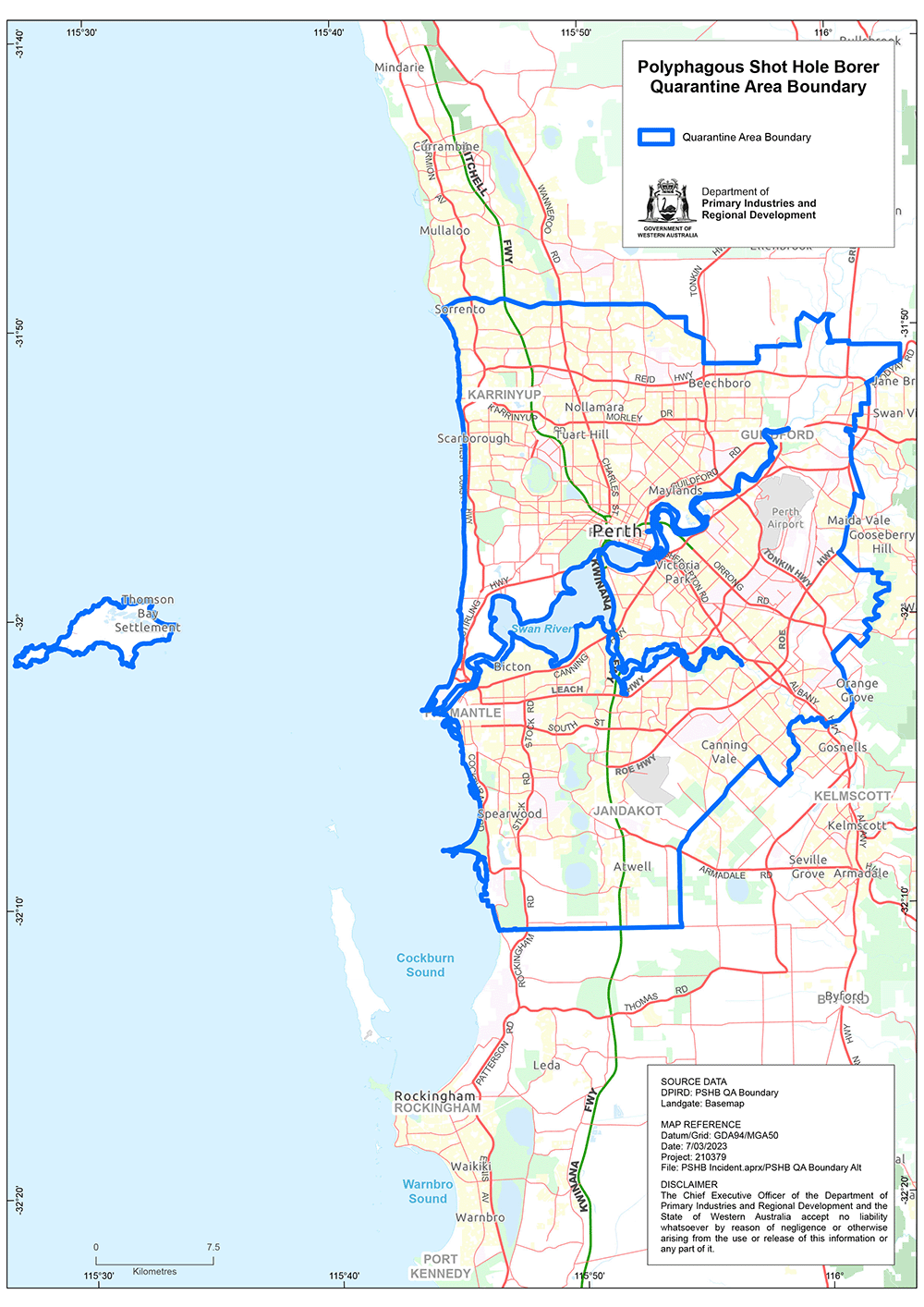
The borer probably arrived in Australia as a stowaway with untreated wood and remained undetected until August 2021, when a concerned resident of East Fremantle noticed unusual holes in her backyard maple trees. Now more than 80 suburbs in 25 councils are affected. Fortunately, the pest has not yet been detected outside the Perth metropolitan area.
The borer attacks so many tree species because it has an accomplice, in the form of a fungus. The two live in a mutually dependent “symbiotic” relationship.
The borer creates a Swiss cheese-like matrix of tunnels through the wood. The fungus feeds on the wood lining the tunnels as it grows, and the borer eats the fungus.
The life cycle of the polyphagous shot-hole borer, also known as the Asian ambrosia beetle (Euwallacea fornicatus) Protasov AN, Shutterstock
Responding to the threat in Australia
The threat to Australia can be estimated from the experience in other invaded locations. As in Perth, the invasion usually begins in cities, then spreads into the surrounding countryside, attacking horticulture and forests, including avocado production in Israel and California and stone fruit in South Africa. This overseas experience has informed models of potential impacts for WA.
The national biosecurity response led by WA has allocated A$41 million to eradicate the borer. This funding was based on an assessment of what it should cost. But there is only a short window of opportunity to effectively deploy these resources to achieve eradication.
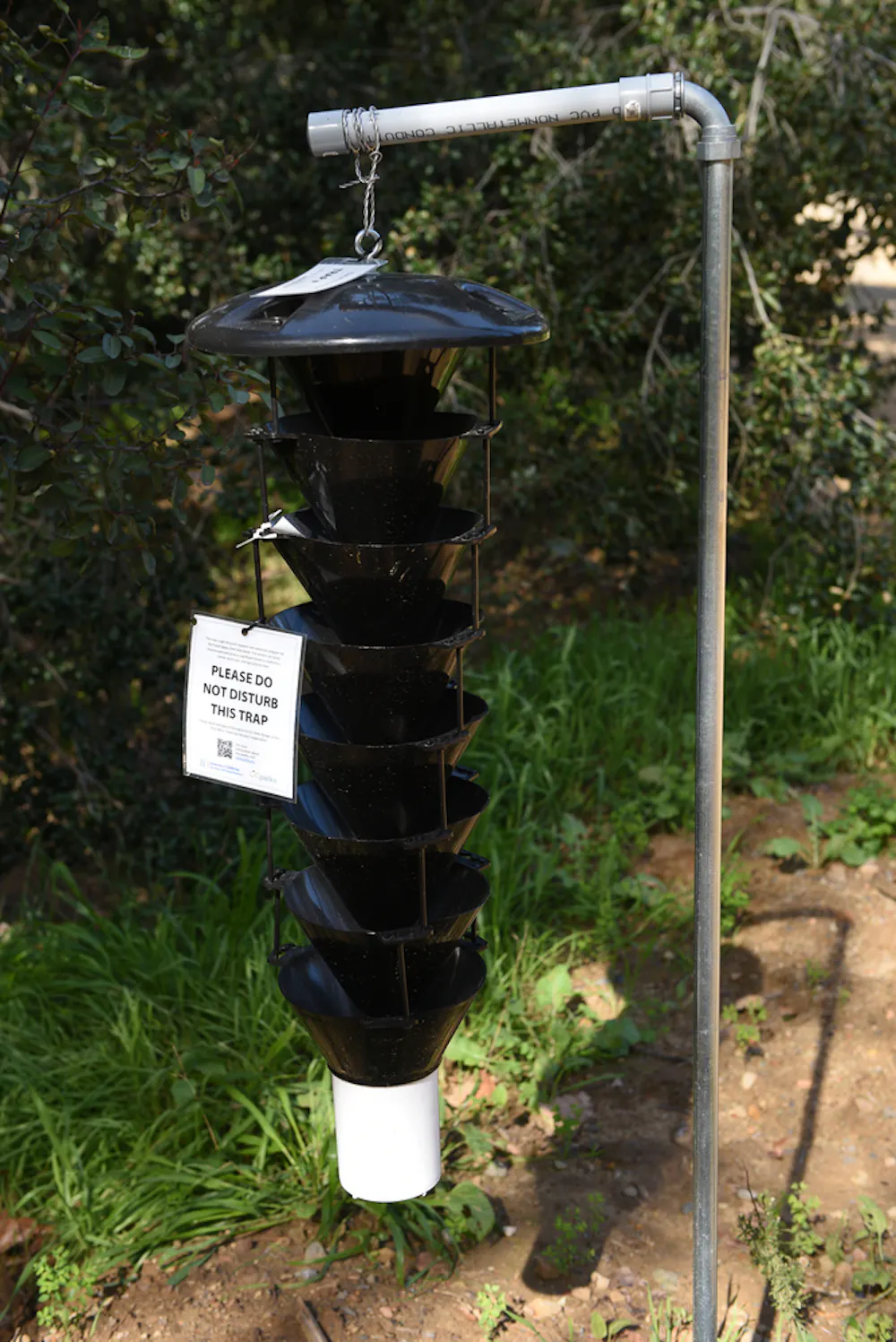
These traps catch flying beetles, which fly just once in their lives, so there’s a low catch probability. This makes it hard to detect false negatives, when no beetles are trapped but there are beetles in the area. This can be improved with alternative trap designs and chemical lures.
Urban trees are also valued for their beauty, shade and habitat for animals. All these benefits can be assigned a significant monetary value, which would be even higher if intrinsic or cultural value could be included.
The best trap for the borer, developed in California, is not being used in Perth. Steve Cukrov, Shutterstock
While a rapid response is crucial for eradication, we need to keep improving on this, using the most effective methods available. Relevant solutions from around the world suggest broader community engagement, beyond Perth, would be beneficial.
It is unclear what has been learned so far from efforts in WA. Is it still feasible to eradicate the pest completely? We need more experts to evaluate and advise on the response as it continues.
Making the right response choices will be crucial. Just consider other threatening invaders such as the red importedfire ant, the honey bee varroamite, and myrtlerust.
As the borer has only been detected in Perth, the window of opportunity is open now. Let’s make sure we have the best plan of attack so we can achieve eradication.
Australians pride themselves on working together to get things done. If we can bring everyone together to rapidly tackle this insect invasion, the whole nation will benefit.
The authors do not work for, consult, own shares in or receive funding from any company or organisation that would benefit from this article, and have disclosed no relevant affiliations beyond their academic appointment.
The government’s move to remove legal aid funding for what are commonly known as cultural reports at sentencing has been wrapped up in rhetoric about restoring “personal responsibility”, reducing “discounts” or “reductions” on sentences, and saving money.
This may be popular, even populist, but it carries the risk of not achieving any of those purported goals. In fact, court hearings may become longer and more expensive.
To understand why, we need to look at the entire process of sentencing. It is governed by the Sentencing Act 2002, which requires judges to take into account many factors when considering a sentence.
Based on the facts of a case, judges must decide on the purpose of sentencing. For example, should it be for punishment, deterrence or rehabilitation?
Judges must also take into account various principles, including the seriousness of the offence, the defendant’s level of culpability, and any circumstances that make a sentence particularly severe.
There are also various aggravating and mitigating factors, such as the motive for the offence, the level of planning, and whether the defendant has any intellectual restrictions.
What judges must take into account
Take a simple offence such as shoplifting. There is a difference between someone who shoplifts expensive items to sell them, and so is in the business of shoplifting, and someone who steals food for their family.
Even within the former group, there is a difference between someone who has been persuaded to be involved because they are suggestible, and someone who has no such impairment.
Judges also need to be aware of the likely effect of a sentence. Will a person be particularly vulnerable in prison, for instance? Will prison lead to a cycle of re-offending, maybe from gang recruitment? Is there any other action more likely to prevent re-offending?
In short, judges need a lot of information to help reach a proper sentence. This may have to come from experts, including reports from psychiatrists or psychologists when there is a mental health or impairment issue, as is often the case.
Similarly, reports about alcohol or drug use that cause a disproportionate amount of offending can be introduced from relevant specialists.
Reasons for offending
Probation officers are one source of information under section 26 of the Sentencing Act. They may provide material relating to the cultural and social circumstances of an offender and make recommendations.
But probation officers have limits: they may not have much time and may not have the necessary expertise. This is where section 27 of the Sentencing Act comes in. It provides for an additional source of this information, which has been available for almost 40 years.
When parliament passed the Criminal Justice Act 1985, section 16 allowed a request for the court to hear from someone about a person’s “ethnic or cultural background”, how that might be relevant to the reason for offending, and how it might help avoid further offending. Any offender could use this provision.
When the Sentencing Act 2002 was introduced, this provision was continued and expanded. The offender may now ask for someone to address their “personal, family, whanau, community, and cultural background”.
More particularly, they can address how that might have been part of the offending, how it might be relevant to any sentence, and how support might help prevent further offending. Again, any offender can use this provision.
Its significance is underlined by the provision that the court can only refuse to hear the information if “special reasons” make it “unnecessary or inappropriate”. And if no request is made, the judge may suggest it.
The right to a fair trial
To be clear, there is no proposal to remove this long-standing right to use section 27 reports. The only proposal is that legal aid will not fund them.
It is true that the cost to legal aid has risen significantly in recent years. But this is partly because it has been clarified that legal aid was the correct funding mechanism for cultural reports.
The Ministry of Justice used to pay for them because they were considered a court report. But this was stopped and the reports became a disbursement for legal aid.
Also, senior judges have been clear these reports can contain useful information, meaning other judges have become more willing to consider them. The fundamental right to a fair trial includes a fair sentencing hearing, with the judge having all information that is useful.
Shifting costs elsewhere
Without legal aid funding for section 27 reports, then, what will happen? Obviously, those rich enough not to rely on legal aid will be able to use them.
On one level, therefore, there will be an additional barrier to equal justice for those who are poorer. Since Māori make up over 50% of the prison population, this inequity will also have an ethnic component.
But this obvious unfairness is something judges and lawyers will try to avoid.
Defence lawyers have a professional responsibility to make sure all relevant information is put before the court. If this cannot come in the form of a report prepared by someone with the relevant expertise, the lawyer will have to look elsewhere.
So, we can expect lawyers to ask other experts, including drug counsellors or psychiatrists, to collate and include relevant information.
Lawyers may also request information from child welfare agency Oranga Tamariki, or from medical notes, to collate and put before a judge. Expect more oral evidence to be called – from social workers who might have had a role in the offender’s background, for example.
In short, expect longer court hearings and more time put in by lawyers. This will potentially cost a lot more than any savings to legal aid from not funding section 27 reports.
Kris Gledhill is currently working on a project relating to the Sentencing Act 2002 the expenses for which are funded by the Borrin Foundation. He is also a co-opted member of the Criminal Bar Association’s Executive Committee. The views expressed in this article are his own.
Corporations have used feminist language to promote their products for decades. In the 1980s, companies co-opted messaging about female autonomy to encourage women’s consumption of unhealthy commodities, such as tobacco and alcohol.
Today, feminist narratives around empowerment and women’s rights are being co-opted to market interventions that are not backed by evidence across many areas of women’s health. This includes by commercial companies, industry, mass media and well-intentioned advocacy groups.
Some of these health technologies, tests and treatments are useful in certain situations and can be very beneficial to some women.
However, promoting them to a large group of asymptomatic healthy women that are unlikely to benefit, or without being transparent about the limitations, runs the risk of causing more harm than good. This includes inappropriate medicalisation, overdiagnosis and overtreatment.
In our analysis published today in the BMJ, we examine this phenomenon in two current examples: the anti-mullerian hormone (AMH) test and breast density notification.
The AMH test
The AMH test is a blood test associated with the number of eggs in a woman’s ovaries and is sometimes referred to as the “egg timer” test.
Despite this, several fertility clinics and online companies market the AMH test to women not even trying to get pregnant. Some use feminist rhetoric promising empowerment, selling the test as a way to gain personalised insights into your fertility. For example, “you deserve to know your reproductive potential”, “be proactive about your fertility” and “knowing your numbers will empower you to make the best decisions when family planning”.
The use of feminist marketing makes these companies appear socially progressive and champions of female health. But they are selling a test that has no proven benefit outside of IVF and cannot inform women about their current or future fertility.
Our recent study found around 30% of women having an AMH test in Australia may be having it for these reasons.
Misleading women to believe that the test can reliably predict fertility can create a false sense of security about delaying pregnancy. It can also create unnecessary anxiety, pressure to freeze eggs, conceive earlier than desired, or start fertility treatment when it may not be needed.
While some companies mention the test’s limitations if you read on, they are glossed over and contradicted by the calls to be proactive and messages of empowerment.
Breast density notification
Breast density is one of several independent risk factors for breast cancer. It’s also harder to see cancer on a mammogram image of breasts with high amounts of dense tissue than breasts with a greater proportion of fatty tissue.
While estimates vary, approximately 25–50% of women in the breast screening population have dense breasts.
Stemming from valid concerns about the increased risk of cancer, advocacy efforts have used feminist language around women’s right to know such as “women need to know the truth” and “women can handle the truth” to argue for widespread breast density notification.
However, this simplistic messaging overlooks that this is a complex issue and that more data is still needed on whether the benefits of notifying and providing additional screening or tests to women with dense breasts outweigh the harms.
Additional tests (ultrasound or MRI) are now being recommended for women with dense breasts as they have the ability to detect more cancer. Yet, there is no or little mention of the lack of robust evidence showing that it prevents breast cancer deaths. These extra tests also have out-of-pocket costs and high rates of false-positive results.
While stronger patient autonomy is vital, campaigning for breast density notification without stating the limitations or unclear evidence of benefit may go against the empowerment being sought.
Ensuring feminism isn’t hijacked
Increased awareness and advocacy in women’s health are key to overcoming sex inequalities in health care.
But we need to ensure the goals of feminist health advocacy aren’t undermined through commercially driven use of feminist language pushing care that isn’t based on evidence. This includes more transparency about the risks and uncertainties of health technologies, tests and treatments and greater scrutiny of conflicts of interests.
Health professionals and governments must also ensure that easily understood, balanced information based on high quality scientific evidence is available. This will enable women to make more informed decisions about their health.
Brooke Nickel receives fellowship funding from the National Health and Medical Research Council (NHMRC). She is on the Scientific Committee of the Preventing Overdiagnosis Conference.
Tessa Copp receives fellowship funding from the National Health and Medical Research Council (NHMRC). She is also on the Scientific Committee of the Preventing Overdiagnosis Conference.
A total of 12 MPs in the Papua New Guinea government of Jame Marape have now switched sides, joining the opposition ahead of an expected vote of no confidence in Prime Minister James Marape.
Governments in PNG have 18 months’ grace after an election when opponents cannot bring motions for votes of no confidence.
That period, in place since August 2022, expires this weekend.
RNZ Pacific correspondent in PNG, Scott Waide, said the latest resignations came yesterday with the East Sepik Governor Allan Bird and Sam Basil Jr, who holds the Bulolo Open seat, strongly criticising Prime Minister Marape.
“Both expressed that they were disappointed in the performance of the Prime Minister and they decided to move, Sam Basil Jr in particular expressing that he was disappointing in the manner in which resources were being distributed for MPs on both sides of the House,” he said.
Waide said Bird raised concerns about Marape’s alleged involvement in controversial payments to lawyer Paul Paraka — something Prime Minister has strenuously denied.
There are now 23 MPs on the opposition benches but a successful vote would require the backing of 60 members in the 118-seat Haus Palamen.
No motion has yet been filed, though the possibility of a motion is being widely discussed in PNG.
Meanwhile, Marape became the first Pacific Island leader to address the Australian Federal Parliament yeterday, when he stressed PNG’s desire to become an economically independent nation.
This article is republished under a community partnership agreement with RNZ.
With Indonesia preparing for elections next week, Human Rights Watch has sought answers from the three groups vying for the presidency on how they would resolve human rights violations.
Two of the three Indonesian presidential and vice-presidential candidates responded to a questionnaire on key human rights issues.
The presidential candidates Anies Baswedan and Ganjar Pranowo submitted responses on their policy before the February 14 vote, but Prabowo Subianto Djojohadikusumo, did not.
In response to the question: “What is your policy on government restrictions on access to West Papua by foreign journalists and international human rights monitors?”
Baswedan’s stance is that the issue of justice is at the heart of the security problems in Papua.
According to his response, there are three problems to deal with the situation.
“Resolving all human rights violations in Papua by strengthening national human rights institutions to investigate and resolve human rights violations in Papua, as well as encouraging socio-economic recovery for victims of human rights violations in Papua.
“Preventing the recurrence of violence by ensuring justice through; 1) sustainable infrastructure development by respecting special autonomy and customary rights of indigenous communities, 2) realising food security through local food production with indigenous communities as the main actors, 3) reducing logistics costs, 4) the presence of community health centers and schools throughout the Papua region, and 5) empowering talents from Papua to be actively involved in Indonesia’s development in various sectors and institutions.
“Carrying out dialogue with all comprehensively in ways that mutually respect and appreciate all parties, especially Indigenous Papuans.”
For Pranowo, he said he would “focus on the issue of fiscal policy and asymmetric development for Papua’.
This would be done through “Reducing socio-economic disparities due to internal differences growth, development, and access to resources between regions through resource redistribution, infrastructure investment, tax incentives, or special financial support for Papua in order to achieve more equitable economic growth, reduce poverty, and improve the standard of living of citizens to those who need it most.
“We also committed a special approach to preventing corruption and degradation of natural resources in Papua, especially in newly expanded provinces,” he said.
A service for Indonesians Human Rights Watch’s Elaine Pearson says the two teams that responded had done Indonesian voters a service by sharing their views on the critically important human rights issues affecting the country.
She said voters should be able to go beyond the rhetoric to compare actual positions, and hold the candidates to their word if they are elected.
The questionnaire contained 16 questions focused on women’s rights, children’s rights to education, the rights of lesbian, gay, bisexual, and transgender (LGBT) people, labour rights, media freedom, and freedom of expression.
Other questions included policies on disability rights, protection of Indonesian migrant workers, and Indonesia’s foreign policy in Southeast Asia and the Pacific.
There were also questions on policies that would address accountability for past violations including the mass killings in 1965, atrocities against ethnic Madurese on Kalimantan Island, sectarian violence in the Malukus Islands, the conflict in Aceh, the Lake Poso violence, the crackdown against student activists in 1998, and killings in East Timor.
All three teams have submitted their vision and mission statements ahead of the election, which are available with the General Election Commission.
This article is republished under a community partnership agreement with RNZ.
Here is a Human Rights Watch summary of the responses received to the questionnaire. The full answers from the campaigns of two of the three presidential and vice presidential candidates can be accessed online at:
Next week, Kaur will join about 90 women vying for the 2024 Miss World title during a range of events in Delhi and Mumbai.
“I’m very overwhelmed and thankful for the opportunity,” Kaur said.
Kaur’s sister, Isha, also competed for a place in the New Zealand competition.
“It was not a competition between us,” Kaur said. “We both had the same mindset that whoever wins between us will have the same morals and values that we learned from our mum.”
As a member of the Sikh community, Kaur believes her representation helps to showcase New Zealand’s diversity to the world.
Migrated to NZ Kaur’s family migrated to New Zealand in the early 1990s before her birth.
Eventually raised by a solo mother, Kaur aspires to make a positive impact on society and views the Miss World competition as a platform on which to do so.
Meet New Zealand’s new Miss World contestant. Video: RNZ
“Growing up in a state house in Manurewa, I witnessed many young people struggling and I wanted to change that,” she said. “That’s why I joined the police.”
Kaur graduated from Police College in 2019 and left the force two years later.
“What we witnessed on the frontlines was different from what we learned at Police College,” Kaur said.
“There’s family harm, there’s child abuse and when I got onto the frontlines it emotionally drained me because I used to be very connected to the victims,” she said. “I left (the force) after my last suicide (case), which was very intense.”
Following her departure from the police force, she pursued personal training and recently acquired her real estate licence.
‘I wanted to help people’ “I really wanted to help people get into the best shape, look and feel confident again, making a difference in people’s lives,” she says.
The Miss World contest began in 1951 when entrepreneur Eric Morley devised a pageant to promote a new and controversial type of swimming attire called the bikini.
This caused an uproar, particularly in religious countries, which called the swimming costume immodest.
That controversy set the tone for the pageant, which along with other global beauty contests (Miss Universe, Miss International, Miss Earth) has been a target of protesters ever since.
Kaur said the Miss World competition went beyond superficial beauty, focusing on community engagement and philanthropy.
“There’s always giving back to the community, a charity aspect and there’s always something to do with helping people,” Kaur said.
In 2014, Morley ditched the contest’s swimsuit parade, saying it “doesn’t do anything for the woman and it doesn’t do anything for any of us”.
Demonstrate skills, fundraising Contestants are now expected to demonstrate skills and a commitment to fundraising and charity work.
“They’re not doing the swim rounds at Miss World, so it doesn’t objectify women,” Kaur said.
She said the Miss World platform aligned beauty with purpose, enabling participants to raise awareness and serve their communities.
The Miss World Organisation has raised more than £1 billion ($2.06 billion) for children’s charities since its launch.
Despite being a New Zealand citizen, Kaur is also an overseas citizen of India, adding an intriguing dynamic to her participation in this year’s contest.
“I’ve learned the best of both worlds,” she said.
“I can perform traditional poi, the karanga, which I did during my time in the police, and, of course, I can do the Bhangra, a traditional Punjabi folk dance.”
Navjot Kaur’s sister, Isha, also competed for a place in the New Zealand competition. Image: RNZ
Kiwis on the world stage New Zealand’s most famous and successful beauty queen is Lorraine Downes, who won Miss Universe in 1983. A New Zealander has yet to win Miss World, although two have come second.
Suzanne Manning, national president of the National Council of Women, said beauty pageants were “no big issue”.
“It’s not our biggest battle,” she said. “There are so many other things that are far more discriminatory.”
If someone chose to enter a beauty pageant because they believed it was the right thing for them to do, Manning said they should not be criticised.
“Women shouldn’t be judged for freely made choices,” Manning said.
“What I would like to see is that beauty pageants are open to everyone and different ways of being beautiful, rather than a particular body type, race or colour,” she said.
Kaur wants to use the Miss World platform to educate and inspire women in her community.
“There are norms in my Punjabi community, where women are seen in a certain way, like they can’t do this and they can’t do that,” Kaur said.
“When I became a police officer, I was questioned by my own community. So, I think this platform will allow me to inspire others and tell them, ‘If I can do it, you can do it too’,” she said. “Just dare to dream big.”
This article is republished under a community partnership agreement with RNZ.
The Freedom Flotilla Coalition (FFC) has announced in Istanbul a plan to sail again to challenge Israel’s unlawful and deadly siege of Gaza, reports the aid group Kia Ora Gaza.
In the coming weeks, a flotilla will put to sea carrying thousands of tonnes of urgently needed humanitarian aid that will be delivered directly to Palestinians in Gaza, say the organisers.
“After 17 years of a brutal blockade and four months of genocidal assault, including weaponising basic necessities, Palestinians in Gaza are facing an unprecedented and catastrophic humanitarian crisis,” said FFC’s statement.
Among six strongly worded measures, the ICJ ordered Israel to “take immediate and effective measures to enable the provision of urgently needed basic services and humanitarian assistance to address the adverse conditions of life faced by Palestinians in the Gaza Strip.”
This decision followed UN Security Council resolutions in November and December 2023 which called for urgent steps to immediately allow “safe, unhindered, and expanded” humanitarian access to Gaza.
“Israel’s blatant noncompliance with these orders, and the failure of other governments to pressure the occupying power to comply, motivate us as civil society organisations to take action,” said Ismail Moola of the Palestine Solidarity Alliance, South Africa.
‘We need to act immediately’ “It is incumbent upon us to ensure that Palestinians in Gaza receive humanitarian aid. We expect that the Security Council will enforce the ICJ ruling, but due to the dire humanitarian crisis in Gaza we need to act immediately.”
Organisers said plans for the Save Gaza Campaign were ongoing, and the FFC called on the government of Egypt to facilitate the delivery of life-sustaining aid through Rafah into Gaza.
FFC’s mission, For the Children of Gaza, led by the boat Handala, will again set sail from Northern Europe to Gaza in May 2024.
The FFC gathered in Istanbul to plan these campaigns with representatives from the following organisations: Canadian Boat to Gaza (Canada), US Boat to Gaza (USA), Kia Ora Gaza (Aotearoa New Zealand), Free Gaza Australia (Australia), Ship to Gaza (Norway), MyCARE (Malaysia), Ship to Gaza (Sweden), Palestine Solidarity Alliance (South Africa), IHH (Türkiye), Rumbo a Gaza (Spanish State), Mavi Marmara Association (Türkiye) and the International Committee for Breaking the Siege of Gaza.
“Where our governments fail, we sail,” said Karen DeVito of Canadian Boat to Gaza.
“We are charting a course to the conscience of humanity, in solidarity with the Palestinian people.”
She said they called on civil society organisations from around the world who share their values and goals to “support and join us”.
Pacific protesters were prominent in the 17th week of Aotearoa New Zealand solidarity demonstrations for Palestine and a ceasefire in Israel’s genocidal war on Gaza in Auckland today.
Flags of Fiji, Tonga and West Papua were featured alongside the sea of Palestinian banners and at least one group declared themselves as “Tongans for Palestine – Long live the intifada”.
The rally in Auckland’s Te Komititanga — also known as Britomart Square, an urban rail transport hub — drew a large crowd of about 250 in the heart of New Zealand’s largest city shopping precinct.
Thousands of people have been taking part in the weekly protest rallies and marches across New Zealand since the war on Gaza began after a deadly attack on Israel last October 7 following 75 years of repression and occupation since the Nakba — the “catastrophe” — in 1948.
The death toll is now more than 27,000 — and more than 900 Palestinians have been killed since the ICJ (International Court of Justice) ruled that Israel must take steps to prevent civilian deaths.
Speakers in Auckland today drew parallels between the Zionist settler colonial project in Palestine and NZ’s colonial history, saying the Waitangi Treaty was now under threat from NZ’s most rightwing government in history.
‘Right side of history’ The protest came just two days before Waitangi Day — 6 February 1840 — the national holiday marking the signing of the foundational Treaty of Waitangi between the British Crown and 500 traditional Māori chiefs.
“There are many things we can do in Aotearoa to stand on the right side of history,” said one of the organisers, Josie Sims of Solidarity Action Network Aotearoa (SANA).
“We’re calling on the NZ Defence Force to refuse their orders to go to Yemen. We’re asking for the expulsion of the Israeli ambassador, and we’re asking that this government takes a clear position on an immediate ceasefire.”
Protesters directed their criticism at the nearby American McDonalds and Starbucks fast food and coffee outlets for allegedly supporting genocide. They are among many companies being boycotted worldwide.
“Maccas, Maccas, you can’t hide, you’re making meals for genocide,” chanted the protesters in reference to the global chain providing free meals to the Israeli Defence Force (IDF) troops engaged in the assault on Gaza.
The West Papuan Morning Star flag (red, white and blue) of independence – banned by Indonesia – along with the flags of Tino Rangatiratanga and Palestine fly high in Auckland today. Image: David Robie/APRMock corpses in Britomart Square (Te Komititanga) today representing the 27,000 Palestinians killed – mostly women and chIldren – since the start of Israel’s war on Gaza on October 7. Image: David Robie/APRThree “Jews for a Free Palestine” among the protesters at Britomart Square (Te Komititanga) today demanding a ceasefire in the war on Gaza. Image: David Robie/APR
The University of Fiji will be offering its journalism and media studies programme at its Samabula campus from this semester.
UniFiji vice-chancellor Professor Shaista Shameem said the programme started at the Saweni campus in Lautoka in 2022 with only five students and had been growing since then.
She said there would now be more students registering for the programme as it was positioned closer to the court and Parliament for better news coverage.
Professor Shameem said the programme was drafted and written with the help of senior journalists and news media people in Fiji including Communications Fiji Limited chairman William Parkinson, Sitiveni Halofaki from Fiji TV, former Fiji Sun managing editor Nemani Delaibatiki, Matai Akauola, Anish Chand from The Fiji Times and Stanley Simpson of Mai TV.
The vice-chancellor said the programme was different from the other universities and student journalists were sent for training in newsrooms during their first year of study so that they could become well known with their bylines.
She said the university also has a newspaper, known as UniFiji Watch, and a radio station, Vox Populi, which had won an international award for college radio.
Industry teachers The vice-chancellor said that most of the courses were taught by people in the journalism industry and veteran journalists, including Communications Fiji Limited news director Vijay Narayan, Vimal Madhavan and Matai Akoula.
She said the university also wanted to add film and a documentary course to the programme.
Head of department Dr Kamala Naiker said journalism students needed opportunities for innovation. The first lot of student journalists would be graduating next year.
Keeping the Pacific nuclear-free, in line with the Rarotonga Treaty, was a recurring theme from the leaders of Tonga, Cook Islands and Samoa to New Zealand last week.
The New Zealand government’s Pacific mission wrapped up on Saturday with the final leg in Samoa.
Over the course of the trip, defence and security in the region was discussed with the leaders of the three Polynesian nations.
In Apia, Samoan Prime Minister Fiamē Naomi Mataʻafa addressed regional concerns about AUKUS.
New Zealand is considering joining pillar two of the agreement, a non-nuclear option, but critics have said this could be seen as Aotearoa rubber stamping Australia acquiring nuclear-powered submarines.
“We would hope that both administrations will ensure that the provisions under the maritime treaty are taken into consideration with these new arrangements,” Fiamē said.
New Zealand’s previous Labour government was more cautious in its approach to joining AUKUS because it said pillar two had not been clearly defined, but the coalition government is looking to take action.
Nuclear weapons opposed Prime Minister Fiamē said she did not want the Pacific to become a region affected by more nuclear weapons.
She said the impact of nuclear weapons in the Pacific was still ongoing, especially in the North Pacific with the Marshall Islands, and a semblance of it still in the south with Tahiti.
She said it was crucial to “present that voice in these international arrangements”.
“We don’t want the Pacific to be seen as an area that people will take licence of nuclear arrangements.”
The Treaty of Rarotonga prohibits signatories — which include Australia and New Zealand — from placing nuclear weapons within the South Pacific.
Cook Islands Prime Minister Mark Brown (left) and Winston Peters in Rarotonga last week. Image: RNZ Pacific/Eleisha Foon
Cook Island’s Prime Minister Mark Brown said Pacific leaders were in agreement over security.
“I think our stance mirrors that of all the Pacific Island countries. We want to keep the Pacific region nuclear weapons free, nuclear free and that hasn’t changed.”
Timely move Reflecting on discussions during the Pacific Islands Forum in 2023, he said: “A review and revisit of the Rarotonga Treaty should take place with our partners such as New Zealand, Australia and others on these matters.”
“It’s timely that we have them now moving forward,” he said.
Last year, Fiji Prime Minister Sitiveni Rabuka proposed a Pacific peace zone which was discussed during the Forum leaders’ meeting in Rarotonga.
This year, Tonga will be hosting the forum and matters of security and defence involving AUKUS are expected to be a key part of the agenda.
Tongan Acting Prime Minister Samiu Vaipulu acknowledged New Zealand’s sovereignty and said dialogue was the way forward.
“We do not interfere with what other countries do as it is their sovereignty. A talanoa process is best,” Vaipulu said.
New Zealand Foreign Minister Winston Peters and Health and Pacific People Minister Dr Shane Reti reiterated that they cared and had listened to the needs outlined by the Pacific leaders.
They said New Zealand would deliver on funding promises to support improvements in the areas of health, education and security of the region.
This article is republished under a community partnership agreement with RNZ.
Winston Peters and Tongan Acting Prime Minister Samiuela Vaipulu in Nuku’alofa last week. Image: RNZ Pacific/Eleisha Foon
With an “appalling” loss of life unfolding in Gaza, it’s essential Israel halts plans for an assault on the city of Rafah, Prime Minister Christopher Luxon says.
The government has hardened its position towards Israel’s actions in Gaza, saying air strikes on the southern city of Rafah should stop and Israel should not go ahead with any more ground operations.
At a post-Cabinet press conference yesterday, Luxon said he was extremely concerned about the 1.5 million Palestinians sheltering in Rafah right now — and that his preference was for a complete pause in hostilities.
He said Foreign Minister Winston Peters had met with Israeli ambassador Ran Yaakoby at the Beehive on Monday to pass on the government’s concerns.
The statements come as British Foreign Secretary David Cameron has also called for the fighting to stop and for a permanent sustainable ceasefire to be put in place.
New Zealand was one of 153 countries calling for the ceasefire, Luxon told RNZ Morning Report.
NZ Prime Minister Christopher Luxon . . . “The loss of life is appalling, the humanitarian situation is deteriorating, the cost of the conflict frankly is far too high.” Image: RNZ/Angus Dreaver
He said the government was extremely concerned about the loss of life for civilians as well as the threat to regional stability in the Middle East.
‘Loss of life appalling’ “The loss of life is appalling, the humanitarian situation is deteriorating, the cost of the conflict frankly is far too high.
“We want to see a pause in hostilities and that’s why we’ve said we don’t want Israel to proceed with an assault on Rafah.”
He said it was crucial to invoke the Middle East peace process which would take action from both sides — Hamas to release the remaining hostages and stop its rocket fire on Israel while the latter would need to cease its military operations and allow increased humanitarian aid for Gaza.
“What you’re hearing overnight is a concerted position from countries all around the world saying: look, we need an immediate humanitarian ceasefire. That needs to be the pathway to the permanent sustainable ceasefire we all want to see happen.”
Israel had a massive duty to protect civilians in Gaza and consider the long-term impact of its actions on the Middle East.
“That’s why we just don’t think going into Rafah, proceeding with operations there is a way forward. We want Israel to stop and think about the consequences and getting a long-term solution in place to actually get to peace.”
New Zealand had also continued to contribute humanitarian support with another $5 million donation to the International Red Cross and the World Food Programme.
This article is republished under a community partnership agreement with RNZ.
The University of the South Pacific journalism programme is hosting a cohort student journalists from Australia’s Queensland University of Technology this week.
Led by Professor Angela Romano, the 12 students are covering news assignments in Fiji as part of their working trip.
The visitors were given a briefing by USP journalism teaching staff — Associate Professor in Pacific journalism and programme head Dr Shailendra Singh, and student training newspaper supervising editor-in-chief Monika Singh.
The students held lively discussions about the form and state of the media in Fiji and the Pacific, the historic influence of Australian and Western news media and its pros and cons, and the impact of the emergence of China on the Pacific media scene.
Dr Singh said the small and micro-Pacific media systems were “still reeling” from revenue loss due to digital disruption and the covid-19 pandemic.
As elsewhere in the world, the “rivers of gold” (classified advertising revenue) had virtually dried up and media in the Pacific were apparently struggling like never before.
Dr Singh said that this was evident from the reduced size of some newspapers in the Pacific, in both classified and display advertising, which had migrated to social media platforms.
Repeal of draconian law He praised Fiji’s coalition government for repealing the country’s draconian Media Industry Development Act last year, and reviving media self-regulation under the revamped Fiji Media Council.
However, Dr Singh added that there was still some way to go to further improve the media landscape, including focus on training and development and working conditions.
“There are major, longstanding challenges in small and micro-Pacific media systems due to small audiences, and marginal profits,” he said. “This makes capital investment and staff development difficult to achieve.”
The QUT students are in Suva this month on a working trip in which students will engage in meetings, interviews and production of journalism. They will meet non-government organisations that have a strong focus on women/gender in development, democracy or peace work.
The students will also visit different media organisations based in Suva and talk to their female journalists on their experiences and their stories.
The USP journalism programme started in Suva in 1988 and it has produced more than 200 graduates serving the Pacific and beyond in various media and communication roles.
The programme has forged partnerships with leading media players in the Pacific and our graduates are shining examples in the fields of journalism, public relations and government/NGO communication.
Reports have recently emerged that solariums, or sunbeds – largely banned in Australia because they increase the risk of skin cancer – are being rebranded as “collarium” sunbeds (“coll” being short for collagen).
Commercial tanning and beauty salons in Queensland, New South Wales and Victoria are marketing collariums, with manufacturers and operators claiming they provide a longer lasting tan and stimulate collagen production, among other purported benefits.
A collarium sunbed emits both UV radiation and a mix of visible wavelength colours to produce a pink or red light. Like an old-school sunbed, the user lies in it for ten to 20 minute sessions to quickly develop a tan.
But as several experts have argued, the providers’ claims about safety and effectiveness don’t stack up.
Why were sunbeds banned?
Commercial sunbeds have been illegal across Australia since 2016 (except for in the Northern Territory) under state-based radiation safety laws. It’s still legal to sell and own a sunbed for private use.
Sunbeds lead to tanning by emitting UV radiation – as much as six times the amount of UV we’re exposed to from the summer sun. When the skin detects enough DNA damage, it boosts the production of melanin, the brown pigment that gives you the tanned look, to try to filter some UV out before it hits the DNA. This is only partially successful, providing the equivalent of two to four SPF.
Research shows people who have used sunbeds at least once have a 41% increased risk of developing melanoma, while ten or more sunbed sessions led to a 100% increased risk.
In 2008, Australian researchers estimated that each year, sunbeds caused 281 cases of melanoma, 2,572 cases of squamous cell carcinoma (another common type of skin cancer), and $3 million in heath-care costs, mostly to Medicare.
How are collarium sunbeds supposed to be different?
Australian sellers of collarium sunbeds imply they are safe, but their machine descriptions note the use of UV radiation, particularly UVA.
UVA is one part of the spectrum of UV radiation. It penetrates deeper into the skin than UVB. While UVB promotes cancer-causing mutations by discharging energy straight into the DNA strand, UVA sets off damage by creating reactive oxygen species, which are unstable compounds that react easily with many types of cell structures and molecules. These damage cell membranes, protein structures and DNA.
Evidence shows all types of sunbeds increase the risk of melanoma, including those that use only UVA.
Some manufacturers and clinics suggest the machine’s light spectrum increases UV compatibility, but it’s not clear what this means. Adding red or pink light to the mix won’t negate the harm from the UV. If you’re getting a tan, you have a significant amount of DNA damage.
Collagen claims
One particularly odd claim about collarium sunbeds is that they stimulate collagen.
Collagen is the main supportive tissue in our skin. It provides elasticity and strength, and a youthful appearance. Collagen is constantly synthesised and broken down, and when the balance between production and recycling is lost, the skin loses strength and develops wrinkles. The collagen bundles become thin and fragmented. This is a natural part of ageing, but is accelerated by UV exposure.
Sun-protected skin (top) has thick bands of pink collagen (arrows) in the dermis, as seen on microscopic examination. Chronically sun-damaged skin (bottom) has much thinner collagen bands. Katie Lee/UQ
The reactive oxygen species generated by UVA light damage existing collagen structures and kick off a molecular chain of events that downgrades collagen-producing enzymes and increases collagen-destroying enzymes. Over time, a build-up of degraded collagen fragments in the skin promotes even more destruction.
While there is growing evidence red light therapy alone could be useful in wound healing and skin rejuvenation, the UV radiation in collarium sunbeds is likely to undo any benefit from the red light.
What about phototherapy?
There are medical treatments that use controlled UV radiation doses to treat chronic inflammatory skin diseases like psoriasis.
The anti-collagen effects of UVA can also be used to treat thickened scars and keloids. Side-effects of UV phototherapy include tanning, itchiness, dryness, cold sore virus reactivation and, notably, premature skin ageing.
These treatments use the minimum exposure necessary to treat the condition, and are usually restricted to the affected body part to minimise risks of future cancer. They are administered under medical supervision and are not recommended for people already at high risk of skin cancer, such as people with atypical moles.
It looks like many collariums are just sunbeds rebranded with red light. Queensland Health is currently investigating whether these salons are breaching the state’s Radiation Safety Act, and operators could face large fines.
As the 2024 Australians of the Year – melanoma treatment pioneers Georgina Long and Richard Scolyer – highlighted in their acceptance speech, “there is nothing healthy about a tan”, and we need to stop glamorising tanning.
However, if you’re desperate for the tanned look, there is a safer and easy way to get one – out of a bottle or by visiting a salon for a spray tan.
Katie Lee receives funding from the National Health and Medical Research Council.
Anne Cust receives funding from the National Health and Medical Research Council and Medical Research Future Fund.
At the same time, however, selfies are often maligned – particularly in specific contexts such as at places of worship, sacred sites, or when animals are made unwitting participants.
It’s easy to see why taking selfies could be considered inappropriate in such cases. But there’s been much debate about their acceptability in a more casual and frequented arena: the gym.
Lately, gyms the world over have been pushing back against selfies and influencer-culture taking over their spaces, citing a risk of injury to patrons, among other concerns.
When considered alongside a rise in toxic influencer culture and widespread body-image insecurity, it could be argued banning gym selfies is a positive step.
Self-obsession in the digital age
People’s obsession with their own image is ancient. One of the most famous Greek myths is that of Narcissus, who gave us the word “narcissist”.
This is the tale of a young man captivated by his own image. Like many Greek myths, the story was meant to serve as a lesson for immoral behaviour.
Yet research shows narcissism is not only very prevalent in the modern age, in many cases it’s lucratively rewarded. This explains the rise of social media influencing.
The potential rewards of “influencer-level” fame push many people to take risks for social media content. This can sometimes lead to injury or even death, to the point that it’s now considered a public health problem.
Gym selfies can be tied particularly closely to influencer culture. They have a long history on Instagram, the platform that gave birth to fitness influencers. Influencers posting gym selfies will typically gain a lot of views and likes, and in some cases may attract mass followings.
A popular gym chain in Melbourne recently complained of influencers engaging in “entitled and selfish behaviour” that “should not be tolerated”. Much of this has stemmed from these patrons seemingly concentrating more on generating social media content than their actual performance in the gym.
This particular gym is now giving members the option to buy a “media pass” if they wish to take photos while working out. The rules primarily target influencers who film their workouts, rather than regular gym-goers who exercise for themselves.
Other chains around the world have also banned the use of tripods, which could be considered a tripping hazard. Some have prohibited taking photos or videos on gym premises altogether.
These establishments often cite safety and privacy concerns. For instance, we’ve seen several examples of regular gym-goers, often filmed without their consent, fall on the receiving end of abuse or public shaming when they’ve ended up in gym selfies or videos posted online.
Research shows gym selfies can also influence people’s motivations for exercising. Study participants reported becoming more conscious of their own bodies when they saw gym selfies online.
Self-care in the social media age
Banning selfies and influencer behaviour at gyms marks a shift away from the previous encouragement of self-promotional and performative behaviour that many gyms became famous for on Instagram. It suggests people are beginning to acknowledge the detrimental aspects of such anti-social exhibitionism.
In today’s world, the line between personal and performative action is becoming increasingly blurred. And social media are a potent driver of the latter. In a sense, social media’s pervasive presence in our lives has turned many of us into marketers who live our lives out for public consumption.
Online, many of us face near-constant comparisons with others. This promotes an obsession with self-image and pushes us to reach social media-worthy levels of muscularity or leanness.
Research shows adolescents in particular can have negative mental health outcomes as a result of self-image comparisons on social media.
We’re seeing a growing number of fitness influencers leverage their online social capital to monetise their bodies. At the same time, these individuals wield significant power within communities (both online and offline) and have an opportunity to shape norms around fitness and body image.
This scandal underscores the need for strategies to reduce harm, and increase public health messaging within digital fitness culture. Banning selfies and harmful influencer antics in the gym might be a start.
It’s not just about preventing accidents such as trips and falls; it could have the added benefit of making influencers rethink their behaviours, tone down self-promotion and reinvigorate a sense of camaraderie among gym-goers.
It might just be the beginning of people exercising for themselves and nobody else.
Samuel Cornell receives funding from Meta Platforms, Inc. His research is also supported by a UNSW University Postgraduate Award funded by the Australian Government.
Timothy Piatkowski is a Lecturer and Researcher at Griffith University. He is also affiliated with Queensland Injectors Voice for Advocacy and Action.
Many of the speakers at Kingi Tūheitia’s Hui a Motu in Tūrangawaewae last month talked of their desire for a flourishing Aotearoa. A place where Māori knowledge and leadership is embraced and where the universal benefits of te Tiriti o Waitangi are understood.
But it is clear from our current discourse on the Treaty that we are falling short of this goal.
Hui speakers spoke of the importance of knowing New Zealand’s history. And they discussed steps already being taken by communities across the country in support of a nation of peace and respectful political relationships.
Other speakers questioned how politicians could be querying the terms of te Tiriti o Waitangi when so many discussions on the topic have already taken place. These discussions are happening in community centres, marae, universities, councils and in the courts.
But our recent research on political programmes at universities nationwide shows a lack of knowledge about how these systems have come to shape our country. It’s a gap that is fuelling the misinformation.
A gap in Treaty knowledge
A 2023 survey commissioned by the Human Rights Commission found that while 58% of New Zealanders believe they are informed about the Treaty, 32% believed they weren’t. Concerningly, 32% had not read any summary or version of the Treaty at all.
With the current debate over the treaty being fuelled by the Act Party’s Treaty Principles Bill, it is important to reflect on the role and responsibilities of universities as the critic, conscience and educators of society.
As teachers of te Tiriti o Waitangi and Māori politics, we have found students keen to learn about, and be part of, a vibrant Aotearoa which upholds its Treaty and embraces working together to benefit us all.
But we have also found these students have little prior exposure to these topics, and have unhelpful views formed by snippets from social media.
However, there is a noticeable shift in some disciplines.
After a recent decision by the New Zealand Council of Legal Education, all university law students enrolling in a legal degree from 2025 onwards must be equipped with an understanding of tikanga Māori (incorporating practices and values from Māori knowledge) as a source of law in Aotearoa New Zealand.
This mandate follows decisions by the Supreme Court of New Zealand recognising the foundational importance of tikanga Māori in the law. The Law Commission has also produced a study paper examining tikanga in New Zealand’s legal landscape.
Politics students and the treaty
But can the same be said for students of politics?
Our research looked at how well politics programmes around Aotearoa might be equipping students for the landscape of an Aotearoa of peace and respectful political relationships.
Unfortunately, we found there is still quite some way to go.
Our review showed there continues to be very little engagement by the discipline with Māori politics. In fact, we found only around 1% of content taught in politics programmes appeared to be focused on Māori politics. And only around 1% of lecturers teaching in politics programmes were Māori.
The same result also appeared in our review of New Zealand’s Political Science journal, where we found only around 1% of the articles published could be considered kaupapa Māori (written by Māori about Māori politics).
Although there is Māori political content taught in other parts of universities, largely through Māori Studies courses, it is concerning that students studying politics in New Zealand receive very little exposure to Māori politics.
Aotearoa has a unique political experience, one founded and shaped by Māori through iwi and hapū politics, and more recently by the British Crown through imposed colonial political structures. As such, all aspects of politics in Aotearoa must be understood as we continue to work together in making inclusive political systems that benefit all.
Catching up with the rest of the country
Expanding on what is taught across the political science discipline aligns with the commitments that universities have made to being Tiriti-led educational environments.
Massey University describes itself as a “Tiriti o Waitangi-led institution”. And in 2021 the University of Canterbury created a treaty partnership office and committed to a “genuine partnership with mana whenua” and strengthening Māori leadership.
Students have come to expect a university education that upholds te Tiriti and actively promotes critical engagement with mātauranga Māori (Māori knowledge).
In the past two months, thousands of people from across Aotearoa have demonstrated their commitment to te Tiriti o Waitangi by supporting and attending Māori-led political events.
Iwi and hapū politics are the longest enduring political systems in Aotearoa. It is time for politics programmes in New Zealand universities to recognise this to create a more collaborative and flourishing Aotearoa.
Maria Bargh receives funding from the ‘Adaptive Governance and policy’, Biological Heritage, National Science Challenge.
Annie Te One does not work for, consult, own shares in or receive funding from any company or organisation that would benefit from this article, and has disclosed no relevant affiliations beyond their academic appointment.
The trial underway in 12 Melbourne supermarkets intends, once again, to provide customers with an in-store option for recycling “scrunchable” food packaging.
It’s estimated Australia uses more than 70 billion pieces of soft plastic a year. Most of it still ends up in landfill or blows into streets and waterways, polluting our rivers and oceans. So 12 stores won’t cut it in the long term.
But starting small is a good idea. REDcycle collapsed under its own weight, stockpiling recyclable material with nowhere to go. The new scheme will feed new, purpose-built waste processing facilities so it has much better prospects.
Australia’s Soft Plastics Taskforce is behind the new trial. The taskforce is a coalition of the three major supermarkets: Woolworths, Coles and Aldi. It was established in the wake of REDcycle’s demise and is chaired by the federal government Department of Climate Change, Energy, the Environment and Water.
The taskforce assumed responsibility for roughly 11,000 tonnes of soft plastic, formerly managed by REDcycle, across 44 locations across Australia.
Addressing the lack of soft plastics recycling infrastructure in Australia is a top priority. This is the main reason REDcycle was unable to process the mountains of soft plastics it had stored around the country.
Much like the original REDcycle scheme, the new small-scale trial in Victoria has identified several potential end markets for used soft plastic. After treatment, it could become an additive for asphalt roads, a replacement for aggregate in concrete, or a material for making shopping trolleys and baskets.
To be a successful and lasting solution, the scheme must be cost-effective and suitably located, with established markets for the recycled products.
Plastic packaging is typically made from the petrochemicals polyethylene or polypropylene, and often contains a mix of materials, including various types of plastics and additives for flexibility and durability. This blend of materials makes it difficult to separate and recycle effectively.
There’s also less demand for recycled soft plastics, compared to other plastics. Many manufacturers prefer using brand new or “virgin” plastics or recycled rigid plastics instead, such as recycled polyethylene terephthalate (rPET), leaving limited avenues for recycled soft plastics to find new uses.
We need to make it economically viable to recycle low-value plastics such as soft plastic packaging. Placing recycling facilities closer to communities and transport can save money and reduce emissions. So local, decentralised, small-scale recycling or reprocessing infrastructure is the way to go.
Fit-for-purpose facilities can develop the specialised processing and manufacturing techniques needed to handle soft plastics. This takes care of the contamination problem and creates new options for developing recycled products.
Local recycling initiatives also foster community engagement and awareness. We need to encourage individuals to participate actively in recycling efforts, and foster local businesses focused on resource recovery. To this end, we are currently exploring innovative enterprise-based recycling solutions in remote First Nations communities in Queensland.
The high cost of cheap packaging
Soft plastics are lightweight, flexible and inexpensive to produce. This has made them popular choices for packaging. But this ignores the problems of disposal, including harm to nature and people. There has to be a better way.
Recycling soft plastic packaging does face numerous obstacles. These stem from complex composition, contamination risks, sorting and processing challenges, scarce recycling infrastructure and limited demand for the end product.
Tackling these challenges requires collaborative efforts from industry players, policymakers, consumers and researchers. We need to develop innovative local solutions and reduce consumption of single-use plastic.
Holding producers accountable for the end-of-life management of their products is paramount. In the meantime, local, decentralised recycling infrastructure offers a promising solution to improve the efficiency and sustainability of soft plastic recycling, while empowering communities to contribute to a circular economy.
The trial in Victoria raises hopes of a working solution for post-consumer soft plastic. This time they are starting on a small scale. That should make it easier to manage the volume of material available for recycling and avoid secret stockpiles. Ultimately this approach could see “micro-factories” cropping up across the country, turning what was once waste into viable, useful products.
Anya Phelan does not work for, consult, own shares in or receive funding from any company or organisation that would benefit from this article, and has disclosed no relevant affiliations beyond their academic appointment.
Childcare is probably Australia’s largest industry, most of it unpaid.
We know this because of Australian Bureau of Statistics time use surveys. Since 1992 these surveys have recorded what thousands of Australians say they do with their time in diaries kept for 48 hours.
But if the Bureau of Statistics proceeds with its current plans for scaling down the survey we soon won’t be able to tell.
Australia has not only led the world in recording time use, but also in recording simultaneous activities – what Australians do when they multitask.
In 1997 the survey found that whereas the average time spent on childcare as a main activity was about two hours per day, the average when simultaneous activities were taken into account was closer to seven hours per day. Among the simultaneous activities were preparing meals and washing clothes.
In 2013 the scheduled five-yearly update was shelved to make budget savings. It wasn’t revived until 2020-21, but amidst the chaos of COVID, physical diaries were replaced with online diaries without an expectation they be completed in real time.
Online, without context
Now the bureau wants to keep it that way. It has told a meeting of stakeholders it plans to conduct the survey each year instead of once every five years, but online rather than via diaries in order to make it less tiring for respondents. It would be cheaper too.
It also wants to exclude simultaneous activities.
This means we will no longer get a good read on the total amount of childcare and other domestic activities we are doing. Our surveys will also no longer be directly comparable to those of other countries.
Missing as well would be contextual information such as who else is present, location, mode of transport, and use of mobile phones and other devices.
Time-use expert Lyn Craig of the University of Melbourne says that without the contextual data the bureau proposes to leave out we won’t be able to capture the full dimensions of care work, including whether the breakdown by gender is changing.
Michael Bittman, who was seconded to the ABS for the first national time use survey and has chaired United Nations committees on time-use methodology, says the proposed changes will “take Australia from being a leader to a laggard”.
Lighter than the world’s lightest
The International Labour Organisation has designed a light one-day time use survey that will take just 15 minutes to complete, intended for poor countries.
What Australia’s bureau is proposing looks as if it will take even less time, making it one of the poorest time use surveys on the planet.
The survey needn’t be annual, as year-on-year changes are usually small. A substantial survey conducted once every five years would be much better.
Where the bureau thinks a survey is important, it conducts it face-to-face. That’s what it does with Australia’s six-yearly Household Expenditure Survey, the one used to determine what Australians spend their money on, which forms an input to the consumer price index.
It’s a question of priorities
That expenditure survey requires far more work on the part of the respondent than the time use survey, including access to mortgage documents and piles of bills.
If the bureau remains committed to doing the time use survey online, it should do it in a way consistent with the best practice in the rest of the world.
International researchers are developing an electronic light diary that collects information about secondary activities and contexts. It has been approved for use in nine countries.
Those who specialise in time-use research say the bureau’s current plan is destined to fail. There’s a good deal of women’s unpaid work it won’t capture.
In 1988 New Zealand economist Marilyn Waring wrote a famous book called Counting for Nothing about how women and the environment were invisible in policymaking.
If the bureau proceeds as planned, it will take us back toward those days.
Julie Smith is a member of the ABS Time Use Expert Reference Group.
Marian Sawer does not work for, consult, own shares in or receive funding from any company or organisation that would benefit from this article, and has disclosed no relevant affiliations beyond their academic appointment.
Source: The Conversation (Au and NZ) – By Adrian Beaumont, Election Analyst (Psephologist) at The Conversation; and Honorary Associate, School of Mathematics and Statistics, The University of Melbourne
Tasmanian Liberal Premier Jeremy Rockliff today announced the Tasmanian election would be held on March 23, more than a year early. The election was called early owing to disagreements between the Liberals and former Liberal MPs Lara Alexander and John Tucker. The Liberals had lost their parliamentary majority when these two MPs defected in May 2023.
Tasmania uses the proportional Hare Clark system for its lower house elections. At this election there will be 35 members elected, up from 25 previously. Tasmania uses the same five electorates for state and federal elections, with seven members to be elected per electorate, up from five previously. The quota for election will be one-eighth of the vote or 12.5%, down from one-sixth or 16.7%.
Tasmania’s upper house has elections every May for two or three of its 15 seats, with members serving six-year terms. The upper house will not be contested at this election.
The two most recent polls were an early January YouGov poll and a late November EMRS poll. The YouGov poll gave the Liberals 31%, Labor 27%, the Jacqui Lambie Network (JLN) 20%, the Greens 15% and independents 7%. If this poll were repeated at an election, the JLN would hold the balance of power.
The EMRS poll was far better for the Liberals, suggesting they had recovered from a slump in May. The Liberals had 39%, Labor 29%, the Greens 12% and all Others 19%. This poll did not ask for the JLN. The Liberals would still fall short of a majority if this poll were repeated at the election.
Tasmania is the only Australian jurisdiction that is currently governed by the conservative parties. However, the Liberal National Party is likely to win the October Queensland election, so even if Labor takes power in Tasmania, unified Labor government probably won’t last long.
Federal YouGov poll: 69% support tax changes but Albanese’s ratings drop
A national YouGov poll, conducted February 2–7 from a sample of 1,502, gave Labor a 52–48 lead, unchanged from the mid-January YouGov poll. Primary votes were 36% Coalition (down one), 32% Labor (steady), 14% Greens (up one), 8% One Nation (up one) and 10% for all Others (down one).
Albanese’s net approval was down three points to -16, while Dutton’s net approval was up three points to -8. Albanese led Dutton by 45–38 as preferred PM, a narrowing from 45–35 in January.
On the changes to the stage three tax cuts, 69% supported the changes while 31% supported the original stage three proposal. Supporters of all parties favoured the changes, including 55% of Coalition voters.
Labor gains in Essential poll
In a national Essential poll, conducted February 7–11 from a sample of 1,148, Labor led by 50–46 including undecided (48–46 two weeks ago). This is Labor’s largest lead in Essential since early October.
Primary votes were 34% Coalition (steady), 31% Labor (down one), 14% Greens (up one), 7% One Nation (steady), 1% UAP (down one), 9% for all Others (up two) and 5% undecided (steady). Preference flows favoured Labor more than last fortnight.
Respondents were asked to rate Albanese and Dutton from 0 to 10. Scores of 0–3 were counted as negative, 4–6 as neutral and 7–10 as positive. Albanese was at 35–33 negative (37–32 in December), while Dutton was at 33–32 negative (37–28 in December).
By 56–16, voters supported the revised stage three tax cuts when told there would be more benefits for lower and middle-income earners, and less to higher-income earners. However, by 53–47, they thought it is never acceptable to break an election promise over it being acceptable if circumstances change.
By 59–15, voters supported employees’ “right to disconnect”. On Taylor Swift’s upcoming Eras Tour in Sydney and Melbourne, 76% said they weren’t interested in seeing her, 21% wished they were going to see her, 3% were seeing her and 3% didn’t know who she was.
Labor down in a Redbridge poll
A national Redbridge poll, conducted January 30 to February 7 from a sample of 2,040, gave Labor a 51.2–48.8 lead, a 1.6-point gain for the Coalition since the last Redbridge poll in December. Primary votes were 38% Coalition (up three), 33% Labor (steady), 13% Greens (steady) and 16% for all Others (down three).
Despite the narrow Labor lead on voting intentions, Labor held a 32–28 lead on economic management, which is usually a relative strength for the Coalition.
On negative gearing, 39% said it should be left alone and 39% said it should be phased out or scrapped immediately. By 60–22, voters supported the changes to the stage three tax cuts, but by 51–33 voters agreed that if Labor breaks the promise to deliver the original cuts, I can’t trust them in the future.
Morgan and Dunkley byelection polls
I previously covered a national Morgan poll that gave Labor a 50.5–49.5 lead. Labor’s lead increased to 53–47 in last week’s Morgan poll that was conducted January 29 to February 4.
In this week’s Morgan poll, conducted February 5–11 from a sample of 1,699, Labor led by 52–48. Primary votes were 37% Coalition (steady since last week), 34.5% Labor (up 1.5), 12% Greens (steady), 4.5% One Nation (down 0.5) and 12% for all Others (down one).
The federal byelection to replace the deceased Labor MP Peta Murphy will be held on March 2. A uComms poll of Dunkley for The Australia Institute, conducted February 5–6 from a sample of 626, gave Labor a 52–48 lead from primary votes of 40.1% Labor, 39.3% Liberal, 8.2% Greens, 1.6% Libertarian and 10.8% for all Others.
Preferences were respondent-allocated, and Labor would be higher if the previous election preferences were used. Labor won Dunkley by 56.3–46.7 at the 2022 election, so this poll suggests a 4% swing to the Liberals. Seat polls are unreliable. Eight candidates will contest the Dunkley byelection.
In other byelection news, the South Australian state byelection in Dunstan to replace former Liberal premier Steven Marshall will be held March 23. Marshall won Dunstan at the 2022 election by 50.5–49.5 against Labor.
The Poll Bludger reported Monday that uComms polls for The Australia Institute in the teal independent held seats of Kooyong, Mackellar and Wentworth, conducted February 5 from samples of 602 to 647. In Kooyong, teal MP Monique Ryan led the Liberals by 56–44, in Mackellar teal MP Sophie Scamps led by 54–46 and in Wentworth teal MP Allegra Spender led by 57–43.
US Democrats gain federal House seat at byelection
I covered the United States federal byelection for New York’s third congressional district for The Poll Bludger. Democrats easily gained from the Republicans. I also covered the latest presidential primaries that show both Donald Trump and Joe Biden cruising to their parties’ nominations.
Adrian Beaumont does not work for, consult, own shares in or receive funding from any company or organisation that would benefit from this article, and has disclosed no relevant affiliations beyond their academic appointment.
Source: The Conversation (Au and NZ) – By Richard Eccleston, Professor of Political Science; Director, Tasmanian Policy Exchange, University of Tasmania
After months of speculation about an early election and a battle to keep minority government alive, Tasmanian Premier Jeremy Rockliff – Australia’s last remaining Liberal Premier – has called an election for March 23, three years into a four-year term.
In making the announcement, Rockliff said he wanted the stability of majority government.
“I’m not going to allow myself or my government to be held to ransom for the next 12 months. It’s bad for Tasmania, it’s bad for Tasmanians.”
What issues are likely to dominate the campaign? What is the likely outcome, and will it have any implications beyond the shores of Australia’s island state?
What’s been going on?
The Tasmanian Liberals have governed since 2014, but recently Rockliff has had to manage a series of ructions.
There have been seven reshuffles since the 2021 election, sparked in some cases by high profile ministerial resignations.
In mid-May 2023, two government back benchers quit the party to sit on the cross bench, citing a range of grievances.
Lara Alexander and John Tucker’s agreement with Rockliff to guarantee supply and confidence in the House lasted until early February when the premier issued a second ultimatum effectively demanding the rebel MPs support all government legislation.
Given neither of the independents were willing to cede their independence an early election became inevitable. Now, the real question is whether Tasmanian voters will blame the premier or the rebel MPs for taking them to the polls a year early?
Due to Tasmania’s 25-seat Lower House (which has been restored to 35 members for this election), these events have stretched Rockliff’s talent pool and contributed to a feeling among voters that the government is approaching its used by date.
Rubbing salt in the wound, Labor and the Greens have relished pointing out that a party which had promised to deliver stable majority government was now in minority. Indeed, Jeremy Rockliff cited
the need restore majority government and avoid “governing with one hand tied behind my back” as a justification for going to the polls a year early.
Given Tasmania’s proportional Hare Clark electoral system, where candidates only need to secure about 15% of the vote after preferences to win a seat, it seems inevitable that forming government will require some form of power sharing or coalition arrangement.
This is reinforced by polling data that suggests Tasmanian voters are turning their backs on both major parties. A YouGov poll conducted in January had both Liberal and Labor polling around 30% (31% Liberal, 27% Labor), with the Jacquie Lambie Network (20%), Greens (15%) and other independents (7%) sharing the remaining 40%.
The key issues
This all suggests that well established campaign strategies will once again be trotted out.
The government will talk up the strong (but slowing) economy and run a scare campaign against
minority government. This approach has served the Liberals well in the past, but their current minority status may undermine the pitch.
Labor, the Greens, independents, and the Jacqui Lambie Network will all point to the failure to address persistent housing, hospital, and transport challenges, as well as growing concerns about transparency and accountability.
One wildcard is government support for Hobart’s proposed waterfront AFL stadium. Most Tasmanians want an AFL team, but many have concerns about the mooted funding
model in which the government covers most of the cost – and the financial risk.
Finally, the rise and dominance of hyper-local issues is making it hard for parties to develop and deliver a cohesive long-term strategy for the state. History shows that laundry lists of election promises don’t provide the basis for good government.
Mainland pundits will be watching the election closely for two main reasons.
Firstly, the March poll will be an early test of electoral support for a more conservative Liberal party in Tasmania and beyond. While Rockliff is a moderate, the conservative faction of the Tasmanian Liberals is in the ascendancy with former long-serving federal senator Eric Abetz seeking to make a comeback in the state seat of Franklin.
Abetz will likely be elected, but it remains to be seen whether this occurs despite a broader swing against the Liberals.
If the party can retain government in Tasmania, it may provide an early indication that the national political tide is turning.
Secondly, the election may provide further evidence of fragmentation in Australian politics.
If significant numbers of Tasmanians, particularly those from regional and less well-off communities, vote for independents or minor parties, the major parties will have some serious soul searching to do. They’ll need to rethink their strategies for future state and national elections.
What does the crystal ball say?
Tasmanian elections are notoriously hard to predict.
Given the most likely outcome will be some form of coalition or power-sharing arrangement, negotiations after polling day will be just as important and interesting as the vote itself.
Will the Liberals be willing to form a minority government, and would Jeremy Rockliff be prepared to lead it?
After ten years in the wilderness (not such a bad place to be in this part of the world!) Labor is desperate to govern, but will be reluctant to enter into an agreement with the Greens due to past experience. They may, however, be willing to govern with the support of the Jacqui Lambie Network and/or independents.
Tasmanian politics has always had a unique and interesting dynamic, and the March election is unlikely to disappoint. The real test is whether members of the next Tasmanian Parliament are able to put the interests of the community above petty politics to deliver the good government Tasmanians deserve.
Richard Eccleston is an appointed a member of two public advisory boards providing advice to the Tasmanian government.
Robert Hortle does not work for, consult, own shares in or receive funding from any company or organisation that would benefit from this article, and has disclosed no relevant affiliations beyond their academic appointment.
The world’s coral reefs are close to 25% larger than we thought. By using satellite images, machine learning and on-ground knowledge from a global network of people living and working on coral reefs, we found an extra 64,000 square kilometres of coral reefs – an area the size of Ireland.
That brings the total size of the planet’s shallow reefs (meaning 0-20 metres deep) to 348,000 square kilometres – the size of Germany. This figure represents whole coral reef ecosystems, ranging from sandy-bottomed lagoons with a little coral, to coral rubble flats, to living walls of coral.
Within this 348,000 km² of coral is 80,000 km² where there’s a hard bottom – rocks rather than sand. These areas are likely to be home to significant amounts of coral – the places snorkellers and scuba divers most like to visit.
You might wonder why we’re finding this out now. Didn’t we already know where the world’s reefs are?
Previously, we’ve had to pull data from many different sources, which made it harder to pin down the extent of coral reefs with certainty. But now we have high resolution satellite data covering the entire world – and are able to see reefs as deep as 30 metres down.
We coupled this with direct observations and records of coral reefs from over 400 individuals and organisations in countries with coral reefs from all regions, such as the Maldives, Cuba and Australia.
To produce the maps, we used machine learning techniques to chew through 100 trillion pixels from the Sentinel-2 and Planet Dove CubeSat satellites to make accurate predictions about where coral is – and is not. The team worked with almost 500 researchers and collaborators to make the maps.
The result: the world’s first comprehensive map of coral reefs extent, and their composition, produced through the Allen Coral Atlas.
The maps are already proving their worth. Reef management agencies around the world are using them to plan and assess conservation work and threats to reefs.
We combined satellite data with real world observations. Here, Dr Eva Kovacs tows a GPS on the Great Barrier Reef. Allan Coral Atlas, CC BY-SA
Where is this hidden coral?
You can see the difference for yourself. In the interactive slider below, red indicates the newly detected coral in reefs off far north Queensland.
This infographic shows the new detail we now have for the Tongue Reef, in the seas off Port Douglas in Far North Queensland.
Our maps have three levels of detail. The first is the most expansive – the entire coral reef ecosystem. Seen from space, it has light areas of coral fringed by darker deeper water.
Then we have geomorphic detail, meaning what the areas within the reef look like. This includes sandy lagoons, reef crests exposed to the air at low tide, sloping areas going into deeper water and so on.
And finally we have fine detail of the benthic substrates, showing where you have areas dominated by coral cover.
Coral can’t grow on sand. Polyps have to attach to a hard surface such as rock before they can begin expanding the reef out of their limestone-secreting bodies.
Some of our maps include fine detail of benthic substrates, meaning where coral is most likely to be and the substrates (seafloor) available to the polyps, such as existing coral, sand, rubble, or seagrass.
It’s a crucial time for the world’s coral reefs. We’re discovering the full extent of shallow water reefs – while other researchers are finding large new black coral reefs in deeper water.
But even as we make these discoveries, coral reefs are reeling. Climate change is steadily heating up the sea and making it more acidic. Coral polyps can’t handle too much heat. These wonders of biodiversity are home to a quarter of the ocean’s species.
Making these maps took plenty of underwater research as well as satellite data. This photo shows Dr Chris Roelfsema conducting a photo transect in a remote area of the Great Barrier Reef. Allen Coral Atlas, CC BY-SA
In good news, these maps are already leading to real world change. We’ve already seen new efforts to conserve coral reefs in Indonesia, several Pacific island nations, Panama, Belize, Kenya and Australia, among others.
Mitchell Lyons receives funding from Australian Research Council and Australian Commonwealth Government. Mitchell Lyons works for the University of Queensland and the University of New South Wales.
Stuart Phinn receives funding from the Australian Research Council, Queensland and New South Wales state governments, Geoscience Australia and other Commonwealth agencies, and SmartSAT CRC. He works for the University of Queensland and was the founding director of Earth Observation Australia and Australia’s Terrestrial Ecosystem Research Network (TERN).
Director Kyle Edward Ball’s feature film debut, Skinamarink, achieved unexpected commercial success last year after going viral on TikTok.
Hailed by some critics as the best horror film of 2023, or even the scariest of all time, Skinamarink is a work of experimental slow cinema. The film’s ambiguous and grainy imagery exudes the aura of a degraded, possessed VHS tape.
These aesthetics might seem to conflict with TikTok’s torrent of short, attention-grabbing videos. Yet TikTok has cultivated a hive of creative energy at the intersection of art and horror. Alongside YouTube, the platform has also helped to create pathways to international horror-film careers.
Bite-sized nightmares
YouTube and TikTok provide spaces where horror filmmakers can hone their craft and develop distinct voices, in collaboration with a community of users who provide input, theories and feedback.
A unique form of horror storytelling emerges from such engaged online communities, as they cultivate environments where creators can test new ideas and develop creative ingenuity. This leads to a creative dynamic I call “participatory experimentation”. It’s expanding the boundaries of the horror genre.
Ball’s distinctive aesthetic was developed via his YouTube channel Bitesized Nightmares. Here, he shared experimental videos based on his nightmares. He then invited viewers to share their own “nightmares” in the comments so he could depict them in subsequent videos.
One of these nightmare visions is shown in the short film Heck (2020), the prototype for Skinamarink. Avant-garde in its approach, Heck is a work of art as well as horror. Its experimental beginnings on YouTube are key to its unsettling aesthetic power.
An upcoming cinema screening of Heck at RMIT’s Capitol Theatre, as part of an art/horror program I’ve co-organised with the Australian Centre of Contemporary Art, evidences the growing recognition of such digital horror content as “art” in spaces we may not normally expect. This is a significant cultural development.
The global horror hit Talk To Me (2023), one of Australia’s most successful films ever at the US box office, was also germinated via a YouTube channel. Directors Michael and Danny Philipou have more than 1 billion views and nearly 7 million subscribers on their channel, RackaRacka. It was here that they honed their unique blend of horror and zany, violent comedy.
YouTube has been home to boundary-pushing art-horror since its inception in 2005. Other notable examples include David Firth’s animated series Salad Fingers (2004-), Becky Sloan and Joe Pelling’s Don’t Hug Me I’m Scared (2011-) – which became a TV series in 2022 – and Michelle Lyon’s Funnie Horsie (2012-2016).
TikTok is now also emerging as an important site for this aesthetically rich “uncanny and weird” creative content. It’s not surprising Skinamarink went viral on TikTok when you consider the app’s category of “analog horror” had 2.3 billion views as of when this article was written. The closely related “liminal spaces” category had 4.9 billion views.
Although “analog” typically refers to pre-digital audiovisual technology, “analog horror” refers to horror content which may be produced digitally, but which has an eerily nostalgic technological quality. This content is often suffused with a hazy grain, reminiscent of Skinamarink’s cursed videotape aesthetic.
Analog horror videos may be depictions of creepy inhuman (but human-like) creatures, such as in this TikTok video.
Or they may depict mundane domestic spaces that become threatening once you realise the hallways have off-kilter corners, or the exits are impossible to access. Such imagery of everyday spaces evacuated of purpose, and instead injected with dread, produces the “uncanny”: a feeling of the familiar merged with the unfamiliar.
The creepy house in Skinamarink is a compelling example of this. Throughout the film, the cosily familiar space of a childhood bedroom becomes deeply unfamiliar and unsettling as doors and windows disappear and the ceiling suddenly seems to become the floor.
TikTok’s user-friendly bag of special-effects tricks, such as retro-cam filters, green screens, body warping and face-morphing enable everyday users to experiment with these horror aesthetics with a community of like-minded enthusiasts.
But while analog horror is being driven in new directions on TikTok, it has long been a mainstay of YouTube. One influential example is Marble Hornets (2009), which depicts the “Slender Man”, the internet’s most famous bogeyman.
The Mandela Catalogue (2021) is a more recent example from YouTube. It has had a substantial influence on how the genre has crystallised on TikTok. This eerie series by Alex Kister depicts an alternative reality in which “alternates” (malevolent doppelgangers of real people) have overrun Wisconsin. Doppelgangers are another element of the uncanny.
The future of experimental art-horror
Participatory art-horror experimentation on social media is having a global cultural moment. Last year, prestige film studio A24 (which also distributed Talk To Me) contracted 16-year-old Kane Parsons to direct his first feature based on his eerie YouTube video The Backrooms.
Director Jane Schoenbrun’s films also harness the themes and aesthetics of analog horror. Like Skinamarink, their debut feature, We’re All Going To the World’s Fair (2021), is an unapologetically creepy work of experimental slow cinema. The film unfolds largely through the vlog of an isolated teen YouTuber as she embarks on a (possibly deadly) online “challenge”, narrating her experience to her followers from her bedroom.
Schoenbrun’s upcoming second feature, I Saw the TV Glow (2024), another product of A24, similarly refracts aesthetics and themes of online horror genres such as analog horror and liminal spaces. It has been described as a “surreal coming-of-age horror film”, a “masterpiece” and Sundance’s hottest movie.
The careers of Ball, Parsons, Schoenbrun and the Philipous showcase how experimental horror trends on TikTok and YouTube have successfully crossed into the mainstream. As emerging filmmakers harness social media to build their creative visions, we can expect participatory experimentation to keep expanding the frontiers of the horror genre.
Jessica Balanzategui receives funding from the Australian Children’s Television Foundation, the City of Melbourne, and Creative Australia. Jessica is currently working with the Australian Centre of Contemporary Art to run public programs associated with their major exhibition, From the other side.
Bushfires broke out yesterday in western Victoria during a day of extreme weather conditions across the state. Although authorities have reported the situation is easing, emergency services continue to fight blazes in the Grampians National Park around the towns of Bellfield and Pomonal.
While the air quality in Australia is generally good, events such as bushfires can have a significant effect. Smoke can travel long distances and reduce air quality throughout a city or region.
The combustion of vegetation produces a range of gases, including carbon monoxide, as well as fine particles, often described as PM2.5 (particles of 2.5 micrometres in diameter or less). These particles can remain suspended in the air for extended periods and, owing to their tiny size, can penetrate deep into the lungs when inhaled.
Exposure to PM2.5 in bushfire smoke can result in a range of symptoms including coughing, throat irritation, as well as irritation to the eyes and nose. It can make existing conditions such as asthma worse and increase hospital presentations.
Ultimately, poor air quality can affect all of us, with even healthy people experiencing symptoms when exposed to high concentrations of bushfire smoke.
There are, however, things we can do to protect ourselves.
Air quality indexes are based on measurements of PM2.5 and other pollutants. On air quality indexes lower numbers indicate higher air quality, and vice versa. A number of websites provide air quality index information, for example IQAir for locations around Australia, or World’s Air Pollution for locations globally.
There are also apps such as AirRater which can provide useful information in addition to air quality values, such as pollen levels.
Although a number is much more informative from a research point of view, these sorts of services also provide air quality ratings such as “poor, “fair” or “good”, which can be helpful for people who may be unfamiliar with what the numbers mean.
Notably, these sources indicate the air quality around Victoria remains good at present.
When looking at air quality index values or PM2.5 concentrations, it’s important to note these do not identify the sources of the particles, so not everything counted as PM2.5 on even a smoky day is necessarily bushfire smoke. But PM2.5 values are a good indicator of overall air quality.
A growing number of air quality monitors are available to buy for home use, which measure single pollutants or a number of pollutants.
However, these instruments are not the same as those used in statutory air quality monitoring stations (which provide data for websites like those mentioned above). Statutory stations are set up by regulators or government agencies and use instruments that must meet national or international standards.
In many cases the accuracy of low-cost devices may not be well established. And effective calibration – where the measurements are verified using an alternative method, as would happen in a statutory monitoring station – might not be possible, particularly by end users.
Stay inside
When the air is noticeably smoky, or the air quality index is high, it’s best to remain indoors with doors and windows closed if you can.
The threshold at which you make this decision may depend on your personal circumstances. For example, healthy people can generally continue outdoor activities when the air quality is “fair”. However, someone with a respiratory condition might need to decrease or stop outdoor activities at this point. If the air quality is “very poor”, everyone should stay indoors.
If you have a particularly leaky home – say if you notice a draft, or odours from outside when the doors and windows are shut – then smoke ingress may be an issue. In this case, you may like to go elsewhere (for example, a friend’s house, or a public building with filtered air), provided it’s safe to do so.
A high-powered air cleaner or purifier with a HEPA (high efficiency particulate air) filter may also offer some benefit, especially for people with respiratory conditions.
If you get one of these, remember placement is important. Portable units may work for a single room, but not a whole house. Consider the best location for these devices (probably the room where you spend the most time).
Ultimately only the air which passes through the filter will be treated, so the size of the unit must be appropriate for the space. The Victorian government offers some advice on how to ascertain what sort of unit will be suitable for your space.
When staying indoors it’s safe to use air conditioners, provided they recirculate the air already in the house (and the windows and doors are closed). Reverse-cycle air conditioners are a good option if you have them. Any system which draws in outside air without treatment should be avoided.
Wear a mask if going outside
If you need to go out when the air quality is poor, a P2 (or N95) mask provides protection from smoke particles in the air (but not gases such as carbon monoxide). For effective protection, the mask should be fitted properly and worn for the duration of your time outdoors.
Respirator masks may not be a good option for those with existing health conditions such as chronic obstructive pulmonary disease, so in these cases people should seek medical advice.
Ryan Mead-Hunter receives funding from NHMRC and the Department of Water and Environmental Regulation.
Aboriginal and Torres Strait Islander readers are advised this article contains names and images of deceased people. The name of the Aboriginal man in this article was how he was referred to, and his relative has requested we honour this name.
Truth-telling is at the heart of a new research project we are currently leading that re-examines the legacy of the Hann Expedition, which travelled Queensland’s Cape York Peninsula in 1872.
Our project seeks to rewrite this period of history – and others – to honour the voices and experiences of Aboriginal people whose contributions to colonial-era expeditions have long been overlooked.
The Hann Expedition began in Mt Surprise, Queensland, in April 1872, and made a loop across the peninsula before finishing at the Junction Creek Telegraph Station seven months later. The team consisted of six white men and an Aboriginal guide. The purpose was to map and record “unknown” parts of Queensland and determine whether the lands would be feasible for mining and pastoral development.
Apart from geological descriptions and mapping, the expedition is credited with recording and collecting specimens of at least 149 plants previously unknown to Western science. However, using records from the expedition, we found these species were likely only located with the help of the young Girramay man, Jerry, who was their guide.
Jerry was derogatorily referred to as “the blackboy”, and his important role in the expedition has never been fully acknowledged.
The importance of Aboriginal knowledge to the expedition compelled us to further examine the encounters the men had with other Aboriginal people along the route. This likely included Olkala, Kuku Yalanji, Lama Lama and Guugu Yimithirr people.
In one of these encounters, botanist Thomas Tate and Jerry found a young Aboriginal boy near a lagoon and took him back to their camp. The boy’s family immediately retrieved him and returned the next day, threatening the team with weapons.
In other encounters, the team unsuccessfully tried to communicate with Aboriginal people, seeking information that would be useful to their expedition.
Our research team also found a detailed map created by Norman Taylor, the expedition’s geologist, which includes observations about encounters with Aboriginal people, as well as environmental details not recorded elsewhere.
The original map had been held in the Queensland State Archives since at least the 1980s, but had not been connected to other materials from the expedition. Although a detailed analysis of the map has only just begun, it suggests local Aboriginal people helped the expedition navigate difficult terrain along their route, particularly along the coast.
Our work takes its lead from Indigenous scholars and practitioners, such as Rose Barrowcliffe, Fiona Foley, Julie Gough, Natalie Harkin, Shino Konishi, Jeanine Leane and Djon Mundine, and others. Their work has been instrumental in critiquing the silencing of Aboriginal voices in colonial history. Wiradjuri scholar Jeanine Leane calls this a form of “cardboard incarceration”.
Our research team includes descendants of the 1872 expedition, such as the project lead and co-author, Peter Taylor (a descendant of Norman Taylor’s), and co-researcher and co-author Cameo Dalley (a great-granddaughter of Tate’s).
In addition, Nicole Huxley, a Gudjala leader, is a descendant of Jerry. Ms Huxley and her family wanted Jerry’s story to be told, in particular his role in keeping the expedition team alive at dangerous points in their travels.
As descendants, each of us has inherited different family narratives about what took place on the expedition, and whose contributions were central.
The Balkanu Cape York Development Corporation, which supports the land and development interests of Aboriginal people on Cape York, has also partnered with the project. Further funding will support our research and the involvement of Traditional Owners along the expedition route, including Olkala, Kuku Yalanji, Lama Lama and Guugu Yimithirr people.
As Gerhardt Pearson, the executive director of Balkanu, says:
…following the Hann Expedition, the violence and dispersal of Indigenous people was so devastating, the memories and stories of this period still haunt many people.
The united commitment of the descendants and their detailed knowledge of this expedition will be incredibly valuable in working with Elders across the cape who still grieve about their own history.
Part of this process involves what is referred to as “rematriation”, or the reunification of Indigenous people and their knowledges with Country. This can include Indigenous people taking over the management of collections of artefacts and other specimens from the colonial era.
In our project, this includes botanical collections now held in the Royal Botanic Gardens Kew (London), the National Herbarium of Victoria at the Royal Botanic Gardens (Melbourne), and the Queensland Herbarium. These institutions are keen to develop protocols for involving Indigenous communities in the interpretation and management of collections.
Truth-telling was a vital component of the Uluru Statement from the Heart signed by over 200 Indigenous delegates from around Australia. However, the failed referendum on a Voice to Parliament last year arguably demonstrated an apathy towards such processes at a national level.
This project shifts focus to local and regional approaches to truth-telling and the importance of individuals and families in taking responsibility for their role in shaping history. This is even more important for those of us with ancestors responsible for the intergenerational trauma experienced by Aboriginal people.
For the white descendants involved in our project, this will require us to sit uncomfortably in the privilege we have inherited because of this violence and think meaningfully about what can be done in the present.
Selective memory can be a tool of colonisation, and this project goes directly to the responsibilities of the descendants of colonisers to challenge this.
Nicole Huxley is affiliated with North QLD Land Council, Jumbun Limited, Ngrragoonda RNTBC Aboriginal Corporation, Joint Coordinating Committee Member Qld – DSDSATSIP.
Cameo Dalley and Peter Taylor do not work for, consult, own shares in or receive funding from any company or organisation that would benefit from this article, and have disclosed no relevant affiliations beyond their academic appointment.
For God’s sake let us sit upon the ground
And tell sad stories of the death of kings.
Shakespeare, Richard II
ABC produced post-mortem documentaries on national governments have a distinguished pedigree. The latest instalment, Nemesis, dealing with the Abbott-Turnbull-Morrison years, is the fourth of these series since the pioneering Labor in Power screened in 1993 chronicling the Hawke-Keating era. The Howard Years (2008) and The Killing Season (2015) followed examining respectively the Howard and Rudd-Gillard governments.
The changing tone of the titles of these series is telling. Though Labor in Power and The Howard Years had their fair share of preoccupation with leadership rivalries, they were also concerned with the substance of the governments. By contrast, The Killing Season and Nemesis focus predominantly on the leadership wars that blighted Australian politics between 2007 and 2022.
The most striking takeaway from Nemesis is that the Coalition’s decade in office from 2013 to 2022 was a time of abject irresponsibility. Rather than dedicated to delivering effective public policy, the Coalition spent a large part of that time consumed by infighting and ravaged by a cycle of treachery and retribution. It was blood sport feigning as government. And even when the leadership stabilised under Scott Morrison from August 2018, there was little guiding purpose.
There is no questioning that Nemesis is a significant piece of television documentary making. Eighteen months in creation, it is based on interviews with 60 participants. Mark Willacy, the reporter and interviewer of the programs, was surprised how easy it was to recruit the interviewees. Their motivations for participating were a mixture of a debt to posterity, vindicating actions and score settling.
But there are also some notable non-participants, most conspicuously Tony Abbott, who became the first former prime minister to decline to be interviewed in the three-decade history of these programs. We can only speculate why Abbott, who is also unusual among former prime ministers in not having written an account of his term of office, refused to participate. Perhaps his “action man” persona disinclines him to reflection, perhaps the memories of his unfulfilling two years in office are too painful to revisit, or perhaps he recognised that participating would only mean further debasement. Other high profile non-participants include Julie Bishop, the senior woman and deputy leader of the Liberal Party for the majority of the Coalition’s term in office, and Peter Dutton.
For keen students of Australian politics, Nemesis contains few major revelations. The series mostly confirms what we knew. But to witness the sheer awfulness of the era distilled into four and a half hours of television is both gripping and sobering.
The Abbott years
The first episode deals with the Abbott years. It is remarkable how early his prime ministership unravelled, beginning with the government’s first budget delivered by Joe Hockey in May 2014, notoriously invoking “a nation of lifters, not leaners”. It was a catalogue of swingeing cuts and broken promises (Abbott had pledged no cuts to health or education during the 2013 election campaign). When some Liberal colleagues dared to broach with the prime minister the budget’s breaches of trust, he dismissed them with angry invective.
The Abbott government never really recovered. The prime minister’s other problems included internal resentment at his overbearing chief of staff, Peta Credlin, and his own leadership idiosyncrasies. The latter was exemplified by his captain’s call to knight Prince Philip on Australia Day 2015. This rendered him a national laughing stock.
One new thing we learn about the Abbott years is that the prime minister proposed deploying the military to Ukraine in the wake of the downing of Malaysian Airlines flight MH17 by Russian-backed separatists that killed 38 Australian citizens and residents. He was thankfully talked out of the plan by Angus Houston, who Abbott had appointed as a special envoy to Ukraine to repatriate the bodies of the Australian victims.
The end for Abbott came less than two years into the job. Easily forgotten, Nemesis revisits the so-called “empty chair spill” of February 2015, prompted by a backbencher motion to declare the leadership vacant.
Despite there being no challenger — Malcolm Turnbull was biding his time until Abbott’s leadership “burnt down to the water line” — the spill motion garnered 39 votes providing a comical scenario of a sizeable minority of the party preferring an empty chair to the incumbent. Chastened by that result, Abbott then caused incredulity among colleagues by proclaiming that “good government begins today”. Effectively his leadership was now on death watch, with Turnbull and his allies circling and counting numbers.
In September 2015, Turnbull struck. He sanctifies the challenge as in the national interest: “I owed it to Australia”. Scott Morrison was party to the deposition and would be rewarded with the position of treasurer in Turnbull’s government, though he characteristically dissembles about the role he and his lieutenants played in Abbott’s fall. Nemesis has a delicious footnote to Turnbull’s ousting of Abbott. The former recalls that in the weeks that followed he reached out to inquire about his predecessor’s wellbeing. According to Turnbull, Abbott did not welcome the approach, telling him “to fuck off”.
The Turnbull years
Episode two, the most compelling of the series, commences with the Turnbull prime ministership’s buoyant beginnings. The public were relieved to see the back of Abbott and welcomed enthusiastically the ostensibly progressive Turnbull. He soared in the polls.
But his leadership was compromised from the start. Attorney-general in the government, George Brandis, refers to the Faustian bargain Turnbull had made to win the prime ministership. He had agreed to not rock the conservative boat in crucial areas like climate change and same sex marriage. With time, this eroded his authenticity.
Turnbull’s hope was that a decisive election victory in 2016 would empower him to assert his true political colours. Yet, as Nemesis records, the opposite happened. The double dissolution election of July was ruinous to his leadership. The eight-week campaign was too long, his performance on the hustings uninspired. Losing the electoral fat that Abbott had won in 2013 and returned to office with the barest majority, the result diminished Turnbull’s authority and emboldened his conservative critics, not least a vengeful Abbott.
As Nemesis tells it, notwithstanding some achievements on the international stage led by Turnbull and Julie Bishop, there were few bright spots for the government after that. The successful same sex marriage plebiscite of the second half of 2017 occurred on Turnbull’s watch but, fascinatingly, Liberal champions of that measure are grudging about his leadership on the issue. The suggestion is that he was circumspect in his advocacy, fearing a right-wing blowback.
As when he lost the Liberal leadership to Abbott in December 2009, it was climate change policy that finally lit the fuse under Turnbull’s prime ministership. The National Energy Guarantee (NEG), a policy crafted by Josh Frydenberg, was meant to end the climate wars but instead became a lightning rod for conservative dissent in the winter of 2018. With the NEG meeting resistance in the Coalition joint party room, Turnbull retreated, symptomatic of his prime ministership.
The fulcrum of Nemesis’s narrative of Turnbull’s prime ministership is a blow by blow account of his extraordinary week-long overthrow in August 2018. For this cause, he would dig in and fight. With regicide in the air, the week opened with Turnbull endeavouring to salvage his leadership by calling a surprise spill motion. Dutton, the right-wing hard man who Turnbull scathingly describes as “a thug”, challenged for the leadership, losing relatively narrowly. Eric Abetz, Abbott’s henchman, recalls mirthfully that at that point Turnbull’s leadership was “over and out”. Revenge was sweet.
Mortally wounded, Turnbull nevertheless remained determined to stave off Dutton, the conservative’s candidate. A revelation about events during that febrile week is that Turnbull considered heading off his opponents by calling an election. It is a remarkable admission, and we are left to wonder whether the governor-general would have granted an election in those circumstances and if the government would have completely imploded in the event of him taking that course.
In recounting his downfall, Turnbull seems strangely blind to the parallel between his deposition of Abbott in 2015 and the conservative insurrection of August 2018. It takes chutzpah for him to protest that the latter was “an obscene parody, a complete travesty of democracy”.
With support leaching away, including the defection of senior ministers, Turnbull bowed to the inevitable. Choosing not to stand in a second leadership ballot, it became a three way contest between Dutton, Bishop and Morrison, with the latter manoeuvring through the middle to prevail. Morrison insists he only entered the race when it was clear that Turnbull’s leadership was terminal. Turnbull alleges otherwise, accusing Morrison of having “played a double game”. The episode ends with Turnbull offering another pungent character assessment, this time of his successor: “duplicitous”.
The Morrison years
Nemesis concludes with Morrison’s prime ministership. The leadership conflict might have been over but it is still has many unedifying moments. Being most recent, the story is familiar with even fewer surprises. It errs towards generosity to Morrison, not fully capturing why his leadership became a byword for inauthenticity, a prime minister whose obsession with the theatre of politics consistently trumped substance.
The documentary springs directly to Morrison’s self-proclaimed “miracle” re-election of May 2019. Christopher Pyne puts a more realistic note on the result observing that many in the Coalition “decided they had won the election because they were geniuses as opposed to the fact that we had won because Labor had thrown it away”. As a consequence, a “lack of humility infected” the government.
The episode recalls many of the notorious statements made by Morrison, which by suggesting he was evading responsibility, was a bully or lacked empathy corroded his public image, especially among women voters. “I don’t hold a hose, mate” (after disappearing to Hawaii in the midst of the Black Summer bushfires), “she can go” (monstering Australia Post CEO, Christine Holgate), and “not far from here such marches, even now, are being met by bullets” (about a women’s justice rally at Parliament House) are examples.
Asked about the comments, Morrison admits to poor choices of words. Yet, he is equally quick to complain of his words being “weaponised” and to protest that he was misrepresented. The effect conveys that he continues to struggle to accept responsibility. An unfortunate habit of smugness when explaining himself adds to this impression.
Nemesis shows that the COVID pandemic was both a blessing and curse for the Morrison government. Fighting the pandemic gave the government a purpose that it otherwise lacked. The early decisions such as creating the national cabinet and intervening in the economy headlined by the JobKeeper program were its finest hours.
Things went awry, however, as the pandemic progressed. Political game playing resurfaced and tensions with the premiers festered. And then, of course, there were delays in procuring and distributing vaccines. Health bureaucrat Jane Halton is damming: “manifestly we had longer lockdowns than we actually needed to have because we didn’t have supply and rollout as others”.
Nemesis devotes considerable time to the AUKUS pact and the reneging on the agreement to buy submarines from France. Morrison paints AUKUS as the proudest legacy of his prime ministership. He was concerned that the French built conventional submarines would have been “obsolete before they got wet”. He is unfazed that French President Emmanuel Macron labelled him a liar: “I’ve got big shoulders”. Turnbull, who signed the agreement with Macron for the purchase of the French submarines, provides the critical commentary on AUKUS: “Morrison sacrificed Australian security, sovereignty and honour”.
The picture that emerges of the final months of Morrison’s prime ministership is of a divided government that was a spent force. A commitment to net zero carbon emissions by 2050 brought relations with the Nationals to breaking point. It was too little too late to change the public’s opinion that the Coalition was a laggard on climate change action.
Morrison then expended dwindling political capital by fruitlessly pursuing religious rights protections, causing ructions with Liberal moderates. Nemesis draws a connection between Morrison’s evangelical religious faith and this prime-ministerial frolic. The viewer is also invited to draw the dots between his faith and his politically disastrous and morally culpable handpicking of the anti-transgender Liberal candidate Katherine Deves to contest the 2022 election.
Morrison’s colleagues are unsparing in assessing him as politically toxic by the time of the 2022 election. Some even approached Treasurer Josh Frydenberg about challenging Morrison’s leadership: Frydenberg rebuffed their overtures. Tim Wilson, like Frydenberg a casualty of the Teal insurgency, compares the depth of public sentiment against the prime minister to “having a 10,000 tonne boulder attached to your leg”.
Morrison’s secret commandeering of five ministries was the sting in the tail of his prime ministership. Nemesis records the shock and appal of his colleagues when those actions were revealed. His explanations of his behaviour are unpersuasive as are his expressions of contrition. He says he has apologised to former treasurer Frydenberg and that they have “reconnected and as good a friends as you could hope for”. Frydenberg puts it differently: “it impacted the relationship and does to this day”. We are left with the suspicion that once again Morrison is bending the truth.
A decade of banality and pettiness
What can we take away from all this? Participants in the documentary draw on classical allusions in making sense of the chaos. We are told, for instance, that the leadership feud between Abbott and Turnbull was Shakespearean. Yet what Nemesis exposes is the banality of these events and the pettiness of the actors. One searches vainly for a sense of higher mission or nobility of bearing.
None of the three major protagonists emerge well. Abbott is deeply eccentric, leery of criticism and hopelessly incapable of adjusting to the positive tasks of governing; Turnbull is bloated with self-regard, merciless about the faults of others and yet timorous when he had the chance to make his mark; and Morrison is deceitful and bullying, a man whose governing declined into vacuity.
There have been other occasions in the past when national leadership has descended into tawdriness. The Kevin Rudd and Julia Gillard years were defined by internecine warfare, but at least Gillard exhibited resoluteness in the way she governed and dignity in the way she left office.
The post-Menzies Liberal triumvirate of Harold Holt, John Gorton and William McMahon were respectively overwhelmed by the office, reckless and pygmy like. We can go back further for episodes of leadership delinquency to the debilitating feuding between Earle Page and Robert Menzies on the eve of the second world war and even further to the egomaniacal and conflict ridden prime ministership of Billy Hughes.
Yet arguably the Abbott-Turnbull-Morrison era represents a nadir when it comes to Australian national leadership.
Focussed on the blood-letting and human follies of the Coalition years, Nemesis is silent on the bigger forces roiling national politics, the eroding bases of the major parties and a hyperactive and polarised media to name the obvious.
The task of leadership has become more fraught in this environment. Yet this does not afford an alibi for the degraded governance of 2013-22. Successful incumbents from the past — Alfred Deakin, John Curtin, Ben Chifley, Robert Menzies, Gough Whitlam, Bob Hawke, Paul Keating and John Howard — provide a template for prime-ministerial achievement in all seasons. It begins with being steadfastly bound to a larger purpose, without which politics can easily degenerate into destructive vanities and mindless absurdities as Nemesis painfully illustrates.
As ghastly a spectacle as it presents, this is its powerful lesson.
Paul Strangio received funding from the Australian Research Council in the past.
New Zealanders traditionally show their love for a special other on Valentine’s Day, so what better time to reveal which insect they feel the most affection for?
The second annual Bug of the Year contest has been won by the red admiral butterfly. It received a total of 2,275 votes from the nearly 17,000 votes cast by New Zealanders at home and abroad.
One of our most spectacular butterflies, the red admiral inherits the crown from last year’s inaugural winner, the native bee, or ngaro huruhuru (Leioproctus fulvescens).
While a butterfly beat the other bugs, the Mt Arthur giant wētā, the ngāokeoke (velvet worm) and the titiwai (glowworm) were close behind, with thousands of votes each.
The Entomological Society of New Zealand began the competition to shed light on the underrepresented and stunningly unique bugs of Aotearoa New Zealand. As interest grows, it is hoped more people will be inspired to create and maintain habitats for these often-endangered species.
Aotearoa is home to over 20,000 different species of bugs – more correctly known as terrestrial invertebrates. They range from vibrant butterflies and iconic wētā to secretive velvet worms and carnivorous land snails. And those are just the species described so far.
There are ten times as many bug species in New Zealand than there are native plants, and over a hundred times more than native bird species. Yet most people don’t know much about them.
Moths and butterflies aren’t so different
The red admiral is easily recognisable by its vibrant red and black wings. Its Māori name, kahukura, translates directly as “red cloak or garment”, but can also refer to the atua (deity) represented by the top bow of a double rainbow.
The closely related kahukōwhai, or yellow admiral, has similar colouring, except the underside of its upper wings is creamy yellow. Red admirals are endemic – only found in New Zealand – whereas yellow admirals are also native to Australia.
Aotearoa has over 2,000 species of lepidoptera – butterflies and moths – and roughly 90% of these are endemic. You might be surprised to know there are no clear differences between what are commonly called butterflies and those called moths.
Only 17 of our lepidoptera species are popularly referred to as butterflies. But many of the other 98% – so-called moths – are active during the day and can also be beautifully patterned and coloured.
Because they feed from floral nectar sources and transfer pollen in the process, moths and butterflies are important pollinators. They are also staples in the food chain, forming a large portion of native bird diets.
Gardens as butterfly habitats
Like many butterflies worldwide, red admirals are less common than they used to be. While recent gardening advice has begun to include bee-friendly planting, it is also important to think of other invertebrates, like butterflies, when we plan and cultivate our backyards.
The Moths and Butterflies of New Zealand Trust conducts an online course on how to assess, create and maintain butterfly habitats.
Lepidoptera differ from some other invertebrates in that females prefer to (or exclusively) lay their eggs on specific host plants. If preferred host plants are not available, caterpillar survival can be low.
So, while having a variety of flowering plants for adults to feed from is important, providing host plants for caterpillars to develop on is crucial.
It is well known that monarch butterfly caterpillars need to feed on milkweed (swan plant). Similarly, Muehlenbeckia species such as climbing ohuehue and shrubby tororaro are important host plants for many native butterflies, as well as many native moths.
Lack of suitable hosts may be one reason red admirals are becoming increasingly uncommon. Recent research has shown the females prefer laying eggs on native nettles, and larvae raised on native nettles outperform those raised on introduced nettles.
Experiments show that the tree nettle ongaonga (Urtica ferox) is an ideal host for red admiral caterpillars. But ongaonga is often removed due to its extremely painful stinging hairs.
Pollinator protection
Besides planting with butterflies and moths in mind, there are many other actions you can take in the garden to help make it suitable for thriving pollinator populations.
Some of the biggest threats to insect populations in Aotearoa and the world are related to urbanisation, deforestation and agricultural intensification: loss of habitat and food sources, and pesticide use.
Introduced predators also threaten our unique bugs. Invasive vespula wasps and rodents are a menace to native butterflies and moths. But predator control systems such as backyard trapping can make a difference.
Future articles will offer seasonal advice on gardening and lifestyle practices to help bugs in your backyard. This will include the best times to spot native and introduced bugs, and other ways to promote invertebrate conservation and biodiversity.
Whether you’re already a bug lover or still a bit bug-tentative, it’s important we all help invertebrate populations in Aotearoa survive and thrive.
When the first cane toads were brought from South America to Queensland in 1935, many of the parasites that troubled them were left behind. But deep inside the lungs of at least one of those pioneer toads lurked small nematode lungworms.
Almost a century later, the toads are evolving and spreading across the Australian continent. In new research published in Proceedings of the Royal Society B, we show that the lungworms too are evolving: for reasons we do not yet understand, worms taken from the toad invasion front in Western Australia are better at infecting toads than their Queensland cousins.
An eternal arms race
Nematode lungworms are tiny threadlike creatures that live in the lining of a toad’s lung, suck its blood, and release their eggs through the host’s digestive tract. The larva that hatch in the toad’s droppings lie in wait for a new host to pass by, then penetrate through its skin and migrate through the amphibian’s body to find the lungs and settle into a comfortable life, and begin the cycle anew.
Parasites and their hosts are locked into an eternal arms race. Any characteristic that makes a parasite better at finding a new host, setting up an infection, and defeating the host’s attempts to destroy it, will be favoured by natural selection.
Over generations, parasites get better and better at infecting their hosts. But at the same time, any new trick that enables a host to detect, avoid or repel the parasites is favoured as well.
So it’s a case of parasites evolving to infect, and hosts evolving to defeat that new tactic. Mostly, parasites win because they have so many offspring and each generation is very short. As a result, they can evolve new tricks faster than the host can evolve to fight them.
The march of the toads
The co-evolution between hosts and parasites is most in sync among the ones in the same location, because they encounter each other most regularly. A parasite is usually better able to infect hosts from the local population it encounters regularly than those from a distant population.
But when hosts invade new territory, it can play havoc with the evolutionary matching between local hosts and parasites.
Since cane toads were released into the fields around Cairns in 1935, the toxic amphibians have hopped some 2,500 kilometres westwards and are currently on the doorstep of Broome. And they have changed dramatically along the way.
The Queensland toads are homebodies and spend their lives in a small area, often reusing the same shelter night after night. As a result, their populations can build up to high densities.
For a lungworm larva, having lots of toads in a small area, reusing and sharing shelter sites, makes it simple to find a new host. But at the invasion front (currently in Western Australia), toads are highly mobile, moving over a kilometre per night when conditions permit, and rarely spending two nights in the same place.
At the forefront of the invasion, toads are few and far between. A lungworm larva at the invasion front, waiting in the soil for a toad to pass by, will have few opportunities to encounter and infect a new host.
Lungworms from the invasion front
When hosts are rare, we expect the parasite will evolve to get better at infecting the ones it does encounter, because it is unlikely to get a second chance.
To understand how this co-evolution is playing out between cane toads and their lungworms, we did some experiments pairing hosts and parasites from different locations in Australia. What would happen when toad and lungworm strains that had been separated by 90 years of invasion were reintroduced to each other?
To study this we collected toads from different locations, bred them in captivity and reared the offspring in the lab under common conditions. We then exposed them to 50 lungworm larvae from a different area of the range, waited four months for infections to develop, then killed the toads and counted how many adult worms had successfully established in their lungs.
As expected, worms from the invasion front were best at infecting toads, not just their local ones. Behind the invasion front, in intermediate and old populations we found that hosts were able to fight their local parasites better than those from distant populations.
While we saw dramatic differences in infection outcomes, we have yet to determine what biochemical mechanisms caused the differences and how changes in genetic variation of host and parasite populations might have shaped them.
Lee A Rollins receives funding from the Australian Research Council.
Rick Shine receives funding from the Australian Research Council.
Greg Brown does not work for, consult, own shares in or receive funding from any company or organisation that would benefit from this article, and has disclosed no relevant affiliations beyond their academic appointment.
Half a million homes and businesses in Victoria were left without power late on Tuesday following a major power outage. The disruption occurred when severe winds knocked over several high-voltage electricity transmission towers, causing all four units of the Loy Yang A coal-fired power station to trip and go offline.
Victorian Energy Minister Lily D’Ambrosio described the blackout as “one of the largest outage events in the state’s history”.
The event has prompted questions about the reliability of the state’s electricity grid. But it’s important to note these extreme winds would have seriously disrupted any power system. It has little to do with the mix of renewable energy and conventional fossil fuels.
As climate change worsens, we have much work ahead to ensure our electricity grids cope with severe weather events. But in this case, the fact that a complete system blackout was avoided is testament to the resilience of the system.
A day of wild weather
An extreme storm, including strong winds and lightning, tore through Victoria on Tuesday afternoon. It caused two transmission lines near Geelong to collapse, prompting several generators to disconnect from the grid and cutting power to parts of the network.
Other customers lost power after the Australian Energy Market Operator (AEMO) ordered “load shedding”. This involves temporarily cutting off electricity supply to some customers to keep the network stable and prevent damage.
According to a statement from AEMO, the storm also damaged hundreds of powerlines and power poles and restoring electricity to all customers “may take days if not weeks”
The disruption to electricity transmission caused AGL’s Loy Yang A generator to go offline. This was an automatic response known as a “fault ride-through” mechanism. It’s much like a fuse blowing if you have a short-circuit at home.
When large electricity loads are rapidly and unexpectedly removed from the system, electricity supply and demand are no longer matched. It’s a dangerous situation and means electricity generators can be badly damaged or even destroyed if they don’t disconnect from the network.
It appears that Loy Yang A was the first generator to disconnect. The effect was to reduce supply and help bring the system back into balance, preventing a system-wide outage.
All generators have protection systems that stop them from being damaged in these kinds of events. Loy Yang A tripped up to protect itself from permanent damage and in doing so actually kept the system stable. It did what the system is designed to do.
The disruption to electricity transmission caused AGL’s Loy Yang A generator to go offline. Shutterstock
What part did renewables and coal play?
When transmission lines fail, the whole system is affected. This includes all types of generators – wind, solar, gas, hydro and coal. The power outages on Tuesday were unrelated to the proportion of renewables and fossil fuels in the energy mix.
It’s possible that old coal power generators are more sensitive to transmission disruptions than newer technologies. But it’s far too early to say whether this had anything to do with Tuesday’s event.
Battery storage may have helped steady the grid. Batteries have ultra-rapid responses to these kinds of disuptions and can add or subtract power from the grid within milliseconds to keep the grid stable.
And looking ahead, one benefit of renewable energy systems is that they tend to be much more widely “distributed” geographically than coal generators. So when power lines go out, having a more distributed network actually provides more resilience.
Lessons from South Australia
In September 2016, wind storms in South Australia also blew over transmission lines. Cascading disconnections by generators meant the entire grid went black in a matter of seconds, causing a statewide outage.
It will take months to analyse all the data from the Victorian blackout. But it may well show that the lessons learned from SA blackout saved the Victorian grid.
For example, AEMO was reportedly unaware about the exact settings of “fault ride-through” mechanisms on wind farms before the SA blackouts. This has since changed, and may have helped minimise the impacts in Victoria.
A warmer future
We know more severe weather events are predicted under climate change. It will manifest in many different ways: strong wind events, heatwaves, bushfires and floods.
All infrastructure, but especially energy infrastructure, is vulnerable under these conditions. It means all of us – researchers, the market operators, and generator operators – must work hard to make energy systems more resilient as we move into an uncertain future.
Half a million homes and businesses in Victoria were left without power late on Tuesday following a major power outage. The disruption occurred when severe winds knocked over several high voltage electricity transmission towers, causing all four units of the Loy Yang A coal fired power station to trip and go offline.
Victorian Energy Minister Lily D’Ambrosio described the blackout as “one of the largest outage events in the state’s history”.
The event has prompted questions about the reliability of the state’s electricity grid. But it’s important to note these extreme winds would have seriously disrupted any power system. It has little to do with the mix of renewable energy and conventional fossil fuels.
As climate change worsens, we have much work ahead to ensure our electricity grids cope with severe weather events. But in this case, the fact that a complete system blackout was avoided is testament to the resilience of the system.
A day of wild weather
An extreme storm, including strong winds and lightning, tore through Victoria on Tuesday afternoon. It caused two transmission lines near Geelong to collapse, prompting several generators to disconnect from the grid and cutting power to parts of the network.
Other customers lost power after the Australian Energy Market Operator (AEMO) ordered “load shedding”. This involves temporarily cutting off electricity supply to some customers to keep the network stable and prevent damage.
According to a statement from AEMO, the storm also damaged hundreds of powerlines and power poles and restoring electricity to all customers “may take days if not weeks”
The disruption to electricity transmission caused AGL’s Loy Yang A generator to go offline. This was an automatic response known as a “fault ride-through” mechanism. It’s much like a fuse blowing if you have a short-circuit at home.
When large electricity loads are rapidly and unexpectedly removed from the system, electricity supply and demand are no longer matched. It’s a dangerous situation and means electricity generators can be badly damaged or even destroyed if they don’t disconnect from the network.
It appears that Loy Yang A was the first generator to disconnect. The effect was to reduce supply and helped bring the system back into balance, preventing a system-wide outage.
All generators have protection systems that stop them from being damaged in these kinds of events. Loy Yang A tripped up to protect itself from permanent damage and in doing so actually kept the system stable. It did what the system is designed to do.
The disruption to electricity transmission caused AGL’s Loy Yang A generator to go offline. Shutterstock
What part did renewables or coal play?
When transmission lines fail, the whole system is affected. This includes all types of generators – wind, solar, gas, hydro and coal. The power outages on Tuesday were unrelated to the proportion of renewables and fossil fuels in the energy mix.
It’s possible that old coal power generators are more sensitive to transmission disruptions than newer technologies. But it’s far too early to say whether this had anything to do with Tuesday’s event.
Battery storage may have helped steady the grid. Batteries have ultra-rapid responses to these kinds of disuptions and can add or subtract power from the grid within milliseconds to keep the grid stable.
And looking ahead, one benefit of renewable energy systems is that they tend to be much more widely “distributed” geographically than coal generators. So when power lines go out, having a more distributed network actually provides more resilience.
Lessons from South Australia
In September 2016, wind storms in South Australia also blew over transmission lines. Cascading disconnections by generators meant the entire grid went black in a matter of seconds, causing a statewide outage.
It will take months to analyse all the data from the Victorian blackout. But it may well show that the lessons learned from SA blackout saved the Victorian grid.
For example, AEMO was reportedly unaware about the exact settings of “fault ride-through” mechanisms settings on wind farms before the SA blackouts. This has since changed, and may have helped minimise the impacts in Victoria.
A warmer future
We know more severe weather events are predicted under climate change. It will manifest in many different ways: strong wind events, heatwaves, bushfires and floods.
All infrastructure, but especially energy infrastructure, is vulnerable under these conditions. It means all of us – researchers, the market operators, and generator operators – must work hard to make energy systems more resilient as we move into an uncertain future.
Source: The Conversation (Au and NZ) – By David Lindenmayer, Professor, The Fenner School of Environment and Society, Australian National University
Forty years ago when my colleagues and I did spotlighting surveys, the southern greater glider was the most common animal we’d see. Now, this amazing species is endangered. In many areas it is hard to find; in others it has been lost altogether.
Australia has a disproportionately large number of in-danger species, and their decline follows a well-trodden path. Common species become uncommon, then uncommon species become rare. Rare species become threatened or endangered. Then tragically, endangered species go extinct.
Australia leads the world in native mammal extinctions – roughly 10% have become extinct since British invasion. The southern greater glider is heading towards this fate.
That’s why ecologists were shocked by a recent announcement by New South Wales environment authorities that we believe loosens protections for southern greater gliders in logging areas.
A marsupial to cherish
The southern greater glider is an iconic marsupial. It’s one of three species of greater gliders found in eastern Australia. It was listed as vulnerable to extinction under national environment law in 2016, then uplisted to endangered in 2022.
Greater gliders are amazing animals. Their diet is low on nutrients, comprised almost entirely of eucalypt leaves and buds. Yet they are the world’s largest gliding marsupial, weighing up to 1.3 kg and capable of gliding up to 100m through a forest.
Southern greater gliders have white bellies and thick back fur that ranges from pure white to jet black.
The species is highly dependent on forest habitat and, in particular, large trees with hollows where they shelter and breed. But sadly, extensive glider habitat has been burnt, logged or both. Climate change poses a further risk.
We have long been concerned for the southern greater glider. In the wet forests of Victoria, for example, their numbers have declined by 80% since 1997. In 2007, the species became regionally extinct at Booderee National Park, south of Sydney.
When the southern greater glider was upgraded to endangered, Federal Environment Minister Tanya Plibersek said the new listing would “ensure prioritisation of recovery actions to protect this iconic species”. She noted that habitat protection and land clearing were “primarily the responsibility of state governments”.
You might think, then, that state governments would now be working harder to protect greater glider habitat. But a recent decision in NSW suggests little has changed.
What the changes mean
The NSW Environment Protection Authority this month announced changes to rules in logging operations. It claims the amendments constitute “new protections” for greater gliders. But many ecologists, us included, believe the changes are designed to make logging easier and will leave the species at greater risk.
At present, Forestry Corporation staff undertake pre-logging habitat searches for trees that might contain hollows. They must retain eight of these trees per hectare but can log right up to the tree base. The staff must also look for den trees (where an animal is actually seen entering or leaving a tree hollow) – although this is problematic as gliders are active at night and the surveys take place during the day. If a den tree is found, it must be protected and a 50m area around it retained.
Under the proposed new rules, Forestry Corporation will have to keep more large hollow-bearing trees per hectare – 14 instead of the current eight in high-density glider areas, and 12 instead of the current eight in low-density areas. A 50m exclusion zone will remain around known recorded locations of greater glider dens, but there will no longer be a requirement to specifically find or protect den trees.
This means actual habitat where greater gliders currently occur, and occupy den trees, may not be protected. We believe this will increase the gliders’ rate of decline and fast-track it towards extinction.
The new rules were due to begin on February 9, but were postponed by a week. In a statement, the authority said it was “consulting with stakeholders and considering their feedback to ensure we find the most appropriate way to address concerns while achieving long-term protections for this endangered species”.
If the authority is serious about protecting greater gliders, it will move to strengthen not weaken protections for greater glider habitat.
Logging glider habitat is nonsensical
Since the southern greater glider was listed as vulnerable in 2016, its habitat continued to be destroyed. This is poor management for many reasons:
gliders often die on site when their habitat is disturbed
young forests recovering after disturbances tend to be hotter and drier, which is bad for gliders because they are heat-sensitive
removing hollow-bearing trees not only destroys a key part of glider habitat immediately, but it can take decades (if not centuries) for forest to become suitable again
Human activity has left few remaining refuges for the southern greater glider. Any remaining habitat should be subject to the highest protections.
Logging those refuges is nonsensical given the large body of scientific work demonstrating its negative effects. And tinkering around the edge of logging rules will have limited benefits.
Australia has already lost so many wonderful mammal species. Do we want the southern greater glider to suffer the same fate? If not, let’s stop destroying the forests our species need to survive.
David Lindenmayer receives funding from the Australian and Victorian Governments and the Australian Research Council. He is a member of the Biodiversity Council and Birdlife Australia.
Kita Ashman works for WWF Australia and is an Ambassador for Paddy Pallin.