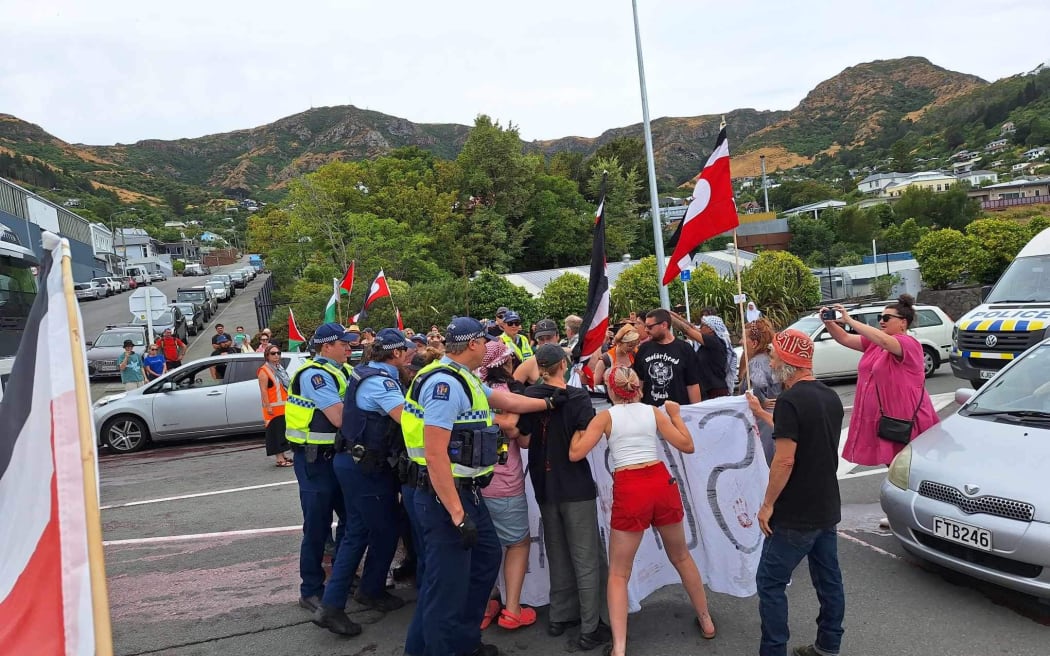
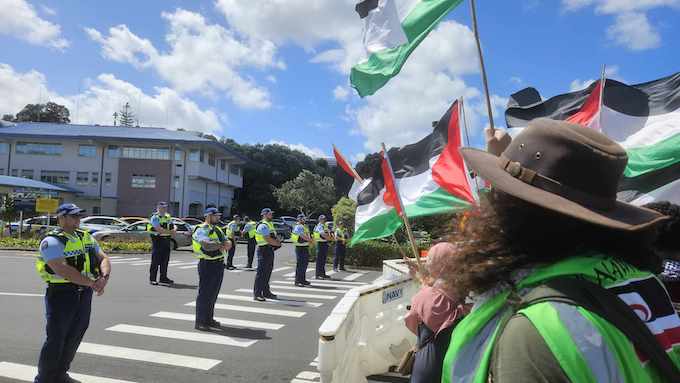
An activist organisation is accusing the Aotearoa New Zealand police of brutality after arrests were made at a pro-Palestine protest in Lyttelton today.
About 60 people took part in the protest at Lyttelton Port this morning, and police said four people were arrested about 1pm after blocking traffic.
Protesters had blocked a tunnel and poured a liquid onto the road, a police spokesperson said.
Charges were being considered.
Police arrest pro-Palestine protesters and accuse the group of blocking traffic in Lyttelton today. Image: Allforallpalestine/RNZ
Palestine Solidarity Network Aotearoa (PSNA) secretary Neil Scott issued a statement saying members were “repulsed” by police actions at the protest, which he labelled “disgusting”.
“The police arrested seven people and pepper sprayed many, including senior citizens protesting peacefully,” Scott said.
Police ‘aggression’ increased Police “aggression” toward the protest activities had been increasing during that time, Scott said, and the group wanted an investigation into officers’ actions at the latest protest.
Protest organiser Ihorangi Reweti-Peters told RNZ that police used “brute force” to stop protesters from blocking the road.
“Police were sort of rarking people up and saying, ‘come on then’, and ‘do it’.”
“Everyone was sprayed — pepper sprayed — and then the people were arrested.”
Three of those arrested had been released by early this evening, Reweti-Peters said.
Police have been contacted for comment.
Protest organisers are planning a pro-Palestine protest at Parliament and the US Embassy in Wellington next Tuesday.
The pro-Palestine protesters, accused of blocking traffic in Lyttelton today. Image: Allforallpalestine/RNZ
From Kakadu to Uluru and the Great Barrier Reef, to Sydney Opera House and the convict sites, Australia’s list of World Heritage places is incredibly diverse. Each site represents the culture, nature and history of this land, in its own way.
But climate change threatens these sites. Many heritage values are already being eroded. On-ground managers of these and other protected places need practical guidance on how to understand these impacts and respond effectively.
We developed a climate change “toolkit” for World Heritage properties with site managers and Traditional Owners. To our knowledge, it is the first time such guidance has been co-developed and tested with World Heritage property managers and Indigenous experts in this country.
Bringing climate science and Indigenous knowledge systems together promises to produce better results for heritage protection as the climate changes. And there is no time to waste. We must act fast to address these threats to Australia’s unique and special places of global significance, so their World Heritage values can be enjoyed for generations to come.
Mounting climate threats to heritage
Our new research explored climate impacts at three very different sites:
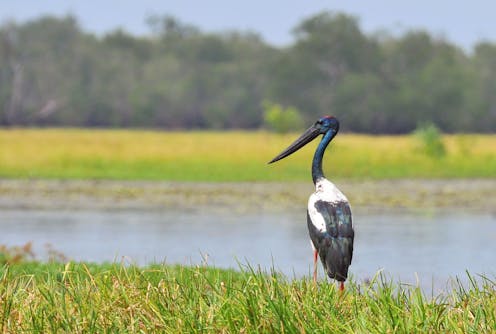
The vast tropical Kakadu National Park is one of four Australian properties listed for both outstanding cultural and natural values. Cave paintings, rock carvings and archaeological sites date back tens of thousands of years. Tidal flats, floodplains, lowlands and plateaus provide habitat for many rare or endemic plants and animals.
But Kakadu is vulnerable to rising sea levels, leading to coastal erosion and saltwater entering wetlands. The region is also experiencing more extreme temperatures and heatwaves, changing fire regimes, more intense cyclones, and increasingly intense extreme rainfall events.
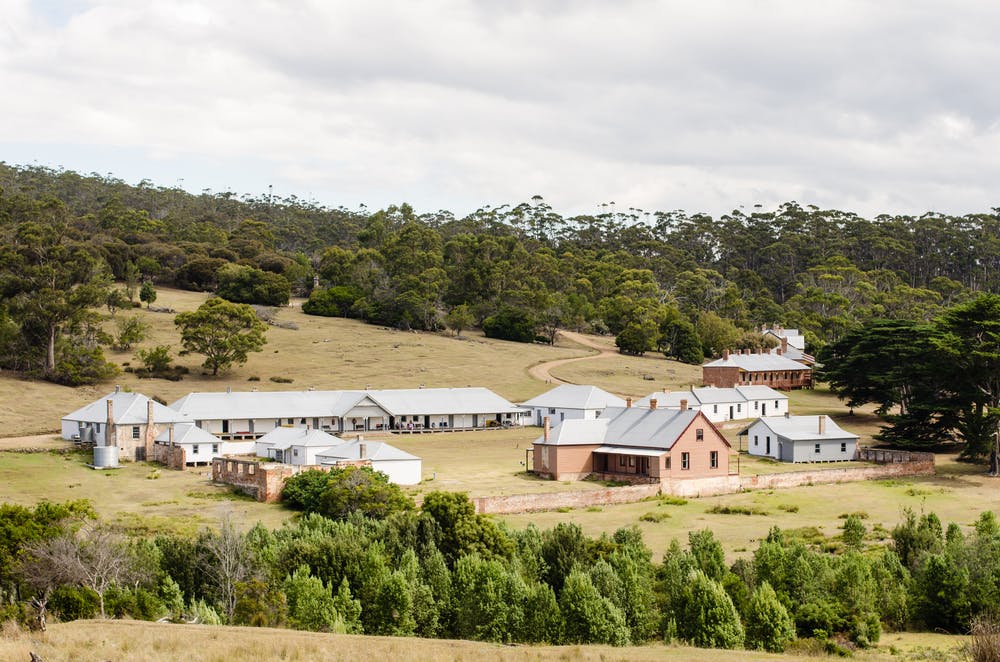
The Convict Sites consist of 11 properties around Australia. Fremantle Prison lies 5,500km west of Arthur’s Vale Historic Area in the east. The Old Great North Road in the north is 1,500km from the Port Arthur Historic Site in the south.
Many convict sites are on coasts and islands where wave action and sea level rise are increasingly damaging structures, landscapes and cultural materials. Convict sites are also vulnerable to storms and bushfires because the buildings are so old.
The arid Willandra Lakes Region contains fossil remains of a series of lakes and sand formations, along with archaeological evidence of human occupation dating back 45,000–60,000 years.
Hot and dry conditions are causing erosion of topsoil, increasingly exposing Aboriginal cultural heritage.
We worked closely with these sites to develop and test our new toolkit.
An Indigenous Reference Group of Traditional Owners from a number of World Heritage sites in Australia contributed their expert knowledge. This includes practical guidance such as how to engage with and enable Indigenous leadership so Traditional Owners can participate in or lead climate vulnerability assessment and adaptation planning. The toolkit also describes using the right knowledge for the right Country (showing respect for traditional knowledge) and establishing agreements to ensure Indigenous cultural and intellectual property rights are protected.
Effectively addressing climate impacts on World Heritage values requires the deep knowledge, values and worldviews of Indigenous Peoples and local communities. This includes practices such as cultural burning to reduce the risk of intense bushfire, or cultural knowledge of long-term changes in water cycles. Tapping into this deep understanding of connections between nature and culture can help support the management of spiritual, living landscapes.
Adapting to climate change
World Heritage site managers can take a broad range of practical actions to adapt to climate change.
These actions, such as firefighting or invasive species control, may not be new. They just need to be undertaken more often or intensely.
Other variations on existing actions may include greater emphasis on physical separation between flammable vegetation and assets such as larger firebreaks, or responding to new invasive species, possibly including shifting ranges of invasive native species.
Some new management actions will be required, such as flood protection, relocating assets and new technological interventions. In cases where climate change is likely to lead to changes in the values of a site, there may be a need to reevaluate management objectives and strategies (such as accommodating new groups of organisms or “ecological communities”, letting some populations decline, and managed retreat of shorelines).
There may also be a need to consider vulnerability at different scales, sometimes across larger areas. In some cases, managers may aim to retain certain values across a wider landscape while accepting local change.
Darlington, on Maria Island, Tasmania, is one of 11 properties grouped together under the Australian Convict Sites World Heritage listing. David Lade, Shutterstock
Managers, stakeholders and rights-holders of World Heritage sites and other protected places, such as Ramsar wetlands and marine protected areas, can now use the toolkit to plan for current and future climate threats. They can focus on the parts most useful to them, depending on their capacity and needs. Ultimately, this resource will help protect Australia’s cultural and natural heritage.
The following people were members of the Indigenous Reference Group and are coauthors of our research paper: Bianca McNeair, Lance Syme, Chrissy Grant, Nicholas Pedrocchi, Patricia Oakley, Amy Stevens, Denis Rose, Erin Rose, Jade Gould, John Locke and Lynda Maybanks.
Jess Melbourne-Thomas received funding for this work from the Australian Commonwealth Department of Climate Change, Energy, the Environment and Water.
Brenda Lin received funding for this work from the Australian Commonwealth Department of Climate Change, Energy, the Environment and Water.
Lance Syme is Principal Archaeologist at Kayandel Archaeological Services, providing cultural heritage and archaeological consulting services throughout New South Wales. He is now working part-time for the International Indigenous Peoples Forum on World Heritage. Funding for the work described in this article came from the Australian Commonwealth Department of Climate Change, Energy, the Environment and Water.
Mandy Hopkins received funding for this work from the Australian Commonwealth Department of Climate Change, Energy, the Environment and Water. This led to further support for vulnerability assessments from Budj Bim world heritage property management.
King Charles III’s cancer diagnosis will turn minds to the question of what happens if he becomes unable to fulfil his constitutional duties. Buckingham Palace has announced he will continue performing his official paperwork and his weekly meetings with the prime minister throughout his treatment.
But what happens if he becomes seriously ill?
There are three options: counsellors of state, regency and abdication.
Counsellors of state
First, King Charles can delegate some or most of his royal functions to counsellors of state, as happens most commonly when he is travelling overseas. Two counsellors of state act jointly in exercising royal powers such as assenting to laws, receiving ambassadors and holding Privy Council meetings.
The counsellors of state are the spouse of the sovereign and the next four adults in line of succession to the throne – being Queen Camilla, Prince William, Prince Harry, Prince Andrew and Princess Beatrice.
However, Prince Harry is excluded while he is outside the United Kingdom, and in practice Prince Andrew and Princess Beatrice are not called on to act as they are not “working royals”.
As this left only Queen Camilla and Prince William to perform the role, a law was passed in the UK in 2022 to add Princess Anne and Prince Edward to the list.
Counsellors of state may carry out most of the sovereign’s functions while he is ill, but they cannot dissolve parliament, except on his instruction, and they cannot create peers. Whether they can appoint a prime minister remains a matter of debate. Most significantly, they cannot exercise powers with respect to the King’s other realms, such as Australia.
Regency
The second option is a regency. This occurs if the King “is by reason of infirmity of mind or body incapable for the time being of performing the royal functions”. The sovereign does not control when or for how long a regency occurs. Instead, it is initiated by a declaration of three or more of: the sovereign’s spouse, the lord chancellor, the speaker of the House of Commons, the lord chief justice of England and the master of the rolls.
The UK’s Regency Act requires Prince William to be regent, as he is the next adult in line of succession to the crown. The regent has the powers of the King with respect to the United Kingdom, but cannot change the order of succession to the crown.
The Regency Act does not give the regent powers in relation to realms such as Australia and New Zealand. New Zealand resolved the problem by inserting a section into its Constitution Act which provides that whoever is made regent under the law of the UK may perform the royal functions of the sovereign with respect to New Zealand. Australia, however, has done nothing in this regard, so a British regent would have no powers with respect to Australia.
The final option for an incapacitated monarch is abdication. This leads to difficult questions about how an abdication would operate in relation to each of the realms.
When King Edward VIII abdicated in 1936, it was achieved by both a signed instrument of abdication and the enactment of legislation to which the various realms, including Australia, assented. This is not possible today, as the UK can no longer legislate with respect to Australia.
Abdication would therefore raise difficult questions about whether there needed to be a separate abdication of the King of Australia, to trigger the application of the rules of succession that are now part of Australian law, or whether covering clause 2 of the Constitution, which defines the sovereign by reference to Queen Victoria’s “heirs and successors in the sovereignty of the United Kingdom”, would apply.
Because of the potential constitutional messiness of dealing with the King’s role in his 14 realms beyond the United Kingdom, it is likely abdication would be avoided.
Consequences for Australia
If King Charles were incapacitated and counsellors of state or a regent were appointed, would this cause any real problem in Australia?
The King’s only remaining substantial powers with respect to Australia are the appointment and removal of the governor-general and the state governors. The governor-general’s term is expected to expire in the middle of the year. If King Charles were then seriously ill and unable to appoint a new governor-general, no one could do so, as neither counsellors of state nor a regent could do so.
Instead, the current governor-general, David Hurley, could choose to continue in office, as there is no formal termination of his office until he is replaced.
Alternatively, he could resign and his office could be filled on a temporary basis by a state governor as administrator, as is the usual practice when there is a vacancy in the office. If the office of a state governor becomes vacant, the lieutenant-governor, who is often the chief justice of the state, can exercise the governor’s functions.
However, if a regency were to continue for a long time – perhaps years – this could become unsustainable.
The other consideration is that if there is a regency, there is no power to dismiss a governor-general. So if a constitutional crisis arose, such as that in 1975 with the dismissal of the Whitlam government, the governor-general would know that he or she could act without the prospect of dismissal on the advice of the prime minister. This unbalances the constitutional pressures that are deliberately built into the system, giving a stronger hand to the governor-general and weakening the position of the prime minister.
The problem could be addressed in the same way as the rules of succession to the throne were changed in 2015 to remove gender discrimination. It would involve each state enacting a law requesting the Commonwealth to enact a law that recognised the authority of a regent to exercise the sovereign’s powers with respect to Australia.
While it is not essential to fix this problem, it would still be wise, as a matter of orderly constitutional housekeeping, to address it before any real difficulties arise.
Anne Twomey has received grant funding from the Australian Research Council and occasionally does consultancy work for governments, Parliaments and inter-governmental bodies. She has also written books about the constitutional aspects of the Crown.
Aboriginal and Torres Strait Islander readers are advised this article contains themes and references to historical events which may be distressing.
Yhonnie Scarce, a Kokatha and Nukunu artist, has emerged in recent years as one of Australia’s most significant contemporary artists. Yhonnie Scarce: The Light of Day, at the Art Gallery of Western Australia, curates a survey of significant works by Scarce from the last few years.
The exhibition presents a “best-of” for a wider West Australian public who may not be familiar with the South Australian artist. At the same time, it’s an opportunity for Western Australia’s art followers to see a range of works not previously assembled in Perth.
A translucent shower
The exhibition is installed across two levels, conjoined through an architectural void that invites spectacle. In this void, Scarce’s glistening Thunder Raining Poison (2016-17) hangs from the ceiling by hundreds of wires.
Scarce’s works are so steeped in the contemporary art idiom that, despite the centrality of glass throughout this exhibition, we might not at first consider her a “glass artist”. Yet in Thunder Raining Poison, and in her two other “cloud” works, Cloud Chamber (2020) and Death Zephyr (2016), the artist draws our attention to the fragility and beauty of the material.
Each of these cloud works are clusters of hanging glass yams. This potato-like tuberous root vegetable, which urban-dwelling Australians may not be familiar with, grows throughout the bush.
In Scarce’s aesthetic and material, yams signify death. The sensitivity of the exhibition’s themes, and perhaps the low lighting, seem to demand quiet in the space. In this silence we hear the gentle chiming of the hand blown yams, reinforcing their fragility.
Hanging in clusters, these clear and black glass yams evoke the dynamism of clouds collapsing into sheets of rain – black rain – falling after the nuclear bomb tests that were carried out on Scarce’s traditional lands in South Australia, between 1952 and 1963. Born in Woomera, Scarce is descended from the Lake Eyre Kokatha people and the Southern Flinders Ranges Nukunu people.
The works resonate with another Indigenous work in the gallery’s collection that isn’t currently on display: Lin Onus’s installation work, Maralinga (1990), which depicts an Aboriginal woman and children facing, in horror, a mushroom cloud signified by radioactive symbols. Yet Scarce’s material dialect is much more poetic.
Nuclear colonialism
Australian nuclear colonialism is a recurrent theme in the exhibition, with the upstairs gallery including three of Scarce’s Glass Bomb works from the Blue Danube series (2015).
Perhaps the most poignant work with this theme is Fallout Babies (2016). Set in a corner space, this work is partially surrounded by a floor-to-ceiling photograph of a graveyard with the buried bodies of children from communities that were exposed to the fallout from the bomb testing. The bodies are metaphorically represented by bulbous glass plums, which speak of fertility and promise.
Hollowing Earth (2016-17) is made of materials quite literally infused with trace amounts of uranium. It glows a luminous green under the black-lit gallery. The glass vessels in Hollowing Earth represent bush bananas, another recurrent bush food in Scarce’s aesthetic cypher. The glass surfaces of many of these voluminous glowing bodies are torn while the glass is still hot and malleable.
Bush bananas also appear in the work In The Dead House (2020), a work previously installed in the old mortuary in Adelaide Botanic Gardens as part the 2020 Adelaide Biennial of Australian Art. Laid out on a vintage mortuary trolley, fragile glass bodies are ripped wide open.
The work references early 20th century Adelaide coroner, Ramsay Smith, who profited from exporting Aboriginal remains to British museums. Smith is notorious for having decapitated the corpses – and the bush bananas echo heads and bodies that have been violently disgorged.
Moments of gentle beauty
Yhonnie Scarce: The Light of Day includes some moments of gentle beauty found in the love of family and tragic ancestry. Both Remember Royalty (2018) and Dinah (2016) belong to stories of trauma, institutionalised racism and inhumane colonial abuse. But these are also moments in this exhibition that actively seek to restore pride that was once brutally taken.
Dinah includes a cropped photograph of the artist’s great grandmother, Dinah Coleman, taken in the 1920s without her consent. She was at Koonibba, a Lutheran mission near Ceduna, South Australia.
As the wall text notes, the photo was quite possibly taken by the anthropologist Norman Tindale, who visited in 1924. This suggests it was an anthropological image that subjected Dinah to a dehumanising scientific gaze. Scarce’s cropped photograph of Dinah restores her dignity and humanity.
Similarly, Remember Royalty takes images of Scarce’s close ancestors and enlarges them on fine vintage fabrics. They look out at an audience in 2024, returning their gaze as equals. Not surprisingly, this complex and sensitively presented work was acquired by London’s Tate Modern gallery in 2022.
As with the other works in this exhibition, we have the opportunity to contemplate this work in its raw yet visually seductive materiality, before this and the other works are once again dispersed.
Yhonnie Scarce: The Light of Day is at the Art Gallery of Western Australia until May 19.
Kit Messham-Muir is the Lead Chief Investigator on ‘Art of Peace’, a three-year ARC Linkage project in partnership with the Art Gallery of Western Australia (AGWA) and National Trust (NSW) and in collaboration with academics from University of New South Wales, University of Melbourne, University of the Arts London and California State University. Art of Peace receives a Linkage Project grant (LP210300068) from the Australian Research Council over three years (2023-2026). He is not involved in any way with the curation or exhibition of Yhonnie Scarce: The Light of Day at AGWA.
Australia’s subsidised aged care services now help around 1.5 million older people to receive care and support. Taxpayers contributed A$28 billion to the various programs in 2022-23. And yet the system is governed by an act that was first passed in 1997.
These and many other reforms are welcome. But as a result, the 1997 Aged Care Act has become a patchwork of change upon change. So when is the new act due, and what does it aim to achieve?
Parts of an initial draft of the act have been released for public consultation. The proposed act adopts a rights-based approach to caring for older Australians, and consolidates and simplifies multiple pieces of existing legislation.
Some of the improvements will include:
establishing a complaints commissioner to increase the independence and transparency of investigating aged care complaints
increasing whistleblower protections so older people, their families and aged care workers feel comfortable about exposing unacceptable treatment from a provider
streamlining access to aged care through a single-assessment process, rather than older people having to be assessed by different organisations depending on their particular care needs.
But several significant issues have yet to be addressed. The partial draft of the act lacks any provision relating to the proposed fees, payments and subsidies, or about how people with different needs will be prioritised and how aged care places will be allocated to them.
The act also makes many references to the government making rules about how the aged care system will actually operate. As always, the devil is in the detail but the rules have not yet been made public.
The new act also attempts to address the fundamental concern that Australia’s Constitution doesn’t provide the federal government with powers to make laws specifically for “aged care”. This is unlike the government’s powers over banking, marriage, the age pension and many other matters.
Instead, the act attempts to patch together a range of other powers, such as for providing sickness and hospital benefits and making binding international treaties (including disability support) under its external affairs powers.
It is unclear whether this approach will make the system too complex, compared with seeking agreement from the states to refer their powers to the federal government, or to enact a common set of laws on which both levels of government agree.
Federal Parliament will have the final say on what the act will contain and when it is passed.
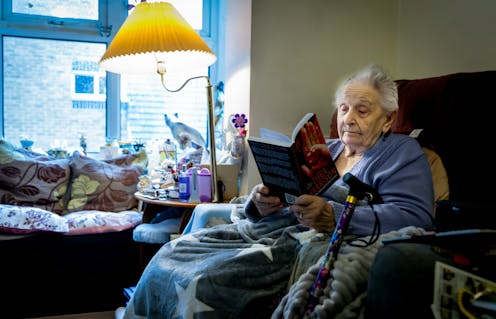
Some 1.5 million older Australians receive aged care, whether in their own home or in an aged care facility. Matteo Vistocco/Unsplash
How does this fit with other recent changes?
The new act aims to provide an enduring structure that brings the current aged care system, including recent reforms, into a single consistent regulatory regime.
The newly introduced residential care workforce standards, for instance, will be carried over to the new act. They include the requirement for 24/7 cover by registered nurses so nurses are always available to care for a resident when needed, at any time of the day or night.
The new levels of care minutes that nurses and other personal care workers must provide to residents will also be part of the new act.
The act will also include the Star Ratings for individual aged care homes. These help inform residents about the quality of the care their homes provide.
The recent changes to aged care are not the end of the decade-long reform journey.
In the immediate future there will be changes to payment arrangements for care as the government responds to the – yet to be released – report of the Aged Care Task Force.
Following that, a new Support at Home program is being designed to consolidate and streamline the current home care packages, short-term restorative care and respite care. Having already been deferred twice in recent years, the current proposed start date is July 1 2025.
The drafting of a modern, simplified act is an important opportunity to provide the best legislative regime for caring for older Australians.
But such an opportunity comes only once every decade or two. While the new legislation needs to put older people at its centre, it must also facilitate a system that is sustainable and sufficiently robust to support them to access subsidised care when they need it.
The broad framework is there, but there are less than five months to get the details right.
Michael Woods is Professor of Health Economics at the UTS Centre for Health Economics Research and Evaluation. He is Policy Advisor to the UTS Ageing Research Collaborative (UARC) and Chairs the Editorial Board of Australia’s Aged Care Sector. He undertakes policy research for the Commonwealth Government and the aged care sector. Michael was a former Deputy Chair of the Productivity Commission. He has no funding or other conflicts of interest related to this article.
Eugenia Tsihlis is a Senior Research Associate in the Faculty of Law at UTS, within the UTS Ageing Research Collaborative (UARC). She has contributed to the Australia’s Aged Care Sector reports and UARC submissions in response to the proposed new Aged Care Act. Eugenia has no funding or other conflicts of interest related to this article.
Source: The Conversation (Au and NZ) – By Tamika Worrell, Senior Lecturer in the Department of Critical Indigenous Studies, Macquarie University, Macquarie University
Midjourney/Author provided
It is well documented that Australian teachers face challenges incorporating Indigenous perspectives and content in their classrooms. The approach can sometimes be somewhat tokenistic, as if the teacher is “ticking a box”. We need a more culturally responsive teaching workforce.
Generative AI is advancing at a fast pace and quickly finding a place within education. Tools such as ChatGPT (or Chatty G as the kids say) continue to dominate conversations in education as these technologies are explored and developed.
There are many concerns around academic integrity and things to consider on how to best introduce and control this technology in practice.
As teachers continue to look for ways to meet Indigenous content requirements, it makes sense they would turn to generative AI to assist them in an area they struggle with. But using these tools could do more harm than good.
Indigenous peoples’ concerns around AI
Indigenous people have raised a range of concerns around generative AI. These include the risks these technologies pose for Indigenous people and knowledges.
For example, AI-generated art is causing a significant threat to Indigenous peoples’ incomes, art and cultural knowledges.
The lead image of this article was created using the generative AI platform Midjourney. The prompts included the terms Indigenous, artwork, colourful, artificial intelligence, Aboriginal, Western Sydney and painting styles.
With AI being trained on vast data sets primarily from the western corpus of knowledge, there are also concerns relating to Indigenous data sovereignty – the right to “govern the collection, ownership and application of data about Indigenous communities, peoples, lands and resources”.
Generative AI can also perpetuate misinformation that harms Indigenous communities. This happened during the Voice referendum campaign, when fake, AI-generated images of Indigenous “no” voters were published on social media.
Importantly, there is also the potential impact to Country due to the environmental costs of data centres – an issue that must be addressed as more generative AI tools come online.
How do these concerns translate into the classroom?
All students should see themselves reflected in the classroom. This especially applies to Indigenous students, as attested by Closing the Gap targets for educational attainment.
A 2022 report by the Australian Institute for Teaching and School Leadership states:
The legacy of colonisation has undermined Aboriginal and Torres Strait Islander students’ access to their cultures, identities, histories and languages. Aboriginal and Torres Strait Islander students have not had access to a complete, relevant and responsive education.
Children need both “windows and mirrors” in the classroom. American education scholar Rudine Sims-Bishop has aptly put this in the context of children’s literature:
When children cannot find themselves reflected in the books they read, or when the images they see are distorted, negative or laughable, they learn a powerful lesson about how they are devalued in the society of which they are a part.
Students need to see themselves reflected in the curriculum, including the technologies used.
By using generative AI, teachers risk perpetrating and promoting inaccuracies and spreading false information instead of meaningfully engaging with Indigenous values and knowledge systems.
This can potentially harm the student–teacher relationship, which is incredibly important, particularly for Indigenous students.
Late last year, the Australian government released a framework for generative AI in schools. It offers “guidance on understanding, using and responding to generative AI” to everyone involved in Australian school education.
The framework also affirms the necessity of respecting Indigenous cultural and intellectual property rights. But we need more extensive work to ensure teachers can do this appropriately. Currently, there is a lack of research that looks at the intersection between generative AI and Indigenous content inclusion in the classroom.
Indigenous futures and AI
Generative AI, and other forms of AI, have extensive potential to benefit Indigenous people and their communities. Many Indigenous people are engaging with the technologies to this effect.
But to make room for what is seemingly an inevitable future that involves AI, work needs to be done in policy and professional bodies to ensure Indigenous inclusion at all levels – from development to use.
Teachers and students must be supported with the necessary resourcing to promote critical thinking when engaging with generative AI. Teachers will look to the relevant government bodies, whereas students will look to their teachers for guidance.
It is clear we need further guidance on Indigenous cultural and intellectual property rights, and culturally appropriate AI use for educators.
Generative AI still has much to learn, and Indigenous knowledges have much to teach it.
Tamika Worrell does not work for, consult, own shares in or receive funding from any company or organisation that would benefit from this article, and has disclosed no relevant affiliations beyond their academic appointment.
When a tropical cyclone forms, people who live in its path anxiously monitor news of its direction – and strength. If a Category 5 storm with wind speeds of 250 kilometres per hour is heading for you, you prepare differently than you would for a Category 1 with wind speeds of 65 km/h.
In a hotter world, cyclones are expected to become less common but more intense when they do form. That, according to new research, means it might be time to consider introducing a Category 6 to the hurricane scale used in the United States to better communicate the threat.
But do cyclone scales need a new category for more severe storms? Only one hurricane in the Western Hemisphere has yet gone past the 309 km/h winds the researchers nominate for a Category 6. And the whole idea of storm scales, including Australia’s own tropical cyclone scale, is that Category 5 storms are those likely to do catastrophic damage. It’s hard to see what a Category 6 could offer.
What is worth exploring is how we can better communicate what specific threats a given storm poses. Is it carrying more water than average, making flooding a bigger risk? Or are unusually intense winds likely to bring more water ashore in storm surges?
In December, Cyclone Jasper made landfall as a Category 2 storm in northern Queensland. Despite being at the lower end of severity, it dumped huge volumes of water and triggered devastating floods. Residents and farmers criticised the Bureau of Meteorology for not fully conveying the size of the threat. More specific warnings could help.
What are storm scales for?
The world’s tropical cyclone warning centres classify cyclones using simple intensity scale systems based on maximum wind thresholds. Cyclones, hurricanes and typhoons are different names for the same tropical storms.
There are several different intensity scales in use. The Saffir-Simpson scale is used by the US National Hurricane Center for hurricanes forming in the central and eastern North Pacific and North Atlantic basins. Different scales are used in the Australian, North Indian, Southwest Indian, and western North Pacific basins. Importantly, every scale in use is open-ended, meaning their final category is based on winds greater than a certain threshold – but with no upper limit.
Tropical cyclones can pose many threat to us while at sea, as they approach and make landfall, and even afterwards.
These threats include the intense winds near the eye of the tropical cyclone, the ring of damaging winds which can extend hundreds of kilometres from the eye, wind-driven high seas, storm surge, heavy rainfall and associated flooding and mudslides.
We can’t say one of these is definitively more deadly or damaging than any other threat. Tropical Cyclone Oswald, a 2013 Category 1 storm, led to heavy rainfall and flooding through Queensland and New South Wales, while the 1992 Category 5 Hurricane Andrew caused catastrophic wind damage – but little rain or storm surge damage when it hit Florida.
The researchers suggest a Category 6 on the Saffir-Simpson scale would be for storms with winds over 86 metres per second (309 km/h).
They suggest five tropical cyclones have now passed that threshold since 2013. Certainly, Hurricane Patricia (2015) would meet that threshold. But this is the only one which meets their criteria in the last 40 years, as it was well observed by US aircraft missions. The other four were not in the Western Hemisphere – they were typhoons affecting Asia. In these areas, meteorologists do not use aircraft reconnaissance to confirm wind speeds. Estimates of wind speeds can vary substantially. That means the wind speeds of these four cannot be verified.
To make their case, the researchers also use the maximum possible intensity a tropical cyclone could reach in a given environment. It’s useful to scientists because it can be directly calculated from climate projections and is often used to explore how tropical cyclone intensity might change in the future. But it has an important limitation – tropical cyclones rarely reach their maximum potential intensity.
In their original formulation of the Saffir-Simpson scale, Herb Saffir and Bob Simpson described a Category 5 hurricane making landfall as one which would cause catastrophic destruction of all infrastructure. The Australian Tropical Cyclone Scale has different thresholds but similar reasoning for a Category 5 storm.
Based on the understanding that winds at Category 5 and above lead to catastrophic outcomes, it’s hard to see how adding a Category 6 would help the public. If a Category 5 means “expect catastrophic consequences”, what would Category 6 mean?
How can we best communicate cyclone threats?
Scientists came up with tropical cyclone intensity scales as a way to clearly communicate the nature and size of the damage likely to occur. They are not intended to be comprehensive, as they’re based on a single wind speed valid only for the area near the eye, where the most intense winds occur.
Fundamentally, these scales are meant to measure how well our buildings and infrastructure can survive the wind force and also protect us. If our building codes, evacuation plans, and other protective strategies ever improved to the point where Category 5 storms no longer lead to catastrophic loss, it might make sense to introduce a Category 6. But we’re not at that point. The catastrophic loss from a Category 5 or Category 6 would look the same: catastrophic.
What we should do is explore whether we can improve the scale in different ways. Can we keep their simple, effective messages while also capturing the different threats a weather system like this can pose?
Liz Ritchie-Tyo does not work for, consult, own shares in or receive funding from any company or organisation that would benefit from this article, and has disclosed no relevant affiliations beyond their academic appointment.
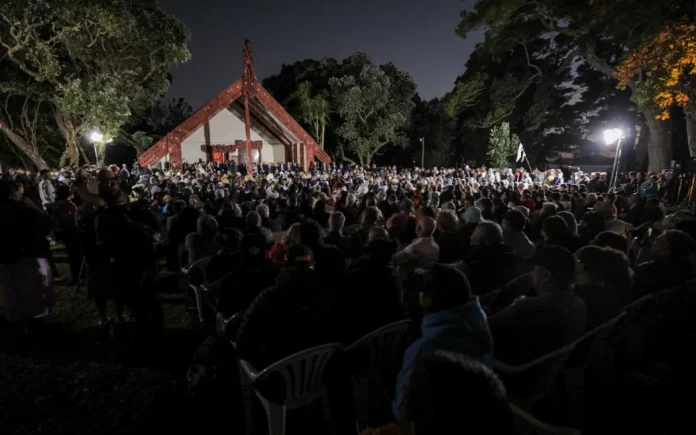
The Waitangi Day dawn service 2024 this morning. Image: RNZ/Angus Dreaver
Thousands of people gathered before dawn in the Bay of Islands today to commemorate Aotearoa New Zealand’s Treaty of Waitangi amid heightened tensions between the coalition government and Māori.
Waitangi Trust chair Pita Tipene welcomed everyone and said the massive crowds were vastly different from when the country was stuck in the grip of the covid-19 pandemic.
“Several years ago when this commemoration and therefore this dawn service was not held because of the pressures of covid, I nonetheless came here with my mokopuna,” he said.
“We were the only ones here, so when I look out at the throng of people it’s very different to that morning when we sat here on the maho and I was forced to give karakia myself.”
Tipene said moving forward as a nation means we were also moving forward as individuals “learning from each other”.
The Waitangi Day dawn service 2024 this morning. Image: RNZ/Angus Dreaver
“When we learn to live with each other and our personal circumstances, I think we can all move forward too.”
Alistair Reese told the crowds Henry Williams, an Anglican priest who translated the English draft of the Treaty in Māori and explained its provisions to Māori leaders, told the chiefs that the Treaty was “Queen Victoria’s act of love to you”.
Reese said the Treaty was understood by many as a “sacrificial union”.
“It is an ethic that seeks the best outcome for the other and to paraphrase the apostle Paul, love is patient, love is kind, love does not dishonour others and love never fails,” he said.
“So if the Treaty was an act of love by Victoria to Māori, by extension it needs also to be an act of love by our government to Māori.”
Prime Minister Christopher Luxon shared a Bible reading from 1 Corinthians 12:12-27 about working as one body.
Labour leader Chris Hipkins said the Treaty was the country’s guide to navigating the challenges in partnership.
“Te Tiriti binds us together as we work towards a fairer Aotearoa, in which all of our people can flourish and prosper, [it] inspires us to be kind, to be compassionate, to be grateful and to do good.”
Departing Greens co-leader James Shaw chose a popular quote about love and Tina Turner’s “what’s love got to do with it” was also quoted in the speeches.
‘We’ve got a lot of work to do’ – Luxon
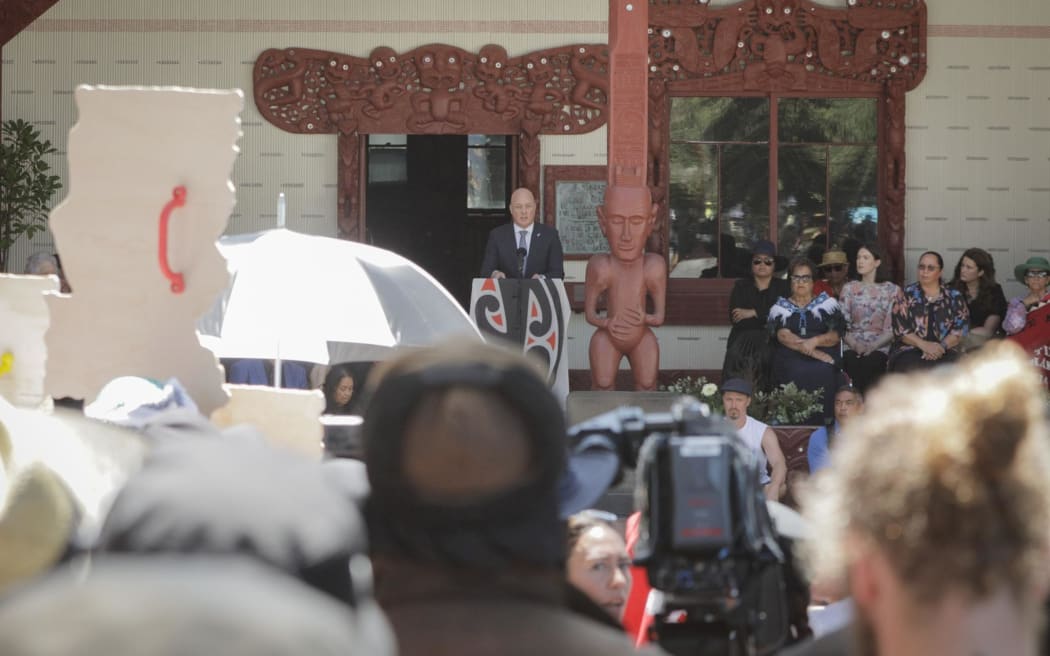
Prime Minister Christopher Luxon speaks at the Treaty Grounds, Waitangi Day 2024. Image: RNZ
Prime Minister Christopher Luxon told RNZ’s Waitangi Day programme he wanted a country that was unified but respected differences too.
“I actually think that’s what’s amazing about Waitangi … where else on Earth would you see everyone, with all the diverse sets of opinions and views … actually all choose to come together and express those views in one place. I can’t think of any country that does it, I think it’s very unique and special.”
He said he had been inspired.
He visited a settlement on Friday with “Third World housing in a First World country”.
Luxon said the solution to housing was easing the consenting process, partnering up with iwi, and getting the money to the community to provide housing.
“When you look at the issues across Māoridom . . . we’ve got a lot of work to do.”
Speaking about increased attention on ACT and New Zealand First, Luxon said that was the reality of MMP.
“New Zealand First, ACT and National are all very united on getting houses built for Māori up and down this country, so that’s where we have great commonality.”
This article is republished under a community partnership agreement with RNZ.
Just days after the appointment of Dr Siale ‘Akau’ola as Tonga’s new Minister of Health, King Tupou VI has withdrawn his consent for two other Cabinet appointments.
An undated memo from the Lord Privy Seal, Viliami Malolo, to Chief Secretary of the Cabinet Paula Ma’u seen by Kaniva News details the king’s refusal to accept the appointments.
“His Majety was pleased by and with the advice of his Privy Council to withdraw His confidence and consent to the appointment of the Hon. Hu’akavameliku as Minister or His Majesty’s Armed Forces,” the royal memo said.
The memo said the king was also withdrawing consent for the appointment of the Hon. Fekitamoeloa Katoa ‘Utoikamanu as Minister for Foreign Affairs and Minister for Tourism.
Several Cabinet appointments have yet to be ratified by the king.
Prime Minister Hu’akavameiliku . . . Cabinet appointments vetoed by the King. Image: Kaniva Tonga/Radio FM87.5
Last year Prime Minister Hu’akavameliku said he had nominated a new Minister to replace former Minister of Fisheries Semisi Fakahau. That nomination has yet to be ratified by the king.
Reports at the time suggested the Prime Minister had also nominated a replacement for the Minister of Police.
The government is remaining tight-lipped about the King’s action.
Kaniva News has asked the Chief Secretary and Prime Minister whether they have received the King’s memo.
‘Repeatedly refused answers’ In an interview with Broadcom Broadcasting, Deputy Prime Minister Samiu Vaipulu did not deny the existence of the memo. However, he repeatedly refused to answer questions about the King’s withdrawal of his consent to the appointments.
He said Cabinet was working on a response and would release a statement later.
Hon. Vaipulu said the Prime Minister was currently overseas.
The PM’s nomination of a new Minister of Fisheries has yet to be appointed.
The King can only revoke a Minister’s appointment if he has been advised by the Prime Minister according to Clause 51 of the Constitution.
Kaniva comments: Hon. Fekita Utoikamanu was appointed from outside Cabinet. It is unclear how she would be affected by the King’s decision. There appears to be no clause in the Constitution allowing His Majesty to withdraw his appointment of any minister after their appointment.
The question is whether Hon. Utoikamanu would remain as Minister despite the king’s withdrawal of his approval.
The fact that the King withdrew his consent following the advice of the Privy Council will also re-awaken concerns raised as far back as 2017 about the role of the king’s counsellors.
The then Justice Minister Vuna Fā’otusia said decisions made by Parliament were sometimes vetoed by His Majesty because of advice from the Privy Council.
He said the members of the council were not chosen by the people.
It is about a decade since lawyer Peter Pursglove said that Tonga’s 2010 Constitution was the poorest among all Commonwealth countries. He made suggestions to improve it, but progress had been stalled.
Pursglove expressed concern about the role and the establishment of the Privy Council.
How many of us recall having to calculate our body-mass index (BMI) as children at school, prompting comparisons of our weight with that of our peers? Or perhaps we remember references to calories and diets in the classroom.
Now, the Australian curriculum is changing how children and young people are educated about their bodies and what they eat, in a bid to prevent eating disorders.
Hundreds of references to terms including BMI, weight, calories and diets have been removed from school resources by the Australian Curriculum, Assessment and Reporting Authority, replaced with terminology such as “balanced nutrition”.
As a clinical psychologist specialising in the treatment of children and young people with body image and eating disorders, I welcome these changes. Given what we know about the links between weight stigma and the development of eating disorders, they’re long overdue.
People will often use words such as “fat” and “guilt” to cast shame over their own or others’ body size and food choices. On the flip side, the latest diets and other weight loss techniques are regularly hot topics of conversation among friends and colleagues.
Evidence shows this sort of talk around children and young people can be very damaging, in some cases contributing to the development of disordered eating. So in the school environment we need to be especially mindful of the language we use around people’s bodies and food.
Children learn about their bodies and nutrition when they start school, and this can be where a lot of misinformation (such as being fearful of certain foods because they’re deemed to be “bad” for us) and stigma begins. Peer teasing for size, weight and shape is common and increases the risk of a child or young person developing an eating disorder.
I treat many adults who have severe eating disorders partly as a result of growing up in a society that overvalues thinness, promotes dieting for weight loss, and shames people who are overweight or obese. Much of this appears to have come from the influences of their schooling.
Fostering positive body image
We’ve known for a long time that early intervention through educating our children about well-being and positive mental health strategies is important to reduce the incidence of severe mental health conditions.
For eating disorders specifically, positive role modelling by adults around how we talk about our own and others’ bodies is crucial.
This can include describing people for their interests and qualities rather than their appearance, and teaching children about gratitude and respect towards each other.
Research shows learning about body acceptance and appreciation is important for both males and females in developing a positive body image. Those children and young people who have a positive relationship with their bodies and food are much less likely to develop eating disorders.
Teachers have an important role in educating our children about body respect and having a healthy relationship with their bodies and eating.
This can be achieved through actions including avoiding comments about people’s appearances, talking about food for its function in our bodies, and not attaching moral values (such as “good” or “bad”) to the foods we eat. Indeed, the curriculum overhaul warns teachers against using these descriptors.
How to talk about food with kids
Learning about the importance of feeding our bodies and listening to our body’s needs is important for children.
We need to talk about food for its function in our bodies (such as carbohydrates for energy and fats for our brain). We should talk about foods we eat to help us concentrate and fuel our bodies as well as making us strong and helping us feel well.
The curriculum changes appear to be designed to connect nutrition to physical and mental health in these ways.
Food should also be presented as an enjoyable and a social activity (for example, sharing food with others).
Everyone’s appetite is different at different times and that’s OK. Helping children understand how to respond to their appetite and knowing when they’re hungry and full is important, as we know this helps with issues such as restrictive and binge eating, two common disordered eating behaviours.
Hopefully we are on the way to saying goodbye to the harm of weight stigma and diet talk in schools.
The biggest challenge is that we live in an appearance-obsessed world with a diet culture and many people have a fixed way of thinking about food and bodies that’s hard to shift. As adults we have to work really hard to be better role models.
While teachers play a crucial role, children also need other adults to go to who make them feel understood and accepted. Being a positive role model means listening to children’s concerns, and being be mindful of the way you talk about yours and others’ bodies, as well as the sort of language you use around eating and food.
Dr Vivienne Lewis works for the University of Canberra and runs her own Clinical Psychology practice.
Global temperatures have already exceeded 1.5°C warming and may pass 2°C later this decade, according to a world-first study I led. The worrying findings, based on temperature records contained in sea sponge skeletons, suggest global climate change has progressed much further than previously thought.
Human-caused greenhouse gas emissions drive global warming. Obtaining accurate information about the extent of the warming is vital, because it helps us understand if extreme weather events are more likely in the near future, and whether the world is making progress in reducing emissions.
To date, estimates of upper ocean warming have been mainly based on sea-surface temperature records, however these date back only about 180 years. We instead studied 300 years of records preserved in the skeletons of long-lived sea sponges from the Eastern Caribbean. In particular, we examined changes in the amount of a chemical known as “strontium” in their skeletons, which reflects variations in seawater temperatures over the organism’s life.
Keeping the average global temperature rise below 1.5°C since pre-industrial times is a goal of the 2015 Paris climate deal. Our research, published in Nature Climate Change, suggests that opportunity has passed. Earth may in fact have already reached at least 1.7°C warming since pre-industrial times – a deeply troubling discovery.
The researchers studied sponge specimens from the Eastern Caribbean. Shutterstock
Getting a gauge on ocean heat
Global warming is causing major changes to the Earth’s climate. This was evident recently during unprecedented heatwaves across southern Europe, China and large parts of North America.
Oceans cover more than 70% of Earth’s surface and absorb an enormous amount of heat and carbon dioxide. Global surface temperatures are traditionally calculated by averaging the temperature of water at the sea surface, and the air just above the land surface.
But historical temperature records for oceans are patchy. The earliest recordings of sea temperatures were gathered by inserting a thermometer into water samples collected by ships. Systematic records are available only from the 1850s – and only then with limited coverage. Because of this lack of earlier data, the Intergovernmental Panel on Climate Change has defined the pre-industrial period as from 1850 to 1900.
But humans have been pumping substantial levels of carbon dioxide into the atmosphere since at least the early 1800s. So the baseline period from which warming is measured should ideally be defined from the mid-1700s or earlier.
What’s more, a series of exceptionally large volcanic eruptions occurred in the early 1800s, causing massive global cooling. This makes it more difficult to accurately reconstruct stable baseline ocean temperatures.
But what if there was a way to precisely gauge ocean temperatures over centuries in the past? There is, and it’s called “sclerosponge thermometry”.
Sclerosponges are a group of sea sponges that resemble hard corals, in that they produce a carbonate skeleton. But they grow at a much slower rate and can live for many hundreds of years.
The skeletons incorporate a number of chemical elements including strontium and calcium. The ratio of these two elements varies during warmer and cooler periods. This means sclerosponges can provide a detailed diary of sea temperatures, down to a resolution of just 0.1°C.
We studied the sponge species Ceratoporella nicholsoni. They occur in the Eastern Caribbean, where the natural variability of upper ocean temperatures is low which makes it easier to tease out the effects of climate change. We wanted to investigate temperatures in a part of the ocean known as the “ocean mixed layer”. This is the upper part of the ocean, where heat is exchanged between the atmosphere and the ocean interior.
The author and his colleagues studied the sponge species Ceratoporella nicholsoni. Wikimedia, CC BY
We looked at temperatures going back 300 years, to see whether the current time period which defines pre-industrial temperatures was accurate. So what did we find?
The sponge records showed nearly constant temperatures from 1700 to 1790 and from 1840 to 1860 (with a gap in the middle due to volcanic cooling). We found a rise in ocean temperatures began from the mid-1860s, and was unambiguously evident by the mid-1870s. This suggests the pre-industrial period should be defined as the years 1700 to 1860.
The implications of these findings are profound.
What does this mean for global warming?
Using this new baseline, a very different picture of global warming emerges. It shows human-caused ocean warming began at least several decades earlier than previously assumed by the IPCC.
Long-term climate change is commonly measured against the average warming over the 30 years from 1961 to 1990, as well as warming in more recent decades.
Our findings suggest that in the interval between the end of our newly defined pre-industrial period and the 30-year average mentioned above, the temperatures of the ocean and land surface increased by 0.9°C. This is far more than the 0.4°C warming the IPCC has estimated, using the conventional timeframe for the pre-industrial period.
Add to that the average 0.8°C global warming from 1990 to recent years, and the Earth may have warmed on average by at least 1.7°C since pre-industrial times. This suggests we have passed the 1.5°C goal of the Paris Agreement.
It also suggests the overriding goal of the agreement, to keep average global warming below 2°C, is now very likely to be exceeded by the end of the 2020s – nearly two decades sooner than expected.
Our study has also produced another alarming finding. Since the late 20th century, land-air temperatures have been increasing at almost twice the rate of surface oceans and are now more than 2°C above pre-industrial levels. This is consistent with well-documented decline in Arctic permafrost and the increased frequency around the world of heatwaves, bushfires and drought.
Our revised estimates suggest climate change is at a more advanced stage than we thought. This is cause for great concern.
It appears that humanity has missed its chance to limit global warming to 1.5°C and has a very challenging task ahead to keep warming below 2°C. This underscores the urgent need to halve global emissions by 2030.
Malcolm McCulloch receives funding from the Australian Research Council.
When students walked through the sandstone gates of Sydney’s Newington College for the first day of school last week, they were met by protesters.
A group of parents and former students had gathered outside this prestigious school in the city’s inner west, holding placards decrying the school’s decision to become fully co-educational by 2033.
Protesters have even threatened legal action to defend the 160-year-old tradition of boys’ education at the school. One told Channel 9 they fear the change is driven by “woke […] palaver” that will disadvantage boys at Newington.
Newington is not the only prestigious boys school to open enrolments to girls. Cranbrook in Sydney’s east will also go fully co-ed, with the decision sparking a heated community debate.
This debate is not a new one. What is the history behind the single-sex vs co-ed divide? And why does it spark so much emotion?
Schools like Newington were set up at a time when the curriculum and social worlds for upper-class boys and girls were often quite different. Boys and girls were thought to require different forms of education for their intellectual and moral development.
The question of whether it’s a good idea to educate boys and girls separately has been debated in Australia for at least 160 years, around the time Newington was set up.
In the 1860s, the colony of Victoria introduced a policy of coeducation for all government-run schools. This was despite community concerns about “moral well-being”. There was a concern that boys would be a “corrupting influence” on the girls. So schools were often organised to minimise contact between boys and girls even when they shared a classroom.
Other colonies followed suit. The main reason the various Australian governments decided to educate boys and girls together was financial. It was always cheaper, especially in regional and rural areas, to build one school than two. So most government schools across Australia were established to enrol both girls and boys.
One notable exception was New South Wales, which set up a handful of single-sex public high schools in the 1880s.
These were intended to provide an alternative to single-sex private secondary schools. At that time, education authorities did not believe parents would agree to enrol their children in mixed high schools. Historically, coeducation has been more controversial for older students, but less so for students in their primary years.
A changing debate
By the 1950s, many education experts were arguing coeducation was better for social development than single-sex schooling. This was at a time of national expansion of secondary schooling in Australia and new psychological theories about adolescents.
In following decades, further debates emerged. A feminist reassessment in the 1980s argued girls were sidelined in co-ed classes. This view was in turn challenged during the 1990s, with claims girls were outstripping boys academically and boys were being left behind in co-ed environments.
Which system delivers better academic results?
There is no conclusive evidence that one type of schooling (co-ed or single sex) yields better academic outcomes than the other.
Schools are complex and diverse settings. There are too many variables (such as resourcing, organisational structures and teaching styles) to make definitive claims about any one factor. Many debates about single-sex vs co-ed schooling also neglect social class as a key factor in academic achievement.
What about the social environment?
Research about the social outcomes of co-ed vs single-sex schools is also contested.
Some argue co-ed schooling better prepares young people for the co-ed world they will grow up in.
Others have suggested boys may fare better in co-ed settings, with girls acting as a counterbalance to boys’ unruliness. But it has also been argued boys take up more space and teacher time, detracting from girls’ learning and confidence.
Both of these arguments rely on gender stereotypes about girls being compliant and timid and boys being boisterous and disruptive.
Key to these debates is a persistent belief that girls and boys learn differently. These claims do not have a strong basis in educational research.
Tradition plays a big part in this debate. Often, parents want their children to have a similar schooling experience to themselves.
For others it’s about access to specific resources and experiences. Elite boys schools have spent generations accumulating social and physical resources tailored to what they believe boys are interested in and what they believe is in boys’ best interests. This includes sports facilities, curriculum offerings, approaches to behaviour management and “old boys” networks.
Many of these schools have spent decades marketing themselves as uniquely qualified to educate boys (or a certain type of boy). So it’s not surprising if some in these school communities are resisting change.
More concerning are the Newington protesters who suggest this move toward inclusivity and gender diversity will make boys “second-class citizens”. This echoes a refrain common in anti-feminist and anti-trans backlash movements, which position men and boys as vulnerable in a world of changing gender norms. This overlooks the ways they too can benefit from the embrace of greater diversity at school.
As schools do the work to open up to more genders, it is likely they will also become welcoming to a wider range of boys and young men.
Jessica Kean receives funding from an Australian Research Council Special Research Initiative grant ‘Australian Boys: Beyond the Boy Problem’.
Helen Proctor receives funding from the Australian Research Council.
Kellie Burns previously received funding from the University of Sydney, Equity Prize.
Aboriginal and Torres Strait Islander readers are advised this article contains the name and images of a deceased person.
In the many tributes that have flowed since the announcement of Lowitja O’Donoghue’s death on February 4 at age 91, many commentators have noted her leadership and commitment to public life over many years.
Of her many public roles, chairing the Aboriginal and Torres Strait Islander Commission (1990-2005) across the first six years of its life stands out. No other Indigenous leader has occupied a similar position before or since.
What can we learn from her leadership?
An activist and trailblazer
Removed, marginalised and discriminated against from birth, in a country that refused to recognise her identity or aspirations, O’Donoghue’s political maturation came early when she moved to Adelaide to become a trainee nurse in the 1950s.
In 1967 she joined the Commonwealth Department of Aboriginal Affairs, rising to become regional director from 1975-79. In 1977, O’Donoghue was appointed the inaugural chair of the National Aboriginal Conference (NAC) and subsequently appointed as chair of the Aboriginal Development Commission.
In 1984, she was commissioned by Aboriginal Affairs Minister Clyde Holding to consult with Indigenous communities about a new consultative organisation to replace the NAC. A key recommendation of her report was the establishment of regional assemblies across Australia, a model that became central to ATSIC.
Inaugural chair of ATSIC
O’Donoghue was regarded as the logical choice for inaugural chair of ATSIC. A statutory body, combining representative, advisory and administrative functions, ATSIC was unlike all previous representative bodies for Indigenous Australians.
She steered a board of 17 regional commissioners, along with an extra two commissioners appointed by the minister. There were also between 600 and 800 regional councillors (including chairpersons) in 35 regions across Australia, prosecuting a national position while catering to regional concerns.
She liaised with a chief executive and the minister, and an administrative wing of about 1,000 public servants. She and the board administered 50% of the federal government’s budget in Aboriginal affairs, dispensing something in the order of 6,000 grants to about 1,500 incorporated Indigenous organisations by the mid 1990s.
O’Donoghue took to the task with gusto and hope. Her first order of business was steering a national Aboriginal response to the 1991 report of the Royal Commission into Aboriginal Deaths in Custody, which she described as the “most important social document of the 20th century”. She attended as many regional council meetings as she could and, in an historic cabinet meeting in 1991, was among a small group that presented a report to Paul Keating on Aboriginal priorities.
Negotiating Mabo
Not long after this, O’Donoghue was required to steer ATSIC’s response to the Mabo decision. This was no small task, as it unleashed a torrent of discontent across Australia and resistance in many quarters.
O’Donoghue, ATSIC and other Aboriginal representatives developed a list of bedrock demands. Compromises were made, but under O’Donoghue’s determined steerage, ATSIC hung on to several demands, notably the retention of the threatened Racial Discrimination Act.
This was a highlight of her career, not least because it demonstrated that ATSIC was no “toothless tiger” and showcased the acumen of a rising Aboriginal political sector.
Later, ATSIC pushed for the development of a social justice package in order to cater to “the dispossessed” – the majority of Aboriginal people unable to benefit from native title law.
After extensive community consultation in conjunction with the Reconciliation Council, an historic document was produced, Recognition, Rights and Reform, calling for institutional , structural, collaborative and co-operative change.
Social justice was predicated on moving from welfare to rights, from dependency to autonomy and from government assistance to self-determination. A major theme in the report was a desire to redefine Indigenous Australians’ relationship with governments. ATSIC measured all its programs in terms of social justice. With this document, they hoped to achieve it by 2001.
Taking Indigenous advocacy around the world
In O’Donoghue’s papers in the National Library of Australia are several large bound volumes of her published speeches during her time at ATSIC, the writing and delivery of which constituted an important part of her advocacy. Particularly impressive is the diverse audiences she pitched to: the Royal Institute of Public Administration, various industry and professional associations, business and economic forums, health professionals, politicians and public servants.
She always impressed on her audience the immense task of ATSIC, reminding them of its political and financial constraints, and arguing that it would take time to turn around 200 years of dispossession.
She regularly spoke at the UN. In 1993, the international year of the world’s Indigenous peoples, she spoke at the World Conference on Human Rights at Vienna. She told her audience not to underestimate the serious nature of human rights abuses in Australia, noting that “as Aboriginal people we ask no more than the basic human right of being given the opportunity to determine our own future”.
In his PhD thesis on Indigenous engagement with the UN, Indigenous scholar Graeme La Macchia shows how in the development of the United Nations Declaration on the Rights of Indigenous Peoples, member states became anxious about words like self-determination. He shows how O’Donoghue held firm, arguing that nothing short of political self-determination and economic empowerment would suffice for the world’s Indigenous people.
A profound legacy
In her farewell address, O’Donoghue described her time at ATSIC as intense, exhilarating and, at times, exhausting.
The final months of her tenure were marred by a hostile relationship to an incoming Coalition government looking to reform ATSIC, and a constant repetition of ATSIC’s alleged accountability crisis in the public domain, what she described as “the myth of the wasted millions”.
This did not detract from the fact that this Yankunytjatjara woman from Central Australia rose to become the longest-serving leader of the longest running Indigenous political organisation of the postwar era.
ATSIC was a pioneering institution, observed across the globe. We should know and remember her considerable contribution to this important part of our political history.
Alison Holland receives funding from the Australian Research Council (DP230100714 – Policy for Self-Determination: the Case Study of ATSIC) with Distinguished Professor Larissa Behrendt, Associate Professor Daryl Rigney, Dr Kirsten Thorpe and Lindon Coombes.
The Chinese-Australian academic and writer, Yang Hengjun, has been detained in China for five years on suspicion of spying for Australia.
A secret trial was held in 2021 with no family, friends or Australian consular officials permitted in the courtroom. The verdict was then delayed at least seven times, according to Amnesty International.
Today, his fate has finally been made clear: Yang received a suspended death sentence which can be commuted to life in prison after two years of good behaviour.
Espionage is a capital crime in China, so it is unsurprising he faces the death penalty, though the precise nature of the charges against him have never been made clear. He has always denied the espionage charges against him, as has the Australian government.
Australia will undoubtedly continue to put diplomatic pressure on China to release Yang, but does he have any rights remaining under international law? And how often does China actually use the death penalty?
Yang’s background
Yang was born in China and previously worked in the country’s Ministry of Foreign Affairs and Ministry of State Security.
He later moved to Australia, where he became a citizen in 2002, and then to the US where had been a visiting scholar at Columbia University from 2017. In recent years, he had been a spy novelist and political commentator.
Yang had been detained in China previously in 2011, but was quickly released ahead of a visit to China by then-Prime Minister Julia Gillard.
Foreign Minister Penny Wong said today Australia would continue to advocate on Yang’s behalf at the highest levels, calling the news of his sentence “harrowing”.
Yang’s health has also been failing in recent months. He told supporters he thought he might die in prison from a cyst on his kidney that wasn’t being treated properly.
How frequently is the death penalty used in China?
China has a notorious record of imposing the death penalty for a number of different offences. Just how many people are executed, though, is anybody’s guess.
Amnesty International has been actively monitoring capital punishment cases globally for a number of years. While there has been a downward trend in the number of countries that retain the death penalty and actually carry out executions, reliable data on China is impossible to attain.
As such, Amnesty no longer includes any Chinese figures in its annual Global Death Penalty reports. Various estimates put the number of executions in the country to be in the “thousands” per year.
Last year, the European Union delegation to China reported:
The estimated number of death sentences and executions in China exceeds by far that of all other countries taken together. In contradiction to international standards, China also applies capital punishment in the case of non-violent offences.
Does Yang have any rights left under international law?
Yang can still appeal his sentence through the Chinese legal system, which effectively provides him with certain levels of protection until his appeals have been exhausted. However, criminal appeals in China are rarely successful.
Yang’s ill-health would also not provide any additional legal grounds for his release. Diplomatically, though, this would be a basis for Australia to continue to advocate for his release on humanitarian grounds.
However, unlike the high-profile case of two Canadians, Michael Kovrig and Michael Spavor, who were also accused of espionage and detained by China from 2018–21, Australia has no bargaining chip to secure Yang’s release.
Kovrig and Spavor had been arrested shortly after Huawei executive Meng Wanzhou, a Chinese national, was detained in Canada on a US arrest warrant. The two men were released hours after Meng was also released from Canadian custody.
Is there anything Australia can do for Yang now?
Unusually, Yang’s death sentence has been suspended for two years pending good behaviour, after which his sentence may be converted to a life sentence. This is significant as convictions for a capital offence in China are typically followed quickly by an execution.
Yang’s Australian citizenship will have no doubt have been taken into account in this instance.
Legally, however, Australia’s options at this point are very limited. Any formal efforts by Australia to provide Yang with diplomatic protection under international law are constrained while his legal case is still playing out.
Once this has occurred, Australia has no further legal procedures it can use to help Yang, unless China is agreeable to referring the dispute over the imposition of the death penalty to an international court or tribunal.
As China is traditionally reluctant to refer any matters that relate to its sovereignty, including its judicial sovereignty, to any international courts or tribunals, this does not feel like a realistic option.
Has China treated Yang with procedural fairness?
Australia has been consistent in calling for Yang to receive the “basic standards of justice, procedural fairness and humane treatment under international law”, through both the Morrison and Albanese governments.
These rights include the right to a fair trial, open and transparent proceedings, the ability to access legal representation, and the capacity to mount a legal defence. Anyone accused of a crime is also entitled to humane treatment while they await trial, a verdict and sentencing.
Australia had very few options to ensure Yang was being afforded these rights in China. Australian diplomats could only rely on the Agreement on Consular Relations, which guarantees consular access rights for anyone detained in either country.
China has respected some of the minimum entitlements under this agreement, which has enabled consular staff to meet with Yang and monitor his wellbeing, though China restricted access during the peak periods of the COVID-19 lockdown.
However, Yang was not provided with any other rights he is entitled to under international law. At the time of his trial in 2021, the Law Council of Australia said:
The seriousness of the charges against Dr Yang render the protracted deprivation of legal assistance even more egregious, falling well short of international fair trial standards.
And as Amnesty International notes, China has not put forth any evidence to support its assertion that Yang was, indeed, a spy.
Donald Rothwell receives funding from Australian Research Council
Aotearoa New Zealand coalition government leaders have rejected allegations they are degrading tino rangatiratanga, saying the proposed Treaty Principles Bill will not “delegitimise” Māori.
The criticism was levelled by protesters at the Waitangi Treaty Grounds today.
The leaders of National, ACT and NZ First faced a confronting reception, with the crowd booing NZ First’s Winston Peters and drowning out ACT’s David Seymour.
Waitangi highlights. Video: RNZ News
But Prime Minister Christopher Luxon said there was “genuinely a sense of unity” and asked people to look beyond the “drama” of the protests and find common ground.
Ahead of the government’s arrival at the treaty grounds, veteran activist Tāme Iti led a hīkoi to the meeting house. The crowd carried white flags and chanted “honour Te Tiriti”.
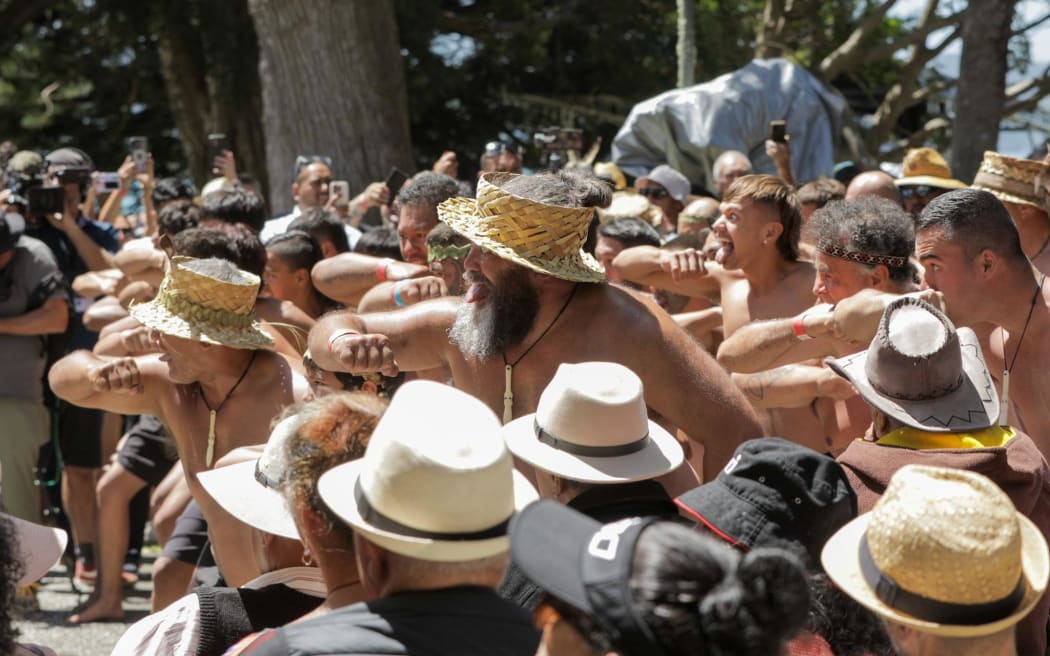
A group performing a haka in support of NZ First MP Shane Jones at Waitangi Grounds today. Image: RNZ/Angus Dreaver
A pōwhiri followed, with the biggest challenge reserved for Seymour, the leader of the ACT party and main proponent of the Treaty Principles Bill.
He faced a kāhui (group) of kaiwero, while Peters and Prime Minister Luxon were each challenged by one kaiwero.
Seymour then had his speech drowned out with a waiata before a protester walked onto the ātea and was stopped by security.
Seymour called for his opponents to “start talking about ideas and stop attacking people”.
Prime Minister Luxon accepts the wero (challenge) at Waitangi Treaty Grounds. Image: RNZ/Angus Dreaver
Several Waiwero (warriors) issued a challenge (wero) to ACT’s David Seymour at Waitangi today. Image: Photo: RNZ/Angus Dreaver
‘Get some manners’ Peters was booed during his speech but quickly fired back.
“You tell me whoever said we’re getting rid of the Treaty of Waitangi. Stop the crap,” he said.
“Get some manners . . . get an education.”
New Zealand First leader Winston Peters . . . “Stop the crap.” Image: RNZ/Angus Dreaver
Among the protesters was Eru Kingi-Kapa, who told RNZ the government’s kōrero was degrading to the tino rangatiratanga of te ao Māori.
Seymour knocked back the allegations, saying ACT had a “long history” of allowing people to self-determine.
“We believe in tino rangatiratanga, perhaps more so than anyone.”
The coalition was devolving decision-making power to Māori, and it was the previous Labour government that “centralised everything”, such as Te Pūkenga, taking power away from Māori, he said.
Seymour described the pōwhiri as “pretty fiery”, but said, “I give as good as I get”.
Ahead of the government’s arrival at the treaty grounds, veteran activist Tāme Iti led a hīkoi to the meeting house. The crowd carried white flags and chanted “honour Te Tiriti”.
IN PICTURES | Politicians from National, NZ First and ACT have been welcomed onto Waitangi Marae – with the fiercest challenge reserved for David Seymour.
Here are some of the best moments caught on camera.
‘Opening up a debate’ NZ First MP Shane Jones also rejected the allegations the government and the Treaty Principles Bill were degrading tino rangatiratanga.
“I don’t believe anything our government is doing is delegitimising a personal choice many people make to be Māori,” he said.
“If you choose to accentuate that part of your whakapapa, [you’re] entitled to do that.”
Jones said the government was funding wānanga and marae throughout the country: “None of that delegitimises Māori.”
However, the government was “opening up a debate” on the principles of the Treaty and how they were applied in New Zealand’s increasingly multicultural society, he said.
“We need to ensure, as this debate goes forward, we have a long-term view to the best interests of all Kiwis.”
Jones said he would take an active role in that debate.
He said some of the protesters were “unnecessarily rude”, but he understood where they were coming from.
“Young people . . . I was young once. Out in the hot sun, you can get carried away.”
Prime Minister Christopher Luxon speaks to the crowd at Waitangi today . . . “Every nation’s past isn’t perfect. But no other country has attempted to right its wrongs.” Image: RNZ/Angus Dreaver
National won’t support Treaty Principles Bill Luxon used his speech to reflect on Aotearoa’s history, before talking about his vision for Aotearoa in 2040.
The promises of the Treaty were not upheld, he said.
“Every nation’s past isn’t perfect. But no other country has attempted to right its wrongs.”
Speaking to media, he said National had “no intention, no commitment” to support ACT’s Treaty Principles Bill beyond the first reading.
There would also no referendum on the Treaty of Waitangi, he said.
This article is republished under a community partnership agreement with RNZ.
Source: The Conversation (Au and NZ) – By Peter Ghin, Research fellow, Future Of Work Lab, Faculty of Business and Economics, The University of Melbourne
Our research found 73% of people believed their chronic illness was at least partially caused or worsened by their job. Almost one in five people believed work entirely caused or worsened their illness.
These findings accord with data from Safe Work Australia which indicates health conditions (particularly mental health) account for an increasing proportion of serious workers’ compensation claims.
Our research also found people with chronic illness were likely to report various forms of workplace discrimination, including being rejected from a job (63%), being treated unfairly in the workplace (65%) and harassment (52%).
So what are employees getting so wrong? And what are the solutions to improving working conditions for people with chronic illnesses?
Employers’ responsibilities have grown
In 2022, Safe Work Australia updated its work health and safety regulations to include specific guidelines on the management of “psychosocial” hazards in the workplace.
A psychosocial hazard is anything that can cause psychological and physical harm, including the design or management of work and workplace interactions or behaviours.
Common examples include job demands, low job control, poor support, lack of role clarity, exposure to traumatic events, harassment and bullying. The failure to eliminate or minimise psychosocial hazards can cause work-related stress, resulting in poor health outcomes for workers.
Employers have an obligation to manage psychosocial hazards. Chuttersnap/Unsplash
Organisations need to improve their engagement and management of chronically ill workers to meet their legal obligations.
Instead, there is a tendency to rely on outmoded human resource and occupational health and safety systems originally designed to accommodate short-term absences and acute illnesses.
Return-to-work policies tend to fall short because they assume a phased and linear return to full working capacity. This is often not the case for people with chronic illness, whose symptoms may be degenerative or fluctuate over time.
Chronically ill workers are rarely considered in organisational diversity and inclusion policies and procedures. At best, they may be incorporated into umbrella disability policies, which can be problematic as people with chronic illness do not necessarily self-identify as “disabled”.
Many chronically ill workers fly under the radar. This is partly because organisations don’t collect this data but it’s also due to the often invisible nature of chronic illness. Someone living with conditions such as long COVID or endometriosis, for example, may present as unimpaired to their colleagues. However, they will often be dealing with complex, fluctuating symptoms that are largely invisible at work.
Workers may also choose not to disclose their illness due to fears of being stigmatised, treated differently, or passed over for promotion. Our research on leaders living with chronic illness found only 18% fully disclosed their illness to their employer. Almost three-quarters of leaders with chronic illness (73%) deliberately hid their illness at work.
Here are three ways employers can begin to proactively meet their obligations to workers with chronic illness.
1. Make adjustments
Workers with chronic illness sometimes experience fluctuations in their condition which can impact their ability to complete tasks or meet deadlines. It may be necessary for managers to consider sensitively discussing a revised work schedule, the delegation of time-sensitive tasks, or discuss implementing reasonable adjustments to improve workflow.
These can be challenging conversations, but engaging with them directly means employers can allocate the resources they need to meet their business objectives, while also reducing employee experiences of overwhelm.
2. Accept reasonable requests
Workers with chronic illness may require reasonable adjustments, such as flexible working, to enable them to perform to the best of their ability.
Take these requests at face value and minimise the administrative hurdles associated with approving such accommodations. Failing to do so is likely to erode trust, entrench feelings of not being supported and increase an employee’s psychological distress.
Accepting reasonable requests will make employers feel supported. Jason Goodman/Unsplash
3. Train managers
Managers may sometimes deny a request for a reasonable adjustment based on the belief that this creates a precedent for all team members. Decisions like these can compound feelings of stress, as they may be experienced as a lack of procedural fairness by employees living with chronic illness.
With appropriate training, managers are more likely to recognise that chronically ill workers are generally not seeking “special treatment”, but ways to work more effectively within their changed capacities.
By recognising the value of employees of all abilities, and proactively and systematically addressing the needs of their chronically ill workforce, employers can minimise extended workplace absences and improve the productivity of their workforce.
The authors do not work for, consult, own shares in or receive funding from any company or organisation that would benefit from this article, and have disclosed no relevant affiliations beyond their academic appointment.
Mars has been a source of myth, lore and inspiration since antiquity. It is also an interesting place to research – a legitimate candidate for us to find some form of alien life.
Since the 1960s, Mars has been a popular destination for space missions. Now, for the first time, NASA has invited the private sector to submit proposals on commercial Mars missions.
These missions would range from carrying various payloads to the red planet, to providing communications relay services. No talk of a Mars astronaut just yet.
But do people still want to go to Mars? Absolutely. One question is, what is the best way to get people there? Another question – should we?
Modern exploration of Mars
Since 1960, there have been 50 missions with scientific and technical objectives related to Mars. Thirty-one of these have been deemed successful, which is not a bad strike rate.
Satellite image of the Schiaparelli impact area taken on October 25, 2016. Insets show areas where the lander crashed (centre left), impact from the front heat shield (upper right), and the parachute and rear heat shield (lower left). NASA/JPL-Caltech/Univ. of Arizona
These missions have returned a wealth of information about Mars – its atmosphere, orbit, geology and more. According to some parts of the internet, they have also returned amazing images of “faces” on its surface, “doors” in rocky cliffs and “fossilised bones”.
In all cases, geologists had more mundane explanations (rocks). But such public interest shows that Mars truly occupies our imaginations.
A typical interplanetary space mission costs at least a billion US dollars, so the world’s major space agencies have spent no less than US$50 billion on Mars over the years. And this is just to send cameras, rovers and landers. To send people to Mars would be next level.
The original image of a ‘face on Mars’, taken by the Viking 1 spacecraft in 1976. NASA/JPL
NASA is starting to explore different ways to undertake space missions. For decades, NASA and other space agencies around the world have spent large sums on in-house planning, development, prototyping and production for space missions.
In the 2020s, the technologies that enable and support space exploration are increasingly being developed in the commercial world. An example most people will be familiar with is Elon Musk’s SpaceX. Many of the SpaceX objectives have Mars and beyond as the ultimate goal – “making humanity interplanetary”.
The development of the Falcon rockets by SpaceX, Starlink satellites, and the Starship rocket could not be further from NASA’s historical model. Where the NASA approach has been conservative, SpaceX makes lots of changes fast, iterates quickly, and learns quickly from failure.
NASA’s current roadmap involves going “back to the Moon” to re-establish a human presence with the Artemis program, then on to a human presence on Mars. In this roadmap, the concept of leveraging commercial providers has taken hold.
Instead of in-house development, NASA is moving in favour of specifying requirements and then assessing the solutions commercial providers might supply in a competitive process.
It appears that now, even compared to 20 years ago, such an approach has become much more viable, as demonstrated by SpaceX. In theory, it could be cheaper and more efficient.
Likely the bigger positive effect will be the substantial stimulus to the commercial sector. With companies innovating to meet the requirements of space missions, the technology spin-offs will potentially have more economic and social impact than getting to Mars itself.
There is a good history of this from the development of technologies for space and from mega-science projects more generally.
However, it is very early days and the commercial approach has to prove itself. There is always an argument that once you start to cease in-house development at a place like NASA, capabilities start to gradually decay. Time will tell. The first steps – reaching the Moon – will go a long way in testing the approach.
NASA’s Curiosity Mars rover spotted a tiny flower-shaped rock while exploring the planet’s surface – one of many features geologists are learning about. NASA/JPL-Caltech/MSSS
But should humans go to Mars?
Mars entered the modern psyche as a place of mystery, promise and danger. This was illustrated vividly more than 100 years ago by H.G. Wells in the novel The War of the Worlds. The number of books, songs, TV shows and movies about Mars is enormous, containing some great (and not so great) art.
Should humans go to Mars? Musk wants to do it, sure. In the 2010s, the Dutch Mars One startup selected 100 volunteers to travel to Mars on a one-way ticket and raised millions of dollars before going bankrupt in 2019. There will always be some cross-section of society wanting to live on Mars.
Some will argue that before humans become interplanetary and start to “mess up” another planet, we should make sure Earth is looked after. Others point out that space exploration should do more to include sustainability.
Despite this debate, if the history of human exploration is anything to go by, you only need a tiny fraction of the population to be motivated enough to do it. If they also have the capital, it will happen.
I can’t see that Mars will be much different.
Steven Tingay does not work for, consult, own shares in or receive funding from any company or organisation that would benefit from this article, and has disclosed no relevant affiliations beyond their academic appointment.
In September, Timor-Leste will mark a quarter century since its vote for independence from Indonesia, the conclusion of a 24-year long struggle that left few Timorese families untouched.
Reconciliation with its giant neighbour stands out as one of Timor-Leste proudest achievements, but as 2024 begins, a long simmering border dispute, in which a border hamlet faces the prospect of its land being transferred to Indonesia, is stirring both political strife and ghosts many hoped were at rest.
The area in question is a hamlet called Naktuka. It’s around 1,000 hectares of rare old-growth forest and rice fields on the western edge of Timor-Leste’s Oecusse (also spelled Oecussi) Enclave. Oecusse is 800 square kilometres of rugged coast and mountains some 70 kilometres west of the rest of Timor-Leste.
Although Naktuka is home to only around 60 families, and a four hour drive along a coastal track from the nearest major town, to the people of Oecusse it is anything but marginal. Its forests are the domain of Oecusse’s king (usif), and the place he periodically gathers the Enclave’s clans to celebrate their identity as “people of the dry land” (Atoni Pah Meto) and subjects of their legendary forebear, Lord Benu (Ama Benu). For them, Naktuka is pah le’u (sacred land).
However, in the wake of recent border negotiations between Indonesia and Timor-Leste, concerns have been raised over how much longer they will be free to access it.
At the end of 2023, Naktuka was visited by a team from the Timor-Leste’s government who oversaw the placement of around 76 metal stakes (estaka) along a line some 350 meters inland from the frontier. Suspicions quickly grew it was to be a new border.
Such a border would cede around 270 hectares of forest and rice fields to Indonesia.
Subsequent developments didn’t allay concerns. On February 1 2024, the head of the technical team working on the border said the stakes did not represent a new frontier, but were being used to assess where one might be placed.
Coupled with an announcement by the CNRT Media Centre, mouth-piece of Timor-Leste’s ruling party, that a “win-win” solution could involve dividing Naktuka in half and giving away around 500 hectares, this was cold comfort.
They even posted a map from the Indonesian Geospatial Information Agency showing how it might look.
In Timor-Leste, this has resulted in an angry backlash. The signing of the border agreement, which was to have occurred in Jakarta in late January, has been postponed.
A small hamlet on a divided island
Recent questions over the ownership of Naktuka stem from unresolved negotiations over the border between Timor-Leste and Indonesia, created when the latter regained its independence in 2002.
While Naktuka is governed by Timor-Leste, in 2005, Timor-Leste signed an agreement confirming the status of around 95% of its border with Indonesia, with a small number of areas to be clarified later. Naktuka was one. The reason goes back at least 120 years.
In 1904, when the Dutch and Portuguese moved to finalise the division of Timor, they differed in their interpretation where Oecussi’s borders should be. By 1915 the question was effectively settled. The Portuguese put down milestones and proceeded to govern Naktuka for 50 years.
With the Indonesian invasion of 1975, Naktuka, along with the rest of Portuguese Timor, became part of the province of Timor Timur. In 1999 it voted in Timor-Leste’s independence referendum and was incorporated, as a former part of both Portuguese Timor and Timor Timur, into Timor-Leste.
Indonesia argues that as Naktuka should not (arguably) have become part of Portuguese Timor 110 years ago, it should not be part of Timor-Leste now. Suffice to say this is not an argument that makes such sense to the people who live there today, or many of their compatriots.
Naktuka is remote and poor. After independence its people got on with life. Their days revolved around rice farming and their role as caretakers of the land, including the king’s forest, site of the royal feast of ‘seu puah (the communal betel nut harvest). The population grew, slowly, and in many ways Naktuka was similar to any other hamlet in Timor-Leste.
And yet, periodic incidents reminded people of their limbo. In 2013, the Timor-Leste Police were prevented from building a guard-post. Indonesian soldiers would come across the frontier, often just bored, but an unpleasant reminder of the occupation. In 2012 there was even a murder which local media reported was committed by people from across the border. The Indonesian press carried the occasional article about citizens of Timor-Leste settling illegally in an area they called “disputed”, but to residents was simply home.
There’s no doubt the intentions of Timor-Leste government in seeking a permanent fix on its western border are good, but the idea it can do so by ceding land is surprisingly out of touch with reality. In Timor-Leste sovereignty is sacred, literally, as is the principle of consent and consultation on matters relating to land. Any solution to the situation in Naktuka that ignores this is very unlikely to work.
Michael Rose does not work for, consult, own shares in or receive funding from any company or organisation that would benefit from this article, and has disclosed no relevant affiliations beyond their academic appointment.
The sheer familiarity of The Magic Flute, Mozart’s most-performed opera, can blind one to its inherent oddness. It draws on a range of influences, from ancient Egyptian symbolism and freemasonry to European politics (the character of the Queen of the Night has been read as a covert allusion to former Austrian Empress Maria Theresa).
Librettist Emanuel Schikaneder has created something that is part allegory, part dream and part fairy tale. That this mish-mash elicited some of Mozart’s greatest and most popular music should shake up ingrained notions of classical music as something po-faced and humourless.
Embracing silliness
Unlike the three Italian opere buffe that Mozart composed to the libretti of Lorenzo da Ponte, The Magic Flute avoids recitative – sung speech – in favour of spoken German dialogue. In the recording I first got to know, Klemperer’s legendary version from 1964, only the sung portions were included. This tilted the work’s balance away from the silly and towards the sublime.
A new production by Kate Gaul for Opera Australia does not shy away from pantomime silliness from the start. The monster threatening Tamino (Michael Smallwood) is rendered as a silhouette projected by a child with a torch, and Papageno (Ben Mingay) is first seen in the stalls engaging with audience members before making his way to the stage.
Michael Smallwood has a pleasing light lyrical tenor as Tamino. Keith Saunders/Opera Australia
Key to bringing out the humour is presenting the opera in English. The translation by Gaul and Michael Gow has some chortle-worthy lines. “Am I hard of hearing, or is no one volunteering?” sings Papageno as he vainly seeks a woman – any woman – to satisfy his romantic urges. This character is given a decidedly ocker makeover, complete with an esky and allusions to beers and barbies.
Thankfully, more serious moments for other characters – including Sarastro’s arias (sung with gravitas by David Parkin) and Pamina’s lament (heart-rendingly performed by Stacey Alleaume) – are allowed to unfold without forcing the comedy.
Ben Mingay and Stacey Alleaume are cast as Papageno and Pamina. Keith Saunders/Opera Australia
Opera Australia’s previous Magic Flute by Julie Taymor reduced the overture to its opening three chords. It is a relief to hear it in full in this production, directed with sureness of touch by Teresa Riveiro Böhm. The orchestra provides a fulsome sound and crisp articulation over the evening, with just a handful of uncoordinated moments between the pit and stage.
Special commendations are due to the flautist and glockenspiel player for their fine solos (the latter was a role taken on by Mozart for the first performance). Weirdly, Tamino held his on-stage flute up in the air instead of miming, creating an odd disconnect between sight and sound. By contrast, the enforced response of Monostatos (Kanen Breen) and his henchmen to the sound of the magic bells was a hilarious spasm of dancing, macarena moves included.
The costumes by Anna Cordingley are eclectic. Cordingley uses guano-stained tradie attire for the bird-catcher Papageno, simple blueish outfits for Tamino and Pamina, red overalls and outsized glasses for Monastatos, and a gaudy gold cloak for Sarastro. All the villains are changed into tie-dye hippy clothes for the final chorus.
David Parkin portrays Sarastro in a gaudy gold cloak and bold eye makeup. Keith Saunders/Opera Australia
The Queen of the Night (Giuseppina Grech) asserts her pantomime villain credentials with her platinum blonde hair, vampish fur and feather costume. Outdoing even this for connoisseurs of camp is the late appearance of Papagena (Jennifer Black) in a Brazilian-carnival-style bird costume.
Michael Yeargan’s set has a three-sided exterior surrounding grass, with ornamental entrances on each side. Shiny ribbon curtains represent the fire and water tests, with other curtains repeatedly drawn across the middle of the stage for projections and byplay between characters.
Needless to say, the Queen of the Night’s two arias are among the most applauded. Grech conquers the stratospheric coloratura with aplomb. But for me, the standout voice belongs to Alleaume, who brings a burnished legato to Pamina’s arias, but also playfulness in the ensembles.
Ben Mingay is a seasoned musical theatre performer and aside from some roughness in tone quality, he takes on the role of Papageno with assurance and brings out the humour and humanity of the character.
Smallwood has a pleasing light lyrical tenor as Tamino – less forceful than some exponents of the role, but tuneful and exemplary in his diction.
The three spirits, extended and demanding roles for child singers, are sensibly double cast, and the opening night trio of Abbey Hammond, Zev Mann and James Valanidas demonstrate sureness of ensemble and decent acting chops. The adult trio of Ladies, Jane Ede, Indyana Schneider and Ruth Strutt, work very well together.
Of his big numbers, Parkin as Sarastro (and Speaker) is probably most satisfactory in the aria, Within these sacred halls, which sits higher in his register. His brave but unwise decision to go for the final unwritten low “E” reveals his problematic bottom register, which is often distorted with vocal fry.
Breen brings his trademark comic gifts to Monostatos who, like the other villains, is welcomed into the fold at the end. Gregory Brown and Nathan Lay are solid priests.
Whether one enjoys a laugh, or finely sung sentimental numbers, this production has something for everyone. It may not have solved all the conundrums of the work, but at least one gets to appreciate Mozart’s genius uncut.
Opera Australia’s The Magic Flute is at the Sydney Opera House until March 16.
David Larkin does not work for, consult, own shares in or receive funding from any company or organisation that would benefit from this article, and has disclosed no relevant affiliations beyond their academic appointment.
The crowd booed a combative Deputy Prime Minister Winston Peters and drowned out Associate Treaty Minister David Seymour, while Prime Minister Christopher Luxon sombrely reflected on history at the Waitangi Treaty Grounds today.
It was a confronting reception for the coalition government.
Thousands gathered for the annual commemorations and to carry on the kōrero begun about the 1840 Treaty of Waitangi at last month’s nation-wide hui.
The scene had been set over the weekend, as opposition parties, iwi leaders and the Kiingitanga arrived on Te Whare Runanga in a show of solidarity.
Waitangi National Trust Board chair Pita Tipene said there was a “lot of tension in the air” and Tāme Iti led a white flag hikoi onto the Treaty Grounds this morning.
Activist lawyer Annette Sykes called out ACT leader David Seymour for “tinkering with Te Tiriti” and presenting “rewritten lines in te reo Māori to the nation that don’t make any sense”.
‘Behind closed doors’ “David Seymour I want to talk to you from my Pākehā whakapapa, not my Māori one.,” she said.
“My father was a staunch Catholic. He would never tinker with the testament of the Bible.
“The ten commandments are what he lived by. He would never presume the audacity he had the ability to do that.
“But you Mr Seymour, who doesn’t speak Māori and has had to let a woman speak today.
“You are putting forward a rewrite of Te Tiriti o Waitangi. You do it behind closed doors.
“Thank goodness. Who is the hero that leaked the document from the Ministry of Justice?”
This article is republished under a community partnership agreement with RNZ.
The mother of Al Jazeera’s award-winning Gaza bureau chief Wael Dahdouh has died at a hospital in Gaza due to illness, reports Al Jazeera.
Dahdouh, who has become a symbol for the perseverance of Palestinian journalists in Gaza, had lost his wife Amna, son Mahmoud, daughter Sham and grandson Adam to an Israeli air raid in October.
Dahdouh was later wounded in an Israeli drone attack that killed his colleague, Al Jazeera cameraman Samer Abudaqa. He is currently being treated for his injuries in a hospital Doha, Qatar.
Last month, his eldest son, Hamza — a journalist who worked with Al Jazeera — was also killed in an Israeli attack alongside fellow journalist Mustafa Thuraya, a freelancer.
Last Friday, India’s Kerala Media Academy announced that its Media Person of the Year award has been given to Wael Al-Dahdouh in recognition of his exceptional journalistic courage.
‘Global face of courage’ The academy said in a statement that Al-Dahdouh was “a global face of journalistic courage, who continues to work despite the heavy losses borne by his family”.
“His commitment and bravery are exemplary and set an example for other journalists not only in India but all over the world,” Bhaskar said.
According to UN reports, more than 122 journalists and media workers have been among more than 27,000 people killed in Israel’s nearly four-month offensive in Gaza.
Press freedom watchdog the Committee to Protect Journalists said last month that journalists were being killed in Gaza at a rate with no parallel in modern history and that there was “an apparent pattern of targeting of journalists and their families by the Israeli military.”
‘Struggling to keep alive’ Meanwhile, Ayman Nobani, reporting from Nablus in the occupied West Bank, says Palestinian journalists are “struggling to keep alive”.
He reported that Shorouk al-Assad, a member of the general secretariat of the Palestinian Journalists Syndicate, as saying that journalists in the besieged coastal enclave were living through unprecedented times as they were being targeted by Israeli forces.
“The most important challenge today is the survival of journalists in light of their targeting and bombardment by Israel, in addition to the killing of their families, the destruction of their neighbourhoods, and the death of their colleagues,” she told Al Jazeera.
She also said:
At least 73 media offices have been bombed since October 7;
All of Gaza’s radio stations are no longer operating due to bombardment, power outages, or the killing or displacement of staff;
Only 40 journalists remain in northern Gaza and they are besieged and isolated, with no means to send food or relief items to them; and
Some 70 journalists have lost close family members
The diet of early anthropoids – the ancestors of apes and monkeys – has long been debated. Did these early primates display behaviours and diets similar to modern species, or did they have much humbler beginnings?
Research on early anthropoids has often suggested a diet high in soft fruits. But some species seem to have had a more varied diet, containing harder foods such as seeds and nuts.
Our latest research reveals a different story, one that highlights the dominant role of soft fruits. This likely encompassed various types that were ripe and high in sugar, as evidenced by the presence of tooth decay in some individuals.
This has important implications for understanding how our earliest ancestors adapted and evolved.
Tracking anthropoid evolution
When discussing the primate family tree, it is crucial to address the common confusion arising from the everyday use of terms such as “ape” and “monkey”.
Humans, for instance, are typically excluded from the ape category, and apes are not generally considered monkeys. Yet humans are nested within the ape family tree, which in turn is nested within the broader monkey group, however this is defined.
All of these primates (humans, apes, and monkeys) are collectively called anthropoids, and we all share a common anthropoid ancestor that lived around 40 million years ago.
Genetic and molecular studies, along with fossil evidence, indicate the period from 40 to 25 million years ago was a critical phase for the evolution and spread of anthropoid primates.
The early portion of this period marks when Afro-Eurasian monkeys and apes (Catarrhini) diverged from monkeys native to the Americas (Platyrrhini). The latter part of this period witnessed further divergence between Afro-Eurasian monkeys (Cercopithecoidea) and apes (Hominoidea).
Fossils of our earliest ancestors
The Fayum Depression in the Western Desert of Egypt offers one of the largest and best-preserved collections of fossil primates from this time frame. Between 35 and 29.2 million years ago (when the fossils used in this study were deposited), the Fayum sat on the lush northern coast of Africa.
The terrestrial rocks of the Fayum preserve the remnants of ecosystems that laid the groundwork for Africa’s modern biodiversity. They also capture a pivotal window in primate evolution.
Several of the anthropoid primates from the site may represent either the direct ancestors of all (or some) living anthropoids. Or they were close relatives of this common ancestor.
Fossils of these early anthropoids are relatively abundant in the Fayum, with some species known from dozens of partial skulls and jaws. Because of this, the Fayum offers a fascinating glimpse into the behaviour and life of our early ancestors.
Dietary interpretations
Dental evidence is a powerful tool in palaeontology. Our new study examined dental wear and disease in fossilised teeth from five Fayum anthropoid primates: Aegyptopithecus, Parapithecus, Propliopithecus, Apidium and Catopithecus.
We focused on tooth chipping patterns and dental caries (also known as cavities), key indicators in fossils of dietary habits.
Our findings indicate a predominantly soft fruit diet in early anthropoids, different to some earlier research suggesting a more varied diet, including hard foods.
A mere 5% of teeth show chipping (minor enamel fractures). This is substantially lower than the frequency observed in most modern anthropoids, where chipping frequencies range from 4% to 40% of teeth.
Additionally, the presence of dental caries, notably in Propliopithecidae (the extinct primate family that includes Aegyptopithecus and Propliopithecus), is consistent with the regular consumption of soft, sugary fruits.
This research also lends support to previous studies suggesting an arboreal (tree-living) lifestyle for early anthropoids. Terrestrial primates often exhibit higher chipping prevalence due to more varied diets and accidental grit consumption when feeding on the ground, none of which was evident in our findings.
Adaptation and evolution
The preference for soft fruits likely had significant impacts on exploration of ecological niches, and even in the development of eyesight in anthropoid primates. This includes colour vision that likely evolved as a need for finding ripe fruit among the foliage.
It would have also influenced the shape of their teeth, social behaviours and foraging strategies, setting the stage for an adaptive radiation, leading to the global spread and diversification of monkeys and apes.
This rapid evolution of diverse species from humble anthropoid beginnings was likely in response to new ecological opportunities opening up.
Other primates more distantly related to us, in the primate suborder Strepsirrhini, which includes lemurs and lorises, split off from the ancestors of anthropoids millions of years earlier.
Unlike anthropoids, Strepsirrhini show a large variation in diet during the same time interval. The diets of fossil lemurs and lorises likely consisted of hard and tough foods, insects, gum, leaves and fruits.
In contrast, our own ancestors took a long time to move away from a diet based on soft fruits. Our journey into the past to unravel the lives of our ancestors continues, with each fossil adding a new piece to the puzzle of early primate evolution.
Matthew Robert Borths receives funding from the United States National Science Foundation and the Institute for Museum and Library Services.
Carolina Loch and Ian Towle do not work for, consult, own shares in or receive funding from any company or organisation that would benefit from this article, and have disclosed no relevant affiliations beyond their academic appointment.
The ice sheets, Amazon rainforest and the Atlantic ocean circulation are among nine recognised global climate tipping elements. Once a tipping point is crossed, changes are often irreversible for a very long time. In many cases, additional greenhouse gases will be released into the atmosphere, further warming our planet.
What will these tipping points mean for Australia? We don’t yet have a good enough understanding to fully answer this question.
Our report, released overnight, includes conclusions in three categories: we need to do more research; tipping points must be part of climate projections, hazard and impact analyses; and adaptation plans must take the potential impacts into account.
Climate scientists have known for a while, through paleoclimate records and other evidence, that there are “tipping elements” in the climate system. These elements can undergo an abrupt change in state, which becomes self-perpetuating and irreversible for a very long time.
An example is the loss of Greenland ice. Once ice is lost, climate feedbacks lead to further loss, and major ice loss becomes “committed”. It becomes unlikely the ice sheet will reform for tens of thousands of years and only if the climate cools again.
Triggering climate tipping points would lead to changes in addition to those commonly included in climate projections. These changes include a significant rise in sea level at double the rate (or even more) of usual projections, as well as extra warming, altered weather systems, climate variability and extremes.
Triggering one tipping point may trigger other tipping points. If that happens, the cascading impacts would push many systems outside their adaptive capacity.
Cutting fossil greenhouse gas emissions is the most important thing we can do to limit warming and the risk of triggering tipping points. The faster we reduce emissions, the better our chances.
But as the planet continues to warm, we must consider the consequences of triggering some, or several, tipping points for Australia and the resulting risks for society. We need to have the right tools for adaptation planning to consider these risks.
Adaptation planning must consider the potential impacts of tipping points, such as higher rises in sea level. Silken Photography/Shutterstock
There’s a major gap in the research literature around the implications of tipping points for the southern hemisphere and Australia. Researchers from Australian science agencies and universities came together last year to consider what global climate tipping points could mean for Australia.
We considered the nine global climate tipping points – and one of the most relevant regional tipping points for Australia, coral reef die-offs – as defined in a recent scientific review.
The nine global climate tipping points and the one most relevant regional tipping point of seven listed in Armstrong-McKay et al review (2022), and their assessed ranges of global warming where the tipping may be triggered (some other evidence or studies may differ from these ranges). Adapted from: Armstrong-McKay et al. 2022, CC BY
For almost all tipping points, we don’t understand all the relevant processes. There are deep uncertainties about what conditions would trigger tipping points, how they would play out and their likely impacts.
Along with recognising the most urgent point – that deep emission cuts will limit the chances of triggering tipping points – our conclusions cover three areas.
1. We need more research
We need to expand research on paleoclimate records, theory and process understanding, observations, monitoring and modelling. Australia leads world-class research, including on Antarctica, the Southern Ocean, the carbon cycle, weather processes and ecosystems. It is essential we support and expand the work, bringing a southern hemisphere perspective to global efforts.
2. Climate projections, hazard and impact analyses must include tipping points
Triggering some climate tipping points would have direct impacts on our coasts, ecosystems and society. In an interconnected world, other tipping points would have major indirect impacts – through climate migration, conflict, disrupted trade and more.
We need credible projections of what the climate looks like if tipping points are triggered. Our climate impact and risk analyses should illustrate what it really means for us. Given the limited state of knowledge, the “storyline” approach – linking past, current and future unfolding of events in a narrative or pathway framework – is particularly useful, informed by all the available evidence.
3. We need to consider what it means for adaptation
We can consider where, when and how we can act to reduce potential impacts if tipping points are triggered. Appropriate risk management accounts for likelihood, consequence and timeframe.
For example, planning for major coastal infrastructure with a long lifetime and low tolerance for failure could draw on the sea-level projections of “low likelihood, high impact” storylines that include the west Antarctic ice sheet collapsing. This would safeguard critical infrastructure against one worst-case risk. Of course, there is much more to adaptation than this.
We still have much to learn, but we cannot wait for perfect knowledge before we start planning. It’s clear the risks are real and cannot be ignored.
We need to focus on what we can do to avoid triggering tipping points, manage risk and build our climate resilience. There are also positive tipping points in technology, economy and society that are part of the solution. If we get it right, positive change can happen more rapidly than we might think.
The Albanese government decision to revise the Stage 3 tax cuts has ignited a political firestorm.
The government argues revising the plan to give bigger tax cuts to low-and middle-income earners struggling with the cost of living justifies breaking an election promise.
The short-term winners and losers from the new tax plan are well documented.
People with taxable incomes of less than about $146,486, or nearly 90% of all taxpayers, will get either the same or a larger tax cut under the new plan.
Whereas the 10% with the highest incomes will get smaller tax cuts than under the original Stage 3 plan. The tax cut for people who earn more than $200,000 a year will be roughly halved, from $9,075 to $4,529 a year.
Bracket creep will reduce the value of these tax cuts over time
Australia’s tax scales are not indexed to wages growth or inflation. That means as our incomes rise, Australians pay a higher proportion of their income in tax.
Even if wage growth doesn’t push a taxpayer into a new tax bracket, most taxpayers will still end up paying more tax, because a larger share of their income will be subject to their highest income tax rate.
Over time, this so-called “bracket creep” increases average tax rates across the income distribution as wages grow.
And one consequence of keeping the 37% tax bracket for incomes between $135,000 and $190,000 is average tax rates will rise more quickly for some upper-income earners than they would have under the original Stage 3.
The share of taxpayers with a taxable income between $135,000 and $190,000 is expected to rise from 7% in 2024-25 to 13% in 2033-34 due to bracket creep.
Middle Australia still wins in the long term too
Grattan Institute’s analysis shows the vast bulk of Australian taxpayers will benefit from the revised tax package, despite the impact of bracket creep over the next decade.
For example, the typical (that is, median) taxpayer, with a taxable income of about $59,000 in 2024-25, can expect to pay $804 less in tax next year. As will someone on the average taxable income of about $79,000 in 2024-25.
And both can expect to pay cumulatively $8,040 less in tax over the next decade, compared to if the original Stage 3 tax cuts remained in place.
Overall, we estimate about 83% of taxpayers can expect to pay the same or less tax over the next decade than they would have under the original Stage 3 plan, despite the impact of bracket creep.
While the share of taxpayers facing a higher average tax rate each year under the new tax plan will grow over time – rising about the top 10% today to around 22% by 2033-34 – the accumulated savings over time means many higher-income earners will still be better off over the next decade.
But high-income earners will pay substantially more tax over the next decade under the government’s plan than under Stage 3.
Someone with a taxable income higher than 95% of all Australians – or about $197,000 in 2024-25 – will pay about $45,000 more in tax over the decade than if the Stage 3 tax cuts remained in place.
The budget is the biggest loser
But the biggest loser from the new tax plan may end up being the federal budget.
The government’s tax plan is expected to cost the budget more than $20 billion a year, or 1% of GDP. The Stage 3 plan would have cost about the same.
And the budgetary cost will be larger still if a future Coalition government were to keep the Stage 3 tax cuts for high-income earners and keep the bigger tax cuts for low and middle-income earners under Labor’s revised package.
That would increase the cost of the tax plan from $20 billion a year to up to upwards of $30 billion a year, and by up to an extra $115 billion over the decade.
The government’s tax plan will make it harder for this and future governments to meet community demands for more spending in areas such as healthcare, aged care, disability care, and defence.
These tax cuts could cost middle Australia more than it thinks.
Grattan Institute began with contributions to its endowment of $15 million from each of the Federal and Victorian Governments, $4 million from BHP Billiton, and $1 million from NAB. In order to safeguard its independence, Grattan Institute’s board controls this endowment. The funds are invested and contribute to funding Grattan Institute’s activities. Grattan Institute also receives funding from corporates, foundations, and individuals to support its general activities, as disclosed on its website.
Joey Moloney does not work for, consult, own shares in or receive funding from any company or organisation that would benefit from this article, and has disclosed no relevant affiliations beyond their academic appointment.
Source: The Conversation (Au and NZ) – By Adrian Beaumont, Election Analyst (Psephologist) at The Conversation; and Honorary Associate, School of Mathematics and Statistics, The University of Melbourne
A national Newspoll, conducted January 31 to February 3 from a sample of 1,245, gave Labor a 52–48 lead, unchanged since the previous Newspoll in mid-December. Primary votes were 36% Coalition (steady), 34% Labor (up one), 12% Greens (down one), 7% One Nation (steady) and 11% for all Others (steady).
Anthony Albanese’s net approval dropped one point to -9, while Peter Dutton’s net approval was down four points to -13. Albanese led Dutton as better PM by an unchanged 46–35. The Poll Bludger has the Newspoll figures.
On the stage three tax cut modifications, 62% thought the government did the right thing by changing the tax cuts to give lower- and middle-income people a greater share, while 29% thought the government should have kept its promise and implemented the tax cuts without changes.
On whether voters would be personally better or worse off under the changes, 38% said they would be better off, 37% about the same and 18% worse off.
Here is a graph of Albanese’s net approval in Newspoll. His net approval is still well below zero, and hasn’t recovered to its level before the Voice referendum defeat.
In economic news, the Australian Bureau of Statistics released the December 2023 quarter inflation report last Wednesday. Headline annual inflation was 4.1%, down from a peak of 7.8% in December 2022. The December quarter inflation was 0.6%, down from 1.2% in the September quarter, and the lowest quarterly inflation since March 2021. Lower inflation should assist Labor.
Essential poll: 48–46 to Labor
In last week’s federal Essential poll, conducted January 24–28 from a sample of 1,201, Labor led by 48–46 including undecided (49–46 in December). Labor has led by one-to-three points in all Essential polls since late October.
Primary votes were 34% Coalition (steady), 32% Labor (up one), 13% Greens (steady), 7% One Nation (up one), 2% UAP (steady), 7% for all Others (down two) and 5% undecided (steady). Analyst Kevin Bonham said Labor would have about a 53–47 lead in this poll by 2022 election preference flows. Essential’s respondent preferences have favoured the Coalition.
Albanese had a 47–41 disapproval rating (47–42 in November), while Dutton was at 43–38 disapproval (42–39 previously).
On the stage three tax changes, 47% (up six since November) said they should be revised so they mostly benefit those on low and middle incomes, 22% (up two) go ahead as originally planned, 19% (down three) deferred for those earning over $200,000 and 13% (down three) thought they should be cancelled altogether. I had more on these questions in November.
On the Israel-Palestine conflict, 67% (up five since November) said Australia should stay out entirely, 17% (steady) said it should provide active assistance to Israel while 16% (down five) believed Australia should provide active assistance to Palestine.
By 47–12, respondents thought things had improved for Aboriginal and Torres Strait Islander peoples in the past ten years (42–10 in January 2023). On a separate national day to recognise Indigenous Australians, 40% (up seven since January 2023) did not support a separate day, 31% (down two) supported a separate day and keeping Australia Day and 18% (down eight) supported replacing Australia Day.
On the ABC, 39% thought news reporting and comment independent and unbiased, and 39% thought otherwise. On artificial intelligence (AI), 65% thought regulation should be mandatory. On AI opportunities and risks, 45% thought it carries more risk than opportunity, 21% more opportunity than risk and 33% that risk and opportunity are about the same.
Morgan poll and a second Queensland byelection
In last week’s federal Morgan poll, conducted January 22–28 from a sample of 1,688, Labor led by 50.5–49.5, a two-point gain for the Coalition since the previous week. Primary votes were 37.5% Coalition (up 1.5), 31% Labor (down 1.5), 13% Greens (up 0.5), 5.5% One Nation (up 0.5) and 13% for all Others (down one).
I covered the March 16 Queensland state byelection in Inala last fortnight. A second Queensland byelection will also occur on March 16 after Ipswich West’s Labor member Jim Madden resigned to contest the Ipswich local government elections on March 16.
At the 2020 state election, Labor defeated the Liberal Nationals by a 64.3–35.7 margin in Ipswich West. One Nation had finished second in 2017. While normally a safe Labor seat, One Nation won Ipswich West in 1998 and the LNP in 2012.
Biden wins 96% in South Carolina Democratic primary
At Saturday’s United States Democratic presidential primary in South Carolina, Joe Biden won 96.2% of the vote, Marianne Williamson 2.1% and Dean Phillips 1.7%. This result makes it all but certain that Biden will be the Democratic presidential nominee.
In the Republican presidential contest, Donald Trump leads Nikki Haley nationally by 73.6–17.2 in the FiveThirtyEight aggregate. The next important contest is the February 24 Republican primary in South Carolina, Haley’s home state. Trump leads by 61.8–31.7 in South Carolina polls.
Trump is very likely to effectively seal the Republican nomination on Super Tuesday March 5, when many states vote. By this date, 47.4% of Republican delegates to their July nominating convention will have been determined.
Adrian Beaumont does not work for, consult, own shares in or receive funding from any company or organisation that would benefit from this article, and has disclosed no relevant affiliations beyond their academic appointment.
Child sexual abuse is common in Australia. The best evidence of this comes from the 2023 Australian Child Maltreatment Study (ACMS), which surveyed 8,500 Australians aged 16 and over. The ACMS found 28.5% of the national population has experienced sexual abuse before age 18 by any person (adult or adolescent). Women were twice as likely as men to have experienced sexual abuse (37.3%-18.8%). Among 16-to-24-year-olds, prevalence was slightly lower (25.7%), but again with a massive gender disparity (35.2%-14.5%).
Reducing child sexual abuse is a major challenge for public health and gender equality. Its health outcomes depend on many factors, including the identity of the perpetrator and the nature of the abuse. This means not everyone who experiences child sexual abuse has the same outcomes.
Despite all the attention given to the issue, there has not been high-quality research on who the main perpetrators are, their relationship to the victim, and whether strategies put in place to end such abuse have been effective. Our latest research offers the best evidence to date of important trends.
Who inflicts child sexual abuse?
Our analysis identified four different types of adult who inflict child sexual abuse:
parents or adult family members
institutional adult caregivers such as teachers
other known adults
unknown adults.
We also identified four classes of perpetrators aged under 18:
siblings
known adolescents (not in romantic relationships)
known adolescents (in romantic relationships)
unknown adolescents.
This is important because while it is well understood that adults inflict child sexual abuse, discussions about its prevention often overlook that it is often inflicted by people aged under 18, and do not consider perpetration by specific groups.
Child sexual abuse by adults has always been and remains a major problem. The ACMS found a devastating 18.5% of all Australians aged 16 and over had experienced child sexual abuse by an adult.
Nearly 12% of Australians aged 16-24 have experienced child sexual abuse by an adult. The vast majority of adult perpetrators are known to the child. This continued prevalence today is deeply concerning and demands we renew our efforts to reduce it.
However, child sexual abuse by adults has declined, especially by parents/adult family members and institutional adults. This is likely the result of increased awareness and parental supervision, school-based prevention programs, and laws and policies regulating institutions. This is an immense achievement, and we must intensify our efforts to reduce sexual abuse of children by adults.
Child sexual abuse by adolescents
Worryingly, child sexual abuse by adolescents aged under 18 has increased in recent years. The ACMS found 18.2% of Australians aged 16-24 (nearly 1 in 5) experienced sexual abuse by an adolescent before age 18. The majority is inflicted against girls by:
male adolescents the victim knew, and who were not their current or former boyfriend
current or former boyfriends.
Increased adolescent perpetration reflects a culture that lacks understanding of respectful relationships and consent. These conditions have driven major initiatives such as Teach Us Consent and have galvanised other new approaches to reduce teen sexual violence.
This increase may also be influenced by perceived pressure to have sexual experiences, media representations of gender norms, lower parental supervision (especially at occasions involving alcohol) and access to violent pornography online.
It is horrifying to learn of continued adult-perpetrated child sexual abuse and increased teen-on-teen sexual violence. But this evidence provides an opportunity for those involved in its prevention and the community to reduce sexual violence in the next generation.
Prevention efforts directed towards teens have great preventive potential. Much child sexual abuse by teens is influenced by lack of empathy, a desire for immediate sexual gratification, and male sexual entitlement. This is obviously not to demonise all young adolescent males, as the data indicate most do not inflict sexual violence.
However, increased child sexual abuse perpetration by males in this age group highlights a contemporary normalisation of sexual violence. This shows there is still a long way to go in teaching young people about respectful relationships.
What more can be done?
Parents are integral in reducing child sexual abuse. Educating children about their bodies, healthy relationships, consent, sex, empathy and gender equality instils key prosocial attributes required to reduce sexual violence.
In a landmark advance, the Australian government recently committed to mandating consent education in the National Curriculum.
This is a promising response to the outpouring of testimony by Australian teenagers on Teach Us Consent. Effective implementation of this policy, and mature engagement in this conversation by parents and wider society, will be pivotal to reducing child sexual abuse. This is particularly necessary given the constant battle between positive healthy relationships education and the media consumed by teens in TV, movies, social media and pornography that promote problematic attitudes to gender and sexuality.
Shaping our future
As a society, it is time to further prioritise the prevention of sexual violence, and instil in boys and young men the knowledge, dispositions and skills required for healthy sexual development. We must change the still too-common sense of entitlement to girls’ and women’s bodies. Instead, we must help boys and men develop more empathy and respect for girls and women.
Prioritising prevention and building sexual and emotional literacy is our best chance of reversing the recent trend in adolescent-perpetrated child sexual abuse and sustaining reductions in adult-perpetrated abuse.
Ben Mathews is the Lead Investigator of the Australian Child Maltreatment Study (ACMS). The ACMS received research funding from the National Health and Medical Research Council, and additional funding and contributions were provided by the Department of the Prime Minister and Cabinet, Department of Social Services, the Australian Institute of Criminology.
The US Supreme Court will hear oral arguments this week in former President
Donald Trump’s appeal against the decision to exclude him from the ballot in the Colorado Republican primary for this year’s presidential election.
The Colorado Supreme Court ruled in December that Trump was disqualified from holding the office of president under Section 3 of the 14th Amendment to the Constitution because he engaged in an insurrection on January 6, 2021.
Because the Republican primaries have already begun (Coloradoans vote on March 5) and the US Supreme Court’s current term ends on June 30, the nine justices have very little time to consider such a momentous dispute with so many constitutional issues to be clarified.
So, what will happen this week and how might the court rule?
How does the Supreme Court operate?
Each side is usually allotted 30 minutes to present their case in oral arguments, but the lawyers are almost always interrupted by questions from the justices. The questioning can provide clues as to how the justices might be leaning.
The justices then meet in private to discuss the case and form a preliminary opinion. The chief justice, John Roberts, has the power to determine which of the justices will draft the written opinion, but only if he is in the majority. If not, that power transfers to the next most senior justice in the majority.
The draft opinion will be circulated to the other justices and is subject to their suggestions and possible alterations. This is almost a political exercise because the justice writing the opinion needs to get four other justices to sign the draft, or, at least, support the decision.
He or she would also want to minimise the number of dissenting or concurring opinions that would, inevitably, undermine the force of the court’s majority opinion. It is an exercise in coalition-building to forge that majority, which is never certain until this final stage of the process.
What are the constitutional issues?
The justices face a seemingly intractable choice between two fundamental values: defending the rule of law and protecting democracy.
For most of its life, the insurrection clause has been regarded by constitutional scholars as of historical interest only and consequently ignored.
Trump’s appeal raised three major constitutional questions the Supreme Court will have to decide:
whether Section 3 applies to Trump as a sitting president
what it takes to determine if someone is guilty of insurrection
and whether the states have the power to enforce Section 3 without prior approval from Congress.
On the first issue, Trump believes Section 3 doesn’t apply to him because it doesn’t specifically refer to the president or the presidential oath. He also claims the president is not an “officer of the United States”, as the clause reads.
In his petition, Trump offers several unconvincing reasons why this is so and it will probably be a difficult argument for his lawyers to sustain. As the Colorado Supreme Court said pointedly in its judgement,
The Constitution refers to the presidency as an “office” 25 times.
The second issue is whether the Colorado court erred in grounding its judgement on the fact Trump had been guilty of insurrection (based on the House Select Committee report). One of the dissenting justices argued that Trump was entitled to the “due process of law” before being disqualified from the ballot.
So far, Trump has not been found guilty of insurrection, nor is he facing any specific charges of insurrection in the court cases under way.
The respondents seeking to remove Trump from the ballot point to the findings of the trial court in Colorado detailing his actions on January 6 as the central issue in the case. They claim Trump has failed to show why the trial court was wrong.
In effect, then, they are asking the Supreme Court to validate the charge that Trump engaged in an insurrection.
The third major issue is whether Section 3 is self-executing, as the Colorado Supreme Court decided. This means the Constitution does not require legislation by Congress in order to disqualify a candidate for office under Section 3.
The US Supreme Court will have to decide whether Congress must legitimise any action under Section 3, or whether Congress merely has the power to invoke the insurrection ban should no other body do so.
How will the court likely respond?
The Supreme Court has a solid six-to-three conservative majority, with three of the conservative justices nominated by Trump. But there isn’t a clear “liberal” or “conservative” position on the Colorado court’s opinion. Liberal and conservative lawyers alike have provided legal rationales for excluding Trump’s candidacy based on the 14th Amendment.
The last time the Supreme Court entangled itself in a presidential election – the Bush v. Gore decision in 2001 – it was a judicial dog’s breakfast. The ruling was widely seen as a political decision reflecting the partisan preferences of the five conservative justices in the majority.
In a blistering dissenting opinion, Justice John Paul Stevens wrote:
Although we may never know with complete certainty the identity of the winner of this year’s presidential election, the identity of the loser is perfectly clear. It is the nation’s confidence in the judge as an impartial guardian of the rule of law.
The court should be mindful of the public and legal backlash to that decision and its current low level of public approval. The court’s embarrassing ethical problems and unpopular decisions, such as the overturning of Roe v. Wade, have already clouded its legitimacy and reputation.
Whatever its decision, the court risks once again being seen as politically partisan. If it overturns the Colorado decision, it saves Trump’s political ambitions. If it upholds the decision and bars Trump from the ballot, it could trigger protests from Trump supporters, as Trump has already intimated.
The general view among constitutional commentators is the Supreme Court would probably not want to give 50 different states and the District of Columbia the freedom to decide who is qualified or disqualified to be president. This could lead to Trump appearing on the ballot in some states, but not others.
If so, it would need to make the Colorado decision apply to all states, or craft an opinion that overturns the Colorado decision without being seen as overtly pro-Trump. It would have to seek some mid-point between upholding the rule of law (some would argue the Colorado decision does that very effectively) and permitting people to be able to vote for the candidate of their choice.
There’s not much legal precedent to guide the court in resolving the appeal. And the liberal-conservative divide on the court is probably not going to be a reliable predictor of the outcome. How the court settles this dispute is anyone’s guess.
Given the current fragile state of American democracy, the country can ill-afford a repeat of Bush v. Gore.
John Hart does not work for, consult, own shares in or receive funding from any company or organisation that would benefit from this article, and has disclosed no relevant affiliations beyond their academic appointment.
If you’re one of the one in three Australians whose New Year’s resolution involved losing weight, it’s likely you’re now contemplating what weight-loss goal you should actually be working towards.
But type “setting a weight loss goal” into any online search engine and you’ll likely be left with more questions than answers.
Sure, the many weight-loss apps and calculators available will make setting this goal seem easy. They’ll typically use a body mass index (BMI) calculator to confirm a “healthy” weight and provide a goal weight based on this range.
Your screen will fill with trim-looking influencers touting diets that will help you drop ten kilos in a month, or ads for diets, pills and exercise regimens promising to help you effortlessly and rapidly lose weight.
Most sales pitches will suggest you need to lose substantial amounts of weight to be healthy – making weight loss seem an impossible task. But the research shows you don’t need to lose a lot of weight to achieve health benefits.
We’re a society fixated on numbers. So it’s no surprise we use measurements and equations to score our weight. The most popular is BMI, a measure of our body weight-to-height ratio.
BMI classifies bodies as underweight, normal (healthy) weight, overweight or obese and can be a useful tool for weight and health screening.
But it shouldn’t be used as the single measure of what it means to be a healthy weight when we set our weight-loss goals. This is because it:
fails to consider two critical factors related to body weight and health – body fat percentage and distribution
does not account for significant differences in body composition based on gender, ethnicity and age.
How does losing weight benefit our health?
Losing just 5–10% of our body weight – between 6 and 12kg for someone weighing 120kg – can significantly improve our health in four key ways.
1. Reducing cholesterol
Obesity increases the chances of having too much low-density lipoprotein (LDL) cholesterol – also known as bad cholesterol – because carrying excess weight changes how our bodies produce and manage lipoproteins and triglycerides, another fat molecule we use for energy.
Having too much bad cholesterol and high triglyceride levels is not good, narrowing our arteries and limiting blood flow, which increases the risk of heart disease, heart attack and stroke.
But research shows improvements in total cholesterol, LDL cholesterol and triglyceride levels are evident with just 5% weight loss.
2. Lowering blood pressure
Our blood pressure is considered high if it reads more than 140/90 on at least two occasions.
Excess weight is linked to high blood pressure in several ways, including changing how our sympathetic nervous system, blood vessels and hormones regulate our blood pressure.
Essentially, high blood pressure makes our heart and blood vessels work harder and less efficiently, damaging our arteries over time and increasing our risk of heart disease, heart attack and stroke.
Like the improvements in cholesterol, a 5% weight loss improves both systolic blood pressure (the first number in the reading) and diastolic blood pressure (the second number).
A meta-analysis of 25 trials on the influence of weight reduction on blood pressure also found every kilo of weight loss improved blood pressure by one point.
3. Reducing risk for type 2 diabetes
Excess body weight is the primary manageable risk factor for type 2 diabetes, particularly for people carrying a lot of visceral fat around the abdomen (belly fat).
Carrying this excess weight can cause fat cells to release pro-inflammatory chemicals that disrupt how our bodies regulate and use the insulin produced by our pancreas, leading to high blood sugar levels.
Type 2 diabetes can lead to serious medical conditions if it’s not carefully managed, including damaging our heart, blood vessels, major organs, eyes and nervous system.
Research shows just 7% weight loss reduces risk of developing type 2 diabetes by 58%.
4. Reducing joint pain and the risk of osteoarthritis
Carrying excess weight can cause our joints to become inflamed and damaged, making us more prone to osteoarthritis.
Observational studies show being overweight doubles a person’s risk of developing osteoarthritis, while obesity increases the risk fourfold.
Small amounts of weight loss alleviate this stress on our joints. In one study each kilogram of weight loss resulted in a fourfold decrease in the load exerted on the knee in each step taken during daily activities.
If you’ve ever tried to lose weight but found the kilos return almost as quickly as they left, you’re not alone.
An analysis of 29 long-term weight-loss studies found participants regained more than half of the weight lost within two years. Within five years, they regained more than 80%.
When we lose weight, we take our body out of its comfort zone and trigger its survival response. It then counteracts weight loss, triggering several physiological responses to defend our body weight and “survive” starvation.
Just as the problem is evolutionary, the solution is evolutionary too. Successfully losing weight long-term comes down to:
losing weight in small manageable chunks you can sustain, specifically periods of weight loss, followed by periods of weight maintenance, and so on, until you achieve your goal weight
making gradual changes to your lifestyle to ensure you form habits that last a lifetime.
Setting a goal to reach a healthy weight can feel daunting. But it doesn’t have to be a pre-defined weight according to a “healthy” BMI range. Losing 5–10% of our body weight will result in immediate health benefits.
At the Boden Group, Charles Perkins Centre, we are studying the science of obesity and running clinical trials for weight loss. You can register here to express your interest.
Dr Nick Fuller works for the University of Sydney and has received external funding for projects relating to the treatment of overweight and obesity. He is the author and founder of the Interval Weight Loss program.
As a clinical psychologist specialising in twins, this is one of the most frequent questions parents ask me.
Many schools continue to separate twins due to a deep-seated belief it is better for the development of separate identities. Both research evidence and clinical experience tells us it is not so simple.
How many twins are there?
What happens to twins is not a niche issue. In Australia, twins represent approximately one in every 80 pregnancies. According to the Australian Bureau of Statistics, 1.4% (4,286) of pregnancies were multiple births in 2022, with the vast majority of these being twins.
As these statistics suggest, each year there will be many parents who have to navigate what happens to their kids at school and many teachers will have a twin in their classroom.
Old school rules for twins
Traditionally, schools did not tend to ask parents for their views when placing twins in classes.
This approach was based on anecdotal experience, misguided perceptions and beliefs, and/or limited research suggesting that being apart was better for twins’ development and academic performance.
Still today, some parents tell me school principals insist on placing twins in separate classes because they believe it is better for shaping their individual identities. There is also the often unspoken rationale (particularly for identical twins) that it is easier for teachers and students to tell them apart.
When looking at the research about twins at school, the findings tell us a different story. There is little evidence to suggest twins perform better academically when they are in separate classes. The exception might be when one twin has special needs or when there is an unhealthy amount of competition between the twins.
A Canadian study published in 2022 found teaching primary school-aged twins in the same classroom had some positive impact on their behaviour and how they relate to others. This makes sense when we consider many twins have had limited experience being away from each other before starting school. So they are likely to feel more secure if placed together in these early transition years.
In 2022, the Australian Multiple Birth Association (a non-profit organisation) released a policy statement, noting:
there is no one-sized fits all answer
parents “are best placed” to determine what will suit their children
schools should consult parents each year about where their children should go.
Twins may also have a view, particularly as they get older. Therefore, listening to each twin will be an important part of the decision-making process. Although, what one twin says they want might not be what they really want or need (depending on the nature of the twin dynamic). For example, the twin who says they want to be in a separate class to their co-twin might actually be the twin who wants to stay together. Such is the enigma of the twin relationship!
This makes it even more important to gather as much informed information as possible before making a decision. For schools, the message is no fixed policy is best when it comes to welcoming twins into your school.
Catherine E. Wood has presented at the Australian Multiple Birth Association national conference at different times.
Have you ever looked down at your breakfast, lunch or dinner and considered where the various ingredients travelled from to reach your plate?
A basic sandwich in New Zealand can easily represent five countries: an Australian wheat and Indian sesame seed roll, Danish salami, local lettuce and cheese, seasoned with Vietnamese pepper.
And because your food travels a long way to reach you, so does your nutrition.
Research on global food trade – particularly trade in cereals – has a long history. More recently, researchers have begun considering the nutrients – energy, protein, vitamins, minerals – that move around the world within traded food.
As we learn more about the global trade in nutrients we can build a better picture of how these key dietary ingredients are distributed, and how they affect global population health.
The Sustainable Nutrition Initiative undertakes modelling research on the links between global food production and the nutrition of the global population.
Working with researchers at the University of São Paulo and State University of Campinas in Brazil, we have now published a broader analysis of global nutrient trade over time and its impact on health.
It shows the variation in nutrient trade between countries with differing wealth, and some positive links between nutrient trade and health.
Our team built a large data set of all flows of food for human consumption between 254 countries from 1986 to 2020. From this, we worked out the flows of 48 essential nutrients over that period.
As this is too much information for a single scientific paper, the team built an interactive app to let anyone explore the data.
The paper itself focused on a few key nutrients: protein, calcium, iron and vitamins A and B12. These are often used in analyses of food security (having reliable access to enough affordable, nutritious food) because of their importance to human health.
Some of these nutrients are under-supplied in many parts of the world, particularly low-income countries. At the same time, nutrient trade over the 35 years we analysed has grown rapidly, as shown in the chart below for vitamin B12.
Vitamin B12 trade by country income classification, 1986-2020: H = high-income countries, UM = upper middle-income , LM = lower middle-income, L = low-income, ODU = origin or destination not recorded. Nick William Smith, CC BY-SA
The wealth and nutrient gap
High-income countries were the biggest importers of vitamin B12, but also the other nutrients analysed, largely from trade with other high-income countries. This is despite those countries having only around 15% of the global population.
In contrast, low-income countries have little involvement in global trade of any nutrients. This limits their ability to improve dietary diversity and quality through food from outside their borders.
Most of New Zealand’s trading partners are in the higher-income brackets. Milk and meat dominate New Zealand protein exports, with China the major partner (see chart below).
The quantity of protein exported would meet the needs of nearly seven times New Zealand’s own population. In a country like China, of course, this is only a small fraction of the population.
In contrast, nearly 60% of New Zealand’s protein imports comes from Australia, largely in wheat and wheat products. And New Zealand imports enough protein to meet around half its population’s need.
New Zealand protein exports by country and food group. Nick William Smith, CC BY-SA
We also analysed the socioeconomic, demographic and health outcome data potentially associated with food consumption patterns and nutrient trade.
The findings suggest higher involvement in nutrient trade networks was significantly associated with improvements in infant mortality rates, lower prevalence of anaemia in women of reproductive age, and greater life expectancy.
It is concerning to see the low involvement of low-income countries in nutrient trade, particularly given the benefits it can bring for population health.
Our research provides context for how important traded nutrients are in meeting national population requirements. This knowledge can be used to identify weaknesses in the global food system, and which shocks (climatic, political or biological) might have the greatest consequences for nutrition.
These data can then be combined with other knowledge and modelling of food production, distribution and consumption at national levels to give a more complete view of food systems.
Food trade plays a key role in fostering food security and good nutrition. The trade has grown rapidly in both quantity and economic value over the past 35 years. Understanding its importance for healthy nutrition is essential.
This work was partially funded by the New Zealand Ministry for Primary Industries.
Andrew John Fletcher is also employed by Fonterra Cooperative Group.
Warren McNabb receives funding from MBIE, MPI, Fonterra, Zespri, Beef & Lamb NZ, HVN and NewFish.
Newspoll has found that more then six in ten Australians (62%) believe the Albanese government did the right thing in reworking the stage 3 tax cuts.
The poll showed no change in two-party vote, with Labor retaining a 52% to 48% lead compared to the last poll, taken late 2023.
It also shows virtually no change in Anthony Albanese’s personal ratings, suggesting his broken promise has not affected his credibility in the public’s mind.
Some 38% of people said they would be better off under the new tax policy.
The opposition is set to declare its stance on Labor’s revamped tax cuts on Tuesday, after the government on Sunday released the legislation for the changes.
Shadow cabinet on Monday will consider the legislation, and it will go to the joint parties on Tuesday, the day it will be introduced into parliament.
The Coalition will try to amend the package but when its amendment fails it is expected to reluctantly wave the legislation through. If it does, that would render irrelevant the Greens, who are demanding changes and other concessions in return for support.
But there is division in Coalition ranks. Former frontbencher Julian Leeser said at the weekend he would be arguing that “we must stand for what we believe and we must oppose Labor’s attempts to ditch the [Coalition] legislated tax cuts”.
Albanese said the government wanted its legislation passed “during this session, which finishes up before Easter”. The new tax cuts will come in on July 1. If the legislation wasn’t passed in time, the old Stage 3 cuts, which favour higher income earners, would start operating from July 1.
The reworked tax cuts, which give all taxpayers a cut but are targeted to lower and middle income earners, are a central pitch by Labor for the March 2 Dunkley byelection.
Labor is buoyed by indications they are going down well in the community, giving the ABC party research showing strong support. The reworked package has the majority of taxpayers better off than the original Stage 3, but a minority get a smaller cut than they would have received.
Appearing on the ABC on Sunday, Albanese fended off questioning about whether breaking his promise to deliver the Coalition’s Stage 3 could be the thin end of the wedge, for example for changes to negative gearing.
Asked whether he thought the existing negative gearing rules were fair, he said: “Well, they make a difference for people. They’ve been there for a long time. There is a whole lot of analysis that says they encourage investment in housing”. He pointed out that “they’re not an equity measure, they are a supply measure”.
Pressed on whether his word was still his bond after the broken promise, Albanese said, “I’m an honest person. I am upfront.
“What I have done here is be very, very clear. And I’ve listened to people who are all saying […] to me, ‘Well, what are you doing about cost of living?’”
The tax cuts are set to be the main issue when federal parliament starts its sitting for the year on Tuesday.
But argument on another front has opened, with the government announcing a fuel efficiency standard for new vehicles. This will work by providing car companies with targets for average emissions per kilometre for new vehicles sold, of the kind that that prevail in Europe, the US and Japan.
Energy Minister Chris Bowen and Transport Minister Catherine King said by introducing the standard the government was delivering more cars that were cheaper to run, and giving motorists choice.
The new rules would start on January 1 next year.
The opposition said in a statement, “Australian’s favourite vehicles could soon be unaffordable if Labor’s fuel efficiency standard fails to strike the correct balance between minimising costs, reducing emissions and maximising choice for all Australians”.
Michelle Grattan does not work for, consult, own shares in or receive funding from any company or organisation that would benefit from this article, and has disclosed no relevant affiliations beyond their academic appointment.
The opposition is set to declare its stance on Labor’s revamped tax cuts on Tuesday, after the government on Sunday released the legislation for the changes.
Shadow cabinet on Monday will consider the legislation, and it will go to the joint parties on Tuesday, the day it will be introduced into parliament.
The Coalition will try to amend the package but when its amendment fails it is expected to reluctantly wave the legislation through. If it does, that would render irrelevant the Greens, who are demanding changes and other concessions in return for support.
But there is division in Coalition ranks. Former frontbencher Julian Leeser said at the weekend he would be arguing that “we must stand for what we believe and we must oppose Labor’s attempts to ditch the [Coalition] legislated tax cuts”.
Prime Minister Anthony Albanese said the government wanted its legislation passed “during this session, which finishes up before Easter”. The new tax cuts will come in on July 1. If the legislation wasn’t passed in time, the old Stage 3 cuts, which favour higher income earners, would start operating from July 1.
The reworked tax cuts, which give all taxpayers a cut but are targeted to lower and middle income earners, are a central pitch by Labor for the March 2 Dunkley byelection.
Labor is buoyed by indications they are going down well in the community, giving the ABC party research showing strong support. The reworked package has the majority of taxpayers better off than the original Stage 3, but a minority get a smaller cut than they would have received.
Appearing on the ABC on Sunday, Albanese fended off questioning about whether breaking his promise to deliver the Coalition’s Stage 3 could be the thin end of the wedge, for example for changes to negative gearing.
Asked whether he thought the existing negative gearing rules were fair, he said: “Well, they make a difference for people. They’ve been there for a long time. There is a whole lot of analysis that says they encourage investment in housing”. He pointed out that “they’re not an equity measure, they are a supply measure”.
Pressed on whether his word was still his bond after the broken promise, Albanese said, “I’m an honest person. I am upfront.
“What I have done here is be very, very clear. And I’ve listened to people who are all saying […] to me, ‘Well, what are you doing about cost of living?’”
The tax cuts are set to be the main issue when federal parliament starts its sitting for the year on Tuesday.
But argument on another front has opened, with the government announcing a fuel efficiency standard for new vehicles. This will work by providing car companies with targets for average emissions per kilometre for new vehicles sold, of the kind that that prevail in Europe, the US and Japan.
Energy Minister Chris Bowen and Transport Minister Catherine King said by introducing the standard the government was delivering more cars that were cheaper to run, and giving motorists choice.
The new rules would start on January 1 next year.
The opposition said in a statement, “Australian’s favourite vehicles could soon be unaffordable if Labor’s fuel efficiency standard fails to strike the correct balance between minimising costs, reducing emissions and maximising choice for all Australians”.
Michelle Grattan does not work for, consult, own shares in or receive funding from any company or organisation that would benefit from this article, and has disclosed no relevant affiliations beyond their academic appointment.
The opposition is set to declare its stance on Labor’s revamped tax cuts on Tuesday, after the government on Sunday released the legislation for the changes.
Shadow cabinet on Monday will consider the legislation, and it will go to the joint parties on Tuesday, the day it will be introduced into parliament.
The Coalition will try to amend the package but when its amendment fails it is expected to reluctantly wave the legislation through. If it does, that would render irrelevant the Greens, who are demanding changes and other concessions in return for support.
But there is division in Coalition ranks. Former frontbencher Julian Leeser said at the weekend he would be arguing that “we must stand for what we believe and we must oppose Labor’s attempts to ditch the [Coalition] legislated tax cuts”.
Prime Minister Anthony Albanese said the government wanted its legislation passed “during this session, which finishes up before Easter”. The new tax cuts will come in on July 1. If the legislation wasn’t passed in time, the old Stage 3 cuts, which favour higher income earners, would start operating from July 1.
The reworked tax cuts, which give all taxpayers a cut but are targeted to lower and middle income earners, are a central pitch by Labor for the March 2 Dunkley byelection.
Labor is buoyed by indications they are going down well in the community, giving the ABC party research showing strong support. The reworked package has the majority of taxpayers better off than the original Stage 3, but a minority get a smaller cut than they would have received.
Appearing on the ABC on Sunday, Albanese fended off questioning about whether breaking his promise to deliver the Coalition’s Stage 3 could be the thin end of the wedge, for example for changes to negative gearing.
Asked whether he thought the existing negative gearing rules were fair, he said: “Well, they make a difference for people. They’ve been there for a long time. There is a whole lot of analysis that says they encourage investment in housing”. He pointed out that “they’re not an equity measure, they are a supply measure”.
Pressed on whether his word was still his bond after the broken promise, Albanese said, “I’m an honest person. I am upfront.
“What I have done here is be very, very clear. And I’ve listened to people who are all saying […] to me, ‘Well, what are you doing about cost of living?’”
The tax cuts are set to be the main issue when federal parliament starts its sitting for the year on Tuesday.
But argument on another front has opened, with the government announcing a fuel efficiency standard for new vehicles. This will work by providing car companies with targets for average emissions per kilometre for new vehicles sold, of the kind that that prevail in Europe, the US and Japan.
Energy Minister Chris Bowen and Transport Minister Catherine King said by introducing the standard the government was delivering more cars that were cheaper to run, and giving motorists choice.
The new rules would start on January 1 next year.
The opposition said in a statement, “Australian’s favourite vehicles could soon be unaffordable if Labor’s fuel efficiency standard fails to strike the correct balance between minimising costs, reducing emissions and maximising choice for all Australians”.
Michelle Grattan does not work for, consult, own shares in or receive funding from any company or organisation that would benefit from this article, and has disclosed no relevant affiliations beyond their academic appointment.
Pacific protesters were prominent in the 17th week of Aotearoa New Zealand solidarity demonstrations for Palestine and a ceasefire in Israel’s genocidal war on Gaza in Auckland today.
Flags of Fiji, Tonga and West Papua were featured alongside the sea of Palestinian banners and at least one group declared themselves as “Tongans for Palestine – Long live the intifada”.
The rally in Auckland’s Te Komititanga — also known as Britomart Square, an urban transport hub — drew a large crowd in the heart of New Zealand’s largest city shopping precinct.
Thousands of people have been taking part in the weekly protest rallies and marches across New Zealand since the war on Gaza began after a deadly attack on Israel last October 7 following 75 years of repression and occupation since the Nakba — the “catastrophe” — in 1948.
The death toll is now more than 27,000 — and more than 900 Palestinians have been killed since the ICJ (International Court of Justice) ruled that Israel must take steps to prevent civilian deaths.
Speakers in Auckland today drew parallels between the Zionist settler colonial project in Palestine and NZ’s colonial history, saying the Waitangi Treaty was now under threat from NZ’s most rightwing government in history.
The protest came just two days before Waitangi Day — 6 February 1840 — the national holiday marking the signing of the foundational Treaty of Waitangi between the British Crown and 500 traditional Māori chiefs.
“There are many things we can do in Aotearoa to stand on the right side of history,” said one of the organisers, Josie Sims of Solidarity Action Network Aotearoa (SANA).
“We’re calling on the NZ Defence Force to refuse their orders to go to Yemen. We’re asking for the expulsion of the Israeli ambassador, and we’re asking that this government takes a clear position on an immediate ceasefire.”
The West Papuan Morning Star flag (red, white and blue) of independence – banned by Indonesia – along with the flags of Tino Rangatiratanga and Palestine fly high in Auckland today. Image: David Robie/APR
A panel of 31 leading economists assembled by The Conversation sees no cut in interest rates before the middle of this year, and only a slight cut by December, enough to trim just $55 per month off the cost of servicing a $600,000 variable-rate mortgage.
The panel draws on the expertise of leading forecasters at 28 Australian universities, think tanks and financial institutions – among them economic modellers, former Treasury, International Monetary Fund and Reserve Bank officials, and a former member of the Reserve Bank board.
Its forecasts paint a picture of weak economic growth, stagnant consumer spending, and a continuing per-capita recession.
The average forecast is for the Reserve Bank to delay cutting its cash rate, keeping it near its present 4.35% until at least the middle of the year, and then cutting it to 4.2% by December 2024, 3.6% by December 2025 and 3.4% by December 2026.
The gentle descent would deliver only three interest rate cuts by the end of next year, cutting $274 from the monthly cost of servicing a $600,000 mortgage and leaving the cost around $1,100 higher than it was before rates began climbing.
Six of the experts surveyed expect the Reserve Bank to increase rates further in the first half of the year, while 20 expect no change and three expect a cut.
Former head of the NSW treasury Percy Allan said while the Reserve Bank would push up rates in the first half of the year to make sure inflation comes down, it would be forced to relent in the second half of the year as unemployment grows and the economy heads towards recession.
Warwick McKibbin, a former member of the Reserve Bank board, said the board would push up rates once more in the first half of the year as insurance against inflation before leaving them on hold.
Former Reserve Bank of Australia chief economist Luci Ellis, who is now chief economist at Westpac, expects the first cut no sooner than September, believing the board will wait to see clear evidence of further falls in inflation and economic weakening before it moves.
The newer more experimental monthly measure of inflation was just 3.4% in the year to December, only points away from the Reserve Bank’s target of 2–3%.
But the panel expects the descent to slow from here on, with the standard measure taking the rest of the year to fall from 4.1% to 3.5% and not getting below 3% until late 2025.
Economists Chris Richardson and Saul Eslake say while inflation will keep heading down, the decline might be slowed by supply chain pressures from the conflict in the Middle East and the boost to incomes from the tax cuts due in July.
Slower wage growth, higher unemployment
While the panel expects wages to grow faster than the consumer price index, it expects wages growth to slip from around 4% in 2023 to 3.8% in 2004 and 3.4% in 2025 as higher unemployment blunts workers’ bargaining power.
But the panel doesn’t expect much of an increase in unemployment. It expects the unemployment rate to climb from its present 3.9% (which is almost a long-term low) to 4.3% throughout 2024, and then to stay at about that level through 2025.
All but two of the panel expect the unemployment rate to remain below the range of 5–6% that was typical in the decade before COVID.
Economic modeller Janine Dixon said the “new normal” between 4% and 5% was likely to become permanent as workers embraced flexible arrangements that allow them to stay in jobs in a way they couldn’t before.
Cassandra Winzar, chief economist at the Committee for the Economic Development of Australia, said the government’s commitment to full employment was one of the things likely to keep unemployment low, along with Australia’s demographic transition as older workers leave the workforce.
Slower economic growth, per-capita recession
The panel expects very low economic growth of just 1.7% in 2024, climbing to 2.3% in 2025. Both are well below the 2.75% the treasury believes the economy is capable of.
All but one of the forecasts are for economic growth below the present population growth rate of 2.4%, suggesting that the panel expects population growth to exceed economic growth for the second year running, extending Australia’s so-called per capita recession.
The lacklustre forecasts raise the possibility of what is commonly defined as a “technical recession”, which is two consecutive quarters of negative economic somewhere within a year of mediocre growth.
Taken together, the forecasters assign a 20% probability to such a recession in the next two years, which is lower than in previous surveys.
But some of the individual estimates are high. Percy Allen and Stephen Anthony assign a 75% and 70% chance to such a recession, and Warren Hogan a 50% chance.
Hogan said when the economic growth figures for the present quarter get released, they are likely to show Australia is in such a recession at the moment.
The economy barely grew at all in the September quarter, expanding just 0.2% and was likely to have shrunk in the December quarter and to shrink further in this quarter.
The panel expects the US economy to grow by 2.1% in the year ahead in line with the International Monetary Fund forecast, and China’s economy to grow 5.4%, which is lower than the International Monetary Fund’s forecast.
Weaker spending, weak investment
The panel expects weak real household spending growth of just 1.2% in 2014, supported by an ultra-low household saving ratio of close to zero, down from a recent peak of 19% in September 2021.
Mala Raghavan of The University of Tasmania said previous gains in income, rising asset prices and accumulated savings were being overwhelmed by high inflation and rising interest rates.
Luci Ellis expected the squeeze to continue until tax and interest rate cuts in the second half of the year, accompanied by declining inflation.
The panel expects non-mining investment to grow by only 5.1% in the year ahead, down from 15%, and mining investment to grow by 10.2%, down from 22%.
Johnathan McMenamin from Barrenjoey said private and public investment had been responsible for the lion’s share of economic growth over the past year and was set to plateau and fade as a driver of growth.
Home prices to climb, but more slowly
The panel expects home price growth of 4.6% in Sydney during 2024 (down from 11.4% in 2024) and 3.1% in Melbourne, down from 3.9% in 2024.
ANZ economist Adam Boyton said decade-low building approvals and very strong population growth should keep demand for housing high, outweighing a drag on prices from high interest rates. While high interest rates have been restraining demand, they are likely to ease later in the year.
In other forecasts, the panel expects the Australian dollar to stay below US$0.70, closing the year at US$0.69, it expects the ASX 200 share market index to climb just 3% in 2024 after climbing 7.8% in 2023, and it expects a small budget surplus of A$3.8 billion in 2023-24, followed by a deficit of A$13 billion in 2024-25.
The budget surplus should be supported by a forecast iron ore price of US$114 per tonne in December 2024, down from the present US$130, but well up on the US$105 assumed in the government’s December budget update.
When it comes to grappling with the Treaty of Waitangi/Te Tiriti o Waitangi, one of the commonest responses is that it is a matter of interpretation. It seems to be a perfectly fair reaction, except that historical interpretation generally requires adherence to rules of evidence.
It is not a licence to make any claims whatsoever about the Treaty, and then to assert their truth by appealing to the authority of personal interpretation.
Yet since the 1970s New Zealanders have been faced with the paradoxical situation of a growing body of Treaty scholarship that has led to less consensus about its meaning and purpose.
It is therefore worthwhile to investigate some of the more common misconceptions about the Treaty that have accrued over recent decades.
This will not lead to a definitive interpretation of the Treaty. But it might remove a few obstacles currently in the way of understanding it better.
The government has been warned to “be careful” with its policies affecting Māori at the National Iwi Chairs Forum (NICF) on Friday.https://t.co/8SskRWTxGo
1. The Treaty or Te Tiriti? A common view persists that the English and Māori versions of the Treaty are fundamentally at odds with each other, especially over the central issue of sovereignty.
But research over the past two decades on British colonial policy prior to 1840 has revealed that Britain wanted a treaty to enable it to extend its jurisdiction to its subjects living in New Zealand.
It had no intention to govern Māori or usurp Māori sovereignty. On this critical point, the two versions are essentially in agreement.
2. The Treaty is not a contract The principle of contra proferentem — appropriated from contract law — refers to ambiguous provisions that can be interpreted in a way that works against the drafter of the contract.
However, there are several problems in applying this principle to the Treaty. Firstly, treaties are different legal instruments from contracts. This explains why there are correspondingly few examples of this principle being used in international law for interpreting treaties.
Secondly, as there are no major material differences between the English and Māori versions of the Treaty when it comes to Māori retaining sovereignty, there is no need to apply such a principle.
And thirdly, under international law, treaties are not to be interpreted in an adversarial manner, but in good faith (the principle of pacta sunt servanda). Thus, rather than the parties fighting over the Treaty’s meaning, the requirement is for them to work with rather than against each other.
Nearly 400 people have marched down the main street of Kaitāia in a show of support for Te Tiriti o Waitangi.https://t.co/3BGtm8BMbw
3. Relationships evolve over time No rangatira (chief) ceded sovereignty over their own people through the Treaty. Nor was that Britain’s intention — hence Britain’s recognition in August 1839 of hapū (kinship group) sovereignty and the guarantee in the Treaty that rangatiratanga (the powers of the chiefs) would be protected.
Britain simply wanted jurisdiction over its own subjects in the colony. This is what is known as an “originalist” interpretation — one that follows the Treaty’s meaning as it was understood in 1840.
This has several limitations: it precludes the emergence of Treaty principles; it wrongly presumes that all involved at the time of the Treaty’s signing had an identical view on its meaning; and, crucially, it ignores all subsequent historical developments.
Treaty relationships evolve over time in numerous ways. Originalist interpretations fail to take that into account.
4. Questions of motive British motives for the Treaty were made explicit in 1839, yet in the following 185 years false motives have entered into the historical bloodstream, where they have continued circulating.
What Britain wanted was the right to apply its laws to its people living in New Zealand. It also intended to “civilise” Māori (through creating the short-lived Office of Protector of Aborigines) and protect Māori land from unethical purchases (the pre-emption provision in Article Two of the Treaty).
And Britain wanted to afford Māori the same rights as British subjects in cases where one group’s actions impinged on the other’s (as in the 1842 Maketū case, involving the conviction for murder and execution of a young Māori man).
The Treaty was not a response to a French threat to New Zealand. And it was not an attempt to conquer Māori, nor to deceive them through subterfuge.
5. Myths of a ‘real’ Treaty and 4th article Over the past two decades, some have alleged there is a “real” Treaty — the so-called “Littlewood Treaty” – that has been concealed because it contains a different set of provisions. Such conspiratorial claims are easily dispelled.
The text of the Littlewood Treaty is known and it is merely a handwritten copy of the actual Treaty. And, most obviously, it cannot be regarded as a treaty on the basis that no one signed it.
Another popular myth is that there is a fourth article of the Treaty, which purportedly guarantees religious freedom. This article does not appear in either the Māori or English texts of the Treaty, and there is no evidence the signatories regarded it as a provision of the agreement.
It is a suggestion that emerged in the 1990s, but lacks any evidential or legal basis.
Finally, there is the argument that the Treaty supports the democratic process. In fact, the Treaty ushered in a non-representative regime in the colony. It was the 1852 New Zealand Constitution Act that gave the country a democratic government – a statute that incidentally made no reference to the Treaty’s provisions.
This list is not exhaustive. But in dispensing with areas of poor interpretation, we can improve the chances of a more informed and productive discussion about the Treaty.
The Palestinian Ambassador to Australia, New Zealand and the Pacific, Dr Izzat Abdulhadi, last night appealed for “unity”, “strategy” and “networking” for the pathway forward to an independent state.
Responding to speculation about “the day after” when Israel’s genocidal war on Gaza is finally over at a community event in Auckland’s Western Springs Garden Community Hall, he condemned draconian Zionist Israeli “plans” for the Occupied Palestinian Territories without consultation.
It was up to Palestinians themselves to decide through a process of self-determination, he told a crowd of about 60 people.
Palestine’s Ambassador Dr Izzat Abdulhadi . . . provided updates on the Israeli war on Gaza catastrophe and reflections on the future. Image: David Robie/APR
And he warned that reconstruction was a huge task with the United Nations indicating in a new report that 30 percent of the besieged enclaves buildings and much of the infrastructure are destroyed.
But first, the ambassador said, a permanent ceasefire was urgently needed to cope with the humanitarian needs of the Gaza carnage.
Facilitator Samar Al Malalha highlighted the death toll of more than 27,000 civilians — mostly women and children — after 118 days, but warned people not to just “think numbers”.
He said they ought to empathise with each and every person and child — and sometimes entire families — who had been killed.
A poetic vision Architect and poet Dr Sameh Daraghmeh presented a poetic vision of the Palestinian diaspora and tangata whenua.
Architect and poet Dr Sameh Daraghmeh . . . a poetic vision of the Palestinian diaspora and tangata whenua relationship. Image: David Robie/APR
Meanwhile, more than 800 European and American officials have signed a letter to their governments denouncing Israel’s war on Gaza as “one of the worst human catastrophes of this century”.
According to current and former officials spearheading or supporting the initiative, the letter marks the first time that officials from US and Israel ally nations across the Atlantic have united to publicly criticise their governments over the war.
The officials argue that they are speaking up because they, as civil servants, consider that it is their duty to help improve policy and to work in their nations’ interests, and that they are speaking up because they believe their governments need to change direction on the war.
“Our governments’ current policies weaken their moral standing and undermine their ability to stand up for freedom, justice and human rights globally,” the letter was quoted by The New York Times as saying.
‘Breathtakingly hypocritical’ There was a “plausible risk” that their governments’ policies were contributing to “grave violations of international humanitarian law, war crimes and even ethnic cleansing or genocide,” it added.
The document protected the identities of signers as they feared reprisal.
Al Jazeera senior political analyst Marwan Bisahara said it was an important step for civil service officials to join other dissenting segments of society in the West who have called for an end to the war.
“We are already in the fourth month of this war, which has killed so many people — children, old people, young people,” he said.
“The fact that they [letter signees] too are joining in . . . accumulates pressure on Western governments that have been breathtakingly hypocritical.”
Bishara also said the International Court of Justice’s ruling last month likely played a role in the crafting of the letter.
“I think once the court [ICJ] came out with its decision imposing six interim orders, it in many ways encouraged a lot of people to start speaking more and more for justice [in Gaza].”
In places where we need to protect valuable plants – whether for ecological or economic reasons – local herbivores can cause significant damage.
Current solutions often involve killing the problem animals. But this is increasingly unacceptable due to animal welfare concerns and social pressures. Physical barriers such as fences can be expensive, and aren’t always practical. We need other options.
Recently, our teamdiscovered that herbivores – plant-eating mammals – primarily use their sense of smell to tell which plants they want to eat or avoid.
In our study published today in Nature Ecology & Evolution, we show how we can use this reliance on smell to nudge wallabies away from vulnerable native tree seedlings. We artificially created and deployed the key smells of a shrub wallabies avoid.
Herbivore-induced headaches
Hungry plant eaters are a concern for conservationists, farmers and foresters alike. They can devastate revegetation efforts and post-fire recovery, destroying more than half the seedlings in these areas.
Every year, they cause billions of dollars of damage in forestry and agriculture. Herbivores also pose a risk to the long-term survival of many threatened plant species.
The most effective control strategies will likely work with a herbivore’s natural motivations – understanding and harnessing what drives the animal to find or avoid certain plants.
Previously, research had primarily focused on what herbivores were eating, but had never really asked how they find the food in the first place.
Our approach puts a new twist on “olfactory (smell) misinformation” or “chemical camouflage” approaches. In recent studies, these methods have substantially reduced invasive predators eating threatened bird eggs in New Zealand, and house mice eating agricultural wheat grain in Australia.
A swamp wallaby munching on some grass. Like other plant-eating mammals, they use their sense of smell to find delicious plants. Joshua Prieto/Shutterstock
With this in mind, we explored whether the smell of a plant they don’t like could be enough to nudge animals away from highly palatable native tree seedlings.
Mammalian herbivores use their noses to navigate complex smell landscapes where odour is emitted from food, predators, competitors and potential mates. Finnerty et al., BioScience, 2022
To test this idea, we focused on swamp wallabies foraging in a eucalypt woodland in eastern Australia. Studies have shown having too many swamp wallabies around can limit the number of eucalypt seedlings that survive to become trees. Swamp wallabies also have a fantastic sense of smell – they can find just a few eucalypt leaves buried underground among complex vegetation.
Using an approach we recently developed, we found the key scent compounds of a plant we know wallabies avoid – the native shrub Boronia pinnata.
We then mixed these compounds together to create “informative virtual neighbours”. They were “informative” as our mix of compounds mimicked what a wallaby would recognise as Boronia pinnata, “virtual” as we were not actually deploying the real shrub, and “neighbours” as we placed these smells in the bush next to eucalypt seedlings we were trying to protect.
In our study, a virtual neighbour was a small glass vial with a few millilitres of the mixture, with a tube pierced through the lid so the smell could waft out.
Using odours instead of real plants is a type of olfactory misinformation – it sends a deceptive message to the animals.
We deployed the virtual neighbour vials in custom-built contraptions that secured vials to the ground and provided protection from the weather. Finnerty et al., Nature Ecology & Evolution, 2024
Real and virtual neighbours
We also compared if virtual neighbours were as good as the real thing in protecting eucalypt seedlings from being eaten by wallabies.
Five virtual neighbour vials or real Boronia pinnata plants were spaced evenly around single eucalypt seedlings the wallabies would find highly palatable. (We also had two types of controls: a seedling with nothing around it, and a seedling surrounded by five empty vials.)
Using remote cameras for 40 days, we recorded how long it took wallabies to find and munch on the eucalypt seedlings.
The results were staggering. Seedlings were 20 times less likely to be eaten when surrounded by virtual neighbours than for both controls. This was equivalent to using real B. pinnata plants, but better because vials don’t compete with seedlings for water and other resources.
A single eucalypt seedling surrounded by five virtual neighbours (a) and five real plant neighbours (b). Finnerty et al., Nature Ecology & Evolution, 2024
A highly effective approach
The success of our study indicates we could use this approach as a new management tool – one that works by influencing the animals’ behaviour rather than trying to get rid of them.
We believe the concept behind developing virtual neighbours is directly transferable to any herbivore, mammal or otherwise, that uses plant odour to forage.
All herbivores avoid some plant species. With future development, we can deploy smelly virtual neighbours as a non-deadly and cost-effective tool to reduce the problems caused by overzealous herbivores.
We acknowledge all other co-authors who contributed to this work: Catherine Price, Malcolm Possell and Cristian Gabriel Orlando from the University of Sydney, and Adrian Shrader from the University of Pretoria. We thank Paul Finnerty for assistance in designing and constructing virtual neighbour holders.
Patrick Finnerty received funding for this work from the Royal Zoological Society of New South Wales, the Ecological Society of Australia, the Australian Academy of Science, NSW Dept of Planning and Environment, the Australian Wildlife Society, and the Australian Research Council.
Clare McArthur receives funding from the Australian Research Council, NSW Environmental Trust and NSW Department of Planning and Environment. She is a member of the Ecological Society of Australia, the Australian Mammal Society and the Australasian Wildlife Management Society.
Peter Banks receives funding from the Australian Research Council, NSW Environmental Trust and NSW Department of Planning and Environment, Hermon Slade Foundation and Manaaki Whenua.
Aotearoa New Zealand must ramp up pressure on Israel to abide by last month’s International Court of Justice ruling, writes John Minto.
COMMENTARY:By John Minto
In 2003, the International Court of Justice ruled that Israel’s “apartheid wall” being built through Palestinian territory was a violation of international law and should be dismantled. Israel ignored the ruling and more than 20 years later the wall remains a potent symbol of Israeli policies of segregation based on ethnicity.
Last December, Israel was taken to the court again, this time by South Africa which argued Israel was committing genocide against the Palestinian people in Gaza with genocidal talk from Israeli leaders and indiscriminate killing of civilians — more than 27,000 killed so far including more than 12,000 Palestinian children.
The charge of genocide against Israel will take years to be heard and decided upon but in the meantime South Africa argued for the court to issue interim orders to require Israel to end its military operation and allow desperately needed humanitarian assistance to flow freely into Gaza.
Last month, the ICJ gave an interim ruling and although it did not demand an immediate ceasefire, it agreed with South Africa’s case that there was evidence to suggest Israel had breached the Genocide Convention and requiring Israel to report back to the court within a month on the steps it was taking to protect Palestinian lives and their very existence in Gaza.
Israel is now on probation. What happens in the coming weeks will determine whether Israel ends its killing spree in Gaza or shows the ICJ its middle finger as it did in 2003.
Commentary on the ICJ decision indicates the huge moral weight the decision carries for Israel and its small coterie of supporters, including New Zealand, which has been complicit through its silence, to end the war on Gaza.
The only way Israel will follow the ICJ ruling is if it comes under enough pressure from countries such as New Zealand.
Strong demand or look away? Western countries have previously called on other countries to abide by ICJ rulings — such as the ruling which said Russia must end its war in Ukraine. Will we make the same strong demand of Israel or will we look the other way?
So far New Zealand has been equivocal, Foreign Minister Winston Peters making a few obligatory tweets but nothing more. The contrast with how we dealt with Russia compared with Israel could not be clearer.
The Foreign Minister’s stance seems more aimed to avoid difficult conversations with US representatives at diplomatic cocktail parties than pressure to end the killing of Palestinian children.
With Israel’s history of ignoring international law, New Zealand must speak out in a principled, assertive way. The alternative is to be silent and for this country to suffer derision for such cowardly, obsequious behaviour.
Already New Zealand is swimming against the tide of world opinion. We have refused to criticise the killing of Palestinian civilians by Israel despite loudly condemning the killing of Israeli civilians in the October 7 attack.
We have also refused to condemn other war crimes such as the “collective punishment” of Palestinians through the withholding of food, water and other necessities of life. We haven’t even made an unequivocal call for an immediate, permanent ceasefire or called for an International Criminal Court investigation into war crimes on and after October 7.
We did this for Russia’s invasion of Ukraine, so why the reticence over the Middle East?
The lines are drawn . . . the “ceasefire now” and “hands off Yemen” protest at Auckland’s Devonport Naval Base last Monday. Image: David Robie/APR
NZ’s selective morality Our embarrassing history is one of selective morality. In 2014 when Israel launched a war on Gaza with similar mass killing of Palestinians, the John Key government called in the Israeli ambassador and made clear New Zealand’s expectations. The Christopher Luxon-led government has failed to take even this most rudimentary measure.
The time for doing that is well past. We must indicate to Israel that its behaviour is morally and ethically reprehensible.
The government should immediately close the Israeli embassy until Israel is in full compliance with the ICJ decision as well as the broader provisions of international law such as allowing Palestinian refugees the right to return to their land and homes in Palestine, ending the military occupation and ending Israel’s apartheid policies against Palestinians.
Wringing our hands is not an option. It might be acceptable for the comfort of the Minister of Foreign Affairs but for Palestinians it means ongoing death and destruction.
John Minto is the national chairman of Palestine Solidarity Network Aotearoa (PSNA) and contributes to Asia Pacific Report. This article was first published by the Otago Daily Times and is republished wit the author’s permission.
Those spooked by the presence of a senior Central Intelligence Agency official in Fiji this week have nothing to fear.
At least, this was the view of Acting Prime Minister Manoa Kamikamica as he hinted at the possibility of using the CIA’s “global knowledge and expertise” in the fight against drugs.
He said he met the CIA’s Deputy Director David Cohen on Tuesday in Suva to discuss areas of mutual interest.
Fiji’s Acting Prime Minister Manoa Kamikamica . . . “Expertise will keep the border safe.” Image: Jonacani Lalakobau/The Fiji Times
They exchanged ideas on how both countries could benefit from each other.
“I’ve met him as the Acting Prime Minister, so it was a broad conversation around the international environment and the fact that we are becoming more and more of a transit point for drugs,” Kamikamica said.
There is a possibility of Fiji working with the CIA in its fight against drugs, said Kamikamica.
The CIA is the US government’s foreign intelligence service that gathers national security information from around the world.
‘Think about their expertise’ In response to questions from The Fiji Times, Kamikamica did not specify the nature of his discussions with Cohen.
“However, think about the security apparatus the Central Intelligence Agency has,” he said.
“The global knowledge and expertise they have.”
Asked why he discussed these areas of mutual interest when they fell under the ambit of the US State Department, Kamikamica said he also met other officials of the US government
“I also met the deputy Secretary of State and Ambassador at Large for cybersecurity separately in my office,” he said.
The developments of the past few days also gave Kamikamica an opportunity to allay potential public fear and disquiet over Cohen’s visit.
In response to concerns raised on social media over the presence of the CIA’s second in command, Kamikamica urged Fijians against what he described as “idle speculation”.
‘We have stable government’ “There is no need to be concerned,” he said. “We have a very stable government, we have a Prime Minister who is in total control of the Coalition.
“We are tracking well as a government,” said Kamikamica, adding that the important thing for the country was focusing on “how we work together to rebuild Fiji rather than getting preoccupied with idle speculation”.
“Expertise will keep the border safe, [so we ate] just looking at ways to collaborate.”
On the essence of their discussions on national issues, Kamikamica said “we didn’t really touch on that, more around just having an opportunity to collaborate”.
“When we have expertise like them at our doorstep, it is a very positive development and just to allow, not only Fiji, but the region to benefit.”
Nacanieli Tuilevukais a Fiji Times reporter. Republished with permission.
Spies usually work in secrecy and behind the scene- and when the Deputy Director of the Central Intelligence Agency @CIA shows up in Suva, why not splash his full picture on the front page of @fijitimes#Fiji#FijiNewspic.twitter.com/u9HZAt6fPK