Page 497

Marape thanks Australia for providing ‘anchor’ for independent PNG

By Bramo Tingkeo of the PNG Post-Courier

Papua New Guinea’s Prime Minister James Marape made his historic address to the Australian Federal Parliament in Canberra today.

Following Australian Prime Minister Anthony Albanese’s welcome address, Marape highlighted with gratitude the historical ties between the two nations and made special reference to the continuous support given to PNG by Australia since independence in 1975.

“We thank Australia for the profound work that has gone into the setting up of key institutions that remain the anchor of this free vibrant democracy of PNG,” said Marape.

Speaking during his address to senators and members of the Australian federal Parliament, Marape described the relationship between the two countries as being “joined to the hips” and “locked into earth’s crust together”, referring to the Indo-Australian tectonic plate.

He emphasised the efforts of Australia as being a “huge pillar of support” in terms of infrastructural development for Papua New Guinea.

Marape also made reference to former Australian prime minister Gough Whitlam and Grand Chief Sir Michael Somare as the “forefathers who made independence possible” and described Australia as being a big brother or sister that had nurtured PNG into adulthood.

Post-Courier: ‘My sons will come’

PNG POST-COURIER
PNG POST-COURIER

In an editorial today, the Post-Courier said:

Today’s a historic day in PNG Australia relationships.

On this day, January 8, 2024, in Canberra, a son of Kondom Agaundo, the legendary Papua New Guinean warrior chief, will address the Australian Federal Parliament.

This simple act will fulfill the prophecy of Chief Kondom of Wandi, Chimbu province. His prophecy titled “my sons will come” has become a rallying call for Papua New Guineans to set forth and explore the world of globalism in education, business, sports, foreign policy, tourism and politics.

It was in Canberra that Kondom, a member of the PNG Legislative Council, felt humiliated when he tried to address an Australian audience. His lack of English proficiency irritated the audience who responded with laughter.

Chief Kondom, the son of a powerful warrior chief, felt slighted.

He thought maybe, if not for his poor English, then maybe it was the insinuation of his name.

While he felt insulted, he was a warrior and would not show any weakness. He held fast to his belief that payment for an offence now would be fulfilled later.

He was determined to prove his leadership skills. He was determined to tell the white “mastas” that their time in Papua and New Guinea would end.

He responded with the famous lines: “In my village, I am a chief among my people but today, I stand in front of you like a child and when I try to speak in your language, you laugh at my words.

“But tomorrow, my son will come and he will talk to you in your language, this time you will not laugh at him.”

And that the sons and daughters of Chief Kondom, well educated, very confident, fluent and sophisticated, cultured, tasteful, elegant and vibrant have descended on Australia in the last 50 years.

Former politicians and knights Sir Yano Belo and Sir Nambuka Mara are in Canberra with Prim Minister Marape.

It was the wisdom of people like Chief Kondom, Sir Yano, Sir Nambuka, Sir Peter Lus and many other political warriors that inspired Chief Sir Michael Somare to demand political independence from Australia.

The memory of Chief Kondom lives on in Chimbu and across the country. His legacy is written on buildings and schools.

In 1965, Kondom Agaundo was the Member for Highlands region. He also became a kiap, the first local to embrace Western civilisation.

He was the first president of Waiye Rural LLG 1959 and the first Chimbu man to own and ride horses.

He is remembered as the man who fostered coffee in the Central highlands. Sadly, chief Kondom died in a car crash at Daulo Pass in August 1966.

It is said that the funeral and burial ceremony lasted weeks and over 100 pigs were slaughtered for the man who reminded the Australians his sons would come.

Today, Prime Minister completes the evolution of the legend of Chief Kondom Agaundo, under the watchful gaze of two of Chief Kondom’s surviving peers.

Republished with permission.

Print Friendly, PDF & Email

Article by AsiaPacificReport.nz

Marape first global leader to speak in Australian parliament since 2020

By Lawrence Fong of the PNG Post-Courier

Papua New Guinea and Australia created another piece of history yesterday when James Marape became the first international leader to address the Australian Federal Parliament since 2020.

In a speech laden with heartfelt gratitude and sentimental recollections of the shared history of both nations, the PNG Prime Minister thanked Australia for all it had done for his country – from giving it independence, to sending missionaries and public servants to help develop the country, to fighting together with Papua New Guineans during World War II, to all the current economic and other assistance.

Marape had said before leaving for Canberra that he would not be asking Australia for any help.

"Historic moment" PNGPC 9Feb24
“Historic moment” . . . Today’s front page coverage in the PNG Post-Courier. Image: PC screenshot APR

He repeated that in his address yesterday — even though he really shouldn’t have, for help from Australia has, is, and will be constant going into the future.

But he did appeal to the Australians not to forget Papua New Guinea during its current, ongoing challenges.

“Today, I carry the humble and deep, deep gratitude of my people, the thousand tribes. On behalf of my people, I thank Australia for everything you have done and continue to do for us,” Marape said.

“I appreciate all governments of Australia which have assisted our governments since 1975.

‘Crucial role in develoment’
“Thank you for continuing to support us throughout the life of our nationhood. Your assistance in education, health, infrastructure development in ports, roads and telecommunications continue to a play a crucial role in our development as a country.

“I appreciate, also, all Australian investors, who, to date, comprise the biggest pool of investors in Papua New Guinea.

“We realise our success as a nation will be the ultimate payoff for the work put in by many Australians.

“Thus, I commit my generation of Papua New Guineans to augmenting the sanctity of our democracy and progressing our economy.

“We pledge to work hard to ensure that PNG emerges as an economically self-sustaining nation so that we too help keep our region safe, secure and prosperous for our two people and those in our Indo-Pacific family.”

Marape’s address comes during a period of constant domestic and external challenges.

He is facing a potential vote of no confidence on his leadership this month and his government is also dealing with competition for influence from world powers, including China, USA, India, Indonesia, France and Australia.

Australia’s ‘real friend’
But he assured Australia that Papua New Guinea is its “real friend”.

This is despite revelations last week that his government was in talks with China over a potential security deal, a revelation that has worried Australia and the United States.

“In a world of many relations with other nations, nothing will come in between our two nations because we are family and through tears, blood, pain and sacrifice plus our eternal past our nations are constructed today,” he promised.

“These have all been our challenges. But as I visit with you in Australia today, I ask of you please, do not give up hope on Papua New Guinea.

“We have always bounced back from low moments and we will continue to grow,” Marape said.

Republished with permission.

Print Friendly, PDF & Email

Article by AsiaPacificReport.nz

Harry Potter and the Disenchanted Wildlife: how light and sound shows can harm nocturnal animals

Source: The Conversation (Au and NZ) – By Jaana Dielenberg, University Fellow, Charles Darwin University

Light and sound shows in parks can enthral crowds with their colour, music and storytelling. Lasting for weeks to months, the shows provide entertainment and can boost local economies. But unless they are well-located, the shows can also harm wildlife.

A planned production at a wildlife sanctuary in outer Melbourne has brought these concerns to the fore. In April and May this year, a wildlife reserve on the Mornington Peninsula will host Harry Potter: A Forbidden Forest Experience. The event involves a two-kilometre night walk where, according to organisers, characters from the film are “brought to life”.

The event has prompted an outcry from people worried about the effect on the reserve’s vulnerable wildlife. The sanctuary, known as The Briars, is home to native animals including powerful and boobook owls, owlet-nightjars, koalas, wallabies, Krefft’s gliders, lizards, frogs, moths and spiders. A petition calling for the event to be relocated has attracted more than 21,000 signatures.

Research shows artificial light, sound and the presence of lots of people at night can harm wildlife. It’s not hard to see why. Imagine if a music and light show, and thousands of people, turned up at your house every night for weeks on end. How would you feel?

A history of community opposition

In addition to the lights and sounds, these shows can involve artificial smoke and animated sculptures. While they often take place along existing walking trails, they attract huge crowds at a time when animals usually have the place to themselves.

Most of Australia’s mammals and frogs and many bird and reptile species are nocturnal, or active at night. They have adapted to the natural darkness, sounds and smells of the night.

The Harry Potter experience planned for The Briars has taken place elsewhere around the world, including at a nature area near the Belgian capital of Brussels. That event, in February last year, was also opposed by locals on ecological grounds. Belgian Minister for Nature Zuhal Demir has reportedly said the show would not return this year due to concern for wildlife.

Light shows proposed for other wildlife conservation areas have also faced community opposition. In Australia, there were calls to halt the Parrtjima light festival in the Alice Springs Desert Park over potential harm to the threatened black-footed rock wallabies. The Lumina light show proposed for Mount Coot-tha in Brisbane has also attracted concern for wildlife.


Read more:
Predators, prey and moonlight singing: how phases of the Moon affect native wildlife


Light, sounds, action!

Research shows artificial light affects wildlife in many ways. For example, it can change their hormone levels, and the numbers and health of their offspring.

Light also interferes with the ability of many species to navigate. This can cause birds to become disorientated and crash. It can also prevent baby turtles from finding the sea.

Some animals will forgo feeding or drinking and attracting mates. Other animals will try to move to a darker location. In the Belgian case, locals claimed owls left the park to avoid the lights.

Studies of small mammals such as bats, micro-bats, possums and bandicoots have shown many will avoid using habitat that is artificially lit. When there is no alternative dark habitat, species forced to deal with bright conditions – whether natural or artificial – have been found to reduce their activity.

Conversely, some animals are attracted to light. Insects such as moths will cluster around the artificial light source, unable to leave. Some will become so exhausted they will become easy prey.

What’s more, human-caused noise also stresses animals and changes animal behaviour. It masks the natural soundscape, making it harder for animals to find mates or hear the calls of their young. It can also mean animals can’t hear predators or their prey.

When thousands of humans travel through an area they leave strong predator-like smells. This can be stressful for wildlife. It can also mask smells vital for an animal’s survival, such as that of food and predators.

Long-term harm

When faced with all this disruption, many nocturnal animals will hide until a site returns to normal, which in the case of light shows is often close to midnight. This cuts in half the time animals have to go about their life-sustaining activities and exposes them to greater risks when they do go out.

Light and sound shows are usually temporary – but can have major long-term impacts.

In species with low birth rates and short lifespans, a disturbance to breeding can be catastrophic. For example, males of the genus Antechinus (small marsupials) live long enough for just one short breeding season. If they are disrupted, there are no second chances.

The stress of human lights, sounds, smells and disturbance can shorten an animal’s life. Stress can make them more prone to illness and create problems with sleeping, reproduction, development and growth that can last for multiple generations.

Find a better location

The Mornington Peninsula Shire Council has defended the Harry Potter event, saying the placement of props, lights and sounds has been carefully considered.

Organisers may have minimised impacts where they can, but evidence suggests the impact on wildlife will still be extensive.

The sanctuary where the event will be held is billed as “an ark – a place which nurtures, protects and celebrates the unique flora and fauna of the peninsula, now rare but not lost”. Deliberately locating a light and sound show at the reserve seems at odds with this mission.

Events such as this clearly affect wildlife. Finding genuinely suitable locations should be done with care – and should avoid wildlife conservation areas altogether.

The Conversation

Jaana Dielenberg works for the Biodiversity Council. The Biodiversity Council was founded by 11 universities and receives support from The Ian Potter Foundation, The Ross Trust, Trawalla Foundation, The Rendere Trust, Isaacson Davis Foundation, Coniston Charitable Trust and Angela Whitbread. Jaana is employed by the University of Melbourne and is a Charles Darwin University Fellow.

Euan Ritchie receives funding from the Australian Research Council and the Department of Energy, Environment, and Climate Action. Euan is a Councillor within the Biodiversity Council, and a member of the Ecological Society of Australia and the Australian Mammal Society.

Therésa Jones receives funding from the Australian Research Council and is affiliated with NERAL (Network for Ecological Research on Artificial Light).

Loren Fardell does not work for, consult, own shares in or receive funding from any company or organisation that would benefit from this article, and has disclosed no relevant affiliations beyond their academic appointment.

ref. Harry Potter and the Disenchanted Wildlife: how light and sound shows can harm nocturnal animals – https://theconversation.com/harry-potter-and-the-disenchanted-wildlife-how-light-and-sound-shows-can-harm-nocturnal-animals-222390

What is micellar water and how does it work?

Source: The Conversation (Au and NZ) – By Daniel Eldridge, Senior Lecturer in Chemistry, Swinburne University of Technology

Geinz Angelina/Shutterstock

Micellar water, a product found in supermarkets, chemists and bathroom cabinets around the world, is commonly used to remove make-up. It’s a very effective cleanser and many people swear by it as part of their skincare routine.

So, what is micellar water and why is it so good at getting makeup and sunscreen off? Here’s the science.


Read more:
How should I add sunscreen to my skincare routine now it’s getting hotter?


What are micelles?

Oil and water generally don’t mix, which is why you’ll struggle to remove makeup and sunscreen (which both contain oils) with just plain water.

But micellar water products contain something called micelles – clusters of molecules that are very effective at removing oily substances. To understand why, you need to first know two chemistry terms: hydrophilic and hydrophobic.

A hydrophilic substance “loves” water and mixes easily with it. Salt and sugar are examples.

A hydrophobic substance “hates” water and generally refuses to mix with it. Examples include oil and wax.

Hydrophilic materials will happily mix with other hydrophilic materials. The same goes for hydrophobic substances. But if you try to combine hydrophilic and hydrophobic materials, they won’t mix.

How are micelles formed? It’s all about surfactants

The micelles in micellar water are formed by special molecules known as surfactants.

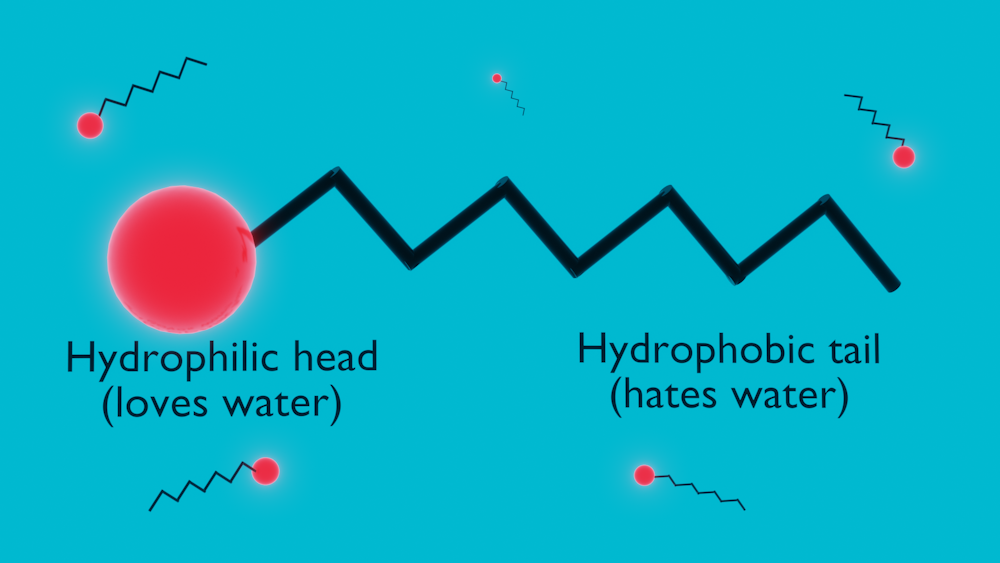
Surfactant stands for surface active agent. These molecules looked at their hydrophilic and hydrophobic brethren and said, why not both? They are typically comprised of two ends: a head group that is hydrophilic and a tail that is hydrophobic.

A diagram shows a surfactant, which has a head that is hydrophilic and a tail that is hydrophobic.
A surfactant has a head that is hydrophilic and a tail that is hydrophobic.
Daniel Eldridge

When a small amount of surfactant is added to water, the two ends of the molecule have competing interests. The hydrophilic head wants to be in the water, but the hydrophobic tail can’t stand water.

Add enough surfactant and, eventually, we will pass a critical micelle concentration and the surfactants will self-assemble into clusters of approximately 20 to 100 surfactant molecules.

All the hydrophilic heads will be pointing outwards, while the hydrophobic tails remain “hidden” at the centre. These clusters are micelles.

A diagram shows surfactant molecules arranging themselves into a micelle, with the hydrophilic heads pointing outwards and the hydrophobic tails pointing inwards.
Surfactant molecules arrange themselves into a micelle, with the hydrophilic heads pointing outwards and the hydrophobic tails pointing inwards.
Daniel Eldridge

These micelles have a hydrophilic exterior, meaning that they are very happy to remain mixed throughout water. However, in the centre remains a hydrophobic pocket that’s very good at attracting oils.

This is very handy, and helps explain why adding some detergent (a surfactant) to water will allow you to wash an oily saucepan. The surfactant first helps lift of the oil, and then the oil can remained mixed into the water, finding a new home in the hydrophobic centre of the micelle.

Micellar water in action

Surfactants are in your dishwashing detergent, your body wash, your shampoo, your toothpaste and even many foods. In all of these cases, they are there to help the water interact with the dirt and oils, and micellar water is no different.

When you apply some micellar water to a cotton pad, another convenient interaction occurs. The wet cotton is hydrophilic (loves water). Consequently, some of the micelles will unravel, with the hydrophilic heads being attracted to the wet cotton pad.

Now, sticking out from the surface will be a layer of hydrophobic tail groups. These hydrophobic tails cannot wait to attract themselves to makeup, sunscreen, oils, dirt, grease and other contaminants on your face.

As you sweep the cotton pad across your skin, these contaminants bind to the hydrophobic tails and are removed from the skin.

Some contaminants will also find themselves encapsulated in the hydrophobic centres of the micelle.

Either way, a cleaner surface is left behind.

Look at how a cotton wipe soaked in micellar water cleans up a small oil spill, in comparison to water alone.

So why shouldn’t I just use dishwashing detergent to wash my face?

Technically, that would work as detergent does indeed contain lots of micelle-forming surfactants.

But these particular surfactants would probably cause a lot of skin and eye irritation, while also damaging and drying out your skin. Not nice.

The surfactants in micellar water are chosen to be mild and well tolerated by most people’s skin. But micellar water isn’t the only skincare product to contain micelles. There are many other face-cleaning products that also make great use of surfactant molecules and work very well too.

Now, it’s not perfect. While it is effective at removing a wide range of contaminants, thick or heavy makeup might not come off easily with micellar water (you might need to do a more vigorous clean).

Some products say there is “zero residue”, although the fine print clearly states this refers to visible residue.

Many products also state there is no rinse off required. Surfactants will remain on your skin after product use, but for many people they don’t cause irritation. If your skin is feeling irritated after using a micellar water product, you can try rinsing afterwards or discontinuing use.

And as is the case with many cosmetic products, you should test it first on a small patch of skin before using it all over your face.


Read more:
What is a paraben and why are so many products advertised as ‘paraben-free’?


The Conversation

Daniel Eldridge does not work for, consult, own shares in or receive funding from any company or organisation that would benefit from this article, and has disclosed no relevant affiliations beyond their academic appointment.

ref. What is micellar water and how does it work? – https://theconversation.com/what-is-micellar-water-and-how-does-it-work-219492

Australians love to talk about a ‘fair go’. Here’s what it meant before we became a nation

Source: The Conversation (Au and NZ) – By Cosmo Howard, Associate Professor School of Government and International Relations, Griffith University

National Library of Australia

“Fair go” is an expression we hear a lot in Australia. Activists use it to demand social justice, companies use it to promise customers a good deal, and politicians invoke it to persuade us that they understand the plight of ordinary people.

Most political commentators and academics who write about the fair go associate the phrase with Australia’s famed egalitarian traditions, including equality of economic opportunity, universal political rights and the provision of a safety net via minimum wages and welfare programs.

Yet the fair go expression is sometimes used in ways that are distinctly inegalitarian. Former prime minister Scott Morrison repeatedly declared his belief in “a fair go for those who have a go”, suggesting the concept only applies to hardworking, “deserving” Australians. Morrison’s comments drew the ire of critics who argued he was subverting the original egalitarian meaning of the fair go phrase, along with the Australian culture of benevolence to the needy.

So who is right about what a fair go means to Australians? Are some uses more faithful to our “fair go traditions” than others?


Read more:
In Australia, land of the ‘fair go’, not everyone gets an equal slice of the pie


Origins in the sports pages

In our research project, we went back to the earliest recorded mentions of the fair go phrase in colonial-era newspapers to understand the original uses and meanings of this phrase, focusing on the period between 1860 and 1901.

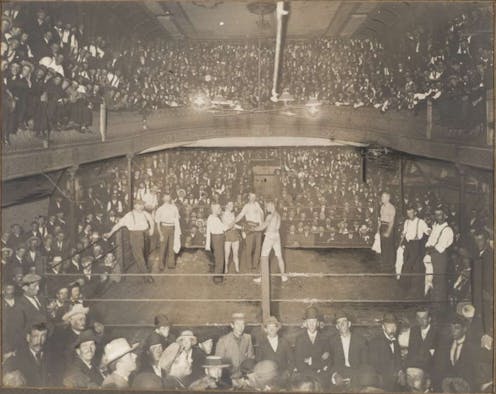
We found the most common uses of the fair go expression did not refer to equality, benevolence and social justice. Instead, the phrase was mainly used to describe spirited efforts in competitive sports such as horse racing, boxing and sprinting. We found this in an article published in New South Wales in 1889:

They were stripped of shoes and everything and had a fair go with the hurdles out about 18 yards.

In sport, a fair go could also mean trying your hardest, as opposed to “pulling” a race or “throwing” a match, such as in this piece from 1892:

With a dishonest jockey aboard […] an owner never knows whether he is to get ‘a fair go’ or not.

A fair go could also refer to a thrilling, close match that entertained spectators, or a lucky win for gamblers, as in the expression “having a fair go for their money”. The fair go phrase was also used in politics in the context of closely
fought elections, such as in Western Australia in 1900:

[…] he can depend on a fair go for it, for it’s a dead certainty he won’t gain the seat unopposed.

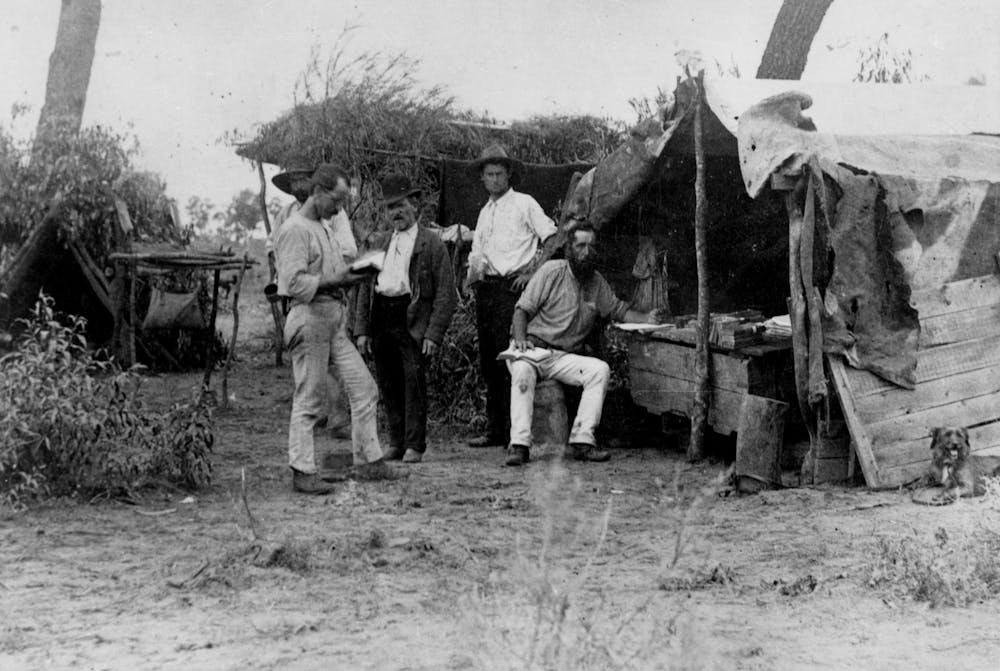
“Fair go” could also refer to violent power struggles. In an 1891 telegram sent during the Shearers Strike in Queensland, a union leader advocated achieving a fair go by force:

[…] if a little more devil was put into our actions the better it would be for us in the end. We have tried passive resistance and it appears to have failed. Let us try the other now, and have a fair go.

A black and white photo of a group of men standing in a bush campsite.
The term ‘fair go’ was used during the Queensland Shearer’s Strike in 1891.
State Library of Queensland

The expression was sometimes used to refer to fistfights in politics and beyond, such as this piece in 1897:

Fights between members of Parliament or city or municipal councillors are not of rare occurrence in Australia, but a fair “go” between lawyers with the “bare bones” is not often chronicled.

It was even used to describe violence in wartime, such as when an Australian soldier in the Boer war expressed a hope to a reporter that the enemy would “let him have a fair go […] with the bayonet”.

Different contexts, different meanings

While the dominant meanings of the fair go in the 19th century referred to competition and power struggles, we also found uses that resonate more with egalitarianism, social justice and procedural rights. In an 1891 article about politics, a fair go could mean the right to speak:

You are a liar and the father of a liar. Why don’t you let me speak? This is my maiden speech and you might let me have a fair go.

The fair go phrase was also used to advocate for the principle of one person, one vote, as well as ranked voting.

In sport, a fair go was said to require impartial umpires who didn’t favour one side over the other. In the legal system, a fair go required the right to due process, such as the provision of warrants for arrests and adequate defence in the courtroom.

While these ideas resonate with contemporary concerns about equal rights, non-discrimination, and proper process in government, they represented the minority of uses of the fair go phrase in the 19th century. Uses of “fair go” to refer to benevolence to the poor and the need for a safety net were virtually absent in the period we studied.

These findings highlight that the fair go originally meant different things to different people, and in different contexts. In our recent research, we show that 19th-century uses of the fair go can be organised into six distinct meanings. These reflect the fact that the words “fair” and “go” have multiple meanings associated with both “justice” and “strength”.

These different interpretations are alive and well today, and can be used to critically assess public policies on contentious issues such as housing affordability and immigration.

Who is right about the true historical and contemporary meaning of the fair go? Our research shows no political ideology or party has a monopoly on the fair go. How we talk about the fair go reveals the ideas that shaped us as a nation, and the values that influence our political debates.

The Conversation

Cosmo Howard receives funding from the Australian Research Council. This article was funded under the ARC Discovery Project: DP220101911 – Understanding the Antipodean ‘Fair Go’.

Pandanus Petter receives funding from the Australian Research Council. This article was funded under ARC Discovery Project: DP220101911 – Understanding the Antipodean ‘Fair Go’.

ref. Australians love to talk about a ‘fair go’. Here’s what it meant before we became a nation – https://theconversation.com/australians-love-to-talk-about-a-fair-go-heres-what-it-meant-before-we-became-a-nation-222154

Why are so many Australians taking antidepressants?

Source: The Conversation (Au and NZ) – By Jon Jureidini, Research Leader, Critical and Ethical Mental Health research group, Robinson Research Institute, University of Adelaide

Daisy Daisy/Shutterstock

Around one in seven Australians take antidepressants; more than 3.5 million of us had them dispensed in 2021–22. This is one of the highest antidepressant prescribing rates in the world.

Guidelines mostly recommend antidepressants for more severe depression and anxiety but not as first-line treatment for less severe depression. Less commonly, antidepressants may be prescribed for conditions such as chronic pain and migraine.

Yet prescription rates continue to increase. Between 2013 and 2021, the antidepressant prescription rate in Australia steadily increased by 4.5% per year. So why are so many Australians taking antidepressants and why are prescriptions rising?

The evidence suggests they’re over prescribed. So how did we get here?

Enter the antidepressant ‘blockbusters’

In the 1990s, pharmaceutical companies heavily promoted new selective serotonin reuptake inhibitors (SSRI) antidepressants, including Prozac (fluoxetine), Zoloft (sertraline) and Lexapro (escitalopram).

These drugs were thought to be less dangerous in overdoses and seemed to have fewer side effects than the tricyclic antidepressants they replaced.

Pharmaceutical companies marketed SSRIs energetically and often exaggerated their benefits, including by paying “key opinion leaders” – high-status clinicians to promote them. This prompted substantial growth in the market.


Read more:
We need new rules for defining who is sick. Step 1: remove vested interests


SSRIs earned billions of dollars for their manufacturers when on patent. While now relatively cheap, they still prove lucrative because of high prescribing levels.

Why are antidepressants prescribed?

The majority (85%) of antidepressants are prescribed in general practice. Some are prescribed for more severe depression and anxiety. But contrary to clinical guidelines, GPs also prescribe them as a first-line treatment for less severe depression.

GPs also prescribe antidepressants to patients experiencing distress but who don’t have a psychiatric diagnosis. A friend dealing with her husband’s terminal illness, for example, was encouraged to take antidepressants by her long-term GP, even though her caring capacity wasn’t impaired. Another, who cried when informed she had breast cancer, was immediately offered a prescription for antidepressants.

GP writes a script
Sometimes patients who don’t have a psychiatric diagnosis receive antidepressants.
Stephen Barnes/Shutterstock

There are several reasons why someone may take antidepressants when they’re not needed. A busy GP might be looking for a convenient solution to a complex and sometimes intractable problem. Other times, patients request a prescription. They may be encouraged by an acquaintance’s good experience or looking for other ways to improve their mental health.

Most patients believe antidepressants restore a chemical imbalance that underpins depression. This is not true. Antidepressants are emotional (and sexual) numbing agents – sometimes sedating, sometimes energising. Those effects suit some people, for example, if their emotions are too raw or they lack energy.


Read more:
The chemical imbalance theory of depression is dead, but that doesn’t mean antidepressants don’t work


For others, they come with troubling side effects such as insomnia, restlessness, nausea, weight gain. Around half of users have impaired sexual function and for some, this sexual dysfunction persists after stopping antidepressants.

How long do people take antidepressants?

Most experts and guidelines recommend specific prescribing regimes of antidepressants, varying from months to two years.

However, most antidepressants are consumed by two categories of people. Around half of patients who start antidepressants don’t like them and stop within weeks. Of those who do take them for months, many continue to use them indefinitely, often for many years. Long-term use (beyond 12 months) is driving much of the increase in antidepressant prescribing.

Some people try to stop taking antidepressants but are prevented from doing so by withdrawal symptoms. Withdrawal symptoms – including “brain zaps”, dizziness, restlessness, vertigo and vomiting – can cause significant distress, impaired work function and relationship breakdown.

Across 14 studies that examined antidepressant withdrawal, around 50% of users experienced withdrawal symptoms when coming off antidepressants, which can be mistaken for recurrence of the initial problem. We are conducting a survey to better understand the experience in Australia of withdrawing from antidepressants.

Antidepressants should not be stopped abruptly but gradually tapered off, with smaller and smaller doses. The recent release in Australia of the Maudsley Deprescribing Guidelines provides guidance for the complex regimes required for the tapering of antidepressants.


Read more:
Antidepressants can cause withdrawal symptoms – here’s what you need to know


We need to adjust how we view mental distress

Overprescribing antidepressants is a symptom of our lack of attention to the social determinants of mental health. It’s depressing to be poor (especially when your neighbours seem rich), unemployed or in an awful workplace, inadequately housed or fearful of family violence. It’s wrong to locate the problem in the individual when it belongs to society.

Overprescribing is also symptomatic of medicalisation of distress. Most diagnoses of depression and anxiety are descriptions masquerading as explanations. For each distressed person who fits the pattern of anxiety or depression, the meaning of their presentation is different. There may be a medical explanation, but most often meaning may be found in the person’s struggle with difficult feelings, their relationships and other life circumstances such as terrible disappointments or grief.

GPs’ overprescribing reflects the pressures they experience from workload, unrealistic expectations of their capacity and misinformation from pharmaceutical companies and key opinion leaders. They need better support, resources and evidence about the limited benefits of antidepressants.

GPs also need to ensure they discuss with their patients the potential adverse effects of antidepressants, and when and how to safely stop them.

But the fundamental problem is social and can only be properly addressed by meaningfully addressing inequality and changing community attitudes to distress.

The Conversation

Jon Jureidini receives research funding from MMRF. He is affiliated with Critical Psychiatry Network Australasia.

ref. Why are so many Australians taking antidepressants? – https://theconversation.com/why-are-so-many-australians-taking-antidepressants-221857

Love a good light and sound show? Spare a thought for the animals whose homes you’re invading

Source: The Conversation (Au and NZ) – By Jaana Dielenberg, University Fellow, Charles Darwin University

Light and sound shows in parks can enthral crowds with their colour, music and storytelling. Lasting for weeks to months, the shows provide entertainment and can boost local economies. But unless they are well-located, the shows can also harm wildlife.

A planned production at a wildlife sanctuary in outer Melbourne has brought these concerns to the fore. In April and May this year, a wildlife reserve on the Mornington Peninsula will host Harry Potter: A Forbidden Forest Experience. The event involves a two-kilometre night walk where, according to organisers, characters from the film are “brought to life”.

The event has prompted an outcry from people worried about the effect on the reserve’s vulnerable wildlife. The sanctuary, known as The Briars, is home to native animals including powerful and boobook owls, owlet-nightjars, koalas, wallabies, Krefft’s gliders, lizards, frogs, moths and spiders. A petition calling for the event to be relocated has attracted more than 21,000 signatures.

Research shows artificial light, sound and the presence of lots of people at night can harm wildlife. It’s not hard to see why. Imagine if a music and light show, and thousands of people, turned up at your house every night for weeks on end. How would you feel?

A history of community opposition

In addition to the lights and sounds, these shows can involve artificial smoke and animated sculptures. While they often take place along existing walking trails, they attract huge crowds at a time when animals usually have the place to themselves.

Most of Australia’s mammals and frogs and many bird and reptile species are nocturnal, or active at night. They have adapted to the natural darkness, sounds and smells of the night.

The Harry Potter experience planned for The Briars has taken place elsewhere around the world, including at a nature area near the Belgian capital of Brussels. That event, in February last year, was also opposed by locals on ecological grounds. Belgian Minister for Nature Zuhal Demir has reportedly said the show would not return this year due to concern for wildlife.

Light shows proposed for other wildlife conservation areas have also faced community opposition. In Australia, there were calls to halt the Parrtjima light festival in the Alice Springs Desert Park over potential harm to the threatened black-footed rock wallabies. The Lumina light show proposed for Mount Coot-tha in Brisbane has also attracted concern for wildlife.


Read more:
Predators, prey and moonlight singing: how phases of the Moon affect native wildlife


Light, sounds, action!

Research shows artificial light affects wildlife in many ways. For example, it can change their hormone levels, and the numbers and health of their offspring.

Light also interferes with the ability of many species to navigate. This can cause birds to become disorientated and crash. It can also prevent baby turtles from finding the sea.

Some animals will forgo feeding or drinking and attracting mates. Other animals will try to move to a darker location. In the Belgian case, locals claimed owls left the park to avoid the lights.

Studies of small mammals such as bats, micro-bats, possums and bandicoots have shown many will avoid using habitat that is artificially lit. When there is no alternative dark habitat, species forced to deal with bright conditions – whether natural or artificial – have been found to reduce their activity.

Conversely, some animals are attracted to light. Insects such as moths will cluster around the artificial light source, unable to leave. Some will become so exhausted they will become easy prey.

What’s more, human-caused noise also stresses animals and changes animal behaviour. It masks the natural soundscape, making it harder for animals to find mates or hear the calls of their young. It can also mean animals can’t hear predators or their prey.

When thousands of humans travel through an area they leave strong predator-like smells. This can be stressful for wildlife. It can also mask smells vital for an animal’s survival, such as that of food and predators.

Long-term harm

When faced with all this disruption, many nocturnal animals will hide until a site returns to normal, which in the case of light shows is often close to midnight. This cuts in half the time animals have to go about their life-sustaining activities and exposes them to greater risks when they do go out.

Light and sound shows are usually temporary – but can have major long-term impacts.

In species with low birth rates and short lifespans, a disturbance to breeding can be catastrophic. For example, males of the genus Antechinus (small marsupials) live long enough for just one short breeding season. If they are disrupted, there are no second chances.

The stress of human lights, sounds, smells and disturbance can shorten an animal’s life. Stress can make them more prone to illness and create problems with sleeping, reproduction, development and growth that can last for multiple generations.

Find a better location

The Mornington Peninsula Shire Council has defended the Harry Potter event, saying the placement of props, lights and sounds has been carefully considered.

Organisers may have minimised impacts where they can, but evidence suggests the impact on wildlife will still be extensive.

The sanctuary where the event will be held is billed as “an ark – a place which nurtures, protects and celebrates the unique flora and fauna of the peninsula, now rare but not lost”. Deliberately locating a light and sound show at the reserve seems at odds with this mission.

Events such as this clearly affect wildlife. Finding genuinely suitable locations should be done with care – and should avoid wildlife conservation areas altogether.

The Conversation

Jaana Dielenberg works for the Biodiversity Council. The Biodiversity Council was founded by 11 universities and receives support from The Ian Potter Foundation, The Ross Trust, Trawalla Foundation, The Rendere Trust, Isaacson Davis Foundation, Coniston Charitable Trust and Angela Whitbread. Jaana is employed by the University of Melbourne and is a Charles Darwin University Fellow.

Euan Ritchie receives funding from the Australian Research Council and the Department of Energy, Environment, and Climate Action. Euan is a Councillor within the Biodiversity Council, and a member of the Ecological Society of Australia and the Australian Mammal Society.

Therésa Jones receives funding from the Australian Research Council and is affiliated with NERAL (Network for Ecological Research on Artificial Light).

Loren Fardell does not work for, consult, own shares in or receive funding from any company or organisation that would benefit from this article, and has disclosed no relevant affiliations beyond their academic appointment.

ref. Love a good light and sound show? Spare a thought for the animals whose homes you’re invading – https://theconversation.com/love-a-good-light-and-sound-show-spare-a-thought-for-the-animals-whose-homes-youre-invading-222390

‘It needs to be talked about earlier’: some children get periods at 8, years before menstruation is taught at school

Source: The Conversation (Au and NZ) – By Olivia Marie Bellas, PhD Candidate, University of Adelaide

Karolina Grabowska/ AAP, CC BY

Managing menstruation in public can be challenging at the best of times, but imagine being eight years old and having to deal with your period at school. You might need to change your pad during class and explain to your friends why you are not going to the swimming carnival. You might be scared you will bleed through your uniform because there aren’t any sanitary bins in the junior years’ bathroom.

In Australia, the average age of the first period is about 13. But about 12% of children get their period between the ages of eight and 11. Researchers call this “early menarche” or “early onset menstruation”.

But even though a significant proportion of students are getting their first period as early as Year 3 or even Year 2, primary school students are not officially taught about puberty until Years 5 and 6 (when they are aged between 10 and 12).

Our research explores current period education and what support is available for early menstruators. It shows how schools can act as gatekeepers of knowledge about this essential and very normal part of human development.

Period shame exists but is not inevitable

Shame about periods has existed in many parts of the world for centuries. Researchers have noted how children are taught not to talk about menstruation and if they do, it is often negatively (with a focus on pain and discomfort).

A 2021 survey found 29% of 659 menstruating Australian students aged ten to 18 were concerned they would be teased at school for having their period.

Similar issues occur as students grow older. A 2022 Australian survey of 410 university students who menstruate found only 16.2% felt completely confident in managing their periods at university. Just over half believed society thought periods were taboo (and so, not something you talk about).

But the stigma is not inevitable. There are examples of education programs in other countries that celebrate periods and are accessible across ages.

There is a Swedish program that provides information for young people, stories about first periods and advice on how adults can talk to children about menstruation. In the United Kingdom, there are moves to introduce a “period positive” curriculum for school students.


Read more:
‘Dirty red’: how periods have been stigmatised through history to the modern day


What is taught in Australian schools?

The Australian curriculum does not not explicitly mention “period” or “menstruation” in any of its online health and physical education curriculum resources, for any year levels up to Year 10.

We can assume schools would cover it under topics such as “understand the physical […] changes that are occurring for them”. But without explicit mention to menstruation or periods, it is likely what is being taught across classrooms in Australia is variable and insufficient.

It was last updated in 2022, under the former Morrison government.

Our research

We interviewed 15 staff across government, Catholic and private primary schools in Australia. We asked staff about their awareness of students who have experienced early onset menstruation, how their students are educated about periods, and what support is available to them.

Staff spoke about how students who menstruated early “felt isolated” and voiced the need for earlier “matter-of-fact” menstruation education. As one teacher told us:

I think we’ve got to take it down to Years 3 and 4 and be a lot more specific than we have been, because you are going to get more and more being younger.

However, several participants shared apprehension around having discussions about periods with young students. As one teacher explained:

You don’t want to scare young girls, like seven-and eight-year-olds […] if it is happening earlier, it needs to be talked about earlier. But that’s a hard one because a lot of girls […] aren’t really mature enough to understand […]

Another teacher said that talking about periods in Year 3 was “probably a bit too much […] you don’t want to traumatise the child”.

Gatekeeping knowledge and awareness about periods from younger children is a problem on multiple levels. For one, it can deprive children of vital information about their bodies. For another, it frames menstruation as something inherently inappropriate, scary or crude. This in turn can reinforce stigma and taboo.

Can we tell boys about this?

Staff also spoke about how boys were not necessarily included in lessons about periods, and how male teachers may not have experience talking about these issues. As one teacher told us:

It is a discussion that’s been done where they don’t really include the boys in it […].

School staff also raised concerns that teaching boys about menstruation might present an opportunity for bullying or teasing. One school support officer suggested only girls should be taught about periods, noting:

they [boys] might be like ‘oh, I found your pad!‘

However, separating classrooms by gender for these lessons does not encourage the normalisation of periods. A 2016 study explored the attitudes of 48 Australian men towards menstruation. Participants reported being told little or nothing about periods while growing up, and so they grew up believing it was taboo.

Other teachers in our study noted how important it was for male students to be taught about periods.

I found it really frustrating that we’re giving young men who are eventually going to be in workplaces and potentially in positions of leadership, who are being deprived of these matter-of-fact moments of teaching [about menstruation] where they’re going to sort of pick up these things through like hearsay, through sort of uneducated conversation […]


Read more:
First periods can come as a shock. 5 ways to support your kid when they get theirs


What needs to happen instead?

Our study emphasises how a lack of timely and comprehensive education and support for early menstruators in Australian schools is underpinned by menstrual stigma and taboo.

But it also showed how the issue is driven by perceptions of children’s capacity to learn about periods, based on their age and gender.

This research highlights the need for the Australian curriculum to introduce specific menstruation education by at least Year 3 or earlier. The curriculum needs to explain what menstruation is, why it happens, the ways it can be managed and how it will begin happening to their peers and that this is normal.

In the meantime, we encourage all school staff to work towards building menstrual wellbeing by becoming comfortable discussing periods with all students, make period products accessible to all year levels in all bathrooms, and advertise free period product locations to students from Year 3.

This will enable all children who menstruate to manage their periods in school easily and without shame.

The Conversation

Jessica Shipman receives funding from Flinders Foundation.

Olivia Marie Bellas does not work for, consult, own shares in or receive funding from any company or organisation that would benefit from this article, and has disclosed no relevant affiliations beyond their academic appointment.

ref. ‘It needs to be talked about earlier’: some children get periods at 8, years before menstruation is taught at school – https://theconversation.com/it-needs-to-be-talked-about-earlier-some-children-get-periods-at-8-years-before-menstruation-is-taught-at-school-222887

The surprisingly Australian history of Chinese dragon parades

Source: The Conversation (Au and NZ) – By Sophie Couchman, Honorary Research Fellow, Museums Victoria Research Institute

Bendigo’s ‘Moon Face’ dragon in front of Bendigo’s Gwan Dai Temple (now demolished) at Easter 1900. The Bendigonian/Trove

Tomorrow will usher in the lunar Year of the Dragon. Families and friends will gather to feast, red packets will be gifted to youngsters, and dancing Chinese lions accompanied by strings of crackers will scare away evil spirits and bring good fortune to businesses.

In celebration of the new year, much-loved Chinese dragons will parade on Australia’s streets, including Sun Loong in Bendigo and the Millennium Dragon in Melbourne.

While dragon parades are popularly viewed as displays of Chinese or Cantonese tradition and culture, their history demonstrates how deeply Australian they also are.

Our historical research shows that until relatively recently Australia’s dragon parade tradition was closely associated with Chinese-Australian philanthropy and engagement with Australian civic life, rather than with Chinese spiritual practice.

Bendigo’s ‘Duck Bill’ dragon, photographed here in 1896, was the first processional dragon in Victoria.
The Australasian/Trove

The earliest dragon arrivals

Australia’s Cantonese immigrants and their descendants have long used dragon processions as ostentatious displays of their culture. Some of the organisers of dragon parades have ancestry dating back to the 19th-century gold rushes. The history of these dragons is almost as old.

The first dragon, nicknamed the “Duck Bill” dragon, was imported from Southern China to Bendigo more than 100 years ago and paraded from 1892 to 1898.

Nearby, Ballarat’s first dragon – also the oldest surviving dragon – was purchased in 1897. It was paraded until the 1960s. Ballarat’s dragon is held at Sovereign Hill.

The “Moon Face” dragon was Bendigo’s second dragon, paraded for just one year in 1900. Then, in 1901, Bendigo imported its third dragon, “Loong”. Remarkably, Loong was paraded for more than 100 years (circa 1901-2019) and now resides at the Golden Dragon Museum.

Melbourne also got its first dragon in 1901, which was paraded until about 1915. It’s now held at the See Yup Temple in South Melbourne.

Bendigo’s Chinese communities, their descendants and friends maintained a continuous dragon parading tradition. Ballarat and Melbourne’s fell away – only to be revived in 1954 to mark the visit of Queen Elizabeth II.

Meanwhile in southern China, where these parades originated, the tradition almost died out after the Cultural Revolution.


Read more:
It’s the Year of the Dragon in the Chinese zodiac − associated with good fortune, wisdom and success


A valued part of local fundraising

Australian streets have provided a stage for a variety of processions, with public holidays used to stage open-air fundraising activities (particularly for hospitals). Chinese communities were as keen as everyone else to assist with fundraising, display their culture and participate in festivities.

Historian Pauline Rule has shown that Chinese communities have contributed to public fundraising displays in rural cities since at least 1866.

Bendigo’s Chinese community has helped raise funds for the Bendigo Hospital at its annual Easter fair since 1879. In 1884, the organising committee of Castlemaine’s charity parade specifically sought the involvement of the local Chinese community.

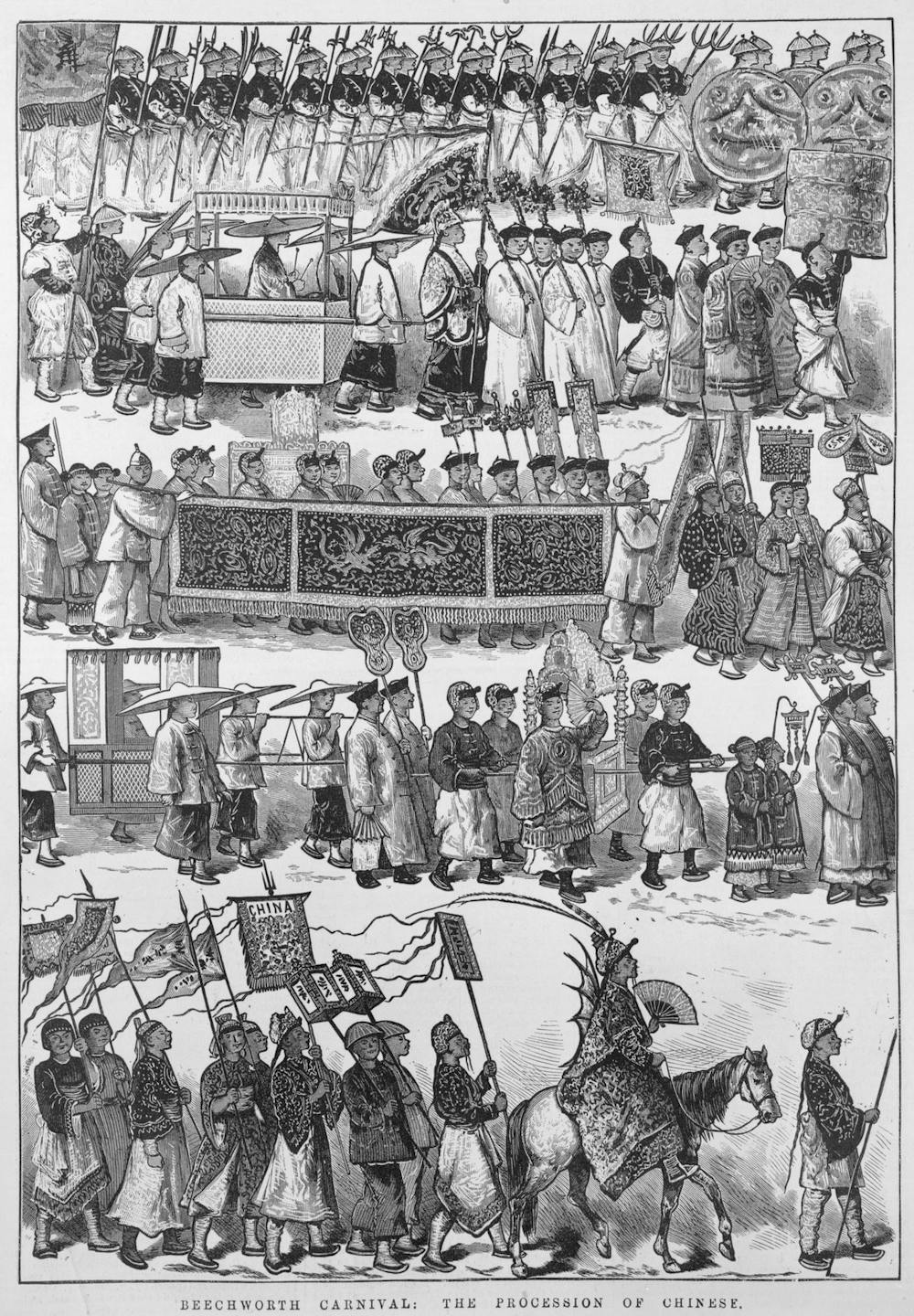
This wood engraving from 1874 portrays a Chinese procession at the Beechworth carnival.
State Library of Victoria

The popularity of dragons

Dragons were expensive and valued, and as such were also loaned to other communities for fundraising displays. In 1897, Bendigo’s Duck Bill dragon travelled to Sydney to participate in the Queen Victoria Diamond Jubilee fundraiser. Then, both Bendigo’s Moon Face and the Ballarat dragon, as well as costumes from Bendigo, Beechworth and Castlemaine, were loaned to raise funds for the Melbourne Women’s Hospital in May 1900.

Dragons and costumes loaned by Chinese communities in Bendigo, Ballarat, Beechworth and Castlemaine were used for a major fundraising event for the Melbourne Women’s Hospital in May 1900.
The Leader/Trove.

That so many Victorian communities could purchase dragons demonstrated their prosperity and joint commitment to Australia philanthropy and public life. It perhaps also encouraged a friendly intercity rivalry.

Processional dragons were so popular that some communities that couldn’t access one would make their own imitation ones.

This photo, taken at an unknown date, shows an imitation Chinese dragon parading in Warrnambool.
Warrnambool Historical Society

Royal welcome

By the time the Duke and Duchess of York arrived in Melbourne to open the first federal parliament on May 6 1901, Chinese participation in public processions in Victoria was common. Of the five Chinese dragons brought to Victoria in the 19th century, three participated in Federation celebrations.

As John Fitzgerald shows, many Chinese Australians were as excited about the possibilities of Federation as other Australians. They “shared a grand vision of what Australia might become in the century ahead”. To mark the royal visit, welcome arches were constructed in Melbourne, Ballarat and Perth.

Thanks to early photography, we can identify the two dragons that paraded in Melbourne. Several photographs show Bendigo’s Loong was one of these.

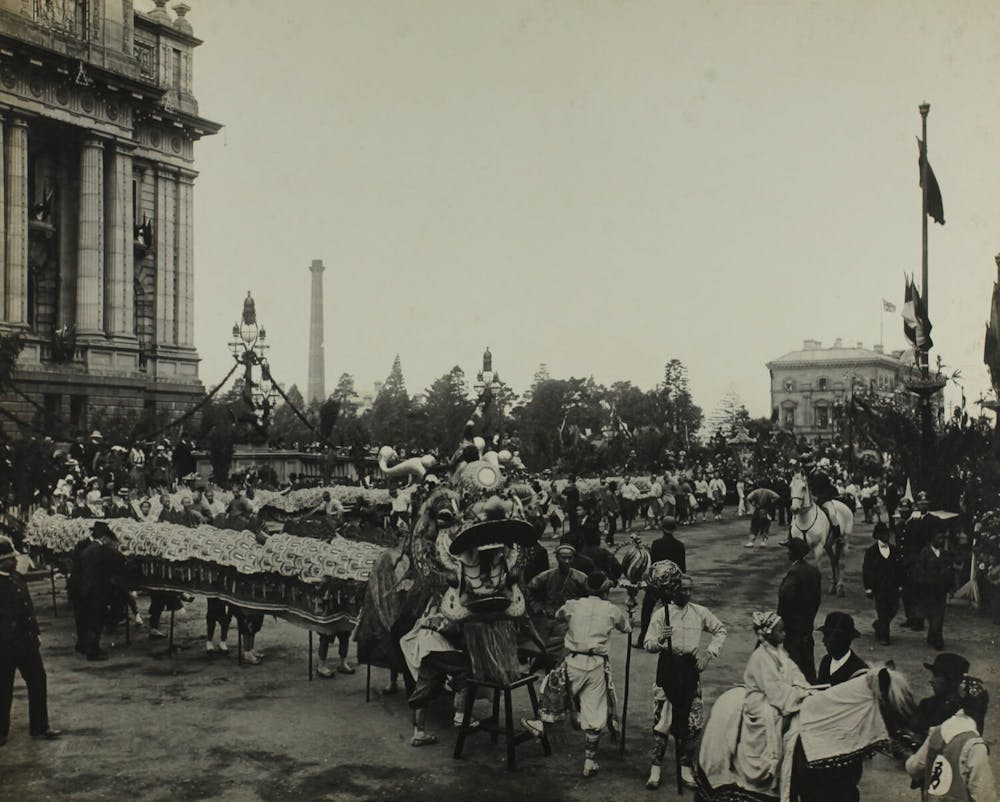
Bendigo’s Loong was paraded in Spring Street, in front of Parliament House, as part of celebrations to welcome the Duke and Duchess of York in May 1901.
Museums Victoria

Only a few long-distance photographs of the other dragon survive.

One of few photographs showing the Melbourne processional dragon during Federation celebrations.
G.H. Myers/Museums Victoria

They show that, while the dragon’s beard is positioned differently and some decorations are missing, the striped horns and head match the Melbourne dragon held at the See Yup Temple in South Melbourne. According to a 1903 newspaper article, Melbourne’s Chinese Bo Leong Society had specifically purchased this dragon for the 1901 celebrations, at a cost of 250 pounds.

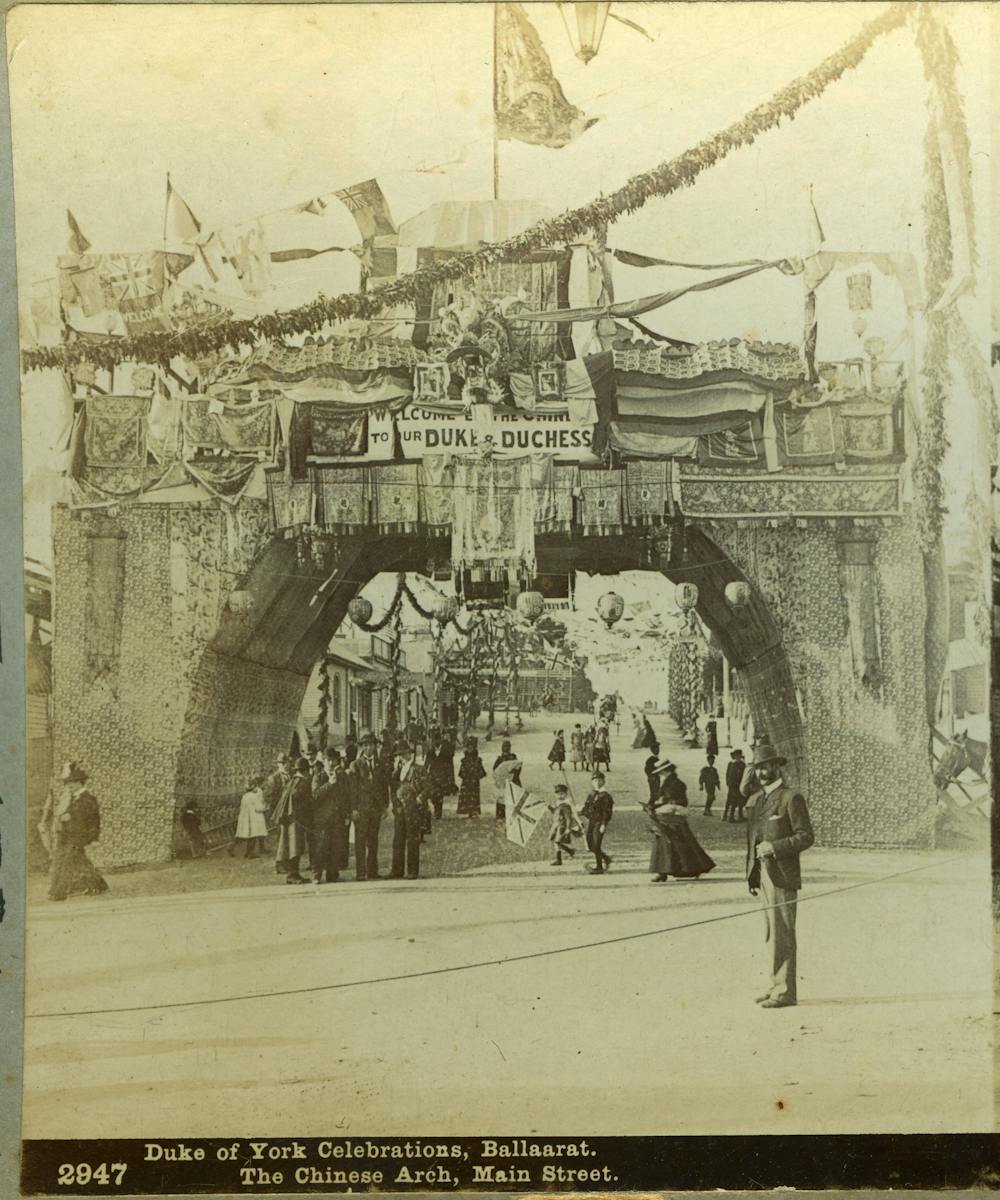
The third dragon involved in the festivities, the Ballarat dragon, was used to decorate the Chinese arch that welcomed the royal couple during their visit to Ballarat.

Ballarat’s processional dragon decorated a Chinese arch created to welcome the Duke and Duchess of York to Ballarat in May 1901.
Golden Dragon Museum

A legacy in Australia

Astoundingly, these three Federation-era dragons – three of the five oldest surviving imperial dragons in the world – still survive today.

Traditionally, when dragons reach the end of their life they are ritually burned. That these dragons were not is another expression of their Australianness. For immigrant Chinese communities, they have acquired special value as examples of cultural practices of distant homelands. Their cultural difference and beauty also appeal to others.

Each dragon is significant in its own right, but together they are remnants of a significant history of Chinese Australians’ participation in local fundraising and celebration.

The Conversation

Sophie Couchman has undertaken research work for the See Yup Society on a voluntary basis and formerly curator at the Museum of Chinese Australian History.

Leigh McKinnon is the Research Officer at Bendigo’s Golden Dragon Museum, the home of the world’s oldest complete processional dragon Loong.

ref. The surprisingly Australian history of Chinese dragon parades – https://theconversation.com/the-surprisingly-australian-history-of-chinese-dragon-parades-221594

Politics with Michelle Grattan: Chris Bowen on fuel efficiency standards and the energy transition

Source: The Conversation (Au and NZ) – By Michelle Grattan, Professorial Fellow, University of Canberra

The government has announced long-awaited fuel efficiency standards, which will place a yearly cap on the total emissions output for new cars sold in Australia. The new regime will move Australia in the direction of comparable countries, but it has its critics.

Minister for Climate Change and Energy Chris Bowen joins the podcast to discuss this policy, as well as the government’s progress on the energy transition, which is facing resistance in some regional and rural communities.

On the fuel standards, Bowen insists there’s no downside.

I don’t see any losers out of this policy because you could still get full range of choice.

He points out the government won’t be forcing anyone to change cars.

We like people having the choice of EVs and like people taking up EVs because they’re good for emissions and good for the cost of living. But it’s a choice for Australians, and I recognise everyone’s on a journey. You know, some people are looking at plug-in hybrids. Some people are just not ready yet, it’s perfectly understandable.

On climate change and the 2030 targets, Bowen admits

Of course, there are challenges along the road. And there’s a big lift […] renewable energy was about 30% when we came to office. And we’re getting to 82%. It’s a big job; of course, there are bumps and challenges. I don’t shy away from that. But we continue with the journey.

Talking about the government’s First Nations Clean Energy Strategy, Bowen says

I’m co-developing it with First Nations people. It’s co-designed. I think that’s very important, because it’s not me sitting in Canberra telling First Nations people what they need and what will happen. […] It’s run very collaboratively across the committee. It’s done a lot of outreach in meetings.

Indigenous people have a lot of energy insecurity in remote Australia. I mean, [they are] amongst the most energy insecure in the world. Their electricity gets turned off a lot. But they live in the hottest, sunniest places in the world. So, you know, we need better harnessed renewable energy. We need to give them more energy reliability.

The Conversation

Michelle Grattan does not work for, consult, own shares in or receive funding from any company or organisation that would benefit from this article, and has disclosed no relevant affiliations beyond their academic appointment.

ref. Politics with Michelle Grattan: Chris Bowen on fuel efficiency standards and the energy transition – https://theconversation.com/politics-with-michelle-grattan-chris-bowen-on-fuel-efficiency-standards-and-the-energy-transition-223094

Solving the supermarket: why Coles just hired US defence contractor Palantir

Source: The Conversation (Au and NZ) – By Luke Munn, Research Fellow, Digital Cultures & Societies, The University of Queensland

What does the Australian supermarket chain Coles have in common with the CIA? As of last week, both are clients of Palantir Technologies, a US tech company “focused on creating the world’s best user experience for working with data”.

In a three-year deal, Coles plans to deploy Palantir’s tools across more than 840 supermarkets to cut costs and “redefine how we think about our workforce”.

The tech company, named after magical seeing stones from the Lord of the Rings, offers comprehensive software that collects, organises and visualises a client’s data in “one platform to rule them all”. For an intelligence agency, Palantir’s tools might help identify a terror cell through phone calls and financial transactions; in a healthcare organisation, they might find ways to save money by shortening emergency department stays.

For Coles, the goal is to “optimise its workforce” by analysing “over 10 billion rows of data, comprising each store, team member, shift and allocation across all intervals in a day, every day”.

The announcement is linked to Coles’ plan to save a billion dollars over the next four years, and follows a 2019 big data deal with Microsoft, an effort to build robotic delivery centres, and the introduction of customer-tracking cameras and other high-tech security measures.

The Palantir process

What might this Palantir–Coles collaboration look like in practice?

Typically, Palantir first sends out “forward-deployed engineers” to begin work with an organisation’s data, which is often messy, incomplete and fragmented. These engineers work with different branches and stakeholders to bring the data together into a single compatible whole called “The Ontology”, which contains all the information deemed relevant.

Then the data can be fed into Palantir’s platforms – in this case, customisable software called Foundry and the Artificial Intelligence Platform.


Read more:
How tech billionaires’ visions of human nature shape our world


The platforms let clients explore the data through dense but user-friendly interfaces populated by columns and rows, boxes and lines. The Artificial Intelligence Platform also brings ChatGPT-like language models into the mix.

Users might compare earnings between branches, flag a store that seems inefficient, or identify an upcoming period of high spending based on historic patterns.

All of this probably seems banal, or even boring. It’s certainly less overtly problematic than Palantir’s work with governments and law enforcement, which has been slammed for enabling data-driven deportation or racist policing, and seen the company described as “evil”.


Read more:
High-tech surveillance amplifies police bias and overreach


However, the deal doesn’t need to be overtly malevolent to be meaningful. A technology of surveillance and control is quietly becoming infrastructure, moving from front-page news to something ticking along silently in the background. In this sense, Palantir shifts from the visible to the operational, imperceptibly but powerfully shaping the lives and livelihoods of Australian supermarket employees and shoppers.

Optimising the workforce

We can briefly sketch out three implications of the deal.

First, by inking this deal, Coles frames itself as future-forward and logistically driven. Groceries and grocery-store labour become more data, just like the hedge funds, healthcare, or immigrants that other Palantir clients coordinate.


Read more:
Coles and Woolworths are moving to robot warehouses and on-demand labour as home deliveries soar


Supermarkets have been under fire over the past year for increasing profit margins through a pandemic and cost-of-living crisis, and accused of underpaying workers.

The Palantir deal continues this extractive trajectory. Rather than paying workers more or passing savings onto customers, Coles has chosen to invest millions in technology that will “address workforce-related spend” as part of a larger effort to cut costs by a billion dollars over the next four years. Food (and the labour needed to grow, pack and ship it) is transformed from a human need to an optimisation problem.

A walled garden

Second, dependence. As my own research found, Palantir clients tend to enjoy the all-encompassing data and new features but also become dependent on them. Data mounts up; new servers are needed; licensing fees are high but must be paid.

Much like Apple or Amazon, Palantir’s services excel at creating “vendor lock-in”, a perfect walled garden which clients find hard to leave. This pattern suggests that, over the next three years, Coles will increasingly depend on Silicon Valley technology to understand and manage its own business. A company that sells a quarter of Australia’s groceries may become operationally reliant on a US tech titan.

A way of seeing

Finally, vision. What Palantir sells is fundamentally a way of seeing. Its dashboards promise a God’s eye view that can stretch across an entire organisation or zoom in to granular detail to locate that “needle in the haystack” insight.

The claim is that this data-driven view is a shortcut to total knowledge, a way to map every operation, reveal every important element, and identify every inefficiency.

A complex diagram illustrating the Palantir 'ontology' and how it can be used in an organisation.
Palantir promises a ‘total view’ of an organisation that allows full control and optimal decision-making.
Palantir

Yet the data inevitably excludes significant social, financial and environmental information. The sweat of workers struggling to pack at pace, the belt-tightening of consumers struggling to make ends meet, and the struggle of farmers to survive unexpected climate impacts will go untracked.

Such details never appear on the platform – and if they’re not data, they don’t matter. Will Palantir’s data-driven myopia translate to how Coles views its workers and customers?

By placing Palantir at the heart of its operations, Coles quietly smuggles in several key assumptions: that food is a commodity to be optimised, that paying for labor is a risk rather than a responsibility, and that data can capture everything of importance. At a time of increased food insecurity, Australians should strongly question whether this is the direction one of our major grocery providers should take.

The Conversation

Luke Munn does not work for, consult, own shares in or receive funding from any company or organisation that would benefit from this article, and has disclosed no relevant affiliations beyond their academic appointment.

ref. Solving the supermarket: why Coles just hired US defence contractor Palantir – https://theconversation.com/solving-the-supermarket-why-coles-just-hired-us-defence-contractor-palantir-222883

Can kimchi really help you lose weight? Hold your pickle. The evidence isn’t looking great

Source: The Conversation (Au and NZ) – By Evangeline Mantzioris, Program Director of Nutrition and Food Sciences, Accredited Practising Dietitian, University of South Australia

casanisa/Shutterstock

Fermented foods have become popular in recent years, partly due to their perceived health benefits.

For instance, there is some evidence eating or drinking fermented foods can improve blood glucose control in people with diabetes. They can lower blood lipid (fats) levels and blood pressure in people with diabetes or obesity. Fermented foods can also improve diarrhoea symptoms.

But can they help you lose weight, as a recent study suggests? Let’s look at the evidence.


Read more:
What is kombucha and how do the health claims stack up?


Remind me, what are fermented foods?

Fermented foods are ones prepared when microbes (bacteria and/or yeast) ferment (or digest) food components to form new foods. Examples include yoghurt, cheese, kefir, kombucha, wine, beer, sauerkraut and kimchi.

As a result of fermentation, the food becomes acidic, extending its shelf life (food-spoilage microbes are less likely to grow under these conditions). This makes fermentation one of the earliest forms of food processing.

Fermentation also leads to new nutrients being made. Beneficial microbes (probiotics) digest nutrients and components in the food to produce new bioactive components (postbiotics). These postbiotics are thought to contribute to the health benefits of the fermented foods, alongside the health benefits of the bacteria themselves.


Read more:
Space travel taxes astronauts’ brains. But microbes on the menu could help in unexpected ways


What does the evidence say?

A study published last week has provided some preliminary evidence eating kimchi – the popular Korean fermented food – is associated with a lower risk of obesity in some instances. But there were mixed results.

The South Korean study involved 115,726 men and women aged 40-69 who reported how much kimchi they’d eaten over the previous year. The study was funded by the World Institute of Kimchi, which specialises in researching the country’s national dish.

Eating one to three servings of any type of kimchi a day was associated with a lower risk of obesity in men.

Men who ate more than three serves a day of cabbage kimchi (baechu) were less likely to have obesity and abdominal obesity (excess fat deposits around their middle). And women who ate two to three serves a day of baechu were less likely to have obesity and abdominal obesity.

Eating more radish kimchi (kkakdugi) was associated with less abdominal obesity in both men and women.

However, people who ate five or more serves of any type of kimchi weighed more, had a larger waist sizes and were more likely to be obese.

The study had limitations. The authors acknowledged the questionnaire they used may make it difficult to say exactly how much kimchi people actually ate.

The study also relied on people to report past eating habits. This may make it hard for them to accurately recall what they ate.

This study design can also only tell us if something is linked (kimchi and obesity), not if one thing causes another (if kimchi causes weight loss). So it is important to look at experimental studies where researchers make changes to people’s diets then look at the results.


Read more:
Is apple cider vinegar really a wonder food?


How about evidence from experimental trials?

There have been several experimental studies looking at how much weight people lose after eating various types of fermented foods. Other studies looked at markers or measures of appetite, but not weight loss.

One study showed the stomach of men who drank 1.4 litres of fermented milk during a meal took longer to empty (compared to those who drank the same quantity of whole milk). This is related to feeling fuller for longer, potentially having less appetite for more food.

Another study showed drinking 200 millilitres of kefir (a small glass) reduced participants’ appetite after the meal, but only when the meal contained quickly-digested foods likely to make blood glucose levels rise rapidly. This study did not measure changes in weight.

Kefir in jar, with kefir grains on wood spoon
Kefir, a fermented milk drink, reduced people’s appetite.
Ildi Papp/Shutterstock

Another study looked at Indonesian young women with obesity. Eating tempeh (a fermented soybean product) led to changes in an appetite hormone. But this did not impact their appetite or whether they felt full. Weight was not measured in this study.

A study in South Korea asked people to eat about 70g a day of chungkookjang (fermented soybean). There were improvements in some measures of obesity, including percentage body fat, lean body mass, waist-to-hip ratio and waist circumference in women. However there were no changes in weight for men or women.

A systematic review of all studies that looked at the impact of fermented foods on satiety (feeling full) showed no effect.


Read more:
How much weight do you actually need to lose? It might be a lot less than you think


What should I do?

The evidence so far is very weak to support or recommend fermented foods for weight loss. These experimental studies have been short in length, and many did not report weight changes.

To date, most of the studies have used different fermented foods, so it is difficult to generalise across them all.

Nevertheless, fermented foods are still useful as part of a healthy, varied and balanced diet, particularly if you enjoy them. They are rich in healthy bacteria, and nutrients.


Read more:
I’m trying to lose weight and eat healthily. Why do I feel so hungry all the time? What can I do about it?


Are there downsides?

Some fermented foods, such as kimchi and sauerkraut, have added salt. The latest kimchi study said the average amount of kimchi South Koreans eat provides about 490mg of salt a day. For an Australian, this would represent about 50% of the suggested dietary target for optimal health.

Eating too much salt increases your risk of high blood pressure, heart disease and stroke.


Read more:
Remind me again, why is salt bad for you?


The Conversation

Evangeline Mantzioris is affiliated with Alliance for Research in Nutrition, Exercise and Activity (ARENA) at the University of South Australia. Evangeline Mantzioris has received funding from the National Health and Medical Research Council, and has been appointed to the National Health and Medical Research Council Dietary Guideline Expert Committee.

ref. Can kimchi really help you lose weight? Hold your pickle. The evidence isn’t looking great – https://theconversation.com/can-kimchi-really-help-you-lose-weight-hold-your-pickle-the-evidence-isnt-looking-great-222598

What’s the secret to attracting more women into politics? Give them more resources

Source: The Conversation (Au and NZ) – By Leah Ruppanner, Professor of Sociology and Founding Director of The Future of Work Lab, The University of Melbourne

Shutterstock

With Victorian council elections to be held in October, the state government’s target of reaching 50-50 gender representation at the local level is under threat.

While the state achieved a record 43.8% of women elected to councils in 2020, outperforming most federal and state parliaments, and succeeded in achieving gender parity in 47 out of 76 councils, the overall 50-50 gender representation target by 2025 will still be difficult to reach.

Globally, gender quotas have been a tried and tested way of lifting women’s political representation. But research also shows quotas can divide public opinion, and they work better in some contexts than others. With this in mind, we wanted to test alternative measures to support women in politics, which also attract public support.

Our latest research shows Australians are generally supportive of giving women politicians a range of resources such as better compensation, childcare and housekeeping funds, and more flexibility with online meetings, to help keep them in office.

Australia struggles with women’s representation in its parliaments across our three tier system. Despite a record number of women entering the federal parliament in 2022, Australia is currently ranked 34th in the world for women’s representation in the lower house.

While local governments tend to fare slightly better, they also struggle to achieve equal gender representation. In response, the Victorian government set a target in 2016 for 50% women councillors and Mayors by 2025.

Achieving this goal is important because it makes society more equal, reflecting the fact that women account for just over 50% of the population.

There are other benefits too. Local government can be an excellent training ground for women politicians, which may in turn bolster women’s representation in other tiers of government. And so, women need more support to ensure they can run for local government and be supported once in office.


Read more:
The Liberal Party is failing women miserably compared to other democracies, and needs quotas


Challenges for women politicians

Women face unique challenges as politicians. Our research shows a major issue facing women politicians is their competing work and family roles.

Trying to meet the demands of work, family and politics creates role strain for women politicians. In a previous study with logistical support from the Victorian Local Governance Association (VLGA), we found these demands meant younger women were much less likely to run for local government than older women and men of all ages.

Our research shows this creates stress, strain and high levels of burn-out for women politicians. It can also lead to higher attrition rates, making it harder to close the gender gap. Many men politicians, of course, also had families and paid employment, but most also had a secret weapon – partners at home to manage the domestic demands.

This means women politicians are entering their jobs with heavier loads and the weight of these demands are a source of constant strain.

To counter this, we tested public support in three countries for non-quota measures like additional resources to keep women in public office, to move closer to gender parity.

Gender responsive governments

Governments have long toyed with the question: how do you centre gender in decision-making to create governments that support women and men equally? And, importantly, will the public support this decision-making?

To understand these questions, we conducted an experiment drawing reponses from more than 25,000 people in Australia, Canada and the United States. We presented people with a hypothetical scenario: A politician has young children at home, travels a lot for work and is doing a great job. They are thinking about re-running in the next election but find managing work and family life to be difficult. What kind of resources, if any, should they be provided? We then provided a range of options to measured their level of support for: a pay raise, a childcare allowance, or money to outsource housework.

Testing support at both local and federal levels of office, we found public support across countries for giving women more resources than men to help women stay in politics. We found respondents were especially supportive of extending these resources to women elected to local government, where compensation is less and supports are most needed.


Read more:
The missing women of Australian politics — research shows the toll of harassment, abuse and stalking


Where to from here?

So, what are the lessons we can draw here? Well, it is clear that women need additional resources to remain in office. Our earlier research on women in local government in Victoria showed a missing cohort of young women who are building families at the exact moment that they could be building political careers.

We know from decades of national statistics that women are underrepresented in all areas of government – local, state and federal. Women politicians report significant strain in trying to do it all and do it well.

They need additional resources such as childcare and flexible meeting times to stay in office. Our latest work finds that citizens are supportive of these concrete solutions to support women in politics and lift women’s participation rate.

We know that women bring unique strengths to politics and we know, from decades of research, that we all benefit from more equal parliaments to create a more equal society.

With the Victorian local government elections around the corner, now is the time for fresh thinking and policies to deliver women the resources they need to participate in politics to benefit us all.

The Conversation

Leah Ruppanner receives funding from the Australian Research Council for a grant with the Victorian Local Governance Association (VLGA).

Andrea Carson receives funding from an ARC Linkage grant with the Victorian Local Governance Association (VLGA). This latest research was supported through Professor Carson’s fellowship with the Women’s Leadership Institute Australia (WILA).

ref. What’s the secret to attracting more women into politics? Give them more resources – https://theconversation.com/whats-the-secret-to-attracting-more-women-into-politics-give-them-more-resources-222159

First Nations people must be at the forefront of Australia’s renewable energy revolution

Source: The Conversation (Au and NZ) – By Adam Fish, Associate Professor, School of Arts and Media, UNSW Sydney

Australia’s plentiful solar and wind resources and proximity to Asia means it can become a renewable energy superpower. But as the renewable energy rollout continues, Aboriginal and Torres Strait Islander people must benefit.

Renewables projects can provide income and jobs to Aboriginal land owners. Access to clean energy can also help First Nations people protect their culture and heritage, and remain on Country.

This is not a new idea. Policies in the United States and Canada, for example, actively seek to ensure the energy transition delivers opportunities to Indigenous people.

The Australian government is developing a First Nations Clean Energy Strategy and is seeking comment on a consultation paper. Submissions close tomorrow, February 9. If you feel strongly about the issue, we urge you to have your say.

We must get this policy right. Investing meaningfully in First Nations-led clean energy projects makes the transition more likely to succeed. What’s more, recognising the rights and interests of First Nations people is vital to ensuring that injustices of the past are not repeated.


Read more:
Beyond Juukan Gorge: how First Nations people are taking charge of clean energy projects on their land


A video by author Adam Fish exploring the Eastern Kuku Yalanji community of Wujal Wujal in Queensland and their struggle for renewable energy..

Good for business, and people

Indigenous peoples have recognised land interests covering around 26% of Australia’s landmass. Research shows Aboriginal land holders want to be part of the energy transition. But they need support and resources.

This could take the form of federal grants to make communities more energy-efficient or less reliant on expensive, polluting diesel generators. Funding could also be spent on workforce training to ensure First Nations people have the skills to take part in the transition. Federal agencies could be funded to support grants for First Nations feasibility studies of renewable energy industry on their land.

As well as proper investment, governments must also ensure First Nations people are engaged early in the planning of renewable projects and that the practice of free prior and informed consent is followed. And renewable energy operators will also need to ensure they have capability to work with First peoples.

The First Nations Clean Energy Network – of which one author, Heidi Norman, is part – is a network of First Nations people, community organisations, land councils, unions, academics, industry groups and others. It is working to ensure First Nations communities share the benefits of the clean energy boom.

The network is among a group of organisations calling on the federal government to invest an additional A$100 billion into the Australian renewables industry. The investment should be designed to benefit all Australians, including First Nations people.

In Australia, the Albanese government has set an emissions-reduction goal of a 43% by 2030, based on 2005 levels. But Australia’s renewable energy rollout is not happening fast enough to meet this goal. Climate Change Minister Chris Bowen has called for faster planning decisions on renewable energy projects.

To achieve the targets, however, the federal government must bring communities along with them – including First Nations people.

As demonstrated by the US and Canada, investing meaningfully and at scale in First Nations-led clean energy projects is not just equitable, it makes good business sense.

Follow the leaders

The US Inflation Reduction Act of 2022 made A$520 billion in investments to accelerate the transition to net zero. Native Americans stand to receive hundreds of billions of dollars from the laws. This includes funding set aside for Tribal-specific programs.

Canada is even further ahead in this policy space. In fact, analysis shows First Nations, Métis and Inuit entities are partners or beneficiaries of almost 20% of Canada’s electricity-generating infrastructure, almost all of which is producing renewable energy. In one of the most recent investments, the Canadian government in 2022 invested C$300 million to help First Nations, Inuit and Métis Peoples launch clean energy projects.

Policymakers in both countries increasingly realise that a just transition from fossil fuels requires addressing the priorities of First Nations communities. These investments are a starting point for building sustainable, globally competitive economies that work for everyone.

As US and Canada examples demonstrate, the right scale of investment in First Nations-led projects can mean fewer legal delays and a much-needed social licence to operate.


Read more:
Renewable projects are getting built faster – but there’s even more need for speed 


Dealing with the climate risk

First Nations people around the world are on the frontline of climate change. It threatens their homelands, food sources, cultural resources and ways of life.

First Nations have also experienced chronic under-investment in their energy infrastructure by governments over generations, both in Australia and abroad.

Investing in First Nations-led clean energy projects builds climate resilience. This was demonstrated by the federal government’s Bushlight program, which ran from 2002 to 2013. It involved renewable energy systems installed in remote communities in the Northern Territory, Western Australia and Queensland.

Bushlight’s solar power meant that communities were not dependent on the delivery of diesel. So they still had power if roads were closed by flooding or other climate disasters.


Read more:
How can Aboriginal communities be part of the NSW renewable energy transition?


Australia must get moving

The Biden government’s Inflation Reduction Act prompted a swift reaction from governments around the world. But after 15 months, Australia is yet to respond or develop equivalent legislation.

We must urgently develop our response and seize this unique opportunity to become world leaders in the global renewables race. That includes ensuring First Nations participate in and benefit from these developments.


The First Nations Clean Energy Strategy consultation paper can be found here. Feedback can be provided here.

The Conversation

Adam Fish volunteers research for the First Nations Clean Energy Network.

He received funding from the Digital Grid Future Institute at the University of New South Wales.

Heidi Norman receives funding from Australian Research Council and James Martin Institute.

ref. First Nations people must be at the forefront of Australia’s renewable energy revolution – https://theconversation.com/first-nations-people-must-be-at-the-forefront-of-australias-renewable-energy-revolution-222616

A new Senate report sounds alarm bells on student behaviour. Here are 4 things to help teachers in the classroom

Source: The Conversation (Au and NZ) – By Zid Niel Mancenido, Lecturer, Harvard University

Managing 20-30 adults in one room is a challenge for even the best managers. Swap the adults for children and you have what classroom teachers do every day.

Student behaviour and engagement in class are some of the biggest problems worrying Australian teachers and education experts. According to a 2022 report, Australian classrooms rank among the OECD’s most disorderly. This can range from low-level behaviours such as talking, not following instructions and using a mobile phone in class, to destruction of property, physical and verbal abuse.

This makes it harder for students to learn and more stressful for teachers to teach.

For the past year, a Liberal-chaired Senate inquiry has been looking at “increasing disruption in Australian school classrooms”.

Following an interim report in December 2023, the final report was released on Wednesday evening.

What is in the report?

On top of its previous recommendation to introduce a “behaviour curriculum” (to “help students understand their school’s behavioural expectations and values”), the committee now recommends a further inquiry into “declining academic standards” in Australian schools.

The report notes the latest Programme for International Student Assessment (PISA) results. Released in December 2023, this is an international test of 15-year-olds’ knowledge and skills in science, maths and reading:

while Australia’s relative performance has remained mostly unchanged over the last two cycles, Australian students’ overall performance has actually been in steady decline over the past two decades.

Along with the academic component, a PISA questionnaire asked students how often disruptions happened in maths lessons. This included asking whether students do not listen to what the teacher says and whether there is noise and disorder in the classroom.

Australia ranked 33 out of the 37 OECD countries in the survey. Around 40% of Australian students reported they get distracted by using digital devices in maths lessons, while more than 30% said they get distracted by other students using digital devices.


Read more:
Are Australian students really falling behind? It depends which test you look at


What could help?

The report also noted the Australian Education Research Organisation’s recent work on behaviour, backed by federal government funding.

In December 2023 the organisation released a paper looking at the evidence on what works to manage classrooms. Last month it also released a guide for teachers based on this research.

Below are four key messages from this work.

1. Set expectations, routines and rules

Students don’t arrive at school innately knowing what is expected of them. This includes what to do when they are entering and exiting the classroom, wanting to gain their teacher’s attention, completing tasks or moving through the school.

So classroom rules and routines need to be explicitly taught and regularly revised to help students understand and demonstrate them automatically. This then gives them more headspace for learning.

Some expectations should be shared with families, such as arrival routines or expectations about homework.

Teachers should also role-model what they expect of students. This includes arriving to class on time, being organised, and listening to and speaking to students in a consistent and calm manner.

2. Prepare the classroom environment

The way a classroom is set up plays an important role in creating welcoming, calm and functional learning environments.

This can include the way furniture is arranged – so everyone can see and hear the teacher easily – as well as visual displays that are set up to enhance and not distract from learning.

This includes reminders for where students will put their bags, displaying timetables and routines so students know where they need to be and what they need to do.

3. Build student-teacher relationships

If students have a positive connection with their teacher, they are more likely to have a positive attitude towards school. Some ways teachers can establish a strong relationship include greeting students individually at the classroom door every day and interacting with students outside the classroom.

They should regularly “check in” with every student. For example, ask about their weekend, their activities and interests outside of school, such as how their football team is performing or how their dance performance went.

If there are issues, they should deliver feedback constructively. This involves reminding students of the expectations, identifying what they were doing and what they need to do instead and why. After giving feedback, teachers should let go of the incident and start fresh.


Read more:
There’s a call for a new ‘behaviour curriculum’ in Australian schools. Is that a good idea?


4. Respond to behaviour

Even with the best classroom management practices, there will be times when teachers need to handle disengaged or disruptive behaviours.

Teachers should be familiar with a combination of non-verbal and verbal “corrections” and escalate responses as needs be.

This includes talking to a student privately one-on-one, at a time that does not interrupt the flow of the lesson. They can also remind the group or whole class of expectations.

Teachers can also use non-verbal strategies, such as moving closer to a student who is not behaving, pausing and looking at a student in a deliberate way to demonstrate they are aware of what is happening. They could also make a gesture (such as a finger to their lips). The focus should always be on supporting students to re-engage in learning rather than punishing them.

Acknowledging and praising students who are meeting behaviour expectations is also as important as addressing disruption. This reinforces the expected behaviours for all students.

A complex issue

Student behaviour is a complex issue and is by no means solely an issue for teachers to fix. As the Senate inquiry heard, behaviour can be influenced by socioeconomic factors, bullying, family trauma and disability.

But there are practical things teachers and schools can do to help students engage in their lessons and keep classrooms calm and focused.

The Conversation

Zid Niel Mancenido is Senior Manager, Research and Evaluation for the Australian Research Education Organisation. The project mentioned in this article is funded by the federal Department of Education, through the Engaged Classrooms Through Effective Classroom Management Program.

ref. A new Senate report sounds alarm bells on student behaviour. Here are 4 things to help teachers in the classroom – https://theconversation.com/a-new-senate-report-sounds-alarm-bells-on-student-behaviour-here-are-4-things-to-help-teachers-in-the-classroom-222874

Even with a 30% quota in place, Indonesian women face an uphill battle running for office

Source: The Conversation (Au and NZ) – By Sally White, Research fellow, Australian National University

In the 2019 general election, Indonesians voted more women into the national parliament than ever before.

After the first election of the post-authoritarian period in 1999, women’s representation was a paltry 8.8%, so the rise to 20.9% in 2019 seemed worth celebrating. Indeed, women activists had worked long and hard to reach this point.

Disappointed with the results of the first two elections, they had successfully pushed for a candidate quota, requiring parties to nominate at least 30% women.

This will again be tested in next week’s election. But given the barriers women candidates in Indonesia face, is the quota enough to raise representation?


Read more:
Is Joko Widodo paving the way for a political dynasty in Indonesia?


Representation better, but not enough

Under Indonesia’s open list proportional representation system, parties decide on candidate placement on the list, but voters can choose any candidate. In the past three elections, the quota has meant that in every electoral district at all three levels of parliament, women had to make up at least 30% of candidates. Additionally, one in every three candidates on the party list had to be female.

With such a strong institutional framework, it is not surprising that enthusiasm after the 2019 election was muted. Given the 2014 election had seen a slight fall in women’s representation, activists were relieved. But the result was still well below the aspirational 30% target, and below the international average at the time of 24.3%.

The results were also uneven, with more than 20% of electoral districts not electing any women to parliament. At the provincial and district level, the proportion of women elected to office was even lower, at only 18% and 15% respectively; 25 district parliaments had no women at all elected to office in 2019.

Why do women find it hard to be elected to office in Indonesia, and is this likely to change in 2024?

Barriers of patriarchy, money and name recognition

In many countries, it is said that when women run, they win. The main barrier to greater representation tends to be that women don’t stand for office. When they do, political parties don’t nominate them, or put them in unwinnable positions.

The quota in Indonesia gets around this problem. It encourages women to run and forces parties to nominate them. But our research has revealed that women candidates in Indonesia also face significant barriers from patriarchal attitudes held by many voters about whether women should take on political leadership roles.

Support for women’s political leadership has even dropped over the past decade. Meanwhile, Indonesia’s electoral system allows voters to discriminate against women without having to sacrifice party choice, as they would in a majoritarian voting system like that in Australia.

But the challenges don’t stop there.

Indonesia is a new democracy and political parties receive very little public financing. Candidates are expected to raise their own funds to run their campaigns.

The open-list system means candidates run not just against opponents from other parties, but also against their fellow party members, making politics highly personalised. This has led to a dramatic rise in the cost of elections for individual candidates, with “money politics” coming to dominate election campaigns.

Given that women in Indonesia face high levels of economic inequality, the cost of campaigns makes competing difficult.


Read more:
Indonesia is one of the world’s largest democracies, but it’s weaponising defamation laws to smother dissent


Clientelism also shapes the kind of women candidates that parties choose and where they place them on their lists. Elite women and celebrities are more likely to be nominated as they can finance themselves. They also have the networks and name recognition that can garner votes. In 2019, some 44% of the women elected to the national parliament were members of political dynasties.

While some of these women are no doubt capable politicians, their dominance makes it harder for women candidates to come through grassroots organisations. Parties also spend less time developing women cadres to run as candidates, preferring to reach out to such “vote getters”.

What about this time around?

So what are the prospects for women’s representation in the upcoming elections?

The barriers to women’s election have not changed and are unlikely to change in the short term. As a result, incremental progress is the best that can be hoped for.

Several women politicians were instrumental in the passage of the Anti-Sexual Violence bill that passed last year. It’s possible that this increased visibility will give women a bump.

On the other hand, gender issues have not been central to the presidential or legislative campaigns so are unlikely to be uppermost in voters’ minds.

In fact, we may have reason to be more pessimistic. A seemingly minor change to the regulations on quota implementation means that for the first time in three elections, the requirement for a 30% candidate quota will not be applied in every electoral district party list, but instead for the total number of women candidates of each party.

The changes date back to a controversial regulation issued by the Indonesian Electoral Commission (KPU) in April 2023. The regulation allowed rounding down when assessing the number of women a party has on a candidate list. For example, in electoral districts with eight seats, 30% is 2.4 candidates. Previously, a party would have had to field three women candidates. Now, fractions can be rounded down if under 0.5, so in our example, parties are only required to field two women candidates.


Read more:
The professor, the general and the populist: meet the three candidates running for president in Indonesia


A coalition of democracy and gender activists appealed against this regulation to the Supreme Court, and they won. But the electoral commission has indicated it will not enforce the court’s decision in this election. Democracy activists say that this means almost 18% of party lists do not meet the requirement for 30% women candidates.

It could be that these changes will have little impact. After all, we know that most candidates are elected from the first position on the list.

However, it sets a worrying precedent for women’s representation going forward. Our research shows the 30% candidate quota for women is widely supported in Indonesia. Yet, it has effectively been watered down without public discussion and against the advice of the Supreme Court.

The actions of the electoral commission, apparently at the direction of a male-dominated parliamentary commission, underline again how the foundational institutions of Indonesian democracy are being eroded by the political elite.

The Conversation

Sally White receives funding from the Australian Research Council Discovery Project “Political Representation in Indonesia”.

ref. Even with a 30% quota in place, Indonesian women face an uphill battle running for office – https://theconversation.com/even-with-a-30-quota-in-place-indonesian-women-face-an-uphill-battle-running-for-office-222387

Population can’t be ignored. It has to be part of the policy solution to our world’s problems

Source: The Conversation (Au and NZ) – By Jenny Stewart, Professor of Public Policy, UNSW Sydney

Marina Poushkina/Shutterstock

There is a growing consensus that environmental problems, particularly the effects of climate change, pose a grave challenge to humanity. Pollution, habitat destruction, intractable waste issues and, for many, deteriorating quality of life should be added to the list.

Economic growth is the chief culprit. We forget, though, that environmental impacts are a consequence of per capita consumption multiplied by the number of people doing the consuming. Our own numbers matter.

Population growth threatens environments at global, national and regional scales. Yet the policy agenda either ignores human population, or fosters alarm when perfectly natural trends such as declining fertility and longer lifespans cause growth rates to fall and populations to age.

That there are still too many of us is a problem few want to talk about. Fifty years ago, population was considered to be an issue, not only for the developing world, but for the planet as a whole. Since then, the so-called green revolution in agriculture made it possible to feed many more people. But the costs of these practices, which relied heavily on pesticide and fertiliser use and relatively few crops, are only now beginning to be understood.

The next 30 years will be critical. The most recent United Nations projections point to a global population of 9.7 billion by 2050 and 10.4 billion by 2100. There are 8 billion of us now. Another 2 billion will bring already stressed ecosystems to the point of collapse.

A line graph showing global population growth since 1950 and projection to 2100.
The latest global population projection from the United Nations.
UN World Population Prospects 2022, CC BY

It’s the whole world’s problem

Many would agree overpopulation is a problem in many developing countries, where large families keep people poor. But there are too many of us in the developed world, too. Per person, people in high-income countries consume 60% more resources than in upper-middle-income countries and more than 13 times as much as people in low-income countries.

From 1995 to 2020, the UK population, for example, grew by 9.1 million. A crowded little island, particularly around London and the south-east, became more crowded still.

Similarly, the Netherlands, one of the most densely populated countries, had just under 10 million inhabitants in 1950 and 17.6 million in 2020. In the 1950s, the government encouraged emigration to reduce population densities. By the 21st century, another 5 million people in a tiny country certainly caused opposition to immigration, but concern was wrongly focused on the ethnic composition of the increase. The principal problem of overpopulation received little attention.

Australia is celebrated as “a land of boundless plains to share”. In reality it’s a small country that consists of big distances.

As former NSW Premier Bob Carr predicted some years ago, as Australia’s population swelled, the extra numbers would be housed in spreading suburbs that would gobble up farmland nearest our cities and threaten coastal and near-coastal habitats. How right he was. The outskirts of Sydney and Melbourne are carpeted in big, ugly houses whose inhabitants will be forever car-dependent.

An aerial view of city suburbs stretching out to the horizon
Non-stop growth means our cities are becoming less efficient and liveable.
Harley Kingston/Shutterstock

Doing nothing has a high cost

The longer we do nothing about population growth, the worse it gets. More people now inevitably mean more in the future than there would otherwise have been.

We live very long lives, on average, so once we’re born, we tend to stick around. It takes a while for falling birthrates to have any impact.

And when they do, the population boosters respond with cries of alarm. The norm is seen as a young or youngish population, while the elderly are presented as a parasitical drag upon the young.

Falling reproduction rates should not be regarded as a disaster but as a natural occurrence to which we can adapt.

Recently, we have been told Australia must have high population growth, because of workforce shortages. It is rarely stated exactly what these shortages are, and why we cannot train enough people to fill them.

Population and development are connected in subtle ways, at global, national and regional scales. At each level, stabilising the population holds the key to a more environmentally secure and equitable future.

For those of us who value the natural world for its own sake, the matter is clear – we should make room for other species. For those who do not care about other species, the reality is that without a more thoughtful approach to our own numbers, planetary systems will continue to break down.

Line graph showing the probabilities of global population projections and the impacts of having 0.5 more or less children per woman
Cutting births by just 0.5 children per woman can dramatically reduce the level at which the world’s population peaks.
UN World Population Prospects 2022, CC BY

Let women choose to have fewer children

So, what to do? If we assume the Earth’s population is going to exceed 10 billion, the type of thinking behind this assumption means we are sleepwalking our way into a nightmarish future when a better one is within our grasp.

A radical rethink of the global economy is needed to address climate change. In relation to population growth, if we can move beyond unhelpful ideologies, the solution is already available.

People are not stupid. In particular, women are not stupid. Where women are given the choice, they restrict the number of children they have. This freedom is as basic a human right as you can get.

A much-needed demographic transition could be under way right now, if only the population boosters would let it happen.

Those who urge greater rates of reproduction, whether they realise it or not, are serving only the short-term interests of developers and some religious authorities, for whom big societies mean more power for themselves. It is a masculinist fantasy for which most women, and many men, have long been paying a huge price.

Women will show the way, if only we would let them.

The Conversation

Jenny Stewart does not work for, consult, own shares in or receive funding from any company or organisation that would benefit from this article, and has disclosed no relevant affiliations beyond their academic appointment.

ref. Population can’t be ignored. It has to be part of the policy solution to our world’s problems – https://theconversation.com/population-cant-be-ignored-it-has-to-be-part-of-the-policy-solution-to-our-worlds-problems-219812

Smartphones mean we’re always available to our bosses. ‘Right to disconnect’ laws are a necessary fix

Source: The Conversation (Au and NZ) – By Chris F. Wright, Associate Professor of Work and Organisational Studies, University of Sydney

Me-and-Idea/Shutterstock

Australian workers are set to have the right to disconnect from their workplaces once they clock off for the day.

This will “empower workers to ignore work calls and emails after hours [from their employers], where those demands are unreasonable”, according to Greens Senator Barbara Pocock who has been driving the change.

Last week, the Senate committee reviewing the “Closing Loopholes” amendments to the Fair Work Act recommended introducing a right to disconnect to support “the development of clear expectations about contact and availability in workplaces”. On Wednesday, the Albanese government indicated it supported the amendment.

Why a right to disconnect is needed

Last year, the Senate Select Committee on Work and Care drew attention to “availability creep” where employees are increasingly expected to complete work outside of work hours.

Smartphones have made it easier for managers to contact workers any time. The shift to remote working during the COVID pandemic caused the boundaries between work and personal life to disintegrate further.


Read more:
Switching off from work has never been harder, or more necessary. Here’s how to do it


According to a 2022 report by the Centre for Future Work, 71% of workers surveyed had worked outside their scheduled work hours often due to overwork or pressure from managers.

This led to increased tiredness, stress or anxiety for about one-third of workers surveyed, disrupted relationships and personal lives for more than one-quarter, and lower job motivation and satisfaction for around one-fifth.

Parliamentary inquiries have highlighted the negative consequences of working outside scheduled hours for mental and physical health, productivity and turnover.

Man shouting at mobile phone
Being contacted by employers after hours can increase workers’ stress levels.
Yolo Stock/Shutterstock

Availability creep has led to significant unpaid overtime which “takes workers away from a fair day’s work for a fair day’s pay”.

The impacts are especially acute for certain groups of workers. Those on insecure contracts lack the power to resist availability creep. Those with unpaid care responsibilities are likely to experience intensified work/life balance.

“Roster justice”

The right to disconnect provides a solution to these challenges. The Senate select committee on work and care found such a right can provide workers with “roster justice” by giving more certainty over their working hours.

Many countries in Europe, Asia, North America and South America have already established laws or regulations limiting employers contacting workers outside work hours.

At least 56 enterprise agreements currently operating in Australia provide a right to disconnect. This includes agreements covering teachers, police officers and various banks and financial institutions.

Industrial Relations Minister Tony Burke has indicated the right to disconnect legislation will provide employers with “reasonable grounds” to contact their employees outside work hours. This might include calling employees to see if they can fill a shift.

Woman frustrated by man answering phone call while they are having dinner
As well as stressing employees, work interruptions in free time can be damaging to relationships.
iaginzburg/Shutterstock

If enterprise agreements with existing right to disconnect clauses are an indication, the Fair Work Commission will probably be asked to determine what contact outside of work hours is deemed “reasonable”. This approach seems sensible given the long tradition of the commission being asked to rule on what’s “reasonable” in other areas of employment law.

If an employer “unreasonably” expects employees to perform unpaid work outside of normal hours the commission may be empowered to impose a “stop order” — and potentially fines — to prevent the employer from contacting employees outside hours according to Tony Burke.

Unions including those representing teachers and police officers support a right to disconnect. According to the Police Federation of Australia:

Not only do the police see that trauma, deal with the families’ trauma, deal with their colleagues’ trauma, have to investigate, have to go to court, and get media attention but they also have to go home and deal with their families […] The right to disconnect gives those officers that little bit of breathing space.

Employment law experts and human resource specialists also believe there is a strong case for such a right given the negative impacts of availability creep on worker well being.

Employer associations are less supportive. The Australian Chamber of Commerce and Industry (ACCI) told a recent a Senate inquiry a right to disconnect would be “a blunt instrument which will do more harm than good, including for employees”. They claim employers will be less accommodating of employee requests for flexible work arrangements during normal work hours if contact outside these hours is no longer allowed.

A banana republic?

According to ACCI chief executive Andrew McKellar, a right to disconnect would be “the final step in Australia becoming a banana republic”.

But it must be remembered that workers effectively had the right to disconnect before the smartphone. Such a protection needs to be explicit now technology has eroded the once-firm boundaries between work and home.

As the nature of work and employer practices change, it’s essential for employment regulations to respond accordingly. Having a right to disconnect to protect workers from employers encroaching upon their free-time is a necessary response.

The Conversation

Chris F. Wright has received funding from the Australian Research Council, the Canadian Social Sciences and Humanities Research Council, the International Labour Organization, the Australian and NSW governments, and various business and trade union organisations.

ref. Smartphones mean we’re always available to our bosses. ‘Right to disconnect’ laws are a necessary fix – https://theconversation.com/smartphones-mean-were-always-available-to-our-bosses-right-to-disconnect-laws-are-a-necessary-fix-222738

The Nationals want renewables to stay in the cities – but the clean energy grid doesn’t work like that

Source: The Conversation (Au and NZ) – By Andrew Gunn, Lecturer, Monash University

Dave Head/Shutterstock

The bush is full up – no room for more renewables, according to Nationals leader David Littleproud. Instead, renewables should be restricted to large solar arrays on commercial buildings in the cities.

The country-focused minor party presumably hopes to capitalise on rural scepticism of large scale renewable projects – especially angst around new transmission lines. On the coast, there have been protests against proposed offshore wind farms.

Unfortunately, fencing off renewables in the cities won’t work. As our recent research on onshore wind shows, intermittent energy sources such as wind can work very well to support a modern grid – as long as we locate wind farms in different places. This ensures we can keep the lights on even if it’s dead calm in some areas.

Of course, rooftop solar may well stack up for households and building owners. But we will need new renewable projects in spread-out locations. Banning renewables from the bush is no solution. What we can do is make sure we’re not duplicating wind farms. Each new wind farm should be in the best possible location.

The best place to build a wind farm

In 2001, renewables supplied 8% of Australia’s energy. In 2023, they supplied almost 40%.

The federal government’s ambitious goal is to supercharge this growth and get to 82% by 2030. That’s a meteoric rise, but it has to be. Climate change is accelerating
Decisions around where to build large renewable projects cannot be left solely to the market – or derailed by protest.

Renewable energy supply is variable by nature. Solar only works at daytime, hydro can be affected by drought or water shortages, and the wind doesn’t blow consistently.


Read more:
Do we want a wind farm outside our window? What Australians think about the net zero transition


That’s not a deal breaker. It just means you have to have a mix of technologies – and place utility-scale farms in different places. This minimises the need for expensive or resource-dependent energy storage such as pumped hydro and batteries.

At present, wind makes up around a third of Australia’s renewable supply – about 11% of total electricity generation in the first quarter of 2023.

But wind blows, then stops. By itself, a wind farm can’t provide power at a consistent rate or in lockstep with demand. The power generated is at the whim of the weather and, in the longer term, climate.

To make wind power consistent, you have to build wind farms in different locations chosen for their unique local wind climate.

At present, Australia’s supply of wind farms is reasonably varied. But it could be better still.

We analysed over 40 years of climate data and found Australia’s currently operating wind farms could be producing around 50% more energy if they had been built in optimised locations.

If we had built this network of farms in an optimal way, we would have slashed how variable wind energy is. At present, the locations of current farms means year-to-year variability is around 40% higher than it could have been.

When we added all wind farms under construction or with planning approval, we found these inefficiencies persist.

We have to get better at placing renewables

Is this bad news? No. It means we can do better. And it means we can reduce the resistance emerging from some rural and regional residents, who feel their landscapes are being taken over to power far off cities.

Building renewable farms in sub-optimal locations is a burden on the environment, since many more farms have to be built to make up the slack, and can lead to increased energy prices for consumers.

Right now, the cost is masked by the fact that wind’s share in the energy market is small. But that will change. The net zero economy we are building will need wind, both onshore and, increasingly, offshore.


Read more:
A clean energy grid means 10,000km of new transmission lines. They can only be built with community backing


To build a wind farm, what usually happens is an energy company will find a landowner who agrees to having a farm on their land in exchange for regular rent. The company then seeks government approvals.

To approve a site for a wind farm, government agencies have to assess many things. How close is it to wetlands home to rare birds? Is the wind resource good enough? To figure out the quality of the wind, regulators usually take measurements at the site and look at historic data. Usually, this pool of data only goes back a few years.

We could do this much better. First, wind power can vary by up to 16%, year to year. La Niña might bring strong winds to a site, while El Niño might bring the doldrums.

To decide on a site based on a couple of years of data means you don’t know the long term average of wind, which could be better or worse than expected.

Second, approvals are site-specific – we don’t compare how similar this potential wind farm will be to farms already built. That means many wind farms simply don’t meet expectations of how much extra power they can supply to the grid.

Once built, wind farms usually operate for decades. If we choose inefficient locations, we’re locked in.

But there’s good news here for the National Party, rural residents and everyone concerned with the energy transition. We can fix this problem.

All it would take is one extra step for renewable developers: demonstrate how your proposed wind farm would improve electricity supply overall. That’s it.

And for government, make sure our planned new transmission lines increase access to high quality wind resources.

These two actions sound simple, but they would make a real difference. We could avoid building wind farms in sub-optimal locations, build fewer overall, and accelerate the shift to cheap clean energy. That’s something the city and country can agree on.


Read more:
How to beat ‘rollout rage’: the environment-versus-climate battle dividing regional Australia


The Conversation

Christian Jakob receives funding from the Australian Research Council (ARC) and is the Director of the ARC Centre of Excellence for the Weather of the 21st Century.

Andrew Gunn does not work for, consult, own shares in or receive funding from any company or organisation that would benefit from this article, and has disclosed no relevant affiliations beyond their academic appointment.

ref. The Nationals want renewables to stay in the cities – but the clean energy grid doesn’t work like that – https://theconversation.com/the-nationals-want-renewables-to-stay-in-the-cities-but-the-clean-energy-grid-doesnt-work-like-that-205490

Wholesale power prices are falling fast – but consumers will have to wait for relief. Here’s why

Source: The Conversation (Au and NZ) – By Tony Wood, Program Director, Energy, Grattan Institute

Shutterstock

Wholesale power prices are falling steeply in Australia, following two years of surging prices after the Ukraine war triggered an energy crisis. New data shows annualised spot prices for power in Australia’s main grid fell by about 50% in 2023. That brings the cost of wholesale power down towards the levels seen in 2021.

Is that good news for consumers? It will be – but not yet. Energy retailers buy most of their power in advance at set prices, accepting higher average prices for less volatility. That means the cheaper spot prices won’t flow through to you for a while. But they will.

Here’s how the system works.


Read more:
Surging energy prices are really going to hurt. What can the government actually do?


How is power priced?

The way we price electricity will be different depending where you live in Australia.

If you live in Tasmania, Western Australia, regional Queensland or in the Northern Territory, there’s no competition. The state or territory government runs the power system, and prices are set by a regulator.

In South Australia, Victoria, New South Wales, and south-east Queensland, the competitive National Energy Market applies. Here, retailers buy power on the wholesale spot market from generators and compete for your business by offering different prices and bundling electricity with other services such as gas or broadband. (Some energy companies are both generators and retailers.)

While the federal government doesn’t set prices in the market, it does have some involvement. In 2019, it introduced a mandatory default market offer, effectively setting a maximum price a retailer can charge customers. Victoria also implemented its own default offer. These changes stemmed from concerns retail competition was overly complicated and not delivering benefits to all electricity consumers.

Default offers were intended as a fair price for power and to work as a safety net so consumers weren’t overcharged.

Retailers compete in part by offering deals set below the default price. Nearly all of us have now signed up for market offers, leaving fewer than 10% of consumers still on a default offer.

power lines and house
Wholesale prices have fallen – but there’s a wait for consumer relief.
Shutterstock

The price of electricity in default offers is set by energy regulators, usually on 1 July each year. Competing retailers tend to mirror changes to the default offers in their market offers. That means most, if not all, consumers should start seeing lower default prices reflected in their bills from this date onwards.

But don’t expect falling wholesale prices to be passed on immediately or in full. Buying electricity wholesale is only around 40% of a retailer’s total cost. Retailers also pass through the costs of transmission and distribution.

Ironing out fluctuations

In the National Energy Market, the spot price of power changes every five minutes – often drastically. Prices can be as low as negative A$1,000 per megawatt hour or as high as +$16,000 a megawatt hour if there are outages or intense demand during a heatwave. (Prices can turn negative if there’s an oversupply of power, such as when millions of rooftop solar arrays are putting energy into the grid in the middle of the day, and act as an incentive to boost demand or cut supply.)

You and I don’t want to be exposed to such price volatility. We rely on our retailers to do it, and they do so by taking out multi-year contracts to smooth out the price of power.

That means we are not exposed immediately to sudden increases in price, but it also means we do not benefit from rapid falls. Retail prices, including default offers, will respond to changes in wholesale prices when those changes are reflected in the retailers’ contract prices.

solar on rooftops
On sunny days, rooftop solar can send power prices negative.
Shutterstock

What about politics?

Power prices are political. Everyone uses electricity and bill shock hurts.

At present, the Albanese government is under real pressure over the cost of living. Successive interest rate rises and more expensive petrol and groceries have left many of us feeling poorer.

Could there be direct intervention? Unlikely. Since the National Electricity Market was introduced in 1998, governments have avoided directly regulating prices.

When partial interventions are tried, they tend to have little impact. When the Coalition was in office federally, they introduced the so-called Big Stick laws, aimed at forcing energy retailers to pass on cost savings. To date, the laws have gathered dust.

What we can expect to see are calls to action. For instance, South Australia’s energy minister recently called on retailers to pass on price falls as quickly as possible.

This makes headlines and can put pressure on regulators such as the Australian Energy Regulator. We can expect the pressure of the election cycle to lead to even more calls for regulators to act.

But regulators should respond in line with their clear guidelines, rather than in response to political pressure. After all, governments have given regulators a difficult job to do: deliver fair prices in a rapidly evolving electricity market.

It would be better for the long-term interests of consumers and energy suppliers if they were allowed to get on with it.

What’s next?

As more clean energy comes into the grid, it should push wholesale prices still lower. But the energy transition isn’t as simple as substituting solar and wind for coal. Big investments in transmission and energy storage are needed to connect more renewables and maintain a reliable system. Prices could once again rise sharply if our ageing coal plants give up the ghost before there’s enough renewable generation and storage to take up the slack.

These challenges and risks were inevitable given the scale of our net-zero transition. But the recent trend towards lower prices should give us confidence that more investment in renewables and storage can cover the closure of coal to deliver a reliable, low-emissions future – without threatening affordability.


Read more:
Unsexy but vital: why warnings over grid reliability are really about building more transmission lines


The Conversation

Tony Wood may have interests in companies impacted by the energy transition through his superannuation fund.

ref. Wholesale power prices are falling fast – but consumers will have to wait for relief. Here’s why – https://theconversation.com/wholesale-power-prices-are-falling-fast-but-consumers-will-have-to-wait-for-relief-heres-why-222495

Underground nuclear tests are hard to detect. A new method can spot them 99% of the time

Source: The Conversation (Au and NZ) – By Mark Hoggard, DECRA Research Fellow, Australian National University

US Department of Energy via Wikimedia

Since the first detonation of an atomic bomb in 1945, more than 2,000 nuclear weapons tests have been conducted by eight countries: the United States, the Soviet Union, the United Kingdom, France, China, India, Pakistan and North Korea.

Groups such as the Comprehensive Nuclear-Test-Ban Treaty Organization are constantly on the lookout for new tests. However, for reasons of safety and secrecy, modern nuclear tests are carried out underground – which makes them difficult to detect. Often, the only indication they have occurred is from the seismic waves they generate.

In a paper published in Geophysical Journal International, my colleagues and I have developed a way to distinguish between underground nuclear tests and natural earthquakes with around 99% accuracy.

Fallout

The invention of nuclear weapons sparked an international arms race, as the Soviet Union, the UK and France developed and tested increasingly larger and more sophisticated devices in an attempt to keep up with the US.

Many early tests caused serious environmental and societal damage. For example, the US’s 1954 Castle Bravo test, conducted in secret at Bikini Atoll in the Marshall Islands, delivered large volumes of radioactive fallout to several nearby islands and their inhabitants.


Read more:
315 nuclear bombs and ongoing suffering: the shameful history of nuclear testing in Australia and the Pacific


Between 1952 and 1957, the UK conducted several tests in Australia, scattering long-lived radioactive material over wide areas of South Australian bushland, with devastating consequences for local Indigenous communities.

In 1963, the US, the UK and the USSR agreed to carry out future tests underground to limit fallout. Nevertheless, testing continued unabated as China, India, Pakistan and North Korea also entered the fray over the following decades.

How to spot an atom bomb

During this period there were substantial international efforts to figure out how to monitor nuclear testing. The competitive nature of weapons development means much research and testing is conducted in secret.

Groups such as the Comprehensive Nuclear-Test-Ban Treaty Organization today run global networks of instruments specifically designed to identify any potential tests. These include:

  • air-testing stations to detect minute quantities of radioactive elements in the atmosphere
  • aquatic listening posts to hear underwater tests
  • infrasound detectors to catch the low-frequency booms and rumbles of explosions in the atmosphere
  • seismometers to record the shaking of Earth caused by underground tests.

A needle in a haystack

Seismometers are designed to measure seismic waves: tiny vibrations of the ground surface generated when large amounts of energy are suddenly released underground, such as during earthquakes or nuclear explosions.

There are two main kinds of seismic waves. First are body waves, which travel outwards in all directions, including down into the deep Earth, before returning to the surface. Second are surface waves, which travel along Earth’s surface like ripples spreading out on a pond.

The Comprehensive Test-Ban-Treaty Organization uses seismic stations to monitor the globe for underground nuclear explosions.

The difficulty in using seismic waves to monitor underground nuclear tests is distinguishing between explosions and naturally occurring earthquakes. A core goal of monitoring is never to miss an explosion, but there are thousands of sizeable natural quakes around the world every day.

As a result, monitoring underground tests is like searching for a potentially non-existent needle in a haystack the size of a planet.

Nukes vs quakes

Many different methods have been developed to aid this search over the past 60 years.

Some of the simplest include analysing the location or depth of the source. If an event occurs far from volcanoes and plate tectonic boundaries, it might be considered more suspicious. Alternatively, if it occurs at a depth greater than say three kilometres, it is unlikely to have been a nuclear test.

However, these simple methods are not foolproof. Tests might be carried out in earthquake-prone areas for camouflage, for example, and shallow earthquakes are also possible.


Read more:
North Korea tests not just a bomb but the global nuclear monitoring system


A more sophisticated monitoring approach involves calculating the ratio of the amount of the energy transmitted in body waves to the amount carried in surface waves. Earthquakes tend to expend more of their energy in surface waves than explosions do.

This method has proven highly effective for identifying underground nuclear tests, but it too is imperfect. It failed to effectively classify the 2017 North Korean nuclear test, which generated substantial surface waves because it was carried out inside a tunnel in a mountain.

This outcome underlines the importance of using multiple independent discrimination techniques during monitoring – no single method is likely to prove reliable for all events.

An alternative method

In 2023, my colleagues and I from the Australian National University and Los Alamos National Laboratory in the US got together to re-examine the problem of determining the source of seismic waves.

We used a recently developed approach to represent how rocks are displaced at the source of a seismic event, and combined it with a more advanced statistical model to describe different types of event. As a result, we were able to take advantage of fundamental differences between the sources of explosions and earthquakes to develop an improved method of classifying these events.

We tested our approach on catalogues of known explosions and earthquakes from the western United States, and found that the method gets it right around 99% of the time. This makes it a useful new tool in efforts to monitor underground nuclear tests.

Robust techniques for identification of nuclear tests will continue to be a key component of global monitoring programs. They are critical for ensuring governments are held accountable for the environmental and societal impacts of nuclear weapons testing.

The Conversation

Mark Hoggard works for the Australian National University. He receives funding from Geoscience Australia and the Australian Research Council.

ref. Underground nuclear tests are hard to detect. A new method can spot them 99% of the time – https://theconversation.com/underground-nuclear-tests-are-hard-to-detect-a-new-method-can-spot-them-99-of-the-time-222500

Ice ages were not as dry as we thought, according to surprising new Australian cave study

Source: The Conversation (Au and NZ) – By Rieneke Weij, Postdoctoral researcher in Geochemistry/Palaeoclimatology, University of Cape Town

During ice ages, dry, frozen terrain extended over much of northern Europe, Asia and North America. Many plants and animals retreated from these desolate, harsh landscapes and sought refuge in pockets of more hospitable territory.

But what was happening in the rest of the world? For a long time scientists have thought that dry conditions prevailed across the globe during ice ages, and that the warm periods between ice ages were much wetter.

This interpretation has shaped our understanding of where plants, animals, and even humans lived during Earth’s past. However, it may not be correct.

Our new research published in Nature shows ice ages were actually much wetter than previously thought – at least in the subtropical regions of the southern hemisphere (from 20° to 40° south).

Ice ages and hemispheres

A photo of a crystalline tube with a drop of water at the end, against a black background.
Speleothem ‘soda straw’ forming from active drip water at the Naracoorte caves.
Steve Bourne, CC BY-NC-SA

Over the past million years or so, Earth’s climate has oscillated between cold ice ages (or “glacial” periods) and warmer “interglacial” periods. Currently we are living through an interglacial period known as the Holocene epoch. It began about 11,700 years ago, following the last glacial period which lasted around 110,000 years.

During glacial periods, temperatures were lower, there was less carbon dioxide in the atmosphere, and ice sheets covered more of the globe. During interglacials, temperatures were higher, there was more carbon dioxide in the air, and large ice sheets remained only in Greenland and Antarctica.

Evidence from the northern hemisphere shows huge ice sheets spread across the northern parts of Europe, northern Asia and North America during glacial periods, and large areas south of the ice were covered with tundra. The idea that glacial environments were extreme and harsh was then extended beyond these regions because of evidence that glacial periods were mostly treeless with dusty atmospheres pretty much everywhere, including Australia.

However, our new research reveals that parts of glacial periods were in fact wetter than today across much of the southern hemisphere.

A photo of a pool of water in a cave.
Cave pool reflecting speleothem stalactites and soda straws at the Naracoorte caves.
Steve Bourne, CC BY-NC-SA

Developing a 350,000 year climate record

One way to understand how wet it was in the past is to look at mineral deposits called speleothems, found in underground caves. These deposits, which include stalagmites and stalactites, build up over time as rainwater filters down through soil and limestone into the cave.

We can use the extent of speleothem growth over time to understand changes in water availability. More speleothem growth broadly reflects wetter conditions, while less growth suggests a drier environment.

A photo of a thin slice of rock showing tree-ring-like internal layers.
Cross section of a large stalagmite fragment from Victoria Fossil Cave, Naracoorte, showing beautiful, tree-ring-like growth layers.
Jon Woodhead, CC BY-SA

Our understanding of past changes in the climate and environment of the southern hemisphere has been limited by a lack of well-dated and long-term records.

To address this problem, we collected samples from speleothems in two cave regions in southern Australia, the Naracoorte caves in the southeast and the Leeuwin-Naturaliste caves in the southwest.

Using a dating technique based on the decay of naturally occuring uranium, we determined the age of more than 300 individual speleothem fragments from the caves. As a result, we produced a precipitation record spanning the last 350,000 years.

Wetter and colder, warmer and drier

Our study revealed surprising yet extremely consistent trends. Over the past 350,000 years, wetter times always occurred within the cooler, glacial periods, while interglacials were consistently dry.

We also studied fossil pollen trapped within the same speleothems. It is harder to be a tree under the low atmospheric carbon dioxide of glacial periods, but moisture-demanding herbs and shrubs thrived during the glacial periods but were suppressed during interglacials, confirming the dating evidence.

Next, we used our new records from southern Australia as benchmarks for the subtropics around the southern hemisphere, and compared them with other published records from southern Africa and South America. We found wet glacials and dry interglacials were not confined to southern Australia, but in fact, formed a hemisphere-wide pattern.

Climate model simulations also showed a similar pattern over the last glacial cycle.

Several microscope phots of fossilised grains of pollen.
Selection of fossil pollen grains extracted from the Naracoorte speleothems. Top from left to right: Pteris, Nertera and Amperea. Bottom from left to right: Monotoca (2x), Banksia marginata and Restionaceae.
Kale Sniderman, CC BY-SA

Stable environments with abundant water

This new understanding of what conditions were like in the southern hemisphere during glacial periods will change how we interpret the movement and expansion of plants, animals and even humans in the past.

It was previously assumed that, during glacial periods, reduced rainfall forced many plants and animals that needed higher levels of moisture into small liveable zones called “refugia”.

However, our research suggests that – at least in the subtropical southern hemisphere – glacial periods were often times of relatively stable environments with abundant water, even if low levels of carbon dioxide meant plants were slow-growing and relatively unproductive.

Our research calls for a big paradigm shift in how we view past ice-age environments across the Earth.

The Conversation

Rieneke Weij receives funding from the University of Cape Town and the Oppenheimer Memorial Trust.

Jon Woodhead receives funding from the Australian Research Council

Josephine Brown receives funding from the National Environmental Science Program and the Australian Research Council.

Kale Sniderman receives funding from the Australian Research Council

Liz Reed receives funding from Australian Research Council.

ref. Ice ages were not as dry as we thought, according to surprising new Australian cave study – https://theconversation.com/ice-ages-were-not-as-dry-as-we-thought-according-to-surprising-new-australian-cave-study-222184

Whether of politicians, pop stars or teenage girls, sexualised deepfakes are on the rise. They hold a mirror to our sexist world

Source: The Conversation (Au and NZ) – By Anastasia Powell, Professor, Family & Sexual Violence, RMIT University

Shutterstock

Victorian MP Georgie Purcell recently spoke out against a digitally edited image in the news media that had altered her body and partially removed some of her clothing.

Whether or not the editing was assisted by artificial intelligence (AI), her experience demonstrates the potential sexist, discriminatory and gender-based harms that can occur when these technologies are used unchecked.

Purcell’s experience also reflects a disturbing trend in which images, particularly of women and girls, are being sexualised, “deepfaked” and “nudified” without the person’s knowledge or consent.


Read more:
Nine was slammed for ‘AI editing’ a Victorian MP’s dress. How can news media use AI responsibly?


What’s AI got to do with it?

The term AI can include a wide range of computer software and smartphone apps that use some level of automated processing.

While science fiction might lead us to think otherwise, much of the everyday use of AI-assisted tools is relatively simple. We teach a computer program or smartphone application what we want it to do, it learns from the data we feed it, and it applies this learning to perform the task in varying ways.

A problem with AI image editing is that these tools rely on the information our human society has generated. It is no accident that instructing a tool to edit a photograph of a woman might result in it making the subject look younger, slimmer and/or curvier, and even less clothed. A simple internet search for “women” will quickly reveal that these are the qualities our society frequently endorses.

A woman sits on a computer using photo editing software to alter a photo of a woman in underwear
While digitally retouching real photos has been happening for years, fake images of women are on the rise.
Shutterstock

Similar problems have emerged in AI facial recognition tools that have misidentified suspects in criminal investigations due to the racial and gender bias that is built into the software. The ghosts of sexism and racism, it seems, are literally in the machines.

Technology reflects back to us the disrespect, inequality, discrimination and – in the treatment of Purcell – overt sexism that we ourselves have already circulated.

Sexualised deepfakes

While anyone can be a victim of AI-facilitated image-based abuse, or sexualised deepfakes, it is no secret that there are gender inequalities in pornographic imagery found online.

Sensity AI (formerly Deeptrace Labs) has reported on online deepfake videos since December 2018 and consistently found that 90–95% of them are non-consensual pornography. About 90% of them are of women.

Young women, children and teens across the globe are also being subjected to the non-consensual creation and sharing of sexualised and nudified deepfake imagery. Recent reports of faked sexualised images of teenage girls have emerged from a New Jersey high school in the United States and another high school in Almendralejo, Spain. A third instance was reported in a London high school, which contributed to a 14-year-old girl taking her own life.


Read more:
Taylor Swift deepfakes: new technologies have long been weaponised against women. The solution involves us all


Women celebrities are also a popular target of sexualised deepfake imagery. Just last month, sexualised deepfakes of Taylor Swift were openly shared across a range of digital platforms and websites without consent.

While research data on broader victimisation and perpetration rates of this sort of image editing and distribution is sparse, our 2019 survey across the United Kingdom, Australia and New Zealand found 14.1% of respondents aged between 16 and 84 had experienced someone creating, distributing or threatening to distribute a digitally altered image representing them in a sexualised way.

Our research also shone light on the harms of this form of abuse. Victims reported experiencing psychological, social, physical, economic, and existential trauma, similar to harms identified by victims of other forms of sexual violence and image-based abuse.

This year, we have begun a new study to further explore the issue. We’ll look at current victimisation and perpetration rates, the consequences and harms of the non-consensual creation and sharing of sexualised deepfakes across the US, UK and Australia. We want to find out how we can improve responses, interventions and prevention.

How can we end AI-facilitated abuse?

The abuse of Swift in such a public forum has reignited a call for federal laws and platform regulations, moderation and community standards to prevent and block sexualised deepfakes from being shared.

Stunningly, while the non-consensual sharing of sexualised deepfakes is already a crime in most Australian states and territories, the laws relating to their creation are less consistent. And in the US, there is no national law criminalising sexualised deepfakes. Fewer than half of US states have one, and state laws are highly variable in how much they protect and support victims.

But focusing on individual states or countries is not sufficient to tackle this global problem. Sexualised deepfakes and AI-generated content are perpetrated internationally, highlighting the need for collective global action.

There is some hope we can learn to better detect AI-generated content through guidance in spotting fakes. But the reality is that technologies are constantly improving, so our abilities to differentiate the “real” from the digitally “faked” are increasingly limited.


Read more:
Celebrity deepfakes are all over TikTok. Here’s why they’re becoming common – and how you can spot them


The advances in technology are compounded by the increasing availability of “nudify” or “remove clothing” apps on various platforms and app stores, which are commonly advertised online. Such apps further normalise the sexist treatment and objectification of women, with no regard for how the victims themselves may feel about it.

But it would be a mistake to blame technology alone for the harms, or the sexism, disrespect and abuse that flows from it. Technology is morally neutral. It can take neither credit nor blame.

Instead, there is a clear onus on technology developers, digital platforms and websites to be more proactive by building in safety by design. In other words, putting user safety and rights front and centre in the design and development of online products and services. Platforms, apps and websites also need to be made responsible for proactively preventing, disrupting and removing non-consensual content and technologies that can make such content.

Australia is leading the way with this through the Office of the eSafety Commissioner, including national laws that hold digital platforms to account.

But further global action and collaboration is needed if we truly want to address and prevent the harms of non-consensual sexualised deepfakes.

The Conversation

Anastasia Powell receives funding from the Australian Research Council and Australia’s National Research Organisation for Women’s Safety (ANROWS). Anastasia is also a director of Our Watch (Australia’s national organisation for the prevention of violence against women), and a member of the National Women’s Safety Alliance (NWSA).

Adrian James Scott receives funding from the Australian Research Council and the Criminology Research Council.

Asher Flynn receives funding from the Australian Research Council, the Criminology Research Council and Australia’s National Research Organisation for Women’s Safety (ANROWS).

Asia A. Eaton receives funding from the National Science Foundation, Meta, SPSSI, and the Australian Research Council. She is Head of Research for Cyber Civil Rights Initiative.

ref. Whether of politicians, pop stars or teenage girls, sexualised deepfakes are on the rise. They hold a mirror to our sexist world – https://theconversation.com/whether-of-politicians-pop-stars-or-teenage-girls-sexualised-deepfakes-are-on-the-rise-they-hold-a-mirror-to-our-sexist-world-222491

How First Nations artists are reclaiming colonial objects and celebrating culture through garments

Source: The Conversation (Au and NZ) – By Treena Clark, Chancellor’s Postdoctoral Indigenous Research Fellow, Faculty of Design, Architecture and Building, University of Technology Sydney

Treena Clark

A few years back, I started collecting vintage Australian tourist scarves that portray First Nations people as primitive caricatures and noble savages. Now, I own more than ten scarves with images ranging from Western depictions of First Nations art and objects, to Indigenous people in tokenistic scenes.

Collecting these tourist wares isn’t new. Kitsch items are often gathered and reclaimed by First Nations peoples, artists, designers and academics.

My fascination with kitsch scarves involves wearing them as outfits, which I recently did at the Darwin Country to Couture runway show.

I wore one of my kitsch scarves to a runway show as a creative response to my academic work.
Treena Clark

I did so as a creative response to my academic work on First Nations fashion, art and style and to engage with the practice of First Nations garmenting – the use of clothing and adornment as art.

Aboriginalia and Koori Kitsch

Artists such as Destiny Deacon and Tony Albert use several names to describe items with Western depictions of First Nations people, art and objects, including Koori Kitsch and Aboriginalia.

You can find these depictions in souvenirs and bric-a-brac in the form of tea towels, tablecloths, postcards, ashtrays, dolls, scarves, badges and patches.

Destiny Deacon (KuKu/Erub/Mer) has used Koori Kitsch objects for decades. In one work titled Border Patrol (2006), Deacon photographs a white doll atop a tea towel featuring Australian landmarks, plants, animals and Aboriginal people hunting.

Tony Albert’s (Girramay/Yidinji/Kuku-Yalanji) art often features vintage souvenir ashtrays and textiles. Albert has been credited with creating the term “Aboriginalia” to describe the portrayal of Western stereotypes of First Nations peoples and cultures in kitsch items.

Kait James (Wadawurrung) has decolonised vintage souvenir towels through embroidered embellishments to highlight their problematic designs and reclaim them as First Nations art. James recently also disrupted the Barbie doll by creating a custom Aboriginal flag dress and banner saying “Faboriginal Barbie”.

In Kayla Dickens’ (Wiradjuri) 2022 exhibition, Return to Sender, collage backdrops featured enlarged vintage postcards with superimposed images, symbols and text interrogating colonisation and colonial sexual exploitation.

First Nations garmenting

First Nations peoples are also using Aboriginalia within fashion. Paul McCann (Marrithiyel) has embellished couture outfits with vintage textiles depicting First Nations peoples, animals and plants.

One of McCann’s designs at the 2022 Australian Fashion Week, Blinged Out Warrior, disrupted a kitsch item of an Aboriginal man by placing it front and centre on a bedazzled top. This form of work, termed “garmenting”, emphasises contemporary artists’ use of clothes in their pieces.

While Aboriginalia and Koori Kitsch are popular terms, First Nations garmenting is a recent definition yet to reach mainstream use. It’s an emerging trend adopted by many First Nations artists whose work is interested in confronting or reshaping history, highlighting the current world, or imagining a new future.

This could look like creating modern versions of traditional pieces, or critiquing and talking back to colonial clothing forced upon First Nations peoples. Several artists also create works that reflect contemporary protest wear, or futuristic pieces that depict fantasies or predict trends.

Peter Waples-Crowe’s (Ngarigo) Ngarigo Queen – Cloak of queer visibility (2018) features a reworked possum skin cloak with rainbow colours and a train to reference his two identities of Aboriginal and queer.

Kelly Koumalatsos (Wergaia/Wemba Wemba) uses possum fur as a stamp to create cultural fabrics. Significant works use these fabrics to form colonial and Western outfits that speak back to colonisation.

When displaying her garments in galleries, Koumalatsos also includes old family portraits within the works to further contextualise the forced colonial clothes.

Kyra Mancktelow (Quandamooka) specialises in creating garments in sculptural or print form to interrogate colonial histories of forced Western clothing and the removal of cultural wear. The items she recreates range from forced military jackets, to outfits worn in missions, to contemporary forms referencing the history of activism.

Carly Tarkari Dodd’s (Kaurna/Narungga/Ngarrindjeri) exhibition, Royal Jewels (2022), showcased Indigenised versions of jewellery pieces owned by the English royal family. Using cultural weaving techniques to replicate the English monarch’s jewellery collection, Dodd confronts colonisation by turning the tables and inspiring truth-telling about this country’s history.

The artist Coffinbirth (Charlotte Allingham, Wiradjuri/Ngiyampaa) illustrates designs featuring First Nations people in unique outfits across time. Coffinbirth notably reimages or recreates First Nations culture or issues through pop-culture graphics and comic-style art.

Dennis Golding (Kamilaroi/Gamilaraay) creates hand-painted superhero capes to celebrate the power of First Nations identity. He often works with young First Nations people to develop their own versions.

Disrupting, reclaiming and Indigenising

Many First Nations people have an inherent need to expel harmful histories and channel cultural practices creatively.

This can be through artists exhibiting their works, fashion designers telling their stories, or everyday First Nations people who like to practise culture through outfits. When First Nations artists use colonial souvenirs and garments, they can disrupt colonisation and celebrate their culture.

Wearing my kitsch scarves means I join a distinguished group of First Nations artists who use these objects and clothing within their works and creative expressions.


Read more:
A brief look at the long history of First Nations fashion design in Australia


The Conversation

Treena Clark has received funding through the University of Technology Sydney Chancellor’s Indigenous Research Fellowship scheme.

ref. How First Nations artists are reclaiming colonial objects and celebrating culture through garments – https://theconversation.com/how-first-nations-artists-are-reclaiming-colonial-objects-and-celebrating-culture-through-garments-221495

O’Neill warns PNG about laws to crack down on media, freedom of speech

The National in Port Moresby

The Papua New Guinea government plans to introduce laws to curb free speech and freedom of the press, former prime minister Peter O’Neill says.

In a statement, O’Neill said the same law would jail any journalist or person who published anything the government deemed to be “misreporting”.

O’Neill described the government’s proposal as “deeply concerning and needs to be vehemently opposed every way possible”.

He said: “Today we learn government is preparing to crack down on journalists with new media laws being urgently prepared and to be presented to Parliament very soon.

“They plan to curb free speech and freedom of the press to report by being able to jail any journalist or person who publishes anything they deem is misreporting.”

Information and Communication Technology Minister (ICT) Timothy Masiu said yesterday that the Department of Information and Communication Technology (DICT) was currently working on the media policy to include holding persons accountable for misreporting.

Masiu said the policy to be presented to Cabinet would still hold its original content but would emphasise that media quality, accessibility and responsibility in information dissemination would be based on facts.

‘We don’t want to tighten up’
“We don’t want to tighten up on media so much but we want to make sure that reporters are responsible for what they report and it’s about time this should be implemented,” Masiu said.

Prime Minister James Marape said he supported the move.

“This is our country where you all have the power in your pen but take some responsibility and write correctly and based on facts,” he said.

“You have a responsibility to our county.

“Do not write your own opinion, or if you have an opinion, then find facts to support that opinion.

“Those who are not writing based on fact, I will be holding you accountable,” he said.

O’Neill questioned whether journalists and their editors will be subject to arrest and punishment.

“I am both saddened and alarmed at the proposed way the Marape government is dismantling democracy.

“I am utterly convinced that if we uphold all the principles of a healthy democracy, we as a people will overcome any challenge whether it be economic, social or environmental,” he said.

“We are a strong people with the courage of our convictions and centuries old traditions and customs.”

Republished with permission.

Print Friendly, PDF & Email

Article by AsiaPacificReport.nz

Women take more antidepressants after divorce than men but that doesn’t mean they’re more depressed

Source: The Conversation (Au and NZ) – By Raquel Peel, Adjunct Senior Lecturer, University of Southern Queensland and Senior Lecturer, RMIT University

Matt Bennett/Unsplash

Research out today from Finland suggests women may find it harder to adjust to later-life divorce and break-ups than men.

The study used population data from 229,000 Finns aged 50 to 70 who had undergone divorce, relationship break-up or bereavement and tracked their use of antidepressants before and after their relationship ended.

They found antidepressant use increased in the four years leading to the relationship dissolution in both genders, with women experiencing a more significant increase.

But it’s too simplistic to say women experience poorer mental health or tend to be less happy after divorce than men.


Read more:
Why breakups are so hard and how to cope with them


Remind me, how common is divorce?

Just under 50,000 divorces are granted each year in Australia. This has slowly declined since the 1990s.

More couple are choosing to co-habitate, instead of marry, and the majority of couples live together prior to marriage. Divorce statistics don’t include separations of cohabiting couples, even though they are more likely than married couples to separate.

Those who divorce are doing so later in life, often after their children grow up. The median age of divorce increased from 45.9 in 2021 to 46.7 in 2022 for men and from 43.0 to 43.7 for women.

Median age of men and women at divorce, 1971–2020.
ABS, (various years), Marriages and Divorces Australia; ABS, (various years), Divorces Australia

The trend of late divorces also reflects people deciding to marry later in life. The median duration from marriage to divorce in 2022 was around 12.8 years and has remained fairly constant over the past decade.

Why do couples get divorced?

Changes in social attitudes towards marriage and relationships mean divorce is now more accepted. People are opting not to be in unhappy marriages, even if there are children involved.

Instead, they’re turning the focus on marriage quality. This is particularly true for women who have established a career and are financially autonomous.

Similarly, my research shows it’s particularly important for people to feel their relationship expectations can be fulfilled long term. In addition to relationship quality, participants reported needing trust, open communication, safety and acceptance from their partners.


Read more:
How last night’s fight affects the way couples divide housework


Grey divorce” (divorce at age 50 and older) is becoming increasingly common in Western countries, particularly among high-income populations. While factors such as an empty nest, retirement, or poor health are commonly cited predictors of later-in-life divorce, research shows older couples divorce for the same reasons as younger couples.

What did the new study find?

The study tracked antidepressant use in Finns aged 50 to 70 for four years before their relationship breakdown and four years after.

They found antidepressant use increased in the four years leading to the relationship break-up in both genders. The proportion of women taking antidepressants in the lead up to divorce increased by 7%, compared with 5% for men. For de facto separation antidepressant use increased by 6% for women and 3.2% for men.

Within a year of the break-up, antidepressant use fell back to the level it was 12 months before the break-up. It subsequently remained at that level among the men.

But it was a different story for women. Their use tailed off only slightly immediately after the relationship breakdown but increased again from the first year onwards.

Woman sits at the beach
Women’s antidepressant use increased again.
sk/Unsplash

The researchers also looked at antidepressant use after re-partnering. There was a decline in the use of antidepressants for men and women after starting a new relationship. But this decline was short-lived for women.

But there’s more to the story

Although this data alone suggest women may find it harder to adjust to later-life divorce and break-ups than men, it’s important to note some nuances in the interpretation of this data.

For instance, data suggesting women experience depression more often than men is generally based on the rate of diagnoses and antidepressant use, which does not account for undiagnosed and unmedicated people.

Women are generally more likely to access medical services and thus receive treatment. This is also the case in Australia, where in 2020–2022, 21.6% of women saw a health professional for their mental health, compared with only 12.9% of men.

Why women might struggle more after separating

Nevertheless, relationship dissolution can have a significant impact on people’s mental health. This is particularly the case for women with young children and older women.

So what factors might explain why women might experience greater difficulties after divorce later in life?

Research investigating the financial consequences of grey divorce in men and women showed women experienced a 45% decline in their standard of living (measured by an income-to-needs ratio), whereas men’s dropped by just 21%. These declines persisted over time for men, and only reversed for women following re-partnering.


Read more:
Women’s probability of being in poverty more than doubles after separation


Another qualitative study investigating the lived experiences of heterosexual couples post-grey divorce identified financial worries as a common theme between female participants.

A female research participant (age 68) said:

[I am most worried about] the money, [and] what I’m going to do when the little bit of money I have runs out […] I have just enough money to live. And, that’s it, [and if] anything happens I’m up a creek. And Medicare is incredibly expensive […] My biggest expense is medicine.

Another factor was loneliness. One male research participant (age 54) described he preferred living with his ex-wife, despite not getting along with her, than being by himself:

It was still [good] knowing that [the] person was there, and now that’s gone.

Other major complications of later-life divorce are possible issues with inheritance rights and next-of-kin relationships for medical decision-making.

Separation can be positive

For some people, divorce or separation can lead to increased happiness and feeling more independent.

And the mental health impact and emotional distress of a relationship dissolution is something that can be counterattacked with resilience. Resilience to dramatic events built from life experience means older adults often do respond better to emotional distress and might be able to adjust better to divorce than their younger counterparts.

The Conversation

Raquel Peel does not work for, consult, own shares in or receive funding from any company or organisation that would benefit from this article, and has disclosed no relevant affiliations beyond their academic appointment.

ref. Women take more antidepressants after divorce than men but that doesn’t mean they’re more depressed – https://theconversation.com/women-take-more-antidepressants-after-divorce-than-men-but-that-doesnt-mean-theyre-more-depressed-222878

What is ‘whole of nation’ foreign policy and what does it mean for Australians?

Source: The Conversation (Au and NZ) – By Melissa Conley Tyler, Honorary Fellow, Asia Institute, The University of Melbourne

A key phrase in foreign affairs at the moment is taking a “whole of nation” approach. It has been cropping up in government documents such as the Defence Strategic Review and International Development Policy.

But what exactly does it mean?

A new report to be launched at Parliament House by the Asia-Pacific Development, Diplomacy and Defence Dialogue provides an explanation.

“Whole of nation” moves beyond the more familiar “whole of government” approach by recognising that foreign affairs should involve, as the name suggests, all facets of Australian life: business and investment, science and technology, education, sports, culture, media and civil society.

At a minimum, a whole-of-nation approach sees global engagement as not just the job of core international policy actors such as the Department of Foreign Affairs and Trade, but as the role of a far wider constituency.

That means all of us.


Read more:
Foreign policy and the Albanese government’s first 100 days


If you’re in business, you’re potentially a global actor: trade and investment are vital to building Australia’s international relationships. Science and technology co-operation is likewise an intrinsically international pursuit, and where and who you engage with makes a difference to Australia’s international links.

If you’re involved in education, the impact you have on international students informs international perceptions of Australia, while school-and-university-level educational partnerships create important links.

You might be involved in community-to-community links through a faith group, charity or non-government organisation. You might be a farmer or trade unionist interacting with seasonal workers. If you’re a First Nations Australian, you might draw on cultural knowledge and sometimes shared heritage to build links with other peoples. If you’re in the half of the population with recent experience of family migration, you’re part of important diaspora links across the world.

And if you travel, study or work abroad, you’re part of the impressions that other countries’ citizens form of Australia.

So when politicians talk about the “whole of nation” being part of our international engagement, they are talking about all of us. They want to get us thinking about how, as an individual or through a group, we can contribute to Australia’s international goals.

Why is this happening?

There is growing recognition that, given the scale of global problems, governments can’t do it alone.

“Whole of nation” carries a sense of urgency that Australia’s people, economy, society and public institutions must become more alert to their role in the international sphere and better organise themselves to meet these challenging times.

This push for a more purposefully co-ordinated Australian statecraft has been driven by an increasingly challenging and complex external and security environment.

To those focused on the climate emergency, it is self-evident that dealing with a problem of this magnitude will require all Australia’s capabilities to be brought to bear.


Read more:
Australia’s new development aid policy provides clear vision and strategic sense


For those concerned about a worsening geopolitical environment, again it is vital that we take a co-ordinated approach.

There is also a sense of having to do more with what we have. While Australia will continue to grow in most important respects in absolute terms, its relative weight in the Indo-Pacific is likely to diminish as its neighbours continue to grow. A similar shift is happening with relative power moving away from Western countries, including Australia’s traditional allies.

The Indo-Pacific is the epicentre of this century’s great power competition, so it is no small matter for Australia to try to contribute to the region’s stability, prosperity and security.

It means Australia needs to avoid “foreign policy autopilot”. Instead, we need a wider range of participants and resources in Australia’s international policy.

The good news is that Australians see themselves as active in the world, both as individuals and as associations and industries. They are often interested and energetic. The question is how to harness this effectively. A whole-of-nation approach can co-ordinate activity to drive clear and tangible results, tied to foreign policy strategy and goals.

The depth and diversity of Australia’s resources, assets and capabilities need to be identified and harnessed to secure our future. And we will need shared vision and objectives for what Australia’s international engagement is trying to achieve. From there, we will gain a better understanding of the skill sets that each part of our society and economy can contribute.

In short, “whole of nation” means foreign policy isn’t the preserve of a few. In a world of many problems, expect to see more calls for a whole-of-nation approach to international policy.

The Conversation

Melissa Conley Tyler is Executive Director of the Asia-Pacific Development, Diplomacy & Defence Dialogue (AP4D), a platform for collaboration between the development, diplomacy and defence communities. It receives funding from the Australian Civil-Military Centre and the Department of Foreign Affairs and Trade and is hosted by the Australian Council for International Development (ACFID).

ref. What is ‘whole of nation’ foreign policy and what does it mean for Australians? – https://theconversation.com/what-is-whole-of-nation-foreign-policy-and-what-does-it-mean-for-australians-217907

Supermarkets, airlines and power companies are charging ‘exploitative’ prices despite reaping record profits

Source: The Conversation (Au and NZ) – By Sanjoy Paul, Associate Professor, UTS Business School, University of Technology Sydney

Australians have been hit by large rises in grocery, energy, transport, child and aged care prices, only adding to other cost of living pressures.

While extreme weather and supply delays have contributed to the increases, an inquiry into what’s causing the hikes has confirmed what commentators and consumers suspected – many sectors are resorting to dodgy price practices and confusing pricing.

Headed by the former Australian Consumer and Competition Commission (ACCC) boss, Allan Fels, on behalf of the ACTU, the inquiry found inflation, questionable pricing practices, a lack of price transparency and regulations, a lack of market competition, supply chain problems and unrestricted price setting by retailers are to blame for fuelling the increases.

The inquiry, which released its final report on Wednesday, is one of four examining price rises. The other three are being undertaken by a Senate committee, the Queensland government and the ACCC, which has been given extra powers by the government.

Prices vs inflation

The inflation rate in Australia peaked at 7.8% in December 2022 and has been gradually dropping since then.

While the inquiry found higher prices contributed to inflation, it reported that businesses claimed it was inflation that caused price rises – making it a chicken-or-egg kind of problem.


Read more:
I analysed more than 10,000 Reddit posts on supermarket pricing. 5 key themes emerged


However, many businesses made enormous profits in 2022-23, which the inquiry said contributed to rising prices and inflation. In most cases, post-pandemic profit margins were much higher than before the pandemic.

How prices are set

Business pricing strategies had a big impact on product prices.

In Australia, businesses often provided partial and misleading pricing information which differed from the actual price. For example, supermarkets were “discounting” products by raising prices beforehand.

These practices helped raise prices and were “exploitative”, the inquiry found.

A lack of transparent pricing information caused a poor understanding by consumers of how prices were set. This was significantly worsened by a lack of competition. While market concentration was a major issue, the inquiry found prices in Australia are way higher than in many other less competitive markets.

Large price increases occurred across many sectors:

AVIATION

While it is free to set any price for airfares, Australia’s largest and highest profile aviation company, Qantas, has been accused of price gouging since the pandemic.

According to the inquiry report, Qantas made a profit of $1.7 billion in 2023 – 208% higher than in 2019. At the same time, its reputation has been badly damaged by unreliable timetables, lost baggage and so-called “ghost” flights (selling tickets for a flight that’s been cancelled or doesn’t exist).

Despite its huge profits and poorer service, Qantas passed on extra expenses to consumers in the form of higher airfares, the inquiry found.

BANKING

The banking industry has a long history of being tardy in passing on the Reserve Bank’s cash rate cuts to consumers. However, when the reserve raised the cash rates, banks immediately increased their standard variable rates and passed them on to customers. This practice keeps the bank’s profit margin higher.

According to the inquiry report, the major banks’ average profit margins have been higher since May 2022 than in the 15 years before the pandemic. For 2022-23, the four big Australian banks’ profit margins were 35.5%, compared to an average of 32.4% from 2005 to 2020.

CHILDCARE

Australian households spent a good portion of their income on childcare, and for many of them, it was unaffordable.

In Australia, the lack of availability and difficulty in switching services makes it even harder for working parents to find alternative options. This indicates parents are forced to pay more if the service providers raise prices.

The inquiry found the childcare sector increased fees by 20% to 32% from 2018 to 2022. Accordingly, Australian households’ out-of-pocket expenses for childcare increased more than the rate of wage growth. For-profit childcare businesses have higher margins than not-for-profit centres.

ELECTRICITY

In recent years, electricity price increases have impacted all Australian households. The inquiry found both wholesale and retail electricity pricing strategies were responsible for these increased prices.

It reported that wholesale price increases were mainly responsible for an estimated 9% to 20% increase in electricity bills in 2022-23.

The report noted the “price bidding system” was largely responsible for increasing wholesale electricity prices.

The inquiry was critical of the profit margin of AGL, a leading electricity retailer:

It would seem that AGL needs to explain why consumers are paying $60.10/MWh more than seems to be justified by cost differentials. That is, for every consumer bill of $1,000 there is an apparent excess to be explained of $205.61 relative to prices charged to large business customers and not accounted for by genuine cost differences.

SUPERMARKETS

Supermarket prices have received the most attention recently with the main providers being accused of price gouging.

As has occurred in other sectors, profit margins were well above pre-COVID levels. In 2023, the margin was more than 3.5% compared to less than 3% in 2017 and 2018.

In Australia, food prices also increased well above the inflation rate.

According to the inquiry, the price increases for groceries between March 2021 and September 2023 varied between 19.2% and 27.3% for different categories, including cheese, bread, milk, eggs, dairy products and breakfast cereals.

Farmers recently accused supermarkets of making too much profit from their crops.

This was backed by the inquiry, which found the disproportionate market power held by supermarkets and food processors was of significant concern.

The report noted that supermarkets increased prices when there was a shortage or cost increase, but the opposite did not happen easily when supplies were plentiful and prices were cheaper.

Issues common to all sectors

Among the issues common to all sectors were weak competition, a lack of price transparency, the difficulty consumers face switching between suppliers and providers, a lack of pricing policies and a lack of consumer awareness.

While the price rises imposed by service providers and retailers were not unlawful, the increases in all sectors were significant and were hurting everyday Australians.

Fels’ recommendations

Many of the recommendations were sector-specific, but the one that applied to all areas related to the lack of regulation and pricing policies.

The ACCC should be empowered to investigate, monitor and regulate prices for the child and aged care, banking, grocery and food sectors, the inquiry found. This was necessary to ensure businesses used fair and transparent pricing.

A review of all existing policies was also recommended. For example, the government should use the current aviation review to remove international and domestic restrictions on competition. It was important aviation stakeholders, such as airlines and airports, were involved in the process.

The report suggested the grocery code of conduct should be mandatory for the food and grocery sector, and a price register for farmers should be created. This should be a government priority to protect farmers from unfair pricing by major supermarkets and food processors.

Change is needed

The current pricing practices for all business sectors must improve for greater transparency and to protect Australian consumers from unfair pricing.

The inquiry report’s findings and recommendations are helpful in ensuring fair and transparent pricing policies and improving the current regulations for price settings.

Implementing the recommendations will improve fair and transparent pricing practices and may help Australians get relief from the cost of living pressure in future.

The Conversation

Sanjoy Paul does not work for, consult, own shares in or receive funding from any company or organisation that would benefit from this article, and has disclosed no relevant affiliations beyond their academic appointment.

ref. Supermarkets, airlines and power companies are charging ‘exploitative’ prices despite reaping record profits – https://theconversation.com/supermarkets-airlines-and-power-companies-are-charging-exploitative-prices-despite-reaping-record-profits-222755


King Charles is having cancer treatment. What can he, and others with cancer, expect?

Source: The Conversation (Au and NZ) – By Sathana Dushyanthen, Academic Specialist & Lecturer in Cancer Sciences & Digital Health| Superstar of STEM| Science Communicator, The University of Melbourne

King Charles’ cancer diagnosis, which was identified recently during treatment for an enlarged prostate, continues to make news globally.

The type of cancer has not been revealed, but it has been confirmed it is not prostate cancer.

So what can King Charles and the millions of others who are newly diagnosed with cancer each year expect? And how has cancer treatment changed to improve survival rates?


Read more:
The royals have historically been tight-lipped about their health – but that never stopped the gossip


What actually is cancer?

The body constantly makes new cells to help us grow, replace worn-out tissue and heal injuries. Normally, cells multiply and die in a regulated way, so each new cell replaces a cell that is lost. Sometimes, however, cellular processes become dysregulated and cells keep multiplying. These abnormal cells may turn into cancer.

In solid cancers, such as breast or prostate, the abnormal cells form a mass (tumour). In blood cancers, such as leukaemia, the abnormal cells build up in the blood.

Cancerous tumours may spread. They may invade nearby tissue, destroying normal cells. The cancer cells can break away and travel through the bloodstream or lymph vessels to other parts of the body.

The cancer that first develops is the primary cancer. It is considered localised cancer as it has not spread to other parts of the body. If the primary cancer cells grow and form another tumour at a new site, it is called a secondary cancer or metastasis.

Cancer cell
Cancer cells can spread to other organs.
Lightspring/Shutterstock


Read more:
How does cancer spread to other parts of the body?


Millions of new cases each year

Cancer is becoming more common as the population ages. And King Charles’ diagnosis is one of roughly 19.3 million new cases of cancer diagnosed worldwide each year.

We do not know which cancer King Charles has. However, worldwide,
the most common are lung, colorectal (bowel), stomach, breast, pancreatic, oesophageal, prostate and liver cancers.

The most common cancers can vary between countries, due to a number of factors such as genetics, lifestyle and environment. In Australia, for example, the most common cancers are prostate, breast, skin melanoma, colorectal cancer and lung cancer.


Read more:
I’ve just been diagnosed with cancer, now what?


Cancer accounts for 1 in 6 deaths

Cancer is a leading cause of death, accounting for nearly 10 million deaths in 2020 (nearly one in six deaths) globally.

Worldwide, leading cancer-related deaths are from lung, colorectal, stomach, breast, pancreatic, oesophageal, prostate and liver cancer.

In 2023, there were roughly 165,000 cases of cancer diagnosed and 51,000 cancer deaths in Australia. The top cancer-related deaths are attributed to lung, colorectal, pancreatic, prostate and breast cancers.


Read more:
Why are we more likely to get cancer as we age?


But more people are surviving cancer

Often, when cancer is still localised (has not spread to other parts of the body), it can be removed through surgery or killed with radiotherapy. However, as cancer spreads, more systemic treatments that act throughout the body are required.

Advances in medicine and treatments for cancer have led to more people surviving cancer.

Over the years, there has been a huge shift towards personalised medicine, where each patient is treated based on the genetic make-up of their specific cancer.

Treatment usually includes surgery, radiotherapy, and/or systemic therapy (chemotherapy, hormonal treatments, targeted biological therapies) in combination.


Read more:
How cancer doctors use personalised medicine to target variations unique to each tumour


Technological advances have seen traditional surgical methods move towards robotic surgery, using robotic arms to perform precise, minimally invasive surgeries to remove cancer.

The precision of radiotherapy is also improving. This therapy destroys cancer cells using a controlled dose of radiation to kill or damage cancer cells so they cannot grow, multiply or spread, while sparing surrounding healthy tissue.

In recent years, there has been major progress in systemic therapies such as immunotherapy, antibody therapy and bone marrow transplant therapy. There is also “CAR T-cell therapy”, which harnesses the body’s own immune system to fight against cancer.

Thanks to COVID, mRNA technology and other nanoparticle delivery systems are also an area yielding promising results for cancer vaccines.

With the boom in artificial intelligence, we can now potentially predict, diagnose and select treatments for cancer, with greater precision and accuracy.


Read more:
What are these ‘cancer vaccines’ I’m hearing about? And what similarities do they share with COVID vaccines?


Do treatments work?

With such new treatments, cancer survival rates have improved significantly. In Australia, for example, five-year survival rates improved from 52% to 70% from 1989–1993 to 2014–2018.

Survival rates for some cancers are also better than others. In Australia, cancers with the worst survival rates after ten years are cancers of the brain, liver, lung, oesophagus and pancreas.

An individual’s survival rate also depends on a number of factors. These include their age, lifestyle and environment (obesity, infections, UV exposure, alcohol consumption and smoking), ethnicity and genetics, socioeconomic status, access to treatment, stage at diagnosis, metastasis of disease, type of treatment and whether their cancer is resistant to treatment.

In a nutshell

King Charles’ cancer diagnosis, at the age of 75, is one of millions of new cancer diagnoses globally. While cancer remains a leading cause of death worldwide, survival rates are improving thanks to extensive advances in treatments and treatment options.


Read more:
What happens if King Charles can no longer perform his duties?


The Conversation

Sathana Dushyanthen does not work for, consult, own shares in or receive funding from any company or organisation that would benefit from this article, and has disclosed no relevant affiliations beyond their academic appointment.

ref. King Charles is having cancer treatment. What can he, and others with cancer, expect? – https://theconversation.com/king-charles-is-having-cancer-treatment-what-can-he-and-others-with-cancer-expect-222876

How international recognition of cultural practices could be a new way to protect refugees

Source: The Conversation (Au and NZ) – By Alice Neikirk, Program Convenor, Criminology, University of Newcastle

More than 6.6 million refugees live in camps located largely in Africa, Asia and the Middle East. In these camp communities, unique cultural practices can arise. In our new research, we found the oral histories and healing practices of the Bhutanese refugees in Nepal changed over the decades they spent in camps.

In other words, camps foster new and unique cultural practices.

Camps are dynamic, culturally significant spaces. This finding does not celebrate refugee camps. It does recognise the strength and tenacity of people living in these situations.

But the cultural practices in the Bhutanese camps are now threatened because the refugees and their cultural practices don’t have legal protections. We propose the significance of these cultural practices may provide an alternative pathway to protection.

Protecting remaining refugees

Camps managed by the United Nations High Commissioner for Refugees (UNHCR) provide legal protection and basic support for people fleeing persecution. But what happens when camps officially close but refugees remain?

Last a year a Bhutanese refugee, and our long-term research partner, asked us this question. He was part of one of the world’s largest resettlement programs for refugees. After decades in camps, between 2007 and 2015 almost all 100,000 refugees from Bhutan were resettled in the United States, Canada, Europe, the United Kingdom, and Australia.

Not everyone was resettled. Roughly 6,000 refugees remain in Nepal due to old age, ill health and hope for repatriation to Bhutan, and some are newly arrived political prisoners only just released.

These people are still refugees. They cannot go home, and have limited ways to build a new life in Nepal. But the UNHCR has phased out its involvement in the camps. The refugees’ legal protections and food rations are being cut. These refugees are sitting in limbo, with their homes, their community and their unique culture having no legal protections.

For decades Bhutan has refused to take back the people they ethnically cleansed. Nepal refuses to grant them citizenship. There aren’t many pathways to protecting refugees once the UNHCR is not involved.

It is necessary to think creatively to identify possible solutions to protect these remaining refugees.


Read more:
‘They’re really keen for us to do better than they did’: how refugee parents motivate their kids’ learning


Unique cultural practices

We were particularly interested in the refugees’ oral histories and the rituals of their traditional healers, known as jumping doctors.

Oral histories are a key way communities make sense of the past and find meaning in their current situation. While the oldest refugees understood their exile in terms of religious persecution, the generations raised in the camps saw their history primarily in terms of being advocates for democracy.

The oral histories of the Bhutanese refugees changed in the camps as they interacted with the governing organisation, which provided a robust education in democratic values.

Without protections, the remaining refugees may face restrictions in transmitting their oral histories.

Camp management also provided protection and certifications for traditional healers to practice their craft. Their healing rituals involve the creation of healing effigies, drumming, jumping and chanting. In Nepal, the number of traditional healers is dwindling and healers are not recognised via a certification process.

Without the protections from the UNHCR, jumping doctors and their knowledge may disappear.

UNESCO’s Convention for the Safeguarding of Intangible Cultural Heritage might be a way to protect these practices and, by extension, the refugees who remain after UNHCR withdraws from a camp.

We tend to think of UNESCO Heritage Sites as physical places like Notre Dame or the Great Barrier Reef.

But UNESCO also safeguards cultural practices, such as dance, theatre, food and craftsmanship. Through the intangible heritage convention, unique cultural practices and practices at risk of being lost can gain recognition. The hope is recognition will support sustainable development, open up funding pathways and ensure cultural knowledge does not disappear.

To gain recognition, a cultural practice must be nominated. Ideally, communities will self-nominate a cultural practice they recognise as significant, is transmitted and recreated across generations, and provides a sense of identity.

We analysed the nomination process and found significant gaps between the goal of having communities nominate their practices and how it is implemented. This means the culture of communities based in refugee camps are at a significant disadvantage.

Towards a fairer process

Currently, nomination forms are only available in English and French. Communities that lack access to education in these languages may struggle to complete the forms. To be accessible to all communities, the form should be available in a variety of languages.

When examining the nomination process, it became clear some minority groups, refugees and stateless people will struggle to have their cultural heritage recognised. This is because governments of nation-states verify the community practice meets the nomination requirements and they ultimately have responsibility for the protection framework.

It is unlikely nation-states will nominate or accept responsibility for protection of cultural activities in refugee camps. The current process means refugees are subject to the whims of nations’ priorities.

It doesn’t have to be this way. The nomination process could be modified so communities can self-verify. Further, it may be necessary that organisations beyond or outside of the nation-state take on responsibility for the protection of intangible cultural heritage.

Linking to a globally recognised brand like UNESCO could provide livelihood strategies for situations like the Bhutanese refugees. For example, the Bhutanese want to build a memorial centre to ensure their oral histories are recorded. International recognition could help them secure funding and create employment opportunities. Global recognition could attract visitors to the memorial centre.

This is not to suggest refugee camps should become tourist destinations, but it may provide a way for them to make decisions about their own cultural practices.

Refugee camps are not generally thought of as culturally significant sites. But it is clear from our work with Bhutanese refugees the camps are sites of important cultural practice but refugees have limited scope to advocate for safeguarding these practices.

A truly community-driven path for cultural heritage protection through UNESCO could be an avenue to achieve this important goal.


Read more:
How social media is breathing new life into Bhutan’s unwritten local languages


The Conversation

The authors do not work for, consult, own shares in or receive funding from any company or organisation that would benefit from this article, and have disclosed no relevant affiliations beyond their academic appointment.

ref. How international recognition of cultural practices could be a new way to protect refugees – https://theconversation.com/how-international-recognition-of-cultural-practices-could-be-a-new-way-to-protect-refugees-220853

If plants can pick fungi to help fight pests and diseases, it opens a door to greener farming and ecosystem recovery

Source: The Conversation (Au and NZ) – By Adam Frew, Lecturer and ARC DECRA Fellow, Hawkesbury Institute for the Environment, Western Sydney University

ArjunMJ/Unsplash

Just beneath your feet, an ancient and silent alliance endures. This alliance between plants and arbuscular mycorrhizal (AM) fungi is one of the oldest biological partnerships on Earth.

Going back almost half-a-billion years, this relationship paved the way for plants to make it onto land. These early plants, simple and without the complex root systems of plants today, forged an alliance with fungi. This alliance has been instrumental to the evolution of plant life and has helped shape our ecosystems.

These fungi grow into roots where the plants supply them with the carbon (as sugar and fat) they need to survive. The fungi extend thin root-like threads called mycelia into the soil to make expansive networks that can access nutrients beyond the reach of plant roots.

But these hidden microbes do more than just help plants get nutrients. Plants are constantly dealing with insect pests and diseases, and have done for a long time. To deal with this, they evolved sophisticated defences. AM fungi can dramatically enhance these defences.

So could plants be picking their fungal allies based on their ability to enhance defences against pests and diseases? We recently explored this question and proposed hypotheses around how this could happen. The answer could have huge implications for making agriculture more sustainable.

Artist impression of a Devonian landscape.
Eduard Riou (1838-1900) from The World Before the Deluge 1872, United States

Harnessing the ancient alliance

Considering the benefits AM fungi can provide plants, it’s no surprise there has been a lot of interest in using them in environmental management. Studies show AM fungi can have huge benefits for ecosystem restoration by supporting the establishment of native plant communities. Their importance to ecosystem function makes it clear mycorrhizal fungi should be included in conservation efforts.

In agricultural systems, fungi can increase crop growth, nutrient uptake and yields. These benefits have been a major focus for researchers since the 1950s.

While there is ample evidence of the benefits AM fungi can provide for crops, results in the field are inconsistent. There can be a mismatch between the nutritional needs of the crops and the ability of the fungi that are present or introduced to the soil to meet those needs.

Contrast image of mycelia of arbuscular mycorrhizal fungi.
Image: Loreto Oyarte Galves

Do plants pick their fungal partners for defence?

Within the roots of a single plant, numerous fungal species can co-exist, forming complex communities. The species that make up these communities may each offer different capabilities – some are better at defence, while others are better at nutrient uptake. The benefit a plant gets from its fungal partners is, in part, determined by which species are present within its roots.

We can apply AM fungi to the soil but this doesn’t mean these fungi will actually partner up with the plant.

So what determines which fungi gain entry to the roots? Do plants have a say in this? And, if so, how do they choose? These questions have long been on the minds of ecologists and biologists.

At the core of this relationship is a complex exchange system. Plants provide the fungi with carbon they need, and the fungi provide benefits to the plants.

Research has shown a plant will play favourites (at least in some cases) with the fungi. They will partner up and give more carbon to the fungi that provide the most nutrients.

Yet there are significant challenges to exploiting these nutritional benefits in agriculture, where large inputs of nutrients are added to the soil. This can limit our ability to use the fungi in this way by removing plant reliance on the fungi for nutrients.

But can we exploit this partnership for plant defences? Globally, insect pests consume up to 20% of the major grain crops alone.

Given that we know plants can play favourites, could they select their fungi to boost defence? We have developed hypotheses to try to better understand this question, to set the stage for future research.

Potential defence-based selection of mycorrhizal fungi by plants.
Author provided

A complex question with big implications

There are many complications. When a plant is under attack by pests, this compromises its ability to supply carbon to its fungal allies, as its carbon resources are strained. It is still not known how these changes affect the plant’s “choice” of fungal partners.

We need a better understanding of how such choices happen and how herbivores can interfere with the ability of plants to reward those fungi providing the most benefit.

However, if plants can pick out the fungi that help them fight off pests and diseases, it could change the way we think about nature’s partnerships. It has big implications for farming, conservation and restoring damaged environments.

A field of lettuce against the evening sky
Pests present huge problems for many crops, such as lettuce.
hitesh 8482/Shutterstock

Knowing how plants select fungal allies would pave the way for better-defended crops, reducing the need to apply synthetic pesticides. It would open up exciting possibilities for helping ecosystems recover and thrive.

The possibility that plants can identify and select fungi based on the benefits they derive opens up exciting new frontiers in ecological research. As we explore these underground interactions, we inch closer to harnessing the potential of one of the Earth’s oldest symbioses. It is a reminder of the complex relationships that maintain life on the planet, connections that are as important today as they were 500 million years ago when the first plants reached for the sun above and the fungi below.

The Conversation

Adam Frew receives funding from the Australian Research Council and the British Ecological Society.

Carlos Aguilar-Trigueros receives funding from the Research Council of Finland and the Humboldt Foundation (Germany).

Jeff Powell receives funding from the Australian Research Council, the NSW Department of Planning and Environment and the Future Food Systems Limited Cooperative Research Centre.

Stephanie Watts-Fawkes receives funding from the Australian Research Council.

Natascha Weinberger does not work for, consult, own shares in or receive funding from any company or organisation that would benefit from this article, and has disclosed no relevant affiliations beyond their academic appointment.

ref. If plants can pick fungi to help fight pests and diseases, it opens a door to greener farming and ecosystem recovery – https://theconversation.com/if-plants-can-pick-fungi-to-help-fight-pests-and-diseases-it-opens-a-door-to-greener-farming-and-ecosystem-recovery-221994

Frustrated by tedious and unproductive meetings? These 2 proven strategies can help teams work smarter

Source: The Conversation (Au and NZ) – By Katharina Naswall, Professor of Organisational Psychology, University of Canterbury

Most workers will be familiar with this scene: a meeting that goes round and round on a topic – one that may not be important to the priorities of the company. People leave the meeting frustrated and unheard. And the whole experience is repeated the next time everyone meets.

But does this have to be inevitable? Or is there a better way to organise how we interact within teams to support effective decision making?

Team decision making is thought to be critical for organisational success. Yet there are often real challenges that lead to conflict and confusion.

In our ongoing research, we define effective team decision making as a process of understanding a complex problem, identifying alternative solutions, and finally selecting the most appropriate option to meet the team’s objectives.

For this process to work, it is essential there is a culture that promotes diversity of backgrounds and perspectives. This leads to increased experience, intelligence, competence and task-relevant knowledge, as well as better overall problem solving capacity for the team.

Creating a safe environment

But creating an environment where team members feel safe to share their thoughts and opinions, especially if they are not in line with the majority view, is often easier said than done.

This is where the concepts of psychological safety and independent thinking come into play.

Psychological safety means team members can express their ideas and opinions without the fear of negative responses. It permits challenging others – even those in a position of power.


Read more:
Why too many fearless people on a team make collaboration less likely


When team members operate in an environment with high psychological safety, they are more likely to share their diverse perspectives and ideas. This leads to better decision making.

Independent thinking means team members are encouraged to share their perspectives without modifying or moderating them.

This enables them to collectively engage in critical thinking and challenge the status quo. It can lead to more innovative and creative solutions and can also foster a sense of ownership and buy-in among team members.

By supporting independent thinking, teams can develop a culture of continuous improvement and adaptability, essential in today’s rapidly changing business environment.

Feeling safe and included

Our study investigated the relationships between positive team culture factors – psychological safety and independent thinking, as well as inclusion, and their impact on effective team decision making.

Participants from 35 New Zealand-based decision-making teams completed an online survey asking them to recall a complex decision faced by their group. They were also asked whether their group demonstrated effective decision making.


Read more:
Team-building exercises can be a waste of time. You achieve more by getting personal


We found participants who described higher levels of psychological safety were more likely to report effective decision making. For example, over 60% of those who agreed to the statement “I feel safe offering new ideas, even if they aren’t fully formed plans” also agreed with the statement “the selected solutions were of high quality”.

Feeling psychologically safe and able to communicate without fear of negative consequences is important for effective decision making.

Effective decision making was also more likely when team culture encouraged independent thinking. This suggests that to function effectively, teams need different perspectives to improve how information is processed and complexity is addressed. This is further enabled by a psychologically safe environment.

Our findings related to inclusion were mixed and dependent on how it was defined. When inclusion means the appropriate participation of team members in the decision-making process, it was associated with effective decision making.

But when inclusion was defined as being “perceived as an esteemed member of the group and belonging”, it was not significantly related to effective decision making.


Read more:
How showing your emotions at work can make you a better leader


So perhaps feeling “truly part of the team” is not essential, so long as team members are brought into the decision-making process whenever they can add value.

We also found longer tenure within a particular team was positively associated with effective decision making. Familiarity with colleagues has been shown to be especially helpful in ambiguous, uncertain and changing work environments.

Understanding team dynamics for better results

Our study shows both psychological safety and independent thinking are important for effective team decision making.

Leaders play a crucial role in promoting psychological safety within their teams. They can model behaviours that support psychological safety by exhibiting vulnerability, being authentic, and being willing to listen and discuss new and innovative ways of doing things.


Read more:
The five most common mistakes a growing company makes – and how to fix them


It is essential leaders make creating a positive team culture a priority – one that fosters psychological safety and encourages team members to share their unique viewpoints.

Leaders can do this by:

  1. Following an effective decision-making process. This involves considering the team’s objectives, understanding the problem or opportunity being addressed, applying a range of perspectives, considering more than one potential solution, and selecting solutions that are best aligned with the team’s objectives.

  2. Fostering psychological safety by having a shared set of values and a clear vision to support constructive discussion. Encourage curiosity instead of allowing defensiveness, and frame decision making as a team sport – not a win (or loss) for the individuals whose ideas are supported (or discarded).

  3. Supporting independent thinking and expression by allowing team members to share their view before they are exposed to the views of others. This could involve a poll, or pre-meeting written contribution. Leaders should also avoid unduly influencing team members by sharing their view first, or by very narrowly framing the scope for team discussion.

Following this approach, leaders can unlock effective decision making and improve overall performance – banishing unproductive team meetings for good.

The Conversation

This research was supported by Callaghan Innovation R&D Fellowship.

This research was supported by Callaghan Innovation R&D Fellowship.

ref. Frustrated by tedious and unproductive meetings? These 2 proven strategies can help teams work smarter – https://theconversation.com/frustrated-by-tedious-and-unproductive-meetings-these-2-proven-strategies-can-help-teams-work-smarter-217434

With Pakistan’s most popular politician in jail and cynicism running high, can a new leader unite the country?

Source: The Conversation (Au and NZ) – By Samina Yasmeen, Director of Centre for Muslim States and Societies, The University of Western Australia

Pakistanis will head to the polls on Thursday to elect a new parliament and prime minister at a time of renewed political turbulence in the country.

The country’s popular former leader, Imran Khan, has been sentenced three separate times in recent weeks to lengthy jail terms. The timing before this week’s election is intended to send a message: the military wants him out of politics using a judicial pathway.

The military, which has directly and indirectly controlled Pakistan’s politics for seven decades, appears determined to reopen the political space for two other parties in the lead-up to the vote.

These are the Pakistan Muslim League-Nawaz (PML-N) party, led by three-time former prime minister Nawaz Sharif, and the Pakistan People’s Party, led by Bilawal Bhutto Zardari, the son of former president Asif Ali Zardari and assassinated former prime minister Benazir Bhutto.

So, with Khan in prison and barred from running, which party is likely to win the election and what challenges lie ahead for the new government?


Read more:
Pakistan election: the military has long meddled in the country’s politics – this year will be no different


Khan’s downfall

Khan, a former cricket star, led the Pakistan Tehreek-e-Insaf (PTI) party to victory in the 2018 elections. But he lost the support of the military and was ousted in April 2022 through a no confidence vote in the National Assembly.

Since then, his party, PTI, has remained immensely popular. It dominated byelections in late 2022 to fill seats in the National Assembly that had been left vacant when PTI lawmakers resigned en masse to protest his ouster.

Last year, Khan was barred from politics for five years after being convicted on corruption charges. He maintains the charges were politically motivated. Then came the sentences handed down this year (it’s unclear if they will be served concurrently):

  • ten years in prison for breaching the Official Secrets Act

  • 14 years in prison for failing to disclose gifts received from foreign leaders, selling them and then not disclosing the amounts earned

  • seven years in prison for being in an un-Islamic marriage.

With Khan barred from standing for office and no support from the military, PTI seems very unlikely to secure enough seats to return to power.

The electoral commission made things even more difficult by blocking the party’s use of the cricket bat symbol to identify its candidates. In a country with low levels of literacy, many people rely on these symbols when they cast their ballots.

The commission has instead allocated individual symbols to PTI’s candidates. This will create confusion among PTI’s supporters, who will need to know which symbols have been given to which candidates in their specific electorates.

Given the support among the youth for Khan and the PTI leadership urging its supporters to vote in the elections, the party’s candidates may still secure seats in the national and provincial assemblies. Their chances of forming a government, though, are virtually nil.

The return of an exiled former leader

Sharif, now 74 years old, is considered the frontrunner to be prime minister again – for a fourth time.

Sharif owes his initial entry into politics to the military regime led by General Muhammad Zia-ul-Haq in the 1980s. His relationship with the military since the 1990s, however, has vacillated between being cordial and antagonistic.

In fact, Sharif blamed former military and spy chiefs for orchestrating his ouster from power in 2017 when he was convicted of corruption. He was subsequently disqualified for life from participating in Pakistan’s politics.

Now he has returned from self-imposed exile to stage another political comeback. With his relationship with the military back in a “cordial” phase, the courts immediately overturned his corruption convictions when he returned to Pakistan late last year, paving his way to run in the election.

Sharif has since introduced the slogan “Pakistan ko Nawaz do”, with the dual meaning of “Give Nawaz to Pakistan” and “Be Generous to Pakistan”.

Bhutto, just 35 years old, hails from a political dynasty, which has laid the groundwork for his rise to power. As the foreign minister in the coalition government that ousted Khan, he has made his mark and is presenting himself as a symbol of new thinking (nai soch) in Pakistan.

Both candidates have been holding rallies across the country, but it remains unclear if either will be able to win a national election. PML-N is strong in Punjab in the east and PPP’s support comes mostly in Sindh in the far south-east.

As such, Pakistan appears to be heading for a coalition government, which will have to address several challenges facing the country.

A struggling economy and spiralling inflation

The most pressing issue for the new government will be to prevent further economic decline and improve the living conditions of ordinary citizens.

Pakistan’s GDP growth rate has fallen from 5.8% in 2021 to about 0.3% in 2023. At the same time, inflation has spiked against the backdrop of devastating floods in 2022, the rise in oil prices following Russia’s invasion of Ukraine, and the demands of the International Monetary Fund for more sensible economic planning and the removal of unrealistic subsidies. Rates increased from 8.9% in 2021 to a whopping 29.7% in December 2023.

Meanwhile, the rate of people living in poverty in Pakistan has climbed to nearly 40%, more than five percentage points higher than fiscal year 2022.

The new government will also need to revisit Pakistan’s foreign policy. Khan’s allegations of US meddling in Pakistan’s politics soured the country’s relations with Washington, while his less-than-enthusiastic approach to Chinese investment projects strained relations with Beijing.

Even the Gulf states that traditionally had good relations with Pakistan began to recalibrate their south Asian strategies, with a clear tilt towards India.

The new government will also have to devise a new approach to Afghanistan. Despite the euphoria shared by some, particularly Khan, upon the return of the Taliban to government, Islamabad’s relations with Kabul have been affected by the new regime’s reluctance to address the rise in attacks by the Pakistani Taliban (often referred to as Tehrik-e Taliban Pakistan, or TTP) and other groups.


Read more:
Is terrorism returning to Pakistan?


But the most significant challenge for the new government will be the growing cynicism among Pakistanis around the legitimacy of the electoral process.

Khan’s downfall has drawn attention to the military’s ever-present need to control the government. And this has led to ordinary citizens openly criticising the military, a phenomenon unheard of before. A small minority of people in private gatherings are even questioning the legitimacy of the idea of Pakistan.

The new government will need to work hard to cement its legitimacy in such circumstances. Failing to do that would plunge Pakistan into yet another round of instability.

The Conversation

Samina Yasmeen does not work for, consult, own shares in or receive funding from any company or organisation that would benefit from this article, and has disclosed no relevant affiliations beyond their academic appointment.

ref. With Pakistan’s most popular politician in jail and cynicism running high, can a new leader unite the country? – https://theconversation.com/with-pakistans-most-popular-politician-in-jail-and-cynicism-running-high-can-a-new-leader-unite-the-country-222147

PNG chief justice urges Moresby governor Parkop to enforce law

PNG Post-Courier

The Chief Justice of Papua New Guinea, Sir Gibbs Salika, has called on the National Capital District Governor Powes Parkop to enforce the Summary Offences Act.

Sir Gibbs made this strong plea at the opening of 2024 legal year yesterday.

“Lawlessness in the city is escalating immensely because the laws of the country are not being enforced. This should be a wake-up call for the NCD Governor Mr Parkop to fix this issue at hand,” said Sir Gibbs.

“The rioting on January,10, 2024, was repeated by the same group of people a few days ago and many other issues arise in the city and throughout the country, which is becoming a threat to the rule of law.

“This shows our adherence to the rule of law, which is by far weak and not working well.

“Relevant authorities should enforce the National Capital District Commissions Act to control the chewing of betelnut and its spittle all over the city, which shows lawlessness; it is disgusting.

‘Law must be enforced’
“The NCDC Act must be enforced along with the Summary Offences Act to penalise the citizens who are violating the rule of law.”

The constabulary was also urged to uphold and adhere to the rule of law in making sure citizens were helped without fear or favour from the police force.

Sir Gibbs expounded on the duty of the judicial arm of the government and explained that the judiciary was there to interpret the laws in a timely and partial manner.

He encouraged the police force to also perform their duty to execute the laws that were passed down by the government in order for the society to function.

Republished with permission from the PNG Post-Courier.

Print Friendly, PDF & Email

Article by AsiaPacificReport.nz

A 380-million-year old predatory fish from Central Australia is finally named after decades of digging

Source: The Conversation (Au and NZ) – By Brian Choo, Postdoctoral fellow in vertebrate palaeontology, Flinders University

Harajicadectes cruises through the ancient rivers of central Australia ~385 million years ago. Brian Choo

More than 380 million years ago, a sleek, air-breathing predatory fish patrolled the rivers of central Australia. Today, the sediments of those rivers are outcrops of red sandstone in the remote outback.

Our new paper, published in the Journal of Vertebrate Paleontology,
describes the fossils of this fish, which we have named Harajicadectes zhumini.

Known from at least 17 fossil specimens, Harajicadectes is the first reasonably complete bony fish found from Devonian rocks in central Australia. It has also proven to be a most unusual animal.

Meet the biter

The name means “Min Zhu’s Harajica-biter”, after the location where its fossils were found, its presumed predatory habits, and in honour of eminent Chinese palaeontologist Min Zhu, who has made many contributions to early vertebrate research.

Harajicadectes was a fish in the Tetrapodomorpha group. This group had strongly built paired fins and usually only a single pair of external nostrils.

Tetrapodomorph fish from the Devonian period (359–419 million years ago) have long been of great interest to science. They include the forerunners of modern tetrapods – animals with backbones and limbs such as amphibians, reptiles, birds and mammals.

For example, recent fossil discoveries show fingers and toes arose in this group.


Read more:
When fish gave us the finger: this ancient four-limbed fish reveals the origins of the human hand


Devonian fossil sites in northwestern and eastern Australia have produced many spectacular discoveries of early tetrapodomorphs.

But until our discovery, the poorly sampled interior of the continent had only offered tantalising fossil fragments.

A long road to discovery

Our species description is the culmination of 50 years of tireless exploration and research.

Palaeontologist Gavin Young from the Australian National University made the initial discoveries in 1973 while exploring the Middle-Late Devonian Harajica Sandstone on Luritja/Arrernte country, more than 150 kilometres west of Alice Springs (Mparntwe).

Packed within red sandstone blocks on a remote hilltop were hundreds of fossil fishes. The vast majority of them were small Bothriolepis – a type of widespread prehistoric fish known as a placoderm, covered in box-like armour.

Scattered among them were fragments of other fishes. These included a lungfish known as Harajicadipterus youngi, named in honour of Gavin Young and his years of work on material from Harajica.

There were also spines from acanthodians (small, vaguely shark-like fish), the plates of phyllolepids (extremely flat placoderms) and, most intriguingly, jaw fragments of a previously unknown tetrapodomorph.

The moment of discovery when we found a complete fossil of Harajicadectes in 2016. Flinders University palaeontologists John Long (centre), Brian Choo (right) and Alice Clement (left) with ANU palaeontologist Gavin Young (top left).
Author provided

Many more partial specimens of this Harajica tetrapodomorph were collected in 1991, including some by the late palaeontologist Alex Ritchie.

There were early attempts at figuring out the species, but this proved troublesome. Then, our Flinders University expedition to the site in 2016 yielded the first almost complete fossil of this animal.

This beautiful specimen demonstrated that all the isolated bits and pieces collected over the years belonged to a single new type of fish. It is now in the collections of the Museum and Art Gallery of the Northern Territory, serving as the type specimen of Harajicadectes.

A sandstone image of a fish shape along with two graphics showing it in more detail
The type specimen of Harajicadectes discovered in 2016.
Author provided

A strange apex predator

Up to 40 centimetres long, Harajicadectes is the biggest fish found in the Harajica rocks. Likely the top predator of those ancient rivers, its big mouth was lined with closely-packed sharp teeth alongside larger, widely spaced triangular fangs.

It seems to have combined anatomical traits from different tetrapodomorph lineages via convergent evolution (when different creatures evolve similar features independently). An example of this are the patterns of bones in its skull and scales. Exactly where it sits among its closest relatives is difficult to resolve.

A large fish seen on the bottom of the sea with two smaller armoured fish underneath it
Artist’s reconstruction of Harajicadectes menacing a pair of armoured Bothriolepis.
Artist: Brian Choo

The most striking and perhaps most important features are the two huge openings on the top of the skull called spiracles. These typically only appear as minute slits in most early bony fishes.

Similar giant spiracles also appear in Gogonasus, a marine tetrapodomorph from the famous Late Devonian Gogo Formation of Western Australia. (It doesn’t appear to be an immediate relative of Harajicadectes.)

They are also seen in the unrelated Pickeringius, an early ray-finned fish that was also at Gogo.

The earliest air-breathers?

Other Devonian animals that sported such spiracles were the famous elpistostegalians – freshwater tetrapodomorphs from the Northern Hemisphere such as Elpistostege and Tiktaalik.

These animals were extremely close to the ancestry of limbed vertebrates. So, enlarged spiracles seem to have arisen independently in at least four separate lineages of Devonian fishes.

The skull of Harajicadectes seen from above, showing the enormous spiracles.
Author provided

The only living fishes with similar structures are bichirs, African ray-finned fishes that live in shallow floodplains and estuaries. It was recently confirmed they draw surface air through their spiracles to aid survival in oxygen-poor waters.

That these structures appeared roughly simultaneously in four Devonian lineages provides a fossil “signal” for scientists attempting to reconstruct atmospheric conditions in the distant past.

It could help us uncover the evolution of air breathing in backboned animals.

The Conversation

Brian Choo receives funding from the Australian Research Council and is employed by Flinders University.

Alice Clement receives funding from the Australian Research Council and is employed by Flinders University.

John Long receives funding from The Australian Research Council.

ref. A 380-million-year old predatory fish from Central Australia is finally named after decades of digging – https://theconversation.com/a-380-million-year-old-predatory-fish-from-central-australia-is-finally-named-after-decades-of-digging-219397

Fiji’s ex-PM Bainimarama, Sayed-Khaiyum charged for abuse of office

RNZ Pacific

Former Fiji prime minister Voreqe Bainimarama and former Attorney-General Aiyaz Sayed-Khaiyum are due to appear in court today on a charge related to abuse of office, as is a former health minister Dr Neil Prakash Sharma.

Fiji state broadcaster FBC reported the trio were interviewed by CID officers yesterday for allegedly failing to comply with statutory requirements for tenders.

All three were kept in custody at the Totogo Police Station overnight.

Bainimarama and Sayed-Khaiyum are each accused of recklessly abusing their position by granting a waiver of tender process without lawful justification.

Sayed-Khaiyum is also charged with obstructing the course of justice.

Sharma faces four counts of abuse of office.

The new charge against Bainimarama comes less than four months after he was found not guilty of perverting the course of justice.

In October, according to local media reports, Magistrate Seini Puamau said the state had failed to establish a compelling case.

“According to their charge sheet, it was alleged that Bainimarama sometime in July 2020 as the Prime Minister directed the Police Commissioner to stop the investigation into a police complaint, in the abuse of the authority of his office, which was an arbitrary act prejudicial to the rights of the University of the South Pacific which is the complainant,” fijivillage.com reported last year.

This article is republished under a community partnership agreement with RNZ.

Print Friendly, PDF & Email

Article by AsiaPacificReport.nz

Venture capitalists are backing a ‘steroid Olympics’ to find out what happens when athletes are doped to the gills

Source: The Conversation (Au and NZ) – By Catherine Ordway, Associate Professor Sport Management and Sport Integrity Lead, University of Canberra

Shutterstock

For many, elite sport is the quintessential human endeavour. It drives ferocious competition, captures unconditional tribal loyalty, and rewards the victors with fame and fortune.

As the Olympic motto declares, the limits of human performance are there to be tested – faster, higher, stronger. But what would happen if the boundaries were not just pushed, but abandoned altogether?

That’s what PayPal cofounder Peter Thiel wants to do, putting some cash into lawyer Aron D’Souza’s concept of an “Enhanced Games”, where drug testing is out the window and anything goes.

Will venture capital make the Enhanced Games a reality? Despite rhetoric about making sport safer and “the medical and scientific process of elevating humanity to its full potential”, the games are out to make money.

The case for enhancement

The argument in favour of “enhanced” sport declares the current system dishonest and ineffective, as drug use is supposedly already widespread. It calls for athletes to make their own body-boosting decisions, and for their excellence to be rewarded with a more equitable share of the sport-entertainment loot.

As drug use in sport is here to stay, the argument goes, athletes should be permitted to use every advantage they can to secure success. In the world of hyper-commercialised, spectacle-driven sport theatre, athletes and fans alike are desperate to find out what can be done when anything is possible.

Costs to participants

As experts in sport management and integrity, we have a few concerns with this proposed venture.

It’s not that we’re averse to “thinking outside the box” to shake up existing systems, which are sometimes inequitable and unfair. And we agree there’s always more that can be done to reduce the harm elite athletes’ bodies endure.

However, any enhanced entertainment value would come at a cost to the participants. There’s no shortage of evidence demonstrating the dangers of pharmaceutical abuse for performance enhancement, let alone what might happen when used in experimental combinations and dosages.


Read more:
Why it’s time to legalise doping in athletics


Let’s not pretend this will be a kind of harm-reduction strategy to combat banned substance use in sport either, a bit like decriminalising cannabis.

In the Enhanced Games, athletes would be rewarded for “excellence”. That means the race to dope, where inevitably more is better, will not be limited to medicines that have been approved for human use.

What’s sport for?

In addition to damage to athletes, there’s also the damage to sport.

We’d like to think that most committed sport fans would prefer to watch athletes, not injectable avatars. But this event is designed as instantly accessible consumer fodder, not a treat for sporting aficionados.

The Enhanced Games suggests the path to victory is via what many sport fans would regard as cheating. Instead of promoting success via persistence, resilience and hard work, it suggests there is a “magic pill” or “silver bullet” for every challenge.

Even if we leave aside the significant health risks of a “go for it” open category of sport (which presents deal-breaking legal and medical ethics concerns anyway), it challenges the very essence of what sport should be about.

Perhaps we’re being idealistic, but what’s the point of sport if it isn’t at least aiming to be authentic? The main thing these games will “enhance” is the existing problems with elite sport.

More inequality and prospects for exploitation

The idea of the Enhanced Games seems to proceed from the premise that all participants are adults who can make fully informed decisions about their own short-term goals and long-term health in ways that will affect only themselves. This is unlikely to reflect the reality.

Elite sport is not conducted on a level playing field. Access to money, knowledge, power and technology already gives some athletes an edge over others, and the Enhanced Games would exacerbate these inequalities.

The Enhanced Games proposal does not set out how the increased risk to athletes exploited for commercial gain will be managed. The games also proposes to include events in which the burgeoning elite competitors are young and vulnerable, such as gymnastics and swimming, which may have serious implications for these children and their carers.

Winning – but at what cost?

Sport has never been a “win at all costs” proposition. Sport should be part of a society that cares about respect, fun, friendship, health, learning new skills and vitality.

If only the entrepreneurs and venture capitalists could concentrate their money and efforts on bringing the joy of sport to disadvantaged people and help support building thriving communities.

In years to come, we hope to look back on the Enhanced Games with as much interest as sprinter Ben Johnson’s 1998 novelty race against two horses. (Johnson, notoriously banned from normal competition for life after failing multiple drug tests, came third.)

The Conversation

Catherine Ordway has been appointed as a member of the World Anti-Doping Agency (WADA) Social
Science Research Expert Advisory Group (SSREAG) and previously worked for the Australian
Sports Anti-Doping Authority (precursor to Sport Integrity Australia). The University of Canberra has a Memorandum of Understanding with Sport Integrity Australia and is researching several co-funded projects, including on anti-doping.

The University of Canberra has a Memorandum of Understanding with Sport Integrity Australia and is researching several co-funded projects, including on anti-doping.

ref. Venture capitalists are backing a ‘steroid Olympics’ to find out what happens when athletes are doped to the gills – https://theconversation.com/venture-capitalists-are-backing-a-steroid-olympics-to-find-out-what-happens-when-athletes-are-doped-to-the-gills-222869

How Albanese could tweak negative gearing to save money and build more new homes

Source: The Conversation (Au and NZ) – By Peter Martin, Visiting Fellow, Crawford School of Public Policy, Australian National University

iuThere are two things the prime minister needs to get into his head about tax. One is that saying he won’t make any further changes no longer works. The other is that negative gearing doesn’t do much to get people into homes.

Anthony Albanese seemed to have taken the first point on board when he spoke to The Insiders on Sunday.

Rather than promising flat out not to change the rules around negative gearing, he merely said he was

supportive of the current rules, we have not considered changes to them

But he was less careful when it came to the virtues of negative gearing. He said there was

a whole lot of analysis that says they encourage investment in housing, the key when it comes to housing is housing supply.

His official advisers in the treasury don’t think negative gearing does much to increase the supply of supply of housing – or, if they do, they omitted it from the six-page briefing note headed “negative gearing”, prepared to help the treasurer answer questions about it in parliament.

Our rules reward bad management

Negative gearing is a particularly Australian tax benefit, which – unlike in other countries – benefits dud landlords: those who can’t make money by renting out properties.

If they lose money (by paying out more in interest, maintenance and other expenses than they are receiving in rent) we let them offset that loss, not only against income from other investments, but also against income from their wage or salary.

It means they can cut their wage for tax purposes, cutting the tax they pay on it. And at the same time, they can hang on to a property they can later sell for a profit, which will be taxed at only half the normal rate, thanks to Australia’s 50% discount on capital gains.

It isn’t allowed in the United Kingdom or the United States. There, if you are a landlord who can’t make money, you can offset your losses against profits from other investments – but not against your wage.

In Canada you can offset rental losses against wages, but there must have been an “an intention to make a profit”. That would probably rule out most Australian negative gearers.

Most gearers don’t build homes

In Australia, an astounding one million of us negatively gear – more than one in nine taxpayers. In 2020-21 they claimed losses amounting to $8.7 billion – 3.5% of the income tax collected – meaning that if they didn’t do it (if they didn’t claim for what seem to be deliberate losses) the rest of us could pay less tax.

What Albanese said on the weekend was half right. Negative gearing encourages investment. Most months, more than one in three new home loans is for an investment property.

But most of those loans don’t increase supply – the thing Albanese says matters.

That’s because the overwhelming bulk of investor home loans go to “investors” planning to buy existing homes – to bid against and likely beat would-be owner-occupiers.

In December 2023, only 23% of the loans to investors was used to build a home or buy a newly-build home. In November only 19%.


As a means of getting more homes built, negative gearing leaks like a sieve. As a means of ensuring Australians continue to rent, rather than buy, it’s effective.

In the 20 or so years since the headline rate of capital gains tax was halved, supercharging negative gearing, the proportion of Australian households renting has climbed from 26% to 30%. If those extra renters become owners, an extra 400,000 Australians would be in homes they could call their own.

How to get better value from gearing

The really bizarre thing is that Albanese has it in his power to ensure negative gearing does exactly what he said it did – supercharge the building of houses.

All he would need to do is what Labor promised to do in 2016 and again in 2019. In those elections, Bill Shorten went to voters promising to limit the use of negative gearing to newly-built homes.

As Shorten put it, taxpayers would

continue to be able to deduct net rental losses against their wage income, providing the losses come from newly constructed housing.

The sieve would no longer leak. Every dollar of tax lost to a negative gearer would help build a home.

What would have happened if Shorten had got his way: if Australia both focused the use of negative gearing and cut the capital gains discount as he had proposed?

Modelling just published in Australian Economic Papers finds the share of households who own their home rather than renting it would have climbed 4.7%.

That’s security worth having, especially if it is accompanied by more homes.

An idea whose time is coming?

Australia’s Treasury has begun publishing estimates of the cost of the present unfocused system of negative gearing. Its latest, released last week, puts the cost at $2.7 billion per year, to which should probably be added a chunk of the $19 billion per year lost as a result of the capital gains concession.

The estimates are new. Until Jim Chalmers became treasurer, his department didn’t publish estimates of the cost of rental deductions.

Chalmers is far from the first treasurer to be curious about what the concession does. Scott Morrison expressed concern about the “excesses” of negative gearing.

And Morrison’s predecessor, Joe Hockey, said on leaving parliament that negative gearing should be skewed towards new housing, so “there is an incentive to add to the housing stock rather than an incentive to speculate on existing property”.

Albanese is normally cautious. But as he is showing us right with his rejigged Stage 3 tax cuts, there are times when he is not.

If he really wants to throw everything he has got at building more homes, he knows what to do.

The Conversation

Peter Martin is Economics Editor of The Conversation.

ref. How Albanese could tweak negative gearing to save money and build more new homes – https://theconversation.com/how-albanese-could-tweak-negative-gearing-to-save-money-and-build-more-new-homes-222739

Explainer: what is the two-state solution to the Israeli-Palestinian conflict?

Source: The Conversation (Au and NZ) – By Andrew Thomas, Lecturer in Middle East Studies, Deakin University

In recent weeks, Israeli Prime Minister Benjamin Netanyahu has repeated his rejections of a two-state solution to the Israeli-Palestinian crisis, saying:

I will not compromise on full Israeli security control over all the territory west of Jordan – and this is contrary to a Palestinian state.

While Netanyahu has never been in favour of a two-state solution, it has had significant support from governments around the world for decades, including the United States, the United Kingdom, European nations, Australia, Canada, Egypt and others.

However, the two-state solution is now further away than it has ever been, with some even proclaiming it “dead”.

But what actually is the two-state solution and why do so many see this as the only resolution to the conflict?

What is the two-state solution?

The two-state solution refers to a plan to create a Palestinian state separate from the state of Israel. The goal is to address Palestinian claims to national self-determination without undermining Israel’s sovereignty.

The first attempt at creating side-by-side states occurred before the independence of Israel in 1948. The year before, the United Nations passed Resolution 181 outlining a partition plan that would split the Mandate of Palestine (under British control) into separate Jewish and Arab states.

The UN’s proposed borders never materialised. Shortly after Israel declared independence, Syria, Jordan and Egypt invaded, sparking the first Arab-Israeli war. More than 700,000 Palestinians were displaced from the new state of Israel, fleeing to the West Bank, Gaza and surrounding Arab states.


Read more:
The Nakba: how the Palestinians were expelled from Israel


In recent decades, there have been many different views on what shape a Palestinian state should take. The 1949 “green line” was seen by many as the most realistic borders for the respective states. This line was drawn during the armistice agreements between Israel and its neighbours following the 1948 war and is the current boundary between Israel and the West Bank and Gaza.

However, following the 1967 Six-Day War, Israel captured and occupied the West Bank and Gaza, along with East Jerusalem and Golan Heights. Most current discussions of the two-state solution now refer to creating two states along “the pre-1967 borders”.

This would mean the new Palestinian state would consist of the West Bank prior to Israeli settlement, and Gaza. How Jerusalem would be split, if at all, has been a significant point of contention in this plan.

Why is statehood so important?

The kind of statehood referred to in the two-state solution, known as state sovereignty in international politics, is the authority given to the government of a nation within and over its borders.

State sovereignty was formalised through the League of Nations (the precursor to the UN) and it gives governments complete control to administer laws within their borders, allows them to conduct relations with other states in formal bodies, and protects them from invasion by other states under international law. This status is derived from mutual recognition from other states.

This is something many of us take for granted. The vast majority of people on Earth live in or legally fall under the jurisdiction of a sovereign state.


Read more:
Israel-Palestinian conflict: is the two-state solution now dead?


The state of Israel was formally established in 1948 through the political project of Zionism – the movement to establish a Jewish homeland. The aim was to create a sovereign state – with borders, a government and an army – that would give the Jewish people a political voice and a place free from antisemitic violence.

But it was not until other countries established diplomatic ties with Israel – along with its accession to the UN in 1949 – that it achieved state sovereignty similar to other countries. More than 160 members of the UN now recognise Israel; those who do not include Syria, Iran, Saudi Arabia, Malaysia and Indonesia.

Since the end of the Six-Day War in 1967, more than 5 million Palestinians who are not citizens of another nation have been stateless. The West Bank and Gaza Strip remain in an institutional limbo – best described as semi-autonomous enclaves under the ultimate control of Israel.

While 139 members of the UN recognise a state of Palestine, the governing bodies in the West Bank and Gaza (the Palestinian Authority and Hamas, respectively) do not have control over their own security or borders.

As such, the self-determination of Palestinians through the creation of a sovereign state has been a cornerstone of Palestinian political action for decades.

The closest the two sides got – the Oslo Accords

For a time in the early 1990s, significant progress was being made toward a two-state solution. Negotiations began largely as a result of Palestinian uprisings across the West Bank and Gaza. Beginning in 1987, they were known as the First Intifada.

In 1993, Israeli Prime Minister Yitzhak Rabin and the head of the Palestinian Liberation Organisation (PLO) Yasser Arafat met in Oslo and signed the first of two agreements called the Oslo Accords. At the time, this was not seen as a meeting between equals. Rabin was head of a sovereign state and Arafat was leader of an organisation that had been designated a terror group by the US.

But the leaders were able to formalise an agreement, following major concessions from both sides, that laid the groundwork for the creation of a separate Palestinian state. While the accord did not expressly mention the 1967 borders, it did refer to “a settlement based on UN Security Council Resolution 242” in 1967, which called for the withdrawal of Israel’s armed forces “from territories occupied in the recent conflict”. Arafat, Rabin and Israeli Foreign Minister Shimon Peres all received Nobel Peace Prizes afterwards.

The Oslo II Accord was signed in 1995, detailing the subdivision of administrative areas in the occupied territories. The West Bank, in particular, was divided into parcels that were controlled by Israel, the Palestinian Authority or a joint operation – the first step toward handing over land in the occupied territories to the Palestinian Authority.

But just six weeks later, Rabin was shot dead by a Jewish nationalist aggrieved by the concessions made by Israel.

Negotiations between the two sides slowed and political will began to sour. And over the next few decades, the two-state solution has only become harder to achieve for various reasons, including:

  • the rise of conservative governments in Israel and lack of effective political pressure from the US

  • the shrinking political influence of the Palestinian Authority under Mahmoud Abbas and the rise of Hamas in Gaza, which caused a political split between the two Palestinian territories

  • Hamas’ vows to annihilate Israel and refusal to recognise the Israeli state as legitimate

  • the continued growth of Israeli settlements in the West Bank, which has turned the territory into an ever-shrinking series of small enclaves connected by military checkpoints

  • dwindling support among both Israelis and Palestinians for the model

  • continued political violence on both sides.

And of course there is Netanyahu – no individual has done more to undermine the two-state solution than the current Israeli leader and his party. In 2010, a leaked recording from 2001 came to light where Netanyahu claimed to have “de facto put an end to the Oslo accords”.

What alternatives are there?

There aren’t many alternatives and all of them have significant problems.

Some are now advocating for a “one-state solution,” in which Israeli citizenship would be granted to Palestinians in the West Bank and Gaza to create a democratic, ethnically pluralist state.

Although Arabs already make up around 20% of Israel’s current population, the one-state solution would not be politically feasible. According to Zionist ideology, Israel must always remain a majority Jewish state and granting Palestinians citizenship in the occupied territories would undermine this.

Another kind of one-state solution is not feasible for a different reason. The most far-right ministers in Israel’s parliament have championed an idea to expand complete sovereign control over the West Bank and Gaza and encourage mass Jewish settlement in these areas. Such action would draw the ire of the international community and human rights organisations and would be seen as tantamount to ethnic cleansing.

The other option is the status quo. The Hamas attack on October 7 and subsequent Israeli assault on Gaza have shown us that this is not a solution either.

The Conversation

Andrew Thomas does not work for, consult, own shares in or receive funding from any company or organisation that would benefit from this article, and has disclosed no relevant affiliations beyond their academic appointment.

ref. Explainer: what is the two-state solution to the Israeli-Palestinian conflict? – https://theconversation.com/explainer-what-is-the-two-state-solution-to-the-israeli-palestinian-conflict-221872

We’re in a food price crisis. What is the government doing to ease the pressure?

Source: The Conversation (Au and NZ) – By Kathryn Backholer, Co-Director, Global Centre for Preventive Health and Nutrition, Deakin University

PR Image Factory/Shutterstock

An affordable daily diet has edged too far away for many Australians. Food prices have risen sharply since 2021, fuelling cost of living pressures and food insecurity. Some 3.7 million Australian households experienced food insecurity in 2023 – 10% more than in 2022.

Food prices have always been a challenge for many Australians. This is especially true for people on low incomes, refugees, people living in rural areas, single mothers, and people with disability. A basic healthy diet can cost city-dwelling families who are doing it toughest roughly one-third of their income.

So what is the Australian government doing to ease the cost of a supermarket shop? Let’s take a look.


Read more:
Amid allegations of price gouging, it’s time for big supermarkets to come clean on how they price their products


First, how much have food prices increased, and why?

Food prices peaked in December 2022, with an average shopping basket costing 9.2% more than in 2021. Although food prices have eased since that peak, they remain significantly higher now compared to before the pandemic.

Almost all food categories have been hit, but many healthy foods appear to have increased in price at almost double the rate of discretionary (unhealthy) foods.

A woman looks at her supermarket receipt.
Food prices are much higher now than pre-pandemic.
Lucigerma/Shutterstock

The COVID pandemic, climate events such as floods and bushfires, and international conflicts have all contributed, to varying degrees. These events have placed undue pressure on food supply chains through food shortages, increased fuel, energy and transport costs and a shortage of workers from farm to fork.

Big supermarkets have also been scrutinised recently. In Australia, supermarkets can set prices, with little transparency. This is against a backdrop of one of the most powerful and concentrated grocery sectors in the world, severely limiting competition.

Claims of supermarket price gouging have inspired public outrage, particularly given the two supermarket giants each pocketed more than A$1 billion in profits in 2022-2023.


Read more:
Are you living in a food desert? These maps suggest it can make a big difference to your health


So what is the government doing to ease the pressure?

The government’s Standing Committee on Agriculture undertook an inquiry into food security in Australia in 2023, and came up with 35 recommendations. While many of these recommendations may indirectly influence food prices, only one explicitly addressed food prices: to provide subsidies for remote community stores so fresh food can be sold at an affordable price. These recommendations are yet to be implemented.

At the end of 2023, the Senate Select Committee on Supermarket Prices was established to “inquire into and report on the price setting practices and market power of major supermarkets”. Submissions to the inquiry recently closed, with the final report due in May.

In early 2024, the government announced an independent review of the Food and Grocery Code of Conduct to ensure the grocery retailers and wholesalers are dealing fairly with suppliers. Although not specifically focused on the shelf price of food, a fairer deal between retailers and suppliers may flow to lower prices for consumers.

A young man stands in a supermarket holding a phone.
A number of inquiries are happening into supermarket prices in Australia.
Hryshchyshen Serhii/Shutterstock

Most recently, the Albanese government formally issued a directive to the Australian Competition and Consumer Commission (ACCC) to carry out a 12-month investigation into supermarket prices. This will have more teeth than other inquiries, allowing the ACCC to use legal powers to gather information, including from the supermarkets themselves.

If wrongdoing is uncovered, the ACCC has the power to take the supermarkets to court. The pressure from the inquiry may also lead to supermarkets voluntarily lowering food prices, in a similar way to previous inquiries.


Read more:
The cost of living is biting. Here’s how to spend less on meat and dairy


What are other countries doing?

In Greece, the government has temporarily forced supermarkets to reduce prices on basic products. For example, the price of at least one type of bread would be lowered and advertised to shoppers at this lower rate. The Greek government has also provided low-income households with a monthly allowance to support grocery costs, among other measures.

The French government has worked with the food sector to secure a commitment from 75 companies to cut their prices. It has also promised regular price checks at supermarkets to ensure prices fall, with financial penalties if they don’t.

In Spain, the value added tax on basic foods, such as fruits, vegetables, pasta and cooking oils, has been eliminated or lowered. Government tax revenue will be reduced for these items, but retained for other non-basic foods (similar to the GST in Australia).

What next for Australia?

The multi-year food price crisis has revealed the vulnerability of our food system. We need to recover from where we are, but we must do so in a way that ensures a more resilient food system with stable food prices over time.

While it’s too early to know what will come of the various food price inquiries, the government is and should continue to provide general cost-of-living support. The recent revised Stage 3 tax cuts are an example of increasing the flow of money to those who need it most, easing pressure at the supermarket checkout.


Read more:
Trying to spend less on food? Following the dietary guidelines might save you $160 a fortnight


Further support for vulnerable households could be implemented by expanding existing social safety nets through increasing income support payments.

The fate of food prices in Australia is, at least for now, uncertain. But one thing is for sure. Unless the government steps up to ease the pressure, too many Australians will keep struggling to put food on the table.

The Conversation

Kathryn Backholer receives funding from the Australian Research Council, the National Heart Foundation, the United Nations Children’s Fund, the World Health Organization, the National Health and medical Research Council, The Ian Potter Foundation, QUIT Victoria, and The Responsible Gambling Foundation.

Christina Zorbas receives funding from the Victorian Health Promotion Foundation (VicHealth) and the International Food Policy Research Institute (IFPRI).

ref. We’re in a food price crisis. What is the government doing to ease the pressure? – https://theconversation.com/were-in-a-food-price-crisis-what-is-the-government-doing-to-ease-the-pressure-222368