Australia’s political donations rules are woefully inadequate, but donations reform is finally on the agenda. The federal government has signalled its interest in reform and will soon begin briefing MPs on its plan. Greater transparency on who is donating, caps on donations, and limits on campaign expenditure are all on the table. Here’s what the government should – and shouldn’t – do.
Rules around political donations at the federal level have long lagged the states. Under the federal rules, only donations of more than $16,300 need to be on the public record. Before the last federal election, Labor promised to lower this threshold to $1,000, in line with NSW, Victoria, and Queensland, and it is now seeking to fulfil this promise.
Donations from the same donor should also be aggregated by political parties to prevent “donations splitting”.
Quicker reporting of political donations is long overdue. Under the current system, it takes at least seven months and sometimes up to 19 months for a large donation to be made public. Introducing “real time” disclosure requirements would mean that Australians know who’s donating while policy issues – and elections – are still “live”.
These three changes – reducing the donations disclosure threshold, aggregating donations from the same donor, and publishing the data in real time – are all quite simple reforms that could be implemented quickly. And there is likely to be widespread support across parliament for these sorts of transparency measures, so this would be a good place to start.
Where things get trickier is around caps – on both political donations and campaign spending. Both types of caps were supported by a recent parliamentary committee inquiry into the 2022 election, and Labor has signalled its interest in these bigger reforms.
A cap on political donations aims to reduce the influence of any one donor. Clive Palmer’s record-breaking donations in the lead-up to the 2019 and 2022 federal elections have highlighted the potential for wealthy individuals to have substantial influence in Australian elections.
The trick will be in setting the right level for the cap: low enough to be meaningful, yet high enough to enable new entrants to raise the funds necessary to compete with existing players. Some people show their political support with time, others with money, so donations caps need to allow for different forms of democratic participation too.
Caps on campaign spending would be the real game-changer though. Parties and candidates can currently spend as much money as they can raise, so big money means greater capacity to sell your message to voters.
Capping expenditure in the lead-up to elections would limit the “arms race” to raise more and more funds, and ultimately reduce parties’ dependency on major donors. It is this dependency that “buys” donors substantial access to politicians – and access means opportunities to sway public decisions in the donor’s favour.
Caps on campaign spending would be a big reform to reduce the influence of money in politics. But there are several design issues that still need to be resolved.
Given that other groups, such as unions and industry peak bodies, may campaign on political issues, their political expenditure would also need to be capped. A higher cap should apply for political parties – the primary players in an election – than for third parties.
Independents have warned that spending caps could create barriers for new entrants. A “one-size-fits-all” model would favour the major parties because they are already well known and usually contest every seat. At a minimum, caps are needed both for total spend and per electorate, to prevent major parties pooling their resources to fight just a few seats.
These challenges are not insurmountable. NSW has long had expenditure caps in place for state elections and offers a model the federal government could follow.
Another way to resolve many of the concerns would be for the cap to apply to political advertising expenditure only. The idea would be to limit political-party and third-party advertising during election campaigns, but not restrict political expression through more grass-roots channels, or at other times.
The government should take the time to get this right. Campaign spending caps would be a bold reform that would strongly benefit from agreement across the parliament. Even if a quick consensus could be reached, the Australian Electoral Commission would still need time to implement the changes, so this reform would not be ready for the next federal election.
The government should take a consultative approach on caps to land a model that has broad support and trust. But there is no need to delay the transparency reforms. If the government moves quickly, Australians could have much better information on who funds political parties when we head to the polls in 2025.
The Grattan Institute began with contributions to its endowment of $15 million from each of the Federal and Victorian Governments, $4 million from BHP Billiton, and $1 million from NAB. In order to safeguard its independence, Grattan Institute’s board controls this endowment. The funds are invested and contribute to funding Grattan Institute’s activities. Grattan Institute also receives funding from corporates, foundations, and individuals to support its general activities as disclosed on its website.
Source: The Conversation (Au and NZ) – By Mark Patrick Taylor, Chief Environmental Scientist, EPA Victoria; Honorary Professor, School of Natural Sciences, Macquarie University
A recent study published in the prestigious New England Journal of Medicine has linked microplastics with risk to human health.
The study involved patients in Italy who had a condition called carotid artery plaque, where plaque builds up in arteries, potentially blocking blood flow. The researchers analysed plaque specimens from these patients.
They found those with carotid artery plaque who had microplastics and nanoplastics in their plaque had a higher risk of heart attack, stroke, or death (compared with carotid artery plaque patients who didn’t have any micro- or nanoplastics detected in their plaque specimens).
Importantly, the researchers didn’t find the micro- and nanoplastics caused the higher risk, only that it was correlated with it.
So, what are we to make of the new findings? And how does it fit with the broader evidence about microplastics in our environment and our bodies?
What are microplastics?
Microplastics are plastic particles less than five millimetres across. Nanoplastics are less than one micron in size (1,000 microns is equal to one millimetre). The precise size classifications are still a matter of debate.
Microplastics and nanoplastics are created when everyday products – including clothes, food and beverage packaging, home furnishings, plastic bags, toys and toiletries – degrade. Many personal care products contain microsplastics in the form of microbeads.
Plastic is also used widely in agriculture, and can degrade over time into microplastics and nanoplastics.
These particles are made up of common polymers such as polyethylene, polypropylene, polystyrene and polyvinyl chloride. The constituent chemical of polyvinyl chloride, vinyl chloride, is considered carcinogenic by the US Environmental Protection Agency.
Of course, the actual risk of harm depends on your level of exposure. As toxicologists are fond of saying, it’s the dose that makes the poison, so we need to be careful to not over-interpret emerging research.
This new study in the New England Journal of Medicine was a small cohort, initially comprising 304 patients. But only 257 completed the follow-up part of the study 34 months later.
The study had a number of limitations. The first is the findings related only to asymptomatic patients undergoing carotid endarterectomy (a procedure to remove carotid artery plaque). This means the findings might not be applicable to the wider population.
The authors also point out that while exposure to microplastics and nanoplastics has been likely increasing in recent decades, heart disease rates have been falling.
That said, the fact so many people in the study had detectable levels of microplastics in their body is notable. The researchers found detectable levels of polyethylene and polyvinyl chloride (two types of plastic) in excised carotid plaque from 58% and 12% of patients, respectively.
These patients were more likely to be younger men with diabetes or heart disease and a history of smoking. There was no substantive difference in where the patients lived.
Inflammation markers in plaque samples were more elevated in patients with detectable levels of microplastics and nanoplastics versus those without.
Microplastics are created when everyday products degrade. JS14/Shutterstock
And, then there’s the headline finding: patients with microplastics and nanoplastics in their plaque had a higher risk of having what doctors call “a primary end point event” (non-fatal heart attack, non-fatal stroke, or death from any cause) than those who did not present with microplastics and nanoplastics in their plaque.
The authors of the study note their results “do not prove causality”.
However, it would be remiss not to be cautious. The history of environmental health is replete with examples of what were initially considered suspect chemicals that avoided proper regulation because of what the US National Research Council refers to as the “untested-chemical assumption”. This assumption arises where there is an absence of research demonstrating adverse effects, which obviates the requirement for regulatory action.
In general, more research is required to find out whether or not microplastics cause harm to human health. Until this evidence exists, we should adopt the precautionary principle; absence of evidence should not be taken as evidence of absence.
Exposure to microplastics in our home, work and outdoor environments is inevitable. Governments across the globe have started to acknowledge we must intervene.
The Global Plastics Treaty will be enacted by 175 nations from 2025. The treaty is designed, among other things, to limit microplastic exposure globally. Burdens are greatest especially in children and especially those in low-middle income nations.
Microplastics pollution is an area that requires a collaborative approach between researchers, civil societies, industry and government. We believe the formation of a “microplastics national council” would help formulate and co-ordinate strategies to tackle this issue.
Little things matter. Small actions by individuals can also translate to significant overall environmental and human health benefits.
Choosing natural materials, fabrics, and utensils not made of plastic and disposing of waste thoughtfully and appropriately – including recycling wherever possible – is helpful.
Mark Patrick Taylor is a full-time employee of EPA Victoria, appointed to the statutory role of Chief Environmental Scientist.
He previously received funding via an Australian Government Citizen Science Grant (2017-2020), CSG55984 ‘Citizen insights to the composition and risks of household dust’ (the DustSafe project). Outputs from this project included published work on microplastics with Drs Neda Sharifi Soltani and Scott Wilson who were at Macquarie University at that time.
Scott P. Wilson works for the Australian Microplastic Assessment Project run by the not for profit organisation the Total Environment Centre. He has previously received funding from the NSW EPA for research into microplastic source tracking in Deewhy Lagoon and for developing a Microlitter Reduction Framework.
Source: The Conversation (Au and NZ) – By Albert Van Dijk, Professor, Water and Landscape Dynamics, Fenner School of Environment & Society, Australian National University
Global climate records were shattered in 2023, from air and sea temperatures to sea-level rise and sea-ice extent. Scores of countries recorded their hottest year and numerous weather disasters occurred as climate change reared its head.
How did Australia’s environment fare against this onslaught? In short, 2023 was a year of opposites.
For the past nine years, we have trawled through huge volumes of data collected by satellites, measurement stations and surveys by individuals and agencies. We include data on global change, oceans, people, weather, water, soils, vegetation, fire and biodiversity.
Each year, we analyse those data, summarising them in an annual report that includes an overall Environmental Condition Score and regional scorecards. These scores provide a relative measure of conditions for agriculture and ecosystems. Scores declined across the country, except in the Northern Territory, but were still relatively good.
However, the updated Threatened Species Index shows the abundance of listed bird, mammal and plant species has continued to decline at a rate of about 3% a year since the turn of the century.
Environmental condition indicators for 2023, showing the changes from 2000–2022 average values. Such differences can be part of a long-term trend or within normal variability. Australia’s Environment 2023 Report.
Worldwide, 77 countries broke temperature records. Australia was not one of them. Our annual average temperature was 0.53°C below the horror year 2019. Temperatures in the seas around us were below the records of 2022.
Even so, 2023 was among Australia’s eight warmest years in both cases. All eight came after 2005.
However, those numbers are averaged over the year. Dig a bit deeper and it becomes clear 2023 was a climate rollercoaster.
The year started as wet as the previous year ended, but dry and unseasonably warm weather set in from May to October. Soils and wetlands across much of the country started drying rapidly. In the eastern states, the fire season started as early as August.
Nonetheless, there was generally still enough water to support good vegetation growth throughout the unusually warm and sunny winter months.
Fears of a severe fire season were not realised as El Niño’s influence waned in November and rainfall returned, in part due to the warm oceans. Combined with relatively high temperatures, it made for a hot and humid summer. A tropical cyclone and several severe storms caused flooding in Queensland and Victoria in December.
As always, there were regional differences. Northern Australia experienced the best rainfall and growth conditions in several years. This contributed to more grass fires than average during the dry season. On the other hand, the rain did not return to Western Australia and Tasmania, which ended the year dry.
So how did scores change?
Every year we calculate an Environmental Condition Score that combines weather, water and vegetation data.
The national score was 7.5 (out of 10). That was 1.2 points lower than for 2022, but still the second-highest score since 2011.
Scores declined across the country except for the Northern Territory, which chalked up a score of 8.8 thanks to a strong monsoon season. With signs of drought developing in parts of Western Australia, it had the lowest score of 5.5.
The Environmental Condition Score reflects environmental conditions, but does not measure the long-term health of natural ecosystems and biodiversity.
Firstly, it relates only to the land and not our oceans. Marine heatwaves damaged ecosystems along the eastern coast. Surveys in the first half of 2023 suggested the recovery of the Great Barrier Reef plateaued.
However, a cyclone and rising ocean temperatures occurred later in the year. In early 2024, another mass coral bleaching event developed.
Secondly, the score does not capture important processes affecting our many threatened species. Among the greatest dangers are invasive pests and diseases, habitat destruction and damage from severe weather events such as heatwaves and megafires.
The Threatened Species Index captures data from long-term threatened species monitoring. The index is updated annually with a three-year lag, largely due to delays in data processing and sharing. This means the 2023 index includes data up to 2020.
The index showed an unrelenting decline of about 3% in the abundance of Australia’s threatened bird, mammal and plant species each year. This amounts to an overall decline of 61% from 2000 to 2020.
Threatened Species Index showing the abundance of different categories of species listed under the EPBC Act relative to 2000. Australia’s Environment 2023 Report
The index for birds in 2023 revealed declines were most severe for terrestrial birds (62%), followed by migratory shorebirds (47%) and marine birds (24%).
A record 130 species were added to Australia’s threatened species lists in 2023. That’s many more than the annual average of 29 species over previous years. The 2019–2020 Black Summer bushfires had direct impacts on half the newly listed species.
Population boom adds to pressures
Australia’s population passed 27 million in 2023, a stunning increase of 8 million, or 41%, since 2000. Those extra people all needed living space, food, electricity and transport.
Australia’s greenhouse gas emissions have risen by 18% since 2000. Despite small declines in the previous four years, emissions increased again in 2023, mostly due to air travel rebounding after COVID-19.
Our governments have an obvious role to play, but we can do a lot as individuals. We can even save money, by switching to renewable energy and electric vehicles and by eating less beef.
Changing our behaviour will not stop climate change in its tracks, but will slow it down over the next decades and ultimately reverse it. We cannot reverse or even stop all damage to our environment, but we can certainly do much better.
Australia’s Environment is produced by the ANU Fenner School for Environment & Society and the Terrestrial Ecosystem Research Network (TERN), an NCRIS-enabled National Research Infrastructure. Albert Van Dijk receives or has previously received funding from several government-funded agencies, grant schemes and programmes.
Tayla Lawrie is a current employee of the Terrestrial Ecosystem Research Network (TERN), funded by the National Collaborative Research Infrastructure Strategy.
Shoshana Rapley does not work for, consult, own shares in or receive funding from any company or organisation that would benefit from this article, and has disclosed no relevant affiliations beyond their academic appointment.
Source: The Conversation (Au and NZ) – By Sarah Bendall, Senior Lecturer, Institute for Humanities and Social Sciences, Australian Catholic University
Binge
Mary & George, the new British television drama series, depicts the real-life story of Mary Villiers and her son George, and their social climbing at the early 17th century English royal court.
George Villiers rose from humble beginnings to cup-bearer in 1614, Gentleman of the Bedchamber in 1615, and ultimately to the royal favourite of King James VI & I, amassing many titles and court appointments. In 1623 he was made Duke of Buckingham, the only duke who was not a member of the royal family.
In Mary & George, Mary moulds George to be James’ lover, where he would become the second-most powerful man in England. But from dizzying heights can come a great fall.
Much of the show is embellished for dramatic effect – it’s unclear if James actually did have sexual relationships with his male favourites, and Sir Francis Bacon did not die of syphilis.
However, other aspects of the show are fact. The Earl and Countess of Somerset were tried and found guilty of murder through poisoning (though they weren’t executed) and Frances Coke really was abducted and forced to marry John Villiers (witnesses noted her crying in the ceremony just like depicted).
Although George’s relationship with James is a central focus of the series, the Villiers women – George’s mother, sister and wife – all strategically bolstered the power and influence of their male relatives and ensured their family remained in royal favour.
Here’s what you should know about the real women behind the characters.
An engraving of Mary Villiers from 1814, and Julianne Moore as Mary Villiers. Wikimedia Commons/Binge
While the fictional Mary Villiers’ origins are depicted as low-born, the real Mary was from a gentry family with a good name but little money.
Mary’s four children with her first husband, George Villiers, were Susan, John, George and Christopher (“Kit”), who all feature in the show.
She married again to Sir William Rayner, and finally Sir Thomas Compton. She was created Countess of Buckingham in her own right (not tied to a husband) in 1618.
Like many women at this time who could not own property or assets due to the laws of coverture, Mary strategically married and used the other avenues available to her – such as social networking – to rise through the ranks of Jacobean society until her death in 1632.
History has not been kind to Mary. Her ambition for her family marked her as greedy, calculating and ruthless, which the show extends to lesbianism and murder despite the absence of any historical evidence.
Mary’s only daughter Susan is portrayed in the show as a quiet, timid and boring teenager. In reality Susan, who went by Sue, learned a great deal from her mother and used strategic connections to improve the social standing of her family.
In 1607, before the rise of the Villiers family at court, she married a country gentleman named William Fielding. Sue and William used George’s favour with the king to obtain many offices and titles; they were made the Countess and Earl of Denbigh in 1622.
These positions gave her vast influence at court. Surviving papers describe how she was frequently paid for “secret service” for the queen.
Over time, Sue developed a close relationship with Charles and Henrietta Maria, godparents to some of her grandchildren. Her letters show she was concerned with the social position of her own son, his education and his advancement at court.
When the queen fled for France during the English civil wars, Sue went with her and remained until her death in 1652.
In the show, George is forced into a partnership with “Katie” Manners when his mother and sister conspire to lock them in a room overnight, risking their reputations.
Young, “fertile” and wealthy, Katie describes herself as the perfect aristocratic wife.
They married in 1620 in a private ceremony witnessed only by James and her father, the Earl of Rutland. Katie became Katherine Villiers, Marchioness and then Duchess of Buckingham. She and George had four children, Mary, Charles, George and Francis.
James was Mary’s doting godfather. In his letters, he called her his grandchild, while Kate and George became his “children” and he their “dear dad”.
As the show depicts, George and the Villiers women became like a new family to James. This intimacy explains the libels which claimed Mary and George killed the king, a rumour the show brings to life.
Katherine, like Mary and Sue, became a Lady of the Bedchamber to Henrietta Maria. Katherine was pregnant when George was assassinated in 1628 and witnessed his death at the Greyhound Inn (where you can still stay) in Portsmouth.
She went into mourning, commissioning portraits and the Buckingham monument at Westminster Abbey in a chapel usually reserved for royalty. She continued to live at York House in London, marked today by its Watergate near Embankment Station.
Although she and her children remained favourites of Charles, her reconversion to Catholicism in 1628 and marriage to the Irish Catholic Randall MacDonnell in 1635 caused a strain. Katherine spent much of the civil wars in relative poverty in Ghent and Ireland, with her husband often imprisoned for his role in the Irish Confederacy.
She died in 1649, shortly after Cromwell’s conquest of Ireland, her life and the rule of Charles I both coming to an end.
But the influence of the Villers women in the royal court continued throughout the 17th century. George and Katherine’s daughter Mary married a Stewart, making their royal connections official.
Later generations of Viliers women, including Sue’s daughter Barbara also served in the households of Henrietta Maria and later, Catherine of Braganza, continuing the tradition of royal service and influence that began under Mary and George.
Sarah Bendall receives funding from the Arts and Humanities Research Council UK and Parold Research Fund.
Megan Shaw does not work for, consult, own shares in or receive funding from any company or organisation that would benefit from this article, and has disclosed no relevant affiliations beyond their academic appointment.
This article is part of The Conversation’s series examining the housing crisis. Read the other articles in the series here.
Australian state and federal governments spend money in many ways to ease rental stress and get more Australians into home ownership. Four of the most prominent are:
Our team at Victoria University’s Centre of Policy Studies has modelled the economic impact of each of them in a way that allows their outcomes to be compared.
The bad news is that we’ve found none of the four can simultaneously lift affordability for renters, lift affordability for owners, get more Australians into home ownership, and boost economic efficiency.
The good news is we’ve found a mix that could work well.
We used Victoria University’s regional economic model to compare the effect of spending an extra A$500 million on the variant of each of the programs presently available in Victoria.
To better assess the economic impact, we assumed the extra $500 million was paid for by an increase in taxation.
Grants and shared equity
We found first homeowner grants improve affordability for owners, slightly improve affordability for renters, and slightly increase home ownership rates, but come with a heavy economic cost.
The cost to economic efficiency amounts to about 20 cents for every dollar spent. Economic efficiency measures the extent to which inputs such as labour, land and capital are allocated to their most valuable uses.
Importantly, that 20 cents in the dollar cost is the economic cost of the spending, not the cost of raising the revenue to fund it.
With the average economic cost of state government taxation in the vicinity of 30 cents per dollar raised, that means every extra dollar raised to be spent on a first home buyer grant has an economic cost of about 50 cents, making it an economically expensive way to get people into homes.
Shared equity schemes in which the government part-owns a home with a buyer have similar costs, but are better at getting people into their own homes.
Stamp duty discounts
Our modelling finds that stamp duty discounts for first home buyers have an economic benefit. This is because stamp duty is an extraordinarily inefficient tax that makes it harder for people to move.
Unfortunately, the model also finds stamp duty discounts will make home ownership even less affordable by pushing up property prices, and make it only slightly easier for the first home owners able to get the discounts.
Rent assistance
Rent assistance is delivered by the Commonwealth rather than states to Australians in receipt of Commonwealth benefits.
Our study finds its economic costs are low, just 5 cents for every dollar spent, meaning that raising extra tax and spending it on rent assistance should have a total economic cost of about 35 cents for each dollar raised and spent.
We find it has a significant effect in making rent more affordable, but causes home ownership rates to fall, because it tips the balance for financially strained households in favour of renting rather than buying.
What works best
If making shelter more affordable for low-income earners is the number one priority, by far the best way to do it is to boost rent assistance.
While the benefits come at the expense of home ownership, for the renters receiving them, they are worth having.
But rent assistance is federally administered. For a state government, the best way to help both owners and renters at the lowest economic cost appears to be a mix of two thirds first home buyer grants and one third stamp duty discounts.
Our modelling suggests such a blend would have a negligible impact on economic efficiency and home affordability, while allowing more owners to rent and, as a result, make renting more affordable.
However, it would be costly. From a national perspective, the same improvement in rental affordability could be achieved for less than one-tenth the financial cost if the Commonwealth were to fund additional rent assistance.
If nothing else, our modelling proves these decisions are difficult.
No single tool is perfect, but using the right mix of them can help – all the more so if the states and Commonwealth can work together. Our estimates can help.
The authors do not work for, consult, own shares in or receive funding from any company or organisation that would benefit from this article, and have disclosed no relevant affiliations beyond their academic appointment.
The letters, which were published last week, were addressed to Indonesian Democratic Party of Struggle (PDI-P) Chairperson Megawati Sukarnoputri, National Democrat Party (NasDem) Chairperson Surya Paloh, National Awakening Party (PKB) Chairperson Muhaimin Iskandar, Justice and Prosperity Party (PKS) President Ahmad Syaikhu and United Development Party (PPP) Chairperson Muhammad Mardiono.
In the letter, the social justice advocates said fraudulent practices happened in the 2024 elections last month.
“In our monitoring, the alleged election fraud that has been questioned by the public occurred not only on voting day, February 14, 2024, but also from the beginning of the election process until after the vote count carried out by the General Elections Commission (KPU) and other officials in power,” read the letter.
They said that this fraud not only hurt the ordinary people’s conscience but also gave rise to unrest.
This could be seen from discussion among the public and on social media as well as widespread statements by professors and university lecturers.
If fraud was allowed, the letter continued, then law enforcement would be derided and democracy would collapse.
‘Acting arbitrarily, ruthlessly’ “Meanwhile, the perpetrators of the election fraud continue to act arbitrarily and become increasingly ruthless, no longer just reviving rotten and depraved precedents in the election process,” the letter read.
As a consequence, the public would not obey the leadership in power and the state policies it produced. It was hoped that the political parties would mobilise House of Representatives (DPR) faction members to propose and launch a right of inquiry.
“We are very confident and have very high hopes, that the political parties will save this nation so that they are intentionally involved in intensively maintaining the law, law enforcement and democracy and democratisation in Indonesia by saving the 2024 elections,” the letter read.
Several political parties have already responded to the proposal for a right of inquiry in Parliament. The NasDem Party said it was ready to support the proposal and was preparing the needed requirements.
“Currently the faction leadership is preparing the materials needed as a condition for submitting a right of inquiry, including collecting signatures from faction members”, said NasDem Party central leadership board chairperson Taufik Basari.
Measured steps Basari said that they could not propose a right of inquiry by themselves, because it must involve at least two political party factions in the House. He said each political step taken needed to be measured.
Support has also been expressed by a DPR member from the PKB faction, Luluk Nur Hamidah. He believes that the 2024 elections were the “most brutal” he has ever taken part in since reformasi — referring to the political reform process that began in 1998.
“In all the elections I have participated in since the 1999 elections I have never seen an election process that was as brutal and painful as this, where political ethics and morals were at a minus point, if it cannot be said to be at zero”, said Hamidah when making an interruption at a DPR plenary meeting at the parliamentary complex in Senayan, Jakarta, on Tuesday, March 5.
Meanwhile PDI-P Secretary General Hasto Kristiyanto claimed that internally the PDI-P was not divided on the plan to initiate a right of inquiry into fraud in the 2024 elections.
“There’s no [split]. Because we often talk about it as an important political process in the DPR”, he said at the University of Indonesia (UI) Social and Political Science Faculty in Depok, West Java, on Thursday March 7.
Kristiyanto revealed that the plan for a right of inquiry has already entered the stage of forming a special team. This team, he continued, had already issued recommendations and academic studies related to the right of inquiry plan.
He said that later the academic study would be complemented with findings in the field on alleged election fraud.
“Because the dimensions are very wide. Because of the dimension of the misuse of power and misuse of the APBN [state budget], the intimidation and various upstream and downstream aspects,” he said.
Between Netflix’s 2023 live-action version of One Piece, and its latest take on Avatar: The Last Airbender, fans are once again asking: why are live-action anime adaptations so tricky to get right?
Despite the ongoing debate about whether Avatar (2005–08) is indeed an “anime” (since it’s made by US creators), the series has nonetheless gone down as a favourite among Western anime fans.
Netflix’s new rendition has been rated highly by fans and critics alike. Viewers have flocked online to share their opinions on everything from the casting choices, to the sets and costumes, to changes in the story.
But while this is being praised, that makes it an outlier in live-action anime adaptations. What is it about such adaptations that leads to them being so closely scrutinised? And why are they so often met with disappointment?
‘Anime’ is evolving
Before the original Avatar came out, defining “anime” or “Japanimation” was straightforward. Anime were cartoons made in Japan, often based on manga or Japanese comics.
However, Japanese studios are outsourcing more and more of their background and scenery animation to studios in South Korea and South-East Asia, creating only the main character animation in house. As such, anime purists – who often seem to be Western viewers – may argue the above definition is no longer sufficient. (It’s also helpful to remember that in Japanese, “anime” refers to all animated material, regardless of country of origin.)
Avatar has been noted for its anime-inspired themes and action, and for laying the path for other US-made series such as Voltron (2016–18) and She-Ra and the Princesses of Power (2018–20). Both of these shows mix 1980s nostalgia with 2010s storytelling and a hybrid animation style. While they may not technically be considered anime, depending on whom you ask, the overlap can’t be ignored.
Successful cases
One successful anime live-action adaptation is the 2008 film Speed Racer, adapted from the 1967–68 anime of the same name. Directed by the Wachowskis, the film has become a camp classic. It uses the same comic book-style special effects developed for The Matrix franchise, which itself was inspired by anime and manga, and particularly Mamoru Oshii’s 1995 film Ghost in the Shell.
A more recent success was Netflix’s adaptation of One Piece. This show has arguably rewritten the rules of live-action anime adaptations by blending original anime and manga story lines with a diverse cast of talented young actors.
The live-action One Piece actors hail from countries including Japan, the UK, Mexico and the US. IMDB
Through a mix of expert writing, costuming, characterisation and visual effects, the essence of the long-running manga and anime series is retained for a new audience. The story of a boy who dreams of becoming king of the pirates – published over some 25 years – is distilled into a fast-paced series portrayed through childhood flashbacks and wacky hijinks.
Upon seeing the cast, original One Piece author and creator Oda Eiichiro said they were perfect:
It’s like you’re watching the Straw Hats in real life.
Notable failures
So, does the opinion of the original creator determine the success of an adaptation?
Certainly it may if we consider 2009’s infamous film Dragon Ball: Evolution. This US remake, rated 2.5/10 on IMDB, was widely criticised for its lacklustre production and “whitewashing”.
It was such a failure it inspired Dragon Ball creator Toriyama Akira, who passed away on March 1, to return to the franchise after a 15-year hiatus. Toriyama felt the film didn’t capture the “world” or the “characteristics” of the series.
Similarly, the 2017 live-action Ghost in the Shell was heavily criticised for its casting of Scarlett Johansson as the Major, with fans saying she should have been played by a Japanese actor.
In the various Ghost in the Shell anime, films and manga, the Major is an augmented cyborg whose original identity is never revealed. Indeed, the search for some kind of connection or identity forms part of her character. Johansson’s casting should therefore technically not be an issue. Mamoru Oshii himself said there was “no basis” for an “Asian actress” to play the role.
That said, the 2017 film was ultimately too clever for its own good as the final twist reveals the Major is a … Japanese woman in a white woman’s body.
An adaptation problem, or a fan problem?
Besides issues of whitewashing, what makes anime adaptations so different to other adaptations that miss the mark?
For instance, the Marvel films – adapted from the original superhero comics – have delivered hits alongside horrible flops. Yet, one could argue the flops didn’t attract quite as much fan fury as many botched anime adaptations do.
It may be anime live-action adaptations actually aren’t that bad when judged independently, but that the change in medium and language, and the impossible task of casting humans as anime characters, is what sets fans’ collective teeth on edge.
So much of anime’s magic lies in the creativity and imagination of the animators who, given how flexible their medium is, build massive fantasy worlds brimming with the impossible. Currently, no amount of CGI can perfectly replicate anime world-building.
There’s also the issue of condensing anime narratives for live action. Whereas anime made for Japanese audiences can have hundreds or even thousands of episodes, US-made live-action versions tend to have much shorter seasons due to time and budget constraints.
This means creators have to scrap and condense much of the original content. But while these scrapped scenes might be considered “filler” to them, they likely hold a lot of value in fans’ eyes, and contribute to making the original anime so compelling.
Japanese versus Western audiences
There have been a number of incredibly successful Japanese-language anime and manga live-action adaptations. Some of these have been faithful to the original series, such as Ruroni Kenshin (2012-21). Others such as Nana (2005) play with the source material to create new stories.
Anime fans in Japan arguably aren’t as offended by slightly off-kilter adaptations as Western anime audiences often are. Perhaps this is because they’ve been raised on franchises where the same characters appear over and over in different shows, with a different backstory each time.
One example is manga artist Tezuka Osamu’s “star system”. Throughout his career, Tezuka has reused the same character designs and names across different series. The character of Shunsaku Ban, for instance, appears as a detective in Metropolis and as Astro Boy’s teacher in Astro Boy.
These disparate versions exist simultaneously, and fans are free to pick their favourites and ignore the others. It’ll be interesting to see whether this approach is eventually embraced in adaptations made for Western audiences.
Emerald L King does not work for, consult, own shares in or receive funding from any company or organisation that would benefit from this article, and has disclosed no relevant affiliations beyond their academic appointment.
Source: The Conversation (Au and NZ) – By Dr Rachael Potter, Research Associate and Lecturer in Work and Organisational Psychology, University of South Australia
Pregnant women and workers with children are often unfairly treated by their bosses and colleagues, despite laws to protect against workplace discrimination in Australia, according to a new study.
The prevalence of mistreatment has been revealed in the first national review of work-related discrimination, disadvantage and bias among pregnant and parent workers in a decade, undertaken by researchers from the University of South Australia.
More than 1,200 pregnant and parent workers responded to the survey, and despite being an intentionally gender-inclusive study, almost 95% of the respondents identified as female.
Disturbingly, the analysis revealed 91.8% of respondents experienced discrimination during their return-to-work phase, 84.7% during parental leave and 89% while pregnant at work.
One respondent reported:
I was told I wouldn’t want to return to work as I would be “clucky”. My career was severely impacted by my pregnancy, and I was forced to give up my team leader role.
Being overlooked while still in the workplace
A third of pregnant respondents (32.7%) said they did not receive any information about their upcoming leave entitlements such as whether leave could be extended if there were complications, or if anyone would be checking in with them while they were away.
Many said they missed out on training opportunities they were in line for (21.2%) had they not been pregnant while others said they were ignored or excluded (39%) from work-related activities and decisions as they were about to go on leave.
Just over a quarter (25.4%) felt they needed to hide their pregnant belly while 45.7% were ordered to do work below their competence level in the lead up to their parental leave starting.
One said:
I was denied permission to wear tights and a belly support while pregnant, despite the fact I was on my feet and had hip pain while working.
Some colleagues gave unsolicited advice and made unwelcome comments about how a pregnant woman looked, prompting a respondent to say:
We have poor systems for pregnancy in the workplace. Often companies have breastfeeding policies, but nothing for pregnancy. This leaves people open to project their opinion or experience on pregnant people, impacting their experience and often leading to discrimination.
Feeling forgotten and excluded
During parental leave, respondents stated being excluded from communications about work-related or social events.
Many said they would have liked to use “keep in touch” days which might include attending a planning meeting or doing some training before returning to the office, but were not offered this option.
My employer (and many others) find it hard to figure out the “keep in touch” days which are available through the government paid parental leave. It would have been nice to be able to easily access these and attend a day here and there.
And more than half (50.8%) were not told about workplace restructures or other changes in their absence that could affect them on their return.
Also, 21.3% of workers on parental leave were pressured by their manager to begin or finish their leave earlier or later than they wanted to fit in with the workplace’s or management’s needs.
Three quarters of respondents said they would have liked to have extended their time away to care for their child because their partners (in 35.1% of cases) did not get parental leave.
Women on maternity leave say they feel isolated and cut-off from the workplace. DinaPhoto/Shutterstock
When returning to work, parents said they encountered the most discrimination, such as receiving negative comments from managers or co-workers about working part-time or needing flexible work hours (43.9%).
Many had their role dramatically redesigned without any consultation and felt they were being denied opportunities due to working less days.
I feel I am overlooked and not shortlisted to interview for roles because I work part time. I am highly qualified for these roles.
Just over 45% said they were given fewer opportunities for career advancement and promotions because they were “just a mum” and faced the assumption that they “might get pregnant again” and were therefore unlikely to stay around.
Almost 27% did not have access to appropriate breastfeeding or expressing facilities and, as such, were often forced to express in a locked toilet cubicle or standing up in a cluttered cupboard.
Attitudes need to change
Pregnant and parent workers represent a substantial proportion of the Australian workforce. More than 20% of all Australian households have young children.
The 2023 Australian Institute of Health and Welfare reported
the number of children has increased over the last 50 years, with the number estimated to grow to 6.4 million by the year 2048.
Without intervening action, pregnancy and parental work-related discrimination will remain common and socially tolerated, adversely affecting more of the population.
Having a designated Fair Work Ombudsman who focuses especially on pregnant and parent workers would help change attitudes and bring about change.
Employers need to ensure pregnant and parent workers receive the same opportunities and recognition as other employees. Providing breastfeeding areas and relevant facilities should be mandatory.
Managers have a duty of care and should engage in consultation and discussion with workers at each stage – pregnancy, parental leave and return to work – to establish clear mutual expectations.
There are already anti-discrimination laws in place in Australia that are clearly not being enforced. There needs to be mandatory regulation of employers to ensure they are providing pregnant and parent workers with the professional and personal support needed.
Dr Rachael Potter does not work for, consult, own shares in or receive funding from any company or organisation that would benefit from this article, and has disclosed no relevant affiliations beyond their academic appointment.
Source: The Conversation (Au and NZ) – By Stephen Duckett, Honorary Enterprise Professor, School of Population and Global Health, and Department of General Practice and Primary Care, The University of Melbourne
Aged-care workers will receive a significant pay increase after the Fair Work Commission ruled they deserved substantial wage rises of up to 28%. The federal government has committed to the increases, but is yet to announce when they will start.
But while wage rises for aged-care workers are welcome, this measure alone will not fix all workforce problems in the sector. The number of people over 80 is expected to triple over the next 40 years, driving an increase in the number of aged care workers needed.
How did we get here?
The Royal Commission into Aged Care Quality and Safety, which delivered its final report in March 2021, identified a litany of tragic failures in the regulation and delivery of aged care.
The former Liberal government was dragged reluctantly to accept that a total revamp of the aged-care system was needed. But its weak response left the heavy lifting to the incoming Labor government.
The current government’s response started well, with a significant injection of funding and a promising regulatory response. But it too has failed to pursue a visionary response to the problems identified by the Royal Commission.
Action was needed on four fronts:
ensuring enough staff to provide care
building a functioning regulatory system to encourage good care and weed out bad providers
designing and introducing a fair payment system to distribute funds to providers and
implementing a financing system to pay for it all and achieve intergenerational equity.
A government taskforce which proposed a timid response to the fourth challenge – an equitable financing system – was released at the start of last week.
But the big news came at end of the week when the Fair Work Commission handed down a further determination on what aged-care workers should be paid, confirming and going beyond a previous interim determination.
What did the Fair Work Commission find?
Essentially, the commission determined that work in industries with a high proportion of women workers has been traditionally undervalued in wage-setting. This had consequences for both care workers in the aged-care industry (nurses and Certificate III-qualified personal-care workers) and indirect care workers (cleaners, food services assistants).
Aged-care staff will now get significant pay increases – 18–28% increase for personal care workers employed under the Aged Care Award, inclusive of the increase awarded in the interim decision.
The commission determined aged care work was undervalued. Shutterstock/Toa55
Indirect care workers were awarded a general increase of 3%. Laundry hands, cleaners and food services assistants will receive a further 3.96% on the grounds they “interact with residents significantly more regularly than other indirect care employees”.
The final increases for registered and enrolled nurses will be determined in the next few months.
How has the sector responded?
There has been no push-back from employer groups or conservative politicians. This suggests the uplift is accepted as fair by all concerned.
The interim increases of up to 15% probably facilitated this acceptance, with the recognition of the community that care workers should be paid more than fast food workers.
There was no criticism from aged-care providers either. This is probably because they are facing difficulty in recruiting staff at current wage rates. And because government payments to providers reflect the actual cost of aged care, increased payments will automatically flow to providers.
When the increases will flow has yet to be determined. The government is due to give its recommendations for staging implementation by mid-April.
Is the workforce problem fixed?
An increase in wages is necessary, but alone is not sufficient to solve workforce shortages.
The health- and social-care workforce is predicted to grow faster than any other sector over the next decade. The “care economy” will grow from around 8% to around 15% of GDP over the next 40 years.
This means a greater proportion of school-leavers will need to be attracted to the aged-care sector. Aged care will also need to attract and retrain workers displaced from industries in decline and attract suitably skilled migrants and refugees with appropriate language skills.
The caps on university and college enrolments imposed by the previous government, coupled with weak student demand for places in key professions (such as nursing), has meant workforce shortages will continue for a few more years, despite the allure of increased wages.
A significant increase in intakes into university and vocational education college courses preparing students for health and social care is still required. Better pay will help to increase student demand, but funding to expand place numbers will ensure there are enough qualified staff for the aged-care system of the future.
A year ago, the AUKUS agreement was formally announced between Australian and UK Prime Ministers Anthony Albanese and Rishi Sunak and US President Joe Biden. The agreement mapped out the “optimal pathway” for Australia, over the next two decades, to acquire between six and eight sub-surface nuclear propulsion boats, or more simply put, nuclear submarines.
The plan to acquire and build them has been the subject of ongoing debate. That’s largely because there’s limited understanding of the need for Australia to acquire submarines of this kind.
Concerns are also emerging over how committed the US really is to the deal, given doubts about whether it has the industrial capability to manufacture enough subs to meet its own needs. All this has fuelled speculation over the project’s viability.
So what is the US obliged to provide Australia with, in terms of submarines, under AUKUS? When will Australia likely get submarines under this deal? And how much can the domestic political and naval challenges facing the US affect how it meets its AUKUS requirements, particularly if Donald Trump is elected president?
Australia is now heavily invested in making AUKUS work, avoiding further policy U-turns.
Aided by some deft Australian diplomacy, in December 2023 the US Congress passed the National Defence Authorisation Act which authorised the transfer of three Virginia class submarines to Australia in the 2030s. Given the almost gridlocked US political system, this was once considered inconceivable.
The act also confirmed arrangements for training Australians in US and UK shipyards and, in turn, the maintenance of their submarines in Australia by Australians.
That does not mean, though, that everything is now set on autopilot. Understandably, the US reserves the right to fulfil its own domestic naval needs first.
But fears of the plans being derailed are misplaced, and suggestions Australia reverse course are problematic. Critics referring to the “profound impact” of any production slowdown have an important political point to make, drawing attention to the need for urgency and acceleration of the program, not cancellation.
Reports that the rate of production of these Virginia class submarines will dip to 1.3 per year has generated some alarm. This belies the fact the dip in production was anticipated and plans are underway to rectify the shortfall. The two US manufacturing companies that make submarines of this type, Electric Boat and Huntington Ingalls Industries, are taking measures to accelerate the rate of manufacture to 2.3 boats per year.
Australia’s financial and personnel contributions are helping. Plans are still in place that will enable Australia to purchase its first second-hand, but refurbished, Virginia class submarine in the mid-2030s.
That seems a long way off. To cover the gap, Australia’s existing diesel-electric Collins class submarines will be retained, supplemented by a Submarine Rotational Force-West, which will include UK and US submarines rotating through the Garden Island Naval Facility in Cockburn Sound, south of Fremantle.
While it doesn’t have the recognition of Pearl Harbor, Cockburn Sound is just as significant. In the Pacific war, about 170 allied submarines were based at Cockburn Sound from 1942 to 1945. From there, they protected Allied shipping and interdicted enemy sea lines of communication across the Indian Ocean, as well as the Malacca, Lombok and Sunda straits (in modern-day Indonesia), and across the South China Sea and around Formosa (now Taiwan).
Already, US Navy Virginia class subs have started making routine port calls there. The deterrent effect is already kicking in – and vociferous criticism of AUKUS suggests that some doth protest too much.
What if Trump comes to power?
In the meantime, some worry about what effect Trump’s prospective return to office might have on these plans.
AUKUS is understood to be a game-changer, and political leaders in Washington DC, both Democrat and Republican, understand this. It reflects an enduring overlap of Australian and US interests, not just sentimental attachments.
Australia benefits from US technology in bolstering its military and intelligence capabilities, reducing its “fear of abandonment”.
In turn, the US retains access to facilities in the East Asian hemisphere to monitor security trends and bolster deterrence in ways that suit their economic and security interests. This is appreciated by US security partners in Asia.
Moreover, while Trump has been critical of NATO and other allies, he has broadly avoided criticising Australia.
The overwhelmingly bipartisan December vote in Congress suggests that fears of the agreement losing support in the US are misplaced. There are no indications Trump is set to change that stance, and there are some compelling reasons for the next US administration to stay the course.
Why do we need new submarines anyway?
Back home, though, the Australian government’s message on these submarines has been clouded.
Eager to avoid drawing undue attention to the limitations of the current fleet, it has avoided talking up how potent and useful the replacement subs will be.
This is in spite of the fact that no matter how well maintained and updated the Collins are, such submarines are no longer viable for long-distance transits required for Australian submarine operations. This is not because of some intrinsic fault with the Australian submarines, but due to their ability to be detected from above.
The surveillance web of persistent and almost saturation satellite coverage, coupled with drones and artificial intelligence, makes the wake of the submarine funnels are detectable when they raise their snorkel to recharge batteries.
With stealth of submarines the only real advantage over surface warships, the usefulness of the current fleet on long transits sinks quickly. This leaves nuclear propulsion as the only viable path for countries that must traverse vast ocean distances even to cover their own waters.
For Australia, a transit from any capital city across to Fremantle cannot happen without exposure to detection. In wartime, that presents a catastrophic risk only surmounted by remaining underwater for the duration.
Beyond recouping stealth, the benefits of the new nuclear submarines are considerable. Australian submarines are intended to help manage vital shipping lanes.
The new vessels can travel faster than the current fleet (about 20 knots on average instead of six-and-a-half knots) and stay on station for longer, bolstering the deterrent effect.
The main constraint is food for the crew. A fleet of up to eight nuclear subs should generate three times the effective deployable time compared with the current Australian fleet because it can deploy faster, loiter longer and remain undetected, without needing to recharge batteries.
John Blaxland is Professor of International Security and Intelligence Studies and Director of the Australian National University’s (ANU) North America Liaison Office in Washington DC. He is author of a number of works, including Revealing Secrets: An Unofficial History of Australian Signals Intelligence and the Advent of Cyber (UNSWP, 2023, with Clare Birgin).
Steam locomotives clattering along railway tracks. Paddle steamers churning down the Murray. Dreadnought battleships powered by steam engines.
Many of us think the age of steam has ended. But while the steam engine has been superseded by internal combustion engines and now electric motors, the modern world still relies on steam. All thermal power plants, from coal to nuclear, must have steam to function.
But why? It’s because of something we discovered millennia ago. In the first century CE, the ancient Greeks invented the aeolipile – a steam turbine. Heat turned water into steam, and steam has a very useful property: it’s an easy-to-make gas that can push.
This simple fact means that even as the dream of fusion power creeps closer, we will still be in the Steam Age. The first commercial fusion plant will rely on cutting-edge technology able to contain plasma far hotter than the sun’s core – but it will still be wedded to a humble steam turbine converting heat to movement to electricity.
Boiling water takes a significant amount of energy, the highest by far of the common liquids we’re familiar with. Water takes about 2.5 times more energy to evaporate than ethanol does, and 60% more than ammonia liquids.
Why do we use steam rather than other gases? Water is cheap, nontoxic and easy to transform from liquid to energetic gas before condensing back to liquid for use again and again.
Steam has lasted this long because we have an abundance of water, covering 71% of Earth’s surface, and water is a useful way to convert thermal energy (heat) to mechanical energy (movement) to electrical energy (electricity). We seek electricity because it can be easily transmitted and can be used to do work for us in many areas.
When water is turned to steam inside a closed container, it expands hugely and increases the pressure. High pressure steam can store huge amounts of heat, as can any gas. If given an outlet, the steam will surge through it with high flow rates. Put a turbine in its exit path and the force of the escaping steam will spin the turbine’s blades. Electromagnets convert this mechanical movement to electricity. The steam condenses back to water and the process starts again.
Steam engines used coal to heat water to create steam to drive the engine. Nuclear fission splits atoms to make heat to boil water. Nuclear fusion will force heavy isotopes of hydrogen (deuterium and tritium) to fuse into helium-3 atoms and create even more heat – to boil water to make steam to drive turbines to make electricity.
If you looked only at the end process in any thermal power plant – coal, gas, diesel, nuclear fission or even nuclear fusion – you would see the old technology of steam taken as far as it can be taken.
The steam turbines driving the large electrical alternators which produce 60% of the world’s electricity are things of beauty. Hundreds of years of metallurgical technology, design and intricate manufacturing has all but perfected the steam turbine.
Under high pressure, superheated steam pushes turbine blades. aappp/Shutterstock
Will we keep using steam? New technologies produce electricity without using steam at all. Solar panels rely on incoming photons hitting electrons in silicon and creating a charge, while wind turbines operate like steam turbines except with wind blowing the turbine, not steam. Some forms of energy storage, such as pumped hydro, use turbines but for liquid water, not steam, while batteries use no steam at all.
These technologies are rapidly becoming important sources of energy and storage. But steam isn’t going away. If we use thermal power plants in any form, we’ll still be using steam.
Thermal power plants rely on giant steam turbines. rtem/Shutterstock
Why can’t we just convert heat to electricity?
You might wonder why we need so many steps. Why can’t we convert heat directly to electricity?
It is possible. Thermo-electric devices are already in use in satellites and space probes.
Built from special alloys such as lead-tellurium, these devices rely on a temperature gap between hot and cold junctions between these materials. The greater the temperature difference, the greater voltage they can generate.
The reason these devices aren’t everywhere is they only produce direct current (DC) at low voltages and are between 16–22% efficient at converting heat to electricity. By contrast, state of the art thermal power plants are up to 46% efficient.
If we wanted to run a society on these heat-conversion engines, we’d need large arrays of these devices to produce high enough DC current and then use inverters and transformers to convert it to the alternating current we’re used to. So while you might avoid steam, you end up having to add new conversions to make the electricity useful.
There are other ways to turn heat into electricity. High temperature solid-oxide fuel cells have been under development for decades. These run hot, at between 500–1,000°C, and can burn hydrogen or methanol (without an actual flame) to produce DC electricity.
These fuel cells are up to 60% efficient and potentially even higher. While promising, these fuel cells are not yet ready for prime time. They have expensive catalysts and short lifespans due to the intense heat. But progress is being made.
Until technologies like these mature, we’re stuck with steam as a way to convert heat to electricity. That’s not so bad – steam works.
When you see a steam locomotive rattle past, you might think it’s a quaint technology of the past. But our civilisation still relies very heavily on steam. If fusion power arrives, steam will help power the future too. The Steam Age never really ended.
Victims who experience family violence in Aotearoa New Zealand are treated differently, depending on which part of the justice system they turn to for help. But a new member’s bill before parliament could change all that.
Currently, our law guarantees special protections for victims in the criminal justice system but not those in the Family Court.
Victims who testify in criminal proceedings are entitled to give evidence by alternate means, typically some combination of prerecording their evidence and testifying remotely.
While the Family Court can apply these protections to victims who testify in child protection or family law cases, they are not required to do so. In practice, it’s rare to allow victims to testify via these alternate means in Family Court proceedings.
This means people who have experienced family and sexual violence may be required to testify in person in the Family Court. Victims are often face-to-face and with little physical distancing between themselves and their alleged perpetrators.
Extending protections
Labour MP Tracey McLellan recently introduced the Evidence (Giving Evidence of Family Violence) Amendment Bill to extend some of the special protections in criminal proceedings involving family and sexual violence to Family Court proceedings.
This is an important first step to implementing the “no wrong door” principle outlined in the Ministry of Justice’s Family Violence and Risk Assessment Management Framework. The principle is victims should receive a consistent and safe response regardless of which door they knock on for help.
If anything, protection for victims is more important in the Family Court than in the criminal courts. This is because family proceedings are private, civil proceedings that the parties initiate and prosecute themselves.
Victims in the criminal courts have police, prosecutors, and support workers from Victim Support to assist them. But victims in the Family Court are often left alone to navigate a complex, hostile system.
Meanwhile, some perpetrators initiate or prolong these proceedings as a form of “systems abuse” – weaponising the judicial system to prevent their victims from escaping their control and abuse. This approach inflicts additional harm on victims.
More support is needed
The member’s bill is a good step towards improving the system. But more needs to be done to improve the process for victims of violence or abuse.
This includes requiring police to seek protection orders on behalf of victims. In criminal cases, police can seek non-contact restrictions so victims don’t have to pay legal fees to do so for themselves.
In Massachusetts in the United States, a victim witness advocate from the prosecutor’s office helps victims complete the paperwork for protection orders and offers them the option of filing criminal charges against their abusers, and a court advocate helps them through the proceedings.
Meanwhile, in Tasmania, the police can issue final family violence orders on the spot without requiring victims to undergo lengthy and burdensome court processes.
In Aotearoa New Zealand several improvements could be made to make the system less dangerous for victims.
This includes providing victims with free legal representatives (the equivalent of prosecutors) in child custody cases involving family violence or protection order cases. This would mean victims don’t have to spend their life savings (or get into debt) trying to get protection.
The Family Court could also be staffed with forensic investigators (the equivalent of police) to investigate claims of abuse and gather supporting evidence so that victims don’t have to struggle to do this themselves.
Children who have experienced family violence could also be given the right to participate safely and directly in proceedings that affect them – as they do when they are complainants in criminal proceedings.
The Victims’ Rights Act and the services of Victim Support could be extended to include child-protection and family law proceedings. Victims would then receive the same support and practical assistance in the Family Court they currently receive in criminal proceedings.
Accident Compensation Corporation (ACC) coverage could also be extended for sexual abuse and assault to cover all family violence reports and not just criminal assaults.
Family violence isn’t a family matter. It’s a public health problem and a human rights violation.
When a family violence perpetrator inflicts abuse on other members of their family, we have an obligation as a society to protect their victims from further abuse and help them heal from past trauma.
We must keep working to improve the process for victims who have taken the brave first step of seeking help and find themselves in the Family Court.
Carrie Leonetti is a member of the Coalition for the Safety of Women and Children.
In perhaps the least surprising news of the year, Vladimir Putin has triumphed at the Russian ballot box and been enthroned for the fifth time as president. He will serve for six more years.
He will be 77 years old in 2030. According to the constitution, which he re-wrote to his benefit in 2020, he then could stand again for a further six-year term.
To put that in perspective, Putin already has ruled Russia as president or prime minister for 24 years, or the equivalent of eight Australian parliamentary terms. In that period, Australia has had eight prime ministers and changed governing party three times. The United States has had five different presidents; the United Kingdom seven different prime ministers.
In contrast to elections in the West, where the outcomes are genuinely in the hands of the voters and adjudicated by independent electoral commissions, Russia is different. As the former UK ambassador to Moscow, Laurie Bristow, wrote:
In Russia, the purpose of elections is to validate the decisions of its rulers, not to discover the will of the people.
Putin’s jaded view of the West
Putin now will appoint a new government. His picks will be intensely scrutinised for clues to a succession plan and future policies. Although he is a master of surprise, we should not count on Putin leaving any time soon. Only four leaders of modern Russia and the USSR have left the top job alive; the rest have died in office of natural or other causes.
Moreover, Putin’s actions over the past two years have been directed at moving Russia from authoritarianism to semi-totalitarianism. The Carnegie Endowment’s Andrei Kolesnikov has written persuasively of these tectonic shifts that recall the darkest years of Soviet Stalinism.
Putin has explicitly presented his war of choice in Ukraine as a proxy for a wider, long-term conflict with the West. He believes the West is irresolute, in decline, and easily distracted and deflected.
Former US President Donald Trump’s “have at them” attitude towards US allies and partners, and the woeful Western vacillation over further military aid to Ukraine, will only embolden Putin further. Buoyed by his ritual success in this weekend’s election, he will embark on further risky and provocative adventurism.
Consequently, Putin – and the ideology of “Putinism” – pose a serious challenge for Western governments and policymakers who are genuinely accountable to their electorates, the party room, the parliamentary opposition, a vocal and inquisitorial media and an independent judiciary.
As exiled Russian journalist Mikhail Zygar has argued, part of Putin’s statecraft is directed at making common cause with ultra-conservative Western political elements to contest global “wokeness”, demobilise support for Ukraine, and dull resistance to Russian territorial ambitions in its neighbourhood.
How democratic governments need to respond
Putin is well aware that the inherent fractiousness of democracy and the need to court the fickle voters hobbles democratic governments’ long-term planning.
Moreover, our political culture is predisposed to wanting to “solve” issues. Sometimes, though, problems of the scale posed by Russia or the Middle East can only be managed, not solved – and then only through joint efforts with like-minded allies and partners. That requires persistence and resilience to rise above short-term politicking and the twitches of our “instant expert” social media culture.
It also demands constant investment in building and sustaining public understanding of what really is at stake, beyond the borders of Europe that were drawn in the bloodshed and misery of the second world war.
This is difficult anywhere, not least in the West, where we have had it comparatively easy for most of the post-second world war era. We need stalwart and principled leadership now more than at any other point in the last 50 years. Most of all, we need ongoing serious and informed public conversations about what we value in and wish for in democratic societies, and the price we are willing to pay to attain and preserve that.
That sort of discourse can be hard to generate in our politically rather apathetic society. However, it is vital when the institutions of our democracy are barraged by foreign information manipulation and interference designed to sow doubt and distrust and corrode popular faith in the integrity of our form of government.
Especially in Australia, we have allowed our already limited pool of Russia expertise to atrophy to near-extinction. It is well past time to re-invest, modestly but purposefully, in Russian language and associated studies at our universities. We need to boost “Russia literacy” and comprehension of a country that will remain a significant and disruptive player in the world. This matters to countries that matter to us.
We should also honestly and critically assess the mistaken assumptions and indifference that at times have undermined effective Western policies towards post-Soviet Russia. However, we should not succumb to the propaganda peddled by Putin and his proteges abroad that Moscow is a blameless victim of Western perfidy and deception aimed at destroying the Russian state.
Russia never came to terms – either as a society or as a polity – with its transformation from a continental empire with global reach into a nation-state and a regional power.
The Kremlin is marketing Russia as an ally of “the Global South” in resisting resurgent neo-colonialism and championing “multipolarity”.
The Putin thesis is that Ukraine is a patsy of London and Washington, while Moscow is on the side of the formerly colonised. That argument is finding some ready ears, evident in the patchy support for sanctions on Russia. We cannot assume our own Indo-Pacific region is persuaded of the wrongness of the Kremlin’s claims.
The reality confronting us is that of a sullen and resentful Russia, convinced that history, morality and even divinity is on its side in a de facto existential war with the West.
Moreover, as Bristow, my former colleague in Moscow, has written:
we would be unwise to assume that a rising generation of Russians will embrace a more democratic and pro-Western outlook.
Yet, we must not turn away from those Russians – far from an irrelevant minority – who do not share Putin’s view that the future of their country lies in the perceived glories of its past. The challenge is to articulate what a better future would look like for Russia, beyond confrontation, and to keep that alternative clearly in view.
Peter Tesch is the former Australian ambassador to the Russian Federation (2016–19).
The Papua New Guinea Supreme Court has stopped a byelection for the Madang Open seat being held until an appeal filed by former MP Bryan Kramer is concluded.
Kramer had appealed to the Supreme Court over a National Court decision not to review his application of the Leadership Tribunal decision which had cost him his seat.
The National newspaper reported that the Supreme Court, which heard the appeal on November 28 last year, had still to hand down a decision.
Kramer hopes to stand in the byelection when it eventually goes ahead.
This article is republished under a community partnership agreement with RNZ.
Despite a “historic” ceasefire agreement in Papua New Guinea between Enga authorities and tribal leaders after months of bitter warfare, a young woman has been found brutally killed near Kaekin village, Wapenamanda.
Despite the peace agreement and signing concluded in Port Moresby last Thursday and officiated by the Provincial Administrator Sandis Tsaka and Police Commissioner David Manning, the killing of the woman highlights that many others do not support the ceasefire.
The victim is believed to be in her early 20s with the killing said to have taken place on Friday morning.
The body was found lying next to the main Okuk Highway at Kaikin Pausa village within the tribal fighting zone by several local boys from Yaibos and was reported to police.
Police and security forces on the ground attended to the crime scene to establish the identity of the deceased, but it was very difficult to identify her as her face was believed to be skinned and removed by a sharp object.
Police said that the deceased was killed somewhere else and dumped along the road.
Police were investigating.
‘Three-month ceasefire’ RNZ Pacific reports the warring tribal groups in Wapenamanda district in Enga Province had agreed to a “three-month unconditional ceasefire”.
The agreement, reached in negotiations in Port Moresby, should end killings involving tribes in the Middle Lai, Aiyale and Tsaka Valley of Wapenamanda.
However, the Post-Courier reports that no agreement has been reached to surrender guns after the leaders began historic peace talks last week.
The newspaper said intense fighting, which began more than three years ago, has left hundreds dead, millions of kina worth of properties destroyed, and thousands left homeless.
Miriam Zarrigais a PNG Post-Courier reporter. Republished with permission.
On Sunday August 7 1994, an explosion at the Moura No 2 underground coal mine in Queensland led to the deaths of 11 miners. This tragedy was the catalyst for a major shakeup in the approach to safety in all kinds of mines around Australia over the late 1990s and early 2000s.
Since that time, we have seen major improvements in safety performance. In 2003, there were 12.4 fatalities per 100,000 workers; a decade later the figure was down to 3.4.
However, since then progress has slowed if not stalled. Despite the industry’s adoption of risk management systems, competency training, and a shift away from prescriptive regulation in the years following Moura, the rate of deaths and serious injuries has barely changed over the past decade.
Given the huge size and variety of Australia’s mining industry, and the inherent dangers of the work, we may never reach a time when there are no deaths. But zero fatalities must still be the goal.
A rise in ‘one-off’ incidents
In the past, most deaths were due to what are called “principal hazards”. These are major incidents such as fires, explosions and mine flooding that can kill or injure many people.
Most safety work has, for good reason, focused on these hazards, and by my count they are today involved in fewer than 20% of deaths. What this means is that today’s tragedy landscape is more diffuse, with fatalities scattered across a range of different scenarios.
Now, most deaths are the result of “one-off” events such as being struck by objects, caught in machinery, falling from heights, or vehicle collisions. Addressing all these possibilities is more complex.
Mental health, fatigue, staff turnover
Human factors also loom large. Despite a huge increase in mine automation and remote operation technologies that reduce workers’ exposure to hazards, there are indications of worsening mental health, rising fatigue and high staff turnover, which can erode corporate knowledge.
Psychological and social problems such as these affect an estimated 20% of the modern mining workforce. Although there are fewer workers on site, they are often under huge production pressures and the rosters can be very tough on family life.
Poor mental health can compromise decision-making and reduce vigilance, leading to safety problems.
Slow, steady improvement
There are some promising developments. The “critical control management” approach already adopted by Rio Tinto and Newmont, among others, has been highly effective. This is a method that identifies a relatively small number of vital controls that can prevent serious incidents, and directs resources towards rigorously designing, implementing and maintaining them.
But in an industry that has still averaged eight fatalities per year over the past decade, more safety reform is overdue. While new technologies and initiatives may be helpful, none will be a “silver bullet”.
Queensland alone has staged three “safety resets” in the past five years, with little result. Real safety improvement will be slow and steady, and will come from diligently and consistently applying proven safety management techniques.
David Cliff has received funding from many different sources including various major mining companies and government regulatory agencies such as Resources Safety And Health Queensland, research funding from various independent and industry funded agencies such as the Australian Coal Association Research Program. He is a member of the Australasian Institute of Mining and Metallurgy, the Mine Managers Association of Australia and various professional bodies such as the Australian Institute of Occupational Health and Safety, and the Royal Australian Chemical Institute.
With the lights on one of his sneakers blinking as he ran through the gallery, a little boy looked up at several works of art. One of them was a sculpture of his grandfather: the man who changed how we see the Pacific — Epeli Hau’ofa, a name renowned across the Pacific as writer, as artist, as mentor, as friend.
The great Hau’ofa certainly wore many hats and made his mark on many lives, and his influence did not end the day his breath did in 2009.
The Tongan-Fijian writer and anthropologist was, among other things, the founder of the University of the South Pacific’s Oceania Centre for Arts.
A man who recognised the need for a place where fellow creatives could create, he can be credited with nurturing several generations of Pacific writers and artists.
His own work, particularly his side-splitting short stories and his 1993 paper titled “Our Sea of Islands” which sought to destroy the notion that Pacific Islands were small and insignificant in the larger world around us, will live on forever in the hands of academics.
But now, those who knew and loved the man have gone the extra step to ensure his name lives on. On March 7, 2024, a book titled “Remembering Epeli Hau’ofa: His Life and Legacy” was launched at the University of the South Pacific’s Laucala Campus in Fiji.
The book, a compilation of the memories of and odes to Hau’ofa, was compiled and edited by Eric Waddell, Professor Vijay Naidu and Dr Claire Slatter.
Poetry opening Current director of the Oceania Centre for Arts and a renowned artist himself, Larry Thomas, called the book launch to order. Professor Sudesh Mishra read out a poem he wrote about Hau’ofa that can be found in the opening of the book itself.
The book was officially launched by USP Deputy Vice-Chancellor Dr Giulio Masasso Tu’ikolongahau Paunga, sharing the tale of a younger Hau’ofa amused at Dr Paunga’s very formal tie to an otherwise informal event years ago, a look he recreated for the launch event.
“Remembering Epeli Hau’ofa is a book about a visionary,” the book’s foreword by Archbishop Emeritus of the Anglican Church, New Zealand and Polynesia, Winston Halapua says.
“Epeli was a leader who opened our eyes to the pulsing reality around us, the reality which sustains and connects us.
“This book, written in his memory, draws a portrait of a man with great mana who will continue to have wide influence on thinking and action throughout the region.”
Hau’ofa’s love for the Pacific and our oceans is legendary. As such, the book would have been incomplete without an excerpt of his own words expressing the feeling of belonging shared by all Pacific Islanders. Hau’ofa wrote:
“Wherever I am at any given moment, there is comfort in the knowledge stored at the back of my mind that somewhere in Oceania is a piece of earth to which I belong.
“In the turbulence of life, it is my anchor. No one can take it away from me. I may never return to it, not even as mortal remains, but it will always be homeland.
“We all have or should have homelands: family, community, national homelands. And to deny human beings the sense of homeland is to deny them a deep spot on earth to anchor their roots.”
Enlivened by humour The book launch, a highly emotional event for some attendees but enlivened by humour in every speech and conversation in a very Hau’ofa style was an apt way to celebrate the comedic genius’ life.
His own family, community, and fellow nationals, it seems, will never forget him.
Several notable art pieces were displayed at the Oceania Centre for the book launch, including the piece by Lingikoni E. Vaka’uta that serves as the cover art for the book, an oil on canvas piece titled “The Legend of Maui slowing the sun”.
Another is “Boso”, a 1998 welded scrap metal sculpture of Epeli Hau’ofa himself, by artist Ben Fong.
The event was attended by noted academics, artists, friends, fans of the late Epeli Hau’ofa, and several members of the Hau’ofa family, including his son and aforementioned grandson.
Epeli Hau’ofa’s stories are sure to knock the wind out of you.
Flood and flash flood warnings and alerts are also in place, including a warning for all flash flood-prone areas, small streams and low-lying areas of Vanua Levu and western Viti Levu, and an alert for all flash flood-prone areas, small streams and low-lying areas in the rest of Fiji.
All schools in the Northern, and Western education divisions, including Ovalau, are closed today due to adverse weather that has affected these areas.
Last night, Education Secretary Selina Kuruleca said some schools were being used as evacuation centres.
“And most of the schools are deemed to be inaccessible due to broken Irish crossings [and] flooded waters, and flood-prone areas are still flooded even though the low tide [Sunday] afternoon, we had hoped for some relief,” she said.
“There are also reports of power outages, water cuts, and disruption to public transportation.
“Heads of schools in the mentioned education divisions and district are to closely work with school management committees to assess the status of your schools.”
12 evacuation centres open National Disaster Management Office Director Vasiti Soko said as of midday yesterday, about 12 evacuation centres were open in the west, sheltering about 230 people.
“Some of the evacuation centres that were opened [Saturday] night have closed early [Sunday] morning as families have safely returned home once floodwaters receded.”
Also in her statement on Sunday, she said there had not been any reported cases of injury or casualty.
Fiji police said officers were on standby to assist, and people could reach out to the Divisional Command Centers if they needed help.
This article is republished under a community partnership agreement with RNZ.
Analysis by Geoffrey Miller – Democracy Project (https://democracyproject.nz)
Geoffrey Miller.
Timing is everything. And from China’s perspective, this week’s visit by its foreign minister to New Zealand could be coming at just the right moment. The visit by Wang Yi to Wellington will be his first since 2017.
Anniversaries are important to Beijing. It is more than just a happy coincidence that the visit is taking place during the tenth anniversary year of the signing of a Comprehensive Strategic Partnership between China and New Zealand.
That agreement, signed during a visit to Wellington by Xi Jinping in November 2014, marked the start of glory days for bilateral trade. New Zealand’s exports to China have roughly doubled in value since Xi’s visit. They now stand at nearly $NZ21 billion annually. Imports are not far behind, but there is still a trade surplus of some $NZ3 billion in New Zealand’s favour.
Indeed, China has been New Zealand’s biggest two-way trading partner since 2017. A consistent flow of agricultural exports to China – especially milk powder and meat – helped to keep New Zealand afloat during the Covid-19 pandemic while both countries’ borders were closed.
However, New Zealand’s exports to China fell last year for the first time (except for covid-affected 2020) since the 2014 pact was signed. Goods exports took a particular tumble, falling $NZ1.7 billion from 2022 levels in the year to December 2023. Only a post-pandemic recovery in services exports, driven by travel, was able to mask a greater fall. But it was not enough to prevent a $NZ500 million drop overall.
The removal of China’s last remaining tariffs on New Zealand dairy products at the start of 2024 may provide some hope for improvement this year.
But forecasts for China’s economy are mixed and a bumpy post-Covid 19 recovery seems likely. After an expansion of 5.2 per cent in 2023, the International Monetary Fund (IMF) predicts China’s economy will grow by only 4.6 per cent this year and 4.1 per cent in 2025.
Given its food-focused exports, New Zealand is particularly vulnerable to sluggish Chinese economic growth. Tourism is also affected: visitor numbers from China for November 2023 were just 52 per cent of those seen during the same month four years earlier, before the pandemic.
A visit by Wang Yi cannot solve these wider macroeconomic problems. But it will put New Zealand’s crucial relationship with China in the spotlight.
There is every chance the trip could set the stage for an anniversary year visit to Wellington by Xi Jinping later in 2024.
However, whether this occurs will be highly dependent on New Zealand’s next steps in relation to Aukus.
It can be taken as read that Wang will have strong words for Winston Peters, his New Zealand counterpart, about Wellington’s apparent enthusiasm to entertain joining ‘Pillar II’ of the new pact.
The tea leaves are still being read after Labour lost power in the October 2023 election and a new three-way, centre-right coalition led by the National Party’s Christopher Luxon took office the following month.
A joint statement issued by Australia and New Zealand after the countries’ foreign and defence ministers met in Melbourne in early February claimed Aukus was making ‘a positive contribution toward maintaining peace, security and prosperity in the Indo-Pacific.’
Reaction from the Chinese Embassy in Wellington to the text was typically furious. In an apparent reference to another section of the joint statement which expressed ‘grave concerns about human rights violations in Xinjiang’, a spokesperson argued that ‘groundless accusations have been made on China’s internal affairs’.
Meanwhile, on Aukus, the Embassy asserted that the pact ran counter to ‘the common interests of regional countries pursuing peace, stability and common security’. The spokesperson asked ‘relevant countries’ to ‘cherish the hard-won environment for peace and stability in the Asia-Pacific region, and be prudent with their words and action to maintain peace, stability and development’.
An indirect, yet ultimately harder-hitting rebuke came from the Chinese Ambassador to New Zealand himself, Wang Xiaolong. Lamenting a lack of options after a last-minute cancellation of a flight to Auckland the day after the joint statement was issued, the Ambassador posted on X: ‘Stuck at Wellington airport clueless as to what to do due to the cancellation of my flight to Auckland and the lack of alternatives. Right now, I am really missing the high-speed trains back in China.’
The displeasure could not be clearer.
Earlier, New Zealand’s new government had sought to move swiftly on Aukus, particularly after Labour itself had laid the groundwork for the new Government by issuing a set of three hawkish defence blueprints just months before the election.
In December, Judith Collins, the defence minister, said that a failure to join Aukus in some form was ‘a real opportunity lost by the previous government’. Christopher Luxon then appeared to back her, telling media: ‘we’re interested in exploring Pillar II, particularly in Aukus, and the new technologies and the opportunities that may mean for New Zealand’. Meanwhile, Winston Peters called for greater NZ-US cooperation in the Pacific, saying ‘we will not achieve our shared ambitions if we allow time to drift’.
However, the Aukus tide may be turning.
Bonnie Jenkins, the US Under Secretary for Arms Control and International Security, visited New Zealand in early March and told media: ‘we’re still in the process of having discussions about additional partners’, adding ‘that’s not where we’re at right now’.
Speech notes for an address to be given by Jenkins also seemed restrained.
The lack of a concrete Aukus membership offer is not a new argument. In May 2023, New Zealand’s then Labour Prime Minister Chris Hipkins called the idea of joining ‘purely hypothetical’.
However, gradual shifts in language since then – culminating with Luxon’s comments in December – had suggested that a more specific proposal was afoot.
A looming US election was also a logical reason for New Zealand to act on Aukus sooner rather than later.
But perhaps nothing had ever really changed. A new government in Wellington might have been getting ahead of itself.
Alternatively, it could be that a rethink is now going on in Canberra, London and Washington over the merits of asking Wellington – or others – to become involved with Aukus at all.
In New Zealand itself, opposition to the deal also appears to be increasing in intensity. Labour is appearing to back away from its ‘open to conversations’ approach to Aukus that was set by former Prime Minister Chris Hipkins during a visit by Anthony Blinken to New Zealand in July.
In February, Phil Twyford, the party’s associate foreign affairs spokesperson, described Aukus as an ‘offensive warfighting alliance against China’. And David Parker, Labour’s main spokesperson, said ‘we’re not convinced we should be positioning China as a foe’.
The same month, high-profile former Labour Prime Minister Helen Clark co-wrote an opinion piece in the New Zealand Herald newspaper with Don Brash, a former right-wing rival. The strongly-worded article called on Luxon to ‘reassert New Zealand’s independent foreign policy by making it clear that we want no part of Aukus’.
Finally, questions are being asked in Australia about the future of the original purpose of Aukus – to give Canberra nuclear-powered submarines – following a US decision to cut production of ‘Virginia’ class submarines in half from 2025.
Adding to the uncertainty is Donald Trump’s presumptive nominee status in the US presidential election campaign. A survey conducted in August 2023 found 37 per cent of Australians thought Canberra should pull out of the wider Anzus alliance if Trump wins in November. Meanwhile, Trump’s own stance on the Aukus deal remains unknown.
If all is not well with ‘Pillar I’ of Aukus, it is hard to see an expansion to ‘Pillar II’ in the short-term.
For China’s Wang Yi, the potential wavering over Aukus is an opportunity.
The clock is certainly ticking, but no final decisions have been made.
There is still time for Beijing to make its case to Wellington.
Geoffrey Miller is the Democracy Project’s geopolitical analyst and writes on current New Zealand foreign policy and related geopolitical issues. He has lived in Germany and the Middle East and is a learner of Arabic and Russian. He is currently working on a PhD at the University of Otago on New Zealand’s relations with the Gulf states.
This article can be republished for free under a Creative Commons copyright-free license. Attributions should include a link to the Democracy Project (https://democracyproject.nz)
Source: The Conversation (Au and NZ) – By Alexandra Gibson, Senior Lecturer in Health Psychology, Te Herenga Waka — Victoria University of Wellington
All levels of research are being changed by the rise of artificial intelligence (AI). Don’t have time to read that journal article? AI-powered tools such as TLDRthis will summarise it for you.
Struggling to find relevant sources for your review? Inciteful will list suitable articles with just the click of a button. Are your human research participants too expensive or complicated to manage? Not a problem – try synthetic participants instead.
Each of these tools suggests AI could be superior to humans in outlining and explaining concepts or ideas. But can humans be replaced when it comes to qualitative research?
This is something we recently had to grapple with while carrying out unrelated research into mobile dating during the COVID-19 pandemic. And what we found should temper enthusiasm for artificial responses over the words of human participants.
Encountering AI in our research
Our research is looking at how people might navigate mobile dating during the pandemic in Aotearoa New Zealand. Our aim was to explore broader social responses to mobile dating as the pandemic progressed and as public health mandates changed over time.
As part of this ongoing research, we prompt participants to develop stories in response to hypothetical scenarios.
In 2021 and 2022 we received a wide range of intriguing and quirky responses from 110 New Zealanders recruited through Facebook. Each participant received a gift voucher for their time.
Participants described characters navigating the challenges of “Zoom dates” and clashing over vaccination statuses or wearing masks. Others wrote passionate love stories with eyebrow-raising details. Some even broke the fourth wall and wrote directly to us, complaining about the mandatory word length of their stories or the quality of our prompts.
These responses captured the highs and lows of online dating, the boredom and loneliness of lockdown, and the thrills and despair of finding love during the time of COVID-19.
But, perhaps most of all, these responses reminded us of the idiosyncratic and irreverent aspects of human participation in research – the unexpected directions participants go in, or even the unsolicited feedback you can receive when doing research.
But in the latest round of our study in late 2023, something had clearly changed across the 60 stories we received.
This time many of the stories felt “off”. Word choices were quite stilted or overly formal. And each story was quite moralistic in terms of what one “should” do in a situation.
Using AI detection tools, such as ZeroGPT, we concluded participants – or even bots – were using AI to generate story answers for them, possibly to receive the gift voucher for minimal effort.
Contrary to claims that AI can sufficiently replicate human participants in research, we found AI-generated stories to be woeful.
We were reminded that an essential ingredient of any social research is for the data to be based on lived experience.
Is AI the problem?
Perhap the biggest threat to human research is not AI, but rather the philosophy that underscores it.
It is worth noting the majority of claims about AI’s capabilities to replace humans come from computer scientists or quantitative social scientists. In these types of studies, human reasoning or behaviour is often measured through scorecards or yes/no statements.
This approach necessarily fits human experience into a framework that can be more easily analysed through computational or artificial interpretation.
In contrast, we are qualitative researchers who are interested in the messy, emotional, lived experience of people’s perspectives on dating. We were drawn to the thrills and disappointments participants originally pointed to with online dating, the frustrations and challenges of trying to use dating apps, as well as the opportunities they might create for intimacy during a time of lockdowns and evolving health mandates.
In general, we found AI poorly simulated these experiences.
Some might accept generative AI is here to stay, or that AI should be viewed as offering various tools to researchers. Other researchers might retreat to forms of data collection, such as surveys, that might minimise the interference of unwanted AI participation.
But, based on our recent research experience, we believe theoretically-driven, qualitative social research is best equipped to detect and protect against AI interference.
There are additional implications for research. The threat of AI as an unwanted participant means researchers will have to work longer or harder to spot imposter participants.
Academic institutions need to start developing policies and practices to reduce the burden on individual researchers trying to carry out research in the changing AI environment.
Regardless of researchers’ theoretical orientation, how we work to limit the involvement of AI is a question for anyone interested in understanding human perspectives or experiences. If anything, the limitations of AI reemphasise the importance of being human in social research.
Alexandra Gibson receives funding from Te Apārangi – Royal Society of New Zealand.
Alex Beattie does not work for, consult, own shares in or receive funding from any company or organisation that would benefit from this article, and has disclosed no relevant affiliations beyond their academic appointment.
India will soon hold the biggest election ever conducted, starting on April 19 and running through early June. Almost 950 million registered voters will be able to cast ballots to elect the 543 members of the Lok Sabha, the lower house of parliament.
The result is not a foregone conclusion, but most analysts expect Narendra Modi’s Bharatiya Janata Party (BJP) to win another five years in office. After a decade in power, the opinion polls suggest Modi is still well regarded by many Indians and the main opposition parties do not command wide support.
Slow growth, too few jobs
This situation might strike some as odd. The Modi government’s record is mixed – especially in managing the economy – and has disappointed many voters.
Taken together, critics charge, these mistakes have left too many people in precarious work and held back investment in manufacturing, which could offer more people more jobs.
Shoring up a Hindu nationalist base
Why, then, do so many Indians still support the Modi government?
Part of the answer lies in the BJP’s ability to appeal to multiple constituencies with targeted messages.
Ruling India effectively depends on constructing and maintaining coalitions – either coalitions of parties or coalitions of voters. Modi’s BJP does both. It is supported by several smaller parties in parliament, but more important in terms of winning elections, is the patchwork quilt of different groups of voters it can marshal.
At the centre of this quilt sits a group of convinced Hindu nationalists, motivated by an ideology known as “Hindutva”. They argue that India’s society and government should reflect what they believe is the will of the Hindu majority, numbering about 80% of the population.
For decades, they have campaigned to end what they perceive as unreasonable special protections given to religious minorities, including for places of worship and faith-based divorce and child custody laws, as well as the autonomous status of the Muslim-majority state of Jammu and Kashmir.
Step by step, over the past decade, the Modi government has met many of these demands, locking in the Hindu nationalist base for the BJP.
Earlier this year, the prime minister also presided over the opening ceremony of a new Hindu temple at Ayodhya, on the site of mosque demolished by Hindu nationalist activists in 1992.
Soon after, the government announced a controversial new law will come into effect that will allow Hindus, Sikhs and others fleeing neighbouring Muslim-majority countries to gain Indian citizenship, but may permit the deportation of Muslims deemed to be illegal immigrants.
And many believe a “uniform civil code” will be next, imposing common marriage, alimony and custody arrangements on all Indian citizens, regardless of religion.
Courting women and urban, middle-class voters
The Hindu nationalist core is powerful, but it is not large enough to give the BJP all the seats it needs to govern.
For that reason, the party has also tried to win over the growing urban middle class. This group is less interested in cultural issues and more concerned with good governance, as well as India’s standing in the world.
In the last two elections, the BJP won their support by promising to crack down on corruption, improve the country’s business environment, build better infrastructure and restore national pride. It is promising to push on with this program so it can hold on to this bloc of voters, and it likely will, in the absence of convincing alternatives.
At the same time, the BJP will continue to seek the support of the rural poor and women, who might back left-wing parties or not vote at all.
To appeal to these groups in recent years, the Modi government has doubled the funding for a rural income guarantee scheme, and launched other programs, including one to provide midday meals to schoolchildren.
It has facilitated the opening of bank accounts for tens of millions, including women. This allows them – in principle, at least – to circumvent corrupt officials and feckless husbands when it comes to receiving welfare payments.
The government has also provided millions of rural homes with toilets and cooking gas bottles, arguing both make women safer.
These measures have paid off so far, with more of the rural poor and more women voting for the BJP in recent elections.
This time around, the party is looking to consolidate support among women, in particular. It has shepherded a new gender quota bill through parliament, which will require one third of Lok Sabha seats to be reserved for women from 2029, among other measures.
A divided and weak opposition
The Modi government’s success in winning over these groups is impressive, but it must be noted the BJP has never gained more than 40% of the popular vote in a national election. If it faced a united and effective opposition, it might struggle to win office.
Happily for the BJP, India’s opposition parties are divided and weak. If they could join forces and put their support behind a single, strong candidate to challenge the BJP in individual districts, they might win more seats. However, negotiations to do this have proved tortuous.
Worse still, the fragile opposition alliance has not yet named a credible alternative candidate for the prime ministership.
Congress Party leader Rahul Gandhi, the scion of the Nehru-Gandhi family that led India after independence, is an obvious choice, but is widely seen as an ineffectual dilettante. Successful regional politicians like West Bengal’s Mamata Banerjee have limited reach beyond their own states.
Source: The Conversation (Au and NZ) – By Jennifer McCann, Lecturer Nutrition Sciences, Institute for Physical Activity and Nutrition, Deakin University
Toddler milk is popular and becoming more so. Just over a third of Australian toddlers drink it. Parents spend hundreds of millions of dollars on it globally. Around the world, toddler milk makes up nearly half of total formula milk sales, with a 200% growth since 2005. Growth is expected to continue.
We’re concerned about the growing popularity of toddler milk – about its nutritional content, cost, how it’s marketed, and about the impact on the health and feeding of young children. Some of us voiced our concerns on the ABC’s 7.30 program recently.
But what’s in toddler milk? How does it compare to cow’s milk? How did it become so popular?
We shared our concerns about toddler milk and what this means for parents and children.
Toddler milk is marketed as appropriate for children aged one to three years. This ultra-processed foodcontains:
skim milk powder (cow, soy or goat)
vegetable oil
sugars (including added sugars)
emulsifiers (to help bind the ingredients and improve the texture)
added vitamins and minerals.
Toddler milk is usually lower in calcium and protein, and higher in sugar and calories than regular cow’s milk. Depending on the brand, a serve of toddler milk can contain as much sugar as a soft drink.
Some children with specific metabolic or dietary medical problems might need tailored alternatives to cow’s milk. However, these products generally are not toddler milks and would be a specific product prescribed by a health-care provider.
Toddler milk is also up to four to five times more expensive than regular cow’s milk. “Premium” toddler milk (the same product, with higher levels of vitamins and minerals) is more expensive.
With the cost-of-living crisis, this means families might choose to go without other essentials to afford toddler milk.
Toddler milk was created so infant formula companies could get around rules preventing them from advertising their infant formula.
When manufacturers claim benefits of their toddler milk, many parents assume these claimed benefits apply to infant formula (known as cross-promotion). In other words, marketing toddler milks also boosts interest in their infant formula.
Manufacturers also create brand loyalty and recognition by making the labels of their toddler milk look similar to their infant formula. For parents who used infant formula, toddler milk is positioned as the next stage in feeding.
Toddler milk is heavily marketed. Parents are told toddler milk is healthy and provides extra nutrition. Marketing tells parents it will benefit their child’s growth and development, their brain function and their immune system.
Toddler milk is also presented as a solution to fussy eating, which is common in toddlers.
However, regularly drinking toddler milk could increase the risk of fussiness as it reduces opportunities for toddlers to try new foods. It’s also sweet, needs no chewing, and essentially displaces energy and nutrients that whole foods provide.
Toddler milk is said to help fussy eating, but it may make things worse. zlikovec/Shutterstock
The WHO, along with public health academics, has been raising concerns about the marketing of toddler milk for years.
In Australia, moves to curb how toddler milk is promoted have gone nowhere. Toddler milk is in a category of foods that are allowed to be fortified (to have vitamins and minerals added), with no marketing restrictions. The Australian Competition & Consumer Commission also has concerns about the rise of toddler milk marketing. Despite this, there is no change in how it’s regulated.
There is enough evidence to show the marketing of commercial milk formula, including toddler milk, influences parents and undermines child health.
So governments need to act to protect parents from this marketing, and to put child health over profits.
Public health authorities and advocates, including us, are calling for the restriction of marketing (not selling) of all formula products for infants and toddlers from birth through to age three years.
Ideally, this would be mandatory, government-enforced marketing restrictions as opposed to industry self-regulation in place currently for infant formulas.
Toddlers are eating more processed foods (including toddler milk) than ever because time-poor parents are seeking a convenient option to ensure their child is getting adequate nutrition.
Formula manufacturers have used this information, and created a demand for an unnecessary product.
Parents want to do the best for their toddlers, but they need to know the marketing behind toddler milks is misleading.
Toddler milk is an unnecessary, unhealthy, expensive product. Toddlers just need whole foods and breastmilk, and/or cow’s milk or a non-dairy, milk alternative.
If parents are worried about their child’s eating, they should see a health-care professional.
Anthea Rhodes, a paediatrician from Royal Children’s Hospital Melbourne and a lecturer at the University of Melbourne, co-authored this article.
Jennifer McCann is a researcher with the Institute for Physical Activity and Nutrition (IPAN), a co-chair of the Infant and Toddler Foods Alliance, and a member of the Public Health Association of Australia.
Karleen Gribble is a member of the Public Health Association of Australia, the World Breastfeeding Trends Initiative, the Australian Breastfeeding Association, the Infant and Toddler Food Research Alliance and the Infant and Young Child Feeding in Emergencies Core Group.
Naomi Hull is a member of, and volunteers for, the Australian Breastfeeding Association and is a member of the Public Health Association of Australia. She is also an executive on the Infant and Toddler Food Research Alliance. Naomi is the National Coordinator for the World Breastfeeding Trends Initiative Australia.
Billions of dollars are being spent worldwide to modernise electricity grids with smart meters. These meters promise to save households money by making it easier for us to understand and manage our energy use. However, our new research suggests these promises might not be fully delivered due to a lack of access to high-resolution, real-time energy data.
Smart meters are the enabling technology of modern smart electricity grids. Smart grids can use digital technology to fine-tune the management of electricity supply and demand. This ensures the grid can deliver low-cost and reliable power.
Countries like Australia are racing to install smart meters extensively. Last year the Australian Energy Market Commission recommended a goal of 100% uptake among small customers by 2030. In response, an Australian Energy Council article suggested these meters aren’t living up to their potential.
This isn’t just an Australian problem – it’s a global challenge. Our research offers a solution to unleash the promised benefits of smart meters at least cost. From improving data transmission to protecting our privacy, there’s a lot we can do to make our energy systems smarter and fairer for everyone.
Why do we need a truly smart grid?
Our demand for electricity is set to soar as the push to electrify everything gains momentum. The Victorian government, for instance, has banned gas in new homes from 2024.
To meet this growing demand while cutting carbon emissions, we must ramp up renewable energy production. However, the unpredictable nature of wind and solar power presents challenges for the grid.
To manage highly variable supply and demand, we need to digitise our grid. Advanced technologies such as sensors, machine-learning algorithms and cloud computing will enable us to optimise electricity generation, distribution and consumption.
Smart meters are the cornerstone of such a system. They can provide the detailed, real-time data needed for smart grid applications.
Smart meter deployment has surged globally. The smart meter market is forecast to grow from US$17.5 billion ($A26.6 billion) in 2024 to US$31.8 billion by 2028.
Our research sheds light on this global deployment and its significant challenges.
A summary of the rollout of smart meters in selected countries. (Data for Australia and US from 2023, Canada, China, Japan and UK from 2022, and Sweden, Estonia and Denmark from 2020. DSO = distribution service operator, IESO = independent electricity system operator) Rui Yuan et al 2024, CC BY-NC-ND
Grid modernisation and smart meters came with big promises of saving money for consumers. This hasn’t happened. The reason is that many direct benefits to consumers require high-resolution data – and the required level of fine detail in real time isn’t being provided.
For example, as a direct benefit to consumers, some machine-learning techniques can help households optimise their energy use by providing insights into exactly how much electricity each appliance is using and when. This information could enable them to lower their electricity bill. These tools can also detect abnormal usage patterns, allowing timely intervention and maintenance of faulty appliances.
However, these applications and other smart grid benefits for consumers all require high-resolution data.
We found three major reasons for the current limitations of smart-metering infrastructure.
Data transmission is the first big challenge. High-resolution and more frequent data means a higher volume of numbers, which leads to more delays or disruptions to data transmission.
The second challenge is the data warehousing needed for huge volumes of data. It’s expensive too.
Building and running a data warehouse costs US$19,000–$25,000 per terabyte each year. Upgrading from hourly data to every two seconds requires 1,800 times the storage, at an extra cost of US$36 million! And that’s not counting maintenance, backups, or sharing the data.
The third major issue is data privacy. The data can also be exploited by attackers. They could figure out what appliances you have, your home setup, or even your habits.
This can lead to criminal activities or serious invasion of privacy. For example, people could be tracked based on their vehicle-charging patterns.
Even law enforcement uses electricity data in court cases. One case involved the detection of indoor marijuana growing.
A way forward at the cheapest cost
Ideally, we need a solution that tackles all the issues using the smart meters we already have. Our solution is based on discovering repeated patterns within electricity usage data, then dividing these data into two parts.
It’s like a book divided into piles of papers and page numbers, with each then handed to different parties. Neither the page alone nor the page numbers make sense until they are combined.
Similarly, we suggest dividing detailed data into smaller patterns called codewords and their daily representations. We’d send only representations to the data centre, letting users keep their codewords to ensure their privacy.
Patterns of energy use often repeat. By using a single codeword to represent multiple days of similar consumption, we can greatly reduce the amount of data that needs to be transmitted. This would cut data communication and warehousing costs.
Continuous research on software, hardware and regulations is needed to refine the proposed framework for the stages of data collection, transmission, storage and analysis.
It’s important for modern energy consumers to be aware that as well as consuming and generating energy (from rooftop solar systems), they also generate data through their smart meters. This data asset is becoming increasingly valuable in the transition to the net-zero era.
Ali Pourmousavi Kani receives funding from Future Battery Industry Cooperative Research Centre (FBICRC) and Watts AS (from Denmark) for his research. He also has done and is currently involved with consulting jobs that are available in his resume. None are related to the topic of this article.
Rui Yuan receives funding from the Australian Government Research Training Program and Watts AS (Denmark) for his PhD research. He currently affiliates with Watts AS.
This article is part of The Conversation’s series examining the housing crisis. Read the other articles in the series here.
If just one state of Australia, New South Wales, scrapped its stamp duty on real-estate transactions, about 100,000 more Australians would move homes each year, according to our best estimates.
Stamp duty is an unquestioned part of buying a home in Australia – you put your details in an online mortgage calculator, and stamp duty is automatically deducted from the amount you have to contribute.
It’s easy to overlook how much more affordable a home would be without it.
That means it’s also easy to overlook how much more Australians would buy and move if stamp duty wasn’t there.
The 2010 Henry Tax Review found stamp duty was inequitable. It taxes most the people who most need to or want to move.
The review reported:
Ideally, there would be no role for any stamp duties, including conveyancing stamp duties, in a modern Australian tax system. Recognising the revenue needs of the States, the removal of stamp duty should be achieved through a switch to more efficient taxes, such as those levied on broad consumption or land bases.
But does stamp duty actually stop anyone moving? It’s a claim more often made than assessed, which is what our team at the e61 Institute set out to do.
We used real-estate transaction data and a natural experiment.
What happened when Queensland hiked stamp duty
In 2011, Queensland hiked stamp duty for most buyers by removing some concessions for owner-occupiers at short notice.
For owner-occupiers it increased stamp duty by about one percentage point, lifting the average rate from 1.26% of the purchase price to 2.27%.
What we found gives us the best estimate to date of what stamp duty does to home purchases.
A one percentage point increase in stamp duty causes the number of home purchases to decline by 7.2%.
The number of moves (changes of address) falls by about as much.
The effect appears to be indiscriminate. Purchases of houses fell about as much as purchases of apartments, and purchases in cities fell about as much as purchases in regions.
Moves between suburbs and moves interstate dropped by similar rates.
With NSW stamp duty currently averaging about 3.5% of the purchase price, our estimates suggest there would be about 25% more purchases and moves by home owners if it were scrapped completely. That’s 100,000 moves.
Victoria’s higher rate of stamp duty, about 4.2%, means if it was scrapped there would be about 30% more purchases. That’s another 90,000 moves.
Even low headline rates have big effects
The big effect from small-looking headline rates ought not to be surprising.
When someone buys a home, they typically front up much less cash than the purchase price. While stamp duty seems low as a percentage of the purchase price, it is high as a percentage of the cash the buyer needs to find.
Here’s an example. If stamp duty is 4% of the purchase price, and a purchaser pays $800,000 for a property with a mortgage deposit of $160,000, the $32,000 stamp duty adds 20%, not 4%, to what’s needed.
If the deposit takes five years to save, stamp duty makes it six.
A similar thing happens when an owner-occupier changes address. If the buyer sells a fully owned home for $700,000 and buys a new home for $800,000, the upgrade ought to cost them $100,000. A 4% stamp duty lifts that to $132,000.
Averaged across all Australian cities, stamp duty costs about five months of after-tax earnings. In Sydney and Melbourne, it’s six.
This cost has steadily climbed from around six weeks of total earnings in the 1990s. It has happened because home prices have climbed faster than incomes and because stamp duty has brackets, meaning more buyers have been pushed into higher ones.
Replacing the stamp duty revenue that states have come to rely on would not be easy, but a switch would almost certainly help the economy function better.
The more that people are able to move, the more they will move to jobs to which they are better suited, boosting productivity.
The more that people downsize when they want to, the more housing will be made available for others.
Our findings suggest the costs are far from trivial, making a switch away from stamp duty worthwhile, even if it is disruptive and takes time.
Speakers at a Palestine solidarity rally in Auckland’s Takutai Square today hailed the strong stance of Ireland over Israel’s genocidal war against Gaza – in contrast to a weak New Zealand position – while two blocks away in Te Komititanga Square (Britomart) hundreds of revellers were celebrating St Patrick’s Day.
“The Irish have been strong supporters of Palestine because of their experience of British settler colonialism,” Palestine Solidarity Network Aotearoa (PSNA) secretary Neil Scott told the cheering protest crowd.
“The Great Potato Famine starting in 1845 killed a million Irish and caused two million more to flee and become refugees around the world.
“They celebrate today like Palestinians will celebrate here in Aotearoa and in Palestine once the vicious murderous yoke of Zionist domination is taken from their necks.”
The Irish Prime Minister (Taoiseach), Leo Varadkar, has been in the United States for the past week and had a direct message for US President Joe Biden when they met yesterday.
While he was complimentary about Biden and his administration, Varadkar also told the US president about Dublin’s wish for an immediate ceasefire.
“You know my view that we need to have a ceasefire as soon as possible to get food and medicine in and the hostages out,” he told reporters after the meeting.
Permanent ceasefire call While Varadkar has called for a permanent ceasefire, Biden wants a temporary one of at least six weeks as part of a hostage deal.
“Back in the day, NZ voted for the Apartheid Convention, so we have obligations under that law. But to date – nothing.
“So who has written reports and documented Israeli apartheid? Here are some of the reports overtime,” he said, citing at least seven global reports damning Israeli apartheid.
The most recent reports have come in 2022 from Human Rights Watch, Amnesty International and the UN Human Rights Council report of the special rapporteur.
“Report after report. Report after report . . .”, said Scott.
“To date, our successive [NZ] governments have refused to condemn Israeli apartheid – a crime against humanity.”
He condemned officials at the Auckland office of the Ministry of Foreign Affairs and Trade (MFAT) for refusing on Friday to accept a Palestinian solidarity deputation and statement for Chief Executive Chris Seed and Foreign Affairs Minister Winston Peters.
Terror business network Another speaker, Billy Hania, an Aotearoa Palestinian advocate, talked about the importance of supporting the BDS movement and boycotts, which had been vitally important in ending apartheid in South Africa, and he cited several Israeli companies and affiliates operating in New Zealand.
“The list goes on. When the government acts on behalf of business that causes death and harm to our people in Palestine,” he said.
“It’s a terror network of politics and business and that must be opposed.
“You must be vocal and it’s okay to say that we live here on a land that has been colonised and we support with our money and taxes a government that condones terrorism.
“And that’s how it is. You should not be ashamed of saying that or scared of saying that because these are the facts.
“When we invest in an Israeli company in our Super Fund that rains white phosphorus up to the minute it burns our children to the bone, that is terror.
12 killed in attack Al Jazeera reports that Israeli attacks on Deir el-Balah in central Gaza have killed at least 12 people and wounded many more, including children, according to videos and witnesses.
Meanwhile, 13 aid trucks have arrived safely in Jabaliya and Gaza City, the first convoys carrying food and supplies to have travelled from the south to the north of the enclave without incident in four months.
At least 31,645 Palestinians have been killed and 73,676 wounded by Israeli attacks in Gaza since October 7, the Palestinian Health Ministry has reported.
Australia’s top economists are pressing Prime Minister Anthony Albanese not to ape US President Joe Biden’s “think big” approach to clean energy.
Biden’s so-called Inflation Reduction Act – dubbed the largest climate investment in US history – directs nearly US$400 billion (A$605 billion) in federal funding to support clean energy through tax breaks, grants and loan guarantees. Its goal is to halve US emissions by 2035.
Among the biggest beneficiaries will be US firms producing hydrogen, wind turbines, solar cells and batteries.
In the lead-up to this year’s May budget, Albanese said that, like in the US, he wanted Australia’s government to be a partner in the energy transformation, not just an observer.
He wanted to “think big”.
While Australia need not go “dollar-for-dollar” against the US and other nations in the scale of its spending, it could go “toe-to-toe” on the impact of its programs.
Not dollar-for-dollar, not toe-to-toe
Today, in a survey commissioned by the Economic Society of Australia and The Conversation, an overwhelming majority of Australia’s pre-eminent economists cautioned against special support for projects that will drive the energy transition. Instead, most backed grants to innovative firms across the entire economy.
The 44 leading economists who took part have been recognised by their peers as Australia’s leaders in fields including economic modelling and budget policy.
Asked whether Australia should ape the US Inflation Reduction Act by subsidising firms in the same industries, provide access to credit for firms that would supply the US, or merely provide more grants to innovative firms across the entire economy, two-thirds voted for supporting innovation across the economy.
Only four wanted Australia to copy the US.
Two of the experts surveyed declined to pick an option. Economic modeller Warwick McKibbin said labour market and tax reforms were the best ways to encourage new firms. Energy specialist Frank Jotzo said government support needed to deliver returns to the nation, not just prop up company profits.
McKibbin said any support for particular Australian businesses should be in the form of contingent loans, ensuring successful recipients with high cash flows paid back a proportion of their profits.
Mark Cully, a former chief economist with the federal Department of Industry, said there was no point in going head-to-head or toe-to-toe with the United States, the European Union or South Korea in doing things such as making batteries.
Supply the US revolution, don’t copy it
Cully said Australia was well placed to supply the resources those countries will need to develop green industries as well as to benefit from what they produce.
But Australian investment in research and development has been falling as a share of GDP for a decade, endangering productivity. The public component of this investment is now just 0.5% of GDP, the least on record.
Funding should be directed to research and development across the economy through institutions such as the CSIRO and business-university linkages, steering clear of “picking winners”.
Speaking before last week’s announcement of A$840 million in government loans to support a rare earths mine backed by Australia’s richest person, Gina Rinehart, economic modeller Janine Dixon said Australia should do all it could to ensure the benefits of public investments stayed with the public rather than private companies.
Economist Saul Eslake said corporate rent-seeking (businesses getting special favours) helped Australia slide from being one of the richest countries in the world at federation to being about 26th by the early 1990s, when governments became less supportive.
John Quiggin supported advancing loans to firms that supplied US projects. He said while it was less than optimal, the government was almost certain to support manufacturing, and this was better than building AUKUS submarines.
better advised to spend the remaining months until the next election concentrating for once on the modest task of preventing a further collapse in Australian living standards.
The United States would shortly elect its next president and Congress. They might be much less well disposed to the Inflation Reduction Act, leaving Australia with little to respond to.
Impose conditions
Many of those surveyed reiterated their support for a carbon tax as the best way of cutting emissions. Many more bemoaned what they said was the futility of “picking winners”. Economist Stefanie Schurer said it had never been a good policy in the past, and would not be in the future, adding:
this remains true even if other countries do it.
While eschewing picking winners, economists Adrian Blundell-Wignall, David Byrne, Nicki Hutley and Lisa Magnani said a well-designed grants scheme could encourage investment if it ensured the recipients provided value for money.
Support should be temporary and come with conditions, as in the United States.
Individual responses. Click to open:
Peter Martin is Economics Editor of The Conversation and serves on the Central Council of the Economic Society of Australia.
The future of Aotearoa New Zealand television news and current affairs is in the balance at the two biggest TV broadcasters — both desperate to cut costs as their revenue falls.
The government says it is now preparing policy to modernise the media, but they do not want to talk about what that might be — or when it might happen.
On Monday, TVNZ’s 1News was reporting — again — on the crisis of cuts to news and current affairs in its own newsroom.
The extent of discontent about the proposed cuts had been made clear to chief executive Jodi O’Donnell at an all-staff meeting that day.
In fact, it rocked the entire media industry because only one week earlier the US-based owners of Newshub had announced a plan to close that completely by mid year.
No-one was completely shocked by either development given the financial strife the local industry is known to be in.
But it seems no-one had foreseen that within weeks only Television New Zealand and Whakaata Māori would be offering national news to hundreds of thousands of New Zealanders who still tune in at 6pm or later on demand.
Likewise the prospect of no TV current affairs shows (save for those on Whakaata Māori) and no consumer affairs watchdog programme Fair Go, three years shy of a half century as one of NZ most popular local TV shows of all time.
Yvonne Tahana’s report for 1News on Monday pointed out Fair Go staff were actually working on the next episode when that staff meeting was held on Monday.
All this raised the question — what is a “fair go” according to the government, given TVNZ is state-owned?
Media-shy media minister? After the shock announcements last week and the week before, Minister of Media and Communications Melissa Lee seemed not keen to talk to the media about it.
The minister did give some brief comments to political reporters confronting her in the corridors in Parliament after the Newshub news broke. But a week went by before she spoke to RNZ’s Checkpoint about it — and revealed that in spite of a 24-hour heads-up from Newhub’s offshore owner — Warner Bros Discovery — Lee did not know they were planning to shut the whole thing.
By the time the media minister was on NewstalkZB’s Drive show just one hour later that same day, the news was out that TVNZ news staff had been told to “watch their inboxes” the next morning.
In spite of the ‘no surprises’ convention, the minister said she was out of the loop on that too.
After that, it was TV and radio silence again from the minister in the days that followed.
“National didn’t have a broadcasting policy. We’re still not sure what they’re looking at. She needs to basically scrub up on what she’s going to be saying on any given day and get her head around her own portfolio, because at the moment she’s not looking that great,” The New Zealand Herald’s political editor Claire Trevett told RNZ’s Morning Report at the end of the week.
By then the minister’s office had told Mediawatch she would speak with us on Thursday. Good news — at the time.
Lee has long been the National Party’s spokesperson on media and broadcasting and Mediawatch has been asking for a chat since last December.
Last Sunday, TVNZ’s Q+A show told viewers Lee had declined to be interviewed for three weeks running.
Frustration on social media At Newshub — where staff have the threat of closure hanging over them — The AM Show host Lloyd Burr took to social media with his frustration.
“There’s a broadcasting industry crisis and the broadcasting minister is MIA. We’ve tried for 10 days to get her on the show to talk about the state of it, and she’s either refused or not responded. She doesn’t even have a press secretary. What a shambles . . . ”
A switch of acting press secretaries mid-crisis did seem to be a part of the problem.
But one was in place by last Monday, who got in touch in the morning to arrange Mediawatch’s interview later in the week.
But by 6pm that day, they had changed their minds, because “the minister will soon be taking a paper to cabinet on her plan for the media portfolio”.
“We feel it would better serve your listeners if the minister came on at a time when she could discuss in depth about the details of her plan for the future of media, as opposed to the limited information she will be able to provide this Thursday,” the statement said.
“When the cabinet process has been completed, the minister is able to say more. That time is not now.”
The minister’s office also pointed out Lee had done TV and broadcast interviews over the past week in which she had “essentially traversed as much ground as possible right now”.
What clues can we glean from those?
Hints of policy plans Even though this government is breaking records for changes made under urgency, it seems nothing will happen in a hurry for the media.
“I have been working with my officials to understand and bring the concerns from the sector forward, to have a discussion with my officials to work with me to understand what the levers are that the government can pull to help the sector,” Lee told TVNZ Breakfast last Monday.
A slump in commercial revenue is a big part of broadcasters’ problems. TVNZ’s Anna Burns Francis asked the minister if the government might make TVNZ — or some of its channels — commercial-free.
“I think we are working through many options as to what could potentially help the sector rather than specifically TVNZ,” Lee replied.
One detail Lee did reveal was that the Broadcasting Act 1989 was in play — something the previous government also said was on its to do list but did not get around to between 2017 and 2023.
It is a pretty broad piece of legislation which sets out the broadcasting standards regime and complaints processes, electoral broadcasting and the remit of the government broadcasting funding agency NZ On Air.
But it is not obvious what reform of that Act could really do for news media sustainability.
Longstanding prohibitions The minister also referred to longstanding prohibitions on TV advertising on Sunday mornings and two public holidays. Commercial broadcasters have long called for these to be dumped.
But a few more slots for whiteware and road safety ads is not going to save news and current affairs, especially in this economy.
That issue also came up in a 22-minute-long chat with The Platform, which the minister did have time for on Wednesday.
In it, host Sean Plunket urged the minister not to do much to ease the financial pain of the mainstream media, which he said were acting out of self-interest.
He was alarmed when Lee told him the playing field needed to be leveled by extending regulation applied to TV and radio to online streamers as well — possibly through Labour’s Fair Digital News Bargaining Bill.
“Are you seriously considering the government imposing tax on certain large companies and paying that money directly to your chosen media companies that are asking for it?” Plunket asked.
“I have actually said that I oppose the bill but what you have to do as the minister is listen to the sector. They might have some good ideas.”
When Plunket suggested Lee should let the market forces play out, Lee said that was not desirable.
Some of The Platform’s listeners were not keen on that, getting in touch to say they feared Lee would bail the media out because she had “gone woke”.
That made the minister laugh out loud.
“I’m so far from woke,” she assured Sean Plunket.
A free-to-air and free-to-all future? At the moment, TVNZ is obliged to provide easily accessible services for free to New Zealanders.
TVNZ’s Breakfast show asked if that could change to allow TVNZ to charge for its most popular or premium stuff?
The response was confusing:
“Well ready accessibility would actually mean that it is free, right? Or it could be behind a paywall — but it could still be available because they have connectivity,” Lee replied.
“A paywall would imply that you have to pay for it — so that wouldn’t be accessible to all New Zealanders, would it?” TVNZ’s Anna Burns-Francis asked.
“For a majority, yes — but free to air is something I support.”
When Lee fronted up on The AM Show for 10 minutes she said she was unaware they had been chasing a chat with her for 10 days.
Host Melissa Chan-Green bridled when the minister referred to the long-term decline of linear real time TV broadcast as a reason for the cuts now being proposed.
“To think that Newshub is a linear TV business is to misunderstand what Newshub is, because we have a website, we have an app, we have streaming services, we’ve done radio, we’ve done podcasts — so how much more multimedia do you think businesses need to be to survive?
“I’m not just talking about that but there are elements of the Broadcasting Act which are not a fair playing field for everyone. For example, there are advertising restrictions on broadcasters where there are none on streamers,” she said.
Where will the public’s money go? On both Breakfast and The AM Show, Lee repeated the point that the effectiveness of hundreds of millions of dollars of public money for broadcasting is at stake — and at risk if the broadcasters that carry the content are cut back to just a commercial core.
“The government actually puts in close to I think $300 million a year,” Lee said.
“Should that funding be extended to include the client of current affairs programs are getting cut?” TVNZ’s Anna Burns-Francis asked her.
“I have my own views as to what could be done but even NZ on Air operates at arm’s length from me as Minister of Media and Communications,” she replied.
It is only in recent years that NZ On Air has been in the business of allocating public money to news and journalism on a contestable basis.
When the system was set up in 35 years ago that was out of bounds for the organisation, because broadcasters becoming dependent on the public purse was thought to be something to avoid — because of the potential for political interference through either editorial meddling or turning off the tap.
That began to break down when TV broadcasters stopped funding programs about politics which did not pull a commercial crowd — and NZ started picking up the tab from a fund for so-called special interest shows which would not be made or screened in a wholly-commercial environment.
Online projects with a public interest purpose have also been funded by in recent years in addition to programmes for established broadcasters — as NZ on Air declared itself “platform agnostic”.
Public Interest Journalism Fund In 2020, NZ on Air was given the job of handing out $55 million over three years right across the media from the Public Interest Journalism Fund.
That was done at arm’s length from government, but in opposition National aggressively opposed the fund set up by the previous Labour government.
Senior MPs — including Lee — claimed the money might make the media compliant — and even silent — on anything that might make the then-Labour government look bad.
It would be a big surprise if Lee’s policy plan for cabinet includes direct funding for the news and current affairs programmes which could vanish from our TV screens and on-demand apps within weeks.
This week, NZ on Air chief executive Cameron Harland responded to the crisis with a statement.
“We are in active discussions with the broadcasters and the wider sector to understand what the implications of their cost cutting might be.
“This is a complex and developing situation and whilst we acknowledge the uncertainty, we will be doing what we can to ensure our funding is utilised in the best possible ways to serve local audiences.“
They too are in a holding pattern waiting for the government to reveal its plans.
But as the minister herself said this week, the annual public funding for media was substantial — and getting bigger all the time as the revenues of commercial media companies shrivelled.
And whatever levers the minister and her officials are thinking of pulling, they need to do decisively — and soon.
This article is republished under a community partnership agreement with RNZ.
The Elders chair Mary Robinson has highlighted the unique leverage that the United States has with Israel and called on the Biden administration to stop giving it military assistance for its assault on the Gaza Strip.
Robinson, the former president of Ireland, conducted an on-camera interview with Irish public broadcaster Raidió Teilifís Éireann just before her country’s Prime Minister, Taoiseach Leo Varadkar, was due to meet US President Joe Biden on Friday at the White House.
“Yes the humanitarian situation is utterly catastrophic and dire, reducing a people to famine, undermining all our values, but the message I want to deliver on behalf of the Elders is a direct message to our Taoiseach Leo Varadkar,” Robinson said.
“We need a ceasefire and we need the opening up of Gaza with every avenue . . . for aid to get in.”
In his meeting with Biden, Varadkar “should not spend too much time on the dire humanitarian situation, and the ships, and the rest of it,” she said.
“He has the opportunity to deliver a political message in a very direct way. The United States can influence Israel by not continuing to provide arms. It has provided a lot of the arms . . . that have been used on the Palestinian people.”
Elders’ Chair Mary Robinson says President Biden should not continue to provide arms to Israel.
“The United States can influence Israel by not continuing to provide arms… The Government of Prime Minister Netanyahu is on the wrong side of history, completely. It’s making the… pic.twitter.com/fN3ptMjktz
More than 31,490 killed Since Israel declared war in response to the Hamas-led attack on October 7, Israeli forces have killed at least 31,490 people in Gaza — including people seeking food aid — and wounded another 73,439. The assault has also devastated civilian infrastructure, including homes, hospitals, schools, and mosques, and displaced the vast majority of the enclave’s 2.3 million residents.
Israel is also restricting desperately needed humanitarian aid into the Hamas-governed territory, and Palestinians have begun starving to death — which people around the world point to as further proof that the Israeli government is defying an International Court of Justice (ICJ) order to prevent genocidal acts as the South Africa-led case moves forward at The Hague.
The United States gives Israel $3.8 billion in annual military aid, and since October 7, Biden — who faces a genocide complicity case in federal court — has fought for another $14.3 billion while his administration has repeatedly bypassed Congress to arm Israeli forces.
Critics, including some lawmakers, argue that continuing to send weapons to Israel violates US law.
The far-right government of Israeli Prime Minister Benjamin Netanyahu “is on the wrong side of history, completely — is making the United States complicit in reducing a people to famine, making the world complicit,” Robinson told RTÉ. “We’re all watching. It is absolutely horrific what is happening.”
“So Leo Varadkar has access today to President Biden,” she said. “He must use this completely politically at all levels with the speaker of the House, with everyone, to make it clear that Israel depends on the United States for military aid and for money. That’s what will change everything.”
“We need a ceasefire and we need the opening up of Gaza with every avenue . . . for aid to get in, because the situation’s so bad, and we need the political way forward, which is the two-state solution,” she added.
‘Only US can put pressure’ “So we need an Israeli government agreeing to that, and only the United States can put the pressure [on Israel].”
Robinson, who spent five years as the United Nations high commissioner for human rights after her presidency ended in 1997, has been part of the Elders since Nelson Mandela, the late anti-apartheid South African president, announced the group in 2007.
She has made multiple statements during the five-month Israeli assault on Gaza, including calling on Israel to comply with the ICJ’s January ruling and warning Biden the previous month that his “support for Israel’s indiscriminate bombing of Gaza is losing him respect all over the world.”
“The US is increasingly isolated, with allies like Australia, Canada, India, Japan, and Poland switching their votes in the UN General Assembly to support an immediate humanitarian cease-fire,” she said in December.
“The destruction of Gaza is making Israel less safe. President Biden’s continuing support for Israel’s actions is also making the world less safe, the Security Council less effective, and US leadership less respected. It is time to stop the killing.”
Speaking to press at the Oval Office alongside Biden on Friday, Varadkar said that he was “keen to talk about the situation in Gaza,” and noted his view “that we need to have a ceasefire as soon as possible to get food and medicine in” to the besieged territory.
“On Sunday, the taoiseach will also gift Mr Biden a bowl of shamrock as part of an annual tradition to mark St Patrick’s Day,” RTÉ reported. “Mr Varadkar started the trip on Monday, and since then has spoken several times . . . about how he will use the special platform of the St Patrick’s Day visit to press Mr Biden to back a ceasefire in the Gaza, while also thanking the US for leadership in support for Ukraine.”
Jessica Corbett is a senior editor and writer for Common Dreams, an independent progressive nonprofit news service. Republished under a Creative Commons (CC BY-NC-ND 3.0) licence.
Acclaimed journalist Mehdi Hasan joins Democracy Now! to discuss US media coverage of the Israeli war on Gaza and how the war is a genocide being abetted by the United States.
Hasan says US media is overwhelmingly pro-Israel and fails to convey the truth to audiences.
“Palestinian voices not being on American television or in American print is one of the biggest problems when it comes to our coverage of this conflict,” he says.
Hasan has just launched a new media company, Zeteo, which he started after the end of his weekly news programme on MSNBC earlier this year.
Zeteo . . . soft launch.
Hasan’s interviews routinely led to viral segments, including his tough questioning of Israeli government spokesperson Mark Regev, but the cable network announced it was canceling his show in November.
The move drew considerable outrage, with critics slamming MSNBC for effectively silencing one of the most prominent Muslim voices in US media.
Rafah invasion threat Meanwhile, Israeli Prime Minister Benjamin Netanyahu continues to threaten a ground invasion of Rafah in southern Gaza, which human rights groups warn would be a massacre.
President Biden has said such an escalation is a “red line” for him, but Netanyahu has vowed to push ahead anyway.
“Where is the outcry here in the West?” asks Hasan of reports of Israeli war crimes, including the killing of more than 100 journalists in the past five months in Gaza and the blockade of aid from the region.
“It’s a stain on [Biden’s] record, on America’s conscience.”
Transcript:
NERMEEN SHAIKH: The death toll in Gaza has topped 31,300. At least five people were killed on Wednesday when Israel bombed an UNRWA aid distribution center in Rafah — one of the UN agency’s last remaining aid sites in Gaza. The head of UNRWA called the attack a “blatant disregard [of] international humanitarian law”.
This comes as much of Gaza is on the brink of famine as Israel continues to limit the amount of aid allowed into the besieged territory. At least 27 Palestinians have died of starvation, including 23 children.
Meanwhile, Al Jazeera has reported six Palestinians were killed in Gaza City when Israeli forces opened fire again on crowds waiting for food aid. More than 80 people were injured.
In other news from Gaza, Politicoreports the Biden administration has privately told Israel that the US would support Israel attacking Rafah as long as it did not carry out a large-scale invasion.
AMY GOODMAN:Well, we begin today’s show looking at how the US media is covering Israel’s assault on Gaza with the acclaimed TV broadcaster Mehdi Hasan. In January, he announced he was leaving MSNBC after his shows were cancelled. Mehdi was one of the most prominent Muslim voices on American television.
In October, the news outlet Semafor reported MSNBC had reduced the roles of Hasan and two other Muslim broadcasters on the network, Ayman Mohyeldin and Ali Velshi, following the October 7 Hamas attack on Israel.
US Media fails on Gaza, fascism. Video: Democracy Now!
Then, in November, MSNBC announced it was cancelling Hasan’s show shortly after he conducted this interview with Mark Regev, an adviser to Israeli Prime Minister Benjamin Netanyahu. This is an excerpt:
MEHDI HASAN: You say Hamas’s numbers — I should point out, just pull up on the screen, in the last two major Gaza conflicts, 2009 and 2014, the Israeli military’s death tolls matched Hamas’s Health Ministry death tolls, so — and the UN, human rights groups all agree that those numbers are credible. But look, your wider point is true.
MARK REGEV: Can I challenge that?
MEHDI HASAN: We shouldn’t —
MARK REGEV: Will you allow me —
MEHDI HASAN: We shouldn’t —
MARK REGEV: — to challenge that, please? Can I just challenge that?
MEHDI HASAN: Briefly, if you can.
MARK REGEV: I’d like to challenge that.
MEHDI HASAN: Briefly.
MARK REGEV: I’ll try to be as brief as you are, sir. Those numbers are provided by Hamas. There’s no independent verification. And secondly, more importantly, you have no idea how many of them are Hamas terrorists, combatants, and how many are civilians. Hamas would have you believe that they’re all civilians, that they’re all children.
And here we have to say something that isn’t said enough. Hamas, until now, we’re destroying their military machine, and with that, we’re eroding their control.
But up until now, they’ve been in control of the Gaza Strip. And as a result, they control all the images coming out of Gaza. Have you seen one picture of a single dead Hamas terrorist in the fighting in Gaza? Not one.
MEHDI HASAN: Yeah, but I have —
MARK REGEV: Is that by accident, or is that —
MEHDI HASAN: But I have, Mark —
MARK REGEV: — because Hamas can control — Hamas can control the information coming out of Gaza?
MEHDI HASAN: Mark, but you asked me a question, and you said you would be brief. I haven’t. You’re right. But I have seen lots of children with my own lying eyes being pulled from the rubble. So —
MARK REGEV: Now, because they’re the pictures Hamas wants you to see. Exactly my point, Mehdi.
MEHDI HASAN: And also because they’re dead, Mark. Also —
MARK REGEV: They’re the pictures Hamas wants — no.
MEHDI HASAN: But they’re also people your government has killed. You accept that, right? You’ve killed children? Or do you deny that?
MARK REGEV: No, I do not. I do not. I do not. First of all, you don’t know how those people died, those children.
MEHDI HASAN: Oh wow.
AMY GOODMAN: “Oh wow,” Mehdi Hasan responded, interviewing Netanyahu adviser Mark Regev on MSNBC. Soon after, MSNBC announced that he was losing his shows. Since leaving the network, Mehdi Hasan has launched a new digital media company named Zeteo.
Mehdi, welcome back to Democracy Now! It’s great to have you with us. I want to start with that interview you did with Regev. After, you lost your two shows, soon after. Do you think that’s the reason those shows were cancelled? Interviews like that?
MEHDI HASAN: You would have to ask MSNBC, Amy. And, Amy and Nermeen, thank you for having me on. It’s great to be back here after a few years away. Look, the advantage of not being at MSNBC anymore is I get to come on shows like this and talk to you all. You should get someone from MSNBC on and ask them why they cancelled the shows, because I can’t answer that question. I wish I knew. But there we go.
The shows were cancelled at the end of November. I quit at the beginning of January, because I wanted to have a platform of my own. I couldn’t really spend 2024, one of the most important news years of our lives — genocide in Gaza, fascism at the door here in America with elections — couldn’t really spend that being a guest anchor and a political analyst, which is what I was offered at MSNBC while I was staying there. I wanted to leave. I wanted to get my voice back.
And that’s why I launched my own media company, as you mentioned, called Zeteo, which we’ve done a soft launch on and we’re going to launch properly next month. But I’m excited about all the opportunities ahead, the opportunity to do more interviews like the one I did with Mark Regev.
NERMEEN SHAIKH:So, Mehdi, could you explain Zeteo? First of all, what does it mean? And what is the gap in the US media landscape that you hope to fill? You’ve been extremely critical of the US media’s coverage of Gaza, saying, quite correctly, that the coverage has not been as consistent or clear as the last time we saw an invasion of this kind, though far less brutal, which was the Russian invasion of Ukraine.
MEHDI HASAN: Yeah, it’s a great question. So, on Zeteo, it’s an ancient Greek word, going back to Socrates and Plato, which means to seek out, to search, to inquire for the truth. And at a time when we live in a, some would say, post-truth society — or people on the right are attempting to turn it into a post-truth society — I thought that was an important endeavor to embark upon as a journalist, to go back to our roots.
In terms of why I launch it and the media space, look, there is a gap in the market, first of all, on the left for a company like this one. Not many progressives have pulled off a for-profit, subscription-based business, media business. We’ve seen it on the right, Nermeen, with, you know, Ben Shapiro’s Daily Wire and Bari Weiss’s The Free Press, and even Tucker Carlson has launched his own subscription-based platform since leaving Fox.
And on the progressive space, we haven’t really done it. Now, of course, there are wonderful shows like Democracy Now! which are doing important, invaluable journalism on subjects like Gaza, on subjects like the climate. But across the media industry as a whole, sadly, in the US, the massive gap is there are not enough — I don’t know how to put it — bluntly, truth tellers, people who are willing to say — and when I say “truth tellers,” I don’t just mean, you know, truth in a conventional sense of saying what is true and what is false; I’m saying the language in which we talk about what is happening in the world today.
Too many of my colleagues in the media, unfortunately, hide behind lazy euphemisms, a both-sides journalism, the idea that you can’t say Donald Trump is racist because you don’t know what’s in his heart; you can’t say the Republican Party is going full fascist, even as they proclaim that they don’t believe in democracy as we conventionally understand it; we can’t say there’s a genocide in Gaza, even though the International Court of Justice says such a thing is plausible.
You know, we run away from very blunt terms which help us understand world. And I want to treat American consumers of news, global consumers of news — it’s a global news organisation which I’m founding — with some respect. Stop patronising them. Tell them what is happening in the world, in a blunt way.
NERMEEN SHAIKH: So, Mehdi, talk about this. I mean, in your criticism of the US media’s coverage, in particular, of Israel’s assault on Gaza — I mean, of course, you have condemned what happened, the Hamas attack in Israel on October 7. You’ve also situated the attack in a broader historical frame, and you’ve received criticism for doing that.
And in response, you’ve said, “Context is not causation,” and “Context is not justification.” So, could you explain why you think context, history, is so important, and the way in which this question is kind of elided in US media coverage, not just of the Gaza crisis, but especially so now?
MEHDI HASAN: So, I did an interview with Piers Morgan this week. And if you watch Piers Morgan’s shows, he always asks his pro-Palestinian guests or anyone criticising Israel, you know, “Condemn what happened on October 7.” It’s all about October the 7th. And what happened on October 7 was barbarism. It was a tragedy. It was a terror attack. Civilians were killed. War crimes were carried out. Hostages were taken. And we should condemn it. Of course we should, as human beings, if nothing else.
But the world did not begin on October 7. The idea that the entire Middle East conflict, Israel-Palestine, the occupation, apartheid, can be reduced to October 7 is madness. And it’s not just me saying that.
You talk to, you know, leading Israeli peace campaigners, even some leading Israeli generals, people like Shlomo Brom, who talk about having to understand the root causes of a people under occupation fighting for freedom. And it’s absurd to me that in our media industry people should try and run away from context.
My former colleagues Ali Velshi and Ayman Mohyeldin, who Amy mentioned in the introduction, they were on air on October 7 as news was coming in of the attacks, and they provided context, because they’re two anchors who really understand that part of the world.
Ayman Mohyeldin is perhaps the only US anchor who’s ever lived in Gaza. And they came under attack online from certain pro-Israel people for providing context. This idea that we should be embarrassed or ashamed or apologetic as journalists for providing context on one of the biggest stories in the world is madness.
You cannot understand what is happening in the world unless we, unless you and I, unless journalists, broadcasters, are explaining to our viewers and our listeners and our readers why things are happening, where forces are coming from, why people are behaving the way they do. And I know America is a country of amnesiacs, but we cannot keep acting as if the world just began yesterday.
AMY GOODMAN: I want to ask you about a piece in The Intercept — you also used to report for The Intercept — the headline, “In internal meeting, Christiane Amanpour confronts CNN brass about ‘double standards’ on Israel coverage”. It’s a really interesting piece. They were confronting the executives, and “One issue that came up,” says The Intercept, “repeatedly is CNN’s longtime process for routing almost all coverage relating to Israel and Palestine through the network’s Jerusalem bureau.
As The Interceptreported in January, “the protocol — which has existed for years but was expanded and rebranded as SecondEyes last summer — slows down reporting on Gaza and filters news about the war through journalists in Jerusalem who operate under the shadow of Israel’s military censor.”
And then it quotes Christiane Amanpour, identified in a recording of that meeting. She said, “You’ve heard from me, you’ve heard my, you know, real distress with SecondEyes — changing copy, double standards, and all the rest,” Amanpour said. The significance of this and what we see, Mehdi? You know, I’m not talking Fox right now. On MSNBC . . .
MEHDI HASAN: Yes.
AMY GOODMAN: . . . and on CNN, you rarely see Palestinians interviewed in extended discussions.
MEHDI HASAN: So, I think there’s a few issues there, Amy. Number one, first of all, we should recognise that Christiane Amanpour has done some very excellent coverage of Gaza for CNN in this conflict. She’s had some very powerful interviews and very important guests on. So, credit to Christiane during this conflict. Number two . . .
AMY GOODMAN:International . . .
MEHDI HASAN: . . . I think US media organisations . . .
AMY GOODMAN: . . . I just wanted to say, particularly on CNN International, which is often not seen . . .
MEHDI HASAN: Very good point.
JUAN GONZÁLEZ: On CNN domestic.
MEHDI HASAN: Very good — very good point, Amy. Touché.
The second point, I would say, is US media organisations, as a whole, are engaging in journalistic malpractice by not informing viewers, listeners, readers that a lot of their coverage out of Israel and the Occupied Territories is coming under the shadow of an Israeli military censor.
How many Americans understand or even know about the Israeli military censor, about how much information is controlled? We barely understand that Western journalists are kept out of Gaza, or if when they go in, they’re embedded with Israeli military forces and limited to what they can say and do.
So I think we should talk about that in a country which kind of prides itself on the First Amendment and free speech and a free press. We should understand the way in which information comes out of the Occupied Territories, in particular from Gaza.
And the third point, I would say, is, yeah, Palestinian voices not being on American television or in American print is one of the biggest problems when it comes to our coverage of this conflict. When we talk about why the media is structurally biased towards one party in this conflict, the more powerful party, the occupier, we have to remember that this is one of the reasons.
Why are Palestinians dehumanised in our media? This is one of the reasons. We don’t let people speak. That’s what leads to dehumanisation. That’s what leads to bias.
We understand it at home when it comes to, for example, Black voices. In recent years, media organisations have tried to take steps to improve diversity on air, when it comes to on-air talent, when it comes to on-air guests, when it comes to balancing panels. We get that we need underrepresented communities to be able to speak. But when it comes to foreign conflicts, we still don’t seem to have made that calculation.
There was a study done a few years ago of op-eds in The New York Times and The Washington Post on the subject of Israel-Palestine from 1970 to, I think it was, 2000-and-something, and it was like 2 percent of all op-eds in the Times and 1 percent in the Post were written by Palestinians, which is a shocking statistic.
We deny these people a voice, and then we wonder why people don’t sympathise with their plight or don’t — aren’t, you know, marching in the street — well, they are marching in the streets — but in bigger numbers. Why America is OK and kind of, you know, blind to the fact that we are complicit in a genocide of these people? Because we don’t hear from these people.
NERMEEN SHAIKH: Well, Mehdi, I mean, explain why that’s especially relevant in this instance, because journalists have not been permitted access to Gaza, so there is no reporting going on on the ground that’s being shown here. I mean, dozens and dozens of journalists have signed a letter asking Israel and Egypt to allow journalists access into Gaza. So, if you could talk about that, why it’s especially important to hear from Palestinian voices here?
MEHDI HASAN: Well, for a start, Nermeen, much of the imagery we see on our screens here or in our newspapers are sanitised images. We don’t see the full level of the destruction. And when we try and understand, well, why are young people — why is there such a generational gap when it comes to the polling on Gaza, on ceasefire, why are young people so much more antiwar than their elder peers, part of the reason is that young people are on TikTok or Instagram and seeing a much less sanitised version of this war, of Israel’s bombardment.
They are seeing babies being pulled from the rubble, limbs missing. They are seeing hospitals being — you know, hospitals carrying out procedures without anesthetic. They are seeing just absolute brutality, the kind of stuff that UN humanitarian chiefs are saying we haven’t seen in this world for 50 years.
And that’s the problem, right? If we’re sanitising the coverage, Americans aren’t being told, really, aren’t being informed, are, again, missing context on what is happening on the ground. And, of course, Israel, by keeping Western journalists out, makes it even easier for those images to be blocked, and therefore you have Palestinian — brave Palestinian journalists on the ground trying to film, trying to document their own genocide, streaming it to our phones.
And we’ve seen over a hundred of them killed over the last five months. That is not an accident. That is not a coincidence. Israel wants to stamp out independent voices, stamp out any kind of coverage of its own genocidal behavior.
And therefore, again, you’re able to have a debate in this country where the political debate is completely disconnected to the public debate, and the public debate is completely misinformed. I’m amazed, Nermeen, when you look at the polling, that there’s a majority in favor of a ceasefire, that half of all Democrats say this is a genocide. Americans are saying that to pollsters despite not even getting the full picture. Can you imagine what those numbers would look like if they actually saw what was happening on the ground?
NERMEEN SHAIKH: Well, I want to go to what is unfolding right now in Gaza. You said in a recent interview that in the past Israel was, quote, “mowing the lawn,” but now the Netanyahu government’s intention is to erase the population of Gaza. So let’s go to what Prime Minister Netanyahu said about the invasion of Rafah, saying it would go ahead and would last weeks, not months. He was speaking to Politico on Sunday.
PRIME MINISTER BENJAMIN NETANYAHU: We’re not going to leave them. You know, I have a red line. You know what the red line is? That October 7th doesn’t happen again, never happens again. And to do that, we have to complete the destruction of the Hamas terrorist army. … We’re very close to victory. It’s close at hand.
We’ve destroyed three-quarters of Hamas fighting terrorist battalions, and we’re close to finishing the last part in Rafah, and we’re not going to give it up. … Once we begin the intense action of eradicating the Hamas terrorist battalions in Rafah, it’s a matter of weeks and not months.
NERMEEN SHAIKH: So, Mehdi, your response to what Netanyahu said and what the Israelis have proposed as a safe place for Gazans to go — namely, humanitarian islands?
MEHDI HASAN: So, number one, when you hear Netanyahu speak, Nermeen, doesn’t it remind you of George Bush in kind of 2002, 2003? It’s very — you know, invoking 9/11 to justify every atrocity, claiming that you’re trying to protect the country, when you, yourself, your idiocy and your incompetency, is what led to the attacks. You know, George Bush was unable to prevent 9/11, and then used 9/11 to justify every atrocity, even though his incompetence helped allow 9/11 to happen.
And I feel the same way: Netanyahu allowed the worst terror attack, the worst massacre in Israel to happen on his watch. Many of his own, you know, generals, many of his own people blame him for this. And so, it’s rich to hear him saying, “My aim is to stop this from happening again.” Well, you couldn’t stop it from happening the first time, and now you’re killing innocent Palestinians under the pretence that this is national security.
Number two, again George Bush-like, claiming that the war is nearly done, mission is nearly accomplished, that’s nonsense. No serious observer believes that Hamas is finished or that Israel has won some total victory. A member of Netanyahu’s own war cabinet said recently, “Anyone who says you can absolutely defeat Hamas is telling tall tales, is lying.” That was a colleague of Netanyahu’s, in government, who said that.
And number three, the red line on Rafah that Biden suppposedly set down and that Netanyahu is now mocking, saying, “My own red line is to do the opposite,” what on Earth is Joe Biden doing in allowing Benjamin Netanyahu to humiliate him in this way with this invasion of Rafah, even after he said he opposes it? I mean, it’s one thing to leak stuff . . .
AMY GOODMAN: Mehdi . . .
MEHDI HASAN: . . . over a few months . . .
AMY GOODMAN: . . . let’s go to Biden speaking on MSNBC. He’s being interviewed by your former colleague Jonathan Capehart, as he was being questioned about Benjamin Netanyahu and saying he’s hurting Israel more than helping Israel.
PRESIDENT JOE BIDEN: He has a right to defend Israel, a right to continue to pursue Hamas. But he must, he must, he must pay more attention to the innocent lives being lost as a consequence of the actions taken.
He’s hurting — in my view, he’s hurting Israel more than helping Israel by making the rest of the world — it’s contrary to what Israel stands for. And I think it’s a big mistake. So I want to see a ceasefire.
AMY GOODMAN: And he talked about a, well, kind of a red line. If you can address what Biden is saying and what he proposed in the State of the Union, this pier, to get more aid in, and also the dropping — the airdropping of food, which recently killed five Palestinians because it crushed them to death, and the humanitarian groups, United Nations saying these airdrops, the pier come nowhere near being able to provide the aid that’s needed, at the same time, and the reason they’re doing all of this, is because Israel is using US bombs and artillery to attack the Palestinians and these aid trucks?
MEHDI HASAN: Yeah, it’s just so bizarre, the idea that you could drop bombs, on the one hand, and then drop aid, on the other, and you’re paying for both, and then your aid ends up killing people, too. It’s like some kind of dark Onion headline. It’s just beyond parody. It’s beyond belief.
And as for the pier, as you say, it does not come anywhere near to adequately addressing the needs of the Palestinian people, in terms of the sheer scale of the suffering, half a million people on the brink of famine, over a million people displaced. Four out of five of the hungriest people in the world, according to the World Food Programme, are in Gaza right now.
The idea that this pier would, A, address the scale of the suffering, and, B, in time — I mean, it’s going to take time to do this. What happens to the Palestinians who literally starve to death, including children, while this pier is being built?
Finally, I would say, there’s reporting in the Israeli press, Amy, that I’ve seen that suggests that the pier idea comes from Netanyahu, that the Israeli government are totally fine with this pier, because it allows them still to control land and air access into Gaza, which is what they’ve always controlled and which in this war they’ve monopolised.
The idea that the United States of America, the world’s only superpower, cannot tell its ally, “You know what? We’re going to put aid into Gaza because we want to, and you’re not going to stop us, especially since we’re the ones arming you,” is bizarre.
It’s something I think Biden will never be able to get past or live down. It’s a stain on his record, on America’s conscience. The idea that we’re arming a country that’s engaged in a “plausible genocide,” to quote the ICJ, is bad enough. That we can’t even get our own aid in, while they’re bombing with our bombs, is just madness.
And by the way, it’s also illegal. Under US law, you cannot provide weaponry to a country which is blocking US aid. And by the way, it’s not me saying they’re blocking US aid. US government officials have said, “Yes, the Israeli government blocked us from sending flour in,” for example.
NERMEEN SHAIKH: So, Mehdi, let’s go to the regional response to this assault on Gaza that’s been unfolding with the kind of violence and tens of thousands of deaths of Palestinians, as we’ve reported. Now, what has — how has the Arab and Muslim world responded to what’s going on? Egypt, of course, has repeatedly said that it does not want displaced Palestinians crossing its border. The most powerful Muslim countries, Saudi Arabia, Qatar and the Emirates, if you can talk about how they’ve responded? And then the Axis — the so-called Axis of Resistance — Houthis, Hezbollah, etc. — how they have been trying to disrupt this war, or at least make the backers of Israel pay a price for it?
MEHDI HASAN: So, I hear people saying, “Oh, we’re disappointed in the response from the Arab countries.” The problem with the word “disappointment” is it implies you had any expectations to begin with. I certainly didn’t. Arab countries have never had the Palestinians’ backs.
The Arab — quote-unquote, “Arab street” has always been very pro-Palestinian. But the autocratic, the despotic, the dictatorial rulers of much of the Arab world have never really had the interests of the Palestinian people at their heart, going back right to 1948, when, you know, Arab countries attacked Israel to push it into the sea, but, actually, as we know from historians like Avi Shlaim, were not doing that at all, and that some of them, like Jordan, had done deals with Israel behind the scenes.
So, look, Arab countries have never really prioritised the Palestinian people or their needs or their freedom. And so, when you see some of these statements that come out of the Arab world at times like this, you know, you have to take them with a shovel of salt, not just a grain.
Also, I would point out the hypocrisy here on all sides in the region. You have countries like Saudi Arabia and the UAE, which were involved in a brutal assault on Yemen for many years, carried out very similar acts to Israel in Gaza in terms of blockades, starvation, malnourishment of the Yemeni children, in terms of bombing of refugee camps and hospitals and kids and school buses. That all happened in Yemen.
Arab countries did that, let’s just be clear about that, things that they criticise Israel for doing now. And, of course, Iran, which sets itself up as a champion of the Palestinan people, when Bashar al-Assad was killing many of his own people, including Palestinian refugees, in places like the al-Yarmouk refugee camp, Iran and Russia, by the way, were both perfectly happy to help arm and support Assad as he did that.
So, you know, spare me some of the grandiose statements from Middle East countries, from Arab nations to Iran, on all of it. There’s a lot of hypocrisy to go around.
Very few countries in the world, especially in that region, actually have Palestinian interests at heart. If they did, we would have a very different geopolitical scene. There is reporting, Nermeen, that a lot of these governments, like Saudi Arabia, privately are telling Israel, “Finish the job. Get rid of them. We don’t like Hamas, either. Get rid of them,” and that Saudis actually want to do a deal with Israel once this war is over, just as they were on course to do, apparently, according to the Biden administration.
We know that other Arab countries already signed the, quote-unquote, “Abraham Accords” with Israel on Trump’s watch.
AMY GOODMAN: I wanted to ask you about the number of dead Palestinian journalists and also the new UN investigation that just accused Israel of breaking international law over the killing of the Reuters video journalist Issam Abdallah in southern Lebanon. On October 13, an Israeli tank opened fire on him and a group of other journalists. He had just set up a live stream on the border in southern Lebanon, so that all his colleagues at Reuters and others saw him blown up.
The report stated, quote, “The firing at civilians, in this instance clearly identifiable journalists, constitutes a violation of . . . international law.” And it’s not just Issam in southern Lebanon. Well over 100 Palestinian journalists in Gaza have died. We’ve never seen anything like the concentration of numbers of journalists killed in any other conflict or conflicts combined recently. Can you talk about the lack of outrage of other major news organisations and what Israel is doing here? Do you think they’re being directly targeted, one after another, wearing those well-known “press” flak jackets? It looks like we just lost audio to Mehdi Hasan.
MEHDI HASAN: Amy, I can — I can hear you, Amy, very faintly.
AMY GOODMAN:Oh, OK. So . . .
MEHDI HASAN: I’m going to answer your question, if you can still hear me.
AMY GOODMAN: Great. We can hear you perfectly.
MEHDI HASAN: So, you’re very faint to me. So, while I speak, if someone wants to fix the volume in my ear. Let me answer your question about journalists.
It is an absolute tragedy and a scandal, what has happened to journalists in Gaza, that we have seen so many deaths in Gaza. And the real scandal, Amy, is that Western media, a lot of my colleagues here in the US media, have not sounded the alarm, have not called out Israel for what it’s done. It’s outrageous that so many of our fellow colleagues can be killed in Gaza while reporting, while at home, losing family members, and yet there’s not a huge global outcry.
When Wael al-Dahdouh, who we just saw on the screen, from Al Jazeera, loses his immediate family members and carries on reporting for Al Jazeera Arabic, why is he not on every front page in the world? Why is he not a hero? Why is he not sitting down with Oprah Winfrey?
I feel like, you know, when Evan Gershkovich from The Wall Street Journal is wrongly imprisoned in Russia, we all campaign for Evan to be released. When Ukrainian journalists are killed, we all speak out and are angry about it. But when Palestinian journalists are killed on a level we’ve never seen before, according to the Committee to Protect Journalists, where is the outcry here in the West over the killing of them?
We claim to care about a free press. We claim to oppose countries that crack down on a free press, on journalism. We say journalism is not a crime. But then I don’t hear the outrage from my colleagues here at this barbarism in Gaza, where journalists are being killed in record numbers.
Economist and political commentator Filipo Katavake-McGrath says the recent changes are monumental and media will need to adapt to changing audiences.
“Commercial news is expensive … the cost of maintaining a series of transmitters around the country is huge.
“So one of the big challenges facing the broadcast sector here and around the world is trying to get people to switch off radios and to switch on computers so that everything can be done down the broadband lines, which would be significantly cheaper.”
Katavake-McGrath says shifting to a streaming or digital service could even the playing field for services like Radio Apna, Whakaata Māori, Coconet and Tagata Pasifika Plus.
‘A massive buffet’ “Today, as people use YouTube and Facebook a lot more, where they’ve got just a plethora of things that they can click in and out of, our news world might become more like that as well, where there’s just a massive buffet, and on that buffet, PMN sits with exactly the same prominence as TV1 news.”
More than 3.3 million people listen to commercial radio each week, with Pacific audiences making up 8 percent of that audience.
Speaking at last year’s Pacific Media Fono, veteran Tagata Pasifika executive producer John Utanga said: “We make content for us, and we put the faces, voices and issues of Pacific people on screens made by Pacific people for Pacific people.”
Pacific Media Network (PMN) chief executive Don Mann says media entities must be “brave and courageous” in their decision making.
“The worst thing we can do is just trundle along, doing the same old, same old, and end up just being an irrelevant organisation where our community are elsewhere, while we’re still sitting in an old way of doing things.”
Regional matters Last week, ABC hosted the inaugural Pacific Australia Media Leaders Meeting. Mann was there, and says that on top of changing audience consumption and loss of revenue, Pacific media are facing a whole different level of concerns.
“We heard from an executive, I won’t name them for privacy reasons, who was talking about just the right to exist as a media entity and the threats and the pressure that they were under from the country’s military and political leaders,” he says.
“For other Pacific leaders, they were discussing the impact of foreign countries competing in their space and trying to act as a media agency in the middle of two major entities that are vying for power in their space.”
Mann says there were many layers of discussions, from trying to get working laptops, possibilities around subscription-based platforms, and AI content.
Local and long term plan Closer to home, Mann says the government needs to have a long term strategy for how media is created for all the various communities in Aotearoa.
“What is the future government policy, irrespective of who’s in power . . . whether it’s Māori media or ethnic media or right across the board, what’s the coherent government policy on funded content moving forward?”
Disclaimer: Pacific Media Network is operated by a charitable trust and uses a mixed funding model with revenue coming from both public entities as well as commercial sources.
Khalia Strong is a Pacific Media Network senior reporter. This article was first published by PMN and is republished here with permission.
About 20 pro-Palestinian protesters picketed New Zealand’s Ministry of Foreign Affairs and Trade (MFAT) office in Auckland today, demanding a stronger stance by the government against the genocidal Israeli war on Gaza and for an immediate ceasefire.
They carried placards, posters and banners declaring “Food not bombs for the tamariki [children] of Gaza”, “Israel end your apartheid” and “Grant the visas”, referring to a call for special humanitarian visas for Palestinians victimised by the war.
A delegation of four protesters tried to gain access to MFAT’s sixth floor office in Quay Street, near the Viaduct, to deliver a message for Foreign Minister Winston Peters.
Security guards denied them entry but agreed to “pass on” their protest message.
Condemning the failure of MFAT officials to meet them in the office or come down to the protest, Palestine Solidarity Network Aotearoa (PSNA) spokesperson Neil Scott said through a loudhailer: “Not even one person from MFAT would come down.”
He contrasted the weak stance of the New Zealand government which has so far failed to condemn Israel over its atrocities with other countries that have been outspoken in their condemnation.
South Africa’s International Relations Minister Naledi Pandor has also announced that nationals who have served with the Israeli military will be prosecuted upon re-entering the country.
Pro-Palestinian protesters have previously picketed the Television New Zealand and Radio NZ offices in Auckland calling for “truthful” unbiased news on the Gaza war.
The “Food not bombs” protest outside the Auckland MFAT offices today. Image: Asia Pacific Report
Helicopter fires on aid seekers At least 20 Palestinians have been killed and more than 150 wounded in northern Gaza City after Israeli forces attacked a crowd of people waiting for humanitarian assistance in latest developments, reports Al Jazeera.
Dozens dead and wounded as Israeli helicopter opens fire on starving Gazans. Image: Al Jazeera screenshot APR
Gaza’s Health Ministry has called the attack “a new, premeditated massacre”.
At least 31,341 Palestinians have now been killed and 73,134 injured in Israeli attacks on Gaza since October 7.
The death toll in Israel from Hamas’s October 7 attack stands at 1,139 with dozens taken captive.
Meanwhile, Hamas has announced that a new truce proposal has been submitted to mediators in Egypt and Qatar, and outlines its “view on the prisoner swap”.
Reports said that the offer involved an initial release of Israelis including women, children, elderly and ill captives in exchange for the release of 700-1000 Palestinians held in Israeli prisons.
The union representing Television New Zealand staff is calling on the public to join a campaign protesting the broadcaster’s plans to axe programmes and cut jobs.
Last week TVNZ announced plans to cut up to 68 jobs — and scrap several long-running shows, including Fair Go and Sunday.
E Tū union spokesperson Michael Wood has told Midday Report the Save Our Stories campaign united workers, viewers and supporters to remind TVNZ of its responsibilities.
“TVNZ isn’t just some business, it’s a vital part of our society and Kiwis need a strong TVNZ to tell Aotearoa’s stories and hold power to account.
“This is about everyone — every single New Zealander is a stakeholder in this, so we invite everybody who wants to build and protect a strong media landscape to support the campaign.”
People could help by signing an open letter to TVNZ, and sharing the campaign video, he said.
“So many people have reached out to our union to show their support for TVNZ workers and ask how they can help. From prominent public figures, to people whose lives have been changed thanks to TVNZ’s coverage, to dedicated viewers who don’t want to see their favourite shows get the axe,” he said.
“These people can help by signing the open letter, sharing our video, and sending the message to decision-makers that our media is worth protecting.”
TVNZ staff from the E Tū union voted unanimously to reject the proposals.
This article is republished under a community partnership agreement with RNZ.
In the middle of the night, during a terrible thunderstorm, a sodden stranger knocks on Patrick’s door hoping to use a phone. Insomniac Patrick (Brendan Rock) is a paranoid, bearded loner who sits alone in his dimly-lit mobile home as if he is waiting for a dawn that may never come. The nameless, barefoot visitor (Jordan Cowan), a 20-something woman with long dark hair and haunted eyes, seems unsure if she’s stumbled across a saviour, or a predator.
This unexpected encounter opens the Australian psychological horror film You’ll Never Find Me, an unsettling and economical chamber piece that makes effective use of its limited location and its dialogue-heavy script.
Shifting identities
We begin the film unsure about either character’s identity or motivations. “I’m afraid you’ve knocked on the wrong door,” drawls Patrick mournfully.
He shows the visitor initially reluctant but surprisingly tender hospitality and she is uncertain how to respond. At time drags on, Patrick demonstrates a deep willingness to wax lyrical about his take on life’s difficulties. “It’s nice to pass the time with a stranger,” he confesses.
As the storm knocks out the power, it’s unclear whether the visitor will be able to leave. It’s also obvious something more ominous and perhaps infernal is unfolding.
Directed by Josiah Allen and Indianna Bell, the film offers a gothic, moody ambience. The mobile home is isolated from others in the park. It presents a claustrophobic environment and comes to be a character in its own right: it creaks and groans like a ship riding the waves.
The mobile home comes to be a character in its own right. Photo Credit Maxx Corkindale. Copyright Lot Film Pty Ltd
The shadowy space seems simultaneously too cramped and too spacious, as if everything is being slowly sucked into the strange, curtained-off section at the back of the home. Ratty 1970s décor aside, time does not seem to be passing in a legible manner, something emphasised through an unsettling string-heavy score and slow, invasive tracking shots.
Information is doled out carefully. The visitor finds odd mementos stashed around the house and is confused at her own inability to keep her story straight. Patrick picks anxiously at the edges of forgotten memories, repeatedly describing the night, and his recollections, as “strange”.
Is this all an insomniac’s drifting thoughts, or the pair’s subjective experience of mutual distrust and paranoia? Has the young woman come looking for Patrick, or has he somehow summoned her?
A careful dance
You’ll Never Find Me builds successfully on a “golden decade” of Australian horror.
This period has showcased diverse innovative and internationally-acclaimed films, ranging from maternal horrors The Babadook (2014) and Relic (2020), to found footage 70s throwback Late Night with the Devil (2023) and runaway hit supernatural horror Talk to Me (2023).
You’ll Never Find Me also illustrates the importance of an industry pipeline. Writer/director Bell and co-director Allen, as Stakeout Films, found earlier success with shorts Safe Space (2019), Call Connect. (2019) and The Recordist (2020), some of which also featured performances from Rock and Cowan. Each short plays across genres, featuring evocative soundscapes, moody lighting, tense relationships and claustrophobic settings.
These prior relationships are evident in the film’s confident tone and performances. Cowan and Rock have a compelling chemistry. Extreme close ups on their faces and bodies chart the film’s careful, slow-burn dance between threat and disclosure, or vulnerability and dread.
At time it feels like we are watching a play. Photo Credit Maxx Corkindale. Copyright Lot Film Pty Ltd
The pair move through odd, circular conversations about their life philosophies and past experiences, as if we are watching a play. We’re aware we are witnessing a careful dance – but for a long time it is unclear who might be the biggest threat to whom.
“You’re the one who knocked on my door,” Patrick reminds the visitor, as she becomes increasingly insistent about wanting to leave. Throughout, he posits whether this visitation was a matter of choice or chance, even as the true and terrible nature of the pair’s encounter makes itself known.
You’ll Never Find Me will appeal to audiences who appreciate a rich atmosphere, character-led drama, and creeping yet tense pacing.
The film has a rich atmosphere, character-led drama, and creeping yet tense pacing. Photo Credit Maxx Corkindale. Copyright Lot Film Pty Ltd
For its many strengths, though, the film may divide audiences with its chaotic, surreal final act. As the pair’s conflict comes to a head, the world of the film tilts in a lurid burst of colour, and the narrative doglegs into a conceit that is challenging to pull off.
Some may see this climax as a fitting conclusion that upends some of our assumptions about character, relationships and motivation. Some, including myself, may find this nightmarish sequence, and the film’s denouement, displaces much of the film’s fine earlier work – particularly its manipulation of space and point-of-view – in a frustrating manner.
There is no doubt, though, this film exhibits a distinct sensibility, captivating performances and an exceptionally queasy atmosphere. It is further proof low-budget Australian horror is currently a site of significant innovation, and it successfully showcases Bell and Allen’s ability to do an awful lot with limited resources.
You’ll Never Find Me is out now in Australia and Aotearoa New Zealand.
Erin Harrington does not work for, consult, own shares in or receive funding from any company or organisation that would benefit from this article, and has disclosed no relevant affiliations beyond their academic appointment.
The federal and Northern Territory governments have just made a “historic” funding announcement of about A$1 billion for schools in the territory.
This includes an extra $737.7 million from the federal government and an extra $350 million from the NT government between 2025 and 2029. This would make the NT only the third Australian jurisdiction (after the ACT and Western Australia) to have “fully funded” public schools.
This means they would get 100% of the “Schooling Resource Standard” which was set up through the so-called Gonski reforms more than a decade ago. This determines how much funding schools get based on student needs.
Federal Education Minister Jason Clare described the announcement as a “historic day for public education in the Northern Territory”.
What is the funding for? What do NT schools and students need?
Governments say the funding will provide more resources to improve education outcomes in the NT. Funding will go to the most disadvantaged schools first. It also comes on top of $40.4 million dedicated specifically to Central Australian schools in last year’s federal budget.
We already know NT schools need extra support.
Late last month, the NT government released a review of secondary education in the territory, produced with Deloitte Access Economics in partnership with Charles Darwin University.
It found the territory’s education system had higher needs for specialised support for students and teachers than the rest of Australia.
These include high proportions of cultural and linguistic diversity. The territory has the highest proportion of students identifying as Aboriginal or Torres Strait Islander in Australia (39%). There are than 100 Aboriginal and about 87 other languages spoken in the region.
The population is also extremely geographically dispersed with at least 66% in remote or very remote communities.
There are also high levels of socioeconomic and educational disadvantage. For example, a 2022 report for the territory’s education department noted average household income in very remote areas of the NT was approximately 45% lower than the rest of Australia.
Funding is going to need to be flexible so schools can implement programs that meet their local needs.
This includes addressing student attendance at school, which remains a significant issue in the NT. In 2022, the overall attendance rate was 73% for public schools and 48% for very remote public schools. This rate refers to the proportion of time students attend school, compared to the time they are expected to attend.
The current NT government student engagement strategy found we need to address attendance through local programs, developed at the school level with support from education department teams. Ruth was the Chair of the Expert Reference Panel for this project.
The strategy was developed through extensive consultation with Indigenous communities and recognises students’ educational outcomes depends on four key areas:
partnership between families and schools
having educators with the skills to engage students
meaningful learning experiences
supporting students’ wellbeing, inclusion and diversity.
It is important to point out governments have so far only signed a “statement of intent”. This means there is no formal commitment yet to this funding.
And we don’t have any certainty beyond 2029.
The statement of intent is part of ongoing negotiations this year for a new National School Reform Agreement. This agreement will outline new policies for education reform from 2025. As part of this, all states and territories are making bilateral arrangements with the federal government over funding for their school systems.
We also need to acknowledge decades of educational underfunding cannot be reversed in four years. The funding levels required to improve targets around key elements such as early literacy skills, school attendance, NAPLAN results and Year 12 attainment need to be assessed (and potentially changed) through to and beyond 2029.
How do we make sure funding works?
The $1 billion flagged by governments will be fundamental to improving educational outcomes in the territory. Current funding arrangements are likely to continue cycles of disadvantage.
But ultimately, investment in NT students is more than just funding. It is about recognising and catering to the complex and unique nature of the educational environment, with culturally relevant teachers and high quality resources. This also needs to include culturally relevant assessment and reporting about student progress.
This – combined with funding certainty – would signal there is a long-term and genuine commitment to future of the NT and our children.
Through Charles Darwin University, Ruth Wallace works with the Northern Territory government and the federal government on a project basis. Ruth was a chief investigator in the NT Secondary Review and chair of the Expert Advisory Panel of the Effective Engagement Review both of which are mentioned in this article. The work is independent of NT government influence.
Through Charles Darwin University, Tracy Woodroffe works with the Northern Territory government and the federal government on a project basis. The work is independent of government influence.
Sally Knipe does not work for, consult, own shares in or receive funding from any company or organisation that would benefit from this article, and has disclosed no relevant affiliations beyond their academic appointment.
Think of some of the world’s biggest brands: Nike, McDonald’s, Coca-Cola, Apple. With what do you associate them? Are they positive associations? Now consider, do you trust them?
Brand trust is a measure of how customers feel about a brand in terms of how well the brand delivers on its promises. Trust is an important measure for any organisation, large or small.
Whether or not customers trust a brand can be the difference between choosing that brand’s products or services over another.
In Australia, Woolworths held the title of our most trusted brand for three and a half years. But recent cost-of-living pressures have put supermarkets in the spotlight for all the wrong reasons.
Roy Morgan Research’s most recent trust rankings show Woolworths has slipped to number two, handing its crown to hardware behemoth Bunnings.
It’s clear that trust is fragile and can be quickly squandered when brands lose touch with those they serve.
So what makes us trust a brand in the first place? And why do we trust some more than others?
What makes us trust a brand?
According to customer experience management firm Qualtrics, brand trust is
the confidence that customers have in a brand’s ability to deliver on what it promises. As a brand consistently meets the expectations it has set in the minds of customers, trust in that brand grows.
There are many ways to go about measuring brand trust. A typical first step is to ask lots of people what they think, collating their general opinions on product quality and the brand’s customer service experience.
Customer ratings and reviews are an important factor in assessing overall brand trust. Ken Stocker/Shutterstock
This can be strengthened with more quantifiable elements, including:
online ratings and reviews
social media “sentiment” (positive, negative or neutral)
corporate social responsibility activities
philanthropic efforts
customer data security and privacy.
Some surveys go even deeper, asking respondents to consider a brand’s vision and mission, its approaches to sustainability and worker standards, and how honest its advertising appears.
Is this a real and useful metric?
The qualitative methodology used by Roy Morgan to determine what Australian consumers think about 1,000 brands has been administered over two decades, so the data can be reliably compared across time.
On measures of both trust and distrust, it asks respondents which brands they trust and why. This approach is useful because it tells us which elements factor into brand trust judgements.
Customer responses about the survey’s most recent winner, Bunnings, show that customer service, product range, value-for-money pricing and generous returns policies are the key drivers of strong trust in its brand.
Here are some examples:
Great customer service. Love their welcoming staff. Whether it’s nuts and bolts or a new toilet seat, they have it all, value for money.
Great products and price and have a no quibble refund policy.
Great stock range, help is there if you need it and it is my go-to for my gardening and tool needs. Really convenient trading hours, and their return policy is good.
In addition to trust, there are three other metrics commonly used to assess brand performance:
brand equity – the commercial or social value of consumer perceptions of a brand
brand loyalty – consumer willingness to consistently choose one brand over others regardless of price or competitor’s efforts
brand affinity – the emotional connection and common values between a brand and its customers.
However, trust is becoming a disproportionately important metric as consumers demand that companies provide increased transparency and exhibit greater care for their customers, not just their shareholders.
Why do Australians trust retailers so much?
Of Australia’s top ten most trusted brands, seven are retailers – Bunnings, Woolworths, Aldi, Coles, Kmart, Myer and Big W.
This stands in contrast with the United States, where the most trusted brands are predominantly from the healthcare sector.
So why do retail brands dominate our trust rankings?
They certainly aren’t small local businesses. Our retail sector is highly concentrated, dominated by a few giant retail brands.
We have only two major department stores (David Jones and Myer), three major discount department stores (Big W, Target and Kmart) and a supermarket “duopoly” (Coles and Woolworths).
It’s most likely then that these brands have been enjoying leftover goodwill from the pandemic.
As Australia closed down to tackle COVID-19, the retail sector, and in particular the grocery sector, was credited with enabling customers to safely access food and household goods.
Compared with many other countries, we did not see a predominance of empty shelves across Australia. Retailers in this country stepped up – implementing or improving their online shopping capabilities and ensuring physical stores followed health guidelines and protocols.
Other brands may have earned a reputation for failing to deliver the basics, like when chronic flight delays and cancellations plagued many Qantas customers.
On the flip side, consumers have rewarded budget-friendly retailers with increased trust in the most recent rankings.
Aldi, Kmart and Bunnings have improved their standing as trusted brands, no doubt in part because they have helped many Australian consumers deal with tight household budgets.
As discretionary consumer spending continues to tighten, we may see a more permanent consumer shopping shift towards value for money brands and discounters.
Trust is a fragile thing to maintain once earned. As we move through 2024, Australian companies must pay close attention to their most important asset – strong relationships with those they serve.
Louise Grimmer does not work for, consult, own shares in or receive funding from any company or organisation that would benefit from this article, and has disclosed no relevant affiliations beyond their academic appointment.
Prime Minister James Marape has announced comprehensive relief operations in Papua New Guinea’s devastating weather that has killed at least 21 people and impacted on 16 provinces.
The 21 who died were buried under tonnes of mud in three separate mudslides in Chimbu province.
Sixteen provinces in three regions were being monitored by the PNG National Weather Service for flooding following erratic changes in weather patterns, reports Claudia Tally.
From king tides, solar flares and rising temperatures since December 2023, the weather in the country has taken a swift turn to heavy downpours and reported flash flooding in Central, Northern, Western Highlands, Eastern Highlands, Madang and Morobe provinces over the last seven days.
The changes in the weather pattern, especially the flooding, has left many provincial highways eroded, bridges broken and people stranded.
The government’s relief operations, spearheaded by the Department of Works and Highways, National Disaster Office, and the PNG Defence Force, aims to mitigate the challenges faced by communities across the nation.
“King tides, landslips, and other unfortunate natural incidents as a result of the continuous rain and wet weather conditions around the country at present and in recent weeks is of concern to government,” Marape said.
Works directives “We have already taken steps to provide relief and address the specific situations through the responsible government agencies.”
He said directives had been issued to the Works and Highways Department, National Disaster Office, and Defence Force to dispatch specialist teams.
A man tries to clear the debris blocked under the Waghi bridge at Panga bordering Jiwaka and Western Highlands provinces on Wednesday morning. Image: PNG Post-Courier
“These teams are tasked with assessing and addressing road slippages and blockages, ensuring expedient restoration of access and support to the affected locales,” he said.
“Certain places around the country like Gumine in Chimbu Province have been cut off and require urgent attention to restore and relieve.
“Other places in low-lying areas of the country like Gulf Province are also being affected by the continuous rain.
“We’ve mobilised the necessary government resources to clear and relieve those areas affected by the heavy rains over the past month or more.”
He lauded the Department of Works and Highways for their prompt action in Porgera, Enga Province, following a landslip that severed connections to surrounding areas.
“The department’s efforts have successfully reopened the critical access road, demonstrating the government’s commitment to swift and effective crisis management,” he said.
Republished from the PNG Post-Courier with permission.
Source: The Conversation (Au and NZ) – By Adrian Beaumont, Election Analyst (Psephologist) at The Conversation; and Honorary Associate, School of Mathematics and Statistics, The University of Melbourne
The Tasmanian state election is on March 23. A uComms poll for The Australia Institute, conducted March 4–5 from a sample of 1,174, gave the Liberals 37.1% of the vote, Labor 23.0%, the Greens 13.7%, the Jacqui Lambie Network 8.5%, independents 12.8% and others 5.0%.
The Liberals have governed since winning the 2014 election. If this poll’s Labor vote of 23% is accurate, that would be a dreadful result for Labor ten years after losing power.
By 46–36, respondents thought Tasmania was headed in the wrong, rather than right, direction. A breakdown by voting intentions shows large majorities of all non-Liberal voters thought Tasmania was headed in the wrong direction.
Tasmania uses the proportional Hare Clark system, with five electorates each returning seven members for a total of 35 lower house seats, up from 25 total seats at previous elections. A quota for election is one-eighth of the vote, or 12.5%.
Analyst Kevin Bonham said the Liberals would be expected to win 14 of the 35 seats if this poll is accurate, Labor ten, the Greens four, the JLN 2–3 and independents 4–5. The Liberals would be well short of the 18 needed for a majority, but much better placed to form government than Labor.
Bonham said that during the 2021 Tasmanian election campaign, uComms released a poll that greatly understated the Liberals. They have changed their methods since to include SMS as well as voice robopolling. They were accurate at the federal Dunkley byelection. Other recent Tasmanian polls also have the Liberals best placed to form a minority government.
Queensland Newspoll: 54–46 to LNP
The Queensland state election will be held in October. A Newspoll, conducted March 7–13 from a sample of 1,037, gave the Liberal National Party a 54–46 lead over Labor, representing a seven-point swing to the LNP since the October 2020 election. Primary votes were 42% LNP, 30% Labor, 13% Greens, 8% One Nation and 7% for all Others.
Labor Premier Steven Miles had a 49% dissatisfied, 38% satisfied rating (net -11), while LNP leader David Crisafulli was at net +14. Crisafulli led Miles as better premier by 43–37. Just 26% thought Labor deserved to be re-elected, while 58% thought it was time to give someone else a go. This is the first Queensland Newspoll since before the 2020 election.
After Miles replaced Annastacia Palaszczuk as Labor leader and premier in December, there were two relatively good uComms polls for Labor, with the one in mid-February having a 50–50 tie. But this poll is a reversion to bad polling for a government headed for defeat in October.
Labor has governed in Queensland since 2015, and it was easily the worst state for Labor at the 2022 federal election, so a defeat for Labor is the expected outcome.
On Saturday, there will be Queensland state byelections in Labor-held Inala and Ipswich West, and Queensland local government elections, including for the high-profile Brisbane City Council. Labor won Inala by 78.2–21.8 and Ipswich West by 64.3–35.7 against the LNP in 2020.
The Poll Bludger reported Friday that a DemosAU poll of the Brisbane City Council, conducted March 8–14 from a sample of 1,034, had the incumbent LNP Brisbane mayor leading Labor by 58–42, and the LNP also likely to retain their majority on the council.
Federal Freshwater poll steady at 51–49 to Labor
A national Freshwater poll for The Australian Financial Review, conducted March 8–10 from a sample of 1,051, gave Labor a 51–49 lead, unchanged since the February Freshwater poll. Primary votes were 39% Coalition (up one), 31% Labor (steady), 14% Greens (steady) and 16% for all Others (down one).
Albanese’s net approval was steady at -7, with 45% unfavourable and 37% favourable. Dutton’s net approval fell four points to -13. Albanese’s lead as preferred PM increased to 47–38 from 42–38 in February.
The Coalition’s lead over Labor on best to manage cost of living dropped to three points from six points in February, but they still led Labor by ten points on managing the economy. Cost of living was rated an important issue by 72%, up three since February, with housing second on 42%.
Essential poll: Labor regains slight lead
A national Essential poll, conducted March 6–10 from a sample of 1,126, gave Labor a 48–47 lead including undecided, a reversal of a 48–47 lead for the Coalition last fortnight. Primary votes were 35% Coalition (steady), 32% Labor (up two), 11% Greens (down two), 8% One Nation (up one), 2% UAP (steady), 8% for all Others (steady) and 5% undecided (up one).
Respondents were told that Australia spends $55.6 billion on defence, making it the fourth highest expense in the budget. On this spending, 51% thought it about the right amount, 29% too much and 20% not enough.
On Israel’s military action in Gaza, 37% thought Israel should permanently withdraw from Gaza, 20% agree to a temporary ceasefire and 18% thought Israel was justified in continuing its actions.
On Australia’s relationship with China, 67% thought it a complex relationship to be managed, 20% that China is a threat to be confronted and 13% that China is a positive opportunity to be realised. There was no change in these responses since March 2023.
On Australia’s role in global affairs, 38% thought we should be an independent middle power with influence in the Asia-Pacific region, 20% primarily an ally of the United States and 25% said we should do our best not to engage in world affairs.
Morgan poll and Cook byelection
A national Morgan poll, conducted March 4–10 from a sample of 1,714, gave Labor a 51.5–48.5 lead, a two-point gain for the Coalition since the previous week. Primary votes were 38% Coalition (up 1.5), 32% Labor (down two), 13% Greens (down 0.5), 4% One Nation (up 0.5), 9% independents (up 0.5) and 4% others (steady).
The byelection in former Liberal prime minister Scott Morrison’s seat of Cook will be held on April 13. At the 2022 election, Morrison defeated Labor by a 62.4–37.6 margin. Candidate nominations close next Thursday, with Labor not expected to contest.
Adrian Beaumont does not work for, consult, own shares in or receive funding from any company or organisation that would benefit from this article, and has disclosed no relevant affiliations beyond their academic appointment.
Ultra-fast fashion is marked by even faster production cycles, blink-and-you’ll-miss-it trends, and poor labour practices. Brands like Shein, Boohoo and Cider are liberated from the concept of seasonal collections. Instead they are producing garments at breakneck speeds and self-generating microtrends such as balletcore, Barbiecore and even mermaidcore. At the same time there is limited transparency or accountability around clothing supply chains.
It was once thought the pandemic would trigger a transition to a more sustainable fashion industry. Unfortunately in reality the industry is getting worse, not better.
Most ultra-fast fashion brands emerged in the late 2010s following the most well known, Shein, founded in 2008. These online, direct-to-consumer brands exploded in popularity during lockdowns, with Shein holding the title of the world’s most popular brand in 2020.
Established brands such as Gap introduce 12,000 new items a year and H&M 25,000. But Shein leaves them in the dust, listing 1.3 million items in the same amount of time. How is this even possible?
But Shein’s incredibly low prices (its website has thousands of items under A$5) come at a human cost. The company’s own 2021 Sustainability and Social Impact Report (later removed from the site) found only 2% of its factories and warehouses met its own worker safety standards, with the rest requiring corrective action.
The result is an incredibly profitable business model. Shein filed for an initial public offering (IPO) last year to value the brand at US$136 billion, up from US$2.5 billion in 2018.
How Shein Built a $66B Fast-Fashion Empire (WSJ)
Shifting from fast to ultra-fast fashion has serious environmental and social consequences. This includes even more exploitative labour practices. Shein garment workers reportedly work 75-hour weeks and warehouses operate 24/7.
Ignoring this shift isn’t just a fashion faux pas. Doing so jeopardises national efforts for a more sustainable fashion industry.
The Australian Fashion Council is leading a national product stewardship scheme called Seamless that promises to transform the fashion industry by 2030.
The idea is to bring fashion into the circular economy. Ultimately that means zero waste, but in the meantime raw materials would be kept in the supply chain for as long as possible by designing out and minimising waste.
Members will contribute a four-cent levy for every clothing item they produce or import.
These funds go into clothing collection, research, recycling projects and education campaigns.
As one of the world’s first industry-led collective product stewardship initiatives for clothing textiles, Seamless presents a unique opportunity to drive change towards a more sustainable and circular fashion industry.
But there is a risk ultra-fast fashion brands may act as freeriders in Seamless, benefiting from the investment and initiatives without making meaningful contributions. Shein and others will continue putting more and more product on the market, which will need to be dealt with at the end of its short life. But if they fail to commit to the scheme, they won’t be the ones paying for that.
The government-funded consortium must also recognise ultra-fast fashion in tackling the industry’s environmental and social sustainability challenges. At the moment they’re only talking about fast fashion and ignoring the rise of ultra-fast fashion. Their global scan, for example, includes a discussion of fast fashion and no mention of ultra-fast fashion.
This also points to a lack of data more broadly in the industry but in the case of Seamless, it could have a big impact if this growing market segment is ignored.
The transition to a more sustainable and responsible fashion industry requires a greater understanding of ultra-fast fashion, urgent systemic changes and collective efforts.
The Institute for Sustainable Futures, where I work, is a founding member of an international academic research network aimed at tackling the complexities of ultra-fast fashion. That includes how ultra-fast fashion is affecting the livelihoods of garment workers, how it’s fuelling textile waste and underscoring the industry’s struggle to embrace circular economy principles. We’re also investigating how to reshape consumer behaviour, away from social media-fuelled hauls towards more sustainable consumption particularly among Gen-Z consumers.
Last month, Federal Environment Minister Tanya Plibersek announced a potential intervention, perhaps by introducing minimum environmental standards or a clothing levy by July.
The clock is ticking. It is time to lay the foundation for a more sustainable and just fashion industry. Australia has a rich fashion history and is home to many leading local brands – many of whom have gone global. These brands show us what is possible when good design, sustainability and innovation drive an industry.
Ultimately, our collective choices wield immense power. By understanding the consequences of our fashion habits and advocating for change, we can all be catalysts for a more sustainable and just fashion industry.
Taylor Brydges is an Advisor to the Product Stewardship Centre of Excellence, which has provided mentorship to Seamless.
University of the South Pacific staff unions are giving management “one more chance to come to the table” before they go on strike.
On Wednesday, the staff association received the secret ballot outcome from Fiji’s Labour Ministry, which confirmed that they had a mandate for strike action.
Association of USP Staff (AUSPS) general-secretary Rosalia Fatiaki told RNZ Pacific that staff have agreed to return to management to give them one last opportunity to meet the unions demands.
“We [are giving management] one more chance to come to the table and in good faith, let’s look at this. Hopefully we are able to resolve the issues that led us to take this action. By next week we expect a response,” she said.
Fatiaki said the USP management would be given a week to meet with the unions and 21 days to come to an agreement, adding if the management do not come to the table “the next course of action is strike action”.
“When staff go on strike the students are the people that will be most affected. That’s why we’re giving management another chance.”
Fatiaki said the unions were expecting management to negotiate a new offer.
Secret ballot On March 6, AUSPS cast a secret ballot where 96 percent of its members voted in favour of strike action above the needed majority threshold.
Fatiaki said management had refused to negotiate salary adjustments and that was why staff might strike.
She said staff missed out on salary adjustments in 2019 and 2022.
The regional university gave staff a two percent pay rise in October 2022, January 2023, and January this year.
AUSPS general-secretary Rosalia Fatiaki . . . USP pay rise “way below” the increase needed to match the cost of living in Fiji and unions were not consulted. Image: AUSPS/FB
However, Fatiaki said it was “way below” the increase needed to match the cost of living in Fiji and unions were not consulted.
She said USP used to contribute an additional two percent above the national minimum for its superannuation contribution to senior staff but this was reduced to the minimum during the covid-19 pandemic and had not returned which the union was demanding.
Financial reasons She said USP had not engaged with the union but had cited financial reasons for withholding pay.
Late last month, AUSPS members staged a protest calling for the resignation of the university’s vice-chancellor, Professor Pal Ahluwalia, for not being responsive to the union’s concerns.
In a statement to RNZ Pacific, USP said “we remain hopeful that through USP management, we can continue to have discussions with the AUSPS about their grievances and follow proper channels to meet their demands until an amicable solution is reached.”
This article is republished under a community partnership agreement with RNZ.
As the 2024 academic year begins in Australia and New Zealand, optimism over the state of foreign language learning at universities is in short supply.
Languages have taken a post-pandemic battering. In 2023 alone, New Zealand’s Victoria University of Wellington decided to shut down its Greek, Latin and Italian programmes, while the University of Otago in Dunedin opted to discontinue German.
In Australia, Sydney’s Macquarie University has proposed cutting five languages altogether – including German, Italian and Russian. Chinese, Croatian, Hindi, Indonesian and Japanese are just some of the other languages that have faced funding scrutiny at institutions across Australia and New Zealand since 2020.
The cuts are coming despite the outbreak of new wars and soaring geopolitical tensions. As Australia and New Zealand both look to spend billions more on military capabilities, it’s equally vital to support foreign language learning.
Languages are an essential component of the diplomatic and intelligence toolkits. A decline in their teaching and learning has repercussions beyond university campuses.
Disappointingly, scant attention was paid to languages in the recent Australian Universities Accord review of the higher education system.
A rare exception was an observation that promoting Indonesian skills would help Australia to “engage better with our region” – a hint to policymakers about why languages are more than just a “nice to have”.
In New Zealand, unfortunately, the previous Labour government ultimately did not pursue the idea of a national languages strategy. But both Canberra and Wellington should consider conducting dedicated stocktakes of language learning within the wider diplomatic and societal contexts.
This would be timely, given the apparent wane in learning strategic languages such as Arabic, Russian and Chinese throughout the English-speaking world, even as geopolitical tensions build. All three are official languages of the United Nations.
Despite wars in Ukraine and Gaza, Russian and Arabic both failed to feature in the top ten most popular languages studied on one of the biggest language learning apps, Duolingo. Portuguese has overtaken Russian in popularity.
A 2021 census by the Modern Language Association showed US university enrolments in Arabic fell by 27.4% compared with 2016 levels. Over the same period, Chinese declined by 14.3% and Russian fell by 13.5%.
In the United Kingdom, enrolments in Chinese studies reduced by 31% between 2012 and 2021, according to figures cited by The Economist.
At Australian and New Zealand institutions, Russian and Arabic are in particularly short supply. No New Zealand university teaches Arabic.
Some languages on the rise
For all the pessimism, some green shoots may be pushing through in 2024. Preliminary enrolment data from the University of New England (UNE) in New South Wales suggest German, Italian, Japanese and Spanish student numbers have increased for the first time since 2021.
Some positives can also be found in a US survey of university language enrolments. Learners of Korean at US universities soared by 38.3% from 2016 to 2021. The increase seems to parallel the rise of Korean popular culture in the West.
For universities, the challenge is to integrate near-limitless online resources with language instruction. The learning experience should be as realistic as possible. But it also needs to meet and embrace the diverse needs of learners.
At UNE, for example, German learners now apply their language skills to create videos and games in German – and design their own grammar worksheets to teach others. The Australian Awards for University Teaching recently recognised the success of this “portfolio assessment” approach.
Grassroots initiatives also offer inspiration. Informal language exchanges are taking advantage of the healthy post-COVID recovery in international student numbers in both Australia and New Zealand.
These gatherings in cafés and pubs, including in Canberra and Wellington, allow participants to practise their chosen languages in an informal setting outside the classroom. The events help learners build confidence and competence.
In a multicultural society, these community events also perform an important social function. They connect local learners with native speakers who are often immigrants or international students.
Studying a language inevitably involves gaining insight into another culture and history. The cultural and political dimensions should not be seen as entirely separate.
But the opposite phenomenon now seems to be happening. Following a further decline in Russian learner numbers, a US survey reported in 2022 that students appeared keen to “distance themselves from anything Russia related”.
Finding solutions to these challenges will not be easy – but they must be found. While AI technology is improving in leaps and bounds, machine translation will never substitute for the crucial human role foreign language learning plays in understanding other worldviews.
In stormy geopolitical times, this ability is more valuable than ever.
The authors do not work for, consult, own shares in or receive funding from any company or organisation that would benefit from this article, and have disclosed no relevant affiliations beyond their academic appointment.






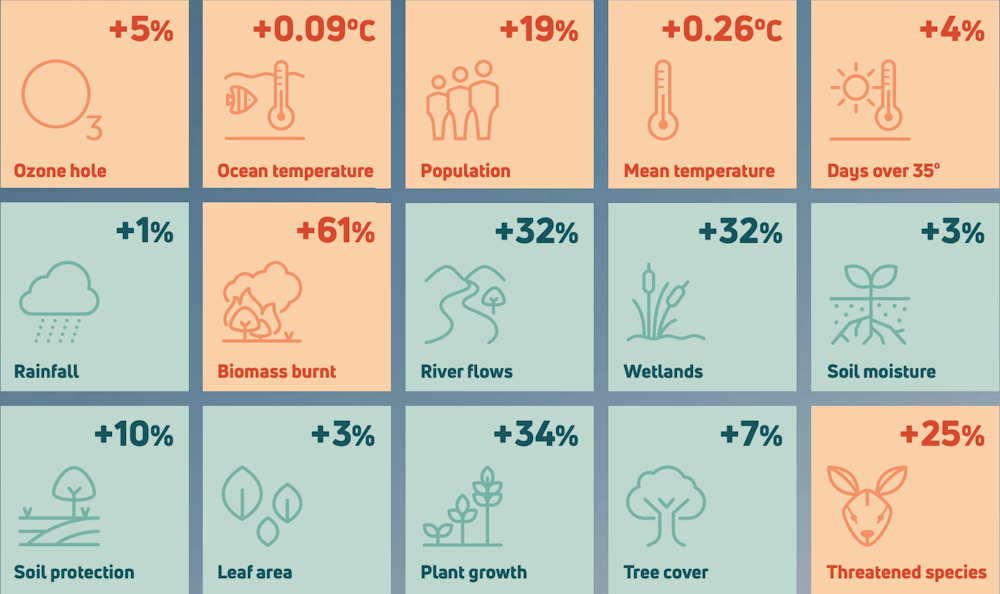
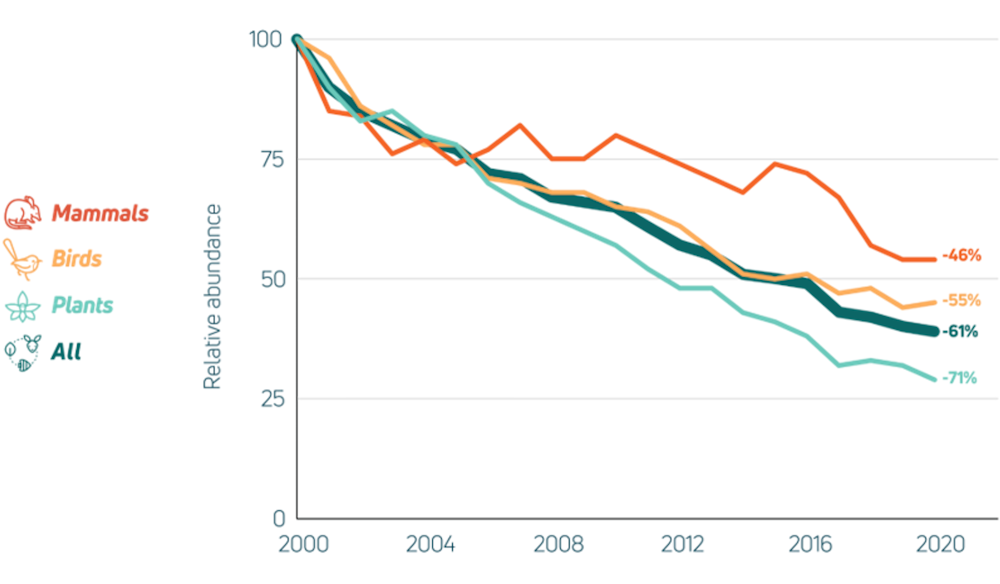

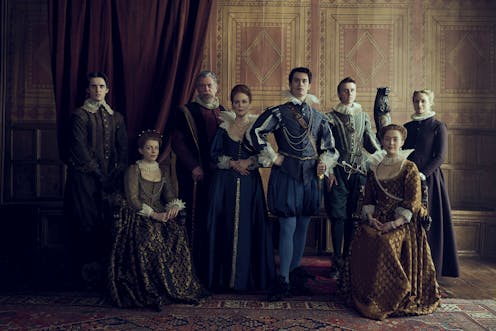
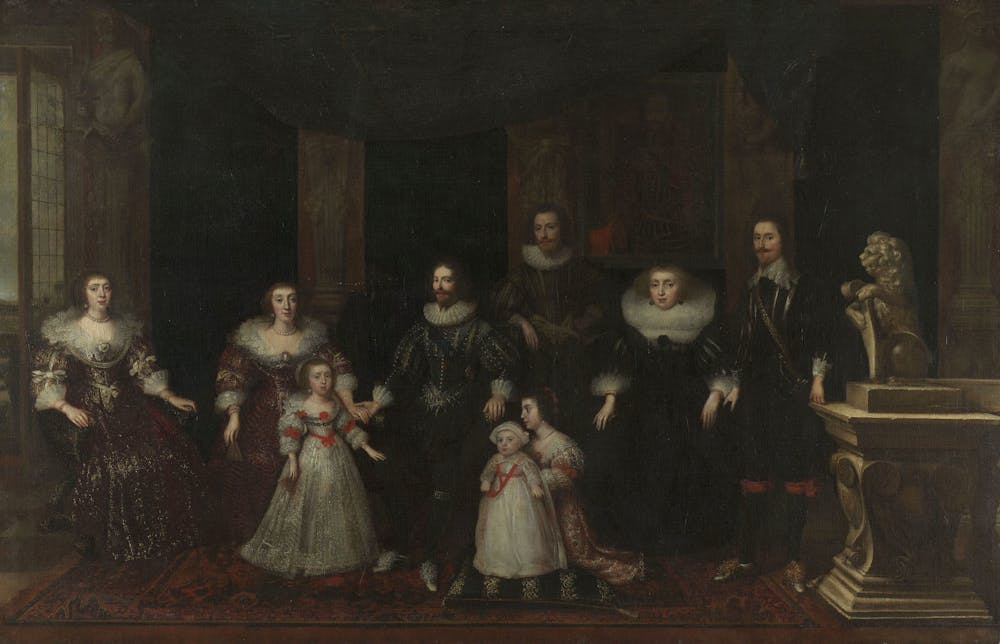































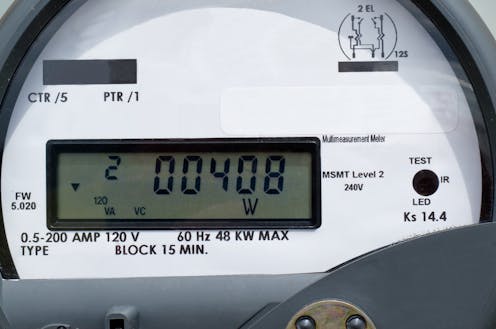
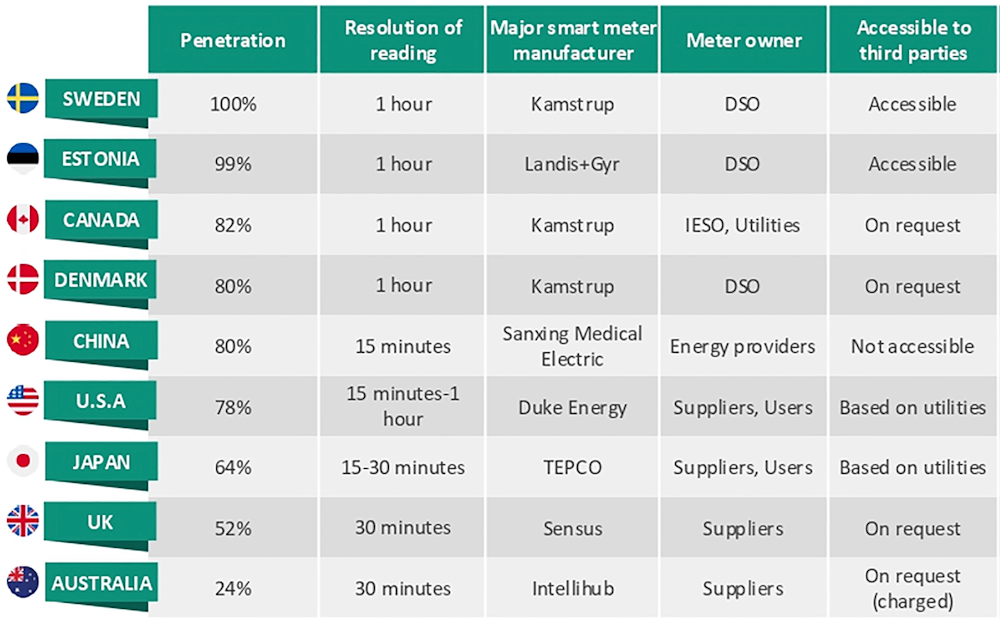








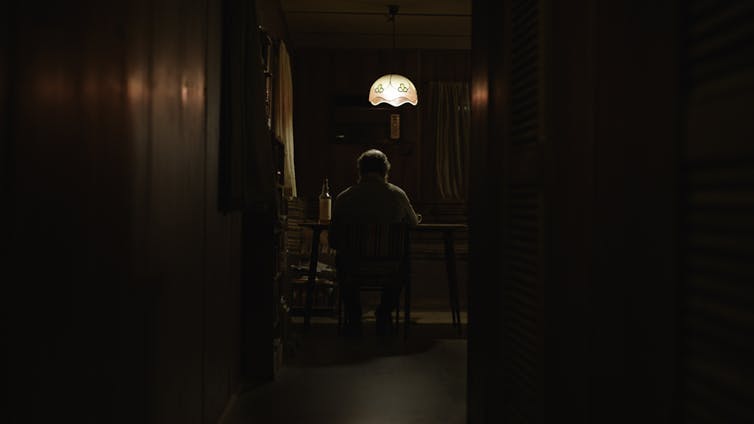




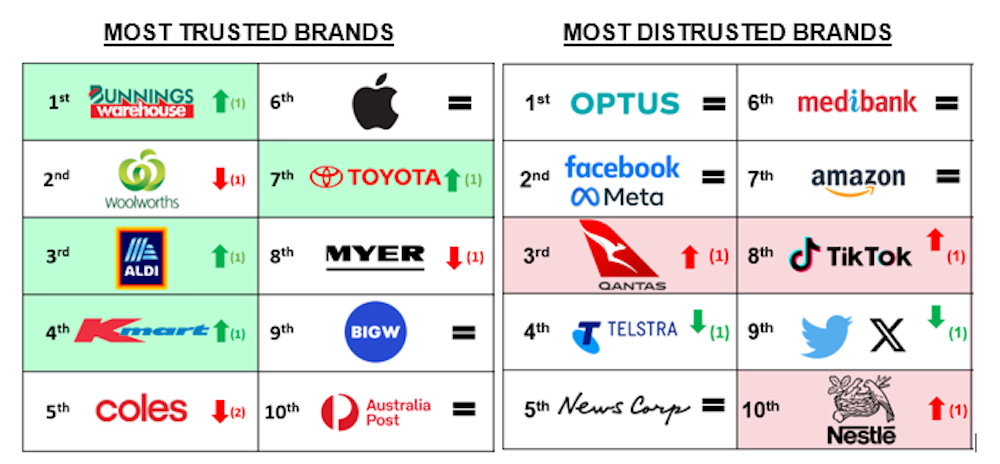

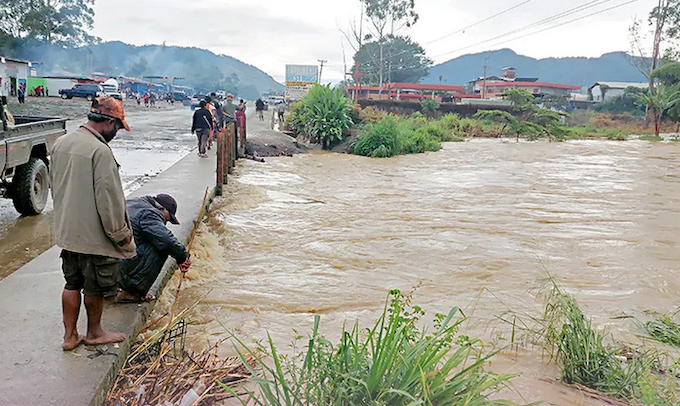






_-_RCIN_402607_-_Royal_Collection.jpg)

_(14757234486).jpg)
