AsiaPacificReport.nz article by Pacific Media Centre
From Popular Resistance
By Jason MacLeod
This testimony was written in collaboration with Mama Tineke and Daniel Rayer, two West Papuan activists who survived the 1998 Biak Massacre, and David Denborough from the Dulwich Centre. It contains the voices of many of the people of West Papua. MacLeod has collaborated with and is in part based on a similar testimony developed for the Biak Massacre Citizens Tribunal.
We have come to testify. There is much that we want the world to know.
We want you to travel with us to the remote places of Papua—Wamena, Paniai, the Jayawijaya Highlands, the Star Mountains, Mindiptana, Timika, Arso, Mamberamo, Biak, Merauke, Asmat and many other places. We want you to hear stories of suffering from the mouths of ordinary people. Our memories are clear and sharp.
“In this river our father was murdered.”
“On that mountain slope there used to be villages. They were destroyed by the military.”
“On that open field, our old men were forced to burn their koteka [penis sheaths] because they were considered primitive.”
“In the past that mountain was ours, now people have destroyed our mother”
We want you to travel with us to the sites of the massacres. We want to testify about the killings and the beatings with rifles.
Torture
We want to testify about the people who were disappeared, those who were imprisoned and those who were tortured.
There have been many forms of torture – the burning, the stabbing of the genitals, the rape of women.
These are some of the injustices that we want the world to know.
On some days bombs have fallen like rain. We have been up against Hercules aircraft and helicopters and boats. They had overwhelming power.
And after the massacres or murders, the injustices always continue.
Rather than acknowledge the truth, they tell lies.
The perpetrators are promoted not punished, while the victims are dragged into court.
Morning Star
Some of us have spent years in prison. One of us was jailed for 15 years simply for raising our Morning Star flag.
Over years we have faced one injustice after another and then another. There has been violation after violation since 1963. Entire villages have been destroyed. And Papuan people have been turned against other Papuans.
Injustices continue to this day. Today we face human rights violations, economic injustice, and every week thousands more migrants come in white ships and planes. We are becoming a minority in our land.
Those who resist face continuing discrimination. We are excluded from employment, education and health care. And for women, it has been worse. They suffered the rapes and assaults and then even more. They were shamed by their own families and often marriages broke apart. These are forms of double injustice and women’s suffering that no one should ever have to face.
These are just some of the injustices that we are testifying to today. We want the world to know about this.
We also want to testify to the effects of these injustices
Some of our bodies bear the scars.
Feeling fear
And so do our souls. We will never forget the sound of the killings. Some of us still feel the fear. For those who fled we don’t know if we will be safe when we return.
Other survivors have been left with physical disabilities and troubles in the mind.
The rapes brought shame – so much shame that some women did not seek medical help.
And sometimes survivors may feel guilty for being alive. The killings can make us doubt that we have a right to live.
There have been effects for children too. Fear came to the children who did not go to school for months.
When the foreigners have taken our land, cut down our forests and destroyed our rivers, this destruction affects us too. The loss of our sacred places has brought sickness to our people.
And sometimes we feel like we are slaves in our own land. Some of us have to struggle everyday just to feed our families and send our children to school.
But there is more that we want you to know.
Remembrance
We want you to know our testimonies of remembrance.
We are survivors and also witnesses. We have always remembered those who were killed. We will remember them until we die.
There are many ways that we do this.
We have cultural ways of joining in memory and in prayer. We place stones or wreaths of flowers. And there are traditional songs that we use to connect us with those who have died and with the ancestors. These are songs we can sing to those who have passed. We do this in a quiet place, a garden, a beach.
Or we remember through making statues of our loved ones, or photos, or lighting candles. We commune with our ancestors.
But we never forget them. They are with us. Those of us who are still alive have a responsibility to keep progressing the struggle. I have dreams of those who were killed in the jungle. They come to me in my dreams and they encourage me to keep going. I dreamt of them just last week. I listen to their voices.
If they knew that we were meeting together now, if they knew that we were gathering this testimony, they would be very happy. This would mean something to them.
Another world
They have gone over there to another world. We will always remember them.
We also want you to know the stories of our resistance, action and rescue
Our people have a long, long history of resistance. We Papuans have been resisting outsiders for centuries. Back to the 1850s, the Dutch who were seeking to protect their spice trade, faced more than 40 Papuan rebellions – both violent and nonviolent. Diverse tribes came together to resist.
Angganeta Menufandu, a Konor (indigenous prophet) from Biak Island, led a mass defiance of government and mission bans on wor (ritual singing and dancing) and urged her followers not to pay taxes and to withhold labor. When the Japanese invaded, towards the end of World War Two, they were initially welcomed but, after acts of cruelty, the movement for a free and independent West Papua began again.
The killings and massacres began in these times. And our resistance continued.
Our struggle for freedom continued after WWII when the US drove the Japanese out of West Papua at the cost of thousands of lives. And since 1963 we have resisted Indonesian government rule.
We remember our long history of resistance. This history raises us up. We carry it on.
Resistance groups|
Many of us have formed organisations of action. We come together for survivors of human rights abuses, for women, for people all over Papua. We form resistance groups.
We are students, young people, older people, women, men, religious leaders and traditional leaders. We take action on behalf of those who are living and those who are no longer alive.
Some of us, who witnessed massacres, were involved in acts of rescue on the days when bullets were raining down, and when the sky was on the fire. After the Biak Massacre our family gave shelter to two men who were fleeing for their lives.
My father gave them his clothes. He sat my sisters on their laps. We sat down quietly and we opened all the doors and all the windows. When the soldiers came in with all their weaponry, we stood there shaking.
As they held their guns at us, and asked us if we were hiding anyone, we said no. We were all shaking, my father, my sisters, myself, but we survived, and the two men survived too.
For four days they stayed with us. We had almost no food but my mother found a way to feed us. We are survivors, rescuers and resistors.
Right across Papua, and for so many years, we have continued to resist, to rescue and to raise the Morning Star. When we cannot fly our flag we have painted it on our bodies, stitched it into noken string bags.
When one of us was imprisoned for 15 years for raising our flag, he was offered amnesty if he apologised, but he refused. “Why should I say sorry? I have done nothing wrong. It is the Indonesian state who has to say sorry. And not just to me but to all the Papuan people. They have to return our sovereignty.”
Demanding freedom
And even though it is risky for us there are many times we have come out on to the streets in our thousands, even in our tens of thousands, to demand freedom.
These are just some of our stories of resistance. There are stories of resistance all over Papua.
We want you to know that building unity is not easy – but we are doing it
The Indonesian government and corporations use many methods to divide us. To turn Papuans against Papuans. If some people raise their voice, the company will come – or the government will come – and say, “Hey come into the office, let’s talk.”
They then give that person money, or a scholarship, or a good job. These are some of the ways our opponent uses to break our resistance.
But we keep taking steps to come together. There is a long history to this.
When the Amungme have a problem we build a traditional house. In this house – this Tongoi – people come, sit down and talk. We invite every leader and chief from every village. People come together in one mind.
When people then go out of the Tongoi they are going to bring a change. These are traditional ways of calling up assistance. In our culture, no one can stand up by themselves. Everyone needs everyone.
Coming together
So we keep taking steps to come together. We have now formed the United Liberation Movement for West Papua. Inside this United Movement are the National Federal Republic of West Papua (NFRWP), the West Papua National Coalition of Liberation (WPNCL), National Committee for West Papua (KNPB), National Parliament for West Papua (PNWP) and other non-affiliated groups.
We are strengthening our struggle and as we do so more and more people join us. People in other Pacific nations are raising their voices.
Our resistance is like a mat or noken – many strands woven together to become one.
Our resistance is like a spear, sharp and dangerous.
Our resistance is like a drum that speaks with the voices of the ancestors.
We want you to know about Papuan skills in survival
Despite all the injustices we have faced, we are survivors and we have many skills. We are wise about when to speak, when to stay quiet, and when to sing our songs. Some of these songs were written in prison for the future of West Papua. Some of our singers have been arrested and murdered. But we continue to sing freedom.
Papuan dances
We also have our dances. We wear our traditional dress, and dance traditional Papuan dances. Our Papuan culture helps us to love and care for one another. When we live inside our culture we are free.
We have prayer, faith in Jesus Christ, and God as our witness.
And we have each other. We are among friends and we want to acknowledge all those who have stood with us.
There are other Papuan survival skills too.
Like mothers’ skills of endurance. Mothers who sell fruit and vegetables to feed their families and send their children to school display their produce on hessian mats by the side of the road. Rain, hail, sun and dust they sit. They survive.
Some of us travelled by canoe with 43 others all the way to Australia to seek another life. Years later, some of us sailed back to West Papua with the Freedom Flotilla. The West Papuans, Aboriginal elders and other Australian supporters on board the Flotilla carried a message of peace and solidarity, and reignited ancient connections.
And we have skills in humour, in jokes and in laughter. Even in the hardest times, we pray, we sing, we dance, and somehow we find a way to laugh.
We want you to know about our hopes and our dreams
Free West Papua
We carry a big hope together … a free West Papua. We have held onto this hope for many, many years.
As we lift up these injustices to the light, then all the other cases will also be lifted up.
And we carry a hope for justice – international justice, western justice, West Papuan justice, spiritual justice.
That is why we are testifying today.
We are sharing with you testimonies of injustice.
We are speaking about the effects of these injustices.
We are sharing testimonies of remembrance.
We are sharing stories of resistance, action and rescue.
We are sharing the ways we build unity.
We are sharing our Papuan survival skills.
And we are testifying to our hopes and to our dreams.
What we are testifying here has been an open secret. We have always known this, God has always known this, but now you will know it too.
This means that now you are also witnesses.
So these stories and our hopes will now also be carried by you.
Thank you.
David Robie’s review of Jason MacLeod’s book Merdeka and the Morning Star
–]]>




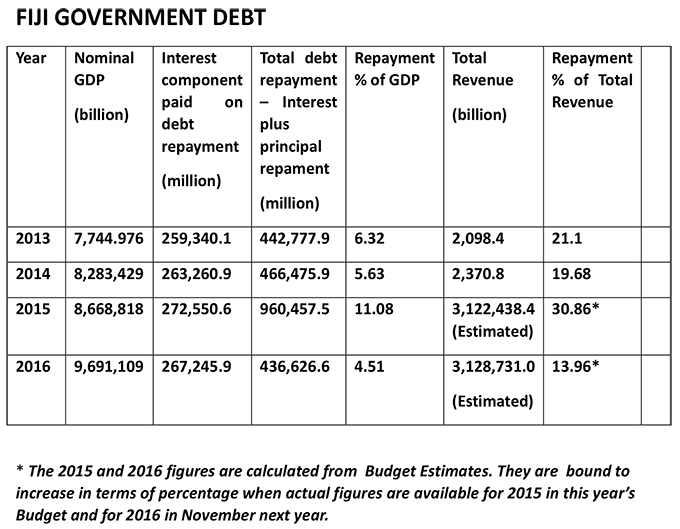 These are devastating figures. Remember that government’s actual revenue figures for 2014 and 2015 will only be known next year. So the percentage of debt to actual revenue will undoubtedly increase if government’s income projections are not met (like previous years, when they have not been met).
The government is very proud of its economic growth figures for 2013, 2014 and 2015 years. It is worth noting that this economic growth is much lower than in many Asian countries.
But the real test of our economy will be how it grows when the government stops borrowing and spending. The government’s own projections for economic growth has been revised downwards to 3.5 per cent in 2016 and about 3 per cent in 2017 and 2018.
Growing debt repayment requirements mean government has to find new sources of income to pay interest and principal every year. In the end, this can only be paid for if taxes increase or Government spending decreases. Either way, it is the people who will bear the consequences. It is the poorest people who will bear the biggest burden if Government services decline.
In the 2016 budget, the FijiFirst government was forced to break its election promises. In the election they promised they would keep the policy of zero VAT on basic food items. In the 2016 budget they broke that promise. Most people see little change in their household bills and the poor people only see their costs rising.
People think that the Opposition just opposes government policies and offer no alternative.
But the NFP, in its manifesto, had carefully proposed a reduction in VAT to 10 percent, leaving VAT on basic food items at zero. We had a credible plan to reduce wasteful expenditure that would not have created much pain for our lowest-income households.
The government recently claims that poverty has been reduced. Even if that is true, for the amount of public money it has spent, the reduction is very small. Unfortunately, the government has kept its statistics secret for so long that it is getting harder to trust their objectivity.
It seems that the government will only release the statistics that show good things. But, as Professor Wadan Narsey recently pointed out in an article in The Fiji Times, all the information should be available, for everybody to see, as soon as it is ready. In that way, all of us — the government, the Opposition, NGOs and the public — can work together to achieve the best solutions.
Of course these claimed reductions in poverty are before the 2016 Budget. Now the cost of basic food items has gone up, wages are not increasing and a huge number of people remain unemployed. So it is the next set of figures that will be the real test. Will the government delay releasing them if they aren’t good?
Economic management in Fiji has become dictatorial, confused and inconsistent, mostly reflecting a complete lack of understanding of how business and markets work.
Tax and tariff policies seem to veer in different directions in every budget, depending on which favoured businesses the government is listening to at the time. Meanwhile some businesses are being forced by the government to do business they do not want to do.
For example, government is forcing private pharmacies to participate in government’s free medicine scheme, even though these pharmacies cannot even recover their costs in doing so. If the government wants services from private business it should, like the rest of us, be required to pay those businesses properly and fairly.
The culture of servility and sycophancy has become so deeply ingrained under the FijiFirst government that some business people behave like obsequious fools. Few are prepared to criticise government policies.
Big businesses who are benefitting from bad government policies will pay the price in the long term. Their sycophancy and servility will to perpetuate a culture of bad governance, favouritism and ill-will. If the next government does not favour them, they will be the first to be demanding good governance — but it will be too late.
Deception
The economic and political deception of the FijiFirst government is likely to cost the country and our people dearly.
First, there is the political deception that has been created that Fiji has a “true democracy” under the 2013 Constitution. The government is forever talking about its “true democracy” — in its speeches, statements, even its advertisements. If this is “true democracy”, I wonder why it has to remind us so often? Is it because perhaps people aren’t convinced?
Many of Fiji’s international partners, including the United Nations Human Rights Council (UNHRC), have called for a review of the 2013 Constitution. They know it does not promote genuine democracy. The separation of powers, the derogations in the Bill of Rights, the ouster clauses, and the existence of draconian decrees all render the Constitution undemocratic. More importantly, they make it unsustainable in the future.
The dubious claim that this Constitution ensures “equal citizenry” (another favourite mantra of the government) is another deception. Just because we are now calling everyone a “Fijian” does not ensure the protection of minorities and other ethnic groups.
The reality on the ground is a stark reminder to many that there is no such thing as equal citizenry. Appointments in the civil service, government boards, and other government-controlled organisations, and selective awarding of government contracts continue to be based on patronage.
Recently the Fiji Sun has reported that the government is investigating staff members of Fijian Holdings Ltd (a private company) for “political agendas”. Apparently their crime is not to support the FijiFirst political agenda!
In the Ministry of Education, some staff have been promoted 5-7 ranks upwards in a single sweep, bypassing many qualified and experienced people. Similar cases have been highlighted in the Health Ministry.
This is a result of the lost independence of state institutions responsible for these appointments. The provision in the Constitution that all appointments below permanent secretary level will be done by the respective permanent secretaries, in consultation with the minister responsible, is a recipe for disaster. Ministers will demand senior positions for their cronies and yes-men.
Already we see ministers deciding which people are recruited, promoted and sacked at their whim. The current reform of the civil service by creating a Ministry of Civil Service and removing the Public Service Commission as an independent institution responsible for the civil service, is going to spell further disaster in the future and will be difficult to reverse.
Flawed economic policies, aimed mostly at looking good for politics, will cause much economic pain in the future. Fiji’s economy has grown modestly in the past few years on the back of remittances, tourism, borrowing and tax cuts. But borrowing and tax cuts are one-time tricks. After the so-called asset sales to fund spending in 2016, what will be the next rabbit that government will pull from its hat? That is when the economic pain will deepen, which will take a long time to reverse.
Can we get out of this rut? It is time to change course
The time for dictatorship and arrogance is over. It is now time for dialogue, it is time for bipartisanship in Parliament, it is time to free the media, and it is time to engage meaningfully with our development partners. It is time for the people to demand better. Moreover, it is time to change course.
The NFP has always advocated dialogue as a means of resolving national issues and our political record shines proudly untarnished from this approach.
I once again call upon the Prime Minister to shed his government’s patronising and dictatorial attitude and initiate a process of sincere dialogue on key national issues such as the review of the Constitution, a process to address the grievances of the indigenous Fijian people, the repealing of draconian decrees, and a process to address the deep concerns within the sugar industry.
Telling Opposition leaders to “jump in a deep pool”, telling gay people to shift to Iceland and shackling the nation with debilitating debt is not much of a political legacy.
True nationhood, common and equal citizenry can only be achieved if we work together. Reciprocity, humanity and national interest should be our guiding values if we are to succeed at bipartisanship, and not arrogance and condescension.
We continue to offer our hands for bipartisanship. It is now up to the government to reciprocate with sincerity and respect, in the national interest.
Dr Biman Prasad is an economist and former university professor. This article was first
These are devastating figures. Remember that government’s actual revenue figures for 2014 and 2015 will only be known next year. So the percentage of debt to actual revenue will undoubtedly increase if government’s income projections are not met (like previous years, when they have not been met).
The government is very proud of its economic growth figures for 2013, 2014 and 2015 years. It is worth noting that this economic growth is much lower than in many Asian countries.
But the real test of our economy will be how it grows when the government stops borrowing and spending. The government’s own projections for economic growth has been revised downwards to 3.5 per cent in 2016 and about 3 per cent in 2017 and 2018.
Growing debt repayment requirements mean government has to find new sources of income to pay interest and principal every year. In the end, this can only be paid for if taxes increase or Government spending decreases. Either way, it is the people who will bear the consequences. It is the poorest people who will bear the biggest burden if Government services decline.
In the 2016 budget, the FijiFirst government was forced to break its election promises. In the election they promised they would keep the policy of zero VAT on basic food items. In the 2016 budget they broke that promise. Most people see little change in their household bills and the poor people only see their costs rising.
People think that the Opposition just opposes government policies and offer no alternative.
But the NFP, in its manifesto, had carefully proposed a reduction in VAT to 10 percent, leaving VAT on basic food items at zero. We had a credible plan to reduce wasteful expenditure that would not have created much pain for our lowest-income households.
The government recently claims that poverty has been reduced. Even if that is true, for the amount of public money it has spent, the reduction is very small. Unfortunately, the government has kept its statistics secret for so long that it is getting harder to trust their objectivity.
It seems that the government will only release the statistics that show good things. But, as Professor Wadan Narsey recently pointed out in an article in The Fiji Times, all the information should be available, for everybody to see, as soon as it is ready. In that way, all of us — the government, the Opposition, NGOs and the public — can work together to achieve the best solutions.
Of course these claimed reductions in poverty are before the 2016 Budget. Now the cost of basic food items has gone up, wages are not increasing and a huge number of people remain unemployed. So it is the next set of figures that will be the real test. Will the government delay releasing them if they aren’t good?
Economic management in Fiji has become dictatorial, confused and inconsistent, mostly reflecting a complete lack of understanding of how business and markets work.
Tax and tariff policies seem to veer in different directions in every budget, depending on which favoured businesses the government is listening to at the time. Meanwhile some businesses are being forced by the government to do business they do not want to do.
For example, government is forcing private pharmacies to participate in government’s free medicine scheme, even though these pharmacies cannot even recover their costs in doing so. If the government wants services from private business it should, like the rest of us, be required to pay those businesses properly and fairly.
The culture of servility and sycophancy has become so deeply ingrained under the FijiFirst government that some business people behave like obsequious fools. Few are prepared to criticise government policies.
Big businesses who are benefitting from bad government policies will pay the price in the long term. Their sycophancy and servility will to perpetuate a culture of bad governance, favouritism and ill-will. If the next government does not favour them, they will be the first to be demanding good governance — but it will be too late.
Deception
The economic and political deception of the FijiFirst government is likely to cost the country and our people dearly.
First, there is the political deception that has been created that Fiji has a “true democracy” under the 2013 Constitution. The government is forever talking about its “true democracy” — in its speeches, statements, even its advertisements. If this is “true democracy”, I wonder why it has to remind us so often? Is it because perhaps people aren’t convinced?
Many of Fiji’s international partners, including the United Nations Human Rights Council (UNHRC), have called for a review of the 2013 Constitution. They know it does not promote genuine democracy. The separation of powers, the derogations in the Bill of Rights, the ouster clauses, and the existence of draconian decrees all render the Constitution undemocratic. More importantly, they make it unsustainable in the future.
The dubious claim that this Constitution ensures “equal citizenry” (another favourite mantra of the government) is another deception. Just because we are now calling everyone a “Fijian” does not ensure the protection of minorities and other ethnic groups.
The reality on the ground is a stark reminder to many that there is no such thing as equal citizenry. Appointments in the civil service, government boards, and other government-controlled organisations, and selective awarding of government contracts continue to be based on patronage.
Recently the Fiji Sun has reported that the government is investigating staff members of Fijian Holdings Ltd (a private company) for “political agendas”. Apparently their crime is not to support the FijiFirst political agenda!
In the Ministry of Education, some staff have been promoted 5-7 ranks upwards in a single sweep, bypassing many qualified and experienced people. Similar cases have been highlighted in the Health Ministry.
This is a result of the lost independence of state institutions responsible for these appointments. The provision in the Constitution that all appointments below permanent secretary level will be done by the respective permanent secretaries, in consultation with the minister responsible, is a recipe for disaster. Ministers will demand senior positions for their cronies and yes-men.
Already we see ministers deciding which people are recruited, promoted and sacked at their whim. The current reform of the civil service by creating a Ministry of Civil Service and removing the Public Service Commission as an independent institution responsible for the civil service, is going to spell further disaster in the future and will be difficult to reverse.
Flawed economic policies, aimed mostly at looking good for politics, will cause much economic pain in the future. Fiji’s economy has grown modestly in the past few years on the back of remittances, tourism, borrowing and tax cuts. But borrowing and tax cuts are one-time tricks. After the so-called asset sales to fund spending in 2016, what will be the next rabbit that government will pull from its hat? That is when the economic pain will deepen, which will take a long time to reverse.
Can we get out of this rut? It is time to change course
The time for dictatorship and arrogance is over. It is now time for dialogue, it is time for bipartisanship in Parliament, it is time to free the media, and it is time to engage meaningfully with our development partners. It is time for the people to demand better. Moreover, it is time to change course.
The NFP has always advocated dialogue as a means of resolving national issues and our political record shines proudly untarnished from this approach.
I once again call upon the Prime Minister to shed his government’s patronising and dictatorial attitude and initiate a process of sincere dialogue on key national issues such as the review of the Constitution, a process to address the grievances of the indigenous Fijian people, the repealing of draconian decrees, and a process to address the deep concerns within the sugar industry.
Telling Opposition leaders to “jump in a deep pool”, telling gay people to shift to Iceland and shackling the nation with debilitating debt is not much of a political legacy.
True nationhood, common and equal citizenry can only be achieved if we work together. Reciprocity, humanity and national interest should be our guiding values if we are to succeed at bipartisanship, and not arrogance and condescension.
We continue to offer our hands for bipartisanship. It is now up to the government to reciprocate with sincerity and respect, in the national interest.
Dr Biman Prasad is an economist and former university professor. This article was first 




 Port Vila’s Bauerfield Airport … three airlines have now temporariky suspended flights. Image: Vanuatu Daily Post[/caption]

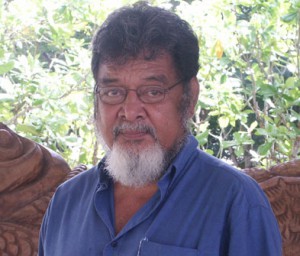
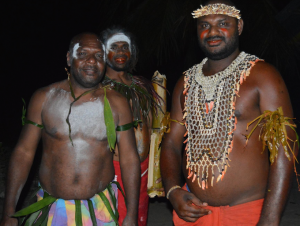 Milton Tyotam Kwaipo … multimedia studio in Rabaul. Image: Pasifika Renaissance.[/caption]

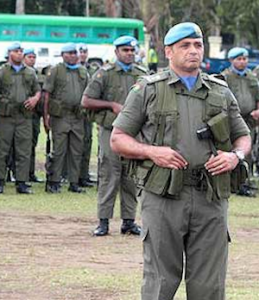 Fiji peacekeeping troops on parade. Image: Fijilive.com[/caption]