Page 1214

PNG election officials face big ‘one day’ voting challenge in capital

]]>

AsiaPacificReport.nz

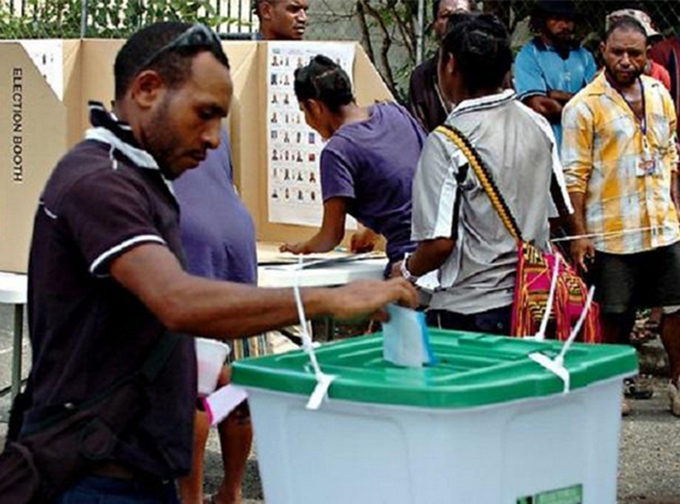
One-day polling for Post Moresby residents takes place today. Video: EMTV News

By Eric Haurupma in Port Moresby

With Papua New Guinea’s National Capital District (NCD) polling set to begin today, the challenge is on how election officials will conclude the polling successfully in one day.

This is because of the vast majority of people from different ethnic groups living in the city who will take the time to cast their votes.

Electoral Commissioner Patilias Gamato who has been wary of this situation, is confident of delivering a successful polling day for NCD.

Chief Secretary Isaac Lupari speaking during the security and election deployment briefing yesterday told media that a metropolitan city like Port Moresby was difficult to manage during polling.

Lupari said this was because NCD had a majority of people from different ethnic groups across the country who would turn-up for polling.

-Partners-

This was something the electoral commission, particularly Commissioner Patilias Gamato, had been aware of.

Gamato said polling in NCD required extra manpower and security personnel to deliver polling safely.

NCD Metropolitan Superintendent Benjamin Turi said NCD police would tighten security to make sure the city was safe during polling today.

Eric Haurupma is an EMTV News journalist who studied at the University of Papua New Guinea, graduating with a Bachelor of Arts in Journalism and Public Relations.

]]>

Transparency sets up free hot line to report corruption during PNG election

]]>

AsiaPacificReport.nz

A citizens video appealing to Papua New Guinean citizens to beat corruption and “vote for change”. Video: Mangi PNG

By Kiwiana Ngabung in Port Moresby

Transparency International PNG has provided a toll free hotline to report acts of corruption during Papua New Guinea’s general election.

Citizens have been called on to “make it our responsibility” to ensure a safe and transparent two-week general election.

The hotline number is (+675) 180 6000 or (+675) 7601 4636 and is operational from 8am-5pm during weekdays only. Voting began last Saturday at rolling voting places around the country.

Transparency International’s corruption hotline in Papua New Guinea. Image: PMC

Corruption, according to Transparency International, can be classified as grand, petty and political, depending on the amounts of money lost and the sector where it occurs.

In other words, it is a dishonest and unethical act for one’s own gain. And it comes in many forms – bribery, embezzlement, blackmail, threats, cheating and so on.

-Partners-

Voters, as well as any member of the public, are urged to report to Transparency International PNG, and help keep fairness at polling, counting venues and any other place for that matter.

Reporting corrupt practices by candidates, voters, candidate supporters and scrutineers will ensure a better future for Papua New Guinea — as the saying goes “an ounce of prevention is worth a pound of cure”.

Kiwiana Ngabung graduated from Datec Learning Centre in 2014 and is a contributor with EMTV Online.

]]>

Bryce Edwards Analysis: Bill English’s Dirty Politics scandal

Bryce Edwards Analysis: Bill English’s Dirty Politics scandal

[caption id="attachment_13635" align="alignleft" width="150"] Dr Bryce Edwards.[/caption] Is the Todd Barclay scandal the National Government’s 2017 version of Dirty Politics? Of course there are key differences, but there are also plenty of parallels. Either way, National will be hoping it’s a scandal with as little impact on the final election result.
Nicky Hager’s 2014 Dirty Politics expose gave the public an important insight into how politics really happens behind the scenes, and the Todd Barclay scandal is a useful refresher.
In Heather du Plessis-Allan’s must-read column from the weekend – see ‘This rot goes right to the top’ – she makes a direct link between the Barclay scandal and what happened in 2014, suggesting it will be a pity if the scandal dies down now, due to Barclay’s resignation: “The National Party is a party that knows how to silence a crisis. We saw it in 2014. The party sacrificed then Justice Minister Judith Collins in an attempt to shut down the Dirty Politics questions. Fast forward three years, Judith’s back and the questions remain unanswered.”
But du Plessis-Allan’s main point is that the latest Dirty Politics-style events indicate how serious the machinations have been at the top of the National Party: “We got an insight into how the National Party runs and, folks, it’s ugly. There are claims of hush money, claims of interference with a police investigation and claims of a cover up. It’s like a plot from House of Cards, minus a murder on the train tracks. Where’s the accountability from the Prime Minister? Bill English said Barclay had privately confessed to making the recordings, yet he allowed the junior MP to deny the same fact publicly for a year. Where’s the accountability from board member Glenda Hughes who allegedly advised the staffer to withdraw the police complaint? If proven, that seems like obstruction of justice. That comes with a jail term of up to seven years.”
[caption id="attachment_3138" align="alignleft" width="150"] Prime Minister Bill English.[/caption] In the Herald yesterday, Paul Little also drew direct parallels between the 2014 and 2017 scandals, suggesting that the latest one “did answer one question – whether the sorts of practices Nicky Hager called dirty politics and which its practitioners like to call by the self-romanticising name ‘the dark arts’ are still part of political culture? You bet. The least reprehensible of these practices is diversion – preventing people from looking at things you don’t want them to see” – see: The dark arts are still with us.
Little argues the whole crazy Barclay saga occurred because the young MP was simply operating in line with the culture of his party: “As it is, he can’t be blamed for having his own go at dirty politics, because, although for some people that book was the record of a scandal, for others it was a how-to guide.”
Political scientist Bronwyn Hayward asserts something similar: “This week raises questions about the prevailing culture within our politics, and especially the National party. Lying, dissembling, concealing the truth, spinning, call it what you like, these are powerful tools of dictators, autocrats, and populists but they also techniques that can undermine democracies” – see: Truth, lies, and democracy.
And she points out that other forms of subterfuge concerning the way National operates in government have recently come to light: “The Barclay fiasco emerged in the same week as it was confirmed that the former Minister of Trade Tim Groser used New Zealand’s GCSB to spy on competitors in his bid for the top job in the World Trade Organisation.”
If one of the main lessons of Hager’s 2014 book was that opportunism was overtaking principles in how politicians operate, then this has simply been proven again. Newstalk ZB’s Felix Marwick writes about this today: “The mess we’ve seen in the last week is the perfect example of what happens when politicians put politicking and self interest ahead of honesty and integrity. There’s simply no other explanation for the astounding level of idiocy that’s been on display from all involved” – see: Astounding levels of idiocy in Tapegate scandal.
The extreme attempts to control the political PR – as detailed so well by Hager – seem to be strongly at play again in 2017, and Marwick emphasises that it was this PR-related determination to close down any damage that ultimately made it much worse, leading to a serious erosion of Bill English’s public integrity. He says the delay in revealing the problem was critical: “when extra details were revealed it blew the whole gory spectacle wide open. The delay in their reveal makes the earlier actions to sweep the issue under the carpet look even worse. As a result we’ve see the Prime Minister make a series of changing, and at times conflicting, statements on what he knew, and when, about the matter. In short his credibility, and that of the government he leads, has been severely tested. The strongest currency any politician can ever have is the truth. They debase it at their peril.”
So overall, the public perhaps benefits from a further insight into how politics really works. In this sense, it’s worth reading two very good overviews of the story – see: Jane Clifton’s The demise of Todd Barclay and all the Gor-r-rey details, and Tracy Watkins’ ‘This is not how we do things’: How National’s composure was shattered by the Todd Barclay affair.
Spin-doctored politics
The National Government has gone into over-drive in its attempts at spinning this issue. And that probably explains how the prime minister has ended up making the scandal worse in recent days. When politicians are focused on PR instead of just being guided by principles and truth, they can easily make missteps in how they deal with such issues.
Hence, we’ve seen the spectacle of English giving further life to the scandal, in a rather incoherent fashion. First, in an interview with The Nation broadcast on Saturday, the PM claimed “It’s never been established that the alleged incident around the recording actually occurred” – see: I’m not a lawyer’ – Bill English on Barclay scandal.
And then on Sunday at the National Party conference he took a new line, revealing that “Barclay offered to play him the tape of his electorate agent’s conversations last year. English said he did not take up the offer” – see Audrey Young’s Bill English says Todd Barclay offered to play him tape.
As Duncan Garner suggests, “The current PM is certainly no John Key when it comes to sprinting backwards, blindfolded, out of a raging inferno without getting so much as singed” – see: In a week of slip-ups and sweatshops, Winston Peters wins.
Garner gives his very negative – yet probably quite correct – assessment of how politicians now operate when it comes to potential bad news: “What I learned in my time at Parliament was two things, sadly sceptical and breathlessly cynical, but this was my experience of a 17-year lag in the place. 1: The truth usually comes out, and 2; an MP’s default setting, when under pressure, is to lie.”
Of course, the upshot is that the obfuscation and overt spin doctoring repeatedly on display leads the public to want to “drain the swamp” according to Radiolive’s Mike Roke: “We are tired. Tired of the lies and the spin that we get day-to-day from the people we have elected to represent our interests. Trump, Brexit, Theresa May’s disastrous snap election – what more proof do politicians need to see that the people have had enough?” – see: Politicians like Todd Barclay are why Donald Trump won.
According to Roke, the spin-focused politics and Barclay-type cover-ups mean a new type of politics is necessary: “He is only 27 and was already showing signs of a career liar in the making. Imagine what kind of sociopath he could have become with another couple of decades in the Beehive? As much as I despise the phrase and despise the man who said it even more – let’s drain the swamp. Time to get rid of these career politicians. The ones that have been in the game far too long and have forgotten why they are there in the first place. To serve the people of New Zealand. To look out for the best interests of the people in their electorate. Let’s get some fresh blood in there. Young minds with fresh ideas that aren’t there for the money, cars, travel and benefits. Fresh ideas to fix up the absolute mess the ‘experienced’ politicians have left us in with housing, immigration, water etc.”
Dirty Politics inside the National Party 
The Barclay scandal also helps illustrate some of the internal National Party machinations and in-fighting that the public wouldn’t normally be aware of. After all, at the centre of this scandal was a war going on between, not just one MP and one staff member, but also between wider factions, officials and agendas.
The most interesting new aspect in this regard is revealed in Melanie Reid’s latest must-read Newsroom article, Barclay affair: What the board knew. This deals with some of the attempts that were made within the local Clutha-Southland National Party branch to get Barclay de-selected, and also some of the involvement of the National Party’s president and board members.
Apparently, prior to Barclay’s re-selection as the National candidate in December last year, local activists made the party president and board aware of why they regarded the MP an inappropriate representative. According to Reid, “The National Party President Peter Goodfellow and its board allowed Todd Barclay to be selected as a candidate for the upcoming election despite knowing he was clearly unsuitable to be an MP.” She says that “In total, the board received at least nine letters outlining Barclay’s unsuitability as an MP.”
And for more on the involvement of key National board member Glenda Hughes, see Bernard Hickey’s Hughes stonewalls Dickson questions. This report from the National Party’s weekend conference, also tells of how Barclay’s retirement was dealt with: “Retiring MPs were welcomed onto the stage to receive a gift from English. Barclay was not present and when his name was read out, he was the only one who was not applauded by the conference.”
The division between Barclay’s supporters and opponents in Clutha-Southland also seems to be replicated in the wider party and caucus – and today Richard Harman explains: “There is considerable sympathy for Barclay both within the caucus and around the party board table where some people were familiar with the persistent series of allegations levelled against him by the so-called ‘evil six’ group of Clutha-Southland party members who opposed him being the MP. That group is said to have been close to English when he was the Clutha-Southland MP” – see: The Barclay issue unravels – attention turns to English.
Also writing about these divisions, Rob Hosking says, “At an electorate level, there is clearly a divided Clutha-Southland party organisation, and some of this division is symbolic of a wider division within the National Party. You can characterise it in crude terms as the division between Queenstown and Dipton: between the wealthy and somewhat flashy new arrivals into the district and the more traditionalist farmers and rural service parts of the National Party coalition” – see: Nats’ internal scars could bite worse than Barclay.
And there’s another “Dirty Politics” dimension to these divisions, with supporters of Barclay tending to be close to the Judith Collins faction in caucus. Unsurprisingly, then, Cameron Slater has been blogging in Barclay’s favour and against Bill English. As Mike Williams says, at the time that Barclay’s scandal started unfolding, “The National Party factions were by this time leaking like sieves, as anyone who consults the Whale Oil blog will discover” – see: Tough week for two political leaders.
If you do consult Cameron Slater’s blog today, you will find posts like HDPA on the Bill’s balls up. In this post, Slater aims squarely at the Prime Minister: “It’s not over yet. There is disquiet amongst the backbench, serious disquiet. Ministers are also speaking in hushed tones, and these are ministers you’d never have thought would speak against the leadership so wedded they were to John Key and then to Bill English. Bill English has lost control of his caucus, with many thinking that if he is prepared to get involved in local electorate petty grievances and let his personal animosity cloud his thinking then perhaps he shouldn’t really be leader much less Prime Minister. The rumblings are there, they will spill over if this ends up before the Privileges Committee. The fact that Bill English can’t shut up, and every time he opens his gob he adds more intrigue suggests his time might be up one of the other. The media smell blood, and they know Bill is lying. It is not going to end well.”
Finally, for satire on the scandal, see Steve Braunias’ Secret Diary of Todd Barclay.
Today’s content
 
All items are contained in the attached PDF. Below are the links to the items online.
Todd Barclay scandal
Lizzie Marvelly (Herald):… for whom the clanger tolls
Steve Braunias (Herald): Secret Diary of Todd Barclay
Melanie Reid (Newswire): Barclay affair: What the board knew
Paul Little (Herald): The dark arts are still with us
Kerre McIvor (Herald): Under a mountain of shame
Heather du Plessis-Allan (Herald): ‘This rot goes right to the top’
Chris Keall (NBR): Memo to Bill: zip it
Bernard Hickey (Newsroom): Hughes stonewalls Dickson questions
Mike Williams (Hawke’s Bay Today): Tough week for two political leaders
Tracy Watkins (Stuff): One all on the political score card
Michael Reddell (Croaking Cassandra): Leadership and accountability
No Right Turn: Pull the other one
National Party conference
Bernard Hickey (Newsroom): PM dangles vague tax cut carrot
Felix Marwick and Gia Garrick (Newstalk ZB): Nationals’ tax cut pledge ’empty promises’ – Labour
Ella Prendergast (Newshub): Bill English joins Snapchat
Liam Hehir (Kiwiblog): Volunteers
Labour’s campaign for change scandal
Pete George (Your NZ): More on Labour’s intern scheme
Pete George (Your NZ): Labour policy coup attempt?
ODT: Editorial – Lacking leadership
Lizzie Marvelly (Villainesse): Marae are not slums. Interns are not slaves.
David Farrar (Kiwiblog): A complaint to the Speaker
Pete George: The McCarten risk
Steven Cowan (Against the current): The curious politics of Martyn Bradbury
NZ First
Greens
Election
Dave Armstrong (Dominion Post): Bill screws up and Andrew runs to help
David Farrar (Kiwiblog): How about door knocking?
Pete George (Your NZ): Morgan/TOP touring the south
David Farrar (Curia): Roy Morgan poll June 2017
Tim Murphy (Newsroom): The Sure Things: Erica Stanford
Media
Mark Jennings (Newsroom): Journalism loses a true hero
Martin van Beynen (Press): The age of umbrage weakens us all
Foreign Affairs
Other
Rodney Hide (NBR): ‘Big data’ won’t save state’s health system (paywalled)
Nevil Gibson (NBR): Inequality myths hide poverty trap (paywalled)
Russell Brown (Matters of substance): The frustrating politics of drug reform
]]>

NZ law student takes government to court over climate policy ‘failure’

]]>

AsiaPacificReport.nz

Hamilton law student Sarah Thomson speaking about her court case against the NZ government. Video: Greenpeace NZ

A New Zealand law student is battling the country’s government in court today over an alleged “failure” to properly address climate change, reports Greenpeace.

A win could potentially mean the government would be forced to go back to the drawing board and come up with more ambitious climate targets.

Along with similar lawsuits, it will set a bar for the type of action that developed countries must take to prevent dangerous climate change.

Sarah Thomson, 26, claims that as a developed country, New Zealand has an obligation under the Paris Agreement to set a target in line with the scientific consensus.

“So far the New Zealand government has shirked its responsibilities, set unambitious and irrational targets, and justified it all by saying we’re too small to make a difference,” she says.

“Climate change is a global issue affecting us here and now, and we all have a responsibility to act. Every year we’re experiencing more extreme weather events, including cyclones, droughts and floods, which are leaving entire communities devastated.

-Partners-

“I’m young and I’m terrified of a time when I might have to look my kids in the eye and explain to them how we let this happen.”

Inspired by global litigation
Thomson decided to launch the lawsuit after being inspired by global climate change litigation, including the 900 Dutch citizens who filed a case against the Dutch government, and a US case where 21 kids are taking on the Federal government and fossil fuel companies.

The litigation is the first of its kind in New Zealand and will be heard over the course of three days, starting from today, in the Wellington High Court. The outcome of the case is not likely to be known for several months.

Greenpeace New Zealand has helped organise a public mobilisation in support of Thomson, which is taking place this morning on the steps of the court.

The case has the backing of several world-renowned climate change experts, including the “father of climate change awareness”, former NASA researcher, James Hansen, who is a witness for the case.

Intergovernmental Panel on Climate Change (IPCC) author Dr James Renwick will also be giving evidence.

One of the targets under review is New Zealand’s Paris Agreement commitment to reducing greenhouse gas emissions by 11 percent below 1990 levels by 2030. The lawsuit will ask the Minister for Climate Change Issues, currently Paula Bennett, to justify the way in which this target was set.

In her preliminary statement of defence, Bennett has denied that the New Zealand government needs to set a target that strengthens the global response to climate change to hold warming to “well below” 2C, with an aim of 1.5C, as stipulated by the Paris Agreement.

Lawyer Dennis van Berkel, who successfully argued the Dutch climate litigation case in 2015 setting a global precedent, said he would be watching what happens in New Zealand with keen interest.

“The Dutch case proves that all governments have a legal duty to protect their citizens against climate change by doing their part to lower emissions,” he said.

“Given the notoriously inadequate climate policies of New Zealand, this case may lead to the same conclusion. Global climate change litigation is growing, and all eyes are now on this hearing in this very important case.”

New Zealand has the second-highest level of emissions per GDP unit in the OECD and the fifth-highest emissions per capita.

A recent Greenhouse Gas Inventory report confirmed that as of 2015, net emissions have increased by 63.6 percent since 1990.

The New Zealand climate case is one of the many people-powered legal actions taking place around the world related to climate change.

These include actions initiated by frontline communities in the Philippines, senior women in Switzerland, indigenous peoples in Canada, farmers from Peru and Pakistan, youth in Norway, Pakistan, Uganda, and the United States, and individuals and NGOs in Belgium, the Netherlands, and Sweden.

In each of these cases, people are using the power of the law because governments and fossil fuel companies are failing to protect and to respect human rights to a safe, stable climate and healthy environment.

]]>

More than 100 PNG border soldiers from Papua frontier for polls

]]>

AsiaPacificReport.nz

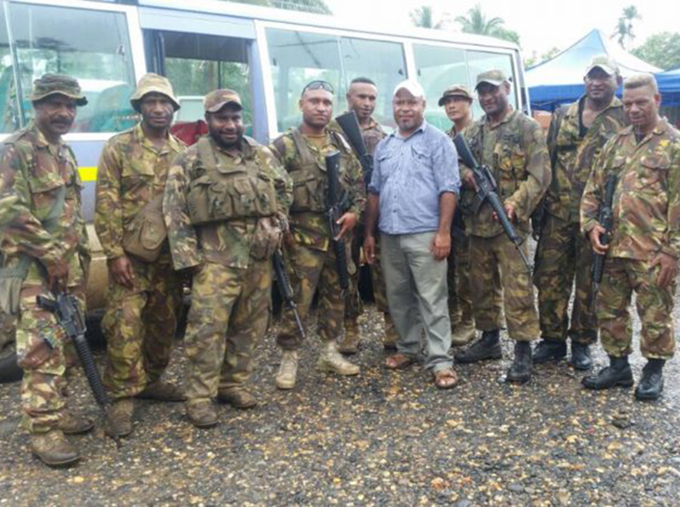
PNG border patrol soldiers … drafted for elections security duty. Image: EMTV News

Pacific Media Centre Newsdesk

The Joint Security Operation in Papua New Guinea’s Western Province will see more than 100 Defence Force troops assisting in the two-week general election that began on Saturday.

“These soldiers will come from the Weam Border operations of Western Province,” Western Province Elections Manager Max Paul said yesterday, reports EMTV News.

The Weam Border straddles the frontier between the Indonesian province of Papua and Papua New Guinea.

The rolling elections go into the third day this morning.

“We have over 100 polling teams,” Paul said.

Polling materials for the province were ready with most having been delivered by air and dinghy through the many river systems in the province.

-Partners-

“There has been little security concerns during the campaign period, and we hope that this will continue throughout the polling and counting days,” Paul said.

The three electorates in the province are North Fly Open, Middle Fly Open, and South Fly Open.

]]>

Annie Goldson talks to RNZ’s Sunday on the Kim Dotcom doco

]]>
Evening Report
Evening Report
Annie Goldson talks to RNZ’s Sunday on the Kim Dotcom doco
Loading
/

AsiaPacificReport.nz

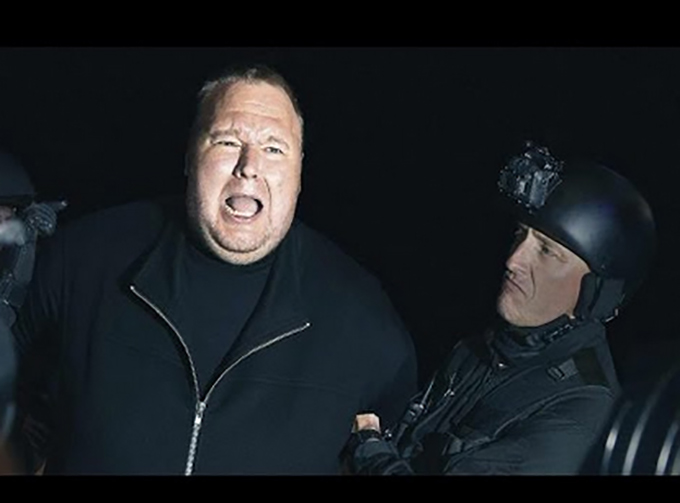
Kim Dotcom … the “most wanted man online”. Image: Still from the documentary Caught in the Web

Pacific Media Watch Newsdesk

Kim Dotcom: Caught in the Web is the new film by award-winning documentary maker Annie Goldson and Alex Behse.

Three years in the making, and part-funded by the New Zealand Film Commission, the film tracks the controversial story of Kim Dotcom, who Dr Goldson, a professor in media and communication at the University of Auckland, got to know throughout the process.

She talks to RNZ Sunday’s Wallace Chapman about making the documentary, the Kim Dotcom story, internet surveillance, independent film making in New Zealand and the polarised issues around corporate copyright and internet “piracy”.

http://podcast.radionz.co.nz/sun/sun-20170625-1005-annie_goldson_the_kim_dotcom_movie-128.mp3


Synopsis:

The larger-than-life story of Kim Dotcom, the “most wanted man online”, is extraordinary enough, but the battle between Dotcom and the US Government and entertainment industry, being fought in New Zealand, is one that goes to the heart of ownership, privacy and piracy in the digital age. Three years in the making, this independent film chronicles a spectacular moment in global online history, dubbed the “largest copyright case” ever and the truth about what happened.

Screening at next month’s NZ International Film Festival

]]>

Rights groups condemn ‘cowardly censorship’ bid over Al Jazeera

]]>

AsiaPacificReport.nz

Pacific Media Watch

Press freedom and human rights advocates, journalists and social media users have condemned a demand by Saudi Arabia and other Arab countries to shut Al Jazeera television network and other media outlets in Qatar.

The Arab states reportedly issued a 13-point list on Friday, demanding the closure of all news outlets that it funds, directly and indirectly, including Arabi21, Rassd, Al Araby Al Jadeed, Mekameleen and Middle East Eye.

“We are really worried about the implication and consequences of such requirements if they will ever be implemented,” said Alexandra El Khazen, head of Middle East and North Africa desk at Reporters Without Borders, a non-profit organisation promoting press freedom.

Speaking to Al Jazeera from Paris, Khazen said: “We are against any kind of censorship and measures that could threaten the diversity in the Arab media landscape and pluralism, for instance.

“The Arabic media landscape should make room and accept the broadest range of viewpoints instead of adopting repressive measures against alternative viewpoints that are found to be critical of some governments.”

Khazen also expressed concern over the impact of the demands on the employees of the mentioned media outlets.

-Partners-

“Some of them may come under pressure to resign or to choose to do so to be aligned with the policy of their country, so we are currently investigating this,” she said.

Sarah Leah Whitson, executive director of the Middle East and North Africa Division at Human Rights Watch, called the Saudi-led bloc’s demand “absurd”.

“This is just an attempted expansion of the cowardly censorship they have inflicted on their own citizens, but it will fail,” she said.

‘Monstrous request’
Tim Dawson, president of the UK’s National Union of Journalists, expressed his “absolute horror” in reaction to what he called a “monstrous request” and urged the Saudi government to withdraw the demands.

The Committee to Protect Journalists (CPJ) also condemned “the use of news outlets as a bargaining chip” and “urged all countries involved in this dispute to stop holding media hostage” to political differences.

“The Gulf region needs a vibrant free press and news outlets based there must be allowed to report freely,” said Joel Simon, the executive director of CPJ.

Meanwhile, The Guardian criticised the efforts to silence Al Jazeera as “wrong” and “ridiculous”.

“The attack on Al Jazeera is part of an assault on free speech to subvert the impact of old and new media in the Arab world. It should be condemned and resisted,” the UK-based newspaper said in an editorial.
Al Jazeera’s reaction

“We are stunned by the demand to close Al Jazeera,” Giles Trendle, the acting managing director of Al Jazeera English, said.

“Of course there has been talk about it in the past but it is still a great shock and surprise to actually see it in writing. It’s as absurd as it would be for Germany to demand Britain close the BBC.”

Trendle said Al Jazeera was going to continue its “editorial mission of covering the world news in a fair and balanced way”.

“We call on all governments to respect media freedom. We hope other media organisations will support our call to defend media freedom,” he added.

Roots in Arab Spring
Trendle said the roots of the demand to close Al Jazeera went back to 2011 and the Arab Spring.

“At that time, Al Jazeera was covering the dreams and the aspirations of a new generation of people. We provided the platform for the voice of the man and the woman in the Arab streets. We were covering those protests and we were providing a diversity of viewpoints. We were really the voice of the voiceless. I think there are some regimes in the region that don’t appreciate that diversity of views. I think that’s the reason for what’s going on here.”

Yaser Abuhilalah, director of Al Jazeera Arabic, called the demand to shut Al Jazeera a crime violating freedom of speech.

“I am against demands to close any media outlet, because it is a crime, a violation of basic human rights to freedom of speech,” Abuhilalah told Sputnik.

“If Al Jazeera violated something, anyone could sue it – in a Qatari court or in [a court of] any other country, it is the legitimate right of every person harmed by the media. But the demand to close [Al Jazeera] is a crime.”

Saudi Arabia, the UAE, Bahrain and Egypt severed relations with Qatar on June 5, accusing it of supporting “terrorism”. Qatar has denied the allegation.

Qatar’s Foreign Minister Sheikh Mohammed bin Abdulrahman Al Thani has said that Al Jazeera Media Network was an “internal affair” and there would be no discussion about the fate of the Doha-based broadcaster amid the Gulf crisis.

Curbing of citizens
To stem the flow of negative reactions, Saudi Arabia, UAE and Bahrain took steps to curb their citizens from expressing opinions that opposed their policies.

The UAE announced that any objections to the UAE’s strict measures against the government of Qatar or expression of sympathy with Qatar would be a crime punishable by a prison sentence of 3-15 years and a fine of no less than US$136,000 (500,000AED), whether on a social media platform or via any written or spoken medium.

The criminalisation of sympathy with Qatar was implemented in Saudi Arabia and Bahrain with slight differences in the length of prison sentences and size of fines.

Khazen said the decision to punish citizens was a “huge violation of freedom of speech and information that could have serious implications”.

Al Jazeera reporters have often come under fire, with Egypt imprisoning Arabic reporter Mahmoud Hussein, who has been in jail for 185 days for “disseminating false news and receiving monetary funds from foreign authorities in order to defame the state’s reputation”.

Al Jazeera’s Baher Mohamed and Mohamed Fahmy spent 437 days in jail before being released. Australian journalist Peter Greste spent more than a year in prison in Egypt.

Al Jazeera is the only free-to-air global news channel available on New Zealand’s Freeview platform.

]]>

Voting gets under way in PNG national elections

]]>

AsiaPacificReport.nz

Voting begins in the Papua New Guinea general election today. Image: Loop PNG

Papua New Guineans began voting today in the two-week-long rolling ballot at different polling places across the country.

The elections Media Centre was opened yesterday by Electoral Commissioner Patilias Gamato.

It is located at the Electoral Headquarters in the capital of Port Moresby. The centre will function as an information hub for accredited journalists throughout the polling and counting period, reports EMTV News.

It will be operational from today until July 25.

Commissioner Gamato said it was the main instrument for the PNGEC to communicate and share election related information and counting results.

As Prime Minister Peter O’Neill wrapped up his election campaign yesterday by visiting remote villages in the Ialibu-Pangia district of his Southern Highlands province, his ruling People’s National Congress (PNC) faced a third serious disruption, this time in the Simbu provincial capital of Kundiawa.

Incumbent Governor Noah Kool, who is also a PNC candidate, was pelted with stones by rival supporters in the final election rally meeting in the town, reports Loop PNG.

-Partners-

He was taken to hospital and treated for minor abrasions and lacerations to the head.

Kundiawa has one-day polling on Monday.

Women standing in the current election number 165 out of the total 3332 candidates contesting 111 seats in the National Parliament.

]]>

PMC to host visiting Pacific exchange student journalists

]]>

AsiaPacificReport.nz

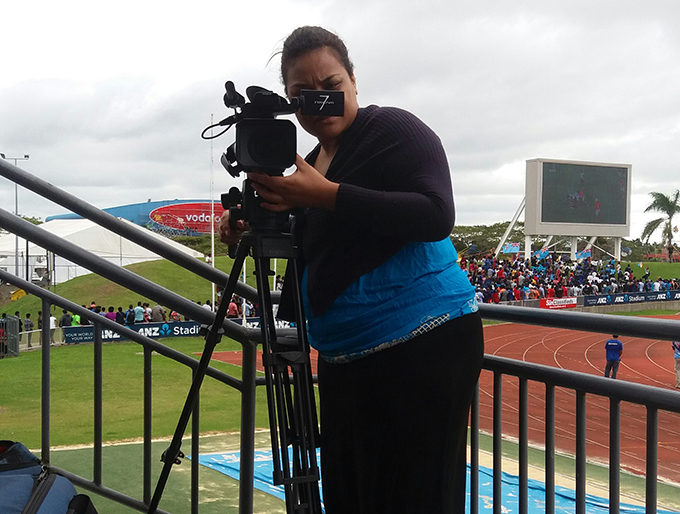
University of the South Pacific’s Linda Filiai filming in the Fiji National Sports Stadium … “once in a lifetime” opportunity. Image: PCF

Pacific Media Watch News Desk

The Pacific Media Centre will host three student journalists on Monday in the opening session of a two-week attachment media programme sponsored and organised by the Auckland-based Pacific Cooperation Foundation.

Students Linda Filiai and Shivika Mala, who were editors of University of the South Pacific’s award-winning student journalist newspaper Wansolwara, will be in New Zealand for two weeks, working with several media organisations to enhance their journalism skills, reports USP News.

USP’s Shivika Mala … “I love listening to people’s stories.” Image: PCF

They expect to be joined by Joshua Kirihua of PNG’s Divine Word University and Joshua Lafoai of the National University of Samoa journalism school.

This is a “once in a lifetime” opportunity, says Filiai.

“I am very proud to be part of this media internship. It will be an opportunity to develop a network with professional journalists, exchange ideas and to learn from one another.”

Joshua Kirihua of Papua New Guinea’s Divine Word University. Image: PCF

Mala says she applied for the internship in the hope of broadening her knowledge and skills and experience of how the New Zealand media industry works.

-Partners-

“I love listening to people’s stories because what may affect them, may affect us as well,” she says.

The pair say “this will further develop our skills, which will be helpful when we start work next year”.

Striking partnerships
Dr Shailendra Singh, coordinator of USP Journalism, says the internship is the outcome of efforts to strike partnerships and strategic alliances with organisations to help broaden student experiences and learning.

He says Mala and Filiai are top students who deserve the award.

Last year, Mala won the Fiji Times Award for the Best News Reporter while Filiai scooped the Communications Fiji Limited Best Radio Student Award.

Brandon Ulfsby of NZ’s Auckland University of Technology. Image: PCF

Two New Zealand students will be going to the Pacific Islands, including AUT’s Brandon Ulfsby, who is off to Samoa on Sunday.

Next month, on his return to New Zealand, Ulfsby and a fellow New Zealand Pasifika student journalist at AUT, Hele Ikimotu, will embark on a media internship with the NZ Institute for Pacific Research organised by the PMC.

Last year, former Wansolwara editor Sonal Singh was selected to take part in the internship.

Pacific Media Centre director Professor David Robie says he is pleased that the PMC has been able to give support to the initiative project since the beginning.

“For three years in a row we have had AUT Pacific student journalists selected for this exchange and it demonstrates the quality of our students,” he says.

On Monday, the exchange students will visit AUT’s state-of-the-art television studios, media centre and the PMC. They will also feature on the PMC’s weekly radio programme Southern Cross on Radio 95bFM.

]]>

40 years of PNG independence – ‘why are our women still dying?’

]]>

AsiaPacificReport.nz

Gulf Regional candidate, Ruben Giusu (right) refuses to sit on the chair made for him by the people but instead carries a young boy on it. The PNG elections begin tomorrow. Image: Loop PNG

By Julianna Waeda in Kerema, Papua New Guinea

Although linked by road to Papua New Guinea’s capital of Port Moresby and Waigani, Gulf province continues to be the least developed in the country and something has to be done about it.

Gulf Regional candidate Ruben Giusu in the PNG general election starting tomorrow says Gulf province out of all the provinces in the country should be well developed by now.

But, he says, successive governors have continued to neglect the province because of the mismanagement of funds.

Running under the Pangu Pati ticket, Giusu told the people of Kikori and Baimuru where he spent eight days living among the people and hearing their stories.

“We’ve had over 40 years of independence, so why are our women still dying in these rural areas because of lack of better health services?” he asked.

“The stories I heard are heart wrenching. And this is a province that is linked to the nation’s capital and Waigani by road.”

-Partners-

Police officer Giusu has served as the former provincial police commander in Gulf province.

Greater benefits promised
He also said that the landowners in resource areas had been promised greater benefits over the years but still nothing had been done to make that a reality.

Giusu said that if elected he would ensure that proper land vetting was done for resource landowners, schools were built to keep its human resource in the province, local SMEs were supported, rural health clinics and airstrips were back up and running, local farmers had access to markets and women in the province were supported and given a voice.

“I want to go in and clean up the system and ensure that the people benefit, especially the landowners and the people living in the rural areas of Gulf. We can’t talk about big things when the basics are not there.

“We can’t keep making the same promises every five years, these are people’s livelihood we are talking about. The province and its people need to feel and see the change in their lives,” he said.

Voting begins in PNG’s 2017 national election tomorrow and closes July 8 with 165 women among a total of 3332 candidates contesting the 111 seats in the National Parliament.

]]>

Bryce Edwards Analysis: Todd Barclay’s downfall – who loses and why

]]>

Analysis by Dr Bryce Edwards: Todd Barclay’s downfall – who loses and why [caption id="attachment_14716" align="alignleft" width="300"] National Party MP Todd Barclay (pictured above) announced his resignation over illegal taping allegations.[/caption] The Todd Barclay scandal reminds the public why they distrust and sometimes despise politicians. Therefore, the biggest long-term impact of the scandal might be to contribute to a nascent anti-Establishment feeling within the New Zealand electorate. The convoluted story of what went on between Todd Barclay and his staff may prove to be a fleeting political scandal, as the news media and public move on to other issues. This is nicely summed up in two minutes by Mike Hosking in his video from yesterday: Is Barclay issue too beltway? Hosking believes the scandal is mostly only of interest to political obsessives and won’t impact on Bill English: “this won’t in the grand scheme of things damage him. This is the beltway part of the story – the fizz, the pop, the drama. It will be gone as quickly as it popped up… On balance this looks more beltway than a full-blown scandal.” Such a reading of the situation misses the fact that this scandal has plenty of ramifications that will resonate strongly with the public. Below are some significant lessons the public might learn from the rise and fall of Todd Barclay. 1: Distrust politicians The main observation voters are likely to take from the scandal is that politicians in general are dishonest. The public might not take an interest in every allegation, detail, and U-turn, but they will certainly see that the whole Barclay controversy revolves around allegations of deception and subterfuge – see the original story broken on Tuesday by Melanie Reid – see: Politicians, police, and the payout. Since then, there has been more apparent economy with the truth, and the overwhelming impression is of secrets and lies. Of course, the public already has a heightened distrust of politicians. In fact, this is one of the main drivers of politics throughout the world at the moment, including New Zealand. The New Zealand public’s view of politicians can only worsen after a scandal that merely confirms what many of us already assume – that politicians lie, and politics is a dirty game. No wonder voters are increasingly turned-off or turning to anti-politicians. The winner could, therefore, be Winston Peters and New Zealand First, who are positioning themselves – along with Gareth Morgan – as the anti-Establishment choice for voters (and non-voters) who want to “keep the bastards honest”. 2: Distrust the “political class” Todd Barclay has personified a particular breed of modern politician – the career politician. This is the type of politician who becomes an elected representative at a relatively young age, after working in associated areas of politics, such as for a party at Parliament. These politicians see themselves as having a life-long political career, rather than coming into politics following on from a career elsewhere where they have gathered real-life experience. The rise and fall of Barclay is likely to reinforce the questions being asked about the increasing number of MPs coming into politics without life experience outside of student associations, media jobs, the lobbying industry, and other areas close to politics. Some younger MPs could be unfairly tarnished by Barclay’s downfall – but a healthy scepticism might be created about the trend of bringing in new politicians whose only experience of working life is the Beehive bubble. The NBR’s Rob Hosking writes about this today, suggesting that “perhaps National needs to reconsider the rising tendency of using mostly young, former political staffers as candidates” – see: Lessons from the Barclay boilover (paywalled). Hosking argues that National has mistakenly joined other parties in this trend towards promoting young career politicians: “Historically, National has been reluctant to do this. It has been a useful point of differentiation between National and the country’s left-wing parties. Its MPs are not, unlike Labour and, to a lesser extent the Greens, just products of the university-union-political staff-MP sausage machine. For non-partisans, a big advantage is that National MPs have had a broader life experience. Those MPs who have come through that sausage machine – no matter which party they are – possess an extraordinarily narrow view of what is important in life and it means the country is less well governed.” For satire about Barclay’s youth, together with a plea for more experienced politicians, see Raybon Kan’s Note to Govt: Don’t hire till they’re past puberty. He makes a suggestion: “Let me throw this out there. I propose a new law: you can’t enter politics if you’re younger than 30. Below that age, you only get to enter Junior Politics… Adult stuff gets left to adult politicians. I want politicians who have lived a little.” Perhaps even the young might have some sympathy for this. After all, there is a certain irony that the type of behaviour that has been so often identified with turning off young voters, has been so clearly on display by Parliament’s youngest MP. We can expect the term “political class” to be used more and more in New Zealand. It’s a term used in other countries – not only about politicians but also the staff who work with them, such as spin doctors and researchers. This is because, these various careers are seen as overlapping. It’s the arrogance associated with the political class that is particularly galling for many of the public, and the gulf between the public and our politicians is widening. Todd Barclay has exhibited this sense of entitlement in spades – see Russell Brown’s Barclay and arrogance. Even the terms of the departure will anger many. He’s not resigning, but leaving Parliament when it suits him and his party – at the election. He will continue to receive a lucrative income, while possibly not doing much work – see David Fisher’s Todd Barclay and his $80,000 exit package from Parliament – but what will he do for the money? And the use of taxpayer funds to pay off Barclay’s former electorate office staffer will also resonate very negatively with many voters – see Sam Sachdeva’s Barclay payout raises questions over leader’s fund and Patrick Gower’s National owes the taxpayer for Todd Barclay’s hush money. 3: Distrust the Prime Minister Did he lie? Was he involved in a cover up? Those will be the questions that dog Bill English for some time yet. English certainly has a case to answer. Bernard Hickey explains: “The Prime Minister now faces some tough questions about why he took no action in early 2016 when he learned about the recorded conversations and why he accepted Barclay’s decision not to take questions from police. After all, English had agreed to take questions from police. Why would the MP at the centre of the allegations refuse to talk if he had nothing to hide? It seems extraordinary that English was prepared to accept the re-selection of Barclay as the MP of an electorate that is not only close to his heart – it’s his family home” – see: Bill English’s worst day as PM. In the same scathing column, Hickey explains why this is so bad for the PM’s reputation: “make no mistake, there has been a hit to English’s reputation as a straight-down-the-line politician who doesn’t prevaricate or fudge or suffer the same ‘brain fades’ as his predecessor.” This is elaborated upon by Tim Watkin: “This is a politician whose greatest asset is his fundamental decency. English doesn’t have the charisma, so he trades on judgment and decency. How will voters react to a PM who knows of potential illegal actions by one of his MPs, and hushes it up?” – see: Two bad decisions, one awful day for National. This loss of trust is significant according to Patrick Gower: “Bill English has faced his first political test – and failed. He’s looked shifty on the Todd Barclay issue and there is no question that his political mana has been damaged. He can recover, and it may blow over – but there is a question mark about whether he will have lost trust with some voters. Mr Barclay may be gone but so many questions remain about why Bill English did nothing until his involvement in the recording scandal became public” – see: Bill English has damaged his political mana. The fact that Bill English has been so reluctant to apologise over the issue will also not sit well with the public. Audrey Young comments: “The disturbing part about the events of this week at Parliament is the lack of contrition from English. Of course he is terribly sorry that it has come to this – Barclay’s premature retirement from politics. He and Barclay seem terribly sorry for themselves and their party. But English has failed to admit any wrongdoing or apologise for the way he handled things” – see: English ought to show more contrition. Young also points to the fact that English has been much less forthcoming about the issue than he has suggested: “He did not inform the police in order that the matter be investigated. He talked to police because they had come across his text to Stuart Davie in the course of its investigation. He then sat on the information and watched while Barclay deflected questions from media and more importantly Southland electors on an issue they had a right to know about, and did nothing to encourage Barclay to cooperate with the police investigation, which was dropped.” Similarly, Claire Trevett writes today that Bill English’s integrity was previously seen as a strong point: “In 2014, English held himself aloft from the slurry of Dirty Politics – and in fact even condemned the cynical behaviour it catalogued. He takes pride in his own integrity. So many were gobsmacked this week when it was revealed English was complicit in Barclay’s public comments by staying silent, denying any direct personal involvement, and believing the matter tidily dealt to by way of a settlement. English has claimed innocence, saying he spoke to the Police about it. But there is more than a taint of a cover up about it when it comes to the public – and that may chip at English’s own trust stores” – see: PM Bill English’s feet of Barclay. 4: Distrust the political parties Political parties in general – and National, in particular – might find their democratic credentials tarnished by this scandal. This is because much of this infighting and intrigue has occurred at the local level, rather than in Parliament. This is best conveyed in Sam Sachdeva and Melanie Reid’s article, Investigation underway into Barclay’s Clutha-Southland selection, which details the allegations of manipulation at the branch level. David Farrar argues Barclay’s local opponents in the National Party also come out of the scandal looking bad. He paints a picture of unprincipled National Party activists running a campaign against their own MP – see: About Todd Barclay. And there’s also been the suggestion of intimidation by senior party figures – actions which might even be crimes, given that they appear to have attempted to stop complaints about Barclay being made to the Police – see Andrew Geddis’ It’s not the crime, it’s the coverup, and Nicholas Jones’ Police take another look at Barclay secret recording investigation. 5: Distrust the Police The status of the Police will also be tarnished in many people’s minds due to their questionable role in investigating the allegations against Barclay. This is best explained by Audrey Young: “The police investigation took 10 months and was then closed. The police released documents to the Herald relating to the investigation under the Official Information Act but they redacted the text message sent by Bill English, which incriminated Todd Barclay, and they did not include the statement English made to them. Comparison have been made between the vigour of the police investigation in relation to John Key’s complaint over the teapot tapes, when he was accidentally taped by a cameraman with a radio mike, and the complaint by Barclay’s former electorate secretary Glenys Dickson that she had been taped” – see: Let me count the ways the Barclay scandal matters. This has angered some. For example, the No Right Turn blogger has complained that the Police too easily gave up on the investigation of Barclay when the MP refused to be interviewed as part of the investigation: “We now know that English told them that Barclay had recordings. The legal standard for obtaining a search warrant is reasonable grounds to suspect that an offence has been committed and that evidence of that offence will be found. That standard appears to have been met simply by Bill English’s statement to them. They’d certainly conclude that in any other case (and did in the case of Bradley Ambrose). So why didn’t they do so here? I think the answer is obvious: because the police don’t want to rock the boat or potentially endanger their funding. Faced with an allegation against the powerful, they grovelled to power rather than investigating it” – see: Grovelling to power. Finally, for the cartoonists views on the Barclay scandal, see my blog post, Cartoons about the fall of Todd Barclay. Today’s content All items are contained in the attached PDF. Below are the links to the items online. Todd Barclay Bernard Hickey (Newsroom): PM Bill English accused of cover-up over Barclay Audrey Young (Herald): English ought to show more contrition Barry Soper (Newstalk ZB): Bill English’s claims over Barclay affair a bit of a stretch Claire Trevett (Herald): PM Bill English’s feet of Barclay Benedict Collins (RNZ):PM’s opponents salt the Barclay wound Nicholas Jones (Herald): Focus on Prime Minister and police after Todd Barclay quits Richard Harman (Politik): How big is the Barclay damage?  Sam Sachdeva (Newsroom): Fall from grace for Baby of the House Herald Editorial: Barclay needed help from his leaders Raybon Kan (Herald): Note to Govt: Don’t hire till they’re past puberty Felix Marwick (Newstalk ZB): Barclay debacle: PM tried to ‘cover up’ scandal, opposition says Lloyd Burr and Matthew Hutching (Newshub): Barclay scandal good for NZ First – Winston Peters Patrick Gower (Newshub): Bill English has damaged his political mana Tracy Wakins (Stuff): MP Todd Barclay goes but PM Bill English still trying to find his footing David Fisher (Herald): Todd Barclay and his $80,000 exit package from Parliament – but what will he do for the money? Jane Patterson (RNZ): Barclay’s murky departure casts shadow on PM Newsroom: How Barclay’s career went up in smoke Isaac Davison (Herald): Opposition targets Prime Minister Bill English and police over Todd Barclay scandal TVNZ: Bill English says he’s ‘still unclear’ on Todd Barclay’s alleged secret taping, after disgraced MP stands down for upcoming election RNZ: Barclay controversy: PM accused of ‘cover up’ Emma Hurley (Newshub):Live updates: Todd Barclay to step down after secret recording scandal Eleanor Ainge Roy (Guardian): ‘Secret recordings’ scandal hits New Zealand prime minister months before election Stuff: Todd Barclay’s sister defends disgraced MP on Facebook Political integrity issues Gyles Beckford (RNZ): ‘Corruption is real in New Zealand, it’s happening Herald: Conflicts of interest on the rise in Australasia OASIS: GCSB Director wanted to be useful – offered spies to Groser Ann Webster (Audit Blog):Data and integrity Peter Adams (Dominion Post): Trust priceless when it comes to charities Jo Moir (Stuff): Winston Peters reveals failures by Fuji Xerox that went ignored by Government No Right Turn: Treasury and the OIA Employment Julie Haggie (Spinoff): The Pay Equity deal was supposed to be a big win for rest home workers. Now the government is going back on its word Nicholas McBride (Stuff): Mental health workers excluded from equal pay deal Ross Guest and Kirsten MacDonald (Conversation): What Australia can learn from the New Zealand retirement system Julia Shallcrass (Herald): Why aren’t more companies embracing diversity? Anna Loren (Stuff): Women hold female bosses to higher emotional standard than male bosses – study Next: The Green Party’s Metiria Turei on fixing New Zealand’s gender pay gap Health Ben Gray (Stuff): ACC is not broken: The legal fiction at the heart of the problem Nicholas McBride (Stuff): Thousands with mental health conditions stuck on benefit for years Jamie Small (Stuff): Labour promises mental health plan: Free GP visits, more nurses in schools Karen Brown (RNZ): Coleman grilled over Health Ministry review Stacey Kirk and Rachel Thomas (Stuff): State Services Commissioner defends embattled health official against ‘inappropriate’ attacks Rachel Thomas (Stuff): Contraceptives, education hailed as heroes as abortion rates lowest in 25 years David Farrar (Kiwiblog): Abortions down again Education and Training Hannah Martin (Stuff): National decline in the number of students attending school regularly, report shows Simon Collins (Herald): Minister issues ‘please explain’ after NCEA plagiarism praised as ‘excellence’ Michael Hayward (Stuff): Ministry of Education apologises to Canterbury schools after scathing Ombudsman report Kurt Bayer (Herald): Government’s shake-up of post-quake Canterbury schools mishandled, Chief Ombudsman finds RNZ: Chch school closures were a ‘bombshell’ – Ombudsman Eleanor Ainge Roy (Guardian): No classrooms, lessons or homework: New Zealand school where children are free to roam Madison Reidy (Stuff): Government announces $7m funding boost for apprentices Aimie Cronin (Listener): Class Captain: Nikki Kaye, New Zealand’s youngest female Minister of Education Simon Wilson (Spinoff): Chlöe and Jacinda go back to school Colin Craig v Rachel MacGregor Herald: Colin Craig weighing up legal options against MacGregor Anna Leask (Herald): Rachel MacGregor files lawsuit against Colin Craig Stuff: Rachel MacGregor counter-sues Colin Craig for defamation Housing Julia Wiener (Interest): We have tracked Labour’s housing policies over the last two elections; they haven’t changed as much as you’d think Willie Jackson (Daily Blog): Slumlord’s have to go Catherine Harris (Stuff): Trades group calls for better standards system following London fire Environment Rachel Stewart (Herald): Let’s have a ball and forget about blue ball Gerard Hutching (Stuff): Greens see fertile fields for cooperation with farmers Mitchell Alexander (Newshub): ‘It does make you think about life’: Labour’s Andrew Little talks about battle with cancer Election and democracy Mike Hosking (Herald): Here’s my election call Richard Harman (Politik): Labour Party volunteer workers rebel over living conditions David Farrar (Kiwiblog): Political donations No Right Turn: Our political parties are owned by the rich Oliver Hartwich (NZ Intitiative): Time for a New Zealand first Anne-Marie McDonald (Wanganui Chronicle): Hekia Parata supporting women candidates for National Peter McKenzie (Constitution for Aotearoa): Why a constitution alone is not enough Anthony Robins (Standard): Should The Left Do Authoritarian Populism Like The Right Does? Jo McKenzie-McLean (Stuff): Error misses off electors in Otago Regional Council by-election Economy Tom Pullar-Strecker (Stuff): Labour labels Government action on multinational tax ‘unambitious’ Andrea Black (Let’s talk about tax): No accounting for tax Fran O’Sullivan (Herald): Drama aplenty in stellar finance career Patrick O’Meara (RNZ): Alternative to investor-state dispute tribunals put forward Tina Morrison (Listener): The Maori economy is booming – just not for Ngapuhi Michael Reddell (Croaking Cassandra): The Secretary to the Treasury on productivity Police and justice RNZ: Labour calls for audit of police IT projects RNZ: Call for newspapers in prisons nationwide Herald: Crime ‘out of control’ in Whanganui claims Peters, but stats say otherwise Other Isaac Davison (Herald): Sue Bradford, the constant radical, on drugs, rape and suicide Michael Daly (Stuff): New Zealand and Australia tied in ninth place on social progress index Herald: New Zealand now 9th equal on world Social Progress Index Herald: Broadcaster leaving Radio New Zealand after 53 years Jono Galuszka (Manawatu Standard): Politicians divided over suggestion Palmerston North could take more refugees Herald: Aussies name NZ as their new ‘best friend’ as Uncle Sam’s allure fades Katie Kenny (Stuff): New Zealand existed before America started paying attention Tracy Hicks (Southland Times): We need a game changer, which is laid out in the regional development strategy Catherine Harris (Stuff): Cannabis could be sold by non-profits and funds fed back to community: Massey paper Audit Blog: Looking back over the last year … we’re not just about the numbers! John Drinnan (ZagZigger): Kiwi Magazines Maestro To Run Bauer Australasian Empire Brian Rudman (Herald): War breaks out over World War One memorial Harriet Gale (Spinoff): The third main: why is a $58m rail option being ignored while a $1.4 billion road rolls on? No Right Turn: Winston’s war with the Speaker Henrietta Bollinger (RNZ): Hey Nicky Wagner! Your words matter David Farrar (Kiwiblog): A great appointment ]]>

Bryce Edwards Analysis: Labour calls off the search for the missing million

]]>

Bryce Edwards Analysis: Labour calls off the search for the missing million
[caption id="attachment_13635" align="alignleft" width="150"] Dr Bryce Edwards.[/caption] Labour’s Campaign for Change has gone horribly wrong. As with the other scandal of the week, it’s a saga that appears to involve political deception, incompetence, and hypocrisy. But it also goes to prove just how fraught it is to try to mobilise the “missing million”.
Labour’s foreign youth internship scheme was meant to help foster a “youthquake”, or at least somehow mobilise a good part of the so-called “missing million” non-voters.
It was a smart objective – any success in such an endeavour could make a huge difference in getting Labour into government in three months’ time. But one of the many lessons from the debacle that sprung up yesterday is to reinforce the difficulty of that project. Alienated and youthful non-voters aren’t simply going to clamour aboard the Labour Party train just because 100 foreign students have come into the country to campaign. And given the apparent inadequate resourcing of this project – as well as a fair dose of deception – it was probably inevitably doomed.
The result was the expose published yesterday by Richard Harman – see: Labour Party volunteer workers rebel over living conditions.
[caption id="attachment_14757" align="aligncenter" width="360"] Matt McCarten in happier days photographed with then Labour leader David Cunliffe.[/caption]
According to Harman, “The students rebelled over their accommodation and their disappointment with what was supposed to be a high powered learning programme but which appears to be not much more than political campaign drudge work. Now party heavyweights have had to step in to rescue the programme and deal with the complaints from the students. The scheme, which required the students to work for free, was to involve lectures from Labour party heavyweights such as Helen Clark and Andrew Little.”
Exploitation and poor organisation
Labour’s programme has been widely condemned as exploitative and dishonest. Of course, many of those condemning it are Labour’s political opponents. Maori Party co-leader Marama Fox was fierce in her comments on Labour’s scheme: “That is slave labour, not free labour, and they should be ashamed of themselves” – see Sam Sachdeva’s Labour under fire over foreign student volunteer scheme.
Fox is also quoted saying that Labour had “duped” the foreign students: “We all need volunteers, we all need people to come and work on our campaigns, but we don’t do it by misleading them and putting them up in poor substandard accommodation”.
National’s campaign manager Steven Joyce has said: “If the allegations are correct, Labour has brought international students to New Zealand on false pretences, failed to look after them, and failed to meet their obligations to the students in the most basic way, while at the same time campaigning against exploitation of migrants.”
Labour’s apparent hypocrisy
All of this bad press is particularly harmful to Labour because it makes the party look hypocritical. And in particular, the message it sends to the public appears to be strongly at variance with some of the party’s core values and campaign policies.
Toby Manhire says: “It’s all made much worse by the way it so gruesomely dovetails with Labour’s recent chest thumping rhetoric on immigration, student visas, and shonky educational opportunities, not to mention the commitment to workers’ rights embedded in the party’s founding ideals, its philosophical DNA, that sort of thing” – see: ‘The whole team went rogue’: the gruesome political reality of Labour’s campaign for change.
Rightwing political commentator Matthew Hooton goes much further than this, saying the scandal contradicts Labour’s policy messages: “You have a major political party promising to offer people better houses, to cut down on immigration, to introduce higher minimum wages and to get rid of dodgy education courses and their own party is undermining all four of those by bringing in unpaid interns to substandard accommodation with the promise of courses that don’t even exist” – see Jason Walls’ Labour called out over ‘hypocritical’ student volunteer situation (paywalled).
In case you think that’s simply the view from the political right, see the No Right Turn blog post: The latest Labour muppetry. He says, “using foreign student volunteers to campaign against foreign students is simply hypocritical. And failing to treat your volunteers properly? That’s stupid as well as wrong.”
And, of course, the timing of the scandal is particularly unfortunate for Labour. Barry Soper explains: “Labour never lets the opportunity to shoot itself in the foot to be lost. Just when it had the National Party on the ropes over the Todd Barclay debacle, it jumps into the ring to self-flagellate” – see: Labour’s opponents are rubbing their hands with glee.
Another side to the story
Of course, there are always two sides to any story, and the Herald has published an account that paints a very different picture of life inside the Campaign for Change – see: US intern defends Labour’s ‘fellowship’ campaign programme from ‘sweatshop’ claims.
This article reports on the views of an anonymous American student: “She believed the complaints and leaks to the media were driven by one or two interns who had a beef with the programme. She claimed one was dropped from a leadership position on the programme after allegedly taking bottles of wine from Labour MP Jenny Salesa’s house after Salesa hosted a meal for them.” According to this account, the media had inaccurately portrayed what had gone on, and she disagreed with any notion of “sweatshop” conditions and “slave labour”.
And, one of the US students has blogged about their experience here, and it’s fairly positive – see: Jordan Pawlicki’s Extravagant Week One For the International Newbie.
Another very interesting account can be read in Auckland University student radio station bFM’s Exclusive transcript with Labour student intern.
Labour’s damage control appears dishonest
One of the most deceptive elements of both the Campaign for Change, and subsequent attempts by Labour at damage control, is the claim this wasn’t a Labour Party campaign. Matt McCarten had sold it publicly as “non-partisan”, which was scarcely believable given his roles at the top of the Labour Party in recent times. And other Labour figures continue to argue that Labour is simply coming in to clean up someone else’s mess, when it is clear this has been a Labour project from the start.
The involvement of Labour Party staffers is made apparent in the above bFM interview with one of the interns – who points to the various Labour people running the Labour camp. And in a blog post, David Farrar elaborates on who these staffers and officials are – see: Of course this was Labour’s scheme. Farrar says: “To argue this scheme was independent of Labour when it was called a Labour fellowship, and run by staff from the Leader’s Office and Labour field offices, plus a member of Labour’s National Council is beyond credibility.”
And today Newshub has revealed further internal organising details from the campaign, which suggest that, not only was Labour centrally involved, a number of trade unions were being asked to contribute funding – see: Union money behind Labour’s botched intern scheme.
In fact, could the Labour Party be even more responsible for the fiasco than they are leading us to believe? That seems to be the argument made by leftwing blogger and activist Martyn Bradbury, who had been involved with the campaign. He suggests it was actually the Labour Party leadership that killed off the campaign, because they feared it was too leftwing – see: Why the Labour Party Student Intern ‘scandal’ is a smear.
Here’s Bradbury’s argument: “The campaigns focus was engagement and it had Labour Party sign off and Union buy in. What happened however was Labour Party HQ Wellington had become panicked by how big the Campaign had become and despite green lighting it started dragging their feet until the thing fell over. A whispering campaign targeting the funders of this campaign strangled off money because Labour Party HQ Wellington’s preference is to win over voters who are existing voters because the policy platform doesn’t have to be particularly radical for that. What Labour didn’t want was a huge campaign to the Left of Labour pressuring them for a Corbyn or Sanders platform.”
Bradbury concludes that “the real story is Labour’s fear of a courageous left wing platform. Blaming Matt McCarten and leaving him to twist in the wind is expected but it certainly isn’t honourable.”
Futile campaigning for the youthquake
Martyn Bradbury’s blog post explains how the Campaign for Change was an attempt to emulate some of the youth politics success recently seen in the US and UK: “The plan to use international students who had worked on campaigns like Jeremy Corbyn’s and Bernie Sander’s were going to be matched by domestic volunteers who were going to target 60 000 Aucklander’s who had enrolled to vote but hadn’t voted and 60 000 Aucklander’s who hadn’t enrolled at all.”
Essentially the whole project has constituted a short-cut attempt to mobilise a dormant part of the electorate. The problem is that party officials cannot simply artificially engineer such phenomena. You can’t just use your will and some simple tricks to magic up an exciting wave of enthusiasm for the parties of the left.
The British election youthquake – and other popular mobilisations – have been more organic. They’ve been genuine responses by the public to what they see as exciting and authentic leadership and bold programmes for change. And, here in New Zealand, that key ingredient is currently missing. So, yes, Labour is trying to emulate what British Labour succeeded in doing, but without the same conditions here, such an endeavour is always going to be more fraught.
This is the point I made last Friday evening when I went on TV3’s The Project. arguing that we’re unlikely to see a youthquake here – see: Academic predicts a ‘youth yawn’ in New Zealand election.
Unless there is some sort of local version of Jeremy Corbyn or Bernie Sanders, the New Zealand Labour Party can run as many gimmicks, tricks or engineered campaigns as it wants, but it’s unlikely to create the buzz that comes from a real movement. And in lieu of that, any attempts to create one will probably lead to perverse outcomes, such as seen this week.
As leftwing blogger Steven Cowan has said, “The fact that Labour had to recruit workers from overseas, namely unsuspecting students, to work for it only goes to highlight the lack of local enthusiasm for Andrew Little’s dull and cautious Labour Party” – see: Labour exposed exploiting overseas students.
Finally, to see what the various partisans across the political spectrum are saying about this scandal on the twittersphere, see my blog post, Top tweets about Labour’s foreign student intern scandal.
Today’s content
 
All items are contained in the attached PDF. Below are the links to the items online.
Todd Barclay
Bronwyn Hayward (Stuff): Truth, lies, and democracy
Rob Hosking (NBR): Lessons from the Barclay boilover (paywalled)
Toby Manhire (Herald): Rumble from the Gore jungle
Matthew Hooton (NBR): The first snowflake melts (paywalled)
Gordon Campbell (Scoop): On the fallout from the Barclay tape
Mike Smith (Standard): Follow the money
Stacey Kirk and Henry Cooke (Stuff): Police look to make decision on Todd Barclay next week
Greg Presland (The Standard): Bill English is no John Key
Pete George (Your NZ): Peters versus English on Barclay
Pete Burdon (Media Training): Barclay issue could dilute Labour message
Labour’s campaign for change
David Farrar (Kiwiblog): Of course this was Labour’s scheme
Steven Cowan (Against the current): Labour exposed exploiting overseas students
Ele Ludemann (Homepaddock): What about the workers?
Pete George (Your NZ): Funding of Labour’s intern scheme
Health
Catherine Groenestein (Taranaki Daily News): Funding changes leave health boards scrambling to reconfigure budgets
Farming and environment
No Right Turn: Boo hoo
Justice and police
Shane Cowlishaw (Newsroom): Too many guns, not enough cops
Foreign affairs and trade
Richard Harman (Politik): How about a bit of naive Kiwi optimism
Gerald McGhie (Dominion Post): Engage over North Korea, don’t dismiss
Election
Ben Peterson (Daily Blog): Ideas arent enough
Tim Murphy (Newsroom): The Sure Things: Chris Penk
Dene Mackenzie (ODT): Morgan impresses Dunedin audience
Other
John Drinnan (Herald): A big future for small stories?
Rosemary McLeod (Dominion Post): London’s fire sprang from landlord logic
Liz Minchin and Veronika Meduna (The Conversation): New Zealand joins a growing global Conversation
The Standard: Oil and Water Mix
]]>

Unprecedented outpouring of grief at funeral for Vanuatu president

]]>

AsiaPacificReport.nz

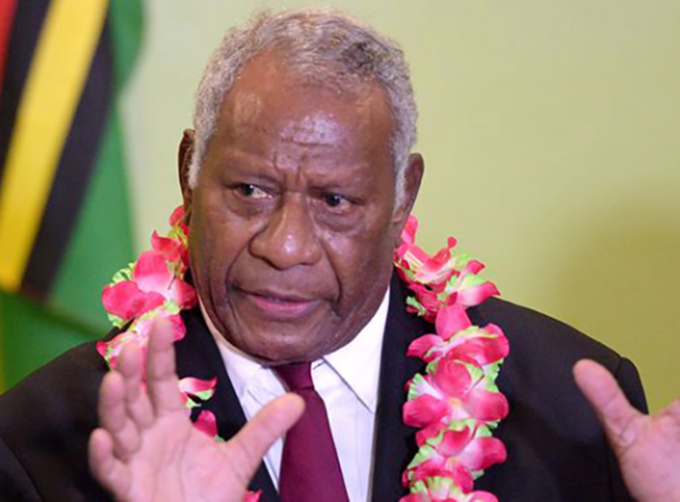
Following a funeral service in the Parliamentary rotunda, beloved and admired President Baldwin Lonsdale was farewelled by a massive crowd lining the route to the airport. Image: Dan McGarry/Vanuatu Daily Post

By Dan McGarry in Port Vila

Vanuatu has never seen an outpouring of sorrow and admiration such as it witnessed yesterday.

Many alive today may not see another in their lifetime.

Heads of state from Fiji, New Zealand and Australia all attended the state funeral, which was held in the Parliamentary rotunda, commonly known as the “pig’s tusk” because of its spiral architecture.

They were joined by dignitaries from China, the United States of America, Tonga and elsewhere.

The service for President Baldwin Lonsdale, who died early last Saturday morning, was offered by the Bishop of Melanesia — out of deference to Rev Lonsdale’s status as a clergyman in the Anglican church.

In front of a solemn gathering that included Vanuatu’s living former Presidents, Prime Minister Charlot Salwai, his ministers and MPs.

-Partners-

Opposition Leader Ishmael Kalsakau and hundreds of people from all walks of life, the choir opened the service with a moving musical rendition of the 23rd Psalm.

Outside Parliament, thousands of school children and members of the public lined the road, waiting for the cortege that would escort the body of the late President to the airport, where it would be flown to the Banks islands, his home.

Festooned with flowers
Following the service, Rev Lonsale’s casket was loaded onto the back of a flatbed truck festooned with flowers and the Vanuatu flag. It led a kilometre-long procession of hundreds of vehicles through the main streets of Port Vila.

The road was carpeted with flowers all along the procession route. In the Manples area, the road was lined with brightly coloured calicos. As the procession passed, the market vendors sang a song in the Tongoan language, a moving tribute to one of the most widely respected figures in Vanuatu since Father Walter Lini, the country’s first Prime Minister.

It is difficult to accurately estimate the number of people who lined the roughly six-kilometre long route, but there has been no similar public gathering in living memory.

This unprecedented display of grief and admiration was not limited to Vanuatu alone. In solidarity with this nation, flags flew at half mast yesterday in Australia, New Zealand and in other locations throughout the Pacific Islands.

The body was flown to the Banks islands yesterday, and the President will be mourned by the people of Torba province today. His body will be laid to rest in Sola, Vanua Lava tomorrow.

Dan McGarry is media director for the Vanuatu Daily Post group.

President Baldwin’s coffin draped with the Vanuatu flag at the funeral in Port Vila yesterday. Image: Selwyn Leodoro/FB
]]>

‘Anticipation, excitement’ sweep PNG as election polling looms

]]>

AsiaPacificReport.nz

Papua New Guinea gears up for election polling this weekend. Image: Development Policy Centre

Pacific Media Centre News Desk

Polling in Papua New Guinea’s 2017 national election begins this weekend.

On Saturday, voters will take to the polling booths after a six-week campaign which began on April 24.

“Anticipation” and “excitement” is the current general feeling, Papua New Guinean citizen and AUT doctoral candidate Stephanie Sageo-Tupungu told 95bFM’s weekly Southern Cross radio programme on Monday.

“Everyone is now thinking about who they’re going to vote for, how they’re going to go about it.”

But as voting looms, however, the effectiveness of candidates’ campaigns remains unclear due to an apparent lack of funding.

As ABC’s PNG correspondent Eric Tlozek reported, the 2017 election campaign has been “relatively quiet” due to an “economic slump”.

-Partners-

Tlozek said this economic downturn meant candidates did not have the money to “splash out” on advertising.

“There is simply no money and sometimes no economic justification,” Tlozek said.

Ben Micah of the People’s Progress Party – part of an opposition coalition with Kerenga Kua of the PNG National Party, Patrick Pruaitch of the National Alliance and former Prime Minister Sir Mekere Morauta – told Pacific Beat: “The major problem confronting our country is the fact the government is broke.”

Current government ‘plague’
Micah likened the shortage of funds, issues of maladministration and corruption to a “plague”.

Sageo-Tapungu told Asia Pacific Report “these are some common issues that the candidates are campaigning on.”

Candidates in the 2017 national election are also promising to improve infrastructure – roads, bridges – in bringing services to remote communities, solve land grabbing issues and ease current violence surrounding settlements and ethnicity, she said.

This comes in the wake of Election Commissioner Patilias Gamato calling for “free and fair” elections:

“Our theme for 2017 — “Your Choice Protect our Democracy” — speaks volumes and I urge every citizen of this country to uphold the rule of law. The decision we make today affects our future and the future of our children’s children. I urge every citizen to refrain from illegal conduct and allow for a free and fair election.”

However, gender equality has also been a focus this election and a source of hope for many in PNG surrounding equal rights.

Loop PNG reported the number of female candidates standing in the current election comprised 165 of the total 3332 candidates.

Female representation question
The only province that did not register a female candidate was West New Britain, Loop PNG said.

Papua New Guinea’s 2017 national elections have seen a rise in female candidates compared to the 135 in 2012, which saw only three female candidates succeed – Eastern Highlands governor Julie Soso, Sohe MP Delilah Gore and Lae MP Loujaya Kouja.

Stephanie’s husband, Kenneth Sageo-Tupungu, told Southern Cross:

“There’s been a rise in women’s numbers, candidates, and this has in a way really changed the dynamic of the game itself and this has really challenged the existing status quo of elections and campaigns.”

However, Stephanie Sageo-Tupungu questioned whether equal participation would become a reality.

“For female representation in politics in PNG for this year, it’s encouraging to see about 165 contesting this election — that’s quite a number compared to the past years and they have a support base.

“We hope to see them be successful, but the thing is, it’s a male game in PNG … Male politicians support women’s participation in theory. In practice, that is to be seen as a reality.”

Voting in PNG’s 2017 national election on Saturday and closes July 8.

]]>

New governance watchdog PNGi exposes O’Neill’s business networks

]]>

AsiaPacificReport.nz

Masthead today from the PNGi Central website. Image: PMW

Pacific Media Watch News Desk

PNGi is set to revolutionise governance in Papua New Guinea by cracking open the secrets of the rich and powerful and exposing them to public view.

Using the latest digital technologies, PNGi aims to investigate, analyse and expose the often hidden and opaque systems standing behind the abuse of political and economic power.

Its two flagship resources are the PNGi Portal and PNGi Central websites,

They have been established and are sustained by an informal network of academics, activists and journalists involved in researching and writing about current issues in Papua New Guinea.

“In accordance with a robust risk assessment process, in some instances, contributors are protected by publishing their work anonymously,” said PNGi in a response to a query from Pacific Media Watch.

“However, all published material has been peer-reviewed, and is rigorously referenced, using freely accessible documentary sources. This allows anyone to verify each factual claim made.”

-Partners-

The PNGi Portal is an on-line database of governance reporting. It collates documents produced by institutions like the Ombudsman Commission, Auditor General and Public Accounts Committee and makes them available to the public through a powerful search engine.

The public can now search and cross-match reports, to uncover serial misconduct by target individuals or entities.

The database is a major addition to due diligence in Papua New Guinea. It will add value to the work of journalists, researchers, students, public officials, oversight agencies, citizens and responsible corporate actors.

Sitting alongside the portal is PNGi Central, a reporting platform that will use a range of formats to communicate the results of research into:

— the discrete networks that lie at the heart of the country’s economic and political power, and which are mired in allegations of improper and illicit conduct;

— the institutional and legal mechanisms the networks use;

— common transaction patterns; and

— the broader policy and legal factors that are permissive of improper or illegal activities.

PNGi Central represents the most sophisticated reporting effort yet in the region, to speak truth to power through rigorous research, accessible to the public through digestible mechanisms ranging from feature investigations, through to podcasts, power profiles and court reports.

O’Neill’s business network
To launch the new websites and illustrate PNGi’s research capabilities, PNGi Central has published a report into the business network of current Prime Minister Peter O’Neill.

Titled The Midas Touch, this investigative feature, to be published in three-parts, will reveal hundreds of millions of kina in assets owned by the Prime Minister, and a business empire that has its origins in alleged frauds condemned in two Commissions of Inquiry.

Part I, published today, unlocks for the first time the evidence of the Prime Minister himself, as published in Commission transcripts, and unravels a complicated series of corporate takeovers and hidden deals that have made Peter O’Neill a very wealthy man.

Parts II and II will follow over the coming weeks.

Once complete, The Midas Touch will expose how the Prime Minister’s corporate empire has benefited from government decision making, multi-lateral loans, and even foreign government spending.

PNGi contributions aim is to stimulate debate and encourage the development of new laws and policies that will be effective in the fight to control market abuse, corruption and other improper dealings, and, ultimately, to improve the lives of ordinary citizens.

The Papua New Guinea 2017 general election is June 24 until July 8.

]]>

Five PNG police officers sentenced to 87 years in jail for rape, arson

]]>

AsiaPacificReport.nz

The National Court building in Wewak, Papua New Guinea … accused “acted like criminals”. Image: Loop PNG

By Sally Pokiton in Wewak, Papua New Guinea

Former Wewak Police Station commander Chief Inspector Sakawar Kasieng has been sentenced to seven years in prison for arson and four of his officers were convicted for raping a 17-year-old girl at her family home almost four years ago. They were each sentenced to 20 years in prison.

Kasieng, of Sibilanga Village, Sandaun Province, spent four months in custody prior to being sentenced yesterday. He will now spend six years and eight months in hard labour.

Robin Weibi of Tomonoum Village, Nuku, Sandaun Province, Timon Kangapu of Hirae Village, Kopiago, Southern Highlands Province, Stanley Moui Jombu of Passam, East Sepik Province, and Nigel Tianguma Harvey of Mikarew area, Bogia, Madang Province, were each sentenced to 20 years.

They also spent four months in custody. They will now spend 19 years and eight months with hard labour.

They were found guilty and convicted for aggravated rape of the teenager in her room at Kwanumbo Village in the early hours of 7 December 2013.

The victim, who is now 21 years old, gave evidence in court during the trial with her mother and father.

-Partners-

Her father was serving a 40 years in jail sentence for murder when he and other prisoners escaped.

Dawn raid
On 7 December 2013, at least 15 policemen, led by Chief Inspector Kasieng, with the assistance of civilian informants, conducted a dawn raid on a hamlet at Kwanumbo Village, Boikin, East Sepik Province.

This was to capture a number of prison escapees, including the rape victim’s father.

The court heard that during the raid, two houses were torched, items were stolen and the escapees were apprehended and tied up. One escapee had his leg shot at after he had been restrained.

The four named policemen then entered the victim’s house and raped her. Her hands and legs were held onto the floor as each one took his turn to rape her.

When the victim’s mother complained to Chief Inspector Kasieng, she was told to shut up and on the police chief’s orders, she was assaulted and restrained by policemen.

On their arrest, Inspector Kasieng and the four policemen exercised their right to remain silent.

Justice George Manuhu handed down the sentence in Wewak yesterday after he heard a submissions on the sentence by the accused’s lawyer on Monday.

During submissions on Monday, each of the convicted prisoners of the state expressed remorse and willingness to pay compensation.

Failure to control
Former Chief Inspector Kasieng admitted his failure to control the operation, which resulted in the burning down of two houses, the shooting of Joel Pokip in the legs, and the sexual assault on the teenager.

“In any case, the four of you knew the law and you knew that sexually assaulting someone is against the law. So the four of you cannot place all the blame on Kasieng,” Justice Manuhu told them in court.

The court also noted that it was not Kasieng’s first time in court. He had previously been in court for assault and he had failed to pay court-ordered compensation.

“These reports do not help him at all,” the judge told him.

“Fortunately, the victim did not contract any sexual disease, she did not become pregnant, there is no evidence of any mental issues, and she did not suffer from any physical injuries. In relation to the burning down of the house, there was no evidence on the value of the house. These are the factors that are in your favour.

“Against you is that as policemen, you were charged with the responsibility to uphold the law and by virtue of that law, you have a duty to protect the citizens of this country.

‘Acted like criminals’
“But look at what you have done. You acted in contradiction to your duty and committed crimes against the people you were supposed to protect.

“You acted like criminals, all of you,” Justice Manuhu told them.

He said the warrant issued by the court did not authorise them to burn down houses and sexually assault the teenager.

“I don’t know what went through your heads in those two hours you were in the village. You have brought shame upon all of us as officers of the law.”

He said the undisciplined behaviour of policemen in Papua New Guinea was prevalent and destroying the country, and that people awere fed up with hearing about undisciplined policemen.

]]>

PNG grants citizenship to 138 West Papuans, waives legal fees

]]>

AsiaPacificReport.nz

New Papua New Guinean citizens at the weekend ceremony in Port Moresby. Image: EMTV News

By Delly Waigeno in Port Moresby

Four naturalised citizens and 138 West Papuans have become citizens of Papua New Guinea.

Acting Chief Migration Officer Solomon Kantha said he was proud that the current government had been the first to take steps to see West Papuans get legal status in Papua New Guinea.

He also acknowledged the government for doing away with the K10,000 (about NZ$4350) citizenship fee for West Papuan refugees.

The citizenship certificate ceremony was a small but significant affair at the Sir John Guise Stadium Indoor Complex at the weekend in Port Moresby.

Present included officers from the Immigration and Citizen Service Authority, PNG Citizenship Advisory Committee and the board, recipients, family and friends.

Acting Chief Migration Officer Kantha said the four naturalised citizens who originated from China, Philippines and the United States had already contributed immensely to Papua New Guinea.

-Partners-

For the larger group of West Papuans, he acknowledged their resilience without government support and also acknowledged their contribution towards nation building.

Naturalised citizen Stephen Dunran expressed gratitude.

Kantha said the Department of Foreign Affairs and Immigration would work on getting the citizenship certificates signed and issue passports as well.

More than 10,000 West Papuan refugees are believed to be living in Papua New Guinea — many have been in the country for more than three decades.

More than 1000 West Papuans are reported to be in line for PNG citizenship.

Delly Waigeno is an EMTV News reporter.

]]>

Juffa blasts PNG for ‘hypocrisy’ over deportation of NZ missionary

]]>

AsiaPacificReport.nz

Oro Governor Gary Juffa blasts PNG government over the deportation of NZ Catholic missionary Douglas Tennent. Video: EMTV News

Pacific Media Watch News Desk

Oro Governor Gary Juffa has condemned the Papua New Guinea government for “hypocrisy” and “double standards” over the controversial deportation of New Zealand Catholic missionary Douglas Tennent.

Acting Chief Immigration Officer Solomon Kantha told EMTV News that Tennent’s deportation last week related to “visa conditions”.

However, Juffa, who has been vocal about foreign investors in the country during the election campaign, said the move by the Immigration Office to deport Tennent was illegal and not in the best interests of Papua New Guineans who were being marginalised on their own land by big foreign companies.

NZ Catholic missionary Douglas Tennent … deported over helping landowners. Image: EMTV News

If the current PNG government was interested in the people it would support Tennent and say, “let us fight this corruption and deal with this on behalf of the landowners,” Juffa said.

The PNG Immigration Department is reviewing its decision to deport Tennent, reports Cathnews.

-Partners-

Kantha said Tennent’s visa had been cancelled by Immigration and Foreign Affairs Minister Rimbink Pato because of his alleged involvement in landowner issues, the NZ Catholic news service reported.

The acting immigration head said the decision was based on a “complaint” from landowners in East New Britain.

The Sikite Mukus palm oil project has been a “hive of landowner dispute” between those who want the project and those who do not want the project, EMTV News said.

Archbishop refuses
The Post-Courier reported that Kantha had told the archbishop of Rabaul, Francesco Panfilo, that Tennent could reapply for a new visa and work permit.

However, the archbishop has refused to do so unless he receives reassurance from PNG’s Foreign Affairs Department that Tennent could return.

He is also demanding to know who lodged the complaint letter.

The managing director of the landowners’ umbrella company, Memalo Holdings Ltd, has denied being responsible.

Wesley Pagott said although the members of Sigite Mukus Integrated Rural Development Project (SMIRDP) disagreed with with what Tennent had been doing, they were surprised to hear that he was deported.

Memalo Holdings was originally incorporated listing six separate landowner companies as shareholders.

They were all incorporated on the same day. Two have since been delisted.

Memalo controls the land on which the SMIRDP is being developed by the Malaysian logging company Rimbunan Hijau Group (PNG).

The group has a diverse set of interests that encompass forestry, timber processing, palm oil, transport, media, retail and property development.

It is a wholly owned subsidiary of Rimbunan Hijau, a company based in Sarawak, Malaysia.

Governor pledges support
The Acting Governor of East New Britain, Cosmas Bauk, has pledged his support for Tennent, Cathnews reported.

He said he would do everything in his power to make sure that Tennent could return to continue on with his work.

Bauk said he was disappointment at the manner in which the current government had been doing its business without regards to the people’s fight for justice and what they rightfully claimed as theirs.

He commended the church for their efforts in assisting the people in Pomio and East New Britain and would stand with the church in this fight.

The Papua New Guinea 2017 general election is June 24 until July 8.

]]>

Images: ‘No BCL, no mining,’ say protesting Panguna women

]]>

AsiaPacificReport.nz

Landowner women and mothers have protested over plans to reopen the Panguna mine on Bougainville in Papua New Guinea.

They demonstrated in Arawa in central Bougainville and blockaded the route to the derelict Panguna copper mine late last week in a bid to prevent the signing of a memorandum of agreement between the Autonomous Bougainville Government (ABG) and Bougainville Copper Limited, which has disputed ownership of the mine.

The women also succeeded in getting a court injunction against the mine agreement in the National Court in Port Moresby on Friday afternoon.

Llane Munau was there to capture the women’s protest on camera.

1. “No BCL, No Mining”, Image: Llane Munau/PMC say the women.

2. Bougainvillean women on the march. Image: Llane Munau/PMC

3. “Don’t dig my lands.” Image: Llane Munau/PMC

4. Challenge to BCL. Image: Llane Munau/PMC

5. Protest women with sun-shelter brollies. Image: Llane Munau/PMC

6. “No BCL,” the bottom line message. Image: Llane Munau/PMC

7. Men in the rear of the protest. Image: Llane Munau/PMC

8. One of the women speakers offers her message. Image: Llane Munau/PMC

9. Prayers at the protest. Image: Llane Munau/PMC

10. Women lay down the challenge. Image: Llane Munau/PMC

]]>

‘Make election less disruptive’ pleads commissioner ahead of PNG ballot

]]>

AsiaPacificReport.nz

PNG Electoral Commissioner Patilias Gamato … “let’s have a good and peaceful 2017 national election”. Image: Post-Courier

By Gorethy Kenneth in Port Moresby

More than 800 election monitors will be deployed nationwide to observe and make independent reports on Papua New Guinea’s national election starting this Saturday.

Electoral commissioner Patilias Gamato says international and local monitors will report back to their respective organisations, heads of governments and the government itself on the credibility of the PNG election process.

“We have invited international election monitors or observers to visit during the months of June and July to see whether we have planned well for the election and also see if we followed the rule of law and the election laws on conducting the 2017 national election,” Gamato said in a statement.

“These election monitors or observers are invited from the Commonwealth Secretariat, European Union, governments of Australia and New Zealand, resident heads and staff of foreign missions from Australia, Great Britain, United States of America, France, Japan, Pacific Islands Forum Secretariat, Melanesian Spearhead Group Secretariat, Australian National University and other election management bodies from other parts of the world,” he said.

“Our very own civil society watchdog, Transparency International (PNG) Inc., again will deploy 400 election monitors, the largest number of monitors nationwide,” Gamato said.

He also appealed for calm in the remaining seven days of campaigning and the next month of polling and counting.

-Partners-

“Fellow Papua New Guineans, emotional reactions to your political opponents by supporters must not be encouraged. But as a responsible leader, you must always urge restraint and discourage such bad acts or violence,” he said.

Less disruptive, violent
“As your Electoral Commissioner, I strongly urge each and every one of you, the leaders of political parties, tribes and clans to make this election far less disruptive or violent than previous national elections,” Gamato said.

“Let’s have a good and peaceful 2017 national election to demonstrate to our regional neighbours and the international community that Papua New Guinea is truly democratic and has a vibrant democracy.”

More than 500 of these election observers have now arrived in Port Moresby, ready to kick-start election scrutiny.

They will be meeting with all the party executives tomorrow.

Sensitive election materials have also been moved from the capital to provincial centres nationwide over the last seven days by the Australian defence force ahead of polling.

The materials include ballot papers, candidate posters, polling schedules and electoral rolls, Gamato said.

“So far the Papua New Guinea Electoral Commission is all good to go and set for the 2017 national election.”

Gorethy Kenneth is a senior reporter with the PNG Post-Courier.

]]>

Panguna landowner women protesters block mine pact, win court order

]]>

AsiaPacificReport.nz

Panguna women landowner protesters — mothers from the mining affected areas and the women from Central Bougainville — have demanded the Autonomous Bougainville Government to properly address the Panguna Mine issue. Video: EMTV News

Pacific Media Centre News Desk

Panguna women protesters have blockaded the copper mine to prevent the signing of a memorandum of understanding by the Bougainville government with the company and also won a court injunction.

Justice Kandakasi ordered in the Waigani National Court on Friday that the MOA cannot be signed until further notice.

Philip Miriori, chairman of the Special Mining Lease Osikaiyang Landowners Inc., welcomed the restraining order.

Mothers and daughters at the Panguna mine protest on Friday. Image: Loop PNG

He said it was good to see that protection from “unjust deprivation of property” under Section 53 of the Constitution of PNG – and preserved in the Constitution of the Autonomous Bougainville Government (Section 180) as adopted by the Bougainville Constituent Assembly at Buin on 12 November 2004 – was being enforced.

The Bougainville Freedom Movement also congratulated the women of Bougainville and their supporters for stopping the Bougainville government on Friday from signing a new agreement for Bougainville Copper Limited (BCL) to reopen the Panguna mine.

The National Court order supporting the Panguna women landowners seeking to block Bougainville Copper Limited. Image: PMC

-Partners-

“The handpicked BCL landowners who were supposed to sign the agreement for the company were brought to a halt, thanks to the road block protest held on Friday,” said BFM’s Vikki John.

The Panguna mine was abandoned by in 1989 after frustration by landowners erupted into a decade-long armed uprising and a push for Bougainville independence from Papua New Guinea.

‘Seven sisters’ roadblock
Loop PNG reports: “The impenetrable roadblock was led by women chief from the ‘seven sisters’ areas in Central Bougainville.

The mothers, together with their daughters, youths, ex-combatants and Bougainville hardliners, set up the roadblock, which started on Thursday night and lasted throughout Friday. They refused to move for passing vehicles or negotiating team.

“Their message was simple: ‘No BCL, No Mining’.

A woman chief from Guava Village, Maggie Mirau Nombo, and a chief from Arawa and Pirurari, Kavatai Baria, said their land was their ‘Mother’, who provided their everyday needs and no one was allowed to exploit her.

“Chief Maggie, who is a former primary school teacher, said how could those wanting to sign the MOA conduct such an act of injustice?

“She said this would never happen again because they had suffered enough from all the injustice that had been brought on by BCL when it was in operation.

“She said God had heard the cry of the Bougainville women, and justice would prevail.

“As long as I am the Chief from Panguna and Guava Village and owner of my land, BCL is not welcome. This is the company that has killed our sons and daughters. ABG has to stop ignoring the cries of the women and take note that BCL is never allowed to come back to Panguna, and this is final and it is not negotiable,” she said.

“Chief Kavatai also reminded everyone that ‘when God closes a door, no one can open it, and if God opens a door, no one can close it’.

“Panguna Mine was closed by God and if anyone was trying to reopen the mine when it wasn’t God’s timing, then they had better watch out because they were fighting against a big God.

“Because of the strong opposition by the women, youths and Bougainville hardliners, the high-powered ABG delegation, led by President John Momis, returned to Buka on Friday afternoon without signing the MOA.”

The Papua New Guinea 2017 general election is June 24 until July 8.

]]>

Al Jazeera caught in the Qatar crisis crossfire, reports Mediawatch

]]>

AsiaPacificReport.nz

Al Jazeera’s newsroom in Doha … independent news sympathetic to Arab Spring. Image: Middle East Monitor

Pacific Media Watch News Desk

So-called “fake news” and the damage it can do has featured much in the media in recent months.

Radio NZ’s Mediawatch looks at how one false story sparked a row between Qatar and its neighbours, which has now cast a shadow over the future of the pioneering international TV news channel Al Jazeera.

Author Tarek Cherkaoui … insights into Al Jazeera. Image: RNZ Mediawatch

Mediawatch’s Jeremy Rose interviews Dr Tarek Cherkaoui, holder of an Auckland University of Technology doctorate and author of The News Media at War, on how the clash between Western and Arab media perspectives has contributed to global polarisation.

Al Jazeera English has reflected a sympathetic view of the Arab Spring upheaval and Al Jazeera Arabic has been challenging for authoritarian regimes in the region.

Russian ‘freelance’ hackers
An inquiry last week by the FBI found that Russian “freelance” hackers were responsible of the fake news broadcast on the state-run Qatar News Agency, sparking the biggest crisis in decades crisis among the Gulf States.

A Guardian report said: “Some observers have claimed privately that Saudi Arabia or the United Arab Emirates (UAE) may have commissioned the hackers.”

-Partners-

Earlier this month, after the fake news report, Saudi Arabia, the UAE, Egypt, and Bahrain launched an unprecedented campaign to isolate Qatar diplomatically and economically with a transport blockade over alleged links to the Muslim Brotherhood, Hamas and Iran. Qatar has rejected the allegations as “without foundation”.

Al Jazeera employs a number of New Zealand journalists and is the only global news channel broadcast on the free-to-air platform Freeview in New Zealand.

]]>

Vanuatu president who struck ‘decisive blow’ against corruption dies

]]>

AsiaPacificReport.nz

Vanuatu’s President Baldwin Lonsdale … remembered for his leadership of the Anglican church, and his strong support for kastom and for women’s rights. Image: Vanuatu Digest

OBITUARY: Pacific Media Watch News Desk

Vanuatu’s President Baldwin Jacobson Lonsdale has died at Vila Central Hospital early today after being rushed to hospital last night, reports Vanuatu Digest.

President Lonsdale, 67, had been Head of State since September 2014.

From Mota Lava island, Lonsdale was previously an Anglican priest, secretary-general of Torba Province.

He did his tertiary studies in Auckland, New Zealand, at St John’s Theological College.

President Lonsdale played a critical role in recent events in Vanuatu. While category 5 Cyclone Pam was battering Vanuatu in March 2015, President Lonsdale was attending a world conference on disaster risk reduction in Japan, and his emotional appeals for international assistance helped galvanise the international humanitarian response to Cyclone Pam, reports Vanuatu Digest.

But arguably his greatest contribution came just seven months later in October 2015 when the then Speaker of Parliament, Marcellino Pipite, abused his position as Acting President to issue a “presidential pardon” to himself and 13 other MPs who had just been convicted of bribery.

-Partners-

The President, en route from Samoa during Pipite’s attempt to undermine the rule of law, returned to Vanuatu and immediately revoked the pardon.

Misuse of powers
During a televised address to the nation, President Lonsdale was visibly upset, expressing his “shame and sorrow” at Pipite’s misuse of his powers.

He vowed to “clean the dirt from my backyard”, telling Vanuatu’s people that “we as a nation have to stop these crooked ways”.

Following a failed appeal against his revocation of Pipite’s pardon, Lonsdale then dissolved Parliament and called a snap election.

President Lonsdale’s actions were widely seen as a decisive blow against Vanuatu’s culture of impunity for corrupt politicians, reports Vanuatu Digest.

Addressing the newly-elected MPs at the opening session of Parliament following the election, he described the new legislature as a “new chart for Vanuatu’s destiny”.

He will also be remembered for his leadership of Vanuatu’s Anglican church, and his strong support for kastom and for women’s rights.

The Vanuatu government is currently making arrangements with his family and Motalava chiefs for a state funeral.

Under the constitution, a new president will need to be elected by MPs and local government chairs within three weeks.

]]>

PM O’Neill challenges rival candidates to show off ‘real policies’ for election

]]>

AsiaPacificReport.nz

Speaking about the controversial Manus Asylum Centre saga, Prime Minister Peter O’Neill says the deal was signed and agreed to for the development of Manus province. Video: EMTV News in Tok Pisin

Pacific Media Watch News Desk

The largest crowd ever to attend an election campaign rally on Manus greeted Prime Minister Peter O’Neill as he campaigned with Manus Governor Charlie Benjamin and Manus Open candidate Job Pomat.

Leading the People’s National Congress (PNC) campaign rally, O’Neill said Manus had great potential from its marine resources, particularly in areas such as fisheries and tourism.

As the campaign draws to the end of eight weeks of campaigning, O’Neill said yesterday now was the time for candidates who had not demonstrated any policy platforms to reveal if they have any policies.

Prime Minister Peter O’Neill and Manus Governor Charlie Benjamin in Manus province. Image: PMO

“Now is the time to talk about your policies, to talk about your vision and reveal if you have anything to offer,” the Prime Minister said.

“Candidates need to discuss issues of national importance with a clear set of polices and vision for the nation.

-Partners-

“Instead many, particularly some former leaders, are dropping down to attacking personalities and spreading rumours.

“Our country deserves strong policy platforms from those aspiring to form government, not hollow statements and foolish claims.

‘Start being realistic’
“The candidates who are now part of one-and-two-man parties have to start being realistic.

“You have Sir Mekere [Morauta] saying he will be PM, and so is Don Polye, and Sam Basil, and all the others, but one-and-two is a long way from 56.”

The Prime Minister said he has no intention of debating with any aspirant PM if they could not demonstrate that they had the support of enough opposition members.

“I am not going to waste my time debating someone who does not have the support to potentially lead a parliamentary majority.

“If one of these opposition leaders gets the backing of their counterparts to be the opposition’s candidate for prime minister, they will get their debate.

“If Ben Micah, Patrick Pruaitch, and Belden Namah, and all the other leaders come out and say publicly they are supporting Don Polye, or another leader, they will get their debate.

“But while they are a loose gaggle of dividend group of rivals, this will not happen.”

Western eyes ‘a mistake’
The Prime Minister said the mistake some commentators made was to look at the PNG  election through Western eyes.

“In Australia, historically opposition leaders are often just a few seats away from forming government.

“In Papua New Guinea, the Opposition Leader is more than 50 seats away from forming government.

“The same goes for Mekere, he is just one of the 3000 plus candidates in this election.

“He has no party support, he is yesterday’s man who abandoned his own party that he founded. He has no principles or loyalty, so why would any of the opposition leaders want to follow him?”

The Prime Minister thanked Manus for the hospitality they extended to the PNC delegation and promised them that Charlie Benjamin and Job Pomat would work hard for Manus and further improve lives.

“Manus has huge potential in tourism and fisheries, and has the potential to keep advancing.

“A lot has changed in Manus over the past five years, and communities are economically stronger than in decades past.

“We must keep changing Manus, we must keep staying strong and deliver an even stronger economy for our nation and for provinces like Manus.”

]]>

Pasifika youth looking for ‘inspiration’ in politics, says Auckland councillor

]]>

AsiaPacificReport.nz

Hele Ikimotu talks to Pasifika youth about whether they are voting in upcoming general elections in a vox pops video.

By Hele Ikimotu in Auckland

The lack of Pasifika youth voting every election year is because of a lack of Pacific representation in politics, says Manukau Ward councillor Fa’anana Efeso Collins.

Fa’anana, who was elected earlier this year in the local body elections, said there were many factors as to why young Pacific voters lacked in numbers when general elections came around.

A post-study election by the TNS New Zealand Ltd in 2014 found that seven percent of participants had a poor or very poor understanding of the voting process.

Many of that seven percent had a Pacific background.

“I don’t think they feel inspired by politics – we need people who inspire movement, who inspire change, who inspire something good and hopeful,” Fa’anana said.

-Partners-

He said politicians needed to personify hope and trust.

“I think that’s the kind of leadership our people are looking for, so you’re not going to have participation. If we can get those messages out I think we’re going to see an increase naturally in our people voting.

‘Espousing hope’
“If you look at the Pasifika politicians we have in National government at the moment – they’re not the kind of people who you’re going to jump up and down over.”

Fa’anana added: “I think if we can get politicians to espouse that level of hope, then I think we’re going to see people want to participate.”

Manukau Ward councillor Fa’anana Efeso Collins … Pasifika youth voting low due to “lack of Pacific representation”. Image: Tagata Pasifika

The study by TNS New Zealand Ltd also found that 36 percent of the participants who did not know what channels to use for enrolling were of Pasifika descent.

Auckland University of Technology student Antonia Swann said she was planning to vote this year.

“I think it’s important that if you have a voice, you should use it, especially if you’re passionate about the issues that this country is facing.”

The 20-year-old said Pasifika youth should use their democratic right: “In some countries you can’t vote if you’re a certain age or a particular gender so if you have the opportunity to vote, you should.”

In the 2014 general elections, 37.27 percent of 18 to 24-year-olds who were enrolled did not vote.

‘Change the government’
Fa’anana reflected: “I think we’ve got to put up the right people and say to young people – here’s the kind of person you want.

“Imagine the change, imagine if our people did vote, we would change the government.”

Hele Ikimotu is a Niuean and Banaban-Gilbertese student journalist on his final year of a Bachelor of Communication Studies, majoring in journalism, at Auckland University of Technology.

]]>

‘This isn’t Aleppo. This is Marawi City’ – urban war in Philippines

]]>

AsiaPacificReport.nz

Aerial shot from a drone of Banggolo and Bubonga barangays in Marawi City taken on 8 June 2017 shows the destruction and fire from intense fighting between government troops and the Maute group and other rebels. Video: Val Cuenca/ABS-CBN

By Mong Palatino in Manila

On 23 May 2017, a group with alleged links to ISIS attacked some parts of Marawi City on the southern Philippine island of Mindanao. In response, the government declared martial law in Mindanao to pursue the attackers and prevent the spread of ISIS in other towns.

The clash between the military and the militant group known as Maute forced the mass evacuation of Marawi residents. As of June 7, more than 46,000 families, or 220,000 persons, have been displaced from their homes.

The government said it has provided 33 evacuation centers, but these could only shelter 18,000 people.

After three weeks of being a battle zone, hundreds of houses and other buildings in Marawi were destroyed. The extent of the damage has been revealed with rescuers, residents, and journalists uploading photos and videos of Marawi’s town proper.

The Maute group is blamed for the destruction, but the military is also being held accountable because of its continuous airstrikes. The military claimed it is conducting “surgical bombing” operations, but some residents said the air bombs are being dropped indiscriminately.

-Partners-

Marawi Mayor Majul Gandamra is saddened by the destruction in his city:

I weep for all the civilians who were mercilessly killed, I weep for the lost homes of my people and I weep for the loss of the true essence of Islam in the people who caused all these destructions to our lives and properties.

As of May 30, the government said 19 civilians had been killed by terrorists.

It is ordinary civilians who are enduring the greatest suffering as the crisis continues to drag on. And even if the clashes end soon, rehabilitating Marawi is expected to be a more difficult task because of the destruction caused by the fighting between the military and the militants.

Below are photos showing the situation in Marawi today:

“This is not Aleppo. This is Marawi City,” wrote TV reporter Greg Cahiles. Image: Greg Cahiles/Global Voices Destroyed buildings in the town proper of Marawi City. Image: Maulana Mamutuk/Global Voices Soldiers conducting a clearing operation in Marawi. Image: Najib Zacaria/Global Voices A deserted street in what used to be a busy intersection in Marawi. Image: Maulana Mamutuk/Global Voices A covered court converted into a temporary evacuation centre In Marawi City. Some residents are seen lining up to receive relief goods from the local government. Image: Marawi City local government

Mong Palatino is a Global Voices correspondent and is a two-term member of the Philippine House of Representatives. He has been blogging since 2004 at mongster’s nest.

]]>

Paris climate change pact ‘not enough to save us’, warns Fiji PM

]]>

AsiaPacificReport.nz

Fiji’s Prime Minister Voreqe Bainimarama closing UN Oceans Conference… “Paris Agreement not enough to save us”. Image: The Ocean Conference

By Nasik Swami in Suva

Current national contributions by countries to the Paris Agreement on climate change are not enough to save the Pacific, says Fiji’s Prime Minister Voreqe Bainimarama.

“We have to try to persuade the rest of the world to embrace even more ambitious action in the years to come, because we all know that even the current national contributions to the Paris Agreement are not enough to save us,” he said, addressing Pacific leaders as the UN Oceans Conference came to a close in New York last week.

As the incoming president of COP23, Bainimarama called on the Pacific and its leaders to stand by him and demand decisive action, as climate change was an issue of critical importance to the region’s collective future.

“I want your input. I need your input. And I want every Pacific leader beside me as we demand decisive action to protect the security of our people and those in other vulnerable parts of the world.”

Bainimarama also outlined his worry that America’s decision to abandon the Paris Agreement may also encourage other nations to either back away from the commitments they have made or not implement them with the same resolve.

“We are all, quite naturally, bitterly disappointed by the decision of the Trump Administration to abandon the Paris Agreement,” he said.

-Partners-

“Not only because of the loss of American leadership on this issue of critical importance to the whole world, but because it may also encourage other nations to either back away from the commitments they have made or not implement them with the same resolve.

“But something wonderful is also happening. The American decision is galvanising opinion around the world in support of decisive climate action.

‘Widespread rebellion’
“Other nations and blocs like China, the European Union and India are stepping forward to assume the leadership that Donald Trump has abandoned. And within America itself, there is a widespread rebellion against the decision the President has taken.”

Bainimarama said dozens of American state governors and city mayors were banding together with leaders of the private sector, civil society and ordinary citizens to redouble their efforts to meet this challenge.

“So while the Trump Administration may have abandoned its leadership on climate change, the American people haven’t.

“Next week, I will go to California to meet the Democrat Governor Jerry Brown and sign up to the climate action initiative that he is spearheading. I am also in contact with his Republican predecessor, Arnold Schwarzenegger, who shares Governor Brown’s commitment.

“The point is that on both sides of American politics, we have friends who are standing with us in this struggle. And I am inviting both Governor Brown and the famous ‘Terminator’ to come to our pre-COP gathering in Fiji in October, where we hope they will join us in a gesture of solidarity with the vulnerable just before COP23 itself in Bonn the following month.”

The Paris Agreement, which Fiji has ratified, sets out a global action plan to put the world on track to avoid dangerous climate change by limiting global warming to well below 2 degrees Celsius.

Nasik Swami is a reporter with The Fiji Times

]]>

Climate change ‘defining issue for the world’, says Labour MP

]]>

AsiaPacificReport.nz

Hele Ikimotu checks out Auckland responses to climate change in a vox pops video.

By Hele Ikimotu in Auckland

Pasifika youth should be more engaged with climate change, says a Labour MP.

Labour’s Pacific Island Affairs spokesperson Su’a William Sio … on a “fact finding” climate change visit to Kiribati in March last year. Image: Su’a William Sio

With the damaging effects of climate change increasing, Labour spokesperson for Pacific Island Affairs Su’a William Sio says it is important for young Pasifika people to be aware of the issue.

“As Pacific people, we will have a sympathetic view towards the Pacific and can advocate strongly for the rest of New Zealand to look at the Pacific with humanitarian eyes.”

He said young people were in an advantageous position to be aware of climate change.

“They’ve got strengths and talents that they can use in telling the climate change story, which will have an impact on the rest of the world.

-Partners-

“This is a defining issue for the world and it’s an issue that future generations are going to have to deal with.”

According to NASA, sea levels have risen by about 20.32 cm since the beginning of the 20th century.

Climate change awareness
The areas most affected by climate change include Fiji, Kiribati and Tuvalu.

A report by the Pacific-Australia Climate Change Science and Adaptation Planning Programme (PACCSAP) estimated that by 2100, sea levels would rise by 20-60cm in Pacific Island countries.

Su’a said it was mainly the government’s responsibility to raise awareness.

“Ultimately governments have the power and resources to drive the issue. It should be included as part and parcel of our educational curriculum,” he said.

In March, Fonua, a play framed around climate change showcased at the Mangere Arts Centre as part of the Auckland Arts Festival and further enabled people to understand the realities of climate change, organisers said.

“It was a Polynesian response to climate change – we just wanted to bring awareness around it,” Fonua‘s artistic director Jase Manumu’a said.

Manumu’a said the show ultimately brought the Pacific Island community together to understand how detrimental climate change was.

Climate change ‘topical’
Professor Geoffrey Craig, head of research within Auckland University’s of Technology’s (AUT) School of Communication Studies, said climate change was a topical issue that people needed to be aware of.

Also a former environmental journalist, Dr Craig said a lot of people saw climate change as a “frightening issue”, but that it was starting to become more active.

“Issues relating to the environment are going to be hitting home now over the next few decades. So the people who are going to be really affected by it are young people,” he said.

Hele Ikimotu is a Niuean and Banaban-Gilbertese student journalist on his final year of a Bachelor of Communication Studies, majoring in journalism, at Auckland University of Technology.

]]>

Pacific Journalism Monographs No. 6: Watching Our Words: Perceptions of self-censorship and media freedom in Fiji

]]>

Pacific Media Centre

http://www.pmc.aut.ac.nz/

Ricardo Morris

ISBN/code: 978-1-927184-44-8

Price: $15.00

Publication date: Wednesday, May 17, 2017

Publisher: Pacific Media Centre


Ricardo Morris, a journalist and Thomson Reuters fellow from Fiji, has studied the perceptions and practice of self-censorship among journalists from his country in the years following the military coup in December 2006.

He focused particularly on the period after the 2014 general election that returned Fiji to democratic rule.

In his research paper, Morris examines how willing Fiji’s media workers are to self-censor, how self-censorship works in newsrooms, and what factors are influential on journalists’ work.

The research report was first published by the Reuters Institute for the Study of Journalism and has been published by the Pacific Journalism Monograph series at the Pacific Media Centre by arrangement with the author and institute.

Morris is the founder, publisher and editor of independent media company Republika Media Limited in Fiji, which publishes the magazine Repúblika.

]]>

How traditional and social media will impact on PNG elections

]]>

AsiaPacificReport.nz

ANALYSIS: By Jess Hopkinson and Holly Driscoll

Social media is a new phenomenon which enables easy and instant access to voters. Papua New Guinea’s freedom of information is #51 on the Paris-based Reporters Without Border’s World Freedom Index and this study investigates traditional sources, social media and independent blogging websites to determine where a voter can locate quality information.

The Papua New Guinea general election which begins next week has been impacted on by social media and provides a community platform for voters to express their opinions, and share news not found in traditional media.

This has aided voters because they are able learn more about the candidates. It has also disadvantaged voters because PNG journalism does use any recognised fact-checking mediums to confirm information and this leads to an ill-informed public.

There is no one completely trustworthy source of information which voters can depend on. This essay will firstly determine how this research was conducted.

Secondly, there is an abundance of candidates campaigning for this election and social media helps people learn about their policies and promises. Next, this upcoming election needs to be conducted fairly and freely so that people’s votes are counted. However, PNG does acknowledge corruption in government.

Finally, we include information gathered from interviews with local identities to determine that social media positively and negatively impacts the election.

-Partners-

Papua New Guinea’s elections are not regarded widely as democratically fair and free. Currently, PNG has many democratic features. It has a unicameral parliament, a Prime Minister who is the head of the elected party, a preferential voting system and conducts regular elections.

Encouraging free and fair process
The government is attempting to encourage a free and fair election process. For example, during the voting period electoral officer’s wages must be paid directly into their bank accounts rather than carrying bags of money around.

This aims to make it more difficult for officers to take bribes and for candidates to enter extra ballots and corrupt the results. This means that each individual vote gets to be counted, making the election free and fair. Former Prime Minister Sir Mekere Morauta said: “It is also important to ensure that the conduction of the election itself is free and fair and that electoral systems and processes are transparent.”

If an election is not democratic, it can breed corruption and mismanagement into the nation because votes are not counted properly and an individual can exploit the election. Currently, candidates visit voters’ homes and hand out goods such as money, food or a carton of beer to win votes.

The voters will not see the candidates again until the next election. Citizens are voting according to the free goods they are receiving instead of the policies which candidates support.

The culture of PNG elections is not focused on the future but rather immediate benefits that candidates give. PNG is aiming to improve the free and fairness within the upcoming elections however candidates are still trading goods for votes instead of good policies.

This report researches a multitude of sources of information to conclude where voters can find quality information for the upcoming election. We interviewed local Papua New Guineans to provide insight of how social media has affected the election and compares with traditional media sources.

Facebook pages are used “to educate our people about the difference between politicians and the consequences of not voting wisely”, said Northern Governor Gary Juffa, himself a major user of social media (May 25).

Community of voters
Facebook offers a community of voters who are invested in a democratic election and provides information and connections with thousands of people. In measuring the growing impact of the use of social media, we interviewed PNG locals to understand the positives and negatives of social media.

The National newspaper and the Post-Courier are two of Papua New Guinea’s top selling news sources, with The National a major advantage over its opponent’s circulation. We regularly checked these sites to gather data.

Printing presses located in Port Moresby and Lae on the opposite side of the country, enable faster distribution by road instead of expensive air freight.

However, internet usage in PNG has been increasing since 2000 from 44,887, to a predicted 906,695 users in 2016. Social media such as Facebook and Twitter provide instant news to a growing number of users and therefore are serious contenders to local newspapers who are now uploading information online.

We also collaborated information from independent blogs such as Keith Jackson & Friends: PNG Attitude and PNG Blogs. Independent blogs were essential to our research as they highlighted articles which are noticeably absent on traditional new sites.

These are popular among voters as there are always hundreds of comments and they are often linked to the platform of Facebook. Gathering information from social media, traditional sources and independent blogs has provided a wealth of information on the upcoming election.

One of the primary difficulties faced by voters in the elections in PNG is the sheer volume of candidates vying for seat. Of the 44 political parties who will be contesting for the 111 seats in Parliament, there are “2614 candidates (preliminary figure) nominated nationwide.”

In some areas of PNG, such as the Eastern Highlands province, there are 396 candidates.

Impossible for understanding
With so many candidates running for seats, voters are not able to make fully informed decisions when casting their votes as it is near impossible to develop a comprehensive understanding of each candidate and the policies they are arguing for.

However, social media allows candidates instant, rapid and easy access to share policies, promises and their personalities with voters. Paul Barker (2017) confirmed that social media is being used this election.

“Candidates and parties are devoting a fair bit of attention to the social media, as well as media and on the ground publicity,” he said.

There are still too many candidates for voters to follow. With each candidate attempting to gain attention, promises made in the run up to the election have become increasingly esoteric.

“Plenty promise to end corruption, build sealed roads and bring services to remote communities, things for which there is simply no money and sometimes no economic justification”, says ABC correspondent Eric Tlozek.

The upcoming election has 2614 candidates rallying for votes and social media is providing a platform for candidates to stand out

Social media has impacted the 2017 election and this provides both positive and negative outcomes. Locals who were interviewed agreed that social media was gaining traction among voters.

Post-Courier journalist Gorethy Kenneth said: “It is the first election where almost every party is using social media. The opposition have been using it to promote themselves and kick up controversy and the current government uses it to promote their achievements”.

Northern Province Governor Gary Juffa also says: “Social media is going to have a huge impact. It’s helping people learn and communicate far more effectively than ever before”.

Influence ‘marginal’
Countering this, Dr Susan Merrell said: ‘’I believe social media will eventually have a profound impact on issues such as elections. Now, I think the influence is marginal”.

Various ways social media benefit voters in the election includes that it creates easy and quick access for individuals with internet and voters are able to join established communities on Facebook such as PNG News, Media Monitors and The Voice of PNG.

In these Facebook groups, people are regularly documenting the progress of the election, giving their opinions on the happenings of government and traditional media and informing voters on what the media has missed.

An example of this occurred on the Media Monitors Facebook Page.

“So no official protests about PNG journalists being banned from the Australian PM’s press conference? The silence is deafening,” Bob Howarth, a former Post-Courier editor-in-chief, wrote on April 9.

A commentor extended this thought with, “If PNG media is banned that’s an insult to our sovereignty as a country”.

From this point community members work together to uncover why this happened.

Alexander Rheeney, president of the PNG Media Council, had messaged local media stations to learn why journalists were not present at the conference. Only one news organisation replied.

“The single response from the Post-Courier did not constitute a quorum that would have compelled the council to act on their behalf”, said Rheeney, a former editor-in-chief of the Post-Courier on April 24.

Neglected issues in traditional media
Throughout the networks that Facebook creates it uncovers issues that traditional media is neglecting. Independent blog sites also reported on the banning of local journalists during the Australian Prime Minister’s visit.

The benefits of social media is that it is an easily accessible network of people who provide information and can clarify information.

Despite the benefits there is criticism that social media can lead to an ill-informed public.
Information is being spread rapidly and is not always accurate.

Rheeney said: “Both traditional media and new media in PNG continue to experience quality control issues leading to media organisations broadcasting and publishing incorrect information.”

There are currently no media which news articles or opinions are processed through. This allows articles to enter the public which are not legitimate or do not investigate issues thoroughly.

There is no one reliable source of information for voters to gather information. The current solution is for a voter to read from difference sources for political information such as social media and traditional news sources.

Dr Susan Merrell says: “I find that relying on only one is no good – you need a variety.”

Ill-informed voters ‘dangerous’
An ill-informed voter is dangerous. They may not see the benefits of voting at all or may miss the chance of voting for a leader who supports their goals or they’ve voted according to bias media, says Dr Joseph McMurray.

This means that there are wrong votes or none at all entering the election. As social media becomes a source of information for the election, it cannot be guaranteed to be accurate and a voter must consume information from multiple sources.

The social media phenomenon has introduced a new facet of information for Papua New Guinean voters for the upcoming election. The PNG election is currently battling corruption to become more democratic, the former Prime Minister has acknowledged that the election process is corrupt.

PNG is implementing reforms to create free and fairness applicable to the upcoming election. This makes freedom of information to the public essential as they need to know what is happening to their vote.

This essay gathered information from an assembly of sources including traditional media, social media sites, independent bloggers and PNG locals.

It was discovered that social media provided a platform for voters to gain information about their candidates, however it is unlikely for any voter to make an informed decision because there just too many candidates for them to gain a good understanding of their policies.

There are many benefits to a functioning social media community. This includes a network of people prepared to learn about issues which the traditional media has missed. Most people have said that social media is a great place to gather information and that it is gaining popularity.

No completely trusted
However, it is not to be completely trusted. Any article can be posted to traditional and social media websites without having to pass through any fact-checking mediums.

This is dangerous as individuals can be ill-informed and repercussions include people not voting or voting for the wrong person.

Therefore, until there are media for articles to be processed through there is no one accurate source to locate information. It is essential for voters to read a range of information to be well-informed.

Jess Hopkinson and Holly Driscoll are Community Volunteer Interns in Law/Communication at Griffith University, Gold Coast Campus.

The source list is abridged and embedded in the article. Interviews:
Barker, P 2017, PNG Interview, May 1.
Juffa, G 2017, PNG Interview, May 25.
Kenneth, G 2017, PNG Interview, May 2.
Merrel, S 2017, PNG Interview, May 28.
Rheeney, A 2017, PNG Interview, April 24.

]]>

Ex-Treasurer backs probe into LPG non-payments, slams ‘negligence’

]]>

AsiaPacificReport.nz

Prime Minister Peter O’Neill campaigns for his People’s National Congress (PNC) candidates contesting in the 2017 National Elections in the Highlands this week. Video: EMTV News

By Charles Yapumi in Port Moresby

Papua New Guinea’s former Treasury Minister has welcomed the Estimates Committee of the Australian Senate’s probe into non-payment of royalties to LNG area landowners.

“It is pleasing to see the concern expressed by Senator Scott Ludlam for the plight of LNG project landowners who have not received any royalty payments three years after annual exports worth billions of dollars have commenced,” said Patrick Pruaitch, leader of the National Alliance Party.

Pruaitch was dumped as Treasurer by Prime Minister Peter O’Neill last month after claiming the economy was “falling off a cliff”.

Senator Ludlam expressed concern at a recent meeting that the Australian government’s Export Finance Insurance Corporation (EFIC) had not taken measures to ensure royalty payments — now totalling K904 million (about NZ$420 million) — had been distributed to landowners in the PNG LNG project area.

He noted that the loan to the PNG LNG project was the biggest ever foreign loan made by the Australian government.

-Partners-

“While the inquiry highlighted EFIC’s silence and non-action towards protecting Australia’s interest, more significantly for PNG, it raises the government’s negligence and lack of responsibility to the people of PNG, specifically the wellhead landowners and beneficiary groups in the PNG LNG project,” Pruaitch said.

“By right, the clan-vetting exercise to determine the rightful people to whom royalties should be paid should have been completed well before the first LNG shipment left PNG’s shores in May 2014.

“The O’Neill government has to date failed to resolve this issue,” Pruaitch said.

Landowner patience running out
Senator Ludlam was right in expressing fears about project risk because the patience of landowners has been running out.

“I thank Senator Scott Ludlam for his courageous position in seeking EFIC’s explanations as to why the Australian export credit agency that financed the mega LNG project in Papua New Guinea had, to date, not initiated at the very least a telephone conversation between the Australian Foreign Minister and PNG officials to raise the concern about non-payment of PNG LNG project royalties to project area landowners.”

Pruaitch was the former Treasurer in the Somare government in 2009, and was also the chairman of the Ministerial Sub-committee on Economic Matters responsible for the delivery of the PNG LNG project.

“The senator’s probe has highlighted the fact that international companies also have a corporate responsibility to adhere to international principles and best practices and EFIC should also do its part to protect Australia’s investment while, at the same time, honouring the letter and spirit of the project agreement.”

Charles Yapumi is a Loop PNG reporter.

]]>

Joey Tau: Can the MSG bloc walk out on the PACER-Plus trade deal?

]]>

AsiaPacificReport.nz

ANALYSIS: By Joey Tau in Suva

Vanuatu is the latest Melanesian state to express reservations on the Pacific Agreement on Closer Economic Relations (PACER) agreement between members of the Pacific Islands Forum (the Forum Island Countries plus Australia and New Zealand), PACER-Plus.

The Vanuatu government announced last week that it will not sign the PACER Plus agreement and has decided to pull out of the signing tomorrow after its Council of Ministers’ called for more time to assess the benefits of the regional agreement for Vanuatu.

The decision by Vanuatu comes as no surprise as other Melanesian states, including Papua New Guinea, decided last year that it would not be taking part in the PACER-Plus negotiations, nor would it sign the finalised instruments.

Fiji later followed with threats that it would not sign the agreement as there was lack of flexibility from Australia and New Zealand.

Vanuatu shares similar concerns with both PNG and Fiji on possible loss from such an agreement, the need for an impact assessment, and the protection of infant industries.

PNG walks out early
When PNG sent warning bells in March last year that the PACER-Plus negotiations looked shaky and needed more time for consultation, it had a list of concerns and was ready to talk with both Australia and New Zealand.

-Partners-

But it was during that time that PNG had reached a resolution to withdraw from PACER-Plus.

In August, Prime Minister Peter O’Neill announced the country would disengage with regional negotiations, stressing that based on assessments PACER-Plus would be a disadvantage for its economy.

With attempts by Australia and New Zealand to persuade PNG to return to the regional trade talks, O’Neill stood firm on the country’s assessments, saying, “PNG will not be signing as it would be a net-loss to the PNG economy.”

PNG’s Trade Minister Richard Maru nailed the country’s position when pressured at bilateral meetings, adding that any trade agreement with Australia, New Zealand and other Pacific Islands, that reduced employment, and “killed” the manufacturing industry by removing tariffs and duty would not be acceptable in PNG.

“How many times will I make it clear to Australia and New Zealand that Papua New Guinea will not sign the Pacer-Plus agreement that seeks to advance Australia and New Zealand’s commercial interest at the expense of our national interest” Maru said.

“We are not signing PACER-Plus in its current form because the move to remove tariff and duty will kill our manufacturing sector.”

The furious Maru later called out the Australian government, saying “we will not sign and we will not listen to anyone. I’ve made that very clear … my message to Australia is stop sending any of your agents to PNG and start talking about a comprehensive partnership agreement with us.”

Fiji left unhappy
Last September, Fiji threatened to walk away from the regional trade agreement negotiation after its concerns were not addressed.

The country’s Trade Minister, Faiyaz Koya, said there was a lack of flexibility from Australia and New Zealand on Fiji and Pacific Islands key concerns.

During a RNZ international interview, Minister Koya emphasised that Fiji wanted further negotiations on two very critical issues, on infant industry protection and the “most-favoured-nation” clause that would have an implication for Fiji’s development aspirations.

Fiji’s call for more time to negotiate its concerns was ignored when the Office of the Chief Trade Advisor (OCTA) hastened the process and concluded negotiations in April  in Australia, thus leaving Fiji out of the final talks.

The April conclusion also ignored Fiji’s appeal for a deferral due to conflicting schedules.

“Fiji hadn’t opted out of PACER-Plus, we remain committed … but we were excluded from the Brisbane meeting,” said Minister Koya.

Final negotiations criticised
After eight years of negotiations, PACER-Plus was concluded in Australia in April this year. This regional trade agreement is said to enhance the economic development of Pacific island countries through greater regional trade and economic integration with Australia and New Zealand.

But it has been severely criticised as burdensome on Pacific bureaucracies and undermining Pacific Island countries’ ability to support their local economies.

This week the 13 countries participating will sign the agreement in Nuku’alofa, Tonga.

The fear is that 11 island states will agree and sign a poorly designed agreement locking in Australia and New Zealand as winners.

What has been concluded is a deal with no guaranties of benefits from labour mobility and only a promise of 5 years of aid money, but undermines the ability of the Pacific to determine for themselves what development is and the tools to pursue Pacific development aspirations.

The 13 countries participating in PACER-Plus are Australia, Cook Islands, Federated States of Micronesia, Kiribati, Nauru, New Zealand, Niue, Palau, Republic of Marshall Islands, Samoa, Solomon Islands, Tonga and Tuvalu.

Realities for Solomon Islands
The Solomon Islands has a choice to decide whether or not it will sign on to PACER-Plus.

It would have similar concerns expressed by its fellow Melanesian comrades. But it is a choice between letting Australia and New Zealand impose their development vision via PACER-Plus or the opportunity to have a development that reflects the reality and possibilities in the Solomon Islands.

A report by Solomon Islands to the World Trade Organisation (WTO) in November last year summed up the economic impact under PACER-Plus as “increased imports from developed country partners are likely to exceed the modest increase in Solomon Islands’ exports, due to the extent of liberalisation demanded by the aforementioned parties and limited productive capacity in the domestic economy. The short term adjustment and implementation costs are likely to impose significant economic and political pressures.”

Australia is currently the number one source of imports for the Solomon Islands, a situation that will be further entrenched under PACER-Plus. The increase in imports from Australia and New Zealand will really be felt when Solomon Islands is set to reduce import taxes on at least 80 percent of imports from these countries.

While this won’t come into effect until the Solomon Islands graduates from Least-Developed Country status – if it passes the 2018 evaluation then graduation will be likely in 2021 – resulting in a loss of US$11million from government revenue.

Solomon Islands had recommended to the WTO that it saw itself aligning with the Association of South-East Asian Nations (ASEAN) in preference to Australia and New Zealand in the future, and PACER-Plus could have them on the wrong path if they sign up.

PACER-Plus will have a serious impact on the ability for Solomon Islanders to determine for themselves their own development future.

Joey Tau is media and campaigns officer of the Suva-based Pacific Network on Globalisation.

]]>

‘We shouldn’t rest on our laurels,’ warn NZ nuclear free activists

]]>

AsiaPacificReport.nz

By Kendall Hutt in Auckland

As international talks at the United Nations on the ban of nuclear weapons draw closer, New Zealand nuclear free and peace activists warn there is a lot of work to be done before the world will be safe from a nuclear war.

“We’ve still got a lot of work to do in the world,” Auckland Mayor Phil Goff reflected at Devonport’s Depot Artspace during a weekend event organised by the Women’s International League for Peace and Freedom (WILPF) Aotearoa and Devonport Peace Group.

Their warning comes as New Zealand celebrates 30 years since the country’s Nuclear Free Zone, Disarmament and Arms Control Act came into force on 8 June 1987.

Described as a “David versus Goliath” stand by Pacific Media Centre director Professor David Robie, the Act and the “grassroots, groundswell” movement behind it, saw New Zealand become the first Western nation to legislate to be nuclear free.

Goff said: “The Lange Labour government came along with the courage and the commitment, first of all to say to a powerful ally: ‘No, we are not going to go along with the nuclear umbrella. No, we are not going to support your possession of nuclear weapons.

“We are a small nation, but we are a proud and independent nation and we are going to make our country nuclear free’. And we did,” Goff said.

-Partners-

Maire Leadbeater of the Campaign for Nuclear Disarmament said: “Everything was against us, but we did it.”

‘Ahead of the game’
However, it was also important to remember the Pacific’s contribution to New Zealand’s anti-nuclear campaign, said Dr Robie.

Not only did this come through the fact that the Pacific was “ahead of the game” – Palau, Vanuatu, and Tahiti’s largest municipality, the airport suburb of Fa’aa, declaring themselves nuclear free – but also through opposition to French nuclear testing.

Professor David Robie on nuclear testing in Pacific … “please don’t spoil my beautiful face”. Image: Kendall Hutt/PMC

As revealed in John Pilger’s latest documentary The Coming War On China, Dr Robie said, the “total yield of the nuclear experiments on and around the Marshall Islands was equal to 7200 Hiroshima bombs, meaning the equivalent of more than one Hiroshima bomb was exploded in the area every day for 12 years.”

He also said: “The French committed shameful acts in defence of nuclear colonialism” — such as the 1985 assassination of Kanak leader Eloi Machoro and the 1988 Ouvea cave massacre of 19 young militants.

But the “reunion”, as Goff himself described it, of many of the activists who were on the frontlines of New Zealand’s nuclear free movement, was ultimately overshadowed by apparent inaction by “nuclear states” over nuclear disarmament.

Campaign for Nuclear Disarmament’s Maire Leadbeater … “things haven’t changed”. Image: Kendall Hutt/PMC

“We fought the battle in New Zealand, we made a mark on the international stage, we told the powerful and the strong that we would stand up for ourselves and we would stand by our values. But our world has not become a safer place. If anything, it has become a less safe place,” he said.

Leadbeater said: “Things really haven’t changed in terms of the international scene.”

‘Still much work to be done’
WILPF Aotearoa’s president Megan Hutching also reflected:

“We should not rest on the laurels of the 1987 Nuclear Free Zone, Disarmament and Arms Control Act because there is still much work to be done before we can live in a safe, nuclear weapons free world.”

This is due to the fact there are currently 15,000 nuclear warheads in the world, Goff said.

Of greater concern still, he said, was countries such as North Korea joining the nuclear arms race.

Auckland Mayor Phil Goff 30 years on … “we still live in a very dangerous world”. Image: Kendall Hutt/PMC

“Alongside the five nuclear weapon states we’ve had India, Pakistan, Israel and North Korea all gain possession of nuclear weapons and the missile systems to launch them.”

Leadbeater said the world was still living in fear of a “nuclear war by accident”.

“We still live in a very dangerous world… The world is crying out for so many other important needs. It’s a shameful thing and a dangerous, dangerous thing.”

Youth involvement needed
In light of this, many of the activists reflected it was time for New Zealand’s youth to pick up the baton, although it would be a challenge, they acknowledged.

“The greatest challenge is trying to get the youth to continue with the struggles so that we can pass on the baton to them, especially in the nuclear movement” said Fijian peace activist and researcher Ema Tagicakibau from the Nuclear Free and Independent Pacific (NFIP) movement.

“In that, the challenge remains and the struggle continues.”

“Things are just as serious as they ever were, but we don’t unfortunately have that same sort of momentum among the community,” Leadbeater said.

Visual Artists Against Nuclear Arms (VAANA) member Margaret Lawlor Bartlett reflected: “We need a group of young, dedicated anti-nuclear people.”

The youth of today, however, do provide a sense of hope for the future, Leadbeater concluded, reflecting the general feeling of many in the room.

“In remembering these great times and the wonderful excitement of so many other people, let us hope that it does strengthen us to carry on and to perhaps now take our leadership from the young and find ways to carry on.”

The United Nations conference to negotiate a nuclear weapons ban will continue on June 15 until July 7.

]]>

Cartoons: Malcolm Evans on 50th anniversary of 1967 Israeli war and Palestinian occupation

]]>

AsiaPacificReport.nz

Malcolm Evans reflects on the price of the half of the century of Israeli occupation Palestinian territory and illegal settlements in defiance of the United Nations since the Six-Day War in 1967. The 50th anniversary was last week between June 5 and 10.

]]>

Panguna women landowners say BCL didn’t consult and ‘isn’t welcome’

]]>

AsiaPacificReport.nz

Landowner Lynette Ona amid the derelict ruins of the Panguna mine offices … “no one has consulted me”. Image: IPS

Pacific Media Watch News Desk

Women in Central Bougainville and landowners of the Panguna copper mine site are opposing the reopening of the mine.

A delegation of Autonomous Region of Bougainville Government (ABG) representatives, who conducted a mining forum in Panguna and Arawa last week, was met with stiff opposition from locals, reports Loop PNG.

In Panguna, Regina Eremari, a landowner who represents the grassroots women of the area, said ABG leaders were not considering the voice of the women.

“We women are the custodians and landowners of the land, not the men. In the past, it was the men who the led and spoilt our land and environment through mining, which resulted in the Bougainville Crisis,” she said tearfully.

“When Bougainville Copper Limited mined our land, we were displaced and placed in settlements, and still live in these settlements today. Our gardening grounds were destroyed.

“Now where will they put us if they want to mine the land again? Because most of us have moved back to where the mining once operated and have made our homes in and around the mining pit area.”

-Partners-

She also called for ABG to be transparent with decisions that involve mining, because Bougainville is still in the early stages of the peace process and there are so many outstanding issues that still have to be dealt with.

In the Arawa forum, women leader Lynette Ona questioned the ABG members present about which landowners they had consulted with to claim that Panguna landowners had agreed to open the Panguna mine under BCL.

“I am a landowner and my land is right in the centre of the Panguna mine pit and no one has consulted with me for my land to be dug up. And my stance is ‘No Mining, No BCL!’”

“BCL is not welcome to come and dig up my land again, never!” she said.

The delegation, led by Vice-President and Minister for Minerals and Energy Resource Raymond Masono and Director Office of Panguna Mine Negotiation Bruno Babato, included Minister for Economic and Trade Development Fidelis Semoso, Minister for Autonomy Implementation Albert Punghau, Minister for Finance and Treasury Robin Wilson, DPI Minister Nicholas Darku, Minister for Education Thomas Pa’ataku, Secretary Department of Minerals and Energy Resources Shedrach Himata and their team.

Papua New Guinea will hold its 2017 General Election from June 24 to July 8.

]]>

Southern Cross: 30 years of N-free Aotearoa – Pacific leaders seek healthier oceans

]]>

AsiaPacificReport.nz

A wall montage of photographer John Miller’s images at the Depot Artspace in Devonport. Image: Pacific Media Centre via John Miller

Pacific Media Watch News Desk

AUT Pacific Media Centre’s Pacific Media Watch freedom project editor Kendall Hutt speaks with 95bFM’s The Wire host Amanda Jane Robinson on the weekly radio programme Southern Cross about celebrating 30 years of a nuclear-free Aotearoa.

She was at Devonport’s Depot Artspace at the weekend to hear some inspiring speakers who led the Peace Squadron and the peace movement campaigning for a nuclear-free New Zealand.

Auckland mayor Phil Goff and activist photographers John Miller and Gil Hanly were there too.

Hutt also talks about Pacific leaders calling for healthier oceans at UN conference in Washington.

]]>

Images: NZ peace activists pay homage to 1987 nuclear-free law campaigners

]]>

AsiaPacificReport.nz

New Zealand peace activists gathered together at the weekend in Devonport — home of the country’s first “nuclear-free zone” — to pay homage to the “people’s” campaign for a nation without nukes.

The Women’s International League for Peace and Freedom (WIPLF) and the Devonport Peace Group organised the event, marking the 30th anniversary of the NZ Nuclear Free Zone, Disarmament, and Arms Control Act. This came into force on 8 June 1987.

The pictures were taken by the Pacific Media Centre’s Dr David Robie and Pacific Media Watch editor Kendall Hutt.

1. Auckland mayor Phil Goff admires the John Miller portrait of him when he was a nuclear-free student activist in the 1980s. Image: David Robie/PMC

2. John Miller shows off the Auckland mayor Phil Goff “historical” image. Image: Kendall Hutt

3. Campaign for Nuclear Disarmament spokesperson (back then) Maire Leadbeater speaking. Image: Kendall Hutt/PMC

4. A slice of the crowd with photographer Gil Hanly (right) and Maire Leadbeater easy to spot. Image: David Robie/PMC

5., The Devonport Peace Choir singing. Image: Kendall Hutt/PMC

6. Pacific Media Centre’s Dr David Robie speaking. Image: Kendall Hutt/PMC

7. The Nuclear-Free and Independent Pacific (NFIP) Movement’s Ema Tagicakibau of Fiji speaking. Image: Kendall Hutt/PMC

8. The Peace Squadron founder Rev George Armstrong speaking. Image: David Robie/PMC

9. Peace Movement Aotearoa’s Edwina Hughes speaking. Image: Kendall Hutt/PMC

10. Kuia Pauline Tangiora of WILPF Aotearoa and Rongomaiwahine after cutting the “30 Years” cake. Image: Kendall Hutt/PMC

11. CND’s Maire Leadbeater shares a joke with Auckland mayor Phil Goff. Image: Kendall Hutt

12. Some of Gil Hanly’s photos on display. Image: Kendall Hutt/PMC

13. Photographer John Miller captures some images. Image: David Robie/PMC

14. Nuclear-free diptyches by photographer John Miller. Image: David Robie/PMC

]]>

Keith Rankin Analysis: British Tories surge; new Labour surges more

]]>

Headline: British Tories surge; new Labour surges more

Analysis by Keith Rankin

[caption id="attachment_14647" align="aligncenter" width="976"] Record support in Britain for both Conservative and Labour. Graphic by Keith Rankin.[/caption] [caption id="attachment_1450" align="alignleft" width="150"] Keith Rankin.[/caption]

This month’s chart shows that the performance by the Tories in the UK election was not at all bad. With a 42.34 percent share the Tories performed dramatically better than they did just two years ago (36.82%). Their nadir was in 1997, at 30.69%. Labour, of course, surged even more, gaining a 39.99% vote share; a share that, in New Zealand, Andrew Little could only envy.

This swing away from the nationalist parties (UKIP and SNP) was always going to happen. The nationalist tide is going out, and the Tories are securely in power in the UK until 2022. Jeremy Corbyn – human being rather than Crosby/Textor robot – is already older than Michael Joseph Savage was when he became New Zealand’s Prime Minister. Corbyn will be 73 in 2022 and 78 in 2027; by no means too old (cf. Pope Francis) but nevertheless an unlikely Prime Minister from 2022. More importantly, Corbyn’s presence and prescience may help shift the locus of western politics away from the public-austerity hole that liberal-democracy fell into.

In the absence of proportional representation, the Brits are realising that it’s a waste of time voting for a candidate who can come, at best, third in a constituency contest. They are adopting DIY (do-it-yourself) preferential voting; as New Zealanders have done in Epsom and Ohariu. The LibDems won seats where they were genuine contestants, despite their share of the nationwide vote continuing to fall. Only in Scotland did Labour people refuse to support their sitting SNP representatives, allowing many of these constituencies to claimed by Tory candidates, thereby denying Labour a historic opportunity to form a government.

Who would have thought that Labour could ever win in Kensington and Canterbury? Who expected decayed Middlesbrough and Stoke to switch the other way, from Labour to Tory? Votes for no-hoper candidates dropped substantially. Millennials – Brits in their twenties – became participants in the democratic process; unlike, in the 2000s’ decade, the now 30-something children of the baby‑boomers. Unpolled (until the exit polls) millennials took their “don’t forget us” votes with them, from the grit of Staffordshire and Teesside to the squats of London.

The shift to two-party politics happened in Northern Ireland too, with Sinn Fein nearly doubling its number of stay-in-Ireland MPs. Thanks to Sinn Fein, there are now only 642 effective MPs (deducting 7 Sinn Fein, plus the Speaker). The Tories in England and Northern Ireland have 327 of those, with the maximum opposition tally being 315. If the DUP (Northern Ireland Tories) abstain from any vote, it’s still 317 to 315, enough for the Tories to keep governing. If on some socially liberal measure, the DUP vote against the UK Tories, then the required votes will be found elsewhere.

We in New Zealand have had stable minority governments since 2002. I see no reason why governance in the UK will be much different, despite a mainstream media that struggles to make sense of twenty-first century realities and insecurities.

In 2001 UK voter turnout was 59.4%; it’s now 68.7%. Then the Tory Conservatives gained only 18.8% of enrolled voters (Labour 24.2%). In 2010, when the only possible outcome was a Tory-led government, the Conservatives got just 23.5%; Labour only 18.9%.  In 2017, however, the Conservatives got 29.1% of enrolled voters (Labour 27.5%).

I don’t see anything in the UK experience that suggests there will be a similar surge to Labour in New Zealand. Rather, all I can see is a pro-austerity anti-immigration platform, quota politics, a Green Party leaving the vacancy in the new-centre (the place where the Greens should be standing) to TOP (the new Opportunities Party), and an unwillingness from Labour to engage with the Māori Party.

The UK election was an interesting and positive portent for new politics in the 2020s. I expect New Zealand’s ‘really interesting’ election will be in 2020, not 2017. New Zealand needs new Labour, not ‘New Labour’.

]]>

PNG police, forces launch Moresby security operation for elections

]]>

AsiaPacificReport.nz

The joint parade of disciplinary forces in Port Moresby at the weekend. Video: EMTV News

By Theckla Gunga in Port Moresby

A joint parade between members of Papua New Guinea’s three disciplinary forces has been conducted in Port Moresby to mark the launch of the election operation.

The launch at the weekend signified the commencement of the Joint Operations in the National Capital District and Central Divisional Command. At least 10 companies were part of the parade. It was a short parade from the back of the Boroko Police Station to the front car park.

The parade was led by members of the Royal Papua New Guinea Constabulary, followed by the Defence Force and Correctional Services.

Once the parade took their position, Deputy Police Commissioner in charge of operations Jim Andrews was invited by Head of the Command Sylvester Kalaut to review the parade.

Commissioner Andrews encouraged the members of the disciplinary forces to assist the Electoral Commission over security for the voters, candidates and election officials.

-Partners-

Although the 2017 National Election is conducted by the Electoral Commission, members of the three disciplinary forces have been engaged to ensure the elections are securely and safely conducted.

These officers will be providing security during the polling and counting periods, and in the remaining two weeks of campaign.

NCD and Central is the last command to launch its Natel Operation.

Similar operations were launched in the other divisional commands such as New Guinea Islands and Highlands divisional commands.

NCD and Central will go to the polls on June 27.

]]>

Flashback to NZ’s nuclear-free law 1987: Challenging Goliath

]]>

AsiaPacificReport.nz

New Zealand quietly celebrated 30 years of its official status as a “nuclear-free” country this week when the nuclear-free zone law came into force on 8 June 1987. When Aotearoa/New Zealand banned nuclear warships from its ports in 1984, the country was seen as David standing up to Washington’s Goliath. But behind Prime Minister David Lange was a whole army of peace campaigners forcing him to sling his shot. David Robie traces the history of their resistance in a 1986 article for the New Internationalist – and shows how ordinary people declaring their home as a nuclear-free zone helped send a message to the superpowers.

Artist Debra Bustin sat dejectedly among the Ronald Reagan and Robert Muldoon masks, papier mâché missiles and effigies of babies in stakes, waiting. The “Nuclear Horror Show”, a dramatic piece of street theatre, was ready to roll – but there was no transport. The truck supposed to have carted the props to the start of the demonstration in the heart of Wellington had failed to turn up.

But another peace campaigner had an idea. He darted onto the nearby street and stopped the first empty truck.

“Hey mate, we’ve got to get all this stuff to the big anti-nuclear rally across town.” He said. “Can you help us?”

The New Internationalist “Pacific Peace” edition in 1986.

Ten years earlier, the truck driver would have laughed at the campaigner’s cheek. However, this was September 1983, and the peace and anti-nuclear groups in Aotearoa/New Zealand had become a mass movement. The driver was delighted to help and the macabre show went ahead.

Within 10 months, conservative Prime Minister Sir Robert Muldoon had been swept out of office as David Lange and the Labour Party were catapulted into power on a nuclear-free platform, which stunned the country’s Western allies, particularly the United States.

Internationally, the move was perceived to be a bold, idealistic new step by a reformist government. Critics tried to suggest it was a result of some Machiavellian plot by the party’s “militant” left wing. In fact, it was the culmination of a policy that had first been introduced more than a decade earlier and had been reinforced at grassroots level by a highly motivated peace movement.

-Partners-

Indeed, even if the government itself had had doubts about the policy, it would have had little choice. Opinion polls showed 74 percent of people in favour of banning nuclear-armed ships, two-thirds of the country’s 3.2 million population lived in self-proclaimed “nuclear free zones” and four out of five competing political parties (including a new breakaway right-wing group) had the policy as part of their platforms.

Nuclear-free photographs by Gil Hanly and John Miller are on display in the 30th anniversary of the nuclear-free law at the Depot Artspace in Devonport. Image: David Robie/PMC

Global peace lesson?
So what created this revolution in public opinion, and is there a lesson that the global peace movement can learn from Aotearoa’s example?

The peace movement in Aotearoa itself had humble beginnings in the 1960s with the Campaign for Nuclear Disarmament’s (CND) local Easter rallies being miniature clones of the huge annual Aldermaston march in the UK. However, in 1968 two things combined to create the first major rallying point: The first was the screening of Peter Watkins’ anti-nuclear TV drama The War Game (which was initially censored in the UK in 1965 and eventually screened 20 years later in 1985). The second was the US Navy’s plan to build a radio communications base called Omega, which was to aid the navigation of Polaris submarines. Sensitised to the issue by the documentary, New Zealanders were so outraged by the Omega plan that it was forced to be shelved. “Government deals NZ into War Game,” said one newspaper.

“The Watkins film brought home to New Zealanders the possibility of the country being a nuclear target,” says peace researcher Owen Wilkes. “Until then war had been a kind of sporting event. It was something that happened on the other side of the world.”

Photographer John Miller, who along with Gil Hanly, has many pictures of the nuclear-free campaign on show at the Depot Artspace, Devonport. Image: David Robie/PMC

Anti-nuclear feeling contributed to Labour’s election victory under Norman Kirk in 1972. Their nuclear-free policy emerged from the fallout shelter hysteria of the early 1960s, thermonuclear tests by the superpowers and the escalating Vietnam War. In the three heady years that followed, the Kirk government shut out nuclear-armed and powered ships from New Zealand’s ports. They also dispatched frigates in support of the vulnerable flotillas of yachts that sailed to Moruroa in protest at French nuclear testing there.

But then the nuclear-free strategy was dealt a body blow. The National Party was re-elected in 1975 and Muldoon ushered in his decade of power by welcoming back nuclear ships. The Peace Squadron was formed by Rev George Armstrong in response – a loose coalition of people whose yachts, small boats and other craft mounted spectacular waterborne protests against visiting nuclear ships.

Another focus for the Peace Movement was the creation of nuclear-free zones. “We campaigned to declare your house, dog, car and boat nuclear-free,” recalls Maire Leadbeater, spokesperson of CND. It seemed small fry at the time, but later it was realised what a clever strategy it had been. It gave peace activists a manageable goal while at the same time making elected councils take a stand against nuclear facilities visiting, or being sited in their area.”

Sparked off movement
Canadian émigré Larry Ross dived into the nuclear issue in 1979 with a crusader’s zeal and an “ad man’s flair”. He made his Christchurch home headquarters of the NZ Nuclear Free Zone Committee (NZNFZC) and sparked off a movement which had remarkable success: 66 percent of the population now live in such zones declared by local authorities.

One after another local authorities declared themselves nuclear-free in the face of a barrage of letter-writing and lobbying by peace campaigners. Even larger cities became nuclear-free – councillors in the country’s largest city of Auckland considered the issue three times before deciding “yes”. Indeed, it was better, according to Larry Ross, for a council to refuse the demand at first, because this meant campaigners had to go out and involve local people, talk to them on the doorstep and get them to sign petitions.

By the 1980s, the movement was becoming more organised. Peace Movement Aotearoa (PMA) was formed, while Māori campaigners, seeking with increasing success to link “anti-nuclearism” with racism and land rights, founded the Pacific People’s Anti-Nuclear Action Committee (PPANAC).

In the wake of the social upheaval caused by the protests against apartheid during the 1981 white South Africa rugby tour, enormous energy was released which became diverted to the peace movement. In one week alone, 40,000 people protested against a warship visit. The peace movement was finally a mass one – and the Lange government’s policy was a direct result.

Peace researcher Owen Wilkes at Motutara, Kawhia, in August 2003. Image: David Robie/PMC

“Everybody thinks we have this brilliant Labour government which is dedicated to pacifism,” says Owen Wilkes. “But it isn’t, the government simply responded to public opinion, whereas in other countries where there have been similar big percentages against nuclear weapons, governments haven’t reacted.”

Why has there been such an extraordinary level of popular backing for the policy in New Zealand, a country which is so far from the centres of world tension and so unlikely to be a target in the case of any nuclear attack? One key factor has been the bitter resentment most people feel towards French nuclear testing in the South Pacific.

French persistence with the tests [they ended in 1996] in arrogant disregard of repeated protests by New Zealand, Australia and other neighbouring Pacific nations has helped keep New Zealanders acutely aware of the nuclear issue. It has also helped to provide the peace movement with credibility.

The Rainbow Warrior bombing and other photographs by John Miller at the 30 years of New Zealand’s nuclear-free law exhibition at the Depot Artspace in Devonport this week. Image: David Robie/PMC

Rainbow Warrior bombing
Last year [1985], the sight of the Greenpeace ship Rainbow Warrior, lying bombed and submerged in Auckland harbour while crew members mourned their dead photographer colleague, Fernando Pereira, became a brutal reminder to all New Zealanders of the realities of raising a voice against war. And it unquestionably strengthened the Lange government’s anti-nuclear resolve.

While Lange is portrayed internationally as a champion of the nuclear-free strategy, he is at times accused at home of backpedalling on the issue. The Peace Movement Aotearoa is also watchful for any sign that the government might soften its stance.

Last year [1985], the government tried to allow the nuclear-capable American warship Buchanan to visit and was only stymied by the strength of the peace movement. The protest ruined a carefully laid plan by the bureaucracy to open up a chink in the antinuclear strategy and prepare the ground for a compromise with the US.

Aotearoa’s policy has pushed it into an increasingly isolated position within the Western alliance. The US has applied severe pressure on the Lange government but overtly through diplomatic harassment and covertly through attempts to influence New Zealanders by CIA-funded projects involving journalists, trade unionists and opinion leaders. Britain, meanwhile, has sent envoys like Baroness Young to warn that if the NZ Nuclear-Free Zone, Disarmament and Arms Control Bill would be passed [it was enacted in June 1987] this would mean Aotearoa/NZ and the rest of the Wellington alliance would move apart.

In the face of this international pressure, Lange has become increasingly cautious. At Oxford University during the popular debate with the American Moral Majority’s Jerry Falwell in March 1985, Lange delighted his image as the nuclear-free David challenging the superpower Goliath.

But barely 15 months later, his delight in the image was not so obvious. On his first major tour of European capitals, in the wake of the Chernobyl nuclear disaster in the Soviet Union, he was determined to reassure Western leaders that he was no pawn of the peace movement. During a speech to the Nobel Peace Prize-winning International Physicians for the Prevention of Nuclear War, Lange almost appeared to be defending the nuclear powers in his anxiety not to be seen to be “exporting” the anti-nuclear policy.

Many people in the peace movement were disappointed that he did not use the occasion to make an emotive plea to the West for follow Aotearoa’s example. They know that they have to keep up the pressure in order to counteract the influence of the Western alliance – and support from people internationally will help them. Otherwise, a stand that has become a great source of hope to the worldwide peace movement might be endangered.

David Robie is an independent journalist based in Auckland. He specialises in Pacific affairs and is author of Eyes of Fire: The Last Voyage of the Rainbow Warrior. This republished article was commissioned for the New Internationalist and published in the September 1986 edition.

]]>