Page 1203

Six couples married in mass wedding in new trend in PNG

]]>

AsiaPacificReport.nz

The mass wedding in Port Moresby today. Video: EMTV News

Pacific Media Centre Newsdesk

A mass wedding ceremony was conducted for six couples in the Papua New Guinea capital of Port Moresby today, reports EMTV News.

All six couples turned up looking bright and beautiful for the occasion – blue shirts for the men and purple wedding dresses for the women – where they publicly announced their vows and their love for each other.

Mass weddings has become a growing trend since the first event of its kind two years ago, when 20 couples were wedded.

On that occasion, 14 March 2015, Adelaide Kari reports that the Murray Barracks Sergeants’ Mess was the venue for the mass wedding.

Among the newly weds then was EMTV senior journalist Delly Bagu who married Gamini Waigalo.

-Partners-

EMTV News items are republished by Asia Pacific Report with permission.

]]>

Prof Jane Kelsey: Labour must address its own criticism that the TPPA lacks evidence of benefits to New Zealand

]]>

Opinion by Prof Jane Kelsey: Labour must address its own criticism that the TPPA lacks evidence of benefits to New Zealand ‘Before the new government can decide its position on the Trans-Pacific Partnership Agreement (TPPA), including whether it would genuinely boost exports and provide a net benefit to the country, Labour needs to address its own criticism that there is inadequate evidence to support even the original deal’, says University of Auckland law professor Jane Kelsey. Labour’s minority viewpoint in the select committee report on the TPPA (set out below)said: ‘the modelling as presented is not sufficient for us to be confident benefits proposed in the National Interest Analysis will eventuate. … Questions about whether the deal might secure just an additional nine jobs for the industry went without compelling answer from Government officials’.* Elsewhere, Labour noted that international academic studies showed there could be job losses to New Zealand from the deal. To remedy these defects, ‘Labour joins calls made by submitters calling for further modelling of the TPPA’s impacts on employment and wage distribution. We also join submitters calling for a related public health analysis of the TPPA impact.’ Labour’s criticisms related to the original agreement, which included the purported economic gains from access to the US market. Since the US withdrawal, there has been no update of the flawed National Interest Analysis in relation to the TPPA-11, let alone a proper robust cost-benefit analysis across the agreement’s 30 chapters. The only research cited by former Trade Minister Todd McClay was a Japanese study that was based on the same flawed modelling and ignored all the costly downsides. Professor Kelsey cautions the new government that, if its position on the TPPA is to have any integrity, the first step must be to commission a new independent economic analysis that addresses all the costs and benefits, as well as the public health analysis it said was required. —

    International treaty examination of the Trans-Pacific Partnership Agreement  Report of the Foreign Affairs, Defence and Trade Committee New Zealand Labour Party minority view  The first Labour Government pushed for market access improvements in Europe, and the Party has continued to push for free trade since. Yet, the Labour Party wishes to protest in the strongest terms at the Government’s failure to effectively represent the long-term interests of New Zealand in the Trans-Pacific Partnership negotiations. As it stands, we cannot support the ratification of the-Trans Pacific Partnership Agreement. Sovereignty concerns  The Government’s Chief Negotiator indicated to the committee that the Government had given a clear negotiating mandate for Trans Pacific Partnership Agreement (TPPA) negotiations. Unfortunately, and under repetitive questioning, the Chief Negotiator could give no assurance that that mandate encompassed preserving the right of future New Zealand governments to ban the sale of residential housing to non-resident foreign speculators. Locking in the status quo and weakening the right of future sovereign governments to ban foreign speculators is foolish. Countries as varied as Singapore, Vietnam, and Australia sought and received wide-ranging powers in the TPPA to bolster their economies against the negative effects of foreign speculation in their housing markets. A climate that favours investment in the speculative sector over the productive sector generates a less secure prosperity, and puts New Zealand at the mercy of the vagaries of investor confidence. The Government’s ongoing failure to quell distortions in our economy risks eventual capital flight. The current laissez-faire economic approach to economic management speaks to a level of resignation about an expected long-term decline in our nation’s financial security. The Labour Party believes the ability to act in the interests of New Zealand residents and citizens is a principle that builds faith in participative democracy. Unnecessary weakening of sovereign State powers achieves the opposite. Inadequate modelling  Flaws in the TPPA National Interest Analysis modelling were brought to the committee’s attention. In one case, value calculations were out by a factor of 300 due to simple arithmetical error. No analysis has been conducted into where the benefits of increased trade might be expected to fall―which is central to the desirability of the TPPA. For example a standard economic approach would suggest that the benefit of tariff reductions on New Zealand exports flows to overseas consumers. Yet the current analysis has this benefit accruing to New Zealanders. Traditional economic theory would also suggest that the benefits of the trade deal’s increase in dairy output (equivalent to the output of three large dairy farms by 2030) would accrue also entirely to consumers abroad. Questions about whether the deal might secure just an additional nine jobs for the industry went without compelling answer from Government officials. Uncertain gains  The estimated economic advantage to New Zealand of the TPPA is expected by the Ministry of Foreign Affairs and Trade to be around 0.9 percent of GDP by 2030. Fifteen percent of this will come from tariff reductions―and this is more likely to accrue to foreigners than New Zealand residents. As one commentator noted, in a wildly optimistic scenario that assumed half of the benefit of tariff reductions accrued to New Zealand exporters: the total value of that gain by 2030 would equate to 0.05 percent of GDP. Unfortunately the modelling as presented is not sufficient for us to be confident benefits proposed in the National Interest Analysis will eventuate. An example is instructive: the analysis shows that 14 percent of the proposed economic gain is likely to come from reductions of 25 percent attributed to improved trade facilitation. The modelling in the National Interest Analysis only refers to Customs clearance times. This analysis is not New Zealand specific―it is based upon all goods traded within the TPPA region. The modelling says that the average current time spent in port for all goods traded in the TPPA is 1.6 days, so the reduction is equivalent to nine hours. It seems unlikely that currently efficient New Zealand port processes could be curtailed by this amount without compromising on quality of service and therefore we have no certainty that this proposed benefit will genuinely accrue to New Zealand. The magnitude of the 0.9 percent GDP change forecast by the Government as a result of TPPA implementation by 2030 contrasts sharply with an expected “business as usual” GDP increase of 47 percent over the same time period. Given this knowledge, the proposed benefits fall well within the margin of error for most credible long-term economic forecasting models. It is likely that exchange rate fluctuations and measures to remove distortions (such as those that promote speculation in the housing market) will have a significantly higher impact on New Zealand’s economic growth over the same forecast period. Omissions in modelling  Crucially, the modelling does not try to make any attempt to understand what the likely employment consequences of the TPPA will be. Nor are there any employment figures given within the 273 pages of the National Interest Analysis. Heavily redacted analysis provided through OIA requests shows that the Government’s preferred analysis has as a central assumption “labour is fully employed, and is fixed at each baseline year”. The preferred analysis therefore assumes no unemployment, nor any labour force growth. These assumptions are not credible, nor are they a basis for any responsible government to proceed in signing a binding agreement with consequences as far reaching as the TPPA. Analysis from Tufts University has shown that there could be job losses from the agreement as employment is offshored into lower cost centres. Their analysis suggests that a figure of 6,000 jobs could be lost as a direct consequence of the agreement by 2025. Their analysis of the agreement suggests that the GDP gains from the report are also likely to be limited, with an increase of 0.77 percent of GDP forecast. Significantly, they also forecast that the labour share of output (i.e. wages and salaries) will see a fall of 1.45 percent over the period. Labour joins calls made by submitters calling for further modelling of the TPPA’s impacts on employment and wage distribution. We also join submitters calling for a related public health analysis of the TPPA impact. Conclusion  The Labour Party is the party of free trade. As a party, we have always sought to deliver the benefits of free trade to New Zealand, and to reduce the barriers to growth for our firms and workforce. In doing so, we have been mindful of the constitutional convention that governments should not seek to bind the hands of future governments, unless there is a clear and bipartisan agreement to do so. The Labour Party has sought to deliver economic agreements with other countries that promote and support economic growth, and deliver new and improved working opportunities for our residents. The failure of the Government to preserve New Zealand’s ability to legislate in its future interest, and the inadequacy of modelling supplied to the committee means that we cannot be confident that the TPPA agreement put before the committee meets these objectives. The best available analysis suggests that it is likely to lead to a reduction in the number of jobs. The proposed gains are marginal, if they even exist. It remains to wonder whether with better political leadership, an agreement with more clearly demonstrated benefits to New Zealand might have been offered up to the committee for consideration. Had the Government through the five year negotiating period adopted a model of rigorous consultation with opposition parties, academia, unions, and business―as has been done in New Zealand in the past―a clearer and more informed negotiating mandate might have been gathered. Equally, and in response to the questions such consultation inevitably raises, the Government might have commissioned modelling and developed policy responses to address concerns about employment, income distribution, and public health impacts. Sadly this was not done. Certainly, in those other TPPA countries where fuller and wider consultation was undertaken, public backlash to the agreement finally reached appears more muted. The TPPA will have ramifications for generations of New Zealanders. For their sake, we should not so lightly enter into an agreement which may exacerbate long-term challenges for our economy, workforce, and society.
]]>

Bryce Edwards’ Political Roundup: NZ’s radical new government of change

Bryce Edwards’ Political Roundup: NZ’s radical new government of change

[caption id="attachment_13635" align="alignright" width="150"] Dr Bryce Edwards.[/caption] Could we be witnessing the beginning of a radical new time in New Zealand politics? The newly announced Labour-NZF-Greens coalition government is certainly starting out by making some rather radical statements and promises. The first radical declaration came in Winston Peters’ announcement that he was going with Labour. Peters stated “Far too many New Zealanders have come to view today’s capitalism, not as their friend, but as their foe… And they are not all wrong.” He emphasised that his party’s choice between National and Labour was “for a modified status quo, or for change”, and so he chose “change”. A government for these “anti-capitalist” times https://youtu.be/ma17TqJHGeQ It is a sign of our times that the word “capitalism” is so frequently used by New Zealand politicians, and normally in a critical way. The global zeitgeist of anti-Establishment rebellion has truly made its way to New Zealand politics. Winston Peters is not the only one denouncing the problems of capitalism. Prime Minister elect Jacinda Ardern went on The Nation today and gave one of her more leftwing interviews. She signalled the need for radical change, saying “When you have a market economy, it all comes down to whether or not you acknowledge where the market has failed and where intervention is required. Has it failed our people in recent times? Yes. How can you claim you’ve been successful when you have growth roughly 3 percent, but you’ve got the worst homelessness in the developed world?” – see Newshub’s Homelessness proves capitalism is a ‘blatant failure’ – Jacinda Ardern. There is certainly change in the air, and Newshub’s Patrick Gower channels this very strongly in his column: A true Government of change. Here’s how Gower starts the column: “Change. That is the word that sums up the new Government. Change – complete change. The new Government will totally change New Zealand’s politics and its economy. It will be truly revolutionary and transformative in so many ways.” For Gower, it goes far beyond a change of government: “When the last Government changed from National to Labour in 2008 there was never going to be change like this – and there wasn’t, there was incrementalism. Not this time. This time it is different. The politics of the day were extraordinary – but the change to come will be even more extraordinary. There is a huge warning that comes with this huge change – it will hurt, and some of it won’t work. This Government is unique – but that also means it is untested. All these represent a different New Zealand – a changed New Zealand. Change isn’t coming: it is here – and it is coming at New Zealand very fast.” We are headed into “uncharted waters” according to Duncan Garner, who says Winston Peters “may want an end to the neoliberal capitalist agenda, which he claims has hurt too many” – see: The accidental prime minister and the Utopian expectations. And Garner concludes his column saying “Some governments promise little and deliver more. This one is promising big and that makes it awfully hard from day one. All the best.” A mood for change A government of change seems to have been widely welcomed. Simon Wilson takes a moment to contemplate the change he dreams of seeing – see: Jacinda Ardern and the left boldly look to the future. Even newspaper editorials are welcoming a new era. The Otago Daily Times says that “New Zealand is in for a significant change in direction in policy. Social policy will be front and centre of the new government. Ms Ardern has made it clear she wants to end child poverty” – see: Mood for change recognised. But it warns that if “a financial downturn is on the way”, then “Ms Ardern and her Cabinet will be truly tested.” The Dominion Post argues “Peters is right that this was an election where a majority wanted change” – see: A welcome game-changer. And the editorial emphasises Peters’ self-proclaimed radical orientation: “So Winston Peters has gone for change and not just a modified status quo. He even talks about reforming capitalism so New Zealanders will view it as a friend and not a foe. These are astonishing remarks from a man who is supposedly a conservative.” Rod Oram also celebrates change, saying “The change to a Labour-led coalition government will bring new ideas and energy to a wide range of New Zealand’s economic challenges” – see: With new leadership comes a fresh agenda. Importantly, he points out that in 2017 the business community made it clear it is also relatively open to change, with many CEOs signaling that they are more pragmatic than in the past, and keen for urgent progress to be made in the areas of “infrastructure; housing; productivity; education; and inequality”. Radical policy change? There is a strong focus in political commentary on how much radical change is about to occur in terms of policy reform. Dan Satherley has one of the best summaries of what we can initially expect – see: What Labour has planned in its first 100 days, and how likely it’ll happen. He evaluates the likelihood of various policy initiatives being implemented over the next few months. Jane Patterson’s version is also very good – see: Sixth Labour govt: What’s in store for NZ. And for a focus on how reforms might immediately impact on youth, see Max Towle’s What can young people expect from a Labour-NZ First coalition? Duncan Garner advocates that, given that “the country is so structurally broken apparently”, “Ardern must cancel holidays for her new ministers and pull them back to Parliament early next year. That would signal intent and urgency. Parliament goes to sleep for two months; this new Government must change that and get to work and stay there. The first 100 days programme is big, and will require a similar commitment” – see: The accidental prime minister and the Utopian expectations. There are plenty of sectors that might be about to get a shake up. Adele Redmond writes that “New Zealand’s education sector is preparing for a sea change under the new Labour-New Zealand First government” – see: New government brings policies marking massive changes in education. And Nicholas Jones reports that Free university study just months away. For changes in the media, see Tom Pullar-Strecker’s New era for public broadcasting anticipated. And on immigration, see Matthew Theunissen’s New Government could cut immigration numbers ‘overnight’. Already there are leaks coming out about what the Greens have gained from the new government, see Anna Bracewell-Worrall’s The Greens’ 10 big policy gains. The strongest radicalism of the new government may end up occurring – perhaps counter intuitively – in the provinces. Peters has negotiated a supposedly transformative agenda for the regions. This is best explained by Politik’s Richard Harman in his report, NZ First gets huge fund to spend in provinces. Here’s Harman’s key point: “Labour has agreed to a huge provincial Development Fund as part of its coalition agreement with NZ First. The fund is Labour’s answer to NZ First’s manifesto promise to restore GST collected from tourists back to the regions where it was collected. The money will be under the control of NZ Ministers. It is estimated that around $1.5 billion in GST is collected from tourists each year. Politik understands that the Provincial Development Fund will have at least hundreds of millions of dollars in capital – possibly more with a total nearer $1.5 billion.” For more on this regional development, see Martin van Beynen’s Will Labour-NZ First coalition bring a new era in regional development? The Labour-led government will “tap into the zeitgeist of the time”, producing change in economic and social policy, according to Tracy Watkins – see: Get ready for the Jacinda Ardern honeymoon. Here’s Watkin’s list of where we can expect significant change: “An Ardern-led government will be able to lead from the front on many of the issues that dominated the election – the environment, cleaning up our rivers and streams, doing better at delivering affordable housing, and addressing deprivation and disparities. These were all issues National would have had to tackle also, but there would have been a difference in emphasis and tone, and the shifts would have been incremental, rather than dramatic. There will also be a big shift in economic direction – a Labour, NZ First, Greens government will be more interventionist than a National government and will go harder and further on income distribution through measures like Labour’s families package, boosting the minimum wage and a big step up in the State house building programme”. Reality check on radicalism Former National Cabinet minister Wayne Mapp expresses his enthusiasm for change in his very interesting column, I was a National MP for 15 years, and today I’m excited about Jacinda. He suggests change perhaps might not be as extensive as promised: “Don’t expect the end of neo-liberalism, which seems to mean whatever anyone wants it to mean. For instance the new government is not about to re-impose tariffs and bring back import licensing. They are not going to end the floating dollar. They are not about to nationalise swathes of the economy. And due to Labour’s Rules of Budget Responsibility and the coalition deal, they will not be increasing taxes, or bringing in a capital gains tax, or a water tax, at least not before 2020.” “So what sort of government are we going to get?” Mapp asks. Here’s his answer: “It will be in the atmospherics that the biggest changes will come. And these will really mean something. Even today there are people who remember the optimism that Norman Kirk bought to New Zealand. Jacinda has the chance to remake the narrative of our country. This is less about the hard core of policy and more about the image we portray to ourselves and to the world.” Also providing a reality check, Andrew Geddis blogs to say we should not “see this as a new dawn of immediate, radical change” – see: Schrodinger’s cat is Malawi’s flag. He points out that “Ardern was very, very quick to emphasise in her first Q&A session after Peters’ announcement that Labour remains committed to running surpluses and to staying within existing fiscal frameworks (or other economicy jargon I don’t really understand). And, of course, the Greens have signed up to a similar commitment. So, there will be change – but change of a responsible, careful, considered sort. Change that won’t scare the horses too much … or, more importantly, the farmers who own those horses.” Stephanie Rodgers points to a list of progressive reforms to come, but says “This is no Corbynist revolution” – see: After the sigh of relief, time to set a decisive course. She calls for the political left to keep pressuring and support Labour to make big bold changes in its first term. In terms of any type of anti-capitalist or anti-neoliberal ideology that might underpin the new government, it’s worth reading Oliver Chan’s blog post, Single malt Keynesianism for a new New Zealand. He describes an odd alliance between two very different forces in the new government: “A seemingly unlikely cabal has emerged out of the New Zealand general election, between inner-city left-wingers and a pinstripe-suited older gent who, together, might lead the death knell of neoliberalism in New Zealand and could be an example for the broader-left worldwide.” For Bryan Gould this mix of radical populism is a relatively benign one, and he celebrates that New Zealand has gone down a more progressive route of anti-Establishment politics: “We are all entitled to congratulate ourselves on the fact that this potentially ticking time-bomb has produced in New Zealand, not a Donald Trump or some other extremist, but a broadly based and secure government that is committed to considered policies that will address the problem” – see: Our democratic process worked. Finally, for satire about the government’s new anti-capitalist approach, see Steve Braunias’ The secret diary of Winston Peters.]]>

Indonesian academic exchange an opportunity for unique collaboration

]]>

Report by David Robie. This article was first published on Café Pacific

From AUT University

Pacific Media Centre director Professor David Robie will next week join academics from around the world in a global professorial exchange with Indonesia’s Universitas Gadjah Mada. In return, six academics from the progressive Yogyakarta university have visited Auckland University of Technology for the first communication and publication research collaboration of its kind in New Zealand.

The academics from Yogyakarta, led by Gadjah Mada University’s Centre for Southeast Asian Social Studies (CESASS) director Dr Hermin Indah Wahyuni, arrived in Auckland earlier this month for a two-week visit featuring workshops, seminars and joint research projects related to climate change.

They will also be collaborating with their newly published research journal IKAT, the PMC’s 23-year-old Pacific Journalism Review and AUT Library’s Tuwhera research platform on a major project involving ecological communication and Asia-Pacific maritime disasters.

Dr Robie is one of six academics invited by CESASS as part of the Indonesian government’s World Class Professor (WCP) programme to strengthen international publication and research studies.

He will visit Gadjah Mada University for two weeks, joining Professor Thomas Hanitzsch, chair and professor of Communication Studies at the Ludwig-Maximilians-Universitat Munchen, Germany; Professor Judith Schlehe, professor of Social and Cultural Anthropology at University of Freiburg, Germany; Dr Magaly Koch from the Centre for Remote Sensing at Boston University; Professor Hermann M. Fritz from Georgia Institute of Technology; and Dr David Menier, associate professor HDR at Université de Bretagne-Sud, France.

Head of the School of Communication Studies, Professor Berrin Yanikkaya recently welcomed the Indonesian academics and recognised the role of the PMC. Dr Yanikkaya said:

“David has for many years run a vibrant and dynamic research centre out of the School of Communication Studies. The Pacific Media Centre has become a focus for research and political commentary and thanks to David’s energy and commitment has attracted many overseas scholars whose research has further enriched the unique perspective that the centre offers on Asia-Pacific affairs.

“I’m extremely pleased to host our guests from Indonesia and to join with them in congratulating David on this acknowledgement of his life’s work.”

]]>

Top award for Māori, Treaty and colonial historian with new focus

]]>

AsiaPacificReport.nz

Professor Paul Moon … top accolade for sustained and exceptional academic achievement. Image: AUT

Pacific Media Centre Newsdesk

One of New Zealand’s best-selling and most-respected historians and social commentators, Professor Paul Moon, has been acknowledged for his contributions as a researcher, academic and teacher.

The AUT Excellence Awards recognise and celebrate excellence in the university’s community.

Professor Moon was awarded the top accolade – the AUT University Medal – this week for sustained and exceptional academic achievement, especially in Māori, Treaty of Waitangi-related issues and early New Zealand history.

The award at Auckland University of Technology comes as Professor Moon prepares to launch a new online course, focusing on the Holocaust.

The paper is the first of its kind in New Zealand and will be delivered entirely online, enabling people to study from all over the world. It is anticipated that the course will be available next year.

Surveying the Holocaust, from its historic origins in European anti-Semitism, through to its implementation during the period of the Third Reich, the course will centre on the preconditions of the Holocaust in Europe, its subsequent implementation and scale, and recent historiographical issues relating to its enduring significance.

-Partners-

Students will have the opportunity to investigate in detail a specific case study relating to the Holocaust, and to examine the relevance of the Shoah in the contemporary world.

Interactive learning
There will be lecturer support, tutorials for students to participate in, interactive learning, regular feedback on students’ work, and a comprehensive range of resources. The technical aspects of the paper will be supported by AUT’s Centre for Learning and Teaching.

“Now, more than ever, it’s important to remember the uniqueness of the Holocaust, and to understand the mentality that led to it,” Professor Moon says.

Professor Moon also received the Teaching Innovation award. His innovative approach to increasing student engagement has resulted in a number of fully online papers focusing on New Zealand history.

These four papers have formed the basis of AUT’s minor in history.

In his 24 years at AUT, Professor Moon has built an international reputation in the field of New Zealand history.

His innovative approach to learning has led to the development of online history papers and delivery of history based treaty seminars, resulting in a new undergraduate history minor at AUT in 2016.

Professor Moon has published 26 books, including Encounters: The Creation of New Zealand, which was shortlisted for the international Ernest Scott Prize in History.

Biographies, Treaty claims
Other titles include This Horrid Practice: The Myth and Reality of Traditional Maori Cannibalism, A History of New Zealand in the Twentieth Century, a trilogy of volumes on the Tūhoe tohunga (expert) Hohepa Kereopa, as well as biographies of Governors Hobson, FitzRoy, and the Ngapuhi chief Hone Heke,

His works have been published by some of the biggest international publishers including Penguin, Random House and HarperCollins.

He has worked on several Treaty of Waitangi claims and with numerous government agencies on Treaty-related issues. He is one of only a few historians whose work has been cited favourably in Parliament by MPs.

“The award is recognition of the growing role of history as a discipline at AUT, and of the contribution of all the people involved in teaching the subject,” Professor Moon says.

]]>

Goodbye Maggie baggage – RIP neo-liberalism in NZ: 1984–2017

]]>

AsiaPacificReport.nz

OPINION: By Frank Macskasy

Winston Peters has called it: NZ First is going into coalition with Labour-Greens.

In reality, it was the only decision he could possibly make.

Firstly, National has a scary reputation for devouring it’s coalition partners:

Peter Dunne – falling electoral support at each election until he faced a potentially humiliating defeat by Labour’s Greg O’Connor. Instead, he chose to resign and leave Parliament voluntarily rather than being turfed out by the voters of Ōhāriu.

ACT/David Seymour – a shadow of its heyday in 2002, when it had nine MPs, it is currently hooked up to perpetual political life-support. Seymour is tolerated by the Nats as a cute mascot rather than as a useful partner. No one has the heart to flick the “off” switch to end Seymour’s tenacious grip on parliamentary life.

The Māori Party – its close alliance with successive National governments took it from five seats in 2008 to losing everything at this election. Coalition with the Tories was the proverbial “kiss of death” for the Māori Party.

-Partners-

NZ First has dodged that party-killing-bullet by declining to join with the National “Black Widow” Party.

Baggage of failed policies
Secondly, a National-NZ First Coalition would have meant taking on the baggage of failed policies; knee-jerk rush from crisis-to-crisis, and bad headlines from the last nine years of mismanagement from the Key-English administration:

  • Increasingly polluted waterways
  • Families living in cars
  • Under-funded health system
  • Stretched mental health services
  • Increasingly unaffordable housing
  • Rising greenhouse gas emissions
  • Low wages
  • Economic growth predicated on housing speculation and immigration
  • … etc, etc, etc.

A coalition with National would have meant taking ownership of nine years of worsening statistics and bleak media headlines.

How would that benefit NZ First? The answer is self-evident.

National has had nine years to address the critical problems confronting us as a nation. The sight of families with children living in cars or rivers that are toxic with urban and rural pollution and unfit to swim in is not the New Zealand we wanted to leave future generations.

Yet that is precisely the legacy bequeathed by the Nats and their neo-liberal, market-driven ideology. That would have been the poisoned chalice from which Peters would have supped from.

Fresh start offered
A coalition with Labour and the Greens offers a fresh start. It puts NZ First into a brand new government, with a fresh leadership, new ideas, and none of the baggage offered by a tired government that had simply run out of ideas.

It also accords Winston Peters with the legacy he sought: the kingmaker who put the sword to 33 years of the neo-liberal experiment.

The nightmare of Roger Douglas and Ruth Richardson is over. Neo-liberalism is dead.

Thank you, Winston Peters.

And as I promised: I offer my apologies for doubting that you would make the right decision. This is one of those occasions where I am happy to have been proven 100 percent wrong.

Frank Macskasy is a media and politics columnist with New Zealand’s The Daily Blog. Asia Pacific Report has a publishing arrangement with TDB.

]]>

Jokowi’s foreign policy becomes more visible, says ex-envoy to US

]]>

AsiaPacificReport.nz

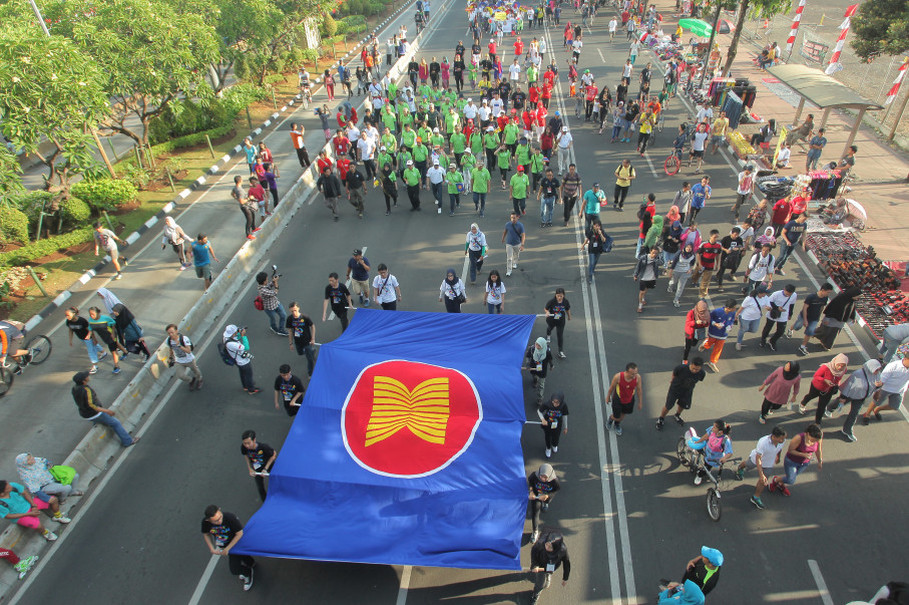
Diplomats say Indonesia’s provincial and district leaders should to tap into international opportunities that arise from the country’s position as one of the founders of Asean. Image: Muhammad Adimaja/ Jakarta Globe/Antara

Indonesia’s foreign policy under President Joko “Jokowi” Widodo has become more visible regionally and globally, contrary to popular assumptions from the early days of his administration that saw him concerned only with domestic affairs, says a senior diplomat.

Today, October 20, marks Jokowi’s third year in office.

“There used to be this perception that President Joko Widodo, in the early days of his administration, was not too concerned with foreign policy, but now we are seeing the opposite,” said Dino Patti Djalal, Indonesia’s former ambassador to the United States and founder of the Foreign Policy Community of Indonesia (FPCI).

Speaking at a press conference in Jakarta, Djalal highlighted the need to reflect on the past 50 years of the Association of Southeast Asian Nations and its future, for the sake of Indonesia’s presence on the international scene.

He said it was crucial if Indonesia “wants to be a leader recognised by the international community,” because Asean is the one domain where its leadership has been “naturally accepted”.

“Indonesia’s policy toward Asean is the backbone of our foreign policy, so we must continue to lead in the association,” Djalal added.

In the context of Asean, Indonesia’s leadership has been in the face of the ongoing crisis in Myanmar’s Rakhine State, in which more than half a million people have already fled to neighbouring Bangladesh.

-Partners-

Free, active policy needed
Djalal also noted the importance of free, active and creative foreign policy for Indonesia to be a key player in global peace and cooperation efforts.

According to the seasoned diplomat, one of the challenges for the country’s policy in the future will be “non-traditional issues” such as humanitarian crises.

FPCI is hosting its third Conference on Indonesian Foreign Policy (CIFP) in Jakarta tomorrow. The Jakarta Globe is one of the event’s media partners.

The conference’s 18 sessions will cover a range of topics, with Asean and globalisation as the main theme.

Participants will also discuss the South China Sea dispute and the regional influence of the world’s powerful leaders — United States President Donald Trump and Chinese President Xi Jinping.

One of the sessions will be devoted to the potential Indonesia’s provincial and district leaders have to tap into international opportunities.

According to Dino, a survey conducted recently by FPCI revealed that so far only a few regions know how to capitalise on the country’s position as one of the founders of Asean.

More Indonesian stories

]]>

NZ’s Peters opts for coalition with Labour-Green in government

]]>

AsiaPacificReport.nz

Jacinda Ardern’s speech in full after being named next New Zealand prime minister. Video: Guardian Wires

Pacific Media Centre Newsdesk

Queenmaker Winston Peters ended almost three weeks of intense media speculation by declaring tonight that his centrist New Zealand First party would form a coalition government with the progressive Labour-Green bloc.

He spurned the ruling conservative National Party of outgoing Prime Minister Bill English, saying that NZF had more in common with Labour in terms of the future development of New Zealand.

Labour leader Jacinda Ardern, 37, will thus become New Zealand’s third woman prime minister after National’s Jenny Shipley and Labour’s Helen Clark – and NZ’s second-youngest premier.

This follows a mercurial rise for Ardern, who succeeded Andrew Little as party leader less than three months ago.

“These negotiations have been robust. But there has been more that has united the parties than has divided,” Ardern said after the Peters announcement.

-Partners-

“Labour has always believed that government should be a partner in ensuring an economy that works and delivers for all New Zealanders.”

Although Labour was beaten by National on election night on September 24, the Labour-NZ First-Green bloc picked up two extra seats from special voters and also represents more than half of New Zealander voters, who voted for change.

Peters is expected to become deputy PM and the Greens are expected to have environmental ministerial appointments outside cabinet to become a government partner for the first time.

Analysts believe the new government will have more progressive policies in terms of New Zealand relations with the Pacific and also more positive and active policies around climate change.

The new government is also expected to give greater emphasis to social justice policies and housing.

]]>

PNG faces ‘catastrophe’ over health if no crisis action taken, warns MP

]]>

AsiaPacificReport.nz

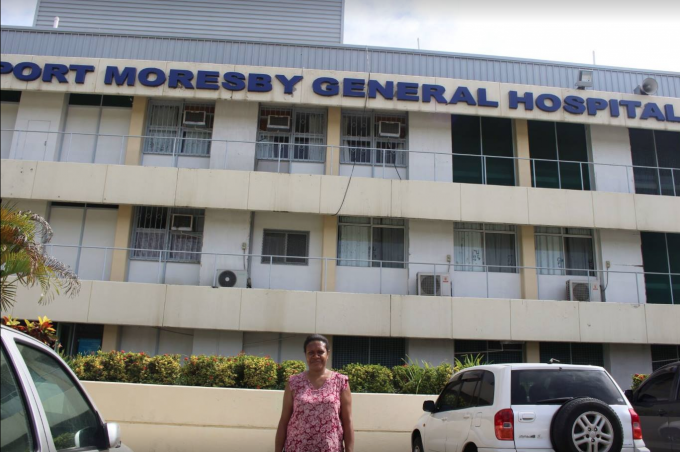
Port Moresby General Hospital … Papua New Guinea “has some of the worst health indicators in the Asia-Pacific region”. Image: Archive

Pacific Media Centre Newsdesk

An unprecedented level of mismanagement of Papua New Guinea’s affairs since 2012 has caused serious health issues, including widespread suffering and preventable deaths, reports Loop PNG.

The opposition’s Shadow Minister for Health and HIV/AIDS, Joseph Yopyyopy, has called for swift and appropriate government action to prevent further deterioration of PNG’s most basic and essential health services.

He warned of “catastrophic consequences” resulting from government inaction while noting that the PNC-led government drastically cut health spending for the past three years, including 2017.

Yopyyopy cited most recent instances, including:

  • Laloki Psychiatric Hospital in Central Province being on the verge of closure with patients likely to be sent back home to their families due to shortage of medical drugs at the hospital. (Director of Medical Services at the hospital Dr Ludwig Nanawar revealed this as the institution marked World Mental Health Day on Oct 10);
  • Health workers in Manus Province have been without such medicine for more than a month;
  • Medicines running out PNG-wide with health facilities lacking essential equipment and in a state of disrepair;
  • Health workers not being paid properly with doctors and health workers threatening stop work; and
  • Recent media reports of a story from Abau district where a ward councillor claimed more than 20 people had died in the past two years due to medicine shortage.(People had to be taken to Port Moresby for treatment while some died along the way).

Other unreported cases are indicators of very serious system failure, the shadow minister said.

Yopyyopy noted that from the 2015 to 2017 budget, health funding was cut by 40 percent from K1.7 billion to K1.2 billion.

-Partners-

He also warned of further planned cuts of up to 30 percent over the next five years (to about K850 million).

Yopyyopy cited some “shocking” statistics about PNG’s state of health, including:

  • In 2016, health cuts hurt many people, but fortunately the impact was softened by external health funding which may not be available;
  • According to latest reports, PNG’s tuberculosis (TB) crisis is yet to be brought under control;
  • ChildFund Australia estimates that up to 9000 PNG citizens died from TB in the past three years – one out of four are children);
  • On PNG’s maternal and child mortality, a government decision in late 2016 to pay for women to give birth in a clinic or hospital was in fact an “admission of defeat”;
  • Health experts have explicitly expressed that the health funding cuts have destroyed people in rural and remote areas where the need is urgent; and
  • Up to 1500 women die in childbirth each year, and about 45 babies out of every 1000 die.

The UN estimates that about 12,000 children under five die each year, reports Loop PNG.

Also, a recent Asia Development Bank (ADB) report shows that PNG has some of the worst health indicators in the Asia-Pacific region:

  • The prevalence of stunting among children under the age of five is 49.5 percent, ranking 29th out of 30 countries with information;
  • The prevalence of malnutrition (wasting) among children under five is 14.3 percent, the highest rate for 30 countries;
  • The maternal mortality ratio per 100,000 live births is 215, the equal third highest of 40 countries;
  • The under-five mortality rate per 1000 live births is 57, the fourth highest of 43 countries;
  • The number of new HIV aids infections in 2015 is 0.36 per 1000 of the uninfected population – the highest of 21 countries;
  • The TB incidence per 100,000 people is 432, the second highest of 44 countries; and
  • The incidence of malaria per 1000 people is 185, nearly double the next highest incidence.

Yopyyopy said facts speak volumes and it is incumbent on the government to stop painting a false picture when in fact, there are very serious underlying health issues affecting PNG.

“The government is not only duty bound, but morally obliged to put the health issues of PNG citizens above all else,” he added.

]]>

Shailendra Singh: How journalists can walk the Pacific climate change talk

]]>

AsiaPacificReport.nz

OPINION: By Dr Shailendra Singh

Climate change seems to be getting increasingly more news coverage recently, which is a positive outcome—on at least some levels.

But how engaging is the material?

A core challenge with climate-change reporting is not only generating sufficient public interest, but sustaining it.

This is partly because climate change used to lack the immediacy of hard news—the here and now effect—although this is changing, as the damaging effects of the phenomenon become more apparent.

Many local Pacific climate change news stories seem to rely on speeches and press statements.

Yes, journalists can fill news holes quite easily in this manner to meet deadline imperatives.
But is this style and nature of reporting really capturing people’s attention, assuming that is the goal?

-Partners-

For example, the speeches of many Pacific Island leaders receive widespread coverage.

Such speeches are usually targeted at fellow world leaders, which is quite necessary and legitimate in some respects.

Lavish coverage
Other news stories are usually based on international meetings and conferences. They receive lavish coverage. These are big and important stages, and they should get fair representation.

But to what extent are local audiences connecting with these stories? That’s assuming that local audiences matter in climate change.

How relevant and compelling are the speeches and press statements to local ears? Is the oratory having any impact, or starting to sound bland and repetitive? This is something worth considering if the idea is to inform people and mobilise them into action.

Once, we used to complain about the scarcity of coverage. However, slanted and saturated coverage of a certain type is also problematic in its own way.

The point I’m making is that the media’s challenge is to make stories interesting and relevant; otherwise readers, listeners and viewers may simply switch off.

Capturing and holding audience attention will require more than just republishing statements and speeches ad nauseam.

The gratuitous coverage given to presidents, prime ministers, diplomats, heads of regional organisations and other bureaucrats needs to be balanced with coverage of grassroots people who are actually experiencing the effects of climate change first-hand.

Compelling stories
This would make the stories more compelling, and the problem appear more real, rather than far-removed and abstract.

Why not cover more human interest stories, rather than bore readers to death with statistics, speeches and scientific jargon only?

If the speeches have to be used, at least derive some original ideas from them; for example, the blame game is rife with developed world leaders accused of inaction, and rightly so.

But are Pacific Island leaders walking the talk or not? Have we examined this issue sufficiently enough, or are we just content with speech making? For example, mangroves are one of the best protection against sea level rise.

Yet there are reports of mangrove destruction, even in the face of big international meetings.

Large tracts have reportedly been cleared in Lami, Wailekutu, Nasese, Vatuwaqa and elsewhere, for the sake of industrial development, tourism projects and urbanisation.

Professor Wadan Narsey, Dr Ajantha Perer and others have written about this.

National Green Strategy
How does this trend figure in our national Green Sustainable Growth Strategy?

Does it contradict the grand sounding speeches at major international meetings?

Also, does Fiji have a national mangrove replanting scheme? Who would finance any such undertaking?

How much is allocated to such projects compared to meetings and conferences?

Are grassroots projects sufficiently funded or is the money gobbled up by professional junketeers?

Some time back there was a moratorium on mangrove destruction. But why not a total ban, as in many other countries?

My point is, instead of just reporting speeches and statements, we need to conduct our own research independently. We need to formulate the hard questions and seek answers from leaders; otherwise there is a risk of getting too caught up in the hype of big meetings and high-profile speakers.

Yes, such meetings are important for various reasons, including crucial and binding international treaties. The meetings attract some very learned people who know their stuff.
Pacific leaders have vital roles at such meetings, and they have achieved some outstanding results.

Fair and balanced
Still, the coverage should be fair and balanced, rather than skewed and elitist.

Reporters should not lose touch with the realities on the ground or the fundamentals of journalism—to be skeptical and question things, rather than rely on handouts alone.

The job remains the same—keep governments and leaders accountable, rather than cut-paste speeches.

In journalism, single sources are risky and inadequate, so also cite the work of other researchers and commentators, for the sake of balance—which is a requirement under the 2010 Media Industry Development Decree anyway!

Use the information to derive questions and grill leaders; otherwise there is a risk that the coverage will become merely a PR exercise, which would be both wasteful and counterproductive.

The idea is to make climate change and its effects relevant locally to help comprehend and develop a proper consciousness of the problem on a global level—a problem which the scientific community describes as lethal for earth and its inhabitants.

Dr Shailendra Singh is a senior lecturer and coordinator of the University of the South Pacific Journalism Programme. This article is based on a presentation by the writer at a special briefing for journalists on climate change on 18 September 2017 at USP.

]]>

Matangi Tonga condemns state for ‘annihilating’ public broadcasting

]]>

AsiaPacificReport.nz

Viola Ulakai (left) and Laumanu Petelō out after TBC newsroom in “shake-up” … critical of PM ‘Akilisi Pōhiva. Image: Kalino Latu/Kaniva Tonga

Pacific Media Watch Newsdesk

Matangi Tonga has hit-out at what it says are attempts by the government to take over and “muzzle” the Tonga Broadcasting Commission.

In an editorial, Matangi Tonga said today recent restructuring led by TBC’s new board chairman, Dr Tu’i Uata, had “annihilated” the public broadcaster and turned the government watchdog into a “lapdog”.

Matangi Tonga’s editorial comes amid the latest controversy to befall the embattled public broadcaster, which has seen two of the TBC’s most senior journalists, Viola Ulakai and Laumanu Petelō, moved out of the newsroom and into a division labelled “NGO Services”.

The editorial:
With Tonga only weeks away from a snap general election, the Tongan government is taking full control of the Tonga Broadcasting Commission (TBC), in a move that has annihilated its right to function as an honest public broadcaster.

The TBC’s two most senior journalists, Viola Ulakai, the manager of news content, and Laumanu Petelō, the news editor, have been ordered out of the newsroom and into a corner called “NGO Services”.

The decision by the TBC’s new chairman of the Board of Directors, Dr Tevita Tu’i Uata, is a blatant attempt to turn watchdogs into lap dogs.

-Partners-

Petelō and Ulakai, the most senior journalists remaining at the TBC, after their CEO was removed earlier this year, at first resisted the move.

No Go
Petelō said that Ulakai had renewed her working contract with the TBC, and she had signed a working contract with the TBC as a news editor in June. She said that they refused to move because they were contracted as journalists to work in the news division, and they did not know what they were supposed to be doing at the new “NGO Services” Division.

But at the end of last week they decided to move out from the newsroom and over to the NGO Services Division.

They are hearing rhetoric that the TBC is losing money, and that their news service, which is not pro-government, is being blamed for its financial woes.

There have been talks for the TBC news to be in Tongan only, which Petelō believes will be a disappointment for foreign diplomats who financially prop up the service of TBC, and rely on their daily news coverage of Tongan affairs.

Petelō goes on leave today, October 16, and will not return to work until early next month.

Political control
The feud between government and the TBC has been going on since the present government came into power at the end of 2014. There have also been court cases between government and members of the board and the CEO of TBC.

The rhetoric by government officials, that because the TBC is a public enterprise its news coverage “should be pro-government”, is completely off the mark. No genuinely professional journalists will work under such a politically controlled system.

It is quite clear with the beheading of the news service that government is taking full control of the public broadcaster in the lead up to the November 16 general election.

The concept of public broadcasting, as with the BBC, Radio Australia and broadcasting establishments in some Commonwealth countries, is that governments allocate funds for public broadcasters with independent newsrooms espousing a principle of “impartial, free and fair”.

Public broadcasters do not rely on advertising to the same degree as commercial broadcasters. This allows public broadcasters to transmit programmes that are not commercially viable to the mass market, such as well-balanced public affairs shows, radio and television documentaries, and educational programmes, that otherwise could not be produced.

The current members of the TBC Board of Directors are: chairman, Dr Tevita Tu’i Uata; directors, ‘Aloma Johansson, Pita Moala, Siosaia Fonua and Leonaitasi Hoponoa.

The TBC was established in 1961, and it has developed and benefited over the years with continuing assistance from foreign aid donors. Over the years, it has managed to play its part as a watchdog over national affairs.

Now there appears to be an unfortunate attempt to muzzle the watchdog.

]]>

John Minto: Urewera 10 years on – recounting the lessons of the NZ surveillance state

]]>

AsiaPacificReport.nz

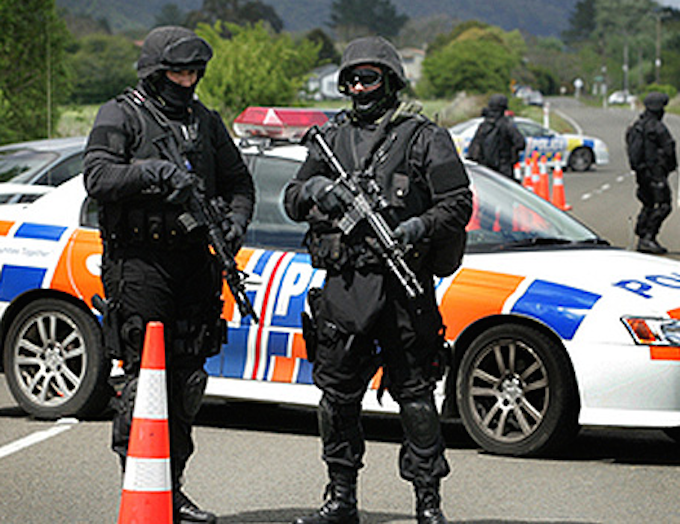
A breathless police and media commentary about a cocktail of napalm bombs, terrorist cells, guns, ammunition, Māori extremists, guerrilla warfare, assassination threats against politicians … but it was all hyped up. Image: The Daily Blog

On the 10th anniversary of the Urewera raids, we should recount the lessons – and we should remember.

Breathless police and media commentary about a cocktail of napalm bombs, terrorist cells, guns, ammunition, Māori extremists, guerrilla warfare, assassination threats against politicians, greeted the public on the 15 October 2007.

You name it – the police claimed it and the media hyped it.

From the 17 arrests and the dozens searched and detained – illegally as it turned out – just four people were charged with illegal possession of firearms – two were jailed and two given home detention.

The progressive left was quick to hit back against the hysterical police narrative and bring some semblance of sanity and common sense to the public debate.

This was highly successful and within 24 hours some elements of the media and much of the public were expressing scepticism concerning the police claims.

We worked with Tuhoe activists to organise marches and public demonstrations highlighting the appalling police behaviour and calling for a reigning in of the surveillance state.

-Partners-

Police overreacted
Subsequent developments showed we were right – the police had overreacted and dramatically overreached. They should have taken concerns about military style camps in the Urewera seriously and sent in a Māori liaison officer to find out what was happening and why.

Instead, the police deliberately sidelined their community officers in favour of a dramatic $8 million surveillance operation which they hoped would bring public justification for the massive increase in police (and SIS) powers and resources in the wake of the US September 11 attacks.

New Zealand had become a surveillance state and these raids would show that while we didn’t have Islamic extremists, we had our own home-grown “terrorists”.

A lot of that initial response from the left was instinctive. We knew most of the people the police were claiming as terrorists and knew this was at least a gross over-reaction to whatever had been going on.

The most important lesson from the Urewera raids is to always be sceptical of state agencies who often have their own non-public interest justifications for what they do.

On the other side I don’t think it’s too cynical to say the main lesson the police will have learnt is NOT that they got it wrong and couldn’t tell the difference between a bullshit conversation in a car and a credible terrorist threat, but that it was a failure of PR to prepare carefully enough.

Tuhoe have their own lessons which they have been speaking about in the past few days.

It’s worth remembering too the long list of legislation passed by successive Labour and National governments to extend the surveillance state on the pretext of keeping us safe.

Instead, it has turned this country into a surveillance state where civil liberties and the right to privacy take second place to the powers of Big Brother to intrude into our lives.

This article was first published on The Daily Blog and has been republished with permission.

]]>

Indigenous advocacy group calls on Jokowi to revoke forests decree

]]>

AsiaPacificReport.nz

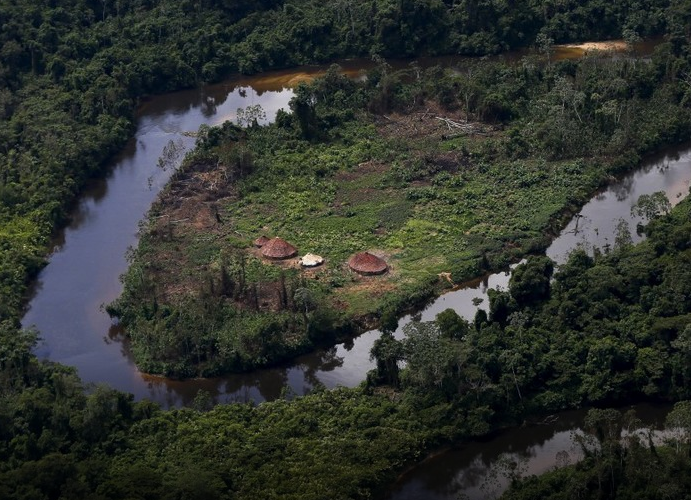
A presidential decree may threaten and potentially criminalise indigenous communities that for years have been living in forest areas, says an advocacy group. Image: Bruno Kelly/R/Jakarta Globe

By Dames Alexander Sinaga in Jakarta

A civil society group has urged the Indonesian government to revoke a presidential decree on the indigenous resettlement schemes in forest areas, which was issued about a month ago.

The forest areas in the decree signed by President Joko “Jokowi” Widodo on September 6 are classified as conservation forests, protected forests and production forests.

Muhammad Arman, head of legal and advocacy division of the Indigenous Peoples Alliance of the Archipelago (AMAN), said the resettlement programme under the decree could threaten and potentially criminalise indigenous communities that for years have been living in the areas.

“[Indigenous communities that live on] 1.6 million hectares of conservation forests are in threat of resettlement,” Arman told reporters.

The lands constitute 20 percent of 8.2 million hectares registered by the Ministry of Environment and Forestry and the Ministry of Spatial Planning as indigenous.

Association for Community and Ecology-Based Law Reform (Perkumpulan HuMa) researcher Erwin Dwi Kristianto said in a statement that the decree “creates uncertainty” and damages social forestry and communal rights.

-Partners-

While the decree, of which implementation started on September 11, obliges local governments to provide legal protection for the communities living in the forest areas, it also permits their resettlement.

Dames Alexander Sinaga is a Jakarta Globe journalist.

]]>

Call for Pacific writers – the 2017 Samoa Observer Tusitala prizes

]]>

AsiaPacificReport.nz

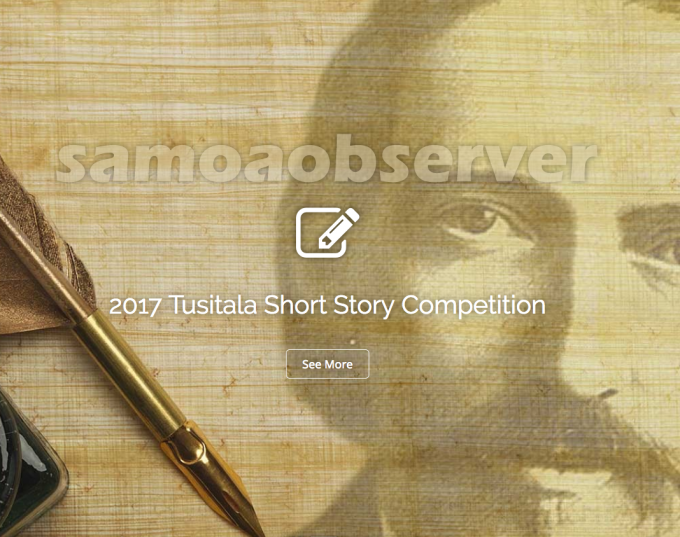
2017 Samoa Observer Tusitala Short Story Competion.

Pacific Media Watch Newsdesk

Prestige, financial prizes and the chance for your story to be read worldwide. This is what lies ahead for authors of successful entries in the 2017 Samoa Observer Tusitala Short Story competition.

This is a competition specifically set up for writers in the Pacific.

The top three entries from the three areas, Australia and New Zealand, Samoa and All other Pacific Islands, win generous, cash prizes of US$1000 (NZ$1400) each. Then the overall winner judged from those three categories, receives an additional US$2000 (NZ$2800).

A further 12 or so stories from the competition will be included with the winners’ entries and published in a book of short stories in the third “Our Heritage, the Ocean” series.

You may start submitting your entries online up to the deadline – November 10 on the website, www.tusitalacompetition.com.

Organising committee member Marj Moore said this was the third year this competition had been running.

-Partners-

Forum for Pacific writers
It was started as an initiative in 2015 by the Samoa Observer editor-in-chief, Gatoaitele Savea Sano Malifa, a noted writer, published author and poet.

He wanted to provide a forum for Pacific writers to tell the stories of their own lives and to share issues and ideas which were important to them.

Following the success of this inaugural competition, the stories in that 2015 publication were later translated into Chinese by the Chinese Ambassador in Samoa, Wang Xuefeng and Madam Tong Xin. That translation of Pacific stories was then published in China.

The second annual Samoa Observer Tusitala Short Story Competition in 2016, also attracted some outstanding entries. These original stories were set around the Pacific – in American Samoa, Australia, Fiji, Hawai’i, New Zealand, Papua New Guinea, and Samoa, with one even further afield.

“Stories of superstition and courage, migration and old age, tales set in the past, present, and future. While the plots are diverse, many have the same underlying message – we need our family and each other” said an early reviewer of the collection.

This second publication of the best stories from 2016 was entitled, Only the Word Survives. It has recently been published and is available from the Samoa Stationery and Books outlets in Samoa; American Samoa, and Mangere, Auckland, New Zealand.

]]>

David Hall: Emissions, not migration, the real climate change issue in NZ

]]>

AsiaPacificReport.nz

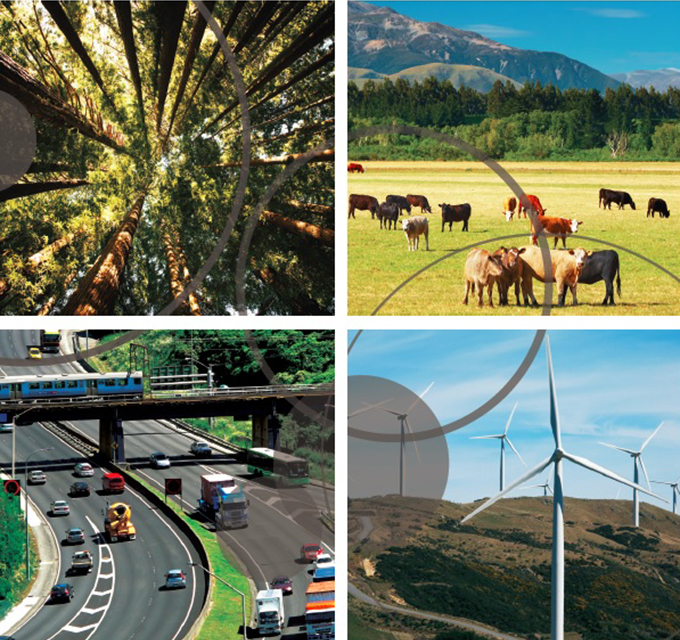
New Zealand and climate change … low-cost opportunities in energy efficiency, heating technologies, agricultural efficiency, and technological advances in methane vaccines and cheaper electric vehicles. Image: Vivid economics

ANALYSIS: By David Hall of AUT’s The Policy Observatory

The problem with climate change – like any wicked problem – is that its story can be told in many different ways. The same goes for migration. The facts, as far as they go, can be conjured into a multitude of understandings.

Still, some stories are less credible than others. Michael Reddell’s recent analysis of migration and climate change in Newsroom is one.

That these vastly complex issues cross over at times is obvious: climate change leaves nothing untouched. But Reddell goes further by arguing that the Productivity Commission’s low emissions inquiry ought to treat immigration as a contributing factor to New Zealand’s rising greenhouse gas emissions; and that our national emissions targets should justify reduced inward migration.

His first argument is one of scale: “more people need more transport, more heating, more energy in their workplaces” – and hence more emissions.

Notably, though, he presumes current technologies and current prices. Not only does this misrepresent all likely futures, but also our actual past. The Ministry for the Environment’s most recent Greenhouse Gas Inventory 1990–2015 notes that energy emissions decreased in 2008–2011 and remained stable since, which is the same period that net migration rose steeply.

The Ministry attributes these reductions to decreased manufacturing emissions and increased renewable energy generation. We have more people, sure, but more people relying on our low-emissions energy. And what matters from the perspective of Earth’s atmosphere is what people emit, not where they emit it.

-Partners-

Emissions from transport, by contrast, have risen. Indeed, road transport emissions increased by 78 percent since 1990, offsetting those other reductions in fuel use.

Over-reliance on vehicles
But the fault here lies with New Zealand’s over-reliance on private vehicles. Migrants (and citizens) contribute to road traffic by necessity, because alternative means of transport are less available, indeed far less so than many migrants are used to, coming from places where travel by trains, trams, cycles and footpaths is not unusual.

If low-carbon alternatives in places like Auckland were more serviceable, migrants would doubtlessly use them, as indeed would citizens. And if the excuse for under-investment is the lack of markets of sufficient scale, then population increase and cultural change will drive progress.

Reddell’s second argument links migration to agricultural emissions. As I understand him, he argues that New Zealand’s high living standards depend upon dairy exports, which makes it politically infeasible to impose costs for environmental damages. The greater the population, the greater this reliance upon the dairy sector, and so the greater the reluctance to make polluters pay.

But it is bizarre to suggest that new and old New Zealanders – including those not employed in agriculture – rely so heavily on dairy for their standard of living. Sure, dairy is our largest export sector, but only 3.5 percent of total GDP.

Actually, many New Zealanders, including many farmers, rely on healthy environments for their standard of living, both in the non-economic sense of quality of life, and in the economic sense that tourism and exports benefit from New Zealand’s clean, green reputation. (Tourism, incidentally, accounts for 5.6 percent of total GDP.)

This is likely why – contra Reddell – a strong majority of New Zealanders (77 percent) do support water charges for agriculture and horticulture, despite the fiscal burden.

It is also misleading to treat economics and environment as a zero-sum game, as if one must lose out in order for the other to gain. It simply isn’t the case that internalising the environmental costs of agriculture necessarily undermines profitability.

Innovation proves point
Innovation within the dairy sector proves the point. Recently, Lincoln University’s demonstration farm reduced nitrate leaching by 30 percent without undermining affecting profitability.

This contradicts Reddell’s claim that “all informed observers recognise that the marginal abatement costs in New Zealand, through conventional means, are high”. I’ve written for Pure Advantage about the potential of forests – both production and permanent forests – to offset agricultural emissions in a way that isn’t only cost-effective but potentially profitable.

This is corroborated by other “informed observers”, such as the Royal Society of New Zealand, the Parliamentary Commissioner for the Environment and Vivid Economics. The latter’s Net Zero in New Zealand report highlights other low-cost opportunities in energy efficiency, heating technologies, agricultural efficiency, and technological advances in methane vaccines and cheaper electric vehicles.

What’s striking about all this is not only Reddell’s argument is from the perspective of climate change, but also economics. He resists the orthodox view that migration has a modest positive impact on national GDP.

I’m no enemy of disciplinary iconoclasm, but it does beg for robust positive arguments. Reddell’s appeals to uncertainty (economists cannot prove definitively that migration increases GDP, therefore it might not be true) do not count. Climate scientists are all too familiar with this kind of denial.

So if economic evidence cannot always carry his arguments, one can only conclude that non-economic reasons are doing some of the work. To Reddell’s credit, he is explicit about his concerns for cultural cohesion, or that “Islam is a threat to the West, and a threat to the church wherever it is found”.

These are real reasons for wanting to reduce immigration, but should be debated on their ethical and sociological merits, not couched in an idiosyncratic take on climate policy.

When it comes to global warming, it’s the carbon intensive economy, stupid. The only genuine solution is to transform the world’s high-emissions economies into low-emissions economies, so that anyone entering them by way of birth or migration can lead a prosperous low-carbon life.

Our national emissions targets are a means to this global end. Focusing on peripheral issues like migration only distracts from the work that needs to be done. But that’s what happens when you tell the story of a global problem through a nationalist lens.

David Hall is senior researcher at The Policy Observatory, AUT, where he researches migration and climate policy. He is also editor of the BWB Text, Fair Borders?: Migration Policy in the Twenty-First Century. This article is republished with the author’s permission.

]]>

Phillip Miriori: Why Bougainvilleans are having their say – ‘No to BCL’

]]>

AsiaPacificReport.nz

OPINION: By Phillip Miriori

As many would be aware, we Bougainvilleans have been through a tough history with the disasters that came from the past operations at Panguna, then owned by Bougainville Copper Limited (BCL).

One of the key issues that led to our civil war, when around 20,000 of our friends and family died, was the way we were treated by BCL then – entering our lands without consent, poisoning our gardens and lives, removing our mountains, inviting in the military and ignoring our views, without compensating us fairly.

Since the end of the conflict, BCL has made no effort to resolve the damage they caused to our people, lands and rivers – infact they deny any responsibility and are trying to tell us what to do again, calling us impediments when we do not agree with the rules they try and dictate.

Have they learned nothing or think we have forgotten?

We have fought hard to protect ourselves from the same thing happening again if Panguna re-opens, and the new Bougainville mining law transferred ownership of the minerals to the landowners. As a result, now nothing can happen to our minerals without our consent.

Our Special Mining Lease Osikaiyang Landowners Association (SMLOLA) members are now in a position to make BCL, the Autonomous Bougainville Government (ABG) and the world respect our views. One of the key steps in the process of late has been our efforts to protect ourselves from the attempt to force the return of BCL without our consent.

-Partners-

We have had to use the Courts to ensure we are listened too and the result has been a landmark mediation process, right here on our lands at Dapera led by Justice Kandakasi.

Mediation process
The mediation process was initiated by me to try and help resolve the challenge to my leadership of the SMLOLA by Mr Lawrence Daveona, despite the fact he is not following custom in recognising my leadership position, a position I was born into.

He also wants BCL to return despite everything they have done and failed to do, which is strongly opposed by the majority of our members, as demonstrated by the petition against the return of BCL which now stands at around 2000 members saying “No to BCL”.

The mediator has now given us one more opportunity to try and resolve this among our family which I am keen to do. I firmly believe we can all unite to protect our people against the return of BCL and I promise to make every effort to do that with Mr Daveona and the ABG.

I want to work with them to ensure any redevelopment of Panguna is done properly this time and our members are protected and looked after, respected and treated equally and fairly.

The primary objective of the mediation was to try and resolve the challenge to my rightful leadership of the SMLOLA by Mr Daveona, which I firmly believe is unlawful and will take to the courts again if necessary. I am making every effort to accommodate him as unity will have a very valuable benefit for all of us and the future of Bougainville.

One of the other valuable objectives that has come from the mediation and I have committed to work on, is to more closely align our association’s constitution with our Nasioi customs, moving key decisions back to our clan system that has been our way since time immemorial. I strongly support that and encourage everyone to participate as I believe it will assist in making any benefit sharing from a future mine fairer for all.

The mediation over the past few weeks, has also given our women, the owners of our land, the opportunity to stand up and be heard. Some of them are against mining and one of my important tasks will be to work with them further as I believe Independence for Bougainville is very important and mining, if done responsibly and with people who we can trust, who will show us respect and fairness, will enable us to get there quicker.

As part of that process, in my role as the chairman of the SMLOLA and an elder to our clans, I have worked hard to attract a reputable international mining company who has both the social and environmental track record to make sure this time the mine could be developed successfully, fully integrated into our local community.

Revolutionary law
From the time the new transitional mining law was passed in 2014, I worked closely with President Momis and both Mining Ministers, Michael Oni and Robin Wilson. In fact, on the day the law was passed I was invited to meet with President Momis at the ABG Parliament to celebrate the new revolutionary Bougainville Mining Act, which uniquely, gave ownership of the land and minerals, back to the landowners to try and repair some of the mistreatment of our people in the past.

They were then opposed to the return of BCL and supportive of our efforts right through until March this year when suddenly and inexplicably something changed. They would no longer engage with us, would not explain why and started a very public campaign supporting BCL and a challenge of my leadership by Mr Daveona.

I didn’t select RTG Mining Inc. lightly, even going to a mine their management developed in the Philippines with a group of both Panguna landowners and ABG Ministers to see how they do things. In fact, the three ABG Ministers that came to see the RTG operation in Philippines expressed support for RTG.

Over time we came to develop a trust with RTG’s management and believe they will make the redevelopment of Panguna a great success, working closely with our members. They have supported the hard work we have done over the last year to defend ourselves against the illegal return of BCL.

Misled through lies
It is disappointing that some try to mislead through lies. The suggestion that improper payments were made to ABG officials is both ridiculous and untrue. They are currently working against us and strongly pushing BCL and Lawrence, rather than being impartial which is all we ask of them.

Despite the current position of the ABG, we are confident that they will eventually hear our firm views – “No to BCL!” and we remain committed to working with them to find a solution where all will win, including the ABG. We must talk openly and respectfully to find a fair solution. The law and views must be respected and we will continue to fight for that for our members.

The mediation is not a forum to make a final call on who the developer should be and if the mine should be redeveloped, which must be done in conjunction with all our members, but it has been invaluable to be able to showcase the opportunities to highlight the issues and concerns with a possible return of BCL.

In fact, BCL and the ABG have publicly admitted they cannot develop the project themselves and would have to find a partner. Who will that be, why won’t they tell us? How can someone support them when we do not even know who the actual developer will be?

I hope that the discussions at the mediation will assist Mr Daveona to understand why our people would be better off without the return of BCL. And I will continue to work with him to try and reconcile our positions so we can stand united against them and get a far better result for our people, developing a model that is win-win for the people of Bougainville and the ABG.

Phillip Miriori is chairman of the Special Mining Lease Osikaiyang Landowners Association (SMLOLA), Me’ekamui Government of Unity and SMLOLA.

]]>

Bryce Edwards’ Political Roundup: Signs of a Labour-NZF government

New Zealand Prime Minister, Jacinda Ardern.

Bryce Edwards’ Political Roundup: Signs of a Labour-NZF government

[caption id="attachment_13635" align="alignright" width="150"] Dr Bryce Edwards.[/caption] Is Winston Peters about to announce a Labour-NZ First government? Yesterday I looked at arguments NZ First might be inclined to choose National. Below are recent items laying out the reasons a Labour-led government could be NZ First’s best choice. [caption id="attachment_6928" align="aligncenter" width="612"] Labour Party leader Jacinda Ardern. Image courtesy of Jacinda.org.nz.[/caption] 1) On the most important policy issues, Labour can give NZ First what it wants Newshub’s Lloyd Burr has put together an excellent list of NZ First’s supposed 25 “bottom lines” for negotiation, and he evaluates the likelihood of National and Labour yielding to each one – see: The comprehensive list of Winston Peters’ bottom lines. 2) Winston Peters wants a legacy of change Winston Peters “doesn’t want to be remembered as the man who went with National twice, when the country, to a greater or lesser extent, wanted something else. He understands this is his last chance to genuinely put New Zealand first”. So says Chris Trotter, talking about Winston Peters desire for a legacy on the AM Show – see: What does Winston Peters want as his legacy? Trotter says “What he wants to be remembered for is the person who, in that last three-year period, brought together everything he has been as a politician since the late 1970s. If it’s simply to keep in the National Party for another three years, that’s not what he wants to be remembered for.” 3) Winston Peters will want to hit back against the Establishment Chris Trotter also writes this week about Winston Peters’ long history of battles with New Zealand’s “political class”, or Establishment. He argues Peters needs to resist the pressure to put National back into power, and instead be the “grit” that enables a Labour and Greens government to make real and lasting change to “this country’s economic and social direction” – see: ‘Dear Winston’ – an open letter to the leader of NZ First. 4) NZ First should choose a brand-new government because voters want change Finlay Macdonald argues “more than half the country” voted for change, and Peters could “play the role of elder statesman in a young, progressive government at a time when the need for economic, environmental and social reform has never been greater” – see: Which Winston will step up for coalition talks? Peters’ legacy won’t be secured with National, according to Macdonald: “there will be no great legacy available to him for propping up a government clearly past its use-by date, no matter what little wins (or baubles of office) he extracts in the process” 5) The economic nationalism of NZ First, Labour and the Greens is a unifying factor According to Gordon Campbell “Peters is a nationalist, more than anything else”, and this binds him to the left parties – see: What does Winston Peters want his legacy to be? Campbell says: “Yes, Peters and many of his supporters certainly have their social and generational differences with Labour and the Greens, but these pale in comparison with the similarities between them on the more basic issues to do with economic sovereignty.” 6) NZ First supporters prefer Labour-Greens According to a Colmar Brunton survey earlier in the year, 65 per cent of NZ First voters favoured Labour, rather than National, leading the new government. Toby Manhire therefore argues that NZ First’s caucus should be regarded as being split between the left and right blocs: “if we factor those responses in, the centre-left option nudges ahead… the Labour-Green side would get about six and a half seats, and National about two and a half… The point is, roughly speaking, if we assign those preferences, you’d finish up with Labour-NZF-Green at 62 seats versus National-NZF at 57 seats, with ACT’s one seat tallying up the 120” – see: After specials, it’s closer than ever – but what do Winston’s voters want? 7) NZ First policy is more aligned with the left Simon Wilson says “NZ First and Labour policies align pretty well, and the Greens can be accommodated in much of that alignment too. But NZ First and National do not enjoy this luxury: from fiscal settings to immigration, regional development to welfare, their policy settings do not align with NZ First’s. That means Labour is the natural partner for NZ First” – see: The special votes swing left – here’s how the votes fell and what they mean. 8) NZ First still has profound differences of policy and ethos with National RadioLive’s Mitch Harris says “National as the landowning, farming and big business party is less worried about housing costs and likes to have a plentiful supply of cheap labour. Labour, The Greens and NZ First want Government to have a greater hand in directing the economy. These are profound differences in outlook and no coalition agreement can ‘future-proof’ these sorts of differences three years into the future” – see: Common purpose more important than just ‘wins’. He is predicting a Labour-NZF-Green government, largely due to their similarities: “In 2017 Labour and The Greens have far more in common with NZ First than National does. Labour and NZ First want to cut back our high immigration numbers to give working people a better chance of earning a decent living. They also share a concern about wealthy foreigners bidding up the costs of land and housing”. 9) Bill English has made negotiation mistakes Bill English was quite outspoken at the beginning of the coalition negotiations, according to Barry Soper, and this hasn’t served National well. For example, “The best he could say of Peters during the campaign was that he was a challenge to do business with, then on the Monday after the election he told the nation he called Peters the night before but he didn’t pick up. That was designed to embarrass Peters, and it did, who told us he was out of cellphone range and when he got what would have been a most pleasant message from English it was too late to call him back” – see: Bill English doing little to endear himself to Winston Peters. Also, see Soper’s earlier column, Prime Minister Jacinda Ardern, don’t rule it out. 10) Luckily for Labour, the Greens ended up with less votes than NZ First Winston Peters will be comfortable choosing a Labour-Greens arrangement because NZ First will still be the second biggest party. David Cormack explains: “while the Greens’ total of 8 MPs is just under 60 per cent of the number they had last time it was crucial to Winston’s ego that they had fewer MPs than him. If the Greens had managed to get two seats from the specials and draw level with NZFirst then it’s likely that he would have been a lot more inclined to go with the Nats. Wherever he goes he’s got to be the second biggest party” – see: Winston and the predictable, boring, no clearer, very dull specials. 11) Winston Peters will have more power in a Labour-led government John Armstrong has explained that the NZ First leader will have learnt his lesson from the last time he went with National: “As Peters soon discovered, after reinstalling National in power after the 1996 election, the kingmaker becomes the target for discontent and dissatisfaction – not the king or queen. That would be best avoided by New Zealand First being a driving force in a first-term Labour-led administration. That would be far more preferable than being a cling-on to a fourth-term National-dominated one. Were Peters to opt for Labour, the ratio of that party’s seats to New Zealand First’s would be five to one. If his choice is National, the ratio edges closer to seven to one – and he has consequently less leverage” – see: Winston Peters’ ultimate bottom line. Furthermore “If policy compatibility is the gauge, Labour is again the only realistic choice. Labour would be far more amenable to slashing immigrant numbers than is National, for example. Only Labour can make the changes in economic policy to satisfy Peters’ demand for an alternative to the “failed experiment” of neo-liberalism. Opting for National would suggest he did not actually believe what he had been spouting on the campaign trail.” 12) Winston Peters holds a grudge against a National Party that tried to kill him off Not only is Peters still seething at the idea senior National figures may have leaked his superannuation overpayment details, National also tried to cut him out of Parliament. North & South magazine’s Graham Adams explains how National has antagonised Peters: “English took even bigger gambles this election and he may be the bigger loser on account of it. He believed he could knock Peters out of the race altogether — by an aggressive campaign in Northland and an attempt to force NZ First’s vote under five per cent” – see: Bill English: A gambling man. 13) NZ First has better personal relations with Labour Personal relationships matter in politics and Vernon Small explains that Labour “has the edge in terms of closer and warmer personal relationships. That is a legacy of the 2005-2008 period in Government together and the joint battles in opposition since then. And there is no doubt Peters has some serious issues with National on a number of fronts, and with its finance guru Steven Joyce in particular” – see: The game is everything Winston Peters wanted. Finally, a new song has emerged that satirises Winston Peters’ current position of power. Called “The Kingmaker”, the song by The Rekkidz is explained by the Herald – see: Rewi McLay and Nathan Judd write Winston Peters ‘kingmaker’ song.]]>

Tongan broadcasting chief blames TBC shake-up on news failure

]]>

AsiaPacificReport.nz

TBC’s chair Dr Tu’i Uata … “news content not popular”. Image: Kaniva News

By Kalino Latu, editor of Kaniva News

The Tonga Broadcasting Commission was restructured to save it from being closed down, says the commission’s chair, Dr Tu’i Uata.

Dr Uata told Kaniva News the TBC faced being shut down in two months because it was running at a loss despite having a strong “technical” management to make sure it functioned financially.

Dr Uata blamed the situation on the way the TBC news was being created and broadcast.

In Tongan he said: “Ko e palopalema ko e content oku ‘ikai manakoa aia makatuunga ai a e mole.”

This can be translated into English as: “The problem is that the content is not popular, that’s why it ran at a loss.”

He said he had launched a reform at TBC which was based on the idea that everything in the organisation had to be “people centred” and focused on customers.

-Partners-

News chiefs moved
As Kaniva News reported earlier, two senior and long serving journalists at TBC were moved out of the newsroom and moved into the sales and marketing department.

Laumanu Petelo, the editor, and Viola Ulakai, the news manager, were moved to a new department within the sales section known as NGO.

Chief engineer Solomone Finau has since been appointed acting general manager and Vilisoni Tu’iniua was taking care of the newsroom.

Dr Uata said he wanted to put a stop to the “loss” so that the organisation could be profitable.

“According to the public enterprise law which we are under, if the organisation is not financially viable or it cannot be able to perform like you (Kaniva News), there is a ground for dismissal,” Dr Uata said.

“TBC cash flow will shut down in two months, and all will go home.”

Dr Uata said this was his priority at this stage.

“That’s the reality,” he said.

Stopping losses
He said he was concerned at TBC operating at loss.

Dr Uata was asked about Petelō and Ulakai’s expertise in marketing as they had been in the newsroom for most of their services.

He replied: “Koe expertise ke mau ha silini ikai koe mole he tukuhau kakai oku uesia.” “The expertise should bring in revenue and not cause losses to the people’s tax money.”

The reform comes after Prime Minister ‘Akilisi Pōhiva told Kaniva News in an interview that the TBC had run at a loss for many years because the majority of sponsors and listeners had moved and were using private broadcasters.

In February, the government, which is TBC’s main sponsor, injected TP$200,000 to the broadcaster to support its operations.

]]>

Ambae’s volcano still smoking, rumbling but now ‘normal’

]]>

AsiaPacificReport.nz

Latest photo of Ambae’s Manaro Voui volcano. Image: Geohazards Department/Vanuatu Daily Post

By Anita Roberts in Port Vila

The frequent volcano rumblings felt on Ambae and surface events seen from neighboring islands of Maewo, Pentecost and even Santo in Vanuatu are ideal settings of a volcano experiencing minor eruption categorised at alert level 3, say volcanologists.

This was the reply from the Manager of the Geohazards Department, Esline Bule, when she was asked to clarify public concerns on the increasing number of eruptions at the Manaro Voui volcano causing more fear among people.

The volcano seems to be making more smoke and rumblings that can be felt far away compared to when it was experiencing major unrest stage – the second highest alert level.

The entire 11,000 population of Ambae island was evacuated to other islands in Vanuatu earlier this month.

Locals from Maewo reported seeing flames and lava cascading down slope from the volcano recently.

These activities are related to the volcano being in a minor eruption state, the Geohazards Manager explained.

-Partners-

About the continuous erupting sounds, Bule said the reason they are louder is because they are coming out from a dry cone.

“Before, activities were happening beneath the lake (Lake Voui),” she said.

“Current eruptions are occurring from a dry cone.

Echo of erupting sounds
“The cone has also grown in height after the unstable activity. The echo of the erupting sounds bounce through the dry cone and can be heard from a very far distance.

“People in places or nearby islands facing the wind direction will receive the sound more clearly.

“Unlike Mt Yasur where its cone is located to a corner, the cone of Ambae volcano sits right at the top of the hill in the centre of the island.

“Definitely, erupting sounds will be heard from great distances as far as from the neighboring islands of Maewo and Pentecost.”

Bule continued to explain that the alert level 3 meant volcanic eruptions were continuing and – just like Mt Yasur – it was expected to throw out flying molten lava and volcanic gases.

No human activity was expected within 3km from the vent in Lake Voui.

People must not approach the volcano or go near the danger zone as chances for moderate explosions are likely, said the Geohazards Manager.

Anita Roberts is a Vanuatu Daily Post reporter and articles from the VDP are republished by Asia Pacific Report with permission.

]]>

Economically empowering refugees a solution to ‘broken’ system

]]>

AsiaPacificReport.nz

The global refugee system is failing … here is how it can be fixed, says Professor Alexander Betts. Video: TedTalks

By Jeremaiah M. Opiniano in Adelaide

Allowing refugees to be economically active in host societies may help solve a “broken” refugee system, says an Oxford University academic.

Professor Alexander Betts of Oxford’s Refugee Studies Centre told the audience at a public lecture hosted by the University of Adelaide’s Hugo Centre for Migration and Population Research recognition of refugees’ economic potentials would possibly create a “sustainable refugee system fit for purpose in the 21st century”.

Dr Bett’s view comes as European countries continue to struggle to accommodate Syrian refugees fleeing civil conflict and extremism.

In the US, President Donald Trump has slashed the maximum number of refugee entries to 45,000 in 2018, said to be the world leader in refugee resettlement’s most restrictive number in 70 years.

Dr Alexander Betts pushing for reforms in countries refugee policies. Image: Fidelma Breen/Hugo Centre for Migration and Population Research

Myanmar and its Nobel laureate, Aung San Suu Kyi, continue to receive flak over the country’s brutal crackdown on some 370,000 Rohingya refugees.

-Partners-

Australia has been criticised by the UN Special Rapporteur on Torture for “violating” the rights of asylum seekers to be free from torture and inhuman or degrading treatment, all of which was dismissed by former Prime Minister Tony Abbott.

The country continues to hold some 2200 refugees and asylum seekers in offshore detention centres on Nauru.

Refugees own businesses
Citing findings by a Refugee Studies Centre’ survey of South Sudanese and Somali refugees in Uganda, Dr Betts said refugees are not economically isolated.

Dr Betts said a fifth of refugees surveyed by the centre owned a business, with 40 percent of employees being Ugandan.

He said refugees in Uganda had approximately 200 “distinct livelihood activities” run by skilled professionals.

Less than one percent of refugees surveyed had no formal income-generating activity, Dr Betts added.

“The findings in Uganda show what’s possible when refugees are given those opportunities,” Dr Betts said.

Over the past year, Uganda had taken in 1.3 million people – the equivalent of 2000 people a day fleeing famine, drought and violence – more than what any European country accommodated in the 2016 refugee crisis, Dr Betts added.

The economic success of refugees presented a different picture in Kenya amid stricter regulations, the centre’s survey showed.

Reliance on community
This is due to the fact refugees are only able to work in some refugee camps.

Dr Betts and his team found refugees in the camp at Kakuma rely more on community leaders, family and neighbours than they do on the social services provided by international organisations and NGOs.

His team also found the greatest barriers to being economically active related to supply and demand for goods, rather than life’s daily struggles in refugee camps.

Well known for research which reframes refugees as economic contributors, Dr Betts has pushed for the fusion of refugees into countries special economic zones.

The Refugee Studies Centre worked with Jordan to pilot the “Jordan Compact”, which allowed Syrian refugees to work in manufacturing companies found in these special economic zones.

Jordan was willing to grant 200,000 work permits to Syrian refugees across three to five years. In return, multilateral organisations gave Jordan concessionary loans and tariff exemptions.

Dr Betts said the project had achieved “mixed results”, however.

‘Innovative’ pilot project
Only 51,000 Syrian refugees had work permits – 2 percent of which were women – while a handful of multinational investors invested in Jordan.

“The Jordan Compact is an innovative pilot where lessons can be learned in spite of the most strict regulatory environments.

“Refugees have access to work, labour rights and forms of labour protection while helping rebuild post-conflict Syria,” Dr Betts said.

With global data revealing 10 developing countries host 60 percent of the world’s refugees, Dr Betts called on countries to rethink their refugee systems.

He said refugee assistance should be a combination of rescue, autonomy, and a “route out of limbo”.

This could be achieved through reimagining resettlement policies and visa systems for refugees.

“Even with rescue and autonomy, it is surely not reasonable for refugees to remain in limbo for more than five years,” he said.

“There may be alternative ways to manage these movements sustainably to benefit refugees and host countries.

“It will start by helping people help themselves.”

]]>

Bryce Edwards’ Political Roundup: Signs of a National-NZF government

Bryce Edwards’ Political Roundup: Signs of a National-NZF government

[caption id="attachment_13635" align="alignright" width="150"] Dr Bryce Edwards.[/caption] The day has arrived for Winston Peters and New Zealand First to decide which major party to put into power – even if the announcement won’t actually be made today. It really could go either way, but below are ten items that suggest Peters will be inclined to choose National. A follow-up column will look at signs of a Labour-NZ government. [caption id="attachment_2529" align="alignleft" width="300"] New Zealand First leader Winston Peters.[/caption] 1) The Greens could be too unstable in coalition government Former National Cabinet Minister Wayne Mapp has plenty of experience with MMP, and offers his observations of How coalitions are made (and destroyed). Mapp draws particular attention to the need for stability, arguing that NZ First will be wary of the Greens proving reminiscent of the Alliance, especially on foreign affairs: “If the Alliance could self destruct over Afghanistan in 2002, then it is quite possible the Greens would do the same in similar circumstances.” See also Newshub’s Greens could be ‘stumbling block’ to Labour victory – Patrick Gower. 2) Going with National will be simpler for NZ First In a column written prior to the release of the final results, leftwing political journalist Gordon Campbell put forward a number of reasons he suspects NZ First will go with National, including “a formal coalition with National would (a) create a bigger margin for passing legislation and (b) be cleaner to manage, in that only one other partner would be involved” – see: Peters’ end game in the coalition talks. Campbell says “All things considered, while it’s not impossible for Peters to go centre-left, it seems less likely. So to my mind – and this is only a wild guess – the likely options are between a formal coalition with National, or a confidence and supply deal with National.” In his latest column – Is Winston Peters our best current defence against market extremism? – Campbell cleverly foreshadows the rationalisations that will accompany Peters’ decision – whatever it may be – and says we can also look forward to “a stern lecture as to why the decision he reached had always been so very, very obvious.” 3) There will be too much backlash from a deal with Labour and the Greens If NZ First choose Labour and the Greens, there will be a massive backlash against the party, according to National Party blogger David Farrar: “For the first time the biggest party isn’t Government. Sure the political scientists and Twitterati will proclaim that is how MMP works. But they are not representative of the population… Those who say there will be no backlash don’t understand that not everyone is a political scientist. Many will see the Government as illegitimate. It will be called the coalition of the losers” – see: Why my heart wants Winston to choose Labour. In addition Farrar suggests, “Winston choosing Labour and the Greens (regardless of whether or not Greens get Ministers) will go down like cold sick in much of rural and provincial New Zealand.” 4) If NZ First wants to sit on “the crossbenches” outside of government, then National is more likely According to Mike Hosking, if NZ First chooses to stay out of government entirely, it will likely choose National: “If a confidence and supply deal is the way we go …you’d have to favour National, if for no other reason that they as a singular party have more support that both Labour and the Greens combined. For a third player to support two other players into government that can’t together equal the support of the single largest player is not democracy … and wouldn’t go down well at all” – see: Major parties acting like subservient wimps. 5) National’s superior vote is just too strong for NZ First to ignore The “moral authority” of National to govern means the incumbents are likely to be chosen by NZ First, according to John Roughan, writing on the day the final results came out: “When the final result of the election is declared today National is almost certain to have its victory confirmed. The margin over Labour will probably be reduced but still decisive. We should pause to acknowledge what an historic result this is” – see: A fourth election victory is truly historic. Similarly, see Roughan’s earlier column, A personality cult decides our next government. 6) National might be more able to help NZ First with a legacy National Party sources have told Richard Harman that the party can’t necessarily compete with Labour in offering policy concessions to NZ First, but there might be other gains they can offer, such as helping Ron Mark or Shane Jones win their electorate seats at the next election, in order to secure the survival of the party when Winston Peters retires – see: Winston faces a dilemma – policy or legacy. 7) Many commentators deem National the likely winner The Spinoff website asked a number of pundits the question: Which way will Winston leap? Most of those surveyed seem to think National will emerge victorious. For example, Steve Braunias explains why: “I think Peters won’t want to be part of a loser triumvirate. He’s great at picking winners. He’ll go with National. Also he’ll be the equal or the better of English, alongside him in government; alongside Ardern, he’ll just look like a silly old second-rate prat.” 8) Following its traditionalist inclinations, NZ First will opt for National Stuff political editor Tracy Watkins says National has the edge to become government: “the odds are still weighted in National’s favour. Peters is an old-fashioned politician and, despite the theatre, will be taking seriously the weight of public support behind National” – see: Winston Peters is in the box seat, and don’t we know it. Watkins sees a re-run of 1996: “Peters’ reasons for going with National back then were the same ones that will take priority in 2017 – whichever of Labour or National he chooses, it will be based on Peters’ belief in it being the most stable and more durable of the two options.” 9) NZ First is conservative According to veteran political columnist John Armstrong, writing soon after the election, Winston Peters will be very aware of “the risk he would be taking in hitching his unique brand of conservatism to the political correctness exhibited by Labour. Peters likes to talk a lot about bottom lines. But his ultimate bottom line is the survival of New Zealand First after he (eventually) retires from politics. And that will incline him to lean more in National’s direction as post-election negotiations progress over coming weeks” – see: Winston Peters’ ultimate bottom line. 10) NZ First has lost its more leftwing supporters Much is being made of NZ First supporters being more favourable towards a coalition with Labour. Yet during the campaign, many of these supporters shifted to Labour. Colin James explains: “If you had to assign New Zealand First conference delegates to National or Labour, most would go Labour. The same majority applies to its policies. But the fact that New Zealand First’s support halved after Ardern was made leader might mean its residual supporters are mostly National-leaning” – see: English on top but facing a stronger Labour. Finally, for the latest in coalition satire, see Toby Manhire’s Hi Winston, just a few thoughts…, Ben Uffindell’s Winston Peters said nothing in talks with National, just walked around room with a box cutter, Scott Yorke’s These coalition talks and Steve Braunias’ Secret Dairy of the coalition talks.]]>

Tongan journalists who clashed with PM reshuffled out of TBC newsroom

]]>

AsiaPacificReport.nz

Viola Ulakai (left) and Laumanu Petelō out after TBC newsroom in “shake-up” … critical of PM ‘Akilisi Pōhiva. Image: Kalino Latu/Kaniva Tonga

By Kalino Latu, editor of Kaniva News

Two senior journalists have been ousted from the newsroom for new roles in a shake-up at the state broadcaster,

Laumanu Petelō, editor of Tonga Broadcasting Commission’s (TBC) television and radio, and news manager Viola Ulakai have moved into a new department under the commission’s marketing and sales management.

The restructuring has been made under the direction of TBC’s new board chairman, Dr Tu’i Uata, who replaced ‘Ahongalu Fusimālohi last month.

Kaniva Tonga reports Petelō, Ulakai and Uata did not immediately respond to requests for comments.

However, Kakalu ‘o Tonga editor ‘Ulu’alo Po’uhila told Kaniva News Petelō had been interviewed about the reshuffle.

Po’uhila alleged Petelō and Ulakai were not happy with the shake-up and were seeking help from the Ombudsman’s Office and legal advisers.

-Partners-

The restructure comes after advice that Ulakai should be suspended in April 2016 after Prime Minister ‘Akilisi Pōhiva was disappointed to learn she had falsely claimed a request for a press conference to answer questions regarding his son had been made on the behalf of the Tonga Media Council.

Run-ins with Pōhiva
In March, Petelō repeatedly clashed with Pōhiva during a press conference in Nuku’alofa after the prime minister accused TBC for reporting negatively against his government.

Kaniva Tonga reports the rows between the government and TBC staffers reached a crisis after the Minister of Public Enterprises warned that the automatic renewal of its former general manager Nanisē Fifita’s contract with the broadcaster in May was void.

The minister wanted the post to be advertised.

Fifita took the minister to court but the judge ruled in favour of the government.

]]>

Bryce Edwards’ Political Roundup: The interesting ways New Zealanders voted in 2017

Bryce Edwards’ Political Roundup: The interesting ways New Zealanders voted in 2017

[caption id="attachment_13635" align="alignright" width="150"] Dr Bryce Edwards.[/caption] The final New Zealand general election results for 2017 are in. And although the media and public focus has swiftly turned to coalition building and negotiations, it’s worth looking at some of the more interesting results from election night and the final vote count. Here are 15 of the most notable voting statistics to ponder. [caption id="attachment_2961" align="aligncenter" width="1200"] Dairy cows and the protectors of New Zealand’s rural-based white-gold economy.[/caption] 1) The growing urban-rural divide in the election turned out to be a myth According to journalist Charlie Mitchell, “Election data shows not only is the rural/urban divide not growing, it is shrinking”, as “Not only did National fail to increase its influence in regional New Zealand, the opposite happened: Labour made significant gains in rural areas, while National was saved by the country’s most urban voters” – see: Election shows rural-urban divide shrinking, not growing. For an alternative view, see National campaigner Jenna Raeburn’s Inside the campaigns: how National took the migrant and rural vote. 2) National’s party vote increased in 14 electorates Anna Bracewell-Worrall believes National’s increasing vote in these electorates is unlikely to be due to issues such as Labour’s controversial water tax plans, because “All but one of them are in Auckland. Just one rural electorate saw an increase in National Party vote. That’s Hunua, which is mostly rural on the outskirts of Auckland” – see: Digging through the data: National’s urban success story. She reports that “Most of National’s biggest losses came from the South Island”. 3) National won most of the safe seats David Farrar looks at the MPs with the safest and most marginal electorates in Biggest and smallest majorities. Farrar points out that National has eight of the top ten safest seats in the country – led by Amy Adams in Selwyn, with the biggest majority of 19,639. At the other end of the scale, the most marginal seat is Adrian Rurawhe’s Te Tai Hauauru, which he holds with a 1,039 majority. Just behind Rurawhe is Greg O’Connor, with a 1,051 majority in Ohariu. 4) National is more of an electorate party and Labour is more of a list party National won 41 electorates and got 15 list MPs, whereas Labour won 17 electorates and got 29 list MPs. For more, see Colin James’ This is the world of MMP – get used to it. James also reports that Labour’s 2017 vote was “its highest score since 41.1% in 2005”. 5) New Zealand First’s support dropped in the Maori seats and Auckland, but picked up in some provinces According to Claire Trevett, “the seats in which NZ First performed best shows that while it still did better than its 7.2 per cent overall result in the Maori seats, its support dropped from 12-14 per cent in those electorates in 2014 to 7-9 per cent this election” – see: NZ First cops it in Maori seats, held up by regions. In Auckland, the party only received “around 3 to 6 per cent” of the party vote. But in Northland and Whangarei, the party vote was 14 per cent. 6) There were a record number of special votes The number of special votes cast this year was a record 446,287, up from 328,029 in 2014. National lost particularly badly from those special votes: “National always loses out in special votes, but 2017 was the biggest swing yet. The percentage point drop in its party vote share between the provisional and final vote counts was nearly three times what it was in 2008” – see Michael Wright’s Election analysis: Why did the special votes swing so far Left? 7) Voter turnout was highest in Wellington Central, and lowest in Tamaki Makaurau According to Anna Bracewell-Worrall, “The electorate with the highest turnout was the one on the Beehive’s doorstep – Wellington Central – with 86.6 percent of enrolled voters. The seat was won by Labour’s Grant Robertson. Of the 50,234 people enrolled to vote in Wellington Central, 43,166 people cast a vote” – see: NZ Election 2017: Five interesting facts about the vote. In Tamaki Makaurau 35,534 people were enrolled, but only 20,593 voted. 8) The distribution of special votes differed more than usual from regular votes Caleb Morgan’s number crunching shows that this year “Labour did their best ever on special votes: 18.91% better than on preliminary votes. Their previous best was last election, where they did 14.16% better” – see: Special votes are increasingly turning towards Labour, away from National. Similarly, “National did their worst ever on special votes: 21.12% worse than on preliminary votes. Their previous worst was last election, where they did 16.86% worse. 9) Although the National Party vote fell only slightly, the centre-right vote fell much more According to economist and blogger Michael Reddell, “The centre-right parties did impressively well to increase their total vote share in 2011 and again in 2014.  But the fall-off in this election – 6.6 percentage points – is pretty stark” – see: Fourth term government votes. Reddell includes a chart showing the decline of the centre-right. See also Reddell’s Fossicking in election statistics. 10) Not all voting booths produced the expected results The voting booth at St Heliers School in the “beachside east Auckland suburb adjacent to affluent Remuera and Mission Bay” claimed “the title for being the New Zealand People’s Party’s most successful voting booth, with 11 percent of the party vote in that booth” – see Matt Burrows’ Digging through the data: The election’s weirdest voting-booth stats. Similar examples are provided for the relative success of the Internet Party, the 1080 Party, and Act. 11) The Labour Party performed very well in and Maori and strongly Pacifica electorates Labour’s best party vote was in the South Auckland electorate of Mangere, with a 60 per cent Pacifica population – see Anna Bracewell-Worrall’s What the data tells us: Maori and Pacific voters throw support behind Labour. Apparently, “Labour’s 10 most popular electorates were the seven Māori seats and the three electorates with the highest Pacific populations in the country.” And the “biggest swing to Labour was in Te Tai Tokerau… where Labour gained 22.4 points, going from 35.1 percent of the vote in 2014 to 57.4 percent this time around.” 12) If only university students had voted, parliament might be made up of 39 per cent Labour MPs, 31 percent National MPs, and 19 per cent Green MPs This is the way people voted in the university-based booths, according to Critic magazine – see: National Comfortably Win Party Vote at Two Uni Campuses. Of course, different universities had very different results, with National “winning” at Lincoln University, and the Greens “winning Massey University’s Wellington campus and Victoria University”. 13) Labour possibly lost votes due to its immigration policies Looking at where Labour performed well and poorly, Branko Marcetic comes to a number of interesting conclusions, including that “Labour tended to lose the party vote in high-immigrant electorates” and “Labour made most of its gains where there were less immigrants” – see: How did Labour’s immigration stance impact its immigrant vote? See also, Jenée Tibshraeny’s The extent to which the migrant vote propped up National. 14) Labour did poorly from people splitting their votes The extent to which people split their party and electorate votes is examined by Andy Fyers in his article, The candidates who outshone their party. Apparently, “Labour candidates got 1.7 per cent more of the candidate vote than the party vote on average, in the general electorates. National candidates do about 1 per cent worse”. And Labour’s Stuart Nash is highlighted as a candidate who “won 53.4 per cent of the candidate vote compared to 37 per cent of the party vote that went to Labour.” For the latest on where Labour and National won electorates, but lost the party vote, see Claire Trevett’s Election Eye: Hiccups in Nelson but party vote shows Labour reclaiming its traditional turf. 15) There were 30 electorate candidates who got less than 100 votes Some of the less successful candidates are highlighted by Katie Kenny in her article, Let’s pause to consider the losers of this election. Kenny reports “Bob Wessex in Wellington Central was the country’s lowest-polling candidate, with just 14 votes.” And the article explains how her Not a Party (NAP) caused one voter to regret their support – writing to complain: “So disappointed in myself after being mislead to vote for you in Wellington Central. I didn’t have time to research any policies of any party so I just went by the name… To find out that NAP [Not a Party] had nothing to do with taking a nap whenever you wanted means I have wasted my vote. I thought I had found my home, my niche in the political landscape.” Finally, for an effective way to see some of the most interesting voting statistics, you can look at this interactive data-visualisation vote map. It’s statistician-creator, Chris McDowall explains how it works in his blog post, Interactive: mapping every booth’s votes from the 2017 general election.]]>

Keith Rankin Analysis: Migration within New Zealand: Evidence from the Election

Flight to the Fringe. Chart by Keith Rankin.

Keith Rankin Analysis: Migration within New Zealand: Evidence from the Election

 New Zealand does not have reliable regional population statistics. The intercensal estimates that Statistics New Zealand publish are based on the extrapolation of trends that existed before the most recent census; in this case, the 2006 to 2013 trend. Sub-national population estimates are heavily revised after each census.

Last week I showed how, in the preliminary vote count for the 23 September election, the Auckland electorates revealed lower than expected vote tallies, and provincial New Zealand much higher than expected. These results meant that the population of Auckland had barely increased since 2014, or that Auckland had a disproportionate amount of uncounted special votes. Now that the final vote tally has been released, we see that both of these possibilities are true.

In today’s chart, I have grouped all electorates into regional categories, with greater Auckland divided into three categories: Auckland National, Auckland Labour, and Auckland fringe. Auckland National is those electorates in the isthmus, North Shore, and Pakuranga/Botany which have had a National MP for all this century. Likewise, Auckland Labour, which covers mainly the former Waitakere and Manukau cities, plus Tāmaki-Makaurau. While in many ways, Mt Albert and Mt Roskill are now a better fit with Auckland National, I have nevertheless included them with Auckland Labour. Auckland fringe is Helensville, Upper Harbour, Rodney, Hunua and Papakura.

The other particularly interesting grouping is the provincial ‘North-Waikato-BoP’: Northland, Whangarei, Waikato, Coromandel, Bay of Plenty, East Coast, Taupo, Taranaki King Country.

The chart shows the percentage increase in votes in these groups of electorates, adjusted by the overall increase in voter turnout (from 77.9% in 2014 to 79.67% in 2017). Thus, the chart gives an estimate of the increase in voter-age population in each electorate grouping.

Auckland Labour shows the smallest voter-age population increase. However, the higher overall voter turnout is not reflected in some of these electorates, which contain many of our most disengaged young people. Some residences and schools in South Auckland are undoubtedly overcrowded, and with disproportionate numbers of children.

We note that Tāmaki-Makaurau showed a particularly low vote in 2017, while other Māori electorates showed substantial percentage increases. This is strong evidence of ‘brown flight’ from Auckland to the provinces.

Of particular interest is the Auckland National grouping of electorates, which is the principal territory of the 2012-2016 Auckland house price bubble. There is evidence of a substantial net outflow from these nine electorates; partly people moving out of Auckland, and partly other people not moving into Auckland who otherwise would have moved to Auckland. It looks suspiciously like ‘white flight’, with the recipient electorates being on the Auckland fringe, the wider Auckland hinterland, and probably wider provincial New Zealand (including the South Island).

Other metropolitan electorates also showed slower population increases than their provincial hinterlands. Christchurch, not surprisingly, shows much growth on its fringe and little growth in its suburbs.

Dunedin shows least growth in its northern electorate. Hamilton mirrored this in its eastern electorate. So did Palmerston North, and Auckland Central. (Hamilton and Palmerston North are grouped together in North Island large provincial cities.) Cities with growing proportions of international students are certainly showing much smaller increases in votes cast.

To summarise, the major demographic features of the 2017 election are the redistributions from city to fringe (and hinterland) in Auckland and Christchurch, the distribution of non-voting international students, and the increase in provincial Māori.

Critics slam Indonesian military for meddling in national politics

]]>

AsiaPacificReport.nz

TNI Chief General Gatot Nurmantyo (left) at a concert with pop singer Iwan Fals. Image: Asep Fathulrahman/Antara/Jakarta Globe

Pacific Media Centre Newsdesk

Critics have rebuked the Indonesian Military, or TNI,  for meddling in politics, as it celebrated its 72nd anniversary last week, reports the Jakarta Globe.

The critics of the institution say there are signs it is trying to reestablish its political power — curbed since the fall of the military dictator President Suharto in 1998, including by regaining its old dwifungsi, or dual-function, role under current commander General Gatot Nurmantyo.

The TNI’s dwifungsi role, maintained for 32 years under military strongman Suharto, was scrapped soon after his downfall. Dwifungsi had allowed soldiers to be involved in business and politics, earning them enormous advantage and helping them stay in power.

Concerns that civil supremacy is slipping in Indonesia have been rising since Gatot took the reins of the TNI in July 2015. The general makes frequent public appearances, seems to court media attention and in recent months has been putting forth ultra-nationalistic remarks that created controversies.

Activists from Jakarta-based Kontras, a non-governmental organisation that has been helping victims of military violence, said in a note on civil-military relations entitled “A Gift for the Military’s 72nd Anniversary,” that Gatot had been making “obvious political maneouvres.”

“The commander of the military will always get drawn into politics,” Gatot told reporters in Banten, during preparations for TNI’s anniversary celebrations which were held last Thursday.

-Partners-

“But it’s state politics, not practical politics. The military remains neutral in practical politics,” Gatot, who is due to retire in March next year, said.

Gatot under fire
Gatot came under fire for his claim last month that an “institution outside the TNI” had illegally imported 5000 military-standard weapons. The claim had pit the TNI squarely against the police and forced Chief Security Minister Wiranto — himself a former TNI commander — to clarify matters.

Last month Gatot also ordered soldiers to hold screenings of a Suharto-era propaganda film depicting the killings of six army generals on the fateful night of September 30, 1965.

The murders were part of a failed coup attempt that was blamed on the now-banned Indonesian Communist Party (PKI) and led to an anti-communist pogrom that historians say killed up to 3 million people.

Large crowds, including children, were herded to watch the often violent film, which failed to mention the military-backed retaliation against the communists that followed.

Gatot’s claim of the illegal weapon import and his order to screen the propaganda film were mentioned in a list published in Kontras’s note on Wednesday along with other incidents that also involved the TNI commander since May last year.

The list, Kontras argued, “showed the military still retains its ambition to bring back dwifungsi”.

“We should keep in mind that almost all members of the current military elite were raised under the climate of dual function,” Kontras activist Puri Kencana Putri said.

“They were trained to be a force that won’t just stay put in the barracks.”

]]>

Jakarta third most polluted city – and its air quality is getting worse

]]>

AsiaPacificReport.nz

Health hazard: Haze shrouding the Jakarta skyline recently. Image: Jakarta Post/The Star

Pacific Media Centre Newsdesk

Anyone who wants to live a healthy life may have to consider moving out of Jakarta, as the city continues to climb up the rankings for the world’s worst air quality.

Based on a real-time air quality index uploaded to the Airvisual application at a recent survey, Jakarta ranked third as the most polluted city in the world, after Beijing and Dhaka, among 70 cities measured across the globe.

In mid-August, the application showed that Jakarta was at the top of the list, followed by Ankara, Turkey, and Lahore in Pakistan.

Residents in the Indonesian capital may have experienced the worsening air quality due to hazy air and the sharp smell of exhaust fumes from vehicles.

Filani Olyvia, 25, a resident of Mampang Prapatan, in South Jakarta, said she was worried about her health because she rides an ojek (motorcycle taxi) to work every day.

Greenpeace Indonesia revealed that air pollution in Greater Jakarta, with its high exposure to a carcinogenic pollutant called PM2.5, was three times higher than the maximum “safe” level recommended by the World Health Organisation of 25 micrograms per cubic metre.

-Partners-

According to research conducted by Greenpeace from January to June, the air in Greater Jakarta was considered “unhealthy” and hazardous for residents, especially children, pregnant women and the elderly.

Premature deaths rise
“In general, there has been a significant increase in premature deaths resulting from strokes, heart disease, respiratory infections (or what the local authorities call ISPA) in children, lung cancer and chronic lung diseases,” said Bondan Andriyanu, Greenpeace campaign spokesman for climate and energy.

Using the risk analysis from the Global Burden of Disease Project conducted by the Institute for Health Metrics and Evaluation, Greenpeace found that the great increase of people who suffered from pollution-related diseases occurred in areas highly exposed to the pollutant.

To protect themselves against emissions of PM2.5, residents have been advised by Greenpeace to wear N95 surgical masks, instead of regular disposable masks.

“We also urge the government to establish a proper, publicly accessible air quality monitoring system for residents,” he said.

]]>

Bryce Edwards’s Political Roundup: Time to scrap or reduce the 5% MMP threshold

Bryce Edwards’s Political Roundup: Time to scrap or reduce the 5% MMP threshold

[caption id="attachment_13635" align="alignright" width="150"] Dr Bryce Edwards.[/caption] MMP has a major problem – it’s killing off the minor parties. Smaller parties were supposed to revive and shakeup the party system, providing a diverse array of ideological options for voters. Instead, since 1996, no new parties have managed to make it into Parliament, except by splitting off from existing parties that already had representation. [caption id="attachment_3483" align="aligncenter" width="614"] New Zealand Parliament.[/caption] At this year’s election, the presence of minor parties has further reduced. Two minor parties were ousted from Parliament, and the three remaining ones suffered poor results as voters shifted back to the two major parties. In fact, a record low proportion of votes were cast for the minors, and on final results, only 18 minor party MPs were elected. In contrast, Labour and National won 102 of the MPs, by swallowing up over 81 per cent of the party vote. For the best overview of the decline in minor party strength, see Richard Shaw’s We’ve elected fewer parties than ever under MMP. He says, “the 2017 election is a reminder that the two traditional parties continue to dominate New Zealand politics.” Of course the simplest explanation for the decline of the minor parties is that voters simply didn’t vote for them. This is a point well made by the No Right Turn blogger – see: This is MMP working, not failing. Here’s his main point: “I share the disappointment at the lack of diverse representation and the apparent narrowing of our political sphere, but that isn’t due to any failure of MMP. With a Gallagher Index of 2.7, this election wasn’t especially unrepresentative in terms of votes equating to seats. MMP seems to have done a better job at ensuring that seats reflected public support than it did last time (when the Gallagher Index was 3.82), or in 2008 (when it was 3.84). Instead, the reason there are so few minor parties represented in Parliament this time is because people didn’t vote for them.” There are a number of reasons voters rejected the minor parties. And since the election these have been identified as issues relating to media coverage, a residual first-past-the-post mentality, the aggressive strategies of the major parties, the poor performance of the minor party leaders, and the financial superiority of the major parties. However, the factor that has dominated the debate about the decline of the minor parties is the role of MMP’s five per cent threshold, which everyone agrees helps keep the smaller parties out of Parliament. And there now seems to be an emerging debate about whether this is good or bad thing. Arguments for ditching the threshold The must-read argument for change is Michael Wright’s column, It’s time to ditch the MMP threshold. He outlines the problem, and then declares: “One change can fix this. It’s time to dispense with the 5 per cent threshold. Not just lower it, ditch it altogether. The rule that under MMP political parties must win at least 5 per cent of the party vote to enter Parliament is holding us back. The threshold exists to ensure the right mix of stability and proportionality in government. Right now it is providing neither of those things. After last month’s election, Parliament is home to four political parties and the rump of a fifth – the lowest-ever total under MMP”. Wright points out that the threshold doesn’t simply prevent parties below the magic five per cent from getting any seats, it suppresses the public’s consideration of those parties at all: “Media coverage was often framed in the will they-won’t they context of the threshold, an immediate turn-off for swing voters. TOP polled 2.2 per cent on election night but would surely have got more were it unencumbered by the threshold stigma. The same goes for other minnows like the Maori Party and Act.” The most interesting point he makes in favour of more minor parties in Parliament is there would be a better allocation of power, and more stable government: “More smaller parties in Parliament means less chance of one of them holding all the cards after election day, which is exactly what has just happened to New Zealand First.” On this topic, blogger No Right Turn agrees, saying “If you’re upset about Winston Peters having “all” the power (or rather, as much as the other parties give him), then the answer is to eliminate the threshold” – see: Time to ditch the threshold. Also in favour of jettisoning the threshold entirely, Julian Lee questions how well the system is working, given the poor results for the smaller parties. He says this has “cast doubt on the point of MMP – greater representation of the public in the democratic process” – see his article, The election was a minor party bloodbath, so has MMP done its dash? Lee compares the 2017 result with the high point for the minors, which was the 2002 election “when six minor parties took out 41 seats in Parliament, a third of the total number of seats.” And he ponders whether the state of the party system will get worse in the near future: “As for the two remaining minor parties, there is no guarantee the Greens will survive the next election given this year’s result, nor is there any guarantee New Zealand First’s Winston Peters will contest the next election at age 75. This leaves the potential for a 2020 election without minor parties. A 2020 Parliament of National and Labour. So, Lee, points to other MMP countries like Japan and Lesotho that don’t have a threshold, and suggests we emulate them. It would be relatively simple, as a “natural” threshold would be needed to get one seat – based on 1/120th of the total party vote: “all that was required to get a seat in Parliament was a .83 per cent vote, that is 18,000 votes”. And he says, “If the threshold were removed this election, two extra parties would have made it to Parliament – the Opportunities Party with three seats and the Maori Party with one.” Another blogger, “I’m no fox”, has also written this week about the problems of the threshold: “The biggest problem is the ridiculous threshold. The threshold is an unfair bar that numerous political movements, with tens of thousands of voters backing them, have failed to meet, keeping them locked out of the debating chamber. Both TOP and the Māori Party lost out because of it in this election; the Conservatives, Internet Mana, and the ALCP all lost out last time. You can have 4.99% of the population behind you, but because you didn’t have just a handful more people ticking your box, you have no direct legislative influence” – see: The problem isn’t just MMP, but how we use it. Prior to the election, I was also quoted by the Otago Daily Times’ Bruce Munro about the need to have more minor party representation: “Our democracy has a major flaw if we don’t have a full array of different options that we can seriously consider voting for. And ultimately the public is going to be less engaged in politics and in voting if the options on offer are boring, bland, and highly-restricted in range” – see: Minorities of none. Retain the threshold, but reduce it? There are plenty of other advocates at the moment for ditching the threshold, or at least lowering it. AUT’s Julienne Molineaux has published an excellent overview of coalition formation under MMP, and also discusses how well MMP is working for getting minor parties into Parliament – see: How MMP Works: Freestyle bargaining. Molineaux argues that the 5 per cent threshold “needs to be lowered because it wastes votes; it needs to be lowered because it has, so far, made it impossible for (completely) new parties to make it into parliament.” And in his review of how well MMP is performing, Peter McKenzie also cites the threshold as a major impediment to diversity in Parliament, saying that reducing the threshold to three per cent would have the most “significant effect on the ability of minor parties to grow and challenge Labour and National’s power” – see: MMP: How does New Zealand stack up? Finlay Macdonald complains that the electoral system still isn’t working properly and, amongst other fixes, he advocates a reduced threshold, adding “Our parliament would be better off for having the likes of Gareth Morgan on board” – see: Mixed-member proportional and the 2017 election. Three per cent is the magic number according to blogger Martyn Bradbury – see: In defence of MMP and how to fix it. But Bradbury strongly opposes getting rid of the threshold entirely, in case radicals get elected to Parliament: “Some have suggested we should scrap the threshold altogether, I think that is a dangerous suggestion that opens the door to political radicalisation and extremism. You only need to look at Israel who has a totally representative voting system and it leaves them hostage to tiny religious splinter group factions who hold any Government to ransom for hardline brutality against Palestinians. No threshold allows extremism, what we need to do in NZ is lower the threshold, not abandon it”. Bradbury’s arguments are supported by Mike Hosking, who would prefer to retain it at the full five percent, saying, “The last thing we’d want to do is to add to the madness by making it easier to access power” – see: For heaven’s sake don’t drop the MMP threshold. Hosking’s main argument is worth quoting at length: “Even at 5 per cent we still seem to have had ourselves a fair old selection of odd balls. Lower the 5 per cent – you’re merely inviting more madness into the place. Look at the countries who operate lower thresholds. Italy has 3per cent. That’s a stable democracy – not. Greece is another with 3 per cent surely another example of sensible fiscally responsible and longstanding stability – not. Cypress 3.6 per cent, Bosnia 3 per cent, Albania 3 per cent – now yes some of them run different systems, and some of them have other issues at play, but join the dots. The easier it is to get to parliament, the madder the place tends to be, the more parties end up in parliament, the more uncertainty and instability you tend to have.” Finally, for my own view on the threshold, as well as the MMP “coat-tails” rule, see my Herald opinion piece from 2011: Undemocratic 5pc threshold at fault, not MMP.]]>

West Papua petition causes UN stir, but Papuans say demands still clear

]]>

AsiaPacificReport.nz

Australia’s ABC News report on the banned West Papuan petition. Video: Lewis Prai Wellip

By Zely Ariane in Jayapura

A petition claimed to represent the wishes of Papuan people on a referendum on West Papua’s future has been debated since last week among Papuan people and commentators, the government of Indonesia and the United Nations.

Denials and accusations have sprung up in various media since the petition was published by the British publication The Guardian.

Benny Wenda (right) submitted a petition to Jeremy Corbyn, Member of the UK Parliament, and Chairman of the UK Labor Party, in July 2017. Image: Victor Mambor/Tabloid Jubi

The Indonesian government accused Benny Wenda, the key driver behind the petition of “lying and spreading hoax”.

Quoting the statement of the Chairman of Decolonisation Special Committee known as C24, Rafael Ramirez, the Indonesian Permanent Mission of the United Nations in New York said no petition had been received from West Papua by C24.

On the other hand, Benny Wenda said that if the petition was a hoax as alleged by the Indonesian government, why would anyone be jailed for organising the signing of the petition.

-Partners-

He already suspects Indonesia will do anything to discredit the petition, himself and other West Papuan leaders – even the people of West Papua.

However, some Papuans have the view that submitting the petition is not a substantial matter. The Indonesian government must recognize that Jakarta’s policy in the Land of Papua has not yet satisfied the indigenous Papuans.

Response from Papua
Responding to the furore over this petition, Papuan legislator Laurenz Kadepa said the current contrasting claims between the Indonesian government and Benny Wenda were not the substance of the Papua issue.

The most important thing should be a lesson for the government so that policies for Papua should be evaluated from all aspects, especially human rights.

“Hoax or true, the petition information is not to be debated. Now the human rights issue in Papua is on the UN agenda and it will be an obstacle for the Indonesian government. Because the states that are concerned with Papuan human rights continue to grow, not just Melanesian countries,” said Kadepa.

“The Indonesian government should correct itself and improve its policy in Papua,” Kadepa continued.

While a statement by the chairman of the West Papua National Committee (KNPB), Victor Yeimo, to Benar News confirmed that even if without any petition everyone knew the desire of the people of Papua, which was to hold a referendum to shape the fate of Papuan people.

Regarding the Chairman of C24’s rebuttal, Yeimo said that if the chairman refused to accept the petition it was within the authority of the commission. Ramirez had the right to refuse formal acceptance.

“What must be understood by the people of Papua is the chairman of C24 himself in the interview video said that West Papua was listed by General Assembly.

‘Procedural issues’
“It means he explains the procedural issues that are needed to be encouraged. So, the petition is good as public awareness, but the main thing for the Papuan people is to strengthen the strength of the domestic struggle, to encourage the liberation process of the people of Papua,” said Yeimo.

Markus Haluk, one of the ULMWP’s work teams, echoed this view. In fact, on 26 September 2017 Benny Wenda, accompanied by Rex Rumakiek, one of the executives of the United Liberation Movement for West Papua (ULMWP), submitted a petition to the Chairman of the UN Decolonisation Commission in New York.

“If there is a response from the government of Indonesia that says it is a lie, I think it’s all okay. We pray and work that in time the truth is upright for the nation of Papua, Indonesia and the UN,” said Haluk.

ULMWP continues to focus and work on the right of self-determination without being disturbed by the furore that arose from the petition.

Benny Wenda and his petition
Benny Wenda, a Papuan independence leader, claimed to have handed the West Papua People’s Petition to a C-24 representative.

After the news of the submission was released by The Guardian, the government of Indonesia immediately denied it and claimed the petition was a publicity stunt without any credibility.

Benny Wenda told Tabloid Jubi he had submitted the petition to C24 representatives on September 26 at the Office of the United Nations General Assembly in New York.

He was with Rex Rumakiek who also submitted the petition.

“More than 70 percent of the population in Papua want a referendum in West Papua.

“Bishop Desmond Tutu and Noam Chomsky are two of the world’s leading figures who signed the petition,” Wenda said.

Wenda added that the people of West Papua who were supported by the international community very much trusted the petition demand.

West Papuan demand
West Papuan people demanded that West Papua became a non-self-governing territory with full rights to liberty and freedom, he said.

The signing of this petition did not go smoothly.

Recorded petitions distributed online through the avaaz.org site were blocked by the Indonesian government by the end of 2016.

Similar petitions were carried out manually since April 2017.

According to the ULMWP records, 57 people were arrested for supporting the petition.

Among them are Yanto Awerkion, vice-chairman of  KNPB Mimika and its secretary Sem Ukago on 7 December 2016.

“Yanto and Sem were threatened with Article 169 of the Criminal Code for participating in associations aimed at committing a crime, or participating in other associations prohibited by general rules, are punishable by imprisonment of up to six years,” said Wenda.

Indonesian denial
The petition led to the Permanent Mission of Indonesia to the United Nations, New York, Triansyah Djani, issuing a press release quoting an interview with Rafael Ramirez.

“As the Chairman of the UN Decolonisation Special Committee (C-24), I and the Committee Secretariat, have never received, formally or informally, any petition or anyone about Papua as reported in The Guardian newspaper,” Rafael Ramírez said.

Ambassador Ramirez further affirmed that he highly respected the integrity and sovereignty of all members. The mandate of the Decolonisation Committee, he added, was limited to 17 Non-Self-Governing Territories and Papua was not included in this list.

Ramirez’s statement was supported by an interview video broadcast extensively through YouTube by the Permanent Mission of Indonesia to the UN, New York.

Indonesian Foreign Ministry spokesman Arrmanatha Nasir, who participated with the Indonesian delegation at the UN General Assembly meeting in New York, called the petition an unfounded action.

“It’s a pure publicity action without credibility,” he said, quoted by The Guardian.

Papua, continued Nasir is an integral part of Indonesia as stipulated in United Nations General Assembly resolution 2504 (XXIV) 1969.

Support of British MPs
The All Party Parliamentary Group (APPG) of England supports the West Papua people’s petition. An APPG release received by Tabloid Jubi said this petition provided strong evidence that the people of West Papua wanted to express their hope for a better future.

Therefore, according to Alex Sobel, an APPG member (from the British Labour Party) acknowledged that all APPG members supported West Papuan people in calling for their inalienable right to self-determination democratically, so that they could freely decide their own future peacefully.

“We will also step up this significant development with the British government,” Sobel said.

West Papua people has experienced more than 50 years of widespread human rights violations without a satisfactory solution. So it was clear that in a situation that continues to deteriorate, the people of West Papua were not secure under Indonesian occupation, Sobel said.

]]>

ICAN wins Nobel Peace Prize for nuclear weapons ban treaty

]]>

AsiaPacificReport.nz

The creation of ICAN was inspired by the success of the International Campaign to Ban Landmines, Nobel Peace Prize winner in 1997. Image: Al Jazeera/AFP

Pacific Media Watch Newdesk

The Geneva-based International Campaign to Abolish Nuclear Weapons (ICAN) has been awarded the 2017 Nobel Peace Prize, reports Al Jazeera English.

In an announcement in Oslo, Norway, yesterday, the Nobel committee cited ICAN’s role in pushing for a global prohibition on the use of nuclear weapons, through the Treaty on the Prohibition of Nuclear Weapons, which was adopted at the United Nations in July 2017 by a vote of 122-1 with one country abstaining.

ICAN executive director Beatrice Fihn told reporters that given the current political atmosphere around the world, the call to ban nuclear weapons is more imperative.

“The treaty is meant to make it harder to justify nuclear weapons, to make it uncomfortable for states to continue the status quo, to put more pressure on them,” she said.

Here are some things to know about the winner of this year’s Nobel Peace Prize:

Banning nukes

  • In a landmark resolution, 123 countries voted to start talks on a “legally binding instrument to prohibit nuclear weapons” in the First Committee of the UN General Assembly in October 2016.
  • In July, a UN conference adopted the Treaty on the Prohibition of Nuclear Weapons.
  • It is the “first multilateral legally-binding instrument for nuclear disarmament to have been negotiated in 20 years”, the UN said in a statement.
  • The treaty opened for signature during the annual UN General Assembly last month.
  • As of September 20, 50 states had signed the treaty, which bans the use, development, testing or storing of nuclear weapons under any circumstances.
  • However, some of the top nuclear powers have yet to sign on to the pact, including the United States, Russia and China.
  • Significantly, Iran, which has been accused by the US President Donald Trump of pursuing a nuclear programme, has signed the treaty.

-Partners-

INSIDE STORY: Will the US pull out of the Iran nuclear deal? (25:30)

Strength in numbers
Before Friday, ICAN was a little-known organisation based in Geneva, Switzerland.

Originally founded in Australia in 2007, ICAN has now become a global coalition of 468 non-government organisations spread over 100 countries.

International partners include peace organisations to humanitarian and environmental groups.

Among its coalition partners are The Ceasefire Campaign in South Africa and the Africa Peace Forum in Kenya.

Physicians for Social Responsibility in Bangladesh is also a partner, as well as the Arab Network for Research on Landmines and Explosive Remnants of War.

Public figures who have voiced support for ICAN include Nobel Prize winners the Dalai Lama and Desmond Tutu, as well as artist and activist Ai Weiwei, and internationally-known artists Herbie Hancock and Yoko Ono.

“Let’s act up! Ban nuclear weapons completely and unconditionally,” Ai Weiwei was quoted as saying as he declared his support for the nuclear weapons ban treaty.

Its roots
In 2006, the International Physicians for the Prevention of Nuclear War, which won the 1985 Nobel Peace Prize, adopted ICAN as a major priority at its world congress in Helsinki Finland. A year later, ICAN was formed in Australia, and its international campaign was officially launched in Vienna, Austria.

Beatrice Fihn said ICAN founders were also inspired to establish the group following the success of the International Campaign to Ban Landmines, which won the Nobel Prize in 1997.

As part of its work to push for the nuclear prohibition treaty, ICAN launched in 2012 the campaign “Don’t Bank on the Bomb”, pushing for divestment from hundreds of banks, pension funds and insurance companies with investments in companies producing nuclear arms.

Call for global responsibility
Online, many celebrated the news that ICAN was awarded this year’s prize.

UN Secretary-General Antonio Guterres congratulated the campaign, saying “now more than ever we need a world without nuclear weapons”.

Others called the Nobel committee’s decision a “resounding call to global responsibility”.

Challenges
While ICAN’s Beatrice Fihn said that the prize is a “huge” boost for her organisation and other groups working on the nuclear weapons issue, the world faces significant hurdles related to the nuclear weapons and threats of war.

Just before the Nobel committee made the announcement in Oslo, US President Donald Trump had threatened not to re-certify the nuclear deal agreed between world powers and Iran.

“We must not allow Iran … to obtain nuclear weapons,” Trump said.

“The Iranian regime supports terrorism and exports violence, bloodshed and chaos across the Middle East. That is why we must put an end to Iran’s continued aggression and nuclear ambitions. They have not lived up to the spirit of their agreement,” he said.

Iran has denied it is pursuing a nuclear weapons programme and said it would continue to abide by the deal. The UN nuclear monitor also said that Iran is in compliance with the deal.

Trump has also threatened “to destroy North Korea” if necessary after its leader Kim Jong-un said that nothing could stop his country from acquiring ballistic missiles with the capability of carrying nuclear warheads.

]]>

Deported Chinese nationals alleged to be sex workers, not fraudsters

]]>

AsiaPacificReport.nz

China’s Xinhua news agency released startling images of the 77 deportees upon their return to China. Image: Xinhua

Pacific Media Watch Newsdesk

The 77 Chinese citizens deported from Fiji by uniformed Chinese police in August were sex workers, according to an investigative report by the Australia Broadcasting Corporation.

The ABC’s Background Briefing investigation by Hagar Cohen has reported an unnamed source challenging official claims that the deported individuals were involved in an online gambling fraud ring, reports Fiji Newswire.

According to the ABC investigative report, Police Commissioner Sitiveni Qiliho declined to comment on the allegations.

The Office of the Prime Minister and the Chinese Embassy in Suva did not reply to the ABC’s requests.

The ABC reported that the deportees were “mainly young women brought to Fiji to service the Chinese diaspora,” and those locals close to their Nadi house said the inhabitants were primarily young women aged between 15 and 19.

One of those deportees was a young mother with a baby.

-Partners-

LISTEN: Fiji Silenced – China’s secret mission exposed on Sunday Extra: Background Briefing (Part 1)

In the two weeks before their removal, witnesses reported seeing Fijian police officers moving in and out of the compound — including movements that resembled a changing of the guard, and overnight shifts.

According to one local, who asked not to be identified, several of the women had attempted to escape but were chased and caught by local police.

]]>
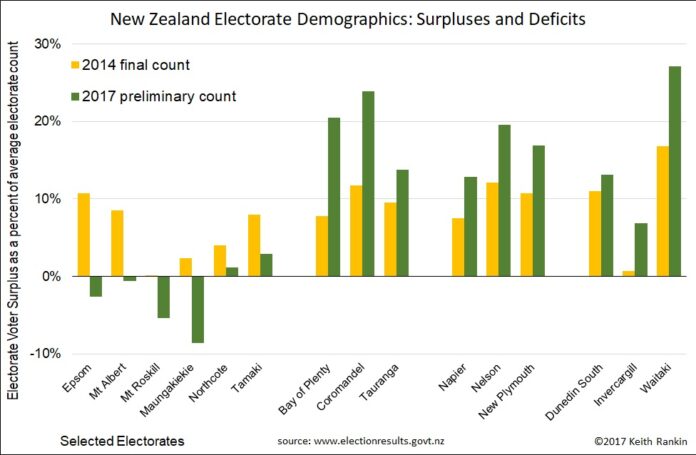
Ambae is Vanuatu’s story, not just a global media backdrop

]]>

AsiaPacificReport.nz

OPINION: By Dan McGarry in Luganville, Vanuatu

It happens every time disaster strikes in the developing world. The inhabitants of the place become background players in a drama about selfless aid workers saving lives in the furthest corners of the globe.

To be fair, most aid workers reject that narrative. I should know. I’ve been one. When category 5 cyclone Pam devastated Vanuatu, I helped the UNICEF communications team deliver some of the first reports from the storm-ravaged country.

The image of the intrepid white person (let’s not dance around it) saving dark people’s lives is an inevitable and apparently unavoidable product of people’s need to understand. For you millions sitting at home, in the car or on the train, reading or listening to the news, all you’ll ever know — all you can know — about these far-flung localities is what you get in the 90-120 seconds that the media can give you before you move on.

If the scene contains familiar faces, it’s easier for you to relate. If it’s spoken in your language, it’s easier still. It’s all about making you care. And your care saves lives.

But we have to find a way to remember that the people in this story speak their own language. They have their own culture, their own values, their own sense of what is right.

Forced into exile
The defining aspect of the Manaro volcano story is how quickly and effectively people all across this country mobilised to support Ambae’s population after the volcano forced them into exile.

-Partners-

Goods were being collected from the moment people began to filter down from the hilltop villages that were the first affected by ash and acid rain. Nobody waited for authorities to tell them what to do.

Family comes first in Vanuatu, and we are all one family when faced with adversity such as this.

The islands of Ambae and Maewo have always enjoyed close ties, and nowhere was this more evident than in their warm and well-organised reception for the evacuees. One by one, chiefs from north to south designated which groups would be their respective wards.

Villagers throughout Maewo stepped up, establishing spaces for them in their villages, digging latrine pits, designating cooking areas, building shelters and providing food, water and other necessities.

People from end to end of the island of Pentecost have turned out and done everything within their power, not just to accommodate, but to welcome Ambae’s exiles. Pangi village in the south is famous for its land-diving.

Chiefs there gathered evacuees together and welcomed them with a feast, literally slaughtering a fatted calf for them.

No scenes of pandemonium
Nowhere has the effort been greater than in Luganville, Santo, which is hosting over 5300 evacuees. As the ships began arriving, some carrying as many as 1000 at a time, there were no scenes of pandemonium so commonly associated with mass migrations.

An eyewitness wrote, “People everywhere, trucks and cars everywhere, but everyone [was] calm, no panic, no one upset as the community welcomed them.”

This is the Ambae story: The amazing and inspiring willingness of the people of Vanuatu to do everything—and give everything—necessary to look after their own.

Only one person—an elderly man—has reportedly died so far, and he died of a broken heart at being uprooted from his land.

Vanuatu’s government is not absent in this picture; it is an inseparable part of it. The grassroots Ambae Manaro Organising Committee has worked hand in glove with the National Disaster Management Office to ship donated relied supplies, first to the island of Ambae itself, and now to Santo, for distribution to the large evacuee population there.

The foreign donors, aid organisations and NGOs who know us best will be doing the same: integrating their efforts into local endeavours.

Evacuees to be employed
The Ambae Manaro committee yesterday reported that they would be seeking to employ people within the evacuee population itself to provide essential services to their companions. The Santo Ambae Support Community echoes these sentiments.

“It’s so important for the evacuees were welcomed and cared by the community from Ambae, they can talk [the] same language and still feel [at] home.”

Those NGOs with a permanent presence here in Vanuatu know the value of fitting in, employing Ni Vanuatu staff and consultants in key positions in order to ensure that they operate effectively and with sensitivity to local concerns.

In spite of all this, millions of people who know nothing of Vanuatu but its suffering will only see images of military planes, bales of supplies, ships and expat workers doing what they can to help.

On TV screens, tablets and phones, the people of Vanuatu will be reduced to the backdrop against which the soap opera of disaster relief unfolds its all too predictable melodrama.

Swamped news feed
It doesn’t have to be that way, but sadly, it probably will be.

So today, at least, before our news feed gets swamped with images of Hercules planes, Black Hawk helicopters and crisply uniformed military officers, let’s take a moment to remind ourselves: This is Vanuatu’s story. It’s a story about fellowship, about buddies in bad times, about pulling together, and about helping at all costs.

Can we get through this without international help? Not a chance. We know it’s offered in the spirit of camaraderie and friendship.

We’re grateful, too. But when you talk to the international media, please don’t forget who was there first, and who will remain when you’ve gone back home.

Dan McGarry is media director of the Vanuatu Daily Post. Asia Pacific Report republishes VDP articles with permission.

]]>

Pacific Journalism Monographs go live on Tuwhera digital platform

]]>

Pacific Media Centre

Pacific Journalism Monographs, a research companion to Pacific Journalism Review, has been launched on AUT’s Tuwhera digital open access journals platform.

Dr Hermin Indah Wahyuni, director of the Center for Southeast Asian Social Studies (CESASS) at Gadjah Mada University in Yogyakarta, Indonesia, did the launching honours today.

Library staff, communication scholars from New Zealand and Indonesia shared in the launch.

The Monographs publish longer research projects in an online and booklet format.

The publication offers journalists, journalism academics and researchers an outlet for quality research and analysis in a long-form article of up to 15,000 words.

The Monographs are a sister publication to PJR but provide a broader platform than is generally available in the journal.

Topics cover a diverse range of journalism research from media freedom and human rights in the Asia-Pacific to Asia-Pacific research methodologies, climate change, vernacular Pasifika media research in New Zealand, and post-coup self-censorship in Fiji.

Pacific Journalism Monographs

Pacific Journalism Monographs editor Dr David Robie explains the publishing strategy. Image: AUT Library

]]>

Keith Rankin Analysis – Auckland Population: Evidence from the Election

Drift South? Graphic by Keith Rankin.

Keith Rankin Analysis – Auckland Population: Evidence from the Election

Last year I wrote that there is no evidence of disproportionate population growth in Auckland, and even suggested that a number of central Auckland suburbs may be experiencing population decline. (See Immigration, and Immigration and Auckland Housing.)

I have done a preliminary analysis of the electorate voting statistics. The election statistics are based on electorates drawn up on the basis of Census 2013 population distribution. Electorate boundaries were the same in 2014 and 2017.

Keith Rankin.

In today’s chart, showing selected electorates, the yellow bars show a surplus (positive percentage) either if the electorate has an above-average voter turnout, or if population increased disproportionately since the March 2013 census. The green bars will be lower than the yellow bars either if the electorate has had slower than average population growth since September 2014, or if the electorate has more special votes than the national average.

The results clearly show that there has been a net population flow from Auckland to the Bay of Plenty region; a flow that picked up after 2014. There has been a similar net flow to the ‘N’ provincial cities, and to Oamaru (Waitaki) and Dunedin. And the depopulation of the far south (eg Invercargill) appears to have reversed.

These are just preliminary results. I will do a more comprehensive analysis next week, after the final vote count. Certainly special votes may be disproportionately in Auckland.

These statistics shown do give the lie to the commonly repeated claim that net immigration into New Zealand is disproportionately into Auckland. And they do support the many anecdotal stories about Aucklanders selling up and moving to the more affordable provincial cities and towns.

When the electorate boundaries are redrawn after the 2018 census, Auckland might actually lose an electorate.

]]>

Bryce Edwards Political Roundup: Alternative coalition scenarios to consider

Bryce Edwards Political Roundup: Alternative coalition scenarios to consider

[caption id="attachment_13635" align="alignright" width="150"] Dr Bryce Edwards.[/caption] Winston Peters seems to be faced with a fairly straightforward choice when it comes to forming a coalition government – he needs to decide between Labour or National. And we’re expecting those parties to throw everything at Peters in the hope he will pick them. At least that’s the assumption most have been working under. But are there other credible options available to Peters and the major parties? Below are three broad government formation possibilities worth considering.  [caption id="attachment_297" align="aligncenter" width="1600"] The Beehive and Parliament Buildings.[/caption] 1) New Zealand First to go on the cross benches Increasingly commentators are talking about Winston Peters deciding to stay out of the next government, and instead position his party on the “cross benches”. This would allow others to govern, with New Zealand First having day-by-day leverage in determining whether legislation is passed. Vernon Small has best canvassed this idea in his column, Winston Peters’ crossbench option would have National sitting uncomfortably in seat of power. Small explains, with input from public law specialist Andrew Geddis, that New Zealand hasn’t really seen this option properly used under MMP yet, and the most likely version would see New Zealand First abstaining on all votes of confidence and supply, allowing another party – probably National – to govern. According to Small, “The option is seen as ‘live’ because Peters has left himself only four to five days between October 7 and October 12 to negotiate a deal with the other parties. That is seen as a very tight timetable for Peters to negotiate with at least two parties especially if he wants to nail down specific policy concessions.” David Farrar outlines the benefits of this arrangement for New Zealand First: “it is all power and no responsibility. You have the swing vote on every piece of legislation and you might bring the Government down at any stage, so they will come grovelling to you to ensure the Budget passes etc. But you have no formal agreement for policies or ministerial positions…. So in one sense this is a safe option for NZ First. They are not part of the Government, they are not responsible for anything the Government does, and hence won’t be blamed if the Government is unpopular” – see: Could Winston sit on the cross benches? The major downside to this “independent” cross bench scenario is that it could result in less stability and hamper a government’s ability to proceed with a clear agenda. For New Zealand First, the major downside would be that they would play no part in governing, and have no portfolios or daily input into cabinet decisions and appointments. However, in legislative terms, they would have a strong impact on what the government could or couldn’t do, and they could leverage that for non-legislative gains. But is that really what New Zealand First want? Quite possibly, according to former deputy leader, Tau Henare, who says “he expects his old boss to side with no one, and opt for the cross benches” – see Newshub’s What Winston Peters will do, according to those who know him. And National might even be keen on that option, too. According to Politik’s Richard Harman, “There were a number of sources inside both the National Party and caucus who yesterday acknowledged this and picked up on a suggestion made earlier in the year privately to some National MPs by Sir John Key that the best arrangement might be to have Peters abstain on confidence and supply and vote on a case by case basis on legislation” – see: English faces uphill battle. Harman says “The downside of that is that he could end up holding the whole Parliamentary process hostage which might only be able to be resolved by a snap election. Politik understands that this scenario has been discussed at the highest level within the National Party where officials are wary of the idea because they believe any Government calling a snap election risks alienating the electorate.” There’s also a related – but highly unlikely – scenario that Andrew Geddis raises: “If NZ First actively cast its votes against both National and Labour, no party could reach a governing majority and New Zealand would need to have a new election” – see Emma Hurley’s What if Winston Peters doesn’t go with Labour or National? 2) National walks away from a deal Numerous commentators and partisans on the political right have been talking up the idea of National choosing to go into opposition rather than yield to a difficult and possibly damaging deal with New Zealand First. For example, National Party blogger David Farrar has raised the issue quite frequently recently. In his blog post, How does NZ First survive?, he says: “I’m quite keen to have Winston go with Labour and Greens. It will be sad for the country, but good for National in the long term as they’d ride a wave of discontent in 2020 and only need to pick up two more seats to govern”. Similarly, see his post, Rating the election nights, in which Farrar says, “I’d prefer National to form the Government as I think Bill English is a great Prime Minister and would achieve a lot in another three years. But you have to go into opposition at some stage”. Conservative political commentator Liam Hehir also urges the National Party leader to: Walk away, Bill. Hehir says: “Bill English needs to be willing to walk away from Winston Peters. And, after watching Mr. Peters’ press conference today, I’m starting to think he should be ready for it. One can understand why Peters wishes to play his cards close to his chest. You can’t negotiate in public. He played the Sphinx all throughout the campaign — he’s hardly going to abandon that approach now. But today’s irascible performance is a reminder about governing with New Zealand First. Under the scrutiny that comes with power, the party’s dysfunction and internal contradictions will come to the fore.” Political journalists have discussed this option, too. Tracy Watkins reports on “rumblings from within National that maybe they should sit this one out” – see: Winston Peters is in the box seat, and don’t we know it. The logic is: “Better to let Labour have Peters and return in three years, credibility intact, is the logic.” There is division within National about walking away, according to Richard Harman, who says “what is clear is that the National party membership will not want to see too much given away in the government formation talks even if it means going into opposition” – see: Party to English – Hold the line. Harman also reports senior party officials are worried some of the parliamentary leadership “might feel that they have only another three years of political life left in them and they would prefer to spend that time in Government” and are therefore likely to give too much away to Peters to ensure this happens. He quotes a party official: “But if that means we’re in Opposition for nine years after the next election then it won’t have been worth it”. The Herald’s Fran O’Sullivan also urges National to turn away from Winston Peters and look for other options. As well as looking to the Greens, “English could talk with Labour’s Jacinda Ardern about some cross-party initiatives that the two main parties could develop” – see: Hail Caesar – calling the tune with just 7.5%. 3) Labour walks away from a deal There are plenty of very good reasons for the Labour Party to avoid going into coalition government with New Zealand First. And although Wayne Mapp might be a former National Cabinet minister, he very persuasively puts these reasons forward in his Herald article, Four reasons why Labour could be better off in opposition. It mostly boils down to the belief that Jacinda Ardern and Labour are likely to be in a much better position to form a government in 2020. But the argument is unique because Mapp draws on the lessons he and National learnt from being in a similar position in 1996, which went badly for National. Also coming from the right, Mike Hosking asks: Is opposition better for Jacinda Ardern than grovelling to Winston Peters? And here’s Hosking’s advice if negotiations with New Zealand First don’t go well: “I’d call a press conference, I’d tell the world what Winston asked for, tell them why I wasn’t going to agree to it – and tell them the destruction of my party and government simply aren’t worth it… and I’ll see when it all implodes. And I bet you anything you want … the party’s popularity would go through the roof. You see it’s all about the balance of power – by grovelling to a bloke with nine seats, by looking like you’re desperate, but not genuinely having the belief you don’t need this. You start out on the back foot. And that rarely ends well.” This advice isn’t just coming from Labour’s opponents. Chris Trotter also believes the differences between Labour/Greens and New Zealand First are just too big to bridge: “It would be an enormous error for New Zealand’s progressive community to convince itself that the deep contradictions embedded in the manifestos of Labour, NZ First and the Greens can somehow be overcome. Far better for Labour and the Greens, the two parties who are, at least theoretically, ideologically compatible, to spend the next three years developing a suite of progressive policies capable of making a real difference to the lives of the many – not the few” – see: The last thing progressive New Zealand needs is a coalition of contradictions. Pushing New Zealand First towards National might allow Labour to claim the high moral ground according to Alex Tarrant, who writes that Labour could argue “that it wasn’t prepared for Peters to run up expenditure and government debt beyond ‘prudent’ levels. It will also allow Labour to imply that National must have offered more to Peters on big-spending policies than Labour was prepared to. The hope for Ardern and Grant Robertson would be that National suddenly finds itself being attacked on throwing fiscal responsibility out the window with a set of coalition bribes” – see: The battle for the fiscal high ground remains politically relevant. And in terms of finance, it’s possible that New Zealand First could make some very difficult demands of Labour. Audrey Young writes “There have been some whispers that he could try to get former Labour finance spokesman David Parker appointed Finance Minister over Grant Robertson, Ardern’s political soul mate” – see: Winston Peters: 7 per cent of the vote, 100 per cent of the power. Finally, for the best political satire about the coalition negotiations so far, see Toby Manhire’s Will Winston reel in blue cod or a red snapper?, Andrew Gunn’s Winston and the ill-behooving menu, and Steve Braunias’ Secret Diary of Winston Peters.]]>

Howling dogs all that’s left in volcano island Ambae’s empty villages

]]>

AsiaPacificReport.nz

Ambae village families huddle at at an evacuation centre on Santo. Image: Ben Bohane/wakaphotos.com

By Dan McGarry on Santo

Only the howling of dogs can be heard now in Ambae’s abandoned villages. The entire population has now been moved off the island.

Of those who cannot stay with friends or family, the majority have found refuge in 36 evacuation centres scattered around Luganville, Santo.

Today, Ambae’s chiefs will formally thank the people of Santo with what is informally called a “10 pigs” kastom ceremony.

Chief Douglas Ngwele from Lolobuebue informed the Daily Post that he would be departing Port Vila for Santo immediately to prepare.

The Ambae community in Port Vila is now refocusing its efforts. Originally occupied with supporting evacuees within the island of Ambae, and later with their safe and timely removal, the community now plans to put its efforts into supporting the Ambaean diaspora in Santo.

In a statement on social media, Ambae Manaro Organising Committee member Henry Vira wrote that they had “resolved to move members of its Vila-based team to Luganville tomorrow morning to assist with coordination efforts there”. He added:

-Partners-

Entire population moved
“We will be joining efforts with the Santo Manaro Organising Committee, which was established following declaration of the State of Emergency for Total Evacuation of Ambae island. We have moved an entire population of approximately 11,600 people from Ambae including the very young, elderly, disabled, people with ill health, etc.

“We will be working closely with the various clusters already established through NDMO, SANMA Province and Ambae leaders identified within the evacuees.

“The Ambae Manaro Organising committee in Vila will finalise its arrangements today at Sarabulu Church (Namburu) and welcomes input from any one with the heart to help. The team will reconvene at Sarabulu Church today [Wednesday] at 12 noon to finalise arrangements.”

Other committee members clarified that the majority of volunteers would be remaining in Port Vila.

“We want to identify and empower community leaders within the evacuee groups in order to make sure we get the best coordination,” said one.

The committee recognises that there are numerous people here in Port Vila who have invited friends and family to stay with them in the capital. Support and assistance will be offered to them, but the sheer weight of numbers requires that they place their emphasis on supporting the Ambae community efforts in Luganville.

The volunteers gathered at Sarabulu church in Namburu emphasised that donations and supplies are still sorely needed. Bedding, tents, tarpaulins, food and water are all still welcome. Cash donations are desirable, as they offer the most flexibility in dealing with the shifting priorities of this open-ended crisis.

The members plan to extend a formal thank you to all those who have contributed to the effort so far. Without these early actions, the response would have been much smaller — and much slower — than it was.

Dan McGarry is media director of the Vanuatu Daily Post. Asia Pacific Report republishes VDP articles with permission.

]]>

Josef Benedict: Rohingya crisis is a moment of truth for ASEAN

]]>

AsiaPacificReport.nz

A boy is pulled to safety as Rohingya refugees scuffle while queuing for aid at Cox’s Bazar, Bangladesh. Image: Cathal McNaughton/ R/Jakarta Globe

ANALYSIS: By Josef Benedict

Today, we are watching history repeat itself in Southeast Asia in the worst possible way.

Once again, the Myanmar military has launched a brutal military campaign against the Rohingya minority, killing civilians and forcing hundreds of thousands to flee their homes.

And once again, the Association of Southeast Asian Nations (Asean) has failed to take a stand against horrors unfolding in one of its member states.

There is no question that what is taking place in Myanmar’s northern Rakhine State is ethnic cleansing. Since August 25, when a Rohingya armed group attacked security posts and killed at least 12 security officers, the Myanmar military has responded with vicious, unlawful and disproportionate violence targeting the Rohingya population as a whole.

Soldiers have torched entire villages and opened fire on people fleeing in panic in what amounts to a clear and deliberate campaign to drive the Rohingya people out of their country once and for all.

The Asean Charter, the treaty that binds Asean states together, declares a clear commitment to human rights, and Asean leaders have been paying lip service to this for years.

-Partners-

So the crisis in Rakhine State would have been – perhaps still is – an opportunity to prove that this was more than just talk. Instead, the regional bloc has so far, once again, proved that it is both unwilling and unable to address ongoing violations.

Bland statement
It took Asean almost a full month to even issue a statement on the situation, but the organisation might have been better off staying silent.

When it finally did materialise, on September 24, the statement by Asean foreign ministers, expressed “concern” over developments in Rakhine State, but completely failed to even mention the word “Rohingya” and atrocities so obviously inflicted on them by the security forces.

Instead, the foreign ministers labelled the crisis a “complex inter-communal issue” and only condemned the August 25 attacks on Myanmar security forces and “all acts of violence”.

The statement was so bland that at least one individual Asean member state felt a need to distance itself. The Malaysian Foreign Minister Anifah Aman called the statement a “misrepresentation of the reality of the situation”.

It is to Kuala Lumpur’s credit that it has taken a strong stance on the crimes of the Myanmar army, even though its treatment of Rohingya refugees inside its own borders leaves a lot to be desired.

Strong and urgent Asean action is all the more important as there is no sign of the violence in Rakhine State ending any time soon. Despite the claims by Aung San Suu Kyi – Myanmar’s de facto leader – that the fighting has stopped, Amnesty International was able to confirm fresh burnings in Myanmar as late as last week.

Fleeing in desperation
And people continue to flee in desperation into Bangladesh – more than half a million according to latest UN figures.

There is also a humanitarian catastrophe unfolding within Rakhine State, as the Myanmar government has cut off aid agencies’ access to affected areas and severely restricted their life-sustaining activities in other parts of the state.

Recently, we have received credible reports that Rohingya are not just fleeing violence but also face the very real risk of starvation, as food is running desperately short in many places.

The Rakhine State crisis could also have spill-over affects across Southeast Asia as a whole. Many of us will still remember the “boat crisis” in 2015, when thousands of Rohingya and Bangladeshis were stranded in the Bay of Bengal as governments in the region refused to let their boats in.

Asean countries must ensure that refugees are able to take safe routes to enter their countries, and that no one is forced to return to a country where they could face persecution or serious human rights violations, as the Rohingya most definitely will.

Asean should immediately hold an emergency summit to deal with the crisis in Rakhine State. Its members must also acknowledge and condemn the human rights violations being committed by the Myanmar military in strong and unequivocal terms.

Crimes against humanity
And make no mistake, what we are witnessing in Rakhine State are, under international law, crimes against humanity – surely a concern to Asean as well.

Asean states must also work to ensure that the ethnic cleansing of the Rohingya does not succeed, and that Myanmar ends all persecution, and discrimination against and segregation of the Rohingya.

All this would be well within the provisions of the Asean Charter, which allows its leaders to take action “in the case of a serious breach of the Charter” and to “address emergency situations affecting Asean by taking appropriate actions”.

It is time for Asean to bring to the fore these core values – of responding to emergencies and of respecting human rights – which are just as germane to Asean and part of its constitution as the over-flaunted principle of “non-intervention”.

This is a moment of truth for Asean, when the association has to decide which side of history it wants to be on. With ethnic cleansing and crimes against humanity taking place on its doorstep, will it do everything it can to end and redress it or simply sit idly by?

Josef Benedict is the Amnesty International’s deputy campaigns director for Southeast Asia and the Pacific.

]]>

Journalism under duress in Asia-Pacific – PMC’s 10th anniversary event

]]>

Pacific Media Centre

Natasha Greer performing a Tongan dance at the launch at the Creative Industries Research Institute (CIRI) on 12 October 2007.

Event date and time: 

Thursday, November 30, 2017 – 18:00 20:00

JOURNALISM UNDER DURESS IN ASIA-PACIFIC
The Pacific Media Centre in the AUT School of Communication Studies turns ten this year. We are planning a special event with Tagata Pasifika’s John Pulu as MC and it includes:

+ Guest speakers: Malou Mangahas, executive director of the Philippine Center for Investigative Journalism, speaking on journalist safety and the culture of impunity. The Philippines is the country with the largest single massacre of journalists in 2009, and where a “war on drugs” has led to a widely condemned wave of extrajudicial killings.

+ Johnny Blades, senior journalist of RNZ International, speaking about his experiences in West Papua and Melanesia.

+ Professor Berrin Yanıkkaya, head of the School of Communication Studies at AUT.

+ A special video by Sasya Wreksono highlighting the PMC’s achievements over 10 years.

+ A special book on investigative photojournalism marking 10 years of the PMC.

+ An exhibition of photographs of 10 years on the PMC.

+ Launching of special editions of Pacific Journalism Review and the Pacific Journalism Monographs on Tuwhera.

+ Special screening of the documentary Cap Bocage.

Watch the Facebook event page for more information

Picture spread from the 2007 launch

]]>

Rampaging mob attacks PM O’Neill’s car – ‘warlords’ take over Mendi

]]>

AsiaPacificReport.nz

The online cover for the Post-Courier story today. Image: PMC

By Johnny Poiya and Jeffrey Elapa in Port Moresby

A rampaging crowd has attacked Papua New Guinea Prime Minister Peter O’Neill’s official vehicle and business interests in Mendi, Southern Highlands Province.

The Toyota LandCruiser V8 vehicle was stolen, and construction and mining logistics company Wildcat Construction base looted and torched on Saturday afternoon.

Another company, South West Air’s airport hangar, was ransacked although its fleet of fixed wing and rotary wing aircraft had been moved elsewhere earlier.

The LandCruiser was among 10 vehicles, including an excavator, backhoe and grader, stolen by a rampaging crowd that had ran amok through the town.

An expatriate manager was rescued by bystanders when the Prime Minister’s premises were attacked.

The Wildcat Construction and South West Air are the two biggest locally owned companies in the province that employees many locals and foreigners.

-Partners-

The attack followed the declaration of William Powi as Governor of Southern Highlands Province last Thursday.

O’Neill blamed over election
Witnesses in Mendi yesterday said the rampaging crowd blamed O’Neill for the long delay in counting and eventual declaration of Powi as Governor.

All government services and businesses were closed and Mendi town was quiet and deserted yesterday.

The police station gate was locked with chain while the hospital, post office and Bank South Pacific were also closed.

Traffic along the Southern Highlands section of the Highlands Highway was scarce.

Senior public servants and a policeman, who spoke on condition of anonymity, said all facilities and business house like the bank, shops, airlines and schools, besides the provincial administration, had shut operations in fear of violence.

They said Air Niugini and South West Air, which lost computers and aircraft parts, have closed their operations for an indefinite period.

The former Carson Pratt Services workshop at Wara Maigani, now owned by Wildcat Construction, was burned down while the main Papindo Supermarket was looted.

Two policemen shot dead
“Also on Saturday afternoon, two policemen were shot dead while another was seriously wounded and is now admitted at the Mt Hagen General Hospital.

Two teachers were with the policemen when attacked; one of them had his hands chopped off while his colleague is still missing.

It was reported that gates at the Mendi General Hospital and the Mendi School of Nursing  were rammed while the staff were threatened.

Public servants and schools in Mendi, including Mendi Day Secondary Schools, have all been affected.

Sources said police in the province have sought refuge with the candidates, allowing criminals to take over the town, firing guns indiscriminately.

Southern Highlands Governor William Powi condemned the actions of the minority who continue to take the law into their hands.

He said it was the work of the police to maintain law and order but the province had been taken over by warlords.

Condolences sent
Sending his condolences to the families of the two police based in Koroba, Enga Province, killed and the wounded, Powi said he did not understand the motive of the killings.

“I send my condolences to the families of those attacked. We have no issue with Hela and the attack on innocent people is unacceptable. I call on the police hierarchy to arrest people involved in instigating violence and denying freedom of the citizens,” he said.

He said it was only a handful of people from Mendi who were sabotaging peace and harmony in the town.

]]>

Bryce Edwards’ Political Roundup: The Peters Problem

Bryce Edwards’ Political Roundup: The Peters Problem

[caption id="attachment_13635" align="alignright" width="150"] Dr Bryce Edwards.[/caption] Is Winston Peters the tail wagging the dog? He’s certainly very powerful in the current post-election coalition negotiation period. Hence the complaints about whether New Zealand First has too much power or, indeed, whether Peters is so problematic this could lead to a weakened democracy. Does Winston Peters have too much leverage? [caption id="attachment_2529" align="alignleft" width="300"] New Zealand First leader Winston Peters.[/caption] Many commentators are expressing frustration at the power wielded by Winston Peters and New Zealand First. These complaints partly stem from a failure to adjust to MMP realities, in which the major parties don’t have all the power. But there are legitimate questions about the extent of Peters’ power. Probably the strongest reaction is from Duncan Garner who says The megalomaniac reigns all over National’s parade. He points out that 93 per cent of voters “overwhelmingly rejected Peters” by voting for other parties, and asks: “In a country that prides itself on fairness, how can one man, Winston Peters, with just 7 per cent of all votes, have 100 per cent of the power?” Garner complains, “”One man with 160,000 votes now dictates terms and holds to ransom the two political beasts with 1.8 million votes between them.” Garner has a message for other media following the ins and outs of coalition negotiations: “Trying to second guess Peters and his next move is a fool’s paradise. Don’t bother, go on holiday. Wait to be told. He wants the attention, don’t empower him. He’s known as the ringmaster at times like this: in charge of the tired and exhausted nationwide circus with its empty seats, same old tricks, shabby backroom processes and policies not thought through or costed.” This week’s Listener magazine editorial makes some similar points: “Peters, who lost his own electorate seat and whose party vote went down, has 100% of the power to anoint the next prime minister. For a country that values fairness, that feels intuitively wrong. On election-night results, English should be in the driving seat; the problem is that Peters is lying across the windscreen” – see: Winston Peters has 7% support yet 100% of the power – that feels wrong. Some of that might just be old FPP-style thinking, but the editorial certainly makes a good point against the argument that New Zealand First has a stronger mandate to go with left rather than right: “Shaw’s argument that most New Zealanders voted for change would stack up if New Zealand First had declared before the election that it would align with the Greens and Labour”. Commentators are forecasting the techniques Peters will employ to extract the highest possible price from National or Labour in the negotiations. Audrey Young outlines one negotiating method: “It is possible Peters will conduct something more akin to a closed tender. Anyone who has bought a house that way knows how hard it is for the buyer (National and Labour) and how advantageous it can be for the seller. Under that scenario, the onus would be on National and Labour to present their best – and potentially their final – offers, which may or may not be accepted, or could be referred back for suggested improvements. NZ First would be freed from the accusation that it demanded anything. Labour and National could not afford to open their negotiation with a sub-grade offer in the expectation of slowly working up to a final agreement. There just would not be time for that. The time pressure would be designed to work in NZ First’s interests” – see: Winston Peters: 7 per cent of the vote, 100 per cent of the power. Peters’ public obfuscation We already know that Peters is combative, obstinate, and tends to obfuscate. Perhaps that’s what his voters love about him. We’re seeing plenty of this in his post-election behaviour. But, of course, it was also in evidence throughout the election campaign. It probably reached its height in the infamous interview with Guyon Espiner two weeks prior to polling day. You can watch the full 25-minute interview here: The Leader Interview – Winston Peters. Many consider this one of the highlights of the election campaign. Michael Daly wrote down the best parts – see Some of the best bits from Winston Peters’ Radio New Zealand interview. And communications professional George Hulbert blogged about it, describing, it as a “truly brilliant interview” – see: An interviewing masterclass: Guyon Espiner tackles Winston Peters. Hulbert says: “From the sublime to the ridiculous, this interview had it all – a calm, well-prepared and persistent interviewer, a seemingly unprepared, irritable interviewee, and of course us, the audience making our own judgement. Normally in our blog we try to dissect topical items and show how you can communicate better, but this was just so good that I think it does it all by itself. I recommend you watch it – and enjoy it as much as I did.” Peters continued his aggressive orientation towards the media after the election, with his spectacular news conference last week at the Beehive. This was strongly condemned by the usually mild-mannered Bernard Hickey, who stated Peters’ performance “was beneath him and served only to feed his small base with the red meat of abusing the media and scoring cheap points. It was self-indulgent, pointless and simply wasted one of the biggest opportunities he has ever had to convince New Zealanders he deserves to be in this position of deciding who will lead our next Government” – see: Winston’s awful start. Hickey was incensed by what “was more than the usual banter. It was just plain ugly, bizarre and painful to watch and be in. It made an important part of our democracy (the coalition-building phase after an MMP election) look like a chaotic joke”. And as to the substance of Peters’ complaints about the media, Hickey responds: “His points about his policies not being covered fairly by the media are simply not credible when for months he has refused to answer detailed questions about the specifics of his policies, including how they would operate and how much they would cost. He cannot claim the media did not cover his policies when he would not say what they were in detail.” And for more on this, you can listen to Guyon Espiner, Tim Watkin and Lisa Owen’s very good podcast: Coalition negotiations, THAT press conference & the supermarket dash. The Press’ Martin van Beynen has also looked at Peters’ complaints about the media, and admits he’s partly right: “The media should have paid him more attention. The fact he, and let’s face it, it will only be him, would decide the nature of the next government was probably the safest prediction of the election campaign. Maybe we should have looked much closer at NZ First’s policies and how much they would cost. Radio New Zealand’s Guyon Espiner did and Peters came out looking ill-prepared and on the back foot.  Yes maybe we should have followed Peters around and quizzed him on the detail of his policies and pronouncements” – see: Yesterday’s man holds all the cards. And van Beynen says that more media attention was required because we still don’t know that much about what Peters and his party really stands for: “it might have exposed a political game player who lacked the intellectual rigour and stamina required of a leader in 2017.  We should have put him under the lights and got to the bottom of what exactly he stands for. Because after 40 years, it’s still murky what exactly Peters is in politics to achieve. We know he is anti-immigration, anti-special treatment based on race, anti-changes to superannuation and anti-fat cats. But despite his strong protestations, bottom-lines and apparent bitterness, his seriousness and sincerity remain in question.” The Winston Peters enigma and his circus For an insight into the politician and his background, it’s worth reading former Herald political editor Tony Verdon’s article, Winston Peters: Politician, family man and enigma. He stresses Peters’ “Jekyll and Hyde personality” which shifts from highly sociable and amicable, to sometimes pugnacious and aggressive. Peters is undoubtedly enjoying the attention. And according to Tracy Watkins he also loves the scheming: “He makes Kevin Spacey’s House of Cards character Frank Underwood look like an amateur. Peters lives for the backroom deal and revels in conspiracy, intrigue – and keeping people guessing” – see: Winston Peters is in the box seat, and don’t we know it. Furthermore, Watkins alleges Peters is driven by rather base motives: “revenge and ambition are two emotions that carry Peters a very long way and he was back three years later. Peters may claim he isn’t driven by utu but he does have a very long memory”. She calls for him to get more serious: “now is the time to stop playing up to the small coterie of admirers and supporters who hang off every insult and every cantankerous tirade, and start acting like the statesman that the role of kingmaker demands.” And some of his former colleagues are also suggesting Peters is merely playing games. Outgoing NZ First MP Richard Prosser is reported as believing that “Peters probably made his mind up well before the election campaign even began” – see Dan Satherley and Lisa Owen’s What Winston Peters will do, according to those who know him. The same article and video has former NZ First MP Tau Henare arguing that Peters is simply enjoying “the theatre” and that he’s already made his decision. Tim Murphy raises the issue of Peters’ age and suggests it could be problem: “Peters’ difficulty is that he is old in New Zealand terms to be shaping, deputising for, and possibly leading the country. He is older than President Donald Trump. Older than Sir Robert Muldoon was – not when Muldoon rose to the Prime Ministership, or left it, or left Parliament, but when he died aged 70. If Peters aspires to share the role of Prime Minister, unless he negotiates to get the job-share in the early part of the administration, he could be PM in 2020 and match Walter Nash at 75 as our oldest to become the nation’s leader. If the burden of office, the travels as a possible foreign minister, the wearying inanity of dealing with enemies and the media became too great, who would Peters call on to take his party onwards?” – see: What if Winston, Bill, or Jacinda can’t go on? In this article Murphy also alludes to unsubstantiated health rumours spread during the campaign. These garnered a very short, sharp press release from Peters – see: Filthy rumour, dirty campaign – Winston Peters. Finally, for an updated view of Winston Peters’ kingmaker role, see my blog post of Cartoons and images about negotiating the new government.]]>

Keith Rankin Analysis: Election Day versus Advance Voting

The Left votes early. Graphic by Keith Rankin.

Keith Rankin Analysis: Election Day versus Advance Voting

With half of the preliminary (ie non-special) votes being cast before election day 2017, we can glean a clear view about which parties’ supporters are more likely or less likely to vote early.

This week’s chart shows the percentage point differences in voter behaviour for significant parties. By ‘percentage point difference’ we mean the party percentage of election day votes minus the party percentage of advance votes.

The four parties which gathered a larger proportion of advance votes relative to election day vote were the parties of the left. They show up in the chart as negative percentage differences. While the bigger parties necessarily show more prominently in this chart, relative to their own voter base the pattern is just as significant in the Māori Party and Mana Party figures.

It is not clear whether the left as a whole feels a greater sense of urgency in casting their votes, or whether it is in fact people who want change who tend to vote early. What matters here, for the future, is that, as election night tallies progress the party percentages for the Left (or for change) diminish. Labour got 36.7% of advance votes, but just 35.0% of election day votes. Their overall percentage tally dropped between 8pm and 11pm on election night, to 35.8%.

What also matters is that the advance votes probably tell us the pattern of special vote distribution, given that many of the special votes were cast early by people with similar motivation to those of early voters. My expectation is that Labour will gain almost as many special votes as National, and that the Green Party will gain enough specials to get one more MP. New Zealand First, who just missed getting a ninth MP in the preliminary count, will probably keep all nine MPs currently allocated to them.

One point of surprise is that the Opportunities Party (TOP) received proportionately many more votes on election day. Does that mean that TOP voters were largely conservatives? Did Gareth Morgan collect votes from people who voted for Colin Craig last time?