We often think of black holes as one-way valves that consume everything they come across. But they are also powerful engines that emit radiation and drive energetic jets out into the cosmos.
In research published in the journal Nature, we looked at the emissions from a nearby black hole that’s “feeding” off its orbiting stellar companion.
While bright black hole outbursts have been studied in the past, this black hole is behaving in a way never seen before.
So what makes this one different? To answer that, we need to look at what happens when things fall towards a black hole.
A release of energy
Our everyday experience tells us that a rock falling off a cliff on Earth will speed up as its gravitational potential energy is converted into the kinetic energy of motion.
In a similar way, the release of gravitational energy as gas falls towards a black hole can power some of the most dramatic phenomena in our universe.
The infalling gas swirls around the black hole in a thin disk, known as an accretion disk, whose inner regions become so hot they emit X-ray radiation.
The strong magnetic fields close to the black hole help generate narrow beams of energy and matter called jets. These jets move away from the black hole at close to the speed of light.
We seem to see jets anywhere in the universe where there are inflows of matter onto a central object such as a black hole. But we do not yet understand the nature of this connection between the inflowing gas and the outflowing jets.
A black hole ‘feeding frenzy’
In June 2015, we had a perfect opportunity to study this link. It occurred during an extraordinarily bright outburst of a black hole in a binary system (two objects gravitationally bound together) known as V404 Cygni, about 7,800 light years away in the constellation of Cygnus.
This binary system comprises a black hole (about nine times the mass of our own Sun) in a 6.5-day orbit with a normal star (about 70% of the mass of our Sun). The star is big enough that its outer layers are captured by the black hole’s gravity.
Artist’s impression the binary star system V404 Cygni.Credit: ICRAR
During the 2015 outburst, the black hole was feeding extremely rapidly. It generated more energy every second during the outburst than the Sun emits over three days.
Astronomers all over the world trained their telescopes on this outburst, providing data right across the electromagnetic spectrum, from radio waves to X-rays.
Our team focused on the bright radio emissions from the outflowing jets, using the National Science Foundation’s Very Long Baseline Array (VLBA). This is a continent-sized array of ten 25-metre wide radio dishes, spread across the United States from Hawaii to the Virgin Islands.
This allowed us to make detailed images of the jets, zooming in to a region roughly the same size as our Solar System. This is the equivalent of seeing a dollar coin in Sydney from a location in Perth.
Usually, we make radio images by combining all the data from a single observation together. But the jets from this black hole were changing so rapidly that we only saw a blur – as if we were trying to take a picture of a waterfall with a one-second shutter speed.
To see what was going on, we had to break up our data into much shorter images, each made from only 70 seconds of data.
Rapidly wobbling jets
This allowed us to track the movements of the jets over the course of our four-hour long observation.
But our research showed something unexpected. Rather than moving along the same channel, the jet direction was changing rapidly over time.
In the few systems where jets have previously been seen to change direction, this has occurred relatively slowly, on timescales of months. In V404 Cygni, the jet direction was changing on timescales of hours, or even minutes.
Movie made from our high-resolution radio images shows jets moving away from the black hole in different directions. Credit: ICRAR and the University of Alberta.
Our best explanation for such rapid changes is that the jets were being redirected by a wobbling inner accretion flow around a spinning black hole.
During the bright outburst, the intense radiation from the black hole caused the inner few thousand kilometres of the accretion disk to become puffed up into a doughnut-shaped structure.
According to Einstein’s General Relativity, the spinning black hole drags spacetime – the very fabric of the universe – around with it.
If the binary orbit is not aligned with the black hole spin axis, this frame dragging will cause the puffed up inner disk to precess – it wobbles around like a spinning top that is slowing down. We believe that the precessing inner disk is responsible for redirecting the jets.
Animation of the precessing jets and accretion flow in V404 Cygni. The spinning black hole pulls spacetime (the green gridlines) around with it, causing the inner disk to precess like a spinning top, thereby redirecting the jets. Credit: ICRAR.
To generate a precessing disk, the plane of the binary orbit and the black hole spin must be out of alignment. This can happen when a black hole is formed in a supernova explosion.
The explosion gives a kick to the system, pushing it out of alignment. We suggest that similar jet precession could occur any time a spinning black hole is feeding rapidly from a disk that is not aligned.
X-ray observations of other stellar-mass black holes show that such misalignments are likely to be common. Other misaligned situations could include phenomena such as tidal disruption events, where a supermassive black hole’s enormous gravity shreds a star that wanders too close, and the black hole feeds on the resulting debris.
The 2019 election has been heralded as a “generational election” or an “age war”. Labor goes to the election with a series of policies on climate change, housing affordability, wages and budget sustainability clearly designed to appeal to young and middle-aged Australians concerned about their future.
But while the record numbers of enrolled young voters may make this look like a political masterstroke, the fact remains that the Australia’s voter base, like its population, is ageing. Baby boomers will remain a political force in this country for some time to come.
Youth enrolment is rising, but not just because of the marriage equality plebiscite
Youth voter enrolment is at an all-time high, with 88.8% of eligible 18- to 24-year-olds — some 1.7 million Australians — enrolled to vote. This is somewhat higher than the previous peaks for the marriage equality plebiscite (88.6%) and the 2016 election (86.7%).
Manycommentators have credited the marriage equality plebiscite with driving increased youth engagement and participation. Between August 8 and 24, 2017, in the lead-up to the plebiscite, the Australian Electoral Commission added almost 100,000 people to the electoral roll. Around two-thirds of these were aged 18 to 24.
But while the numbers sound impressive, this uptick in youth enrolment was actually smaller than the normal increase we see before a federal election.
Around 300,000 Australians turn 18 every year, so younger voters are continually being added to the electoral roll. However, many new voters — whether new citizens or young Australians who have recently turned 18 — complete their enrolment paperwork in the lead-up to elections. This is why we see a sharp increase in enrolments, and particularly in youth enrolments, in the months before a poll.
Enrolments for 18- to 19-year-olds jumped by more than 80,000 people in the final weeks before the 2013 and 2016 elections. In contrast, net enrolments only grew by around 48,000 for the 18-19 age group in the weeks prior to the marriage plebiscite.
Because the marriage equality plebiscite was held in the normal three-year window between elections, it probably brought forward some of the enrolments that would normally have occurred in the lead-up to the 2019 election. But it is not clear that the plebiscite had the sizeable and lasting effect on youth enthusiasm that has been claimed. Enrolments for under-25s for the 2019 election are around 2 percentage points higher than for the 2016 federal election.
The more significant change in youth enrolments occurred between 2013 and 2016, and for reasons that had little to do with any increased political engagement among young people.
In 2012, the government empowered the AEC to directly enrol citizens (and update their details) once it had sufficient information from other government agencies, including Centrelink and the national driver licence database. The AEC also introduced entirely online enrolments in the lead-up to the 2013 election.
The AEC says direct enrolment resulted in almost 279,000 new enrolments between the 2013 and 2016 elections; online enrolments accounted for another 365,000.
An ageing population means an ageing voter base
The effect of an ageing voter population dwarfs the modest growth in youth enrolments.
The biggest change in voter demographics since the last federal election in 2016 was the enormous growth in voters aged 70 and over. As Australians live longer and healthier lives, voters will, on average, be older.
Around 300,000 more voters age 70 and over are enrolled to vote now than for the 2016 election, a 13% increase in just three years. In the same period, enrolments for younger voters aged 18 to 34 have only grown by around 135,000, or 3%.
The recent increase in older voters is part of a long-term trend towards an ageing population overall. The first time Australia had more residents 55 and over than aged 18 to 29 was in 1991. Since then, the relative share of those 55 and older has continued to increase and is forecast to grow further over the next two decades.
Older Australian residents are also more likely to be citizens than younger Australians because new residents tend to be younger than the average Australian. This factor decreases the relative proportion of younger Australian residents enrolled to vote.
How might this affect the election outcome?
If Labor is relying on a surge of younger voters to deliver it victory then its hopes may be misplaced. Of course, that doesn’t mean a platform focused on some of the environmental and economic concerns of younger Australians cannot succeed.
But it does suggest that electoral success will depend on persuading enough older voters that Labor’s proposals can provide future generations with the same standard of living that they have enjoyed.
Earlier this month, Australian rugby player Israel Folau wrote on Instagram that hell awaits “drunks, homosexuals, adulterers, liars, fornicators, thieves, atheists and idolaters.”
Rugby Australia subsequently announced that his comments breached the game’s code of conduct and it would seek to terminate his four-year contract of employment signed only last year and worth a purported A$4 million.
Exercising his right under the code, Folau has sought a full code of conduct committee hearing on the matter. Here are the legal arguments likely to be made at the hearing, scheduled for Thursday.
Rugby Australia’s case
In seeking to terminate Folau’s contract, Rugby Australia won’t rely on any specific term in the player’s contract. Rather, its arguments will be premised on the general contractual clause that players employed by Rugby Australia must abide by its code of conduct.
The preamble to the code outlines Rugby Australia’s “core values”, including a safe, fair and inclusive environment for all involved in the game. More specifically, a key clause states that players must “use social media appropriately”. Examples of related breaches of the code include making
any public comment that would likely be detrimental to the best interests, image and welfare of the game.
In addition, there is a clause in the code that asks players to
treat everyone equally, fairly and with dignity regardless of gender or gender identity, sexual orientation, ethnicity, cultural or religious background, age or disability.
Rugby Australia’s argument is likely to be that Folau breached all of the above, entitling the organisation to seek unilateral termination of his contract. This would also take into account the fact that Rugby Australia had previously warned Folau about the exact same behaviour in April 2018.
In brief, Rugby Australia’s case will be that Folau breached his duty as an employee to obey the lawful, reasonable instructions of the employer and, given the repeated nature of the misconduct, termination of contract is justified.
Israel Folau’s case
There are likely to be two principal aspects to Folau’s submissions at the hearing – procedural and substantive unfairness.
On procedural unfairness, Folau may argue that even before a hearing was arranged, Rugby Australia had prejudged its outcome by declaring it would seek to terminate his contract. He may also point to comments by the national team coach, Michael Cheika, that he would have difficulty ever selecting Folau for the national team again.
Folau’s substantive unfairness argument also seems likely to be two-fold – one based on an interpretation of the code and one, possibly, based on human rights or discrimination law.
On the first element, Folau could argue that the phrase in the code about using “social media appropriately” is overly subjective, and its scope left to be defined at the whim of the employer.
Rugby Australia’s reply here would be crucial. It could counter that Folau’s activity on social media prior to the disputed Instagram post of April 10 – he posted 52 times on Instagram, of which 43 had a religious theme – is evidence of the organisation’s respect of his right to hold such views.
If this point is argued, the issue will be whether the restrictions Rugby Australia have placed on Folau’s freedom to manifest his religious beliefs are legitimate, necessary and proportionate, given that Folau’s views conflict with another fundamental right – the right not to be discriminated against because of one’s sexual orientation. This is protected under Articles 2 and 26 of the ICCPR.
Clearly the intent [of the code] is to whole-heartedly “include” the gay community in the rugby movement. But is its intention to “exclude” traditional Christian and other religious beliefs?
At the federal level, a person who suffers discrimination in employment on the basis of religion has two options. First, that person can make a complaint to the Australian Human Rights Commission. Secondly, he or she could make an application to the Fair Work Commission for breach of the Fair Work Act 2009, which prohibits employers from terminating a person’s employment for reasons including religious views.
In contrast, Rugby Australia’s member protection policy, which works in tandem with the code of conduct, goes further than NSW law by specifically protecting “religion, religious beliefs or activities” against discrimination.
It will be interesting to see whether Folau, as part of his defence, will counter-claim that Rugby Australia has breached its own member protection policy
Possible outcomes of the hearing
If Folau doesn’t succeed at the hearing, he has a right to appeal and may well decide to pursue the matter in federal court.
Rugby League’s code of conduct is currently being argued in federal court: Jack de Belin is seeking various remedies against the National Rugby League pursuant to its policy to stand down players who are facing serious criminal charges, pending the outcome of the criminal trial.
Even if Folau succeeds at his hearing, a point so far underplayed in this whole affair is what is called the concept of “mutual trust and confidence” between employer and employee. Put simply, employment law recognises that there is little point reinstating a worker who has been terminated unless the parties are able to work with mutual trust and confidence in a viable, productive way.
Given the unique employment environment of sport, it seems reasonable to suggest that even if Folau succeeds in the hearing, it is highly unlikely he will ever play again for the Wallabies or even the Waratahs.
In fact, if Folau wins, it is likely there will be a settlement to pay out his contract. The full-time player will then be free to become a full-time preacher.
Opposition leader Bill Shorten declared on Sunday that Labor has a “vision of universal access to dental care in Australia”.
Labor’s pensioner dental plan would would give aged pensioners up to A$1,000 of subsidised dental care every two years.
The policy is a welcome advance, but both sides should go further. The current system is a mess. It leaves many Australians without timely access to dental care, which only causes more painful and costly problems down the track.
Australians should demand their politicians introduce a universal dental care scheme. As with Medicare, this would ensure all Australians have access to subsidised basic dental care, including check-ups and treatment for tooth decay.
The Labor scheme is just a start on this road, covering pensioners over 65 and Seniors’ Health Care Card holders.
Dental care is a glaring gap in our health system. When Australians need to see a GP, Medicare picks up all or most of the bill. When they need to see a dentist, most Australians are on their own.
The result is that about two million Australian adults each year don’t get dental care when they need it because of the cost.
There have been various attempts to expand Commonwealth support for dental care over the years. But most have been abolished – whether because of cost overruns, a budget crunch, or change in governmental priorities.
Note: There have been three National Partnership Agreements: ‘Treating More Public Dental Patients’ (1 January 2013-30 June 2015); ‘Adult Public Dental Services’ (1 July 2015-31 December 2016); and ‘Public Dental Services for Adults’ (1 January 2017-30 June 2019). The CDBS commenced under the Abbott government but was developed and legislated by the Gillard government. Grattan Institute
Australia does offer some public dental care for adults, but the system is woefully inadequate. All state and territory governments operate means-tested public dental schemes, generally restricted to pensioners and concession card holders.
About five million adults fit the eligibility criteria, but the schemes aren’t funded anywhere near enough to provide services to all eligible people who need care. Only about one-fifth of eligible adults receive care in the public system each year.
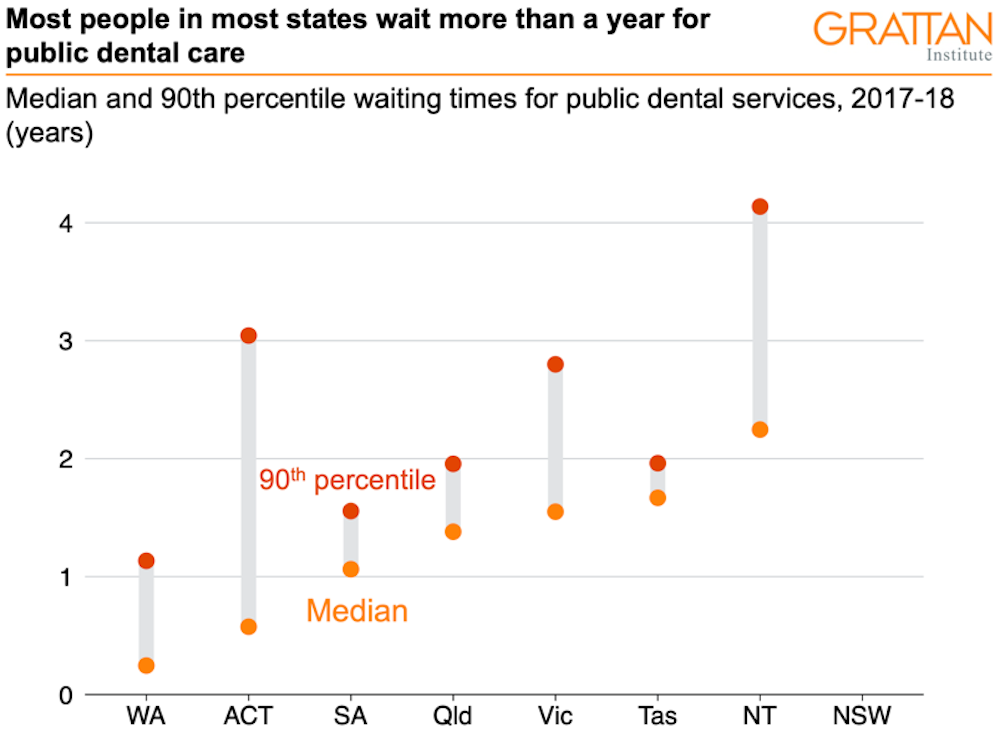
In most states and territories, most people who seek public dental care have to wait more than a year to be seen. The wait is sometimes more than two years.
Productivity Commission 2019.Grattan Institute
The states and territories spend A$836 million a year of their own money on public dental care. The Commonwealth chips in another A$108 million under a National Partnership Agreement that’s set to expire next year.
The situation is a little better for children. More than half of Australian children are covered by the Child Dental Benefits Schedule (CDBS), a federal government initiative in place since 2013.
The scheme covers children who live in low- and middle-income households – those that receive Family Tax Benefit Part A or another Commonwealth payment.
The main problem with the child dental scheme is that not many children use it.
When the scheme was introduced, the Commonwealth expected about 80% of eligible children would use it. In the event, only 35% did so, and the figure has barely budged since then.
Health budget statements, various years/Grattan Institute
It may be that usage is so low because many parents just don’t know that the child dental scheme exists and that their children are eligible for care under the scheme.
Whatever the reasons, the Commonwealth should work with the states to promote the scheme and boost uptake – and in the process, rigorously determine which strategies are most effective in getting kids to the dentist.
Filling the gap in Australia’s health system
As we recommended in a recent Grattan Institute report, the Commonwealth government should fill the gap in Australia’s health system by moving towards a universal dental care scheme.
This scheme should build on the child dental scheme, which provides a useful model that could be expanded to ultimately cover everyone.
A universal scheme should allow care to be delivered by either private dentists or public clinics, just as the child dental scheme does. Consultations should be bulk-billed, meaning patients have no out-of-pocket costs.
Prices should be set out in a tightly controlled schedule, much as in Medicare, with reasonable and closely monitored caps on usage.
Dental practices that participate in the scheme should make public a range of data so the government – and taxpayers – can monitor their performance and the oral health outcomes of their patients.
The development of such a scheme would entail reshaping of Commonwealth-state relations, and would require more dentists and other oral health professionals than we currently have in Australia.
Because of these challenges, we recommended the Commonwealth outline a ten-year plan for a universal scheme and start progressively expanding the number of people who are eligible for publicly funded care.
Importantly, Labor sees this policy as a step towards a universal system. Once implemented, this pensioner dental scheme and the existing Child Dental Benefits arrangements will still leave a lot of Australians without subsidised Commonwealth dental cover.
The next step is setting out a plan to get to provide that cover. When will coverage be extended to other Australians who need care? How will we expand the oral health workforce to ensure we can provide care to everyone who needs it?
Australians should demand answers to these sort of questions – from both Labor and the Coalition.
Source: The Conversation (Au and NZ) – By Simon Coghlan, Senior lecturer in health ethics, University of Adelaide; Research fellow in robot ethics, University of Melbourne
Vets often grapple with the moral dilemma of when a client wants to kill an inconvenient pet. Clients might, for instance, hint that caring for the pet has become too much trouble, or that it interferes with their lifestyle or living situation. This is called “convenience euthanasia”.
Most vets have no qualms about euthanasia and believe it’s necessary for animals suffering severely or threatening public safety because of uncontrollable aggression.
But vets may also feel strongly that killing animals for insufficient reasons is, though legal, contrary to their professional role.
A recent North American study found nearly 27% of vets across different practice types “sometimes or often” received what they considered inappropriate requests for ending animal lives. Most vets had received such requests at least once, only about 7% had never received them.
Just over 75% said they never or only rarely carried out “inappropriate” euthanasia.
Another 2018 study focusing on small animal practice found 83% of vets did not agree that euthanasia was always ethical.
I argue in a recent journal article vets should be strong advocates for their patients. A veterinary professional who is a strong patient advocate works diligently on behalf of animal patients to promote their interests.
As health care professionals, vets are powerfully guided by a duty to protect their patients from harm, including premature death.
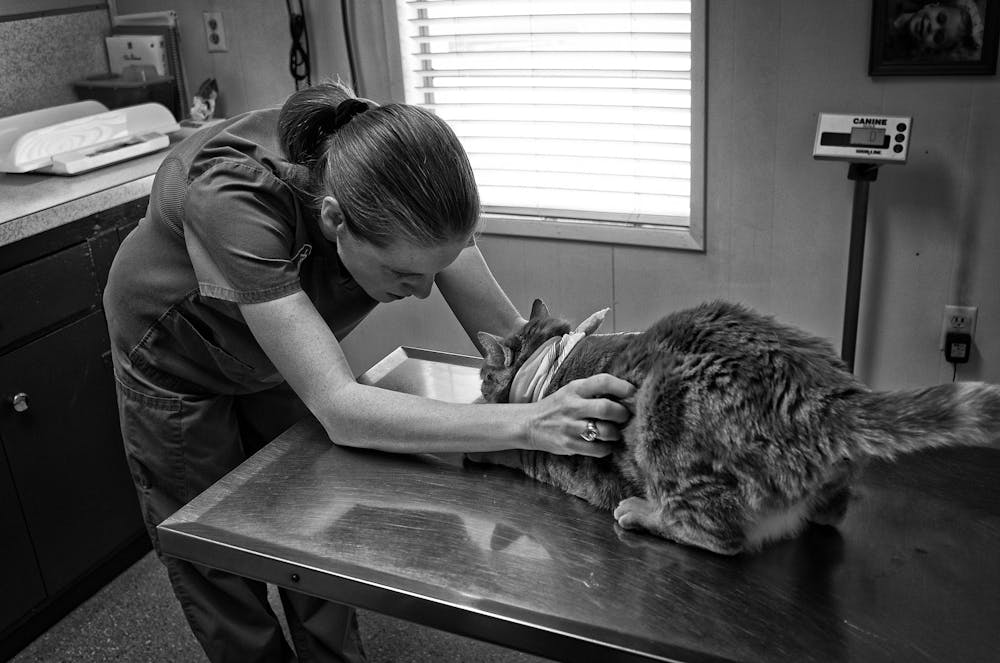
Veterinarians have a professional duty to advocate for their patients.Anne Worner, CC BY-SA
It’s true some medical and behavioural conditions cannot be adequately treated. But sadly, some owners cannot afford veterinary treatment for treatable problems. This can lead to agonising moral decisions for both pet owners and veterinarians.
Some owners assume vets must administer a lethal injection to their pet on request.
But vets are free to conscientiously decline “inappropriate euthanasias”. The Guidelines of the Veterinary Practitioners Registration Board of Victoria make this professional freedom explicit:
Veterinary practitioners may refuse to euthanise animals where it is not necessary on humane grounds if they have a moral objection but must give the client the option of seeking the service elsewhere.
Euthanising healthy or treatable animals
What if the animal presented for euthanasia is healthy, or has a problem that is treatable and affordable? What if the client has overestimated the severity of the condition, refuses to explore other options, or is mistaken about the animal’s quality of life?
Even when requests for euthanasia go beyond mere “convenience”, they can still be deeply morally troubling for vets. This can cause moral distress to veterinarians.
Moral distress is thought to be one reason why veterinarians suffer professional burnout and compassion fatigue. In fact, vets have a higher suicide rate than the general population.
Veterinarians can decline carrying out euthanasia.Shutterstock
Of course, vets should not ignore clients’ genuine interests and should foster the bond between humans and animals. Vets should be prepared to sympathetically explore with clients why they are struggling to care for their pets, and to suggest other options where appropriate.
The problem with refusing euthanasia
Some vets worry that euthanasia refusals risk owners illegally mistreating or killing the animal themselves. This assumption may sometimes be true, but it often lacks evidence.
Owners absolutely intent on killing their healthy or treatable pets can still attend a willing vet clinic or animal shelter. But it is possible that in light of the vet’s clear moral stance, some owners will reconsider their decision to end their pets’ lives – now and in the future. And at least some owners will be persuaded to surrender their pet to another home.
Another concern is that conscientious objection unfairly shifts responsibility from one vet to another. But declining to kill animals for inadequate reasons should be prioritised over any notion of being “unfair” to other vets.
What’s more, many clients who love their pets may be reassured that their vet is a strong patient advocate who does not kill animals for frivolous or inadequate reasons.
So, when your pet is suffering irremediably, your veterinarian is very likely to recommend euthanasia. But when a companion animal is not ready to die, you may or may not find that your vet will, for ethical and professional reasons, decline a request to end the animal’s life. And often it will be their moral imperative to do so.
Despite the cooling property market, affordable rental housing remains in critically short supply across Australia. Unable to get a private rental unit or social housing, many low-income renters must resort to informal and insecure accommodation. These range from share homes or rooms, to dwellings that breach planning or building regulations.
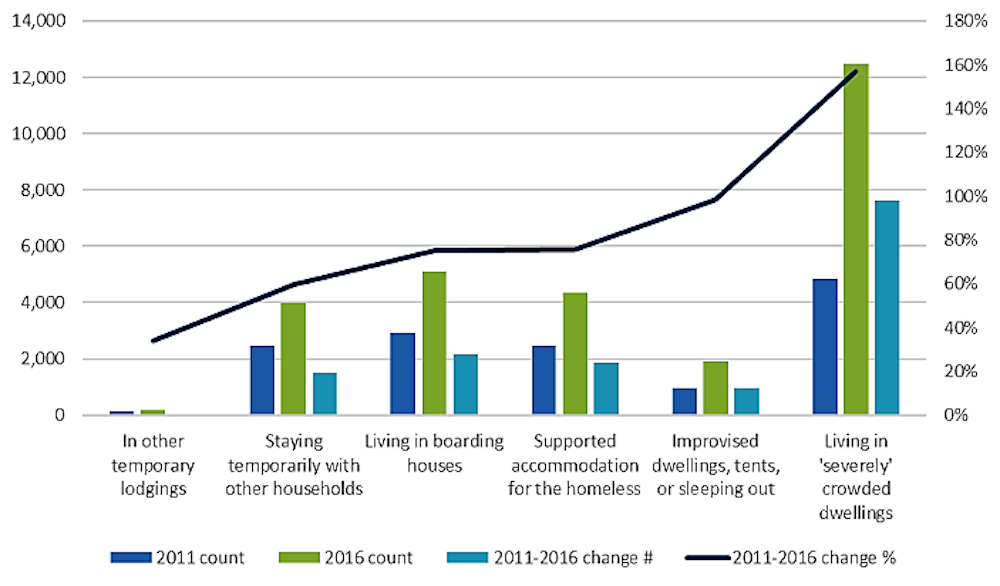
Our newly released study sought to shed light on this problem. We found more people are living in shared rooms or dwellings, often in uncrowded and unsuitable conditions. And illegal dwellings are on the rise in Sydney.
“Informal housing” usually costs less because it breaches planning, building or tenancy rules, or offers residents few protections under these rules. Examples include unauthorised or illegally constructed dwellings, as well as informal rental agreements, like share housing or room rentals.
Wherever there is a shortage of affordable housing or barriers to access, a market for informal alternatives will emerge.
In Australia’s major cities, low-income earners, recent migrants and international students face particular barriers to getting affordable rental housing. These groups often face discrimination, lack rental references or or may fall prey to international agents who offer inadequate accommodation at inflated costs.
In England, illegal “beds in sheds” are a well-recognised problem. In parts of the United States such as California, unauthorised dwellings may contribute around 5% of new housing supply.
No similar estimates exist in Australia. Our standard housing indicators – new dwelling completions, rent and sales data, as well as five-yearly Census changes in tenure – conceal the informal and illegal arrangements that proliferate in unaffordable markets.
Homelessness growth in Greater Sydney by classification, 2011-2016
Informal arrangements like renting a room in someone’s home or sharing with friends have always been part of Australia’s housing system.
Living in a share house might well be a rite of passage for young people. Sharing well into adulthood and into retirement is a different matter.
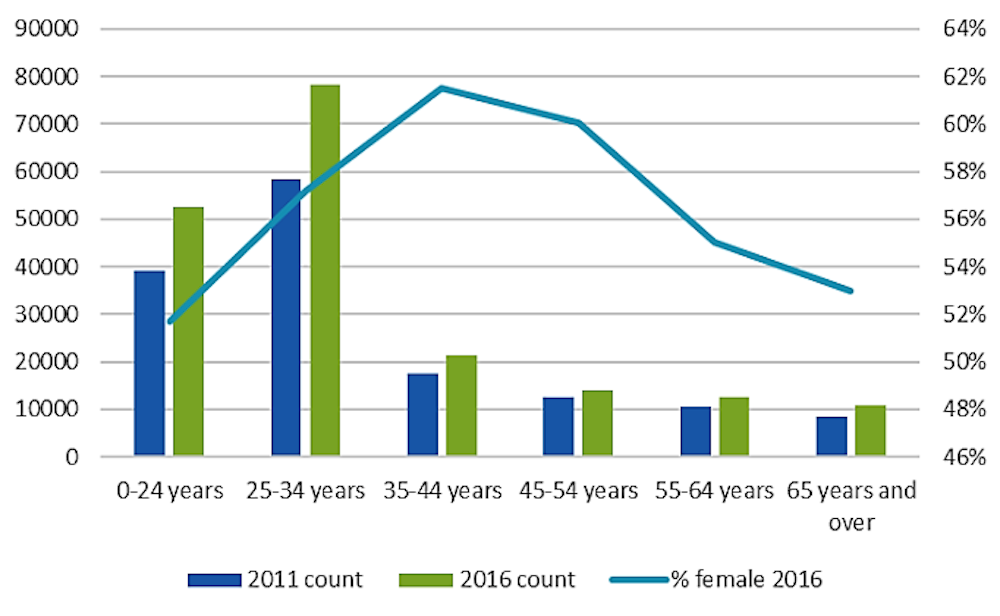
Share housing in the Greater Sydney region increased across all age groups above 24 years old between 2011 and 2016, according to the ABS Census. Those aged over 45 now amount to 20% of sharers. In particular, many more older women are sharing because they lack the means to own their own home or rent independently.
Greater Sydney share households (persons) by age group, 2011 and 2016, and % female 2016
Data derived from TableBuilder, Australian Bureau of Statistics 2011, 2016, Author provided
For our study, we interviewed council building inspectors and tenant support workers serving inner and southwestern Sydney. We also examined informal housing types emerging within suburban neighbourhoods.
Our study found the types of share accommodation are changing. As well as few legal protections, sharers often live in uncrowded and unsuitable conditions, where conflict between residents becomes more likely. Tenants informally renting rooms or secondary dwellings from onsite owners report uncomfortable feelings of surveillance and insecurity.
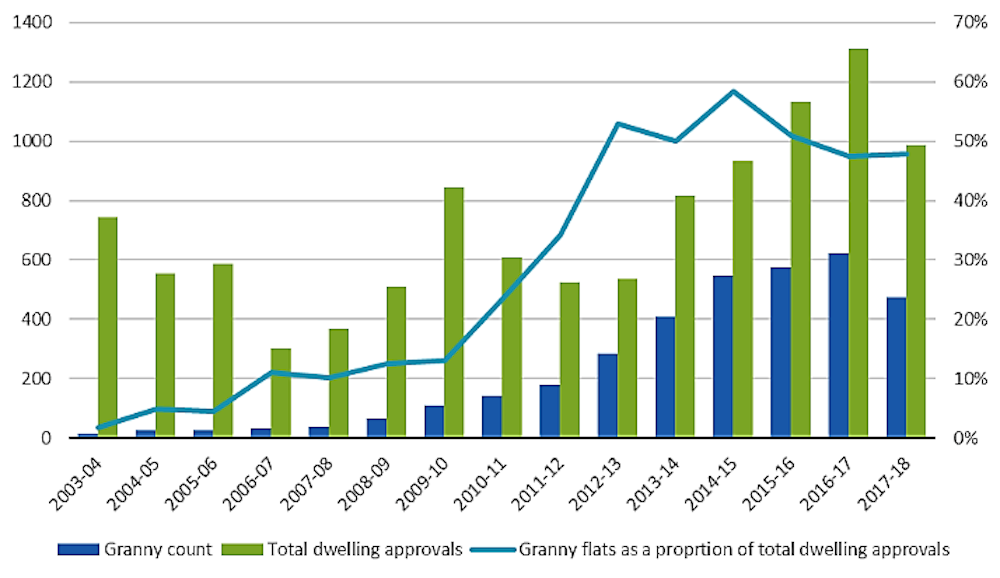
Secondary dwellings, or “granny flats”, are often viewed as a flexible or informal housing type. Unlike other states, New South Wales planning law encourages these developments as a form of affordable rental supply. This offers a sensible relief valve in Sydney’s tight housing market.
But in some areas – such as Fairfield – granny flats have come to dominate new housing development.
Secondary dwelling development and proportion of all dwelling approvals in Fairfield
This is because “codification” – fast, often privately certified approval for compliant applications – has made granny flats a low-cost option for home owners who want to increase the utility of their properties. Landlords see secondary dwellings as a low-cost, high-yield investment.
But it’s unclear whether these secondary dwellings are being rented out as lower-cost accommodation and, if so, whether they are an appropriate and secure rental housing option in the long term.
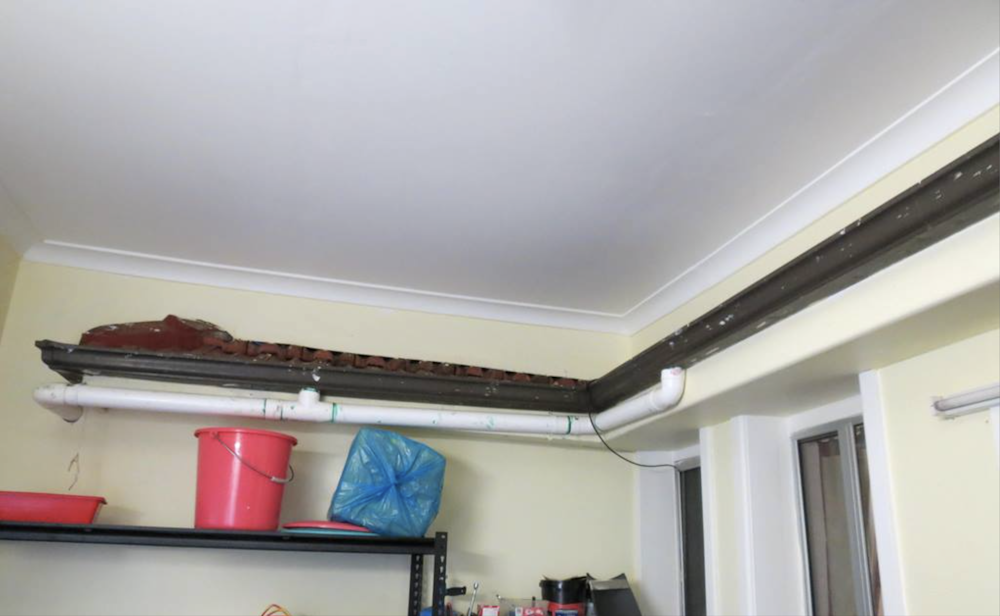
One problem our study focused on was the growing incidence of illegal dwellings in Sydney. These include secondary dwellings that are built, or converted from a garage or shed, without planning permission.
These arrangements can be very dangerous. Unsound construction, inadequate or absent insulation, ad hoc electrical wiring, and poorly drained sites expose occupants to serious health and safety risks. The invisible nature of informal housing increases fire risks – with emergency response staff less likely to suspect people are living in a garage or outbuilding.
Illegal dwellings may be more accessible for lower-income earners and others facing rental discrimination. But they are not necessarily low cost. Our study found evidence of illegal granny flats being advertised for over $300 a week. A building inspector commented: “There’s nothing affordable about paying good money for rubbish.”
A lot of resources are needed to identify and remove illegal dwellings. Building inspectors usually become aware of illegal dwellings through complaints from neighbouring residents. Participants in our study described the problem as endemic, as local government lacks the resources for proactive enforcement strategies.
Informal housing is not necessarily exploitative or dangerous. In fact, it can offer solutions beyond prevailing models of private or public housing provision. For instance, self-organised housing cooperatives or “deliberative” developments are promising alternatives to private rental or ownership. But these remain niche options in Australia.
The message from our study is that the informal housing sector needs to be recognised and monitored within the wider housing system. Measures to improve security and living conditions for occupants, and to ensure informal dwellings comply with planning rules, are critical.
Structurally, it’s essential to remove the barriers to private rental experienced by lower-income and vulnerable groups. As many others have argued, this means adequate funding for social and affordable housing, inclusionary planning to ensure affordable homes are included in new developments, adequate resourcing for tenant advice and crisis services, and further tenancy reform.
Source: The Conversation (Au and NZ) – By Emily Millane, Research Fellow and PhD Candidate, Crawford School of Public Policy, Australian National University
In the field of tax, hard truths are playing out in this year’s election. The first is that special concessions that privilege older, wealthier voters have created a constituency very opposed to change.
The second is that the longer these settings are left in place, the harder it is becoming to change them.
Political science tells us that constituencies emerge around policy settings. The mushrooming of age-based constituencies is making tax reform difficult, with implications for intergenerational equity.
The more pressing that reining in generous and ever more expensive concessions grows, the easier it is becoming for political parties to use scare tactics about taking them away in order to muster support.
Tax measures get labels, like ‘retiree tax’
Hence, the Coalition’s use of the phrase “retiree tax” to describe Labor’s proposal to end cash payments of unused dividend imputation tax credits. The payments were introduced by the Howard government, and allow share market investors to make use of credits for company tax paid in creating their dividends to receive the credits in cash.
It is a “retiree tax” only to the extent that self-managed superannuation funds that don’t pay tax in the retirement phase make use of them and superannuants who don’t pay tax because superannuation income is tax free make use of them.
A cynic could be forgiven for thinking that the first weeks of the campaign were so tepid that the media needed something with which to entertain itself. Shorten’s gaffe was the reason week one of the campaign was judged to have been won by the prime minister, who labelled Shorten a liar.
Outside of government, we now have the “Save our Super” group, formed in opposition to the superannuation tax increases imposed by the Turnbull government, and this year a “Self Managed Super Fund Party” which didn’t register in time to field candidates.
Each illustrates the power of age-based privilege.
The “retiree tax,” the “super lie,” “Save our Super” and the “SMSF Party” all coalesce around the same type of issue: the prospect of a largely aged-based tax concession being ended or reduced. In the case of the “death tax” it refers to the threat of new tax where none currently applies.
In a society where fewer people will be of working age and able to contribute to revenue through taxes on wages, the government will have two options: either increase taxes (on someone) or cut spending (on someone).
Exactly where Australia is going to strike a balance is an open question. It is a choice.
And age is becoming the ultimate political divide
The other choice is how about whether we manage the transition to an ageing society in a way that ensures the economic security of the young. The Coalition is banking on the broad appeal of its income tax cuts while at the same time getting stuck into Labor’s “retiree tax”.
Labor has set out an agenda of reducing tax concessions that it argues go to older, wealthier Australians and investing the proceees in childcare. But it can’t shake the “retiree tax” label. Its website is fighting back, pointing to Tony Abbott’s attmept to cut payments to pensioners and Scott Morrision;s support of a pension age of 70.
The “retiree tax” label is haunting Labor in a similar way that Prime Minister Theresa May in Britain was was haunted by talk of a “dementia tax’” during the 2017 elections. It was a proposal to include the value of the family home in the means test for in-home care.
We are heading down the road of aged-based entitlement and political expediency. Whether it’s too late to turn back, time and this election will tell.
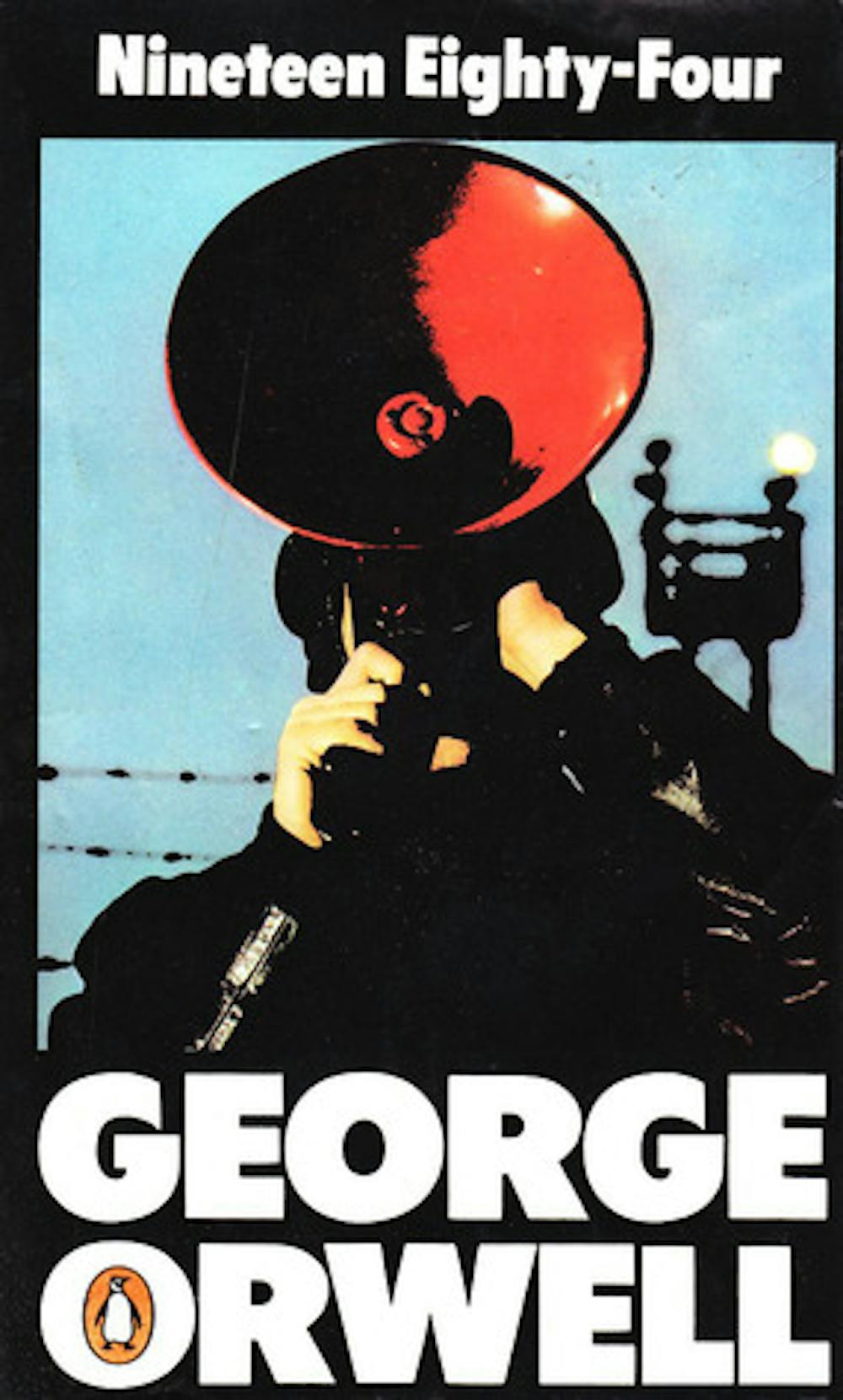
It was a bright cold day in April, and the clocks were striking thirteen. Winston Smith, his chin nuzzled into his breast in an effort to escape the vile wind, slipped quickly through the glass doors of Victory Mansions, though not quickly enough to prevent a swirl of gritty dust from entering along with him.
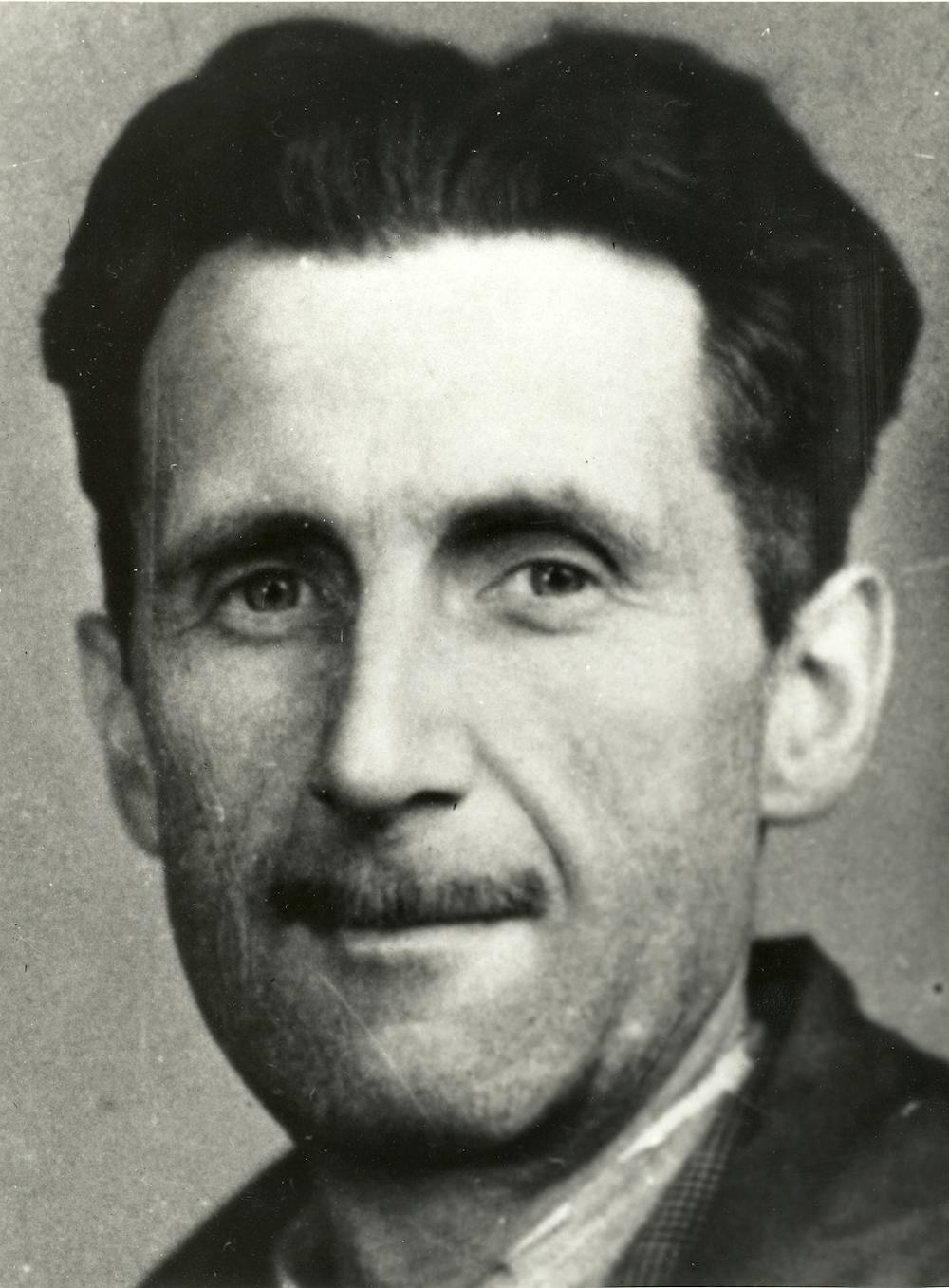
As novel-openers go, they don’t come much better than this one in George Orwell’s Nineteen Eighty-Four. See how the unexpected “striking thirteen” runs powerfully into the beginnings of characterisation and world-building in just two arresting sentences.
Orwell knew that words could both grip the attention and change the mind. He wrote the book as the Cold War was becoming entrenched, and it was meant as an explicit warning on the nature of state power at that time.
The book still sells by the thousands, and is read by students who are compelled to do so. But it can be read voluntarily and profitably, and it can tell us a lot about contemporary politics and power, from Donald Trump to Facebook.
Nineteen Eighty-Four became an instant classic when published in 1949. People could see in it a world that could easily become a reality. The memory of Nazi dictatorship was still fresh, the Soviet Union had erected the Iron Curtain, and the USA had the atomic bomb.
The novel’s setting is a dystopian Britain, which has become a part of Eurasia, a region in perpetual war with the other super-regions of Oceania and Eastasia. Oppression, surveillance and control are facts of life in a society ruled by the Party and its four Ministries of Truth, Peace, Plenty and Love.
It is a world of “doublespeak” where things are the opposite of what they appear; there is no truth, only lies – only war and only privation.
One of Orwell’s innovations is to introduce us to a new political lexicon, a “Newspeak” where he shows how words can be used and abused as a form of power. Words like “Thoughtcrime”, where it is illegal to have thoughts that are in opposition to the Party; or “unperson”, meaning someone who has been executed by the Party (e.g. for Thoughtcrime) will have all record of his or her existence erased.
Not only do we use many of these words today, but the manipulative function that Orwell described is still intact. For example, when Kellyanne Conway, advisor to US president Donald Trump, stated in 2017 that the Administration has its own “alternative facts”, she was indulging in “doublethink”: an attempted psychological control of reality through words.
Nineteen Eighty-Four became an Amazon bestseller following the election of Trump and the airing of this interview.
Kellyanne Conway explains the Trump adminstration’s ‘alternative facts’.
Within the corridors of Orwell’s Ministry of Love, though, there’s a tiny flickering of real love that develops between protagonist Winston and co-worker Julia. They share unlawful thoughts about other possible ways of living and thinking, based upon vague and unreliable memories of a time before world wars and Big Brother and the Party.
But through its immense powers of surveillance and the efforts of the Thought Police, Big Brother knows everything, and soon the lovers are suspects. Winston is arrested and brought before O’Brien, the novel’s antagonist and a Party heavyweight who is openly cynical about the power structure of society. For him power is a zero-sum equation: if you don’t use it to keep others down, they will use it similarly against you.
There is much drama, suspense and even horror in Orwell’s book. He wrote about what he saw around him, but filtered it with an acute sensitivity to the innate fragility of civilisation. In 1943, when the plot-lines of Nineteen Eighty-Four were probably gestating in his head, Orwell wrote:
Either power politics must yield to common decency, or the world must go spiralling down into a nightmare into which we can already catch some dim glimpses.
1984 goes digital
These days, a lot of power politics circulates online. Orwell, who worked for the BBC during the war, was sensitive to the power of communications. What he calls the “telescreen” is essentially a surveillance device that “received and transmitted simultaneously”.
He writes of the device that “any sound that Winston made, above the level of a very low whisper, would be picked up by it; moreover […] he could be seen as well as heard”. Remind you of anything? Alexa or Siri and their ilk may be fads, but the technology now exists; and so then does a new kind of power.
Such power is contingent and shifting and does not always reside with governments.
Donald Trump wields a new digital power through Twitter and Facebook and can “speak to his base” whenever he’s angry, bored or overcome by impulse. But through ownership of new digital technologies, new actors – data corporations – have acquired old powers. These are the powers to manipulate, surveil, and influence millions of people through access to their data.
And their power in turn can be leeched by hackers, state-sponsored or independent. The complexity of political power today means we need to be more attuned to its changing forms, to more effectively strategise and resist.
Donald Trump can speak directly to his base online.Jim Lo Scalzo/EPA/AAP
Orwell’s “common decency” reference may now sound rather quaint. But its very absence in social media is a problem.
The algorithms that Twitter, Facebook and Google insert into our communications act essentially as “manipulation engines” that can cause division, favour extreme views, and set groups of people against each other.
Divide-and-rule is not their intention – getting you online in order to sell your data to advertisers is – but that is the effect, and democratic politics is the worse for it.
Understanding the nature of political power is even more important today than when Orwell wrote. Oppression and manipulation were “simpler” and more brutal then; today, social control and its sources are more opaque.
Orwell’s imperishable value as a writer is that he provides a template on the character of political power that tells us that we cannot be complacent, cannot leave it to government to fix, and cannot leave it to fate and hope for the best.
Things did not turn out so well for Winston Smith. Pushed to the limit by torture and brainwashing, he betrays Julia. And in his abject state he convinces himself, finally, of the rightness of the Party: “He had won the victory over himself. He loved Big Brother.”
The story ends there. But for Orwell the writer and activist, the struggle for Truth, Peace, Plenty and Love was only beginning.
Today, Nineteen Eighty-Four comes across not as a warning that the actual world of Winston and Julia and O’Brien is in danger of becoming reality. Rather, its true value is that it teaches us that power and tyranny are made possible through the use of words and how they are mediated.
If we understand power in this way, especially in our digital world, then unlike Winston, we will have a better chance to fight it.
The Perth studio audience of undecided voters gave the campaign’s first debate to Bill Shorten by a decisive margin.
Of the 48 present, 25 thought the opposition leader won, 12 believed the night was Morrison’s and the rest were undecided.
In my opinion, the outcome was less clear cut. I’d score it pretty evenly. Shorten had more to say. Morrison had more energy.
At one level the Seven West Media debate was an unsatisfying encounter, perhaps because we’d heard almost all of it before. But nevertheless it was revealing because, despite forced grins, the strain and effort were so visible in this “best in show” hour.
Perched uncomfortably side by side, with questions coming from two journalists and audience members, both leaders had tried to prep to the nth degree, although Shorten had a couple of lapses.
There were a few spontaneous comebacks – debating is part of a politician’s skill set, though perhaps not as well-developed as once – and the audience managed a handful of laughs.
The exchanges did lay out the essence of how these two leaders are fighting this campaign.
Shorten has the detailed policy, with big initiatives that will appeal to voters. But his program is costly, and he has to mount a heavy argument to support the tax changes that will pay for it all. He describes these as closing loopholes; Morrison casts them as massive increases.
Morrison is running hard on lines that boil down to stick-with-what-you-know, and you-can’t-trust-Bill. In the campaign he is all attack and that, and a certain quickness, came through repeatedly in the debate.
The contrast in messaging was summed up at the end. “He’s not telling you what the cost of change is,” Morrison said – in other words, don’t venture down the scary Shorten road.
Shorten’s riposte was to point to “the cost of not changing” – in other words, voters would be worse off – in everything from hospital care to climate change – unless they took the new path he offered.
Shorten was caught out when asked the price of a popular electric car.
This was the modern version of that old question to leaders about the price of milk and bread.
“I haven’t bought a new car in a while so I couldn’t tell you,” he admitted.
Like the cocky kid in the class, Morrison jumped in to say: “I can tell you how much [an] electric car costs, more than [a] standard – it’s $28,000 […] that’s for the same type of car”.
That gave Shorten the opportunity for a quip to cover his inability to answer what someone who is advocating an ambitious target for new electric cars should have known.
“Well that’s great, we’ve got a Prime Minister spending his times in the motor pages” he said.
Morrison quickly came back: Well that’s where most Australians often spend their time, mate […] they read about cars, they read about footy, they read about the races […] “
Shorten provided a robust defence of Labor’s policy to cancel cash refunds from franking credits, but Morrison forced him to concede on a detail.
Pressed on the cost of Labor’s emissions reduction policy Shorten said there wasn’t “one number”, but was strong on the need for action. Morrison didn’t get far on trying to raise the alarm on border security.
Asked about the awkward subject of Clive Palmer and preferences, Morrison abandoned his earlier line of leaving Palmer to speak for himself, saying “Clive Palmer should pay his workers and Clive Palmer should settle things up. […]
“Clive Palmer should do what every other Australian should do and that is they should abide by the law […] But “do we think that the United Australia Party would be more dangerous to the Australian economy than Bill Shorten, the Labor Party and the Greens? Well I’m sorry, I think Bill Shorten, the Labor Party and the Greens are”.
Shorten drove home the point that Palmer owed $70 million to the taxpayers, asked rhetorically how Morrison and his government had been taken hostage by Palmer and Pauline Hanson, and conjured up the spectre of Palmer calling in a debt from the government.
Each leader stepped carefully when pressed on what they admired about the other.
The true answer probably is “bugger all”, but that’s not an acceptable one.
Morrison came closest to it however, saying “I respect anyone who serves in the Australian Parliament”.
Shorten produced unexpected praise for what Morrison was doing on mental health and for being “a man of deep conviction”.
When asked why voters should trust them to do what they promised, and what they would do to restore trust, both sounded lame.
Morrison pointed to party rule changes to protect prime ministers and then defaulted to “who do you trust” on economy, immigration etc.
Shorten referenced Labor’s plan for an anti-corruption commission, and said Labor had put all its policies out for people to see.
But on trust, neither had a fundamental answer to what is at present the unanswerable question in Australian politics.
The death of the Australian poet Les Murray at the age of 80 is a profound loss for his family and friends. It is also a great loss for literature. Whether one writes “world literature” or “Australian literature” here signifies not only Murray’s standing, but also a profound tension in his status as a poet. Murray has long been seen, not only as Australia’s pre-eminent living poet, but also as its national poet.
Often referred to as the “Bard of Bunyah” — after the property in New South Wales on which he grew up, and to which he returned in adulthood — Murray was often seen as an unofficial Australian poet laureate (though he repeatedly said he was not interested in such a role).
He was the poet that John Howard turned to when, as prime minister, Howard wanted help with drafting a preamble to the Australian constitution. (The preamble was, along with a proposed Australian republic, sunk at the 1999 referendum.)
Murray was the poet of the rural poor, and many of his poems deal with Australian life beyond the metropolitan centres, as well as with Australian history.
But he was, especially since the 1990s, lauded as a global poet; routinely name-checked with figures such as the Saint Lucian Derek Walcott and the Irish poet Seamus Heaney. Indeed, Murray was touted for a time for the Nobel Prize, which Heaney won in 1995. And just as Murray’s poetry can be seen as “intensely Australian”, it can also be seen as “intensely transnational”, concerned with global histories, languages, and cultures.
Perhaps not surprisingly then, as a supposedly “national poet”, Murray is no Banjo Paterson. He was not an easy poet. His signature style was a potent mix of ordinary language, specialist vocabulary, and eccentric syntax. His poetry cannot be mistaken for anyone else’s.
It is something of a critical cliché to say that poetry makes us see things anew, but Murray’s really did that with its extraordinary linguistic power. This was the case particularly with his representation of the animal world, as seen in the sequence of poems entitled “Presence” from Translations from the Natural World (1992). Who else has described cows as Murray does in The Cows on Killing Day?
All me are standing on feed. The sky is shining.
All me have just been milked. Teats all tingling still
from that dry toothless sucking by the chilly mouths
that gasp loudly in in in, and never breathes out.
And what about this description of an Emu in Second Essay on Interest: The Emu? “Weathered blond as a grass tree, a huge Beatles haircut / raises an alert periscope and stares out / over scrub”.
Certainly, his poems also deal with the “big subjects”: death, nation, religion (Murray was a Catholic convert), family, and poetry itself. Many of his best poems are about such topics. We see this in his extraordinary elegy for his father, The Last Hellos, and in essayistic poems such as Poetry and Religion, The Tin Wash Dish, and The Instrument.
But as Second Essay on Interest, and other serio-comic poems like it show, one should never underestimate the importance of play and comedy in Murray’s work. His poems, like the poet himself, are profoundly creative because they are profoundly uninterested in compliance, whether with majority opinion, political ideology, or the literary history that so profoundly informed his art.
Non-compliance
This anti-authoritarian streak shaped Murray’s career from the beginning. When he had to write a statement for Australian Poetry Now (1970), a poetry anthology notable for its avant-gardist experimentation, Murray provocatively stated that “Real experiment would be Baptist, or funny, or popular, or charitable in spirit and tone —something unthinkable like that”.
This connection between creativity and non-compliance, between comedy and art, is one that Murray himself thematised. As he wrote in Cycling in the Lake Country, “We are a colloquial nation, / most colonial when serious”. (For the radical-conservative Murray, to be “colonial” was akin to being authoritarian.)
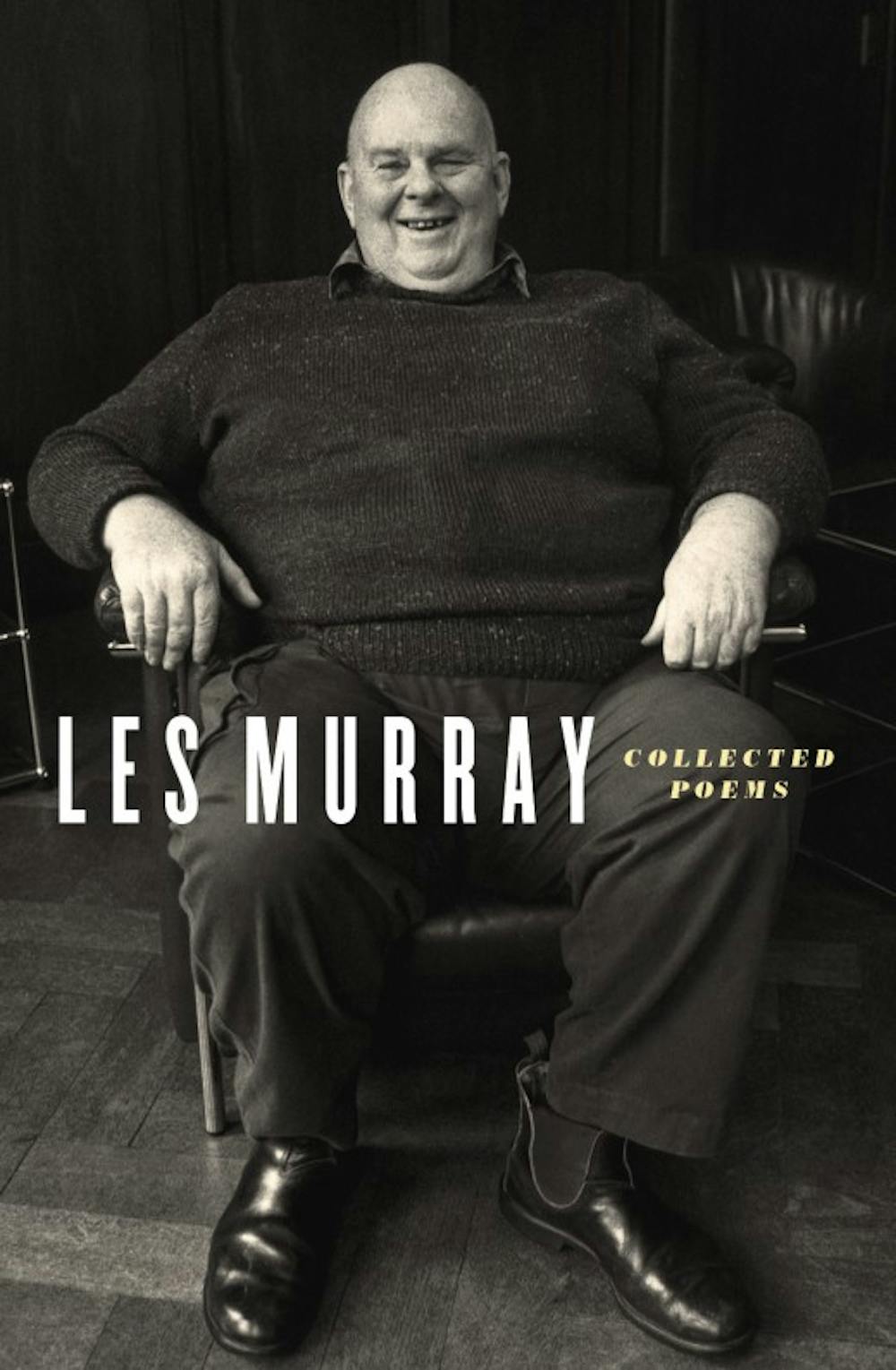
Les Murray’s Collected Poems.Black Inc
As Murray’s peer, the poet and critic Chris Wallace-Crabbe once wrote, “Time burns the isms”. While Murray’s various forays into cultural and political controversies will remain of interest to historians, it is the poetry — recently brought together in Murray’s latest Collected Poems (the last in his lifetime, as it turned out) — that will be read for many years to come.
In Collected Poems, as well as his masterly long work, the verse novel Fredy Neptune (1998), we can see his extraordinary poetic strengths: his linguistic capaciousness, his formal range (from epigram to epic), his wit and playfulness, his originality, his difficulty and his clarity.
While Murray was associated with the political right, his best poems are everything that a One-Nation version of Australia would distrust: complex, witty, genuinely anti-authoritarian, transnational, and encyclopedically knowledgeable.
They are also profoundly human, alive not just to the poet’s sufferings, but also to those of others. Murray’s humanity is perhaps most clearly shown in his generosity, his sharing of his attentive, thoroughly original, view of the world.
In the end, poetry knows no national boundaries, and poetry, and the English language, is the poorer for his passing.
Through smirks, jabs and plenty of policy disagreements, Scott Morrison and Bill Shorten took aim at one another in the first leaders’ debate of the 2019 federal election and attempted to provide voters with a sense of how their parties would govern if elected.
The two party leaders grilled one another on their stances on climate change, wage growth, border protection – and even the influence of Clive Palmer on the election. In one of the final questions, they were also prompted to say something nice about one another – and they both managed to find something positive to say.
Here’s what our leading academic experts made of it.
Denis Muller, Senior Research Fellow in the Centre for Advancing Journalism, University of Melbourne
The winner of the first debate between Scott Morrison and Bill Shorten was Australian democracy.
The reason is that two unwritten democratic norms were clearly on display:
Mutual toleration, which means each side accepts the other as a legitimate rival for power, and
Forbearance, which means each side recognises that there are restraints on that power.
These are not to be taken for granted in an era when these two norms have broken down in the world’s most powerful democracy, the United States, and are under perilous strain in the United Kingdom over Brexit.
It is a sign that the extreme polarisation that has gripped those two polities has not so far undermined Australian mainstream politics, even though there is hate and divisiveness at the extremes.
That is not to say the leaders’ debate was without spirit. There was plenty of aggression from Morrison and a good deal of mockery of it from Shorten.
But it showed both leaders understand a truism about Australian politics. As Judith Brett puts it in her recent book From Secret Ballot to Democracy Sausage, Australian elections are won and lost in the centre.
The temperature of the leaders’ debate was moderate. Each leader stuck to his party’s perceived policy strengths: Morrison to economic management, lower taxation and border security; Shorten to climate change, health and education.
But it was hardly game-changing.
Leaving aside the fact that 110,000 people were reported to have voted on Monday when pre-polling opened, the debate was screened live at 7pm AEST on Channel 7TWO, which is channel 137 on my set-top box when I finally unearthed it.
And it was replayed, with some audience reaction, on the main Channel 7 service at 9.45pm AEST, which is not exactly prime time.
Richard Holden, Professor of Economics, UNSW
Scott Morrison won the first leaders’ debate hands down. He was clearer and more articulate on all issues, and took the debate up to the opposition leader.
On the economy, Morrison emphasised the importance of building and maintaining a strong economy in order to pay for social programs. Bill Shorten pressed his case for increased Medicare funding, his dental program for pensioners and increased wages for childcare workers.
Two exchanges stood out. When discussing the Fair Work Commission’s decision to cut certain penalty rates for some workers, Morrison said it was important to abide by the decision of the “independent umpire”. Shorten, by contrast, said he would intervene. Morrison, thinking quickly on his feet, pressed for consistency: When should a government intervene? For which workers? Why have the commission if governments interfere?
Shorten was caught flat-footed and resorted to criticising Morrison for voting against overturning the penalty-rates decision eight times – and making hand gestures to that effect.
On climate change, Morrison pressed Shorten on the cost of Labor’s 45% emissions-reduction target. Shorten was evasive, though he did point out that inaction has a cost, as well, and argued persuasively for lowest-cost abatement. However, Shorten missed an easy opportunity to criticise the government for its sharp-elbowed use of so-called “carryover credits” from the Kyoto Protocol period.
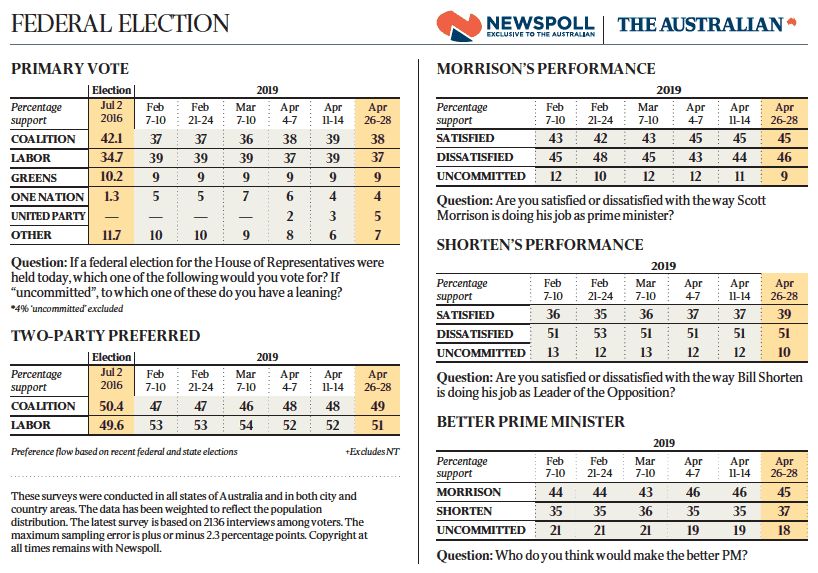
Shorten looked like a man under pressure, following the Newspoll today showing his lead narrowing to 51-49.
Morrison, by contrast, was at ease and relished the opportunity to show his command of policy detail – even the opposition’s policies. Unlike Shorten, he knew the cost of a Nissan Leaf and how many pensioners will be affected by Labor’s franking-credit policy.
Shorten stumbled over key figures, the correct name of surgical procedures he plans to fund, and smiled at odd moments – just like Hillary Clinton did in the final US Presidential debate against Donald Trump.
Labor will be hoping for a different election outcome, and a better performance from Shorten in Friday’s second debate.
Join Richard Holden for an online Q&A on Tuesday from 2-3pm AEST (30th April) to discuss the economic issues raised by the leaders’ debate. Post your questions in the comments section below.
Marian Sawer, Emeritus Professor, School of Politics and International Relations, Australian National University
Prime Minister Scott Morrison and Opposition leader Bill Shorten awkwardly perched on moulded plastic chairs putting their pitches to a subdued studio audience did not make for lively viewing.
It reminded me that Australia really should follow comparable democracies like Canada and the UK and have leaders’ debates where all the parliamentary party leaders are represented. There were issues tonight that either the Nationals’ or the Greens’ leaders should have been responding to – whether about preference deals with Pauline Hanson’s One Nation or so-called death taxes.
The content of the “debate” was extraordinarily predictable: the Coalition will provide stronger economic management and border protection and cut taxes; Labor will spend more on schools, hospitals, dental care for pensioners and childcare and do something about climate change.
Morrison said people could trust him because he delivered: as social services minister he had stopped welfare dependency; as immigration minister he had “stopped the boats”. Shorten said there needed to be institutional responses to the loss of trust, such as the federal Integrity Commission that Labor has promised.
The style was also predictable, with Morrison getting in some folksy references to cars and footy, and Shorten presenting himself as more in touch with the lives of working families, their childcare costs and lack of wages growth.
Shorten came across as the more consensual leader, saying he agreed with the government on some issues. He got a round of applause when he praised Morrison for his mental health policies. He did have some digs, though, about preference deals and Clive Palmer’s digital wallpaper being sent around Australia while still not paying his workers.
All in all, not much to see except the government relying on the words “taxes” and “boats” for a Pavlovian response and Labor emphasising its commitment to do something about inequality and the costs of maintaining tax loopholes for the wealthy.
For women who marry men, in 2019 this question still comes up: will you be taking your husband’s name?
It is no longer a legal requirement nor the default position for Australian women to take their partner’s name. But recent evidence suggests it’s still a common occurrence – the majority of Australian women make this choice.
As professional women, we’re interested in the question of how this decision impacts on identity and career progression.
The average age of women getting married in Australia is now 30, an age when career and professional identity have already been established for many of us. So name choice is not only a personal decision but can carry professional implications.
Does taking on someone else’s name change your sense of self? Professionally speaking, does a new name lessen the impact of your own hard work? What happens if, like 43% of marriages, it doesn’t work out and you are left with a name that no longer reflects your personal status?
As a scientist, your name is your “brand”; it holds your publication record and your scientific reputation. For most male scientists, the main name-related decision will be whether to use full names or initials for publications and other work.
For women, navigating a possible name change with marriage can be complicated, demanding considered and deliberate decision-making. This is true not just for science, but for most professional careers.
Here are our own stories – three unique perspectives – regarding how we worked out name choices through marriage, divorce and career progression.
Married, changed name, now divorced
Kate: As a younger bride, I had no real career established at the time of my wedding, and held the perception that a marriage is forever. I chose to change my name.
That marriage ended in divorce years later. By then I had published a number of scientific papers under my new name, and my career was well established. So I was faced with another name choice: keep and/or adjust my name, or switch back to my maiden name.
I felt the pressure to keep my ex-husband’s name for professional continuity, so decided to tack on a bit of “me” (by adding a hyphen and Robb to my married surname of Charlton). I went on to describe and name a new dolphin species, a legacy which is, and always will be, in part, stamped with my ex-husband’s name.
Here’s my dolphin paper, which was published under my hyphenated name.
Some years later, I feel incredibly conflicted every time I am introduced by my ex-husband’s name, as it no longer reflects who I am, personally or professionally.
This has led to name change indecision. How do I, now well established in my career, take on yet another name, one that I can identify with, that reflects who I am now, without jeopardising my professional identity and legacy?
At the end of the day, it may appear trivial to some, but I have to be happy with who I am and with many years in my science career left. I have to be true to myself in needing my own form of name identity back.
I will be making the change: from Dr Kate Charlton-Robb to Dr Kate Robb. It is, after all, the name I identify with and want to be identified as.
The recently-identified Burrunan dolphin (Tursiops australis).Marine Mammal Foundation
Tara: When I got engaged, I struggled with the concept of changing my name. Just like my partner, I liked my name. It was part of my identity, my origin, and I was proud of it.
There were questions from family members whenever the subject came up. Mainly, what would we call our children, and was I worried about divorce, given my mother had divorced twice? There were never demands, just the feeling of subtle pressure from parents and grandparents to conform to tradition. Eventually I relented and took my husband’s name.
Years later I started a PhD. I would be the author of a huge body of work. Something to be truly proud of, except it bothered me that it wasn’t really going to be in my own name.
Adding to this, I was simultaneously witnessing two close friends going through stressful divorces. Despite being happily married, as a child of divorce it is sometimes hard not to hold lingering fears.
So, with the support of my husband, I commenced the process of changing back to my birth name. Together we faced the bombardment of questions, and answered with patience: “yes, we are still happily married. No, we are not getting divorced”.
Now I have a seven year career in science, and am proud of my achievements in my own name.
Never considered changing name
Valerie: I didn’t change my name when I got married. I am originally from Quebec where women don’t take on their husband’s name. Quebec law states that “in marriage, both spouses retain their respective names” (Civil Code of Quebec). Getting married there carried the expectation that I would keep my name.
My husband is from New Zealand, where either spouse can change their name when getting married. If it had been something important to me, we could have married in New Zealand instead. There was never any expectation from others for me to change my name.
I know women who are divorced and had to change their names back, while others decided to keep their ex-husband’s name as it was how they were known professionally and personally. It all seems very messy.
I didn’t think about rates of divorces or my career when I got married, although now, as I am still establishing my career, I think changing my name would be more difficult. The reality is that I never contemplated changing my name. My name is part of my identity.
Complicated and personal
Changing your last name upon marriage is a complex issue for some women. It’s a issue that can create long term, ongoing considerations.
But we do have choice. Yes, some women do change their name. But others choose to keep their maiden name, or use a hyphenated or merged name. Others keep their maiden name professionally, but take on their husband’s name legally.
We encourage women to consider all of their options, to think not just about the present but also about the future, and above all stay true to their own identity and personal preferences.
ANU marketing lecturer Andrew Hughes says this is the first election where the advertising spend and activity has been more focussed on digital.
He told The Conversation that on Monday, the first day of pre-polling, there was a surge in social media ads – the Coalition had over 230 different ads on Facebook while Labor had over 200.
“The sheer volume of ads is probably the highest we’ve ever seen in Australian politics because of the number of ads just on Facebook alone,” he said.
He also spoke about the major parties pivoting between positive and negative ads and the effectiveness of this strategy, personal branding, and the rise of micro-targeting.
Hughes said Clive Palmer’s huge advertising spending spree seemed to be working for him – but it raised the question of the need for caps.
Also, “as that tipping point between traditional and social media goes more in favour of social media […] in the future I believe the conversation will be on how many ads Australians should be exposed to as a quantity, not by dollar value.”
New to podcasts?
Podcasts are often best enjoyed using a podcast app. All iPhones come with the Apple Podcasts app already installed, or you may want to listen and subscribe on another app such as Pocket Casts (click here to listen to Politics with Michelle Grattan on Pocket Casts).
You can also hear it on Stitcher, Spotify or any of the apps below. Just pick a service from one of those listed below and click on the icon to find Politics with Michelle Grattan.
New Zealand Prime Minister, Jacinda Ardern. Image AsiaPacificReport.nz/RNZ.
New Zealand Prime Minister, Jacinda Ardern. Image AsiaPacificReport.nz/RNZ.
Prime Minister Jacinda Ardern is winning praise for her campaign to clean up the internet, and in particular for her announcement of the “Christchurch Call” Summit to be held with French President Emmanuel Macron in Paris next month. And if they can come up with some meaningful and effective ways to make the internet less available to terrorists and violent extremists then this will be a major accomplishment.
Regulating the internet is notoriously difficult, however. It might be one of the big issues of our time, but no one seems to have the answers for how to do it in a way that will be both effective and satisfactory. There’s a good chance the whole episode will amount to yet another talkfest of platitudes and politicking. This is certainly the view of Newstalk ZB’s Barry Soper, who forecasts an outcome of “full, frank and meaningless words” – see: Irony to New Zealand and France’s terrorism summit next month.
Not only this, Soper suggests that the motivations for the summit are opportunistic: “The idea no doubt came from the French President Emmanuel Macron who’s been haemorrhaging in the opinion polls at home… The international voice of reason and compassion Jacinda Ardern would have immediately come to mind and the pledge she’s now calling the Christchurch Call was born.”
The Herald’s political editor takes umbrage at such scepticism, declaring this type of view out of place: “They are the sort of critic who would never start anything unless success were guaranteed. The suggestion that Ardern do nothing after the murders of 50 people in New Zealand were live-streamed and shared on social media is to deny human nature and New Zealand’s own instincts” – see: Jacinda Ardern is knee-deep in planning joint initiative with France.
Audrey Young predicts real change will emerge from a difficult area of reform: “It won’t eliminate the evils that lurk within social media. But it won’t be nothing either.” She sees it as a positive sign that Ardern and Macron are being so inclusive in their approach: “Ardern’s natural instincts are to collaborate as broadly as possible… That factor alone makes it important to get co-operation from social media themselves, rather than using heavy-handed regulation or attempting to bully the corporates into participation.”
However, as with other international agreements, the more people you bring to the table, the greater the likelihood of a watered-down outcome. And this is the point made in Tom Pullar-Strecker’s article, The devil will be in the detail of the ‘Christchurch Call’. This reports Colin Gavaghan, director of the Centre for Law and Policy in Emerging Technologies at Otago University, as cautioning against going too broadly: “The risk, he argues, is you can end up with texts that are pitched at such a level that ‘no-one could disagree with them’ but which don’t tend to mean anything in practice.”
Pullar-Strecker’s article emphasises the uniqueness of this summit, as normally the outcomes are relatively pre-determined, with a text negotiated in advance for participants to sign up to. This won’t necessarily happen in this instance.
The success or otherwise of the initiative will be determined, it seems, by how ambitious the internet regulation campaign ends up being. Ardern, herself, is very keen to see a narrow focus for the regulations, which deal specifically with the online sharing of terrorist acts. Ardern says: “This is not about freedom of expression. This is about preventing violence and extremism and terrorism online”.
This approach is easier than going down the route of attempting to take on “hate speech” and extremist politics in general. And that is also the advice of Paul Brislen: “There are a number of things they should be looking at. The trick will be narrowing it down to something that is achievable because there are so many things that are getting out of control with the world of social media that need a regulator to step in… Trying to stay focused is going to be critical” – see Thomas Coughlan’s Speculation rife on value of ‘Christchurch Call’.
But even a focus just on violence and terrorism could be incredibly difficult. The same article makes this point: “Victoria University of Wellington media studies lecturer Peter Thompson said just defining what terrorism was presented difficulties. ‘It’s not a straightforward thing to decide what is and isn’t terrorism: live-streaming mass murder, well yes, but how do you decide which groups are considered terrorists or not?’ he said.”
Rick Shera from Netsafe and Internet NZ is also pleased that the Government is focused on dealing to the narrower and less contentious issue of terrorism: “I’m glad we are sticking to violent extremism and terrorism. Once you go into fake news, damage to democracy and other forms of online harm it becomes very difficult. Freedom of speech and the US position on that make it hard to make gains, so if the target is narrow it may be easier” – see Colin Peacock’s Does social media reform have the law on its side?
In this article by Peacock, the major issue of the United States is brought into the debate. After all, the US tech companies are based there, and benefit from that country’s very strong ethos and constitutional protections of political freedoms. This is lamented by some participants in the debate. For example, Internet NZ’s chief executive Jordan Carter is quoted, saying “The nature of their black and white constitutional protections on free speech in the US – and the current state of their politics – don’t leave me with any confidence that they will be able to drive change in this area”.
Clearly, the strong US resistance to censorship and over-regulation of speech means that Ardern’s “Christchurch Call” could run into problems. And it’s not just the US Constitution that might stymie reform, as explained by tech expert and journalist Bill Bennett, in Peacock’s article: “The problem with the US is they have two things that stop them from acting. One is the First Amendment which is all about free speech and not censoring people. The second thing is something called Section 230 that gives social media companies an out. They are not responsible for things posted on their site”.
There are, however, some major debates going on in the US about Section 230 of the Communications Decency Act. And the above article reports internet law academic Eric Goldman suggesting that any subsequent changes from that debate might be crucial: “He thinks cutbacks of Section 230’s scope do pose serious risks to free speech online. So is it the outcome of this behind-the-scenes legal argument playing out in the US right now – and not a headline-making political summit in France – which will really determine whether internet giants take responsibility for extreme content on their platforms?”
For the best discussion of these political freedom issues, see Gordon Campbell’s column, On Ardern and Macron’s campaign against violent social media content. In this, Campbell explains what might be coming after two decades of self-regulation of the internet, given the strong political appetite for serious regulation.
He worries that Ardern and co will end up going beyond just the clampdown on terrorist and extremist violence, and might produce something that impacts on general political activity: “Once you get beyond those low hanging fruit….it becomes difficult to censor online content without doing real damage to freedom of expression, and to genuine political dissent. It would be unfortunate if the best friends of the Ardern/Macron initiatives turn out to be the tyrants in countries that would (a) dearly love to see tech companies forced to hand over the keys to encryption, and (b) would readily embrace further restrictions being put on the online content their dissidents are allowed to post.”
He also believes regulation could ultimately prove unpopular, which is why Facebook and the like want it to be carried out by governments, “presumably, so that the politicians then get to wear the backlash once people realise the full implications of allowing the state to define and police the content deemed acceptable on the Net.”
Mostly likely, there will be simple progress made in Paris, such as tightening up of Facebook Live. The big question will be whether online providers end up having to do more vetting of content before it’s published, which would be of huge consequence, and what Campbell calls a “disastrous outcome”.
And he gives the example of his own media platform, Scoop: “Every year, Scoop also publishes close on a million New Zealand press releases issued by all and sundry. In that respect, Scoop functions as a national community noticeboard. It rejects press releases that contain libels and/or socially inflammatory hate speech. Imagine though, if Scoop was required to pre-check every one of those press releases for accuracy, balance and for whether or not they might hurt the feelings of people in public office. It would not be remotely practical or affordable for Scoop to do so – and its efforts would be gamed by those with malice in mind against the organisations issuing the press releases in question.”
Similarly, Internet NZ’s Jordan Carter suggests that relying on artificial intelligence to vet and remove content could be a problem: “Applying overly tight automated filtering would lead to very widespread overblocking. What if posting a Radio New Zealand story about the Sri Lanka attacks over the weekend on Facebook was automatically blocked? Imagine if a link to a donations site for the victims of the Christchurch attacks led to the same outcome? How about sharing a video of TV news reports on either story?”.
Carter has his own list of “six thoughts” about how to make the regulation of the internet work, including keeping the scope of the exercise narrow, and striking the right balance between “preventing the spread of such abhorrent material on the one hand, and maintaining free expression on the other” – see: How to stop the ‘Christchurch Call’ on social media and terrorism falling flat.
There really will be difficulties, no matter what approach is chosen. Claire Trevett points out: “As with climate change, making the right noises and getting the desired results are two very different things. It will be something akin to Hercules wrestling the Hydra. As soon as one head is chopped off, another two will appear” – see: PM Jacinda Ardern gathers allies to wrestle the social-media Hydra.
And it’s the politicians themselves who might have the most to lose, given their increasing preference to use Facebook and the like “to bypass the filter of the traditional media and speak directly to supporters and voters. This has some pluses for those politicians – but not necessarily for democracy. Over-reliance on social media over journalistic media allows them to escape questioning on issues they may not want to face. Macron has also come in for criticism for trying to stifle the ‘Yellow Vest’ protest use of social media. Ardern herself has been known to vote with her fingers when it comes to expressing her disapproval with certain social media platforms.”
Facebook and Instagram have been key parts of Ardern’s campaigning, and Trevett points out that “in the last election, Labour spent $475,000 on advertising on Facebook – four times as much as National – as it tried to appeal to younger voters.”
New Caledonian football teams Hienghène Sport and AS Magenta have ended New Zealand’s dominance of the OFC Champions League with upset semi-final victories over Team Wellington and Auckland City on Sunday.
With an all-New Caledonia final next month, this will be the first season a non New Zealand team will win Oceania’s premier football competition since Papua New Guinea’s Hekari United in 2010.
In the opening match, defending champions Team Wellington started strong but failed to convert a number of chances, allowing Hienghène Sport to go 1-0 up then seal the victory with a stoppage time goal.
How Les Nouvelles Calédoniènnes reported the Hienghène triumph over defending champions Team Wellington. Image: PMC screen shot
Hienghène coach Felix Tagawa said the historic result was “incredible”, reports RNZ.
“It’s for players, the administrators, our families. They’re the ones who have helped drive this project, who created this club exactly for this reason, to live these beautiful performances,” he said.
In the later game, nine time champions Auckland City took the lead shortly before keeper Enaut Zubikarai was sent off for handling the ball outside the area.
Auckland keeper Enaut Zubikarai was sent off for handling the ball outside the area. Image: OFC via Phototek
-Partners-
Magenta scored quickly afterward, then again in the 88th minute, finishing the match with a 2-1 victory.
Based in Noumea, Magenta is one of the strongest teams in the New Caledonian Super League with 11 titles.
Hienghène Sport comes from the northern East Coast township of Hienghène. The mainly Kanak township is infamous for being near the site of the 1984 Hienghène massacre, in which 10 unarmed Kanak activists were brutally killed by mixed-race settlers as they drove home through the forest.
The final match of the OFC Champions League is scheduled for Sunday, May 12.
Perhaps your GP has recommended you exercise more, or you’ve had a recent health scare. Maybe your family’s been nagging you to get off the couch or you’ve decided yourself that it’s time to lose some weight.
How do you find the motivation, time and resources to get fit, particularly if you haven’t exercised in a while? How do you choose the best type of exercise? And do you need a health check before you start?
Understanding the effect a sedentary lifestyle has on your health often hits home only after a serious event such as hearing bad news from your doctor. For some people, that’s often enough motivation to get started.
Surviving a serious illness as a result of an inactive lifestyle, such as a heart attack or stroke, can also be frightening enough to provide a great deal of motivation.
So, if you have not exercised for several years or haven’t exercised before, a it’s a good idea to get a health check with your GP before starting.
Then you need to keep motivated enough to stick with your exercise program. You can track your training or fitness level and set some achievable goals to keep going.
Lack of time
Finding the time and effort to fit exercise into your daily routine is challenging. We know being “time poor” is a common reason for not exercising. And many people such as office workers, vehicle or machine operators have low activity levels at work and don’t feel like exercising after a long day.
One way to get around these barriers might be to attend a group exercise session or join a sports club. If you find exercise boring, you can encourage a friend to join you or join an exercise group to make it enjoyable. If you played sport in your youth, that might provide an option.
Having a friend to exercise with or team mates to support you gives a sense of commitment so that you have to be there and will be challenged if you fail to show up.
Resources
You don’t need to join a gym with a lot of fancy equipment to get fit. There are many YouTube videos of safe routines that you can follow and adjust as you get fitter.
This one demonstrates a 15 minute cardio exercise routine that you can do at home.
You don’t need any special equipment to exercise at home along with this 15 minute cardio workout for beginners.
Many exercises – including squats, push ups and sit ups – don’t need special equipment. And rather than improving muscle strength with weights at the gym, you can fill milk bottles with water instead.
Yes, you’ll huff and puff. But it gets easier
You might be thinking about starting aerobic exercise like the cardio workout above, or walking, jogging, swimming or cycling. All need oxygen to provide energy over several minutes or longer.
When we perform aerobic exercise, our heart rate increases along with our breathing rate and depth. This is because this type of exercise requires oxygen to provide energy to keep going.
When we are not used to this type of exercise our body is inefficient at using the oxygen we breathe to generate energy for our skeletal muscles. That’s why when we start an exercise program we huff and puff more, get tired quickly and may not finish the exercise.
But if we keep exercising regularly, our bodies become more efficient at using oxygen and we become better at generating enough energy for our muscles to work.
Over weeks of regular exercise, the number and efficiency of our body’s mini-powerhouses – mitochondria – increase in each cell. This increases the energy they can supply to the muscles, exercising becomes easier and we recover faster from each session.
That’s why it’s important to continue and repeat exercise sessions, even after a shaky start or a few set-backs. Yes, it can be a big challenge, but aerobic exercise gets easier over time as the body gets used to providing the energy it needs.
Thinking of yoga or simple stretches? Here’s what to expect
Yoga is a great way to start an exercise program and you can perform it at various levels of intensity. Stretching and other moves improve flexibility and strength. Yoga also emphasises breathing and relaxation through meditation.
Yoga, like other forms of exercise, will be challenging to begin with. But it does get easier over the weeks as your body adapts. So, it is important to be persistent and make the exercise part of your routine with at least three sessions of up to one hour every week.
At the start, you may get sore muscles. While this can be uncomfortable, the soreness goes away after about a week. You can reduce this soreness by starting with low intensity and building gradually over the first month.
Once your muscles become used to the new movements, the soreness will be minimal as you progress.
We know being overweight or obese has detrimental effects on the heart, bones, joints and other organs including the pancreas, which regulates blood glucose (sugar) levels. Obesity can also affect brain health and is linked to poor cognition.
The good news is that regular exercise can help reduce these negative effects.
To avoid pain to the knee and other joints, try gentle exercise or swimming before taking on anything more vigorous if you are obese or overweight.from www.shutterstock.com
But if you are overweight or obese, taking up exercise can place great strain on your joints, particularly the articulating surface, the cartilage surface of bones that contact each other. So hips, knees and ankles can become inflamed and painful.
So it may be best to include exercise that reduces weight bearing, such as exercise in water or using a stationary exercise bike or rowing machine. Once you’ve lost some weight and your cardiovascular function has improved, then you can add more walking or jogging to your exercise program.
The right diet helps power you along
A healthy diet you can maintain in the long term is a very important part of any fitness routine. Not only can it help you lose weight, it can also provide the right type of fuel to power your new exercise program.
Getting plenty of fibre from fruit, vegetables and whole grains will help to reduce weight and keep it off while exercising.
Sugar, especially the type found in fizzy drinks and sweets, are low in nutrients and increase the risk of diabetes, metabolic syndrome and cardiovascular disease. So cut down on refined carbohydrates like some breads and rice, sugary cereals and refined pasta since these include sugars we are trying to avoid and have had their fibre removed. Replace them with oats, carrots or potatoes.
It’s best to avoid fad diets, which tend to be restrictive and difficult to maintain. They can lead to a yo-yo effect where you lose weight only for it to return.
Once you’ve decided to start exercising, and had a medical check if needed, start slowly and build your exercise routine up over weeks and months. Make it interesting and enjoyable, perhaps by working out with a friend or group. Set some achievable goals, try to stick to them and don’t give up if you have a set back.
Weight loss and getting fit requires different approaches for different people so find what works for you and make it part of your lifestyle. Increase the intensity and frequency of your exercise gradually from a minimal three times a week for 20 minutes to longer, more intense sessions more often.
With 19 days to go until election day, this week’s Newspoll, conducted April 26-28 from a sample of 2,140, gave Labor just a 51-49 lead, a one-point gain for the Coalition since last fortnight. Primary votes were 38% Coalition (down one), 37% Labor (down two), 9% Greens (steady), 5% for Clive Palmer’s United Australia Party (UAP) and 4% One Nation (steady).
Three weeks before the election, the UAP has been included in the party readout for the first time. Prior to this change, the tables show that the UAP had 2% support in the post-budget Newspoll and 3% last fortnight – they were previously published as Others. According to pollster David Briggs (paywalled), both UAP and One Nation preferences are assumed to flow at 60% to the Coalition.
Given results at the WA and Queensland 2017 elections and at the Longman 2018 federal byelection, where One Nation preferences flowed at over 60% to the Coalition, this assumption is justified for One Nation, and was the standard assumption from early 2018.
However, the UAP has no electoral record. At the 2013 election that Palmer contested under the Palmer United Party, PUP preferences split 53.7-46.3 to the Coalition. At that election, PUP recommended preferences to the Coalition in all House seats, the same situation as now, and the Labor government was on the nose.
45% were satisfied with Scott Morrison’s performance (steady) and 46% were dissatisfied (up two), for a net approval of -1. Bill Shorten’s net approval was up two points to -12, his best net approval since May 2016. Morrison led Shorten by 45-37 as better PM (46-35 last fortnight).
Morrison was trusted to keep campaign promises over Shorten by 41-38. In some evidence for UAP preferences splitting to the Coalition, UAP voters favoured Morrison on this question by 53-13, though this is from a subsample of about 100 UAP voters.
The change in party readout and the preference assumptions for UAP explain the narrowing in this poll from 52-48 to 51-49. But there has been a clear overall narrowing trend this year from the last three Newspolls of 2018, which were all 55-45 to Labor. Morrison’s relatively good ratings and greater distance from the events of last August are assisting the Coalition.
The Poll Bludger’s BludgerTrack currently has Labor winning 87 of the 151 seats on a 52.4-47.6 two party vote. The Coalition’s primary vote in Newspoll is 4% down from 2016, but preference changes since 2016 could assist the Coalition, and that is reflected in Newspoll. However, Ipsos polls have shown no difference between last election and respondent allocated preferences since Morrison became PM.
In economic news, the ABS reported on April 24 that there was zero inflation in the March quarter. While this was bad for the overall economy, it is good for consumers worried about the cost of living. Lower oil prices in late 2018 meant petrol prices fell in January, but have since increased.
YouGov Galaxy poll: 52-48 to Labor
A YouGov Galaxy poll for the Sunday News Ltd tabloids, conducted April 23-25 from a sample of 1,012, gave Labor a 52-48 lead, a one-point gain for the Coalition since late March. Primary votes were 37% Coalition (up two), 37% Labor (steady), 9% Greens (down one), 4% One Nation (down four), 4% UAP (steady) and 9% for all Others (up three). YouGov Galaxy also conducts Newspoll.
Voters were asked if they were impressed or unimpressed with the campaign performances of six party leaders, and all performed poorly. Morrison was the best with a 54-38 unimpressed score, Shorten had a 60-31 rating, Nationals leader Michael McCormack a 38-8 rating, Greens leader Richard Di Natale had a 44-13 unimpressed score, Pauline Hanson a 67-20 rating and Clive Palmer a horrible 69-17 unimpressed rating.
The many don’t knows for Di Natale and McCormack reflect that most people don’t know very much about them. While ratings for Morrison and Shorten would be based to some extent on their campaign performance, those for Hanson and Palmer are much more likely based on voters’ opinions of them before the campaign.
Palmer’s preference deal with the Coalition
Under a preference deal between Clive Palmer’s United Australia Party (UAP) and the Coalition, Palmer would direct preferences to the Coalition in House seats in return for Coalition preferences in the Senate. It is important to note that voters make the choices in both houses now, and can ignore preference recommendations.
In 2013, Palmer recommended preferences to the Coalition in all seats, and they flowed to the Coalition by a 53.7-46.3 margin; his party won 5.5% of the national vote in the House. While this split was not more pro-Coalition, analyst Peter Brent suggests that Palmer voters were more inclined to preference Labor, and the preference recommendations had some impact.
If the UAP won 4% of the national vote and their preference recommendations convinced 10% of their voters who would otherwise preference Labor to preference the Coalition, the Coalition’s national two party vote would by 0.4% higher than otherwise.
However, this analysis ignores the risk of doing a deal with someone as disliked by the general public as Palmer. In a January Herbert seat Newspoll, 65% had a negative view of Palmer, and just 24% a positive view.
So while a preference deal with Palmer could earn the Coalition some more preferences, it could also damage their overall primary vote, hurting them more than helping. Labor will attack Palmer over the sacked Queensland Nickel workers, and that could impact the Coalition’s support among people with a lower level of educational attainment.
Does early voting make a difference to the results?
Pre-poll voting booths for the election are open from today. Under Australia’s compulsory voting, people are required to vote, and those who vote early are unlikely to have voted differently if they voted on election day unless there was a dramatic late-campaign development. So there is likely to be little overall impact of early voting on the results. In voluntary voting systems like the US, early voting gives people who need to work on election day a greater opportunity to vote.
If one party was trending up in the polls as election day approached, early voters will decide their vote earlier, and so the trend will also be reflected in early votes.
While early voting overall has little impact, the types of people who vote early can differ markedly from the election day vote. Big pre-poll booths will not report until very late on election night, and the results could change significantly depending on those booths – as happened in the October Wentworth byelection.
Two small children were hospitalised in recent weeks after being attacked by dingoes on K’gari (Fraser Island).
The latest attack involved a 14-month-old boy who was dragged from his family campervan by dingoes, an incident that could have ended with much more serious consequences than the injuries he sustained.
Fraser Island, famous for its wild dingo population, was renamed K’Gari in 2017. And the number of tourists involved in negative interactions with dingoes appears to be increasing.
The dingo, a wild dog of the Canis genus, were likely brought to Australia by Asian seafarers around 4,000 years ago.
Dingoes can be terrifying – but not when they’re puppies.Shutterstock
While dingoes exist in many parts of Australia today, those on K’gari are thought to be “special” because of their genetic purity. This means they have not interbred with wild and domestic dogs to the same extent mainland dingoes have, and so are considered the purest bred dingoes in Australia.
They are legally protected because of this special status, and because they live in a national park and World Heritage Area. Unfortunately, it is precisely this protection and separation from humans that has driven much of the increase in interaction and aggression towards people.
This ongoing human-dingo conflict on K’Gari shows how our laws and management practices can actually increase negative encounters with wildlife when they don’t consider the history, ecology and social circumstances of the conflict area.
In practice, this means the management policy focuses on “naturalising” the dingo by effectively separating them from people and the sources of food they bring.
But dingoes, although wild animals, have never effectively been naturalised on K’Gari, so our attempts to maintain their “natural” and “wild” status is not entirely accurate.
K’Gari (Fraser Island) is the largest sand island in the world.Shutterstock
Dingoes have a long history of being close with Aboriginal people. This human-dingo relationship continued as the island was used for mining and logging, as employees also lived with dingoes. They were fed by people, scavenged scraps from rubbish tips, and fed on leftover fish offal.
It is only in the last few decades we have sought to rewild dingoes by removing all forms of human-sourced food, separating them from human settlement.
Separating the animals from humans won’t work, however, when more than 400,000 tourists visit K’Gari every year, expecting to see a dingo.
International law and local management prioritise tourism, and a tourism-based economy is certainly preferable to the logging and sand-mining economies that existed before the national park was given World Heritage status in 1992.
Be dingo safe.Shutterstock
But are such large visitor numbers in a relatively small space sustainable?
Yet, there has been no serious consideration given to reducing tourist numbers or increasing fees, despite research suggesting visitors are willing to sacrifice some access for improved environmental outcomes and less crowding.
Such proposals have been specifically rejected by decision-makers within the Dingo Management Plan.
if we wish to stick with the policy of dingo naturalisation and human separation, we must change our attitudes and values towards dingoes so people maintain an appropriate distance and do not inadvertently feed them. This can happen with education, fines and collaboration. While this is essentially what policies have attempted so far, there has been little effect on overall incident numbers
we can take the naturalisation policy to its expected endpoint and completely separate tourists and dingoes. This may mean more fencing, greater fines and fewer annual visitors so rangers can educate and manage all visitors effectively
we can drastically reevaluate how we value wildlife and how we place ourselves within the natural world. This would see an enormous overhaul of the regulatory framework, and would also require a deeper understanding of all the causes of conflict, other than just the immediate issue of tourism, habituation and feeding.
In practice, an effective dingo management policy would probably require a combination of all three options to maintain the pristine state of K’Gari, conserve the dingo population and improve human safety.
With taxes and health care emerging as key issues in the upcoming federal election, we’re running a series this week looking at the main issues that swung elections in the past, from agricultural workers’ wages to the Vietnam War.
Some issues electrify Australian voters. They take over elections, crowding out all other factors. We saw it in 2001 with terrorism and in 1954 with communism.
It also happened back in 1929 when Australians went to the polls, focused almost solely on arbitration.
In its early days, Australia pioneered a system of compulsory arbitration — basically a new kind of court to settle disputes between unions and employers and set wages. From the late-1800s, arbitration courts were set up in most of the Australian states, and after Federation, a federal court was established in Canberra. At first, this federal layer was designed only to deal with the most serious, nationwide industrial disputes, but it soon became a full-fledged second layer of arbitration governing all facets of industrial relations.
Most unions and employers rather begrudgingly came to accept arbitration as a kind of compromise – an institution that could make industrial disputes a little more civil and, hopefully, a little less violent.
But not all accepted the compromise. In the 1920s, the Coalition government (it was the Nationalist-Country Party Coalition back then, but they are roughly comparable to today’s Liberals and Nationals), led by Prime Minister Stanley Melbourne Bruce, made several attempts to water down the arbitration system, or at least remove one of the layers.
While unions saw the dual-layered system as an important check preventing a pro-business state or federal government from watering down hard-won protections and wages, the government believed it allowed unions to “venue-shop” until they got the result they wanted.
The Coalition also believed that high wages were putting off foreign investors and risked Australia’s economic development. Something had to be done.
The Coalition’s unpopular assault on arbitration
Initially, Bruce tried to solve the problem by asking the states to give up their courts in favour of one centralised system in Canberra. The states, then mostly governed by Labor, refused to hand over their powers to the feds.
Next, Bruce sought to change the Constitution to beef up the Commonwealth’s power to regulate industrial relations. The referendum, brought in 1926, failed to gain a majority of votes or states, with only Queensland and New South Wales voting “yes”.
Frustrated, and alarmed by a growing economic crisis and a slew of bitter strikes, the Coalition government changed direction, attempting to abolish the federal layer of arbitration. In 1929, Bruce introduced the Maritime Industries Bill, a law taking the Commonwealth out of arbitration for most industries, leaving just the state courts.
The bill did not pass. Six MPs, led by former Prime Minister Billy Hughes, dramatically crossed the floor to add an amendment requiring a popular mandate for the law, either through a referendum or a general election. Bruce told the house he considered the bill a matter of confidence and called an early election.
(This “hair trigger” approach to confidence has since fallen out of vogue. Losing on any old bill – or indeed, even a very important one – is no longer treated as a proxy confidence vote. See, for instance, the case of the Medevac Bill passed against the wishes of the Coalition government last year. The government continued in office.)
What happened on election day and why it still resonates today
In the 1929 election, bothsides of politics insisted that arbitration was the question being answered by the electorate. Labor, under James Scullin, clearly tapped into the public mood with his argument that arbitration, though imperfect, was the best hope for progress in Australia. The Coalition lost 18 seats and with them, their majority. Scullin took Labor into government for the first time since 1917.
James Scullin (right), standing outside Sydney’s Central Station after becoming prime minister in 1929.National Library of Australia
To add insult to injury, Bruce lost his own blue-ribbon seat of Flinders – the first time a sitting Australian prime minister lost his seat.
It would prove a rare event, not occurring again until 2007, when John Howard lost Bennelong. Funnily enough, that election, like 1929, was also largely focused on a conservative government’s fundamental reforms to the industrial relations system.
Only twice in the past century have Australians seen fit to throw a prime minister out of parliament, and both times, it was over proposed reforms to industrial relations. It’s a striking fact — one that might tempt us to question whether there is some deep continuity here. It could speak to the legacy of trade unions, which have made industrial relations a fraught area for governments, even well after the heyday of union power and organisation.
For my money, I’d say this speaks more to the basic attitude to government in Australia — what Laura Tingle, borrowing from linguist Afferbeck Lauder, dubbed “aorta politics” (as in, “they oughta fix x”; “they” being the authorities).
Very much unlike our more libertarian cousins in the US and UK, Australians have historically wanted the state to solve many of their problems. Whether or not it is a good idea, we’ve had the state irrigate farmland, deliver the mail, provide electricity, pay for our health insurance and help us buy our first home. Nowadays, Australians seem to expect it to tackle things like domestic violence and climate change.
And even today, as in 1929, we expect the state to keep the industrial peace – to prevent bosses or unions from going too far in their quest for economic power, to keep things civil.
The point here is not that arbitration or even industrial relations shall forever be a sacred cow in Australian politics. What we learn from 1929 is simply that the Australian voter does not take kindly to our governments trying to drop an issue because it is too hard. We are, it seems, a demanding lot.
There is disquiet about the French owners of the luxury brands Luis Vuitton, Christian Dior, Givenchy and Gucci giving a whopping €300 million to the rebuilding of Notre Dame Cathedral. Such largesse, critics say, could be better used for humanitarian causes.
This is more than a rhetorical point. It is almost certain that some of the profits made by all sellers of luxury goods come from criminals who have siphoned off government funds. Rather than being spent on health, education and other social welfare programs, the money has been spent on luxury goods.
Luxury goods are used to facilitate corrupt transactions and launder dirty money. Using data for 32 high-income and emerging economies, we have found a strong correlation between luxury item expenditure and societal corruption.
We are not saying that luxury brands are doing anything criminal. Nonetheless they could make a great gift to the world by pitching in to build the institutional architecture needed to combat corruption.
Corrupt figures
Anecdotal evidence of the connection between corruption and luxury items is easy to find.
Right now, Malaysia’s former prime minister, Najib Razak, is on trial over the looting of billions of dollars from government accounts. Police raided his multiple homes and collected 280 boxes of luxury items estimated to be worth more than US$270 million. This included 12,000 pieces of jewellery worth up to US$220 million, 423 watches worth US$19.3 million and 567 handbags worth more than US$10 million.
Last year, Brazilian customs officials found luxury watches worth an estimated US$15 million in the bags of the entourage of Teodorin Obiang, vice-president of Equatorial Guinea. The son of Teodoro Obiang Nguema Mbasogo, president since 1979, he was convicted of corruption by a French court in 2017.
Swiss authorities seized his fleet of luxury cars, including a Koenigsegg One:1 (one of just seven built, worth US$2 million) in 2016. The same year Dutch authorities seized his US$120 million super-yacht at the request of a Swiss court.
Super-yacht Ebony Shine has seven double cabins, a cinema, gymnasium, sauna, Turkish steam room, massage room, jacuzzi, swimming pool and helipad. Just the ticket for an unelected representative of an impoverished nation.yachtharbour.com
Equatorial Guinea, meanwhile, ranks 141 out of 189 nations on the UN’s Human Development Index.
The list goes on and on. When the Viktor Yanukovych was deposed as Ukrainian president in 2014, for example, his palatial home revealed wealth far in excess of his official income. So too did the home of his attorney-general, Viktor Pshonka, which included a nest of Fabergé eggs.
Calculating the correlation
Our analysis covers all countries for which annual data on luxury spending per capita are obtainable, from 2004 to 2014. The sample includes the major emerging economies (Brazil, China, India, Russia and South Africa) and major high-income countries (US, Japan and Germany). Collectively the 32 sample countries represent about 85% of the world’s GDP.
We have cross-referenced these data with two corruption measures: the World Bank’s Control of Corruption Index, and Transparency International’s Corruption Perceptions Index.
Our calculations make allowances for variables such as relative wealth and spending by tourists. Greater spending on luxury goods is to be expected in richer nations and in international travel hubs such as Singapore, Hong Kong and Dubai. We have also controlled for factors such as inequality, with demand for luxury goods increasing as the income gap widens.
Our results suggest stronger anti-corruption controls reduce luxury spending. More press freedom and information transparency help too, presumably because this increases the chance of corruption being exposed.
Conspicous consumption
In countries where paying bribes to government officials to secure government contracts or operating licences is common practice, luxury goods are often used instead of direct monetary payments. Such “gifts” do not leave a transaction trail so are less likely to result in legal action against corrupt officials.
Another explanation for the link between corruption and luxury spending is that corrupt individuals send signals about their “services” by demonstrating a lavish lifestyle beyond their official source of income. It is a form of conspicuous consumption – buying something not for its intrinsic utility but as a signal to others.
Transparency International notes in its 2017 report Tainted Treasures: Money Laundering Risks in Luxury Markets: “For individuals engaged in corruption schemes, the luxury sector is significantly attractive as a vehicle to launder illicit funds. Luxury goods, super yachts and stately homes located at upmarket addresses can also bestow credibility on the corrupt, providing a sheen of legitimacy to people who benefit from stolen wealth.”
Cleaning up the luxury market
We agree with Transparency International that laws, policies and practices to combat this connection are underdeveloped.
Anti-corruption policies need to include monitoring luxury markets and developing regulations that increase transparency in luxury gifting.
The merits of doing so are demonstrated by anti-corruption efforts in China. In 2012 the Chinese government initiated plans to track corruption by looking at luxury goods ownership. As a result, consumption of luxury goods fell from US$93.48 billion in 2011 to US$73.1 billion in 2014.
There needs to be established global policies. The countries that host the largest luxury markets – China, France, Germany, Italy, Japan, the US and Britain – must also do more to ensure sellers of luxury goods follow due diligence and reporting requirements.
In Britain, for example, Transparency International reports that auction houses (such as Sotheby’s and Christie’s) filed just 15 of the total 381,882 suspicious transaction reports made to law enforcement authorities in one year.
In Antwerp, the largest diamond exchange in the world, suspicious transaction reports by precious stones dealers were totally lacking.
Luxury goods dealers have too little motivation to ensure those buying their trinkets and toys are not using money gained corruptly.
If the contribution of France’s luxury empires to rebuild one of Christendom’s most famous churches sparks a conversation about the problems of the luxury goods market and what can be done to to fight corruption, that will be a positive.
China launched an “international green development coalition” last week, in the face of growing concern about its coal investments.
The Environment Ministry hosted an event on the “green belt and road” as part of a leaders’ summit in Beijing to promote Chinese investment in partner countries.
According to the official progress report on President Xi Jinping’s flagship foreign policy: “The Belt and Road Initiative pursues the vision of green development and a way of life and work that is green, low-carbon, circular and sustainable.
“The initiative is committed to strengthening cooperation on environmental protection and defusing environmental risks.”
However, China’s energy investments abroad – it is a major investment and aid donor in the Pacific – continue to favour coal, threatening to blow the global carbon budget.
-Partners-
More than 30 heads of state were due at the summit, including from countries with shared coal, oil and gas interests such as Russia, Indonesia and Pakistan.
In a press conference before travelling to join them, UN chief Antonio Guterres said greening the initiative was important to meeting international climate goals.
“We need a lot of investments in sustainable development, in renewable energy, and a lot of investments in infrastructure that respect the future,” he said, as reported by Xinhua.
Test for China The test is whether China will require its belt and road projects to meet international standards, in line with the Paris Agreement on climate change, said Greenpeace China climate analyst Li Shuo.
“China is certainly becoming more conscious about the criticisms around president Xi’s diplomatic initiative, particularly the environmental impacts of some of the Chinese projects,” said Li.
“Now comes the hard part – will any substantive progress be made at the policy level?”
China is financing 102 gigawatts of coal power capacity outside the country, 26 percent of the total under development, according to green think tank the Institute for Energy Economics and Financial Analysis.
It has become the “lender of last resort” for projects Western banks deem too risky.
Investment in renewables grew in 2018, US-based campaign group NDRC noted, but was still dwarfed by support for fossil fuels.
“There is a huge potential for renewable energy in these partner countries, but then they don’t have great policy set-ups for renewables,” NRDC energy policy expert Han Chen said.
Indonesian coal plants In a commentary for the Jakarta Globe, campaigner Pius Ginting criticised the Indonesian government for seeking investment in four coal power plants instead of cleaner hydroelectric projects.
An opinion poll of six key emerging economies commissioned by UK-based thinktank E3G found a strong preference for renewables over fossil fuels. In Pakistan, 61 percent of respondents said renewable energy was a better investment for development in the long term, rising to 89 percent in Vietnam.
In these and Turkey, Indonesia, South Africa and the Philippines, solar power was seen as top priority. Coal had some positive associations, most strongly in Pakistan, where 41 percent said it created jobs, but in the rest of the countries polled these were outweighed by pollution concerns.
A Nauru opposition MP has been jailed on an assault charge.
Jaden Dogireiy has been given a sentence of 13 months, which means he will be automatically disqualified from Parliament.
Dogireiy’s sentence comes after he had been acquitted in the Magistrate’s Court but the state appealed and Supreme Court judge Mohammed Khan convicted and sentenced him on Saturday.
This as several former opposition MPs and other Nauruans, dubbed the Nauru 19, await the decision of the Court of Appeal, which is hearing state’s application to overturn a permanent stay on charges emanating from an anti-government protest outside Parliament nearly four years ago.
In September last year an Australian judge, Geof Muecke, brought in by the Nauru government to hear the drawn out case, effectively acquitted the 19, calling out the government for abuse of court process.
He condemned the delays as unfair, said the government had thwarted the Nauru 19’s legal representation, and was persecuting the defendants.
-Partners-
But the Nauru government appealed with the newly set up Court of Appeal hearing arguments last week.
Reserved decision
Their decision has been reserved.
The Court of Appeal was established in secret last year in what the Nauru 19 says was an attempt to deny them access to the Australian High Court – a move they had sought successfully on a number of occasions, because of their concerns about the lack of independence within the Nauru judiciary.
In 2014, the the Chief Justice, Geof Eames, was blocked from re-entering the country and the resident magistrate, Peter Law, deported after they had ordered stays on other deportation orders issued by Justice Minister David Adeang.
The move created an international furore with the New Zealand government suspending aid assistance to the Nauru judiciary and the Pacific chief justices body raising concerns about the rule of law.
More recently, the New Zealand Law Society has spoken out, saying a raft of new laws passed in 2018 limit freedoms and erode civil rights.
The convenor of the Law Society, Austin Forbes, QC, says a particular concern was the Administration of Justice Act, which redefines contempt of court as anything that scandalises a judge, a court or the justice system in any manner whatsoever.
Hearing the current appeal are Tonga’s Michael Scott, Papua New Guinea’s Nicholas Kirrowom and Solomon Islands’ Sir Albert Palmer.
This article is published under the Pacific Media Centre’s content partnership with Radio New Zealand.
You’d think it would be a simple piece of biological accounting – how many distinct species make up life on Earth?
But the answer may come as a bit of a shock.
We simply don’t know.
We know more accurately the number of books in the US Library of Congress than we know even the order or magnitude – millions and billions and so on – of species living on our planet, wrote the Australian-born ecologist Robert May.
Current estimates for the number of species on Earth range between 5.3 million and 1 trillion.
That’s a massive degree of uncertainty. It’s like getting a bank statement that says you have between $5.30 and $1 million in your account.
So why don’t we know the answer to this fundamental question?
It’s hard to count life
Part of the problem is that we cannot simply count the number of life forms. Many live in inaccessible habitats (such as the deep sea), are too small to see, are hard to find, or live inside other living things.
New species are discovered on almost every dive, says David Attenborough.
So, instead of counting, scientists try to estimate the total number of species by looking for patterns in biodiversity.
In the early 1980s, the American entomologist Terry Erwin famously estimated the number of species on Earth by spraying pesticides into the canopy of tropical rainforest trees in Panama. At least 1,200 species of beetle fell to the ground, of which 163 lived only on a single tree species.
Assuming that each tree species had a similar number of beetles, and given that beetles make up about 40% of insects (the largest animal group), Erwin arrived at a controversial estimate of 30 million species on Earth.
Many scientists believe the 30 million number is far too high. Later estimates arrived at figures under 10 million.
In 2011, scientists used a technique based on patterns in the number of species at each level of biological classification to arrive at a much lower prediction of about 8.7 million species.
A jewel beetle, one of the more colourful species of insect alive today.Shutterstock/Suttipon Thanarakpong
All creatures great and very, very small
But most estimates of global biodiversity overlook microorganisms such as bacteria because many of these organisms can only be identified to species level by sequencing their DNA.
As a result the true diversity of microorganisms may have been underestimated.
After compiling and analysing a database of DNA sequences from 5 million microbe species from 35,000 sites around the world, researchers concluded that there are a staggering 1 trillion species on Earth. That’s more species than the estimated number of stars in the Milky Way galaxy.
But, like previous estimates, this one relies on patterns in biodiversity, and not everyone agrees these should be applied to microorganisms.
It’s not just the microorganisms that have been overlooked in estimates of global biodiversity. We’ve also ignored the many life forms that live inside other life forms.
Most – and possibly all – insect species are the victim of at least one or more species of parasitic wasp. These lay their eggs in or on a host species (think of the movie Aliens, if the aliens had wings). Researchers suggest that the insect group containing wasps may be the largest group of animals on the planet.
A parasitic wasp finds a host for her young.
What do we mean by species?
A more fundamental problem with counting species comes down to a somewhat philosophical issue: biologists do not agree on what the term “species” actually means.
The well-known biological species concept states that two organisms belong to the same species if they can interbreed and produce fertile offspring. But since this concept relies on mating, it cannot be used to define species of asexual organisms such as many microorganisms as well as some reptiles, birds and fish.
It also ignores the fact that many living things we consider separate species can and do interbreed. For example, dogs, coyotes and wolves readily interbreed, yet are usually considered to be separate species.
Three six-to-seven-month-old hybrids between a male western gray wolf and a female western coyote resulting from artificial insemination.PLOS One (L. David Mech et al), CC BY
Other popular species definitions rely on how similar individuals are to one another (if it looks like a duck, it is a duck), their shared evolutionary history, or their shared ecological requirements.
Yet none of these definitions are entirely satisfactory, and none work for all life forms.
There are at least 50 different definitions of a species to choose from. Whether or not a scientist chooses to designate a newly found life form as a new species or not can come down to their philosophical stance about the nature of a species.
Our current rate of biodiversity loss means we are almost certainly losing species faster than we are naming them. We are effectively burning a library without knowing the names or the contents of the books we are losing.
So while our estimate of the number of species on the planet remains frustratingly imprecise, the one thing we do know is that we have probably named and described only a tiny percentage of living things.
New species are turning up all the time, at a rate of roughly 18,000 species each year. For example, researchers in Los Angeles found 30 new species of scuttle fly living in urban parks, while researchers also in the US discovered more than 1,400 new species of bacteria living in the belly buttons of university students.
Even if we take the more conservative estimate of 8.7 million species of life on Earth, then we have only described and named about 25% of life forms on the planet. If the 1 trillion figure is correct, then we have done an abysmally poor job, with 99.99% of species still awaiting description.
It’s clear our planet is absolutely teeming with life, even if we cannot yet put a number to the multitudes. The question now is how much of that awe-inspiring diversity we choose to save.
Australians’ enthusiastic uptake of early voting is changing the traditional election campaign in largely unexpected ways. Candidates are spending less time campaigning in the community and more time at pre-polling stations. Parties are announcing their more attractive promises earlier. Party volunteers are being exhausted by long weekday shifts on the hustings. And many voters are casting their votes with incomplete knowledge.
Starting today, hundreds of pre-poll voting centres will open in every electorate around the country for the federal election. They’ll operate on weekdays for the first week, weekdays and Saturday in the second week, and weekdays in the third week running up to May 18. So this federal election will have, in effect, 17 election days – on 16 of those, the campaign will still be in full swing.
There has been little consideration of the implications of allowing voting to run concurrently with campaigning. Our research suggests it is causing substantial changes to the structure and content of campaigning.
Why do we have early voting?
Voters, it seems, like the convenience of early voting and the flexibility of fitting it in around work, travel, family and other commitments. And the queues, theoretically at least, will be shorter.
At the same time, election administrators feel obliged, given compulsory voting, to make it as easy as possible for voters to do their duty. This logic seems unassailable. Tasked with the enormous project of running an election smoothly and accurately, election officials also like how early voting spreads their workload over a longer period.
But after interviewing party officials and candidates about their experience of early voting in the 2017 Western Australian state election and New South Wales byelections, it became clear to us that those actually running for office have a much more nuanced view of this voting innovation.
On one hand, they accept the democratic desirability of early voting. They see, too, that it can make campaigning more efficient. As one Greens party official put it:
The voters come to you, rather than you coming to the voters.
As a result, many candidates now stand at pre-poll centres for the entire period, meeting voters, hoping to impress them in the final moments before they vote. This means they are spending less time in the community, meeting commuters and shoppers and doorknocking residents in their homes.
But there are too many pre-polling centres, and too many voters, for candidates to do the job alone. Parties need an army of volunteers to press how-to-vote cards into the hands of early voters. This in turn requires, in the words of the same Greens official, a “massive logistical operation” involving “a huge volunteering engagement and coordination effort”. Officials and candidates from Labor, Liberals and Nationals agreed with this analysis.
Extending the voting period stretches everyone. The traditional election-day effort has been upgraded to a sustained process of recruitment, mobilisation and training of volunteers who are rostered on to as many shifts as they can offer.
Who benefits most from early voting?
Early voting is not a level playing field. Recruiting and organising volunteers for three weeks is more of a challenge for smaller parties and independents than for the major parties. Larger parties with the luxury of enthusiastic volunteers can use early voting as a means of keeping them engaged for longer. Likewise, incumbent MPs are more available to stand at pre-poll centres all day than, say, a minor party candidate with a job and other non-campaign commitments.
Our research also revealed other important campaign changes. Early voting means early policy announcements. Parties, we were told, all want to “get our policies out” before pre-polling starts. In WA (and in the more recent NSW state election), both the Liberals and Labor held their policy launches on the Sunday before early voting opened.
Fine. But parties still hold back on providing the nitty-gritty of costings until late in the campaign. This may amount to releasing unpopular revenue measures in the final days of campaigning, and then claiming a mandate for them if they win. So early voters almost certainly cast their vote with incomplete knowledge of what the parties and candidates are offering. Gaffes and scandals late in the campaign may also become less electorally damaging.
And there are no democracy sausages at the pre-poll centres; early voting is less a celebration of democracy than a queue-avoiding chore.
In previous federal elections, pre-polling has run for nearly three weeks. In NSW and Victorian state elections, there are just two weeks of pre-polling. In WA, there were three full weeks.
How much time is enough to promote electoral participation without exhausting the parties and subverting the very concept of a campaign? Is 17 election days too many?
Our respondents in WA all felt three weeks was too long. Submissions to the federal parliamentary committee reviewing the 2016 federal election expressed similar views. Voices for Indi – the campaign organisation behind independent Cathy McGowan – suggested one week would be enough.
On the other hand, Unions NSW – whose members have become prominent campaigners in recent election campaigns, especially on industrial relations – argued in its submission that pre-polling plays a crucial role in breaking down barriers to electoral participation by shift and weekend workers and those with a disability. It argued that proposals to “remove or limit” pre-polling could be motivated by political parties “more concerned with their ability to staff pre-poll booths than the accessibility of the electoral system for all voters”.
The committee recommended pre-polling be “restricted” to no more than two weeks.
But the Coalition government rejected that recommendation. It took the side of the union movement rather than the political parties when it legislated late last year for a three-week period for pre-polling.
This means that, for the time being at least, candidates and campaign volunteers will spend long hours trying to buttonhole those who choose to vote before election day. Let’s hope someone buys them a democracy sausage or two along the way.
With taxes and health care emerging as key issues in the upcoming federal election, we’re running a series this week looking at the main issues that swung elections in the past, from agricultural workers’ wages to the Vietnam War.
In the 1949 federal election, a Liberal-Country Party Coalition led by Robert Menzies defeated the Australian Labor Party, ending Ben Chifley’s four years as prime minister. Menzies also dashed expectations that Labor had established itself as the “natural party of government” following decisive victories in 1943 and 1946.
Prior to the 1949 election, Labor had led Australia successfully through the second world war. The popular mood was solidly behind its agenda of full employment and social welfare.
The Chifley government only began to encounter troubled waters in 1947. Its bid to nationalise the private trading banks swung popular opinion behind the Liberal Party. But after the High Court’s invalidation of bank nationalisation, the fortunes of the Labor Party revived. A Gallup poll in April 1949 showed a narrow lead for Labor and presaged a tight contest at the end of the year.
Historians have tended to attribute Menzies’ eventual victory to issues like bank nationalisation and the differences between the major parties over how to handle the Australian Communist Party. While these were undoubtedly factors in the election, the decisive issue was something else: petrol rationing.
After the war, Australia continued to import most of its goods from Britain, with the exception of essential items such as petrol and news print. Petroleum, sourced overwhelmingly from US producers, could only be purchased with dollars. But Australians could not secure enough dollars to meet all their petrol needs. This meant that Canberra had to go to the British Treasury every year to ask for extra dollars – a situation that soon became unsustainable.
Britain was virtually bankrupted by the second world war. In an effort to avert a financial crisis, British leaders convened a meeting of Commonwealth finance ministers in July 1949 and asked the group to impose restrictions on dollar imports for the common good.
To meet the British government’s request, Chifley had to overcome a major hurdle: the High Court’s invalidation of federal petrol rationing regulations. Menzies himself had introduced the rations as a wartime measure in 1940. But in June 1949, the High Court ruled that the rationing of petrol could no longer be justified in peacetime. To work around the court ruling, Chifley had to secure the agreement of the states. Once he did, petrol rationing was again in force across the country.
But by that time, Australians were hooked on petrol. In 1949, about one in every 10 Australians had a car in the garage. When rationing came back into effect, it sparked a national crisis. Motorists suddenly found it harder to fuel up than at any time during the war.
The 1949 election and its consequences
Following an electoral redistribution in 1948, the size of the House of Representatives had increased from 74 to 121 seats. A September 1949 Gallup poll estimated the Chifley government still had enough electoral fat to withstand a 3% swing against it in the enlarged House.
It was not enough. In the campaign speeches in November 1949, the Chifley government stood on its record. Menzies, meanwhile, pledged to do away with petrol rationing, in part by drawing on defence oil reserves held in Australia.
A Liberal Party campaign ad in the 1949 federal election campaign.
This bold, some might say reckless, move by Menzies was precipitated by Arthur Fadden, leader of the Country Party, who had earlier promised in his own campaign speech to eliminate petrol rationing. Fadden would later write:
I am inclined to think that petrol rationing was the rock on which the government finally foundered.
Opinion polls taken after the election confirmed Fadden’s assessment. The Coalition swung 6.61% of the popular vote to its side. Of the voters who switched allegiances, 60% said they considered petrol rationing when casting their votes. At the election on December 10, Menzies’ Coalition won 74 seats to the ALP’s 47 – a sizeable majority.
After the Coalition victory, Menzies followed through on his campaign promise and brought an end to petrol rationing. And the economy began to look up. The Korean War ushered in a boom in the early 1950s. A massive increase in Australian wool exports, as well as other raw materials from British Commonwealth countries, helped bring about a revival in the fortunes of the sterling area.
So, the gamble by Menzies and Fadden on petrol rationing proved lucky. Far from confirming the ALP as the “natural party of government”, as would be the case in New South Wales from 1941 to 1965, the 1949 election actually began a period of more than two decades of Liberal-Country Party rule.
Women with polycystic ovary syndrome (PCOS) are more likely to be overweight or obese and their symptoms worsen the heavier they are.
What causes this weight gain? How can losing weight help? And how can women shed the extra kilos to improve what they describe as distressing symptoms?
PCOS is the most common hormonal disease in women of childbearing age. Symptoms include irregular periods, or signs of high male hormone levels, such as excessive hair growth or severe acne.
Women find it distressing to deal with these symptoms as they feel their feminine identity is challenged. They also report a lack of support from health professionals and peers, and worry about long-term risks, such as developing type 2 diabetes.
Heavier women with PCOS tend to have worse symptoms. The question is whether gaining weight worsens symptoms or PCOS itself causes women to gain weight.
To prove gaining weight worsens PCOS symptoms, we need studies in which women are made to gain weight and their symptoms monitored for changes. We doubt if such a study has been done because of ethical issues relating to the potential harm to participants. That’s not to mention the challenges in recruiting women for a study where they would gain weight. So we need to look for other forms of evidence.
An observational study in Finland found an increase in BMI in women from the age of 14 to 31 was associated with greater likelihood of having irregular periods, excessive hair growth or being diagnosed with PCOS.
And when women with PCOS lost weight through lifestyle changes such as eating less or increasing physical activity, a Cochrane review showed a reduction in male hormones and excess hair growth.
Given the above evidence, we could conclude that weight gain is likely to make PCOS symptoms worse.
Does PCOS cause weight gain or stop you losing weight?
Many women with PCOS say they find it very hard to lose weight, but we don’t fully understand why that is.
Women with PCOS have the same metabolic rates as women without PCOS. They eat a few more calories (about 200 kilojoules a day, or the equivalent of one cube of cheese) than women without PCOS. This could lead to putting on an extra 2-3kg over a year.
When provided with similar levels of support, women with and without PCOS lose the same amount of weight.from www.shutterstock.com
Looking beyond PCOS, all women of childbearing age seem to put on small but persistent amounts of weight. Women, on average, gain up to 600g a year from the age of 18. Women who are married or partnered, start work or have children are more likely to gain weight.
The reasons women gain weight could relate to challenges maintaining a healthy lifestyle due to lack of time, energy, motivation and supporting family and friends.
These reasons tend to be similar for women with and without PCOS. However, women with PCOS may face additional challenges as they describe ongoing stress living with PCOS symptoms such as unpredictable periods.
Women with PCOS also have higher levels of anxiety and depression and lower quality of life, all of which may compromise their ability to adopt a healthy lifestyle.
Recent focus groups we conducted revealed women with PCOS reported “a lifetime of yo-yo dieting” with repeated cycles of weight loss followed by weight regain. Often these cycles result in an overall weight gain over the years.
What should I do if I have PCOS?
Instead of going on unsustainable diets, which could lead to weight cycling and a sense of defeat, aim for small (and therefore sustainable) changes in diet and exercise.
Find something you enjoy. Set yourself the overarching goal to maintain your weight and improve your health, whatever that is now.
Keeping track of your weight by weighing yourself regularly (say, once a week) can help. If you have regular medical appointments, having your doctor monitor your weight changes between visits can also help you maintain your weight.
If you are 25 years old now, simply holding on to your current weight would be equivalent to permanently losing more than 20kg when you are 50. We know that is next to impossible. Staying the same weight is a far more achievable goal, and just as beneficial.
Under Labor’s proposal, families on incomes up to A$174,000 with children under five would be better off on average by A$26 a week, or A$1,200 a year per child. Most families earning up to A$69,000 would get their childcare free. Currently, they receive a subsidy of 85%. Labor’s proposal would save them up to A$2,100 annually per child.
The current subsidy gradually tapers down as earnings increase. The lowest subsidy available is 20% for the highest-earning families, before it cuts out at A$351,258. Families on incomes above A$174,000, under Labor’s plan, would continue to receive the same level of support as under current arrangements.
ANU modelling had predicted that while the reforms would benefit low-income families, the activity test would mean families not working or studying would be at risk of missing out.
This is where early childhood policy gets complicated. Policies can be motivated by different goals. The Coalition reforms were aimed at encouraging parental workforce participation. Labor’s proposal for the childcare subsidy seem similarly motivated.
But parents are not the only beneficiaries of childcare subsidies. Quality childcare also benefits children’s learning. Many childcare programs for four-year- olds (and increasingly, three-year-olds), incorporate preschool. For children of all ages, Australian childcare providers must provide a play-based learning program, guided by the national framework.
That’s why childcare and preschool services are all known as early childhood education and care: whenever children are being cared for, they are also learning. Even a nappy change offers opportunities to support children’s learning, as skilled educators use playful, caring interactions to help young children develop skills like communication, trust and well-being.
Educators can also help families recognise these opportunities, so learning continues at home. Children in low-income households often have fewer opportunities to learn, due to factors such as stress and limited resources for investment.
By supporting access to quality early childhood services, governments can help families learn everyday ways to enhance their children’s learning.
Low wages place downward pressure on the quality of early childhood programs. Educators’ qualifications are lowest in low-income communities, where families cannot afford to meet the costs of higher wages. Government subsidies can help to break the link between educators’ wages and families’ ability to pay fees, so the best educators can reach the children who most need them.
Close monitoring of the impact on childcare costs will be essential. Labor’s plan includes asking the Australian Competition and Consumer Commission to investigate “excessive” childcare fees. But can support for families be increased without stimulating an increase in fees? Can educators be supported to earn a fair wage, while keeping prices fair for families?
There is much to be gained by engaging with these questions. When parents are working, the economy benefits. When children are learning, everyone benefits, as the impact of early learning lasts throughout school and beyond. Countries like Sweden and Finland show what may be possible when parents’ and children’s needs are prioritised equally.
We owe it to Australia’s children to keep these issues on the election agenda.
It’s often claimed private schools outperform public schools. In recent days, a media report revealed the Liberal Party candidate for the Melbourne seat of Macnamara had previously written in support of public funding of private schools. The report said the candidate, Kate Ashmor, wrote a newspaper letter in 2001 in which she said:
I was only able to attend a private school via a heavy subsidy due to the income restraints of my parents, and I firmly believe that I would never have achieved the high VCE score I did if it hadn’t been for my private school education.
But our analysis of MySchool data and Victorian Certificate of Education (VCE) results between 2014 and 2018 shows public schools have similar, or even better, VCE results than private schools with similar rankings of socioeconomic status. And these public schools achieve the results with far less funding per student.
Returns on investment
Those who argue in favour of public funding for private schools claim private schools are more efficient and academically outperform public schools.
The conservative side of politics believes there is no equity problem to address in Australian education. The current federal government relies on conservative researchers’ evidence denying any causal link between socioeconomic status and student academic outcomes.
Our analysis compared the results of 229 private and 278 public schools. Schools with fewer than 20 students at Year 12 were excluded, as were select-entry public schools. The analysis compared both VCE results and school-based data including funding details available from MySchool and individual school websites. The analysis took into account the socioeconomic status of the schools, using the Index of Community Socio-Educational Advantage (ICSEA).
The ICSEA is a scale that allows a comparison of the levels of educational advantage or disadvantage students bring to their academic studies. The average ICSEA across all Australian schools is 1,000.
In Victoria the average ICSEA is 1,031, while in Tasmania and the Northern Territory the average is less than 1,000. Schools above that figure are deemed more advantaged than those below. The school with the highest ICSEA in Victoria is Presbyterian Ladies’ College in Burwood (1,210).
There are 38 other private schools at the top of the rankings before the first public non-selective school, Princes Hill Secondary (1,156). In Victoria 318 schools are above 1,000, while those below average include only eight non-government schools, either Islamic or Catholic. The lowest ICSEA among these eight is 926 while the lowest public school ICSEA is 876.
What we found
Even excluding select-entry schools, public schools equal or outperform private schools with similar ICSEA rankings. Table 1 (below) shows Victorian schools’ VCE results for similar or “like” private and public schools, their median scores and percentage of 40+ scores, (only 9% of students will get a score on or above 40), total government (federal and state) funding per student as shown on the MySchool website, and Year 12 fees found on individual school websites.
When it comes to Year 12 funding, private schools on average outspend public schools by almost A$8,000 per student to achieve a similar result. The average Year 12 fee in public schools is A$753 compared to A$12,374 in private schools.
Almost 50% of funding is from federal and state funds for independent schools and 80% or more for Catholic schools. The School Resource Standard (SRS) is an estimate of how much funding a school needs to meet the educational needs of its students.
In 2018, the SRS was A$13,764 for secondary students across Australia. More than half of Victorian public schools currently receive less than the SRS.
This analysis of the 2014-2018 VCE results demonstrates school performance is strongly correlated to the socioeconomic index of the school. The higher the ISCEA generally, the better the school performs in VCE. Postcodes “don’t equal destiny”, however, as there are some exceptions in public schools as shown in Table 1.
For example, Narre Warren South P-12 College, with more than 55% of children from non-English-speaking backgrounds and 81% of its enrolment from disadvantaged homes, outperforms most private schools with a median study score of 32 (including 32 for English and 36 for Physics). Almost 11% of its study scores are over 40%.
What about money?
Can we imagine how much better our public schools could be with the extra resources that would be available if governments transferred the A$13.7 billion spent on private schools to their public counterparts?
Spending more money on students and school buildings, well-being centres, international campuses, playing fields, equestrian facilities, rowing sheds, music centres and swimming pools seems to make no difference at all when students have similar social and economic backgrounds.
A new review of research studies shows strong evidence of a positive causal relationship between school funding and student achievement and that certain school resources that cost money have a positive influence on student results. As well, more equitable allocation of funds between schools increases equity in student outcomes.
Spending growth for private schools has outstripped spending growth for public schools over the past decade, according to the Productivity Commission. Annual funding for government schools rose about 23% to A$42 billion, while funding for private schools jumped 42% to A$13 billion.
When all other things are held equal, it seems the only factors that could be making the difference to the VCE results are the teachers and students in public schools who are defying expectations and labels. The best-performing education systems worldwide are those that combine equity with quality. They give all children opportunities for a quality education.
Source: The Conversation (Au and NZ) – By Jason Thompson, Senior Research Fellow, Transport, Health and Urban Design (THUD) Research Hub, University of Melbourne
Globally, road crashes kill 1.3 million people a year and injure nearly 50 million more. Autonomous vehicles (AVs) have been identified as a potential solution to this issue if they can learn to identify and avoid situations leading to crashes.
Unlike human drivers, these vehicles won’t get tired, drive drunk, look at their phone, or speed. What’s more, AVs will reduce congestion and pollution, increase access to public transport, be cheaper, improve mobility for people with disabilities, and make transport fun again. Right?
Rightly or wrongly, billions of dollars are being poured into autonomous vehicle research and development to pursue this autopia. However, barely any resource or thought is being given to the question of how humans will ultimately respond to the AV fleet. In a city full of autonomous cars, how might our behaviour and use of city streets change?
In one scenario, people could act on the knowledge that these vehicles will stop any time someone chooses to step in front of them, bringing traffic to a halt.
People will freely use the streets if they feel it’s safe to do so, as on ‘Pedestrian Paradise Day’ in Tokyo when no cars are on the road.Ned Snowman/Shutterstock
Humans (and animals) will adapt
One of humans’ great strengths is our adaptability. We quickly learn to manipulate and exploit our environment. A future road environment saturated with autonomous vehicles will be no different.
For example, think about why you don’t walk out in front of traffic or drive through stop signs. Because other cars could injure or hurt you, right?
But autonomous vehicles promise something new. They are being designed to “act flawlessly”.
There are two elements to this: the first is not making mistakes, and the second is compensating for the occasional errors and misjudgements that fallible humans make. Autonomous vehicles promise alignment with Asimov’s First Law of Robotics:
Now imagine crossing a road or highway in a city saturated by autonomous cars where the threat of being run over disappears. You (or any other mildly intelligent animal) might quickly learn that oncoming traffic poses no threat at all. Replicated thousands of times across a dense inner city, this could produce gridlock among safety-conscious autonomous vehicles, but virtual freedom of movement for humans – maybe even heralding a return to pedestrian rights of yesteryear.
Could an autonomous vehicle future return the streets to humans, as seen here in early 20th-century Melbourne outside Flinders Street Station?University of Melbourne Architecture, Building & Planning Glass Slides Collection
A simple example of how this might happen comes from game theory. Take two scenarios at an intersection where pedestrians and vehicles negotiate priority to cross first. Each receives known “pay-offs” for behaviour in the context of the other’s action. The higher the comparative pay-off for either party, the more likely the action.
In the left-hand scenario below, the Nash equilibrium (the optimum combined action of both parties) exists in the lower left quadrant where the pedestrian has a small incentive to “stay” to avoid being injured by the manually driven car, and the driver has a strong incentive to “go”.
However, in the scenario on the right, the autonomous vehicles has a desire to act flawlessly and pose no threat to the pedestrian at all. While this might be great for safety, the pedestrian can now adopt a strategy of “go” at all times, forcing the AV to stay put.
A simple ‘normal game’ comparison of pedestrians versus manually operated and autonomous cars negotiating intersections.Author provided
One solution might be to program algorithms into vehicles that make them occasionally, purposefully, run into people, animals or other vehicles. Although this would maintain a level of fear and caution in the population, legally and morally it is hard to see how this would be acceptable.
Another option could be infrastructure separating autonomous vehicles from vulnerable road users, such as pedestrians and cyclists. But the cost and reduction in amenity this would create would be enormous. Further, this type of solution could be applied now, negating much of the need for AV software and technology development in the first place.
A final, duplicitous idea is to simply turn off the safety systems that cause so-called “erratic vehicle behaviour” (i.e., slowing down to avoid hitting people). This is reported to have occurred when a self-driving Uber struck and killed a pedestrian in Arizona last year. However, if this is the solution, you then have to ask, “What is the transport problem autonomous vehicles are actually trying to solve?”
In the scenarios above most of the fleet are autonomous vehicles, and humans adapt to their consistently safe behaviour. However, the complete transition to autonomous vehicles will not occur overnight and might create new crash situations that are, so far, poorly understood.
For example, we are developing simulations of interactions between vulnerable road users and a mixed fleet of autonomous vehicles and human-driven cars. These models show how inconsistencies between the behaviour of manual and autonomous vehicle types could even lead to more crashes during the transition.
The future for AVs under threat?
As AV technology rolls on, and the marketing hype surrounding them continues to draw attention and burn up investment dollars, it should be remembered that humans and animals are still going to behave how we always have by continually adapting and exploiting weaknesses in our environment.
Part of the promise of autonomous vehicles is their proposed safety through deference to human life. But, if the point of transport systems is to enable efficient movement of people and goods for the benefit of society, this strength of AVs might prove to be their ultimate weakness as a viable mass transport mode.
Expect to hear a lot about tax during the coming leaders’ debates.
Which is why it’s important to get two things straight.
The first is that you can’t argue against a tax by pointing out that it will take money from people.
By all means, use that as an argument against taxes in general. It’s true – taxes take money from people. But to oppose better taxing capital gains or tightening up on dividend imputation refunds because they will take money from people is to leave unexplored the more important question of whether those particular tax measures are better or worse than the alternatives.
You can’t escape that question by just saying that all taxes are bad – that we ought to collect less. For any amount of tax collected, the next most important question is the way in which it is collected.
Low tax and high spending can be the same thing
And the second thing we ought to get straight is that talk about one side of politics being “low tax” and the other being “high tax” tells us next to nothing.
To see this, consider Bill Shorten’s childcare policy announced on Sunday. Labor has promised to spend A$1 billion a year in subsidies to cut the cost of childcare for every family with a combined income of up to $175,000 and to make it free for working families earning up to $69,000.
But what if, instead of subsidies, it had promised to deliver the $1 billion via tax rebates, to be paid to parents on proof of their use of childcare?
The effect would be same, although the method of payment would be more complicated.
Childcare would be just as supported, and just as supported from the public purse, but one policy would be called “big spending”, while the other would be called “low tax”.
Take the quiz
Here’s a quiz: is the Private Health Insurance Rebate a tax break (and counted in the budget as a contribution toward lower taxes and smaller government) or is it a spending measure (and counted in the budget as boosting the size of government)?
What about the Family Tax Benefit? Or the film industry tax rebate or the seniors And Pensioners Tax Offset or the Low Income Tax Offset or the existing Child Care Rebate?
It’s okay. You’re not expected to know. The answer varies from case to case. The point is that it is silly to claim that tax cuts are good and government spending is bad when in many cases each could be easily classified as the other.
The signature measure in the April budget is a case in point. It’s a tax offset of up to $1,080 per person to be paid out with tax returns after July 1. It’ll push billions into the economy, just as the Rudd government’s cash bonuses during the global financial crisis did. But Rudd’s payments were categorised as spending; these payments will be categorised as tax cuts, which means they will keep down the tax-to-GDP ratio.
Which means it is silly to talk about the tax-to-GDP ratio, as the government insists on doing.
That speed limit, where did it come from?
Labor was keen enough to do it while it was in office, boasting in its final budget in 2013 that its tax-to-GDP ratio was lower than in the Howard years, and lower than it had been before the global financial crisis, as if that was an achievement to be proud of. It wasn’t. The ratio was lower than during the mining booms because fewer tax dollars were rolling in, and it was lower than before the financial crisis because the economy was weaker.
The Coalition has hardened the tax-to-GDP ratio into a target. As treasurer, Scott Morrison spoke last year of “a speed limit on taxes in our budgets, that requires that taxes do not grow beyond 23.9% of our economy”.
Why 23.9%? Well, in the Coalition’s first budgets it wasn’t a target at all, merely an operating assumption used by the treasury for long-term forecasting. As it explained in the 2017 budget papers:
A tax-to-GDP “cap” assumption is adopted for technical purposes and does not represent a government policy or target. It is based on the average tax-to-GDP ratio over the period from the introduction of the GST and to just prior to the global financial crisis.
Treasurer Josh Frydenberg and Finance Minister Mathias Cormann have begun talking about 23.9% as if it’s a commitment, a pledge, even though even though it would be hard to keep if the economy picked up (and probably unwise to keep), and even though it is fairly meaningless given the ease with which changes in spending can be classified as changes in tax and the other way around.
Treasury makes pretty clear what it thinks about the measure in the back of Budget Paper 1. That’s where it sets out the history of the important budget measures and its forecasts for the future. You won’t find the tax-to-GDP ratio in the first two tables. Instead, it details “revenue to GDP”, which is a much more relevant measure because it includes income from all sources – fees as well as taxes, and income from Future Fund earnings which are revenue too.
Think like treasury
Early in his time as time as shadow treasurer, Labor’s Chris Bowen bought into tax-to-GDP debate, challenging the Coalition to keep the ratio below such and such per cent. He isn’t doing so now.
It’d be wise to ignore talk of the tax-to-GDP ratio in the coming leaders’ debates
Focus instead on what they’re planning to do and how they are planning to pay for it. You’ll get a handle on how to vote.
Women have been sharing personal stories of sexual assault, abuse and harassment for – well – centuries. But in October 2017, when #MeToo went viral, there was a shift in the way these stories were received.
Suddenly, women were listened to with respect – that is, without the usual accompaniment of blame, insult, judgment and scepticism, followed by an unseemly rush to defend #NotAllMen.
#MeToo: Stories from the Australian Movement is an anthology of Australian writing that explores this moment. Edited by Natalie Kon-yu, Christie Nieman, Maggie Scott and Miriam Sved, it includes the voices of 35 Australian women through essays, personal stories, pictures and even poetry.
#MeToo: a new anthology.Picador
It attempts to redraw the lines, in the words of the book’s editors, between sexual assault and other forms of behaviour: “The line between ‘a bit of fun’ and harassment.” It does so by refracting these behaviours through the “prism of women’s experiences”.
This is a brave book. It wades into all the difficult areas – veering between bad sex, humiliating youthful experiences, and things that are clearly wrong and criminal.
It tackles the toxic cultural practices that foster an environment in which gendered violence is more likely to occur – the dense web of attitudes that entrench unequal power relations, the treatment of women as objects, the rise of “rape culture”.
As Sarah Firth artfully points out in “Start Where You Are”, a gem of a graphic essay included in this anthology: the cry “smash the patriarchy” carries the unhelpful connotation that “patriarchy” is something that is easily identified and taken down. The accompanying illustration ironically features a character dreaming about taking an axe to a statue of a 17th century Cavalier, with a plaque helpfully labelled “MEN R #1”. Of course, it’s not that easy. This is why change is hard.
The problem of speaking out
In a standout opening essay, Kath Kenny writes about the difficulties faced by women who “choose” to speak out about sexual harassment. She deftly critiques the media’s requirement that each woman speak individually as a victim – and only as a victim.
As Kenny points out, in a world in which women make up less than a quarter of media subjects interviewed or reported on, often featuring as victims when they do, being positioned as a victim means that you’ll never be consulted as an “expert”. And that carries a real cost.
Individualised stories can be dismissed as anomalies, extremes and aberrations. They fail to threaten the social structures that allow abuse to continue. These stories, Kenny argues, “only get us so far”.
Even where women choose not to speak publicly, they can still be made to “pay”. Take, for example, journalist Ashleigh Raper, who alleged that then-NSW Opposition Leader Luke Foley put his hands inside her underpants at a function in 2016. Raper chose not to make a complaint, but when the matter was raised in NSW parliament, the story became subject to intense media scrutiny – it was no longer her own.
Actress Eryn Jean Norvill made a private complaint against Geoffrey Rush to the Sydney Theatre Company, but allegations of his inappropriate behaviour were published by the Daily Telegraph without her involvement. Kenny writes that both women were “outed, mercilessly vilified and accused of inventing malicious lies”.
What many well-publicised #MeToo cases in Australia have in common is that the men involved have sued or threatened to sue for defamation. It’s not much of a leap to conclude that the reputational interests of the cashed up and powerful are better protected by law than those alleging harassment.
This is the problem addressed by Alison Croggon in her “Backgrounder” on the Geoffrey Rush case, which focuses on the ways in which the legal action failed to expose the true nature of power relations in the already highly insecure theatrical profession.
These include, Croggon writes, “disempowering mechanisms of denial, such as the suggestion that harassment isn’t harassment … the notion that it wasn’t serious or that the victim invited it”. And, she adds, “We’ve seen all of these claims at work in the trial”.
This anthology includes outstanding contributions from women of colour. Shakira Hussein writes powerfully about the double-bind that confronts all women of colour who “campaign against sexism in our communities, only to find our words used to stigmatise our collective identity”.
Eugenia Flynn confronts the multiple oppressions that face Indigenous women. She writes, “misogyny and predatory sexual behaviour are all part of the intergenerational trauma passed down and cycled around Indigenous communities”. But when exposed to the “blinding whiteness of Australian media” the pain is made worse, endowed with what Flynn calls an “almost pornographic” quality.
What Aboriginal and Torres Strait Islander women need, writes Flynn, is “self-determined solutions to the violence created by colonisation”.
Elsewhere, Fleur McDonald paints a horrifying portrait of domestic violence in rural communities, Kerri Sackville takes a despairing look at mid-life dating, Ginger Gorman wades into the world of online misogyny, and Nicole Hayes writes about carving out space in the male dominated world of AFL.
In yet another standout contribution, Greta Parry questions the way wives of men who are “outed” for sexual misconduct are asked to “somehow make amends” for the behaviour of their partners, and come to be defined by that conduct, in ways that men are not.
There’s an uncomfortable sense throughout the book that women will face repercussions for speaking out. Comments sections will undoubtedly fill with people who opine on why it’s difficult to distinguish rape from sex, who allege that a footballer’s career is more important than a young woman’s right to safety, or worry that feminists are trying to stamp out sex, flirting and lacy underwear.
But as “the backlash begins in earnest” speaking out remains necessary because, in the editors’ words, “We can’t rely on men to change the world”.
Simon Bridges’ hold on the National Party leadership is still in trouble, with destabilising factors making his continued survival unlikely. I wrote about this several weeks ago, reporting that a series of gaffes and leadership mis-steps had set off a fresh round of questioning about whether Bridges can continue in the role – see: Simon Bridges’ beleaguered leadership.
Since then there’s been nothing to suggest he will recover from a narrative that is turning against him. In fact, the narrative is only picking up steam. Politik’s Richard Harman has written about how “It is almost inevitable that Bridges will face a challenge; perhaps an informal backroom one first, then if that fails a full caucus spill” – see: Pressure increasing on Bridges leadership.
According to Harman, multiple sources have told him that Judith Collins “has the support of just over half the caucus to take the leadership. Politik has spoken to a range of National MPs and party officials on a non-attributable basis and heard pretty much the same story from most of them; something has gone wrong. There are questions about Bridges’ political judgement”.
In addition, “there is a list of charges against him which centre on his relationships with the rest of the caucus; his abrasive manner and his practice of confining decision making to a tight inner circle of MPs and advisors.”
Other political journalists have since confirmed National MPs are being flagrantly disloyal to Bridges and destabilising his leadership. According to Newshub’s Jenna Lynch and Tova O’Brien, “National MPs are speaking out against their leader and Newshub has been told of agitation behind the scenes. The National Party Caucus is now proactively coming to Newshub with concerns about Simon Bridges’ leadership, and Newshub has been told people are doing the numbers for Judith Collins. There are mixed views, but a number of MPs have told Newshub that Bridges’ handling of recent problems hasn’t been up to scratch, with one MP even describing it as ‘incompetent’.” – see: National MPs speaking out against leader Simon Bridges.
They say it goes further than just gossip: “As for any signs of a coup, on Tuesday MPs anonymously told Newshub: ‘It’s happening.’ One MP said: ‘For some time, MPs have been concerned about the direction of the leadership.’ Another described the caucus as ‘unsettled’, while another said ‘numbers are firming for Judith’.”
So when could a leadership coup occur? They say, “Newshub has been told if it does happen, it could move quickly or in the next three to four months. Newshub has also been told it could happen at caucus, or it could just be executed by a group of MPs behind closed doors.”
Then, to make matters worse, yet another bad opinion poll result was published. The 1News Colmar Brunton survey put National eight points behind Labour. Some commentators felt National’s 40 per cent rating was enough to keep Bridges safe. According to Henry Cooke, “It is the “4” before the poll number which is magic. The difference between 40 per cent and 39.5 per cent in a regular poll is a handful of people, but it is a hugely important distinction, psychologically. If National is above 40, even well behind Labour, it is still in serious running for the next election” – see: The magic number keeping Simon Bridges safe, for now.
Cooke also argues that Bridges’ position is bolstered by few contenders wanting to take over in the leadup to what could be a looming defeat in next year’s election: “the helpful fact that National were probably always doomed to lose the 2020 election, meaning plenty of contenders might be happy to watch him do so.”
1News’ political editor Jessica Mutch McKay supports the theory that the poll ratings mean survival for Bridges: “What I’m hearing when I’m speaking to MPs is that if he’s got a four in front of the party vote, he’s doing OK and can breathe a small sigh of relief”. She also says that while she “has noticed a language change regarding Mr Bridges” amongst National MPs, “we don’t get the sense there is a big move at the moment” – see: Desire among National MPs for stability may save Simon Bridges after latest poll dip.
Similarly, reflecting on National’s latest poll result, the Herald’s political editor Audrey Young says: “it has not sunk so low that it would force a leadership change yet. And no one would launch a coup on the back of a national tragedy which undoubtedly has had an impact on the polls” – see: Poll relief for Simon Bridges may only be temporary. Young does, however, suggest that the growing polling gap between Labour and National is a problem, and “it is easy to see that trend continuing.”
For Newsroom’s Sam Sachdeva, the problems go beyond poll numbers: “Bridges is simply not passing the sniff test; he has begun to resemble a clumsy, Clouseau-esque waiter stumbling from one disaster to the next” – see: Bridges looks for small mercies as slide continues.
Sachdeva mulls over whether Bridges is now capable of turning things around: “the Easter and Anzac break is a chance for him to step away from Parliament’s pressure cooker, reset his strategy and figure out how to best damage the Government rather than his own party. Unfortunately for him, there’s been little this year to suggest he’s capable of doing that – and once an Opposition leader starts to spiral (think Andrew Little) it’s difficult to pull out of that nosedive.”
Although National’s poor poll ratings are much better than what Labour normally received in opposition, the crucial problem is that the gap between the collective polling of the parties of Government and Opposition is now huge. This is the point made by Matthew Hooton on Friday, who says that the latest poll actually spells a disaster that National MPs don’t seem to be fully aware of: “Bizarrely, some on the centre-right seem to take comfort from the most recent 1 News Colmar Brunton poll — completed before Ardern took the CGT off the table — putting National and Act on 41 per cent. They seem to overlook the fact that this puts them a full 17 points behind Labour, NZ First and the Greens, who were on a combined 58 per cent. To put this in perspective, gaps of more than 15 points between opposition and governing blocs are exceptionally rare in New Zealand” – see: Jacinda Ardern on track for triumph in 2020.
The decision by the Government to abandon the CGT proposals also makes life particularly difficult for Bridges and National, and likely that the current administration will be easily re-elected next year. According to Hooton, “By and large, National MPs remain in denial about how hopeless their position is” and, “Sadly for centre-right voters, it looks as if National will need to repeat its trauma of 2002 and Labour’s of 2014 before it wakes up to the magnitude of the task and difficulty of the decisions required to become a viable alternative government again.”
If that column wasn’t bad enough, especially coming from someone who was previously supportive of Bridges, then Hooton’s column from the week before is even more important to the debate. In this, Hooton essentially calls time on the current leader in his devastating assessment of Bridges’ achievements so far – see: Simon Bridges runs out of mates.
Hooton, who is a National Party insider, paints a picture of National MPs plotting and openly discussing Bridges’ terminal leadership, and reports that “dissatisfaction with Simon Bridges has reached a critical point.”
It’s not only the poor poll ratings, the failure to foster any new policy stances, and the continued leadership mishaps, but a fundamental issue of personality and trust: “Bridges’ real problem is that, like the population at large, too many National MPs just don’t like him that much. When Bridges was revealed to have called National MP Maureen Pugh ‘f***ing useless’, the suspicion was that this was not an uncharacteristic lapse, but typical of how he speaks privately about too many of them. Publicly calling a long-serving National press secretary, who had even survived working in Nick Smith’s challenging ministerial office, ‘an emotional junior staffer’ further suggested Bridges doesn’t proffer the same loyalty to his team that he expects to be afforded.”
Bridges’ temperament is also under the microscope in Graham Adams’ column, Lack of humility is Simon Bridges’ fatal flaw. According to this analysis, “Bridges’ bullishness was mostly an asset for him when he first became leader in February last year.” But since then “his aggressively confident and self-assertive style” has failed to charm the public, and instead only landed the leader in more difficulties.
Looking back, Adams pinpoints when this should have been apparent: “his high-handed approach to those beneath him in the pecking order was clearly evident at his first press conference as leader when he indicated to his deputy, Paula Bennett, that he needed a glass of water. He pointed at a jug on a low table and uttered the immortal command — ‘Give us some water will you, love?’ Bennett — who just a few months earlier had been deputy prime minister and Bridges’ superior — looked flustered but she bent down and poured him a drink while he continued to hold court in front of the cameras.”
The media is certainly now putting the pressure on Bridges over his leadership. Broadcaster, Eric Young, pressured him last week about the apparent lack of public support that Judith Collins was giving to him, pointing out to Bridges: “She came on The AM Show just last week and refused to use you by name. She pledged her support to the leader of the National Party without once using your name” – see Michael Daly’s Simon Bridges pressed on his relationship with Judith Collins.
Attention is also now increasingly focused on the likelihood of Judith Collins taking over as leader. For the best report on the internal National caucus machinations around Collins, see Tova O’Brien’s Anti-Judith Collins camp within National Party may stop her becoming leader. She says: “Caucus is supposed to be a kind of hermetically cone of silence, so the fact that the caucus is leaking, the fact that MPs are proactively coming to us and agitating against Simon Bridges and the fact the people are doing the numbers for Judith Collins is a real problem for Simon Bridges”.
However, it is not clear that Collins has any claim on the leadership in the bag yet, and O’Brien reports the existence of a growing Anyone But Collins grouping: “There are a lot of people in that caucus that just do not like her and do not want her to be the next leader of the National Party.”
In the latest Listener, Bill Ralston writes about the destabilisation of Simon Bridges, and appears to hope that he can hold on: “The prospect of Judith Collins rising to the top of National does not fill me with joy. To date, she has had a chequered career and there’s no reason to suppose that dark pattern will not continue should she become leader and, God forbid, prime minister.”
For Ralston, Collins is too reminiscent of Robert Muldoon: “both combative political personalities, both conservative, both ruthless. Dear Lord, no. I’ve lived through that once before.”
According to RNZ’s Guyon Espiner, the fear of Collins could be what saves Bridges: “If National is feeling cautious, that will help him. If they feel like taking a risk, that removes another reason for Bridges to stay. I have a liking for cricket analogies and I’ll end with one. Judith Collins is the next batter up. She has the pads on. She is a big hitter. She could crush, crash or burn. National needs to decide if it’s going to keep going with the night watchman or send in The Crusher” – see: Simon Bridges ‘entering the danger zone’ following popularity drop in polls.
And Matthew Hooton has an entirely similar cricket analogy: “What may save Bridges are continued worries about his only credible successor, Judith Collins. If National MPs fret that Bridges is a Blair Pocock, they worry that Collins is a Brendon McCullum. Give her the top job and there is a very good chance she’ll smash her opponents all around the park. But there is nearly as good a chance she’ll be out for a duck.”
Thousands of Indonesians marched from Jl. Sudirman to the National Monument (Monas) in Jakarta on Saturday for the 2019 Women’s March to support women’s rights and commemorate the birthday of Kartini, the country’s national heroine and women empowerment icon.
People of different genders, occupations and religions gathered to show their support for better protection and empowerment of women amid rampant violence perpetrated against them.
“This is an everyday struggle for all of us, to fight for justice and gender equality. Many problems that we are facing are because the political elite is trying stop us from seeking justice and equality. Don’t let them silence us,” the march’s field coordinator, Ririn Sefsani, told the crowd.
Kartini … established a school for girls in the early 1900s and inspired Indonesia’s emancipation struggle for women. Image: Wikipedia
This year is the third celebration of the annual march and the crowd is getting bigger each year.
Women’s March Jakarta recorded that in 2017, when it was first held, only 800 people took part. The number increased to 2000 participants last year and 4000 today.
-Partners-
The Women’s March committee said it did not expect such a massive crowd to show up this year. For safety reasons, it changed the march’s schedule — which is usually held in the first week of March — because of the general election this year.
“This is a political year and we just had legislative and presidential elections a week ago, so at first we thought that some people might be afraid to speak up about these issues, but apparently it didn’t affect the,” spokesperson Skolastika Lupitawina said.
“The crowd is really great today, we saw so many new faces.”
Protection laws
The march was held under the theme of the global women’s march movement, which is Women in Politics.
Activists gave the government 10 demands that cover various topics, including the long-awaited sexual violence and domestic worker protection bills, the elimination or revision of discriminative laws and bylaws as well as social protection for every gender and social group.
The march was also held in celebration of Kartini’s birthday on April 21.
Coming from a noble family in the 19th century, she was forced into an arranged marriage to a regent in Java. Her concerns about the poor living conditions of women around her drove her to open a school for them.
She also spoke out against gender injustice at the time through letters to her friends in the Netherlands.
Her letters, which were later disclosed to the public, reflected an early awakening of Indonesian women amid a patriarchal society in pre-independence Indonesia.
Gemma Holliani Cahyais a reporter for The Jakarta Post.
After the Easter Sunday bombings, social media was blocked in Sri Lanka. Was it needed? Did it work? These are the questions put by Al Jazeera’s Listening Post presenter Richard Gizbert yesterday.
Plus, yellow vest protesters tussle with French media was also highlighted.
The multiple church and hotel bombings in Sri Lanka on Easter Sunday, which killed an estimated 253 people, represented the worst violence the country has seen since the end of the civil war a decade ago.
In the immediate aftermath, the government shut off access to social media – Facebook, WhatsApp, Instagram, and Viber. The rationale? To stem the spread of hate speech and misinformation.
-Partners-
There’s a complex debate to be had, however, on the benefits of a social media shutdown versus the costs.
Millions of Sri Lankans couldn’t contact friends and family, while evidence suggests that shutting off social media does little to monitor the spread of false rumours.
And, in a country where politicians and the mainstream media often deal in misinformation themselves, an internet shutdown makes it harder to separate truth from fiction.
Lead contributors: Nalaka Gunawardene – author and media analyst Sanjana Hattotuwa – founder, Groundviews Yudhanjaya Wijeratne – author and researcher Dharsha Jegatheeswaran – research director, Adayaalam Centre
On our radar Richard Gizbert speaks to producer Meenakshi Ravi about Indian Prime Minister Narendra Modi’s pre-election interview by a Bollywood star, and US President Donald Trump’s tete-a-tete with Twitter’s CEO.
Yellow fever: The ‘gilets jaunes’ and the mainstream media This past week, President Emmanuel Macron announced a tax cut of $5.6 billion. It was one of several policy changes that amount to a victory of sorts for “les gilets jaunes”, or the yellow vest protesters, who first hit the streets almost six months ago over the price of fuel, the cost of living and tax inequality.
The media are more than a sub-plot in this story. Protesters complain about the under-reporting of police violence and sensationalising of the demonstrations.
Reporters have, for their part, been restricted, manhandled by both demonstrators and police, and subjected to arrest. And in their suspicion of the mainstream media, the yellow vests have taken to producing their own coverage – live-streaming across social networks.
The Listening Post’s Marcela Pizarro reports on the tussle between the media, the state, and the yellow vest protestors.
Featured contributors: Edwy Plenel – editor-in-chief, Mediapart Anne Saurat Dubois – political correspondent, BFM TV Fabrice Epelboin – media scholar, Sciences Po Paris Xenia Fedorova – editor-in-chief, RT France Jean-Jerome Bertolus – political editor, France Info
In a big hit announcement before the start of pre-polling, Bill Shorten on Sunday will pledge a A$4 billion boost for child care, making it cheaper for every family earning up to $174,000.
From July 2020, 887,000 families would benefit from the ALP plan, with some being up to $2,100 better off.
Under the initiative:
families with children under five on incomes up to $174,000 would be better off on average by $26 a week – $1,200 a year – per child
the majority of families earning up to $69,000 would get their child care free. This would save them up to $2,100 annually per child.
Families on incomes above $174,000 would continue to receive the same level of support as under current arrangements.
The plan is central to Labor’s campaign on cost of living, with Shorten describing it as “massive cost of living relief for nearly one million families struggling with the costs of child care”.
“Under the Liberals, the costs of child care has gone up 28%, costing families using long day care $3,000 more a year.
“Labor will increase the subsidy families receive, we will kick start the process to limit out-of-control child care price increases, and we will review the impact of the system on vulnerable and very low-income families,” Shorten says.
“This is a $4 billion investment in early education, in working parents and in helping families with the rising cost of living. Labor can pay for cheaper child care for working families because unlike Scott Morrison and the Liberals, we aren’t giving bigger handouts to the top end of town,” Shorten says. The $4 billion cost is over three years.
Source: ALP
The main elements of Labor’s plan include:
More child care fee support
The subsidy rate would be increased from 85% to 100% up to the hourly fee cap (currently $11.77 per hour for long day care) for families earning up to $69,000 who meet the activity test. This would make child care free, or almost free, for up to 372,000 families.
The present tapered reduction would be updated to reflect the higher subsidy rate.
Families earning between $69,000 and $100,000 would receive a subsidy rate between 100% and 85%, up to the hourly fee cap.
Families earning between $100,000 and $174,000 would receive a subsidy rate between 85% and 60% up to the cap – an effective increase of 10%.
Families accessing approved Centre Based Child Care, Family Day Care and Outside School Hours Care, including holiday care, would all benefit from the higher subsidy.
Labor would give the Australian Competition and Consumer Commission a new role of investigating excessive fee increases and unscrupulous child care providers. Findings would be made public through mychildcarefinder.
The ACCC would also look at mechanisms to ensure greater controls on child care fee increases to keep child care affordable.
Reviewing the system for vulnerable children
Labor says that in the nine months of the current subsidy system, the number of vulnerable and very low-income families using it has fallen.
“Reports suggest the numbers accessing the Childcare Safety Net have fallen by almost half, from 35,000 to 21,000.
“Labor will urgently review the new system to make sure that vulnerable and low-income families and children aren’t falling through the cracks,” Shorten says.
Labor has already committed to every three-year-old child being able to receive 15 hours of subsidised preschool. It has also said it would extend the current arrangement for four-year olds.
Shorten says this would create “a two-year program to support the most important years of a child’s development and ensuring our kids don’t fall behind the rest of the world”. For many children this would be free or nearly free.
Labor is also set to make an announcement on boosting the wages of child care workers, who are among the low paid.
The first votes will be cast at pre-polling stations on Monday, as the campaign ramps up in its final three weeks. Scott Morrison and Shorten will meet in Perth late Monday for their first face-to-face debate.
Scott Morrison will seek to bring the debate over immigration and refugees to the centre of the election campaign, with an announcement that a Coalition government would freeze the humanitarian intake.
He will contrast this with Labor plans for an increase in the humanitarian component, claiming this would cost many billions of dollars and challenging Bill Shorten to produce more detail about the consequences.
So far immigration has not had a prominent place in the campaign. The border security issue went quiet when the expected large number of applications for transfer from Nauru and Manus after the medevac legislation failed to materialise.
Morrison on Sunday will announce that the number of migrants coming to Australia as refugees will be frozen at 18,750.
He will appear at a rally with John Howard, who as prime minister was strongly associated with a tough border policy.
The government has already announced a cap on the migration program of 160,000. The previous cap was 190,000, although the actual intake had fallen to about 160,000.
It will contrast its freeze on the humanitarian intake with Labor’s plan to increase it to 32,000 by 2025-26.
Morrison will also outline the proposed makeup of the humanitarian program for the first time. This will include an overall target of 60% of the offshore component allocated to women. Women made up 50.8% in 2017-18.
The Coalition’s Women at Risk program, as a proportion of the offshore component, would be increased from 14% in 2017-18 to 20% (3,500) in 2019-20.
The government also plans to try to boost the number of refugees and humanitarian entrants settled in regional areas from a target of 30% to 40% in 2019-20. But it stresses that people would not be forced to areas that did not want them.
Some 27% of the humanitarian program will be reserved for Women at Risk and the Community Support Program, which is private sponsorship from church and community groups.
In comments ahead of the Sunday announcement, Morrision said: “We’ve got our borders and the budget under control. We make decisions about who comes here based on what’s in Australia’s interests.
“Australia isn’t just about growing our population – it’s about quality of life. We’re capping and freezing our immigration growth so our government’s record A$100 billion congestion busting program for roads and rail can catch up and take the pressure off our cities.”
Morrison said the government had been upfront that it was reducing the migration intake cap and capping the number Australia let in under its humanitarian program – that was one of the most generous in the world.
“We are telling where we’ll be taking migrants from, who they will be, the skills we want them to have, and working with regions to settle people in towns that want and need more workers, skills and students.
“It’s time for Bill Shorten and Labor to front up and tell Australians about their $6 billion plan to massively increase immigration and where they’re going to house thousands of extra people.
“Labor’s immigration bill is going to go through the roof and the only way they can pay for it is taking $387 billion in higher taxes from Australians.”
The government some time ago put a costing of $6 billion over the medium term on increasing the government-funded humanitarian intake from 17,750 to 27,000 by 2025-26.
An opposition party leader who believes there will soon be a change in government in Papua New Guinea has warned the country’s two foreign-owned daily newspapers that the new regime will “deal” to them.
Vanimo-Green MP Belden Namah, leader of the PNG party, one of the two major parties in the opposition, has put the Australian-owned Post-Courier and Malaysian-owned National newspapers on notice.
Angered by the two dailies for not running his news conference stories, he threatened to regulate the print media when a new government is installed in a likely vote of no-confidence next month, reports the Post-Courier.
Opposition politician Belden Namah … threatened PNG daily newspapers. Image: NBC TV
“One thing I also want to say, especially to the print media, the Post-Courier and The National you have to report what’s coming out from the Opposition as it is healthy for the country,” he said.
“You know I held a media conference two days ago, the Post-Courier and The National never printed it.
Newspapers ‘on notice’ “I am putting the Post-Courier and The National on notice, tomorrow when government changes it will be a totally different story and we will regulate to ensure that you do the right thing for the people of this country.”
Namah has a controversial background being both a former Opposition Leader and part of the O’Neill government.
Before entering politics he was a PNG Defence Force captain and jailed for sedition in the Sandline mercenary affair in 1997. The scandal surrounding the ill-fated mercenary operation, planned to crush Bougainville rebels, forced the resignation of Sir Julius Chan as prime minister.
In 2014, a former police chief issued an arrest warrant for Namah, accusing the politician of having threatened him.
Ahead of the first pre-pollers voting on Monday – and then switching off from the campaign noise – Labor will dangle more big bait, this time on child care.
Bill Shorten flagged the initiative on Friday, saying that “in the very near future, we’ll be announcing new plans to cut the cost of long day child care. And we will announce … a new national push for pay equity, starting with early childhood educators”.
The policy is both pitching to parents, and forming part of the ALP commitment to finding ways to lift wages, especially for the low paid.
Labor mapped out its early campaign weeks to focus on issues of very specific concern to voters. It started with health, featuring its big cancer package, and moved to wages. It will broaden into cost of living, and building for the future on various policy fronts.
While the ALP has handled the presentation of its issues in a very ordered fashion, the same can’t be said of its approach to one of the campaign’s formalities – the leaders’ debates.
The debate over debates
Shorten gave the impression of being dragged to the two now bedded down – in Perth on Monday (sponsored by the West Australian) and Brisbane on Friday (sponsored by News Corp outlets).
Morrison agitated for more; with Shorten pushed on Friday, Labor proposed a third be hosted by the National Press Club.
Morrison is confident on his feet and feels he has nothing to lose by multiple encounters. Shorten should have set out a debates’ proposal early on, rather than appearing to be on the defensive.
One might have expected the Labor leader to be enthusiastic for debates – he prides himself on all those town hall meetings. But he’s now risk averse and, as election favourite, knows debates potentially hold more pain than gain for him.
More broadly, in recent years leaders’ debates have lost a lot of their significance, falling victim to competitive pressure between media outlets. As has been often argued, we should have a “debates commission” to ensure at least two face offs are run as major set piece occasions, not owned by any media organisation.
The deal that’s “no deal”
Apart from the debate about debates, Friday’s campaign argy bargy centred on the Liberals’ preference deal with Clive Palmer’s United Australia Party, due to be announced by Palmer on Monday.
Morrison displays his usual chutzpah over this rather tawdry trade.
On the murky matter of preferences, the Prime Minister would prefer to hide behind the party organisation, an unconvincing line blown apart when he issued his edict about the Liberals putting One Nation behind Labor.
In particularly awkward timing, Morrison was in Townsville – where Palmer’s nickel workers were dudded in 2016 – when he had to field questions about the preference deal.
As one questioner succinctly put it: “Nowhere in the country knows better than Townsville the devastation and how that can be wrought by Clive Palmer. How can you look voters in this city in the eye and say they should direct their preferences to him, especially in the Senate?”
That is a question to which there is no answer that can sound half way good.
Morrison’s message for the locals was “Vote for Phil Thompson, the LNP candidate. That’s where you should put your vote and that’s the vote I’m interested in.”
Never mind that this ignores the point that voters must allocate preferences and the Liberals are saying allocate them in Palmer’s direction.
Morrison insisted there were “no policy deals that were being done with minor parties” in preference talks.
It was really all a matter of Palmer believing “Labor’s tax policy would be devastating for the Australian economy.”
As far as Morrison was concerned, “ I’m interested in forming a government on the other side of this election. I’m going make sure I do everything I possibly can to ensure that we’re able to form that government”.
He was dismissive of a warning from former Western Australian premier Colin Barnett (still stung by his preference deal with One Nation) that preferencing a discredited Palmer could alienate soft voters, as well as the Chinese.
Both sides now
The preference issue seemed easy pickings for Labor – except it had had a dalliance itself with the big man.
Shorten said there had been “no formal negotiations”, but Anthony Albanese unwisely went further.“Not once have we been talking to Clive Palmer about preferences because we understand it’s a recipe for chaos”.
Palmer immediately blew the whistle on that, revealing Queensland senator Anthony Chisholm had put out feelers. Chisholm, as a former Queensland ALP state secretary, would know quite a lot about such things.
It took the gloss off Labor’s attack on a deal it wanted to cast, in the colourful wording of Penny Wong, as “a marriage of convenience between an ad man and a con man”.