If you have a question you’d like an expert to answer, send it to curiouskids@theconversation.edu.au.
I would like to know how wounds heal. – Simon, age 7.
Thank you for this excellent question, Simon. To explain how the body heals a break in the skin, I first need to explain a bit about how skin works.
Did you know the skin is the largest organ in the body? It has three layers that protect us from germs and help our body keep the right temperature. For example, when our body gets too hot, we have sweat glands in the skin that release salty water to cool us down (it’s like air conditioning in our bodies). Our skin also has a lot of sensors so we can touch and feel hot and cold.
Once we get a wound, the first thing the body tries to do is stop the bleeding.
Within minutes or even seconds, tiny things in your blood called “blood cells” start to group together, protecting and plugging up the wound to stop any more bleeding. A scab will start to form.
The body tries to plug up the wound as quick as it can. It wants to stop germs getting in through broken skin and making you really sick. But even as this happens, the wound may let out a bit of clear fluid that helps to clean the wound.
Your doctor may also decide to close your wound with stitches, special glue or staples to keep the skin together until the body has built new skin to heal.
Under the skin, your body is hard at work cleaning and fixing.
The wound may be swollen, red and painful. Doctors call this “inflammation”. Swelling like this means the body is sending more fluid, oxygen and blood cells to the wound to get to work fixing it.
In your blood there are special “soldier” cells in charge of fighting germs. They are called white blood cells, and as soon as you get a cut, your body will send a lot of white blood cells to the wound to get to work. They eat any germs that may have come in when your skin was broken and they also guide the healing process.
The blood cells in the body then work to start building new skin, layer by layer. One thing they do is tell the body to start producing more of a chemical called “collagen” which helps the skin form new layers.
It usually takes a few days for a wound to heal fully, but it sometimes takes much longer. If you get a really big wound, you might get a scar. A scar is also made out of collagen. It is a mark on your skin. Sometimes they stay there forever, and sometimes they disappear or get lighter over time.
White blood cells will eat any germs that may have come in when your skin was broken.Shutterstock
How to help your body fix a wound
It is important to keep the wound clean, damp and covered to help it heal quicker. Wounds that are left uncovered are likely to dry out and are not protected from other injuries.
If your wound creates a scab, it might get really itchy. But try not to scratch! Your skin is busy healing underneath. Just let it fall off on its own. Band-aids are perfect to protect small wounds from further injury.
You should eat healthy food to help fuel your body while it fixes itself. Your body needs protein (like meat, milk and cheese), carbohydrates (like bread and pasta) and vitamins (like oranges, carrots and spinach).
These foods supply energy for healing your wound, and help your immune system fight germs.
The preliminary 2019 NAPLAN results released this week show a small “upturn” in performance on the writing task.
For each year level, the percentage of students at or above the national minimum standard increased slightly between the 2018 and 2019 NAPLAN writing task.
But once you scratch beneath the surface, you see a more important and concerning story is unfolding.
In 2019, nearly 97% of Year 3 students across Australia met or exceeded the national minimum standard, whereas this figure drops to 82.9% for Year 9 students.
Of course, the 2019 Year 3 and Year 9 student cohorts are entirely different and there is little meaningful comparison to be made between them. But the 2019 Year 9 cohort were the 2013 Year 3 cohort.
When these Year 9 students were in Year 3 in 2013, 95% met or exceeded the national minimum standard. That means 12% fewer students are meeting the benchmark by the time they get to Year 9.
The NAPLAN website explains that the national minimum standards are “a snapshot of typical achievement” and warns that students who do not achieve them “are at risk of being unable to progress satisfactorily at school”.
This raises the question of what happens between Year 3 and Year 9. Why do we see such a drastic reduction in the proportion of students meeting the national minimum standard for the writing task?
It’s not about the basics
One thing is clear. The problem is not about the basics of reading and writing, because these skills are taught and assessed during primary school. As such, the high proportion of students in Year 3 who meet the grade is unsurprising.
The problem is one of progress, as a substantial proportion of students get stuck during their schooling. Additionally, the pressure to perform is much higher for Year 9 students because the bar is raised for this group.
By the time they reach Year 9, high school students are expected to be analytical, critical and creative in their writing. The 2019 NAPLAN writing task required students to construct a cohesive written argument that was engaging and persuasive, including the use of a range of persuasive devices.
Much of our education debate is given to arguing whether phonics or balanced literacy is best for teaching children how to read. There is no doubt that the basics in literacy are important building blocks for reading and writing. But we need to do more to support the development of comprehension and composition skills in upper primary school and the early years of high school.
Drilling into the data
We have to wait for the full national report to be released to be able to disaggregate the 2019 data. But the full data from 2018 and earlier years can easily be accessed online and there are clear and persistent trends that emerge.
First is the persistent downward trend in the percentage of students meeting the minimum standard from Year 3 to Year 9. This has occurred since the implementation of NAPLAN.
Second is the slowdown in growth between Years 7 and 9, which is also represented across all years.
For example, in 2017, the Year 7 cohort (the 2019 Year 9 cohort) had 87.9% who achieved the standard, of which 69.9% were above. By 2019, those same students had 82.9% who met the standard, with only 60.6% above the minimum.
So what is happening?
There is a well-known slump in performance in the middle years of high school, which has been attributed to factors including disengagement and absenteeism.
But much bigger factors are also at play.
Postcode and parents are largest indicators of success
It’s no secret that where students live and their backgrounds correlate to performance on standardised testing. This correlation appears to strengthen over the years. While performance in Year 3 has limited impact from socioeconomic factors, this becomes extremely pronounced by Year 9.
For example, when the Year 9 2018 NAPLAN results for the writing task are compared to parental education levels, students with parents who had a bachelors degree or higher had a 91.5% rate at or above the standard, whereas students with parents who finished school in Year 11 had a 56.2% rate at or above the standard.
Similar results can be found in the NAPLAN reports when comparing results against parental income and employment. For example, in the 2016 NAPLAN writing task, 97.2% of Year 9 students whose parents were in professional occupations met or exceeded the standard, compared with 63.5% of students whose parents had been unemployed for at least 12 months.
Location also matters. For Year 9 students living in major cities during 2017, 84.9% met or exceeded the benchmark in the writing task, compared with only 30.5% of students living in very remote areas.
The MySchool website uses a measure called the Index of Community Socio-Educational Advantage (ICSEA), which provides schools with a relative score based on factors including parental education and employment, geolocation and indigeneity.
The 2017 ICSEA Technical Report says 80% of the variance between schools’ performance on NAPLAN is due to factors outside the school. In other words, your postcode and parents have much more of an impact on your NAPLAN success than your school and teachers.
What can teachers do?
Although most factors influencing students’ performance on NAPLAN occur outside the school gates, there is much that teachers can do.
Teachers can develop a curriculum that engages students in critical and creative thinking, and encourages their language comprehension and composition skills as they progress through school.
The emphasis on the basics is not enough. We need an emphasis on sophistication of language and providing students with multiple opportunities to compose and comprehend literary and non-fiction texts in the classroom on a daily basis.
While this is a core part of high school English curriculum in the country, it must go beyond the English class and become embedded in school-wide practices that engage young people in rich language, literature and literacy experiences.
Papuan demands for a referendum on self-determination have gained widespread momentum amid fears of civilian casualties in the Melanesian provinces of Papua and West Papua.
A government-imposed internet blackout is in place following a wave of protests triggered by racial abuse against Papuan students in East Java, reports The Jakarta Post.
Thousands have been taking part in rallies across the West Papuan region as well as in some Javanese cities.
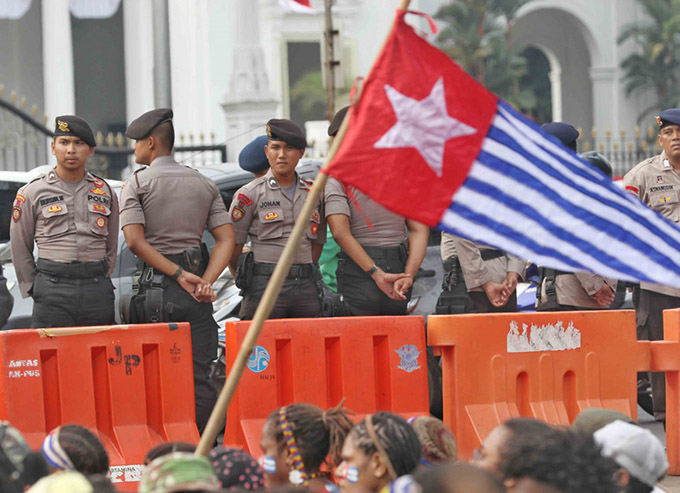
In a rare event, hundreds of emboldened Papuan students took to the streets in Jakarta on Wednesday, marching from the Army headquarters to the State Palace while carrying banned Bintang Kejora (Morning Star) flags, a symbol of the Papuan independence movement.
“The students and the people of Papua have agreed to call for a referendum,” protest coordinator Ambrosius said during the rally.
– Partner –
When they reached the front of the State Palace, protesters burned tyres and danced traditional Papuan dances while chanting.
The crowd dispersed peacefully at around 5:30 pm.
Demands spreading Johnny Fernando of The Jakarta Post reports that the demands by Papuans for a referendum on self-determination have been spreading, amid reports of civilian fatalities in Papua.
In addition to a referendum, the protesters have also called for the governors of Papua and West Papua to facilitate a return of Papuan students back to their provinces.
The students also demanded that the Information and Communications Ministry lift the government-imposed internet blackout that has been in place in the country’s easternmost provinces since last week.
The protests have come amid reports that civilians had been shot by security forces during an antiracism rally in Deiyai regency, Papua. Eyewitnesses said that six protesters were feared dead and at least three others were injured during the incident.
Authorities have confirmed that one soldier died and at least two policemen were injured in the incident, but have yet to confirm civilian casualties.
Pressure on Pacific leaders RNZ Pacific’s Jamie Tahana, who covered the recent Pacific Islands Forum in Tuvalu, reports that Pacific leaders have conceded that, to date, their stance on West Papua has achieved little.
“The last 10 days have seen some of the largest public mobilisations in Indonesia’s easternmost regions for years, with tens of thousands taking to the streets across Papua and West Papua provinces,” he reports.
Dozens have been arrested and there has been rioting in some areas, with the Parliament building in Manokwari razed.
More than 1000 police and military personnel have been deployed to bolster an already significant military presence in the region.
It has long been clear that a person’s sexual preference – whether they prefer male or female sexual partners, or both – is influenced by his or her genetic makeup. The most straightforward evidence for this is that sexual preference is more likely to be the same in identical twin pairs, whose genetic makeup is identical, than in non-identical twin pairs, who share only around 50% of their genetic makeup.
What has been elusive is knowledge of what specific gene, or genes, are involved. A 1993 study found male sexual preference was influenced by a particular gene on the X chromosome, which the media naturally dubbed the “gay gene”. But a later study did not replicate this finding, and subsequent follow-ups yielded mixed results.
The problem was that these studies were too small to draw confident conclusions. There are millions of parts of our DNA that commonly differ between people. That means finding the genes associated with sexual preference is like finding a needle in a haystack.
So an international team of researchers, which I led, set out to tackle this problem. Our results are published today in Science.
Forceful approach
Our approach was simple: brute force. All else being equal, the larger a study, the more confident we can be in the results. So instead of sampling a few hundred or a few thousand individuals – as in previous genetic studies on sexual preference – we used a sample of nearly half a million.
To obtain such a large sample, we used data that had been collected as part of much broader projects. These included DNA data and responses to questionnaires from participants in the UK (as part of the UK Biobank study) and the US (as part of data collected from customers of the commercial ancestry firm 23andMe who consented to answering research questions about sexuality).
The downside of using these huge data sets was that the studies were not specifically designed to find genes for sexual preference, so we were limited by the questions participants happened to have been asked about their sexual behaviour. For both UK Biobank and 23andMe, participants reported whether they had ever had a same-sex sexual partner.
A person’s DNA essentially consists of millions of letters of code, and the letters differ among different individuals. So, to make a complicated story short, the next step was to test at every DNA location whether one letter was more common in participants who reported any same-sex partners than in those who reported only opposite-sex partners.
Not one gene but many
What we found is that there is no one “gay gene” – instead, there are many, many genes that influence a person’s likelihood of having had same-sex partners.
Individually, each of these genes has only a very small effect, but their combined effect is substantial. We could be statistically confident about five specific DNA locations; we could also tell with high confidence that there are hundreds or thousands of other locations that also play a role, although we couldn’t pinpoint where they all are.
Participants in the 23andMe data set answered questions not only about their sexual behaviour, but also attraction and identity. Taking all the genetic effects in combination, we showed that the same genes underlie variation in same-sex sexual behaviour, attraction, and identity.
Some of the genes that we could be sure about gave us clues about the biological underpinnings of sexual preference. One of those genes, as well as being associated with same-sex sexual behaviour in men, was also associated with male pattern balding. It is also near a gene involved in sexual differentiation – the process of masculinisation and feminisation of biological males and females, respectively. Sex hormones are involved in both baldness and sexual differentiation, so our finding implies that sex hormones may be involved in sexual preference too.
Other findings further reinforced the extreme complexity of the biology underlying sexual preference. First, genetic influences only partly overlapped in males and females, suggesting the biology of same-sex behaviour is different in males and females.
Second, we established that, on the genetic level, there is no single continuum from gay to straight. What’s more likely is that there are genes that predispose to same-sex attraction and genes that predispose to opposite-sex attraction, and these vary independently.
Because of the complexity of the genetic influences, we cannot meaningfully predict a person’s sexual preference from their DNA – nor was this our aim.
Possible misinterpretations
Scientific findings are often complex, and it is easy for them to be misrepresented in the media. Sexual preference has a long history of controversy and public misunderstanding, so it is especially important to convey a nuanced and accurate picture of our results.
But people tend to want black-and-white answers about complex issues. Accordingly, people may react to our findings by saying either: “No gay gene? I guess it’s not genetic after all!” or “Many genes? I suppose sexual preference is genetically fixed!” Both of these interpretations are wrong.
Sexual preference is influenced by genes but not determined by them. Even genetically identical twins often have completely different sexual preferences. We have little idea, though, what the non-genetic influences are, and our results say nothing about this.
To answer further questions the public might have about the study, we created a website with answers to frequently asked questions, and an explanatory video. In developing this website we drew on feedback from LGBTQ outreach and advocacy groups, dozens of LGBTQ rights advocates and community members, and workshops arranged by Sense about Science where representatives of the public, activists, and researchers discussed the results of the study.
Source: The Conversation (Au and NZ) – By John Gall, Clinical Associate Professor and Forensic Physician, Department of Paediatrics, University of Melbourne
Sexual assault is a traumatic event that affects people in different ways, both mentally and physically. So doctors and nurses know care immediately after an assault needs to be understanding, compassionate and sensitive.
This is particularly so during forensic examinations where the main purpose is to collect evidence as quickly as possible after, but within 72 hours, of the assault. This evidence may be vital to secure a conviction and may be lost or contaminated if there is a delay.
So, what happens during the forensic medical examination? And if you’ve been sexually assaulted, what can you expect?
People who have been sexually assaulted, be they adult or children, can expect slightly different procedures depending on their state or territory. The general principles, however, remain the same.
To support a conviction, evidence is required to connect the victim to the offender at a particular location. In most cases, specially trained doctors or nurses collect this evidence when you go to a hospital or clinic.
But first, they will ensure you don’t have an injury or condition needing urgent medical care as this needs to be treated beforehand. The forensic practitioner will then explain the process and seek your consent to proceed.
They will ask you for an account of the assault to know which evidence to collect. They will examine you, document injuries and collect the evidence.
What evidence will they collect and how?
The doctor or nurse uses what’s known as a “rape kit” to collect evidence. This kit contains the necessary material, including swabs, forceps, collection bags, labels and seals.
Evidence may consist of your clothing; swabs of your skin; swabs taken from the anus and genital region including the vagina; fingernail scrapings; and samples from any biological or other external material found.
The doctor or nurse may collect blood and urine samples if drugs or toxins are involved, for instance if there’s a chance you could have been drugged or poisoned. They will also take a swab from inside your mouth as a reference sample of your DNA.
DNA contamination is possible, in one instance it has resulted in an innocent man being sent to jail. Several measures are in place to minimise the chance of this happening. An unopened rape kit is certified DNA-free. And doctors and nurses will examine you in a “clean room” if available. These dedicated forensic rooms are carefully cleaned after each examination to reduce DNA contamination.
Once the doctor or nurse collects the evidence from you, they seal it to ensure it is not tampered with and if it is, this can be detected. They then hand over the evidence to a police officer, who delivers it to the forensic laboratory.
The process of transfer of evidence from the forensic practitioner to the laboratory is known as chain of custody. Should this documented chain be broken, the integrity of the evidence comes into question (could someone have tampered with it?) and it may not be admissible in court.
Doctors and nurses support you in other ways
Beyond collecting evidence, the forensic practitioner has other duties. They will ensure you receive any follow-up medical and mental health care.
That might include treating your injuries, giving you medicine (prophylaxis) to prevent sexually transmitted infections and giving you the morning-after-pill to prevent pregnancy.
The doctor or nurse will also ensure you have transport to get to a safe refuge after leaving the hospital or clinic.
Doctors and nurses will co-ordinate your medical care and make sure you have a safe place to go after leaving hospital.www.shutterstock.com
Their final task is to write a medico-legal report detailing what they found when they examined you and what evidence was collected. This report may be required in court and may contain an expert opinion if provided by a forensic doctor.
Depending upon the circumstances and protocols in place, the police may interview you briefly before the forensic examination and then again, but in more detail, afterwards. If you go to hospital late at night, this second interview may be delayed until the next day.
Doctors or nurses who perform sexual assault examinations need specialised knowledge of forensic and legal medicine. So, like other specialised areas of medicine, there are a limited number of facilities available in regional and remote areas to perform these examinations.
However, even if you live in an area without specialised forensic facilities, you can still be examined and evidence collected. In this case, forensic doctors can guide a local doctor or a nurse through the examination by providing advice over the phone. This can occur even without a rape kit by using pathology collection equipment present in all hospitals and clinics.
In these cases, the medico-legal reports don’t contain opinions about the case. They just contain the facts.
No adult or child who has been sexually assaulted should need to travel great distances or wait excessive times to receive appropriate forensic care.
And if this does happen in regional and remote areas, this is usually down to not having enough facilities rather than doctors and nurses refusing to perform the examinations.
Competent evidence collection may be undertaken in any hospital or clinic. This is vital. Without this evidence, convictions may fail and perpetrators may be set free. Although often tedious and at times uncomfortable and tiring, these examinations are essential to ensure justice.
If this article has raised issues for you or someone you know, contact https://www.1800respect.org.au or call 1800 737 732, the National Sexual Assault, Domestic and Family Violence Counselling Service.
Source: The Conversation (Au and NZ) – By Emma F Camp, DECRA & UTS Chancellor’s Research Fellow, Climate Change Cluster, Future Reefs Research Programe, University of Technology Sydney
Climate change is rapidly changing the oceans, driving coral reefs around the world to breaking point. Widely publicised marine heatwaves aren’t the only threat corals are facing: the seas are increasingly acidic, have less oxygen in them, and are gradually warming as a whole.
Each of these problems reduces coral growth and fitness, making it harder for reefs to recover from sudden events such as massive heatwaves.
Our research, published today in Marine Ecology Progress Series, investigates corals on the Great Barrier Reef that are surprisingly good at surviving in increasingly hostile waters. Finding out how these “super corals” can live in extreme environments may help us unlock the secret of coral resilience helping to save our iconic reefs.
Bleached coral in the Seychelles.Emma Camp, Author provided
Coral conservation under climate change
The central cause of these problems is climate change, so the central solution is reducing carbon emissions. Unfortunately, this is not happening rapidly enough to help coral reefs, so scientists also need to explore more immediate conservation options.
To that end, many researchers have been looking at coral that manages to grow in typically hostile conditions, such as around tide pools and intertidal reef zones, trying to unlock how they become so resilient.
These extreme coral habitats are not only natural laboratories, they house a stockpile of extremely tolerant “super corals”.
What exactly is a super coral?
“Super coral” generally refers to species that can survive both extreme conditions and rapid changes in their environment. But “super” is not a very precise term!
Our previous research quantified these traits so other ecologists can more easily use super coral in conservation. There are a few things that need to be established to determine whether a coral is “super”:
What hazard can the coral survive? For example, can it deal with high temperature, or acidic water?
How long did the hazard last? Was it a short heatwave, or a long-term stressor such as ocean warming?
Did the coral survive because of a quality such as genetic adaption, or was it tucked away in a particularly safe spot?
How much area does the coral cover? Is it a small pocket of resilience, or a whole reef?
Is the coral trading off other important qualities to survive in hazardous conditions?
Is the coral super enough to survive the changes coming down the line? Is it likely to cope with future climate change?
Some corals cope surprisingly well in different conditions.Emma Camp, Author provided
Mangroves are surprise reservoirs
We discovered mangrove lagoons near coral reefs can often house corals living in very extreme conditions – specifically, warm, more acidic and low oxygen seawater.
Previously we have reported corals living in extreme mangroves of the Seychelles, Indonesia, New Caledonia – and in our current study living on the Great Barrier Reef. We report diverse coral populations surviving in conditions more hostile than is predicted over the next 100 years of climate change.
Importantly, while some of these sites only have isolated populations, other areas have actively building reef frameworks.
Particularly significant were the two mangrove lagoons on the Great Barrier Reef. They housed 34 coral species, living in more acidic water with very little oxygen. Temperatures varied widely, over 7℃ in the period we studied – and included periods of very high temperatures that are known to cause stress in other corals.
Mangrove lagoons can contain coral that survives in extremely hostile environments, while nearby coral reefs bleach in marine heatwaves.Emma Camp, Author provided
While coral cover was often low and the rate at which they build their skeleton was reduced, there were established coral colonies capable of surviving in these conditions.
The success of these corals reflect their ability to adapt to daily or weekly conditions, and also their flexible relationship with various symbiotic micro-algae that provide the coral with essential resources.
While we are still in the early phases of understanding exactly how these corals can aid conservation, extreme mangrove coral populations hold a reservoir of stress-hardened corals. Notably the geographic size of these mangrove locations are small, but they have a disproportionately high conservation value for reef systems.
However, identification of these pockets of extremely tolerant corals also challenge our understanding of coral resilience, and of the rate and extent with which coral species can resist stress.
Over the past seven years more than 100 research projects at the Co-operative Research Centre for Low Carbon Living, in collaboration with industry across Australia, have pondered a very big question: How do we build future cities that are sustainable, liveable and affordable?
This is exactly what Australians want, as the recent Greater Sydney Commission report, The Pulse of Greater Sydney, revealed. People want cities in which they live close to jobs and have reasonable commuting times. They want access to parks and green space, and relief from ever-increasing urban heat.
The good news is we already know what it will take to deliver on much of this wish list. Since 2012, I have headed the A$100 million Low Carbon Living CRC, which has brought together Australian businesses, industries, communities and many of our brightest researchers to work out how to steer change.
Our Cooling Sydney Strategy, for instance, is the result of years of research into how to combat urban heatwaves. The burden of this heat is unevenly spread across our cities.
While the recent winter sun might feel welcome, the negative impacts of increasingly hot cities on our health, lifestyle and energy use greatly outweigh any winter comfort.
So what are the solutions?
Our researchers have already found how we can offset increasing heat. The strategies includes cool and permeable pavements, water features and evaporative cooling, shade structures, vertical gardens, street trees and other plants – even special heat refuge stations.
Keeping cool inside, without huge power bills, is possible too. During last summer’s heatwave, our pilot 10-star energy-efficient house in Perth remained a comfortable 24°C inside, without air conditioning, when it was over 40°C outside. The exceptional thermal performance of the house was down to its evidence-based design.
Josh Byrne explains how his house keeps temperatures comfortable year-round with low energy use and no net emissions.
This work is just one part of our wider remit. Our UNSW-based centre is on track to deliver independently verified cuts of 10 megatonnes of carbon emissions generated by Australia’s built environment by 2020. By integrating renewable energy systems, smart technologies, low-carbon materials and people-centred design into buildings and urban precincts, we have developed a sustainable, liveable and affordable urban blueprint for Australia. A PwC study (yet to be released) estimated cumulative economic benefits totalling A$684 million by 2027.
To put this another way, we have identified and verified evidence-based pathways to cut emissions equivalent to taking some 2.1 million cars off the road.
Some of the progress to date is not immediately obvious to the casual observer. Take an otherwise unremarkable stretch of road along the back way to Sydney Airport. Recently, a 30-metre section of concrete was installed, which looks more like an ad hoc road repair than an important scientific pilot study.
The geopolymer concrete developed through our research centre is a similarly high-performance product but its binder safely incorporates otherwise noxious industrial waste streams, such as fly ash from coal-fired power stations and slag from blast furnaces. Australia has stockpiled about 400 million cubic tonnes of waste from coal-fired power generation and steelmaking.
In Alexandria, in collaboration with the City of Sydney, we are testing this low-carbon concrete as a road surface that could help clean up industrial waste while slashing emissions. Working with NSW Ports, we’ve also shaped it into low-carbon bollards to form a breakwater to protect the coastline at Port Kembla from extreme weather.
Waste from coal-fired power stations has been used to make low-carbon bollards to protect the coastline at Port Kembla.
We now have the know-how to do better
There are many such success stories, but with 105 CRC Low Carbon Living projects the list is too long to detail. What’s more important, as our funding period comes to an end and Australia loses its only innovation hub committed to lowering carbon in the built environment, is to note how we got to where we are today.
The federal government’s Co-operative Research Centre program fosters co-operation and collaboration on a grand scale. Industries, businesses, government organisations and communities with a stake in solving big, complex challenges partner with researchers from a wide range of academic fields. This structure brings together sectors and people whose paths might otherwise rarely cross.
The cross-fertilisation of ideas, expertise and skills delivers innovative solutions. Research worldwide has consistently shown that collaboration drives innovation, and that innovation drives economic growth. Our experience confirms that as we partnered with organisations such as Multiplex, AECOM, BlueScope Steel, Sydney Water, ISCA, CSIRO and the United Nations Environment Program.
Cities are complex, exciting beasts, but we have the knowledge and expertise to live better, more comfortable urban lives in Australia while reducing demand for energy, water and materials. That is, we have the blueprint for low-carbon urban living. We must now choose to use it.
You know the economy is in trouble when a clever and successful Liberal Party treasurer resorts to doing an Elizabeth Warren impersonation in front of the Business Council of Australia in hopes of boosting investment.
Share buybacks and capital returns are becoming increasingly prominent and the default option for corporates. But is a buyback always the best option for the future growth of the company and therefore the economy?
Let’s set aside the fact that the recent uptick in buybacks was almost entirely due to a $15.4 billion capital return from BHP after selling off what was left of its ill-fated shale oil and gas investments in the United States.
Are buybacks bad?
A bunch of US Democratic presidential hopefuls sure think so. Self-proclaimed “Democratic Socialist” Bernie Sanders joined with the more centrist Senate Minority leader Chuck Schumer to propose legislation that would require companies spending money to buy back their own shares to raise the minimum wage of their workers $15 an hour and provide seven days of paid annual sick leave.
A number of other prominent Democrats have similar ideas, including Warren, and fellow Senators Kamala Harris and Cory Booker.
There is a myth that share buybacks are some kind of “sure thing” benefit to shareholders that is worth dispelling.
The myth goes like this.
A company buys back some number of its outstanding shares from willing sellers. That reduces the number of shares, but future profits haven’t changed. So, earnings per share go up, and so does the stock price.
That’s said to be is a win for the remaining shareholders, but the business won’t invest as much in capital expenditures and workers might miss out on pay rises.
This logic is tantalising, but wrong. What is overlooked in that the business used cash on hand to buy back its stock. So the value of the company to the shareholders who didn’t sell isn’t the same – it’s been reduced by the amount of the buyback.
The key question is whether that cash can be used more productively inside the company than paid out. US firms like Apple and Boeing have recently undertaken significant buybacks and seen their share price rise relative to the broader stock market. That’s the market telling us that the money is better used outside of Apple and Boeing than in.
The correct term for buybacks like that that increase value is “good corporate governance”, not “short-sighted capitalism” or “theft”.
How to get business to invest more
Having said that, Frydenberg was spot on in his analysis of what is needed to boost wages in Australia:
If we are going to create new jobs and enable people to earn more for what they do, we need businesses to increase their capital expenditure and to adopt new technologies and business practices that effectively integrates capital with labour.“
The question is how to do that.
One thing’s for sure, trying to bully companies into doing it isn’t the answer.
Business invest earnings in plants and equipment when the economic environment is attractive.
Bureau of Statistics figures released Thursday made clear that business have a negative view of that environment.
Capital expenditures were down a seasonally-adjusted 0.5% in the June quarter – worse than market expectations – and down 1% over the year.
The problem with an investment allowance
One idea the treasurer is reportedly considering is a so-called ”investment allowance“, much like the investment allowance the Rudd government introduced during the global financial crisis between December 2008 to December 2009.
It would give businesses an immediate tax deduction of, say, 10% on spending on equipment and plant and machinery, in additional to the normal annual deduction for depreciation.
The problem with such allowances is that they don’t provide certainty. The fact that they have been brought in and quickly ended makes it look as if they will be taken away. So businesses use them to bring forward investments rather than make long term plans.
And it is hard to limit them to “additional investment” as Frydenberg said he wanted to on Monday.
By contrast, cutting the company tax rate would signal a permanent shift in policy. It’s politically difficult, which perversely would make it a credible signal about future conditions.
Cutting the rate right away, to 25%, would help move us away from one of the highest corporate tax rates in the developed world, and would boost investment.
The best empirical evidence is that about half the benefit of company tax cuts goes to workers. And as I wrote early last year, that evidence suggests that young, low-skilled, and female workers benefit the most.
We also need major government investments in physical and social infrastructure to deal with flagging demand and create an environment in which companies will find it worthwhile to invest.
In the low-growth, low-inflation, secular stagnation world we are in budget surpluses are neither prudent nor evidence of sound economic management. They are a death sentence for jobs and growth.
The shaky video shows the crescent tail cutting through water as the black marlin swims through the creek, hunting bream and tailor.
As the phone camera pans around, the built structures of the Port Kembla steelworks in south eastern Australia come into view, heavy trucks rolling over a concrete bridge, smokestacks and factories crowding the landscape. The roofs, pipes and conveyors are rust-brown, soot and grime coat the surfaces, sulphuric smells drift across the space.
We know this because a steelworker happened that day to see this marlin in the steelworks and filmed it. I found his footage recently when searching Google for information on local creeks. It is highly likely that this sighting was not a one-off event, that large predatory fish like the marlin now periodically hunt in the steelworks unseen by human eyes, or if seen, unreported. The processes of rewilding leak across time and across tenures, the push of natural forces pulsing more strongly as the industrial force of the steelworks declines.
The black marlin is an apex predator of oceanic environments, a wide-ranging swimmer that can grow to 800 kilograms. Marlins have a long, pointed, spear-like bill and a rigid dorsal fin that makes a crest along their back. Regarded as the premier game fish amongst anglers, they epitomise the oceanic wild: fast, powerful and beautiful.
A close relative of the black marlin is the huge iconic fish at the centre of Hemingway’s The Old Man and the Sea. And the black marlin, like all animals, is part of a cosmos beyond and including humans, as American nature writer Henry Beston has argued:
In a world older and more complete than ours, they move finished and complete, gifted with the extension of senses we have lost or never attained, living by voices we shall never hear.
A symbol of new and ancient ways
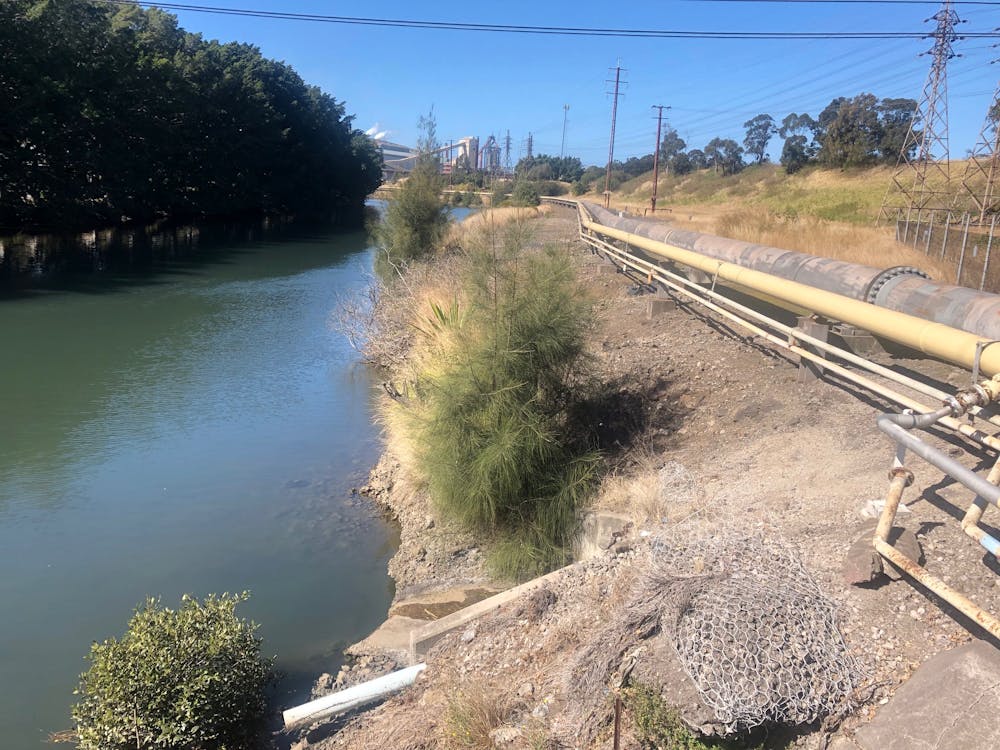
The most polluted creek in the Illawarra region of New South Wales, Allens Creek flows through the steelworks, its banks lined with concrete and weeds, its channel littered with plastic, broken glass and rusting steel. Its waters and banks are a complex amalgam of industry, abandonment, toxicity, flourishing and decline.
Allens Creek: the most polluted creek in the Illawarra region.Michael Adams
The black marlin was not lost, as some fishers mused. It was in the steelworks with intent and agency, likely following a faint heat trace leaked from the warmed waste waters that support unique marine ecosystems in industrial estuaries.
These margins and ignored edges of industrial Illawarra — marine, freshwater and terrestrial — are home or refuge to a range of human and non-human presences, providing unique opportunities unavailable in the planned and managed land and seascapes surrounding them.
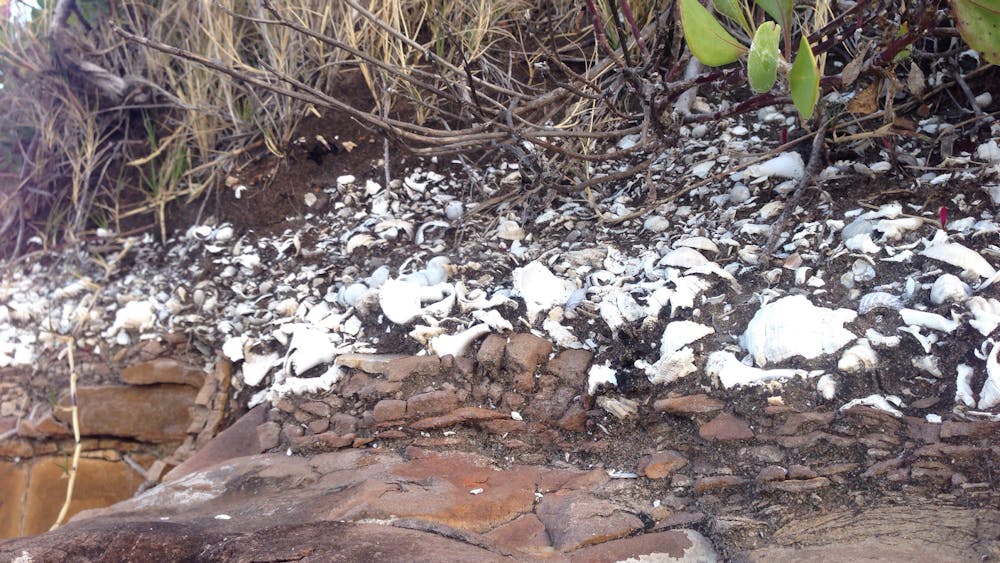
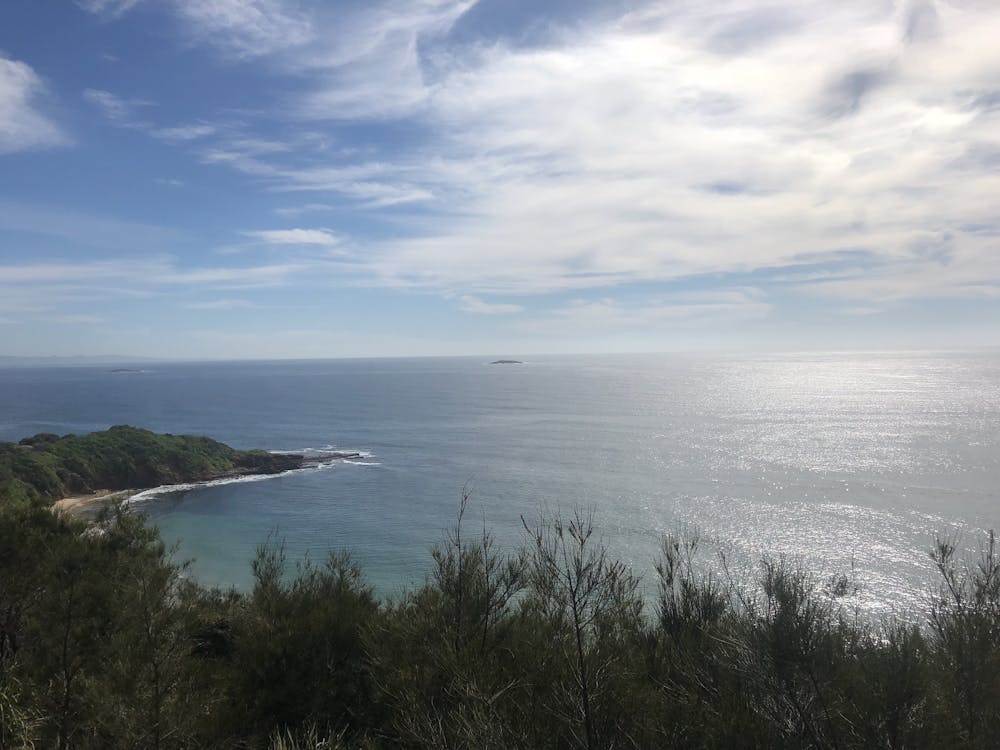
Five kilometres from and in sight of the towering flare stacks of the steelworks, a coastal rockshelf extends north from a local beach. This forgotten corner hosts an Aboriginal shell midden maybe 8,000 years old. Patrick Nunn’s remarkable book The Edge of Memory documents how, at the end of the last Ice Age in south east Australia, sea levels were rising rapidly, moving as much as 20 metres horizontally every year.
Yuin saltwater Aboriginal people observed and responded to these changes, watching their campsites and hunting grounds disappear underwater, seeing their fishing areas deepen and change. The descendants of those people continue to harvest from those waters today, still here because of their skill in responding to immense environmental and social change.
Shell material in the midden near the steelworks.Michael Adams
The presence and agency of the black marlin in the middle of the steelworks brings into focus debates about the place of nature in the 21st century. The giant ocean fish swims into the heart of industrial Port Kembla because the “dirty ecologies” of this human-transformed environment provide resources and shelter.
What if we take its presence, a few kilometres from the ancient, living midden, as a symbol of both new and ancient ways to learn? What does the water and its denizens have to teach us? How do we learn from these places on the margins?
Dirtying ecology
In 2012, the extraordinary film Beasts of the Southern Wild was released. Nominated for four Academy Awards, it is simultaneously speculative and deeply realistic.
The film’s imagined Louisiana community of the Bathtub, lost in the interstices and floodzones of the modern American juggernaut, reflecting class and racial neglect, endures a Katrina-esque storm.
But the Bathtub, like Allens Creek and Port Kembla, is not just an industrial wasteland: it is also full of life and energy. Both humans and non-humans living in these environments thrive or struggle with repurposed elements from previous and neighbouring ecologies. The toxic dirt and debris of the steelworks waterway are the hidden byproducts of the glistening steel towers in modern cities; the marginalised workers fishing in these waters are increasingly discarded by the processes of capital and automation.
Commenting on Beasts of the Southern Wild, the late feminist literary scholar Patricia Yaeger argued:
The film’s rags and wastelands — its killing fields — become powerful emblems of the Southland’s (and our nation’s) commitment to toxic inequality … The citizens of the Bathtub practice a dirty ecology, making do with what they can salvage from other waste-making classes.
The redundant maintenance workers of Port Kembla — which in 30 years has lost 17,000 jobs in the steelworks — have similarly taken their skills into an invisible underground economy of community repair and maintenance. Geographer Chantel Carr says, “They look at the world with the viewpoint that everything can be used for something else”. Her work and that of others suggest we need to “invert vulnerability”, to find there instead capacity, endurance and resolve.
In both popular and scientific discourse there is an increasingly insistent environmental story of damage, extinction and decline. Simultaneously, environmentalists and conservation scientists are arguing for increased use of the standard Western tools of conservation: protected areas or other conservation zones, threatened species recovery plans, and feral species management.
Increasingly, more and more species have less habitat available to them, and more native species approach extinction. At the same time, newly moved species are flourishing in environments all over the world.
The rockshelf near the midden.Michael Adams.
Western (modern) conservation attempts to reverse both processes: we kill more feral animals and we attempt to keep alive more declining species by declaring more protected areas and “recovering” those species. So there are two great trajectories of living and dying, and modern humans attempt to reverse them both, while actually also being the agents driving those trajectories.
Political ecologist Audra Mitchell describes this as a “managing life and death processes” that leaves the species which survive living “controlled existences in parks, reservations, zoos or petri dishes.”
Yaeger, arguing the urgent need for a new vision of our relationship with the natural world, asserts “we must dirty ecology, the science of whole environments, with myths, fictions, half-truths, dirty imagery”. Bringing together the mesh of what these differing ideas offer might help us.
Unguarded, unmanaged spaces
I want to argue then that all environments are still whole environments, that the whole is constantly reassembled, reorganised, from the available constituent parts and processes. And that the planet has been through these processes before, in fact, relatively recently.
In the 1960s, Buckminster Fuller argued “nature never ‘fails’.” But more relevantly for us in Australia and more broadly, as Indigenous Australian Waanyi writer Alexis Wright has written:
I am talking about time immemorial experience – how to grow roots like that. Not like scrap of paper made yesterday – a second ago, flimsy, impermanence, that type of thing saying you got the title over blackfella country, you are on top. That’s nothing. You are not owner. Scrap of paper only painful in the heart, only cover the surface with poison. It can’t get inside proper deep law in my head …
The spaces of Allens Creek — marine, aquatic and terrestrial — are constantly rewilding themselves. Country reasserts itself everywhere. These are the unguarded, unmanaged spaces where lives can flourish and decline unobserved by the auditing eyes of power. Where futures can be surprising, paradoxical and spontaneous. The black marlin can travel from the open ocean into the steelworks to find new resources for its life. The living midden archives millenia of data about climate change, extinctions, the presence of new species, the sustainability of ancient harvests, and human and non-human responses.
Port Kembla steelworks, outer harbour.Michael Adams
One of the local fishers commenting on the marlin video said, “yeah, but I wouldn’t want to eat it.” He refers to presumed levels of toxicity stored in the fish’s body from feeding in highly polluted environments.
Bioaccumulation of toxins is a well known issue with large predatory fish like marlin. But because industrially-produced heavy metals have been present in mining and manufacturing regions now for centuries, some species are evolving in response to this presence. A recent study in the Australian mining town of Broken Hill showed that an isolated population of introduced house sparrows there had evolved to avoid lead poisoning – they had developed a genetic adaptation to avoid the uptake of lead in their bodies.
While we don’t know about this in marine species, recent studies indicate surprising outcomes. Port Kembla in the past had internationally high levels of metal contamination, leading to scientific prediction that such places would be low in biodiversity and have simplified and impoverished ecosystems.
However a recent detailed survey of south east Australian estuaries, including Port Kembla, by a team of marine researchers concluded, “on the contrary, communities in modified estuaries had greater species cover and were comparable in diversity to those in unmodified estuaries”.
Still, like the midden, Allens Creek is also an archive of industrial debris. Heavy metals are often stored in bottom sediment, retaining their toxicity, unproblematic until they are disturbed.
Accepting an open future
Thinking about the effects of pollutants on our bodies and the bodies of those we eat can remind us of our animality. Our shared material bodies — humans, the black marlin, the ocean water itself — are composed of the same elements: each is a rearrangement of the other, and each will be rearranged again as they die and return to the matrix from which the next lives will grow.
A dead pelican on the beach near the Aboriginal midden.Michael Adams
The evolutionary processes that created the minds and bodies of Yuin Aboriginal people, the British colonisers, and the black marlin, are the same. Australian environmental philosopher Val Plumwood’s famous crocodile attack story, Being Prey, reminds us we can reenter the food chain in a different place. We can be both predators and prey: not just eaters of species we judge appropriate and killers of species we judge not appropriate.
Part of this opportunity for learning is to respect the knowledge of those vernacular in-between worlds. Another part is to trust our ancient ways of understanding that lie beneath the more recent cognitive processes and cultural conditioning.
Our Western preoccupation with planning, with certainty, is a recent and particular phenomenon. In The Great Derangement, Indian writer Amitav Ghosh argues that this is an outcome of colonialism, with the industrial and scientific revolutions paralleling the expansion of European nations, who initiated the practices of capitalist extractive practices in their colonies.
Ghosh argues for acknowledging the limits of human cognition in responding to unknown futures. Climate researcher Mike Hulme also reflects this position: “We know how the world works, but we no longer know what it means.”
But note that this is a particular “we”: Western, modern, maybe still largely white. That is me also, a beneficiary of the ongoing colonial and capitalist processes that are the cause of our planetary predicament. Which is why I think people like me need to commit to examining the insights from people, and other beings, not like me. We can take a lesson from many Indigenous cultures and understand that everything and everyone can be a teacher.
The black marlin, hatched in waters hundreds of kilometres away, could not predict the food resources in the steelworks. The saltwater people who made the midden watched the waters rise with no knowledge of if or when they would stop, just as they watched the tide of colonising invaders land inexorably on their shores.
‘Radical vulnerability’
Embracing humility, listening, slowness, might transform our practices of care, of life, through making space for others, helping others endure, moving our dominant human selves to the edges instead of the centre. Becoming less secure, more vulnerable. Finding attention, rather than fear. Geographer Natalie Osborne at Griffith University, recently tweeted:
I’m here for radical vulnerability, for attentiveness and care, slow, hard, messy, high stakes. We and our entanglements don’t always bounce back. Sometimes when we’re dropped, we break.
In Learning to Die in the Anthropocene, Iraq invasion veteran Roy Scranton argues that the challenges the Anthropocene pose are those with which philosophers have long engaged. “How do we make meaningful choices in the shadow of our inevitable end?”
He answers: “We can learn to see each day as the death of what came before, freeing ourselves to deal with what the present offers.”
In 2012, Aboriginal artist Jonathon Jones created an installation on Cockatoo Island in Sydney Harbour subtitled “oysters and teacups”.
untitled (oysters and tea cups), Jonathan Jones, installation at the 2012 Biennale of Sydney.Biennale of Sydney
The installation is an unruly cascade of hundreds of old teacups and oyster shells spilling out of an old building. The two material objects represent meetings: ceremonial and domestic gatherings of both Aboriginal people in saltwater locations and the colonisers, and the overlaps, connections and contradictions between them continuing into the present.
What Jones calls the ongoing “reign of terror” of colonisation, including its contemporary manifestations, was and is met with intelligence, strength and flexibility by those who were colonised.
Nets of connectedness
There are multiple millenia of experience with abundance and precarity on all Australian lands and waters, from both humans and non-humans. Let’s take that as background for thinking of what we might be able to learn from the black marlin and the 8,000 year-old living midden. These are not clear and concrete answers or solutions. They are indeterminate paths because we inevitably need a tentative itinerary to an obscure destination.
First, we need to recognise our inescapable precarity and indeterminacy, and begin to learn to embrace approaches that support life but recognise its ephemerality. I think we routinely forget our precarious animality, preferring instead our “resilient” humanity. We live and we die. And paradoxically, embracing this knowledge can let us visualise a future that is open and undetermined.
Morning near the midden.Michael Adams
Disengaging from our obsessively consumer-driven lifestyles might help us find new pathways. Steelworkers made redundant by changing demands and technologies, like other precarious and marginalised people, have no choice but to do this.
Second, we need to invert the human command-and-control approaches to present an impending planetary unravelling. Following from Native American scholars Soren Larsen and Jay Johnson’s wonderful book Being Together in Place, humans should properly be understood as the “junior sibling” in genealogical relationship to the “first-born” status of place.
This is true both empirically and within Indigenous ontological framing: place, oceanic and terrestrial, was first; humans entered very much later; and settler-colonists even later still.
Understanding this junior position requires humility and vulnerability. We can let place call us from that position. And consider the networks of relationships within which we live and die, both human and more-than-human.
And third, following from that, we live in a sentient world. We are surrounded by intentional ecologies. But the trajectories of our dominant belief systems, both religious and secular, mean that mostly we struggle to accept that we are not the only beings with a subject position. There are empirical ways to explore this, but I think it is important to go beyond the merely rational in our understanding. We need the facts, the empirical work, the politics – but they are not enough.
We need the creativity and mystery of the margins. We need to engage with the deep mystery and fact of our interconnectedness – what is effectively a sacred encounter.
We are biologically related to the possibly toxic body of the black marlin in Allens Creek as well as the shells and bones in the midden, and their archived record of millenia of extinction and proliferation, decline and abundance.
I think we need an embodied relationship with mystery, a way to viscerally as well as cognitively believe in the nets of connectedness that entangle us in the world.
A version of this essay was presented at the Wollongong Art Gallery public lecture series Entanglements: Humans, Animals, Environments on August 29, 2019.
It was a revealing line. Yang Hengjun, the Australian citizen arrested on suspicion of espionage, says an investigation officer from the Chinese Ministry of State Security told him that “Australia was dependent on China for its trade and economy, and Canberra wouldn’t help me, let alone rescue me”.
It was, one supposes, part of an attempt to break the prisoner. And of course it was completely untrue – in fact the Australian government is trying very hard and very visibly to secure Yang’s release.
But in a broader sense the official’s reference to the economic importance of China to Australia goes straight to the dilemma and the potential cost involved in what the Australian government is currently doing – and must do – in dealing with China.
The debate about China’s behaviour and influence has moved on even from earlier this month, when Trade Minister Simon Birmingham told backbenchers to keep in mind the “national interest” in what they said. That followed the blunt warning by Andrew Hastie, chair of the parliamentary committee on intelligence and security, that Australia needed to pay more attention to the threat posed by China’s rise.
Australia at the moment seems very explicit in its responses to concerns about China.
The willingness by the government to act is not new – in fact, the Turnbull government’s foreign interference legislation of 2018 may come to be seen as a turning point. But now Australia appears increasingly prepared to put aside when necessary the imperatives of diplomacy. Nor is it as reluctant as before to admit particular measures relate to China.
It has been particularly strong in its language on behalf of Yang. The choice in such a situation can be complicated – between being forthright publicly or deciding a low key approach could be more effective, to say nothing of better for keeping relations smooth. In this instance the government has loudly called out the Chinese authorities’ actions. It is yet to be seen how things will end.
On another front, the government this week announced a major move in its efforts to deal with Chinese influence in Australian universities. A University Foreign Interference Taskforce will have representatives from the university sector, government security agencies and the education department.
The group will target Chinese cyber security penetration, and seek to protect research and intellectual property.
This prompts the question: how serious is the problem of Chinese interference in the university sector?
There is a spectrum of issues, from the open and arguable, through to the clandestine and illegal, such as the cyber attacks on the Australian National University.
With Chinese students 38% (153,000) of foreign students in higher education, Australian universities potentially have a high revenue vulnerability, if China reduced the flow.
Clive Hamilton, professor of public ethics at Charles Sturt University and an expert on Chinese influence in Australia, was highly critical in a lecture on Wednesday of the university sector’s vice-chancellors.
“The corporatisation of the tertiary sector and the extraordinary dependence on revenue flows from China, coupled with a sustained and highly effective influence campaign directed at senior university executives, has meant that many have lost sight of the meaning of academic freedom,” Hamilton said.
Another issue, which has come into plain sight with the recent clashes particularly at the University of Queensland over events in Hong Kong, is the influence Chinese authorities exercise over many students here.
Then there is the murky area of collaborations with researchers and institutions.
A paper put out by the Australian Strategic Policy Institute late last year authored by Alex Joske, one of ASPI’s analysts, highlighted that “China’s People’s Liberation Army (PLA) is expanding its research collaboration with universities outside of China.
“This collaboration is highest in the Five Eyes countries, Germany and Singapore […]. Australia has been engaged in the highest level of PLA collaboration among Five Eyes countries per capita, at six times the level in the US.”
In the education field, it is not just the universities where China’s influence has become a growing worry. This month the NSW government announced it would end the Confucius Classroom program that has been running in 13 schools. The program, dealing with language and culture, has been funded by the Chinese government.
A review concluded: “The primary concern is the fact that the NSW Department of Education is the only government department in the world that hosts a Confucius Institute, and that this arrangement places Chinese government appointees inside a NSW government department.”
On a totally different front, hearings at the NSW Independent Commission Against Corruption this week produced a new episode in the long running saga of the activities of Chinese property developer Huang Xiangmo.
ICAC heard evidence that Huang allegedly gave $100,000 in cash to NSW Labor in 2015, despite donations from property developers being illegal. The ALP covered up the donation. As a result of the evidence, the general secretary of the NSW party Kaila Murnain has been suspended.
Leaving aside alleged egregious illegalities, the wider point is that large donations (and Huang donated to both sides) are made in the hope of buying political access and influence.
Huang, who late last year was stripped of his permanent residency and banned from re-entering Australia on ASIO advice because of concern over his links with the Chinese Communist Party, has achieved the bizarre distinction of having contributed to the political downfall of two senior Labor figures.
Former senator Sam Dastyari’s dealings with Huang were central to events leading Dastyari quitting parliament.
This was influence of a sort the billionaire businessman hadn’t quite intended.
Anyone identifying the challenges Scott Morrison will face this term would have to put managing the China relationship high on the list. It’s a complicated juggle, trying to keep bilateral relations on course while protecting Australia’s sovereignty, as well as advancing its strategic interests through policies such as the Pacific step up.
Although it’s sometimes interpreted as responding to US pressure, basically it is Australia’s own national interest currently driving its toughening position.
Much as we might wish the Australia-China relations could be kept on an even keel, and crucial as that might be for Australia’s economic well being, the indications suggest the ups and downs will continue and may get rougher.
Today, the people of Timor-Leste will commemorate the 20th anniversary of the popular consultation, through which the nation restored the independence it had prematurely declared in 1975.
An election was held, a new president elected, new legislative members put in place and a new government sworn in as the Democratic Republic of East Timor once again came into existence following the historic referendum of 1999.
Those ceremonial sequences marked an end to colonial rule (by Portugal for 450 years and Indonesia for 24 years) over East Timor.
A common historic feature of postcolonial countries in Africa, Asia and Latin America is that independence does not necessarily mean that a former colony is free from its former master. Timor-Leste is still heavily dependent on Indonesia in many ways, including trade.
However, an independent Timor-Leste has also become “a heaven” for Indonesian construction and banking industry players. State-owned lenders Bank Rakyat Indonesia and Bank Mandiri are operating in Timor-Leste.
– Partner –
In his courtesy visit to Jakarta in 2015, then-prime minister Rui Maria Araujo told Indonesian media that Indonesia had “contributed positively to East Timor’s economic development,” citing 400 private Indonesian companies that were present in the small country.
The looming large of the Indonesian corporations, however, has sparked allegations of collusive practices between Indonesian businessmen and local compradors, who include veterans of the war, government officials as well as members of Parliament.
Fuelled by incentives “Flight tickets to Bali, luxury hotels and deals behind the bar,” a researcher named the incentives fueling the alleged hanky-panky.
Ahead of the celebration, East Timor independence leader Xanana Gusmao gave the country another shock as he decided to name a new bridge at the heart of Dili after Indonesia’s third president BJ Habibie.
The decision aroused criticism mainly from civil society organiSations and survivors of Indonesia’s colonial rule. Worse, residents were evicted to pave the way for the bridge’s construction.
Just recently, a member of Parliament from the Alliance for Change and Progress (AMP) said the decision to name the bridge after the former Indonesian leader was to honour his contribution to East Timor’s independence.
Under Habibie, Indonesia signed an agreement with Portugal on May 5, 1999, that led to the popular consultation.
By putting Habibie center stage of the celebration, while ignoring the people’s resistance to colonial domination, the Timor-Leste freedom fighters and government are attempting to suck the national history into a black hole.
Jose Ramos-Horta, the diplomat, Nobel Peace Prize laureate and former president of Timor-Leste, described Habibie as Indonesia’s Charles de Gaulle for announcing the political options for East Timor in 1999.
Two sides of coin However, like two sides of the same coin, De Gaulle has become le mal aimé (the unloved one). Speaking in front of a large crowd in Algiers on June 4, 1958, a few days after his return to power, the French president exclaimed the brief phrase “Je vous ai compris!” (I have understood you).
Like De Gaulle, Habibie became the most unpopular figure in Indonesia after his historic announcement.
In an interview, Habibie vehemently said he had come under pressure by Australian Prime Minister John Howard to release the political options on East Timor’s future.
Twenty years have passed. Infrastructure development has moved fast as Timor-Leste tries to catch up with Southeast Asian neighbors and become a middle-income country by 2030.
Nevertheless, the momentum is not really on Timor-Leste’s side, as it still struggles to secure admission to ASEAN.
Unfortunately, in terms of human resources, about 46 percent of its children aged under 5 years suffer from chronic malnutrition – considered one of the highest rates in the world, and about 70 percent of the country’s children are illiterate.
Fresh graduates enter the labour market in rapidly increasing numbers every year, only to find government institutions and the public sector unable to absorb their talent. Productive industries like agriculture and tourism seem promising, but the government has allocated a large share of its budget to other sectors.
Urbanisation tensions Given that most of the government institutions are located in Dili, urbanisation in the capital city is difficult to check and has exacerbated social, political and economic tensions.
Basic infrastructure, such as highways and airports, built along the southern coast has failed to lure foreign investment. Most foreign investors only eye the “ambitious” plan to develop an oil processing plant, which is being negotiated with an Australian company.
One way or another, Timor-Leste remains unable to unchain itself from the colonial grip and its proxies. The country has a long history of colonialism, fought it relentlessly and won, but unfortunately has to encounter new forms of colonialism in the political and economic realms.
Apart from the historic moment, what achievement should the people of East Timor celebrate after 20 years of independence?
Ivo Mateus Goncalvesis a historian and research student at the Department of Political Affairs at the Australian National University, Canberra. This article was first published in The Jakarta Post.
The number of Māori and Pasifika students attending New Zealand universities has been increasing steadily, with 75,625 Māori and 32,465 Pasifika enrolled in 2018.
But for many of these students, they will not be taught by Māori or Pasifika throughout their degree. And depending on their discipline, they may not get to work with a Māori or Pasifika advisor during their postgraduate years either. This not only affects Māori and Pasifika but also reinforces to all of New Zealand that “experts” are not Māori and Pasifika but most likely Pākehā (New Zealanders of European descent).
In our research published this week, Why isn’t my professor Māori? and Why isn’t my Professor Pasifika?, we analysed the number of Māori and Pasifika faculty at New Zealand’s eight universities – and highlight that Māori and Pasifika scholars are severely under-represented, making up only 5% and 1.7% of the academic workforce, respectively. This is in contrast to 15% identifying as Māori and 7.4% as Pasifika in the 2013 census.
Universities are charged with being the conscience of society, creating new technologies, informing policy development and providing ways for us to understand the world we exist in. If all of these roles are carried out with little to no Māori and Pasifika input, then Pākehā views will go on to influence the wider New Zealand society.
Of further concern is that, despite the universties’ expressed values of diversity and equity, these percentages have remained unchanged for six years.
Certain universities are doing better than others. From 2012 to 2017, 9-10% of the University of Waikato’s academic staff were Māori, whereas only 2.5-5% of Lincoln University’s staff were Māori.
But many of the Māori and Pasifika academics employed by New Zealand universities are in short-term contracts. Very few are in senior leadership roles.
As you increase the level of academic seniority from tutorial assistant to professor, the numbers of Māori get fewer. Most Māori academics are employed as lecturers or tutors and senior lecturers. Very few Māori get promoted to the highest academic level of professor.
In 2012, about 25 of a total of 975 professors were Māori. This only increased to 35 out of 1045 in 2017. It is important for Māori and Pasifika students to see themselves represented by the people who teach them. Instead, Pākehā people are training the next generation of Māori and Pasifika doctors, teachers and lawyers, who would benefit by being taught by their own people.
The benefits would ripple through our communities and society. We argue, that the impact of having more Māori and Pasifika academics would result in a positive transformation for our own communities.
Pasifika academics are also centred in Auckland, which is to be expected given demographic trends. This puts pressure on Auckland-based universities to lead the way in recruitment, retention and promotion of Pasifika academics. A change in one of these universities can impact numbers nationally, as was the case for the University of Auckland which lost 40 Pasifika academics between 2015 and 2016. This represented a loss of 20% across New Zealand.
Most Pasifika academics are in temporary contracts (55 Pasifika out of 3005 academic staff and tutorial assistants across the country), with very few in professor and dean positions (five Pasifika out of 1045 professors and deans across the country). The same can be said for Māori. This is unsurprising and aligns with global experiences of diverse people engaging in work that is not valued by the university but is valued by their communities.
This can include attending a gathering to talk about community aspirations and how a Pasifika academic can leverage their position or social capital to help the community reach their goals. This may not be valued by the university unless it comes with research funding.
What to do about it
Not all of this is bad news. Some universities and organisations are beginning to address this. AUT’s Māori and Pasifika early-career academic programme shows promise. Cohort hiring ensures that new Māori and Pasifika academics have a collective which provides them with mentors to guide them through the promotions process.
The work of Ngā Pae o te Māramatanga, New Zealand’s Māori centre of research excellence, has significantly increased the number of Māori graduating with PhDs. But although Māori and Pasifika in the academy are working together to recruit and retain more Maori and Pasifika academics, this should not be their burden alone.
Significant structural change is needed in the recruitment, retention and promotion of Māori and Pasifika academics. Universities in New Zealand have made commitments to Māori and Pasifika communities and need to begin to address the inequities outlined in our research.
The data on Māori and Pasifika faculty show that in spite of work to recruit more Māori and Pasifika students, universities are falling short on delivering more Māori and Pasifika academics in leadership positions. This means we either need government intervention similar to those made for Māori and Pasifika students where institutions are resourced to provide better learning environments, or universities need to consider how their current structures continue to exclude Māori and Pasifika.
Traditionally, New Zealand has led the way in decolonising universities, with many of our Maori and Pasifika academics being sought-after international speakers. We should continue to lead in ensuring that our universities embrace all learners, esteem all modes of knowledge and serve all communities.
This may mean that instead of universities relying on international models of excellence, we design our own that reflect our unique place in the world.
Federal Attorney-General Christian Porter has released a draft package of religious freedom bills, including the much-anticipated Religious Discrimination Bill.
These bills respond to earlier inquiries into the protection of religious freedom under Australian law. They implement some of the recommendations of the Expert Panel on Religious Freedom (known as the Ruddock review).
The government has committed to considering any submissions received by October 2 2019 in its development of these bills. It plans to introduce final draft legislation to parliament later in October.
The government reportedly wishes to pass this legislation before Christmas.
What do these bills seek to achieve?
The Religious Discrimination Bill forms the crux of the legislative package.
This bill does not create a positive right to freedom of religion – often termed a “sword”.
Instead, it aims to provide a “shield” by prohibiting discrimination on the basis of religious belief or activity in the following areas of public life:
work
education
access to premises
goods, services and facilities
accommodation
land
sport and clubs.
The Australian Human Rights Commission would be empowered to inquire into and conciliate complaints of unlawful discrimination on the grounds of religious belief or activity.
Porter represents these proposed reforms as complementary and similar to existing federal laws that prohibit discrimination on the grounds of race, sex, disability and age.
In one sense, this is true. The bill prohibits discrimination largely in the same terms as existing discrimination laws, but adds the “religious belief or activity” ground.
This means that, for example, it would be unlawful to terminate a person’s employment on the basis of them being Catholic or Muslim or Jewish.
Such protection already exists in all state and territory laws except in South Australia and New South Wales.
“Religious belief or activity” is also defined symmetrically in the bill. It includes holding a religious belief or engaging in religious activity, as well as not holding a religious belief or not engaging in religious activity.
This is important because it provides equal protection to people of a religious faith and those of no religious faith. Your boss would also be prohibited from firing you on the basis that you are not religious.
What are the key differences?
The differences from other federal discrimination laws are mostly contained in section 8 of the bill.
This section prohibits indirect discrimination, which is standard practice in discrimination law. This is where the imposition of a condition or requirement disadvantages a certain group of people and is not reasonable.
For example, an employer could impose a rule that all employees must attend work from 9-11am on Sundays, because the employer happens to find this a productive time to work. This would disadvantage those who may wish to practise their faith at that time, and appears to have no reasonable basis.
However, the section goes on to focus on employer conduct rules, which are not mentioned in any other federal discrimination laws.
An employer conduct rule under this section is not reasonable if it would restrict or prevent an employee “from making a statement of belief at a time other than when the employee is performing work”, unless the statement is malicious or would harass, vilify or incite hatred against a person or group.
A code of conduct prohibiting employees from making offensive comments on social media outside of work could therefore be unlawful discrimination.
This provision only applies, though, to employers with annual revenue of at least A$50 million.
Second, there is a provision in section 8(5) allowing conscientious objections by health practitioners.
This means that where a health practitioner is required by their employer to provide a service to which they object on religious grounds, this requirement will likely be unreasonable – and therefore discriminatory.
This could allow individual doctors to refuse to perform a wide range of services on religious grounds, including abortion, assisted suicide and procedures for transgender patients. The Trump administration introduced a similar rule earlier this year.
Third, despite Porter previously stating that the Religious Discrimination Bill was not intended to override state laws, it does just that.
Section 17(1) of the Tasmanian Anti-Discrimination Act prohibits people from offending, humiliating, intimidating, insulting or ridiculing others on the basis of attributes such as disability, sex, sexual orientation and gender identity.
Section 41 of the Religious Discrimination Bill states that “a statement of belief does not contravene section 17(1)” of the Tasmanian Act unless it is malicious or is likely to harass, vilify or incite hatred or violence against a person or group of persons.
It also provides that a statement of belief does not constitute discrimination for the purposes of any discrimination law in Australia – whether at federal, state or territory level.
This is rare in discrimination law, where federal and state systems are usually seen to be separate and concurrent.
It would mean statements based on religious belief that offend, humiliate, insult or intimidate women, LGBTIQ+ people or persons with disabilities would be lawful, regardless of what state laws provide.
The only way such statements would be unlawful under any discrimination law is if they met the higher threshold of harassment, vilification or incitement of hatred.
Short consultation limits capacity for scrutiny
Prior to the bills’ release, the shadow attorney-general, Mark Dreyfus, accused the government of seeking to rush the bill through parliament without sufficient consultation. He said:
The Liberals have been arguing about religious discrimination for more than two years but appear to want to give the rest of the country just weeks to debate it.
The attorney-general notes that the proposed reforms reflect an election commitment.
Yet there will be just four weeks of community consultation, and just 16 parliamentary sitting days remain until the end of the year. This provides a short window in which to consider complex changes to Australian law.
In contrast, the Australian Law Reform Commission has been given 12 months to consider the question of religious organisations’ exemptions from discrimination law – which form just a handful of provisions. It won’t report until April 2020, including on matters that cut across some of the proposals in these bills.
One issue with the brief consultation period is that it limits scrutiny of how today’s proposals vary from the recommendations of the Ruddock review.
For example, the Religious Discrimination Bill establishes a position of Freedom of Religion Commissioner in the Australian Human Rights Commission. The commissioner would be responsible for strengthening community understanding of religious freedom, advocating for religious freedom issues, and promoting compliance with the anticipated Religious Freedom Act.
Yet the Ruddock report recommended that protection of religious freedom should occur within the existing commissioner model, not by spending an estimated A$1.25-1.5 million a year on a new commissioner.
Considering the unique aspects of the proposed Religious Discrimination Bill, a longer consultation period should be provided to ensure appropriate evaluation.
But, however long the consultation process, any drastic departures from existing discrimination law models should be carefully scrutinised to assess why and how religion should be given any special status.
Source: The Conversation (Au and NZ) – By Jessica Holloway, ARC DECRA Research Fellow, Research for Educational Impact (REDI), Deakin University
This year’s NAPLAN results left many questioning the value of the test, as once again there has been little change in numeracy and literacy scores across most age groups.
But Victorian Education Minister James Merlino has proposed a radical solution to make NAPLAN more relevant.
He suggests linking Year 9 NAPLAN results to a performance certificate that could be used by future employers. His idea is that higher stakes will mean higher effort from students.
A dangerous idea
This policy proposal is misguided and dangerous. Not only has the minister offered no evidence to support his proposal, but most research shows that solutions involving raised stakes are built on false premises.
First, NAPLAN was not designed to predict potential. It was designed to take the temperature of the Australian education system and for these data to drive improvements in student outcomes. Using the results in any other way is neither statistically sound nor ethical.
The test is simply a snapshot of a student’s literacy and numeracy skills at a given time. It is meant to be interpreted alongside multiple measures of performance to get a full picture of a student’s academic standing.
Under no circumstances do NAPLAN scores alone indicate a student’s full potential. Suggesting would-be employers could use scores in this way is entirely inappropriate.
This is made worse by assuming a Year 9’s performance on a single test at age 14 or 15 should follow them into adulthood. The potential negative consequences, such as reduced job opportunity, anxiety and the permanency of one bad test, far outweigh any possible benefit.
Another concern is the unintended consequences likely to come from attaching higher stakes to NAPLAN. We have decades of research, both here and internationally, that show increasing the stakes for standardised tests does not improve student performance.
In fact, higher stakes are much more likely to produce perverse effects, as students and teachers scramble to avoid possible impacts of missing the mark. These can range from teaching to the test and narrowing curricula to increased anxiety about the consequences of poor performance.
Pressure on students
The extreme measures Merlino proposed should be avoided at all cost. They do little to improve student and teacher performance, and also risk imposing additional, and entirely unproductive, pressures on student learning and teacher practice.
The education students receive at school is critical to laying the foundation for their future success and happiness. Teachers, schools and the broader community make an incredible contribution to this education.
But as NAPLAN results bedazzle us for yet another year, it is important to remember a student’s learning is not the same as their performance on a single standardised test.
The more we conflate learning with NAPLAN performance, the more we risk making misguided decisions on schooling policy and practice. The notion that threatening the future of Year 9 students will “encourage them to give their best efforts while sitting NAPLAN” is dangerous and detracts from the meaningful work occurring every day in classrooms.
Even the organisation responsible for designing and administering NAPLAN – the Australian Curriculum, Assessment and Reporting Authority (ACARA) – has reminded us that “NAPLAN tests are just one part” of the school program.
While it is natural for us to trust the supposed objectivity of numbers, it is critical that we understand the limits of such data. For these reasons, we strongly urge the minister to reconsider his proposal.
Winter still has a few days to run, but it’s highly likely to be one of Australia’s warmest and driest on record. While final numbers will be crunched once August ends, this winter will probably rank among the top ten warmest for daytime temperatures and the top ten driest for rainfall.
While it was drier than average across most of the country, it was especially dry across South Australia, New South Wales and southern Queensland. Small areas of South Australia and New South Wales are on track for their driest winter on record.
In contrast, parts of southern Victoria, western Tasmania and central Queensland were wetter than usual.
Preliminary winter 2019 rainfall deciles.Bureau of Meteorology
Thirsty ground
Soil moisture normally increases during winter (except in the tropics, where it’s the dry season), and while we saw that in parts of Victoria, for most of Queensland and New South Wales the soil moisture actually decreased.
Dry soils leading into winter have soaked up the rain that has fallen, resulting in limited runoff and inflows into the major water storages across the country.
A glass half empty
Sydney’s water storages dropping below 50% received considerable public attention, and unfortunately a number of other regional storages in New South Wales and the Murray Darling Basin are much lower than that.
The winter ‘filling’ season in the southern Murray Darling Basin has been drier than usual for the third year in a row, and storages in the northern Murray Darling basin are extremely low or empty with no meaningful inflows.
Some rain in the west
Some regions did receive enough rainfall to grow crops this cool season. However, northern New South Wales and southern Queensland didn’t see an improvement in their severe year-to-date rainfall deficiencies over winter.
In fact, the area of the country that is experiencing year-to-date rainfall in the lowest 5% of historical records expanded.
In better news, the severe year-to-date deficiencies across southwest Western Australia shrank during winter.
Indian Ocean Dipole the culprit
Sustained differences between sea surface temperatures in the tropical western and eastern Indian Ocean are known as the Indian Ocean Dipole (IOD). The IOD impacts Australian seasonal rainfall and temperature patterns, much like the more well known El Niño–Southern Oscillation.
Warm sea surface temperatures in the tropical western Indian Ocean and cool sea surface temperatures in the eastern Indian Ocean, along with changes in both cloud and wind patterns, have been consistent with a positive Indian Ocean Dipole since late May.
International climate models, some of which forecast the positive IOD as early as February, agree that it is likely to continue through spring.
Typically, this means below average rainfall and above average temperatures for much of central and southern Australia, which is consistent with the current rainfall and temperature outlook from the Bureau’s dynamical computer model. The positive IOD is likely to be the dominant climate driver for Australia during the next three months.
Comparison of international climate model forecasts of the IOD index for November 2019.Models from the Australian Bureau of Meteorology, Canadian Meteorological Centre, European Centre for Medium-Range Weather Forecasts, Meteo France, National Aeronautics and Space Administration (USA) and the Met Office (UK)
A dry end to 2019 likely
Chances are the remainder of 2019 will be drier than normal for most of Australia. The exceptions are western Tasmania, southern Victoria and western WA, where chances of a wetter or drier than average end to the year are roughly equal.
The spring 2019 outlook showing low chances of above average rainfall for most of the country.Bureau of Meteorology
Warmer than average days are very likely (chances above 80%) for most of the country except the far south of the mainland, and Tasmania.
Nights too are likely to be warmer than average for most of the country. However, much of Victoria and Tasmania, and southern parts of South Australia and New South Wales have close to an even chance for warmer than average minimum temperatures.
Due to the warm and dry start to the year, the east coast of Queensland, New South Wales, Victoria and Tasmania, as well as parts of southern Western Australia, face above normal fire potential this coming bushfire season.
More outlooks more often
The term weather describes conditions over shorter periods, such as from minutes to days, while the term climate describes the more slowly varying aspects of the atmosphere.
From today, the Bureau of Meteorology is closing the forecast gap between weather and climate information with the release of weekly and fortnightly climate outlooks.
For the first time, rainfall and temperature outlooks for the weeks directly after the 7-day forecast are available. One- and two-week outlooks have been added to complement the existing 1-month and 3-month outlooks.
The new outlook information for the weeks ahead also features how much above or below average temperatures are likely to be, and the likelihood of different rainfall totals.
The Bureau’s outlook videos explain the long-range forecast for the coming months.Bureau of Meteorology
You can find climate outlooks and summaries on the Bureau of Meteorology website here.
In recent weeks I managed to decrypt a difficult cipher that, despite expert codebreakers’ best efforts, had remained unsolved for 70 years.
The code was created by the late Cambridge professor and scientist Robert Henry Thouless, who passed away in 1984. He created it as a “test of survival” to see if he could communicate with the living after his death. Thouless thought if he successfully transmitted cipher keywords to the living through spiritual mediums and the message was received, this would prove he had survived his death.
In 2019, I was more interested in seeing whether computer speed, storage and networking capabilities had advanced enough to break a code that had outlived its maker. After about five days I had my answer.
A number of successful experiments of this kind would give strong evidence for survival.
In the name of Psi-ence
In 1882, the Society for Psychical Research was founded in the UK. Its purpose was to study spiritualism, the paranormal, psychic powers and the possibility of life after death. During World War II Thouless became one of its many famous presidents – a list that also included Britain’s future prime minister Arthur Balfour and radio pioneer Sir Oliver Lodge.
Robert Thouless’s son David Thouless (pictured) won the Nobel Prize for Physics in 2016. He passed away this year.Wikimedia Commons, CC BY-SA
In the course of his academic work at Cambridge, Thouless devised experiments to test claimants for evidence of “psi” – a term he introduced in his 1942 paper “Experiments on Paranormal Guessing”. The word was used to describe all phenomena of “telepathy”, “clairvoyance”, “precognitinion” or “extrasensory perception” that could be tested or described.
He considered different ways to create an experiment which could test for survival after death. One test involved an object or message to be sealed in a package so after the author’s death mediums could attempt to describe what was inside. A disadvantage here was that the package could only be opened once to check an answer. So in his seminal paper “A Test of Survival”, Thouless turned to cryptography as a source of experiments.
He published two ciphers in this paper, which he called Passages. Passage II used a book cipher – a code in which the key comes from some aspect of a book or another text.
I used the books of Project Gutenberg – a large collection of books scanned or typed by volunteers as the input texts. I wrote a program to check all 37,000 of the English books, using my table of letter frequencies to then score the output text for a solution to Passage II.
After a few days, I found the source book was “The Hound of Heaven” by Francis Thompson, entered into Project Gutenberg in July 1998. This is a most appropriate text to reflect Thouless’ religious beliefs, as it is a famous Christian poem.
The lesson from this discovery is that book ciphers can still be a very secure way of encrypting text if the key text can be kept secret, as the only method of solution is to exhaustively test all texts. The most famous example of a book cipher is the Beale ciphers of 1885, which purport to describe the location of hidden treasure in the United States.
In the current age of Project Gutenberg and networked computer systems, Passage II could not have remained unsolved for long.
A poetic approach to code
Thouless’s Passage I used the well-known Playfair cipher which was quickly solved after being made. The keyword was “SURPRISE”, with the plain text coming from Shakespeare’s Macbeth. Solving this was an impressive feat of cryptanalysis in the pre-computer age, and neither the solver nor the method used is known.
In 1949 Thouless produced Passage III using a double Playfair technique with two English keywords instead of one. Gillogly solved it in 1995, publishing an article in “Cryptologia” with Larry Harnisch. The keywords were “Black Beauty” from the 1877 Anna Sewell novel. Naturally, Gillogly tried the text of Black Beauty as the source book for Passage II, without success.
Commenting on Gillogly’s 1995 solution, a Society for Psychical Research spokesperson said: “When Thouless devised the test in the late 1940s he could hardly have foreseen the future power of computers.”
Due to the growth in computer speed, storage and networking capability, breaking Passage II became feasible. In the present day, quantum computing threatens to make many current encryption algorithms obsolete.
Any future similar tests of “survival” will require the use of some kind of encryption algorithm that is immune to technological advances. As was the case with Thouless, whoever devises such a test will have to take into account that computer power in the future may make the science fiction of today a reality.
The Morrison government’s draft religious discrimination legislation, unveiled by Attorney-General Christian Porter at Sydney’s Great Synagogue on Thursday, imposes heavier obligations on large companies than those on other businesses.
Big companies – those with revenue of at least $50 million – would face tougher rules in relation to indirect discrimination relating to “dress, appearance or behaviour which limit religious expression”.
Where a large company imposed such conditions it would have to prove that compliance with the condition was necessary “to avoid unjustifiable financial hardship to the business”.
“If the business is unable to demonstrate that the condition is necessary to avoid unjustifiable financial hardship, the condition is not reasonable, and is therefore discriminatory, whether or not it would otherwise be unreasonable under the general reasonableness test,” the explanation of the legislation says.
Overall, the legislation is limited, giving “shield” protection rather than a “positive right to religious protection”. Some critics in the churches and on the Coalition backbench have said it should go further.
Porter rejected their case, saying that in consultations he had had “it appeared people had not thought through the positive rights approach — including those in church groups who were calling for it”.
In relation to the issue of rugby star Israel Folau, dismissed by Rugby Australia after a social media post, based on the Bible, saying homosexuals would go to hell, Porter said that “for a large employer a rule that has the effect of restricting someone from making a statement of religious belief outside work is not to be considered reasonable unless it can be first shown that the rule was necessary to avoid unjustifiable financial hardship to the employer.
Obviously this is meant to deal with the trend of large employers setting general non communication rules that may unreasonably limit free religious expression in an employee’s own time.
A large organisation in Rugby Australia’s position might argue its restrictive rule was necessary to protect its ‘brand’ and so avoid unjustifiable corporate hardship – and was reasonable in all the circumstances.
Someone in Mr Folau’s position would likely argue the opposite but this provision offers a procedure to engage that protection. Importantly, no statement of belief in this context is reasonable if it is malicious or if it harasses, vilifies, incites hatred or violence or advocates for the commission of a serious criminal offence.
The legislation is designed to protect against both direct and indirect and indirect discrimination.
Direct discrimination is where a person is treated less favourably because of their religious beliefs or activity.
Indirect discrimination is “where an apparently neutral condition has the effect of disadvantaging people of a particular religious belief”, such as an employer requiring all workers to attend Friday afternoon meetings, which could disadvantage Jewish workers who leave early to observe the Sabbath.
Complaints could be made to the Human Rights Commission. Where a complaint could not be conciliated, a person could resort to the federal court.
The draft legislation will be out for consultation in coming weeks, with the aim of a final draft going to parliament in October.
The western world’s dance community rallied over the weekend, taking Good Morning America host Lara Spencer to task for her mockery of Prince George and his love of ballet. Under the hashtag #boysdancetoo, representatives of the dance world including Gene Kelly’s widow Patricia Ward, Fame’s Debbie Allen and So You Think You Can Dance US winner Travis Wall, as well as dance parents and students worldwide, hit back.
They told tales of bullying and the triumph of passion over adversity. An on-air apology and 300-strong dance class followed.
Gender biases and prejudices about “ballet boys” are not a new story – author Clementine Ford, wrote last year about a two-year-old Australian boy whose dance school had forbidden him to wear a tutu and make-up for the end-of-year concert. But as the issue flares again, we could look to Japan – where male dancers receive widespread acclaim for their beauty and discipline.
Beyond butch
In Australia, the inclusion and acceptance of boys and men in ballet and dance is often predicated on an argument that dance for boys can be macho – either by comparisons to sport or discussions of strength.
Last year, the Australian Ballet’s Spartacus was framed in this vein. The production’s tagline “Think ballet is all pointe shoes and tutus? Think again” seemed to assume that the only way to appeal to a male audience was by emphasising the violent and aggressive aspects of the ballet.
However noble the intent might be to encourage more boys into ballet by attempting to butch it up, many boys whose identity might not align strongly with this macho image end up excluded.
In addition, many of the things that attract both boys and girls to ballet – the costumes, make-up, sets, beauty and artistry – are pushed aside in order to emphasise a stereotypically acceptable masculine image. Such attempts can be seen as the flipside of the same coin as Spencer’s shaming, reinforcing stereotypes and narrowing the options for aspiring male dancers.
Japan’s dance heroes
There are lessons that can be learned from the way that Japanese culture accepts and embraces male ballet dancing, without needing to rely solely on narrow views of masculinity.
In Japan, the media elevates male ballet stars (and their sporty cousins: male figure skaters) as role models.
Television coverage, competitions and magazines foster a culture and community that’s supportive of boys in dance. Tetsuya Kumakawa has been feted as not only “the greatest ever Japanese ballet dancer” but “one of the best the world has ever seen”.
When the British Royal Ballet toured Japan, Principal dancer Steven McRae was given a manga makeover by artist Takafumi Adachi in the magazine Dancin’, a ballet periodical for boys and young men. The success of male and female dancers at ballet companies outside Japan is equally celebrated.
Teenage ballet dancer Haruo Niyama made headlines across Japanese news programs when he won the prestigious Prix de Lausanne international ballet competition in 2014, scoring him an invitation to visit Prime Minister Shinzo Abe and a photo opportunity.
Teenager Haruo Niyama shows off his skills to the Japanese prime minister.@nikkeiphoto/Twitter
Of course Japanese culture does display prejudices against boys and men who enjoy activities which historically have run along traditional gender lines. But mainstream Japanese media has an ability and willingness to generate a positive representations of boys and men engaged in such activities.
Ballet is beauty
The masculine framing of ballet can be effective in encouraging boys to learn the discipline. But other factors – the concept of beauty that ballet carries, iconic role models, a space to share with other boys who also love to dance – are just as important.
The increasing attention paid to male ballet (and other kinds of dance) in Japan has gone hand in hand with emerging young men who achieve international fame in these fields. This has increased the visibility and impact of ballet within wider boys’ and men’s culture.
The #boysdancetoo moment echoes Japan’s positive portrayal of boys engaging in ballet in more nuanced ways than merely emphasising its sporty and muscled aspects.
Such representations in mainstream media can offer a sense of belonging and mutual support for a still-fragmented and isolated coterie of ballet boys and men. It can create a community where they can safely connect and identify with those who share their interest in, dreams of and love for dancing.
Boris Johnson has secured the prorogation of the British parliament, which means it will be prevented from sitting for much of the crucial period between now and the Brexit date of October 31.
So what options do those opposed to a no-deal Brexit now have in parliament to prevent it?
A cunningly placed and timed prorogation
If a majority of the House of Commons were opposed to a no-deal Brexit, two primary routes are open to it. One would be the enactment of legislation requiring the government to seek a further deferral of the Brexit date until after some circuit-breaking event could be held, such as a new referendum or general election. The other would be a vote of no-confidence in the government and an early general election.
Both would be extremely difficult to achieve within the now very tight parliamentary timeframes – which presumably was the point. This prorogation is cunningly timed and placed. The fact that parliament has not been prorogued for the entire period leading up to the Brexit date makes it harder to argue in the courts that the prorogation is unconstitutional.
The fact that Johnson gave prorogation advice to the queen before a court could decide on whether to issue an injunction to prevent the giving of such advice (with a hearing on the matter having been scheduled for September 6) also potentially stymies the use of the courts to prevent prorogation. This is because the main avenue for legal attack is in relation to the giving of the advice by ministers, rather than the action of the queen in giving effect to that advice. The latter would normally be regarded as “non-justiciable” – outside the appropriate exercise of judicial power.
In addition, slicing up the sitting period with prorogation in the middle, from September 10 to October 13, means it is now likely there is too little time to achieve all the procedural steps necessary to pass legislation or the resolutions necessary to secure a change in government.
This is exacerbated by the fact that the government largely controls the order of proceedings in the House of Commons and prorogation effectively wipes the parliamentary slate clean of any uncompleted action. Any partially completed action would have to start again once parliament resumes.
Confidence, fixed-term parliaments and an election
One alternative that has previously been raised is a vote of no confidence in the government and an early election. The UK has fixed five-year terms for its parliament. But an early election can be held if a two-thirds majority of the House of Commons votes for it, or if there is a vote of no confidence in the government and after 14 days there has been no vote of confidence in the government.
In either case, the Fixed-term Parliaments Act 2011 states that the election is to be held on a day appointed by the queen on the recommendation of the prime minister.
We have been very clear that if there’s a no-confidence vote, [the prime minister] won’t resign. We get to set an election date. We don’t want an election, but if we have to set a date, it’s going to be after 31 October.
What could be done to avoid that outcome?
The House of Commons could instead act to force the resignation of the prime minister, secure the appointment of a caretaker prime minister, bring about an early election and authorise the new prime minister to seek to defer Brexit until after the election was held so the people could make the ultimate decision on Brexit.
The Fixed-term Parliaments Act deals solely with issues of confidence in relation to the holding of an early election. It provides that only a resolution “that this House has no confidence in Her Majesty’s Government” can cause an early election. It does not deal with other expressions of no confidence in the government.
This would have a “massive political effect but [would] not trigger the terms of the Act”.
So if, for example, the house expressed no confidence in Boris Johnson to hold the office of prime minister, he would be forced, by convention, to resign.
In addition to passing a vote of no confidence in a prime minister, the house may pass a “constructive motion of confidence”, which states that it has confidence in someone else to form a government.
This may be a compromise candidate who is trusted by both sides to run a caretaker government, which makes no significant policy decisions or appointments but simply undertakes necessary ordinary business until an election is held.
The formation of a caretaker government is consistent with British parliamentary practice. Winston Churchill formed one and popularised the “caretaker” term in 1945.
When a prime minister resigns, he or she might give advice to the queen as to whom to appoint as his or her successor. But the queen is not bound by this advice, as the outgoing prime minister ceases to be responsible to parliament for it.
Instead, the queen is obliged to appoint as prime minister the person most likely to hold the confidence of the House of Commons. If the House of Commons has declared, by resolution, who this person is, then the queen has clear evidence, so her appointment of that person cannot be questioned.
The next consideration is that a caretaker prime minister is by convention constrained in undertaking significant acts. If parliament wanted the prime minister to renegotiate the Brexit date so the people could decide on Brexit as a key policy in a general election, it would be prudent for a parliamentary resolution to authorise this action.
Finally, in the United Kingdom it has historically been the case that fundamental constitutional change has been put to the people in a general election. An example is the equally divisive debate over Home Rule for Ireland and the limitation of the powers of the House of Lords.
This means the House of Commons would need to pass a formal resolution that “this House has no confidence in Her Majesty’s Government”, referring to the government established by the new prime minister. This would allow an early election to be held.
In addition, to ensure the caretaker government was for the shortest possible time, the house could resolve that the prime minister should set a particular date for that election.
A series of resolutions could achieve this, but it would require a united front from those opposed to a no-deal Brexit and clever parliamentary tactics to achieve it within the very limited sitting time available.
It may prove that prorogation was the masterstroke to prevent this from occurring.
If you’re a new mum, it’s likely you’ve come across lactation cookies. Perhaps women in your mothers group are talking about them, or they’ve popped up in your Instagram feed, or you’ve seen them on the shelves while out shopping for your little one.
Breastfeeding mothers almost all question their milk supply at one time or another, and will naturally look for solutions to ensure their milk flow is meeting baby’s needs.
Lactation cookies, or biscuits, aren’t going to do women any harm. But there’s no evidence they can promote milk flow, either.
So if you’re really concerned about your milk supply, it’s best to see a professional who will be able to assess whether there’s a problem and recommend evidence-based solutions.
Galactogogues is the word used to describe foods or drugs that promote or increase the flow of a mother’s breast milk.
There’s an ever expanding range of galactagogues available. Many are herbal products (like milk thistle, goats rue, and fenugreek), special foods (like cookies) or medications (such as domperidone and metoclopramide).
Studies have established these medications, particularly domperidone, are effective. They work by increasing levels of prolactin, the hormone that helps with milk production.
But very little evidence exists to support specific foods to increase milk supply.
From traditional to commercial
Various cultures encourage breastfeeding women to eat special foods to support them during lactation. This has led to the development in Western societies of “lactation cookies”.
Some companies make these commercially and sell them either online or in stores. They cost in the range of A$2 to A$3 per biscuit. There are also a myriad of recipes available online to bake at home.
Lactation cookies have common ingredients such as oats, flaxseed and brewer’s yeast. It’s not clear why these ingredients are believed to stimulate milk flow.
Anecdotal success stories can be found on online forums. Mothers post about the volumes of milk they can express before and after eating the cookies, and so on.
But scientific evidence suggesting these ingredients are effective in increasing milk supply is lacking.
Studies of this nature would actually be difficult to run. To see a true effect, scientists would need to follow a large number of lactating women and not only control their diets, but measure the amount of breast milk they expressed over a period. Determining the most effective dose of the cookies would also need to be trialled.
They won’t do any harm
Lactation cookies are safe to eat and won’t harm the baby. That being said, they do contribute energy (calories/kilojoules), so in excess may be a problem.
But women who are lactating have increased energy needs at this time anyway. So as long as the biscuits aren’t substituting for a healthy range of foods, they can be included.
Lactation biscuits won’t be a problem if eaten as part of a balanced diet. But if milk flow is a continuing cause for concern, it’s best to see a professional.From shutterstock.com
Using biscuits like this might give some women a confidence boost that could assist in stressing less, and helping to increase milk production in that way. A small study looking at the use of herbal supplements in breastfeeding identified confidence was an important reason for using these products. And we know for mothers, confidence in their ability to breastfeed successfully can play a role in duration and success of breastfeeding.
If you’re worried, see a professional
Jumping in too early with galactagogues might send the message to mothers they are not able to produce enough milk to feed their baby. But we know most women are able to do this.
The simplest way to produce more milk is to feed more often, as the body responds to increased feeding by increasing prolactin and hence milk production.
For women who are concerned about low milk supply, relying only on lactation biscuits is not sensible. These women should consult a health professional such as a GP or lactation consultant who will provide appropriate support to optimise breastfeeding.
This is especially the case if China asserts Yang was spying for Australia. Espionage is a capital crime in China, and if convicted of such a charge, Yang would face the death penalty.
Australia remains resolutely opposed to the death penalty and has previously devoted considerable diplomatic and political efforts to protect Australians facing execution. In combination, these factors have the potential to affect Australian-Chinese relations for years to come.
Yang arrived in China in January direct from the US, but was quickly detained and has been held for questioning ever since. Australian consular access has been granted, most recently on Tuesday. However, Foreign Minister Marise Payne has expressed concerns over his welfare and the conditions of his detention.
Payne has also made clear that Yang was not spying on behalf of Australia, and has called for him to be treated in accordance with international human rights law.
Has Australian pressure worked in the past?
The next steps will be for Yang to be formally charged, after which he will be subject to trial. Given the length of his detention so far and that he has now been formally arrested, Chinese prosecutors should be able to confirm the criminal charges against Yang without delay.
Consistent with Chinese criminal practice, his trial could be expected to take place relatively soon. And his legal prospects appear grim. Chinese courts have historically had conviction rates more than 99% in criminal cases.
The Yang case has some parallels with that of the Rio Tinto executive Stern Hu, a Chinese-born Australian citizen, who was arrested in Shanghai in July 2009 on bribery and acquisition of commercial secrets charges.
China did grant Australia consular access to Hu in prison, but Australian officials were prevented from attending part of his trial, which was closed.
That case created a headache for the Rudd government. Then-Foreign Minister Stephen Smith was actively engaged in seeking to ensure that Hu’s rights as an Australian citizen were upheld, but had little success.
Yang’s rights under treaties and international law
What, then, is the international legal framework for Australia to make representations on Yang’s behalf?
As Yang is a citizen, Australia is entitled to receive notifications from China within three days of arrest, custody pending trial or any form of detention. These requirements of the Consular Relations Agreement appear to have been met so far.
Likewise, Article 11 of the agreement provides for monthly consular access, which would allow Australian officials to communicate with Yang and arrange for his legal representation.
Again, it would appear that this has been complied with. Though Yang has been detained in secret for seven months without access to his family, he has been visited by consular staff seven times. Yang has also been able to retain lawyers in China and also in Australia, but his lawyers have yet been able to actually communicate with him.
Importantly, the Consular Relations Agreement makes clear in Article 5 that consular functions include
protecting and securing the rights and interests … of its nationals within the limits permitted by international law.
It is therefore significant that Payne has in recent days directly referred to Australia’s expectations that Yang’s ongoing detention be conducted in accordance with international law.
In this respect, the 1948 Universal Declaration of Human Rights recognises a series of basic standards that apply to detained persons under arrest, including that they not be subject to torture, or cruel, inhuman or degrading treatment. The declaration also recognises that the accused has the right to a fair and public hearing once a matter goes to trial and the right to legal representation.
While China is subject to the Universal Declaration of Human Rights, as part of customary international law, it has not accepted many of the core UN human rights treaties, including the 1966 International Covenant on Civil and Political Rights. This treaty provides fundamental guarantees for a fair trial and limits the application of the death penalty.
Nevertheless, both Australia and China are parties to the 1984 Convention Against Torture. As such, there is a clear legal basis for Australia to express its concerns over the conditions in which Yang has been held to date, which reportedly have included constant exposure to bright light.
Why China is unlikely to back down
The Chinese Foreign Ministry responded to Payne’s comments by stating
Australia should respect China’s judicial sovereignty and not interfere in any way in China’s lawful handling of the case.
This statement gives a hint to one of the fundamental legal difficulties Australia will confront in Yang’s case.
Yang was born in China and at one time served as a Chinese diplomat. China has strict laws that make it very difficult to renounce Chinese citizenship. Even if a citizen acquires another nationality, as Yang has with Australia, China will often not accord full entitlements to the other state of nationality.
Because Yang has been accused of spying, which under the laws of any country goes to the heart of state security and sovereignty, this will only further harden China’s position. This explains why Australia has used such forceful language regarding the Yang case and has quickly moved from quiet diplomacy between foreign ministers to public statements.
Australia appears ready for a tough diplomatic battle with China over this matter. But with the bilateral relationship at such a delicate point, there will be a desire in Canberra to place a silo around this exceptionally challenging consular case so that it does not impact Australia’s economic ties with China.
However, given the espionage allegations and potential for the death penalty to be applied, this will prove to be particularly difficult.
Analysis by Dr Bryce Edwards – “Democracy dies in darkness.” That’s the motto of the Washington Post, and it refers to the role the news media plays in ensuring democratic political systems work.
Dr Bryce Edwards
It’s also an idea that’s been spoken about a lot in the last couple of weeks as debate heats up about the Government’s current, and potential, role in keeping the New Zealand media alive and kicking. Of course, there is hyperbole and self-interest in some of the pleas being made by journalists and company executives, but there is also no doubt the industry is in a major decline, which will have an impact on politics.
“Market failure” is another phrase increasingly being used to describe the decline of the “fourth estate” function of holding powers to account. The phrase comes with the consequent notion that this failure should be met with government intervention. The market failure is the notion that traditional media outlets are now unprofitable, which might lead to some – such as TV3 – collapsing, with negative consequences for democracy.
Therefore, there all sorts of hard decisions for the Government to make about the future of the media, about its ownership of public broadcasters, it’s role in funding private media and, generally, its regulation of a sector that is in crisis. Some of these issues were canvassed earlier in the year in my column, The State of the NZ media.
Today, the state-owned broadcaster TVNZ has released its annual report, announcing a 44 per cent decline in profits, down to $2.9 million – see Chris Keall’sTVNZ profit halves, cans dividend. According to this report, “CEO Kevin Kenrick says the company’s financial results are reflective of challenging market conditions.”
And it comes after recent news that TVNZ is also forecasting a $17m loss for the next financial year. Rival MediaWorks is already making large losses from its TV3 channel.
The article also reports on its main competitor’s recent financial results: “Last week, Australian-owned publisher Stuff (formerly Fairfax NZ) reported a 24 per cent fall in full-year Ebitda to A$28m ($30m) on annual revenue that declined 10 per cent to A$243m ($246m).”
Campaign “for democracy” by TV3’s MediaWorks
The latest round of media industry soul searching has been pushed along with a lobbying campaign by MediaWorks (the owners of TV3, Magic Talk radio, etc), that called for the Government to take action in order to ensure their television channel was not forced to go off air, or collapse in some other way. A number of MediaWorks items were broadcast or published that were designed to pressure the Government to step in and help save the industry.
The most important was an opinion piece on MediaWorks’ Newshub website from its chief news officer, Hal Crawford, who argued that loss-making media outlets like his were in danger of going out of business, which would lead to problems for democracy: “this is a good old-fashioned market failure. The thing that we need, that society needs, is not only under threat, it’s not being provided right now. The small public broadcasting news operations and the commercial players can no longer provide enough news to keep our society healthy at a local and national level. Unfortunately, all the cliches about the free press and democracy are right: we need news to keep this lemon on the road. When markets fail, governments must step in” – see: The problem with news in New Zealand.
The news boss also argued that the many ways TVNZ is being protected by the Government is having ill-effects for competitors such as TV3: “Being one of their competitors, I’m angry about this. I’m angry that the market for television advertising in New Zealand is distorted by this bizarre, anti-competitive set up. I’m angry that my newsroom, Newshub, is part of a business struggling to keep its head above such polluted waters. I’ll be damned if I lay off one more person or say ‘no’ to one more important assignment without expressing it: TV in New Zealand is broken. And it could have a big impact on news in this country.”
For Crawford, the answer is for the state to start funding independent news media operations across the board, in the same way that it funds the judicial system. And elsewhere it has been reported that MediaWorks has been lobbying Government for them to directly fund their Newshub service.
In conjunction with Crawford’s plea for Government help, various other MediaWorks staff and journalists went public, in what has been described by one media-watcher as “an extraordinary” campaign. For instance, AM Show host Duncan Garner broadcast his plea for the Minister of Broadcasting, Kris Faafoi – an old friend of his – to intervene to essentially save their jobs and profession.
According to Jennings, Garner’s broadcast was “cry baby stuff”, and he asked: “What prompted it? Is the axe hovering over his and other news shows at Three? Probably.” Jennings is unimpressed with what he sees as the unprofessional use of Garner and other MediaWorks staff (Crawford, Patrick Gower, Sean Plunket) in a PR campaign for the company: “using its own journalists, on its own platforms, to attack a competitor feels like a misstep. It’s the sort of thing the Rupert Murdoch-owned media does in Australia when it attacks the ABC, or others, to further its own commercial interests.”
RNZ’s Colin Peacock was also sceptical about the campaign, concluding: “It remains to be seen if the minister is persuaded by these very public and self-interested pleas for help – and the loftier claims that democracy could die in media darkness. After years of accusing the industry’s critics of talking too much about its problems, it’s extraordinary that a media company is now using its own outlets to do the same – and push them firmly into the face of the government at the same time.”
The owner of another media outlet, the Spinoff’s Duncan Greive, assisted the MediaWorks lobbying campaign, publishing an interview the same day as the Crawford piece with MediaWorks CEO Michael Anderson. In this, Greive reports the feeling in the TV company: “a rising sense that no matter what they do, no matter how hard they fight, how many titles they cut or people they make redundant – that absent some kind of radical intervention, their business is beyond saving” – see: Contemplating the end of Three.
In this interview, the MediaWorks CEO makes it clear that without government intervention TV3, as well as other outlets, might close, and this would impact on politics: “A democratic government has to protect democracy… I have to believe it’s true of any elected government. If that’s true, then a government would need to do what it needs to do to make sure that there’s news diversity. And certainly the government could never find itself in a situation where [there’s] a monopoly on broadcast news. Just for the perceived conflict, you know. It doesn’t work for democracy.”
Debate over the future of TVNZ
A big part of MediaWorks’ angst is the way the Government is treating its main broadcaster, TVNZ, which continues to exist in a state of neither being fully commercial nor a fully public service broadcaster. For although TVNZ’s channels are mainly commercial, the current Government has declared that it’s no longer expected to deliver a dividend to the taxpayer.
To MediaWorks this is a form of subsidy, which gives it an unfair advantage in competing with the private broadcaster. All the while, TVNZ continues to hoover up much of the broadcasting advertising market, leaving MediaWorks unprofitable.
However, even TVNZ is now deemed to be unprofitable, as covered in John Anthony’sPlot thickens for TVNZ as a $17.1 million loss looms. Apparently, TVNZ’s decline represents “its worst financial result in a decade… despite its advertising revenue holding up.”
Furthermore, the article comments that “The falling profit comes as debate around the broadcaster’s future intensifies and the Government comes under increased pressure to deliver on work it’s doing to strengthen public media. Possibilities for TVNZ’s future include the removal of ads for TV One, returning to a charter and merging with RNZ.”
These solutions are highly-favoured by MediaWorks, as well as a number of other commentators. The above article reports that one public media lobby group would like to see this: “Better Public Media Trust director Myles Thomas said he hoped TV One went non-commercial and believed it would happen.” Thomas is also quoted: “The minister has made some intonation that something big was coming.”
Making TVNZ an ad-free service would apparently cost about $150m a year, and would effectively turn TVNZ1, and maybe other channels, into a public service broadcaster.
But former TVNZ broadcaster Mike Hosking thinks that would be a mistake, saying that “If the Government are going down the upheaval track, there will be more tears and disappointment than there will be problems solved” – see: TVNZ’s in trouble and they should blame their own bad decisions, not Google.
Hosking argues that turning TVNZ into a proper public service broadcaster wouldn’t really fix anything but just become a subsidy for elites: “given few watch, would anyone really care if TVNZ 1 started showing a lot of Māori programmes, bird documentaries, foreign travel shows, and long-format interview specials? No. But having worked for TVNZ under the charter invented by the last Labour government I can tell you for nothing it is not a recipe for any sort of success. But if success is not your guiding principle to start with, then it becomes a sort of creative outlet for the worthies and the single agenda ‘artists’ who have previously plied their trade at the NZ On Air application box”.
Another former TVNZ broadcaster, Damian Christie, takes the opposite approach, suggesting that it’s the NZ On Air model that is broken, with an unhealthy focus on ratings which is preventing quality TV from being made – see: The truth about public service television in New Zealand.
For Christie, it would be a mistake to go back to the old days of TVNZ’s Charter, and concludes that “public service television and advertising don’t work well together.” His suggestion is this: “Why not make TVNZ 1 commercial free and have TVNZ 2 offset at least some of the costs?”
Others wonder if we have gone beyond these old possibilities, with Finlay Macdonald saying that nostalgia for public service broadcasting and other current proposals for change ignores the fact that “Some of the best current affairs ‘TV’ is now found online” – see: An ad-free TVNZ? Technology has moved on, why can’t we?.
Similarly, see Anna Rawhiti-Connell’s No way back from media’s forbidden fruit. She argues that although the news media is indeed in a precarious position, the answer has to be bigger than just trying to save TVNZ and MediaWorks. For example, the 6pm news model is not necessarily worth saving.
The problem is more “the whole internet and 20-something years of radically changing human behaviour.” The public is now consuming our media in very different ways, and this isn’t about to change: “our VPN using, ad-blocking, Netflix smorgasbord-loving selves indulge in behaviour every day that contributes to the strangulation of the model that sustains and supports the things we hold so dear.”
A mega-merger of broadcasters?
The current rumoured proposals for TVNZ also involve merging the broadcaster with RNZ, and possibly Māori TV. The existence of this proposal has been confirmed by Nanaia Mahuta, according to Maori TV’s Heta Gardiner: “The Minister of Māori Development has officially confirmed a merger involving TVNZ, RNZ and Māori Television is an option that’s been discussed at Government level. Nanaia Mahuta confirmed the option has in fact been placed on the table but it wasn’t her preference” – see:Māori Development Minister confirms consideration of MTS, TVNZ, RNZ merger.
After describing the merits of the individual broadcasters, Greive says the merger would be good for democracy: “the problem-solving it does for commercial media is ultimately less important than the upside it contains for the country and its democracy. A combined government mega-media agency would help paper over one another’s cracks, and create a kind of rebooted NZBC, one which could safeguard New Zealand against some of the chill political winds blowing around the world.”
Of course, there continue to be noises about two of the biggest private media companies merging – see Tim Murphy’s StuffMe 2: the return of the beast. He discusses the fact that a merger of Stuff and NZME would require legislative change from the Government, “along the lines of the law which allowed Fonterra to be created”.
And in another recent column, Murphy forecasts some big cuts and possible closures coming in the Stuff empire – see: Stuff floating on cloud Nine.
Hard decisions for the Government
The Government has indicated that it will respond to debate about TVNZ later in the year, and it’s currently undertaking a larger review of media under the watch of broadcasting minister Kris Faafoi.
Thomas Coughlan says the Government has some hard choices to make, and “the problem is fairly simple: take TVNZ non-commercial, or prop-up MediaWorks with cheap Government loans and NZ On Air funding. Either way, a lot of money is on the table” – see: The Government won’t help MediaWorks – there’s no money.
The problem for Faafoi, Coughlan says, is that the necessary money is not available: “what work he manages to achieve will be heavily constrained by how much the Government and viewers, are willing to spend on broadcasting. Currently, the answer is ‘not a lot’.”
The answer, according to economist Shamubeel Eaqub is for the Government “to find a way to tax Facebook and other internet companies more before their dominance of the advertising market kills off local media companies” – see Dan Satherley’s Taxing internet giants key to saving media industry – economist.
Eaqub says: “Ultimately if we want to fix the media, we have to create long-term sustainable funding that is not up at the whims of politics.” But he doubts that the current Government is going to be bold enough.
The NBR’s Brent Edwards has recently interviewed Kris Faafoi about some of these issues, including whether the Government will front up with the necessary cash – see: No silver bullet for news media problems (paywalled).
Edwards reports: “Faafoi said it was really important that the country had a strong fourth estate and that was why the government was intent on ensuring the future of public broadcasting.” And as to the whether Faafoi thinks the public would care if TV3 goes under, he says: “I hope they would because, as a former journalist, I do think having a strong fourth estate is important.”
Edwards has also written about some of these difficult issues facing the Government, arguing that there’s a simple choice to be made about TVNZ: “to either throw it to the commercial wolves – let it sink or swim but, let’s be clear, it would sink – or turn it into a fully-fledged public broadcaster” – see: MediaWorks’ pleas raise new fears for journalism and democracy (paywalled).
But helping out TVNZ would not, Edwards says, resolve the situation and might lead to other difficulties: “if we accept a healthy news media is critical to a well-functioning democracy then taxpayers do have some interest in their survival. It would be a sham democracy if the public became reliant on a single public broadcasting behemoth to provide them with news, analysis and commentary. But if taxpayers’ money is going to be used to sustain journalism, how would the government ensure an equal playing field? All media organisations would surely deserve some support, not just those television channels that cried loudest.”
And if it all goes badly, then Edwards foresees a degraded democracy without a proper media helping inform the public: “Perhaps democracy will be played out solely on social media as individual parties and candidates spin their messages directly to voters. But the day politicians do not have to worry about critical journalism, or even about someone pleading on the telly, then that’s the time to worry.”
Six Papuan civilians have been killed and at least three others wounded after Indonesian security forces opened fire at a rally in Deiyai regency, Papua, as protests intensified, report news media.
The Jakarta Post cited reports from two eyewitnesses and security forces later confirmed that one soldier had also died and at least two policemen had been injured in the violence.
Agus Mote, one of the protesters, and a local Catholic priest, Santon Tekege, said six protesters had been killed and at least three others injured by shots from security forces, the Post reported.
According to Suara Papua’s Arnold Belau, the military and police opened fire on the peaceful protesters yesterday after they had reportedly tried to occupy local government offices in Deiyai.
“The people entered the regent’s office to ask him to sign a joint statement. As soon as they tried to enter the office, officers from the TNI and Polri opened fire,” said Mote, spokesperson for the pro-independence KNPB Deiyai Region.
– Partner –
He said the protesters wanted to discuss their demands peacefully, but suddenly the forces opened fire.
Reporting from Jakarta, Febriana Firdaus cited anonymous witnesses saying that the “demonstrators [were] fleeing into the jungle for fear of being pursued by police and soldiers”.
However, Indonesian national police spolkesman Dedi Prasetyo denied that demonstrators were killed in Deiyai.
Firdaus reported that Al Jazeera and other media organisations found it difficult to gather and verify news from the region because of the Indonesian internet blackout imposed last week.
Protests have raged across the Papuan region for almost two weeks. The region is divided into two provinces, Papua and West Papua.
Armida Salsiah Alisjahbana, - Under-Secretary-General of the United Nations and Executive Secretary of the United Nations Economic and Social Commission for Asia and the Pacific (ESCAP).
Op-Ed by – Under-Secretary-General of the United Nations
Armida Salsiah Alisjahbana, – Under-Secretary-General of the United Nations and Executive Secretary of the United Nations Economic and Social Commission for Asia and the Pacific (ESCAP).
The past five years have been the hottest on record in Asia and the Pacific. Unprecedented heatwaves have swept across our region, cascading into slow onset disasters such as drought. Yet heat is only part of the picture. Tropical cyclones have struck new, unprepared parts of our region and devastatingly frequent floods have ensued. In Iran, these affected 10 million people this year and displaced 500,000 of which half were children. Bangladesh is experiencing its fourth wave of flooding in 2019. Last year, the state of Kerala in India faced the worst floods in a century.
This is the new climate reality in Asia and the Pacific. The scale of forecast economic losses for the region is sobering. Including slow-onset disasters, average annualised losses until 2030 are set to quadruple to about $675 billion compared to previous estimates. This represents 2.4 percent of the region’s GDP. Economic losses of such magnitude will undermine both economic growth and our region’s efforts to reduce poverty and inequality, keeping children out of schools and adults of work. Basic health services will be undermined, crops destroyed and food security jeopardised. If we do not act now, Asia-Pacific’s poorest communities will be among the worst affected.
Four areas of Asia and the Pacific are particularly impacted, hotspots which combine vulnerability to climate change, poverty and disaster risk. In transboundary river basins in South and South-East Asia such as the Ganges-Brahmaputra-Meghna river basin, floods alternate with prolonged droughts. In South-East Asia and East and North-East Asia earthquakes, tsunamis and landslides threaten poor populations in the Pacific Ring of Fire. Intensifying sand and dust storms are blighting East, Central and South-west Asia. Vulnerable populations in Pacific Small Islands Developing States are five times more at risk of disasters than a person in South and South-East Asia. Many countries’ sustainable development prospects are now directly dependent on their exposure to natural disasters and their ability to build resilience.
Yet this vicious cycle between poverty, inequalities and disasters is not inevitable. It can be broken if an integrated approach is taken to investing in social and disaster resilience policies. As disasters disproportionately affect the poor, building resilience must include investment in social protection as the most effective means of reducing poverty. Conditional cash transfer systems can be particularly effective as was shown in the aftermath of Typhoon Haiyan in the Philippines. Increasing pre-arranged risk finance and climate risk insurance is also crucial. While investments needed are significant, in most countries these are equivalent to less than half the costs forecast to result from natural disasters.
The use of technological innovations to protect the region from natural disasters must go hand in hand with these investments. Big data reveal patterns and associations between complex disaster risks and predict extreme weather and slow onset disasters to improve the readiness of our economies and our societies. In countries affected by typhoons, big data applications can make early warning systems stronger and can contribute to saving lives and reducing damage. China and India are leading the way in using technology to warn people of impending disasters, make their infrastructure more resilient and deliver targeted assistance to affected farmers and citizens.
Asia and the Pacific can learn from this best practice and multilateral cooperation is the way to give scale to our region’s disaster resilience effort. With this ambition in mind, representatives from countries across the region are meeting in Bangkok this week at the United Nations Economic and Social Commission for Asia and the Pacific (ESCAP) to explore regional responses to natural disasters. Their focus will include strengthening Asia-Pacific’s Disaster Resilience Network and capitalising on innovative technology applications for the benefit of the broader region. This is our opportunity to replicate successes, accelerate drought mitigation strategies and develop a regional sand and dust storm alert system. I hope the region can seize it to protect vulnerable communities from disaster risk in every corner of Asia and the Pacific.
Ms. Armida Salsiah Alisjahbana is Under-Secretary-General of the United Nations and Executive Secretary of the United Nations Economic and Social Commission for Asia and the Pacific (ESCAP).
Chinese authorities should immediately release Australian writer Yang Hengjun and drop all charges against him, says the New York-based Committee to Protect Journalists.
In January, police in Guangzhou detained Yang, a former Chinese diplomat turned blogger and political commentator, who has Australian citizenship, according to news reports.
Yang frequently posted commentaries on Twitter and Weibo about US-China relations, espionage, and political reform.
Authorities gave no explanation for his detention until yesterday, when Chinese Foreign Ministry spokesperson Geng Shuang told reporters that the National Security Bureau in Beijing had formally arrested Yang on espionage charges, according to the state-run newspaper People’s Daily and CNN.
“Chinese authorities seem to have a basic confusion that writing about espionage is the same thing as practising it,” said Steven Butler, CPJ’s Asia programme coordinator, in Washington, DC.
– Partner –
“Yang Hengjun should be freed immediately and allowed to pursue his work as a commentator.”
Australian Foreign Minister Marise Payne told The Guardian that China’s allegation against Yang was baseless and that Australian authorities are concerned for his welfare and the conditions under which he is being held.
In 2011, CPJ reported that Yang disappeared in Guangzhou for several days and was suspected of having been detained by police. Yang later called that disappearance a “misunderstanding,” according to The Sydney Morning Herald.
At least 47 journalists were imprisoned in China for their work as of December 2, 2018, according to CPJ’s annual prison census, making it the second largest jailer of journalists worldwide, after Turkey.
British cyclist Neil Campbell recently set a new record for the men’s “fastest bicycle in a slipstream”, clocking up a breathtaking 280km per hour.
Neil Campbell’s record-breaking performance.
This record involves bringing a cyclist up to speed in the wake of a towing vehicle, then releasing the bike and timing the rider over a 200m distance. The overall record stands at 296km per hour, set in September 2018 by Denise Mueller-Korenek, who was towed by a dragster on Utah’s Bonneville Salt Flats.
But just how much can these high cycling speeds can be attributed to human performance? Does it take a supreme athlete to maintain that speed after release, or is the vehicle really doing all the hard work? And if so, does that mean even faster records are possible?
By considering the energy supply and demand involved in Campbell’s new men’s record, we can begin to appreciate the relative contributions from human and machine. For this record, energy comes from both the car’s fuel combustion and from human power.
The power required to maintain a given speed depends on the resistive force acting against the rider’s forward motion. On a flat course at a constant speed, there are two key components:
aerodynamic resistance, also known as aerodynamic drag
rolling resistance, which broadly covers the friction between wheels and road, the friction in the wheel bearings, and the efficiency of power transmission from the pedals through the chain to the wheels.
Crucially, aerodynamic resistance increases with the square of air speed, which means it increases very rapidly as the speed increases. Rolling resistance, meanwhile, increases linearly with speed, which means it increases much less rapidly as speed rises.
Benjamin Thiele, lead systems engineer of the Monash Human Power Team at Monash University, explains it like this:
Basically, if you want to cycle fast and you had the option to exclude one of the resistive forces from the physics, you would be wise to remove the aerodynamic component.
To put this in context, in elite level track cycling (where there are obviously no cars to hide behind!), aerodynamic drag typically accounts for about 95% of the total resistive force.
Thus the towing vehicle in Campbell’s record attempt helped him in two crucial ways. First, it brought him up to speed, thus reducing his energy expenditure during acceleration.
Second, the car’s slipstream attachment (basically a cross between a spoiler and a tent, behind which Campbell positioned himself during the ride) removed much of the aerodynamic resistance that would otherwise become insurmountable at such dizzying speeds.
By riding in the vehicle’s wake, the rider will experience both low relative wind speeds and low aerodynamic resistance. In fact, if the rider is positioned correctly, the air flow in the car’s wake can actually generate a propulsive aerodynamic force – effectively, the vehicle “drags” some air behind it, and the rider can thus be sucked along with it.
What about the physical demands of maintaining that speed after the tow release? This primarily depends on the size of the gear being used, and of the rolling resistance that needs to be overcome. By my calculations, and assuming aerodynamic drag behind the tow car is negligible, hitting 300km per hour (the next big milestone for both the mens’ and womens’ slipstream records) would require the rider to maintain a power output of 600-700 watts for the 2.4 seconds it would take to ride through the 200m time trap.
This seems achievable enough, given Tour de France riders can put out more than 1,000W for a full minute or more.
So the tow vehicle is really the crucial factor, rather than the rider’s physical performance. In fact, if the rider were to pull out of the slipstream after being towed up to 300km per hour, the energy demand to maintain this speed would be on the order of 100 kilowatts – roughly the performance of a high-powered motorcycle!
What about unassisted cycling records?
Given the crucial importance of overcoming aerodynamic drag, it’s no surprise elite cycling teams invest so much into aerodynamics research and development.
In fact, the aerodynamics of conventional bicycles and riding positions are far from optimal. This is evident when we compare speeds achieved on conventional bicycles with those of a “faired recumbent human-powered vehicle”. This is a modified bicycle on which the rider lies down in a recumbent position, with the pedals at the front, inside an aerodynamic covering called a fairing.
A faired recumbent bicycle designed, developed and manufactured by Monash University students.
The speed record for such a vehicle over a 200m distance currently stands at 144km per hour. This is about twice as fast as peak speeds achieved during velodrome sprints on a conventional track bicycle.
David Burton, manager of Monash University’s wind tunnel research facility, says elite cycling has “already exhausted the low-hanging fruit when it comes to gaining a competitive advantage through aerodynamics”, given the rules and constraints of the sport in terms of equipment design and rider position.
But he adds there are still some high-tech research avenues to improving performance, including “advanced experimental testing techniques and highly resolved numerical simulations of the flow fields around cyclists”.
Experimental and numerical techniques being employed by researchers at Monash University, The Australian Institute of Sport and Cycling Australia to optimise elite level cycling performance.
As we have seen above, there is probably still the potential for even greater speeds when it comes to slipstream-assisted cycling. I suggest it’s within the realm of current elite-level human performance to achieve speeds approaching 400km per hour when enveloped in the wake of a vehicle.
Perhaps the challenge ultimately then becomes a psychological one: would anyone dare attempt it?
This is a serious situation by any standards. In China, spying is a capital offence that can lead to the death penalty.
What makes the formal arrest of writer Yang Hengjun on suspicion of “committing espionage crimes” a potentially defining moment is that it coincides with a persistent downturn in the relationship between Canberra and Beijing.
In its spying allegations, China has not specified on whose behalf Yang may have been “spying”. Given his record as a critic of the Chinese state, one should be sceptical about these allegations.
Australia has denied emphatically any suggestion of an espionage relationship with the Australian-Chinese writer. Foreign Minister Marise Payne said:
There is no basis for any allegation Dr Yang was spying for the Australian government.
The government is very concerned and disappointed to learn that Australian citizen and academic Dr Yang Hengjun was formally arrested in China on suspicion of espionage on 23 August and will continue to be criminally detained.
Whether intended, or not, the words “criminally detained” could be read two ways. Payne could simply have meant that Yang continued to be detained. On the other hand, her words could suggest she believes he was unlawfully detained.
Either way, this is an uncharacteristically strong intervention by a foreign minister who has a reputation for being super cautious.
Canberra might seek to pretend it is business as usual with China given the continued strength of the trading relationship, but that aside it is now clear relations are heading further into troubled waters.
This may have been inevitable given China’s growing assertiveness in the Indo-Pacific.
But the Yang episode has brought into sharp relief the tensions that have resided not far below the surface in the Australia-China relationship.
These have been festering since then-Prime Minister Malcolm Turnbull adopted a harder-edged approach to dealing with perceived Chinese interference in Australia’s internal affairs.
This involved the passage of foreign interference laws aimed at limiting China’s ability to influence Australia’s internal political debate. The new laws restricted donations to political parties and a installed a registration system for entities that might seek domestic political leverage.
At the same time, Turnbull ramped up Australia’s rhetoric about alleged Chinese interference. Australia, he said, would “stand up” against such interference.
This statement infuriated Beijing, since it recalled Mao Zedong’s words in proclaiming the People’s Republic on October 1 1949, the 70th anniversary of which will be celebrated the length and breadth of China in a month’s time.
There is some dispute among China historians whether Mao actually said these words from the Gate of Heavenly Peace overlooking Tiananmen Square. In any case, they are embedded in Chinese mythology.
Turnbull exhibited poor political judgment in throwing a sacred Chinese text back in Beijing’s face. He compounded the mistake by repeating the words in Mandarin.
Since then no Australian prime minister has visited Beijing. Ministers who find their way to China are treated coolly.
On a recent visit to Beijing for talks on the Regional Comprehensive Partnership (RCEP), Trade Minister Simon Birmingham was not granted a formal meeting with his Chinese counterpart. He had to make do with an encounter on the sidelines.
In such ways does China makes its displeasure known.
That unhappiness will not have dissipated following Australian-US ministerial consultations (AUSMIN) in Sydney earlier this month. The Americans, led by hawkish Secretary of State Mike Pompeo, pushed Australia towards a harder-edged position on China.
At the recent AUSMIN talks, US Secretary of State Mike Pompeo pushed for a harder-edged position on China.AAP/Bianca de Marchi
This was reflected in a ministerial communique that singled out Beijing for a range of provocative actions in what China regards as its sphere of influence.
The principals expressed serious concerns at continued militarisation of disputed features in the South China Sea. They strongly objected to coercive unilateral actions by any claimant state that could alter the status quo and increase tensions.
The communique went on at greater length about what Canberra and Washington perceive to be the unhelpful activities of China in its neighbourhood.
Historically, the 2019 AUSMIN session may well come to be regarded as an inflection point in Australian and US collaboration in dealing with threats posed to regional peace and stability by a rising China.
In the lead-up to AUSMIN, China had made its disappointment with Australia known in remarks by its foreign minister, Wang Yi, on the sidelines of an Association of South East Asian Nations forum in Bangkok in early August.
Payne had described a meeting with Wang as “productive”. Wang, on the other hand, said that “the process of improving our ties has not been satisfactory”.
In light of this, it’s likely relations have become even less satisfactory since the AUSMIN talks.
Hard on the heels of AUSMIN came the extraordinary intervention in the China debate by Liberal backbencher Andrew Hastie, who likened France’s failure to withstand Nazi Germany to the West’s inadequate responses to China’s rise.
Prime Minister Scott Morrison tried to brush aside Hastie’s provocative remarks by suggesting there was nothing new in what he had to say. This was disingenuous, given the circumstances.
In Beijing for trade talks at the time, Birmingham appealed to his colleagues to consider the “national interest” before indulging in the sort of intemperate observations that Hastie had committed himself to in a newspaper opinion piece.
None of this quietened a debate in Australia about managing relations with China. All sides of the debate are now engaged in what is arguably the most complex foreign policy dilemma in the history of the Federation.
Remarks made by Morrison in Hanoi on his way to the G7 summit in France will have further piqued Beijing’s displeasure. In response to questions at a press conference the prime minister appeared to align himself with Vietnam in its resistance to what is perceived to be China’s bullying of smaller states in the region.
Morrison did not directly identify China as the culprit but his remarks were clear.
It’s not about picking sides. It’s about ensuring each and every nation in this region can have confidence in its independence and sovereignty.
Vietnam and China are at loggerheads over disputed waters in the East China Sea. Sharpening these differences is the potential for oil and gas riches in waters off Vietnam.
If relations were in better working order, would Yang be in the same situation? This is a reasonable question without an immediate answer.
However, what would seem to be relevant are the cases of two Canadians detained last December and accused by Beijing of stealing state secrets. These are serious matters and, like Yang’s case, could involve the death penalty.
Michael Kovrig and Michael Spavor were detained following the arrest in Vancouver of Meng Wenzhou, the daughter of the founder of technology giant Huawei.
The US has been seeking Meng’s extradition to face charges of breaching sanctions against Iran.
US attempts to extradite Meng are making their way through the Canadian court system. Meanwhile, Kovrig and Spavor are hostages to a ruthless Chinese geopolitical power play.
In Yang’s case, Australia’s options are limited beyond pushing as hard as it can for his release. Now he has arrested for a serious crime, this will become more difficult.
The Yang episode may well prove a watershed moment in Australia-China relations against the background of gathering geopolitical tensions over trade and security.
Yang Hengjun has appealed to Scott Morrison to please “help me go home as soon as possible” in a message his supporters say came via Tuesday’s visit to him by Australian officials.
As the Australian government continues its pressure on China over Yang’s formal arrest on suspicion of espionage, the message said Yang thanked his supporters.
He said:
I am deeply indebted to the Australian embassy for coming to see me.
An [Ministry of State Security] investigation officer told me that Australia was small and wouldn’t care about me.
He said Australia was dependent on China for its trade and economy, and Canberra wouldn’t help me, let alone rescue me.
He said Australia wouldn’t help me because I am not white.
This is nonsense. He was wrong. I am extremely grateful to the Australian Prime Minister, Foreign Minister and Members of Parliament, the Embassy team, and the Ambassador for their help.
Yang said he had devoted the past 15 years to writing for China, for Chinese people, reform, and improving China-United States relations and China-Australia relations. He did not deserve the kind of treatment he was getting, he said.
Foreign Minister Marise Payne, who issued a strong statement on Tuesday, again said the government was seeking Yang’s release “particularly if he is only being held for his political beliefs.”
In comments on Wednesday, she also stressed that Yang should be accorded access to lawyers and held in appropriate conditions while in detention.
Payne said the government had no reason to think his detention was connected to any other issues. The government has said Yang was not spying for Australia.
The Chinese government has reacted sharply to Australia’s pressure over Yang. A spokesman for the Foreign Ministry told reporters on Tuesday: “China deplores the Australian statement on this case. I would like to reiterate that China is a country with rule of law. Australia should respect China’s judicial sovereignty and not interfere in any way in China’s lawful handling of the case.”
Source: The Conversation (Au and NZ) – By Andrew Whitehouse, Bennett Chair of Autism, Telethon Kids Institute, Univeristy of Western Australia, University of Western Australia
A new study that combines data from over 20 million births has found that a caesarean section delivery is associated with autism spectrum disorder (autism) and attention-deficit hyperactivity disorder (ADHD).
However, the study does not indicate that caesarean section deliveries cause autism or ADHD. The truth is much more difficult to decipher, and provides an excellent case study for the old adage that correlation doesn’t equal causation.
Autism and ADHD are what we call neurodevelopmental disorders. This means they have clear differences in behavioural development, which we presume are due to brain differences.
In the case of autism, behavioural differences occur in the part of the brain primarily responsible for social and communication development. For ADHD, these differences affect the ability to control and direct attention.
The exact reasons why the brain develops differently are not entirely clear. Studies in twins, which are able to help us understand the role of genetic and environmental influences on a given trait, have shown that both autism and ADHD involve a large genetic component.
However, these studies have also indicated that environmental influences, such as bacterial or viral infections during pregnancy, may play a role in the development of these conditions, most likely through interactions with genetic make-up.
The association between certain caesarean sections and autism has been known for close to two decades. Any possible link with ADHD has received comparatively less research, but there have still be numerous studies in this area.
Today’s study, published in the journal JAMA Network Open, combines all of the studies conducted previously into a single analysis. This “meta-analysis” then allows the researchers to come up with a single estimate of how strong the association between caesarean sections, autism and ADHD may be.
The researchers were looking for a pattern that warrants further investigation.freestocks.org
In this case, the meta-analysis included over 20 million people. It found children born via caesarean section had an increase in odds of being diagnosed with autism or ADHD in early childhood.
The associations were scientifically robust, but very small. Children delivered via caesarean section were 1.33 times more likely to be diagnosed with autism and 1.17 times more likely to be diagnosed with ADHD.
When the prevalence of these conditions is already relatively low (around 1% for autism, and 7% for ADHD), this increase in odds is not substantial. In the instance of autism, this is a shift in odds from a 1% prevalence to 1.33%. This shift is not consequential and certainly does not call for any change in our clinical practice.
This association was similar for children born by either elective or emergency caesarean section.
But what does it mean?
The temptation with findings like this is to draw a causal link between one factor (caesarean section) and the other (autism or ADHD). Unlike so many other areas of science, the conclusions are easily understood and the implications appear obvious.
But the simplicity is deceptive, and says more about our desire for simple answers than it does about the truth of the science.
The studies included in this meta-analysis used a branch of science called epidemiology, which is concerned with how often conditions and diseases occur in different groups of people and why, and how to prevent or manage them.
Epidemiological studies survey a large population and find a pattern of results that indicate a certain factor may be coinciding with a certain disease more often than we would expect by chance.
In this case, there is the observation that people with autism or ADHD are more likely to be born by caesarean section than we would otherwise typically expect.
But this kind of epidemiological study is unable determine if one factor (caesarean section) causes another (ADHD or autism).
There are two key reasons why.
First, we can’t rule out that a third factor may be influencing this association. We know, for example, that caesarean sections are more common for pregnant women who are obese and older, and who have a history of immune conditions such as asthma.
All of these factors have also been linked with an increased chance of having a child with autism, and it is entirely possible – and some would argue, probable – that it is more likely these factors underlie the relationship between caesarean section and neurodevelopmental disorders.
The link might be due to other factors such as the mother’s age or weight.Christian Bowen
The second reason is that these kind of epidemiological studies are unable to provide what scientists call “a mechanism” – that is, a biological explanation as to why this association may exist.
A mechanism study in this area may be to explore biological differences in newborns either born via vaginal or caesarean delivery, and understand how these differences may lead to atypical behavioural development.
Without a strong body of evidence from these kinds of studies, there is simply no scientific basis for concluding a causal link between caesarean section and neurodevelopmental disorders.
So what should we take away from this study?
The study provides a strong basis for concluding there is a statistical association between caesarean section delivery on one hand, and autism and ADHD on the other. But that’s about it.
Why this link exists remains unknown, but it is almost certain that a caesarean delivery alone does not contribute to the odds of a child developing autism or ADHD.
Instead, it is likely that other pregnancy factors play a role in this relationship, as well as genetic factors that may interact with the environmental influences during pregnancy to contribute to brain development.
Our current research suggests differences in the curriculum studied by mainland Chinese and Hong Kong students may help to explain the beliefs underpinning the protest movements.
Our research involved in-depth interviews of a random sample of more than a dozen international postgraduate students from mainland China who are studying, or very recently have been, at Western Australian universities.
The interviews took place in late 2018 – before the recent Hong Kong protests. We asked the participants about their experiences studying in Chinese schools where Moral Education is a compulsory subject.
Lessons in China
The Moral Education curriculum teaches Chinese children to be politically proud of the Chinese Communist Party (CCP) and loyal to the ideals of a One-China worldview.
Moral Education is a stand-alone subject and also embedded within other subjects, such as history and Chinese literacy studies. Moral Education starts being taught in the early years of schooling and continues throughout high school and during undergraduate university studies.
In high school, teachers invites students who achieve highly academically and morally to join the Communist Youth League. In university, excellent students are invited to join the Communist Party.
In contrast, Hong Kong students do not study Moral Education and cannot join the Young Pioneers, Youth League or the Communist Party.
When East meets West
Preliminary indications from our interviews suggest that when mainland Chinese students arrive in Western countries for postgraduate studies they carry with them a moral duty to uphold their national identity. This identity is arguably constructed through the Moral Education lessons.
The following are translated Mandarin quotes from participants in our study. Each quote comes from a different student, but we have de-identified them to protect their identity. They are talking about their experiences of studying Moral Education in their primary and high school years:
I was taught to love our motherland and love our country. It’s the right thing to do.
We were taught many slogans that were inspirational, positive and patriotic. It taught us to love our country, our family and our society.
In secondary school Moral Education made us all feel we are part of one China and what the government is doing is to give us a better life.
We are also learning from our interviews that even after mainland Chinese students study in Western universities for several years, they are unlikely to change their previously learnt ideological positions.
I think although the Communist Party is a one-party dictatorship, because in a big country like China it is very difficult to apply democracy and maintain the sustainability otherwise it will be too chaotic.
When I was standing under the party flag and sworn in to join our Communist Party it was so exciting. After so many years of ideological and political education, I believe that the Communist Party is the most advanced organisation of our society.
Now, especially when we are living overseas, if you hear the Chinese national anthem it brings me to tears of pride, belonging and identity.
Sympathy for the Communist Party
Another phenomenon our interviews revealed is that many of our participants expressed strong sympathy towards the CCP government.
That holds even after they learn about facts and events that have been censored in China, including the 1989 Tiananmen Square massacre.
I will most likely participate (in) rallies like welcoming President Xi’s visit to Australia because I am […] Chinese and I have a sense of belonging and responsibility attached to this Chinese identity. I also will be vocal about protecting China’s sovereignty.
China is a big country with a large population and there are still many people who are not well educated, therefore they are easy to be incited by others. Although the one party is never 100% perfect, it at least proved itself that most people in China have a good life under its leadership.
Isolated in Australia
Over the course of three interviews with each participant in our study, we discovered many Chinese international students feel isolated from Australian friendship circles.
They expressed concern at the lack of opportunities to truly engage with Australian students during their time living here. Many worry that local Australian students just aren’t interested in them.
Actually I have little knowledge about how Australian society works – aside from the common social norms. I don’t know where I can access such knowledge. Some locals take it for granted that we should have known this, but we really don’t as we grew up in a totally different place.
For me I tend to have the impression that the local students believe we Chinese students are not interested in talking to them, so they would not take the initiative and talk to us either. I suggest that our university can do more about it like organising activities so we could access local friendships.
International education should be a two-way transaction, deep in its engagement and fluid in its ability to change as we change.
But what these interviews show is the strong feelings many students from mainland China have about their country and government, which perhaps explains why they feel anger towards those who protest against that way of life.
The growing trend of these Chinese graduates returning to their homeland for work opportunities also has a bearing on their continuing patriotism and sense of national identity.
We now know the Bureau of Statistics did quite a bit of soul-searching before producing the bland and ultimately misleading press release headed “Inequality Stable Since 2013-14” last month.
Late last week we pointed to the odd way in which the release included no data to back up the claim, and how journalists from the ABC and Sydney Morning Herald and Age quickly discovered the statistics it purported to summarise actually showed wealth inequality climbing.
On Wednesday in The Guardian, Paul Karp revealed the contents of documents released under freedom of information laws that shed light on the creation of the press release.
An earlier draft had pointed to a “significant increase” in wealth inequality compared with 2011–12 and 2003–04.
The phrase “significant increase” didn’t survive the editing process.
A reference to a measure of wealth inequality being “at its peak” since it was first comprehensively measured in 2003-04 was also removed after a direction to “focus on income over wealth”.
Another email noted there has been “a significant (downward) change” in the wealth share of the bottom fifth of households, but added: “I’m not sure that we want to draw attention to this though??”
The Bureau responded to the Guardian article on Wednesday, saying it had not attempted to misrepresent the data, and that it prepared the press releases “internally with no external influence”.
It’s not only the Bureau of Statistics that has found it difficult to draw attention to increasing wealth inequality.
In August last year the Productivity Commission released what it called a stocktake of the evidence on inequality, titled “Rising Inequality?”.
It wasn’t so much a “stocktake of the evidence” as a showcase of new specially assembled evidence that conflicted with a wider body of evidence that shows wealth inequality increasing.
The Commission’s contribution presented the wealth shares for the top 10% of Australian households only.
These came not from publicly available data, but from “confidential unit record files” made available to approved users by the Australian Bureau of Statistics.
We have presented the microdata in its raw form below, alongside four other well-established and widely published series.
The striking feature is that every line except the Productivity Commission’s shows inequality increasing since 2011.
The data from both Credit Suisse (on which Oxfam bases its research) and the Evatt Foundation suggest that the top 10% now own more than half the nation’s household wealth, and the Organisation for Economic Co-operation and Development’s 47.2% is just a little less.
The Productivity Commission is an outlier in finding the top 10% own closer to 40%. Its finding that the share has been falling between 2013-14 and 2015-16 makes it even more of an outlier.
Beyond the bland headline, the latest statistics from the Bureau confirm our analysis of growing wealth inequality.
The Commission’s results are implausible
Our suspicions were aroused when the Productivity Commission’s results appeared to be incompatible with the Bureau’s published findings, of which they were a subset.
The Bureau’s data showed the share of wealth held by the top 20% climbing, while the Commission’s series showed the share held by the top 10% falling – implying that the share of the next top 10% must have been climbing quite a lot.
The divergence strained credulity. There are no advantages in accumulating wealth that apply to households in the second top decile that do not apply with at least equal force to those in the top decile.
Without an outside explanation (such as an extra tax applying only to the top 10%) the result is so improbable as to seem impossible.
Other data available from the Bureau at the time showed that the ratio of the wealth of households 10% from the top to the wealth of those 10% from the bottom had climbed, while at the same time the Commission found the wealth share of the top 10% overall had fallen.
Unfortunately, the Commission gave pride of place to its own findings over and above more conventional findings, and used a question mark in the title of its paper “Rising Inequality?” to imply that it might not be.
As we wrote here last week, wealth inequality and its effects matter. Australians need the truth about how much it is growing.
When it comes to television, how much choice is too much? By year’s end, Australian consumers will have at least seven major subscription video services to choose from: Netflix, Stan, Amazon Prime, Hayu, Foxtel Now, 10 All Access, and Disney Plus. Apple’s highly anticipated Apple TV Plus platform will likely launch in Australia in late 2019.
Subscription streaming video platforms have been perceived as disruptive newcomers to the television landscape since the launch of Netflix in Australia in 2015. Yet the launch of Disney’s new streaming service, Disney Plus, in Australia in November will instigate a new phase of maturity for the market.
In this increasingly flooded landscape, it is becoming common for Australians to subscribe to more than one streaming video platform. Research by technology analyst firm Telsyte shows that 43% of Australian households subscribe to more than one streaming video service, up from 30% in 2018.
As subscription streaming services become a mainstream component of our television culture, uncertainty about television’s future is intensifying. Concern about how many Australian stories we’ll see onscreen in a landscape increasingly dominated by US streaming services is justified.
Anxieties about television’s changing status also circulate around its perceived shift from a mass cultural, communally-experienced medium to a niche, personalised – and thus fragmented – constellation of on-demand offerings.
The Game of Thrones finale drew the kind of global audience that streaming services hope to harness.IMDB
In this context, the finale of HBO’s Game of Thrones in May represented a watershed moment. Media commentators predicted that it marked the “last vestige” of a televisual monoculture, the “end of the era” of television as a communal experience, and, for better or worse, the impending “demise of television as mass cultural event”.
With the introduction of two new streaming video platforms that threaten Netflix’s global and local market dominance – Disney Plus and Apple TV Plus – audiences may well become more fragmented as consumers choose platforms that best align with their own tastes.
Telsyte’s recent research found that one third of Australians have no set limit to the number of streaming video services to which they would simultaneously subscribe.
If this prediction is accurate, unless many households subscribe to the same three platforms, it may become increasingly rare for a large sector of the public to watch the same content at the time of its release. Such fragmentation may prevent TV shows from gaining traction in the wider cultural consciousness.
Original content with broad appeal
Yet new platforms also mark a new era of flagship original streaming content, which will seek to capture not niche but mass audiences and thus subscribers. Netflix has pivoted away from acquiring existing content, instead prioritising original, Netflix-branded content with the potential to be a global hit.
Indeed, many of Netflix’s high profile licensed titles – including, notably, their Disney catalogue – have been lost in recent years.
Both Disney Plus and Apple TV Plus are also prioritising original content, recognising that in a crowded landscape, highly anticipated, exclusive content attracts subscribers. Apple are reportedly spending $1 billion on original content for their new platform.
Disney Plus will capitalise on their high profile brands with original titles including Star Wars TV series, The Mandalorian, and Marvel TV series, Ms Marvel. As a central pillar in the sprawling Marvel Cinematic Universe, Disney Plus will contribute directly to the expansive narrative world of the most lucrative film franchise of all time.
The major players know that intertwining blockbuster content with clear branding will become crucial in the battle for mass audiences. Along with Netflix and Apple TV Plus, Disney Plus will aim to release exclusive content that sparks enough ripples across both social media and the wider cultural consciousness to be “unmissable”.
The future of original content that is co-commissioned by Australian producers with video streaming services, like Pine Gap, remains uncertain.
In the competitive quest for global hits, the place of local content is uncertain. Research by Ramon Lobato and Alexa Scarlata found that local content on Netflix’s Australian platform constituted just 2-2.5% of the catalogue in 2017, which fell to 1.6% in 2018.
While groups like Screen Producers Australia are advocating for local content quotas for streaming video services, implementing such regulation may become increasingly complicated as more US-based services enter the market.
It is unclear what this will mean for original content jointly commissioned with local producers or networks, such as Netflix and the ABC’s Pine Gap. However, recent Netflix announcements of original made-in-Australia productions are promising.
When the dust settles on the streaming wars, it will be important that we monitor how local content is accounted for in the business strategies of competing streaming services, to ensure Australian stories remain on screen.
The NSW Labor party is in crisis, with its general secretary Kaila Murnain suspended on Wednesday night after sensational evidence about an alleged $100,000 donation from Chinese property developer Huang Xiangmo.
This followed state ALP leader Jodi McKay declaring she no longer had confidence in Murnain’s judgment and calling a meeting of party officials to have her suspended.
Earlier Murnain told the NSW Independent Commission Against Corruption she learned Huang was behind the donation, made in 2015, when told by then state Labor parliamentarian Ernest Wong in September 2016 at a meeting behind the NSW parliament.
She contacted then Labor senator Sam Dastyari who advised her to go to the party’s lawyer.
She immediately met with Ian Robertson, partner at Holding Redlich, who, she alleged, advised her to remain silent about the matter.
Under the NSW law donations from property developers are illegal.
Murnain was vague about when she first learned about the 2015 donation saying, “My recollection of that was I found out there was a large sum of money that had come into the office that week”. She also said, “The truth is I actually don’t remember at what stage I became aware there was a large amount of money.”
In Labor records, the money appears in the form of donations of $5000 from 20 people.
In evidence earlier in the week ICAC heard that the cash was allegedly presented in an Aldi bag.
In her statement McKay said she was “taking steps to clean up the mess at ALP head office.
“I am appalled by the evidence of the past three days,” McKay said.
Huang in recent times has had his permanent residency revoked and been barred from re-entering Australia on security grounds. Reportedly ASIO found he was “amenable to conducting acts of foreign interference” He responded by saying political parties should return his donations.
Australian universities will live “under the ever-darkening shadow of Beijing” unless they act more decisively against Chinese influence, the Professor of Public Ethics at Charles Sturt University, Clive Hamilton, has warned.
Hamilton, who has made a study of Chinese influence in higher education, accused “many” Australian vice-chancellors of losing sight of academic freedom, under the pressure of revenue and influence from China.
He also claimed the University of Queensland (UQ), which recently saw violent clashes between rival groups of Chinese protesters, had brought the trouble on itself by its pro-Beijing attitude.
Hamilton was delivering a lecture titled “Chinese Communist Party Influence in Australian Universities” at UQ on Wednesday night.
Earlier Wednesday federal Education Minister Dan Tehan announced a University Foreign Interference Taskforce that will have members from universities, national security agencies and the federal education department.
Hamilton said vice-chancellors “are quick to say they support free speech and academic freedom.
In truth, the corporatisation of the tertiary sector and the extraordinary dependence on revenue flows from China, coupled with a sustained and highly effective influence campaign directed at senior university executives, has meant that many have lost sight of the meaning of academic freedom.
We have yet to see one Australian university draw a line in the sand and make it clear that it is willing to take pain in defence of academic freedom and free speech on campus.
Instead, all we hear are words without commitment. A principle is worthless unless we are willing to sacrifice something to defend it. Unless we are willing to make that sacrifice, Australia’s universities will live under the ever-darkening shadow of Beijing.
He accused UQ of an “anodyne” response to the violence on July 24 in its calling for free speech to be respected. This had indicated “that it would not be taking sides, thereby imposing a moral equivalence on the pro-democracy and the pro-Beijing protesters who planned and initiated the violence – a bit like President Trump’s response to the Unite the Right rally in Charlottesville,” Hamilton said.
“Moreover, experienced observers believe that the pro-Beijing protesters were led not by students but by heavies sent by the Consulate, probably MSS [Chinese Ministry of State Security] agents. If so then the attempt to intimidate and silence pro-Hong Kong protesters was on the face it a violation of Australia’s new foreign interference law,” he said.
“The UQ nationalist protest and streets protests in Sydney and Melbourne are part of a worldwide campaign being orchestrated by Beijing,” he said.
“UQ has been an easy target because the university has for some years been signalling that whatever Beijing wants it can have. This created an enabling environment for the protests to turn aggressive. Patriotic Chinese students, and the Brisbane consulate, feel that they own the campus and so they were particularly affronted when pro-Hong Kong protesters decided to express their view.”
John Setka, the controversial union official who Labor leader Anthony Albanese wants expelled from the party, is known for wearing a t-shirt emblazoned with a cobra. If the snake symbolism isn’t immediately clear, a slogan spells it out: “If provoked, we will strike.”
Such militant imagery still seems to resonate in the Construction, Forestry, Maritime, Mining and Energy Union, whose Victorian branch Setka heads, but its wider appeal is on the wane.
The good old days: CFMMEU Victoria secretary John Setka address the ALP’s national conference in 2018.Lukas Coch/AAP
Withdrawing labour, the traditional unionist’s weapon, is being blunted not only by declining rates of union membership but restrictive laws. The right to strike, according to Sally McManus, head of the Australian Council of Trade Unions, is “very nearly dead”.
Mark Butler, president of the Australian Labor Party, says the union movement faces a deep crisis.
To find a path forward, it makes sense to look at those unions for whom striking has always been problematic. Public-sector teacher unions, for example.
Teachers do go on strike, as demonstrated by actions in the United States, France, Poland and even South Australia. But striking doesn’t hurt their employer financially at all. Mostly it just inconveniences parents, who must find alternative child-minders.
My doctoral research suggests the traditional weakness of teacher unions has become their strength, by forcing them to experiment with other strategies to achieve their aims.
Now teachers are more the “union heartland” than blue-collar workers. Union membership in the education and training sector is about 33%, compared with 15% generally.
Here are four lessons other unions can learn from teacher unions.
Resistance has its place, but my research into the NSW Teachers’ Federation suggests it has effectively secured better outcomes for its members through identifying points of common interest and co-operating with the powers that be.
In particular, it has constructively supported the agenda to improve teacher quality, on the basis that better pay and propects would go a long way to attracting, motivating and retaining talented teachers. The NSW government’s blueprint to improve teaching quality and learning outcomes grew out of the shared concerns of the teachers union and the NSW Department of Education.
2. Connecting with the community
In line with leveraging the concern of its immediate employer, public-sector teacher unions have shown the importance of appealing to their ultimate employers: the general public.
The Australian Education Union, which represents public school, early childhood and TAFE teachers, has run a community-focused campaign to improve school funding. To win hearts and minds, the union has told the stories of what some schools have achieved with more funding. The campaign has included a national bus tour, billboards and door-knocking.
Teachers in Brisbane rally for reforms to federal education funding in 2013.Dave Hunt)/AAP
3. Beyond wages and conditions
The first two lessons lead to the third: the usefulness of finding imaginative ways to advance members’ interests. Historically unions concerned themselves only with wages and conditions. Now, at a time of low wages growth, unions need to consider taking on other concerns.
The NSW Teachers’ Federation has done this in seeking to cater to its members’ professional concerns. It has established a Centre for Professional Learning. The centre offers a range of professional development courses, publishes a journal and produces a podcast.
4. A sense of ownership
One of the systemic problems facing unions is the increasing prevalence of casual and gig work, where workers see little point in joining a union. This is particularly evident among young workers, with just 6% of those aged 15-24 years being union members. The problem is so dire it has even been suggested unions should offer young workers free memberships.
There’s research, however, to suggest the solution is to improve feelings of belonging to their union. The United Voice Union has tackled this problem in the hospitality sector by establishing an experimental “digital union”, Hospo Voice, to appeal specifically to hospitality workers.
The NSW Teachers’ Federation, in the face of increasing numbers of teachers being on temporary contracts, has put more resources into recruiting them. Over the past 15 years it has increased member numbers from less than 3,000 to more than 10,000 members.
A time to change
These are hard times for all unions. There is no silver bullet. But what recent history, including the case of John Setka and the CFMMEU, suggests is that old-style union militancy may be on its last legs.
To stay relevant, unions need to commit themselves to breaking old habits, not breaking the law. The time is ripe to reflect on renewed strategies for worker justice.
Source: The Conversation (Au and NZ) – By Liz Ritchie-Tyo, Associate Professor, School of Physical, Environmental, and Mathematical Sciences, UNSW
President Donald Trump has reportedly suggested on more than one occasion that the US military explode nuclear bombs inside hurricanes to disrupt them before they reach land.
On the surface, it would seem like a simple solution to the devastation that occurs in the US each year during the hurricane season. However, there are several problems with this idea.
Hurricanes are low-pressure weather systems covering an area of more than 500,000km². They form over warm tropical oceans, which are their primary energy source. The low pressure at the centre of the hurricane – the eye – draws in the surrounding warm, moist air. This air then rises and condenses into deep thunderstorm clouds surrounding the centre – the eyewall – and also in cloud bands spiralling out from the eye called rainbands.
As the air is pulled into the eye, Earth’s rotation causes it to spin cyclonically – anticlockwise in the northern hemisphere and clockwise in the southern hemisphere. The continuous supply of air into the deep thunderstorms surrounding the eye allows the hurricane to intensify until it reaches a steady state of equilibrium with the oceans and the environment.
Hurricanes are many many times more powerful than a nuclear bomb.EPA/DAN ANDERSON
Would a nuclear bomb put a dent in a hurricane?
The average hurricane can be likened to a very inefficient heat engine. As the warm moist air rises, it releases heat energy through the formation of clouds and rain at a rate of about 5.2 x 10¹⁹ joules per day. Less than 10% of this heat is then converted into the mechanical energy of the wind.
To give some perspective of this energy, the heat released in a hurricane is equivalent to a 10-megatonne nuclear bomb exploding every hour. This energy is also on the order of the global energy consumption in 2016, according to the United States Energy Information Agency.
It seems unlikely that exploding a bomb in the hurricane would make much impact on such a powerful weather system, and it is impossible to run controlled experiments to determine whether it would.
Not to mention that there could be shocking effects from the fallout of radioactive material from such an explosion. These materials would be transported widely via the trade winds through the lower levels of the atmosphere, and potentially around the entire planet in the stratosphere – similar to the effects from the volcanic fallout from Mount Pinatubo in the Philippines in 1991.
Have people tried to stop hurricanes before?
There have been previous attempts to modify the impacts of hurricanes. Between 1962 and 1983 the US government funded experimental research on hurricane modification known as Project STORMFURY. The fundamental premise was, because the potential of damage from hurricanes increases rapidly with the hurricane’s wind speed, a reduction in wind speed of as little as 10% could make a large difference in the impacts when hurricanes reach land. By seeding the air outside the eyewall with silver iodide, a chemical used to seed clouds, it was thought a new ring of thunderstorms may develop outside the eyewall – robbing it of energy and weakening the hurricane.
Modification was attempted in four hurricanes on eight different days. On four of those days, a 10-30% reduction in wind speed was measured. The lack of response on the other fours days was initially interpreted to be the result of faulty execution of the experiment, but was later attributed to an imperfect understanding of the microphysics of clouds in hurricanes.
Recent observations show hurricanes have too many naturally occurring ice crystals and too few supercooled water droplets for cloud seeding to be effective. So any change in hurricane wind speed observed during the STORMFURY experiments was almost certainly due to the natural behaviour of hurricanes rather than human intervention.
Although Project STORMFURY was abandoned, the hurricane observation program is still run under the Hurricane Research Division of the National Oceanic and Atmospheric Administration (NOAA). The original aircraft used in Project STORMFURY were replaced in the 1970s by WP-3D aircraft, which still reside under NOAA and are operated by its officers.
The observations collected by these aircraft continuously over a period of more than 60 years has helped improve hurricane forecasting. Furthermore, these observations have allowed researchers to develop vital insights into the structure, intensity, and physical processes of this most destructive of natural phenomena.
If you haven’t yet heard of systemic racism — you’re about to. This week is the first ever inquest into an Indigenous death in custody to consider systemic racism. It has begun to take evidence of the role of systemic racism in the death of Aunty Tanya Day, a Yorta Yorta woman.
Day was taken into police custody from a regional Victorian train in 2017, despite being unconscious and in need of medical attention, under the offence of public drunkenness. While in the lock-up, she suffered a traumatic brain injury. She died seventeen days later, without regaining consciousness.
Although public drunkenness is now set to be decriminalised in Victoria (leaving Queensland as the only state with the crime on its books), its criminalisation at the time of Day’s death, and how it set in motion a chain of events that caused her death, illustrates how systemic racism can operate.
Public drunkenness is an antiquated, racialised offence
Why? Because public drunkenness, since long before the Royal Commission into Aboriginal Deaths in Custody almost 30 years ago which recommended its decriminalisation, was a highly racialised offence.
In places where the offence remains, its enforcement is highly-discretionary. This is because it’s a crime most people have committed, or commit regularly, yet 29.6% of all people imprisoned for public order offences, including public drunkenness, are Aboriginal or Torres Strait Islander.
Yet, once the crime is “off the books”, we know policing and protective practices can still produce similar outcomes.
Indigenous women are the most incarcerated demographic in Australia.David Crosling/AAP
For instance, Rebecca Maher, a Wiradjuri woman, was placed under protective custody in NSW, a state which has decriminalised public drunkenness. When officers did not call an ambulance for her overnight and failed to adequately care for her in their custody, she died.
How do we explain these divergences?
Systemic racism offers us some answers — not only on how Day died in a prison system, but also on how that prison system comes to be and behave in a way that targets Indigenous women like her.
At its most simple level for the purposes of this short article, systemic racism is a way of thinking about racism as a system, rather than just as an individual’s bias or prejudice.
It is distinct from forms of racism like casual racism (normalised, but explicit, racist gestures) and unconscious or implicit biases (unintended judgements and actions based on long-standing perceptions and power). But still, it is related to them.
Systemic racism creates the architecture around which other forms of racism are enabled, supported and justified.
The Royal Commission defined systemic racism as:
rules, practices and habits which systematically discriminate against or in some way disadvantage Aboriginal people.
It can be helpful to think of systemic racism as having two parts that work together to create conditions of marginalisation and oppression for Indigenous people and people of colour, and advantage for white people and ethnic majorities.
Those two parts are institutional racism and structural racism.
Institutional racism is expressed in institutions — their policies, procedures and preferences — like in courts, schools and hospitals
Structural racism is concerned with how a society organises itself around race.
Why this inquest is the first to consider systemic racism
Confused yet? I am — systemic racism is necessarily complicated. One of the reasons Day’s inquest is the first to consider systemic racism in deaths in custody is, perhaps tellingly, that systemic racism is good at making itself seem neutral, or at the very least, hard to perceive and express.
This is sometimes called epistemic and ontological racism, and because of this and their own institutional racism, Coroners Courts have historically been silent on or complicit with systemic racism.
Thanks to the tireless work of the family and their vision of justice for Day, the inquest will consider:
whether the actions and behaviours of those who interacted with Day were influenced by her status as a Yorta Yorta woman
whether racism played a part in their decision-making
the policies, procedures and training of the organisations involved.
While this is, of course, not enough to understand the full range of systemic racism that may have led to Aunty Tanya Day’s death, it’s a crucial starting point to understand racism against Indigenous peoples as lethal and endemic.
Six babies are stillborn every day in Australia. This significant loss affects parents for years to come, often the rest of their lives. However, stillbirth also affects many others, including grandparents.
But until now, we have not heard the experiences of grandparents whose grandchildren are stillborn. Their grief was rarely acknowledged and there are few supports tailored to them.
Our recently published research is the first in the world to specifically look at grandmothers’ experience of stillbirth and the support they need.
In Australia, a baby is defined as stillborn when it dies in the womb from 20 weeks’ gestation, or weighs more than 400 grams. Other countries have slightly different definitions.
About 2,200 babies are stillborn each year here meaning stillbirth may be more common than many people think. And people don’t tend to talk about this openly despite it leading to significant grief.
To explore grandparents’ experience of stillbirth, we interviewed 14 grandmothers for our initial study, and a further 23 grandmothers and grandfathers since then.
Many grandparents were not aware stillbirth was a risk today. Most felt unprepared. Like parents, grandparents experienced grief like no other after their grandchild was stillborn.
Rose said:
The grief is always there, it never leaves you […] I don’t know why but sometimes it is still very raw.
Sally said:
I [would do] anything in my power to take it away, even if it meant, you know, something dreadful happening to me, I would have done it.
Grandparents also spoke of anticipating the arrival of their grandchild, and disbelief at their loss.
Donna said:
It was as bad as it could be and […] I thought it just couldn’t be real, it couldn’t be real.
Where grandparents lived a long way from their child, the loss was even more profound. Distance prevented them from holding their grandchild after birth, attending memorials, or helping their own children.
Iris said:
I still miss her now […] When she was born and they had her in the hospital they would text me and say you know she’s got hair like her daddy […] and they would describe her and how beautiful she was, and that’s all they have, you know […] that’s all I have really.
Grandparents said they wanted to hide their grief to protect their child from pain. This often made them isolated. Their relationships with family members often changed.
Mary said:
It’s like two lots of grief […] but I don’t want it to sound like it’s as bad as my daughter’s loss. It’s different, it’s a different grief, because you’re grieving the loss of a grandchild, and you’re also grieving for your daughter and her loss and it’s like yeah you’ve been kicked in the guts twice instead of once.
What grandparents wanted
Grandparents stressed the importance and ongoing value of being involved in “memory making” and spending time with their stillborn grandchild where possible.
Creating mementos, such as taking photos and making footprints and hand prints, were all important ways of expressing their grief. These mementos kept the baby “alive” in the family. They were also a way to ensure their own child knew the baby was loved and remembered.
Our research also identified better ways to support grandparents. Grandparents said that if they knew more about stillbirth, they would be more confident in knowing how to help support their children. And if people were more aware of grandparents’ grief, and acknowledged their loss, this would make it easier for them to get support themselves, and reduce feelings of isolation.
Families can encourage grandparents to seek professional support if needed.from www.shutterstock.com
Our research also found families can recognise that grandparents grieve too, for both their child and grandchild. Grandparents can be encouraged to seek support from other family and friends. Families could also encourage grandparents to seek support from professionals if needed.
In hospitals, midwives can adopt some simple, time efficient strategies, with a big impact on grandparents. With parent consent, midwives could include grandparents in memory making activities.
By acknowledging the connection grandparents have to the baby, midwives can validate the grief that they experience. In recognising the supportive role of grandparents, midwives can also provide early guidance about how best to support their child.
Hospitals can help by including grandparents in the education provided after stillbirth. This might include guidance about support for their child, or simply providing grandparents with written resources and guiding them to appropriate supports.
In time, development of peer support programs, where grandparents support others in similar situations, could help.
And, as a community, we can support grandparents the same way they support their own children. We can be there, listen and learn.
All grandparents’ names in this article are pseudonyms.
An audacious world-first proposal to protect an extinct species was debated on the global stage last week.
The plan to regulate the trade of woolly mammoth ivory was proposed, but ultimately withdrawn from an international conference on the trade of endangered species.
Instead, delegates agreed to consider the question again in three years, after a study of the effect of the mammoth ivory trade on global ivory markets.
The most audacious proposal at this year’s conference, which concluded yesterday in Geneva, was Israel’s suggestion to list the Woolly mammoth (Mammuthus primigenius) as a protected species.
Specifically, it aimed to list the woolly mammoth in accordance with the Convention’s “lookalike” provision. Once woolly mammoth ivory is carved into small pieces, it is indistinguishable from elephant ivory without a microscope. The proposal is designed to protect living elephants, by preventing “laundering” or mislabelling of illegal elephant ivory.
Once carved into small pieces, elephant and mammoth ivory are indistinguishable without a microscope.Thomas Quine/Flickr, CC BY
Had it passed, it would have been the first time an extinct species has been listed to save its modern-day cousins. Most populations of woolly mammoths went extinct after the last ice age, 10,000-40,000 years ago.
Wait, you can trade mammoth ivory?
The trade in woolly mammoth tusks lies at the convergence of Earth’s environmental crises.
As the climate crisis melts permafrost in the Siberian tundra, preserved mammoths bearing tusks as large as 4.2m long (weighing as much as 84kg) have been unearthed for the first time in millennia.
International trade in mammoth ivory is not illegal (except for import to India under domestic legislation), and the domestic trade of Woolly mammoth ivory is not banned by most countries.
While poorly documented, the main trade route for tusks is thought to be from Russia to Hong Kong and then mainland China for processing.
Imports to Hong Kong have increased dramatically from fewer than 9 tonnes per year from 2000 to 2003 to an average of 31 tonnes per year from 2007 to 2013. Similarly, one survey found a fourfold increase in mammoth ivory sales in Macau between 2004 and 2015.
While some of this mammoth trade is legitimate, plenty of traders are passing elephant ivory off as mammoth. Research has found that, while it’s very hard to tell how much of the legal mammoth trade is actually (illegal) elephant ivory, tighter regulation may reduce opportunities for the laundering of elephant ivory.
The proposal would not ban trade altogether, but would require an exporting country to prove that specimens are mammoth ivory to get a permit.
Ivory laundering goes the other way as well. Grade A mammoth ivory can be carved and passed off as elephant ivory trinkets and enter the illegal wildlife trade.
The illegal wildlife trade claims the lives of 20,000-50,000 elephants annually and is the second greatest direct threat to species survival.
Selling elephant ivory is largely illegal around the world, but the mammoth trade creates a huge loophole.Paul Williams/Flickr, CC BY-SA
Is it woolly thinking?
The new proposal was not without its detractors. Some “ice ivory” sellers and carvers argue mammoth ivory should be promoted as an alternative to elephant ivory to meet market demand without poaching. Others maintain extinct species should be regulated by the laws and codes observed by the global antiquities trade.
While Israel has not taken positions on these points, the move would be in line with other global efforts to stem the tide of organised crime syndicates profiting from the illegal wildlife trade.
My own research, along with government inquiries around the world, has found legal markets in ivory, regardless of origin, can and will be exploited as conduits for illegal trade.
Further, a recent analysis of the global online antiquities market found dealers and buyers have resoundingly poor legal literacy. Ethical dealer behaviour is highly inconsistent.
If it had passed, this proposal would have been a landmark achievement in the protection of elephants. Instead, Israel’s delegates ultimately withdrew the motion, in the face of vehement opposition from Russia, which is the primary exporter of mammoth ivory.
Delegates from Canada, the United States of America and the European Union said there was insufficient evidence to support the change. The various parties agreed to support a study into the mammoth ivory trade as a compromise, and Israeli delegates are hopeful the findings will reopen discussion at the next conference, three years from now.