Newstart recipients and other Australians on benefits get their half-yearly pay rise today (and also on March 20). This one is vanishingly small.
Announced very quietly by Social Services Minister Anne Ruston earlier this week, it amounts to just A$3.30 per fortnight for someone on the Newstart unemployment benefit.
That’s $1.65 per week, less than 24 cents per day.
It’s enough to buy about 36 peanuts – or more if you buy them in bulk.
More galling still for Australians on Newstart, age and disability pensions will increase by twice as much – $6.80 per fortnight, an increase the government was keener to highlight in its press release than the increase in Newstart.
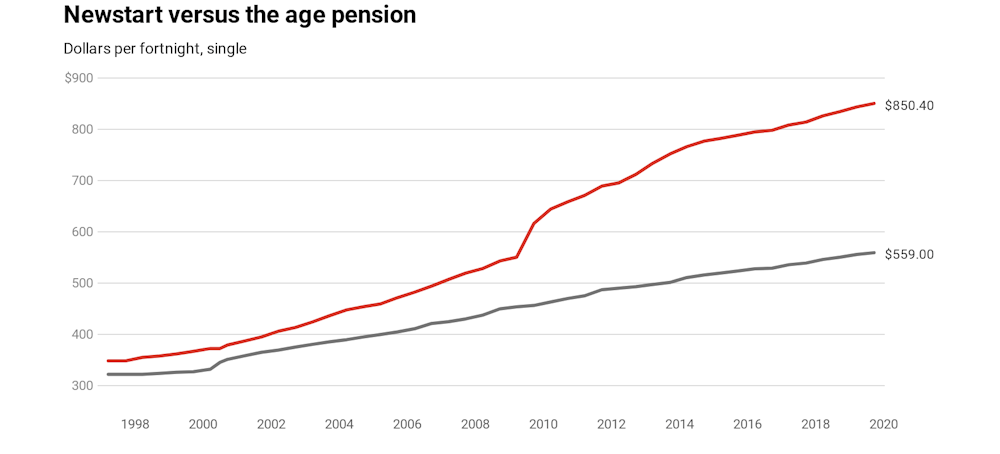
It is hard to comprehend how it could have come to this. Back in 1997 Newstart and the pension were about the same in dollar terms. Each was probably somewhat less than a single person needed to live on.
How did it come to this?
Then the Howard government effectively froze Newstart, forevermore increasing it only in line with inflation (which back then was typically 2.5% per year) while using a formula that lifted pensions in line with wage growth or inflation, whichever was the bigger (back then wages were growing by more than 3% per year).
The difference wasn’t big, but over the past two decades it has compounded. Prime Minister Kevin Rudd helped it along in 2009 by a one-off $64 per fortnight increase in the single pension, unmatched by an increase in Newstart.
Source: Ben Phillips ANU, DSS
It means that from today the single pension will be $850.40 per fortnight, while the single Newstart payment will be $559 – a mere two-thirds of the pension.
And it’ll get worse.
Because inflation is low, and each low increase is off what is now a much lower base than the pension, Newstart increases are small while pension increases are twice as big.
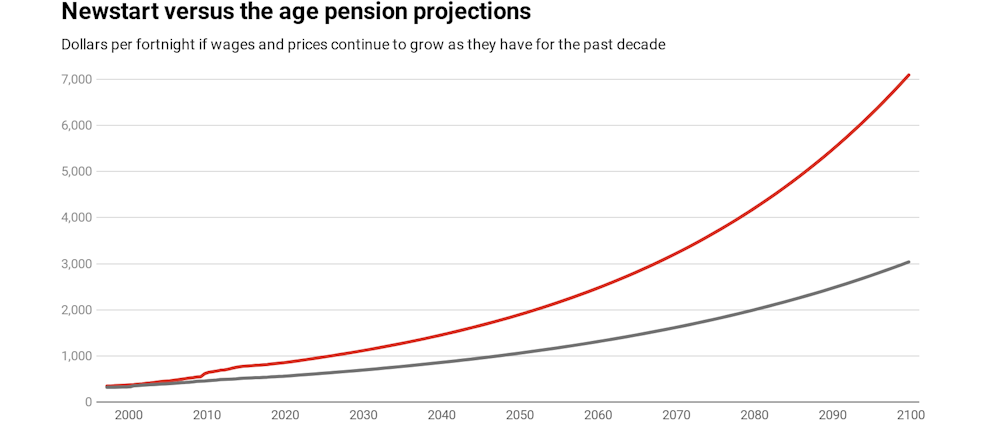
If prices and wages continue to grow at the rates they have over the past decade (2.1% per year for prices, 2.7% for wages) by 2070 Newstart will be just half of the pension. By the end of the century it’ll be just two fifths of the pension.
Ben Phillips, Peter Martin ANU, DSS, ABS
If it can’t continue, it won’t
Herbert Stein was an economic advisor to US presidents Nixon and Ford. These days he is best remembered among economists for Stein’s Law, which says pithily:
If something cannot go on forever, it will stop.
It’s a warning against the dangers of extrapolations of the kind I have just done, and also a guide to the future. A Newstart rate of just two fifths of the pension, way below everyone else’s standard of living, would be intolerable.
The formula will change well before it gets that bad. It’ll have to.
I was in favour of freezing when it happened, but I think it has probably gone on too long.
The question is how it will change. Labor promised a review and an increase during the last election.
The Coalition is holding firm, although it can’t if it continues to remain in office.
A decade ago the Organisation for Economic Co-operation and Development warned that Newstart was low enough to raise “issues about its effectiveness in providing sufficient support for those experiencing a job loss, or enabling someone to look for a suitable job”.
The Australian Council of Social Service wants the government to lift Newstart by $150 per fortnight to $709, still well short of the pension, and afterwards to lift it in line with the pension and wages, so that it never falls further behind.
It wants the same for Youth Allowance, Austudy, Abstudy, Sickness Allowance, Special Benefit, Widow Allowance and Crisis Payment, which all move in line with Newstart.
The hit to the budget would be $3.3 billion per year, small enough to be funded by projected surpluses.
And it would get smaller. Deloitte Access Economics says that after some years about $1.5 billion per year would return to the budget in extra tax as Newstart recipients and the other beneficiaries spent what they were given and boosted economic growth.
The budget was for practical purposes in neither deficit nor in surplus in 2018-19, the final figures released by Treasurer Josh Frydenberg and Finance Minister Mathias Cormann on Thursday reveal.
The underlying cash deficit was just A$690 million, which, on the scale of Commonwealth budgets, is close to nothing: 0.0% of GDP.
It’s a $3.5 billion improvement on the forecast made just five months ago in the April budget, and a $13.8 billion improvement on the original estimate for 2018-19 in Scott Morrison’s May 2018 budget.
If there is a surprise in the result, it is that there wasn’t a surplus despite booming commodity prices, stronger than expected employment growth and a massive $4.5 billion saving on the roll out of the National Disability Insurance Scheme.
Underperformance abounded.
Company tax receipts haven’t changed much from the April estimate, despite much stronger than forecast commodity prices at the end of the financial year. Tobacco taxes came in at just $12.1 billion despite a forecast of $12.9 billion five months ago.
The tax boost is dwindling
Tax receipts from individuals were a little higher than expected in April, due mainly to higher taxes from capital gains and dividends. Personal income taxes were a little lower than expected, perhaps suggesting that the efforts of the Tax Office to make sure individuals pay more tax may have run its course.
If so, it’s good news for the economy, as it suggests consumers might start to enjoy stronger growth in post-tax incomes.
Here’s how Reserve Bank Governor Philip Lowe expressed his concerns about the Tax Office’s recent success to the Economic Society in May:
Over the past year, tax paid by households increased at a much faster rate than did income; almost 10%, compared with 3.25% – that is a big difference and it is unusual.
Where to now?
With the budget effectively in balance, a surplus in the financial year ahead seems all but assured. With government finances in good health, the next question is what to do with the surplus.
There is, as one commentator said after the release of the final outcome, “a mountain of debt to be repaid”.
That is currently the plan, but there is also a growing call for the government to spend more or cut taxes further to lift consumer spending and economic growth and take pressure off the Reserve Bank.
Neither option grasps the important opportunity that restored government finances present.
The surplus should be used for something special…
Australia’s most serious economic challenge is to reignite productivity growth and get the benefit of that into everyone’s pay packet via higher real wages.
With the election out of the way, now is the perfect time to re-set the economic policy agenda.
Structural reform is politically difficult. Getting out of bad industries and work practices into better ones is painful and hard to sell. But it works. It’s what the Hawke government did for us in the 1980s.
What’s needed is to encourage businesses to invest in technologies and work practises that maximise the output of every hour that people spend at work.
It requires a 20 year view, and it is best done by compensating losers. That’s expensive and can only really be done when finances are in good order, as they have just become.
…not simply spent
Right now the case for short-term stimulus isn’t particularly clear.
We are still waiting to see the effects of the tax refund boosts announced in the 2018 and 2019 budgets. We also need to wait a little longer to see what the impact of rate cuts and the easing of rules governing lending on the housing market and consumers.
The early signs are mixed. The only strong reaction we are seeing is in the Sydney and Melbourne property markets. Auction clearance rates are surging to boom-time levels and property prices are on the rise again.
Consumption seems to have stabilised and consumer attitudes to their own financial positions remain healthy. The latest employment numbers show continued growth while the Treasurer noted that the proportion of working age population on welfare is at its lowest in 30 years.
Until it is clear that the economy is faltering, or employment growth is threatened, I very much doubt that this government will contemplate short-term fiscal stimulus.
It shouldn’t. There are more important uses for its money.
It includes a new plan boasting a download speed of 1 gigabit per second and an upload speed of 50 megabits per second for $80 a month.
These are 20-fold improvements on the maximum NBN speeds now. Almost a decade since the first customers were connected, NBN Co is thinking about a genuinely 21st century offering in terms of speed and price.
The NBN is late, over budget and slow. Australia places 58th globally for fixed-line broadband speed. Not only do the NBN’s advertised speeds lag international standards but the actual speeds often don’t come close to what is promised.
Customer interest as a result has been unenthusiastic. NBN Co may well need to take a massive write-down on its assets because they don’t look like they’re worth A$50 billion.
All of this was entirely predictable, based on politicians failing to remember three basic lessons from Economics 101.
1: Technology often outstrips imagination
The history of innovation is littered with examples of remarkably important things being invented with no clear purpose in mind, or by accident, and then exceeding our wildest expectations.
When the Coalition decided to scuttle Labor’s NBN plan for fibre-optic cable to every premises, on the basis that “fibre-to-the-node” and using existing copper telephone wires to the premises would be much cheaper, this is what the chief spruiker of the Coalition’s NBN plan, Malcolm Turnbull, said about broadband needs in 2010:
There isn’t much or anything you can do with 100 Mbps that you can’t do with 12 Mbps for residential customers.
The breathtaking lack of insight and imagination in this comment is responsible in no small part for the Flintstonian broadband infrastructure Australia now has.
Prioritising speed of roll-out (which hasn’t even happened) over speed of internet (which sure has happened) was a massive mistake.
Pedestrian performance: prime minister Malcolm Turnbull at a National Broadband Network publicity event Sydney in September 2016.Mick Tsikas/AAP
2: Positives justify subsidies
You having fast internet is good for me when we connect. When consumers can connect quickly to a business’s website that’s good for the business. It makes it more profitable for businesses to invest in their internet operations. This has benefits for other consumers and even other businesses.
A great illustration of this is in Dunedin, New Zealand, where there have been all sorts of business-to-business spillovers from the city having the fastest internet speeds in Australasia. The ABC’s Four Corners program has highlighted how this has revolutionised New Zealand’s video-game development industry, among other things.
Economists call spillover effects to third parties externalities. Pollution is a negative externality, while the benefit of fast internet is a positive externality.
A sound business model for the NBN ought to recognise the positive externalities and ensure they are incorporated into the price mechanism, by offering a partial subsidy to encourage people to sign up. Like the reverse of a carbon price.
One of the NBN’s key problems is the way successive governments structured national investment in it. Setting up NBN Co as a quasi-corporate entity needing to make a commercial rate of return on the roughly A$50 billion investment in the network was a huge mistake. It was the opposite of providing a subsidy.
The telecommunications companies who retail the NBN have complained that NBN Co’s wholesale price points mean it is hard for resellers to make a profit. It’s a kind of quality death spiral: an unattractive product means fewer people buy it, leading to the product getting worse, leading to even fewer people buying it.
3: Uniform pricing doesn’t work
Finally, it’s never a good idea to charge everyone the same price when there are different costs to serve different people.
The idea was that higher returns from easy-to-service city homes would subsidise the higher costs of service homes in regional and remote areas. But city homes, precisely because they are cheaper to service, have other options. If not enough city customers signed up to the NBN, prices would be driven up, making the network even less attractive to city customers. It’s textbook adverse selection, just like in health-insurance markets.
The government tried to get around this by banning competition. But that’s never really possible, especially from technologies not yet invented. Like 5G. The 2010 business case assumed no more than 16% of households would go wireless. Oops.
NBN will never make a return on the cost of its capital or meet its customer targets if it faces competition. Its corporate plan says so, at point 1: “The plan assumes effective regulatory protection to prevent opportunistic cherry picking […] the viability of the project is dependent upon this protection.”
What to do from here
Multiple governments have bungled the NBN. But there is a way to salvage things – a bit.
Holding constant the technology (fibre-to-the-node), the best thing the government could do is write down its investment massively – ideally so low that it can flog NBN Co off to someone who can be subject to access regulation – ensuring, like other utilities, ownership of infrastructure doesn’t stymie competition – and make a modest rate of return.
Our super funds are always sticking up their hands for infrastructure investment. This would be a good one.
Ideally, though, the technology should be fixed. Fibre-to-the-premises was always going to be expensive, but it was also going to be fast, and as future-proof as we could get.
Lack of imagination and inability to think past 12 Mbps less than ten years ago should not hold the nation back now.
Friendship is an incomparable, immeasurable boon to me, and a source of life — not metaphorically but literally.
-Simone Weil
About eight years ago, I went to dinner with a dear friend I had known for more than 40 years. It would be the last time we would see each other and by the end of that evening I was deeply shaken. But more lasting and more unsettling than this has been the feeling of loss without his friendship. It was a sudden ending but it was also an ending that lasted for me well beyond that evening. I have worried since then at what kind of friend I am to my friends, and why a friendship can suddenly self-destruct while others can so unexpectedly bloom.
My friend and I were used to going to dinner together, though it had become an increasingly tricky matter for us. We had been seeing each other more infrequently, and our conversations had been tending towards repetition. I still enjoyed his passion for talk, his willingness to be puzzled by life’s events, our comically growing list of minor ailments as we entered our sixties, and the old stories he fell back on — usually stories of his minor triumphs, such as the time his car burst into fire, was declared a write-off by insurance, and ended in an auction house where he bought it back with part of the insurance payout and only minor repairs to be made. There were stories of his time as a barman in one of Melbourne’s roughest pubs. I suppose in a lot of long-lasting friendships it is these repeated stories of the past that can fill the present so richly.
What do we do when a friendship of 40 years ends?Tim Foster/Unsplash
Nevertheless, both his opinions and mine seemed to have become too predictable. Even his desire to come up with the most unpredictable viewpoint on any problem was a routine I expected from him. Each of us knew the weaknesses in the other’s thinking, and we had learned not to go too far with some topics, which were of course the most interesting and important ones.
He knew how politically correct I could be, and shrewdly enough he had no time for my self-righteousness, the predictability of my views on gender, race and climate. I understood this. He knew too that his fiercely independent thinking was often just the usual rant against greenies or lefties. Something had begun to fail in our friendship, but I could not properly perceive this or speak of it.
We were a contrasting pair. He was a big man with an aggressive edge to his gregarious nature, while I was lean, short and physically slight next to him, a much more reserved person altogether. I liked his size because big men have been protective figures in my life. At times when I felt threatened I would ask him to come with me to a meeting or a transaction, and just stand next to me in his big way. During one long period of trouble with our neighbours he would visit when the tension was high to show his formidable presence and his solidarity with us.
I was always reading and knew how to talk books, while he was too restless to read much. He knew how to sing, bursting into song occasionally when we were together. He had been unable to work professionally since a breakdown that was both physical and mental. By contrast, I was working steadily, never quite as free with my time as he was.
Nearly two years before our last dinner together his wife had suddenly left him. As it turned out, she had been planning her departure for some time, but when she went he was taken by surprise. I saw a more confused and fragile side of him during those months when we would meet and talk through how he was dealing with their counselling sessions, and then how the negotiations were proceeding over belongings and finally the family house. He was learning to live alone for the first time since he had been a young man, and was exploring what it might be like to seek out new relationships.
We had met when I was a first-year university student boarding at my grandmother’s home in an inner Melbourne suburb. I was studying for a Bachelor of Arts, staying up through the nights, discovering literature, music, history, cask wine, dope, girls and ideas.
He lived in a flat a few doors away in a street behind my grandmother’s place, and I remember it was the local parish youth group, or the remnants of one, that used to meet in his flat. In my friend’s flat we would lie around the floor, half a dozen of us, drinking, flirting, arguing about religion or politics until the night was strung out in our heads, tight and thin and vibrating with possibilities. I loved that sudden intimate and intellectually rich contact with people my own age.
My friend and I started up a coffee lounge in an old disused shopfront as a meeting place for youth who would otherwise be on the street. I was the one who became immersed in the chaotic life of the place as students, musicians, misfits, hopeful poets and petty criminals floated through the shop, while my friend kept his eye on the broader picture that involved real estate agents, local councils, supplies of coffee, income and expenditure.
Perhaps the experience helped delay my own adulthood, allowing me time to try out a bohemian, communal alternative lifestyle that was so important to some of us in the early 1970s. My friend, though, was soon married. It was as if he had been living a parallel life outside our friendship, outside the youth group, coffee shop, jug band, drugs and misadventures of our project.
This did not break us up, and in fact after his marriage he became another kind of friend. I was at times struggling to find some steady sense of myself. Sometimes in those years I would not be able to talk or even be near others, and I remember once when I felt like this I went to my newly married friend’s home, and asked if I could lie on the floor in the corner of their lounge room for a few days until I felt better.
They indulged me. I felt it was this haven that saved me then, giving me the time to recoup and giving me a sense that there was somewhere I could go where the world was safe and neutral.
Friendship can create a place to feel safe.Thiago Barletta/Unsplash
In time, and more bumpily and uncertainly than my friend, I was with a partner raising a family. He was often involved in our children’s birthdays, other celebrations, our house-moving, and just dropping in on family meals. It worked for us. I remember him lifting our cast iron wood-burning stove into its place in our first renovated Brunswick cottage. He lived in a more sprawling home near bushland on the edge of Melbourne, so one of my pleasures became the long cycling trips out to see him.
My partner and I were embraced by a local community thanks to the childcare centre, kinders, schools and sport. Lasting friendships (for us and for our children) grew in the tentative, open-ended, slightly blindly feeling way of friendships. Through this decade and a half though, the particular friendship with my songful friend held, perhaps to the surprise of both of us.
‘Tolerating much, for the sake of best intentions’
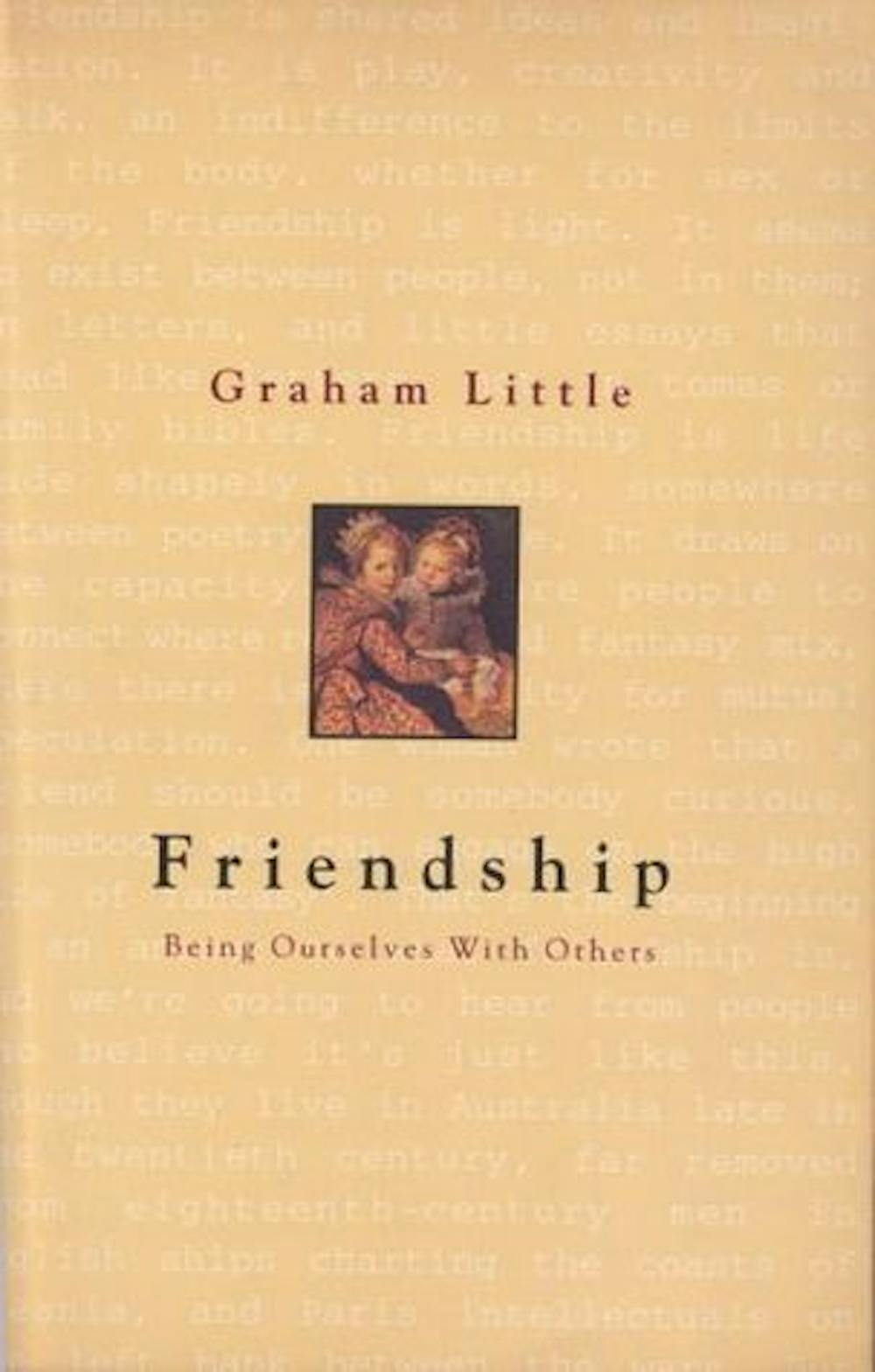
In his thoroughly likeable 1993 book on friendship, the political scientist Graham Little wrote under the bright light of writings by Aristotle and Freud, that the purest kind of friendship “welcomes the different ways people are alive to life and tolerates much in a friend for the sake of best intentions”.
Here perhaps is the closest I have seen to a definition of friendship at its best: a stance imbued with sympathy, interest and excitement directed at another despite all that otherwise shows we are flawed and dangerous creatures.
On that evening, the evening of the last time we went out to dinner together, I did push my friend towards one of the topics we usually avoided. I had been wanting him to acknowledge and even apologise for his behaviour towards some young women he had spoken to, I thought, lewdly and insultingly nearly a year before in my home at a party. The women and those of us who had witnessed his behaviour felt continuing tension over his refusal to discuss the fact that he had wanted to speak so insultingly to them and then had done it in our home in front of us. For me, there was some element of betrayal, not only in the way he had behaved but in his continued refusal to discuss what had happened.
The women were drunk, he said, just as he had said the last time I tried to talk to him about this. They were wearing almost nothing, he said, and what he’d said to them was no more than they were expecting. My friend and I were sitting in a popular Thai restaurant on Sydney Road: metal chairs, plastic tables, concrete floor. It was noisy, packed with students, young couples and groups out for a cheap and tasty meal. A waitress had put menus, water and beer on our table while she waited for us to decide on our meals. Wanting to push finally past this impasse, I pointed out to him that the women had not insulted him, he had insulted them.
If that’s the way you want it, he replied, and placed his hands on each side of the table, hurling it into the air and walking out of the restaurant as table, bottles, glasses, water and beer came clattering and smashing down around me. The whole restaurant fell silent. I could not move for some time. The waitress began mopping up the floor around me. Someone called out, “Hey, are you all right?”
This was the last time I saw or heard from him. For many months, I thought of him every day, then slowly I thought of him less often, until now I can think of him more or less at will, and not find myself ashamed of the way I went for him in a conversation where I should have been perhaps more alive to whatever was troubling him.
Improvised, tentative
For some years after this, I felt I had to learn how to be myself without him. I have read articles and essays since then about how pitiful men can be at friendship. We are apparently too competitive, we base our friendships on common activities, which means we can avoid talking openly about our feelings and thoughts. I don’t know about this “male deficit model”, as some sociologists call it, but I do know that the loss of this friendship took with it a big part of my shared personal history at that time. It dented my confidence in ever having properly known this man or understood our friendship — or in knowing how secure any friendship might be.
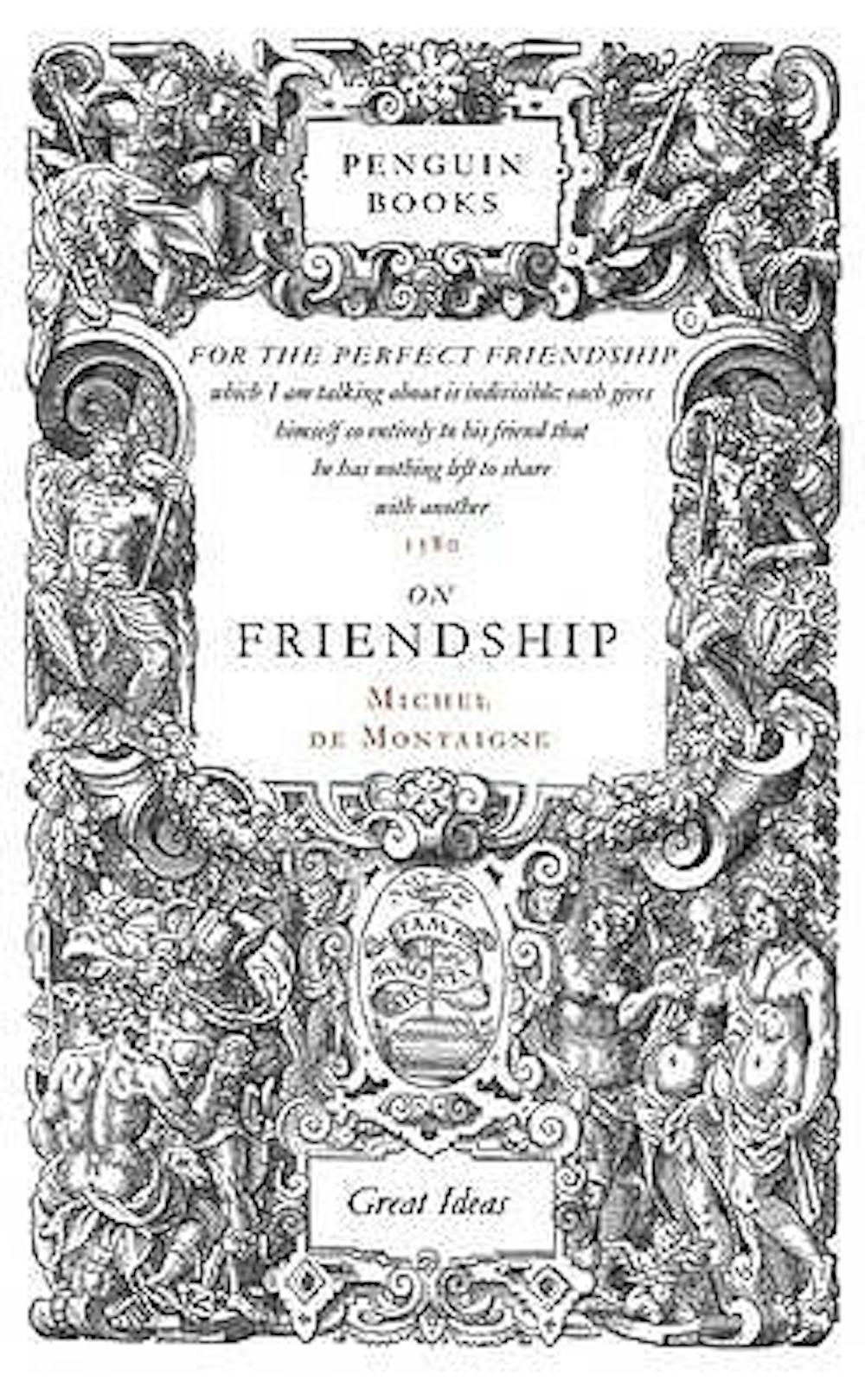
I was drawn to read and re-read Michel de Montaigne’s gentle and strangely extreme essay on friendship where he was so certain that he knew with perfection what his friend would think and say and value. He wrote of his friend, Etienne de Boëtie, “Not only did I know his mind as well as I knew my own but I would have entrusted myself to him with greater assurance than to myself.”
Against this perfection of understanding between friends, there is George Eliot’s odd excursion into science fiction in her 1859 novel, The Lifted Veil. Her narrator, Latimer, finds he can perceive perfectly clearly the thoughts of all the people around him. He becomes disgusted and deeply disturbed by the petty self-interest he apparently discovers within everyone.
After 40 years of shared history, there was not the disgust Eliot writes of, nor Montaigne’s perfect union of mind and trust between me and my burly friend, but there was, I had thought, a foundation of knowledge whereby we took each other’s differences into ourselves, as well as our common histories of the cafe we had run, and as it happened our common serving of time in semi-monastic seminaries before we’d met — differences and similarities that had given us, I thought, ways of being in sympathy with each other while allowing for each other.
Montaigne’s dearest friend, Etienne, had died, and his essay was as much about the meaning of this loss as about friendship. His big idea was loyalty, and I think I understand that, though not in the absolute way Montaigne wrote of it.
Loyalty is only real if it is constantly renewed. I worry that I have not worked enough at some friendships that have come into my life, but have let them happen more passively than the women I know who spend such time, and such complicated time, exploring and testing friendships. The sudden disappearance of my friend left me with an awareness of how patched-together, how improvised, clumsy and tentative even the most secure-seeming friendship can be.
When the philosopher and brilliant essayist, Simone Weil wrote shortly before she died in 1943,
I may lose, at any moment, through the play of circumstances over which I have no control, anything whatsoever that I possess, including things that are so intimately mine that I consider them as myself. There is nothing that I might not lose. It could happen at any moment ….
she seemed to be touching on the difficult truth that we run on luck and hope and chance much of the time. Why haven’t I worked harder at friendships, when I know that they provide the real meaning in my life?
Some years ago, when I was told by a medical specialist that I had a 30% chance of having cancer, as I waited for the results of a biopsy, I remember that in response to these dismal odds I had no desire to go back to work, no desire to even read — all I wanted to do was spend time with friends.
Inner worlds laid waste
To know what it is we care about, this is a gift. It should be straightforward to know this and keep it present in our lives, but it can prove to be difficult. Being the reader that I am, I have always turned to literature and fiction for answers or insights into those questions that seem to need answering.
I realised some time after the ending of my friendship that I had been reading novels dealing with friendship, and was not even sure how consciously I had chosen them.
For instance, I read The Book of Strange New Things by Michel Faber, a novel about a Christian preacher, Peter Leigh, sent to convert aliens in a galaxy ludicrously far from earth on a planet with an equally unlikely atmosphere benign to its human colonisers.
It is a novel about whether Leigh can be any kind of adequate friend to his wife left behind on Earth, and whether his new feelings for these aliens amounts to friendship. Though my suspension of disbelief was precarious, I found myself caring about these characters and their relationships, even the grotesquely shapeless aliens. Partly I cared about them because the book read like an essay testing ideas of friendship and loyalty that were important and urgent to the writer.
I also read at that time Haruki Murakami’s novel, Colorless Tsukuru Tazaki and His Years of Pilgrimage, a book that came with a little game of coloured cards and stickers, and I found that I cared about Tsukuru Tazaki too, for I felt all along that Murakami’s character was a thin and endearing disguise for himself (what a beautiful word that is, “en-dearing”).
The novel centred on lost friendships. I heard a tone in its voice that was the oddly flat, persistent, vulnerable and sincere searching of a man for connection with others. If Murakami’s novel has a proposition it wishes to test it would be that we only know ourselves in what images of ourselves we receive back from our friends. Without our friends we become invisible, lost.
In both those novels, the friendships are crashing to pieces in slow motion in front of the reader’s helpless eyes. I wanted to shake those characters, tell them to stop and think about what they were doing, but at the same time I saw in them mirrors of myself and my experiences.
I read John Berger too, on the way a human looks across an abyss of incomprehension when looking at another animal. Though language seems to connect us, it might be that language also distracts us from the actual abyss of ignorance and fear between all of us as we look, across, at each other. In his book on the savage mind, Lévi-Strauss quotes a study of Canadian Carrier Indians living on the Bulkley River who were able to cross that abyss between species, believing they knew what animals did and what their needs were because their men had been married to the salmon, the beaver and the bear.
I have read essays by Robin Dunbar on the evolutionary limits to our circles of intimacy, where he suggests that for most of us there needs to be three or maybe five truly close friends. These are the ones we lean towards with tenderness and open ourselves to with endless curiosity — those in whom we seek only the good.
My partner can name quickly four friends who qualify for her as part of this necessary circle. I find I can name two (and she is one of them), then a constellation of individual friends whose closeness to me I can’t easily measure. It is this constellation that sustains me.
Recently I was away from home for three months. After two weeks away I wrote a list in the back of my diary of the friends I was missing. A little more than a dozen of these were the friends, men and women, with whom I need contact, and with whom conversations are always open-ended, surprising, intellectually stimulating, sometimes intimate, and often fun. With each of them I explore a slightly different but always essential version of myself. Graham Little wrote that “ideal soulmates are friends who are fully aware that each has himself as his main life project”.
To live this takes some effort of imagination, and with my friend at dinner that night I might in myself have been refusing to make this effort.
There are also, it occurs to me, the friends who came as couples, with whom my partner and I share time as couples. This is itself another manifestation of friendship, one that crosses over into community, tribe and family — and no less precious than the individual intimacy of a personal friendship. For reasons I can’t properly fathom, the importance of this kind of time with coupled friends has deepened as I have grown through the decades of my fifties and sixties.
Perhaps it is that the dance of conversation and ideas is so much more complex and pleasurable when there are four or more contributing. It could be too that I am absolved from the responsibility of really working at these friendships in the way one must when there are two of us. Or it might be the pang and stimulus of the knowledge that opportunities to be together are brutally diminishing as we grow older.
But to lose an individual friend from one’s closest circle is to have large tracts of one’s inner world laid waste for a time. My feelings over the end of this particular friendship were a kind of grief mixed with bewilderment.
Loosing a friend can create feelings of grief and bewilderment.Robert Bye/Unsplash
It was not that the friendship was necessary to my existence, but that perhaps through habit and sympathy it had become a fixed part of my identity. Robin Dunbar would say that by stepping away from this friendship I had made room for someone else to slip in to my circle of most intimate friends, but isn’t it the point of such close friends that they are in some important sense irreplaceable? This is the source of much of our distress when such friendships end.
Still learning
When I told people about what had happened in the restaurant that night, they would say, reasonably, “Why don’t you patch things up and resume your friendship?”
As I imagined how a conversation might go if I did meet my friend again, I came to understand that I had been a provocation to him. I had ceased to be the friend he needed, wanted or imagined.
What he did was dramatic. He might have called it merely dramatic. I felt it as threatening. Though I cannot help but think I provoked him. And if we had “patched” a friendship back together, on whose terms would this have been conducted? Would it always be that I would have to agree not to press him on questions that might lead him to throw over some table between us again?
Or worse, would I have to witness his apology, forgive him myself, and put him on his best behaviour for the rest of our friendship?
Neither of those outcomes would have patched much together. I had been hurting too over what I saw as his lack of willingness or interest to understand the situation from my point of view. And so it went inside me as the table and the water and the beer and the glasses came crashing down around me. I had been, in a way, married to my friend, even if he was a salmon or a bear — a creature across an abyss from me. Perhaps this was the only way out of that marriage. Perhaps he had been preparing for (moving towards?) this moment more consciously than I had been.
The ending of this friendship, it is clear, left me looking for its story. It was as if all along there must have been a narrative with a trajectory carrying us in this direction. A story is of course a way of testing whether an experience can take on a shape. Murakami’s and Faber’s novels are not themselves full-blown stories, for there is almost no plot, no shape, to their stumbling episodic structures, and oddly enough in both books the self-doubting lovers might or might not find that close communion with another somewhere well beyond the last page of each novel.
These novels cohere round a series of questions rather than events: what do we know and what can we know about others, what is the nature of the distance that separates one person from another, how provisional is it to know someone anyway, and what does it mean to care about someone, even someone who is a character in a novel?
When an Indian says he is married to a salmon, this can be no stranger than me saying I spent a couple of weeks on a humid planet in another galaxy with an astronaut who is a Christian preacher and an inept husband, or I spent last night in Tokyo with an engineer who builds railway stations and believes himself to be colourless, though at least two women have told him he is full of colour. But do I go to this story-making as a way of keeping my experiences less personal and more cerebral?
When I got home that night eight years ago, I sat at my kitchen table, shaking, hugging myself, talking to my grown-up children about what happened. It was the talking that helped — a narrative taking shape.
Dunbar, like me, like all of us, worries at the question of what makes life so richly present to us, and why friendships seem to be at the core of this meaningfulness. He has been surveying Americans with questions about friendship for several decades, and he concludes that for many of us the small circle of intimate friendships we experience is reducing.
We are apparently lucky now, on average, if there are two people in our lives we can approach with tenderness and curiosity, with that assumption that time will not matter as we talk in a low, murmuring, hive-warm way to a close friend.
My friend cannot be replaced, and it might be that we did not in the end imagine each other fully enough or accurately enough as we approached that last encounter. I don’t know precisely what our failure was. The shock of what happened and the shock of the friendship ending has over the time since that dinner become a part of my history in which I remember feeling grief but am no longer caught in confused anger or guilt over it. The story of it might not have ended but it has subsided.
Perhaps in all friendships we are not only, at our best, agreeing to encountering the unique and endlessly absorbing presence of another person, but unknown to us we’re learning something about how to approach the next friendship in our lives. There is something comically inept and endearing about the possibility that one might still be learning how to be a friend right up to the end of life.
John Howard is remembered by his Liberal tribe as a reformer, but his legacy is mixed. The GST has endured but he essentially doomed his government when he let his ideological obsession with industrial relations run away with him.
The Liberals lost the next election, and had to stand by as Labor dismantled WorkChoices.
Now a subsequent Liberal government is starting on workplace change, with industrial relations minister Christian Porter on Thursday releasing the first discussion papers.
It’s early days and in politics sheep can always put on wolves’ clothing. But on what we see, the measured approach of Scott Morrison and Porter is a far cry from that of Howard and likely to be more successful and lasting.
That’s not to ignore the government’s tough stand against militant unionism. The Ensuring Integrity bill from last term is back, and its prospects – provided there is some fine tuning – appear better this time, thanks in no small part to the antics of John Setka.
(On Thursday the Senate referred Setka to the privileges committee which will investigate the claim his comments at a private union meeting amounted to a threat against Centre Alliance senators in relation to their vote on the integrity bill. The CFMEU immediately declared it looked forward to appearing before the committee.)
More broadly, the government says industrial relations changes should meet three criteria: they need to create jobs and put upward pressure on wages, boost productivity, and promote economic growth.
Porter, in his Thursday address to the Committee for Economic Development of Australia (CEDA), said the matters selected for scrutiny were based on what stakeholders had been telling the government.
The first two discussion papers cover proposed criminal penalties for wage theft, and extending the permitted length of greenfields enterprise agreements for major projects.
They have been chosen strategically. The second is relatively uncontroversial. The first is pitched towards workers.
These will be followed by papers on the building code that applies to Commonwealth-funded building work; casual employment; the small business fair dismissal code, and several aspects of enterprise bargaining. Some of these will be more controversial than the initial ones.
Porter sought to put the need for change in perspective: “the present system benefits from the great virtue that in most sectors most of the time it is a relatively orderly rules based system”.
Howard went for root-and-branch change; the Morrison government is looking for incremental reform.
Morrison is not an industrial relations crusader. Crucially, in all areas he is outcomes-oriented. He wants the changes he seeks to get through the Senate, where he would need crossbench support. Having unexpectedly won control of the Senate at the 2004 election, Howard had no check on his ambitions.
As Porter puts it, there are two crucial questions before a government wanting IR changes: what improvements are most important to strengthening the economy and “what possible changes can achieve a significant enough degree of consensus that they can be supported through parliament?”
Unsurprisingly, wrangling legislation through the upper house preoccupies the government. The Senate this term, with its smaller crossbench, is easier to deal with, though not necessarily easy. The half a dozen non-Green crossbenchers include Cory Bernardi (now in practice a government vote), two One Nation senators, two from Centre Alliance and Jacqui Lambie.
When Labor and the Greens vote against legislation the Coalition needs four of these crossbenchers to carry it. The government is shameless in throwing them bones of various shapes and sizes.
For Lambie’s support on the tax package, it forgave Tasmania’s $157.6 million housing debt.
This week Pauline Hanson was given a win, for past and future favours, when the government announced a joint parliamentary committee would examine the family law system.
Hanson, who thinks men get a bad deal in the system, has been constantly agitating for an inquiry, including putting some draft terms of reference to Porter. On Tuesday came the statement from Morrison and Porter.
The government is appointing as chairman Kevin Andrews, a Liberal conservative with a strong, long-term interest in and commitment to marriage counselling. It is backing Hanson as deputy chair (a position formally chosen by the committee). Of the ten-member committee five will be from the government; the ALP (which opposed the inquiry) will have three, and there will be one lower house crossbencher (Zali Steggall, who as a barrister specialised in family law).
This inquiry, though supported by the Law Council of Australia, seems unnecessary and is provocative.
Unnecessary, because the government already has a detailed report from the Australian Law Reform Commission, which it asked for, with a large number of recommendations on family law policy. That came earlier this year and the government has yet to address it. There was also a parliamentary inquiry last term that focused on protecting people affected by domestic violence in the family court system. There has been a plethora of other reviews over the past decade.
Provocative, because it is all about Hanson.
She caused immediate outrage after the announcement by her comment that “a lot of the women out there abuse the system by instigating false DVOs against their former partners or their husbands. They use that to further their needs”.
She also said: “In legislation there is 50/50 custody but it is at the discretion of the judges and I don’t think that is good enough.”
Anti-domestic violence campaigner Rosie Batty said in reply to Hanson’s DVO claim: “Obviously there are some women who do abuse the system, but overwhelmingly we know that one woman a week is being murdered at the hands of a violent man”.
Batty said Hanson’s comments showed she already had an agenda. “It cannot possibly be an unbiased inquiry with these two people heading it up,” she said.
The family law system is one of the most fraught and sensitive policy areas. It is more than unfortunate that it has become a pawn in the wider Senate play. This is all about politics. It’s far from a best practice path to reform of a system that affects so many people – critically, so many children.
This story is part of Covering Climate Now, a global collaboration of more than 250 news outlets to strengthen coverage of the climate story.
Global warming is accelerating, driven by the continuing rise in greenhouse gas emissions. Australia’s climate has warmed by just over 1°C since 1910, with global temperatures on course for a 3-5°C rise this century.
Australia is ahead of the global temperature curve. Our average daily temperature is 21.8°C – that’s 13.7°C warmer than the global average of 8.1°C.
Heat extremes (days above 35°C and nights above 20°C) are now more frequent in Australia, occurring around 12% of the time compared to around 2% of the time between 1951 and 1980.
So what do high temperatures do to our bodies? And how much extra heat can people and our way of living tolerate?
More scorchers ahead
Australia’s summer of 2018-19 was 2.14°C warmer than the 1961–90 average, breaking the previous record set in 2012–13 by a large margin. It included an unprecedented sequence of five consecutive days with nationally averaged maximum temperatures above 40°C.
The Bureau of Meteorology (BOM) has warned this summer will be another scorcher. Hot dry northerly winds tracking across drought-affected New South Wales and Queensland have the capacity to deliver blistering heat and extreme fire risks to the southern states, and little relief is in sight for those in drought.
Some rural Australians have already been exposed to 50°C days, and the major southern metro cities are set to do the same within the next decade or so.
How our bodies regulate heat
Like most mammals and birds, humans are endotherms (warm-blooded), meaning our optimal internal operating temperature (approximately 36.8°C +/− 0.5) is minimally influenced by ambient temperatures.
Quietly sitting indoors with the air temperature about 22°C, we passively generate that additional 15°C to keep our core temperature at about 37°C.
Even when the air temperature is 37°C, our metabolism continues to generate additional heat. This excess internal heat is shed into the environment through the evaporation of sweat from our skin.
Temperature and humidity gradients between the skin surface and boundary layer of air determine the rate of heat exchange.
When the surrounding air is hot and humid, heat loss is slow, we store heat, and our temperatures rises.
That’s why hot, dry air is better tolerated than tropical, humid heat: dry air readily absorbs sweat.
A breeze appears refreshing by dislodging the boundary layer of saturated air in contact with the skin and allowing in drier air – thus speeding up evaporation and heat shedding.
What happens when we overheat?
Heat exposure becomes potentially lethal when the human body cannot lose sufficient heat to maintain a safe core temperature.
When our core temperature reaches 38.5°C, most would feel fatigued. And the cascade of symptoms escalate as the core temperature continues to rise beyond the safe functioning range for our critical organs: the heart, brain and kidneys.
Much like an egg in a microwave, protein within our body changes when exposed to heat.
While some heat-acclimatised elite athletes, such as Tour de France cyclists, may tolerate 40°C for limited periods, this temperature is potentially lethal for most people.
As a pump, the heart’s role is to maintain an effective blood pressure. It fills the hot and dilated blood vessels throughout the body to get blood to vital organs.
Exposure to extreme heat places significant additional workload on the heart. It must increase the force of each contraction and the rate of contractions per minute (your heart rate).
If muscles are also working, they also need an increased blood flow.
If all this occurs at a time when profuse sweating has led to dehydration, and therefore lower blood volume, the heart must massively increase its work.
Dry air readily absorbs sweat, whereas humid air doesn’t, making it less tolerable.Cliplab/Shutterstock
The heart is also a muscle, so it too needs extra blood supply when working hard. But when pumping hard and fast and its own demand for blood flow is not matched by its supply, it can fail. Many heat deaths are recorded as heart attacks.
High aerobic fitness levels offer some heat protection, yet athletes and fit young adults pushing themselves too hard also die in the heat.
Who is more at risk?
Older Australians are more vulnerable to heat stress. Age is commonly associated with poorer aerobic fitness and impaired ability to detect thirst and overheating.
Obesity also increases this vulnerability. Fat acts as an insulating layer, as well as giving the heart a more extensive network of blood vessels to fill. The additional weight requires increased heat-generating muscular effort to move.
Certain medications can lower heat tolerance by interfering with our natural mechanisms necessary to cope with the heat. These include drugs that limit increases in heart rate, lower blood pressure by relaxing blood vessels, or interfere with sweating.
Core temperatures are increased by about half a degree during late stage pregnancy due to hormonal responses and increased metabolic rate. The growing foetus and placenta also demand additional blood flow. Exposure of the fetus to heat extremes can precipitate preterm birth and life-long health problems such as congential heart defects.
Won’t we just acclimatise?
Our bodies can acclimatise to hot temperatures, but this process has its limits. Some temperatures are simply too hot for the heart to cope with and for sweat rates to provide effective cooling, especially if we need to move or exercise.
We’re also limited by our kidneys’ capacity to conserve water and electrolytes, and the upper limit to the amount of water the human gut can absorb.
Profuse sweating leads to fluid and electrolyte deficits and the resulting electrolyte imbalance can interfere with the heart rhythm.
Mass death events are now occurring during heat waves in traditionally hot countries such as India and Pakistan. This is when heat extremes approaching 50°C exceed the human body’s capacity to maintain its safe core temperature range.
Heatwaves are hotter, more frequent and lasting longer. We can’t live life entirely indoors with air conditioning as we need to venture outdoors to commute, work, shop, and care for the vulnerable. People, animals and our social systems depend on this.
Besides, on a 50°C day, air conditioning units will struggle to remove 25°C from the ambient air.
Today, the Sri Lankan family who had resettled in the small town of Biloela in Queensland was given a last-minute reprieve in their fight to stay in Australia. A federal court judge ruled the family had established a prima facie case to remain in the country until a final hearing at a date yet to be determined.
The family of four are part of a group of asylum seekers and refugees who arrived in Australia by boat between August 2012 and January 2014. Their case highlights some of the problems with the “fast-track” refugee assessment system set up by the Coalition government in late 2014 to handle the flood of boat arrivals.
The system was intended to deny access to permanent residency for the refugees and create a faster system for processing their asylum claims.
In practice, however, it has been marked by prolonged delays and restrictions on the types of visas available to the refugees, contributing to their mental deterioration and despair.
The “fast-track assessment caseload” includes individuals, families and children who arrived by boat during that 18-month period from 2012-14. It also includes children born after their arrival, like the Biloela couple’s children, Kopica and Tharuunica.
It is estimated there are currently around 31,000 individuals in this group, some of whom still remain in limbo while their status is determined by the government.
The Australian Human Rights Commission raised deep concerns around the treatment and well-being of these refugees in a report in July.
According to the Monash University Australian Border Deaths Database and our own research, there have been at least 18 deaths by suspected or confirmed suicide in the caseload since June 2014.
Endless paperwork and delays
Policy and legislative changes in recent years have resulted in the group of refugees in the “fast-track” caseload being subjected to different treatment compared to other asylum seekers. The reason was to further discourage people from risking the journey by boat.
They were barred from applying for any visas until 2015 when the then-minister for immigration, Peter Dutton, started inviting them to apply for temporary protection visas under the new “fast track” process.
Asylum seekers were then given a deadline of October 1, 2017 to lodge their protection claims, which placed huge strains on the pro bono legal community. The application process itself is incredibly complex, involving the completion of lengthy forms in English, taking at a minimum 10–15 hours to complete.
Since then, these asylum seekers have been subjected to extended delays. Department of Home Affairs statistics from July 2019 show that of the 31,000 in the initial “fast track” caseload, there are nearly 8,200 waiting for their cases to be dealt with.
This means that, in total, these asylum seekers have been waiting almost seven years for their visa applications to be processed.
Trapped in visa limbo
Despite these hurdles, approximately 70% of those in the “fast-track” caseload have been found to be owed protection and provided with temporary visas to remain in Australia.
For most, the granting of one of these visas provides no relief. Their temporary status means they cannot seek reunification with family members overseas. And because all of their visas will have to reassessed when they expire, the uncertainty surrounding their lives never fully goes away.
Those who have their temporary visa applications refused by the Department of Home Affairs have access to a limited merits review by the independent Immigration Assessment Authority (IAA). The IAA only considers new information if there are exceptional circumstances. And in 87% of cases, it affirms the decision of the Department of Home Affairs.
Statistics show that in cases involving applicants claiming asylum from Sri Lanka, the IAA agrees with the initial visa refusal in 93% of cases.
The reduction in funding for legal assistance, combined with the lack of access to a robust system of review, has led the Australian Human Rights Commission to conclude that some individuals may have been refused visas despite having good claims for refugee status.
Others have pointed to serious issues in the application process for the Biloela family, in particular the mother, Priya.
Those who remain on temporary visas for years while their fates are being determined feel deeply marginalised and disenfranchised.
They also face a minimum of ten years on a temporary visa without the prospect of reuniting permanently with separated family members, creating a subclass of people who likely will never feel that they “belong” in Australia or are fully settled.
Given such concerns, and in the absence of any shift in policy, we set up a crowdfunding campaign to provide suicide prevention training for non-government and government-sector workers supporting refugees and asylum seekers. The results so far are promising. More than 400 workers across Australia have taken part in the training.
The Australian Human Rights Commission has also put forth its serious concerns about the robustness of the fast-track process.
The commission has recommended that those refused visas should be able to have their cases re-examined in a full merits review by the Administrative Appeals Tribunal. This would provide them with a new hearing and allow for the consideration of all their claims, including any new information.
Until this happens, the commission further recommends that the Australian government not remove any asylum seeker who has been refused under the fast-track process.
Reforms to the current system for the processing and granting of visas are urgently needed. It is also critical for the government to provide adequate legal and mental health support for those in the fast track caseload. Suicide-related despair for this group is excruciating and unendurable. Lives matter irrespective of the politics.
The crashing chords of punk echoed through the end of the 70s, heralding the arrival of a diverse bunch of subcultures. In Brisbane, none was more notable than the tribe known as Goth.
Just like the punks before them, they had a deep commitment to visual style – black clothes, big hair, whiteface with the streak of red, young eyes peering from lakes of kohl. No visible skin. They were as close to vampiric as we had yet seen – that they might dissolve with a whispered howl in our sub-tropical summer seemed quite likely.
Inspired by the Sex Pistols, British Goth pioneers Siouxsie Sioux and Steve Severin had started The Banshees in 1976, on the way borrowing from contemporaries like The Slits, and Magazine. By the time the 80s arrived, they had developed a unique musical persona.
The songs were dancy, literate, smart and funny, with psychedelic guitars and skittering tom-toms, influenced by The Velvet Underground and The Doors, Rimbaud and Shelley, Poe and Wilde – mood was everything. After touring with The Banshees in 1979, The Cure’s Robert Smith changed not only his band’s sound but his look. With UK DECAY, Joy Division and Bauhaus, a dark army was rising.
There were Australian bands dropping in to Brisbane in the 80s that can be included under the cowl of Australian Gothic, though they disavow any connection to the scene. The Birthday Party’s Nick Cave was inspired by quintessential goth poets like Baudelaire, while gloomy Melbourne also produced Dead Can Dance, whose drum-driven, howling sound and dark album art was described as “Goth as it gets”.
As the subculture bloomed in Britain in the early 1980s, Brisbane was in sync, thanks to import record stores like Rocking Horse Records, and music/pop culture press like NME, Melody Maker and The Face. Brisbanites Karen Litzow and Stephen Crowther started fashion label Salon Dada to make clothes as darkly original as the music.
The imported vinyl was played on community radio station 4ZZZ by DJs who were also instrumental in the growing the city’s club scene, which formed the spine of Goth subculture in the 80s.
Swampies and Morticia’s
DJs Jane Grigg and Peter Mogg both spun 12″ tracks on 4ZZZ, treating disparate, desperate suburban youth to new releases from bands like The Fall, Sisters of Mercy and The Cult. They started Club Vortex d’Junk in 1985, screaming that punk was “DEAD and BURIED.” It was unique and vital, and short-lived.
Morticia’s flyer designed by Stephen Crowther. Courtesy of Phillipa Berry.Stephen Crowther
Around the same time, Ian Whittred and Jonny Griffin were building their own audience. First with the club Hades, and then Morticia’s in 1987, they created a home for the Goths and “swampies” – a peculiarly Australian variant who dolled up the black with a touch of paisley and loved The Church, The Scientists, Wall of Voodoo and The Gun Club.
Morticia’s became the Goth mainstay in the Brisbane club scene, moving from venue to venue through the late 80s and 90s as landlord greed or room size forced their hand. From Warhols to the Canberra Hotel (a teetotalling Country Party throwback) to the Brisbane Music Hall, the crowd danced and smoked and loved one another.
Morticia’s gave way to new clubs and new venues, like Junkyard, Midian, and Industry, with a lineage that leads to the current day.
On Sunday nights today on 4ZZZ, DJ Doom presents Batcave, where she keeps the songs of Siouxsie and The Cure alive but also plays contemporary Goth bands such as Melbourne’s No Sister or Brisbane’s Pleasure Symbols. Global warming has not deterred these gentle folk; age has not wearied them.
Goth now
Although the airwaves carry the message, alternative Goth bands in Australia struggle to attract an audience. IKON from Melbourne has built a strong European following with frequent appearances at Wave Gothik Festival, but in Australia they are lucky to fill a room. The story of Vowws a Sydney Band that moved to LA, has played with Gary Numan and is now opening for The Cult shows that Australia might not be big enough for new Goth bands.
Australian born Zoe Zanias is a thriving Electronic Body Music artist but lives in Berlin where she co-founded the Fleisch collective and the record label of the same name.
Electronic Body Music springs from Industrial but it is more dance-oriented. Front 242 and Covenant are good examples of this genre.
The community continues to have a presence due to the passion of people like Rachael Blackemore, who moderates a Goth Facebook group. Originally from Adelaide, she ran the original 1334 Club dedicated to Deathrock and Trad Goth music in Melbourne from 2007.
Now based in Brisbane, the growth of the subculture online has allowed her to collaborate on interstate events like Bat Attack, where DJs from different states play similar genres like Death Rock and Trad Goth on the same night. It is evidence that the Australian Goth subculture has a strong national identity.
Goth DJs from Melbourne and Sydney get together for a night of Death Rock and Trad Goth.Artwork by Xerstorkitte
Although places to gather are still rare in Brisbane, Faithnightclub run by Richard Warman for nearly 20 years helps to feed the city’s Goth subculture. In the early 2000’s, Brisbane was the only city in the country with a weekly Goth club, a sanctuary, if you will, still running today.
Here’s a glimmer from the past: Brisbane in the 90s. Summer. The Goths drift through the heat haze; insults and disapproval hang in the air. But they only have eyes and ears for one another. The tribe is everything.
On the days when those tight black pants were unbearable, with the sun bleaching the sky and the humidity closing in, the boys would discuss it, and the shorts would make a rare appearance. Still black, of course. A colour you can wear for days without washing. Friendly, familiar, black.
Source: The Conversation (Au and NZ) – By Lucas Walsh, Professor, Education Policy and Practice, Youth Studies in the Faculty of Education. Latest books with Rosalyn Black include "Imagining Youth Futures: University Students in Post-Truth Times" and "Rethinking Youth Citizenship after the Age of Entitlement", Monash University
Senator Jacqui Lambie has proposed establishing a Senate inquiry to increase the number of volunteers to address challenges such as climate emergencies.
One way she suggests doing this is by conscripting young Australians to national emergency service. The Senator argues that
today’s generation don’t really want to volunteer themselves and commit to certain things. They want to show up to a rally once a year and apparently that’s giving back … It bothers me that kids today wouldn’t know a bloody sandbag, let alone a spade.
Her proposal comes on the back of criticism of youth climate protesters by several prominent politicians, such as Resources Minister Matt Canavan, who has said
the best thing you’ll learn about going to a protest is how to join the dole queue.
Young people are already volunteering
Collectively, these statements reflect a view of young people that is wildly inaccurate.
Firstly, Lambie echoes a familiar but negative view of young people as disengaged, indifferent and immature.
Volunteering rates are indeed declining. In 2014, volunteering declined for the first time since 1995, when the ABS started conducting national voluntary work surveys. The proportion of people aged 18 years and over who were volunteering fell from a peak of 36% in 2010 to 31% in 2014. (This is the most recent data available).
Historically, younger people are less likely to engage in civic activities than older Australians. But wider research during the last decade suggests something more nuanced.
A national youth survey in 2018 found volunteering to be one of the top three activities for young people – ahead of arts, culture and music activities. ABS figures from 2014 also showed that while overall rates of volunteering were on the decline, young people aged 15-17 had the highest rate in the nation at 42%.
The measures used to track volunteering also fail to capture the breadth and depth of volunteering that takes place among young people.
the provision of unpaid help willingly undertaken in the form of time, service or skills, to an organisation or group, excluding work done overseas.
For young people, many types of volunteering take place invisibly through online activities like constructing news groups on Facebook that contribute to a wider cause. Such online activities may not be for a particular organisation or group and may be conducted internationally.
In addition, the boundaries between personal and civic contributions are sometimes blurred. For example, volunteering in some culturally and linguistically diverse communities is just part of life, and not considered to be volunteering.
Similarly, research has shown that some young people don’t necessarily think of activities such as umpiring a local sporting event as volunteering, because for them it is just an interesting pursuit.
As a result, these contributions by young people sometimes go unrecognised.
Acknowledging that its definition does not account for informal volunteering like this and other activities such as activism, the ABS is now seeking to capture
a broader range of volunteering activity and characteristics.
Protesting is an equally valid way of giving back
Young people are also increasingly motivated to take part in another form of civic participation: peaceful protest. For many, protesting for important causes is considered an equally valid way to give back to society.
The most prominent example of this are the student climate strikes around the world that have been galvanised by youth activist Greta Thunberg. Thousands of Australians students are expected to walk out of their classes again on Friday.
Jonas Kampus, a 17-year-old protester from Switzerland, described the importance of these efforts to the Guardian:
For people under 18 in most countries, the only democratic right we have is to demonstrate. We don’t have representation.
Canavan has a different view, saying that young people “don’t learn anything” from leaving school to protest.
But experiential learning through activism can be powerful and connect people to finding common solutions. Education isn’t just about securing future jobs, as Canavan has suggested. It’s also about developing inquisitive, creative and critical thinkers who fully participate in society.
Young people throughout the world are demonstrating these attributes and participating in ways that do not register in conventional measures. Many are actively engaging the challenges facing our society and are acutely aware of the value of education.
There is another important connection between protesting and volunteerism. One international study has found that
people involved in voluntary associations are up to five times more likely to make political demands than those without such membership.
University of the South Pacific researcher Jacob Mwathi Mati and his colleagues argue that activist movements can serve as “schools of democracy that teach civic skills and foster civic attitudes.” Taking part in climate change protests, for example, can build capacity for citizen engagement in the same way as more traditional forms of volunteering.
The great majority of politicians are hardworking and dedicated to making a difference in society, and painting them with broad-brush criticisms that reinforce negative stereotypes does not do them justice.
It’s equally unfair to reduce young people to passive and clueless individuals in need of compulsory volunteer conscription.
Today on Media Files, a podcast on major themes and issues in the media, we meet Bastian Obermayer, the Pulitizer prize-winning journalist who led the Panama Papers investigation into global tax evasion and money laundering.
It was the biggest-ever collaboration for investigative journalism, involving 400 journalists in 80 countries who collectively produced 6,000 stories in 100 different media outlets.
Bastian Obermayer is the deputy editor for investigations at the Süddeutsche Zeitung in Munich, Germany. He was the person who received the original email from the anonymous source known as John Doe.
Bastian recently joined the Centre for Advancing Journalism at the University of Melbourne, courtesy of the Macgeorge fellowship. He recorded this discussion with Andrew Dodd for Media Files.
New to podcasts?
Podcasts are often best enjoyed using a podcast app. All iPhones come with the Apple Podcasts app already installed, or you may want to listen and subscribe on another app such as Pocket Casts (click here to listen to Media Files on Pocket Casts).
You can also hear us on any of the apps below. Just pick a service from one of those listed below and click on the icon to find Media Files.
After nearly two decades of fighting, the death toll in the war in Afghanistan is staggering. Apart from more than 45,000 Afghani soldiers killed since 2014 and 3,576 western coalition soldiers since the beginning of the conflict in 2001, some 32,532 civilians were killed in Afghanistan between 2009 and 2018 – most of them by anti-government forces.
In a small subset in this human tragedy, New Zealand is critically examining one particular operation, during which six people were killed, including a three-year-old girl. This occurred when a Taliban group was targeted by a New Zealand lead force, allegedly in reply to an attack on a New Zealand team in early August 2010.
In their book, Hit and Run, journalists Nicky Hager and Jon Stephenson called into question the official version of events of this action, known as Operation Burnham.
This questioning has resulted in an official inquiry, to see if there was wrongdoing on the part of New Zealand Defence Force personnel or whether New Zealand troops committed war crimes.
With such high stakes at play, it is necessary to have a basic understanding of the rules of international humanitarian law that govern such military operations. The core of this area (the Geneva Conventions) were concluded after the Second World War and then supplemented in 1977, with two protocols to deal with both international and non-international conflicts. New Zealand is a signatory to all of these rules.
Humanitarian law grants civilians much greater protection in times of international conflicts (Protocol I). But even with these higher standards, the rule is clear that the presence of civilians in a particular area does not render that place immune to military operations. This is especially so if the civilians are trying to shield legitimate military targets from attacks.
International humanitarian law grants civilians lesser protection in times of non-international (typically civil war) conflicts (Protocol II). This protocol mandates that civilians shall enjoy only a general protection against the dangers arising from military operations. While acts of violence with the primary purpose of spreading terror among the civilian population are prohibited, there is much more grey in what can be done in the war zone.
The law covering Afghanistan is Protocol II. New Zealand, along with our NATO allies, have been trying to help the Afghanistan government in their war against a number of insurgent groups, of which the Taliban are dominant.
Legitimate military targets
New Zealand military law tends to conflate the two protocols. But in terms of crimes of international significance, it is the wording of the protocols that matters at the global level, not the New Zealand practice.
The first thing to note is that all attacks against the opposing force must have a direct military advantage anticipated and focus on legitimate military objectives. Such objectives may be enemy combatants or places. This includes places occupied or defended by fighters of the opposing force or places they store their weapons.
On this point, video footage has shown some armed insurgents in close vicinity of one of the targets. In addition, two insurgent commanders hunted by the New Zealand SAS have subsequently admitted they were present in a village raided during Operation Burnham. In short, this appears to show that the planned operation was a legitimate goal.
Applicable restraints
Even if the goal is legitimate, there are still strong restraints around the methods by which an attack can take place. It is in this area, that the real work of the inquiry will be most difficult.
New Zealand standards prohibit direct attacks against civilians, especially if the attack would result in collateral civilian casualties clearly disproportionate to the expected military advantage. In plain language this means that just because a military target has civilians around it, their prima facie immunity does not stop the attack but there are limits to the type of attack that can occur.
Specifically, any attacks must be discriminate in focus and proportionate in impact, striking a balance between military necessity and humanity. For example, “free fire zones” (in which any person encountered is presumed to be enemy) or indirect fire missions (fired into an area at random without regard to who may be there) and single target areas (that combine both military and civilian considerations), are all prohibited.
Despite the importance of trying to create a clear line of distinction between civilians who should be immune, and enemy fighters who can be targets, the key is that anyone taking a direct part in hostilities does not have civilian immunity. In an ideal world, the enemy is easy to identify, distinguished by factors such as uniforms.
But war in Afghanistan is not an ideal world. As the enemy hides among civilians, the commander of conventional forces has to balance the risks of exposing their soldiers to heavy casualties to a disguised enemy, or innocent civilians paying a price, because the enemy draws fire upon them.
Sometimes, it is relatively easy to identify the non-uniformed enemy as a legitimate target as they are involved in actions of a fundamentally military nature intended to cause death or damage. Even if someone is not carrying a weapon, they may become a legitimate target if they have a “continuous function” that amounts to direct participation, such as membership of any enemy armed group.
Whether someone is taking a direct part can also depend on how they are behaving, the clothes they are wearing, their gender and age, the extent to which they are equipped for combat, and the way they react to the presence of the New Zealand force, and their history with the enemy armed group. Similarly, a civilian who acts as a voluntary human shield to block a legitimate military target, also loses their immunity.
Where there is no doubt, and people must not be attacked, is when they are only indirectly participating in the conflict. Provision of general support and comfort to opposing forces, such as food and shelter or financial resources, does not amount to direct participation. Similarly, accompaniment with an armed enemy group does not mean a continuous combat function, nor does affiliation through family or community linkages. Refusing to help conventional forces, such as failing to provide information when asked, theft or even disobedience, do not justify lethal force to be used against these civilians as they, also, are not taking a direct part in the hostilities.
If there are reasonable questions as to whether a person is taking a direct part in hostilities, the person is to be given the benefit of doubt. They are presumed to have civilian immunity. In such situations, all feasible alternatives to lethal force should be explored. The principle of humanity demands this.
Compared to the rest of the world, income inequality is not particularly high in Australia, nor is it getting much worse.
The real problem is housing inequality.
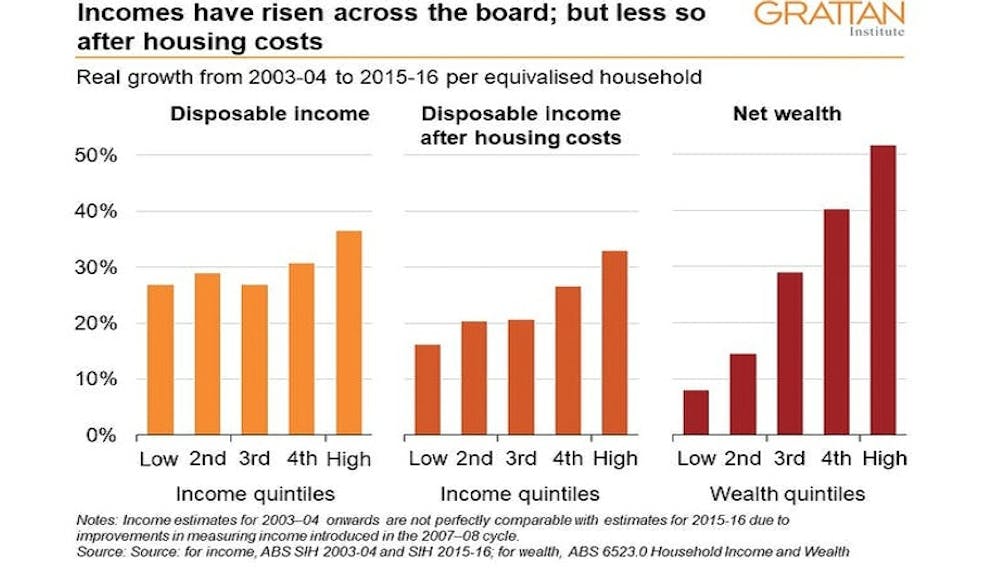
Rising house prices have increased wealth inequality. Rising housing costs have dramatically widened the gap between high and low disposable incomes.
The gap between low-income and high-income households in Australia is close to the OECD average. Income inequality – measured by the gini coefficient – has fallen slightly over the past decade.
The Productivity Commission says inequality has increased only slightly in the past three decades. Economists at the Reserve Bank have come to similar conclusions.
But inequality is growing once housing costs are factored in, with the poor being hurt the most.
Incomes for the lowest 20% of households increased by about 27% between 2003-04 and 2015-16. But their incomes after housing costs increased by only about 16%. Low-income Australians are spending much more than they used to keep a roof over their heads.
In contrast, incomes for the highest 20% of households increased by 36%, and their after-housing incomes by 33%.
Leaving the young and poor behind
Home ownership is increasingly benefiting the already well-off. Since 2003-04, increasing property values have contributed to the wealth of high-income households increasing by more than 50%. Wealth for low-income households has grown by less than 10%
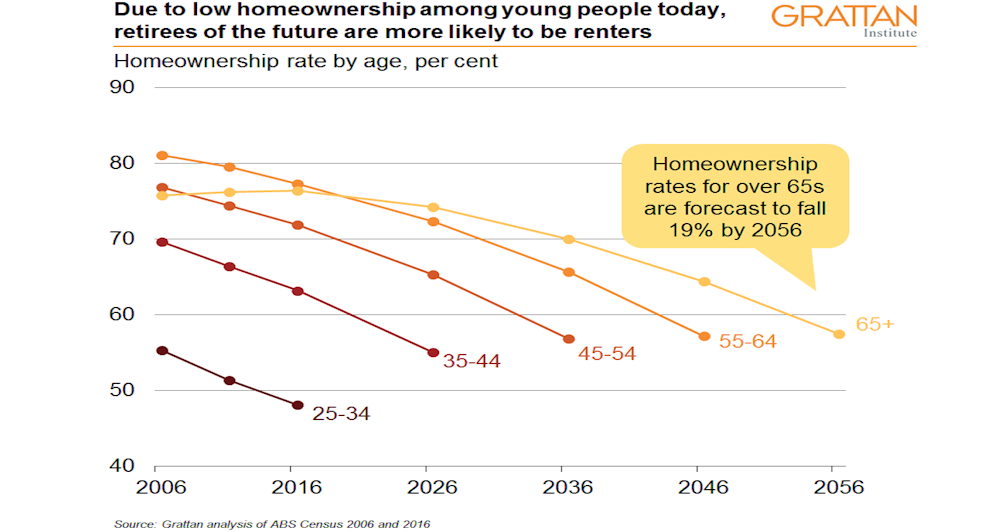
As we’ve noted previously rising housing costs have widened the gap between renters and home owners. As property prices have escalated, the higher deposit hurdle has seen rates of home ownership falling fast among the young and the poor.
In 1981 more than 60% of those aged 25-34 had a mortgage; by 2016 it was 45%. The trends are similar among older groups. In the same period, home ownership among the poorest 20% of households has fallen from 63% to 23%.
The big winners of the property boom have typically been older typically Australians lucky enough to buy a house before prices took off. Housing has thus compounded inequality between the young and old.
This could lead to higher inequality in the future, because the children with wealthier parents can rely on the “bank of mum and dad” to break into the housing market, and then inherit their parents’ home as an investment property.
Many low-income Australians won’t be so lucky, which is why the share of Australians who own their homes is expected to fall sharply in the decades ahead.
A clearer policy agenda
Despite the clear evidence housing is key to inequality in Australia, housing policy is thin on the ground.
In the dying days of the federal election campaign, the Coalition announced a plan to help those struggling to save the 20% deposit normally required to buy a home.
The federal government has also made it easier for people to access their super to pay the deposit.
These policies might be popular but do little to improve housing affordability for low-income earners; they might even do more harm than good.
Labor, meanwhile, ran with a proposal during the last election campaign to build 250,000 new affordable housing dwellings, using a mechanism similar to the earlier National Rental Affordability Scheme (NRAS). On our analysis, though, the original NRAS was poor value for money, and did not target those most in need.
Addressing inequality requires a clearer view on what to do about rising housing costs.
The priority should be to boost Rent Assistance by 40% – an extra A$1,410 a year for singles and A$1,330 for couples – and benchmark it to rents paid by low-income renters.
The federal government should also give more funding to the states for social housing carefully targeted to people at serious risk of homelessness.
Emulating the Rudd-era Social Housing Initiative, which resulted in 20,000 new social housing units being built and thousands more refurbished at a cost of A$5.6 billion, would provide a much-needed boost to housing construction when the pipeline is drying up.
Supply-side economics
But redistribution alone won’t be enough. Housing is a A$6.6 trillion market. Subsidies can only paper over market failures arising from overly strict zoning rules that prevent greater density in our major cities.
Housing inequality will really only fall if housing costs fall. That requires building more houses. We estimate building an extra 50,000 homes a year for the next decade would make house prices and rents 10% to 20% lower than they would be otherwise.
This is primarily a challenge for state governments. They govern the local councils that set most planning rules and assess most development applications. But the federal government can and should encourage the states to boost housing supply by reforming land-use planning and zoning laws.
If Scott Morrison really believes in “a fair go for Australians”, he needs to tackle the housing crisis.
Unlike previous incidents, the impact of this attack has not just been felt locally. With half of Saudi oil output halted – around 6% of total world production – global fuel oil prices have spiked. The markets are spooked.
Direct culpability for the attack remains unclear. While Yemeni Houthi rebels have claimed responsibility, other sources and evidence have pointed to an Iraqi source, potentially the Hashd al-Shaabi militia.
Some sources inside the US government have also outright accused Iran itself. This seems unlikely, though, given Iran’s penchant for proxy activity and plausible deniability.
Regardless of who physically pressed the launch button, however, it is almost certain that Tehran was the primary enabler of the strike. The state has a long history of supplying proxy non-state actors with the equipment, intelligence and training necessary to execute such attacks.
Indeed, in the context of the past few months, the attack appears to be the latest in a series of efforts by Iran to escalate tensions and insecurity in the Persian Gulf to push back on the US “maximum pressure” sanctions campaign.
A strategy of tension
Since early this year, Iran has committed itself to a strategy of destabilisation in and around the Arabian Peninsula.
The reasons have been myriad, but primarily revolve around the fallout from the US withdrawal from the 2015 nuclear agreement. This has left Iran diplomatically isolated, economically strained and feeling betrayed by the wider international community.
Seeing few good options, the Iranian leadership has decided to promote chaos and instability to inflict what pain it can on global energy markets. The hope is this will add urgency to the negotiations with world powers and force them to seek a political solution to the economic and security standoff that provides an acceptable exit for Iran.
According to US Secretary of State Mike Pompeo, the Islamic Republic has been involved in nearly 100 incidents over the past few months targeting oil, transport and security infrastructure and equipment.
Iran seized the British-flagged oil tanker Stena Impero in July.Hasan Shirvani/EPA
While Iran has been directly implicated in a few of these cases, the majority appear to have been undertaken by allied non-state actors in Iraq and Yemen.
If one considers Iran’s historical patronage of such organisations, this should come as no surprise. Since the revolution in 1979, the Islamic Republic has actively cultivated relationships with such groups as a key part of its foreign policy, most famously with Hezbollah in Lebanon.
Such close alliances have permitted Tehran to project its influence into areas it otherwise would have little access to. They also grant a degree of plausible deniability when it comes to radical actions like those witnessed this week.
This can make it diplomatically more difficult for affected countries to assign blame and, more importantly, react to such provocations.
What was notable in these attacks was their relative bloodlessness and precision. They were primarily designed to threaten and inflict economic harm and uncertainty, rather than kill and maim.
This, combined with a general commitment to employing militant proxies, highlights the Iranian desire to create enough tension to achieve political outcomes, while avoiding crossing a threshold that would lead to dramatic military blowback from the US and its allies.
This is a fine line to walk at the best of times.
Gambling on inaction
Tehran’s brinkmanship rests on an assumption that calibrated provocations will not elicit serious reprisals.
Iran’s security elites have concluded that the Trump administration has little stomach for serious foreign military adventurism. A quick examination of the recent historical record shows that while the current American leadership has demonstrated an unprecedented amount of security policy bark – particularly on Twitter – this has not coincided with a similar level of bite.
Trump’s initial threats of “fire and fury” towards North Korean leader Kim Jong-Un in 2017 were quickly shown to be pure bluster.
Indeed, such bellicose posturing quickly gave way to unprecedented dialogue between the two countries. This culminated in an ongoing series of no-strings-attached summits in which the US president bizarrely prostrated himself before the Hermit Kingdom’s autocrat for little clear gain.
More evidence of American reticence can be found in Syria. Trump loudly and continuallywarned against Bashar al-Assad’s use of chemical weapons against Syrian civilians.
But, when push came to shove, punitive measures by the US proved little more than anaemic symbolism and posed no serious threat to the regime’s survival.
Just a few months ago, Trump also aborted several military strikes on Iranian military targets after the downing of a US drone. It was another indication Washington has little appetite for open conflict.
Internally, Trump has also clashed heavily with several of the hawks in his administration. In some cases, he has purged them when their views clashed too heavily with his own risk aversion.
The most notable recent example was the humiliating dismissal of his national security adviser, John Bolton, one of the 2003 Iraq war’s chief architects and a staunch advocate of regime change in Iran.
Trump has backed away from confrontation with Iran in recent days, saying he wants to wait for the result of an investigation into the Saudi strike.Jim Lo Scalzo/EPA
Rolling the dice
The Saudi incident this week represents an undeniable and significant escalation by Iran in its ongoing campaign of tension in the region. The attack has seriously raised the stakes and potential for a conflict between both regional and global players.
But looking at the Trump administration’s recent history, Iranian foreign policymakers are assuming their actions will not spark a dramatic escalation.
In theory, this is a reasonable conclusion, supported by evidence. But security dilemmas like this are characterised by an incredibly complex intersection of competing interests, understandings and short time frames. This often leads to tragic and unpredictable outcomes for those involved.
One has only to look at the ramifications of a previous US intervention against Iranian disruption in the gulf, Operation Praying Mantis in 1988, for evidence of the potential for a rapid escalation to large-scale military exchange.
Twelve leading journalists from 11 Pacific Island countries will converge in Suva, Fiji, this Friday to discuss critical issues affecting the region including climate change and natural disaster relief and recovery and regional security.
The one-day “Capstone at The University of the South Pacific” (USP) Laucala Campus marks the culmination of three weeks of dialogue, study and reporting tours of the US undertaken by the journalism fellows covering Honolulu, Washington D.C., Galveston, and San Francisco.
The US State Department-funded tours have been organised and overseen by three Hawaii-based East-West Centre staff: media programme manager Susan Kreifels, senior programme officer Scott Kroeker, and program co-coordinator Katie Bartels.
Besides covering critical issues affecting the Pacific on their tour, the journalism fellows received in-depth skills-based training in fact-checking, open source research methodologies and news literacy and disinformation/propaganda challenges in the local news and social media networks in the region.
The Suva workshop is jointly hosted by the East-West Centre, the Pacific Islands News Association (PINA) and the USP Journalism Programme in Suva.
– Partner –
The workshop will focus on students sharing their “learnings and experiences” from the intensive three weeks of engagement and discussion.
The USP Vice-Chancellor and President, Professor Pal Ahluwalia, will also address the fellows.
The coordinator of the USP Journalism Programme Dr Shailendra Singh said he was looking forward to the workshop in which 30 USP journalism students will also participate.
“It’s a great learning opportunity,” said Dr Singh. “I was part of a similar programme earlier this year for journalism academics from around the world — the Study of the US Institute for Scholars fellowship — hosted by the Arizona State University’s Cronkite School of journalism. It was a marvellous academic and cultural experience.”
USP Journalism has played crucial training role in the region for 30 years, with over 300 graduates in prominent media roles in the region and beyond.
The PINA manager Makereta Komai said as a regional media organisation, PINA was happy to partner with the East West Centre and USP Journalism in up-skilling Pacific journalists.
“This study tour is a great learning opportunity for the Pacific media to engage and discuss issues directly with US decision makers and see first-hand how the US is implementing policies related to climate change and disaster risk reduction, regional security and issues related to the media.”
As the premier regional organisation representing the interests of media professionals in the Pacific, PINA links together radio, television, newspapers, magazines, online services, national associations and journalism schools in 20 island nations.
The Pacific Media Centre and Asia Pacific Report have a publishing partnership with the University of the South Pacific journalism programme
Luis Alfonso de Alba - UN Secretary-General’s Special Envoy for the Climate Action Summit
Op-Ed by Luis Alfonso de Alba – UN Secretary-General’s Special Envoy for the Climate Action Summit
Luis Alfonso de Alba – UN Secretary-General’s Special Envoy for the Climate Action Summit
Climate change is not a far-away problem– it is causing huge damage right now in Asia-Pacific and around the world. From air pollution choking many major cities, to more extreme heat and natural disasters, to one million species at risk, the urgent need for climate action is clear. We are all paying the price today, but unless we take action immediately to limit the impacts of climate change, it is young people who will be living with the ever-increasing consequences of global warming. So it is no surprise that it is young people who are at the frontlines of efforts do something about it.
We cannot afford to ignore the voices of young people. We cannot afford to trivialize their demands. What they say matters.
Today, there 1.8 billion people in the world are between the ages of 10-24 years, and 1.2 billion of them are between 15-24 years. It’s not just that we need to listen to the voices of youth, it’s because the voices of youth matter. Young people can drive agendas. This is the most interconnected generation in history. And together, what they purchase determines what sells.
Young people are telling us we need to change. The world is on an unsustainable path, and as climate impacts increase, the opportunities for today’s young people will diminish. They are demanding nothing short of a transformation of the economy to a green economy
Political, business and civil society leaders in every country are taking notice. To ignore the voices of youth is to ignore the urgency with which we must act.
UN Secretary-General Antonio Guterres is convening the Climate Action Summit in September in New York to spark this transformation. The Secretary-General has made clear that we must value the voices and welcome to the global stage the young climate champions who have been setting the agenda and inspiring climate solutions.
That’s why I’m working with Secretary-General Guterres to convene the first-ever UN Youth Climate Summit in New York City on Saturday, September 21.
The Youth Climate Summit will feature a full day of programming that brings together young activists, innovators, entrepreneurs, and change-makers who are committed to combating climate change at the pace and scale needed to meet the challenge. It will be action oriented, and inclusive, with equitable representation of young leaders from all walks of life and every region of the globe.
More than 7,000 young people between the ages of 18 to 29 answered our call to apply to attend the Youth Climate Summit. While only slightly more than 500 can attend, an effort has been made to ensure wide and inclusive representation. 100 young leaders from the Global South were awarded a UN sponsorship, or “Green Ticket”– funded, carbon-neutral travel to New York City – to participate in the Summit. These outstanding young leaders have been selected based on their demonstrated commitment to addressing the climate crisis and advancing solutions. Given the impacts of climate change in Asia-Pacific, including increased disaster risk, inequality and harm to the environment, and the leadership of young people in communities here – I’m pleased that several young people from the Asia-Pacific region have been selected to participate in the Summit in New York.
I look forward to joining the selected young climate leaders in this historic moment in September and hearing from them about potential solutions that can help meet the challenges posed by climate change. But their work, and our work, does not end there.
It is imperative that all of us – individuals, business leaders, heads of state – draw inspiration from these young leaders.
Secretary-General Guterres has called on world leaders to come to the Climate Action Summit with concrete plans, not beautiful speeches. Leaders would do well to hear the calls from young people to protect their communities today and safeguard their futures.
Businesses must step up and follow young entrepreneur’s lead in the transition to a low-carbon economy that provides inclusive and sustainable economic growth.
And everyone in civil society can join with young climate champions by following along on the Youth Summit livestream and making choices that have less harmful effects on the environment through ActNow.
I urge young people to continue taking positive climate action now and holding leaders, business and your communities to account. By doing so, you will continue to push us forward in this race we cannot afford to lose.
Luis Alfonso de Alba is the UN Secretary-General’s Special Envoy for the Climate Action Summit
Every spring in Australia is heralded by reports of magpies swooping at people. While it is of little comfort to those at the receiving end of a surprise attack, such events are actually quite rare when one considers the number of magpies across Australia, and the fact that they love to share our urban habitat with us.
According to one estimate, fewer than 10% of magpies swoop, and even fewer of these do so consistently. It is almost always males that swoop, and they only do so when they have chicks in the nest. Once the chicks are out the males seem to calm down; presumably they perceive nest-bound chicks as most vulnerable.
Swooping behaviour also seems to vary across Australia – at least according to Magpie Alert!, a website on which the public can report magpie attacks. Many more swoops have been reported in the eastern states than in Western Australia, and fewest of all in Tasmania.
But regardless of their relative rarity, being the target of a swooping attack by a magpie can be frightening. It has resulted in injuries and, tragically this week, the death of a 76-year-old cyclist in Wollongong.
What can we do to avoid ending up on the receiving end? Is any of the advice meted out each year on avoiding attacks actually worthwhile, or backed by evidence? As with just about everything involving biology, the answer is “it depends”.
Some magpies never attack pedestrians but go for cyclists; others do the opposite. And some hold a deep animus against posties on bikes, and reserve their fury solely for them. Even more astonishingly, some magpies seem to really have it in for particular people, and will preferentially attack them.
Although Australian magpies are not related to true crows, they do share similar levels of intelligence. US researchers have shown that American crows recognise people who have trapped them to band them, give alarm calls when they next see them, and even pass on that information to untrapped birds who also sound the alarm when they see trappers.
It seems likely that Australian magpies do the same, effectively holding a grudge against particular people. Unfortunate posties, travelling the same route each day and meeting the same magpies, seem to end up on the naughty list through no fault of their own.
Cyclists do seem to invoke more extreme reactions than pedestrians, judging by the fact that magpies appear to pursue cyclists farther. It therefore stands to reason that the best response to a swooping attack while cycling would be to get off and push your bike.
You will of course be wearing a bike helmet, and as magpies swoop from behind, this will offer protection against its sharp beak.
Sadly it seems that the classic tactic of attaching cable ties to your helmet does little to deter a determined magpie, beyond the fact that some strategic placing can help keep them away from your ears. Ditto the idea of painting eyes on the back of your helmet or hat.
Not the ears!Vic Dept Env., Land, Water & Planning/AAP Image
More reassuringly, however, magpies really only swoop in the vicinity of their nest, so once you have moved away you should be safe. If you become aware of swooping attacks in a certain area the best thing is to avoid it – even just crossing the road should be sufficient.
If you can’t do that, at least wear a hat and sunglasses; these will help reduce the chance of a determined magpie pecking a sensitive area. Turning to face magpies may also help – many birds do not appreciate being staredat, and as magpies prefer to swoop from behind, this may be a good tactic if you find yourself cornered in a park.
If you have magpies in your garden, perhaps the most appealing way of avoiding attacks is to become their best friend. Given that magpies have long memories, a few judicious offerings of mince or similar tidbits throughout the year can help you befriend them, making them much more amenable to your presence come spring.
But don’t overfeed them – it’s just a friendly bribe, not a full-blown dependency.
If all else fails, simply console yourself with the fact that swooping season only lasts a few weeks. For the rest of the year magpies are peaceful urban nighbours who delight us with their distinctive song.
Bear that in mind, and we can hopefully reach a détente with our feathered (and occasionally flustered) friends. In the meantime, if you are unlucky enough to be swooped, remember to help others avoid the same fate by posting the details to Magpie Alert!.
Unlike previous incidents, the impact of this attack has not just been felt locally. With half of Saudi oil output halted – around 6% of total world production – global fuel oil prices have spiked. The markets are spooked.
Direct culpability for the attack remains unclear. While Yemeni Houthi rebels have claimed responsibility, other sources and evidence have pointed to an Iraqi source, potentially the Hashd al-Shaabi militia.
Some sources inside the US government have also outright accused Iran itself. This seems unlikely, though, given Iran’s penchant for proxy activity and plausible deniability.
Regardless of who physically pressed the launch button, however, it is almost certain that Tehran was the primary enabler of the strike. The state has a long history of supplying proxy non-state actors with the equipment, intelligence and training necessary to execute such attacks.
Indeed, in the context of the past few months, the attack appears to be the latest in a series of efforts by Iran to escalate tensions and insecurity in the Persian Gulf to push back on the US “maximum pressure” sanctions campaign.
A strategy of tension
Since early this year, Iran has committed itself to a strategy of destabilisation in and around the Arabian Peninsula.
The reasons have been myriad, but primarily revolve around the fallout from the US withdrawal from the 2015 nuclear agreement. This has left Iran diplomatically isolated, economically strained and feeling betrayed by the wider international community.
Seeing few good options, the Iranian leadership has decided to promote chaos and instability to inflict what pain it can on global energy markets. The hope is this will add urgency to the negotiations with world powers and force them to seek a political solution to the economic and security standoff that provides an acceptable exit for Iran.
According to US Secretary of State Mike Pompeo, the Islamic Republic has been involved in nearly 100 incidents over the past few months targeting oil, transport and security infrastructure and equipment.
Iran seized the British-flagged oil tanker Stena Impero in July.Hasan Shirvani/EPA
While Iran has been directly implicated in a few of these cases, the majority appear to have been undertaken by allied non-state actors in Iraq and Yemen.
If one considers Iran’s historical patronage of such organisations, this should come as no surprise. Since the revolution in 1979, the Islamic Republic has actively cultivated relationships with such groups as a key part of its foreign policy, most famously with Hezbollah in Lebanon.
Such close alliances have permitted Tehran to project its influence into areas it otherwise would have little access to. They also grant a degree of plausible deniability when it comes to radical actions like those witnessed this week.
This can make it diplomatically more difficult for affected countries to assign blame and, more importantly, react to such provocations.
What was notable in these attacks was their relative bloodlessness and precision. They were primarily designed to threaten and inflict economic harm and uncertainty, rather than kill and maim.
This, combined with a general commitment to employing militant proxies, highlights the Iranian desire to create enough tension to achieve political outcomes, while avoiding crossing a threshold that would lead to dramatic military blowback from the US and its allies.
This is a fine line to walk at the best of times.
Gambling on inaction
Tehran’s brinkmanship rests on an assumption that calibrated provocations will not elicit serious reprisals.
Iran’s security elites have concluded that the Trump administration has little stomach for serious foreign military adventurism. A quick examination of the recent historical record shows that while the current American leadership has demonstrated an unprecedented amount of security policy bark – particularly on Twitter – this has not coincided with a similar level of bite.
Trump’s initial threats of “fire and fury” towards North Korean leader Kim Jong-Un in 2017 were quickly shown to be pure bluster.
Indeed, such bellicose posturing quickly gave way to unprecedented dialogue between the two countries. This culminated in an ongoing series of no-strings-attached summits in which the US president bizarrely prostrated himself before the Hermit Kingdom’s autocrat for little clear gain.
More evidence of American reticence can be found in Syria. Trump loudly and continuallywarned against Bashar al-Assad’s use of chemical weapons against Syrian civilians.
But, when push came to shove, punitive measures by the US proved little more than anaemic symbolism and posed no serious threat to the regime’s survival.
Just a few months ago, Trump also aborted several military strikes on Iranian military targets after the downing of a US drone. It was another indication Washington has little appetite for open conflict.
Internally, Trump has also clashed heavily with several of the hawks in his administration. In some cases, he has purged them when their views clashed too heavily with his own risk aversion.
The most notable recent example was the humiliating dismissal of his national security adviser, John Bolton, one of the 2003 Iraq war’s chief architects and a staunch advocate of regime change in Iran.
Trump has backed away from confrontation with Iran in recent days, saying he wants to wait for the result of an investigation into the Saudi strike.Jim Lo Scalzo/EPA
Rolling the dice
The Saudi incident this week represents an undeniable and significant escalation by Iran in its ongoing campaign of tension in the region. The attack has seriously raised the stakes and potential for a conflict between both regional and global players.
But looking at the Trump administration’s recent history, Iranian foreign policymakers are assuming their actions will not spark a dramatic escalation.
In theory, this is a reasonable conclusion, supported by evidence. But security dilemmas like this are characterised by an incredibly complex intersection of competing interests, understandings and short time frames. This often leads to tragic and unpredictable outcomes for those involved.
One has only to look at the ramifications of a previous US intervention against Iranian disruption in the gulf, Operation Praying Mantis in 1988, for evidence of the potential for a rapid escalation to large-scale military exchange.
There’s no shortage of special days throughout the year. Some — like International Literacy Day — speak to important issues in society. Others speak to our inner dag.
Today marks one of the daggier days, International Talk Like a Pirate Day. It marks the occasion when Americans John Baur (aka Ol’ Chumbucket) and Mark Summers (aka Cap’n Slappy) first proclaimed in 1995 that everyone in the world should talk like a pirate.
And so we thought we’d take the chance to answer a few pirate questions. Why do pirates say “arr”? What are timbers — and what happens when they get shivered?
Let’s get underway me language-loving ‘earties.
Who put the ‘arrr’ in pirate?
The modern-day fiction of pirate-speak emerged from pirate-themed amusement rides, books and films, especially the Disney classics like Treasure Island, the Pirates of the Caribbean series — and of course Australia’s own Captain Feathersword of the Wiggles fame.
You may already know how to talk like a pirate, but can you dance like one?
The signature pirate voice is West Country (or some version of it). But why West Country?
True, south-western England produced well-known pirates like “Black Sam” Bellamy and “Long Ben” Every, but famous pirates came from all over. Captain Kidd hailed from Scotland, Black Bart from Wales, William Burke from Ireland and Edward “Ned” Low from London.
But it was Dorset-born Robert Newton – acclaimed actor and patron saint of Talk Like A Pirate Day – who set the fashion for pirate-speak. His portrayal of Long John Silver and Blackbeard in 1950s films set the gold standard for pirate voices on the screen – including the “arr”.
Together with the skull-and-crossbones logo, this accent built the pirate brand.
How pirate-speak preserves language
The books and movies that launched the pirate brand all those years ago have acted like artificial life support systems for expressions that otherwise would have long bitten dust.
Making many regular appearances on September 19 are expletives like “timbers”, “shiver me timbers” and “sash me timbers” – all nautical exclamations from the late 18th century.
Timber was a slang term for “wooden leg” (“timber toe” meant “man with a wooden leg”). It was also a nautical expression for the pieces of wood making up the ribs or frames of a ship’s hull. The term “shiver” meant “to splinter” (by happy coincidence, English has another verb “shiver” with equally appropriate “quiver, tremble” senses).
There was undoubtedly a bit of word play going on with these mock oaths — the idea being something like “may my wooden leg (or ship) fly into small pieces!”. They are modelled along the lines of frightful curses like “Gorblimey” (a truncated version of “May God blind me”) and “Drat” or “Rats” (innocent sounding expressions until you realise they’re disguised forms of “God rot them”).
Acclaimed actor Robert Newton built the pirate brand in films like Treasure Island and Black Beard.IMDb
Like “(God) strike me dead” and “blow me down”, shiver me timbers was rare by the mid 1800s and is never encountered these days – except on September 19.
We see a similar pirate-specific support of nautical terms like “hearty” and “lubber”. When pirates say “me hearties”, they’re giving due respect to a person for bravery or other admirable qualities. “Hearty” was even another word for “sailor” from the 18th to the early 20th century.
“Lubber” has been around since the 14th century and referred to a clumsy and idle person. In fact, before becoming part of sailor parlance, people spoke scathingly of the “abbey-lubber” (monks living in idleness or self-indulgence).
And from the 16th to the 19th centuries, we see the “lifting” hearties speaking of the “leaning” lubbers, especially those land-lubbers.
Tracing sea lingo from travel logs to sluiced gobs
Our knowledge of sea-faring lingo comes from early manuals like seamanship writer Samuel Sturmy’s Compleat Mariner (1669). Some of this nautical jargon made it into ordinary language and survived — “by and large”, “taken aback”, “underway” and “go by the board”.
The so-called golden age of piracy (late 17th and early 18th centuries) happened to coincide with the golden age of travel literature, and it became the fashion of the time for writers to pepper their memoirs and travelogues with nautical words. This was so much the case that philosopher George Campbell described the practice as a “source of darkness in composing”.
The Capture of the Pirate Blackbeard, 1718 by Jean Leon Gerome Ferris. Blackbeard is one of the world’s most famous pirates. But did he really say ‘arrr’?Wikimedia commons, CC BY
Early slang dictionaries are another source of “tar phrases”, tar being an early appellation for a sailor. Early lexicographer Captain Francis Grose’s Dictionary of the Vulgar Tongue groans with 18th century nautical gems like “shipshape” (orderly), “junk” (pieces of old rope and, later, “pieces of salted pork”), and lashings of terms for food and drink — “belly timber”, “slush and tack” (food), “grub-spoiler” (cook), “flash the hash” (to vomit), “grog” (rum and water), “sluice the gob” (to drink) are some of the success stories.
Those who see scruffy slang as a shortcoming of modern times might be surprised to encounter in Grose’s dictionary entries like “Vice Admiral of the Narrow Seas”, which he defines as “a drunken man that pisses under the table into his companions’ shoes”.
In fact, many current terms around drunkenness hail from this time: “slewed”, “(well) spliced”, “listing to starboard”, “three sheets to the wind”, “legless”, “keel over” and “guzzle-guts” (“one greedy of liquor”). Even the phrase “name your poison” as an invitation to drink was early sailing slang. It seems the expression “drunk as a sailor” is well founded.
So go ahead and enjoy International Talk Like a Pirate Day. It’s the one day when all around the English-speaking world, you can hear “shiver me timbers” and a flourishing of picaroon “arrrs”!
And if our short introduction has whet your appetite, check out the talk like a pirate website or use a pirate translator. These ‘ere translatin’ contrivances be fer turnin’ decent English into the lingo of sea-dogs. At this point we’ll sling our hook…
Source: The Conversation (Au and NZ) – By Katie Pickles, Professor of History at the University of Canterbury and current Royal Society of New Zealand Te Apārangi James Cook Research Fellow, University of Canterbury
Today marks the passing of the much celebrated 1893 Electoral Act, 126 years ago, which made New Zealand the first country in the world to grant women the right to vote.
But it would take 26 years before the often twinned step of allowing women to stand for parliament happened. On October 29, it will be a century since the passing of the 1919 Women’s Parliamentary Rights Act, which opened the way for women to enter politics.
Women’s suffrage and women’s right to stand for parliament are natural companions, two sides of the same coin. It would be fair to assume both happened at the same time.
Early women’s suffrage bills included women standing for parliament. But, in the hope of success, the right was omitted from the third and successful 1893 bill. Suffragists didn’t want to risk women standing for parliament sinking the bill.
The leader of the suffrage movement, Kate Sheppard, reluctantly accepted the omission and expected that the right would follow soon afterwards. But that didn’t happen.
After women won suffrage, agitation for several egalitarian causes, including women in parliament, continued. The Women’s Christian Temperance Movement (WCTU) and, from 1896, the National Council of Women (NCW) both called for the bar to be removed.
Women including Kate Sheppard, Margaret Sievwright, Stella Henderson and Sarah Saunders Page kept up the battle. But the unity found in rallying around the major women’s suffrage cause was lacking and the heady and energetic climate of 1893 had receded.
From 1894 to 1900, sympathetic male politicians from across the political spectrum presented eight separate bills. Supportive conservatives emphasised the “unique maternal influence” that women would bring to parliament. Conservative MP Alfred Newman argued that New Zealand must retain its world-leading reputation for social legislation, but he downplayed the significance. He predicted that even if women were allowed to stand for parliament, few would be interested and even fewer would be elected.
Left-leaning supportive MPs George Russell and Tommy Taylor saw the matter as one of extending women’s rights and the next logical step towards societal equality. But contemplating women in the House was a step too far and all attempts failed.
Enduring prejudice
The failure in the pre-war years was largely because any support for women in parliament was outweighed by enduring prejudice against their direct participation in politics.
At the beginning of the new century, Prime Minister Richard Seddon was well aware of public opinion being either indifferent to or against women in parliament. A new generation of women with professional careers who might stand for parliament, if allowed, comprised a small minority.
Much to the chagrin of supporters, New Zealand began to lag behind other countries. Australia simultaneously granted women the right to vote and stand for parliament in 1902 at the federal level, with the exception of Aboriginal women in some states.
Women in Finland were able to both vote and stand for election from 1906, as part of reforms following unrest. In 1907, 19 women were elected to the new Finnish parliament.
The game changer: the first world war
Importantly, during the first world war, women’s status improved rapidly and this overrode previous prejudices. Women became essential and valued citizens in the war effort. Most contributed from their homes, volunteering their domestic skills, while increasing numbers entered the public sphere as nurses, factory and public sector workers.
Ellen Melville became an Auckland city councillor in 1913. Ada Wells was elected to the Christchurch City Council in 1917. Women proved their worth in keeping the home fires burning while men were away fighting.
In 1918, British women, with some conditions, were enfranchised and allowed to stand for parliament. Canada’s federal government also gave most of its women both the right to vote and stand for parliament.
Late in 1918, MP James McCombs, the New Zealand Labour Party’s first president and long-time supporter of women’s rights, opportunistically included women standing for parliament in a legislative council amendment bill. It was unsuccessful, mostly due to technicalities, and Prime Minister Bill Massey promised to pursue the matter.
Disappointed feminist advocate Jessie Mackay pointed to women’s service during the war and the recent influenza epidemic and shamed New Zealand for failing to keep up with international developments.
Women’s wartime work, renewed feminist activism and male parliamentary support combined to make the 1919 act a foregone conclusion. Introducing the bill, Massey said he did not doubt it would pass because it was important to keep up with Britain. The opposition leader, Joseph Ward, thought war had changed what was due to women, and Labour Party leader Harry Holland pushed women’s role as moral citizens.
The Legislative Council (upper house) held out and women had to wait until 1941 for the right to be appointed there. It took until 1933 for the first woman, Elizabeth McCombs, to be elected to parliament. The belief that a woman’s place was in the home and not parliament, the bastion of masculine power, endured.
Between 1935 and 1975, only 14 women were elected to parliament, compared to 298 men. It was not until the advent of a second wave of feminism and the introduction of proportional representation in 1996 that numbers of women in the house began to increase.
These will be used to assess women recalled for further investigation when a standard 2D screening mammogram picks up something that wasn’t anticipated.
Offering this sophisticated technology within the public system is designed to help women with breast cancer receive an accurate diagnosis in a timely manner, in turn ensuring they can start appropriate treatment as early as possible.
But there’s a distinction to be made here. While this funding will provide 3D mammography machines to be used for further assessment when there may be a problem, many 3D mammography machines are already operating throughout the private system, offered to women as a means for routine screening.
Newer medical technology is often assumed to be better than traditional technology. But when we’re talking about mammography for routine breast screening, this may not be the case.
While evidence shows 3D mammograms detect more cases of breast cancer than the 2D version, many of the additional cancers detected may not go on to cause harm. In these cases, their detection will only lead to anxiety and unnecessary treatment.
What is a mammogram?
A mammogram is an x-ray of the breasts that can be used to investigate breast symptoms such as lumps and pain. It can also be used for screening, to pick up early breast cancer in healthy women who have no symptoms.
In Australia, the BreastScreen program invites women aged 50 to 74 for a free screening mammogram every two years. All women over 40 are welcome to attend if they choose to.
The BreastScreen program offers conventional 2D digital mammograms. During this standard mammogram, compression is applied to the breast, and two images are taken of each breast using a small dose of radiation.
3D mammography, also called breast tomosynthesis, has been introduced over the last decade.
It’s not currently used for screening as part of the BreastScreen program, but it is available in many private radiology practices around the country.
A 3D mammogram applies the same compression to the breast as a 2D test, but takes multiple images, like thin “slices”.
The radiologist can scroll through the collection of images on a computer screen to get a 3D picture of the breast, which can be examined layer by layer, one millimetre at a time. This aims to see through layers of normal breast tissue to find hidden cancer.
Source: Breast Imaging Victoria.
Research has shown 3D mammograms are able to pick up some cancers not seen on conventional 2D mammograms. The cancer detection rate of 3D mammography was around 1.4 times higher than for 2D mammography.
The additional cancers detected by 3D mammograms were small and had not spread to the lymph glands; these are early cancers expected to have better survival rates.
Cancer can be difficult to see in lumpy or dense glandular breast tissue, which is typically seen in women before menopause. 3D mammography appears to be particularly good at detecting cancer in women with dense breast tissue, which may partially account for the increase in detection.
The possibility of overdiagnosis and overtreatment
Some cancers are indolent or slow growing and will never cause clinical symptoms. These cancers can be difficult to distinguish from aggressive cancers detected early. So when they’re found by a screening mammogram, they may be treated with surgery and radiotherapy, causing harm without improving survival.
When we’re talking about breast screening, we’ll often mention the recall rate. That’s the number of women asked to return for further testing, and possibly treatment, when an initial screening shows up something abnormal.
The recall rate is important because, we know for 2D mammography, around 80-90% of women recalled for assessment do not have cancer.
In these cases, being recalled can lead to anxiety, risks and pain associated with biopsy and surgery, and costs for unnecessary procedures.
While a 3D mammogram might pick up more cancers, it could necessitate treatment for cancers not destined to cause harm.From shutterstock.com
Earlier research found the recall rate was lower for 3D mammography than 2D mammography, so there were fewer false positive studies or false alarms that added extra tests, biopsies and anxiety.
But new Australian research, published in the Medical Journal of Australia, has drawn this into question. This study included more than 10,000 women attending a BreastScreen centre in Victoria for routine screening. Some were invited to have a 3D mammogram, while others had a conventional 2D mammogram.
Again, the cancer detection rate was around 1.5 times higher for 3D mammography. However, the recall rate was actually higher for 3D mammography compared to 2D – so more women were asked to return for further work-up (mammogram, ultrasound and/or a biopsy).
Public health experts are currently debating the issue of overdiagnosis in breast screening. The extent of overdiagnosis in screening is not agreed upon, but it is accepted that it exists to some extent.
In the 3D mammography studies, including the latest Australian study, a higher proportion of cancers in the 3D groups were very small invasive or “in situ” malignancies less likely to cause harm than more aggressive cancers. This means many of the additional cancers detected by 3D mammograms could be “over-diagnosed” cancers that cause women to undergo gruelling cancer treatments without real benefit.
It’s unlikely BreastScreen will introduce routine 3D mammography screening in the short term based on the current evidence.
But should you have a 3D mammogram through a private radiology practice? Perhaps, if you have dense breast tissue or you are starting screening in your 30s or 40s due to a family history of breast cancer.
For older women, there may not be additional benefits of 3D mammography over 2D. All women should consider the balance of potential benefits (early detection) and potential harms (overdiagnosis, overtreatment and anxiety) before deciding on a 3D versus a 2D screening mammogram.
Source: The Conversation (Au and NZ) – By Jon Brodie, Professorial Fellow, ARC Centre of Excellence for Coral Reef Studies, James Cook University
Few feel the pain of the Great Barrier Reef’s decline more acutely than the scientists trying to save it. Ahead of next week’s UN climate summit, two researchers write of their grief, and hope.
Jon Brodie
Professorial Fellow, ARC Centre of Excellence for Coral Reef Studies, James Cook University
As I write this, much of inland eastern Australia is enduring what is likely to be the worst drought ever recorded. Bushfires are devastating parts of New South Wales and southern Queensland, tearing through rainforest that should not be dry enough to burn. Major towns will probably soon run out of water. The condition of the vital Murray-Darling river system is dire.
This situation brings me to despair. For the past 45 years I have researched and managed coral reef water quality in Australia and overseas. Now 72, I see that much of my work, and that of my colleagues, has not led to a bright future for coral reefs. In decades to come they will probably still contain some corals, but ecologically speaking they will not be growing, or even functioning.
Coral bleaching at Lizard Island on the Great Barrier Reef in 2016.XL CATLIN SEAVIEW SURVEY
Official assessments appear to confirm the reef’s inexorable demise. A five-yearly outlook report from the Great Barrier Reef Marine Park Authority this month declared the outlook was “very poor” – a decline from “poor” in 2014. A joint federal-Queensland government report released on the same day found “minimal progress” in addressing water quality – the second most serious threat to the reef.
The United Nations Intergovernmental Panel on Climate Change warned in October last year that a global temperature rise of 2℃ above pre-industrial levels will decimate coral growth. It said we must stay below 1.5℃ of warming for coral reefs to have a reasonable chance for a future.
Flood plume extending 60km offshore after an extreme monsoon weather event, February 2019. Such events can seriously damage water quality.Matt Curnock
I feel guilty when discussing this situation with young scientists. I worry that my legacy is such that they will spend their professional lives studying and documenting the terminal decline of coral reefs.
I feel the same sense of guilt towards my 19-year-old grandson, who is in his first year of university studying mathematics. The outlook is grim, not just for coral reefs but for society in general.
My life’s work, spent mostly outside, has taken a toll on my health. I’ve had several skin cancers excised over the past 25 years and in recent years have undergone major skin cancer surgery. I have recovered well and still come to James Cook University every day. But the combination of ill-health, coupled with political inaction over the dire state of the environment, only compounds a feeling that I can’t really make a difference anymore.
But on a more positive note, the Great Barrier Reef is more than just coral. It includes a wonderful array of seagrass, dugongs, turtles, fish, dolphins, birds, and whales – and this is not a complete list.
Many of these species are also in decline. But good water quality management will, for example, help encourage the growth of seagrass on which dugongs and green turtles rely for food. The overall picture may be grim, but there are small spots of hope.
A researcher surveys the aftermath of coral bleaching at Lizard Island on the Great Barrier Reef in 2016.XL CATLIN SEAVIEW
Alana Grech
Assistant Director, ARC Centre of Excellence for Coral Reef Studies, James Cook University
I spent last weekend on Magnetic Island, just a short ferry ride from my Townsville home. With great joy I sat with our infant under a beach tent and watched my older son happily snorkel among the corals and fish.
As the wet season approaches, my anxiety, and that of my colleagues, increases at the prospect of another extreme marine heatwave. Two consecutive summers of coral bleaching in 2016 and 2017 severely damaged two-thirds of the Great Barrier Reef. Some researchers who bore witness to these events experienced “ecological grief”: a profound sense of loss at the environmental harm that global warming brings.
Damage to the Great Barrier Reef threatens the region’s economy, including the fishing and tourism industries.AAP
Extreme weather events associated with climate change jeopardise the tourism and fishing industries, and coastal infrastructure that underpin the region’s economy. Insurance premiums are already higher in northern Australia than in the rest of the country, and some places may one day become uninsurable.
However, my children were born in a wealthy country that is likely to withstand and recover from climate impacts that affect their basic needs. This privilege is not shared by the majority of reef-dependent coastal communities in the world’s tropics.
Fijian Prime Minister Frank Bainimarama warns: “Our region remains on the front line of humanity’s greatest challenges”
I come from a family of healthcare professionals, but felt a career in environmental science offered the potential to make a broader impact. The state of the planet and human health and well-being are inextricably linked.
I continue to be motivated by my research on the Great Barrier Reef. But I am deeply concerned about rising mistrust in the scientific process, despite unequivocal evidence of the reef’s decline and the impacts of climate change. It is particularly distressing when members of the federal government undermine the science that informs their own policies – including North Queensland politicians advocating for a national watchdog to verify scientific papers.
Clownfish in the Great Barrier Reef. Sediment is damaging fish gills and causing disease.AAP/James Cook University
If our political leaders want to support community adaptation and resilience to climate change, they should build, rather than erode, public trust in the evidence that underpins reef management and policy.
This piece is part of Covering Climate Now, a global collaboration of more than 250 news outlets to strengthen coverage of the climate story.
This story is part of Covering Climate Now, a global collaboration of more than 250 news outlets to strengthen coverage of the climate story.
Climate change is one of the most pressing issues facing our society today, so you would think it would be an important topic for study in the school curriculum.
But in Australia that’s not the case. Schools and teachers are largely left to fend for themselves and use other available resources if they want to raise the issue with students.
Put climate change in education
Calls for climate change to be part of the curricula for primary and secondary education were detailed in 2010 when the United Nations Educational, Scientific and Cultural Organisation (UNESCO) established the Climate Change Education for Sustainable Development (CCESD) program. It was part of the organisation’s effort to increase “climate literacy” among young people.
The importance of climate change education was later covered under Article 12 of the Paris Agreement, which Australia and other countries signed in 2016.
Under the Paris Agreement Work Program, countries have agreed to develop extensive education programs and to promote public participation in decision-making.
Some countries – such as Vietnam, the Philippines, South Africa and China – already have national education programs addressing climate change.
Australia is not one of them.
People want action
Australia has not designed, implemented nor funded a coherent educational approach to our climate emergency. That’s despite the fact poll after poll of Australians show the majority want more action on climate change.
The Australian Institute for Disaster Resilience identifies education in schools as a priority in understanding risks of climate change. Yet education departments at state and federal level show few public signs of creating a coordinated curriculum approach.
Explicit links to the topic of climate change in national and state curricula are only found within the senior secondary (Years 11 and 12) and secondary (Years 7 to 10) Humanities, Geography and Science learning areas. Some are compulsory and some optional depending on the school and year group.
We can find no explicit mention of climate change in the primary (Years 1-6) curriculum, though students learn related topics on endangered species, renewable energy and natural disasters.
We predict that continuing curriculum redevelopment will focus more effectively on the climate crisis as its effects become more pronounced. But the current piecemeal approach doesn’t address the problem at scale.
For now, climate change is hinted at but generally unnamed in school curricula. Climate change education is certainly not mandated, nor is it directly nor sufficiently funded.
In and out of the curriculum
In the past 20 years climate change education has been in and out of the formal curriculum depending on the whims of government.
Early in 2010, the Australian government abruptly withdrew funding and support for AuSSI without explanation. The first and second National Action Plans were abandoned.
Schools left to go it alone
No overarching, national coordination has been in place since. Australian schools have been pretty much left to their own devices when it comes to teaching the climate emergency.
Children and young people are presently reliant on the initiative of teachers, parents, principals and professional associations to introduce and maintain sustainability programs to learn about their futures in school time.
Their alternatives are to rely on peers and on information from community and non-government organisation (NGO) networks.
Catholic schools can draw inspiration from the Papal Encyclical, Laudato Si’ (“on care for our common home”), and most schools promote energy, waste and water conservation.
In the last decade, state and federal governments have shied away from systematic, climate change education. That’s despite the real risks to all Australian children and young people who are facing the prospect of diminished lives without climate stability.
There is much to be done within the education sector to maturely and responsibly address the risks of climate change. Denial, prevarication and obfuscation do not alter thermodynamic reality.
Education is central to climate change mitigation, adaptation and resilience. As effects become more frightening, it is reasonable to ask: what is being done about recognising and systematically supporting climate change education in state and national school curricula?
This article was co-authored by Angela Colliver, an education for sustainability specialist who designs educational programs and curriculum resources for Australian schools.
Affordable housing is a critical problem for Australia’s biggest housing markets. Five Australian cities are in the top 25 with “severely unaffordable” housing in a 2019 Demographia survey of 91 major metropolitan markets. Sydney was ranked the third least affordable of the 91.
Cities with housing affordability issues have introduced various policy packages in response. This article compares the policies of Singapore, where housing is relatively affordable, Hong Kong (the world’s least affordable private housing market) and Sydney. Our review shows a need for coherent and coordinated housing policies – a synergistic approach that multiplies the impacts of individual policies.
Housing has direct impacts on people’s well-being. A housing market that works well may also enhance the economic productivity of a city. If not handled properly, housing affordability issues may trigger economic and political crises.
Our review covers several aspects.
A balance of renters and owners
First, an affordable housing system needs to be about both the rental and ownership sectors.
In Singapore, public housing provided by the Housing and Development Board makes up 73% of Singapore’s total housing stock, which includes public rental and subsidised ownership. HDB flats house over 80% of Singapore’s resident population, with about 90% owning their homes. The average waiting time to get public housing is three to four years.
In both cities, subsidised rental and subsidised ownership are an integral part of the public housing system, which aims to improve housing affordability.
Although there are other policy measures to support home buying and rental (such as the National Rental Affordability Scheme), these are not integrated with the public housing system in Sydney. Rather, the goal of these policies is to support the private housing market.
It’s not just about housing supply
Second, housing affordability needs to be backed up by demand-side policies – i.e. policies to help tenants and owners to develop financial capacity.
Third, action on housing affordability needs to take employment and its location into account.
Ultimately, the reason people find it hard to afford housing in certain locations is because they need to achieve a work-life balance. Both Hong Kong and Singapore have developed extensive public transport systems. These offer affordable options for people to travel efficiently to and from work.
In Hong Kong, the average daily commuting time by public transport is 73 minutes. Some 21% of the residents have to travel for more than two hours a day. In Singapore, average commuting time is 84 minutes, with 25% exceeding two hours.
So, what we can learn from these cities’ experiences with housing affordability?
Cities take very different approaches to these issues. Each approach has its own merits and issues.
A key argument against public housing has been that it might give the tenants less incentive to save for housing. It might also not be popular with mainstream voters because of the cost to taxpayers.
Singapore’s approach seems to be a midway solution. The government plays a bigger role in providing housing, but does not waive individual responsibilities. Providing public housing and at the same time demanding individuals and employers contribute can send a strong signal: people are encouraged to join the labour force.
So far, Singapore faces the least housing affordability issues. Hong Kong and Sydney are much more liberal in their approaches to housing.
In Sydney, only the poorest benefit from the public housing system. The younger generation is struggling to get on the housing ladder.
In Hong Kong, people are forced to buy housing in the commercial market if their income is even just above the eligibility line for public housing. The severe unaffordability of private housing in Hong Kong, even for young professionals, brews social discontent.
Combining these three perspectives, Sydney’s housing, savings and public transport systems are far from well synergised to offer a competitive package of affordable housing. The 30-minute city plan prepared by the Greater Sydney Commission might improve the situation. However, similar to Hong Kong, current policies are weak in building the capacity of young people to own homes.
From Darkness, directed by Isaac Drandic, La Boite Theatre
From Darkness is the story about the aftermath of sorry business – Aboriginal rituals that are observed during a period of mourning. It looks at how, on the first anniversary of a loved one’s death, a family is coping with their loss.
Since losing his brother Vinnie to suicide, 17-year-old Preston (Benjin Maza) has been having dreams. He is regularly visited by Vinnie’s spirit who embraces his journey through sorrow and encourages him to move on.
Playwright Steven Oliver may be best known by some for his work on the ABC series Black Comedy, but in Brisbane he is known for his 20-year career in comedic performance, acting, stand up, writing – and his outbursts of ad-libbed singing. Referred to here as walking slapstick (though he prefers “walking clapstick”), he is well known to us.
To know Oliver as an artist is to know spontaneity, as the row of migaloos (white fellas) in the front row of the reviewed performance found out when the first bout of not-so-subtle giggling came out of the darkness from Oliver himself.
It is great to see and hear this happy engagement from creators themselves. In this case the delight flowed easily into the audience. From the introductory dialogue, the audience were hooked in.
The stage was adorned with a cast of both emerging and renowned Indigenous talent. Directed by Isaac Drandic, From Darkness provides audiences with an honest voice and an Indigenous perspective in this space. We see, via our own collective understanding and experience in death and loss, how a variety of emotions and reactions play out in tragic circumstances.
On the anniversary of his brother’s death, 17-year-old Preston, is visited by spirits while he sleeps.Stephen Henry/Brisbane Festival
Preston has nightmares, beautifully represented by a blue psychedelic short film sequence that is projected on the screen at the back of the stage. We see his internal pain and struggle play out physically.
Nanna Lou (Roxanne McDonald) is fierce, demanding answers at the same time as she lays blame.
The sorrow felt by Eric (Colin Smith) is too much to bare and so is hidden and buried deep beneath denial.
Abigail (Lisa Maza) is so devastated that she screams she would rather “feel pain, than guilt”, then turns to the temporary and external comfort of drinking.
Akira (Ebony McGuire) not only suffers the loss of a brother, but also the loss of the love and support from the family around her.
And still, despite his pain, Preston is a tower of strength who calmly and maturely keeps it together for everyone around him.
Players and creators of From Darkness.
From Darkness is a window directly into the lounge room of us as Indigenous peoples. Who we are and how we live is presented here as being as valid as the experience of anyone else.
Don’t we all miss people in different ways? Don’t we all love, laugh, and fight?
There is some swearing in the show and this might be confrontational for some audience members, but it is not enough to make you shy away from the production. It’s use is in context and appropriate because of the harsh reality of the situation the family are in.
As my mother sat next to me laughing out loud along with the rest of the audience at the interaction between mother Abigail and daughter Akira and their fight over a mobile phone, I was glad to see scenarios of conflict were met with both laughter and sadness by all.
A script full of Oliver’s trademark rolling commentary and black jokes eased the harsh and all-too-common reality of sorry business for me.
The cherry on the cake was watching an exiting audience wiping away tears to the backing track of Let’s Stay Together by Al Green. Nice touch, brother Steven.
From Darkness is at La Boite Theatre for Brisbane Festival until September 28
It followed weeks of protests and related unrest in Papua which left at least ten people dead and dozens of Papuans arrested.
The Melanesian countries told the council of their deep concern about ongoing rights violations against the freedoms of expression and assembly, as well as racial discrimination towards Papuans in the Indonesian-administered provinces of Papua and West Papua.
“Related to this agenda item, we are concerned about the Indonesian Government’s delay in confirming a time and date for the Human Rights Commissioner to conduct its visit to West Papua,” Antas said.
For years, the UN Human Rights Commissioner’s office has been trying to secure permission from Jakarta to visit Papua region.
Indonesia’s government has indicated that, for the time being, access to Papua would remain restricted because of the security situation created by the recent unrest, which was triggered by racist harassment of Papuan students in Java last month.
Six thousand extra Indonesian military and police personnel were deployed to Papua to respond to the widespread protests. The government also implemented restrictions on internet coverage in Papua, although this was gradually being eased as of last week.
However, even before the current surge in unrest, Pacific Islands countries voiced frustration that Jakarta had not responded sufficiently to repeated requests by the UN Commissioner for access to Papua.
At the recent 2019 Pacific Islands Forum Leaders Summit in Tuvalu, regional countries called on both Indonesia and the UN Commissioner to finalise the timing of a visit to West Papua, and to submit an evidence-based report on the situation before the next summit in 2020.
“We call on the High Commissioner and the Government of Indonesia to expedite this arrangement so an assessment on the current situation is made, and a report can be submitted to the Human Rights Council for its consideration,” Antas said.
This article is published under the Pacific Media Centre’s content partnership with Radio New Zealand.
Rogue construction union boss John Setka is already in fights with the Labor party and the ACTU leadership. Now he faces a battle with parliament.
Centre Alliance senator Rex Patrick is moving to refer an alleged Setka threat against CA to the privileges committee. Patrick has already sent the matter to the Australian Federal Police.
The reference to the privileges committee will sail through. The ALP, which is battling to expel Setka, will support it as enthusiastically as the government. The Greens are considering their position before the Thursday vote.
Setka attracts condemnation across the spectrum. But so far his critics have found actually landing outcomes – whether expulsion from the ALP or resignation from his union office – elusive.
The latest chapter in the Setka story arose from a union meeting where his inflammatory comments were recorded, and then leaked to Nine media. (While Setka rages about leaks against him out of these meetings, it doesn’t seem to occur to him to avoid making comments worth leaking.)
On the recording, Setka is heard recounting what he’d told senator Jacqui Lambie – who had cooked him a roast and tried to persuade him to quit his union job – when they discussed the government’s Restoring Integrity bill. This legislation contains sweeping powers to deal with recalcitrant unions and officials.
“If them fucking other crossbenchers want to fucking vote for this Integrity bill, let ‘em fucking vote for it but they will wear the consequences of it. Because [with] the money we are saving by not giving to the ALP, we will start a fucking campaign,” he said.
Setka went on to say that when Nick Xenophon had voted for the Australian Building and Construction Commission “we launched a campaign in South Australia … we fucking destroyed that fucker”.
Centre Alliance is the old Nick Xenophon Team rebadged.
If the Centre Alliance senators voted for this bill, Setka said, in 20 years time someone would point to them in the street, saying they had “fucked up” not just construction workers but all workers in Australia. It is this part of the Setka tirade on which Patrick is basing his case about his making a threat.
On radio on Wednesday Setka claimed there was nothing to hear in all this. Perfectly normal. “It’s called campaigning. It has actually been around for a few hundred years.
“There has been no threat made. We don’t go around threatening politicians or senators,” he said.
As it happens, Patrick has some first hand knowledge of what had happened to Xenophon. He says he was witness to two CFMEU workers “accosting” Xenophon at a Perth airport lounge around the time of the ABCC legislation being voted on.
Setka told the ABC he had “always treated people with respect” and if the crossbenchers thought differently “maybe they should toughen up a little bit because it is called campaigning and if they’re not used to campaigning, maybe they are in the wrong job”.
Actually, Patrick is quite tough. Certainly he is willing to take on those he thinks are seeking to challenge or stand over him in any way.
A while ago, Patrick made a big fuss when Mike Pezzullo, secretary of the Home Affairs department, rang him. Pezzullo had taken exception to Patrick’s comment about him in the wake of the police raid on a News Corp journalist’s home. The senator said Pezzullo hated media scrutiny. Patrick accused Pezzullo of trying to silence him by the phone call (an accusation Pezzullo strongly rejected).
On the Labor front, Setka’s ALP membership is already suspended and Anthony Albanese is adamant that he will have him expelled from the party. But getting him out of the party hasn’t been so easy. Setka launched court action. He lost, but he’s appealing the decision.
Now that he will be defending himself against the claims in the privileges committee, he’s become a one-man lawyers’ picnic.
He has also turned into the best friend the Morrison government could have in its effort to get through that Ensuring Integrity legislation.
Although the legislation would not apply to Setka’s past action, his current carryings-on give, from the government’s point of view, an ideal backdrop to its case against parts of the union movement, most notably the CFMMEU.
The government needs crossbench support to get the bill through the Senate. Lambie plans to vote for the legislation if Setka doesn’t step down from his union role. Centre Alliance has concerns about the bill but Patrick said Setka “has done his own cause a disservice because I am now privy to exactly [what] some members of the Victorian construction industry tell me that they have to put up with when dealing with the CFMEU”.
Setka saya he’ll stay “as long as the members want me”. The loyalty of his members to a man who is doing so much damage to the union movement defies reason.
Spring has sprung and if you’re one of the one in five Australians who get hay fever, you’ve probably noticed some of those pesky symptoms: sneezing; an itchy, runny or stuffy nose; and red, itchy, watery eyes.
Unfortunately children aren’t immune. One in ten will get hay fever – or allergic rhinitis, as it’s known in the clinic – and the rate appears to be rising.
Pollens generally cause seasonal symptoms (in spring or summer), while house dust mites are mainly responsible for year-round symptoms.
Children who are allergic to both seasonal and perennial allergens may experience a marked increase in their symptoms during spring.
Hay fever can lead to fatigue, irritability and poor concentration, and can affect children’s learning and social behaviour. But the good news is it’s usually easily treated.
Hay fever can begin as early as 18 months of age, when children are exposed to pollens or house dust mites.
Tiny particles get trapped in the hairs and mucous that line their nasal cavity, or can enter via the conjunctiva – the tissue that covers their eye.
The body treats these invaders as dangerous and mounts an attack, using antibodies called immunoglobulin E, or IgE.
When the allergens bind to IgE antibodies, which are present on immune cells (such as mast cells), the cells quickly release chemical mediators, including histamines and leukotrienes. This causes sneezing, itchy and/or runny nose, and itchy, watery eyes.
The body then recruits other immune cells, such as T cells, causing more inflammation and worsening symptoms.
How do you know if it’s hay fever?
While hay fever can be a life-long health issue, symptoms can fluctuate over time.
As well as sneezing, an itchy, runny nose, and itchy watery eyes, you might notice your child has a dry cough, is snorting or sniffing, or continually clears their throat.
In some instances, they might make a clicking sound with their tongue when they use it to scratch the roof of their mouth.
If you’re unsure, take your child to your local doctor for a diagnosis. If necessary, they can use skin prick or blood tests to detect the presence of relevant IgE antibodies to the suspected allergens.
Your doctor may then discuss the three main treatment options: avoiding the allergen, oral and topical medications, and allergen immunotherapy.
Avoiding the allergen
Once you suspect or know the allergen, you can help minimise your child’s contact with the cause of their hay fever.
For children who have seasonal allergic rhinitis, allergen minimisation strategies could include:
staying indoors on windy days with high pollen counts
avoiding activities with allergen exposure (such as grass mowing)
having a shower promptly after outdoor activities
using re-circulated air in the car.
Try to keep kids with hay fever indoors on days with a high pollen count.Eva Foreman/Shutterstock
For cases of perennial allergic rhinitis, where house dust mite is the dominant cause, avoidance strategies could include:
washing household bedding (sheets and pillow cases) in hot water (above 60°C)
removing soft toys
replacing woollen underlays with dust mite covers
vacuuming carpets with vacuum cleaners fitted with high efficiency particulate air (HEPA) filters.
Medications
Medical therapy is often required in addition to avoiding the allergen.
First line treatments are non-sedating oral antihistamines such as cetirizine, loratadine, fexofenadine and desloratadine. These are available as a syrup or tablets, and can be used for children aged 12 months and over.
They’re available over the counter at pharmacies, or your doctor can advise you on which might work best for your child.
Nasal steroid sprays (also called intranasal corticosteroids) are also very effective in alleviating symptoms when used correctly.
For children who suffer from seasonal allergic rhinitis, nasal steroid sprays should be started prior to the start of the pollen season, and maintained throughout the season.
Nasal steroid sprays can be used for children aged two years and above, and need to be started under the direction of your doctor.
Side effects can include nose bleeds or nasal dryness. While long-term use is generally safe, it’s best to have ongoing reviews by your doctor.
Other treatment options include:
intranasal decongestants – sprays to dry the nose – which relieve congestion in the nose by shrinking swollen blood vessels in the nose. These can be used for up to three days
antihistamine nasal sprays, which may act quicker than oral antihistamines but only in the nasal passages
nasal irrigation with saline (salty water) to clear the nasal passages of the allergens.
Desensitisation
Allergen immunotherapy involves monthly injections, or daily drops or tablets.Microgen/Shutterstock
Allergen immunotherapy, also known as desensitisation, is an option for children who aren’t getting enough relief from medications and avoiding the allergen.
It involves a regular administration of the allergen, either via monthly injections (called the subcutaneous route) or daily drops/tablets under the tongue (known as the sublingual route).
Allergen immunotherapy is available for children aged five years and above via a paediatric allergy specialist, and successfully reduces symptoms in 40-50% of patients.
Treatment is usually given for a period of three to five years, with costs ranging from A$50-A$200 monthly, depending on the number of allergens and products used.
Thousands of forest fires have been burning across Indonesian Borneo and Sumatra, disrupting air travel, closing schools and sickening thousands of people, reports the New York Times.
Officials have said that about 80 per cent of the fires were intentionally set to make room for lucrative cash crops like oil palm.
Spokesman for Indonesia’s disaster management agency Agus Wibowo said that these “slash and burn tactics” were the quickest and cheapest method for farmers to clear the land of its carbon rich rainforests.
Aerial photographs have showed huge clouds of white smoke across vast areas of Kalimantan, the Indonesian part of Borneo, which is home to the endangered Orangutan.
The toxic haze from the fires has also been affecting neighbouring countries, with hundreds of schools in Malaysia forced to close, reports The Guardian.
– Partner –
Indonesian officials have reportedly attempted to deflect some of the blame for the smoke to fires in Malaysia.
“The Indonesian government has been systematically trying to resolve this to the best of its ability. Not all smog is from Indonesia,” said Indonesia’s Environment Minister, Siti Nurbaya Bakar.
However, her Malaysian counterpart Yeo Bee Yin has since released data from the ASEAN Specialised Meteorological Centre (ASMC), which showed the total number of hotspots in Kalimantan was 474 and 387 in Sumatra. By comparison, only seven were recorded in Malaysia.
According to CNA News, Indonesian president Joko Widodo has said he has “made every effort” to extinguish the fires by deploying aircraft and 6000 troops to the hot spots and holding a “salat istisqa”- a prayer to Allah for rain in times of drought.
If nothing comes of the prayer, Coordinating Minister for Politics, Security and Legal Affairs Wiranto has said that the government will seed the clouds with chemicals to prompt “artificial rainfall”, reports Detik News.
While 200 people have been arrested in relation to the fires, officials have said that air quality had been recorded as “unhealthy” or “very unhealthy” in Malaysia, Sarawak and Singapore.
Indonesian forest fires have been a major environmental and health issue in recent decades as dryer conditions and the growing global demand for palm oil exacerbate their spread.
The cost to mitigate the 2015 haze was reported to be US$40 billion.
The fires in Indonesia have added to global alarm about the dire situation in Brazil, where blazes have consumed over 2 million acres of rainforest in the Amazon basin, known as the “lungs of the earth”.
If you have a question you’d like an expert to answer, send it to curiouskids@theconversation.edu.au.
How big is the International Space Station? – Isla, aged 6, Australia.
The International Space Station (ISS) is the biggest human-made thing in space and the third-brightest object in the sky.
It’s so big you can see it in the night sky without a telescope or binoculars. It’s 109 metres long and 75 metres wide – about the same size as a soccer field. It weighs 420 tonnes, about the same as 280 cars.
The space station has 932 cubic metres of total space, with about two-thirds used for equipment and storage. Only one-third of it is “habitable”, meaning it can be used for humans to live in.
All that may sound big for only six astronauts to live in, but it’s actually quite cramped.
The bedroom for each astronaut is a small cabin, with a sleeping bag clipped into the cabin wall to stop them floating around when they sleep. The cabin also holds their computer and has room for a few other personal items.
There are also science labs where the crew can do research. There are up to 2,400 research investigations going on during an expedition so the labs can get very crowded. The crew members have to make room for each other and all their equipment.
Inside a lab on the ISS.NASA
Made in space
Did you know it took 42 space flights to assemble the main pieces of the space station?
On the outside there are eight solar panels that power the space station. Together, they create up to 90 kilowatts of electricity – enough to power 13 Australian houses!
The space station also allows six spaceships to be connected to it at once. These spaceships bring people and supplies from either Russia, Japan or the United States of America.
You can read more facts and figures about the ISS here.
There are currently six crew members on board the International Space Station.www.shuttershock.com, CC BY
Watching the Earth
The view from inside the space station is spectacular. There is a special viewing window called a cupola. It allows one astronaut at a time to view and take photographs of Earth.
The station orbits Earth 16 times every 24 hours. Imagine being able to see 16 sunrises and sunsets every 24 hours. What an amazing sight it would be.
Hello, curious kids! Have you got a question you’d like an expert to answer? Ask an adult to send your question to curiouskids@theconversation.edu.auPlease tell us your name, age and which city you live in. We won’t be able to answer every question but we will do our best.
In March this year, photographer Michael Willson captured an image of AFL footballer Tayla Harris kicking for a goal. The image shows Harris in athletic flight, right leg extended skyward and muscles flexed as her eyes trace the arc of the football beyond the frame.
Tayla Harris captured mid-flight.Michael Willson/Women Sport Australia
Last week in Melbourne’s Federation Square a 3.3 meter bronze depiction of Harris’ kick was unveiled. Statues like that of Harris, can celebrate an individual’s achievements but also expose prejudice or signpost changes in our societal values.
Willson’s original photograph was intended to celebrate athleticism and Australian rules football. Instead, when shared on Seven’s social media accounts, misogynistic comments were posted. In response, Seven took down the posts.
History is repeating itself with the response to her statue, with commenters on social media suggesting Harris is undeserving of the bronzed honour.
In July, a bronze depiction of Nicky Winmar raising his St Kilda jumper and defiantly pointing a finger to his torso was revealed at Perth’s Optus Stadium.
“Footy is for everyone, no matter where you come from, who you are, men, women, children, black or white, rich or poor” Winmar said at the unveiling.
26 years after the iconic photograph, a sculpture of Nicky Winmar was unveiled at Optus Stadium in Perth.AAP Image/Richard Wainwright
The statue is based on Wayne Ludbey’s iconic photograph, and Winmar’s words while he pointed: “I’m black and I’m proud.”
“Twenty six years ago no one wanted to know the message and didn’t understand what we were about. Twenty six years on, here we are on the banks of the Swan River.”
But even after 26 years, the statue still faced delays, kept in storage for over nine months as stakeholders argued over who would pay for transportation. The sculptor Louis Laumen called it an “insult.”
A sports call for racial equality
Last year, Athletics Australia announced they would be erecting a bronze statue of Peter Norman at Lakeside Stadium in Melbourne.
In 1968, Norman won silver in the 200m at the Mexico Olympics. He shared the dias with African American runners Tommie Smith and John Carlos: Smith and Carlos raising fists in a call for racial equality, Carlos wearing the badge of the Olympic Project for Human Rights.
Norman was ostracised by Australian athletics officials and criticised heavily in the Australian press. A statue commemorating his act has been considered a way to right a significant wrong.
Statues and monuments have tended to celebrate and maintain the symbolic and material prominence of white men, with only 3% of public statues in Australia honouring non-fiction, non-royal women. Statues of Indigenous Australians are similarly rare.
Yet even for male players, statues of sports people are relatively new. In the UK, research has found just 15 statues of sportspeople were erected before 1995, and over 100 to 2012. Dr Chris Stride, the statistician behind a database of sporting statues, told the BBC “Sports people are seen as celebrities, they never used to be.”
Stride believes these statues, largely of retired (or dead) players are a way for fans to “[bask] in reflective glory”.
But they can do more than commemorate and reflect the past. Statues and the spaces they occupy are a kind of history of the present.
These three recent Australian statues focus not only on the sports person, but also significant cultural moments. They are tangible, material remnants of social consciousness that have the potential to reach far beyond sport.
At the foot of the Harris monument is inscribed “More than a kick”: a testament to the fact that statues and monuments of sport stars are rarely simply about their sporting prowess. As Harris said, the statue is “not about me. It’s about the moment and what happened”.
Re-imaging an inclusive future
Australian rules football is a code culturally dominated by white men, both on and off the field. Enshrining players like Harris and Winmar in bronze goes against this narrative.
Public statues which mark and celebrate the achievements of athletes influence the way we see ourselves. Their absence can be equally influential. The overwhelming absence of women’s and Indigenous Australian’s sporting achievements demonstrates how particular athletes and sports are valued: you can’t be what you can’t see.
In Federation Square, Harris was mobbed by groups of teenage girls wanting a selfie with the AFLW star.
Young fans were happy to bask in Tayla Harris’ fame.David Crosling/AAP
In the wake of the more recent racial abuse of Indigenous AFL athletes, Winmar’s statue creates an important record of this history – and the strength of the players who have stood up to it.
The statue of Norman follows a 2012 parliamentary appology: together they are a necessary corrective to the way he was ostracised following the 1968 games.
Online criticism of character and deservedness can divert attention away from the issues, practices and behaviour these players had the fortitude to call out – and how radical these statues are among other bronzed bodies.
These depictions of Harris, Winmar and Norman underline, celebrate and encourage collective memory and ongoing meaningful discussion of moments and events which have profound cultural and political significance.
A memorial to social history
The Harris statue is yet to find a permanent home, but it will remain in Federation Square during the AFL finals period. It should be celebrated for encouraging more diverse acknowledgement and recognition of the various sportspeople in Australia.
These statues not only create a memorial to sports people, but also Australia’s social history: they create talking points to remember our past, and imagine new possibilities for our future.
This story is part of Covering Climate Now, a global collaboration of more than 250 news outlets to strengthen coverage of the climate story.
This Friday in the lead-up to the United Nations climate summit, children and adults worldwide will go on strike for stronger action on climate change. However, you may ask, is striking effective? What can it really hope to achieve?
Our research, recently published in the Journal of Environmental Psychology, suggests striking can promote the psychological factors most important for fighting against climate change.
If you’re wondering what you, as an individual, can do to support action against climate change, joining a strike (and asking your friends, family and colleagues to come with you) is a very good start.
From belief to action
In our recent research, we surveyed a large sample of Australians. We asked them how willing they would be to personally act on climate change (for example, pay more for electricity), support social interventions (such as using public funds to give rebates to households that install renewable energy), or take advocacy action (such as send an email to government officials encouraging them to support mitigation policies).
We integrated previous research which suggests that a range of factors influence people’s willingness to act, so we could target the most important variables. These included socio-demographic factors, amount of climate change-related knowledge, personal experience with extreme weather events, and moral values.
Regular school strikes have gained momentum since activist Greta Thunberg began the movement earlier this year.EPA/SHAWN THEW
Predicting who will act
We found that the three most important variables in predicting an individual’s willingness to act were affect, mitigation response inefficacy, and social norms.
Affect refers to how unpleasant climate change is to you. The influence of affect is well demonstrated by Tongan Prime Minister Samuela “Akilisi” Pohiva shedding tears in front of other leaders during the recent Pacific Islands Forum.
Feeling more negatively about climate change was strongly associated with a greater willingness to act – so should we just try to feel worse about climate change? We already know most Australians are worried about climate change, and the helplessness associated with eco-anxiety suggests that making Australians feel worse would cause more harm than good.
The second most important predictor was mitigation response inefficacy, or “inefficacy” for short. This is the belief that we should not or cannot effectively mitigate climate change, as reflected in statements such as:
Whatever behaviour we, as a nation, engage in to reduce carbon emissions will make no real difference in reducing the negative effects of global warming.
This sentiment is echoed in frequent reminders that Australia accounts for only 1% of global emissions. By suggesting that we cannot have an impact, while conveniently ignoring Australia’s very high per-capita emissions rate, these beliefs put the brake on mitigation action.
So how do we get past the idea that we can’t make a difference?
One way might simply be to remind people how effective collective action can be. For example, compare these two statements:
If one person for a week reduced their TV usage by 20%, then, in total, they would prevent 0.5kg of CO₂ being released into the environment.
If 1,000 people for a week reduced their TV usage by 20%, then, in total, they would prevent 500kg of CO₂ being released into the environment.
Recent research found the second statement is more persuasive and leads to greater pro-environmental and pro-social action. Although individual action alone is just a drop in the bucket, aggregating actions over more people makes the same individual action seem more bucket-sized and thus more effective.
This aggregation effect speaks to the power of the school strike. You may not feel like your voice is heard if you carry a sign alone, but this action becomes much more powerful when you are surrounded by tens of thousands of people doing the same.
Our study found the third most important predictor of willingness to act was social norms. Social norms capture the extent to which people important to you are acting on climate change (descriptive norms) and the extent to which you think those people expect you to act on climate change (prescriptive norms).
For example, the Uniting Church recently passed a resolution to support students and teachers striking. This may signal to these students and staff that attending the strike will be both common and endorsed, increasing their willingness to go along.
Earlier this year, a Lowy Institute poll found Australians rank climate change as the top threat to Australia’s vital interests. But for many of us, it is difficult to think of how we personally can reduce that threat.
Participating in the school strike would be an effective start.
By attending the strike, you will increase the effectiveness of the strike for you and the others around you. And by encouraging your friends and family to go with you, you will promote the social norms that support climate change action.
Climate Explained is a collaboration between The Conversation, Stuff and the New Zealand Science Media Centre to answer your questions about climate change.
If you have a question you’d like an expert to answer, please send it to climate.change@stuff.co.nz
When I studied climate in my university geography course in the 1960s, I am sure we were told that the Earth was cooling. We were all anxious about being too cold in our future. Now we are too hot. Is this because the prediction that we were moving towards another ice age was incorrect, or has Earth warmed up so quickly through human activities that it has cancelled out that cool trend and actually reversed it?
The Earth warms and cools on a range of different time scales, driven by different effects. But the two controlling factors are always the amount of sunlight (solar radiation) reaching the Earth’s surface, and the amount of greenhouse gases in the air.
A brighter sun means more solar radiation absorbed by the Earth, so a warmer surface climate. Greenhouse gas levels control the amount of heat (infrared radiation) absorbed into the atmosphere as it radiates up from the Earth.
The atmosphere absorbs heat and re-radiates it in all directions, including back down to the Earth’s surface. So the Earth is warmed not only by the sun but also by the atmosphere. More greenhouse gas amplifies this warming from the atmosphere and results in a warmer surface climate.
In the long run, carbon dioxide is the most important greenhouse gas because it lasts so long in the atmosphere, for centuries to thousands of years.
Global temperatures were indeed decreasing slightly in the 1950s and 1960s, from a relative peak in the early 1940s. The main cause of the cooling was sunlight being blocked out from reaching the surface of the Earth, as a result of the rapid industrialisation following the second world war and the associated rise in air pollution. Another factor was the onset of a negative phase of the Interdecadal Pacific Oscillation that results in the oceans soaking up more heat than normal and the atmosphere missing out a little.
Some scientists did wonder if the mid-century cooling was a sign of the next ice age on the way, but even back then they were distinctly in the minority. There were a couple of high-profile media reports on the possibility of a coming ice age, but the vast majority of scientific papers even then were concerned with warming, from greenhouse gas increase.
Since the 1970s, human emissions of carbon dioxide and other greenhouse gases has grown exponentially. Since the industrial revolution began in the mid-1700s, atmospheric carbon dioxide concentrations have gone up by 120 parts per million, a 46% rise in nearly 300 years.
But half the increase has occurred in the past 30 years, and the total amount of global emissions in the century from 1750 to 1850 is what we now put into the air every six weeks. The rate of warming has increased in recent decades, in line with the much more rapid rise in atmospheric greenhouse gases in recent decades.
Disrupting natural climate cycles
This aside though, the timing is right for the next ice age to come around soon. For the past two and a half million years, the Earth has experienced regular ice ages, related to slow changes to earth’s orbit around the sun and changes in the earth’s axis of rotation (Milankovitch cycles). We are currently in one of the warm periods (interglacials) between ice ages and the present interglacial should be ending about now. The catch is carbon dioxide.
Ice ages didn’t happen for millions of years because there was too much carbon dioxide in the air. The change in sunlight associated with the ice age cycles is quite subtle and takes thousands of years to make a difference to temperatures and to ice gain or loss.
When atmospheric carbon dioxide is above about 300 parts per million, the infrared warming effect is so strong it drowns out the more subtle Milankovitch cycles and there are no ice ages. Coming out of the Pliocene period just under three million years ago, carbon dioxide levels dropped low enough for the ice age cycles to commence.
Now, carbon dioxide levels are over 400 parts per million and are likely to stay there for thousands of years, so the next ice age is postponed for a very long time. We will be living in a warmed and changed climate for many generations to come.
This article is part of The Covering Climate Now series This is a concerted effort among news organisations to put the climate crisis at the forefront of our coverage. This article is published under a Creative Commons license and can be reproduced for free – just hit the “Republish this article” button on the page to copy the full HTML coding. The Conversation also runs Imagine, a newsletter in which academics explore how the world can rise to the challenge of climate change. Sign up here.
Source: The Conversation (Au and NZ) – By James Laurenceson, Acting Director and Professor, Australia-China Relations Institute (ACRI), University of Technology Sydney
Last week’s Asian-Australian Leadership Summit in Melbourne saw the release of valuable new survey data on the discrimination some Australians face.
A survey conducted by the Australian National University’s Centre for Social Research found that 82% of Asian-Australians reported they had experienced discrimination. This was the highest among all the self-identified ethnic groups in the study, and compared with just 34% for Anglo-Australians.
In his welcoming address to the summit, ANU Chancellor and former Foreign Minister Gareth Evans made particular mention of the predicament Chinese-Australians currently find themselves in. He warned that “hyper-anxiety” about “baleful Chinese” was
making it harder than it has ever been for Chinese-Australians to aspire to leadership positions, or indeed any position at all in fields that are seen as even remotely security-sensitive.
One attendee, Chinese-Australian businessman Jason Yat-sen Li, remarked,
I hear anecdotal stories of people who work for big companies, or work for government, who are just feeling this sort of creeping distrust.
Many Chinese-Australians connect this “creeping distrust” to the tone of the broader concerns around “Chinese influence” at the moment.
Unfortunately Chinese-Australians have become collateral damage in the foreign influence debate and as a result, some, including me, have had our loyalty and commitment to Australia repeatedly questioned.
When reasonable questions become insinuations
The Australian Security Intelligence Organisation (ASIO) has consistently warned since 2017 that the threat Australia faces from “foreign interference” – defined as activities that are covert, deceptive and/or coercive – is “unprecedented”.
Last month, retiring ASIO Director-General Duncan Lewis went so far as to say he considered it an “existential threat” to Australia.
Last week, these concerns led to many questions being directed at Gladys Liu, Australia’s first and only “Chinese-born” member of parliament. (Liu was actually born in Hong Kong and has never been a citizen of the People’s Republic of China.)
Prime Minister Scott Morrison leaped to Liu’s defence when questions about her ties to associations with direct or indirect links with the Chinese Communist Party (CCP) were raised – first in the media, and then in parliament.
But shouting “racism”, as Morrison did, is inaccurate. There is nothing racist about scrutinising an Australian MP’s previous connections. But it becomes problematic when reasonable questions are cast as insinuations and allegations – about a citizen’s loyalty, for example – that run ahead of the evidence.
Gladys Liu’s ties to organisations with connections to the Chinese Communist Party have come under question.Mick Tsikas/AAP
The ‘China influence’ narrative
As our anxiety over foreign interference has intensified, it’s also had an impact on the way China – and Chinese-Australians – are discussed and viewed by the public. As a group of China academics has noted, the media, in particular, have sometimes taken a sensational approach that has led to a “racialised narrative of a vast official Chinese conspiracy”.
In today’s commercially challenging media landscape, China scare stories sell newspapers and generate clicks. Even the publicly funded ABC is not immune. As China media scholar Wanning Sun noted:
Over the past few years, the ‘China influence’ narrative, which manifests in a multitude of political, social and cultural issues, has grown to dominate the Australian news media’s coverage of China. In this context, the ABC has conspicuously failed to set a broader agenda.
Until this week, major media outlets such the Sydney Morning Herald and the ABC were tagging their reporting around these serious issues under the banner of “Chinese influence”. Only in recent days did they finally switch to “CCP influence” and “China power”.
Similarly, last year, academic Clive Hamilton wrote a bestselling book with a cover that warned of a “Silent Invasion” owing to “China’s influence”.
The consequences of such loose talk – when CCP interference is the real problem – can alienate Australians born in China or those of Chinese ethnicity. Worse, they can be seized upon by racist groups and individuals as justification for their views and to incite hatred.
How Asian-Australians experience discrimination
Recent research has shown that Australians of Asian backgrounds were the most frequent victims of race-motivated hate crimes.
In the ANU survey, discrimination against Asian-Australians was reported as occurring in a host of environments, such as at shops or restaurants. Perhaps most troubling, though, was that two-thirds of Asian-Australian respondents said they suffered discrimination in the workplace.
More than half said that discrimination, or the fear of discrimination, had changed the way they acted at work. The most common reactions were to be less outspoken and adopt a more submissive work style.
The consequences of this sometimes unconscious bias are far-reaching. Previous studies, for example, have shown that Asian-Australians only comprise 1.6% of chief executive officers of ASX200 companies, federal government ministers, heads of federal and state government departments and vice-chancellors of universities.
This pales in comparison to their 12% share of the Australian population.
More responsible reporting on Gladys Liu
All of this makes it critical that politicians, journalists and commentators are precise in their language and balanced and rigorous in their assessments and analysis.
Consider the Gladys Liu case again. The questions about Liu relate to her being “associated” with organisations that are “linked” to the CCP. But as China analyst Ryan Manuel observes,
no-one has alleged that Ms Liu herself, nor the Liberal Party she belongs to, holds any communist sympathies.
Last weekend, an ABC report made much of a motion proposed by Liu’s Liberal Party branch in 2017 to make it easier for foreign investors to buy Australian agricultural land and agribusinesses by raising the threshold needed for Foreign Investment Review Board (FIRB) scrutiny.
But what it didn’t say was that the motion was entirely in keeping with the agenda of the Business Council of Australia (BCA), not the CCP. In 2015, when the Abbott government was considering lowering the thresholds, the BCA openly fought the change on the basis that
it increases costs, brings uncertainty and leads to a chilling effect on investment.
Moreover, the motion proposed by the branch Liu belonged to said nothing about changing the threshold for scrutiny faced by companies owned by the Chinese government. (Under current regulations, every single investment proposal from a foreign, state-owned company has to be approved by the FIRB, no matter how small.)
And how exactly owning an Australian dairy farm or fruit processor would constitute a vector of CCP interference that could potentially undermine Australian sovereignty is a mystery.
But this is precisely the type of reporting we need to avoid – lacking context and firm evidence – to avoid mischaracterising Chinese-Australians.
When we think of a bank robbery, we might imagine a safe with the door blown open. But nowadays it might be more accurate to picture criminals accessing our bank account online from another country. Bank robbers don’t need balaclavas and shotguns anymore.
Australian banks have long provided convenient ways for customers to transfer funds. But the process of remembering and entering BSB and account numbers is prone to human error. Enter PayID.
PayID allows customers to attach their mobile phone number or email address to their bank account. They can then simply provide these details to other people, providing a convenient way to receive payments.
It can only be used for incoming payments, rather than outgoing ones. So you might think that makes it less of a tempting target for hackers. But that’s not necessarily the case.
When entering a PayID mobile phone number to make a payment, the full name of the account holder is displayed, so the person making the payment can ensure they are sending it to the right PayID account.
Shortly after the service launched, Twitter users began pointing out that this means you can enter random phone numbers and, if that number has been linked to a PayID account, the account holder’s name will show up – rather like a phone book in reverse.
Twitter posting of PayID details.@anthonycr0
The following day, on February 17, 2018, NPP Australia acknowledged this issue in a media release, but effectively dismissed users’ concerns:
While unfortunate for the individuals involved, the discussion highlights the choice and benefits to be considered by users when they opt in to create a PayID.
This is not exactly reassuring for bank customers whose details were publicly posted. And developments this year suggest that the underlying problems persist.
The exact motive is unclear, but any personal data has value in the underground economy. In this case, the data could potentially be used as part of a more complex phishing scam designed to steal further information from account holders.
Although this is clearly a very simple attack involving nothing more sophisticated than simple trial and error, it appears the PayID system did not detect the large number of lookups – an average of 14,000 per account – or the speed with which they were undertaken.
To give a real-world example, it would be like going into your bank 14,000 times and handing over a different piece of identification each time.
This high volume of lookups should have raised significant security concerns. While legitimate users could be forgiven for needing a couple of tries to punch in the right number, no one should need thousands of attempts.
It should have been a simple security step to add lookup limits and to identify this as highly abnormal behaviour. Yet neither the bank concerned nor NPP Australia had implemented mechanisms to detect or prevent this form of misuse.
After a security breach this size, the banks might reasonably be expected to take urgent steps to prevent it happening again. But it did happen again, two months later.
Banks were quick to reassure customers that this does not allow transactions to be undertaken. However, it did deliver yet more valuable information into the hands of cyber criminals – further enabling phishing opportunities.
While affected customers have been contacted, the only option to remove this risk is to stop using PayID. This is easily done but removes the convenience factor for most bank customers.
What’s the real risk?
Because the system enables payments into accounts, rather than authorising withdrawals from them, the risk may seem minor. Indeed, many in the banking sector have dismissed it as so. But there is a deeper risk.
Phishing is a form of cyber crime in which victims are tricked into revealing confidential information through convincing-looking emails or SMS messages. Unfortunately, there are already examples of this in relation to PayID.
Real examples of PayID-related SMS phishing messages.canstar.com
The approach depicted above is not particularly sophisticated. But imagine a more tailored email message quoting examples of identifiable information (PayID, full name) or, as with the most recent breach, BSB and account number.
Coupled with the correct branding and reassuring words of your bank, it would be easy to convince an unsuspecting user of the need to “login to change your PayID for security reasons”. Just a few minutes of creativity on a computer can produce convincing results.
The image shown below was created to show how easy this process is. It uses genuine branding, but the “login” button could easily be set to direct users to a website designed to steal login credentials.
Mock-up of a potential PayID-related phishing email.
With the ME Household Financial Comfort Report indicating that almost 50% of households have at least A$10,000 in savings, there is a clear incentive for cyber criminals to target our bank accounts. As with any phishing attack, it only takes a few people to succumb to make the enterprise worthwhile.
Although bank customers can do little more than think twice before responding to messages, the real power is with the banks. Simply being alert to unusual patterns of behaviour would have prevented these security breaches.
This is not new territory for financial institutions, who routinely look for unusual patterns in credit card transactions. Perhaps it is time to apply these same concepts in other scenarios and better protect Australia’s banking customers.
In the hit biopic Rocket Man, the ambitious young Reginald Dwight is counselled to hide his working-class roots if he wants to make it in “showbiz”:
You gotta kill the person you were born to be in order to become the person you want to be.
Arriving in Canberra in 2013, Jacqui Lambie carried just that kind of baggage – the burden of tough starts, frequent setbacks, of being a fish out of water. The former soldier is now back in the Senate for a second stint.
Her parliamentary reprise was not just something of a surprise, it lent the May 18 federal election a sense of restorative justice after her admittedly gaffe-prone first term was cut short in 2017 by a Section 44 citizenship hitch.
She’d arrived in 2013 as a total unknown under Clive Palmer’s eponymous PUP. Impulsive, frequently angry and clearly ill-prepared, Lambie soon cut ties with the irascible mining magnate, leaving him muttering about her ingratitude and a breach of promise.
Yet in 2019, when the eccentric millionaire ploughed upwards of A$60 million into a gaudy, winless nationwide campaign, Lambie triumphed on a shoestring, boosted by Tasmanians to fill the last available Senate spot.
But there was no Elton John-style artifice involved. Forming the Jacqui Lambie Network, she would defiantly trumpet her own name and working-class roots, parading herself as the real deal, pure battler, core-Apple Isle.
It was an exercise characterised by a brutal frankness about her past. Disarmingly so.
“I was a bloody wrecking ball,” she recently told Nine Newspapers, about why she was so controversial and had flamed out in her first period in Canberra.
I just had no idea what idea what I was doing. I’d come from ten years, basically between the bed, the couch and a couple of years in the psych ward.
Now she’s back. Better, stronger and wiser for the journey.
Already, the proudly rough-edged advocate for the battler state has had a significant impact while signalling to Prime Minister Scott Morrison that her vote for future government bills will carry a price.
The concession followed Lambie’s swift post-election support for the Morrison government’s signature A$158 billion election pledge of income tax cuts for low, middle and high-income earners.
The housing debt waiver was a solid victory for the frail Tasmanian economy. It was reminiscent of the fiercely parochial Brian Harradine – a conservative Catholic independent who used his pivotal vote through the Howard years to get special deals for the smallest state.
But Lambie’s response in the moment of victory betrayed her continuing lack of political polish.
Rather than hammer home the full weight of her achievement, she remarked that she should have asked for more, driven a harder bargain. Is this a harbinger of her approach in future fights? Probably.
What is clear is that the government’s concession, and the intent in her response, together underscore the importance of Lambie’s so-called swing vote.
With 35 senators and Cory Bernardi more or less in the bag also, Team Morrison needs a further three to reach the required majority of 39 votes in the Senate – assuming Labor and the Greens are offside.
That is, three out of the five crossbench votes comprising either the two Pauline Hanson votes plus Lambie, or the two Centre Alliance votes plus Lambie. A number of crucial bills loom.
Eager to scrape together a third-term agenda from the parched policy landscape of its unexpected victory, the Coalition is reheating ideas proposed and defeated in previous terms.
Lambie’s support is likely to be pivotal – depending on what the other two micro-parties do.
Another issue is the proposal to expand the cashless welfare card to reduce the incidence of welfare being spent on non-necessities.
All are controversial.
On drug testing for Newstart and Youth Allowance recipients, Lambie is playing hardball.
After initially signalling some sympathy for the plan – having seen her own son descend into ice addiction – she has since made it clear she will not support the measure unless, first, politicians agree to random drug and alcohol testing, and second, there are adequate rehabilitation facilities on the ground.
Ministers have raised no objections to being drug-tested, but rolling out enough beds for an estimated half-a-million Australians with drug-dependency issues (many of whom would not be on welfare it must be noted) is no small thing, especially as Lambie has said she wants the beds in place before she supports the testing.
Lambie’s abrasive style is such that predicting her attitude to legislation is not straightforward. This is because it is a mixture of working-class battler politics (not unlike traditional Labor values), tinged with a resentful outsider populism that tends to be more right-leaning.
Overlaid on that is Lambie’s adoption of Harradine’s successful Tasmania-first model.
Her emergence as a swing vote in the Senate puts her in a direct contest with Pauline Hanson, who already owns the populist right.
Either woman can potentially hold the whip hand on government legislation depending on the issue, but Lambie has more room to move.
For the government, that means treading carefully, keeping the lines of communication open, copping the odd spray, and hoping for no dramatic changes of opinion. This is never easy with Hanson, and even less predictable with Lambie.
Politics is often derided as show business for ugly people. Lambie seems intent on making it real business for real people – but with a touch of show business for good measure.
Countries around the world, including Australia, are using different ways to get parents to vaccinate their children.
Our new research, published this week in the journal Milbank Quarterly, looks at diverse mandatory vaccination policies across the world. We explore whether different countries mandate many vaccines, or just a few; if there are sanctions for not vaccinating, such as fines; and how easy it is for parents to get out of vaccinating.
This is part of ongoing research to see what Australia could learn from other countries’ attempts to increase childhood vaccination rates.
Until recently, many governments preferred vaccination to be voluntary. They relied on persuasion and encouragement to try to overcome parents’ hesitancy or refusal to vaccinate their children.
Early evidence from Italy, France, California and Australia indicates this has led to higher vaccination rates. But different countries have pursued very different policies.
Australia’s federal “No Jab, No Pay” policy removes entitlements and childcare subsidies from unvaccinated families. Four Australian states also have “No Jab, No Play” policies to limit vaccine refusers’ access to childcare.
Some governments can use more than one method at once, like Australia’s mix of state and federal policies. Italy’s new policy uses a combination of excluding unvaccinated children from daycare and fines for parents.
Making it hard to refuse
Australia, Italy, France and California make it difficult for parents to refuse vaccines by only permitting medical exemptions to their mandatory policies.
However, other jurisdictions ultimately allow parents to refuse vaccines, albeit using different methods. For example, Germany and the state of Washington require parents to be counselled by medical professionals before they obtain an exemption to vaccinating their child. In Michigan, public health staff provide a mandatory education course for parents seeking non-medical exemptions.
Which policy leads parents to vaccinate?
We can assess a policy to get parents to vaccinate using a notion called “salience”. Put simply, will a vaccination policy actually make parents vaccinate?
For example, Australia’s federal vaccine mandate has become more salient since parents can no longer obtain conscientious objections and risk losing benefits for not vaccinating.
But there are other factors to consider, such as whether a policy promotes timely vaccination.
Australia’s “No Jab, No Pay” policy applies to children from birth, so it motivates parents to vaccinate on time. But the United States has state-level policies that prompt parents to have their children up-to-date with their vaccinations when they start daycare or primary school.
Who doesn’t have to vaccinate?
Another important question is who gets to duck away from the hand of government. Australia’s “No Jab, No Pay” policy leaves wealthy vaccine refusers untouched as they are ineligible for the means-tested benefits docked from unvaccinated families.
And Australian states’ policies to exclude vaccine refusers’ children from daycare doesn’t affect families who don’t use daycare.
Since France and California exclude unvaccinated children from school, these countries have the capacity to reach parents more equitably (almost everyone wants to send their kids to school so more people are incentivised to vaccinate). In both places, you can homeschool if you really don’t want to vaccinate.
Addressing the many reasons for not vaccinating
Mandatory vaccination policies also need to recognise the two types of parent whose child might be unvaccinated. Much airtime focuses on vaccine refusers. However, at least half the children who are not up-to-date with their vaccines face barriers to accessing vaccination, such as social disadvantage or logistical problems getting to a clinic. They are the children of underprivileged parents, not vaccine refusers.
When it comes to the vaccination status of disadvantaged children entering daycare, Australian states have chosen a “light touch” as part of the “No Jab, No Play” policy. Existing state policies provide grace periods or exemptions for these families.
But the federal “No Jab, No Pay” hits all parents where it hurts, and offers no exemptions or grace periods to disadvantaged families. Likewise, California’s school entry mandate makes no such exceptions. Italy and France have daycare exclusions similar to “No Jab, No Play” in their policies, but we have not found any evidence they make exceptions for disadvantaged families.
Finally, mandatory vaccination policies vary on how much they cost for governments to deliver. Oversight of parents, such as inspections or implementing fines, can drain government resources. And educational programs for parents seeking exemptions are expensive to run.
Governments can outsource some of these costs to parents (for instance, parents may have to pay a fee to see a doctor for an exemption).
Governments can also hand over the tasks to medical professionals, but then they have less control over what these professionals do. For instance, California is now seeking tighter regulation of doctors who say children are eligible for medical exemptions. This monitoring will cost the state, but will allow greater oversight. Victoria also had problems with doctors who accommodated vaccine refusers.
So where does this leave us?
Our work investigating international strategies to get parents to vaccinate their children is ongoing. Australians seem strongly attached to our vaccine mandates. But both state and federal policies have undergone tweaks since their inception.
Any future adjustments should ensure all parents are targeted, that disadvantaged families are not further disadvantaged, and that we make it very easy for everybody to access vaccines in their communities and on time.
Globally, as more jurisdictions move away from voluntary child vaccination to mandatory policies, we need to get a clearer picture of how these policies work for families, government and the policy enforcers, including school staff and health professionals.
Source: The Conversation (Au and NZ) – By Bill Hare, Director, Climate Analytics, Adjunct Professor, Murdoch University (Perth), Visiting scientist, Potsdam Institute for Climate Impact Research
This piece is part of Covering Climate Now, a global collaboration of more than 250 news outlets to strengthen coverage of the climate story.
But few nations are on track to reaching this goal. Right now, we’re heading to warming above 3℃ by 2100 – and this will have catastrophic consequences for the planet.
United Nations Secretary-General António Guterres has called a major climate summit in New York on September 23, where countries are expected to announce more ambitious climate targets than they set in Paris, and solid plans to achieve them.
Ahead of the summit, let’s take stock of the world’s best and worst performers when it comes to tackling the climate emergency.
A man standing near a wind farm near Urumuqi, China.Qilai Shen/EPA
Australia is keeping poor company
The Climate Action Tracker is an independent scientific analysis produced by two research organisations tracking climate action since 2009. It monitors 32 countries, accounting for more than 80% of global emissions.
We looked in detail at who has made the most progress since 2015, and who has done the least. Australia sits firmly in the group of governments we labelled as actually delaying global climate action, alongside the United States (which under President Donald Trump has walked away from the Paris agreement altogether).
Australia’s greenhouse gas emissions, past and projected. Data drawn from Department of the Environment and Energy report titled ‘Australia’s emissions projections 2018’Department of the Environment and Energy
Ethiopia, Morocco and India top the list of countries doing the most to tackle climate change. In total, eight international jurisdictions have made good progress since 2015, including the European Union, Canada, Chile, Costa Rica, and Argentina (although they still have a lot of work ahead to meet the 1.5℃ goal).
While India still relies on coal, its renewables industry is making huge leaps forward, with investments in renewable energy topping fossil fuel investments. The country is expected to over-achieve its Paris Agreement target.
Lightning in the night sky over the Odervorland wind farm near Sieversdorf, Germany.Patrick Pleul/DPA
So what are they doing right? Costa Rica’s national decarbonisation plan covers the entire economy, including electrifying the public transport system, and huge energy efficiency measures in the industry, transport and buildings sectors. Costa Rica has also put a moratorium on new oil production.
The EU is set to overachieve its 2030 target of reducing emissions by 40% below 1990 levels by 2030 and is in the process of considering an increase in this to at least 50%. It has recently increased its renewable energy and energy efficiency goals, and is sorting out its emissions trading scheme, with prices of emission units increasing.
This, together with past investments in renewable energy, have helped to achieve a 15% reduction in German electricity sector emissions in the first half of 2019. Whilst Germany has missed its 2020 targets, it has begun a process to phase out coal no later than 2038 – still a number of years too late for a Paris-compatible pathway.
Quitting coal is key
An increasing number of countries are adopting net zero emissions targets, many of them in the European Union, and some outside. Some, like the UK, have dumped coal, and are well on the way to achieving those targets.
A global phase-out of coal for electricity is the single most important step toward achieving the 1.5℃ warming limit. At the latest, this should be achieved by 2050 globally, by 2030 in the OECD and 2040 in China and other Asian countries.
There are some signs of optimism here. On one estimate, the number of coal projects in the pipeline shrunk by nearly 70% between 2015 and 2018, and investors are increasingly wary of the technology. Yet coal is still set to boom in Indonesia, the Philippines, Japan and Turkey.
Under current polities, the world is set for more than 3°C of warming by 2100.Climate Action Tracker
Renewable energy is the key to unlocking rapid decarbonisation. It already supplies more than 26% of global electricity generation and its costs are dropping rapidly. To accelerate this fundamental transition, more governments need to adopt and improve policies that enable renewable technologies to be rolled out faster. This would contribute to low-carbon economic development and job creation.
Don’t forget about trees
Nowhere is the alarming rate of global deforestation more obvious than in Brazil, now in the middle of a record fire season. It adds to damage wrought by President Jair Bolsonaro who has weakened his country’s institutional framework preventing forest loss.
In 2018, Brazil recorded the world’s highest loss of tropical primary rainforest of any country – 1.3 million hectares – largely in the Amazon. The deforestation reached 7,900 square km in 2018, a 72% increase from the historic low in 2012.
Fire fighting efforts this month in an indigenous reserve in Humaita, in Brazil’s Amazon forest.FERNANDO BIZERRA/EPA
The past few weeks have shown us what 1℃ of global warming means. Hurricane Dorian, fuelled by high sea-surface temperatures, wiped out the northern Bahamas. Temperatures in the 40s set records across Europe. And in Queensland, the earliest fire season on record destroyed homes and razed rainforests.
The predicted 3℃ of warming by 2100 will bring a lot worse: widespread crop failures, dead coral reefs, more extreme heat waves and major threats to water supply and human health.
The world can avoid this, but time is running out.
The robo-debt recovery programme has been criticised as badly designed and unfair ever since it began in mid 2016.
A year later the Senate Committee on Community Affairs recommended it be put on hold until its design flaws could be addressed, yet there has been a procession of stories since of people who have had their payments cut off or money demanded because of the application of bad data matching.
The minister for government services has confirmed in parliament that as many as one in five of the debt recovery notices issued might be incorrect, and apologised to a woman who received a debt notice on behalf of her dead son.
How it worked
Robo-debt’s modus opeandi was to estimate income that might disqualify someone from receiving benefits using an inaccurate formula, and then to require that person to prove the estimate was wrong.
The class action announced by Labor government services spokesman Bill Shorten and lawyer Peter Gordon on Tuesday, seeks to answer, once and for all, whether those foundations are legally sound.
It will be based on the legal concept of “unjust enrichment”. Unjust enrichment is a common law term that arises when a person has retained something of value to which they are not legally entitled.
Was it “unjust enrichment”?
Access to social security is governed by specific legislation, so an important part of the case will be whether the common law principle of unjust enrichment can be applied to actions that have been taken under that legislation.
In legal terms, if the government passes legislation that allows it to act in a specific way, then that leglislation will generally prevail over common law as long as it is not ultra vires (beyond the government’s powers to make) and the people making the relevant decisions have complied with it.
The class action will need to take into account existing appeal mechanisms under the Social Security Act. But those existing mechanisms are often limited to whether the person making the decision has acted in accordance with procedural requirements.
Administrative law is usually limited to procedural fairness rather than fairness of outcomes. For example, when deciding to send a matter to a debt collection service, the question will be whether the criteria were applied and whether they were applied correctly.
It would be an interesting question to apply to an algorithm.
It’s getting more sophisticated…
Despite, or perhaps because of, the problems that emerged with the first iteration of robo-debt, the government has stepped up its reliance on data matching.
Employees may have noticed that their payroll data is now sent to the Australian Taxation Office at the time they are paid rather than quarterly or annually as had been the case. There are benefits to this, particularly when you are tracking your superannuation contributions.
And it means the Tax Office data can be matched to Centrelink data in real time rather than estimated later, overcoming one of the major shortcomings of the system, in line with the recommendations of the Senate Committee.
…and augmented, with drug tests and welfare cards
Data matching is getting more sophisticated in other ways. Centrelink data is being matched with Medicare data in order to identify “persons of interest who have a high likelihood of fraudulent behaviour”.
While all Australians want to be sure that Centrelink benefits are paid properly, the expansion of data matching has the potential to further victimise social security recipients.
In tandem with proposed drug testing programs and the proposed expansion of the cashless welfare card, there is a creeping stigmatisation of social security recipients.