
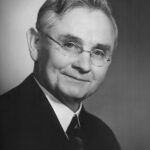
Analysis by Keith Rankin.
Role: Economic historian.
Keith Rankin, 13 July 2026 – I saw and heard this from Stuff reporter Molly Swift on Three News yesterday (12 August 2026):
“History shows that replacing a sitting prime minister in an election year doesn’t end well. The only time it has worked was in 1943 after Michael Joseph Savage died in office, and Peter Fraser took over.”
Michael Joseph Savage actually died in March 1940, not 1943. Peter Fraser – Savage’s deputy – subsequently became Prime Minister. Hardly a coup, though technically there was a contest for the party leadership. Fraser ran against two inconsequential backbenchers. There was never any doubt that Fraser would succeed Savage. Wikipedia, for Savage, simply says: “He was succeeded as head of government by his deputy Peter Fraser”.
Events in more Recent History, unmentioned yesterday
In August 1974 there was an event much like that of 1940. Norman Kirk died in office, New Zealand’s last PM to do so. There was a subsequent contest for the party leadership, and hence to become Prime Minister. Kirk’s deputy was Hugh Watt. There was a contest, however, between Watt and Kirk’s Minister of Finance Bill Rowling. Rowling defeated Watt; thus it could be said that Rowling ousted Watt. Rowling was defeated ignominiously in 1975 (and despite winning the popular vote in 1978 and 1981); but Watt would probably have suffered an even bigger defeat.
We should note that neither this event, nor the Savage-Fraser succession, took place in an election year. In one short sentence, Molly Swift got it thoroughly wrong, by saying both “the only time it has worked” and “in 1943”; and of course in implying that Savage could have remained prime minister despite his having passed away.
Not the “only time”: 1990, Geoff Palmer and Mike Moore
To my great surprise, as the failed coup unfolded yesterday, I did not see, hear or read any reference to the events of 1990. 1990 most certainly was an election year.
In that year sitting (Labour) Prime Minister Geoffrey Palmer (still alive and, I understand, well) was ousted just seven weeks before the election. His replacement was the late Mike Moore (who would only be 77 years-old if still alive).
While Labour was never going to win the 1990 election, the leadership switcheroo was an undoubted success. Before the Moore coup, Labour – crushed by the failure of Rogernomics – was projected to win just 7 electorates out of 97; four of these seats were the Māori electorates. At the time, Labour governed with 57 out of 97 seats, and 43% of the votes.
(In the 1987 election, Labour was unusually popular with people who normally vote National. Left-wing voters had nowhere to go. Subsequently, New Labour broke away from Labour, becoming the core of the Alliance Party in 1993.)
In the end, Labour won 29 seats in 1990; Labour, and their senior MPs, lived to fight another day. Indeed, in 1993, the combined Left vote was a landslide. Mike Moore nearly regained his position as Prime Minister. He might even have become one of our most warmly remembered Prime Ministers, and he certainly would have saved us from Ruth Richardson’s deeply problematic ‘Fiscal Responsibility Act 1994’.
As it was though, after the 1990 election, a group of right-wing Labour MPs broke-away to form the Act Party (Association of Consumers and Taxpayers). And after the 1993 election, another group of rightish MPs (including Peter Dunne) broke-away from Labour, joining some National MPs, to form the United Party. The United Party, in its various forms, went on to become powerbroker in three different Parliaments: 2002 to 2005; 2011 to 2024; 2015-2017.
1957, Sid Holland and Keith Holyoake; and 2017
In 1957, a very unwell Sidney Holland resigned as Prime Minister and National Party leader, just 12 weeks before the election. Holyoake, Holland’s deputy, replaced Holland without fuss. National only just lost the election; with Holland at the helm the defeat would have been much larger. The replacement of the leader, at late notice, boosted National’s vote.
Events which were mentioned yesterday
In 2017, when Jacinda Ardern replaced Andrew Little late in election year (this time while in Opposition), like Holyoake she boosted her party vote compared to what it would otherwise have been. Nevertheless, under a First-past-the-Post election, Ardern’s Labour (29 electorate seats, 38% of vote) was soundly beaten by Bill English’s National (41 electorate seats, 44% of vote). This result, however, was like 1993. The support for anti-National parties was significantly more than the support for pro-National parties; so, under proportional representation, the larger bloc of parties defeated the largest party. Labour proved to be much more popular after 2017 than it was when it ruled unchecked after 2020.
And of course there was 2020, when National replaced their leader twice, though while in Opposition, not in Government. Yes, National was substantially beaten that year. The only possibility of National not having been soundly beaten in Covid Year 2020 would have been if English had stayed on as party leader after his 2017 victory cum defeat. But that damage was done early in 2018, not in election year.
Have we finished yet this year with party leadership switcheroos?
Maybe not. There’s still time for a Palmer/Moore scenario, if National’s polls take a dive. And then there’s Labour’s Chris Hipkins. It’s not too late to replace him also, as Andrew Little was replaced, to give his party a boost.
Conclusion and Warning
Going into elections with very new leaders has generally given a positive boost to the Labour or National party. The warning however is Canada in 1993. My sense is that, as Nicola Grigg said, Erica Stanford is not “capable of leading the National Party or being prime minister”. Stanford is a competent micro-manager; but, I sense, that’s it.
In Canada in 1993, the fading Brian Mulroney stepped down in favour of the 46-year-old Kim Campbell. Campbell remains Canada’s only ever female prime minister; surprising in a country with outstanding feminist credentials.
In the previous Canadian election (1988), the Progressive Conservatives won 169 seats with 43% of the vote. In 1993, their vote plummeted to 16% and they only won two seats! (Eventually that party did revive, under Stephen Harper; but, like the Australian Liberal Party, it may now be in another morbidity crisis.)
That’s the ‘political death’ scenario Labour avoided in 1990 by replacing Geoff Palmer with Mike Moore. Under MMP, the death may be less spectacular, but also more fatal as other parties bed-in. My sense is that Erica Stanford would have been a Kim Campbell. The more pertinent question today is whether Christopher Luxon will be a Geoffrey Palmer, either by being replaced or by losing to the extent in the popular vote that Palmer would have lost in 1990. In 1990, New Zealand Labour avoided its Kim Campbell moment.
In the short meantime, our political commentators could do well to learn a bit more of our country’s political history. The deceased Michael Joseph Savage was not ousted by his deputy in the 1943 election year. And 1990 is not ancient history.
About the writer:
Keith Rankin (keith at rankin dot nz), trained as an economic historian, is a retired lecturer in Economics and Statistics. He lives in Auckland, New Zealand.