

Source: The Conversation (Au and NZ)
Victoria’s new Premier Ben Carroll has announced yet another royal commission into allegations of corruption in the construction industry.
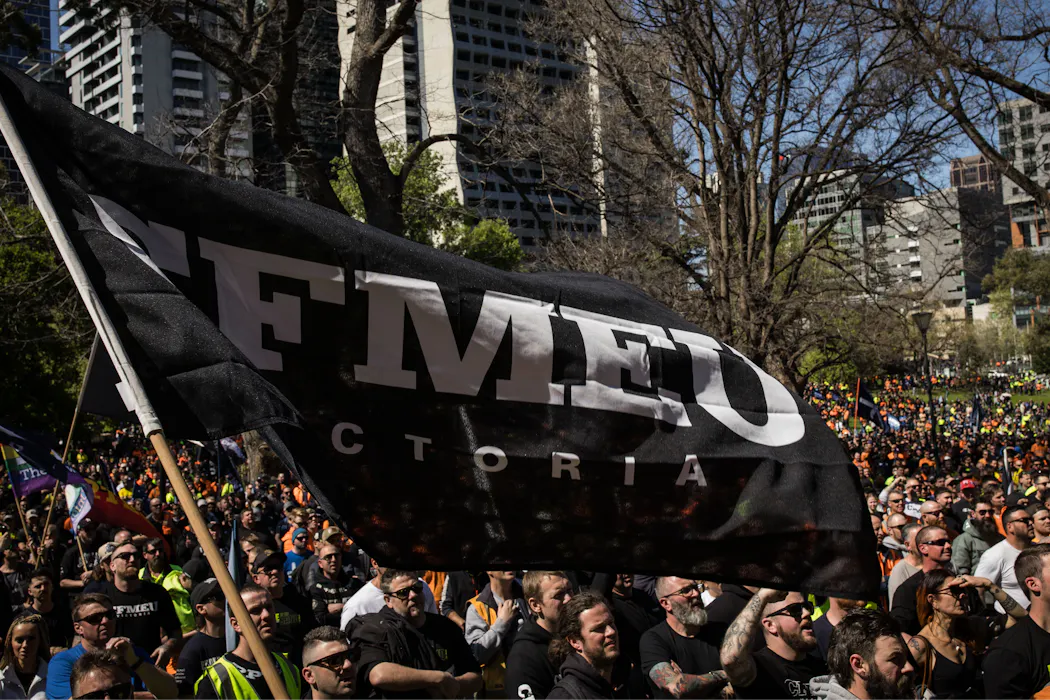
This latest inquiry will focus on the construction division of the Construction, Forestry, Maritime, Mining and Energy Union (CFMEU), the main union representing building workers.
There have been multiple royal commissions already over the past few decades, and several state reviews.
The announcement followed former premier Jacinta Allan’s resignation last week, after three years of detailed construction industry corruption claims from Nine newspapers’ Building Bad investigation.
The alleged corruption has reportedly inflated Victorian infrastructure spending by an estimated A$15 billion.
Every time we hold a new inquiry, it costs tens of millions of dollars. For instance, the current Queensland inquiry’s cost has now risen to $95 million. Unless we learn from the past – as well as overseas experience – we risk having to keep holding these inquiries for years to come.
What will the new royal commission look at?
The royal commission will examine how bikie gangs and organised crime apparently came to operate inside Victoria’s Big Build program.
This adds to an existing anti-corruption measure against the union by the federal government, which placed the construction division under administration two years ago. This means outside officials, not union leaders, currently run the union.
The administration has removed more than 300 union leaders and officials, many linked to the Big Build scandal.
Royal commissions usually focus on individual wrongdoing. That framing may struggle to answer a bigger question: why does corruption in the construction union keep happening?
This is the question I have examined in my recent research article. Past inquiries have mostly framed corruption as bad individuals making criminal choices. This misses the structural forces that made those choices attractive.
The Queensland commission of inquiry, which is continuing, has heard allegations of officials allegedly working with organised crime. Allegations include extortion of employers, taking bribes, installing unqualified bikies in paid safety roles, and stealing from the union.
Yet corruption has not only benefited criminals. The union has secured pay well above the legal minimum (the award rate) and better safety outcomes.
This is the paradox: how did a union delivering real gains for its members become so thoroughly compromised by crime?
How enterprise bargaining weakened the unions
Drawing on research into US unions, especially the Teamsters’ long relationship with the mafia, we can draw a broader conclusion.
A specific combination of conditions invites this infiltration. It involves intense competition among small firms, easy entry into the industry, and shortages of skilled labour in a deregulated market.
As in the United States, organised crime can act as an informal regulator. For a price, it sets pay and enforces deals particularly where weakened unions and an under-resourced state struggle to manage alone.
In Australia, the union’s weakness can be traced to policy choices made since the 1980s. Australia’s old system of centralised wage arbitration, in which a tribunal set common pay and conditions across entire industries, was replaced by enterprise bargaining in the 1980s.
Enterprise bargaining requires unions to negotiate with employers site by site or company by company. Laws introduced under the Howard government also restricted strikes, “closed shops” (workplaces requiring union membership), and union right-of-entry (an official’s legal right to enter a worksite).
As a result, union density in construction collapsed to 9.8% among labourers, down from 17% in 2024.
Unions now fight, worksite by worksite, for gains that were once guaranteed industry-wide. Because bargaining happens directly between unions and employers, officials often deal privately with developers allegedly linked to organised crime, according to international research.
Against this background, crime groups have imposed themselves on a weakened construction union to deal with employers. But rather than bargaining, it appears organised crime has imposed an informal licensing system, the Queensland inquiry was told. Employers who pay up allegedly get an agreement and operate without trouble, while others are pressured.
Safety adds further pressure. Construction ranks second nationally for serious injury claims, making union strength a practical response to real risk.
Construction is corrupt the world over
Culture reinforces these structural factors. Transparency International has found construction was perceived as the most corrupt industry in the world.
My research also points to a shared culture of danger and toughness between construction workers and organised crime figures. This was compounded by declining internal union democracy after 2012, when a more centralised leadership took hold.
None of this excuses criminal conduct. But it suggests a royal commission focused on individual criminality may not address the underlying conditions that can make corruption a rational, if damaging, choice for some officials.
Unless collective bargaining is rebuilt, safety addressed and democratic accountability restored inside the union, whatever this latest royal commission uncovers will likely happen again.

Eugene Schofield-Georgeson has received funding from SafeWork Australia. He has presented papers at Australian Council for Trade Unions (ACTU) conferences in the past, and is a member of the National Tertiary Education Union (NTEU).
Original source: https://analysis1.mil-osi.com/2026/08/03/yet-another-cfmeu-royal-commission-wont-solve-much-until-we-learn-from-the-past/