

Source: The Conversation (Au and NZ)
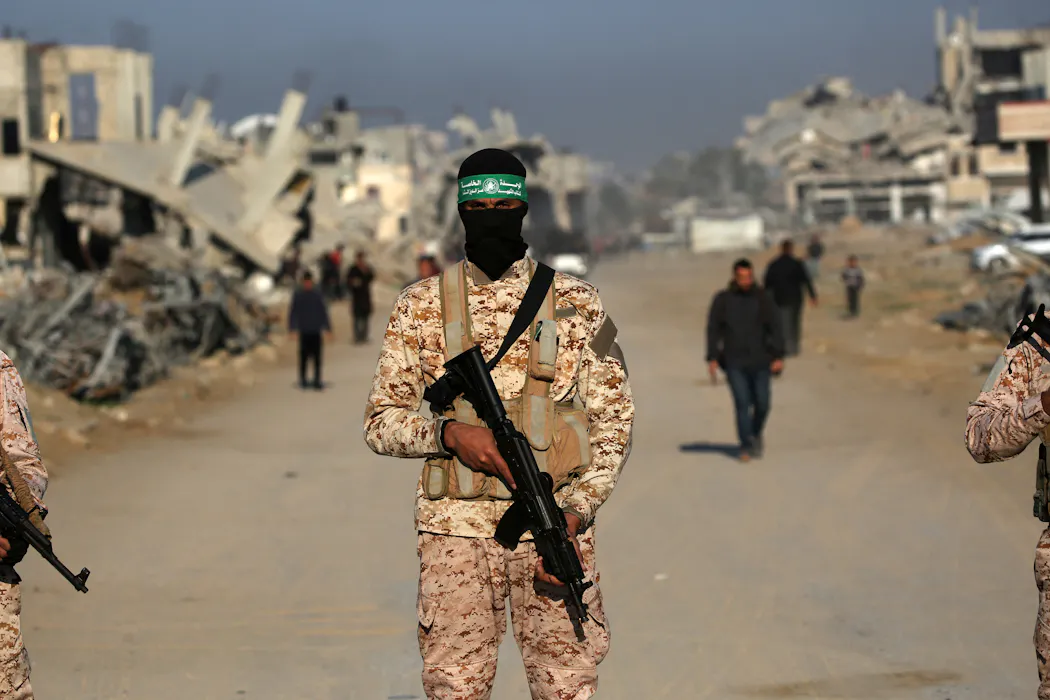
The reported agreement by Hamas to a “complete disarmament” has renewed speculation about what a future beyond war might look like for Gaza. It has also left many unanswered questions.
Under the roadmap negotiated through US President Donald Trump’s Board of Peace, Hamas and other Palestinian armed groups would surrender their weapons in stages.
Israel would withdraw its forces from Gaza, and governance would gradually transfer to a Palestinian transitional administration supported by international monitors and an “international stabilisation force”.
But while Hamas has reportedly accepted the roadmap, implementation remains conditional on Israeli withdrawal. For its part, Israel has expressed “serious security concerns” about Hamas’ true intentions and said it will not withdraw until Hamas disarms.
For now, Gaza remains engulfed in conflict. Military operations continue, civilians are suffering, and the political obstacles to any agreement remain considerable.
But the prospect of disarmament raises a broader question: if the guns eventually fall silent, what happens to the allegations of war crimes under international law, and how can peace be built between communities carrying profound trauma?
International law in limbo
History suggests accountability will have to be central to any lasting agreement. In the former Yugoslavia, Rwanda and Northern Ireland, this has been a long, difficult process.
Israelis continue to live with the effects of 2023’s October 7 attacks. Gazans, meanwhile, have endured immense civilian suffering, large-scale destruction, displacement and loss of life.
Claims of war crimes and crimes against humanity have been directed at Hamas leaders and Israeli political and military officials.
The Gaza Peace Plan unveiled last year – the basis of this latest agreement – is particularly contentious because it appears to grant complete amnesty to Hamas leaders, precluding the possibility of accountability for alleged crimes under international law.
Surprisingly, there is no mention of amnesty for members of the Israeli Defence Forces or senior Israeli political leaders.
More broadly, the settlement is focused primarily on governance and security. But if questions of justice and accountability are sidelined, profound grievances will be left unresolved – which may ultimately undermine the prospects for lasting peace and meaningful reconciliation.
Read more:
Trump is hailing it as a ‘breakthrough’, but will Hamas actually disarm in Gaza?
For many on both sides, the question is not simply how the conflict ends, but whether their suffering and trauma are acknowledged and justice is done. This also brings the role of the International Criminal Court (ICC) back into focus.
Its investigation into alleged crimes committed in Gaza, the West Bank and East Jerusalem began in 2014. In 2024, the court issued arrest warrants for Israeli Prime Minister Benjamin Netanyahu, former Defence Minister Yoav Gallant and Hamas military commander Mohammed Deif.
The ICC found reasonable grounds to believe that crimes within its jurisdiction may have been committed. That investigation continues, despite Israel’s objections to the court’s jurisdiction.
The latest developments are happening at the most fraught moment in the ICC’s history. Prosecutor Karim Khan’s removal following allegations of sexual misconduct has raised concerns about the credibility and legitimacy of the court just as the Palestine investigation attracts intense international scrutiny.
While the existing warrants remain in force, the controversy underscores a wider challenge for international criminal justice: how to preserve legitimacy and public confidence while navigating deeply fraught, politicised environments.
Indeed, the Trump administration recently expressed a desire to dismantle the ICC “brick by brick” – leaving questions about genuine legal accountability in limbo.
Building a durable peace
Accountability can contribute to post-conflict recovery, but rarely by itself.
Following savage wars in the 1990s, the International Criminal Tribunal for the former Yugoslavia prosecuted senior political and military leaders and created an authoritative record of atrocities.
Similarly, the International Criminal Tribunal for Rwanda pursued those most responsible for the 1994 genocide and helped develop international criminal law.
Both institutions showed senior leaders can be held accountable. But they also demonstrated that judgements alone cannot produce reconciliation, erase trauma or resolve competing narratives about the past.
The role of Trump’s Board of Peace adds another dimension. While governance and reconstruction are essential, Gaza will also need functioning institutions, economic recovery and credible security arrangements if it is to emerge from years of war.
Rebuilding physical infrastructure is only part of the task. Building trust and durable peace will be far harder.
Northern Ireland offers a useful lesson: the 1998 Good Friday Agreement succeeded not simply because weapons were decommissioned, but because institutions were created to manage political disputes peacefully.
Power sharing, political participation and policing reform were central to the transition. Even decades later, questions about the fate of victims, truth and historical responsibility continue to shape public debate.
For Gaza, accountability and reconciliation cannot be treated as interchangeable. Even if Hamas does disarm, that alone will not resolve the legal and moral consequences of the war.
The Board of Peace may provide a framework for political transition, but questions of accountability will persist. At the same time, the Trump administration’s threat to weaken and marginalise the ICC raises serious doubts about the capacity of international institutions to deliver justice.
If Gaza does enter a postwar phase, success will not be measured solely by the number of weapons surrendered or buildings rebuilt. It will be judged by whether justice was pursued.
Without accountability and reconciliation advancing together, a durable peace is likely to remain out of reach.

Anna Marie Brennan received an Asia New Zealand Foundation Research Grant in 2026. She was awarded a Travel and Learning Award in 2023 and a Women Leaders in Law Fellowship in 2024 from the Borrin Foundation. Anna Marie was a visiting professional in Chambers on the Jean Pierre Bemba Gombo trial at the International Criminal Court in 2014 and also worked on the trial of Radovan Karadžić at the United Nations International Criminal Tribunal for the Former Yugoslavia.
Original source: https://analysis1.mil-osi.com/2026/08/03/even-if-hamas-disarms-the-challenge-in-gaza-will-be-accountability/