

Source: The Conversation (Au and NZ)
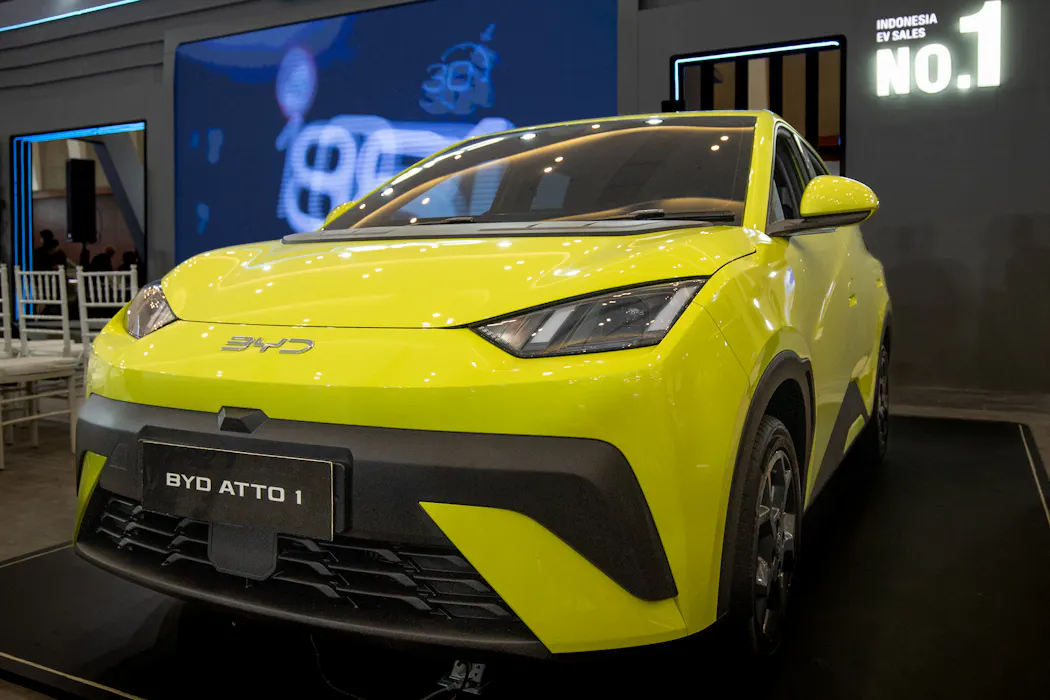
BYD’s electric Atto 1 looks much like any other modern city car. It has a five-star safety rating, a touchscreen-equipped interior and, by most accounts, is surprisingly refined to drive.
Little about it screams “cheap car” – except its roughly NZ$30,000 price tag.
That puts Chinese electric vehicles into interesting territory. They are no longer competing only with new Toyotas, Teslas and other EVs, but with the used petrol cars that still make up most vehicles on New Zealand’s roads.
To date, much of the conversation about widespread EV adoption has centred on emissions, charging infrastructure and incentives for motorists to make the switch.
But cheaper new EVs could have consequences well beyond EV uptake: they could push down the value of New Zealand’s petrol-powered fleet and disrupt the businesses built around it.
Our recent research into technological change helps explain why. As new technologies take hold, they can change which assets, skills and businesses remain valuable – potentially weakening those built around the technologies they replace.
How cheap EVs could change the price ladder
Falling EV prices have attracted attention before.
Tesla’s price cuts in 2021, combined with the since-scrapped Clean Car Discount, pushed an entry-level Model 3 below $60,000. Further cuts in 2023 briefly brought its post-rebate price towards $55,000.
Chinese manufacturers are now taking that price competition much further down the market.
That’s important because new and used cars are not separate markets, but inter-connected ones. If a three-year-old petrol car costs $27,000 while a comparable new car costs $40,000, buying used may make sense.
But if a credible new EV costs as little as $30,000, that calculation changes.
The used car has not suddenly become worse, but its price comes under pressure, potentially affecting older cars below it. A cheap new car can therefore compress the used-car price ladder.
For decades, New Zealand has effectively been importing Japan’s depreciation. Japanese consumers buy cars new and absorb their early loss in value. New Zealand then imports them years later at prices local households can afford.
In 2023, used imports made up 42% of New Zealand’s existing light-vehicle fleet. In 2025, almost 97% of used passenger-car imports came from Japan.
If China can produce capable new vehicles for only a modest premium over older Japanese imports, New Zealanders may become less reliant on another country’s depreciation for affordable cars.
That would represent a structural change in our vehicle market, rather than simply another shift in market share between brands.
Ripple effects for the automotive industry
Research shows new technologies don’t just replace old products, but also change the businesses and skills that surround them.
The internal-combustion car supports an enormous ecosystem: petrol stations, mechanics, lubricant suppliers, engine and transmission repairers, parts distributors, dealers and wreckers.
EVs require a different mix of services and skills around charging, batteries, power electronics and software.
According to MITO’s 2025 automotive industry report, New Zealand’s wider automotive sector employs more than 68,000 people across about 15,000 businesses and contributes roughly $8 billion to GDP. Automotive repair and maintenance alone employs about 23,400 people.
EVs will not make those jobs disappear. They still need tyres, suspension, collision repairs and electronic servicing.
But they do not require oil changes, exhaust systems, spark plugs or many traditional engine and transmission repairs. As the fleet changes, so will the work required to keep it moving.
Falling petrol-car values could reinforce that shift. If cheaper new cars put downward pressure on an older vehicle’s value, expensive repairs become harder to justify.
That could accelerate the retirement of some vehicles, further affecting demand for parts, fuel and servicing.
Why the electric transition is an economic one
For consumers, much of this could be good news. Cheaper vehicles and lower running costs represent genuine economic gains.
But the gains and costs do not necessarily occur in the same places.
New Zealand manufactures essentially no mass-market passenger cars. Much of the value from producing the new technology therefore accrues overseas, while many of the businesses that could be affected – dealerships, repair shops, parts suppliers and fuel retailers – are local.
China already supplied 73% of New Zealand’s fully electric vehicle imports in the year to June 2026.
This is where policy discussion needs to broaden. The shift to EVs is an economic transition as well as an environmental one, with research increasingly examining how technological change can redistribute jobs, skills and economic value even when society as a whole benefits.
For New Zealand, that means watching more than EV registrations. Used-car values, scrappage, repair businesses and automotive employment could show how the transition is affecting the wider economy. Training will also need to evolve towards electrical, electronic and software skills.
None of this means New Zealand faces an imminent collapse of its automotive industry. The fleet turns over slowly and petrol cars will remain on our roads for decades.
But as cheaper EVs change what we buy and drive, the businesses and skills supporting our vehicle fleet will need to change with them.

Kenny Ching does not work for, consult, own shares in or receive funding from any company or organisation that would benefit from this article, and has disclosed no relevant affiliations beyond their academic appointment.
Original source: https://analysis1.mil-osi.com/2026/10/05/cheap-chinese-evs-could-soon-shake-up-nzs-used-car-market-are-we-ready/