

Source: The Conversation (Au and NZ)
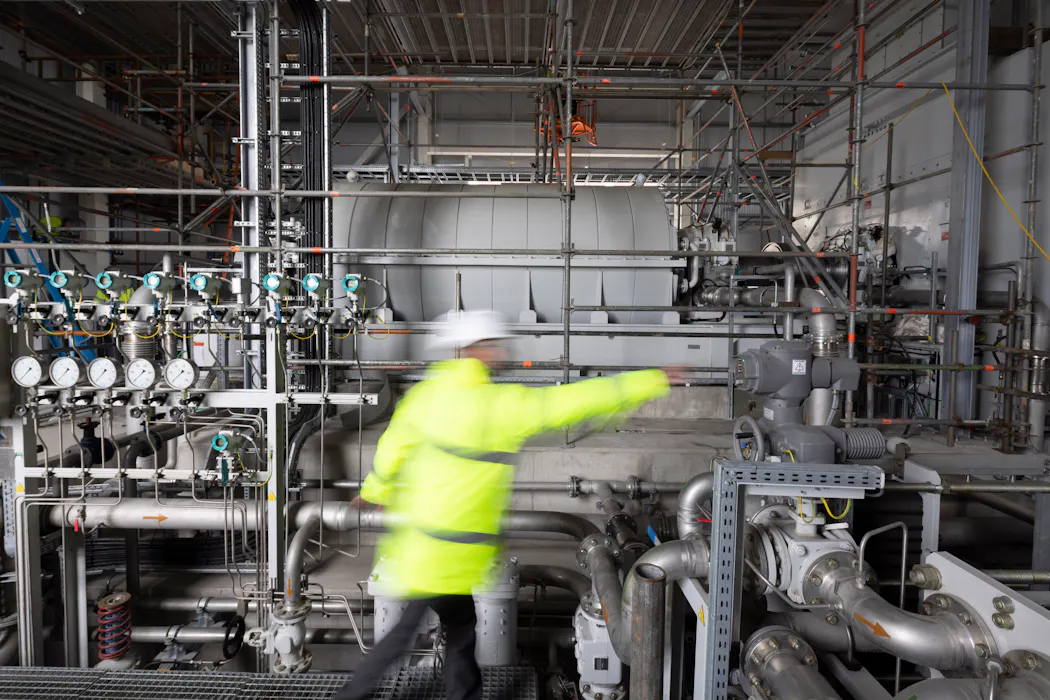
Australia’s power grid is changing quickly. Coal-fired power stations are gradually shutting down as renewables such as solar and wind grow.
But as coal plants retire, they take something useful with them – their giant spinning turbines. As these turbines spin, they help keep the grid stable. Grid-scale batteries can do some of this stabilisation, but not all.
This is why authorities are installing more synchronous condensers (“syncons” for short) – large spinning electrical machines that can keep voltage normal and absorb shocks.
Our recent research found synchronous condensers work well. But because they are expensive, they have to be well located and the right size.

Mriya/Wikimedia, CC BY-NC-SA
What are these machines for?
Since 2000, electricity on Australia’s grids has been set at 230 volts, with an acceptable range of up to 10% higher or 6% lower. If electricity is like water flowing through a pipe, voltage is the water pressure.
Maintaining voltage within this range is important. If there’s an electrical fault, a sudden change in electricity demand or a large power plant unexpectedly goes offline, the grid voltage can become unstable and lead to power outages. If the voltage fluctuates constantly, it can burn out appliances.
In severe cases, such instability can pave the way for prolonged blackouts, such as South Australia’s 2016 statewide blackout.
Authorities use the system strength metric to track how stable the grid voltage is. A grid with good system strength can maintain stable voltage both during normal operations and when things go wrong.
This is where synchronous condensers come in.
These large electrical motors are connected to the grid. They look similar to the large generators used to produce electricity in conventional power stations.
But these motors don’t produce power – they just spin. Their spinning acts as a shock absorber for the power grid.
In cars, shock absorbers help keep the vehicle stable on rough roads. A syncon plays a similar role for the grid. When the grid becomes unstable, these spinning machines help restore the voltage to its normal operating range.
Not new – but newly important
Synchronous condensers have been around for more than a century. Early power grids relied heavily on them for stabilisation. As grid technologies matured, there was less need for these machines. Now they’re making a comeback.
For decades, Australia’s electricity was largely supplied by large coal, gas and hydro stations. These large generators did two essential jobs at once – producing electricity and keeping the grid stable.
In recent years, old coal power stations such as Liddell in New South Wales and Hazelwood in Victoria have been retired. The power they produced is being replaced by solar and wind farms, while batteries are storing power and releasing it back to the grid at peak times.
These technologies typically rely on inverters to supply power to the grid. Inverters convert DC (direct current) into AC (alternating current) electricity so it can be used in homes and businesses. The problem is, conventional inverters don’t automatically provide the boost to system strength that large rotating generators once did.
This is why the Australian Energy Market Operator is planning more synchronous condensers, especially for regions facing current or emerging shortfalls in system strength due to the growth of renewables and battery storage and the retirement of fossil fuel plants. New syncons will need to be installed before coal plants can formally retire.

Mondadori Portfolio/Getty
Are we on track?
Authorities in several states have already installed syncons to ensure the grid remains reliable. The need for these machines depends on how fast coal plants shut down.
Renewables now produce over 75% of South Australia’s power. To ensure grid stability amid the transition, authorities installed four large syncons – two at Davenport and two at Robertstown.
These gave the state enough system strength to maintain grid stability as conventional power plants retired.
Victoria now has the nation’s largest syncon up and running near Ararat.
And Queensland is building four synchronous condensers – two at Calliope River near Gladstone, one at Nebo and one at Stanwell. These are expected to be operating in 2029.
Synchronous condensers aren’t the only way to ensure the power grid stays stable. Gas-fired power stations and hydroelectric generators can stabilise the grid. New grid-forming battery systems with advanced inverters can do some of this work, though not yet all.
Queensland’s state-owned transmission company, Powerlink, plans to combine syncons, advanced grid-forming batteries and existing power plants, such as hydro and gas units, to ensure the grid stays strong.
Keeping the grid strong
Australia’s energy planners are well aware of the need to keep the grid strong as coal is retired. Projects to strengthen the grid are now under way in several states.
The challenge will be to ensure these new grid-support technologies are up and running in time to allow ageing coal plants to retire.

The authors do not work for, consult, own shares in or receive funding from any company or organisation that would benefit from this article, and have disclosed no relevant affiliations beyond their academic appointment.
Original source: https://analysis1.mil-osi.com/2026/10/05/youve-probably-never-heard-of-synchronous-condensers-but-theyre-essential-in-the-push-for-renewables/