
Analysis by Keith Rankin.
Role: Economic historian.
Keith Rankin, 24 July 2026 – Ever since the Soviet Union gained the ‘atomic bomb’ in 1949, the argument among geopoliticians has been that an edgy global ‘peace’ has been maintained by virtue of the principle of deterrence.
Nuclear Complacency
That principle has broken down, at least with respect to nuclear weapons. Nuclear-armed Russia is being attacked, in 2026, with seeming impunity by NATO-backed Ukraine. And the principal news media outlets look away.
From 1949 to 1990 (most of the Cold War) – especially after 1955, following the frozen settlements in Taiwan and Korea – there was a clear almost unanimous understanding among political establishments that the presence of nuclear weapons in any country would deter any other country (including the United States) from mounting a ‘kinetic attack’. And that the absence of nuclear weapons made a country vulnerable to attack.
North Korea and Libya have been cited, quite recently, as proof of the principle; North Korea having nuclear weapons and being left relatively alone, and Libya not having nuclear weapons and as a result becoming a victim of one of Barrack Obama’s ‘wars of liberation’.
The received view is that deterrence kept the world from nuclear warfare in the second half of last century; with the Cuban Missile Crisis as an example of a settlement made possible by deterrence.
Iran wanted to have an ambiguous nuclear program, as a deterrent. It has had a long twentieth century history of invasions, occupations, foreign-backed coups, and post-revolutionary belligerence from two nuclear-armed countries (the United States, and Israel). Belligerent geopolitics and geo-economics maintain animosities between countries; states of enmity which might otherwise diffuse and eventually disappear.
Evidence from the Ukraine War in particular shows that the principle of nuclear deterrence has been replaced by a new narrative which can best be described as ‘playing chicken’; games of chicken with existential risks.
Other forms of deterrence – for third parties, non-existential deterrence – may still have effect; Iran is testing out one of those, the time-worn strategy of blockade, which the British applied successfully (though not without cost) to defeat both Napoleon in the early nineteenth century and the Second Reich in World War One. Hence, the greater threat associated with the Ukraine-Russia conflict.
This century the principle of nuclear deterrence has been forgotten, and not only with respect to Russia. Iran has directly attacked Israel, a nuclear power, in three recent wars; albeit in response to attacks by Israel. And, last year India and Pakistan waged a short war against each other; both are nuclear armed.
The proof that the era of nuclear deterrence has come to an end is most visible with respect to the former Soviet Union. Ukraine, a country with a GDP smaller than New Zealand, routinely strikes at the infrastructure of Russia, a former superpower and the nation state on this planet with the most nuclear weapons.
Ukraine’s behaviour can only be described as ‘baiting the bear’, and has clearly been backed by Nato, especially the E3nations of Germany, France and the United Kingdom. It is clear that, whatever else Ukrainians wish their country to be, Ukraine is serving as a proxy for a wider ‘western’ agenda. When Ukrainian defence minister Mykhailo Fedorovwas reputedly sacked, recent news footage on Al Jazeera showed him on a podium with Palantir’s Alex Karp, on a podium with Mark Rutte, and also on a podium with Germany’s hawkish defence minister Boris Pistorius.
(It seems that Fedorov has now been reinstated in some form, and his rival Oleksandr Syrskyi has since been dismissed. See, Volodymyr Zelenskyy’s removal of two top defence officials highlights the role of morale in long wars, James Horncastle for The Conversation, 23 July 2026.)
With the help of Palantir and Germany this year, Ukraine’s strikes have caused serious damage as far east as Siberia, and as far north as the former imperial capital, St. Petersburg. These strikes are hurting Russia, much as German air-strikes hurt the United Kingdom in 1940 and 1945; and as the German U-Boat submarines severely hurt the United Kingdom in WW1 and WW2. Nothing yet has had as much of an impact on Russia as the sinking of the Lusitania had on the United Kingdom (and also on the United States; Churchill hoped that the sinking of that ocean liner would bring the United States into that war). But it may only be a matter of time.
We also should note that war brought regime change to the United Kingdom in both 1916 and 1940. In both cases, the new regimes were significantly more belligerent towards Germany. If the West seeks regime change in Moscow in 2026, the West should be more careful about what it wishes for.
Russians do have a more strongly felt sense of history than most westerners do. They know that it was Germany’s foolish decision (even more egregious than that of Donald Trump on 28 February 2026 re Israel and Iran) to wage war on the Russian Empire in August 1914 that set of a set of geopolitical forces still in place today. And they also know that the Russian generals, in 1812, burnt down Moscow in order to save Russia from Napoleon’s invasion force. And many Russians know that the United States and United Kingdom invaded Russia in 1918 in an attempt to reverse the Bolshevik Revolution of October/November 1917; a failed military venture comparable with (though bigger than!) the 1961 Bay of Pigs invasion of Cuba. And Russians know that it was they who liberated Europe from Nazi Germany in May 1945, and that in August 1945 Soviet Russia’s former allies turned on them just months later.
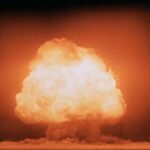
The ‘Cold’ War began with two demonstrative nuclear explosions over an already-pulverised Japan. After that, a number of fearful westerners – called ‘traitors’ by many, the Rosenbergs went to the electric chair – acted to ensure that, by 1949, Soviet Russia also had nuclear weapons. That is when the principle of deterrence was established, and since then no nuclear weapons have been deployed against a foreign power (though many nuclear tests have had severe adverse consequences for colonised populations in the Pacific and elsewhere).
Today Russia’s GDP is significantly smaller than that of France, the smallest of the E3 nations; Russia’s GDP is the same as that of Italy. Post-Soviet Russia now finds itself in another asymmetric fight for its survival as an independent geopolity. (And I say ‘geopolity’ not because there is any evidence that Russia wants to conquer its western adversaries, but because Russia’s territory is a vast and strategic landmass in a world that is warming, meaning that Russia is becoming more liveable at a time that West Europe is becoming less liveable.) Russians remember Germany’s lebensraum project in both its WW2 and WW1 guises.
Of course no country with such a small GDP as Russia can credibly sustain an attack on any much larger country, let alone a nuclear ‘power’ such as France. Ukraine is openly attacking a large nuclear power in its role as a non-nuclear proxy of the nuclear-armed NATO alliance of 32 countries. Russia clearly sees itself as being under attack from northwest Europe; and, if Russia strikes back against Ukraine’s backers, northwest Europe is a likely target.
My sense is that, in Ukraine, where the dominant politics is projected by young elites (millennials and Generation Y), and also in West Europe – where people born after 1970 increasingly hold sway – there is little practical understanding of what nuclear weapons actually are. People born before 1953 fully understood nuclear weapons because of post-war (1945 to 1962) geopolitics. The deterrence principle worked in the 1960s in part through mass protests; the ban the bomb movement, the Campaign for Nuclear Disarmament.
That geopolitics that was superseded by the Vietnam War which defused the nuclear issue while upping the ante on United States imperialism. Leftists, in becoming more anti-war, became less anti-nuclear.
Then Generation Jones (actually people born around 1958 to 1969) became sensitised to the dangers of nuclear war when the Cold War was restoked in the late 1970s (think the Olympic Games’ boycotts of 1980 and 1984). Many will remember the early-1980s’ protests in New Zealand led by Australian activist Dr Helen Caldicott; this wave of protests was much more connected to left-wing politics than the earlier wave, and also was somewhat marginalised as a mass movement through its associations with radical feminism. In the United Kingdom in the 1980s, that protest was epitomised by the Greenham Common Women’s Peace Camp.
We may note that the anti-Vietnam generation is conspicuously absent today in calling-out the present danger of nuclear war. We also note that people born in the mid-1950s (eg Germany’s Friedrich Merz) were too young for the first wave of anti-nuclear activism, and a bit too old for the second (more partisan) wave.
Has deterrence gone asymmetric?
We have to suppose that many influential people within NATO are discounting Russian nuclear deterrence, and are therefore comfortable playing ‘chicken’ or ‘Russian roulette’ with Russia. (We note that John Foster Dulles, US Secretary of State 1953 to 1959, was perfectly comfortable advocating nuclear strikes in the years 1953 to 1955, but essentially with China as adversary; China’s lesson from that episode was to become a nuclear power.)
As I see it, the NATO cocksureness arises from what it sees as three-trick deterrence trumping Russia’s one-trick deterrence. The United States can use Europe as a giant human shield. Nato’s Article Five is projected as a form of Western deterrence at least as much as is the United States’ nuclear capability. While France and the United Kingdom have nuclear weapons, it is generally understood that they would only be deployed in the name of national rather than regional ‘defence’.
But Germany (and I understand at least some other NATO countries) has United States’ nuclear weapons on site, and full capability to deploy them, only subject to the nod of the United States president. Russia of course knows this, and believes that Donald Trump is much less likely to authorise German use of nuclear weapons than an easily-played Joe Biden might have been.
Google AI ‘thinks’ that, if or when backed into a corner, Russia will “escalate”, with the possibility of going nuclear being present but, as yet, unlikely. Google AI is of course not intelligent, in the sense that it does not think for itself; Google AI cannot overcome the framing which is ubiquitous in the western literature. Google gave no basis for the suggested “low probability” of a nuclear escalation by Russia; rather Google merely did an undergraduate-level literature review. Project Syndicate writers underplay the risk as they alert readers to it; see my Can Andy Burnham Overcome the War and Debt Bogeys? Scoop 20 July 2026.
NATO’s third trick is its anti-missile defence. Certainly the most strategic locations within NATO will be very well defended by Patriot missiles and the like; and of course Russia knows that. So Russia, if it does escalate, will almost certainly take its cue from Iran, and go asymmetric. There is of course a nuclear precedent; the nuclear war of the West against Russia began in 1945 with asymmetric strikes (from a Russian viewpoint) on Japan. The subsequent ‘Cold’ War was mostly but not entirely a ‘cold nuclear war’, a nuclear war of the imagination.
How might Russia escalate?
Those paying attention will be aware that there is a growing opinion among Russian elites and military types that Russia should escalate, and sooner rather than later, to restore nuclear deterrence. That includes a view that Russia should have done so two or three years ago; that President Putin was too liberal in holding out for a Trump-led negotiated settlement which would end the European threat to Russia, and that maybe Russia would need to perform a bigger shock today than it would have then. There is now a sense that Trump is no longer on that wavelength, so there is really no reason for Russia to keep waiting. The forces directed against Russia are, at present severe, and only becoming more severe.
Germany attacked Russia in 1914 because it calculated that an earlier attack would meet less opposition than a later attack. Will Russia attack Europe sooner rather than later, by the same logic?
For a sense of discussion by academics in both the west and Russia, a good place to turn to is Glenn Diesen’s Greater Eurasia podcasts. Diesen, a Norwegian political scientist, wrote Russophobia: Propaganda in International Politics. He was on Al Jazeera’s Inside Story this week, alongside two advocates for belligerence, from Ukraine and from London.
Given the three-prong deterrence that NATO holds (compared to Russia’s one-prong deterrence), if Russia strikes NATO, advocates of such a strike would like the action to be more performative than lethal, though sufficient to address the West’s complacency.
I see six options for a Russian escalation out of the present intensifying stalemate. The first option is already happening, with Moscow simply trying to pummel Kyiv into submission. But we already know that there has been too much tit for Russia’s tat. There are five other genuine escalatory options, any of which may or may not “restore deterrence” as the Russian proponents put it.
The first two would be either a determined non-nuclear strike on a Ukrainian nuclear power station, or a nuclear strike on some target in western Ukraine. (We commonly think of ‘plants’ – including nuclear ‘factories’ – as targets for conventional weapons; and cities as targets for nuclear weapons.)
The remaining three options would be asymmetric attacks on a likely-minimally-defended NATO target. The first anti-NATO option would be a conventional attack, comparable with the most severe Iranian strikes on UAE, Bahrain or Kuwait. The second would be an attack on a nuclear power station within Nato (probably not on a southern European nation, not on a nation bordering Russia, and almost certainly not on Türkiye). The third of these options would be a performative single nuclear strike on a target within NATO. (It is unlikely but not impossible that Russia would choose, for its first strike to restore deterrence, a non-Nato non-Ukraine ally of NATO.)
So the question then becomes, what would NATO do in response to such an attack? We already know what NATO is doing in response to the Russian attempts to pummel Kyiv; the response is escalatory in nature, not at all respecting Russia’s once much-vaunted nuclear deterrence. So, what about the other five escalation scenarios?
It is clearly not-rational to escalate a single asymmetric nuclear strike into an all-out nuclear war; but casual observers tend to presume that such a non-rational response is also a very likely response. The most likely NATO response, in my view, would be a proportional counter-attack on Russia. One tit for one tat, and hoping that it ends there, with both sides having a clearer understanding about what is at stake. Indeed Russia would be gambling on a response that was no more than proportional.
But we are already seeing the United States versus Iran war escalating, after much tit-for-tat, and with highly disproportional threats from the American president. My sense is that, in the NATO versus Russia conflict (confined to Ukraine, at least so far), in the event of a counter-escalation it is more likely to be NATO than Russia that responds disproportionately. And not least because NATO has, within its ranks, more people with ‘bring it on’ messianic attitudes towards an apocalypse. I would include the Palantir pair – Alex Karp and Peter Thiel – as such new age messianics; believers in the Dark Enlightenment who believe that some relatively small group of people and animals (as per Noah, in Genesis, and his extended family) are fated to survive a nuclear tragedy. (We note that ‘Kiwi’ Peter Thiel has opted for Argentina as a better bet than Aotearoa as a site to sit-out the ‘downside risk’ implicit in his worldview.)
Missing Empathy for Russia
There seems to be no empathy at all for Russia. First, we must note that ’empathy’ is not ‘sympathy’. Empathy towards an adversary is an understanding of what motivates that adversary, and what that adversary is likely to do in response to provocation. It is about statistical expectations rather than moral expectations: compare ‘what we expect Russia will do’ with ‘what we expect Russia to do’; the latter is what ‘we’ want ‘them’ to do. It is not good policy to label an armed foe as ‘Evil’ and to then expect it to respond to attacks in a mild-mannered way.
It has to be an example of clinical insanity for an entity calling itself ‘Good’ to do offensive (ie attacking) things to an adversary it frames as ‘Evil’, and to expect that adversary to respond in a benign manner; especially if that adversary is armed to the teeth, and had hitherto believed that those arms would deter us from attacking it.
In messianic western framing, ‘our’ adoption of the label Good gives ‘us’ (in our own minds) licence to behave in a fully evil manner in order to effectively combat the entity or entities which we have labelled ‘Evil’. And the expectation – as noted, an ambiguous word – that Evil will respond in a non-evil [indeed submissive] manner. In such an unhinged world, if the gamble pays off, it is Good that does evil things and Evil that does good things.
By looking at informed commentary based on reality – on realpolitik – rather than the kind of ‘holier-than-thou’ stuff coming out of Ukraine and Nato-in-Wonderland (an intellectual rabbit-hole if ever there was one), it’s only a matter of time as to when Russia either loses its patience and strikes a significant target within NATO, or perpetrates a nuclear strike on some target in Western Ukraine. (If you are in a rabbit-hole, stop burrowing.)
The Ukraine/Nato-in-Wonderland narrative, like the initial Cold War narrative, claims (without bothering to ask Russia) that Russia plans to conquer and occupy Europe, and maybe the United Kingdom, Canada, and the United States as well. NATO even proposes a date; 2030. Russia has a GDP no larger than that of Italy. There is no way in the world that it could ever occupy or otherwise dominate the sub-continent of Europe, even if it wanted to.
What Russia clearly doesn’t want is NATO weapons of or near mass-destruction pointing at Russia from Russian-speaking lands that have, for most of their history, been part of the Russian Empire in one or other of its iterations.
There is a de-escalatory solution, in which both East and West survive, as they were in say 2019. As I understand it, Russia wants that solution and NATO doesn’t. And Russia believes that, with increasing surety, that Rusia itself has to do something the re-establish a state of deterrence predicated on the mutual fear of nuclear weapons.
Meanwhile, the whole West operates in a state of reckless and mindless complacency. Don’t look up. The Russia-Ukraine-NATO war barely makes it into the West’s curated news media.
Nuclear war has a capacity to end all life on Earth – not just humans – and perhaps all life in the universe, given that we do not know for sure that there is life elsewhere. Is the desire to impose a western-style regime in Russia worth risking all life for? Playing down the risk does not remove the risk.
In traditional warfare there were two parties: ‘us’ and ‘them’; it was a two-party ‘game’. Is it in any way acceptable to hold hostage the majority of the people on Earth who are mere ‘third parties’? Nuclear war is a three-party game. If ‘we’ cannot frame it in any other way other than Good ‘we’ versus Evil ‘them’, then maybe ‘we’ do have to appease ‘them’ in order to avoid the possibility of a catastrophe that is (literally) infinitely worse than such appeasement. (We may note that ‘appeasement’ happens in all sorts of contexts as a part of life; part of the raising of children is teaching them to compromise.)
Complacency today echoes the complacency of 1914
Complacency was true, also, in June 1914. The First and Second Balkan Wars had been resolved, seemingly. Hardly anybody then expected that there would soon be a Third Balkan War, and that that war – stoked in part by the European news media – would explode into the greatest tragedy the world has faced, so far. The Judeophobic Holocaust was only a smallish part of the totality of that 1914 to 1945 tragedy. Yet, only 81 years after 1945, most of us in New Zealand only know about Anzac Day, the Holocaust, Dunkirk, and maybe D-Day and the 1940 (but not the 1945) London Blitz.
Even Christopher Nolan’s epic movie Oppenheimer only presented Japan in one brief scene; it conveyed the drama of nuclear war more than its horror. The nuclear explosions at Hiroshima and Nagasaki, widely believed to have ended the 1914 to 1945 tragedy, instead ushered in a new tragedy whereby the principal allied winners of the European War in 1945 were turned onto by the secondary winners of that war. The ‘Cold War’ is not over. Just as 1914-1945 had a military interregnum from 1919 to 1939, the Cold War enjoyed an interregnum from 1990 to 2008. The geopolitical hawks in federal capitals like Washington never stopped hawking. (The Japan tragedy was actually ended by an American concession to Japan, re the continued role of the titular Emperor.)
It was the NATO summit in Bucharest in 2008 that Jeffrey Sachs pinpoints as the redeclaration of war on Russia; noting Clausewitz’s much quoted aphorism that “war is the continuation of politics by other means”, meaning in effect that unresolved or unresolvable politics is the prequel to war.
With hindsight, we can understand Germany’s declaration of war against Russia in 1914 as not that different to today’s war against Russia; a determined effort by Europe – or at least part of Europe – to suppress and provoke a nominated adversary. Germany was complacent then, too, believing – genuinely, but unrealistically – that Russia would capitulate in a matter of months.
About the writer:
Keith Rankin (keith at rankin dot nz), trained as an economic historian, is a retired lecturer in Economics and Statistics. He lives in Auckland, New Zealand.