

Analysis by Keith Rankin.
Role: Economic historian.
Keith Rankin, Thursday 11 June 2026 – On Monday night I watched the movie Truth (available on Netflix until 13 June), about the circumstance which ended the career with CBS of anchor Dan Rather and 60 Minutes investigative reporter Mary Mapes.
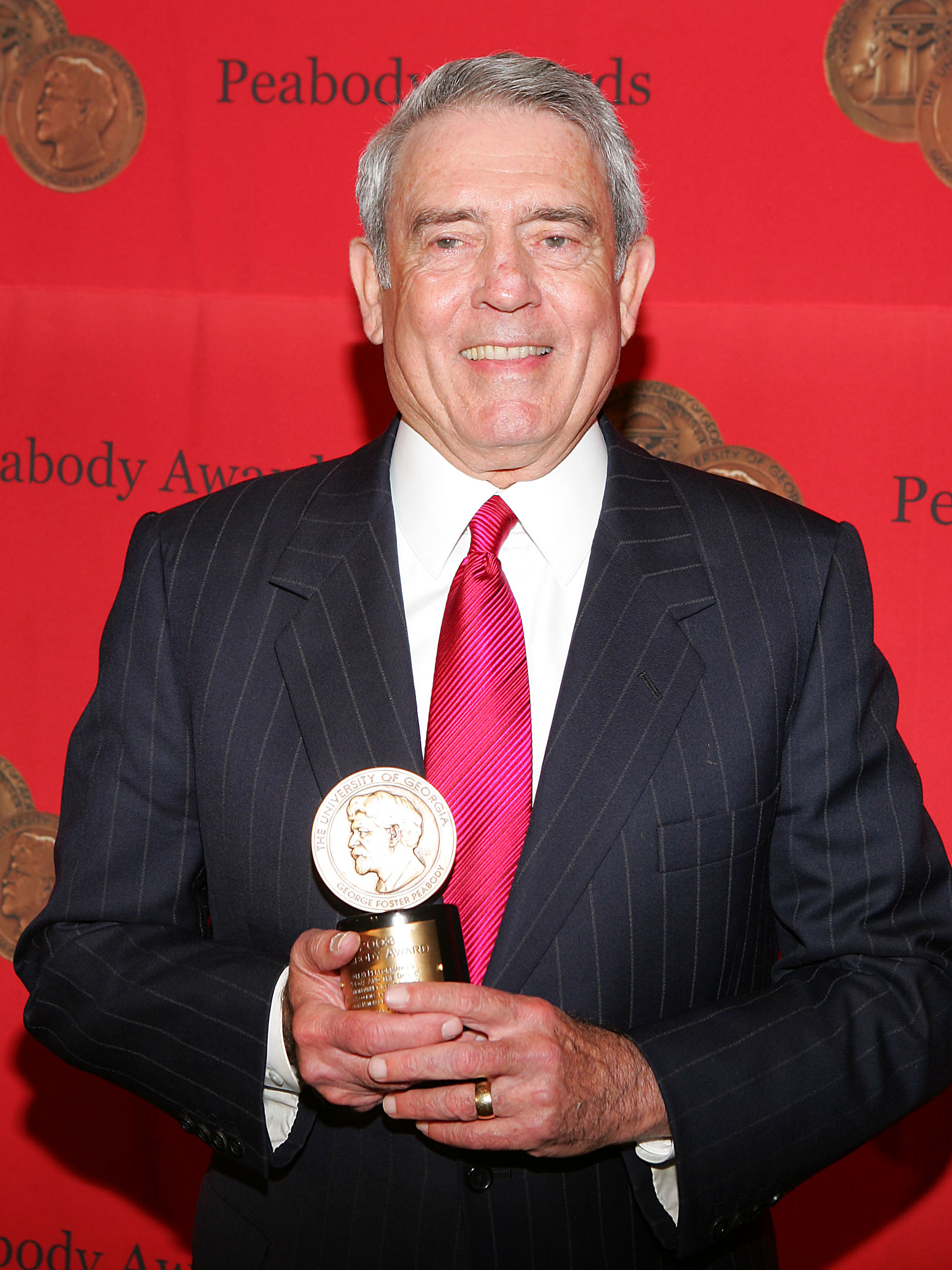
In September 2004, CBS ran a story about the probable facts that George W Bush, United States’ president: (1) avoided military service overseas in the late 1960s by using privileged connections to score a place in the National Guard as a trainee pilot, (2) had not graduated as a pilot, and (3) had been AWOL (absent without leave) for much of his time of service.
An important part of the backdrop to the story was that Bush’s opponent in the 2004 election – John Kerry – was being accused of falsifying aspects of his record of service in Vietnam. Kerry had become the victim of a dirty tricks campaign, commonly associated with Karl Rove. (See Why Bush’s man is fighting dirty, The Guardian, 5 Sep 2004; and Campaign ’04: Kerry in Combat: Setting the Record Straight, Time 30 Aug 2004. And note this 2008 movie, screened in the United Kingdom as Dirty Tricks: The Man Who Got the Bushes Elected, which outlines the backstory to the Bushes and the rise of ‘dirty trick’ politics.)
In the movie, Mary Mapes – under inquisition – was accused of conducting her research under a ‘liberal’ presumption that George Bush was guilty; whereas, under formal law, accused persons should enjoy the presumption of innocence until proven otherwise. Dan Rather was accused, implicitly, of lacking judgement by going along with this. The story itself is an example of conservative cancel culture in play (noting that cancel culture has, in recent times, been presented as a sin of the political Left).
The CBS story was somewhat rushed in being put together, due to scheduling constraints; and there were some editing constraints, to fit the story into the allotted time for the 60 Minutes format. Nevertheless, the story was made professionally. However, the movie Truth did suggest one issue about journalistic zeal which remains unresolved today; the idea that there are many secret truths out there – facts of public interest – for which journalists should have an investigative zeal to reveal.
That idea is that truth is a simple matter that is technically available, and for all to see once any ‘cover-up’ barriers are removed. It is arguably true that this CBS 60 Minutes story was such an example of ‘revelation journalism’. In reality, knowledge shortfalls are more complex than the ‘cover-up’ narrative would allow; indeed, facts really do vary with perspective. It is appropriate that truth should be contested, and to remain unresolved.
The accusation against CBS was that, on account of ‘liberal bias’, especially on the part of Mapes, there had been a lack of scepticism in the evaluation of one piece of evidence presented in the story. While it was technically difficult for anyone to prove that a relevant copied document might have been fraudulently created by a disaffected source, the 60 Minutes crew did indeed show that the document was credible by showing that some typewriters in 1968 could produce the relevant font and superscript.
Yet that document, which was most probably genuine, was only part of a web of evidence pointing to the veracity of the story. If this had been a jury trial, and based on the totality of the evidence presented, I am sure that George W Bush would have been ‘convicted’ of hiding the truth relating to his military service as a young man.
Truth and Proof are sticky concepts, both subtle and elastic
Real ‘practical world’ truth and proof are in fact statistical concepts; they have an attached probability. Almost nothing that is non-trivial can be known to be true with absolute 100% certainty; almost nothing – except abstract truths such as those of mathematics – can be known with zero doubt.
To establish truth in an inquiry (such as a Court of Law), the formal procedure is first to presume the innocence of the accused party; this presumption – that an accusation is false until proved – is known as a null hypothesis. In the trial itself, evidence is presented and interrogated by multiple parties. In the resulting evaluation, a jury or a judge effectively estimates the probability that the accused is innocent (as presumed); the name for this probability is doubt. In a criminal trial, to get a significant – ie guilty – result, the null hypothesis must be disproven beyond reasonable doubt. The null hypothesis is thus rejected. Social scientists typify reasonable doubt as five percent doubt, meaning that guilt is at least 95% certain.
If judges think that there is – based on the evidence presented to them – a five percent chance that an accused is innocent, then the judgement can be said to be on the cusp or balancing point of a guilty verdict. (A judge would resolve that balance one way or another, maybe with a coin toss; whereas a jury might be split and a retrial called for.)
For some purposes, for example in a capital trial where the accused is subject to the death penalty, reasonable doubt might be reclassified as one percent doubt rather than five percent doubt; that is, 99% certainty of guilt. (Indeed, one reason for scrapping the death penalty in many jurisdictions is that it makes it harder to get a conviction from a jury, given the greater burden of proof required.)
In the case presented in the movie Truth, my assessment of all the evidence presented against George Bush junior was a two-percent doubt of his innocence; meaning 98% certainty of his being guilty of using oligarch privilege to avoid military service in Vietnam. So, under the five-percent doubt rule, I would have found him guilty, regardless of a few technical misgivings relating to one item of evidence. But, if I was applying the one-percent doubt criterion, I would have been obliged to find him not-guilty. If one-percent had been the maximum doubt allowed and I had two-percent doubt, then I would have had too much doubt to establish the historical case against the then POTUS (President of the United States).
Had it been an accusation of treason rather than of privileged avoidance of military service, the president would have kept his head, on account of the high burden of truth faced by his accusers. And of course, based on the story as presented, Mapes and Rather should have kept their heads; metaphorical heads should never have rolled at CBS. There was massive doubt that they had been seriously unprofessional. They were doing their jobs, subject to the practical constraints that investigators face.
The process was, thanks to a low level of doubt, unable to disprove President Bush’s performance of obligation; and was also unable to prove the manifestly high (but not perfect) broadcasting standards of Rather and Mapes. Truth proved to be a capricious commodity. Thanks to about 2% doubt, Bush kept his reputation. Yet, despite perhaps 98% doubt, Mapes and Rather lost their broadcasting careers.
No ‘acceptable level of doubt’ was applied to Mapes and Rather. Instead, they were subjected to a reversal of the presumption of innocence, exactly what Mapes in particular had been accused of doing (towards George W Bush) by her interrogators.
Reversing the Presumption of Innocence
An important implication of the judicial process is that if a judge or jury believes that (based on the evidence) presented there is a 90% chance (or even a 94% chance) that an accusation is true, then that accusation should be evaluated as ‘not-true’ (the nuance being that ‘not-true’ is not the same as ‘false’). The more transparent language for such a finding is ‘not-proven’ rather than ‘not-guilty’. Further, in a court of law where only two verdicts are possible – guilty or not-guilty – then all ‘not-guilty’ verdicts are euphemisms for ‘not-proven’.
The only way that innocence can be ‘proven’ is to reverse the burden of proof. If you start from the premise that an accusation is true, then you can come up with verdicts of ‘innocent’, or ‘not-innocent’. If the criterion was ‘innocence beyond reasonable doubt’ – that is, a presumption of guilt – and evidence showed that there was ten-percent doubt of innocence, then the verdict would have to be ‘not-innocent’; someone would be deemed guilty (and punished) despite a 90% certainty that they were innocent! Even if the criterion was ‘balance of probability’ (where say 30% doubt is acceptable), if the evidence suggested a fifty-percent chance of guilt and a fifty-percent chance of innocence, the verdict would still have to be ‘not-innocent’. Having to establish innocence beyond reasonable doubt, having to face a presumption of guilt, would be a chilling legal requisite; the epitome of a police state.
So, there are various different standards of truth – indeed (literally) ‘extremely’ different standards of truth. That is not necessarily a bad thing, so long as context is taken into account; but it can be problematic, especially for accused parties who somehow find that their truths must bear the burden of proof whereas other dubious truths can hide behind a requirement of disproof.
University of Auckland case on RNZ on Tuesday 9 June
The introduction to this story played on RNZ goes like this: “Auckland University is facing criticism from its own staff over its handling of sexual assault, bullying and harassment allegations against a former [academic staff member who] left his role at the University of Auckland after an investigation late last year found that he had likely bullied and harassed a student. A legal academic at the university is now raising serious concerns about the investigation.” (Refer Sexual assault investigation at the University of Auckland, RNZ 9 June 2026.)
The word “likely” suggests that the case was conducted on the ‘balance of probability’ criterion, meaning that 30% doubt would have been acceptable to make a career-ending judgement. However, listening to the story itself, it is clear that the concern raised by academic critics is that the process is biassed in favour of the accused, and gives insufficient regard to the rights of the accuser(s).
While the investigation finding included the phrase “not enough concrete evidence” (meaning doubt in the 5% to 50% range; that is, certainty of guilt in the 50% to 95% range), the principal complainant had argued that there should have been a presumption of guilt – “she felt that the onus was on her [the accuser] to prove the allegations” – rather than a presumption of innocence towards the accused. Indeed, the accused was granted the appellation of “whistle-blower”. (If this was the Mapes versus Bush case, it would be like Bush having to prove his innocence rather than for Mapes – the whistle-blower – to establish his guilt. Indeed many ‘liberals’ would wish that were generally so; so long as the whistle-blower was neither the ‘state’ nor a litigious neighbour with a propensity to complain about anything.)
This University of Auckland case is a case in which some people (including at least one legal academic) believe that, for guilt to be established, the burden of proof – the presumption of innocence – should be reversed. (As indeed it was Mapes but not for Bush.) How then should a democratic society decide who should benefit from the presumption of innocence, and under what circumstances should a presumption of guilt apply instead? An important part of the context here is to ensure the ongoing safety of vulnerable potential victims; a consideration that was also applicable in the Mapes/Bush case, given the chilling effect that the case had on investigative journalism in the United States.
The issue really comes to a head when we consider binary cases. The classic binary case in New Zealand has been the 1994 Bain homicides.
The 1994 Bain homicides
This represents a binary situation whereby the innocence of one accused party necessarily means the guilt of the other.
Here we had a case of five violent deaths within a single family, where the only two possibilities considered were that the killer was either David Bain or Robin Bain. (A possibility not considered was that Robin killed four of the family, and then David killed Robin; a possibility of dual-guilt which I will ignore here.) Thus, if David was innocent then Robin was guilty, and vice versa.
David Bain was put on trial twice for murder, de jure. But, because there was a ‘binary’ truth to be established, Robin Bain was also on trial, de facto. A guilty verdict for David would have been a not-guilty verdict for Robin. And a not-guilty verdict for David would have been widely understood as the establishment of Robin’s guilt.
The criterion for guilt was ‘beyond reasonable doubt’, which we may quantify as five percent acceptable (ie ‘reasonable’) doubt. In the first trial David was found guilty. Let’s say that the jury had a 3% doubt re David’s guilt, which would have been beyond reasonable, then there would have been a 97% doubt about Robin’s guilt. With David formally – ie explicitly – on trial, he benefited from the burden of proof, otherwise understood as the advantage of doubt. Whereas Robin, implicitly on trial, suffered from the disadvantage of doubt re David. Robin was implicitly cleared in that first trial; 97% doubt of Robin’s guilt meant 3% doubt re Robin’s innocence.
In the second trial, I believed the evidence presented against David Bain to be similarly strong as the evidence in the first trial. (Though, not having attended either trial, my impressions from media reports may have been awry.) The jury reached a ‘not-guilty’ verdict, which could have meant that they were ninety percent sure of David’s guilt; that is, a 10% level of doubt. Ten percent doubt for David – requiring a ‘not-guilty’ verdict – translates to 90% doubt for Robin. Yet, at the end of the second trial, the effective judgement was that Robin Bain was guilty; that is, despite there always having been more doubt about Robin’s guilt than about David’s guilt.
Robin was presumed to be guilty; not because there was less doubt about his guilt, but because he was subject to a different criterion for the establishment of guilt.
In a sense David Bain is George Bush in the original example; and Robin Bain is Mary Mapes. David and George benefited from the presumption of their innocence. Robin (and Mary) suffered directly from the presumption of innocence granted to David (and George).
I am not arguing that the legal system should drop the presumption of innocence. This presumption is required because of the consequences that could be faced by a party formally judged to be guilty. But the formal result of a trial is not the same as ‘the truth’, especially when the verdict is not-guilty. The formalised non-guilt of David Bain became the guilt of Robin Bain. The exoneration of the youthful George Bush became, despite about 98% doubt, the guilt of Mary Mapes and Dan Rather.
In the University of Auckland Case, the accused person vacated his academic career without the statistical establishment of guilt. The truth in that case remains firmly ambiguous. We can say, though, that the accusers in this case clearly had a weaker case than Mary Mapes had on that 60 Minutes program.
What about cases of scientific truth? There can be many public victims when private mis-truths are presented as protected public truths.
One final case: Cholera in London in 1849 and 1854, and epidemiologist John Snow.
Here we have a case where an orthodox professional narrative enjoyed the presumption of ‘innocence’, with a heterodox scientific investigator being required to bear the burden of proof beyond reasonable doubt (eg 5% doubt), or even beyond unreasonable doubt (eg 1% doubt).
John Snow is now the de facto ‘patron saint’ of epidemiologists. (Refer Maps and Legends, Lee Jackson, The Lancet, 13 April 2013.) In those fatal cholera years nearly 200 years ago, Snow was a heterodox medical scientist who had already built something of a reputation in the field of anaesthesia. He was no crackpot or conspiracy theorist, as heterodox investigators risk being cast as.
In those days there was an established ‘scientific’ view that cholera was a lethal airborne disease. There was also an important heterodox view that it was a waterborne disease.
The established procedures for technocratic science – including social science – are that the heterodox community has to bear the burden of proof with respect to any disagreement over what is more likely to be true. That means, in practice, that the heterodox community has to deliver an evidence-based argument to the orthodox community or to the wider community (for example, to an imaginary jury) that would leave no more than five percent doubt.
Snow came to regard the waterborne explanation to be superior, and, during the 1849 epidemic, set out to investigate the matter. He investigated two nearby streets in Horsleydown (Southwark, London, south of the Thames close to the subsequent site of Tower Bridge) which consumed water from different sources; that is, water reticulated by different suppliers. In one street cholera was widespread. In the other cholera was practically absent. Further, for those streets with cholera, there were no discernible differences in air quality from those without cholera. (Refer On the Mode of Communication of Cholera, internet archive.)
My reading (from Steven Johnson’s The Ghost Map 2006) is that Snow’s 1849 research constituted proof, beyond reasonable doubt – ie with, at most, 5% doubt – that cholera was waterborne rather than airborne. The public health ‘establishment’ however rejected the finding on the basis that there was too much doubt, maybe 6% doubt. As a result of this rejection, and despite the balance of probability favouring the waterborne explanation, the authorities continued to ignore the requirement to replace wastewater facilities which would feed into someone else’s water supply.
The result of inaction was that, when the cholera returned in 1854, there were similar devastating consequences as in 1849. It was in 1854 that John Snow went on to create his famous map, which suggested a particular water-pump (Broad Street) in Soho (London’s West End, north of the Thames) was supplying cholera-contaminated water. The Broad Street pump was eventually closed.
The resulting aftermath, that the residents of Broad Street stopped getting cholera after the pump was closed down, is the more well-known ‘proof’ that cholera was waterborne.
In fact, the 1849 research was better proof (note Snow Mistake: Correcting Myths in the Mapping of Cholera Joshua Stevens 2025, and Our sense of Snow: the myth of John Snow in medical geography Kari McLeod 2000); there was evidence that the shutting-down of the pump made no difference because by time it was shut down its water was no longer contaminated. Further, abundant hydration has always been the primary cure for cholera, and the shutting down of a water source made that cure harder to attain.
Still, the further ‘proofs’ did not sway the established ‘scientific’ narrative. The final proof in London had to wait until 1866, after the new sewerage system (which down-rivered the city’s effluent) had been largely built. In 1866, the only significant outbreaks of cholera were in the East End districts which had not yet been connected to the new system. As stated in Cholera and the Thames: “The third outbreak of cholera hits the east end of London, an area of town which was not connected to Bazalgette’s system; the rest of the city is unaffected by the outbreak; Snow’s water-borne theory begins to become more widely acknowledged.”
Yet, even then, in many other countries and cities, establishment technocrats clung onto the airborne view (and imposed that view on their Ministries of Health and their Municipalities), resulting in lethal cholera epidemics in cities such as Hamburg and Naples decades after the matter was resolved in British public health policy.
This needless truth deficit, which condemned millions of people to ghastly and avoidable deaths, was that the established ‘scientific’ belief was shielded by the presumption of innocence; and that those who tried to meet an unnecessarily strict ‘burden of proof’ found that – as outsiders – the Inquiry system was biased against them. Just as the Inquiry system depicted in the film Truth was biased against the professional journalists (Mapes and Rather).
A public health system which was shown to be lethal ‘on the balance of probability’ was allowed to persevere for many decades in many places, thanks to a presumption of technocratic innocence that was quite inappropriate. Scientists with beliefs that were known to be most likely false – even 90% likely – were allowed to manage public health policy in many jurisdictions and to implement dangerous systems in light of those ‘scientific’ beliefs.
In the case of the technocratic establishment, the public requirement for the most accurate truth available outweighs the rights of these officials to the presumption of innocence. Wilful ignorance of probable or possible truths is not a defence. The choice – whether made consciously or not – to be ignorant of heterodox knowledge is not an excuse for public policy failure.
Finally
Mary Mapes in particular seems to have had one failing, which is common amongst investigative journalists. Such journalists tend to see truth as something that is known but all-too-often covered up on account of its inconvenience to some powerful party; and that their mission is to uncover these known truths. Reality is, however, that almost all important truths come with some degree of doubt; and that good science research increases or decreases those doubts, and good science practice acknowledges those doubts.
Journalists, scientists, and other professionals need to be humble in their relationship with truth. Few known knowns are free of doubt; and there are almost certainly many more known unknowns (knowledge subject to significant doubt) and unknown unknowns than most of us presume. Humans may be clever, though not as clever as is commonly supposed.
Truth-seeking is a worthwhile yet murky business. Truth is substantially unattainable, as is absolute proof. We need to build our lives around evidence, context, principles, enjoyment, compassion, respect, uncertainty, and openness to new information and ideas. Not around belief and opinion posing as faith or truth.
We have processes to make parties accountable for their alleged misdeeds. While we need such processes, we should also acknowledge their imperfections, their misuse, and indeed their contradictions. We should not go on believing improbable truths when more probable truths do not meet a sufficient threshold of certainty. To do so is a perversion of the scientific method.
About the writer:
Keith Rankin (keith at rankin dot nz), trained as an economic historian, is a retired lecturer in Economics and Statistics. He lives in Auckland, New Zealand.