EveningReport’s Tech Now programme will be going LIVE at 8pm (NZST) with Sarah Putt and myself to discuss: how global tech giants are raking in the cash; digital data and who owns your digital you; and whether new tech gadgets can help NZ’s tourist sector to recover… Click here to view onsite, or Twitter.com/Selwyn_Manning or Facebook.com/selwyn.manning
—
Tonight, on Tech Now technology commentator Sarah Putt joins Selwyn Manning to check out what’s been happening in the tech world this week.
The show’s main points include:
• Global Tech Giants are raking in the cash. But will their fortunes benefit any of us? And, are we seeing the same pattern here in New Zealand?
• Who owns your data? Do you own it? Or do the companies that store it and trade it, own it? Why is the government entering the fray?
• Gadgets – VR and AR: How can this tech help save New Zealand tourism?
INTERACTION: Remember, if you are joining us LIVE via social media (SEE LINKS BELOW), you can make comments and even put Sarah on the spot with a few questions. We will be able to see your interaction, and include this in the LIVE show.
You can interact with the LIVE programme by joining these social media channels. Here are the links:
And, you can see video-on-demand of this show, and earlier episodes too, by checking out EveningReport.nz
The programme is the latest effort by EveningReport as it rolls out its public service webcasting programmes, produced by ER’s parent company Multimedia Investments Ltd.
ER’s Tech Now programme explores the latest tech trends both here in New Zealand and globally.
The programme’s format examines the tech world in the present and post-Covid-19 world. It looks at new innovations, what they mean to us as we grapple with the ‘new normal’. Tech Now also looks at the policy settings to see if they are a hindrance to progress or part of the solutions.
Evening Report’s Tech Now also includes audience participation, where the programme’s social media audiences can make comment and issue questions. The best of these can be selected and webcast in the programme LIVE.
Once the programme has concluded, it will automatically switch to video on demand so that those who have missed the programme, can watch it at a time of their convenience.
So join us on Facebook, Twitter, and Youtube as we will promote Tech Now via our social media channels and via web partners. It will also webcast live and on demand on EveningReport.nz, and other selected outlets.
Do bookmark EveningReport.nz and we look forward to you taking part in some robust live debate.
About Us: EveningReport.nz is based in Auckland city, New Zealand, is an associate member of the New Zealand Media Council, and is part of the MIL-OSI network, owned by its parent company Multimedia Investments Ltd (MIL) (MILNZ.co.nz).
EveningReport specialises in publishing independent analysis and features from a New Zealand juxtaposition, including global issues and geopolitics as it impacts on the countries and economies of Australasia and the Asia Pacific region.
On Tuesday, former Greens leader Richard Di Natale will give his farewell speech to the Senate.
The party has now had six months to get used to its new leader, Adam Bandt. But COVID-19 has made the year far more challenging than the Greens could possibly have expected when they swapped leaders back in February.
What does Di Natale leave behind?
Di Natale leaves parliament having been a senator for ten years and the party’s leader for five.
After his surprise resignation to spend more time with his young family, Di Natale (a medical doctor by background) now leaves parliament at the height of a pandemic.
His legacy can best be seen as a steadying one: he stabilised the party after it suffered a form slump at the 2013 federal election – where the Greens had a swing of more than 3% against them in the lower house. This followed the bad blood and bad publicity of the power-sharing agreement with the Gillard Labor government.
Yet by 2019, these tensions were largely resolved, with Di Natale successfully taking a hands-off approach, in contrast to his more interventionist predecessors.
And while the party has still not managed to increase its lower house representation (from one), the Greens retained all six of its senators up for re-election at the 2019 federal election.
Back in February, the Greens were sad about Di Natale’s departure (who was for the most part well-liked), but genuinely excited about their future with Bandt at the helm.
Adam Bandt took over from Richard Di Natale as Greens leader in February.Erik Anderson/AAP
The summer’s massive bushfires had driven climate change to the forefront of the Australian political agenda and Bandt, having taken over from Di Natale in a swift transition, was riding a wave of media attention.
As a former industrial lawyer, his more combative style was seen to be perfectly suited to fights over energy, environment and direction of the economy.
At the time, Bandt was enthusiastically spruiking his plans for a Green New Deal as a way to take the climate debate forward and his party to the next federal election.
But fast forward to Di Natale‘s valedictory speech and we also fast forward to the question: where are the Greens?
The COVID challenge for the Greens
This year has of course been overshadowed by COVID-19. There is no escaping the global pandemic. And this presents a big challenge for Bandt and the Greens.
The media’s hyper-attention on COVID has meant that unless you are the prime minister, a senior minister, state premier or chief health officer, there is little public airtime available for other people or issues.
COVID-19 has seen the media and public’s attention focus on the pandemic at the expense of other issues.James Ross/AAP
So, it’s no surprise Bandt has struggled to break through with the Greens’ big priorities: discussion of climate change, environmental degradation (itself a risk when it comes to new diseases), or a federal anti-corruption commission.
There are opportunities for the Greens
However, there is light on the horizon. The glow around Prime Minister Scott Morrison over the initial containment of COVID-19 has faded as a second wave has bitten hard in Victoria. Anger grows over the handling of aged care during the pandemic.
There are also concerns around upcoming cuts to COVID-related payments, which opens up space for the Greens’ social welfare agenda. Debates about how to structure our post-COVID economy and society also present opportunities for the party.
With the ALP continuing to appear divided on energy and climate issues, the Greens have a further opening to pursue their signature policies.
So, there will be renewed scope and space for Bandt to make interventions on issues that directly affect individuals’ lives.
State elections and power-sharing questions
At the state/ territory level, watch out for two electoral tests for the Greens (and by proxy, Bandt’s leadership) in October.
In Queensland, the party will be looking to add one to two seats in central Brisbane to its currently held seat of Maiwar. In the ACT, the Greens will want to see a return of their power-sharing deal with Labor, which available polling suggests is likely.
While the ALP is dismissive of these overtures, they may not have that luxury if it comes down to a choice between government or opposition. The ongoing Labor-Greens arrangement in the ACT remains a clear sign the parties can – and perhaps should – work together.
Meanwhile, we also need to consider that there is probably more than a year until the next federal election. It might be argued the party can coast for now – at least at the federal level.
According to Newspoll, the party’s lower house primary vote is sitting at about 11%. This is down from 13% in February, but around the 10.4% the party polled in the lower house on election day in May 2019.
According to the latest Newspoll, the Greens are sitting on a primary vote of 11%.Bianca De Marchi/AAP
Bandt’s focus now could be more on building up his Green New Deal plans – to come out with a bang when the best opportunity presents.
Nevertheless, the Greens need to keep trying to find ways to be seen and heard. Otherwise, if Bandt and his party are out of the headlines for too long in the middle of a crisis, there is the risk voters may see the Greens as irrelevant.
Source: The Conversation (Au and NZ) – By Samantha Hepburn, Director of the Centre for Energy and Natural Resources Law, Deakin Law School, Deakin University
Australia’s leading scientists today sent an open letter to Chief Scientist Alan Finkel, speaking out against his support for natural gas.
Finkel has said natural gas plays a critical role in Australia’s transition to clean energy. But, as the scientists write:
that approach is not consistent with a safe climate nor, more specifically, with the Paris Agreement. There is no role for an expansion of the gas industry.
And yet, momentum in the support for gas investment is building. Leaked draft recommendations from the government’s top business advisers support a gas-led economic recovery from the COVID-19 pandemic. They call for a A$6 billion investment in gas development in Australia.
This is a terrible idea. Spending billions on gas infrastructure and development under the guise of a COVID-19 economic recovery strategy — with no attempt to address pricing or anti-competitive behaviour — is ill-considered and injudicious.
It will not herald Australia’s economic recovery. Rather, it’s likely to hinder it.
The proposals ignore obvious concerns
The draft recommendations — from the National COVID-19 Coordination Commission — include lifting the moratorium on fracking and coal seam gas in New South Wales and remaining restrictions in Victoria, and reducing red and “green tape”.
In a speech in February to the National Press Club, Alan Finkel said gas was vital in Australia’s transition to clean energy.AAP Image/Mick Tsikas
It also recommends providing low-cost capital to existing small and medium market participants, underwriting costs at priority supply hubs, and investing in strategic pipeline development.
But the proposals have failed to address a range of fundamental concerns.
demand for fossil fuels are in terminal decline across the world and investing in new infrastructure today is likely to generate stranded assets in the not-too-distant future
domestic gas pricing in the east coast market is unregulated.
Let’s explore each point.
The effect on climate change
Accelerating gas production will increase greenhouse gas emissions. Approximately half of Australian gas reserves need to remain in the ground if global warming is to stay under 2℃ by 2030.
Natural gas primarily consists of methane, and the role of methane in global warming cannot be overstated. It’s estimated that over 20 years, methane traps 86 times as much heat in the atmosphere as carbon dioxide.
And fast-tracking controversial projects, such as the Narrabri Gas Project in northern NSW, will add an estimated 500 million tonnes of additional greenhouse gases into the atmosphere.
Accelerating such unconventional gas projects also threatens to exacerbate damage to forests, wildlife habitat, water quality and water levels because of land clearing, chemical contamination and fracking.
A protest in 2017 against Santos’ plans for a major coal seam gas field near Narrabri. This gas project will pump enormous amounts of greenhouse gases into the atmosphere.AAP Image/Paul Miller
These potential threats are enormous concerns for our agricultural sector. Insurance Australia Group, one of the largest insurance companies in Australia, has indicated it will no longer provide public liability insurance for farmers if coal seam gas equipment is on their land.
Fossil fuels in decline
Investing in gas makes absolutely no sense when renewable energy and storage solutions are expanding at such a rapid pace.
It will only result in stranded assets. Stranded assets are investments that don’t generate a viable economic return. The financial risks associated with stranded fossil fuel assets are prompting many large institutions to join the growing divestment movement.
Solar, wind and hydropower are rolling out at unprecedented speed. Globally, renewable power capacity is set to expand by 50% between 2019 and 2024, led by solar PV.
Solar PV alone accounts for almost 60% of the expected growth, with onshore wind representing one-quarter. This is followed by offshore wind capacity, which is forecast to triple by 2024.
Solar PV accounts for almost 60% of the growth in renewables.AAP Image/Lukas Coch
Domestic pricing is far too expensive
Domestic gas in Australia’s east coast market is ridiculously expensive. The east coast gas market in Australia is like a cartel, and consumers and industry have experienced enormous price hikes over the last decade. This means there is not even a cost incentive for investing in gas.
Indeed, the price shock from rising gas prices has forced major manufacturing and chemical plants to close.
The domestic price of gas has trebled over the last decade, even though the international price of gas has plummeted by up to 40% during the pandemic.
As Australian Competition and Consumer Commission chair Rod Simms declared in the interim gas report released last week, these price issues are “extremely concerning” and raise “serious questions about the level of competition among producers”.
To date, the federal government has done very little in response, despite the implementation of the Australian Domestic Gas Security Mechanism in 2017.
This mechanism gives the minister the power to restrict LNG exports when there’s insufficient domestic supply. The idea is that shoring up supply would stabilise domestic pricing.
Former chief executive of Fortescue Metals Nev Power heads the government’s COVID-19 commission.AAP Image/Joel Carrett
But the minister has never exercised the power. The draft proposals put forward by the National COVID-19 Coordination Commission do not address these concerns.
A gas-led disaster
There is no doubt gas producers are suffering. COVID-19 has resulted in US$11 billion of Chevron gas and LNG assets being put up for sale.
And the reduction in energy demand caused by COVID-19 has produced record low oil prices. Low oil prices can stifle investment in new sources of supply, reducing the ability and incentive of producers to explore for and develop gas.
It’s clear the National COVID-19 Coordination Commission’s recommendations are oriented towards helping gas producers. But investing in gas production and development won’t help Australia as a whole recover from the pandemic.
The age of peak fossil fuel is over. Accelerating renewable energy production, which coheres with climate targets and a decarbonising global economy, is the only way forward.
A COVID-19 economic strategy that fails to appreciate this not only naïve, it’s contrary to the interests of broader Australia.
Source: The Conversation (Au and NZ) – By Eric Windholz, Senior Lecturer and Associate, Monash Centre for Commercial Law and Regulatory Studies, Monash University
The Victorian government has announced its intention to amend the Public Health and Wellbeing Act to give it the power to extend Victoria’s state of emergency for up to another 12 months. The need for an extension is self-evident. The length and nature of the extension is not.
Victoria’s state of emergency was first declared on March 16 2020. Since then, it has been extended every four weeks.
The last of these extensions is due to expire on September 13 2020, at the end of the stage 4 restrictions to deal with the latest COVID-19 outbreak. That will take the total period of the state of emergency to six months – the maximum allowed under the law.
However, as the daily numbers of new infections and fatalities remind us, the pandemic is not over, and nor is the government’s need to issue public health emergency directions to control its spread. This is why the Andrews government needs to amend the legislation to enable it to continue the state of emergency and its emergency powers.
Extending the maximum period for which a state of emergency can be declared by 12 months does not mean Victoria will remain in lockdown for another 12 months. The two should not be conflated. The government would still have to declare a continuation of the state of emergency every four weeks.
The more pertinent question is whether the government needs to extend the power for another 12 months, and whether it should be subject to any conditions or changes.
Victoria’s public health emergency powers vest extensive legislative and executive decision-making authority in the hands of a select few. Specifically, unelected public health officials are given extraordinary power. They have declared severe restrictions on our freedom of movement, association and livelihoods. These include directions requiring people to stay at home, restricting their activities outside of home, and compelling them to wear a mask.
When parliament enacted the Public Health and Wellbeing Act, it saw fit to grant these powers for a maximum of six months. After that, it required the government to return to parliament to seek an extension. Premier Daniel Andrews now wants to increase that period to 12 months. The justification for the longer period is not strong.
That the pandemic may continue for another 12 months is an insufficient reason to freeze parliament out of the process. The impact of the public health measures on the economy, and on our social and civil liberties, is dramatic.
Whether the right balance is being struck should be debated. Requiring the government to return to parliament periodically (say, every three or six months) if it wishes to extend its powers will facilitate that debate.
A 12-month extension also risks locking in the emergency power regime. Presently, a Victorian parliamentary committee is inquiring into the government’s response to the COVID-19 pandemic. Some of its findings can then be debated in the parliament if the government is required to request a further extension.
The opportunity for parliament to be engaged (and to perform its role as the arm of government primarily responsible for debating and making the law) is all the more important where the nature of the emergency and the role public health experts play have combined to marginalise alternative views and solutions, freeze deliberation and lock in certain policy directions.
Whether the government’s emergency powers should be extended – and, if yes, for how long and subject to what conditions – is the very debate that should take place in a democratic society. This is especially so under (dare I say it) unprecedented restrictions on people’s economic, social and civil liberties.
The NSW health department recently instructed schools to stop certain activities to minimise the risk of COVID-19 transmission. Among these — which includes school formals and graduation ceremonies — is a ban to all “school-related group singing or chanting activities and use of wind instruments in groups”.
These guidelines came after new evidence emerged that such activities could potentially contribute to the spread of Sars-CoV-2, the virus that causes the disease COVID-19. The velocity with which airborne particles of the virus can be expelled from the mouth while singing is much greater than when speaking. This means the usual social distancing rules schools are adopting may not prevent the virus being passed between students when they sing.
These measures are of course necessary, at least temporarily, to protect the community against further transmission of COVID-19. But the thought a ban on group singing in schools might be part of our new normal is frightening.
There is nothing quite like the sound of a group of children singing together. I can still remember my first experience of singing in a choir when I was in third grade, and the hair-raising thrill of being part of a large group of children singing in four-part harmony at the Sydney Opera House.
But this is about more than just fun for our children. The social and psychological benefits of singing are well established. It is important we find innovative solutions to make it safe for singing to become a part of classroom activities again as soon as possible.
Singing is integral to humans
Singing has been part of human communication for thousands of years. Singing, or something much like it, may even pre-date human speech.
Speech is composed of both the linguistic content — the words — and what is known as prosody — the song-like element in which we vary the pitch and rhythm of our speech to communicate emotion. Some theorists argue this song-like element may have been an important way for our ancestors to communicate prior to the development of speech and might have been the pre-cursor to song.
There’s nothing quite like the sound of a group of children singing. (Colour Music children’s choir from the Ukraine)
Music may also play an important role in parent-child bonding, which is important to the survival of human children who are born relatively dependent compared to other species. Even before birth, singing is a way parents bond with their child. Newborn babies can recognise both their mother’s voice and music they heard in utero.
And singing still serves important functions. Group singing provides a sense of social connection and unity. One study found group singing in primary-school aged children increases cooperativeness more than participation in group art or games.
The proliferation of virtual choirs on social media during lockdowns across the world are testament to the way group singing connects us.
The opportunity to master songs and perform them can be a wonderful boost to confidence in children too.
Singing is also an inherent part of the way we learn. Children all over the world learn the alphabet and other important information in the form of song, and have done so for centuries, with early songs for remembering the alphabet dating from at least as early as 1671.
We transmit cultural information in this way too. Some Aboriginal tribes use song to provide children with an understanding of their Dreamtime beliefs.
In some schools, particularly infant and primary schools, singing is part of the daily routine. It is used first thing in the morning so children start their day with a sense of unity and positivity and can cope better with the transition from home to the classroom.
The recent research around singing and COVID-19 suggests transmission options such as singing with masks on, or singing outdoors with greater spacing between students, might be viable solutions.
Our teachers are nothing if not versatile, as recent events have demonstrated. In current circumstances, we will need to be creative to ensure our children can experience the important benefits of group music making in school situations while adhering to health guidelines.
Throughout our lifetimes we consume, collate, curate, host and produce a staggering quantity of data – some by our own hand, some by others on our behalf, and some without our knowledge or consent.
Collectively, our “digital footprints” represent who we are and who we were. Our digital legacies are immortal and can impact those we leave behind.
Many of us take steps to secure our privacy while we’re alive, but there’s mounting evidence that we should be equally concerned about the privacy and security risks of our “data after death”.
Reincarnation as data
It might be tempting to think of data after death as inconsequential – after all, we’ll no longer be around to worry about it. However, Facebook and Instagram both support static “memorial” accounts for the deceased. We also know memorial pages can play an important part of the grieving process.
However, these platforms’ terms of service don’t address how the data of deceased users is retained, processed or shared.
There is now even more cause for concern with the emergence of platforms like TikTok and Likee, which have both proven to be particularly liable to expose the personal lives of millions online.
Social media is all about sharing – but perhaps not necessarily for ever.Hayoung Jeon/AAP Image
what are platforms such as Facebook doing with the data after death they collect?
is it ever deleted?
could it be sold or otherwise monetised?
what assurances do we have our data will continue to be hosted by those providers after death?
if not, who will be able to access and manage our data in the future?
In 2012, a teenage girl died after being hit by a subway train in Berlin. Her parents had her Facebook credentials and wanted to access her account to determine whether she had committed suicide. After six years of legal battles, the parents were awarded a court order and finally given access to their child’s “memorial” Facebook account data.
We all have skeletons in the closet
COVID-19 has completely changed our internet use patterns. The unplanned transition to working from home has blurred the boundaries between our professional and personal lives.
Consequently, personal information is now more likely to be exchanged over services such as Microsoft Teams. Many users may choose to store confidential information on personal cloud services for the sake of convenience.
With these changes in behaviour, new vulnerabilities have emerged. When a user dies, it’s now more important than ever personal and otherwise sensitive information is automatically identified and secured.
Working remotely or in networked teams can make data less secure.John Schnobrich/Unsplash, CC BY
Colleagues of the departed may forget to revoke access credentials, which can then be used to steal intellectual property. Embarrassing email exchanges that belonged to the dead can damage reputations, and sensitive information can negatively affect entire businesses and potentially ruin lives.
In 2016, a Twitter account belonging to the well-known US journalist David Carr was hacked by a sexting bot a year after his death. Earlier, in 2010, 16-year-old vlogger Esther Earl died of cancer before she could cancel a tweet she had scheduled for release that left friends and family in shock.
In collaboration with the Australian Information Security Association (AISA), we surveyed about 200 AISA members to assess their awareness of digital wills and associated Australian regulations that protect users’ security and privacy. Our survey results confirmed that even key decision makers in the field and cybersecurity thought leaders had not considered or prepared for posthumous data risks.
But raising awareness is only part of the battle. There are no national regulatory bodies, rules or standards for service providers to follow when managing the data of the deceased. And in Australia there are no laws or regulations imposing requirements to minimise the risks of data after death.
We need a solution that can resolve issues ranging from moral quandaries about posthumous medical data, to privacy concerns about accessing past digital correspondences.
To be effective, such a solution will require legal and policy recommendations, guidelines and technological adaptations for providers, decision-makers and users. Each aspect will need to be sensitive to context and accommodate for grief and mourning among individuals and organisations. For example, there is often a period of compassionate leave available for employees when members of their immediate family pass away.
Some processes meant to manage data after death already exist, but they need more development. Technological solutions for data after death proposed thus far fall into the category known as privacy-enhancing technologies – tools meant to protect users’ privacy.
Users have been reluctant and slow to adopt privacy enhancing technologies. In part, this is because they don’t allow individuals the ability to control how they manage their privacy risks.
The sexual harassment scandal enveloping AMP is another graceless turn in what looks like the death spiral of one of Australia’s oldest and formerly most trusted companies.
Joining a long line of executives to walk the plank at the venerable financial services giant, AMP chairman David Murray and board member John Fraser have quit over the promotion of Boe Pahari to head AMP’s capital business division despite him being disciplined in 2018 for sexually harassing a female colleague.
Since the Australian Financial Review broke the story of the claims made against Pahari, sparking a revolt among AMP’s female employees, the board had been under increasing external pressure to admit and correct its mistake.
Now it has – half-heartedly.
The exit of Murray and Fraser (and Pahari’s demotion to his previous job level) was, AMP said in its statement to the Australian Stock Exchange, a response “to feedback expressed by some major shareholders”.
The board has made it clear that it has always treated the complaint against Mr Pahari seriously. My view remains that it was dealt with appropriately in 2017 and Mr Pahari was penalised accordingly.
However, it is clear to me that, although there is considerable support for our strategy, some shareholders did not consider Mr Pahari’s promotion to AMP Capital CEO to be appropriate.
In other words: what’s all the fuss about?
Murray’s failure to appreciate why he and the board made a mistake is, arguably, symptomatic of AMP’s management for at least two decades. Its focus on money over trust is central to the failures and scandals that have trashed its reputation and share price.
Vertically challenged
Founded in 1849 as the Australian Mutual and Provident Society, AMP was a not-for-profit life insurer for almost 150 years before it demutualised in 1998. Since then it has pursued profits with gusto, if not prudence.
Part of the push to privatise was to have funds to expand, with “vertical integration” all the rage in the financial services sector.
Vertical integration involves a bank or other financial services company providing products all along the financial supply chain. Once a bank might have offered you just banking services, for example. Now it will provide contents and life insurance, financial and retirement planning, and ways to invest in the stock market.
“From the perspective of banks,” noted the 2019 final report of the Hayne Royal Commission that uncovered systemic cheating of customers in the financial services industry, “vertical integration always promised the benefit of cross-selling opportunities.” But the internal efficiency of the “one-stop shop” did not necessarily produce efficiency for customers:
The ‘one stop shop’ model creates a bias towards promoting the owner’s products above others, even where they may not be ideal for the consumer.
When what isn’t best for the customer becomes the business model, it’s a slippery slope to taking other liberties. AMP slipped to charging fees for no service and billing dead customers for life insurance.
Following these and other revelations from the royal commission, AMP chair Catherine Brenner, chief executive Craig Meller and most of the board resigned. But interim chief executive Mike Wilkins made it clear AMP remained “committed to a vertically integrated business model”.
AMP’s interim executive chairman, Mike Wilkins, and the rest of the board face shareholders at AMP’s annual general meeting in Melbourne on May 10 2018.Daniel Pockett/AAP
Bad habits
It’s not only vertical integration, though, to which AMP’s management appears rusted on. Money (not trust) is still number one.
In this case, despite Murray’s insistence that the board treated the complaint against Pahari seriously, the evidence suggests AMP downplayed Pahari’s behaviour as “low level” and “about comments made”. The former executive who made the complaint, Julia Szlakowski, has detailed a much more substantial pattern of inappropriate behaviour.
To cap it all off, the company is reportedly seeking to track down employees who might have leaked information to the media. Chief executive Franco de Ferrari and other executives have warned about the consequences of leaking, including “possible termination”.
“I think this is a battle for the heart and soul of AMP, in my view,” the Australian Financial Review reported one employee saying. “It’s moving from a culture of harassment to a culture of fear.”
Virtually no aspect has been untouched, starting from the top, with complete board renewal and streamlining and strengthening of the management team.
Within days the appointment of Paharai had kicked of a staff revolt. By August 6, the chief executive of AMP’s Australia division, Alex Wade, was forced to resign after multiple women, reportedly emboldened by the response to Pahari’s promotion, complained about behaviour including allegedly sending explicit photos.
On August 13, de Ferrari declared during a teleconference with journalists to discuss AMP’s first-half results:
We know we have more to do in improving diversity and inclusion. The transformation of culture is now my top priority.
Granted, AMP may well be “the most challenging corporate transformation in corporate Australia”, and he might have said “right from the beginning this does not happen overnight”.
But from someone two years into the job it was a startling remark.
Leaks, needless to say, should be the least of his concerns. It’s the lack of a moral compass that threatens to run this ship aground and ultimately break it up.
Warning: This story includes details of the 15 March 2019 mosque terrorism attacks.
New Zealand’s High Court will hear from further victims of the Christchurch terror attack today.
Brenton Harrison Tarrant, who has admitted 51 charges of murder, 40 of attempted murder and one of terrorism in relation to attacks at two Christchurch mosques on 15 March 2019, is being sentenced in the High Court in Christchurch.
The hearing is set down for four days with Justice Cameron Mander expected to hand down his sentence sometime on Thursday.
Yesterday the court heard from 24 victims of the attack.
More than 60 victims are expected to detail their experiences and the effect of the shootings on their lives and the lives of their loved ones.
The hearing started with prosecutor Barnaby Hawes reading the summary of facts.
It detailed the specifics of 221 shots fired at the two mosques.
Preparation for attack In preparation for the attack, Tarrant drove from his home in Dunedin to Christchurch on 8 January 2019.
He parked across the road from Al Noor Mosque and flew a drone above it, taking particular note of the entry and exit doors.
He made detailed notes of when the mosque was frequented.
On 15 March 2019 he made the same journey and would target Al Noor Mosque and Linwood Islamic Centre.
Australian Brenton Tarrant in court yesterday for the start of his sentencing hearing for murder and terrorism. Image: PMC screenshot of TVNZ
He also planned to target Ashburton Mosque and his intention was to burn down all three houses of worship.
After his arrest Tarrant told police officers his only regret was not killing more.
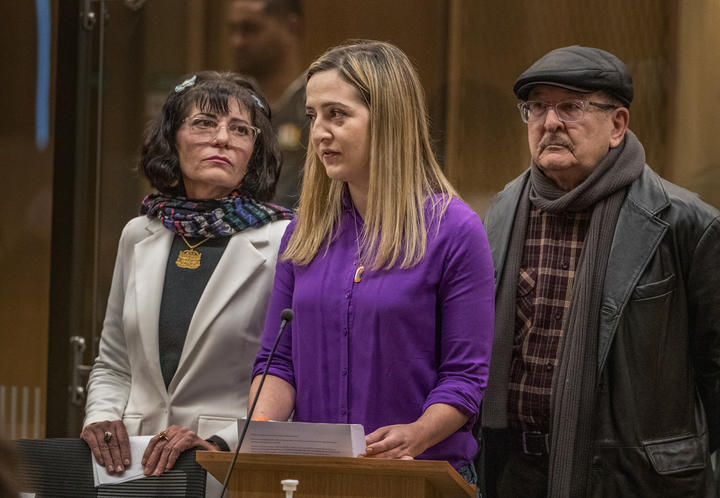
Victims were able to confront Tarrant for the first time since the attack.
Misguided and misled Gamal Fouda, imam of the Al Noor Mosque who was present on the day of the attack, told the gunman he was misguided and misled.
“We are a peaceful and loving community. We did not deserve your actions,” he said.
“Your hatred is unnecessary. If you have done anything you have brought the community closer together with your evil actions.”
The family of Ata Elayyan, who was murdered at Al Noor Mosque, told the convicted terrorist he not only attacked Canterbury’s Muslim community but New Zealand and all humanity.
Ata’s father, Mohammad Alayan, who was also injured in the attack, recited the Quran to the court.
The family heard no word of Ata for days after the attack.
“For three days we did not have any news on our beloved Ata. Then the devastating news came. Ata had passed away,” he said.
Maysoon Salama and Mohammad Alayan, the mother and father of Ata Elayyan who was murdered at Al Noor Mosque. Image: RNZ/Stuff Pool
‘You took souls of 51 people’ Ata’s mother, Maysoon Salama, told Tarrant he had not only killed her son, but his own humanity.
“You gave yourself the authority to take the souls of 51 innocent people. Their only crime in your eyes was being Muslim,” she said to him.
“You terrorised the whole of New Zealand and saddened the world. You killed your own humanity and I don’t think the world will forgive you for your horrible crime against humanity.”
Janna Ezat, whose son Hussein Al-Umari was murdered at Al Noor Mosque, told the gunman she forgives him.
“I decided to forgive you Mr Tarrant because I don’t have hate. I don’t have revenge,” she said directly to the terrorist.
“In our Muslim faith we say … if we are able to forgive, forgive.
“I forgive you. Damage was done and Hussein will never be here so I have only one choice to forgive you.”
Only show of emotion Tarrant nodded in acknowledgement of her words before blinking profusely and wiping one of his eyes.
It was his only show of emotion during the day.
Aya Al-Umari, the sister of Hussein Al-Umari who was murdered at Al Noor Mosque, reading her victim impact statement. Image: RNZ/Stuff Pool
Hussein Al-Umari’s sister, Aya Al-Umari, told the court she lost her best friend in the attack, whose birthday was only one day apart from hers.
“My best friend was executed in cold-blooded murder out of hatred,” she said.
“I still have the urge to pick up the phone and talk to my brother, tell him about my day and rant to him because he’s the only one that would understand.
“But now that you’ve killed him, I’ve turned to God and that’s made my faith in Islam stronger.”
Mazharuddin Syed Ahmed, who witnessed the attack on the Linwood Islamic Centre, said the victims expected to be safe in New Zealand.
“We all come from countries where these things happen,” he said.
“We came to New Zealand because it is safe, but after the shooting when we saw how people respected us and treated us all well that made us feel good about New Zealand.”
Some will never recover Christchurch’s Deputy Mayor Andrew Turner told RNZ Morning Report that while the sentencing will bring the legal process to an end, many victims and many in the community will carry the tragedy with them their whole lives.
“It may provide some closure, but some may unfortunately never find closure. This is something that some will never forget or ever recover from.
“This sentencing really is bringing back to the people of Christchurch … a really strong reminder of what happened. Some of the details that are now coming out with the victim statements, and the effect this has really had on those who were most directly effected, it just serves to remind us how absolutely horrific this event was.
“The events of the 15th of March certainly shocked all of us in Christchurch, but you’ll recall how the whole community wrapped around the Muslim community; how people came together in love and compassion and really supported each other and showed strong support for the Muslim community.
“There’s a really strong sense of that at the moment as well… the togetherness, the love and compassion.”
Turner said the court has provided good support services for those taking part, and he encouraged those who needed it to make use of it.
This article is republished by the Pacific Media Centre under a partnership agreement with RNZ.
Languages like Japanese, Korean, Turkish and the indigenous languages of the Amazon, East Africa, and New Guinea build sentences in a way that lets them grow to enormous length.
Our research shows learning one of these languages may help children create complex sentences that express multiple ideas at a younger age.
Two ways to tell a story
Try recounting what you did this morning, or telling a story, and chances are you’ll use a series of several sentences:
This morning, I woke early. I dressed and ate breakfast. I gathered my things, said goodbye to my family, and they waved goodbye to me. Then I drove to work.
In English, the simplest sentence, or “clause”, is just a subject plus a verb (“I dressed”). You can also join two clauses into a sentence using words like “and” or “while”, but it’s unnatural to join more than about three clauses into one English sentence.
But in many languages across Central Asia (from Turkish to Tibetan, Mongolian, Japanese, and Korean), and in many indigenous languages of the Amazon, East Africa, and New Guinea, stories can take the form of one long sentence. These sentences look more like this:
Waking up early this morning, dressing, making breakfast, eating, washing the dishes, gathering my things, saying goodbye to my family, they waving goodbye to me, I drove to work.
These long sentences are known as “clause chains”. Unlike in English, where most of the clauses in a story would make sense if you spoke them outside the story (“I dressed”), all but the very last clause in a “clause chain” are abbreviated – they can only function in a clause chain.
“Dressing” or “making breakfast” sounds unfinished on its own, and only the final verb of the clause chain tells you whether the events are happening in the past, present, or future.
Marathon sentences require planning
Clause chains are special because they can be extremely long, pushing the boundaries of what we consider “sentences” in English. Chains of more than 100 clauses have been recorded.
Non-native speakers may have trouble keeping track of who is doing what in clause chains. One linguist who studied a language of the Himalayas (where many languages use this type of sentence) colour-coded clause chains in her notes to keep track of the plot.
In some languages, especially of the Amazon and New Guinea, there’s a further twist. In each clause of the chain, the speaker has to announce in advance whether a different person is carrying out the action in the upcoming clause (as in “saying goodbye to my family, they saying goodbye to me”).
This is called “switch-reference marking”, and it probably means speakers of these languages have to plan further ahead than speakers of English.
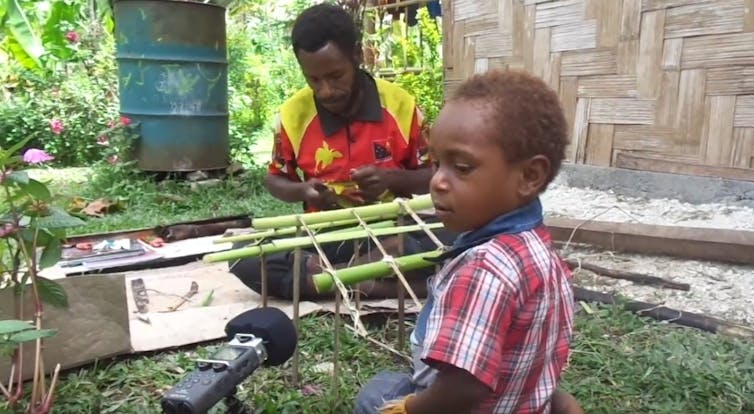
Timsaul Girip with his two-and-a-half-year-old son, Martin, participate in the Nungon longitudinal developmental study in Towet village, Papua New Guinea.Norman Jio, Author provided
Complex chatter
So do kids learning Turkish or Japanese speak in precociously complex sentences, compared with their Anglophone peers? We investigated this for six languages – Japanese, Korean, and Turkish, plus three indigenous languages of New Guinea and Australia (Ku Waru, Nungon, and Pitjantjatjara).
We used a variety of methods, looking at data from different children and from the same children over time. For each language, an expert or team of experts recorded children between the ages of two and about five interacting with their parents, or telling stories in more controlled contexts, like retelling short videos or narrating wordless picture books. Numbers of children studied varied by language: from just three (Nungon) to over 100 (Japanese and Turkish).
It turns out children learning these languages are first able to speak in well-formed clause chains between the ages of two and two and a half. This is around the time that children learning English and French make their first attempts at combining clauses into sentences.
But the English- and French-speaking children generally make some mistakes (for instance, by leaving out conjunctions), or actually express only a single idea across two clauses (in “look at the house that we built!”, there is only one notion: that we built a house).
The children learning the clause-chain languages did not make such errors. What’s more, in most of these languages the children’s early clause chains express multiple ideas.
It may be that the abbreviated verbs used in all but the last clause of a clause chain make it easy for these children to describe complex sequences of events in a single utterance.
First two, then more
So can two-year-old Korean children (for example) speak in 20-clause sentences?
It’s well known that children learning most languages go through an early phase in which their utterances are limited to two words: the “two-word phase”. After this, children don’t proceed to a “three-word phase”. Instead, the progression is from two to “more”.
However, until now no-one has thought to ask when children learn to combine more than two clauses into a sentence. This may well be because research on how children learn to combine ideas into sentences has been largely shaped by speakers of English and other languages that lack clause chains. (This shows it’s important for scientists to come from varied backgrounds!)
When we investigated this idea, we found that all children learning languages with clause chains begin by speaking in two-clause chains. So no, kids don’t begin spouting sentences of 20 clauses at age two!
But the “two-clause phase” lasts for as little as one or two months, and after that most children we studied advanced directly to a “more clauses phase”, in which their sentences include anywhere from two to five or more clauses. A Japanese child recorded a 20-clause chain at age three and ten months, and this may not be unusual.
Although we haven’t yet finished analysing how clause chains affect adult brain function, suffice to say: if you were to choose to learn a foreign language based on its mind-expanding potential, a language with clause chains might be a good choice!
On September 5, a coalition of online groups are planning an Australia-wide action called the “Day of Freedom”. The organisers claim hundreds of thousands will join them on the streets in defiance of restrictions on group gatherings and mask-wearing mandates.
Some online supporters believe Stage 5 lockdown will be introduced in Melbourne the following week and the “Day of Freedom” is the last chance for Australians to stand up to an increasingly tyrannical government.
The action is the latest in a series of protests in Australia against the government’s COVID-19 restrictions. The main issues brought up during these protests centre around 5G, government surveillance, freedom of movement and, of course, vaccinations.
And one general conspiracy theory now unites these disparate groups — QAnon.
Why QAnon has exploded in popularity globally
Since its inception in the US in late 2017, QAnon has morphed beyond a specific, unfounded claim about President Donald Trump working with special counsel Robert Mueller to expose a paedophile ring supposedly run by Bill and Hillary Clinton and the “deep state”. Now, it is an all-encompassing world of conspiracies.
QAnon conspiracy theories now include such wild claims as Microsoft founder Bill Gates using coronavirus as a cover to implant microchips in people, to governments erecting 5G towers during lockdown to surveil the population.
Donald Trump has tacitly endorsed QAnon, saying its followersLeah Millis/Reuters
Last week, Facebook deleted over 790 groups, 100 pages and 1,500 ads tied to QAnon and restricted the accounts of hundreds of other Facebook groups and thousands of Instagram accounts. QAnon-related newsfeed rankings and search results were also downgraded.
Facebook is aiming to reduce the organising ability of the QAnon community, but so far such crackdowns seem to have had little effect on the spread of misinformation.
In July, Twitter removed 7,000 accounts, but the QAnon conspiracy has become even more widespread since then. A series of global “save the children” protests in the last few weeks is proof of how resilient and adaptable the community is.
Why Australians are turning to QAnon in large numbers
QAnon encourages people to look for evidence of conspiracies in the media and in government actions. Looking back over the last several years, we can see a range of events or conspiracy theories that have helped QAnon appeal to increasing numbers of followers in Australia.
1) Conspiracies about global governance
In 2015, Senator Malcolm Roberts claimed the UN’s 1992 “Agenda 21” plan for sustainable development as a foreign global plan aimed at depriving nations of their sovereignty and citizens of their property rights.
The belief that “Agenda 21” is a blueprint for corrupt global governance has become a core tenet of QAnon in Australia.
Any talk of “global bankers and cabals” directly taps into longstanding anti-Semitic conspiracies about supposed Jewish world domination often centred on the figure of billionaire George Soros. The pandemic and QAnon have also proven to be fertile ground for neo-Nazis in Australia.
2) Impact of the far-right social media
QAnon has its roots on the far-right bulletin boards of the websites 4Chan and 8Chan. Other campaigns from the same sources, such as the “It’s OK to be White” motion led by One Nation leader Pauline Hanson in the Senate, have been remarkably successful in Australia, showing our susceptibility to viral trolling efforts.
His failure is widely shared in QAnon circles as proof of a cover-up of child abuse at all levels of Australian government. The belief the country is run by a corrupt paedophile cabal is the most fundamental plank of the QAnon platform.
Among the QAnon conspiracy theories in the US is that Hollywood actors have engaged in crimes against children.CHRISTIAN MONTERROSA/EPA
4) Increasingly ‘unaccountable and incompetent’ governments
A number of recent events have eroded public trust in government — from the “sports rorts affair” to the Witness K case — and all serve to further fuel the QAnon suspicion of authority figures.
5) Longstanding alternative health lobbies
Australia’s sizeable anti-vax movement has found great support in the QAnon community. Fear about mandatory vaccinations is widespread, as is a distrust of “big pharma”.
Also, the continuing roll-out of 5G technology throughout the pandemic has confirmed the belief among QAnon followers that there are ulterior motives for the lockdown. Wellness influencers such as celebrity chef Pete Evans have amplified these messages to their millions of followers.
6) The ‘plandemic’ and weaponising of COVID-19
In the QAnon world, debates about the origin of the coronavirus, death rates, definition of cases, testing protocols and possible treatments are underpinned by a belief that governments are covering up the truth. Many believe the virus isn’t real or deadly, or it was deliberately introduced to hasten government control of populations.
Understanding QAnon followers
Understanding why people become part of these movements is the key to stopping the spread of the QAnon virus. Research into extremist groups shows four elements are important:
1) Real or perceived personal and collective grievances
This year, some of these grievances have been linked directly to the pandemic: government lockdown restrictions, a loss of income, fear about the future and disruption of plans such as travel.
2) Networks and personal ties
Social media has given people the ability to find others with similar grievances or beliefs, to share doubts and concerns and to learn about connecting theories and explanations for what may be troubling them.
3) Political and religious ideologies
QAnon is very hierarchically structured, similar to evangelical Christianity. QAnon followers join a select group of truth seekers who are following the “light” and have a duty to wake up the “sheeple”. Like some religions, the QAnon world is welcoming to all and provides a strong sense of community united by a noble purpose and hope for a better future.
4) Enabling environments and support structures
In the QAnon world, spending many hours on social media is valued as doing “research” and seen as an antidote to the so-called fake news of the mainstream media.
Social isolation, a barrage of changing and confusing pandemic news and obliging social media platforms have been a boon for QAnon groups. However, simply banning or deleting groups runs the danger of confirming the beliefs of QAnon followers.
Governments need to be more sensitive in their messaging and avoid triggering panic around sensitive issues such as mandatory or forced vaccinations. Transparency about government actions, policies and mistakes all help to build trust.
Governments also need to ensure they are providing enough resources to support people during this challenging time, particularly when it comes to mental and emotional well-being. Resourcing community-building to counter isolation is vital.
Like many conspiracy theories, there are elements of truth in QAnon. Empathy and compassion, rather than ridicule and ostracism, are the keys to remaining connected to the Q follower in your life. Hopefully, with time, they’ll come back.
Source: The Conversation (Au and NZ) – By Joseph Ibrahim, Professor, Health Law and Ageing Research Unit, Department of Forensic Medicine, Monash University
As deaths in aged care continue to rise, the community may find the Morrison government’s announcement of an additional A$171.5 million to boost its response to COVID-19 in residential aged care reassuring.
The package was agreed by all states and territories at Friday’s National Cabinet meeting, and brings the total Commonwealth funding for aged-care support during the pandemic to more than A$1 billion.
The funding will go towards additional support for the aged-care workforce, the recently established Victorian Aged Care Response Centre, and an Australian Health Protection Principal Committee (AHPPC) Aged Care Advisory Group.
It will also fund grief and trauma support for families, more compliance and quality checks, and support the establishment of emergency response centres in each state and territory.
But this announcement appears to be geared primarily towards dealing with the unfolding disaster wrought by the federal government’s mishandling of the COVID-19 crisis in aged care. It will do little to better prepare the sector for further outbreaks or a third wave.
I would argue we haven’t had clear a plan for residential aged care since the pandemic began.
While fighting the current fires is important, here are some of the things we would need to see in a truly forward-looking plan for managing COVID-19 in the aged care sector.
A leader
The first step for the Morrison government is to appoint a leader for aged care, who will be accountable and drive a coherent strategy to address the sector’s challenges.
Recent evidence presented to royal commission and senate inquiry hearings highlight there is no one in charge. It’s clearly not the federal Minister for Aged Care and Senior Australians Richard Colbeck.
The person must be apolitical, without ties to peak bodies or providers, and represent the interests of residents and their families. This position could be similar to a chief health officer, but specifically for residential aged care.
The new funding for aged care will include grief and trauma support for residents and families, among other things.Shutterstock
Clear goals
Second, we need a clear statement describing the goals and overall objectives this plan will achieve. The latest announcement is a scattergun approach, neither coherent nor strategic. It plugs existing holes.
We have a clear, well-presented strategy for reducing community transmission of COVID-19. We should demand an equally clear strategy for aged care. The focus should be on saving lives, while being humane and compassionate to residents, family and aged-care staff.
And we must ensure transparency and accountability by making the plan available to and responding to the public in real time. We need to eliminate the diffusion of responsibilities for the aged-care response across the government, health department and the Aged Care Quality and Safety Commission. It creates confusion and opportunities to excuse inaction, and offers no mechanism to redress failures.
We also need a structured approach for rapid two-way information flow between the people in charge and the people on the ground.
A national taskforce
The third step is a national taskforce with the ability to respond to rapidly changing conditions. The AHPPC Aged Care Advisory Group serves to advise government ministers, but only partially addresses this step.
The group’s composition and selection process ought to be publicly visible. The panel needs people with technical expertise, integrity and without any competing interests. There should be at least two members who are consumers — ideally aged-care residents with a human-rights lawyer to support and advocate on their behalf.
Outbreak preparedness
The fourth step is urgently addressing the aged-care sector’s approach to outbreak preparedness and prevention of COVID-19. We must agree to a set of objective measurement tools to assess the approach taken at a facility, organisational and regional level. Then we must be able to evaluate, support and strengthen those plans.
The Aged Care Quality and Safety Commission was allocated an additional A$9.1 million to increase their compliance and quality checks of individual facilities across the country. But additional checks are worthless if we don’t have uniform, transparent checks and balances across the board.
The fifth step is genuine support for the aged-care workforce. Staff confidence is key to reducing absenteeism in those who are well and presenteeism in those who are unwell.
While the government has directed A$140 million to staff, including for additional surge workforce, increased training, and retention bonus measures, we’re still missing a strategy to retain staff.
Increasing staff confidence and retaining them in the sector, especially in such a tumultuous time, requires asking, listening and responding to aged-care workers’ concerns. Beyond just offering financial incentives, we need to make them feel prepared, safe and that their concerns are addressed.
We need greater transparency and accountability in the aged care sector.Shutterstock
Respecting residents and families
The final step is recognising the rights of aged-care residents and their families. An advocate not connected to the aged-care providers or government should have access to every aged-care home to be the eyes and ears for residents and their families. This could be achieved with a workforce of just 300 people, each advocate coordinating with ten aged-care homes.
The recent announcement provides for increased availability of grief and trauma support services, with A$12.5 million allocated to supporting residents and their families who have experienced a COVID-19 outbreak. This fails to recognise all residents and families are likely affected by the pandemic and lockdowns, even if they’re not directly affected by an outbreak.
Similarly, the A$1.5 million allocated to ensure regular direct communication from the health department appears to be only for “families and loved ones of aged-care residents impacted by COVID-19”. Is seems an odd approach as our whole country and every aged-care home is affected by the pandemic.
A coordinated, evidence-based national plan
The federal government’s commitment is a small amount, equating to roughly 1.5% of what this already struggling sector receives annually.
While it’s welcome, the majority of funds are allocated to expand existing initiatives which have had limited success.
Throwing money at a problem is not how we develop a coordinated, evidence-based national plan that addresses the known gaps.
Heavy rain in parts of Australia in recent months has raisedhopes Australia’s protracted drought is finally over. But determining whether a region has recovered from drought is a complex undertaking.
For example, a drought-stricken area may get enough rain that farmers can plant a viable crop, but that same rain may not affect major water storages. We’ve seen that in southern Queensland, where water restrictions remain in place despite recent rain.
And from a social, economic and environmental perspective, one great season of rain does not usually make up for a run of bad seasons.
So today, in World Water Week, we consider the effect of this year’s rain. The upshot is that most drought-ravaged areas still need sustained, above-average rain before streamflow and water storage levels return to average. And in other parts of Australia where little rain has fallen in 2020, unfortunately drought areas have expanded.
2020 has brought rain to Australia’s east, but more is needed to break the drought.Peter Lorrimer/AAP
Three years with little rain
The Bureau of Meteorology is not responsible for declaring whether a region is or isn’t in drought – that’s a state government responsibility. But we do analyse rainfall and water data, which indicate whether a region is recovering.
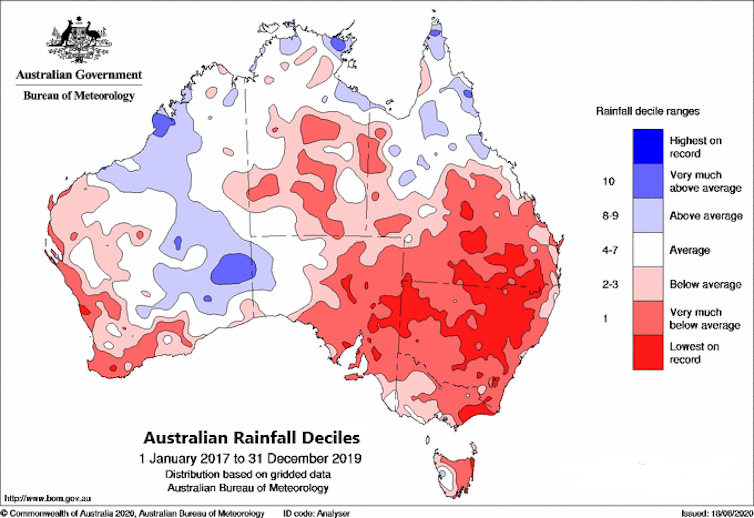
In the three years from January 2017 to the end of 2019, rainfall for much of Australia was greatly reduced – with both 2018 and 2019 especially dry. Rainfall deficiencies were most severe in the northern Murray–Darling Basin; the period was the driest and hottest on record for the basin as a whole.
These record warm temperatures exacerbated dry conditions, at times rapidly drying soils in only a matter of months. This led to periods in 2017 and 2019 that researchers have termed “flash drought”.
Rainfall deciles from January 2017 to December 2019 showing the depth of longer-term rainfall deficiencies over large areas.BOM
2020: partial recovery in the east
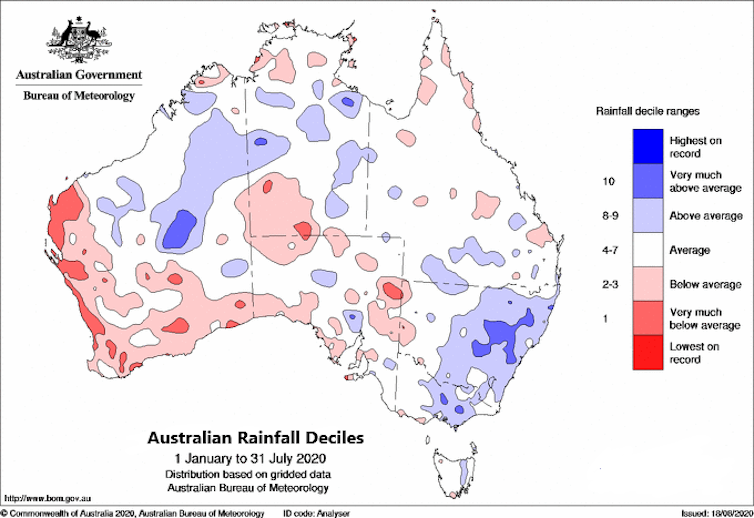
Since January this year, above-average rainfall has fallen on some parts of eastern Australia, particularly across some of the worst drought-affected areas of central and western New South Wales and southwest Queensland. In February, much of eastern NSW experienced heavy rain, while there were more widespread and consistent falls through many parts of southeastern Australia from February to April.
But some areas have largely missed out on recent rains. Southern South Australia and southwest Western Australia have received below-average rainfall in 2020, continuing the dry conditions of 2019. Drought areas in parts of the southern coast of Western Australia and southwestern South Australia have expanded this year, and the regions may face a difficult spring and summer.
Rainfall deciles from January 1, 2020 to July 31, 2020, showing the impact of recent rainfall across Australia.BOM
Wetter soils, better crops
Eastern Australia’s recent rain has helped replenish soil moisture levels, enabling favourable crop and pasture growth in many areas. For August to date, soil moisture is above average across eastern coastal areas and mostly average to above average in Murray–Darling Basin catchments.
This increase in soil moisture is a very positive foundation – catchments are now primed to produce runoff and inflows to water storages if there is significant rainfall in spring.
But soil moisture levels are below average for August across much of southwestern Australia, southern parts of South Australia, northern Tasmania, northern parts of the Northern Territory and parts of central Queensland.
Not all dams have filled up
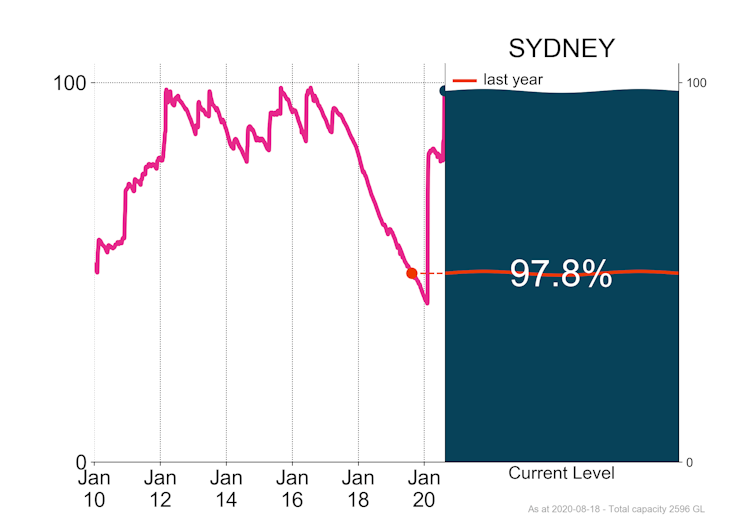
In Sydney, water storage levels had been declining since July 2016. This resulted in level 2 water restrictions introduced in December 2019 and Sydney’s desalination plant operating at full capacity. But heavy rain in February and August this year filled Warragamba Dam to capacity, further increasing Sydney’s storage levels.
Total storage as at 18 August 2020 (% of total capacity) compared to the last ten years for Sydney storages.BOM
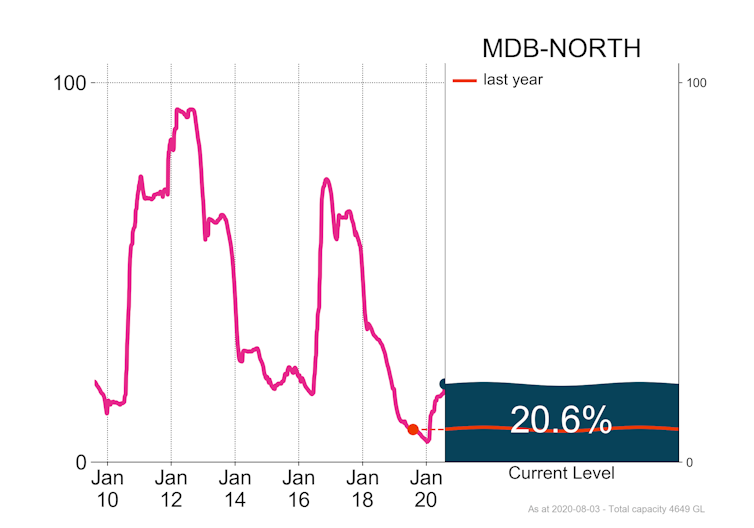
In contrast to Sydney, major storage levels in the northern Murray–Darling Basin remain low, at only 21% of total capacity despite rainfall in recent months. Unlike the significant and rapid recovery of these storages in 2010 and 2016, the current rate of recovery is slow. Significant follow-up rain is needed to replenish these northern basin water storages.
Total storage as at 31 July (% of total capacity) compared to the last ten years for the northern Murray–Darling Basin.BOM
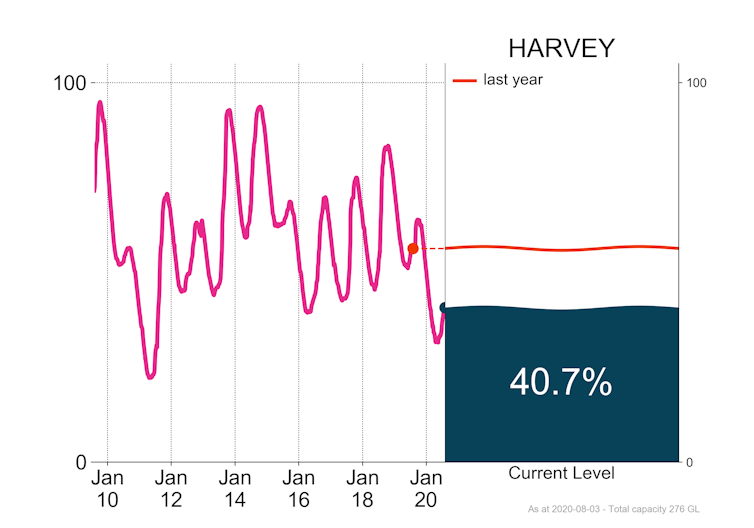
In the west, while Perth’s water supply system relies on desalinated water and groundwater to supplement its storages, the dry conditions are reflected in the Harvey rural supply system south of Perth. It needs a further 100,000 megalitres to replenish the drawdown of the past two years.
Total storage as at July 31 (% of total capacity) compared to the last ten years for the Harvey system.BOM
So, is the drought over?
For many regions in eastern Australia, rainfall in 2020 has eased drought conditions by wetting soils and helping fill dams on farms. But most drought-affected areas still need sustained above average rainfall for streamflow and water storages to increase to at least average levels.
Recently the Bureau of Meteorology raised its El Niño–Southern Oscillation (ENSO) status to La Niña ALERT. This means there is three times the normal likelihood of a La Niña weather pattern in 2020. La Niña events typically result in wetter than average conditions over Australia in winter and spring.
Separately, warmer conditions in the eastern Indian Ocean may also boost the chance of a wetter end to the year.
The bureau’s latest outlook indicates the eastern two-thirds of Australia is very likely to receive above average rainfall in coming months. However, southwest Western Australia is less likely to have above average rainfall.
The bureau will provide further updates on current rainfall deficiencies through regular reports such as its monthly Drought Statement and weekly rainfall tracker.
The bureau’s Drought Knowledge Centre provides information about drought in your area. Water Reporting Summaries for the Murray–Darling Basin provide an overview of water currently in storage and commitments made for this water to different users, including the environment. The Water Storage Dashboard tracks water storages levels across Australia. Subscribe to receive our climate and water emails.
Today, Victorian Education Minister James Merlino will front the state parliamentary inquiry into the government’s response to the COVID-19 pandemic. He should answer these three questions on the handling of schools.
Q 1. How will the government help disadvantaged students catch up?
Victorian children have now been in remote schooling for about 17 weeks or almost two terms — virtually half of their 2020 school year. Many will have fallen behind in their learning, but the most vulnerable students will have been hit hardest.
Our analysis shows the equity gap between advantaged and disadvantaged students grows at triple the rate during remote schooling. Even in the best case scenario — where remote schooling was delivered well — disadvantaged students are likely to have lost at least two months of learning over the period. In schools where remote schooling was of average quality, disadvantaged students are likely to have gone backwards.
The government should be providing extra resources to help vulnerable children catch up fast. This can be done through small-group tutoring and targeted literacy and numeracy programs. The Grattan Institute analysis recommended an investment in these two areas of A$1.2 billion nationally — including over A$350 million in Victoria – at the end of term two. With more remote schooling in term three, the need is now even bigger.
For small-group tuition programs, disadvantaged students would receive regular short sessions in reading and maths, three or four times a week over 12 weeks. Tuition is expensive, but it can increase student learning by an additional five months over one or two terms of schooling.
Young university graduates and student teachers should be hired as tutors where possible. They make good tutors, and will also be hit harder by the recession than older Australians, which will make them more likely to spend the extra income quickly, stimulating the economy at the same time.
The UK government has already announced £1 billion (A$1.8 billion) of extra support for disadvantaged students, with investments in a new national tutoring scheme. Our governments should spend big, and quickly.
Q 2. What extra money will the government provide to improve students’ mental health?
Many students, especially those with pre-existing mental-health issues, will have found social isolation hard during remote schooling. And many children have had to deal with family hardships due to loss of income, as well as the added stress of remote learning.
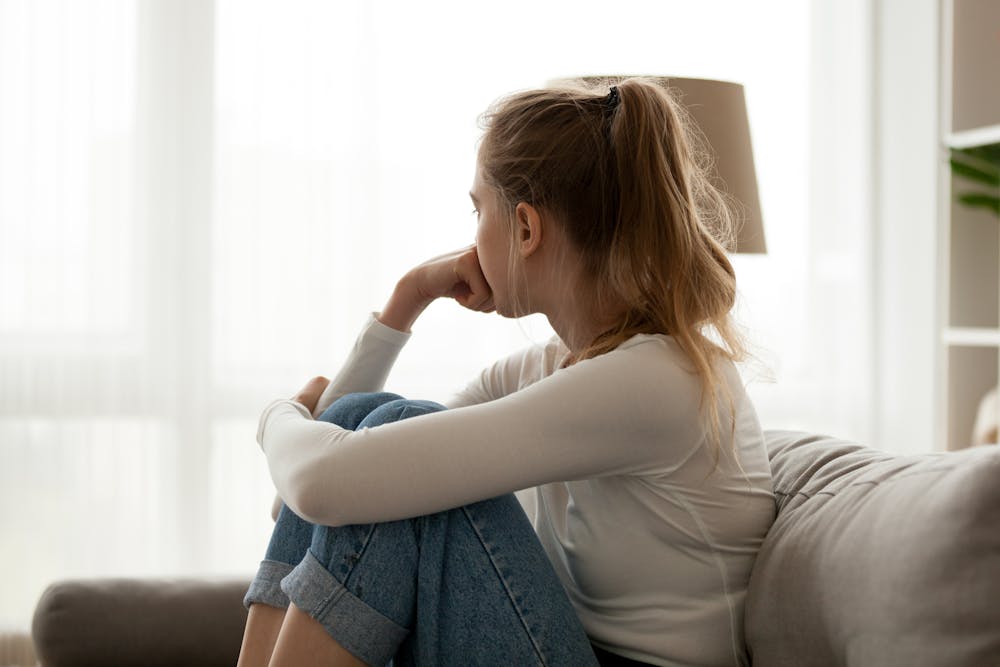
Mental health issues have increased among young people during the pandemic.Shutterstock
Given the increase in demand from young people for mental-health services, the minister should clarify what the average wait times are for students referred, along with plans to ensure they are reasonable in the near future.
Importantly, the minister should demonstrate how the government will support primary school students, not just secondary students. Early mental-health support for children is key to preventing ongoing problems down the track, and primary school is notoriously overlooked in this area.
More broadly, the minister should demonstrate plans for teachers to have adequate training in how to identify and refer students who may be struggling. This is also highlighted as an area of need in the interim report.
In addition, all students will need extra support to readjust from the period of social isolation. Evidence shows what the teacher does in the classroom, in their routines and everyday teaching, is key to helping students build social and emotional skills.
It’s a sophisticated art, and students can be harmed if teachers don’t do this properly. For example, asking students to talk about the challenges they faced during home learning can be damaging if they suffered negative experiences or trauma. Teachers need to be well trained in these areas.
Q 3. How will the government better support students if there is a third or fourth wave?
We’ve all been caught off guard by the pandemic. But what lessons has the government learnt about remote learning? What will be done better if there is a “next time”?
Asking this question is not a swipe at the minister or anyone else. The Victorian department and teachers have gone above and beyond to support learning from home. But we must be better prepared next time.
Australia can learn from high-performing countries that were better prepared, even before the first wave hit. As discussed in our June report Recovery Book, Singapore had a fully online curriculum ready to go. And Hong Kong had many more digital resources aligned to the curriculum that could be easily shared. Our systems can, and must, improve.
It will not be good enough for the minister to suggest we don’t yet know enough to make changes. It is OK to have made mistakes, but it is not OK if we’re not learning from them.
Source: The Conversation (Au and NZ) – By Cathy Smith, Senior Lecturer, Interior Architecture; Inaugural Women in Built Environment Turnbull Foundation Scholar, UNSW
The COVID-19 pandemic has temporarily shut down cities across the globe, resulting in abandoned buildings and deserted streets. How might we better use our own vacant buildings during the crisis and beyond? We can learn from the benefits and challenges of the UK’s “meanwhile” building use sector.
Sometimes referred to as meanwhile housing or property guardianship in its residential forms, it’s a recognised property tenure solution for vacant buildings in the UK and Europe. It enables properties that are lying dormant, or awaiting redevelopment, to be used temporarily as workspaces, shops or housing.
Meanwhile use serves a dual purpose by activating an otherwise unused property while providing the owner with building security for a set period. It involves relatively cheap licences or flexible leases managed by a third-party, and often for-profit, agent.
Creatives and business startups who cannot afford expensive city rents or commercial leases are attracted to the unusual and large industrial or institutional buildings often used for meanwhile schemes. London property guardianship featured in Phoebe Waller-Bridge’s 2016 television comedy Crashing. The series chronicles the misadventures of a group of property guardians living in a former hospital.
Crashing is a comedy about a group of property guardians living in a disused London hospital.
It would be tempting to think of meanwhile use as a quick-fix for Australia’s own twin problems of temporarily vacant buildings and unaffordable rents in major cities. Yet, as I discovered when visiting London meanwhile schemes in 2018, their success relies upon careful management.
The biggest criticism of meanwhile use is that it’s an insecure or unreliable form of accommodation. Schemes using short-term occupation licences rather than conventional tenancies may be ideal for occupants attracted by their relatively cheap costs and flexibility. However, occupants will not be legally protected to the same extent as they would be under tenancy law.
For example, UK property guardians may find themselves “homeless” 28 days after an eviction notice. Unlike rental tenants, they might not be protected from eviction during the COVID-19 crisis, even if they live in council-owned buildings.
Due to the uncertainty of its tenure, meanwhile use schemes target different participants to standard renters or commercial tenants. This makes them suitable for some people only.
A former telephone exchange in Waltham Forest, London, is now Switchboard Studios, a ‘meanwhile’ workspace for local businesses, startups and creatives.Cathy Smith (2018), Author provided
My research suggests the low costs and flexible arrangements of meanwhile workspaces are attractive to return-to-work mothers or caregivers starting a business. They also appreciate the sense of camaraderie and community fostered by schemes such as the former non-profit Renew Newcastle and Renew Australia.
However, the uncertain duration of property guardianship typically excludes people with children. Some agencies stipulate that property guardians must be employed full-time, over 21 years of age and nominate an alternative housing address in case they need to relocate quickly.
Thus the short-term arrangements that make meanwhile workspaces good for working mothers also make it difficult for them to become property guardians.
Building conditions and management vary
Another important constraint on meanwhile use may be the condition of the property itself. Unused shopfronts and office buildings can be ideal for young creatives like architects trialling design prototypes. They have the knowledge and skill sets to temporarily transform a space.
Problems can arise when a property unfit for human habitation is used for meanwhile schemes without the owner or agent making the necessary investment in building upgrades.
Some mismanaged property guardianships have led to costly legal disputes. In one Dutch case, the council building owner, a property guardianship agency and their maintenance worker were held to be negligent for the death by electrocution of a young property guardian. This worst-case example reminds us that, even though meanwhile use suits some people and professionally managed properties, it will not solve the root causes of our housing crises and vacant city streets.
The necklace worn by Michelle Obama while addressing the Democratic National Convention — a fine gold chain spelling out the word VOTE in spaced, sans serif letters — has gone viral.
Made by a small company owned by Chari Cuthbert, the necklace was designed “for powerhouse women who let their voices be heard, especially at the polls”.
Using jewellery to communicate a message is neither new or unusual. Archaeologists have described finding body adornments as “the closest thing to finding prehistoric thought.” Most jewellery, whether a ring or a medal or a badge, is visible to others and thus an expression of the wearer and their status.
But Obama’s is the latest in a long line of celebrated examples of jewellery as a political device: from suffragettes’ medals to Madeleine Albright’s pins. Even brooches worn by Queen Elizabeth have been read by some as political statements.
Examples from the British suffragette campaign for the vote (a political movement spanning from 1903 to 1918) included brooches and necklaces made from precious stones, enamel and ribbons. They used the colours of purple, white and green, associated with the Women’s Social and Political Union.
A suffragette Hunger Strike medal awarded to Myra Eleanor Sadd Brown.Museums Victoria
Medals awarded by the union leaders to women who contributed to the campaign drew on military aesthetics. Other jewellery worn by suffragettes reflected the fashions of the time, in particular art nouveau.
One Hunger Strike medal was awarded to women’s rights activist Myra Eleanor Sadd Brown after she was imprisoned in London in 1912, went on a hunger strike and was force fed. It includes an inscription on the reverse side “FED BY FORCE 4/3/12”.
More recently, Lady Hale, the president of the UK Supreme Court, wore a large, glittering spider brooch when announcing that Boris Johnson’s 2019 prorogation of parliament was “void and of no effect. There was discussion about what this brooch symbolised. Was it sending a message to the British prime minister?
In Australia, meanwhile, Greens Senator Larissa Waters caused a minor stir when she wore Stop Adani earrings in Parliament in 2018.
In some instances, the context in which it is worn – or by whom – makes jewellery political. The first female U.S. Secretary of State, Madeline K. Albright, wore brooches and pins to express political and diplomatic intent. “I found that jewelry had become part of my personal diplomatic arsenal,” she has said.
In 2009, the Museum of Art and Design New York exhibited over 200 brooches and pins from Albright’s personal collection. The exhibition coincided with the publication of Albright’s memoir Read My Pins: Stories from a Diplomat’s Jewel Box. Notably Albright’s brooches don’t usually include text: others must read the symbolism.
For instance, after media controlled by then Iraqi president Saddam Hussein referred to her as an “unparalled serpent”, Albright wore a golden snake brooch pinned to her suit for her next meeting on Iraq.
She also had an “arrow pin that looked like a missile” (worn when negotiating the Anti-Ballistic Missile Treaty with the Russians). And after learning the Russians had planted a listening device — a “bug” — in a conference room near her office in the State Department, she wore a bug brooch the next time she saw the Russians.
Madeleine Albright wearing one of her brooches in 2006.Pablo Martinez Monsivais/AP
In the late 1990s, Albright’s use of brooches for political purpose inspired Helen Drutt English to curate the exhibition Brooching It Diplomatically. Sixty-one art jewellers from 16 countries created brooches in tribute to Albright.
The origin of a piece of jewellery is also a consideration in understanding its meaning. In 2018, a simple green agate brooch Queen Elizabeth wore when meeting President Donald Trump and the First Lady, Melania, was identified as having been a gift from former President Barack Obama and Michelle, his wife.
At the next meeting, the Queen wore a snowflake brooch, a gift from Canada. Some read this as a reference to Trump’s use of the word “snowflake” as a derogatory term.
Queen Elizabeth with Donald and Melania Trump in July 2018. Her choice of brooches during this time prompted much analysis.STR/EPA
Jewellery and ethics
The Duchess of Sussex Meghan Markle’s interest in wearing ethically sourced or sustainable clothes and jewellery has been widely reported and signals her priorities. She has worn jewellery such as gold studs and bangles from Pippa Small a UK firm committed to fair trade.
Increasingly, jewellery firms small and large are making statements about their approach to ethics and sustainability. So in choosing what jewellery you buy, you can make a political statement, perhaps by supporting local workers or ethical workplaces.
While some might seek to trivialise jewellery, a traditional form of feminine adornment, brooches, rings and necklaces can make powerful statements. Since Michelle Obama wore her VOTE necklace last week, sales of the necklace have reportedly skyrocketed.
Scott Morrison is finding, to his great discomfort, the royal commissioners probing aged care aren’t keeping their thoughts to themselves until their final report in February.
The week before last, commissioner Tony Pagone QC said the government should set up an expert aged care advisory body ASAP. On Friday the national cabinet did so, although Morrison chooses to play it down by describing it as an add-on to an existing group.
Now Pagone and commissioner Lynelle Briggs have declared it’s “unacceptable” there isn’t an independent body publicly reporting on the sector.
The commissioners weighed in as Scott Morrison came under a strong attack, on the first day of the parliamentary sitting, over the COVID crisis that as of Monday had taken the lives of 328 people in residential care and seven in at-home aged care.
Monday also saw the release of the government-commissioned report on Sydney’s Newmarch House, where 17 of 19 deaths were attributed to COVID, which was 46% of the COVID-positive residents. The report criticised “a lack of clarity in the relationships and hierarchy” between various state and federal government health agencies.
With Labor devoting every question in the House of Representatives to aged care, Morrison made his most explicit apology so far.
But equally, the Prime Minister went out of his way to stress COVID had hit only a very small proportion of facilities.
He told parliament there were “2706 residential aged care facilities in Australia. In 92% of these facilities, there’s been no infections among residents. This compares sharply to many countries around the world.
“In Victoria, where there’s been high levels of transmission, 126 of the 766 facilities have outbreaks among residents and staff.
“The impact has been significant in 16 cases. And in four cases, the impact has been severe. And completely unacceptable.
“Again, I offer my apologies to the residents and families of those affected in those facilities. It was not good enough.”
Pagone and Briggs believe the eyes on the system aren’t good enough.
“Unbiased measurement and reporting of performance is vital to create accountability and continuous improvement in the aged care sector.
“Without it, problems are hidden from sight and not addressed,” they said in a statement.
They went further. “It is unacceptable that in 2020 the aged care system is still without this. Had the Australian Government acted upon previous reviews of aged care, the persistent problems in aged care would have been known much earlier and the suffering of many people could have been avoided.”
This goes to the underlying problem – the long term faults of the system, often identified but never properly fixed.
Morrison fell back on the history of the issue as he responded in question time, saying that was why he called the royal commission.
“All governments have failed to measure up to the mark, including those who were members of governments previously who now sit opposite.”
While that’s correct, it is equally true that the Coalition is in its third term – it could have had reform under way years ago.
The research released by the commission has been done by the South Australian Health and Medical Research Institute.
It looks at a number of indicators to measure the quality of aged care, on which Australia has a mixed performance.
They include indicators for medication-related quality of care, falls and fractures, hospital re-admissions, hospitalisation for dementia and delirium, pain, premature mortality, pressure injury, use of care plans and medication reviews, and weight loss and malnutrition.
At present the federal government reports on only three indicators for residential care.
The research says: “Public reporting of quality and safety indicators may increase transparency and accountability of the system, potentially improving performance, and provide aged care recipients and their families the opportunity to make informed decisions regarding service use”.
Asked about the commissioners’ comments, Morrison said he’d wait for their report. He wasn’t going to undertake a running commentary, although he again indicated there’ll be further responses to the commission’s interim report in the budget.
He urged the opposition not to “partisanise” the commission’s activities.
But the commission, with its strong voice, now is very much in the partisan debate.
Source: The Conversation (Au and NZ) – By Erin Smith, Associate Professor in Disaster and Emergency Response, School of Medical and Health Sciences, Edith Cowan University
As the number of new daily confirmed cases begins to decline, we need to consider how to ease restrictions as efficiently as possible without overwhelming health services.
But moving into a “new normal” won’t be simple. At least 94 countries are undergoing or exiting lockdowns to control the COVID-19 pandemic, and governments are looking for sustainable exit strategies that won’t lead to a surge in coronavirus cases.
One option is a traffic-light alert system, which is already being used around the world to classify whether travel is safe and inform restrictions in the classroom.
When can we exit lockdown?
Ultimately, before we exit lockdown, we need to be confident the changes won’t risk yet another wave of infections. The Victorian government has yet to reveal its map for navigating out of lockdown, but it’s likely several key criteria will need to be met before restrictions can be eased.
These include making sure the health-care system can cope, and ensuring a sustained and consistent downturn in deaths and daily “mystery cases”. Mystery cases can’t be linked to any known outbreaks, so close contacts can’t be isolated to limit the spread of the virus. For this reason, a consistent reduction in these cases is especially important.
UNSW epidemiologist Mary-Louise McLaws first proposed the traffic light model after the SARS outbreak of 2003, when she was reviewing the response to the Beijing outbreak.
Red, amber and green alerts – similar to those used during the bushfire season – could be used as part of such a system. The level of threat would be based on the average number of new infections over a two-week period. Colour-coded alerts would then signal to the public when mask-wearing is required – much like they warn of the fire-danger level during bushfire season.
Professor McLaws has suggested hitting 100 new cases per fortnight would prompt a red alert, leading to the reintroduction of measures to stop the spread of the virus. But new cases in the low double figures would give the green light to opening up restaurants, cafes and shops – with social distancing rules still in place.
Why might it be effective?
Researchers from nine countries simulated how different lockdown strategies would impact the spread of the coronavirus. For places such as Melbourne, the researchers suggested an effective approach to lockdowns would be to alternate stricter measures with intervals of relaxed physical distancing.
As the city enters the halfway mark of its strict stage four lockdown, Melburnians are beginning to show signs of fatigue. So a traffic light alert approach could be beneficial in combating the difficulties associated with restricted living.
And as Premier Daniel Andrews said, if fatigue gets the better of us, the virus will spread more rapidly, meaning lives will be lost and lockdown will need to be extended.
What are the drawbacks?
Unlike Melbourne’s current six-week lockdown, under the traffic-light system restriction levels could change more regularly depending on the number of cases. This could potentially result in confusion among the public regarding what each colour actually means.
Professor McLaws suggests having a defined number of cases associated with each “colour” could help the public understand when certain restrictions are to be implemented. She proposed changes to current alert levels could be communicated through an app and in the media.
Researchers at the Complexity Science Hub Vienna (CSH) have developed a tool that uses the well-known traffic light system to visualise worldwide trends in coronavirus infection. The “CSH Corona Traffic Light” shows countries in green, amber or red based on the confirmed cases within the past two weeks.
A traffic light alert system is already being used in Austria to determine restrictions in the classroom.Shutterstock
Traffic-light systems have also been introduced in Hungary, the United Kingdom, Ireland, Belgium and Mexico to classify travel to other countries as safe or otherwise, depending on the prevalence of coronavirus. And more recently, Austria introduced a traffic-light system as schools began reopening, to determine restrictions in the classroom.
The “non-negotiables”
No matter what type of system Victoria uses to come out of lockdown there will likely be some “non-negotiables” as part of our new normal.
Effective testing, contact tracing and isolation strategies, as well as efforts to protect our most vulnerable, should also be consistently kept in place.
Prime Minister Jacinda Ardern has announced that New Zealand’s covid-19 restrictions will continue at their current level until at least 11.59pm on Sunday night.
Masks will also be mandatory from Monday when using public transport at level 2 and above.
Announcing Cabinet’s decision at 3pm after a meeting today, Ardern said the rest of the country would remain at level 2.
The current restrictions – Auckland at alert level 3, and the rest of the country at level 2 – had been due to lift at midnight Wednesday and ministers met this afternoon to review whether community transmission has been contained.
Director-General of Health Dr Ashley Bloomfield briefed Cabinet on cases, trends, progress finding the index case, the spread of the virus and whether there were any cases still not linked to the Auckland cluster.
Aucklanders have been divided on the matter, but the city’s mayor and businesses supported an ease of restrictions.
Ardern said keeping New Zealand at level 2 was important because of regional travel – many people would want to enter and leave Auckland once it moved into level 2.
Decision comes with risk This comes with risk, Ardern said, with Cabinet “constantly keeping in mind the cost to business, the cost to the Auckland economy”.
“It’s a finely balanced decision, but the right one, I believe.”
Today’s New Zealand covid media briefing. Video: RNZ News
The wage subsidy two-week extension will be kept as is.
She said Cabinet considered moving the rest of the country to level 1 but it would be hard to police Aucklanders going across the country to attend mass gatherings.
Exponential growth in the cluster or cases that were not able to be linked to the cluster would mean things would change, she said.
She said the government was sticking with its “stamp it out” strategy, and acknowledged many would have found it harder this time.
Choice about action “We may not have any choice about whether or not the world is in a global pandemic but we do have choices about how we deal with it.”
The limits on mass gatherings to 10 and tangihanga and funerals to 50 were only for Auckland, she said. The rest of the country would have the usual level 2 gathering limits.
The wage subsidy two-week extension would be kept as is. Adding days to the wage subsidy was not a simple exercise, Ardern said, and keeping it as is allowed the money to keep flowing out to people fast.
Ardern said people needed to check the list of exemptions for travel through Auckland before applying for one, so they did not clog the process for others. She said some people whose reasons for exemption were already on the list were requesting them when they did not need to.
Masks to be mandatory on public transport Ardern had also announced Cabinet’s decision to make masks mandatory on public transport. She said it would apply at level 2 and above, and would come into effect from Monday.
Children would not be required to wear masks, but an exact age was being worked on. Taxis and rideshare services like Uber were included in the rule.
“We continue to ask everyone on public transport or planes to wear a mask,” she said. “They limit the chance for covid-19, when it is often harder to distance yourself and trace people.”
She was not worried about the availability of masks but encouraged people to explore buying alternatives to single-use masks if they could afford to, or to fashion a mask from things found at home.
Face masks will be mandatory. Video: RNZ News
She says it was a face covering, and not the type of mask being policed. Advice on different types of face coverings would be available online.
“This is a commonsense approach to protect everyone’s health.”
She did not want to see the public people policing other’s use of masks but if someone were to offer another person a mask then that would be a kind thing to do, she said.
She said the government continued to encourage the use of masks between now and Monday
Cabinet was very, very clear on mask use and it was not concerned about people’s response to this as New Zealanders were very pragmatic, Ardern said.
Two weeks since new community cases Beginning her post-Cabinet briefing, Ardern said tomorrow marked 14 days since the reemergence of covid-19 outside of quarantine facilities.
Cases have emerged over the past 13 days of cases that occured before Auckland went into level 3, she said, and if it were not for level three, the cluster would be much larger.
She said more than a quarter of the testing done across the country had been done in the past 13 days.
The next several weeks would see more cases, she said, but also thousands of tests and a team in full force to stamp out covid in New Zealand.
New Zealand knew how to bounce back, she said.
“We are strong, we have been kind and we are doing really well.”
Ardern said the whole world had been learning and New Zealand had been improving and learning throughout the pandemic.
Pasifika testing high From Friday’s data, testing among the Pasifika community was high, she said. Pasifika represented about 20 percent of the testing, well over the percentage of Pasifika represented in the community.
“Without those members of our community being willing to be testing, lives would have been lost – particularly to our Pasifika community … I want to say thank you.”
Prime Minister Jacinda Ardern said tht while the Auckland cluster was contained it was our biggest one.
She said that meant the tail would be long, and the cases would keep coming for a while to come.
Social media around the world lit up over the weekend, discussing the possibility that an asteroid (known as 2018 VP₁) could crash into Earth on November 2.
It seemed only fitting. What better way to round off a year that has seen catastrophic floods, explosions, fires, and storms – and, of course, a global pandemic?
A massive planetesimal, smashing into Earth. Exactly what won’t happen on November 2 with 2018 VP₁…NASA/Don Davis
But you can rest easy. The asteroid does not pose a threat to life on Earth. Most likely, it will sail harmlessly past our planet. At worst, it will burn up harmlessly in our atmosphere and create a firework show for some lucky Earthlings.
So, what’s the story?
Our story begins a couple of years ago, on November 3, 2018. That night, the Zwicky Transient Facility at Palomar Observatory in Southern California discovered a faint new “near-Earth asteroid” – an object whose orbit can approach, or cross, that of our planet.
The near-Earth asteroid Eros, which is thousands of times larger than 2018 VP₁.NASA / JPL
At the time of its discovery, 2018 VP₁ was roughly 450,000 kilometres from Earth – a little farther than the average distance between Earth and the Moon (around 384,000km).
The asteroid was very faint, and hard to spot against the background stars. Astronomers were only able to watch it for 13 days, before it was too far from Earth to see.
Based on that short series of observations, it became clear the asteroid is a kind of near-Earth object called an “Apollo asteroid”.
Apollo asteroids spend most of their time beyond Earth’s orbit, but swing inward across our planet’s orbit at the innermost part of their journey around the Sun. 2018 VP₁ takes two years to go around the Sun, swinging just inside Earth’s orbit every time it reaches “perihelion” (its closest approach to our star).
The orbit of asteroid 2018 VP₁ intersects Earth’s orbit once every two years.NASA / JPL
Because 2018 VP₁’s orbit takes almost exactly two years, in 2020 (two years after discovery), it will once again pass close to Earth.
But how close will it come? Well, that’s the million-dollar question.
Anything from a collision to a very distant miss …
To work out an object’s exact path through the Solar system, and to predict where it will be in the future (or where it was in the past), astronomers need to gather observations.
We need at least three data points to estimate an object’s orbit – but that will only give us a very rough guess. The more observations we can get, and the longer the time period they span, the better we can tie down the orbit.
And that’s why the future of 2018 VP₁ is uncertain. It was observed 21 times over 13 days, which allows its orbit to be calculated fairly precisely. We know it takes 2 years (plus or minus 0.001314 years) to go around the Sun. In other words, our uncertainty in the asteroid’s orbital period is about 12 hours either way.
That’s actually pretty good, given how few observations were made – but it means we can’t be certain exactly where the asteroid will be on November 2 this year.
However, we can work out the volume of space within which we can be confident that the asteroid will lie at a given time. Imagine a huge bubble in space, perhaps 4 million km across at its largest. We can be very confident the asteroid will be somewhere in the bubble – but that’s about it.
What does that mean for Earth? Well, it turns out the closest approach between the two this year will be somewhere between a direct hit and an enormous miss – with the asteroid coming no closer than 3.7 million km!
We can also work out the likelihood the asteroid will hit Earth during this close approach. The odds are 0.41%, or roughly 1 in 240. In other words, by far the most likely outcome on November 2 is the asteroid will sail straight past us.
But what if it did hit us?
As the great Terry Pratchett once wrote, “Million-to-one chances crop up nine times out of ten”. But have you ever heard someone say “It’s a 240-to-1 chance, but it might just work?”
So should we be worried?
Well, the answer here goes back to how hard it was to spot 2018 VP₁ in the first place. Based on how faint it was, astronomers estimate it’s only about 2 metres across. Objects that size hit Earth all the time.
A collection of footage of the Chelyabinsk airburst, and its aftermath, on 15 Feb 2013.
The Chelyabinsk airburst was spectacular, and the shockwave damaged buildings and injured more than 1,500 people. But that was an object ten times the diameter of 2018 VP₁ – which means it was probably at least 1,000 times heavier, and could penetrate far further into the atmosphere before meeting its fiery end.
2018 VP₁ is so small it poses no threat. It would almost certainly burn up harmlessly in our atmosphere before it reached the ground. Most likely, it would detonate in an “airburst”, tens of kilometres above the ground – leaving only tiny fragments to drift down to the surface.
If 2018 VP₁ is particularly robust (a chunk of a metal asteroid, rather than a stony or icy one), it could make it to the ground – but even then, it is way too small to cause significant damage.
Having said that, the fireball as the asteroid entered Earth’s atmosphere would be spectacular. If we were really lucky, it might be captured on camera by the Global Fireball network (led by Curtin University).
A bright fireball, imaged by the Perenjori station of the Australian Desert Fireball Network. By observing fireballs like this from multiple locations, researchers can track down any fragments that make it down to the ground.Wikipedia/Formanlv
With images of the fireball from several cameras, researchers could work out where any debris might fall and head out to recover it. A freshly fallen meteorite is a pristine fragment from which we can learn a great deal about the Solar system’s history.
The bottom line
It’s no wonder in a year like this that 2018 VP₁ has generated some excitement and media buzz.
But, most likely, November 3 will come around and nothing will have happened. 2018 VP₁ will have passed by, likely unseen, back to the depths of space.
Even if Earth is in the crosshairs, though, there’s nothing to worry about. At worst, someone, somewhere on the globe, will see a spectacular fireball – and people in the US might just get to see some spectacular pre-election fireworks.
A song that was definitely NOT written to describe 2018 VP₁!
Or to put it another way: “It’s the end of the world as we know it, and I feel fine”.
The media is a key source of information about mental illness for the public, and research shows media coverage can influence public attitudes and perceptions of mental ill-health. But when it comes to complex mental illnesses such as psychosis and schizophrenia, media coverage tends to emphasise negative aspects, often choosing to focus on portrayals of violence, unpredictability and danger to others.
These portrayals can give an exaggerated impression of the actual rate at which violent incidents occur. In reality, such incidents are rare and are often better accounted for by other factors.
Our new guidelines, released today by Mindframe, a program that supports safe media reporting of mental health as part of the Australian government’s national suicide prevention program, offers advice to the media about the most responsible way to report on issues related to mental health, violence and crime.
Safe, responsible coverage
Media portrayals in which severe mental illness is linked to violence can be among the most stigmatising representations of mental illness. So it’s important the media cover these stories safely and responsibly.
It’s important media coverage of mental health and violence is responsible. Especially when approximately 96% of violent crimes are committed by people who do not have a mental illness.Shutterstock
We developed the new guidelines in consultation with journalists, editors, mental health professionals and people with lived experience of complex mental illness in advocacy roles.
The guidelines offer practical advice to help media when reporting on these issues. Tips include:
keep in mind complex mental illness is rarely the cause of violence. Around 96% of violent crimes are committed by people who do not have a mental illness
consider the impact of media reporting on people living with complex mental illness and their families
include relevant contextual factors when reporting on a violent crime in which mental illness has been confirmed by authoritative sources to have played a part in the person’s behaviour
use appropriate and respectful language when talking about people with a mental illness. Say “a person with schizophrenia” rather than “a schizophrenic”.
The new guidelines build on the previous guidelines for media reporting around mental health issues, introduced by Mindframe in 2002. The new guidelines extend the guidance specifically to cover reporting of mental illness and crime.
How does the way media talk about mental illness impact others?
Unsafe and stigmatising language can affect the way people who disclose their experience of mental illness are treated by others in the community. They can be denied job opportunities, find it hard to maintain safe and secure housing, and experience social exclusion. Families and friends supporting a loved one may find it difficult to seek support for fear of being treated differently.
Even more worryingly, negative media portrayals of mental illness can lead to self-stigma, in which an individual living with mental illness internalises the attitudes of others. It can mean people choose not to seek help, withdrawing from their social networks for fear of being stigmatised or discriminated against. This can lead to social isolation, distress and even an exacerbation of symptoms.
Taking action to reduce stigma and discrimination towards people affected by severe mental illness is more important than ever during the COVID-19 pandemic. Research overseas has shown during times of economic recession, stigma and discrimination towards people affected by severe mental illness increases, particularly with respect to employment. The media has a vital role to play in ensuring we remain a cohesive and empathetic society during these troubled times.
The growing quality of our universities is driven to a large extent by what economists call “economies of scale.” The idea is that operating on a larger scale enables an organisation to deliver more value. By admitting more students, including international ones, universities can offer more programs, improved campuses and better academic staff.
The ability of our universities to perform their vital functions of research and teaching depends in an intricate way on the sector’s structure and its relationship with international students. Two recent developments call into question the sustainability of Australia’s universities in their current form.
COVID-19’s impact on international students
First, the COVID-19 pandemic has inflicted a direct hit to universities’ revenues. This is mainly due to the big fall in international student numbers as a result of Australia’s border closure.
The share of international students in our universities is exceptionally high by world standards. The fact that international students pay more in fees than domestic ones amplifies the impact on revenues.
The internationalisation of Australia’s universities has benefited them enormously over many years. Universities have been able to grow not just in terms of student numbers, but also in terms of campus facilities, degrees and subjects offered, and quality and quantity of academic staff.
This growth also benefits domestic students. They enjoy the same facilities, programs and staff that economies of scale enable.
The Australian public as a whole also indirectly benefits from the influx of international students. Firstly, taxpayers effectively pay less to sustain the university sector. Secondly, we as a society benefit from the fruits of academic research and teaching.
Challenges from China
A second factor is Australia’s political relationship with China. Its impacts on the university sector are becoming more apparent, because Chinese students comprise the largest group of international students in Australia.
Having grown up in a political system that is based on surveillance, intolerance and oppression, some Chinese students struggle to adapt to Australia’s intellectual environment.
Students protest at the University of Queensland against agreements with Chinese government-funded education organisations.Dave Hunt/AAP
Our universities must continue to encourage diversity of opinion and freedom of expression – even when these values clash with the worldviews instilled by the the Chinese Communist Party (CCP). Instead, to protect their international student revenues, some universities censor staff and other students. Staff and students also self-censor their own legitimate viewpoints.
Universities face a choice: uphold intellectual freedom, or pursue international student revenues, which sustain the universities’ scale, at any cost. The university sector must re-examine its values and objectives. In our pursuit of academic excellence and growth we cannot let revenues dictate our opinions or, more to the point, let the CCP shape our universities.
Both COVID-19 and Australia’s geopolitical relationship with China might lead to much lower international student revenues in the future. How then can our university sector ensure its sustainability?
While painful to acknowledge, a natural structural response in this situation is consolidation within the university sector. Our universities cannot improve sustainably if student numbers decrease or if the threat of politically motivated extortion leads us to abandon basic freedoms.
UniSA Vice Chancellor David Lloyd has suggested merging South Australia’s three universities into ‘two strong state universities’.UniSA
Consolidation happens naturally in unregulated markets. When a market shrinks or growth slows, firms merge. They do so to continue to benefit from the economies of scale that enable them to create value.
Mergers would be a natural solution to the current problems in the university sector as well.
Universities may be reluctant to pursue mergers for a number of reasons. Some are valid and some less so.
Mergers can have real downsides. When organisations merge, cultural and operational differences can sometimes lead to worse outcomes.
There is also value in diversity. Having many different institutions provide differentiated educational programs gives students more choices. And competition between universities is itself valuable, as it promotes educational innovation and drives quality improvements.
All of these are valid reasons. They should be carefully weighed against the benefits of mergers.
The University of Adelaide’s newly appointed chancellor, Catherine Branson, has reopened the door to mergers.Shutterstock
But other impediments to consolidation are less defensible. Highly paid and politically influential university administrators, including vice chancellors, deputies and deans, might resist mergers that could put some of their jobs at risk.
On the other hand, consolidation would deliver benefits to universities. It would enable them to continue to operate at a larger scale, even if international student revenues decline. It would also reduce overhead costs. An example would be eliminating redundant administrative roles that are not essential to the mission of a university.
Mergers would also enable universities to compete in the global academic market. They could continue to improve in quality, thanks to the economies of scale.
The new reality of decreasing student revenues means the Australian university sector will have to grapple with the questions of scale and sustainability. One response might be for universities to downsize. But this would inevitably affect their quality.
Consolidation might therefore offer a better long-term path to sustainability. It will enable universities to continue to operate at scale and invest more in the quality of the education they provide.
COVID-19 might have been challenging for populist governments, but that hasn’t stopped populist strains emerging in the run-up to New Zealand’s general election in October.
Populism, as commonly defined, embraces an ideology that divides society between “the pure people” and “the corrupt elite”. It contends the “will of the people” requires leadership promoting mono-culturalism, traditionalism and opposition to “globalist” plans within the “deep state”.
We have already seen some of these themes playing out in the current contest to govern New Zealand.
Having hired prominent Leave.EU campaigners Aaron Banks and Andy Wigmore (the self-styled “bad boys of Brexit”), New Zealand First’s social media strategy has begun to reflect their brash strategic advice.
Party leader and Deputy Prime Minister Winston Peters has claimed New Zealand First’s “common sense” is a safeguard against the “woke pixie dust” of the Labour and Green parties. He has cast himself as the the defender of “socially conservative values like the right to believe in God”.
A risky strategy
Meanwhile, the National Party appeared to adopt a more partisan strategy after the renewed outbreak of COVID-19 in Auckland.
Leader Judith Collins said the return of the virus would “come as a shock to all New Zealanders who believed what we had been told”. She complained Health Minister Chris Hipkins had been reluctant to brief her own health spokesperson, Shane Reti.
Her deputy, Gerry Brownlee, took it further, implying Jacinda Ardern’s government had known more about the resurgence of the virus than it was publicly acknowledging. He said New Zealanders had been left “in a position of wondering what do the health authorities know that they are not fully explaining”.
Where National was taking advice is unclear, but it has in the past had direct and indirect links with conservative research and polling organisation Crosby Textor and Topham Guerin, the social media agency that helped Boris Johnson win the 2019 UK election.
To be fair to Peters, he joined other political leaders in criticising National’s position as “undermining democracy”.
However, he also joined National’s questioning of his own coalition government’s decision to grant refugee status to Kurdish-Iranian journalist Behrouz Boochani, asking why he had “jumped the queue”. Peters was accused of “race-baiting” in return.
Lessons from the US and UK
Populist lines of attack may be born out of electoral weakness and political expediency, but they are risky at a time when Ardern’s handling of the worst global pandemic since 1918 has boosted her national and international standing.
Moreover, the performance of populist governments in dealing with COVID-19 has been woeful, which hardly boosts the credibility of populist posturing over the pandemic in New Zealand.
US President Donald Trump addresses a rally in March this year: the virus plays by different rules.Shutterstock
Take Boris Johnson’s original argument in favour of a “herd immunity” strategy to avoid disrupting the economy: “You could take it on the chin […] and allow the disease, as it were, to move through the population.”
By mid-March the World Health Organisation (WHO) was publicly questioning the absence of any clinical evidence to support this response, and the Johnson government was ordering a strict national lockdown to suppress the virus.
Now, senior cabinet ministers, including the prime minister, are facing possible prosecution for alleged misconduct in public office, which some say has led to over 60,000 avoidable deaths.
In the US, President Donald Trump responded to warnings about a potential pandemic from the WHO, intelligence agencies and senior officials between late 2019 and March 2020 by reassuring Americans they had nothing to worry about.
Only on March 17 did Trump publicly concede there was a highly contagious “invisible enemy”. But by prioritising the opening of America’s businesses and schools over a lockdown strategy, Trump undermined efforts to overcome dire shortages of PPE and ventilators in a pandemic that has now taken more than 170,000 American lives.
Populism versus pandemic
The inability of the Johnson and Trump governments to deal effectively with a real-world problem like COVID-19 is no coincidence.
Both seemed indifferent to WHO warnings on January 30 that the coronavirus was a “public health emergency of international concern”. They appeared impervious to the concerns of many health-care experts, emphasised a sense of national exceptionalism, and were painfully slow to react as the threat grew.
In contrast, the response by Ardern’s government placed New Zealand in the company of states like South Korea, Taiwan, Singapore, Germany and Vietnam that have managed to keep virus-related deaths to relatively low levels.
What they have in common is a willingness to heed WHO advice, consult with scientific and health experts, and learn from each other.
To be sure, the Ardern government must be held accountable for its handling of the pandemic. But opposition for opposition’s sake is not the answer in a major health crisis.
Politicians taking advice from those peddling misinformation and populist conspiracy theories run the risk of undermining public health messages and weakening the capacity of the country to suppress a deadly threat.
Furthermore, such tactics have already proved useless against a virus that plays only by the rules of science and objective reality.
To date, there are few signs that many New Zealand voters will be tempted by a politics-first, science-second approach during the COVID-19 crisis. Politicians who take this approach run the risk of a backlash.
“I’m sorry, Dave. I’m afraid I can’t do that.” HAL’s cold, if polite, refusal to open the pod bay doors in 2001 A Space Odyssey has become a defining warning about putting too much trust in artificial intelligence, particularly if you work in space.
In the movies, when a machine decides to be the boss – or humans let it – things go wrong. Yet despite myriad dystopian warnings, control by machines is fast becoming our reality.
Algorithms – sets of instructions to solve a problem or complete a task – now drive everything from browser search results to better medical care.
In the workplace, self-learning algorithmic computer systems are being introduced by companies to assist in areas such as hiring, setting tasks, measuring productivity, evaluating performance and even terminating employment: “I’m sorry, Dave. I’m afraid you are being made redundant.”
Giving self‐learning algorithms the responsibility to make and execute decisions affecting workers is called “algorithmic management”. It carries a host of risks in depersonalising management systems and entrenching pre-existing biases.
At an even deeper level, perhaps, algorithmic management entrenches a power imbalance between management and worker. Algorithms are closely guarded secrets. Their decision-making processes are hidden. It’s a black-box: perhaps you have some understanding of the data that went in, and you see the result that comes out, but you have no idea of what goes on in between.
Algorithms at work
Here are a few examples of algorithms already at work.
At Amazon’s fulfilment centre in south-east Melbourne, they set the pace for “pickers”, who have timers on their scanners showing how long they have to find the next item. As soon as they scan that item, the timer resets for the next. All at a “not quite walking, not quite running” speed.
Amazon’s fulfillment centre in Dandenong, south-east Melbourne, Victoria.Revere Agency/AAP
Or how about AI determining your success in a job interview? More than 700 companies have trialled such technology. US developer HireVue says its software speeds up the hiring process by 90% by having applicants answer identical questions and then scoring them according to language, tone and facial expressions.
Granted, human assessments during job interviews are notoriously flawed. Algorithms,however, can also be biased. The classic example is the COMPAS software used by US judges, probation and parole officers to rate a person’s risk of reoffending. In 2016 a ProPublica investigation showed the algorithm was heavily discriminatory, incorrectly classifying black subjects as higher risk 45% of the time, compared with 23% for white subjects.
How gig workers cope
Algorithms do what their code tells them to do. The problem is this code is rarely available. This makes them difficult to scrutinise, or even understand.
Algorithms dictate who gets work on food-delivery platforms like Deliveroo and Uber Eats.Gonzalo Fuentes/Reuters
Over the past year Uber Eats’ bicycle couriers and drivers, for instance, have blamed unexplained changes to the algorithm for slashing their jobs, and incomes.
Rider’s can’t be 100% sure it was all down to the algorithm. But that’s part of the problem. The fact those who depend on the algorithm don’t know one way or the other has a powerful influence on them.
This is a key result from our interviews with 58 food-delivery couriers. Most knew their jobs were allocated by an algorithm (via an app). They knew the app collected data. What they didn’t know was how data was used to award them work.
In response, they developed a range of strategies (or guessed how) to “win” more jobs, such as accepting gigs as quickly as possible and waiting in “magic” locations. Ironically, these attempts to please the algorithm often meant losing the very flexibility that was one the attractions of gig work.
The information asymmetry created by algorithmic management has two profound effects. First, it threatens to entrench systemic biases, the type of discrimination hidden within the COMPAS algorithm for years. Second, it compounds the power imbalance between management and worker.
Our data also confirmed others’ findings that it is almost impossible to complain about the decisions of the algorithm. Workers often do not know the exact basis of those decisions, and there’s no one to complain to anyway. When Uber Eats bicycle couriers asked for reasons about their plummeting income, for example, responses from the company advised them “we have no manual control over how many deliveries you receive”.
Broader lessons
When algorithmic management operates as a “black box” one of the consequences is that it is can become an indirect control mechanism. Thus far under-appreciated by Australian regulators, this control mechanism has enabled platforms to mobilise a reliable and scalable workforce while avoiding employer responsibilities.
“The absence of concrete evidence about how the algorithms operate”, the Victorian government’s inquiry into the “on-demand” workforce notes in its report, “makes it hard for a driver or rider to complain if they feel disadvantaged by one.”
The report, published in June, also found: it is “hard to confirm if concern over algorithm transparency is real.”
But it is precisely the fact it is hard to confirm that’s the problem. How can we start to even identify, let alone resolve, issues like algorithmic management?
Fair conduct standards to ensure transparency and accountability are a start. One example is the Fair Work initiative, led by the Oxford Internet Institute. The initiative is bringing together researchers with platforms, workers, unions and regulators to develop global principles for work in the platform economy. This includes “fair management”, which focuses on how transparent the results and outcomes of algorithms are for workers.
Understandings about impact of algorithms on all forms of work is still in its infancy. It demands greater scrutiny and research. Without human oversight based on agreed principles we risk inviting HAL into our workplaces.
Source: The Conversation (Au and NZ) – By Tony Bennett, Research Professor in Social and Cultural Theory, Institute for Culture and Society, Western Sydney University
New analysis shows landscape art is the most popular visual art genre among Australians, with Aboriginal art coming in second place, followed by portraits and modern art.
But Aboriginal art is more likely to bridge social divides and can dissolve personal prejudices between different kinds of art.
Many Australians are sharply divided as to whether they prefer more traditional genres like landscapes or more contemporary and abstract visual forms. And these divisions relate to differences in age, class and education. But Aboriginal art bucks this trend because it is seen as “telling a story”.
Researchers conducted a national survey of Australians’ cultural tastes, administering surveys to 1,202 Australians. Extra samples to ensure representation of Aboriginal and Torres Strait Islanders, Italian, Lebanese, Chinese, and Indian Australians, brought the overall survey total to 1,461.
Researchers subsequently partnered with the ABC to conduct online surveys on cultural tastes that were compared with research findings.
Aboriginal art was the second most popular genre, liked by 26% of the main sample, behind landscapes (52%) but ahead of portraits (24%) and modern art (17%).
Impressionism and Renaissance art came in at around 15% each, while abstract art, colonial art, Pop art and still lifes ranged, in order, from 13% down to 7%.
Survey respondents were given a selection of artists and asked to say whether they had heard of and liked them. Indigenous landscape painter Albert Namatjira was the third most familiar but, at 63%, he was only narrowly pipped by painter Sidney Nolan (67%) and the colourful Ken Done (68%). Indigenous multi-media artist Tracey Moffatt was less well known (14%). But Namatjira was the most popular of all, liked by 49% ahead of both Nolan (42%) and Done (40%).
Unsurprisingly, Aboriginal and Torres Strait Islanders were much more enthusiastic about Aboriginal art (67%) and Namatjira (liked by 70%) than the main sample, but not notably so for Moffatt. Indian and Lebanese Australians also showed a marked liking for Aboriginal art at 38% and 36% respectively.
Aboriginal art had a broader cross-class appeal than most genres. It did, however, appeal more strongly to those in intermediate (such self-employed and clerical workers) and professional and managerial occupational classes than to those in skilled or unskilled working-class occupations.
Namatjira was most popular with the older members of Australia’s intermediate classes. Moffatt, by contrast, appealed most to the younger, tertiary educated Australians in professional and managerial occupations.
There were clear correlations between these preferences for particular Indigenous artists and genre tastes. Those who liked Namatjira preferred traditional and largely figurative genres – landscapes, still lifes, and portraits. Those who liked Moffatt favoured genres tending towards abstraction or critical engagements with figurative conventions – modern art, Pop art and abstract art.
Selling Aluminium Siding 1978 (2008) – a work by Tracey Moffatt in her First Jobs series.NGA
The great divide … and a bridge
A key finding of the research was how much those who liked traditional and figurative genres disliked contemporary and abstract genres. The reverse was even more true: those who liked contemporary and abstract art often had a strong aversion to traditional and figurative art.
Yet the category of Aboriginal art often crossed the boundaries between these two groups of genres.
This is not entirely surprising. Aboriginal art has expanded beyond its traditional forms to include acrylic dot art, contemporary urban Aboriginal art practices, rock art, or the kitsch forms of “Aboriginalia” like that collected by Tony Albert.
Tony Albert says “Aboriginalia” changes dramatically with context.
But what is surprising is how frequently, when discussing their art tastes in follow-up interviews, our survey respondents treated Aboriginal art as an exceptional art form.
While most viewed it as a form of abstraction, it was seen as a purposeful abstraction with a story to tell, crossing the boundaries between the abstract and the figurative.
It was on these grounds that Aboriginal art was let off the hook by those who usually disliked non-figurative art. This was pithily summarised by one respondent who, dismissing modern and abstract art as “equivalent to what my daughters would do in kindergarten”, praised the “uniqueness of Aboriginal art and the dots” because “there’s stories behind it – there is the story they are trying to tell”.
A preference for Indigenous art and artists crossed class divides, with some caveats.AAP/Mick Tsikas
This was a recurring theme in appreciations of Namatjira. In a follow up interview, one survey respondent – a professional in a high-level executive role – liked Namatjira’s work for not being “too abstract” in its depiction of “the beauty of the bush and the country”.
For another, a part-time accountant and labourer, Namatjira served as a counter to his dislike of modern and abstract art because his paintings are “real … they just feel like he’s telling a story in his pictures and they’re real”.
And a third, a woman in her 30s from a Sri Lankan background, expressed her appreciation of Namatjira and Moffatt in similar terms. She loved “Tracey’s storytelling” with its “strong style and voice”, emphasising its appeal to both Indigenous and non-Indigenous women, while singling out the “cultural connections” that Namatjira’s work makes.
While, then, different kinds of Aboriginal art appeal to different publics, the category of Aboriginal art is one that recruits a broader interest. We got a strong sense that it is something that non-Indigenous Australians felt they ought to like and know more about because of what it has to say about Indigenous culture, its relations to Country, and its significance for Australian culture and identity.
This registers a significant shift from the terms in which Namatjira was initially appreciated, in the 1950s, as an imitative adaptation of pastoral modernism.
It is a shift that registers the work of Indigenous artists, curators and critics in stressing the role that Aboriginal art can play in transforming the relations between Indigenous and non-Indigenous Australians.
The Conversation is running a series of explainers on key figures in Australian political history, looking at the way they changed the nature of debate, its impact then, and its relevance to politics today. You can also read the rest of our pieces here.
To understand Bob Brown’s impact on Australian political debate, watch Tasmanian commercial television and stay on the couch during the ad breaks.
Here’s an advertisement for “wilderness tours”, another for small businesses on the “Tarkine coast”. Few of the audience, let alone the businesses paying for the ads, would know these terms came into common use because of the way Bob Brown does politics.
Anywhere known as “wilderness” was best avoided before the late 1970s when Brown, then leader of the campaign to save Tasmania’s Franklin River from damming, started deliberately including the term in almost every public statement he made about the threatened area. He understood the symbolic power of the term.
His political and media opponents quickly learned also. The Hobart Mercury – a strong supporter of the Hydro Electric Commission and its political masters – rarely let the word onto its pages. This was different from, for example, the Melbourne Age, which opposed the damming.
The High Court decision to block the Franklin River dam was very significant and divisive.Tasmanian Electoral Commission
The Tasmanian media’s approach changed shortly after the High Court decision to block the damming in July 1983, when the commercial potential of “wilderness” began to emerge. Even the Mercury was promoting a calendar of “wilderness” images by the end of 1983.
Beginning in the 1990s, Brown applied the same patient strategy to the campaign to protect the area between the Arthur and Pieman rivers in north-west Tasmania. The Tarkine, with its forest and mineral resources, might still not be fully protected – earlier this year there were more arrests of members of the Bob Brown Foundation. But it is probably a lot closer than it would be if Brown had stuck to calling it the Arthur-Pieman.
Originally from regional New South Wales, Brown moved to Tasmania during the ultimately failed Lake Pedder campaign of the early 1970s. On the advice of Richard Jones, president of what is now recognised as the world’s first Green party, the United Tasmania Group, the openly gay young GP in ill-fitting suits started standing for Tasmanian parliament in 1972. After a decade of trying, he won the lower house seat of Denison (now renamed Clark; Brown might have come up with something less predictable) in 1983.
The shift from protest camps to the formal political arena proved challenging to Brown’s way of doing politics. As a young journalist covering Tasmanian parliament in the mid-1980s, I watched as the ever-polite-if-firm Brown inadvertently almost outlawed lesbianism as he tried to make Tasmania’s appalling anti-homosexuality laws symbolically nonsensical.
Ironically, the notoriously conservative members of the Legislative Council rejected his amendment, saving Tasmania’s lesbians from becoming criminals. While the mistake was memorable, more so was Brown’s willingness to acknowledge what he still describes as the worst moment of his political career.
However, some members of the Australian Greens, the party Brown was instrumental in forming in 1992, might suggest his worst political moment was publicly supporting the partial sale of Telstra in return for environmental gains before the party had debated the move internally.
Brown’s occasional failure to respect his party’s way of coming to decisions is forgivable. After all, consensus politics only really works when a strong leader guides the way, and Brown – as is increasingly obvious for the Greens – was exactly that.
Brown was elected to the Senate in 1996, after ten years in the lower house of Tasmania’s state parliament. He was re-elected to the Senate twice, in 2001 and again in 2007 when he won the highest personal vote of any Tasmanian senator.
The 2010 election resulted in nine Greens in the Senate and one in the House of Representatives. Negotiations with Brown and the Greens led to Julia Gillard and the ALP forming government in return for an ever-elusive carbon plan.
As a senator, Brown continued his play with the symbolic that he had learned so well as a protester. He made international headlines in 2003, not only for interjecting during US President George W. Bush’s speech to the Australian parliament, but for shaking the president’s hand afterwards. Bush responded to the heckling by saying: “I love free speech.”
Woodchip giant Gunns expressed exactly the opposite sentiment the following year when it launched a A$6.3 million law suit against Brown and 19 other activists just before Christmas to silence them over its pulp mill plans. Gunns should have known Brown was always going to out-survive it. The company collapsed in 2012, taking with it one of the worst reputations in Australian corporate history.
Brown stepped down as leader of the Australian Greens and retired from the Senate in 2012. After forming the Bob Brown Foundation, he has sparked more recent debate over whether the Adani convoy in 2019 was in fact his worst political moment, turning Queensland voters and thus the most recent federal election to the LNP.
For some critics, the convoy led by Brown was a misguided attempt to redeploy old tactics and relive past glories. Given the protest involved a convoy of fossil-fuelled vehicles travelling to oppose fossil fuel extraction, it does seem on the surface, at least, that Brown’s ability to harness the symbolic deserted him in this case.
Bob Brown continues to remain active in environmental causes, most recently as a leader of the #Stop Adani campaign.Dave Hunt/AAP
However, a deeper play with the symbolic was under way, one I suspect Brown knows will be recognised with time, if it hasn’t been already. Brown is not afraid of being seen as an outsider – perhaps he has had no choice in a country where blokiness is a common character trait of political insiders. Nor has he ever pandered to the small-town politics that puts local rights over what he considers the greater good.
The Adani convoy was meant to be seen exactly as it was – an invasion by outsiders. If it contributed to the election loss for the ALP, so be it. Brown is playing a long game.
Brown may have affected the way politics is debated in Australia, but he has not yet changed that politics.
As Brown’s career has highlighted, ours is a politics where economic growth and environmental protection are still largely in conflict: jobs versus conservation, social needs versus ecological futures, left versus right. These tensions remain as evident in the political party Brown formed as in the responses of his political opponents, in media commentary and in voter choices.
Australia’s inability to act on carbon emissions exemplifies both the enduring nature of this politics and how long a game Brown has always been willing to play. In Brown’s maiden speech in the Senate in 1996, he said:
One has only to look again at the reality that if we do not rein in the greenhouse gas phenomenon one billion people on this planet will be displaced if the oceans rise by a metre at the end of the next century. This for a planet on which the wealthy ones who fly between here and London put, on average per passenger, five tonnes of carbon dioxide into the atmosphere.
Thirteen years later, when the Greens led by Brown voted against Labor’s Carbon Pollution Reduction Scheme – and hence still carry the blame for Kevin Rudd’s failure to respond to “the greatest moral challenge of our time” – Brown’s argument for his party’s opposition to the scheme was “that it locked in failure” by “providing polluters billions of dollars and setting targets way too low”.
Like Gunns, the major parties can’t say they weren’t warned. Another thing Brown had said in his first speech in the Senate, quoting British environmentalist Jonathon Porritt, was: “the future will either be green or not at all”.
Brown is indeed playing a long game, and we can only guess what name he will give politics if he wins.
If a tree falls in a forest and no one is there to hear it, does it make a sound? Perhaps not, some say.
And if someone is there to hear it? If you think that means it obviously did make a sound, you might need to revise that opinion.
We have found a new paradox in quantum mechanics – one of our two most fundamental scientific theories, together with Einstein’s theory of relativity – that throws doubt on some common-sense ideas about physical reality.
Quantum mechanics vs common sense
Take a look at these three statements:
When someone observes an event happening, it really happened.
It is possible to make free choices, or at least, statistically random choices.
A choice made in one place can’t instantly affect a distant event. (Physicists call this “locality”.)
These are all intuitive ideas, and widely believed even by physicists. But our research, published in Nature Physics, shows they cannot all be true – or quantum mechanics itself must break down at some level.
This is the strongest result yet in a long series of discoveries in quantum mechanics that have upended our ideas about reality. To understand why it’s so important, let’s look at this history.
The battle for reality
Quantum mechanics works extremely well to describe the behaviour of tiny objects, such as atoms or particles of light (photons). But that behaviour is … very odd.
In many cases, quantum theory doesn’t give definite answers to questions such as “where is this particle right now?” Instead, it only provides probabilities for where the particle might be found when it is observed.
For Niels Bohr, one of the founders of the theory a century ago, that’s not because we lack information, but because physical properties like “position” don’t actually exist until they are measured.
And what’s more, because some properties of a particle can’t be perfectly observed simultaneously – such as position and velocity – they can’t be real simultaneously.
No less a figure than Albert Einstein found this idea untenable. In a 1935 article with fellow theorists Boris Podolsky and Nathan Rosen, he argued there must be more to reality than what quantum mechanics could describe.
The article considered a pair of distant particles in a special state now known as an “entangled” state. When the same property (say, position or velocity) is measured on both entangled particles, the result will be random – but there will be a correlation between the results from each particle.
For example, an observer measuring the position of the first particle could perfectly predict the result of measuring the position of the distant one, without even touching it. Or the observer could choose to predict the velocity instead. This had a natural explanation, they argued, if both properties existed before being measured, contrary to Bohr’s interpretation.
However, in 1964 Northern Irish physicist John Bell found Einstein’s argument broke down if you carried out a more complicated combination of different measurements on the two particles.
Bell showed that if the two observers randomly and independently choose between measuring one or another property of their particles, like position or velocity, the average results cannot be explained in any theory where both position and velocity were pre-existing local properties.
That sounds incredible, but experiments have now conclusively demonstrated Bell’s correlations do occur. For many physicists, this is evidence that Bohr was right: physical properties don’t exist until they are measured.
But that raises the crucial question: what is so special about a “measurement”?
The observer, observed
In 1961, the Hungarian-American theoretical physicist Eugene Wigner devised a thought experiment to show what’s so tricky about the idea of measurement.
He considered a situation in which his friend goes into a tightly sealed lab and performs a measurement on a quantum particle – its position, say.
However, Wigner noticed that if he applied the equations of quantum mechanics to describe this situation from the outside, the result was quite different. Instead of the friend’s measurement making the particle’s position real, from Wigner’s perspective the friend becomes entangled with the particle and infected with the uncertainty that surrounds it.
This is similar to Schrödinger’s famous cat, a thought experiment in which the fate of a cat in a box becomes entangled with a random quantum event.
For Wigner, this was an absurd conclusion. Instead, he believed that once the consciousness of an observer becomes involved, the entanglement would “collapse” to make the friend’s observation definite.
But what if Wigner was wrong?
Our experiment
In our research, we built on an extended version of the Wigner’s friend paradox, first proposed by Časlav Brukner of the University of Vienna. In this scenario, there are two physicists – call them Alice and Bob – each with their own friends (Charlie and Debbie) in two distant labs.
There’s another twist: Charlie and Debbie are now measuring a pair of entangled particles, like in the Bell experiments.
As in Wigner’s argument, the equations of quantum mechanics tell us Charlie and Debbie should become entangled with their observed particles. But because those particles were already entangled with each other, Charlie and Debbie themselves should become entangled – in theory.
Our experiment goes like this: the friends enter their labs and measure their particles. Some time later, Alice and Bob each flip a coin. If it’s heads, they open the door and ask their friend what they saw. If it’s tails, they perform a different measurement.
This different measurement always gives a positive outcome for Alice if Charlie is entangled with his observed particle in the way calculated by Wigner. Likewise for Bob and Debbie.
In any realisation of this measurement, however, any record of their friend’s observation inside the lab is blocked from reaching the external world. Charlie or Debbie will not remember having seen anything inside the lab, as if waking up from total anaesthesia.
But did it really happen, even if they don’t remember it?
If the three intuitive ideas at the beginning of this article are correct, each friend saw a real and unique outcome for their measurement inside the lab, independent of whether or not Alice or Bob later decided to open their door. Also, what Alice and Charlie see should not depend on how Bob’s distant coin lands, and vice versa.
We showed that if this were the case, there would be limits to the correlations Alice and Bob could expect to see between their results. We also showed that quantum mechanics predicts Alice and Bob will see correlations that go beyond those limits.
Experimental apparatus for our test of the paradox with particles of light.Photograph by Kok-Wei Bong
Next, we did an experiment to confirm the quantum mechanical predictions using pairs of entangled photons. The role of each friend’s measurement was played by one of two paths each photon may take in the setup, depending on a property of the photon called “polarisation”. That is, the path “measures” the polarisation.
Our experiment is only really a proof of principle, since the “friends” are very small and simple. But it opens the question whether the same results would hold with more complex observers.
We may never be able to do this experiment with real humans. But we argue that it may one day be possible to create a conclusive demonstration if the “friend” is a human-level artificial intelligence running in a massive quantum computer.
What does it all mean?
Although a conclusive test may be decades away, if the quantum mechanical predictions continue to hold, this has strong implications for our understanding of reality – even more so than the Bell correlations. For one, the correlations we discovered cannot be explained just by saying that physical properties don’t exist until they are measured.
Now the absolute reality of measurement outcomes themselves is called into question.
Our results force physicists to deal with the measurement problem head on: either our experiment doesn’t scale up, and quantum mechanics gives way to a so-called “objective collapse theory”, or one of our three common-sense assumptions must be rejected.
There are theories, like de Broglie-Bohm, that postulate “action at a distance”, in which actions can have instantaneous effects elsewhere in the universe. However, this is in direct conflict with Einstein’s theory of relativity.
Some search for a theory that rejects freedom of choice, but they either require backwards causality, or a seemingly conspiratorial form of fatalism called “superdeterminism”.
Another way to resolve the conflict could be to make Einstein’s theory even more relative. For Einstein, different observers could disagree about when or where something happens – but what happens was an absolute fact.
However, in some interpretations, such as relational quantum mechanics, QBism, or the many-worlds interpretation, events themselves may occur only relative to one or more observers. A fallen tree observed by one may not be a fact for everyone else.
All of this does not imply that you can choose your own reality. Firstly, you can choose what questions you ask, but the answers are given by the world. And even in a relational world, when two observers communicate, their realities are entangled. In this way a shared reality can emerge.
Which means that if we both witness the same tree falling and you say you can’t hear it, you might just need a hearing aid.
It will be the first time MPs have been able to contribute remotely like this during a sitting week. This is a big leap for the parliament.
What will change in the chamber?
Federal parliament is adopting a hybrid model. Many MPs are still expected to attend the chamber in person. But others will be there via secure video link from their electorate office, with strict rules against slogans and novelty items in the background.
Those attending via video won’t be able to vote or be counted for quorums. But they will be able to ask questions in question time and speak as part of debates.
There will not be a free-for-all on the video option. As Attorney-General and Leader of the House, Christian Porter explains, it will only be available to MPs who can prove the pandemic makes it,
essentially impossible, unreasonably impracticable, or would give rise to an unreasonable risk for the Member to physically attend.
The remote access will be via the existing system used for parliamentary committee hearings that frequently take place around the country.
Virtual parliaments around the world
This may be new for Australia, but it is not radical. Before COVID-19, other parliaments have been experimenting with remote proceedings and online participation.
Spain’s parliament has allowed remote voting since 2011 if people are seriously unwell or on maternity leave.
Brazil’s parliament – which covers a large geographical area, with more than 500 members in its lower house alone – had already begun using virtual discussion tools to conduct debates among MPs and between MPs and citizens. This is supported by an app, called Infoleg, which provides information on parliamentary business for both citizens and MPs and enables secure online voting.
The United Kingdom had introduced a CommonsVotes app, which shows how MPs have voted, following a division. There is also a HousePapers app which contains parliamentary papers.
The UK, New Zealand and Australian parliaments have been among those using video conferencing for committee work.
Question time is not the same
Despite some success, reconfiguring Westminster traditions into virtual parliamentary settings during COVID-19 has been challenging.
This is particularly so when it comes to facilitating the spontaneous scrutiny that should occur in question time. Or the visual drama that comes from voting together or calling a physical division.
Video links were used when the UK Parliament sat in May.Jessica Taylor, UK Parliament Handout/AAP
The response to UK parliament’s decision has been mixed. British Labour MP Chi Onwurah has spoken of the need to be there in person.
Video engagement is not the same as being there face-to-face with a minister. You also lose the spontaneity, because you have to put in questions five days in advance, so you can’t ask a question about something a constituent emailed you about in the morning.
On the other hand, the Electoral Reform Society, has argued there are “real positives” to virtual methods. Such as,
Less booing and jeering during Prime Minister’s Questions, the ability to call Select Committee witnesses from afar through video-link […] MPs from far ends of the UK noted that they’d be able to spend more time in their constituencies if they could contribute remotely, or that they could spend more time on casework if voting times were cut down through online voting.
Almost 1,000 more contributions were made during the interim virtual/chamber phase than during a comparative period at the beginning of the year.
There were also more contributions from female MPs. Women made up a “slightly higher proportion” of those participating in the virtual chamber, up from 31% earlier in the year to 35%.
Scottish National Party MP Kirsty Blackman also noted the remote provisions made it easier for MPs with disabilities to participate.
Technology is key
The big lessons from these experiences are very similar to those facing other workplaces.
That is, the need to be flexible and invest in suitable technology. This includes secure and individually verifiable voting apps – such as Infoleg – political discussion software and reliable, high-quality video conferencing facilities.
Australia’s parliament can do better (it needs to)
Long before COVID-19, researchers have been calling for parliaments to make better use of technology, to be more efficient and enhance the quality of public engagement.
A 2009 parliamentary survey of MPs found most spent between 5% and 10% of their time travelling. It is a common refrain of MPs they would rather spend more time in their electorates than in Canberra.
Is coming to Canberra really necessary?Lukas Cosh/ AAP
There is also growing acknowledgement travel and work requirements on our MPs – particularly in such a geographically dispersed country – are unhealthy and unreasonable. Travel time and time away from family has also been identified as a particular barrier to attracting more more female MPs.
Yes, there are challenges when it comes to “going virtual”. But by forcing our parliaments to experiment with new ways of operating, COVID-19 presents a critical opportunity to reimagine how our democratic institutions can work better.
If we embrace this moment with energy and enthusiasm, we can create new spaces for new voices (as well as better spaces for those we already have).
Parliamentary committee have already been using video conferencing to conduct hearings.Mick Tsikas/AAP
This might sound naïvely optimistic, but we have been here before.
About 40 years ago, someone stood in a dry Canberra paddock and imagined the light-filled, architectural wonder that is the current “new” Parliament House. And how MPs could be inspired by that environment to communicate their ideas with each other and their country.
Now, as we sit in front of our screens, we can begin to see a new parliamentary landscape. It might feel impersonal at first, but it has the potential to make parliament more user-friendly for MPs and citizens alike.
The negative mental health impacts of the COVID-19 pandemic are clear, but there is particular concern children will be most affected in the long run.
By the end of March school closures were impacting 91% of the world’s student population and are still affecting more than 60%. These closures limit children’s opportunities for important social interactions, which can harm their mental health.
In particular, home confinement, fears of infection, family stress and financial loss may have negative effects on the mental health of young people. And research carried out earlier in the pandemic suggested these effects may be most pronounced for children with pre-existing mental health problems.
Which children are most at risk?
Parents have an important role to play in safeguarding children’s mental health during COVID-19.
Research shows family relationships are more influential during situations that cause stress over an extended period of time than during acute periods of stress. This means family factors are likely to be even more important to childrens’ mental health during COVID-19 than during more fleeting traumatic experiences such as exposure to a natural disaster.
The family is most influential during situations that cause stress over an extended period of time.Shutterstock
In our recent study, we found 81% of children aged 5-17 had experienced at least one trauma symptom during the early phase of COVID-19. For instance, some children had trouble sleeping alone, or acted unusually young or old for their age.
Our unpublished research relied on reports from parents from Australia and the United Kingdom. We also found increases in emotional problems were common. For instance, according to their parents 29% of children were more unhappy than they were before COVID-19.
Importantly, our study found several parent and family factors that were important in predicting changes in children’s mental health problems.
Increased personal distress reported by parents was related to increases in their child’s mental health problems during COVID-19. This distress refers to both general stress in addition to COVID-specific worry and distress. It also includes anxiety related to problems that existed before COVID-19.
For this reason it’s important parents look after their own mental health and stress levels. Seeking psychological help is a good option for parents who are struggling to cope.
Through a GP referral, Australians can receive ten sessions of psychological care per year through Medicare. Victorians who are currently subjected to further restrictions can now receive up to 20 sessions.
If you’re a parent struggling during the pandemic, there’s help available. Though Medicare you can receive 10 sessions of psychological care, or 20 sessions is you’re a Victorian.Shutterstock
2. Good family relationships help
Higher levels of parental warmth and family cohesion were associated with fewer trauma symptoms in children. “Parental warmth” refers to being interested in what your child does, or encouraging them to talk to you about what they think; “family cohesion” relates to family members helping and supporting each other.
In other research these factors have consistently been found to relate to children’s adjustment to stress and trauma.
Children observe their parent’s behaviour – if you can try to see the silver lining your children might too.Shutterstock
While COVID-19 is having many negative impacts, some parents in our study also identified unexpected positive impacts, such as being able to spend more time with family. Children of these parents were less likely to experience an increase in some problems – particularly problems with peers such as being bullied.
Children observe parents’ behaviours and emotions for cues on how to manage their own emotions during difficult times. Trying to stay positive, or focus on the bright side as much as possible is likely to benefit children.
4. Some effects are greatest for vulnerable families
We found parents’ behaviour was particularly influential in lower socioeconomic backgrounds and single-parent families. In poorer families, parental warmth was particularly important in buffering children’s trauma symptoms. And in single-parent families, parental stress was more likely to predict behavioural problems in children.
This may be because poorer and single-parent families already face more stress, which can negatively impact children. Parental warmth can counteract the effects of these stresses, whereas high parental stress levels can increase them.
Research has already shown the pandemic will have greater negative impacts on those who have less resources available to them. This points to a need for extra psychological and financial support for these families. Governments and other organisations will need to take this into account when targeting their support packages.
It’s important to keep in mind child-parent relationships are a two-way street. Our research examined relationships at only one point in time, so we don’t know the extent to which our findings reflect a) parents causing changes in their children’s mental health, or b) changes in children’s mental health impacting parents, or the way a family functions. Research needs to follow children and their families over time to tease apart these possibilities.
Given prevention is always better than cure, parents and families should seek help early to build the right foundations to safeguard the mental health of their children.
Source: The Conversation (Au and NZ) – By Llewelyn Hughes, Associate Professor of Public Policy, Crawford School of Public Policy, Australian National University
Last month, the Japanese government announced a plan to retire its fleet of old, inefficient coal-fired generation by 2030. And what happens to coal power in Japan matters a lot to Australia.
In the short term, several new coal plants are being built in Japan to replace scrapped capacity. But there are signs investors are not flocking to invest in expensive new Japanese coal technology.
And in the long run, the investment environment for new coal technology is worsening. If Japan’s commitment to coal weakens, that will mean less demand for Australia’s exports.
Coal on a ship at the Japanese port of Nakhodka. Japan is phasing out its old coal infrastructure.Shutterstock
Japan’s changing coal fleet
Almost all Japan’s nuclear power stations remain shuttered ten years after the Fukushima disaster. The Japanese government has positioned coal as a long-term hedge against the possibility the nuclear power restarts will not proceed as hoped.
However, Japan has also been criticised for its lack of ambition on plans to address climate change under the Paris Agreement.
Last month, the government signalled it will decommission about 100 inefficient coal-fired power units. It aims to reduce coal’s share of the power mix to 26% by 2030 – down from 32% in the 2018 financial year.
The big questions are: what are the prospects for Japan’s coal fleet, and what does this mean for Australia?
The Japanese government is supporting investment in newer plants, including some that use a high-pressure “gasifier” to turn coal into gas. But these types of plants are expensive to build. With a typical coal plant expected to operate for about 40 years, companies are wary of making huge outlays with relatively limited time to recoup the investment.
Reflecting this, last year Osaka Gas withdrew plans to build a 1.2 gigawatt (GW) coal plant in Yamaguchi Prefecture. Tokyo Gas, Kyushu Electric and Idemitsu also abandoned plans to build a 2GW coal plant in Chiba Prefecture near Tokyo. In total, 30% of planned investment in coal power has been scrapped since 2016.
Then prime minister Malcolm Turnbull shakes hands with a Japanese dignitary at Loy Yang A power station in Victoria. Japan’s phase-out of old coal plants raises questions over its demand for Australian coal in the long term.Julian Smith/AAP
Renewables are also becoming increasingly important. Japan has big plans for offshore wind power, and renewable electricity is falling in price.
Crucially, these dynamics are underpinned by shifts in Japan’s electricity market to encourage more competition. Over time, that should mean companies find it increasingly difficult to pass the costs of expensive investments in coal technologies to final customers.
The world will recover from the pandemic. But in the longer term, coal in Japan faces even stiffer headwinds – not least market competition and increasing renewables from offshore wind and other technologies.
This creates real questions about the appetite of Japanese companies to wage the increasingly risky bet that coal-fired power represents. Changes in Japan’s power market show the need for Australia to begin transiting to an economy less reliant on carbon-intensive exports.
Source: The Conversation (Au and NZ) – By Tom Morton, Associate Professor, Journalism, Stream Leader, Climate Justice Research Centre, University of Technology Sydney
On top of announcing three Renewable Energy Zones this week the Queensland Parliament paved the way for an exclusive deal to build one of the biggest onshore wind farms in the Southern Hemisphere.
With up to 226 wind turbines in state-owned pine plantations, the 1,200 megawatt Forest Wind project could power one in four Queensland homes and help the state meet its target of 50% renewable-generated electricity by 2030.
The turbines will be a minimum of three kilometres from the nearest town. Because they’re sited in an exotic pine plantation, impacts on native flora, fauna, and habitats will be minimised. At first sight, Forest Wind looks like a model project. But look a little closer, and Forest Wind embodies many of the contradictions at the heart of Australia’s renewable energy revolution.
The current pace of Australia’s energy transition is breathtaking. But big projects like Forest Wind need to take local communities with them, and build a social licence for the energy transition from the ground up.
A community ‘kept in the dark’
As our research in the German state of Brandenburg shows, building towers 160 metres high – that’s higher than the Sydney Harbour Bridge – anywhere near settlements tends to lead to community opposition and lengthy delays.
Affected communities are much more likely to accept a massive wind farm on their doorstep if they feel they’ve been listened to by project developers, and can see clear benefits.
The three-kilometre “exclusion zone” for Forest Wind is twice the 1,500 metre minimum distance from settlements required under Queensland law. And project developers argue its location amid dense pine trees will provide “a natural buffer between Forest Wind and local residences”.
Wind turbines near Rosenthal Brandenburg. Our research in Germany found building wind farms near towns causes opposition and delays.Lothar Michael Peter, Author provided
But local residents told a parliamentary committee in June they’d been kept in the dark about the project, claiming “it was kept secret from 2016 until the public announcement in December 2019”. They also expressed concern about its visual impact and proximity to bird migration corridors.
The developers and the state government seem to have followed the well-known and widely criticised “DAD” approach: Decide, Announce, Defend.
“DAD” may be common in current planning processes, but the people of the nearby Wide Bay community may feel that, so far, there’s not enough in it for them.
The Conversation contacted Forest Wind Holdings for a response to this article. A spokesperson said the project will provide the local community a long and ongoing opportunity to continually provide input.
Forest Wind is pleased to have received feedback from hundreds of people so far including at information days, online forums, letters and over the phone. […] Since the project’s announcement, COVID-19 has certainly impacted community consultation activities, as local halls have been closed and a planned wind farm tour has had to be cancelled.
Now that COVID-19 restrictions are easing, Forest Wind is establishing a Community Reference Group […] Forest Wind intends to work closely through the Community Reference Group to continue to understand the needs and interests of the local community and work in a collaborative and multi-stakeholder approach to address community concerns and develop initiatives that leverage the Project and deliver community benefits.
Few community benefits
The Forest Wind website lists no concrete community benefits, no benefit sharing programs, concrete training or education initiatives, and hardly any community engagement besides standard consultation meetings and newsletters.
Elsewhere it’s becoming common for government-led renewable energy auctions to stipulate socio-economic objectives other than just capacity or price. In Victoria, one preference was to use labour and components from the state. In the ACT, one outcome was wider benefit sharing in the form of community co-investment.
The Queensland government has fast-tracked Forest Wind through its Exclusive Transactions Framework, which gives preferential treatment to large-scale infrastructure projects. In other words, it’s picked a winner.
Forest Wind Holdings did not have to go through a competitive tender or auction process. Given the sheer size of the project, the state government had plenty of scope to negotiate better-than-average benefits for Wide Bay and the state.
The Queensland government has fast-tracked the Forest Wind project.AAP Photo/Glenn Hunt
Then there’s a further issue: jobs. According to the project website, 50% of the jobs in the construction phase (around 200) and 90% during operations (about 50) can be filled by people in the Wide Bay region.
A Forest Wind spokesperson said there are “vast benefits” for the local people in Wide Bay, including job opportunities in the concrete and construction sector.
These are all real jobs, for which on-the-job training and on-the-job management and mentoring can benefit workers to skill-up in working on Forest Wind, on future wind farms, and increase the opportunity to apply skills and qualifications in other areas of the economy.
Forest Wind was originated by local Queenslanders and the development team are based in this local area of Queensland. Already there are real local jobs, with more local jobs to come as the project develops – this is a positive.
But local communities need to see more lasting job creation from big renewable projects, not just “the circus coming to town”.
Consulting with native title holders
One clearly innovative aspect of Forest Wind is the requirement for an Indigenous Land Use Agreement, which provides negotiation rights for titleholders and compensation. Under legislation passed this week, the developer must negotiate a land use agreement where native title exists, and “the project cannot proceed without the free and informed consent of these individuals and communities”.
In contrast, last year the Queensland government extinguished native title over land in the Galilee Basin to make way for the Adani coal mine.
And the Adani mine is now only expected to offer only 100 to 800 ongoing jobs.
So let’s be clear: we should applaud Queensland’s decision to throw its weight behind the energy transition.
A recent report estimates that, with the right stimulus measures now, by 2030 there could be 13,000 Queenslanders working long-term in the renewable sector, and tens of thousands more short term jobs in construction.
Some 75% of those jobs would be in regional Queensland. The challenge is to ensure enough of them go to regions like Wide Bay.
And at a national level, Australia should look to Germany as a model.
Wind turbines at a German offshore wind park.REUTERS/Morris Mac Matzen
Community energy projects
Renewables now employ 304,000 people in Germany. That compares with about 60,000 in the coal industry.
Germany built its energy transition over 30 years. The German experience shows how fostering citizen involvement and ownership will strengthen long-term social acceptance for renewable energy.
It seems today the mistrust of official health advice and spread of “alternative” treatments for COVID-19 are as frightening as the virus itself. How is it that so many people are ill-informed (and seemingly choose to be so) about the pandemic, despite decades of compulsory science education?
Of course we are entering a post-truth era in which fake news and conspiracy theories proliferate, while many have contempt for scientific facts.
But a deeper problem lies in the way we teach science. Our curriculum and instruction are still driven by content mastery and high-stakes testing, which has alienated many young people from scientific ideas.
Students are taught isolated and impersonal facts without understanding the history and processes of how scientists know what we know — an education in scientific literacy.
An ability to use scientific knowledge, understanding, and inquiry skills to identify questions, acquire new knowledge, explain science phenomena […] and draw evidence-based conclusions in making sense of the world, and to recognise how understandings of […] science help us make responsible decisions and shape our interpretations of information.
While laudable as an educational goal, scientific literacy is seldom emphasised in practice. We need to do more to promote it in primary and secondary schools.
Getting someone to accept a new idea goes beyond the brain to a broader consideration of the person’s social, cultural and emotional factors.
American social psychologist Jonathan Haidt used a rider and elephant analogy to explain why we are resistant to new ideas and beliefs. The rider is the rational side of our mind while the elephant is the unconscious and emotional side. To change a person’s view, it is useless to focus on the rider without addressing the elephant.
To get someone to change their beliefs, we need to get to the elephant.Shutterstock
Science is full of strange ideas that are sometimes at odds with common sense, such as matter being made of moving atoms, or time being relative. Teaching these ideas as facts is like targeting the rider.
Many educational theorists have long argued the idea knowledge could somehow be “transferred” from teachers and textbooks to students is untenable. The students will still interpret the taught content through a conceptual framework of prior knowledge and beliefs.
Years of research in science education has found teaching facts alone is an ineffective strategy when trying to change a person’s ingrained misconceptions or “alternative theories”.
A new approach to teaching scientific literacy
Scientific theories are built on evidence through the process of argumentation. Every fact and theory taught in the curriculum should be questioned and tested with evidence. Students should ideally observe or collect data for themselves.
There are many practical ways to show the Earth is round that can be done as a classroom activity. For instance, a classroom in Perth can interact online with another classroom in Bali (roughly the same latitude) to simultaneously measure the shadow from a metre stick and use the result to calculate the Earth’s circumference.
Repeatedly asking students to question every fact will instil a lifelong value of critical literacy in science. It is crucial for young people to always evaluate the source of information and discern false claims that are not backed by empirical evidence, such as drinking bleach to treat coronavirus.
Science should also be taught as a dialogue within a community of people. This is the human side of science where ideas are discussed, argued and negotiated in the process of building consensus.
Mirroring this process, students must be given opportunities to practise evidence-based argumentation. Their innate theories about the world should be elicited and compared with accepted scientific theories, so students can see their relative merits and suitability in addressing a particular phenomenon or problem.
Emotions play a large part
Last but not least, emotions play a big part in science learning. Scientific issues that represent social concerns (such as the lockdown) and problems related to science and technology (the 5G network) can evoke a range of emotions among students.
It is important to acknowledge students’ emotions as they deal with the moral and ethical issues in these ideas. Controversial issues provide not only an authentic learning context, but are also excellent topics for debate and argumentation.
Some studies have found allowing students to express their emotions during lessons on such social issues in science can enhance their empathy and disposition towards science.
The goal of scientific literacy is not new. But COVID-19 has brought a greater urgency to its importance. Scientific literacy is now no longer an educational aspiration that is good to attain, but a very immediate concern that impacts our survival in a post-truth society.
It has been almost 50 years ago since visionaries started predicting a digital revolution enabling many of us to work from home.
But that revolution has long been thwarted by resistance – crucially from management concerned about productivity and performance.
It was the case in 1974, according to Jack Nilles, who led the first major study to evaluate the benefits of “telecommuting” (by a team from the University of Southern California). It was still the case in 2019, according to researchers from San Jose State University, whose studies showed managerial and executive resistance were the major perceived obstacles to the expansion of flexible working practices.
Our own research with Australian public service managers in 2018 found extensive managerial resistance to employees working from home.
Wondering how the enforced experience of working from home might change such attitudes, we surveyed 6,000 Australian public servants (including 1,400 managers) in June and July, and found the seeds for a revolution.
Only 8.4% of managers rated their teams less productive when working from home, while 57% thought productivity the same, and 34.6% believed it higher.
These findings, along with others, suggest working from home, at least for part of the week, may become the norm.
It is difficult to estimate precisely how many people had the option of working from home prior to the pandemic. Australian Bureau of Statistics data published in September 2019 indicated about a third of all employed people regularly worked from home. But it is likely this number also includes workers catching up on work after hours.
In the public sector, about one-third of executives worked away from the office, but less than 15% of non-executive employees did.
Our 2018 research, involving focus groups with nearly 300 managers across four state public services, found extensive managerial resistance to allowing work from home despite supportive policies permitting it.
Public sector managers shared with private sector managers concerns about performance and productivity, and the difficulty of remotely managing workers. They often framed their resistance around concerns about technology or work health and safety.
But on top of this, public service managers were sensitive about agreeing to any working arrangements that might feed community stereotypes about public servants having it easy.
Managers have long resisted working from home out fears of lower productivity.Shutterstock
Key findings
The COVID-19 pandemic rendered those objections irrelevant. By the end of May, 57% of Australian Public Service employees were reportedly working from home.
To compile our findings we worked with the Community and Public Sector Union, which distributed the survey on our behalf. The 6,000 respondents included about 20% non-union members and 22% managers, across a broad range of occupations and agencies.
As noted, three times as many managers thought team productivity and performance had increased as those who perceived a decrease, with the majority neutral.
Manager perceptions of team performance working from home, by gender.The authors, CC BY-ND
Female managers were slightly more likely to perceive greater productivity (36.7% compared to 31.1% of male managers), as were managers of teams larger than ten employees.
One manager noted “people are either productive or not, and it doesn’t matter where they work from”. Others said it had changed their management style for the better, forcing them to realise they did not need to micromanage to get results.
Nearly two-thirds said they intended to be more supportive of working from home in the future (though 2% said they planned to be less supportive). Male managers were the most swayed, with 68% saying they would be more supportive, compared with 63.6% of female managers.
One manager noted:
I had always accepted the department line that working from home is a privilege and not a real workplace. Also that working from home makes you unavailable and disconnects you from the workplace. Discovered that I couldn’t have been more wrong.“
Generally, our results show employees were mostly positive about working from home, with more than four out of five saying it gave them more time with their family, two-thirds saying they got more work done, and three in five enjoying having more autonomy over their work.
The downsides
There can be downsides to working from home, however. As one respondent put it: “I hate my house, it’s cold, and the kids are annoying, the dog stinks.”
A quarter of workers reported working longer hours.Shutterstock
On the isolation and feedback front, our results were generally positive. Managers indicated communication technology enabled teams to stay in touch in multiple ways, from instant messaging to video conferencing. While just over 10% stuck to their usual meeting routine, the majority (about 60%) had increased their use of virtual meetings. This included scheduling social activities such as virtual coffee and drinks.
On the question of work-life balance, our results were more mixed.
Three-quarters reported they continued to work their usual work hours. But one in four reported working longer hours. Mostly this was due to increased workload, though almost 15% said they had been working more voluntarily because they were absorbed by their work. Many managers noted this increased motivation and mood.
Given the focus of the public service, this result is not necessarily one we can presume would apply across the entire workforce. That said, longer working hours do seem a feature of working from home during this pandemic. Based on data from more than 3 million in 16 cities, researchers found the average workday for those under lockdown is about 48 minutes longer.
These findings on longer hours potentially offset some of the positive perceptions of productivity improvements. The emergency conditions in which both managers and workers have been prepared to go the extra mile cannot become the baseline for expectations permanently.
Despite these caveats, and the need to point out that organisations still have much to do to embed flexibility in their cultures, our results add to the evidence that the great working-from-home experiment of 2020 has broken the back of decades of inherited managerial resistance. The revolution may have started.
We all have our own ghosts, my grandmother would say. But sometimes the pain of past trauma can seep from one generation to the next, haunting an entire family. – May Le
On the 15th night of the seventh month in the lunar calendar is the traditional Buddhist and Taoist Hungry Ghost Festival, when the gates to hell open and spirits wander the earth.
Families honour and appease their ancestors through remembrance, prayer and offerings. But it is also a time of caution lest aggrieved ghosts seek retribution.
In the new supernatural drama Hungry Ghosts, directed by Shawn Seet for SBS, a tomb is discovered during a mine-clearing operation in Vietnam. From this tomb, an evil spirit named Quang (Vico Thai) is released, bringing the dead back with him.
The return of these spirits forces four families in contemporary Melbourne to confront ghosts of the past buried deep in their secrets, sins and personal struggles.
Protagonist May Le (Catherine Văn-Davies) is tasked with preventing Quang from keeping the gates to hell open for eternity; her journey is one of self-discovery and embracing her heritage after the death of her grandmother Phuong (Linda Hsai).
The Nguyen, Tran and Stockton families each bear the heavy burdens of the Vietnam War. Survivor guilt, painful memories and regrettable past actions threaten to tear their families apart.
Inherited traumas
Unresolved trauma impacts the present through intergenerational hauntings, both literal and metaphorical.
The spirit of a drowned man whom Diane Tran (Oakley Kwon) once wronged possesses her daughter Sophie (Jillian Nguyen). The ordeal of war leads to the fracturing of relationships between Anh Nguyen (Ferdinand Hoang) and his son Paul (Gareth Yuen) and wife Lien (Gabrielle Chan).
Sophie becomes possessed by the ghost of a man wronged by her mother, Diane.SBS
While the first episode is heavy with exposition in the great unveiling of the dead and the explanation of Quang’s mission, the series maintains a tension that makes for gripping viewing.
The musical score (composition by Roger Mason) thrums throughout the series and gets under your skin. Just as the eerie soundtrack is occasionally interrupted with romantic serenades of a bygone era, the narrative tension gives way to moments of humour and tenderness.
When grandmother Lien is visited by the ghost of her first husband Khoa (Hoa Xuande), she is transported back to her earlier life and an uncomplicated love. The visual interplay between Lien in old age and in youth is a poignant reminder of human mortality, and the longing and loss that comes with the passing of time.
These interludes of contemplation and nostalgia are reminiscent of the aching melancholy of the films of Wong Kar Wai, offering brief reprieves before the serious business of stopping a psychopathic spirit starts again.
Hungry Ghosts sometimes looks towards romance – but the real story is of the ghosts.SBS
For some viewers, Hungry Ghosts will have some uncanny resemblances to plot devices used in the Harry Potter saga and a certain landmark film of the supernatural thriller genre (you’ll know when you see it).
Despite these inevitable comparisons, the series avoids the trappings of an Australian miniseries trying to be Hollywood. Hungry Ghosts retains a distinctive Australian-ness. It proudly locates itself in Melbourne, and puts front and centre in the story the Vietnam War and the ensuing humanitarian crisis (“the boat people”) that has been so central to contemporary Australian history and national identity.
In the four-part series, a romance is rushed and predictable, and it is disappointing that among such a rich Asian-Australian cast several of the Anglo-Australian cast members are headlined to promote the series (the Stockton family cast are also the first to appear in the end credits).
But these criticisms aside, Hungry Ghosts is an achievement on many levels, and a valuable contribution to Australian storytelling.
An Australian story
The series casts over 30 Asian-Australian actors in leading and ensemble roles, including transgender woman Suzy Wrong (who plays the wonderfully eccentric clairvoyant Roxy Ling), alongside 325 Asian-Australian extras.
Joining director Seet is executive producer Debbie Lee, and writers Michele Lee and brothers Jeremy and Alan Nguyen.
The investment in bringing together this accomplished cast and crew signals an exciting future for national television. While Hungry Ghosts focuses on the Vietnamese-Australian community, the intertwining stories across generations and cultural groups will have broad resonances.
As an Asian-Australian, it was affirming to see faces like mine on screen, as well as representations of familiar beliefs, rituals and practices.
Hungry Ghosts speaks to the demand for diversity and minority representation in popular culture.SBS
These depictions were not tokenistic, marginalised or exotic window-dressing. The Vietnam War and Hungry Ghost Festival are the story’s bedrock. A cultural richness permeates throughout the series.
Smoking joss sticks, shrines adorned with photos of departed family members, the bright chime of a wooden mallet struck against a prayer bowl, the mix of languages spoken within the same conversation by family members of different generations – in interweaving these details, Hungry Ghosts is a textured depiction of the lives and spiritual connections of a diasporic community that now calls Australia home.
Hungry Ghosts premieres 9:30pm Monday 24 August – Thursday 27 August on SBS and SBS On Demand
More than half of the 1.3 million people who lost their jobs or were stood down on zero hours at the start of the pandemic had started some form of work by July, according to figures released by Treasurer Josh Frydenberg.
Treasury figures show the national effective unemployment rate at 9.9% in July, compared with a peak of 14.9% in April, with 689,000 gaining effective employment. The official July unemployment rate was 7.5%.
Excluding Victoria – which is in full lockdown combatting a second COVID wave – the national effective unemployment rate would be 9.5%.
The effective unemployment rate includes the jobless looking for work, those who are employed but on zero hours, and those who have left the labour force since March.
Frydenberg said Victoria was a setback however “the jobs recovery across the rest of the country gives cause for optimism”.
But he warned, “high frequency data is showing signs that the jobs recovery may be slowing as state border closures have been tightened.”
The effective unemployment rate is expected to increase above 13% with a rise of about 450,000 effectively unemployed over August and September compared to July. Most will be in Victoria.
The effective unemployment rate is lowest in the ACT (5.2%), Tasmania (7.9%) and NSW (8.5%) and highest in the NT (12.1%), Queensland (11.4%) and Victoria (10.5%). South Australia and Western Australia are both at 9.8%.
NSW has had the strongest recovery with 315,000 people gaining effective employment since April. This is 46% of total effective employment, and compares with NSW’s 32% of the country’s population.
NSW has supported the federal government’s argument for open borders, although its border with Victoria has been shut in light of Victoria’s second wave.
In July, nearly half of those who were employed but working zero hours for economic reasons were from Victoria. This contrasts with April, when only 30% of zero hour workers were in Victoria and about 35% in NSW.
Outside Victoria, the number of people on unemployment benefits is about 3% below the May peak. In Victoria it is 3.8% above its previous peak in May, after a 6.3% rise since the end of June.
By mid August, the number on unemployment benefits had fallen by 22,800 from the May peak, despite an increase of 14,900 in Victoria.
The fortnight parliamentary session beginning Monday will have as the main legislation before it the extension of the JobKeeper scheme and the Coronavirus supplement beyond the end of September. Each would be scaled down.
Both those pressing for states to re-open borders, and defenders of their resistance to doing so, will look for arguments to support their cases in Saturday’s Northern Territory election results.
Chief Minister Michael Gunner has taken a tough line on the NT border. With the NT COVID-free, people can’t go to the territory from COVID “hotspots” without quarantining at their own expense.
Labor’s loss of seats – while retaining government whether in majority or minority – is seen by the “open borders” urgers as carrying lessons about putting all (or most) eggs in a keep-safe basket.
It’s accepted that if he hadn’t had COVID to run on, Gunner would have been much worse off, given the NT’s pre-COVID economic problems.
But if he had taken a softer approach to the border, and there’d been a major COVID outbreak, he would have worn serious blame. With indigenous people – who, like the elderly, form a high risk group for COVID – forming about 30% of the NT community, a big outbreak could have been catastrophic.
And while the NT economy remains in poor shape, especially the tourist sector, the state is open internally (they were all hugging at those party functions on Saturday night).
Queensland premier Annastacia Palaszczuk and Western Australian Premier Mark McGowan are unlikely to see the NT result as sending a signal their border policies will be a political handicap.
That doesn’t mean Palaszczuk and McGowan can afford to rely on their performances on COVID alone when they go to the polls in October and early next year respectively. Their voters will expect more. But as things stand, restrictive border policies are popular and the NT hasn’t said otherwise.
Scott Morrison’s relative powerlessness on the border issue was illustrated at Friday’s national cabinet.
Progress is being made on specific problems, such as the needs of agriculture in border areas, and health matters.
But on the basic question of opening or closing, the premiers remained firm. Only NSW is Morrison’s ally in this battle.
While commentators see the war over borders as a sign of the federation’s dysfunction, voters in particular states read it differently.
Morrison announced at his Friday news conference national cabinet had asked the Australian Health Protection Principal Committee (AHPPC), including state and federal health advisers, to define a “hotspot” and consider movement restrictions relating to these spots.
He hopes such a definition would put pressure on premiers and chief ministers to limit border closures.
It is apparently trodden and tricky territory. Acting Chief Medical Officer Paul Kelly told the news conference: “It is a piece of work we have had an attempt at before. And we’ll continue to try to get consensus there in AHPPC about a definition of a hotspot.”
It remains to be seen whether this committee can agree. And if it does, whether that would make any difference to what leaders do.
But when parliament resumes on Monday, it won’t be borders that will be the front of mind issue – it will be aged care.
With a majority of COVID deaths being people who lived in aged care facilities, and an absolute shocker of a performance from Aged Care Minister Richard Colbeck on Friday, the opposition has a lot of ammunition.
Colbeck, appearing before the Senate COVID committee, was asked two simple questions. How many deaths had there been of residents of facilities, and how many COVID cases were there among residents at present. He could neither remember, nor find the numbers immediately. This was appalling preparation.
Forced to defend Colbeck, Morrison said, “on occasion, I can’t call every figure to mind”.
But the PM knew such a lapse has an impact beyond its strictly objective importance.
An example from long ago makes the point. Late in the Hawke government, then treasurer John Kerin at a news conference was unable to explain an economic term. It was hardly a hanging offence. But it damaged Kerin, and the government.
With the Colbeck clip shown over and over, it quickly becomes a symbol of both the minister’s failure, and the failure of the government to do enough to protect aged care residents.
The odds are short that Morrison will move Colbeck from aged care when he reshuffles his ministry following the departure of Mathias Cormann late this year.
But Colbeck is only one player in the aged care crisis, and not the most important. He’s the junior minister in the health portfolio. The Health Minister Greg Hunt, the prime minister, the government regulator of the industry (the Aged Care Quality and Safety Commission), and advisers to government share responsibility. And it is important we don’t forget the private providers: did some of them not heed warnings?
Ultimate political responsibility belongs to the federal government.
Faced with questions about the Victorian aged care disaster, Morrison has tried to unload some of the blame onto the state government by saying the states have responsibility for public health.
That’s true and the Victorian government must be accountable, both for unleashing community transmission with the quarantine breach and for inadequacies in its health reaction. But the fact the federal government is responsible for the sector means Morrison, Colbeck and Hunt need to both admit the Commonwealth’s mistakes and also lay out a convincing roadmap for the future.
Some actions are being undertaken, and there is the complication that the report of the royal commission into aged care is still months away. But the issue is urgent.
The Morrison government is always reluctant to be seen to be pushed, and Friday’s national cabinet provided an interesting insight into this.
When the royal commission less than a fortnight ago suggested, based on evidence from Monash University geriatrician Joseph Ibrahim, that the government should set up an advisory unit including people with expertise in aged care, infection control and emergency responses, Morrison was publicity dismissive.
But the statement from Friday’s national cabinet said: “A time-limited AHPPC Aged Care Advisory Group will be established to support the national public health emergency response to COVID-19 in aged care. The Advisory Group will bring together expertise about the aged care sector, infection control, emergency preparedness and public health response.”
Take a bow, Professor Ibrahim and the royal commission.
Both those pressing for states to re-open their borders, and defenders of their resistance to doing so, will look for arguments to support their cases in Saturday’s Northern Territory election results.
Chief Minister Michael Gunner has taken a tough line on the NT border. With the NT COVID-free, people can’t go to the territory from COVID “hotspots” without quarantining at their own expense.
Labor’s loss of seats – while retaining government whether in majority or minority – is seen by the “open borders” urgers as carrying lessons about putting all (or most) eggs in a keep-safe basket.
It’s accepted that if he hadn’t had COVID to run on, Gunner would have been much worse off, given the NT’s pre-COVID economic problems.
But if he had taken a softer approach to the border, and there’d been a major COVID outbreak, he would have worn serious blame. With indigenous people – who, like the elderly, form a high risk group for COVID – forming about 30% of the NT community, a big outbreak could have been catastrophic.
And while the NT economy remains in poor shape, especially the tourist sector, the state is open internally (they were all hugging at those party functions on Saturday night).
Queensland premier Annastacia Palaszczuk and Western Australian Premier Mark McGowan are unlikely to see the NT result as sending a signal their border policies will be a political handicap.
That doesn’t mean Palaszczuk and McGowan can afford to rely on their performances on COVID alone when they go to the polls in October and early next year respectively. Their voters will expect more. But as things stand, restrictive border policies are popular and the NT hasn’t said otherwise.
Scott Morrison’s relative powerlessness on the border issue was illustrated at Friday’s national cabinet.
Progress is being made on specific problems, such as the needs of agriculture in border areas, and health matters.
But on the basic question of opening or closing, the premiers remained firm. Only NSW is Morrison’s ally in this battle.
While commentators see the war over borders as a sign of the federation’s dysfunction, voters in particular states read it differently.
Morrison announced at his Friday news conference national cabinet had asked the Australian Health Protection Principal Committee (AHPPC), including state and federal health advisers, to define a “hotspot” and consider movement restrictions relating to these spots.
He hopes such a definition would put pressure on premiers and chief ministers to limit border closures.
It is apparently trodden and tricky territory. Acting Chief Medical Officer Paul Kelly told the news conference: “It is a piece of work we have had an attempt at before. And we’ll continue to try to get consensus there in AHPPC about a definition of a hotspot.”
It remains to be seen whether this committee can agree. And if it does, whether that would make any difference to what leaders do.
But when parliament resumes on Monday, it won’t be borders that will be the front of mind issue – it will be aged care.
With a majority of COVID deaths being people who lived in aged care facilities, and an absolute shocker of a performance from Aged Care Minister Richard Colbeck on Friday, the opposition has a lot of ammunition.
Colbeck, appearing before the Senate COVID committee, was asked two simple questions. How many deaths had there been of residents of facilities, and how many COVID cases were there among residents at present. He could neither remember, nor find the numbers immediately. This was appalling preparation.
Forced to defend Colbeck, Morrison said, “on occasion, I can’t call every figure to mind”.
But the PM knew such a lapse has an impact beyond its strictly objective importance.
An example from long ago makes the point. Late in the Hawke government, then treasurer John Kerin at a news conference was unable to explain an economic term. It was hardly a hanging offence. But it damaged Kerin, and the government.
With the Colbeck clip shown over and over, it quickly becomes a symbol of both the minister’s failure, and the failure of the government to do enough to protect aged care residents.
The odds are short that Morrison will move Colbeck from aged care when he reshuffles his ministry following the departure of Mathias Cormann late this year.
But Colbeck is only one player in the aged care crisis, and not the most important. He’s the junior minister in the health portfolio. The Health Minister Greg Hunt, the prime minister, the government regulator of the industry (the Aged Care Quality and Safety Commission), and advisers to government share responsibility. And it is important we don’t forget the private providers: did some of them not heed warnings?
Ultimate political responsibility belongs to the federal government.
Faced with questions about the Victorian aged care disaster, Morrison has tried to unload some of the blame onto the state government by saying the states have responsibility for public health.
That’s true and the Victorian government must be accountable, both for unleashing community transmission with the quarantine breach and for inadequacies in its health reaction. But the fact the federal government is responsible for the sector means Morrison, Colbeck and Hunt need to both admit the Commonwealth’s mistakes and also lay out a convincing roadmap for the future.
Some actions are being undertaken, and there is the complication that the report of the royal commission into aged care is still months away. But the issue is urgent.
The Morrison government is always reluctant to be seen to be pushed, and Friday’s national cabinet provided an interesting insight into this.
When the royal commission less than a fortnight ago suggested, based on evidence from Monash University geriatrician Joseph Ibrahim, that the government should set up an advisory unit including people with expertise in aged care, infection control and emergency responses, Morrison was publicity dismissive.
But the statement from Friday’s national cabinet said: “A time-limited AHPPC Aged Care Advisory Group will be established to support the national public health emergency response to COVID-19 in aged care. The Advisory Group will bring together expertise about the aged care sector, infection control, emergency preparedness and public health response.”
Take a bow, Professor Ibrahim and the royal commission.
There’s a debate raging about how serious the Government’s Covid-19 border testing botch-ups are. Many Labour partisans are calling complaints and media investigations into border management a beat-up and overly-aggressive. They claim problems at the border are being exaggerated, with testing failures of minor importance in the government’s overall success in dealing with the pandemic.
A good example of this point was an extremely popular tweet yesterday by lawyer and PR professional Linda Clark: “Been mulling over why ‘border botch up’ coverage makes me uneasy. It’s lack of proportion and perspective. Can we point out flaws and still recognize NZ is doing well at the same time? I think so”.
Such thinking is very well canvassed today by RNZ’s Hayden Donnell, who suggests the upcoming election is heightening partisanship with regard to how people view the health crisis and the role of the media in holding powerful figures to account – see: A backlash over tough questions for Dr Ashley Bloomfield.
This item focuses on Newshub’s Michael Morrah, who has played the leading role in exposing shortcomings in the government’s border testing regime. Donnell reports that the investigative journalist has been “weathering a blizzard of angry tweets and Facebook comments. One person called him a ‘public health threat to us all’. Others said he should resign for his own ‘failure to do his job’.”
The importance of the border
Of course, there are good reasons to take the border botch-ups extremely seriously. After all, we have known from the start of this pandemic that the country’s borders need to be adequately managed if New Zealand is to achieve our objective of eliminating the virus. What’s more, the revelations of the last week point to more than simply “hiccups”, but serious dysfunction in the way the political system is supposed to work, with what some believe to be deliberate attempts to deceive the public over its failings.
As debate about the botch-ups has progressed, it seems likely that failures of Covid testing have led to the current lockdown. The testing botch-ups topic is, therefore, one of vital importance, especially if the country is going to learn from the failures and correct them.
The debate about how to manage the borders and testing has become the most important issue in the election campaign. This is a point well made yesterday by Heather du Plessis-Allan: “For both health and the economy, nothing else matters as much as the border right now, because it is the most important protection we have for both. Parties can announce as much as they like for future health spending – but if that border leaks, people will die. They can announce as much money as they like for future wage subsidies, but if that border fails and we’re in lockdown, businesses will fall over. They can announce all the infrastructure spending they like but unless that border lets key workers through, the projects won’t get finished. So everything hinges on the success of that border” – see: National might force Labour to lift its border game.
The revelations about the border botch-ups
Given the importance of the borders, and making sure that those coming into the country don’t cause community transmission, the Government has been making promises for the last two months that every worker employed in relation to the border would be routinely tested. The Prime Minister, the Minister of Health, and the Director-General of Health have continued to reassure the public that such testing was being carried out.
This news has been met with exasperation. The Herald’s Derek Cheng, who had been asking the government for details of the testing for three weeks without reply, said the revelation went against what the Government had been saying was necessary and being done – see: Government failure to safeguard border astonishing (paywalled). He pointed out that “A quick glance at Melbourne is all you need to see what’s at stake here.”
Elaborating further, Cheng explained that the lack of testing is an ongoing problem that the Government should have learnt from already. He points to controversies in June when “people staying in managed isolation and quarantine (MIQ) facilities were meant to be tested on day three and on day 12 of their stay. It wasn’t happening, we later learned, because the ministry was still putting it in place. Daily health checks were also not done properly on two Covid-infected sisters, one of whom had symptoms” – see: Horrible sense of déjà vu over Government border blunders (paywalled). He asks: “why is there – still – a giant chasm between what the Government says is happening and what the ministry is doing?”
Both the Government and the Ministry of Health have struggled to respond to Morrah’s revelations. While confirming that routine testing was indeed not happening, it’s unclear why not, with no real explanation nor apology.
After analysing the official information relating to Government orders for testing to occur, Manch explains: “Cabinet ministers were – for weeks – either blind to the problem or labouring under the belief their orders were being followed.” He reports Act leader David Seymour saying that the Government either “didn’t know what was in its national testing strategy, or it lied to New Zealanders about the extent of border testing”.
Meanwhile, Prime Minister Jacinda Ardern has been both blaming the workers themselves for not being tested (“We have picked up on reluctance among staff”) as well as saying that the Government hadn’t been kept informed of the problem. According to Tim Watkin, “Both can’t be true. If the Prime Minister was being briefed about reluctant staff, she knew that not everyone on the border was being tested and that the statements she and her ministers were making about all frontline workers being tested were false. For a politician whose reputation is based on trust and who has said she would never lie, it’s been a damaging week” – see: Test Fail: Is Labour bordering on trouble?
Watkin also points out: “union leaders denied that and some workers have come forward to say they have been asking for tests but were told they were not available.”
For more on the sequences of border failures from authorities, see Andrea Vance’s column today, Big little lies: Getting to the facts in New Zealand’s border failures. She expresses surprise that Government Ministers claim to have been kept in the dark by the Ministry of Health, pointing out that the government department publishes their testing strategy with the relevant information on their own website for all to read.
The systems of Government aren’t working
The idea that the Ministry of Health was either not implementing Government orders or not informing the Government of problems with the orders has dismayed many. Commentator Ben Thomas says: “A government agency that can’t or won’t execute policy is an embarrassment in normal times, and a serious risk to public safety during a pandemic. Management of those bureaucrats is very squarely the responsibility of politicians” – see: National needs to keep pounding the accountability drum on Covid response.
And it’s not just that the breakdown is occurring, but that no one in Government can explain why: “A serious communication breakdown between officials on the ground and ministers in the war room is unacceptable, but a failure to account for how it happened is worse.”
The official response from Bloomfield for the failure to provide the promised testing is that it is “complex”. This was elaborated on yesterday by Herald political editor Audrey Young, who suggests Bloomfield and the Ministry need to provide better answers: “Bloomfield may be a good doctor and public health expert but that does not necessarily translate to being the best administrator that can make things happen. There is no good reason for a ministry to ignore a testing strategy approved by cabinet and produce its own variation of a strategy” – see: Judith Collins has stabilised her wobbly start as National leader (paywalled).
In more normal times, Young says, Bloomfield’s failures would have resulted in greater consequences for the Health CE: “Bloomfield would have been called in by his employer, the State Services Commissioner, asked for a please explain and possibly been given a warning if he had not offered his resignation.”
Has public trust been damaged?
Public confidence will be shaken by the revelations of the last week, according to Peter Dunne, who says the previously-calming communications of both Government and officials to the public are now in question: “This week’s revelations of process and policy failures dent that somewhat, and the question will now be whether the media, in particular and the public by extension, will be as willing to accept uncritically that smooth talk in the future” – see: A week is a long time in politics, but nine weeks an eternity.
Journalist Karl du Fresne, worries that the bond of trust between Government and the public is now fraying due to what he says seems like deliberate deception by the politicians – see: Incompetence is one thing, misinformation another.
Du Fresne’s argument about the border testing failures is worth reading at length: “On one level this can be dismissed as simple incompetence, but it goes far beyond that. People might be willing to excuse incompetence up to a point, but they are not so ready – and neither should they be – to forgive spin, deception and dissembling. Misinformation can’t be blithely excused as a clumsy misstep, still less as “dissonance” (to use Bloomfield’s creative English). On the contrary, if misinformation is deliberate then it raises critical issues of trust and transparency.”
He argues authorities have jeopardised public compliance: “At a time of crisis, people are entitled to expect their leaders and officials to be truthful with them, especially when the public, in turn, is expected to play its part by making substantial social and economic sacrifices. If the government doesn’t uphold its side of this compact, it forfeits the right to demand that the public co-operate. That’s the situation in which we now appear to find ourselves. The bond of trust that united the government and the public in the fight against Covid-19 has been frayed to a point where it’s at risk of breaking.”
The column also points to a very good panel discussion on RNZ last weekend in which Jim Moir interviewed Jane Clifton and Richard Harman about the testing revelations. In this, Harman suggested Bloomfield should resign over the testing debacle – see: The Weekend Panel with Jane Clifton & Richard Harman. Clifton appears to have some sympathy for this suggestion and complains that his ministry had established a pattern of “if not outright lying, then failing to supply correct information”.
Should there be an inquiry into what has occurred? Various commentators and epidemiologists have been arguing for this to occur for some time. Although the Government continue to argue against deploying resources for such scrutiny while the crisis is still on, some experts say the need is all the greater to learn the lessons as soon as possible.
For example, University of Otago public health experts Nick Wilson and Michael Baker are reportedly both in favour of early inquiries: “the government wasted the 100 days New Zealand was free of community transmission. They say any inquiry could offer advice to officials every few months, guiding the response to any future outbreaks” – see: Ben Strang’s Government urged to launch inquiry into its pandemic response.
According to this article, these epidemiologists believe “officials sat back and basked in New Zealand’s relative success during past pandemics, which meant systems and plans were not reviewed to an adequate standard.”
Finally, the debacle involving the Ministry of Health’s botch-ups is illustrative of how New Zealand government departments operate, according to former Deputy Chief Economic Advisor at the Treasury, Tony Burton, who writes how the episode is illustrative of how the bureaucracy often fails to serve politicians and therefore the public – see: How govt depts really work – Explaining the border control debacle.
In February this year, the resignation of a member of the Legislative Assembly prompted a byelection in Johnston, a seat located in the Darwin-Palmerston conurbation.
The Gunner ALP government ran Joel Bowden, an ex-Richmond AFL star. Surprisingly, Labor only got about 30% of the primary vote, a drop of about 12% on its primary vote in the 2016 general election. Labor eventually won the seat, by 52-48% of the two candidate-preferred.
There were two features of this byelection that portended a sea change in Territory politics. Firstly, the diminution of its primary vote indicated the Labor government was in electoral trouble. The second was the byelection had been shaped by a new party, the Territory Alliance. The alliance had come second, with 22% of the primary vote, and was only denied victory because the Country Liberal Party (CLP) had officially delivered its preferences to Labor.
The alliance was a new party, formed by Terry Mills, who as leader had surprisingly delivered government for the CLP at the 2012 election.
After seven months in office, Mills had been deposed by Adam Giles and Dave Tolner, of the CLP and subsequently left parliament. Mills returned to politics as an independent in the 2016 election. In September 2019, he formed a new party, the Territory Alliance. His former Deputy Chief Minister, Robyn Lambley, who also had left the CLP, joined him in the avowedly centrist party.
In the Johnston byelection, perhaps driven by personal animosities, the CLP preferenced its historic enemies, the ALP, ahead of the alliance. Possibly as a consequence, the CLP vote collapsed to about 18% of the primary vote.
However, the CLP’s preferences gave Labor the Johnston victory. It appeared NT politics had become a three-horse race, with all contenders for office dependent on preferences. The major issue was the recession into which Darwin had slipped following the completion of the huge Inpex LNG plant. Less prominent was the issue of the NT public deficit.
Then came the COVID-19 pandemic.
Chief Minister Michael Gunner became part of the National Cabinet and implemented a strict border closures policy. He presented himself as the harried protector of Territorians’ lives, a stance Labor took into the election. The recession receded into the background of public consciousness.
In March, the CLP leader, Gary Higgins, resigned and indicated he would not recontest. Lia Finocchiaro, the only other CLP member of the Legislative Assembly, became leader by default. All this meant a three-horse contest for office and the certainty of either minority government or a coalition of some sort.
Labor admitted the budget deficit would exceed $8.2 billion by the end of this fiscal year, and did not make any serious campaign promises beyond Gunner-the-saviour and a steady-hand-on-the tiller tropes.
The CLP had a plan – to reduce red (and green) tape to stimulate business growth. Finocchiaro, despite early stumbles, morphed into a very formidable campaigner and the CLP had hopes of restoring their numbers to being a credible opposition, if not a surprise winner of the election.
The CLP’s Lia Finocchiaro became a formidable campaigner.AAP/Charlie Bliss
Territory Alliance made a slew of unfunded promises and Mills presented as an alternative Chief Minister. However, its castle was built on sand. TA supporters comprised former CLP voters disaffected with the shenanigans of the 2012-16 period, as well as idealists of the “let’s-get-rid-of-parties-and-all-have-a-nice-chat-about-what-is-needed” type. As Finocchiaro improved, the alliance began to bleed votes back to the CLP.
On election day, Labor did about as well as I expected. It had won 12 seats and will probably end up with at least 13, and thus the majority required to take government in its own right.
Labor did best in greater Darwin, presumably because of its “no cuts” policy towards the Territory’s badly-structured and oversized public service. Public servants and their dependents probably constitute about 20% of the electorate in Darwin. Labor is now the public servants’ party.
The CLP regained almost all of its historic primary vote and will likely win six to eight seats as counting progresses over this week. Two independents were elected. One, Yingiya Guyula, who had won the seat of Mulka (Nhulunbuy) in 2016, unseating Labor’s then deputy leader in the process. Despite Labor’s best efforts (including a deal with leading Gumatj clan leaders) Guyula will probably be reelected.
Having clearly lost two of its three seats (including that of its leader, Mills), Territory Alliance is going to have at best only one seat in the next assembly. By this week’s end, when the votes are all counted and recounted, I expect Labor to have 13 (possibly 14) seats, the CLP seven or eight. TA will have one and two Independents will make up the rest of the House.
This election was memorable for the disappearance of a third-party challenge to the historic ALP-CLP duopoly. It was also notable for the historically low rate of Indigenous voting. This was down from above 70% historically to below 50% of potential voters in some places this time. The NT’s Aboriginal citizens, having tried the CLP in 2012 and returning to Labor in 2016, have increasingly decided it’s a waste of time voting for anybody in the NT’s “whitefella” politics.
In the aftermath of this year’s election, it becomes apparent the Territory’s fundamental problem – a ballooning, structurally-created financial deficit – has not gone away but will get worse both while the pandemic continues, and after.
Labor might find that by winning this election, it has seized an intractable problem.



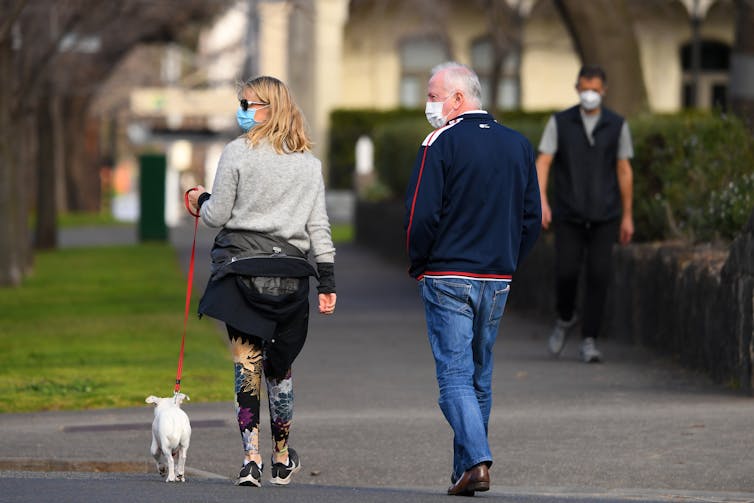
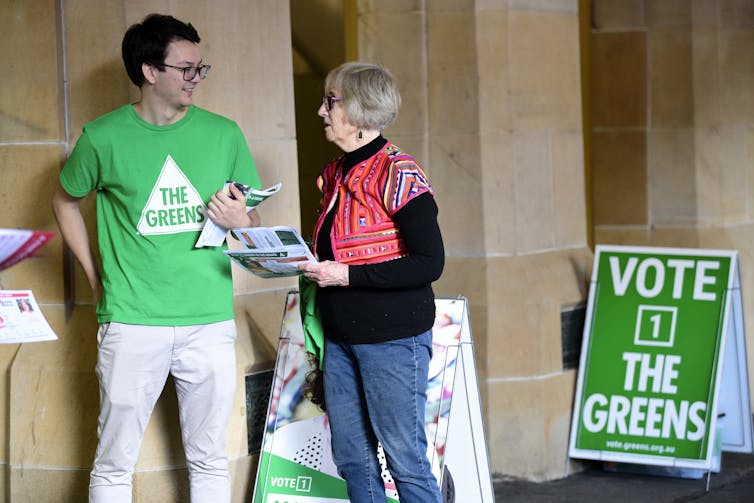

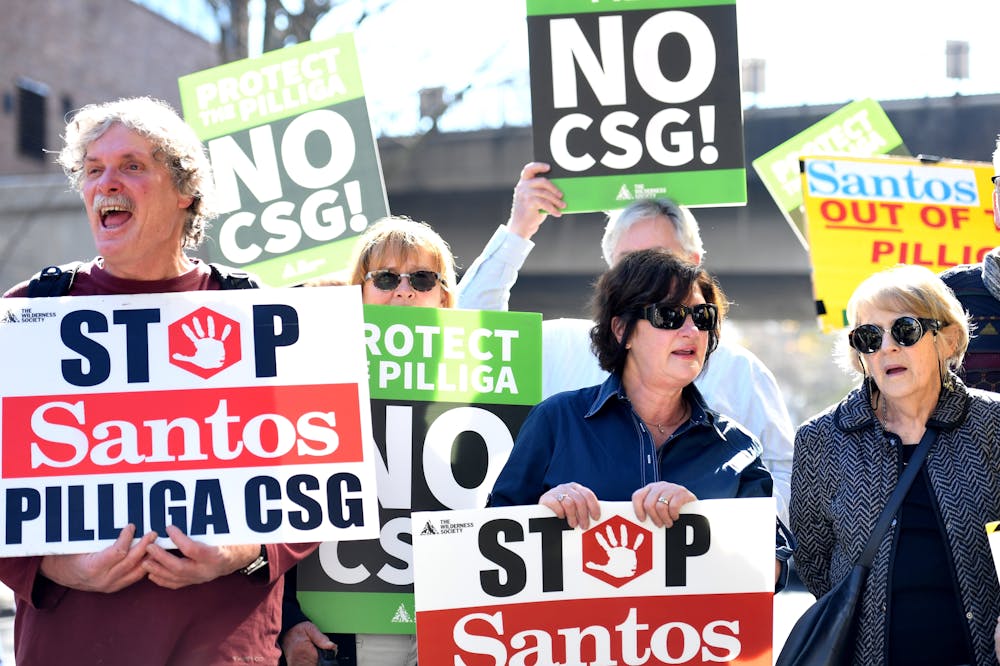
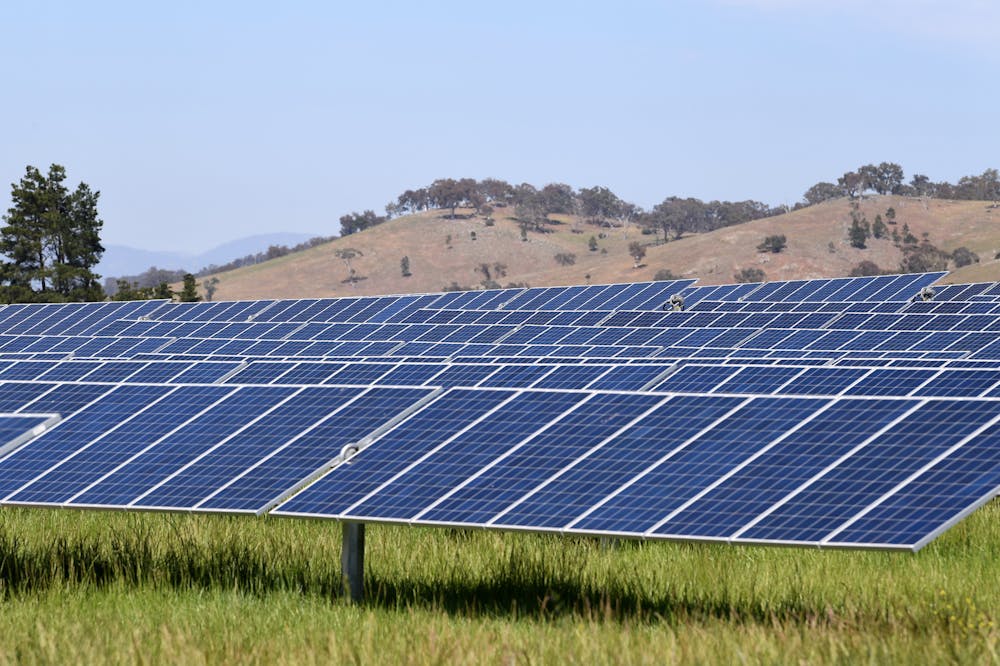



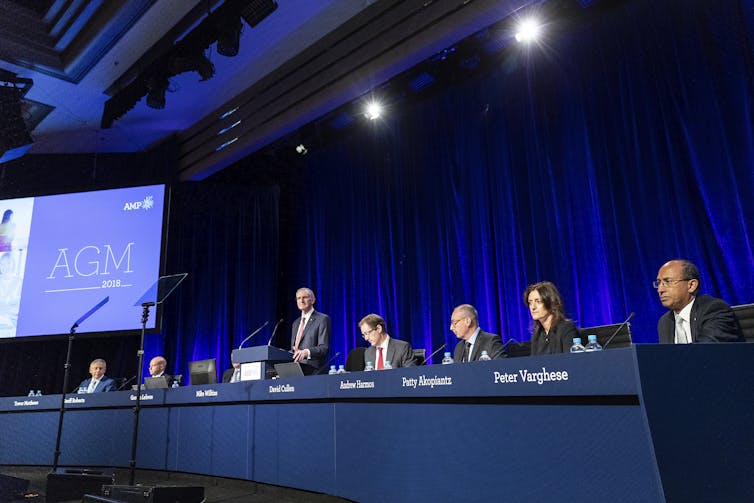
.jpg?1598235072)