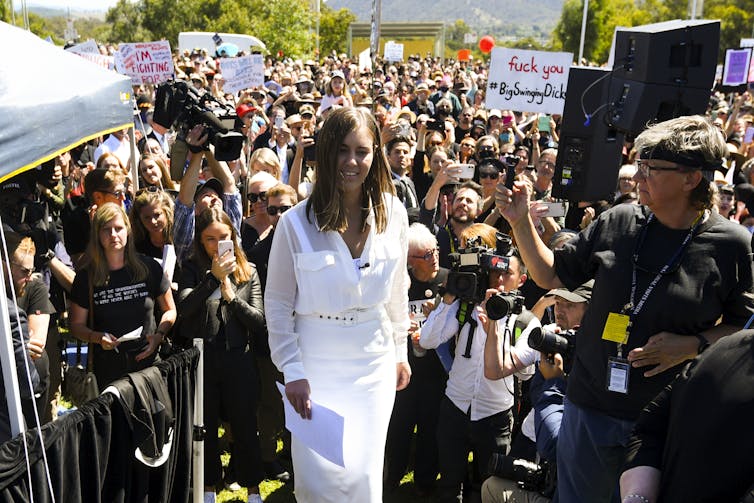
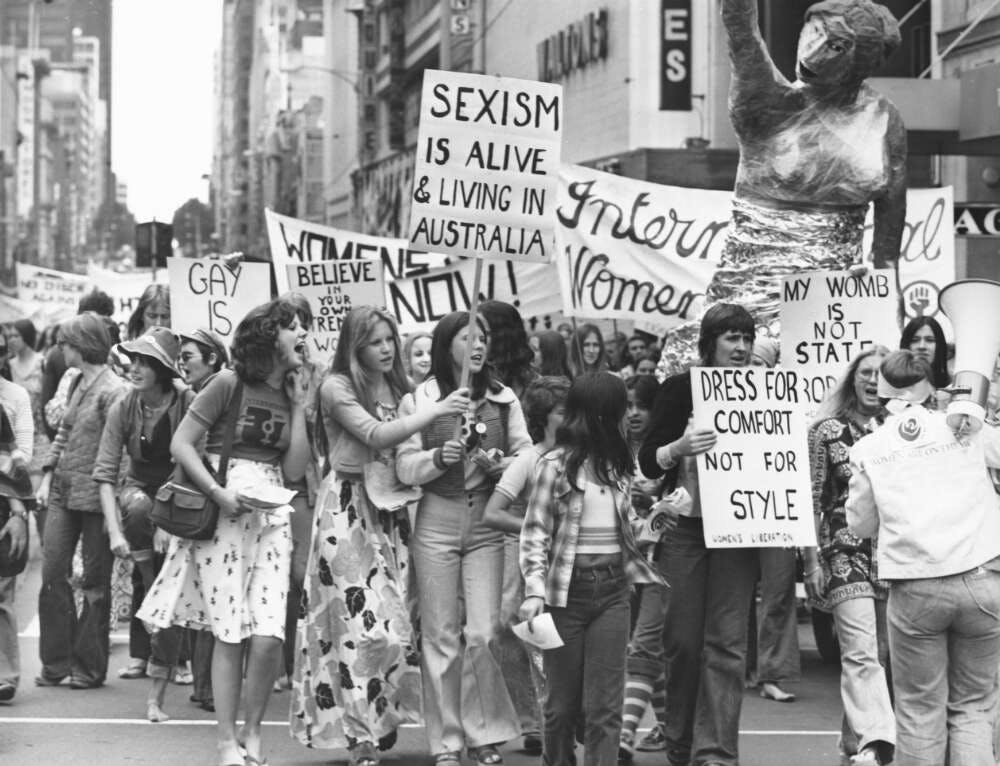
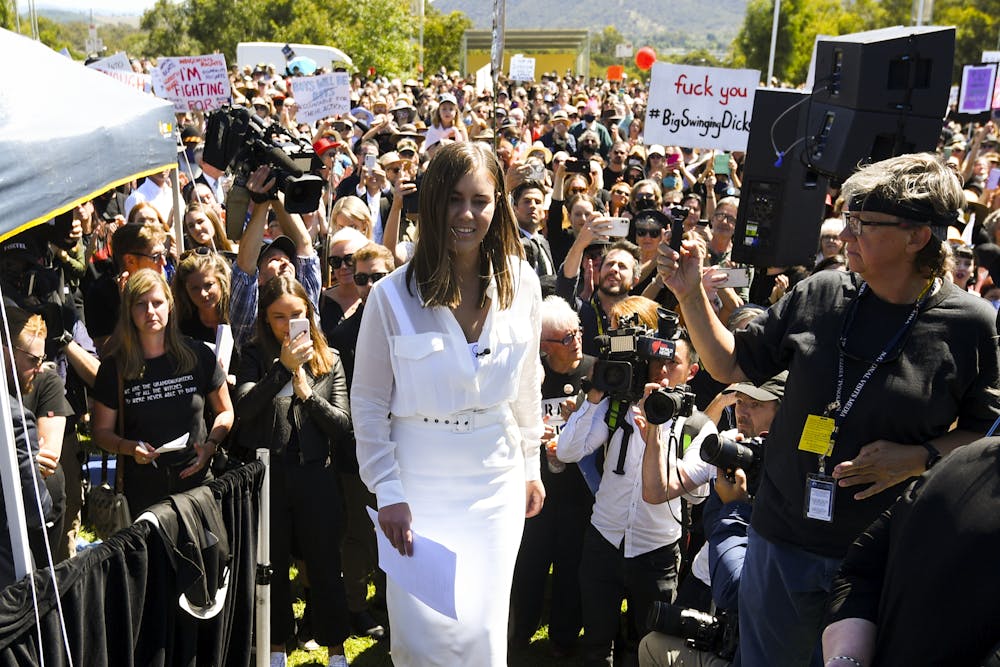
It has been a momentous, demanding few weeks for Australia. Amid growing revelations of sexual assaults and toxic workplaces and people taking to the streets to voice their anger and frustration, it’s possible we are finally facing a reckoning on gender relations.
But as we debate — again — how to move into a more equal future, it is also useful to look to our convict past. This has an impact on the issues we face today, and in particular, our idea of masculine norms.
My research with colleagues Victoria Baranov and Ralph De Haas has used data from a unique natural experiment — convict Australia. This was a time when men far outnumbered women.
We found those early days of intensified competition between men, and the violence that stemmed from this, created behaviours — and dangerous norms about masculinity — that continue in modern Australia today.
The convict experiment
According to traditional gender norms, men should be self-reliant, assertive, competitive, violent when needed, and in control of their emotions.
In our recent research, we argued strict masculinity norms can emerge when men vastly outnumber women. This is due to competition increasing and intensifying among men because there are fewer women to partner with.
This can intensify violence, bullying, and intimidating behaviours that, once entrenched in local culture, continue to manifest themselves long after sex ratios have normalised.
We tested this hypothesis using data the convict colonisation of Australia. In just under 100 years, between 1787 and 1868, Britain transported 132,308 convict men and only 24,960 convict women to Australia. Migrants were also mostly male. So, there were far more men than women in Australia until well into the 20th century.
We used historical census data and combined them with current data on violence, sexual and domestic assault, suicide and bullying in schools. From that, we were able to see the regions with significantly more men than women back in convict times still experience problems today. This is even when we account for the influence of the total number of convicts, geographic characteristics, and present-day characteristics of these regions, including education, religion, urbanisation and income.
Health and violence
First, we looked at the impact of the convict gender imbalance on current day violence and health outcomes.
Evidence suggests men adhering to traditional masculinity norms have a stronger stigma around mental health problems and tend to avoid health services. We found areas that were more historically male have significantly higher rates of male suicide today.
Our research also shows assault and sexual assault are much higher today in parts of Australia that were more male in the colonial past. We also find much higher rates of bullying among boys in schools, as reported by parents or teachers.
But it’s not just violence where we experience this hangover from the past.
Areas with more men in convict times are the same regions today with an otherwise-unexplained high share of men choosing more stereotypically male occupations (such as carpenters or metal workers, as opposed to teachers or nurses). We also found the more males outnumbered women in convict times, the less likely people were to support same-sex marriage in modern day Australia.
How does this help us today?
Our research suggests environments in which men dominate numerically — and are put in intense competition with one another — can deeply and durably shape behaviours associated with toxic masculinity.
These are characterised by violence, sexual assault, bullying in schools, opposition to sexual minority rights but also mental health problems and suicide.
original.Lukas Coch/AAP
While our experimental setting is unique, there’s lots we can take from this, particularly about the long-term consequences of skewed sex ratios we are currently seeing in countries such as China, India, and parts of the Middle East. But also about skewed sex ratios in other environments.
There is every reason to think any place where males dominate can create these issues. Be it in parliaments, offices, schools, or sports teams. Recent allegations out of parliament house, petitions denouncing thousands of sexual assaults by private schools boys, and continued claims of sexual assaults by NRL players prove exactly the point.
Our results suggest it’s an issue for both genders: the masculinity norms of the past are not only damaging to future generations of women, and of sexual minorities, but are also damaging to future generations of men.
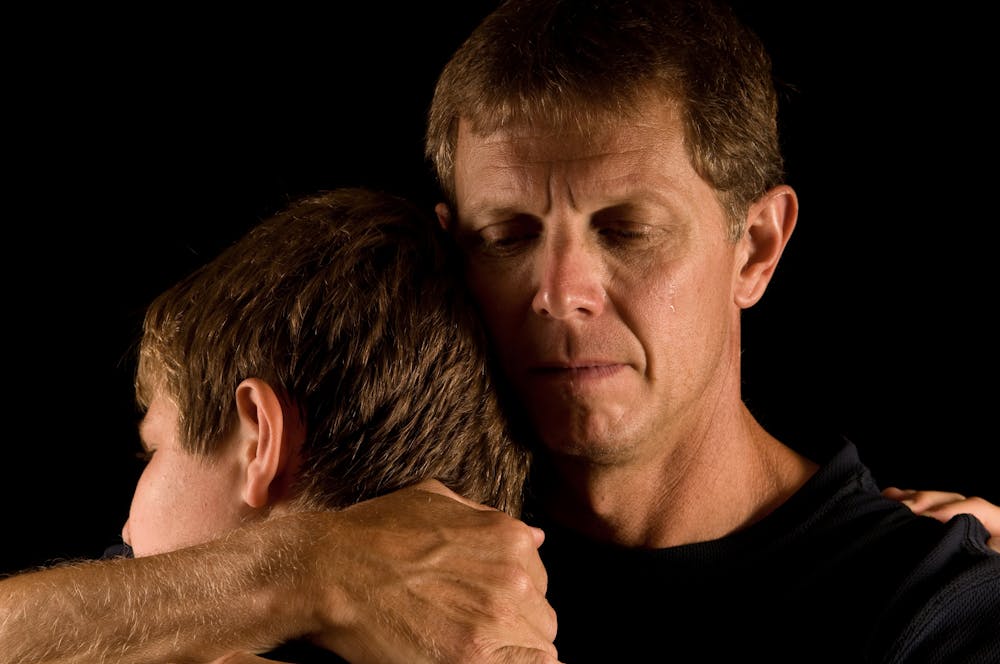
So stop telling your sons to toughen up and to be dominant at all costs. Tell them they don’t have to compete all the time. Tell them it’s OK to cry.
Pauline Grosjean also talks about toxic masculinity and convict Australia on the Seriously Social podcast by the Academy of the Social Sciences in Australia.
The COVID vaccine rollout is underway in Australia, with people in phase 1b now eligible to be vaccinated.
So far, we have two vaccines available in Australia: the Pfizer/BioNTech vaccine, approved for people aged 16 and older, and the Oxford/AstraZeneca vaccine, approved for those over 18. Evidence has shown both vaccines are safe and offer near-complete protection against severe COVID-19, hospitalisation and, most importantly, COVID-related death.
Both vaccines are also safe and effective at generating immune responses in the elderly. But what about another vulnerable group — people with immunodeficiencies? Many people with immunodeficiencies are included in group 1b and will now be thinking about getting their vaccine.
Although we’re still gathering data to determine whether COVID vaccines will work as well in people with immunodeficiencies as they do in the general population, they’re likely to offer at least a reasonable degree of protection. And importantly, we know they’re safe.
What are immunodeficiencies?
Immunodeficiencies are conditions that weaken the body’s ability to fight infection. People’s immune system may be compromised for many reasons, and this can be transient or lifelong.
Primary immunodeficiencies occur when some or all of a person’s immune system is missing, defective or ineffective. These are rare and often genetic diseases that may be diagnosed early in life, but can occur at any age.
Secondary immunodeficiencies are acquired, and more common. They may occur as a result of other diseases (for example, via HIV infection), treatments and medications (such as chemotherapy or corticosteroids), or environmental exposure to toxins (for example, prolonged exposure to heavy metals or pesticides).
Sometimes the immune system in people with immunodeficiencies can react in exaggerated ways too, and cause autoimmune disease (such as rheumatoid arthritis or gut inflammation). So it sometimes makes more sense to describe the immune system as “dysregulated”, rather than “deficient”.
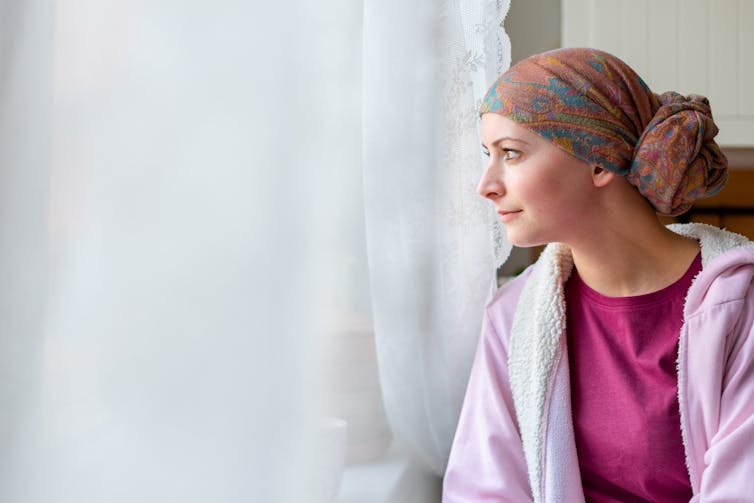
People with immunodeficiencies are more susceptible to being infected with viruses, such as SARS-CoV-2.Shutterstock
Immunodeficiencies, COVID-19 and vaccines
People with secondary immunodeficiencies are generally at higher risk of becoming infected with SARS-CoV-2 and of developing severe disease. Surprisingly, although people with primary immunodeficiency may be at greater risk of getting infections, including COVID, most are no more susceptible to developing severe COVID compared with the overall population.
This may be because the most severe COVID-19 symptoms are usually not due to gaps in immunity, but to an overactive immune response to SARS-CoV-2.
In fact, immune-suppressing steroids may be an effective treatment for severe COVID. Clinical trials looking into this are underway.
However, as vaccines work by mobilising our immune systems, for people who have a weaker immune system to begin with, vaccines may not be as effective. They may generate an incomplete or short-lived response, so people with immunodeficiencies may need additional boosters to maintain protective immunity.
It’s difficult to assess COVID vaccine efficacy in people with immunodeficiencies, because people with primary immunodeficiencies or cancer weren’t included in clinical trials.
A very small number of people with HIV have been included in trials of a few of the vaccines, but limited data is publicly available. So it’s too early to draw any firm conclusions on whether the vaccines will be as effective in people with HIV as for the general population.
We also don’t yet know how long immunity to COVID-19 or COVID vaccines lasts. This will be particularly important for immunodeficient people. Research is underway to determine whether they’ll need booster jabs more frequently to maintain immunity.
Clinical trials of COVID vaccines haven’t generally included people with immunodeficiencies.Shutterstock
We do know the vaccines are safe for this group.
Neither the AstraZeneca nor the Pfizer vaccines can cause an infection, so they won’t present a problem for people with immunodeficiencies (or for elderly people, who may also have weakened immune responses).
Usually, we avoid giving “live attenuated” vaccines (vaccines that contain weakened elements of the virus) to anyone with immunodeficiency. Because of their weakened immune systems and increased susceptibility to infection, there’s a chance they could develop a full-blown infection. An example of this is the chickenpox vaccine. But no live attenuated COVID vaccines have been approved anywhere in the world.
Preliminary evidence from vaccine rollouts around the world has shown COVID vaccines are safe for immunocompromised people with cancer. Although, if you’re going through cancer treatment, you should discuss the timing of your vaccination with your specialist.
Vaccination is most definitely recommended for people with immunodeficiencies, and they’re included in priority groups for vaccine rollout in Australia. Group 1b includes people with underlying medical conditions which may place them at higher risk from COVID-19, including “immunocompromising conditions”.
If you have a diagnosed immunodeficiency or autoimmune disease, you can talk to your doctor or specialist for specific advice on the timing of your COVID vaccination and your condition. There’s generally no reason to change your normal medications or therapies before receiving the vaccine.
Source: The Conversation (Au and NZ) – By Lynlea Small, Casual Academic, School of Business and Creative Industries, University of the Sunshine Coast
A series of government policy reforms over recent decades aimed to increase the proportion of Australian workers with university degrees. They got that result, but what they did not expect to see was that almost one in four unemployed people would have a degree (although employees with a degree appear to have fared better during the COVID-related job losses). And more than one in four graduates can expect to be either unemployed or underemployed four months after completing their undergraduate degree. So how did that happen?
More than 30 years ago the Australian government initiated a plan that would give more Australians access to university education. The government wanted equity objectives to become a priority of higher education management planning and review. The reforms paved the way for no upfront student fee payments and income-contingent loans.
The goal of expanding university places was that, in time, Australian universities would be diverse in a way that reflected the general population. Specific under-represented groups were targeted. They included women, students with a disability, Indigenous students, students from poorer families, students from non-English-speaking backgrounds, and students from regional and remote areas.
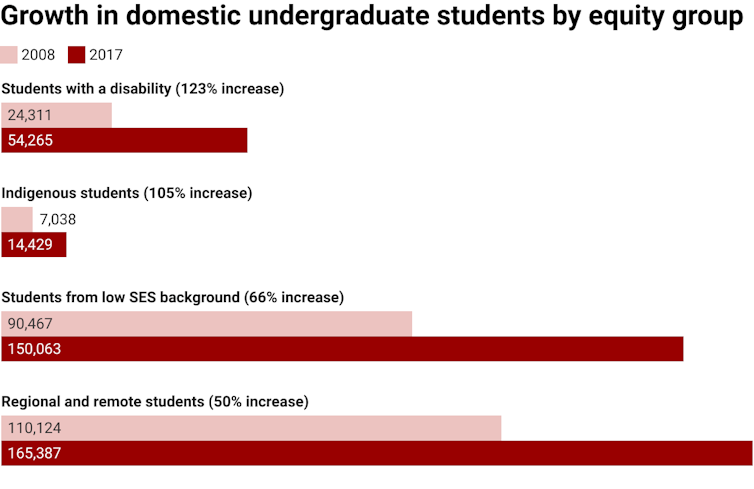
The reforms, have, in part, achieved the desired outcomes. Universities today do better reflect the general population. Australia has also greatly increased the number of people graduating with higher education qualifications, as the chart below shows.
Domestic female graduates, who were one of the target groups, now consistently outnumber domestic male graduates. Students with a disability, Indigenous students, students from low socioeconomic backgrounds and students from regional and remote areas have all had significant increases in enrolments.
Another success story is the large increase in working Australians who hold a university degree. From 1993 to 2013 the proportion increased from 12.4% to 27.9%. It continues to increase to this day.
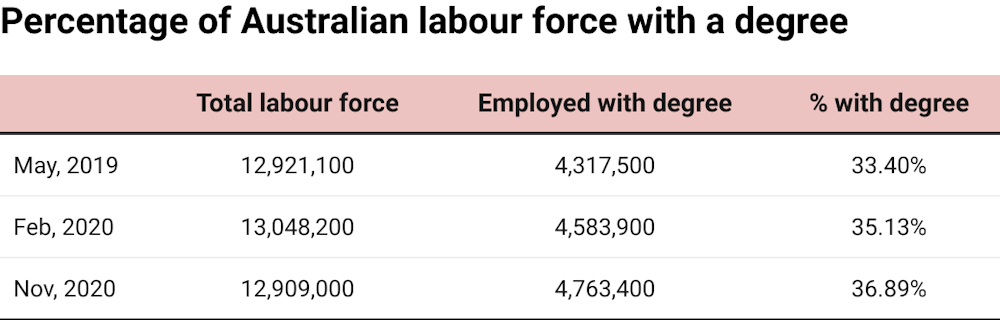
In May 2019, 12,921,100 people were employed in the Australian labour market. Of those, 4,317,500 (33.4%) held a university degree. In February 2020, 13,048,200 people were in work and 35.13% held a degree. By November 2020, the impacts of the COVID-19 pandemic had reduced the labour force to 12,909,000. However, 4,763,400, or 36.89%, held a degree.
So while the total number of people in work was slightly lower in November 2020 than in May 2019, degree holders fared better during the pandemic. They continued to increase both in number of employees and as a proportion of the workforce.
However, the unintended and concerning statistics that resulted from policy reforms relate to the increases in unemployed people with a university degree.
For example, in May 2019 the number of unemployed was 694,900 but the number of unemployed with a university degree was 129,900, or 18.7%. In February 2020, just before the pandemic hit Australia, there were 761,100 unemployed. Of those 22.45% held a degree. By November 2020, the percentage of unemployed with a degree had risen to 23.29%, or almost one in four.
While the pandemic is largely responsible for the rise in unemployment, we also have a larger pool of eligible workers with university degrees. So it makes sense that, particularly in such challenging times, the number of unemployed with a university degree will increase.
Even so, prior to COVID-19, a large percentage of university graduates found it difficult to find full-time work. The 2019 Graduate Outcomes Survey-Longitudinal (GOS-L) showed many take time to find full-time graduate employment.
The GOS-L assessed the short-term (four months) and medium-term (three years) outcomes of graduates. It was based on a cohort analysis of graduates who responded to both the 2016 Australian Graduate Outcomes Survey and the 2019 GOS-L. Graduates included those who completed undergraduate, postgraduate coursework and postgraduate research degrees.
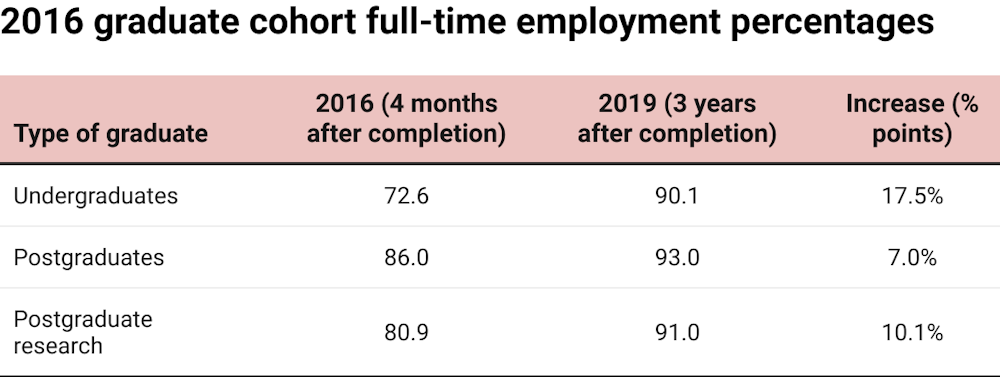
The table below shows the outcomes for these 42,466 graduates within four months of completing their degree in 2016 and again in 2019, three years after graduating.
Previousresearch and current statistics both prove that a university qualification does not guarantee a job. The 2008 Bradley Review prediction that by 2010 the supply of individuals holding undergraduate qualifications would not meet the demand has not eventuated.
From a national point of view, the ethos is the more people who have a degree, the more highly skilled the workforce. In time the job market will get better, but it might be different for some.
In these testing times graduates need to be resilient, determined and adaptable. They will have to take advantage of any opportunities and professional networks that their universities and alumni provide.
“[Tiny houses] have significant potential to be a catalyst for infill development, either as tiny house villages, or by relaxing planning schemes to allow owners and tenants to situate well-designed tiny houses on suburban lots.”
Yet, to date, research begun in 2014 shows no appreciable increase in Australia in the proportion of people actually living in tiny houses, including the archetypal tiny houses on wheels.
That’s despite the tiny house movement continuing to gain in popularity over the past decade, buoyed by Facebook, YouTube and Instagram. Google Trends indicates the level of interest shows no sign of abating. A Tiny Homes Carnival in Sydney in March 2020 attracted more than 8,000 people to see tiny houses for sale and listen to tiny house celebrities such as Bryce Langdon of Living Big in a Tiny House and Zack Griffin and John Weisbath of Tiny House Nation.
Bryce Langdon of Living Big in a Tiny House visits an example in Queensland.
But that popularity isn’t translating into more people living in tiny houses. Data from four surveys of the tiny house community (the latest in February 2021) show the proportion of respondents living in tiny houses remains under 20% (fewer than 200 people). It hasn’t grown in the past seven years.
The surveys were posted as links to tiny house social media sites, so of course the findings cannot be extrapolated to the whole community. Nonetheless, most tiny house advocates in Australia belong to these groups.
What’s stopping people moving into tiny houses?
Some in the movement argue this is due to obstacles such as restrictive planning policies and difficulties in getting finance and secure access to land. In response, some local governments – Cairns and Byron Bay, for example – have published helpful fact sheets and guides.
However, in a recently published research paper in Housing Studies, we argue even if these obstacles were removed, we might not see a big increase in tiny house living, especially in tiny houses on wheels. We reached this conclusion based on what people who are part of the movement, including our survey respondents, said about their motivations and aspirations.
They had three main motivations:
having access to affordable housing
achieving a degree of economic freedom
living in a more environmentally sustainable way.
In reality, professionally built (off-the-shelf) tiny houses on wheels can cost three times more per square metre than standard houses. The most popular size for a tiny house on wheels is 7.2-by-2.4 metres, which is around 27 square metres (including loft space). That can cost upwards of A$80,000.
Of course many build their tiny houses fully or partly themselves, which can greatly reduce costs.
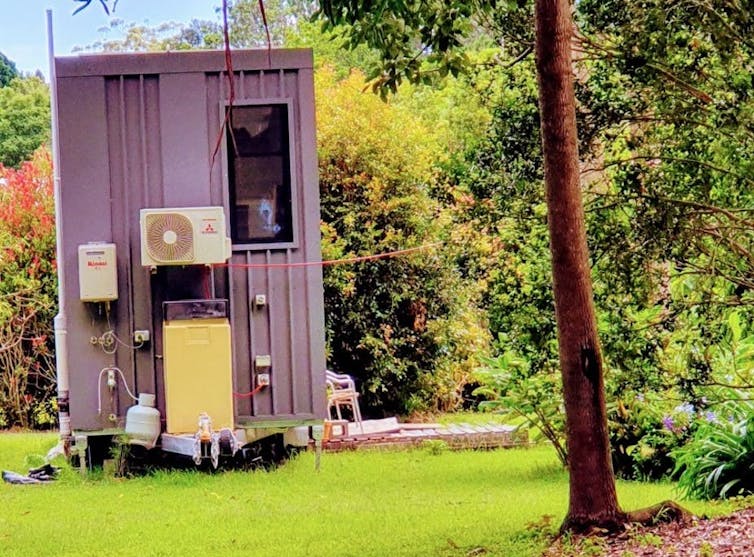
Ready-built tiny houses on wheels cost about three times more per square metre than standard houses.Paul Burton, Author provided
We suggest that for many (but certainly not all) members of the movement, their strongest commitment is to their principles and aspirations, rather than to a particular type of dwelling. Some research indicates that tiny house dwellers live a more sustainable lifestyle even after moving to another type of dwelling.
For many people, much of the appeal of tiny houses is the community of shared values they represent.Heather Shearer, Author provided
One of the important benefits of tiny house living was the opportunity to be part of a rather ill-defined “community”. The most recent survey unpacked this concept of community. For over 90% of respondents this meant living in a defined area with other tiny house dwellers.
As one respondent said, their ideal was “to share land with a group of tinies, without caravan park zoning”. We found more generally this meant a place with shared access to facilities such as vegetable gardens, workshops, tool sheds and community areas.
So, this research casts doubt on claims that tiny houses represent a major solution to the housing affordability crisis, held back mainly by cumbersome local council regulations and a lack of tailored finance.
This is not to say better regulation and finance would not be welcome.
Reforms could include amendments to the National Construction Code. These include ensuring tiny houses are structurally sound, energy-efficient and achieve a minimum bushfire attack level rating.
Local councils could also look more favourably on tiny houses on wheels. This would be subject to certain conditions, including the control of environmental waste and the creation of an appropriate local rates category.
Given the interest in community living, councils could also consider relaxing restrictions on multiple dwellings on larger properties. This would enable a degree of communal living, perhaps in peri-urban areas.
These changes would help many aspiring tiny house dwellers achieve their dream.
Changes to finance and planning regulations would help more people realise their tiny house dreams.Heather Shearer, Author provided
Perhaps the most significant contribution the tiny house movement has made so far has been in opening up an important debate about housing choice. It has raised important questions, including:
Are smaller but well-designed homes better than big and poorly designed ones?
How can we support the market in providing much more diverse housing (in terms of size, tenure, price and so on)?
Should we become more tolerant of well-designed and innovative infill developments to rectify the “missing middle” – the lack of low-rise, medium-density housing options such as townhouses and duplexes – in our cities?
Can tiny houses help meet the housing needs of particular groups such as single older people who would like to live near each other but not necessarily under the same roof?
In encouraging this debate, the tiny house movement’s greatest contribution might be to remind us of economist E.F. Schumacher’s famous principle that small is beautiful and more sustainable.
Single parents with dependent children — eight out of ten of them women — were far more likely than others to lose work at the height of the pandemic and are far more likely to still be out of work now.
Even before COVID, many were in financial distress.
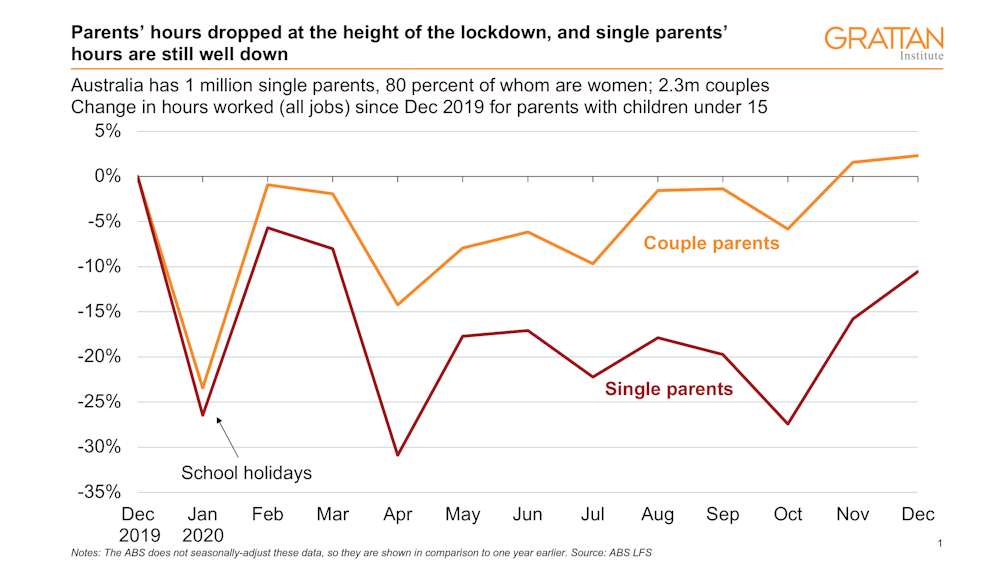
Single parents’ paid hours fell more than 30% in the depths of the crisis in April.
By December, even though there were no significant restrictions in place anywhere in Australia, paid hours for single parents remained 10% lower than they had been a year earlier.
This was at a time when the hours worked by couple parents had recovered quickly, and was higher than a year earlier.
Employment for single parents fell more than 10% between December 2019 and September 2020, and is still 5% lower than in December 2019.
About 50,000 single parents dropped out of the workforce altogether during the first lockdown – 11% of all single parents.
Why was the COVID recession so bad for single parents?
Many single parents had no choice but to stop working
One reason would be that the loss of formal and informal childcare and the need to manage remote learning meant many single parents had little choice but to stop working.
Also, single parents would be over-represented in the job-loss figures because they are over-represented in insecure work.
In August 2019, a quarter of single parents held casual jobs without paid leave. These jobs – many of them in COVID-vulnerable sectors such as retail and hospitality – were among the first to be lost during the lockdowns.
Many more were in casual jobs, ineligible for JobKeeper
Importantly, more than half of single parents in casual jobs had been in those particular jobs for less than a year, meaning the rules made them ineligible for JobKeeper support.
In a survey by the Melbourne Institute, only 13% of single mothers reported that they were receiving JobKeeper in late 2020, compared to 18% of mothers in couples and 33% of fathers in couples.
The outsized impact of the COVID recession on single parents is even more of a concern when we consider that they were among the most disadvantaged Australians before COVID.
Many had already been stripped of payments
In 2018, a third of single-parent families were living in poverty (compared to less than 10% of couples with dependent children). One fifth of single parents reported that they regularly skipped buying essential items.
And incomes for single parents were falling even before the crisis: between 2016 and 2018, when the national median annual income increased from $48,360 to $49,805, the median for single parents fell from $38,000 to $34,000.
Decisions by successive governments have contributed to this outcome.
From 2006, the Howard government’s Welfare to Work program pushed new single parents claiming income support onto the Newstart unemployment benefit – $87 per week less than the Single Parenting Payment – if their youngest was eight or older.
The decision pushed about 20,000 single parents on to a lower payment.
In 2013, the Gillard government pushed another 80,000 single parents onto Newstart by extending the policy to single parents who had been claiming parenting payments before 2006, almost doubling the proportion of single parents in poverty, lifting it to 59%.
After Welfare to Work came ParentsNext
Then in 2016, the Turnbull government launched ParentsNext, with the stated intention of helping single parents with children as young as six months to return to work.
It included so-called participation plans, under which parents could be stripped of payments unless they performed mandated activities – for example, taking their child to swimming lessons.
The COVID crisis and a series of government decisions before that are condemning hundreds of thousands of Australian children to growing up in poverty, and exacerbates intergenerational disadvantage.
Here are three things governments could do to make a difference:
Significantly increase in the permanent rate of JobSeeker. This would make a huge difference for unemployed single parents with children aged eight or older who thanks to earlier government decisions have to rely on JobSeeker while they make the transition to work. The Federal Government plans to increase the permanent rate of JobSeeker by $25 a week.
Make childcare cheaper. This would help single parents get back into paid work sooner and expand opportunities for early education for their children. Cost is the major barrier for families wanting childcare. The Grattan Institute has identified a series of options to improve affordability.
Classify single parents in the workforce as “essential workers” for the purposes of any future lockdowns. This would mean their children could continue going to school and childcare.
These changes would help single parents raising the adults of the future, who are at risk of slipping further behind.
Before we knew it, autumn rolled in bringing more rain. Tragically, it led to widespread flooding across New South Wales, but elsewhere it helped to create more puddles. In our urban environments puddles are inconvenient: they can damage property and block our paths. But from a biological perspective, puddles are very important components of microhabitats and biodiversity.
We know for many animals — including birds and pets — puddles are a ready source of drinking water and provide a much-needed bath after a hot and dusty day. They’re also well known for providing water-reliant species such as mosquitoes with opportunities for breeding, and many of us may remember watching tadpoles developing in puddles as children.
But puddles make more nuanced and subtle contributions to the natural world than you may have realised. So with more rain soon to arrive, let’s explore why they’re so valuable.
Puddles are getting harder to find in urban environments.Shutterstock
Take a closer look
Puddles are a diverse lot. They can be small or large, shallow or deep, long lasting or gone in a matter of hours. If you look closely at a puddle you will often find it is not even, especially on a slope.
Puddles consist of small, naturally formed ridges (berms) and depressions (swales). The berms form from silt and organic matter like leaf litter, which act as mini dams holding back the water in the swales behind them.
Berms and swales can be hard to see, but if you look closely they’re everywhere and contribute to the retention of water, affecting the depth, spread and the very existence of the puddle.
All of this means they meet the needs of different species.
The tiny ridges and depressions in puddles can make a big difference to wildlife.Shutterstock
On rainy days you may have seen birds such as magpies feeding on worms that wriggle to the surface. Worm burrows can be two to three metres deep and many species might come to the surface to feed on leaf litter.
Worms emerge during and after heavy rain when water floods their burrows and soil becomes saturated. The worms won’t drown but they do need oxygen, which is low in very wet soils.
Often in drier weather, getting a worm is not as easy as you might think — not even for the legendary early bird. So when heavy rain drives worms to the surface, it’s party time for birds that feed on them, and they make the most of the opportunity.
A spotted pardalote inspecting puddle.Shutterstock
Swales in puddles often persist for days, which allows water-dependent insects to breed. Mosquito larvae, for instance, live in water for between four and 14 days, depending on temperature (so if you’re worried about mozzies, then remember puddles have to persist for days before the pesky pests emerge).
Tadpoles take between four and 12 weeks to develop into frogs, and requires a deeper, long-lasting puddle. But these puddles are becoming rarer in urban areas, and so it’s not often you see tadpoles or frogs in our suburbs.
Why seeds love them
Puddles also provide small, but important, reservoirs where seeds of many plant species germinate. In some cases, the seeds have chemical inhibitors in them, which prevent the seeds from germinating until after a period of heavy rainfall.
Then, the inhibitors are leeched from or diluted within the seeds, allowing them to germinate. Many desert species have this adaptation, including Australian eremophilas (emu bush).
In other cases, plants that grow all year round (annoyingly, weeds among them) need the dose of water puddles provide to kick start their very rapid growth and reproduction.
Easily germinated plants (such as tomatoes and cabbages) and ornamental flowering plants (such as hollyhocks and delphiniums) often require just a little extra water to trigger the whole germination process.
Important growing opportunities for iconic trees
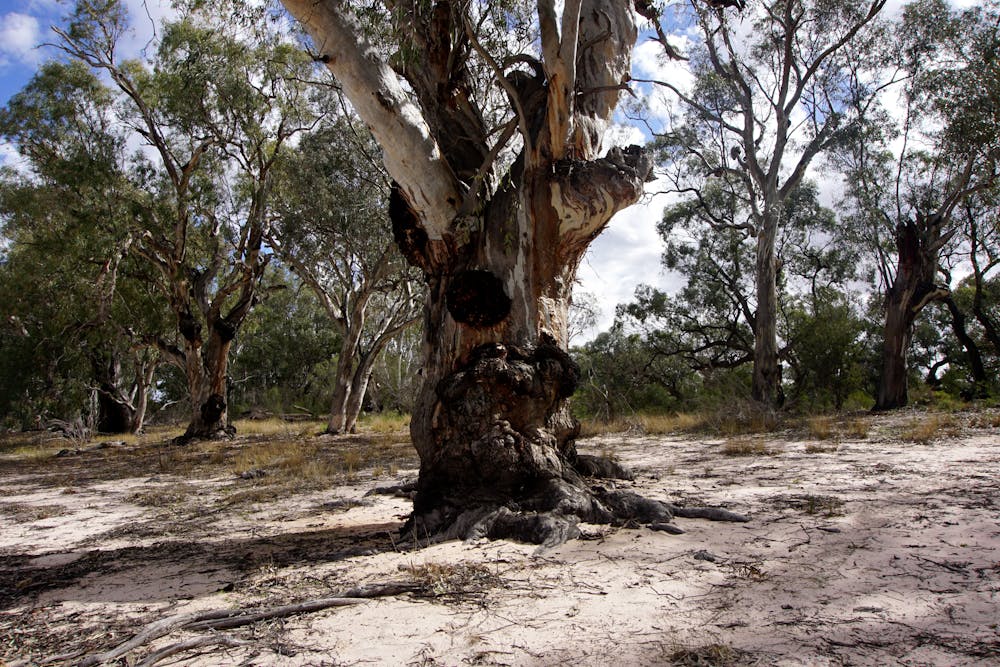
Puddles also provide more subtle opportunities for wildlife. Take Australia’s iconic river red gums (Eucalyptus camaldulensis) as an example. River red gums are water-loving trees that can withstand up to nine months of inundation without getting stressed.
Puddles can wash away plant-inhibiting chemicals from the soil.Shutterstock
What’s not so well known, however, is river red gums produce chemicals that rain washes from their leaves, accumulating beneath the tree. These chemicals can inhibit the growth of plants, such as weeds, under the canopies.
This effect — where chemicals produced by one plant have an effect on other plants — is called “allelopathy”. Many wattle species produce allelopathic chemicals and so do some important food plants, such as walnuts, rice and the common pea.
River red gum allelopathic chemicals can prevent the trees’ own seedlings from growing near them. So river red gums require floods to wash the chemicals from the soil away. This mechanism allows river red gums to germinate and regenerate when the soil is wet, and in places away from the competition of mature trees.
Puddles can do the same thing, on a small scale, ensuring trees have plenty of opportunities to persist in the wild. This pattern of regeneration is important to provide a mosaic of species and trees of different ages, making up a diverse range of habitats for other wildlife.
Puddles are no piddling problem
Puddles are becoming harder to find in the suburbs.Shutterstock
As property developers iron the creases from our created landscapes with much less open space and more paved surfaces, puddles are becoming harder to find close to home.
Taking away puddles removes a whole range of microhabitats, jeopardising the chances of a diverse range of species to breed and persist, especially in urban areas. These days, any loss of biodiversity is worrying.
So when you’re next out and about after or during heavy rain, keep an eye out for puddles.
Remember the life that depends on them and, if you can, try not to disturb them. Perhaps capture the joy of jumping over — rather than in — them. They are not just a nuisance, but a key to a nuanced and biodiverse local community.
In this series, we look at under-acknowledged women through the ages.
In 1538, a new author burst on to the literary scene in Paris. Published by Denys Janot, four new works appeared within five years by a writer known as Hélisenne de Crenne.
Hélisenne de Crenne was the pen name of Marguerite Briet, the daughter of a legal family from Abbeville. Few details of her life are certain, but we know that she obtained a legal separation from her husband, Philippe Fournel, Lord of Crenne, and moved to Paris, the centre of French literary activities and publishing. There she owned several properties. It appears that her son, Pierre, was a student there in 1548.
Women at court were producing sophisticated intellectual and creative works that circulated in manuscript. Print publication provided a more open and visible expression than manuscript circulation, but was limited to a more select few. Even women in powerful social positions acknowledged expectations that women should restrict their speech to the domestic sphere.
Most women writers provided lengthy justifications or apologies for their venture into print. Hélisenne claimed to hesitate to make “mention of immodest love, which according to the opinion of some shy women could be judged more worthy to be conserved in profound silence than to be published for a widespread audience”. Nevertheless, she pressed on.
Rather than locate herself in a line of female authors, Hélisenne identified herself in a tradition of the male canon for her authority to write. The opening phrase of her Le Songe recalled none other than Cicero as her model:
…in imitation of him, the desire arose in me to relate in detail to you a dream worthy of recording.
Print publication offered a woman without elite networks access to a large pool of readers, and perhaps a way to reach potential patrons at court.
The dedication of her translation to Francis I and her praise of his sister, Marguerite de Navarre (another prolific author whose works appears in print over the course of the century), in her Letters suggests that Hélisenne may have hoped for their patronage.
Le Songe de madame Helisenne Crenne (1541)Bibliothèque nationale de France
The staggered release of her writings seems to have been planned to heighten their impact. Her publisher, Denys Janot, mainly published works in French, targetting a popular market and using on-trend Roman typeface rather than the heavy, old-fashioned Gothic script.
Most of Hélisenne’s works, like those of other female writers, were in small sizes such as octavo, duodecimo and sextodecimo. These were portable and cheap, unlike the larger-sized folio and quarto scholarly and religious works intended to be consulted in libraries as part of a long-lasting record, though her translation of Virgil’s Aeneid was produced as a folio, with extensive woodcut illustrations.
A female perspective
Hélisenne was one of the first women writers who sought publication of her work seemingly as a conscious contribution to contemporary popular literature.
Her novel, The Torments of Love, involves an unusual structure, retelling the same events from the perspective of three different narrators: Hélisenne, her lover Guénélic, and Guénélic’s best friend, Quézinstra. Each section offers new insights to the overarching narrative, and each has its own distinctive tone and style.
The work’s balancing of elements from chivalric literature and a new emotional sensibility culminates in its conclusion as a battle between Athena and Venus over the book itself.
Her translation of Aeneid was equally radical, creatively embellishing the original from a female perspective with a highly sympathetic presentation of Dido’s plight and women’s loyalty in love.
She was very proud of her publication in the city that was the intellectual and publishing centre of France, saying:
… it is an inestimable pleasure to me to think that my books are on sale in this noble Parisian city, which is inhabited by an innumerable multitude of wonderfully learned people.
Hélisenne’s work were a commercial success, going through nine editions in a short, intense period to 1560.
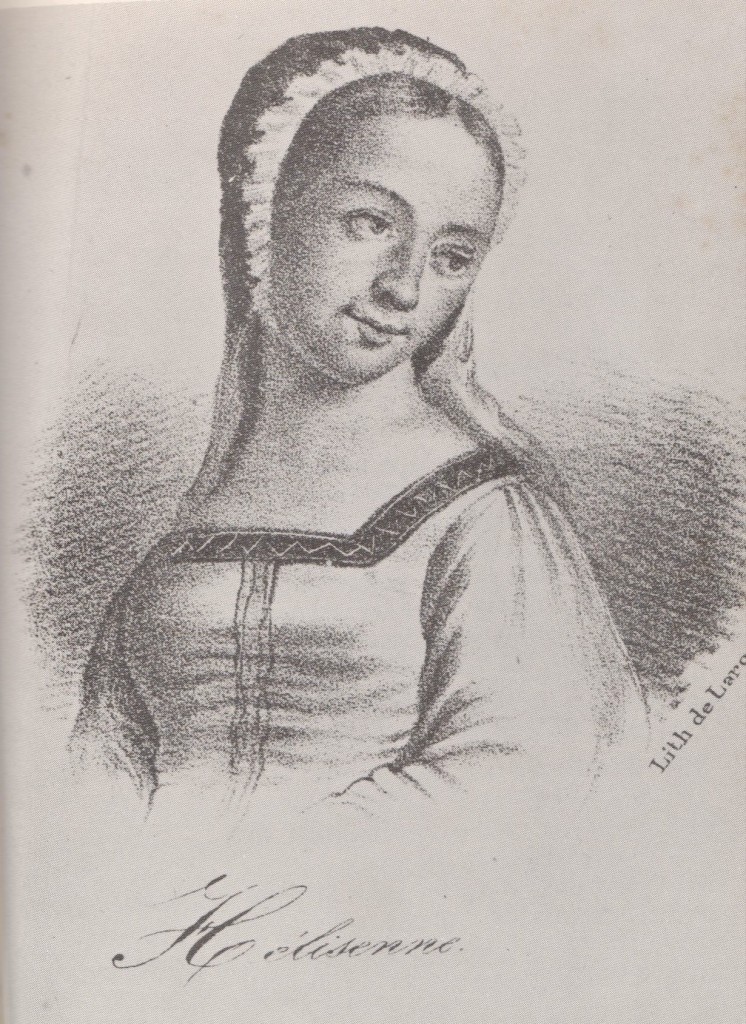
A nineteenth-century artist’s imagined Helisenne.Wikipedia
Torments of Love is Hélisenne’s only work to be dedicated to female readers who she called “all honest ladies”. Elsewhere, she assumed her works would be of interest to everyone, including the king.
A later editor did not agree. Claude Colet explained in the introduction to the 1550 edition of her works that his extensive simplification of her Latinate style for young ladies was “to render the obscure words or those too much like Latin into our own familiar language, so that they will be more intelligible to you”.
The last known evidence of this groundbreaking author is in 1552 but, in her lifetime, she had achieved a remarkable series of literary firsts.
Source: The Conversation (Au and NZ) – By Cheryl Desha, Associate Professor, School of Engineering and Built Environment, and Director, Engagement (Industry), Griffith University
Pretty soon, many more Australians are going to be composting their food waste. The Victorian government kicks off its four-bin system from this year, and the federal government is considering a plan to turn kitchen scraps into fertiliser for farmers.
But knowing exactly what to put in your compost bin can be tricky – and views differ on whether you should add items such as meat and citrus.
Composting is fairly simple, but it’s important to get it right. Otherwise, your compost mix may be too slimy or smelly, or attract vermin.
We are experts in food resilience and sustainability, and have prepared this “dos and don’ts” guide to get you on your way.
Your own composting system
Composting is a way of doing what happens in nature, where raw organic materials are converted to soft and spongy soil-like grains. These help soil retain water and make nutrients available to plants.
In fact, compost is so valuable for your garden, it’s often referred to as “black gold”.
For those of you composting at home, here’s how to make sure the system delivers what you need for your home gardening projects.
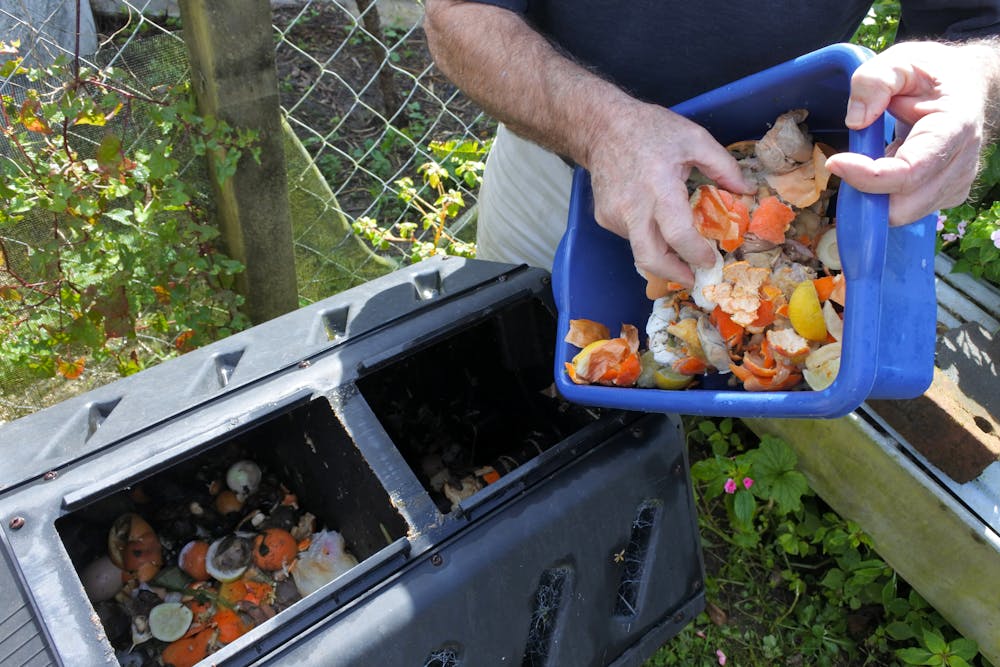
Your bin should be made up of one part green waste and two parts brown waste.Shutterstock
Dos:
• use a couple of bottomless bins so when one is full you can start on the other, in a shady spot
• have a good mix of “browns” (two parts) and “greens” (one part). Combine brown materials (hay, straw, sawdust, woodchips, leaves, weeds that have not gone to seed) with food scraps and other materials (fruit and vegetable peels and rinds, tea bags, coffee grounds, eggshells), and some types of animal manure (chicken, cow, horse)
• let the temperature climb. Heat in the centre of your compost pile is a good sign, as the microbes are breaking down what you’ve put in. As the compost matures it cools, creating a great environment for worms and other microbes to finish off the process
• make sure your coffee grounds and tea bags can break down, so remove the bag before you add it to the compost pile. Moist tea leaves can help your pile break down faster. Citrus fruit (lemons, oranges), spicy peppers, onion and garlic are fine, just don’t add them to your worm farm; the worms will suffer under the acidic conditions produced when these items break down
• get creative with natural “brown” materials – as long as there is no plastic mixed in, throw it in. This includes anything from cereal boxes to cotton balls, wine corks, fireplace ashes, and even human hair and pet fur.
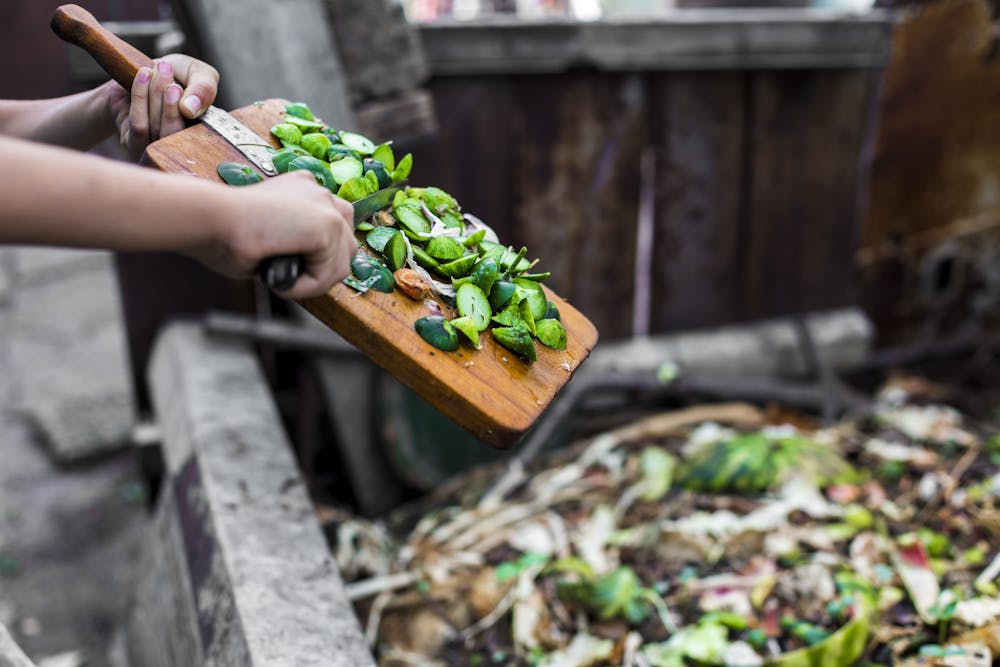
Citrus and onion are fine, avoid meat scraps.Shutterstock
Don’ts:
• don’t let your compost bin be a feast for local rodents such as rats. Bury the base slightly into the ground, lining the bin with wire mesh and keeping it covered. Avoid adding meat scraps, cooking fats and oils, milk products and bones, which will attract vermin
• don’t let your compost get stinky or slimy – that means it’s too wet. Slimy compost means you need to add more “brown” materials. You can also speed things along by having a dig through the heap every week or so, or adding extra bits and pieces at various stages (chook poo, crushed rock and lime) to help it all happen faster
• don’t let nasty chemicals and germs get into your compost. This includes things like treated wood waste, pet waste (if they take medication or eat meat) and sick plants. Home compost bins are limited in what they can process. It is a good idea to wear gloves as an extra safety measure.
Council compost collection
Local councils are increasingly offering food waste collection programs, sometimes along with garden green waste. In such cases, these materials are processed at large scale composting sites
In Victoria, a four-bin waste and recycling system will be rolled out in partnership with councils. Most households will be using this system by 2030.
Gold Coast City Council City recently diverted 553 tonnes of food waste from landfill during a one-year trial. The program helps address home composting space challenges for the region’s many apartment and high-rise dwellers.
If your council offers food waste collection, make sure you follow their particular “dos and don’ts” advice. Depending where you live, it may differ slightly to ours.
Working out how to bag up your food scraps – whether for your home bin or council collection – can be confusing. Check your local instructions for kerbside collection to make sure your food waste is bagged in the right way.
You can try putting “home compostable” bags in your own compost bin, experimenting with your bin temperature to achieve the best outcome. Compostable plastic“ is designed to break down back into nutrients, but most still need managed, high-heat conditions to activate this process.
Don’t be tricked by “degradable” bags – these are likely to be made of plastic and just break into millions of tiny pieces. Also, as others have written, some “biodegradable” plastics made of plant-based materials might not be better for the environment, and they can take just as long to degrade as traditional plastics.
The benefits of composting
Making compost at home doesn’t just lighten our rubbish bin and help our gardens. It also helps tackle climate change.
Each year in Australia, food waste rotting in landfill creates methane equivalent to around 6.8 million tonnes of carbon dioxide. If global food waste were a country, it would be the third-largest emitter of greenhouse gases in the world, behind the United States and China.
So clearly, there are many great reasons to compost. And by following a few simple rules, you too can create your own “black gold”.
Scott Morrison’s approval has taken a sizeable hit in a Newspoll showing Labor maintaining its 52-48% two-party lead.
As Morrison prepares to unveil his cabinet reshuffle the poll, published in Monday’s Australian, found his satisfaction rating fell from 62% to 55% in two weeks.
The fortnight was dominated by shocking revelations of lewd behaviour among staffers on the Coalition side, a botched attempted “reset” on gender issues when Morrison lashed out at a news conference, and a scandal around a Liberal backbencher.
In the poll, taken March 24-27, Morrison’s dissatisfaction rating jumped from 34% to 40%.
The “better PM” gap also narrowed – Morrison now leads Anthony Albanese 52% (down 4 points) to 32% (up 2 points). This the narrowest margin since March last year. In February Morrison had a 35-point margin.
The Coalition’s primary vote rose a point to 40% while Labor’s fell a point to 38%.
The Australian reports that it is the first time in more than a year that Morrison’s approval ratings haven’t been in the 60s. His net satisfaction is plus 15.
Albanese’s satisfaction increased one point. He has a net satisfaction of plus 2.
The reshuffle is set to move Christian Porter out of the attorney-general’s portfolio and Linda Reynolds out of defence, but keep both in cabinet.
The government is now confronting a major row over Queensland Liberal MP Andrew Laming who trolled two local women on Facebook and took an inappropriate photo of another woman.
Laming announced at the weekend he would not seek to run at the next election but he remains in the Liberal National Party. He is now on leave but has indicated he aims to be back for the budget session, after he has had counselling on “empathy and appropriate communications”.
Albanese said Laming was not a fit and proper person to be in parliament and should go. He said there were various measures available to the Labor Party to take against him when parliament resumed.
Morrison will be anxious to see a woman preselected for Laming’s seat of Bowman.
As the government’s crisis continues Liberal women are increasingly speaking out, with Victorian federal backbenchers Sarah Henderson and Katie Allen suggesting on the ABC’s Insiders that parliamentarians should be subject to drug and alcohol testing.
Renters have been thrown under a bus by the Labour Government this week. Now the dust has settled on the Government’s announced housing changes, economists are pointing to a likely rise in the cost of rents, and an increase in homelessness. The flipside, of course, is that homebuyers may be better off, if house price inflation is pushed down. All in all, the housing announcements look set to fuel greater wealth inequality in New Zealand, creating an even bigger divide between home owners and renters.
In this column, I focused on the Government’s decision to abolish the ability of property speculators renting out houses to deduct their mortgage interest payments from their tax calculations. This change will make investment in rental properties less attractive and it’s the part of Tuesday’s suite of policy announcements that is likely to have the biggest impact.
The growing consensus is that the flow-on effect will be landlords either putting up prices to recoup increased costs, or selling their rentals. Buyers are likely to be owner-occupiers, thereby reducing the number of rentals available, adding to the rental shortage. In addition, because owner-occupied houses tend to have fewer people in them, any shift of houses from the rental to ownership market will result in fewer people being adequately housed.
Yesterday’s Stuff newspaper editorial says renters are the “collateral damage” in the struggle to bring down house prices – see: Renters could be ‘lost generation’ in New Zealand’s housing crisis. Here’s the main point: “Property speculators will simply move their wealth elsewhere, first-home buyers will gain a greater opportunity, but renters could be left clinging to those lower rungs. And paying dearly for the privilege, with rents in Auckland and Wellington pushing a median $600 and more a week, and an average of $440 in Christchurch.”
The newspaper argues the policies announced this week will only exacerbate the plight of people who aren’t anywhere near being able to buy a home.
How much might rents rise by? It obviously depends on a lot of factors, including the ability of renters to pay more. ASB economist Mark Smith has done some modelling to show that landlord investors will be losing about $5000 a year from the interest deductibility change. If landlords were to pass this on to their tenants, rents could rise by about 30 per cent, although Smith thinks such steep rises would be unlikely – see Susan Edmunds’Investors might pay 30 per cent less for properties after deductibility changes, says ASB economist.
The potential for rent increases is “inescapable” according to BusinessDesk’s Pattrick Smellie, who writes today that other government policy settings mean the rental market in New Zealand is particularly liable to responding with higher rental prices – see: Housing package: this term’s oil and gas ban? (paywalled).
Here’s his main point about this: “The NZ rental market has an apparently surprising capacity to bear higher rents. The government’s own Accommodation Supplement helps this along by subsidising low-income people who can’t afford what private landlords are charging. Low or no-interest student loans allow many landlords to charge outrageous prices for cold, dank, small rooms in elderly houses to kids who’ve only just left home.”
For those who think landlords are unlikely to put rents up, commercial banker Dean Nimbly says, these people “clearly haven’t met any actual landlords”, and he says “residential investors tend to act more as a cartel than as competitors – where one landlord increases rents, the rest will feel emboldened to follow suit” – see: On housing reform: less than meets the eye(paywalled). Nimbly argues that increases to recoup the new costs for landlords are likely because “demand for rental accommodation exceeds supply in most areas, meaning landlords face little constraint in increasing rents.”
Infometrics economist Brad Olsen made some similar arguments on TVNZ’s Breakfast, saying that “as long as there wasn’t enough supply of rental properties, landlords can continue to largely dictate prices” – see: Rents will increase, regardless of Government’s housing package — senior economist. But Olsen also adds that “Rents will go up, but they will not go up exponentially because of that policy only.”
Writing in the NBR, Dita De Boni argues that the new package of reforms will merely exacerbate the divide in New Zealand between renters and home-owners and amount to “middle class welfare” – see: Housing package doesn’t address irrationality underlying real estate market (paywalled). In this, De Boni sides with TOP leader and economist Shai Navot, who says the measures shift “a huge tax advantage to owner occupiers and those with cash.”
De Boni argues that “turfing out investors in favour of first-home buyers” will be bad for renters, and will simply “benefit the property-owning class to the detriment of everyone else.”
Leftwing blogger Martyn Bradbury says an economic win for homebuyers is a political win for Labour – see: Labour’s war on speculators – winners & losers. The other big political winner is the Act Party, who Bradbury says will gain “a vast new flood of angry rich Landlord Speculator members”. The political losers in this are National, who’s traditional middle class support, much of which shifted over to the Government at last year’s election, is now tied even more firmly to Labour.
Nothing positive in the Government’s announcement for renters
Advocates for renters have been very disappointed by the lack of changes that might improve the situation for non-homeowners. Renters United’s spokesperson Geordie Rogers went on TV on Thursday to ask: “Why did they not bring in any policy to help that one third of New Zealanders that are currently renting who are looking to buy a home?” – see 1News’ ‘I want them to have a future’ – Concerns renters have been overlooked in housing package.
Other advocates for renters have spoken out in an article today by Kate Green and Ethan Te Ora – see: ‘Not a priority’: Renters feel overlooked after Government’s housing announcement. In this, “Manawatū Tenants’ Union spokesperson Ben Schmidt said the package did nothing to help the majority of renters or families in emergency housing who needed change now.”
The article also quotes Ashok Jacob, of Wellington Renters United, saying experience shows that “landlords will put the rent up, whenever they can, for no real reason”, and hence this is likely to occur with this latest policy change. He also argued for rent controls or freezes to be implemented by the government.
Columnist Glenn McConnell also fears that “generation rent” has been left out of the Government’s consideration in their announcement, and rents will now rise. He suggests that instead of just being concerned with homebuyers, the Government needs to focus on the housing crisis for those at the bottom – see: Forget first-home buyers, the metric of success in the housing crisis is rental prices.
In South Auckland in particular, there won’t be much enthusiasm for the Government targeting first-home buyers – see Stephen Forbes’ Salvation Army questions Government’s new housing package. According to the Salvation Army’s Ronji Tanielu, the housing announcement is “not going to help beneficiaries and it doesn’t help in terms of transitional and social housing.” Similarly, Manukau Urban Māori Authority (MUMA) chairperson Bernie O’Donnell is reported as saying that “addressing the astronomical housing rents in the area with more social housing has to be a top priority.”
Justin Latif also reports that South Auckland housing advocate Andrew Lavulavu fears that rising rents will now escalate: “The average rent in South Auckland is now around $600 a week, but this time next year it could be around $750-850 a week. So we might see issues like overcrowding and health-related issues rise, as families move in together to pool their incomes” – see: Housing reforms could end up hurting South Auckland families, expert warns.
This article also reports: “Woods said she wasn’t expecting a spike in rent prices because the Government had ‘comprehensive’ housing policies which, for example, only limited rent increases to once a year.”
Finally, for a bigger picture view on how the Government’s decisions over the last year have made life much worse for renters, and why “the average New Zealander effectively lost $54.59 for every hour they turned up to work if they did not own a home”, see analysis from Victoria University of Wellington’s Brendon Blue: Non-homeowners are paying the cost of the Covid recovery.
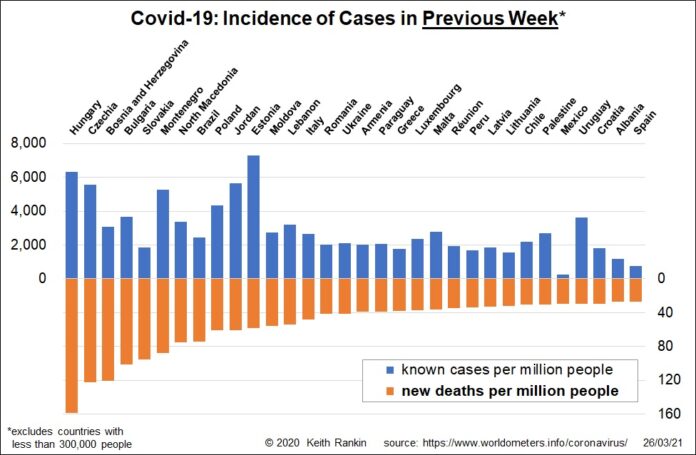
Hungary has now taken over from its neighbour, the Czech Republic, as the world’s most covid-fatal country in the most recent week. The top seven countries are in Eastern Europe, as is the ninth country (Poland); plenty of others from the region also feature. Only Brazil, scoring much higher than in any week in 2020, seriously threatens the dominance of this bloc.
Close behind we have the Levant (Jordan, Lebanon, Palestine – Israel was worse than these in January) and the Baltic States (Estonia, Latvia, Lithuania). Greece makes its first showing in these charts.
We hear so little in the New Zealand media about Eastern Europe’s tragedy, in part because we are a bit racist – including racism towards ‘alien’ white people – and also because the historical ‘Balkanisation’ of Eastern Europe means that most of these countries there are relatively small. Yet Eastern Europe, and Eastern European immigrants, have been significant throughout New Zealand’s European history.
Some previous good performers, and some usual suspects. Chart by Keith Rankin.
The second chart orders the current covid league table by new cases rather than recent deaths. While Eastern Europe still dominates, some countries which in 2020 had low incidences of Covid19 are Estonia, Uruguay, Malta, Palestine, and Cyprus.
Many of the usual West European suspects are still present: Sweden, France, Netherlands, Italy, Belgium, Austria, Luxembourg. And note Chile, which has by far the highest Covid19 vaccination rates in Latin America.
For the first time, neither chart includes the United States or the United Kingdom.
It is important that we note that the usual ‘rich little country’ suspects (plus some new rich little territories) are present at and near the top of these high incidence statistics, only omitted here because their populations are below 300,000: San Marino, Andorra, St. Barthélemy, Turks and Caicos, Caribbean Netherlands, Curaçao, Aruba, Seychelles, Mayotte, Reunion, and Wallis and Fortuna (in our Pacific neck of the woods). In addition, Gibraltar (#1) and Liechtenstein (#20) are in the top 20 countries for overall (ie not just in the last week) Covid19 fatalities per capita.
Another country in our neighbourhood to watch is Papua New Guinea. Its actual outbreak is presently far larger than the statistics of confirmed cases are able to show.
New Zealand expects to open a two-way travel bubble with the Cook Islands in May and is planning a vaccination campaign there.
The leaders of both nations met in Auckland today, with New Zealand confirming $20 million in additional support for the country this financial year.
Cook Islands Prime Minister Mark Brown is the first international leader to be officially welcomed into New Zealand since the pandemic began.
Speaking to media after the meeting, Prime Minister Jacinda Ardern said the two discussed the road map for quarantine-free travel.
She said the vaccination campaign – also planned to begin in May – will pave the way.
“There has been significant work with preparedness and we are currently working in earnest towards a May commencement. The Director-General of Health has also advised that beginning vaccination will add to the safe opening of quarantine-free travel.”
Brown has said the Cook Islands’ updated contact tracing app, which is compatible with the New Zealand Covid Tracer app, is also an essential step on the path to two-way quarantine-free travel.
$20m ‘sweetener’ In the meantime, New Zealand is offering the $20 million sweetener from a “recently reprioritised” Development Assistant budget.
At least 300 Cook Islanders have arrived in New Zealand to look for work since the one-way travel arrangement came into effect and residents are also travelling to New Zealand for medical treatments they can’t access at home.
There is pressure for officials to move faster on a two-way travel bubble, or risk losing a significant chunk of the Cook Islands workforce to New Zealand.
Brown told Ardern about the “significant issues” facing his covid-free, but also tourist-free, country.
“For a country that is totally reliant on tourism – up to 70 percent on GDP – this has had a significant impact on our economy, to the state it’s declined 20 percent in the time New Zealand’s economy has declined by 2.9 percent of its GDP,” he said.
This article is republished under a community partnership agreement with RNZ.
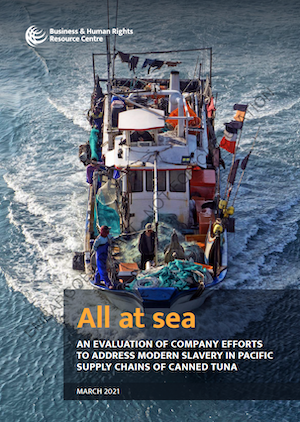
A new report has found that tuna fishing companies in the Pacific are doing little to stop slavery on their boats.
The canned tuna industry is rife with allegations of modern slavery in its Pacific supply chains, with little protection for workers from forced labour.
While more than four in five of them have public commitments on workers’ human rights, this doesn’t translate into efforts to end slavery in their supply chains.
The covid-19 pandemic has also heightened the risk for workers of experiencing modern slavery.
New Zealand and other countries have been urged by the centre to legislate against products made using forced labour.
“Too many Pacific tuna fishermen that put food on our tables face abuse and confinement every day,” said Phil Bloomer, the executive director of the Business and Human Rights Resource Centre.
Failing to provide duty of care “Put simply, the brands who put the cans on their shelves are failing to provide adequate duty of care to these workers who furnish their products.”
According to Bloomer, when the centre first approached these brands two years ago, many had made paper promises to improve their approach to human rights.
“Yet, two years on, the laggard companies have done next to nothing.
“This is not inevitable. A handful of companies – Tesco, Thai Union and Woolworths (Australia) – have shown it is both commercially viable and a moral imperative to emancipate workers caught in modern slavery.”
Only six companies of the original 35 surveyed by the centre have revised their human rights due diligence processes over the last two years: Ahold Delhaize, Coles, Conga Foods, Kaufland, REWE Group and Woolworths.
Bloomer said other brands must catch up and take urgent action to protect workers.
“Investors should also note that the laggards not only run major reputation risk, but also imminent legal risk as new laws in 2021 will leave their negligence exposed to legal challenge.”
This article is republished under a community partnership agreement with RNZ.
Source: The Conversation (Au and NZ) – By Rodney Tiffen, Emeritus Professor, Department of Government and International Relations, University of Sydney
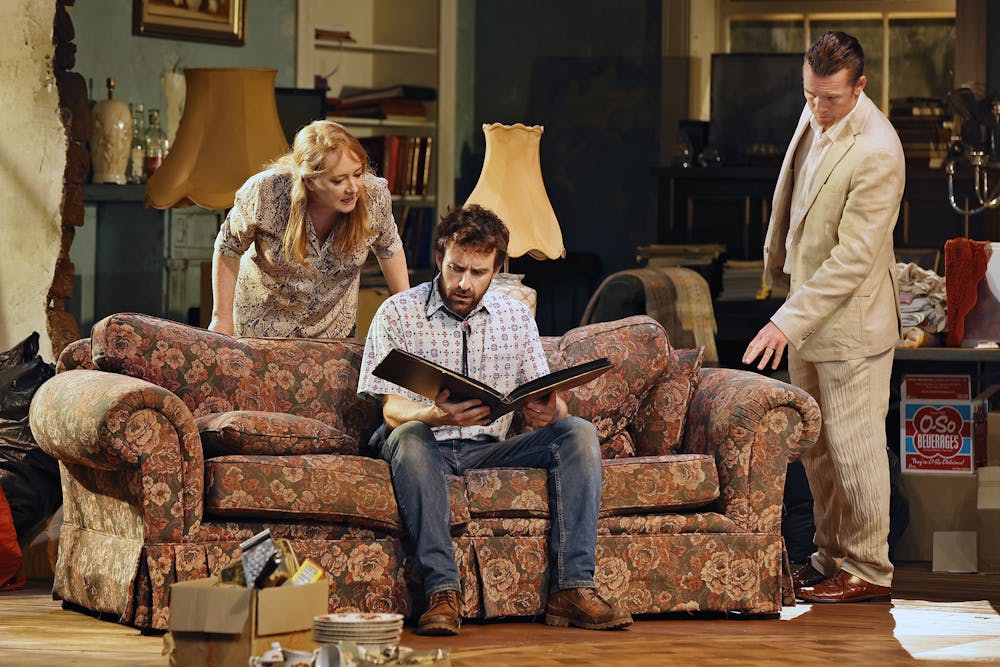
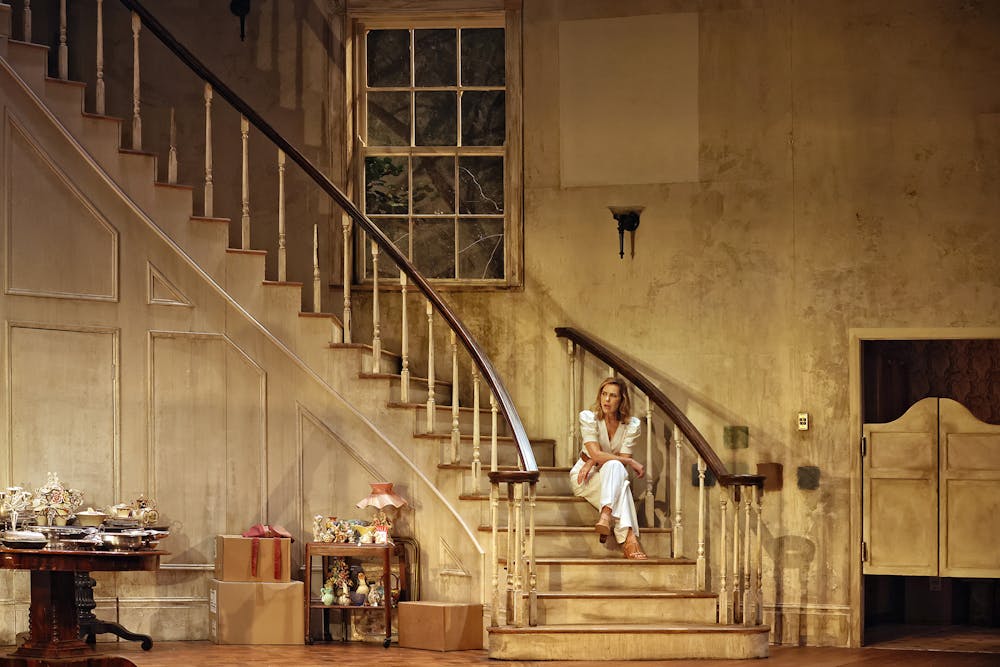
Review: Stop Girl, directed by Anne-Louise Sarks, Belvoir.
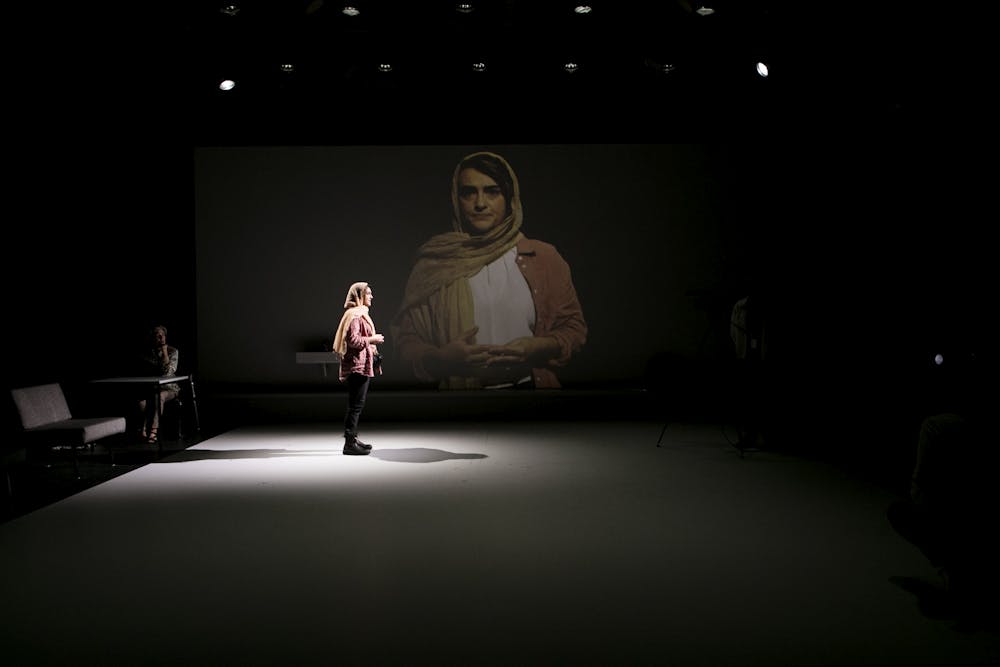
Stop Girl is a loosely autobiographical play by ABC journalist Sally Sara exploring her emotional traumas seeking to readjust to life in Sydney after years reporting from war-torn Afghanistan.
The play begins in Kabul with Suzie (Sheridan Harbridge) highly competent and confident, knowing how to operate in that dangerous and chaotic city, a productive and skillful reporter.
Her motto is “don’t connect”: to treat life there as a story, to practise professional detachment rather than get personally involved in the country’s human suffering.
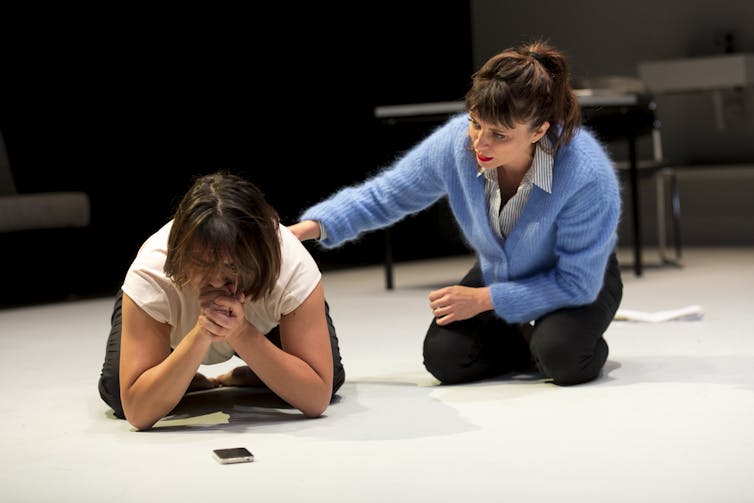
The play then switches to her psychological unravelling in Sydney, haunted by memories, unable to relax or enjoy life. Having covered a bombing in a supermarket in Kabul, she feels unable to enter her local Woolworths. She copes less and less well, descending into a deep and potentially suicidal depression, failing to cope at work, and feeling alienated from the people around her.
In Afghanistan, Suzie survives through isolation.Brett Boardman/Belvoir
While her key to functioning in Afghanistan was “don’t connect”, her inability to connect in Sydney is central to her suffering. Her “solution” is to seek escape, unsuccessfully applying for a posting to Paris, and, more desperately, planning to return to Kabul as a freelance.
Her childhood friend and loyal supporter Bec (Amber McMahon) has taken a different route. She also works with the ABC but is not consumed by her work, enjoys married life and is deeply involved with her three children. A tragedy for Bec was the stillbirth of her son, which occurred while Suzie was busily reporting from the Congo.
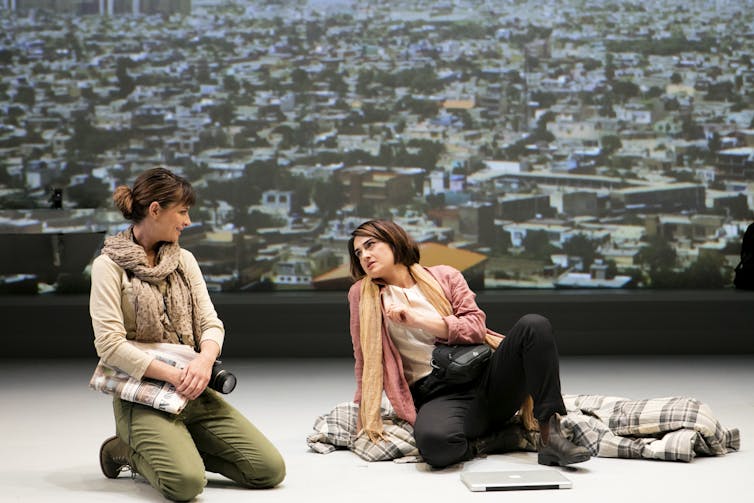
Suzie’s cameraman in Afghanistan, Atal (Mansoor Noor), came to Australia after receiving threats because of his work with the ABC, and is now applying for asylum.
Growing up in a country at war, he is rejoicing in the affluence, freedom and safety of Sydney, enjoying it all — except the Potts Point dogs. His optimism is a counterpoint to Suzie’s pessimism, and as such he has some of the strongest lines in the play.
Atal finds new possibilities in his new home in Sydney. Suzie struggles to feel at home in her old hometown.Brett Boardman/Belvoir
Both Bec and Atal provide a contrast with Suzie with their strong anchoring in family and other immediate relationships.
The third character is Suzie’s widowed mother, Marg (Toni Scanlan), loving and well-meaning but in the early parts of the play having very limited insight into Suzie’s aspirations and torments. Later, the reconnection between the two of them helps Suzie’s recovery, to help her realise that whatever her achievements abroad they cannot be an escape from the challenges of living at home.
The trauma of reporting on trauma
It was brave of Sara to write such a revealing play. Taken simply, it offers a very good night in the theatre – well-crafted, always moving forward, skillfully staged, its serious themes leavened by many funny moments.
Its larger value lies in opening up the issue of Post-Traumatic Stress Disorder.
It was only in 1980 the American psychiatric bible, the Diagnostic and Statistical Manual of Mental Disorders, first included the term. Before then, there were terms like “shell shock” and “battle fatigue”, which not only underestimated its duration and severity but also betrayed a lingering prejudice that all that was required was an act of will to overcome it.
Post-Traumatic stress disorder doesn’t only impact those directly in combat. The traumas of war can impact everyone involved.Brett Boardman/Belvoir
PTSD has been frequently diagnosed among returned combatants after the Vietnam, Iraq and Afghanistan wars. One can only imagine the countless numbers of servicemen returning from World Wars I and II who spent years suffering from undiagnosed depression.
Moreover, it is not only direct participants who are affected, and not only military conflict, but also other disasters and crimes that may precipitate it.
Within journalism, there has been increasing recognition of the emotional toll reporting on traumatic events may have. The Dart Center, dating back to the 1990s, is devoted both to helping journalists report trauma more sensitively, and to lend support to journalists reporting such events.
Crafting a new image
Among the many recurring traumas Suzie brought home with her, the one which haunts her the most was from a hospital in Kandahar, filming a boy called Abdul in agony, critically injured by a landmine. When she returned the next day, he was still alive, but soon after she left, he suffered a massive brain haemorrhage and died.
She feels she deserted him, and failed to keep a central tenet of war reporting: honour the dead.
Stop Girl offers up a new, and more honest, image of the war reporter.Brett Boardman/Belvoir
The emotional impact of powerlessness – an inability to affect a great injustice or alleviate suffering before one’s eyes – is the special trauma of the observer, of the journalist. An old stereotype was of the macho foreign correspondent, of an Ernest Hemingway figure who treated other people’s suffering as grist for their mill, and went on, emotionally unscathed, from one escapade to the next.
Sara’s play is a strong and eloquent antidote to this outdated image.
Stop Girl plays at Belvoir, Sydney, until April 25.
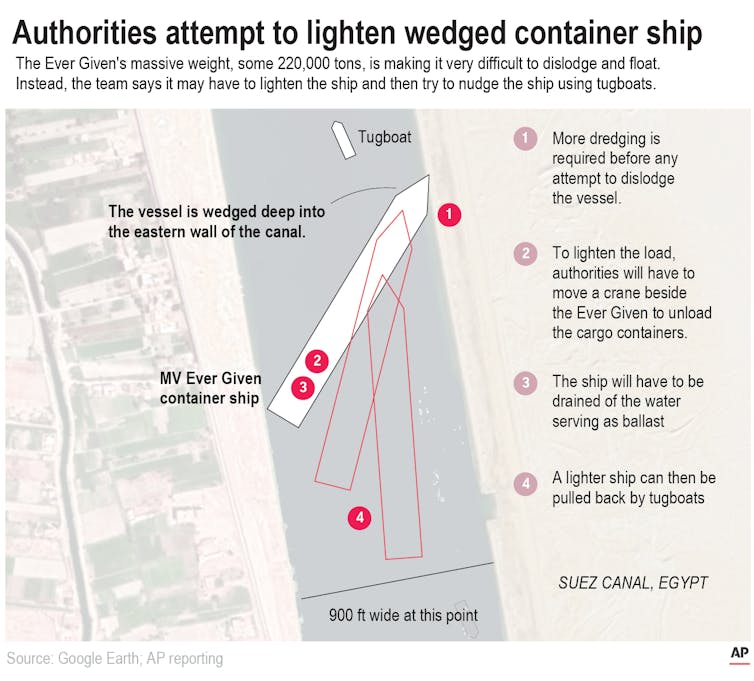
In the early hours of March 23, the container ship Ever Given was blown off course by high winds on its way through the Suez Canal. At 400 metres long, the Ever Given is longer than the canal is wide, and the ship became wedged firmly in both banks, completely blocking traffic.
Dredgers, excavators and tug boats are working frantically to free the ship, but the operation may take weeks, according to the head of one of the rescue teams. About 10% of the world’s maritime trade passes through the canal, which allows ships to shorten the trip between Europe or the American east coast and Asia by thousands of kilometres, saving a week or more of travel time.
Around 50 ships a day pass through the canal under normal circumstances, split almost equally between dry bulk carriers, container carriers (like the Ever Given) and tankers. As the blockage continues, some shipping lines are considering diverting ships around Africa rather than wait for it to clear.
Coming on top of the COVID-19 pandemic, this event has highlighted the fragility of global supply chains – and is likely to accelerate changes in the world economy that were already under way.
Good news for oil tankers
The blockage is disrupting important energy trades, but probably not dramatically as there are alternative routes and sources should the blockage last a long time.
About 600,000 barrels of crude oil are shipped from the Middle East to Europe and the United States via the Suez Canal every day, while about 850,000 barrels a day are shipped from the Atlantic Basin to Asia also via the Suez Canal. While the SUMED pipeline, which runs parallel to the Suez Canal, will enable some crude to continue to flow between the Mediterranean and the Red Sea, European and North American refiners will want to replace Middle East oil with oil from sources that don’t usually pass through the canal. Similarly, Asian refiners will want to replace North Sea crude oil.
The MV Ever Given has completely blocked the Suez Canal.Cnes2021 / Distribution Airbus DS
Interest is growing in shipping crude oil around the Cape of Good Hope, which adds seven to ten days to the shipping time from the Middle East to Europe and North America, increasing the demand for ultra large crude carriers.
While the rerouting of crude oil is unlikely to have much effect on oil prices generally, as inventory levels are currently high, this comes at an opportune moment for crude oil tanker owners, as the charter rates for such ships have been rock bottom due to the depressed global demand for oil and the aftereffects of pandemic lockdowns. Owners of tankers carrying refined oil or LNG can expect a similar increase in demand for their ships and therefore charter rates.
A reminder of supply chain fragility
For commodities such as oil, LNG, coal and iron ore, there is a world demand and a world supply which must balance. However, one source can often be substituted by another. This means the blockage of the Suez Canal will affect the spot price of commodities locally and the charter rates for the ships that carry them, but the trade will continue.
It’s a different story for products carried by container ships like the Ever Given. These products tend to be highly differentiated and more difficult to substitute. The blockage of the Suez Canal will undoubtedly cause shortages of specific products around the world, either because they don’t arrive at their destinations on time or because manufacturers run short of key inputs or components.
Shortages will remind manufacturers of the fragility of global supply chains, and they may look at how to reduce their dependency on specific sources, particularly those that are distant and rely on container shipping.
Global supply chains are already shrinking
Advances in technology associated with digitisation and automation are making manufacturers less dependent on large skilled workforces found only in certain parts of the world. Production is becoming more mobile and therefore able to locate closer to the markets served.
More mobile production, along with the continued miniaturisation of some products (for example, flat screen TVs becoming ever flatter) and the advancing digitisation of things like books and manuals, is gradually shrinking global supply chains and reducing freight-kilometres, measured in terms of value or volume. Major disruptions such as the COVID-19 pandemic and the blockage of the Suez Canal can only hasten this development.
This trend predates the pandemic and the current blockage. It can be seen in a number called the world seaborne trade-to-GDP multiplier, which measures how much of the world’s economic activity depends on shipping.
After the global financial crisis of 2008-09, this number fell below 1% on average. This tells us that a 1% increase in world GDP now leads to a less than 1% increase in world seaborne trade.
Who will pay the price?
The cost of the disruption caused by the blockage of the Suez Canal will weigh heavily with the insurers of the Ever Given. The ship is owned by Japanese firm Shoei Kisen Kaisha and chartered to the Taiwanese line Evergreen. The hull and machinery are insured on the Japanese marine insurance market, but at the moment damage to the ship appears to be minimal.
The major costs are loss of earnings by the Suez Canal Authority while the canal is closed to traffic, and losses incurred by the owners of the cargo in the many ships held up by the blockage. Depending on how long the blockage lasts, these may lead to huge insurance claims. Third party claims are covered by the London P&I Club, which is reinsured by the International Group of P&I Clubs.
In the long term, however, the blockage may be a good thing. If it offers a further nudge to shorten supply chains, the benefits to the global economy and environment will surely outweigh the cost to the insurers.
Michelle Grattan discusses the week in politics with University of Canberra Assistant Professor Caroline Fisher.
This week the pair discuss the latest in a growing list of allegations concerning sexual misconduct in Parliament House, and Scott Morrison’s response – a mea culpa, the possibility of quotas for women in the Liberal party, and a botched press conference. Also discussed is the likelihood of a cabinet reshuffle in light of the separate crisis’ involving Christian Porter and Linda Reynolds.
Source: The Conversation (Au and NZ) – By Cheryl Desha, Associate Professor, School of Engineering and Built Environment, and Director, Engagement (Industry), Griffith University
Pretty soon, many more Australians are going to be composting their food waste. The Victorian government kicks off its four-bin system from this year, and the federal government is considering a plan to turn kitchen scraps into fertiliser for farmers.
But knowing exactly what to put in your compost bin can be tricky – and views differ on whether you should add items such as meat and citrus.
Composting is fairly simple, but it’s important to get it right. Otherwise, your compost mix may be too slimy or smelly, or attract vermin.
We are experts in food resilience and sustainability, and have prepared this “dos and don’ts” guide to get you on your way.
Your own composting system
Composting is a way of doing what happens in nature, where raw organic materials are converted to soft and spongy soil-like grains. These help soil retain water and make nutrients available to plants.
In fact, compost is so valuable for your garden, it’s often referred to as “black gold”.
For those of you composting at home, here’s how to make sure the system delivers what you need for your home gardening projects.
Your bin should be made up of one part green waste and two parts brown waste.Shutterstock
Dos:
• use a couple of bottomless bins so when one is full you can start on the other, in a shady spot
• have a good mix of “browns” (two parts) and “greens” (one part). Combine brown materials (hay, straw, sawdust, woodchips, leaves, weeds that have not gone to seed) with food scraps and other materials (fruit and vegetable peels and rinds, tea bags, coffee grounds, eggshells), and some types of animal manure (chicken, cow, horse)
• let the temperature climb. Heat in the centre of your compost pile is a good sign, as the microbes are breaking down what you’ve put in. As the compost matures it cools, creating a great environment for worms and other microbes to finish off the process
• make sure your coffee grounds and tea bags can break down, so remove the bag before you add it to the compost pile. Moist tea leaves can help your pile break down faster. Citrus fruit (lemons, oranges), spicy peppers, onion and garlic are fine, just don’t add them to your worm farm; the worms will suffer under the acidic conditions produced when these items break down
• get creative with natural “brown” materials – as long as there is no plastic mixed in, throw it in. This includes anything from cereal boxes to cotton balls, wine corks, fireplace ashes, and even human hair and pet fur.
Citrus and onion are fine, avoid meat scraps.Shutterstock
Don’ts:
• don’t let your compost bin be a feast for local rodents such as rats. Bury the base slightly into the ground, lining the bin with wire mesh and keeping it covered. Avoid adding meat scraps, cooking fats and oils, milk products and bones, which will attract vermin
• don’t let your compost get stinky or slimy – that means it’s too wet. Slimy compost means you need to add more “brown” materials. You can also speed things along by having a dig through the heap every week or so, or adding extra bits and pieces at various stages (chook poo, crushed rock and lime) to help it all happen faster
• don’t let nasty chemicals and germs get into your compost. This includes things like treated wood waste, pet waste (if they take medication or eat meat) and sick plants. Home compost bins are limited in what they can process. It is a good idea to wear gloves as an extra safety measure.
Council compost collection
Local councils are increasingly offering food waste collection programs, sometimes along with garden green waste. In such cases, these materials are processed at large scale composting sites
In Victoria, a four-bin waste and recycling system will be rolled out in partnership with councils. Most households will be using this system by 2030.
Gold Coast City Council City recently diverted 553 tonnes of food waste from landfill during a one-year trial. The program helps address home composting space challenges for the region’s many apartment and high-rise dwellers.
If your council offers food waste collection, make sure you follow their particular “dos and don’ts” advice. Depending where you live, it may differ slightly to ours.
Working out how to bag up your food scraps – whether for your home bin or council collection – can be confusing. Check your local instructions for kerbside collection to make sure your food waste is bagged in the right way.
You can try putting “home compostable” bags in your own compost bin, experimenting with your bin temperature to achieve the best outcome. Compostable plastic“ is designed to break down back into nutrients, but most still need managed, high-heat conditions to activate this process.
Don’t be tricked by “degradable” bags – these are likely to be made of plastic and just break into millions of tiny pieces. Also, as others have written, some “biodegradable” plastics made of plant-based materials might not be better for the environment, and they can take just as long to degrade as traditional plastics.
The benefits of composting
Making compost at home doesn’t just lighten our rubbish bin and help our gardens. It also helps tackle climate change.
Each year in Australia, food waste rotting in landfill creates methane equivalent to around 6.8 million tonnes of carbon dioxide. If global food waste were a country, it would be the third-largest emitter of greenhouse gases in the world, behind the United States and China.
So clearly, there are many great reasons to compost. And by following a few simple rules, you too can create your own “black gold”.
Since the beginning of the Afghanistan War in 2001, 41 Australian military personnel have been killed in combat, while more than 600 veterans have killed themselves.
This week the House of Representatives affirmed a resolution from the Senate calling on the Morrison government to establish a royal commission into the suicide rate among both current and former military personnel.
Calling a royal commission would certainly signal this is an issue of national concern, but whether it can achieve what previous inquiries have not is a real question.
The complexity of the problem is hinted at by the big difference between rates for those serving and veterans. As the resolution passed by parliament notes, the rate among serving military is less than half that of the general population, while among veterans it is now nearly double.
There are obvious causes, such as the trauma of past battlefield experiences. But there are more nuanced drivers, to do with the very nature of military life, a culture developed over hundreds (indeed thousands) of years to create effective fighting forces, and the difficulties many experience in leaving this life.
The challenge of transitioning from military to civilian life is highlighted by our research involving interviews with 31 men and women who had recently left military service.
They came from all three services (navy, army, air force). Twenty-five were men, six women. Their ages ranged from 25 to 56, with their length of service ranging from five to 37 years (16 years was the average).
Mental health was not our focus. In fact, we chose subjects without significant physical or psychological impairment due to their service. But almost every one told us about the culture shock of leaving military life, finding a new job and working in the civilian world.
They spoke of feeling anxious and frustrated; of not understanding others’ motives and behaviours, and of feeling misunderstood; of struggling to translate their military service to civilian jobs; of being cut off from their previous support networks; and of feeling, at times, very alone.
If this is the experience even of healthy, well-adjusted veterans, it seems hardly surprising those with mental health issues could be pushed to breaking point.
It’s not just another job
For those not personally connected to the military or a veteran, it can be easy to underestimate just how different military life is, and much of a culture shock leaving that life can be. It’s not just like changing jobs.
Most join the military straight out of school. They enter a highly regimented world where almost every aspect of their life is tightly controlled. Their training is designed to encourage thinking and acting alike. It emphasises values such as loyalty, courage, commitment to the collective good, and discipline. Military effectiveness relies on these attributes.
As the suicide statistics suggest, those who make it through basic training can adapt well to the life. The challenge comes when it is time to leave this culture behind.
One of our subjects likened it to “peeling an onion”. It starts with losing the uniform and expectations of presentation. But it eventually requires changing some deeply held beliefs, values and behaviours that may not fit in civilian life. They work at a rapid pace, focus on a clear and shared mission, don’t stop till the job is done and always put the team first. These are not necessarily things they find in a civilian workplace.
Losing comrades
Making this change is more complex and stressful than most imagine. In the words of one veteran, who served in the navy for five years:
“I’ve had to learn how to wind back, because warship mentality does not work in a civilian workplace.”
Many mentioned a sense of a loss of identity – military work wasn’t what they did, it was who they were. As another who served in the navy for 26 years, explained:
“All your friends are in uniform […] Something’s lost. It’s like you’re not in the club.”
Even participants who found jobs in organisations with explicit programs to support veterans still reported feeling stress and unease as they adapted to civilian work.
Five veterans we spoke to mentioned, unprompted, that they knew veterans who had killed themselves and understood how those individuals had reached that point.
So if the struggle is real for those in our study who had made it into employment, imagine what it is like for those who struggle to find work or those have been diagnosed with a mental illness trying to cope with integration into a world that is foreign to them and who are unlikely to easily find a new path into employment.
We are not advocating for any particular mechanism to inquire into veteran suicide. But we are adamant there must be an increased focus on the struggle veterans face when transitioning to a civilian world.
Criminology is the study of individual and social factors associated with crime and the people who perpetrate it. One of the discipline’s well-established truths is that men commit violent and sexual offences at far higher rates than women.
Men are also the most likely victims of physical violence across the board, but women are far more likely than men to be victims of sexual, familial and domestic violence.
Rates of imprisonment give us tangible evidence of this gender imbalance.
Across Australia, only about 8% of prisoners are women. While prison population figures provide only a very rough guide to criminal behaviour, we can safely assert that men perpetrate the vast majority of criminal conduct, and certainly violent conduct.
What does the research tell us about the patterns behind this alarming fact?
In the early days of criminological enquiry, much attention was given to the Y chromosome – the determinant of male sex organs. This line of research, referred to broadly as biological positivism, gave rise to explanations that “men can’t help themselves”. Fortunately, these theorists hold very little sway in criminological circles today.
More contemporary attention is given to factors associated with the societies in which we live.
Social learning theory posits that men are more likely than women to associate with antisocial peers.
Other scholars are interested in the way in which key life experiences influence the propensity to commit crime. Known as developmental and life course criminology, it suggests the causes of crime are a result of a linking of individual characteristics, such as impulsiveness, with a person’s environmental factors such as their family, schooling, religion, neighbourhood and the way they were parented, including any exposure to neglect and maltreatment. Renowned criminologist David Farrington has suggested these factors play out differently for males and females.
Into the sociological frame, too, comes strain theory, which proposes that difficult circumstances or life stresses can produce anger and frustration that may lead to violence. The gender divide is explained by the evidence that men are likely to react violently to such strains. Women, according to this theory, are more likely to internalise their responses.
Edgework theory pursues the idea that men are more likely than women to engage in risk-taking behaviour, even to the edge of acceptable conduct. Men in the criminal justice system are best described, on this view, as “risky thrill-seekers” while women caught up in the same system are more likely to be described as “at risk”.
The science of psychology, too, plays an important role here. Psychological studies suggest gender role identification − internalised characteristics culturally regarded as appropriate behaviour for men and women − rather than gender itself is crucial to the experience of anger, its expression and control.
How are these gender divides created and shaped? Criminologists such as Ngaire Naffine have offered the view that there has always been an entrenched belief in the “natural” order of things, which associates masculinity with dominance and status. In this view, individuals construct their beliefs according to their class, ethnicity and sexuality, but the result is always a reinforcement of dominant patterns of masculinity. One can observe these patterns in competition for status, bravado among peers, the drive for power and control, shamelessness, and a lack of concern for others.
Women, by contrast, are less likely to display these traits because society (including the criminal justice system) has positioned them as needing greater protection, with consequent patronising benevolence.
In summary, men disproportionately exhibit far more anti-social behaviour than women. When it comes to sexual crimes, men are far more likely to commit them, and women are far more likely to be the victims. The easy cultural dismissal that “boys will be boys” simply doesn’t stand up to scrutiny and is actively doing damage.
So how best can we respond to the problem of violence perpetrated by men?
Law reform is necessary to ensure the practice of law is in line with prevailing social norms and priorities. This has certainly not always been the case. For example, until the 1970s there was no such thing, legally, as rape in marriage. Even in the first iteration of reform to the law, a prosecution could only proceed if there was evidence of actual bodily harm to the victim.
There have been other pleasing law reforms too. Today, in many jurisdictions, police provide victim assistance services, prosecution counsel are trained in handling traumatised clients, limits have been placed on cross-examination practices, and directions to juries do not carry the same cautions regarding corroborative evidence that were standard a decade ago.
Legal change is necessary, but it is not enough. For the most part, the law comes in only after the damage has been done.
Of greater importance in the drive for change is the value that societies must place on teaching all men to respect and value the worth of all people, regardless of gender, race, or creed. When that is socially learned, and flawed expectations of masculinity are put to one side, men will be less likely to engage in risky behaviours and internalise gendered expectations. They will also be more likely to draw on pro-social coping mechanisms when under stress, and more likely to reject the notion that masculinity must identify with power, control, shamelessness and independence.
Creating conditions beyond individual responses is important too. Mass movements and marches like the ones witnessed this month have provided great impetus to the social and political conditions required for positive change.
At the end of another round of elections, the fourth in just two years, Israel still cannot break away from debilitating political stalemate.
This means there will now be weeks of daunting coalition negotiations between parties chained to pre-election promises not to share a government with a particular party or prime minister – specifically, Israel’s longest-serving leader, Binyamin (Bibi) Netanyahu.
Depressingly for Israelis, election number five is lurking in the shadows before the end of 2021.
The pro- and no-Bibi camps
This campaign seemed like another referendum on Netanyahu. Currently on trial for corruption, the PM has been facing months of mass demonstrations against him.
With his back to the wall, Netanyahu was able to sustain his popularity within his base by personally taking credit for Israel’s world-leading coronavirus vaccine rollout, as well as the diplomatic achievement of forging ties with several Arab and Muslim states in the “Abraham Accords”.
Netanyahu’s supporters celebrate after first exit poll results are released at his party’s headquarters.Ariel Schalit/AP
The coalition of right-wing and religious parties supporting the PM has captured 52 seats of the Knesset’s (parliament) 120 seats in this week’s election, short of the 61 seats needed to form a government.
With 30 seats, Netanyahu’s Likud party retains its status as the biggest in Israel. Problematically, a small but essential element of this bloc is the extreme-right racist party Otzma Yehudit (“Jewish power”) and the anti-LGBTQI faction Noam.
Naftali Bennett, the leader of the national religious party Yamina (“Rightwards”), refused to commit to support or reject Netanyahu. However, he effectively tied himself to the PM when he promised not to join a government headed by the centrist politician Yair Lapid, who leads the anti-Bibi bloc.
The anti-Netanyahu camp secured 57 seats — not enough to dethrone the PM. Moreover, no single party leader is considered a possible challenger to Netanyahu, and the parties in this group profoundly advocate contradictory policies.
This bloc includes the second-largest party in the Knesset, Yesh Atid (“There is a future”), led by Lapid, with 17 seats. There are myriad other parties on the political right, left and centre in this group, each with between six and eight seats apiece.
The biggest story of the election is the paradoxical shift in the political power of Israeli Arabs, who may become the grain of rice that could tip the scales.
On the one hand, internal divisions and a low voter turnout among Arab Israelis resulted in fewer seats being won by Arab-led parties in the Knesset. The main culprit for this downturn is the leader of the Islamic conservative United Arab List Ra’am party, Mansour Abbas, who gambled on running independently from the Joint List of Arab parties. As a result, the Joint List shrank to six seats, from 15.
Election campaign billboards of Netanyahu and other party leaders in Tel Aviv.Abir Sultan/EPA
Indirect Arab representation came in the form of Zionist parties such as Labor and Meretz, who introduced Arab candidates in their lists in hope of capturing Arab voters.
More dramatically, the Ra’am party, which captured four seats, transformed almost overnight the political status of Arabs in Israel from unwanted to a coveted partner, wooed by both blocs.
The party is now potentially a “kingmaker” that can determine the nature of Israel’s next government. Its agenda is focused on issues important to Arab Israelis, such as crime, violence and funding shortages, instead of, for example, the Palestinian question.
Abbas said he is open to joining a Zionist government or at least supporting it from the outside, even with Netanyahu as PM, if his demands for legal changes and extra funding for Arab municipalities are met.
However, Abbas seems closer to the anti-Bibi bloc, as Ra’am and the extreme-right Otzma Yehudit mutually disqualify each other as coalition partners.
Mansour Abbas could be a ‘kingmaker’ in the formation of the next government.Mahmoud Illean/AP
No change in international policy
Domestically, Israelis want a government that will address mounting social tensions, for example, between secular and ultra-orthodox Jews, exacerbated over the disregard among some of the latter for the government’s coronavirus guidelines.
Internationally, many yearn for a stable government in Jerusalem after two years of uncertainty. US President Joe Biden may prefer someone other than Netanyahu, given the animosity between President Barack Obama and Netanyahu when Biden was vice president.
Yet, the special alliance between the US and Israel remains strong, despite any personal antagonism.
The Biden administration is a staunch supporter of the two-state solution between Israel and the Palestinians.Gerald Herbert/AP
The Palestinians expressed indifference after the election and little hope for a change in Israel’s policy towards them.
They are facing their own parliamentary and presidential elections this year, which could affect the reign of 86-year-old Mahmoud Abbas, the longtime president. These elections may embolden or empower Abbas’ main opposition, Hamas, which controls the Gaza Strip and is considered a terrorist organisation by Israel and many Western countries.
The outcome of another key Middle Eastern election, Iran’s vote in June, seems predetermined. The next Iranian president will likely be a hardline ideologue affiliated with the Iranian Revolutionary Guard Corps. Tehran’s drive to acquire nuclear weapons will continue to dominate the dynamics of the region.
Given all this, the aggressive Israeli policy set by Netanyahu of promising not to allow Iranian nuclear weapons and curbing their influence across the Middle East will continue, no matter who is the leader in Jerusalem.
Such a position vis-à-vis Tehran will also be positively welcomed by the Persian Gulf kingdoms, led by Iran’s arch-nemesis, Saudi Arabia. This will likely contribute to the tacit and open ties these countries have been forging with Israel.
New Zealand Parliament Buildings, Wellington, New Zealand.
Editor’s Note: Here below is a list of the main issues currently under discussion in New Zealand and links to media coverage. Click here to subscribe to Bryce Edwards’ Political Roundup and New Zealand Politics Daily.
As recovery from the COVID-19 pandemic continues, there are strong grounds for believing the rejuvenated global economy will be completely unlike what went before.
The liberal economic order that enabled rapid growth of trade, investment, technologies and incomes until the Global Financial Crisis (GFC) of 2008 shows signs of breakdown.
Many developed economies are now experiencing the rise of populist political movements. There is a growing disregard for the rule of law and an undermining of key global institutions, including the World Trade Organisation.
The level playing field of a rules-based system is being challenged by the rule of rulers. The challenge for businesses in New Zealand is how best to adapt to cope with this new global economy.
The changing face of globalisation
Emerging economies are reshaping globalisation. For example, China and Russia are pursuing forms of state capitalism characterised by close government-business relations. By providing subsidised finance or a dominant domestic market share they distort competitive advantage in world markets.
The broader context for these developments is China’s challenge to the long-held global economic leadership of the United States. That growing tension is manifested in a number of ways:
The result is widening global chasms between liberalism and statism, democracy and authoritarianism, and rules-based versus unregulated governance.
A challenge for business
For business, these developments mean a more challenging operating environment, one that is more complex, uncertain and ambiguous. Growing fragmentation will certainly add to the costs of cross-border business, with arbitrary costs, regulations and distortions affecting resource movements.
More specifically, businesses will need to rethink some fundamental tenets.
Greater geopolitical awareness will be needed. Trade, investment and technology management decisions will have to give greater weight to political and regulatory considerations.
Commitment to one side of a technological, ideological or regulatory division might mean exclusion or marginalisation from the other.
The strategic focus of a business will evolve from simply cost or profit to evolutionary fitness. Businesses will need to adapt to differing constraints on the movement and protection of personnel, technology and knowledge.
Governments will need to rethink the scale and forms of support they offer their local businesses. Subsidies, protection, competition policy and industrial policy will all require review in the face of state capitalism.
The risk of trade wars
There are early signs close to home of what this new environment might look like.
In the same way, New Zealand was rebuked by China for supporting Taiwan’s re-admission to the World Health Organisation’s annual global health assembly.
These experiences highlight the growing interdependency of economic and political goals and the increased uncertainty businesses will face.
The future plan for business
These challenges will be particularly vexatious for New Zealand’s economy. It is heavily dependent on trade and tourism and has increasingly embraced the Asian regional economy since the 1970s.
New Zealand has globally diverse commitments and historical obligations. These include defence with the United States, intelligence with the Five Eyes alliance, migration with the Pacific and Europe (and more recently Asia), and economic prosperity, increasingly with Asia.
Our largest businesses pride themselves on their global reach but this may become more of a hindrance than an advantage.
Our leading corporates — such as Fonterra, Zespri and Lion Nathan — have all faced difficulties in China in the recent past. The future challenges appear even more complex.
New Zealand businesses need to plan for a post-COVID recovery characterised not just by more home workers, but by new strategic questions that are just emerging. Here are just a few:
do you understand the growing politicisation of economic activity?
do you have a government that supports you, or is the potential for collateral damage high?
what sorts of networks and partnerships do you need to develop for success in this new environment?
in what ways can legitimacy be gained and preserved in a fractured world?
There are no doubt other questions that need asking (and answering), but now is the time for businesses to start planning for the future or risk being left behind.
Unions in Fiji say it is hard to believe the Prime Minister only found out about the controversial draft Police Bill after public uproar.
The draft legislation would have given police more surveillance powers if passed in Parliament.
Prime Minister Voreqe Bainimarama pulled the plug on the bill last week following widespread condemnation from civil society groups, individuals and opposition parties.
The prime minister had said he only found out about the controversial draft legislation after the public uproar.
But the Fiji Trades Union Congress (FTUC) said it was surprised that Bainimarama had pulled the plug on the proposed Bill.
FTUC national secretary Felix Anthony said the whole country was aware of the draft bill because the consultations were launched publicly.
He said there was even a cake-cutting ceremony to mark the occasion in Suva with representatives from the New Zealand High Commission and UN development programme present.
NZ, UNDP funding consultations Both New Zealand and the UNDP are co-funding the public consultations.
Anthony said the prime minister was obliged to tell the public how he was not made aware of it.
“Bainimarama needs to tell the public what actually happened and not only that, but we believe that there needs to be full consultation on any proposed Bill with the public and all parts need to be addressed,” the FTUC said in a statement.
The unions said it was “crazy and an insult” to the people of Fiji to ask them for their opinions on the proposed Bill which breached the Constitution.
“It is simply crazy that they know what was wrong with it, they know it was breaching the Constitution, yet they wanted to ask the people to tell them what is wrong with it, which is simply crazy and an insult to the people of Fiji.’
Following the prime minister’s retraction of the public consultations, his minister in charge of the police force, issued an apology.
Defence Minister Inia Seruiratu said he was sorry for allowing the draft Police Bill to go for public consultations.
Seruiratu said the ministry had overlooked the process the draft document needed to go through.
“I did the launching because of the work we had prepared,” Seruiratu said. “We have overlooked the process and we sincerely apologise for that.”
The Draft Bill is now under review, the minister said.
The day after New Zealand’s first lockdown was announced, I expressed to a senior colleague my concern for those around the country whose livelihoods would suffer as a result.
She agreed, but was confident that the spirit of “we’re all in it together” accompanying these drastic public health interventions would allow the government to lead the country towards a kinder, more equitable society.
“I think we might see a universal basic income,” she said hopefully.
As it turns out, the government had little appetite for progressive welfare or tax reform.
Instead, working with the Reserve Bank, they have propped up the economy through a combination of measures that have drastically inflated the price of houses.
This has most likely protected some jobs, but it has also made work increasingly irrelevant as capital gains completely outstrip wages. The wealthy have been made even wealthier, while many can no longer afford a roof over their heads.
In the past year, the average New Zealander effectively lost $54.59 for every hour they turned up to work if they did not own a home.
According to Stats NZ, the median worker earned $26.44 per hour before tax in 2020. That comes to $21.49 per hour after tax if working a 40 hour week.
Median house prices Meanwhile, in the year to end of February 2021, the median nationwide house price increased from $640,000 to $780,000: a difference of $140,000. If houses took weekends, public holidays and four weeks’ leave off each year – which of course they do not but it makes the calculation simpler – that makes an hourly rate equivalent to $76.08 per hour. Tax-free.
This is a direct result of the decision to support the economy through a combination of quantitative easing, a reduced Official Cash Rate and wage subsidies, instead of meaningfully increasing spending on things we need such as infrastructure and welfare.
The government handed out money to the banks, effectively at no cost, allowing them to lend more at increasingly attractive rates.
The government also bought bonds at the same time, devaluing deposits and making it pointless to keep money in the bank. This combination of easy credit and disincentivised saving caused a large amount of money to start sloshing around looking for somewhere to go.
The traditional concern with this approach to stimulus is that it will inflate the price of goods and services, increasing the cost of living.
In New Zealand, though, we like to buy houses. A tax system that drastically favours property ownership, combined with a cultural sensibility that houses are a safe bet, has seen much of this newly available money pumped straight into the housing market.
A feature This is a feature, not a bug.
It represents a new, more interventionist version of trickle-down economics for the 2020s. Decried in 2011 by Labour MP Damien O’Connor as “the rich pissing on the poor”, politicians from the right have long argued that if the wealthy feel wealthier, their increased spending will benefit those less well off.
Generally used to advocate for reduced taxes on the rich, these ‘trickle down’ arguments refuse to die, no matter how comprehensively and repeatedly they are discredited.
This revival of trickle-down economics is a little different, as it is based on direct stimulus rather than a reduction in tax, but the effective mechanism is the same.
House price inflation is desirable, we are told, because homeowners feeling the resulting “wealth effect” will spend more on the goods and services provided by other New Zealanders. The win-win logic of this argument hides the fact that, fundamentally, someone is paying a heavy price.
Another way to think about it is that the government has effectively paid for covid-19 by levying a special tax on anyone who wants to live in New Zealand, but did not happen to own property during the summer of 2020/21, and handing that money to homeowners.
Too many won’t even be able to do that, and sleeping on the street or in emergency accommodation. The relatively lucky few who do manage to buy a home will have mortgages hundreds of thousands of dollars larger than they otherwise would, spreading the cost of covid across their entire lifetimes.
Even as the beneficiaries of this covid levy, most homeowners are unable to simply stop working and enjoy this newfound wealth.
They may feel that they cannot realise their capital gain because it is tied up in their family home. What this windfall does provide, however, is choice: the option to release some of their newfound capital by downsizing into somewhere cheaper, or to stay put, taking advantage of the extra equity to fund lifestyle improvements like a new boat, a bach or a remodelled kitchen.
Unprecedented demand for watercraft this summer suggests that many are doing exactly this.
It can be tempting to view this growing inequity as just another “baby boomers vs millennials” issue. Certainly, it does represent a massive transfer of wealth from generally younger New Zealanders who do not currently own homes, to the largely older folk who were able to buy homes cheaply in the past.
This disparity is reflected in Westpac’s latest consumer confidence figures, which show that younger New Zealanders are far more likely to be worried about their financial situation compared with older cohorts.
Patronising advice about avoiding avocados and food delivery services to save for a home entirely misses this point. Nonetheless, it is important to note that many older New Zealanders also live in poverty while subject to similarly individualising narratives of self-control.
Social divide Perhaps the more important question is how this rapidly accumulating wealth will be deployed to further entrench a growing social divide.
Parents with equity to spare are increasingly using it to help their children “get on the property ladder”. On an individual basis this is an entirely reasonable thing to do.
At a larger scale, though, the competitive advantage conferred by having generous, wealthy parents makes it even harder for those who do not have such privilege to obtain a home. Many are being left behind as a new landed gentry takes shape.
These political-economic arrangements favouring existing wealth over hard work have been a long time in the making, beginning well before most of the current crop of politicians arrived in parliament.
It is notable, though, that a government that promised to address the “housing crisis” has actively and knowingly pursued policies that have produced an unprecedented upward step-change in the market.
Perhaps most concerning is that the Prime Minister has expressed her intent that house price inflation should continue, just at a more “moderate” rate, because that’s what “people expect”.
It is exactly these expectations that are the problem: these issues will not be resolved while houses remain a speculative investment vehicle, rather than a home.
A substantial class of investors have certainly been made exceptionally wealthy by the covid-19 response, even as those who work for a living have seen their incomes stagnate. Image: David Robie/Café Pacific
‘Tipping the balance’ Tuesday’s announcement of measures to “tip the balance” towards home buyers, rather than investors, might begin to signal a growing recognition that housing is more than an investment.
A substantial class of investors have certainly been made exceptionally wealthy by the covid-19 response, even as those who work for a living have seen their incomes stagnate.
But while this separation of ‘investors’ or ‘speculators’ from ‘homeowners’ might be politically convenient, it makes something of a false distinction.
Whether a house is owned as a home, or purely a source of income, any non-improvement appreciation in value comes at someone else’s expense.
Until New Zealand acknowledges this, little will change: whoever is in charge, and no matter how many new homes get built.
Covid-19 has shown that when politicians want to act, they certainly can. As many others have pointed out, this government promised “transformational change”. I’m not sure that taking money from those with the least, handing it to those with the most, is quite the kindness my colleague had in mind.
Dr Brendon Blue is a geographer in Te Kura Tātai Aro Whenua, the School of Geography, Environment and Earth Sciences at Te Herenga Waka, Victoria University of Wellington. He mostly studies and teaches the politics of environmental science and restoration, but would have been better off owning a house instead. This article was first published on The Democracy Project and is republished here under a Creative Commons licence.
You can’t get the right answer if you keep asking the wrong question.
A question this neoliberal New Zealand government and previous ones continue to ask is: “How can people get to own a home?”
There are very, very limited answers to that question.
But if you ask: “How can we give people security of tenure in a healthy, warm, dry, afforable home?” then lots of alterative answers emerge.
Such as long term leasing.
This would mean not relying on Mum and Dad private investors to house our people but creating large government funding mechanisms, eg. by insisting that the Superannuation Fund invest a set percentage of their profits in long term housing investments and reinstating the State Advances Corporation.
In short the government has to regain control of the mortgage market it abdicated to the privately owned banks in thhe early 1980s
This approach has worked in Berlin for example where citizens get lifelong leases on their apartments at government controlled and affordable rents (and, yes, people can decorate their homes as they wish as long as they don’t make structural alterations.)
You can find out about other solutions to our housing problems by watching my documentary Who Owns New Zealand Now? which I made almost 5 years ago now. (Especially the last couple of parts which deal with solutions).
Asia Pacific Report republishes occasional commentaries by journalist and documentary maker Bryan Bruce with permission.
In the wake of yet another week of disgusting behaviour and inadequate responses rolling out of federal parliament, it is abundantly clear Prime Minister Scott Morrison is clueless about how to fix it.
He is not the only one, judging by the equally superficial responses of many politicians confronted with evidence of systemic violence against women at the heart of Australian politics.
So what is the problem? And how might we address it?
I suggest Australia’s political class need to recognise three problems.
1) They must understand this is not just a problem about men behaving badly or about women being victims of this behaviour. Rather, it is a problem arising from the operation of what I call a “gendered logic of appropriateness”. By this I mean there are deeply embedded norms of behaviour – in this case masculine norms – that become the accepted ways of acting within an organisation.
We see a gendered logic of appropriateness in the Australian parliament reflected in its bullying culture, its adversarial debates and name calling. This is disguised as “politics as usual” and, unlike in other workplaces, it is protected by parliamentary privilege.
Given the revelations of the past month, it is now undeniable that this logic also includes norms of behaviour that support the mistreatment of women and, no doubt, some men. Such behaviour exists on a continuum from catcalls to verbal abuse to sexual harassment and abuse.
Men who perform such behaviour do so with impunity. As this is about gender norms, women can be perpetrators too – belittling other women or giving cover to men who are abusive.
2) They must acknowledge the steep, deeply entrenched and gendered asymmetric power relations that structure the parliamentary arena. It is a deeply hierachical place, and men dominate the upper echelons.
These asymmetries exist at every level – within cabinet, and between it and backbenches, between government members and opposition, among ministerial offices and between them and bureaucratic agencies, between ministerial and parliamentary operational staff, and parliamentarians and the media.
3) They must recognise the narrow cohort from which these men are drawn. They are primarily white, university-educated and from private schools, middle-class men. Aside from their political differences, they share most other things in common.
One key problem is that these men have worked their way through relatively similar political party structures – which have foundations in immature, winner-takes-all, university politics. In is in these political parties that women and other marginalised groups first struggle to fit to the gendered status quo that dominates our political party system. Very often, they flee from it.
British feminist scholar Joni Lovenduski has noted in the UK political parties have been the “main distributors” of traditional masculinity in politics. In Australia, we appear to have perfectly mimicked this practice.
So now for the big question: what is to be done?
The prime minister’s announcement of a range of “training” initiatives in response to recent allegations of sexual abuse within Parliament House demonstrates his lack of understanding of the deep structural changes that are required to address it. Training programs will be nowhere near enough.
To achieve change will require action to disrupt the gender status quo on three levels.
1) New rules are required to outlaw derogatory speech, verbal and physical acts of bullying and sexual harassment and abuse. Standard human resources policies must also apply to all parliamentary workers. Independent complaint-based mechanisms, compensation and reparation measures must be made available for those experiencing sexual abuse.
The Sex Discrimination Commissioner’s investigation has the scope to set these new rules. But it is up to political leaders to ensure these rules are enforced, through sanctions, and applied consistently. Unless and until impunity is addressed, the existing parliamentary gender logic will remain in place.
2) Power is a feature of politics. It is impossible to rid parliament of its power dimensions, but we need new systems to report its abuse. These systems should build on human rights principles that acknowledge the rights of all people to privacy, to fully and equally participate in political life and to be free from violence.
Practically, this means developing strong policies and accountability practices not only within parliament itself, but within political parties, which distribute masculine gender norms. Recognition of gender, race and other forms of equality is essential within these parties, including within the junior ranks, where our future political leaders are incubated.
The ALP has started this process with its recent policy on sexual harassment but it needs to go much further to address more serious forms of abuse. The Liberal Party has developed a national code of conduct, but with vague enforcement mechanisms and sanctions left up to state branches.
3) There is an urgent need to increase diversity within parliament to better represent the wider Australian community and disrupt the status quo. The ALP has shown the value of gender quotas for diversifying its ranks.
Given recent events, Liberal and National members’ application of a “merit” argument to defend against quotas has been well and truly debunked.
Perhaps the most rational path forward is to introduce a system of parliamentary quotas. A good place to start is to follow the now accepted practice in many law firms that have 40:40:20 recruitment practices appointing 40% women, 40% men and leaving 20% for either sex and non-binary employees.
We could transform the composition of parliament within one election by designing a system focused not on fixing the under-representation of women, but on fixing the over-representation of men by limiting the number of seats available to them.
New South Wales and Queensland are in the grip of a major flood crisis. Homes have been swept away, businesses inundated, and thousands evacuated.
Natural disasters like this are devastating, and in the rescue and recovery efforts it’s important to protect a particularly vulnerable group: pregnant mothers and their unborn babies.
When the floods hit Queensland in January 2011, we were a part of a research team that tracked the health and well-being of pregnant mothers. We also investigated the impact of this prenatal stress on the development of their babies until six years of age.
We found higher prenatal stress was associated with a range of negative impacts among the children as they grew up.
But these aren’t inevitable, and ensuring pregnant women get appropriate support during and after a disaster can make a big difference. Choosing the right coping strategies can also help.
So what is flood stress, and what are the effects on mothers and babies?
There are two main types of flood stress. Objective stress is what happens to you: your house is flooded, your possessions are damaged or lost, you have to evacuate, you or your loved ones are injured or in peril.
Subjective stress is your emotional reaction: shock, distress, anger, anxiety, depression.
In our study, mothers who experienced more objective stress reported more immediate subjective stress, which led to longer-term depression, anxiety and post-traumatic stress.
This prenatal stress also affected children. Babies of stressed mothers were more likely to have a difficult temperament and lower social and problem-solving skills.
Thousands of residents have been forced to evacuate from flood-affected areas of New South Wales.Dean Lewins
As toddlers, they were more likely to have poorer cognitive development, and poorer motor development including both fine (such as drawing) and gross (such as crawling) skills. They also had a higher likelihood of behaviour, sleep and interpersonal problems.
As preschoolers, they were more likely to have anxiety symptoms and poorer motor development.
It seems strange to think that what a pregnant mother feels could affect her baby, but stress feelings are underpinned by stress hormones like adrenaline and cortisol. These hormones can change the way the placenta works.
They can also cross the placenta and disrupt the unborn baby’s developing stress regulation system, which affects their reactions to stressful events and situations after they’re born. What happens during pregnancy lays the foundation for health and development across the life course, which is why the consequences of prenatal stress can last for so long.
What can we do about it?
This all sounds very serious, but negative consequences aren’t inevitable. Our research team found a range of strategies can reduce harm and protect the health of mothers and babies.
Continuity of maternity care during pregnancy matters. At a minimum this means keeping your antenatal appointments, and telling your health-care professional you’ve been affected by the floods.
Even better, find a hospital that offers midwifery group care, where the same midwife cares for you throughout pregnancy, birth and postpartum. Compared to standard care, where you see a different midwife at each appointment, flood-affected mothers in our midwifery group care program had lower depression and anxiety and their baby’s early development was better.
It’s also important for pregnant mothers to keep their diet consistent, even though this can be very difficult in a flood crisis when usual food and eating patterns can be disrupted. Eating less dairy, more sweets, skipping meals or stopping multivitamins was linked with differences in infant head circumference, suggesting diet changes affect the way the developing baby grows.
If possible, make sure you see the same midwife across your prenatal appointments and tell them you’ve been affected by the floods.Shutterstock
Here’s how you can cope
Choosing the right coping strategy for the situation can also help.
Emotion-focused strategies reduce distress in situations you can’t control, and are the best strategies during a flood crisis. These include positive reframing, acceptance, humour and emotional support.
Problem-focused strategies are great for situations where your actions can solve the problem. These might help during the recovery, and include planning, taking action, and getting help or advice.
Dysfunctional coping strategies can add to your stress in the long-term, including venting, distraction, avoiding and self-blame. It’s OK to vent occasionally — sometimes you need to get things off your chest. But once you’ve done that, activate the coping strategies that are the best match for the situation you’re in.
Keep things in perspective. In these days of a 24/7 news cycle and doomscrolling social media, we’re surrounded by distressing images. You might feel very distressed about what’s happening to others, even if the direct effects on you and your family are small.
Limit your exposure to distressing stories and images if they start affecting your mental health. Trying to find the positives, like neighbours working together to support each other, can also help.
Seek help if mental health symptoms persist. It’s natural to feel angry, shocked, upset and anxious in the face of a natural disaster. In a month, if you’re still experiencing strong feelings that affect your daily life, talk to your GP and seek further support.
Pregnant mothers need to be supported with high quality maternal care. Health-care professionals must also regularly screen mothers for psychological distress during pregnancy and through early childhood. It’s even more important in natural disasters, where stress is long-term.
But around 20% of pregnant Australian women don’t receive this recommended screening. It needs to be an integrated part of helping communities bounce back after these devastating floods, from the initial crisis through the long recovery process.
Many of us, at some point or another, dreamed of hunting for dinosaur fossils when we grew up. Palaeontology — the study of natural history through fossils — is the scientific reality of this. It encompasses all ancient lifeforms that left their trace in the earth, from stromatolites (microbial reefs up to 3.5 billion years old) to megafauna.
Australia has great fossil diversity and a lot of ground to cover, so it’s no surprise we have numerous active field naturalists, university clubs and Facebook groups out there fossicking for local treasures.
But amateur fossil collectors often aren’t provided with basic instructions from museums or government departments, to responsibly collect fossils. This means palaeontologists generally don’t encourage amateur collecting without supervision because of the environmental, cultural and scientific sensitivity of some sites, and rarity of some fossils.
But if you’re that kid, their parent or an amateur enthusiast still keen to get out there, I’ve put together a few pointers for collecting responsibly.
Why do we need to be responsible?
From the viewpoint of career palaeontologists, amateur fossil collecting has its pros and cons.
While some fossil remains like this fragment of rabbit are not important to science, it’s only with years of training or adequate identification aids can a collector know this.Kailah Thorn, Author provided
On the one hand, Australia has a great band of citizen scientists keen to help us cover more ground, particularly as funding and field work resources are becoming more scarce.
One of the most famous amateur collectors is Mary Anning from the UK. She was the first person to bring plesiosaurs and ichthyosaurs — marine reptiles from the time of the dinosaurs — to science without formal training or recognition when she was active in the early 19th century.
More recently, Museums Victoria has had successes with help from the public, such as the discovery of Miocene shark teeth (from around 25 million of years ago) in coastal limestone.
Fossil hunter Philip Mullaly discovered a very rare set of fossilised shark teeth in Jan Juc, Victoria.
On the other hand, there are two possible negative outcomes from amateur fossil hunting.
The first is misidentification, which can lead to important specimens left collecting dust on bookshelves, placed in garden beds or broken in two during excavation.
But the situation we fear most is the commercialisation of palaeontology: putting a dollar value on scientifically irreplaceable specimens, placing them beyond the realm of museum or university acquisition budgets. For example, last year in the US, STAN the T. rex sold for US$31.8 million.
This doesn’t just hinder science, but also restricts access of really neat fossils to a handful of wealthy people, rather than a public audience.
Both of these outcomes are entirely avoidable with good science communication, and museum information officers.
Stromatolites are rock formations created by bacteria. They’re one of the oldest living structures on Earth, and their fossils can be found in Western Australia.Shutterstock
So how can you become a responsible citizen palaeontologist?
Here are five things to know before you go:
1. Get permission
Make sure you have permission to be somewhere (on private or public land), and to collect. This extends to permissions from Traditional Owners on native title, pasturalists and local councils. This, however, rules out any national parks. And depending on your state, you may need a permit to collect from crown land (set aside for government or public purposes) or council land.
It’s always a good idea to check with your state museum or interest group which sites are OK for fossicking — some may be culturally, historically or scientifically sensitive.
2. Stay safe
Never attempt any field work on your own, always bring a friend. Make sure you both know basic first aid and can contact emergency services in a pinch. Anything from a rolled ankle to a snake bite needs to be planned for.
You can avoid or manage risks for most hazards by wearing suitable clothing: long pants, enclosed shoes and sunglasses to shield your eyes from rock chips. Always slip-slop-slap to prevent sunburn.
3. Equipment
The equipment you need will depend on the fossils you’re looking for and the ground they’re in. Beginners should aim for fossils in sand dunes or crumbly rock. You can use paint brushes, dustpans, and kitchen sieves to unearth all kinds of marine fossils from ancient dunes or coral reefs.
Once you get the hang of it, you can try coastal limestones and hard clays with picks and trowels. Most importantly, bring a label kit and a field notebook.
Plan what you need and make sure they all fit in a suitable back pack.Kailah Thorn
4. Leave some for the rest of us
If you hit the motherlode of Permian brachiopods and feel you don’t already have enough on your mantle, stop and think about the next generation of collectors.
Even the biggest museums show restraint in their collecting. Eventually you’ll run out of shelf space and the Permian geological record will run out of brachiopods (unlikely, but the point remains).
5. Be a citizen scientist
Identify what you’ve found, label it and do some research into it’s significance.
Keep a detailed notebook containing a record of where you found each specimen, when and who found it, and details about the rock or dirt it came from. Take plenty of photos before and after you pry it out of the earth.
Identifying your fossil
There are a number of online resources for identifying Australian fossils. A good place to start is Paleobiology Database where you can explore a map of fossil sites across Australia, from Gingin in Western Australia to Bayside, Victoria (and the rest of the world).
Get in touch with your state museum if you think you’ve found something special, or can’t quite figure out what you have once your Google search comes to a dead end. Anything that hasn’t been recorded from that location or is remarkably well preserved is worth looking into further.
Museums Victoria has acquired a near-complete fossil of a 67 million-year-old adult Triceratops found in the US. At 87% complete, the specimen is the most complete and most finely preserved Triceratops ever found.AAP Image/Museums Victoria
Plan for demise (of you or your hobby, whichever comes first). The reason we have museums — and why they’re entrusted to look after Australia’s fossil heritage in perpetuity — is their ability to plan ahead of our lifetime.
What happens to your collection when you can no longer store it? Do you want to pass it on to a friend or family member? Will you donate it to a school, university or museum?
Write down a plan for your collection and make sure it’s always stored with adequate labels, somewhere it won’t be destroyed by time as it’s exposed to temperature, humidity, pests and minimalist family members.
Once you’re equipped with the knowledge and resources, get out there and contribute to the field and help conserve Australia’s rich palaeontological heritage.
In recent days, Prime Minister Scott Morrison told Australians the treatment of women is not “of a scale that any government can simply change, it is something we must change as a society”.
And as a society, we are in the midst of a massive shift in this direction. From women’s rights advocate Saxon Mullins pushing for legislative change with consent laws, Australian of the Year Grace Tame fighting for sexual assault survivors to have a voice, former government staffer Brittany Higgins telling her story of alleged rape in Parliament House, to Chanel Contos launching a petition for better consent education in schools, women of Australia are demanding change.
Contos has also called on schools to expressly address issues such as slut shaming, rape culture and toxic masculinity. School-based sexuality education is crucial, but it is supplementary at best. What happens in the home is vital if we want to see real change.
Talking to children about gender equality and respectful relationships is important. But parents must also show their children what they expect from them by modelling behaviour that demonstrates their belief in the right of people of all genders to have safe, pleasurable and respectful sexual encounters.
Kids learn implicitly from parents
Parents are perfectly positioned to be front-line sexuality educators. Positive communication between parents and children greatly helps young people establish individual values and make healthy decisions. Children want to hear from them.
It is, after all, parents, not teachers, who have regular and long-term contact with children from birth onwards. Parents can influence activities and choices beyond school hours, have the benefit of knowing the needs and developmental stage of their children, and can present information in a way that aligns with their family values and circumstances.
Children take their lead from their parents. The notion humans can learn through observing others is not new. There are many examples that illuminate how children are influenced in their behaviours and attitudes by those of their parents.
Children with active parents are significantly more likely to be active themselves.Shutterstock
For instance, children of active parents are significantly more likely to be active themselves. Being an overweight parent is a risk factor for raising an overweight child. Parents’ attitudes and modelling of behaviours around alcohol and cigarettes are associated with adolescent rates of use.
Early adolescents (10 to 13 years) perceive pressure to conform to “typical” behaviours associated with their gender. Parents can challenge what is “typical” through role modelling.
Role modelling positive behaviours
Parents can set an example in many ways.
For instance, a son who observes his father crying and expressing his emotions will be reminded men have feelings that can be released gently.
A daughter who overhears her father say “that politician shouldn’t have interrupted her like that” learns women are entitled to take up space in a debate.
A son who observes his father enjoying the company of his female friends understands women are multi-dimensional and not only romantic objects.
A child who observes their mother eating cake joyfully, without a disclaimer about exercising later or “being a bit naughty”, knows women are not required to obsess about body image.
A father expressing his emotions shows his son men have feelings and can show them.Shutterstock
A father who responds to a misogynistic joke with “that’s bang out of line, mate”, or “can you explain why that’s funny?” shows his children he recognises gendered violence can be born of disrespect cloaked in humour.
A daughter who screams “Stop!” mid-wrestle with her father, and is heard and respected, learns there are boundaries, rights and responsibilities with physical contact and that her bodily autonomy should be, and is, respected.
If we want a society in which children learn respect for women and can, when the time is right, negotiate a sexual encounter safely and joyfully, we should consider what we model to our children. They are watching us, following our lead, and we are accountable.
For tips on how to talk about relationships and sexuality with your children at any age, see Talk Soon, Talk Often. This provides age-appropriate topics, strategies and guidance for parents.
While one sounds bad (the World Trade Organisation has rules that restrict tariffs) the other sounds understandable — if the European Union is imposing a carbon tax on its own products as Australia once did, surely it is reasonable to impose it on products from overseas.
The argument is that if a German steel manufacturer has to pay a tax of, say, $77 a tonne for the carbon it emits while making the steel, an Australian manufacturer should be charged the same when its product enters the country, unless it has already paid the same tax here.
To do otherwise would give the Australian product an unfair price advantage — it would create “carbon leakage” of the kind Australian businesses used to warn about in the leadup to Australia’s carbon price.
The European Union approved the idea in principle on March 10.
The details are less than clear, in part because it is possible that carbon tariffs are not permitted under the rules of the World Trade Organisation to which European nations and most other nations belong.
WTO rules might help Australia…
The rules say taxes or “charges of any kind” can only be imposed on imported products the same way as they are domestically.
That appears to mean that they can be imposed on importers but not on producers, which isn’t quite what the European Union has in mind.
Ideally the World Trade Organisation would be able to provide guidance, but (in part because of the actions of the US Trump administration) it isn’t really in a position to do.
…if only they were enforceable
New World Trade Organisation director general Ngozi Okonjo-Iweala.Fabrice Coffrini/AP
The WTO has a new director general in Ngozi Okonjo-Iweala who took office this month, but it will remain in an “induced coma” for as long as its appellate body is unable to hear disputes.
Under Trump, the US kept vetoing appointments to the appellate body until the expiration of terms of its existing members meant it no longer had a quorum.
Disputes can still be initiated by countries such as Australia, forcing consultations, but without final determinations.
Although the European Union says it wants to ensure that its adjustment mechanism complies with the WTO’s rules, it hasn’t ruled out the possibility of relying on provisions that allow exceptions.
The European Union has suggested that border adjustments will be unnecessary when the rest of the world has matched it in committing to achieve net zero emissions by 2050, so long as these commitments are back up by real actions.
But that hasn’t happened yet, and despite talk by Prime Minister Scott Morrison of his “hope” that Australia can get to net zero by 2050, Australia hasn’t made a commitment, and hasn’t backed it with tax-like instrument.
With any World Trade Organisation determination uncertain and perhaps impossible, apart from complaining about carbon tariffs or border adjustments, there may be little Australia can do.
Australia has navigated the COVID-19 pandemic and is now in better economic shape than most countries due to a two-pronged strategy.
First, we quickly got the virus largely under control – reflecting the reality it would have been impossible to have a properly functioning economy in the face of an out-of-control epidemic. Second, we had key economic support measures, most notably JobKeeper and JobSeeker.
But with those measures ending, and Australia’s vaccination rollout only just beginning – and proceeding at half the pace of the US, UK and other European nations – the economy is still nine to 12 months from being able to truly open up.
JobKeeper and JobSeeker were always designed to be transitory measures – a way to weather the crisis. Rather than ending these measures abruptly, the federal government wisely tapered them.
Reasonable minds can differ about the timing and the extent of that taper. I (and others) have criticised the federal government for doing so too quickly. It is unwise to cut back fiscal support prematurely when accommodative monetary policy – through 0.1% short-term and three-year interest rates – is doing all the work it can.
But the economy is still far from fully recovered. As we wait to achieve widespread vaccination, sectors such as hospitality, tourism, higher education and many more are stuck in 2020 mode. Restaurants and other venues are operating at reduced capacity. Domestic tourism remains dramatically reduced from pre-pandemic levels. International students cannot return to Australia while our international borders are (rightly) closed. The list goes on.
Will unemployment spike?
Next week, with the end of JobKeeper, a new phase of the fiscal-tapering experiment begins.
Economic output is still below what it was pre-pandemic. The unemployment rate has fallen (from its peak of 7.5% last July) to 5.8%, better than some expected but still way more than the 3.5%-4.0% likely required to achieve “full employment” and get wages growing again.
The big unknown is how much unemployment will spike with JobKeeper’s end. How many businesses are still relying on those wage subsidies to keep people employed?
Treasury boss Steven Kennedy told a Senate Estimates hearing this week that 100,000 to 150,000 jobs may be lost.
Steven Kennedy at Senate Estimates.
That is broadly consistent with estimates from the Commonwealth Bank, which reckons the loss will be about 110,000 jobs, and of Australia’s leading labour economist, Jeff Borland at the University of Melbourne, who has calculated it will be 125,000 to 250,000 jobs.
However, with 50,000 to 60,000 jobs a month having been added in recent times, Borland is also optimistic it may only take a few months to wipe out these losses.
That may be right. We should certainly hope it is. But more than a few stars have to align for things to pan out that way.
The recent rate of jobs growth must continue, or speed up. It might do just that, but it’s unclear. The easiest jobs to replace tend to come back first. Jobs growth could well slow down because the lowest-hanging labour-market fruit have already been picked.
The movement of 150,000 or so people moving from employment to unemployment benefits will have a direct impact on spending in the economy. Although this may not be huge at the macroeconomic level, the spike in the unemployment rate could hurt consumer and business confidence. What if (to borrow a line from the prime minister) consumers and their wallets stay “under the doona”?
Vaccination roll-out now the key
The federal government won’t be reversing its decision to end JobKeeper. It may offer targeted support programs for certain sectors as a partial substitute but, if the half-price air-travel scheme is any indication of their quality and magnitude, they won’t have much effect.
The best thing to do to get jobs growth up and the unemployment rate down is to accelerate the vaccine roll-out. Most Australians being vaccinated is the only way the economy will truly return to anything like that of December 2019.
That means importing more Pfizer, Moderna and Johnson & Johnson jabs, putting a fire under CSL’s domestic production of AstraZeneca, and establishing mass vaccination sites as other nations have done.
While we’re at it, Federal Health Minister Greg Hunt and health department head Brendan Murphy should stop saying “it’s not a race” and “we’re not in a hurry”, and show a greater sense of urgency.
Rage and roar are two words commonly used to describe the events of Monday 15 March, when tens of thousands joined the March4Justice: the emotional rage fuelling the protests; the roar of angry shouting voices raised against the treatment of women.
The anger driving the marches around the nation connects the day’s events to earlier feminist protests in Australia, and by Australian women in London. For well over a century, feminists have been angered by women’s lack of equal rights, their treatment by governments, and issues surrounding sex.
Indeed, for some women this recent protest was just one more in a lifetime of fighting for women’s rights and expressing their anger.
This was especially evident in front of Parliament House in Canberra. The large and energised crowd was diverse: from babies to the elderly; mostly women but many men; Indigenous people and whitefellas; dogs and prams threading among university and school students and those in business attire on their lunch break.
Feminists of the 1970s generation were in abundance, expressing their demands through placards, t-shirts and with their voices. Elizabeth Reid, who served as Women’s Adviser to Prime Minister Gough Whitlam from 1973 to 1975 — making her the first women’s adviser to a head of government anywhere in the world — sat down at the front in a folding chair, a highly-deserved queenly position. Her presence and globally historic role were acknowledged by the speakers.
Reid’s friend Biff Ward, a key founder of the Women’s Liberation group in Canberra, was one of the speakers, appearing alongside younger women like Brittany Higgins.
Biff Ward, third from left, joined thousands of women from across the generations at the March4Justice.Jessica Whaler
It was a joy to observe this range of generations joining forces.
The March4Justice adds to the long history of feminists using public space in spectacular ways to draw attention to society’s gender problems. Anger, sorrow and issues surrounding sex run through this history.
But so too do themes of joy, hope and resilience.
The spectacle of women’s suffrage
Feminist protest in Australia began in the late 19th century, when women were galvanised en masse for the first time by the issue of voting rights. Many were angered by the inequality and violence they witnessed and faced on a daily basis. They saw the vote as the key to transforming society, believing it would allow them to elect leaders sympathetic to women’s rights.
Pamphlets were distributed to invite women and men who supported the suffrage movement to rallies and meetings.State Library New South Wales
As the historian Marilyn Lake explains in Getting Equal: The History of Australian Feminism, while all women lacked rights in the Australian colonies it was the plight of the married (white) woman that really captured suffragists’ attention. Upon marriage, women lost what little independence they had. They could not own property, easily file for divorce or maintain custody of their children.
The gender-based violence dominating feminist conversations in 2021 was also rife and politicised many early feminists. They were outraged wives had no personal autonomy and frequently suffered marital rape, unwanted childbearing, physical violence and economic control.
In response to this dismal situation, from the 1880s campaigns for women’s suffrage mounted. Local suffrage and other women’s organisations were formed and acted as pressure groups lobbying for change.
Activists like Louisa Lawson and Rose Scott made impassioned speeches, held public rallies and wrote to major newspapers to press for the vote, refusing to stay silent and submissive as was expected of women at this time.
Campaigns in Australia were more peaceful than elsewhere, but, like those marching for justice last week, suffragists were very much motivated by anger and frustration. They wanted to make a splash and used spectacle to bring attention to their efforts.
In 1891, Victorian women collected a massive 30,000 signatures on a 260-metre-long “monster petition”.
Although unsuccessful at the time, the scale of these efforts revealed the force of women’s desire for change.
Suffragists about to march on the Parliament of the colony of Victoria, published in the Australasian on 17 September 1898.Trove
It is important to note the suffragists were almost exclusively concerned with the rights of white women like themselves. Aboriginal women — who endured even greater and more institutionalised forms of discrimination and violence — were not included in their vision for a new society based on equal rights. Then just as now, feminism had a significant race problem.
In 1902, white Australian women became the first in the world to enjoy the dual rights of voting and standing for parliament. They revelled in their new-found status as enfranchised citizens. But as daughters of the empire, they felt strongly connected to their British “sisters” and despaired they remained voteless after decades of protest. Some even travelled to Britain and contributed to its increasingly spectacular suffrage struggle.
One Australian who captured imaginations in Britain was the performer and activist, Muriel Matters.
She was incensed by British women’s second-class status and, in 1908, famously chained herself to the iron grille separating the ladies’ gallery from the rest of the House of Commons, proclaiming “We have been behind this insulting grille too long!”
Both she and the grille — which many women saw as a symbol of their oppression — were removed in a dramatic scene, and Matters was sent to Holloway Prison.
The following year, Matters took her protest to the skies. Laden with a megaphone and 25 kilograms of flyers, and with a huge grin on her face, she crossed London in an airship emblazoned with the words “Votes for Women”.
There was a joyousness in this act of defiance. As Matters said: “If we want to go up in the air, neither the police nor anyone else can keep us down”.
Australian-born suffragette Muriel Matters prepares to take off in a dirigible air balloon from Hendon airfields, London, 16 February 1909.Wikimedia Commons
Vida Goldstein was another Australian who made waves in London. In 1911, she was invited by Emmeline Pankhurst — whose suffrage organisation, the Women’s Social and Political Union, was infamous for its militant tactics — to travel to London, where she participated in the Women’s Suffrage Coronation Procession.
The scale of this event was huge. Over 40,000 people marched four miles across the city, in what Goldstein described as “the most amazing triumph of beauty and organisation”. They were watched by great crowds of spectators and ended with a rally at the Royal Albert Hall.
Goldstein, along with Margaret Fisher (the Australian prime minister’s wife) and Emily McGowen (the NSW premier’s wife), led the Australian contingent. This group carried a banner designed by Australian artist Dora Meeson Coates. It was adorned with the figures of two women — representing Britain and Australia — and the words “Trust the women mother as I have done”.
Many Australian women took part in the Great Suffragette Demonstration in London, 1911, after they had won the vote back home.State Library Victoria
Vivid imagery and clever slogans continue to be part of feminist protests today.
The suffrage protests of the late 19th and early 20th centuries used spectacle to draw attention to women’s grievances. They were driven not only by anger and frustration, but also an enduring sense of hope that sustained them in the face of adversity.
The roar of Women’s Liberation
The many protest marches of the Women’s Liberation era of the 1960s and 1970s were also driven in good part by anger. They were spurred, among others, by issues of sex: legalising abortion; access to the pill; the sexual double standard; objectification of women’s bodies; sexual harassment; and violence against women.
The anger was palpable in the size and noise of the marches, the protesters’ willingness to disrupt city streets and public spaces, the eagerness to shock spectators through casual styles of dress, and the deployment of both occasional profanities and popular music.
Just as rage and roar have been used to describe the events surrounding the March4Justice, the Women’s Liberation anthem written and sung by Australian Helen Reddy featured the lines: “I am Woman, hear me roar, in numbers too big to ignore”.
Yet there was also a joy to some demonstrations of this protest era, especially the Women’s Liberation marches that allowed feminists to ventilate their rage, to prove to the world and themselves they were strong in number, sisterhood really was powerful and there were plenty of women who weren’t going to take it anymore.
Both the anger and the joy are well documented in the recent film Brazen Hussies. Brazen Hussies tells the story of the Australian Women’s Liberation movement from 1965 to 1975, covering its roots and rise.
Catherine Dwyer’s film provides insight into the anger fuelling the movement, from women’s individual stories of pain and injustice — the awful grief and trauma of having your baby taken from you because you weren’t married, the fury of being paid less for comparable work just because you were a woman, the trials of being a single mother, the enraging burden of shame due to the sexual double standard. And it covers the movement’s exclusion of Indigenous women and, to some extent, of lesbians through interviews with people like Pat O’Shane and Lilla Watson.
But there are also the triumphs and achievements: the legislative victories, the intellectual joys of feminist insights, the growing visibility of the movement.
That Australian Women’s Liberation was also marked by a sense of fun is perhaps best shown by a key event sparking the movement. On March 31, 1965, three Brisbane women dramatically protested their exclusion from the front bar at the Regatta Hotel in Toowong. When they were refused service (as was customary at the time for women in a front bar), two of the women chained themselves to the bar footrail, and the third took the key and threw it into the river.
It took hours for the police to remove the chain, and the event won an enormous amount of publicity.
Merle Thornton, Rosalie Bognor and Elaine Dignan were consciously playing on history when they staged this event, evoking the proclivity of suffragettes to chain themselves to fixed objects. It was also a clear echo of the moment when Muriel Matters chained herself to the grille in the House of Commons over 50 years before.
The fact protesters at the March4Justice were urged to wear black, and many did, signals a vital difference in its overall emotional affect compared to such earlier moments of fun.
The sombre colour of the rallies on March 15 was in stark contrast to the international suffragettes’ customary white dresses (with green and purple sashes), or the Women’s Liberation style of blue denim and colourful t-shirts, hippy skirts and dresses.
Black is the colour of sorrow, which was evident last Monday alongside the anger: sorrow at the terrible pain and suffering of women who are harassed, assaulted and raped, and not able to speak up, or are denied justice.
And sorrow at the fact women are still being harassed, assaulted and raped.
But even stronger than the sorrow was the anger at the Morrison government’s failure to deal with the assaults and allegations, or even to send a representative to the protest happening at its front door.
Fighting gender-based violence in 2021
Looking back at the history of feminist protest highlights striking continuities in the nature of gender-based violence and discrimination over time.
It shows the various ways women’s bodies have been controlled and abused.
It reveals how feminists have persistently protested their subordination, taking up space and refusing to be silenced. Anger, frustration and despair have driven people to action. Optimism, resilience and joy have empowered women to keep fighting even in the face of significant barriers.
Most protesters at the March4Justice wore sombre black. Brittany Higgins wore suffragette white.AAP Image/Lukas Coch
21st century feminists are building on a substantial legacy of women’s protest. They are also grappling with the limits of feminisms past and present.
Indigenous women, leaders and community groups participated in many of the rallies around the country last week, drawing attention to the extensive trauma First Nations women have endured and continue to face. Their presence called for feminists to meaningfully engage with issues of race and to help end systemic injustice in the era of Black Lives Matter.
Trans and non-binary activists are calling for recognition gender-based violence disproportionately affects gender-diverse people. Feminists of the past largely viewed their fight through a gender binary. The challenge for today’s activists is to move beyond this.
Intersectionality exists as an ideal; the challenge now is to meaningfully put it into practice.
It remains to be seen what will come of the March4Justice and whether it lasts as a genuinely transformative cultural moment. What is sure, despite the many hurdles they have faced, Australian feminists have consistently found creative and captivating ways to express their indignation and visions for a better future. Feminists today can find inspiration in — and learn from — the various moments and the people who have shaped this history.
Brazen Hussies is now available on ABC iView, and will be broadcast nationally on ABC TV on Monday 5 April at 8.30 pm.
“Is your leadership safe?” Scott Morrison was asked on the ABC on Thursday. The Prime Minister’s leadership is quite safe, but that the question was put says volumes for how embattled he’s become in a few weeks.
As did some early words in his answer. “What suggestions are you picking up there?”
These days Morrison gets out of bed each morning not knowing what disturbing, sometimes bizarre, story might hit him before he retires for the night.
Late Thursday, for instance, Nine went to Morrison with evidence Queensland Liberal backbencher Andrew Laming had bullied two women in his community via Facebook.
Morrison immediately summoned Laming, who was dispatched to the House to retract his comments and make a grovelling apology.
The string of accounts of dreadful behaviour in parliament house, from alleged rape to government staffers engaging in disgusting sexual acts and so-called “orgies”, is making the nation’s seat of democracy sound like the set of an X-rated movie.
Questioned about Network Ten’s graphic report, Morrison said: “This is conduct that is completely mysterious to me, it is not something that I can even conceive of, to be honest.” He wasn’t the only one.
As we’ve seen, the broad message of disrespect and much worse from the revelations has lit a fire among women in the community, as they share their own experiences of assault, harassment and denigration with each other and publicly.
In another context, Morrison famously said “you know, I don’t hold a hose, mate”. But in this crisis engulfing the government, he’s frantically on the tools, announcing inquiries, promising initiatives, advocating quotas, delivering mea culpas, declaring empathy, inviting Brittany Higgins to meet.
Often, however, it’s one step forward, one back. Like the own goal when he turned aggressive, stupidly blurting out (inaccurate) gossip, during the news conference called to project an image of the caring man who listens.
Now he’s forced into a reshuffle, made imperative by the issues surrounding Attorney-General Christian Porter.
Morrison should have dealt with Porter’s situation much earlier, regardless of his going on mental health leave. (It is, incidentally, at least in my memory, very unusual for a minister at the centre of a political storm to take leave.)
In the imminent changes, Porter will be moved out of attorney-general’s and Defence Minister Linda Reynolds, under fire for her handling of Higgins (and on medical leave) will go from defence.
In a gesture of prime ministerial solidarity – or refusal to concede anything – Morrison will keep both in cabinet.
Morrison stuck by Porter initially but it’s clear (a point presumably spelled out in the advice from the Solicitor-General) that he would be riddled with potential conflicts of interest now he’s suing the ABC.
Porter should have stepped down for the good of the government as soon as the allegation of historical rape landed – even though he strongly denies it.
But neither Morrison nor Porter were willing to take that course, arguing it would set a new low bar for forcing ministerial departures.
It’s ironic that Porter’s move to try to clear his name through the courts will be the catalyst for moving him.
Reynolds’ future has been problematic since she entered hospital when she was under political fire and her heart condition became common knowledge.
The reshuffle – in which Michaelia Cash is tipped to become attorney-general and Peter Dutton defence minister – won’t be a magic carpet ride to the other side of this crisis.
Morrison will be helped by having no parliament until the May budget. But allegations and revelations are expected to continue, and striking the right tone and mustering effective responses will remain a struggle for the PM.
On Thursday Higgins struck again, with a letter to Morrison’s chief of staff, John Kunkel, lodging a complaint saying the PM’s media team had backgrounded against her partner.
Morrison, who’d dodged numerous opposition questions about this, later said a “primary” and “direct source” – apparently someone who had allegedly witnessed what had happened – had now come to Kunkel with “confidential information”.
Morrison said he’d asked Kunkel to commence a process to deal with the complaint. This sounded like a ticking time bomb.
On the positive side, the crisis has generated momentum for action on the Sex Discrimination Commissioner’s report on workplace sexual harassment – on which little had been done – with a full response before the budget.
And Morrison says he’s open to quotas to get more Liberal women into parliament. We’ll see where that gritty debate goes within the party.
With the government taking such a battering, the question is how lasting the damage will be. Specifically, at election time next year will a significant number of women take their anger with them into the polling booth?
Not long ago bold commentators were declaring the election unlosable for Morrison.
Now, bets are hedged. But in politics, fallout is often unpredictable.
For example, shortly before the 2004 election, John Howard’s credibility came into serious question after a whistleblower made damaging claims about what the then prime minister had been told in the 2001 “children overboard” affair. Undeterred, Howard made “trust” central when he announced the election, at which he increased his majority.
Again, when Julia Gillard became PM in June 2010, putting her head-to-head with Tony Abbott, she instantly boosted Labor’s two-party vote, and nearly twice as many women preferred her to Abbott, according to an Age/Nielsen poll. In August, she almost lost the election.
There’s an election saying “the pig can’t be fattened on market day”. But it’s true as well that situations change incredibly fast, especially in today’s hyper cycles.
Equally true, is that people have a hierarchy of considerations when they vote. Many women will be critical of Morrison’s performance in recent weeks. But even if some of that feeling remains, where would it rate when they vote compared with, say, their judgment on how the government is performing on the economy?
Oppositions mightn’t win elections but opposition leaders have to attract votes for positive reasons (as did Whitlam, Hawke, Rudd) as well as harvesting people’s discontent with the government. The Coalition looks shambolic, but Anthony Albanese and his party remain unimpressive.
In earlier times, Labor’s national conference would be a significant event that could be used by the leader as a rallying moment.
However next week’s conference, delayed from 2020 by COVID, will be “virtual”, reducing the opportunity for hoopla.
There are no major issues – the policy arguments will be in the weeds. That’s good for the appearance of unity but it also removes the opportunity for the leader to show his command.
The best Albanese can look for is a good public reaction to whatever policy he decides to drop.
Recent weeks have been appalling for Morrison. They do not give us a pointer to an election result probably roughly a year away. They do indicate the contest looks more open than it appeared as 2021 began.
Over the last month, as more and more stories of sexually explicit behaviour and misconduct within the walls of Parliament House have been revealed, the “culture” of politics has come into question.
One particular issue is the role and representation of women, and the need for more female voices to express the interests – and pain and frustrations – of women across the country.
As Sussan Ley puts it:
“I feel overwhelmingly that the culture of this place has got to change.”
Ley, Senator Marise Payne’s “proxy” as minister for women in the House of Representatives, represents the regional seat of Farrer in southern NSW. She acknowledges there is much work to be done in educating the diverse members of her electorate about how far the whole gender debate has moved.
While there was a small women’s march in her electorate – in Albury – she notes the silent majority who are desperate for change:
“Women on farms, women who are powerless in their relationships because they wouldn’t even be able to talk about these things at their kitchen table or, in some cases, women who aren’t allowed to leave the house because of the nature of their personal relationships.
“There were women silently cheering this from everywhere.”
Ley was one of the first government MPs to voice her support for quotas within the Liberal Party – to afford more women political opportunities.
Talking to Michelle Grattan, Ley advocates for what she calls for a “smart quota system” in contrast to a “blunt instrument”.
“I’m uncomfortable with something that would say ‘okay, your seat’s a woman seat, your seats not’. I mean, that doesn’t make any sense to me.”
Under her idea, “in [the Liberal Party] constitution, it will say we accept that we will have 40% or 30% of women candidates in our seats.
“It then has to say not just women candidates, because sometimes candidates have a very small chance of winning in safe opposition seats. So you’d have to say we’ve got seats that we describe as winnable…and unwinnable.”
“And the ones that step forward in seats where there’s not so much chance would get very well supported, so they wouldn’t be left to fend for themselves.”
Review: Appropriate, directed by Wesley Enoch. Sydney Theatre Company.
Wesley Enoch’s exuberant return to the Sydney Theatre Company to direct African-American playwright Branden Jacobs-Jenkins’ Appropriate is a wild ride back to the power of live theatre.
This production is a deep dive into contemporary debates in America (and across most settler-colonial societies) about race, racism and its legacy. Jacobs-Jenkins unpicks and restitches the stories held within a white American plantation owning family. The once colonised are (almost) entirely absent from his stage, save for images and unmarked graves that return as haunting.
The estranged and dysfunctional Lafayette family gather in Arkansas following the death of their patriarch and last remaining parent. Accompanied by partners and children, Toni (Mandy Mcelhinney) and her brothers Bo (Sam Worthington) and Franz (Johnny Carr) converge in their father’s dilapidated mansion, overflowing with junk and burdened with debt. An upcoming auction offers the siblings hope of financial windfall, and finalisation of their difficult relationships.
Ghosts have been stored away in boxes and photo albums, but they can’t stay hidden forever.Prudence Upton/Sydney Theatre Company
As we settle in our seats, the lights lower as a chorus of cicadas evoke a smothering, humid southern summer night. The cicada song rises in volume and tempo for longer than is comfortable prompting a murmur through the audience (is this a technical hitch?). The insects hush — but are not silenced — when the plush red curtain lifts. We are perched at the edge of the night-dark living room to bear witness to the acerbic, bigoted and ferocious exchange among the adults.
Outside, nature is closing in.
Ebbs and tides of pain
The family history is disclosed to us piece by piece. Images of lynchings in a discovered album among the detritus cause shock and disbelief for some family members; others are more knowing of the family’s past. Another becomes defensive.
Among the father’s boxed up possessions, the confederate flag spills out. Trophy jars of flesh and bone are revealed: carefully kept family heirlooms from a violently racist past.
These material things unleash the ghosts. Some disgraces are viewed with greater alarm than others; some are denied; some charmingly misconstrued.
All are ultimately unresolved.
Jacobs-Jenkins’ rapid, emotive dialogue is fired from one player at another, rising and falling in rhythm and volume as the cicadas do for the entire course of the play. The writing encapsulates the surges of hurt, loss and love: remembering, forgetting, disavowal, denial and attempted redemption.
The ensemble performs the humorous and abrasive dialogue with magnificent energy.
As Toni, in her madness and grief and denial, McElhinney is outstanding, whipping up the family maelstrom from centre stage.
When grief becomes overwhelming, rather than face it, the family stuffs down the pain.Prudence Upton/Sydney Theatre Company
But she is lonely and isolated, in search of a hug that she is only ever able to request — and receive — from her “fuck up son”. The rest of the family manifest their relationships through passionate embrace, squeezed fingertips, faces held firmly or a comforting clutch. After the year we have had, our shared sense of humanity needs to shine through: can somebody give her a hug?
Grief is all around the family; no less so in their losses of position and influence. In the end, all they can do is stuff thoughts and memories deeper down, in vain hope to quell the haunting.
Human frailty
By end of act two, with disgraces laid bare, the families depart in a flurry of torment.
The once grand home filled with material fineries fast decays.
Enoch spectacularly stages a time-lapse passage of night and day. Seasons cycle; the cicada thrum surges and fades. Storms lash the exterior until nature crashes through a window.
Under siege, the grand old house sighs and begins to drop her fineries. The precarity of accumulated wealth is revealed as reliant on the presence of human pride and power. In the absence of humans the weather, the woods, the lake, the unmarked graves of those who have returned to the soil, prevail.
In these final moments, Appropriate seems to suggest this is the end of days for the economic structures and social order that built the United States and the west. In the tight, living room drama of a family in crisis, Jacobs-Jenkins speaks to global themes of truth telling and historical legacy, and ultimately humanity.
Appropriate is at the Roslyn Packer Theatre until April 10.
The past week has marked a watershed moment in Russia’s relations with the West — and the US in particular. In two dramatic, televised moments, US President Joe Biden and Russian President Vladimir Putin have changed the dynamics between their countries perhaps irrevocably.
Most commentators in the West have focused on Putin’s “trolling” of Biden by dryly — though, according to Putin, unironically — wishing his American counterpart “good health”. This, of course, came after Biden called Putin a “killer”.
But a more careful and complete reading of Putin’s message to the US is necessary to understand how a Russian leader is, finally, ready to tell the US: do not judge us by your claimed standards, and do not try to tell us what to do.
Putin has never asserted these propositions so bluntly. And it matters when he does.
Biden has put Putin on notice, saying he will ‘pay a price’ for alleged meddling in the 2020 US presidential election.Evan Vucci?AP
Putin’s message to the new US president
The tense test of strength began when Biden was asked about Putin in an interview with ABC News’ George Stephanopoulos and agreed he was “a killer” and didn’t have a soul. He also said Putin will “pay a price” for his actions.
Putin then took the unusual step of going on the state broadcaster VGTRK with a prepared five-minute statement in response to Biden.
In an unusually pointed manner, Putin recalled the US history of genocide of its Indigenous people, the cruel experience of slavery, the continuing repression of Black Americans today and the unprovoked US nuclear bombing of Hiroshima and Nagasaki in the second world war.
He suggested states should not judge others by their own standards:
Whatever you say about others is what you are yourself.
Some American journalists and observers have reacted to this as “trolling”. It was not.
Putin invited Biden to hold a live online conversation; Biden said he’s sure they’ll talk ‘at some point’.ALEXEI DRUZHININ/KREMLIN POOL/SPUTNIK/EPA
It was the preamble to Putin’s most important message in years to what he called the American “establishment, the ruling class”. He said the US leadership is determined to have relations with Russia, but only “on its own terms”.
Although they think that we are the same as they are, we are different people. We have a different genetic, cultural and moral code. But we know how to defend our own interests.
And we will work with them, but in those areas in which we ourselves are interested, and on those conditions that we consider beneficial for ourselves. And they will have to reckon with it. They will have to reckon with this, despite all attempts to stop our development. Despite the sanctions, insults, they will have to reckon with this.
This is new for Putin. He has for years made the point, always politely, that Western powers need to deal with Russia on a basis of correct diplomatic protocols and mutual respect for national sovereignty, if they want to ease tensions.
But never before has he been as blunt as this, saying in effect: do not dare try to judge us or punish us for not meeting what you say are universal standards, because we are different from you. Those days are now over.
Putin’s forceful statement is remarkably similar to the equally firm public statements made by senior Chinese diplomats to US Secretary of State Antony Blinken in Alaska last week.
Blinken opened the meeting by lambasting China’s increasing authoritarianism and aggressiveness at home and abroad – in Tibet, Xinjiang, Hong Kong and the South China Sea. He claimed such conduct was threatening “the rules-based order that maintains global stability”.
Yang Jiechi, centre, speaking at the opening session of US-China talks in Alaska.Frederic J. Brown/AP
Yang Jiechi, Chinese Communist Party foreign affairs chief, responded by denouncing American hypocrisy. He said
The US does not have the qualification to say that it wants to speak to China from a position of strength. The US uses its military force and financial hegemony to carry out long-arm jurisdiction and suppress other countries. It abuses so-called notions of national security to obstruct normal trade exchanges, and to incite some countries to attack China.
He said the US had no right to push its own version of democracy when it was dealing with so much discontent and human rights problems at home.
Putin’s statement was given added weight by two diplomatic actions: Russia’s recalling of its ambassador in the US, and Foreign Minister Sergey Lavrov’s meeting in China with his counterpart, Wang Yi.
Beijing and Moscow agreed at the summit to stand firm against Western sanctions and boost ties between their countries to reduce their dependence on the US dollar in international trade and settlements. Lavrov also said,
We both believe the US has a destabilising role. It relies on Cold War military alliances and is trying to set up new alliances to undermine the world order.
Though Biden’s undiplomatic comments about Putin may have been unscripted, the impact has nonetheless been profound. Together with the harsh tone of the US-China foreign ministers meeting in Alaska — also provoked by the US side — it is clear there has been a major change in the atmosphere of US-China-Russia relations.
What will this mean in practice? Both Russia and China are signalling they will only deal with the West where and when it suits them. Sanctions no longer worry them.
The two powers are also showing they are increasingly comfortable working together as close partners, if not yet military allies. They will step up their cooperation in areas where they have mutual interests and the development of alternatives to the Western-dominated trade and payments systems.
Countries in Asia and further afield are closely watching the development of this alternative international order, led by Moscow and Beijing. And they can also recognise the signs of increasing US economic and political decline.
It is a new kind of Cold War, but not one based on ideology like the first incarnation. It is a war for international legitimacy, a struggle for hearts and minds and money in the very large part of the world not aligned to the US or NATO.
The US and its allies will continue to operate under their narrative, while Russia and China will push their competing narrative. This was made crystal clear over these past few dramatic days of major power diplomacy.
The global balance of power is shifting, and for many nations, the smart money might be on Russia and China now.
As federal parliament has been rocked by allegations of sexual violence, one of the frequent questions has been “why don’t victims go to police?”
But this is not a straightforward or easy solution. And victims can easily end up being re-traumatised by going through the criminal justice system.
How can we make going to court better for those seeking justice? One critical way is to provide victims with their own lawyers.
What many people may not realise, is that throughout the legal process, victims are simply assigned a lawyer through the Director of Public Prosecutions. This means they do not have access to their own lawyers to protect their privacy and individual interests at trial.
Women’s fears and community mistrust
According to the Australian Bureau of Statistics, almost 90% of women do not report their sexual assault to police.
One of the reasons victims do not report sexual violence — or delay reporting — is fear they will not be believed. This does not come out of nowhere.
According to a 2017 national survey, there is a widespread mistrust of women’s reports of violence by the community, even though evidence shows false reports are rare.
The DPP has significant powers
Even for those who do report, the ability for victims to get justice is out of their hands.
The Director of Public Prosecutions has significant discretionary powers, including the ability to decide whether a criminal case should proceed and how it will be prosecuted. The reality is victims have no control or ability to challenge prosecutors’ decision-making.
For cases that proceed to prosecution, victims’ experiences are generally negative. This is due to insensitive treatment by criminal justice personnel, including defence lawyers.
Given victims are disclosing highly personal and distressing details about their assaults, and potentially being subjected to fierce cross-examination at trial, they are often re-traumatisated by going to court.
This intensifies the barriers women face reporting and having their stories heard, which further denies them validation and control.
if one set out intentionally to design a system for provoking symptoms of traumatic stress, it would look very much like a court of law.
The adversarial system
The adversarial nature of Australia’s criminal justice systems means crime is contested between two parties: the state who prosecute in the public interest and the accused person.
This means the victim is not considered a party to proceedings, despite being directly impacted by the offence, and therefore does not have an active role or voice.
Courts have a duty to protect victims from certain misleading, intimidating and humiliating questioning, such as in relation to victims’ sexual history and character.
However, research shows defence counsel continue to ask such questions to undermine victims’ character and testimony.
Calls for victim lawyers
Scholars and victim advocates, including women’s specialist and legal services, have raised concerns over the lack of judicial intervention.
This has led to calls for government-funded legal representation to enhance victims’ treatment in the legal process and reduce the likelihood — or extent of —re-traumatisation.
Victim lawyers are used in other legal systems, particularly in Europe.www.shutterstock.com
If victims can be assured their privacy and interests will be protected, they might be more inclined to report and/or stay engaged in the criminal justice system. Having a lawyer present at trial may also decrease victims’ feelings of stress and anxiety and improve their confidence when testifying.
As former South Australian Commissioner for Victims’ Rights, Michael O’Connell, has argued, legal representation can allow victims to feel like
integral players […] rather than mere bystanders in the criminal justice system.
Victim lawyers around the world
There are several different models of legal representation for victims around the world.
In the German system, victims of sexual offences can engage lawyers who have rights to represent them, including the ability to elicit evidence and ask questions of the accused person at trial. In Denmark and Sweden, victims of sexual offences also have the right to engage a lawyer from as early as the police reporting stage, to receive advice about the legal process and compensation claims, as well as moral support.
Victims have a much more powerful role in German criminal trials.www.shutterstock.com
The right to victim lawyers in adversarial systems – like Australia’s — is less common. Victim lawyers are available in Ireland to prevent the disclosure of victims’ sexual history evidence in court. England and Wales also recently piloted provision for victim lawyers, as has Northern Ireland.
In Queensland and New South Wales, sexual assault victims can be legally represented when challenging defence applications for the disclosure of their counselling notes and other confidential therapeutic records. However, this representation does not extend to the actual criminal trial.
Resistance to the idea
Despite the benefits of lawyers for victims, concerns about practical implications remain.
This is due to the perceived threat a third party — a victim’s lawyer — might pose to the two-sided contest between the state prosecutor and the accused person. There are concerns the system would become unbalanced.
However, this fails to recognise victims have legitimate interests that might compete with the interests of the prosecution, who represent the public interest. These include rights to privacy about their personal records and prior sexual history, and to be free from character attacks during cross-examination at trial.
While it may not be viable, at present, to introduce victim lawyers throughout the entire prosecution process, there is certainly scope to introduce them at specific stages.
Change that is positive and possible
In the first instance, we need social and cultural change to quash the myths and stereotypes about sexual violence. They prevent victims from reporting and undermine investigations, prosecutions and victim experiences.
In the meantime, introducing victim lawyers is a practical, possible change we can make to enhance victims’ well-being, safety and access to justice.
PODCAST: Buchanan + Manning: After all the intel reports on the 2019 Terror Attacks are Kiwis safer in 2021
/
RSS Feed
Share
Link
Embed
A View from Afar: Paul G. Buchanan and Selwyn Manning debate:
Whether the New Zealand Security Intelligence Service has accepted its failure to identify and detect terrorist planning activity in the lead up to the tragedy that occurred in Christchurch against Muslim people on March 15, 2019.
ALSO, since the Christchurch terror attacks, after the Commission of Inquiry, after all the external and internal assessments and reports, should New Zealanders be satisfied that the NZSIS is match-fit, ready and resourced, equipped to identify extremist hate ideologies and prevent them from posing threats against this country’s peoples?
If not, what needs to change?
COMMENT ON THIS DISCUSSION:
You can interact with the programme by clicking on one of these social media channels. Here are the links:
We know COVID-19 and its associated changes to our work and learning habits caused a marked increase in the use of technology. More surprising, perhaps, is the impact these lockdowns have had on children’s and young people’s self-reported enjoyment of books and the overall positive impact this has made on reading rates.
A recent survey from the UK, for example, showed children were spending 34.5% more time reading than they were before lockdown. Their perceived enjoyment of reading had increased by 8%.
This seems logical — locked down with less to do means more time for other activities. But with the increase in other distractions, especially the digital kind, it’s encouraging to see many young people still gravitate towards reading, given the opportunity.
In general, most children still read physical books, but the survey showed a small increase in their use of audiobooks and digital devices. Audiobooks were particularly popular with boys and contributed to an overall increase in their interest in reading and writing.
There is no doubt, however, that digital texts are becoming more commonplace in schools, and there is a growing body of research exploring their influence. One such study showed no direct relationship between how often teachers used digital reading instruction and activities and their students’ actual engagement or reading confidence.
What the study did show, however, was a direct, negative relationship between how often teachers had their students use computers or tablets for reading activities and how much the students liked reading.
These findings suggest physical books continue to play a critical role in fostering young children’s love of reading and learning. At a time when technology is clearly influencing reading habits and teaching practices, can we really expect the love of reading to be fostered by sitting alone on a digital device?
Reading alone on a digital device is no substitute for the real thing.www.shutterstock.com
The limitations of eBooks
In schools and homes we often see eBooks being used to support independent reading. As teachers and parents, we have started to rely on these tools to support our emerging readers. But over-reliance has meant losing the potential for engagement and conversation.
Studies have shown children perform better when reading with an adult, and this is often a richer experience with a print book than with an eBook.
Reading when we’re young is still a communal experience. My own seven-year-old is at the age when reading to me at night is a crucial part of his development as a reader. Relying on him to sit on his own and read from his device will never work.
This is not to deny the usefulness of eBooks. Their adoption in schools has been led by the desire to better support learners. They provide teachers with an extensive library of titles and features designed to entice and motivate.
These embedded features provide new ways of helping children decode language and also offer vital support for children with special needs, such as dyslexia and impaired vision.
The research, however, suggests caution rather than a wholesale adoption of eBooks. Studies have shown the extra features of eBooks, such as pop-ups, animation and sound, can actually distract the learner, detracting from the reading experience and reducing comprehension of the text.
The book as object
Real books may lack these interactive features but their visual and tactile nature plays a strong role in engaging the reader.
Because books exist in the same physical space as their readers — scattered and found objects rather than apps on a screen — they introduce the role of choice, one of the big influences on engagement.
While generally a reluctant reader, my child loves to flick through books and look at the pictures. He might not necessarily read every word, but books such as Dog Man, Captain Underpants and Bad Guys have provided a fantastic opportunity to engage him.
We have even managed to link reading with our children’s favourite online games. Their Minecraft manuals have become valuable resources and are even taken to friends’ houses on play-dates.
Many of our books are not in the best shape, evidence they are lived with and loved. Second hand shops and school fairs provide a cheap option for adding variety, and libraries are also valuable for supplementing the home shelves.
Keeping it real
But cuts to library budgets and collections, such as have been announced recently by Wellington Central Library, threaten to further undermine the role of the physical book in children’s lives.
School libraries, too, are often the first space to be sacrificed when budgets and space restrictions tighten. This encourages the uptake of digital books and further reinforces a reliance on technological alternatives.
Of course, digital technology plays an important role in supporting children to engage and learn, often in powerful new ways that would otherwise be impossible.
But in our haste to adopt and rely on “digital solutions” without clear justification or consideration of their effective use, we risk undervaluing the power of objects made from paper and ink.
As we emerge from a pandemic that has accelerated digital progress, we can’t let these developments obscure the place of real books in real — as opposed to virtual — lives.
Source: The Conversation (Au and NZ) – By Julian Savulescu, Visiting Professor in Biomedical Ethics, Murdoch Children’s Research Institute; Distinguished Visiting Professor in Law, University of Melbourne; Uehiro Chair in Practical Ethics, University of Oxford
When someone gets sick after receiving a vaccine, this might be a complication or coincidence. As the recent rollout out of the AstraZeneca vaccine in Europe shows, it can be very difficult to know how to respond.
For instance, reports of blood clots associated with the AstraZeneca vaccine led to several European countries suspending their vaccination programs recently, only to resume them once these clots were judged to be a coincidence. However, authorities couldn’t rule out increased rates of a rare brain blood clot associated with low levels of blood platelets.
There are also problems with the Pfizer and Moderna vaccines. By early February 2021, among the over 20 million people vaccinated in the United States, there have been 20 reported cases of immune thrombocytopenia, a blood disorder featuring a reduced number of platelets in the blood. Experts suspect this is probably a rare vaccine side-effect but argue vaccination should continue.
So what happens with the next safety scare, for these or other vaccines? We argue it’s best to give people the facts so they have the autonomy to make their own decisions. When governments pause vaccine rollouts while investigating apparent safety issues, this is paternalism, and can do more harm than good.
The ‘precautionary principle’ can backfire
Like any medicine, vaccines have risks associated with their benefits. And no one wants to recommend or use a vaccine with serious side-effects.
So when faced with recent unconfirmed serious side-effects following vaccination, European countries were tempted by the “precautionary principle”, or “better safe than sorry”. They opted to pause and gather more evidence.
Some might argue a precautionary approach could help protect the public’s confidence in vaccination in the long term. However, suspending or withdrawing a vaccine could also undermine confidence. Once a vaccine program is stopped due to safety concerns, it may not recover. This happened with the HPV (human papillomavirus) vaccine in Japan.
The precautionary approach can also be lethal. In a pandemic, suspending or withdrawing an effective vaccine leads to preventable deaths. The number of preventable deaths depends on three factors.
1. Delay
The first is how many people will be delayed in receiving a vaccine. Fortunately, the AstraZeneca vaccine is not the only approved vaccine in Europe, so its suspension or withdrawal would not wholly prevent vaccination; however, some people’s vaccinations could be delayed.
2. Deaths
The second factor is the risk of people dying if vaccines are delayed. For example, in England (a country that did not suspend the AstraZeneca vaccine), people aged 56-59 are currently being invited to book appointments for vaccination. A study in 2020suggests roughly 0.3% of unvaccinated 55-59 year-olds infected with coronavirus die. But in countries that have not yet vaccinated older people, the risks of a suspension will be higher. The same study suggests the risk of dying for (unvaccinated) 70-74 year-olds infected with the coronavirus is roughly 1.7%. For those infected over 80, the risk is 8.3%.
3. How widespread is the virus?
A third factor is how common infections are at the time of suspension. When rates of infection are higher, we expect more deaths.
According to the European Centre for Disease Prevention and Control, as low as 8 or as many as 1,518 out of 100,000 people are infected with the virus. The rate varies between countries. Australia could afford to be precautionary because testing figures currently suggest a low incidence of COVID-19 (only 0.2% of COVID-19 tests conducted in the past week have returned positive results). Indeed, its slow vaccine rollout is consistent with a precautionary approach, as evidence is gathered from other countries.
European countries suspended their vaccine rollout, then resumed. But this isn’t the only way to handle safety scares.from www.shutterstock.com
Safety regulation involves value judgements around evidence and weighing risks and benefits. It also involves judgements about who we allow to make decisions about that balance.
Paternalism is the practice of making judgements for other people about what is best for them. And the strongest form of paternalism (“hard paternalism”) fails to respect the autonomy of competent adults, and breaches their right to make decisions about their own lives.
Suspension or withdrawal of vaccines is hard paternalism. Preventing someone from accessing an effective life-saving vaccine to protect them from low risks of rare side-effects is a severe restriction of their autonomy.
There are limits to autonomy. Where an intervention will clearly do more harm than good, it is the government’s responsibility to prevent it. And when there are limited public resources, it is necessary to distribute benefits and burdens fairly.
But what matters ethically is not only vaccine confidence and public health, but whether people can make their own autonomous decisions about the risks they want to take: the risks of COVID-19 or the risks of vaccination.
So how would this work?
Autonomous decision-making here requires:
disclosure of even small risks if the outcomes are significant
admission of limits to confidence (for instance, how much we know about the risks and what we don’t know)
disclosing this information in ways appropriate and comprehensible to all sections of the community
helping people to think for themselves about the inevitable uncertainties of life.
Safeguarding autonomy here also requires putting safeguards in place to protect those who do not have the capacity to provide valid consent.
When looking at the background rates of blood clots, anaphylaxis or any other rare adverse events, it seems pretty clear vaccines are safe and the associated risks are small.
We must investigate all vaccine safety signals thoroughly. But the process also needs to maintain the public’s confidence in vaccines through effective and transparent communication of risk. Communicating risk in terms people understand is challenging but it is essential to ensure informed decision-making.
For most people, the benefits of being vaccinated will outweigh the risks. But we should treat people as adults and allow them to make up their own minds.
Governments should not be nannies, nor nervous ninnies. Suspending vaccination fails to respect people’s right to make their own choices. It also threatens to cause much more harm overall.