The mineral pyrite was historically nicknamed fool’s gold because of its deceptive resemblance to the precious metal. The term was often used during the California gold rush in the 1840s because inexperienced prospectors would claim discoveries of gold, but in reality it would be pyrite, composed of worthless iron disulfide (FeS₂).
Ironically, pyrite crystals can contain small amounts of real gold, although it is notoriously hard to extract. Gold hiding within pyrite is sometimes referred to as “invisible gold”, because it is not observable with standard microscopes, but instead requires sophisticated scientific instruments.
It wasn’t until the 1980s when researchers discovered that gold in pyrite can come in different forms – either as particles of gold, or as an alloy, in which the pyrite and gold are finely mixed.
In our new research, published in Geology, my colleagues and I discovered a third, previously unrecognised way that gold can lurk inside pyrite. When the pyrite crystal is forming under extreme temperature or pressure, it can develop tiny imperfections in its crystal structure that can be “decorated” with gold atoms.
What are these ‘crystal defects’?
The atoms within a crystal are arranged in a characteristic pattern called an atomic lattice. But when a mineral crystal such as pyrite is growing inside a rock, this lattice pattern can develop imperfections. Like many minerals, pyrite is tough and hard at Earth’s surface, but can become more twisty and stretchy when forming deep in the Earth, which is also where gold deposits form.
When crystals stretch or twist, the bonds between neighbouring atoms are broken and remade, forming billions of tiny imperfections called “dislocations”, each roughly 100,000 times smaller than the width of a human hair, or 100 times smaller than a virus particle.
The chemistry of these atomic-scale imperfections is notoriously difficult to study because they are so small, so any impurities are present in absolutely minuscule quantities. Detecting them requires a specialised instrument called an atom probe.
An atom probe can analyse materials at extremely high resolution, but its main advantage over other methods is that it allows us to build a 3D map showing the precise locations of impurities within a crystal — something that was never possible before.
Our research reveals that dislocations within pyrite crystals can be “decorated” with gold atoms. This is particularly common where the crystals have been twisted during their history; here, gold can be present at concentrations several times higher than in the rest of the crystal.
Gold (Au) atoms hiding within a pyrite crystal, alongside other imperfections including nickel, copper and bismuth. Scale bar indicates 20 nanometres. Author provided
A potential goldmine
Why should anyone care about something so tiny? Well, it gives interesting insights into how mineral deposits form, and is also a potential boon for the gold mining industry.
Previously, it was suspected that gold in anomalously rich pyrite crystals was in fact made of gold particles formed during a multi-step process, suggesting the pyrite and gold crystallised at different times and then became clumped together. But our discovery that gold can decorate these crystal imperfections suggests that even pyrite crystals with relatively high gold content can form in a single process.
Our discovery may also help gold miners more efficiently extract gold from pyrite, potentially reducing greenhouse emissions. To extract the gold, the mineral is usually oxidised in large reactors, which uses considerable amounts of energy.
Dislocation sites within crystals could potentially offer an enhanced partial leaching or a target for bacteria to attack and break down the crystal, releasing the gold in a process known as “bio-leaching”, thus potentially reducing energy consumption necessary for extraction. This idea is still untested, but definitely merits investigation.
If it helps pave the way for more sustainable gold-mining methods, then perhaps fool’s gold isn’t so foolish after all.
Perhaps pyrite still lives up to its historic reputation of “fool’s gold” until better, more environmentally sustainable ore processing techniques are developed.
Denis Fougerouse is affiliated with the School of Earth and Planetary Sciences and The Institute for Geoscience Research at Curtin University. He receives funding from the Australian Research Council.
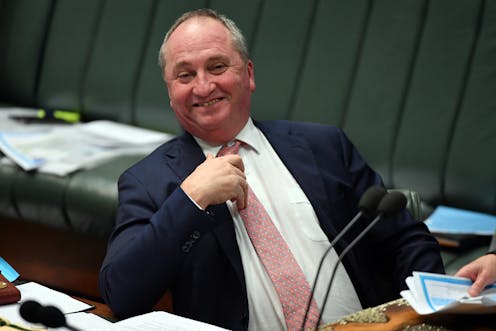
There has been a mixed reaction to Barnaby Joyce’s return to leader of the federal National Party and deputy prime minister. Even some within his own party have expressed concern at his return to centre stage.
There are multiple reasons why Joyce’s restoration has failed to garner greater enthusiasm.
One concern relates to the optics of a leadership change. These events are rarely well received by the public and often lead to in-fighting and instability. They also tend to further strain public trust in the political class, particularly when the politicians involved have issued full-throated denials that a spill is imminent.
A second reason is linked to Joyce’s populist leadership style and more strident policy rhetoric on coal and climate change. Here the concern is that Joyce’s presence will exacerbate tensions within the party room, and also scramble relations with its coalition partner, the Liberals.
The third reason is the circumstances that occasioned Joyce’s resignation from the National’s leadership in 2018.
Joyce stood down voluntarily owing to a credible, but unresolved, sexual harassment allegation (which Joyce denies), and over serious concerns about the propriety of his conduct with his now partner but then staffer, Vikki Campion.
Joyce’s (re)ascension signals that the Nationals are somewhat inured to growing public concerns over the unhealthy gender dynamics in parliament, even when the voices raising these uncomfortable truths are from within the party.
One of the most strikingly apparent and longstanding gender inequities in politics is the under-representation of women in Australian parliaments. Despite Australia’s strong democratic credentials, it remains one of the great laggards on achieving gender parity in parliament.
In recent decades, the problem has been especially pronounced among parties of the mainstream political right. They have consistently rejected the implementation of pre-selection quotas in favour of training programs targeted at aspiring women candidates. Although these programs can be of some help, research shows they are a less effective way of redressing under-representation.
The effects of the reliance on so-called merit-based pre-selection is especially striking in relation to the Nationals. Its record on electing women to Australian parliaments is particularly poor, a situation that academic Marian Sawer – three decades ago – attributed to the greater persistence of “sex-role conservatism” in rural Australia. Sawer proposed that the National Country Party (as the Nationals was known then) reflected this conservatism.
Data compiled by Anna Hough from the Australian Parliamentary Library shows the extent to which the party’s conservatism continues to reveal itself with the under-representation of women in Australian lower houses.
Federally, only 13% of Nationals in the House of Representatives are women. This compares to 22% for the Liberals and 43% for ALP.
A similar pattern is apparent in the states where the Nationals have a legislative presence.
In the NSW lower house, only 16.7% of the party’s contingent are women, which is much lower than for the Liberals (32%) and Labor (45.5%).
In Western Australia, while the Nationals are led by a woman (Mia Davies), she is the sole National woman in the Western Australian parliament.
In Victoria, 33% of the party’s number in the Legislative Assembly are women, and it also selected a female deputy leader (Steph Ryan).
The situation in Queensland (LNP) and the Northern Territory (CLP) is complicated because these parties are affiliated to the National and Liberal parties and not strictly divisions of the Nationals. Nevertheless, both the LNP and CLP are kindred National parties.
In the case of the LNP, only 18% of its members in the Legislative Assembly are women, compared to 40% in Labor.
The situation for the CLP is healthier but is still not a record to be admired. While the CLP’s parliamentary party is led by a woman (Lia Finocchiaro), only 38% of its MPs are female.
As Jennifer Curtin and Katrine Beauregard note, women have been “active as ordinary and executive members of the party”. Notwithstanding this achievement, low levels of women in party rooms, and in lower houses particularly – which are practically and symbolically important as the chamber of government – does seriously limit the diversity of perspectives that are represented in policy and law making.
Joyce has not done much to instil confidence that he has learned anything in his years returned to the backbench.
While acknowledging his faults and remarking that he “hopes” he has “come back a better person”, it is not clear what new insights Joyce gained about the events that caused him to resign, especially given he has no appetite to “dwell on the personal”.
His lack of introspection is perhaps not surprising given how he managed the situation in 2018.
At the time, Joyce was quick to declare that none of the “litany of allegations” levelled against him had been “sustained”. He emphasised that he was stepping aside for the “person in the weatherboard and iron”, and not because it was warranted by his conduct.
The Nationals have calculated they will not pay much of an electoral price for their decision to return him as leader. As the federal president of the National Party, Kay Hull, reasoned:
“[s]ome women may be disappointed but […] the only women that will be voting or not voting for Barnaby Joyce will be the women of New England.
Hull may be right, but there are potentially other costs associated with the party’s actions.
As the smaller party in the coalition, the Nationals have not had to defend their record on gender in the same way as their Liberal counterpart. Joyce’s return will make it increasingly difficult for the Nationals to fly under the radar on this issue. At least, let’s hope that it does.
Narelle Miragliotta does not work for, consult, own shares in or receive funding from any company or organization that would benefit from this article, and has disclosed no relevant affiliations beyond their academic appointment.
Source: The Conversation (Au and NZ) – By Ben White, Professor of End-of-Life Law and Regulation, Australian Centre for Health Law Research, Queensland University of Technology
Voluntary assisted dying laws, which allow terminally ill people who meet strict eligibility criteria to end their life, have been operating in Victoria for two years. The laws are underpinned by two central pillars: safety and access.
Safety means the only patients who can access assistance to die are those who meet the eligibility criteria set out in the legislation. This means terminally ill adults who are suffering and expected to die within six months (12 months for neurodegenerative conditions).
Access refers to the ability of patients who meet the eligibility criteria, and want voluntary assisted dying, to actually use the laws. This depends on the process not taking too long or being so challenging that a patient just gives up, or dies before access is granted.
Our research papers, published today in the Medical Journal of Australia and recently in BMJ Supportive and Palliative Care, found doctors involved with the Victorian scheme have concerns about access, but not about safety.
A major barrier to patients’ access is the requirement for the doctor to obtain a permit from the government. This is a key component of the system’s oversight. It involves a formal application to a government official who decides within three business days whether the legislation’s processes have been followed and certain criteria met.
The government permit is a feature of the Victorian law, and one which Tasmania and South Australia have copied.
But not all Australian states have followed suit. The Western Australian law, which comes into effect this week, does not include a permit process, nor does Queensland’s bill. We prefer the WA and Queensland model.
To understand how the Victorian system is operating, we interviewed 32 doctors who had provided voluntary assisted dying services to patients, to hear about their experience of the system in its first year.
When talking about the prior oversight and approval process, most said they were concerned about navigating the system, including the layers of approval required, the “bureaucracy” involved in the process, and challenges with the mandatory online system for submitting forms. This led to delays in patients accessing the system.
The doctors we interviewed also raised concerns about prior oversight and approval being a barrier to very sick patients accessing the scheme. One described “people dying going through this process”. Another said: “if you’re unwell and you really need it, it doesn’t work”.
Another doctor said:
Of the patients that I’ve been working with, only four have been able to get through to the completion of the process. It’s been one of our issues […] it is complicated and because there’s a lot of bureaucracy to encounter and a lot of hurdles to jump […]
Despite concerns about the system, some doctors in our study considered having prior oversight and approval protected them and ensured the system’s safety.
Requiring prior approval of voluntary assisted dying is very unusual. Around the world, only the Victorian and Colombian systems require external prior approval.
However, other places are now considering or implementing this model, such as Tasmania and SA, whose laws which are yet to come into force.
Currently, all other voluntary assisted dying systems internationally use retrospective review of cases to ensure the system remains safe. With retrospective review, doctors can approve access to the scheme, and their decisions are later examined by review committees.
If voluntary assisted dying has been inappropriately granted, the doctor may face possible sanctions or criminal prosecution. But the doctors don’t need to get government permission first.
Access must be a priority too
Parliaments debating new voluntary assisted dying laws and governments implementing existing ones must keep in mind the people who are intended to use it, who by virtue of the eligibility criteria, are terminally ill and suffering.
They must ensure the design and implementation of the system meets these patients’ needs. This includes thinking critically about the potential cost to access of some safeguards.
The scheme needs to be accessible for those who meet the criteria and intend to use it. Shutterstock
Given that prior oversight and approval is rare internationally and the difficult Victorian experience with it, we consider this is not desirable, or needed.
However, where laws require such prior approval, system design must ensure this is done efficiently. This includes avoiding bureaucracy that doesn’t directly improve patient safety, and an optimal information technology system. This will help to at least minimise delays that could preclude dying patients accessing the system.
Ben White receives funding from the Australian Research Council, the National Health and Medical Research Council and Commonwealth and State Governments for research and training about the law, policy and practice relating to end-of-life care. In relation to voluntary assisted dying, he (with colleagues) has been engaged by the Victorian and Western Australian Governments to design and provide the legislatively-mandated training for doctors involved in voluntary assisted dying in those States. He (with Lindy Willmott) has also developed a model Bill for voluntary assisted dying for parliaments to consider. Ben White is a recipient of an Australian Research Council Future Fellowship (project number FT190100410: Enhancing End-of-Life Decision-Making: Optimal Regulation of Voluntary Assisted Dying) funded by the Australian Government.
Lindy Willmott has received funding from the Australian Research Council, the National Health and Medical Research Council and Commonwealth and State Governments for research and training about the law, policy and practice relating to end-of-life care. In relation to voluntary assisted dying, she (with colleagues) has been engaged by the Victorian and Western Australian Governments to design and provide the legislatively-mandated training for doctors involved in voluntary assisted dying in those States. She (with Ben White) has also developed a model Bill for voluntary assisted dying for parliaments to consider. Lindy Willmott is a former member of the board of Palliative Care Australia.
Marcus Sellars does not work for, consult, own shares in or receive funding from any company or organization that would benefit from this article, and has disclosed no relevant affiliations beyond their academic appointment.
On July 1, the New South Wales government will lift a ban on genetically modified (GM) crops after an 18-year moratorium. It will mean GM crops can now be grown in every Australian state except Tasmania.
Major farming groups have welcomed the move. GM proponents say the biotechnology leads to better crop yields and may solve food shortages and reduce infestations of weeds and pests.
But opponents say GM crops are a potential threat to the environment and human health. They fear the technology will encourage superweeds, increase antibiotic resistance and food allergies in humans and may have other unintended effects.
So where does the truth lie? Academic research suggests GM crops are generally safe for humans and the environment, and so I believe the NSW government’s decision should be welcomed.
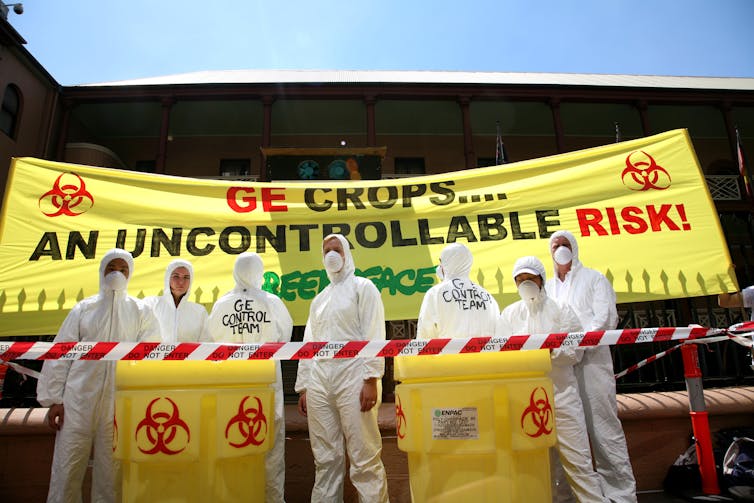
GM crops will be allowed in all mainland states, despite opposition from some. Greenpeace/AAP
What is genetic modification?
Genetic modification is the use of technology to change the genes of living things. It involves scientists injecting one organism’s DNA with genes from another, to give it a desirable trait such as resistance to drought, extreme temperature or pests.
Genetically modified crops were introduced commercially in the 1990s. The NSW moratorium began in 2003 following concerns from some importers and manufacturers. For example, countries in the Middle East and Southeast Asia had been refusing GM grain, and Canada and Saudi Arabia had indicated they did not want GM-fed livestock.
Announcing the lifting of the ban in March, NSW Agriculture Minister Adam Marshall said his government had been working to ensure trade and marketing issues surrounding GM food were well managed. He said the Commonwealth Gene Technology Regulator will assess all applications to grow GM crops, ensuring they are safe for people and the environment.
The NSW decision follows similar moves by other mainland states in recent years, including South Australia, which lifted the GM ban in 2020 (with an exemption for Kangaroo Island). A moratorium remains in the ACT.
The NSW government says allowing cultivation of GM crops will increase agricultural competitiveness and productivity, and bring up to A$4.8 billion in benefits over the next decade.
Genetic modification involves injecting one organism’s DNA with genes from another. Aleksandar Plavevski
Benefits of lifting of the GM ban
So are the benefits of GM crops real? To answer this question, we can look to three precedents: GM canola, cotton and safflower, which have been grown in Australia for many years. These crops were exempt from the moratoria in NSW and other states, and evidence suggests their cultivation has been a success.
GM cotton has been modified with insecticidal genes, which research shows makes it more resistant to pests. The modified cotton also requires less insecticide use.
GM canola has been transformed to make it resistant to herbicides, which enables better weed control.
State moratoria delayed the introduction of GM canola, including in NSW. Research in 2018 found, across Australia, the environmental costs of the delay included an extra 6.5 million kilograms of active ingredients applied to canola land, and an extra 24.2 million kg of greenhouse gas and other emissions released. Economic costs included a net loss to canola farmers of A$485.6 million.
In recent years, Australian regulators allowed cultivation of canola modified to contain long-chain omega-3 fatty acids, prized for their health benefits. The canola variety was hailed as the world’s first plant-based source of omega-3 and may reduce reliance on fish stocks.
Safflower has been genetically modified to contain higher amounts of oleic acid. These renewable oils can be used in place of petroleum, a finite resource, in products such as fuels, plastics and cosmetics.
GM crops can be made resistant to herbicides. Greenpeace/AAP
What are the risks?
Experts concede there are limits to what can be known about the health effects of any food over the long term. However, scientistsbroadly agree the evidence so far suggests GM crops are safe to eat. This view is backed by the World Health Organization.
Foods derived from GM plants are consumed by millions of people in many countries. And in Australia, authorities rigorously assess all GM foods before they’re sold to consumers.
However many countries still ban the the cultivation of GM foods. And some people remain worried about the effects on human health. Concerns include that antibiotic resistance may be transferred from plants to humans, or that GM foods will trigger allergic reactions.
Experts have concluded the risk of antibiotic resistance is not substantial. There is some evidence of a small number of GM crops being allergenic. But since GM crops undergo extensive allergen testing, they should not be riskier than conventional crops once cleared for market release.
Other GM opponents say the technology poses environmental risks – for example that herbicide-resistant GM crops can become “superweeds”.
Research has found weed resistance to the herbicide glyphosate is a problem, and there is some evidence of glyphosate-resistant canola persisting outside farms in Australia. Management strategies can reduce the chance of superweeds developing, but more research is needed.
And it should be noted that while the use of herbicide-resistant crops sometimes leads to less herbicide use, the decrease is often not sustained. Researchers also say a reduction in the kilograms of pesticides used does not necessarily predict environmental or health effects.
More research is needed into preventing herbicide-resistant superweeds. Shutterstock
Some critics oppose GM crops on the basis that they allow a few large companies – which breed and commercialise seeds – to control food supplies. For example, in 2015 it was reported the GM maize seed sector in South Africa was owned by just two companies, which meant small farmers could not compete.
Researchers have proposed measures to counter this corporate concentration of power, by strengthening competition policies, boosting public sector support for diverse food systems and curbing corporate influence in the policy process.
The issue of cross-contamination is also a concern for organic farmers and consumers. In a well-known case from Western Australia, organic farmer Steve Marsh’s crop was contaminated in 2010 with GM canola, causing him to lose his organic certification.
Looking ahead
The lifting of the NSW ban on GM crops means Australian mainland states have a consistent approach, and provides new opportunities for Australian growers and consumers.
There are still issues with GM crops to be ironed out, and there’s a need for continued stringent regulation to ensure human and environmental safety. Opposition to the practice will no doubt remain in some quarters. However this may lessen over time as the technology develops and long-term outcomes become clearer.
Daniel Tan receives funding from the Cotton Research and Development Corporation, the Grain Research and Development Corporation and the Australian Centre for International Agricultural Research. He is Fellow of Ag Institute Australia and a Senior Fellow of the Higher Education Academy, UK.
Airlines want you vaccinated. They want as many people as possible vaccinated. The sooner that happens, the sooner borders open and they can get back to profitability.
They also have reasons to want to protect both customers and staff from COVID-19. Qantas staff, for example, have been considering legal action over workplace transmissions.
Qantas has dangled the carrot of extra frequent flyer points for fully vaccinated passengers, plus ten “mega prizes” of a year’s free travel for familes. Virgin Australia has similar plans. It also has a scheme to encourage its workers to get vaccinated. This will reportedly include the chance to win extra annual leave.
Could they go further and mandate vaccines? This is something Cathay Pacific is doing, telling its Hong Kong-based flight crews they must be vaccinated by August or their employmnet will be reviewed.
Qantas chief Alan Joyce signalled in November that once vaccines are widely available it will require international travellers to be vaccinated. This implicitly suggests it will require the same from international flight staff.
But the legal ground in Australia for employers to insist that employees be vaccinated remains murky.
Whether Qantas or Virgin – or indeed any other company – do so may depend on the case of Queensland regional carrier Alliance Airlines, the first employer in Australia to insist all employees be immunised.
Alliance Airlines specialises in flights to and from mining sites. It is 19.9% owned by Qantas, and collaborates with both Qantas and Virgin Australia.
It announced its mandatory policy for both influenza and COVID-19 vaccinations in late May. Its stated reason is to fulfil its duty to employees and passengers. But unions have questioned the policy’s lawfulness, arguing it is beyond the airline’s powers.
In Australia, there has been no general government guidance on whether employers can insist on employees getting COVID-19 vaccinations.
This differs to the United States, where the federal Equal Employment Opportunity Commission ruled in December 2020 that employers could (with some exemptions for medical and religious reasons) require employees to be vaccinated.
The Queensland and Western Australian governments have passed legislation mandating workers be vaccinated, but only in certain health and quarantine workplaces.
Whether Alliance Airlines’ policy is lawful therefore depends on a general common law “test” for determining the validity of workplace policies.
This test asks if a policy or direction is “lawful and reasonable” given the circumstances. These include:
the nature of the job, especially where it requires regular interactions with colleagues, clients and suppliers
if the work can be done remotely, or other reasonably practical precautions exist
the effectiveness or success rates of the vaccine
any guidance or directives from government and medical experts
the circumstances of individuals employee, such as whether they have reasonable grounds to refuse vaccination.
Unfair dismissal cases
Australia’s Fair Work Commission has demonstrated the balancing act needed to apply these factors in its most recent ruling in an unfair dismissal case involving a refusal to get an influenza vaccination.
The claim was brought by Maria Corazon Glover, a 64-year-old community care assistant, against Queensland aged and disability care provider Ozcare, her employer since 2009.
In May 2020, public health orders in Queensland required influenza vaccinations for entry into aged care facilities. Ozcare went “above and beyond” those requirements, mandating the flu vaccine for all its aged care workers, even those who did not work in facilities. Glover, a home-care provider, refused. She said she believed she would suffer an allergic reaction, based on what she understood had happened to her as a child. She was ultimately dismissed.
Commissioner Jennifer Hunt upheld her dismissal despite Ozcare’s policy exceeding the relevant public health orders and Glover’s concerns. Hunt ruled those factors were outweighed by the vulnerability of Ozcare’s clients, the frequency with which care workers visited clients’ homes (and their potential to become “super-spreaders”), and the employer’s “prerogative” to make a decision considered necessary to safeguard its clients and employees “so far is practicable to do so”.
Individual circumstances do count
Perhaps the most important takeaway from Glover v Ozcare is that it was decided on its particular facts. Employers must carefully assess employees’ situations to decide if a mandatory vaccination policy is justifiable.
An airline might reason that cabin crew interact with people in environments with a higher risk of COVID-19 transmission and where social distancing is impossible.
But an employee might counter that, unlike aged or disability care workers, they have much less close contact with high-risk, vulnerable individuals.
The case-by-case nature of the reasonableness test means any generalised “all in” vaccination policy is problematic. Even more so if there is employee resistance.
Discrimination may be valid
Employees who are dismissed for refusing to vaccinate might also argue it amounts to discrimination on prohibited grounds such as disability or pregnancy, where COVID-19 vaccination may be unsafe or pose medical risks.
Under the Fair Work Act, however, employers have a valid defence for discriminatory action if a policy or decision is based on the “inherent requirements” of the job.
In November 2020, Fair Work Deputy president Ingrid Asbury noted that vaccination against influenza was likely to be an inherent requirement for a position involving caring for young children, and so could be justified for child-care employees.
However, outside high-risk contexts such as child and health care, this defence may be limited and will turn on the employee’s role and the organisational context.
The Fair Work Commission’s rulings on influenza vaccines give a fair indication of the principles it will apply to any case involving COVID-19 vaccines.
But given the different circumstances, whether it will give a green light to a general policy like that of Alliance Airlines remains up in the air.
Qantas and Virgin might be on safer ground because of their international operations, if proof of vaccination becomes mandatory for other destinations.
However, I think the issue of employee vaccinations for the airline industry will ultimately be resolved via government intervention.
In other sectors, owing to the complexities in determining whether mandatory policies are “legal”, many employers will likely stick with the safer route of voluntary “incentive schemes” to encourage vaccinations.
Giuseppe Carabetta does not work for, consult, own shares in or receive funding from any company or organization that would benefit from this article, and has disclosed no relevant affiliations beyond their academic appointment.
Dušan Marek, born Bítouchov, Czechoslovakia 1926, died Adelaide 1993. Analysis of Substance, 1952, Kings Cross, Sydney. Oil on canvas, 36.5 x 88.2 cm. Purchased with the assistance of James Agapitos OAM and Ray Wilson OAM 2007, National Gallery of Australia, Canberra
Surrealism — famously defined by Andre Breton in his 1924 Manifesto Surrealism as “pure psychic automatism” — first emerged in Australian art in the 1930s when local artists saw selected paintings by Salvador Dali and Paul Nash in the Herald exhibition, which opened in Adelaide in 1939 before touring to Sydney and Melbourne.
Painter James Gleeson wrote about surrealism for Art in Australia in 1940 and, in the hands of James Cant and Ivor Francis, it became a form of protest in the war years. Gleeson produced an unceasing stream of surrealist paintings and drawings, but he had few fellow travellers.
Dušan Marek, born Bítouchov, Czechoslovakia 1926, died Adelaide 1993. Birth of Love, 1948, Dillenburg, Germany, oil on wood, 14.7 x 72.0 cm. Gift of the artist 1988, Art Gallery of South Australia, Adelaide
For many years, surrealism in Australia was seen as a French import. It was not until the emergence in the 1990s of ideas of multiple modernisms — rather than a singular version emanating from a cultural centre such as Paris — that credence was given to a homegrown Australian surrealism.
Within that new framework, suddenly a host of Australian artists were swept up under the surrealist umbrella: Sydney Nolan, Robert Klippel, Joy Hester, Max Dupain, Adrian Feint and Sam Atyeo, to name a few. For many of these artists, though, surrealism was not their major thrust, instead working across a range of modern styles such as expressionism or abstraction.
The touchstone of surrealism — the unity of opposites to create new knowledge — takes on an oceanic inflection in the Art Gallery of South Australia’s new exhibition exploring the work of two Czech-born Australian artists, the brothers Dušan and Voitre Marek.
Dušan Marek, born Bítouchov, Czechoslovakia 1926, died Adelaide 1993. Love, Defiance, and Death, 1950, Adelaide. Oil, enamel and metallic paint and ink on plywood, 35.3 x 49.6 cm. Presented through the NGV Foundation by The Agapitos/Wilson Collection, Fellow, 2002 National Gallery of Victoria, Melbourne
They are not an addendum to Australian surrealism: their Czech-nurtured variant, with its deep roots in poetry, differs from the mainstream in this country. Its full incorporation into Australian art requires a recalibration of our national narrative along the lines that recently occurred with émigré Bauhaus practitioners in this country.
The world of the sea
While Dušan, and Voitre to a lesser extent, were included in survey exhibitions such as Lurid Beauty over the past few decades, examination of their work has been cursory and mostly confined to early-career paintings.
Dušan Marek, born Bítouchov, Czechoslovakia 1926, died Adelaide 1993. Prisoner, c.1950, Adelaide or Sydney, oil on board, 19.3 x 24.0 cm. Collection of Stephen Mould, Sydney
Surrealists at Sea explores their work in depth, dwelling on their ideas and work in diverse media, especially Dušan’s stunning mid-century films, and how they sustained their surrealist practice across their entire careers.
Viewers enter the exhibition through a series of columns that display their early paintings such as Voitre’s My Gibraltar, as well as those that are double-sided, and signal a non-linear and relational pathway through the art.
The double-sided paintings produced on board the ship SS Charlton Sovereign that carried the two avant-garde émigrés to Australia in 1948, such as Dusan’s Perpetuum Mobile, are brilliantly displayed in the open portals of the columns. Seeing the front and back of the image, in simultaneous vision, sets the scene for a surrealist journey through the exhibition: their first joint one since 1949.
Voitre Marek, born Dolní Oldřichov, Czechoslovakia 1919, died Adelaide 1999. My Gibraltar, 1948, Gibraltar, on board the SS Charlton Sovereign. Oil on board, 29.0 x 20.5 cm. d’Auvergne Boxall Bequest Fund 1996, Art Gallery of South Australia, Adelaide
The sea is a familiar trope in surrealism, as in the other-worldly paintings of French artist Yves Tanguy. But for curator Elle Freak, the sea is a wholly apt metaphor to frame the Mareks.
The brothers’ journey across the ocean was to liberty and freedom, a key surrealist dictum, and the ship was the site of production of major paintings such as Equator, complete with its telling text: “Break the mirror to see what I am”.
Dušan Marek, born Bítouchov, Czechoslovakia 1926, died Adelaide 1993. Equator, 1948, Gibraltar, on board the SS Charlton Sovereign, oil on board, 121.7 x 91.2 cm. South Australian Government Grant 1972, Art Gallery of South Australia, Adelaide
The ocean continued to be a source of spiritual renewal throughout their careers, for Voitre as lighthouse-keeper at remote Cape du Couedic on Kangaroo Island; for Dušan in New Guinea, the so-called centre of the Pacific (and the world) in the 1929 Surrealist World Map; and later in the Coorong.
Poetry in art
This is a large exhibition, 200 works across all media, including surrealist jewellery, film and sculptural paintings, and a very elegant restaging of Dušan’s 1953 solo exhibition at the avant-garde Mack Gallery in Sydney, complete with the original ticking clocks and music box.
Installation view: Dušan and Voitre Marek: Surrealists at sea, Art Gallery of South Australia, Adelaide, 2021. Saul Steed/AGSA
A profound sense of poetry infuses the exhibition: the Czech variant of surrealism was deeply literary and some paintings read like poetry. Automatic drawing — a surrealist device to access subconscious imagery — came easily to the brothers. Voitre’s free-flowing drawings such as Victim of the world, 1952, seems like an image that has come from deep within.
A clue lies in his Adelaide notebook:
artist is turned inside out – accepting with his inside and expressing with his outside.
Voitre Marek, born Dolní Oldřichov, Czechoslovakia 1919, died Adelaide 1999. Victim of the world, 1952, Adelaide, pen & blue ink on photographic paper, 25.2 x 20.1 cm (sheet). d’Auvergne Boxall Bequest Fund 1999, Art Gallery of South Australia, Adelaide
The artists’ notebooks have been recently translated and key phrases such as “seeing not only with eye in eyeholes but opening new eyes in knees, in throat, in palms” are reproduced as bite-sized wall text to give viewers an insight into how the artists viewed art-making.
Other works, true to surrealist style, are but fragments of thought, with Dušan challenging complacency:
people search vainly for symbols and meaning, nothing is there, everything is present.
Voitre Marek segued into ecclesiastical sculpture and a number are on show, such as his very modern and finely distilled Crucifix of 1960.
Installation view: Dušan and Voitre Marek: Surrealists at sea, Art Gallery of South Australia, Adelaide, 2021. Saul Steed/AGSA
The spell of the slow music playing in each gallery space leads to contemplation of other worlds and to new insights intrinsic to surrealism.
This exhibition is a homage to the brothers Marek and their world view. The pair are important Australian surrealists whose pathway to surrealism was via Prague, rather than Paris: an emigre variant which has stood somewhat outside the home-grown Australian surrealists.
Australian art is a malleable feast which moves and shakes to embrace new arrivals to this country. This repositioning is in fact a revisionary one to more fully include two important émigrés in the canon of Australian surrealism.
Dušan and Voitre Marek: Surrealists at Sea is at the Art Gallery of South Australia until September 12.
Catherine Speck received ARC funding for large project on Australian art exhibitions (2011-13) with Joanna Mendelssohn, Catherine De Lorenzo and Alison Inglis.
Source: The Conversation (Au and NZ) – By Nicola Creagh, Research Assistant in Evaluation and Implementation Science, Centre for Health Policy, Melbourne School of Population and Global Health, The University of Melbourne
Cervical cancer is a preventable cancer — most cases are caused by long-term infection with high-risk types of human papillomavirus (HPV).
Screening aims to detect types of HPV associated with cervical abnormalities and cancer. Early detection allows preventative treatment, so cancer doesn’t develop.
Cervical screening is a reasonably invasive procedure, which requires a doctor or nurse to do a pelvic examination and insert a speculum, a medical tool used to help examine the cervix.
Since 2017, many Australian women have had access to “self-collection”, whereby they can collect their own vaginal sample using a small, soft swab (similar to the ones used to collect a COVID test). But many women who are eligible don’t know it’s an option.
Our new study, published today in the Medical Journal of Australia, found many women prefer this option, and doctors and nurses like having it available.
However, it’s significantly underused in Australia. Between 2017 and 2019, only 6,000 of these tests were conducted, out of an estimated one million women eligible.
To prevent as many cases of cervical cancer as possible, we need to find out why this option is being used so rarely, and how can we increase access.
Wait, what’s cervical screening again?
In 2020, the World Health Organization (WHO) called on countries to progress towards the elimination of cervical cancer as a public health problem.
Only 6,000 of one million eligible women used self-collection in cervical screening in 2017-2019. VCS Foundation, Author provided
Having HPV won’t necessarily cause cancer. There are more than 100 types of HPV, and only 14 are associated with it. Having HPV at some point in your life is quite normal. We just need to make sure we pick up any types of HPV associated with cervical cancer.
In Australia, women (and people with a cervix) aged 25-74 are invited to have a cervical screening test every five years. This more accurate test replaced the “Pap” test in December 2017, which used to be recommended every two years.
In Australia, 72% of cervical cancer cases occur in women who are overdue for screening, or who have never been screened. This is concerning, considering only 55% of 35-year-old women have been screened at least once with an HPV test. This is below the WHO’s elimination target of 70% by 2030.
How does self-collection work?
In December 2017, Australia introduced a new screening option where women could take their own samples. This option is only available to women who:
are over 30 years old
are more than two years overdue (so four or more years since their last Pap test)
or who have never been screened
and decline a traditional test.
A self-collected test still requires a consultation with a doctor or nurse. But in this supported environment, a woman can collect her own sample.
Self-collection is as accurate as the sample collected by a doctor or nurse. Australian modellingstudies suggest self-collection can save lives.
About 6% of people who test positive for some types of HPV need to return to their doctor or nurse for a traditional test to look for cell changes. So the main downside is a small percentage of people who’ve done self-collection will also need to return for a traditional test. Another roughly 2% of women will require referral to a specialist for further assessment.
Both women and health-care providers support self-collection
Data from overseas suggest self-collection is an effective way to screen women who traditionally haven’t been screened enough (or at all).
One Australian study demonstrated 85% of under-screened women who were offered self-collection opted to screen.
Our work with Victorian Aboriginal women indicates self-collection is key to improving the accessibility and acceptability of cervical screening. A review assessing progress towards elimination of cervical cancer for Indigenous people in high-income countries highlighted the critical role that self-collection is likely to play in increasing participation in cervical screening.
Our new study was done in collaboration with cervical cancer prevention organisation the VCS Foundation and the Victorian government. It provides the first insight into what women and doctors and nurses thought about their experience of using self-collection.
Women appreciated the availability of an alternative option — one that addressed many of their barriers. Doctors and nurses regarded self-collection as a “progressive” change, and thought self-collection was effective at re-engaging those who decline a traditional test.
Why is self-collection being used so rarely?
Our study also identified barriers making it difficult for doctors and nurses to use or offer the option of self-collection.
Doctors and nurses found it difficult and time-consuming to determine whether women fit the eligibility criteria. They said it took too long for them to work out who was eligible.
Some doctors and nurses were uncertain about the process. For example, many were unclear whether women could take the test home to complete (they can). This reduced some doctors’ and nurses’ confidence in offering self-collection.
This lack of confidence is consistent with another Australian study, which found only 59% of doctors and nurses were confident in discussing self-collection and only 36% believed the test was reliable.
4 ways to increase access
It’s important we increase access to self-collection. This can be achieved through addressing four main points.
First, we need to remove the restrictive eligibility criteria. We’re encouraged the Medical Services Advisory Council recently recommended giving all women the choice of collecting their own sample. We eagerly await the federal government’s decision regarding this recommendation.
Second, we need more education for doctors and nurses to increase their confidence in offering self-collection. This should include clearer guidelines for them.
Third, more HPV tests need to be approved for use with self-collection samples, enabling more pathology labs to process them.
Fourth, we need the National Cervical Screening Program, general practitioners, and nurses and community health organisations to more widely communicate and promote the self-collection option. Women who are hesitant to be screened should know there’s another option.
Increasing access to self-collection is critical to increasing equity in Australia’s screening program. We have the tools to create equity and eliminate cervical cancer as a public health problem in Australia. We need to use them.
Nicola Creagh works for the University of Melbourne. She receives funding from the Commonwealth Department of Health.
Claire Nightingale works for the University of Melbourne. She receives funding from the Victorian Cancer Agency, and the Commonwealth Department of Health
Claire Zammit works for the University of Melbourne.
Source: The Conversation (Au and NZ) – By Melanie Davern, Associate Professor, Director Australian Urban Observatory, Centre for Urban Research, RMIT University
Shutterstock
Research commercialisation in Australia has been getting more attention recently, but researchers face major obstacles to achieving this. If Australia wants to get serious about commercialising research knowledge, then we have to look seriously at the obstacles and incentives for researchers.
Australia’s gross spending on research and development (R&D) funding has been in the lower half of OECD nations for the past 20 years. It peaked in 2008 and has been declining since then. This is the important context of recent federal budget announcements encouraging research commercialisation.
Universities and quality research production are suffering as part of this decline. It also helps to explain why international student income has been so important to modern day Australian universities and 27% of all university revenue in 2019 before COVID.
Universities are no longer treated as valuable public institutions of public good despite legislation enshrining this status. Academia today, particularly in research focused positions, is like being self-employed in a large institution. The current senior academic is unlikely to have tenured secure employment. The workforce is increasingly comprised of casual and fixed-term appointments.
It is critical to understand good research is the foundation for any future patent development. “Patent box” tax incentives with reduced tax rates are too far downstream to support development of research innovation and commercialisation.
Provide more direct support for commercialisation
There is currently no direct federal research funding to support research commercialisation in Australia. Universities must direct their own funding into start-up support or research commercialisation activity. That’s on top of funding teaching and internal research grants.
Uniquest’s record of commercialising research at the University of Queensland shows all research (not just biomedical or STEM) can be successfully commercialised with proper support. It’s a research commercialisation company specialising in global technology transfer. Supporting this activity are professional staff with expertise in business, legal, copyright, intellectual property and partnership development.
This sort of expertise is critical for connecting research knowledge to industry. In the case of UQ, it might also have influenced the Australian government’s decision to invest in the COVID vaccine trial.
Better incentives are needed to connect industry to research development beyond the basic tax incentives that are more attractive to large companies. Small and medium businesses have struggled to survive through COVID. They have no time to come looking for research innovation at universities or battle through complex negotiations over intellectual property.
This is why new research funding schemes are needed. These would provide direct funding to support the co-production of research with industry. This research would be designed to solve problems of society and industry and be customised to produce commercialised solutions.
Improve incentives for researchers
Academic career progression is still dominated by outcomes in research funding and peer-reviewed publications. Only recently has the importance of engagement with industry been acknowledged. This is in stark contrast to research commercialisation activities and partnerships which are time-consuming, not supported by national funding schemes and not measured by current academic KPIs.
Research translation (let alone research impact or research commercialisation) isn’t even officially recognised as research activity in the Commonwealth Higher Education Research Data Collection of research activities and income. It’s not surprising, then, that only 2.3% of publications from Australia have industry co-authors.
National change is needed to create a pipeline of research commercialisation. More research and development tax incentives won’t drive this change.
Australia still lacks a coherent framework of research impact. Knowledge translation remains focused on traditional academic publications and conference presentations. Current definitions of research impact provide the bare minimum outcome of research contributing to economic, social, environmental or cultural benefit outside the academy and we have to do better. Trials of a research impact framework have stalled since 2018. Universities and research knowledge are of benefit to all in society not just those who work in the institutions and epidemiology partnering with government through COVID-19 has been a great example of research impact at work.
Universities must change their approach too
Universities also need to change their financial operation models to support research commercialisation. Most institutions collect a higher proportion of income researchers bring to a university when research activity is deemed commercial. These indirect costs of research are used to fund infrastructure costs at universities like building costs and higher in commercial funding arrangements compared to competitive national research grants. Financial overheads cannot be collected from category 1 research funding sources such as the Australian Research Council and National Health and Medical Research Council, but Australian institutions can collect up to 50% of commercial research income. This relates to the broader problem of low research and development investment in Australia and the failure to adequately fund indirect costs of university research.
So where is the incentive for research commercialisation in our universities? It’s definitely not supported by current national funding arrangements or the majority of institutional policies.
Academic research needs R&D support for quality research and direct funding for research commercialisation if the nation is serious about harvesting the value of university research and innovation for industry.
We also need to better equip future researchers. This means training all PhD students to develop a deeper understanding and direct training in how to engage and develop their research with industry and government. It also means a clear national framework of research impact students learn early in their careers.
All PhD students need training in communication and partnership development skills. This is because developing research expertise is one part of the problem, but learning to develop partnerships, communicate and share knowledge with industry requires a very different set of soft skills that don’t come easily to many researchers.
This professional commercialisation expertise must be fostered and better supported in universities to recognise and seize commercial opportunities as they arise.
Melanie Davern receives funding from the National Health and Medical Research Council.
The argument Scott Morrison has consistently put – that NSW has a better way of dealing with COVID, by avoiding comprehensive closures – has been blown away by Gladys Berejiklian’s reluctant resort to a lockdown of greater Sydney and other places.
In the end, the disease dictates the response, at least if a community wants maximum safety. And it will find the inevitable holes in even a strong defensive fence.
In NSW, the Sunday update recorded 30 new cases. New cases have also emerged in Western Australia and the Northern Territory, as well as in Queensland. The NT, with a large indigenous population, is a potential worry, although up to now, the protection of the indigenous population has been very effective.
In a video on the NSW lockdown Morrison – himself still in quarantine after his overseas trip – said NSW had “the best contact tracing system” in the country, indeed the world.
Regardless, NSW is on a knife edge – the coming days will show whether this will be a nasty but brief pause on activity, like the recent Victorian one, or something much more serious.
Despite Australia being largely COVID-free compared with so many other countries, thanks to geography, strong actions by federal and state governments, and some luck, mistakes have been the cause of a string of outbreaks.
Many breaches of hotel quarantine have occurred – although given the number of people passing through and the fact hotels are not ideal for the purpose, perhaps the surprise is there haven’t been more.
In NSW most recently, an unvaccinated driver who transported international airline crew was at the centre of the outbreak.
The regulations didn’t require these drivers to be vaccinated or wear masks, a clear gap in the NSW system.
Even if the Morrison government’s performance had been better this year, we’d still have outbreaks. But we would feel in a safer position dealing with them than we are now.
The federal government took responsibility for the vaccination rollout – the states have a significant role but are subsidiary.
How the federal government has fallen short has become well known. The rollout has been slow and beset by problems. On quarantine, there has also been tardiness: the government did expand the Howard Springs centre (from which there have been no leaks) but it has only just given the tick to a purpose-built centre in Victoria, and even more recently moved on centres to be built in Queensland and WA.
It first put faith in the University of Queensland vaccine which fell over, and then relied too much on AstraZeneca, failing last year to secure a broad enough basket of vaccines, scheduled to arrive early enough.
It boasted about CSL’s capacity to produce AstraZeneca, but then when the rare blood clot trouble arose with that vaccine, the Pfizer supplies couldn’t come fast enough – which will be the case for some months yet.
So now there is an impasse. People need to be vaccinated ASAP but there are shortages, or potential shortages, of Pfizer for those for whom it is recommended, and those who are now demanding it because they don’t trust AstraZeneca. The staged-by-age rollout has to be maintained because of the supply issue, although desirably anyone who wanted to be should be vaccinated at once.
The government is much criticised for the inadequacy of its communications campaign, which is limited and weak. But it is also caught – changes of medical advice about AstraZeneca (and who knows if or when it may alter again?) and limited supplies of Pfizer complicate things.
On issues of distribution logistics and the like, the arrival of Lieutenant General “JJ” Frewen to oversee the rollout will help.
But some problems are not easily solved, especially where they involve differences between the politicians and the health advisers.
Federal and state governments have had the constant mantra of following what the experts say. But now there is some questioning of that.
One example is mandating vaccination for aged care workers. National cabinet a few weeks ago leaned to requiring this, but the health advisers were reluctant. They feared an exodus from the workforce.
They were asked to go back and look at a timetable anyway. So far, there is still no mandating. A spokesperson for Health Minister Greg Hunt said on Sunday: “They are expected to provide advice ahead of the next National Cabinet meeting”.
The health department said on Sunday that as of June 25, 2,665 of 2,869 services had reported on workforce COVID-19 vaccination. “The data shows that 88,287 of 262,876 residential aged care workers, equating to 33.6%, have reported receiving a COVID-19 vaccination. Of these, 42,794 workers have reported receiving a second dose,” the department said.
The chair of the Council on the Ageing (COTA) Australia, Jane Halton, says “from a council perspective we remain perplexed and frustrated that the requirement to be vaccinated has not been mandated nationally [for these workers]”.
Halton points out that some residents in aged care facilities will remain, by choice or for medical reasons, unvaccinated and so vulnerable.
Most of Australia’s COVID deaths have been among residents from aged care facilities. These facilities are a federal government responsibility and while we’d expect they are better prepared now, unvaccinated workers remain a high risk.
The issue of compulsory vaccinations for these workers is only one among many instances of the slowness that has beset the federal government this year, just as it needs – for health, economic and, not least, electoral reasons – to have the running shoes on.
All this as the virus becomes much more infectious.
Michelle Grattan does not work for, consult, own shares in or receive funding from any company or organisation that would benefit from this article, and has disclosed no relevant affiliations beyond their academic appointment.
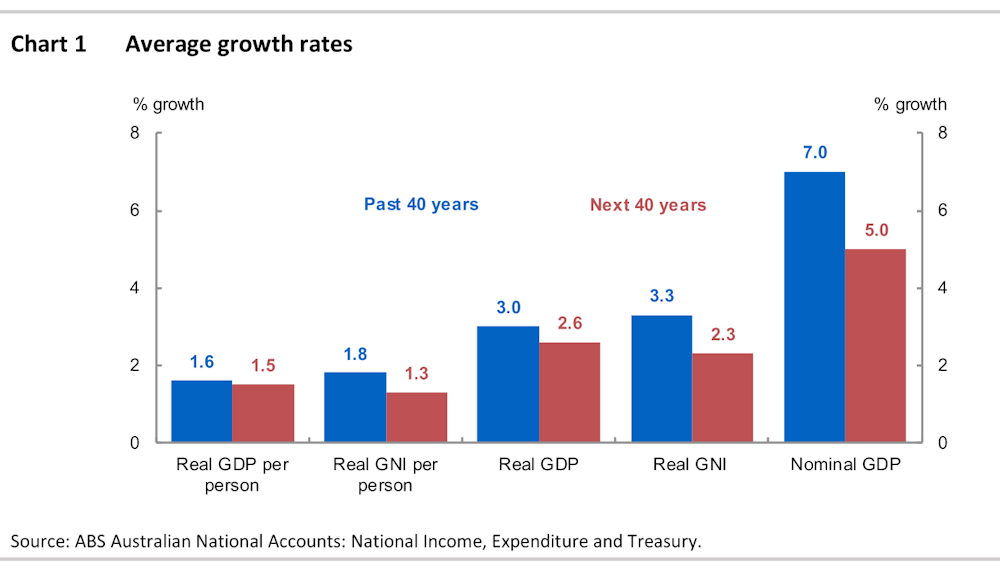
Australia will be smaller and older than previously expected in 40 years time after the first downward revision of official projections in an intergenerational report in 20 years.
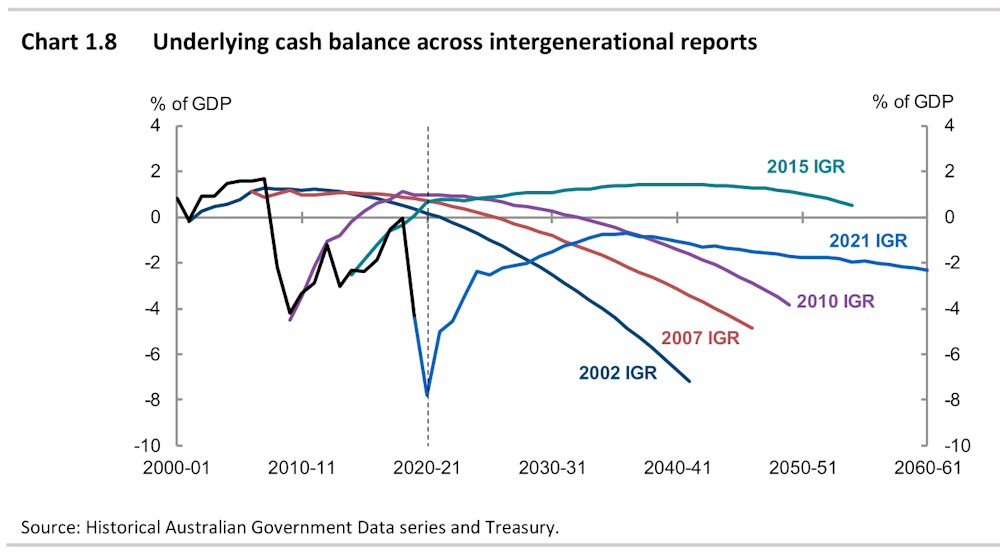
The much lower projections in Monday’s fifth five-yearly intergenerational report will mean indefinite budget deficits with no surplus projected for 40 years, only 2.7 Australians of traditional working age for each Australian over 65 (down from four) and average annual economic growth of 2.6%, down from 3%.
“Intergenerational reports always deliver sobering news, that is their role,” Treasurer Josh Frydenberg will say launching the report Monday morning. “The economic impact of COVID-19 is not short lived.”
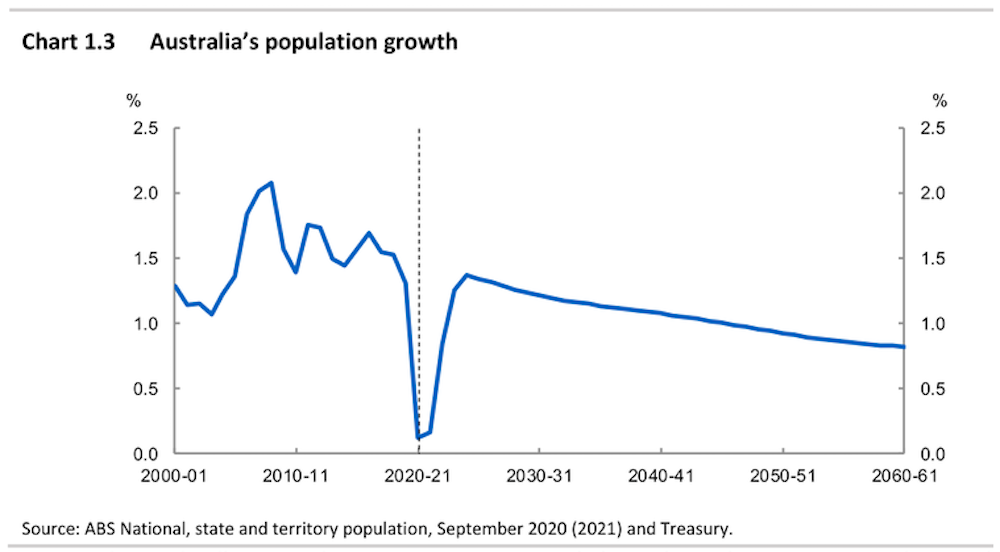
The report says the pandemic has slowed both Australia’s birth rate and inflow of migrants.
The 2015 intergenerational report projected an Australian population of almost 40 million by 2054-55. The 2021 update projects 38.8 million by 2060-61.
As a result in 2060-61, about 23% of the population is projected to be over 65, up from 16% at present and 13% in 2002.
Although in the future increased superannuation would take pressure off the age pension, superannuation attracts favourable tax treatment which cuts government revenue.
The combined total of age pension spending and superannuation tax concessions was projected to grow from around 4.5% of gross domestic product to 5% by 2061.
Health, aged care spending to soar
Real per person health spending is projected to more than double over the next 40 years, largely due to the costs of new health technologies.
By 2060-61 health is expected to be the largest component of government spending, eclipsing social security and accounting for 26% of all spending.
Aged care spending is projected to nearly double as a share of the economy, largely due to population ageing.
Mr Frydenberg will say that even in the face of these demands the government remains committed to its promise to limit the tax take to 23.9% of GDP. Tax receipts are not expected to reach this level until 2035-36.
“Growing the economy is Australia’s pathway to budget repair, not austerity or higher taxes. This is why we remain committed to our tax to GDP cap, ensuring our COVID support is temporary and persuing productivity-enhancing reforms.”
Net debt is projected to peak at 40.9% of GDP in 2024-25, before falling to 28.2% in 2044-45 and then climbing again to 34.4% by 2060-61.
While Australia’s population will be smaller and older, and debt levels higher as a result of the pandemic, had the government not spent at unprecedented levels to support the economy a generation of Australians might have been condemned to long term unemployment, seriously damaging the budget longer-term.
Other projections have real GDP per person a measure of living standards, growing at an annual average of 1.5%, down from an earlier-projected 1.6%
The result will still be a near-doubling of real GDP per person, from $76,700 in today’s dollars to $140,900 in today’s dollars in 2060-61.
Behind that projection lies an assumed lift in annual labour productivity growth to 1.5%. In the decades before the pandemic, annual productivity growth had been averaging 1.2% and had slumped to 0.4% in the year during the pandemic?
The lift in productivity assisted by government policies that will help individuals and businesses “take advantage of new innovations and technologies” is expected to take ten years.
Not included in the extracts from Monday’s report released by the treasurer late Sunday are the closely-watched projections for net overseas migration and for spending on the national disability insurance scheme.
Peter Martin does not work for, consult, own shares in or receive funding from any company or organization that would benefit from this article, and has disclosed no relevant affiliations beyond their academic appointment.
The Nationals Senate leader Bridget McKenzie has been restored to cabinet and Darren Chester has been dropped to the backbench in a reshuffle of blatant reward and punishment following Barnaby Joyce’s elevation.
Andrew Gee, whose switch to Joyce was important in his victory, goes from the outer ministry into Chester’s cabinet spot, and his portfolios of veterans affairs and defence personnel. Chester had been an outspoken supporter of ousted leader Michael McCormack.
McKenzie becomes minister for regionalisation, regional communications and regional education, as well as minister for drought and emergency management. It had been speculated that she wanted responsibility for agriculture.
Deputy leader David Littleproud retains agriculture but loses emergency management while gaining responsibility for northern Australia. He will retain a stake in the policy side of drought, which he previously had responsibility for, through his agriculture job.
It is something of a slap for Littleproud – who would have run for leader if McCormack had not stood – given his deputy position. Emergency management has a high profile.
Keith Pitt keeps resources and water but is dropped to the outer ministry and loses responsibility for northern Australia.
The very political nature of the changes, with their paybacks, risks reinforcing the divisions that have plagued the Nationals.
In the Coalition, the Nationals leader chooses their team but has to negotiate with the prime minister on portfolios. In this reshuffle the Nationals have not been able to encroach on any portfolios held by Liberals.
The changes were announced by Scott Morrison.
Morrison forced McKenzie’s resignation in early 2020 in the wake of the sports rorts affair.
Morrison said McKenzie would have “a clear focus on service delivery in regional Australia and be responsible for the continued work developing Australia’s disaster management capability”.
David Gillespie joins the ministry as minister for regional health, and will be deputy leader of the House, a post Chester held. Mark Coulton is relegated from the junior ministry to the backbench.
Kevin Hogan will be assistant minister to Joyce, as he was to McCormack, and becomes assistant minister for local government.
Michelle Landry continues as assistant minister for children and families, but loses her previous post of assistant minister for northern Australia.
Outside the formal executive senator Susan McDonald, from Queensland, another Joyce supporter, has been given the role of “envoy for northern Australia”.
Morrison said: “These changes will provide the strongest female representation in an Australian government cabinet on record, building on the previous record also achieved under my government”.
One of Joyce’s political problems is seen to be the opposition from significant women in the rural community, as well as the doubts about him from some within his party given that a claim (which he rejects) of sexual harassment was key to his resignation from the leadership in 2018.
Chester said in a statement: “I will continue to advocate strongly for Australians to understand that the majority of veterans will transition successfully to civilian life. The myth that all veterans are broken is damaging to their well-being and creates a vicious circle of despondency and desperation.
“As a grateful nation, we must support those who need our help but at the same time promote the many achievements of our veteran community.”
The limit of Joyce’s clout was shown at the weekend when one of his supporters, Northern Territory senator Sam McMahon was defeated for preselection by Jacinta Price.
Michelle Grattan does not work for, consult, own shares in or receive funding from any company or organization that would benefit from this article, and has disclosed no relevant affiliations beyond their academic appointment.
The West Papua National Liberation Army-Free Papua Organisation (TPNPB-OPM) has warned the Papuan people not to trust that the TNI (Indonesian military) and the Polri (Indonesian police) can provide them with security guarantees in the region.
OPM spokesperson Sebby Sambom said that they had “sounded the drums of war” against the security forces so civilian population that were still in certain areas could avoid becoming casualties, reports CNN Indonesia.
“You (the civilian population) shouldn’t listen to the orders by the TNI-Polri saying, ‘We guarantee [the safety of] the civilian population’– there’s no such guarantee, the TNI-Polri are deceiving you,” said Sambom in a video release received by journalists.
Sambom is appealing civilian populations from all groups to leave regions which the OPM had designated as “war zones”. He said that there were several such conflict areas. including Intan Jaya, Puncak Jaya, Ndugama, the Bintang Highlands and Yahukimo.
Sambom said that the OPM — which has been labeled as a “terrorist” organisation by Jakarta — would not be responsible for civilians that died.
“If you’re a construction worker, a motorcycle taxi driver, all of you [must] leave the conflict areas. Because we cannot be responsible for your lives, we have warned you,” he said.
“But you listen to the TNI-Polri which deceives you by saying we guarantee [your safety], they are deceiving you,” Sambom said.
OPM call criticised Joint Defence Area Command III (Kogabwilhan III) spokesperson Colonel Czi Gusti Nyoman Suriastawa responded by claiming that the OPM’s call was “a deception” which had been endlessly repeated by the group.
He said that there were no regions in Papua which are war zones. According to Suriastawa, every incident which had occurred was due to the OPM “terrorist movement”.
Moreover, he claimed that the OPM was becoming increasingly isolated.
“Let them (the OPM) say what they want. Up until now, there are no conflict areas that are war zones, what there is the OPM terrorist movement which is increasingly being squeezed because their capacity to move [is limited because] they are constantly being pursued by TNI-Polri personnel”, Suriastawa told CNN Indonesia.
He said that the Papuan people were increasingly showing their opposition to armed pro-independence groups which the government had now designated as terrorists.
According to Suriastawa, the public was no longer influenced by the “propaganda” of the OPM which he alleged was acting outside the law and even killed Papuan people themselves.
“This shows just how angry the ordinary people are at seeing the brutality and arbitrary actions of the OPM,” he claimed.
Workers fired on Earlier, an armed group is alleged to have fired on five construction workers working on the Kuk River Bridge in Samboga village, Seradala district, Yahukimo regency, last Thuraday.
Four of the five have been declared dead while the surviving victim is being treated for injuries sustained from broken glass.
During the incident, an armed group numbering about 30 militants fired on a convoy of trucks carrying workers. They were attacked with a variety of weapons including knives, arrows, machetes, samurai swards and rifles.
Based on witness testimonies gathered by police, four other workers were being held hostage by the armed group at an unknown location.
It will take a few more days before New Zealand can be said to have dodged a bullet over the latest covid-19 scare, an epidemiologist says.
University of Otago epidemiologist Professor Michael Baker told RNZ Sunday Morning it was a close call.
“We’re not in the clear yet. That will take another few days of no cases.”
He said the visitor — who was in multiple indoor venues with hundreds of other people — had the more infectious Delta variant of covid-19.
“This could have turned into multiple super-spreading events.”
He said the case of the tourist exposed “major gaps” in the system.
“A major mode of transmission is by aerosol. The virus doesn’t care about the 2-metre rule. We know it only takes fleeting contact indoors to get this infection.”
Upgrade needed Baker said counterparts abroad were saying New Zealand needed to upgrade its approach to dealing with covid-19.
“The virus has changed markedly and our response needs to change with it.”
He said the Pfizer vaccine would help put the country in a more “secure situation when our population is highly vaccinated later this year”.
“One of the obvious lessons from this is to just look at our criteria for suspending travel from the hot spots in Australia or anywhere and do it more quickly.”
Other measures like pre-departure testing could be included for New Zealanders stuck in Australia.
He said the new variants of the virus were “unforgiving”.
This article is republished under a community partnership agreement with RNZ.
Cook Islands Te Marae Ora Ministry of Health has apologised to passengers who were offloaded in error on an Air New Zealand flight to Rarotonga on Thursday (Wednesday, Cook Islands time).
The government said 13 passengers were offloaded off the flight after it was discovered they had originated from Wellington.
In a statement last night, the government said the passengers were offloaded at the request of Te Marae Ora Ministry of Health, which made the decision after the Wellington region moved into alert level 2 when it was discovered a traveller from Sydney visited the New Zealand capital and later tested positive for covid-19.
The Cook Islands ministry did not specify how many of the 13 passengers were offloaded in error.
Yesterday Health Secretary Bob Williams defended the decision, saying it was in line with the government’s “precautionary approach” as well as Wellington Airport having been listed as a location of interest.
“I make no apologies for taking this decision,” Williams said.
Apology for ‘stress, uncertainty’ “I do apologise to the passengers who were offloaded in error and for the stress and uncertainty it caused all off-loaded passengers.
“I also apologise to those visitors currently in Rarotonga who have had their holidays temporarily disrupted –- sometimes in the middle of the night –- so that members of my staff could swab them. These tourists have mostly been 100 percent supportive of our efforts and for this I am extremely grateful.”
Williams said he was grateful for the co-operation of resort and private accommodation people who worked with the ministry and assisted with locating and getting messages to their guests.
Cook Islands News reported TMO’s response was applauded by many in the industry following Wellington moving to alert level 2, however one accommodation provider said they were concerned about possible interactions between the Wellington-originating passengers and others at Auckland Airport prior to boarding for Rarotonga.
“What happened effectively on Wednesday was that the people from Wellington mixed and mingled with other people at the departure lounge at the airport,” the accommodation provider said.
“Potentially you could have had a whole plane infected.”
Williams said 124 people had been tested during the 24-hour period ending Thursday afternoon, all having returned a negative result.
Unlikely last disruption “This will likely not be the last time travel under the Quarantine Free Travel arrangement between New Zealand and the Cook Islands is disrupted. Disruptions do need to be factored into everyone’s plans”.
In a release, the ministry said officials are presuming the Australian case has the Delta variant and that he likely contracted the virus in Sydney. On Thursday, parts of the city have moved into lockdown after another 22 cases were confirmed.
The ministry is asking any passengers who Te Marae Ora has not tracked down and who have visited a location of interest are asked to call health officials as soon as possible.
All visitors were also asked to complete a health declaration form and the arrival cards truthfully.
“Our systems have been tested again this week and have worked but we have also learned from this test and will be making some adjustments to our processes,” Williams said.
Te Marae Ora said it was continuing to monitor the situation in Wellington.
Reporters Without Borders (RSF) has staged parallel protests outside the Chinese embassies in Paris and Berlin, holding funeral-style processions to denounce the “killing” of Apple Daily by the Hong Kong government, and to raise alarm of the threats posed by the Beijing regime to press freedom globally.
Arriving at the Chinese embassy following a hearse, RSF representatives in Paris staged a mock funeral procession, delivering a coffin and funeral flowers with a placard inscribed “Apple Daily (1995-2021).”
In Berlin, RSF representatives staged a parallel action, “burying” the daily newspaper which was one of the last major independent Chinese-language media critical of the Beijing regime.
RSF condemns the killing of the outlet perpetrated by Chief Executive Carrie Lam by order of Chinese President Xi Jinping, and calls for the immediate release of all detained Apple Daily employees as well as the media outlet’s founder Jimmy Lai, RSF 2020 Press Freedom Prize laureate.
“We have gathered today to raise alarm about the urgent risk of death to press freedom in Hong Kong,” RSF secretary-general Christophe Deloire told reporters gathered outside the Chinese embassy in Paris.
“Democracies cannot continue to stand idly by while the Chinese regime systematically erodes what’s left of the country’s independent media, as it has already done in the rest of the country.
International community ‘must act’ “Today’s funeral is for Apple Daily, but tomorrow’s may be for press freedom in China. It’s time for the international community to act in line with their own values and obligations and defend what’s left of the free press in Hong Kong, before China’s model of information control claims another victim.”
Deloire also called out China’s Ambassador to France Lu Shaye, who last week gave an interview labelling media critical of the Chinese regime a “media machine” and journalists criticising Chinese authorities as “mad hyenas”.
Lu Shaye believes there is no need for a plurality of media: “With two or three groups and a few people, we can become the vanguard of the war of public opinion and we can coordinate this war well.”
Lu Shaye has previously been critical of French media, stating last year at the beginning of the covid-19 pandemics: “I’m not saying the French media always tell lies about China, but much of their reporting on China is not true.”
Earlier this week, RSF submitted an urgent appeal asking the UN to “take all necessary measures” to safeguard press freedom in Hong Kong.
Hong Kong, once a bastion of press freedom, has fallen from 18th place in 2002 to 80th place in the 2021 World Press Freedom Index.
The People’s Republic of China, for its part, has stagnated at 177th out of 180.
Pacific Media Watch works in association with Reporters Without Borders.
The Court of Appeal in Samoa says its ruling from June 2 on the sixth women’s seat cannot be used to delay the convening of Parliament.
The court had said a sixth woman is required to satisfy the constitutional requirements but that any decision on this be delayed until after the electoral petition process is complete.
The caretaker Human Rights Protection Party (HRPP), which lost the election on April 9 to the Fa’atuatua i le Atua Samoa ua Tasi (FAST) Party by one seat, had used this decision to justify delaying a parliamentary sitting.
FAST this week sought a clarification from the Court of Appeal and its decision has now been made public.
The court said the convening of Parliament is mandatory under Article 52 of the constitution, and that it did not declare that this was dependent on the activation of Article 44(1)(A), which determines the number of women’s seats.
It said there was insufficient evidence before the court to determine whether any of the persons who have provided interpretations contrary to this were made maliciously, carelessly or otherwise.
Electoral petitions Meanwhile, two electoral petitions backfired yesterday with both plaintiffs losing their cases and in turn being found guilty of corrupt practices.
Samoa’s Supreme Court found in favour of the incoming FAST party candidates for the Salega No.1 and A’ana Alofi No.3 seats.
Salega No.1’s Fepulea’i Fa’asavalu Faimata Su’a and A’ana Alofi No.3’s Agaseata Valelio Tanuvasa Peto were accused of using corrupt and illegal practices to influence their electoral wins.
But the court dismissed the petitions for lack of proof.
Instead it agreed with counter-petitions and found the Tautua Party leader Afualo Wood Salele guilty of corruption in Salega No.1 and the A’ana Alofi No.3 independent candidate, Ili Setefano Tafili, guilty of two counts of bribery.
Both candidates are now ineligible to run for parliament for two electoral terms, or ten years.
A previous electoral petition has left Sagaga No.2 awaiting a by-election after both petitioners were found guilty.
The newcomer FAST party remains in top position with 26 seats while the caretaker HRPP, which lost Sagaga No.2, is at 24.
This article is republished under a community partnership agreement with RNZ.
Former National Party leader, Todd Muller, has resigned from Parliament, to take effect at the next election.
Analysis by Bryce Edwards.
Political scientist, Dr Bryce Edwards.
At the end of another tumultuous week for National, two former senior staffers for Judith Collins have spoken out in savage terms about the state of the party. First Matthew Hooton argued that the party could be in mortal decline: “National has been in intensive care. It’s now moving to the hospice.” And today, former chief press secretary Janet Wilson has written a column complaining the party isn’t learning any lessons from its defeat last year, saying “there is a real possibility the National Party faces irrelevance – becoming just another minor opposition party under MMP.”
This all suggests that the party’s difficult scandals of this week aren’t simply random or minor irritations but are instead an indication that the party needs more than just some minor reforms and tinkering if it is to eventually make an electoral comeback.
Yesterday’s column by Matthew Hooton argues that National should be flourishing at the moment, given all the mistakes that the Labour Government is currently making, but is instead facing an “existential risk” because of their incompetence, incoherence and disunity – see: National goes from sickly to looking terminal (paywalled).
He explains that under MMP, the other parties on the right, Act and NZ First, are well positioned to compete for the votes that National is losing hold of: “Winston Peters and NZ First are currently speaking to conservative National voters far more clearly and coherently than anyone in Judith Collins’ mob, while David Seymour and Act are doing the same to liberal National voters.”
A big part of National’s problem, according to Hooton, is the breakdown of the traditional ideological alliance within the party: “National has always been a coalition of liberals and conservatives. It only succeeds when the two factions are in balance and treat one another with professional respect.”
Judith Collins’ former chief press secretary Janet Wilson has argued something similar in a column today: “The party that was once the famous broad church of urban liberals and rural conservatives has lost the former and become the party clinging to old power structures”, and “It had also better find that urban-liberal wing that has fled to Labour. That wing holds the key to the centrists and the supporters which swung across to John Key in 2008” – see: National rejects change, faces irrelevance.
Wilson argues that the party seems resistant to having the major overhaul that it desperate needs, because National is “saddled with endless entitleditis, confidently expecting that the big bus of representation will come around again next election.” So organisationally, the party is refusing to implement various recommendations from their own internal review, which “is proof (if you needed any) that zero, zilch, nada has been learnt from last year’s election drubbing. The change that’s sorely needed if the party is to be successful at the ballot box isn’t arriving any time soon.”
She is also savage about Collins’ leadership this week, saying that not only does the leader appear to have despatched Nick Smith in order to bring Harete Hipango, “her bestie”, into Parliament, she has now got rid of former leader Todd Muller. This, Wilson says, is about continuing “her Muldoonist strategy of getting rid of MPs deemed not loyal to her” which is driven not just by “her need for utter loyalty” but also by “paranoia”. This behaviour – together with Collins’ strong defence this week of Hipango over her alleged misuse of taxpayer funds – is labelled “madness”.
In terms of that scandal, see Ethan Griffiths’ article:National MP who faced allegations of inappropriate spending revealed as Harete Hipango. Here’s the key part: “Sources inside the National Party have told the Chronicle that a staff member of the MP flagged a concern in the last term of Parliament, alleging items of furniture were bought out of the MP’s taxpayer funds but did not appear in the office. The allegations surround a purchase of some furniture, including a new television, which allegedly were delivered and kept in Hipango’s own home. It is also understood the cost of a sofa the MP bought for the office at Parliament was also questioned, and the MP was told to return it.”
Todd Muller’s forced retirement
The biggest story of the week was the unusual announcement by Todd Muller that he was not going to stand again for election in 2023, with him citing a need to prioritise his health and family. It turned out that Muller had been pushed out by Collins, after he admitted to having badmouthed incoming new MP Hipango in a feature about her.
You can read the offending piece by Jo Moir, here: National Party all out of love for returning MP. According to this, “Several National MPs said she wasn’t particularly well-liked in the caucus and didn’t have a lot of friends” and she is seen by some as a “liability and not a team player”.
The article also details how Collins is said to be closest to Hipango, and how together they backed Muller’s leadership coup over Simon Bridges last year “to help clear a leadership path for Collins in the future.”
There’s also some interesting discussion about Hipango’s complaint about the lack of ethnic diversity in the caucus and leadership, but with the suggestion that her own actions actually made this much worse. Further details and speculation about the mysterious departure of Nick Smith are also put forward.
The article obviously caused Collins great displeasure, because on Tuesday she is said to have confronted Muller about whether he had spoken to the journalist, after another National MP Barbara Kuriger dobbed him in. Muller apparently admitted being one of the sources, which led Collins to ask him to resign, threatening that she would otherwise have him suspending from the caucus. This is all covered by Claire Trevett in her article:National MP Todd Muller retires: Who narked and the ‘brutal’ meeting with Judith Collins (paywalled).
Collins then called an emergency caucus meeting for 10pm that night to deal with the matter. This meeting, according to Trevett’s report, “had all the drama of a documentary on wild animals battling at the savannah water hole. Muller tried to hold his ground and stare down Collins – only to be taken down as the pack turned on him. There were allegations, betrayals, acts of revenge and cowards covering their own butts.”
In the meeting Muller’s former ally convinced him to go, apparently arguing that it was “for the good of the party” that he announced his departure “to avoid the added scandal and drama of kicking an MP out of the party, a drama the party did not need.” And Trevett reports that some in the party were worried that Muller would turn rogue, turning on the party.
Trevett suggests that Collins has subsequently had “a triumphal air” about Muller’s forced departure. On radio she explained that “Sometimes you have to break a few eggs to make the omelette”. In response to this, Trevett warns: “The trouble with making omelettes is that they can easily turn into scrambled eggs.”
National disunity and consequences
There are certainly some divisions in caucus over Muller’s forced departure. Following the announcement of his retirement over his speaking to the media, Simon Bridges posted a photo on social media of him talking to journalists, with the line: “Speaking with the press is a normal but important part of being in politics. For me it’s an opportunity to speak not only to journalists, but to all New Zealanders.”
In her article above, Trevett outlines the significance of Bridges’ post: “On any day, it would have been an innocuous post but given the timing some have interpreted it as either a small sign of solidarity with Muller’s plight – or a message that a leader can only go so far in gagging MPs.”
She has also commented that Muller’s crime is hardly that extreme, for which he has paid a very high price: “It seemed a very tough penalty for what amounts to a low-grade offence. It is not unknown for MPs to brief media, or pass an opinion on someone or something on the quiet. But that falls short of a genuine leak. This was not a leak of information, or of confidential caucus discussions, or even comments critical of the leader.” But she explains: “Many of the MPs will be well aware that Muller is simply the fall guy: the one man taking the fall for something a fair few of themselves have done over recent years. Leaks had plagued National for years, and Collins wanted to make an example of someone.”
Trevett has also written about the Muller debacle again today. She argues that Collins has simply front footed the need to finally deal with all the disunity and ill-discipline in her caucus that continues to plague National, especially the leaking: “So when Collins was handed evidence of one, she went for the crackdown – turning her policy of crushing the cars of boy racers into a policy of crushing her own MPs who whisper to media. In terms of making that message clear and being seen to flex leadership muscle, Collins will not be totally unhappy that the real reason for Muller’s resignation has made it into the public eye” – see: National Party leader Judith Collins’ ousting of Todd Muller will have a cost (paywalled).
The problem, according to Trevett, is that although this crackdown might be successful in silencing MPs who are talking out of turn, it might also undermine trust without fixing the actual problems in the party. What’s more, it might be seen by others as somewhat hypocritical: “she was widely regarded by the other MPs as having leaked, briefed media, and undermined leaders. There was already suspicion among many MPs that Collins effectively pushed Nick Smith out by telling him a media outlet was about to broadcast a story about an investigation into a ‘verbal altercation’ Smith had with a staffer. No media outlet had that story at the time.”
Now there is “a climate of fear and disquiet within caucus” and Trevett argues that “There is only so long a caucus can limp along in that state.” Other MPs will also be worried: “There is already speculation doing the rounds about who might be next on Collins’ hit list – Collins does not disguise her views of enemies well.”
Also writing on the issue today, press gallery journalist Henry Cooke is amazed that an MP talking about their party has been so strongly censured: “The thing is, it is normal. Talking to the media is a huge portion of contemporary politics. MPs, particularly ones in Opposition, talk to journalists constantly, trying to get them to write certain stories or convince them to see the world the way they do. Occasionally those conversations will involve frank views about colleagues, especially when the party is in a bit of trouble” – see: The only thing worse than a leak is talking about a leak.
Cooke says that the article “wasn’t exactly earth-shattering” and so it’s telling that “Collins decided to go thermo-nuclear”. He argues that it is actually futile and counterproductive for politicians to deal with “leaks” as strongly as Collins has: “It’s like trying to put out a small bushfire with kerosene: it just gets larger and more dramatic.”
Instead, Cooke advocates the approach that the Labour Government takes with the many leaks that it endures: it simply ignores them, which denies the story further “oxygen”. And, given that further stories have now come out about the disciplining of Muller for talking to the media, he asks of Collins: “Is she now going to hunt down whichever MPs shared the news of the caucus meeting?”
Newsroom’s Jo Moir has the same reaction: “If that is the new bar for resigning, then presumably National is on a witch hunt today for whichever MPs promptly fed the details of the late-night meeting to media. The imagery of National MPs, who happily and regularly talk out of turn to journalists, sat in that meeting with their pitchforks crying ‘Shame, Shame, Shame” at Muller is irony at its absolute best. Not to mention those who left the meeting and immediately hit ‘press gallery’ on their speed dial” – see: National’s two-year ticking time bomb.
Moir says that Muller is possibly now a bigger problem for National than before: “Muller now finds himself in a caucus that has 100 percent turned on him. He may well find a new gig and leave before the 2023 election, prompting a by-election in his seat. Until then, Collins has on the one hand shown her strength as a leader in getting the caucus to unite behind her, but on the other she’s lit a bomb that could potentially go off at any point.”
According to Moir, the latest episode merely shows how divided the National caucus is: “There’s clearly a group of MPs within the caucus who are still feeling very raw about the rolling of former leader Simon Bridges. No party, not even Labour with its majority, could function with one group still so angry with another so long after the fact.” She therefore wonders if the current National caucus is just too terminal: “With so many MPs holding individual agendas in that caucus, it might just take a mass exodus to wipe the slate clean and start again.”
This is also the orientation of broadcaster Peter Williams, who asks: “how can you take these guys seriously? Is it best that they just fade away and let the political right be filled by some more sensible people?” – see: National Party in disarray.
Finally, although the problems of the National Party in recent years have seemed to be all about leadership, perhaps it’s bigger than this, with the need for its leaders to have better cabals around them – that’s the argument recently made by Danyl Mclauchlan – see: What if National’s problem isn’t the leadership, but the cabal?.
This piece is part of a new series in collaboration with the ABC’s Saturday Extra program. Each week, the show will have a “who am I” quiz for listeners about influential figures who helped shape the 20th century, and we will publish profiles for each one. You can read the first piece in the series here.
“Well-behaved women seldom make history” is a phrase frequently trotted out around International Women’s Day, and just as frequently attributed to Eleanor Roosevelt.
It doesn’t matter that the former First Lady of the United States never actually said this – in fact, it was Pulitzer Prize-winning historian Laurel Thatcher Ulrich in an obscure academic article in the 1970s – the misattributed quote endures, further cementing Roosevelt’s reputation as one of the most inspiring women of all time.
2021 has also seen the unveiling of the Eleanor Roosevelt Barbie Doll, another marker of her iconic status. In this she has joined the “Inspirational Women” series — following, among others, Maya Angelou, Florence Nightingale, Frida Kahlo and her friend, aviator Amelia Earhart. (Whether she would have approved is another matter.)
Despite her 1.8-metre fame, or perhaps because of it, ER – as she was colloquially known – was not one to draw extra attention to herself. However, she came to excel at using her platform to uplift others or promote her favourite causes, including women’s rights and racial equality.
Two days after Franklin D. Roosevelt’s inauguration as the 32nd president of the US in March 1933, the new First Lady held her first White House press conference for women reporters only. This was the first of 378 such events, offering unprecedented access for women journalists over the 12 years, or three terms, FDR was in power.
In another historic first, Eleanor Roosevelt twice invited African American contralto opera singer Marian Anderson to perform at the White House – including for King George VI and Queen Elizabeth during their US tour in 1939. In the same year, behind the scenes, she lobbied for Anderson to perform an open-air concert in front of the Lincoln Memorial in the then racially segregated capital – a performance since described as a “watershed moment in civil rights history”.
Eleanor Roosevelt twice invited singer Marian Anderson to perform at the White House. The White House Historical Association
Against the backdrop of the Great Depression, the Democrats’ “New Deal” and the second world war, ER transformed the First Lady role from largely ceremonial to much more publicly and politically engaged one.
As well as opening the White House to new constituencies, she extended her duties far beyond the official residence. With the president’s mobility compromised by his paralysis, ER was frequently dispatched to gather evidence, inspect government works and assess public opinion within the US and sometimes internationally. Her extensive travel made her an easy target for media satire – “Mrs Roosevelt Spends Night at White House” ran one headline – and earned her the nickname “Eleanor Everywhere” (now the name of one of several children’s books about her).
Her most famous overseas trip was the five-week South Pacific tour of 1943. Travelling as an ambassador for the American Red Cross, she was flown 25,000 miles on a four-engine military plane, the Liberator, from San Francisco to Hawaii, on to the Pacific Islands, New Zealand and Australia, and back again.
In Australia, thousands lined the streets of Melbourne, Sydney and Brisbane to greet her. In Canberra, she became the first woman ever to be an official guest at a luncheon at Parliament House. Prime Minister John Curtin toasted her by saying “you are one of the most distinguished figures of our age”.
‘ER’ with Prime Minister John Curtin on her trip to Australia in 1942. ozatwar.com
The First Lady dutifully reported interesting observations about Australia in her widely syndicated My Day column. Privately, however, she found the official engagements exhausting and trivial compared with her core mission of visiting US service personnel. In her 1949 memoir This I Remember, it was the impact of meeting American GIs in military hospitals that lingered with her. She wrote:
The Pacific trip left a mark from which I think I shall never be free.
Roosevelt’s My Day column ran six days a week from 1935 to mere weeks before her death in 1962. In that time, she only ever missed four days – when her husband collapsed and died, just months into his historic fourth term in office in April 1945.
Not long after, the next phase of her life began when FDR’s successor Harry Truman appointed her US delegate to the United Nations, declaring her “First Lady of the World”. As Chairperson of the Commission on Human Rights (1946-51), she was a driving force in the drafting and adoption of the Universal Declaration of Human Rights in 1948 – although not the only one.
As First Lady, Eleanor Roosevelt was admired, but controversial. Now, she frequently tops US polls as the most popular First Lady in history. Fascination with her life and character has only increased, indexed by a steady stream of books focused on her private life — her marriage to womaniser FDR, her passionate friendships with women and men, who may or may not have been lovers – as well her public achievements.
Amy Bloom’s 2018 novel White Houses, fictionalising Eleanor’s relationship with journalist Lorena “Hick” Hickock, was a bestseller, as is the most recent biography by David Michaelis, Eleanor, released late last year.
In 1968, Eleanor Roosevelt was posthumously awarded the UN Human Rights Prize and in 1998, the United Nations Association of the USA inaugurated the Eleanor Roosevelt Human Rights Award.
For Hillary Clinton, the former First Lady most often compared to Roosevelt, Eleanor was so inspirational she is rumoured to have held imaginary conversations with her at crossroads in her political career.
Finally, inspirational quotes that Eleanor Roosevelt actually said or wrote continue to circulate. To end with one that captures how she herself redefined the possibilities of leadership:
A good leader inspires people to have confidence in the leader. A great leader inspires people to have confidence in themselves.
Zora Simic receives funding from the Australian Research Council.
Hate speech will become a criminal offence in New Zealand and anyone convicted could face harsher punishment under proposed legislative changes.
The government has today released for public consultation its long-awaited plan for the laws governing hate speech.
The plan is part of the government’s work to strengthen social cohesion, in response to the Royal Commission of inquiry into the Christchurch mosque terror attack.
Justice Minister Kris Faafoi said yesterday that abusive or threatening speech that incites can divide communities.
“Building social cohesion, inclusion and valuing diversity can also be a powerful means of countering the actions of those who seek to spread or entrench discrimination and hatred,” he said.
Protecting free speech and protecting people from hate speech would require careful consideration and a wide range of input, Faafoi said.
Punishment may increase The government is considering creating a new, clearer hate speech offence in the Crimes Act, removing it from the Human Rights Act.
That would mean anyone who “intentionally stirs up, maintains or normalises hatred against a protected group” by being “threatening, abusive or insulting, including by inciting violence” would break the law.
The punishment for hate speech offences could also increase — from up to three months’ imprisonment or a fine of up to $7000, to up to three years’ imprisonment or a fine of up to $50,000.
The groups protected from hate speech could also grow – the government is considering changing the language and widening the incitement provisions in the Human Rights Act.
It has not yet decided which groups will be added. That is expected to happen following public consultation.
The government is proposing several changes to the civil provision of the Human Rights Act, including making it illegal to incite others to discriminate against a protected group.
Protection from discrimination It also wants to amend the Human Rights Act to ensure trans, gender-diverse and intersex people are protected from discrimination.
The proposed changes were recommended by the Royal Commission of Inquiry into the Christchurch terror attack on 15 March 2019, which found hate crime and hate speech were not adequately dealt with.
“The current laws do not appropriately recognise the culpability of hate-motivated offending, nor do they provide a workable mechanism to deal with hate speech.”
The Ministry of Social Development will simultaneously consult with the public about what can be done to make New Zealand more socially cohesive.
Associate Minister for Social Development and Employment Priyanca Radhakrishnan, who is leading the social cohesion programme, told a media conference today the government wanted to build from existing Māori-Crown values.
Associate Minister for Social Development and Employment Priyanca Radhakrishnan … underlying vulnerabilities that New Zealand needed to address as the country grew in diversity. Image: Samuel Rillstone/RNZ
“We are not starting from scratch,” she said. “We are generally regarded as a country with a high level of social cohesion and we’ve seen that as our team of 5 million has largely come together to rally around both in the aftermath of March 15 and also during the covid-19 lockdown.”
However, she said there were underlying vulnerabilities that New Zealand needed to address as the country grew in diversity and that this effort would be grounded in the values of the Treaty of Waitangi and the Māori-Crown relationship.
Ethnic programme She said the government had accepted in principle all 44 recommendations of the Royal Commission of Inquiry into the Christchurch mosque attacks and had made progress on implementing those. Subsequent hui with ethnic groups had fed into the government’s response, she added.
“We’ve set up an ethnic communities graduate programme to provide a pathway into the public service for skilled graduates from ethic communities and also as one way to inject that broader cultural competence into government agencies, including the intelligence agencies.
“And the new Ministry for Ethnic Communities will come into effect next week and will take the place of the Office for Ethnic Communities.”
Radhakrishnan said the programme had a broader reach than ethnicity and that others who feel marginalised were being included.
She said the government wanted input from the public on how the programme can be forwarded.
Three more people with covid-19 have died in Fiji in the last 24 hours — one of them the youngest patient since the pandemic reached the country in March 2020.
There have been 14 deaths from covid-19 and 12 were from this outbreak alone while 8 covid-19 positive patients have died from pre-existing illnesses.
Fiji’s total case count of the current outbreak of the Delta variant of covid, which began in mid-April, now stands at 2363 after another 215 cases were recorded between 8pm Thursday and 8am Friday morning.
Fiji’s test positivity ratio is now 6.3 percent.
Health Secretary Dr James Fong announced there had now been 3063 cases since March 2020 and 2993 of these was from the last eight weeks alone.
Two of today’s deaths were of covid positive patients who were under investigation to determine if covid-19 was the main cause, or if it was accelerated death.
However, the latest to die from covid was a 34-year-old woman from Nadawa, a suburb 10km outside of Suva who was declared dead on arrival at the Emergency Department at the Colonial War Memorial Hospital (CWMH).
No pre-existing medical conditions The woman had no known pre-existing medical conditions and had not been vaccinated.
Only three of today’s new cases are from outside of the Central Eastern division, two cases are from the district of Nawaka in Nadi, and one is a nurse at the Natabua Quarantine Facility in Lautoka.
The remaining 212 cases are from the capital Suva and adjacent towns Lami, Nasinu and Nausori.
While there are 101 cases from existing clusters, 18 cases are from new areas — the Flour Mills of Fiji, a large manufacturer of food items; New World Supermarket in Nasinu; the Police Medical unit in Suva; and the Our Lady of Nazareth home for retired nuns in Wailoku, outside Suva.
“The 7-day average of new cases per day has increased to 203 cases per day or 230 cases per million population per day. Our daily testing numbers have remained at a high level, and yet our test positivity continues to increase,” Dr Fong said.
“All the evidence is that there is widespread community transmission in the Lami-Suva-Nausori containment zone.”
There are also clusters in Naitasiri and one cluster in Korovou. There continue to be cases reported in Nadi, but so far they are from within the containment zone in the Nawajikuma, Nawakalevu, and Tramline containment area.
“The remaining cases are contacts of known cases, cases that were seen in screening clinics and were swabbed, and cases under investigation to determine possible sources of transmission.”
Meanwhile, the MOH has administered first doses of the AstraZeneca vaccine to 46 percent of Fiji’s adults, which is 272,354 people, and 6.5 percent, or 38,031 people, are now fully vaccinated.
This article is republished under a community partnership agreement with RNZ.
The initiator of the citizen-based reporting coalition Lapor Covid-19 (Report Covid-19), Ahmad Arif, says the Indonesian public is facing the covid-19 pandemic without any clear direction.
There was no data transparency and inadequate information and education on the pandemic, Arif told a media conference.
There was also no clear leadership in confronting the crisis.
“Data transparency and information should be the main key for people’s understanding and response to the epidemic,” Arif said.
“In our view there is no firm or clear leadership in the midst of this multi-disciplinary crisis”, he told the conference titled “Urging an Emergency Response: Prioritising the People’s Safety in the Midst of the Pandemic”, which was organised online last Sunday.
“Moreover when hospitals are almost in a state of collapse like now, we don’t see any sense of crisis being shown by our leaders. It’s like we’re in a war without a commander-in-chief”, he added.
According to Arif, the covid-19 situation in Indonesia was becoming increasingly worrying because of inconsistent government policies over the last 15 months.
Ministry narratives vary He said that the policy narrative being conveyed by one ministry and the next could vary and often be the complete opposite.
“This situation is a reflection of policy inconsistency on the pandemic by the government. For example, one ministry promotes [social] restrictions and health protocols, but another ministry promotes mobility,” he said.
Arif also said that the government had failed to provide a social security net for people.
“Like it or not, people who do not have the choice to work from home have to keep working outside the home with all of the associated risks,” he said.
Arif said that many people did not believe in covid-19 and did not want to comply with heath protocols. This was also because of the government’s failure to convey a consistent narrative in the face of the covid-19 pandemic.
“The national failure of providing a social security net has forced some people to continue working outside [the home] with all its risks.
“The other factor, which of course exists, is many don’t believe in covid-10 and don’t comply with health protocols, but this is also related to a failure to communicate the risks we face,” he said.
Source: The Conversation (Au and NZ) – By Trivess Moore, Senior Lecturer, School of Property, Construction and Project Management, RMIT University
Lynne Sladky/AP
Just before 2am US Eastern Daylight Time on June 24, the Champlain Towers South Tower in Surfside, South Florida, partially collapsed.
The 12-storey building with 136 apartments was built in 1981 on reclaimed wetlands. More than 55 apartments have been destroyed. At least one person is confirmed dead — with some reports claiming three — and about 100 people remain unaccounted for. Many others have been injured.
It’s unclear at this stage why the building collapsed, but it has been speculated that it had been sinking over time, which may have contributed to the collapse. It’s likely the actual cause of the collapse won’t be known for months, if ever.
However, it is important to find out exactly what happened, and what it might mean for similar buildings in Miami and around the world.
There’s no reason for this building to go down like that unless someone literally pulls out the supports from underneath or they get washed out or there’s a sinkhole or something like that, because it just went down.
Video footage suggests the building experienced a progressive collapse. This happens when there is failure of a primary structural element, which then causes failure of adjoining members. For example, if one floor can’t support the floors above it, those floors collapse and “pancake” the floors below.
While such apartment buildings are designed to carry heavy loads under normal static conditions, they provide little resistance against dynamic moving masses — such as an upper section pancaking a section below.
The Miami building’s progressive collapse is a similar effect to that witnessed on September 11, 2001, when fires inside the World Trade Centre twin towers weakened the buildings’ structure and triggered a progressive collapse. However, in the case of the recent collapse, there was no evidence of a fire.
Potential causes
While the cause of the disaster isn’t immediately clear, some explanations are more likely than others for this type of collapse.
It has been reported the building, which was constructed on reclaimed wetlands, was sinking. Building on unstable land could have caused damage to the foundations over time. When buildings experience lots of ground movement, large cracking can occur, causing structural damage.
There was also construction work ongoing nearby, and investigators will need to consider whether this could have disturbed the foundations. This nearby construction work could have created ground movement under nearby buildings due to vibrations or deep excavations work.
The recent work on the building’s roof will also have to be investigated, although it’s less likely this extra load would have caused the collapse. The building was also undergoing a 40-year recertification, as is required in Florida, and early media reports are that this process had not identified any major issue with the building.
Others may be at risk
The building foundation for such high-rises will typically rely on a type of “pile” foundation. Piles are essentially long, slender columns, made of materials such as concrete and steel, which transfer the load from the building deep into the ground.
If there was a reduction in the capacity of the soil to support these loads, such as in the event of a sinkhole, there would be nothing underpinning the building. Given the information that has emerged so far, it’s likely the sinking of the building over time may have been a key factor in its ultimate collapse.
Once the initial emergency search for survivors is completed, and the remaining part of the structure is deemed safe, attention will turn to what exactly caused the collapse. A range of experts (such as structural engineers) will be involved in this review.
In previous similar building collapses in the United States, the causes have typically been identified following investigations. For instance, in the case of one 2013 Philadelphia building accident, the catastrophe was attributed to the reckless and unsafe removal of structural supports during demolition work on a vacant building.
This caused the vacant building to collapse onto a store, causing multiple deaths.
In the case of the Miami building, however, the exact cause may not be as easy to identify. The building had undergone several inspections during the ongoing recertification process, yet it appears imminent danger was not detected.
Investigating a building collapse typically takes months, and a full answer is sometimes never found. Right now in Miami, this process should be as rapid as possible, as nearby buildings may also be in danger.
For residents’ sake, the question of whether this incident was an isolated freak event will need to be answered quickly and comprehensively.
Trivess Moore has received funding from various organisations including the Australian Research Council, Australian Housing and Urban Research Institute, Victorian Government and various industry partners. He is a trustee of the Fuel Poverty Research Network.
David Oswald has received funding from various organisations including the Australian Housing and Urban Research Institute and the Association of Researchers in Construction Management. He is the lead guest editor for a special issue in the journal Construction, Management and Economics, titled: ‘Construction defects, danger, disruption and disputes: A systemic view of the construction industry post-Grenfell.’
The announcement that the Victorian and federal governments will build a 1,000-bed COVID quarantine hub at Mickleham in Melbourne’s north marks a welcome end, or at least a fresh chapter, to the finger-pointing over Australia’s quarantine saga.
Time is of the essence when protecting Australians from COVID, so hats off to both governments for setting an ambitious timeline that could see the facility up and running by the end of this year.
But in their haste to deliver an alternative to hotel quarantine, we believe the governments haven’t taken advantage of the newest available innovations.
The plan for the proposed quarantine facility produced by the Victorian government is, by its own admission, little more than a specced-up version of a mining camp, similar to the Howard Springs facility already in use in the Northern Territory. In turn, this type of construction harks back to the postwar quarantine facilities built from the 1950s onwards.
Part of the problem with the current proposal is the focus on the “hardware”, with almost no discussion of the “software”. By hardware, we mean buildings, physical structures, road layouts and infrastructure; by software, we mean how it will be used, the operational patterns and processes, and “softer” operational modes of use and their technologies.
This hardware-centric approach would be more reassuring if the hardware were the best and fittest for use, but unfortunately the proposal has reached for what it knows, and what it knows is around 70 years old.
A smarter way
We and our colleagues at the Building 4.0 Cooperative Research Centre, funded jointly by the federal government and a consortium of industry, are developing a state-of-the-art design, called Q_Smart, which we submitted to the Victorian government in March 2021.
In our proposal, building services, controls, sensors and management systems (alongside well-designed and efficiently produced buildings) all play a role in preventing the transmission of COVID-19. We might think of this as a correction towards a more “software-driven” approach, as it seeks to use a range of processes, techniques and technologies already available from our collaborators at Siemens to augment the work done by the physical structures.
In terms of the physical layout, our design avoids the large common corridors, inadequate air-tightness controls for rooms, or unhygienic air handling systems that have emerged as problems with current hotel stock.
As leading infection control experts have already pointed out, mining dongas may have worked well so far for quarantine at the repurposed Howard Springs facility in the Northern Territory. But from an epidemiological point of view, the current design is concerning for the proximity of neighbouring verandahs, especially in cases where more than one group of quarantine residents is housed in a unit.
The government’s provisional staffing patterns for the new facility suggests that separation between residents will rely on strict protocols around staff movements and quarantine measures intended to slow and limit the spread of disease, should a breach occur.
In contrast, the smart building management system we are developing would not “wait” for a breach to occur, but would aim to stop such contact ever being made. A door would not open, an airlock would have its contents automatically evacuated, and UV light would cleanse contaminated surfaces or air in ducting.
Some of these features, such as proximity authentication, are innovations that we routinely expect from our 20-year-old cars. If we turn to our now ubiquitous smartphones, there are yet further possibilities to safely and conveniently track and control movement in more humane way that would not need to reach for punitive ankle bracelets and the like. And, yes, should a breach occur, such systems could ultimately carry out near-instantaneous contact-tracing.
But such a system could only work if the “hardware” and “software” are fully integrated and planned together from the start.
An eye on the future
There are many ways to deal with quarantine, and although it may be too late to integrate our designs into the proposed Victorian facility, perhaps other states and territories embarking on building ventures might yet consider this advice.
In viewing the current proposed plan of closely spaced mining dongas, arranged in “mini-districts”, it is nigh-on impossible to imagine it being used for anything other than a quarantine facility, or perhaps a correctional centre.
The plan for the proposed quarantine hub makes it hard to imagine it being used for anything other than quarantine – or perhaps a correctional facility. Vic.gov.au
Q_Smart, on the other hand, was designed to be flexible, reusable and adaptable to different sites, which, for example, may not necessarily have large amounts of flat open space. This would potentially allow facilities built for quarantine to be reused for other purposes after the pandemic. Transforming the building’s operational pattern would be a matter of simply flipping a few (virtual) switches. Depending on the use case, certain controls could be activated or deactivated, new patterns of movement through the buildings could be enabled or disabled almost instantaneously.
With more thinking and development, perhaps such buildings could also be used as affordable housing, or disaster relief accommodation or — how’s this for ironic — future hotels.
Mathew Aitchison is CEO of Building 4.0 CRC, a Commonwealth Government funded R&D centre. The Q_Smart initiative was carried out in collaboration with Siemens.
University of Canberra Professorial Fellow Michelle Grattan and University of Canberra Vice-Chancellor and President Professor Paddy Nixon discuss the week in politics.
This week Michelle and Paddy discuss the parliamentary sitting week, which commenced with a spill of the National party, resulting in Barnaby Joyce being elected leader of the party and deputy prime minister. Subsequently some Nationals abandoned their Liberal colleagues to put forward amendments on the Murray-Darling Basin Plan legislation.
The question now is, can a new peace be formed in the Coalition?
Michelle Grattan does not work for, consult, own shares in or receive funding from any company or organisation that would benefit from this article, and has disclosed no relevant affiliations beyond their academic appointment.
“Idiots”, “imbeciles”, the “feeble-minded”, anyone with a “loathsome disease”: all were refused entry into Australia under early migration acts. Today, the language has changed, but the thrust of migration health regulations has not.
The government has strict health regulations for migrants for three main reasons: to protect public health, preserve access to scarce resources such as organ transplants, and control government spending on community and health services.
While few disagree with the first two, the focus on cost to the community is problematic. This has been used to prevent people with disabilities from becoming permanent residents, even Australian-born children such as Kayaan Katyal, Shaffan Butt or Kayban Jamshaad.
The Racial Discrimination Act of 1975 outlawed raced-based discrimination in migration. By contrast, the Migration Act of 1958 is exempt from the provisions of the Disability Discrimination Act, passed in 1992.
Australia has also excluded itself from compliance with some aspects of the UN Convention on the Rights of Persons with Disability to allow it to maintain its discriminatory migration practices.
How do the current health regulations work?
Migration health policy requires visa applicants to be assessed to ensure their future costs to community services will not exceed the so-called “significant” threshold of A$49,000, measured over a specified period depending on the type of visa and health issue.
Some visas in the family and employer-sponsored area allow an applicant to argue for the health requirement to be waived because of personal circumstances and their ability to contribute to society.
Other visas have no waiver, such as investment visas. An investor worth millions who has a child with a disability has no capacity to argue for a waiver; nor does an elite sportsperson, scientist, or academic offered permanent employment. The benefits an applicant brings have no bearing if there is no waiver.
If a visa applicant is eligible for a waiver, it can still take years for a visa to be granted, usually at considerable personal and financial cost.
Shaffan Butt was born in Australia in 2014 with a disabling condition that makes the prospect of a flight life-threatening. His family applied for a permanent visa in early 2016, but could not apply for a waiver, despite Shaffan’s perilous circumstances.
They were refused by the Administrative Appeal Tribunal in 2019 since Shaffan’s health care costs exceeded the “significant” threshold. The family is still seeking a response to their appeal from the immigration minister. In limbo for more than five years, their anguish has been enormous.
How many people are affected?
According to statistics provided to me by a home affairs spokesperson, over 99% of the nearly 900,000 applicants who undertook a visa health examination in 2019–20 met the requirement. Only 1,300 people did not, about half of whom had no access to a waiver and were refused outright.
Of the 639 who were eligible for a waiver, 91% were granted visas, but only after years in limbo. Just 84 waivers were ultimately refused.
While these numbers may be small, the personal cost to individuals — both those refused and those subjected to the waiver process — is beyond measure.
As one highly qualified applicant for permanent residence told the Welcoming Disability campaign, which is advocating for change:
the heart of the process is proving to the government that you’re worth more to the country than the cost of your treatment […] because of my disability I had to do more than others to be allowed the right to stay indefinitely.
What does it take to satisfy the minister?
In 2011, the Enabling Australia report recommended many changes in the health requirements for migrants. This included giving all visa applicants access to the waiver and the opportunity to argue for the benefits they can bring to society and their capacity to mitigate costs.
Some positive recommendations have been implemented. Notably, applicants for humanitarian visas are now automatically granted a waiver for the health requirement. But most recommendations have been ignored.
One policy the report recommended be dropped was the “one fails, all fails” rule, which requires all members of a family to meet the health requirement, even if they are not applying to migrate themselves.
This can have particularly bizarre implications. For example, one person I’ve worked with in my role as a migration agent, a Filipino woman named Juliet (a pseudonym), divorced her first husband and remarried an Australian while living in Australia on a temporary visa. Her two teenage children from her first marriage live in the Philippines, and though Juliet supports them financially, they are happily settled there and not applying to migrate.
But in order for Juliet to apply for a permanent visa, her children in the Philippines were subjected to a migration health assessment. Her daughter, who has a mild disability, failed the test. It took three years to satisfy the minister that her daughter’s costs to the community would be nil and grant her visa.
Canada changed its immigration policy to make it far easier for people with disabilities and their family members to immigrate to Canada. Adrian Wyld/The Canadian Press/AP
After easing the restrictions in a trial period from 2018, the government found the country was not flooded with the sick and disabled. In April, the changes became permanent.
Australia, too, needs to determine the actual cost of relaxing the health requirement. In the meantime, every visa applicant should be given the right to argue for a waiver, while Australian-born children like Shaffan should be granted a waiver automatically.
It’s time Australia embraced a 21st century understanding of disability and reformed its immigration system to make it more humane.
Jan Gothard is an adjunct associate professor at Murdoch University. She is a registered migration agent (MARN 1569102) with Estrin Saul Lawyers, specialising in health and disability, and is a co-founder of Welcoming Disability which supports changes in migration health laws.
Source: The Conversation (Au and NZ) – By Judith Davey, Senior Associate, Institute for Governance and Policy Studies , Te Herenga Waka — Victoria University of Wellington
www.shutterstock.com
You’re never too old to become your own boss, it seems. All over the world there has been an increase in people aged 50 and over setting up their own businesses.
In the United States, the highest rate of business start-up activity is among those aged 55-64. Japan is reporting people aged 60-plus now comprise over one third of new entrepreneurs. In the UK, “third age” entrepreneurs are responsible for over a quarter of new start-ups.
Similar trends have been observed in Australia, and there is also evidence businesses started by so-called “senior entrepreneurs” may have a higher survival rate than those started by younger people. Why is this happening?
New Zealand lacks comparable detailed data, but similar patterns are evident. To find out more about what’s happening here we drew on 20 in-depth interviews with people who had started new businesses after the age of 50.
Conducted as part of Massey University’s “Maximising Workforce Participation for Older New Zealanders” programme, our interviews suggest people’s motivations don’t fall neatly into the categories proposed in the existing literature.
The conventional view has been people are either “pushed” into entrepreneurship through redundancy, age discrimination or forced retirement, or “pulled” by the prospect of business opportunities, potential profitability, greater freedom and flexibility.
This is too simplistic and doesn’t reflect the diversity of people’s experience. Motives are often mixed, complex and overlapping. But there were some consistent themes.
Many motivations
We identified five broad “entrepreneurial orientations” to describe the process of starting a business for the first time later in life.
Opportunity takers: for this largest group of interviewees, opportunities arose in different ways but often reflected their backgrounds and work histories.
Some created their own opportunities, while others were offered an opportunity they embraced. This could be almost accidental — being offered a business loan, or meeting someone with complementary skills.
Difference makers: those in the second largest group were characterised by a vision of the impact and contribution they wanted to make.
Starting a business was not an end in itself, rather they were motivated by a desire to help others, save the planet or contribute to the public good. For example, a highly experienced nurse aimed to offer self-help workshops for women; an engineer became interested in developing green energy technology.
Direction changers: people in this group recognised they wanted change in their work. All had been in professional roles but a combination of self-awareness, insight and life-stage factors had them asking, “do I want to be doing this for the foreseeable future?”.
A new business offered the opportunity to use their skills and experience in fresh fields. A theatre nurse retrained as a counsellor; a man who had experienced business failure and redundancy resurrected his interest in painting and is a successful artist at the age of 70.
Needs must: this group had faced unsatisfactory work situations and creating a business seemed the best option to generate income. Factors such as redundancy, office politics and health setbacks triggered the decisions.
Even if they’d never before contemplated being entrepreneurs, starting a business, while challenging, was a silver lining and offered new prospects.
Investors: members of this small group had backgrounds in business. Their primary driver for establishing new enterprises was financial, building on their acquired skills and knowledge.
Unlike the others interviewed, they undertook extensive risk analysis and professional advice before pursuing their business opportunity.
Encouraging older entrepreneurship
Our interviewees do not exhibit the recognised “entrepreneurial” motivations of innovation, growth and maximising profits. Many were not purely economically driven, but often motivated more by personal well-being and altruism.
We feel there are both social and economic benefits in the trend towards senior entrepreneurship. Meaningful and appropriate work is beneficial to personal well-being. For individuals, it provides a sense of self-worth, accomplishment and social inclusion.
And there are benefits to society when older people have the opportunity to contribute their skills and experience as entrepreneurs and mentors, helping to break down ageism.
Increasing economic opportunities for older people will also contribute to economic and business growth, and better investment in human capital and institutional knowledge in mixed-age workforces.
It can also help offset the costs of an ageing population through increasing tax revenue and reducing older people’s need for support services.
As a society, we need to encourage and support this trend towards more older people starting businesses as we increasingly live longer and healthier lives.
Geoff Pearman, managing director of Partners in Change and Associate Researcher at Massey University’s Health and Ageing Research Team, co-authored this article.
Judith Davey receives funding through a contract with Massey University. This work is part of a research programme funded by the Ministry of Business, Employment and Innovation
Over the past few years, tensions have been rising between Russia and the United States — not in conventional military terms, but in cyberspace. The issue came to a head at this month’s summit in Geneva, when US President Joe Biden threatened reprisals over allegedly Russian-backed cyber-attacks on US targets.
Then, in 2020, a major cyber attack on IT firm SolarWinds compromised the security of a wide range of US government and industry entities, including the Pentagon and the Department of Homeland Security.
Russia denied any involvement in the SolarWinds incident, publicly rejecting what it described as “unfounded attempts of the US media to blame Russia for hacker attacks on US governmental bodies”.
The attack was ultimately attributed to a cyber-criminal group called Nobelium, which has continued to be active and allegedly perpetrated a series of cyber-attacks earlier this year, although there is no clear evidence it did so with Kremlin backing.
That was followed last month by an attack on meat processor JBS, shutting down parts of its operations in the US, Canada and Australia, and severely disrupting global meat supplies. This time the FBI pointed the finger at REvil, another profitable Russian-based cyber-criminal group.
In both of these cases, the victims reportedly paid ransoms to resume their operations. While this is expensive and arguably encourages future attacks, disruptions in operations can be even more costly.
The FBI claims to have recovered more than US$2 million of the ransom paid by the Colonial Pipeline Company.
A few weeks before the Colonial Pipeline attack, the Biden administration imposed economic sanctions on Russia over its cyber-meddling in US elections. But the US has now understandably made combating ransomware attacks its top priority.
The US is certainly known for its cyber-offensive capabilities. Perhaps the most widely reported engagement was the 2010 Stuxnet attack on Iran’s nuclear program.
In 2015, the US Cyber Command and National Security Agency successfully hacked key members of ISIS, while the following year Wikileaks revealed the CIA had developed a powerful suite of hacking tools.
The US has both the capability and the motivation to conduct extensive cyber-infiltration of its adversaries.
This list identified 16 sectors that should be excluded from offensive action, including government facilities, IT systems, energy infrastructure, and food and agriculture — all four of which have come under suspected Russian-backed attack in recent years.
Cyberspace is considered the fifth domain for warfare, after land, sea, air and space. But the truth is that IT systems are now so ubiquitous that they are also firmly embedded in the four other domains too, meaning a successful cyber attack can weaken an enemy in many kinds of ways.
This in turn can make it hard to even define what counts as an offensive act of cyber-war, let alone identify the aggressor.
Although the Kremlin continues to deny any association with cyber-criminal gangs such as DarkSide or REvil, Russia nevertheless stands accused of giving them safe harbour.
How do we stop global cyber attacks?
The recent Ransomware Task Force report specifically attempted to address the issue of ransomware. But it also offers useful advice for countering state-backed cyber-crime. It recommends:
coordinated, international diplomatic and law-enforcement efforts to confront cyber-threats
establishing relevant agencies to manage cyber incidents
internationally coordinated efforts to establish frameworks to help organisations that are subject to cyber-attacks.
Successfully stamping out international cyber-attacks will be tremendously hard, and is ultimately only achievable with good diplomacy, trust, cooperation and communication.
While global superpowers continue to sponsor cyber-attacks on foreign shores while decrying attacks against their own assets, all we end up with is the virtual equivalent of mutually assured destruction.
The authors do not work for, consult, own shares in or receive funding from any company or organisation that would benefit from this article, and have disclosed no relevant affiliations beyond their academic appointment.
The Pfizer and Moderna vaccines are set to become the mainstay of Australia’s COVID-19 vaccine rollout as the year progresses, according to the latest government projections released this week.
From September, up to an average 1.3m doses of the Pfizer vaccine plus another 125,000 doses of the yet-to-be approved Moderna vaccine are expected to be available per week. These figures are set to rise from October, as use of the AstraZeneca vaccine drops.
Both the Pfizer and Moderna vaccines are mRNA vaccines, which contain tiny fragments of the genetic material known as “messenger ribonucleic acid”. And if social media is anything to go by, some people are concerned these vaccines can affect their genetic code.
Here’s why the chances of that happening are next to zero and some pointers to how the myth came about.
Remind me, how do mRNA vaccines work?
The technology used in the Pfizer and Moderna vaccines is a way of giving your cells temporary instructions to make the coronavirus spike protein. This protein is found on the surface of SARS-CoV-2, the virus that causes COVID-19. The vaccines teach your immune system to protect you if you ever encounter the virus.
The mRNA in the vaccine is taken up by the cells in your body, ending up in the liquid inside each cell known as the cytoplasm. Our cells naturally make thousands of our own mRNAs all the time (to code for a range of other proteins). So the vaccine mRNA is just another one. Once the vaccine mRNA is in the cytoplasm it’s used to make the SARS-CoV-2 spike protein.
The vaccine mRNA is short-lived and is rapidly broken down after it’s done its job, as happens with all your other mRNA.
Vaccine mRNA is in the cytoplasm and once it’s done its job, it’s broken down. www.shutterstock.com
Here’s why the mRNA can’t insert into your genetic code
Your genetic code is made up of a different, but related, molecule to the vaccine mRNA, known as DNA, or deoxyribonucleic acid. And mRNA can’t insert itself into your DNA for two reasons.
One, both molecules have a different chemistry. If mRNAs could routinely insert themselves into your DNA at random, this would play havoc with how you produce proteins. It would also scramble your genome, which is passed on to future cells and generations. Life forms that do this would not survive. That’s why life has evolved for this not to happen.
The second reason is vaccine mRNA and DNA are in two different parts of the cell. Our DNA stays in the nucleus. But vaccine mRNA goes straight to the cytoplasm, never entering the nucleus. There are no transporter molecules we know of that carry mRNA into the nucleus.
There are some extremely rare exceptions. One is where genetic elements, known as retro-transposons, hijack cellular mRNA, convert it into DNA and insert that DNA back into your genetic material.
This has occurred sporadically throughout evolution, producing some ancient copies of mRNAs scattered throughout our genome, to form so-called pseudogenes.
Some retroviruses, such as HIV, also insert their RNA into our DNA, using similar methods to retro-transposons.
However, there is a vanishingly small chance of a naturally occurring retro-transposon becoming active in a cell that has just received a mRNA vaccine. There’s also a vanishingly small chance of being infected with HIV at precisely the same time as receiving the mRNA vaccine.
There’s a vanishingly small chance of being infected with HIV at precisely the same time as having an mRNA vaccine. from www.shutterstock.com
Even if a retro-transposon were to become active or a virus such as HIV were present, the chances of it finding the COVID vaccine mRNA, among the tens of thousands of natural mRNAs, is extremely unlikely. That’s because vaccine mRNA is degraded within several hours of entering the body.
Even if vaccine mRNA did become a pseudogene, it would not produce the SARS-CoV-2 virus, but just one of the viral products, the harmless spike protein.
We know of no studies looking for vaccine mRNA in the DNA of people who have been vaccinated. There is no scientific basis on which to suspect this insertion has happened.
However, if these studies were to be carried out, they should be relatively straightforward. That’s because we can now sequence DNA in single cells.
But in reality, it will be very hard to ever satisfy a naysayer who is convinced this genome insertion happens; they can always argue scientists need to look deeper, harder, in different people and in different cells. At some point this argument will need to be laid to rest.
So how did this myth come about?
One study reported evidence for coronavirus RNA integrating into the human genome in cells grown in the lab that had been infected with SARS-CoV-2.
However, that paper did not look at the mRNA vaccine, lacked critical controls and hassince been discredited.
These types of studies also need to be seen in context of the public’s wariness of genetic technology more broadly. This includes the public’s concerns about genetically modified organisms (GMOs), for instance, over the past 20 years or so.
But GMOs are different to the mRNA technology used to make COVID vaccines.
Unlike GMOs, which are produced by inserting DNA into the genome, vaccine mRNA will not be in our genes or passed to the next generation. It’s broken down very quickly.
In reality, mRNA technology has all sorts ofapplications, beyond vaccines, including biosecurity and sustainable agriculture. So it would be a pity for these efforts to be held back by misinformation.
Archa Fox receives funding from The Australian Research Council and the NHMRC. She is The Chair of the RNA Network of Australia and on the Board of Directors for the RNA Society (2020/2021)
Traude Beilharz receives funding from The Australian Research Council.
Jen Martin does not work for, consult, own shares in or receive funding from any company or organisation that would benefit from this article, and has disclosed no relevant affiliations beyond their academic appointment.
A new Western Australian study, one of the first of its kind, reveals the complex experiences of those living at the intersection of being both Indigenous and part of the LGBTIQ+ community.
Two reports produced as part of this Healthway-funded Breaking the Silence project are based on data insights from a survey of health care professionals and focus group sessions of health services and 63 Indigenous LGBTIQ+ community members.
The findings provide valuable insights and recommendations for the health, education and community services sector in supporting Indigenous LGBTIQ+ people.
There is a pressing need to respond effectively to the mental health concerns impacting Indigenous LGBTIQ+ communities nationally.
Pride despite discrimination
This research found many Indigenous LGBTIQ+ people feel a strong sense of pride in who they are and their unique position in being able to challenge misconceptions about being Indigenous in queer communities and queer in Indigenous communities. Being able to support younger people as they negotiate these intersections was also fulfilling.
While many queer Indigenous people value the ability to educate others about this complex identity position, this responsibility can also be burdensome.
Participants frequently experienced heterosexism and racism. They often felt invisible or marginalised within the LGBTIQ+ community, Indigenous communities and broader society:
more than 73% reported experiencing discrimination in the past 12 months
discrimination included being ignored or teased, maliciously ‘outed’, followed in public, or being victims of physical violence and other crimes
close to 13% experienced homelessness or housing insecurity because of their sexual orientation or gender identity
participants experienced both racism and queerphobia, but racism was more frequently observed as being most problematic.
For Aboriginal and Torres Strait Islander people, including those in the queer community, dating apps also present particular challenges. Many participants indicated they purposefully do not mention they are Indigenous in seeking to form online connections within the LGBTIQ+ community due to a fear of racism.
Intersection of identities clashing
More than half of the participants felt little or no sense of connection to the LGBTIQ+ community as Indigenous people.
Participants also reflected on having to endure micro-aggressions from non-Indigenous queer people. Stereotyping and forms of “casual” racism – being told they don’t look Aboriginal or made to feel like a “token” inclusion – were common examples.
A key issue for a third of participants was the sense of invisibility they felt within Indigenous communities due to their sexual and/or gender identity.
Some chose to hide their sexual orientation for fear of not being accepted by Elders and community leaders. Interestingly though, Elders who engaged in the research were very supportive of promoting acceptance.
A desire to form connections with other queer Indigenous people was of great importance. Many participants also described the constant negotiation of identities, surveying risks, or hiding parts of one’s self as being exhausting.
A main focus of this research was Aboriginal and Torres Strait Islander/LGBTIQ+ peoples’ access to, and experiences with, a range of health, education, and social services.
Participants emphasised the importance of LGBTIQ+ friends, families, GPs, and counselling services in providing responsive care and support in times of need.
Participants also highlighted significant levels of trust in Aboriginal community controlled health organisations.
This indicates more could be done by Indigenous health organisations to include Indigenous LGBTIQ+ people’s needs in their services.
All organisations that were surveyed expressed clear intentions to become better informed about the specific needs of Aboriginal LGBTIQ+ clients.
Community members and health care/support professionals also identified steps to improve care for queer Indigenous people. These included employing and retaining Indigenous LGBTIQ+ staff, using inclusive language, implementing specialist staff training, and initiating conversations on inclusion with boards and executives.
However, broader policy changes are also needed in health practices, including:
more extensive Indigenous LGBTIQ+ leadership on all Indigenous LGBTIQ+ matters
inclusive health and support services that welcome Indigenous LGBTIQ+ people proactively as both clients and staff
better national and state level data collection relating to Indigenous LGBTIQ+ communities and improved data collection within health and support services
ongoing professional development and training at all levels within an organisation
greater representation of Indigenous LGBTIQ+ people in public awareness/education campaigns and leadership positions
implementation of anti-racism strategies in organisations providing support or community connection to Indigenous LGBTIQ+ people
greater awareness of trans issues and safe referral pathways for Indigenous trans people.
Both racism and queerphobia must be addressed for Indigenous LGBTIQ+ people to feel a sense of connection and belonging within their communities. Courageous conversations about discrimination in all organisations and the wider Australian society are well overdue.
Braden Hill receives funding from a Healthway Exploratory Research Grant.
bep.uink@murdoch.edu.au receives funding from the Australian National Health and Medical Research Council (NHMRC), the Australian Research Council (ARC), Australian Government Department of Health, the Society for Research for Child Development, and Healthway.
Dameyon Bonson is an independent suicide prevention practitioner, in particular Indigenous LGBTIQ+ suicide prevention inclusive practice. He is also the Founder of Black Rainbow, Australia’s first and only national Indigenous LGBTIQ+ suicide prevention charity organisation.
Jennifer Dodd receives funding from a Healthway Exploratory Research Grant
Sian Bennett does not work for, consult, own shares in or receive funding from any company or organisation that would benefit from this article, and has disclosed no relevant affiliations beyond their academic appointment.
The Fiji government and other health experts must give the country a covid-19 crisis timeline, says prominent lawyer Richard Naidu.
He said they must provide some indication of how bad the pandemic would get and when they believed things would improve.
Naidu said this was imperative because the future of Fiji was dependent on the information.
“Businesses need to budget ahead,” he said.
“Many employers want to spread their remaining cash to help their workers.
“But they don’t know how long they will have to do it.
“Welfare organisations need to plan their future support for people who have been kept away from their work and have no income.
Schools need to plan “Schools and parents need to plan for how long students will not be in class.
“Health professionals and family members need to plan for how to look after chronically ill people without access to normal health care.”
Naidu said the Fijian people needed a best case and worst-case scenario.
“And, of course, we need to know whose assessments they are,” he said.
“The government’s experts may say one thing.
“Other experts may take a different view.
“We need to weigh the credibility of the information we are given.”
Real-time information Naidu said getting real-time information from the Health Ministry was critical to decision-making “but equally important are projections for the next three-month and six-month periods”.
He said Fijians needed to understand the possible number of cases the country would face and where they would peak.
“We also need to understand when those numbers will begin to decline and when we will return to some level of community safety.”
Health Secretary Dr James Fong did not respond to the concerns raised by Naidu.
RNZ News reports that the Fiji government has announced that it was too early to say if the coronavirus would be an endemic disease in the country.
This comes amid 12 deaths and more than 2000 infections recorded since the latest outbreak started in April. Prior to this, there were two deaths and 70 cases in March 2020.
Felix Chaudharyis a Fiji Times reporter. This article is republished with permission.
Former Deputy Prime Minister and New Zealand First leader, Winston Peters.
Analysis by Bryce Edwards.
Political scientist, Dr Bryce Edwards.
Could a backlash to “woke politics” be the basis for the revival and return of New Zealand First? The Winston Peters-led party held its first post-defeat conference in the weekend, in which the main theme was NZ First’s very clear focus on culture wars issues as a way to rebuild popular support.
Peters gave a speech taking aim at a variety of woke politics and policies currently in the ascendancy under the Jacinda Ardern-led Labour Government. You can read the transcript and watch his speech here: Winston Peters’ full speech at New Zealand First AGM.
Peters’ speech was clearly aimed at what he calls the “woke elite” or “Ngati Woke”, and amongst his targets were cancel culture, the Auckland cycle bridge, the He Puapua report, ditching referendas on Māori wards, the decision to buy the land at Ihumātao, increased state usage of te reo Māori and especially “Aotearoa”.
On the latter he asked: “Who signed up to this plan to change New Zealand’s name? Who was asked. When were you asked?”. He pointed out, for example, that the recent Climate Change report, titled “Ināia tonu nei”, used the word “Aotearoa” over 1300 times but “New Zealand” only 161 times.
On what he calls “racial separatism”, Peters complained “Everything in 2021 is now rights-based – or indigenous-rights based – demanding co-governance”. He says that Labour are “enabling a wave of rights-based activism in-and-outside of Government.”
Tackling the recently announced feebate for electric vehicles, Peters asked the Government: “how many working-class people, regardless of their ethnic background, are going to be able to afford your EV alternative?”
Peters and his party are focusing their critique of the current Government on what political scientists call post-materialist issues – such as ethnicity, gender, personal behaviour, free speech, etc.
In contrast, his party intends to brand themselves as being focused on “materialist” issues such as housing, access to healthcare, incomes, and general economic equality. Even when it comes to appealing to appealing for Māori support, Peters is pushing his credentials as focusing on and delivering materialist results rather than post-materialist cultural issues.
For example, in talking to Waatea News, Peters has said this week: “You know what Māori want. They want decent and safe and hygienic house that they can afford. They want a decent health system for their mother or their baby or themselves need access. They want a decent education system they can climb on and the last thing they want is first world wages. So which party stood for that rather than all this other woke stuff and every other project that may sound kind but for the mass of ordinary Māori in their daily grind in struggle street, they need a voice” – see: Peters pitching for Māori voice.
Criticisms of Peters and his anti-woke agenda
Much of the media commentary has been highly negative about NZ First’s targeting of woke issues in the weekend, suggesting this focus will fail to fire. Peters has been characterised as a dinosaur, out of touch with mainstream feeling.
Some accounts have been outright hostile, and have painted his politics as deplorable, in a similar way that Hillary Clinton infamously described Americans who voted for Trump as “deplorables”. The best example of this is today’s column by Virginia Fallon in which Peters is characterised as “a breath of old stale air to occasionally remind us how far we’ve come and how easily we could revert to what we used to be. A cautionary tale, if you will” – see: Who’s afraid of the ‘A’ word?.
Fallon suggests Peters and his anti-woke politics are simply an embarrassing anachronism: “most families have a Winston of their own: an older relative who stubbornly refuses to adapt so spends their latter years stumbling about in a world they no longer understand. But a bit like the family dog who goes senile and lunges incontinently at the children, we keep them about because despite their increasingly unacceptable behaviour, we know they can’t help it. They’re scared and confused, but eventually we’ll be able to consign them to history”.
The main target for her column, however, is Peters’ opposition to renaming the country “Aotearoa”. And Fallon argues that this “is like a Rorschach test for racists”.
Some commentators have also suggested that Peters’ battle against woke politics is unlikely to yield any supporters, given that other parties are already filling that gap in the market. Tuesday’s Stuff editorial said: “There is already a crowded political market for anti-‘woke’ sentiment, especially when it comes to whipped-up fears of ‘Māorification’ in New Zealand. Act and National have been beating that particular drum for months and while it could be argued that Peters helped to perfect the politics of racial fear in New Zealand in the 1990s, when it was about Chinese immigrants, he does not have the field to himself” – see: Was NZ First built to last?.
Other commentators have also advised the party not to go down the anti-woke path. Former NZ First researcher Josh Van Veen has argued: “Peters will need to rise above the culture war if he is to win back those voters” he lost to the Labour Party at recent elections – see: NZ First Unbowed. He argues “whether NZ First is successful will depend on whether it can rise above cultural divisions and offer a positive, unifying vision of what it means to be a New Zealander in the 21st century.”
In this column, Van Veen also reports on Peters’ speech, and explains Peters’ approach to race relations. He says Peters’ opposition to affirmative action, as expressed in his recent speech, is about preferring “fairness and equality of opportunity”.
Van Veen explains: “As a Māori, it is clear that Peters has no time for ‘Critical Race Theory’ or the demonisation of Pākeha. Anyone who knows him can attest that Peters sincerely believes in Martin Luther King Junior’s dream of a world where one is not judged for the colour of their skin ‘but by the content of their character’. It is what most New Zealanders would understand to be anti-racism.”
However, Van Veen doesn’t believe that Peters can win back voters on the basis of this universalistic approach, because it involves being too negative. He’s quoted further about that today by Emile Donovan in his RNZ report, Bringing back Winston. He argues the party needs to go beyond “fire and brimstone” and project its vision in “a positive and constructive way, rather than appealing to fear and prejudice”.
Although this poll was reported negatively for Peters, Heather du Plessis-Allan argued differently: “He only needs five percent: he only needs a quarter of those people and he’s back” – see: Winston Peters could be brought back as Labour’s handbrake.
Du Plessis-Allan writes: “I’d say Winston’s got a path back” – on the basis that in 2023 there will be at least five per cent of the electorate who want a “handbrake” applied to what the Labour Government are doing, and so they might strategically vote for NZ First even if they prefer other parties.
What’s more, she believes that Peters’ focus on Labour’s supposed racial agenda will be fruitful: “He’s got a good issue to campaign on with Māori separatism. That’s probably not going away this term because labour’s Māori caucus is massive and powerful and making demands, and they’ll be doing that right up to the next election to make sure they don’t lose seats to the Māori Party.”
David Farrar also believes that Peters will be back, and that the anti-woke approach will work well for the party. The rightwing blogger, pollster, and long-time critic of Peters says: “Sadly, I now think there is a reasonable chance he could be back in 2023. If Peters targets the culture war issues of wokeism, Treaty issues, cancel culture and climate hysteria (as opposed to rational climate policy) he could well get 5% of the vote” – see: Why Winston, sadly, might be back in 2023 (paywalled).
Farrar argues that Peters can voice an anti-woke message that others can’t’: “The huge advantage Peters has is he is Māori yet socially conservative. He can attack abolishing referenda on Māori wards and the like without worrying about being called racist. In fact it probably helps him if they try. Same goes for attacking cancel culture. Some activists try (disgracefully) to portray free speech advocates as pro white supremacy. Won’t wash with Winston. I have no doubt these are potent issues, and if Peters can position himself as a strong voice against, there are votes to be gained.”
As to whether National already has a monopoly on this vote, Farrar isn’t so sure: “National can only go so far in terms of fighting back against the culture wars from the left. National needs to get around 40% of the vote and to do that you need to spend most of your energy on issues like jobs, incomes, schools, hospitals, housing, transport and the like. I think National should be doing more in terms of push back, but I don’t think it should become their main campaign focus. NZ First only need 5% of the vote, so an anti-woke campaign could well get them there.”
Similarly, although Act is also successful in its focus on some anti-woke issues, especially free speech, Farrar doesn’t believe that David Seymour wants to, or can, make this the defining issue for his party, especially because “Peters is immersed in the Māori world and Seymour is not.”
Farrar has also recently used his polling company Curia to find out what the public think about one of Peters’ key issues from the weekend – the increasing use of the term “Aotearoa” for “New Zealand”. In March his company asked 1000 people: “Do you think the name of this country should be changed from New Zealand to Aotearoa?” The results were: “15% in favour, 76% opposed and 9% unsure” – see: Poll Results on renaming New Zealand to Aotearoa (paywalled).
Such results suggest that Peters is in line with strong public opinion. And breaking down the results by party support, Farrar argues that even Labour voters are opposed to a name change – with less than one in four supporting this.
Yesterday’s editorial in the Otago Daily Times agrees that an anti-woke agenda might well work to successfully elevate NZ First to Parliament, especially if conducted in parallel with a failing Covid response from the Government – see: Watch the wily crocodile.
The newspaper warns that the backlash against woke politics shouldn’t be taken lightly: “the current classes ruling the public sphere should not be underestimating the depth of feelings of middle New Zealand, particularly the older generations. There is fertile ground to be tilled. People resent being told they are responsible for the ‘trauma of colonialism’ and that they are racists in the way the word is often used today.”
The paper admits that both National and especially Act have already “hoovered up anti-establishment votes”, but says NZ First still has a chance, because “Act can lose its shine, National can remain in disarray”.
According to veteran political journalist Richard Harman, Peters’ anti-woke speech was “Peters at his populist best” and it’s how he should have campaigned last year if he had wanted to stay in Parliament – see: The speech he should have given on the campaign trail (paywalled).
Harman suggests Peters is now freer to take such a stance because he’s no longer in coalition government. And he argues that those around Peters are now pushing him to take this more outspoken approach: “the people at the top of NZ First; those who have Winston’s ear, believe that the whole issue of Māori sovereignty is creating a space for them to return to.”
The Herald’s Audrey Young also believes that Peters has good reason to be confident about returning to power at the next election, agreeing with him that Covid really was a big part of his party’s 2020 downfall, and that there is now no shortage of issues to campaign on, including many anti-woke ones – see: Winston Peters has some cause for confidence in 2023 (paywalled).
She also addresses whether other parties have already sewn up anti-woke issues: “It is a crowded political market that New Zealand First will share with National and Act but as Māori, Peters and Shane Jones have more freedom to exploit such issues without being labelled racist and, more importantly, not caring if they are.”
Chris Trotter argues Peters has “extraordinary credentials” to challenge the path that the Government is apparently going down in terms of race: “Who else can be sure that his critique of ‘Māori separatism’ will not be met with angry charges of racism and white supremacy? Peters’ Māori ancestry cloaks him like a political force-field, allowing him to speak out fearlessly where Pakeha right-wingers are tongue-tied by timidity” – see: Who else is there? Why the right needs Winston Peters.
Trotter says that in terms of challenging this particular element of the Labour Government, neither National nor Act have the same ability as the NZ First leader: “neither Judith Collins nor David Seymour have the chops for this critical historical task. Only with Peters’ help can Labour be defeated.”
Much might now depend on how the Labour Government deals with the controversial He Puapua report. The allegation made by Peters in the weekend was that while his party was in coalition with Labour the report was deliberately supressed so that they couldn’t campaign against it. For more on this, see Jo Moir’s Peters takes on PM over Labour’s Māori agenda.
An international group of archaeologists have discovered a missing piece in the story of human evolution.
Excavations at the Israeli site of Nesher Ramla have recovered a skull that may represent a late-surviving example of a distinct Homo population, which lived in and around modern-day Israel from about 420,000 to 120,000 years ago.
As researchers Israel Hershkovitz, Yossi Zaidner and colleagues detail in two companion studies publishedtoday in Science, this archaic human community traded both their culture and genes with nearby Homo sapiens groups for many thousands of years.
The new fossils
Pieces of a skull, including a right parietal (back of the skull) and an almost complete mandible (jaw) were dated to 140,000–120,000 years old, with analysis finding the person it belonged to wasn’t fully H. sapiens.
The Nesher Ramla mandible and skull. Avi Levin and Ilan Theiler, Sackler / Tel Aviv University
Nor were they Neanderthal, however, which was the only other type of human thought to have been living in the region at the time.
Instead, this individual falls right smack in the middle: a unique population of Homo never before recognised by science.
Through detailed comparison with many other fossil human skulls, the researchers found the parietal bone featured “archaic” traits that are substantially different from both early and recent H. sapiens. In addition, the bone is considerably thicker than those found in both Neanderthals and most early H. sapiens.
The jaw too displays archaic features, but also includes forms commonly seen in Neanderthals.
The bones together reveal a unique combination of archaic and Neanderthal features, distinct from both early H. sapiens and later Neanderthals.
Are there are more of these people?
The authors suggest fossils found at other Israeli sites, including the famous Lady of Tabun, might also be part of this new human population, in contrast to their previous Neanderthal or H. sapiens identification.
The “Lady of Tabun” (known to archaeologists as Tabun C1) was discovered in 1932 by pioneering archaeologist Yusra and her field director, Dorothy Garrod.
Extensively studied, this important specimen taught us much about Neanderthal anatomy and behaviour in a time when very little was known about our enigmatic evolutionary cousins.
If Tabun C1 and others from the Qesem and Zuttiyeh Caves were indeed members of the Nasher Ramel Homo group, this reanalysis would explain some inconsistencies in their anatomy previously noted by researchers.
The mysterious Nesher Ramla Homo may even represent our most recent common ancestor with Neanderthals. Its mix of traits supports genetic evidence that early gene flow between H. sapiens and Neanderthals occurred between 400,000 and 200,000 years ago. In other words, that interbreeding between the different Homo populations was more common than previously thought.
Even more puzzling, the team also found a collection of some 6,000 stone tools at the Nesher Ramla site.
These tools were made the same way contemporaneous H. sapiens groups made their technology, with the similarity so strong it appears the two populations — Nesher Ramla Homo and H. sapiens — were hanging out on a regular basis. It seems they weren’t just exchanging genes, but also tips on tool-making.
And there was fire!
The site also produced bones of animals caught, butchered, and eaten on-site. These findings indicate Nesher Ramla Homo hunted a range of species, including tortoise, gazelle, aurochs, boar and ostrich.
Furthermore, they were using fire to cook their meals, evident through the uncovering of a campfire feature the same age as the fossils. Indeed, the Nesher Ramla Homo were not only collecting wood to make campfires and cook, but were also actively managing their fires as people do today.
Exposure of animal bones and lithic artifacts in the layer with the Nesher Ramla Homo fossils. Yossi Zaidner
While the earliest indications of controlled use of fire is much older — perhaps one million years ago – the interesting thing about this particular campfire is the evidence that Nesher Ramla people tended to it as carefully as contemporary H. sapiens and Neanderthals did their own fires.
Most impressive is that the campfire feature survived, intact, outside of a protected cave environment for so long. It is now the oldest intact campfire ever found in the open air.
In sum, if we think of the story of human evolution like an Ikea bookcase that isn’t quite coming together, this discovery is effectively like finding the missing shelf buried at the bottom of the box. The new Nesher Ramla Homo allows for a better-fitting structure, although a few mysterious “extra” pieces remain to be pondered over.
For example, exactly how did the different Homo groups interact with each other? And what does it mean for the cultural and biological changes that were occurring for Homo populations in this period? Continuing to work with these questions (the “extra pieces”) will help us build a better understanding of our human past.
Dr Michelle Langley is a Senior Research Fellow in the Australian Research Centre for Human Evolution and Lecturer in Archaeology in the School of Environment and Science at Griffith University. She receives funding from the Australian Research Council.
A coronavirus may have swept across East Asia more than 20,000 years ago, leaving traces in the DNA of people in modern China, Japan and Vietnam. Our research, published in Current Biology, found evidence of genetic adaptation to the coronavirus family of viruses in 42 genes in modern populations in these regions.
The COVID-19 pandemic, caused by the coronavirus SARS-CoV-2, is so far responsible for more than 3.8 million deaths and billions of dollars in economic losses worldwide. The coronavirus family also includes the related MERS and SARS viruses, both of which have caused significant deadly outbreaks in the past 20 years.
Our results show how the hunt for genetic traces of historical viral outbreaks may help us treat the outbreaks of the future.
Pandemics may be as old as human history
We have had pandemics before. In the 20th century alone, three variants of the influenza virus each resulted in wide-ranging outbreaks that killed millions: the “Spanish Flu” of 1918-20, the “Asian Flu” of 1957-58, and the “Hong Kong Flu” of 1968-69.
Historical records of outbreaks caused by viruses and other pathogens stretch back thousands of years. It seems plausible that these interactions go back even further, to the earliest periods of human prehistory.
The ancient migrations that saw our ancestors spread out from Africa across the world would have introduced them to new pathogens. Like many other environmental challenges, these ancient viral encounters may have triggered adaptions that helped our ancestors survive. These adaptations may have included physiological or immunological changes that improved resistance to infection or reduced the health impacts of the disease.
Adaptation to disease can leave genetic traces
Over the past few decades, geneticists have devised powerful statistical tools to uncover genetic traces of historical adaptation events that remain present within the genomes of people living today. These tools have allowed scientists to discover genes that mark adaptations for high-altitude living and the adult consumption of milk, among other things.
Our team was curious to see whether historical encounters with ancient coronaviruses have left any such trace in today’s human populations. Besides revealing historical coronavirus outbreaks, this information may hold new insights in the genetic basis of coronavirus infection and how these viruses cause disease in modern humans.
Viruses are simple creatures with one objective: to make more copies of themselves. But their simple biological structure means they cannot reproduce independently.
Instead, they must invade the cells of other organisms and hijack their molecular machinery. Viral invasions involve attaching and interacting with specific proteins produced by the host cell, which we call viral interacting proteins (VIPs).
The marks of ancient coronavirus
We applied cutting-edge computational analyses to the genomes of more than 2,500 people from 26 populations around the world. We found signatures of adaptation in 42 different human genes that encode VIPs.
These VIP signals were present in only five populations, all of them from East Asia – the likely ancestral homeland of the coronavirus family. This suggests the ancestors of modern East Asians were initially exposed to coronaviruses around 25,000 years ago.
Further testing revealed that the 42 VIPs are primarily expressed in the lungs, which is the tissue most affected by COVID-19 symptoms. We also confirmed these VIPs interact directly with the SARS-CoV-2 virus responsible for the current pandemic.
Other independent studies have also shown that mutations in VIP genes may mediate SARS-CoV-2 susceptibility and the severity of COVID-19 symptoms. In addition, several VIP genes are either currently being used as drug targets for COVID-19 treatments or are part of clinical trials for this purpose.
Several of the adaptive VIPs identified in our study are also drug targets for other types of viruses, such as Malaria and Hepatitis C. Several of these drugs have been successfully repurposed, and suggests that others could potentially be repurposed for COVID-19 treatment.
By uncovering the genes impacted by historical viral outbreaks, our study points to the promise of evolutionary genetic analyses as a new tool for fighting future outbreaks.
The authors do not work for, consult, own shares in or receive funding from any company or organisation that would benefit from this article, and have disclosed no relevant affiliations beyond their academic appointment.
Source: The Conversation (Au and NZ) – By Philip Hugenholtz, Professor of Microbiology, School of Chemistry and Molecular Biosciences, The University of Queensland
Shutterstock
Research published today in Nature Microbiology has identified 54,118 species of virus living in the human gut — 92% of which were previously unknown.
But as we and our colleagues from the Joint Genome Institute and Stanford University in California found, the great majority of these were bacteriophages, or “phages” for short. These viruses “eat” bacteria and can’t attack human cells.
When most of us think of viruses, we think of organisms that infect our cells with diseases such as mumps, measles or, more recently, COVID-19. However, there are a vast number of these microscopic parasites in our bodies — mostly in our gut — that target the microbes that live there.
There has recently been much interest in the human gut microbiome: the collection of microorganisms that live in our gut.
Besides helping us digest our food, these microbes have many other important roles. They protect us against pathogenic bacteria, modulate our mental well-being, prime our immune system when we are children, and have an ongoing role in immune regulation into adulthood.
It’s fair to say the human gut is now the most well-studied microbial ecosystem on the planet. Yet more than 70% of the microbial species that live there have yet to be grown in the laboratory.
We know this because we can access the genetic blueprints of the gut microbiome via an approach known as metagenomics. This is a powerful technique whereby DNA is directly extracted from an environment and randomly sequenced, giving us a snapshot of what is present within and what it might be doing.
Biologists estimate there are a few hundred trillion viruses living within and outside our bodies. Shutterstock
Metagenomic studies have revealed how far we still have to go to catalogue and isolate all the microbial species in the human gut — and even further to go when it comes to viruses.
11,810 samples of poo
In our new research, we and our colleagues computationally mined viral sequences from 11,810 publicly available faecal metagenomes, taken from people in 24 different countries. We wanted to get an idea of the extent to which viruses have taken up residence in the human gut.
This effort resulted in the Metagenomic Gut Virus catalogue, the largest such resource to date. This catalogue comprises 189,680 viral genomes which represent more than 50,000 distinct viral species.
Remarkably (but perhaps predictably), more than 90% of these viral species are new to science. They collectively encode more than 450,000 distinct proteins — a huge reservoir of functional potential that may either be beneficial or detrimental to their microbial, and in turn human, hosts.
We also drilled down into subspecies of different viruses and found some showed striking geographical patterns across the 24 countries surveyed.
For example, a subspecies of the recently described and enigmatic crAssphage was prevalent in Asia, but was rare or absent in samples from Europe and North America. This may be due to localised expansion of this virus in specific human populations.
One of the most common functions we discovered in our molecular field trip were diversity-generating retroelements (DGRs). These are a class of genetic elements that mutate specific target genes in order to generate variation that can be beneficial to the host. In the case of DGRs in viruses, this may help in the ongoing evolutionary arms race with their bacterial hosts.
Intriguingly, we found one-third of the most common virally-encoded proteins have unknown functions, including more than 11,000 genes distantly related to “beta-lactamases”, which enable resistance to antibiotics such as penicillin.
Linking gut viruses to their microbial hosts
Having identified the phages, our next task was to link them to their microbial hosts. CRISPRs, best known for their many applications in gene editing, are bacterial immune systems that “remember” past viral infections and prevent them from happening again.
They do this by copying and storing fragments of the invading virus into their own genomes, which can then be used to specifically target and destroy the virus in future encounters.
We used this record of past attacks to link many of the viral sequences to their hosts in the gut ecosystem. Unsurprisingly, highly abundant viral species were linked to highly abundant bacterial species in the gut, mostly belonging to the bacterial phyla Firmicutes and Bacteroidota.
So what can we do with all of this new information? One promising application of an inventory of gut viruses and their hosts is phage therapy. Phage therapy is an old concept predating antibiotics, in which viruses are used to selectively target bacterial pathogens in order to treat infections.
There has been discussion of potentially customising people’s gut microbiomes using dietary interventions, probiotics, prebiotics or even “transpoosions” (faecal microbiota transplants), to improve an individual’s health.
Phage therapy may be a useful addition to this objective, by adding species or even subspecies-level precision to microbiome manipulation. For example, the bacterial pathogen Clostridioides difficile (or Cdiff for short) is a leading cause of hospital-acquired diarrhoea that could be specifically targeted by phages.
More subtle manipulation of non-pathogenic bacterial populations in the gut may be achievable through phage therapy. A complete compendium of gut viruses is a useful first step for such applied goals.
It’s worth noting, however, that projections from our data suggest we’ve only investigated a fraction of the total gut viral diversity. So we’ve still got a long way to go.
Phil Hugenholtz P.H. is a co-founder of Microba Life Sciences, which is a microbial genomics company
developing microbiome-based diagnostics and therapeutics and offers metagenomic gut
microbiome reports.
Soo Jen Low does not work for, consult, own shares in or receive funding from any company or organisation that would benefit from this article, and has disclosed no relevant affiliations beyond their academic appointment.
The imminent sentencing of former Minneapolis police officer Derek Chauvin for the 2020 murder of George Floyd will be closely watched around the world. While the crime happened in the United States, its resonance in the Black Lives Matter movement has been truly international.
In New Zealand and Australia, the June 25 sentencing offers an opportunity to take stock of racial disparities in their own criminal justice systems. They may be geographically distant, but we shouldn’t imagine the underlying cultural problems are exclusive to the US.
Floyd’s death was not just brutal and outrageous, but also distressingly routine. While some high-profile police killings of Black people have made the news and triggered protests and rioting, countless others have gone without the same coverage or impact.
For every Eric Garner (suffocated in 2014 by the NYPD while saying “I can’t breathe”) or Freddie Gray (who died of a broken spine after his arrest in Baltimore in 2015), there have been multiple other cases.
The conviction of Chauvin is therefore to be welcomed, not least because it shows such prosecutions can be successful. But it’s also important to remember that US policing itself has not necessarily changed very much, despite the past year’s protests and ongoing advocacy for reform.
At heart, the police remains a brutal institution. Some US police forces can be traced back to slave patrols in the 1700s, established to chase down escaped slaves or quell revolts. The culture of an institution built by one race for the subjugation of another is hard to change without some kind of radical reinvention.
Policing in a post-colonial era
Again, this is not something confined exclusively to the US. The police forces of New Zealand and Australia were established as component parts of a colonial project that clearly harmed and disadvantaged their respective Indigenous populations.
This foundational fact is reflected in the reality of policing today. Police forces built to enable colonial subjugation will not change simply because sections of modern society have developed a more progressive racial outlook.
Even if you argue the history of colonial policing does not actively inform contemporary police cultures in Australia and New Zealand, there is no denying the outcomes for Indigenous people in their criminal justice systems are lamentable.
In New Zealand, Māori are seven times more likely than Pākehā to be at the receiving end of police violence. If the outcomes are not fatal as often as in Australia, deaths in custody still reflect a serious racial disparity.
The Black Lives Matter movement went global: Aucklanders listen to speeches during a rally in 2020. GettyImages
A long way to go
These discrepancies are hard to explain away. There is clearly a race problem in criminal justice in Australia and New Zealand, just as there is in the US.
The conviction and sentencing of Derek Chauvin may signal change, but it will take time. President Joe Biden supports proposed laws around police misconduct and racial profiling, but advocates are frustrated by the slow pace of reform.
Calls to “defund the police” in the US, and growing disquiet at the increasingly paramilitary nature of US policing, may not yet have direct echoes in Australia and New Zealand.
But if and when George Floyd’s killer is sent to jail himself, we should take the opportunity to reflect on how far our own criminal justice systems have to go.
The Black Lives Matter movement demonstrates there is a global appetite for meaningful change to policing practices, as the protests in Australia and New Zealand highlighted.
This year, New Zealand has begun a government process of apologising for the dehumanising “dawn raids” of the 1970s, when Pasifika people deemed to be overstaying their visas were dragged from their homes by police and deported.
The history of colonial policing is something we are still processing — moving beyond those colonial (and often racist) mindsets towards a system that values rights, accountability and the rule of law. The moment is ripe for reform.
James Mehigan does not work for, consult, own shares in or receive funding from any company or organisation that would benefit from this article, and has disclosed no relevant affiliations beyond their academic appointment.
In the 2000s, the internet shredded the media’s business model. The media’s influence fragmented and many employees paid the price.
Between 2012 and 2016, thousands of Australian journalists lost their jobs in large redundancy rounds as the industry scrambled to try to stay alive. The bulk of redundancies happened in print media because historically, they employed the largest number of journalists.
The disruption to traditional business models – and the rush to find a new one — has been much discussed from a financial perspective. But what about the journalists who left the industry or those left behind in stripped-down newsrooms?
Disrupted lives
The Media Entertainment and Arts Alliance (the journalist’s union) estimates up to 5,000 Australian journalists have left the industry over the past decade.
The New Beats study has been charting what happened to journalists after they left, including through regular surveys. In partnership with the National Library of Australia, we have also conducted “whole-of-life” interviews with close to 60 journalists for the library’s oral history collection.
Senior journalists provide younger colleagues with story ideas, phone numbers and essential advice. Lukas Coch/ AAP
Some of them are well known — David Marr for example — while others worked behind the scenes as sub-editors. A minority of them soon found another job in the mainstream media, while some used their redundancy packages to fund projects to reinvent journalism. Others went to the so-called dark side of public relations while others left the media altogether.
Our new book, Upheaval: Disrupted Lives in Journalism, tells their story. It aims to give a picture of what it was like to work in journalism when the media had resources and a lot of influence and then what happened as disruption began in earnest during the mid-2000s.
The cost of cost-cutting
Along with redundancies, annual intakes of trainees or cadets (where young journalists are not only hired but trained) were at best paused, at worst stopped. Sub-editing was outsourced to standalone production companies like Pagemasters or cut to skeletal levels.
It is hard to see immediately how this affects the journalism that continues to be produced every day — although glaring typographical errors or headline bloopers are visible to the naked eye. Less visible is the loss of informal mentoring and advice provided by senior journalists, admittedly often expressed with back-of-the-axe bluntness!
Senior journalists were the ones encouraged to take redundancies because they were on higher salaries. In the first New Beats survey, conducted in 2014, 54% of respondents were aged 51 and over.
This is a huge loss of knowledge and experience. Senior journalists would often provide contact details for useful sources or remind younger colleagues what the prime minister had said abut the topic at hand five years ago. They would warn less experienced colleagues about legal or ethical minefields and help them find the strongest news lead.
What this meant was fewer journalists and less experience in newsrooms but greater demands to produce stories across print, audio, video, online and social media.
The quality of journalism today compared to a decade ago was not the focus of our study. What is hard to measure but vitally important is the absence of stories that might have been covered once but aren’t now. The public can’t know what it isn’t told.
Informal mentors
One of our interviewees, Guardian investigative reporter Anne Davies, recalled how as a young journalist at the Australian Financial Review, she got a tip law firm, Freehills, was about to merge with another legal practice. She told her chief of staff she might have a story. “Come on, sit next to me”, he said, and they wrote it together.
Glenn Dyer really looked after the cadets […] he’d walk in and he’d go, ‘Davies, I want you to follow up. It’s on page four of The Australian’ […] he got us really charged up about the thrill of the chase.
Veteran journalist and author George Megalogenis also benefited from mentoring, but in a less direct way. At Melbourne’s Sun newspaper, cadets like him were seated at the top of the sub-editors’ table, one chair away from the editor-in-chief. They were encouraged to learn through osmosis.
You got to see news judgements made every night […] I spent a lot of time eavesdropping.
The New Beats’ annual survey in 2017 highlighted the decline of informal mentoring and lack of experience in newsrooms. As one respondent, by then a retired 66-year-old, said:
The lack of corporate knowledge and mentoring have already been damaged, possibly beyond repair. Older experienced minds have been replaced with younger and cheaper folks. No criticism of them. We were all like them at some stage and fed off the experience of others. I can still name my mentors and carry many of their ideas with me.
What’s the solution?
Who, if anyone, is replacing these informal mentors? There are still some experienced hands in the news media and the ability of younger journalists to adapt and learn should not be underestimated.
There is anecdotal evidence among journalism academics that recent graduates working in newsrooms are reaching out to them for guidance as they struggle to deal with the difficulties of covering COVID-19, including hyper-scrutiny of their work, and of abuse and trolling on social media. The Media Entertainment and Arts Alliance provides regular workshops for members on various aspects of journalistic work.
Senior journalists, on higher salaries, have been more likely to take redundancies. Stephen Saphore/AAP
The union and journalism lecturers can provide support and assistance but reporting the news is a fast-paced job that throws up knotty issues amid great pressure that need to be resolved immediately.
By interviewing journalists who experienced redundancy, we learned many still care deeply about the craft of reporting. Collectively they are a repository of what Aristotle called practical wisdom.
We captured some of that wisdom, and at times could hear one generation of journalists talking to the next. They were encouraging and cautioning and emboldening, while also being aware of the pressures making journalism harder nowadays. There is an enduring need for this kind of intergenerational learning.
There is also a challenge for those managing now-reduced newsrooms to find ways to do this. Those former journalists may no longer be sitting across the partition but they are still ready and able to share their knowledge when, and if, they’re asked.
Matthew Ricketson received funding from the Australian Research Council for work connected to this article. One of the partner organisations for the research project is the Media Entertainment and Arts Alliance. He is their representative on the Australian Press Council.
Andrew Dodd received funding from the Australian Research Council to support research on this topic.
Novavax recently released excellent results from phase 3 clinical trials, finding its COVID-19 vaccine demonstrated 90.4% efficacy overall after two doses given three weeks apart.
The results, from close to 30,000 people in the United States and Mexico, found the vaccine demonstrated 100% protection against moderate and severe COVID-19, and was highly protective against circulating variants of interest and concern. It also has a good safety profile.
It’s important to note these results came directly from Novavax in a press release, and we’re still waiting to see the data published in a peer-reviewed journal. Once this happens, it’s likely Novavax will apply for approval from medical regulators around the world.
But this process will take a few months. The Therapeutic Goods Administration has said it doesn’t expect to receive the final data it needs to approve the vaccine until September. And in the COVID Vaccination Allocation Horizons, information the government released this week setting out vaccine allocation until the end of 2021, Novavax is not mentioned.
So by the time Australia is ready to deliver Novavax — the country has 51 million doses on order — we may well have completed most of the vaccine rollout with the AstraZeneca, Pfizer and Moderna vaccines. The situation will be similar in other countries, such as the United States.
However, that doesn’t mean Novavax won’t play an important role in Australia’s fight against COVID-19.
How does Novavax work?
Novavax is designed using protein-based technology. This is different from the AstraZeneca vaccine, which is a viral vector vaccine, and Pfizer and Moderna, which use mRNA technology.
Novavax works by introducing a part of the SARS-CoV-2 virus — the spike protein — to the immune system. The spike protein used is made in insect cells and doesn’t contain any live components of the virus. It can’t replicate or cause COVID-19.
To help the vaccine generate a stronger protective response, it uses an adjuvant, which is a molecule that boosts the immune system. The adjuvant Novavax uses is based on saponin, a natural extract from the Chilean soapbark tree.
COVID-19 vaccines work by targeting the spike protein, a protein on the surface of SARS-CoV-2. Shutterstock
In some countries, Novavax could be used as an initial COVID vaccine. It will be relatively easy to distribute because it can be stored at regular fridge temperatures.
In other countries where most people will have already received two vaccine doses by the time Novavax becomes available, the vaccine could be used as an annual booster — on its own or as a supplement in formulated vaccines.
Let’s say you’re writing a book. You write your first draft — that’s the first dose of vaccine. Then you edit and refine the final draft — that’s the second dose. You could say annual booster vaccines are like updated editions. Perhaps the original book is also translated into different languages, just as boosters could cover viral variants around the world.
In slightly more scientific terms, after the first vaccine dose, certain cells in our immune system (normal B cells) are activated and produce a primary antibody response. After the second vaccine dose, a slightly different flavour of immune cells (memory B cells) mount a stronger antibody response more rapidly.
But this immune memory can wane over time. Boosters may be needed to enhance immune memory responses to the SARS-CoV-2 spike protein in people who have previously been vaccinated against COVID-19.
Boosters could also be important as new variants emerge. Vaccines can often be reformulated to protect against new viral variants when original formulations aren’t working as well.
So even if Novavax isn’t the first or second COVID vaccine in our arms, it could be an important tool in our arsenal as we continue to navigate the pandemic.
Novavax could potentially be used as a booster vaccine down the track. Shutterstock
What about in combination with the flu shot?
Novavax has recently revealed the efficacy of its COVID vaccine was roughly the same in a study where an influenza vaccine was administered simultaneously. This data, although yet to be peer-reviewed, signals Novavax could potentially be given alongside the annual flu shot.
In the future, we could even have the flu shot and Novavax combined in one vaccine. Novavax has designed and is currently testing a vaccine which combines SARS-CoV-2 and influenza spike proteins (called a multivalent vaccine).
SARS-CoV-2 is rapidly evolving and we need to future-proof Australia against viral variants. As our knowledge of COVID-19 builds, we must develop strategies for more robust protection.
Rather than a fast sprint, our immune systems likely need to be primed for an ultra-marathon. Thinking about vaccines beyond the “first wave” of vaccination will be key.
Cassandra Berry does not work for, consult, own shares in or receive funding from any company or organisation that would benefit from this article, and has disclosed no relevant affiliations beyond their academic appointment.
Soil carbon is in the spotlight in Australia. A key plank in the Morrison government’s technology-led emissions reduction policy, it involves changing farming techniques so soils store more carbon from the atmosphere.
Farmers can encourage and accelerate this process through methods that increase plant production, such as improving nutrient management or sowing permanent pastures. For each unit of atmospheric carbon they remove in this way, farmers can earn “carbon credits” to be sold in emissions trading markets.
But not all carbon credits are created equal. In one high-profile deal in January, an Australian farm sold soil carbon credits to Microsoft under a scheme based in the United States. We analysed the methodology behind the trade, and found some increases in soil carbon claimed under the scheme were far too optimistic.
It’s just one of several problems raised by the sale of carbon credits offshore. If not addressed, the credibility of carbon trading will be undermined. Ultimately the climate – and the planet – will be the loser.
The integrity of soil carbon trading must be assured. Shutterstock
What is soil carbon trading?
Plants naturally remove carbon dioxide (CO₂) from the air through photosynthesis. As plants decompose, carbon-laden organic matter is added to the soil. If more organic matter is added than is lost, soil carbon levels increase.
Carbon trading schemes require the increase in soil carbon levels to be measured. The measurement methods are well-established, but can be costly and complex because they involve collecting and analysing large numbers of soil samples. And different carbon credit schemes measure the change in different ways – some more robust than others.
The Australian government’s Emissions Reduction Fund has a rigorous approach to soil sampling, laboratory analysis and calculation of credits. This ensures only genuine removals of atmospheric carbon are rewarded, in the form of “Australian Carbon Credit Units”.
Farmers can choose other schemes under which to earn carbon credits, such as the US-based carbon offset platform Regen Network.
Regen Network’s method for estimating soil carbon largely involves collecting data via satellite imagery. The extent of physical on-the-ground soil sampling is limited.
Regen Network issues “CarbonPlus credits” to farmers deemed to have increased soil carbon stores. Farmers then sell these credits on the Regen Network trading platform.
Regen Network video explaining its remote sensing methods.
‘A number of concerns’
It was Regen Network which sold Microsoft the soil carbon credits generated by an Australian farm, Wilmot Station. Wilmot is owned by the Macdoch Group, and other Macdoch properties have also claimed carbon credits under the Regen Scheme.
Regen Network should be applauded for making its methods and calculations available online. And we appreciate Regen’s open, collaborative approach to developing its methods.
However, we have reviewed their documents and have a number of concerns:
the dry weight of soil in a known volume, also known as “bulk density”, is a key factor in calculating soil carbon stocks. Rather than bulk density being measured from field samples, it was calculated using an equation. We examined this method and determined it was far less reliable than field sampling
Estimates of soil carbon were not adjusted for gravel content. Because gravel contains no carbon, carbon stock may have been overestimated
The remote sensing used by Regen Network involved assessment of vegetation cover via satellite imagery, from which soil carbon levels were estimated. However, vegetation cover obscures soil, and research has found predictions of soil carbon using this method are highly uncertain.
Wilmot increased soil carbon, or “sequestration”, through changes to grazing and pasture management. The resulting rates of carbon storage calculated by Regen Network were extremely high – 7,660 tonnes of carbon over 1,094 hectares. This amounts to 7 tonnes of carbon per hectare from 2018 to 2019.
These results are not consistent with our experience of what is possible through pasture management. For example, the CSIRO has documented soil carbon increases of 0.1 to 0.3 tonnes of carbon per hectare per year in Australia from a range of methods to increase pasture production.
We believe inaccurate methods have led to the carbon increase being overestimated. Thus, it appears excess carbon credits may have been awarded.
Many carbon trading schemes apply rules to ensure integrity is maintained. These include:
an “additionality test” to ensure the extra carbon storage in the soil would not have happened anyway. It would prevent, for example, farmers claiming credits for practices they adopted in the past
ensuring sequestered carbon is maintained over time
disallowing double-counting of credits – for example, by preventing a country claiming credits that have been sold offshore.
The Emissions Reduction Fund and other well-recognised international schemes, such as Verra and Gold Standard, apply these rules stringently. Regen Network’s safeguards are less rigorous.
Responses to these claims from Regen Network and Macdoch Group can be found at the end of this article. A full response from Regen can also be found here.
Carbon trading is a way for farmers to make money by changing their land management practices. Shutterstock
Not in the national interest?
Putting aside the problems noted above, the offshore sale of soil carbon credits generated by Australian farmers raises other concerns.
First, selling credits offshore means Australia loses out, by not being able to claim the abatement towards our own government and industry targets.
Second, soil carbon does not have unlimited emissions reduction potential. The quantum of carbon that can be stored in each hectare of soil is constrained, and limited by factors such as land availability and climate change. So measures to increase soil carbon should not detract from society’s efforts to reduce emissions from fossil fuel use.
And third, ensuring carbon remains in soil long after it’s deposited is a challenge because soil microbes break down organic matter. Carbon credit schemes commonly manage this by requiring a “buffer” of unsold credits. If stored carbon is lost, farmers must relinquish credits from the buffer.
If the loss is greater than the buffer, credits must be purchased to make up the difference. This exposes farmers to financial risk, especially if carbon prices rise.
Poorly managed carbon trading schemes can put farmers at financial risk. Shutterstock
Getting it right
Soil carbon is a promising way for Australia to substantially reduce its emissions. But methods used to measure gains in soil carbon must be accurate.
Carbon markets must be regulated to ensure credit is awarded for genuine abatement, and risks to farmers are limited. And the extent to which offshore carbon markets prevent Australia from meeting its own obligations to reduce emissions should be clarified and managed.
Improving the integrity of soil carbon trading will have benefits beyond emissions reduction. It will also improve soil health and farm productivity, helping agriculture become more resilient under climate change.
Regen Network response
Regen Network provided The Conversation with a response to concerns raised in this article. The full nine-page statement provided by Regen Network is available here.
The following is a brief summary of Regen Network’s statement:
– Limited on-ground soil sampling: Regen Network said its usual minimum number of soil samples was not reached in the case of Wilmot Station, because historical soil samples – taken before the project began – were used. To compensate for this, relevant sample data from a different farm was combined with data from Wilmot.
“We understand the use of ancillary data does not follow best practice and our team is working hard to ensure future projects are run using a sufficient number of samples,” Regen Network said.
– Bulk density: Regen Network said the historical sample data from Wilmot did not include “bulk density” measurements needed to estimate carbon stocks, which required “deviations” from its usual methodology. However the company was taking steps to ensure such estimates in future projects “can be provided with higher degrees of accuracy”.
– Gravel content: Regen Network said lab reports for soil samples included only the weight, not volume, of gravel present. “Best sampling practice should include the gravel volume as an essential parameter for accurate bulk density measurements. We will make sure to address this in our next round of upgrades and appreciate the observation!” the statement said.
– Remote sensing of vegetation: Regen Network said it did not use vegetation assessment at Wilmot station. It tested a vegetation assessment index at another property and found it ineffective at estimating soil carbon. At Wilmot station Regen used so-called individual “spectral bands” to estimate soil carbon at locations where on-ground sampling was not undertaken.
– Sequestration rates at Wilmot: Regen Network said while it was difficult to directly compare local sequestration rates across climatic and geologic zones, the sequestration rates for the projects in question “fall within the relatively wide range of sequestration rates” reported in key scientific studies.
Regen Network said its methodology “provides a conservative estimate on the final number of credits issued”. Its statement outlines the steps taken to ensure soil carbon levels are not overestimated.
– Integrity safeguards: Regen Network said it employs standards “based both on existing standards of reputable programs […] and inputs from project developers, in order to come up with a standard that not only is rigorous but also practical”. Regen Network takes steps to ensure additionality and permanence of carbon stores, as well as avoid double counting of carbon credits generated through their platform.
A more detailed response from Regen Network can be found here.
Wilmot Station response
Wilmot Station provided the following response from Alasdair Macleod, chairman of Macdoch Group. It has been edited for brevity:
We entered into the deals with Regen Network/Microsoft because we wanted to give a hint of the huge potential that we believe exists for farmers in Australia and globally to sequester soil carbon which can be sold through offset markets or via other methods of value creation.
Whilst we recognise that the soil carbon credits generated on the Macdoch Group properties in the Regen Network/Microsoft deal will not be included in Australia’s national carbon accounts, it is our hope that over time the regulated market will move towards including appropriately rigorous transactions such as these in some form.
At the same time we have also been working closely with the Australian government, industry organisations, academia and other interested parties on Macdoch Group properties to develop appropriate soil carbon methodologies under the government’s Climate Solutions Fund.
This is because carbon measurement methodologies are an evolving science. We have always acknowledged and will welcome improvements that will be made over the coming years to the methodologies utilised by both the voluntary and regulated markets.
In any event it has become clear that there is huge demand from the private sector for offset deals of this nature and we will continue to work towards ensuring that other farmers can take advantage of the opportunities that will become available to those that are farming in a carbon-friendly fashion.
Aaron Simmons is a Technical Specialist in Climate Change Mitigation with the NSW Department of Primary Industries and an Adjunct Senior Research Fellow with The University of New England. Aaron has received funding from Australian Wool Innovation, Grains Research and Development Corporation, Cotton Research and Development Corporation, Dairy Australia and the Commonwealth government.
Annette Cowie is a Senior Principal Research Scientist in the Climate Branch at the NSW Department of Primary Industries, and Adjunct Professor in the School of Environmental and Rural Science at the University of New England. She has received funding for soil carbon research from NSW and Commonwealth government programs. Annette is a member of Soil Science Australia, a not-for-profit, professional association for soil scientists and people interested in the responsible management of Australia’s soil resources.
Brian Wilson is a member of academic staff and researcher at the University of New England and a Principal Research Scientist with NSW State Government. He has received research income from a range of State and Commonwealth organisations to engage in research relating to soil carbon.
Mark Farrell has received funding for soil carbon research from Commonwealth, State and industry programmes. He is a member of Soil Science Australia, a not-for-profit, professional association for soil scientists and people interested in the responsible management of Australia’s soil resources.
Matthew Tom Harrison is an Associate Professor and Systems Modelling Team Leader at the University of Tasmania. He receives funding from the Commonwealth and Tasmanian Government, as well as Meat & Livestock Australia. His research examines pathways for improving the sustainability of agricultural systems, including avenues for greenhouse gas emissions mitigation through soil carbon sequestration.
Peter Grace has received funding from federal government sources and Rural Development Corporations with respect to sustainable agricultural systems and reducing greenhouse gas emissions.
Richard Eckard receives funding from Commonwealth Government, as well as Meat & Livestock Australia and Dairy Australia.
Vanessa Wong receives funding from the Victorian State Government and the Australian Research Council. She is currently the President of Soil Science Australia, a not-for-profit, professional association for soil scientists and people interested in the responsible management of Australia’s soil resources
Warwick Badgery is a Research Leader in Rangelands and Pasture with the NSW Department of Primary Industries and has honorary positions with Melbourne University and China Agricultural University. He receives funding from the Federal Government, Meat and Livestock Australia and the food Agility CRC for agricultural systems and soil carbon research.
Podcasting is helping to revolutionise tertiary education. Universities have found themselves caught between shrinking budgets and an official insistence that they make graduates job-ready. Academics have had to be creative and flexible about how they engage their students with crucial learning, and podcasting is one way to do this.
Despite the constraints of this post-COVID world, universities must still produce graduates for the caring professions dominated by women, such as health and community services, that we arguably need most. The budget did increase funding for sectors such as aged care and child care – but what about the education of the future workers needed to provide social services?
The business world has been talking about “pivoting” in the post-COVID environment, and academics have had to do the same. Universities have been known for their large lecture theatres, but these are no longer acceptable in a world of social distancing.
Instead, university courses are now being taught either remotely, with students studying from home, or in a blended fashion involving a combination of home engagement and smaller face-to-face classes. Academics have had to meet the challenge with shorter pre-recorded lectures, smaller classes and flexible modes of delivery that students can engage with from home.
This has been easier for some degrees than for others. It’s a challenge for health and social sector degrees, such as social work and human services, that have a large practical component.
We know the best way to teach a student to work with people is to have them work with people. In the current climate, this has become more difficult.
Despite these challenges, academics have found it’s possible to teach core practice skills remotely. Using technologies such as podcasting is one way to prepare students for eventually working with people.
Why are academics choosing podcasting?
The popularity of podcasting has increased in recent years as a direct and accessible way to consume large amounts of content, and this includes its use in education. Increasing numbers of education-focused podcasts are appearing on free online platforms.
The Social Work Stories team has been creating podcasts tailored to students’ needs. Author provided
It has been a natural step for academics to use these podcasts in their teaching. They are also creating their own podcast content. This ensures these podcasts are discipline-specific and tailored to their students’ needs.
Podcasting has the potential not only to tell stories for passive listening, but also to engage the listener in the practice of critical thinking. Critical thinking is highly regarded across disciplines as a key graduate attribute that contributes to a job-ready workforce.
It is crucial in the flexible study environment that students are able to engage in critical thinking, regardless of where that study takes place.
The discipline of social work, taught at universities across Australia, is no exception. As an allied health profession employed largely in the health and community services sector, current circumstances have had direct impacts on social work practices and education. Job-ready graduates need to have professional practice skills built into their studies.
The Social Work Stories Podcast
The Social Work Stories Podcast showcases examples of de-identified cases from the coalface. The hosts analyse the anonymous social workers’ stories. Drawing out the complexities of social work practice enables listeners to critically engage with the content along the way.
Listeners are asked to “listen out” for theories that are being used, or moments of practice dilemmas or inspiration. In this way they are getting a taste of the experience of social work.
In one episode a social worker discusses the dilemmas involved in providing end-of-life care in hospital. In another a social worker discusses the challenges of providing information on consent to a group of male adolescents. It is as though listeners themselves are working on the cases being discussed.
Social Work Stories audio clip. Author provided8.13 MB(download)
The Social Work Stories Podcast comes from a collaboration between the University of Wollongong and social work practitioners. It now has an international reach of 96 countries and more than 250,000 downloads. Social work graduate programs regularly use the podcast in their curriculum across Australia.
Podcasting has allowed academics to be creative in their course delivery despite the political and financial pressures on the sector. It offers one way forward in a difficult time for academia in Australia.
The Social Work Stories Podcast is available on iTunes and Spotify, with Twitter handle and Instagram @SOWKStoriesPod.
The pandemic is refocusing planners’ attention on the vulnerability of cities to natural hazards and other threats. Securing food, water and energy, sustaining health services and maintaining critical supply chains are seen as more important than ever. Planners are also concerned about rising social inequality.
The impacts of COVID-19 have heightened de-growth and counter-urbanisation trends. Reduced public transport use (down by as much as 52% nationally in 2020) and lower demand for commercial space (occupancy rates fell to as low as 24% in some cities), are changing the look and feel of many central business districts. Business profits and government revenue have been reduced.
Cities are complex entities. They require a high degree of co-ordination in providing services (such as water supply, waste management), housing and infrastructure (for example, energy generation and distribution). Regional planning often performs that role.
Regional planning was developed following the second world war to co-ordinate decision-making across jurisdictions within metropolitan areas. To achieve desired city planning objectives, planners needed a way to better manage rapid population growth and the many interactions of landowners, property developers, businesses and local governments.
Regional plans developed by Australian states from the 1940s to 1970s, for example, sought to contain and focus urban growth pressures. This was done by managing land use, designating urban growth corridors and boundaries, and protecting key resources (forests, water catchments, farmland) from incompatible development. Most regional plans were based on a central core surrounded by suburbs, with radiating transport lines (railways and freeways) connecting the two.
The cover of a public information booklet about the Cumberland County Planning Scheme for Sydney (1948) City of Sydney Archives
As countries recover from the pandemic’s impacts, the temptation is to use quick fixes to stimulate economic activity — such as unlocking large areas of land for housing. But planning urban areas to meet the needs of present and future generations requires strategic decision-making. Will we need all those new houses or large infrastructure projects if our urban populations grow more slowly than expected?
The forces currently driving people away from cities and the impacts this is having on built environments and urban populations cannot be ignored. We need to ask if they are temporary, or if they signal a long-term change to our cities.
We also need to recognise that huge investments in urban infrastructure have been made since the 1950s. It is unlikely we will simply abandon our cities.
Even with larger numbers of people moving to suburbs and the countryside, we will still need to supply infrastructure such as new roads, powerlines, water pipes, sewers and waste management facilities. But regional planning must adapt to the “new normal”, as the current approaches might no longer be fit for purpose.
What does the future hold?
Trends in working from home, online shopping, peer-to-peer transport such as Uber, distributed energy generation (from rooftop solar and other local sources), waste recycling (such as circular metabolism) and new models of finance and funding (such as modern monetary theory) are all affecting the complex systems needed to keep urban areas functioning.
Although vaccines may help life return to some level of normality in the coming years, many of the drivers of counter-urbanisation will continue. Some people will want to keep working from home. Other will want more opportunities to interact with nature. Many will want to live in what planners are calling 20-minute neighbourhoods.
Regional planning must adjust to these trends. Some large-scale infrastructure projects might need to be rethought. Transit systems will likely need to include autonomous vehicles. Large-scale greening of cities will be necessary to reduce higher temperatures accompanying climate change, if we are to prevent avoidable deaths among older populations.
Climate change means urban greening needs to be part of strategic urban planning to counter extreme heat. Shutterstock
We will probably also experience new ways of involving citizens in decision-making, such as co-design.
Regional planning has the capacity to stimulate innovation in housing provision, alternative forms of employment and co-ordinating new systems of transport and energy distribution. But planners must catch up fast if they are to play a role in shaping the future of our cities.
Jason Byrne undertakes research in partnership with the Southern Tasmanian Councils Authority, Local Government Association of Tasmania and Tasmanian Climate Change Office. Jason has previously received research funding from the Australian Research Council. He is a member of the Planning Institute of Australia (PIA), and sits on the PIA Tasmanian Divisional Committee