Papua New Guinea’s ruling Pangu Pati is entangled in another internal dispute just six months before the issue of writs for the 2022 general election.
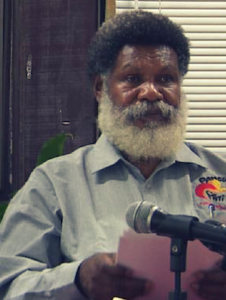
This time, the former president of the party, Patrick Pundao, has gone to the National Court to dispute the recent election of the first female party president, Erigere Singin.
The Pangu Pati only recently recovered from similar party infighting.
Former Pangu Pati president Patrick Pundao … challenging election of party’s first woman president. Image: Loop PNG
That fighting resulted in prolonged court battles between the parliamentary wing and the party executives that led to then party leader Sam Basil breaking away to form the United Labour Party.
He left behind a small parliamentary team led by deputy party leader and Morobe Governor Ginson Saonu, who then handed over the leadership to current Prime Minister James Marape at the height of the 2019 political impasse.
Punda claimed that the clauses in the party constitution were breached when conducting the national convention that led to the election of Singin as national president in August this year.
Within two months after the election of the national president in August, the Pangu party executive tussle has resurfaced and gone to court.
A court injunction While it is not related, deputy party leader and Morobe Governor Saonu has also taken out a court injunction against his own Pangu Pati-led government on the Wafi Golpu mining exploration project, an issue that can also create instability in the party and the government as they prepare for the election.
Meanwhile, Pundao in his notice of motion, claimed that the Pangu Pati convention in Port Moresby at the Hilton Hotel on August 27 had breached clauses 18, 20.1 and 20.2 of the party constitution.
Clause 18 relates to the composition of the national convention, which should consist of the members of the council, the parliamentary members, two delegates for a branch and another, as determined by the committee.
According to the party constitution, clause 20.1 related to the procedures that require an eight week notice to be given by the secretary general of the party detailing the time and the venue of the national convention while clause 20.2 states that the chair of the national convention should be the national president but he was not given the opportunity to chair convention as required by law.
He said he was sidelined and the master of ceremony took control of the meeting.
Pundao, in his notice of motion, sought orders to:
Restrain Singin from holding office as the national president of the Pangu Pati Inc;
Restrain the Pangu Pati general secretary Morris Tovbae from issuing any Pangu Pati meeting; and
Stop the office of the Registrar of Political Parties and Candidates Commission from distributing any the constitutional grants to the party.
Justice Ambeng Kandakasi, who presided over the notice of motion, ordered that:
The pending motion and substantive proceedings are adjourned to November 9, 2021, at 9.30am, for hearing of the motion and directions hearing;
All parties are required to cooperate and resolve the issues presented in the proceedings within seven days from or by October 26, 2021;
For the purpose of the meeting under the last preceding order, only those who are qualified by the Pangu Pati Inc constitution shall participate;
The general secretary of the party shall, if need be, give notice for the special general meeting by October 27, 2021; and
Time for the entry of these orders is abridged
Pundao said the second order directing parties to meet was expected to be carried out today.
New Zealand has reported 79 new community cases of covid-19 today.
Of the new cases, 75 are in Auckland and four are in Waikato. Forty six of these cases are linked, including 24 household contacts, and 33 remain unlinked.
There is also one new case at the border.
There was no 1pm conference today, and the Ministry of Health released information in a statement. There will be a 4pm press conference today.
There are 37 people in hospital – eight in North Shore, 17 in Auckland and 12 in Middlemore.
In the last 24 hours, 14,430 tests have been processed.
The Vanuatu covid task force has confirmed that two arrivals from New Caleldonia have covid-19.
But the organisation says Vanuatu remains free of any community transmission of the virus.
Health officials are endeavouring to trace contacts from the airport to the Ramada Hotel where the two positive ni-Vanuatu nationals are now currently being quarantined.
They were part of a group of 18 ni-Vanuatu who were repatriated from New Caledonia last Friday.
Of the 18, eight had already contracted the virus in New Caledonia, but had been treated and the task force says are no longer presenting any symptoms.
All 18 remain in isolation at the Ramada Hotel in Port Vila.
Prime Minister Bob Loughman has called on the people to get vaccinated to protect themselves and their families.
He also asked people not to disseminate incorrect information through social media, because of the panic it would cause within Vanuatu communities.
This article is republished under a community partnership agreement with RNZ.
The government claims Australians would be nearly $2000 better off on average under its plan to reach net zero by 2050 compared with taking no action.
According to the modelling – which the government has yet to release – gross national income would be 1.6% higher, and 62,000 new regional mining and heavy industry jobs would be created under the plan.
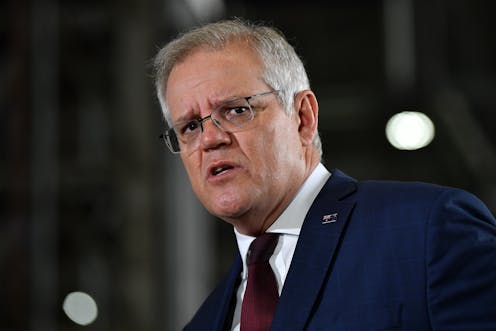
Scott Morrison and energy minister Angus Taylor released the plan and a “projection” of up to 35% for emissions reduction by 2035. The prime minister will take the plan to the Glasgow climate conference next week.
Morrison reiterated Australia would not make this a “target”, but would stick with its present 2030 target of reducing emissions by 26-28% on 2005 levels by 2030.
The expected overshoot is being driven by three factors: the rapid uptake of renewables, especially solar; business and household energy efficiency using new and emerging technology, and changes in land use.
Morrison said the target had been an election commitment, while also saying Australia “may even achieve better” than the 35% reduction. He ruled out promising a bigger medium term figure before the election.
But, unexpectedly, the government has not accompany the plan’s release with a list of what the Nationals won in their agreement to sign up to the 2050 target. The only measure announced was that the Productivity Commission would review progress every five years, starting in 2023, looking at the socioeconomic impacts.
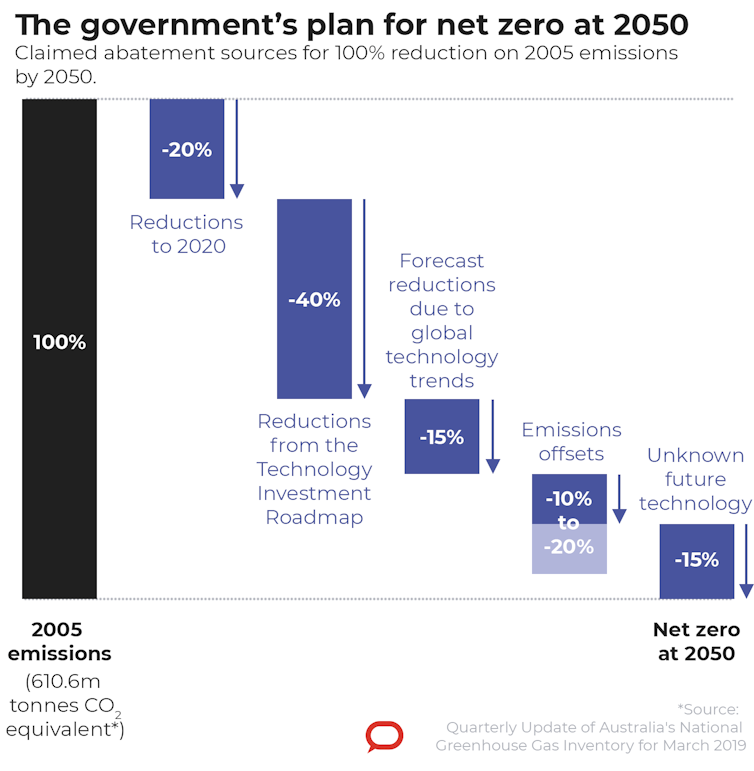
The government says existing priority technologies enabled by the plan would get Australia 85% of the way to net zero by 2050. The gap would be closed by emerging technologies.
The breakdown of the sources of abatement in the plan is: reductions already made up to 2020, 20%; the technology investment roadmap, 40%; global technology trends, 15%; international and domestic offsets, 10-20%; and further technology breakthroughs, 15%.
The government’s plan for net zero at 2050.
Asked about the total cost of the plan, Morrison avoided the question. He said the government would release the modelling underpinning the policy “soon”.
He stressed the economic side of the plan, acknowledging but placing less emphasis on the environmental need to get to net zero by 2050.
The plan was “uniquely Australian”, Morrison said. “It is an energy, trade, an economic plan, not just an environmental plan. It’s about delivering results through technology, not taxes.”
It worked by “enabling” rather than legislating or mandating.
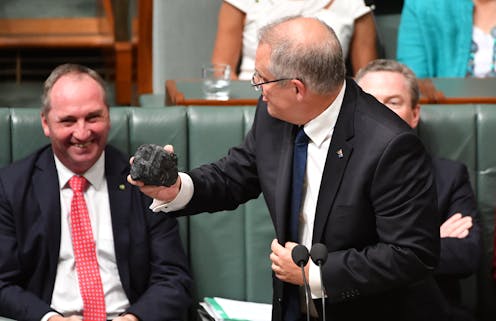
The plan would “not shut down our coal or gas production or exports.
“It will not impact households, businesses or the broader economy with new
costs or taxes imposed by the initiatives that we are undertaking.
“It will not cost jobs, not in farming, mining or gas, because what we are
doing in this plan is positive things, enabling things. It will not increase energy bills.
“it is not a revolution but a careful evolution.”
Morrison said the plan was removing any blockage to investment in technologies, saying, “We are going to do this. If you want to do this thing with us then we are the place you want to do it.”
He said Australians “understand and they support the need to take action on climate change. So do I. So does our government.”
Morrison indicated he will spruik Australia’s record at Glasgow. “There will be lots of words in Glasgow but I will be able to point to the actions of Australia and the achievements of Australia.”
He argued other countries could learn from Australia. “The Australian way shows a way for other countries to follow. The challenges that we face here in Australia, particularly with the nature of our economy are not that dissimilar to those being faced in Indonesia or in Vietnam or in India or places like that or indeed China.
Opposition leader Anthony Albanese said Morrison had announced “a vibe rather than a target”.
Labor’s climate spokesman Chris Bowen said “I’ve seen more detail on fortune cookies than on the documents released by the government”.
Michelle Grattan does not work for, consult, own shares in or receive funding from any company or organisation that would benefit from this article, and has disclosed no relevant affiliations beyond their academic appointment.
Police responses to family violence have long been the subject of scrutiny. Effective policing can play a key role in protecting victim-survivors and holding perpetrators accountable. Most recently across Australia, there has been heated debate about the criminalisation of coercive control.
Advocates argue that creating specific laws for patterns of abusive behaviours will better protect victim-survivors. Others argue such laws will disproportionately affect women from marginalised backgrounds, including First Nations women. It is these women who may be at an increased risk of negative police outcomes, including being misidentified as the predominant aggressor.
Policing was a prominent focus of the 2016 Victorian royal commission that recommended 227 reforms to transform the state’s response to family violence.
Recommendation 59 advised that in 2021 Victoria consider giving police the power to grant on-the-spot family violence intervention orders (FVIOs). These orders could last up to 12 months. This would extend the current powers of family violence safety notices (FVSNs), which are temporary orders issued by police. These orders can be in place for up to 14 days and serve as an application to the court for a final order.
Police argue that such orders are victim-focused and will prevent perpetrators from manipulating the system. In contrast, others have warned that police-issued intervention orders could bolster perpetrators’ efforts to utilise the system as a weapon against victim-survivors.
Where do these expanded policing powers already exist?
Various Australian inquiries into system responses to family violence have supported temporary notices such as Victoria’s. However, significant caution has been expressed over giving police the power to grant on-the-spot final orders.
Tasmania is the only Australian jurisdiction where police have these powers. Police family violence orders (PFVOs) were introduced as part of the state’s sweeping 2004 reforms. There is minimal research on their use in Tasmania.
However, in 2015, the Tasmanian Sentencing Advisory Council highlighted that police-issued orders are more frequently used than court-issued intervention orders and come with a higher breach rate. The council attributed this to the orders not being specifically tailored to the needs of the victim-survivor. It also cited respondents misunderstanding the conditions due to these not being explained with the level of detail that a court would give.
The council recommended police should no longer have the power to grant PFVOs. Its findings mirrored concerns raised in submissions to other Australian inquiries. These concerns include the critical importance of judicial oversight and the potential for the orders to increase the risk of misidentification of women as predominant aggressors.
Misidentification and police family violence orders
Misidentification occurs when police incorrectly list the victim-survivor as the predominant aggressor. This can have significant effects on that individual including financial loss, reduced trust in police, visa implications, loss of reputation and access to services, and child custody implications.
Where misidentification occurs, police fail the very category of people they ought to protect. In 2018, Women’s Legal Services Victoria found that 10% of family violence intervention order applications involve misidentification. Research has shown women from disadvantaged and marginalised backgrounds are at higher risk of misidentification.
When a PFVO is made, the respondent has the option to challenge the order in court. However, research shows family violence victim-survivors often seek to avoid court at all costs. Court is often expensive, extremely stressful and retraumatising. Yet, when a victim-survivor has been misidentified, court is the only opportunity they will have to seek redress.
When victim-survivors are misidentified on intervention orders, they often consent to the order, viewing it as the lesser of two evils – they just want the court process to end. When a victim-survivor consents to an order, the perpetrator can then use it as a weapon. For example, they may lure them into breaching the order and then report them to the police.
When PFVOs were introduced in Tasmania, it was argued the orders do not give police unnecessary and unchecked power, given the respondent’s ability to challenge it in court. But this argument misses the nuances of misidentification in family violence matters.
It assumes victim-survivors will willingly go to court to have the mistake rectified. It also assumes victim-survivors will have sufficient knowledge of the legal system to make an informed decision about whether or not they should challenge the order. And this happens, paradoxically, before they go to court where they are linked up with key support services and legal advice.
Recommendation 59 is to be considered based on stakeholder and victim-survivor consultations earlier this year. The purpose of these consultations was to determine if Victoria Police responses to family violence have improved enough in the five years since the royal commission to enable them to appropriately use this new power.
Police responses have likely improved, but shortcomings undoubtedly remain. Victim-survivors are still being misidentified as predominant aggressors. If police are given this new power, their power over at-risk populations will be extended, with fewer checks and balances operating to provide redress for victim-survivors incorrectly labelled as perpetrators.
This is not a step that should be taken lightly and without extensive consideration of the potential unintended impacts on victim-survivors.
Ellen Reeves is a postdoctoral research fellow at Monash University. She has previously received funding from the Australian Government’s Research Training Program.
Kate Fitz-Gibbon is Director of the Monash Gender and Family Violence Prevention Centre. Kate currently receives funding for family violence related research from the Australian Research Council, Australian Institute of Criminology, Australia’s National Research Organisation for Women’s Safety and the Department of Social Services. Kate is a Chair of Respect Victoria.
Source: The Conversation (Au and NZ) – By Dion O’Neale, Lecturer – Department of Physics, University of Auckland; Principal Investigator – Te Pūnaha Matatini, University of Auckland
Hannah Peters/Getty Images
As Aotearoa New Zealand moves from elimination to suppression, we need to understand how this could change the nature of transmission from Auckland’s Delta outbreak to the rest of New Zealand.
The lifting of restrictions will come as a relief for many who are missing friends and family and are struggling with social isolation. But as additional transmission pathways open, simple changes in a network can result in complex outcomes.
A common phenomenon within complex networks is called the “percolation effect” — the addition of new connections results in a “phase transition” where a once poorly connected network can quickly turn into a highly connected one.
For Auckland, this means the gradual addition of just one or two new connections between families could result in a vastly more connected city. The whole country could become far more connected than initially assumed.
As part of our work to simulate viral transmission under the new conditions, we have created a synthetic version of Aotearoa using the Populated Aotearoa Interaction Network (PAIN).
This is a synthetic network representing Aotearoa New Zealand, where every person has an age, sex, ethnicity, and place of employment or education. These individuals are treated as nodes in a network and interact through community contexts, much like those we will experience when we begin interacting with family members and friends as restrictions ease.
With the PAIN, we can model transmission to more accurately reflect the experiences of individuals, compared to less complex models that average interaction patterns.
This has allowed us to model the potential trajectory of COVID-19 outbreaks and predict how changes in alert level policy, vaccination rates and increased social connection might affect the spread of the virus.
Simple changes, complex outcomes
One important feature of an interaction network is the “largest connected component” (LCC), which tells us the approximate number of people COVID-19 could theoretically spread to, based on the connections people share.
In a scenario like the strictest alert level 4, where most community connections are removed, we see the interaction network for Aotearoa broken up into many small disconnected sections. In this case, the largest connected component through households and community interactions would contain around 90,000 linked individuals.
But for a level of intervention like alert level 3, potential community interactions increase through families extending their bubbles. We see the largest connected component increase by a factor of almost 15, to around 1.4 million connected individuals.
These numbers are based on the optimistic assumption we can neglect interactions in workplaces on the basis that masking and good ventilation reduce transmission significantly.
This clearly demonstrates New Zealand is a highly connected society and most New Zealanders will be connected to each other through interactions we share. We argue this makes mitigation strategies — vaccination, masking, distancing — even more important.
Given ongoing community transmission and a rising number of unlinked cases, the three-step roadmap, even with people only meeting up in pairs, moves us to a situation where Auckland is essentially reconnected, from a contagion point of view.
Equity in a ‘pandemic of the unvaccinated’
The move away from elimination comes at a point when some communities still have low vaccination rates, in particular Māori and younger people. The average age of Māori in Auckland is 26; most of this younger cohort (Group 4) has only been eligible for vaccination since September 1.
The return of children to early childhood centres, with bubbles of up to ten, is concerning since infants and toddlers cannot currently be vaccinated. High rates of respiratory illness among New Zealand children further compounds the risk of serious illness from COVID-19.
Our models clearly show only a small number of additional connections are necessary to sufficiently connect existing bubbles such that a large percentage of the population would be reachable if there is uncontrolled spread. The evidence from the current Delta outbreak shows the virus is finding unvaccinated people.
Most of us don’t have any influence on decisions the government makes. What we can control is the decisions we make ourselves. The best we can do right now is manage our own risk, making sure the virus can’t spread when connections are made.
There are several steps we can take to ensure connections do not turn into uncontrolled clusters of COVID-19. With the exception of those now required to go back to work, we should think of new freedoms as options, not targets.
Reducing transmission
Even if we’re vaccinated, we should continue to act like we have the virus, thinking about our new contacts as potentially connected to cases of COVID-19 that haven’t been detected yet.
If you reconnect with family or friends, keep the total number of new connections to a minimum. If meeting people from other households, take every precaution to keep each other safe, stay outside and always wear a well fitted mask.
Make a note of all your connections, in the app or a diary. Remember to record the name and phone numbers to make contact tracing as fast and easy as possible, should you come into contact with the virus.
Creating large chains by connecting with lots of different bubbles will very quickly result in one large connected network, increasing the risk of spread and making contact tracing more difficult. It falls upon all of us to take every step we can to make sure we protect our loved ones, and our community.
We would like to acknowledge the contribution of Kylie Stewart, a member of the team at Te Pūnaha Matatini and the HRC-funded project Te Matatini o te Horapa — a population based contagion network for Aotearoa NZ.
Dion O’Neale receives funding from the Health Research Council and the Department of Prime Minister and Cabinet to provide research and advice on the spread of COVID-19 in Aotearoa, including the equity impacts of contagion.
He is a Principal Investigator in Te Pūnaha Matatini.
Emily Harvey works at Market Economics, and is a Principal Investigator in Te Pūnaha Matatini. She currently receives funding from the Health Research Council and the Department of Prime Minister and Cabinet to provide research and advice on the spread of COVID-19 in Aotearoa, including the equity impacts of the contagion spread.
James Gilmour receives funding from the Department of Prime Minister and Cabinet to research the spread of COVID-19 in Aotearoa, including the equity impacts of contagion. He is a Research Fellow in Te Pūnaha Matatini.
Steven Turnbull receives funding from the Health Research Council and the Department of Prime Minister and Cabinet to provide research and advice on the spread of COVID-19 in Aotearoa, including the equity impacts of contagion. He is a Research Fellow in Te Pūnaha Matatini.
Source: The Conversation (Au and NZ) – By Anna Clark, Australian Research Council Future Fellow in Public History, University of Technology Sydney
The federal Education Minister, Alan Tudge, has announced a major edit of the draft history curriculum by the Australian Curriculum, Assessment and Reporting Authority (ACARA) as part of an effort to lift educational standards. “Ultimately, students should leave school with a love of country and a sense of optimism and hope that we live in the greatest country on Earth and that the future is bright,” he said.
But is that really the purpose and function of a history curriculum? Here’s a quick primer for the minister.
History is a way of thinking about and studying the past. Teaching students to memorise a list of important facts without understanding what they mean isn’t history; neither is teaching how Australian students should “feel” about the past without any contextual knowledge.
A sound history education gives students the skills to find evidence, analyse sources and present their own interpretations based on their research. It also gives them the confidence to distinguish uneducated opinion and polemic from well-informed historical analysis.
2. Not all historians agree.
Because history is based on interpretation as well as evidence, historians often disagree on “what happened”.
Interpretation is inherently subjective. History education should teach students how to deal with diverse and contrasting interpretations by historians, as well as over time. (For example, that could include a unit on the contrasting interpretations of Australian history by education ministers over the past 30 years.)
3. History is contested (see above).
You know how members of your family might disagree over what happened? (Like that Christmas lunch in 1974 when Grandpa stormed out before the pudding? Or the discovery of a horrible family secret?)
History is the same. Sometimes, disagreements over the past create significant political debate and even violent confrontations in or between communities. Such contest shows that history matters.
The heated nature of some historical debates doesn’t mean they should be avoided in school, however. Far from it. Teaching about history’s contestability helps students learn to navigate and assess different perspectives in a liberal democracy.
4. History teachers are trained professionals.
History teachers are trained in instruction, pedagogy and the skills of history. They teach because they want to make Australia a better place. Trust them.
5. Practising critical history doesn’t mean you “hate” Australia.
Critical analysis is a vital historical skill. It enables historians to interrogate historical evidence, allowing us to ask: what is this source? Where did it come from? Is it reliable? Who is the author? Does it tell the whole story?
Being “critical” doesn’t mean you’re negative — just that you’re curious and rigorous.
6. The current history curriculum draft does not diminish the legacy of Western civilisation.
The curriculum draft simply acknowledges that other knowledges and civilisations (e.g. Eastern and Indigenous) have worldviews and cultures worth knowing. It asks students to think about their own place in time and in the world, as well as asking them to think about what is unique about being Australian.
What’s more, studying history in its disciplinary form is testament to the ongoing influence of Western civilisation and liberalism in our education system. As well as including culturally diverse historical perspectives and approaches in recent years, historical practice also draws on a long tradition that includes the methods of 19th-century scientific historians, histories from the Enlightenment, and ancient Greek chronicles.
7. Historical views change over time.
Each generation asks its own questions of the past and interprets the past according to prevailing values of the day. Think about the relatively recent inclusion of the “Stolen Generations” in our curriculum, for example, or the acknowledgement of the women’s suffrage movement in the story of Australia’s democracy. While their presence reveals our contemporary historical priorities, such topics haven’t always been included in Australian histories.
Teaching students to understand changing historical approaches is an important part of a good history education.
The significance of the women’s suffrage movement in the story of Australia’s democracy hasn’t always been acknowledged in history education. National Library of Australia
Every generation of historians, from Thucydides to Geoffrey Blainey to Clare Wright, revises history. They even say so explicitly.
9. School students are not “blank slates”.
Filling them up with idealised images of Australia’s past won’t wash. It’s boring, as well as being bad history.
In fact, “Anzac” is such a successful topic to teach because it allows students to imagine their way into the past, to empathise and use their skills of critical analysis. Sources, such as diaries from the front line, war propaganda, letters from the home front and newsreel footage, are accessible and gripping documents of the past.
Students can see how this event changed the world as well as affecting their own families and communities. They can also see how Anzac has been remembered over time. Trust them.
10. The national benefit of history education comes from students learning to be active, questioning, thoughtful citizens.
Teaching that “we live in the greatest country on Earth” is not history. It’s jingoistic nationalism. Ironically, it’s also an approach more aligned with the standards for history education in the Chinese national curriculum than the histories being taught and discussed in Australian classrooms as we speak.
Sometimes history asks difficult questions and requires hard answers. That’s OK. It makes Australia better.
Anna Clark receives funding from the Australian Research Council.
Source: Council on Hemispheric Affairs – Analysis-Reportage
By Danny Shaw From NY
On October 25th, 1983, 7,300 U.S. troops, accompanied by U.S.-trained soldiers of CARICOM countries calling themselves “The Caribbean Peace Force,” invaded the tiny island of Grenada. This October marks the 38th anniversary of the U.S. invasion of the land of Julien Fedon, Jacqueline Creft, Maurice Bishop and the 110,000 people of Grenada. What lessons can we learn from the four-and-a half-year revolution? In a hemisphere on fire, with chronic social unrest and anti-imperialism on full display from the streets of Medellin to Mexico City, where does Grenada line up in the Global Class Struggle in the 21st century?
The Revo
On March 13th 1979, the leaders of the New Jewel Movement overthrew Eric Gairy, widely seen as being pro-imperialist, setting in motion one of the great revolutionary experiments in Caribbean history. Those who lived through the 1979 to 1983 Grenadian Revolution were forever transformed.
Grenadian Professor of Political Science Wendy Grenade from the University of West Indies charts some of the gains made during the short period: “Raising levels of social consciousness; building a national ethos that encouraged a sense of community; organising agrarian reform to benefit small farmers and farm workers; promoting literacy and adult education; fostering child and youth development; enacting legislation to promote gender justice; constructing low income housing and launching house repair programmes; improving physical infrastructure and in particular the construction of an international airport; providing an environment that encouraged popular democracy through Parish and Zonal Councils etc.”[1] Slogans and billboards emblazoned the country’s landscape: “Never Too Old to Learn,” “Education is Production Too,” “Every Worker a Learner,” and “Women, Committed to Economic Construction.”[2]
Angela Davis captured what “the revo” meant to the Black nation within the U.S.: “The experiences that I’ve had here in Grenada have confirmed in a very powerful way where we are headed, what the future of the entire planet ought to look like – this beautiful, powerful militant revolution.”[3] The chief spokesperson of the revolution, Maurice Bishop, famously came to New York City in June 1983 inspiring a crowd of thousands of African-Americans and anti-imperialists as he detailed his people’s achievements.[4]
Glen “Pharoah” Samuel was a middle-school pupil at the time and was part of a crowd of students who raced to save Maurice Bishop, Jacqueline Creft and other revolutionary leaders from execution at Fort George.[5] Sitting down in a neighborhood bodega, he explained Grenada’s role in the global class struggle known as “The Cold War:”
“As a Black, English-speaking country very close to America, imagine America has a population of over 42 million Afro Black Americans; obviously they understand our swag because we are all Black people, African people. So Ronald Reagan feared the situation and we had just finished our international airport which was sponsored by Cuba and the Soviet Union.”
Internationalist educator Chris Searle’s book Grenada Morning: A Memoir of the “Revo” details the accomplishments of the revolution in overcoming a history of colonial and neocolonial servitude and degradation. Gerhard Dilger of the Rosa Luxemburg Foundation studied the revolutionary contributions of poets and calypso singers from 1979 to 1983.[6] Dr. Horace Campbell’s Rasta and Resistance highlights the participation of the Rastafari community, long oppressed under the Gairy dictatorship, in the Revolutionary People’s Government and Army.
All of Grenada was ablaze with the flames of revolutionary optimism, unity and growth.
Dr. Terence Marryshow remembers the Grenadian and Cuban resisters and martyrs of the 1983 U.S. invasion (Photo Credit: Danny Shaw/COHA)
The Invasion: An Attempt to Kill Hope
Alarmed at the existence of another workers’ state in Washington’s “backyard,” Ronald Reagan and the U.S. foreign policy establishment were hellbent on overthrowing the four-and-a-half-year revolution.
Internationalist scholar Carlos Martínez artfully captures the U.S. campaign of psychological warfare and saber rattling. In 1981, Reagan mobilized over 120,000 troops, 250 warships and 1,000 aircraft to Vieques, an island that is part of Puerto Rico, for a mock invasion.[7] They code-named the operation “Amber and the Amberines” because Grenada’s official name is Grenada and the Grenadines, as it includes the two smaller islands of Carriacou and Petit Martinique. U.S. intelligence worked overtime to monitor the cracks in the revolutionary leadership and create divisions in order to exploit them, ultimately leading to the assasination of the revolution’s top leadership. Eighteen civilians were killed when the U.S. Navy bombed a hospital for patients with mental challenges. 24 Cuban construction workers were murdered.[8]
It was David vs Goliath but David stood up to the invasion. Maurice Bishop sounded the battle cry: “This land is ours, every square inch of its soil is ours, every grain of sand is ours, every nutmeg pod is ours, every beautiful young Pioneer who walks on this land is ours. It is our responsibility and ours alone, to fight to defend our homeland.”[9] The break in the top leadership of the New Jewel Movement and Reagan’s accusation that 600 American medical students were in danger, provided the humanitarian cover for the illegal assault on a people’s democracy.
The U.S. military project then helped prop up a pro-U.S. power structure that sought to dismantle the very memory of the revolution. Artist Suelin Low Chew Tung writes that “images of the revolution[ary] years were deliberately erased from the landscape … Three decades later, as far as local visual art records are concerned, it is as if the Grenada Revolution never happened.”[10] It was apparent that this generation feels disconnected from Grenada’s definitive break with neo-colonialism. To many youth, it appeared this was ancient history. How many Grenadians born after 1983 fully comprehended that their small homeland inspired the world?
The Washington Examiner, owned by right-wing billionaire Philip Anschutz, captures how U.S. ruling circles viewed military action against Grenada as a strategic, easy victory after defeat in Vietnam and Iran. In an editorial on September 12, 2021, Michael Rubin of the American Enterprise Institute advocated for a Grenada-like invasion to shore up respect for America after the humiliating defeat of the U.S. in Afghanistan: “Where and under what circumstances might a future commander in chief send troops to draw a new red line for America’s enemies?”[11] He ominously ends the article warning: “There will be a new Grenada; the question to ponder is where and when.”
The Blackout: Liquidating Memory
On August 26th 2021, this writer sat down with Dr. Terence Marryshow, Captain of the People’s Revolutionary Army responsible for the personal security of Maurice Bishop and NJM leadership, former political leader of the Maurice Bishop Patriotic Movement (MBPM) and grandson of T.A. Marryshow, the father of the West Indian Federation. He elaborated on Pan-Caribbeanism in Grenada today.[12] “Caribbean leaders today are not pursuing this goal as vigorously as they ought to in the interests of the people of the Caribbean. The problem is many of them are not willing to give up that lofty position that they hold. During the period of the revolution there was certainly a great effort with the People’s Revolutionary Government led by Maurice Bishop to forge that kind of Caribbean integration. But with his demise there is no real voice out there [in Grenada] championing that cause. Today leaders are hardly concerned with that. Yes we do have CARICOM which in the final analysis is really a talk shop because nothing like concrete decisions and progress for the people comes out of it.”
In an extensive interview, the Cuban-trained physician stated that “concerning teaching on the revolution in the schools there is a complete blackout. There is a concerted effort not to speak about it except for groups like The Maurice Bishop and October 19th Martyrs Foundation, the Grenadian Cuba Friendship Society and the Maurice Bishop Patriotic Movement. But there is no space on the [mainstream school] curriculum today for teaching anything about that revolutionary period.”
A soldier of the People’s Revolutionary Army, nicknamed Salt, who chose to remain anonymous and only wanted his nickname published, remembered what it meant to stand up to the hegemon of the north. He remembered the Center for Popular Education, his own exposure to critical Marxist texts and the day the call came from his superior officers to prepare to defend the country. Speaking on censorship today, Salt explained: “The educators are not documenting anything and are not teaching our young people about the progress the revolution made.”
To add insult to injury, the invaders and new rulers of Grenada disappeared the bodies of the key New Jewel Movement leaders. Local community leaders showed me where the invaders and their underlings disappeared Maurice’s Bishop’s body.[13] Bishop’s mother Alimenta captured the horror of not knowing where her son’s body was.[14] Having already lived through her husband’s murder at the hands of Eric Gairy and the same U.S.-backed state machinery, she stated that, “I could go to the grave and say this is the spot where my husband is buried, but I can’t say that for my son.” This was what Grenadians remember as the triple assassination of their revolution.
Which Way Forward?
In 2019, the Venezuela government published a bilingual tribute to Maurice Bishop and the October martyrs in the Correo del Alba. Unpublished testimonies of dozens of cadres and combatants of the revolutionary process express how it brought Grenada closer to Africa and all oppressed nations, and set Grenada on a path to defiant participation in CELAC, ALBA, and PetroCaribe.[15] Today Grenada is charting a path of friendly relations both with imperialism and the blockaded Bolivarian nations attempting to emerge from centuries of colonialism and decades of U.S. hybrid war. What is clear is that the Grenadian Revolution was an example for the world that the colonized can stand up, organize and win.
Danny Shaw is Senior Research Fellow at COHA and an academic at City University of New York.
Editor’s Note:The writer recently visited Grenada and the preceding is his analysis. A previous version of this article was published in Toward Freedom.
Sources
[1] Invent the Future. “The Legacy of the Grenadian Revolution Lives On.” March 13, 2014.
[2] ESPIONART. ”The Billboard Art of Revolutionary Grenada.” October 30, 2018. https://espionart.com/2018/10/30/the-billboard-art-of-revolutionary-grenada/
[3] Black Perspectives. “The House on Coco Road”: A New Film on Family, Race, and U.S. Intervention in Grenada.” May 2, 2017.
[4] YouTube. Maurice Bishop Speaks. March 7th, 2017. https://www.youtube.com/watch?v=X7MtydR-fiI&t=1586s
[5] August 24th, 2021. https://twitter.com/dannyshawcuny/status/1430142177997475854?s=20
[6] Gerhard Dilger. Ibero-Amerikanisches Institut. August 14, 2019. “WE DOIN WE OWN TING!” REVOLUTION AND LITERATURE IN GRENADA.” https://publications.iai.spk-berlin.de/servlets/MCRFileNodeServlet/Document_derivate_00002178/BIA_046_217_244.pdf;jsessionid=085580D208A5C7146C9B1FF715BC9470
[7] Invent the Future. “The Legacy of the Grenadian Revolution Lives On.” March 13, 2014.
New Zealand Parliament Buildings, Wellington, New Zealand.
Editor’s Note: Here below is a list of the main issues currently under discussion in New Zealand and links to media coverage. You can sign up to NZ Politics Daily as well as New Zealand Political Roundup columns for free here.
Until very recently, people with intersex variations have often been unseen, stigmatised and routinely discriminated against. Intersex Awareness Day today (October 26) is therefore an opportunity to examine how much progress has been made and how far we still have to go.
It’s estimated 1.7 to 4% of people globally are intersex – meaning they don’t fit within typical female or male norms.
In particular, the rights of children with intersex variations are coming under scrutiny.
With surgery in infancy or early childhood still considered an option, questions are now being asked about how to ensure no child is subjected to unnecessary procedures or treatment, and that the child’s consent is obtained for necessary interventions.
Surgery can be delayed
Intersex people have variations in sex characteristics that can occur naturally at the level of chromosomes, hormones and/or anatomy.
There is a wide range of variations. Hypospadias, where the urethral opening appears on the underside of the penis, is most common. Although not a health problem, surgery to alter the hypospadic appearance is “routine” in many places, including Aotearoa New Zealand.
The latest Ministry of Health data shows that in 2017-18, 265 people aged under 15 were diagnosed with hypospadias, with 206 surgical operations performed – 85% of those operations performed on children aged under five.
These surgeries could be delayed until the children are older and able to give or refuse consent. There is no clear biomedical basis for such surgery, it is not lifesaving and it puts the child at risk (as surgery inevitably does).
While there are some gonadal variations (affecting the development of ovaries or testes) that can be life-threatening and require surgical treatment, few variations in sex characteristics are life-threatening in infancy.
Surgery on children with genital variations might appear to promote wellbeing but research highlights the harmful effects of any surgery intended to produce a more “male” or more “female” genital appearance.
Like their overseas counterparts, Aotearoa New Zealand intersex people who have spoken publicly have opposed the interventions they underwent as children.
Who gives consent?
The issue of genital surgery has implications for the legal rights of New Zealanders with variations in sex characteristics, including their right to refuse medical treatment, and the rules around informed consent.
The young age at which most surgeries are carried out means consent is provided by parents, who have the right and responsibility to decide on important matters affecting the child, including non-routine medical treatment.
With such decisions, the best interests and welfare of the child in their particular circumstances must be the paramount consideration. The right to be fully informed is contained in the Code of Health and Disability Services Rights.
In essence, every New Zealander has a right to an explanation of their condition and an explanation of the options available, including risks, side effects, costs and benefits of each option, and honest and accurate answers to questions, including the results of research.
But intersex advocates in Aotearoa New Zealand argue that they and their families have been isolated from sources of information and from others in similar situations.
And there is the added complexity of current responses to intersex variations being insensitive to cultural contexts, reflecting as they do binary Western constructions of gender that categorise individuals as either male or female.
International progress
The issue of genital surgery is gaining traction in international law. For example, the right to be protected from degrading treatment was extended to health-care settings in 2013, with the call from a UN special rapporteur for states to repeal any law allowing genital-normalising surgery when “enforced or administered without the free and informed consent of the person concerned.”
Overall, the right to health is violated when states fail to take steps to prevent young children from undergoing medically unnecessary, irreversible and involuntary surgery and treatment.
In 2016, the UN Committee on the Rights of the Child recommended Aotearoa New Zealand develop and implement a healthcare protocol for intersex children, based on children’s rights, setting the procedures and steps to be followed by health teams.
This followed a submission to the committee from Aotearoa New Zealand’s Human Rights Commission. The UN committee called on the country to ensure no one is subjected to unnecessary medical or surgical treatment during infancy or childhood, and to guarantee the child’s right to bodily integrity, autonomy and self-determination.
In response to the recommendations of the UN committee, as well as domestic advocacy, the Ministry of Health directed the Paediatric Society to set up an intersex working group to develop guidelines for infants born intersex.
But this has so far failed to make significant changes to the practice of surgical intervention on children’s genitalia.
Meanwhile, advocates continue to call for legislation to defer interventions until children themselves are capable of consenting or expressing their own views.
Central to any policy, legislative or medical development must be the child’s right to be free from discrimination.
Children have the right to have their voices heard. This means, with the exception of life-saving treatment, any interventions should be postponed until a child is competent to decide.
Where necessary, a skilled, independent advocate should be appointed to represent the child’s interests. Current medical practice in Aotearoa New Zealand falls well short of those goals.
The authors are grateful to the contribution of researchers Craig Dempster and Sam Johnston, and to members of the Intersex Health and Well-Being Working Group (Incentive), who gave feedback on an earlier draft.
The authors do not work for, consult, own shares in or receive funding from any company or organisation that would benefit from this article, and have disclosed no relevant affiliations beyond their academic appointment.
In December last year, the media reported an intriguing signal we at the Breakthrough Listen project found in our radio telescope data. Dubbed BLC1, the signal didn’t appear to be the result of any recognisable astrophysical activity or any familiar Earth-based interference.
The trouble was, we weren’t ready to discuss it. When you’re searching for signs of extraterrestrial life, you want to be very careful about getting it right before you make any announcements. Last year we had only just started secondary verification tests, and there were too many unanswered questions.
Today we are ready to report that BLC1 is, sadly, not a signal from intelligent life beyond Earth. Rather, it is radio interference that closely mimics the type of signal we’ve been looking for. Our results are reported in twopapers in Nature Astronomy.
Searching for solar flares and signs of life
The story of BLC1 starts in April 2019, when Andrew Zic, who at the time was a PhD student at the University of Sydney, began observing the nearby star Proxima Centauri with multiple telescopes to search for flare activity. At 4.22 light years away, Proxima Centauri is our nearest stellar neighbour, but it is too faint to see with the naked eye.
Flares from stars are bursts of energy and hot plasma that may impact (and likely destroy) the atmosphere of any planets in their path. Though the Sun produces flares, they are not strong or frequent enough to disrupt life on Earth. Understanding how and when a star flares teaches us a lot about whether those planets might be suitable for life.
Proxima Centauri hosts an Earth-sized exoplanet called Proxima Centauri b, and Andrew’s observations suggested the planet is buffeted by fierce “space weather”. While bad space weather doesn’t rule out life existing in the Proxima Centauri system, it does mean the planet’s surface is likely to be inhospitable.
Still, as our nearest neighbour, Proxima Centauri b remains a compelling target for the search for extraterrestrial intelligence (or SETI). Proxima Centauri is one of the only stars we could potentially ever visit in our lifetime.
At the speed of light, a two-way trip would take 8.4 light years. We can’t send a spaceship that fast, but there is hope that a tiny camera on a light sail could reach there in 50 years and beam back pictures.
Because of this, we joined forces with Andrew Zic and his collaborators, and used CSIRO’s Parkes telescope (also known as Murriyang in the Wiradjuri language) to run SETI observations in parallel with the flare activity search.
The BLC1 signal. Each panel in the plot is an observation toward Proxima Centauri (‘on source’), or toward a reference source (‘off source’). BLC1 is the yellow drifting line, and is only present when the telescope is pointed at Proxima Centauri. Smith et al., Nature Astronomy, Author provided
We thought searching these observations would be an excellent project for a summer student. In 2020, Shane Smith, an undergraduate student from Hillsdale College in Michigan, United States, joined the Berkeley SETI Research Experience for Undergraduates program and began sifting through the data. Toward the end of his project, BLC1 popped out.
The Breakthrough Listen team quickly became intrigued by BLC1. However, the burden of proof to claim a detection of life beyond Earth is exceedingly high, so we don’t let ourselves get too excited until we’ve applied every test we can think of. The analysis of BLC1 was spearheaded by Sofia Sheikh, at the time a PhD student at Penn State, who ran an exhaustive set of tests, many of which were new.
There was plenty of evidence pointing toward BLC1 being a genuine sign of extraterrestrial technology (or “technosignature”). BLC1 has many characteristics we expect from a technosignature:
we only saw BLC1 when we were looking toward Proxima Centauri, and didn’t see it in when we looked elsewhere (in “off-source” observations). Interfering signals are commonly seen in all directions, as they “leak” into the telescope receiver
the signal only occupies one narrow band of frequencies, whereas signals from stars or other astrophysical sources occur over a much wider range
the signal slowly drifted in frequency over a 5-hour period. A frequency drift is expected for any transmitter not fixed to Earth’s surface, as its movement relative to us will cause a Doppler effect
the BLC1 signal persisted for several hours, making it unlike other interference from artificial satellites or aircraft that we have observed before.
Nevertheless, Sofia’s analysis led us to conclude BLC1 is most likely radio interference from right here on Earth. Sofia was able to show this by searching across the entire frequency range of the Parkes receiver and finding “lookalike” signals, whose characteristics are mathematically related to BLC1.
Unlike BLC1, the lookalikes do appear in off-source observations. As such, BLC1 is guilty by association of being radio interference.
Not the technosignature we were looking for
We don’t know exactly where BLC1 was coming from, or why it wasn’t detected in off-source observations like the lookalike signals. Our best guess is that BLC1 and the lookalikes are generated by a process called intermodulation, where two frequencies mix together to create new interference.
If you’ve listened to blues or rock guitar, you are probably familiar with intermodulation. When a guitar amp is deliberately overdriven (when you turn it up to 11), intermodulation adds a pleasant-sounding distortion to the clean guitar signal. So BLC1 is – perhaps – just an unpleasant distortion from a device with an overdriven radio frequency amplifier.
Regardless of what caused BLC1, it was not the technosignature we were looking for. It did, however, make for an excellent case study, and showed that our detection pipelines are working and picking up unusual signals.
Proxima Centauri is only one of many hundreds of billions of stars in the Milky Way. To search them all, we need to keep our momentum, to continue to improve our tools and verification tests, and to train the next generation of astronomers, like Shane and Sofia, who can continue the search with the next generation of telescopes.
In previous roles, Danny C Price has received funding from Breakthrough Listen.
China’s 5G technology has now been banned in many countries, including Australia, New Zealand, the US and many in the European Union. In 2019, a NATO Cyber Defence Centre report identified Huawei’s 5G technology as a security risk.
Since September, telecommunications providers in the US have been able to apply for compensation through a US$1.9 billion program designed to “rip and replace” Huawei and ZTE equipment, due to perceived risks to national security.
But fears over China’s attempts to export its digital and surveillance technologies go far beyond just Huawei and 5G. China has been accused of exporting “digital authoritarianism” and spreading “techno-authoritarianism globally”. It’s been declared a danger to the rest of the world.
A visitor has her face scanned by a face recognition system during a technology exhibition in Beijing. Song Fan/AP
In my research, I argue the story of digital authoritarianism is not that straightforward.
Technologies that help authoritarian leaders collect information and control their populations have been exported with few restrictions for decades. Although China does export ready-made surveillance systems to governments deemed as oppressive, countries in Europe and North America have also done so2, albeit more covertly.
China supports surveillance exports, regardless of the destination
China falls in the direct line of fire for criticism on this front.
First, the country follows an authoritarian system. In a compilation of speeches by President Xi Jinping from 2012-18, he critiqued western political systems and called for greater “South-South collaboration” between China and countries in the developing world.
These views have since been incorporated as part of a new national ideology and China’s influential Belt and Road Initiative.
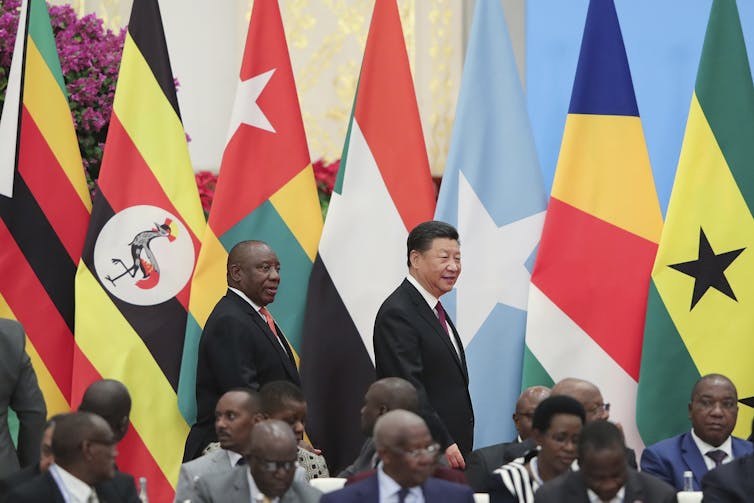
Chinese President Xi Jinping, right, walks with South African President Cyril Ramaphosa during a 2018 China-Africa summit. Lintao Zhang/AP
Second, both Chinese companies and the Chinese government have firmly maintained that countries are free to decide what they want to do with the technologies they purchase from China. They are neutral actors selling neutral technologies to other countries.
However, Chinese companies are not the only actors in the global trade arena that benefit from the argument of “technological neutrality”.
Companies from Europe and North America jumped at the first chance they got to sell surveillance systems to China in the early 2000s. Many of those technologies strengthened China’s online censorship system.
In a watershed report in 2001, an independent researcher, Greg Walton, showed that international companies started marketing their products to Chinese public security agencies as early as 2000 during a large security expo in Beijing. The same expo continued to attract international companies until the COVID-19 travel disruptions in 2020.
In 2006, Cisco was investigated by a US House subcommittee for selling surveillance technologies to China. The company defended itself by stressing its right to international trade and technological neutrality.
A couple of years later, Cisco again defended its right to sell to China in a meeting with the US Senate Judiciary Subcommittee on Human Rights. A representative of the company argued:
One thing tech companies cannot do, in my opinion, is involve themselves in politics of a country.
Earlier this year, investigative journalist Mara Hvistendahl also reported that Oracle (the same company that won the bid to co-host TikTok’s data in the US) had pitched its predictive policing analytics to public security agencies in China.
And in 2019, the UK was found to have exported telecommunications interception equipment to multiple countries, including Saudi Arabia and the United Arab Emirates.
A political science researcher at the University of Cape Town, Mandira Bagwandeen, argues it’s easy to point fingers to China, diverting attention from other countries.
Let’s face it, if the US was really serious about restricting the spread of so-called ‘authoritarian technology’, then it should also impose comprehensive measures and restrictions on both democratic and autocratic producers.
We need better monitoring of the surveillance tech trade
The fact is surveillance technologies with the capability to gather and analyse information about people are inherently political.
Princeton University Professor Xu Xu argues that digital surveillance resolves the “information problem” in authoritarian countries by allowing dictators to more easily identify those with anti-regime beliefs.
But regulating new technologies is difficult even in democratic countries. Australia is seeing this play out with the unregulated use of number plate recognition technologies by the police to monitor lockdown compliance.
The police have also tried to use COVID QR code check-in data numerous times as part of criminal investigations.
Unlike other electronics goods, surveillance technologies have the capability to shape and restrict people’s lives, rights and freedoms. This is why it is important they are regulated.
While it may be difficult to enact a unified set of rules internationally given the current tensions between China and the west, better monitoring and regulations at the domestic level could be the way forward.
This is helping to monitor the activities of Chinese surveillance tech companies and providing data for government policy briefs. When iFlytek, a Chinese artificial intelligence technology company tied to surveillance of Uyghurs in Xinjiang, marketed its products in New Zealand, the media relied on ASPI’s findings to pressure a New Zealand company to cease its collaborations with the company.
And the European Parliament commissioned and published an extensive report on artificial intelligence in June 2021, which recommended establishing a security commission and new research centre devoted to AI issues. It remains to be seen whether the report has any teeth, but it is the kind of start we need.
Ausma Bernot does not work for, consult, own shares in or receive funding from any company or organisation that would benefit from this article, and has disclosed no relevant affiliations beyond their academic appointment.
Scientists are learning more and more about human biological variation, including of sex characteristics. But images of the human body in anatomy remain mostly muscular, white, and male with limited diversity, including of sex.
Intersex people represent just under 2% of the population – a comparable percentage to people born with red hair. Yet anatomy textbooks used in Australian medical schools almost completely stick to the male-female sex binary. In our earlier research we found intersex was included in only five of 6,004 images across 17 texts. This marginalises intersex people, who have been persistently discriminated against within the health-care system.
Sex development in utero is complex, involving at least 70 different genes.
Our sex is defined by our genes (Y or X chromosome), gonads (ovaries or testes), reproductive tract, and external genitalia.
Whether a foetus develops female, intersex or male characteristics is determined by four key elements. These are the Y chromosome and its sex-determining gene (SRY gene), and two hormones (anti-Mullerian hormone and testosterone).
A foetus with all four elements will develop male sex characteristics.
At 6–7 weeks gestation, the SRY gene on the Y chromosome signals the gonads to develop into testes. About 2–3 weeks later, secretion of two hormones by the testes directs further sex development. Anti-Mullerian hormone stops female sex characteristic development. Testosterone stimulates development of the male reproductive tract and external genitalia.
When all four elements are absent, female sex characteristics develop.
Without a Y chromosome and its SRY gene, the gonads develop into ovaries. Without anti-Mullerian hormone or testosterone production, the female reproductive tract and external genitalia develop.
The presence of some but not all of these elements results in the development of intersex characteristics.
The spectrum of sex variation
Intersex can include both or a combination of male and female sex characteristics, depending on variations in chromosomes, genes or hormones. This represents the continuum of the sex spectrum between the male and female binaries.
Known variations in the Y and X chromosomes include XY (genetic male), XXY (Klinefelter syndrome), X (Turner syndrome), XX (genetic female). Variations in the gonads include the presence of both ovaries and testes, or only partial development of either. Other intersex variations include a combination of male and female genitalia, and external genitalia that differs in sex to the genetic sex.
Intersex traits are not always visible at birth. Individuals may not realise they are intersex until puberty, or only if they undergo assessment for infertility or genetic testing.
‘When I first went through puberty, a lot of things went a little different to what most people expect …’
Lingering stigma
There is a tragic history of irreversible surgical interventions in intersex infants and children. This was often without their consent, or with parents coerced to consent.
These surgeries have been to “normalise” external genitalia to a male or female binary. The impact of these procedures may violate human rights. They can be devastating for intersex people’s lifelong physical and mental well-being.
The UN Office of the High Commissioner for Human Rights description of intersex is having sex characteristics that “do not fit typical binary notions of male or female bodies”. But even this pathologises intersex by indicating that intersex people “do not fit”.
Normalisation of sex variation and increased visual representation of intersex in anatomy is necessary to reduce stigma.
The minimal visual representation of intersex people in anatomy textbooks can affect students’ attitudes towards this. We have previously found viewing gender-biased images of anatomy is associated with higher implicit gender bias. Today’s students are our next generation of doctors and health-care workers.
Teaching sex characteristics based on a male-female binary is inaccurate and outdated. We’ve also shown it negatively influences the healthcare of intersex individuals.
Both the University of Wollongong and the University of New South Wales are developing inclusive anatomy curricula within their medicine and health degrees. Harvard Medical School and University of British Columbia are also developing online, accessible resources to promote inclusive anatomical representation in medical education.
Inclusive teaching and knowledge of sex variation can be transformative beyond anatomy.
Teaching sex characteristics as a continuum will increase the visibility and understanding of intersex. Removing the stigma associated with sex (and other) variations in anatomy, and medical and health education is essential for optimal health, well-being, belonging and connection for everyone.
An international group – that includes people of different academic disciplines and generations, seeks to address anatomical representation bias.
The authors do not work for, consult, own shares in or receive funding from any company or organization that would benefit from this article, and have disclosed no relevant affiliations beyond their academic appointment.
Even if they do arrive in time for the start of the 2022 academic year, this won’t overcome the issue of the “pipeline” effect. Disruptions to the flow of new students over the past two years will have a long-term impact.
International students normally study for two to four years. It can take some time for enrolments to return to previous levels as missed or reduced intakes work their way through the system.
Since March 2020, the number of international student visa holders has fallen by 205,854, or 33.5%, according to the most recent government data.
Complicating this picture is that many international students will be studying offshore because of the closed borders.
The chart below shows the number of international student visa holders in Australia and outside for every week since March 2020.
By October 2021, the number of international student visa holders in Australia was down to 266,000. In October 2019, before the pandemic, 578,000 international student visa holders were living in Australia.
This is a reduction of over 300,000 international students living in Australia, or about 54%.
The halving of the number of students living in Australia will be having profound effects on those who rely on the international education sector. About 60% of the economic value of international education is a result of spending in the broader economy.
We can see this impact in the latest Australian Bureau of Statistics (ABS) data. The chart below shows the quarterly value of international education since June 2019. It also includes the value of students studying online.
According to the ABS, the value of the onshore international education sector was A$5.5 billion in the June 2021 quarter, compared to $9.1 billion in the June 2019 quarter. While the growth in online learning has partly offset the losses, it is not enough to make up for the overall fall in international student revenue.
The stock of students is constantly changing as students finish their courses and new ones begin their studies.
One of the biggest challenges facing the sector is the impact of the pipeline effect – a disruption to the flow of new students takes some time to work its way through the pipeline.
International students often progress from pathway courses, such as an English language or preparatory course, to studying a diploma or a degree at an education institution.
For instance, in 2020, about 62% of Chinese international students completed a pathway course before enrolling in higher education for the first time.
This partly explains why year-to-date enrolments of Chinese students at universities have fallen only 8% in 2021 compared to 2019, while the number of Chinese international students holding higher education visas has fallen by about 30%.
Many of the students now starting higher education courses were already working their way through the pipeline when borders closed. They have progressed from a pathway course to a higher education course.
If new international students enrol once borders reopen, many of them will again need to progress through this pipeline.
And will the flow of new international students make up for the currently enrolled students who are finishing their courses? If not, total student numbers will continue to fall.
A two-year disruption of the flow of international students will take time to overcome. Shutterstock
International students generally pay higher fees than local students. This enables universities to supplement the income they receive from local students.
As international students return to Australia, there is a case for a more managed policy environment.
For instance, international students are highly concentrated in certain courses and institutions. In 2020, Group of Eight universities received over 50% of the $9 billion the university sector collected in international student revenue.
In the vocational education and training sector, only 4.7% of international VET students enrol at public providers. This means TAFE institutions miss out on important revenue streams. Domestic students at TAFEs also miss out on the benefits of interacting with international students.
The prospect of growth is returning to the international education sector. Now is the time to plan how to manage that growth. It needs to be done in a way that is sustainable and protects everyone’s investment in the sector, especially the investment international students make.
Peter Hurley does not work for, consult, own shares in or receive funding from any company or organization that would benefit from this article, and has disclosed no relevant affiliations beyond their academic appointment.
English departments are strange places. Even to those of us who spend our working lives inside them, they can seem utterly mysterious. Those looking in from outside must find them even more baffling. What exactly do lecturers do all day? They teach and interact with students, but what happens the rest of the time?
Literary scholars everywhere, writes Terry Eagleton, “live in a state of dread – a dread that one day, someone … will suddenly get wise to the fact that we draw salaries for reading poems and novels.” This fact, say Eagleton, “is as scandalous as being paid for sunbathing [or] eating chocolate.”
He has a point.
Harvard professor Deidre Shauna Lynch says even more bluntly that what English academics get up to simply “does not look like work” to those on the outside. Those of us writing on literature, she suggests, must make our peace with this fact. We must resign ourselves to being largely unknown to the broader culture, living in quiet obscurity.
And yet, as Netflix’s The Chair makes clear, life within an English department can actually look a lot like life in any other workplace. At the fictional Pembroke University, there are familiar office politics and dramas, as well as the usual mixture of ambition, resentment, and status-seeking that exist elsewhere. Professor Ji-Yoon Kim (Sandra Oh) steers a team of colleagues who have eccentric literary quirks but are recognisable figures in many workplaces.
If you enjoyed this series, I’d recommend checking out these four novels, all of which offer compelling depictions of English departments. Forget the Campus Novel – the English Department Novel is a more interesting sub-genre.
1. Richard Russo, Straight Man (1997)
goodreads
Russo’s comic novel shares many similarities with The Chair. It centres on the madcap adventures of William Henry Devereaux, Jr., who chairs an English department similar in size to that of Pembroke. Furious about recent financial cuts, Devereaux takes matters into his own hands. He uses a local television network to publicise his cause, threatening to kill one goose from the university pond every day until his department’s budget is reinstated.
Russo emphasises the slapstick, farcical side of departmental politics. Straight Man is a glorious send up of self-serious academics, the politics of literary theory, and intellectual ambition.
It also offers a perfect gloss on the old adage that academic politics are so vicious precisely because the stakes are so low. I strongly suspect that the writers of The Chair had Devereaux in mind while creating the similarly hapless Bill Dobson (Jay Duplass).
2. John Williams, Stoner (1965)
goodreads
John Williams may well have written the most moving novel ever to be set in an English department.
In understated, elegiac prose, Williams gives us the tragic life story of William Stoner, an obscure English professor at the University of Missouri, who enters as an agriculture student but develops a lifelong passion for literature. He lives his entire life against the backdrop of the university, and all of his significant relationships are found within the English department.
While Stoner’s contributions to the field seem middling to his colleagues, he inspires generations of students with his generous and rigorous teaching. His personal life may well be a kind of tragedy, but he finds redemption in his teaching and research, and a true home in the department.
Williams gives us an example of the English department novel at its most existential and weighty, one beloved of readers inside and outside the academy.
3. Mary McCarthy, The Groves of Academe (1952)
goodreads
McCarthy’s novel takes us back to comedy once again, mining the same territory as The Chair and Straight Man but written well in advance of either. Drawing on her own experiences at Bard College and elsewhere, McCarthy gives us a farce with a serious political edge. Set at the fictional Jocelyn College, the novel centres on Henry Mulcahy, an expert on James Joyce who learns he has been let go, seemingly without cause.
As he fights to save his position, McCarthy shows us the subtle and shifting nature of allegiances within the English departments she knew firsthand, as well as the petty disputes and lurid scandals they can harbour. She pulls no punches, laying bare the gossip, naked careerism, and backstabbing that even seemingly mild-mannered English academics are capable of.
The novel also gives us a classic bait-and-switch. The central character, Mulcahy, whom we initially see as sympathetic and unfairly mistreated, slowly comes into focus as manipulative and profoundly unlikable. As we begin to see the central events from the perspective of once minor characters, the truth is revealed, and McCarthy skillfully shows us the mistakes of our earlier judgments.
4. Wallace Stegner, Crossing to Safety (1987)
goodreads
This wise and moving novel explores the lifelong friendship between two couples, Larry and Sally Morgan and Sid and Charity Lang. Sid and Larry are English professors in Madison, Wisconsin, and the novel follows them as they chase literary ambitions while also managing substantial teaching duties.
Both are striving for tenure and are forced to negotiate complicated faculty politics. Ultimately, this is a novel about “quiet lives,” as the narrator tells us. Its great themes are friendship, marriage, and the nature of love.
And while the English department often fades into the background as Stegner explores other aspects of his characters’ lives, its politics are never far away. Sid and Larry are often concerned with the petty machinations of their academic colleagues, and Crossing to Safety includes many details that still resonate with life at a university today. Stegner’s novel also offers a fascinating glimpse into the evolution of literary studies from the 1930s to the 1970s.
Of course, there are many other novels within this sub-genre, including David Lodge’s beloved campus trilogy, as well as novels by Vladimir Nabokov, J.M. Coetzee, and others. While eating chocolate and sunbathing wouldn’t necessarily make for interesting fiction, life in an English department, it seems, certainly does.
Lucas Thompson does not work for, consult, own shares in or receive funding from any company or organisation that would benefit from this article, and has disclosed no relevant affiliations beyond their academic appointment.
Barnaby Joyce is finding the taste of his success in landing the net zero deal rather more bitter than sweet.
The deputy prime minister has delivered for Scott Morrison. The Nationals have signed up to the 2050 climate target. But in the process Joyce has had to turn himself inside out, which will confuse and disillusion many of his supporters, and is probably doing his own head in.
Joyce clinched the agreement with Morrison, and then took it to the Nationals party room, the forum he always said would make the decision on it. In Sunday’s party discussion he saw the numbers go the deal’s way, as he expected. When he spoke at the end of the debate, with the result clear, he said he read the sense of the room as support, adding “I would have been a no”.
So did this amount to his being “rolled”, as some suggested? It depends how you look at it.
While by his own words he declared himself on the losing side, if the agreement with Morrison had been scuttled, that would have been seen as a major defeat for Joyce. Joyce achieved what he knew he had to, however reluctantly.
On Monday, Joyce told the ABC, “The party room has made the decision. I abide by the party room. I am one hundred per cent on board with the goal of reaching net zero by 2050.”
Some cynics argue the result allows him to give the PM what he needed and then to say in the Nationals’ Queensland seats – where he is worried about votes flaking off to the right – that it was a matter of the numbers in the party room rather than his personal view.
This might be seen as an idiosyncratic brew of pragmatism and purity, but it looks more like a muddled message.
The Nationals are getting a lot of blowback from their base in Queensland, and some Nationals sources fear the pitch that the party has achieved “safeguards” will be lost on hard core sceptical voters there.
We have to wait for the policy announcement on Tuesday – cabinet ticked off on it late Monday – to judge how much the Nationals extracted for all their agonising and haggling.
In theory Morrison could have given them no concessions, because he said he intended to go to Glasgow with the net zero target regardless. In practice, politics dictated he was required to buy peace with the junior Coalition partner.
On Monday Morrison formally put out one element of the multifaceted agreement – the restoration of resources minister Keith Pitt to cabinet.
The twists of the Pitt story are as extraordinary as those in the Joyce one.
When he became leader Joyce demoted Pitt to the outer ministry, only for him now to be promoted back again as part of the agreement.
But in the party room’s consideration of the deal, Pitt was on the “no” side.
Former leader Michael McCormack – deposed by Joyce – said Pitt’s return to cabinet rectified what had been a “foolhardy” decision.
“To think the leadership thought it reasonable to take resources out of cabinet was completely insane,” McCormack said after the PM’s announcement. He said he couldn’t believe former resources minister, and Joyce loyalist, Queensland senator Matt Canavan had been silent on this.
Canavan, who has a high profile on Sky, intends to continue to publicly fight against net zero, now that Joyce is (presumably) constrained by cabinet solidarity.
On Monday Canavan was looking well ahead. “We can’t bind future party rooms or parliaments. The National Party supported an emissions trading scheme at the 2007 election and a few years later they came out against a carbon price and a carbon tax,” he told The Australian.
The ructions in a divided party are far from over.
Michelle Grattan does not work for, consult, own shares in or receive funding from any company or organisation that would benefit from this article, and has disclosed no relevant affiliations beyond their academic appointment.
Australia needs to be put on notice by Pacific Islands Forum (PIF) leaders over abandoning its commitments under the South Pacific’s nuclear free accord — the Treaty of Rarotonga — by signing up to the controversial security pact, AUKUS, says the Pacific Network on Globalisation (PANG).
The deal by the Australian, the United Kingdom, and the United States governments is “highly problematic” and “heightens risks for nuclear proliferation” in the region, PANG coordinator Maureen Penjueli said.
“Security and defence pacts today are about the Pacific Ocean — which is our home — but it has never been with Pacific people, let alone our governments,” she said.
AUKUS is promoted as a trilateral partnership between the three allies to enable Australia to boost its military capacity by acquiring nuclear-powered submarines for its navy.
However, Australia, was a key part of PIF and also a party to the Rarotonga Treaty, the region’s principal nuclear non-proliferation and disarmament agreement, Penjueli said.
The accord legally binds member states “not to manufacture, possess, acquire or have control of nuclear weapons (Article 3)”, as well as “to prevent nuclear testing in their territories (Article 6)”. The treaty further places an emphasis on keeping the region free from radioactive wastes.
Penjueli said that Pacific people had had first-hand experience of the threats of nuclear weapons testing, and continued to live with the sideeffects of historical nuclear catastrophes to this day.
Long list of nuclear threats “We see AUKUS as just one in a long list of nuclear threats and issues that the region as a whole has been confronted with,” she said.
“We see Australia playing a key, often unilateral role, taking decisions around peace and security which is not aligned with Pacific peoples’ immediate priorities around security, in particular human security.
“AUKUS raises serious concerns over Australia’s intentions for its island neighbours.”
Pacific Island governments and civil society had been at the forefront in advocating for a nuclear free and independent Pacific.
They have expressed strong opposition to AUKUS since it was announced in September, which experts say undermines regional solidarity on the issue of a nuclear free Pacific.
Australuan foreign policy analyst Dr Greg Fry said that the more immediate threat to the South Pacific nuclear-free zone lay not in the nuclear submarines, which were not due until 2040 and beyond, “but in the fundamental shift in Australian-US defence arrangements which were announced alongside AUKUS”.
According to Dr Fry, these arrangements included the possible home-basing of American submarines, surface vessels, and bombers, in Australia, as well stockpiling of munitions.
Home basing threat “Home basing would require the presence of nuclear weapons in Australia. This raises questions for article 5 of the Rarotonga Treaty which bans the stationing of nuclear weapons in the treaty zone.
“It would, therefore, require Australia to notify the Secretary-General of the PIFS under article 9 of the treaty.”
Dr Fry said Australia’s assurances that the nuclear reactors powering the submarines would not be in danger of accidently releasing radioactive material into the Pacific Ocean needed to be examined against the history of accidents involving nuclear submarines.
“There has already been a serious accident in the Pacific. In 2005, the US nuclear attack submarine USS San Francisco ran into a sea mount near the Caroline Islands in the Federated States of Micronesia.
“Although the nuclear reactor was undamaged, it was reported as ‘remarkable’ that it was not given the extensive damage to the submarine,” he said.
“Aside from the obvious nuclear concerns, the partnership is also widely noted to be an effort by the Australia-UK-US governments to counter the growing influence of China in the Pacific.
“It [AUKUS] also means Australia is even more fully integrated with US forces in a new cold war with China right now,” said Dr Fry.
Major policy shift He added that “this is a major shift in policy from one where we pretended we were friends to both China and US”.
Penjueli said that several Pacific countries have had long diplomatic relations with China and the Asian superpower was not considered a problem.
“Our countries have taken much more nuanced policies with China. It is time that Australia is put on notice at the Forum. It is clearly part of our neighbourhood but it is acting outside of the norms of Pacific Islands Forum.”
She said that while AUKUS had taken the limelight, it was not the only cause for nuclear anxiety for the region.
The revelation by a Japanese utility company about plans to release nuclear waste from the Fukushima nuclear power plant — one of the world’s worst atomic disasters — into the Pacific Ocean had also set the alarm bells ringing.
“Japan is also a partner to the forum and the announcement has infuriated regional governments and activist groups,” Penjueli said.
“Our governments have opposed nuclear testing, they have opposed the movement of nuclear shipments of radioactive waste and they have strongly opposed the announcement by Japan to dump radioactive water into the Pacific Ocean.
“The Pacific Ocean is not a dumping ground for nuclear materials, nor is it a highway for nuclear submarines.”
The Vanuatu Red Cross Society (VRCS) is one of the first humanitarian organisations to intervene and support the volcano internal refugees who were victims of eviction order at MCI on the road to Blacksand last week.
Emma Mesao, senior branch officer of SHEFA Red Cross, said the organisation dealt with the lives of people, and they responded to natural disasters.
While the eviction was not a natural disaster, people’s living and welfare had been affected.
On Thursday, a team was deployed to the area to assess the situation and identified two priority needs, including shelter and water.
The Red Cross distributed two tarpaulins and two jerry cans to each household. More than 60 households received their share of emergency supplies.
Mesao confirmed that when distributing the supplies, they had also encouraged the people to boil water before drinking to avoid other health issues.
Relocated to other settlements Most of the families have relocated to other settlements.
Many of them went to Blandiniere Stage Three, and Crystal Blue Area.
Others went to other areas within the peri-urban areas of Port Vila, including Blacksand and Erangorango.
The Red Cross team visited all the areas to distribute the water containers and tarpaulins.
Speaking on behalf of the families at MCI, Lai Sakita, thanked the Red Cross for providing the families with the tarpaulins and jerry cans.
These emergency supplies would allow the people to set up temporary shelters while they resettled.
SHEFA Provincial Government Council, through its National Disaster Management Office officer supported VRCS in the logistics, during the distribution rollout.
He said these families were victims of the ash-fall from Tanna’s Yasur volcano.
Protesting students have held demonstrations in several cities around Indonesia to mark seven years of President Joko “Jokowi” Widodo’s administration, reports CNN Indonesia.
The protests came as President Widodo left Jakarta to officiate at the opening of a palm oil processing factory owned by the PT Jhonlin Group in South Kalimantan.
The largest demonstration was held in Jakarta on Thursday where protesters led by the National Association of University Student Executive Bodies (BEM SI) marched from the National Library to the State Palace in Central Jakarta.
The protesters were stopped at the Horse Statue because of a police blockade. However, there was no physical confrontation and the student took turns in giving speeches in front of the police blockade.
“Today, we are not here for existence, but to bring a clear substance,” said Boy, a representative from the Tanjung Karang Polytechnic during the action near the Horse Statue.
The demonstrators read out 12 demands after being prevented from approaching the State Palace.
One of the demands was that a regulation in lieu of law (Perppu) be issued to annul the revisions to the Corruption Eradication Commission (KPK) Law.
A similar action was also held in the South Sulawesi provincial capital of Makassar.
The difference was that the students in Makassar blockaded Jalan Sultan Alauddin street, detained two trucks and set fire to used tyres.
The field coordinator of the student action in Makassar, Razak Usman, criticised the government’s alleged bias in development and demanded that President Widodo make pro-people policies.
“We demand the upholding of legal supremacy, reject amendments to the constitution, reject the Omnibus Law, want Law Number 19/2019 revoked, reject simultaneous regional elections, reject the removal of fuel subsidies and urge Jokowi to resolve the handling of Covid-19,” said Usman.
Students in the Central Java provincial capital of Semarang held a long-march from the Old City area to the office of the Central Java Governor, Ganjar Pranowo.
Upon arriving at the governor’s office they took turns in giving speeches. A number of different issues were taken up, including resolving past human rights violations, the Omnibus Law on Job Creation and the weakening of the KPK.
“What has resulted from Jokowi so far? Where are his promises?,” asked action coordinator Fajar Sodiq.
“Resolving past human rights violations are not heard, the Omnibus Law oppresses the ordinary people, and now we are witnessing efforts to weaken the KPK. Where [are the results of] Jokowi’s work?”
As the students were protesting, President Widodo was visiting South Kalimantan where he officiated at the opening of a biodiesel factory, a bridge and monitored covid-19 vaccinations.
The biodiesel factory, which is located in Tanah Bumbu, is managed by the PT Jhonlin Group owned by Samsudin Andi Arsyad alias Haji Isam.
President Widodo said he appreciated the processing of palm oil into biodiesel and said he hoped that other countries would follow Jhonlin’s example in processing palm oil into biofuel.
“Downstreaming, industrialisation, must be done and we must force ourselves to do it. Because of this, I greatly respect what is being done by the PT Jhonlin Group in building a biodiesel factory”, said Widodo.
Eighty community cases of covid-19 were reported in New Zealand today – 77 in Auckland, two in Waikato and one in Northland.
There were also five cases reported in managed isolation.
There was no media conference today. In a statement, the Health Ministry said 46 of today’s cases were unlinked.
There are now 287 unlinked cases from the past 14 days.
There are 50 people in hospital, including four people in intensive care. The ministry said the average age of those in hospital is 44.
Yesterday the Ministry of Health reported 104 community cases of covid-19 — the second highest number in the current delta variant outbreak.
The two new cases in Waikato — one in Te Awamutu and one in Hamilton — remain unlinked, along with five other cases in the region.
Waikato region testing The ministry said the Waikato District Health Board (DHB) was continuing to carry out testing throughout the region to help determine any undetected community spread of covid-19.
“We are urging anyone in Waikato — in particular, people in Te Awamutu — to get tested if they have any symptoms that could be covid-19.”
One of yesterday’s cases was in Blenheim. The person tested positive after arriving on a flight from Rotorua via Wellington.
This is the first community case of covid-19 in the South Island in a year.
The ministry said today that the covid-19 positive case in Blenheim was unvaccinated, but that two household contacts had returned negative results.
The ministry is still asking residents in Marlborough, Nelson and Tasman with symptoms — no matter how mild — to get tested, even if they are vaccinated.
“This individual was tested as a close contact of the previous cases confirmed yesterday.”
Triple figures for three days Until today the number of community covid-19 cases reported has been in triple figures for three days running, with 129 cases reported on Friday and 102 cases on Thursday.
There have now been 2572 cases in the current outbreak, and 5278 since the pandemic began.
There were 42,482 vaccinations given yesterday — 11,777 first doses and 30,705 second doses.
“It remains our number one protection against covid-19,” said the ministry.
“The Pfizer vaccine is safe, will help stop you getting seriously ill, and could save your life.”
The next media conference will be held on Tuesday.
This article is republished under a community partnership agreement with RNZ.
With most of its eligible adult population covered, Fiji’s covid-19 vaccine rollout for teenagers is gaining pace.
The Health Ministry said 28,965 children aged 15 to 17 had received a first vaccine dose — and 3892 teenagers had received a second.
The rollout was recently extended to this age bracket after vaccination rates covered almost all of Fiji’s eligible adult population aged 18 and over — 95.9 percent of them have received their first vaccine dose, and 84.4 percent have had a second.
Daily reports on new cases of covid-19 in Fiji continue to show numbers are well down on the peak from late July.
The Health Ministry on Thursday reported 25 new covid cases, taking the total number of cases to date to almost 52,000.
Health Secretary Dr James Fong said in the past seven days, 285 cases had been reported, around two-thirds of which were in the central division.
But the rolling daily average is in the dozens, well down on the peak of late July when hundreds and sometimes over a thousand cases were reported.
Dr Fong said there had been 663 deaths due to covid, all but two of them in the outbreak that started in April.
This article is republished under a community partnership agreement with RNZ.
If governments won’t act quickly enough on climate change, who will?
Enter the new breed of (mostly young) billionaire philanthropists. Their goal is to use their influence and money to push the boundaries of science and technology for society’s benefit.
One example is Mike Cannon-Brookes, billionaire co-founder of software developer Atlassian and his partner Annie Cannon-Brooke who this month pledged A$1.5 billion to invest in climate projects by 2030.
$1 billion will be in financial investments and $500 million in philanthropic and advocacy work, with the aim of keeping global warming to 1.5 degrees. He wants other executives to follow suit.
In the US the world’s largest funds manager Blackrock has injected funds into billionaire Bill Gates’ Breakthrough Energy, which is using philanthropic money to accelerate investments in new technologies.
Breakthrough has reportedly secured US$1 billion in investments from Microsoft, General Motors, American Airlines, Boston Consulting Group, Bank of America and ArcelorMittal.
In India, in Denmark, in Australia
In India, its richest citizen Mukesh Ambani has pledged to take his energy giant net-zero by 2035, an undertaking he will fulfil by switching to renewable sources and converting carbon dioxide emissions into useful products and chemicals.
Australia’s Andrew Forrest has established Fortescue Future Industries as part of Fortescue Metals with a mandate to invest billions in Green Hydrogen projects in Queensland and NSW and to take the whole group carbon-neutral by 2030.
Elsewhere a Danish sceptic on carbon pricing Bjørn Lomborg has made a case for innovation in energy research in energy research as the way to limit carbon emissions, citing a parallel from the 1860’s when whales were hunted to near extinction for oil that was used to light homes.
He says the solution was not to tax whales, it was the invention of kerosene that undercut the cost of whale oil.
What’s happening isn’t new
In 1919 businessman Raymond Orteig offered US$25,000 for the first person to fly non-stop from New York to Paris.
The prize was won by an unknown 25-year-old US Army Reserve officer, Charles Lindberg, spurring enormous advances in aviation.
Le Journals’ coverage of Charles A. Lindbergh’s 33 hour flight from New York to Pariswhich won him US$25,000 in prize money.
Today, the X Prize Foundation and the Musk Foundation are offering a US$100 million X Prize for Carbon Removal funded by billionaire Elon Musk.
The prize will go to the team from anywhere on the planet who can invent a machine that extracts carbon dioxide from the atmosphere or oceans at gigatonne-scale.
Previous X Prizes have been awarded for the application of artificial intelligence to global issues, turning carbon dioxide into useful products, developing cheaper methods of mass testing for COVID, and creating water from thin air.
Horses for courses
There is a sound argument that important pledges and projects should be the responsibility of governments rather than individuals.
Billionaires often get where they are by acting on self-interest, so it isn’t reasonable to expect them to act in the interest of the entire public.
On the other hand, some problems are too important and time sensitive to leave in the hands of governments that can’t act with agility.
If an individual loses their money, it’s their loss. If the government loses the money, its the taxpayer’s loss. So governments have to be cautious.
It’s probably not a matter of one or the other. Governments shouldn’t abandon their responsibility to act in the public interest. On the other hand, wealthy philanthropists throughout history have been prepared to help.
David Tuffley does not work for, consult, own shares in or receive funding from any company or organisation that would benefit from this article, and has disclosed no relevant affiliations beyond their academic appointment.
Review: Return to the Dirt, written by Steve Pirie and directed by Lee Lewis, Queensland Theatre
I head to the world premiere of Return to the Dirt by Steve Pirie without reading the press materials. I like to go in uninfluenced, and that’s hard these days, to avoid the trickle down effects of hype even for a play at the Queensland Theatre Company in the Netflix age.
I’d gleaned Return to the Dirt was about men and depression and suicide. Inside, the looping voice-overs advising of blackouts, swearing and references to suicide set the tone. It’s opening night and the speeches happen before the show — artistic director Lee Lewis telling us with lots of enthusiastic arm movements that Return to the Dirt had been selected for the tenth staged winner of the Queensland Premier’s Drama Award because it asked the big questions. We’re told that boys should come and see it.
By the time I head inside expectations are high. I’m ready to get gut punched. Bring on the death. In this regard the first act is like a lukewarm bath — not until the second do I get incinerated.
Return to the Dirt is about a guy in his early twenties, Steve (Mitchell Bourke), desperate for cash to fund his wedding, who lands a job at a funeral home. Not prepared for what he’s getting into, he’s taken under the wing of veteran Deb, played with exquisite timing and verve by Jeanette Cronin — and shown the ropes. Not surprisingly the ropes prove to be confronting.
Steve Pirie and Miyuki Lotz in Return to the Dirt. David Kelly
In a meta move, the playwright is also a character on stage watching Bourke playing a younger version of himself — because as he says, we might have wanted a nicer jawline to look at.
This is Pirie’s real life story, and he operates within it as conductor, stagehand, active player — a concentric motif, represented by a revolving stage and a roll call of ensemble characters played by all except the two Steve’s. The characters slide in and out, as do the dead bodies.
Dying is not a nine to five business
The issue with the first half is that it is dedicated largely to ratcheting up the tension between Steve’s home and professional life in unsubtle ways. His fiancée Claire (Sophie Cox) is obsessed with the wedding and Steve is over-stretched by the on call demands of his job. Dying is not a nine to five business.
The rather twee domestic scenes are not helped by the one note characterisation of Claire who bounces around the stage like a bubbly teenager. If I was Steve, I’d want to run too, and they don’t appear to talk to each other as much as they do middle distances, the chemistry falling flat.
Mitchell Bourke and Sophie Cox. David Kelly
The spectre of Steve’s mental illness and acts of self-harm comes out of left field in the second act — not a fault of Bourke who does well with the material — the set up just falls short in terms of messaging. This is not because it isn’t there, there are projections of keywords above our heads to make sure we don’t miss the point. But because the direction (in decisions like these) and the depiction of the relationship are somewhat dated, the effect on us lacks gravitas.
The scenes pulling back the curtain on funeral home procedures are the most enthralling, notably when we’re taken through the machinations of 21st century embalming.
The body is represented on stage by a giant model of the board game Operation — all the bits of us flat packed and on display — a huge neon puff erupting when the gases are released — the audience laughing and squirming around in the knowledge of their own barely contained juices.
The scenes exploring the procedures of the funeral home are the most successful. David Kelly
Pirie is at his best when illustrating how in death we’re all reduced to garish cartoons, until we’re made palatable and a version of our best selves again. So too when he’s ripping the white sheets off the corpses, exposing the things we don’t want to see, and laying into the corporatisation of grief in Western secular societies — a role undertaken with just the right amount of villainous, clipboard rationale by Chris Baz.
This all ramps up in the second half where Bourke and Cox are also given more range — scenes where Steve is repetitively stabbing his legs and falling apart, and Claire’s having to think about his breakdown more than flowers — are confronting.
Everything starts to spin faster on that revolving stage and we’re getting down and dirty and into the heart of it — dead babies and grieving kids and bodies hanging off of ropes — Pirie liberating himself from providing too much context and telling us how he really feels.
And suddenly I’ve got tears in my eyes and I’m not thinking about my chair or the free drinks outside I’m thinking about my father long gone, and myself on a slab. I’m thinking about my mother, and brother and everyone I love.
And in essence that’s what this play does — connects us to the bare facts of our mortality and the extraordinary people who, if we’re lucky, take care of our last hurrahs.
Sally Breen does not work for, consult, own shares in or receive funding from any company or organisation that would benefit from this article, and has disclosed no relevant affiliations beyond their academic appointment.
Source: The Conversation (Au and NZ) – By Lisa Jackson Pulver, Deputy Vice-Chancellor, Professor of Public Health and Epidemiology, University of Sydney
Redfern’s Community Chaplain Pastor Ray Minniecon, recently made a compelling video urging people to get the COVID-19 vaccination. Pastor Minniecon regarded the simple act of becoming vaccinated as an act of love for family and community, encouraging all to get vaccinated as quickly as possible.
There have been many barriers for Aboriginal communities to access the vaccine and culturally safe health-care during the pandemic. However for some communities, access to health services is a struggle that predates the COVID-19 pandemic.
This did not change when the Commonwealth government declared Aboriginal and Torres Strait Islander peoples as a priority community during the initial roll-out of the COVID-19 vaccine.
Aboriginal communities have struggled to get access to the vaccine. Some were also concerned by inconsistent messaging about the vaccine from federal and state governments.
All of this has contributed to a lack of trust in governments to ensure the rights and needs of Aboriginal people and communities are met.
A big concern about the current levels of vaccination in community is for younger children, Elders and others ineligible or unable to get the jab. These people could face exposure to COVID and other significant diseases.
Particularly for those living in communities outside of urban and regional areas, the risks related to COVID-19 are exacerbated by many factors. These include existing chronic illnesses and disabilities, mobility of people between communities and regions, poor and overcrowded housing and reliance on health outreach for regular health care.
Recent gains by the health sector in the National Agreement on Closing the Gap offers a new era of collaboration between government, non-government organisations and community-controlled organisations. Recently in Western NSW we saw the positive impact of such collaboration when combined efforts resulted in an increase of COVID-19 vaccine doses from 20% first dose coverage to 70% in a month.
However these organisations – like many other health-care providers in Australia – are dealing with significant staffing shortages because of COVID-related workloads, furloughing of staff and of staff themselves becoming sick.
Low vaccination rates and poor housing in Aboriginal communities
The current outbreaks of the COVID-19 Delta variant have highlighted the gap in health services for communities already under-serviced. Some of these communities have witnessed the virus “rip through communities”.
This is what has been seen in NSW and many other parts of Australia, despite the tremendous vaccine uptake of Aboriginal community members. Aboriginal people continue to be vaccinated at a rate that is 20% lower than the general population. This indicates devastating outbreaks will continue – not only in remote regions, but in communities closer to towns and cities.
Modelling shows this vaccine uptake lag could translate into a doubling of deaths.
Pat Turner, CEO of the National Aboriginal Community Controlled Organisation argues that to protect communities, the aim must be to vaccinate as close as possible to 100% of Aboriginal people over the age of 12. Auntie Pat, whom Indigenous people will often title thus as a mark of respect, also describes how overcrowded housing and lack of places to quarantine has enabled the wildfire-like spread of COVID in some remote NSW communities, causing sickness and loss of life.
COVID is causing a further housing crisis in places where many Aboriginal people live. One example is the NSW North Coast where jobs have become precarious. This is due to long and fluctuating lockdowns and property demand from wealthy Sydney-siders anxious to escape to regional areas.
Escalating house prices diminished the already stressed stock of affordable rentals held by multiple housing organisations. In addition, rent rises under these conditions have pushed families into homelessness, poverty and higher risk of COVID infection.
These challenges and others have been years in the making, with calls from Aboriginal organisations’ for a centralised housing support strategy falling on deaf ears.
The pandemic has amplified ongoing inequalities for Aboriginal and Torres Strait Islander people. Communities have been placed at risk of losing their jobs and roofs over their heads at the same time. Overcrowding and homelessness bring multiple risks to health and well-being. These risks range from infectious diseases to mental health and safety concerns.
Uncle Ray’s and Auntie Pat’s messages, along with those of many other Aboriginal and Torres Strait Islander epidemiologists, researchers, doctors, nurses, health-workers and community leaders, are exactly what Australia needs right now. Why? because not leaving anyone behind is a characterisic of how we care for one another.
As Auntie Yvonne Cadet-James says:
People shouldn’t be listening to gossip, there’s a lot of that in the media […] the more we get vaccinated, the more we build up that immunity as a community, so that protects everybody.
The message is clear – get vaccinated, look after one another, don’t leave anyone behind. Find love in your heart and act to protect yourself, your family and your community.
For government, Auntie Pat says, the time for others to make decisions for Aboriginal and Torres Strait Islander people is over.
Now is the time to address the long standing inequities in health, well-being and the ongoing housing and employment crisis impacting Aboriginal people.
During this age of COVID, Australians must show the world our full capability to listen, get behind and champion the rights and needs of Aboriginal people.
We have never been so strong. And we can’t leave anyone behind.
Jennifer Barrett has received funding from the Australian Research Council.
Kalinda Griffiths receives funding from the National Health and Medical Research Council and the Australian Research Council. She is also Thinker in Residence at the Australian Health Promotion Association.
Emma McBryde, Ian Ring, Jason Agostino, Lisa Jackson Pulver, Melissa Haswell, and michael.doyle@sydney.edu.au do not work for, consult, own shares in or receive funding from any company or organisation that would benefit from this article, and have disclosed no relevant affiliations beyond their academic appointment.
Source: The Conversation (Au and NZ) – By Adrian Beaumont, Honorary Associate, School of Mathematics and Statistics, The University of Melbourne
AAP/Joel Carrett
This week’s Newspoll, presumably conducted October 20-23 from a sample a bit over 1,500, gave Labor a 54-46 lead, a one point gain for Labor since the previous Newspoll, three weeks ago. Primary votes were 38% Labor (up one), 35% Coalition (down two), 11% Greens (steady), 3% One Nation (up one) and 13% for all Others (steady).
50% (up one) were dissatisfied with Prime Minister Scott Morrison’s performance, and 46% (down two) were satisfied, for a net approval of -4, down three points. Anthony Albanese’s net approval improved one point to -9. Morrison led Albanese as better PM by 48-34 (47-34 last time). Newspoll figures are from The Poll Bludger.
Newspoll is the poll the media obsess about most, but it is not necessarily right. In the Essential poll taken two weeks ago (see below), Morrison’s net approval surged eight points to +17, and in Morgan Labor’s lead declined one point to 53-47.
I expect more polls this week from Resolve, Essential and Morgan. In August and September, Resolve had the Coalition in a far better position than Newspoll.
With Sydney and Melbourne reopening from their long COVID lockdowns, the Coalition was expected to gain in Newspoll. If Newspoll is right, a plausible explanation is inflation and supply chain delays.
US President Joe Biden’s ratings have been affected by inflation (see my Poll Bludger article cited below). US real disposable personal income has fallen in four of five months from April to August.
Australia’s ABS only releases inflation data once a quarter (once a month in the US). Inflation data for the September quarter will be released this Wednesday.
The Guardian’s datablog has 60.3% of the population (not 16+) fully vaccinated, up from 45.2% three weeks ago. We rank 26 of 38 OECD countries in share of population fully vaccinated, up seven places from three weeks ago. Australia has overtaken the US and Poland, but New Zealand has overtaken us.
Official government data show 73.1% of 16+ are fully vaccinated and 86.6% have received at least one dose. Vaccine uptake has been slower in states that currently have zero COVID cases.
Essential and Newspoll climate change questions
In last fortnight’s Essential poll, 42% (down three since June) said Australia was not doing enough to address climate change, 31% (up one) said we’re doing enough, and 15% (up three) said we’re doing too much.
From 2016 until 2020, the “not doing enough” position had over 50% support, but in January this year and again now, “doing enough” and “doing too much” combined have had more support. Voters are far more concerned with COVID, and it’s been a long time since the 2019-20 summer bushfires.
59% (up three since June) said climate change was happening and was caused by human activity, while 30% (also up three) said we were just witnessing a normal fluctuation in the earth’s climate.
In Newspoll, 35% said Albanese and Labor would be better at “leading Australia’s response to the global climate change crisis”, 28% selected Morrison and the Coalition and 21% said they would be equal.
Asked what the government should prioritise from reducing carbon emissions, lowering energy prices and preventing blackouts, 47% selected carbon emissions (up four since February 2020 and up 23 since July 2018), 40% energy prices (down two and down 23) and 10% preventing blackouts (down one).
Other Essential questions and Morgan poll
54% (up four since September) approved of Morrison’s performance and 37% (down four) disapproved, for a net approval of +17, up eight points. Albanese was up six points to +7. Morrison led as better PM by 45-29 (47-26 in September).
By 45-30, voters thought the federal government’s response to COVID was good (unchanged from late September and up from 39-36 in late August). 55% rated the NSW government’s response good (up two from late September and 15 from late August). 46% rated the Victorian government’s response good (up two).
By 78-11, voters supported a federal ICAC (81-6 in November 2020). There has been a drop in trust in institutions since March, with state and territory governments down 11 to 55% trust and the federal government down six to 48%.
An early October Morgan poll from a sample of almost 2,800 gave Labor a 53-47 lead, a one point gain for the Coalition since late September. Primary votes were 37.5% Coalition (up 1.5%), 36% Labor (steady), 11.5% Greens (down 1%), 3% One Nation (down 0.5%) and 12% for all Others (steady). This poll was taken before NSW reopened.
Seat poll of Swan (WA): 57-43 to Labor
A Redbridge poll of the federal WA seat of Swan gave Labor a 57-43 lead (52.7-47.3 to Liberal at the 2019 election). This poll was conducted October 9-12 from a sample of 814.
Seat polls in Australia have been inaccurate, but this 10% swing to Labor is in agreement with WA state breakdowns from national polls. In the September quarter, Newspoll gave Labor a 54-46 lead in WA (55.6-44.4 to Coalition in 2019). Approval of continued measures by the WA state Labor government to keep COVID out is likely assisting federal Labor.
Labour force participation fell again in September
The ABS reported on October 14 that the unemployment rate increased 0.1% to 4.6% in September. The participation rate fell 0.7% to 64.5%, following a 0.8% drop in August. The employment population ratio – the percentage of eligible Australians employed – fell 0.7% to 61.5%, after a 0.8% drop in August.
The good news for the government is that with Sydney and Melbourne reopening, the economy is likely to recover quickly, and the employment situation could rebound to where it was in June, before the lockdowns. In June, the employment population ratio was 63.0%, the highest for at least the last ten years.
I wrote for The Poll Bludger on October 14 that Biden’s ratings have not recovered from the drop suffered after the Afghanistan withdrawal, two months ago. In the FiveThirtyEight aggregate, his ratings are currently 50.7% disapprove, 43.4% approve (net -7.3).
Also covered: US state elections and two federal House byelections that will be held November 2 (results the next day in Australia). And Democrats’ struggles to pass their agenda.
Adrian Beaumont does not work for, consult, own shares in or receive funding from any company or organization that would benefit from this article, and has disclosed no relevant affiliations beyond their academic appointment.
Lockdowns lasting months in some states have seen tight restrictions on visitors to nursing homes. So as lockdowns ease, and if you’re vaccinated, you might be planning a happy reunion with your friend or family.
If your loved one has dementia, you might be wondering if their symptoms have worsened in lockdown, or if they remember who you are.
Here’s what to look out for on your first visit after lockdowns end, and how to support your loved one after that.
Lockdowns can result in decline in people with dementia, particularly those living in nursing homes.
Research from lockdowns in 2020 showed people with dementia had more trouble thinking and problem solving. Their behaviour and mood worsened. Some studies showed people were less able to do things around the home or look after themselves.
Keeping mentally, physically and socially active helps people with dementia maintain their brain and thinking. But in lockdown, when people with dementia did less, they exercised their brains and bodies less.
Lockdowns not only meant a ban on visitors to nursing homes, but limited stimulation from group activities, such as concerts, visits from schools and bus outings.
Residents sometimes didn’t understand why they couldn’t move freely around the nursing home, and why their loved ones had stopped visiting. This led to increases in behaviours, such as agitation.
After lockdowns began, there has been an increasein prescriptions of psychotropic medications reported internationally. These medications are used in nursing homes to manage behaviours such as aggression and agitation.
The first visit can be difficult
Some families might be worried about their first visit in several months to a person living with dementia.
They might be concerned their loved one has gotten worse, or scared they won’t recognise them.
But it may help to think of visits as providing really important mental stimulation and human connection for your loved one, even though visits might be difficult emotionally for you.
Introduce yourself: “Hi Dad, it’s Ali”, if it looks like your loved one can’t quite place who you are or your name.
Read their reactions to you. If they need time to warm up to you (which might be disappointing if you are close), chat with someone else who is there. The person might enjoy your company even if they aren’t actively participating in the conversation at first.
Prepare an activity to do together, based on their interests. Shutterstock
Then invite them to participate in the conversation by asking them their opinion: “How is the dog going?” or “I’m looking forward to going to the hairdresser, how about you?”.
Prepare an activity to do together based on their interests. You could walk in the garden, browse a magazine about the royal family, sing along to a favourite album.
If it’s a noisy gathering, find a quiet spot for one-on-one conversation, as the person may have trouble focusing when there are several people talking at once.
Because of your long separation, your loved one might be quite emotional or clingy when you are leaving.
Let them know when you’ll be coming again. You can write this down in their calendar, or on a card to give them. You can also tell the nursing home staff so they can remind them.
You can also leave a visual reminder of your visit. This could be a card or photograph, or some flowers with a note.
If possible, get back into a visiting routine.
You could leave some flowers and card as a physical reminder of your visit. Shutterstock
If you notice a decline
Families are more likely to notice small or marked changes in their loved one’s abilities if they have not seen them for several months. That might mean noticing early signs of dementia or worsening symptoms if they’ve already been diagnosed with it.
Rehabilitation helps people with dementia. So it’s worth looking into what support services your loved one might need.
A psychologist can help with strategies to manage memory and thinking; an occupational therapist can help with doing day-to-day things around the house; an exercise physiologist or physiotherapist can help with mobility; and a speech pathologist can help with communication.
Family carers can talk to their loved one’s dementia specialist, or ask their GP for a Chronic Disease Management Plan for some subsidised rehabilitation sessions.
If you’re not the main carer
If you’re not the main family carer, make sure that person has some support. Ask how they are feeling and what support you can offer.
Carers have been providing more help during lockdowns to people with dementia living in the community. That’s because there have been fewer services on offer, and as people with dementia needed help to comply with restrictions.
Offer to spend some time with the person with dementia so the carer can have a break. Or take the carer out for a meal and some social time now restrictions have eased.
Lee-Fay Low receives or has received funding from the NHMRC, Federal Department of Health, NSW Government, aged care providers such as HammondCare and The Whiddon Group, and not-for-profit organisations such as Dementia Australia and The Benevolent Society.
Prime Minister Scott Morrison has finally struck a deal with the Nationals and is expected to take a pledge of net-zero greenhouse emissions by 2050 to the Glasgow climate conference. So what must Australia do to actually meet this target?
ClimateWorks has worked with CSIRO to assess the pathways each sector of Australia’s economy can follow to reduce emissions, and identified a sector-by-sector “to do” list.
The electricity sector should be a main focus, given Australia’s world-beating renewable resources and the role zero-emissions electricity can play in all sectors. Big improvements are also needed in transport, industry, agriculture and buildings.
However it’s important to note that reaching net-zero emissions by 2050 is not consistent with the most ambitious end of the Paris Agreement – limiting global warming to 1.5℃. If Australia wants to act in line with that goal, it has to reach net-zero emissions by 2035. That would mean rolling out the measures outlined below with even greater urgency.
Climate change is increasing the frequency and intensity of disasters. Shutterstock
Cleaning up the electricity sector
The rapid rollout of renewable energy means the electricity sector is changing rapidly. But it still accounts for around a third of Australia’s greenhouse gas emissions.
Electricity sector emissions must be brought to near zero by the mid-2030s if Australia is to meet a target of net-zero emissions by 2050. This would help slash emissions not just from the energy sector, but in other energy-intensive sectors such as buildings, transport and industry.
Achieving net-zero emissions nationally by 2050 means roughly doubling the amount of electricity our grids produce in the next couple of decades, to allow for electrification in other sectors.
Australia could do more to export its extraordinary wind and solar resources to the world – through producing green hydrogen and ammonia, and perhaps even by undersea cable. This could see coal and gas exports replaced with green hydrogen.
Renewable energy could also be used to power energy-intensive processes such as aluminium smelting, and the production of so-called “green steel” for use at home and abroad.
Much work is already underway to drive Australia’s energy transition. For example, states are investing in new renewable generation and storage needed to replace Australia’s ageing coal-fired generators.
Australia’s energy market bodies are planning new transmission lines, taking steps to manage electricity demand management and concentrating renewable energy projects in so-called “renewable energy zones”.
Improving energy efficiency across all sectors ensures renewable energy resources do not go to waste – making the transition cheaper.
And Australia’s electricity sector should be subject a clear zero-emissions goal, to provide clarity to investors and policymakers.
A net-zero goal implies some emissions are allowed to continue, as long as they are offset elsewhere. But those offsets should be saved for other sectors where a ready solution to emissions reduction is not yet available.
Australia’s energy market needs a clear zero-emissions goal. Shutterstock
Deep reductions in industry emissions
Industry emissions are around one-third of Australia’s total from non-electricity sources. Industry’s share of electricity use accounted for another 15%.
Australia’s industry sector stands to benefit from a net-zero global economy. We have world-beating resources of critical minerals required for renewable energy technologies, including copper, nickel, lithium and cobalt.
Our work shows industry emissions could be halved from 2005 levels in the next decade, using existing technologies to make deep reductions, through:
greater energy efficiency
sourcing renewable electricity for existing electricity use
switching to zero-emissions energy, including through the electrification of industrial processes and use of green hydrogen
renewable feedstocks (the raw materials for manufacturing) and carbon capture and storage (where emissions such as CO₂ are captured and stored).
This requires investment. Net-zero plans for sectors and regions would help government, businesses and investors understand what’s needed when, and to direct funding accordingly. Such roadmaps could be produced by governments or industry – or ideally both.
And existing public investment can be better coordinated through regional industrial clusters.
Australia has the potential to produce ‘green steel’. Daniel Munoz/AAP
Switching to clean, efficient transport
Transport emissions are around a fifth of the national total. We can act now to transition to clean, efficient transport, while reducing pollution and improving health. Examples include:
the electrification of cars and light vehicles
greater use of public and active transport
greater use of zero-emissions fuels (such as biofuels, renewable hydrogen and ammonia) for heavy transport.
By the end of this decade, our analysis found, we could see:
electric vehicles comprising up to three-quarters of new car sales and more than a quarter of the total fleet – up from less than 1% of new sales last year.
electric and fuel cell vehicles to comprise the majority of new truck sales and nearly a quarter of the total truck fleet. Currently, only a handful of companies are exploring their use.
So what’s needed to get there? For a start, Australia should join 80% of the global car market and introduce the Euro 6 vehicle emissions standard.
Governments should also offer further financial support for electric vehicle charging infrastructure and fleet procurement for business and government.
Governments could offer further support for electric vehicle charging infrastructure. Shutterstock
Reducing emissions from buildings
Buildings are the source of around a fifth of Australia’s emissions when electricity use is taken into account.
The sector can reduce emissions by nearly three-quarters by 2030 by:
making renewable energy in the grid dominant (above 70%)
increasing energy efficiency and electrification.
Under this scenario, residential buildings would be half as energy-intensive, and commercial builds a quarter less. This saves money for occupants and improves comfort and health.
These changes could be driven by greater ambition in building codes for new buildings and renovations, energy-efficiency standards for rentals, and retrofits for social housing.
The changes could be driven by greater ambition in building codes. Mick Tsikas/AAP
Agriculture and land
Agriculture emissions are around 13% of the total, but only 8% if land use (such as forestry) and land use changes are included. This is because the land sector is different to others. While agriculture itself creates emissions, many land-based activities can store carbon through improvements in vegetation choices, soil management, tree planting and revegetation.
Our work shows not only can agriculture halve emissions, but carbon sequestration can also increase to around four times current levels. Actions include:
wider use of chemicals that reduce nitrogen loss in soil, reducing the need for fertiliser use
reducing livestock methane through breeding, manure management and feed additives such as red algae
planting more trees on farms, managing vegetation better, increasing soil carbon and other nature-based solutions.
Governments have a big role here. Funding is needed for agricultural research and deployment focused on the net-zero goal. Stewardship payments to land managers can encourage them to conserve biodiversity on their lands. And existing support for carbon farming should be increased, for instance through the Emissions Reduction Fund.
Anna Skarbek is CEO of ClimateWorks Australia which receives funding from philanthropy and project-based income from federal, state and local government and private sector organisations. ClimateWorks Australia receives funding from several philanthropic foundations, and project-specific financial support from a range of private and public entities.
Anna Malos is part of ClimateWorks Australia which receives funding from philanthropy and project-based income from federal, state and local government and private sector organisations. ClimateWorks Australia receives funding from several philanthropic foundations, and project-specific financial support from a range of private and public entities.
Prime Minister Scott Morrison is poised to announce Australia will adopt a target of net-zero greenhouse gas emissions by 2050. The pledge is long overdue – but the science tells us 2050 is about a decade too late to reach net-zero.
If we want to meet the goals of Paris climate agreement and limit global warming to 1.5℃ this century, what actually matters is the action we take this decade.
No doubt the federal government will expect to be congratulated for finally succumbing to the extraordinary international and community pressure brought in the lead up to the COP26 meeting in Glasgow.
But after eight years without an effective policy to reduce emissions, it’s sadly too little, too late.
Then-Prime Minster Tony Abbott and other senior members of the Coalition during a vote to repeal Australia’s carbon price in 2013. Australia has not had a substantial climate policy since. Alan Porritt/AAP
Balancing the carbon budget
The carbon budget approach is a useful way to assess whether climate targets are adequate.
Carbon budgets show the amount of carbon dioxide (CO₂) that can be emitted for a given level of global warming. It’s based on the (approximately linear) relationship between the amount of CO₂ emitted from all human sources since the beginning of industrialisation and the increase in global average surface temperature.
Once the carbon budget has been “spent”, or emitted, emissions must be at net-zero to avoid exceeding the corresponding temperature target. In a report released in April, the Climate Council used this approach to estimate Australia’s fair share of the global effort to meet the Paris targets.
To keep global temperatures below 1.5℃, and assuming humans emit CO₂ at the current rate of 43 billion tonnes a year, we have about 2.5 years of emissions still to spend. This pushes out to 5 years at a linear rate of emission reduction, achieving net-zero emissions by 2026.
Using the same logic, we also calculated when the world would exceed the Paris ambition of staying “well below 2℃” of warming, which we assume to be 1.8℃. Our remaining global carbon budget would be spent in about 9.5 years – so by about 2030. This pushes out to 19 years at a linear rate of emission reduction, so net-zero emissions would need to be achieved by about 2040.
Carbon budgets help assess how much CO₂ can be emitted. Shutterstock
Australia’s fair share
These calculations relate to the global effort. So what is Australia’s fair contribution? In 2014 the Climate Change Authority, a panel of government-appointed experts, addressed this question.
The Climate Change Authority recommended Australia’s emissions be reduced by between 45% and 65% on 2005 levels by 2030. This approach generously allocated 0.97% of the remaining global carbon budget to Australia even though our population is about 0.33% of the global total.
Applying the same method today to estimate Australia’s share of the remaining carbon budget, we calculate Australia needs to achieve net-zero emissions within 16 years – around 2038 – and reduce emissions by 50% to 75% by 2030.
So any way you cut it, net-zero emissions by 2050 is too late.
And we must not forget, Australia is a wealthy country, with one of the highest per capita emission rates. That means doing our “fair share” should entail emissions reductions greater than the global average.
An emissions target for Australia of 75% below 2005 levels by 2030, and reaching net-zero emissions by 2035, is consistent with global efforts to limit warming to 1.8℃. There’s no doubt achieving a 75% reduction in Australia’s emissions by 2030 would be challenging, but this target is both scientifically robust and ethically responsible.
A 75% reduction in Australia’s emissions by 2030 would be challenging but ethically responsible. Shutterstock
The world is watching
COP26 in Glasgow will be a defining moment in the global response to climate change. In the words of COP President-Designate Alok Sharma:
The choices we make in the year ahead will determine whether we unleash a tidal wave of climate catastrophe on generations to come. But the power to hold back that wave rests entirely with us.
More than 100 countries have pledged to achieve net-zero emissions by 2050, and the G7, consisting of the world’s largest developed economies, has committed to at least halving its emissions this decade. That’s the good news.
The bad news is that for all the ambition, a United Nations report released last month points to a 16% increase in emissions by 2030 compared to 2010. This would lead to about 2.7℃ warming by 2100.
Adding to the bad news, Australia is the worst-performing of all developed countries when it comes to meaningful climate action.
We ranked dead last in 2021 for action taken to reduce global greenhouse gas emissions in the UN Sustainable Development Report. The latest report from the Climate Council also ranks Australia last, compared to 30 other wealthy developed countries, for both climate policy/action, and fossil fuel dependence.
The list of poor rankings could go on, but there’s no doubt Australia is viewed as a global climate pariah.
Australia is the worst-performing of all developed countries when it comes to meaningful climate action. Pictured: Extinction Rebellion protest in Brisbane. Darren England/AAP
Repairing the damage
To turn this miserable position around, Australia should be going to Glasgow with a far stronger emissions-reduction target for 2030. This should be backed by a national plan to rapidly decarbonise our electricity and transport sectors, absorb more carbon in the landscape and support the transition of communities to new clean industries.
It goes without saying Australia must commit to ending public funding for coal, oil and gas – both their use and extraction. And we must say no to any new fossil fuel developments.
Australia must also make a new commitment to support climate action in developing countries because if poorer nations don’t also make the low-carbon transition, the whole world suffers. As a first step, Australia should follow the United States in doubling its current climate finance contribution, which would bring AUstralia’s contribution to least A$3 billion over 2021-2025.
A week before a major international meeting aimed at saving life on Earth, the Morrison government has apparently seen the light.
Granted, it’s a start. But the new targets are less than the bare minimum required. The government’s last-minute jump on the bandwagon is not quite the Damascene conversion it would have the public believe.
Will Australia’s stumbling, last-minute dash towards climate respectability be well-received in Glasgow? Don’t hold your breath.
Lesley Hughes has received past funding from the Australian Research Council. She is a Councillor with the Climate Council of Australia, a Director of WWF-Australia, a member of the Climate Targets Panel, and a member of the Wentworth Group of Concerned Scientists.
Will Steffen is a Councillor with the Climate Council of Australia.
Twenty years on from the public release of Windows XP, the popular operating system is still regarded one of Microsoft’s greatest achievements.
As of August this year, Windows XP still maintained a greater market share than its successor, Windows Vista.
When mainstream support for XP ended in April 2009, it was running on a huge 75% of Windows computers and about 19% of people were still using XP when extended security support finished in 2014. Microsoft provided security support in a few special cases, such as for military use, until 2019 — an incredible 18 years after the initial release.
But what made XP excel? And what has Microsoft learned in the two decades since its release?
Windows XP launched on October 25, 2001, during a golden age at Microsoft when the company was achieving its highest revenues yet, dominated the PC market, and had taken a strong lead over Netscape in the browser wars (after the latter led the race through the 1990s). XP also came at a time when more people than ever were buying their first personal computer.
These personal and business computers arrived with a full suite of Microsoft software pre-installed and ready to use. As a result, the Windows operating system defined many people’s computing experience.
Microsoft has long relied on Intel and AMD processor chips for its devices, but last year announced plans to make its own. Shutterstock
Built on the core of the highly successful Windows NT operating system (also the foundation for Windows 2000), Windows XP provided an option which, for the first time, looked and felt the same whether it was being used at home or at work.
The prioritisation of users’ needs in this way represented a watershed moment for Microsoft, and was a key ingredient in the long reign of XP. XP also featured several innovations including the introduction of the Microsoft Error Reporting platform.
Earlier versions of Windows had become infamous for the so-called “blue screen of death” that appeared when the system encountered an error. XP replaced this with a small pop-up to collect data about the error and send it to Microsoft’s engineers to help them improve the software.
The original ‘blue screen of death’ from Windows NT would have been largely nonsensical for most people. The most current version of this screen includes a sad-face emoticon and a QR code for troubleshooting. Wikimedia
During the tenure of XP, Microsoft also launched Visual Studio .NET, a software suite for building new Windows programs. This combined all their developer tools for a variety of programming languages, including Visual C++ and Visual Basic, and the new “object-oriented” language C# – a rival to the popular Java language.
This was further evidence of changing attitudes at Microsoft; the company was centred on prioritising users. But it didn’t last.
The fall of Vista and Windows 7
In 2007, Windows Vista — the successor to XP — was released. It was considered an inferior, bloated and unusable system by many commentators, including Time magazine. Designed for high-powered computers, Vista was often excruciatingly slow and frustrating to use on older machines that comfortably ran XP.
Windows 7 followed Vista in 2009, confronting users with massive changes. It initially forced users on computers with a keyboard and mouse into a tablet-style interaction on the home screen.
The familiar icons and desktop format vanished. Instead, users were greeted with differently-sized tiles, and scrolling mechanisms that were perfect for touch-screens but awkward for mouse navigation.
It seemed Microsoft no longer had users’ wishes as its priority. It wasn’t until the release of Windows 8 in 2012 that the company returned to its user-first paradigm. And this change was spurred in no small part by having to compete with Apple’s MacOS (Macbooks), iOS (iPhones and iPads) and Android phones and tablets.
Branching away from PCs
Although released at the same time as Windows XP, Microsoft’s first tablet offering was widely regarded a failure too. The Windows XP tablet was based on a cut-down operating system and a completely different family of processors.
The tablet’s system was hamstrung by connectivity issues related to its need for consistent and stable internet connection (which even now is not a given in the mobile world). It was also incompatible with existing software offerings.
A similar story unfolded in the mobile phone space. Early Windows phones such as Windows Phone 7, released in 2010 without many basic functions such as copy and paste, were never serious competitors for Apple’s iPhones or Google’s Android phones.
In 2013 Microsoft purchased Nokia’s mobile and devices division (later abandoned and resold in 2016), but its phones were still unsuccessful.
Although Windows phones are still available, Microsoft changed lanes in 2014. Incoming chief executive Satya Nadella said the new agenda was “mobile first, cloud first”, meaning cloud-connected mobile computing was the focus. Nadella outlined a desire to create a Windows NT for the internet.
This is something the Microsoft Azure cloud-computing service and Surface Pro tablet — now with the same processors as its PC cousins and the ability to run without a constant internet connection — have achieved.
Microsoft Azure allows services such as virtual computing, storage and networking, all of which is managed through Microsoft’s own data centres. Shutterstock
Cloud or service-oriented computing means you can use any type of device to access your operating system (known as “platform as a service”), and office productivity tools such as Office365 (“software as a service”).
Azure represents a return to Microsoft providing computing that serves the needs of businesses and people.
If it’s not broken, don’t fix it
Modern computing is a balance between portability, power consumption, usability and speed, among other factors. Companies can no longer just throw advanced hardware at a problem and expect the public to tolerate poor user experience.
The success of XP, and subsequent failures of its successors, present many lessons to the technology sector — the chief of which is this: if it’s not broken, don’t fix it.
By acknowledging earlier mistakes and reverting to a user-first policy, Microsoft could indeed secure its place in the market for decades to come.
Erica Mealy does not work for, consult, own shares in or receive funding from any company or organisation that would benefit from this article, and has disclosed no relevant affiliations beyond their academic appointment.
In the blink of an eye, we’ve gone from 18 months of zero tolerance for COVID to accepting huge case numbers as the norm for Australia’s foreseeable future.
Our ambitions are now limited to simply keeping a lid on things to avoid our health systems being overwhelmed – not that we’ve defined what that limit is.
But how many lives, severe illnesses, and cases of long COVID are we willing to accept? The national and other roadmaps aren’t explicit about this. NSW and Victoria have regularly seen 10-15 lives lost each day to COVID, so this could represent the baseline rather than the cap. The impact of long COVID simply isn’t considered in the risk-benefit equation.
It’s time to draw breath and consider a better alternative. High case numbers aren’t our only path to freedom. It’s not inevitable all Australians will get COVID in the near future.
We could keep numbers low now and move to a strategy of eliminating the virus, like we do for measles, mumps, rubella and whooping cough, just to name a few.
A strategy of local COVID elimination shouldn’t be taboo when it’s the norm for many other infectious diseases.
Why do high case numbers matter if we’re all vaccinated?
COVID vaccines are truly brilliant, especially against severe disease. They provide the essential base to move away from harsh public health measures.
But like any medical intervention, they’re not perfect, even against severe illness. You aren’t bulletproof if you’ve had two doses. In fact, as Health Minister Greg Hunt announced last week, you’ll probably need a third dose soon.
What’s more, releasing restrictions across the country is based on vaccination targets for those over 16 years. But reaching 70% and 80% targets leaves 30% or 20% of people unvaccinated and at risk in this group alone. Importantly this will include pockets of communities with much lower vaccination levels than others. Plus all children under 12 will be unvaccinated. Together, that’s 5-10 million unvaccinated Australians.
Let’s be clear, the virus is and will be in our community for some time.
This is sometimes inaccurately described as “endemic”, as in, a settled and predictable infection. COVID isn’t that yet, and we have no idea when it will be.
COVID will remain epidemic for some time, characterised by bursts in at-risk communities and pockets of under-vaccinated people, because of waning immunity or new variants. If not countered, this epidemic scenario will continue to disrupt our health and economy.
So, we need a ‘vaccines-plus’ strategy
Keeping COVID numbers low presents a substantial challenge, especially in deeply fatigued NSW and Victoria.
But as OzSAGE, an Australian network of scientists providing advice on COVID, has detailed, it can be achieved with a deliberate “vaccines-plus” strategy.
The “plus” includes a range of minimally disruptive measures to keep transmission down, such as improving ventilation and maintaining the use of masks in higher risk settings. Victoria’s schools’ package is the best current example of appropriate ambition in this space.
Keeping numbers low also presents a positive-feedback loop as it enables a functioning test, trace, isolate and quarantine system that’s crucial to keeping a lid on numbers.
Keeping numbers low now doesn’t just delay the inevitable. In fact, a major motivation for holding the line is the future will be much better.
Six ways to strengthen our COVID defences
In 12 months’ time, the tools for interrupting transmission and managing COVID as a sporadic infectious disease will be substantially stronger than they are now.
A realistic vision for a year from now includes:
1. Vastly improved vaccination
Three shots will be routine and 80-90% of the whole population will be fully vaccinated in this way. Kids over five will also immunised, and we’ll be on the way to approving vaccines for those under five.
We’ll be able to identify people who need further boosters using “immunity tests”, which provide a surrogate measure of people’s immunity. These are being developed by the Burnet and Doherty Institutes.
Vaccines will prevent much more transmission than they do now.
2. Much less airborne transmission
Clean air will be provided in risky indoor settings in a regulated and accepted way. Indoor density limits, and improved, targeted mask-wearing will be normalised in settings like public transport and schools.
3. New treatments
Advances in therapy are likely to change the game completely. These could be simple pills or inhalers.
For example, Australia recently purchased Merck’s COVID pill “molnupiravir”, which the company said halved the risk of hospitalisation and death. This is just a taster of what’s to come.
People who have COVID will easily and quickly know they’re positive and stay home while infectious.
Our test, trace, isolate and quarantine systems will be functional and modernised, perhaps even using artificial intelligence.
Self-testing, at home and elsewhere, will be widespread.
5. Traffic light quarantine system
Borders will be open but risk-assessed. High-risk travellers will still have some form of quarantine. This is especially important to keep new variants at bay.
6. Reduced COVID in the region
It’s really not an option for the developed world to let infections run free in low-income countries.
An ambitious attitude to elimination can be achieved with a vaccines-plus strategy now and embracing innovations as they inevitably come.
The second-best pandemic outcome is for most Australians to be fully vaccinated before they encounter the virus for the first time. After 18 months of monumental effort, and to this country’s enduring credit, this objective will be achieved.
But there’s an even more important end goal for our health, free society, and economy – for most Australians to never encounter the virus at all, or if they do, to not be infected by it.
In 12 months’ time, our defence against COVID will be stronger. We need a vaccines-plus strategy to safely get us there.
In his capacity as a medical researcher and Burnet Institute Director, Brendan Crabb receives funding from the Australian government and several State governments for work on COVID-19 and other health problems. He is also the Chair of three peak body advocacy agencies; the Australian Global Health Alliance, the Pacific Friends of Global Health and the Victorian Chapter of the Australian Association of Medical Research Institutes. He is affiliated with OzSAGE.
Nancy Baxter receives funding from the Canadian Institutes for Health Research to evaluate the impact of COVID on obstetrical care. She is affiliated with OzSAGE.
A week from today, a crucial round of United Nations climate change negotiations will begin in Glasgow and the stakes could not be higher. By the end, we’ll know how far nations are willing to go to address humanity’s biggest challenge.
So is COP26 on track for success? There are reasons to be hopeful.
More than 100 countries, including China, the United States and United Kingdom, have already pledged to reach net-zero emissions. Globally, renewable energy is booming, the tide is turning against fossil fuels, and the economic costs of not acting on climate change are becoming ever more obvious.
But if history has taught us anything, no country at the summit will agree to do more on climate change than it believes it can do at home. In other words, domestic politics is what drives international negotiations.
What will happen in Glasgow?
The first COP, or Conference of Parties, was held in Berlin in 1995. About a quarter of a century later, it will meet for the 26th time.
COP26 will determine the direction of key aspects of the fight against global warming. Chief among them is how well nations have implemented their commitments under the Paris Agreement to limit global warming to well below 2℃, and the extent to which they will increase that ambition.
Other issues on the agenda include climate finance to developing nations, adaptation to climate change and carbon trading rules.
Starting on October 31, hundreds of government delegates will attend for two weeks of complex and intense negotiations over the specific text of the agreement.
Typically, what delegates can’t sort out is left to political leaders, who negotiate the thorniest issues. Historically, final agreement occurs in the wee hours of the final session.
Outside the convention centre is the unofficial COP, which is more like a world climate expo. Thousands of representatives from business, civil society and elsewhere — from bankers and billionaires, to students and survivalists – gather for panel discussions, exhibitions and protests.
Progress is slow
Global climate talks involve people from all around the globe with different interests, preferences, and mandates (what negotiators sometimes call “red lines”). As you can imagine, progress can be slow.
Almost 200 nations are signed up to the Paris Agreement, and agreement is by consensus. That means just one country can hold up progress for hours or even days.
Cynics – more often than not, those wanting to delay climate action – claim the whole process is nothing more than a talk shop.
It’s true, talk is slow. But it’s also much better than coercion, and without the negotiations countries would face much less pressure to act. It’s also true that over the last 25 years, these negotiations have redefined how the world thinks and acts on climate change.
After all, it was the COP in Paris that tasked the Intergovernmental Panel on Climate Change to provide a special report on the impacts of global warming of 1.5℃ above pre-industrial levels. Its findings reverberated around the world.
It found if we’re to limit warming to 1.5℃, we must reduce carbon dioxide emissions by 45% by 2030, reaching near-zero by around 2050.
But since the Paris Agreement was struck, global emissions have continued to rise, even with the impacts of COVID-19. COP26 is a major test of whether the world can turn this around and avert runaway global warming.
In 2019 and 2020, bushfires razed 24 million hectares of land in Australia. Shutterstock
Will Glasgow deliver?
For the Glasgow summit to be deemed a success, a few things need to go right. First of all, countries need to commit not simply to net-zero targets by 2050, but stronger targets for 2030. Without them, there’s zero chance the world will hold the rise in global temperatures to 2℃.
Major emitters will also need to support developing countries with the finance and technologies to enable them to transition to clean energy and adapt to climate change impacts, including severe flooding and prolonged droughts.
Other issues, such as rules around international carbon markets, will also be on the agenda, but even the most robust carbon markets are unlikely to deliver emissions cuts at the speed scientists warn is necessary to avert disaster.
There are signs of hope. The US has been, historically, the most important player in the international negotiations, and President Joe Biden has outlined the most ambition climate plans in the nation’s history ahead of the Glasgow summit.
The US, together with the UK, the European Union and a host of smaller countries, including those in the Pacific, comprise a strong and influential coalition of countries gunning to limit warming to 1.5℃.
So what stands in their way? Well, what countries are willing to commit to in Glasgow is not so much a function of what happens in Glasgow, but of domestic politics in their capitals.
This is why Democrats in Washington are feverishly working to ensure Biden’s massive budget bill, which includes measures such as a clean electricity program, makes its way through Congress. The bill is vital to the president’s commitment to halve emissions by 2030.
It’s also why astute observers have been fixated on well-known climate laggards heavily reliant on fossil fuels, such Brazil, Russia, and Australia, to see whether any domestic political developments might lead these nations to commit to more ambitious targets by 2030.
And it’s why lobbyists for industries that stand to lose from climate change – namely oil, gas and coal – know to kill off climate action in Glasgow, they need to kill off climate action at home.
International negotiations are often referred to as a two-level game. Changes at the domestic level can enable new and, hopefully, ambitious realignments at the international level.
Will these realignments occur? We don’t have long to find out, but at the domestic level in many nations, there has never been a worse time to advocate for fossil fuels – and this should give us all hope that action on climate change is more likely than ever.
A week out from the COP26 climate negotiations in Glasgow, all eyes are on two nations: China and the United States. Together, the superpowers are responsible for more than 40% of global carbon emissions. US-China relations have been fractious in recent years, and whether they can cooperate on climate action is crucial to success at COP26 and beyond.
US progress on climate change went backwards under the Trump administration, but President Joe Biden has brought the nation back to the table. Biden wants to cooperate with China in this critical policy sphere, raising hopes of a less adversarial bilateral relationship.
Throughout 2021, however, US-China relations have become increasingly strained. And China’s cooperation at COP26 is far from guaranteed – President Xi Jinping is reportedly unlikely to attend the negotiations.
Together, China and the US could supercharge global progress on climate action. But if they fail to cooperate, the two nations risk a race to the bottom on climate change – with dire consequences for all.
China and the US can supercharge global climate progress, or thwart it. Qilai Shen/AP
An emissions snapshot
China currently accounts for 28% of global carbon emissions. While its emissions rose rapidly during the 2000s and a good part of 2010s, emissions growth has slowed in recent years thanks to dedicated government efforts to improve energy security and promote renewable energy.
China made its first international commitments on climate change at the 2015 Paris climate talks, including a pledge for carbon emissions to peak by around 2030.
In 2017, US President Donald Trump pledged to withdraw from the Paris Agreement, giving China the chance to take the global leadership mantle on climate action. It looked like China might assume this role when, last year, it pledged to become carbon-neutral by 2060.
China is on track to achieve its 2030 renewable energy and carbon intensity targets. But the target is considered inconsistent with the global goal of limiting warming to 1.5℃ this century.
In the US, Biden has pledged to reverse the climate policy damage wrought by the Trump presidency. He will pursue ambitious national initiatives and international cooperation, including with China.
Under the Trump presidency, the US slid backwards on climate action. EPA/MAST IRHAM
On again-off again
In April this year, Biden sent US Climate Envoy John Kerry to China to discuss collective climate action. During the visit, the two countries released a joint statement declaring a commitment to cooperation.
However by September, China’s tune had changed. Last month, during Kerry’s second visit to China, Chinese Foreign Minister Wang Yi declared cooperation on climate change cannot be divorced from the overall situation of China-US relations.
This statement implied China would withhold cooperation on climate change until the US gave ground on broader strategic issues. Examples include the US relaxing its stance on:
visa restrictions on Chinese students and members of the Chinese Communist Party (CCP) and their families
sanctions against Chinese leaders, officials and government agencies
its request to extradite Huawei executive Meng Wanzhou from Canada over fraud allegations.
But as ever, the relationship is complex. Shortly after Kerry’s visit to China, presidents Biden and Xi spoke on the phone covering topics including climate change. Two weeks later, Xi announced China will no longer build new coal-fired power projects abroad.
But we cannot deduce from this announcement that China has decided to cooperate with the US on climate. China has been scaling back its financing of coal-fired power stations abroad for years.
China wants the US to relax visa restrictions on members of the CPP. AP
Fork in the road
Cooperation between China and the US will remain highly unpredictable. The key question is whether competition between the two nations on climate action will be constructive or destructive.
Under a constructive scenario, the US and China would compete to ramp up their investments in clean energy, advance their technological capabilities and build internationally competitive industries. They would also compete to help emerging countries reduce their emissions.
China and the US would both seek to prove the superiority of their respective governance models by making rapid progress on climate change. In other words, does China’s party-state, quasi-Communist model offer the most desirable path forward? Or is the US model of democratic capitalism the better option?
By contrast, destructive competition between the US and China would have dire consequences for the climate. First, it would make the international flow and diffusion of green technologies difficult.
For example, the US controls advanced semiconductor technologies required for electric vehicles (EVs) while China is leading the world in EV battery technologies. If the nations began restricting tech exports to each other, advancement in electric vehicles would significantly slow.
The US and China may seek to prove the superiority of their respective governance models. AP
It may also become more complex to establish global standards for new major clean energy technologies such as offshore wind systems. Global markets for particular clean energy technologies would become fractured and much smaller than they would otherwise be.
With a reduced market size, new climate technologies and products would then take longer to become affordable, slowing their global uptake.
Second, an effective system for global climate governance requires most nations, if not all, to participate. Yet, without trust between the US and China, such a system would be untenable.
Finally, the domestic climate actions of both the US and China may be adversely affected if tension between the two countries intensifies.
In the US, hawkish politicians and media would likely denigrate the administration’s position on climate change as its political weakness when dealing with China.
The Chinese ruling party would likely face rising nationalist sentiment against further climate actions which would be viewed as caving in to US demands. This nationalist view has long argued that the West presses China on climate actions simply to hold back the country’s development.
How the US and China act and react on climate issues will continue to be of supreme importance, at COP26 and beyond. But it’s the long-term competitive dynamics between the two countries that will fundamentally determine global climate action.
Hao Tan receives funding from the Australia Research Council (ARC) Discovery Project 2019-2021. He previously received funding from the Academy of the Social Sciences in Australia, and funding from the Confucius Institute Headquarters under the “Understanding China Fellowship” in 2017.
Elizabeth Thurbon receives funding from the Australian Research Council, the Australian Department of Defence, and the Academy of Korean Studies. She is affiliated with The Asia Society and the Jubilee Australia Research Centre.
Sung-Young Kim receives funding from the Australia Research Council (ARC) and has previously received funding from the Academy of Korean Studies (AKS). He is a member of the Executive Committee of the Australian Political Studies Association (APSA) and also a member of the Executive Committee of the Korean Studies Association of Australasia (KSAA).
John Mathews does not work for, consult, own shares in or receive funding from any company or organisation that would benefit from this article, and has disclosed no relevant affiliations beyond their academic appointment.
Parents can feel hopeless when their children experience the huge emotional burden that comes with final-year exams. Sometimes our best intentions may actually make our children (and ourselves) feel worse. Previous research has found more than 40% of year 12 students experience anxiety symptoms high enough to be of clinical concern.
In 2021, varying degrees of COVID-19 lockdowns have added an extra stress layer for everyone, not least young people feeling disconnected from their friends and schools. The following four strategies will help parents support their children through the coming weeks of year 12 exams.
1. Help teens name their feelings
“Name it to tame it” is a parenting strategy developed by psychiatrist Dan Siegel. This approach is about helping children name what they are feeling as the first step towards helping them reduce the impact of that emotion.
A parent’s automatic response like “stop stressing, you’re smart so you’ll be fine” can actually cause a child to feel worse as their emotional experience is not being validated. By naming what the feeling is (even if guessing), a parent can begin to support and understand the young person.
When a parent notices their child becoming frustrated with study, they could say something like “Studying can be really frustrating. I bet you wish the exams were over.” Sometimes the child can then breathe a sigh of relief that the important adult in their life sees their struggle, understands their distress, and is able to be there with them in that tough moment.
‘Name it to tame it’: Dr Dan Siegel explains the strategy.
2. Offer helpful choices
Once a child feels their emotional experiences are being validated and acknowledged, the next step could be to offer some choices to help them feel less distressed. Offering choices is important because we want to give the young person some choice and control over something in their lives. This can counter-balance feelings of having no power, control or choice.
So, rather than saying “I’ll get you some water to help you feel better”, a parent could make a slight change to the question by asking: “Hey, I could get you some water, or something to eat? Or you could take a break and have a snack with me in the kitchen. What would help you right now?”
3. Support and guide perspective-taking
When anyone, regardless of age, is going through a stressful time, our unhelpful thinking patterns usually become strong and powerful. For teenagers completing end-of-school exams, it is likely certain thought patterns are contributing to their feelings of stress, anxiety, hopelessness and helplessness.
Confirmation bias, for example, is when a person only pays attention to what they believe. Subconsciously, they ignore any information that does not align with that belief. A common belief for students is “I’m going to fail”. Talking to the young person about other perspectives may help them see the situation from other perspectives.
A common request psychologists make in these situations is: “Tell me all of the evidence that your belief you’re going to fail might be true.” Then they ask: “Now tell me all of the evidence that your belief you’re going to fail might not be true.”
On the whole, reality exists somewhere in between these two answers. It may seem counter-intuitive to encourage a young person to talk about all of the reasons they think they will fail, but they are thinking these thoughts in their heads anyway. The important piece is to counter-balance their view with other views.
Ask your child to think of all the evidence for their belief that they will fail. Then balance that by asking them to think of all the evidence for why their belief might be wrong. Shutterstock
If the young person is struggling to come up with any evidence they might not fail, the parent can offer some ideas. Again, remember this is about empowering the young person, not telling them what they should think (such as “Don’t be ridiculous, you won’t fail”). It’s about helping them with perspective-taking in times of stress, rather than dismissing their belief because it makes us feel uncomfortable.
4. Self-compassion
Parenting is hard. Studying and sitting exams is hard. It is important to remind parents that the emotional struggles they experience and the big feelings their children experience are a part of life and a part of what everyone across the world goes through.
We can choose to be kind to ourselves in these moments of struggle and stress and think about giving ourselves the compassion we need. For parents and children alike, this can be as simple as listening to yourself like you would listen to a good friend. Respond to your own stress and emotional pain as you would respond if your close friend was feeling it.
We tend to be very critical and harsh with ourselves, but kind and compassionate to others. So next time as a parent you are thinking “I’m such a bad parent, my child is so stressed, I can’t help them, I’m useless”, try to find some words of kindness for yourself. Something like “Wow, this is really tough. I’m doing the best I can. I can get through this.”
Dr Kristin Neff is a leader in self-compassion research and practice and has many useful resources on her website.
Dr Kristin Neff explains how to practise self-compassion.
Naming feelings, offering choices, perspective-taking and self-compassion can help instil hope for parents and children as they navigate end-of-school exams across Australia.
If this article has raised issues for you or your child, you can call Lifeline on 13 11 14 or Kids Helpline on 1800 55 1800.
Eimear Quigley does not work for, consult, own shares in or receive funding from any company or organisation that would benefit from this article, and has disclosed no relevant affiliations beyond their academic appointment.
Former NSW minister Pru Goward wrote a column in the Australian Financial Review last week about Australia’s “underclass,” who she says are lazy, dysfunctional and don’t like the “discipline” of work.
This was condemned by anti-poverty advocates as disturbing, but it was not terribly surprising. Australia has a long history of stigmatising those without work.
The idea that unemployed people are work-shy is also conveyed in one of Prime Minister Scott Morrison’s catchphrases: “the best form of welfare is a job”. But this is not always a straightforward proposition.
In our upcoming book, Buying and Selling the Poor, we tell the story of the offices and frontline staff who work with the most vulnerable job seekers.
We wanted to find out why some employment agencies do better at helping very disadvantaged people find jobs, given that the welfare-to-work system has such a high failure rate when it comes to the long-term unemployed.
Welfare-to-work in Australia
Australia has the world’s only fully privatised welfare-to-work system. It is a multibillion dollar industry, involving about 40 private agencies who help job seekers become “job ready” through training and face-to-face meetings with case managers.
To receive unemployment payments, you must be also be looking for work. Dan Peled/AAP
The system has a reputation for being efficient – a 2019 parliamentary report noted there had been more than one million job placements since mid-2015. Indeed, most of those on JobSeeker (unemployment) payments are only temporarily out of work due to factors like layoffs, economic downturns in their industry, or the nature of casual work.
But there are also hundreds of thousands of Australians for whom unemployment lasts years. These are people who may not have worked for a long time because of caring responsibilities, disability or illness. Others may have limited education or complex issues such as addiction or homelessness.
As the Reserve Bank reported in December 2020, around one in every five unemployed people have been unemployed for more than a year. This is up from around one in every eight a decade ago.
Our study
Our research was based on four job services agencies that were “high performing” in terms of getting long-term unemployed people into work. This included one in suburban Melbourne, one in outer Melbourne, another in Melbourne’s inner-city and a fourth in regional NSW.
All four offices were among the top job services in Victoria and NSW based on the proportion of clients they had placing into jobs lasting 26 weeks or more in the year before our study (according to government data).
Over 18 months from late 2016 to early 2018, we sat in these offices, watching and documenting all interactions for days at a time. We interviewed agency staff and followed the fate of about 100 disadvantaged clients (namely, job seekers who had been assessed by Centrelink as being least “job ready” and so needing the most employment support).
No single winning formula
Our study showed there is no singular underlying formula to help the most disadvantaged job seekers.
Some offices displayed high levels of team work (with colleagues actively helping each other with clients), while others were more skilled at connecting with employers and took advantage of being close to centres of light industry and a good supply of suitable jobs.
But, taken as a whole, the picture was one of relatively marginal returns. The difference between being an “average” and an “outstanding” provider of services to highly disadvantaged job seekers (based on government performance data) may be as low as placing one or two additional people a into a job that they hold for 26 weeks.
This suggests the Australian system remains largely unable to reliably assist vulnerable job seekers.
Problems right from the start
When people first claim JobSeeker payments, Centrelink organises them into one of three service streams: A (most “job ready”), B or C (“hardest to help”). Stream C accounts for around 16% of job services’ caseload and about 44% of this group have been clients with employment services for more than five years.
This categorisation is important – it determines the level of support (such as funding for training) a job seeker is eligible for. Providers also earn more for helping clients into work if they are in Stream C.
Job services can easily get bogged down in paperwork. Stefan Postles/AAP
Our work confirmed previous research, such as that of the Refugee Council of Australia – the tool used to classify job seekers is not an accurate measure of the real conditions for these clients.
This is because job seekers are often reluctant to disclose deeply personal issues such as domestic violence or criminal records to strangers at Centrelink. As a result, job services then invest considerable energy having job seekers reclassified, or “up-streamed,” from an A to a B or C.
This involves sending clients back to Centrelink for reassessment, which can take months and months. So there is less time spent connecting with people’s needs and more time doing administration.
Staff with few specialist skills
We also encountered a system staffed by people with little specialist skills and job security.
When job services were privatised 30 years ago, many frontline staff came from a professional or social work background. Today, it is predominantly staffed by those without tertiary qualifications. Case workers are former hairdressers, bakers, flight attendants, hospitality workers and carpenters. Some have been long-term unemployed themselves.
Some of the staff specifically told us their job is not to help solve job seekers’ personal problems and crises (they are not “counsellors”).
The pay is low, the work can be stressful, with pressure to hit targets and little time to connect with people and the turnover is high. This inevitably means those who really need help are not necessarily receiving a specialist service.
Some good news
We also saw repeated examples of staff doing everything they could to make sure the system was not too brutal or indifferent to vulnerable people.
While the computer-driven system prompts staff to penalise (which may result in docked payments) jobs seekers for misdemeanours as small as arriving late to appointments, we saw staff exercising compassion and finding ways around this.
We saw staff who knew all the agencies’ clients by name and who worked as a team. If an employer had multiple vacancies, staff would place any and all “job-ready” job seekers into the position, regardless of who their official case manager was.
A human heart still beats within the system.
More change coming
From mid-next year, right as the labour market tries to recover from COVID-19, a radical change is coming.
Welfare-to-work will be done primarily online, with an app for case management. If this does not result in a job within 18 months, the job seeker – then classified as long-term unemployed – will likely be moved into a face-to-face system.
Job services will become digitised from mid-2022. www.shutterstock.com
The government says more money will be invested into programs for young people and skills training. But welfare advocates warn the old problems of “too little help and too much policing” will just be replicated in the new system. Moreover, what this digitisation will mean for vulnerable job seekers (particularly those who don’t have good computer skills or up-to-date technology) is yet to play out.
Our study’s overall conclusion is the current system does not work for the most disadvantaged clients. The approach to helping people into work is transactional – even at the best of agencies.
Whether a job is indeed the best form of welfare or not, this is far from easy to achieve for some Australians, even with the “assistance” of face-to-face employment services.
Siobhan O’Sullivan receives funding from the Australian Research Council (ARC) under their Linkage scheme. The industry partners for this project were the National Employment Services Australia (NESA), Westgate Community Initiatives (WCIG) and Jobs Australia (JA).
Mark Considine receives funding from the Australian Research Council (ARC) under their Linkage scheme. The industry partners for this project were the National Employment Services Australia (NESA), Westgate Community Initiatives (WCIG) and Jobs Australia (JA).
Michael McGann receives funding from the Australian Research Council (ARC), the European Commission, and WCIG.
The transition to “living with COVID” makes contracting the virus at work a distinct possibility, even with high vaccination rates.
So what are your rights as an Australian employee if you catch COVID-19, particularly if you believe you have caught it while doing your job?
Employer’s obligations for a safe workplace
Your employer has a duty of care to maintain a safe workplace “as far as is reasonably practicable”. This is an obligation both in common law as well as a statutory duty under work health and safety (WHS) legislation enacted by states and territories.
In terms of COVID-19, these obligations require employers to take all reasonably practicable steps to prevent the spread of the virus in the workplace. This includes procedures that promote social distancing, hygiene and more cleaning; a plan to respond to any possible transmission; and following government health orders.
As an employee you are obliged to cooperate in ensuring safety at work.
COVID-19 leave entitlements
If you do catch COVID at work, your first obligation is to avoid infecting others. In most cases this will involve using your standard leave entitlements or working from home.
Many awards also provide for two weeks’ unpaid “pandemic leave” and half-pay annual leave (meaning you can take twice as much time off) under temporary arrangements approved by Australia’s employment umpire, the Fair Work Commission. You can find a list of the awards here. The provisions are due to expire on December 31 (2021) but may be extended. (They have been extended twice already.)
Paid pandemic leave is rare. It was available to workers covered by three awards – the Health Professionals and Support Services Award 2020, the Nurses Award 2010, and the Aged Care Award 2010 – but these provisions have expired. Any entitlement to extra paid leave therefore depends on your workplace enterprise agreement or individual employment contract.
If you are a casual or contract worker who doesn’t get leave entitlements, none of these award provisions apply to you. You may, however, be eligible for a “Pandemic Leave Disaster Payment” if required to quarantine or self-isolate (or have to care for someone who does). This pays up to $1,500 to cover two weeks off work. You can find information here about if this payment is currently available in your state or territory, and if you qualify.
Employers have a responsibility to minimise the risk of COVID-19 transmission in the workplace. Employees are obliged to cooperate in these efforts. Shutterstock
Workers’ compensation for COVID-19
If you can show you caught COVID at work, you are entitled to claim workers’ compensation for your medical expenses and lost income. This will especially important if you develop long COVID and need to take a lot more time off work.
Workers’ compensation schemes are run by state and territory governments, so entitlements differ. A list of agencies is available here.
Two states – NSW and Western Australia – have amended their workers compensation laws to specifically address COVID. The NSW and WA laws now include a “presumption” for certain occupations that catching COVID is a result of their work. This means the onus is on an employer to prove a worker caught the disease outside of work if they want to oppose the compensation claim.
NSW’s presumption covers a long list of “prescribed” work including retail, health, education, hospitality, emergency services and other jobs that cannot feasibly done at home. You can find the list in Section 19B of the NSW workers’ compensation act. WA’s law limits the presumption to health professionals and ambulance officers.
In other states, and for other occupations, the same provisions covering other injuries apply. You will need to show your work was a substantial or significant contributing factor to contracting COVID-19. For further information contact your union or local workers compensation agency.
What about travelling for work?
If you catch COVID-19 while travelling for work – or another activity your employer has encouraged you to undertake as part of your job – you are eligible to claim workers compensation. Travelling to and from work is generally also covered as a “journey claim”.
This principle was upheld by the Personal Injury Commission of New South Wales in August 2021, when it ruled iCare (the NSW workers compensation insurer) should pay a death benefit of A$834,200 to Sayd Sara after her husband Georges caught COVID-19 during a business trip to the US and subsequently died.
You are eligible for workers compensation if you catch COVID-19 while travelling for work, or another activity your employer has encouraged you to undertake as part of your job. Shuttestock
What about contract workers?
One important proviso to all this information is that you need to be an employee or a “deemed worker” to be covered by workers’ compensation.
State and territory laws vary but generally define a deemed worker as someone working under a “contract of service”, rather than providing a service as a business. This covers workers the law may treat as contractors but not employees entitled to benefits such as sick leave.
How any claims by gig workers (such as food delivery couriers) are likely to be settled is uncertain. In the past the NSW Workers Compensation Commission has rejected such claims – by an Uber driver in 2018, for example, and by an Uber Eats driver in 2020 – because they could not prove a contract of service.
Workers’ compensation is a “no-fault” system. You don’t need to prove your employer was at fault. Workers compensation statutes also allow you to pursue a “common law” claim through the courts if injury or sickness is your employer’s fault.
To succeed, you will need to establish a deliberate or negligent breach of the duty to provide a safe workplace.
State systems differ in requiring a certain level of impairment before you can bring a common law claim. For example, South Australia’s legislation requires an employee to suffer a “whole of person” impairment of at least 30% to bring a common law claim. This an area where you should consult a specialist lawyer.
There have been reports of individuals considering suing an employer in Australia. But so far there are no actual cases. This compares with several thousand COVID-related workers’ compensation claims – more than 1,800 in NSW alone.
How much a court could award in a successful common law case will depend on factors including compensation for loss of future earnings and exemplary damages to punish and discourage future wrongdoing.
This potential liability explains why so many employers are now agonising over mandating vaccination for workers who come into contact with others. It is why prudent employers will continue to maintain social distancing and cleaning protocols in their workplaces.
Joellen Riley Munton is affiliated with the Australian Institute of Employment Rights and the McKell Institute. She is a Professor of Law with the University of Technology Sydney, and a Professor Emerita of The University of Sydney.
Away by Michael Gow has a prolific production lineage. Since its first staging by Griffin Theatre Company in 1986, the play has become a staple of professional, school and amateur seasons. It propels Gow into the microscopic family of Australian playwrights who have written an “Australian classic”, but it is also quite unlike any other play that shares that title.
The play is sometimes remembered as a small, domestic drama; its scale and ambition often forgotten. Gow sets his play inside a Shakespearean framework, complete with five acts and explicit references to A Midsummer Night’s Dream and King Lear. In addition, there are dance numbers, a comedic interlude with clown-like campers, and a dramatic storm featuring fairies.
Set against the turmoil of the Vietnam War, Away focuses on three sets of parents mourning their children while attempting to enjoy a summer holiday.
English immigrants Vic and Harry are desperately trying to cultivate hope for their teenage son Tom, whose leukaemia is in remission. Jim and Gwen are parents to Meg, hungry to strike out from her abrasive mother. Most devastating is Coral and Ray, who have lost a son to the war.
A summary of the play would make it seem a tragedy, but successful productions of Away are often cited for their tenderness and comedy. To read the script – as countless high school students have – the devastating grief at the heart of the play barely registers. Instead, Gow buries it in subtext, making it an actor’s delight.
But perhaps most interesting, 35 years on, is how remarkably different Gow’s writing was to his peers at the time.
A different kind of playwright
David Williamson premiered Don’s Party in 1972, cementing Williamson’s trademark style. His biting, satirical realism served to skewer the nationalistic pride that had come in the generation before him in works such as Ray Lawler Summer of the Seventeenth Doll (1955) . Williamson gave voice to a new version of middle-class Australia, manifesting in a restless populous that elected Gough Whitlam to power.
Playwrights such as Louis Nowra followed in Williamson’s wake. His plays, like Inside the Island (1980), poke fun at the great Australian patriarch most familiarly described as an “ocker”: the land-loving patriot who was often revealed as violent, drunk and incompetent in these satirical works.
In Away, however, the men are long-suffering fathers, often attempting (and failing) to tame or defend their forthright, anxious wives.
Gow treats all his characters with compassion. Unlike other Australian plays of the era, Away doesn’t have an ironic or satirical detachment. It instead sinks into the private and intimate lives of family holidays, while also asking big questions about the state of the nation.
Away’s Australia
This is a play about the hard-working middle-class: parents perpetually insecure in their relationship to the future generation.
Coral attempts to console herself over the loss of her son. She tells herself he paid the price to experience the luxuries of the country with the “highest standard of living on Earth”. It is of little comfort.
Tom’s parents desperately attempt, and fail, to keep the true bleakness of his illness away from him.
Gwen and Jim are permanently aspirational, seeking to protect their daughter Meg from the economic instability and hardship they experienced as young people. Gwen is so anxious about this desire she alienates her teenage daughter and almost everyone around her.
In the 1960s, when the play is set, 40% of Australia’s population was under the age of 21, and Gow reflects on the awful vulnerability of parenthood. Many Australian playwrights are obsessed with inter-generational angst. The most straightforward explanation for this is Australia’s cultural amnesia to its violent past.
First Nations cave paintings receive a brief, banal mention in Away (“Amazing!” says one of the parents, enjoying them as a tourist), but the play was still written several years before Seven Stages of Grieving (1995) by Wesley Enoch and Deborah Mailman, the first Indigenous Australian work to penetrate the mainstream theatre consciousness.
Most seductively, Gow offers a hopeful vision of Australia’s future generations. True to a Shakespearean comedy, the play ends with broken couples reuniting in domestic, wedded comfort. Despite unbearable grief, the families grow and heal.
Away today
It isn’t easy to pinpoint any particular reason behind Away’s enduring appeal. It is a well-written play, deserving of analysis and discussion, but there are likely more pragmatic reasons. The large ensemble casts make it suitable for diverse groups; its narrative threads are mostly contained to duologues, making it easy to rehearse; the script is punctuated by monologues which actors have used as staples of auditions into drama schools since its premiere.
It is difficult to find plays as tender as Gow’s in the grunge era of the 1990s and the globalised angst of the new millennium. Away represents a unique moment in Australian playwrighting and production.
Like most great Australian works, it speaks to a love of the land, a tremendous unspoken sense of loss and a yearning for belonging. Now, La Boite Theatre Company in Brisbane has promised a “sun-kissed” revival for 2021. Away will remain with audiences for some time yet.
David Burton does not work for, consult, own shares in or receive funding from any company or organisation that would benefit from this article, and has disclosed no relevant affiliations beyond their academic appointment.
The federal government’s mantra of “technology, not taxes” has left it with few options to easily reduce carbon emissions.
In many sectors of the economy, it’s a recipe for disaster — a vague slogan that keeps us waiting.
But for all its flaws, relying on technology points us in the right direction in at least one field — reducing emissions from cars.
Light vehicles are responsible for 11% of Australia’s carbon emissions.
As it stands, Australia is way behind the pack. The lowest-emitting variants of the top-selling models in Australia are more emissions-intensive than the models available overseas.
The average US passenger light vehicle is more than 100kg heavier than the average
Australian light vehicle and has 30kW more power. Yet on average US vehicles emit 5 grams less carbon dioxide per kilometre travelled.
Emissions ceilings are common worldwide
A new Grattan Institute report recommends Australia quickly move to catch up to mainstream international practice.
Eighty per cent of the world imposes a carbon dioxide emissions standard, or ceiling, on new light vehicles, applied across the offering of each manufacturer.
The US, the UK and Europe all have ceilings that tighten over time, bringing down average emissions. If manufacturers breach the ceiling, they face fines.
Australia has no such standard, although it regulates other pollutants including nitrogen oxides and particulate emissions, but to a weaker standard than much of the rest of the world because our petrol is of poorer quality.
Laboratory tests in 2015 found the average new vehicle sold in Australia emitted 184 grams of carbon dioxide per kilometre driven. More than five years on, little has changed – in 2020 the average new vehicle sold emitted 180 grams per kilometre driven.
That’s much higher than in comparable countries. New passenger cars sold in Germany, for example, are similar to Australia’s in weight, yet emit significantly less carbon dioxide per kilometre.
Plenty of excuses are offered for Australia’s poor performance when it comes to vehicle carbon dioxide emissions; among them the fact that we drive large cars and that the quality of our petrol is poor.
But our bigger problem is the absence of a carbon dioxide emissions ceiling.
We are not proposing a tax. A carbon dioxide emissions ceiling comes as close as possible to mandating better technology while sticking to the Government’s pledge of not telling people “what cars to drive”.
A ceiling is not a tax
The ceiling should come into force no later than 2024 at 143 grams
of carbon per kilometre (g/km). It would tighten to 100g/km by 2027 and 25g/km by 2030. Carbon emissions from new vehicles under the ceiling would fall to zero by 2035.
To ensure it works Australia should adopt the Worldwide Harmonised Light Vehicle Test Procedure and new vehicles sold should include on-board vehicle emissions monitors by 2024, with de-identified data released publicly.
The change could save almost 500 million tonnes of carbon dioxide by 2060.
By 2030, the savings would make up at least 40% of what’s needed to reach Australia’s 26% cut in emissions target — which would be a good start to achieving net zero emissions by 2050.
It would save drivers money
The change would leave drivers better off financially. It would probably increase the price of new vehicles slightly, but make them cheaper to run. The average Australian driver would save almost A$1,000 within five years of buying a new car.
It wouldn’t mean the end of the weekend. But it would change the balance of options available. There would be more low-emissions and zero-emissions vehicles, and a smaller offering of higher-emitting vehicles.
In the leadup to 2035 as more people switched to electric vehicles, there would be space under the ceiling for manufacturers to sell higher-emitting varieties to those who need or prefer them.
In the UK, where there is a strong ceiling, consumers can choose from about 130 electric vehicle models across a range of prices.
Here, there are just 31 models available, few affordable to everyday Australians.
What we are proposing is a meaningful step towards net-zero at negligible cost to taxpayers. It would save drivers money, increase the range of cars on offer and cost the government little more than the cost of administering the scheme.
Grattan Institute began with contributions to its endowment of $15 million from each of the Federal and Victorian Governments. In order to safeguard its independence, Grattan Institute’s board controls this endowment. The funds are invested and Grattan uses the income to pursue its activities. Marion Terrill does not work for, consult, own shares in or receive funding from any other company or organisation that would benefit from this article, and has disclosed no relevant affiliations beyond the academic appointment above.
Lachlan Fox does not work for, consult, own shares in or receive funding from any other company or organisation that would benefit from this article, and has disclosed no relevant affiliations beyond the academic appointment above.
Resources Minister Keith Pitt is set to be elevated to cabinet under a deal between Prime Minister Scott Morrison and Nationals Leader Barnaby Joyce that sees the Nationals sign up to the 2050 net-zero target.
Pitt, who was demoted to the outer ministry by Joyce, has been one of the toughest critics of a rush to embrace the 2050 target, and a very strong advocate of the coal industry’s future.
Under the deal, the Nationals cabinet numbers would go from four to five although their overall frontbench numbers stay the same.
Joyce announced the agreement after the party met again on Sunday afternoon, but he refused to provide any detail until its terms go into the submission cabinet will consider.
Joyce told a news conference: “We understand fully so many supporters who have concerns”.
But “heroics that leave nothing but a rhetorical flourish but leave the person who’s hurting in the same position that they were in, is not an outcome that the Nationals party room supported”.
Morrison and Joyce negotiated on a slate of demands put forward by the Nationals late last week. The prime minister did not accede to all the Nationals’ demands, but agreed to enough to satisfy the majority of the 21-member party room. There was no vote.
According to sources, at Sunday’s meeting, Joyce expressed his own scepticism about net-zero.
The Nationals were focused on obtaining safeguards for regional Australia in the plan to proceed to net-zero.
Joyce said regional people were now in a vastly better position that they were “before we started those negotiations.”
A relieved Morrison – who leaves on Thursday for the G20 followed by the Glasgow climate conference – said on Sunday night he welcomed the Nationals’ in-principle support for the commitment to reach net-zero by 2050, and looked forward to the matter finally being determined by cabinet.
Morrison has emphasised the decision is one for cabinet. He made it clear he would take the target to Glasgow with or without the Nationals’ approval, but failure to reach a deal would have been politically disastrous within the Coalition.
“We recognise that this has been a challenging issue for the Nationals. I thank the [deputy prime minister] for his leadership and his colleagues for their considered support.
“I greatly respect the process they have undertaken in reaching this decision.
“Only the Coalition can be trusted to deliver a plan to achieve net-zero emissions by 2050 that will protect and promote rural and regional Australia,” Morrison said.
Earlier, NSW Treasurer and Environment Minister Matt Kean criticised Morrison’s intention to take a projection for 2030 to Glasgow, rather than an enhanced target.
Kean told the ABC he would like to see Morrison take “an ambitious interim commitment”.
“I think at the very least the prime minister should take the average targets of all the states and territories […] which would be around a 35% target.”
“A projection without a target for 2030 basically says we don’t take climate change seriously.”
The projection will be well above Australia’s existing target of 26-28% reduction of 2005 levels, but Australia will face criticism for not raising the target.
Michelle Grattan does not work for, consult, own shares in or receive funding from any company or organization that would benefit from this article, and has disclosed no relevant affiliations beyond their academic appointment.
The National Party on Sunday agreed to a plan to cut Australia’s greenhouse gas emissions to net-zero by 2050, clearing the way for Prime Minister Scott Morrison to announce the target ahead of next week’s Glasgow climate summit.
The exact terms upon which the Nationals will give their backing are not yet known. But for Nationals MPs to have withheld support for the target for several weeks, with all the political damage that entails, makes little sense.
The Morrison government, partly through its own doing, has almost no control over Australia’s emissions trajectory. The real decisions on that are being made elsewhere – by state governments and civil society, or outside the country altogether.
Morrison’s last-minute reach for a 2050 net-zero target is almost entirely symbolic, as is the Nationals’ resistance to it.
Demand for Australian coal will fall dramatically in coming years. Rob Griffiths/AP
Fossil fools
Morrison was expected to attend the Glasgow summit with a 2030 emissions-reduction target far more ambitious than Australia has promised so far. But he ditched that plan after it became clear the Nationals would not support it.
Australia’s current 2030 emissions pledge – 26-28% cut based on 2005 levels – is insufficient. Emissions reduction of 35-40% in that timeframe is both feasible and necessary if Australia hopes to reach net-zero by 2050.
But if Australia reduces emissions in line with a net-zero target, it will not be the result of the Morrison government’s policies.
Instead, it will be down to state government initiatives and the world-beating enthusiasm of Australian households for rooftop solar. This enthusiasm is in part due to an incentive scheme from the Rudd-Gillard Labor era.
Australia’s biggest contribution to global warming comes in the form of coal and gas exports. But under the Paris Agreement, those emissions count towards the emissions total of the importing countries where the fuel is burned. The future of these exports depends primarily on decisions made by importing countries to implement their own Paris commitments
Most of our major coal and gas export markets have already committed to net-zero by 2050 (or, in China’s case, 2060). But exports of these fuels are likely to decline well before that date.
Electricity produced by new coal projects is more expensive than that produced by solar and wind anywhere in the world. As a result, around 76% of coal-fired power plant projects announced since 2015 have been cancelled.
Further cancellations and accelerated closure of existing plants will happen regardless of any decisions made in Australia.
Even on domestic emissions, the Morrison government has little influence thanks to a variety of self-imposed limitations.
The great asset of the Commonwealth is its power to tax. However, the current government has effectively surrendered this option under the slogan “technology not taxes”. With the possible exception of tax cuts for electric vehicles, Labor has taken the same position.
Technological progress is indeed crucial. If it weren’t for the massive reduction in costs of wind and solar power, we would almost certainly be headed for climate catastrophe. But the Morrison government has little influence over global technological progress.
In practice, “technology not taxes” appears to be wishful thinking about options like carbon capture and sequestration (CCS) and (for some) nuclear power. Proponents of these technologies presumably believe they will make the emissions problem go away without crossing any ideological red lines.
But it’s been evident for at least a decade that neither of these technologies is likely to be a feasible option for Australia. Should there be a surprising new development that puts them back in the technology race, it will almost certainly come from overseas.
But having claimed in 2019 that such a policy would “end the weekend”, Morrison is in no hurry to change course. As with coal and gas, it’s likely the transition will be driven by external forces.
Most major vehicle manufacturers have committed to end the production of internal combustion engine vehicles by 2035. It’s likely that many popular models will cease being updated – or stop production altogether – before then.
Vehicle manufacturers are moving away from traditional cars and towards electric vehicles. AP
Looking ahead
The Morrison government has ceased to be a major player in determining Australia’s future greenhouse gas emissions, and the speed with which they will fall.
But the National Party is right to demand, as it reportedly has, that the government implement transition policies for regional industries such as mining and agriculture. There will be plenty of demand for a wide range of minerals in a net-zero economy, though not for coal or gas. The transition away from these fuels is a major shift, but entirely feasible.
As for agriculture, it was always likely emissions reductions would be achieved primarily by subsidising farmers to reduce land clearing and methane emissions rather than through taxes or mandates.
But Australia’s agricultural sector would be a major loser under rapid global warming. If the National Party really cared about its electoral base, it would have been leading the charge for a net-zero emissions policy, not holding it back.
John Quiggin is a former Member of the Climate Change Authority