Page 722

Can taking vitamins and supplements help you recover from COVID?

Source: The Conversation (Au and NZ) – By Treasure McGuire, Assistant Director of Pharmacy, Mater Health SEQ in conjoint appointment as Associate Professor of Pharmacology, Bond University and Associate Professor (Clinical), The University of Queensland

Shutterstock

Australia’s surge in COVID cases this year has seen many people looking for ways to protect themselves or boost their immunity and recovery. An upswing in sales of dietary supplements has followed.

In Australia, the Therapeutic Goods Administration includes vitamins, minerals, amino acids, enzymes, plant extracts and microbiome supplements under the term “complementary medicine”.

The supplement industry’s global estimated worth  was about US $170 billion (A$239 billion) in 2020. Australian complementary medicines revenue was estimated at A$5.69 billion in 2021 – doubling in size over the past decade. The latest data shows 73% of Australians bought complementary medicines in the previous year, with vitamins featuring in more than half of purchases.

But how likely are these purchases to be effective in preventing COVID or treating it?

Fear, avoidance and laboratory studies

Historically, the public has purchased supplements from sources that also provide health-care advice. Lockdowns and blanket health messages about social distancing and personal hygiene have created a new normal. So people are doing more shopping online for supplements and turning to the internet, friends or social media for vitamin recommendations. For some, this has led to an unhealthy fear of COVID (coronaphobia) and negative impacts on daily life.

As with any medicine, consumers should seek information from reliable sources (doctors, pharmacists or evidence-based peer-reviewed articles) about the potential benefits and harms of supplements before purchase. Strong evidence supports vaccination as effective against the acute respiratory symptoms of COVID. Researchers have also looked at whether supplements may prevent or reduce the duration and severity of this viral infection by boosting the immune response.

Deficiencies in essential nutrients that support immune function (vitamin C, vitamin D, zinc and selenium) have been shown to increase susceptibility to infection, including COVID. But there is little evidence supplementation in a healthy person prevents respiratory infections such as COVID. An evidence gap exists between a supplement’s action in laboratory or animal studies and findings from well designed and conducted clinical trials.

couple browse vitamin aisle in supermarket
The dietary supplementary industry has doubled in size over the last decade.
Shutterstock


Read more:
No, CBD is not a miracle molecule that can cure coronavirus, just as it won’t cure many other maladies its proponents claim


A pandemic ‘infodemic’

Ready access to supplements without a prescription from a myriad of online and shopfront sources and the uncontrolled spread of claims that supplements can prevent or treat COVID symptoms, has created an “infodemic”.

These claims are fuelled by supplement manufacturers being able to “list” their products on the Australian Register of Therapeutic Goods, with limited evidence of safety or effectiveness. This appearance of official approval tallies with the common misperception that “natural” means “safe”.

Supplements can cause harm in the form of adverse effects, drug interactions and expense. They also add to a patient’s medication burden, may delay more effective therapy, or give false hope to the vulnerable.


Read more:
Lemon water won’t detox or energise you. But it may affect your body in other ways


Vitamins A to zinc

The recent COVID A to Z Study illustrates some of the challenges involved.

It was designed to test the effectiveness of high-dose zinc, vitamin C, and a combination of both, to shorten the duration of COVID-related symptoms compared with usual care in adult outpatients with confirmed infection.

These nutrients were chosen because:

  • vitamin C studies in mice showed this antioxidant to be essential for antiviral immune responses against the influenza A virus, especially in the early stages of the infection
  • deficiency of zinc, an essential trace element, has been associated with increased susceptibility to viral infections.

The authors planned to include 520 patients but the safety monitoring committee recommended the study be stopped early, due to low likelihood of detecting significant outcome differences between the groups. There were also more adverse effects (nausea, diarrhoea, and stomach cramps) reported in the supplement groups than those receiving usual care.

Little evidence of benefits

Despite the large variety of complementary medicines marketed, most clinical trials to date have studied the impact of vitamin D, vitamin C or zinc to reduce the risk of contracting COVID, improve rates of hospitalisation or death.

Even with high treatment doses, results have been generally disappointing. Vitamin D, zinc and some probiotics may be beneficial to prevent viral infections. Vitamins D, C, A, zinc, calcium and some probiotics may be beneficial to treat viral infections. But other supplements studied (including copper, magnesium, selenium and echinacea) are unlikely to be beneficial or are not supported by sufficient data.

However, supplements may be beneficial when individuals are unable to achieve a balanced and varied diet.


Made with Flourish


Read more:
Sugar detox? Cutting carbs? A doctor explains why you should keep fruit on the menu


Potentially harmful

High doses or chronic use of COVID supplements have also been linked with adverse effects: vitamin D with muscle pain and loss of bone mass; vitamin A with elevated liver function tests and blurred vision; vitamin E with bleeding risk; plant extracts, magnesium with gastrointestinal effects; and selenium with hair loss and brittle nails.

So, the evidence is not convincing that taking vitamins and supplements will prevent you catching COVID or help you recover from the infection, unless you have a known nutrient deficiency or a poor diet.


Read more:
Vitamins and minerals aren’t risk-free. Here are 6 ways they can cause harm


The Conversation

Treasure McGuire does not work for, consult, own shares in or receive funding from any company or organisation that would benefit from this article, and has disclosed no relevant affiliations beyond their academic appointment.

ref. Can taking vitamins and supplements help you recover from COVID? – https://theconversation.com/can-taking-vitamins-and-supplements-help-you-recover-from-covid-182220

How do the major parties rate on climate policies? We asked 5 experts

Source: The Conversation (Au and NZ) – By Jake Whitehead, E-Mobility Research Fellow, The University of Queensland

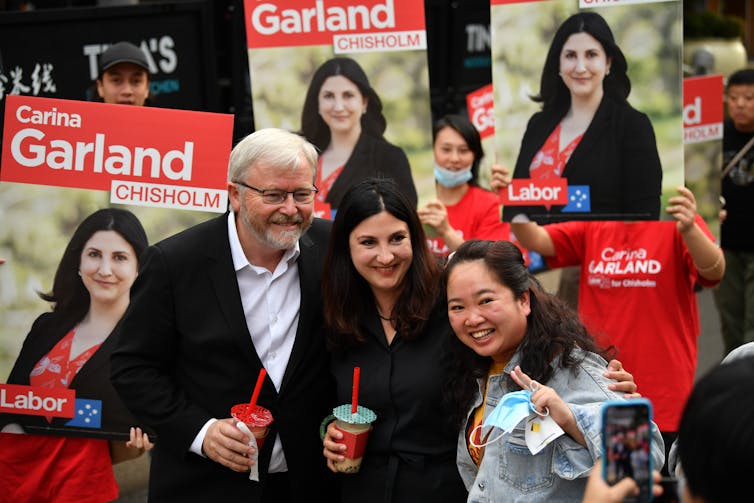
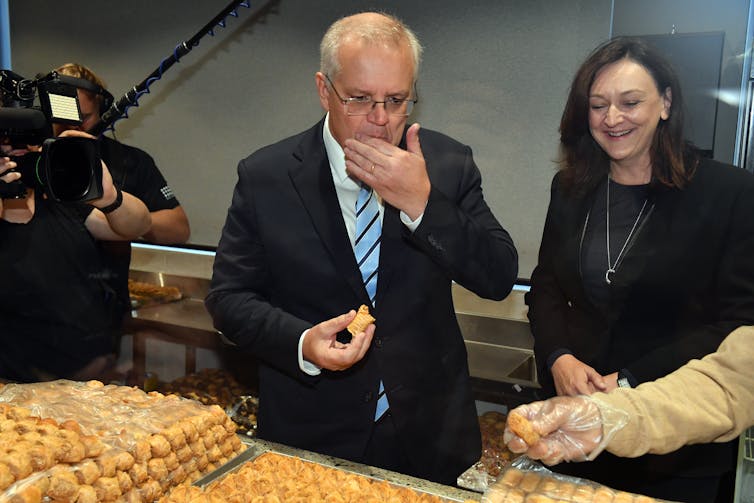
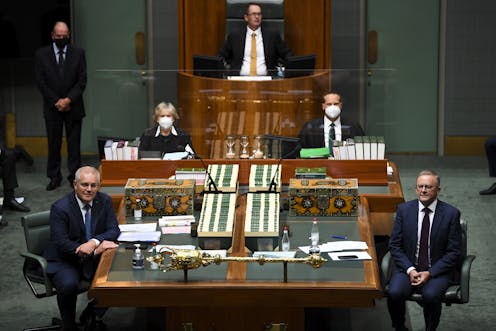
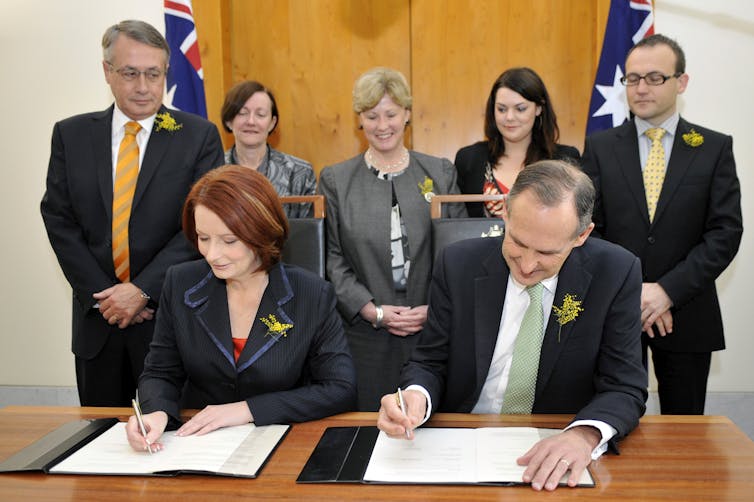
AAP Image/Pool, Alex Ellinghausen, The Conversation

Poll after poll suggests climate change is one of the most pressing issues for Australian voters. Of the 10,000 people who responded to The Conversation’s #SetTheAgenda poll, more than 60% picked climate change as the issue most impacting their lives.

And yet, climate change has barely been discussed by either major party in this election campaign so far.

Since the last federal election, we’ve watched record-smashing floods, bushfires and heatwaves take lives and destroy livelihoods, corroding our national spirit. Disasters such as these will worsen with every fraction of a degree of global warming. Which town will be hit next? Who will be trapped by rising floodwater, or encroaching flames?

Strong national policies on climate change will help us be better prepared, bring global emissions down, and provide strong leadership in this time of crisis. So how did the major parties’ climate policies stack up? We asked five experts to analyse and grade different aspects of this enormous portfolio.

Here are their detailed responses:

Coalition

Labor

The Conversation

Dr Jake Whitehead is on unpaid leave from his role as a Research Fellow at The University of Queensland. He was a Lead Author of the AR6 Transport Chapter for The Intergovernmental Panel on Climate Change (IPCC), a Member of the International Electric Vehicle Policy Council, and Director of Transmobility Consulting. He has previously received government and industry funding for several sustainable transport projects, including research on both hydrogen and electric vehicles, and mobility-as-a-service. He is also holds a part-time position as the Head of Policy at the Electric Vehicle Council.

Ian Lowe is emeritus professor of science, technology and society at Griffith University. He received funding from the national energy council in the 1980s for a study of Australia’s energy options up to 2030. He was president of the Australian Conservation Foundation from 2004 to 2014.

Johanna Nalau is an Australian Research Council DECRA Fellow at Griffith University and receives funding from the Australian Research Council. She is a Lead Author of the Intergovernmental Panel on Climate Change Working Group II (Chapter 15 and Summary for Policymakers) and Co-Chair of the Science Committee in the World Adaptation Science Program at United Nations Environment Program.

Matt McDonald has received funding from the Australian Research Council and the Economic and Social Research Council in the UK.

Samantha Hepburn does not work for, consult, own shares in or receive funding from any company or organisation that would benefit from this article, and has disclosed no relevant affiliations beyond their academic appointment.

ref. How do the major parties rate on climate policies? We asked 5 experts – https://theconversation.com/how-do-the-major-parties-rate-on-climate-policies-we-asked-5-experts-181790

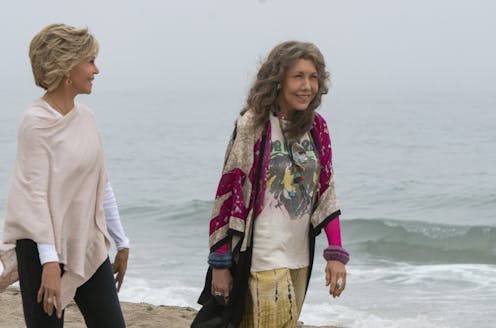
Grace and Frankie is the longest running series on Netflix – and a show for women who don’t see themselves on television

Source: The Conversation (Au and NZ) – By Mandy Treagus, Associate Professor, Department of English, Creative Writing and Film, University of Adelaide

Lara Solanki/Netflix

When the final 12 episodes of Grace and Frankie were released, the show became the longest running television series on Netflix.

Over 94 episodes, this unlikely hit went where no other series had taken viewers: into the lives of older women forced to restart their lives, both socially and sexually, after their marriages of 40 years had ended.

Their husbands’ revelation that they had been lovers for 20 years – and now planned to marry each other – threw the central characters fractiously together in an admittedly idyllic San Diego beach house.

The show broke new ground when it launched in 2015, not only for its frank and fearless portrayal of ageing, but because its central characters were ageing women.

Older women are one of the least visible demographics on television, and to see them front and centre is still unusual.

The Golden Girls (1985-92) is the only real precedent for Grace and Frankie, although the ages of its characters are surprising in retrospect.

In the first season of The Golden Girls, Rose is 55, Dorothy is 53, Blanche is 47 and Sophia is 79. In the reboot of Sex and the City, And Just Like That…, Miranda and Charlotte are 54, while Carrie is 55 – and they are certainly not portrayed as old.

But at the start of this series, Grace (Jane Fonda), Frankie (Lily Tomlin) and their former partners Robert (Martin Sheen) and Sol (Sam Waterson), are in their 70s.


Read more:
And Just Like That: how Sex and the City sequel is broadening the representation of 50+ women on TV


The trouble with ageing

The show covers many of the issues of ageing from the perspective of the aged. These include a broad range of health problems – arthritis, immobility, a knee reconstruction and mini-strokes – as well as negotiating the competing claims of children, grandchildren, lovers and friends.

In season four, following multiple health issues and falling victim to a major scam, Grace and Frankie are tricked by their children into moving into aged care.

When they find that they are not allowed to run a business there – among other lost freedoms – they launch an escape bid, stealing a golf cart and heading back to the beach house which has been sold from under them.

The issue of children making choices for their ageing parents against their will is fraught. Older parents often require assistance from their children but at the same time don’t want to lose their autonomy. Children can jump in to resolve issues without taking their parents’ agency into account.

Here, this tension is mostly a source of humour at the expense of the aged care home. But Grace and Frankie also gives a glimpse into how vulnerable people can become when they have health issues.


Read more:
For Australians to have the choice of growing old at home, here is what needs to change


Let’s talk about sex

One of the most striking elements of the show is its forthright approach to sex. Part of this is the frank acknowledgement that with age comes certain sexual challenges.

Typically, popular culture has run from the idea that older women could be sexual, especially as they do not conform to dominant ideas of beauty.

The issue of what is often obliquely referred to as “feminine dryness” is tackled directly when Frankie concocts a lube from yams.

Together, both Grace and Frankie also develop a vibrator that not only takes account of arthritic hands but also of limited mobility.

Though it provides the opportunity for numerous missteps, their company “Vybrant” is ultimately a success, with women of all ages giving the product rapturous endorsement.

Giving women the power to take control of their own sexual needs is something the show is emphatic about.


Read more:
When it comes to older people and sex, doctors put their heads in the sand


Finding joy

Bringing the challenges of coming out in your 70s for Robert and Sol into mainstream programming is also ground-breaking. Older gay men are another group who rarely see themselves on television.

Aspects of gay life – equal marriage, polyamory, promiscuity and leather men, together with gay musical theatre and obsessive dog ownership – are all depicted as part of the new world Robert and Sol enter into.

Coming out, and living the lives they have longed for, has its ongoing challenges for both characters. It is this willingness to look at every issue with both honesty and humour that has marked the approach by directors and writers Marta Kauffman and Howard J. Morris and made the show such a success.

The key focus of Grace and Frankie, despite its many diversions into the lives of ex-husbands, new lovers, friends and children, is always the friendship of Grace and Frankie.

Their friendship is hard won, severely tested, and often seems completely over – but it is the central love of both women’s lives, enabling them to go into old age with confidence, support and times of joy.

The Conversation

Mandy Treagus does not work for, consult, own shares in or receive funding from any company or organisation that would benefit from this article, and has disclosed no relevant affiliations beyond their academic appointment.

ref. Grace and Frankie is the longest running series on Netflix – and a show for women who don’t see themselves on television – https://theconversation.com/grace-and-frankie-is-the-longest-running-series-on-netflix-and-a-show-for-women-who-dont-see-themselves-on-television-182298

Fierce fighting continues in PNG’s Porgera with death toll reaching 17

By Miriam Zarriga in Port Moresby

Seventeen people have been killed, hundreds of families made homeless, dozens of houses razed and government services ground to a halt in Enga Province’s Porgera district in Papua New Guinea as warring clans took up arms against each other.

Calls for government help went unanswered at the weekend.

Police in Porgera said the number of deaths had shot up to 17 as fighting continued.

The sounds of gunfire could be heard as all government assets, including the Porgera mine staff, remained locked in their homes and behind gates.

An employee of the mine said the sounds of gunfire could be heard on Sunday evening with war cries echoing through the town centre of Paiam.

The fresh violence — which got worse following the withdrawal of security personnel to the provincial capital Wabag to prepare for election duties — ended a fragile, two-month peace truce between the warring Nomali and Aiyala clans of Paiam in Porgera.

The sitting MP of Lagaip-Porgera, Tomait Kapili, said the ongoing feud between two clans also meant the planned reopening of the world class Porgera mine was “slim” and “may not happen within the timeframe wanted by the government”.

Disappointed with ‘inaction’
Enga Governor Sir Peter Ipatas was disappointed with the inaction by the PNG Defence Force and police hierarchy.

“I have been asking for security forces for the last three weeks,” a frustrated Sir Peter said.

He confirmed with the Post-Courier that Prime Minister James Marape had been informed of the situation in Porgera.

PNG Post-Courier 09052022
Today’s PNG Post-Courier front page … “Porgera burns” banner headline.

Police Commissioner David Manning said that the violence erupted after a man from the Nomali clan was chopped on his hand by a man from Aiyala.

Last Tuesday, a security guard was attacked and slashed. He died of his injuries in front of the shop he was protecting.

The killing of the guard saw a confrontation flare up, which led to police firing several shots to deter the two clans.

In retaliation, the Nomali clan chopped the hand of a man from Aiyala on Friday morning.

Outnumbered by tribal fighters
“A fight broke out, with Mobile Squad 11 who were on mine operation in Porgera taking command of the township but were outnumbered by tribal fighters who were in possession of high powered firearms,” Manning said.

“The two clans have destroyed properties.”

On Saturday, battle lines were drawn as the two warring clans faced off in the streets of the Paiam.

Continuous gunshots could be heard as both clans continue a feud that escalated to the burning of several homes belonging to settlers around the mining town.

The confrontation continued with the withdrawal of police units back to Wabag to await further orders to be deployed into other provinces of the Highlands region.

The withdrawal led to a fierce confrontation between the two clans that saw more than 50 people injured, homes destroyed and the Paiam town centre coming to a standstill.

Local police could only stand by and watch the removal of property from homes as the two clans ruled the streets of the township.

Awaiting deployment orders
Police Mobile Squad 5 was supposed to be in Enga. However, it is understood the unit had yet to receive its deployment orders.

According to a source, new PNG Defence Force soldiers had been tasked to go into Enga, but this had been delayed given that the national government did not settle outstanding debts for service providers and troops.

Porgera remains without any security support, with reports that local police — who are grossly outnumbered and without support — are exhausted and could not do much.

Sources in Paiam also indicated that the Paiam district hospital was still operating but staff are scared because of the lack of security. They were only taking in emergency cases.

A medical officer said casualties from the tribal conflict were not taken to the hospital due to security fears.

He said the hospital had not been targeted by the clans but buildings around the hospital grounds had been razed to the ground.

In developments late Sunday afternoon, more than 15 ten-seater vehicles with PNGDF personnel had arrived for deployment to Porgera.

Miriam Zarriga is a PNG Post-Courier reporter. Republished with permission.

Print Friendly, PDF & Email

Article by AsiaPacificReport.nz

Stand-off between protesters and police on Norfolk Island averted

RNZ Pacific

A stand-off was averted on Norfolk Island today when a couple occupying a historic house chose to leave rather than face criminal charges.

The couple had been occupying one of the old officers’ houses in the Kingston World Heritage Site and the Canberra administrator had had police flown in from the mainland to carry out an eviction.

But one islander speaking for the couple, Mary Christian-Bailey, said they may have lost the battle but they intend to win the war.

She was referring to plans to now bring legal action to prove that it is Norfolk Islanders who control the site, not the Commonwealth of Australia.

“This now frees them to take the case to court to prove that it is not Commonwealth land, that it is Crown land in Norfolk Island’s name and belongs to the people here. It was sad but it was the best decision to make,” she said.

Mary Christian-Bailey said relations with the police were very good with them suggesting the couple give themselves a couple of days to leave the property.

In January 2020, The Canberra Times reported that the Australian government moved more than two decades ago to quash Norfolk Islanders’ hopes for independence, pointing to the island’s strategic importance deep in Canberra’s sphere of influence in the Pacific.

“The move, revealed in cabinet documents released [in January 2020], provides insight into the final decision from 2016 to strip Norfolk of self-government, a move that has ignited the islands who are now asking the United Nations to intervene,” reported The Canberra Times.

This article is republished under a community partnership agreement with RNZ.

Print Friendly, PDF & Email

Article by AsiaPacificReport.nz

Tiny and alternate houses can help ease Australia’s rental affordability crisis

Source: The Conversation (Au and NZ) – By Heather Shearer, Research Fellow, Cities Research Institute, Griffith University

Shutterstock

Rental housing in Australia is less affordable than ever before. It is no exaggeration to call the situation a crisis, with vacancy rates at record lows.

But there are some relatively simple, easy-to-implement and cost-effective things that can be done to ease rental affordability pressures.

These include relaxing planning restrictions on small and non-traditional houses, allowing granny flats to be rented to anyone, permitting property owners to let space to tiny house dwellers, and possibly even subsidising the building of granny flats or modification of houses for dual occupancy.


Read more:
Stability and security: the keys to closing the mental health gap between renters and home owners


‘Dependant’ persons only

The degree to which local councils permit very small dwellings depends on factors such as dwelling type, lot characteristics, planning scheme zoning and overlays, and state regulations.

Subject to these constraints, granny flats are generally legal in Australia, though states such as Queensland and Victoria restrict who can live in them.

In Queensland, most councils limit occupancy to members of the same household, defined as a group who “live together on a long-term basis and make common provision for food or other essentials for living”.

In Victoria, granny flats can only “provide accommodation for a person who is dependant on a resident of the existing dwelling” (and are hence called Dependant Person’s Units).

While these laws are sometimes ignored, they limit the potential for this affordable housing option for other individuals who struggle in the housing market. Extra council regulations and fees also make building a granny flat complicated, time-consuming and expensive, particularly if they incur infrastructure charges.

Desperately seeking parking space

Tiny houses, especially those on wheels, are typically not approved for permanent residence. Councils consider them caravans, with periods of permitted occupancy ranging from zero to about three months.

Some councils will tolerate them but, if receiving a complaint, can demand the tiny house be removed at short notice.

This can cause extreme distress. Some tiny house owners report living in constant fear of being moved on. In recent years we’ve seen increasing numbers of posts on tiny house social media pages pleading for “parking space”.

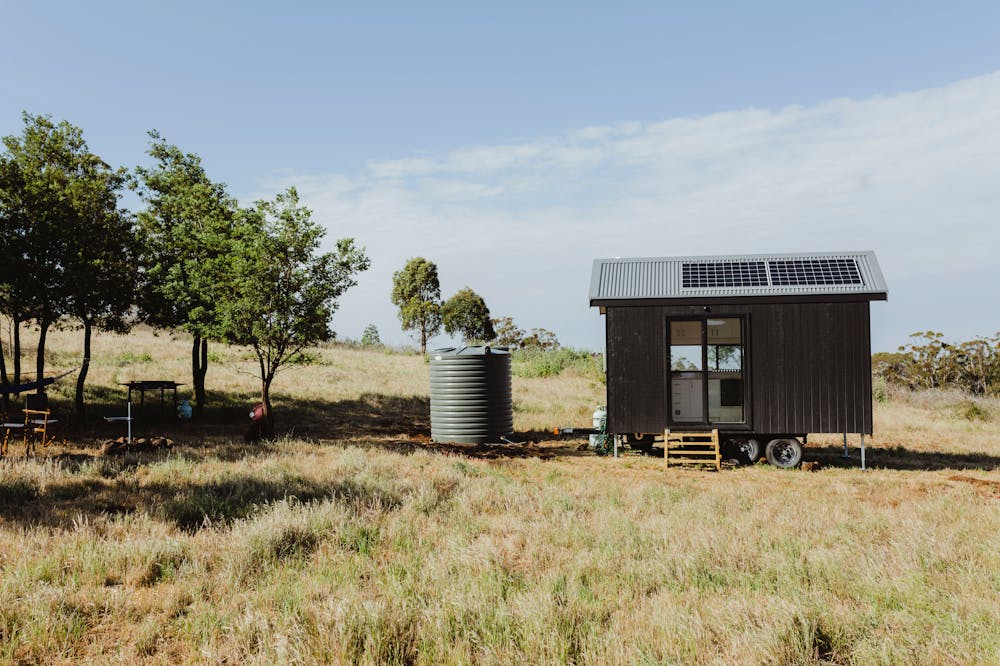
Because of these barriers, most tiny houses in Australia aren’t in urban areas, where demand for rental properties is highest, but hidden “under the radar” in more rural areas.

Tiny house in a rural setting.
Planning laws have made it difficult for tiny houses in urban areas.
Shutterstock, CC BY

These areas typically have poorer access to public transport, employment, education and health services. If unknown to authorities, tiny house dwellers may also be at higher risk from natural disasters such as bushfires and floods.


Benefits from easing restrictions

Removing some restrictions on letting granny flats and permitting and regulating longer-term occupancy for tiny house dwellers can help ease these rental affordability challenges.

There are other benefits too. For local councils trying to limit unsustainable, low-density expansion on their fringes, these changes enable a relatively gentle and unobtrusive form of densification in places where resistance to change is common.

It could also support more ageing in place (enabling the elderly to downsize while staying in their neighbourhood), reduce development pressures on the natural environment, and provide valuable income both for home owners and give local councils a new stream of rate income.


Read more:
So, you want to live tiny? Here’s what to consider when choosing a house, van or caravan


Allowing property owners to let space to a tiny-house dweller (with appropriate regulations on aesthetic appearance, safety features and environmental impacts) could be a cost-effective and rapid way to increase rental supply for some demographics. Single women over 50, for example, are at high risk of homelessness and also the demographic most interested in tiny house living.

This crisis needs innovative responses

We have seen that, when disasters strike, governments can introduce innovative responses to local housing crises.

In response to the massive floods of February and March, the New South Wales government’s Temporary Accommodation Policy changed the rules to allow a moveable dwelling or manufactured home to be placed in a disaster-affected area for up to two years, or longer subject to council approval.

Allowing tiny houses for a trial period of, say, two years could provide a valuable pilot project, and perhaps alleviate the concerns of some local ratepayers. In nine years of research into the tiny house movement in Australia, we have found some councils are willing to consider permitting tiny houses – but only if another council does it first.

A tiny house for sale at the Sydney Tiny House Festival, March 2020.
Heather Shearer, Author provided

A longer-term solution is to encourage the building of more granny flats as part of a program of moderate densification, as is happening in Auckland, New Zealand.

Rather than subsidising expensive renovations of existing homes – as the Morrison government did with its HomeBuilder grants scheme – federal, state and territory governments could offer incentives to divide or extend homes in well-designed and sustainably constructed ways to enable dual living.


Read more:
Up on a roof: why New Zealand’s move towards greater urban density should see a rooftop revolution


While not as visibly dramatic as floods and bushfires, the crisis of housing affordability deserves equally imaginative policy responses. After all, adequate housing is enshrined in the UN’s Universal Declaration of Human Rights.

The crisis is complex and multifaceted. There are no easy solutions to address it in its entirety, and for every demographic. Tiny houses and granny flats are not suitable for all households. But business as usual is no solution.

We need a willingness to experiment with and learn from innovative and even disruptive approaches.

The Conversation

Heather Shearer is a member of the Australian Greens Party and of the Australian Tiny House Association.

Paul Burton receives funding from the ARC (LP 190101218) and the City of Gold Coast as part of a long-standing Urban Growth Management Partnership. He is a Vice President of the Queensland Division of the Planning Institute of Australia and a member of the National Education Committee of PIA.

ref. Tiny and alternate houses can help ease Australia’s rental affordability crisis – https://theconversation.com/tiny-and-alternate-houses-can-help-ease-australias-rental-affordability-crisis-182328

Analysis of 5,500 apartment developments reveals your new home may not be as energy efficient as you think

Source: The Conversation (Au and NZ) – By Michael Ambrose, Research Team Leader, CSIRO

Apartment living is booming in Australia. Many people choose apartments for their good energy efficiency, which reduces the need for heating and cooling and leads to lower power bills. But not every apartment is as energy efficient as the development advertises.

All proposed new dwellings, including apartments, require an energy rating certificate. Generally, apartments achieve a higher average energy star rating than houses in the same area.

However, the method used to assess and report the energy efficiency of new developments – averaged across the entire development – could lead some purchasers to believe their new apartment is more energy efficient than it is.

My colleagues and I collected energy rating profiles for more than 5,500 apartment developments across Australia to explore what’s really going on. In many cases, we found clusters of apartments far below the energy star rating for the complex as a whole.

Averages can be misleading

Australia’s home energy star ratings are formally known as the Nationwide House Energy Rating Scheme (NatHERS). The scheme measures the “thermal performance” of a new home – or how well it remains at a comfortable temperature without artificial heating or cooling.

Last year in New South Wales, 58% of all energy rating certificates issued were for new apartments, reflecting the popularity of this type of dwelling.

In some areas, demand for apartments is skyrocketing. In the ACT, for example, 33% of certificates issued last year were for apartments, up from 7% four years earlier.

For a residential development to comply with the National Construction Code, the average rating across all apartments must be at least 6 stars. The maximum rating is 10 stars. Across Australia last year, the average rating of new apartments was 6.6 stars, compared to an average of 6.2 stars for houses.

This averaging process means some apartments may be above the average and some below. It may also mean some individual apartments don’t meet the minimum 6 star requirement.

In fact, there may be a significant cluster of apartments that rate below 6 stars – for example, west-facing apartments exposed to the afternoon sun that require a lot of cooling.

Conversely, a small number of apartments may rate well above 6 stars. These may be north-facing apartments that are also well insulated by other apartments above, below and on either side. These apartments will pull up the average star rating of the development.

This is a legitimate approach to energy ratings of apartment blocks. But it does raise an important question: do buyers know the energy rating of their individual apartment – especially those apartments with a below-average rating?


Read more:
Low-energy homes don’t just save money, they improve lives


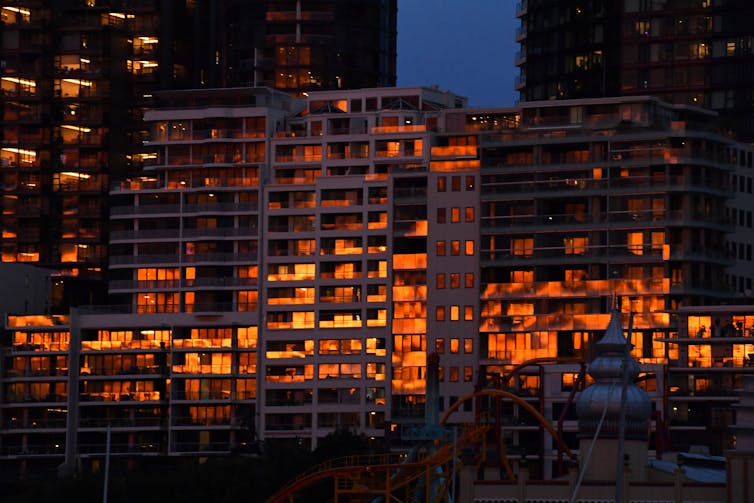
apartment windows reflecting sunset
Sunset views may be nice, but west-facing apartments can also require lots of cooling.
Mick Tsikas/AAP

Crunching the numbers

We collected data from NatHERS certificates for more than 5,500 apartment developments across Australia comprising both the certificates for individual apartments and the rating of developments as a whole.

Generally, ratings for individual apartments were close to the average of the entire complex. But in about 19% of apartment developments, at least 10% of apartments rated 5 stars or lower.

The chart below shows the star rating distribution for a development in Melbourne with about 150 apartments. The average star rating for the development was 6.2 stars. However, 47% of apartments rated below 6 stars while 23% rated above 7 stars.


Made with Flourish

We also examined a large development in Sydney with more than 400 apartments. The development has an average rating of 7 stars. However, as illustrated below, 16% of apartments rate below 6 stars and 1% (five apartments) are below 5 stars.

Those five apartment owners will likely have much higher energy costs than most of their neighbours. But they may not have realised that at the time of purchase, and the sale price may not have reflected this poorer energy performance.


Made with Flourish

Know what you’re buying

Energy ratings are mandatory for all new individual dwellings in Australia. However, providing the result to consumers is not.

Recent research has shown most real estate advertisements do not promote a home’s energy rating, and real agents often don’t know what the rating is.

Energy rating certificates could be included as standard in the information provided to someone looking to buy an apartment.

But in the meantime, if you’re planning on buying a new apartment, ask for a copy of the energy rating certificate. Only then will you know what you’re paying for.


Read more:
House hunters are rarely told the home energy rating – little wonder the average is as low as 1.8 stars


The Conversation

Michael Ambrose has received funding from government departments including the Department of Industry, Science, Energy and Resources. CSIRO owns the AccuRate Sustainability software which is the benchmark tool used in the NatHERS software accreditation process. CSIRO receives financial benefit from the creation of NatHERS Certificates which is then used to maintain and develop the accreditation software.

ref. Analysis of 5,500 apartment developments reveals your new home may not be as energy efficient as you think – https://theconversation.com/analysis-of-5-500-apartment-developments-reveals-your-new-home-may-not-be-as-energy-efficient-as-you-think-182143

‘Intimidated’ Fiji worst place for Pacific journalists, says RSF’s freedom index

RNZ Pacific

Fiji has been ranked as the worst place in the Pacific region for journalists in the latest assessment by the global press freedom watchdog Reporters Without Borders (RSF).

In RSF’s 2022 World Press Freedom Index released last week, Fiji was placed 102nd out of 180 countries — receiving an overall score of 56.91 out of 100.

The country slipped by 47 places compared to its 2021 rankings when it was placed 55 out of 180 nations.

RSF changed its system of analysis this year to include a breakdown on specific categories such as legal framework and justice system, technological censorship and surveillance, disinformation and propaganda, arbitrary detention and proceedings, independence and pluralism, models and good practices, media sustainability, and violence against journalists, which partially explains Fiji’s sudden fall on the Index.

The Paris-based media watchdog said “journalists critical of the government are regularly intimidated and even imprisoned by the indestructible Prime Minister, Frank Bainimarama, in power since the military coup of 2006.”

Other countries from the region surveyed by the Index included Aotearoa New Zealand, which was ranked 11th, Australia (39th), Samoa (45th), Tonga (49th), and Papua New Guinea (62nd).

Neighbouring Timor-Leste improved 54 places to 17th.

RSF said Aotearoa New Zealand, which received an overall score of 83.54, was a “regional model” for press freedom “by having developed safeguards against political and economic influences” for journalists to conduct their work.

The yearly report was released to coincide with last week’s World Press Freedom Day on May 3.

Media decree, sedition laws
It said Fiji operated under the 2010 Media Industry Development Decree, which became law in 2018.

RSF said in an earlier report that the sedition laws in Fiji, with penalties of up to seven years in prison, were also used to foster a climate of fear and self-censorship.

“Sedition charges put the lives of three journalists with The Fiji Times, the leading daily, on hold until they were finally acquitted in 2018,” the report stated.

“Many observers believed it was the price the newspaper paid for its independence.”

Fiji was ranked 52nd in both 2020 and 2019 but was 57th in 2018.
The Fiji Media Industry Development Authority did not respond to a request for comment.

Print Friendly, PDF & Email

Article by AsiaPacificReport.nz

Prasad accuses FijiFirst of ‘political gimmick’ in highlighting 1987 coup

By Arieta Vakasukawaqa in Suva

Opposition National Federation Party leader Professor Biman Prasad has questioned the motive of the FijiFirst government to continuously highlight the 1987 coup during the girmit celebrations while refusing to mention the devastation brought about by the 2000 and 2006 coups on Fijians.

He highlighted this issue during a rally in Tadevo, Navua, on Saturday.

“They are talking about 1987 coup which happened 35 years ago, but they never mention anything about the 2000 and 2006 coup,” Professor Prasad said.

“They are talking about the 1987 coup because they want to stoke fear in the minds of people, especially on the Fijians of Indian descent voters.

Professor Prasad said the government should also apologise to the family of the late Professor Brij Lal for banning him from the country of his birth and who died at his home in Brisbane, Australia, last year.

“Every government minister and every government member in the FijiFirst party, if they have any shame left in every girmit function that they organise, they should apologise to the family of late Professor Lal and to all the descendants of the girmitya in this country on how they brutally banned him from Fiji.”

He said it was hypocritical for the Minister for Education, Heritage and Arts Premila Kumar and other senior government officials to be parading and giving speeches about the struggles of Fijians of India descent, yet forget the extremely shameful act of banning the historian who had written everything on girmit about Fijians of Indian descent.

“It’s obvious they are using the situation to campaign for the next general elections by highlighting what happened in 1987 and forgetting what happened in 2000 how people were terrorised, forgetting who was a RFMF commander at that time, forgetting the 2006 coup, how many people including women were brutally treated by those were in power at that time,” he said.

Professor Prasad said the girmitya would be “turning in their graves looking at how the shameless government used this occasion for a political gimmick”.

Questions sent to Prime Minister Voreqe Bainimarama remained unanswered when this edition went to press.

Arieta Vakasukawaqa is a Fiji Times reporter. Republished with permission.

Print Friendly, PDF & Email

Article by AsiaPacificReport.nz

Bongbong politics: Rehabilitating the Philippines’ martial law Marcos family

ANALYSIS: By Binoy Kampmark

Children should not pay for the sins of their parents. But in some cases, a healthy suspicion of the offspring is needed, notably when it comes to profiting off ill-gotten gains.

It is certainly needed in the case of Filipino politician and presidential candidate Ferdinand “Bongbong” Marcos Jr, who stands to win today if opinion polls are to be believed.

Bongbong’s father was the notorious martial law strongman Ferdinand Marcos; his mother, the avaricious, shoe-crazed Imelda.

Elected president in 1965, Ferdinand Marcos indulged in murder, torture and looting. He thrived on the terrain of violent, corrupt oligarchic politics, characterised by a telling remark from the dejected Sergio Osmenã Jr, whom he defeated in 1969: “We were outgunned, outgooned, and outgold.”

In 1972, martial law was imposed on the pretext of a failed assassination attempt against the defence secretary, an attack which saw no injuries nor apprehension of suspects. It was only formally lifted in 1981.

Under the blood-soaked stewardship of the Marcos regime, 70,000 warrantless arrests were made, and 4000 people killed.

The Philippines duly declined in the face of monstrous cronyism, institutional unaccountability and graft, becoming one of the poorest in Southeast Asia. While Marcos Sr’s own official salary never rose above US$13,500 a year, he and his cronies made off with $10 billion. (Estimates vary.)

Garish portraits, designer shoes
When revolutionaries took over the Presidential palace, they found garishly ornate portraits, 15 mink coats, 508 couture gowns and more than 3000 pairs of Imelda’s designer shoes.

Fleeing the Philippines in the wake of the “people power” popular insurrection of 1986 led by supporters of Corazon “Cory” Aquino, the Marcoses found sanctuary in the bosom of US protection, taking up residence in Hawai’i.

Opinion polls show that Bongbong is breezing his way to office, a phenomenon that has little to do with his personality, sense of mind, or presence.

Philippine presidential election frontrunner Bongbong Marcos
Philippine presidential election frontrunner Bongbong Marcos wooing voters at a campaign rally in Borongan, Eastern Samar. Image: Rappler/Bongbong FB

A Pulse Asia survey conducted in February showed voter approval at an enviable 60 percent. This would suggest that the various petitions seeking to disqualify him have had little effect on perceptions lost in the miasma of myth and speculation.

All this points to a dark combination of factors that have served to rehabilitate his family’s legacy.

For the student aware of the country’s oligarchic politics, this is unlikely to come as shocking. For one, the Marcoses have inexorably found their way back into politics, making their way through the dynastic jungle.

Imelda, for all her thieving ways, found herself serving in the House of Representatives four times and unsuccessfully ran for the presidency in 1992. Daughter Imee became governor of the province of Ilocos Norte in 2010, and has been serving as a senator since 2019.

Contested the vice-presidency – and lost
Marcos Jr followed a similar trajectory, becoming a member of congress and senator and doing so with little distinction. In 2016, he contested the vice-presidency and lost.

Bongbong has already done his father proud at various levels, not least exhibiting a tendency to fabricate his past. On the touchy issue of education, Oxford University has stated at various points that Marcos Jr, while matriculating at St Edmund Hall in 1975, never took a degree in Politics, Philosophy and Economics — as he claims.

According to the institution’s records, “he did not complete his degree, but was awarded a special diploma in Social Studies in 1978″.

A statement from the Oxford Philippines Society remarks that, “Marcos failed his degree’s preliminary examinations at the first attempt. Passing the preliminary examinations is a prerequisite for continuing one’s studies and completing a degree at Oxford University”.

The issue was known as far back as 1983, when a disturbed sister from the Religious of the Good Shepherd wrote to the university inquiring about the politician’s credentials and received a letter confirming that fact.

Outgoing President Rodrigo Duterte, whose own rule has been characterised by populist violence and impunity, has played his role in the rehabilitative process. In 2016, almost three decades after the former dictator died in Hawai’i, Duterte gave permission for Ferdinand Marcos to be buried with full military honours in Manila’s National Heroes’ Cemetery.

The timing of the burial was kept secret, prompting Vice-President Leni Robredo to describe the ceremony as “a thief in the night”.

‘Legitimising’ massive violations of human rights
A coalition of Jesuit groups claimed that the interring of Marcos in Manila “buries human dignity by legitimising the massive violations of human and civil rights… that took place under his regime.” Duterte would have appreciated the mirror-effect of the move, a respectful nod from one human rights abuser to another.

Under his direction, thousands of drug suspects have been summarily butchered.

Bongbong has also taken the cue, rehabilitating his parents using a polished, digital campaign of re-invention that trucks in “golden age” nostalgia and delusion.

Political raw material has presented itself. The gap between the wealthy and impoverished, which his father did everything to widen, has not been closed by successive governments. According to 2021 figures from the Philippine Statistics Authority, 24 percent of Filipinos — some 26 million people — live below the poverty line.

Videos abound claiming that his parents were philanthropists rather than figures of predation. The issue of martial law brutality has all but vanished in the narrative.

Social media and online influencers have managed the growth of this image through a coordinated campaign of disinformation waged across multiple platforms.

Gemma B. Mendoza of the Philippine news platform Rappler has noted the more sinister element of these efforts. Even as the legacy of a family dictatorship is being burnished, the press and critics are being hounded.

Robredo the only challenge
The only movement standing in the way of the Marcos family is Vice-President Robredo, who triumphed over Marcos Jr in 2016. Her hope is a brand of politics nourished by grassroots participation rather than shameless patronage.

The same cannot be said of the political classes who operate on the central principle of Philippine politics: impunity.

This, at least, is how political scientist Dr Aries Arugay, an associate professor of the University of Philippines, sees it: “We just don’t jail our politicians or make them accountable … we don’t punish them, unlike South Korean presidents.”

The opposite is the case, and as the voters make it to the ballot today, the country, if polls are to be believed, will see another Marcos in the presidential palace.

Dr Binoy Kampmark was a Commonwealth Scholar at Selwyn College, Cambridge. He currently lectures at RMIT University in Melbourne, Australia. 

Print Friendly, PDF & Email

Article by AsiaPacificReport.nz

Is our electoral system truly democratic? How Australia stacks up on 4 key measures

Source: The Conversation (Au and NZ) – By Stephen Morey, Senior Lecturer, Department of Languages and Linguistics, La Trobe University

In Australia, we choose our political representatives and governments through a democratic electoral system.

Generally, these systems should have four main aims. These are to:

  1. secure easy access to voting for everyone of voting age

  2. ensure the party whose candidates attract the most votes wins a majority in parliament

  3. establish a parliament that, as much as possible, represents the opinions of all voters

  4. uphold the equal value of each individual vote.

With a federal election fast approaching, let’s assess Australia’s own electoral system.

Overall, Australia rates well on access to voting and on ensuring the most popular party wins government.

But there’s still room for improvement to ensure the largest possible number of people have a member of parliament they feel represents them, and to reduce the number of wasted votes.

1. Access to voting

Australia is good at encouraging people to vote, made easier by the fact it’s compulsory.

The Australian Electoral Commission runs campaigns to get voters enrolled, and has achieved some success in the lead-up to the May 21 election.

But the cut-off date for this election was April 18 – a full 33 days before election day. This early closing date is to ensure the electoral roll is complete before candidate nominations close. But this means some people will miss out on voting, which isn’t ideal.

In some countries, people can claim enrolment even on election day. Introducing this in Australia may improve our electoral system.

Australia is also great at giving voters multiple choices for how and when they can vote.

Elections are held on a Saturday when more people, particularly working professionals, have ample time to attend a polling booth.

But if you can’t, there’s postal voting and early voting at pre-poll centres. And if you’re not in your own area, you can still vote.

So on access to voting, I score Australia 4.5 stars out of 5.

2. Government by majority

We usually elect one of two major parties preferred by a majority of voters.

However, the growing number of political parties has made this process more complex.

In 1974, Labor won 49% of the first preferences and the Coalition 46%, which translated into a narrow Labor majority. Back then, almost everyone voted for candidates from major parties.

A year later, in 1975, Coalition candidates won 53% of the votes, which led to a large Liberal majority. This was the last time any party won a majority of first preference votes at a federal election (Bob Hawke came close in 1983 with 49% for Labor).


Read more:
You don’t understand me: is local politics truly representative of the people?


So how can we be sure the party we want is winning government?

In Australia, we have preferential voting. This means we’re required to mark preferences one, two, three, and beyond. It means we can calculate a “two-party-preferred vote” – whether you ultimately prefer Labor over the Coalition or vice-versa.

In Australian elections, the party with the majority of two-party-preferred votes has generally won.

But not always. In 1998, Labor won 51% after preferences, but still lost the election. This happens when parties have a lot of safe seats, but narrowly lose the more marginal seats.

So on government by majority, I score Australia 4 stars.

3. Ensuring everyone is represented

In the Senate, there are Labor, Coalition, and Greens members in every state. In some states, there are others from the Centre Alliance, Jacqui Lambie Network, and One Nation parties, as well as independents such as Rex Patrick.

So at least in the Senate, a large majority of voters have a senator representing a party they voted for.

However, that isn’t the case in the House of Representatives.

In seats where no candidates gained 50% of first preferences, the winner received less than 40% of the first preferences. As a result, these candidates were only elected narrowly by transfer of preferences.

In the electorate of Macquarie in 2019, for example, Labor MP Susan Templeman won just 38% of the votes but narrowly scraped through with 50.2% after preferences.

She was the candidate ultimately preferred by most voters, but the 49.8% who preferred someone else aren’t represented by a candidate they wanted.

A proportional system like the one for state elections in Tasmania would more fairly represent the majority of voters, with more than 85% of people voting for candidates from parties that were elected to represent them.

On making sure everyone is represented, I’d give us 3.5 stars, because there are too many people who don’t feel represented.

4. Equal (and not wasted) votes

Equality of votes is less straightforward.

Since Federation, 12 senators have been appointed to the Senate from each state, regardless of their respective populations.

As a result, in 2019, it took 50,285 votes to win a Senate spot in Tasmania but 670,761 votes in New South Wales.

In the House of Representatives, each electorate has more or less the same number of voters. It’s effectively a “one person, one vote” system.

In reality, however, there are many wasted votes due to “safe seats” – those that almost never change party.

This is why ABC election analyst Antony Green lists only 49 seats as “key seats” despite there being 151 seats in the House of Representatives. In other words, over two-thirds are essentially safe seats.

Some would argue voters in these 104 safe seats don’t contribute to the election result. But in actual fact they do, because a seat only becomes safe if supported by the majority of voters.

In proportional systems like Tasmania and the ACT, there are no truly safe seats, because names on the ballot paper are rotated and the voters choose which candidates from which party are elected.

Proportional systems also reduce the number of “wasted votes”. In our preferential system, most MPs in the House of Representatives win with between 50.1% and 60% of the votes after preferences. That means between 49.9% and 40% are voting for defeated candidates. These votes are “wasted” in the sense that they don’t lead to the election of a candidate. But in the Senate, which uses proportional voting, at least 85% of votes count to the elected candidates.

Since the House of Representatives is the main game, and there are too many people whose votes don’t elect anyone in that house, I can only give 3 stars for us on this.

Australia has a good electoral system, and the rules of the election are conducted very fairly by the independent Australian Electoral Commission. But there are aspects that could be improved. So let’s give ourselves a mark of 15/20 and work to make it even better.

The Conversation

Stephen Morey is the National Secretary of the Proportional Representation Society of Australia (prsa.org.au). He is also a life member of the Australian Labor Party but does not hold any position within that organisation.

ref. Is our electoral system truly democratic? How Australia stacks up on 4 key measures – https://theconversation.com/is-our-electoral-system-truly-democratic-how-australia-stacks-up-on-4-key-measures-180868

Without a better plan, New Zealand risks sleepwalking into a biodiversity extinction crisis

Source: The Conversation (Au and NZ) – By Matthew Hall, Senior Researcher, Environmental Law Initiative and Visiting Scholar, Faculty of Law, Te Herenga Waka — Victoria University of Wellington

Getty Images

Nature in Aotearoa New Zealand is in serious trouble. With many of our species and habitats at risk of disappearing forever, the government’s 2020 biodiversity strategy sets the scene in stark terms:

Despite all that we are doing to try to protect and restore habitats and assist species, Papaptūānuku and Aotearoa New Zealand’s indigenous biodiversity is in crisis.
Around 4,000 species are threatened or at risk of extinction. Many plants and wildlife continue to decline or are just hanging on.
We need to act urgently to ensure that nature is healthy and thriving for its own sake and for current and future generations.

The strategy – full title, Te Mana o te Taiao: Aotearoa New Zealand Biodiversity Strategy 2020 – contains staggered goals for the years 2025, 2030 and 2050. The task of achieving those 2025 goals falls to the recently released Biodiversity Strategy Implementation Plan.

The government deserves credit for acknowledging a biodiversity crisis and responding with a plan. As the strategy acknowledges, there is much good work already happening to protect and restore habitats and species.

Unfortunately, comparing the strategy and the plan reveals a serious disconnect between important goals and the associated actions.

Missing in action

In keeping with the government’s wish that the plan be a living document, we identify fundamental issues that need to be urgently addressed if we’re to avoid sleepwalking into a biodiversity crisis.

For example, one of the biodiversity strategy’s 2025 goals states:

The most ecologically damaging pollutants (eg. excess nutrients, sediment, biocides, plastics, light and sound) and pollutant sources have been identified, and an integrated plan for their management is in place.

Yet the plan merely refers back to existing resource management instruments, despite the failure of these to prevent the proliferation of ecologically damaging pollutants such as nitrates or pesticides.

Similarly, another 2025 goal sates:

Environmental limits for the sustainable use of resources from marine ecosystems have been agreed on and are being implemented.

The plan then refers to a “best practice framework” for aquaculture, the implementation of the existing quota management system, the Fisheries Amendment Bill, and the forthcoming Natural and Built Environments Act. None of these actions involves the agreement and implementation of environmental limits for marine ecosystems by 2025.

Other core goals around marine bycatch, freshwater fisheries and ecosystem restoration also suffer from similar disconnects between aspiration and action. To meet these key goals, the plan should be updated with concrete actions that directly align with the strategic goals.

No fisheries plans involve the agreement and implementation of environmental limits for marine ecosystems by 2025.
Shutterstock

Beyond business as usual

Around two-thirds of the plan represents measures already in place. While many are targeted at the 2025 goals and will obviously have value, it’s clear business as usual has led us to the current crisis.

Addressing the scale of of the crisis demands a step-change in our approach to biodiversity protection and conservation. Fundamental to that is moving beyond business as usual, and for the government to produce a set of quantifiable targets and limits for biodiversity conservation.

The current biodiversity strategy “goals” are vague and hard to quantify – for example: “Significant progress has been made in protecting marine habitats and ecosystems of high biodiversity value.” Even with an agreed set of national indicators it will be difficult to know if goals have actually been met.


Read more:
Bringing the tūī back to town – how native birds are returning to NZ’s restored urban forests


Instead, we must heed the call of scientists and produce smart national and regional biodiversity targets that clearly set out how much of an ecosystem, a species or a population we wish to sustain as a nation.

The strategy and plan do contain references to environmental limits in the freshwater and marine environments, as well as the work to introduce limits into the new Natural and Built Environments Act.

While this is welcome, it’s not clear from the plan that these will be dedicated biodiversity limits (the minimum we need for an ecosystem, species or population to survive), beyond which we cannot lawfully proceed.

Such limits, in theory, should prevent biodiversity continually being traded away for development, perhaps the key driver of biodiversity loss.


Read more:
Why a sense of kinship is key to caring about the living world


Consensus on the crisis needed

With targets and limits in place, the Department of Conservation (DOC) should urgently review all legally protected land in Aotearoa New Zealand, to determine the extent to which it meets our target levels for ecosystems, species and populations. A similar review was done by Australian scientists in 2016.

Legal protections are vital, as habitats that aren’t legally protected are more likely to be cleared for land development. Where species or ecosystems are underrepresented on protected public and private land, the government should detail concrete actions to increase the levels of those ecosystems and habitats under protection.


Read more:
How New Zealand’s review of ecologically important land could open the door to more mining on conservation land


A good starting point would be to examine where areas of stewardship land (ecologically significant land not currently managed by DOC) could be restored back to ecosystem health.

Underpinning all this is the political will and resourcing to make it happen. Already the strategy and plan have been through two governments, with maybe another to follow next year’s general election. DOC is massively under-resourced and facing a budget crisis.

To ensure the longevity of this work, perhaps what’s needed most is long-term cross-party support for urgently addressing the biodiversity crisis.

Without that support and funding, regardless of what the plan is on paper, the government won’t be able to take the big actions necessary to match the scale of our biodiversity crisis.

The Conversation

Matthew Hall is a Senior Researcher at the Environmental Law Initiative.

Allan Brent is Senior Legal Advisor to the Environmental Law Initiative.

ref. Without a better plan, New Zealand risks sleepwalking into a biodiversity extinction crisis – https://theconversation.com/without-a-better-plan-new-zealand-risks-sleepwalking-into-a-biodiversity-extinction-crisis-182279

The US FDA has moved to ban menthol cigarettes. Australia should do that and more

Source: The Conversation (Au and NZ) – By Kathryn Barnsley, Adjunct researcher, University of Tasmania

Shutterstock

Menthol is the minty cigarette ingredient that conjures up images of beaches, snow-covered ski slopes and glamorous yacht parties, all crisp white and fresh green. Menthol as a deadly additive is under threat at last.

Several countries, including Canada, Ethiopia, Turkey, Chile, the European Union and the United Kingdom, have banned the use of menthol and other flavours in tobacco products.

Late to regulating menthol in tobacco products, the US Food and Drug Administration has also announced a ban.

In Australia, we have done little to change what’s inside cigarettes and other smoking products. So we lag even further behind the many other countries that have banned menthol.

For ‘timid’ ladies

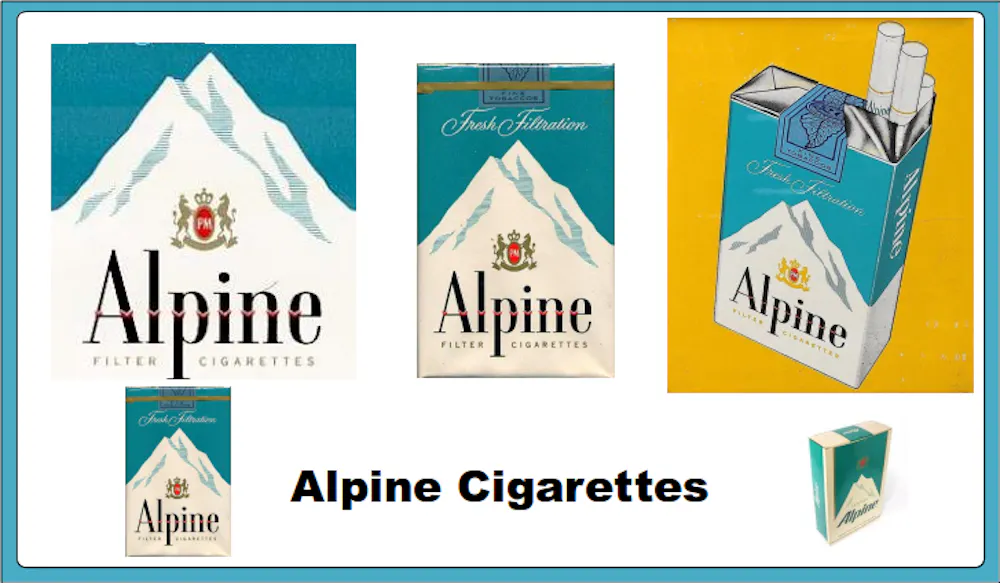
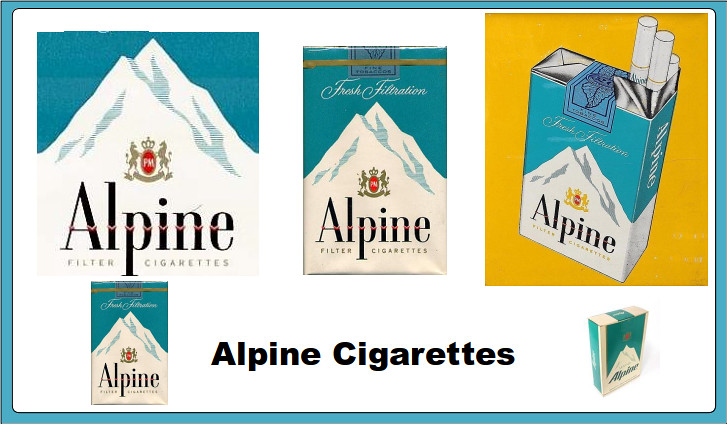
The marketing of menthol by the tobacco industry in Australia has long been targeted at supposedly sophisticated smokers. In Melbourne in the 1990s, tobacco giant Philip Morris – in its personality analysis of smokers of its Alpine menthol brand – found the “Alpine Gal is a physically timid lady”, so the packaging had to be “gentle”, not “dare devil”.

cigarette advert images with mountain images
The classic ‘fresh’ look of menthol cigarette advertising.
Flickr/Keijo Knutas, CC BY-SA

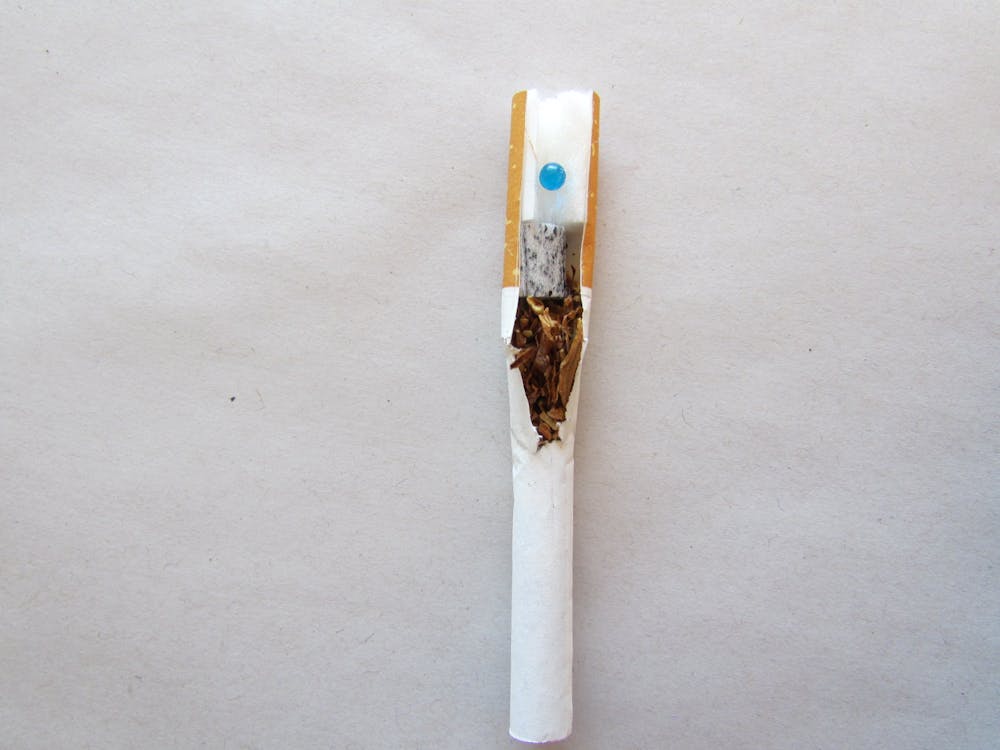
More recently, the industry added menthol “crush balls” or capsules in filters in Australian cigarettes, so users get a burst of menthol by biting on the filter. Once again, women and children are the target market. A study from Wales showed the fact that:

[…] three in five 11–16 year-old smokers reported using menthol cigarettes in the past 30 days highlights how appealing these products are to young people, particularly capsule cigarettes, used by 70% of menthol smokers.

A search of millions of tobacco industry documents confirms menthol is designed to attract new young smokers, who incorrectly believe it makes cigarettes somehow less harmful.

opened up cigarette filter shows blue capsule inside
These days, menthol capsules are used inside cigarette filters.
Author provided

In 2012, Australia’s then health minister and Attorney-General Nicola Roxon regulated the outside of cigarette packets, introducing plain packaging with graphic health warnings. Although significant, the packaging change did nothing to alter what was inside the product.

Nor have subsequent governments.

In other words, we have not yet regulated the most damaging aspects of cigarette design that increase and maintain addiction.


Read more:
Next step for tobacco control? Make cigarettes less palatable


Not really ‘light’ – just dangerous

Menthol is associated with so-called “light” cigarettes, which the Australian Competition and Consumer Commission (ACCC) has found misleading and deceptive and banned the use of the term. The ACCC did not ban the content or engineering of cigarettes.

It is not just additives in cigarettes, and the smoke emissions, that are harmful. The “engineering hoax” of filters – which don’t make smoking any safer – is an even more dangerous fraud.


Read more:
Filters: a cigarette engineering hoax that harms both smokers and the environment


A new era of additives

Australia’s new National Tobacco Strategy Consultation Draft says it will “explore” regulation of filters, additives – including menthol – and nicotine content, but offers little certainty.

In the UK, the ban on menthol cigarettes not only triggered a switch to menthol vapes, but also prompted the tobacco industry to invent new products to exploit loopholes in the law.

Late last year, the Organised Crime and Corruption Reporting Project – a network of investigative journalists – found:

A key goal of Big Tobacco was to get menthol defined as vaguely as possible.

So, any attempts at legislative control must be tightly worded. Big tobacco will drive its legal trucks through anything vague.

The effects of bans are mixed

Canadian research showed a fall in smoking rates followed their menthol ban.

Other research suggested targeting menthol in cigarettes might cause a switch to vaping, as in the UK. We know that vaping is a global public health problem and that flavourings drive uptake in adolescents. The FDA will not immediately ban menthol in e-cigarettes.

hand with e-cigarette and vapour
In some places, menthol cigarette bans have seen a switch to vaping.
Shutterstock

Vaping causes lung damage and exacerbates COVID symptoms.

E-cigarettes and heat-not-burn products should be regulated in exactly the same way as other tobacco products, and flavours should be regulated or eliminated.

New Zealand has moved to reduce nicotine content, the principal addictive drug in tobacco. But NZ has dropped the ball on e-cigarettes by separating its regulatory framework from other tobacco products. The country is experiencing high rates of teenage vaping uptake.


Read more:
A damning review of e-cigarettes shows vaping leads to smoking, the opposite of what supporters claim


Smoking kills

There are three million smokers in Australia. Two-thirds will die from smoking-related diseases.

Most will have health problems, and our hospital emergency departments and wards deal with much higher rates of smokers being admitted than the general population.

The crushing burden on the health system and the associated economic cost could be effectively reduced with comprehensive regulatory measures on tobacco.

Endgame

The four endgame initiatives that will reduce smoking and vaping to a minimum in Australia are:

  1. a ban on sales of both combustible and vape tobacco products to anyone born after the year 2004

  2. regulation to eliminate flavours (including, but not limited to, menthol) in combustible, vape and emerging tobacco products

  3. staged reduction in nicotine content

  4. a ban on filter ventilation engineering in cigarettes.

Banning menthol as a standalone reform would make a modest contribution to reducing smoking and vaping rates in Australia.

However, substantive reduction in smoking rates will only occur with a comprehensive suite of measures, already strongly supported in the community. These include phasing out the sale of tobacco products completely.

The Conversation

Kathryn Barnsley is co-convenor of SmokeFree Tasmania.

ref. The US FDA has moved to ban menthol cigarettes. Australia should do that and more – https://theconversation.com/the-us-fda-has-moved-to-ban-menthol-cigarettes-australia-should-do-that-and-more-182435

Victoria’s prison healthcare system should match community healthcare

Source: The Conversation (Au and NZ) – By Andreea Lachsz, PhD Candidate, University of Technology Sydney

Aboriginal and/or Torres Strait Islander readers are advised that names of deceased people are included in this article.

The Victorian Aboriginal Legal Service is representing family members of Veronica Nelson, Ms Calgaret, and Michael Suckling in coronial investigations/inquests into their deaths in custody.


When someone is placed in prison, they are entirely dependent on prison officers and prison health-care providers. Incarcerated people do not get to choose when they see a doctor or mental health practitioner, when they take medicine, or what type of care they receive. They cannot call 000 and be taken to a hospital if they are dangerously ill.

In Victoria, if a person in prison is Aboriginal and/or Torres Strait Islander, they do not get access to culturally competent care through Aboriginal community-controlled health organisations. In Victoria, prison health care is provided by for-profit private companies contracted by the state government.

Imprisoned peoples’ physical health and/or social and emotional well-being is at the mercy of prison officers and prison healthcare providers.

Through our practice at the Victorian Aboriginal Legal Service, we have seen the differences between how people are treated in the community and how they are treated in prisons and youth prisons.


Read more:
Does the pre-election budget address ways to realistically ‘close the gap’ for Indigenous people?


The right to healthcare continues when people are incarcerated

International law requires “prisoners should enjoy the same standards of health care that are available in the community”. This healthcare should be “free of charge” and “without discrimination”. It also makes clear everyone has the right to the “highest attainable standard of physical and mental health”.

The Victorian Charter of Human Rights and Responsibilities requires that persons deprived of liberty (such as people in prison or police custody) be treated with humanity and respect.

The Coronial Inquest into the death of Yorta Yorta woman, Aunty Tanya Day, found that police and prison staff must ensure access to medical care for detained people. Under law, incarcerated people in Victoria have the “right to have access to reasonable medical care and treatment necessary for the preservation of health”.

Yet incarcerated people in Australia are excluded from access to funding under Medicare and the Pharmaceutical Benefits Scheme. This impacts not only health care in prisons by Aboriginal health services, but also the ability to provide continuity of care to incarcerated Aboriginal people as they enter and exit prison.

In Victoria, health care in prisons is the responsibility of the Department of Justice and Community Safety, not the Department of Health. Health care is provided by a subcontracted and fragmented system of multiple, private health-care providers. This contributes to inconsistent health care across the prison system.

From our clients in prison, we hear about limited access to health care for critical conditions such as cancer, diabetes and heart problems. What’s more, people in prison are often prescribed medication without a thorough health check. Self-harm incidents among Aboriginal people in Victorian prisons have risen by more than 50%. Despite this, we still hear of lack of access to counselling, psychiatric care, trauma and grief support.


Read more:
How the kidnapping of a First Nations man on New Year’s Eve in 1788 may have led to a smallpox epidemic


Imprisonment should not be a death sentence

There have been more than 500 Aboriginal and/or Torres Strait Islander deaths in custody since 1991. Last year, a Guardian analysis on the 30th anniversary of the report of the Royal Commission into Aboriginal Deaths in Custody found:

For both Aboriginal and Torres Strait Islander people and non-Indigenous people, the most common cause of death was medical problems, followed by self-harm.

However, the Guardian also found Indigenous people who died in custody were three times more likely not to receive all necessary medical care, compared with non-Indigenous people. For Indigenous women, the result was even worse – fewer than half received all required medical care prior to death.

This conclusion is chilling, given that incarcerated people, particularly Aboriginal people, have higher rates of underlying health conditions than the general population.

The Royal Commission into Aboriginal Deaths in Custody recommended prison health care be culturally safe and “be of an equivalent standard to that available to the general public”. This recommendation still has not been implemented.

Multiple upcoming coronial inquests will examine deaths in custody in Victoria’s prisons, and the adequacy of prison healthcare. Aboriginal man, Michael Suckling, died of a suspected stroke at Ravenhall Correctional Centre. His death will be examined in a coronial inquest later this year.

Veronica Nelson, a proud Gunditjmara, Dja Dja Wurrung, Wiradjuri and Yorta Yorta woman, died at Victoria’s main women’s prison, Dame Phyllis Frost Centre. A coronial inquest into her death began last week. The inquest will examine matters including the adequacy of the healthcare Veronica was provided in prison, and whether her Aboriginality affected the treatment she received.

Ms Calgaret, a proud Yamatji, Noongar, Wongi and Pitjantjatjara woman, died at Sunshine Hospital after being transferred from Dame Phyllis Frost Centre in a critical condition in November 2021. The death of a newborn baby at the same prison is also being examined in an upcoming coronial inquest. Despite these deaths and widespread calls for the Victorian Government to invest in community not prisons, the government is proposing to expand Dame Phyllis Frost Centre.


Read more:
Racism is a public health crisis – but Black death tolls aren’t the answer


Culturally safe healthcare for Aboriginal people

The Australian Health Practitioner Regulation Authority has defined cultural safety as follows:

Cultural safety is determined by Aboriginal and Torres Strait Islander individuals, families and communities. Culturally safe practise is the ongoing critical reflection of health practitioner knowledge, skills, attitudes, practising behaviours and power differentials in delivering safe, accessible and responsive healthcare free of racism.

The first Aboriginal community controlled health organisation was founded in Redfern in 1971, “in response to experiences of racism in mainstream health services and an unmet need for culturally safe and accessible primary health care.” Aboriginal-led health organisations are essential to ensuring culturally safe health services are provided to Aboriginal people, and are a manifestation of Aboriginal self-determination.

In the Northern Territory and the ACT, Aboriginal community controlled health organisations have begun coming in to prisons to deliver primary health services in adult and youth prisons.

This is a crucial first step to providing culturally safe healthcare to incarcerated Aboriginal people. This will improve access to healthcare for those who are imprisoned, and provide support and consistency upon release. This is vital when many of our community members cycle in and out of prison at frequent intervals, due to failures of the justice system.

Time to action the lessons learned

In prisons, officers and prison health staff make life and death decisions every day. When they are negligent, there must be accountability, space for truth, and justice.

The Victorian and Federal governments do not need any more “examples” of what can happen when healthcare is not equivalent to that in the community, and is not culturally safe. Aboriginal people are dying in custody, becoming disabled, or living with the preventable development or exacerbation of mental or physical health conditions as a result of negligent practices.

The writing is on the prison wall.

It is time for governments to care, it is time for them to act.


This article was written with permission from Apryl Day to write about Aunty Tanya Day, and the family members, whom VALS represents, of Veronica Nelson, Ms Calgaret, and Michael Suckling.

The Conversation

Andreea Lachsz is the Head of Policy, Communications and Strategy at the Victorian Aboriginal Legal Service. VALS is representing the family members of Ms Veronica Nelson, Ms Calgaret, and Michael Suckling in coronial investigations/inquests into their deaths in custody.

Nerita Waight runs the Victorian Aboriginal Legal Service which receives funding from Department of Justice and Community Safety and Corrections Victoria . Nerita is currently a member of the Victorian Women’s Correctional Services Committee.

Sarah Schwartz is a Senior Lawyer / Advocate at the Victorian Aboriginal Legal Service and acts for family members of Veronica Nelson, Ms Calgaret and Michael Suckling in coronial proceedings into their deaths in custody.

ref. Victoria’s prison healthcare system should match community healthcare – https://theconversation.com/victorias-prison-healthcare-system-should-match-community-healthcare-180558

Meet the territorial females and matriarchs in Australia’s backyard

Source: The Conversation (Au and NZ) – By Isabelle Onley, PhD Candidate, University of Adelaide

Linda Reinhold/Department of Biodiversity, Conservation and Attractions WA, Author provided

Social structure is an important aspect of species’ biology. Having a pecking order and male or female territoriality can help species thrive.

For instance, this can prevent inbreeding, by ensuring males or females leave their family territory to reproduce. It can also help with passing important knowledge and resources down through family lines.

Many Australian species, such as the kangaroo, have a male-dominated social structure. However, recent research into lesser-known native animals has found it’s actually girls who run these worlds.

The houseproud greater stick-nest rat

The greater stick-nest rat (Leporillus conditor) is a native rodent about the size of a guinea pig. It was once widespread across the southern half of mainland Australia. But by the 1930s, grazing, changes in land use and introduced predators reduced its range down to a single island off the coast of South Australia.

Now, thanks to some fantastic conservation efforts, it persists in multiple safe havens across the country.

Stick-nest rat
Stick-nest rats are a vulnerable species.
April Reside, Author provided

This species builds nests out of sticks and dry grass, bonded together with special sticky urine. The nests can reach huge sizes and are surprisingly complex – with multiple burrows, chambers and even levels that keep the inhabitants safe from predators and extreme heat and cold.

The construction is so advanced that nests can last for thousands of years, when protected from the elements by caves or rock overhangs.

These stick nests are communal and used over many generations. For a long time, however, there was little understanding of how the nests are passed down. A study published last year by myself and my colleagues used trapping data and genetic samples taken over many years to investigate this.

Researcher Isabelle Onley kneels down behind a large greater stick-nest rat nest, made of many long twigs and sticks, in the outback
Greater stick-nest rat nests can grow to large sizes as they are passed down and maintained over many generations.
Georgina Neave/Arid Recovery, Author provided

We found females were more closely related to each other over shorter distances, while males were not. Also, females that were caught in consecutive months and years were typically found in the same nest (or one next door), while males were not.

The evidence pointed to one thing: female greater stick-nest rats typically remain in, or near, the nest they were born in – while males leave and disperse across the landscape.

This strategy has two major benefits. First, it helps prevent inbreeding within populations.

Second, since the nests are a huge energy investment for a little rat, passing them down through the female line improves the likelihood of breeding success for future generations, by giving descendants protection from predators and extreme temperatures.

Researchers of greater stick-nest rats have also observed dominant behaviour in females and, occasionally, aggression towards males that come near their nest. Males have even been seen presenting flowers to a resident female, as if attempting courtship!


Read more:
Fierce female moles have male-like hormones and genitals. We now know how this happens.


Female dominance in Australian species

The greater stick-nest rat isn’t the only Australian rodent with females that rule the roost.

The broad-toothed rat, a sub-alpine species found in south-eastern Australia, demonstrates female territoriality in the summer months while the males roam across larger home ranges. But when the cold winters set in, and snow covers the landscape, males and females can be found huddling together in shared nests.

Meanwhile, the ash grey mouse, a native rodent from the biodiversity hotspot of southwest Western Australia, forms groups of multiple females that share a burrow and raise their young together.

An ash-grey mouse wrapped up, with its head peaking out
Ash-grey mice face many threats including loss of habitat, competition and predation from introduced species.
Questa Game/Atlas of Living Australia, CC BY

Female social dominance can also be found in marsupials, such as the thumb-sized honey possum, which is also native to southwest Western Australia. Females of this species are larger than males and are sexually promiscuous. They mate with multiple males to produce tiny babies, no bigger than a grain of rice.

The brush-tailed phascogale, another small marsupial species, has females which settle and occupy territories that are sometimes surrendered in part to their daughters when they reach adulthood.

The males, meanwhile, move more freely over large home ranges that overlap with other individuals. A key factor in the marking of brush-tailed phascogale territories is believed to be a kind of scent marking, by way of faeces left in prominent positions around the home range boundaries and nesting sites.

Other native species exhibit similarly variable and complex social structures. But with so many of our fauna threatened, endangered or difficult to find and study in the wild, we have much to learn about how they interact.

The science of sociality

While the complexities of these social hierarchies are fascinating, they’re often hard to determine. Previously, such knowledge could only be gained through long-term studies in the field or in captivity. This is difficult when the species is shy, or tiny like the honey possum.

Thankfully, advances in genetic and animal tracking technology are providing experts deeper insight into the dynamics of these species, with much less cost and effort. With tracking devices becoming more lightweight, powerful and durable, researchers can now remotely monitor the movement and dispersal of species across their home ranges.

In addition, DNA from tissue, skin or hair samples can be sequenced to provide high-quality data to inform on how individuals in an area are related. This can show us how family groupings coexist.

Yet even with these improvements, there is still much we don’t know about the secret lives of Australia’s animals. With the combined pressures of habitat loss, feral predators and climate change, researchers are racing against the clock to better understand our wildlife and hopefully preserve it.

Wildlife reserves such as the Arid Recovery Reserve, where our study on greater stick-nest rats was conducted, combine research with hands-on management to inform conservation efforts – and are taking steps to safeguard our precious native species’ place in the future.


Read more:
What Australian birds can teach us about choosing a partner and making it last


The Conversation

Isabelle Onley receives funding from the following sources: the University of Adelaide, Australian Government Research Training Program Scholarship, Nature Foundation South Australia, Biological Society South Australia/Nature Conservation Society of South Australia, and the Field Naturalists Society of South Australia.

ref. Meet the territorial females and matriarchs in Australia’s backyard – https://theconversation.com/meet-the-territorial-females-and-matriarchs-in-australias-backyard-181617

As News Corp goes ‘rogue’ on election coverage, what price will Australian democracy pay?

Source: The Conversation (Au and NZ) – By Denis Muller, Senior Research Fellow, Centre for Advancing Journalism, The University of Melbourne

Wes Mountain/The Conversation, CC BY-ND

What does a democracy do when a dominant news media organisation goes rogue during an election campaign?

In 2022, News Corporation is confronting Australia with this question once again, as it did in 2019, 2016 and 2013, and as it did in the United States in 2016 and 2020.

“Going rogue” here means abandoning any attempt at fulfilling one of the media’s primary obligations to a democratic society — the provision of truthful news coverage — and instead becoming a truth-distorting propagandist for one side.

The evidence that News Corp has gone rogue during the current federal election is plentiful. It can be seen every morning in its newspapers across the country, and every evening on Sky News after dark.

A sample of its election coverage over the period April 27 to May 2 makes the case.

On May 2, the Daily Telegraph in Sydney devoted its front page to a publicity puff for Katherine Deves, the Liberal candidate for Tony Abbott’s old seat of Warringah.

Deves is campaigning to have transgender women banned from sport, but has had to apologise twice as statements by her have emerged claiming “half of all males with trans identities are sex offenders”, and likening her view on the issue to standing up to Nazis.

The Telegraph splashed the headline “They are all with me”, alongside a photo of a smiling Deves, pushing the argument that “the silent majority” supported her position. Rowan Dean on Sky went so far as to say this could win the election for the government.

On May 1, the Herald Sun in Melbourne turned its front page into a campaign poster for Josh Frydenberg. According to the headline, Frydenberg was in the “fight of his life” to retain Robert Menzies’ old seat of Kooyong against a “teal” independent, Monique Ryan.

Inside, the paper produced a double-page spread promoting Frydenberg with the banner headline, “Why you need to vote for me”, reportedly lifted straight from a Liberal campaign advertisement.

Pictures of his wife and children featured prominently in this piece of rank propaganda.

Meanwhile, on Sky after dark, the big guns Andrew Bolt, Peta Credlin and Paul Murray kept up a relentless barrage of pro-Liberal, anti-Labor and anti-teal propaganda.

Bolt picked up on a Scott Morrison jibe about Labor’s policy on the Solomon Islands, saying it involved sending the ABC to head off China in the south Pacific.

Over the week it was part of an eclectic contribution from Bolt, touching on Hong Kong, border protection, male birth control and a new twist on the concept of climate denialism. On Bolt’s planet, increasing power prices are the result of “being in denial” by thinking coal-fired power stations can be replaced by wind and solar energy.

Credlin also spent a lot of time on climate but had a quite different take. Having re-run a Liberal attack ad saying Labor is proposing a carbon tax, she went on to say the Coalition is divided more fundamentally than Labor on climate.

To her obvious chagrin, the Liberal Party had allowed itself to be distracted by this and by identity wars, a clear reference to the Deves problem, and she conceded the government was “a little bit shop-soiled”.

But Credlin’s main targets were the teal independents – women candidates standing on a platform of climate action, integrity and gender equality against Liberal incumbents in seats such as Goldstein and Kooyong in Melbourne, and Wentworth and North Sydney in Sydney.

Their sheer impertinence made her cross.

It meant, she said, the “hard heads” at Liberal campaign headquarters were having to spend time and money defending Liberal seats that “by right” they should not have to defend. In other words, the Liberal Party was entitled to occupy these seats without serious challenge.

Then there was Murray, presenting himself as “the last line of defence for common sense”.

In this role he was running a countdown: by the evening of May 2, there were only 19 days left to “save the country from the mad left”.

When a Labor figure, Nicholas Reece, tried to argue the cost of Labor’s election promises was dwarfed by the debt run up by the present government, Murray shouted him down, saying, “I’m not interested.”

Murray also asserted, without a shred of evidence, that Labor and the Greens had struck a power-sharing deal, so in the event of a hung parliament Labor would govern with the Greens’ support. This added up to the fact that “Labor and the Greens are the same thing”.

The lesser lights on Sky, such as Chris Smith, Chris Kenny and others, made their own toxic contributions, using words such as “fraud”, “sewer” and “spewing” in crude attacks on the teal independents.

And so it went for the whole week: propaganda, distortions, crudity and pro-Liberal apologia.

A fraud on the people

This abandonment of a fundamental news media obligation to truth-telling is by definition harmful to a democratic society. Not only does it rob the population of a bedrock of reliable news, it debases the entire discourse. It is also a fraud on the people by misrepresenting propaganda as news.

Paul Murray keeps up a relentless barrage of pro-Liberal, anti-Labor and anti-teal propaganda.
AAP/Bianca de Marchi

The dilemma facing a democracy is that measures needed to counter these harms would violate free-speech principles to a degree that would harm democracy in a different way.

Any abridgement of free speech must be proportional to the harm that is sought to be avoided. How that balance might be struck in a case like this is highly contestable on political as well as ethical grounds.

Yet existing measures are clearly ineffectual. The broadcast industry’s codes of practice for television and radio require news programs to be accurate and fair – but give no guidance on what this consists of. Current affairs programs are exempt even from this requirement.

The broadcast regulator, the Australian Communication and Media Authority, is a “co-regulator” that has shown itself to be utterly captured by the industry it is meant to hold to account.


Read more:
10 years after Finkelstein, media accountability has gone backwards


Newspapers are accountable to the Australian Press Council, but it has proved just as ineffectual as the ACMA. In any case, it is fatally compromised by being reliant on funding from the newspaper companies, among which the largest contributor is News Corporation.

All efforts to establish an effective independent media accountability body have foundered on the rock of implacable opposition from the commercial media organisations.

Yet, even if one were to be established, the dilemma would remain: what standards would strike the right balance, and how would they be enforced during an election campaign in ways that did not unreasonably burden free speech?

In the end, democracies are thrown back on conventions, which provide the boundaries within which politics operates in ways conducive to the public good.

The conventions depend on people in power, including those running media organisations, living up to the responsibilities that their role in a democracy imposes on them.

By convention, those responsibilities include prioritising the public interest over the private interests of media organisations and their owners, and providing news content calculated to inform, not repel, the voting public.

News Corporation fails on both counts.

It prioritises the understood financial and ideological interests of one man, Rupert Murdoch, over the public interest, and its toxic news content is calculated to reinforce the worldview of its target audiences.

If News Corp were merely an online echo chamber, this would be bad enough, but it is not.

Rather than servicing the public, News Corp is serving the perceived interests of Rupert Murdoch.
AAP/AP/Mary Altaffer

The ready availability of its newspapers to the population as a whole, and the spread of its Sky after dark content beyond the confines of pay television into regional free-to-air services, make it a far more damaging influence than any online filter bubble.

WIN and Southern Cross Austereo, the companies that carry the Sky content on free-to-air TV into regional Australia, are complicit in inflicting this damage on the Australian polity. They too have abandoned their conventional responsibilities.

In an age where communications businesses are enjoined to “move fast and break things”, breaking these conventions risks breaking democracy itself. Events in the United States since 2016 provide a stark example of what this looks like when it happens.

The Conversation

Denis Muller does not work for, consult, own shares in or receive funding from any company or organization that would benefit from this article, and has disclosed no relevant affiliations beyond their academic appointment.

ref. As News Corp goes ‘rogue’ on election coverage, what price will Australian democracy pay? – https://theconversation.com/as-news-corp-goes-rogue-on-election-coverage-what-price-will-australian-democracy-pay-181599

Homelessness is common for teens leaving out-of-home-care. We need to extend care until they are at least 21

Source: The Conversation (Au and NZ) – By Phillip Mendes, Professor, Director Social Inclusion and Social Policy Research Unit, Monash University

Shutterstock

Young people transitioning from out-of-home care – whether it’s foster, kinship or residential care – are disadvantaged in many ways. Many have experienced abuse, neglect, family hardship or illness. They may feel long-term grief due to family separation.

And while some enjoy stable placements with committed foster or kinship carers, others – particularly those in residential care, supervised by rostered staff – may experience instability as friends or support workers come and go.

Most exit the out-of-home care system at 18, or younger, without ongoing support.

Unfortunately, however, many such young people quickly encounter homelessness, unemployment and contact with the criminal justice system soon after leaving out-of-home care. Instead of leaving these people to fend for themselves at age 18 (or younger), we need a nationally consistent model of extended care that supports care leavers until age 21.


Read more:
New bill in NSW could prove crucial to helping reduce numbers of First Nations children in out-of-home care


A tough transition

A 2021 study by the CREATE Foundation (which represents young people who have experienced out-of-home care) found homelessness was common among people exiting the system. Almost 100 of the 325 sampled care leavers aged 18-25 experienced homelessness in the first year after their transition.

Another study found:

More than half the 1,848 Victorian care leavers in this study (using data from leavers during 2013 and 2014) accessed homelessness services in the four years after leaving care, while one in three had multiple homeless experiences. Participants with experiences of residential care and multiple foster care placements were more likely to experience housing disruptions.

Another national study noted care leavers were three times as likely as other young Australians to have received social security payments.

Of course, many care leavers do integrate effectively into the social and economic mainstream. Some have difficult lives but still manage to cope, while others struggle to overcome adversity and social exclusion.

In general, those who achieve successful transitions tend to leave care later than 18 years of age and receive ongoing support well into their twenties from, for example

  • foster or kinship carers

  • extended family members

  • formal mentors or neighbours

  • friends

  • members of sporting, religious, cultural and other community groups.

These supportive relationships, which mirror the assistance that most of their non-care peers naturally access from their parents, provide the social capital needed to acquire housing, food, clothing, a driver’s licence and entry into sustainable education, employment and training.

According to one young person who remained with their foster family in Victoria beyond 18 years:

I was in the same home for 11 years, they were like my parents so they didn’t kick me out or anything. It wasn’t like I was in their care; I was like a part of the family.

Conversely, those who experience troubled transitions from out-of-home care may experience social isolation, emotional adversity and hardship.

One young person from Victoria who was suddenly forced to leave care commented:

I mean if you have a kid, you’re not going to kick him out as soon as they turn 16. You’re not going to, you know, tell your kid that ‘oh you have to find your own way to learn how to drive or anything’. You’re going to take them by the hand, you’re going to help them with each of these things. Even after your kid’s left, you’re still going to, you know, check up on them, you’re going to go there make sure they’re eating properly, cleaning the place properly. I had no idea how to clean anything.

Young people who have harder transitions often include those in youth justice custody when they turn 18 years of age, some young parents, those who have a major cognitive disability or poor mental health and some Indigenous young people who have been prevented from forming a connection with their culture, identity and community.

Those who experience troubled transitions from out-of-home care may experience social isolation, emotional adversity and hardship.
Shutterstock


Read more:
Reunifying First Nations families: the only way to reduce the overrepresentation of children in out-of-home care


Extended care as an early intervention strategy

The best way to boost the life chances of all care leavers is to introduce a nationally consistent model of extended out-of-home care from 18 to 21 years. This is the model advocated by the Home Stretch campaign led by Anglicare Victoria.

Evidence from evaluations of extended care programs in the US and UK confirms providing support until age 21 can improve outcomes for care leavers.

As of April 2022, the Home Stretch model has informed the introduction of major extended care safety nets in six out of Australia’s eight states and territories.

No state or territory allows young people living in residential care to remain in their existing homes beyond 18 years of age.

Nor have any of them introduced Staying Close programs similar to those trialled in the UK, whereby residential care leavers are supported to live close to their former accommodation and maintain existing relationships with their former carers and support networks.

The federal government, via the recently updated National Framework for Protecting Australia’s Children, should establish a nationally consistent model of extended care that would universally assist all care leavers until age 21.

The Conversation

Phillip Mendes receives funding from Australian Research Council, Australian Housing and Urban Research Institute, Sidney Myer Fund. This story is part of The Conversation’s Breaking the Cycle series, which is about escaping cycles of disadvantage. It is supported by a philanthropic grant from the Paul Ramsay Foundation.

ref. Homelessness is common for teens leaving out-of-home-care. We need to extend care until they are at least 21 – https://theconversation.com/homelessness-is-common-for-teens-leaving-out-of-home-care-we-need-to-extend-care-until-they-are-at-least-21-181167

COVID vaccination recommendations evolve over time. Who is due for which dose now?

Source: The Conversation (Au and NZ) – By Nicholas Wood, Associate Professor, Discipline of Childhood and Adolescent Health, University of Sydney

Over the last year, COVID vaccination recommendations have been updated regularly. So it can be difficult to keep track of how many vaccine doses you and your family members need.

This may seem confusing, but it is actually a good approach to take when navigating a pandemic, especially when the virus keeps changing. Let’s look at the current Australian recommendations and why vaccine advice needs to evolve over time.


Read more:
Do COVID boosters cause more or fewer side effects? How quickly does protection wane? Your questions answered


Why do recommendations need updating?

The nature of the COVID pandemic has changed over the past two years and will likely continue to change. The virus of today is more contagious and less deadly than the virus of 2020.

The collective immunity of the Australian population has improved, thanks to most of us getting vaccinated (95% of Austalians aged over 16 have had two doses) and a surge of infections at the start of this year.

A changing virus and rising immunity levels in the population mean the benefits and risks of vaccination also change.

The goal is to make sure we use the current vaccines in a way that offers the most benefit and least harm.


Read more:
Why are there so many new Omicron sub-variants, like BA.4 and BA.5? Will I be reinfected? Is the virus mutating faster?


Recently ATAGI recommended the interval between primary doses (that is the first two doses) should be eight weeks and people should wait until three months after they have had natural infection before they get the next vaccine they are due. The advisory group said the extended dose interval had been shown to improve immune response to vaccination and may reduce the risk of myocarditis and pericarditis.

Preventing serious illness

ATAGI’s COVID vaccination recommendations are designed to minimise the risk of serious illness in the individual being vaccinated.

Preventing the spread of virus was of prime importance last year. We’ve since learnt serious illness is less common with the Omicron variant and the vaccines’ ability to prevent its spread is short-lived and limited.

ATAGI has now identified the prevention of serious illness and death as the principal role for vaccines at this stage of the pandemic.

Nonetheless, a substantial number of people still become seriously unwell from Omicron and require hospitalisation. Fortunately, booster doses of the COVID vaccines remain excellent at preventing severe infections.

pharmacist prepares covid vax shot
Recommendations change over time, as does the virus and the immunity profile of the population.
Unsplash/Steven Cornfield, CC BY

Who needs a winter shot?

There are several groups of people for whom a “winter” booster dose is recommended – to be given from four months after the booster or third dose (whatever the season).

A person’s age is the single biggest risk factor for severe COVID disease. The presence of immunosuppression or some other chronic health conditions is important too, but age plays the most substantial role.

Risk of death and admissions to intensive care units are highest among those aged 65 and older. So the benefits of preventing serious illness with a winter dose are most clear in this age group. A study from Israel showed reduced COVID hospitalisations and deaths after a second booster (a fourth dose) in Israeli adults aged 60 years and over.

This case is strengthened because the very rare, yet serious, side effects of vaccination – like myocarditis after mRNA vaccines – are uncommon in this age group. If you are over 65, you should plan for a winter dose from four months after your booster. Accordingly, residents of aged care facilities are recommended a winter dose, as are those in disability residential care.

First Nations people aged 50 years and older and anyone aged 16 years and older who have severe immune-suppression are also recommended for a winter shot.

What about others aged 16 to 64?

For most Australians aged 16 to 64, it is not clear a fourth “winter booster” vaccination is needed.

UK data shows the primary course and booster or third dose of COVID vaccination have been effective at preventing serious disease from Omicron, however indicate that immunity from the booster dose is also likely to wane.


Read more:
16-17 year olds can now get their COVID boosters. Why not younger children?


Are kids aged 5–15 due another shot? What about under 5s?

COVID vaccination has not been recommended for babies and children under 5 years.

When it comes to children and young teenagers (who are not severely immunocompromised) we don’t have enough evidence of the extra benefit of a booster (third) dose.

What we do know is that serious illness in this age group, including those with severe immunocompromise and other medical conditions, is rare. Studies in the US, South Africa and the UK have suggested that although there may be a higher hospitalisation rate with Omicron compared to Delta infection they were less severe (less likely to need ICU, ventilation or lead to death).

We also know the risk of vaccination, principally myocarditis, is rare in children under 11 years old (but under active surveillance) and side effects are proportionally larger in teenagers.

At present, the benefits of vaccination are smaller than for adults and the majority of already-vaccinated young teenagers are not experiencing severe disease.


Read more:
The Moderna vaccine is now available for 6 to 11 year olds. Here’s what parents need to know


The most up-to-date advice from ATAGI is available and shown below. But as the benefit versus risk equation continues to change, expect these recommendations to change too. Remember the aim remains the same: to prevent serious illness for you and in our community.


The Conversation

The University of Sydney where Nicholas Wood is employed receives funding from the NHMRC for the conduct of vaccine research. He holds a Churchill Fellowship awarded in 2019.

ref. COVID vaccination recommendations evolve over time. Who is due for which dose now? – https://theconversation.com/covid-vaccination-recommendations-evolve-over-time-who-is-due-for-which-dose-now-181779

The world doesn’t care about swings in marginal seats. Climate action must spearhead a new Australian foreign policy

Source: The Conversation (Au and NZ) – By Wesley Morgan, Research Fellow, Griffith Asia Institute, Griffith University

Jason Edwards/AAP

Late last year, more than 100 former diplomats and officials called for a new Australian foreign policy — with climate action at the centre — to help cement Australia’s future in a world rapidly shifting to net-zero emissions.

Failure to act on climate change, they argued, would erode our national interests and international influence. Australia’s allies, partners and competitors would penalise us for not pulling our weight. Regardless of who wins the federal election, Australia’s next government must heed this advice.

There’s a saying that “all politics is local”. But Australian climate politics is dictated as much by the realities of a warming planet, and seismic shifts in global energy markets, as by marginal electorates in Queensland.

Managing the transition to a net-zero emissions economy must be a priority task for the next government. Our strategic and economic success depends on it.

wind farm on green ridge
Managing the net-zero transition must be a priority.
Shutterstock

How did we get here?

In recent times, Australian foreign policy has promoted the nation as an energy superpower – a major supplier of coal and gas to Asia. Reducing emissions has been a secondary focus, as Australia’s diplomatic machinery is tasked with promoting fossil fuel exports.

This wasn’t always the case. When a scientific consensus on global warming emerged in the late 1980s, the Hawke Labor government appointed an ambassador for the environment to promote climate action, and supported ambitious national targets to cut emissions.

By the mid 1990s however — under the influence of a powerful fossil fuel lobby and following a national recession — the Keating government was increasingly concerned about potential economic costs of climate action. The subsequent Howard government decided taking serious climate action was not in Australia’s interests

The argument then, as it is now, was that Australia’s economy depends on fossil fuels, and cutting emissions would cost us relatively more than it would other countries.

So ever since, rather than act on climate change, Australia has sought to minimise obligations to cut emissions while expanding coal and gas exports.

Today, Australia has one of the weakest 2030 emissions targets in the developed world. At last year’s global climate talks in Glasgow, Australia refused to join other developed nations in strengthening its ambition.

United Nations Secretary-General Antonio Guterres describes Australia as a holdout on climate action. He is right. Australia is among a small, isolated group of countries — including Russia and Saudi Arabia — resisting global efforts to cut emissions.

Not by coincidence Australia is also the world’s third-largest fossil fuel exporter, behind only Russia and Saudi Arabia.


Read more:
Scorched dystopia or liveable planet? Here’s where the climate policies of our political hopefuls will take us


coal pile and machinery
Australia is the world’s third-largest fossil fuel exporters.
Shutterstock

The world is changing around us

When Prime Minister Scott Morrison last year sought support from his Nationals colleagues for a net-zero by 2050 target, he urged them to accept economic reality. The world is transitioning to net-zero. And climate action is now a key pillar of the Western alliance, and so key to Australia for national security reasons.

Morrison’s arguments show how the world has changed since he came to power in August 2018.

Australia’s most recent foreign policy white paper, released in 2017, forecast strong global growth in demand for fossil fuels. Those forecasts have proved wrong.

Instead, Australia’s key destination markets, such as Japan, China and South Korea, are phasing out fossil fuels. In the past two years alone, more than 100 countries, representing around 90% of the global economy, have committed to net-zero emissions.

This mega-trend has fundamentally altered Australia’s economic prospects.

Climate has also moved to the centre of global geopolitics. Major powers are integrating climate into defence and strategic planning, foreign policy, diplomacy and statecraft.

The European Union will next year start imposing border costs on imports from countries not doing enough to cut emissions, a move which could eventually shave A$12.5 billion from the Australian economy annually. G7 countries are planning a “climate club” to impose costs on countries that don’t meet shared standards for climate policy.

In the US, a new Indo-Pacific strategy signals an intention to pressure countries such as Australia to set a stronger 2030 target. This is partly so the US and allies might work together to press China to cut emissions.

Security mismatch in the Pacific

The recent security deal between the Solomon Islands and China may demonstrate how Australia has yet to integrate climate action into its own statecraft.

For decades, Pacific island countries — including the Solomon Islands — have argued climate change is their first-order security threat, particularly for atoll island states who face inundation from rising seas.

But those concerns are not reflected in Australia’s current efforts to engage more closely with the Pacific. The recent Pacific Step Up strategy is largely driven by concern that China could leverage infrastructure lending to establish a military base in the region.

A former Australian intelligence chief, Nick Warner, says Australia’s position on climate has “undermined our standing in the Pacific” — a view echoed by former Australian High Commissioner to the Solomon Islands, Peter Hooton.

The lesson is clear. In a warming world climate policy is foreign policy.

woman dances in front of climate action sign
Australia’s Pacific Step Up does not align with the security priorities of the region.
Dan Himbrechts/AAP

Australia as a clean energy superpower

Our foreign policy must be retooled to reposition Australia as a clean energy superpower, and to seize the economic opportunities that will flow.

As the sunniest and windiest inhabited continent on the planet, Australia has world-class renewable energy resources and enviable reserves of minerals needed for the electric vehicles, batteries and wind turbines of the future.

Australia is well-placed to export zero-emissions electricity to growing economies in Asia. Our renewable energy advantage also means we can competitively produce zero-carbon versions of the commodities the world urgently needs – steel, aluminium, hydrogen and fertilisers.

The Business Council of Australia estimates clean export opportunities could generate 395,000 jobs by 2040. With the right policy framework, Australia could grow a new clean energy export mix worth A$333 billion each year, almost triple the value of existing fossil fuel exports.


Read more:
How can Aboriginal communities be part of the NSW renewable energy transition?


A big task for the next government

Whichever party wins the election on May 21 should reposition Australia as a global climate leader. This will require negotiation between domestic constituencies resisting change and an international context that’s changing regardless.

The Department of Foreign Affairs and Trade, and Australia’s diplomatic network, should be tasked with promoting climate action. And a climate change ambassador should be appointed – separate from the existing ambassador for the environment.

Australia should also bid to host the annual UN climate summit and co-host the UN talks with Pacific island states.

Above all, the next government must strengthen Australia’s 2030 emissions reduction target before global climate talks in Egypt in November. We should at least match our key allies and commit to halving emissions this decade. Failure to do so will only bring increasing diplomatic and economic costs.


Read more:
Polls show a jump in the Greens vote – but its real path to power lies in reconciling with Labor


The Conversation

Wesley Morgan is a researcher with the Climate Council

ref. The world doesn’t care about swings in marginal seats. Climate action must spearhead a new Australian foreign policy – https://theconversation.com/the-world-doesnt-care-about-swings-in-marginal-seats-climate-action-must-spearhead-a-new-australian-foreign-policy-181713

Bringing the tūī back to town – how native birds are returning to NZ’s restored urban forests

Source: The Conversation (Au and NZ) – By Elizabeth Elliot Noe, Postdoctoral Fellow, Lincoln University, New Zealand

Shutterstock/SCurtis

Urbanisation, and the destruction of habitat it entails, is a major threat to native bird populations. But as our new research shows, restored urban forests can return native birds to our cities and improve species richness.

A path through a forested urban park
The older the restored forest, the more native bird species it can support.
Shutterstock/Dmitry Naumov

We define restored urban forests as green areas within a city, dominated by native vegetation that has been planted intentionally. To evaluate restoration success, we tracked changes in native bird communities in 25 restored forests in two of New Zealand’s cities, Hamilton and New Plymouth.

The forests we used in our study ranged widely in their ages, including one where initial restoration efforts began 72 years ago. We also compared these restored forests to remnant patches of native, mature forest – both within and beyond the city – that had never been clear-felled.

Our findings show older restored forests support more species of native birds, and some are close to the species richness of untouched remnants of native forest. The abundance of birds increased as the forest canopy became denser.

Contrary to our initial predictions, introduced invasive mammals had no significant effect on either species richness or abundance of native birds in urban forests.


Read more:
The urban forest of the future: how to turn our cities into Treetopias


Older restorations are better

We found the younger forests supported small-bodied insect-eating and omnivorous birds such as fantails, silvereyes and grey warblers. Older plantings were also home to nectar and fruit-feeding species such as tūī.

This increase in native species richness suggests older sites provide a greater variety of food and other resources, meeting the needs of more species over time. We also found greater overall numbers of fantails and tūī in older restored forests.

Fantail on a tree branch
Insect-eating fantails are among the first to return to restored urban forests.
Shutterstock/William Booth

To monitor these native bird communities, we counted all terrestrial birds seen and heard along 200m transects.

It appears native bird diversity in restored forests is becoming increasingly similar to what we find in urban forest remnants, but there is still a noticeable gap between the oldest restored areas and both urban and rural remnants.

This could mean it might take more than 72 years for a forest to provide the same quality of habitat as remnant forest, underscoring the importance of protecting the remaining forests, both within and beyond the city limits.

Rats and possums also like restored forests

We also needed to know how mammals affect native birds at our sites, so we used camera traps to detect cats and chew cards to track rats and possums.

Chew cards are small sheets of corrugated plastic, with the edges filled with peanut butter, which allow us to identify rodents and possums by their bite marks. To our surprise, we did not find any significant influence of rat and cat numbers on the diversity and abundance of native birds.

Cat sitting on a tree branch
Native birds that survive in cities are less affected by predation.
Shutterstock/JARASNAT ANUJAPAD

This was unexpected because both rats and cats prey on native birds and rats also take their eggs. However, other research has shown three of our widely detected native birds (grey warbler, fantail and silvereye) are capable of coping with a certain level of predation.

In 2006, a study proposed the idea that the bird communities we see in our cities today are those less affected by predation – the “ghosts of predation past”.

We believe this to be the case in our study – birds that are highly vulnerable to predation by invasive mammals have already disappeared from New Zealand cities. The remaining birds are those that can survive despite current levels of predation.


Read more:
Thousands of city trees have been lost to development, when we need them more than ever


We never detected rats and possums in the youngest restored forests. They seem to prefer a certain level of vegetation complexity, canopy cover and tree height in restoration plantings. Once these habitat requirements are met, after about nine years, rats and possums become relatively widespread.

It appears the changes in vegetation structure and complexity that occur as the restored forest ages benefit native forest birds but also provide habitat for invasive predators.

Urban forests benefit people and nature

In urban areas that have undergone extreme deforestation and habitat modification, increasing the number and quality of native forest through restoration planting is a necessary first step towards re-establishing native forest bird communities. But this should eventually be accompanied by invasive mammal control.

Our findings highlight the considerable opportunity forest restoration presents to enhance native bird diversity. This allows us to reconcile human development with protection and improvement of native biodiversity in cities.

As people continue to move to cities, urban restoration provides a renewed link between people and native environments.

Despite the conservation challenges urban environments present, there is growing recognition of the benefits to both native species and people. Ecological restoration is a potentially powerful tool for mitigating the detrimental effects of urbanisation.


Read more:
Save the trees: Never-ending construction in cities threatens the urban forest


By providing habitat for birds, urban green spaces also allow city residents daily contact with charismatic species. This facilitates an emotional connection with nature which in turn promotes public support for conservation and restoration.

The United Nations has declared 2021-2030 the decade of ecosystem restoration – a rallying call for the protection and revival of ecosystems around the world, for the benefit of people and nature.

Our study shows every New Zealander can contribute to this revival of our iconic native birds by planting native trees in their own urban neighbourhoods.

The Conversation

Elizabeth Elliot Noe receives funding from Bioprotection Aotearoa.

Andrew D. Barnes receives funding from MBIE, the Marsden Fund, and the University of Waikato.

Bruce Clarkson receives funding from MBIE.

John Innes receives funding from MBIE, NZ Transport Authority and occasionally Waikato Regional Council.

ref. Bringing the tūī back to town – how native birds are returning to NZ’s restored urban forests – https://theconversation.com/bringing-the-tui-back-to-town-how-native-birds-are-returning-to-nzs-restored-urban-forests-182064

Poverty isn’t a temporary experience in Australia. We need urgent policy tackling persistent disadvantage

Source: The Conversation (Au and NZ) – By Esperanza Vera-Toscano, Senior research fellow, The University of Melbourne

Shutterstock

We often hear a job is the best way to get someone out of poverty. In many cases this is true, and anti-poverty strategies should prioritise improving people’s access to jobs.

But this isn’t the complete solution. For many – particularly those with disability or substantial caring responsibilities that limit their scope to work – the income support system remains crucial to avoiding persistent poverty.

It may not feel like it at a time of rising living costs, but the incomes of Australians have on average risen substantially over the last three decades and continue to trend upwards – we have never been richer.

However – as highlighted by the Productivity Commission – some in the community continue to be left behind.

Our new study of income poverty shows persistent poverty remains a significant problem in Australian society.

Looking back over the first two decades of this century, we found around 13% of the population are persistently poor.

We defined these as people who persistently have to live on incomes that are less than 60% of the median income in Australia (a definition employed by Eurostat for European Union member countries).

Poverty then isn’t simply a temporary experience in Australia, and tackling persistent disadvantage needs to be a policy imperative.

Poverty isn’t simply a temporary experience in Australia.
Shutterstock

Why do people descend in poverty – and often stay there?

Understanding what drives poverty and its persistence is an essential first step to alleviating it.

Using data from the longitudinal Household, Income and Labour Dynamics in Australia (HILDA) Survey, we examined the extent and nature of persistent poverty among the same sample of Australians tracked over time.

Specifically, we looked at

  • why do people descend into poverty?
  • why do some people remain in poverty, while others escape it?
  • why some of those who escape poverty remain out of poverty while others fall back into it.

We also examined the degree to which the depth of poverty (how far someone’s income is below the poverty line) impacts on the likelihood of staying in poverty.

We found persistent poverty is more prevalent among:

  • women
  • single-parent families
  • older people
  • Indigenous Australians
  • people with a disability
  • less-educated people, and
  • people living in more disadvantaged regions.

This is consistent with previous studies of poverty made at a single point in time.

Perhaps unsurprisingly, those in deep poverty – the poorest of the poor – are the most likely to be persistently poor (up to five times more likely than the average person in the community).

The very poor are therefore a policy priority – not only because they are very poor now, but because they are more likely to remain poor.

‘Falling’ into poverty

Similarly, among those initially not in poverty, those with incomes closest to the poverty line – the poorest of the non-poor – are at greater risk of falling into persistent poverty.

Another policy priority therefore needs to be preventing those close to the poverty line falling into actual poverty.

When we examined the “trigger events” for people falling into poverty or rising out of it, we found the household’s success in the labour market is critical. In other words, people need to be able to get a job.

An increase in the number of employed people in the household is strongly associated with lifting people out of poverty.

There is also a strong association between a lack of work and the risk of persistent poverty.

Clearly, then, policy measures geared towards increasing employment, and retaining employment for those already employed, are key to reducing persistent poverty.

Another policy priority needs to be preventing those close to the poverty line falling into actual poverty.
Shutterstock

It’s not just about jobs, though

But employment isn’t the only factor of importance. Any change in family type, but particularly becoming a single-parent family, increases the risk of poverty.

More broadly, the household context plays a crucial role in determining individuals’ poverty experiences.

Who you live with, what they do, and what happens to them are important. The household perspective then is critical to understanding poverty and designing appropriate policy responses.

The onset of disability or substantial caring responsibilities is also much more likely to tip you into poverty and keep you there.

Put simply, those who are more likely to experience persistent poverty tend to be constrained in their ability to participate in the labour market. Having a job may not be an option at all.

Focusing only on labour market-related anti-poverty policy measures therefore isn’t enough to fully address persistent poverty in the Australian community.

Many of those highly exposed to persistent poverty have very constrained access to paid work, because of factors such as:

  • long-term health conditions
  • high caring responsibilities for young children or
  • significant disabilities.

Even among couple-parent households, we found the more dependent children in the household, the lower the probability of exiting poverty.

This highlights the importance of child care assistance to facilitate employment participation and sustained income adequacy for families with young children.

Many of those highly exposed to persistent poverty have very constrained access to paid work, because of factors such as long-term health conditions.
Shutterstock

An unavoidable conclusion

But even improvements in child care assistance aren’t enough. The simple fact is that, for a significant number of people, income support will continue to determine their living standards.

The unavoidable conclusion is that boosting income support payments beyond their current austere levels remains a crucial pillar of policy for governments genuinely committed to reducing persistent disadvantage.

Unfortunately, this does not appear to be on the agenda of either of the major parties.

The Conversation

This story is part of The Conversation’s Breaking the Cycle series, which is about escaping cycles of disadvantage. It is supported by a philanthropic grant from the Paul Ramsay Foundation.

Roger Wilkins receives funding from the Australian Research Council and the Paul Ramsay Foundation.

ref. Poverty isn’t a temporary experience in Australia. We need urgent policy tackling persistent disadvantage – https://theconversation.com/poverty-isnt-a-temporary-experience-in-australia-we-need-urgent-policy-tackling-persistent-disadvantage-181343

View from The Hill: Labor widens leads in Newspoll and Ipsos, as pre-polling starts

Source: The Conversation (Au and NZ) – By Michelle Grattan, Professorial Fellow, University of Canberra

The opposition has increased its winning margins in both Newspoll and the Australian Financial Review’s Ipsos poll, as Scott Morrison and Anthony Albanese clashed in a shouty, fractious debate on Sunday night.

With pre-polling opening on Monday, Newspoll has Labor leading 54-46% on a two-party preferred basis, compared to 53-47% a week before.

Albanese has narrowed the gap as better PM – his rating has risen 3 points and Morrison has fallen a point. Morrison leads by a whisker – 44-42%.

In the Ipsos poll, Labor leads the government 57-43%, compared to 55-45% a fortnight ago, and Albanese is ahead of Morrison as preferred PM 41-36%, a 3-point widening of the gap.

The poll results follow last Tuesday’s interest rate rise and Albanese’s stumble on Thursday when he was asked to name the six points of his NDIS policy.

The interest rate increase further elevated cost of living in the campaign, and this appears to have helped Labor, despite some hopes by the Coalition that having economic issues front and centre might be to its advantage.

The Nine debate – which will be followed on Wednesday by the final leaders’ debate, on the Seven network – was scored by more than 30,000 viewers and listeners as a draw.

The two clashed heatedly at several points especially after Albanese said, “When I was a minister, we put US marines into Darwin. When you have been a minister we have had the Port of Darwin sold to a company connected with the Chinese Communist
Party”. This brought a strong reaction from Morrison.

With wide ranging questions from a journalist panel and each other, Albanese dodged when asked why he would not investigate allegations the late senator Kimberley Kitching had been bullied, and again refused to admit he’d been caught out over his NDIS policy.

Pressed on why people questioned his honesty Morrison could only reply in terms of having disagreements with people from time to time.

Neither leader fell into any major hole. The level of assertiveness and aggression was notable, with the moderator, Sarah Abo, at times trying in vain to stop them talking over each other and her.

In Newspoll, conducted Wednesday to Saturday of 1523 voters and published in Monday’s Australian, Labor is up a point to 39% on primary votes; the Coalition is on 35%, down a point. The Greens are stable on 11%.

Morrison’s satisfaction rating has dipped 3 points to 41%; dissatisfaction with him has increased by 4 points to 55%. His net satisfaction is minus 14.

Albanese’s satisfaction increased a point to 41% and his dissatisfaction rating fell by 2 points to 47%. He has a net rating of minus 6.

In the Ipsos poll, the Coalition’s primary vote is down 3 points to 29%; Labor’s primary vote is 35% (up a point). The Greens are steady on 12%.

This gives Labor a 52-40% two-party lead with 8% undecided.

Taking out the undecideds puts Labor on 38% primary vote, with the Coalition on 32%. Labor then leads 57-43% in two party terms, compared to 55-45% a fortnight ago.

Morrison’s approval declined 2 points to 32%; his disapproval increased 3 points to 51%, for a net figure of minus 19. There was only minor change in Albanese’s approval figures. His approval was 30%; his disapproval 36%, and his net rating minus 6.

The poll of 2311 was done Wednesday to Saturday.

Morrison sparked fresh controversy at the weekend when he said a re-elected Coalition would deal with religious discrimination legislation and protection for gay students “sequentially” rather than at the same time. He would not be pinned down on a timeline but given an inquiry by the Australian Law Reform Commission it could be a year or more between the two.

Morrison said Australians of faith were being discriminated against all the time. He said there was no evidence religious schools sought to expel students because they were gay.

Several Liberal backbenchers, including Trent Zimmerman and Katie Allen, who crossed the floor earlier this year to protect trans students’, which led to Morrison abandoning the religious discrimination bill, indicated their position had not changed.

The Conversation

Michelle Grattan does not work for, consult, own shares in or receive funding from any company or organization that would benefit from this article, and has disclosed no relevant affiliations beyond their academic appointment.

ref. View from The Hill: Labor widens leads in Newspoll and Ipsos, as pre-polling starts – https://theconversation.com/view-from-the-hill-labor-widens-leads-in-newspoll-and-ipsos-as-pre-polling-starts-182655

A shouty, unedifying spectacle and a narrow win for Albanese: 3 experts assess the second election debate

Source: The Conversation (Au and NZ) – By Gregory Melleuish, Professor, School of Humanities and Social Inquiry, University of Wollongong

Prime Minister Scott Morrison and Opposition Leader Anthony Albanese met in the second election debate on Sunday evening, before a panel of Nine Network journalists.

In the often fiery debate, the leaders answered questions about the cost of living, aged care, national security and a federal integrity commission, among other issues.

Here’s how our expert panel rated their performances.


Read more:
Labor seizes large lead in Newspoll and Ipsos; impact of how to vote cards is exaggerated


Gregory Melleuish, Professor, School of Humanities and Social Inquiry, University of Wollongong

It was an odd time for an election debate, 8.45pm on a Sunday night – hardly a slot that would guarantee a large audience. It was a frustrating affair, not least because the app one downloaded to provide feedback didn’t seem to work properly.

The format was better than that of the first debate, with no audience and questions from three interrogators that were often quite pointed, and which both Albanese and Morrison had to answer within a minute. This format, I think, did not work in Morrison’s favour as he has a tendency to loquaciousness.

The response of both Morrison and Albanese was to attempt to be “on message”. Morrison went on about how good his government was in economic affairs, blaming the current situation on external and international factors. Albanese focused on increasing wages, aged care and cost of living. He talked at length about “the plan”, although it was unclear what this plan is.

At this stage, the whole thing seemed somewhat tedious, looking like a rerun of the first debate. One began to look at one’s watch to see how long it would continue. Then the first elements of aggression began to emerge in the debate, with quite heated exchanges between Morrison and Albanese on what seemed to be technical matters of particular policies.

My sense was that Morrison was somewhat frustrated with the format and felt the need to assert himself, although Albanese was also quick to respond. One of my colleagues texted me that Morrison was now engaging in Trump-style tactics, but it seemed to me Morrison’s aggression was not calculated, as is the case with Trump, but more borne out of frustration.

Then came the real highlight of the contest, when Albanese mentioned the Liberal government had sold the port of Darwin to a Chinese company. This inflamed Morrison and made him quite aggressive, perhaps an indication that he felt that Albanese had laid a very effective punch.

In this regard, I have to give the debate to Albanese on points. He stood up to Morrison and made his case quite effectively. He did not back down in any of the confrontations with Morrison.

Morrison, I feel, had problems with the debate because it restrained his natural marketing style and this lured him into being more aggressive than he might have wished to be.

One wonders whether either Morrison and Albanese have done themselves any good regarding how they are perceived by women. Sarah Abo did a courageous job trying to keep the two of them in line. But, as the debate became more heated, she experienced difficulties keeping them in check. Perhaps not a good look for the two leaders.

Verdict: Albanese, on points.

Sana Nakata, Associate Professor in Political Science, University of Melbourne

The losers in this debate were the Australian public. At various moments in this debate, Morrison and Albanese shouted over each other in a manner unedifying and near impossible for the audience to follow.

While there were the expected questions on the cost of living, national security, corruption and aged care, there were three questions that stood out from the issues that have otherwise been preoccupying the daily election coverage.

The most interesting was about what’s at stake for young people in this election, eliciting two different responses: social housing and the help-to-buy scheme from Albanese, and jobs from Morrison. It was surprising not to hear more on climate change from Albanese, given what a priority it is for young voters. An underwhelming response from Morrison, and a missed opportunity for Albanese.

The worst question (and responses) of the night was “How do you define a woman?” The question was terrible because it wasn’t asked in order to clarify any specific policy, nor was it a question explicitly about Katherine Deves’ campaign in Warringah.

Even worse, in the quick pivot to “women’s issues”, it was also not asked to take seriously trans peoples’ lives and what’s at stake for them and their families in this election. In the end, it came off as a question designed to create another “gotcha” moment for the pleasure of journalists, rather than to help the voting public decide which leader best represents their values and concerns.

It would also be remiss of me not to remark on what was not debated tonight – there was not a single question on First Nations policy, nor any reference to Aboriginal and Torres Strait Islander people in any response. This is as expected, but it is important to name what can and cannot be debated in front of the Australian public.

And it turns out trans lives and Black lives still don’t matter.

Verdict: Albanese, by a slightly less shouty whisker.

Joshua Black, PhD Candidate, School of History, National Centre of Biography, Australian National University

“The Great Debate” was an unedifying spectacle emblematic of the election campaign more broadly.

There were several fraught and shouty exchanges between Morrison and Albanese, over energy prices, foreign policy, and the long-promised national integrity commission. Most sensationally, Morrison accused Albanese’s deputy leader Richard Marles of kowtowing to China, a bald attempt at red-baiting and echoing his earlier claim Albanese was China’s preferred candidate.

The panellists later claimed they enjoyed the “entertainment”, but the refusal to uphold a semblance of decorum was to the detriment of both candidates.

At times, the pair shouted not only over one another, but over the moderator, Sarah Abo. Given the treatment of women in politics remains an issue of great import, the optics of the two men ignoring the younger woman moderator as they attacked one another were decidedly poor.

On a key issue, the debate did nothing other than reveal the lack of direct controls available to a federal government in the war against inflation. In an exchange about the price of lettuce, Nine political editor Chris Uhlmann prodded Morrison to accept the government had no direct control over prices. For his part, Albanese promised he would “try” to secure the “objective” of keeping wages above inflation. For all of the hollow rhetoric about “getting prices down”, neither leader gave much cause for confidence given the Commonwealth’s historic powerlessness over prices and incomes.

Much would be gained from observing this evening’s debate with the sound off, not only because the rhetoric was so often evasive. Morrison is a voice actor. Without sound, his body language, and that of his opponent, told a markedly different story.

Albanese looked earnest but frustrated, determined to show strength and spirit but clearly exasperated at repeated efforts to skewer him. Morrison oscillated between a smug placidity and high-octane dominance of the space, smirking at some moments and gesticulating wildly at others.

In the end, Albanese might have narrowly won the contest, his doggedness prevailing against Morrison’s hysteria and aggression. But after that shouting match, Nine Entertainment was the real winner, and the public the loser.

Verdict: Albanese, narrowly


Read more:
Grattan on Friday: ‘Gotcha’ questions are ugly journalism but hazards for leaders


The Conversation

Joshua Black is supported by an Australian Government Research Training Program (RTP) Scholarship.

Gregory Melleuish and Sana Nakata do not work for, consult, own shares in or receive funding from any company or organization that would benefit from this article, and have disclosed no relevant affiliations beyond their academic appointment.

ref. A shouty, unedifying spectacle and a narrow win for Albanese: 3 experts assess the second election debate – https://theconversation.com/a-shouty-unedifying-spectacle-and-a-narrow-win-for-albanese-3-experts-assess-the-second-election-debate-182423

Labor seizes large lead in Newspoll and Ipsos; impact of how to vote cards is exaggerated

Source: The Conversation (Au and NZ) – By Adrian Beaumont, Honorary Associate, School of Mathematics and Statistics, The University of Melbourne

AAP/Lukas Coch

This week’s Newspoll, conducted May 4-7 from a sample of 1,523, gave Labor a 54-46 lead, a one-point gain for Labor since the previous week’s Newspoll. Primary votes were 39% Labor (up one), 35% Coalition (down one), 11% Greens (steady), 5% One Nation (steady), 4% UAP (steady) and 6% Others (steady).

55% were dissatisfied with Scott Morrison’s performance (up four) and 41% were satisfied (down three), for a net approval of -14, down seven points. Anthony Albanese’s net approval improved three points to -6. Morrison led as better PM by 44-42 (45-39 last week).

Labor led the Coalition by 44-41 as best to handle cost-of-living pressures; this lead is narrower than in other polls that have asked this question. Newspoll figures are from The Poll Bludger.

The Reserve Bank on May 3 raised the cash rate by 0.25% to 0.35%, the first time it has increased in more than 11 years. It’s virtually certain that this rate hike is the first in a series that will continue in the coming months.

I believe both this rate hike and the ABS inflation report the previous week have had an impact on the polls. Voters hate seeing prices rise for food and petrol, and this matters far more than whether Albanese forgot his NDIS policy.

In last week’s report, I said Morrison’s net approval in Newspoll had improved five points to -7, and the Coalition could win if he improved to near net zero. But he’s slumped seven points to -14 now.

All current polls have moved towards Labor. With early voting beginning Monday and just 12 days until the election, it is becoming increasingly likely that Labor will win.

Ipsos: 57-43 to Labor

An Ipsos poll for The Financial Review, conducted May 4-7 from a sample of 2,311, gave Labor a 57-43 lead, a two-point gain for Labor since last fortnight. Primary votes were 35% Labor (up one), 29% Coalition (down three), 12% Greens (steady), 4% One Nation (steady), 3% UAP (steady), 10% Others (up two) and 7% undecided (down one).

Labor led by 52-40 by 2019 preference flows (50-42 previously) – the headline figure excludes undecided. By respondent allocated preferences, Labor led by 50-35 (48-38 last time).

51% disapproved of Morrison’s performance (up three) and 32% approved (down two), for a net approval of -19, down five points. Albanese’s net approval was down two points to -6. Albanese led by 41-36 as preferred PM (40-38 previously).


Read more:
Race for the Senate: could Labor and the Greens gain control?


Impact of how to vote cards is exaggerated

Bonham wrote last December that changes in relative major party primary votes are a far bigger factor in recent Australian elections than minor party preferences. Labor relies far more on preferences than the Coalition to win seats, such as from the Greens.

Had UAP preferences split evenly between the major parties in 2019, rather than 65-35 to the Coalition, Labor would have won just one extra seat: Bass, and the Coalition would still have governed.

The main purpose of how to vote cards is to reduce the informal rate by giving a party’s voters something they can easily copy. If the UAP’s how to vote card made a 10% difference in its preference flow, then 5% of the vote would be required to produce a 0.5-point difference in the final two party vote. This only matters in very close seats.

The impact of how-to-vote cards on election results is exaggerated.
AAP/Bianca de Marchi

Labor’s lead increased in last week’s Essential and Morgan polls

In last week’s Essential poll, conducted April 27 to May 1 from a larger than normal sample of 1,500, Labor led by 49-45 with undecided included (47-46 in mid-April). Primary votes were 36% Coalition (down one), 35% Labor (steady), 10% Greens (up one), 4% UAP (steady), 3% One Nation (steady), 5% all Others (steady) and 6% undecided (down one).

33% (down one since mid-April) said the government deserved to be re-elected, while 46% (down two) said it was time to give someone else a go. 79% said cost of living was important or very important, and Labor was trusted to manage this by 40-30 over the Coalition.

47% (up five since last October) said Australia was not doing enough to address climate change, while 32% (up one) said we were doing enough and 11% (down four) that we were doing too much.

A Morgan poll, conducted April 25 to May 1 from a sample of 1,487, gave Labor a 55.5-44.5 lead, a one-point gain for Labor since the previous week. Primary votes were 35% Coalition (down 0.5), 35% Labor (steady), 13% Greens (up one), 3% One Nation (down 1.5), 1% UAP (down 0.5), 9.5% independents (up 1.5) and 3.5% others (steady).

Seat polls: Goldstein, Mackellar, Boothby and ACT Senate

The usual warning for seat polls applies: they are unreliable, particularly those for partisan groups.

A uComms poll of Goldstein (Vic) for the left-wing Australia Institute gave independent Zoe Daniel a 62-38 lead over Liberal incumbent Tim Wilson, though this was 57-43 using 2019 preference flows. Primary votes were 35% Wilson, 34% Daniel, 14% Labor and 8% Greens. This poll was done April 27 from a sample of 855.

The Poll Bludger reported that a uComms poll of Boothby (SA) for the SA Forests Products Association gave Labor a 55-45 lead over the Liberals (51.4-48.6 to Liberal in 2019). This was conducted May 4-5 from a sample of 810.

A Redbridge poll of the ACT Senate for Climate 200 gave Labor 27% (39% in 2019), the Liberals 25% (32%), independent David Pocock 21% and the Greens 11% (18%). This suggests tactical voting by Labor and Greens to stop the Liberals taking the second ACT Senate seat (they only need 33.3% after preferences). This poll was done April 23-24 from a sample of 1,064.


Read more:
Race for the Senate: could Labor and the Greens gain control?


A uComms poll of Mackellar (NSW) for the campaign of independent Sophie Scamps gave incumbent Liberal Jason Falinski 32% of the primary vote (down three since a similar poll a month ago), Scamps 31% (up seven), Labor 15%, the Greens 9%, UAP 3%, One Nation 3% and undecided 7%. Scamps would win easily from these primaries. This poll was taken May 4 from a sample of 834.

SA Labor’s coup in upper house

I wrote last week that Labor holds nine of the 22 SA upper house members, the Liberals eight, the Greens two, SA-Best two and One Nation one. In SA, the upper house president only has a casting vote to break a tie.

Had Labor taken the presidency, they would have had eight of 21 votes on the floor, and likely required both the Greens and SA-Best to pass legislation opposed by the Liberals, although One Nation with either the Greens or SA-Best would also suffice.

But Labor installed Liberal Terry Stephens as upper house president on May 3 when the SA parliament first met following the March 19 election. Stephens had been forced to resign as president in July 2020 owing to alleged misuse of parliamentary allowances.

As a result, Labor now has nine of 21 floor votes, and requires just two more to pass legislation. Either the Greens or SA-Best will be sufficient.

Tasmanian upper house elections

Every May two or three of Tasmania’s 15 upper house seats are up for election. This year’s regular elections were in Elwick and McIntyre, and there was also a byelection in Huon. On Saturday, Labor and independent incumbents easily retained Elwick and McIntyre respectively with over 50% of first preferences.

In Huon, which Labor is defending, Labor had 25.2%, a conservative independent 23.9%, the Liberals 22.8%, the Greens 20.3% and the Local party 7.7%. Preferences will decide this seat, but are unlikely to be known until the last day to receive postals on May 17.

UK local and Northern Ireland elections

I live blogged Thursday’s UK local and Northern Ireland elections for The Poll Bludger. The Conservatives received a bloody nose, but their losses did not go to Labour, but to the Lib Dems and Greens. In Northern Ireland, the Irish nationalist Sinn Féin became the first nationalist party to win a plurality of votes and seats, but the unaligned Alliance was the biggest winner.


Read more:
Northern Ireland election: despite Sinn Féin’s historic win over unionists, things may not be as they seem


The Conversation

Adrian Beaumont does not work for, consult, own shares in or receive funding from any company or organisation that would benefit from this article, and has disclosed no relevant affiliations beyond their academic appointment.

ref. Labor seizes large lead in Newspoll and Ipsos; impact of how to vote cards is exaggerated – https://theconversation.com/labor-seizes-large-lead-in-newspoll-and-ipsos-impact-of-how-to-vote-cards-is-exaggerated-182323

Below the Line: How much are the parties spending on ads? And how come One Nation’s Townsville candidate lives in Melbourne? – podcast

Source: The Conversation (Au and NZ) – By Benjamin Clark, Deputy Engagement Editor, The Conversation

On Monday May 9, early voting centres will open and Australians can start casting their votes for the federal election.

Increasing numbers of Australians are choosing not to line up for their democracy sausage on election day, opting instead to get it out of the way beforehand. So the next few days are crucial for parties’ and candidates’ campaigns – can they convince enough persuadable voters before they cast their ballots?

In this episode of Below the Line, award-winning broadcaster Jon Faine and our regular panel of political scientists discuss how early voting is “truncating” political campaigns, by bringing forward the crucial vote-turning period.

They also discuss whether the Reserve Bank’s recent interest rate hike will hurt Prime Minister Scott Morrison, or perhaps help him among mortage-free retirees. On the whole, polling expert Simon Jackman believes it represents a net-negative for the government, because there are more mortgage-holders in marginal seats.

The political parties’ advertising spending is also dissected, with Labor coming out on top as the biggest spender on social media.

Finally, they discuss preferences, campaign finance disclosures and the curious case of a candidate for Pauline Hanson’s One Nation party who lives 2,500 kilometres away from the electorate she’s seeking to represent.

Below the Line is a limited-edition election podcast brought to you by The Conversation and La Trobe University.


Correction: Jon states that the One Nation candidate for “Bob Katter’s seat in northern Queensland” lives in the Melbourne suburb of Pakenham, whereas the far-flung candidate Diane Pepe is actually contesting the seat of Herbert, which is adjacent to Katter’s seat of Kennedy.

Disclosure: Andrea Carson has received funding for research projects from Facebook.


Image credit: Lukas Coch/Mick Tsikas/AAP

The Conversation

ref. Below the Line: How much are the parties spending on ads? And how come One Nation’s Townsville candidate lives in Melbourne? – podcast – https://theconversation.com/below-the-line-how-much-are-the-parties-spending-on-ads-and-how-come-one-nations-townsville-candidate-lives-in-melbourne-podcast-182596

VIDEO: Election focus is on hip pocket nerve with rising living costs and interest rates

Source: The Conversation (Au and NZ) – By Michelle Grattan, Professorial Fellow, University of Canberra

University of Canberra Professorial Fellow Michelle Grattan and University of Canberra Vice-Chancellor Professor Paddy Nixon talk about this week in politics.

They discuss the interest rate rise, with neither side sure how it will affect people’s votes. Labor holds its polling lead but Anthony Albanese, who had a stumble this week, will need to avoid any more slips as the campaign heads into its final fortnight.

Paddy and Michelle also canvass the teals’ campaigns and especially the battle in Josh Frydenberg’s seat of Kooyong and the University of Canberra’s research in Wentworth.

The Conversation

Michelle Grattan does not work for, consult, own shares in or receive funding from any company or organisation that would benefit from this article, and has disclosed no relevant affiliations beyond their academic appointment.

ref. VIDEO: Election focus is on hip pocket nerve with rising living costs and interest rates – https://theconversation.com/video-election-focus-is-on-hip-pocket-nerve-with-rising-living-costs-and-interest-rates-182591

A climate scientist on India and Pakistan’s horror heatwave, and the surprising consequences of better air quality

Source: The Conversation (Au and NZ) – By Andrew King, Senior Lecturer in Climate Science, The University of Melbourne

The record-shattering heatwave that engulfed most of India and Pakistan through March and April brought temperatures exceeding 45℃ in many areas, leading to critical electricity and water shortages.

Indeed, the maximum temperatures forecast for Delhi, India, will continue to reach over 40℃ for several days. The severe heat has strained healthcare systems across both nations, which are already stretched due to the continuing high numbers of COVID cases.

Temperatures overall have eased back to near-average in the last few days, but unfortunately as the planet continues to warm, such extreme heat will become more commonplace.

This is particularly dire for India and Pakistan, as steps to improve air quality is an added factor that will actually increase temperatures during heatwaves. Let’s take a closer look at why this heatwave is exceptional, and what the future may hold for the region.

Smashing heatwave records

India’s climate is different from many other regions of the Northern Hemisphere. Unlike most land areas north of the equator, the highest temperatures typically occur in May rather than in July or August.

This is because the monsoon brings huge amounts of moisture and rain to the Indian subcontinent from June and July, and this has a significant cooling effect.

Severe heatwaves have occurred in recent years, but usually in May. Notably, in May 2016, temperatures exceeded 50℃ in Rajasthan, northwestern India.

The 2022 heatwave has been exceptional in its area, persistence and how early it occurred.

India and Pakistan both experienced their warmest March in at least 60 years with an average maximum temperature of 33.1℃ for India.

The hot weather continued in April. And by the end of the month the temperature hit 49℃ in Jacobabad, Pakistan.

Parts of both India and Pakistan had their hottest April on record too, such as in northwest and central India.

Nowhere to hide from the heat

This extended heatwave affected hundreds of millions of people in one of the most densely populated and vulnerable regions of the world.

Heatwaves in any country cause surges in hospital admissions for a large range of illnesses as well as excess deaths. The heatwave culminating in Victoria’s Black Saturday bushfire in 2009, for example, claimed 374 lives.

Continuing high COVID cases adds an additional stress, with around 50,000 cases recorded over the course of April in India. This means healthcare systems have little capacity to cope with public health emergencies caused by extreme weather in many countries.

In wealthy regions of the world, most people can retreat indoors during severe heatwaves and many have access to air conditioning. But, in less wealthy areas such as in India and Pakistan, millions of people work outdoors, with few ways to find relief from the brutal heat.

Landfills are reportedly catching fire. Critical wheat crops are dying in the dry heat. And the electricity network is also less able to cope, with spikes in demand and frequent hours-long power outages.

Worse heat to come as air quality improves

Worryingly, the trend towards more frequent heatwaves has been accelerating across most regions, particularly over the last 40 years, as the planet has warmed. There’s no sign this acceleration will stop anytime soon under climate change.

The story is more complicated in South Asia as, in some parts of India and particularly the south, the most extreme high temperatures have become less hot in the last few decades. Yet, the overall number of heatwave days has increased.


Read more:
The world endured 2 extra heatwave days per decade since 1950 – but the worst is yet to come


There are two main reasons India is bucking the trends in “heatwave intensity” (how hot it gets during a heatwave) seen in other parts of the world: pollution and irrigation.

The increase in population, along with the expansion of heavy industry and transportation, has meant there are more particles in the atmosphere that block sunlight from reaching the surface.

In places such as North America and Europe, clean air laws introduced in the mid-20th century helped drive down air pollution, but in southern and eastern Asia, aerosol levels remain high.

Irrigation use in agriculture has also increased across India, and its associated evaporation has had a slight cooling effect on temperatures.

India, Pakistan and other Southern and Eastern Asian countries are starting to take steps to improve air quality, but progress is slow. Reducing pollution will have an unintended consequence of likely accelerating warming at a local scale, as pollution has helped mask some of the greenhouse gas-induced warming in the region.

While reduced air pollution will have many health benefits, it will also likely lead to greater heatwave intensity and frequency over the Indian subcontinent, as less sunlight is reflected by aerosols.


Read more:
Record-smashing heatwaves are hitting Antarctica and the Arctic simultaneously. Here’s what’s driving them, and how they’ll impact wildlife


If Earth warms by 2℃ this century, which is roughly how much the world will warm if all government pledges are met, then we can expect large increases in hot temperature extremes over South Asia.

This includes parts of Pakistan and northwest India, which will endure more than 30 additional days over 40℃, compared with an early-industrial climate.

Map of projected change in number of days exceeding 40℃ at 2℃ of global warming relative to late 19th century climate.
IPCC AR6 Interactive Atlas, CC BY-ND

Adapting to inevitable disasters

The tremendous threats heatwaves pose should not be ignored, and it’s crucial governments take measures to help countries adapt to the inevitable severe heat, to greatly reduce the worst impacts.

In Europe, the 2003 heatwave resulted in tens of thousands of deaths, but another that struck in 2006 led to almost 70% fewer deaths in France than expected.


Read more:
Western Sydney will swelter through 46 days per year over 35°C by 2090, unless emissions drop significantly


Sadly, one reason is that the deaths of thousands of vulnerable people occurred only three years earlier. But France had also taken steps to reduce vulnerability to heat, including fit-for-purpose warning systems and public education on keeping cool during heatwaves.

India and Pakistan are both working to reduce heatwave impacts through plans that also focus on early warning of heatwaves and improved public communication of ways to find relief from heat.

We can only hope this will have reduced the number of excess deaths in the recent heatwave.

The Conversation

Andrew King receives funding from the National Environmental Science Program.

ref. A climate scientist on India and Pakistan’s horror heatwave, and the surprising consequences of better air quality – https://theconversation.com/a-climate-scientist-on-india-and-pakistans-horror-heatwave-and-the-surprising-consequences-of-better-air-quality-182516

The Archibald 2022 finalists: sitters speaking up to power; artists speaking back to the canon

Source: The Conversation (Au and NZ) – By Joanna Mendelssohn, Principal Fellow (Hon), Victorian College of the Arts, University of Melbourne. Editor in Chief, Design and Art of Australia Online, The University of Melbourne

Archibald Prize 2022 finalist, Yoshio Honjo Yumi Stynes as onna-musha (female samurai), natural earth pigments on hand made washi paper, 97 x 66 cm © the artist, image © AGNSW, Mim Stirling

For those seeking refuge from the election, the 101st Archibald Prize is almost a politician-free zone. Unless you count Joanna Braithwaite’s amusingly titled McManusstan, a portrait of bird lover Sally McManus. Former Labor minister Peter Garrett painted by Anh Do is in the line up – but more accurately described as a rock star.

Braithwaite has painted McManus in a suit that I am guessing she doesn’t own, as it is covered in newspaper stories attacking unions.

Archibald Prize 2022 finalist, Joanna Braithwaite, McManusstan, oil on canvas, 197.5 x 167 cm © the artist, image.
© AGNSW, Mim Stirling

This year’s exhibition includes some interesting art as well as people of interest. Both artists and their subjects have issues that our elected officials seem unwilling or unable to solve.

As effective as McManus has been in bringing industrial issues to the fore, Laura Tingle – the fourth estate, painted by James Powditch, is probably more influential for the way she speaks truth to power.

Archibald Prize 2022 finalist, James Powditch, Laura Tingle–the fourth estate, acrylic on paper and board, 204 x 170.1 cm.
© the artist, image © AGNSW, Jenni Carter

Powditch has entered the Archibald many times before and this is by far his most impressive entry so far. Tingle is painted in profile, looking intently at someone we cannot see.

Her face is superimposed over a collage that includes a script from 7.30, a page from her Quarterly Essay, pages from Simeon Potter’s Language in the Modern World and a fragment of a Bach composition. A multicoloured collage of facsimile engravings by Sydney Parkinson tells of her love of gardening.


Read more:
‘I think Archie would be pleased’: 100 years of our most famous portrait prize and my almost 50 years watching it evolve


Reverent rage

The painting that dominates the exhibition is Blak Douglas’ Moby Dickens, a portrait of the Wiradjuri artist Karla Dickens.

Archibald Prize 2022 finalist, Blak Douglas, Moby Dickens, synthetic polymer paint on linen, 300 x 200 cm.
© the artist, image © AGNSW, Mim Stirling

Dickens lives in Lismore, Bundjalung Country. Her justifiable anger at the way she and many others have been neglected sparks out of her eyes. She is painted holding leaky buckets while standing in brown muddy water. The 14 clouds represent the 14 days it rained in the first February flood, while government failed to act.

The floods are the subject of at least two paintings in the Wynne Prize, but this Archibald entry says it all. Douglas encapsulates the rage of a people betrayed by an absent government.


Read more:
Like many disasters in Australia, Aboriginal people are over-represented and under-resourced in the NSW floods


The somewhat pained expression on Saul Griffith’s face in Jude Rae’s The big switch – portrait of Dr Saul Griffith, which hangs to the left of Douglas’ work, may give some context to the anger.

Archibald Prize 2022 finalist, Jude Rae, The big switch – portrait of Dr Saul Griffith, oil on linen, solar panels, 209.8 x 239.7 cm overall.
© the artist, image © AGNSW, Mim Stirling

Griffith has created a blueprint for Australia to cut electricity costs via solar power and batteries. Most Federal politicians are less than receptive, preferring to cook the planet with coal and gas.

Griffith was also the subject of a portrait by his mother, Pamela Griffith. There is an unwritten rule in the Archibald that only one painting of any subject will be hung, so this sadly went with the great majority to the rejects.

There are many reasons for righteous anger in this year’s exhibition. Mostafa Azimitabar’s self portrait, KNS088, stares at the viewer, confronting us with the way we as a country have been complicit in a crime against humanity.

Archibald Prize 2022 finalist, Mostafa Azimitabar, KNS088 (self-portrait), coffee and acrylic on canvas, 190.5 x 191.8 cm.
© the artist, image © AGNSW, Jenni Carter

For many years he was in detention, on Manus Island and then a hotel. He learnt to paint using coffee and a toothbrush. Both materials are used here.

Joan Ross’ ‘You were my biggest regret’: diary entry 1808, seems by comparison to be relatively mild. But her stylised mock-colonial self portrait is mournfully hugging a tree trunk, symbolising the destruction of the natural world by the colonisers in whose steps we tread.

Archibald Prize 2022 finalist, Joan Ross ‘You were my biggest regret’: diary entry 1806, oil and alkyd paint on PVC with printed perspex backing, 154 x 123.5 cm.
© the artist, image © AGNSW, Jenni Carter

Pleasure in the craft

The exhibition also celebrates those who fight for causes.

Tsering Hannaford has a painting of the Pitjantjatjara activist Sally Scales, painted in the academic style most commonly found in the hallowed halls of gentlemen’s clubs.

Archibald Prize 2022 finalist, Tsering Hannaford, Sally Scales, oil on board, 120.2 x 91 cm © the artist, image.
© AGNSW, Jenni Carter

Not all creative activists are treated with such seriousness.

Jordan Richardson’s Venus is a portrait of Benjamin Law as Velázquez’s Rokeby Venus, while Avraham Vofsi’s portrait of John Safran as David and Goliath successfully appropriates the style of 19th century academic art, including the gold frame.

Archibald Prize 2022 finalist, Jordan Richardson, Venus, oil on canvas, 122.3 x 183.4 cm.
© the artist, image © AGNSW, Felicity Jenkin

Yoshio Honjo’s portrait of Yumi Stynes as onna-musha (female samurai) is painted in the style of a Japanese woodblock print. It is one of many works where the artist has really considered the sensibility of their subjects.

Easily the most successful of these appropriated styles is Claus Stangl’s “3D” portrait of Taika Waititi, the man who gave the world Hunt for the Wilderpeople and What we do in the shadows before making Marvel movies that are actually worth watching.

It is a very clever painting, using thin layers of paint to create a mock 3D effect, gloriously out of focus, and a very worthy winner of the Packing Room Prize.

Archibald Prize 2022 finalist, Claus Stangl, Taika Waititi, acrylic on canvas, 245 x 195.1 cm.
© the artist, image © AGNSW, Felicity Jenkins

The Conversation

Joanna Mendelssohn has received funding from the ARC

ref. The Archibald 2022 finalists: sitters speaking up to power; artists speaking back to the canon – https://theconversation.com/the-archibald-2022-finalists-sitters-speaking-up-to-power-artists-speaking-back-to-the-canon-179770

Japan’s path to becoming a leader in Western science: an Asian perspective on science and other forms of knowledge

Source: The Conversation (Au and NZ) – By Anthony Poole, Professor of Molecular Evolution, University of Auckland

Shutterstock/Hannizhong

Several well-intentioned efforts seek to incorporate mātauranga Māori (Māori knowledge) into science in New Zealand. These include a pilot National Certificate in Educational Achievement (NCEA) programme in biology and chemistry which places mātauranga Māori concepts on an equal footing with science. Other proposals aim to do the same for university science curricula and science policy.

For some, these efforts are a welcome move, while others view them as cause for concern. I wish to contribute an Asian scientific perspective on this discussion.

Why is an Asian perspective relevant? First, Asians constitute about 15% of the population of Aotearoa. It is important not to forget that conversations on science, and our national education curriculum, are relevant to us all.

Second, Asia is emerging as a global science leader. Asian universities now rank among the top 25 in engineering, biology, physics and astronomy and chemistry. While one can quibble about rankings, no Australian or New Zealand universities rank this well.

Japan – from where one side of my heritage stems – is part of this trend, despite having been perhaps the most insular country of the past 500 years. In recent years, Japanese scientists have won Nobel prizes for the invention of blue-light LEDs (used in phone screens) and lithium-ion batteries (used in electric cars).


Read more:
Let’s choose our words more carefully when discussing mātauranga Māori and science


Japan is a science powerhouse and Japanese culture also has concepts similar to those being considered for the NCEA science curriculum: whakapapa, mauri and kaitiakitanga are all familiar to us. Shinto, Japan’s indigenous religion, is polytheistic and animistic, and, like Māori culture, ours has also found currency globally (think judo, manga, haiku).

Importantly for New Zealand’s national conversation, in charting a path as emerging science leaders, Japan and other Asian countries have grappled with how modern science and traditional knowledge systems interact. As such, I believe Asians have a helpful perspective to offer, and I offer mine in good faith.

Japan and ‘Western’ science

Let’s take a look at the origin of modern science in Japan, which was not so much Western as Dutch.

Our story begins in 1771 at Kotsugahara (the Plain of Bones). Physicians attended the execution of a murderer to observe the executioner dissecting the body, as was the custom in those days. Their interest in such a gruesome event? To compare a Japanese medical text with a Dutch one, Ontleedkundige Tafelen (Anatomical Tables).

At the execution, physician Sugita Genpaku and his colleagues realised the superiority of the Dutch text and resolved there and then to translate it. The resulting book, Kaitai Shinsho (New Book on Anatomy), became Japan’s standard text on anatomy.

Drawing of human anatomy
A page from Kaitai Shinsho.
National Library of Medicine

It overturned the orthodoxy of the time, where physicians would keep their knowledge secret, teaching it only to their disciples. This episode is remembered at a memorial in Tokyo:

Rangaku (Dutch studies) sprang from here and served to revitalise the progress of modern Japanese science.

This episode reveals some things about science: science should be shared for the betterment of humanity, and any concept can be translated into any language. This is not trivial. Sugita documented this challenge in Rangaku Koto Hajime (The Beginning of Dutch Learning).

Sugita recounts how he and his colleagues had to understand Dutch words without Japanese equivalents and create those equivalents.


Read more:
Eat your heart out, scientists: evidence is a balancing act


Sugita is known for another episode that shows how science works: physician Kagawa Gen’etsu claimed in his book, Sanron (1765), that a developing foetus is positioned head-down in the womb. Sugita expressed skepticism, as this was not documented in Dutch or traditional texts.

On later discovering that Kagawa’s observations were correct, he openly admitted his error. Not all scientists are as honourable as Sugita, but over time the scientific process tends to correct errors and zero in on the truth.

These early steps illustrate the scientific mindset when confronted with new knowledge. Sugita writes:

We were ashamed of having lived […] in […] complete ignorance […] without the slightest idea of the true configuration of the body, […] this should have been considered the foundation of our art.

A different way of knowing?

So how has Japan reconciled traditional and modern knowledge? Did it develop a different “way of knowing”, a new form of science?

Novelist Tanizaki Junichiro pondered this in In’ei Raisan (In Praise of Shadows, 1933), in which he criticises modernity and praises Japanese aesthetics, which favour shadows and imagination:

Suppose […] we had developed our own physics and chemistry: would not the techniques and industries based on them have taken a different form, would not our myriads of everyday gadgets, our medicines, the products of our industrial art – would they not have suited our national temper better than they do? In fact our conception of physics itself, and […] chemistry, would probably differ from that of Westerners; and the facts we are now taught concerning the nature and function of light, electricity and atoms might well have presented themselves in different form.


Read more:
How Indigenous knowledge advances modern science and technology


The answer from every instance of the adoption of science across Asia is a resounding no. Physics and chemistry are not cultural or aesthetic constructs; they are concerned with phenomena that exist even if our species does not.

Tanizaki, who had a penchant for irony, goes on to say: “Of course I am only indulging in idle speculation; of scientific matters I know nothing.”

Tradition and science intertwined

Our next stop is Manshu-in temple in Kyoto, and the “microbe mound”, kinzuka. It carries an inscription by microbiologist Sakaguchi Kinichiro:

Kinzuka, the microbe mound, is a monument to microbiology on the grounds of Manshu-in Monzeki temple, in Kyoto, Japan. Photo by: Anthony Poole (CC BY 4.0)

To the innumerable souls of microbes

Who have dedicated and sacrificed

For the existence of humans,

We pay our deepest respect.

Here we hold a memorial service

For their souls’ rest and condolence,

Building a microbe mound.

Kinzuka is not scientific, but it offers scientists an opportunity for reflection. It is something quite unique to Japan. By contrast, stepping inside Japanese laboratories, one could be anywhere in the world. The methods are standard, the equipment recognisable. And when we swap protocols, they can be readily applied in any lab, albeit with a little translation.

The details of how to grow microbes or how to extract DNA from them are separate from Japanese culture – or indeed any culture.

Some Japanese research is informed by culture and art, however. One example is Aizome (indigo dyeing), which involves extracting dye by fermenting indigo leaves. The traditional process is fascinating, and no artisan needs a scientist’s insights to improve their craft.

The scientific part is understanding exactly how fermentation extracts the dye; no artisan knows this. After revealing how the microbial fermentation process works, my colleagues did something quite astonishing – they used this knowledge to develop a fuel cell. In this case, tradition has inspired new science.

Cultural treasures and science

I have touched on religion, but I want to end by diving in at the deep end: science inevitably comes into conflict with some forms of knowledge. Our oldest text, Kojiki (Record of Ancient Matters, 711CE), recounts oral traditions, myths and kami (gods). It states that the emperor’s genealogy traces to Amaterasu, the sun goddess.

As a scientist, I understand that if held up to the light of modern genetics, linguistics or geology, these stories, if taken literally, are absolute nonsense. But that does not detract from the central place of these myths in Japanese culture. They are treasures not to be conflated with science.


Read more:
Let’s choose our words more carefully when discussing mātauranga Māori and science


I can think of no better embodiment of how our national religion, Shinto, sits alongside science than the former Emperor Akihito. It is remarkable to learn that he is a keen ichthyologist (fish biologist). Writing in the journal Science, he states:

Since science pursues truth and scientific methodology puts truth to the use of mankind, it is desirable that such studies be pursued through cooperation that transcends national and other boundaries.

But how can he espouse science and be akitsumikami – “a god in manifestation”?

Japanese, Māori and Western thinkers have all resolved this paradox by recognising that religion and science don’t overlap. One deals with facts and theories, the other with moral meaning and value, and as evolutionary biologist Stephen Jay Gould noted:

[T]hey bump right up against each other, inter-digitating in wondrously complex ways along their joint border.

This is worth considering in Aotearoa’s national discussions about which parts of mātauranga Māori belong in science and which belong in other subjects. For instance, arguing that mauri is an identifiable life force is problematic for science because there is no such force, but we can understand the cultural values inherent in such a term.

The Japanese equivalent, ki, is peppered through everyday language. For instance, when we say ki o tsukete (take care), the literal translation would be “switch on your mauri”.

That the Japanese imperial family descend from kami, and Māori whakapapa to atua, are also ideas that fall outside science. Japanese aesthetics finds beauty in shadows and lurking ghosts, but there is also beauty in the illumination that science sheds on the world.

This point is well understood by some of the most eminent Māori thinkers, including professor of Māori Studies Mason Durie:

You can’t understand science through the tools of mātauranga Māori, and you can’t understand mātauranga Māori through the tools of science. They’re different bodies of knowledge, and if you try to see one through the eyes of the other, you mess it up.

We need to explore the border between mātauranga Māori and science. This may yield new knowledge (like the Aizome-fuel cell), but some parts will be better treated as non-overlapping.

We must also recognise the value of scientific progress, and the legacy of Sugita Genpaku, whose embrace of Dutch studies sealed the fate of much of traditional Japanese medicine – in the service of improving it.

The Conversation

Anthony Poole does not work for, consult, own shares in or receive funding from any company or organisation that would benefit from this article, and has disclosed no relevant affiliations beyond their academic appointment.

ref. Japan’s path to becoming a leader in Western science: an Asian perspective on science and other forms of knowledge – https://theconversation.com/japans-path-to-becoming-a-leader-in-western-science-an-asian-perspective-on-science-and-other-forms-of-knowledge-179191

Food shortages, millions of refugees, and global price spikes: the knock-on effects of Russia’s Ukraine invasion

Source: The Conversation (Au and NZ) – By Olga Oleinikova, Senior Lecturer and Director of the SITADHub (Social Impact Technologies and Democracy Research Hub) in the School of Communication., University of Technology Sydney

In the wake of the Russia’s continued aggression and a third round of inconclusive diplomatic negotiations, the death toll and humanitarian crisis continues to worsen in Ukraine.

In just 70 days of war, a quarter of Ukraine’s population have left their homes. 5.5 million refugees have fled the country, and a further 7.1 million people have been internally displaced.

Experts say they’ve hardly seen a humanitarian crisis evolving as rapidly as this.

Russia’s invasion of Ukraine isn’t only devastating the lives of ordinary Ukrainians, it is already creating economic disruption and increasing poverty, food insecurity and inflation far beyond Eastern Europe.


Read more:
Ukraine refugees need urgent, ongoing health care. We’ve worked in refugee camps and there’s a right way to do it


Worsening humanitarian situation

In Ukraine, major infrastructure has been destroyed, and there are severe shortages of food and water. Many innocent Ukrainians are facing starvation. Disruptions to electricity and basic supplies are widespread.

My grandparents, both 85-year-old survivors of the second world war, rely on food and vital medicine to be delivered by volunteers to their apartment in central Kyiv.

And Kyiv isn’t even the worst of it. The extent of hardship in Mariupol and Kharkiv is still unknown, as people in these areas have been largely unreachable online for more than two months. The last available reports say access to power, food, and water is precarious at best.

The humanitarian crisis is worsening not just in Ukraine, but also in the territories controlled by Russia.

One example is the Donetsk People’s Republic, which has become a bridgehead for Russian troops into the Donbass region. Close family friends in Donetsk tell me constant shelling has disrupted their water supply, so people are forced to queue at a local communal water pipe station for hours.


Read more:
Russia’s invasion of Ukraine is illegal under international law: suggesting it’s not is dangerous


Access to humanitarian aid provided by global charities is another big problem. Russia’s refusal to comply with basic humanitarian law has made it difficult to create sustainable humanitarian corridors in Ukrainian territory, meaning aid isn’t reaching parts of Ukraine that need it, all while Russia delivers their own humanitarian aid to Russian-controlled Donetsk and Luhansk.

Local businesses and non-for-profit community organisations have made an extraordinary effort to assist in Ukraine. They’ve established voluntary networks to provide medication, food, and psychological support to the most vulnerable.

Escalating refugee crisis

The 5.5 million refugees having fled Ukraine makes this the fastest growing refugee crisis since the second world war and the first of its kind in Europe since the Yugoslav Wars in the 1990s.

An estimated 55 children are forced to flee the country every minute. More than half of Ukraine’s children had been displaced after just a month of the invasion.

The main destinations for Ukrainian refugees are neighbouring European nations to the west – Poland, Czech Republic, Slovakia, Moldova, Hungary, and Romania.

Australia has offered a temporary solution, issuing more than 6,000 temporary visas to Ukrainians offering a pathway to a temporary humanitarian protection visa.

The global impacts

Russia’s invasion is having global consequences beyond destroying Ukraine.

Increasing food and fuel prices are chief among them. Exacerbated poverty is likely to be another.

The Washington-based Center for Global Development estimates at least 40 million people around the world will be pushed into extreme poverty – defined as living on less than $1.90 a day – because of the price spike sparked by Russia’s invasion.

Another concern is global wheat supplies. Ukraine and Russia together account for more than a quarter of world wheat exports.

The conflict will likely see wheat prices skyrocket as major wheat importers including Egypt, Indonesia, Bangladesh, Pakistan, Azerbaijan and Turkey compete for alternative supplies.

This war has also hit Russia hard

Russia is facing its most difficult economic situation in three decades due to Western sanctions and the mounting death toll of Russian soldiers.

Export restrictions and sanctions on Russian food production will heighten levels of poverty in Russia over the next six months, leaving low-income households particularly vulnerable to supply shortages.

Also hard hit will be Russia’s low-income trading partners. Some of the most economically exposed countries will be those with historically favourable relations with Russia including Egypt, Turkey, India, South Africa and Thailand.


Read more:
A year of hunger: how the Russia-Ukraine war is worsening climate-linked food shortages


In response to the global consequences of Russia’s invasion, major NGOs and international finance institutions must act quickly to address the urgent humanitarian needs.

Meanwhile, wealthy governments should provide immediate funding to curb the worst consequences of an imminent global food crisis.

The Conversation

Olga Oleinikova does not work for, consult, own shares in or receive funding from any company or organisation that would benefit from this article, and has disclosed no relevant affiliations beyond their academic appointment.

ref. Food shortages, millions of refugees, and global price spikes: the knock-on effects of Russia’s Ukraine invasion – https://theconversation.com/food-shortages-millions-of-refugees-and-global-price-spikes-the-knock-on-effects-of-russias-ukraine-invasion-180559

Lemon water won’t detox or energise you. But it may affect your body in other ways

Source: The Conversation (Au and NZ) – By Evangeline Mantzioris, Program Director of Nutrition and Food Sciences, University of South Australia

Shutterstock

If you believe anecdotes online, drinking lukewarm water with a splash of lemon juice is detoxifying, energising and soothing.

Water and lemon juice on their own are healthy. But if you combine them, do they become healthier? The really quick answer is, no!

Could drinking lemon water do you any long-lasting harm? It’s unlikely.


Read more:
I’ve always wondered: why does lemon juice lighten the colour of tea?


It contains vitamin C, but do you need extra?

Lemon juice contains vitamin C, a vital nutrient. We’ve long-known a vitamin C deficiency can lead to scurvy. This condition is most commonly associated with seafarers in history who had no access to fresh fruit and vegetables on long voyages.

More recently, we have seen low levels of vitamin C in Australia, for instance in people admitted to hospital and referred for surgery. But this may not represent vitamin C levels more broadly in the community. In this group of people, the factors that led to their ill health could also have impacted their vitamin C intake.

If your intake of vitamin C is low, drinking lemon water may help. Vitamin C starts to degrade at 30-40℃, which would have a small impact on levels in your warm lemon water, but nothing too concerning.

If you have enough vitamin C in your diet, anything extra will be excreted as either vitamin C or oxalate via your urine.


Read more:
Explainer: what is scurvy and is it making a comeback?


What else can lemon juice do?

Lemon juice may have other benefits, but research so far has been mixed.

One study found people with high blood lipid (cholesterol) levels who drank lemon juice for eight weeks did not see any changes in their blood pressure, weight or blood lipids levels.

However, in another study, drinking 125mL lemon juice with bread led to a small decrease in blood glucose levels compared to drinking tea or water with the bread. A small study found something similar with drinking 30g lemon juice with water before eating rice.

Cutting a baguette with a bread knife on chopping board
Drinking lemon juice with carbs can affect blood glucose levels.
Shutterstock

Researchers suggest the acidity of lemon juice inhibits a particular enzyme in your saliva (salivary amylase), which usually starts to break down starch in your mouth. So it takes longer for starch to break down to glucose lower in the gut and transported across the intestine wall into your blood. For people with diabetes, this may lead to a reduction in the spikes of blood sugar levels, but it has not as yet been tested.

Other studies indicate there are other nutrients in lemon that may be beneficial for protecting against developing diabetes.

But it is likely you can get the same benefits by adding lemon juice to your food.

How about detoxing, energising or soothing?

Your body already detoxes without the added “help” of lemon water. It breaks down toxins or excess nutrients in the liver and eliminates those molecules via the kidneys and out into the toilet in your urine.

There is no evidence vitamin C helps this. So any claims lemon water detoxes you are untrue. If you really need a detox, you probably need a liver transplant.

Does lemon juice energise you? Aside from the placebo effect of drinking something you feel is good for you, the short answer is no. However, like most nutrients, if you’re not getting enough of them, you could feel sapped of energy.

And as for lemon water being a soothing drink, some people find warm drinks soothing, others prefer cold. The best temperature to drink fluids is the temperature at which you are more likely to drink enough to stay hydrated.


Read more:
Do you really need a detox?


Any possible harms?

As lemon water is acidic, there have been some concerns about its ability to erode tooth enamel. But this is a problem for any acidic beverages, including fizzy drinks and orange juice.

To minimise the risk of acid erosion, some dentists recommend measures including:

  • rinsing out your mouth with tap water after drinking lemon water

  • chewing sugar-free gum afterwards to stimulate saliva production

  • avoid brushing your teeth immediately after drinking lemon water

  • drinking via a straw to avoid contact with the teeth.


Read more:
Health check: what’s eating your teeth?


Man drinking bottle of lemon water with mint through a straw
You can always use a straw.
Shutterstock

Some doctors say lemon water may irritate the bladder and may make some people feel like they need to urinate more often, particularly at night. If that’s the case, they recommend switching to plain water.

However one study, which looked at a range of drinks including lemon beverages, found no effects on bladder irritation when people reduced their intake.

Others say lemon water makes acid reflux (heartburn) worse. But this has not been tested.

So, should I drink lemon water?

If you enjoy drinking lemon water, drink it! But if you don’t like drinking it, you’re not missing out.

You can get your vitamin C from other citrus fruits, as well as other fruit and vegetables. You can also squeeze some lemon juice on your meat, salads or vegetables.

The Conversation

Evangeline Mantzioris is affiliated with Alliance for Research in Nutrition, Exercise and Activity (ARENA) at the University of South Australia. Evangeline Mantzioris has received funding from the National Health and Medical Research Council, and has been appointed to the National Health and Medical Research Council Dietary Guideline Expert Committee.

ref. Lemon water won’t detox or energise you. But it may affect your body in other ways – https://theconversation.com/lemon-water-wont-detox-or-energise-you-but-it-may-affect-your-body-in-other-ways-180035

With the UN powerless, the greatest danger now may be Russia beginning to lose in Ukraine

Source: The Conversation (Au and NZ) – By Alexander Gillespie, Professor of Law, University of Waikato

Getty Images

There could be no better example of the United Nations’ failure to live up to its founding ideals than the recent visit by secretary general António Guterres to Russia. Attempting to calm the dangerous war in Ukraine, he obtained nothing of significance.

No peace deal, no blue helmeted peacekeepers in the warzone keeping the belligerents apart. Relegated to the role of an aide to the Red Cross, his single achievement was an agreement in principle to help the beleaguered civilians in Mariupol.

Guterres then went to Kyiv where he criticised the Security Council for failing to prevent the war. Russia applauded with a salvo of missiles fired at the same city he was speaking in.

This is far from what the drafters of the UN Charter envisaged. They had wanted to avoid history repeating. The organisation’s predecessor, the League of Nations, had failed precisely because the great powers felt their interests were better served by not joining.

To entice the five most powerful post-war nations (America, Russia, France, Britain and China) to join the new UN, it was split in two. The General Assembly was where the talking took place. The Security Council had the real power over peace and security.

Above all, the big five were offered the power of veto over Security Council actions, meaning any one of them could block any initiative to prevent or end war. Therein lies today’s sad reality.

UN Secretary-General António Guterres addresses a Security Council meeting about the ongoing crisis in Ukraine, May 5.
Getty Images

Power by veto

It was originally hoped the veto would be used rarely, and those granted it would behave as model international citizens. Since 1946, however, the veto has been used more than 200 times. Russia (and the Soviet Union before it) has used it most, followed by the US.

Since the end of the Cold War, new patterns have emerged: the US has continued to use the veto to protect Israel, but France and Britain have become silent. Russia, and increasingly China, use their veto most to thwart Security Council initiatives.


Read more:
How can Russia’s invasion of Ukraine end? Here’s how peace negotiations have worked in past wars


Turning Syria to rubble was only possible because Russia helped its ally militarily and then repeatedly vetoed (often with the support of China) Security Council intervention or condemnation.

We now face the same situation with Ukraine. Russian president Vladimir Putin has run his tanks over the fundamental principles of the UN Charter and disobeyed the International Court of Justice because of the unbridled power of veto.

The last proposed Security Council resolution Russia vetoed affirmed the territorial sovereignty of the Ukraine and condemned Russia’s invasion as a violation of the United Nations Charter.

US President Joe Biden speaking at a Lockheed Martin facility which manufactures weapon systems being provided to Ukraine.
Getty Images

A more dangerous world

Although most of the world wants restrictions on the use of the veto, nothing has changed. The only restraint involves the General Assembly being called together to scrutinise and comment after the veto has been used.

While the UN remains impotent, Ukraine exercises its sovereign right to self defence – including the right to source military hardware from other countries. This is quite legal under international law unless it involves prohibited weapons or the trade itself is prohibited by an agreed UN embargo, neither of which applies to Ukraine.


Read more:
Why the war in Ukraine is pushing the Doomsday Clock’s hands closer to midnight


This has meant the UN void is filled (despite threats from Moscow) by at least 40 countries, which are now busy providing weaponry and aid to help Ukrainians defend themselves.

The net effect is that one permanent member of the Security Council has invaded a country across whose border sit three other permanent members furiously pushing high-tech weaponry into the warzone.

For now, the always risky balance between the veto-wielding members looks precarious. And the post-war assumption that the big powers would behave with some restraint now seems questionable at best.


Read more:
4 things to know about Moldova and Transnistria – and why Russia’s war may spread beyond Ukraine to reach them soon


Tipping points

While the scale and variety of arms shipments to Ukraine is growing, that alone won’t necessarily cause the war to spill across borders. Nor should Russia attacking those arms shipments once they reach Ukraine.

But if the geography of the conflict expands – such as if Russian targets outside Ukraine are repeatedly hit, or discontent spreads further into breakaway provinces – the danger escalates.

Similarly, should Russia harass Western nations with cyber-attacks in retaliation over arms supplies, and individual countries (or possibly NATO acting collectively) retaliated in kind, the situation could quickly spin out of control.

Other dire possibilities include Russia targeting arms shipments in international territory, such as the high seas – or worse, attacking them within (or transiting through) a NATO country.

The real trigger may not be Russia winning this war, but beginning to lose it. At that point, the theory and paper wall of a UN system designed to prevent wider conflict and superpowers clashing may disappear in a flash.

The Conversation

Alexander Gillespie does not work for, consult, own shares in or receive funding from any company or organisation that would benefit from this article, and has disclosed no relevant affiliations beyond their academic appointment.

ref. With the UN powerless, the greatest danger now may be Russia beginning to lose in Ukraine – https://theconversation.com/with-the-un-powerless-the-greatest-danger-now-may-be-russia-beginning-to-lose-in-ukraine-182512

‘A human being, not just mum’: the women’s liberationists who fought for the rights of mothers and children

Source: The Conversation (Au and NZ) – By Isobelle Barrett Meyering, Research fellow, Macquarie University

Mitchell Library, State Library of New South Wales and courtesy SEARCH Foundation, CC BY-NC-SA

Mother’s Day has long been exploited for commercial and political gain. This year, again, my inbox is filled with gift ideas to “make mum smile”. With the federal election looming, we can expect candidates to make the most of this weekend to demonstrate their pro-family credentials.

But advertisers and politicians are not the only ones with a stake in Mother’s Day. The day’s origins lie in feminist campaigns in the late 19th and early 20th century to promote peace and greater recognition of women’s social and economic contribution as mothers.

For subsequent generations of feminists, it has proven to be a site of contest. This was especially so in the 1970s, when women’s liberationists set out to challenge prevailing expectations of female domesticity.

In their view, the dominant model of the male breadwinner and female homemaker was a leading source of women’s oppression. Many felt Mother’s Day only reinforced the problem.

Protest sign reads: If motherhood is so satisfying let the men have a turn.
Women protested against the notion ‘motherhood’ was always women’s work.
Mitchell Library, State Library of New South Wales and courtesy SEARCH Foundation, CC BY-NC-SA

A pamphlet issued by Adelaide women’s liberationists in 1971 claimed Mother’s Day was little more than an exercise in hypocrisy.

For one day, the pamphlet asserted, society paid lip service to women’s “martyrdom” in the home. For the rest of the year, their domestic labour remained invisible and their “basic needs” were left unmet – including for some independence from their children.

But it is worth noting women’s liberationists argued the “cult” of domesticity not only had dire consequences for women, but for children too. On this Mother’s Day, it bears remembering activists were committed to their joint liberation.


Read more:
Don’t give mum chocolates for Mother’s Day. Take on more housework, share the mental load and advocate for equality instead


Liberation for children

This vision was put forward most explicitly in North American radical feminist Shulamith Firestone’s bestseller, The Dialectic of Sex: The Case for Feminist Revolution (1970).

The book is now best known for its forthright critique of maternity: Firestone went so far as to describe pregnancy as “barbaric” and advocated for artificial reproduction in its place.

But The Dialectic of Sex was also noteworthy for Firestone’s analysis of children’s status in the nuclear family and the power parents wielded over them. Mothers played a particularly insidious role, Firestone argued, in the psychological formation of children, determining “what they become as adults and the sorts of relationships they are able to form”.


Read more:
Shulamith Firestone: why the radical feminist who wanted to abolish pregnancy remains relevant


Firestone’s views on the subject were far from exceptional. Indeed, the concept of children’s liberation reverberated through a wide range of feminist texts of the period.

And as I discovered when I started looking for evidence of the concept’s impact in Australia, it was also put into practice in diverse ways.

For feminist mothers in the 1970s, access to affordable childcare services was an especially high priority – not only to enable their equal participation in public life, but because of its benefits for children’s social development and connection beyond the nuclear family.

This sentiment was best captured in the slogan used at protest marches: “Free Mum, Free Dad, Free Me, Free Child Care”.

Partially obscured banner reads 'mum, free dad, child care'
The rights of mothers, fathers and children were explicitly linked.
Mitchell Library, State Library of New South Wales and courtesy SEARCH Foundation, CC BY-NC-SA

Many feminist teachers and mothers were attracted to new approaches that emphasised children’s autonomy and self-direction. These principles also informed broader decisions about childrearing, such as mothers’ selections of books, toys and clothing, and their attempts to be more open and frank when addressing their children’s questions about sexuality.

When they could not find readily available alternatives, one Melbourne group even began producing their own resources. In 1974, they formed the Women’s Movement Children’s Literature Cooperative. Their first book, The Witch of Grange Grove, was typical in featuring characters who disregarded gender stereotypes and pursued their own interests.

By the mid-1970s, the issue of violence within the family home had become pressing. Children comprised more than half of the residents at women’s refuges, such as Elsie in Sydney. Along with physical and emotional abuse, child sexual abuse – particularly by male relatives – was one of the issues that refuge workers, along with activists at rape crisis services, frequently confronted.

Women outside a ramshackle house
Elsie Women’s Refuge, Glebe, 1975 – half of the residents of refuges like this were children.
National Archives of Australia: A6135, K2/6/75/2


Read more:
Damned Whores and God’s Police is still relevant to Australia 40 years on – more’s the pity


The forgotten revolution

For many feminists of the era, women’s and children’s liberation were inseparable.

This was certainly true for the Adelaide activists protesting Mother’s Day in 1971. As their pamphlet had it, for both their own sake and so as not to “suffocate” their children, women must “renounce [their] martyrdom” and redefine themselves as “a human being […] not just ‘mum’”.

But this message was often lost on women’s liberation’s opponents, who were intent on casting the movement as “anti-mother” and “anti-child” – a stereotype of this era that has persevered.

A child in a protest holds a sign reading 'free 24 hour childcare'
While the movement was often painted as ‘anti-mothers’, women campaigned for mother’s rights, like the right to childcare.
Mitchell Library, State Library of New South Wales and courtesy SEARCH Foundation, CC BY-NC-SA

Internal tensions within women’s liberation have also shaped feminist and popular memory of this period. While many involved in the movement worked hard to improve the conditions of mothers and their children, not everyone felt these efforts went far enough.

Some women were alienated by the staunch critiques of motherhood, or felt judged by those who did not have children. And although women’s liberation attracted participants from diverse backgrounds, many First Nations and migrant women chose to organise in groups outside it, in part due to a perception that their experiences of motherhood required different political remedies.

The relationship between 1970s feminism and maternity was at times a fraught one. But we should not forget that this ambivalence about motherhood could also be productive, creating space for new ways of thinking not just about women, but children too.

We continue to grapple with many of the same issues, from childcare and gender socialisation to child abuse and family violence.

In seeking lasting solutions to these problems, it is worth remembering there is a longer history of feminist activism that might inform our contemporary approaches – not least of all when it comes to responding to the predictable cliches that surface each year on Mother’s Day.

The Conversation

Isobelle Barrett Meyering does not work for, consult, own shares in or receive funding from any company or organisation that would benefit from this article, and has disclosed no relevant affiliations beyond their academic appointment.

ref. ‘A human being, not just mum’: the women’s liberationists who fought for the rights of mothers and children – https://theconversation.com/a-human-being-not-just-mum-the-womens-liberationists-who-fought-for-the-rights-of-mothers-and-children-182057

Don’t give mum chocolates for Mother’s Day. Take on more housework, share the mental load and advocate for equality instead

Source: The Conversation (Au and NZ) – By Leah Ruppanner, Professor of Sociology and Founding Director of The Future of Work Lab, The University of Melbourne

Shutterstock

With Mother’s Day right around the corner, many grateful and loving families are thinking about what to give mum to show their appreciation.

Should you give her chocolate? Nope. Fancy soaps? Nope. Fuzzy slippers, pyjamas, scented candles? No, no and no.

On this Mother’s Day, keep your cash and give your wonderful mother gifts that will actually have a long-term impact on her health and well-being.


Read more:
Planning, stress and worry put the mental load on mothers – will 2022 be the year they share the burden?


1. Do a chore that mum hates and hold onto it … forever

Research shows men have increased the amount of time spent on housework and childcare and that mothers, over time, are doing less (hooray!).

But, women still do more housework than men, especially when kids are in the home.

Further, men tend to pick up the more desirable tasks, like cooking and playing with the kids, leaving mothers to do the less pleasurable chores (think cleaning toilets and clearing out fridges).

The chore divide in same-sex relationships is generally found to be more equal, but some critique suggests equality may suffer once kids are involved.

This year give your mum (or mums) the gift of equal housework and childcare sharing – start by taking the most-hated tasks and then hold onto them… forever.

Research shows housework inequality is bad for women’s mental health. Undervaluing women’s housework and unequal sharing of the chores deteriorates relationship quality, and leads to divorce.

Housework and childcare take up valuable time to keep the family happy, harmonious and thriving, often at the expense of mum’s health and well-being.

So, skip the chocolates and show mum love by doing the worst, most drudgerous and constant household chores (hello, cleaning mouldy showers!) and keep doing these… forever.

This year give your mum (or mums) the gift of equal housework and childcare sharing – start by taking the most-hated tasks and then hold onto them… forever.
Shutterstock

2. Initiate a mental unload

The mental load is all of the planning, organising and management work necessary to keep the family running.

The mental load is often perceived as list making or allocating tasks to family members.

But, it’s so much more – it is the emotional work that goes with this thinking work.

The mental load is the worry work that never ends and can be done anywhere, anytime and with anyone (in, for example, said mouldy shower).

Because the mental load is performed inside our heads, it is invisible. That means we don’t know when we or others are performing this labour unless we really tune in.

In fact, it is often when we tune in through quiet time, relaxation or meditation that the mental load rears its ugly head. Suddenly you remind yourself to buy oranges for the weekend soccer game, organise a family movie night and don’t forget to check in on nanna.

Women in heterosexual relationships are shown to do more of the mental load with serious consequences for their mental health. But we don’t have a comprehensive measurement of how much women do it nor how it is allocated in same-sex couples.

So, on this mothers’ day spend some time talking about, cataloguing, and equalising the family’s mental load.

This isn’t just making a list about what has to be done but also understanding how the mental load connects to the emotional health of the family, and the person carrying this invisible labour, worry and stress.

The mental load is all the planning, organising and management work necessary to keep the family running.
Shutterstock

3. Speak up for your mum and all caregivers

Families alone cannot bear the brunt of the caregiving necessary to keep us thriving.

Governments, workplaces and local communities also play a critical role. For this mothers’ day, pick an issue impacting mothers (for example, equal pay, affordable childcare or paid family leave) and do one thing to help move the needle.

Write a letter to your boss, your local MP, or donate money to an advocacy organisation advancing gender equality.

Or, role model these behaviours yourself – normalise caregiving as a critical piece of being an effective worker, create policies and practices that support junior staff to care for themselves, their families and their communities and use these policies.

Research shows men want to be equal carers and sharers but often fear what taking time off for caregiving will signal to their employer despite evidence that fathers who request flexible work are perceived more favourably.

Appearing to be singularly devoted to work was shown to be impossible during the pandemic with kids, spouses, partners, and pets home all day long.

Write a letter to your boss, your local MP, or donate money to an advocacy organisation advancing gender equality.
Shutterstock

Learning to create more care-inclusive workplaces and communities is critical.

Paid parental leave, affordable and accessible high-quality childcare, flexibility in how, when and where we work and greater investments in paid sick leave, long-term disability support and aged care are just a few policies that would strengthen the care safety net.

We will all be called upon to care at some point in our lives – let’s create the environments that support caregiving for all, not just mum.


Read more:
Flexible work arrangements help women, but only if they are also offered to men


The Conversation

Leah Ruppanner receives funding from the Australian Research Council.

ref. Don’t give mum chocolates for Mother’s Day. Take on more housework, share the mental load and advocate for equality instead – https://theconversation.com/dont-give-mum-chocolates-for-mothers-day-take-on-more-housework-share-the-mental-load-and-advocate-for-equality-instead-182330

Beyond angry protesters and inked arms, there’s this First Nations story of the Southern Cross – one of unity and belonging

Source: The Conversation (Au and NZ) – By Samuel Curkpatrick, Researcher and adjunct lecturer, University of Divinity

Southern Cross constellation in the night’s sky. Wikimedia Commons, CC BY

Can the Southern Cross represent Australian identity? Waved by a proud athlete or an angry protester, inked into skin or stuck to a car window, these five stars condense different aspirations, identities and histories into a recognisable symbol.

Yet such symbolism is inherently contested: from the Eureka Stockade to protests over COVID-19 vaccine mandates, or from the coat of arms to the eponymous Sydney train station, Australians have projected differing values and narratives of belonging to this constellation.

Warwick Thornton’s 2017 film We Don’t Need a Map wrestles with racist usage of the Southern Cross, playing on a growing disquiet among many Australians who have come to associate the Southern Cross with bigotry. But Thornton also explores Indigenous narratives about the Southern Cross, suggesting the symbol can never be contained within a single defining narrative.

It is important to appreciate the diversity of identities under the Southern Cross. But we want to go further and ask: what role can the Southern Cross play in shaping an Australian identity, in which diversity coheres in a unique and life-giving way?


Read more:
Supernovas, auroral sounds and hungry tides: unpacking First Nations knowledge of the skies


Reading the stars, finding our home

Through his teaching and artistic direction, Warlpiri Elder Wanta Jampijinpa Pawu asks these questions with anyone willing to hunt with him. Jampijinpa explores the meaning of the Southern Cross: a law emblazoned on the night skies since creation and read by countless generations of Aboriginal and Torres Strait Islander peoples.

Wanta has spent decades educating young Warlpiri, especially through his innovative work as artistic director of the biennial Milpirri festival in Lajamanu, in the northern Tanami desert.

Through the Milpirri festival, Wanta and his father Jerry Jangala have drawn from rich wells of cultural identity to expound the concept of ngurru-kurlu, (Warlpiri for “home within”). Wanta understands Ngurru-kurlu to be a way of navigating identity for all who seek to live alongside one another under the Southern Cross.

Ngurra-kurlu is the essence of a people. You might call it their home. But it is more than just the ground we sleep on: we become our own home. The first three letters, ngu, mean “inner” and rra means flowing or being in motion. So ngurra is “inner flow”. By adding kurlu, which means “home,” or “with home,” you get ngurra-kurlu.

The Southern Cross can show us how to discover our ngurra-kurlu. This is more than identity: it’s also about belonging and purpose. The stars of the Southern Cross show us how our own ngurra-kurlu is bound together with the ngurra-kurlu of others.

For Warlpiri, each star of the Southern Cross represents the different skin groups that make up Warlpiri society, mapping respective stories, language, law and country.

These skin groups are:

  • Nampijinpa/Jampijinpa and Nangala/Jangala (north group – emu)
  • Napaljarri/Japaljarri and Nungarrayi/Jungarrayi (west group – wedge-tailed eagle)
  • Napurrula/Jupurrula and Nakamarra/Jakamarra (south group – kangaroo)
  • Napanangka/Japanangka and Napangardi/Japangardi (east group – goanna).

The Southern Cross is like a map that shows us how to live alongside different people, country and ecosystems; these weave together to make our homes and sustain our identities. When we see birds, animals, plants, places, we see our families, so it reminds us of these relationships with people, the land and sky.

The little star in the Southern Cross is the wulyu-wulyu (Western chestnut mouse). That this star is off-centre is a reminder to keep learning about this country and its inhabitants, to nourish one another and grow together, so that we also do not drift away.


Read more:
Indigenous technology is often misunderstood. Here’s how it can be part of everyday life


A gift for all

The Southern Cross has deeper meanings than non-Indigenous people might realise. It is more than a symbol: for Warlpiri, it is a law that has existed since the beginning, which means we cannot claim the Southern Cross as our own but need to be reclaimed by it. By exploring its diverse meanings, we can discover those connections that sustain life in all its vibrant diversity and unity.

Sitting above us all, the Southern Cross calls us to become wantarri (a gift to one another), to become wungu-warnu (companions who are the same but different), a relationship that is a cross between family and friend. Through generous acts such as the Uluru Statement from the Heart, First Nations people have invited the rest of the nation to discover shared belonging and purpose. This has been done against Australia’s backdrop of painful and violent dispossession and disrespect against First Nations people.

This invitation will continue to be shared because it is always there, written in country. Wanta teaches us there are other stories in the Southern Cross, like Jardiwarnpa, the “real” Australia Day. Jardiwarnpa takes place in the cool season after the great storms of the wet, when the Southern Cross rises from below the horizon. This is a time for reconciliation and atonement, bringing our wrongdoings and discarding them in the open, so that all might see and we might become one body of people again.

Wanta’s teaching leads to the challenging yet hope-filled assertion: in all of our differences, we are called to become Australia. As we digest the knowledge from this continent, we are learning to belong to it. To learn about our respective relationships and responsibilities to one another is to become our home, which is a kind of freedom.

It is no good trying to define Australian identity through two-dimensional symbols: we must allow this country to teach us how to sit, feed and camp together under one sky.

The Conversation

The authors do not work for, consult, own shares in or receive funding from any company or organisation that would benefit from this article, and have disclosed no relevant affiliations beyond their academic appointment.

ref. Beyond angry protesters and inked arms, there’s this First Nations story of the Southern Cross – one of unity and belonging – https://theconversation.com/beyond-angry-protesters-and-inked-arms-theres-this-first-nations-story-of-the-southern-cross-one-of-unity-and-belonging-181161

Amid COVID and heated debate about China, how will multicultural Australia vote in 2022?

Source: The Conversation (Au and NZ) – By Andrew Jakubowicz, Emeritus Professor of Sociology, University of Technology Sydney

original

The debate over whether an “ethnic vote” phenomenon exists in Australia re-emerges at each federal election.

Some argue people from ethnic communities can be influenced by issues which are cultural or which relate to their countries of origin rather than to their duties as Australia citizens.

We know from previous elections that sections of multicultural Australia can play a critical role in the election outcome. But obviously different communities have different concerns and this can play out unevenly.

What might this mean in 2022?

What has happened before?

Ahead of the 2016 federal election I suggested issues associated with ethnicity would play a critical role in the deciding votes in marginals with significant multicultural populations. As it turned out they did – delivering at least two seats in NSW and one in Victoria to the Coalition and in turn, government.

Scott Morrison and Josh Frydenberg campaign at a synagogue in  Kooyong.
Prime Minister Scott Morrison and Treasurer Josh Frydenberg campaign at a synagogue in Kooyong.
Mick Tsikas/AAP

In 2019 I suggested ethnic voters might well save Morrison’s government, again mainly among disappointed opponents of the 2017 same-sex marriage legislation. While Queensland proved more important in the large, but Chisholm and Reid gave Morrison the tiny buffer he needed to win.

But there was no uniform “ethnic vote”. In some Labor electorates in 2019, the “ethnic vote” was a socially conservative one – with voters swinging away from the ALP, due to its commitment to same-sex marriage and the Liberal’s promise of a religious discrimination act.

My colleague Christina Ho and I drilled down into the 2019 results for the marginal Liberal seat of Banks in Sydney, concluding that the large local population of Chinese Australian voters tended to be slightly more pro-Labor than the average voter, but followed the broader swing towards the Liberals.

What is different in 2022?

Both Liberal and Labor-held seats will be important in 2022. Some critical electorates with significant ethnic populations include Parramatta, Reid, Banks, Fowler, Greenway and Lindsay in NSW, and Chisholm, Bruce, and Wills in Victoria.

Goldstein and Kooyong in Melbourne and Wentworth in Sydney also have significant Jewish populations. Nearby North Sydney also has a high number of overseas-born voters. All four of these seats are being challenged by “teal” independents.


Read more:
Below the Line: Will different cultural groups favour one side of politics this federal election? – podcast


Ethnicity may also present itself in some significant new ways this time.

The international world is more present in this election than it usually is, with Russia’s invasion of Ukraine, and ongoing tensions with China front of mind and the news agenda. There has also been a significant increase in new citizens. Over 2020-21 this included about 24,000 Indians, 9,000 Filipinos, and 7,000 Chinese.

The government’s pandemic responses has also greatly challenged the “most successful multicultural society in the world” slogan. Not only have Australians with overseas connections been cut off from the rest of the world (or been locked out of the country) but we have seen high death rates among ethnic communities, the undermining of their well-being through lockdowns (which affected industries employing high proportions of ethnic workers), and reinvigorated racism.

Anthony Albanese and Tanya Plibersek campaigning in Parramatta.
Labor leader Anthony Albanese and frontbencher Tanya Plibersek have been campaigning in Parramatta.
Lukas Coch/AAP

Ahead of the 2022 vote, the ALP’s decision to install candidates in Fowler and Parramatta who are not from diverse cultural backgrounds nor from the local area might be thought of as patronising and ultimately, not a vote winner. Well-known Vietnamese Australian local councillor Dai Le is standing as an independent in Fowler, which could hurt parachute candidate, Kristina Keneally.

Where the parties stand

The Federation of Ethnic Communities of Australia has a comprehensive election wish-list. This includes an Office for Multicultural Australia and a new, well-resourced anti-racism strategy.

So far, we have little detail on the major parties’ election policies on multiculturalism and for ethnic Australians.


Read more:
Preselection and parachuting candidates: 3 reasons parties override their local branch members, despite the costs


Last year, Immigration Minister Alex Hawke promised a multicultural cohesion statement but this has not yet eventuated. The recent federal budget also cut expenditure for multicultural programs, and reduced support to the Australian Human Rights Commission, which does important anti-racism work.

The ALP has not yet released its main policy goals, though a 2021 report on multicultural engagement was very limited in its goals and did not include earlier commitments to expand the government’s multicultural policy capacity.

The Greens proposal for a federal multicultural commission sits undebated before the Senate, though the party has a specific set of anti-racism policies for the 2022 campaign.

On the ground

A focus on two electorates – one in Victoria and the other in NSW – shows us what impact an “ethnic bloc” might have.

The first is the ultra-marginal seat of Chisholm, currently held by Liberal MP Gladys Liu on a margin of just 0.5% and contested by Labor candidate Carina Garland.

Kevin Rudd campaigns with Karina Garland in Chisholm.
Former prime minister Kevin Rudd campaigns with Labor candidate Karina Garland in Chisholm.
Joel Carrett/AAP

According to the (latest available) 2016 Census data, half the population of Chisholm reported speaking a language other than English at home. The electorate had a China-born population of 14%, with 17% having both parents born in China. About 20% spoke a Chinese language at home. The next major community language was Greek.

Reflecting the high proportion of the China-born population, 36% of the population reported “no religion”, while 6% identified as Buddhist. In 2019 the Greens vote of 12% and the ALP of 34% were not enough to halt the Liberal win, with a primary vote of 43%. The informal vote was 4.5%.

Key issues this time include the rising racism experienced by Chinese Australians during the pandemic, the antipathy to China voiced by the government, and the perception of economic threats associated with the major parties.

The Parramatta campaign

The second seat is Parramatta, which the Labor Party currently hold on 3.5%. Here outgoing Labor MP Julie Owens will be replaced by candidate Andrew Charlton. He is challenged by Liberal candidate Maria Kovacic.

According to the 2016 Census, more than 60% of the Parramatta population speak a language other than English at home, with Arabic and Mandarin equal on 8%, Cantonese and Hindi about equal on 5% and Tamil on 3%. About 15% were born in India, with another 8% in China.

Scott Morrison tries Lebanese sweets in the electorate of Parramatta.
During the campaign, Morrison has tried Lebanese sweets in the marginal electorate of Parramatta.
Mick Tsikas/AAP

The electorate has a large number of Catholics, Hindus and Muslims. Since 2019 the sub-continent population has risen, with many more becoming citizens. In 2019, even though the ALP won the seat, the first preference swing to the Liberals was 7%, with an informal vote of 8%.

Parramatta will be affected by the strong campaign by Christian groups to focus attention on the need for a Morrison-government type religious discrimination act, which may also find some support among Muslim communities.

Critically, the ALP candidate is a non-local white man, parachuted into an electorate which was badly impacted by COVID lockdowns. The Coalition’s candidate has strong links to local eastern European communities, Christian churches and business and voluntary organisations, including networks of business women in western Sydney.

Ultimately in heavily “ethnic” electorates we will see ethno-cultural values tested against socio-economic interests. Diaspora voters will decide whether these interests reinforce or counteract each other and then how that propels their vote.

The Conversation

Andrew Jakubowicz received funding from the ARC for research on ethnic groups in Australian politics. This article is dedicated to the memory of James Jupp, the doyen of studies in ethnic politics in Australia, who passed away in early April.

ref. Amid COVID and heated debate about China, how will multicultural Australia vote in 2022? – https://theconversation.com/amid-covid-and-heated-debate-about-china-how-will-multicultural-australia-vote-in-2022-181273

Explainer: what happens if the 2022 election results in a hung parliament?

Source: The Conversation (Au and NZ) – By Anne Twomey, Professor of Constitutional Law, University of Sydney

AAP/Lukas Coch

What happens if no party or coalition of parties wins a majority in the House of Representatives at the federal election? This is known as a “hung parliament”.

While it is unusual at the federal level, it has happened more often at state and territory level, so there is lots of experience in dealing with them in Australia.

The prime minister gets to choose what happens next

An election does not terminate the existing government. It continues in office as a caretaker government until a new government is formed, so there is never a gap between governments. An inconclusive election does not mean no-one is in charge.

Contrary to popular belief, it is not up to the governor-general to “call upon” someone to form a new government after an election. This is because there is no vacancy in the office of prime minister until the prime minister resigns.

If the result of the election is unclear, or the results leave neither side with a majority so the balance of power will be held by independents and members of small parties (known as “crossbenchers”), then it is up to the prime minister to decide what to do next.

The prime minister could choose to:

  • resign on behalf of the government, which is normally what occurs if it is clear that enough of the crossbenchers are going to support the other side

  • stay in office while negotiating with the crossbenchers to see who they will support (and resign if they choose the other side)

  • stay in office and face parliament to see whether the lower house votes no-confidence in the government (in which case the prime minister must, according to convention, resign) or whether the house is prepared to let the government stay in office as a minority government.

When the 2010 election resulted in a hung Parliament, Prime Minister Julia Gillard brokered agreements with the Greens and independents to support her minority government.
AAP/Alan Porritt

What is the governor-general’s role?

The role of the governor-general is limited. If the prime minister resigns on behalf of the government, convention requires the governor-general to appoint as prime minister the person most likely to command the support of a majority of the lower house.

This will usually be the leader of the opposition. In rare circumstances, where there are competing claims about who commands the support of the lower house, the governor-general might have some discretion. However, if the issue was contentious, the governor-general would probably leave it to the House of Representatives to decide by voting on who holds its confidence.

In the extraordinary circumstance where a prime minister refused to resign, even though the lower house had voted no confidence in them or their government, the governor-general would be entitled to dismiss the prime minister and commission a new one to form a government. But this has not happened in Australia and is extremely unlikely ever to occur.


Read more:
Could the 2022 election result in a hung parliament? History shows Australians have nothing to fear from it


Is it necessary to get a ‘confidence and supply’ agreement with the crossbenchers?

When there is a hung parliament, the focus is on whether enough of the crossbenchers will support one side or the other in government, by protecting it from a no-confidence vote and by passing its budget (known as “supply”).

Minority governments can be defeated on legislation and other motions in the lower house and continue in office, as long as they can get supply passed and do not lose the confidence of a majority of the lower house.

So where there is a hung parliament, both sides will ordinarily try to negotiate a “confidence and supply” agreement with enough crossbenchers to guarantee majority support on those two crucial matters. It is not necessary to have such an agreement, but it does help in providing stable government. It is also a good indicator to the governor-general of who commands the necessary support of the lower house.

That is why, despite comments that they won’t do “any deals”, it is likely that in the face of a hung parliament, both the prime minister and the opposition leader would try to negotiate confidence and supply agreements with enough crossbenchers to get majority support in the lower house.

In the event of a hung parliament, crossbenchers become extremely important.
AAP/Lukas Coch

In return for a promise of support on confidence and supply, the crossbenchers will usually impose some conditions. They may require the government to promise to implement certain policies (for example, measures to deal with climate change) or establish greater accountability (such as an anti-corruption body).

They may seek reforms on how parliament operates and demand adequate funding for existing accountability bodies, such as the auditor-general. They may also make their agreement on confidence conditional on the government not engaging in any corrupt conduct.

There are no rules about how these negotiations take place or how long it takes before an agreement is reached. Prime Minister Julia Gillard took over two weeks to negotiate confidence and supply agreements with enough crossbenchers to form a minority government. But if close elections are challenged in the Court of Disputed Returns, it can take months to obtain certainty. In the meantime, the existing government continues in office as a caretaker government.


Read more:
Explainer: what are the caretaker government conventions?


Does a hung parliament result in chaos?

Hung parliaments can be effective or chaotic, or both, as the Gillard minority government showed. Forcing a government to explain and justify every bill on its merits, and negotiate amendments to reach a reasonable consensus, is no bad thing. It can result in significant improvements to government policy and legislation. A hung parliament can be a moderating force that knocks the ideological edges off policies and pushes them into the centre ground, where they have broad acceptance.

On the other hand, a hung parliament can result in governments failing to take hard, but necessary, measures that are in the country’s long-term interests. It can also result in horse-trading of support for bills and unfair favouritism directed towards projects in the electorates of the crossbenchers.

Whether a hung parliament ends up with policy paralysis and horse-trading on the one hand or major improvements in accountability and policy on the other, depends on the quality of both the government and the crossbenchers and their commitment to the public interest over self interest.

So when it comes to voting, it is wise to look beyond party or independent labels to the quality and commitment of the candidate you choose – because it may turn out to be very important.

The Conversation

Anne Twomey has received funding from the Australian Research Council and occasionally does consultancy work for governments, parliaments and inter-governmental bodies.

ref. Explainer: what happens if the 2022 election results in a hung parliament? – https://theconversation.com/explainer-what-happens-if-the-2022-election-results-in-a-hung-parliament-182283