I am sure you’ve been told you should stand up and move away from your work stations or use a standing desk where possible. One of the major benefits of doing this is to activate and stretch the hip flexor area.
But what are the hip flexors, and why are they so important – and what happens if we let them get weak and stiff?
Hip flexors are the powerful muscles located at the front of your hip. They include:
the psoas major and psoas minor, which connect the femur to the spine, and
the iliacus, which runs from the pelvis to the femur.
Hip flexors are the muscles located at the front of your hip. Shutterstock
Hip flexors are activated when you draw your knee towards your chest. They are important for walking and running.
They’re also very important in sport, as they flex the hip, and work with the quadraceps to extend your knee when you need to sprint or kick.
An athlete with an injured hip flexor will have great difficulty running or kicking.
The hip flexors also work with the glutes and other muscles of the torso to stabilise the spine – which makes them important for posture.
What happens when they’re weak or stiff?
Weak hip flexors may make climbing stairs, running or even walking on a flat surface difficult or painful. It can also can cause other muscles in the area to work hard to compensate. This changes your gait (the way you walk).
Tight hip flexors can make walking and standing difficult because they pull your spine down. This makes you lean forward, which puts strain on your lower back muscles (which work in opposition to keep you upright).
An imbalance between the hip flexors and the opposing muscles pulling your torso in the opposite direction can lead to lower back pain.
Tight hip flexors can reduce the range of motion of the knee. This can result in a stiff knee gait, where the knee doesn’t bend as much as it should. After some time, it can lead to knee pain.
All in all, weak or tight hip flexors can cause your joints or muscles to function in an abnormal way and this can lead to injury.
How can I keep my hip flexors in good shape?
As with all muscles, hip flexors lose strength and mass through lack of exercise.
Another contributing factor is sitting for long periods, which keeps the psoas muscles relaxed in a shortened position for a long time.
This is particularly important for those of us who spend long periods seated at a work desk, and is why many health-care professionals advise taking a break from sitting or opting for a standing desk.
Hip flexors should be kept both flexible and strong.
Stretching exercises to improve flexibility of the hip flexors include:
lying on your side and pulling one foot to your butt, while keeping your knees close together
stepping forward into a lunge, going as low as you can while keeping your torso upright.
Some examples of exercises that help stretch hip flexors.
Both should cause you to feel the stretch along the front of your upper thigh.
Stretches should be held for about 30 seconds and repeated two to three times each side. They can be done daily or at least three times weekly to gradually improve flexibility.
If you work at a desk for long periods, try to do some stretching in short breaks during the day.
To strengthen the hip flexors you can lie face up on the floor and do straight leg raises (one leg at a time), while keeping your arms on the floor alongside your torso.
This takes the strain off your lower back and is easier to do one at a time to start with.
Another great hip flexor exercise is called mountain climbers. For this exercise, take the push-up position and bring one leg at a time to your chest. This can be done slowly to begin with, or quickly as you gain strength and fitness.
Strong and flexible hip flexors
So, hip flexors are relatively easy to train. If you are doing any exercise at all you are likely already keeping your hip flexors strong and flexible.
If you are not exercising, the exercises mentioned earlier will give you a place to start.
Combine these with gentle stretches of other muscle groups and some aerobic exercise like walking, jogging, cycling or swimming.
Remember to start gently and gradually increase the intensity, duration and frequency of sessions.
Failure to look after your hip flexors can lead to an altered gait, posture problems, injury and back pain.
Source: The Conversation (Au and NZ) – By Hugh White, Emeritus Professor of Strategic Studies at the Strategic and Defence Studies Centre, Australian National University
Testing Washington: Chinese President Xi Jinping. Li Gang/Xinhua via AP
How can Australia navigate the tough and dangerous strategic environment in Asia today with America and China competing to be the leading regional power? The consensus in Canberra – on both sides of politics – is that we should stick as close as we can to America, in the hope it will win the contest.
But the choice is not that simple. We can see why when we look at a couple of incidents on the same day in late May.
In two widely separated locations, Chinese fighters intercepted maritime patrol aircraft – Australian and Canadian respectively – in the Western Pacific. Both were undertaking routine surveillance operations in international waters close to Chinese-claimed territory. China has long been touchy about US and allied maritime surveillance operations close to its shores, and it frequently warns them off.
But this might be more than routine Chinese belligerence. It could be the start of a new campaign to turn up the military pressure on America’s leadership in Asia by eroding the credibility of its regional strategic posture and alliances – and it would put Australia right in the firing line.
It is a fair bet that eventually China will bring its challenge to America to a head in a military confrontation over Taiwan. But that might not be its next move. It would make sense for China to look for other opportunities to test America’s resolve and undermine its credibility before risking that ultimate showdown. Targeting the maritime surveillance operations of US allies in waters around China’s coasts would seem an obvious and effective way to do this.
No easy choices
Let’s look at it from Australia’s perspective. China could simply undertake increasingly frequent and aggressive interceptions of Australian regular maritime patrol flights over the South China Sea, creating real concerns about the safety of our aircraft and crews. We would begin to fear the Chinese might force one of our aircraft to land, or that a mishap would lead to a crash.
Australia would be left with a very difficult choice. We’d have to decide either to abandon the operations or reinforce them by sending our own fighters to escort our maritime patrol planes.
Bigger stakes: Defence Minister Richard Marles at last month’s Shangri-la Dialogue in Singapore. Danial Hakim/AP
The second of those options would be difficult, expensive and dangerous. It would be difficult and expensive because using short-range fighters to escort long-range patrol aircraft would require a massive commitment of resources. And it would be dangerous because confrontations between our fighters and Chinese intercepting aircraft could lead to an air-to-air battle that could swiftly escalate into full-scale war.
But the alternative – abandoning the operations – would be a very significant step with big strategic consequences. It would be seen as conceding important principles of international law by allowing China to compel us to abandon our clear right to operate in international airspace, and would weaken our defence of the Law of the Sea against the Chinese claims over the South China Sea that we see as plainly illegal. That is not something we should lightly do.
Even bigger stakes are involved. A Chinese campaign of interception and intimidation against Australia’s maritime patrol operations would be a direct challenge to America as well. We would naturally expect Washington to step in and support us by sending its own fighters to escort our maritime patrol planes, and so would America’s other allies and friends in Asia.
This would not be an easy choice for Washington. Failing to support us would weaken its defence of international law, undermine its credibility as an ally, and vividly demonstrate to all the world how China’s power in the Western Pacific has grown. It would be a major blow to America’s claims to primary strategic power in our region.
But sending US fighters to escort Australian planes over the South China Sea would risk a direct US-China clash that could easily escalate into a full-scale war. It is the same kind of choice America faced ten years ago when China began aggressively occupying and building bases on islands and features in the South China Sea claimed by the Philippines and other US friends and allies.
In that case, Washington decided not to intervene militarily for fear of sparking a confrontation that could lead to war, despite the damage done to US credibility in Asia. Joe Biden would have to think twice about running the same kind of risks today against a China that’s even more assertive and much better armed.
Risky moment: US President Joe Biden at May’s meeting of the Quad countries, Australia, India, Japan and the United States. The Yomiuri Shimbun via AP
These are exactly the kind of choices China’s leaders want to force on America and its allies. They hope and expect that we, and America, will back off. They would thereby show the US and its allies no longer call the shots in East Asia and the Western Pacific, and thus assert their claims to take over regional leadership.
Of course it would be a gamble, because America might not back off. But it is a gamble Beijing might well be willing to take, because they do believe the all-important balance of resolve lies in their favour.
Least-worst option?
So what should Australia do if China launches an escalating campaign against our maritime surveillance operations? The obvious and instinctive answer is to stand firm and continue the flights in the face of Beijing’s intimidation. But the stakes are too high to act on instinct alone, and the more carefully we think about it, the less clear the choice becomes. What, after all, is really at stake?
Our maritime patrol operations in the South China Sea have no direct significance for Australia’s own defence. We do them primarily to show support for some rules of international law. The rules are important, of course, but are they important enough to justify the risks of a military confrontation with China in its front yard?
More broadly, we perform those operations to support America as the leading military power in Asia. But do our gestures make much difference to that? Is the US position in Asia going to be sustainable against China’s challenge, given China’s economic, diplomatic and military power has grown so great, and will grow further in the decades ahead?
Stepping back from conducting maritime patrols in the waters close to China may be one of the concessions we will find ourselves choosing to make as we learn to live with the realities of China’s power. It is not what we’d like to do, but it may be better than the alternative, because it makes no sense for us to bet our future on America’s capacity to win a war with China for primacy in East Asia. Quite simply, it is a war America has little chance of winning.
This article draws on High White’s latest Quarterly Essay, Sleepwalk to War:
Australia’s Unthinking Alliance with America, released this week.
Hugh White does not work for, consult, own shares in or receive funding from any company or organisation that would benefit from this article, and has disclosed no relevant affiliations beyond their academic appointment.
The federal government has released a new A$11 million ad campaign urging Australians to “take on winter” by getting COVID boosters and influenza vaccines, as well as promoting COVID vaccination for children.
The ads come at a crucial time. COVID booster vaccination rates have plateaued at 70% and only about 40% of children aged 5-11 have had two doses.
Yet COVID boosters – a third dose for most adults, or fourth dose for people over 65 years and in high risk groups – are critical. They increase protection against severe disease, which wanes within three months of the second COVID vaccine dose.
While most children experience relatively mild COVID symptoms, some children, including those who were previously healthy, can get very sick and need to be admitted to hospital. We don’t want kids to get COVID and vaccination can help to protect them.
Older adults and children six months to five years are among the groups at the highest risk from flu. And since we’ve had no flu season during the pandemic, children under two years have never been exposed and have no immunity.
The new Take on Winter ad urges us to add COVID boosters and flu vaccination to our winter to-do lists.
But while the government’s new ads get some things right, they miss the mark in other areas: they don’t connect on an emotional level by highlighting meaningful benefits of vaccination and they don’t address most people’s main concerns.
What makes a good campaign?
A well-designed campaign can raise awareness about vaccine availability and eligibility, shape social norms by emphasising shared values, and generate vaccine demand by highlighting the individual and collective benefits of vaccination.
Last year, we studied what people from the initial vaccine priority groups (health-care workers, people aged over 65 years and those with underlying health conditions) thought and felt about COVID vaccines, and what they wanted from communication campaigns and materials.
Based on what they told us, effective communication should:
provide information about vaccine safety and effectiveness
address people’s concerns about side effects
highlight the broader benefits of vaccination, not just those related to personal health
discuss the severity of COVID infection
communicate about vaccine availability
personalise information, to account for people’s underlying medical conditions and treatments
use real, diverse spokespeople
use clear and simple language, and build trust through transparency.
We also recommend using humour and emotion to generate engagement and enhance motivation to vaccinate, while avoiding fear-based messaging which can backfire or cause unintended harms.
What’s in the new campaign?
The Take on Winter ad meets some of our recommended criteria but falls short in other areas.
It makes clear the important message that it’s safe to get your COVID and flu shots at the same time.
It has a clear call to action – “book today” – and notes the vaccines are available at GPs and pharmacies.
However, its creators made the disappointing decision to recycle the unengaging, faceless arms of last year’s A$41 million Arm Yourself campaign, which fell flat and didn’t resonate with viewers.
In the child COVID vaccination ad, Kids will be kids, which was also released last week, the cast is diverse, but there’s no real link made between vaccination and the kids doing generic kid things.
What’s missing?
While a TV ad can’t do everything to address vaccine hesitancy, these ads have some notable gaps.
Neither of the government’s ads do much to address concerns about side effects. The most common reason parents cite for not vaccinating their children is concern about vaccine safety and side effects, even though children experience fewer side effects than adults. But the Kids will be Kids ad just uses a relatively simplistic motherhood statement about vaccine safety.
Adults are also concerned about side effects. Some people who had unpleasant, short-term side effects after dose two are reluctant to get a booster dose – though side effects after the booster are reported less frequently than after dose two. Communicating about how well vaccine safety is monitored in Australia and the low occurrence of common and expected side effects can reassure people.
The ads are also unlikely to generate an emotional response from viewers, which is an important part of motivating behaviour change. The Take on Winter ad fails to link COVID vaccine boosters or the flu shot with any meaningful personal benefits or motivators, such as being able to go to work, travel, socialise or see elderly grandparents. There is no emotional resonance.
And while we agree with the decision to avoid a fear-based message in Kids will be kids, one of the primary factors driving vaccine intention and uptake is perceived susceptibility to COVID. Many parents feel their kids aren’t at risk of serious disease, or they’ve already had COVID, so they don’t see the urgency or value in vaccinating them.
A more specific message about the importance of vaccination, even for people who have already had COVID, or personal stories from real parents of previously healthy kids who got very sick from COVID, would likely resonate more strongly.
We need to respect how discerning people are, especially as vaccine vaccine fatigue is high. For all the dollars spent, evidence from social and behavioural science should be reflected in the messaging to ensure the ads are as effective as they can be.
Jessica Kaufman receives funding from the Victorian Department of Health. She is Deputy Chair of the Collaboration on Social Science and Immunisation.
Margie Danchin receives funding from the Victorian and Commonwealth Governments, NHMRC, DFAT and WHO. She is Group Leader, Vaccine Uptake, MCRI.
Climate Change Minister Chris Bowen is today expected to announce a much anticipated review of Australia’s carbon credit scheme, known as the Emissions Reduction Fund.
In March, we exposed serious integrity issues with the scheme, labelling it a fraud on taxpayers and the environment. We welcome the federal government’s review. Labor has promised a 43% cut in Australia’s emissions by 2030, and a high-integrity carbon credit market is vital to reaching this goal.
The fund was established by the Abbott government in 2014 and is now worth A$4.5 billion. It provides carbon credits to projects that reduce greenhouse gas emissions. For the past decade, it has been the centrepiece of Australia’s climate policy.
In this and subsequent articles, we seek to simplify the issues for the Australian public, the new parliament and whoever is appointed to review the Emissions Reduction Fund.
The background
We are experts in environmental law, markets and policy. The lead author of this article, Andrew Macintosh, is the former chair of the Emissions Reduction Assurance Committee (ERAC), the government-appointed watchdog that oversees the Emissions Reduction Fund’s methods.
Our analysis suggests up to 80% of credits issued under three of the fund’s most popular emissions reduction methods do not represent genuine emissions cuts that wouldn’t have happened otherwise.
Our decision to call the scheme a “fraud” was deliberate and considered. In our view, a process that systematically pays for a service that’s not actually provided is fraudulent.
The Clean Energy Regulator (which administers the fund) and the current ERAC reviewed our claims and, earlier this month, dismissed them. We have expressed serious concerns with that review process, which we believe was not transparent and showed a fundamental lack of understanding of the issues.
This week, Bowen said our concerns were “substantial and real” and he took them “very seriously”.
The Conversation contacted the Clean Energy Regulator regarding the authors’ claims. The regulator pointed to its “comprehensive response” to the issues raised and also rejected allegations of fraud. The full statement is included at the end of this article.
Climate Change Minister Chris Bowen said the authors’ concerns were ‘substantial and real’. Bianca Di Marchi/AAP
The 3 biggest problems
Under the fund, projects that reduce emissions are rewarded with carbon credits. These credits can be sold on the carbon market to entities that want to offset their emissions. Each credit is supposed to represent one tonne of carbon abatement.
Buyers include the federal government (using taxpayer funds) and private entities that are required to, or voluntarily choose to, offset their emissions.
Under the scheme, a range of methods lay out the rules for emissions abatement activities. Concerns have been raised about these methods for years.
Our initial criticism focuses on the scheme’s most popular methods, which account for about 75% of carbon credits issued:
human-induced regeneration: projects supposed to regenerate native forests through changes in land management practices, particularly reduced grazing by livestock and feral animals
avoided deforestation: projects supposed to protect native forests in western New South Wales that would otherwise be cleared
landfill gas: projects supposed to capture and destroy methane emitted from solid waste landfills using a flare or electricity generator.
Our analysis found credits have been issued for emissions reductions that were not real or additional, such as:
protecting forests that were never going to be cleared
growing trees that were already there
growing forests in places that will never sustain them permanently
large landfills operating electricity generators that would have operated anyway.
Some credits were issued for growing trees that already existed. Shutterstock
In forthcoming articles, we will detail the problems with these methods.
However, at a high level, the issues have arisen because the scheme has focused on maximising the number of carbon credits issued, to put downward pressure on carbon credit prices. This has resulted in attempts to use carbon offsets in inappropriate situations.
A tricky policy lever
Designing high integrity methods for calculating carbon credits is hard because it involves:
trying to determine what would happen in the absence of the incentive provided by the carbon credit. For example, would a farmer have cleared a paddock of trees if they weren’t given carbon credits to retain it?
activities where it’s not always clear if carbon abatement was the result of human activity or natural variability. For instance, soil carbon levels can be increased by changing land management practices, but can also happen naturally due to rainfall
activities where it can be hard to measure the emissions outcome. For example, carbon sequestration in vegetation is often measured using models that can be inaccurate when applied at the project scale
dynamic carbon markets with fast-evolving technologies.
These complexities mean mistakes are inevitable; no functional carbon offset scheme can ever get it 100% right. A degree of error must be accepted.
But decisions regarding risk tolerance must consider the consequences of issuing low-integrity credits, including contributing to worsening climate change.
The dangers of sham credits
The safeguard mechanism places caps on the emissions of major polluters and was originally intended to protect gains achieved through the Emissions Reduction Fund. It applies to about 200 large industrial polluters and requires them to buy carbon credits if their emissions exceed these caps.
When carbon credits used by polluters do not represent real and additional abatement, Australia’s emissions will be higher than they otherwise would be.
To avoid such risks, the legislation governing the Emissions Reduction Fund requires the methods to be “conservative” and supported by “clear and convincing evidence”.
The fund’s main methods do not meet these standards.
Accurately calculating carbon credits is not as simple as it may appear. Shutterstock
An open and transparent process
Carbon credit schemes are, by nature, complex and involve a high risk of error. To maintain integrity, systems to promote transparency are needed.
This includes requiring administrators to not just expect, but actively seek out errors and move quickly to correct them.
To this end, rules are needed to:
force the disclosure of information by the Clean Energy Regulator and ERAC
guarantee disinterested third parties the right to be involved in rule-making
give anybody the right to seek judicial review of decisions made by the Clean Energy Regulator and ERAC
require proponents to move off methods found to contain material errors.
The Emissions Reduction Fund has none of these features and needs urgent reform.
We hope the federal government review will be comprehensive and independent, with the power to compel people to give evidence. Because Australians deserve assurance that our national climate policy operates with the utmost integrity.
The Clean Energy Regulator provided the following statement in response to this article.
The comments made regarding the Emissions Reduction Fund (ERF) repeat generalised claims that ‘fraud’ is occurring and are rejected. No substantial evidence for claims of fraud has ever been provided. These are serious allegations and the CER is dismayed at the statement that attributes these alleged outcomes to the work done by the CER. We understand that ERAC has the same view.
The claims about lack of additionality and over-crediting are also not new. Prof Macintosh and his colleagues have not engaged with the substance of the ERAC’s comprehensive response papers on human induced regeneration and landfill gas and the CER’s response to the claims on avoided deforestation.
The government has said it will undertake a review of the ERF and details will be announced shortly. We do not wish to pre-empt the scope of the review or its findings. We welcome the review and look forward to engaging substantively with the review process once it commences.
Andrew Macintosh receives funding from the federal Department of Agriculture, Water and the Environment. He is also a Director of Paraway Pastoral Company Ltd, which has projects registered under the Emissions Reduction Fund.
Don Butler receives funding from the federal Department of Agriculture, Water and the Environment. He also works with the Queensland Department of Environment and Science as a science advisor for natural capital programs.
Megan C Evans receives funding from the Australian Research Council through a Discovery Early Career Research Award and has previously been funded by the Department of Agriculture, Water and the Environment, WWF Australia, and the National Environmental Science Program’s Threatened Species Recovery Hub.
This comes amid increasing concerns about teacher shortages around Australia.
The federal government has suggested enticing high-performing students into teaching degrees with extra payments, while education experts say teachers need more time, more pay and more support to do their jobs.
One option that could free up teacher time, and ensure students are getting the education they need, is “blended” learning, in which some learning is done online and some face-to-face. We know this can work in other settings – at the university level, I have three decades of expertise in remote and blended learning, with many thousands of students across several subjects at the undergraduate and postgraduate levels.
The crisis
The established norm in Australian schools is one teacher for every 25 students, with learning done face-to-face in a classroom, five days a week.
But a growing shortage in teacher numbers means we may no longer be able to accept this as the norm. According to a recent Monash University study, 59% of surveyed primary and secondary teachers said they intended to leave the profession. Heavy workloads, and health and well-being issues, were among the key reasons given for their responses.
Teachers from public and Catholic schools took to the streets on Thursday. Nikki Short/AAP
Blended learning involves a mix of traditional face-to-face learning with remote learning. That online element may be done anywhere, such as at school, at home, or in small groups.
COVID meant remote learning hit the headlines worldwide, but it has already been happening behind the scenes for some time, particularly in remote areas in Australia through distance schools.
When learning is done remotely it still needs quality teachers. Unlike university students, school students need significant support to help them learn. Teachers need to know their students and design lessons specific to their context, whether it be in inner-city Sydney or remote Arnhem Land.
The COVID silver lining
Any teacher or parent will tell you COVID rapidly changed the way school was structured and learning was delivered.
Despite the stress of this time, the pandemic showed us it was possible to teach students online, and that despite the well-publicised challenges of home learning, there were some advantages. This was the case when when remote learning is planned and delivered to a high standard, enabling students to use technologies they like.
As the World Bank recently found, COVID created many opportunities for “reimagining how education can be offered and enriched”.
One of my education colleagues likes to cite the example of a Rockhampton 12-year-old, who had four people who helped her learn in March 2020 when the pandemic began in Australia. This included teachers and friends.
That group became 35 during the next year, with other classmates, parents, grandparents, and other similar-aged students in her school. Her literacy, numeracy, technology and social skills skyrocketed, along with her well-being. This was a direct result of the required remote learning, as the student sought assistance from others and it soon became a snowballing effect.
This can work for all year levels
Senior educators in Queensland have told me up to a quarter of the curriculum content may be best taught online. That is for all year levels and especially from year 4 onwards, and includes basic knowledge and skills in most subject areas.
Teachers reported that students’ learning could be more personalised online. Students who have the capability to go quickly can do so – and not be bored. Students who need more time can take it.
COVID forced schools around Australia to move to online learning, without any warning. Dean Lewins/AAP
It can also be used to facilitate peer-to-peer learning and group-based activities in ways not easily done in traditional classroom settings. This includes collaborative projects using things such as shared Google docs and educational video games.
Achievements in that learning can be assessed in the online environment using high-quality techniques that involve automated marking as well as some teacher judgements.
That has the added benefit of freeing up some teacher time with fewer face-to-face contact hours but not adding to the work of parents.
However, it does mean all students doing part of their school work by remote learning will have to have good access to a computer or tablet with good internet connection. And while that is generally the case already, some students did not have that during lockdowns and some schools need to ensure such access as they did in the online NAPLAN tests in May.
Lets re-imagine schools
A hybrid model will only benefit students and teachers if it set up properly.
In its assessment of COVID learning at home, the World Bank found remote learning needed to have suitable technology, targeted professional development for teachers and make sure students are engaged.
Under a new, hybrid model, Australian schools would still use face-to-face when most appropriate and remote networked learning when that is most appropriate. That can free up teaching and physical resources (such as classroom space) and potentially improve student learning and teacher well-being.
As the teacher shortage continues, we need to think creatively and use existing models we have already seen work.
Ken Purnell does not work for, consult, own shares in or receive funding from any company or organisation that would benefit from this article, and has disclosed no relevant affiliations beyond their academic appointment.
After a month of waiting, the season finale of Stranger Things season 4 has almost arrived on Netflix. This season, along with the nightmarish arch-villain Vecna, we have been introduced to “the Hellfire Club” – the Dungeons and Dragons club of Hawkins high school.
The club is primarily made up of the school’s “losers” and outcasts – none of whom could have anticipated being framed by their small town as an evil cult responsible for the murders taking place.
While the fate of the Hawkins Hellfire leader and members still hangs in the balance, we can look to its origins in history – the Hellfire Club of the 18th century – for clues of what to expect in this finale.
In Stranger Things, the Hellfire Club is the name of the local high school Dungeons and Dragons club – a far cry from the debauched original club of the same name. Netflix
The OG Hellfire Club
Phillip, Duke of Wharton, founded the first official Hellfire Club in 1718. The club was primarily a parodic take on the popular trend of gentleman clubs across London at the time – admission was open to both men and women.
However, rather than meeting to discuss poetry and politics, the main aim of the Hellfire Club was to mock religion and its inherent hypocrisies – the club leader was called “The Devil” and members were encouraged to come dressed as biblical characters. As well as partaking in satirical religious ceremonies, the club would enjoy festive meals of Holy Ghost Pie, Breast of Venus, and Devil’s Loin.
While Wharton’s club was reluctantly disbanded in 1721, it would go on to be replaced by the most notorious Hellfire Club in history.
Indeed, the Hellfire Club is often synonymous with Sir Francis Dashwood’s club. This club was originally named the Order of the Friars of St Francis of Wycombe, and the members known as “the monks” – however, that it not the name that history would remember it by. Dashwood was himself a scandalous figure, known as a man with a true “genius for obscenity.” His love for promiscuity was matched with his flair for the dramatic.
In 1751, Dashwood leased the remarkable Medmenham Abbey and had this medieval ruin entirely renovated in Gothic style for the purpose of this club. Written into a stained glass window on the doorway was the club’s motto, “Fais ce que tu voudras” — Do what thou wilt.
Portrait of Francis Dashwood by William Hogarth from the late 1750s, parodying Renaissance images of Francis of Assisi. The Bible has been replaced by a copy of the erotic novel Elegantiae Latini sermonis, and the profile of Dashwood’s friend Lord Sandwich peers from the halo. Wikimedia
Artwork by William Hogarth is believed to have once decorated the walls, depicting club members in a range of erotic activities. The library was stocked with the most infamous pornographic works of the time, such as John Cleland’s Memoirs of a Woman of Pleasure (1749).
Club members consisted of some of the most influential figures of the time: including Thomas Potter, John Wilkes, John Montagu, William Hogarth, George Dodington, Benjamin Bates II, and many more. Even Benjamin Franklin is thought to have been a member, as he is recorded to have stayed at Medmenham Abbey at the time a meeting was taking place – a privilege only allowed to Hellfire members.
What happened at the Hellfire Club?
The club met only twice a year, with an AGM which lasted more than a week in September or June. Each member encouraged to bring female guests of “a cheerful, lively disposition.”
As written in Nocturnal Revels (1779), a book which claimed to have been authored by one of these “monk[s] of the Order of St Francis,”
no vows of celibacy were required either by the ladies or the Monks, the former considering themselves as the lawful wives of the brethren during their stay within the monastic walls, every Monk being religiously scrupulous not to infringe upon the nuptial alliance of any other brother.
Under the cover of darkness, adorned in masks and cloaks, the club members would make their way across the river Thames in gondolas to the Abbey. They were greeted with a concoction made of brandy and brimstone and would drink to the Gods of Darkness. The group kept the same parodic religious rituals which had been performed by Wharton’s group.
As Horace Walpole, an English writer of the time, describes,
the members’ practice was rigorously pagan: Bacchus and Venus were the deities to whom they almost publicly sacrificed; and the nymphs and the hogsheads that were laid in against the festivals of this new church, sufficiently informed the neighborhood of the complexion of those hermits.
Throughout the night, they would gradually make their way through the Abbey – and the activities reportedly became more and more obscene. One reported (if unconfirmed) story goes that a baboon dressed as a devil was once in attendance, and gave John Wilkes such a fright when it was released from a chest that he begged the devil to spare him and proclaimed he was “but half a sinner”.
Medmenham Abbey. The mansion was built in 1595 on the site of a Cistercian abbey. To the right are the ruined folly tower and cloister that were added in 1755 for Sir Francis Dashwood. Wikimedia
Notoriety and the underground
In 1760, a publication appeared (Chrysal, or the Adventures of a Guinea) which made the Hellfire Club’s activities known to the general public – identifying Medmenham Abbey and even making reference to this infamous baboon story. Rumours had spread about the activities of the club, and while few had access particulars, the general perception was that it was a blasphemous and bawdy club that partook in sinful, libertine behaviour.
It is believed the tourists would flock around the island to try and catch a glimpse of this notorious club, made up of such prominent members. It was around this time that Dashwood moved the club activities underground (literally) into a series of elaborate caves and tunnels built under Dashwood’s garden at West Wycombe.
The Hellfire Caves (also known as the West Wycombe Caves) are a network of man-made chalk and flint caverns which extend 260m underground. They were excavated between 1748 and 1752 for Francis Dashwood, founder of the Society of Dilettanti and co-founder of the Hellfire Club, whose meetings were held in the caves. Wikimedia
Farewell Hellfire Club
The club was finally abandoned in 1766. Records and reports of membership to this Hellfire Club were used to bring about the political ruin of many of its members — a witch-hunt which bears reflection within Stranger Things own Hellfire Club.
While Dashwood and Franklin faced a baboon rather than Vecna, we can draw some comparisons from this historical example. Both clubs were formed by figures disillusioned by polite society, and were met with outrage from the society they so condemned. And, ultimately, this condemnation was stronger.
Esmé Louise James does not work for, consult, own shares in or receive funding from any company or organisation that would benefit from this article, and has disclosed no relevant affiliations beyond their academic appointment.
New Zealand has designated US groups the Proud Boys and The Base as terrorist entities.
Set down in the government’s official journal of record — the Gazette — last Monday, 20 June, it was published publicly a week later but with no wider dissemination.
The move — authorised by Police Commissioner Andrew Coster and signed off by Prime Minister Jacinda Ardern — makes anyone with property or financial dealings related to The Base and the Proud Boys liable for prosecution and up to seven years imprisonment under the Terrorism Suppression Act.
The American Proud Boys is a US neo-fascist group with members and leadership who have been federally indicted over the 6 January 2021 riots at the US Capitol.
The Base is a paramilitary white nationalist hate group active in the US and Canada, with reports of training cells in Europe, South Africa and Australia.
Commissioner Coster said in practice the designation would mean funding, supporting, or organising with those groups in New Zealand became a criminal offence.
“Those groups are respectively neo-Nazi, neo-fascist, white supremacist groups who have been responsible for some key unlawful events overseas, and so police supported the designation,” he said.
Met terrorist definition They met the definition of terrorist groups, he said, and the designation had gone through a rigorous analytical process with input from several agencies, which generally took several weeks.
“It’s ultimately a matter for each jurisdiction to decide, but I would note that these groups have been designated in Australia and obviously they’re one of our closest partners in assessing the terrorism threat.”
He said such designations were not done lightly, but he was not aware of any suggestion it was a current problem domestically.
“It’s a preventative, deterrent mechanism for those groups not to operate here.”
Researcher into the far-right Byron Clark said most other groups on the list were Islamic terrorist groups, and the designation showed New Zealand was taking far-right terrorism seriously.
“It’s aligned I guess with what intelligence agencies are saying, that this is the biggest risk now is far-right terrorism — it’s a higher likelihood of a far-right terrorist attack than an Islamic terrorist attack in the current climate.”
It would likely mean those linked to the groups would be under more scrutiny from law enforcement and journalists, he said. With the Christchurch mosque attacker having come from Australia, there was still some complacency over the far-right in New Zealand.
‘Shared the ideology’ “There are some small groups here who share a lot of the ideology of the Christchurch shooter and I think perhaps we’re still not paying enough attention to those.”
Te Pūnaha Matatini’s The Disinformation Project researcher Dr Sanjana Hattotuwa said anti-vaccination proponents were deeply sceptical of government, had moved on to other causes, and were more often coming in contact with far-right ideologies.
“So within that constellation that is informed by mis- and disinformation predominantly, what we find are belief systems, structures, attitudes and perceptions linked to white supremacist discourse and ideologies coming in and taking root here,” he said.
“It’s no longer something you can say are imported harms because there are people within the country who are producing and mirroring that kind of discourse as well.”
He said the Disinformation Project had seen an increase in transnational funding for ideological groups in Aotearoa, which the designation could capture.
“One would hope … that the designation timing creates friction around the growth of these entities,” he said.
Fight Against Conspiracy Theories (FACT) Aotearoa spokesperson Stephen Judd said it would also send a message to people considering setting up local branches or equivalents of those groups.
‘Legitimate concerns’ “There are legitimate concerns about groups along the lines of the Proud Boys or The Base forming and operating here … you can see the same ideologies and some of the same conspiracy theories circulating online and in real life between people here.”
He said the ease of online communication meant such groups could form, organise and recruit much more easily than ever before, and develop their ideas and messages more easily.
Massey University Centre for Defence and Security Studies director Dr William Hoverd said New Zealand was following its partners: Both Australia and Canada had banned the two groups, and the US was starting to focus more on right-wing extremism.
“They are decentralised right-wing extremist groups with internet platforms who are seeking to influence others, and whilst there’s absolutely no evidence that I have seen of them operating here, that’s not to say that the right wing isn’t operating here in New Zealand.”
The designation automatically expires on 20 June 2025, unless extended or revoked.
Justification for the move Dr Hoverd said the fact the groups were advocating armed violence, and had the capability to do it, was where the state became particularly interested in such groups.
“We’ve got groups in New Zealand and individuals in New Zealand who do have these types of profiles, but they aren’t violent – so how do we prevent that type of violence happening here.
“The big threat .. in terms of terrorism is lone actors, and decentralised groups like The Base, through the internet, could potentially radicalise someone here.”
Documents setting out the evidence and reasoning behind the designation — called a Statement of Case — had not been publicly available until after media reporting of the move.
Using referenced sources, they said the Proud Boys used a tactic called crypto-fascism — disguising their extremism to appeal to mainstream people and avoid attention from authorities — and constructed the idea of an antifa (anti-fascist) organisation as a strawman to rally self-described patriots.
Since its beginnings in 2016, the group had deliberately used violence — though to date, not typically deadly — against ideological opponents, and celebrated members who succeeded in doing so, the documents said.
“The APB have an established history of using street rallies and social media to both intimidate perceived opponents and recruit young men via the demonstration of violence.”
Detailed account They also gave a detailed account of the Proud Boys’ involvement in the Capitol riots.
The Base was identified as a survivalist paramilitary group planning for and intending to bring about the collapse of the US government and a “race war” in the country, leading to a day of the mass execution of people of colour and political opponents.
It had achieved limited success in expanding to other countries including Australia, by targeting impressionable teenagers and socially isolated individuals lacking a sense of community, uniting a disparate body of largely online activists into a network of like-minded individuals.
“A key goal of TB is to train a cadre of extremists capable of accelerationist violence,” the documents said.
The group’s St Petersburg-based leader Rinaldo Nazzaro guided cells of three or four individuals to regularly meet and train, including at so-called “hate camps” — with at least some members having military training or skill in small arms, they said.
This article is republished under a community partnership agreement with RNZ.
David Pocock, the progressive independent who broke the Liberals’ stranglehold on one of the two ACT Senate seats, wouldn’t have expected to find himself allied with Pauline Hanson before even being sworn in.
But, as they say, politics makes strange bedfellows and the two have already discussed trying to get Anthony Albanese to compromise on his decision to slash crossbench staff numbers.
The staff cut will just be the start of Labor’s search for general savings, culminating in the October budget. Some of those will have the public much more agitated than will trimming politicians’ entitlements.
But Albanese’s action, without prior consultation, has come as a rude shock to the “teal” independents who, together with other new members, arrived at Parliament House this week for their orientation.
The teals have been feted in the media and seen by many voters as part of a new breed of politician. They probably didn’t expect such rough treatment, delivered in a letter from the new PM.
Existing crossbenchers, with years of experience of how politics works, may have been less surprised, but they were also dismayed.
In the last parliament crossbenchers had four extra staff, above those allocated to government and opposition backbenchers. With a much-expanded crossbench, Albanese has brought that back to one extra (two for those in larger electorates).
Apart from expense, he’s arguing fairness with other backbenchers. He’s also saying plans to beef up the parliamentary library will provide more resources for crossbenchers.
The crossbenchers say they don’t have the backup a major party gives its own MPs, and that the library can’t provide the sort of tailored advice a staffer does, let alone be as fast with assistance, or available around the clock.
Crossbench senators make a further case. In a chamber where the government is in a minority, their votes matter more than those of crossbenchers in the lower house, where Labor will have the numbers.
This applies particularly to someone like Pocock who, with the Greens, is expected to assure the government of its majority on various pieces of legislation. (The Greens, treated as a party, haven’t had their staff reduced but the same number will service a total party room that has increased from 10 to 16.)
When he returns from overseas, Albanese will address the complaints. His choice is staying tough (the public wouldn’t care) or buying some crossbench goodwill with a conciliatory gesture.
The staffing dispute has provided immediate controversy but in this new parliament, which first meets July 26, there’ll be more fundamental issues around the crossbenchers.
The crossbench is, of course, diverse. In the lower house, there are Greens, the new teals (obviously individuals in their own right) and other independents, as well as the idiosyncratic Bob Katter, from the deep north.
In the Senate, the crossbench ranges from Greens to the two Hansonites and Ralph Babet, elected from Victoria for the UAP.
The teals have a lot to live up to, after their high-profile campaigns. They are different from many other MPs. They haven’t been political staffers or come up through the rugged internals of parties (although a couple hail from well-known political families). They talk about doing politics differently. But without the balance of power in the House of Representatives, will they be able to drive meaningful changes in how things are done?
And what of policy substance can the lower house teals achieve? They need to demonstrate they’re relevant.
Lacking hard power, they can only operate through influence and advocacy. This is possible, though difficult. For example, in the last parliament independent Helen Haines’ release of a private member’s bill for an integrity commission added to the public pressure. She (and others) will be anxious to have a voice on the issue as the government presses ahead with its legislation.
One problem for the teals is that the Albanese government will address core issues they campaigned on, notably climate change and integrity. It was easy enough for them to rail against the Coalition before the election, but things are more challenging when they are (essentially) aligned with the government on these matters.
They can say Labor should go further (although there mightn’t be mileage in that), and there will be some scope for suggesting amendments to legislation.
Recent history indicates once crossbenchers are elected they dig in, but they aren’t invulnerable (as Kerryn Phelps found in Wentworth). The teals will have to show over the next three years they represent what we might describe as “value for votes”. And if the government delivers on climate, integrity and women’s issues, the teals will need to refresh their own agendas for the 2025 election.
The government has some interest in teals surviving, because they provide a firewall. They keep seats Labor can’t itself win out of Liberal hands. So it may look to give them a few modest policy wins.
The Greens-Labor relationship will be more potent and scratchy. The two parties are fierce competitors and there’s no love lost.
But Labor will require the Greens (plus one more vote) to get contested legislation through the Senate. The Greens will push for changes. It will likely often be a game of bluff and counter bluff.
The Greens party room is politically diverse – witness the radicalism of Victorian senator Lidia Thorpe who questions the legitimacy of parliament itself – so there could be some robust internal battles.
The Greens say their position on Labor’s climate legislation will be to improve, not to block. The first test will come early, when the government presents a bill to put into law its emissions reduction targets.
Given the Greens can’t get a more ambitious position they would, if they follow their own maxim, support the legislation.
Lastly, Pocock’s position is interesting. He won’t be the only go-to person for the government to obtain that additional Senate vote. Jacqui Lambie and her newly elected Senate colleague would be candidates.
But Pocock will be often in the spotlight. For his part, while reflecting his progressive views, he’ll need to remember he’s sitting in a traditionally Liberal seat. He won largely because the former incumbent, the deeply conservative Zed Seselja, was so unpopular. So if he wants to hold onto his place in the longer term, Pocock might have to perform a balancing act.
Michelle Grattan does not work for, consult, own shares in or receive funding from any company or organisation that would benefit from this article, and has disclosed no relevant affiliations beyond their academic appointment.
The Civil Organisations Solidarity for Papua Land has condemned Indonesia’s Papua expansion plan of forming three new provinces risks causing new social conflicts.
And the group has urged President Joko “Jokowi” Widodo to cancel the plan, according to a statement reports Jubi.
The group — comprising the Papua Legal Aid Institute (LBH Papua), JERAT Papua, KPKC GKI in Papua Land, YALI Papua, PAHAM Papua, Cenderawasih University’s Human Rights and Environment Democracy Student Unit, and AMAN Sorong — said the steps taken by the House of Representatives of making three draft bills to establish three New Autonomous Regions (DOB) in Papua had created division between the Papuan people.
As well as the existing two provinces (DOB), Papua and West Papua, the region would be carved up to create the three additional provinces of Central Papua, South Papua, and Central Highlands Papua.
The solidarity group noted that various movements with different opinions have expressed their respective aspirations through demonstrations, political lobbying, and even submitting a request for a review of Law No. 2/2021 on the Second Amendment to Law No. 21/2001 on Papua Special Autonomy (Otsus).
These seven civil organisations also noted that the controversy over Papua expansion had led to a number of human rights violations, including the breaking up of protests, as well as police brutality against protesters.
However, the central government continued to push for the Papua expansion, and the House had proposed three bills for the expansion.
Wave of demonstrations The Civil Organisations Solidarity for Papua Land said it was worried the expansion plan would raise social conflicts between parties with different opinions.
They said such potential for social conflict had been seen through a wave of demonstrations that continue to be carried out by the Papuan people — both those who rejected and supported new autonomous regions.
The potential for conflict could also be seen from the polemic on which area would be the new capital province.
In addition, rumours about the potential for clashes between groups had also been widely circulated on various messaging services and social media.
“All the facts present have only shown that the establishment of new provinces in Papua has triggered the potential for social conflicts,” the solidarity group said.
“This seems to have been noticed by the Papua police as well, as they have urged their personnel to increase vigilance ahead of the House’s plenary session to issue the new Papua provinces laws,” said the group.
The group reminded the government that the New Papua Special Autonomy Law, which is used as the legal basis for the House to propose three Papua expansion bills, was still being reviewed in the Constitutional Court.
Public opinion ignored Furthermore, the House’s proposal of the bills did not take into account public opinion as mandated by Government Regulation No. 78/2007 on Procedures for the Establishment, Abolition, and Merger of Regions.
“It is the most reasonable path if the Central Government [would] stop the deliberation of the Papua Expansion plan, which has become the source of disagreement among Papuan people.
“We urged the Indonesian President to immediately cancel the controversial plan to avoid escalation of social conflict,” said the Civil Organisations Solidarity for Papua Land.
The solidarity group urged the House’s Speaker to nullify the Special Committee for Formulation of Papua New Autonomous Region Policy, as well as the National Police Chief and the Papuan Governor to immediately take the necessary steps to prevent social conflict in Papua, by implementing Law No. 7/2012 on Handling Social Conflicts.
The seven civil organisations also urged all Papuan leaders not to engage in activities that could trigger conflict between opposing groups over the Papua expansion.
“Papuan community leaders are prohibited from being actively involved in fuelling the polarisation of this issue,” the group said.
Prime Minister Jacinda Ardern’s acceptance of an invitation to speak at this week’s NATO leaders’ summit in Madrid has fuelled a narrative that New Zealand’s independent foreign policy is falling victim to a new Cold War.
According to this view, Ardern’s participation is a reward for recently aligning New Zealand’s foreign policy more closely with the US and its allies against Russia and, to a lesser extent, China.
These developments purportedly show American power has forced New Zealand to abandon its preferred strategy of hedging between the two superpowers and instead follow Washington at the expense of its own national interests and the country’s crucial relationship with China.
But this reading of the current international situation and its impact on New Zealand foreign policy is wide of the mark.
Prime Minister Jacinda Ardern’s decision to attend the NATO summit in Spain – but to skip the Commonwealth Heads of Government Meeting (CHOGM) in Rwanda – symbolizes the changes she is making to New Zealand foreign policy.https://t.co/r1nX5IEm8Vpic.twitter.com/atnitdaTkX
There is no new Cold War The post-Cold War era is fundamentally different from the period between 1947 and 1989 and its rival global economic systems and competing but comparable alliance systems. Those features simply do not exist in the globalising world of the 21st century.
China’s rise to superpower status has been based on full-blooded participation in the global capitalist economy and its dependence on key markets like America, the European Union and Japan.
At the same time, the Ardern government has distinctive reasons, beyond simply following America’s lead, for opposing Putin’s Ukraine invasion and expressing public reservations about the China-Solomon Islands security deal.
Not reading too much into @jacindaardern attendance during NATO Summit. NZ has had dialogue relationship with NATO for 2 decades. I once attended meeting on Afghanistan w/ NATO leaders. Can be consistent with maintaining independent foreign policy: https://t.co/AAVaEbFdRn
Since the Second World War, New Zealand has been a firm supporter of a strengthened international rules-based order, enshrined in institutions such as the United Nations and embodied in norms such as multilateralism.
Putin’s invasion of Ukraine was a flagrant violation of the UN Charter. It confirmed what has been clear for much of the post-Cold War era — the UN Security Council is no longer fit for purpose.
Ukrainian President Volodymyr Zelenskyy has pledged to campaign for a reformed Security Council that can more effectively hold aggression in check. The Ardern government believes it has a big stake in helping Kiev defeat Putin’s expansionism.
By framing concerns about China’s “militarisation” of the Pacific region as a possible breach of the 2000 Biketawa Declaration, the Ardern government is seeking to foster local resilience against China’s assertiveness in a region considered as New Zealand’s neighbourhood.
New Zealand’s worldview remains distinctive. It shares many of the concerns of close allies about the threat of authoritarian states to an international rules-based order. But it also rejects the view any great power should enjoy exceptional rights and privileges in the 21st century.
Here New Zealand’s foreign policy parts company with that of its traditional allies. New Zealand not only seeks to defend the international rules-based order, it wants to strengthen it.
New Zealand’s strategic positioning There are other important strategic and economic reasons for Ardern to make this five-day visit to Europe.
She will have the chance to emphasise to so-called realists within NATO that ceding Ukrainian territory to Putin to bring peace is delusional, only likely to invite more territorial demands from the Kremlin.
China will also loom large in the discussions. Xi Jinping’s regime has diplomatically backed the Kremlin and recently declared Putin’s Ukraine invasion was “legitimate”.
Ardern has said China should not be “pigeonholed” with Moscow. But she will also be mindful a failure to strongly counter Putin’s assault on the rules-based order in Ukraine could increase China’s pressure to incorporate Taiwan, a state with vibrant trade and cultural ties with New Zealand.
Ardern should tell leaders in Madrid the best China strategy at this time is to make sure Putin’s invasion is rebuffed. If Putin’s army is defeated and ejected from Ukraine, it will be a serious blow to Xi’s leadership and could complicate any plans he might have for annexing Taiwan.
Chance to advance bilateral trade talks The NATO meeting will also facilitate bilateral meetings with European leaders on some crucial trade questions.
In Brussels, Ardern and Trade Minister Damien O’Connor will seek to progress already advanced talks for a New Zealand-EU Free Trade Agreement (FTA). The EU single market remains the world’s largest and most prosperous. It offers New Zealand the prospect of enhanced trade links with an important like-minded partner.
In London, Ardern and O’Connor will meet UK Prime Minister Boris Johnson to build on a “gold-standard” New Zealand-UK FTA negotiated earlier this year.
The UK government has applied to join the Comprehensive Progressive Trans-Pacific Partnership (CPTTP). Ardern may warn Johnson that breaching the EU withdrawal agreement in relation to the Northern Ireland protocols could jeopardise this goal.
Ardern’s participation in the NATO summit and bilateral discussions in Europe at a time of geopolitical uncertainty mirror New Zealand’s key national goals of promoting an international rules-based order and diversifying trade links.
Palau, Fiji, and Samoa have announced their opposition to deep-sea mining, calling for a moratorium on the emerging industry amid growing fears it will destroy the seafloor and damage biodiversity.
The alliance was announced just as a United Nations Oceans Conference began in Portugal this week.
The moratorium comes amid a wave of global interest in deep-sea mining despite environmental groups and governments urging to ban it or ensure it only goes ahead if regulations are in place.
The alliance between Palau, Fiji, and Samoa was made by Palau’s President Surangel Whipps Jr at an event co-hosted by the Deep Sea Conservation Coalition and the World Wildlife Fund as part of a side event at the United Nations Ocean Conference in Lisbon.
It comes after Vanuatu declared its opposition to deep-sea mining with Chile announcing support for a 15-year moratorium earlier this month, joining the Federated States of Micronesia, Fiji, and Papua New Guinea who have already taken steps against deep-sea mining.
The Pacific liaison for the Deep Sea Conservation Coalition Aotearoa, Phil McCabe, said a moratorium would prevent or slow the process of mining activity.
Pacific liaison for the Deep Sea Conservation Coalition Aotearoa, Phil McCabe … “The deep-sea mining issue, it seems like it’s the hottest topic here at the Ocean conference.” Image: Phil Smith/VNP/RNZ
“It’s a pause on no more exploration licences being issued, no exploitation meaning no actual mining licenses being granted and not yet adopting or agreeing to the rules around how this activity might go ahead.”
Standing ovation The Pacific leaders were given a standing ovation for their stance against deep-sea mining.
McCabe said the issue of mining was the most engaging topic at the event.
Surangel Whipps asked: “How can we in our right minds say ‘let’s go mining’ without knowing what the risks are?”
McCabe said Pacific leaders discussed the important role the ocean had in the region.
“The deep-sea mining issue, it seems like it’s the hottest topic here at the Ocean conference, there was a real heart space discussion around in the Pacific our relationship with the ocean and this activity just really attacking the base of that relationship — just inappropriate.
“And the leaders were acknowledged and there was a standing ovation,” he said.
Greenpeace Aotearoa campaigner James Hita is calling the new alliance “absolutely monumental” and said now was the time for the New Zealand government to take a strong stand on the issue.
This article is republished under a community partnership agreement with RNZ.
Source: The Conversation (Au and NZ) – By Dennis B Desmond, Lecturer, Cyberintelligence and Cybercrime Investigations, University of the Sunshine Coast
Sashenka Gutierrez/EPA
The art of concealing or misrepresenting one’s identity in the physical world has long been practised by spies engaged in espionage. In response, intelligence agencies designed techniques and technologies to identify people attempting to hide behind aliases.
Now, following the US Supreme Court ruling overturning Roe v Wade, women in the United States seeking assistance with unwanted pregnancies have joined the ranks of spies.
The ruling has resulted in several trigger laws coming into effect in conservative states to outlaw abortions in those states. These laws, coupled with groups targeting women’s reproductive rights protests, have raised fear among women of all ages about their data being used against them.
Thousands have engaged with online posts calling on women to delete their period tracking apps, on the premise that data fed to these apps could be used to prosecute them in states where abortion is illegal. At the same time, abortion clinics in New Mexico (where abortion remains legal) are reportedly bracing for an influx of women from US states.
As someone who has served as a special agent for the United States Army and Federal Bureau of Investigation, and as a Senior Intelligence Officer with the US Defense Intelligence Agency, I can tell you deleting period tracking apps may not be enough for vulnerable women now.
But there are some tools women can use to conceal their identities, should this be necessary – the same tools once reserved for professional spies.
The privacy myth
Apart from espionage, the emergence of the internet created a new impetus for widespread data collection by data aggregators and marketers. The modern surveillance economy grew out of a desire to target products and services to us as effectively as possible.
Today, massive swathes of personal information are extracted from users, 24/7 – making it increasingly difficult to remain unmasked.
Data aggregation is used to assess our purchasing habits, track our movements, find our favourite locations and obtain detailed demographic information about us, our families, our co-workers and friends.
Recent events have demonstrated how tenuous our privacy is. Protests in Hong Kong have seen Chinese authorities use cameras to identify and arrest protesters, while police in the US deployed various technologies to identify Black Lives Matter protesters.
Articles appeared in Australian media outlets with advice on how to avoid being surveilled. And people were directed to websites, such as the Electronic Frontier Foundation, dedicated to informing readers about how to avoid surveillance and personal data collection.
What we’ve learned from both spy history and more recent events is that data collection is not always overt and obvious; it’s often unseen and opaque. Surveillance may come in the form of cameras, drones, automated number plate readers (ANPR/ALPR), toll payment devices, acoustic collectors and of course any internet-connected device.
In some cases when your fellow protesters upload images or videos, crowd-sourced intelligence becomes your enemy.
Data deleted, not destroyed
Recently, a lot of the focus has been on phones and apps. But deleting mobile apps will not prevent the identification of an individual, nor will turning off location services.
Law enforcement and even commercial companies have the ability to access or track certain metrics including:
international mobile subscriber identity (IMSI), which is related to a user’s mobile number and connected to their SIM card
international mobile equipment identity (IMEI), which is directly related to their device itself.
Ad servers may also exploit device locations. Private companies can create advertisements targeting devices that are specific to a location, such as a women’s health clinic. And such “geofenced” ad servers can identify a user’s location regardless of whether their location settings are disabled.
Further, anonymised phone track data (like call signals pinging off nearby towers) can be purchased from telecommunications providers and de-anonymised.
Law enforcement can use this data to trace paths from, say, a fertility clinic to a person’s home or “bed down” location (the spy term for someone’s residence).
The bottom line is your phone is a marker for you. A temporary cell phone with an overseas SIM card has been the choice for some people wishing to avoid such tracking.
Adding to that, we recently saw headlines about facial recognition technology being used in Australian retail stores – and America is no different. For anyone trying to evade detection, it’s better to swap bank cards for cash, stored value cards or gift cards when making purchases.
And rather than using a personal vehicle, or even a rental, using public transport paid with cash or a ride-share service provides better anonymity.
In the spy world, paying attention to one’s dress is critical. Spies change up their appearance, using what they call “polish”, with the help of reversible clothing, hats, different styles of glasses, scarves and even masks (which are ideally not that conspicuous these days). In extreme cases, they may even use “appliances” to alter their facial characteristics.
Then again, while these measures help in the physical world, they do little to stop online detection.
Digital stealth
Online, the use of a virtual private network (VPN) and/or the onion browser, Tor, will help improve anonymity, including from internet service providers.
Online you can create and use multiple personas, each with a different email address and “personal data” linked to it. Aliases can be further coupled with software that removes cookies and browser history, which will help conceal one’s online identity.
One example is CCleaner. This program removes privacy-violating cookies and internet history from your device, while improving your device’s privacy.
There are also plenty of online applications that allow the use of temporary email addresses and phone numbers, and even temporary accommodation addresses for package deliveries.
To some, these may seem like extreme privacy measures. However, given the widespread collection of identity data by commercial companies and governments – and the resultant collaboration between the two – there’s reason to be concerned for anyone wanting to fly under the radar.
And for women seeking abortions in the US, these measures may be necessary to avoid prosecution.
Dennis B Desmond received funding from the US government and the Australian government
Homeowners will face mortgage rates near 5.5% in a little over a year, according to a survey of 22 leading Australian economists.
The Conversation’s 2022-23 forecasting survey predicts an increase in the Reserve Bank’s cash rate from its present 0.85% to a peak of 3.1% by next August.
If fully passed on, the series of rate hikes would lift the cost of payments on a variable $500,000 mortgage by about $600 per month and the cost of payments on a $800,000 mortgage by about $1,000 per month.
Sydney and Melbourne home prices would slide 6-7%.
The panel believes the Reserve Bank will push its cash rate to its highest point since the 2010-2012 resources boom in an effort to contain inflation, which it expects to jump from its present 5.1% to a peak of 7.1% before the end of the year.
Panel members put the risk of an overreaction by authorities bringing on a recession at a 40% chance in the United States, and a lower 20% probability in Australia.
Now in its fourth year, The Conversation’s survey draws on the expertise of leading forecasters in 20 Australian universities and financial institutions, among them economic modellers, former Treasury, International Monetary Fund and Reserve Bank officials, and a former member of the Reserve Bank board.
Inflation
The panel expects the next inflation figure to be released later this month to show prices climbed 6.7% in the year to June – the most since the early 1990s.
Panelist Saul Eslake says it hard to be confident about when inflation will peak without being confident about when and how the conflict in Ukraine will end, although he says it is difficult to see energy prices climbing higher, and there is some evidence COVID-related supply disruptions are beginning to ease.
On balance the panel expects inflation to peak at 7.1% towards the end of this year before declining next year.
Interest rate rises
The panel expects the equivalent of five 0.25 point increases in the Reserve Bank’s cash rate in the next six months, and just short of another two 0.25 point increases in the six months that follow.
On balance, the panel expects the cash rate to stop climbing when it gets to 3.1% next August, but some members expect much steeper increases.
Warwick Mckibbin, a former member of the Reserve Bank board, expects a cash rate of 4.5% (implying mortgage rates of 6.75%) by March, and he says that is less than required.
He says the cash rate needs to climb above the 3.5% that would normally be thought of as neutral, and stay there for a sustained period to bring inflation back to the Reserve Bank’s target.
Former Commonwealth Treasury and financial markets economist Warren Hogan sees rates climbing for as many as five years, although his forecast is for four.
RBC Capital Markets head of economics Su-Lin Ong believes that won’t be needed to cool the economy, as the expiry of the ultra-cheap three-year fixed rate mortgages taken out during COVID will deliver a “market-induced tightening”.
Recession risk in the US and Australia
The panel believes the United States is at a much greater risk than Australia of a miscalculation in which rates are pushed so high to contain inflation that they bring on a recession.
The US economy has already turned down in the first three months of this year, and the panel expects it to finish the year just 2.2% larger than when the year began. The panel expects unusually low economic growth of 2.6% in China.
In the United States, the task of defining the start and end of recessions is assigned to the National Bureau of Economic Research’s business cycle dating committee.
The panel believes there is a 40% chance it will call a recession in the next two years, with the most likely start being March 2023.
The panel assigns a lower 20% probability to a recession in Australia (commonly defined as two consecutive quarters of negative economic growth) and believes the most likely start date is August 2023.
Economic growth
Absent recession, the panel expects economic growth to decline in line with forecasts in the March budget from year-on-year growth of 4.25% in 2021-22 to 2.5% over the coming five years.
Living standards
The substantial increase in wage growth the panel expects from 2.4% in the year to March to 3.6% by June next year will be nowhere near enough to prevent real wages sliding.
Even with inflation down to 4.8% by then as forecast, real wages would go backwards by a further 1.2%.
Weighing on further increases in wages growth will be a forecast nudge up in the rate of unemployment, from 3.9% to 4.2%.
ANZ chief economist Richard Yetsenga says while reopening Australia to skilled migrants, temporary visa holders, students and backpackers will add to the supply of workers, it should also boost already very strong consumer spending, limiting any increase in unemployment.
The panel expects outsized real growth in household spending of 4.5% in 2022-23 boosted by what Barrenjoey Capital’s chief economist Jo Masters describes as elevated household savings, combined with continuing fixed rate mortgages and the low and middle income tax offset payments due to hit accounts from July.
The broadest measure of living standards, real net disposable income per capita, should continue to advance, although modestly.
Home prices
The panel expects mortgage rate driven falls in home prices to reach 6-7% in Sydney and Melbourne over the coming year.
Julie Toth of Swinburne University and Nous Group expects the biggest impact in low and medium income suburbs, where buyers are more vulnerable to mortgage increases.
Markets
The panel nonetheless expects solid growth in non-mining business investment of 6.4% (and mining investment of 7.6%), and an iron ore price above US$100 an ounce but sliding down from its present US$130 to US$108.
It expects the Australian share market to end the financial year 2% lower.
After a year in which the 10-year bond rate that determines the government’s cost of borrowing soared from 1.5% to 3.7%, panelists expect only a small further increase in 2022-23, to 3.9%.
After sliding from 75 US cents to 69 US cents, they expect the Australian dollar to climb modestly to 72 cents during 2022-23, putting some downward pressure on inflation.
Peter Martin does not work for, consult, own shares in or receive funding from any company or organisation that would benefit from this article, and has disclosed no relevant affiliations beyond their academic appointment.
From Monday July 4 2022, Australian job seekers face a new social security system to police eligibility for support payments.
It replaces the “Jobactive” system that required the “mutual obligation” of applying for 20 jobs a month for payments to continue.
You must now instead earn 100 points a month through a variety of activities, including applying for jobs, attending courses and even working.
This “point-based activation system” was designed under the Morrison government, with some alterations made by the Albanese government. It reflects recommendations made in 2019 by a Senate select committee inquiry that found the existing “jobactive” program to be punitive and “not fit for purpose”.
The inquiry recommended a broader range of activities should count towards mutual obligation requirements, and that those activities better promote work readiness.
The new system – now called Workforce Australia – does this with a list of more than 30 tasks or activities.
Making a job plan
When you apply for income support, you will need to create a “job plan”, recording everything you must do to meet your mutual obligations requirements.
An assessment will be made of how well you can self-manage this job plan. You will be assigned to either an “online employment service” or to a service provider for personal assistance.
Providers have the power to customise plans by reducing the number of points a job seeker needs each month, or increasing the value of points for activities.
How to get to 100 points
A job application (or what the system calls a “job search”) earns five points. You are generally expected to do at least five job searches a month (with some exceptions, such as if you are attending an adult migrant English course).
The balance of the activities involve looking for work, training courses to improve skills, or activities that contribute to your employability. The following tables summarises these activities and their point values.
A full breakdown of the points system can be found here.
What if you don’t earn 100 points?
If you fail to reach 100 points without a good reason, you will receive a demerit point – a formal warning. This will move you from the “green zone” to the “warning zone”.
Each demerit points expires after six months.
If you accrue three demerit points at any one time, you will be required to attend a “capabilities interview” – an “informal” interview with your service provider to review if your job plan is right for you.
If you accrue five demerit points, you must attend a “capabilities assessment” – a formal interview with Centrelink. This meeting will have direct implications on payments. For examples, if it is decided your job plan is not fit for purpose, you return to the green zone with a new plan. If not, you will be moved to the “penalty zone” – putting you at risk of losing payments.
If you fail to comply with any part of your job plan while in the “penalty zone”, you will be penalised one week’s payment. If it happens again, you will lose two week’s payment. If it happens a third time, your payments will be cancelled, and you will have to wait four weeks before you can reapply.
Essentially, three strikes in the penalty zone and you are out.
What if you earn more than 100 points?
A beneficial feature of the new system is the ability to bank excess points. So if you accrue more than 100 points in one month, you can use those extra points (up to a total of 50 points) the next month.
Is this system better?
Welfare advocates are worried the system could prove just as punitive as the the old system.
There are certainly anomalies, such as the differing time commitments per point values. The greater discretion given to employment service providers over job plans could also contribute to inequalities, particularly for those who cannot advocate for themselves.
But in most respects the points-based activation system is an improvement over what it replaces. It provides greater flexibility and emphasises activities that contributes to employability, not just activity involving applying for jobs.
The authors do not work for, consult, own shares in or receive funding from any company or organization that would benefit from this article, and have disclosed no relevant affiliations beyond their academic appointment.
But disruptive protest also consistently generates one negative response: attempts to criminalise it.
Tasmania, Victoria and New South Wales have all recently proposed or introduced anti-protest bills targeting environmental and climate activists. This wave of anti-protest legislation has been described as draconian and undemocratic.
Let’s take a look at how these laws suppress environmental protesters – and whether criminalisation actually works.
How do governments criminalise protest?
The criminalisation of environmental protest in Australia isn’t new.
But yet again in 2022, the freedom to protest in Tasmania is under threat. The Police Offences Amendment (Workplace Protection) Bill 2022 proposes fines of up to $21,625 and 18 months jail for peaceful protest.
Tasmania is not an outlier. After the Port of Botany and Sydney climate blockades in March this year, NSW passed the Roads and Crimes Legislation Amendment Bill 2022.
Legislation isn’t the only tool in the toolbox of protest criminalisation. The expansion of police and government discretionary powers is also often used. Examples include:
Corporations also use discretionary powers. Adani/Bravus coal mining company reportedly used private investigators to restrict Wangan and Jagalingou Traditional Owners’ access to their ceremonial camp.
In statements to the ABC and the Guardian, Adani says it is exercising its rights under the law to be protected from individuals and groups who act “unlawfully”.
Another tool for suppressing protest is the use of “othering” language. This language seeks to stigmatise activists, de-legitimise their concerns and frame them as threats to national security or the economy.
We see it frequently after disruptive protest. For example, ministers have recently described Blockade Australia protesters as “bloody idiots”, who should “get a real job”.
The Queensland Premier has described protesters as “extremists”, who were “dangerous, reckless, irresponsible, selfish and stupid”.
Why do governments feel the need to implement harsher penalties?
Some politicians have argued that anti-protest laws act as a “deterrent” to disruptive protest. Critics have also argued that government powers are used as a shield to protect corporate interests.
In its new report, for example, the Australian Democracy Network shows how corporations can manipulate government powers to harass and punish opponents through a process called “state capture”.
But it’s not only civil sector groups and protesters sounding the alarm. Increased repression of our rights to engage in non-violent protest have also been voiced by lawyers, scholars and observers such as the United Nations Special Rapporteur.
Does criminalisation reduce protest?
Numerous organisations have highlighted how criminalising protest and silencing charities threaten democratic freedoms that are fundamental to a vibrant, inclusive and innovative society.
But more than that, these strategies don’t appear to work.
While manufacturers have successfully increased the water-repelling nature of smartphones, they are still far from “waterproof”. A water-resistant product can usually resist water penetration to some extent, but a waterproof product is (meant to be) totally impervious to water.
Last week, Samsung Australia was fined A$14 million by the Australian Federal Court over false representations in ads of the water resistance of its Galaxy phones. The tech giant admitted that submerging Galaxy phones in pool or sea water could corrode the charging ports and stop the phones from working, if charged while still wet.
Similarly, in 2020, Apple was fined €10 million (about A$15.3 million) in Italy for misleading claims about the water resistance of iPhones.
It’s very common for phones to become damaged as a result of being dropped in water. In a 2018 survey in the US, 39% of respondents said they’d dropped their phones in water. Othersurveys have had similar results.
So why is it in 2022 – a time where technological marvels surround us – we still don’t have waterproof phones?
Waterproof vs water-resistant
There’s a rating system used to measure devices’ resistance against solids (such as dust) and liquids (namely water). It’s called the Ingress Protection (IP) rating.
An IP rating will have two numbers. In a rating of IP68, the 6 refers to protection against solids on a scale of 0 (no protection) to 6 (high protection), and 8 refers to protection against water on a scale of 0 (no protection) to 9 (high protection).
The International Electrotechnical Commission is the body behind the IP ratings guide. International Electrotechnical Commission
Interestingly, the benchmark for the water-resistance rating varies between manufacturers. For example, Samsung’s IP68-certified phones are water-resistant to a maximum depth of 1.5m in freshwater for up to 30 minutes, and the company cautions against beach or pool use. Some of Apple’s iPhones with an IP68 rating can be used at a maximum depth of 6m for up to 30 minutes.
Yet both Samsung and Apple are unlikely to consider repairing your water-damaged phone under their warranties.
Moreover, IP rating testing is done under controlled laboratory conditions. In real-life scenarios such as boating, swimming or snorkelling, factors including speed, movement, water pressure and alkalinity all vary. So, gauging a phone’s level of water resistance becomes complicated.
How are phones made water-resistant?
Making a phone water-resistant requires several components and techniques. Typically, the first point of protection is to form a physical barrier around all ingress (entry) points where dust or water could enter. These include the buttons and switches, speakers and microphone outlets, the camera, flash, screen, phone enclosure, USB port and SIM card tray.
These points are covered and sealed using glue, adhesive strips and tapes, silicone seals, rubber rings, gaskets, plastic and metal meshes and water-resistant membranes. After this, a layer of ultra-thin polymer nanocoating is applied to the phone’s circuit board to help repel water.
Nevertheless, a phone’s water resistance will still decrease with time as components age and deteriorate. Apple admits water- and dust-resistance are not permanent features of its phones.
Many people drop their phones down the toilet – be careful! Shutterstock
Cameras are not entirely impervious to water, but some can tolerate submersion a lot better than smartphones. Often that’s because they’re relatively simpler devices.
A smartphone has much more functionality, which means internal components are more sensitive, fragile, and must be built into a smaller casing. All of these factors make it doubly difficult to afford phones a similar level of water resistance.
Adding water resistance to phones also increases their price for consumers (by 20% to 30%, according to Xiaomi’s co-founder). This is a major consideration for manufacturers – especially since even a small crack can render any waterproofing void.
Keeping devices dry
Apart from nanocoating on the internal circuit boards, applying water-repellent coating to the exterior of a phone could boost protection. Somecompanies are working on this technology for manufacturers.
Future phones might also have circuitry that’s fabricated directly onto (waterproof) silicone material using laser writing techniques, and further coated with water-repellant technologies.
For now, however, there’s no such thing as a waterproof phone. If your phone does find itself at the bottom of a pool or toilet and isn’t turning on, make sure you take the best steps to ensure it dries out properly (and isn’t further damaged).
You can also buy a waterproof case or dry pouch if you want to completely waterproof your phone for water activities.
Ritesh Chugh does not work for, consult, own shares in or receive funding from any company or organization that would benefit from this article, and has disclosed no relevant affiliations beyond their academic appointment.
The US Supreme Court’s recent ruling to throw out Roe v Wade is an issue of relevance to political leaders in Aotearoa New Zealand.
The decision was met with enthusiasm by those opposed to abortion here, including opposition National MP for Tāmaki Simon O’Connor.
Pro-choice groups such as Abortion Rights Aotearoa (ALRANZ) expressed alarm, not only for American women but for what this might signal for our country.
This has left Opposition Leader Christopher Luxon with a dilemma. He found himself caught up in questions that put a spotlight on his pro-life values, politics and integrity.
Luxon’s anti-abortion beliefs are not news. In the days following his election as party leader late last year, when asked to confirm if, from his point of view, abortion was tantamount to murder, he clarified “that’s what a pro-life position is”.
Yet, in recent days, Luxon has repeatedly and emphatically sought to reassure voters National would not pursue a change to this country’s abortion laws should it win government.
Abortion is legal in Aotearoa, decriminalised in 2020 within the framework of the Abortion Legislation Act. It’s clear Luxon hopes his assurances will appease those of a pro-choice view, the position of most New Zealanders according to polling in 2019.
It has long been argued good leadership is underpinned by strength of character, a clear moral compass and integrity – in other words, consistency between one’s words and actions.
Whether a leader possesses the prudence to gauge what is a practically wise course of action in a given situation that upholds important values, or simply panders to what is politically safe and expedient, offers insights into their character.
Over time, we can discern if they lean more strongly toward being values-based or if they tend to align with what Machiavelli controversially advised: that to retain power a leader must appear to look good but be willing to do whatever it takes to maintain their position.
Of course both considerations have some role to play as no one is perfect. We should look for a matter of degree or emphasis. A more strongly Machiavellian orientation is associated with toxic leadership.
Prime Minister Jacinda Ardern has characterised herself as a “pragmatic idealist”. Her track record indicates a willingness to accept considerable political heat in defence of key values. This is seen, for example, in her sustained advocacy of COVID-related health measures such as vaccine mandates and managed isolation, even when doing so was not the politically expedient path to follow.
Luxon’s leadership track record in the public domain is far less extensive. Much remains unknown or untested as to what kind of leader he is. Being leader of the opposition is, of course, a very different role to that of prime minister.
However, in his maiden speech Luxon described his Christian faith as something that anchors him and shapes his values, while also arguing politicians should not seek to force their beliefs on others.
His response to this week’s controversy proves he is willing to set aside his personal values for what is politically expedient. This suggests he is less of an idealist and more a pragmatist.
This may be a relief to the pro-choice lobby, given his anti-abortion beliefs. But if the political calculus changes, what might then happen?
The matter is not settled
New Zealand’s constitutional and legal systems differ from those of the US, but the Supreme Court decision proves it’s possible to wind back access to abortion.
Even if Luxon’s current assurance is sincerely intended, it may not sustain should the broader political acceptability of his personal beliefs change. And on that front, there are grounds for concern.
The National Council of Women’s 2021 gender attitudes survey revealed a clear increase in more conservative, anti-egalitarian attitudes. Researchers at the disinformation project also found sexist and misogynistic themes feature strongly in the conspiracy-laden disinformation gaining influence in New Zealand.
If these kinds of shifts in public opinion continue to gather steam, it may become more politically tenable for Luxon to shift gear regarding New Zealand’s abortion laws.
In such a situation, the right to abortion may not be the only one imperilled. A 2019 survey in the US showed a strong connection between an anti-abortion or “pro-life” stance and more general anti-egalitarian views.
It’s clear Luxon is aiming to reassure the public he has no intentions to advance changes to our abortion laws. But his seeming readiness to set aside personal beliefs in favour of what is politically viable also suggests that, if the political landscape changes, so too might his stance.
A broader question arises from this: if a leader is prepared to give up a presumably sincerely held conviction to secure more votes, what other values that matter to voters might they be willing to abandon in pursuit of political power?
Suze Wilson does not work for, consult, own shares in or receive funding from any company or organisation that would benefit from this article, and has disclosed no relevant affiliations beyond their academic appointment.
Most new parents and caregivers will know the phrase “put your baby down when drowsy but awake”. But some parents may find this just doesn’t work for them. As soon as the baby goes into the cot, they start screaming!
Talking with other parents about how to get a baby to sleep can be as divisive as talking religion or politics. It can feel as though there is only one “right” way of doing things.
But as researchers and clinicians supporting families with child and baby sleep, we can reassure you no one way suits all babies or families.
A baby’s natural temperament, age and feeding pattern are among many factors that influence its sleep. Babies often change their sleep patterns as they get older, and it can take time for them to learn how to settle into sleep.
A baby’s environment also influences how it sleeps – siblings, noise, what the family did that day and stress may all play a role. In turn, family circumstances can affect how a baby’s sleep is perceived.
Sleep happens in cycles. We start out awake, then fall into light sleep and then deep sleep, before moving into wakefulness and so on. For adults, one of these cycles lasts around 90 minutes. For babies and children, it is around half this time.
Every time we go into a light sleep cycle, we may wake briefly. A baby must learn to link sleep cycles to sleep longer. If a baby learns to self-settle, they can link their sleep cycles on their own. If not, they may need help after every light sleep cycle.
Before about six months of age, babies typically wake regularly during the night to feed and get enough nutrients to grow.
After the first few months of life, falling asleep will involve associations – things that are familiar to us – and these associations are learned. If a baby’s sleep associations are with feeding or being in a carer’s arms, they may need this association to fall back to sleep.
Babies need help to set good sleep associations. Shutterstock
It’s the same for us as grown-ups; if we wake, it can be hard for some of us to get back to sleep if we are missing our usual pillow or blanket, or if a light gets turned on or we can hear a noise.
When thinking about babies and sleep, it’s important to differentiate between the first and the second half of the first year of life. The reason is a key milestone in the baby’s development sometime beyond around four months of age: the understanding of object permanence.
This is when the baby knows a caregiver is still around even when they are not visible or in the room with them. This means that if the baby wakes up at the end of a light sleep cycle and cannot go back to sleep by themselves, they will cry or call out.
Does the ‘drowsy but awake’ advice work?
Some babies will find it harder to self-settle than other babies. The “drowsy but awake” technique is often recommended as a way to help babies develop self-settling techniques.
The idea is to get them used to feeling drowsy when in bed to set up the association between bed and sleep.
While the “drowsy but awake” technique hasn’t been rigorously studied on its own, it has been well studied in the context of sleep training.
So what’s the evidence for sleep training?
Sleep training methods that reduce the level of support (incorporating the “drowsy but awake” technique) can help babies build independence in self-settling. The evidence is based on healthy babies, who are typically six months and older.
One of the most widely known sleep training methods is called “controlled comforting” (also known as “controlled crying”). Parents put their baby to bed tired but awake, and leave them to settle for short, increasing periods of time, even if they cry. Parents choose which time intervals are best for their family – for example, two minutes, then four minutes, six minutes, then eight minutes; or two, five, ten minutes; or two, five, five, five minutes.
A more gradual method is called “camping out”. A caregiver lies on a camp bed or sits in a chair next to their baby’s cot to settle the baby when they cry. Over a couple of weeks, the caregiver gradually moves the chair or bed away from the cot and out the door, until the baby is falling asleep without the parent in the room.
Studies show these techniques help parents with their child’s sleep and their own well-being. However, the research is lacking when it comes to cross-cultural context, understanding the perspective of fathers, in children below six months of age, and in families experiencing higher social and economic adversity.
Not every technique works for every baby or every family. If caregivers want to try a new sleep approach, it’s important to have a plan A and plan B. Try plan A with the “ideal” situation but escalate to plan B quickly if plan A doesn’t work. Parents can decide whether to try again another time.
If a baby is used to falling asleep in their parents’ arms, they will associate sleep with being held. Shutterstock
What can I do to establish healthy sleep habits?
Babies and children thrive on routines. Positive bedtime routines can help children get ready for sleep. This means doing the same things every time before bed, so the baby knows it is sleep time. These may include things that help the baby calm down, like a warm bath or reading a story while keeping the environment calm and soothing to promote sleep.
Learning new routines is often easier for babies and children when they have more energy (typically earlier in the day) and harder when they are more tired.
the Sleep with Kip website offers a range of clinically validated, evidence-informed resources to help understand and support families with sleep. It includes a 90-second “sleep quiz”, which once completed will provide recommendations for simple, actionable sleep strategies to support your child’s sleep, plus information on sleep cycles and the science of normal sleep.
Billy Garvey receives funding from the NHMRC.
Nothing to disclose.
Anna Price, Ashikin Mohd Nordin, and Valerie Sung do not work for, consult, own shares in or receive funding from any company or organization that would benefit from this article, and have disclosed no relevant affiliations beyond their academic appointment.
Source: The Conversation (Au and NZ) – By Helen Stavrou, English Language Instructor, University of Cyprus, and PhD Graduate, Charles Sturt University
Traditional approaches to adult language teaching often use resources such as textbooks and generic learning materials that are less than inspiring for learners. New research shows using popular song, as well as films and TV series, for language learning can help connect with people’s interests and motivate them. Based on this research, we have developed six tips for using popular songs to learn a language.
Learning a second language can be challenging at the best of times. It takes time and effort to learn a language.
Better ways to promote enjoyment of long-term learning are needed. Enjoyment helps sustain engagement with a language, which in turn can help improve learners’ confidence in their skills.
This is where songs come into play. Songs are a common source of daily inspiration and relaxation, and they also have many qualities that aid learning. The lyrics repeat words, are simple, “conversation-like” and generate personal associations.
It’s important for both learners and teachers to be able to relate to their language-learning resources. Different people will have different backgrounds, interests and cultural contexts. Adult learners in particular often require greater choice in how they engage with language learning prompts.
What did the research find?
Newly released doctoral research on university students shows the benefits of using popular songs, films and TV series as prompts for learning a language. In online surveys, weekly diary entries and focus groups, these young adults unanimously reported they paid greater attention to the language and themes of popular songs beyond their scheduled classes.
Students preferred popular songs due to their real-world authenticity, the personalised choices available in streaming libraries, and relatable topics embedded within them. Learners were likely to encounter these songs outside the classroom, increasing their engagement with their studies.
One student noted in her diary:
Using songs really helps me to participate more in class because it is something more familiar to me, because I listen to songs every day.
A focus group participant said:
Especially in recent years, with technology, a film, a series or a song are much closer to us. We use them much more than a text or a book. After so many years with texts and books, this is much more interesting.
One class task used Rudimental’s These Days, a song well known to students. They enjoyed this exercise in comprehension, making inferences as well as identifying tone and central themes of this song about a relationship break-up.
The song Rudimental tells a story that provides plenty of material for students learning English.
Towards the end of the semester, another student noted in their diary:
It is the most fun way of learning and generally the most entertaining way of learning a foreign language.
Another benefit relates to the mental health challenges young people are facing, especially during the pandemic. There is evidence to suggest the use of song can help reduce anxiety about learning.
6 tips for using songs to learn a language
The new research resulted in the SMILLE Model shown below, as well as six recommendations to guide teachers on using popular song in the classroom.
The Sustained Motivation in Language Learning Environments (SMILLE) Model. Author provided
1. Ensure teachers and learners (including learning groups) can self-select the songs and other media when designing learning tasks and for cross-cultural activities.
2. Bridge language learning tasks and songs, ensuring selections match the learning objectives.
3. Encourage the use of popular song and media outside the classroom to extend learning beyond school.
4. Avoid using textbooks or sources that don’t interest learners or they are less able to relate to.
5. Discuss with the learners how they relate to the popular song, film or TV series. Use these discussions as a springboard for learning tasks in and out of class.
6. Have a range of prompts prepared to help teachers determine students’ understanding of what is going on, the level of involvement, why the event is happening, the topics and messages being portrayed, cultural similarities or differences, and why the source was chosen.
In literature classes, music has been used as an emotional “hook” to engage students’ interest in the works being studied.
Learning resources linked to popular culture also help motivate students who see textbook-type resources as uninteresting or less relevant to their lives outside the classroom.
Evidence of the benefits from around the world
Research has shown embedding songs in language lessons has benefited younger learners across the world:
in the United States, it improved kindergarten students’ motivation, excitement and enthusiasm about learning, increasing their desire to attend kinder
in China, kindergarten students’ vocabulary increased as a result of repeating targeted words in song lyrics
in Singapore, reserved and shy students became more confident and comfortable when attempting English pronunciations and were better able to recall difficult language instructions
Example of how songs are useful in the classroom with younger learners.
in Germany, students improved their ability to form and identify plurals and vowels for unknown words in songs
in Scotland, students in a singing-learning group showed greater improvements in a second language than a non-singing group
in England, students were able to learn targeted phrases better in song-focused lessons than those who didn’t use song.
Our research adds to the evidence that popular songs and media are strong resources to kick-start and sustain adult motivation when learning a second language.
The authors do not work for, consult, own shares in or receive funding from any company or organisation that would benefit from this article, and have disclosed no relevant affiliations beyond their academic appointment.
Source: The Conversation (Au and NZ) – By Kate Fitz-Gibbon, Director, Monash Gender and Family Violence Prevention Centre; Associate Professor of Criminology, Faculty of Arts, Monash University
AAP Image/Supplied by Department of Justice
In 2020 the killing of Hannah Clarke and her three children – Aaliyah, 6, Laianah, 4, and Trey, 3 – by her former partner Rowan Baxter, horrified the nation. It prompted significant calls for urgent action on violence against women and improved recognition of coercive control as a leading precursor to intimate partner femicide.
Advocates, including Hannah Clarke’s parents, have campaigned for the introduction of coercive control as a stand-alone criminal offence.
Yesterday, the findings of the coronial inquest into these deaths were released. They are a clear reminder that men’s violence against women is a national crisis and system reform is urgent.
Here’s what the inquest found, and what systemic changes are needed.
We must not accept the killing of women as inevitable
Describing Baxter (who subsequently killed himself) as “a master of manipulation”, Deputy State Coroner Jane Bentley said:
I find it unlikely that any further actions taken by police officers, service providers, friends or family members could have stopped Baxter from ultimately executing his murderous plans.
This endorses a key message from recent inquiries at state and national levels of the need to increase perpetrator accountability at all points of the system.
However, we cannot accept as inevitable the status quo that one woman in Australia is killed every nine days by a current or former partner.
Violence against women is preventable. Baxter’s actions reaffirm the well evidenced fact that men who commit intimate partner femicide rarely do so “out of the blue”.
Rowan Baxter had a history of violence. The inquest findings document how, in the period prior to his “final act of cowardice”, Baxter:
had been the subject of a domestic violence order application
had breached the conditions of a domestic violence order, an act for which he was not charged
had been the subject of an assault complaint
had a history of coercive controlling behaviours, details of which were provided by a friend of Hannah’s in an affidavit to Queensland police prior to her death.
Numerous Australian death reviews have found the period of relationship separation, histories of coercive and controlling behaviours, and interactions with the family court system are well recognised precursors to intimate partner femicide.
Victim survivor advocates have repeatedly said they are best placed to assess their risk.
The inquest showed Hannah Baxter had been in contact with police and had expressed her concerns to family and friends.
It exposed a system not built to effectively deal with men’s violence against women, or to contextualise every system interaction in a broader pattern in order to reveal the real risk to women and children.
The coroner made recommendations to improve policing, child safety, and service system responses, including:
a trial of a specialist domestic violence police station
increased training for all specialist domestic violence police officers
increased funding for men’s behaviour change programs both in prisons and in the community.
The recommendations stress the importance of multidisciplinary responses and show working in silos is ineffective.
There has been considerable recent reform in Queensland and across other states and territories.
This includes legislation designed to enhance domestic violence risk assessment and management practices, and to introduce information-sharing schemes essential to a whole-of-system response to domestic violence.
Victoria’s information-sharing system seeks to ensure risks are kept in full view across all parts of the system.
This aims to ensure that when women interact with various agencies, their experiences of an abuser’s violence are shared among professionals tasked with assessing and managing risk.
The inquest findings provide a clear reminder as to why effective risk assessment and information sharing are essential components of an effective whole-of-system response to domestic violence.
there was no real assessment of risk of harm to the children by QPS [Queensland Police Service] or Child Safety Officers – the only assessment was that Hannah was able to care for them.
This finding is critical.
Children frequently remain invisible at different points of the family violence system.
Yet in Australia, one child is killed almost every fortnight by a parent.
While children are typically treated as an extension of their primary carer, the risks children face must be identified and addressed in their own right.
An urgent need for sustained national and state action
The inquest findings are a stark reminder of the horrific cost of men’s violence against women in Australia and the need for urgent action.
With a new federal government in place, and the expected imminent release of the next National Plan to End Violence against Women and Children (as the old one is due to expire today), we now need a whole-of-government commitment to addressing all forms of men’s violence.
The draft National Plan (which replaces the one about to end) sets out a commitment to address prevention, intervention, response, and recovery. Encouragingly, this draft plan provided a much-needed commitment to recognising children as victim-survivors in their own right.
As the next National Plan comes into place, we need to focus on delivering the evidence-based recommendations of recent inquiries, commissions and consultations. Critically, we also need a transparent approach to monitoring progress.
We must not wait for the inevitable findings of the next inquest.
A bold national commitment is needed now. We sorely need a new national plan, matched by a resourcing commitment at the state and national level that befits the depth of the crisis.
Kate currently receives funding for family violence related research from the Australian Research Council, Australian Institute of Criminology, Australia’s National Research Organisation for Women’s Safety, the Victorian Government and the Department of Social Services. This piece is written by Kate Fitz-Gibbon in her capacity as Director of the Monash Gender and Family Violence Prevention Centre and are wholly independent of Kate Fitz-Gibbon’s role as Chair of Respect Victoria.
Marie Segrave receives funding for gender and family violence related research from the Australian Research Council, Australia’s National Research Organisation for Women’s Safety and Respect Victoria.
Sandra Walklate receives funding from the Australian Research Council and the Australian Institute of Criminology for research into violence against women. She is also in receipt of funding from the N8PRP in the UK for police related work on violence against women.
Ellen Reeves does not work for, consult, own shares in or receive funding from any company or organisation that would benefit from this article, and has disclosed no relevant affiliations beyond their academic appointment.
The election of the Albanese Labor government brings an opportunity to end one of the most detrimental elements of Australian refugee law and policy in the past decade: the use of temporary visas.
Temporary protection has been the only option available for asylum seekers who arrived by boat a decade ago and were recognised as refugees. Known as the “legacy caseload”, these people are caught in a system of law and policy that keeps them in a state of perpetual limbo.
As the new government committed to end temporary protection, we have just published a policy brief with the Kaldor Centre for International Refugee Law outlining how this could be achieved.
Our report sets out practical reforms that can be implemented relatively simply, within existing legislative provisions and with only minimal changes to policy and regulations.
The 17 recommendations were produced in consultation with refugees and asylum seekers living on temporary protection visas and bridging visas. We also consulted civil society, including former and current temporary protection visa holders and legal groups working with refugees.
The impact of temporary protection and the fast-track system on refugees and
asylum seekers has left many depressed and suicidal. Expectations from those living on temporary visas and the wider refugee advocates are high and there is significant apprehension about the transition.
The new government understands it will need to approach reforms carefully. Our recommendations are accompanied by a trauma-informed strategy to help reduce mental distress, deterioration and retraumatisation of asylum seekers, while also increasing community engagement.
In 2014, the Coalition government reintroduced a Howard-era three-year Temporary Protection Visa (TPV) and a five-year Safe Haven Enterprise Visa (SHEV) for the more than 30,000 people who arrived by boat between August 13 2012 and January 1 2014.
However, unlike the earlier Howard policy, the temporary visas this time provided no realistic prospect of applying for permanent protection.
The number of people in this “legacy caseload” as of May 2022 is 31,256.
They come from many countries. The largest number are from Afghanistan, Iran, Pakistan and Sri Lanka. The majority – around 19,500 people – have been found to be refugees and have been granted TPV and SHEV.
The 10,000 who have been refused a visa were assessed through a “fast-track” process that has been neither fair nor fast.
People who have been refused have been living in the Australian community for ten years or more while awaiting the outcome of appeals.
There are also many asylum seekers from Afghanistan who have been refused visas but who cannot return due to the reemergence of the Taliban in August 2021.
In other words, some of those refused visas may well be refugees or have other ties to the Australian community. However, the current legal system does not allow them to apply for other visas without going through cumbersome, expensive appeals and ministerial intervention processes.
People who hold TPVs and SHEVs are allowed to work but not to reunite with family or travel freely overseas.
Others live on precarious short-term bridging visas, some without the right to work. Many are without access to income support. In either situation, the uncertainty is damaging people’s mental health and well-being.
Key recommendations
The focus of the policy brief was to set out reforms either within the current legislative and policy framework, or with minimal changes.
This means changes can occur within a relatively short time frame.
Key recommendations include:
refugees on TPVs and SHEVs should be moved onto permanent visas known as Resolution of Status visas. People who have not yet been assessed or who have previously been refused protection should also be able to apply for a permanent visa that does not require another assessment of their protection claims
restrictions on travel for TPV and SHEV holders should be removed, pending the grant of a permanent visa and includes specific recommendations in relation to travel documents. Travel is essential for re-establishing links to separated family
family reunion, particularly partners and children, should be prioritised. Granting people permanent visas allows them to begin the process of family reunion through the family or humanitarian programs
the government should establish a specialised team in the Department of Home Affairs to work closely with migration agents, lawyers and refugee communities. This group could identify other options for allowing reunification of close relatives and children who, under current law, may not fall within the definition of “member of a family unit”. Families have been separated for at least 10 years; many left children at home who have now reached ages where they will no longer be considered dependent.
In 2014, the new minister for immigration, citizenship and multicultural affairs Andrew Giles said
Labor has a longstanding policy of opposing TPVs, for good reason. They do not provide a sustainable solution for refugees. The uncertainty exacerbates real mental health issues and denies people the capacity to live full lives. As well as significant international law concerns with these provisions, they put people in limbo. There is no deterrence value here, even if you accept that to be a valid policy objective – they only place vulnerable people in a place of uncertainty.
He now has significant power to put those words into action.
Mary Anne Kenny has previously received funding from the Australian Research Council and sitting fees from the Department of Home Affairs.
Ali Reza Yunespour is a Board Member of Community Refugee Sponsorship Australia (CRSA) and volunteer Partnership Coordinator with Indigo Foundation Australia.
Carol Grech is a board member of the Rosemary Bryant Research Foundation.
Nicholas Procter has previously received grant funding and sitting fees from from Department of Health and Department of Home Affairs.
Source: The Conversation (Au and NZ) – By Ben Swift, Educational Experiences team lead (Senior Lecturer), ANU School of Cybernetics, Australian National University
I love writing code to make things: apps, websites, charts, even music. It’s a skill I’ve worked hard at for
more than 20 years.
So I must confess last week’s news
about the release of a new “AI assistant” coding helper called GitHub Copilot gave me complicated feelings.
Copilot, which spits out code to order based on “plain English” descriptions, is a remarkable tool. But is it about to put coders like me out of a job?
Trained on billions of lines of human code
GitHub (now owned by Microsoft) is a collaboration platform and social network for coders. You can think of it as something like a cross between Dropbox and Instagram, used by everyone from individual hobbyists through to highly paid software engineers at big tech companies.
Over the past decade or so, GitHub’s users have uploaded tens of billions of lines of code for more than 200 million apps. That’s a lot of ifs and fors and print("hello world") statements.
The Copilot AI works like many other machine learning tools: it was “trained” by scanning through and looking for patterns in those tens of billions of lines of code written and uploaded by members of GitHub’s coder community.
Copilot produces code from instructions in plain English (the pale blue text). GitHub
The training can take many months, hundreds of millions of dollars in computing equipment, and enough electricity to run a house for a decade. Once it’s done, though, human coders can then write a description (in plain English) of what they want their code to do, and the Copilot AI helper will write the code for them.
Based on the Codex “language model”, Copilot is the next step in a long line of “intelligent auto-completion” tools. However, these have been far more limited in the past. Copilot is a significant improvement.
A startlingly effective assistant
I was given early “preview” access to Copilot about a year ago, and I’ve been using it on and off. It takes some practice to learn exactly how to frame your requests in English so the Copilot AI gives the most useful code output, but it can be startlingly effective.
However, we’re still a long way from “Hey Siri, make me a million dollar iPhone app”. It’s still necessary to use my software design skills to figure out what the different bits of code should do in my app.
To understand the level Copilot is working at, imagine writing an essay. You can’t just throw the essay question at it and expect it to produce a useful, well-argued piece. But if you figure out the argument and maybe write the topic sentence for each paragraph, it will often do a pretty good job at filling in the rest of each paragraph automatically.
Depending on the type of coding I’m doing, this can sometimes be a huge time- and brainpower-saver.
Biases and bugs
There are some open questions with these sorts of AI coding helper tools. I’m a bit worried they’ll introduce, and reinforce, winner-takes-all dynamics: very few companies have the data (in this case, the billions of lines of code) to build tools like this, so creating a competitor to Copilot will be challenging.
And will Copilot itself be able to suggest new and better ways to write code and build software? We have seen AI systems innovate before. On the other hand, Copilot may be limited to doing things the way we’ve always done them, as AI systems trained on past data are prone to do.
My experiences with Copilot have also made me very aware my expertise is still needed, to check the “suggested” code is actually what I’m looking for.
Sometimes it’s trivial to see that Copilot has misunderstood my input. Those are the easy cases, and the tool makes it easy to ask for a different suggestion.
The trickier cases are where the code looks right, but it may contain a subtle bug. The bug might be because this AI code generation stuff is hard, or it might be because the billions of lines of human-written code that Copilot was trained on contained bugs of their own.
Another concern is potential issues about licensing and ownership of the code Copilot was trained on. GitHub has said it is trying to address these issues, but we will have to wait and see how it turns out.
More output from the same input
At times, using Copilot has made me feel a little wistful. The skill I often think makes me at least a little bit special (my ability to write code and make things with computers) may be in the process of being “automated away”, like many other jobs have been at different times in human history.
However, I’m not selling my laptop and running off to live a simple
life in the bush just yet. The human coder is still a crucial part of the system, but as curator rather than creator.
Of course, you may be thinking “that’s what a coder would say” … and you may be right.
Many in white-collar “creative industries” which deal in
text and images are starting to wrestle with their fears of being (at least partially) automated away. Copilot shows some of us in the tech industry are in the same boat.
Still, I’m (cautiously) excited. Copilot is a force multiplier in the most optimistic tool-building tradition: it provides more leverage, to increase the useful output for the same amount of input.
These new tools and the new leverage they provide are embedded in wider systems of people, technology and environmental actors, and I’m really fascinated to see how these systems reconfigure themselves in response.
In the meantime, it might help save my brain juice for the hard parts of my coding work, which can only be a good thing.
The problem for planners and policymakers is many Australians oppose cycle lanes, believing they’ll only force drivers to drive more slowly and extend travel times.
But our new study, published in the journal Accident Analysis and Prevention, suggests not everyone around the world sees cycle lanes this way.
We found people in the United Kingdom and Australia typically misunderstand the impact cycle lanes have on speed limits – wrongly believing the addition of a cycle lane means cars would inevitably need to go more slowly.
To be clear, nobody is suggesting you should hit the accelerator and drive aggressively fast near cyclists. But if there is a safe cycle path that affords good distance between cars and bikes, there’s no reason the addition of a cycle path should necessarily slow down traffic.
Misunderstanding around this issue may be fuelling avoidable opposition to cycling infrastructure.
Misunderstanding around speed limits may be fuelling avoidable opposition to cycling infrastructure. Shutterstock
Our study involved 1,591 participants in the Netherlands, the UK and Australia. These three countries have similar speed limits in urban areas (50km/h), but the Netherlands has lower speed limits of 30km/h in residential areas.
First, we showed the study participants 15 pictures of streets without cycle lanes and asked them to estimate what the speed limit would be in these streets.
Interestingly, participants from the Netherlands always estimated much lower speeds for these pictures than their UK or Australian counterparts did.
This is important because previous research has shown that the higher speed limits are perceived, the faster drivers intend to drive. And higher speeds are the main contributor to road accidents (even more than drugs and fatigue).
Previous research has also shown 30km/h speed limits on local residential streets could reduce the Australian road death toll by 13%.
So, for our study, it was significant the Dutch participants always estimated the speed limit would be lower than the UK and Australian respondents did. It suggests Dutch drivers already view roads in a way that is safer for other road users (including cyclists).
What about when cycle lanes are added into the picture?
We then showed the participants pictures of the very same streets but after cycle lanes had been built on them (but showed them in a way that meant our participants wouldn’t realise these were the same streets).
In other words, we first showed them the streets without the cycle lanes and then the same street with cycle lanes (some of the cycle lanes were separated lanes, featuring a physical barrier dividing cyclists from cars; others were painted-on bike lanes with no physical barrier).
As we showed these new pictures, we asked the participants again to estimate the speed limit in these streets.
Study participants from Australia and the UK tended to believe cycle lanes would necessitate lower speed limits for drivers. In other words; they saw cycle lanes are a symbol of a slow commute, which would presumably therefore drive down support from drivers.
On the other hand, respondents in the Netherlands (where cycling is more common) perceived cycle lanes would not necessitate lower speed limits for drivers.
In fact, these participants tended to think cycle lanes might even suggest traffic could go faster because the cyclists are in a separate lane (and not mixed in with car traffic).
In short, our research found cycle lanes are usually misinterpreted as meaning “drivers, slow down!” in places where they are not common.
Where to from here?
Lower speed limits and cycle lanes are contested issues. Opposition usually comes from drivers who believe lower speed limits will significantly increase their journey times.
But this isn’t always the case. One 2017 study found “the generic impact of introducing 30km/h in urban residential streets is almost negligible in terms of travel time, ie. 48 seconds for a 27-minute trip, or less than 3%”.
In short, lower speed limits and cycle lanes will not necessarily make your driving time longer. Our study shows that people’s support of cycle lanes is influenced by familiarity with cycle lanes and perceptions of how driver speed limits will be affected by cycling infrastructure.
Australia can learn from other cities. Support for the implementation of lower speed limits and cycle lanes will make travelling safer, faster and more sustainable.
The authors do not work for, consult, own shares in or receive funding from any company or organisation that would benefit from this article, and have disclosed no relevant affiliations beyond their academic appointment.
COVID might be the largest mass casualty event in Australian history. And with one in 20 people with COVID still experiencing symptoms three months later, long COVID might even become Australia’s most significant cause of longer-term disability.
Around eight million Australians are estimated to have been infected with COVID during the pandemic, so a prevalence of 5% means 400,000 people could have long COVID. With more than 30,000 new cases of COVID detected each day in Australia, long COVID is becoming increasingly common.
We’ve known for some time that getting vaccinated reduces your chance of long COVID. Now new data suggests getting boosted further reduces your chance of long COVID.
But it’s still possible to get long COVID after being vaccinated – and Australia needs to be better prepared for this.
Long COVID is a potentially debilitating condition which follows the acute or early phase of COVID infection.
Affected people have described many symptoms, the most common being shortness of breath, fatigue, fever, headaches and “brain fog”.
While clinicians are familiar with post-viral or post-infective syndromes, long COVID is new. There is no diagnostic test, and it’s likely it’s really a mixture of different conditions with different underlying causes.
Different time-frames are used to define it. According to the Australian Department of Health, a person experiences long COVID when their symptoms remain four weeks after they first had COVID.
The World Health Organization says long COVID is usually three months from infection, lasts at least two months, and cannot be explained by another diagnosis.
Long COVID can include prolonged brain fog and shortness of breath. Shutterstock
What role does vaccination play?
People who are vaccinated are less likely to get COVID, have less severe COVID, and are less likely to pass it on.
People who are vaccinated are also less likely to get long COVID, with lower rates among those who have had their boosters.
Self-reported data from the United Kingdom compared symptoms in people who received two or three doses of vaccine and between the Delta and Omicron (BA1 or BA2) variants of COVID.
Some 9.5% of people who were likely infected with Delta and were double vaccinated reported long COVID symptoms that limited their activities. The rate for those who were triple vaccinated was less than half: 4.4%.
For Omicron, the rate was 6.2% for those likely to have had BA1 and were double vaccinated, and 5.3% with BA1 who were triple vaccinated.
These results are considered indicators only because the data was self-reported. But although we can’t yet be absolutely sure, triple vaccination looks to be associated with lower rates of long COVID.
Putting it all together, we estimate about 5% of people who had COVID in Australia will develop long COVID.
Children and adolescents appear to be less likely to get long COVID than adults and many will recover with time. But still, up to one in 50 children may get long COVID.
While vaccination protects children and young people from COVID, we don’t yet know if those kids who get breakthrough COVID infections after vaccination will be any more or less likely to develop long COVID.
It’s not yet clear whether vaccination improves symptoms and quality of life for people who already have long COVID. A recent UK review of the evidence suggests it might.
People with long COVID need support
People with long COVID have banded together on social media platforms to support each other, to share information, and to advocate for better care.
The Facebook group Australia Long COVID Community has more than 1,400 members. Many describe severe symptoms with significant disability, and difficulty returning to work.
While most people who are infected with COVID will recover without help, the 5% who get long COVID will often need health care to support them to recover. This support can be intensive and take time.
But Australia’s health, welfare, and disability services are under-prepared. We also have very little information about the number of people with long COVID, as health minister Mark Butler acknowledged last week:
So what do governments need to do?
We need to prepare our health, welfare, and disability services to support the growing number of Australians with long COVID. At a national level, we need:
surveillance for long COVID to track rates, symptoms and impact on work and quality of life over time
better support and resources for GPs to treat long COVID in primary care
more specialist long COVID clinics for those with more complex problems
disability supports for people whose problems become long-lasting
research to understand long COVID and how to best treat it.
Current recommendations are to see your GP for help with long COVID. But while GPs have experience managing post viral illnesses and there are guidelines for the care of post-COVID conditions, GPs are likely to need additional support and resources to respond.
Specialist long COVID clinics are opening in capital cities and regional centres to provide additional care. While these efforts are encouraging, they are likely to only be able to respond to a small proportion of the people who need help for long COVID.
In the US, President Joe Biden has pushed for people with long COVID to have access to federal disability supports. We need a similar plan in Australia.
Let’s not repeat the mistakes of stigmatising and dismissing earlier post-viral or post-infective syndromes like chronic fatigue syndrome. The devastating impact on those struggling to get a diagnosis, and adequate treatment and supports is still felt.
Andrew Baillie works for The University of Sydney in a position partially funded by Sydney Local Health District. He receives funding from the National health and Medical Research Council. He is affiliated with the Long-COVID Australia Collaboration.
Maree Teesson is Chair of Australia’s Mental Health Think Tank which is funded by the BHP Foundation. She is Director of The Matilda Centre, The University of Sydney. She is chair of the Million Minds Mission. She receives funding from the National Health and Medical Research Council, the Australian Government, BHP Foundation, Paul Ramsay Foundation and other research organisations. She is co-director of CLIMATESchools PTY LTD a company established in 2015 to distribute evidence resources to education organisations.
Philip Britton receives funding from the National Health and Medical Research Council, the Medical Research Future Fund, the Royal Australasian College of Physicians and the Commonwealth Department of Health
Tania Sorrell receives funding from NHMRC, ARC, MRFF, NSW Office of Health Medical Research
A tiny parasitic mite that lives on the European honeybee (Apis mellifera) has breached Australia’s border quarantine and been detected in managed bee hives in New South Wales.
This is bad news for Australia’s honey industry, with over 300 hives in Newcastle set to be destroyed and biosecurity zones in place. The potential economic impact to the honey industry is estimated at around A$70 million per year, but the broader impacts to agriculture are not yet known.
This is where much of the dialogue on the impact of varroa mite settling in Australia usually stops. But there’s another way to look at this pest: as an effective biocontrol for feral honeybees in Australia’s natural environment.
Honeybees were introduced to Australia almost 200 years ago and out-compete native pollinators, which may have dire flow-on effects for ecosystems. The varroa mite’s arrival in Australia was only a matter of time – and with better planning, we could benefit from one pest fighting another.
Making trade-offs
The varroa mite infests hives, parasitises the bees, and can spread viruses and other pathogens. They mainly feed and breed on honeybee larvae and pupae, causing malformation. If left unmanaged, heavy mite infestation can cause colony collapse in some circumstances.
The mite has spread across the world to colonise almost every known location of European honeybees. It has been kept out of Australia thanks to stringent border quarantine measures, but this tiny mite can easily hitchhike on imports, then establish and spread when it reaches a honeybee colony.
So would Australia benefit more from treating the varroa mite as a pest, or an environmental biocontrol? More research is needed to resolutely answer this question, but let’s look at a the potential trade-offs of either option.
Treating the mite as a pest would mean chasing down known outbreaks and destroying hives, beefing up border quarantine measures and supporting the beekeeping industry to tide them over the impact and adjustment period.
Beekeepers can stop the mite in its tracks in managed hives with chemical controls, but this comes at a cost, including some loss of productivity. And a loss of productivity in managed hives can have a knock-on effect on the pollination industry, as beekeepers are paid to take their bees to pollinate crops.
Thirty-five agricultural industries in Australia rely entirely or in part on bee pollination, including almonds, apples and cherries. Indeed, the total contribution of honeybees to Australia’s economy is estimated at $14.2 billion.
The potential consequences for industrial beekeeping and agriculture, and increased costs of production, can have unwelcome effects on food prices.
Treating the mite as a biocontrol
Treating the mite as an environmental biocontrol would mean diverting money for eradication and control measures to help industries live with varroa. This could be by, for instance, increasing the use of native pollinators for Australian agriculture.
It could also involve releasing the mite into feral honeybee hives, where we believe a rapid recovery of native pollinators is needed, such as in areas recovering from bushfires. The varroa mite has little impact on native bees because it’s specific to the Apis genus of the introduced bee, though the usual rules for biocontrol release would need to be followed.
Feral European honeybee populations are recognised as a key threatening process to Australia’s native biodiversity, with impacts felt across the country. Feral bees are abundant and efficient pollinators, and compete with native birds, insects and mammals (such as pygmy possums) for nectar from flowers.
Honeybees avoid, or only partially pollinate, some native plants. This means a high concentration of honeybees could shift the make-up of native vegetation in a region. They also pollinate invasive weeds such as gorse, lantana and scotch broom, which are particularly expensive to control in the wake of bushfires.
When the varroa mite breached New Zealand, feral honeybees declined by about 90% within a few years. However, there’s limited information about the ecological benefits of this, because the data was not collected while the focus was on agricultural industry impact.
It’s also worth noting that knocking down feral honeybees could also be good for the honeybee industry, as feral honeybees are a recognised competitor with commercial ones.
Making the best decision
Questions about trading-off potential agricultural costs for environmental benefits are difficult to answer. This is, in part, because any environmental benefits gained from reducing a widespread threat are usually indirect, such as flow-on effects of increased ecosystem health.
Another reason is because markets are well established for agricultural products and services, but they’re usually missing or only just forming for ecosystem services (such as flood control, water supply and quality, and cultural values).
To calculate the economic benefit of reducing feral honeybees, we first must put a value on the services natural ecosystems provide.
While some steps have been made, progress on implementation has been slow for the last decade. So far, we’ve predominately put values on ecosystem services from discrete natural assets, such as the Great Barrier Reef, which contributed an estimated $6.4 billion in 2015-2016 to Australia’s economy.
In the case of the varroa mite, we have known the potential for opportunities and costs from a likely invasion for more than a decade. But the focus has been on preventing the invasion to protect agriculture, because we’re mostly concerned about the industry’s direct benefits and impacts.
There have been no estimations of the economic benefits of using the mite as an environmental biocontrol to lower feral honeybee populations, even though our New Zealand friends did suggest, in a paper, we prepare ourselves.
We may successfully eradicate the varroa mite’s recent incursion to the relief of agriculture and beekeepers. But given the near inevitability of the mite establishing in Australia, we must invest in better understanding the holistic economics of keeping a potentially very important biocontrol out of the country.
Patrick O’Connor receives funding from the Australian Research Council, Agrifutures Australia and State Governments.
The COVID pandemic slowed mining activity across the Pacific. But as economic activity returns, an Australia-based company is poised to pursue what would be the largest mine in Papua New Guinea’s history.
The vast gold and copper project, known as the Frieda River mine, would also include a hydroelectric plant and a dam with a storage capacity for around 4.6 billion tonnes of mine tailings and waste rock.
The project is awaiting approval by the PNG government. However, locals, conservationists and experts say it could cause catastrophic harm to one of the world’s most important river systems and should not proceed as proposed.
Australia is PNG’s largest development partner. As resource extraction expands across the Pacific, the new Labor government is well placed to help our neighbours ensure mining activity doesn’t harm people or the environment.
The project threatens catastrophic harm to one of the world’s most important river systems, and the people who depend on it. Shutterstock
Remote, unstable terrain
The Frieda River mine is proposed by Brisbane-based, Chinese-owned company Pan Aust.
The project centres on the Frieda River copper-gold deposit located in the tropical mountain ranges of northwest PNG.
The river flows into the Sepik River Basin, one of the world’s great river systems. It’s the largest unpolluted freshwater system in New Guinea and among the largest freshwater basins in the Asia-Pacific.
The Frieda River deposit was discovered in the 1960s. It lies in extremely remote terrain, along the Pacific Ring of Fire which is prone to seismic activity.
The mine would produce tailings (or waste materials) containing sulphide, which turns into sulphuric acid when exposed to oxygen. For this reason, the tailings must be permanently covered by water.
The proposed mine’s location, high in the mountains, means a tailings accident could devastate the entire Sepik River Basin.
About 430,000 people depend on the Sepik River and nearby forests for their livelihood. The proposal has galvanised massive opposition from both locals and others.
Villagers travelling along PNG’s Fly River which is choked by tailings from the Ok Tedi mine. Author provided
Downplaying the risks
In 2020, ten independent experts including myself, were commissioned by PNG’s Centre for Environmental Law and Community Rights to individually review the project’s “environmental impact statement”. The work was undertaken pro bono.
I’m an experienced gold exploration geologist and environmental scientist. In my review, I found the statement downplayed or obscured the proposal’s extraordinary level of risk.
First, it omitted a report by design engineers that analysed the extreme consequences of dam failure.
Second, the main report failed to mention the dam would need an intensive inspection and maintenance regime “in perpetuity”. In other words, a potentially toxic dam in a remote part of a very poor country requires highly skilled and experienced professionals to maintain it – not just for the 33-year life of the mine, but forever.
Our reports prompted a group of UN Special Rapporteurs to write letters of concern to the governments of PNG, Australia, China and Canada, where companies involved in the joint venture have ties.
The letters said the mine’s development appeared to “disregard the human rights of those affected … given the nature of the project it could undermine the rights of Sepik children to life, health, culture, and a healthy environment, including the rights of unborn generations.”
The Conversation contacted Pan Aust for a response to these claims. In a statement, the company said it was “respectfully engaged in the Government of Papua New Guinea’s approvals process” and as such, it was inappropriate to provide a public comment.
The UN said the mine’s development seemed to disregard the human rights of those affected. Shutterstock
New safeguards are needed
Inadequate consideration of a mine’s social and environmental impact is rife cross the Pacific. And PNG provides many examples of the catastrophes that can result.
Tailings from BHP’s ill-fated Ok-Tedi mine, located in the same mountain range as the proposed Frieda River mine, severely damaged nearby rivers.
And environmental damage from the Panguna copper mine was a key factor in community unrest and the Bougainville civil war.
Recent research into governance of mining in PNG found government agencies were under-resourced, leaving “companies as effectively self-regulating”.
Proponents of mining in PNG frequently cite its contribution to economic development. But for the benefits to be realised, resources must be extracted in a way that is environmentally, socially and economically sustainable.
The Panguna copper mine, which triggered major civil unrest. Ilya Gridneff/AAP
New laws are needed to ensure resource extraction projects in PNG don’t cause long-lasting social and environmental damage. This should include mandatory, transparent and independent reviews of projects.
Australia has extensive experience with environmental regulation of mining projects and can assist in this regard. Such assistance should be delivered in a way that strengthens relations between Australia and PNG, and empowers and equips the smaller nation.
Sustainable development for our Pacific neighbours is in Australia’s strategic interests. Australian companies often benefit significantly from resource extraction in PNG, creating an extra responsibility to ensure better outcomes.
Michael Main was one of ten independent expert reviewers of the Environmental Impact Statement for the Sepik Development Project and advises on resource extraction projects in the Pacific.
Source: The Conversation (Au and NZ) – By Rachele Sloane, Graduate Researcher and Tutor – Master of Education, Student Wellbeing Specialisation (MGSE), The University of Melbourne
Shutterstock
New Child Safe Standards come into effect in Victoria this Friday, July 1. The set of 11 standards builds on the original seven. One significant change was made with little fanfare: well-being was included alongside safety as a key responsibility of organisations working with children and young people.
This change acknowledges growing community expectations and the shift toward a wellness-focused culture. Well-being is often discussed as self-evident.
Indeed, the new standards themselves do not provide a clear definition of well-being. Nor are they clear about associated expectations of what good practice looks like in schools and other educational settings.
Given these standards will amount to a requirement, organisations will need clear direction on how to meet their obligations in regard to well-being.
Well-being is a complex and multifaceted concept. Some researchers have even characterised it as a wicked problem. To meet this new responsibility to support, develop and provide for children and young people’s well-being, schools and educational settings in particular need to understand what this actually means.
Why have the standards changed?
Victoria’s Child Safe Standards recognise the vulnerability of children and young people and the responsibility of adults to help keep them safe. The standards have been in place since January 2016.
The Royal Commission into Institutional Responses to Child Sexual Abuse presented its final report in December 2017. The Victorian government then reviewed the standards and made several recommendations to strengthen the standards and align them more closely with the national principles for child-safe organisations. The primary focus during this time was on safety.
In recent years, interest in the concept of well-being has exploded, particularly with the impacts of COVID-19 on children and young people. Research and debate on well-being have burgeoned.
The Commission for Children and Young People (CCYP) assists organisations to adhere to the Child Safe Standards. This has involved developing and embedding in practice the policy and procedures that support children’s safety.
The commission continues to provide guidance on the new standards. However, the concept of well-being has not been explicitly discussed or defined.
So what exactly is well-being?
Well-being is a term that seems simple enough on the surface and yet evades clear definition. It’s often defined as the subjective experience of quality of life. It is frequently linked to mental health, and in education is often conflated with attendance and behaviour.
The World Health Organization speaks about health as being more than merely the absence of illness. Its definition includes holistic well-being across multiple domains of functioning, but stops short of nominating a single definition of well-being itself.
The well-being of children and young people specifically is more complex still. As a concept, their well-being has been discussed simply as relating to mental health through to more complex understandings as an antidote to poor behaviour and as the key ingredient of positive outcomes.
The concept of youth well-being is so complex that there are increasing attempts to formally define it through conceptual framing. This framing is useful in drawing together knowledge from across disciplines and aspects of physical, mental and social health, along with subjective experience of life, behaviour and skills.
The problem remains that this framing doesn’t give us a concise and practical working definition. This may be because well-being itself is understood differently depending on the context and community in which it is being discussed.
This idea of including well-being in education is of course not new. Evidence to support the benefits of including well-being as an educational outcome has grown steadily over the past two decades.
Well-being has been included in Australia’s educational goals in successive policy directives. It’s reflected in growing numbers of focused programs targeted at schools.
Schools are already working to support student well-being through promotion, prevention and intervention. Unfortunately, definitions of well-being vary widely between policies and programs. The complexity and inconsistency of the concept and how to achieve it continue to create significant challenges.
This is reflected in the findings of a recent study of school principals in New South Wales and in the recommendations to come out of the Royal Commission into Victoria’s Mental Health System. These difficulties suggest schools are overwhelmed with choice and need greater support to select evidence-based programs that are shown to be effective.
Including well-being in the new Child Safe Standards requires schools to focus on well-being. They must now take on an increased responsibility to care not only for student safety but also their well-being.
Schools will have to revise and develop policy in ways that acknowledge the importance and complexity of well-being. They will need to engage thoughtfully with this concept.
As the standards have not defined the term, schools will need to conceptualise this concept for their context. This means drawing together and making explicit all the aspects that the school community understands as well-being. That’s likely to cover health, skills and capabilities, behaviours and subjective experiences.
Policymakers need to provide greater conceptual clarity to support schools in this important work.
Rachele Sloane receives an Australian Research Training Program Scholarship to support her Doctoral research at The University of Melbourne – Melbourne Graduate School of Education.
Annie Gowing does not work for, consult, own shares in or receive funding from any company or organisation that would benefit from this article, and has disclosed no relevant affiliations beyond their academic appointment.
When the temperature drops in the southern hemisphere, you might like to stave off the chill with a big steaming pot of mulled wine, and fill your home with the comforting aroma of red wine, citrus and spice.
The mention of mulled wine conjures images of winter-wonderland white-Christmas scenes – no matter where in the world you live.
Although mulled wine is a staple of contemporary Christmas celebrations throughout Europe, and the customs and recipes may differ somewhat, the celebratory nature of the warm, spiced (usually) red wine is common to all – as are the ingredients sugar, cinnamon and cloves.
Its long history incorporates both pagan and Christian lore, traverses old and new worlds and established it as a favourite Christmastime beverage, travellers’ tipple of choice and a tonic of sorts in times of convalescence.
Whether for festivity or fortification, mulled wine has been around for at least 2,000 years.
The ancient Greek version of mulled wine, Ypocras or Hippocras, takes its name from Hippocrates, the Greek physician regarded as the father of medicine. (It is also the name of the apothecary’s bag or sieve used to strain this wine.)
Wine played an important role in medicine in Greek antiquity. In the only ancient cookery book surviving to our times, De re coquinaria, we see a few versions of spice wine (conditum paradoxum) and wine with honey and pepper.
The latter, known as conditum melizomum viatorum was recommended for travellers: the honey and spices acted as a preservative, allowing the alcohol to accompany travellers on long journeys.
Conditum paradoxium became a prominent feature of the Saturnalia Festival in ancient Rome: the winter solstice celebration of the passing of the shortest day of the year and the rebirth of the Sun.
Conditum paradoxium was a prominent feature of the Roman winter festival, Saturnalia. Uffizi/Wikimedia Commons
By the time of the late-Roman Republic, Saturnalia had grown from a one-day celebration to a week-long festival held each year from December 17 to 23. Consuming the warming wine as part of the celebrations was thought to help ward off winter illness and so became firmly associated with the December celebrations.
Towards the end of the 4th century, this pagan solstice celebration became interwoven with Christianity and the celebration of Christmas Day. By the middle ages, mulled wine had become entrenched as part of the festivities throughout Europe.
According to several medieval cookbooks the most common of the sweet, spiced wines in the late middle-ages were still referred to as hippocras, with the term “mulled wine” coming later.
Just as they do today, ingredients varied depending on the region, but key components were hot red wine blended with sugar and ground spices – usually ginger, cinnamon and pepper and sometimes nutmeg and cloves.
In Europe, mulled wine is synonymous with winter scenes. Shutterstock
Throughout Europe, mulled wine is synonymous with postcard scenes of snow-capped Alps, après-ski shenanigans, the aroma of roasting chestnuts and Christmas markets.
In Sweden, glogg comes sprinkled with almonds and plump raisins, which have soaked up the wine and taken on the flavour of the spices. It is often served with distinctive raisin-studded saffron buns called Lussekatter.
Bischopswijn (Bishop’s Wine) is the Dutch name, in honour of Saint Nicholas, the bishop celebrated during the Feast of Sinterklaas in early December in the Netherlands.
Mulled wine is a staple of European Christmas markets. Shutterstock
Italians call it vin hrüle (French for “burnt wine”). In Poland it’s called grzane wino and in Germany it is gluhwein, which both directly translate to mulled wine.
So beloved is gluhwein in Germany, that when popular Christmas markets were cancelled in December 2020 due to COVID restrictions, pop-up gluhwein stalls began appearing in parks and street corners in German cities despite the rules.
It sparked a plea in parliament from then German Chancellor Angela Merkel for citizens to forgo their usual Christmastime tipple to help avoid increased numbers of deaths.
Exorcising the winter chill
In France it’s called vin chaud (“hot wine”) and more likely than not to contain star anise. The larger-than-life French writer Colette described vin chaud as “the great exorcist of winter crepuscules [twilight] that fall as early as three o’clock” in an advertisement she wrote for a French wine merchant in the early 20th century.
Rather than a Christmastime tipple, in the first 100 years of Australian settlement, mulled wine was more likely to be administered during times of illness or convalescence rather than times of celebration.
It may not be Christmas – but that doesn’t mean you don’t need a winter warmer. Shutterstock
In the 19th and 20th centuries Australian domestic cookbooks commonly included recipes for sick or convalescing patients. Advice about food preparation for “invalids”, “convalescents” or “the sickroom” would commonly take up an entire section of cookbooks. Many of these included recipes for mulled wine.
With nobody under any illusions nowadays that mixing up a large amount of sugar in a hefty pot of red wine is good for anyone’s health, we find other similarly absurd excuses to partake. Christmas in July, anyone?
Morag Kobez does not work for, consult, own shares in or receive funding from any company or organization that would benefit from this article, and has disclosed no relevant affiliations beyond their academic appointment.
We will continue bringing you the news, holding the powerful to account for their actions and decisions, calling attention to government lapses that further disempower the disadvantaged. We will hold the line.
Dear readers and viewers, We thought this day would never come, even as we were warned in the first of week of December last year that the Securities and Exchange Commission (SEC) would be handing down a ruling against us.
Because we have acted in good faith and adhered to the best standards in a fast-evolving business environment, we were confident that the country’s key business regulator would put public interest above other interests that were at play in this case.
We were, in fact, initially relieved that it was the SEC that initiated what appeared to us as a customary due diligence act, considering our prior information that it was the Office of the Solicitor-General that had formed, as early as November 2016, a special team to build a case against us.
We were wrong. The SEC’s kill order revoking Rappler’s licence to operate is the first of its kind in history — both for the Commission and for Philippine media. What this means for you, and for us, is that the Commission is ordering us to close shop, to cease telling you stories, to stop speaking truth to power, and to let go of everything that we have built — and created — with you since 2012.
All because they focused on one clause in one of our contracts which we submitted to — and was accepted by — the SEC in 2015.
Now the Commission is accusing us of violating the Constitution, a serious charge considering how, as a company imbued with public interest, we have consistently been transparent and above-board in our practices.
Transparency best proof Every year since we incorporated in 2012, we have dutifully complied with all SEC regulations and submitted all requirements even at the risk of exposing our corporate data to irresponsible hands with an agenda.
Transparency, we believe, is the best proof of good faith and good conduct. All these seem not to matter as far as the SEC is concerned.
In a record investigation time of 5 months and after President Rodrigo Duterte himself blasted Rappler in his second SONA in July 2017, the SEC released this ruling against us.
This is pure and simple harassment, the seeming coup de grace to the relentless and malicious attacks against us since 2016:
We intend to not only contest this through all legal processes available to us, but also to fight for our freedom to do journalism and for your right to be heard through an independent platform like Rappler.
We’ve been through a lot together, through good and bad — sharing stories, building communities, inspiring hope, uncovering wrongdoing, battling trolls, exposing the fake. We will continue bringing you the news, holding the powerful to account for their actions and decisions, calling attention to government lapses that further disempower the disadvantaged.
We will hold the line. The support you’ve shown us all this time, and our commitment to tell you stories without fear, give us hope.
You inspire courage. You have taught us that when you stand and fight for what is right, there is no dead-end, only obstacles that can only make us stronger. We ask you to stand with us again at this difficult time.
The Bill gives effect to the government’s plan to replace TVNZ and RNZ with a new entity designed for the digital age, but the legislation as it stands does little more than cement the two public broadcasters together.
On first reading (mine, not Parliament’s), it looks like a legislative instrument to give effect to the merger, but its stated intent and functions are much wider. This is supposed to be the legal foundation upon which a new age of public media is to be built.
The general policy statement accompanying the Bill says: “This Bill seeks to strengthen the delivery of public media services by establishing a new public media entity.” It may achieve the latter, but it falls far short of guaranteeing its objective.
The Bill falls short on many fronts: Matters that should be covered are omitted, others are dealt with in obtuse ways, boilerplate clauses are employed in place of purposeful creativity, and ironclad protection of the public interest is absent.
The Bill’s shortcomings are too numerous to set out all of them, but a few key failings give a sense of how much work must be done on the proposed law through its committee stages.
The Bill states the new organisation will be a Crown entity but does not stipulate the category under which it must fall. We need to go to Schedule 2 Part 1 to find that Schedule 2 of the Crown Entities Act is to be amended to make Aotearoa New Zealand Public Media an autonomous Crown entity.
Why the change? Both TVNZ and RNZ are currently Crown companies. Why the change?
Was it because autonomous Crown entities “must have regard to government policy when directed by the responsible Minister”? While the new public media organisation will be protected against ministerial interference on matters relating content and news gathering, there are many ways to skin the cat.
Why was the new entity not designated an Independent Crown Entity which is “generally independent of government policy”?
The Bill states that, in accordance with provisions of the Crown Entities Act, the Minister of Broadcasting and Media will appoint the board of the new entity, but the new Bill stipulates at least two of those directors will be nominated by the Minister for Māori Development.
As things stand, that means Willie Jackson will appoint the entire board because he holds both portfolios. The proposed legislation does not anticipate that aggregation of power.
Ministers are writ large across the Bill. There is oversight of the new entity by no fewer than three, possibly four. Aside from the Minister of Broadcasting and Media, the finance minister has direct powers over financial issues and the Māori development minister has Te Tiriti oversight.
The Crown Entities Act provides for the broadcasting minister to appoint a monitor to act as his eyes and ears over the new entity. The Ministry for Culture and Heritage has been working behind the scenes to gear itself to take on that role – and an even wider role across all media if its current strategy framework draft is anything to go by. So, it is possible that its minister (currently Carmel Sepuloni) will also have a look-in.
Independence absolutely vital I do not think that augers well for the independence that is absolutely vital if the new body is to gain and retain public trust and confidence.
Yes, the Bill does carry over the provisions in existing legislation that tells ministers to keep their hands off editorial matters. However, there are too many other mechanisms by which politicians can influence the direction of the new organisation.
There is a charter that should provide its own protections, given that the relevant minister’s actions must be consistent with it. However, the charter in the Bill consists largely of boilerplate generalities that are less aspirational than the existing RNZ charter.
It is in marked contrast to the BBC Charter, which is erudite, explicit, and carries more direct obligations.
Submissions on the Bill will, no doubt, focus on the charter and it may yet go through iterations that improve it. One necessary improvement relates to the digital environment that made all of this reorganisation necessary. Although there is passing reference to online services, the tenor of the Bill is rooted in the present, not the future.
The entity’s principal purpose is “broadcasting”. That would be fine if the term was defined in broad enough terms. However, it talks of “transmitting” and “reception by the New Zealand public by means of receiving apparatus”. That hardly conjures up pictures of very smart interactive devices and a community for whom one-way linear transmission is antiquated.
The charter does state that one of its principles is “innovating and taking creative risks” but that looks tame alongside the BBC Charter’s clause on technology that states it “must promote technological innovation, and maintain a leading role in research and development”.
Technologically aspirational requirements I would have thought that, in order to set the stage for a future-oriented organisation built for the digital age, the Bill just might contain some technologically aspirational requirements.
It is not the only element of the new organisation that is absent from the proposed legislation.
Aside from a pressing need to provide far more robust independent governance, the Bill’s most glaring omissions relate to finance and internal structures.
The Bill contains an explicit requirement that RNZ’s commercial-free services will continue, and where a charge is applied to new services on first broadcast it will later be free. There is no reference in the Bill, however, to TVNZ’s current commercial status, nor to annual appropriations from government.
It takes a careful reading of the Bill’s schedules and amendments to those in other acts to determine whether the current practice of channelling RNZ’s funding through NZ on Air will continue. Reading between the lines it appears that a more direct funding stream is being contemplated, with some form of coordination with other bodies such as NZ on Air and Te Māngai Pāho.
The Bill itself makes no direct reference to future requirements for TVNZ to pay a dividend but a tick in a column in the Bill’s schedule suggests the new entity will not contribute to the Treasury coffers.
Beyond that, the finances of the new entity are a deep void. The new organisation faces real challenges in reconciling public funding and commercial revenue. It must also determine the division of expenditure associated with programming to meet the expectations created by both sources.
No legislative guidance However, there is no legislative guidance on how these challenges should be met. There is total silence on commercial expectations, and on the mechanisms by which any continuity of government funding will be calculated or guaranteed. The Cabinet papers released to date suggest funding matters will be dealt with through the Ministry for Culture and Heritage. So why is that not explicit in the Bill?
Internal structures — which must address the cultural and funding process differences between commercial and non-commercial broadcasting — are apparently entirely in the hands of the Establishment board as there is nothing in the Bill that mandates the unique internal structure that will be needed to satisfy both imperatives. Does Parliament have no view, for example, on whether news and current affairs should be structurally separated from a commercial enterprise, say as a separate subsidiary with its own statutory independence?
Why is there no requirement to follow the Irish precedent whereby the state broadcaster RTÉ must adhere to a Fair Trading Policy that complies with EU rules on State aid? That policy requires RTÉ “to trade in a manner which ensures that public funds are not used to subsidise RTÉ’s commercial activities…[and] that ensures that RTÉ’s commercial activities are compatible with its public service objects.”
These questions, and more, will be raised during the Bill’s select committee hearings. My fear is that the timetable set out for the legislation — it must be passed and in force by the end of the year — will truncate the process to the point where the necessarily exhaustive examination of its provisions will not take place.
Dr Gavin Ellis holds a PhD in political studies. He is a media consultant and researcher. A former editor-in-chief of The New Zealand Herald, he has a background in journalism and communications — covering both editorial and management roles — that spans more than half a century. Dr Ellis publishes a website called Knightly Views where this commentary was first published and it is republished by Asia Pacific Report with permission.
Source: Council on Hemispheric Affairs – Analysis-Reportage
By John Perry Managua, Nicaragua
Two years ago, COHA reported on the manufactured “refugee” crisis around Nicaraguans living in Costa Rica.[1] Now the United Nations Refugee Agency (UNHCR) is saying that “102,000 people fled Nicaragua and sought asylum in Costa Rica” in 2021. As this article shows, this statement is inaccurate, adding further to the myth that Nicaragua is suffering a refugee crisis.
On June 20, a group called “SOSNicaragua” which is based in Costa Rica, held a conference to mark World Refugee Day. Called “Breaking down walls, building hope,” it was addressed by the head of the Costa Rican government’s Refugee Unit, Esther Núñez.[2] She confirmed that, since 2018, Costa Rica had received 175,055 applications for asylum, the majority from Nicaragua. However, the rest of her message must have been less welcome to the participants. Her unit had limited capacity to deal with these cases, she said, but in any case “a large proportion” of the people who apply for refugee status in Costa Rica do so “because they need to regulate their migratory status, but they do not really qualify for asylum” [my emphasis].
A closer look at asylum claims of Nicaraguans in Costa Rica
Núñez was repeating a point made by the then president of Costa Rica, Carlos Alvarado, when numbers of asylum claims first began to grow, after the violent, US-backed coup attempt in Nicaragua in 2018. He declared that more than 80% of recent asylum requests came from people who had been living in Costa Rica without documents before Nicaragua’s crisis.[3] In the four years since this statement, Costa Rica has made a decision on just 7,803 asylum claims from Nicaraguans and has rejected 60% of them.[4] Even getting an initial appointment to make a claim means a wait of two to three years, according to a Costa Rican NGO that assists refugees.[5]
Yet the UN behaves as if all the asylum claims are not only justified but are made by people who have recently crossed the border, driven by political persecution in Nicaragua. On June 16, the UN human rights chief, Michelle Bachelet, warned that “sociopolitical, economic and human rights crises” in Nicaragua are forcing thousands to leave their homes, in a wave of migration that is growing in “unprecedented numbers.”[6] Bachelet said that over the last eight months “the number of Nicaraguan refugees and asylum seekers in Costa Rica has doubled, reaching a total of 150,000 new applicants since 2018.″ She made no reference to the Costa Rican government’s assertions that most of these claims come from Nicaraguans already living there before 2018. Nor did she explain that claims have only “doubled” because significant numbers of them have reached the formal stages after sometimes waiting for years to be processed.
Costa Rica and Nicaragua are economically interdependent
As Jeff Abbott points out in The Progressive, “Nicaraguans have been migrating to Costa Rica for decades. The two countries are historically and geographically tied together, with seasonal migration filling important jobs within the Costa Rican economy.”[7] He quotes the coordinator of Costa Rica’s Nicaraguan Links Association, describing the “economic interdependence between the two countries.” In fact, around 385,000 Nicaraguans are officially residents in Costa Rica, with perhaps another 200,000 there without official documents, totaling about 10% of the population. In a typical year, there are more than 900,000 official cross-border movements by Nicaraguans, with similar numbers leaving as there are entering the country: principally, migrant workers traveling back and forth, according to Costa Rica’s seasonal job opportunities (see table). Thousands more make unofficial crossings to avoid paying the border fees.
Source: Compiled from data from the Costa Rica Migration Department website (https://www.migracion.go.cr/Paginas/Centro%20de%20Documentaci%C3%B3n/Estad%C3%ADsticas.aspx)
However, official cross-border movements fell by two-thirds in 2020, during the pandemic. Costa Rica was desperate to keep its Nicaraguan workers, with the then vice-president urging Nicaraguans to stay.[8] But the country was hit hard by COVID-19, which badly affected its tourist trade: The Economistreported that government debt reached one of the highest levels in Latin America and, in return for loans to bail out the government, the IMF insisted on spending cuts.[9] Poverty now affects nearly one-third of Costa Rican households.[10] In 2021, over 5,000 more Nicaraguans left Costa Rica than entered it. Although traffic has increased in the first months of 2022, it is still less than half of pre-pandemic levels. Lack of job opportunities in Costa Rica, for Nicaraguans who have historically worked there, is one of the factors leading to more migration north to the United States.
Of course, Nicaragua was also affected by the pandemic, as well as the additional damage caused in November 2020 by two devastating hurricanes. Its economy grew by 10% in 2021, which returned it to pre-pandemic levels, but growth was still not sufficient for the country to recover from the harsh economic effects of the 2018 coup attempt. It is therefore not surprising that, while far fewer Nicaraguans are traveling to Costa Rica to work, a proportion of those already there are looking to regularize their immigration status by seeking asylum, as Esther Núñez pointed out.
Migrants are instead heading to the United States
The temporary breakdown of the historic economic ties between the two countries has almost certainly given extra impetus to Nicaraguan migration northwards, to the United States. Some 163,000 Nicaraguans have been encountered after crossing the U.S. border since January 2020, while before then numbers amounted to a few hundred each month. While (again) this increase is blamed (by the BBC, for example)[11] on the “atmosphere of terror” in Nicaragua, the reality is more mundane.
As Tom Ricker points out, writing for the Quixote Center,[12] while political instability may be a factor, it is certainly no more of a factor than it is for the larger migration flows from the “northern triangle” countries (Honduras, El Salvador and Guatemala). Post-COVID economic problems are also as great, perhaps greater, in the northern triangle. But there are factors unique to Nicaragua: reduced job opportunities in Costa Rica, the growing effect of U.S. sanctions, and the relatively more favorable treatment which Nicaraguans have received after crossing the U.S. border. Indeed, the BBC quotes the case of a Nicaraguan who declared himself to the U.S. border patrol, was detained for a few weeks and then released to await a court hearing on his case. Many new arrivals get travel permits to join relatives elsewhere in the U.S., and the government pays for bus and air transport. The perception that well-paying U.S. jobs are readily available to Nicaraguans has been created by advertising in social media and the activities of the “coyotes” who facilitate the journey north.
The UN Refugee Agency gets it wrong – again
However, the UN Refugee Agency (UNHCR) appears to be blind to economic factors driving migration, and ever keener to claim that Nicaraguans are escaping political repression. In its recently issued report on Global Trends 2021,[13] it picks out Nicaragua on a world map showing forced displacement, and a chart shows Nicaragua ranked #2 in the world for asylum applications last year, below Afghanistan but ahead of Syria (see chart).
Major sources of new asylum applications, 2021 (UN Refugee Agency). Source: UNHCR Global Trends 2021.
Of the 111,600 claims attributed to Nicaraguans in 2021, almost all (102,000) are made in Costa Rica. However, the official Costa Rican figure for claims registered by Nicaraguans in 2021 is only slightly more than half of this, at 52,894. How does UNHCR arrive at the higher figure? Key to understanding the statistics is awareness of the extreme slowness with which Costa Rica deals with asylum applications. By the end of 2021, it had dealt with fewer than 7% of the 116,970 applications from Nicaraguans received over the previous four years. In addition to these formal claims, there are around 50,000 more applications at various stages before registration, many of them lodged before 2021. In correspondence with the UNHCR statistics office, they revealed that “In agreement with the Government of Costa Rica,” they added this backlog of what might be called “pre-applications” to the official tally of registered claims, to produce a total of 102,000. But the Global Trends report, far from making this clear, treats this number as relating to newclaims in 2021 alone, and concludes that 102,000 Nicaraguans “fled” their country last year (see picture). The caption maintains:“In 2021 some 102,000 people fled Nicaragua and sought asylum in Costa Rica.”
Source: UNHCR Global Trends 2021.
Disinformation, used by opposition media
Why the UNHCR wants to portray Nicaraguans as being as much at risk as people fleeing Afghanistan and Syria is a question only they can answer. It is a convenient ploy for the Costa Rican government, since it receives UN financial assistance to respond to the plight of Nicaraguans.[14] However, it also gives added momentum to the media message that Nicaraguans are fleeing persecution. Because the increase in Nicaraguan migration northwards is a focus of media attention, exaggerating the flows southwards to Costa Rica adds to the impression of a country in crisis. This adds fuel to the flames for Nicaragua’s opposition media, of course. For example, Confidencial, a web outlet much cited by international media, gives ever more exaggerated versions of the migration figures. It claimed in June that some 400,000 Nicaraguans had left the country since the beginning of 2020. Yet even adding together the encounters over that period at U.S. borders (163,000), with the accumulation of asylum applications in Costa Rica over the same period (93,000), only produces a total of 256,000. And as we have seen, this does not compare like-with-like.
The empirical evidence indicates that migration to Costa Rica has almost certainly fallen sharply, while there has been a matching increase in migration to the United States. Economic motives are likely to be predominant, although there are political factors too. However, it is far from an “exodus” and it is ridiculous to create a headline (as the BBC does) suggesting that most people would “rather die” than stay in Nicaragua. Unfortunately, and irresponsibly, the UN Refugee Agency is adding to the scare stories, rather than sticking to the facts.
John Perry, Senior Research Fellow at COHA, is a writer living in Masaya, Nicaragua.
Source: The Conversation (Au and NZ) – By Caleb Goods, Senior Lecturer – Management and Organisations, UWA Business School, The University of Western Australia
Uber Australia has struck a historic agreement with the Transport Workers’ Union – a statement of principles that re-regulate work in the Australian rideshare and food delivery industry.
This is a major shift to industrial relations in the gig economy.
Uber and its rival platforms have largely treated their workforce as independent contractors, not employees with rights to benefits such as sick leave, minimum wages or union representation.
Now the poster company of the gig economy has agreed with the union that workers on the platform should receive some baseline conditions.
What Uber and the Transport Workers’ Union agree on
First, and most importantly, Uber and the Transport Workers’ Union have agreed to support the creation of an independent umpire, potentially as part of the Fair Work Commission, to apply minimum standards and practices across the industry.
There are four key objectives.
First, an enforceable floor around earnings, to give transparency to drivers and ensure platforms don’t seek to compete by driving down labour costs. Earnings are a critical concern for gig workers.
Second, enhanced and low-cost opportunities for workers to resolve disputes via an independent umpire. Gig workers, as contractors, currently have little recourse to address grievances.
Third, the right for workers to collectively organise and be represented by a union.
Fourth, the effective enforcement of these and other standards, including occupational health and safety compliance.
Beyond these key principles, Uber and the Transport Workers’ Union have also agreed to have an ongoing conversation about making these principles work in reality, not just on paper.
Why now?
The Uber-Transport Workers’ Union statement of principle follows the union signing a similar joint charter with DoorDash in May.
Given DoorDash has been operating in Australia since 2019, and Uber since 2012, why are they making these voluntary agreements to pursue improved working conditions now?
The answer seems reasonably obvious: the Morrison government, which had little enthusiasm for regulating the gig economy, has been replaced by the Albanese government, which has signalled it will.
The new Labor government’s plans for the gig economy and employee-like work arrangements include giving the Fair Work Commission the power to regulate “employee-like” forms of work.
The exact details and timeline for these reforms have not been announced.
These union-platform agreements suggest that platforms are keen to get in front of, and potentially shape, this regulation agenda.
No more debating classification
Critically, unions and platforms working together may mean the end of the classification debates – employee versus independent contractor – that have been fought out in the Fair Work Commission and the courts over the past five years.
As we have suggested previously, the debates over whether workers treated as independent contractors should actually have been classified as employees have largely been a dead-end. They may have even harmed workers, as platforms have sought to avoid doing anything the Fair Work Commission or a court might interpret as indicative of an employer-employee relationship.
This agreement represents a different approach that may produce better outcomes. It should help platforms avoid the cost and reputational damage of ongoing litigation. It also helps the union. Recent High Court rulings have made it harder for the union to recruit, organise and represent gig workers. This agreement implicitly accepts the union’s right to represent those workers.
Setting the agenda
These statements of principles also strongly align with the Albanese government’s proposal to imporve the conditions of “employee-like work.”
Uber and Doordash appear to be embracing self-regulation to help set the agenda around what is (and importantly what is not) included in the new regulations for employee-like work arrangements.
The future of gig work is looking very different from what it did a few months ago.
Caleb Goods is part of a research team that received a University of Sydney Business School Industry Partnership grant. Uber Technologies is a Partner Organisation on this grant and provided a minority financial contribution to the project.
Alex Veen is part of a research team that received a University of Sydney Business School Industry Partnership grant. Uber Technologies is a Partner Organisation on this grant and provided a minority financial contribution to the project. He further receives funding from the Australian Research Council in the form a Discovery Early Career Researcher Award (DECRA) for his project entitled ‘Algorithmic management and the future of work: lessons from the gig economy.’
Tom Barratt is part of a research team that received a University of Sydney Business School Industry Partnership grant. Uber Technologies is a Partner Organisation on this grant and provided a minority financial contribution to the project.
E-cigarettes and vape products are illegally imported into Australia. Some claim not to contain nicotine, but do.Simon Collins/Shutterstock
ABC TV’s Four Corners this week reported how unlawful sale of e-cigarettes in Australia is out of control.
The program highlighted the effects on young people, in particular, including how easy it is for them to buy the products.
How did this slow-moving public health train wreck unfold in broad daylight, almost a decade after the Cancer Council warned it was coming?
The answer is poor or non-existent enforcement of good laws.
A growing problem
The use of all harmful substances in young Australians is declining – except for e-cigarettes and smoking in men aged 18-24.
Lifetime use of e-cigarettes increased by 46% between 2016 and 2019 in non-smokers aged 18-24 – a huge spike in the use of a harmful substance in just three years.
Last week, an updated statement from the National Health and Medical Research Council reflected increasing concerns from public health officials about the growing uptake of e-cigarettes, particularly by young people.
Public health officials are concerned about the growing use of e-cigarettes. NHMRC
Anyone using a nicotine e-cigarette without a valid doctor’s prescription has obtained the product unlawfully. Its importation was unlawful, as was its storage, sale and promotion.
Yet, as the Four Corners program showed, this is happening on an industrial scale. Merchants with a profit motive are promoting addictive products, with no regard for the health of young people.
Retailers and online entrepreneurs are clearly not complying with current laws. And these laws are not being enforced.
We need to target importation
E-cigarettes are not manufactured in Australia. If their destination is not a pharmacy or someone with a valid prescription, their importation is unlawful.
But it is clear, from the number of illegal e-cigarettes available in Australia, the federal government is not enforcing its own importation rules.
Attempts to amend regulations to further restrict imports were proposed in 2020. This would have enabled the Australian Border Force to intercept illegal e-cigarette imports.
However, the government assured the community that requiring all
non-tobacco nicotine products to only be available on prescription (schedule 4 of the Poisons Standard) would achieve the same result. It said this would protect young people from e-cigarettes.
It’s almost nine months since this came into effect in October 2021. Yet young people, in increasing numbers, are accessing e-cigarettes.
The scheduling standard and the rules underpinning it are clearly being ignored. The federal government must revisit proposals to allow interception of illegal e-cigarettes at the border or find another mechanism to block them.
We need to target their sale
Retailers and wholesalers are also breaking rules set out in official advice from the Therapeutic Goods Administration and corresponding information on state government websites.
New South Wales Chief Health Officer Kerry Chant has warned that nicotine e-cigarette traders, other than pharmacies, could face prosecution, heavy fines and even jail.
Yet tobacconists, convenience stores and vape shops are still breaking the rules.
State and territory governments must enforce their laws, especially those being broken in plain view. Authorities can impose substantial fines for offenders, which would not only deter unlawful trade, it would fund additional enforcement.
There are also laws for the bulk storage and transport of schedule 4 poisons, such as nicotine. Four Corners showed how readily a film crew could expose breaches of these laws.
If young people can find them, so can the authorities
Young people told Four Corners they can access products without a prescription from online entrepreneurs importing, storing and selling nicotine e-cigarettes.
Seizing illegal imports will eventually dry up their supply, but there will be stockpiles.
If school children can access these suppliers and their products with a quick search on their smartphones, authorities can also find them and put them out of business.
E-cigarette use in young Australians is a crisis, but is fixable. The federal government must stop illegal imports, the states and territories must end the unlawful retail, wholesale and interstate trade.
The harms of e-cigarettes are severe and far outweigh any modest benefits; there are laws to protect young people from them.
If the crisis worsens, more people will ask, how did this happen? The answer will be simple: governments made good laws, but they did not enforce them.
Paul Grogan is employed by the Daffodil Centre, a joint cancer research venture between Cancer Council NSW and the University of Sydney. He is an investigator on a current research project on e-cigarette use in young people jointly funded by the NSW Government and the Minderoo Foundation, with in-kind support from Cancer Council NSW.
As well as her interviews with politicians and experts, Politics with Michelle Grattan includes “Word from The Hill”, where she discusses the news with members of The Conversation politics team.
Michelle and Peter Browne from the Politics + Society team discuss Anthony Albanese’s weighing a Ukraine visit and whether Australia will announce more support for that country and reopen its embassy there.
They also canvass the just-released Lowy Institute’s poll, which found a narrow majority of Australians support increased defence spending, and Defence Minister Richard Marles’ announcement extending the terms of the military’s top brass.
Meanwhile Parliament House has been like the first week of school, with new MPs being briefed on how the place works. Crossbenchers are in a row with the government over Albanese’s plan to cut back the additional staff they will get, above the entitlement of government and opposition backbenchers, from four in the last parliament to just one.
Michelle Grattan does not work for, consult, own shares in or receive funding from any company or organisation that would benefit from this article, and has disclosed no relevant affiliations beyond their academic appointment.
Source: The Conversation (Au and NZ) – By John Hawkins, Senior Lecturer, Canberra School of Politics, Economics and Society, University of Canberra
Shutterstock
“Stagflation” is an ugly word for an ugly situation – the unpleasant combination of economic stagnation and inflation.
The last time the world experienced it was the early 1970s, when oil-exporting countries in the Middle East cut supplies to the United States and other supporters of Israel. The “supply shock” of a four-fold increase in the cost of oil drove up many prices and dampened economic activity globally.
Stagflation was thought left behind. But now there is a real risk of it coming back, warns the central bank for the world’s central banks.
“We may be reaching a tipping point, beyond which an inflationary psychology
spreads and becomes entrenched,” says the Bank for International Settlements BIS in its latest annual economic report.
By “inflationary psychology” it means that expectations of higher prices lead consumers to spend now rather than later, on the assumption waiting will cost more. This increases demand, pushing up prices. Thus expectations of inflation become a self-fulfilling prophecy.
The danger of stagflation comes from this inflationary cycle becoming so entrenched that attempts to curb it through higher interest rates push economies into recession.
Its report makes clear its experts, like most forecasters, have been surprised by the extent of the rise in inflation.
This is a global phenomenon, which the report attributes to a combination of an unexpectedly strong economic rebound from the COVID-19 lockdowns, a sustained switch in demand from services to goods, and supply bottlenecks exacerbated by a shift from “just-in-time” to “just-in-case” inventory management.
Then there is Russia’s invasion of Ukraine.
An apartment building damaged by Russian attacks on the northern Ukraine city of Chernihiv, June 27 2022. Kunihiko Miura/Yomiuri Shimbun/AP
The war’s effect in driving up the price of oil, gas, food, fertilisers and other commodities has been “inherently stagflationary”:
Since commodities are a key production input, an increase in their cost constrains output. At the same time, soaring commodity prices have boosted inflation everywhere, exacerbating a shift that was already well in train before the onset of the war.
The only bright note is that BIS expects these price surges to be less disruptive than the oil supply shock of the 1970s.
This is because the relative impact of the oil supply shock was greater due to economies in the 1970s being more energy-intensive.
There is also much more focus now on containing inflation, with most central banks having a clearly stated inflation target (2% in Europe and the US, 2%-3% in Australia).
But the current situation is still very challenging, the report says, because increases in the price of food and energy are particularly conducive to spreading inflationary psychology.
This is because food is bought frequently, so price changes are notable. The same goes for fuel prices, which are prominently displayed on large roadside signs.
There is also the risk in many economies of a wage-price spiral – in which higher prices drive demands for higher wages, which employers then pass on in higher prices.
Central banks face what Reserve Bank of Australia governor Philip Lowe has called a “narrow path”.
To achieve a “soft landing” they need to raise interest rates enough to bring inflation down. But not enough to cause a recession (and thus stagflation).
How to avoid a ‘hard landing’?
The BIS report cites an analysis of monetary tightening cycles – defined as interest rate rises in at least three consecutive quarters – in 35 countries between 1985 and 2018. A soft landing was achieved in only about half the cases.
A key factor in the hard landings was the extent of financial vulnerabilities, particularly debt. Economies with hard landings on average had double the growth in credit to GDP prior to the interest-rate rises.
This factor contributes to BIS concerns now. As the report notes:
Unlike in the past, stagflation today would occur alongside heightened financial vulnerabilities, including stretched asset prices and high debt levels, which could magnify any growth slowdown.
Furthermore, the slowdown in China’s labour productivity is removing an important boost to global economic growth and restraint on global inflation.
But a key lesson from the 1970s is that the long-term costs of doing nothing outweigh the short-term pain of bringing inflation under control.
This means governments must curb handouts or tax cuts to help people with cost-of-living pressures. Expansionary fiscal policy will only make things worse. Assistance must be strictly targeted to those who most need it.
There is also a need to rebuild monetary and fiscal buffers to cope with future shocks. This will require raising interest rates above inflation targets and returning government budgets (close) to surplus.
John Hawkins was formerly a senior economist at the Reserve Bank of Australia and the Bank for International Settlements.
Armida Salsiah Alisjahbana is the United Nations Under-Secretary-General and Executive Secretary of the Economic and Social Commission for Asia and the Pacific (ESCAP).
OP-ED by Armida Salsiah Alisjahbana is an Under-Secretary-General of the United Nations and Executive Secretary of the Economic and Social Commission for Asia and the Pacific (ESCAP).
Armida Salsiah Alisjahbana is the United Nations Under-Secretary-General and Executive Secretary of the Economic and Social Commission for Asia and the Pacific (ESCAP).
Older persons are highly visible across Asia and the Pacific: they work in agricultural fields producing our food supplies, peddle their wares as street vendors, drive tuk-tuks and buses, exercise in our parks, lead some of the region’s most successful companies and form an integral part of our families.
Indeed, population ageing is one of the megatrends greatly affecting sustainable development. People now live longer than ever and remain active because of improved health. We must broaden the narrow view of older persons as requiring our care to recognize that they are also agents of development. With many parts of the Asia-Pacific region rapidly ageing, we can take concrete steps to provide environments in which our elders live safely, securely and in dignity and contribute to societies.
To start with, we must invest in social protection and access to universal healthcare throughout the life-course. Currently, it is estimated that 14.3 per cent of the population in Asia and the Pacific are 60 years or older; that figure is projected to rise to 17.7 per cent by 2030 and to one-quarter in 2050. Moreover, 53.1 per cent of all older persons are women, a share that increases with age. Therefore, financial security is needed so older persons can stay active and healthy for longer periods. In many countries of the region, less than one-third of the working-age population is covered by mandatory pensions, and a large proportion still lacks access to affordable, good quality health care.
Such protection is crucial because older persons continue to bolster the labour force, especially in informal sectors. In Thailand, for example, a third of people aged 65 years or over participate in the labour force; 87 per cent of working women aged 65 or over work in the informal sector, compared to 81 per cent of working men in the same cohort. This general trend is seen in other countries of the region.
Older persons, especially older women, also make important contributions as caregivers to both children and other older persons. This unpaid care enables younger people in their families to take paid work, often in metropolitan areas of their own country or abroad.
Older persons should also have lifelong learning opportunities. Enhanced digital literacy, for example, can close the grey digital divide. Older women and men need to stay abreast of technological developments to access services, maintain connections with family and friends and remain competitive in the labour market. Through inter-generational initiatives, younger people can train older people in the use of technology.
We must also invest in quality long-term care systems to ensure that older persons who need it can receive affordable quality care. With the increase in dementia and other mental health conditions, care needs are becoming more complex. Many countries in the region still rely on family members to provide such care, but there may be less unpaid care in the future, and care by family members is not always quality care.
Finally, addressing age-based discrimination and barriers will be crucial to allow the full participation of older persons in economies and societies. Older women and men actively volunteer in older persons associations or other organizations. They help distribute food and medicine in emergency situations, including during the COVID-19 pandemic, monitor the health of neighbours and friends, or teach each other how to use digital devices. Older persons also play an active role in combatting climate change by sharing knowledge and techniques of mitigation and adaptation. Ageism intersects and exacerbates other disadvantages, including those related to sex, race, and disability, and combatting it will contribute to the health and well-being of all.
This week, countries in Asia and the Pacific will convene to review and appraise the Madrid International Plan of Action on Ageing (MIPAA) on the occasion of its 20th anniversary. MIPAA provides policy directions for building societies for all ages with a focus on older persons and development; health and well-being in old age; and creating enabling environments. The meeting will provide an opportunity for member States to discuss progress on the action plan and identify remaining challenges, gaps and new priorities.
While several countries in the region already have some form of policy on ageing, the topic must be mainstreamed into all policies and action plans, and they must be translated into coherent, cross-sectoral national strategies that reach all older persons in our region, including those who inhabit remote islands, deserts or mountain ranges.
Older persons are valuable members of our societies, but too often they are overlooked. Let us ensure that they can fully contribute to our sustainable future.
*******
Armida Salsiah Alisjahbana is an Under-Secretary-General of the United Nations and Executive Secretary of the Economic and Social Commission for Asia and the Pacific (ESCAP)
Today marks 15 years since Apple released what’s arguably its flagship device: the iPhone. A decade and a half later, there are few products that have managed to reach a similar level of brand recognition.
Announced to an eager audience in 2007, the iPhone has revolutionised how we communicate and even how we live day to day.
Steve Jobs introduced the iPhone on January 9 2007.
The large-screen revolution
The iPhone was released in the United States in June 2007, and in a further six countries in November (but notably not in Australia).
From the launch of Mac computers in the 1970s to the iPod in 2001, Apple already knew how to engage with its audience – and how to encourage extraordinary levels of hype when launching a product.
Early reviews for the iPhone were almost universally glowing, applauding Apple’s attention to detail and style. The only problem flagged was network connectivity – and this was an issue with slow speeds on phone carrier networks, rather than the device itself.
Consumers’ appreciation of the iPhone’s style was no surprise. It was indicative of an emerging trend towards smartphones with large-format screens (but which still reflected the form of a phone). The Nokia N95 was another such example that hit the market the same year.
The 2007 Nokia N95 had a slide-out keypad. Asim18/Wikimedia (CC BY-SA 4.0)
The original iPhone offered wifi, supported 2G EDGE connectivity and had internet download speeds below 500Kbps (compared to multi Mbps speeds today).
It was also limited to 4GB or 8GB models. This might sound pitiful compared to the 1TB options available today, but it’s enough to hold hundreds of songs or videos and was revolutionary at the time.
The Apple assembly line
The iPhone 3G was rolled out across the globe in July 2008, with significantly improved data speeds and the addition of the Appple App Store. Even though it offered a mere 500 apps at launch, the app store marked a significant improvement in phone functionality.
And just as users started getting used to 3G, it was superseded by the 3GS about a year later.
This cycle of regularly pushing out new products was critical to Apple’s success. By releasing regular updates (either through whole product iterations, or more minor functionality improvements) Apple managed to secure an enthusiastic audience, eager for new releases each year.
iPhone sizes got noticeably larger from the iPhone 5S release to the iPhone 12. Tboa/Wikimedia (CC BY-SA 4.0)
Also, since older products would often be passed down within families, Apple’s product pipeline helped it establish a multi-generational user base. This pipeline continues to operate today.
New approaches to old ways
The iPhone family has delivered size, speed and storage improvements over its 15-year history. Some of its “new” features weren’t necessarily new to the market, but Apple excelled at delivering them in highly integrated ways that “just worked” (as founder Steve Jobs would say).
“It just works” – Steve Jobs (1955-2011)
In 2013, the iPhone 5S introduced touch ID, which allowed users to unlock their phones with a fingerprint. While this had first been introduced with the Fujitsu F505i back in 2003, Apple delivered a robust implementation of the feature. Of course, it wasn’t long before enterprising individuals learnt how to bypass the mechanism.
The iPhone 8, released in 2017, brought with it the face ID feature. This still had weaknesses, but was at least immune to being unlocked with a photo.
Beyond security, the iPhone series has also produced year-on-year improvements in camera technology. While the original model sported a paltry two-megapixel camera, later models featured multiple lenses, with resolution boosted to 12 megapixels – rivalling many digital cameras on the market.
Wireless charging was introduced with the iPhone 8 (although preceded by Samsung as early as 2011). And the bezel-less design of the iPhone X, released in 2017, built on features found in the Sharp Aquos S2 from the same year.
Controversy
Nonetheless, the iPhone has not been without problems. The introduction of the iPhone 7 in 2016 saw the removal of the standard 3.5mm headphone socket – and many weren’t happy.
While an adaptor was initially provided for customers to connect their regular headphones, it was only free for about two years. After that it had to be purchased. In 2016 there were indications of a spike in wireless headphone sales. Perhaps somewhat conveniently, Apple launched its AirPods (wireless Bluetooth earbuds) at the same time.
A similar change came in 2020 with the release of the iPhone 12. Arguing consumers had a multitude of spare devices – and perhaps trying to ride on the green re-use agenda – Apple removed chargers from the unboxing experience.
Users still received a charge cable, but it was a USB-C to lightning cable, whereas previous iPhone chargers would have a USB-A socket (the standard USB port).
When Apple stopped offering chargers it provided a USB-C to lightning cable, despite older chargers having a USB-A socket. Apple
The justification iPhone users would have a box full of old chargers overlooked the fact that none of them would be likely to support the newer and faster USB-C cable.
So you could use your old USB-A to lightning cable and charger to charge your shiny new phone, but you’d be limited to slower charging speeds.
Future
If the past 15 years are anything to go by, it’s likely the iPhone will continue with annual product releases (as we write this article many will be anticipating the iPhone 14 due later this year).
These models will probably bring improvements in speed, weight, battery life, camera resolution and storage capacity. However, it’s not likely we’ll be seeing many groundbreaking innovations in the next few years.
The latest iPhones are already highly sophisticated mini computers, which means there’s limited scope for fundamental enhancement.
Perhaps the most radical change will be the shift from Apple’s proprietary lightning connection to USB-C charging, thanks to a new European Union directive. And while a common power connector standard is widely considered a positive move, Apple wasn’t convinced:
We believe regulations that impose harmonisation of smartphone chargers would stifle innovation rather than encourage it.
As display technologies evolve, Apple may turn to the clam-shell phone design, with a fully foldable display screen.
Samsung has already brought this to the market. But Apple, in true fashion, will likely wait until the technology (particularly the glass) has evolved to deliver an experience in line with what iPhone users have come to expect.
While we can’t predict what the iPhone will look like in another 15 years (although some have tried), it’s likely the demand for Apple products will still be there, driven by Apple’s strong brand loyalty.
The authors do not work for, consult, own shares in or receive funding from any company or organisation that would benefit from this article, and have disclosed no relevant affiliations beyond their academic appointment.
Just before the Western Australian state election in March 2021, the then leader of the Liberal Party did an unusual thing. He conceded defeat – but then asked voters to stop premier Mark McGowan’s Labor Party from achieving “total control” of the state.
The Liberals, shattered, were reduced to just two seats in the assembly. The Nationals, with a grand total of four seats, became the official opposition, and a Nationals MP, Mia Davies, was elected opposition leader. The question immediately arose: could parliament operate effectively in these extraordinary circumstances? Would sufficient democratic scrutiny be applied to the government?
Just over a year later, the federal election provided another crushing blow to the WA Liberals. The party lost not only four lower house seats and a senate seat to Labor, but also the seat of Curtin to independent Kate Chaney.
WA has 122 state and federal MPs. Currently, 89 of them – almost three-quarters – are Labor. Less than six years ago, the comparable figure was 41, or a third. By contrast, the Liberals have just 19 MPs or 16% of the total, compared to 64, or just over half, six years ago. Perhaps we need to take the fears of “total control” seriously?
Senator Linda Reynolds, the former Liberal defence minister, seems to think so. She recently argued that “without substantial change, we risk condemning Western Australia to a one-party state and the WA Liberals to an electoral abyss”.
So far, so good?
Everyone would agree democracy works best when a strong opposition can keep the government accountable. So what is happening in WA? Is democracy in danger?
So far, the answer would appear to be no. Take parliament. Parties with a majority of MPs can, in principle, run roughshod over their opponents in parliament. In practice, most don’t. While governments will occasionally force through legislation or resist pressure to reveal information, rules and conventions enable non-government parties to participate in debates and committees, and to scrutinise the executive about its actions and proposed legislation.
Governing parties know one day they will be in opposition, and parliament should at the very least let the opposition have its say, even if the government prevails.
Despite the vast disparity in numbers, this attitude seems to be holding up in WA. Question time is still operating, unchanged. The parliamentary schedule continues to allow non-government MPs to bring forward debates on matters of public importance, private members’ business and grievances.
Estimates hearings continue to be held, as are meetings of parliamentary committees. As in the past, the opposition chairs one committee in the assembly, two in the council, and the joint audit committee. The deputy Liberal leader chaired a prominent select committee inquiry into sexual harassment in the resources sector.
Of course, with so few seats, the workload of non-government MPs is very large. The government has a majority on most committees – but this was true in previous parliaments. One potential area of concern is that the standing committee on education and health – the two areas of greatest expenditure – has only Labor members.
Clearly, the government is not going to lose any votes on the floor of the house. Overall, though, the structures and operations of parliament look much the same as before.
Under scrutiny
But given the huge imbalance of resources and power within the political system, it is important other players keep the government under scrutiny. WA retains a full complement of independent integrity agencies – ombudsman, auditor-general, information commissioner, corruption and crime commissioner.
Another crucial player is the media. WA’s press and broadcasting landscape is dominated by Seven West Media, which owns the state’s only daily newspaper and its most popular TV station. While Mark McGowan received generally positive coverage for his handling of the pandemic, his government has not escaped media criticism, on hospitals and health in particular. Other media outlets have also been active in scrutinising government.
Right direction? WA Liberal leader David Honey. Tony McDonough/AAP
A Coalition fightback?
With the federal election out of the way, what might we look forward to in WA politics? Three things are worth noting.
First, the WA Liberal Party holds its annual conference in July. This will be an important indicator of whether it has done the thinking it needs to turn its fortunes around.
Second, a state by-election is due soon after a Nationals MP, Vince Catania, resigned his marginal seat of North-West Central. If Labor were to win, the number of non-government MPs would fall from six to five – a much bigger deal than Labor increasing its representation from 53 to 54.
Intriguingly, if the Liberal Party managed to win North-West Central (which is not completely out of the question, as they have held the seat in the past), then they and the Nationals would each have three MPs and would need to work out who would be the official opposition.
Third, no election is due in WA, state or federal, for almost three years. (The state poll is in March 2025, followed by a likely federal poll two months later.) Can Liberal and National MPs maintain their diligence in parliament? Can their parties form a viable alternative government? And can Labor avoid the malaise that commonly strikes second-term governments in WA, where no party has won a third term since 1989?
It seems inconceivable that Mark McGowan and Labor could lose office in 2025. But can he govern well in the meantime? And can the non-government parties, the integrity watchdogs and the media keep him and his government on their toes? For democracy’s sake, let’s hope so.
John Phillimore worked as an adviser to state Labor governments in Western Australia in the 1980s and between 2001 and 2007. He was also a member of a Ministerial Expert Committee on Electoral Reform for the current Western Australian Government, which reported in June 2021.
Long ago, almost up until the end of the last ice age, a peculiar giant kangaroo roamed the mountainous rainforests of New Guinea.
Now, research published by myself and colleagues suggests this kangaroo was not closely related to modern Australian kangaroos. Rather, it represents a previously unknown type of primitive kangaroo unique to New Guinea.
The age of megafauna
Australia used to be home to all manner of giant animals called megafauna, until most of them went extinct about 40,000 years ago. These megafauna lived alongside animals we now consider characteristic of the Australian bush – kangaroos, koalas, crocodiles and the like – but many were larger species of these.
There were giant wombats called Phascolonus, 2.5-metre-tall short-faced kangaroos, and the 3-tonne Diprotodon optatum (the largest marsupial ever).
In fact, some Australian megafaunal species, such as the red kangaroo, emu and cassowary, survive through to the modern day.
The fossil megafauna of New Guinea are considerably less well-studied than those of Australia. But despite being shrouded in mystery, New Guinea’s fossil record has given us hints of fascinating and unusual animals whose evolutionary stories are entwined with Australia’s.
Palaeontologists have done sporadic expeditions and fossil digs in New Guinea, including digs by American and Australian researchers in the 1960s, ’70s and ’80s.
It was during an archaeological excavation in the early 1970s, led by Mary-Jane Mountain, that two jaws of an extinct giant kangaroo were unearthed. A young researcher (now professor) named Tim Flannery called the species Protemnodon nombe.
The fossils Flannery described are about 20,000–50,000 years old. They come from the Nombe Rockshelter, an archaeological and palaeontological site in the mountains of central Papua New Guinea. This site also delivered fossils of another kangaroo and giant four-legged marsupials called diprotodontids.
Flinders University Professor Gavin Prideaux and I recently re-examined the fossils of Protemnodon nombe and found something unexpected. This strange kangaroo was not a species of the genus Protemnodon, which used to live all over Australia, from the Kimberley to Tasmania. It was something a lot more primitive and unknown.
In particular, its unusual molars with curved enamel crests set it apart from all other known kangaroos. We moved the species into a brand new genus unique to New Guinea and (very creatively) renamed it Nombe nombe.
A 3D surface scan of a specimen of Nombe nombe, specifically a fossilised lower jaw from central Papua New Guinea. (Courtesy of Papua New Guinea Museum and Art Gallery, Port Moresby).
Our findings show Nombe may have evolved from an ancient form of kangaroo that migrated into New Guinea from Australia in the late Miocene epoch, some 5–8 million years ago.
In those days, the islands of New Guinea and Australia were connected by a land bridge due to lower sea levels – whereas today they’re separated by the Torres Strait.
This “bridge” allowed early Australian mammals, including megafauna, to migrate to New Guinea’s rainforests. When the Torres Strait flooded again, these animal populations became disconnected from their Australian relatives and evolved separately to suit their tropical and mountainous New Guinean home.
We now consider Nombe to be the descendant of one of these ancient lineages of kangaroos. The squat, muscular animal lived in a diverse mountainous rainforest with thick undergrowth and a closed canopy. It evolved to eat tough leaves from trees and shrubs, which gave it a thick jawbone and strong chewing muscles.
The species is currently only known from two fossil lower jaws. And much more remains to be discovered. Did Nombe hop like modern kangaroos? Why did it go extinct?
As is typical of palaeontology, one discovery inspires an entire host of new questions.
Strange but familiar animals
Little of the endemic animal life of New Guinea is known outside of the island, even though it is very strange and very interesting. Very few Australians have much of an idea of what’s there, just over the strait.
When I went to the Papua New Guinea Museum in Port Moresby early in my PhD, I was thrilled by the animals I encountered. There are several living species of large, long-nosed, worm-eating echidna – one of which weighs up to 15 kilograms.
I’m excited to start digging in New Guinea’s rainforests! Author provided
There are also dwarf cassowaries and many different wallaby, tree kangaroo and possum species that don’t exist in Australia – plus many more in the fossil record.
We tend to think of these animals as being uniquely Australian, but they have other intriguing forms in New Guinea.
As an Australian biologist, it’s both odd and exhilarating to see these “Aussie” animals that have expanded into new and weird forms in another landscape.
Excitingly for me and my colleagues, Nombe nombe may breathe some new life into palaeontology in New Guinea. We’re part of a small group of researchers that was recently awarded a grant to undertake three digs at two different sites in eastern and central Papua New Guinea over the next three years.
Working with the curators of the Papua New Guinea Museum and other biologists, we hope to inspire young local biology students to study palaeontology and discover new fossil species. If we’re lucky, there may even be a complete skeleton of Nombe nombe waiting for us.
Isaac Alan Robert Kerr receives funding from the Royal Society of South Australia.
Renewal or decline? These are the competing narratives that now surround Daniel Andrews’ Victorian Labor government, with five senior ministers exiting cabinet as a preliminary to leaving parliament at November’s state election.
The resignations of this quintet – deputy premier James Merlino, Lisa Neville, Martin Foley, Martin Pakula, and Richard Wynne – is the equivalent of the loss of one quarter of the cabinet.
Another seven ministers have either voluntarily resigned from cabinet or been pushed out during the course of this term of government. This is indisputably a high ministerial turnover.
Yet in another way, this rush to the door is unremarkable. The Andrews administration is already the second longest serving Labor government in Victorian history and at November’s poll will be asking the electorate to extend its tenure to 12 years.
If Andrews were to remain premier until the end of 2026 (which seems more unlikely given the events of the past week) only the post-Second World War Liberal behemoth Henry Bolte would have survived longer in office.
Though there is public cynicism about politicians, theirs is a taxing profession.
The five cabinet members who are departing politics in November have a combined total of nearly one hundred years of experience in parliament.
Ministerial responsibilities are particularly demanding and during the COVID-19 pandemic became even more onerous.
There is then an argument that turnover in the composition of cabinet is a good thing. It does bring opportunity for rejuvenation.
Rejuvenation depends, of course, on whether there are still existing reserves of talent on the backbench of Andrews’ ageing government to cover the departures.
Goodbye James Merlino, hello Jacinta Allan
Of all the changes to the composition of the Andrews government in the wake of last week’s ministerial resignations, the most significant was Jacinta Allan’s replacement of Merlino as deputy premier.
There are two types of deputy: the loyal lieutenant and the leader in waiting. Merlino was the former – he did not covet the premiership himself.
From all accounts, he also had the necessary skill set to provide an effective foil to Andrews. Andrews is a dominating force within his own government and is not shy of treading on toes.
By way of contrast, as demonstrated when he was acting premier for an extended period during 2021, Merlino was more consultative in style and had a calming influence.
Andrews and Merlino were from different factions and there was an expectation that faction chiefs would insist on the preservation of that arrangement.
However, in a dramatic assertion of his authority, Andrews pre-empted the factions and his parliamentary colleagues by publicly anointing Allan (who, like the premier, is a member of the Socialist Left faction) as Merlino’s replacement.
Presented with a fait accompli, the Labor Caucus dutifully assented to Allan’s elevation.
Andrews’ nomination of Allan as deputy premier is full of meaning. He will have done so in the knowledge (and expectation) she will be a different mould of deputy than was Merlino; she will be more than a loyal lieutenant.
Instead, Allan is now recognised as the heir apparent to Andrews. This was, in short, a succession plan; Andrews is trying to create the conditions for a Labor dynasty that outlasts him.
Speculation grows about Daniel Andrews’ own future
Indeed, one of the by-products of the spate of departures from the government and the installation of Allan as deputy premier is that speculation will inevitably grow about Andrews’ own future.
This is likely to be a talking point in November’s election campaign.
Having towered over the Victorian political landscape since his election as premier in November 2014, managing expectations about Andrews’ future exit will be a challenge but also an opportunity for the government.
Looking ahead to November’s election, of all the things that will threaten Labor’s continuing grip on office probably the most dangerous will be an “it’s time” factor.
That is electorate fatigue with a government that will be asking for more than a decade in office. Unquestionably, Andrews will be the focal point of that problem for Labor.
Front and centre in everything the government does, and his prominence especially heightened during the COVID-19 pandemic when he became a figure of national curiosity, there is a risk Andrews will have worn out his welcome with a public that may hanker for life after Dan.
Remaking an ageing government
Jacinta Allan’s heir apparent status and an understanding that Andrews is likely to depart some time during a third term may actually become a means for Labor to mitigate the “it’s time” effect.
The recognition that Allan is in line to become Victoria’s second woman premier (behind Joan Kirner) can also further burnish the government’s handsome record of promoting women to senior leadership roles.
The hardest thing for an ageing government is to remake itself.
On balance, last week’s developments in Spring Street represent the first step towards Victorian Labor performing that elusive feat.
Paul Strangio does not work for, consult, own shares in or receive funding from any company or organisation that would benefit from this article, and has disclosed no relevant affiliations beyond their academic appointment.



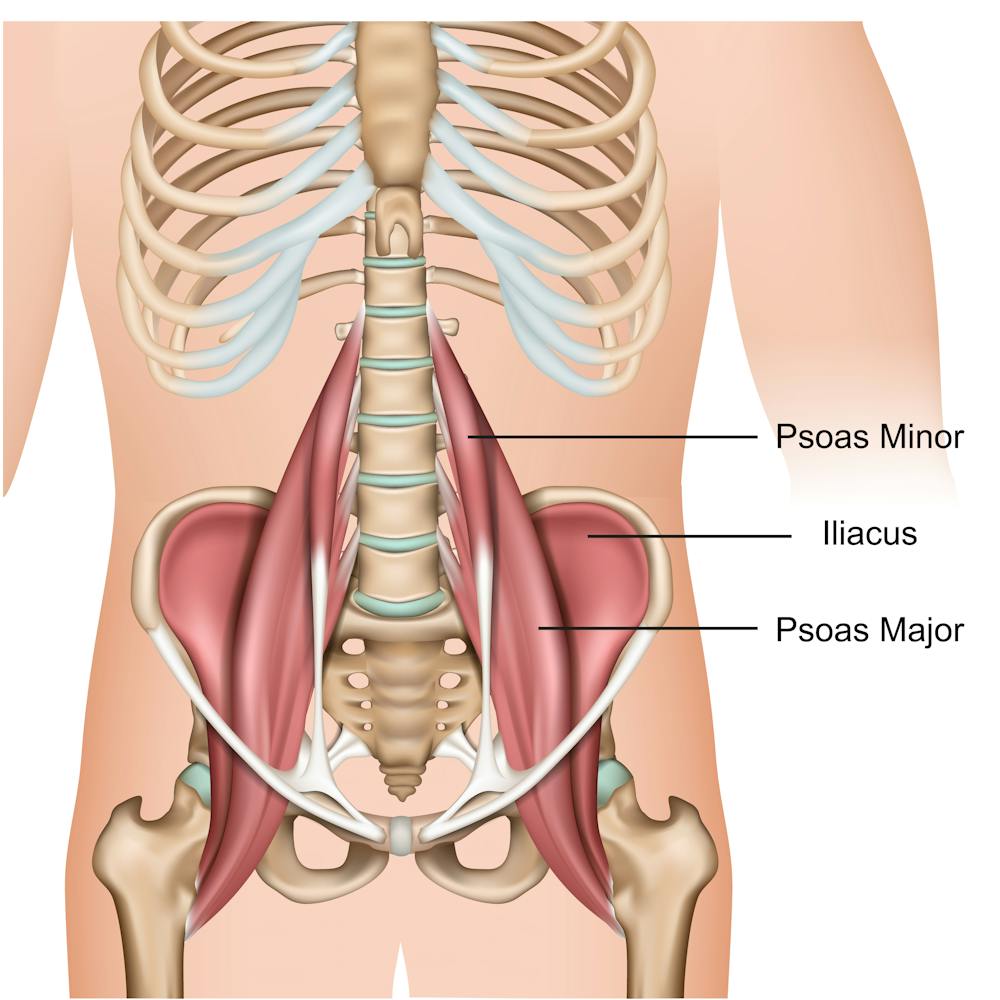

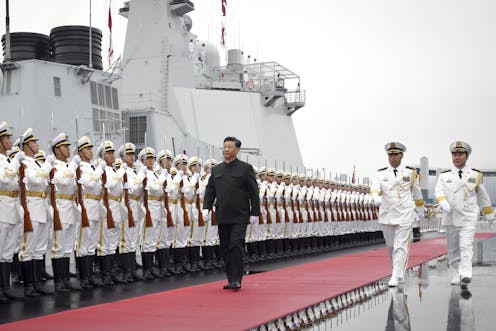

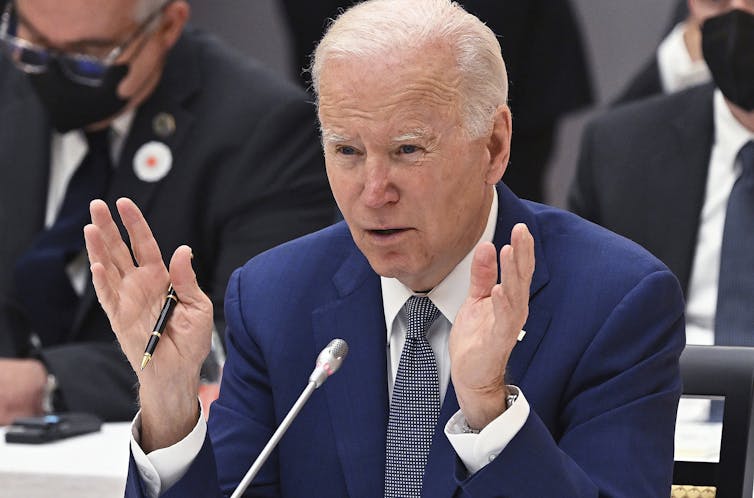




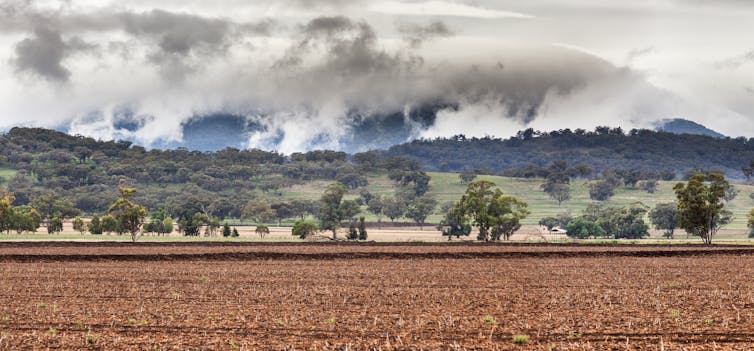


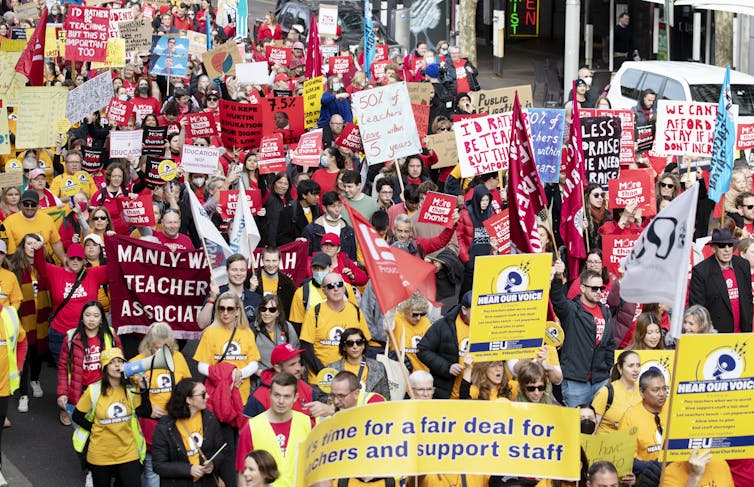





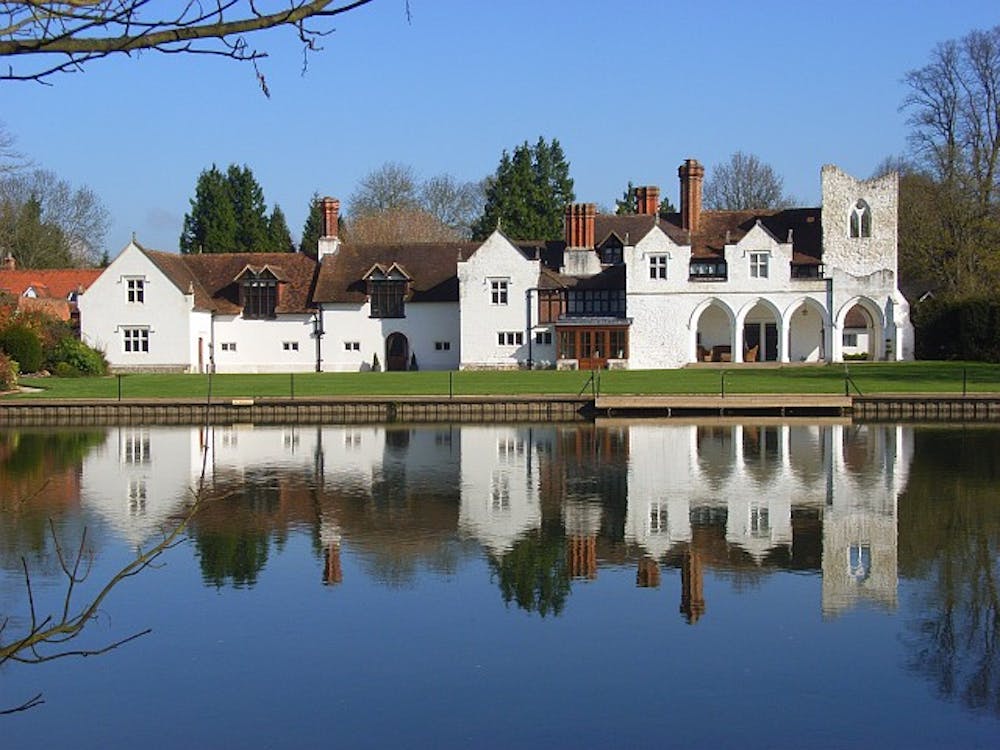







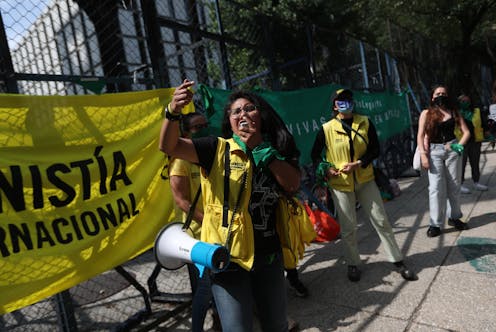

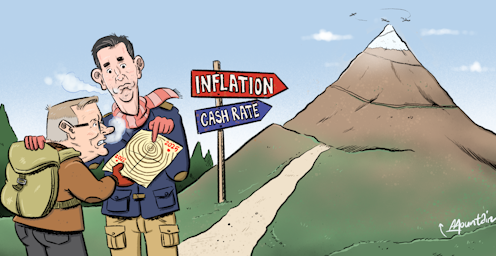


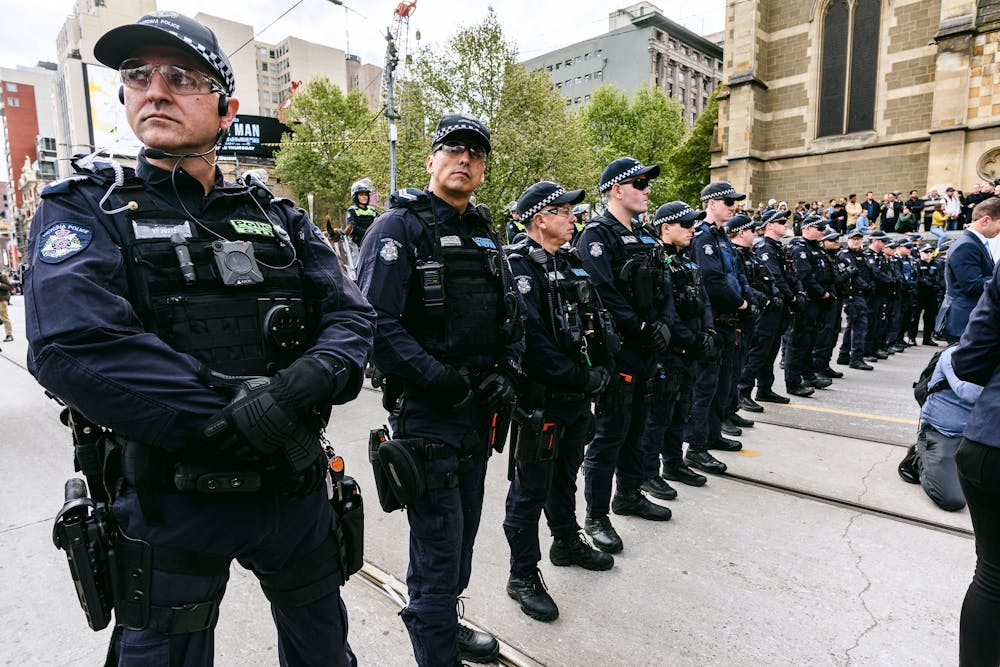


























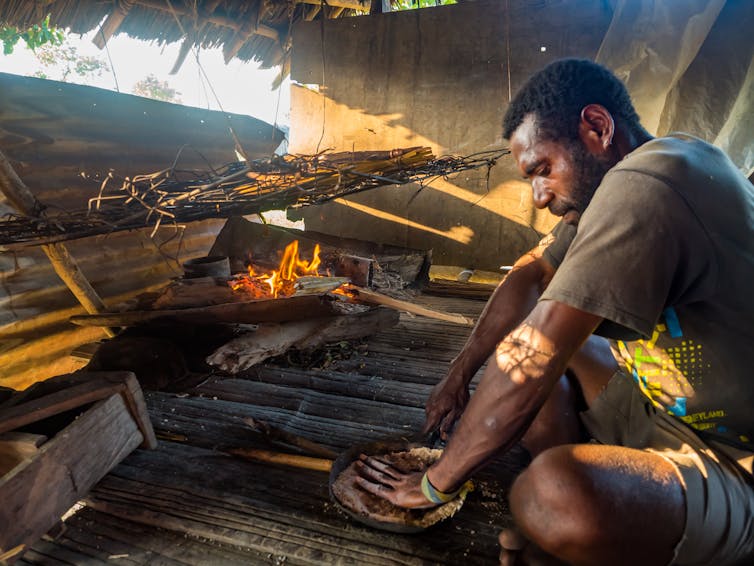




















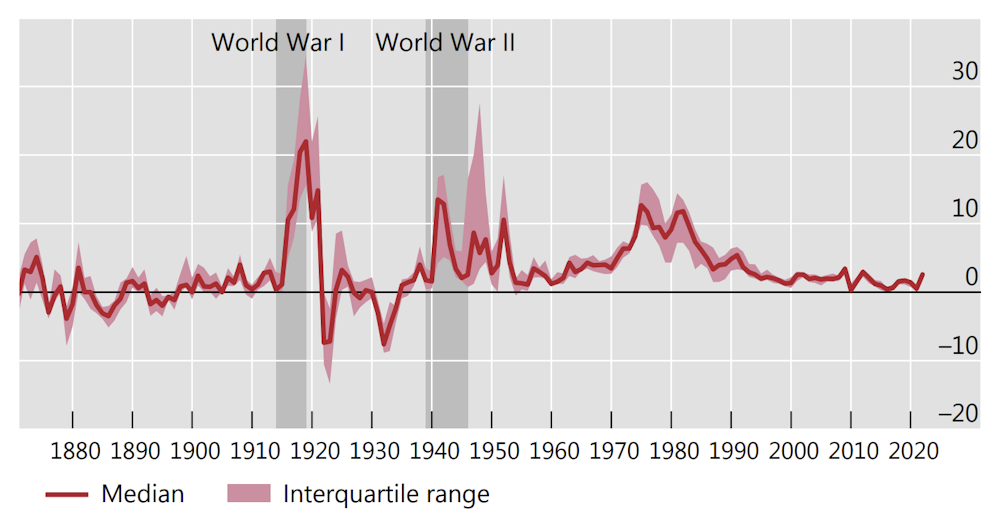

















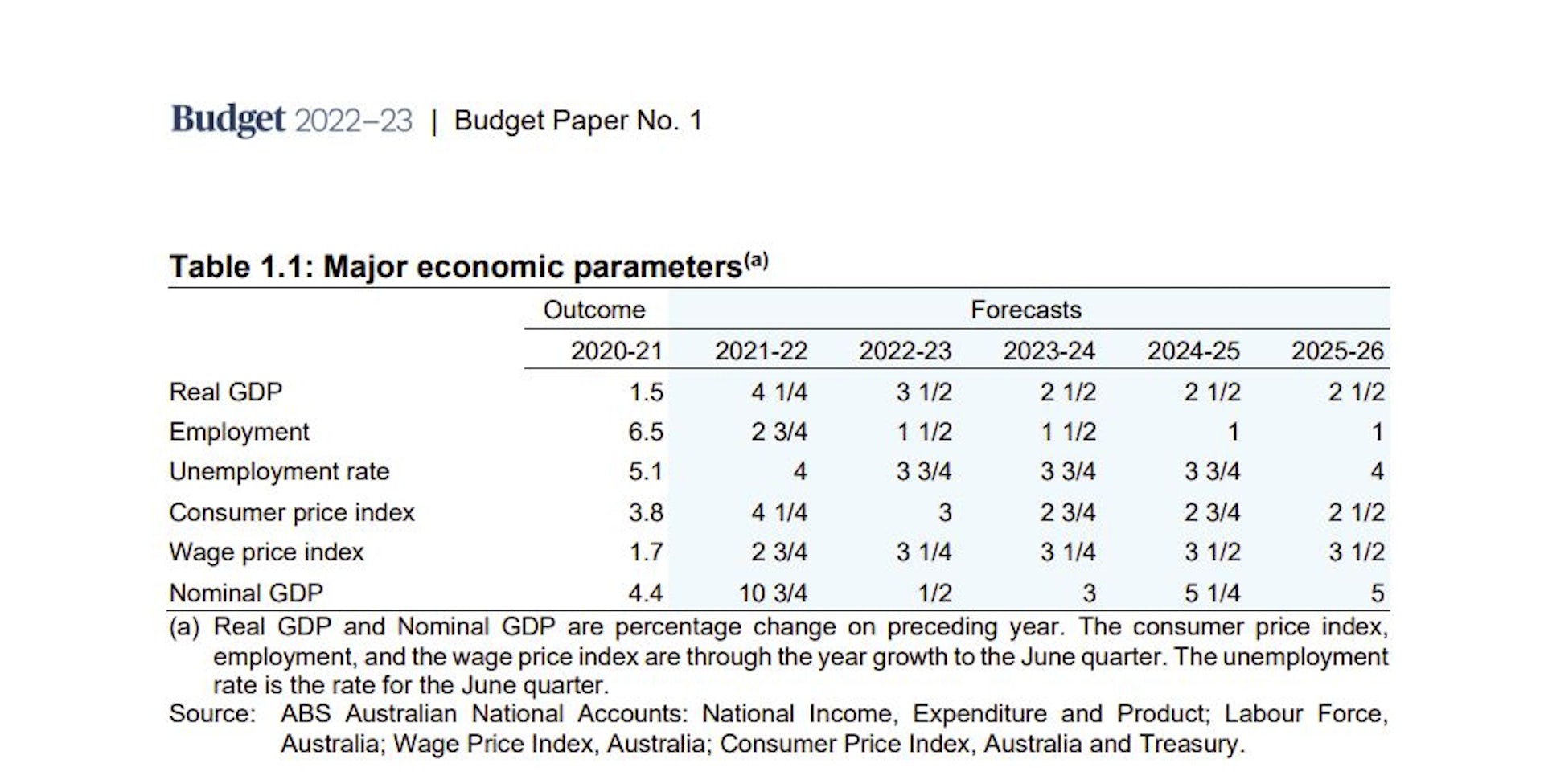
.jpg)
