Page 702

View from The Hill: royal commission confronts Morrison government with call for aged care tax levy

Source: The Conversation (Au and NZ) – By Michelle Grattan, Professorial Fellow, University of Canberra

The Royal Commission into Aged Care Quality and Safety has recommended a levy to help fund aged care on a sustainable basis, and given the federal government two radically different options for running a reformed system.

Releasing the multi-volume report on Monday, Prime Minister Scott Morrison played down the prospect of the government adopting the levy proposal, which would go against its mantra of not raising tax.

The commission’s long-awaited final report, titled Care, Dignity and Respect, with 148 recommendations, complicates the government’s already massive task in trying to overhaul what is recognised to be an ill-functioning system.

In some areas it leaves questions rather than provides answers – such as how much extra money will be needed.

In other areas, it invites difficult choices between competing options presented by the two commissioners, Tony Pagone and Lynelle Briggs. They have split on the fundamental issue of how best to administer the system, as well as on the best way to improve the present inadequate regulatory arrangements.

Aged care is a federal government responsibility and the pandemic exposed the vulnerabilities in the system, with the majority of COVID-19 deaths occurring among aged care residents.

In an immediate response to the commission report, the government announced $452 million over the forward estimates, for limited initiatives in the areas of home care, residential aged care quality and safety, improving services in residential care; workforce growth, and governance measures.

The government’s main response is due at budget time. But much work will need to be done to craft a policy.

As expected, the commission is damning about the inadequacies in the present system.

“A profound shift is required in which the people receiving care are placed at the centre of a new aged care system. In the words of one commentator, aged care does not ‘need renovations, it needs a rebuild’,” Pagone writes in his preface.

The commissioners found a “gloomy picture” of systemic problems. Many of the sector’s people and institutions “are overwhelmed, underfunded or out of their depth”.

Briggs said that at least one in three people accessing residential care or home care services “have experienced substandard care”.

The commissioners jointly call a new Aged Care Act putting older people first, entitling them to high quality and safe care based on their needs.

While both stress the need for fundamental change, Pagone argues the system should be run by an independent commission, while Briggs favours strengthening the existing system of government administration.

As Pagone writes the decision will be up to the government and, “The adoption of one model over the other will have consequences for many … of the recommendations we make.”

It would be a huge step for the government to go down the road of an independent commission.

Briggs argues that establishing a new Australian Aged Care Commission would only delay important reforms. Such an arms-length body would also “weaken the direct accountability” of ministers for the quality of care.

Her alternative “Government Leadership” model would include greater independence in certain areas such as quality regulation and pricing, but maintain a strong federal government system leadership and stewardship role.

The commissioners propose tougher regulation of the system, with Pagone saying, “The move to ritualistic regulation was a natural consequence of the Government’s desire to restrain expenditure in aged care”.

They advocate different regulation arrangements. With Briggs supporting greater independence. They “both recommend stronger accountability through the establishment of an Inspector-General of Aged Care”.

The findings on home packages contradict the government’s claims about how well it has done in this area.

Pagone writes that people have waited about seven months for the lowest level of need and about 34 months for those with the highest need.

“Something has gone badly wrong when those most in need are forced to wait the longest for care,” he observes.

On funding, Pagone set out a proposal for an Aged Care levy, which would mean “each person will contribute toward the financing of the aged care system through their working life” according to their income. They would then be able to access it when they needed it, without a means test – as happens with Medicare.

Briggs puts forward an “aged care improvement levy” on personal taxable income of 1% to fund the increasing costs of aged care.

Asked about the levy Morrison said: “We’ll consider those things. You know our government’s disposition when it comes to increased levies and taxes. It is not something we lean to.”

He recalled that when he was treasurer, “I once sought to increase the Medicare levy by 0.5% to support the National Disability Insurance Scheme and I wasn’t supported in that by the Labor Party or the Greens for that matter.

“So that’s something that I’ve seen in other contexts that the parliament hasn’t supported before. So you’d forgive me for being a little wary at this point.”

The commission recommends an extensive shakeup of workforce arrangements, including registration of personal care workers, and professionalising the workforce through changes to education, training, wages, labour conditions and career progression.

ref. View from The Hill: royal commission confronts Morrison government with call for aged care tax levy – https://theconversation.com/view-from-the-hill-royal-commission-confronts-morrison-government-with-call-for-aged-care-tax-levy-156207

Royal Commission confronts Morrison government with call for aged care tax levy

Source: The Conversation (Au and NZ) – By Michelle Grattan, Professorial Fellow, University of Canberra

The Royal Commission into Aged Care Quality and Safety has recommended a levy to help fund aged care on a sustainable basis, and given the federal government two radically different options for running a reformed system.

Releasing the multi-volume report on Monday, Prime Minister Scott Morrison played down the prospect of the government adopting the levy proposal, which would go against its mantra of not raising tax.

The commission’s long-awaited final report, titled Care, Dignity and Respect, with 148 recommendations, complicates the government’s already massive task in trying to overhaul what is recognised to be an ill-functioning system.

In some areas it leaves questions rather than provides answers – such as how much extra money will be needed.

In other areas, it invites difficult choices between competing options presented by the two commissioners, Tony Pagone and Lynelle Briggs. They have split on the fundamental issue of how best to administer the system, as well as on the best way to improve the present inadequate regulatory arrangements.

Aged care is a federal government responsibility and the pandemic exposed the vulnerabilities in the system, with the majority of COVID-19 deaths occurring among aged care residents.

In an immediate response to the commission report, the government announced $452 million over the forward estimates, for limited initiatives in the areas of home care, residential aged care quality and safety, improving services in residential care; workforce growth, and governance measures.

The government’s main response is due at budget time. But much work will need to be done to craft a policy.

As expected, the commission is damning about the inadequacies in the present system.

“A profound shift is required in which the people receiving care are placed at the centre of a new aged care system. In the words of one commentator, aged care does not ‘need renovations, it needs a rebuild’,” Pagone writes in his preface.

The commissioners found a “gloomy picture” of systemic problems. Many of the sector’s people and institutions “are overwhelmed, underfunded or out of their depth”.

Briggs said that at least one in three people accessing residential care or home care services “have experienced substandard care”.

The commissioners jointly call a new Aged Care Act putting older people first, entitling them to high quality and safe care based on their needs.

While both stress the need for fundamental change, Pagone argues the system should be run by an independent commission, while Briggs favours strengthening the existing system of government administration.

As Pagone writes the decision will be up to the government and, “The adoption of one model over the other will have consequences for many … of the recommendations we make.”

It would be a huge step for the government to go down the road of an independent commission.

Briggs argues that establishing a new Australian Aged Care Commission would only delay important reforms. Such an arms-length body would also “weaken the direct accountability” of ministers for the quality of care.

PMO

Her alternative “Government Leadership” model would include greater independence in certain areas such as quality regulation and pricing, but maintain a strong federal government system leadership and stewardship role.

The commissioners propose tougher regulation of the system, with Pagone saying, “The move to ritualistic regulation was a natural consequence of the Government’s desire to restrain expenditure in aged care”.

They advocate different regulation arrangements. With Briggs supporting greater independence. They “both recommend stronger accountability through the establishment of an Inspector-General of Aged Care”.

The findings on home packages contradict the government’s claims about how well it has done in this area.

Pagone writes that people have waited about seven months for the lowest level of need and about 34 months for those with the highest need.

“Something has gone badly wrong when those most in need are forced to wait the longest for care,” he observes.

On funding, Pagone set out a proposal for an Aged Care levy, which would mean “each person will contribute toward the financing of the aged care system through their working life” according to their income. They would then be able to access it when they needed it, without a means test – as happens with Medicare.

Briggs puts forward an “aged care improvement levy” on personal taxable income of 1% to fund the increasing costs of aged care.

Asked about the levy Morrison said: “We’ll consider those things. You know our government’s disposition when it comes to increased levies and taxes. It is not something we lean to.”

He recalled that when he was treasurer, “I once sought to increase the Medicare levy by 0.5% to support the National Disability Insurance Scheme and I wasn’t supported in that by the Labor Party or the Greens for that matter.

“So that’s something that I’ve seen in other contexts that the parliament hasn’t supported before. So you’d forgive me for being a little wary at this point.”

The commission recommends an extensive shakeup of workforce arrangements, including registration of personal care workers, and professionalising the workforce through changes to education, training, wages, labour conditions and career progression.

ref. Royal Commission confronts Morrison government with call for aged care tax levy – https://theconversation.com/royal-commission-confronts-morrison-government-with-call-for-aged-care-tax-levy-156207

The Boy Who Talked to Dogs: a story of trauma brought to the stage with honesty and grace

Source: The Conversation (Au and NZ) – By William Peterson, Associate Professor, Flinders University

Review: The Boy Who Talked to Dogs, directed by Andy Packer. Slingsby and the State Theatre Company of South Australia for the Adelaide Festival.

Telling the story of a living person truthfully is difficult. Adapting the memoir of a trauma survivor for the stage is even harder. The Boy Who Talked to Dogs rises to these twin challenges with brazen theatricality, thrilling acting, rousing Irish music and shadow puppetry, connecting equally with youth and adult audiences.

Irish playwright Amy Conroy’s text draws from Martin McKenna’s 2014 memoir, the story of a boy bullied both at home and school who finds his family in a band of stray dogs. It is a tale of bravery and resilience and of finding love — but without a happy ending.

The real-life McKenna grew up in Limerick, Ireland and came to Australia in 1988. To many Australians he known as “The Dog Man” from his books, videos and ABC radio interviews.

Channelling Martin is the brilliant Irish actor Bryan Burroughs, who began rehearsals virtually from hotel quarantine. Burroughs’ physical and verbal dexterity brings to life the homeless child, and the adult bearing the scars of an abusive childhood.

Early in the play, a young Martin articulates the feelings that created strife at school and at home:

It’s like my brain won’t listen to my body and my body won’t listen to my brain and they’re screaming at each other all the time.

Such a child would likely be diagnosed with ADHD today; no adult in his world knows how to deal with him.

At school, his sadistic teacher Mr. Keeley verbally and physically abuses him and prevails on his classmates to call him “Mr. Stupid”. At home, his alcoholic father beats him, his siblings regard him as a nuisance, and his mother gives up on him.

At 13, Martin ran away from home and for three years lived with a pack of stray dogs. Wisely, the show sticks largely to these early years, resisting the temptation to tell the story of his adult life in Australia.

Challenging stories for young ears

Presented with ingenuity and skill under the direction of Andy Packer, who has a long history of staging challenging subjects that speak to youth, The Boy Who Talked to Dogs will inspire young people to have conversations about how to find the strength to carry on under seemingly impossible circumstances.

Sharing the stage with Burroughs is Victoria Falconer, welcoming us in as emcee and occasionally goading Martin and drawing out aspects of his character.

Production image: a man looks at the shadow of a dog.
This is a story of adversity: not a story of overcoming adversity. Andy Rasheed/Slingsby/State Theatre Company South Australia

In one exchange she prevails on Martin to lighten up, noting this is “supposed to be a family show.” The audience was surveyed, she adds, and they expressed a preference for an “heroic tale of overcoming adversity.”

Martin, lacking sentimentality, states dryly: “that’s not my story.”

The show’s chief strength is presenting this harrowing story with honesty. Martin emerges strong but not unscathed. While he finds strength and resilience among his canine companions, trauma cannot be magically overcome by the power of love.

Ireland in Australia

Reflecting McKenna’s Irish heritage, the storytelling alternates with song (composer Quincy Grant and songwriter Lisa O’Neill) in this highly theatrical presentation. Seated at tables of six, lively banter and music create the feeling of an Irish pub.

Martin’s life is narrated and acted out in contained spaces — his childhood home and a ramshackle hut — designed by Wendy Todd. As the story unfolds, three additional playing areas open up like giant books. Burroughs and Falconer move freely throughout the vast space, weaving in and out of the audience.

Martin’s beloved dogs are represented as shadow puppets or as animated cut-outs, moving and leaping through space. These low-tech creations imbue the dogs with a sweet, gentle quality that reflects the intimacy of communication between humans and our canine companions.

Production image: a shadow puppet dog.
The dogs, brought to life through low-tech shadow puppetry, lend a sense of intimacy to the production. Andy Rasheed/Slingsby/State Theatre Company South Australia

In the program notes for the show, director Packer observes “theatre can be an empathy machine”.

“The power we have as theatre makers,” he adds, is “to amplify Martin’s voice.”

Martin’s story is difficult, even extreme. With stories of abuse and neglect acted out by Burroughs using stylised choreography and punctuated by rhythmic beats from the onstage band, the play is recommended for children over age 12.

But in presenting that story with honesty, charm, inventiveness and a spirit of play, Slingsby once again demonstrates its skill in holding up the most difficult of human experiences for scrutiny and understanding.

The Boy Who Talked to Dogs runs until March 14.

ref. The Boy Who Talked to Dogs: a story of trauma brought to the stage with honesty and grace – https://theconversation.com/the-boy-who-talked-to-dogs-a-story-of-trauma-brought-to-the-stage-with-honesty-and-grace-156111

Renewables need land – and lots of it. That poses tricky questions for regional Australia

Source: The Conversation (Au and NZ) – By Bonnie McBain, Lecturer, University of Newcastle

Renewable energy capacity in Australia is expected to double, or even triple, over the next 20 years. There is one oft-overlooked question in this transition: where will it all be built?

Many renewable energy technologies need extensive land area. Wind turbines, for instance, cannot be located too close together, or they won’t work efficiently.

Some land will be in urban areas. But in the transition to 100% renewable energy, land in the regions will also be needed. This presents big challenges, and opportunities, for the farming sector.

Two important factors lie at the heart of a smooth transition. First, we must recognise that building renewable energy infrastructure in rural landscapes is a complex social undertaking. And second, we must plan to ensure renewables are built where they’ll perform best.

Aerial view of solar farm
Australia’s renewable energy expansion will require plenty of space – most of it in the regions. Shutterstock

Bringing renewables to the regions

My research has examined how much land future energy generation will require, and the best way to locate a 100% renewable electricity sector in Australia.

A National Farmers Federation paper released last week called for a greater policy focus on renewable energy in regional Australia. It said so-called renewable energy zones should “be at the centre of any regionalisation agenda” and that this would give the technology a competitive advantage.

Hosting renewable energy infrastructure gives farmers a second income stream. This can diversify a farming business and help it withstand periods of financial pressure such as drought. An influx of new infrastructure also boosts regional economies.

But successfully integrating renewables into the agricultural landscape is not without challenges.

A wicked problem

Renewable energy enjoys widespread public support. However its development can lead to social conflicts. For example, opposition to wind wind farms, often concentrated at the local level, can be motivated by concerns about:

  • perceived health impacts
  • changes to the landscape
  • damage to wildlife
  • loss of amenity
  • reduced property values
  • procedural fairness.

A proposed A$2 billion wind energy development on Tasmania’s King Island shows the difficulties involved in winning community support. The project was eventually scrapped in 2014, for economic reasons.

Research showed how despite the proponents TasWind using a “best practice” mode of community engagement, the proposal caused much social conflict. For example, the holding of a vote served to further polarise the community, and locals were concerned that the community consultation process was not impartial.


Read more: Against the odds, South Australia is a renewable energy powerhouse. How on Earth did they do it?


The local context was also significant: the recent closure of an abattoir, and associated job losses, had increased the community’s stress and sense of vulnerability. This led some to frame the new proposal as an attempt by a large corporation to capitalise on the island’s misfortune.

The King Island experience has all the hallmarks of a “wicked problem” – one that is highly complex and hard to resolve. Such problems are common in policy areas such as land-use planning and environmental protection.

People protest against wind farm proposal
Achieving community consensus on wind farm developments can be challenging. Daniel Mariuz/AAP

Wicked problems typically involve competing perspectives and interests. Often, there is no single, correct solution that works for everyone. For example at King Island, the abattoir closure did not mean all locals considered the wind energy proposal to be the answer.

When seeking to address complex policy problems, such as building renewable energy in regional areas, the best approach involves:

  • collaboration between all affected parties, including people beyond the property where the infrastructure will be located
  • relationship-building between all those involved, to allow each to see the other’s perspective
  • shared decision-making on whether the infrastructure will be built, and where.

Competition for land is intensifying around the world, especially as the population grows. High consumption levels in the West require ever-more land for resources such as food, and land degradation is rife.

To help alleviate this pressure, renewable energy developments may need to co-exist with other land uses, such as cattle grazing around wind turbines. And in many cases, renewable energy should not be built on the most productive cropping land.

Cows graze in front of wind turbines
Cattle grazing and wind turbines can co-exist. Mick Tsikas/AAP

Recipe for success

A successful energy transition will require strategic, long-term planning to determine where renewable generation is best located.

Our research indicates that while many places in Australia have renewable energy potential, some are far better than others. Wind energy is usually best located near the coast, solar farms in arid inland regions and rooftop solar power in densely-populated eastern Australia.


Read more: Explainer: what is the electricity transmission system, and why does it need fixing?


Traditionally, Australia’s electricity grid infrastructure, such as high-voltage transmission lines, has been located around coal-fired generators and large population centres. Locating renewables near this infrastructure might make it cheaper to connect to the grid. But those sites may not be particularly windy or sunny.

Australia’s electricity grid should be upgraded and expanded to ensure renewables generators are located where they can perform best. Such strategic planning is just what the National Farmers Federation is asking for. Improved connectivity will also help make electricity supplies more reliable, allowing electricity to be transferred between regions if needed.

Making renewables do-able

The economic and environmental benefits of renewable energy are well known. But without social acceptance by communities hosting the infrastructure, the clean energy transition will be slowed. There is more work to be done to ensure new renewables projects better respond to the needs of regional communities.

And to ensure Australia best fulfils its renewable energy potential, electricity grid technology must be upgraded and expanded. To date, such planning has not featured prominently enough in public conversation and government policy.

If Australia can overcome these two tricky problems, it will be well on the way to ensuring more reliable electricity, the best return on investment and a low-carbon energy sector.


Read more: People need to see the benefits from local renewable energy projects, and that means jobs


ref. Renewables need land – and lots of it. That poses tricky questions for regional Australia – https://theconversation.com/renewables-need-land-and-lots-of-it-that-poses-tricky-questions-for-regional-australia-156031

How can governments communicate with multicultural Australians about COVID vaccines? It’s not as simple as having a poster in their language

Source: The Conversation (Au and NZ) – By Holly Seale, Associate professor, UNSW

Australia launched its COVID-19 vaccination campaign last week, beginning with frontline workers in hotel quarantine, health care and aged care.

But one critical question is whether the immunisation program will meet the needs of people from culturally and linguistically diverse (CALD) backgrounds.

People from CALD backgrounds form a significant and growing share of Australia’s frontline workforce. This is especially true for aged, disability and community care, as well as hotel quarantine.

For example, 37% of Australian frontline care workers were born overseas according to 2016 statistics. Around 28% are from non‐English‐speaking backgrounds.

Others may have low health literacy skills or find it challenging to track down and understand information about COVID vaccines. Lower health literacy is associated with a reluctance to accept vaccines. Recent studies also suggest those who speak a language other than English at home are less willing to get vaccinated than those who speak English only.

It’s critical we deliver a program aligned with the needs of CALD communities to ensure high levels of public confidence in the COVID vaccine rollout.

To achieve this, in February the federal government released a plan to ensure COVID vaccine rollout information and services are accessible for CALD communities.

The plan outlines the need for clear messaging that’s inclusive, tailored and translated. It also emphasises the importance of working with community leaders and multicultural community organisations.

Our new research, published today, supports the actions outlined in the plan but also highlights areas needing more focus.

We interviewed people working in multicultural and refugee agencies, as well as stakeholders in CALD community organisations, to understand barriers around communication and engagement during the pandemic.


Read more: Can I choose what vaccine I get? What if I have allergies or side-effects? Key COVID vaccine rollout questions answered


Information gaps

Our research found gaps in information available during the pandemic. For example, there have been delays in making translations available.

Many people have sought information and news from their countries of origin to fill these gaps. This information may be irrelevant to the Australian situation, or contradictory to local recommendations.

There’s a divide between governments and individuals, with some people feeling like they’ve been left behind. Issues such as an inability to navigate government websites or difficulties accessing support have contributed to this divide.

Translated COVID information hasn’t always been appropriate for people with low literacy or low health literacy levels. This stems from the original source materials in English not being suitable, or translations not being reviewed to make sure the information makes sense.

Newly arrived migrant communities are most in need, as many don’t have established networks to support them. Translated resources have mostly been developed for larger, established CALD groups rather than new and emerging communities. There’s been a lack of tailoring in how messages and information are communicated, and ethnic newspapers and media haven’t been effectively used.

Some people are worried they’ll lose their jobs if they refuse to get vaccinated. The challenge is they don’t have anyone to ask questions of, and are unable to access trustworthy material online.

One issue that was repeatedly raised was burnout experienced by community leaders and other stakeholders. These leaders are asked to repeatedly translate, turn “government speak into community speak”, spread messages and answer questions. They take on this role in addition to their normal responsibilities, with little to no financial support and often with an emotional burden.

The federal government’s plan recognises we need to work with community leaders, but little detail has been provided about whether support, training or resources will be available.

Health-care worker giving patient a vaccine
Community leaders play a crucial role in disseminating COVID information, but they need to be adequately supported or they risk burning out. Shutterstock

Here’s how things could change

Beyond the need to support community leaders, we also heard from participants about ways to improve communication and vaccine delivery.

Our research team makes a number of recommendations, including the need to:

  • identify other community ambassadors and provide training to build their knowledge and confidence

  • employ bilingual engagement officers from local communities, to support action being taken by communities themselves. Similar engagement officers have been used to support participation in Australian Bureau of Statistics data collection. Census engagement officers work within communities telling people about the census and ensuring everyone can take part and get the help they need. Internationally, this strategy has been used to promote HIV testing and counselling by encouraging community members to talk about the issues

  • invite local CALD communities to initiate and host forums in media of their choice, and to ensure government officials are available to answer questions

  • develop a glossary of immunisation terms. This would enable standard terminology relevant to COVID for community organisations, community and faith-based leaders, translators and interpreters

  • set up vaccination clinics in locations where communities feel safe. This could include outdoor facilities, sports clubs, community centres, faith-based locations and schools. Ensure there are transport options available

  • undertake ongoing surveys to capture how CALD communities feel, think and act in relation to the Australian COVID vaccination program. Tailoring messages will only be effective when informed by the issues that communities are actually concerned about

  • and support alliances between immunisation experts and those working in refugee health and multicultural services.

Participants repeatedly used the phrase “community ownership” during the interviews. It’s critical to genuinely engage communities in the development and testing of communication messages, images and videos. It’s also critical we work with different communities to identify the best ways to pass on information.

And when it comes down to it, word of mouth messages and conversations may be the most effective way to get people involved with the COVID vaccine program.

By supporting the development of community ambassadors to address misinformation and concerns about vaccine safety at a local level, the government will have the best chance of ensuring information reaches those who need it.

ref. How can governments communicate with multicultural Australians about COVID vaccines? It’s not as simple as having a poster in their language – https://theconversation.com/how-can-governments-communicate-with-multicultural-australians-about-covid-vaccines-its-not-as-simple-as-having-a-poster-in-their-language-156097

Playing Beatie Bow is brought to thundering life in a joyous stage production

Source: The Conversation (Au and NZ) – By Vanessa Berry, Lecturer in Creative Writing, University of Sydney

Review: Playing Beatie Bow, directed by Kip Williams.

Playing Beatie Bow is the coming-of-age story of the teenage Abigail who, from her home in Sydney’s The Rocks, slips back in time to 1873. Here, she is taken in by the Tallisker/Bow family, immigrants from the Orkney Islands who run a confectionery shop. Abigail finds herself cast as the mysterious “Stranger” — the subject of a Tallisker family prophecy — which she must enact before she is able to return to her own time.

In adapting Ruth Park’s 1980 novel for the stage, Kate Mulvany carries forward Park’s detailed, loving attention to the city of Sydney and the lives that play out within it. Her adaptation thrums with heart, humour and a sense of creative legacy.

Ruth Park’s long and distinguished literary career began at the Auckland Star in the 1930s. In 1942, she moved to Sydney, the city which she would go on to capture with such verve and particularity. By the time of her death in 2010, aged 93, she was one of Australia’s most loved and successful authors.

Park’s skill in writing for young adults was to portray the emotional intensity of adolescence alongside a broader sweep of time and history, and this production takes place in almost the very location in which the story is set. The qualities of The Rocks which so captivated Park — the steep topography, the narrow terrace houses, the crooked laneways — still produce a sense of a lingering past.

Production image
Set where it plays, Playing Beatie Bow captures the spirit of The Rocks. Daniel Boud/Sydney Theatre Company

Many in the audience would have travelled through these streets to arrive at the theatre. There is a clear delight in this proximity, and the opening scenes set in the present day further develop this rapport, referencing the pandemic, distractions of social media, and that inevitable Sydney topic: the excesses of the city’s real estate.

History through present eyes

Names and objects are powerful in Playing Beatie Bow. In Park’s research for the novel she compiled long lists of potential Victorian-era names, deliberating over which would best carry the distinctions of her characters.

Park was rigorous in her historical research, with a particular interest in seeking out the everyday details of nineteenth-century working class life in Sydney. The heavy 19th century garments, chamber pots, ceramic “hot-pig” water bottle and the glass jars of boiled lollies work to as veritable effect on stage as they do in the novel. These details are highlighted in David Fleischer’s spare, dynamic set design.

Production image
Small touches like the glass jars of boiled lollies capture our imagination of the 19th century. Daniel Boud/Sydney Theatre Company

Mulvany’s inclusion of Aboriginal characters, language and recognition of country is a striking addition to Park’s original story.

In the present day, Abigail (Catherine Văn-Davies) visits her Gadigal neighbours, greets them “worimi”, and knows The Rocks equally as Tallawoladah.

In the 19th century, Abigail continues this connection with the Tallisker’s neighbour with whom she strikes up a friendship. Mulvany converts Park’s characters of the Chinese laundrymen to Johnny Whites (Guy Simon), an Aboriginal laundryman.

Through Whites the trauma and fracture of colonial dispossession for Aboriginal land and people is given voice.

Legacies of women

As Abigail and Beatie (Sofia Nolan) compare observations of each others’ times, Beatie expresses bemusement over the “palm-books” everyone in the future is looking down at and examining with such intensity. What book must it be, Beatie muses, maybe the Gospels?

This is Mulvany, but so absolutely in line with Park’s sensibilities I imagined her laughing along with the audience.

The cast of nine, who play 60 characters between them, revel in their portrayal of these time disjunctions, and in delivering the Tallisker’s Scots vocabulary. Mulvany takes one term in particular, spaewife, as a letimotif in the production.

Production image
Throughout the book and the play, conversations reverberate between generations of women. Daniel Boud/Sydney Theatre Company

In Scots, a spaewife is a fortune-teller; a woman possessing a magic enabling communication across time. The Talliskers call it The Gift and it is carried by Granny (Heather Mitchell), the family’s matriarch.

Repeated in speech and song throughout the play, this word takes on an symbolic presence. In a story so much about legacy — particularly the connections and lineages that connect women — spaewife becomes broadly symbolic of women’s power.

This power radiates through the play, in the connections between characters and generations, and in between Park and Mulvany as writers.

Production image
Beatie, played here by Sofia Nolan, has an energy that reverberates through the decades. Daniel Boud/Sydney Theatre Company

There is no better embodiment of this power than in Beatie, played with an electric intensity by Nolan. Her force as a character is her quick tongue and determination to live a life greater than what is prescribed for women of her time.

The character of Beatie Bow was inspired by a girl in a 1899 street photograph from The Rocks, which Park came across in the 1940s. She describes the scene in her autobiography, Fishing in the Styx (1993): how she returned again and again to look at this “sharp-faced” girl who carried a defiant expression. The girl seemed to be speaking to her through time, challenging her not to take her for less than she is.

30 years later, Park wrote Playing Beatie Bow. Now, 40 years on again, through Mulvany’s fierce and fond version for the stage, Beatie’s voice speaks to us with a renewed energy.

Playing Beatie Bow is at Sydney Theatre Company until May 1.

ref. Playing Beatie Bow is brought to thundering life in a joyous stage production – https://theconversation.com/playing-beatie-bow-is-brought-to-thundering-life-in-a-joyous-stage-production-154647

I asked hundreds of people about their biggest life decisions. Here’s what I learned

Source: The Conversation (Au and NZ) – By Adrian R. Camilleri, Senior Lecturer in Marketing, University of Technology Sydney

You make decisions all the time. Most are small. However, some are really big: they have ramifications for years or even decades. In your final moments, you might well think back on these decisions — and some you may regret.

Part of what makes big decisions so significant is how rare they are. You don’t get an opportunity to learn from your mistakes. If you want to make big decisions you won’t regret, it’s important you learn from others who have been there before.

There is a good deal of existing research into what people regret in their lives. In my current project, I decided to approach the problem from the other end and ask people about their life’s biggest decisions.

What are life’s biggest decisions?

I have spent most of my career studying what you might call small decisions: what product to buy, which portfolio to invest in, and who to hire. But none of this research was very helpful when, a few years ago, I found myself having to make some big life decisions.

To better understand what life’s biggest decisions are, I recruited 657 Americans aged between 20 and 80 years old to tell me about the 10 biggest decisions in their lives so far.

Each decision was classified into one of nine categories and 58 subcategories. At the end of the survey, respondents ranked the 10 decisions from biggest to smallest. You can take the survey yourself here. (If you do, your answers may help develop my research further.)

The following chart shows each of the 58 decision subcategories in terms of how often it was mentioned (along the horizontal axis) and how big the decision was considered in retrospect (along the vertical axis).


In the upper right of the chart we see decisions that are both very significant and very common. Getting married and having a child stand out clearly here.

Other fairly common big life decisions include starting a new job and perusing a degree. Less common, but among the highest ranked life decisions, include ending a life – such as that of an unborn child or a dying parent – and engaging in self-harm.

Of course, the results depend on who you ask. Men in their 70s have different answers than women in their 30s. To explore this data more deeply, I’ve built a tool that allows you to filter these results down to specific types of respondents.


Read more: How to help take control of your brain and make better decisions


What are life’s biggest regrets?

Much can also be learned about how to make good life decisions by asking people what their biggest regrets are. Regret is a negative emotion you feel when reflecting on past decisions and wishing you had done something differently.

In 2012, Australian caregiver Bronnie Ware wrote a book about her experiences in palliative care. There were five regrets that dying people told her about most often:

  • I wish I’d had the courage to live a life true to myself, not the life others expected of me
  • I wish I hadn’t worked so hard
  • I wish I’d had the courage to express my feelings
  • I wish I’d stayed in touch with my friends
  • I wish I had let myself be happier.

This anecdotal evidence has received support from more rigorous academic research. For example, a 2011 study asked a nationally representative sample of 270 Americans to describe one significant life regret. The six most commonly reported regrets involved romance (19.3%), family (16.9%), education (14.0%), career (13.8%), finance (9.9%), and parenting (9.0%).

Although lost loves and unfulfilling relationships were the most common regrets, there was an interesting gender difference. For women, regrets about love (romance/family) were more common than regrets about work (career/education), while the reverse was true for men.

What causes regret?

Several factors increase the chances you will feel regret.

In the long run it is inaction — deciding not to pursue something — that generates more regret. This is particularly true for males, especially when it comes to romantic relationships. If only I had asked her out, we might now be happily married.

Poor decisions produce greater regret when it is harder to justify those decisions in retrospect. I really value my friends and family so why did I leave them all behind to take up that overseas job?

Given that we are social beings, poor decisions in domains relevant to our sense of social belonging — such as romantic and family contexts — are more often regretted. Why did I break up my family by having a fling?

Regrets tend to be strongest for lost opportunities: that is, when undesirable outcomes that could have been prevented in the past can no longer be affected. I could have had a better relationship with my daughter if I had been there more often when she was growing up.

The most enduring regrets in life result from decisions that move you further from the ideal person that you want to be. I wanted to be a role model but I couldn’t put the wine bottle down.

Making big life decisions without regrets

These findings provide valuable lessons for those with big life decisions ahead, which is nearly everyone. You’re likely to have to keep making big decisions over the whole course of your life.

The most important decisions in life relate to family and friends. Spend the time getting these decisions right and then don’t let other distractions — particularly those at work — undermine these relationships.

Seize opportunities. You can apologise or change course later but you can’t time travel. Your education and experience can never be lost.


Read more: Running the risk: why experience matters when making decisions


Avoid making decisions that violate your personal values and move you away from your aspirational self. If you have good justifications for a decision now, no matter what happens, you’ll at least not regret it later.

I continue to ask people to tell me about their biggest life decisions. It’s a great way to learn about someone. Once I have collected enough stories, I hope to write a book so that we can all learn from the collective wisdom of those who have been there before.

ref. I asked hundreds of people about their biggest life decisions. Here’s what I learned – https://theconversation.com/i-asked-hundreds-of-people-about-their-biggest-life-decisions-heres-what-i-learned-154885

A rare and significant win for prisoners — new limits around drug tests and strip searches

Source: The Conversation (Au and NZ) – By Greg Barns, Sessional Lecturer in Law, RMIT University

Australian prisoners are regularly subjected to drug and alcohol testing and strip searches.

Each state and territory has rules that allow for drug testing and strip searching in prisons, driven by a desire to maintain security. But they can be arbitrarily applied and this has implications for the human rights of prisoners.

However, high-profile Victorian prisoner Craig Minogue recently had a significant legal win in the Victorian Supreme Court.

Justice Melinda Richards found human rights considerations had not been taken into account when prison officials established rules allowing for the strip searching of prisoners when being drug tested. This will now place some limits around prison officials’ treatment of prisoners.

However, Richards did state strip searching prisoners when they have contact visits is permitted in the context of a high security prison.

Who is Craig Minogue?

Minogue is serving a life sentence at Barwon Prison for his role in the 1986 Russell Street bombing, which killed Constable Angela Taylor, the first policewoman in Australia killed on duty, and injured 21 other people.

This is not the first time Minogue has sought to challenge the conditions of imprisonment (he did a PhD in prison and bills himself as “the most prominent jailhouse lawyer” in Melbourne). But it is his most successful litigation yet.

What was this challenge about?

Minogue challenged three occasions where he had to have a random alcohol and drug test and be strip searched.

The first two instances were in September 2019 and February 2020, when Minogue was required to provide a urine sample after being strip searched. When Minogue challenged prison authorities, he was told it was a “random general test”, to which 5% prisoners are required to submit each month.

The third instance was also in February 2020, before Minogue was visited by his lawyer. He was told to submit to a strip search, which is standard procedure when prisoners receive outside visitors. He refused because he objected to the blanket nature of the policy.

The strip searching procedure is humiliating and invasive of dignity and privacy. In Victoria, the prisoner is forced take off all their clothes, and their mouth, ears, arms are inspected. The genital area is searched, and the prisoner is forced to bend over and part their buttock cheeks.


Read more: No prospect of release: Kevin Crump and the human rights implications of life imprisonment


If prisoners refuse to provide a urine sample, according to the Victorian procedures tendered in the Minogue case, they are “secured in a sterile, secure area” for three hours. The idea is that the prisoner might decide to comply in order to be released from that area.

Minogue argued his human rights under Victoria’s Charter of Human Rights were not properly considered by prison authorities, when they made the rules and directions allowing for random drug and alcohol testing and strip searching.

In particular, he argued the right to privacy and the right to be treated with dignity while deprived of liberty were not mentioned in the Corrections Victoria documents, which describe the regime for strip searching and drug and alcohol testing.

What did the judge say?

Richards found the corrections officials who had made the rules and guidelines about drug and alcohol testing had not taken into account relevant human rights.

There was no examination of the nature and extent of the ‘degrading’ impact of urine testing, and no evaluation of the effectiveness of the random testing regime. Nor was there any consideration of less restrictive means available […]

She added the testing process “is inherently demeaning”.

The arbitrary nature of drug testing was also criticised by Richards, who noted Minogue had no history of drug use. In more than 30 years in prison, he had never returned a positive result.

Richards also observed the Barwon prison authorities had not properly considered the “human rights impacts of strip searching”, and that the rule that every prisoner must be strip searched before a random drug and alcohol test “was not the result of a thorough and well-reasoned human rights analysis”.

Reasonable grounds for some strip searches

However, when it comes to strip searching prisoners before contact visits (as opposed to “box visits” where there is glass separating the prisoner from the visitors), Richards found that in the case of a maximum-security prison like Barwon, there are reasonable grounds to

strip search all prisoners … before and after any contact visit, whether personal or professional.

This is because there is a much higher potential for violence than in the general community, or in lower security prisons and contraband can be brought in during contact visits.

In other words, human rights such as the right to privacy and the right to be treated with dignity when deprived of liberty are balanced against the security rating of the prison.

What does this mean?

Minogue’s case is important because it represents a rare win for prisoners in challenging corrections regimes.

Generally speaking, the courts see prison rules as matters for governments to change. But Minogue’s case shows that human rights principles can be applied to prison practices and rules.

Whether the Victorian government will appeal the decision is not yet known and there has been no public comment from corrections officials.


Read more: Over 1,000 Australians with cognitive disability are detained indefinitely each year. This shameful practice needs to stop


In the meantime, it creates new opportunities for them to challenge whether corrections authorities are adequately considering domestic and international human rights laws in the running of their prisons.

Certainly, the use of strip searching and administration of drug and alcohol testing regimes are now vulnerable to similar challenges.

Perhaps the most important feature of Richards’ decision, however, is it reminds corrections authorities that human rights considerations must always be taken into account.

Discipline and behaviour management regimes need to make sure human rights are given more than just lip service.

ref. A rare and significant win for prisoners — new limits around drug tests and strip searches – https://theconversation.com/a-rare-and-significant-win-for-prisoners-new-limits-around-drug-tests-and-strip-searches-155737

Despite claims NZ’s policing is too ‘woke’, crime rates are largely static — and even declining

Source: The Conversation (Au and NZ) – By Ananish Chaudhuri, Professor of Behavioural and Experimental Economics, University of Auckland

When National MP Simon Bridges called Police Commissioner Andrew Coster a “wokester” recently, his intention was apparently to suggest the police are too soft on crime.

Debating the concept of “policing by consent” during a recent select committee hearing, Bridges asked Coster: “Do the police still arrest people in this country?”

One inference to be drawn from Bridges’s statements is that crime in New Zealand is increasing, possibly due to lenient policing.

To test that, we collected publicly available crime data from New Zealand Police. To measure any recent patterns we looked at data for the past six years, 2015 to 2020.

The first category we looked at is what the police call “victimisation”. This includes the total number of cases involving:

  • acts intended to cause injury
  • sexual assault and related offences
  • abduction, harassment etc.
  • robbery, extortion and related offenses
  • burglary, breaking and entering and unlawful entry
  • theft and related offences.

Out of the six categories, it is clear most crimes involve injury, burglary and theft. The numbers for the other three crimes are negligible.

But the pattern is clear — there is no significant increase in crime across the six years, and there is no significant increase in any of the individual components.

A potential concern with the broad victimisation measure is that it may not fully capture the specific nature of crimes. For example, it is possible some crime is concentrated in certain locations and some victims are falling prey multiple times.


Read more: Policing by consent is not ‘woke’ — it is fundamental to a democratic society


But if we look at the number of unique victims, we are now only counting each victim once, irrespective of how many times they were victimised during the 12 months in question.

According to the police, this data set can be used to understand repeat victimisation patterns.

Once again the pattern is clear — there is no evidence of any significant increase in the number of unique victims over the past six years.

Victims, of course, are only one part of the story. We can also look at the number of unique offenders.

Here we see a steady decline in the number of offenders. Again, one could look at multiple ways of measuring this, but the evidence presented above does not suggest a massive increase in offending.


Read more: The Christchurch commission’s call to improve social cohesion is its hardest — and most important — recommendation


In the next two figures we drill down a little further and look at two separate and specific types of crimes.

Figure 4 looks at illicit drug offences. This is important because the general data on victimisation does not include so-called victimless crimes (such as drug possession).

Here, there is evidence of an increase, albeit a modest one: roughly 13%, from 8,772 in 2015 to 9,924 in 2020. It is possible this is due to either increased drug offences or to increased prosecutions.

Finally, in Figure 5 we look at a category that tends to involve small numbers but receives great attention in political debates: prohibited and regulated weapons and explosives offences.

Again we see a modest increase of about 14%, from 3,747 in 2015 to 4,281 in 2020.

Objectively, it seems hard to make the case that crime in New Zealand has increased dramatically over the past six years. In fact, some categories of crime may have actually declined.

But even if crime levels are relatively static, are they still too high?

If we look at the first victimisation measure only, there were a total of 239,519 cases in 2020 from a population of five million. That is approximately five out of every 100 people.

That may not appear to be a very high number, but some of these crimes will be more serious than others. The ideal trend, of course, would be declining numbers to the point of no measurable crime at all.

Unlikely, perhaps, but something Simon Bridges and Andrew Coster might agree on, at least.

ref. Despite claims NZ’s policing is too ‘woke’, crime rates are largely static — and even declining – https://theconversation.com/despite-claims-nzs-policing-is-too-woke-crime-rates-are-largely-static-and-even-declining-156103

Graham Davis: Fat-cat leaders laughing in the face of Fiji’s suffering

COMMENTARY: By Graham Davis

Last month, I wrote on Facebook that the resumption of my blog Grubsheet for 2021 was being postponed out of consideration for the national effort to assist the victims of tropical cyclones Yasa and Ana.

I made the observation that it was not the time for politics but for supporting the authorities to get help to those who needed it most. The inspiring sight of the estimable Inia Seruiratu leading the cyclone relief effort in the north with the help of the equally inspiring Australian servicemen and women from HMAS Adelaide was regrettably short lived.

Because it didn’t take long in the public consciousness for politics as usual to rear its ugly head. So much so that I no longer feel bound by my earlier decision.

I apologise that this article is so political and – at more than 6000 words – is so long, indeed the longest I have ever written in these columns. But it is my last one for some time and I have a lot to say. I also apologise that it is so personal, some might say self-indulgently so. But I have a lot to get off my chest.

We have just had a parliamentary session dominated by almost everything other than the needs of cyclone victims or the hundreds of thousands of people suffering because of the covid-induced economic crisis. It was a spectacle that has triggered widespread community dismay and resentment at the apparent lack of empathy of fat-cat MPs and especially those on the FijiFirst government benches.

Much of the nation that isn’t on the public teat is in deep distress. Yet as they struggle to find shelter, put food on the table, worry about disease outbreaks, cope with chronic interruptions to their power and water and make their way through Mumbai-style traffic jams over canyon-sized potholes, they find the public discourse dominated not by their concerns and challenges but the same old political valavala (fighting) and point scoring.

Despite the unprecedented national crisis, it was business as usual in the Parliament, led by the ever-preening Aiyaz Sayed-Khaiyum. Fresh from his “Gestapo-like” deportation of the USP vice-chancellor Professor Pal Ahluwalia, the AG was more than usually testy and belligerent.

Economic crash
Perhaps he has given up even trying to manage the economic crash that has engulfed the nation. He is routinely seen signing fresh documents committing Fiji to further borrowing and portraying them as “strategic partnerships” rather than the loans and indebtedness that they are.

One might reasonably have imagined the AG to be focussed exclusively on managing the economic firestorm and the challenges raging on every front. Yet there he was at a USP Council meeting helping his “Uncle Mahmood” resolve a crisis that he alone created and has done unprecedented damage to Fiji’s relations with the region.

How does it all “put food on the table?”, as the Prime Minister used to ask about every diversion before he too lost the plot. It doesn’t. But for the AG, winning at all costs is what matters.

Fiji leaders
Fiji’s Attorney-General Aiyaz Sayed-Khaiyum and Prime Minister Voreqe Bainimarama … a reckoning looms at the ballot box come election time. Image: Grubsheet

The articulate guy in the turban demanding accountability at USP got in his way and had to go, whatever the political fallout.

As I’ve noted before, crash through or crash is the customary approach. Except that it’s much more likely to be crash on Wonder Boy’s horizon when the voting public finally get their say.

What did a weary nation make of the sight of impeccably-dressed MPs trading barbs and insults, the Speaker boasting about his unique ability to do his job and their elected representatives leaving the chamber laughing and joking with each other in the face of their collective suffering?

No-one ever asks them, of course. Yet one thing is certain. A reckoning looms at the ballot box come election time. There’s an ever-yawning gulf between the haves and have-nots in Fiji – those living on government borrowings and those with no means of support.

‘Assisting’ Fijians
The government policy of “assisting” Fijians by allowing them to draw on their retirement savings – one of the most cynical exercises in spin I have ever witnessed – means that some 60,000 Fijians and counting now have zero balances in their Fiji National Provident Fund (FNPF) accounts. Another crisis is already in the making – vast numbers of retirees with no means of support.

Yet there’s something just as disheartening that poses an equally serious threat to social cohesion and national unity. In my many years observing Fijian politics, I have never witnessed such a disconnect between the political elite and their struggling constituents.

There has been no concession at all to appearances, let alone the substance of relative privilege. The political elite continue to speed around in their blacked-out Prados, trailed by their attendants and security guards, attending all manner of functions at which the food and drink is plentiful and fawning is invariably the currency of maintaining favour and influence.

While outside on the streets, the burgeoning ranks of prostitutes and beggars – including children pleading for food – bears testament to the other face of Fiji. Unadulterated, pitiful despair. Away from the capital, increasing destitution, hunger and homelessness reflect a society that no longer seems to care or certainly doesn’t care enough.

The only genuine Bula Bubble in Fiji is the one inhabited by the political and social elite. For much of the rest of the population, the bubble burst a long time ago.

It could and should have been a time when the government forged a national programme of collective resilience – a back-to-basics grassroots movement led by the state in which shelter, food production and public health became the sole priorities. Instead, the government can’t even keep the power and water on, is consumed by hubris, obsesses about the unimportant and those charged with enforcing the law engage in all manner of criminal activity.

The list of police offences detailed recently – everything from theft and assault to perverting the course of justice – is a sure sign of a nation in big trouble. The AG admitted as the cyclone crisis unfolded that he had only $3.5 million dollars on hand for the relief effort until the foreign cavalry arrived.

Astonishingly, while $38 million a month is being allocated for aircraft leases and loans, there’s barely enough in the government’s contingent emergency funds to buy a couple of prestige houses in Suva.

FijiFirst lost the plot
With its obsession with seemingly everything but the immediate needs of ordinary Fijians, the FijiFirst government appears to have almost totally lost the plot. It isn’t just the chronic spin, media manipulation and continual protestations of “no crisis! Nothing to see here!” We now see normally straight-shooting ministers like Jone Usamate obliged to give misleading answers in the Parliament.

Usamate said Fiji had withdrawn Ratu Inoke Kubuabola as its candidate to lead the Pacific Islands Forum (PIF) out of deference to its Pacific neighbours when the truth is that it was to save the Prime Minister’s face when his handpicked candidate got little or no support.

Once again last week, Voreqe Bainimarama read out a speech written for him by Qorvis and the AG praising the AG and expressing his full support for him. Yes, Prime Minister, we know. You will both go down together, maybe not at the same election but sometime. And it has already happened in the estimation of those who once had high expectations of you but whose confidence you have since lost.

For its part, a cowering media – aside, of course, from the oleaginous flatterers at the CJ Patel Fiji Sun and the AG’s brother’s FBC – is starting to get creative. Creatively subversive.

Did you notice that almost every photograph of the Prime Minister in The Fiji Times during the parliamentary sitting had him laughing uproariously with ministers like Faiyaz Koya and others around him?

Yes, it’s the image of the local Nero fiddling while Rome burns. Laughing in the face of a nation’s suffering. A big joke.

All up, I can’t recall a more depressing parliamentary week. And if it is to be business as usual in the bear pit of Fijian politics, I certainly no longer feel constrained by sensitivity to resume some serious mauling of my own. So here goes.

Read the full Graham Davis article on his blog Grubsheet under the title “Kangaroo court and off I hop”. This shortened commentary is republished with permission. Fiji-born Davis is an award-winning journalist turned communications consultant. He was the Fiji government’s principal communications advisor for six years from 2012 to 2018 and continued to work on Fiji’s global climate and oceans campaign up until the end of the decade.

Print Friendly, PDF & Email

Article by AsiaPacificReport.nz

NZ covid: Ardern on latest 3 cases: ‘Everyone is angry… we have to fix it’

By RNZ News

Prime Minister Jacinda Ardern says she gets that everyone is angry over the latest New Zealand community covid-19 cases after it emerged there was contact between two families, but the important thing is to fix the situation.

Contact between the families was not disclosed to contact tracers prior to the earlier family going into quarantine, Ardern said.

She could not say why that was not disclosed, but it now explains how the infection came about.

“We have now confirmed how our latest case M and N came to be infected with covid-19. That is because they had contact with another family that we had identified as part of the Papatoetoe cluster during level 3. Unfortunately this contact was not disclosed to our contact tracers prior to the individuals going into quarantine,” she said.

Auckland is in a seven-day level 3 lockdown and the rest of New Zealand is at level 2.

The case reported last evening is the fifth member of a six-person household to test positive. The first – a student at Papatoetoe High School – tested positive early on February 23, followed by two siblings later in the day.

The family was moved to quarantine the same day, with another member testing positive on 26 February.

One of the new community cases announced on Saturday is the 21-year-old sibling of a another student from Papatoetoe High School. The student had showed no symptoms and tested negative three times.

The siblings’ mother has also tested positive.

Family members isolating
The 21-year-old is a student at Manukau Institute of Technology, and works part-time for Kerry Logistics (Oceania) Limited at Auckland Airport. This person was potentially infectious before testing positive and had not been self-isolating.

All members of the household of five are now isolating.

Ardern told RNZ Morning Report today about the contact disclosure between the families during lockdown: “Obviously very frustrating information … because this happened in a level 3 environment.

“I cannot tell you what the cause of that was from those that wer

NZ Herald 010321
Today’s New Zealand Herald front page. Image: APR screenshot

e originally interviewed because of course those interviews would have taken place before this family went into quarantine over a week ago.

“We came to discover this information through the latest case, so the latest family told us about the contact that was had. We will go back and re-interview that family to see if there is any other information that was not shared with us.

“I cannot tell you whether it was for fear that it occurred during level 3 or lack of memory, I cannot tell you that.”

Fines already available
Ardern said she did not believe there was any wilful decision to ignore advice.

There were two family members in the latest cases, and the contact was not the 21-year-old but the other case, Ardern said.

Ardern said there were already fines and the ability to take enforcement action.

“Those decisions are made by police.”

She said the most important consideration was getting the truth quickly.

“Everyone is angry. I absolutely accept that people want to see repercussions. At the same time, how do we make sure people tell us the truth, because there is nothing more valuable to us that knowing in these scenarios where contact has occurred.”

Multiple people in the February cluster have flouted the self-isolation directives, including the 21-year-old in the latest cases who visited several numerous locations while potentially infectious.

‘Judgement for police”
“This won’t be a judgement for me, this will be a judgement for police.”

Some are now suggesting electronic monitoring, police or military checks, and fines to crack down on these cases, but Jacinda Ardern isn’t convinced.

Ardern said electronic monitoring, for example, would not have made a difference in this case given the first family was already identified, tested and in quarantine.

“Someone said to me ‘I’m in the seven stages of grief and I’m lingering on anger’. I totally get that. But it won’t change where we are, we have to fix the situation, right it, and get these restrictions lifted again.”

Ardern said it was not the wrong decision to lift the first February lockdown because contact had occurred in level 3.

“We were at the right level at the right time, we just needed people to follow the rules.”

No one would have accepted a continual Auckland lockdown for 21 days, she said.

Infectious exposure
On whether Auckland’s level 3 will have to go beyond a week, Ardern said one of the concerns was the amount of exposure the 21-year-old had while potentially infectious.

“We make sure we leave five days because you don’t generally get positives if you test too early.

“Once we start getting results first from some of those close contacts we’ll get a bit of a sense of how this outbreak is behaving.”

She anticipates level 3 will run for the full seven days and decisions on changing alert levels will be made as evidence comes in.

This article is republished under a community partnership agreement with RNZ.

Print Friendly, PDF & Email

Article by AsiaPacificReport.nz

Just the facts, or more detail? To battle vaccine hesitancy, the messaging has to be just right

Source: The Conversation (Au and NZ) – By Katie Attwell, Senior Lecturer, University of Western Australia

As Australia’s COVID-19 vaccine roll-out commences, all eyes are on the government’s communication strategy — particularly with some studies finding vaccine hesitancy is on the rise in the country.

Our new study arrives at an opportune time. We analysed the public communication strategies that two countries — Australia and France — previously used to promote childhood immunisation. We sought to gauge what they did right and where they fell short.

Communication campaigns are one of several tools governments can use to encourage vaccine uptake. Governments can also provide free and accessible vaccines to the public, provide incentives for health professionals to advocate for vaccines, or impose consequences for people who do not vaccinate.


Read more: Why telling stories could be a more powerful way of convincing some people to take a COVID vaccine than just the facts


In recent years, both Australia and France introduced new measures to induce more children to get vaccinated. Australia introduced its “No Jab, No Pay” policy in 2016, removing financial entitlements for families who had previously been able to register an objection to vaccinating.

France added eight new vaccines to the three that were already mandatory for schools and childcare in 2017.

With these new vaccine policies, both countries finally found the political will to invest in substantial promotion campaigns to address vaccine hesitancy and concerns.

An anti-vaccination rally in Melbourne.
An anti-vaccination rally in Melbourne in late February. Erik Anderson/AAP

How did the Australian and French campaigns compare?

Australia’s “Get the Facts” campaign has run for four years. The centrepiece is a regularly updated website, but it also includes brochures and TV advertisements.

France’s “Vaccine Info Service” is more static and consists almost entirely of a website, although the country’s ministry of health also paid influencers to attend a special expert presentation on vaccines, hoping they would extol the benefits of vaccination to their followers.

The two countries’ websites could not be more different.

The Department of Health’s ‘Get the Facts’ immunisation website. Screenshot

Despite its name, Australia’s “Get the Facts” campaign has been criticised for not including enough facts. It focuses on immunisation more generally, rather than explaining the benefits of vaccinating for specific diseases. Parents who have more questions are referred to a separate resource. This feels like a “less is more” approach to public communication.

The site also relies heavily on emotion, featuring powerful testimonies from bereaved parents who lost their children to preventable diseases.

Through a process we call “manufacturing consent”, the site encourages support for Australia’s mandatory childhood vaccination policy by focusing on the societal benefits of herd immunity. Immunisation is so important, it implies, we should all have to do it.

France’s “Vaccine Info Service” has the opposite problem to Australia’s campaign: too many facts!

The site contains everything a person could possibly want to know about vaccines, ingredients, side effects and the science behind immunisations. It also focuses heavily on individual diseases and the vaccines that prevent them. The tone is very scientific, making it inaccessible to a broad segment of the population.

The campaign also seeks to “manufacture consent” for France’s vaccine mandates, but follows a very different path from Australia. It explains the exhaustive bureaucratic processes the government followed to develop the policy, including a citizen consultation.

The information about the decision-making behind the policy is laudable. However, the cost is accessibility.

Different approaches toward ethnic communities

When we compared the two communication approaches, we also found distinct cultural differences.

In France, it is frowned upon to talk about ethnicity. Epidemiologists there had trouble tracking which demographic groups were disproportionately affected by COVID because the government takes a “colour-blind” approach to this kind of data collection.

Such data is also lacking about minorities’ vaccination beliefs and practices. Accordingly, the French website speaks about the benefits of vaccines to everybody — and nobody in particular.

In Australia, scholars and bureaucrats understand that Aboriginal and Torres Strait Islanders and other cultural minorities may face barriers to immunisation.

The “Get the Facts” video features testimonials by Aboriginal sportspeople and parents and includes imagery of a multicultural Australia. Materials are also available in a range of languages.

How did ‘Get the Facts’ inform Australia’s current COVID campaign?

Each phase of Australia’s “Get The Facts” campaign has been evaluated by external companies. The government has applied lessons from these evaluations to subsequent phases of the campaign, including new testimonials about other deadly diseases and efforts to reach different cultural groups.

It will be interesting to see how these lessons are applied to the current communication strategies for the COVID vaccine roll-out.

Like “Get the Facts”, the government’s COVID communications campaign has been developed by external marketing and public relations agencies.

So far, the television advertising appears to lack cultural diversity. Such lack of diversity has been criticised in online immunisation information for refugees and migrant communities and more general COVID messaging in the past.

Fact sheets speak to particular groups, such as people with disabilities and Aboriginal and Torres Strait Islanders. These follow the same format we found in the “Get the Facts” campaign — simple language and lots of “white space”. This is not surprising, as the Commonwealth follows a specific style guide for all public communications.

There are no resources comprehensively addressing vaccine hesitancy, but there is information about the ingredients in vaccines, side effects and monitoring. There is also specific information regarding COVID vaccines for pregnant women or those who are breastfeeding.


Read more: The government is spending almost A$24m to convince us to accept a COVID vaccine. But will its new campaign actually work?


How much information is enough? Too much?

Making comparisons between “Get the Facts” and the new COVID communication campaign is somewhat difficult due to the different environments in which the vaccine policies have been introduced.

Australia’s childhood vaccination rates were already high before the “No Jab, No Pay” policy and “Get the Facts” campaign. By comparison, studies show a nontrivial minority of Australians are hesitant about the new COVID vaccines.


Read more: Yeh, nah, maybe. When it comes to accepting the COVID vaccine, it’s Australia’s fence-sitters we should pay attention to


Australians may need more facts, persuasion or encouragement to get a COVID vaccine — or simply to see others flourishing after vaccination. Our qualitative research project seeks to better understand how West Australians, in particular, feel about the vaccines and what kind of communication they need from governments to feel secure about them.

One of the biggest remaining questions from our research is how much information the public needs in order to trust the system that provides vaccines. And how much is too much?

Australia’s previous vaccine communication strategies suggest that excess information is not likely to be a risk. However, more detailed and targeted communications and some French-style transparency may help our diverse population choose a COVID vaccine over the alternative of non-vaccination.

ref. Just the facts, or more detail? To battle vaccine hesitancy, the messaging has to be just right – https://theconversation.com/just-the-facts-or-more-detail-to-battle-vaccine-hesitancy-the-messaging-has-to-be-just-right-155953

3 ways to vaccinate the world and make sure everyone benefits, rich and poor

Source: The Conversation (Au and NZ) – By Michael Toole, Professor of International Health, Burnet Institute

As of February 25, a total of 221.7 million doses of COVID-19 vaccine had been administered around the world. Well over one-third of these doses were in just two countries — the United States and the United Kingdom.

A study in mid-November analysed commitments to buy 7.48 billion doses of COVID-19 vaccines. Just over half will go to the 14% of the world’s population who live in high-income countries.

It’s estimated most high-income countries will achieve widespread vaccination coverage by the end of 2021. Most middle-income countries will not achieve this until mid- to late 2022, while the world’s poorest countries, including almost every country in Africa and some in our own Asia-Pacific region, will have to wait until 2023.

This inequality is clearly a moral outrage. But it is also a surefire way to perpetuate the pandemic’s devastating health, social and economic impacts on the whole world.

Why everyone benefits from vaccine equity

There are many reasons why rich countries should do all they can to ensure global vaccine equity — in which COVID-19 vaccines are distributed fairly to different populations, including people of different means and backgrounds.

First, there is the moral argument. Given the vaccines already exist, every day that goes on results in deaths we could have prevented.

Second, the longer it takes to eradicate the virus globally, the more it will mutate, possibly reducing the effectiveness of the vaccines. That would affect us all.

Third, as long as the virus is here, trade flows and global supply chains will be severely disrupted. Avoiding this is also in our own interests if we want to see foreign tourists and students return to our shores.


Read more: Why ‘vaccine nationalism’ could doom plan for global access to a COVID-19 vaccine


A recent study found high-income countries may bear 13-49% of global losses — which could be up to US$9 trillion — arising from an inequitable distribution of vaccines in 2021.

Finally, a prolonged pandemic might result in even more poverty, destabilising the already fragile livelihoods of millions of poor people in low- and middle-income countries. This, in turn, could result in conflict, undermining global political stability, which would affect us all.

Here are three ways to ensure global vaccine equity.

1. The COVAX facility — but there are issues

A number of large middle-income countries have begun to roll out their vaccination programs, including India, Brazil, Mexico, Chile, Egypt, South Africa and Indonesia. Only a few African countries have begun their vaccination programs, of which just one, Zimbabwe, is a low-income country.


Read more: How Chile became an unlikely winner in the COVID-19 vaccine race


Some middle-income countries and most low-income countries will be relying on the World Health Organization (WHO)-led COVAX facility, to which Australia contributes funding. This aims to administer two billion doses of vaccine, starting with health-care workers, in poorer countries by the end of 2021.

However, COVAX doses will cover only up to 20% of the population of each country. And COVAX supplies may be slow to arrive, especially if delays in the production and delivery to richer countries push back delivery dates for poorer ones.

For instance, Ghana, the first of 92 countries to receive vaccines through this initiative, only received its 600,000 doses last week.

Ghana's first shipment of COVID vaccine gets of plane
Ghana received 600,000 doses of COVID vaccines last week. Francis Kokoroko/UNICEF/AP/AAP Image

Tedros Adhanom Ghebreyesus, director-general of the WHO, has said that rich countries’ approaches to manufacturers to secure more vaccine doses are undermining COVAX’s effort to achieve its goal of purchasing two billion doses of vaccines to administer during 2021.

2. Countries can produce their own vaccines

Low- and middle-income countries can also produce COVID-19 vaccines themselves, an option taken by nations including India, Thailand, Vietnam and Cuba.

The Serum Institute of India is one of the world’s largest manufacturers of vaccines and has a licence to produce the AstraZeneca vaccine, which the WHO has approved for emergency use.

The company recently announced it would manufacture vaccines for India before doses earmarked for the rest of the world, a move that may delay vaccine shipments to dozens of countries and hamper the firm’s plans to share its vaccine supply. India is also developing its own vaccine, from Bharat Biotech, which has been approved in India.

Cuba has four vaccines under development. The most promising in early trials is Soberana 2, which will start phase three clinical trials shortly. If successful, Cuba’s Finlay Institute plans to produce up to 100 million doses by the end of 2021.

In Thailand, two vaccines are under development by Chulalongkorn and Mahidol universities. Both are about to start human trials.

In Vietnam, Nanogen Pharmaceutical has received government go-ahead to start clinical trials of its vaccine Nanocovax. The company can produce two million doses a year but plans to increase that to 30 million doses in the next six months.

3. Rich countries can donate spare vaccines

Rich countries can donate vaccines to poorer countries. France’s President Emmanuel Macron said richer countries should send up to 5% of their current vaccine supplies to poorer nations. There is little evidence other countries have followed France’s lead.

However, Russia and China have provided their own vaccines – Sputnik V and Sinopharm, respectively – to a number of low-income countries in Africa, the Middle East and Latin America.


Read more: Vaccine diplomacy: how some countries are using COVID to enhance their soft power


What could Australia do?

Australia has agreements to purchase enough vaccines (Pfizer, AstraZeneca and Novavax) to inoculate its population many times over.

In addition to its pledge to COVAX, Australia could contribute to vaccine equity in our region in two ways.

First, once CSL ramps up domestic production of the AstraZeneca vaccine, we could provide a portion of doses to our close neighbours, including Pacific nations and Indonesia.

Once the Therapeutic Goods Administration approves the Novavax vaccine, which is likely to occur by the middle of the year, we could share our order of 51 million doses with poor countries in the Asia-Pacific region.

These doses could be provided either free or at heavily discounted prices. Deliveries should be made directly from the manufacturer rather than sending “leftovers” from Australia, which could lead to expired vaccines ending up in neighbouring countries.


Read more: COVID vaccines: rich countries have bought more than they need – here’s how they could be redistributed


In a nutshell

This is no time for short-sighted vaccine nationalism. Encouragingly, Australia has signalled its intention to support the region.

But the projected two-year delay between vaccinating the world’s rich and the poor is both morally unacceptable and the biggest impediment to the world’s health and economic recovery.

ref. 3 ways to vaccinate the world and make sure everyone benefits, rich and poor – https://theconversation.com/3-ways-to-vaccinate-the-world-and-make-sure-everyone-benefits-rich-and-poor-155943

Look up! A powerful owl could be sleeping in your backyard after a night surveying kilometres of territory

Source: The Conversation (Au and NZ) – By Nick Bradsworth, PhD Candidate, Deakin University

Picture this: you’re in your backyard gardening when you get that strange, ominous feeling of being watched. You find a grey oval-shaped ball about the size of a thumb, filled with bones and fur — a pellet, or “owl vomit”.

You look up and see the bright “surprised” eyes of a powerful owl staring back at you, with half a possum in its talons.

This may be becoming a familiar story for many Australians. We strapped tracking devices to 20 powerful owls in Melbourne for our new research, and learned these apex predators are increasingly choosing to sleep in urban areas, from backyard trees to city parks.

These respite areas are critical for species to survive in challenging urban environments because, just like for humans, rest is an essential behaviour to conserve energy for the day (or night) ahead.

Our research highlights the importance of trees on both public and private land for wild animals. Without an understanding of where urban wildlife rests, we risk damaging these urban habitats with encroaching development.

One owl, one year, 300 possums

Powerful owls are Australia’s largest, measuring 65 centimetres from head to tail and weighing a hefty 1.6 kilograms. They’re found in Australia’s eastern states, except for Tasmania.

Powerful owl with half a common ringtail possum
Powerful owl at roost with half a common ringtail possum (probably saving it for later). Nick Bradsworth

These owls have traditionally been thought to live only in large old-growth forested areas. However, Victoria has lost over 65% of forest cover since European settlement, and because of this habitat loss, the owls are listed as threatened in Victoria.

Their remaining habitat is extremely fragmented. This means we’re finding owls in interesting places — from dry, open woodland to our major east coast cities. This is likely due to the high numbers of prey, such as possums, that thrive alongside exotic garden trees and house roofs.


Read more: Don’t disturb the cockatoos on your lawn, they’re probably doing all your weeding for free


Powerful owls usually eat one possum per night, or 250-300 possums per year — mostly common ringtail and brushtail possums in Melbourne. They’re often seen holding prey at their roosting spots, where they’ll finish eating in the evening for breakfast.

This has ecosystem-wide benefits, as powerful owls can help keep overabundant possums in check. Too many possums can strip away vegetation, causing it to die back, which stops other wildlife from nesting or finding shelter.

Tracking their nocturnal haunts

But powerful owls are extremely elusive. With low populations, locating owls and researching their requirements is very difficult.

So, to help narrow down the general areas where powerful owls live in Melbourne, we used species distribution models and sought help from land management agencies and citizen scientists.

Over five years, we deployed GPS devices on 20 Melburnian owls to find how they use urban environments. These devices automatically record where the owls move at night and rest during the day.

We learned they fly, on average, 4.4 kilometers per night through golf courses, farms, reserves and backyards looking for dinner and defending their territory. One owl along the Mornington Peninsula travelled 47 km over two nights (possibly in search of a mate). Another urban owl called several golf courses in the Melbourne suburb of Alphington home.

Choosing where to sleep

After their nightly adventures, the owls usually return to a number of regular roosting (resting) spots, sometimes on the exact same branch. The powerful owl chooses roosts that protect them against being mobbed by aggressive daytime birds, such as the noisy miner and pied currawong.

A powerful owl showing defensive behaviour towards nearby pied currawongs trying to mob it.

We found the owls used 32 different tree species to roost in: 23 were native, and nine were exotic, including pine and willow trees. This shows powerful owls can adapt to use a range of species to fit their roosting requirements, such as thick foliage to hide in during the day.

Owls will generally roost in damp, dark areas during summer, and in open roosts in full or dappled sunlight during winter to help regulate their body temperature.


Read more: Urban owls are losing their homes. So we’re 3D printing them new ones


Our research also shows rivers in urban environments are just as important as trees for roosting habitat.

Rivers are naturally home to a diverse range of wildlife. Using trees near rivers to rest in may be a strategic decision to reduce time and energy when travelling at night to find other resources, such as prey, mates and nests.

Rivers that constantly flow, such as the Yarra River, are a particular favourite for the owls.

A powerful owl surrounded by leaves
Powerful owl at roost among dense Kunzea vegetation. Nick Bradsworth

The urban roost risk

These resting habitats, however, are under constant pressure by urban expansion and agriculture. Suitable roosting habitat is either removed, or degraded in quality and converted to housing, roads, grass cover or bare soil.

We found potentially suitable roosting habitat in Melbourne is extremely fragmented, covering just 10% of the landscape because owls are very selective about where they sleep.

Although there might be the odd suitable patch (or tree) to roost in urban environments, what’s often lacking is natural connectivity between patches. While owls are nocturnal, they still need places to rest in the night before they settle down in another spot to sleep for the day.

A pair of powerful owls with beady eyes sitting at their roost
The classic ‘surprised’ powerful owl expression at a roost. Nick Bradsworth

Supplementing habitat with more trees on private property and enhancing the quality of habitat along river systems may encourage owls to roost in other areas of Melbourne.

Powerful owls don’t discriminate between private land and reserves for roosting. So conserving and enhancing resting habitats on public and private land will enable urban wildlife to persist alongside expanding and intensifying urbanisation.

So what can you do to help?

If you want powerful owls to roost in your backyard, visit your local indigenous nursery and ask about trees local to your area.

Several favourite roost trees in Melbourne include many Eucalyptus species and wattles. If you don’t have the space for a large tree, they will also roost in the shorter, dense Kunzea and swamp paperbark (Melaleuca ericifolia).

Planting them will provide additional habitat and, if you are lucky, your neighbourhood owls may even decide to settle in for the day and have a snooze.


Read more: Hard to spot, but worth looking out for: 8 surprising tawny frogmouth facts


ref. Look up! A powerful owl could be sleeping in your backyard after a night surveying kilometres of territory – https://theconversation.com/look-up-a-powerful-owl-could-be-sleeping-in-your-backyard-after-a-night-surveying-kilometres-of-territory-155479

RMIT attack underlines need to train all uni staff in cyber safety

Source: The Conversation (Au and NZ) – By Abu Barkat ullah, Associate Professor of Cyber Security, University of Canberra

Cyber criminals are very persistent and the daily numbers of cyber attacks show no sign of decreasing. The latest reported attack on an Australian university has disrupted the start of the semester at RMIT. The suspected phishing attack – luring the recipient of an email or other communication into inadvertently giving the attacker access to the IT system – highlights the need for cyber hygiene training for all staff.

The flexible working practices and roll-out of a remote workforce culture during the COVID-19 pandemic have been a challenge for cyber security at even the most prepared organisations. The spike in cyber attacks on organisations that have had to adapt quickly to the new normal just adds to the uncertainty and fears created by the pandemic.


Read more: ‘Click for urgent coronavirus update’: how working from home may be exposing us to cybercrime


Academics have access to a vast range of sensitive information. It includes student profiles, academic records, research data and other intellectual property. If computer systems or even authentication data such as login details are compromised, it’s just a matter of time before cyber criminals exploit all that private information in several ways.

Universities put themselves at risk

Despite this threat, almost half of Australia’s top 20 institutions in the QS World University Rankings 2020 appear to have had no protection in place against hackers trying to trick people to take over their computer systems. An analysis by cyber security firm Proofpoint found only two universities were actively blocking fraudulent emails from reaching students, alumni and faculty staff.

Cyber attacks can jeopardise the reputation of students and academics as well the institution itself. In addition to individual hackers, state-based actors are out to win the intellectual property war.

The latest Notifiable Data Breaches Report from the Office of the Australian Information Commissioner (OAIC) shows data breaches resulting from human error accounted for 38% of notifications in the second half of 2020. That’s 18% more than in the past. Education is one of the top five sectors for data breaches.

This highlights how important it is that universities provide cyber safety training for all academics working in areas other than cyber security, IT or the like.

Inside a massive cyber hack on Australian National University.

Read more: 19 years of personal data was stolen from ANU. It could show up on the dark web


3 ways staff and students can protect themselves

1. Use multi-factor authentication

Universities are making greater use than ever before of learning management platforms such as BlackBoard, Canvas, Moodle and so on to deliver online content. During their design, cyber security was not high on the agenda. However, most learning management systems (LMS) have the option of multi-factor authentication (MFA).

This typically requires a combination pin and secret questions. These days face detection and fingerprints are also used. For example, Canvas offers two options: SMS (text) or an authenticator app to support MFA.

This adds an extra layer of security. But, in reality, few students or academics use this option consistently.

This improves cyber criminals’ chances of penetrating their accounts with simple brute-force approaches, such as logically guessing credentials, or using social engineering, such as phishing, spear phishing and baiting, to induce someone to “open the door” to an attacker. Readily available hacking tools and facilities (e.g. nmap, Netsparker etc) make their job even easier.

2. Use a VPN

Working from home is the new normal now. Using home wi-fi to access university accounts creates opportunity for the cyber criminals.

Few people change their home router password from the factory default password. This means it’s easier to hack into home wi-fi networks.

To avoid such incidents, it is always better to use virtual private networks (VPN). The VPN uses “virtual” secured connections routed through the internet from the organisation’s private network or a third-party VPN service to the remote site or person.

Most universities, if not all, have the option of using a VPN. It’s a highly recommended safeguard against cyber attacks.

3. Get training in cyber hygiene

Academics deal with such sensitive and, for the criminal, exquisite data and resources that they should complete courses (micro-credentials) on cyber-safe teaching or cyber hygiene. This should be required to be compliant for teaching in the digital era.

Yet, currently, there are no such mandatory short courses on cyber hygiene for academic staff.


Read more: Universities are a juicy prize for cyber criminals. Here are 5 ways to improve their defences


Costs of security breaches can be huge

The sensitive credentials of students and staff that hackers can obtain include names, residential addresses, dates of birth, phone numbers, email addresses, emergency contact details, tax file numbers, banking details and other payroll information. Hackers can use any combination of these details to launch successful social engineering attacks that manipulate the victims. And it’s not only the initial victims; cyber criminals also target victims’ friends and families.

If learning management systems are compromised, that can lead to multiple worst-case scenarios. One example is tampering with grades recorded on the LMS. Cyber criminals are offering such services on the dark web and there are plenty of websites selling assignments.


Read more: How Australian universities can get better at cyber security


Neglecting the cyber security of online platforms used by hundreds of thousands of students and academics across Australia presents an open invitation to cyber criminals. Cyber criminals find the lack of concern for cyber security in the education sector highly alluring.

And hackers can make a lot of money from successful ransomware attacks on students’ and academics’ computers.

Some universities have paid ransoms to regain access to their data after cyber attacks.

Academic staff might feel they have no option but to pay the ransom to avoid all the legal and privacy-related issues. Students will do anything to regain access to their computer where they probably have stored countless hours of work.

To avoid being put in this position, it is essential for academics and students to complete courses in cyber hygiene. Such courses and regular compliance checks should be mandatory. It is better to be safe than sorry!

ref. RMIT attack underlines need to train all uni staff in cyber safety – https://theconversation.com/rmit-attack-underlines-need-to-train-all-uni-staff-in-cyber-safety-151845

Teachers are expected to put on a brave face and ignore their emotions. We need to talk about it

Source: The Conversation (Au and NZ) – By Saul Karnovsky, Lecturer & Bachelor of Education (Secondary) Course Coordinator, Curtin University

Australian universities enrol thousands of people to become teachers. Some who choose to study education are motivated by a desire to make a difference to the lives of young people, while others are looking for job security and intellectual fulfilment.

A course in education encompasses a broad range of cognitive and technical skills aligned to professional teacher standards. Yet, what is largely missing from a teaching degree is what to do with emotions as a teacher.

Despite all the theory, training and practical experience, research shows teachers’ professional lives can be highly demanding, pressured, stressful and at times, emotionally exhausting.

In doctoral research, I followed pre-service teachers throughout their course. I found there exists an invisible rule book that defines what teachers can and cannot do with their emotions.

Emotional labour is hard work

Our teachers recently started the school year. Many are likely facing a range of emotional challenges including working with difficult students and communities, managing increasing administrative control over their work and standardisation reforms. All these can result in substantial mental health issues.

One Australian study found increasing numbers of teachers suffer from persistent anxiety and depression. Up to 50% burn out or simply leave in the first five years of their career.

Early studies are showing the COVID-19 lockdowns of 2020 are further exacerbating the stresses facing Australian teachers.


Read more: ‘Exhausted beyond measure’: what teachers are saying about COVID-19 and the disruption to education


Because teaching is emotionally demanding, teachers experience what is known as “emotional labour”. This is when teachers have to manage, suppress or feign their emotions as part of the work. Like other forms of labour, doing so can become exhausting.

Understanding these facts is a fundamental part of learning to become a teacher. I’ve come to know this through years of researching teacher emotions, specifically focused on those learning to teach.

Putting on a mask

I spoke with and collected questionnaires from almost one hundred education students in a large Western Australian university. I wanted to find out how someone who wants to become a teacher learnt what they should or should not be doing with their emotions in secondary schools.

I found pre-service teachers learnt about the rules for emotional behaviour from expectations and assumptions about teacher’s work, which was confirmed when they began training in school placements.

From interviews, focus groups, dairy entries and questionnaires, I have summarised some of the unwritten rules these teaching students spoke of:

Don’t ever cry in front of students, because if you do, they will see you as weak and eat you alive.

Don’t lose your temper, shout or get angry, because if you do, students will lose respect for you.

Don’t show your emotional vulnerability, especially not to other teachers, because if you do, they might think you are not right for the job.

Many pre-service teachers explained they worked at “hiding” or “suppressing” their vulnerable emotions from students and other teachers.

Some said they put on a “mask”, “a brave face” or “façade” to show they were “professional” and could “control” their emotions.

One participant experienced “intense frustration” during school placement in trying to manage and engage a group of behaviourally difficult students, which led to her feeling “emotionally overwhelmed”.

A woman holding a smiley face in front of her head.
Teachers says they have to wear a mask to hide their emotions. Shutterstock

She hid these emotions from her supervising teacher, telling me she did not want to “appear weak”. So she held back her tears because she would “hate” being the “little woman that cries at work, who gets upset”.

This shows there exists a demand for teachers to behave in ways they believe to be acceptable. All these pre-service teachers have learnt to keep a hold of their “inappropriate” emotions in front of other teachers or risk being perceived as incompetent and unprofessional.

Let’s talk about it

Navigating the emotional rules of learning to teach is a significant aspect of becoming a teacher, yet it goes largely unrecognised in an initial teacher education course.

Such labour in teaching can have personal costs and lead to emotional exhaustion, depression and anxiety.


Read more: Teachers are more depressed and anxious than the average Australian


If we are to ensure thousands of newly enrolled teachers are to thrive in their courses and careers, we must make the invisible emotional rules of the profession seen and heard.

I believe if pre-service teachers can come together with teacher educators to explore these emotional rules, they could build resilience to confront the many emotional challenges of modern teaching.

ref. Teachers are expected to put on a brave face and ignore their emotions. We need to talk about it – https://theconversation.com/teachers-are-expected-to-put-on-a-brave-face-and-ignore-their-emotions-we-need-to-talk-about-it-153642

Clarice Beckett exhibition is a sensory appreciation of her magical moments in time

Source: The Conversation (Au and NZ) – By Catherine Speck, Professorial Fellow (Honorary), The University of Melbourne

Review: Clarice Beckett — The Present Moment, Art Gallery of South Australia

Featuring the artist’s luscious and distinctive soft focus, the Art Gallery of South Australia’s newly opened Clarice Beckett exhibition, curated by Tracey Lock, presents her paintings as a sensorium — with colour, music and video to enhance the experience.

Each room in the gallery’s exhibition space is dedicated to her paintings of specific times of the day, from sunrise, to early morning, then midday and sunset, concluding with the nocturnes. She was fascinated with temporal change. The exhibition is very much an experiential journey. Viewers enter through an elliptical portal to an immersive rounded space filled with magnified projections of her paintings, and music from Simone Slattery’s specially commissioned soundscape.

Beckett was musical too. The transcendence to another realm has begun. The mood changes with each room in the exhibition.

‘Almost like a magician at work.’ AGSA Australian art curator Tracey Lock pays tribute to Clarice Beckett.

A sad loss but precious works remain

The poignant Clarice Beckett story is known by many. She died from pneumonia in 1935 at 48 years of age, and left behind a large cache of work. It was stored for a number of years in an open-side shed in rural Victoria, only to be discovered in the late 1960s, in a poor state of repair, by art historian Rosalind Hollinrake. She salvaged a mere 369 paintings — 1,600 were beyond repair.

Hollinrake guided the artist’s rediscovery at a time when numerous women artists were reinserted into the canon. The impetus for this exhibition is the generous donation by Alastair Hunter of a large collection of Beckett’s work previously held by Hollinrake.

Beckett lived in Beaumaris from 1919 with her ageing parents, and she was a familiar figure painting en plein air, meaning: in the open air.

The artist would walk miles to nearby beaches or districts to paint, fascinated with observing and portraying the changing mood and movement of the day. She was known to rise at 4am and walk to a nearby beach to watch the dawn rise as portrayed in Silent approach (circa 1924), in which shapes are just beginning to emerge with the coming morning light. Minimal figuration leaves painterly space for contemplation of a higher realm.

Painting of ocean beach
Clarice Beckett, Australia, 1887 – 1935, Wet sand, Anglesea, 1929, Victoria, oil on board; Gift of Alastair Hunter OAM and the late Tom Hunter in memory of Elizabeth through the Art Gallery of South Australia Foundation 2019, Art Gallery of South Australia, Adelaide. AGSA

Read more: How our art museums finally opened their eyes to Australian women artists


Mysticism meets science

Theosophy — a belief in divine wisdom via mysticism — was a major influence on her approach to painting. Like others around the world, Beckett came under the popular esoteric movement’s spell in the early years of the 20th century. She owned a well-thumbed copy of Madame Blavatsky’s seminal occult text The Voice of Silence, attended spiritualist meetings and moved in artistic circles where post-dinner seances were often held.

Old photo of woman outdoors
Clarice Beckett painting at Mt Macedon, Victoria circa late 1920s. Artists of the Valley

But Beckett also took on board painter Max Meldrum’s quasi-scientific ideas about rational analytic observation of subtle visual patterns of tones and accents. She studied with him for nine months, although it is widely accepted she surpassed him with her brilliant tonal landscapes. This is the hybrid intellectual and artistic milieu she moved in, supplemented by an interest in Eastern philosophy and Freud.

For Beckett, painting was as much about performing her spiritual beliefs as it was about portraying that which was observable. Her friends in the Melbourne Society of Women Painters and Sculptors, to which she belonged, recall she loved talking about theories behind her work.

What emerges in the exhibition is her finely honed and daring visual language. In some a compositional tension emerges between horizontal and vertical forms as in Wet night, Brighton (1930). That tension marks a point of transcendence.

Painting on 1920s streetscape
Clarice Beckett, Australia, 1887 – /1935, Motor lights, 1929, Melbourne, oil on board; Gift of Alastair Hunter OAM and the late Tom Hunter in memory of Elizabeth through the Art Gallery of South Australia Foundation 2019, Art Gallery of South Australia, Adelaide. AGSA

Read more: Friday essay: the Melbourne bookshop that ignited Australian modernism


In others her economy and discipline in imagery is awe-inspiring as in Passing trams (circa 1931), in which the mist enveloping the trams is relieved by the merest gesture of colour; while her sheer versatility as an artist emerges in her busy yet spacious beach scenes in full sun, Sandringham Beach (circa 1933) and Sunny morning (1933).

In magical paintings such as Across the Yarra (circa 1931), a study in transience, the moonlight bleeds through the hazy evening mist and merges with glimmering lights reflected from the city onto the river. Its filtered grey light, close tonal range and soft edges prompt contemplation of a higher plane. In yet another painting the day’s heat coming off the surface of the land is palpable in Summer fields (1926), seen at sunset.

Sunrise painting
Clarice Beckett, Australia, 1887 – 1935, Summer fields, 1926, Naringal, Western District, Victoria, oil on board; Gift of Alastair Hunter OAM and the late Tom Hunter in memory of Elizabeth through the Art Gallery of South Australia Foundation 2019, Art Gallery of South Australia, Adelaide. AGSA

An artist without a studio

A curatorial coup is achieved with the installation of a domestic kitchen in the exhibition space. Her father had declined her request for a studio to work in. He suggested she use the kitchen table instead.

While most of her paintings were completed outdoors, she did paint still life and portraits, and finish off larger en plein air works at home. This work was indeed done on the kitchen table, which is so tellingly included in the exhibition, surrounded by her still life paintings including Marigolds (1925).

gallery with pictures
Clarice Beckett: The present moment featuring Zinnias (Flower piece) by Clarice Beckett, 1927, Private collection, Art Gallery of South Australia, Adelaide, 2021. AGSA/Saul Steed

Read more: Why weren’t there any great women artists? In gratitude to Linda Nochlin


The exhibition ends on a high note with “the shed”. Artist Peter Drew’s filmic time-lapse sequence of a shed, any shed, is emblematic of the Clarice Beckett legend. It is symbolic of the fragility of one’s archive, and a memorial to Beckett whose legacy was almost lost.

Clarice Beckett: The Present Moment is an immersive curatorial gesture which takes viewers through the cycles of the day she portrayed. More than that, it causes viewers to stop, contemplate each painting, to experience the void, and to enter another realm.

Clarice Beckett: The Present Moment is on show at the Art Gallery of South Australia until May 16 2021.

ref. Clarice Beckett exhibition is a sensory appreciation of her magical moments in time – https://theconversation.com/clarice-beckett-exhibition-is-a-sensory-appreciation-of-her-magical-moments-in-time-153720

View from The Hill: No satisfactory way to resolve historical rape allegation against minister

Source: The Conversation (Au and NZ) – By Michelle Grattan, Professorial Fellow, University of Canberra

Scott Morrison has received a great deal of criticism over the government’s handling of then Liberal staffer Brittany Higgins’ allegation she was raped by a colleague in a minister’s office.

Now, if it’s possible, he faces an even worse situation, following the airing of an historical claim made by a woman – who last year took her own life – that she was allegedly raped by a man who is presently a member of the federal cabinet.

In an anonymous letter to Morrison, friends of the woman called for him to order an investigation.

The letter – also sent to Labor’s Senate leader Penny Wong and Greens senator Sarah Hanson-Young – was reported by Four Corners late on Friday.

The allegation relates back to 1988, years before the man entered parliament, when the woman was a teenager.

The call for action by Morrison draws on written and audio material left by the the woman, who also spoke to police. The letter included a statement written by her.

The ABC reported that on the eve of her death, the woman told police she didn’t want to go ahead with the investigation. After she died, the NSW police suspended their investigation.

Many people have been aware of the allegation for some time. Malcolm Turnbull has said the woman wrote to him and his wife Lucy in 2019. Labor’s Penny Wong said she heard of the allegation from the woman “when I ran into her in Adelaide in November 2019”. Both Turnbull and Wong encouraged her engagement with the police.

The story has been in the Parliament House rumour mill for months.

While such an allegation is obviously a matter for police – and Morrison has sent it there – that route faces a block because the alleged victim is dead.

But the suggestion that Morrison should order an investigation is fraught. The difficulties of such an inquiry are obvious, given the nature of the alleged crime and the fact the alleged victim has died.

The letter refers to a parliamentary investigation, but that would likely divide along party lines, and hardly be seen as independent. If there were some other form of inquiry, how would it operate and what would be its powers and processes?

Moreover, there is something troubling about having the government try to deal with a matter that so obviously should rest with the legal system.

Those urging an inquiry point to the handling by the High Court (and the government) of allegations of sexual harassment against former judge Dyson Heydon. In his case, however, there were women who could be questioned.

So Morrison is left with a minister subject to a most serious allegation – who must be accorded the presumption of innocence – but without a satisfactory path to a resolution.

The matter is unlikely to go away, especially given the present debate about the treatment of women.

Anthony Albanese danced around the issue on Sunday. He told the ABC the Prime Minister appointed the cabinet and he “must confirm to himself … that it’s appropriate for [the minister in question] to stay in his current position”.

Absolutely. But how this translates into a course of action, if the man denies the claim and there is no appropriate way of testing it, is unclear.

Morrison is certainly not asking the minister to stand down. The Prime Minister’s Office points to the statement of ministerial standards which says “ministers will be required to stand aside if charged with any criminal offence1”.

That line can be held while the minister’s name is not public. But one would think it is probably only a matter of time before the name is canvassed in a parliament under privilege.

If that happens, the situation would move into uncharted waters. But also probably towards an outcome.

As Denis Muller, from Melbourne University’s Centre for Advancing Journalism, says, this is “a situation best left to play itself out through the political process, because there’s nothing a prime ministerial-generated inquiry would yield that the political process will not eventually yield”.

Meanwhile on another front, the government has been dealt a blow with Liberal MP Nicolle Flint, who holds the highly marginal seat of Boothby in South Australia, announcing she will not contest the next election.

Flint, on the right of the party, has been relentlessly and personally targeted, with sexist attacks and the repeated defacement of her electorate office.

She has said of her experiences in the 2019 election, “This was a campaign to destroy me personally, a concerted attack to destroy me mentally”.

In a statement Morrison said, “The public attention from being a parliamentarian does sometimes attract unacceptable behaviour, and I have admired Nicolle’s efforts to stand against the bullying and nastiness of particular groups and individuals”.

With the debate of the last fortnight centred on the “toxic” culture in Parliament House, some of Flint’s experiences are a reminder that the toxicity stretches much more broadly than what goes on within the “Canberra bubble”.

Toxicity is infecting our politics and political discourse and behaviour generally. In particular, social media has boosted exponentially the amount of bile and enabled it to be disseminated far and fast. And even sections of the mainstream media have become forums for abuse and disrespect.

ref. View from The Hill: No satisfactory way to resolve historical rape allegation against minister – https://theconversation.com/view-from-the-hill-no-satisfactory-way-to-resolve-historical-rape-allegation-against-minister-156182

Widespread testing in Auckland now key to ruling out possible undetected COVID-19 outbreak

Source: The Conversation (Au and NZ) – By Michael Plank, Professor in Applied Mathematics, University of Canterbury

As expected, genome sequencing has now confirmed the new community COVID-19 case in Auckland is linked to the Papatoetoe cluster, and is the more infectious B.1.1.7 variant.

When the first cases in this cluster were reported on Feburary 14 Auckland moved to level 3 for just three days. This time, it’s seven days, with the rest of New Zealand at level 2 for the same period.

Since Auckland came out of level 3 on February 18, six additional community cases in two families had been reported until Saturday. So why did this latest case trigger a stronger response from the government?

‘Case M’ was infectious and active

There were two key factors contributing to the longer level 3 decision. First, the new case — “case M” — has likely been infectious since February 21, almost a whole week before their test came back.

During this time they visited a number of busy locations in South Auckland, including some high-risk settings like the gym. This is different from other cases at the tail of this cluster, which were all picked up within a day or two of developing symptoms.

There was a much lower risk that those cases had passed the virus on before going into quarantine.


Read more: Why more contagious variants are emerging now, more than a year into the COVID-19 pandemic


The second factor was the lack of an established link between the new case and the existing Papatoetoe High School cluster. We now know there is a genomic link as well as a plausible epidemiological link — that is, public health officials have identified how the two families may have come into contact.

On Saturday night, however, a link to the school was much less certain because the student in the family tested negative three times and did not have any symptoms.

cars outside a shool
Motorists queue for a COVID-19 test at Papatoetoe High School, centre of the latest cluster in Auckland. GettyImages

The B.1.1.7 variant changes things

The news on Sunday is more encouraging, but officials will need to confirm there is a clear person-to-person epidemiological link. If not, there could be still be missing links in the chain of transmission from the cluster to the new case.

These could date all the way back to early February, meaning they have had up to three weeks to potentially start outbreaks of their own. Until this link is confirmed we will need widespread testing in the Auckland region to rule out the possibility of a large undetected outbreak.


Read more: It’s still too soon for NZ to relax COVID-19 border restrictions for travellers from low-risk countries


We have known since the beginning of the outbreak that we are dealing with the more infectious B.1.1.7 variant first identified in the UK. This variant is estimated to be 43 – 82% more transmissible than the original virus. That may not sound like much but, like interest on credit card debt, the difference compounds over time and quickly grows.

For example, left unchecked, an outbreak of the B.1.1.7 variant could cause around 200 cases after just three weeks, compared to around 40 cases with the original virus. This makes it all the more important to “go hard and go early” when dealing with an outbreak of this variant.

Was the previous alert relaxed too soon?

When the outbreak was first detected, there was a possible link to the border via the LSG Sky Chefs workplace, so there was a reasonable chance the outbreak was still small and relatively well contained.

This time, because we know the virus has been in the community for at least three weeks, there is the potential for a lot more undetected cases. A week will give our testing and contact tracing systems the time they need to track down additional cases and shut off chains of transmission.

If we are lucky, there won’t be too many additional cases to find. But we should be prepared for the possibility of a larger outbreak.


Read more: No more acting like ‘stunned mullets’ — bigger, better, faster responses needed to meet future bio-threats


People will ask whether the government was wrong to relax level 3 restrictions in the first place. Hindsight is a wonderful thing, but with the information available at the time, it would have been difficult to justify a two-week lockdown with only a handful of cases in just three families.

We have become used to our contact tracing systems being able to manage small outbreaks like this. But managing a cluster of B.1.1.7 cases within a school environment has proved very challenging. We learn more about this virus every time we encounter it.

Potential symptoms of COVID-19. Siouxsie Wiles, Toby Morris, The Spinoff. CC-BY-SA 4.0. Siouxsie Wiles, Toby Morris, The Spinoff

Be aware of different symptoms

The most important thing now is for everyone to follow the rules in their part of the country, and for anyone with symptoms to stay at home and arrange a test.

As Director-General of Health Ashley Bloomfield has pointed out, B.1.1.7 symptoms can be different and include muscle aches and fatigue as well as respiratory symptoms like a cough or sore throat.

Moving Auckland to alert level 3 and the rest of the country to alert level 2 puts us in the best position to get on top of this outbreak as quickly as possible. As frustrating as it is, it is the right move to keep Auckland and New Zealand safe.

ref. Widespread testing in Auckland now key to ruling out possible undetected COVID-19 outbreak – https://theconversation.com/widespread-testing-in-auckland-now-key-to-ruling-out-possible-undetected-covid-19-outbreak-156181

The Nine Lives of Kitty K, by Margaret Mills – the launch

Report by Dr David Robie – Café Pacific.


Author Margaret Mills speaking at the launch of The Nine Lives of Kitty K
at Waiheke Library today. IMAGE: David Robie


Introduction for the book launch of The Nine Lives of Kitty K by Margaret Mills
Waiheke Library, Waiheke, 27 February 2021

AUTHOR Margaret Mills and I go back a long way. All the way back to 10 July 1985 (and a bit before) when a certain environmental ship sank in Auckland Harbour in outrageous circumstances that sent shocked headlines around the world.

The fateful bombing of the Rainbow Warrior by French secret agents has etched its memories deeply into our lives – and the lives of many activists on Waiheke Island. This is how I first came to get to know Margaret as a journalist on board the Greenpeace flagship when researching one of my own books, Eyes of Fire: The Last Voyage of the Rainbow Warrior.

As it turned out, while it might have been the last voyage of the original Warrior, two more campaigning ships of the same name came in its wake.

As we all know, You can’t sink a Rainbow!

Recalling that moment in Eyes of Fire, I wrote that Margaret Mills woke with a jolt. She thought there had been two explosions. Immediately before the engineroom blast, somebody had dropped the gangway on deck. She could hear water gushing into the ship. It sounded like somebody had left the firehose cock running. In spite of no lightbulb in the cabin, Margaret managed to pull on her tracksuit and sneakers. But she couldn’t find her glasses. She couldn’t find her way around without them.  

Andy Biedermann, the ship’s doctor , appeared in the cabin doorway and grabbed her.

Like the nine lives of the heroine of Margaret’s debut book, Kitty Kirk, Margaret was safe.

But photographer Fernando Pereira wasn’t safe; he perished tragically that night. And Margaret penned a beautiful poem, dedicated to Fernando’s life.

One of the many positive things that Margaret says about her Rainbow Warrior experience was gaining a whole lot of new friends – 20 years or so younger than her, like me. Many of them living on Waiheke.

Margaret, it is truly a privilege to be standing here today alongside you, to have the honour of introducing you and launching your book … and even humbly sharing your limelight.

At 91, you have lived an extraordinary life and are an inspiration to us youngsters.

Just like your heroine Kitty K, who discovered at the age of 12 she was a horse whisperer.

This 378-page book spans generations across a century in the tough Otago pioneering days and the tail end of the gold rush … and Margaret is already 900 words into her next book.

The genesis of The Nine Lives of Kitty K is truly remarkable. Margaret Mills is a consummate environmentalist, community activist and story teller. And her rich recreation of the life of Kitty Kirk in the 19th century echoes in some respects Margaret’s own life, in the sense of battling the odds, her tenacity to triumph in spite of the obstacles, and to do so with honesty, gutsiness and warm humanity.

This book has been mulling around in Margaret’s mind for almost four decades, longer than I have known her. Ever since she promised her main informant Winnie Mulholland back in Queenstown in the mid-1970s that she would “get the story out”.

However, earlier on Margaret was far too busy with her own life and her own nature reserve block at the top of Trig Hill Road to be able to sit down at a typewriter – as in the early days – or a computer to write this epic period saga.

In fact, I didn’t know it then but when Margaret was on board the Rainbow Warrior as relief cook (in the place of Natalie Mestre) back in July 1985 she had been writing the narration for a play script based on the Kitty K story. Two acts had already been drafted thanks to the encouragement of a director.

And then she had completed a third act and was ready to send it off. But it sank with the Rainbow Warrior and that was the end of that.

After countless afternoons as a postie listening to Winnie Mulholland relate the tales of Kitty’s life over cups of tea over a six-month spell, her original draft was a 12-page overview that found its way into the Lake County Museum.

Ironically, a heart attack suffered by her partner Trevor Darvill in 2016 gave an opening for her to begin writing this book as she was spending more time at home supporting Trevor. And now here it is – the published success 27 drafts later.

Margaret said to me that she was worried about whether the prose lived up to the striking cover by Greg Hepworth. It certainly does. It’s such an extraordinary saga and tragedy. Like her, I was worried about whether my introduction today would live up to her achievement.

Kitty K, who was born in 1855 and died in 1930, had a reputation for incredible bravery with hair-raising horse rides on the cliffside tracks in Skippers that continued long after her death.

In fact, it is Margaret who brought the memories alive through her painstaking research and storytelling skills.

Margaret was partially inspired to write this book by a poster of the Battle of Omdurman – and her knowledge of this obscure 1898 British army triumph – which gained the confidence of Winnie Mulholland.

I have to confess, Margaret, that I knew nothing about this battle either until you mentioned it to me and I had to Google it.

It was during the British army’s invasion of Sudan when General Kitchener defeated the Mahdi’s forces, naturally claimed to be twice the size of the imperial brigade. Today Omdurman is a suburb of the capital of Khartoum.

At the end of the book, Winnie Mulholland is quoted by Margaret as saying Kitty Kirk was an “unsung heroine of Wakatipu history”. Well, for me, Margaret Mills is the “unsung heroine of Waiheke”. This book is a superb achievement, Margaret.

Like Kitty K, you’re a legend. In your case, a living legend.

Kia kaha manawanui, Margaret – congratulations on the launching of The Nine Lives of Kitty K

Dr David Robie
Editor
Asia Pacific Report

David Robie speaking at the Waiheke book launch. IMAGE: Cafe Pacific                      


David Robie and Margaret Mills at the Waiheke book launch. IMAGE: Cafe Pacific

Margaret Mills, Trevor Darvill and James Darvill at the Waiheke book launch. IMAGE: Cafe Pacific


This article was first published on Café Pacific.

Timor-Leste: Political leadership, patriarchal relationships, and the paedophile ex-priest

ANALYSIS: By Sara Niner

Xanana Gusmao’s recent contrived jovial participation in the birthday celebrations of “self-professed” paedophile and defrocked foreign priest Richard Daschbach has shocked many of his supporters, not least his Australian former wife and three Timorese-Australian sons who have publicly condemned the visit and written apologetic letters to the young women who were due to give evidence against Daschbach in court this week.

At the very well-publicised “birthday party” held in the home of a diehard Catholic supporter, Gusmao embraced and hand-fed Daschbach birthday cake, and tipped champagne into his mouth.

The visit has been interpreted as a heavy-handed attempt to whitewash Daschbach’s ruined reputation just before the court case commenced, and intimidate the prosecution, and the young witnesses who are in hiding due to just this sort of pressure.

In blatantly favouring the reputation of an ex-priest over the safety and wellbeing of his alleged victims, these male elites demonstrate a fundamental element of patriarchy defined as: “… a set of social relations between men, which have a material base, and which, through hierarchy, establish or create interdependence and solidarity among men that enable them to dominate women”. (Hartmann, 1979, p11).

Why would Gusmao bother?
It can be explained by long-term patriarchal relationships between particular conservative priests and resistance leaders such as Gusmao, and the almighty political, social and spiritual power of the Catholic Church in Timor-Leste to co-opt political leaders.

Gusmao’s visit is said to have been to honour the ex-priest’s role in the struggle for independence. Yet it also has to do with the low status and lack of power of poor young females, orphans with no one to protect them, and the phenomenal combined power of the clergy and the heroes of the resistance – when these patriarchal forces come together in Timor, very few can contest their will.

Xanana Gusmao
Xanana Gusmao has come under fire for visiting self-confessed paedophile priest Richard Daschbach. Image: Lens.Monash.edu

Yet some are speaking – and have spoken out – including Gusmao’s Australian sons; more progressive clergy; journalists and their professional association; lawyers representing the victims and others from the legal community; the women’s organisations protecting the alleged victims; and ordinary citizens expressing horror on social media, where the topic has been discussed.

This list will continue to grow. These are the new progressive forces in Timor-Leste contesting the power of the old patriarchal forces.

Daschbach has openly confessed more than once to the crimes, and was expelled from the priesthood and Catholic Church after an investigation in 2018. Since then, the justice system in Timor has struggled with prosecuting the case due to the interference of local religious supporters of the ex-priest, and a lack of appetite for arresting and imprisoning a priest.

While the problem is a global one and not well dealt with anywhere, to understand why this has happened in Timor, some appreciation for the particularities of the Catholic Church there is required.

Portuguese Christian catholic church landmark in central Dili, Timor-Leste.
As a Catholic country, with more than 90 percent adherence, the church wields enormous social, political and spiritual power in Timor-Leste. Image: Lens.Monash.edu

As a Catholic country, with more than 90 percent adherence, the church wields enormous social, political and spiritual power, and priests are revered as God on earth. Daschbach was treated as a “demigod” with “magical abilities” and a “direct line to Christ”.

People still bow down or kneel and kiss the ring of priests to greet them. Others are simply too afraid to speak out for fear of excommunication, and the social, political and spiritual implications of this for themselves and their families.

Due to the Indonesian occupation, the Catholic Church in Timor-Leste remains “wedded to ideas of hierarchy and obedience” largely unaffected by liberal changes introduced by the second Vatican Council.

The deeply conservative church provides the moral and spiritual underpinning of an unequal gender regime. This leads to the significant conservative impact of religious discourses on gender roles and relationships, sex, reproduction, and homosexuality.

A woman activist explains that Catholic priests will not accept “modern” ideas about gender equality, or address sexual abuse and violence: “… they are more inclined to men’s perspectives and […] the patriarchal mentality“.

The church’s religious doctrines heavily influence government policy, leading to a lack of sex education in schools and reproductive healthcare, including the use of condoms as a protective measure to avoid pregnancy and disease, resulting in many avoidable deaths.

The inner circle: The Catholic Justice and Peace Commission
While the Bishop of Dili has urged all Catholics to respect the Vatican’s decision to expel Daschbach, there’s a hardcore group within the church, led by lawyers from the Catholic Justice and Peace Commission, who have led his campaign of support.

Commission members even visited the orphanage where the abuse is alleged to have occurred, and spoke to potential victims and witnesses, as well as parents, police, and lawyers.

In a report, they accuse the Timorese judicial and police authorities and organisations that have supported victims of being a “justice-mafia” and, perversely, of “collective sexual abuse” (for conducting medical examinations), “exploitation of underage girls”, and “human trafficking” (for moving them to a safe house).

By disclosing the names of alleged victims, witnesses, and the suspect himself, one local lawyer says they have broken the law. The Archbishop swiftly sacked the president of the commission.

The gender challenge
Gender relations apparent in contemporary Timorese society are the result of complex political and historical circumstances.

The dominance of men in Timorese history and politics, and the legacy of militarisation and conflict with neighbouring Indonesia during the national struggle for independence (1974-1999) are significant issues in contemporary Timorese society that pose enormous challenges for the nation.

As in most post-conflict societies, the effects of militarisation on society have not been adequately dealt with. I have argued that it was this that led to internal violence among the male political leadership resulting in a national crisis in 2006, and shattering of national reconstruction and development.

A tough and brutalised masculinity has significant damaging effects for the young men who try to live up to it, but also others such as the LGBTI community who face persecution and discrimination.

The negative influence of the Catholic Church on attitudes to homosexuality highlights the crucial work needed to combat the solid wall of intolerance built by conservative forces.

A recent secret research report found that young women have a lack of knowledge, choice, and agency in first sexual experiences leading to sexual abuse. Young women were often unaware that their consent was even required for sex.

In another study, between 20 to 30 percent of men admitted to rape, and in another acceptance of public sexual harassment and forced sex was clear. This may be linked to even higher levels of sexual abuse experienced by men. A shocking 42 percent of the men surveyed in 2016 reported being sexually abused before the age 18.

More powerful men
While research data does not yet exist on perpetrators of male victims, it seems likely that more powerful boys or men from within their own families, communities, clubs, schools and churches were the perpetrators.

The patriarchal hierarchies of power within institutional settings must be challenged if vulnerable people, including women and children, are to be protected – and not just in Timorese society.

There is no disputing that Gusmao completed a Herculean task in leading the East Timorese people to independence, and his resolute leadership and bravery will never – nor should ever – be forgotten.

Yet his reputation is being tarnished by such allegiances to the old authoritarian patriarchal order that he once fought against as a young man. Culture is dynamic, and both internal and external progressive forces signal change in Timor-Leste.

Newer progressive forces in Timor contesting older hierarchies of power are in need of support and international solidarity, and supporters of Timor-Leste, and Gusmao in particular, in Australia and other places need to take note.

There are Timorese men working and advocating for an end to violence against women, alongside Timor’s tenacious women’s movement that has worked so hard in this space, but more political leadership on gendered violence is required by the state.

Timor Leste’s extremely youthful population represents a great opportunity for positive change and renewal.

Dr Sara Niner is a lecturer in anthropology, School of Social Sciences, Monash University. This article is republished from Lens Monash under a Creative Commons licence. Read the original article.

Print Friendly, PDF & Email

Article by AsiaPacificReport.nz

Michael Somare – the passing of a great man, Sana, the peacemaker

By Scott Waide in Lae, Papua New Guinea

Sir Michael was a man of many titles. He was father, grandfather and chief.

As a tribal leader, he was Sana, the peacemaker. His influence and his reputation extended beyond Papua New Guinea’s border to the Pacific and other parts of the region.

Sir Michael Somare has left an incredible legacy: 49 years in politics, a total of 17 years as prime minister spread out over three terms.

The state of Papua New Guinea bestowed upon him the title of grand chief in later years. Ordinary Papua New Guineans called him Chief, Father of the Nation, Papa, Tumbuna.

From the early years of his leadership, his family had to share their father with the rest of Papua New Guinea. Just after midnight, the eldest of the Somare clan, Bertha sent out a statement announced their father’s passing.

“Sir Michael was a loyal husband to our mother and great father first to her children, then grandchildren and great granddaughter. But we are endeared that many Papua New Guineans equally embraced Sir Michael as father and grandfather.”

The Grand Chief was diagnosed with late stage pancreatic cancer and was admitted to hospital on the February 19.

Father among first policemen
Michael Somare was born in Rabaul, East New Britain on 9 April 1936. His father, Ludwig, was one of the first policemen in the colonial territory.

He attended high school in Dregahafen in Morobe Province and later went on to work as a teacher and radio broadcaster.

During the 1960s, the young Michael Somare, became increasingly dissatisfied with Australian colonial rule and the racial discrimination. He, and other like-minded people began pushing for independence.

He attributed his entry into politics to the former Maprik MP, firebrand politician, Sir Peter Lus.

In 1972, and during an era that saw a strong push for decolonisation worldwide, Michael Somare, was elected Chief Minister. Three years later, in 1975, he led the country to independence when he became Papua New Guinea’s first Prime Minister.

Sir Michael was a pivotal, uniting force in a very fragmented country. He brought together the four culturally district regions and people who spoke close to a thousand different languages.

A master tactician
“A multitude of tribes – some of whom were forced to transition, rapidly, from the stone age into the age of artificial intelligence in less than half a century.

In politics, Sir Michael was a master tactician. Highly skilled in managing volatile political landscapes on multiple fronts. He survived multiple instances of political turmoil and retired in 2017.

As a regional leader, Sir Michael was the longest serving. In many instances, seeing the sons of those he served with take on leadership reins.

While Papua New Guineans have accepted that this day would come, many are still coming to terms with the news.

There is still a lot more to tell about Sir Michael.

Asia Pacific Report republishes articles from Lae-based Papua New Guinean television journalist Scott Waide’s blog, My Land, My Country, with permission.

Print Friendly, PDF & Email

Article by AsiaPacificReport.nz

Aged care, death and taxes after the royal commission

Source: The Conversation (Au and NZ) – By Anna Howe, Honorary Professor, Department of Sociology, Macquarie University, Macquarie University

The Governor General was handed the report of the aged care royal commission on Friday. It will be made public in the coming week.

Overlaying its considerations has been Australia’s 909 deaths from COVID-19, more than two-thirds of them (685) people in aged care facilities.

It has to be recognised that COVID accounts for an extremely small share of deaths in Australia, and even deaths of senior citizens. 127,082 Australians aged 70 and over died in 2019. To date 851 in that age group have died of COVID.

Some good might come from these sad deaths if they prompted us to think about where we are likely to die.

Around half of all deaths of Australians aged 70 and over occur in nursing homes, but this neither means that nursing homes are particularly dangerous places nor that a large proportion of Australians aged over 70 are in them at any one time.

At any one time only about 9% of Australians in their seventies and beyond are in nursing homes, and those days are their final ones.

Some will not stay for long – one in five admitted to permanent care will stay less than 6 months, and half for around 18 months – but others will stay for three years or more.

The unpredictability of the length of stay makes it hard for us to be sure we can fund it ourselves.

Many would prefer to die somewhere else; at home, perhaps in our sleep, but few will have such luck. Even fewer will die in an accident, either on the roads or somewhere else. Quite a few will die in an acute care hospital after a serious illness.


Read more: At the heart of the broken model for funding aged care is broken trust. Here’s how to fix it


Although we generally want to be cared for in our home for as long as possible, there are limits to what is possible, and acceptable. Not all of us have our own home, or one that is suitable for care. Large numbers of us have no living family members, or no family members able to provide the needed care.

Adult children of those in their late 80s or 90s are often in their 60s and have their own problems with health and disability. Some live far away, and others are estranged.

Even high levels of in-home community care can leave very frail individuals lonely and fearful, and family and other carers exhausted. So admission to a nursing home becomes inevitable.

Death and taxes

Death and taxes were once the only certainties, but paying tax is far less certain these days, especially among retirees after the 2006-07 Howard-Costello budget abolished the tax on most super fund earnings and payouts in retirement.

The Grattan Institute has demonstrated that many young workers are paying more tax than retirees on much higher (tax-free) incomes. These well-off retirees are as much “taxpayer subsidised” as “self funded”.

The Royal Commission has already flagged the need for large increases in aged care funding.


Read more: We’ve had 20 aged care reviews in 20 years – will the royal commission be any different?


About 80% of the operating cost of residential aged care is funded directly by the Commonwealth. The remaining 20% comes from “user contributions”, much of which comes from Commonwealth age pension payments.

Means-tested fees not funded by the pension account for less than 5% of costs.

Which raises the question of where the increased funding would come from.

We’re not that keen to pay more tax

One of the Royal Commission’s consultation papers canvassed private insurance and social insurance.

History suggests that private insurance is not a viable option: the private health insurance coverage of nursing home benefits that was in place from 1977 to 1981 ended with government bailouts at an eventual cost to the Commonwealth budget.


Read more: Modelling finds investing in childcare and aged care almost pays for itself


Internationally, the take-up of private long-term care insurance is low and unstable, even in the United States.

Social insurance has better prospects, and a Medicare-type levy offers a tempting solution. But in the current climate with wage growth down to record lows, even a 1% levy might struggle to gain acceptance.

Research conducted for the Commission about public views on aged care funding found that close to 90% thought “the government should provide higher funding”.

Questions asked to elicit views about government funding and tax. Aged care royal commission

But many of those surveyed did not seem to connect “the government” with taxes.

Almost 40% of those who currently pay income tax said they would not be willing to pay any more tax to provide for aged care, with the rest divided evenly between those willing to pay 0.5% more tax, 1% more tax, or even more.

So where to get the funds

The Association of Superannuation Funds reports that 25% of women and 13% of men reach retirement with no super.

In contrast, it finds the 10% able to make large extra contributions (most of them men and nearly all of them high earners) have average balances of $500,000 and in many cases balances of well over $1 million).


Read more: We need super, but we’re taxing it the wrong way round


They are the ones who get the bulk of the concessions on super fund earnings

Clawing back $5 billion per year from those concessions would cover about a quarter of the Commonwealth’s residential aged care bill of around $20 billion.

It could be done by applying a 5% “aged care levy” to the earnings of the top quarter of super fund balances held by those aged 50 to 70.

High-end super could help

As well as redressing some of the inequities in the super, an aged care levy would link super to the risk of needing aged care, a more common risk than many appreciate.

Applying the levy only to people near to or early post retirement would be fairer than applying it to all age groups – all of whose taxes go towards funding the super concessions.

Despite the hopes of some who are trying to come up with ways of funding better aged care, very few of the very old who are admitted to residential care have the capacity to pay more towards its cost, either now or in the foreseeable future.

High-end housing much less so

Even among those who have lots of super, few will have enough to last to the time they are admitted to residential care in their late 80s or 90s.

And wealth stored in the form of housing faces the same problem.

Like wealth stored as super, it is unevenly distributed. One in four Australians aged 65 and over are renters, and have few if any assets to draw on.

Among homeowners, the value of wealth stored in housing varies widely and can be eroded with advancing age.

Most of those entering aged care are very old women. It will be a great day when they have high incomes and are able to pay their way, but it is a long way off.

Denial can only last so long

Meantime, will knowing that we have a one in two chance of ending our lives in an aged care home make us more committed to improving the system after COVID-19 and the Royal Commission?

Probably not. For many of us the day of reckoning is far away, we have other things to think about, we think things will change, and we hope we will be in the other half of the population who die elsewhere.

ref. Aged care, death and taxes after the royal commission – https://theconversation.com/aged-care-death-and-taxes-after-the-royal-commission-145297

Melting ocean mud helps prevent major earthquakes — and may show where quake risk is highest

Source: The Conversation (Au and NZ) – By Kate Selway, Macquarie University

The largest and most destructive earthquakes on the planet happen in places where two tectonic plates collide. In our new research, published today in Nature Communications, we have produced new models of where and how rocks melt in these collision zones in the deep Earth.

This improved knowledge about the distribution of melted rock will help us to understand where to expect destructive earthquakes to occur.

What causes earthquakes?

Giant earthquakes, such as the magnitude-9.0 quake in 2011 that caused the Fukushima nuclear disaster, or the magnitude-9.1 event in 2004 that caused the Boxing Day tsunami, occur at the collision zones between two tectonic plates. In these so-called subduction zones, one plate slides beneath the other.


Read more: The Fukushima quake may be an echo of the 2011 disaster — and a warning for the future


The sinking plate acts as an enormous conveyor belt, carrying material from the surface down into the deep Earth. Earthquakes occur where the sinking plate gets stuck; strain builds up until it eventually quickly releases. Fluids and molten rocks in the system lubricate the plates, helping them slide past each other and stopping big earthquakes from happening.

When happens when ocean mud ends up inside Earth?

My colleague Michael Förster and I were interested in what happens to sediments when they are carried down into the deep Earth at a subduction zone. These sediments start out as thick layers of mud on the ocean floor but get carried down into the deep Earth as part of the sinking plate.

Michael took a sample of mud collected from the ocean floor and heated it up to the high temperatures and pressures it would experience in a subduction zone. He found the sediments melt and then react with the surrounding rocks, forming the mineral phlogopite and also saline fluids.

A puzzle solved

Geophysical models of subduction zones allow us to map out exactly where the molten rocks and fluids are. These measurements are like x-rays of Earth’s interior, helping us peer into places we cannot otherwise see.

We were particularly interested in models of the electrical conductivity of subduction zones. This is because the fluids and molten rock we were looking at are more electrically conductive than the surrounding rock. Models of subduction zones have long been enigmatic, because they show Earth is very conductive in regions where people did not expect to see a lot of fluids and molten rock.

Melting sediment from the seafloor helps tectonic plates slide over one another without creating major earthquakes. Selway & Forster, Author provided

I calculated the electrical conductivity of the phlogopite, molten sediments and fluids that were produced in the experiments and found they matched extremely well with the geophysical models. This provides good evidence that what we see in the experiments is happening in the real Earth, and allows us to calculate where the molten rock and fluids are in subduction zones around the world.

Understanding where big earthquakes are likely to occur

Giant earthquakes are not likely to occur in the parts of the subduction zone where the sediments melt. All of the products of the melting — the molten rock itself, the saline fluids, and even the mineral phlogopite — help the two plates slide past each other easily without causing large earthquakes.

We compared our models with locations of earthquakes in subduction zones along the west coast of the United States. We found there were no large earthquakes where sediments were melting, but the movement of fluids from the melted sediments could explain some small, non-destructive earthquakes and very faint signals of tremor where the two plates easily slide past each other.


Read more: Breaking new ground – the rise of plate tectonics


Earthquakes are a tangible reminder that we live on an active planet and that, deep beneath our feet, huge forces are making rocks flow and melt and collide. Accurately predicting earthquakes will be an ongoing goal of geoscientists for decades to come.

It requires intricate detective work to weave together all the tiny threads of information we have about processes that occur so deep in the Earth that we will never be able to see or sample them. Our results are one new thread in this puzzle. We hope it will contribute to one day being able to keep people safe from the risk of earthquakes.


Read more: Underground sounds: why we should listen to earthquakes


ref. Melting ocean mud helps prevent major earthquakes — and may show where quake risk is highest – https://theconversation.com/melting-ocean-mud-helps-prevent-major-earthquakes-and-may-show-where-quake-risk-is-highest-156104

Obituary: Sir Michael Somare, ‘father’ of PNG and colossus of Pacific politics

Melanesian Spearhead Group (MSG) statesman, and Prime Minister of PNG, Sir Michael Somare. (Photo courtesy of Scoop.co.nz and by Jason Dorday.)

ANALYSIS: By Jonathan Ritchie, Deakin University

Former Melanesian Spearhead Group (MSG) statesman, and the first Prime Minister of an independent Papua New Guinea, Sir Michael Somare. (Photo courtesy of Scoop.co.nz and by Jason Dorday.)

Grand Chief Sir Michael Somare, former prime minister of Papua New Guinea and a giant of Pacific politics, has died from pancreatic cancer. He was 84.

Known as “Mike” to some and “the chief” to others, Somare in more recent years became widely referred to as “the grand chief” – the highest position in his nation’s honours system.

In his long career, Somare dominated PNG and Pacific politics.

He was regarded as the “father of the nation” for his role in moving PNG from colonial dependency of Australia to a fully fledged independent state. He helped build a nation that sits at the meeting point between the Pacific and dynamic East Asia with all the strategic, economic and cultural issues that brings.

Somare was the colossus of PNG’s political landscape: chief minister from 1972 to 1975 while the country was still an Australian-administered territory, its first prime minister (1975-1980), as well as its third (1982-85) and 12th (2002-2011, although some consider that his term concluded in 2012).

In fact, for 17 of PNG’s 45 years since gaining independence – more than a third of the period – Somare was its leader. When not in this role, he was very much the power behind the scenes, kingmaker, sometimes troublemaker and – often – peacemaker.

In 1967, Somare joined with other young nationalists, discontented and angered by the slow progress towards independence from Australia, to form one of PNG’s first political parties, the PANGU Pati (Papua and New Guinea United Party). Their criticism of the worst kind of Australian paternalism brought them attention from the colonial authorities, which Somare wrote about using a pseudonym.

PANGU’s mild politics
In truth, PANGU’s politics were of the mildest variety. When anti-colonial movements in other places were pursuing armed revolution, Somare and his fellows – always a small group of educated (and thus, elite) Papua New Guineans – forecast merely:

[…] if the present system of colonial or territory government continues, with all its inevitable master-servant overtones, serious tensions will develop.

They then made modest calls for self-government by 1968.

When Somare and other PANGU members were elected to PNG’s territorial House of Assembly in 1968, they formed an unofficial opposition to the administration. In April 1972 – before the election of the Whitlam Labor government in Australia – PANGU, with Somare as leader, was able to form a coalition that took the territory to independence in 1975.

Sir Michael Somare
Sir Michael Somare meets with Australian Prime Minister Gough Whitlam (right). Image: ANU/The Conversation

In that year, Somare – amazingly – found the time to write his autobiography, Sana, which records his journey from his village in the Murik Lakes area of the Sepik River to becoming the nation’s first prime minister on the eve of PNG’s independence. The book provides a first-hand account of PNG’s path to self-government and nationhood, importantly from the perspective of the colonised.

Always a strong communicator, Somare used the book to foster pride among Papua New Guineans in their own nation, which gained its independence in a way that was both constitutional and peaceful. As its first governor-general, Sir John Guise, famously pronounced on September 16 1975, PNG Independence Day:

[…] we are lowering the flag of our colonisers […] not tearing it down.

The way PNG gained its independence owes a great deal to Somare’s careful devotion to the spirit of sana: a word from his people’s language that denotes taking a peaceful, consensual approach to resolving disputes.

In the face of a colonial system that was often stubborn and narrow-minded, and amid an expatriate population – overwhelmingly Australian – who were too often discriminatory and racist, he could have chosen a path of violent resistance. Instead, he chose the way of peace, of toktok (Tok Pisin for discussion) and of consensus.

‘Radical, red-ragger’
Even as a young leader, described in British government confidential notes as “a radical and red-ragger”, he believed in words over guns. It was a quality that was demonstrated in his handling of the separatist movement in Bougainville, which threatened to divide PNG even before it gained independence.

As well as drawing on the principle of sana to keep the nascent state together and prevent secession, Somare’s greatest achievement was bringing a reluctant people to embrace the creation of their nation.

Aided by a body of capable and committed PNG leaders in the Constitutional Planning Committee (CPC) that he established soon after becoming chief minister in 1972, Somare set out on a mission to develop a constitution that was, in his words “home-grown”.

Sir Michael Somare and children
Somare is swamped by children in Port Moresby in 2003. Image: Jim Baynes/AAP/The Conversation

The CPC was given the task of consulting widely with Papua New Guineans in their highlands and islands, to ensure they felt their wishes and beliefs would be fully reflected in the new nation’s foundational document. By the time of independence in 1975, it is reasonable to say this goal had been achieved.

The recently retired secretary-general of the Pacific Islands Forum (PIF), Papua New Guinean Dame Meg Taylor, recalled of that time:

It is perhaps presumptuous for me to say that I was a constitution‐maker, but in some respects we all were. Anybody who went to a CPC meeting […] was a constitution-maker.

In following the principles of sana – consensus, discussion, inclusion and peaceful resolution of conflict – Somare was adhering to a way of dealing with others that is shared across the Pacific region. It is appropriate that Taylor, who learned about sana from working closely with Somare, should have held to these principles in her role as PIF secretary-general.

Shared identity across Pacific
With her retirement from this role, and even more so with the death of Somare, there is a pressing need for some sana to be deployed, to hold this important Pacific regional organisation together. Toktok, talanoa, or just conversation that recognises a shared identity across the Pacific from West Papua to Rapa Nui (Easter Island), is needed.

It is a tragedy that perhaps the greatest exponent of this – Michael Somare – has left us. His life spanned the modern history of PNG and now, more than 45 years after his nation gained independence, his influence remains profound.

He will be remembered as a quiet but persistent champion of his people. In a region that is dominated by superpower rivalry and challenged by climate change, perhaps we would all do well to learn from his example and practise more sana.The Conversation

Dr Jonathan Ritchie, senior lecturer in history, Deakin University. This article is republished from The Conversation under a Creative Commons licence. Read the original article.

Print Friendly, PDF & Email

Article by AsiaPacificReport.nz

VIDEO: Michelle Grattan on Craig Kelly, Linda Reynolds and JobSeeker

Source: The Conversation (Au and NZ) – By Michelle Grattan, Professorial Fellow, University of Canberra

University of Canberra Professorial Fellow Michelle Grattan and University of Canberra Vice-Chancellor and President Professor Paddy Nixon discuss the week in politics.

This week Michelle and Paddy discuss the continued probe into the culture of the government and parliament house, Craig Kelly’s future following his departure from the LNP, Linda Reynold’s future in light of the Brittany Higgins alllegations and her hospital visit, as well as the beginning of the coronavirus vaccine rollout and the government’s new JobSeeker payment.

ref. VIDEO: Michelle Grattan on Craig Kelly, Linda Reynolds and JobSeeker – https://theconversation.com/video-michelle-grattan-on-craig-kelly-linda-reynolds-and-jobseeker-156122

Think big. Why the future of uni campuses lies beyond the CBD

Source: The Conversation (Au and NZ) – By Geoff Hanmer, Adjunct Professor of Architecture, University of Adelaide

This is the second of two articles on the past and future of the university campus.


The “dreaming spires” of Oxford University that Matthew Arnold romanticised in 1865 still have a powerful grip on our image of the university. Nevertheless, the university town is part of the past. A key reason for this is the expense of developing facilities on a confined site, particularly in a heritage setting.


Read more: A century that profoundly changed universities and their campuses


The new Beecroft physics building at Oxford is ten storeys high but five are below ground because of government-imposed height restrictions. Unfortunately, this configuration requires a large percentage of floor space to be devoted to stairs, lifts and ventilation ducts. Although the building costs about £5,500 (A$9,840) per square metre of gross floor area, the cost per usable square metre is an eye-watering £15,000. That’s about double the going rate for this type of building on a large-area campus.

The new Cavendish Laboratory at Cambridge will cost £300 million for similar reasons.

Expansive campuses dominate overseas

In the 1970s, the University of Heidelberg moved from its site in the town of Heidelberg to a new 112-hectare campus on the north bank of the Neckar River. This enabled the university to develop new space, particularly laboratory space, at economical cost. In the decade after 2007, Heidelberg rose from between 51st and 75th in Science on the Academic Ranking of World Universities (ARWU) to 39th. Oxford slipped from tenth to 13th and Cambridge from fourth to seventh.

Of the No. 1 universities in the 54 subjects tracked by the ARWU, including humanities subjects, 84% occupy large campuses of 50 hectares or more.

aerial view of university complex under construction
Aerial view of the University of Paris-Saclay campus under construction in 2015, when it began its first full academic year. Paris-Saclay

The most interesting campus development in the world at the moment is the University of Paris-Saclay. The French government is grabbing the best bits of the University of Paris and assembling them into a super research university. Intended to rank within the ARWU top ten, it is already first in mathematics and 14th overall.


Read more: Why France is building a mega-university at Paris-Saclay to rival Silicon Valley


Paris-Saclay is located on 189ha of farmland south of Paris, close to a railway station. It’s the classic large-area campus. Next to the campus lots of cheap land has been made available for startup companies that will be spun out of the university or existing companies that relocate to use its research or facilities.

Map of top company headquarters and universities in San Francisco Bay area
ARINA, Author provided

It is another attempt to recreate Silicon Valley, and there’s every reason to try. As part of research by ARINA, an architectural firm specialising in higher education, community and public design, a simple mapping project shows 67% of the market capitalisation of US Fortune 500 Tech companies is located in the triangle between San Francisco, Oakland and San Jose. Two top ten universities, Stanford and UC Berkeley, are also located there.

Similarly, in the UK, a belt of high-tech and new-economy industries stretches from Bristol through Oxford, Milton Keynes, Bedford and Cambridge. Also located here are the ARWU top 100 universities of Bristol, Oxford and Cambridge and the nearly-there Warwick.

Map of top UK companies and universities
ARINA, Author provided

More than 50% of the market capitalisation of companies in the FTSE Tech 100 are also located in this area. Only 17% of companies in this index are located in Greater London, and none in central London.

UCL (formerly University College London) is building a new large-area campus at UCL East on the former London Olympics site in Hackney. Its aim is to ease pressure on the 9.7ha UCL campus in Bloomsbury and to provide opportunities for partners to be located close by.

ARINA, Author provided

What about Australian developments?

In Australia, our most recent efforts at building campuses are a mixed bunch.

The new Western Sydney “Aerotropolis” and the new University of Melbourne campus at Fishermans Bend in Melbourne are plausible because they are expansive campuses with land for partners to invest in nearby facilities. Delivering low and mid-rise buildings on less expensive land served by public transport seems like a good bet.

Macquarie University’s role in the Macquarie Park business and innovation district in Sydney and Deakin’s Waurn Ponds campus in Geelong have successfully attracted private investment and provide evidence that this concept can work.

Other universities have demonstrated how to mess this up. UNSW built a new building to accommodate a commercial partner in photovoltaics. Unfortunately the commercial partner then dropped out. The university was left with a large bill and an empty building.

The key lesson of this, and many other initiatives, is for the university (and government) to deliver attractive intellectual property but to avoid investing in building facilities that the private sector might occupy at some unspecified time in the future. In other words, don’t build and expect them to come.

There are proposals to move the University of Tasmania’s Sandy Bay campus to the Hobart central business district, to create a new CBD campus in Darwin for Charles Darwin University and to shift Edith Cowan University’s Mt Lawley campus into the Perth CBD. As I have argued before, all these proposals are a response to a trend encouraged by the development industry rather than a rational response to issues confronting the higher education sector.


Read more: A fad, not a solution: ‘city deals’ are pushing universities into high-rise buildings


Look where world-changing products were born

ARINA research suggests the economy in CBDs is increasingly focused on banking, finance, insurance, property development, accounting and consulting – rentier industries built on income from property or securities that depend on government rather than research to prosper. These are not industries that need a helping hand to grow and they are not industries that initiate change. Putting university campuses physically next to them is pointless.

With its key product, the iPhone (launched in 2008), Apple has probably done more to change the world than any other corporation in recent times. It has done so from a campus in Cupertino, roughly midway between San Jose and Stanford University.

The research that has produced the Pfizer COVID-19 vaccine originated in Mainz, Germany, population 217,000. The research for the AstraZeneca vaccine was carried out in the outskirts of Oxford, UK. Moderna’s research facilities are in Cambridge, Massachusetts, near MIT.

Most of the things that have made a difference start in sheds (Boeing and Douglas aircraft companies) or garages (Apple, Google and Hewlett Packard), or cheap office space (Intel).

I start and finish these articles with the observation that it costs about half as much per delivered square metre to build on a large-area campus. Low to mid-rise buildings have more usable space per gross sq m, are more sustainable because they use less embodied energy and are inherently more adaptable.

A very large campus provides space to develop facilities that will be required as research evolves over time. The surrounding land is cheaper and therefore more attractive to the firms that might draw on university research. That’s the “secret” of both Silicon Valley and the UK high-tech belt. And it’s why the University of Paris-Saclay will work.

In Australia, we should contemplate why the Bay Area is so successful, learn from the example of the University of Paris-Saclay and rethink our obsession with CBD campuses.

ref. Think big. Why the future of uni campuses lies beyond the CBD – https://theconversation.com/think-big-why-the-future-of-uni-campuses-lies-beyond-the-cbd-151766

Indigenous recognition is more than a Voice to Government – it’s a matter of political equality

Source: The Conversation (Au and NZ) – By Dominic O’Sullivan, Adjunct Professor, Faculty of Health and Environmental Sciences, Auckland University of Technology and Professor of Political Science, Charles Sturt University

The government earlier this year released a discussion paper exploring how an Indigenous Voice to government might work.

The Voice to government is not the same as the Voice to parliament that the Uluru Statement from the Heart proposed in 2017. This is because the government doesn’t support the Uluru idea of a distinctive Indigenous body enshrined in the constitution.

Instead, it prefers a body set up by an act of parliament. The government of the day could change its powers, or even abolish it, as it pleases. The powers could be expansive, but equally, they could be meaningless.

A Voice established under the constitution, meanwhile, would have the authority of the Australian people. This idea has attracted majority support in public opinion polls.


Read more: Toxicity swirls around January 26, but we can change the nation with a Voice to parliament


Recognition goes beyond mere symbolism

The government’s discussion paper is open for consultation. Indigenous people will form views on how it compares with the aspirations of the Uluru Statement.

But either way, constitutional recognition for Indigenous people is an important concept for every citizen. How and where political authority is exercised — and by whom — determines how fairly and effectively Australian democracy works.

A symbolic act that just acknowledges Indigenous prior occupancy without making any substantive changes to the constitution or opportunities for meaningful Indigenous political participation isn’t enough.

Professor Marcia Langton is designing the Voice proposal with Tom Calma. Lukas Coch/AAP

The Canadian First Nations’ writer, Glen Coulthard, argues strongly against recognition because he says symbolism makes the state feel like it’s being inclusive, but doesn’t actually mean that Indigenous people have real influence over policies that matter to them.

In my recently published book, Sharing the Sovereign: Indigenous Peoples, Recognition, Treaties and the State, I take a different view.

I argue that recognition is a theory of political freedom, which means that every person is equally entitled to help influence the society in which they live. And equally entitled to make decisions about how they will live.

A Voice to Parliament is an example of what these ideas could mean in practice.

Voice is more than a right to ‘input’

The government’s consultation paper says Indigenous people are entitled to “input” into these decisions.

Input, however, is a limited political authority. It makes recognition a small ambition, just as it was when the Howard government proposed that recognition could be satisfied by an amendment to the constitution

honouring Aborigines and Torres Strait Islanders, the nation’s first people, or their deep kinship with their lands and for the ancient and continuing cultures which enrich the life of our country.

Recognition, rather, is really about sovereignty, or how political authority is distributed. In Australia, sovereignty is often understood as an absolute political authority that the state exercises over and above the people. But in practice, sovereignty actually refers to the people’s authority to determine how and by whom they will be governed.

It is the authority to elect parliaments and to amend the constitution. The authority to share in public decision-making. This is much more than the right to have an “input”.

Sharing the sovereign means ensuring political structures give people meaningful opportunities to influence and make decisions. It isn’t just a matter of recognising Indigenous people were living here before the British settlers arrived.


Read more: The government is committed to an Indigenous voice. We should give it a chance to work


Everybody’s right to political participation

Recognising everybody’s right to be equal participants in deciding how society works is a complex task, but it is not beyond a liberal democracy’s capacity to work out.

In New Zealand, Maori have had guaranteed representation in parliament since 1867, and five of the 20 ministers in Prime Minister Jacinda Ardern’s cabinet are Maori.

This week, parliament passed legislation to remove a discriminatory obstacle to Maori representation in local government.

Local government minister Nanaia Mahuta has been fighting to increase representation for Māori in local government in New Zealand. Ben McKay/AAP

In British Columbia, Canada, a law has been passed to implement the UN Declaration on the Rights of Indigenous Peoples, which is focused on ensuring Indigenous peoples enjoy the right to self-determination.

The purpose of a liberal democracy is to manage the differences in what people say they want politics to achieve — and differences in people’s understandings of what it means to be free and equal.


Read more: Guaranteed Māori representation in local government is about self-determination — and it’s good for democracy


In this light, recognition can be transformative — not merely a symbolic step.

Ultimately, whether they are supported or not, the Commonwealth’s proposals for a Voice to government have provided us with a way of thinking about the meaning of political equality.

But the proposal to establish a representative body only by legislation is limited and limiting.

Recognition, on the hand, should be enduring and certain. Denying a referendum to give constitutional certainty to the Voice means the government is standing between Indigenous and non-Indigenous people on this question of political equality.

ref. Indigenous recognition is more than a Voice to Government – it’s a matter of political equality – https://theconversation.com/indigenous-recognition-is-more-than-a-voice-to-government-its-a-matter-of-political-equality-154057

How to encourage cyber-safe behaviour at work without becoming the office grouch

Source: The Conversation (Au and NZ) – By Nathalie Collins, Academic Director (National Programs), Edith Cowan University

Business etiquette has one golden rule: treat others with respect and care. The same is true for encouraging cyber safety at work, on everything from password security to keeping valuable information like tax file numbers safe.

But how can you encourage cyber-safe behaviour at work without becoming the office grouch?

The trick, as it often is in life, is to encourage the right behaviours tactfully and by offering helpful solutions. Vilifying or mocking those who “do the wrong thing” is unlikely to help.

In short, offer alternatives and not reproach.

Hey, what’s your password?

Many organisations have policies to prevent password sharing (and most, by now, would hopefully actively discourage people from keeping passwords on a Post-it note stuck to a computer). However, asking others for a password is not yet necessarily considered taboo.

Perhaps your colleague wants to use your computer and asks for your login. Or they may need access to a shared repository such as Dropbox but have forgotten the password.

Two women chat while looking at a computer.
If you’re reluctant to share your personal password, your instincts are correct. Shutterstock

If you’re reluctant to share your personal password, or broadcast a team password in Slack or on a group chat, your instincts are correct. Passwords are deeply valuable pieces of information, and many catastrophic security breaches can be traced back to poor password management at work.

But if your colleague asks for a password, rather than responding with a short, sharp “no”, soften the blow by asking why they want it. If there is a legitimate reason, work with them to resolve the issue — without giving anything away.

For example, instead of posting a Dropbox password on Slack, can you direct them to your organisation’s password manager and help them learn how to retrieve passwords from it? If it’s access to a computer they need, can you help them restart a computer and log in as a guest instead of as you?

Never send usernames and passwords by email.


Read more: A computer can guess more than 100,000,000,000 passwords per second. Still think yours is secure?


If systems are not in place at work to help people who need access to a shared password or a computer terminal, talk to your IT team about finding long-term solutions. That might include investing in a password manager such as 1Password, Dashlane or LastPass.

Files can be shared within teams through OneDrive, Dropbox or other organisational repository to reduce the need for a colleague to access your computer to “just get a file off it”.

‘Please fill in this confidential form and email it to me’

It’s not uncommon for IT, HR, finance or well-meaning admin support staff to ask you to fill in a form with sensitive information and just “email it back”.

Even doctors and lawyers have been known to mishandle documents with signatures, tax file numbers or other identifying information such as birthdays.

Don’t feel under pressure to do it. The fact is, such information is invaluable to hackers and identity thieves. Should your workplace email suffer a data breach, bad actors may be able to retrieve these scanned forms from inboxes they’ve invaded.


Read more: Everyone falls for fake emails: lessons from cybersecurity summer school


Most organisations have secure ways of transferring files, varying from a secure cloud storage solution to secure file sharing sites. Use them, and never your personal email or cloud solutions.

If your organisation doesn’t have a secure way to save the files you can use one and send your colleague the link in a work email.

Alternatively, you can send an encrypted PDF in an email, which means much tighter control of who can access the file.

Sometimes the safest solutions are the simplest. Go old-school: walk the documents over to the person instead of scanning and emailing them.

If you’re asked to send personal information in an insecure way, hide your Pikachu face. Instead, say: “We’re supposed to be transferring files this way. If you want, I can show you how for next time?”

Offering a solution, rather than shaming, is much more likely to lead to change.

A person scans forms at work.
Sometimes the safest solutions are the simplest; if you can, just walk the documents over to the person instead of scanning and emailing them. Shutterstock

Can you pass on my resume?

Job-hunters may try to get their foot in the door by leveraging a friend or ex-colleague. Many of us would be keen to help a friend by passing on their CV to the boss.

Unfortunately, malicious actors of all kinds also know this. As outlined in this article, fake CVs can be sent by email with a Microsoft Excel attachment. When opened, the attached file can launch malware that:

…then attempts to hijack private information, credentials from users of targeted financial institutions, and passwords and cookies stored in web browsers. Attackers can then exploit these acquisitions to make financial transactions.

Malware is not just embedded in links and attachments – even LinkedIn messages can contain malware. The consequences of opening such links or attachments can be extreme, and may even include ransomware (where hackers refuse access to files or online systems until the victim pays up).

A computer displays the homepage of LinkedIn.
Even LinkedIn messages can contain malware. Shutterstock

Don’t pass on CVs, especially if the person is a friend of a friend. Instead, pass on the person’s name to the boss, so she or he can look them up on LinkedIn. Don’t follow links sent to you, even by trusted contacts. Links can often be difficult to check without clicking on them and you may be redirected to a malicious site.

And if you are the jobseeker, demonstrate your own cyber-security awareness by not circulating CVs or other documents with personal information that may be valuable to identity thieves. No birthdays, addresses, just email, mobile number and LinkedIn.

The same rule applies to QR codes – don’t blindly open the webpage pointed to on a business card QR code. You may get more than you bargained for.

Resist the urge to do something unsafe when on deadline

Unfortunately, many workplaces still see cyber-unsafe behaviour as broadly acceptable and the pressure to do something unsafe, especially when on deadline, can be profound.

But by treading respectfully, and helpfully, you can improve your office reputation as a cybersafe staff member and help reduce the risk to your organisation.

ref. How to encourage cyber-safe behaviour at work without becoming the office grouch – https://theconversation.com/how-to-encourage-cyber-safe-behaviour-at-work-without-becoming-the-office-grouch-152319

COVID’s mental health fallout will last a long time. Here’s how we’re targeting pandemic depression and anxiety

Source: The Conversation (Au and NZ) – By Richard Bryant, Professor & Director of Traumatic Stress Clinic, UNSW

Although Australia is now largely COVID-free, the repercussions of the pandemic are ongoing.

As the pandemic enters its second year, many people will be continuing to suffer with poor mental health, or facing new mental health challenges.

The effects of recurrent lockdowns, fears about the effectiveness of the vaccines, restricted movement within and beyond Australia, and the bleak economic outlook are taking their toll on psychological well-being.

Now is the time to think about sustainable, evidence-based mental health programs that will serve Australians as we confront the mental fallout of the pandemic in 2021 and beyond.

The evidence is in

We now have incontrovertible evidence mental health has deteriorated during the pandemic. Large studies that assessed people’s mental health before and during COVID-19 have reported marked increases in anxiety, depression and post-traumatic stress since the pandemic began.

Although many experts predicted people with pre-existing mental disorders would be most vulnerable, we’ve seen even greater increases in psychological distress among those without a history of mental illness.

Unemployment and financial stress have exacerbated psychological problems during the pandemic. The major concern is that the increase in mental health problems will persist for years because of the economic downturn facing most nations.

People queue outside a Centrelink office in Brisbane in 2020.
Research shows financial hardship is associated with poorer mental health. Dan Peled/AAP

Importantly, suicide rates increase during economic downturns. One study showed each 1% increase in unemployment was associated with a 1% increase in suicides.

The impact of unemployment and financial hardship on mental health is relevant for many Australians, as fears of reduced support from the JobSeeker and JobKeeper schemes loom. Although the government this week announced the JobSeeker payment will go up, welfare groups have warned it’s still not enough.


Read more: Greater needs, but poorer access to services: why COVID mental health measures must target disadvantaged areas


So what can we do?

The question now facing many nations is how to manage the unprecedented number of people who may need mental health assistance. There are several challenges.

First, lockdowns, social isolation, and fear of infection impede the traditional form of receiving mental health care in clinics. These obstacles might now be greater in other countries with higher infection rates, but we’ve certainly seen these challenges in Australia over the past year.

Second, many people who have developed mental health conditions during the pandemic would never have had reason to seek help before, which can impede their motivation and ability to access care.

Third, many people experiencing distress will not have a clinical mental disorder, and in this sense, don’t require therapy. Instead, they need new skills to help them cope.


Read more: Stressed out, dropping out: COVID has taken its toll on uni students


Since the pandemic began, there’s been widespread promotion of smartphone mental health apps as a remedy for our growing mental health problems.

While these programs often work well in controlled trials, in reality most people don’t download health apps, and even fewer continue using them. Further, most people who do use health apps are richer, younger, and often in very good health.

Evidence does suggest apps can play a role in delivering mental health programs, but they don’t represent the panacea to the current mental health crisis. We need to develop more effective programs that can be scaled up and delivered in an affordable manner.

One approach

A few years ago, the World Health Organization and the University of New South Wales (UNSW) jointly developed a mental health treatment program.

The program consisted of face-to-face group sessions teaching people affected by adversity new skills to manage stress more effectively. It has been shown to reduce anxiety and mood problems in multiple trials.

A young woman is on her laptop at home.
We’ve tailored a program to address the mental health challenges of the COVID pandemic. Brooke Cagle/Unsplash

My team at UNSW has adapted this program during COVID-19 to specifically address the mental health needs of people affected by the pandemic. A clinical psychologist leads weekly sessions via video-conferencing over six weeks, with four participants in each group. The sessions cover skills to manage low mood, stress and worries resulting from the pandemic.

Typically, mental health programs have attempted to reduce negative mood and stress by using strategies that target problem areas. A newer approach, which we use in this program, focuses on boosting positive mood, and giving people strategies to optimally experience positive events and pleasure when faced with difficulties.

In controlled trials this strategy has effectively improved mental health outcomes, even more than a traditional program.

Trialling this tailored program around Australia in recent months, we’ve found it effectively improves mood and reduces stress. Although we haven’t yet published our results in a peer-reviewed journal, our preliminary data suggest the program results in a 20% greater reduction in depression than a control treatment (where we give participants resources with strategies to manage stress and mood).

This raises the possibility agencies could provide simple but effective programs like these to people anywhere in Australia. Delivering a program by video-conferencing means it can reach people in remote areas, and those not wishing to attend clinics.


Read more: Is your mental health deteriorating during the coronavirus pandemic? Here’s what to look out for


One of the common patterns we’ve seen in previous disasters and pandemics is that once the immediate threat has passed, governments and agencies often neglect the longer-term mental health toll.

Now is the time to plan for the delivery of sustainable, evidence-based mental health programs.


Australians experiencing distress related to the pandemic can express interest in participating in the trial program here.

If this article has raised issues for you, or if you’re concerned about someone you know, call Lifeline on 13 11 14.

ref. COVID’s mental health fallout will last a long time. Here’s how we’re targeting pandemic depression and anxiety – https://theconversation.com/covids-mental-health-fallout-will-last-a-long-time-heres-how-were-targeting-pandemic-depression-and-anxiety-155734

‘Existential threat to our survival’ – see the 19 Australian ecosystems already collapsing

ANALYSIS: By Dana M Bergstrom, University of Wollongong; Euan Ritchie, Deakin University; Lesley Hughes, Macquarie University, and Michael Depledge, University of Exeter

In 1992, 1700 scientists warned that human beings and the natural world were “on a collision course”. Seventeen years later, scientists described planetary boundaries within which humans and other life could have a “safe space to operate”.

These are environmental thresholds, such as the amount of carbon dioxide in the atmosphere and changes in land use.

Crossing such boundaries was considered a risk that would cause environmental changes so profound, they genuinely posed an existential threat to humanity.

This grave reality is what our major research paper, published today, confronts.

In what may be the most comprehensive evaluation of the environmental state of play in Australia, we show major and iconic ecosystems are collapsing across the continent and into Antarctica. These systems sustain life, and evidence of their demise shows we are exceeding planetary boundaries.

We found 19 Australian ecosystems met our criteria to be classified as “collapsing”. This includes the arid interior, savannas and mangroves of northern Australia, the Great Barrier Reef, Shark Bay, southern Australia’s kelp and alpine ash forests, tundra on Macquarie Island, and moss beds in Antarctica.

We define collapse as the state where ecosystems have changed in a substantial, negative way from their original state – such as species or habitat loss, or reduced vegetation or coral cover – and are unlikely to recover.

The good and bad news
Ecosystems consist of living and non-living components, and their interactions. They work like a super-complex engine: when some components are removed or stop working, knock-on consequences can lead to system failure.

Bleached coral
The Great Barrier Reef has suffered consecutive mass bleaching events, causing swathes of coral to die. Image: Shutterstock

Our study is based on measured data and observations, not modelling or predictions for the future. Encouragingly, not all ecosystems we examined have collapsed across their entire range. We still have, for instance, some intact reefs on the Great Barrier Reef, especially in deeper waters. And northern Australia has some of the most intact and least-modified stretches of savanna woodlands on Earth.

Still, collapses are happening, including in regions critical for growing food. This includes the Murray-Darling Basin, which covers around 14 percent of Australia’s landmass. Its rivers and other freshwater systems support more than 30 percent of Australia’s food production.

The effects of floods, fires, heatwaves and storms do not stop at farm gates; they’re felt equally in agricultural areas and natural ecosystems. We shouldn’t forget how towns ran out of drinking water during the recent drought.

Drinking water is also at risk when ecosystems collapse in our water catchments. In Victoria, for example, the degradation of giant Mountain Ash forests greatly reduces the amount of water flowing through the Thompson catchment, threatening nearly five million people’s drinking water in Melbourne.

This is a dire wake-up call — not just a warning. Put bluntly, current changes across the continent, and their potential outcomes, pose an existential threat to our survival, and other life we share environments with.

A burnt pencil pine
A burnt pencil pine, one of the world’s oldest species. These ‘living fossils’ in Tasmania’s World Heritage Area are unlikely to recover after fire. Image: Aimee Bliss/The Conversation

In investigating patterns of collapse, we found most ecosystems experience multiple, concurrent pressures from both global climate change and regional human impacts (such as land clearing). Pressures are often additive and extreme.

Take the last 11 years in Western Australia as an example.

In the summer of 2010 and 2011, a heatwave spanning more than 300,000 sq km ravaged both marine and land ecosystems. The extreme heat devastated forests and woodlands, kelp forests, seagrass meadows and coral reefs. This catastrophe was followed by two cyclones.

A record-breaking, marine heatwave in late 2019 dealt a further blow. And another marine heatwave is predicted for this April.

These 19 ecosystems are collapsing: read about each

What to do about it?
Our brains trust comprises 38 experts from 21 universities, CSIRO and the federal Department of Agriculture Water and Environment. Beyond quantifying and reporting more doom and gloom, we asked the question: what can be done?

We devised a simple but tractable scheme called the 3As:

  • Awareness of what is important
  • Anticipation of what is coming down the line
  • Action to stop the pressures or deal with impacts.

In our paper, we identify positive actions to help protect or restore ecosystems. Many are already happening. In some cases, ecosystems might be better left to recover by themselves, such as coral after a cyclone.

In other cases, active human intervention will be required – for example, placing artificial nesting boxes for Carnaby’s black cockatoos in areas where old trees have been removed.

Two black cockatoos on a tree branch
Artificial nesting boxes for birds such as the Carnaby’s black cockatoo are important interventions. Image: Shutterstock/The Conversation

“Future-ready” actions are also vital. This includes reinstating cultural burning practices, which have multiple values and benefits for Aboriginal communities and can help minimise the risk and strength of bushfires.

It might also include replanting banks along the Murray River with species better suited to warmer conditions.

Some actions may be small and localised, but have substantial positive benefits.

For example, billions of migrating Bogong moths, the main summer food for critically endangered mountain pygmy possums, have not arrived in their typical numbers in Australian alpine regions in recent years. This was further exacerbated by the 2019-20 fires. Brilliantly, Zoos Victoria anticipated this pressure and developed supplementary food — Bogong bikkies.

Other more challenging, global or large-scale actions must address the root cause of environmental threats, such as human population growth and per-capita consumption of environmental resources.

We must rapidly reduce greenhouse gas emissions to net-zero, remove or suppress invasive species such as feral cats and buffel grass, and stop widespread land clearing and other forms of habitat destruction.

Our lives depend on it
The multiple ecosystem collapses we have documented in Australia are a harbinger for environments globally.

The simplicity of the 3As is to show people can do something positive, either at the local level of a landcare group, or at the level of government departments and conservation agencies.

Our lives and those of our children, as well as our economies, societies and cultures, depend on it.

We simply cannot afford any further delay.
The Conversation

Dr Dana M Bergstrom, principal research scientist, University of Wollongong; Dr Euan Ritchie, professor in wildlife ecology and conservation, Centre for Integrative Ecology, School of Life & Environmental Sciences, Deakin University; Dr Lesley Hughes, Professor, Department of Biological Sciences, Macquarie University, and Dr Michael Depledge, professor and chair, Environment and Human Health, University of Exeter. This article is republished from The Conversation under a Creative Commons licence. Read the original article.

Print Friendly, PDF & Email

Article by AsiaPacificReport.nz

Papua New Guinea in grief after Grand Chief Somare, 84, passes on

Asia Pacific Report

Papua New Guineans awoke this morning to great sadness, reports the PNG Post-Courier.

As the bells tolled with the sad news of the passing of the much beloved statesman and the founding father of the nation, newsfeeds and social media were abuzz with shock, grief, sadness and tributes to the great man who led his country to independence in September, 1975.

Grand Chief Sir Michael Thomas Somare was 84 when he succumbed to pancreatic cancer at the Pacific International Hospital in the country’s capital Port Moresby.

The national government has ordered all flags lowered to fly half mast as the country prepares to mourn a man considered the architect and cornerstone of a free and democratic Papua New Guinea.

The Somare family announced his passing in a brief media statement saying Michael Thomas Somare had passed away at 2am today.

In a statement his family announced: “Sir Michael was only diagnosed with a late stage of pancreatic cancer in early February and was admitted to hospital on Friday, 19 February 2021.

“Sadly, pancreatic cancer is one of the most aggressive cancers that are rarely detected early. We as a family had only two weeks to look for possible treatments.”

“Sir Michael, born on 9 April 1936 in Rabaul, was a pivotal politician leading PNG to independence on 16 September 1975.

“His political career spanned half a century from 1968 until his retirement in 2017. He had been the longest-serving prime minister (17 years and four terms of office).

“He had been minister of foreign affairs, leader of the opposition and governor of East Sepik.

“As a man of great faith, Sir Michael was able to be given his last rites and anointing by Cardinal [John] Ribat. In our presence Sir Michael opened his eyes to acknowledge the blessing by his eminence before passing away peacefully. We take this opportunity to thank the cardinal for making himself available so quickly.”

The family said that Sir Michael would be taken home to his final resting place in the East Sepik province.

“We, his children, know that it is the wish of both our parents to be laid to rest together on Kreer Heights in Wewak.

“We thank everyone who in those few days had worked so hard to save Sir Michael’s life be it through a Medivac, healthcare itself or providing transport. We also thank everyone who wrote in to express their support and offer their prayers to our father and our family. We are humbled.”

Print Friendly, PDF & Email

Article by AsiaPacificReport.nz

Papuan protesters claim police using covid rapid tests to curb free speech

Asia Pacific Report

Indonesian police have asked participants at a protest action against Special Autonomy (Otsus) in Papua to take covid-19 rapid tests at the site of the demonstration in front of the Home Affairs Ministry office in Jakarta this week, reports CNN Indonesia.

The protesters refused, saying it was an attempt to silence them.

Police Assistant Superintendant Budi asked all of the demonstrators at the Wednesday protest to take turns in undergoing a covid-19 rapid test. Police had provided healthcare works and rapid test for free.

“Please protesters take a rapid test first to confirm that everyone here is safe from the [corona] virus pandemic”, said Budi from a police command vehicle in front of the Home Affairs Ministry office.

Budi said that the protesters needed to take a rapid because there were too many of them, adding that under the Micro Enforcement of Restrictions on Public Activities (PPKM) the maximum limit on a gathering was 10 people.

The police claimed that they wanted to ensure that the demonstrators were safe and even declared they would take firm action if the students failed to follow the rules.

“Before we [have to] take firm action, please follow the rules,” said Budi.

Papuan students refuse
The Papuan students however refused to take the rapid test saying that they felt that the rule was only intended to restrict freedom of expression.

“Regarding the rapid test, last December we also refused because there was no mandatory letter. So, we reject the rapid test. This is curbing democratic space for Papuan people on the grounds of Covid-19”, said one of the speakers, Ambrosius Mulait.

Police continued to appeal to the demonstrators but the Papuan students were reluctant to take a rapid test. Instead, they began singing together.

“Papua is not the red-and-white, Papua is not the red-and-white, Papua is the Morning Star, the Morning Star”, shouted the demonstrators, referring to the red-and-white Indonesian national colours and the Morning Star independence flag of Papua.

Translated by James Balowski for IndoLeft News. The original title of the article was “Pedemo Otsus Papua Tolak Rapid Test di Depan Kantor Tito”.

Print Friendly, PDF & Email

Article by AsiaPacificReport.nz

Fake news was a thing long before Donald Trump — just ask the ancient Greeks

Source: The Conversation (Au and NZ) – By Peter S. Field, Head of Humanities and Creative Arts and Associate Professor of American History, University of Canterbury

The idea of “news” is a pretty new thing. So is the concept of “fake news”, as in false or misleading information presented as news. Accordingly, we don’t expect to understand the term outside of our own epoch.

Most people identify “fake news” with Donald Trump, as he used the term widely to challenge mass media coverage of his 2016 presidential campaign. Trump ran as much against the “fake news” of the New York Times and CNN as against Hillary Clinton and the Democrats.

For sure, it’s a long way from Trump to Thucydides, the famous Athenian historian and general. There was no “news” in the ancient world, unless we consider the scuttlebutt in the agora (city square) as a kind of Athens Times or some such.

And poor Thucydides would probably cringe at being compared to Trump. Yet there seems to be a meaningful analogy between Trump and fake news, and Thucydides and myth. More on that in a moment.

Mistrust and misinformation

By news, we mean something like truth, facts about the world. In that sense, fake news is an oxymoron. News can be false, of course. But we’d like to believe that untrue in this case really means a mistake, a gaffe that in some sense is always correctable. News agencies can and do retract stories and reporters file corrections.

News suggests the default is truth or a commitment to truth. If they are true to their profession, journalists demonstrate a higher commitment or calling, to get stories right, or at least not to fake it. Intentional falsification results in professional suicide.

Donald Trump at a rally with crowds and placards
Fake news is good news: Donald Trump on the campaign trail in 2020. www.shutterstock.com

Which brings us back to Trump and Thucydides. Trump’s brilliance, if we can call it that, was his grasp of a certain presentiment in the American electorate that proved strong enough to catapult him to victory in 2016.

People’s mistrust in institutions seems to be at an all-time high. They feel they are being gaslighted, that there exists a cabal of smug elites who hold them in contempt. As Trump would have it, that cabal includes a press corps, threatened by new media, that has sold out and joined with the deep state and the Democratic Party.

Trump realised he could not become president by preaching to Republicans only, to those who never or almost never voted Democratic. He needed those whose distrust of institutions was compounded by a sense of betrayal.


Read more: An ancient Greek approach to risk and the lessons it can offer the modern world


Declining democracies

The point of all of this is the importance of truth. Real fake news (as opposed to the claim that all news is fake) is about serving up falsehood as truth. No news or fake news in a democracy can be extremely pernicious, as representative government relies on information.

In the US today, a fundamentally ill-informed public produces inferior laws and weak administration. Over time it may well bring about the ultimate disintegration of the democratic regime altogether.

Statue of Thucydides
Statue of Thucydides in Vienna. www.shutterstock.com

So, too, went the argument in ancient Athens 26 centuries ago.

There was no Trump or (fake) news. But there was Thucydides (and Plato) and a democracy that needlessly destroyed itself. By engaging in the disastrous Peloponnesian War, the Athenians forfeited their empire, upended their democracy and lost their freedom.

Thucydides and Plato lived through the crisis of Athenian democracy and, not unlike Trump, informed posterity that the fate of their beloved Athens resulted from the systematic misinformation and mis-education of the citizens.


Read more: Ancient Greeks would not recognise our ‘democracy’ – they’d see an ‘oligarchy’


The wrong myths

Demagogues easily manipulated the Athenian demos (common people), precisely because they had mistaken the fake for the real, because they had been systematically mis-educated. Of course, neither blamed the press or journalists. They blamed the poets.

Statue of Plato
Statue of Plato in Athens. www.shutterstock.com

Athenians read, or had read to them, Homer and the stories of epic heroes and war trophies and great victories on the battlefield. Thucydides and Plato decried Homer as the fake news of the ancient world. These heroes were the wrong kind and the myths containing their stories had to go.

Plato seemed desperate to displace Homer. His teacher Socrates was offered as an antidote to the sullen, self-centred, violent heroes of Homer’s Iliad and Odyssey. Socrates was a new hero for a new time, a hero of logos (reason) for a new era where the reed would be mightier than the sword.

So too with Thucydides. Throughout his history of war and plague, he demonstrated with scientific observation the futility of appealing to gods and myths. What good did sacrifices to the gods do the Athenians? How did faith in a higher justice serve the Melians or the people of Mytilene?

Homeric fake news doomed the citizenry of Athens to war and decline. Salvation depended on the people dis-enthralling themselves. Survival entailed embracing the logos and adopting a science of society.

The Athenians instead exiled Thucydides and offered Socrates a hemlock milkshake. Trump got off lightly, being merely impeached twice.


This story is based on the author’s public lecture, “Fake news in ancient times: Thucydides, Plato and the expense of truth”, University of Canterbury, February 25.

ref. Fake news was a thing long before Donald Trump — just ask the ancient Greeks – https://theconversation.com/fake-news-was-a-thing-long-before-donald-trump-just-ask-the-ancient-greeks-155867

Obituary: Sir Michael Somare, ‘father’ of PNG and colossus of Pacific politics

Source: The Conversation (Au and NZ) – By Jonathan Ritchie, Senior Lecturer in History, Deakin University

Grand Chief Sir Michael Somare, former prime minister of Papua New Guinea and a giant of Pacific politics, has died from pancreatic cancer. He was 84.

Known as “Mike” to some and “the chief” to others, Somare in more recent years became widely referred to as “the grand chief” – the highest position in his nation’s honours system. In his long career, Somare dominated PNG and Pacific politics.

He was regarded as the “father of the nation” for his role in moving PNG from colonial dependency of Australia to a fully fledged independent state. He helped build a nation that sits at the meeting point between the Pacific and dynamic East Asia with all the strategic, economic and cultural issues that brings.

Somare was the colossus of PNG’s political landscape: chief minister from 1972 to 1975 while the country was still an Australian-administered territory, its first prime minister (1975-1980), as well as its third (1982-85) and 12th (2002-2011, although some consider that his term concluded in 2012).

In fact, for 17 of PNG’s 45 years since gaining independence – more than a third of the period – Somare was its leader. When not in this role, he was very much the power behind the scenes, kingmaker, sometimes troublemaker and – often – peacemaker.

In 1967, Somare joined with other young nationalists, discontented and angered by the slow progress towards independence from Australia, to form one of PNG’s first political parties, the PANGU Pati (Papua and New Guinea United Party). Their criticism of the worst kind of Australian paternalism brought them attention from the colonial authorities, which Somare wrote about using a pseudonym.


Read more: Crisis? What crisis? A new prime minister in PNG might not signal meaningful change for its citizens


In truth, PANGU’s politics were of the mildest variety. When anti-colonial movements in other places were pursuing armed revolution, Somare and his fellows – always a small group of educated (and thus, elite) Papua New Guineans – forecast merely:

[…] if the present system of colonial or territory government continues, with all its inevitable master-servant overtones, serious tensions will develop.

They then made modest calls for self-government by 1968.

When Somare and other PANGU members were elected to PNG’s territorial House of Assembly in 1968, they formed an unofficial opposition to the administration. In April 1972 – before the election of the Whitlam Labor government in Australia – PANGU, with Somare as leader, was able to form a coalition that took the territory to independence in 1975.

Sir Michael Somare meets with Australian Prime Minister Gough Whitlam (right). ANU

In that year, Somare – amazingly – found the time to write his autobiography, Sana, which records his journey from his village in the Murik Lakes area of the Sepik River to becoming the nation’s first prime minister on the eve of PNG’s independence. The book provides a first-hand account of PNG’s path to self-government and nationhood, importantly from the perspective of the colonised.

Always a strong communicator, Somare used the book to foster pride among Papua New Guineans in their own nation, which gained its independence in a way that was both constitutional and peaceful. As its first governor-general, Sir John Guise, famously pronounced on September 16 1975, PNG Independence Day:

[…] we are lowering the flag of our colonisers […] not tearing it down.

The way PNG gained its independence owes a great deal to Somare’s careful devotion to the spirit of sana: a word from his people’s language that denotes taking a peaceful, consensual approach to resolving disputes.

In the face of a colonial system that was often stubborn and narrow-minded, and amid an expatriate population – overwhelmingly Australian – who were too often discriminatory and racist, he could have chosen a path of violent resistance. Instead, he chose the way of peace, of toktok (Tok Pisin for discussion) and of consensus.

Even as a young leader, described in British government confidential notes as “a radical and red-ragger”, he believed in words over guns. It was a quality that was demonstrated in his handling of the separatist movement in Bougainville, which threatened to divide PNG even before it gained independence.


Read more: PNG marks 40 years of independence, still feeling the effects of Australian colonialism


As well as drawing on the principle of sana to keep the nascent state together and prevent secession, Somare’s greatest achievement was bringing a reluctant people to embrace the creation of their nation. Aided by a body of capable and committed PNG leaders in the Constitutional Planning Committee (CPC) that he established soon after becoming chief minister in 1972, Somare set out on a mission to develop a constitution that was, in his words “home-grown”.

Somare is swamped by children in Port Moresby in 2003. AAP/Jim Baynes

The CPC was given the task of consulting widely with Papua New Guineans in their highlands and islands, to ensure they felt their wishes and beliefs would be fully reflected in the new nation’s foundational document. By the time of independence in 1975, it is reasonable to say this goal had been achieved.

The recently retired secretary-general of the Pacific Islands Forum (PIF), Papua New Guinean Dame Meg Taylor, recalled of that time:

It is perhaps presumptuous for me to say that I was a constitution‐maker, but in some respects we all were. Anybody who went to a CPC meeting […] was a constitution-maker.

In following the principles of sana – consensus, discussion, inclusion and peaceful resolution of conflict – Somare was adhering to a way of dealing with others that is shared across the Pacific region. It is appropriate that Taylor, who learned about sana from working closely with Somare, should have held to these principles in her role as PIF secretary-general.

With her retirement from this role, and even more so with the death of Somare, there is a pressing need for some sana to be deployed, to hold this important Pacific regional organisation together. Toktok, talanoa, or just conversation that recognises a shared identity across the Pacific from West Papua to Rapa Nui (Easter Island), is needed.

It is a tragedy that perhaps the greatest exponent of this – Michael Somare – has left us. His life spanned the modern history of PNG and now, more than 45 years after his nation gained independence, his influence remains profound.

He will be remembered as a quiet but persistent champion of his people. In a region that is dominated by superpower rivalry and challenged by climate change, perhaps we would all do well to learn from his example and practise more sana.

ref. Obituary: Sir Michael Somare, ‘father’ of PNG and colossus of Pacific politics – https://theconversation.com/obituary-sir-michael-somare-father-of-png-and-colossus-of-pacific-politics-155757

Phantom of the forest: how I rediscovered the rare cloaked bee in Australia, hidden for a century

Source: The Conversation (Au and NZ) – By James B. Dorey, PhD Candidate, Flinders University

It’s not often you get to cast your eyes on a creature feared to be long-gone.

Perhaps that’s why my recent rediscovery of the native bee species Pharohylaeus lactiferus is so exciting — especially after it spent a century eluding researchers.

But how did it stay out of sight for so long?

A creature overshadowed

Australia is home to 1654 named species of native bee. Unfortunately, these are often overshadowed in the eyes of public by the widespread and invasive European honeybee.

Scientific research on Australian native bees is lagging, compared to many other nations.

With this in mind, it may not be surprising to learn some native species can go unnoticed for many years. Although, when it’s the only representative of a whole genus, one might start to worry about losing something special.

In this case the genus is Pharohylaeus, where “pharo” means “cloaked”, as these bees’ first three abdominal segments overlay the others to resemble a cloak.

I found the cloaked bee P. lactiferus during a major east coast sampling effort of more than 225 unique sites. The discovery, and what I learnt from it, helped me find more specimens at two additional sites.

It also made me wonder why P. lactiferus had been missing for so long. Is it naturally rare, hard to find, or perhaps threatened?


Read more: We taught bees a simple number language – and they got it


Taxonomic trouble

Many Australian bees are very difficult to identify to a species level. In fact, some might be nearly impossible.

However, P. lactiferus is a relatively distinct black and white masked bee. Masked bees are those from the subfamily Hylaeinae, named so because they often have striking, bright facial patterns on an otherwise dark face.

With this distinctive appearance, identification issues weren’t a contributor to the mystery of P. lactiferus.

Seeing red

Still, despite having sampled extensively across sites and flowering plant species, I only found P. lactiferus on two types of plant: the firewheel tree and the Illawarra flame tree — both of which boast exuberant red flowers.

_Brachychiton acerifolius_ flowers.
The Illawarra flame tree (Brachychiton acerifolius). James Dorey, Author provided

Bees generally don’t see shades of red, so such plants are usually pollinated by birds. It could be that bee researchers tend to avoid sampling these red flowering plant species for this reason.

Then again, bee vision and bee perception are not always the same. And bees are also guided by their keen sense of smell.

Habitat specialisation

So far, I’ve only found P. lactiferus within about 200 metres of one major vegetation subgroup, which is tropical or sub-tropical rainforest.

The first specimens I collected were in Atherton, Queensland. I later found more in Kuranda and Eungella. Some of these specimens are now stored in the South Australian Museum.

James poses with sign on Mt Bartle Frere
One sampling site was Mt Bartle Frere, the highest mountain in Queensland. Author provided (No reuse)

The habitat specialisation of P. lactiferus may suggest it has an above-average level of vulnerability to disturbances, particularly if it needs a strict set of requirements to make it through its entire life-cycle.

It is one of myriad bee species that nest in narrow, wooden hollows. Some bees such as Amphylaeus morosus dig these themselves and may require specific plant species to make their nest in.

Others such as Exoneurella tridentata need to use holes made by weevil larvae in two particular tree species: western myall and bullock bush.

Rainforests are also notoriously hard to sample. If a bee species spends much of its time in the high canopy, finding it would be difficult.

That said, two early collectors managed to find six specimens of P. lactiferus between 1900 and 1923. So its rarity doesn’t necessarily come down to it being a canopy-dweller.


Read more: The mystery of the blue flower: nature’s rare colour owes its existence to bee vision


Potential threats

We know in the bioregions where P. lactiferus has been found that rainforests have undergone both habitat destruction and fragmentation since European colonisation. This threat hasn’t abated and Queensland is still a land-clearing hotspot.

We also know these rainforests burnt across Queensland every year between 1988 and 2016. The 2019-20 black summer megafires burnt nearly double the area of any previous year.
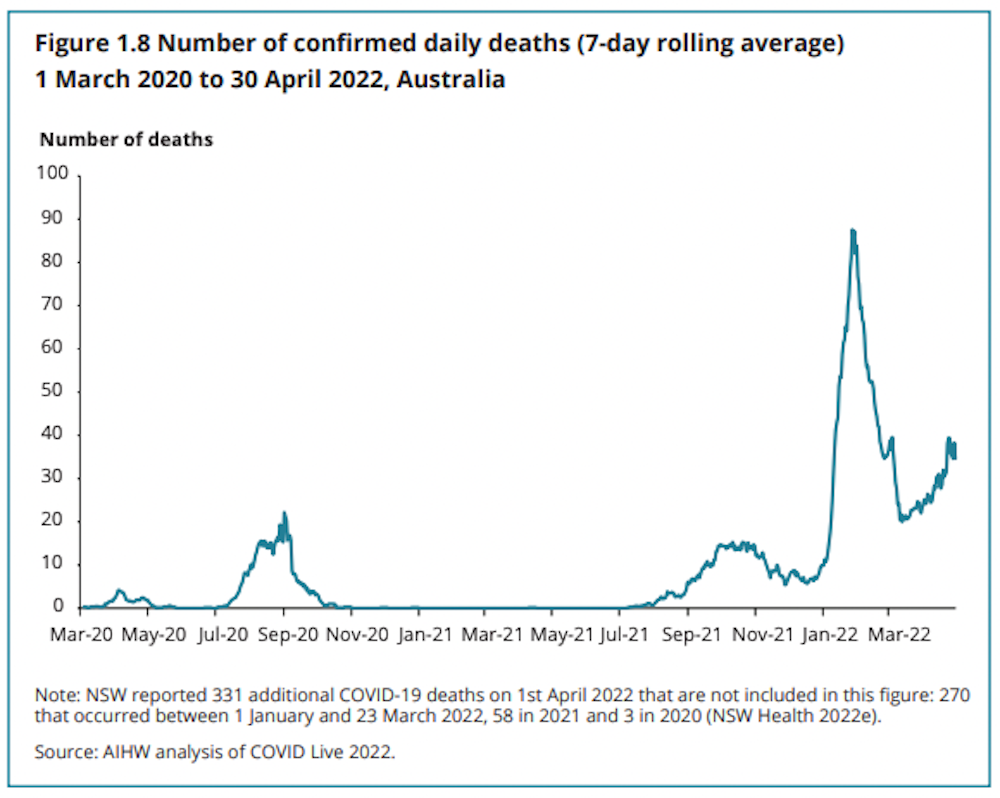
For some bee species this may not be a problem. But for a species that potentially requires specific foods, habitats and even other species, it could mean local extinction.

Only so many populations of a single species can disappear, before there are none left.

Where does this leave us?

P. lactiferus persists, which is wonderful. Unfortunately, we can’t yet say whether or not it is threatened.

To determine this confidently would require a robust, extensive and targeted survey regime.

We may not be able to undertake such a regime for all 1654 of the named bee species in Australia. But perhaps we could make that effort for the country’s only cloaked bee.

A close up of Pharohylaeus lactiferus. James Dorey, Author provided (No reuse)

ref. Phantom of the forest: how I rediscovered the rare cloaked bee in Australia, hidden for a century – https://theconversation.com/phantom-of-the-forest-how-i-rediscovered-the-rare-cloaked-bee-in-australia-hidden-for-a-century-156026

Sexual assault: what can you do if you don’t want to make a formal report to police?

Source: The Conversation (Au and NZ) – By Georgina Heydon, Associate professor, RMIT University

The alleged rape of former Liberal Party staffer Brittany Higgins has raised many questions about how sexual assault gets reported.

Members of the Morrison government have repeatedly stressed the appropriate response to allegations of sexual assault is to go to the police.

Another former staffer Dhanya Mani, who alleges she was indecently assaulted while working in NSW state politics, says she received a similar response from senior Liberal figures.

In both cases, the complainants did not want the police involved at the time of their first disclosure. Higgins initially spoke to police in 2019, but then withdrew her complaint, because she felt it would put her career in jeopardy. Mani says she did not want to go through the police process because it would be “traumatising […] it doesn’t empower us”.

Sadly, these women’s experiences are all too common. Many survivors feel they will not believed or taken seriously by police. For some, the experience of giving a statement is retraumatising and stressful.

Survivors also express concern about how their workplaces and colleagues may respond, especially if the alleged offender is well-known.


Read more: Four in ten Australians think women lie about being victims of sexual assault


We are currently researching anonymous and confidential options for reporting sexual assault in Australia.

It is important people know that making a formal complaint to police is not the only avenue. While it is clear the criminal justice current system needs substantial improvement, we also need to identify alternative ways survivors can be heard.

Alternatives to a formal report

There are many alternative and informal ways that sexual assault survivors can — and do — disclose their experiences.

At the more informal end, they can tell a trusted friend, family member, colleague, GP, counsellor or psychologist. This enables survivors to commence the recovery process in a safe environment, where they can process their experiences, develop coping skills, tell their story and consider their different options.

Women rallying at a #metoo event.
The #MeToo movement has seen survivors talk about their stories of harassment and abuse. www.shutterstock.com

Increasingly, survivors are also going online to tell their stories and receive support.

This includes platforms such as Reddit and Tumblr, where people post their experiences on particular message boards and others respond. Millions of survivors have also disclosed their experiences online using the #MeToo hashtag on Twitter and Facebook.

Informal options with police

Police forces in Australia still encourage formal reporting, but recognise the value of alternative options. There is some overseas evidence that informal reporting can improve rates of formal complaints.

In some states, police offer confidential, informal reporting options that do not count as official statements. The main purpose is to gather information about where crimes occur and adopt strategies to address emerging crime hot-spots.

Police station sign against clouds and sky.
Police can use informal reports to solve other, similar cases. www.shutterstock.com

In New South Wales, victims of sexual assault can fill out a form, which is available online and can be done anonymously. This form contains detailed questions about the offence, the offender and the victim, such as where the assault happened, what it it involved and whether the victim went to hospital.

NSW police say these reports can be used to “assist in other prosecutions” as well as working out crime prevention strategies.

Queensland similarly has an alternative reporting option, which police say can be an “extremely useful healing strategy”. In the ACT, adult sexual assault survivors can report a sexual assault that occurred more than six months ago online.

In states where there is no dedicated informal reporting option, survivors who wish to remain anonymous can make a report using a Crime Stoppers hotline.

Issues with alternative options

These alternative options are not designed to address the physical or mental health needs of survivors. They are more focused on police gathering useful information to try and either solve other assaults or work out patterns of crime.

The forms also include questions like “were you affected by alcohol or drugs?” and “what were you wearing at the time of the assault?”, which criminologists regard as victim-blaming.

Giving survivors more control

Our research team is working with police and sexual assault support centres to identify the obstacles and opportunities for alternative reporting.

We want to find out how these can benefit police work without compromising the needs of survivors.


Read more: ‘What I had to say mattered’ — how can we provide justice for sexual assault victims beyond criminal trials?


Models like this have worked in the past in Australia — although none are funded at the moment. Under this approach, users submit an informal but confidential report via a website. Information from these reports is then passed on to police, including detailed information about locations of alleged incidents, which could be used in crime mapping.

Users can include a phone number or email address so expert staff could contact them to arrange counselling.

What needs to change

So far, our work suggests alternative, informal reporting options may provide survivors with greater control over the outcomes of reporting. In particular, having a support service as a first contact, rather than police, may assist survivors in working out what their options are and providing them with greater agency.

Our research also suggests the design of forms can be improved to avoid leading or suggestive questions that might contaminate the survivor’s story with false information.


Read more: Witnesses are forgetting clues to the Boston bombings … quickly


Forms need to be based on good practice interviewing. This means the interviewee’s story is told in their own words and open questions are prioritised over closed requests for specific information.

Lastly, there is no national standard to alternative reporting options around sexual assault. We need to make sure any uniform approach is carefully designed to protect survivors.

If this article has raised issues for you, or if you’re concerned about someone you know, call 1800RESPECT on 1800 737 732

ref. Sexual assault: what can you do if you don’t want to make a formal report to police? – https://theconversation.com/sexual-assault-what-can-you-do-if-you-dont-want-to-make-a-formal-report-to-police-155948
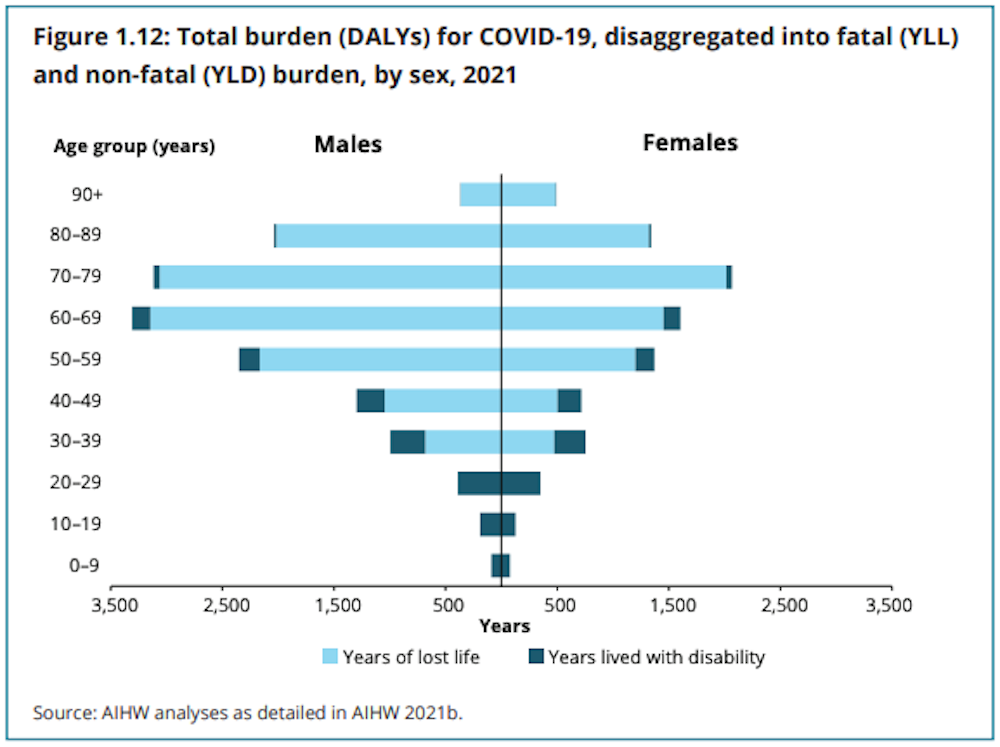
‘Existential threat to our survival’: see the 19 Australian ecosystems already collapsing

Source: The Conversation (Au and NZ) – By Dana M Bergstrom, Principal Research Scientist, University of Wollongong

In 1992, 1,700 scientists warned that human beings and the natural world were “on a collision course”. Seventeen years later, scientists described planetary boundaries within which humans and other life could have a “safe space to operate”. These are environmental thresholds, such as the amount of carbon dioxide in the atmosphere and changes in land use.

Crossing such boundaries was considered a risk that would cause environmental changes so profound, they genuinely posed an existential threat to humanity.

This grave reality is what our major research paper, published today, confronts.

In what may be the most comprehensive evaluation of the environmental state of play in Australia, we show major and iconic ecosystems are collapsing across the continent and into Antarctica. These systems sustain life, and evidence of their demise shows we’re exceeding planetary boundaries.

We found 19 Australian ecosystems met our criteria to be classified as “collapsing”. This includes the arid interior, savannas and mangroves of northern Australia, the Great Barrier Reef, Shark Bay, southern Australia’s kelp and alpine ash forests, tundra on Macquarie Island, and moss beds in Antarctica.

We define collapse as the state where ecosystems have changed in a substantial, negative way from their original state – such as species or habitat loss, or reduced vegetation or coral cover – and are unlikely to recover.

bleached coral
The Great Barrier Reef has suffered consecutive mass bleaching events, causing swathes of coral to die. Shutterstock

The good and bad news

Ecosystems consist of living and non-living components, and their interactions. They work like a super-complex engine: when some components are removed or stop working, knock-on consequences can lead to system failure.

Our study is based on measured data and observations, not modelling or predictions for the future. Encouragingly, not all ecosystems we examined have collapsed across their entire range. We still have, for instance, some intact reefs on the Great Barrier Reef, especially in deeper waters. And northern Australia has some of the most intact and least-modified stretches of savanna woodlands on Earth.


Read more: Worried about Earth’s future? Well, the outlook is worse than even scientists can grasp


Still, collapses are happening, including in regions critical for growing food. This includes the Murray-Darling Basin, which covers around 14% of Australia’s landmass. Its rivers and other freshwater systems support more than 30% of Australia’s food production.

A farmer stands in a trailer, overlooking sheep on brown land
The effects of floods, fires, heatwaves and storms are felt equally in agricultural areas as in natural ecosystems. AAP Image/Dan Peled

The effects of floods, fires, heatwaves and storms do not stop at farm gates; they’re felt equally in agricultural areas and natural ecosystems. We shouldn’t forget how towns ran out of drinking water during the recent drought.


Read more: Logging must stop in Melbourne’s biggest water supply catchment


Drinking water is also at risk when ecosystems collapse in our water catchments. In Victoria, for example, the degradation of giant Mountain Ash forests greatly reduces the amount of water flowing through the Thompson catchment, threatening nearly five million people’s drinking water in Melbourne.

This is a dire wake-up call — not just a warning. Put bluntly, current changes across the continent, and their potential outcomes, pose an existential threat to our survival, and other life we share environments with.

A burnt pencil pine
A burnt pencil pine, one of the world’s oldest species. These ‘living fossils’ in Tasmania’s World Heritage Area are unlikely to recover after fire. Aimee Bliss, Author provided

In investigating patterns of collapse, we found most ecosystems experience multiple, concurrent pressures from both global climate change and regional human impacts (such as land clearing). Pressures are often additive and extreme.

Take the last 11 years in Western Australia as an example.

In the summer of 2010 and 2011, a heatwave spanning more than 300,000 square kilometres ravaged both marine and land ecosystems. The extreme heat devastated forests and woodlands, kelp forests, seagrass meadows and coral reefs. This catastrophe was followed by two cyclones.

A record-breaking, marine heatwave in late 2019 dealt a further blow. And another marine heatwave is predicted for this April.

These 19 ecosystems are collapsing: read about each

What to do about it?

Our brains trust comprises 38 experts from 21 universities, CSIRO and the federal Department of Agriculture Water and Environment. Beyond quantifying and reporting more doom and gloom, we asked the question: what can be done?

We devised a simple but tractable scheme called the 3As:

  • Awareness of what is important

  • Anticipation of what is coming down the line

  • Action to stop the pressures or deal with impacts.

In our paper, we identify positive actions to help protect or restore ecosystems. Many are already happening. In some cases, ecosystems might be better left to recover by themselves, such as coral after a cyclone.

In other cases, active human intervention will be required – for example, placing artificial nesting boxes for Carnaby’s black cockatoos in areas where old trees have been removed.

Two black cockatoos on a tree branch
Artificial nesting boxes for birds such as the Carnaby’s black cockatoo are important interventions. Shutterstock

“Future-ready” actions are also vital. This includes reinstating cultural burning practices, which have multiple values and benefits for Aboriginal communities and can help minimise the risk and strength of bushfires.

It might also include replanting banks along the Murray River with species better suited to warmer conditions.

Some actions may be small and localised, but have substantial positive benefits.

For example, billions of migrating Bogong moths, the main summer food for critically endangered mountain pygmy possums, have not arrived in their typical numbers in Australian alpine regions in recent years. This was further exacerbated by the 2019-20 fires. Brilliantly, Zoos Victoria anticipated this pressure and developed supplementary food — Bogong bikkies.


Read more: Looks like an ANZAC biscuit, tastes like a protein bar: Bogong Bikkies help mountain pygmy-possums after fire


Other more challenging, global or large-scale actions must address the root cause of environmental threats, such as human population growth and per-capita consumption of environmental resources.

We must rapidly reduce greenhouse gas emissions to net-zero, remove or suppress invasive species such as feral cats and buffel grass, and stop widespread land clearing and other forms of habitat destruction.

A mountain pygmy possum on a human hand
Mountain pygmy possums were saved from potential catastrophe after Zoos Victoria developed alternative food for them. AAP Image/Department of Sustainability and Environment /Tim Arch

Our lives depend on it

The multiple ecosystem collapses we have documented in Australia are a harbinger for environments globally.

The simplicity of the 3As is to show people can do something positive, either at the local level of a landcare group, or at the level of government departments and conservation agencies.

Our lives and those of our children, as well as our economies, societies and cultures, depend on it.

We simply cannot afford any further delay.


Read more: Australia, you have unfinished business. It’s time to let our ‘fire people’ care for this land


ref. ‘Existential threat to our survival’: see the 19 Australian ecosystems already collapsing – https://theconversation.com/existential-threat-to-our-survival-see-the-19-australian-ecosystems-already-collapsing-154077

- ADVERT -

MIL PODCASTS
Bookmark
| Follow | Subscribe Listen on Apple Podcasts

Foreign policy + Intel + Security

Subscribe | Follow | Bookmark
and join Buchanan & Manning LIVE Thursdays @ midday

MIL Public Webcast Service


- Advertisement -
- Advertisement -
- Advertisement -
- Advertisement -
- Advertisement -