Source: The Conversation (Au and NZ) – By Marta Hernandez-Jover, Professor in Veterinary Epidemiology and Public Health, Charles Sturt University
Twitter/@Hiitaylorblake
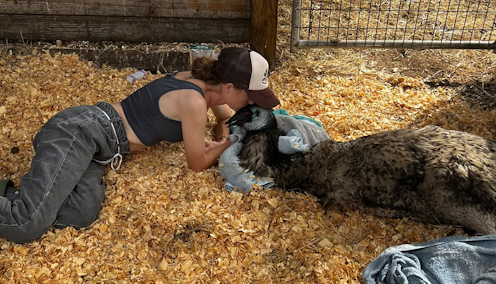
Viral TikTok star Emmanuel – an emu who gained a vast online following thanks to videos shared by his owner at Knuckle Bump Farms in Florida – has reportedly fallen sick with avian influenza.
Farm owner Taylor Blake wrote on Twitter that wild geese brought avian influenza to the farm, with many birds having since died.
As a large outbreak sweeps poultry farms across the US and the UK, many people are now asking: what exactly is avian influenza, and what do I need to know?
Avian influenza is a disease caused by an influenza A virus, affecting birds across many species.
It can have significant consequences for the poultry industry, due to its potential impact on bird health, production and even international trade.
Although avian influenza does not usually infect people, it is considered a zoonotic virus. That means it can be transmitted to humans through contact with infected birds, and sporadic cases have been seen when outbreaks happen in poultry.
Some avian influenza viruses are more pathogenic than others. Pathogenic means disease-causing, so if highly pathogenic avian influenza gets into a poultry farm, it can cause sudden and significant mortality.
It has been reported the outbreak underway on the farm where Emmanuel lives is a highly pathogenic strain, which has been affecting poultry and wild birds in the US since January 2022.
Even low pathogenic strains can make birds unwell and cause them to lay fewer eggs.
Avian influenza infections in humans can cause a range of clinical symptoms, from mild upper respiratory symptoms to severe pneumonia.
Some strains of avian influenza, such as highly pathogenic H5N1 and H7N9, can cause significant disease in humans, and in some instances even death.
Recommended standard treatment for humans is with antiviral drugs, and will depend on individual circumstances and severity of the symptoms.
In domestic birds, the most likely path of infection is through contact with infected wild birds. This could be direct contact or contact through water contaminated with wild bird droppings.
Generally, an outbreak of avian influenza on a poultry farm means many birds have to be culled in an effort to stop the spread.
Is there any avian flu in Australia?
Australia is classed by the World Organisation for Animal Health as free of avian influenza in the domestic bird population. However, we do currently have a low-level circulation of low pathogenic influenza viruses among wild birds.
We have had several low and highly pathogenic avian influenza outbreaks in domestic poultry in Australia before, with the most recent one affecting farms in Victoria. Many birds were culled to eradicate the disease and in all cases eradication was successful.
None of the viruses causing these outbreaks in Australia have caused disease in humans. However, it is important that we use hygienic practices and biosecurity when working with poultry.
We currently do not have H5N1 in Australia; waterfowl, the bird species most likely to carry this virus, do not migrate to Australia. In addition, Australia has very strict biosecurity measures to prevent disease introduction through imports. Therefore, the risk of introduction of this strain into the country is very low.
Most measures aimed at reducing the risk of avian influenza outbreaks in poultry in Australia have focused on reducing contact between wild birds and farmed birds.
That means limiting the access wild birds can get to farms, as well as protecting and treating water sources.
In the past decade, we have seen an increase in the number of domestic outbreaks in Australia. Previousresearchsuggests this increase could be associated with an increase in free range poultry over the last 30 years.
A paper I coauthored in 2019 modelled how intervention strategies could reduce risk, noting that:
a shift of 25% of conventional indoor farms to free-range farming practices would result in a 6–7% increase in the risk of a highly pathogenic avian influenza outbreak. Current practices to treat water are highly effective, reducing the risk of outbreaks by 25–28% compared to no water treatment.
Halving wild bird presence in feed storage areas could reduce risk by 16–19% while halving wild bird access of potential bridge-species to sheds could reduce outbreak risk by 23–25%.
A large outbreak in Australia would be enormously costly to industry, cause a vast number of birds to die and could potentially pose a health risk to humans.
Although vaccines for avian influenza for poultry are available, these would only be considered if an outbreak became widespread.
Following appropriate biosecurity practices on poultry farms continues to be the most important prevention tool we have to avoid outbreaks.
Marta Hernandez-Jover receives funding from the Australian Research Council and the Australia’s Rural Research and Development Corporations.
Within western society, maps are often perceived as scientific, neutral and objective tools. Map making has always been shaped by our social and cultural relationships to the land. In the last 20 years, approaches to map creation have become much more reliant on photographic and digital technologies, including Google Earth.
My artistic exploration of western maps began during my honours year in 2020 and has since become a key part of my PhD research. Due to the pandemic, travel to Pitta Pitta Country was prohibited, therefore making it impossible for me to create photographs of Country for my project.
Pitta Pitta is located in western Queensland, 300 kilometres south of Mount Isa. My maternal great-grandmother Dolly Creed was stolen from Country as a young child and my family has been dislocated since. My understanding of this landscape is informed by oral history, and my relationship to it is shaped by my distance from it.
I grew up on Wadawurrung Country, an hour south from Naarm (Melbourne), and have lived in Victoria my whole life. Like many Aboriginal and Torres Strait Islander people, my understanding of self is scarred by the atrocities my family have experienced due to colonisation.
These experiences heavily inform my practice and research.
In response to COVID travel restrictions, I decided to go to Pitta Pitta “virtually” via Google Earth. While looking around Pitta Pitta via the street view function, I began noticing the inaccuracy of the technology. The images hadn’t been updated since 2007, the technology glitched a lot and, most importantly, there was no acknowledgement of Indigenous Custodianship.
I went looking for places I recognised on Country within Google Earth to see what had been photographed.
On the outskirts of Boulia, a small town on Country, a Waddi tree sits. Waddi trees are rare species of Acacia endemic to central parts of Australia. This particular tree was a significant gathering place for my people.
Within Google Earth it had been reduced to a blob of pixels, a dark shadow smeared on a reddish landscape. I was angered that Google decided this tree was unimportant, but also began to wonder why.
Responding to Google’s representation of the tree, Waddi Tree from my series (Dis)connected to Country aims to demonstrate where Google Earth has erased topographical information and Indigenous Knowledges of place.
My research addresses this gap. Waddi Tree layers a photograph I made of the tree during my last visit to Country in 2019 onto a screenshot from its location within Google Earth.
Through the omission of Indigenous Knowledges of place, western maps of Australia continue the false colonial narrative of terra nullius – land belonging to no one.
The photographic technologies used within Google Earth don’t allow, nor represent, the significant relationships Indigenous peoples have with Country. Photographic and digital images have also become intertwined with mapping in Google Earth. This changes how we relate to place, normalising a flattened and very limited view.
Indigenous Knowledges of place are rooted in relationships which recognise that all forms of life have agency and are interconnected.
Put very simply, Country, all that it encompasses, and self are intertwined and valued equally.
Other images from the series seek to identify where the technology dysfunctions and breaks down within itself. I like to think of these “glitches” as tears in the technological fabric of Google Earth, and therefore the narratives the technology enforces. Pitta Pitta (Google’s Earth) and Pitta Pitta (Published Without Permission) are freeze-frames from transitions between the aerial and street view functions which emphasise this glitch.
My research and arts practice are informed by my family history and my positionality as a Pitta Pitta woman.
I acknowledge my Ancestors and my great-grandmother Dolly whose story has shaped my family in unimaginable ways. Additionally, I extend my respects to the ongoing Custodians of the Kulin Nations where I work and live.
Sovereignty has never been ceded and it always was, and forever will be, Aboriginal land.
I’ll finish with a quote from Indigenous scholar Aunty Mary Graham:
There is no Aboriginal equivalent to the Cartesian notion of ‘I think therefore I am’ but, if there were, it would be – I am located therefore I am. Place, being, belonging and connectedness all arise out of a locality in Land.
Jahkarli Romanis does not work for, consult, own shares in or receive funding from any company or organisation that would benefit from this article, and has disclosed no relevant affiliations beyond their academic appointment.
Source: The Conversation (Au and NZ) – By Meg Good, Honorary Adjunct Assistant Professor, Faculty of Law, Bond University. Adjunct Lecturer, School of Law, University of Tasmania, University of Tasmania
The United Nations recently declared that access to a clean, healthy and sustainable environment is a universal human right.
The declaration was the result of a hard-fought global campaign, coming hot on the heels of the UN Human Rights Council’s recognition of the right last year. It’s been a long road to get here, as the right was first recognised 50 years ago in the landmark Stockholm Declaration.
You might hear this news and wonder what it will mean. After all, UN member states don’t have to comply with the resolution. But in fact, it’s better news than it sounds.
When the UN passed a resolution in 2010 recognising the human right to water, countries around the world set to work changing their constitutions and introducing new programs to improve water management.
So will Australia join the rest of the world and introduce the right?
These resolutions are catalysts
As David Boyd, the UN’s independent expert on human rights and the environment explains: “These resolutions may seem abstract, but they are a catalyst for action, and they empower ordinary people to hold their governments accountable in a way that is very powerful.”
While most countries have already recognised the right to a healthy environment under law, Australia is one of the last 37 holdouts.
Although Australia did vote in favour of the declaration, the government hasn’t yet released an official statement in response or included mention of the right under the new Climate Change Act 2022.
If Australia refuses to implement the right under domestic law, it will become even more of a global outlier.
Australia’s record on environmental and human rights protection is already the subject of global scrutiny, thanks to the UN human rights committee’s recent finding that Australia failed to protect Torres Strait Islanders against the impacts of climate change and violated their human rights.
With the UN now backing the right to a healthy environment, it will be much harder for the government to justify excluding it, especially in light of ever-more-visible climate change impacts and the latest damning State of the Environment report.
What would it take to legally recognise the right?
While the federal government could try to embed the right in the Constitution, it would be extremely unlikely to pass at referendum. That’s because constitutional change is very difficult. It’s succeeded only eight times since 1901, and no new express human rights have ever been introduced.
As recognition at the federal level would be challenging in the absence of a national charter of rights, the best bet is through state and territory human rights legislation.
At present, the Australian Capital Territory is consulting on whether to add the right to its human rights act. Queensland missed the opportunity to include the right under its legislation a few years ago, so the ACT stands to become the first Australian jurisdiction to do so.
Recognition would mean the right would have to be considered as part of government decision-making in the ACT. It would give people a legal avenue to challenge public authorities for failing to properly consider or act consistently with the right. And it would give courts the power to declare laws “incompatible” with the right.
Not only that, but all new legislation would have to include accompanying detail addressing impacts on the right. For instance, if the ACT government tried to push through laws which would result in more water pollution or greater greenhouse gas emissions, it would have to formally justify those impacts.
Of course this wouldn’t stop the parliament passing legislation which breached the right, but it would ensure legislators turned their minds to the issue before a bill became law.
As others have noted, the ACT and Victorian rights charters make it more likely human rights concerns are raised and fixed before a law is passed.
Clearly, this is not a silver bullet for Australia’s environmental woes.
But legal recognition will help. Across Latin America, Europe and Asia, the right has helped to strengthen environmental protection laws and policies, and encouraged stronger legislation. Importantly, the right has also prevented governments from rolling back effective laws introduced by their predecessors.
Legal recognition in Australia could open up new avenues to improve environmental protection and challenge questionable environmental decision-making.
Depending on how the right is recognised, it could also help climate change litigation. Right now, advocates seeking to launch rights-based climate change legal action have to rely on other rights.
That includes the ground-breaking case challenging a proposed Queensland coal mine on human rights grounds. With the right to a healthy environment unavailable, objectors have used a range of other rights – such as the right to life – to ground their climate change argument.
Other climate litigation has been forced to turn to other areas of law entirely. For instance, the federal court’s recent high-profile climate case relied on torts law, which deals with civil wrongs.
The court found the Australian government did not, in fact, owe a duty of care to Australian children to protect them from climate change. If the right to a healthy environment had been available, it’s possible the outcome could have been very different.
The time has clearly come for Australia to join the rest of the world and recognise this fundamental human right under the law.
Dr Meg Good is the Head of Programs and Legal Counsel at the Australian Alliance for Animals, and volunteers her time with various animal law initiatives. All views are her own.
More recently, however, the people of Somalia have endured wars, locust plagues, flash flooding, pandemics and, now, extreme drought. Today, crisis on top of crisis means 7 million people are in need of humanitarian assistance – two million more than just three months ago.
Despite historic levels of drought and hunger, Somalicivil society continues to find ways to support people at risk of starvation. But additional help is needed. To date, the international community has largely failed the Somali population. In 2022, the risk of famine should not exist.
Defining ‘famine’
There is a well established and globally recognised system of categorising how close to famine people are. “Famine” is the worst of five levels.
For an area to be declared in a “famine”, there must be hard evidence of very high levels of child malnutrition (over 30%), very high levels of death (for every 10,000 people, more than two people dying every day), and extreme levels of hunger (more than one in five households going without food).
In 2022, no-one should suffer from a lack of food, let alone extreme starvation: the world is producing more food than ever before. And in 2011, humanitarian aid agencies and civil society organisations launched the Charter to End Extreme Hunger at the UN in New York, clearly outlining five steps to take to avoid famine.
Since then, it has been endorsed by the UN, world leaders, and dozens of humanitarian organisations.
So, why is this happening again?
The past four rainy seasons in Somalia have failed to materialise and the fifth is very likely to underperform as well.
Crops can’t grow to their full potential, if at all in some areas. The camel, goat and cattle herds of Somali pastoralists don’t have enough vegetation to eat nor enough accessible water to drink – already, millions of livestock have perished in the current drought.
Climate change underpins this continued lack of rainfall. Somalia is ranked second-most vulnerable (after Niger) to the adverse impacts of climate change, which will likely cause Somalia to experience more drought, affecting more land area, with fewer regular rainy seasons.
The extreme difficulties of prolonged drought are hard for anyone to cope with, especially if there is little to no safety net to catch people during hard times. Indeed, food prices are higher now than during the 2011 famine.
Somalia does have a nascent social safety net called Baxnaano. It aims to build a bridge beyond the humanitarian approach, addressing immediate food security and nutrition issues, while also laying the foundations for a stronger workforce. But it is still at the pilot stage.
The country is divided in three: south-central Somalia, the self-declared independent region of Somaliland, and the autonomous state of Puntland in the north. The various governments are not able to reach some parts of the country or provide adequate safety nets for Somalis experiencing the harsh challenges of a changing climate.
This centre and many others warned Somalis and the world of the seriousness of the predicted drought back in early 2020. They have continued to repeat these warnings as the situation deteriorated.
These warnings fell on largely deaf ears until only very recently. The coordinated plan to respond to the Somali crisis had received only US$56 million in March, but needs US$1.5 billion to be properly implemented.
While the international community’s efforts have ramped up in recent months, the plan to provide life-saving support is still missing US$409 million.
What needs to change?
Between October and December, the drought is expected to force 6.7 million people across Somalia into acute food insecurity, a technical term meaning people are close to starving.
International assistance needed to be provided at scale when the first warnings were shared. This was clearly stated back in 2011.
And, perhaps most importantly, wealthy countries should compensate Somalis for the catastrophic impacts climate change is having on their lives.
This compensation – known as “loss and damage financing” in UN circles – will be a central topic at the upcoming international climate change summit COP27, held in Egypt in November.
Loss and damage refers to climate change harms that can’t be prevented, mitigated, or sometimes even prepared for. Think rising sea levels destroying entire ways of life, or disasters that are happening so often, so severely, that even insurance companies refuse to insure people against them.
Somalis produce a tiny, tiny amount of greenhouse gas emissions compared to the high-income countries of the world. Yet, they are experiencing some of the worst impacts of climate change, as the current drought and hunger crisis so clearly demonstrates.
COP27 should lead to Somalis, and the many millions more around the world hit hard by climate change, being financially compensated by the countries and corporations most responsible for changing the climate.
How can I help?
The crisis in Somalia will only worsen in the coming weeks. If you are in a position to donate, consider the following charities:
Bulsho Kaab: a Somali donation-based crowdfunding platform that supports communities and youth initiatives across Somali regions.
Joshua Hallwright does not work for, consult, own shares in or receive funding from any company or organization that would benefit from this article, and has disclosed no relevant affiliations beyond their academic appointment.
The national plan is an important policy that sets the priorities for continued action and investment to address gender-based violence. It represents a shared commitment across all levels of government to issues such as prevention, early intervention, responses to victim-survivors and perpetrators, as well as recovery and healing.
There are several important areas of improvement in this second ten-year national plan.
Among its key principles are “advancing gender equality” and “closing the gap”. There is a welcome acknowledgement of the role that deeply embedded problems – such as women’s inequality and the ongoing impacts of colonisation – have in shaping violence in our society. There is also a commitment to a specific set of actions addressing Aboriginal and Torres Strait Islander women’s experiences of violence under a separate action plan.
A further key principle is “centring victim-survivors”, and ensuring responses are “trauma informed”. This is a significant development for national policy addressing gender-based violence. Listening to the experiences of victim-survivors is vital – as is ensuring our laws, institutions and support services do not add to the harm already done.
Both prevention, and the important role of working with men and boys, receive a much needed greater emphasis in the new plan. It takes clear direction from our national framework for preventing violence against women, and highlights the role we all have – including men – in addressing gender inequality and gender-based violence.
This plan also includes much greater emphasis on intersectionality. This refers to recognising and addressing the multiple inequalities that individuals face such as by gender, race, Aboriginality, sexuality, gender diversity, and ability. There is an important and welcome inclusion of trans women in the national plan, and an acknowledgement that both cisgenderism and heteronormativity are related to sexism, and reinforce violence against people of all genders and sexualities.
There is a vital emphasis on multi-sector approaches and workforce development to support the work of the national plan. These include engaging across government and the community with business, sporting organisations, educational institutions media and others over the next ten years. Building capacity across the community to better respond to, and prevent, violence against women is key to the success of the plan.
Key weaknesses
While the national plan aims for an Australia free of “gender-based violence” – much of the plan actually focuses on domestic, family and sexual violence. Other forms of violence that are disproportionately directed at women and girls receive little attention – such as online forms of harassment and abuse, labour exploitation, sexual exploitation, and abuse of children.
The plan makes little mention of the challenges faced in the Federal Court and family law in responding to domestic, family and sexual violence in the context of deciding on parenting matters. There are well documented injustices occurring in this setting – and it would be a lost opportunity if the national plan did not seek to correct these.
There are commitments made under the new plan to evaluate and measure its outcomes. But the details are vague, including the scope given to the incoming family, domestic and sexual violence commissioner to report on these measures.
There is a lot of work for governments to do under this plan – it will be important to ensure a rigorous, transparent and independent approach to monitoring progress.
Funding is always a key issue in policy – it remains unclear whether funding commitments made during the election campaign and under the previous government will be confirmed in the forthcoming federal budget. The plan will also need to be backed by proper funding if it is to end violence against women “in one generation”.
The plan commits to three more specific “action” plans. Two of these are separate five-year action plans that will outline specific activities under the national plan. The first of these is due to be released in 2023. A third is a dedicated Aboriginal and Torres Strait Islander Action Plan. It is in the implementation of these action plans that there will be opportunity to ensure some of the potential gaps are filled in.
1 in 2 Australian women have experienced sexual harassment
1 in 4 women have experienced emotional abuse from a partner
1 in 6 have experienced physical partner abuse
1 in 5 have experienced sexual violence.
The next National Plan to End Violence Against Women and Children is vital for setting the stage. But its real impact will be seen through its implementation across the three action plans that are yet to lay out the details of activity under the plan.
Addressing and ultimately preventing violence against women and children must continue to be a national policy priority. We have to ensure all Australian governments are held to account for funding and delivery of actions under the national plan if we are truly to see this violence end in one generation.
If this article has raised issues for you, or if you’re concerned about someone you know, call 1800RESPECT on 1800 737 732. In immediate danger, call 000.
Anastasia Powell receives funding from the Criminology Research Council, Australia’s National Research Organisation for Women’s Safety (ANROWS), and Family Safety Victoria. Anastasia is also a director of Our Watch (Australia’s national organisation for the prevention of violence against women), and a member of the National Women’s Safety Alliance (NWSA).
Armida Salsiah Alisjahbana is the United Nations Under-Secretary-General and Executive Secretary of the Economic and Social Commission for Asia and the Pacific (ESCAP).
OP-ED by Armida Salsiah Alisjahbana – Under-Secretary-General of the United Nations and Executive Secretary of the ESCAP.
Armida Salsiah Alisjahbana is the United Nations Under-Secretary-General and Executive Secretary of the Economic and Social Commission for Asia and the Pacific (ESCAP).
Ten years ago, the Asia-Pacific region came together and designed the world’s first set of disability-specific development goals: the Incheon Strategy to “Make the Right Real” for Persons with Disabilities. This week, we meet again to assess how the governments have delivered on their commitments, to secure those gains and develop the innovative solutions needed to achieve fully inclusive societies.
Ministers, government officials, persons with disabilities, civil society and private sector allies from across Asia and the Pacific will gather from 19 to 21 October in Jakarta to mark the birth of a new era for 700 million persons with disabilities and proclaim a fourth Asian and Pacific Decade of Persons with Disabilities.
Our region is unique, having already declared three decades to protect and uphold the rights of persons with disabilities; 44 Asian and Pacific governments have ratified the Convention on the Rights of Persons with Disabilities; and we celebrate achievements in the development of disability laws, policies, strategies and programmes.
Today, we have more parliamentarians and policymakers with disabilities. Their everyday business is national decision-making. They also monitor policy implementation. We find them active across the Asia-Pacific region: Australia, Bangladesh, China, Japan, Kazakhstan, Malaysia, the Marshall Islands, the Republic of Korea, Singapore, Thailand and Türkiye. They have promoted inclusive public procurement to support disability-inclusive businesses and accessible facilities, advanced sign language interpretation in media programmes and parliamentary sessions, focused policy attention on overlooked groups, and directed numerous policy initiatives towards inclusion.
Less visible but no less important are local-level elected politicians with disabilities in India, Japan and the Republic of Korea. Indonesia witnessed 42 candidates with disabilities standing in the last election. Grassroot disability organizations have emerged as rapid responders to emerging issues such as COVID-19 and other crises. Organizations of and for persons with disabilities in Bangladesh have distinguished themselves in disability-inclusive COVID-19 responses, and created programmes to support persons with psychosocial disabilities and autism.
The past decade saw the emergence of private sector leadership in disability-inclusive business. Wipro, headquartered in India, pioneers disability inclusion in its multinational growth strategy. This is a pillar of Wipro’s diversity and inclusion initiatives. Employees with disabilities are at the core of designing and delivering Wipro digital services.
Yet, there is always more unfinished business to address.
Even though we applaud the increasing participation of persons with disabilities in policymaking, there are still only eight persons with disabilities for every 1,000 parliamentarians in the region.
On the right to work, 3 in 4 persons with disabilities are not employed, while 7 in 10 persons with disabilities do not enjoy any form of social protection.
This sobering picture points to the need for disability-specific and disability-inclusive policies and their sustained implementation in partnership with women and men with disabilities.
One of the first steps to inclusion is recognizing the rights of persons with disabilities. This model focuses on the person and their dignity, aspirations, individuality and value as a human being. As such, government offices, banks and public transportation and spaces must be made accessible for persons with diverse disabilities. To this end, governments in the region have conducted accessibility audits of government buildings and public transportation stations. Partnerships with the private sector have led to reasonable accommodations at work, promoting employment in a variety of sectors.
Despite the thrust of the Incheon Strategy on data collection and analysis, persons with disabilities still are often left out of official data because the questions that allow for disaggregation are excluded from surveys and accommodations are not made to ensure their participation. This reflects a continued lack of policy priority and budgetary allocations. To create evidence-based policies, we need reliable and comparable data disaggregated by disability status, sex and geographic location.
There is hope in the technology leap to 5G in the Asia-Pacific region. The implications for the empowerment of persons are limitless: from digital access, e-health care and assistive devices at affordable prices to remote learning and working, and exercising the right to vote. This is a critical moment to ensure disability-inclusive digitalization.
We live in a world of volatile change. A disability-inclusive approach to shape this world would benefit everyone, particularly in a rapidly ageing Asia-Pacific region where everyone’s contributions will matter. As we stand on the precipice of a fourth Asian and Pacific Decade of Persons with Disabilities it remains our duty to insist on a paradigm shift to celebrate diversity and disability inclusion. When we dismantle barriers and persons with disabilities surge ahead, everyone benefits.
*******
Armida Salsiah Alisjahbana is an Under-Secretary-General of the United Nations and Executive Secretary of the Economic and Social Commission for Asia and the Pacific (ESCAP)
Following the settlement of Aotearoa New Zealand, many native species were wiped from the mainland. It’s a familiar story – one that has affected species like the iconic flightless kākāpō and the tuatara, a reptile in a category all its own.
As the New Zealand government moves towards the goal of Predator Free 2050, the reintroduction of native species back into predator-free areas on the mainland is becoming increasingly common.
However, these reintroductions from offshore islands to the mainland can have unexpected outcomes.
A recent study led by researchers at Te Herenga Waka–Victoria University of Wellington raises questions about the impact habitat differences will have when we are reintroducing taonga species of special cultural significance to Māori.
The study focused on tuatara, which have undergone extensive recovery efforts. But the process of reintroducing these reptiles back onto the mainland may not be as straightforward as previously thought.
An icon of Oceania
Tuatara are reptiles so unique they are the sole surviving species in Rhynchocephalia – one of the four reptile orders.
Long-lived, slow to reproduce, and laying their eggs in the ground, tuatara are vulnerable to predators like stoats and rats. Natural populations of tuatara remain only on predator-free offshore islands.
However, tuatara have been settled back onto the mainland inside several fenced ecosanctuaries, a trend that’s likely continue as the impact of invasive mammals is reduced across the country.
New research on the diets of tuatara living on Takapourewa/Stephens Island reveals that larger individuals are eating a surprising amount of seabirds – or at least seabird matter.
Using carbon signatures to assess diet, we found that as much as 40% of the dietary carbon in sampled tuatara had marine origins – explaining the headless seabird carcasses often encountered across the island.
For a tuatara with a mouth large enough to fit around a seabird, and a territory in the burrow-pocked forest floor, this might mean one fledgling head a week.
Up to 40% of a tuatara’s diet comes from seabirds. Sarah Lamar, Author provided
The seabird situation
Seabirds represent a crucial food source on offshore islands, providing the opportunity for animals that can consume seabird eggs, fledglings or adults with a boon of nutrients like polyunsaturated fatty acids (PUFAs).
These fatty acids are important for egg hatchability, embryo development and juvenile growth in other reptile species.
However, seabird colonies like the ones found on the Takapourewa are absent from mainland New Zealand, which poses a couple of questions: what are populations of tuatara reintroduced to the mainland eating, and are there physiological implications from this dietary lack of seabirds?
We currently don’t know how much of a benefit to growth and development the large role of seabirds in the tuatara diet provides or what the lack of these nutrients may mean for tuatara living on the mainland.
In ecosanctuaries, where biodiversity is high, skinks, geckos and ground-nesting native birds may provide some supplementation of PUFAs. However, PUFAs trend higher in marine environments than terrestrial systems.
Dietary disparity
This new research sheds light on an important facet of reintroducing native species to the mainland.
The biological communities on offshore islands are often very different from those on the mainland and the species living there are part of a complicated, interwoven web of predator and prey interactions.
While New Zealand is the undisputed seabird capital of the world, the mainland is very different from the time when tuatara were widespread. Once covered in either seabird colonies or the guano from seabird colonies, the mainland is now a patchwork of bush, agriculture and urban areas.
This research supports the need for a holistic view of restoration and a measured approach to reintroductions.
For many mainland ecosanctuaries, the resources to restore seabird populations are extremely limited. Located near cities with large amounts of light pollution, and with poor or missing records of which seabirds historically inhabited the space, the possibility of large-scale seabird restoration to the mainland is difficult.
What will the lack of seabirds, which make up a significant portion of the diet of large tuatara on offshore islands, mean for mainland populations? And will we see physiological effects of this disparity at our ecosanctuaries?
With lifespans of well over 100 years, setting up tuatara restorations is aiming for success well beyond our lifetimes. While we don’t yet know how this dietary disparity is affecting the viability of tuatara populations, the sheer number of seabirds being consumed by large tuatara offshore makes it a pressing question for restoration – and raises questions about how we approach translocations in Oceania.
Sarah K. Lamar receives funding from the American Society of Ichthyology and Herpetology and Te Herenga Waka – Victoria University of Wellington.
Diane Karen Ormsby works for Te Herenga Waka – Victoria University of Wellington
Nicola Jane Nelson works for Te Herenga Waka – Victoria University of Wellington.
You might suppose Hollywood is good at predicting the future. Indeed, Robert Wallace, head of the CIA’s Office of Technical Service and the US equivalent of MI6’s fictional Q, has recounted how Russian spies would watch the latest Bond movie to see what technologies might be coming their way.
Hollywood’s continuing obsession with killer robots might therefore be of significant concern. The newest such movie is Apple TV’s forthcoming sex robot courtroom drama Dolly.
I never thought I’d write the phrase “sex robot courtroom drama”, but there you go. Based on a 2011 short story by Elizabeth Bear, the plot concerns a billionaire killed by a sex robot that then asks for a lawyer to defend its murderous actions.
The real killer robots
Dolly is the latest in a long line of movies featuring killer robots – including HAL in Kubrick’s 2001: A Space Odyssey, and Arnold Schwarzenegger’s T-800 robot in the Terminator series. Indeed, conflict between robots and humans was at the centre of the very first feature-length science fiction film, Fritz Lang’s 1927 classic Metropolis.
But almost all these movies get it wrong. Killer robots won’t be sentient humanoid robots with evil intent. This might make for a dramatic storyline and a box office success, but such technologies are many decades, if not centuries, away.
Indeed, contrary to recent fears, robots may never be sentient.
It’s much simpler technologies we should be worrying about. And these technologies are starting to turn up on the battlefield today in places like Ukraine and Nagorno-Karabakh.
Movies that feature much simpler armed drones, like Angel has Fallen (2019) and Eye in the Sky (2015), paint perhaps the most accurate picture of the real future of killer robots.
On the nightly TV news, we see how modern warfare is being transformed by ever-more autonomous drones, tanks, ships and submarines. These robots are only a little more sophisticated than those you can buy in your local hobby store.
And increasingly, the decisions to identify, track and destroy targets are being handed over to their algorithms.
This is taking the world to a dangerous place, with a host of moral, legal and technical problems. Such weapons will, for example, further upset our troubled geopolitical situation. We already see Turkey emerging as a major drone power.
And such weapons cross a moral red line into a terrible and terrifying world where unaccountable machines decide who lives and who dies.
Robot manufacturers are, however, starting to push back against this future.
This isn’t the first time robotics companies have spoken out about this worrying future. Five years ago, I organised an open letter signed by Elon Musk and more than 100 founders of other AI and robot companies calling for the United Nations to regulate the use of killer robots. The letter even knocked the Pope into third place for a global disarmament award.
However, the fact that leading robotics companies are pledging not to weaponise their robot platforms is more virtue signalling than anything else.
We have, for example, already seen third parties mount guns on clones of Boston Dynamics’ Spot robot dog. And such modified robots have proven effective in action. Iran’s top nuclear scientist was assassinated by Israeli agents using a robot machine gun in 2020.
The only way we can safeguard against this terrifying future is if nations collectively take action, as they have with chemical weapons, biological weapons and even nuclear weapons.
Such regulation won’t be perfect, just as the regulation of chemical weapons isn’t perfect. But it will prevent arms companies from openly selling such weapons and thus their proliferation.
Therefore, it’s even more important than a pledge from robotics companies to see the UN Human Rights council has recently unanimously decided to explore the human rights implications of new and emerging technologies like autonomous weapons.
Several dozen nations have already called for the UN to regulate killer robots. The European Parliament, the African Union, the UN Secretary General, Nobel peace laureates, church leaders, politicians and thousands of AI and robotics researchers like myself have all called for regulation.
Australian is not a country that has, so far, supported these calls. But if you want to avoid this Hollywood future, you may want to take it up with your political representative next time you see them.
Toby Walsh does not work for, consult, own shares in or receive funding from any company or organisation that would benefit from this article, and has disclosed no relevant affiliations beyond their academic appointment.
One of Vladimir Putin’s oft-quoted maxims is that “sometimes it is necessary to be lonely to prove you are right”. As his ill-fated invasion of Ukraine drags on, he seems to be heeding his own advice.
Putin looks increasingly isolated, not just on the world stage, but inside Russia as well. The longer the war goes on, the harder it will be for him to extricate himself with any credibility, either at home or abroad.
So where does he go from here?
Dwindling allies
In a recent United Nations General Assembly vote condemning Russia’s sham “referendums” annexing chunks of Ukraine, Putin was on the end of a thumping censure, with 143 votes in favour, 35 abstentions and five against (including Russia itself).
If the vote was any indication, Russia has precisely four friends: North Korea, Syria, Belarus and Nicaragua. As the “anti-colonial movement” Putin announced Russia would lead in his bizarre annexation speech of September 30, it hardly inspires confidence.
And among those who abstained from the vote, powerful actors with influence in Moscow – including China and India – have publicly signalled their disquiet about Putin’s war.
In the Middle East, where Moscow has tried building diplomatic clout around its highly questionable support for non-interference, both Qatar and Kuwait – two energy giants – have called for Ukraine’s territory to be respected.
Closer to home, all the members of the Commonwealth of Independent States abstained, with the exception of Georgia and Moldova voting in favour of condemning Russia, and Belarus that voted with Moscow.
Domestic ructions
On the home front, the picture is of a disconnected leader finding it difficult to keep rival factions in check. Recent criticisms of Russia’s top military leadership have targeted Defence Minister Sergei Shoigu and Chief of the General Staff Valery Gerasimov.
The chief malcontents appear to be Yevgeniy Prigozhin, head of the Wagner group (allegedly a “private” military company, but in reality a military arm of the state) and Ramzan Kadyrov, currently the head of Russia’s Chechen Republic.
Aside from their opportunism and naked ambition, such critiques present Putin with a problem. He has previously been comfortable purging lower levels of Russia’s elite cadres: the military, the intelligence services and other parts of the Russian bureaucracy. But Shoigu is one of the most powerful people in Russia after Putin. While dismissing him would rid Putin of a potential rival, it would also upset a delicately balanced circle of patronage and power. That could end up rebounding on Putin himself.
It’s true that Putin has contained rumblings among the population. The estimated 700,000 Russians who fled the country following Putin’s mobilisation order are no longer a potential hub for disquiet.
But if jockeying for position at the top feeds popular discontent, Putin may find himself trapped between two unhappy constituencies: the Russian citizenry with whom he broke his contract by sending them to war; and Russia’s elites who are expected to carry out his orders without question, and then take the fall when they fail.
There are signs this is already occurring. General Andrey Kartapolov, a member of Russia’s parliament, and until recently the head of its influential Defence Council, has called openly for the government to “stop lying” to the population about its military failures in Ukraine. “The people know”, Kartapolov observed, adding:
Our people are not stupid, they see they are not telling them the truth and this can lead to loss of credibility.
Where does Putin go from here?
So how does Putin extract himself from this mess of his own creation? Realistically the only way to do so is to win the war in Ukraine, or at least to win sufficient concessions that would permit him to spin it as a victory.
However, that’s now highly unlikely. Putin has broadened the parameters of the conflict by endorsing the narrative – amplified by Russia’s far right – that he’s at war not only with Ukraine, but with NATO itself.
Putin evidently judged that necessary to rally flagging domestic support. But doing so also redefined his concept of victory. In order to “win” in Ukraine, Russia’s armed forces must now not only achieve their stated aims but dramatically exceed them, compelling the West to accept Putin’s demands for a new security compact in Europe on his terms.
Another problem for Putin is that Ukraine is unlikely to accommodate Putin, either on the battlefield or at the bargaining table. Ukrainian President Volodymyr Zelenskyy has already said he would only negotiate with Russia’s “new president”. He has also doubled-down on Ukraine’s war aims, amounting to the complete liberation of its territory.
The spectacular strike on the Kerch Bridge, sometimes referred to as Putin’s “wedding band to Crimea” was a direct insult to Putin, who had personally overseen its construction. In comparison to wilting Russian morale, it also symbolised the sense among Ukrainians that the war’s tide had turned.
Finally, Russia’s military position in Ukraine is now looking hopeless. Its forces are exhausted and they continue to retreat.
Putin’s decision to appoint Sergei Surovikin – the general who ordered indiscriminate bombings in Syria and Chechnya – to oversee Russia’s war has been uninspiring.
Indeed, his shift in tactics to mass cruise missile strikes against Ukrainian population centres and power generation facilities has backfired completely: it has made Ukrainians even keener to fight, and been seen globally as a vindictive act of petulance.
Unable to win on the battlefield, Surovikin has so far expended some US$400-700 million in missiles from a dwindling stock in an attempt to cow Ukraine’s population. This included hitting cities Russia had purportedly annexed, effectively targeting its own territory and people.
The upshot is that unless Putin chooses to escalate dramatically, even by crossing the nuclear threshold (which itself is fraught with risk), his only option is to find a face-saving way out.
3 hints at saving face
Putin has recently tried to do that in three ways. Instructively, they’re at odds with his more customary violence and threats. They also suggest a growing sense that his position is untenable.
Turkish diplomats communicated Putin’s desire for a new “grand bargain” with Europe. This reportedly envisaged talks between Russia, the US and the EU. But doing so shut Ukraine out of the process, and little has come of the proposal.
An apparent attempt to weaponise SpaceX founder Elon Musk, who tweeted a peace proposal for Ukraine and warned Russia would use nuclear weapons if its Crimean Black Sea base was threatened. Despite denying he had spoken to Putin, Musk’s proposal closely matched Putin’s past demands, including specific details about access to fresh water for Crimea.
An overture from Russia’s Foreign Minister Sergei Lavrov, claiming Putin would be open to peace talks with US President Joe Biden at the upcoming G20 Summit in Bali.
The West shouldn’t react to these Kremlin hints. For one thing, they only restate its long-standing ultimatums. For another, Putin has ignored every previous diplomatic off-ramp offered to him, instead escalating his campaign against Ukraine ever more brutally.
It’s also likely Putin will use any ceasefire merely as a pause to refashion his forces for a renewed onslaught.
To his credit, US President Joe Biden has already said he has no intention of meeting Putin, and the recently-released US National Security Strategy paints a picture of continued mistrust of Putin’s intentions.
Ultimately, if peace breaks out in Ukraine it will be something Putin must arrive at himself. Otherwise, it looks increasingly likely Ukraine’s armed forces will bring him to that realisation.
And although Putin would find any climb-down unappealing and embarrassing, he has already lost his dignity. It now only remains to be seen whether he can retain his political skin.
Matthew Sussex has received funding from the Australian Research Council, the Carnegie Foundation, the Lowy Institute, and various Australian government agencies.
Think of a time when you felt vulnerable. Perhaps you were in a hospital corridor, or an exam hall, about to be tested. Now, focus on the building you were in. What if, without you knowing, the design of that space was affecting you?
We study environmental psychology, a growing field of research investigating the relationship between humans and the external world. This includes natural, and human-made environments, such as buildings.
Researchers could just ask people what they feel when inside a building – how pleasant or unpleasant they feel, the intensity of that feeling, and how in control they feel.
But we use neuroscience to see how the brain is stimulated when inside a building. The idea is for people to one day use that information to design better buildings – classrooms that help us concentrate, or hospital waiting rooms that reduce our anxiety.
We spend at least 80% of our lives inside buildings. So it is critical we understand whether the buildings we occupy are affecting our brain and body.
Buildings – hospitals, schools, offices, homes – are often complex. They can have various contents (fixtures, fittings and objects), levels of comfort (such as the light, sound, and air quality). Other people occupy the space.
There are also a range of design characteristics we can notice inside a building. These include colour (wall paint, chair colour), texture (carpet tiles, timber gym floor), geometry (curved walls or straight, angular ones), and scale (proportions of height and width of a room).
We wanted to see what effect changing some of these characteristics had on the brain and body.
So we asked participants to sit in the middle of a virtual-reality (VR) room for 20 minutes.
We designed the room with a door (to show height) and chair (to show depth), keeping it empty of other cues that might influence people. We modelled the room using dimensions set by the local building code.
Other studies have compared complex environments, which are more realistic to everyday life. But we chose to use a simple VR room so we could understand the impact of changing one characteristic at a time.
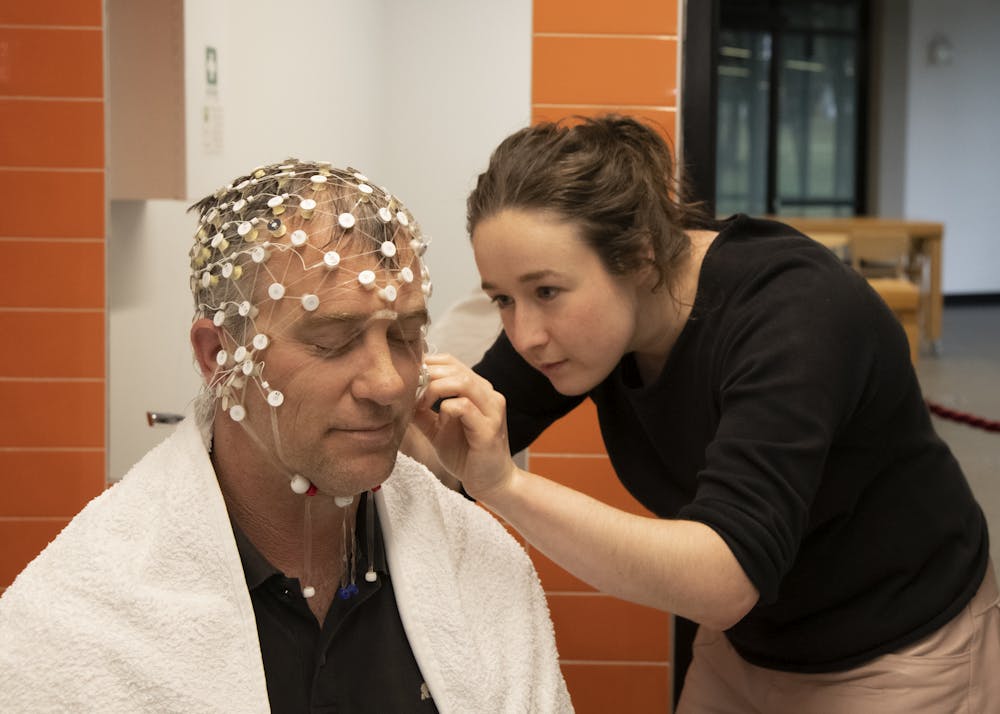
To measure brain activity, we used a technique called electroencephalography. This is where we placed electrodes on the scalp to measure electrical activity as brain cells (neurons) send messages to each other.
Participants wore a cap covered in electrodes to detect electrical activity in the brain. Donna Squire, Author provided
We also monitored the body by measuring heart rate, breathing and sweat response. This could reveal if someone could detect a change to the environment, without being consciously aware of that change.
Lastly, we asked participants to report their emotions to understand if this matched their brain and body responses.
We published a series of studies looking at the impact of room size and colour.
Making the room bigger resulted in brain activity usually linked to attention and cognitive performance. This is the type of brain activity we would see if you were doing a crossword, your homework or focusing on a tricky report you were writing for work.
A blue room resulted in brain activity associated with emotional processing. This is the pattern we’d typically see if you were looking at something that you felt positive about, such as a smiling face, or a scenic sunset.
Changing the size and colour of a room also changed brain network communication. This is when different parts of the brain “talk” to one another. This could be communication between parts of the brain involved in seeing and attention, the type of communication needed when viewing a complex scene, such as scanning a crowded room to spot a friend.
The rooms also changed the participants’ autonomic response (their patterns of breathing, heart activity and sweating).
Your brain and body give away what you feel and think about different rooms, even if you can’t tell us yourself.
Despite these brain and body responses, we found no change in what participants told us about their emotions in each of these different conditions.
This suggests the need to shift from just asking people about their emotions to capturing effects they may not be consciously perceive or comprehend.
What does this mean for designing buildings?
This work tells us that characteristics of buildings have an impact on our brains and our bodies.
Our next steps include testing whether a larger room affects brain processes we use in everyday life. These include working memory (which we’d use to remember our shopping list) and emotion recognition (how we recognise what different facial expressions mean).
This will enable us to understand if we can design spaces to optimise our cognitive performance.
We also want to understand the implications on a wider population, including people who may be experiencing poor mental health, or diagnosed with an underlying condition where the environment may have a larger impact on their response.
This will help us to understand if we can change our built environment for better health and performance.
Architects have long claimed buildings affect our emotion. But there has been a lack of brain-based evidence to back this.
We hope our work can help shape building planning and design, to support the brain processes and emotions we might require under different circumstances.
Isabella Bower receives funding from Deakin University, the Academy of Neuroscience for Architecture and Creative Futures Pty. Ltd. She is affiliated with the Australasian Cognitive Neuroscience Society as the Student Representative and Pint of Science Australia as the Chief of Staff.
Peter Enticott receives funding from the Australian Research Council, the National Health and Medical Research Council, and the Medical Research Future Fund.
Richard Tucker has received no funding relevant to the research presented in this article.
The appointment of chief heat officers in Melbourne is a vital acknowledgement of how serious urban heat is for Australia. It’s a first for the country and part of an international movement to improve how cities handle heat in a warming world.
Urban heat does more than cause discomfort for city residents. It’s a threat to their lives. The City of Melbourne’s new chief heat officers, Tiffany Crawford and Krista Milne, will oversee the work of managing the risks of extreme heat in the city.
There is growing recognition urban heat problems are not simply an external environmental impact. They are tied to the ways we live in and use urban areas.
While rising temperatures and heat waves are hazardous for cities, Australia has a cultural expectation of living in a harsh environment. As Melbourne’s first climate adaptation strategy from back in 2009 explains, Australians have a “propensity to participate in events in very hot conditions”.
Even with increasing public recognition of the threat of climate change, these kinds of background social assumptions (and of course economic agendas) set up the public and political debates about how we should respond to our warming environment.
Melbourne is a particularly challenging city to plan for heat in a changing climate. It’s known for its variable weather – “four seasons in one day” – and temperatures can flip from hot to cold in the space of ten minutes.
Alongside overall warming, Melbourne suffers from dangerous heatwaves. As the 2019 Living Melbourne Strategy summarises:
“In Melbourne, deaths begin to rise when the mean daily temperature reaches 28℃, with hospital admissions for heart attack increasing by 10.8 per cent when the mean daily temperature reaches 30℃. When the average temperature is higher than 27℃ for three consecutive days, hospital admissions increase by 37.7 per cent. This suggests that even a small reduction in temperature during a heatwave will reduce the numbers of deaths.”
The appointments of heat officers are a recent response to projections of a hotter climate alongside more frequent and intense heat waves. The first chief heat officer was installed in Miami-Dade County in the United States in 2021. Appointments followed in Athens, Greece; Freetown, Sierra Leone; Santiago, Chile; and Monterrey, Mexico.
In less than two years, these officers have overseen projects such as developing new ways to monitor urban heat, trialling cool pavement materials and creating refuges from the heat.
In Freetown, the chief heat officer, Eugenia Kargbo, has focused on the informal settlements and markets most exposed to increasing heat. New shading and tree plantings will help protect these economically important spaces.
In Santiago, Cristina Huidobro is sponsoring the roll-out of green roofs across state-owned buildings such as schools and hospitals. The Hospital de Maipú is being retrofitted with more than 1,000 square metres of vegetated rooftop to help keep the building cooler.
As these examples show, responses to heat must draw on both climate knowledge and local social understanding. Problems of heat in Melbourne are different to those of Sydney’s western suburbs or Darwin’s tropical intensity. Developing resilience to heat requires actions that work with the form of each city, the rules governing its spaces and how locals behave.
For Melbourne, practical actions might include trials of urban forms that allow for mixed plantings across buildings, infrastructure and streets.
Another option is to manage traffic to take account of local climate patterns. Melbourne’s heat waves often peak in the very late afternoon as people travel home. Reducing car traffic and adding cooled trams and buses at these times will help move more people safely.
We do know what to do
We already have a huge body of science, local research and tools to help keep cool in our cities.
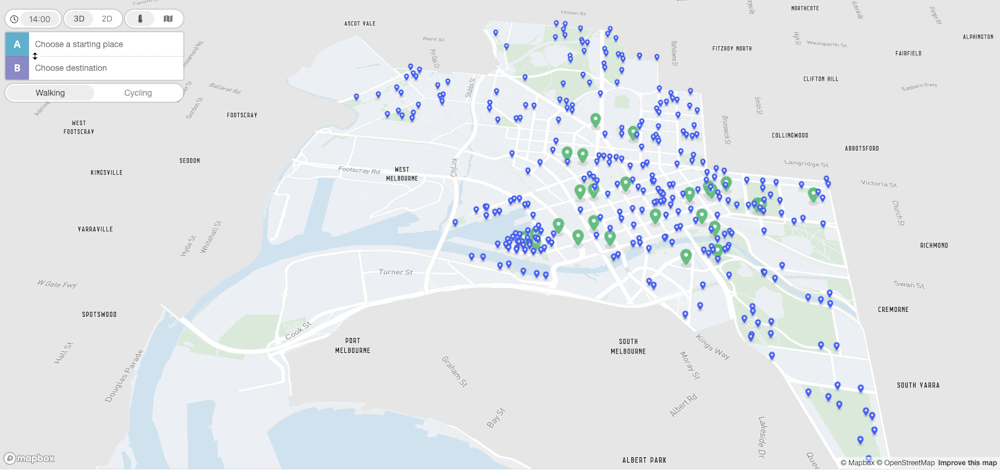
For example, the Cool Routes project allows you to plot a path through Melbourne based on live temperature data. There are also heat health alerts, cool places mapping and heat-specific support for people who are homeless.
The Cool Routes online tool lets users find the path to their destination that best protects them from the heat. Cool Routes/City of Melbourne
Despite this, Melbourne is still vulnerable to heat. Extreme heat increases the risk of power failure and buildings then overheat. And most of our outdoor spaces were never designed for heat in the first place.
Even with the knowledge and tools at our disposal, it is voluntary for designers and developers to use them.
There is no single solution to manage increasing heat. While trees are fantastic for natural cooling, they aren’t a cure-all.
Resilience to urban heat requires work across multiple physical scales. It involves negotiating the political and economic contests about how the city should grow.
The biggest task Melbourne’s heat officers face will be co-ordinating between partners – both within government and with the developers and private agencies that shape so much of the city. The officers have to create ties between policy, strategy, planners, designers, developers, research and tools.
They will also need to be on the ground and talk to the communities who experience heat stress. Much of our existing work on urban heat has been done from desktops and satellites. It’s time to hit the streets and start negotiating the technical, social and political worlds that determine how Australian cities respond to heat.
Wendy Walls does not work for, consult, own shares in or receive funding from any company or organisation that would benefit from this article, and has disclosed no relevant affiliations beyond their academic appointment.
The big question prior to Treasurer Jim Chalmers delivering the Albanese government’s first budget on October 26 has been whether it will seek to modify the “stage 3” tax cuts legislated by the Morrison government, with Labor’s support.
The cuts, set to come into effect in 2024, reduce the marginal tax paid on incomes between $45,000 and $200,000 to 30% (instead of the 32.5% now paid up to $120,000, 37% between $120,000 and $180,000, and 45% after that).
Labor promised before the election it would implement the cuts, but over the past few weeks it has encouraged a debate about abandoning this position, given changed circumstances. Nevertheless, it now appears the tax cuts will go ahead as legislated.
It’s worth considering that debate – and the comparisons drawn to the United Kingdom, where new Prime Minister Liz Truss announced a radical package of tax cuts, including reduced marginal rates for high income earners.
Within a matter of weeks she has been forced to scrap central elements of the package. She has now sacked her Chancellor of the Exchequer (treasurer) Kwasi Kwarteng, with whom she designed and announced the package. It looks like a doomed attempt to save her prime ministership.
Her backdown emboldened those calling for a similar policy shift in Australia. The parallels aren’t exact, but there are plenty of similarities between the economic and political difficulties faced by the UK and Australian governments.
What made the UK cuts different?
In both countries, the response to the COVID pandemic was broadly successful in keeping unemployment down and allowing for a rapid return to the pre-pandemic growth path.
High inflation, rising interest rates and sharp increases in energy costs now threaten to derail this recovery. The UK also faces extra challenges of its own making, with the mismanagement of Britain’s exit from the European Union disrupting exports to Europe and creating labour shortages.
Under previous prime minister Boris Johnson, the UK government’s economic response was more or less similar to that of other countries – with a modest increase to national insurance contributions and cost-of-living increase to welfare payments.
After replacing Johnson, Truss announced a radical package combining a massive fuel subsidy with equally massive tax cuts mostly benefiting corporations and high-income earners.
Britain’s Prime Minister Liz Truss, centre, at the Conservative Party Conference in Birmingham, October 3 2022, shortly after the government announced it was abandoning the tax-cut plan. Tolga Akmen/EPA
No offsetting savings were announced, although it was hinted that welfare benefits would not be raised in line with inflation. Estimates of the cost were £100 billion to £150 billion (7-10% of Britain’s annual national income), of which about half was associated with the tax package.
The public reaction was swift and hostile. But what mattered more was the response of financial markets.
Fears of inflation, which would reduce the real value of government bonds, led to holders of those bonds selling them off. Since market interest rates – that is, the return demanded by bond holders – move in the opposite direction to bond prices, these rates rose sharply.
The pound plummeted in value, as traders expected its real value to decline. Major pension funds, which employed complex strategies to manage their holdings of bonds, faced collapse. The Bank of England was forced to intervene by stepping in to inflate demand for government bonds.
Truss backed down on scrapping the top marginal tax rate of 45%, paid on income in excess of £150,000 (about A$250,000). This saved about £2 billion. In a second backdown late last , Truss accepted that a previously announced increase in corporate tax rates, which she had planned to cancel, would go ahead after all. But the equally regressive cut in national insurance contributions remains, along with a range of business handouts.
Projections now bear no relation to reality
Truss’s tax package was ideologically extreme. But it was, at least, designed as a response to current conditions.
By contrast, Australia’s stage 3 tax cuts were planned and legislated in 2018, on the basis of economic projections that now bear no relation to reality.
As their name implies, they followed two previous rounds of tax cuts. Stages 1 and 2, which came into effect in 2018-19 and 2020-21 respectively, were smaller and largely designed with the political goal of smoothing the path for stage 3.
Because of the unexpected acceleration of inflation, most of the tax relief these cuts provided for low- and middle-income earners will be eroded by bracket creep – the process by which inflation pushes incomes into higher tax brackets, even with no change in the real value of those incomes.
Moreover, some of the stage 1 cuts are temporary – implemented by then treasurer Scott Morrison as the so-called Low and Middle Income Offset (LMITO) rather than as a permanent change in tax rates.
This measure was originally due to expire in 2020-21, but Morrison extended it to 2021-22. Unless Chalmers extends it again, many Australians on modest incomes will face a tax increase this financial year, as their wealthier compatriots look forward to a cut.
As with the Truss tax measures, stage 3 massively favours high earners, with 70% of the benefits going to the 10% of taxpayers who earn more than $120,000 a year.
Let debt grow or cut services?
The macroeconomic impacts of the stage 3 cuts remain to be seen. But no one now can see them as a sensible response to economic difficulties likely to worsen over the next couple of years.
One idea that emerged from the past few weeks of debate was to maintain part of the cuts, by reducing the 32.5% marginal tax rate on incomes between $45,000 and $120,000 to 30%, while scrapping or scaling back the cuts for incomes between $120,000 and $180,000.
But with the tax cuts going ahead exactly as they were legislated in 2018, the Albanese government is left the same dilemma as in the UK: a choice between growing debt and cutting expenditure on vital services.
At a time when wages are failing to keep pace with inflation, while profits are booming, it’s not the kind of choice any government would normally like to make.
John Quiggin ne travaille pas, ne conseille pas, ne possède pas de parts, ne reçoit pas de fonds d’une organisation qui pourrait tirer profit de cet article, et n’a déclaré aucune autre affiliation que son organisme de recherche.
The air that arrives at Kennaook has travelled thousands of kilometres. It hasn’t touched land for many days, weeks or even months. It is said to be some of the cleanest in the world.
The powerful westerly winds – the “roaring forties” – carry air masses across the Southern Ocean, reaching land well-mixed and uncontaminated by recent human activity.
Considered “baseline”, this air is representative of true background atmospheric conditions, and grants us insight into the driving forces behind human-driven climate change.
When I arrived at Kennaook in mid-April, it was late afternoon and a storm was brewing. The wind was blowing from the southwest at a steady 54 kilometres an hour – baseline conditions – and the carbon dioxide levels were 413.5 parts per million.
More than 40 years ago, scientists warned CO₂ levels like these would create catastrophic and irreversible environmental damage and species collapse.
I climbed the stairs to the top deck, set up my camera and tripod, and started filming.
Much of my work has been about the ongoing human and environmental harm caused by uranium mining and atomic testing programs. The invisibility of both the harm and the substances has continued to challenge me creatively.
How do you make visible the invisible? How do you communicate imperceptible change?
Discovering there is a place that captures, archives and measures the air and these imperceptible changes presented me with an opportunity to do just that.
I have since based my creative-practice PhD on the work done at Kennaook/Cape Grim, working alongside the scientists from the Bureau of Meteorology and the CSIRO.
As an artist whose projects have a documentary basis, I use photography, video and sound to respond to place through story, and expand out from there to go beyond what is simply before me.
I believe art has the capacity to reach us in ways other forms of information cannot, revealing the imperceptible hidden in the everyday. In this case: what stories are we breathing?
Sarah Sentilles wrote in The Griffith Review that art shows us “the world is made and can be unmade and remade”.
In troubled times, we are collectively searching for ways to unmake and remake the world around us. Art is one way to unlock that capacity.
The present emergency
For this project, titled The Smallest Measure, I have taken an intentionally slow, observational approach, using “slow cinema” techniques to respond to the slow science carried out on site and to the “slow violence” of climate change.
Slow cinema, says writer Matthew Flanagan, “compels us to retreat from a culture of speed […] and physically attune to a more deliberate rhythm”.
Slow violence is described by environmental literature professor Rob Nixon as “a violence that occurs gradually and out of sight […] an attritional violence that is typically not viewed as violence at all.”
This kind of violence is so embedded within daily life, connected to commonplace activities and daily rituals we don’t see it at all, let alone regard it as an emergency. In using slow aesthetic techniques, myself and the viewer use our own capacities to observe and pay attention to the damage within the everyday.
On the top deck of the station, as I watch the storm roll across the ocean, I wonder where the air has come from, who else has breathed it, what is inside of it and how long it has been on its journey.
While at Kennaook, I film and record the landscape and science working together, in constant conversation.
Inside the station, the scientists and technicians are at work. A day is spent cleaning one of the instruments, tubes are flushed and reflushed, tests are run. All the while the air is flowing in from the outside through pipes and into different machines, registering numbers and building graphs, telling us what gases are contained within it and which direction it may have come from.
If there is a sudden spike, it has come from a car outside the station. If it is a more consistent patch of dirty contaminants, the air is probably coming from the north, from Melbourne.
Meanwhile, outside the station, the landscape is working too. The ocean currents ebb and flow, the waves crash onto the rocks below, the wind keeps on blowing, making patterns across the grass, sometimes with such force it is destabilising.
My work doesn’t show dramatic scenes or spectacularly catastrophic events. Instead, through slow visual, aural and scientific processes of attention and observation it shows the emergency is already here. We are entangled within it.
If we really want to, we have the capacity to respond.
The Fijiana 15s defeated 13th ranked South Africa 21-17 today to get their first win at the Women’s Rugby World Cup.
Fiji struck first through winger Ilisapeci Delaiwau in the 12th minute after some broken play and her try was successfully converted by Lavena Cavuru.
A couple of missed opportunities where the 16th ranked Fijiana could have extended their lead, but luckily the South Africans were not able to capitalise on this.
Zintle Mpupha sliced through the Fijiana defence and dotted down between the sticks making the conversion easy for Janse van Rensburg to level the score.
Akanisi Sokoiwasa cruised over for a try on the stroke of half-time with Cavuru getting the conversion to take a 14-7 lead at the break.
In the 59th minute, South Africa won a penalty and they powered over on their second attempt after recycling the ball quickly with Aseza Hele diving over to level the score 14-all.
Janse van Rensburg struck with a penalty goal to give the South Africans the lead with 40 seconds left, but the Fijianas had the last say with No 8 Karalaini Naisewa brushing aside the defence to score under the sticks.
Fijiana will face France at Northland Events Centre, Whangarei, next Saturday at 6.15pm in their final pool game.
A blueprint developed by federal and state governments to counter violence against women and children includes the ambitious goal of eliminating gender-based violence within one generation.
But a proposed standalone plan for dealing with violence against Indigenous women, which is much more prevalent than in the general community, is yet to be developed. No date is set for its release.
The National Plan to End Violence against Women and Children 2022 to 2032, put out on Monday by the Minister for Women Katy Gallagher and the Minister for Social Services Amanda Rishworth, describes violence against women and children as “a problem of epidemic proportions in Australia”.
One in three women has experienced physical violence since age 15; the figure for sexual violence is one in five. A woman is killed by a current or former intimate partner every ten days.
Indigenous women are 34 times more likely to be hospitalised due to violence than non-Indigenous women, report three times as many incidents of sexual violence, and are more likely to be killed due to assault.
The national plan, which covers the four areas of prevention, early intervention, response, and recovery and healing, focuses on
promoting gender equality and combatting other forms of discrimination that contribute to this violence
changing attitudes in order to prevent violence
embedding effective early intervention measures
building the frontline sector workforce and ensuring women and children have access to support wherever they live
making sure tailored and culturally-safe support is there for all women and children and
the need for person-centred services and better coordination and integration across systems.
There will be two five-year action plans. They will include specific commitments by governments and investments in the various areas.
“In the longer term, a standalone First Nations National Plan will be developed to address the unacceptably high rates of violence Aboriginal and Torres Strait Islander women and children experience,” the plan says.
“This violence happens alongside the multiple, intersecting and layered forms of discrimination and disadvantage affecting the safety of Aboriginal and Torres Strait Islander families and communities.
“A deliverable under this National Plan is a dedicated action plan for Aboriginal and Torres Strait Islander family safety, which will provide the foundations for the future standalone First Nations National Plan.”
In the last few years, during the previous plan, attitudes in Australia seem to have improved but not the outcomes.
“Since the 2010-2022 National Plan, fewer Australians hold attitudes that support violence against women, and most Australians support gender equality. Women report that they are increasingly feeling safer in private and in community settings.
“Despite this progress, the 2010-2022 National Plan did not succeed in its goal of reducing violence against women and children. The prevalence of violence against women and children has not significantly decreased during the last 12 years and reported rates of sexual assault continue to rise.
“While increases in reporting may be due to women feeling more supported to come forward and seek help, we must reduce the prevalence.”
With advancing gender equality central to solving the problem, the plan says, “Everyone has a meaningful role to play – as families, friends, work colleagues, employers, businesses, sporting organisations, media, educational institutions, service providers, community organisations, service systems and governments”.
Rishworth said: “Current rates of family, domestic and sexual violence are unacceptable. We want to make these changes now so the next generation of women and children can live in a society free from violence.”
Michelle Grattan does not work for, consult, own shares in or receive funding from any company or organisation that would benefit from this article, and has disclosed no relevant affiliations beyond their academic appointment.
Rather than tinkering at the edges of the education system, we should be looking more closely at curriculum planning – the process of deciding what to teach and the materials to use. This would reduce the load on teachers and help boost student achievement.
Why is lesson planning so important?
The Australian school curriculum and state versions provide broad direction on what to teach. But they leave teachers to do the heavy lifting when it comes to lesson planning and assessment.
To make the most of class time, lessons should be carefully planned and sequenced so teachers can build on student learning in previous years and set up future learning. This requires a coordinated approach to curriculum planning, across all school years and subjects.
This is where a comprehensive bank of curriculum materials, which teachers can use and adapt, comes in. It means, for example, that all year 3 teachers at a school agree on the key storybooks they’ll use. And it means a student in one year 7 health class learns from the same classroom materials as their peers down the hall. While they’re using the same materials, teachers will make adjustments based on their students and bring their personal flair to the classroom.
A crucial part of this is a whole-school commitment to the process, so teachers work together and agree “this is what we’ll teach, this is how we’ll teach it, and these are the materials we’ll use”.
Without an approach like this, students can miss crucial content, double up on topics or get contradictory explanations from one classroom to the next. It also increases the odds that lessons are hastily cobbled together because a teacher simply – and understandably – ran out of time.
Our survey
As part of a new report, we surveyed more than 2,200 teachers and principals about curriculum planning.
We asked them if they had a bank of high-quality curriculum materials for all classes at their school. Only 15% said yes. Teachers in disadvantaged schools were only half as likely to have a bank as those in advantaged schools.
Our survey also found 50% of teachers spend six or more hours a week creating and sourcing lesson materials, and a quarter of teachers spend ten hours or more. Pressed for time, 66% of those surveyed go to social media sites such as Facebook and YouTube to look for materials. The quality of what they find obviously varies widely.
Burdened with a heavy planning load, it’s no wonder teachers are crying out for help. Teachers told us they cannot possibly maintain high-quality planning within reasonable working hours. As one teacher in the survey said:
There’s not enough hours in the day to make materials as high-quality as I would like them to be. I forever feel guilty for not being good enough.
Curriculum banks save time
Our survey found teachers in schools with a bank of common materials for all their subjects spend three hours a week less sourcing and creating materials. And these teachers are almost four times more satisfied with curriculum planning at their school.
Teachers in schools with a bank are also nearly twice as likely to say students consistently learn the same thing, no matter who they’re taught by, compared to teachers in schools without one.
Nine out of ten teachers surveyed said access to shared, high-quality materials would give them more time to meet the needs of individual students. Many were frustrated that it isn’t the norm. As another teacher told us in the survey:
It frustrated me to no end that schools and governments do not provide resources/lesson plans/unit plans that are ready to go. I was a lawyer before I was a teacher, and I would never have drafted a legal document without using a precedent!
Many schools will need help
Our report also profiles schools who have managed to establish an effective whole-school approach to curriculum planning. Four in five are public schools and they come from a range of areas, from metropolitan to regional.
What they have in common is school leaders who understood the need for a materials bank, prioritised school time and resources to develop it, and built a culture of professional trust where teachers share materials.
Our case studies didn’t have much government help, but realistically, without it, most schools will find it challenging to follow their lead.
Governments and education sector leaders need to invest in more high-quality, comprehensive curriculum materials that schools can choose to adapt and use.
Schools will also need more curriculum-specific professional development and less generic training.
We estimate an investment of between $15 million and $20 million would be enough to develop comprehensive high-quality materials for a single subject, up to year 10 level. This is a small amount in the overall scheme of the $71 billion we spend a year on education.
These materials should also be quality assured by an independent, expert body.
It is important to note that governments don’t necessarily have to do all the development work themselves. The United Kingdom uses a mix of government-made, charity and commercial providers for materials.
But time and money is only part of the solution. At the individual school level, we need principals prepared to lead change.
This is about giving teachers more time for teaching (not less)
Previous debate around lesson banks have sparked some anger among teachers who say lesson planning is a core part of their profession and should not be “outsourced”.
But this is not about removing school autonomy or downgrading professional expertise. Our case studies found a whole-school approach meant teachers could spend more time planning key lessons (rather than being stretched thin across 20 lessons a week).
Our survey also overwhelmingly found teachers thought having access to high-quality materials would give them more time to respond to the individual needs of their students.
This is also not a call to mandate the curriculum materials that teachers must use. It is about increasing the availability of quality materials so schools have more options. Schools may adapt what is provided or choose to develop their own shared curriculum materials (provided they have the time and resources).
The burden of having to plan mostly from scratch is taking a heavy toll on teachers. A new partnership is needed between governments, education leaders, and schools to reduce this. Failure to do so is unfair on teachers as well as students.
Nick is currently training to be a teacher at the Melbourne University’s Graduate School of Education.
The floods ravaging Victoria have destroyed hundreds of homes and left at least one person dead. Some rivers are not expected to peak until Monday and more wet weather may leave towns battling floodwaters again in the coming weeks.
We’ve been researching the experiences of people who survived floods in Queensland and New South Wales this year. Our initial findings offer insights as Victoria now suffers its own flood disaster.
The current crisis is far from over. Those affected will be feeling confused and overwhelmed. Well-meaning helpers are likely to rush in, and recovery agencies will be mobilising.
In the difficult weeks and months ahead, here’s what Victorian flood survivors will be going though – and how best to help.
Insights from survivors of flooding earlier this year may help Victorians in the current flood crisis. Brendan McCarthy/AAP
‘Just one step in front of the other’
Our study involves researchers from Macquarie University, University of Southern Queensland and Queensland University of Technology. Since late August this year, we’ve interviewed more than 200 flood survivors from about 40 communities.
Our research area stretches from the Queensland town of Maryborough down to Sydney’s Hawkesbury-Nepean Valley, taking in communities west of Brisbane as well as those in the Northern Rivers area around Lismore.
Some flood survivors we interviewed in September and October had experienced three or four floods this year – and lost everything multiple times.
Almost eight months after the worst of the floods, many are not back in their homes. Some have returned but don’t have electricity or water, and only have one or two habitable rooms in what is otherwise a shell of a house.
People were worn down by the multiple floods and getting back on their feet each time. They’d faced difficulties getting help from recovery organisations, and dreaded another summer the same as the last.
As one flood-affected resident said:
It’s just one step in front of the other, because what else can we do?
Another participant expressed frustration with the recovery efforts of their local council:
This isn’t their first rodeo. What the **** are they doing?
Some of the worst affected people lived in properties that had never flooded before. Some didn’t act to protect their belongings because their homes were built above all previous flood levels. But their homes were inundated to the ceilings, and they lost everything.
Having disorganised thoughts is a normal response to stress and trauma. We spoke to many flood survivors who felt as if their brains were “scrambled” during and after the disaster.
Many said it had led to poor decision-making that left them facing a more complex and protracted recovery. For example, some who chose to delay evacuation faced trauma that could have been avoided, such as the loss of pets. Others regretted decisions made during the clean up.
Some people had the added stress of having to decide if they must permanently leave their homes – because, for example, it is built on a floodplain or is too damaged to repair. This additional emotional strain was also experienced by survivors of Victoria’s Black Saturday bushfires.
Cleaning up after the floods has been fraught. Many people didn’t take photos of their damaged houses before they were stripped out – and are now struggling to prove to their insurance company how badly their house was affected.
Wonderful people helped with the flood clean-up – but in some cases, it meant everything happened too fast. Precious damaged items that might have been cleaned or repaired – such as photos or a grandfather’s timber chair – were instead chucked out.
Some interviewees allowed precious household items to be discarded – and later regretted it. Jason O’Brien/AAP
The many questions from those offering help were overwhelming: what do you need? What can we do? We found in the first few weeks, survivors generally had capacity to answer only very specific questions involving a “yes” or “no” answer: would you like lunch? Can I clean out the chook house? Can I get you a trailer or generator?
Tracking down help was a grind. Every call seemed not to reach the right person to talk to, and ended in a promise that the person would call them back. Frequently, they didn’t.
Some insurance companies were dragging the chain, preventing people from rebuilding or relocating. Others with properties that had never flooded never thought they needed insurance – and their homes may now be un-insurable.
Local communities stepped up to carry survivors through the initial clean-up and recovery – a common experience after disasters.
But once the urgent work is done, volunteers usually return to their families, lives and jobs. For survivors, the feeling of being forgotten can be overwhelming – especially for those who live alone, or those struggling to access mental health services.
Our in-depth interviews with flood survivors will inform the next phase of the research, an online survey opening later this month. Anyone interested in contributing can contact us here.
Many themes we identified in our research so far also emerged after the Black Saturday bushfires in 2009. The journey of recovery from that tragedy is still underway.
Themes to emerge from the flood research echo those from research into Black Saturday. Andrew Brownbill/AAP
The age of disasters
As we write, floodwaters in parts of Victoria continue to rise. Elsewhere the water is receding, but flooding is expected to persist for days yet.
We were saddened by the hundreds of conversations with flood survivors this year. But we also have huge admiration for people’s determination to pick themselves up.
And despite the devastation they’d experienced, most interviewees found silver linings. Some found renewed faith in their neighbours, friends and towns. Others were committed to being less attached to things, to helping their community when they can, or to be more responsive to family and friends.
Our research is too recent to provide tangible help to Victoria’s flood survivors. But we hope it will help in future as Australians recover from floods and other disasters.
The authors would like to acknowledge their fellow researchers on this project: Professor Kim Johnston, Associate Professor Fiona Miller, Associate Professor Anne Lane, Dipika Dabas and Harriet Narwal.
Mel Taylor receives funding from Natural Hazards Research Australia.
Barbara Ryan receives funding from Natural Hazards Research Australia. She is affiliated with Emergency Media and Public Affairs, a community of practice of emergency communicators and engagement practitioners.
The sudden death of activist Leonie Tanggahma has shaken Papuan communities. Her loss last week has shocked West Papuans who regarded her as one of those who had stood strong for decades advocating independence for the Indonesian-ruled region.
She had lived for decades in the Netherlands among hundreds of exiled Papuans who had left West Papua after Indonesia annexed the territory 60 years ago. She died at the age of 48 on 7 October 2022.
Papuans continue to express messages of condolence and tribute on social media.
“Sister Leonie passed away due to a severe heart attack,” said Yan Ch Warinussy, a Papuan lawyer and human rights activist and director of the Legal Aid, Research, Investigation and Development Institute (LP3BH), reports Suarapapua.com.
A prominent young Papuan independence activist and West Papua diplomat of the Asia-Pacific region Ronny Kareni, wrote on his Facebook page:
“Sincere and heartfelt condolences for the sad loss of West Papua Woman Leader Leonie Tanggahma. Leonie Tanggahma is the daughter of the late Bernard Tanggahma, Minister for Foreign Affairs in the exile of the Republic of West Papua, which was unilaterally proclaimed by the Free Papua Movement (OPM) in the seventies.
“She was a liaison officer for the Papuan-based human rights NGO ELSHAM in Europe, for which she provided among others, the regular representation of the Papuan cause at United Nations forums, such as the working group on Indigenous populations, the Commission on Human Rights (now Human Rights Council) and its sub-commission.
“In July 2011, the Papua Peace Network (JDP) appointed her, along with four other Papuans living in exile, as a negotiator in the event that the Indonesian Government implements its apparent willingness to hold dialogue with Papuans.
“Following the need for a united political front in a regional and international forum in December 2014, she was appointed as the ULMWP executive member, along with four others to spearhead the national movement abroad, which she served diligently for three years.
“On a personal note, in October 2013 sister Leonie reached out upon receiving information of a political asylum mission that brother Airi and I undertook for 13 prominent Papuan activists who had fled across to PNG.
“She fully supported me in terms of advocating behind the scenes to make sure activists were given support and protection, prior to the UN refugee office closure in December of the same year.
“She followed and listened to The Voice of West Papua despite the time difference and often gave feedback on the radio program. She even shared strong support of the cultural and musical work through Rize of the Morning Star and engaged with the Merdeka West Papua Support Network, where she often sat through countless online discussions during the global pandemic.
“A memory that I will share with many Papuan youths is the screenshot [partially reproduced above], taken on the 18th of September 2022. It demonstrates sister Leonie’s commitment to strengthening capacity of the movement and how much she enjoyed listening and being present for ‘Para Para Diskusi’.
“We will miss you in our weekly discussion, sister Leonie. Condolences to family and loved ones. May her soul rest in peace.”
An interview last year with Leonie Tanggahma. Video: Youngsolwara Pacific
A legacy hard to forget Jeffrey Bomanak, a Papuan figure from Markas Victoria, the historic headquarters of the Free Papua Movement (OPM), wrote:
“On Friday, October 7, 2022, Mrs Leonie Tanggahma had a sudden heart attack and went to the hospital to seek help. She did not have time to seek assistance from a local doctor and was forced to leave her service in the Struggle of the Papuan Nation at exactly 10:00am, Netherlands time. “Mr Bomanak said, the sacrifice, discipline, and loyalty she showed in Papua’s struggle is a legacy that is hard to forget for OPM TPNPB on this day and all the days to come”.
Octovianus Mote, a US-based Papuan independence figure who worked closely with Tanggahma, paid tribute to her as follows:
“Sister, we are saddened by your sudden passing at such a young age, as was your father. As believers, we believe that all this destruction appeals to you in heaven, and we will be praying there along with other Papuan warriors who have already gone ahead. We accept death as only a means of continuing a new life since life is eternal and only changes its form. Goodbye, Sister Leonie. We did it, my sister. We did it.”
“Hearing of the news of the passing of Mrs Tanggahma is like being struck by lightning, the Papuan nation lost a woman who cared about the struggles and rights of the West Papuan people. Papuans and activists in Papua feel bereaved by this news.”
Born into the heart of West Papuan struggle Veronica Koman, the well-known Indonesian human rights activist and lawyer who advocates for the rights of Indigenous Papuans, wrote on her Facebook:
“Rest In Peace Leonie Tanggahma. “Sister Leonie and I first met in Geneva, Switzerland, in 2017. I was astonished by her demeanour — intelligent, articulate, friendly, assertive, authoritative but not arrogant. She was one of the pioneers of the international human rights movement for West Papua. Sister Leonie is not only one of the greatest Papuan women but one of the greatest Papuans as well. It sometimes occurs to me that if society and movements were not sexist (meaning that men and women have equal value) how far would Kaka Leonie have succeeded? The people of West Papua have lost one of their brightest stars.”
Benny Wenda, the West Papuan independence icon paid tribute with the following words:
“Leonie Tanggahma was born into the heart of the West Papuan struggle. She was the daughter of Bernard Tanggahma, Minister for Foreign Affairs in exile of the Republic of West Papua which was unilaterally proclaimed by the Free Papua Movement (OPM) in the seventies. Leonie carried on her father’s legacy by working for the Papuan human rights body ELSHAM and representing her people’s cause at various United Nations forums. Later, she became an ULMWP executive member. In this role she was a dedicated servant of the West Papuan independence movement, helping to lead the struggle abroad.”
She was a member of a team of five representatives of the Papuan independence struggle (Jacob Rumbiak, Leonie Tanggahma, Octovianus Mote, Benny Wenda and Rex Rumakiek) elected in Jayapura in 2011 to promote a peaceful dialogue aimed at resolving the Indonesian conflict and Papuan independence.
Daughter of first West Papua ambassador to Senegal According to Rex Rumakiek, one of the last surviving OPM leaders from Tanggahma’s father’s generation, who grew up and fought for West Papua’s independence:
Leonie Tanggahma was the second daughter of the late Ben Tanggahma and Sofie Komber. She had an older sister named Mbiko Tanggahma. Nicholas Tanggahma (brother of Leonie’s father) was a member of the New Guinea Council, formed with Dutch help to safeguard the new fledgling state of Papua.
In the early 1960s, Leonie Tanggahma’s father was sent to study in the Netherlands so that he would be trained and equipped to lead a newly emerging nation state. However, Ben Tanggahma did not return to West Papua and settled there and worked at the Post Office in The Hague, Netherlands. Her father finally stopped working in the Post Office and participated in the West Papua struggle with the political figures of that time, including Markus Kaisiepo and Womsiwor.
Rumaiek said Leonie Tanggahma’s father was the first West Papuan diplomat (ambassador level). He was the one who opened the first West Papuan foreign embassy in Senegal, Africa.
The President of Senegal at that time (1980s) was Léopold Sédar Senghor, a Catholic, as was Ben Tanggahma. Having this religious connection enabled both to develop a special relationship, which allowed West Papua to open an international office in Africa and allowed many African countries to support West Papua’s liberation efforts.
Ben Tanggahma was sent to Senegal as an ambassador by the Revolutionary Provisional Government of West Papua New Guinea (RPG), which received official fiscal and material support from African countries and stood behind Senegal. During that time, the government of Senegal provided Ben Tanggahma with a car, a building, and other resources as well as moral support.
These enabled him to lobby African countries for West Papua’s cause of self-determination.
Rumaiek said he got to know Leonie in 2011, when Benny Wenda, Octovianus Mote, Leonie and he were elected to lead peace dialogue teams in an attempt to resolve West Papua’s tragedies. No results were obtained from this effort.
Leonie Tanggahma was, according to Rex Rumakiek, a well-educated young West Papuan woman who carried her father’s legacy and came from a family who played a significant role in the liberation movement of the Papuan people.
Nicholas Tanggahma and West Papua political Manifesto 1961 Nicholas Tanggahma, brother of Leonie’s father (Ben Tanggahma), was a member of the Dutch New Guinea Council (Nieuw-Guinea Raad), which was installed on 5 April 1961 as the first step towards West Papua’s independence. As soon as the council was formed, Nicholas Tanggahma and his colleague realised that things were about to change dramatically against their newly imagined independent state.
After a few weeks, on 19 October 1961, Ben Tanggahma called a meeting at which 17 people were elected to form a national committee. The committee immediately issued the famous West Papua political manifesto, which requested of the Dutch:
“our [Morning Star] flag be hoisted beside the Netherlands flag;
“our national anthem (“Hai Tanahku Papua”) be sung and played alongside the Dutch national anthem;
“our country be referred to as Papua Barat (West Papua); and
“our people be called the Papuan people.”
Two months later, on 1 December 1961, the new state of West Papua was born, which Papuans around the world celebrate as their National Day.
Leonie Tanggahma died in the same month her uncle had first sown the seed for the new nation West Papua 60 years ago. This deep historical root of her family’s involvement in the struggle for a free and independent West Papua shocked people.
The following are excerpts from a lengthy series of interviews Leonie’s father, Ben Tanggahma had in Dakar, Senegal on February 16 1976. Tanggahma is famous for providing the following answer when asked about the connection between Black Oceania and Africa:
“Africa is our motherland. All the Black populations which settled in Asia over the hundreds of thousands of years came undoubtedly from the African continent. In fact, the entire world was populated from Africa. Hence, we the Blacks in Asia and the Pacific today descend from proto-African peoples. We were linked to Africa in the Past. We are linked to Africa in the future. We are what you might call the Black Asian Diaspora.”
Mbiko Tanggahma, older sister of Leonie Tanggahma, wrote on her Facebook:
“It is true that my little sister, Leonie Tanggahma, passed away on the 7th of October 2022. Although her departure was premature and unexpected, it gives us comfort to know that she was not in pain and that she passed away peacefully. Until her last moments, she continued to do what she loved. She continued to be her determined and fierce self. She fought for just causes, surrounded by her family, friends, activists, and loved ones.”
Leonie’s family in The Netherlands has provided this donation link. (Cite “Leoni” and your full name and e-mail or home address).
Once again Aotearoa New Zealand’s local elections were plagued by low voter turnout and a lack of engagement. Is the media coverage, or lack thereof, contributing to the problem — and what can it do to help?
In dozens of campaign trail appearances, new Auckland Mayor Wayne Brown told audiences he planned to get rid of board members on the council-controlled organisations Auckland Transport and Eke Panuku.
But just days after his election victory, employment lawyer Barbara Buckett gave RNZ’s Morning Report what appeared to be surprising news on that repeated promise.
“There are legal processes and procedures that have to be followed [with board members’ employment],” she said.
“While he can influence, he certainly can’t interfere.”
Buckett added that the governing body of Auckland Council would have to consent to any changes to the boards.
Interviewer Guyon Espiner seemed startled.
‘He doesn’t have the power’ “So he doesn’t actually have power to do this?” he laughed. “He’s campaigned on something he can’t do?”
That reaction was understandable.
Despite admirable efforts from Stuff’s Todd Niall, the Herald’s Simon Wilson, The Spinoff and publicly-funded Local Democracy reporters, the promises and policies coming from mayoral candidates hadn’t received quite the same level of scrutiny they would have had if this were a general election.
If tough, fact-checking coverage was in comparatively short supply for the most high-profile mayoral election in the country, it was sometimes non-existent in ward races and less-heralded mayoral contests.
Pippa Coom, who lost her seat in Auckland’s Waitematā ward, told Mediawatch she didn’t see much coverage at all of her tight ward race against Mike Lee.
She said some media outlets didn’t publish their usual rundowns on ward races like hers, and as a result the “void was filled by misinformation and attack ads”.
“As a candidate I have to absolutely take responsibility for my own loss and for not reaching my potential supporters and not getting people out to vote,” she said.
“But the media coverage is such an important part of our democracy and our elections. So if it’s not there, it is going to … have an impact on election turnout and the result.”
Lack of coverage, engagement The lack of coverage was matched by a lack of engagement from the public.
The number one reason given was that they didn’t know anything about the candidates. Number two was that they didn’t know enough about the policies — and number three was that they couldn’t work out who to vote for.
In the weeks before the election, RNZ’s Lucy Xia vox-popped some Auckland students who told her that not only did they not vote, but they didn’t know the identity of the city’s mayor.
“I don’t really have an opinion,” one said. “Maybe for the prime minister next year. But for mayor? I don’t have views.”
The lack of engagement weighed on the mind of fill-in presenter John Campbell during last weekend’s episode of TVNZ’s Q+A.
Poorer suburbs lagged behind In conversation with reporter Katie Bradford, he pointed to turnout in the poorer suburbs of Auckland, which — as usual — lagged behind richer areas.
“You have to say that a turnout below 20 percent in Ōtara is heartbreaking. It’s not good enough either,” he said.
“This is a dismal fail by someone.”
He went on to list some possible culprits for that — including central government, uninspiring local candidates and the election system itself.
There is some evidence pointing toward all of those.
In a BusinessDesk column, Pattrick Smellie said postal voting favours older homeowners, who are more likely to stick around at an address and to send letters than younger people and renters.
“It’s hardly news that no one under 40 has much experience of actually posting a letter. We’ve known for a while that postal voting skews local body voting to the asset-owning classes,” he wrote.
TVNZ reporter Katie Bradford, current press gallery chair . . . “It’s almost a chicken and egg situation. How much coverage the media does is so much based on what we think the public wants.” Image: TVNZ/RNZ
‘Boring’ consultation processes Others criticised local government’s consultation processes, which are often boring and inaccessible for people with busy lives, along with the ratepayer roll which gives homeowners a vote for each property they own in different places.
But in response to Campbell, Bradford honed in on the media’s role in voter disengagement.
“I’m passionate about local government and there are lots of people out there who are. But how do we show people why it matters? It’s a frustration as a journalist,” she said.
Bradford told Mediawatch it was unclear whether the comparative paucity of media coverage on local government reflected a lack of public interest in the topic — or vice versa.
“It’s almost a chicken and egg situation. How much coverage the media does is so much based on what we think the public wants, and if people aren’t picking up the paper, or they’re switching off the radio or the TV when local government stories are on, they’re not going to run them,” Bradford told Mediawatch.
TV and radio had particular difficulty producing interest stories about local government because council meetings aren’t renowned for creating interesting visuals or soundbites, Bradford said.
‘Maybe media partly to blame’ “All of this stuff is so important and I think people think it’s always central government’s fault. They don’t necessarily think there’s council involvement and maybe the media is partly to blame for not explaining that stuff enough,” she said.
“But it’s not just our job. It’s also the job of Local Government NZ and councils to explain that.”
Bradford backed the idea of giving local government a similar amount of attention as central government, which is covered round-the-clock by teams of press gallery reporters.
But the economics of that move likely wouldn’t stack up for newsrooms, which are already experiencing significant financial constraints, she said.
She thought reporters could help by targeting the broken parts of the electoral system and shining a spotlight on the things that keep people from engaging with councils.
“This election shows that turnout didn’t get any better despite quite extensive coverage, despite a big campaign by LGNZ and others.
“Whatever we have right now is not working,” she said. “Something has to change.”
This article is republished under a community partnership agreement with RNZ.
By Hilaire Bule, RNZ Pacific correspondent in Port Vila
Talks among Vanuatu political parties have started for the formation of a coalition government following Thursday’s snap election.
The talks have started as it appears that none of the political parties which contested the ballot won a simple majority in the 52-seat Parliament.
Sources from former government, and former opposition members have revealed that leaders of political parties who have won seats in Parliament following unofficial results have begun negotiations for the formation of a new government.
They said that so far both sides wanted to form a new government, but it would depend very much on the numbers that they have secured.
Ballot boxes from isolated areas in Vanuatu had not yet reached the main centres to be shipped to the capital, Port Vila.
A helicopter was yesterday still collecting the ballot boxes from isolated areas in the constituency of Santo.
According to political analysts, the lobby for the formation of a new government would not be easy because — according to the unofficial results — four former prime ministers had managed to be re-elected as members of Parliament.
They said that all four would want to be prime minister again.
This article is republished under a community partnership agreement with RNZ.
Fiji MP and the leader of the opposition National Federation Party, Professor Biman Prasad, is accusing Prime Minister Voreqe Bainimarama’s ruling FijiFirst Party of suppressing opposition parties with newly amended electoral laws ahead of the country’s general elections this year.
“These are draconian pieces of electoral laws which are designed to keep the opposition parties at bay,” Professor Prasad said.
“They are designed to persecute and gag the opposition parties and prevent them from campaigning. These are absurd and stupid laws governing the electoral process,” he added.
The Electoral Amendment Bill 2022 gives the country’s Supervisor of Elections, Mohammed Saneem, the right to “direct a person, by notice in writing, to furnish any relevant information or document…notwithstanding the provisions of any other written law on confidentiality, privilege or secrecy”.
It means candidates have no rights of confidentiality if ordered to hand over a document, and the punishments for now complying range from fines of up to $50,000 to a prison term of more than five years.
Saneem has been accused in the past of having a pro-government bias.
“You would never experience such absurd and ridiculous levels of conflict of interest,” Professor Prasad said.
Fiji’s Attorney General Aiyaz Khaiyum-Sayed . . . “Such powers are . . . extremely important.” Image: Facebook/Fiji govt/RNZ Pacific
‘We can’t even criticise’ “The laws have been made by this government led by the Attorney-General, who is also the Minister for Elections, and who is also the General Secretary of the FijiFirst Party. We can’t even criticise the Supervisor of Elections, so I must be very careful about what I say with respect to him [Mohammed Saneem].”
Attorney-General Aiyaz Khaiyum-Sayed said the amendments were necessary for the Secretary of Elections to vet candidates.
“Without this specific power, the Secretary of Elections is unable to make enquiries to obtain information necessary for the Secretary of Elections to arrive at decisions as required by the Act. Such powers are also extremely important to allow the Secretary of Elections to conduct enquiries into allegations of breaches of campaign provisions,” Khaiyum-Sayed told Parliament when the Electoral Amendment Bill 2022 was tabled last month.
People’s Alliance Party leader Sitiveni Rabuka … the electoral law amendments are “really just to tie down the hands and feet of the opposition parties.” Image: Koroi Hawkins/RNZ Pacific
Professor Prasad alleges that only the FijiFirst party has the freedom to campaign “as they want, when they want, where they want, how they want”.
He said the opposition “have to look behind our backs constantly to make sure we don’t fall behind the wrong side of the law”.
Bainimarama’s main rival and leader of the People’s Alliance Party, Sitiveni Rabuka, shares Professor Prasad’s sentiments.
“It [electoral law amendments] is really just to tie down the hands and feet of the opposition parties,” Rabuka said.
Hampers ‘smooth running of elections’ “It does not facilitate the smooth running of an election and campaigns but only hampers the progress of other political parties,” he said.
Prime Minister Bainimarama has maintained power in the country as a popular leader since he won the democratic elections in 2014.
But opposition leaders say he is losing support due to a totalitarian style of governance that has been in force since Bainimarama first came to power after staging a coup in 2006.
Professor Prasad said foreign nations need to take notice of recent political developments in Fiji.
He said the country was not a “true democracy” because the government has been actively using laws to suppress dissent.
‘Don’t be fooled by propaganda’ “Don’t be fooled by this propaganda by Frank Bainimarama and Sayed-Khaiyum on that international stage that we have a genuine democracy,” he said.
“Fiji is nowhere near a genuine democracy. This is a bunch who came into power through the barrel of a gun in 2006.”
“They made their own constitution, they made their own laws and they want to remain in power at any cost, giving an appearance to the international community that somehow that we are genuine democracy.”
Professor Prasad said the international community — including neighbours Australia and New Zealand — should be “seriously concerned about what’s going on” in the country.
“The international community absolutely cannot ignore these fundamental laws used by the government to gag the opposition from effectively participating in the election.”
RNZ Pacific has tried many times to contact FijiFirst for a response to this story but has yet to receive one.
This article is republished under a community partnership agreement with RNZ.
We need to know how many people didn’t vote because they didn’t receive their ballot papers and what practical obstacles to voting might have occurred.
We also need to know how many people just couldn’t be bothered, and if some people made a conscious choice not to vote. A conscious choice is a legitimate democratic decision.
Wayne Brown’s campaign for the Auckland mayoralty may have succeeded partly because it targeted people who traditionally vote — property owners and people over 50. People who are less likely to be Māori.
However, positioning Māori as Treaty partners to the Crown may also be a factor, because it overshadows The Māori citizenship as a share in the Crown’s authority to govern.
Participating in the affairs of government is a greater political authority than partnership. The state is a large and powerful institution and always the senior partner in the relationships it forms. Its partners may have a voice, but they don’t have the right to help make decisions. Decision-making is the task of the participant.
Democracy requires complementary participation While there are examples of council/Māori partnerships that work well, democracy requires that they complement participation, rather than take its place.
Te Tiriti wasn’t a partnership between races. It was an agreement over the distribution of political authority. Rangatiratanga, as an independent Māori authority over Māori affairs, on the one hand, and the right of the British Crown to establish government on the other.
Auckland’s new mayor, Wayne Brown (right), may have succeeded at the election against Fa’anānā Efeso Collins by targeting people who own property and people over 50 – people who are less likely to be Māori. Image: RNZ News
Te Tiriti didn’t intend that the rights of government should override the rights of rangatiratanga. Indeed, it provided a check against this outcome by granting Māori the rights and privileges of British subjects.
In 1840 those rights and privileges were not extensive. But, in 2022 they have developed into the rights, privileges and political capacities of New Zealand citizenship.
Most importantly, citizenship means that everybody has the right and obligation to participate in public decision-making. They should expect that their contributions have the same likelihood of influence as anybody else’s.
Nobody should have reason to feel so alienated from the system that they can’t see the point of voting. Māori wards are supposed to guard against this possibility by supporting active participation and influence.
Influence means being able to participate with reference to culture and colonial context.
Yet, in 2019, the Iwi Chairs’ Forum commissioned a report on constitutional transformation, Matike Mai Aotearoa.
Ethnically exclusive Pakeha body It comments on what rangatiratanga looks like, but it sees citizenship as the domain of its partner, the Crown. It sees the Crown as an ethnically exclusive Pakeha body governing only for “its people”.
In other words, government is for other people. It’s not for us because rangatiratanga is where our exclusive political authority lies. Our relationship with government is as Treaty partner.
Another view is that rangatiratanga and citizenship are different but complementary. While voting doesn’t matter if one is a partner, it’s essential if one is a participant. Participation means, as Justice Joe Williams, argued, that, there is a need for a mindset shift away from the pervasive assumption that the Crown is Pākehā [non-Māori], English-speaking, and distinct from Māori rather than representative of them.
“Increasingly, in the 21st century, the Crown is also Māori. If the nation is to move forward, this reality must be grasped.”
The review is required to consider Treaty partnership. But it has also decided to be “bold” in its thinking.
Boldness could mean strengthening Te Tiriti and democracy by thinking beyond partnership as a treaty principle, established by the Court of Appeal in 1987, to thinking about the real substance of rangatiratanga and citizenship.
Local government functions by iwi Rangatiratanga could mean that not all local government functions need to be carried out by councils. There may be some that are more logically and justly carried out by iwi, hapu, marae, or other Māori political communities.
The ideal that decisions are best made at the point closest to where their effects are experienced is a well-established democratic principle.
Citizenship is different from rangatiratanga but especially important because if Māori are, like everybody else, shareholders in the Crown’s authority to govern, then they are entitled to make culturally distinctive contributions to council decisions.
They are also entitled to expect that councils’ powers and decision-making processes will work for them as well as they work for anybody else.
Increasing voter turnout depends on people believing that councils make a positive contribution to their lives.
Professor Dominic O’Sullivan (Te Rarawa, Ngāti Kahu) is adjunct professor at Auckland University of Technology’s (AUT) Taupua Waiora Centre for Māori Health Research, and professor of political science at Charles Sturt University in Australia. He is also a contributor to Asia Pacific Report. This article was first published by Stuff and is republished with the author’s permission.
The #HoldTheLine Coalition has urged President Marcos of the Philippines to end persecution of journalists and independent media by dropping all charges against Nobel Peace Prize co-laureate Maria Ressa and her co-accused.
This week, the Philippine Court of Appeals rejected Ressa’s motion for a reconsideration of her 2020 conviction on a trumped-up charge of criminal cyber libel.
This means that after a two-year struggle to overturn her conviction, all that stands between Ressa’s freedom and a lengthy prison sentence is a final appeal to the Supreme Court, and the government’s political will.
“We call on President Marcos to show the world that he rejects the Duterte-era persecution and prosecution of journalists and independent media by immediately withdrawing all charges and cases against Ressa, her co-accused, and her Manila-based news outlet Rappler,” the #HoldTheLine Coalition steering committee said on behalf of more than 80 international organisations — including Reporters Without Borders — joining forces to defend Ressa and support independent media in the Philippines.
“President Marcos should begin by ending his government’s opposition to Ressa’s appeal against her conviction on spurious criminal cyber libel charges, which were pursued and prosecuted by the State despite the Philippine Supreme Court’s warning that the country’s criminalisation of libel is ‘doubtful’.”
There have been 23 individual cases opened by the state against Maria Ressa, Rappler and its employees since 2018.
The criminal cyber libel case is one of seven ongoing cases implicating Ressa. If she is successfully prosecuted in all cases, she theoretically faces up to 100 years in jail.
Ressa now has just two weeks to file a final appeal to the Philippine Supreme Court, which could then swiftly issue a written verdict, resulting in the enforcement of her prison sentence.
— Julie Posetti (ICFJ), Rebecca Vincent (RSF), and Gypsy Guillén Kaiser (CPJ) on behalf of the #HoldTheLine Coalition.
The #HTL Coalition comprises more than 80 organisations around the world. This statement is issued by the #HoldTheLine Steering Committee, but it does not necessarily reflect the position of all or any individual Coalition members or organisations. Pacific Media Watch collaborates with Reporters Without Borders.
Government-funded paid parental leave will be extended, and more pressure placed on fathers to share caring for babies, under an initiative to be unveiled by Anthony Albanese on Saturday.
Parental leave will be lengthened by six weeks, phased in, to total 26 weeks by 2026, with use-it-or-lose-it provisions directed to having fathers undertake a greater part of the early parenting.
Leave will be able to be taken in blocks between periods of work. Single parents will be entitled to the full 26 weeks.
The present scheme is for 18 weeks government-funded leave to care for a newborn. There is a separate “Dad and Partner” payment for two weeks.
The government says it will introduce reforms to modernise the system and improve flexibility from July next year. From July 1 2024 the time will start lengthening, with two extra weeks put on each year until the scheme reaches 26 weeks from July 2026.
The government’s women’s economic equality taskforce, chaired by Sam Mostyn, will advise on details of the model, including what mix of flexible weeks and the use-it-or-lose-it component for each parent are considered best. Details will be in the October 25 budget.
Albanese will formally announce the initiative when he addresses the NSW ALP conference on Saturday morning.
In his speech, an extract of which was released ahead of delivery, Albanese says that, like the government’s child care policy, extending PPL is an economic reform.
“By 2026, every family with a new baby will be able to access a total of six months paid leave, shared between the two parents,” he says.
“We will give families more leave and more flexibility, so people are able to use their weeks in a way that works best for them.
“Our plan will mean more families take up this leave, share in that precious time – and share the caring responsibilities more equally.
“This plan will support dads who want to take time off work to be more involved in those early months.
“It’s a modern policy, for modern families. It delivers more choice, it offers greater security – and it rewards aspiration.”
Albanese says that extended leave was one of the clearest calls that came out of the recent jobs summit.
“Businesses, unions, experts and economists all understand that providing more choice, more support and more flexibility for families and more opportunity for women boosts participation and productivity across the economy.”
He says the government sees this as “the baseline, a national minimum standard.
“We are encouraged that there are already employers across Australia competing to offer working parents the best possible deal. And we want to see more of it.
“Because a parental leave system that empowers the full and equal participation of women will be good for business, good for families and good for the economy.”
Minister for Women Katy Gallagher said that “having a child shouldn’t be an economic barrier for families or indeed act as a handbrake on the broader economy.
“Right now, this burden is borne disproportionately by women but we know that good women’s policy is also good economic policy and this decision is evidence of that.”
Minister for Social Services Amanda Rishworth said: “This will benefit mums, it will benefit dads, it’s good for children, and it will be a huge boost to the economy.
“We know that treating parenting as an equal partnership helps to improve gender equality.”
Michelle Grattan does not work for, consult, own shares in or receive funding from any company or organization that would benefit from this article, and has disclosed no relevant affiliations beyond their academic appointment.
Community organisers representing multiple Aotearoa struggles gathered at the Ponsonby Community Centre in Tāmaki Makaurau last Sunday to celebrate the 50th anniversary of the founding of the Ponsonby People’s Union (1972-1979).
Organised by former PPU activists, representatives of many Aotearoa social justice movements and struggles from around the country came together to honour the PPU’s work.
The gathering was simultaneously a birthday celebration; a communal remembering of activist history, and a hui to launch the important PPU commemorative book project.
Taura Eruera was a founding member of Nga Tamatoa and the PPU . . . he opened the hui with a mihi whakatau. Image: Tony Fala/Asia Pacific Report
Taura Eruera was a founding member of Nga Tamatoa and the PPU, doing important food co-op work for the union. He opened the hui with a mihi whakatau.
PPU activist Farrell Cleary chaired the meeting and provided excellent introductions for all speakers.
The speakers Roger Fowler co-founded the PPU and coordinated the group between 1972-1979. He spoke of how the PPU emerged from the Aotearoa countercultural movement; growing public opposition to the Vietnam War; Progressive Youth Movement activism, and Resistance Bookshop labours in Auckland.
Fowler paid tribute to his friend and PPU co-founder Cliff Kelsell. He acknowledged the writings of the Black Panther Party as formative to thinking concerning community activism — in particular, the writings of Huey P. Newton, Bobby Seale, and George Jackson.
Fowler explained why Huey P. Newton’s concept of “intercommunalism” was vital for developing the PPU’s community resilience and network building praxis in Ponsonby from 1972.
Roger Fowler . . . co-founder of the PPU and coordinator of the group between 1972-1979. Image: Tony Fala/Asia Pacific Report
He said the issues the Ponsonby community confronted were:
people needing food;
people needing protection from police harassment and racism; and
local tenants needing assistance against unjust treatment from property owners.
Fowler spoke about the PPU’s food co-op, prison visitors bus service, and free community newspaper and leaflet work. He said the PPU used the food co-op as an organising tool to mobilise people for multiple community interventions.
He expressed concern that knowledge of activism in the seventies may be disappearing — but he acknowledged Nick Bollinger’s recent history Jumping Sundays as an important addition to keeping public memory of activist history alive.
Fowler paid tribute to the Polynesian Panther Party (PPP) — the PPU’s sister organisation — and acknowledged the Polynesian Panther Party Legacy Trust’s (PPPLT) contemporary community organising in schools.
The striking 50th anniversary Ponsonby People’s Union tee shirt. Image: Tony Fala/Asia Pacific Report
Pam Hughes was an activist in the PPU. She spoke about the impact of the anti-Vietnam War Movement and the writings of Karl Marx upon her early life. She said she felt she possessed theoretical but not practical knowledge of struggle until she moved to Auckland and joined the PPU in the middle 1970s.
She spoke about the lives of working-class women who lived in Grey Lynn, Herne Bay, and Ponsonby at the time.
Hughes spoke of the terrible hardship these women endured: these women had to make the weekly choice of either paying their rents or buying food for families — they did not have the money to do both.
She spoke of the impact of the 1973 oil crisis; the racism Māori and Pacific people faced during the period, and the emergence of the Dawn Raids strategy as an approach to Pacific “overstayers” initiated by Norm Kirk’s Labour government — before the strategy was intensified under Muldoon’s National government.
Hughes said the PPU had stood up for collective rights and improved living standards in inner city Auckland. She acknowledged the PPU as an early forerunner to contemporary community development programme initiatives in Aotearoa today.
Fuimaono Norman Tuiasau . . . chairperson of the PPPLT and a former PPP member who worked closely with the PPU from the early 1970s. Image: Tony Fala/Asia Pacific Report
Fuimaono Norman Tuiasau is chairperson of the PPPLT and a former PPP member. He worked closely with the PPU from the early 1970s.
Fuimaono said he felt honoured to attend the 50th celebration for the PPU. He acknowledged all the brothers and sisters from different movements in attendance.
Fuimaono talked about the long, 50-year struggle of the PPU (and others) to uphold the mana of the poor, homeless, and lost in inner city Auckland. He talked about his deep alofa and gratitude for the PPU.
He told rich stories about the work the PPP did in partnership with the PPU. He told the story of how the PPP and the PPU worked together concerning the PPP’s Dawn Raids activist campaign.
Fuimaono talked about how the PPU, and PPP worked together to organise the PIG Patrol to monitor team policing in Auckland. He also shared the narrative of how the PPP assisted the PPU concerning tenancy eviction direct action activism in Ponsonby.
He acknowledged the PPU and his great friends, Roger Fowler and Lyn Doherty. He thanked the PPU for supporting the PPP.
At the conclusion of Fuimaono’s talk, PPP and PPPLT members Melani Anae, Tigilau Ness, Alec Toleafoa, and Fuimaono Norman Tuiasau stood together and sang the beautiful Samoan song “Ua Fa’afetai” to thank members of the PPU for their long years of community service.
Tigilau Ness, a community activist, musician, PPPLT trustee and former PPP member … he worked closely with the PPU from the early 1970s. Image: Tony Fala/Asia Pacific Report
Tigilau Ness is a distinguished community activist, musician, PPPLT trustee, and former PPP member. He worked closely with the PPU from the early 1970s.
He offered warm salutations to the PPU at the 50th birthday celebration event. He spoke of how the loss of Panther sister Ama Rauhihi’s brother Peter in Vietnam galvanised the PPP’s anti-Vietnam War activism.
He articulated the bonds of fellowship between the PPP and the PPU via song. He performed songs such as “Teach Your Children”, and “American Pie” for the audience. These songs were sung by PPU and PPP members travelling on buses together to visit prisoners in Auckland.
Ness spoke about the importance of sharing histories of struggle with the youth of today. He spoke humbly about the community organising work the PPPLT do today speaking to youth in schools about PPP history. He warned that if activists did not tell their historical narratives, then outsiders might come and potentially misrepresent those stories.
Bollinger evoked the 1960s as a period where communes formed, music festivals abounded, and younger Kiwis challenged social norms from hairstyles and dress codes to social assumptions concerning racism and sexism.
He talked about his book’s title and where the term “Jumping Sundays” came from. He said he wanted to explore ideas important to this emerging counterculture in his book. He wanted to explore whether ideas from this historical conjuncture had survived, been diluted, or had been hijacked.
Bollinger said he felt PPU’s ideas of community service still existed today in the lives and service of former PPU members. He talked about writing about the PPU in his book. He said that if we do not tell these stories, the stories will not survive. He quoted lines from Bob Marley’s renowned community struggle anthem, “No Woman, No Cry” to emphasise his point: “In this great future, you can’t forget your past.”
Alec Hawke is a Ngati Whatua activist and kaumatua. He collaborated closely with Roger Fowler and PPU members at the Takaparawhau Occupation in Tāmaki Makaurau in 1977-1978.
He talked about his early engagement in the anti-Vietnam War Movement as a high school student at Selwyn College in Tāmaki, and his involvement in anti-Vietnam War protests alongside the Progressive Youth Movement (PYM). Hawke spoke about the Takaparawhau struggle and said that Roger Fowler had asked protestors to remain peaceful as police arrested them at the Point in 1978.
Hawke said that Roger had supported Ngati Whatua kuia and kaumatua’s request that arrested protesters remain non-violent. He said Roger Fowler was the last person arrested at Takaparawhau because he refused to move off the wharenui roof!
Hawke thanked the PPP for always helping Takaparawhau protesters when his people called for assistance. He spoke about the death of his daughter Joannie at Takaparawhau: and how Tigilau Ness had written a beautiful song in tribute of Joannie. Alec said that Tāmaki Makaurau would not be the same place but for the work of Roger Fowler and Lyn Doherty.
Musicians Sam Ford and Trudi Green performed for the PPU in the 1970s . . . they played several fine songs after Alec Hawke spoke. Image: Tony Fala/Asia Pacific ReportThe Polynesian Panthers cover. Image: Huia Press
Musicians Sam Ford and Trudi Green performed for the PPU in the 1970s. They played several fine songs after Alec Hawke spoke. As Sam and Trudi performed their music, guests gathered to converse, share food, and mix and mingle.
Huey P. Newton once said, “I think what motivates people is not great hate, but great love for other people.”
Alongside other organisations and movements, the PPU embodied this great alofa/aroha for others in their tireless community labours. Their work offers living inspiration for new generations today.
The author, Tony Fala, wishes to pay respects to the work of all former PPU members living and deceased. People can send photographs and stories by October 31, 2022, to Roger Fowler for the PPU book project at: roger.fowler@icloud.com People can learn more about the PPU by reading Roger Fowler’s contribution in the important PPP history edited by Melani Anae, Lautofa (TA) Iuli, and Leilani Tamu in 2015 titled, Polynesian Panthers: Pacific Protest and Affirmative Action in Aotearoa New Zealand 1971-1981. Nga mihi nui to Roger Fowler for providing insightful editing comments concerning this article.
As protests in Iran drag on into their fourth week over the violent death in custody of Mahsa Amini, a young Kurdish woman, there are two central questions.
The first is whether these protests involving women and girls across Iran are different from upheavals in the past, or will simply end the same way with the regime stifling a popular uprising.
The second question is what can, and should, the outside world do about extraordinarily brave demonstrations against an ageing and ruthless regime that has shown itself to be unwilling, and possibly unable, to allow greater freedoms?
The symbolic issue for Iran’s protest movement is a requirement, imposed by morality police, that women and girls wear the hijab, or headscarf. In reality, these protests are the result of a much wider revolt against discrimination and prejudice.
Put simply, women are fed up with a regime that has sought to impose rigid rules on what is, and is not, permissible for women in a theocratic society whose guidelines are little changed since the overthrow of the Shah in 1979.
Women are serving multi-year jail sentences for simply refusing to wear the hijab.
Two other issues are also at play. One is the economic deprivation suffered by Iranians under the weight of persistent sanctions, rampant inflation and the continuing catastrophic decline in the value of the Iranian riyal.
The other issue is the fact Mahsa Amini, the 22-year-old whose death sparked the protests, was a Kurd.
The Kurds, who constitute about 10 percent of Iran’s 84 million population, feel themselves to be a persecuted minority. Tensions between the central government in Tehran and Kurds in their homeland on the boundaries of Iraq, Syria and Turkey are endemic.
A BBC report on the Mahsa Amini protests.
Another important question is where all this leaves negotiations on the revival of the Joint Comprehensive Plan of Action (JCPOA). The JCPOA had been aimed at freezing Iran’s nuclear weapons ambitions.
Former President Donald Trump recklessly abandoned the 2015 agreement in 2018.
The Biden administration, along with its United Nations Security Council partners plus Germany, had been making progress in those negotiations, but those efforts are now stalled, if not frozen.
The spectacle of Iranian security forces violently putting down demonstrations in cities, towns and villages across Iran will make it virtually impossible in the short term for the US and its negotiating partners to negotiate a revised JCPOA with Tehran.
How will the US and its allies respond? So will the US and its allies continue to tighten Iranian sanctions? And to what extent will the West seek to encourage and support protesters on the ground in Iran?
One initiative that is already underway is helping the protest movement to circumvent regime attempts to shut down electronic communications.
Elon Musk has announced he is activating his Starlink satellites to provide a vehicle for social media communications in Iran. Musk did the same thing in Ukraine to get around Russian attempts to shut down Ukrainian communications by taking out a European satellite system.
However, amid the spectacle of women and girls being shot and tear-gassed on Iranian streets, the moral dilemma for the outside world is this: how far the West is prepared to go in its backing for the protesters.
Since the Iranian protests began there have also been pro-government rallies in response. Image: Abedin Taherkenareh/EPA/AAP
It is one thing to express sympathy; it is another to take concrete steps to support the widespread agitation. This was also the conundrum during the Arab Spring of 2010 that brought down regimes in US-friendly countries like Egypt and Tunisia.
It should not be forgotten, in light of contemporary events, that Iran and Russia propped up Syria’s Assad regime during the Arab Spring, saving it from a near certain end.
In this latest period, the Middle East may not be on fire, as it was a decade or so ago, but it remains highly unstable. Iran’s neighbour, Iraq, is effectively without a government after months of violent agitation.
The war in Yemen is threatening to spark up again, adding to uncertainties in the Gulf.
In a geopolitical sense, Washington has to reckon with inroads Moscow has been making in relations with Gulf States, including, notably Saudi Arabia.
The recent OPEC Plus decision to limit oil production constituted a slap to the US ahead of the mid-term elections in which fuel prices will be a potent issue.
In other words, Washington’s ability to influence events in the Middle East is eroding, partly as a consequence of a disastrous attempt to remake the region by going to war in Iraq in 2003.
The US’s ability to influence the Middle East is much weaker than before it went to war in Iraq in 2003. Image: Susan Walsh/AP/AAP
A volatile region Among the consequences of that misjudgement is the empowerment of Iran in conjunction with a Shia majority in Iraq. This should have been foreseen.
So quite apart from the waves of protest in Iran, the region is a tinderbox with multiple unresolved conflicts.
In Afghanistan, on the fringes of the Middle East, women protesters have taken the lead in recent days from their Iranian sisters and have been protesting against conservative dress codes and limitations on access to education under the Taliban.
This returns us to the moral issue of the extent to which the outside world should support the protests. In this, the experience of the “green” rebellion of 2009 on Iran’s streets is relevant.
Then, the Obama administration, after initially giving encouragement to the demonstrations, pulled back on the grounds it did not wish to jeopardise negotiations on a nuclear deal with Iran or undermine the protests by attaching US support.
Officials involved in the administration, who are now back in the Biden White House, believe that approach was a mistake. However, that begs the question as to what practically the US and its allies can do to stop Iran’s assault on its own women and girls.
What if, as a consequence of Western encouragement to the demonstrators, many hundreds more die or are incarcerated?
What is the end result, beyond indulging in the usual rhetorical exercises such as expressing “concern” and threatening to ramp up sanctions that hurt individual Iranians more than the regime itself?
The bottom line is that irrespective of what might be the desired outcome, Iran’s regime is unlikely to crumble.
It might be shaken, it might entertain concerns that its own revolution that replaced the Shah is in danger of being replicated, but it would be naïve to believe that a rotting 43-year-old edifice would be anything but utterly ruthless in putting an end to the demonstrations.
This includes unrest in the oil industry, in which workers are expressing solidarity with the demonstrators. The oil worker protest will be concerning the regime, given the centrality of oil production to Iran’s economy.
However, a powerful women’s movement has been unleashed in Iran. Over time, this movement may well force a theocratic regime to loosen restrictions on women and their participation in the political life of the country. That is the hope, but as history has shown, a ruthless regime will stop at little to re-assert its control.
From October 16 to 27, United Nations will pay a special visit to look at some of the hidden corners of Australian society.
A UN torture prevention subcommittee will be making unannounced visits to various places of detention. These could include adult prisons, youth detention facilities, immigration detention centres, police cells, mental health institutions, and secure welfare facilities.
It will be looking for opportunities to prevent abuse and improve conditions of detention.
The visit will place international pressure on Australia to finally move forward with its commitments under the UN anti-torture protocol, on which the country has been dragging its feet.
It’s also a unique opportunity for Australians to see what’s happening behind closed doors and to demand better transparency, accountability, and treatment of vulnerable citizens.
Preventing harm
The subcommittee is a new treaty body that supports UN member states to prevent torture and mistreatment.
It has a right to unannounced visits to examine the treatment of people in prisons and other places of detention in countries that have signed the anti-torture protocol.
The anti-torture protocol signifies a commitment to establish independent monitoring bodies, called “national preventive mechanisms”. The bodies can freely access all places of detention, make recommendations, and engage in constructive dialogue to facilitate changes that prevent harm, mistreatment, and human rights abuses. Each state and territory, as well as the federal government, is expected to have its own monitoring body.
Like the subcommittee, the Australian monitoring bodies can show up completely unannounced so they can see what conditions are like when facilities haven’t been given advance notice.
These kinds of inspections are a powerful tool for transparency and accountability within sectors that typically operate behind closed doors.
Unfortunately, Australia has not upheld its commitment.
Australia first signed the anti-torture protocol in 2009 and ratified it in 2017, joining 91 other countries.
After postponing the 2018 deadline to establish monitoring bodies and missing the latest deadline in January 2022, the UN reluctantly granted Australia another one-year extension.
So far, the federal government and the governments of Western Australia, Tasmania and the ACT have identified who will comprise their monitoring bodies. But New South Wales, Queensland, and Victoria have resisted until federal funding is confirmed.
By January 23 2023, all states and territories are required to have a monitoring body that’s fully compliant with the requirements laid out by the anti-torture protocol.
The apparent reason for the delay is a funding stalemate between the federal government and state and territory governments. The latter are responsible for nominating and coordinating their own jurisdictional monitoring bodies.
It’s hoped the subcommittee visit will speed up the implementation of the anti-torture protocol.
People deprived of liberty are vulnerable
Australia’s delay in establishing a monitoring body has been described as an international shame.
Australia has an abysmal reputation when it comes to protecting the health and human rights of those in detention. A few examples of the conditions people may be subjected to include:
Despite recommendations from the 2017 Royal Commission into the Detention and Protection of Children in the Northern Territory, the following are still commonly reported in youth detention across Australia:
Australia has a dark past when it comes to human rights in places of detention. Our future can, and must, be better.
The subcommittee’s visit should be a catalyst for establishing routine, independent monitoring that Australia has committed to under the anti-torture protocol.
It signals change towards collaborative, open discussion about the prevention of harm, mistreatment, and human rights abuses in all places where people are deprived of their liberty.
The authors would like to acknowledge the contributions of the following people who provided input on this article: Daphne Arapakis of Koorie Youth Council, Tiffany Overall of YouthLaw, and Fergus Peace of Victorian Aboriginal Legal Service.
Stuart Kinner receives funding from the NHMRC for research on the health of people in contact with the justice system. He is a technical advisor on the WHO Health in Prisons Programme.
Lindsay A. Pearce does not work for, consult, own shares in or receive funding from any company or organisation that would benefit from this article, and has disclosed no relevant affiliations beyond their academic appointment.
In July, a puzzling new image of a distant extreme star system surrounded by surreal concentric geometric rungs had even astronomers scratching their heads. The picture, which looks like a kind of “cosmic thumbprint”, came from the James Webb Space Telescope, NASA’s newest flagship observatory.
The internet immediately lit up with theories and speculation. Some on the wild fringe even claimed it as evidence for “alien megastructures” of unknown origin.
Luckily, our team at the University of Sydney had already been studying this very star, known as WR140, for more than 20 years – so we were in prime position to use physics to interpret what we were seeing.
WR140 is what’s called a Wolf-Rayet star. These are among the most extreme stars known. In a rare but beautiful display, they can sometimes emit a plume of dust into space stretching hundreds of times the size of our entire Solar System.
The radiation field around Wolf-Rayets is so intense, dust and wind are swept outwards at thousands of kilometres per second, or about 1% the speed of light. While all stars have stellar winds, these overachievers drive something more like a stellar hurricane.
Critically, this wind contains elements such as carbon that stream out to form dust.
WR140 is one of a few dusty Wolf-Rayet stars found in a binary system. It is in orbit with another star, which is itself a massive blue supergiant with a ferocious wind of its own.
The binary stars of the WR140 system. Amanda Smith / IoA / University of Cambridge, Author provided
Only a handful of systems like WR140 are known in our whole galaxy, yet these select few deliver the most unexpected and beautiful gift to astronomers. Dust doesn’t simply stream out from the star to form a hazy ball as might be expected; instead it forms only in a cone-shaped area where the winds from the two stars collide.
Because the binary star is in constant orbital motion, this shock front must also rotate. The sooty plume then naturally gets wrapped into a spiral, in the same way as the jet from a rotating garden sprinkler.
WR140, however, has a few more tricks up its sleeve layering more rich complexity into its showy display. The two stars are not on circular but elliptical orbits, and furthermore dust production turns on and off episodically as the binary nears and departs the point of closest approach.
Whenever WR140 and its binary companion star are close enough together, a pulse of dust streams into space.
An almost perfect model
By modelling all these effects into the three-dimensional geometry of the dust plume, our team tracked the location of dust features in three-dimensional space.
By carefully tagging images of the expanding flow taken at the Keck Observatory in Hawaii, one of the world’s largest optical telescopes, we found our model of the expanding flow fit the data almost perfectly.
Except for one niggle. Close in right near the star, the dust was not where it was supposed to be. Chasing that minor misfit turned out to lead us right to a phenomenon never before caught on camera.
The power of light
We know that light carries momentum, which means it can exert a push on matter known as radiation pressure. The outcome of this phenomenon, in the form of matter coasting at high speed around the cosmos, is evident everywhere.
But it has been a remarkably difficult process to catch in the act. The force fades quickly with distance, so to see material being accelerated you need to track very accurately the movement of matter in a strong radiation field.
This acceleration turned out to be the one missing element in the models for WR140. Our data did not fit because the expansion speed wasn’t constant: the dust was getting a boost from radiation pressure.
Catching that for the first time on camera was something new. In each orbit, it is as if the star unfurls a giant sail made of dust. When it catches the intense radiation streaming from the star, like a yacht catching a gust, the dusty sail makes a sudden leap forward.
Smoke rings in space
The final outcome of all this physics is arrestingly beautiful. Like a clockwork toy, WR140 puffs out precisely sculpted smoke rings with every eight-year orbit.
Each ring is engraved with all this wonderful physics written in the detail of its form. All we have to do is wait and the expanding wind inflates the dust shell like a balloon until it is big enough for our telescopes to image.
In each eight-year orbit, a new ring of dust forms around WR140. Yinuo Han / University of Cambridge, Author provided
Then, eight years later, the binary returns in its orbit and another shell appears identical to the one before, growing inside the bubble of its predecessor. Shells keep accumulating like a ghostly set of giant nesting dolls.
However, the true extent to which we had hit on the right geometry to explain this intriguing star system was not brought home to us until the new Webb image arrived in June.
The image from the James Webb Space Telescope (left) confirmed in detail the predictions of the model (right). Yinhuo Han / Peter Tuthill / Ryan Lau, Author provided
Here were not one or two, but more than 17 exquisitely sculpted shells, each one a nearly exact replica nested within the one preceding it. That means the oldest, outermost shell visible in the Webb image must have been launched about 150 years before the newest shell, which is still in its infancy and accelerating away from the luminous pair of stars driving the physics at the heart of the system.
With their spectacular plumes and wild fireworks, the Wolf-Rayets have delivered one of the most intriguing and intricately patterned images to have been released by the new Webb telescope.
This was one of the first images taken by Webb. Astronomers are all on the edge of our seats, waiting for what new wonders this observatory will beam down to us.
Peter Tuthill receives funding from The Australian Research Council.
The “Women, Life, Freedom” movement that has taken hold in Iran in recent weeks is not new. Young Iranian women have been involved in small but consistent evolutionary actions during the entire 44 years of the Islamic Republic of Iran, particularly in the past two decades.
The initial movement goes back to the Iranian Revolution of 1979, the year radical Islamic groups took power. Street protests, the so-called “evolution toward revolution”, have accelerated since 2017.
In all these movements, women have been courageous and bold. Key demonstrations include:
protest about the irregularities in the presidential election (2009)
protest against the government’s economic policies (2017-2018)
Bloody November (2019)/Bloody Aban (2020) protests, caused by the significant increase in fuel prices.
Iranians protest fuel price hikes with their cars in Tehran, November 2019. Abedin Taherkenareh/EPA/AAP
Young Iranian women position themselves as agents of social change. They are not, as they are often represented outside Iran, powerless victims. They have always been at the forefront of breaking down social boundaries and taboos.
They have been fighting to enhance their social status through education and career development.
They believe in evolution (small yet strong and consistent change), rather than sudden revolution (temporary and unsustainable change). The idea is that incremental change can lead to another unsuccessful revolution, such as in 1979.
In our research, we spoke to 391 women aged 18-35 from Shiraz, one of the biggest cities in Iran. We found that their evolutionary actions can be captured by key themes: they may seem ordinary, but they represent what young Iranian women are fighting for. They are not looking for something extraordinary. They only want to exercise some level of control over their basic rights.
1. Developing multiple identities. Young Iranian women must manage multiple identities due to the oppressive system. They feel their values, behaviour and actions are not aligned – and not truly free – because of the contradictory expectations their society places on them. They feel they are not always free to be their true selves.
They have used the creation of multiple identities as a coping strategy to be accepted by their society in different stages of their lives, from childhood to university, marriage and working life. As one young woman in our research observed:
Iranian women always should jump from a barrier [to achieve the most obvious rights they have], the barrier of traditional families, the barrier of (morality) police, the barrier of culture.
Another participant said:
My fake identity has been the dominant identity and I have not had a chance to be the real me.
2. Building digital freedom. Iranian women use social media to engage in national and international online social protest groups, exchange information and generate ideas on how to tackle social challenges in their society. Despite the government’s active crackdown on international social media platforms, young Iranians still find innovative ways of accessing them.
Social media have increased social, cultural and political awareness among the young generation, and this appears to be increasing the gap between younger and older generations of the country. One woman told us:
Although satellite TV and some of the social networks [such as Facebook] are banned in Iran, young generations try to have access, using different anti-filters.
3. Creating a unique style of dressing. Research has found that most young Iranians are against mandatory hijab. It is not a cultural issue in Iran, but rather a very restrictive and radical Islamic law, which is one of the key foundations of the Islamic Republic of Iran.
The regime assumes that if the rules around mandatory hijab break down, other pillars of the Islamic Republic will be in danger. So protests against hijab – as we are seeing in Iran – challenge the legitimacy of the regime.
Young Iranian women have a high level of education and awareness, respecting different cultures, beliefs, religions and dress codes. They only want to have freedom of choice. As one woman told us: “Islamic leaders want us to hide our beauty.”
The current protests in Iran were triggered by the death in custody of 22-year-old Iranian Kurdish woman Mahsa Amini. Hawre Khalid/AP/AAP
A recent study found the majority of Iranians (58%) did not believe in the practice of wearing hijab. Only 23% agreed with the compulsory hijab, which is respected by the rest of the population: people do not want hijab abolished, they just want freedom of choice.
4. Creating hidden leisure opportunities. Young Iranian women try to create more opportunities to express the enjoyable yet hidden parts of their life. As one woman said:
We prefer to stay at home and have our gatherings and parties in private places, as we find indoor activities more interesting because we don’t have the limitations of dressing, drinking, female-male interactions.
5. Changing social and sexual relationships. Our research found Iranian women believe the limitations on social and sexual relationships can result in psychological and social health issues. In addition, they believe limitations on relationships before marriage can result in unsuccessful marriages.
Young Iranian women use different strategies to keep their relationships. One specific example is the creation of “white marriage” – where a man and a woman live together without passing the Islamic process of marriage in Iran.
In many of these movements, Iranian women also find support from men (despite the general perception), particularly in the young generations, who equate a push for gender equality and women’s rights with a more democratic society.
They know that fighting for gender equality is everyone’s job, to enhance awareness and bring about change. There can be no democracy without first respecting women’s rights and restoring their dignity and freedom.
This study was funded by Griffith University and supported by both Griffith University and Shiraz University of Medical Sciences.
This week, Todd Sampson’s documentary Mirror Mirror: Love & Hate screened on Channel Ten. The documentary focuses on harms that occur through social media and online platforms.
It raises important points about the need for awareness and regulation, but these are often crowded out by alarmist tropes that don’t reflect what we know from decades of research into digital technologies. Left unchallenged, they can prompt unnecessary worry and distract us from having important conversations about how to make technology better.
As digital media researchers, here are some of the claims we think people should approach with caution.
Digital technology and ADHD
While it’s sensible to avoid letting young children spend all day on digital devices, the documentary’s suggestion that using digital devices causes attention-deficit/hyperactivity disorder (ADHD) in children is questionable.
The neuroscientist interviewed about this notes that studies have found “correlations” between digital device use and ADHD diagnoses, but the documentary never explains to viewers that correlation doesn’t equal causation. It may be that having ADHD makes children more likely to use digital devices, rather than digital devices causing ADHD.
Even more importantly, longitudinal studies have looked for evidence that device use causes ADHD in children and haven’t found any.
There are other reasons why the science here is much less conclusive than the documentary suggests. Studies that find these correlations often use parents’ estimates of their children’s “screen time” to measure technology use.
This method is now regarded by some experts as an almost meaningless measure of technology use. Parent estimates are usually inaccurate, and “screen time” combines many different technologies into one concept while failing to account for the content being watched or the context of use.
Parents’ tracking of their children’s screen time is not always a reliable measure. Steve Heap/Shutterstock
The trope of pseudo-connections
Another key focus in the documentary is the idea that online interactions and relationships are not real and have no value. There are claims about “pseudo-connections” leading to poor mental health and increased loneliness.
Overall, the documentary suggests online communication is fake and harmful while in-person interaction is real and beneficial.
It’s especially important to recognise that online friendships and interactions can be crucial for LGBTIQ+ young people. These young people suffer disproportionate rates of suicide and mental illness. However, studies have repeatedly shown digital communication tools such as social media provide them with valuable sources of emotional support, friendships and informal learning, and are ultimately linked to improved mental health.
Mirror Mirror pays a lot of attention to the dangers of children interacting with strangers online. Its most alarmist claim on this topic is that today, the majority of children’s friends are strangers on the internet.
However, research has consistently shown young people mostly use social media to connect with people they already know. However, other kinds of online spaces, like gaming platforms, are also accessed by children and do encourage interactions between strangers. Serious harms can come from these kinds of interactions, although it’s important to remember this is less common than you might think.
A world-leading European Union study of children’s internet use provides a more balanced picture. It found most children are not interacting with strangers online and when children meet friends from the internet in person, it’s usually a happy experience.
The study emphasises that while it’s important to talk to children about managing risks, meeting new people online can have benefits, such as finding friends with similar interests or practising a foreign language.
In the show’s second episode, Sampson states anonymity is “perhaps the biggest killer of empathy” in internet communication. The documentary never defines anonymity and frames it as almost exclusively negative.
While anonymity can be a part of the way people inflict harms online, forcing people to use their real names doesn’t automatically make them behave better.
Research has also shown online anonymity is used for many different purposes, including positive ones. It can reduce online harms such as doxxing and enable consensual sexual interactions. It can also ensure that people who experience marginalisation feel comfortable using the internet without fear of retribution.
Mirror Mirror is too quick to frame anonymity as the cause of online abuse rather than as one of many contributing factors. It’s important we don’t lose sight of these other factors, especially the social contexts of misogyny and racism in which online abuse occurs.
The real issues
The documentary includes some heartbreaking accounts from parents, young people and women who have experienced devastating harm online. These are real issues and, as Sampson notes, responsibility for fixing them lies with tech platforms, regulators and educators.
We wholeheartedly agree and welcome discussions about regulating big tech and developing awareness and education campaigns.
But we would like to see more practical discussion of how platforms need to change, and fewer sensationalist claims and implicit critiques of individual users.
Kate Mannell is a Research Fellow in the Centre of Excellence for the Digital Child, which is funded by the Australian Research Council.
Caitlin McGrane is the Manager, Policy and Online Safety, at Gender Equity Victoria. Gender Equity Victoria has received State and Federal Government to investigate experiences and solutions to gendered online harassment.
Former Deputy Prime Minister and New Zealand First leader, Winston Peters.
Analysis by Dr Bryce Edwards.
Political Roundup: Can NZ First once again fill the vacuum at the centre of politics?
Political scientist, Dr Bryce Edwards.
They don’t get much media coverage at the moment, but the New Zealand First party could be central to the next year in politics, and determine the shape of the next government.
The latest opinion survey out yesterday – leaked from Labour-aligned pollsters Talbot-Mills – has New Zealand First on 4.4 per cent. The party has been edging up in the polls all year. The last few Kantar-1News polls have had the party on 3 per cent.
This level of support is actually relatively high for the party which tends to do poorly between election years and then have a surge of support during campaigns. So, it’s certainly not out of the question that Winston Peters’ party could soon register 5 per cent and suddenly become a real force in next year’s election.
This would change everything.
The re-emergence of a 5 per cent NZ First party would suddenly mean the drag race that we are seeing between the left bloc and right bloc would be over-taken by a centre party once again holding the pivot vote. A re-elected NZ First party would be the King or Queen maker again as neither the National-Act bloc nor the Labour-Greens-Te Pāti Māori bloc would be likely to have a majority in the House.
The possibility of both Christopher Luxon and Jacinda Ardern needing the votes of Winston Peters in the house to form the next government should be taken very seriously.
Filling a vacuum at the centre of politics
There is a sense of a growing vacuum at the centre of the left-right spectrum in New Zealand politics at the moment. There is no party in Parliament that can credibly position itself as being between the two blocs of left and right. The old centre parties such as United Future are gone, and few see Te Pāti Māori as genuinely playing that pivot role between Labour and National. And the prospect of The Opportunities Party breaking into Parliament is still unlikely.
NZ First is now well positioned to fill the vacuum that has developed in the centre of politics. Winston Peters is putting his party forward as the only “true centre option”.
As Matthew Hooton writes today in the Herald, the two blocs in Parliament are currently playing right into the hands of Peters by appearing as extreme, allowing NZ First a plausible new pitch for votes: “Vote for the Labour-Green-Te Pāti Māori (TPM) bloc, they argue, and you’ll get ever-more insufferable Grey Lynn wokeism, world-first climate taxes on provincial New Zealand solely designed to bolster Jacinda Ardern’s international brand, radical separatism and ultimately some kind of ‘Tiriti-ocracy’. But vote for the National-Act axis, they say, and a hapless and policy-less Christopher Luxon will be pushed far right by a much better organised and ideologically committed David Seymour.”
NZ First now has a strong catchcry of being the “handbrake” on the excesses of Labour and National extremism.
This weekend’s “Renewal” conference
Winston Peters is now 77 years old, and sometimes appears like a spent force. Certainly, at the last election it was apparent that both he and his party had lost touch with the Zeitgeist and had run out of steam. The party’s thinking was stale, and they were overshadowed by their coalition partner Labour, which surfed the Covid waves to win 50 per cent of the vote.
So, can Winston Peters and his sidekick Shane Jones show that they are re-energised? They will get the chance to do that this weekend, when the party holds its annual conference in Christchurch. The public will get to see if the party has anything new to show, and whether it still possesses the sort of dynamism required to stage a comeback next year. The conference is being billed as the party’s “Renewal” conference.
According to Hooton, at tomorrow’s meeting Peters will “rant” about being the victim of the Serious Fraud Office investigation, which resulted in a “not guilty” verdict in the High Court earlier this year. But there will be other areas of more effective campaigning: “Peters and Shane Jones will find more fertile ground talking about law and order including ram raids, Ardern’s climate-change posturing, and the plutocracy in government departments and big business in downtown Wellington and Auckland.”
The conference will also give a sense of whether the party is still a going concern or has hollowed out, with many former MPs, activists and members drifting away from involvement. Peters is reported today as saying that most of his former caucus are still involved in the party. According to Jo Moir: “Shane Jones, Fletcher Tabuteau, Darroch Ball, Mark Patterson and Jenny Marcroft are all still contributing to NZ First. Marcroft, with Tracey Martin, had initially walked away from the party after the 2020 loss, but according to Peters, Marcroft has come back into the fold.”
Marcroft herself is quoted, explaining her return to NZ First: “There have been some big shifts internally that would allow me to return to the party in some capacity, including more women on the board and electing a gay Māori president”.
The health of the party’s finances might also be an issue at the conference. After all the party’s fundraising schemes have been clearly under intense scrutiny and condemnation in the High Court. But recently, the party declared a $35,000 donation from Troy Bowker, a Wellington private equity investor and donor to the Act Party.
Guest speakers at the AGM tomorrow include Sir Graham Lowe and economist Cameron Bagrie.
Stoking the culture wars
Expect to see Peters and Jones push hard on culture war issues. This is probably the party’s best bet for differentiating itself from Labour and picking up on the anger with the Government. It’s also a fertile area of politics because most politicians have been reluctant to campaign strongly on this (with the obvious exception of David Seymour).
Issues of culture and race remain potent areas of populist electoral politics everywhere in the world at the moment. And Peters is still well positioned to push very hard against things like Three Waters, Māori co-governance, and the Labour Government’s He Puapua report.
As Andrea Vance has argued this year, “His ancestry gives him the freedom to exploit the issue and whip up fears of ‘Māorification’ without being labelled a racist. A strong stance on the issue of Māori sovereignty would also endear him to some older, provincial voters in National’s base who are yet to forgive him for handing power to Ardern in 2017.”
More recently, Richard Harman says that Peters and Jones “both possess strong credentials to question the current Government’s Maori policies. Both are obviously Maori; Jones is fluent in Te Reo, and Peters is a former Minister of Maori Affairs.”
Peters has already signalled that the price for working with Labour again in 2023 would be that they drop their co-governance agenda. And he’s explained that he had previously been a handbrake on these issues: “We were in government for three years. There were matters which were clearly not disclosed to me or my party – He Puapua and going to Ihumatao… Since the [2020] election you have seen the emergence of what are clearly race-based policies and a pathway to apartheid – there’s no other word for it.”
National and Act won’t escape Peters’ critiques on this. Recently he has pointed out that the decision to go with Labour in 2017 was partly because of National’s support of The UN Declaration on Indigenous Rights. He’s said: “I was up against a National Party with nine years coupling with the Maori party and the Act Party that had approved the UN Declaration of Indigenous Rights and changed the foreshore seabed legislation and every other stupid thing that’s unleashing racism and separatism in this country”.
Peters has also said that “separatism” is going to be “a massive issue” during the 2023 election campaign.
No doubt, he will also focus on free speech and climate change. In terms of the latter, Peters has been one of the most scathing critics of the impact of the He Waka Eke Noa proposals for pricing farming emissions. Recently he declared: “It’s all this woke virtue signalling, without real understanding of the industry you’re trying to serve”.
Don’t expect Peters’ usual xenophobic campaigns on immigration, however. As the Herald’s Audrey Young writes today, “given the dire need for immigrants to fill labour shortages, it is unlikely that attacking immigration will feature strongly in Winston Peters’ bid to return to politics next year.”
A focus on the Labour Government letting down the poor
Peters is currently focusing his energies on condemning the core policies of the Labour Government. He has said this week that the local election results, in which Labour-backed or left-candidates for mayoralties mostly did very poorly, were a reaction to Government policies: “it was a serious rejection of some of the central government oversight and imposition on local government, and the desire for people to be in control of their own lives.”
As well as stoking the culture wars, however, Peters is likely to paint a picture of the current government being focused on cultural issues while the material needs of people for housing, health and income go unmet. Recently he made this critique of the Government: “People are up against the cost of living and for a lot of people who would be in that wealthy or middle incomes, many of them are struggling and people at the bottom, sadly despite all the problems, the fundamental costs of rates, insurance, cost of living, food, everything is going the wrong way and they’ve done nothing about it.”
And Peters will position himself as the defender of the majority of Māori who are bearing the brunt of government policies and recession. In contrast, Peters argues Labour politicians are only concerned with more elite, cultural issues: “The sad thing is that while politicians like Willie Jackson push their pet project for a certain Maori elite, Maori housing, health, education, and incomes remain on the scrap heap of their political concerns.”
And, of course, there’s always some new Peters-esque phrasing to make his campaigning media-friendly or memorable. Look out this weekend for some new version of “woke” or other critiques of the elite. One word that Peters has started using recently is “Hypersociology”.
Of course, much of this type of language and campaigning will bring ridicule and condemnation, especially from Twitter, the media, and other politicians. But this just works in Peters’ favour. As Hooton has argued, “Winston Peters needs only one in 20 voters – the remaining 19 voters and the mainstream media can loathe and belittle him as much as they like… If anything, the scorn of the 19 and the media helps.”
New Zealand First still have a long way to go in returning to Parliament – and there are plenty of reasons for voters to distrust them. But it’s probably time to start taking a Winston Peters comeback seriously.
Source: The Conversation (Au and NZ) – By Milton Speer, Visiting Fellow, School of Mathematical and Physical Sciences, University of Technology Sydney
The northern Murray-Darling Basin produces 93% of Australia’s cotton. Cotton is one of Australia’s biggest agricultural industries – worth about A$2 billion each year – and a steady supply of water is crucial for production.
Our recently published research reveals that since the 1990s, average April-May rainfall in the northern basin has decreased significantly. The decrease coincides with accelerated climate change.
Our research also found average or below-average rainfall in the remaining cool season months June to September. Without substantial spring or summer rain, this leads to less rainfall runoff in dams – and less water to irrigate cotton and other crops.
Climate change will bring more frequent droughts, as well as more frequent flooding. These two future extremes in rainfall both have the potential to damage Australia’s lucrative cotton industry.
New research suggests more frequent drought will wreak further havoc on Australia’s cotton industry. Danny Casey/AAP
A vital river system
The northern Murray-Darling Basin spans northeast New South Wales and southeast Queensland. It comprises floodplains of streams or small rivers that feed into the Darling River.
Cotton in the basin is mostly grown on clay soils on floodplains next to rivers. When rivers flood after heavy rain, the soil stores water for later plant growth.
Water stored in the cooler months ensures an adequate supply of water in summer, when cotton crops require the most water. Insufficient rain in the cooler months means dam water will be needed in summer. But highly variable summer rain means this water is not always available.
Maintaining water flow through the northern Murray-Darling Basin is crucial. Many farms and communities rely on river water for human consumption and to irrigate cotton and other crops. And a sustainable water supply is vital for the ecological health of wetlands, waterholes and floodplains.
The Darling River is the heart of the northern Murray-Darling Basin. Dean Lewins/AAP
What we found
Our research examined annual April-May rainfall in the northern Murray-Darling Basin from 1911 to 2019. Other research has concentrated on autumn rainfall for southeast Australia but not specifically on this part of the basin.
We already knew 94% of water gauges in the northern Murray-Darling Basin showed declining trends in water flow since records began in 1970. Our previous research had also found a declining rainfall trend in April-May in the southern Murray-Darling Basin. So we wanted to see if the trend was similar in the north.
For the drought from 2017 to 2019, almost all the northern parts of the basin experienced their driest ever period or close to it.
But the consecutive La Niñas of 2020-21 and 2021-22 brought heavy rain to the northern Murray-Darling Basin – filling dams and leading to flooding.
Rain is generated by short-term events such as thunderstorms, as well as large-scale systems. In eastern Australia, these include climate drivers such as the El Niño-Southern Oscillation, Southern Annular Mode and Indian Ocean Dipole.
These climate drivers influence weather over months and seasons. In the northern Murray-Darling Basin, they’re responsible for highly variable seasonal and annual rainfall. Specifically, we found:
the El Niño-Southern Oscillation influences spring/summer rainfall
the Southern Annular Mode affects summer rainfall
the Indian Ocean Dipole is important for late winter/spring rainfall.
Significantly, global warming was a prominent contributor to extremes of rainfall in all seasons, both individually and in combination with other climate drivers.
Global warming was a prominent contributor to extremes of rainfall in all seasons. Dean Lewins/AAP
North vs south
Typically, it rains more in the northern Murray-Darling Basin during the warmer season, and more in the south in the late cool season. Both receive significantly decreased rainfall in April and May.
So in the north, reduced April-May rainfall, coupled with the usual lower rainfall late in the cool season, can mean dams are not full heading into the warmer season where irrigation water is crucial for cotton crops.
A compounding factor is that the northern dams have about one-third the capacity of the south. What’s more, rising temperatures since the 1990s have increased evaporation lost from vegetation across the basin – and during 2018-2019, the evaporation was higher in the north.
So what does all this mean? The results suggest global warming will both increase temperatures and rainfall extremes in the northern Murray-Darling Basin, bringing more frequent droughts and floods. The associated impact on yields will likely threaten the future of cotton farming – by far the basin’s most important crop.
Climate change likely threatens the future of cotton farming. Dave Hunt/AAP
Looking ahead
About 90% of Australia’s cotton crop is irrigated. This changes each year depending on how much natural rainfall is received across the cotton-growing catchments.
Our research confirms rainfall extremes in the northern Murray-Darling Basin are increasing. The subsequent longer and more frequent droughts and floods are likely to lead to lower cotton yields, which may affect the livelihood of the communities dependent on cotton farming.
River flows are affected by both rainfall and human management of rivers, such as the allocation of water for irrigation and other uses. More accurate rainfall models are needed to help state and local water authorities make crucial management decisions. These models should predict the climate drivers identified in our study.
Joshua Hartigan receives funding from the Australian Government Research Training Program Scholarship.
Lance M Leslie and Milton Speer do not work for, consult, own shares in or receive funding from any company or organisation that would benefit from this article, and have disclosed no relevant affiliations beyond their academic appointment.
Source: The Conversation (Au and NZ) – By Naomi Joy Godden, VIce-Chancellor’s Research Fellow, Centre for People, Place and Planet, Edith Cowan University
Shutterstock
All around us, climate change is worsening existing disadvantage. In Australia, we need only look to low-income households hit harder by rising energy and fuel prices, and flood responses in northern New South Wales overlooking the needs of people with disability.
These are examples of “climate injustice”. In our research on climate change and social justice in Australia, we have found again and again that people already experiencing marginalisation are most vulnerable to the impacts of climate change.
But importantly, these are often the groups leading social movements to demand that equity and fairness for current and future generations are at the heart of climate action.
Sadly, climate justice is still not central to current climate deliberations, as shown in Labor’s recent refusal to rule out new coal and gas projects – despite the huge impact on emissions. These complex injustices will require transformative policy responses to ensure no one is left behind.
Climate change makes existing inequalities worse
Over the past decade, we have conducted feminist and participatory research projects about climate justice, in partnership with grassroots communities.
We have found climate change acts to reinforce existing systems of oppression and inequality. People who already experience marginalisation and disadvantage in our community are worse placed to weather climate extremes. If you are living in low quality housing and struggling to pay the bills, you will not have spare cash to cool your home during a heatwave.
Many other researchers have come to similar conclusions. We know climate change is already forcing some Aboriginal and Torres Strait Islander peoples to leave their traditional homelands.
We also know violence can increase against women and children during and after extreme weather events – as it did after the enormous 2009 Black Saturday fires.
There has been discrimination against LGBTQIA+ peoples in disaster recovery. And low income earners face increased costs of living to cope with unbearable heat or cold.
When we think about climate action, we tend to think of solar panels, electrified transport and wind turbines. That’s because climate policies focus on technology-based answers.
For instance, in Western Australia’s 2020 climate policy, “hydrogen” is mentioned 58 times while the word “people” is only used once. This focus on “techno-fixes” promotes climate solutions while overlooking entrenched systems of disadvantage and injustice.
Living on Country is becoming harder
Australia’s remote Indigenous communities already face real challenges in living on Country as global heating intensifies.
As Wardaman woman and Central Land Council policy director Josie Douglas told The Guardian,
without action to stop climate change, people will be forced to leave their country and leave behind much of what makes them Aboriginal.
The way the Aboriginal Health Council of WA describes climate change is telling: it is “a disease that […] affects and impacts on every living thing”.
Issues such as poor-quality housing make it increasingly difficult for First Nations peoples to live on Country. Cheaply built cement houses become sweltering hotboxes.
Importantly, this is a story of strength and resilience. Many First Nations peoples are highly active in responding to the threat, campaigning for climate justice through better protection of Country. First Nations peoples are also developing community-owned renewable energy so they can live and work on Country with greater energy independence.
And a group of Torres Strait Islanders took their human rights complaint against the federal government to the United Nations over the government’s inaction on climate change. They won.
Over the Black Summer of 2019–20, forests up and down the east coast burned much more land than usual. The dense smoke from these fires led to the death of an estimated 445 people, the bushfire royal commission heard.
This is the starkest example of how climate change can worsen health. But it can also operate in insidious ways.
Two years ago, Western Australia released the findings of the world’s first public inquiry on how climate change affects health. It found children and youth, farming communities, people with disabilities, low income earners and older people at particular risk.
Climate change also worsens gender inequality and social justice issues such as poverty, homelessness, and unemployment. For instance, as climate change upends traditional farming and fishing livelihoods, some women are forced to shoulder more unpaid labour caring for family and community health and wellbeing.
Australia’s overstretched (and highly feminised) social services workforce is now increasingly having to respond to the fallout from climate change.
Young people told us of their growing grief and distress. As one teenage respondent said,
climate change can be sad and overwhelming for young people, particularly due to our powerlessness to fix the issue.
Communities are adapting, building resilience, and working to stem climate change. They demandjust climate solutions upholding the rights of people and the planet and address the structural drivers of disadvantage, like colonialism.
The worldwide school strike movement has galvanised a generation, confronted world leaders and shifted the views of powerful institutions. Climate activism is also a proven way of countering a sense of powerlessness and eco-anxiety.
Naomi Joy Godden has received research funding from Australian Indigenous Leadership Centre, Plan International Australia, Climate Justice Union WA, and Oxfam Australia. She is the Chair of Just Home Margaret River Inc. and a member of the Australian Greens.
Kavita Naidu is a Council Member of Progressive International.
Dr Keely Boom has received funding from the Heinrich Boell Foundation, Edith Cowan University, and the Climate Justice Union for work on climate justice. She is the Executive Officer of the Climate Justice Programme. She teaches Climate Law at the Australian National University.
Source: The Conversation (Au and NZ) – By Andrew M. Baker, Senior Lecturer in Ecology and Environmental Science, Queensland University of Technology
Life on Earth is undergoing a period of mass extinction – the sixth in history, and the first caused by humans. As species disappear at an alarming rate, we have learned that we understand only a fraction of Earth’s variety of life.
The task of describing this biodiversity before it is lost relies on the discipline of taxonomy, the scientific practice of classifying and naming organisms.
But taxonomy is far more than just naming things. It underpins an enormous range of human activities, including biology (via health and conservation management), the economy (via agriculture and biosecurity) and many other areas of endeavour.
Unfortunately, taxonomy is suffering globally from reduced support and funding. This is an area of ongoing concern recognised in Australia’s State of the Environment report released in July this year. The workforce of taxonomists has declined when it is needed most.
Taxonomists unite
So, what is being done?
Communities of taxonomists in Australia and the world over are making a concerted effort to face the challenge of naming and understanding Earth’s unknown species.
Australian taxonomists are garnering support to achieve the goal of documenting all Australian species by 2050.
This ambitious plan requires not just government and other external support but also co-ordination of our taxonomists. Success will mean bringing together those who study lesser-known groups, such as insects, spiders and fungi, with those who work on more familiar groups such as vertebrates, including mammals.
Mammals are also among the most threatened animal groups globally. And because it has contributed the most species to the list, Australia has the worst modern mammal extinction record of any country, along with one of the most distinctive mammal faunas on Earth: about 90% of our terrestrial mammals live nowhere else.
The Bramble Cay melomys is believed to be the first mammal made extinct at least in part by human-caused climate change. Ian Bell / EHP / Queensland, CC BY
In the face of an avalanche of human-mediated threats, including climate warming, land-use change and introduction of pest species, are the host of hidden mammal species destined for extinction before they are even discovered, described and known to humanity?
The consortium aims to promote stability and consensus, provide advice and guidance, and promote the cause and importance of Australasian mammal taxonomy to both scientists and the broader public.
We have recently introduced the aspirations and aims of our group in a review paper and published our first list of species, covering Australian mammals.
Not just koalas and kangaroos: the Australasian Mammal Taxonomy Consortium currently recognises 404 species of Australian mammals. EcoPrint / Shutterstock
We recognise 404 Australian mammal species, including 2 monotremes (platypus and short-beaked echidna), 175 marsupials (such as the Tasmanian devil, the numbat, the koala, kangaroos and so on) and 227 placentals (such as rodents, bats, seals, whales and dolphins). The list includes 11 species, and numerous subspecies, that have only been discovered and formally named in the past decade.
A suite of other recognised variable forms, new species-in-waiting, need study and description.
The Australian mammal species list will be updated annually to incorporate new species names. In the future, working with research groups throughout the region, we will produce lists of mammal species found elsewhere in Australasia.
A new launching point
We hope this will standardise the use of mammal species names, highlight groups where further taxonomic work is required, and provide a launching point for this work.
We hope the Australasian Mammal Taxonomy Consortium can do its part to help grow and focus an interest to better understand and conserve our precious Australasian mammals before it is too late.
The authors comprise a steering committee representing the broader Australasian Mammal Taxonomy Consortium working group, which includes more than 30 members.
Andrew Baker receives funding from the Australian Biological Resources Study program.
Diana Fisher has received funding including species discovery from the Critical Ecosystem Partnership Fund and the Mohamed bin Zayed Species Conservation Fund
Greta Frankham receives funding from the Australian Museum Foundation, NSW Department of Planning and Environment, NSW Department of Transport
Kenny Travouillon receives funding from the Australian Biological Resources Study (ABRS).
Linette Umbrello receives funding from the Australian Biological Resources Study program.
Mark Eldridge receives funding from the Australian Research Council, NSW Department of Planning and Environment and the Australian Museum Foundation.
Sally Potter receives funding from the Australian Research Council.
Stephen Jackson does not work for, consult, own shares in or receive funding from any company or organization that would benefit from this article, and has disclosed no relevant affiliations beyond their academic appointment.
Source: The Conversation (Au and NZ) – By Hal Pawson, Professor of Housing Research and Policy, and Associate Director, City Futures Research Centre, UNSW Sydney
The federal Labor government has promised to craft a national housing and homelessness plan and to fund new social housing, returning Canberra to a field it all but abandoned for a decade. A new Productivity Commission report is scathing about current arrangements and calls for far-reaching change.
Yet some of the report’s key recommendations rest on faulty assumptions and outdated economic thinking. It relies on a misplaced belief that the market will respond to low-income households’ need for affordable housing. Its faith in deregulation as a cure-all is misguided.
The experience of recent decades and a wealth of research evidence instead point to the need to increase government investment in public and community housing.
The National Housing and Homelessness Agreement provides $1.6 billion a year in federal funding to the states and territories. It’s meant to improve Australians’ access to affordable and secure housing.
However, in its review of the agreement, the commission judges it ineffective and in need of a major shake-up.
With rents rising and vacancies falling, low-income private renters “are spending more on housing than they used to”. Some “have little income left after paying their rent”. Almost one in four have less than $36 a day for other essentials.
More people are seeking emergency housing support from homelessness services. And, as the report acknowledges, more are being turned away.
The commission declares “homelessness is a result of not being able to afford housing” and governments must “address the structural factors that lead to housing unaffordability”. As experts in housing policy, economics and urban planning, we agree. Far-reaching reform is long overdue.
The report concludes, for example, that first home-buyer grants and stamp duty concessions are counterproductive and push up prices. It advocates spending these billions on preventing homelessness instead.
The report endorses a “housing first” approach to tackling homelessness – this means housing people unconditionally as the first priority before dealing with their other needs. The report also calls for early intervention programs for “at risk” cohorts, such as people leaving hospitals, prisons or out-of-home care.
So what’s wrong with the report?
The review’s terms of reference, set by the previous government in 2021, meant the commission did not consider how easy credit, negative gearing and the capital gains tax discount drive real estate speculation, inflate prices and lead to inefficient use of housing and land. Coupled with the commission’s embedded faith in market forces, these omissions skew its recommendations, especially on social housing.
Instead of more public investment to provide more social housing, the commission urges Canberra to convert its $1.4 billion-a-year support for social housing running costs through the national agreement into Commonwealth Rent Assistance. It wants to up-end the current system by replacing income-based rents with market rents across social housing.
But most of these renters would be much worse off unless there is a large rent assistance increase across the board. Recognising this, the commission advocates a top-up payment “to ensure housing is affordable and tenancies can be sustained”. Without estimating the cost, it optimistically suggests the states should pick up the tab.
The commission argues this approach would be more equitable for social and private renters. The implicit subsidy from capping social housing tenants’ rents at 25% of income typically exceeds the rent assistance paid to private tenants. Yet reducing social housing tenants to the same level of precarity as private renters seems an odd way to eliminate unfairness.
Enabling low-income Australians to secure decent private rental homes would require a dramatic rise in rent assistance payments, perhaps even to a level equating to the implicit subsidy social housing tenants receive.
Broader benefits of social housing overlooked
The commission has neglected the broader benefits of social housing investment that delivers good-quality, well-managed homes that low-income earners can afford.
Decades of mounting rent assistance expenditure have failed to fill the gap created by the lack of a sustained national program of social housing construction since the 1990s. Research shows the shortfall in private dwellings affordable to low-income renters ballooned from 48,000 in 1996 to 212,00 in 2016.
Simple comparisons between the costs of rent assistance and building affordable homes also ignore the wider community benefits of social housing. SGS Economics recently found the return on social housing investment is “comparable to, or better than” major infrastructure projects. And economics professor Andi Nygaard estimates the “large, but avoidable, annual social and economic costs” of the affordable housing shortage will top $1 billion a year by 2036.
Why planning reform is no panacea
Underlying much of the commission’s thinking is the idea that the main cause of unaffordable housing is outdated land-use planning rules that restrict new housing supply.
This contention ignores two decades of state planning reforms, including higher-density housing near transport and town centres, simplified rules and accelerated decision-making.
The commission estimates a 1% increase in overall housing supply (implicitly achievable through planning deregulation) could deflate rents by 2.5%. But what makes this scenario implausible is the development industry’s time-honoured – but entirely rational – practice of drip-feeding new housing supply to keep prices buoyant. Even if planning relaxation could enable ramped-up construction, it’s hard to imagine that being sustained in the face of any resulting market cooling.
However, the commission argues all private real estate development, regardless of cost, will eventually trickle through to those in need. As properties are traded over time, pricier homes will “filter down” through the market at progressively lower rents.
This view defies evidence that many factors other than planning have profound impacts on housing costs and supply. New Australian research strongly suggests “filtering” alone will not make homes affordable for lower-income earners.
None of this is to deny that the planning system could be improved. But if solving housing unaffordability were simply a case of “unleashing planning reforms”, other countries would have managed it long ago.
Australians struggling to pay the rent, or even find a home, deserve a much better response from Australia’s premier economic policy agency, and one that actually reflects the dynamics of the housing system.
Hal Pawson receives funding from the Australian Housing and Urban Research Institute, the Australian Research Council, Launch Housing, Queensland Council of Social Service and Crisis UK.
Bill Randolph currently receives funding from the Australian Research Council.
Chris Leishman receives funding from the Australian Housing and Urban Research Institute (AHURI), the Economic and Social Research Council (UK-ESRC), Australian and UK state government departments, the National Housing Finance and Investment Corporation (NHFIC). He is affiliated with Housing Choices Australia Ltd, as a non-executive director, and the Urban Studies Journal (for which he is an editor).
Nicole Gurran receives funding from the Australian Housing & Research Institute and the Australian Research Council.
Peter Phibbs receives funding from Shelter Tasmania
Vivienne Milligan receives funding from the Australian Housing and Urban Research Institute Ltd. She is affiliated with Community Housing Industry Association of Australia.
Peter Mares does not work for, consult, own shares in or receive funding from any company or organisation that would benefit from this article, and has disclosed no relevant affiliations beyond their academic appointment.
Source: The Conversation (Au and NZ) – By Karin Hammarberg, Senior Research Fellow, Global and Women’s Health, School of Public Health & Preventive Medicine, Monash University
Shutterstock
For the first time, IVF clinics in Australia and New Zealand have reported data about the scale and range of male fertility problems in couples who have IVF. New data released by the Australia and New Zealand Assisted Reproduction Database (ANZARD) today reveal about one-third of all IVF cycles performed in 2020 included a diagnosis of male infertility.
Although most male fertility problems can’t be prevented, there are things men can do to improve sperm quality and the chance of natural conception.
Most male infertility is due to the testes failing to make any or enough normal sperm to allow conception. A low sperm count, sperm not moving normally, or a high proportion of abnormally shaped sperm reduce capacity to fertilise eggs.
In most cases, the cause of male infertility is unexplained. A specific cause can only be pinpointed in about 40% of infertile men. They include genetic abnormalities, past infection, trauma to the testicles, and damage to sperm production – for example from cancer treatment. Some men have no sperm in their ejaculate (a condition called azoospermia). This can be due to blocked sperm tubes, which may be a birth defect, or follow vasectomy or other damage.
In most cases the cause of male infertility is unexplained. Shutterstock
In a minority of cases, infrequent or poorly timed intercourse, or sexual problems such as erectile dysfunction or ejaculation failure cause the infertility.
The least common problem is deficiency of hormonal signals from the pituitary gland (a gland on the brain which makes, stores and releases hormones). This can be genetic or follow issues such as a pituitary tumour. Treatment with hormone injections aims to restore natural fertility.
Chronic diseases such as obesity or diabetes, environmental exposures (such as chemicals in the workplace) and lifestyle factors (such as smoking and recreational drug use) can contribute to or exacerbate poor sperm quality.
Male infertility and chance of IVF success
For couples with male factor infertility, intracytoplasmic sperm injection (ICSI) is needed to fertilise the eggs and give them a chance of having a baby. ICSI follows the same process as IVF, except ICSI involves the direct injection of a single sperm into each egg using technically advanced equipment, as opposed to IVF, where thousands of sperm are added to each egg in the hope one will fertilise it.
The just released ANZARD report shows the chance of a baby for men with male infertility is comparable with other infertility diagnoses. However, studies show that for couples who don’t have male factor infertility, ICSI offers no advantage over IVF in terms of the chance of having a baby.
Five tips for sperm health
Although most male infertility is not preventable, there are some things men can do to keep their sperm healthy. It takes about three months for sperm to mature, so making healthy changes at least three months before trying for a baby gives the best chance of conception and having a healthy baby. Here are five things you can do to look after your sperm.
1. Quit smoking
Cigarette smoke contains thousands of harmful chemicals that cause damage to all parts of the body, including sperm. Heavy smokers make fewer sperm than non-smokers. Smoking can increase the number of abnormally shaped sperm and affect the sperm’s swimming ability, making it harder for sperm to reach and fertilise the egg.
Smoking also damages the DNA in sperm, which is transferred to the baby. This can increase the risk of miscarriage and birth defects in a child. One study found heavy smoking (more than 20 cigarettes a day) by fathers at the time of conception increases the child’s risk of childhood leukemia.
Smoking affects sperm quantity, shape and motility. ravi sharma/unsplash, CC BY
There is no safe limit for smoking – the only way to protect yourself and your unborn baby from harm is to quit. The good news is the effects of smoking on sperm and fertility are reversible, and quitting will increase the chance of conceiving and having a healthy baby.
2. Try to be a healthy weight
On average, men who are overweight or obese have lower sperm quality than men who are a healthy weight. Carrying too much weight can also reduce your interest in sex and lead to erection problems.
The good news is, even losing a few kilos can improve sperm quality. Getting support, setting realistic goals and giving yourself enough time to achieve them, learning about nutrition and healthy eating, and exercising regularly increase your chance of losing weight and keeping it off.
3. Back off drugs and alcohol
Taking androgenic steroids for bodybuilding or competitive sports causes testes to shrink and affects sperm production. And it can have a lasting impact. It takes about two years for sperm to return to normal after stopping steroids.
A man’s fertility can also be harmed by other drugs like cannabis, cocaine and heroin, as they reduce testosterone levels and sex drive (libido).
Alcohol is OK in small amounts, but heavy drinking and binge drinking can reduce sperm count and quality.
4. Don’t leave it too late
We’ve all heard about men in their 80s and 90s fathering children, but this is rare and risky.
Although men continue to produce sperm throughout life, which means they can potentially reproduce into old age, men under 40 have a better chance of conceiving than older men.
It takes longer for partners of older men to conceive, and sperm quality declines with age and this increases the risk of miscarriage and health problems for the baby.
So, if you have a choice about when to try for a baby, sooner is better than later.
Sexually transmitted infections (STIs), especially untreated gonorrhoea and chlamydia, can reduce sperm quality and cause blockages in the sperm tubes. This means sperm can’t move on from the testicles (where they are produced) into the semen to then be ejaculated.
Practising safe sex by using condoms is the only thing that can stop STIs from being passed to or from a partner. Using condoms hugely reduces your risk of tube blockages and damage to your fertility. If you think you have an STI, see a doctor and get treatment straight away. The quicker you get treatment, the lower the risk of fertility problems in the future.
Karin Hammarberg works for the Victorian Assisted Reproductive Treatment Authority (VARTA).
Professor Georgina Chambers is an employee of the University of New South Wales, Sydney (UNSW). UNSW receives funding from the Fertility Society of Australia and New Zealand (FSANZ) to produce the Australian and New Zealand Assisted Reproductive Technology (ANZARD) annual reports. UNSW has received a research grant from the MRFF on behalf of Prof Georgina Chambers to undertake research into male infertility.
Professional Robert McLachlan owns shares in the Monash IVF Group
Past NHMRC grants and one current MRFF grants in male reproductive health
We often hear about the negative impacts of social media on our wellbeing, but we don’t usually think of it the other way round – whereby how we feel may impact how we use social media.
In a recent study, my colleagues and I investigated the relationship between social media use and wellbeing in more than 7,000 adults across four years, using survey responses from the longitudinal New Zealand Attitudes and Values Study.
We found social media use and wellbeing impact each other. Poorer wellbeing – specifically higher psychological distress and lower life satisfaction – predicted higher social media use one year later, and higher social media use predicted poorer wellbeing one year later.
A vicious cycle
Interestingly, wellbeing impacted social media use more than the other way round.
Going from having “no distress” to being distressed “some of the time”, or “some of the time” to “most of the time”, was associated with an extra 27 minutes of daily social media use one year later. These findings were the same for men and women across all age groups.
This suggests people who have poor wellbeing might be turning to social media more, perhaps as a coping mechanism – but this doesn’t seem to be helping. Unfortunately, and paradoxically, turning to social media may worsen the very feelings and symptoms someone is hoping to escape.
Our study found higher social media use results in poorer wellbeing, which in turn increases social media use, exacerbating the existing negative feelings, and so on. This creates a vicious cycle in which people seem to get trapped.
If you think this might describe your relationship with social media, there are some strategies you can use to try to get out of this vicious cycle.
Reflect on how and why you use social media
Social media aren’t inherently bad, but how and why we use them is really important – even more than how much time we spend on social media. For example, using social media to interact with others or for entertainment has been linked to improved wellbeing, whereas engaging in comparisons on social media can be detrimental to wellbeing.
So chat to your friends and watch funny dog videos to your heart’s content, but just watch out for those comparisons.
What we look at online is important too. One experimental study found just ten minutes of exposure to “fitspiration” images (such as slim/toned people posing in exercise clothing or engaging in fitness) led to significantly poorer mood and body image in women than exposure to travel images.
And mindless scrolling can also be harmful. Research suggests this passive use of social media is more damaging to wellbeing than active use (such as talking or interacting with friends).
Mindless scrolling can be damaging to your wellbeing. Shutterstock
So be mindful about how and why you use social media, and how it makes you feel! If most of your use falls under the “harmful” category, that’s a sign to change or cut down your use, or even take a break. One 2015 experiment with more than 1,000 participants found taking a break from Facebook for just one week increased life satisfaction.
Life is all about balance, so make sure you’re still doing important activities away from your phone that support your wellbeing. Research suggests time spent outdoors, on hobbies or crafts, and engaging in physical activity can help improve your wellbeing.
So put your phone down and organise a picnic with friends, join a new class, or find an enjoyable way to move your body.
Address your poor wellbeing
According to our findings, it may be useful to think of your own habitual social media use as a symptom of how you’re feeling. If your use suggests you aren’t in a good place, perhaps you need to identify and address what’s getting you down.
The first, very crucial step is getting help. A great place to start is talking to a health professional such as your general practitioner or a therapist. You can also reach out to organisations like Beyond Blue and Headspace for evidence-based support.
Hannah Jarman does not work for, consult, own shares in or receive funding from any company or organisation that would benefit from this article, and has disclosed no relevant affiliations beyond their academic appointment.
Source: The Conversation (Au and NZ) – By Kyllie Cripps, Scientia Associate Professor, School of Law, Society & Criminology, Faculty of Law & Justice, UNSW Sydney, UNSW Sydney
Aboriginal and Torres Strait Islander readers are advised this article contains names of deceased people and mentions domestic violence and murder.
Public hearings have officially commenced into the Senate Committee Inquiry into Missing and Murdered Indigenous Women and Children. The inquiry has found “Murder rates for Indigenous women are eight times higher than for their non-Indigenous counterparts”. This came as no surprise to many of us who have worked in this field for a long time.
In fact, these numbers are likely to be higher when they include manslaughter rates. The rate at which women are murdered in Australia over time (2005-06 to 2019-20) have been declining. But according to the Homocide Report Australia 2019 -20, report, this sadly is not the case for Indigenous women.
When women are murdered in Australia, there is understandable outrage, displays of grief and moments of reflection in our parliament.
However, there is often silence in the media and in public discussion about the violence Indigenous women experience, as Indigenous studies Professor Bronwyn Carlson has discussed.
This inquiry has the potential to provide voice to the Indigenous women and children we have lost and continue to lose to violence, as well as ending the silence that follows.
In November 2021, First Nations Greens senators Dorinda Cox and Lidia Thorpe called for a Senate inquiry into the high rates of missing and murdered Indigenous women and children in Australia. Through measures including hearing testimony from survivors of violence and examining police responses, this will be an opportunity to investigate what can be changed to better address violence against Indigenous women and children in Australia.
Available data tell us Indigenous women represent up to 10% of unsolved missing persons cases in Australia, many of whom are presumed dead. Indigenous women are also 30 times more likely to be hospitalised for assault-related injuries. As part of its public hearings, the inquiry is examining these damning statistics.
However, the inquiry is also delving deeper, asking more about the women’s stories, with the intention to go beyond statistics and hear how people are affected by their experiences with family violence.
Police and domestic violence services are not helping
My research has found violence against Indigenous women is significantly under-reported and perpetrators regularly go unpunished. This is not to say Indigenous women are not crying out for support: they are and have been. However, they are often confronted with a dilemma of who is safe to turn to, and what the consequences of reporting might be.
For First Nations women, there are significant risks to consider when reporting violence to police or seeking assistance from domestic violence services. These risks include their children being taken from them by child protection services, the women themselves being arrested for unrelated criminal matters, and the risk of being misidentified as the perpetrator.
Criminology and law researcher Emma Buxton-Namisnyk’s study of domestic violence policing of First Nations women in Australia found “there were very few examples of police interventions that did not produce some identifiable harm”. Buxton-Namisnyk found this harm was through police inaction and non-enforcement of domestic violence laws. Some instances involved police action resulting in “eroding victim’s agency” through criminalising victims and increasing police surveillance over their families.
In June 2022, Acting Coroner Elisabeth Armitage handed down damning findings against the Northern Territory Police in the death of Roberta, an Aboriginal woman from the Katherine region. Armitage said the police “did nothing to help her”. In fact, the fatal assault was the seventh time Roberta’s partner had abused her in less than two weeks. It was five days after Roberta had been told by police to “stop calling us”.
Armitage summed up this case as one in which police failed to follow any of their procedures concerning domestic violence complaints. She also found their manner towards Roberta was rude and dismissive.
These actions and failures were not confined to the actions of police. The triple-zero call operator incorrectly classified Roberta’s calls for help, and the parole officer tasked with supervising Roberta’s partner was oblivious to his breaches of parole conditions. The breakdown in communication across these services and the lack of support available to Roberta created the conditions that led to her death.
This case also speaks to a broader issue of bystanders who fail to act on our women’s cries for help. The Northern Territory is a unique jurisdiction in that it is mandatory for all adults to report domestic violence “when the life or safety of another person is under serious or imminent threat” or be liable for a fine up to $20,000.
Despite this, Armitage explained there were witnesses to the violence Roberta endured, who did not report. To my knowledge, no one has been held accountable for failing to report.
During this Senate inquiry, politicians need to consider the stories behind the statistics, such as Roberta’s. It is these stories that demonstrate the need for domestic and family violence death reviews in all of our states and territories. They provide the opportunity to understand the victim’s story and how it is affected by services and systems currently in place.
But it’s also critical Indigenous people are included in the process of reviews and the analysis of what keeps going wrong with services that are meant to save lives.
In addition to this, there needs to be an extensive review of cases over time to understand trends in missing and murdered Indigenous women and children. We need to find out whether systemic problems or issues in practice are responsible for failing these women.
As the United Nations’ violence against Indigenous women and girls report states, Indigenous women already have to navigate violence in the form of racial discrimination and system inequities. Our calls for help need to be met with a culturally safe person who can hear our stories and respond with care and respect to help us navigate our way to safety.
Kyllie Cripps with colleagues from UNSW receives funding from the Australian Research Council – her UNSW profile provides further detail as to the projects this relates too.
Source: The Conversation (Au and NZ) – By Anne Kavanagh, Professor of Disability and Health, Melbourne School of Population and Global Health, The University of Melbourne
Mandatory isolation rules for people with COVID end today. Pandemic leave disaster payments will also cease for all workers except casual workers employed in aged care, disability, hospitals, Indigenous health services and hospitals.
These changes signal the end of most legislated COVID safeguards. Rules to enforce mask-wearing on public transport, vaccination for entry to public spaces, and isolation of close contacts have been dropped by state and territory governments in recent months.
Many places have also discontinued vaccine mandates for workers in sectors such as aged care, disability, and health.
Despite the clear benefits of good indoor ventilation to reduce COVID transmission risk, many schools, workplaces, and public spaces are poorly ventilated.
The withdrawal of active protections plus the failure to ensure safe indoor air puts people with disability at greater risk than the rest of the population. Action is needed to protect this group.
International studies show disabled people are at higher risk of dying from COVID than their age-matched peers. People with intellectual and psychosocial disability (such as schizophrenia, bipolar disorder and social anxiety disorders) are at the highest risk – three to nine times that of the general population.
In England between Jane 2020 and March 2022, 60% of people who died from COVID were disabled.
To date, comparable data has still not been reported for Australians with disability. But there is no reason to believe the risk for disabled Australians is any different than overseas.
Some people with disability are clinically vulnerable because they are immunocompromised due to medications for conditions such as for rheumatoid arthritis or multiple sclerosis. This group also has a higher prevalence of conditions like diabetes, cardiovascular and respiratory disease. These are associated with serious disease and death from COVID.
Many disabled Australians also have difficulties accessing health care because of physical inaccessibility and lack of knowledge and expertise of health care providers about disability. This means they may not receive anti-viral COVID treatments, even if they are eligible.
Many people with disability continue to isolate at home to avoid infection and are effectively shut out of society as online options for participation dry up.
For people who rely on paid support, isolation is not an option. Their workers are still circulating in the community. Some disabled people live and work in congregate environments with other people with disability – settings associated with higher rates of COVID infection and death.
A significant minority of people with disability have not had the recommended COVID vaccinations and boosters.
Almost one quarter of participants in the National Disability Insurance Scheme (NDIS) aged 16 and over have not had three COVID vaccine doses; less than one-third have had four doses. A third of NDIS participants aged 12 to 15 have not had two COVID vaccine doses. The vaccination rates of the 88% people with disability who are not on the NDIS are not reported.
A forgotten workforce
Disability support workers we spoke to in 2020 told us they felt forgotten by government without access to personal protective equipment and tailored information about how to protect themselves and people they supported.
Workers we surveyed in 2021 reported higher levels of vaccine hesitancy than the general population and expressed concerns about vaccine safety and efficacy.
Concern about what’s next
Without isolation periods in place, people with disability are deeply concerned about what will happen when new immune-evasive variants of SARS-CoV-2 (the virus that causes COVID) arrive.
Throughout the pandemic, disability advocates and supporters and academics have drawn attention to the risks of COVID for disabled people.
Governments around the world have reassured the public COVID is more dangerous for the chronically ill, elderly and disabled. This has the effect of suggesting their/our lives matter less.
Public health measures – or decisions to end them – signal what our society is prepared to do to care for people at risk. Some advocates have labelled the relaxation of COVID protections as ableist, even eugenicist. Others say it will guarantee the societal exclusion of the clinically vulnerable.
With evidence long COVID can affect one in 20 of those infected, including previously healthy people, the proportion of disabled people in our community will likely swell in coming years.
5 COVID protections needed for people with disability
Strategies to minimise the COVID risk for people with disability should include:
concerted government campaigns to increase uptake of third and fourth doses among people with disability
continued access to free rapid antigen tests (RATs) for people with disability and support workers
advice about ventilation of indoor spaces, particularly in congregate settings with access to air quality monitors and purifiers if needed
free access to respirator (P2/N95) masks for use indoors
outreach to ensure people with disability who are eligible for antiviral treatment can access it promptly.
Governments need to work with services and workers to make sure they understand the risks to people with disability if they have symptoms of COVID or other respiratory infections.
Workers who test positive for COVID should be blocked from face-to-face support of people with disability for at least seven days and pending a negative RAT. Access to paid isolation leave for disability workers is critical, so they don’t have to choose between exposing the people with disability they support to illness and paying the rent.
Finally, when new COVID variants and waves inevitably emerge, governments will need to remain open to reintroducing measures including isolation of positive cases and mask-wearing indoors. This could avoid devastating outcomes for people with disability and other Australians at increased risk of serious disease and death.
Anne Kavanagh receives funding from National Health and Medical Research Council and Australian Research Council. She has received funding from Victorian and Commonwealth governments and the National Disability Agency. She is a member of the COVID-19 Disability Advisory Committee and Commonwealth Disability Health Sector Consultative Commitee.
Helen Dickinson receives funding from ARC, NMHRC, Commonwealth government and CYDA.
The School Nancy Baxter leads receives research grant funding from the National Health & Medical Research Council of Australia, Australian Research Council, and other Australian federal and Victorian State Government bodies. She serves on the Advisory Board of The Australian Global Health Alliance and on the Board of the Nossal Institute. She has been an unpaid participant in an Advisory Board meeting for MSD Australia.
Coffee may be a major casualty of a hotter planet. Even if currently declared commitments to reduce emissions are met, our new research suggests coffee production will still rapidly decline in countries accounting for 75% of the world’s Arabica coffee supply.
Arabica coffee (Coffea arabica) is one of two main plant species we harvest coffee beans from. The plant evolved in the high-altitude tropics of Ethiopia, and is hypersensitive to changes in the climate.
Our research shows there are global warming thresholds beyond which Arabica coffee production plummets. This isn’t just bad news for coffee lovers – coffee is a multi-billion dollar industry supporting millions of farmers, most in developing countries.
If we manage to keep global warming below 2℃ this century, then producers responsible for most global Arabica supply will have more time to adapt. If we don’t, we could see crashes in Arabica productivity, interruptions to supply, and price hikes on our daily cup.
Where our coffee comes from
Most of our Arabica is grown in the tropics, throughout Latin America, Central and East Africa and parts of Asia. Brazil, Colombia and Ethiopia are the world’s top three producers of Arabica, and the crop has crucial social and economic importance elsewhere, too.
Millions of farmers, mostly in the developing world, depend on productive Arabica for their livelihood. If coffee productivity declines, the economic consequences for farmers, some of which do not earn a living income as it is, are dire.
Arabica coffee is typically most productive in cool high elevation tropical areas with a local annual temperature of 18-23℃.
Higher temperatures and drier conditions invariably lead to declines in yield.
Last year, for example, one of the worst droughts in Brazil’s history saw coffee production there drop by around one-third, with global coffee prices spiking as a result.
What we found
Previous research has focused on how changes in temperature and rainfall affect coffee yields. While important, temperature and rainfall aren’t the best indicators of global Arabica coffee productivity. Instead, we found that it’s more effective to measure how dry and hot the air is, which we can do using “Vapour Pressure Deficit”.
Vapour pressure deficit tells us how much water gets sucked out of a plant. Think of when you walk outside on a hot, dry day and your lips dry and crack – the moisture is being sucked out of you because outside, the vapour pressure deficit is high. It’s the same for plants.
We built scientific models based on climate data that was linked to decades of coffee productivity data across the most important Arabica producing countries. We found once vapour pressure deficit gets to a critical point, then Arabica coffee yields fall sharply.
Coffee crops have crucial social and economic importance. Yanapi Senaud/Unsplash, CC BY
This critical point, we found, is 0.82 kilopascals (a unit of pressure, calculated from temperature and humidity). After this point, Arabica yields start falling fast – a loss of around 400 kilograms per hectare, which is 50% lower than the long-term global average.
Vapour pressure deficit thresholds have already been exceeded in Kenya, Mexico and Tanzania.
Unabated global warming will see the world’s coffee producing powerhouses at risk. If global warming temperatures increase from 2℃ to 3℃, then
Peru, Honduras, Venezuela, Ethiopia, Nicaragua, Colombia and Brazil –
together accounting for 81% of global supply – are much more likely to pass the vapour pressure deficit threshold.
What can we do about it?
While there are ways farmers and the coffee industry can adapt, the viability of applying these on a global scale is highly uncertain.
For example, irrigating coffee crops could be an option, but this costs money – money many coffee farmers in developing countries don’t have. What’s more, it may not always be effective as high vapour pressure deficits can still inflict damage, even in well-watered conditions.
Another option could be switching to other coffee species. But again, this is fraught. For example, robusta coffee (Coffea canephora) – the other main species of production coffee – is also sensitive to temperature rises. Others, such as Coffea stenophylla and Coffea liberica could be tested, but their production viability at large scales under climate change is unknown.
There is only so much adapting we can do. Our research provides further impetus, if we needed any, to cut net global greenhouse gas emissions.
Limiting global warming in accordance with the Paris Agreement is our best option to ensure we can all keep enjoying coffee. More importantly, keeping global warming below 2℃ is the best way to ensure the millions of vulnerable farmers who grow coffee globally have a livelihood that supports them and their families well into the future.
Jarrod Kath receives funding from the Federal Ministry for the Environment, Nature Conservation and Nuclear Safety—International Climate Initiative (IKI).
Scott Power receives funding from DFAT as a climate science advisor to the Australia Pacific Climate Partnership, from DAFF as a technical adviser on DR.SAT and Climate Services for Agriculture, and from the Australian Water Partnership, and he manages Climate Services International.