Page 636

480 million-year-old fossil spores from Western Australia record how ancient plants spread to land

Source: The Conversation (Au and NZ) – By Clinton Foster, Honorary professor, Australian National University

An irregular cluster of fossil spores. (Scale 10 micrometres.) Paul Strother, Author provided

When plants first ventured onto the land, evolving from freshwater-dwelling algae, more than 500 million years ago, they transformed the planet. By drawing carbon dioxide from the air, they cooled Earth, and by eroding rock surfaces they helped build the soil that now covers so much land.

These changes to the planet’s atmosphere and land surface paved the way for the evolution of the biosphere we know. Land plants make up around 80% of Earth’s biomass.

The pioneering plants were small and moss-like, and they had to overcome two big challenges to survive on land: avoiding drying out, and surviving the Sun’s harsh ultraviolet light.

In rock samples from Canning Basin in the north of Western Australia, we have discovered 480 million-year-old fossilised spores from early land plants alongside spores from ancestral water-dwelling algae. These are the oldest land plant spores found, and they give us new clues about when and where plants made the jump to land and also how they managed to survive. The research is published in Science.

When plants colonised land

Estimates of the initial timing of the colonisation of land by plants are based on large fossilised plant remains, calculations of how long it has taken different species to evolve (called “molecular clock” data), and the record of plant spores.

Molecular clock data suggests land colonisation occurred around 515 million years ago (in the Cambrian period), while the earliest plant stem fossils occur around 430 million years ago (in the mid-Silurian period). These early small plants did not have root systems or hard woody tissue, which may explain why their fossil remains are rare.


Read more:
The evolution of land plants may have cooled the planet millions of years ago


Alternatively, we can look at the spores of plants. Spores are simple reproductive units that carry genetic material (much simpler than seeds, which did not evolve until much later). For successful reproduction, the spore walls of land plants had to be strong enough to resist drying out and damage from ultraviolet radiation.

These resilient spore walls are also what allows the spores to be preserved for hundreds of millions of years in ancient sediments, and to be extracted from those sediments using strong acids as used in this study. We then studied the shapes of the spores under the microscope.

The shape of spores

The spores of the earliest land plants occur as more or less regular geometrically arranged groups of two or four cells. Such spores and have been found in sediments as old as 465 million years (in the Ordovician period), which places them at least 35 million years before any known larger plant fossils.

However, older spores (from around 505 million years ago) have also been found in the United States. Paul Strother (of Boston College, my co-author on the new Canning Basin research) and his colleagues have shown these older spores are likely to derive from freshwater algae called charophytes.

These older spores occur as irregularly shaped “packets” of cells. These same “packets” of spores also occur in the fossils we found in the Canning Basin, dated to around 25 million years later.

Newly discovered fossil spores (middle) bridge the gap between older (bottom) and newer forms (top).
Paul Strother, Author provided

Charophyte algae live semi-aquatically. To survive in this situation they developed genes to resist desiccation and the damaging affects of UV.

The earliest land plants either captured parts of that ancestral algal genome, perhaps through “horizontal gene transfer” in which bacteria move genes from one organism to another, or developed similar genes on their own.

Given the time frame of millions of years, it suggests the origin of the land plants did not occur as a singular event. We found both land plant spores, with either two or four cells, and irregularly packaged algal spores in the Canning Basin assemblage, which shows land plants and their algal ancestors existed together in the same area at the same time.

It also shrinks the time gap between estimates of land colonisation from molecular clock data (515 million years ago) and fossil evidence. At around 480 million years old, the Canning Basin record is the oldest yet found anywhere in the world.

Where did land plants get their start?

Our discovery follows from earlier studies of land plant spores in Canning Basin. In 1991 spores dated around 440-445 million years ago were found, and more dated to 460 million years ago were found in 2016.

Those two records were only found after examination of extracts from about 100 core samples in efforts to determine the age of the rock sequences, which shows the spores are rare. The sediments deposited in the Canning Basin in this period are mainly from marine environments, as we can see from shelly fossils and microfossils such as conodonts.


Read more:
Ancient teeth sharpest to date


The early land plants, like their charophyte algae ancestors, grew in freshwater settings at the fringes of the sea. Spores and sediments were washed into these areas. So the fossil records that have come down to us depend on the geography of the ancient world.

In 2020 Geoscience Australia in collaboration with the Geological Survey of Western Australia drilled a well in the southern part of the Canning Basin to understand the geology of the subsurface rocks. After acid extraction of rock samples from a geological formation called the Nambeet Formation, which dates to the Early Ordovician period (485 million to 470 million years ago), we identified land plant spores with the typical regular arrangements of two or four cells.

As part of that work, we examined preparations of plant spores, already mounted on glass slides, from the original section of the Nambeet Formation drilled in 1958. And here we found the first record of land plant spores associated with spores from their algal ancestors. Our discovery would not have been possible without the access to these earlier materials provide by the WA government.

Further studies are needed to determine where additional algal and land plant spores occur in Australian sediments from the late Cambrian and Ordovician periods. New data may also shed light on where the land plants got their start: was it on this continent, as others have suggested?

The present work has emphasised the importance of access to previous data and materials, and we acknowledge the critical science infrastructure role of curating geological samples and data by the WA government.

The Conversation

Clinton Foster does not work for, consult, own shares in or receive funding from any company or organization that would benefit from this article, and has disclosed no relevant affiliations beyond their academic appointment.

ref. 480 million-year-old fossil spores from Western Australia record how ancient plants spread to land – https://theconversation.com/480-million-year-old-fossil-spores-from-western-australia-record-how-ancient-plants-spread-to-land-166016

Why delaying legislation on a Voice to parliament is welcome — it allows more time to get things right

Source: The Conversation (Au and NZ) – By Eddie Synot, Lecturer, Griffith Law School, Griffith University

Minister for Indigenous Australians Ken Wyatt said last week plans to introduce legislation to establish an Indigenous Voice would be delayed beyond the next federal election.

Wyatt said he was unsure he would have time to introduce legislation, as he has yet to consider the final report of the Voice co-design process led by professors Marcia Langton and Tom Calma.

The shadow minister for Indigenous Australians, Linda Burney, was quick to criticise the government’s failure to introduce legislation, saying it

clearly walked away from any semblance of a Voice to the parliament. This is despite the fact that you know, at the beginning of the term, it was the big thing, the big ticket item.

While government failure to introduce legislation may be a favourable political target, it is an unhelpful and confusing criticism to make considering Labor’s own commitment to the Uluru Statement from the Heart.

This would also mean pausing on Voice legislation — and its announcement to pursue a Makarrata Commission (for agreement-making and truth-telling) — until a referendum on constitutional protection for the Voice can be held


Read more:
Most Australians support First Nations Voice to parliament: survey


Why the sequence of reforms matters

Supporting the Uluru Statement in full means accepting a sequence of reforms, the first of which is a change to the constitution to ensure the authority and protection of the reforms going forward.

This sequence is deliberate and key to its success. We have had representative bodies and truth-telling processes before — all introduced by legislation — which have then been taken away or ignored by government. This cannot continue to happen if we want lasting change.

The simple truth is that a legislation-first approach to establishing a Voice (or the Makarrata Commission) without constitutional protection is bad policy.

It is not true to the Uluru Statement’s deliberate sequencing, it is contrary to expert advice that legislation first would be ineffective and kill constitutional reform, and it is not supported by the Australian people.

The Uluru Statement, informed by the rightful place of Indigenous people, is fundamentally about changing the way things are done for the better by establishing a permanent institutional mechanism to negotiate and inform the relationship between Indigenous and non-Indigenous Australians and governments.

The only way to change the constitution is by referendum. By legislating the Voice without constitutional protection, nothing substantive will change. It would remain susceptible to the whim of government and be kicked down the road for generations to come.

So, the failure to pursue this legislate-first path should be welcomed. This is especially so considering consecutive polling and the government’s own co-design process indicate overwhelming public support for a constitutionally enshrined Voice to parliament.


Read more:
What did the public say about the government’s Indigenous Voice co-design process?


Process and trust are important

The Voice co-design process was established following recommendations of the Joint Select Committee on Constitutional Recognition, co-chaired by Senator Pat Dodson and MP Julian Leeser.

Despite varying statements, the government has remained committed to a two-stage process recommended by the committee. That approach included the Voice co-design process and a second stage addressing what legal form the Voice would take.

This commitment included A$7.3 million for the co-design process and $160 million for a future referendum.


Read more:
The Voice to Parliament isn’t a new idea – Indigenous activists called for it nearly a century ago


The fact that Wyatt and senior members of the co-design process have been considering a legislated model should be concerning to all Australians. It is contrary to government policy and the Uluru Statement, and is also indicative of government decision-making that continues to be out of touch with public sentiment and rightfully expected standards of transparency, trust and accountability.

This concern is highlighted by the fact that providing advice on the legal form of the Voice (for example, constitutionally protected or legislated) was not part of the terms of reference for the co-design process established under the Joint Select Committee.

That a legislate-first approach has remained a commitment of the minister shows just how important the structural reforms in the Uluru Statement are.

With the government now stepping back from introducing legislation before the federal election, this gives parliament the opportunity to focus on delivering a referendum so the Australian people can have their say.

Structural reform remains the burning issue

Prime Minister Scott Morrison’s comments last week during his announcement of the Closing the Gap implementation plan indicated a considered approach to the staged recommendations of the Joint Select Committee, now that the first step is complete.

The first step was to define the detail of an Indigenous Voice […] Once a model for the Indigenous Voice has been developed, all governments will need to explore how they can work with the Voice to ensure that these views are considered.

Yet, there is cause for concern when considering Morrison’s purported commitment to learning from the past and doing things differently with First Nations peoples.

Reiterating these steps again last week while detailing the $1 billion in funding to accompany the Closing the Gap plan, he noted “we are making good on our commitment to do things differently”.


Read more:
How can the new Closing the Gap dashboard highlight what indicators and targets are on track?


It’s not that the funding isn’t welcome. It is beyond time, for example, that members of the Stolen Generations in the Northern Territory, the Australian Capital Territory and Jervis Bay (Commonwealth jurisdictions) are recognised and compensated for the harm they suffered. Other jurisdictions should follow.

The problem is that despite the rhetoric, much remains the same. The poorly conducted Voice co-design process is one example of this.

Perhaps more importantly, the government’s own vaunted new agreement on Closing the Gap shows, yet again, that it is not taking into account the views of the recently formed Coalition of Peaks on key policy decisions.

We only need look to the example of the heavily criticised cashless debit card to see this.

As was highlighted by Northern Territory Senator Malarndirri McCarthy during Senate Estimates last November, the government pushed ahead with its expanded rollout of the card, despite the vehement opposition of the Coalition of Peaks and extensive expert advice.

How can trust, accountability and change in decision-making be established if this is how the government continues to operate under its new approach to Indigenous affairs?

These questions aren’t just political. They matter for all Australians when it comes to the behaviour and practice of our government and parliament. They also highlight, once again, why the reforms called for by the Uluru Statement are more important than ever if we are to achieve real change.

The Conversation

Eddie Synot is a Centre Associate with the Indigenous Law Centre, UNSW that works in partnership with the Uluru Dialogue.

ref. Why delaying legislation on a Voice to parliament is welcome — it allows more time to get things right – https://theconversation.com/why-delaying-legislation-on-a-voice-to-parliament-is-welcome-it-allows-more-time-to-get-things-right-165799

After the last ‘summer of terrible drugs’ it’s time to make NZ’s temporary drug checking law permanent

Source: The Conversation (Au and NZ) – By Alexander Gillespie, Professor of Law, University of Waikato

www.shutterstock.com

With the summer music festival season approaching (COVID willing), hopes are high that the current temporary recreational drug checking law will become permanent. If and when that happens, New Zealand will take another small step down the long drug reform road from criminalisation to harm prevention.

Submissions to parliament’s health select committee on the Drug and Substance Checking Bill have now closed, with a report due in October. If the stop-gap law rushed in for the 2020-21 summer is made permanent it will allow buyers of otherwise illegal drugs to have them independently checked without either the user or testing agency risking prosecution.

It’s an important service, given the dangers inherent in the illicit drug market and the chances of substances being cut or compromised with other toxic stimulants, as happened with some MDMA circulating last year.

Making testing legal, even if what is being tested isn’t, is a tacit acknowledgement that New Zealand’s “war on drugs” – which began 122 years ago with the Opium Prohibition Act – needs rethinking.

Despite generations of effort, the supply, demand and diversity of illegal drugs have grown, not diminished. Profit, pleasure and addiction have proved exceptionally powerful forces both internationally and domestically.

And while border seizures were way down due to COVID-19 restrictions, the black market in New Zealand for illegal drugs (not counting cannabis) is still worth an estimated NZ$77 million per quarter.

Success and failure

New Zealand first tried a different approach in 1987. The then Labour government introduced a national needle exchange program — a world first that allowed intravenous drug users to receive clean needles. The program significantly reduced the risk of catching HIV or hepatitis C, saving lives and tens of millions in health spending.

The next innovation was a world-leading attempt to legalise and regulate the rapidly evolving synthetic drug market. It ultimately fell over due to practical problems implementing the Psychoactive Substances Act, public backlash and resistance to animal testing.


Read more:
We can’t eradicate drugs, but we can stop people dying from them


This pattern of innovation and failure has continued. While the use of medical cannabis became legal in 2019, the referendum on legalising recreational cannabis failed at last year’s general election.

A 2019 amendment to the Misuse of Drugs Act did pass, however, giving police clearer discretion not to prosecute for possession of small amounts of illegal drugs. Despite room for improvement, the new system has seen fewer prosecutions for personal use and has helped shift the focus towards health and away from the criminal courts.

Drug checking prevents tragedies

Given Labour’s parliamentary majority and that the drug checking bill is a government initiative, it’s likely to pass. If for some reason it didn’t, individuals or organisations handling drugs to check them would risk being charged with possession or supply.

Anyone allowing drug testing to operate on their premises would also be at risk because their co-operation could be seen as evidence of knowledge that illegal drugs were being consumed.

Most critically, if drug users can’t get reliable information about what they’re taking, their uninformed choices carry unpredictable and potentially extreme risks. Naïve customers and untrustworthy dealers can be a fatal combination.


Read more:
Here’s why doctors are backing pill testing at music festivals across Australia


Between 2017 and 2019, more than 70 deaths were attributed to synthetic cannabis in New Zealand.

When the volunteer drug checking and harm reduction organisation Know Your Stuff NZ checked 2,744 samples of other drugs at 27 events between April 2020 and March 2021, “only 68% of all the samples checked were the substance that people expected”. They called it “the summer of terrible drugs”.

Even cannabis sourced illegally for medicinal reasons is often not what people expect, or even effective. Not surprisingly, then, research has shown the vast majority of people would opt to have their illegal drugs tested if they could do so without risk of arrest and could trust the information.


Read more:
If reducing harm to society is the goal, a cost-benefit analysis shows cannabis prohibition has failed


Protection from black markets

It’s been argued that drug checking only encourages the use of illegal and harmful substances. But the evidence
suggests otherwise.

Rather, informed decisions produce changes in behaviour. When drug customers realise they have been misled or have misunderstood the nature of a given substance, they typically take less, or none.

The so-called war on drugs may be turning into a war on misinformation. If the Drug and Substance Checking Act finally comes into force by December, as has been promised, it will reflect a legislative trend toward harm reduction.

It will not stop the illegal use of drugs. But it will be one step further towards making New Zealand citizens safer from the scourge of unregulated and dangerous black markets for drugs.

The Conversation

Alexander Gillespie does not work for, consult, own shares in or receive funding from any company or organisation that would benefit from this article, and has disclosed no relevant affiliations beyond their academic appointment.

ref. After the last ‘summer of terrible drugs’ it’s time to make NZ’s temporary drug checking law permanent – https://theconversation.com/after-the-last-summer-of-terrible-drugs-its-time-to-make-nzs-temporary-drug-checking-law-permanent-165612

Could a France-style vaccine mandate for public spaces work in Australia? Legally, yes, but it’s complicated

Source: The Conversation (Au and NZ) – By Katie Attwell, Senior Lecturer, The University of Western Australia

Several jurisdictions overseas have introduced vaccine requirements for entry into public and private spaces such as schools, restaurants, public venues, and for domestic travel. Attention is turning to whether these policies would work in Australia and at what point they might be introduced.

An important consideration is whether the mandates are seeking to protect people against COVID transmission in key sectors or spaces, or whether governments are using them as a lever to push up vaccine rates in the population at large. While both can be legitimate, they are different policy goals and governments need to be transparent about which one they are pursuing.

Israel, the first jurisdiction to introduce a vaccine passport, has utilised this measure intermittently, depending on the transmission risk and coverage rates. This suggests the government has used it as a strategy to increase vaccine coverage overall.

EU countries are also utilising vaccine passports, but they have had design and implementation issues.

Despite ongoing protests to the measures in France, and to a lesser extent Italy, surveys show the majority of people in both countries approve of the measures. They have also led to a rapid increase in bookings for vaccinations.

New York City has also mandated vaccination for certain public spaces — the first government in the US to do so. There is a legal basis to do so: the Supreme Court ruled in 1905 that states could require residents to be vaccinated against small pox or be fined.

Can it be done here legally?

There is scope for Australian governments to impose a similar “vaccine passport”.

It’s important to bear in mind this kind of mandate is very different from forced vaccination (where an individual is forcibly inoculated). Rather, mandates create a set of negative consequences in cases of noncompliance.

The most obvious example in Australia is the “No Jab No Play” policies that restrict access to childcare in most states for children who are not fully immunised.

In the same vein, COVID-19 vaccination could be made mandatory for specific purposes, such as access to certain public or private spaces, travel, or certain types of employment, such as the pending vaccine requirement for aged care workers.

Proof of vaccination sign in San Francisco.
A proof of vaccination sign is posted at a bar in San Francisco.
Haven Daley/AP

From a legal perspective, the key limitation for government mandates pertains to discrimination. The mandate must not discriminate, and therefore exemptions must be available for those who cannot be vaccinated for medical reasons.

There is no protection under Australian law, however, for “discrimination” against people who are opposed to vaccination because of their personal beliefs.

Countries like France and Italy have dealt with vaccine refusal by enabling people to show proof of a recent negative COVID test as an “opt-out” measure to the vaccine mandate. This is good behavioural science, since it makes the option available — albeit more burdensome — than the default of vaccination.


Read more:
Can Australian employers make you get a COVID-19 vaccine? Mostly not — but here’s when they can


Private sector vaccine mandates are also feasible in Australia for COVID-19 and other diseases. These mandates can apply to workers, clients, or both, provided they align with existing employment and consumer laws.

Unlike in the US, where many major companies are mandating COVID vaccines for employees, the measure is still framed in Australia as a possible exception to the general rule.

However, this could become more widespread in Australia after the Fair Work Commission ruled in several cases this year that it was reasonable for employers in the aged care and child care sectors to insist on flu vaccinations for staff.

Unsurprisingly, it looks like the Fair Work Ombudsman may be open to a tiered system of employment mandates.

How public and private mandates differ

Mandates may be easier to establish and implement in the private sector because companies are generally subject to less scrutiny and accountability than governments. They can also rely on arguments about their duty of care to workers and clients.

International research also shows the private sector is highly trusted, and this can provide a useful anchor if companies ask their workers or clients to vaccinate. (There is a difference, of course, between providing vaccinations at a workplace or requesting it of employees, and demanding it!)


Read more:
Vaccine mandates aren’t the only – or easiest – way for employers to compel workers to get their shots


Moreover, private companies lack some of the constraints that governments face. Government vaccine mandates must be linked to other conditions for which governments are responsible and accountable, such as the available supply of vaccines. A broad-based government mandate in the absence of adequate supply could be subject to court challenge and risk being political suicide.

By contrast, private entities do not share the same level of responsibility for providing vaccines when enacting such mandates on clients. In the case of vaccine mandates for employees, however, the duty to provide vaccines is much higher.

Accordingly, it is heartening that companies introducing employee mandates are taking steps to ensure their workers have easy and funded vaccine access. It would be great to see more companies doing this without introducing mandates first.

Despite the fact that private sector mandates may be easier to introduce, the complexity of exemptions and enforcement leads us to prefer government mandates.

Would Australians support vaccine mandates?

Our research shows Australians are broadly supportive of vaccine mandates, and our recent unpublished work indicates they prefer vaccine passports to other kinds of mandates (such as punishments or financial incentives).


Read more:
Would Australians support mandates for the COVID-19 vaccine? Our research suggests most would


However, the high levels of support for government mandates we saw in our survey last year may not be the same now, given public perceptions of the government’s vaccine rollout failure. Australians may be less trusting of government, and therefore, less supportive of government-mandated vaccinations.

This demonstrates that the obstacles to the introduction of vaccine passports are not only legal, but highly political.

To appear legitimate, a mandate needs to serve clearly articulated public health goals and be proportionate. (In particular, it has to be effective, reasonable and without a less invasive alternative available.)

Mandates can be good public policy when they are appropriately designed and defensible from ethical and epidemiological perspectives. These attributes are largely within government control.

However, when governments do not take sufficient action to address hesitancy in the community, this can create the conditions that make mandates appear attractive or necessary. Our research shows this was the case in Italy with childhood vaccines.

The danger here is that all roads automatically lead to mandates, without governments first exhausting other important strategies to encourage vaccinations.
Excellent public communications targeted to specific groups, and making access to vaccines as easy as possible, are two no-brainers.

The Conversation

Katie Attwell receives funding from the Australian Research Council and the WA Department of Health. She is currently funded by ARC Discovery Early Career Researcher Award DE1901000158. She is a member of a government advisory committee, the Australian Technical Advisory Group on Immunisation (ATAGI) COVID-19 Working Group. She is a specialist advisor to the Therapeutic Goods Administration. All views presented in this article are her own and not representative of any other organisation.

Marco Rizzi receives funding from the WA Department of Health.

ref. Could a France-style vaccine mandate for public spaces work in Australia? Legally, yes, but it’s complicated – https://theconversation.com/could-a-france-style-vaccine-mandate-for-public-spaces-work-in-australia-legally-yes-but-its-complicated-165814

The RBA is not a law unto itself — an external review would be good for it

Source: The Conversation (Au and NZ) – By Richard Holden, Professor of Economics, UNSW

The testimony from Reserve Bank of Australia governor Philip Lowe to the House of Representatives’ Standing Committee on Economics last week seemed familiar.

The committee’s deputy chair, the Labor Party’s Andrew Leigh, asked Lowe a series of pointed but important questions. Lowe tried to duck them, with limited success.

The most interesting exchange concerned the possibility of a wholesale review of the central bank by outside parties.

Leigh referred to a series of articles about the bank by journalist Shane Wright that note the bank and its policy objectives haven’t been reviewed in 40 years.

Many were calling for a fundamental review of monetary policy, Leigh said. Such reviews had been done by the US Federal Reserve, the European Central Bank, the Bank of England, the Bank of Canada, the Bank of Japan, the Reserve Bank of New Zealand and Germany’s Reichsbank. He asked Lowe:

Would you support a review of monetary policy, a review into the RBA?

Predictably, but disappointingly, Lowe replied:

When people say that there should be a review of the Reserve Bank, I’m not sure what they’re calling for — a review of the legislation, the mandate, the way the government appoints people to the board, the type of people they put on the board, or how we’ve done our job; we haven’t done our job effectively. All those things get conflated.

The obvious response to this is: so what?

Reviewing the job the RBA has done — or failed to do — seems entirely appropriate from time to time. Who the government appoints to the board and why could also do with a little scrutiny.

What Lowe called “conflated” reasons I think are all good reasons.

Reasons to review the central bank

Lowe went on to ask (rhetorically):

I just wonder, when people want a review, what they actually want to review — other than that they’re not happy with the decisions we’re making.

Following this, Leigh was perhaps a little too polite, pivoting to questions about what is minuted in RBA board meetings.

Being less encumbered by such considerations, I would have replied to Lowe’s question as follows.

I can’t speak for others, but I want a review to look into why you have made the decisions you have made and how you might have made better ones.

I want a review into how the central bank has missed its self-imposed inflation target since 2015, for the entire time you have been governor. I want a review into what institutional failures have led to this.

I want a review into whether the inflation-targeting regime is still preferable to a nominal GDP target.

I want a review into the degree to which dissenting views are aired in board meetings. I want your international peers — like former governors of the US Federal Reserve — to tell how the RBA can serve the Australian people better.“


Read more:
Vital Signs: RBA governor Philip Lowe’s dangerous game on interest rates


Steward to the nation

On one level, I understand Lowe’s opposition to a review. Nobody enjoys a performance review all that much. Even less so when it’s likely to highlight some “areas for improvement”.

But Lowe is wearing two hats.

His first hat is as governor of the RBA, responsible for its successes and failures while he’s in the chair.

He’s responsible for taking too long to cut interest rates from the 1.5% level they were stuck at for meeting after meeting. He’s responsible for saying bizarre things from time to time, from innocuous “off-piste” comments about light rail to flat-out incorrect statements about migration having suppressed wages. This is something that someone with a PhD from MIT ought to know better about, particularly given the research contradicting the claim presented at the RBA’s own conference in 2019.


Read more:
Top economists say cutting immigration is no way to boost wages


His second hat is even bigger, as the steward of one of Australia’s most important economic institutions. In the same way the Chief Justice of Australia not only writes opinions but is a steward of the court, the RBA governor has a broader responsibility to the nation.

You would need go a long way to find someone more opposed than me to agendas like that of the so-called “Democratize the Fed” movement. But that doesn’t mean I think the RBA could not be more democratically accountable.

The RBA rightly has a strong degree of independence. It needs that to make credible policy. But that doesn’t mean it’s infallible.

The central bank should want to get better. It should want to offer itself up for peer review.

That would, ironically, do the most to reduce the amount of criticism it receives.

The Conversation

Richard Holden is President-elect of the Academy of the Social Sciences in Australia.

ref. The RBA is not a law unto itself — an external review would be good for it – https://theconversation.com/the-rba-is-not-a-law-unto-itself-an-external-review-would-be-good-for-it-165816

How COVID affects the heart, according to a cardiologist

Source: The Conversation (Au and NZ) – By Garry Jennings, Professor of Medicine, University of Sydney

Shutterstock

As the pandemic has progressed, researchers have begun to understand how COVID-19 impacts our bodies.

Early in the pandemic, risk factors such as heart disease, high blood pressure and diabetes were quickly associated with an increased risk of severe illness and death from COVID.

We now know that, among the myriad ways it can damage our health, the virus can affect the heart and directly cause a range of heart complications.

Also, mRNA COVID vaccines like those from Pfizer and Moderna have been linked with heart inflammation. But this is very rare, and you’re much more likely to get heart inflammation from COVID infection than the vaccines.

Here’s what we know so far.

How does COVID affect the heart?

The SARS-CoV-2 virus can directly invade the body causing inflammation. This can impact the heart, causing myocarditis and pericarditis — inflammation of the heart muscle or outer lining of the heart.

Inflammation from COVID can also cause blood clotting, which can block a heart or brain artery causing a heart attack or stroke.

COVID can also cause abnormal heart rhythms, blood clots in the legs and lungs, and heart failure. Our understanding of how COVID causes heart inflammation and injury to the heart muscle is becoming clearer, though there’s more to learn.

Persistent symptoms from the virus, called “long COVID”, have been reported in about 10-30% of people who’ve contracted COVID.

One study on long COVID, published in July, found common cardiovascular symptoms include heart palpitations, fast heart rate, slow heart rate, chest pain, visible bulging veins, and fainting.

Of roughly 3,700 study participants, over 90% reported their recovery lasted more than eight months.


Read more:
The mystery of ‘long COVID’: up to 1 in 3 people who catch the virus suffer for months. Here’s what we know so far


The Delta variant, first identified in India in October 2020, is highly transmissible. It’s the variant responsible for lockdowns in New South Wales, Victoria and Queensland.

Although data is still emerging, it may cause more severe disease, and anecdotally may increase the chances of heart complications.

A Scottish study found the risk of hospital admission from COVID was around double in those with Delta variant compared to the Alpha variant (which originated in the UK). It also found Delta was spreading most commonly in younger people.

The good news is two doses of either the Pfizer or AstraZeneca vaccines remains effective in preventing Delta complications.

COVID vaccines and the heart

Scientists have discovered a link between the Oxford-AstraZeneca vaccine and a rare blood clotting syndrome.

There’s also a link between mRNA COVID vaccines and a rare side effect of heart inflammation (myocarditis and pericarditis). This seems to be most common in males under 30 and after the second vaccine dose.


Read more:
The benefits of a COVID vaccine far outweigh the small risk of treatable heart inflammation


But this is very rare. Of the 5.6 million Pfizer vaccine doses administered to Australians so far, there have only been 111 cases of suspected (not confirmed) heart inflammation reported up to August 1. There have been no reported deaths associated with this vaccine side effect in Australia.

Recovery from this heart inflammation is generally good. The benefits of vaccination against COVID far outweigh the potential risks of these generally mild conditions.

Nevertheless, if you experience any change in symptoms after having a COVID vaccine, including chest pain, an irregular heartbeat, fainting or shortness of breath, you should seek prompt medical attention.

The vast majority of people with heart conditions are safe to get vaccinated. But if you have had myocarditis or pericarditis in the past six months then speak with your doctor or cardiologist.

Don’t delay getting your heart checked

Many people have been reluctant to seek medical attention amid the pandemic. This includes for both urgent and routine care of heart disease. Longer delays between the onset of the symptoms and hospital treatment are being reported in countries including England, Italy and China. This makes long-term heart damage more likely.

One study found global hospital admissions for heart attacks have decreased between 40% and 50%. An Australian study found a 21% reduction in cardiac surgery at Sydney’s Royal Prince Alfred Hospital between March and June 2020.

It’s important you don’t neglect your heart health even amid the pandemic. If you ever think you’re having a heart attack, call triple zero (000) immediately.


The author would like to thank the National Heart Foundation’s Amanda Buttery and Brooke Atkins for their help with this article.

The Conversation

Garry Jennings receives funding from the National Health and Medical Research Council. He is Chief Medical Advisor for the Heart Foundation and Interim CEO. He has part time positions with the Baker Heart and Diabetes Institute and Sydney Health Partners, and is Honorary Professor of Medicine at the University of Sydney and Monash University.

ref. How COVID affects the heart, according to a cardiologist – https://theconversation.com/how-covid-affects-the-heart-according-to-a-cardiologist-165446

Climate science is now more certain than ever. Here’s how it can make a difference in Australian court cases

Source: The Conversation (Au and NZ) – By Laura Schuijers, Research Fellow in Environmental Law, The University of Melbourne

Shutterstock

On Monday, the Intergovernmental Panel on Climate Change (IPCC) released its long-awaited report on the physical impacts of climate change. It painted a terrifying picture of a warming planet increasingly subject to extreme weather events.

If there’s a silver lining to the 3,900 pages of gloom, it’s that there’s still time to avert the worst damage if global emissions are rapidly cut. So what happens if the Australian government continues to lag?

Well, while foreign countries can’t sue Australia under the Paris Agreement, they can apply political and economic pressure, such as through publicly calling our leadership out and applying carbon border adjustments.

But we’re also seeing another important and growing trend: domestic climate litigation.

In fact, Australia is second only to the US in terms of the volume of climate change cases brought before the courts.

In the last few years in particular, we’ve seen Australian cases succeed in influencing action. With this new IPCC report, climate science is more certain than ever, making it more likely this trend will continue.

Avoiding catastrophic impacts

The IPCC report concluded that escape from climate change is no longer possible. And, the report indicates, Australia will be badly hit.

It’s believed our best achievable scenario is to reach net-zero emissions by midcentury, on a global scale. This will hopefully equate with an around 1.5℃ temperature rise above preindustrial levels, which is what the IPCC says is our maximum to avoid catastrophic impacts.

Although some countries have made pledges under the Paris Agreement in line with this goal, Australia, we know, is shirking. If all countries adopted targets as weak as ours, global warming would be in the order of 4.3-4.5℃.

While climate change is caused by the actions of many, some are in better positions than others to mitigate it. So it’s no surprise businesses, financial institutions, and governments have been the prime targets of a new wave of litigation.

Courtrooms are changing

Fifteen years ago, the Australian federal court considered the climate change impacts of one particular coal project to be “speculative” and “minute”, citing a “paucity” of detail about the possibility of coal contributing to climate change.

But the situation is changing, and courts are changing with it. One of the reasons for the about-face is the progression of climate science and the availability of new information from advanced modelling. The work of the IPCC is instrumental to this.


Read more:
This is the most sobering report card yet on climate change and Earth’s future. Here’s what you need to know


A couple of recent examples of cases show how climate science is becoming more influential in Australian court decisions.

In a case heard this week between the Bushfire Survivors group and the NSW Environmental Protection Authority, a NSW court allowed evidence to be presented from former Australian Chief Scientist Penny Sackett on climate change impacts.

It is the first time this kind of evidence has been allowed in a case about the alleged failure of an authority (the EPA) to perform a statutory duty (the regulation of greenhouse gases). On Tuesday, the Bushfire Survivors asked the court to allow her to comment on the IPCC’s sixth report.

And in a landmark case in May against the federal environment minister, the federal court found Australia’s young people are at high risk of suffering personal injury from climate change in their lifetime, including death and hospitalisation.

The judge was considering a coal mine approval. He said even though one coal mine won’t single-handedly cook the planet, it could serve as the proverbial straw that broke the camel’s back, given climate science tells us irreversible “tipping points” may be reached one day, and it could be soon.

The judge cited the IPCC’s findings, recognising the IPCC as the authority on climate change, and called on one of its authors as an expert witness.


Read more:
In a landmark judgment, the Federal Court found the environment minister has a duty of care to young people


How will climate science play into future cases?

What’s happening in Australian courts is part of a bigger global trend.

It’s not just that the volume of cases is increasing, cases are also becoming more creative, exploring new avenues to hold polluters and decision makers to account. These cases are more likely to succeed where a link between actions and impacts can be supported with evidence.

In a case against Shell in May this year, a Dutch court ordered Shell to reduce its emissions by 45% by 2030, relative to 2019 emissions. To reach this figure, the court extensively cited the past work of the IPCC. It concluded Shell’s corporate policy was “hazardous and disastrous” and “in no way consistent” with the global climate target to prevent a dangerous climate change for the protection of people, the human environment and nature.

There are many ways climate science will be instrumental to the success of future cases. The evidence released so far by the IPCC shows us different warming scenarios under climate change, each depending on the actions we take now and in the near future.

Chapter 3 of Monday’s IPCC report is dedicated to spelling out the now “unequivocal” influence of humans. This type of evidence could support cases seeking to force government action, as well as cases against businesses for failing to disclose and mitigate climate risk, and for greenwashing.


Read more:
Communicating climate change has never been so important, and this IPCC report pulls no punches


Next year, the IPCC will release its findings on impacts, adaptation, and vulnerability. This could support cases relating to fire, flood, and sea-level rise, including human rights cases, property, planning, and insurance cases.

Climate change will unfortunately be costly, and litigation can help determine who should take action, and who should pay.

The more Australia’s governments and businesses lag on climate change, the more litigation we are likely to see. And, the greater the extent leadership decisions are at odds with the science, the stronger plaintiffs’ cases will be.

The Conversation

Laura Schuijers receives funding from the Australian Research Council.

ref. Climate science is now more certain than ever. Here’s how it can make a difference in Australian court cases – https://theconversation.com/climate-science-is-now-more-certain-than-ever-heres-how-it-can-make-a-difference-in-australian-court-cases-165874

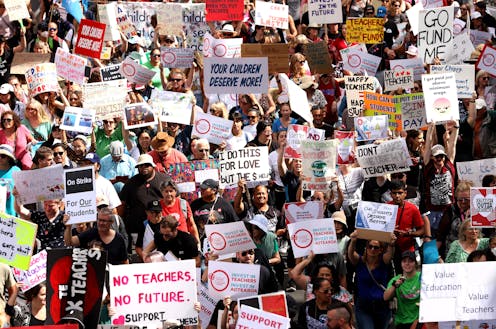
‘How outrageous and impossible is that?’: factoring in how year 12 students coped in lockdown is a grading nightmare for teachers

Source: The Conversation (Au and NZ) – By Ilana Finefter-Rosenbluh, Lecturer, Faculty of Education, Monash University

Shutterstock

Year 12 students in Sydney who live or go to school in an area affected by stage 4 lockdowns will be able to apply for special consideration if their oral or performance exam, or major project, was impacted by COVID.

Under the New South Wales COVID-19 special consideration program, students’ work must have suffered as a direct result of the pandemic restrictions, although “detailed evidence for students who have been impacted by Level 4 restrictions will not be required”.


Read more:
We know by Year 11 what mark students will get in Year 12. Do we still need a stressful exam?


Victoria provided students with similar special consideration in 2020 to avoid adverse impacts of COVID reflecting in ATAR rankings as “part of a wide-ranging process to ensure fair and accurate results in this unprecedented year of school”.

Special consideration will [also apply to Victorian senior students](https://www.vcaa.vic.edu.au/news-and-events/latest-news/Novel%20coronavirus%20update/Pages/SchoolsandEducators.aspx#:~:text=Consideration%20of%20Educational%20Disadvantage%20(CED,and%20fair%20for%20all%20students.) this year.

We interviewed ten year 12 teachers in Victoria to find out their experiences with assessment policies during lockdown in 2020. Our early findings show the teachers struggled to provide valid assessment outcomes while abiding by their duty of care, following school procedures, and protecting student privacy in the digital context.

How Victoria did it

In August 2020, Victoria introduced a new consideration of educational disadvantage process to take into account the impacts of lockdown on student learning that year. For scored assessments, the Victorian Curriculum and Assessment Authority advised teachers “consider whether a student’s performance on one or more school-based assessment tasks has been affected”. The impact had “to be above that which may have been addressed through school-based strategies”.

Teachers had to essentially determine what a student’s expected score or grade would be if they had not been impacted by the pandemic or bushfires.

The teachers’ judgement was to be informed by a range of available evidence. This included a student statement about how they were affected over the course of the year. Students were not required to provide any evidence of hardship though the school had the right to ask for clarification.

Ethical issues with remote learning

Our study focused on ten teachers of VCE (Victorian Certificate of Education), which is the end of school certificate, equivalent of the HSC (High School Certificate) in NSW. The teachers came from different Victorian secondary schools — both government and independent. They taught subjects including English, maths, history, chemistry, arts and languages.

We asked about their experiences with assessment, including their contribution to the ongoing conversation on fair assessment in year 12 and their school’s relationship with the Victorian education department.


Read more:
Is learning more important than well-being? Teachers told us how COVID highlighted ethical dilemmas at school


The new consideration of educational disadvantage process caused some complex ethical struggles. Teachers found it difficult to provide valid scores for assessments at school while also abiding by their duty of care to minimise the risk of mental and physical harm of students in a digital space.

One of the teachers, for instance, reluctantly ignored his student’s vaping during an online school assessment task:

I’m almost sure that I could see steam or something from like vaping […] I couldn’t prove it in a court of law, but I’m pretty sure it was nicotine or something similar, and that would never happen in a classroom […] so here is a question of duty of care […] if I had that kid in the class, then 100% I have a legal obligation to intervene and I’m responsible here, but in this case, he’s at home, I can’t prove it, other students see it and are affected by it, and I’m expected to assess this work […] how outrageous and impossible is that?

Reflecting on the new consideration of educational disadvantage process, another teacher said:

How are we supposed to evaluate the potential grade? And who am I to decide that x struggled more than y?

She admitted that in assessing students, she was relying on her “professional intuition” and ignoring the student statement document, which she said was a “sham”.

Some school procedures hindered valid assessment

Teachers also found it difficult to adhere to their school’s remote assessment policies, where they believed they prevented them from providing a fair assessment.

One teacher said:

The state government announced that it was up to the school leaders to decide whether they wanted to offer onsite essential assessments to VCE kids […] and our principal said NO and kept the school closed the whole time, which really pissed off a lot of teachers who wanted to run assessment in person to provide meaningful feedback […]

Another teacher highlighted issues of student cheating:

Our principal insisted on an online assessment [despite the fact that] students took screenshots of tests and iMessaged them around the cohort […] it was a disaster, we found out that more than 70% of our students had these images!

Protecting students’ privacy at the expense of learning

Some teachers described situations where their ethical obligation to protect student privacy conflicted with their ethical responsibility to provide accurate assessments.

One teacher, for example, said she was unable to provide “meaningful feedback” and follow ethical provisions of assessment when teaching students in an “off-camera” space intended to protect their privacy.

She was not sure whether her assessment feedback in class was helpful, considering she could not see the students’ responses.


Read more:
Victoria’s Year 12 students are learning remotely. But they won’t necessarily fall behind


The unfolding pandemic and environmental disasters such as the bushfires mean school closures will likely reoccur to varying degrees in the future.

Digital platforms for remote assessment and learning become central in these times. These platforms are creating complex ethical challenges of assessment that require, now more than ever, closer attention from educators, educational leaders and policymakers.

The Conversation

Christine Grové is a Fellow of the Australian Psychological Society and College of Educational and Developmental Psychologists and an international affiliate of the American Psychological Association (APA) and a member of APA D15 (Educational Psychology) and APA D16 (School Psychology). Christine is Associate Editor of the Educational and Developmental Psychologist and a member of The United Nations Association of Australia Academic Network.

Carlo Perrotta and Ilana Finefter-Rosenbluh do not work for, consult, own shares in or receive funding from any company or organization that would benefit from this article, and have disclosed no relevant affiliations beyond their academic appointment.

ref. ‘How outrageous and impossible is that?’: factoring in how year 12 students coped in lockdown is a grading nightmare for teachers – https://theconversation.com/how-outrageous-and-impossible-is-that-factoring-in-how-year-12-students-coped-in-lockdown-is-a-grading-nightmare-for-teachers-162851

Friday essay: Our utopia … careful what you wish for

Source: The Conversation (Au and NZ) – By Julianne Schultz AM, FAHA, Professor of Media and Culture, Griffith University, Griffith University

A slide by Gordon H. Woodhouse to accompany a 1901 lecture by his father Clarence entitled ‘exploration and development of Australia’. State Library of Victoria

Roman Quaedvlieg standing tall in his smart black suit — medals glistening, insignia flashing — looked every bit the man-in-uniform from central casting when he posed between then Prime Minister Tony Abbott and Immigration Minister Peter Dutton on 1 July 2015 to launch a new paramilitary unit to protect Australia’s borders.

Australian Border Force was modelled on a similar agency created in Britain two years earlier but with a distinctive accent. Its Operation Sovereign Borders had changed the culture of military, policing and customs agencies in Australia as they were pushed out of their silos with a new shared priority: stop refugees arriving by boat.

Just 14 months earlier Scott Morrison, then the Immigration Minister, had announced the formation of the new armed and uniformed force, describing it as the “reform dividend from stopping the boats”.

The 70 year-old department had gained a new role: “Border Protection”. The old tags — “Multiculturalism”, “Citizenship” and “Ethnic Affairs” — were artefacts of other ages when population growth coupled with social cohesion had been the goal. The armed Border Force that had emerged out of the chrysalis of the old customs service, complete with new uniforms, ranks and insignia, on that mid-winter day was another sign of Canberra’s increasing preoccupation with security and militarisation.

Fear and safety were still at the heart of the political narrative just as they had been for most of the time since 2001, when Prime Minister John Howard won an unlikely election victory by declaring over and over: “We will decide who comes to this country and the circumstances under which they come”.

He liked to reassure people that Australia would still be taking more than its share of refugees, but the proportion of overseas-born residents fell over the early years of his prime ministership. After decades of multiculturalism the Australian ear was once again being attuned to new arrivals as threat.


Read more:
Cruel, costly and ineffective: Australia’s offshore processing asylum seeker policy turns 9


Taking it to the streets

By 2015, Australia’s proportion of overseas-born residents was nudging the all-time high of 30% reached in the 1890s, but multiculturalism was still a grubby word.

Without irony, Commissioner Quaedvlieg cut to the chase, reducing the new nearly 6,000-strong agency’s role to its essence: “to protect our utopia”. Decades before, the political philosopher Isaiah Berlin had elegantly demolished the idea of utopias, suggesting they were “a fiction deliberately constructed as satires intended to shame those who control existing regimes”.

A month after the launch of Border Force, its first big public exercise, Operation Fortitude, was announced. Officers were to walk the streets of Melbourne and seek proof of the right of residence of “any individual we cross paths with”. The warning was clear: If you commit border fraud you should know it’s only a matter of time before you are caught.

The residents of the Melbourne branch of “our utopia” fought back with a dose of theatricality, to prove Berlin’s point, and the joint operation with the Victorian Police was abandoned in a flurry of protests and press releases. Prime Minister Abbott declared, “Nothing happened here except the issue of a poorly worded press release”.

Within a couple of years, the uniformed commissioner from central casting had gone. The intent, however, remained clear. Immigration might be at an all-time high, but exclusion was still the key, and national security was at the centre of Australian public life.

Ills of the past and present

Deciding who could come and the circumstances under which they could enter the country has, as we have been again reminded during COVID times, been central to the management of the Australian utopia since 1901.

Again Isaiah Berlin notes the:

[…] idea of the perfect society is a very old dream, whether because of the ills of the present which lead men to conceive what their world would be like without them … or perhaps they are social fantasies – simple exercises in the poetical imagination.

Australia at the time of Federation was awash with bad poetry by mediocre poets. So if conceiving the nation as a utopia was an exercise of the poetical imagination, it was inevitably flawed.

drawing of crowd
Tom Roberts’ depiction of the opening of the first Parliament of the Commonwealth of Australia May 9, 1901, By H.R.H. The Duke of Cornwall and York at Melbourne’s Exhibition Buildings.
State Library of Victoria/Tom Roberts

The first step towards the creation of Australia’s white utopia was brutal and relentless. It depended on the humiliation and elimination, by design and neglect, of the million First Nations people who in 1788 still called the continent home as they had done for countless generations, managed with an elaborate, ancient patchwork of languages, social relations, trade and lore.

Although the Australian Constitution explicitly excluded them from the census, by the time the 3.7 million new arrivals became Australians in 1901, the First Nations population had been reduced, systematically and deliberately, to about 90,000 people.

The men who debated the legislation that would shape the new nation preferred to avert their eyes. They were not, however, ignorant of what had gone before.

Even in a world shaped by race there was argument, opposition and some shame. Months after Australia became legally, unequivocally white, the parliament debated whether to recognise the survivors who preceded them.

The senate leader and future High Court justice Richard O’Connor argued that just as the right to vote was being extended to women — because in some states, they already had the franchise — the same principle should apply to Aboriginal people who had the right to vote in four of the former colonies. “It would be a monstrous thing, an unheard-of piece of savagery”, he declared, “to treat the Aboriginals whose land we were occupying to deprive them absolutely of any right to vote in their own country”.

Not everyone agreed. The former Tasmanian premier Edward Braddon summed up the majority sentiment:

We are told we have taken their country from them. But it seems a poor sort of justice to recompense those people for the loss of the country by giving them votes.

This argument prevailed. White women and Maori were the only exceptions: “no aboriginal native of Australia, Asia, Africa or the Islands of the Pacific” could enrol to vote. Within its first two years, the parliament had failed two moral tests.

At the heart of the Australia embraced by those who met in Melbourne in the Federation Parliament was the idea of a model society populated by men like them. Utopian dreams had played out in many ways in shaping the new nation. A decade earlier, nearly 300 colonialists sailed to Paraguay in a flawed attempt to create a more perfect, and even whiter, society called New Australia.

black and white photo of huts
Looking for an even whiter utopia, several hundred people set off for Paraguay to establish the New Australia colony between 1892–1905.
Flickr/State Library of NSW

Prime Minister Edmund Barton, in the middle of the first year of the century, firmly grounded the new nation in the “instinct of self-preservation quickened by experience”. Optimism tempered by fear.

What became known as the White Australia policy was necessary, he said, because “we know that coloured and white labour cannot exist side by side; we are well aware that China can swamp us with a single year’s surplus population”.

Future prime minister Billy Hughes spelt out the two steps of this dance when he candidly observed that having “killed everybody else to get it”, the inauguration of Canberra — which they considered calling Utopia — as the national capital “was unfolding without the slightest trace of the race we have banished from the face of the earth […] we should not be too proud lest we should too in time disappear. We must take steps to safeguard the foothold we now have”.

Fresh eyes

In 1923 Myra Willard — a recent graduate of the University of Sydney — paid Melbourne University Press to publish its first monograph, her book History of the White Australia Policy to 1920. She wrote with a contemporaneous eye.

The debates in the colonies before Federation were still close enough for the lines between them and the 1901 legislation to be thickly etched with detail. She grimly recounted the way each colony penalised and excluded “coolies” and “celestials”.

“The desire to guard themselves effectively against the dangers of Asiatic immigration was one of the most powerful influences which drew the Colonies together,” she wrote. She quoted with approval the now infamous speech by Attorney-General Alfred Deakin in which he described the principle of white Australia as the “universal motive power” that had dissolved colonial opposition to Federation. At heart, he declared, was “the desire that we should be one people and remain one people without the admixture of other races”.

The Australian utopia depended on a “united race”. This would be ensured by “prohibiting the intermarriage and association that could degrade”. As Deakin declaimed in September that year, “inspired by the same ideas and an aspiration towards the same ideals of a people possessing a cast of character, tone of thought … unity of race is an absolute essential to the unity of Australia”.

The legislation was finally, if somewhat reluctantly, signed by Governor General Lord Hopetoun just before Christmas 1901. London was discomfited by the determination of the new nation to exclude and proposed amendments to save face with her imperial allies in Europe and Japan. Willard wrote in 1923, “Australia’s policy does not as yet seem to be generally understood or sanctioned by world opinion”. It was, she maintained, despite the negative connotations, really a positive policy that ensured Australia would be a productive global contributor of resources and supplies.

By the time the legislation passed, those with Chinese heritage were fewer than they had been in the 19th century. It did not take long before Indian residents who had lived in Fremantle for years, as British subjects, were denied the right to return to Australia after visiting their homeland. Those of German heritage, who made up about 5% of the population at the turn of the century, soon became pariahs — wartime internment was followed by the deportation of 6,000 Australians of German heritage.

Gough Whitlam revoked the policy as one of his first acts as prime minister.

“Right up to our election in 1972”, he recalled, “there had to be, from any country outside Europe, an application for entry referred to Canberra and a confidential report on their appearance […] The photograph wasn’t enough, because by a strong light or powdering you could reduce the colour of your exposed parts. It was said that the test was in extreme cases, ‘Drop your daks’ because you can’t change the colour of your bum’.”

For Michael Wesley, now deputy vice chancellor international at the University of Melbourne, and thousands of others, this meant that his Australian-born mother could return home with her Indian husband and brown babies without fear of deportation.


Read more:
German experience in Australia during WW1 damaged road to multiculturalism


The echoes still resonate. Fast forward to this year, when the average time in immigration detention rose to 627 days and the then Minister for Home Affairs, Peter Dutton, described deporting New Zealand-born long-term Australian residents who had been jailed as “taking the trash out”.

The suite of bills passed in that first parliament — at least as much as the Constitution — determined the social nature of Australia for much of the 20th century. As Deakin said a couple of years after the White Australia policy was adopted, “it goes down to the roots of our national existence, the roots from which the British social system has sprung”.

By the time he was prime minister, the bureaucratic method of exclusion was even clearer: “the object of the [language] test is not to allow persons to enter the Commonwealth, but to keep them out”. John Howard could not have asked for a better crib sheet than the speeches of the Federation Parliament when preparing his 2001 election campaign.

‘It’s about this nation saying to the world, we are a generous open-hearted people … but we will decide who comes to this country and the circumstances in which they come.’


Read more:
Australian politics explainer: the White Australia policy


Survival against the odds

That Australia has emerged as a cohesive multicultural society, with people drawn from hundreds of different countries — and increasingly from those that were once explicitly excluded — is a remarkable achievement. That the First Nations people have survived is in many ways even more remarkable.

But the foundation story of our notional utopia is still undigested and recurs unwittingly in policy language and political rhetoric, in legal and administrative practice and personal abuse.

The brutal speed and wilful political rejection of the Uluru Statement from the Heart would have shamed even the members of the Federation Parliament; the failure to turn enquiry into action on the oldest issue in the land — treaty, truth-telling and settlement with the descendants of those who have always been here — is unconscionable.

Methods of border control are now more likely to be couched in the convoluted small print attached to visas, employment conditions and bureaucratic processes, but at some level the old order prevails — there has been no national apology to those who were humiliated by the White Australia policy, no formal truth-telling to address these sins of the past at a national level. It has taken 23 years for the compensation recommended by Stolen Children inquiry to be parsimoniously granted.

Hands are thrown up in mock astonishment when another example of institutional or official racism, discrimination or maltreatment makes the headlines. Over a decade, the cost of detaining (and breaking) those refugees who felt compelled to leave their homeland reached double-digit billions. International criticism is once again worn with bravado as a badge of honour rather than a mark of shame. It was surprisingly easy to jettison 50 years of careful relationship-building with China.

Ever since those first debates in the Federation Parliament there has been a moral deficit in Australian politics, a reluctance to go back to first principles, to meaningfully make amends. Until this is addressed there will always be an action deficit. The big public health campaigns have not extended to addressing the lingering racism that has equally pernicious consequences.

No national political leaders rose to the defence of Adam Goodes when the 2014 Australian of the Year was called “an ape” and booed off the footy field. None came to the defence of Yassmin Abdel-Magied when she sought to contribute to public life. The response to the never-ending list of Aboriginal deaths in custody is couched in mealy-mouthed administrivia.

When Prime Minister Julia Gillard was battered by misogynist hectoring, the message to other women was clear: don’t get ideas above your station. Almost every week a woman dies at the hands of her intimate partner, but overwhelmed police seem powerless to help.

Our treatment of refugees attracts a global condemnation that is dismissed as readily today as it was in 1901. Behrouz Boochani will probably never set foot in the country he described so searingly in his much awarded No Friend but the Mountains, and despite public support, the Murugappans — the Biloela family — spent nearly three years in costly detention on Christmas Island.

Yet when the government banned Australian citizens and permanent residents who happened to be in India as COVID raged from returning home under threat of fines and jail terms, the outcry was impossible to ignore.

The brutality of the old ways still lives in the memory. A colleague recalled her traumatic fear, during the family’s first trip to India with their Pakistani-born father, that the White Australia policy would be reintroduced and they would be denied re-entry. It had happened to those returning to Fremantle Harbour a century earlier — and, astonishingly, again in 2021.

Utopia out of step

Public sentiment is at odds with that of those who are most committed to the old status quo. Survey after survey shows a populace willing to embrace change that means people are treated better. But there are few leaders willing to make the case, fearful of an imagined backlash, rather than embracing the need for big tough conversation. Transformation is left to the slow accretion of a new normal.

Tens of thousands turned up at the football waving “I stand with Adam” banners years before the AFL officially apologised to Goodes.

Those affronted by official treatment of refugees engage in endless protest campaigns, travel to detention centres, provide support and lobby. The Black Lives Matter movement has galvanised some of the biggest demonstrations seen in the country, despite COVID, and the calls for action on the unfinished business of the 33-old Royal Commission into Aboriginal Deaths in Custody and the other inquiries are becoming impossible to ignore.

There is much to be learnt from First Nations people. Their survival and generosity is an inspiration that needs to be taken seriously and acted upon. Without righting this foundational wrong, this country will be forever stuck on a political treadmill, running but going nowhere.

Art speaks volumes

It is striking that one of the most important Aboriginal artists to have captivated the world came from a place called Utopia. Hers was the land of the Alyawarr people for millennia before its brief life as a cattle station. It is a place as impoverished as any of the remote settlements in northern Australia, returned to their traditional owners with only grudging support from the state. But the semi-arid country is the source of dreaming and a culture that speaks to the world when brought to life on canvas. Emily Kame Kngwarreye’s paintings are displayed in galleries, palaces and private collections around the world.

Indigenous painting
One of Australia’s most famous contemporary paintings, Earth’s Creation 1, by Emily Kame Kngwarreye.
AAP Image/Emily Kame Kngwarreye

They are more than great works of art. It is what Australian art always aspired to be. In the words of the influential Aboriginal scholar and advocate Marcia Langton, Emily’s paintings

[…] fulfil the primary historical function of Australian art by showing the settler Australian audience, caught ambiguously between old and new lands, a new way to belong in this place rather than another […]

Creating a utopia, or at least an aspiration to do better, requires more imagination and courage than our current system of professional politics permits.

It needs more art and better faith. Politics, like everything else, is now in thrall to corporate modes of organisation and communication.

The emphasis is on the mission (to get elected) and KPIs (to deliver on promises). The headline of every corporate plan is the “vision”. It is always the hardest thing to define. But without a vision, any plan is meaningless. Our utopia needs a new vision, one not tinged by shame. The old ones have failed the test of time.

This is an edited extract of Facing foundational wrongs — careful what you wish for, republished with permission from GriffithReview73: Hey Utopia!, edited by Ashley Hay.

The Conversation

Julianne Schultz is Professor of Media and Culture at Griffith University, publisher and founding editor of Griffith Review and chair of The Conversation Media Group. Her book The Idea of Australia: a search for the soul of the nation will be published by Allen and Unwin.

ref. Friday essay: Our utopia … careful what you wish for – https://theconversation.com/friday-essay-our-utopia-careful-what-you-wish-for-165314

Grattan on Friday: Vaccine passports are a better tool than mandating jabs for all jobs

Source: The Conversation (Au and NZ) – By Michelle Grattan, Professorial Fellow, University of Canberra

As the nation proceeds – but still at an agonisingly slow pace – towards the targets of having 70% and 80% of those 16 and over fully vaccinated, the next big debate is about making the jab compulsory in workplaces.

This would give the community greater protection and accelerate the lifting of restrictions and opening the economy.

Dig deeper, however, and it’s a fraught issue, full of political, legal, practical and ethical complexities.

From the start, Scott Morrison has insisted his government would not make taking the vaccine mandatory.

It’s not just a matter of the anti-vaxxers, who are only a small, albeit noisy, minority.

It’s that many in the Coalition’s ranks and, even more important, among its base would be totally against compulsion. A fair number of these have already been angered by the extent of restrictions, believing civil rights have been excessively compromised.

So when individual businesses, notably the food processor SPC, started down the road of requiring workers to be vaccinated, Morrison last week had the solicitor-general brief national cabinet on the confusing legalities. He also said neither the federal government nor any state or territory intended to legislate to give employers the legal safety they would like.

“We are not going to seek to impose a mandatory vaccination program by the government by stealth,” he said this week.

A very hot potato has been left firmly in the hands of individual businesses.

They are in an awkward position. The advantage of having their workplaces vaccinated is obvious. But the legal position is unclear. In the absence of a public health order, they would be relying on directions to employees being judged lawful and reasonable. Inevitably there would be court challenges.

In advice published on Thursday, the Fair Work Ombudsman said: “In some cases, employers may be able to require their employees to be vaccinated against COVID-19. Employers should exercise caution if they’re considering making COVID-19 vaccinations mandatory in their workplace and get their own legal advice.”

ACTU secretary Sally McManus doubts the legality, short of public health orders, of employers forcing vaccinations and says support and encouragement for employees is the better way to go.

Even apart from any court challenge, some businesses would face division among their workers, and potential dismissals and voluntary departures. When Western Australia made vaccination compulsory for quarantine workers – surely a very reasonable requirement – it lost some of them.

Simon Longstaff, head of The Ethics Centre, points to the distinction between vaccination being compulsory or a condition for doing something.

Vaccination could be a condition for a person working in a company, just like donning safety equipment is for certain jobs, Longstaff says. “If they are not prepared to accept the condition, then they may choose not to work for an employer imposing such a condition.”

But “conditions” form a continuum. For example, having to be vaccinated to work in a hospital is very different to the jab being required to keep a job that involves minimal risk.

This takes us to the various ways of skinning the cat – and to vaccine “passports”. The government already has the beginnings of a vaccine passport scheme, although it won’t use that name – because its “base” doesn’t like the idea. It calls it a certificate.

The vaccine passport is the iron-fist-in-velvet-glove approach to imposing vaccinations.

Once we reach the 70% or 80%, and people are registered as being vaccinated, evidence of having had the jab will be the gateway to freedoms. Looked at the other way, lack of the passport would restrict what people could do.

A vaccine passport could be as necessary for international travel as a national passport. At a more mundane level, it could be required to eat at a restaurant just as, currently, people are told to sign in. Similarly, it could be needed to attend music or sporting events. Or to enter Parliament House.

Forcing people, directing or indirectly, to have a COVID vaccination involves sometimes competing rights – your right to choose whether to accept a vaccine, my right to be safe in the workplace and the community’s right to protection from a very serious and potentially fatal disease.

It is not as simple as “no jab no pay” for the vaccination of children, which only denies government benefits. In the COVID case we’re talking, in the extreme, about people’s access to jobs and livelihoods.

So where are we left?

When people are dealing with the vulnerable – most obviously in aged care – the rights of those being cared for clearly come ahead of the workers’ right to choose. National cabinet was correct in supporting the mandating of vaccinations of the aged care workforce.

Workers in quarantine, disability, and health care are, or should be, treated similarly by whoever employs them.

There are many other “frontline” workers, including those in supermarkets and hospitality. While this gets us back to the compulsion issue, it could be tackled, especially in occupations where there is high turnover, by giving preference in hiring to the vaccinated. This would be harsh, but less harsh than firing workers.

When everyone eligible has been offered the vaccine, we will have a better idea of the size of the minority of unvaccinated people we’re dealing with.

It’s important during the rollout to minimise this pool – to make sure as many as possible of the apathetic have been motivated and the hesitant persuaded.

The latest government “vaccine sentiment” survey, released on Thursday, had 79% of Australians intending to get vaccinated, or already done. According to rollout chief Lieutenant General J.J. Frewen, of the rest 14% were making up that their minds and only 7% were saying they won’t get vaccinated.

Incentives may be helpful, although they shouldn’t be as expensive or extensive as Anthony Albanese’s $300 for everyone vaccinated. Much better advertising is also needed, including niche campaigns where vaccination is below average.

The Australian community has proved remarkably compliant during COVID. Some hesitancy about AstraZeneca notwithstanding, we are lagging in our vaccination rate not primarily because of the public’s resistance or reluctance but because of the faults in the rollout. With improvements in that, and a combination of the positive and negative incentives of the vaccine passport, we can probably reach a vaccination level high enough to keep the community safe without having to go further down the road of compulsion.

The Conversation

Michelle Grattan does not work for, consult, own shares in or receive funding from any company or organization that would benefit from this article, and has disclosed no relevant affiliations beyond their academic appointment.

ref. Grattan on Friday: Vaccine passports are a better tool than mandating jabs for all jobs – https://theconversation.com/grattan-on-friday-vaccine-passports-are-a-better-tool-than-mandating-jabs-for-all-jobs-166045

‘How high above sea level am I?’ If you’ve googled this, you’re likely asking the wrong question — an expert explains

Source: The Conversation (Au and NZ) – By Shayne McGregor, Associate professor, Monash University

Shutterstock

The latest report from the United Nations Intergovernmental Panel on Climate Change is confronting. It finds global mean sea levels rose by about 20 centimetres between 1901 and 2018. In fact, sea levels have risen faster over the last hundred years than any time in the last 3,000 years.

This acceleration is expected to continue. A further 15-25cm of sea level rise is expected by 2050, with little sensitivity to greenhouse gas emissions between now and then. Beyond 2050, however, the amount of sea level rise will largely depend on our future emissions.

In a low-emissions scenario, we can expect sea levels to rise to about 38cm above the 1995–2014 average by the year 2100. In a high-emissions scenario this is expected to more than double to 77cm.

In either case, who will feel the effects of sea level rise? And how much does your location’s height above sea level really matter? It’s a question a lot of you have been googling since the report’s release. But the answer isn’t straightforward.


Read more:
This is the most sobering report card yet on climate change and Earth’s future. Here’s what you need to know


Sea level rise isn’t uniform

Since satellites began measuring sea surface height almost three decades ago we have learned sea level rise is not uniform across the globe.

The map on the left in this video shows daily sea level variations since 1993, while the curve on the right shows the month-by-month global mean sea level.

In fact, sea levels can vary quite substantially on a year-to-year and decade-to-decade basis. However, we know much of this regional variability is driven by surface wind changes — and will typically decrease over long periods.

So while the IPCC report’s projections are for global mean sea level for the year 2100, most coastal locations will experience a sea level rise within 20% of the projections (which are subject to change beyond 2050 depending on global emissions).

Flood zones and drainage

Elevation above the high tide is an important factor in determining how at risk a particular location is of experiencing flooding due to sea level rise.

In low elevation coastal zones, physical distance to the coast and certain topographic features in the area such as sand dunes, wetlands and human built structures like levies and flood walls can act as a buffer to sea level rise.

That said, current and projected sea level rise may still pose a significant risk to regions with these buffers, as there are many ways by which sea level rise can lead to flooding.

For instance, as sea levels rise water from the sea can inundate storm water drainage systems and end up flooding inland regions with elevations below (or which will eventually be below) sea level. This is because drainage largely depends on gravity, and some storm water systems don’t have flood gates to stop water entering from the ocean.

Here we see Bobbin Head in NSW flood during a king tide. This problem will become more pronounced as sea levels rise and will require clever engineering solutions, such as drainage pumps to push water back out to sea.

There are also cases where man-made features intended to help protect people from sea level impacts can be breached, resulting in flooding. One prominent example was the New Orleans flooding that occurred during Hurricane Katrina, when the man-made flood levee system suffered many failures

The tidal range around Australia varies from less than 1m in some parts such as southwest Australia, to more than 8m in other parts such as the northwest.

The tidal range in an area determines how quickly flooding impacts will increase as sea levels rise. If two regions have the same elevation, as the high tide rises past the regions’ elevation, the region with a smaller tidal range will likely struggle with more flooding and for longer than the region with a larger tidal range.

Beach erosion increases risk

Yet all of the above hasn’t considered the fact our beaches are naturally mobile systems which respond to change. This is why the relationship between an assets elevation above the high tide mark and risk of flooding is less straightforward at low elevation coastal zones — where 11% of Australia’s population lives.

When sea levels rise, the shape of the coastline changes with it and can move inland to a great extent. If sea levels rise by 1m, the coast can erode inland by 1km or more. This can potentially create risk for properties even if they are currently above the height of the projected sea level rise.

Australia has many retreating coastlines, often forming striking erosional landforms such as The Great Ocean Road region.


Read more:
The world may lose half its sandy beaches by 2100. It’s not too late to save most of them


However, the response of the coastline can also be moderated by natural and human factors. In some regions, coastal elevation is actually increasing due to sediment being deposited, or tectonic uplift raising the coast as fast (or even faster) than rising sea levels.

In Australia, this is especially pronounced in estuaries with a riverine supply of sediments and where vegetation such as mangroves, saltmarshes and dune vegetation help collect sediment in their root systems.

We know sea level rise is with us for the long haul. And it’s now inevitable we will have to adapt to changes along our coasts. We’re already using a number of approaches to counteract projected sea level rise in Australia, including:

  • sand renourishment of beaches
  • the formation of more seagrass, saltmarsh and mangrove habitats
  • construction of seawalls and other hard coastal protection measures.

But it’s important to note we still have a choice for how much and how quickly sea levels will rise beyond 2050. So perhaps, instead of googling your current elevation, a more pragmatic approach would be to think of what you can do to help protect your own coasts and reduce your carbon footprint.

The Conversation

Shayne McGregor receives funding from the Australian Research Council.

Nerilie Abram receives funding from the Australian Research Council. She is a member of the international Climate Crisis Advisory Group.

ruth.reef@monash.edu receives funding from the Australian Research Council to study how vegetated shorelines respond to rising sea levels in Australia.

ref. ‘How high above sea level am I?’ If you’ve googled this, you’re likely asking the wrong question — an expert explains – https://theconversation.com/how-high-above-sea-level-am-i-if-youve-googled-this-youre-likely-asking-the-wrong-question-an-expert-explains-165882

How to prepare your child for a COVID test

Source: The Conversation (Au and NZ) – By Therese O’Sullivan, Associate Professor, Edith Cowan University

from www.shutterstock.com

We’ve been urged to get COVID tested even if we have mild symptoms. Or perhaps we don’t have symptoms but are a close or casual contact of a known case. This includes children.

So what can you do to make COVID testing as simple and stress-free as possible for your child?

With a bit of preparation, role play and modelling the type of behaviour you’d like to see, the process can be plain sailing.


Read more:
The symptoms of the Delta variant appear to differ from traditional COVID symptoms. Here’s what to look out for


Start the conversation now

Ideally, you want to start the conversation about COVID testing before your child actually needs a swab. Reflect together on the pandemic so far and envision what might happen in the future.

Child's drawing of how 'Covid-19 sucks'
Here’s what 10-year-old Roisin from Ireland thinks of lockdown.
Our COVID-19 Artwork/Children’s Artwork Project, CC BY-NC-ND

Let your child know COVID tests ensure sick people are cared for and stop them spreading the virus to others.

Point out COVID testing sites when you drive past.


Read more:
8 tips on what to tell your kids about coronavirus


Preparation is the key

Knowledge of what is going to happen is important for children to feel in control and empowered in situations like COVID testing.

Encourage them to watch videos showing kids having a COVID test, like this one.

Encourage questions and be open to answering them honestly. Acknowledge it feels uncomfortable to have something pushed up your nose. But the discomfort will be only temporary.

This Canadian video shows the swab going right up a child’s nose. The video says this feels a bit like what happens when you get water up your nose, or the tingly feeling you get in your nose after a fizzy drink.

The swab goes up your nose, but only for about five seconds. Count them.

Children report feeling deceived if they are told a procedure won’t hurt when it does. This can lead them to distrust future medical procedures.

Depending on the age of the child, you could also help prepare with some role play, known as therapeutic play. This type of preparation helps children feel more comfortable and less anxious before medical procedures.

For COVID testing, this can include asking your child to try wearing a mask. Then your child can use a couple of cotton buds taped together to make a long swab, to “test” their teddy or doll.


Read more:
Why children and teens with symptoms should get a COVID-19 test, even if you think it’s ‘just a cough’


Before you go

To help your child feel in control of what is happening to them, think about how they can participate in the process. Give them choices where possible.

Which testing centre would they like to go to? What toy would they like to take with them to hold during the test? There may be a long wait for the test. What fun things could they take with them or do to help pass the time? What snack would they like to take?

During the test

Children are good at picking up on cues from their parents, so stay calm and confident when taking your child for testing. If you are also being tested, they may like to see you go first.

Ask the tester to talk through what they are doing. Avoid distractions and bribes. Offering a bribe can give the child the impression there is something to be worried about, and distractions can leave the child suspicious of why they were distracted.

As with vaccinations, some children may like to watch so they know what is happening, rather than shutting their eyes. Give your child the option.

Be fully present with your child during the procedure and put your phone away.

Humour can help keep things light hearted and it reduces stress levels. What do COVID-19 jokes have in common? They’re catchy!


Read more:
Needles are nothing to fear: 5 steps to make vaccinations easier on your kids


After the test

You need to go home until you receive a result so brainstorm with your child about some fun things to do while you wait.

Explain their result will come back either positive or negative. Positive means you have COVID-19, negative means you don’t.

Consider how best to help your child deal with a positive result. Some children may have some anxiety around this, even if they have very mild symptoms.


Read more:
Kids at home because of coronavirus? Here are 4 ways to keep them happy (without resorting to Netflix)


In a nutshell

Overall, this respectful approach to child-centred health care focuses on developing a cooperative relationship with the child, rather than using authority or incentives.

We have used this approach successfully in our child research projects involving invasive assessments. It helps the child feel in control, helps reduce anxiety around medical procedures and helps them feel empowered by their experiences.

Look at COVID testing as an opportunity for your child to learn more about how health care works. An empowering COVID testing experience can help set up your child for future interactions with the health system.

The Conversation

Mandy Richardson is the owner and operator of Raise Toddlers, a parenting consultancy that provides resources and advice about early childhood development to support parents and educators.

Therese O’Sullivan does not work for, consult, own shares in or receive funding from any company or organisation that would benefit from this article, and has disclosed no relevant affiliations beyond their academic appointment.

ref. How to prepare your child for a COVID test – https://theconversation.com/how-to-prepare-your-child-for-a-covid-test-165248

Einstein was ‘wrong’, not your science teacher

Source: The Conversation (Au and NZ) – By Simon Crook, Honorary Associate, School of Physics, University of Sydney

Shutterstock

“Your teacher was wrong!” It’s a phrase many a high school or university student has heard. As practising and former science teachers, we have been challenged with this accusation before.

Whereas those with advanced science understanding (including the students’ lecturers and high school teachers) may well say their previous teachers were “wrong”, “incomplete” might be more appropriate. These teachers were probably right in selecting age-appropriate scientific models and teaching these in age-appropriate ways.

If we were to put Einstein in front of a year 7 class, he might well present content to those students way beyond their level of understanding. This highlights a common misunderstanding of what is (and isn’t) taught in schools, and why.

Teaching at the level of the students

Our cognitive development, defined by different stages according to age, means learning is gradual. Teaching involves choosing the right pedagogies to impart knowledge and skills to students in a manner that matches their cognitive development.

In this article, we will use understanding of forces in science to demonstrate this gradual progression and evolution of education.

In Australian schools, forces are taught from kindergarten (foundation) to year 12. Throughout their education, and especially in primary education despite the various challenges, it is more important that students learn science inquiry skills than simply science facts. This is done within the contexts of all science topics, including forces.


Read more:
Five challenges for science in Australian primary schools


Stages of learning are a long journey

Before a child can learn about the science of the world around them they must first acquire language skills through interactions with adults such as book reading (particularly picture books).

Newtonian Physics for Babies by Chris Ferrie.

In preschool and kindergarten, play-based learning using early years learning principles is particularly important. Dropping objects such as rocks and feathers to see which falls faster, or what sinks, might lead to comments like “heavy things fall faster” or “heavy things sink”. Of course, this is “wrong” since air resistance is not being considered, or density relative to water, but it is is “right” for five-year-old children.

At this age, they are learning to make observations to make sense of the world around them through curious play. Children may lack a full understanding of complicated topics until they are capable of proportional reasoning.

Who sank the boat? The red wombat. Year 1.
Photo: Simon Crook, Author provided

In junior high school, students learn about Newton’s Laws of Motion through various experiments. These typically use traditional equipment such as trolleys, pulleys and weights, as well as online interactives.

What are Newton’s Laws of Motion? Using an animation to explain from PhET by Physics High.

In senior years, students examine uniform acceleration and its causes. As well as performing first-hand investigations, such as launching balls in the air and using video analysis, students need higher mathematical skills to deal with the algebra involved. Strictly speaking, they should take into account friction, but ignoring it is normal at this level.

Projectile motion with a phone and a hose
Exploring projectile motion with a phone and a hose.
Photo: Tom Gordon, Author provided

Online simulations are particularly good for this topic. Our research has shown simulations can have a statistically significant and positive effect on student learning, particularly with the student-centred opportunities they present. (They are also very useful while learning from home in lockdown.)

Have a go at the simulation below.


Read more:
Students with laptops did better in HSC science


Students then extend their learning to Newton’s Universal Law of Gravitation. Students now need to apply higher mathematical skills, with further algebra and potentially calculus. Although this model is incomplete, and cannot explain the orbit of Mercury (among other things), this knowledge was enough to get us to the Moon and back.

gravitation

Getting beyond Newtonian physics and its limitations, undergraduate students learn Einstein’s General Theory of Relativity where gravity is not thought of as a force between two objects, but as the warping of spacetime by masses. To tackle this content, students need the mathematical prowess to solve Einstein’s nonlinear field equations.

Einstein’s field equation.
Photo: Keith Miller/Flickr, CC BY-NC-ND

Science is always incomplete

So have we finally reached the correct view? No, general relativity does not provide a complete explanation. Theoretical physicists are working on a quantum theory of gravity. Despite a century of searching, we still have no way to reconcile gravity and quantum mechanics. Even this is an unfinished model.

Quantum gravity and the hardest problem in physics | PBS Space Time.


Read more:
Approaching zero: super-chilled mirrors edge towards the borders of gravity and quantum physics


Teachers aren’t “wrong’”, they are being appropriately incomplete, just as Einstein was incomplete. So how can we avoid such accusations?

Perhaps the answer lies in the language we use in the classroom. Rather than say “This is how it is … ” we should instead say “One way of looking at it is … ”, or “One way to model this is …”, not as a matter of opinion, but as a matter of complexity. This allows the teacher to discuss the model or idea, while hinting at a deeper reality.

Is Einstein actually wrong? Of course not, but it is important to realise that our models of forces and gravity are incomplete, as with most of science, hence the academic pursuit of higher knowledge.

More importantly, our teachers understand the process of introducing students to increasingly sophisticated models so they better understand the universe we live in. This matches their cognitive development through childhood.

Learning is a journey, not simply the end point. As the aphorism attributed to Einstein states, “Everything should be as simple as it can be, but not simpler.”


This article was co-authored by Paul Looyen, Head of Science at Macarthur Anglican School and Content Creator at PhysicsHigh.

The Conversation

Paul Looyen, Head of Science at Macarthur Anglican School and Content Creator at PhysicsHigh, is a co-author of this article.

Simon Crook is the Director of CrookED Science, a STEM education consultancy. He has taught physics in high schools since 1994 and science in primary schools.

Tom Gordon does not work for, consult, own shares in or receive funding from any company or organization that would benefit from this article, and has disclosed no relevant affiliations beyond their academic appointment.

ref. Einstein was ‘wrong’, not your science teacher – https://theconversation.com/einstein-was-wrong-not-your-science-teacher-165532

Lethal autonomous weapons and World War III: it’s not too late to stop the rise of ‘killer robots’

Source: The Conversation (Au and NZ) – By Toby Walsh, Professor of AI at UNSW, Research Group Leader, UNSW

The STM Kargu attack drone. STM

Last year, according to a United Nations report published in March, Libyan government forces hunted down rebel forces using “lethal autonomous weapons systems” that were “programmed to attack targets without requiring data connectivity between the operator and the munition”. The deadly drones were Turkish-made quadcopters about the size of a dinner plate, capable of delivering a warhead weighing a kilogram or so.

Artificial intelligence researchers like me have been warning of the advent of such lethal autonomous weapons systems, which can make life-or-death decisions without human intervention, for years. A recent episode of 4 Corners reviewed this and many other risks posed by developments in AI.

Around 50 countries are meeting at the UN offices in Geneva this week in the latest attempt to hammer out a treaty to prevent the proliferation of these killer devices. History shows such treaties are needed, and that they can work.

The lesson of nuclear weapons

Scientists are pretty good at warning of the dangers facing the planet. Unfortunately, society is less good at paying attention.

In August 1945, the United States dropped atomic bombs on the Japanese cities of Hiroshima and Nagasaki, killing up to 200,000 civilians. Japan surrendered days later. The second world war was over, and the Cold War began.


Read more:
World politics explainer: The atomic bombings of Hiroshima and Nagasaki


The world still lives today under the threat of nuclear destruction. On a dozen or so occasions since then, we have come within minutes of all-out nuclear war.

Well before the first test of a nuclear bomb, many scientists working on the Manhattan Project were concerned about such a future. A secret petition was sent to President Harry S. Truman in July 1945. It accurately predicted the future:

The development of atomic power will provide the nations with new means of destruction. The atomic bombs at our disposal represent only the first step in this direction, and there is almost no limit to the destructive power which will become available in the course of their future development. Thus a nation which sets the precedent of using these newly liberated forces of nature for purposes of destruction may have to bear the responsibility of opening the door to an era of devastation on an unimaginable scale.

If after this war a situation is allowed to develop in the world which permits rival powers to be in uncontrolled possession of these new means of destruction, the cities of the United States as well as the cities of other nations will be in continuous danger of sudden annihilation. All the resources of the United States, moral and material, may have to be mobilized to prevent the advent of such a world situation …

Billions of dollars have since been spent on nuclear arsenals that maintain the threat of mutually assured destruction, the “continuous danger of sudden annihilation” that the physicists warned about in July 1945.

A warning to the world

Six years ago, thousands of my colleagues issued a similar warning about a new threat. Only this time, the petition wasn’t secret. The world wasn’t at war. And the technologies weren’t being developed in secret. Nevertheless, they pose a similar threat to global stability.


Read more:
Open letter: we must stop killer robots before they are built


The threat comes this time from artificial intelligence, and in particular the development of lethal autonomous weapons: weapons that can identify, track and destroy targets without human intervention. The media often like to call them “killer robots”.

Our open letter to the UN carried a stark warning.

The key question for humanity today is whether to start a global AI arms race or to prevent it from starting. If any major military power pushes ahead with AI weapon development, a global arms race is virtually inevitable. The endpoint of such a technological trajectory is obvious: autonomous weapons will become the Kalashnikovs of tomorrow.


Read more:
World’s deadliest inventor: Mikhail Kalashnikov and his AK-47


Strategically, autonomous weapons are a military dream. They let a military scale its operations unhindered by manpower constraints. One programmer can command hundreds of autonomous weapons. An army can take on the riskiest of missions without endangering its own soldiers.

Nightmare swarms

There are many reasons, however, why the military’s dream of lethal autonomous weapons will turn into a nightmare. First and foremost, there is a strong moral argument against killer robots. We give up an essential part of our humanity if we hand to a machine the decision of whether a person should live or die.

Beyond the moral arguments, there are many technical and legal reasons to be concerned about killer robots. One of the strongest is that they will revolutionise warfare. Autonomous weapons will be weapons of immense destruction.

Previously, if you wanted to do harm, you had to have an army of soldiers to wage war. You had to persuade this army to follow your orders. You had to train them, feed them and pay them. Now just one programmer could control hundreds of weapons.

In some ways lethal autonomous weapons are even more troubling than nuclear weapons. To build a nuclear bomb requires considerable technical sophistication. You need the resources of a nation state, skilled physicists and engineers, and access to scarce raw materials such as uranium and plutonium. As a result, nuclear weapons have not proliferated greatly.

Autonomous weapons require none of this, and if produced they will likely become cheap and plentiful. They will be perfect weapons of terror.

Can you imagine how terrifying it will be to be chased by a swarm of autonomous drones? Can you imagine such drones in the hands of terrorists and rogue states with no qualms about turning them on civilians? They will be an ideal weapon with which to suppress a civilian population. Unlike humans, they will not hesitate to commit atrocities, even genocide.

Time for a treaty

We stand at a crossroads on this issue. It needs to be seen as morally unacceptable for machines to decide who lives and who dies. And for the diplomats at the UN to negotiate a treaty limiting their use, just as we have treaties to limit chemical, biological and other weapons. In this way, we may be able to save ourselves and our children from this terrible future.

The Conversation

Toby Walsh is a Laureate Fellow and Scientia Professor of Artificial Intelligence at the University of New South Wales in Sydney, Australia. He is a Fellow of the Australian Academy of Science and author of the recent book, “2062: The World that AI Made” that explores the impact AI will have on society, including the impact on war.

ref. Lethal autonomous weapons and World War III: it’s not too late to stop the rise of ‘killer robots’ – https://theconversation.com/lethal-autonomous-weapons-and-world-war-iii-its-not-too-late-to-stop-the-rise-of-killer-robots-165822

Cruel, costly and ineffective: Australia’s offshore processing asylum seeker policy turns 9

Source: The Conversation (Au and NZ) – By Madeline Gleeson, Senior Research Fellow, Andrew & Renata Kaldor Centre for International Refugee Law, UNSW

This week marks nine years since Australia re-introduced a policy of offshore processing for asylum seekers arriving by boat. Nine long years of a cruel, costly and ineffective policy sustained by successive governments of both major parties, despite consistently failing to meet any of its stated aims.

As we outline in a new Kaldor Centre policy brief, Cruel, costly and ineffective: the failure of offshore processing in Australia, offshore processing does not “save lives”, “stop the boats” or “break the business model of people smugglers”. Nor is it a benign failure.

Beyond simply not doing what it sets out to do, offshore processing carries enormous costs. There are human costs, for the men, women and children subject to immense suffering, and even to some of the people tasked with implementing it.

It also carries diplomatic costs, as Australia’s international reputation is tarnished. Its relationship with Pacific neighbours in Nauru and Papua New Guinea grows increasingly strained with each passing year. Then there’s the ballooning economic costs for taxpayers, as billions are sunk in vain into a disastrous policy failure.

That no Australian government in almost a decade has successfully brought this policy to a formal close is astonishing, and it demands interrogation.


Read more:
With billions more allocated to immigration detention, it’s another bleak year for refugees


Failing to meet its stated policy aims

The government’s own data on the impact of offshore processing on boat arrivals is the starkest revelation of this policy’s failure. During its first year, more people sought asylum in Australia by boat than at any other time since boat arrivals were first recorded in the 1970s. Deaths at sea also continued at broadly comparable rates to previous years.

People continued to seek safety in Australia via maritime routes until they physically could not do so anymore. The 2013 launch of Operation Sovereign Borders, and the Abbott government’s commitment to intercepting and returning people trying to reach Australia by boat — no matter the legal and humanitarian consequences — effectively rendered it futile to try and reach Australia by sea.

Despite early suggestions offshore processing was a vital complement to this turning back of boats, there is no evidence that this is so.

In fact, while offshore processing has formally remained on foot, and popular rhetoric gives the impression that it is still a key part of the matrix of border security measures necessary to keep the boats “stopped”, Australia ceased transferring new arrivals offshore in 2014.

Instead, Australian officials have gone to extraordinary lengths to intercept at sea and return hundreds of asylum seekers in recent years.

What this means is that transfers offshore occurred for less than two years. The following seven years have been spent in a prolonged and costly policy bind, as successive Labor and Coalition governments have tried to find solutions outside Australia for people who should have been settled here long ago.

Meanwhile almost everyone still subject to this policy is back in Australia, having been either returned following a policy change in July 2013 or medically evacuated amid spiralling health crises offshore from 2017.

According to latest figures, there are barely more than 100 asylum seekers left in each of Nauru and Papua New Guinea. The men and women in Nauru are living in the community. The men in Papua New Guinea are in the capital, Port Moresby, having been transferred there following the closure of the Manus Island detention centre in 2017.

So why does this policy drag on?

The reason given publicly for continuation of this policy — that offshore processing is necessary to prevent a resurgence of boat arrivals — has no demonstrated evidentiary basis.

When Australia previously sent asylum seekers offshore, under the Howard government, the majority of people processed offshore and found to be refugees were settled in Australia.

This fact did not prompt an increase in boat arrivals. More recently, there was no spike in boat arrivals when Australia announced that people offshore would be eligible for resettlement in the United States, or when almost everyone was moved back to Australia.

We have just over a thousand asylum seekers here in Australia, and a small number offshore, who have been put through significant trauma in a failed attempt to send a harsh deterrence message to others who might consider trying to reach Australia by boat.

They have been waiting years for a solution, when a simple one is available right now.

All should be permitted to settle permanently in Australia or another appropriate country, provided that alternative is voluntary. Serious consideration should be given to what reparation and rehabilitation Australia may owe the victims of offshore processing.

This deeply flawed policy must not be permitted to reach its ten-year mark.


Read more:
Could the Biden administration pressure Australia to adopt more humane refugee policies?


The Conversation

Madeline is the author of ‘Offshore: Behind the wire on Manus and Nauru’ (NewSouth, 2016). She does not work for, consult, own shares in or receive funding from any company or organisation that would benefit from this article, and has not disclosed any relevant affiliations beyond her academic appointment.

Natasha Yacoub is an international refugee law scholar and practitioner, having worked on refugee protection for two decades with the United Nations in conflict and peacetime settings. She is presently a researcher and doctoral candidate at UNSW. The views expressed herein are those of the author and do not necessarily reflect the views of the United Nations.

ref. Cruel, costly and ineffective: Australia’s offshore processing asylum seeker policy turns 9 – https://theconversation.com/cruel-costly-and-ineffective-australias-offshore-processing-asylum-seeker-policy-turns-9-166014

Communicating climate change has never been so important, and this IPCC report pulls no punches

Source: The Conversation (Au and NZ) – By Simon Torok, Honorary Fellow, School of Earth Sciences, The University of Melbourne

On Monday, the Intergovernmental Panel on Climate Change (IPCC) released the first instalment of their sixth assessment report. As expected, the report makes for bleak reading.

It found all regions of the world are already experiencing the impacts of climate change, and its warming projections range from scary to unimaginable.

But the report also makes for dry reading. Even the Summary for Policymakers, at 42 pages, is not a document you can quickly skim.

Local governments, national and international policymakers, insurance companies, community groups, new home buyers, you and me: everyone needs to know some aspects of the IPCC’s findings to understand what the future might look like and what we can do about it.


Read more:
This is the most sobering report card yet on climate change and Earth’s future. Here’s what you need to know


With climate action more crucial than ever, the IPCC needs to communicate clearly and strongly to as many people as possible. So how is it going so far?

The most assertive report in 30 years

The gruelling IPCC process and an extensive author list of 234 scientists make IPCC reports the world’s most authoritative source of climate change information. Every sentence is powerful because each one has been read and approved by scientists and government officials from 195 countries.

So when the report states “it is unequivocal that human influence has warmed the atmosphere, ocean and land”, there is absolutely no denying it. In fact, the IPCC has become progressively more assertive in the 30 years it has been assessing and summarising climate science.

In 1990, it noted global warming “could be largely due to natural variability”. Five years later, there was “a discernible human influence on global climate”. By 2001, “most of the observed warming […] is likely to have been due to the increase in greenhouse gas concentrations”.

This week’s reference to “unequivocal” human influence pulls no punches.

Why has this language changed? Partly because the science has progressed: we know more about the complexities of the Earth’s climate than ever before.

But it’s also because the report’s authors understand the urgency of communicating the message effectively. As this week’s report makes clear, limiting warming to the most ambitious 1.5℃ goal of the Paris Agreement may be (at least temporarily) out of reach within decades, and the goal of keeping warming below 2℃ is also at risk.

As the IPCC’s scientific assessment reports are only published every seven years or so, this may be the authors’ last chance to warn people.

Climate change communication isn’t easy

Communicating any science is hard, but climate science has particular challenges. These include the complexities of the science and language of climate change, people’s misunderstanding of risk management, and the barrage of deliberate misinformation.

The IPCC has standardised the language they use to communicate confidence: “likely”, for example, always means at least a 2-in-3 chance. Unfortunately, research has shown this language conveys levels of imprecision that are too high and leads to readers’ judgements being different from the IPCC’s.

The gruelling report approval process also means IPCC statements can be conservative to the point of confusion. In fact, a 2016 study showed IPCC reports are getting harder to read. In particular, despite the IPCC’s efforts, the Summaries for Policymakers have had low readability over the years, with dense paragraphs and too much jargon for the average punter.

Thermometer on the right marks increments of 0.1 °C, with 1.1 °C (the current warming level, 1.5°C and 2°C highlighted. Infographic equates 5 years of global emissions at the 2019 rate or 42 billion tonnes of CO2 to 0.1 °C of warming.
Condensing the IPCC report to its highlights, such as in this graphic, is an effective way to engage time-poor readers.
Monash Climate Change Communication Research Hub/IPCC

There has also been a rise in communication barriers since the final part of the IPCC’s Fifth Assessment Report was released in 2014, including more fake news, and climate news fatigue.

The IPCC’s complex results can appear controversial and hotly debated, because of politicisation and a well-funded disinformation campaign from fossil fuel giants. And with news so often passed through social media, it’s easy for people to turn to someone they trust, even if that person’s information is wrong.

While there has been an increase in communication imperatives, including the urgency for action and the increase in science information, these are all taking place during a headline-stealing global pandemic.

Also, people are exhausted. Eighteen months of living with a pandemic has probably shrivelled everybody’s ability to take on more big problems.

On the other hand, hunger for COVID-19 information has raised familiarity with exponential curves, model projections, risk-benefit calculations, and urgent action based on scientific evidence to combat a global threat.

Remaining hopeful

To address the challenges of communicating the science, climate communicators should aim for consistent messages, draw on credible information, focus on what is known rather than the uncertainties, offer tangible action, use clear language that avoids despair, connect locally, and tell a story.

To a large extent, Australian contributors to the IPCC release this week have done just that, chiselling relevant facts from the IPCC’s brick of a report into blogs and bites.

To its credit, the IPCC has also provided a plethora of communication resources in different formats. This includes videos, fact sheets, posters and, for the first time, an interactive atlas enabling you to explore past and possible future climate changes in any region.

However, there’s (so far) less focus on information for different audiences, such as students, young people, managers and planners rather than just politicians and scientists.

And the atlas, while a great tool, still requires users to have some climate science literacy. For example, average users looking for future climate information may not understand that CMIP6 and CMIP5 are the next, and previous, generations of climate models used by the IPCC.

While mainly focusing on the report’s terrifying findings and commitment to global warming, media coverage this week also emphasised the importance of immediate action, and sources of hope.

This is a positive approach because feeling that humanity cannot, or will not, respond adequately can lead to a lack of engagement and action, and eco-anxiety.

As Al Gore pointed out 15 years ago in An Inconvenient Truth:

there are a lot of people who go straight from denial to despair without pausing on the intermediate step of actually doing something about the problem.

Early next year, the IPCC will release two volumes about ways to adapt to, and reduce, climate change. After the confronting results of this first volume, the next two must provide messages of hope if we’re to keep fighting for our planet.

The Conversation

Simon was an invited reviewer of the IPCC 6AR

James participated in an Accessibility Review of the IPCC Working Group I’s Interactive Atlas tool.
James is a member of the Australian Meteorological Oceanographic Society.
James has previously received funding from the Department of Environment and Science (Queensland), the Australian Conservation Foundation, and the Australian Research Council.

Linden Ashcroft receives funding from the Australian Research Council and is a member of the Australian Meteorological and Oceanographic Society

ref. Communicating climate change has never been so important, and this IPCC report pulls no punches – https://theconversation.com/communicating-climate-change-has-never-been-so-important-and-this-ipcc-report-pulls-no-punches-165252

Phased border reopening, faster vaccination, be ready for Delta: Jacinda Ardern lays out NZ’s COVID roadmap

Source: The Conversation (Au and NZ) – By Michael Plank, Professor in Applied Mathematics, University of Canterbury

Shutterstock/53NT

Prime Minister Jacinda Ardern has released a “roadmap” for a phased process of border reopenings that could begin during the first quarter of next year — as long as New Zealand completes its vaccination rollout by the end of this year.

New Zealand’s elimination strategy remains at the centre of the plan, but will shift from the “collective armour” of border restrictions to the “individual armour” of vaccination.

The government is ramping up vaccination and officials are developing a system of travel for fully vaccinated people, based on a risk classification of countries similar to the UK’s red, amber and green lists. A limited self-isolation pilot will start in October to set up and trial new testing and vaccine checking systems at the border.

The announcement follows advice from a strategic COVID-19 advisory group chaired by epidemiologist Sir David Skegg, which recommended New Zealand shouldn’t relax border restrictions until the vaccine rollout is complete.

This is good advice. It will put New Zealand in the best possible position to control the virus before letting it in. There is also a strong equity argument — relaxing border measures before all New Zealanders have had a chance to be fully vaccinated would be unfair on people at the back of the queue, including children.

Modelling work by Te Pūnaha Matatini and similar research overseas have shown vaccination alone will not achieve population immunity. In other words, we will need to continue additional public health measures to prevent a COVID-19 epidemic in New Zealand.

But the higher the vaccine coverage, the more protection we’ll collectively have and the less we’ll have to rely on lockdowns and other distancing measures.


Read more:
At least four in five New Zealanders will have to be vaccinated before border controls can be fully relaxed


It is tempting to view decisions about border reopening as trade-offs between economic and health benefits. But as we have learned, allowing widespread transmission of the virus isn’t a trade-off but a lose-lose situation.

The Delta variant is wreaking havoc and threatening reopening plans in countries around the world. Any economic gains from international travel would be quickly wiped out if we had an uncontained outbreak of the Delta variant in New Zealand.

More outbreaks are inevitable

The Skegg report is clear that, once international travel resumes, outbreaks will be inevitable and we’ll need to be ready to stamp them out. The challenges of doing this will be formidable and should not be underestimated.

As a hypothetical example, suppose we allowed quarantine-free travel from countries with fewer than ten new daily cases per million people. In the global context, this is quite a low limit and way below the current levels in most countries in Europe and North America.

We also have to think about the number of people travelling. At the moment around 2500 people arrive in New Zealand per week, but the introduction of quarantine-free travel could see this number increase dramatically. Let’s suppose this went up to 50,000 arrivals per week, which is around half the pre-pandemic travel rate.

In this scenario, we could get about seven infected people arriving in New Zealand every week. The Skegg report recommends vaccination and pre-departure and arrival testing as requirements for travel. As a rough estimate, let’s suppose these measures reduce the risk of an outbreak in a population with high vaccine coverage to about 5% per infected arrival. This means we could expect a new outbreak to occur around once every three weeks.

If our vaccine coverage is high enough, we may be able to contain most of these outbreaks with targeted measures like testing and contact tracing. Even then, it’s likely some of these outbreaks will need broader restrictions or even localised lockdowns to bring them under control. This will be especially likely during the winter months when the virus spreads more easily, or if the outbreak gets into a population group with low vaccination rates.

Caution while uncertainty remains high

Te Pūnaha Matatini’s model estimates that, even with 90% coverage of people over 15, an uncontrolled outbreak of the Delta variant could still potentially cause thousands of deaths and threaten to overwhelm our healthcare system. This means we need to prevent uncontrolled spread of the virus and sticking with a “stamp it out” strategy gives us the best shot at doing that.

Whether this will ultimately succeed is uncertain. But as the Skegg report notes, it is easy to switch away from an elimination approach if it becomes apparent that the costs are too high. But once you’ve abandoned elimination, it is virtually impossible to get it back.

Given this uncertainty, it makes absolute sense to take a cautious and gradual approach to relaxing travel restrictions rather than throwing the borders open quickly. We will need to see how our systems cope with a small influx of travellers from low-risk countries before considering a wider reopening.


Read more:
Is Delta defeating us? Here’s why the variant makes contact tracing so much harder


This also shows why it’s unrealistic to expect a detailed timeline for resuming international travel at this stage. There are too many uncertainties around the level of vaccine coverage, how our systems will cope with managing COVID-19 outbreaks in the community, and whether we’ll be facing another new variant. Most importantly, it’s hard to predict which countries will have the virus under control months in the future.

In the meantime, it’s becoming clear the choice is not simply whether to get vaccinated or not. The choice is between getting vaccinated or getting COVID-19. We now have a wealth of evidence that getting vaccinated is by far the safer of these options. It also contributes to a collective immunity that will give us the best chance of resuming international travel safely.

The Conversation

Michael Plank is affiliated with the University of Canterbury and receives funding from the Ministry of Business, Innovation and Employment (MBIE) and Te Pūnaha Matatini, New Zealand’s Centre of Research Excellence in complex systems. He is a co-author of the Te Pūnaha Matatini research referenced in this article.

ref. Phased border reopening, faster vaccination, be ready for Delta: Jacinda Ardern lays out NZ’s COVID roadmap – https://theconversation.com/phased-border-reopening-faster-vaccination-be-ready-for-delta-jacinda-ardern-lays-out-nzs-covid-roadmap-165957

LIVE@MIDDAY: Covid-19 & Melanesian Instability with Buchanan + Manning + Dr David Robie

LIVE PODCAST: In this episode of A View from Afar Paul Buchanan and Selwyn Manning are joined by Dr David Robie to discuss how Covid-19 has become a trigger of instability in the wider Pacific Region.

Dr David Robie is editor of AsiaPacificReport.nz and a renowned expert on Melanesian and Pacific affairs.

In this, the first of a two-part SPECIAL, we will analyse how Covid-19 has been a trigger of instability across the Pacific region.

And specifically, for this episode, we deep dive into instability in Melanesia focusing on:

  • Security issues in Papua New Guinea
  • Indonesia’s interests in dividing regional groups such as the Melanesian Spearhead Group
  • AND a security crisis that has developed in Fiji … after the recent detention of nine politicians and activists … who have dared to criticise former military coup leader, Frank Bainimarama’s government.

Join us at midday New Zealand time (8pm US EDST) and join the conversation via Facebook, Twitter, and Youtube.

WE INVITE YOU TO PARTICIPATE WHILE WE ARE LIVE WITH COMMENTS AND QUESTIONS IN THE RECORDING OF THIS PODCAST:

You can comment on this debate by clicking on one of these social media channels and interacting in the social media’s comment area. Here are the links:

If you miss the LIVE Episode, you can see it as video-on-demand, and earlier episodes too, by checking out EveningReport.nz or, subscribe to the Evening Report podcast here.

The MIL Network’s podcast A View from Afar was Nominated as a Top  Defence Security Podcast by Threat.Technology – a London-based cyber security news publication.

Threat.Technology placed A View from Afar at 9th in its 20 Best Defence Security Podcasts of 2021 category. You can follow A View from Afar via our affiliate syndicators.

Listen on Apple Podcasts
 

Curious Kids: how does music get onto a cassette tape?

Source: The Conversation (Au and NZ) – By Christopher Wenn, Tutor in Production (Technical), The University of Melbourne

Shutterstock

How does music get onto a cassette tape? — Paul, age 9, Adelaide

Hi Paul!

That’s a great question. To answer it very briefly, music is recorded onto a cassette tape using electricity and a magnetic field. Now let me explain what I mean by that.

Sound gets turned into electricity

Imagine you’re singing into a microphone while playing a guitar. When you sing, you use your vocal cords in your throat, your mouth and your breath to make the air around you vibrate — and these vibrations are what create sound.

Similarly, when you pluck or strum the strings of a guitar, this causes the wooden body of the instrument to vibrate, which also vibrates the air inside the guitar, creating sound.

Both the microphone and the guitar “pickup” (a special kind of microphone for “picking up” sound from an instrument) have tiny magnets that vibrate with the movements of air, and produce an electrical current.

The current flows through the microphone and guitar cables to the tape recorder, through which a plastic tape is slowly moving. The electrical signal creates a magnetic field in the recording head and this is what allows sound to be recorded.

But what happens within the tape recorder itself during this process?

How magnetic tape works

A cassette tape is a plastic shell that surrounds two rotating spools.

A collection of cassette tapes on grey carpet
A collection of cassette tapes/
Mike Flamenco/unsplash

Another long, thin piece of plastic is wound around the spools. This is the “magnetic tape” on which the sound is recorded.

This tape is covered with a magnetic material that contains iron, and which reacts when it comes close to a magnetic field. The material could be iron oxide, chromium dioxide, or sometimes barium ferrite.

A diagram of a magnetic tape recorder showing the mechanical parts.
University of California Santa Cruz Electronic Music Studio

In the diagram above, we can see the basic parts of a tape recorder. Here’s what happens when an empty cassette tape is used to record sound.

The magnetic tape starts on the supply reel and a motor on the takeup reel winds the tape past the heads (4, 6, 7). Each head contains metal coils. When electricity is sent to the coils in the record head (6), it generates a tiny magnetic field.

When the tape enters the magnetic field generated by the record head, the magnetic particles on it align in proportion to the strength of the field. The loudness and pitch of the sound (how high or low it is) make the magnetic particles align in different patterns as the tape passes through.

Later, if we want to play our recording back, we wind the tape past the play head (7), where the pattern of the magnetic particles recorded on the tape produces an electrical signal that is converted back to sound.

These particles will stay in the same arrangement unless they are exposed to a new magnetic field — so a tape can be played back many times, until it wears out!

The remaining head is the erase head (4). This lets us erase sound from a tape by using a constant electrical charge to “reset” the magnetic material on the tape as it passes through, erasing any previous recordings.

The capstan, rollers and arms all help to keep the tape stretched out as it passes through the heads, so that it moves at the same speed and gets a good-quality recording.

A little history

Cassette tapes were developed by the company Philips in 1963.

An image of the first model of compact cassette tape sold by Philips in the 1960s
An image of the first model of compact cassette tape sold by Philips in the 1960s.
Philips USA

Although recording to tape had been possible since the 1930s, the technology was large, awkward and expensive. The Philips Compact Cassette was cheap, portable (small enough to carry around) and could be used at home or in the office, with basic recording equipment.

But when Masaru Ibuka, the co-founder of the Japanese company Sony, wanted a way to listen to his favourite music on long flights, he sparked an invention that would change the way we listened to music forever: the Sony Walkman.

Image of the original Sony Walkman TPS L
The Original Sony Walkman TPS L.
Binarysequence/wikimedia

The Walkman was released in 1979 and brought music into every part of our lives. Not just our homes, or cars — but anywhere at any time! It is more or less a portable cassette player that connects with headphones.

Since then we have seen huge improvements in portable music technology, with MP3 players coming out in 1997 and eventually the Apple iPod’s release in 2001.

Today, we don’t even need a special device just to record or play music. We can do everything on our phones! But cassette tapes were the first invention that let people easily record and play on the go.


Read more:
How do astronauts go to the bathroom in space?


The Conversation

Christopher Wenn has received funding from a City of Hume COVID-19 Arts Activation Grant in 2020.

ref. Curious Kids: how does music get onto a cassette tape? – https://theconversation.com/curious-kids-how-does-music-get-onto-a-cassette-tape-165759

Why New Zealand’s proposed law banning gay conversion practices is so unlikely to criminalise parents

Source: The Conversation (Au and NZ) – By Eddie Clark, Senior Lecturer, Faculty of Law, Te Herenga Waka — Victoria University of Wellington

www.shutterstock.com

Given all parliamentary parties have said they oppose conversion practices being performed on LGBTQ+ people, you could be forgiven for wondering why the first reading of the Conversion Practices Prohibition Legislation Bill last week didn’t pass unanimously.

In the end, the bill passed comfortably, 87-33, but the National Party has sown doubt by voting against it due to the alleged risk of criminalising parents “for trying to advise their 12-year-old child not to take puberty blockers”.

ACT voted for the bill to proceed to select committee but voiced similar concerns, and also argued it would unduly restrict the ability of religious people to express and engage with their beliefs.

While there are some other aspects of the bill that might assuage these concerns, whether or not these are realistic fears ultimately comes down to the bill’s definition of “conversion practice”. The core of the definition is contained in section 5(1), which says:

In this Act, conversion practice means any practice that —

(a) is directed towards an individual because of the individual’s sexual orientation, gender identity, or gender expression; and

(b) is performed with the intention of changing or suppressing the individual’s sexual orientation, gender identity, or gender expression.


Read more:
Why the ban on conversion therapy has to include religious groups


The definitions are clear

Right off the bat, you can see that to count as a conversion practice there must be a practice. This word by itself strongly suggests a course of conduct or action is required.

Moreover, it must be “directed towards an individual” — again suggesting a passive failure to do something (such as not seeking affirming health care for a trans child) would not be caught by the law because it is not directed at a person.

The practice must also be intended to change or suppress the individual’s sexual orientation, gender identity or gender expression.

It is difficult to see how merely advising their child against a particular healthcare option could be seen as suppressing their gender identity or expression.

Section 5 explicitly draws on Australian legislation that also supports the idea that this sort of parental reluctance would not be caught by the bill. One of these Australian laws, a 2020 amendment to Queensland’s Public Health Act, gives examples of what conversion practices include:

  • inducing nausea, vomiting or paralysis while showing the person same-sex images

  • using shame or coercion to give the person an aversion to same-sex attractions or to encourage gender-conforming behaviour

  • using other techniques on the person encouraging the person to believe being lesbian, gay, bisexual, transgender or intersex is a defect or disorder.

These are clearly ongoing courses of action directed at making a person associate pain and shame with their sexual or gender identity.


Read more:
Why is the Australian Christian Lobby waging a culture war over LGBTQ issues?


Why parents are covered

It is not unreasonable to see the examples in the Queensland act – which directly influenced the drafting of New Zealand’s bill – as further evidence that family discussions about appropriate health care (even if it involves parents not immediately seeking out the health care their child wants) simply aren’t matters the bill is concerned with.

It is, however, appropriate that the bill covers parents who do take an active course of action to suppress or change their child’s identity.

The sad fact is that, in almost all cases, if a child is subjected to conversion practices it is because their parents have sent them there. A general exclusion for parents would defeat the purpose of the bill.

That said, section 5(2) does explicitly exclude some types of conduct from the definition of conversion practice. These include helping a person express their gender identity or transition to a different gender, facilitating a person’s coping skills or identity exploration, and providing acceptance, support or understanding of an individual.

Expressing religious beliefs is allowed

There are also medical and religious exclusions. The former is written slightly oddly, but functionally means that regulated medical professions – including doctors, nurses, psychologists and psychotherapists – can provide advice and support for LGBTQ+ people within the normal ethical practice of their profession without risking being caught by the bill.

The professions covered by this carve-out do not include counsellors, although the Association of Counsellors unequivocally considers conversion practices to be unethical.

The religious exclusion is not a general exemption for all conduct based on religious beliefs. That would defeat the purpose of the bill, because many conversion practices are indeed religious.


Read more:
It’s time to talk about gay reparations and how they can rectify past persecutions of LGBTQ people


What it does do is state that merely expressing religious principles or beliefs to an individual without any intention to change or suppress their identity will not be caught by the bill. General religious discussion or preaching, even if it could be seen as homophobic, is not a conversion practice.

What this means is that if a priest, for example, said to an LGBTQ+ person, “It’s a sin to be gay, you’re a sinner”, this would not be caught by the bill. If, however, they added, “I can help change you, or make you put that part of yourself in a little box you never think about”, and offered “therapy” from a religious standpoint, it would be.

What is targeted is the practice, not the beliefs that motivate it. Given this explicit exclusion, ACT’s concerns about the effect on general freedom of religion seem overblown.

Definitions no reason to oppose the bill

The fears raised about the effect on families struggling to deal with a child’s gender identity are not borne out by the actual text of the bill.

On their own, awkward or emotional discussions, or a failure to actively seek out affirming health care, cannot reach the required threshold of active, deliberate conduct.

If even more clarity is required, perhaps the wording of the definition could be changed to “actively suppressing”, making it (even more) crystal clear that passive failure to act cannot be caught. That is a very minor tweak, however, and could easily be made at the select committee.

It is certainly no reason to vote against ending a practice that every party in parliament agrees is cruel and unnecessary.

The Conversation

Eddie Clark does not work for, consult, own shares in or receive funding from any company or organisation that would benefit from this article, and has disclosed no relevant affiliations beyond their academic appointment.

ref. Why New Zealand’s proposed law banning gay conversion practices is so unlikely to criminalise parents – https://theconversation.com/why-new-zealands-proposed-law-banning-gay-conversion-practices-is-so-unlikely-to-criminalise-parents-165740

Yeah, nah: Aussie slang hasn’t carked it, but we do want to know more about it

Source: The Conversation (Au and NZ) – By Kate Burridge, Professor of Linguistics, Monash University

Wes Mountain/The Conversation, CC BY-ND

Writer C.R Read cautioned in 1853 “that Englishmen going to the Australian digging should search their souls and ask themselves ‘if they can stand a little colonial slang’”.

This slang – our Australian slang – has been a lightning rod for pride, prejudice and confusion. “Dustbin language” writes one (not a huge fan), “people’s poetry” writes another (we’d agree).

Expressions like budgie smugglers, fair suck of the Siberian sandshoe or flat out like a lizard drinking may not be the stuff of great literature and poetry, but they draw on the same devices: metaphor, irony and features of sound such as alliteration.

We know what you’re thinking: “Yeah, nah. Aussie slang’s carked it. When was the last time you heard someone say “cobber” or “dinkum”?“ Fairly recently, actually —- we’re starting to collect these terms, and rest assured, we’re finding them.


Read more:
Get yer hand off it, mate, Australian slang is not dying


What’s interesting about Australian slang

What’s interesting about Australian slang -— as far as “slang” goes -— is the mere fact that some of these words stick around for so long, and that we still call them slang. They may not be part of your everyday lingo, but they can have a special place in your heart.

And heaps of grouse Aussie words have been doing the hard yakka for decades—grouse is around 100 years old. Mate is even older, even though since the 1930s people have been worrying about its well-being. First it was the arrival of digger, then the threat of buddy or pal. Now we worry mate will die at the hands of dude.

But which words go, and which words stay, and which ones stay slangy? And why do we love this language so much?

‘Flat out like a …’ well, you know the one.
Shutterstock

Getting to the bottom of Australian slang

We could try to answer these questions by collecting data in a survey —- and we are doing just that. We can also look at the results others have gathered. We’re doing that, too. And we can give you a teaser of what we’ve found.

ABC radio stations around the country have asked their listeners: “What do you think is the greatest Aussie slang word or phrase?”. Out of more than 1,000 unique phrases, the answer is (drum roll please!) —- various versions of mate, followed by yeah, nah (though mate gets unfairly boosted because it’s tagged onto so many favourites like g’day mate).

Another place to look is in contexts where our knowledge about slang is made explicit. We’re fortunate to have such a data source: The Age newspaper runs a daily quiz on its puzzles page, and questions about slang appear occasionally. A sample from April 2006 until March 2021 contains 109 such questions (that’s about one slang question every six weeks).

Of those 109 questions, 26 explicitly mention Australian slang and another two mention Australian rhyming slang. Three expressions are repeated (furphy and spit the dummy each occur four times, and daks twice). This means there are 19 expressions identified as Australian, plus the two rhyming slang expressions—- actually another of the 19 (cheese and kisses “missus”) is rhyming slang too, but not identified as such. Here’s the full list:

Wes can we put this in a box pls? sanger dunny bogan
daks, strides spit the dummy shoot through like a Bondi tram
sparky drongo thunderbox
gum sucker mozzie furphy
mandarin pineapple have a gander
ratbag snag cheese and kisses
illywhacker dead horse Noah’s Ark

A cabinet of linguistic wonders

A curious collection, you might well be thinking. And you’d be right.

It has a few staples of you-beaut Aussie lingo, some minted in this country (sanger, snag, drongo). Many are part of everyday language (furphy, bogan), and some we’ve even gifted to the rest of the world (ratbag and its offspring ratbaggery, spitting the dummy). Shortenings like mozzie are also being exported (and let’s not forget the global Aussie rockstar selfie). These shortenings are thriving, as any sparky or garbo could tell you.

There are also a few lexical zombies on this list. When did you last use like a Bondi tram, or pineapple for that matter, unless you’re getting the rough end of it. This pineapple, though, is the A$50 note (compare the $5 prawn, $10 blue (swimmer), $20 lobster and $100 avo). They’re slang curiosities – rarely heard but still loved.

There are those on this list that (wait for it) were originally American English. True, pinpointing the origins of slang is notoriously difficult, but have a gander “to look” does make its first appearance in early 1900s American criminal slang. Even illywhacker takes its inspiration from American spieler “con-man” (it needs some fossicking to track down illy’s origin in the word “eeler-spee”, a transposition of spieler).

‘Trackie daks’ were ideal for both watching the Olympics and competing in them.
AAP/Rick Rycroft

Others on this quiz list were once British English, but we’ve given them an Aussie makeover. Strides originally referred to pantaloons with plenty of stride. And daks, a blend of Dad and slack(s), was the exclusive label of Simpson’s of Piccadilly; it lives on in our beloved trackie daks (these days our pandemic pants) and newly minted dack “to steal something” (presumably by shoving it down your daks).

Dunny comes from dunnakin underworld slang for what was known euphemistically as “the necessary” (danna “dung” + ken “house”). Even the thunderbox isn’t our own. Its origin is unquestionably British, as is the mandarin “senior public servant”, though we see its potential as Aussie rhyming slang mandarin duck.


Read more:
How Australians talk about tucker is a story that’ll make you want to eat the bum out of an elephant


Looking for the good oil on Aussie slang

“Who gives a mandarin”? We do, because there’s a special place in our cabinet of lexical wonders for slang and we want to know more about it. You’ll find long lists on the internet, and it features large in these quizzes. However, people disagree about what is or isn’t slang, whether or not something is Aussie, whether slang is dying, and what any of this means to us Aussies.

Slang is different things to different people. There are some contexts in which it can be presumed, and others in which it requires a lot more discussion, and a lot more sleuthing. Don’t leave us on our Pat Malone. We’d be happy as Larry if you could share some of your knowledge of Aussie slang with us.

You can take our survey here. Onya mate!

The Conversation

Kate Burridge receives funding from receives funding from the ARC Special Research Initiative SR200200350 Metaphors and Identities in the Australian Vernacular.

Dylan Hughes receives funding from the ARC Special Research Initiative SR200200350 Metaphors and Identities in the Australian Vernacular.

Howard Manns receives funding from the ARC Special Research Initiative SR200200350 Metaphors and Identities in the
Australian Vernacular.

Isabelle Burke receives funding from the ARC Special Research Initiative SR200200350 Metaphors and Identities in the Australian Vernacular.

Keith Allan receives funding from the ARC Special Research Initiative SR200200350 Metaphors and Identities in the Australian Vernacular.

Simon Musgrave receives funding from the ARC Special Research Initiative SR200200350 Metaphors and Identities in the Australian Vernacular.

ref. Yeah, nah: Aussie slang hasn’t carked it, but we do want to know more about it – https://theconversation.com/yeah-nah-aussie-slang-hasnt-carked-it-but-we-do-want-to-know-more-about-it-165746

How does Australia’s health system rate internationally? This year it wins bronze

Source: The Conversation (Au and NZ) – By Stephen Duckett, Director, Health Program, Grattan Institute

Shutterstock

In the wake of the Tokyo Olympics, another international scorecard has been released, and Australia does well here too.

The US-based Commonwealth Fund conducts regular surveys of health care in 11 countries: Australia, Canada, France, Germany, the Netherlands, New Zealand, Norway, Sweden, Switzerland, the United Kingdom and the United States.

In its latest comparison, Australia ranks third overall, slipping from second in the previous comparison in 2017.

The US, not unexpectedly, ranks last overall, and last on four of the five component rankings.

Australia comes in at number 3 overall, after The Netherlands and Norway.
Eric C. Schneider et al., Mirror, Mirror 2021 — Reflecting Poorly: Health Care in the U.S. Compared to Other High-Income Countries (Commonwealth Fund, Aug. 2021)


Read more:
Creating a better health system: lessons from the Netherlands


Why did Australia get bronze overall?

Australia was awarded gold for two of the five component rankings: equity and health care outcomes.

The equity score is based on measures of disparity. For example, how different is access to care for people with above-average income compared to people with below-average income?

Australia’s Medicare scheme helps explain our good performance on this dimension.

Health care outcomes incorporates measures such as life expectancy and infant mortality rates.

Australia scored well on these and on outcomes of health care, such as the rate of women dying in childbirth, or of people dying in the month after being discharged from hospital after a heart attack.

Nurses in scrubs makes a hospital bed.
Australia’s health system delivers good health outcomes for patients.
Shutterstock

Australia scored silver on administrative efficiency. Although primarily a measure of paperwork and its electronic equivalent, this also measures the ease with which medical practitioners can navigate the health system for their patients.

Australia’s good score again reflects well on Medicare as a single insurer. But it might also reflect Australia’s absence of a scheme requiring patients to get a second opinion from another doctor before surgery. Second opinions can be useful, so it might actually be disguising a shortcoming in the system.


Read more:
Explainer: what is Medicare and how does it work?


Now for the bad news

Our overall score was dragged down by poor performance on the remaining two dimensions: access to care (where we were ranked 8th out of 11); and care processes (6th out of 11).

The first of these is not a surprise – stories about long waits for hospital care including elective procedures and outpatient appointments, and ambulance ramping, regularly feature in the media.

Poor affordability of dental care also contributed to Australia’s low score on access to care.

Australia performed somewhat better on access to primary care, which includes general practitioners.

Child sits in a dentist's chair, holding a purple blanket to her chin.
Dental care remains unaffordable for many in Australia.
Shutterstock

More than 30 separate indicators were used to judge processes of care, for which New Zealand was awarded gold. Here, Australia was judged in the middle of the pack, doing moderately well on preventive care, and moderately well on “patient engagement/preferences”, such as nurses and doctors always treating patients with respect.

But it was dragged down by measures of safe care, such as failure to have alert systems to provide pathology results back to patients, and high hospital infection rates.

Australia’s processes of care score was also brought down by poor care coordination. For example, GPs aren’t necessarily notified when their patient presents to an emergency department. And specialists’ reports on patients aren’t sent to GPs within a week of the patient’s visit.

What do we need to improve? More funding

Problems with access to health care will not be easy to fix. The federal government has limited growth in its funding to the states for hospital care to 6.5% each year. This does not keep pace with growth in demand.


Read more:
Public hospital blame game – here’s how we got into this funding mess


States can either find the additional money elsewhere to meet rising demand for health care (for example, by increasing state taxes such as payroll tax, or making cuts elsewhere). Or it can ration services, such as not providing enough operating theatre time (which results in longer waiting times for elective procedures). Or it can improve efficiency – and there is some scope for that in almost every state. States will typically do a mix of all three.

However, states alone can’t improve efficiency, because some measures fall within the federal government’s control. The federal government is responsible for primary care, for example, so it’s difficult for the states to design strategies to keep people out of hospital by making better use of primary care.

An easier option for states is to apply political pressure to get the federal government to lift the cap on funding and give the states more money. We can expect to see more of this in the lead up to the next federal election, which will be held before mid-May 2022.

Specialist doctor at a desk talks to a patient, who sits facing her.
Communication is often lacking between GPs and specialists.
Shutterstock

Improving processes of care will also be difficult, but hopefully improved electronic patient records in hospitals will facilitate quicker communication between hospitals and GPs.

Why do these rankings matter?

International comparisons help us identify opportunities to improve – but only if we avoid simply basking in a self-congratulatory glow from our high overall ranking.

The Commonwealth Fund survey is by no means perfect – there is some volatility in rankings of components from edition to edition – but it does allow us to drill down into the important attributes of health care, and to identify where others are doing better.

We should now set ourselves an agenda of what we want to learn and from whom.


Read more:
Medicare needs to change with the times, but rushing this could leave patients with higher gap fees


The Conversation

Grattan Institute began with contributions to its endowment from each of the Federal and Victorian Governments, BHP Billiton, and NAB. In order to safeguard its independence, Grattan Institute’s board controls this endowment. Grattan Institute also receives funding from corporates, foundations, and individuals to support its general activities as disclosed on its website.

ref. How does Australia’s health system rate internationally? This year it wins bronze – https://theconversation.com/how-does-australias-health-system-rate-internationally-this-year-it-wins-bronze-165805

Fossil fuel misinformation may sideline one of the most important climate change reports ever released

Source: The Conversation (Au and NZ) – By Christian Downie, Associate professor, Australian National University

Shutterstock

This week’s landmark report on the state of the climate paints a sobering picture. The Intergovernmental Panel on Climate Change (IPCC) concluded that, without deep and immediate cuts to greenhouse gas emissions, the world is very likely headed for climate catastrophe.

In November, world leaders will gather in Glasgow for the latest round of United Nations climate talks. It’s the most crucial round of climate negotiations since those which led to the Paris Agreement in 2015.

The question is: will governments around the world now listen to the climate science? Or will misinformation campaigns backed by vested interests continue to delay action?

If we’re to avert a climate disaster, we must not underestimate the power of climate misinformation campaigns to undermine the IPCC findings and ensure governments continue to ignore the science.

Person in crowd holds sign
Science must be at the heart of policy-making if climate change is to be addressed.
Shutterstock

A history of heeding the science

Scrutiny of Australia’s climate policies will be particularly harsh at the Glasgow meeting, given the Morrison government’s failure to implement substantive policies to reduce emissions. We can expect renewed international pressure on Australia to commit to net-zero emissions by 2050 and set out a national plan to decarbonise the economy this decade.

For those who believe in the power of science, the failure of world leaders to act urgently is frustrating, to say the least.

We have acted on the concerns of scientists in the past. In fact, it was scientists such as NASA’s James Hansen who put climate change on the agenda back in 1988, triggering international negotiations.

Scientific concern over the growing hole in the ozone layer prompted the 1987 Montreal Protocol, an international agreement to curb the use of ozone-depleting substances.

And of course, scientific advice is guiding the government response to the COVID-19 pandemic.

There are many reasons why the calls of climate scientists are not being heeded at present. But one factor has been particularly successful in delaying climate action: scientific misinformation campaigns.

These campaigns damage public understanding of science, erode trust in research findings, and undermine evidence-based policy.


Read more:
A brief history of fossil-fuelled climate denial


Earth from space
Governments heeded scientific warnings over the ozone hole – so why not climate change?
Shutterstock

Muddying the waters

Research has shown climate misinformation campaigns are often backed by corporate interests which stand to lose if the world transitions to a cleaner energy future.

Such a future could bring incredible benefits to Australia – a country with some of the world’s best solar and wind resources.

The campaigns have wrought untold damage to the public debate on climate science. These corporations have funded industry associations, think tanks and front groups (even including paid actors) to mobilise a counter movement to climate action.

Examples of the phenomenon abound. In the United States, oil and gas giant ExxonMobil reportedly knew of climate change 40 years ago, but funded climate deniers for decades.

Reports emerged last week that Facebook failed to prevent a climate misinformation campaign by the oil and gas industry during last year’s US presidential election.

The war against climate science has been waged in Australia, too. Researchers and journalists have described the lengths the oil, gas and coal industries have gone to challenge the scientific consensus on climate change, and to kill off policies put in place to limit emissions.

Australian media companies such as News Corp have also been criticised for downplaying the significance of the climate crisis. Little wonder, then, that Australian news consumers are far more likely to believe climate change is “not at all” serious compared to news users in other countries.


Read more:
With the release of a terrifying IPCC report, Australia must face its wilful political blindness on climate


man holding sign reading 'Tell the Truth'
News Corp has been accused of underplaying the seriousness of climate change.
Shutterstock

Calling out misinformation

The latest IPCC report was five years in the making. It involved 234 leading scientists from more than 60 countries, who rigorously assessed more than 14,000 research papers to produce their synthesis. The result is the most authoritative, reliable report on the state of Earth’s climate since the last IPCC report of its kind in 2013.

But as the history of climate action has shown, incontrovertible science is not enough to shift the needle – in large part due to climate misinformation which deceives the public and weakens pressure on governments to act.

We must call out attempts by those who seek to delay climate action in the name of profit – and then counter those attempts. As the IPCC has shown this week, further delay equals catastrophe.


Read more:
We have the vaccine for climate disinformation – let’s use it


The Conversation

Christian Downie receives funding from the Australian Research Council

ref. Fossil fuel misinformation may sideline one of the most important climate change reports ever released – https://theconversation.com/fossil-fuel-misinformation-may-sideline-one-of-the-most-important-climate-change-reports-ever-released-165887

Australia was a model for protecting people from COVID-19 — and then we dumped half a million people back into poverty

Source: The Conversation (Au and NZ) – By Sharon Bessell, Professor of Public Policy, Crawford School of Public Policy, Australian National University

www.shutterstock.com

As the pandemic swept the globe in 2020, Australia stood out as a model for how to contain the virus and support its citizens.

A year later, Australia is struggling with vaccination and has abandoned the measures it put in place in 2020 to support the most vulnerable.

The A$750 per week COVID disaster payment to Australians in jobs is as big as the biggest of last year’s JobKeeper payments. It has been extended to the casual workers employed for less than a year and visa holders who missed out last time.

And it’s being delivered direct to the recipients rather than via employers, some of whom appeared to have pocketed the money last time. So far, so good.

For the newly unemployed and people on parenting payments there’s an extra $200 per week — but only if they’ve lost more than eight hours’ per week work.

What’s missing is last year’s effective doubling of JobSeeker and related benefits for people who were already out of work: the $550 per fortnight add-on that lifted the payment up towards the poverty line.

An estimated 540,000 of the 720,000 adults locked down on such payments don’t get the $200 per week because they didn’t have paid work ahead of the lockdown.

They are unable to find it during the lockdown and have to live on $44 a day — well below the poverty line.

The COVID supplement changed lives

Last year the so-called coronavirus supplement made all the difference, allowing those families to buy essential items including food and medical care that were previously out of reach.

An online survey conducted by Swinburne University and the Australian National University found the money was used for basic needs and strategic expenditures to “improve their household’s long-term financial security”.

The Australian National University found poverty rates dropped markedly for couples with children, and even more for single parent households.


Read more:
What happens when you free unemployed Australians from ‘mutual obligations’ and boost their benefits? We just found out


Before COVID hit, the poverty rate in single parent households was 20.2%. In the absence of policy change and the advent of COVID-19 it would have climbed to 27.9%. The COVID stimulus payments cut it to just 7.6% in June.

A survey of single mothers found 88% suffered less anxiety. More than two-thirds (69%) reported being healthier as a result of being able to buy enough and healthier food.

So valued was the $550 per fortnight it sparked a website, 550 Reasons to Smile, showcasing stories of the changes it had wrought.

An old gas heater died and thankfully to the $550 supplement I was able to go and purchase a new one straight away to keep my new baby and 2 other children warm at night (one has severe croup)

We could afford a new phone. We are both in our early 60s and our best skill was hiding our poverty after our small business, our life, went bankrupt. We would skip meals before the grandchildren would visit to afford those treats.

When the $150 per fortnight that remained of the coronavirus supplement after it had been phased down ended on March 28 this year, it was replaced by a permanent increase in JobSeeker and similar benefits of only $50 per fortnight.

It plunged hundreds of thousands of children back into poverty.

Toys and food matter to children

Prior to COVID-19, I led a research project with children aged between seven and 12. Two-thirds lived in locations identified by standard indicators as disadvantaged.

We gave children the time to raise issues that mattered to them. There was discussion about favourite and longed-for toys, games, and devices; the most fun parks and playgrounds; and the ups and downs of friendships.

Children go without things they need for school.
Yuganov Konstantin/Shutterstock

As the research unfolded and children felt more comfortable, they raised the challenges of not having enough money to meet the most basic needs.

Some had only one meal a day and not all were offered school breakfasts.

A nine-year-old boy described his neighbours as “good” and “always helpful”. He said they provided food when his family could not afford to buy it.

A common theme was the imperative to protect their parents by not asking for things they needed, including things for school.

This is the reality of poverty — a reality to which too many Australian children are currently being abandoned.

The Conversation

Sharon Bessell receives funding from the Australian Research Council, the Norwegian Research Council, and the Australian Government through the Department of Foreign Affairs and Trade.

This article was prepared with the assistance of Toni Wren.

ref. Australia was a model for protecting people from COVID-19 — and then we dumped half a million people back into poverty – https://theconversation.com/australia-was-a-model-for-protecting-people-from-covid-19-and-then-we-dumped-half-a-million-people-back-into-poverty-165813

Hidden women of history: how mother of 8, Mary Anne Allen, made do on the goldfields amid gunshots, rain and sly grog

Source: The Conversation (Au and NZ) – By Katrina Dernelley, PhD Candidate in History, La Trobe University, La Trobe University

S. T. Gill, 34. Iron Bark Eagle Hawk, in Original Sketches, 1844-1866. Mitchell Library, State Library of New South Wales

In this series, we look at under-acknowledged women through the ages.

In February 1852, 46-year-old Mary Anne Allen set off from Melbourne for the Mt Alexander (Castlemaine) diggings with her husband Reverend John Allen and their eight children, the youngest aged five.

Histories of the Victorian gold rushes often overlook women’s presence on the goldfields in 1852. Women, children and home, however, were always part of goldfields life.

Mary Anne Allen’s diary appears to have been written for publication. In it she observes life on the diggings, not through the lens of masculinity and mateship, but through family and home.

A perilous journey

Englishwoman Mary Anne and her family had arrived in Port Phillip before the gold rushes. They migrated in 1849 to deliver the word of God for Scottish evangelist and colonial enthusiast John Dunmore Lang. Yet two years later the family abandoned their congregation in search of gold, “dreaming of little beyond wealth and competency”.

On route to Mt Alexander, the family almost lost their dray over a ravine. Their son Frederick tried to “scotch the wheels” (likely wedging a stone or bar to stop them rolling) but to no avail.

“My little girl came running towards me”, wrote Mary Anne in her diary. “She said we expected father would have been killed but Fred’s hand was smashed and two of his fingers broken.” Disaster was averted, but it would be just the beginning of the family’s trials.

drawing of men fighting
Most stories of the goldfields were told through the lens of mateship and masculinity. An early illustration by S. T. Gill.
State Library of Victoria

Next, four bushrangers bailed up a bullock driver ahead of them. The Allen family continued cautiously forward, one of her sons armed with a gun, the second with a hatchet, a third with a club. Mary Anne’s younger children inquired anxiously, “What will they do with you Mamma?” Fortunately, fate spared Mary Anne an answer.


Read more:
Hidden women of history: Catherine Hay Thomson, the Australian undercover journalist who went inside asylums and hospitals


Life in the clearings

Mary Anne found the new goldfields “remarkably picturesque and singularly beautiful”. The countryside was already home to miners’ mia-mias (based on Aboriginal dwellings) and hundreds of tents, scattered for miles through the still dense bush.

But clean drinking water was impossible to find. A German miner gave Mary Anne’s children a cup of water, milky with chalk. Another miner gave Mary Anne a loaded gun to help her protect any water they found. The family moved on to nearby Barker’s Creek, where there were fewer tents and more available water.

The Allen’s erected their tent and furnished it with handmade “bush bedsteads”: saplings driven into the ground and bed cases filled with dried leaves. Their table was topped with bark and the floor carpeted with the same. Mary Anne wrote that the bark decomposed rapidly in wet weather, producing an “exceedingly unpleasant” smell.

Henry Winkles, ‘Interior of a digger’s tent’, c.1853.
National Library of Australia

Many miners’ tents, she wrote, were lined with blankets inside and bullock hides externally to keep out the weather. Her sons built a stone fireplace with bark sides, which they topped with an old sugar cask. They put up a tarpaulin awning so the family could bake damper and roast meat without standing in the rain. Even with these precautions, mould covered everything.

Living with uncertainty

Families lived in fear of the dangers presented by mine shafts. The lesson was brought home for the Allen family as they watched a man trapped down a shaft. Then another man went in after him. The father of one of the men rushed forward and he too fell headlong into the mine. The whole party, Mary Anne noted disapprovingly, was the worse for “the influence of spirits”.

Bushfires were a frightening, yet entertaining, reality:

One small tree burnt through fell at our horses feet. We hastened onwards and when out of danger we sat and admired the grandeur of the scene.

At night, diggings glowed with fires outside every tent and lamps lit by candlewicks made from honeysuckle flowers soaked in oil. One night, as the family sat reading around their table, a gun was fired through their tent. The bullet landed on her son’s book: “So uncertain was life at Barker’s Creek”.

On the diggings, Sunday was not for religion but for domestic duties and domestic quarrels. Sometimes Mary Anne expected that “instant death would ensue from stabbing members of their own families”.

bark hut on goldfields
Canvas and bark tents smelled terrible when wet.
S. T. Gill/State Library of Victoria


Read more:
Emancipated wenches in gaudy jewellery: the liberating bling of the goldfields


Abrupt endings

Living next door to a sly grog tent, Mary Anne reported: “Drunkenness, fighting, profanity and robberies were every day occurrences”. Her diary ends abruptly, to cries of murder and an aborted gold robbery.

She did not record whether her family found gold. Historical documents reveal the family only stayed six months on the diggings. John did not return to the church until just before his death in 1861, by which time the couple had bought a number of properties in Melbourne.

My doctoral research is the first time Mary Anne’s diary has been written into goldfields history. Her manuscript is entitled Mrs Allen’s Trip to the Gold Fields, suggesting she intended it for publication. Now, almost 170 years later, we can read her observations as one of many women on the diggings in early 1852.


Read more:
Friday essay: masters of the future or heirs of the past? Mining, history and Indigenous ownership


The Conversation

Katrina Dernelley receives funding from an Australian Government Research Training Program Scholarship.

ref. Hidden women of history: how mother of 8, Mary Anne Allen, made do on the goldfields amid gunshots, rain and sly grog – https://theconversation.com/hidden-women-of-history-how-mother-of-8-mary-anne-allen-made-do-on-the-goldfields-amid-gunshots-rain-and-sly-grog-161354

Court lifts temporary block to PNG executions after 70 years – 14 to die

By Trevor Wahune in Port Moresby

A five-man Supreme Court bench has quashed by a majority decision National Court temporary orders that have stayed the death sentence of 14 prisoners on death row in Papua New Guinea.

The court ruled that the lower court lacked jurisdiction at the time to commence the proceedings on its own initiative under Cection 57(1) of the Constitution, and directed that the orders be dismissed.

This ruling clears the way for the first executions in Papua New Guinea for 70 years.

These orders were appealed to the Supreme Court by the state, through Solicitor-General Tauvasa Tanuvasa, after he identified errors of law, made by the primary judge in 2017.

These were errors of commencing the proceedings as an inquiry, establishing that there were prisoners on death row who were awaiting execution with five having had no Supreme Court appeals or reviews pending and nine awaiting completion of their Supreme Court appeals.

The primary judge at time held that there were breaches in their rights under sections 36, 37 and 41 of the Constitution and also declared that the National Executive Council (NEC) had failed to facilitate appointments of members of the advisory committee on the power of mercy (ACPM) to determine their mode of execution.

The bench, that comprised deputy Chief Justice Ambeng Kandakasi and judges George Manuhu, Ere Kariko, Colin Makail and Nicholas Miviri, reached these orders after the majority held two of three grounds of appeal.

One minority view
Justice Manuhu was the only minority view, resulting in a four out of five judgment.

The grounds appealed by the state that were anonymously upheld were that the National Court lacked jurisdiction in such proceedings, that the proceedings were contrary to section 57 of the Constitution; and that assuming the decision of the transferees case by erroneously holding that decision was Orbita Dicta.

Orbita Dicta is a judges expression of opinion uttered in court or in a written judgment, but not essential to the decision and therefore not legally binding as a precedent. Also the trial judge had erred in law when he found breaches of the prisoner’s rights without any evidence and facts that established any of the breaches.

The bench also ordered that the National Court direction to the state, which was the appellant, to facilitate the appointment of members of the advisory committee on the powers of mercy and to provide a report to the NEC on October 12, 2017, in the proceeding styled HROI No. 2 of 2015 be quashed.

Tanuvasa, when contacted, told the PNG Post-Courier: “There is no impediment now.

“Those on death row can now apply to the power of mercy.

“Or all executions could proceed soon after the NEC properly appoints the members to a committee that would identify the most possible mode of execution.”

Trevor Wahune is a PNG Post-Courier reporter.

Print Friendly, PDF & Email

Article by AsiaPacificReport.nz

Parliamentarians ‘no show’ in PNG – session adjourned

By Miriam Zarriga in Port Moresby

Speaker Job Pomat walked into an empty chamber of Papua New Guinea’s Parliament after the bell was rung about 2pm yesterday, declared a lack of quorum, and left — reportedly disappointed that MPs were late again.

It is understood that government MPs were held up in a caucus meeting nearby, and the opposition MPs were also busy in a meeting.

Clerk to Parliament Kala Aufa told The National newspaper that Parliament had to be adjourned by Pomat because of the lack of quorum.

“Standing orders of Parliament state that sittings must be conducted on a timely basis,” he said.

“The Speaker wants members [MPs] to be on time [punctual].”

Government MPs walked into an empty chamber later after Speaker Pomat had declared it adjourned.

Prime Minister James Marape was advised of the adjournment and sought an audience with Pomat.

Accused of lack of respect
Opposition Leader Belden Namah accused the government MPs of showing no respect to the “people’s house”.

Parliament was expected to resume today at 10am.

Aufa said 10 bills were expected to be tabled and debated.

They include the OLIPAC 2020, Constitutional Amendment (Decentralisation) Law 2020, Medical Registration (Amendment) Bill 2021, MVIL 2021 and KCH Authorisation (Amendment) Bill 2021.

Aufa confirmed that Parliament would sit for two weeks.

Papers are also expected to be tabled by Marape, Minister for Justice Bryan Kramer, and Minister for Civil Aviation Sekie Agisa.

Treasurer Ian Ling-Stuckey is expected to give a ministerial statement on the covid-19 economic response package on expenditure.

Parliament was forced to close in April after some staff members tested positive of the covid-19.

Pandemic Response Controller David Manning advised Pomat in a letter that the matter be treated as a threat to national security .

Manning wanted all staff of Parliament to be tested and the parliamentary premises decontaminated.

Miriam Zarriga is a reporter for The National. Articles are republished with permission.

Print Friendly, PDF & Email

Article by AsiaPacificReport.nz

There’s no time left for empty climate promises, says Pacific activist

By Dominic Godfrey, RNZ Pacific Journalist

The Pacific’s coral reef systems and coastal fisheries are set for extinction if wealthy nations don’t drastically and immediately cut greenhouse gas emissions.

An Intergovernmetal Panel on Climate Change report released on Monday night pegs temperatures hitting as much as 3.9 degrees above industrial times, twice the 1.5 degree target.

Anything above 2 degrees is viewed as a death-knell in the Pacific.

A New Zealand climate scientist is one of the IPCC report’s lead authors and said it provides more certainty about our dire climate trajectory

Professor James Renwick of Victoria University
Professor James Renwick of Victoria University … “The length of time we’ve got left to really take action to stop from the warming … is shorter than we were thinking.” Image: RNZ

“1.5 degrees is likely to be reached and possibly exceeded within the next 20 years, between 2030 and 2040 let’s say, so the length of time we’ve got left to really take action to stop from the warming at something like 1.5 degrees or certainly below 2 degrees, is shorter than we were thinking,” he said.

Dr Renwick said immediate and drastic action needed to be taken to ensure a pathway to zero emissions by 2050 and to be half way there by 2030.

He said only then will we get close to the 1.5 degree target.

A senior adviser at the regional science agency, the Pacific Community’s Coral Pasisi, said it was looking grim and the next 10 years were critical.

“All of the assessments done to date suggest that anything above 1.5 degree warming is going to be dire. And up until recently, even with the best commitments made by countries, within the next 10 years we’re likely to exceed the 2.5 degrees in warming.”

Pasisi said Pacific Community assessments on coastal fisheries and coral reef systems showed warming above 1.5 degrees cuts by 80 percent the ability of those systems to maintain good health.

She said a total collapse would be likely.

“We know that above 2 degrees, we are going to see 99 percent, up to 99 percent coral reef death rates which affect the whole ecosystem on which Pacific populations depend for their food security.”

Greenpeace Pacific’s Joseph Moeono-Kolio said the latest report indicated temperature rise is on a trajectory that could reach 3.9 degrees. He said despite ongoing warnings, emissions were getting worse and so were the prospects for the planet.

“If things don’t translate into actual implementable policies that are in line with the one-point-five target of the Paris Agreement, we’re actually headed towards warming of about 3.9 to 4 degrees which suffice to say would be absolutely catastrophic for the Pacific and the world at large,” Moeono-Kolio said.

He said the flooding in China and Europe, record temperatures across the northern hemisphere and wildfires raging out of control — was with a temperature rise at 1.1 degrees above pre-industrial times.

Moeono-Kolio said nations must commit to meaningful reductions at November’s global climate conference the COP26 in Glasgow.

“We need oil, gas and coal completely out of the electricity system by 2030 and then going net-zero by 2035 which places us at the best possible chance of reaching, of not superseding the 1.5 threshold.”

The Marshall Islands climate envoy Tina Stege agrees.

She said the droughts, worsening storms and rising seas should be a clarion call to the wealthiest 20 nations that produce 80 percent of greenhouse gas emissions.

Tina Stege, Marshall Islands
Tina Stege, the climate envoy for the Marshall Islands … “targets alone aren’t enough.” Image: Twitter / Tina Stege

“And of course targets alone aren’t enough. We need to see changes in the real economy, and governments making decisions that encourage markets to shift with the times. Two very obvious things that come to mind: phasing out fossil fuel subsidies and ending coal – steps that could drastically reduce emissions and enable a transition to a green economy.”

If the rhetoric is not met with political action, the world will remain on track for a temperature and sea-level rise that has not even been modelled.

For low-lying Pacific countries, it would likely mean their complete disappearance.

Brianna Fruean of Climate Warriors
Brianna Fruean of the Pacific Climate Warriors … “There’s no time left for empty promises.” Image: RNZ

“There’s no time left for empty promises and world leaders need to work harder to cut emissions,” according to a Pacifc climate change activists.

Brianna Fruean from the group Pacific Climate Warriors told Morning Report the findings were alarming but not unexpected and there’s no time left for inaction.

“We are past the time of our leaders saying “oh yep, this is existing, we aim to do this in in the far future, I think we don’t have time for that and we don’t have any space for those types of empty statements anymore.”

The IPCC report said deadly heatwaves, powerful hurricanes and other weather extremes happening now, are likely to become more severe.

This article is republished under a community partnership agreement with RNZ.

Print Friendly, PDF & Email

Article by AsiaPacificReport.nz

Pacific ‘voice of the voiceless’ media in renewed post-covid struggle

By David Robie

Pacific journalism educators are worried that the global covid pandemic has threatened media development programmes in a vast region of island microstates at a time when expertise in health and climate change reporting has never been greater.

The news media industry in some countries has recognised this need and is trying to boost resources and human skills.

New Zealand, for example, earlier this year unveiled a $50 million plan to help the local media after it suffered a huge hit after the start of the pandemic last year with a massive layoff of journalists and a closure of publications, especially magazines.

One of the innovative features of a new initiative announced by Broadcasting and Media Minister Kris Faafoi, himself a former journalist with Pacific heritage from Tokelau, is a Public Interest Journalism Fund with one of its targets being to assist indigenous Māori, Pasifika and “diverse voices” journalism.

The fund will finance an ambitious Te Rito programme to train 10 Māori and five Pacific Islander journalists a year in digital, broadcast and print media in an industry partnership established under the umbrella of the Treaty of Waitangi partnership.

Other programmes in the Pacific also assist journalism development, such as the United States and Philippines-based Internews/Earth Journalism Network, which trains journalists in climate change skills and strategies and publishes their work.

Ironically, while these developments have been unfolding, Pacific journalism education has gone into retreat since the covid crisis began.

‘A cruel irony’
While New Zealand has the largest metropolitan Pacific Islands population in Oceania with more than 381,642 comprising 8.1 percent of the total 5 million (according to the 2018 census)—matched only by Fiji (890,000) and Papua New Guinea (8.8 million)—none of its six journalism schools cater specifically for Pacific Islands media students.

A decade ago, the country’s largest media school, Communication Studies at Auckland University of Technology, boasted both a Graduate Diploma in Pacific Journalism catering especially for the country’s independent Pasifika news media industry and a Pacific Media Centre (PMC) research and publication unit.

But the diploma programme was phased out four years ago and the PMC, which ran an award-winning Bearing Witness climate change journalism and documentary making programme with partners in the Pacific under a “voice of the voiceless” banner, was left in limbo by the school management this year after the founding director retired at the end of last year.

“It’s a cruel irony that at a time when Pacific journalism is at the crossroads—if not on its knees—and needs to be better understood to be helped and strengthened to face new challenges, specialised Pacific journalism and research programmes in one of the centres of excellence in the region face an uncertain future,” said Fiji journalism educator and Associate Professor Shailendra Singh. “It just feels sad and surreal.”

Dr Singh’s own institution, the Suva-based 12-nation regional University of the South Pacific has just embarked on an innovative new programme, a BA degree in communication and media with options in business and marketing.

Media analyst Dr Gavin Ellis, a former editor-in-chief of The New Zealand Herald, argued in his weekly Knightly Views column that the PMC ought to be “re-established as a stand-alone trust”.

“It should continue its original remit … It may be time, however, to find a new university or industry partner,” he added.

Urged renewed commitment
The Australia Asia Pacific Media Initiative (AAPMI) lobby and training group wrote to the AUT university’s vice-chancellor and unsuccessfully urged the institution to renew a commitment “at a time when Pacific journalism is under existential threat and Pacific programmes suffer from under funding”.

This retreat on campuses has contrasted with renewed energy by the New Zealand media industry to boost Māori and Pacific journalism to provide better cultural “balance” in the legacy media.

In July, the new $55 million Public Interest Journalism Fund over three years unveiled its first cycle of grants for stories examining a wide range of community issues—such as an in-depth revisiting of a documentary, Inside Child Poverty, made a decade earlier with considerable impact.

The fund also provided $2.4 million for the setting up of Te Rito, the first comprehensive kaihautū, or journalism cadetship scheme for Māori, Pacific and “other communities traditionally under-represented in media”.

A significant feature of this scheme is the unprecedented collaboration between Māori Television, a state-funded public broadcaster; Pacific Media Network (PMN); Newshub-Discovery Channel; and New Zealand Media and Entertainment (NZME), the country’s largest print and oneline publisher.

PMN chief executive Don Mann welcomed the collaboration, saying it aligned with his organisation’s mandate to help train a “pipeline of excellent Pacific broadcasters and multimedia journalists”.

He added: “Te Rito provides sustainability in provision of best-practice Pasifika multilingual journalism but, more importantly, it allows the network to play our part in rectifying the significant under-representation and imbalance within the journalism sector on behalf of the Pasifika community.”

Critical shortage
Māori Television head of news and current affairs Wena Harawira echoed this view, saying the partnership would address the critical shortage of te reo Māori speaking journalists.

“It’s incredibly important that New Zealand’s journalism landscape is rich with Māori stories created by Māori, in te reo Māori, for everyone,” she said.

Te reo Māori is one of New Zealand’s three official languages – the others being English and sign language. But while Māori make up 16.5 percent of the population, only 4 percent of the country speaks te reo fluently, although its popularity is growing fast.

News media carried advertisements this month to recruit a Te Rito project manager who would be given “a unique opportunity to shape the future of journalism” in New Zealand.

Educators hope that universities take the cue and renew their earlier support for diversity journalism.

First published by In-Depth News (IDN), the flagship agency of the nonprofit International Press Syndicate. This is published as a collaboration between IDN and Asia Pacific Report. The writer, Dr David Robie, is editor of Asia Pacific Report, founding editor of Pacific Journalism Review and former director of the Pacific Media Centre.

Print Friendly, PDF & Email

Article by AsiaPacificReport.nz

The Murrumbidgee River’s wet season height has dropped by 30% since the 1990s — and the outlook is bleak

Source: The Conversation (Au and NZ) – By Milton Speer, Visiting Fellow, School of Mathematical and Physical Sciences, University of Technology Sydney

Murrumbidgee River, near Yass Nick Pitsas, CSIRO/Wikimedia Commons, CC BY-SA

The Murray-Darling Basin is Australia’s biggest agricultural region, producing almost 40% of the national food supply during the growing season from April to September. It’s filled with criss-crossing rivers, wetlands and lakes farmers rely on for crops, and it’s home to a range of freshwater wildlife, many of which are under threat.

But our new research found climate change since the 1990s has drastically reduced the amount of water available in the southern part of the basin.

The height of the Murrumbidgee River — the third longest in Australia and highly valued for irrigation and hydro-electricity — has dropped by about 30% during the growing season. This is a loss of approximately 300 million litres per day that would normally flow past Wagga Wagga, New South Wales — the same as six days of water use in the City of Melbourne.

The findings follow a major report the Intergovernmental Panel on Climate Change released on Monday, which found much of Australia will become more arid as the world warms. This will bring reduced river flows, mass tree deaths, more droughts and drier soils.

The viability of the basin is at stake. Continued drying and warming in Australia will cause water availability to decline even further, deepening the hurt for communities, businesses, animals and the environment. Any decisions about the competing interests of agriculture and the environment must keep these global warming impacts front of mind.

What we found

The southern Murray-Darling Basin occupies the southern half of NSW and northern Victoria. It receives most of its water from rain in the cooler months that fills dams, with any overflow spilling into the floodplains.

But our research shows rainfall in April to May has significantly decreased which, in turn, has caused the net inflows to the Murrumbidgee River catchment in the southern basin to decrease. This includes in the main dams of Burrinjuck and Blowering in the upper part of the catchment, and downstream river heights.

Murrumbidgee River catchment makes up 8% of the Murray-Darling Basin.
Conquimbo/Wikimedia Commons, CC BY-SA

The Murrumbidgee River catchment is approximately 84,000 square kilometres, or about 8% of the basin. It encompasses a complex series of wetlands and floodplains, and supplies water for homes in many communities, including Wagga Wagga, Griffith and Leeton.

Using statistical analysis and machine learning, we found the Murrumbidgee River dropped from 3.5 metres in 1990 to 2.5 metres in 2019 during the cooler months. When you multiply this by the the length and breadth of the river, which stretches more than 1,400km, this is an enormous volume of water lost.

Given this drop is associated with the wettest months from April to September, the outlook for the warmer months between October and March is dismal. The number of days when the river ceases to flow will certainly increase.

Long, difficult droughts

Dam building and excessive irrigation are often behind decreased river flows across the Murray-Darling Basin. But in this case, we can point to decreased rainfall from climate change as the reason the Murrumbidgee River catchment is losing water.


Read more:
We looked at 35 years of rainfall and learnt how droughts start in the Murray-Darling Basin


The Burrinjuck Dam was completed in 1928 and the Blowering Dam was completed in the 1960s. Until the early 1990s, the Murrumbidgee River used to regularly spill over the banks at Wagga Wagga and also further downstream at Hay, during the cool seasons.

Likewise, we didn’t identify irrigation as a major contributor, because more than 80% of irrigation occurs downstream of Wagga Wagga.

The Murrumbidgee River is over 1,400 kilometres long, and flows past Wagga Wagga.
Shutterstock

Global warming has accelerated in the latter half of last century, and particularly since the 1990s in Australia.

To see its effect in Australia, we need only look to the extended drought conditions since the mid-1990s in the basin, comprising the Millennium Drought (1997-2009) and the 2017-2019 drought. They were extreme, even compared to the historical Federation Drought between 1895 and 1903.

In 2006, the Australian newspaper reported that inflows to the nearby River Murray system between June and November were 610 gigalitres, “just 56 percent of the previously recorded low in 1902” when the Federation Drought was at its worst.

Climate change exacerbates dry years

But climate change doesn’t tell the whole story, there are also other factors at play driving the low rainfall trend in the basin. Namely, natural climate phenomena form over the ocean and bring wetter or drier weather to various parts of Australia.

One of these climate phenomena is the Indian Ocean Dipole (IOD), which brings wetter weather than normal from June to October when in its “negative” phase (in fact, the Bureau of Meteorology recently declared another negative IOD for Australia this year, the first in five years).


Read more:
A wet winter, a soggy spring: what is the negative Indian Ocean Dipole, and why is it so important?


But in the last two decades there have been only two strongly negative-phase Indian Ocean Dipole (IOD) events affecting Australia. The current IOD phase is only moderately negative.

Climate drivers like this are entirely natural and have been occurring for thousands of years, but human-caused climate change exacerbates their influence. Generally, it makes dry seasons drier, and wet seasons wetter.

After years of little rain or snowmelt, evaporation accentuates the lack off run-off.
Shutterstock

In April this year, devastating floods engulfed western Sydney. This resulted in the dams reaching nearly 100% capacity last month. However, the river height at Wagga Wagga is currently around 5.3m and this is still 2m below the minor flood level of 7.3m — too low to overflow into the surrounding floodplain.

And after years of little rain or snowmelt, evaporation accentuates the lack off run-off into dams and streams, because water needs to soak into dry catchments before significant run-off can occur.

Profoundly disturbing implications

The implications of our research are profoundly disturbing, because it means the economic, social and ecological sustainability of the Murrumbidgee River catchment is at stake.

Under climate change, we can expect further drying of wetlands and major losses of wildlife habitat. For example, the mid-Murrumbidgee and the Lowbidgee wetlands are listed as nationally significant, providing critical habitat for threatened frogs, such as the vulnerable southern bell frog.

The southern bell frog is threatened by habitat loss and degradation, barriers to movement, predation, disease and exposure to biocides.
Shutterstock

For farmers and communities, we can expect huge reductions in the amount of water allocated for irrigation. The ability for communities to survive these severe decreases in agricultural productivity will be tested.

The efficiency of farm practices is improving. But because of the continuing threat of drought conditions in a warming climate, there’s an urgent need to plan for further decreases in rainfall, and further unreliability of water supply.

Australia needs a new review of water availability and sustainability in the Murrumbidgee and other river systems in the southern Murray-Darling Basin.


Read more:
Climate change has already hit Australia. Unless we act now, a hotter, drier and more dangerous future awaits, IPCC warns


The Conversation

The authors do not work for, consult, own shares in or receive funding from any company or organisation that would benefit from this article, and have disclosed no relevant affiliations beyond their academic appointment.

ref. The Murrumbidgee River’s wet season height has dropped by 30% since the 1990s — and the outlook is bleak – https://theconversation.com/the-murrumbidgee-rivers-wet-season-height-has-dropped-by-30-since-the-1990s-and-the-outlook-is-bleak-165764

If you’re drinking or betting more in lockdown, you’re not alone. But watch for these signs of addiction

Source: The Conversation (Au and NZ) – By Anastasia Hronis, Clinical Psychologist, University of Technology Sydney

Shutterstock

For the millions of Australians currently living under lockdowns — many without clarity on when things might return to “normal” — there’s no doubt the restrictions on our day-to-day lives present a variety of challenges and hardships.

But for people who have addictions, or who are at risk of developing an addiction, lockdowns can pose a unique set of difficulties.

Some worrying trends

Lockdowns have changed the way Australians drink alcohol, use drugs, smoke and gamble.

For a portion of people, these behaviours have actually decreased during lockdowns, largely as a result of less face-to-face socialising, and the closure of pubs, clubs and gaming venues.

But other Australians have been more likely to reach for a drink during lockdown, or place a bet.

During the nationwide COVID lockdown in 2020, researchers found one in five Australians increased their alcohol consumption. This is broadly consistent with reports from overseas.

The increase in drinking was particularly significant for women, especially those caring for children. For men, job loss (or having fewer hours in work) was associated with an increase in alcohol intake. Respondents reported that higher stress levels, spending more time at home, and boredom led them to drink more than usual.

We know stressful circumstances, increases in psychological distress and pre-existing mental health conditions make people more vulnerable to developing addictions.

In a survey on the impact of last year’s lockdown on gambling in Australia, researchers actually found most people either gambled less or about the same as before.

But of those who reported gambling more during lockdown (11%), more than half were at risk of developing a gambling problem (as assessed by a questionnaire), or already had a gambling problem.

Alcohol, drugs, cigarettes, gambling and other behaviours can quickly become unhealthy ways of coping with the mental distress associated with the pandemic.


Read more:
Worried about your drinking during lockdown? These 8 signs might indicate a problem


Disruptions to treatment

Lockdowns have also changed the way people access alcohol, gambling or engage in other potentially addictive behaviours. For example, some people may have started buying alcohol online. And those who had previously visited the pokies may have turned to online gambling.

These people will likely continue to see targeted advertisements for similar online services. For people with an addiction or who are struggling with their consumption, ads like these can be especially triggering.

A person holds a smartphone displaying a gambling app, and a credit card.
Some people have reported gambling less during lockdowns, while others are doing more of it.
Shutterstock

Compounding these challenges, many people who had actively been seeking treatment for an addiction have faced disruptions to their care during the pandemic. Social distancing requirements have necessitated reductions in the capacity of rehabilitation centres and drug and alcohol services.

With many of these services already having long waiting lists, this has served as an additional barrier to treatment. Without adequate support through inpatient or outpatient services, people in recovery are at greater risk of relapse.


Read more:
We’re told to ‘gamble responsibly’. But what does that actually mean?


Prevention is key

While having a mental health condition can increase the risk of developing an addiction, the reverse is also true. Addiction issues can worsen existing mental health concerns, or result in the development of mental health problems a person didn’t have before.

And addiction issues don’t only affect the individual; their families and loved ones suffer too. For example, we know for every problem gambler, six people close to them are affected. This can be because of resulting financial hardships or strain on relationships, among other things.

It’s important people access professional support if they’re feeling vulnerable or are noticing any changes within themselves.

A hand reaches for a glass of wine on a coffee table.
Addiction affects the individual, but also people around them.
Shutterstock

Signs to look out for in yourself (and those close to you)

There’s nothing wrong with having a glass of wine with dinner every so often, or betting on a sports match here or there. What we want to try to avoid is doing these things as a means of relieving stress, rather than for enjoyment and pleasure.

Look out for signs of increasing particular behaviours, or even thinking about something like drinking alcohol, smoking or gambling more than you usually would.

Be aware if these things start to have a negative impact on other areas of your life. For example, needing to borrow money as a result of too much gambling, not spending time with the family because of drinking, or frequent thoughts about the next time you’ll have a drink, place a bet or smoke a cigarette disrupting your work.

Also be aware of building up a tolerance, and needing more of the substance to get the same effect.


Read more:
A mental disorder, not a personal failure: why now is the time for Australia to rethink addiction


If you notice any of these signs in yourself or others, help is available.

During lockdowns, many health-care services are able to provide telehealth phone and video support, where face-to-face care is not available. Your GP will be able to provide you with referrals to relevant services.


Some helpful resources can be found at the Alcohol and Drug Foundation, Gambling Help Online, SMART Recovery and Family Drug Support.

The Conversation

Anastasia Hronis does not work for, consult, own shares in or receive funding from any company or organization that would benefit from this article, and has disclosed no relevant affiliations beyond their academic appointment.

ref. If you’re drinking or betting more in lockdown, you’re not alone. But watch for these signs of addiction – https://theconversation.com/if-youre-drinking-or-betting-more-in-lockdown-youre-not-alone-but-watch-for-these-signs-of-addiction-165621

Which maths subject should I take in years 11 and 12? Here’s what you need to know

Source: The Conversation (Au and NZ) – By Jill P Brown, Senior Lecturer in Mathematics Education, Deakin University

Shutterstock

This article is part of a series providing school students with evidence-based advice for choosing subjects in their senior years.

Maths prepares students for the ultimate test — life beyond school. As maths is everywhere, regardless of where life leads you, the more maths you learn, the better prepared you may be to understand the world.

The Australian Curriculum intends to provide some consistency in what is taught at school, regardless of where you live. Maths is one of 15 senior secondary subjects.

However, states and territories maintain responsibility for local education. So there is variation in the range, focus and difficulty of maths subjects offered.

How many senior students do maths?

It’s not compulsory to study senior maths across Australia, but most year 11 and 12 students still do so. Available data suggests just over 70% of year 12 students study maths, with slightly less females doing so than males.

However, enrolments are on the decline. For instance, between 2001 and 2013 the proportion of students studying the high school certificate in New South Wales, who did not take a maths subject, tripled from 3.2% to almost 10%. NSW has announced it intends to make maths mandatory in years 11 and 12 to arrest the decline in enrolments, but there has not yet been a timeline set for this move. Victoria is also widening its maths offering to senior secondary students.


Read more:
Fewer Australians are taking advanced maths in Year 12. We can learn from countries doing it better


What subjects are available for me to choose from?

The Australian Curriculum describes four senior secondary maths subjects, with each organised into four units, usually studied over the four semesters of year 11 and 12.

They are essential mathematics, general mathematics, mathematical methods and specialist mathematics. In Queensland, these are the subject names used. However, there are different names for different types of maths in each state and territory with some being more closely aligned with the Australian Curriculum than others. For example, in NSW the equivalent subjects have completely different names and also arrange content and concepts differently.

But all maths subjects have similarities when it comes to the knowledge and skills students will develop. They also teach students how to think, reason and communicate mathematically, describe and analyse data and evidence, and use digital technologies.

Coins stacked on graphs and charts.
Maths subjects will teach you about important concepts, such as financial modelling.
Shutterstock

Essential mathematics (most closely aligned with foundation mathematics in year 11 in Victoria) focuses on students developing and using maths knowledge and skills to investigate realistic problems. The subject or subjects include the study of data and statistics and financial modelling. Students selecting these courses typically have work or a vocational education and training course in mind once they leave school.


Read more:
More teens are dropping maths. Here are three reasons to stick with it


General mathematics (most closely aligned with general mathematics in year 11 and further mathematics in year 12 in Victoria) includes the study of financial modelling, geometric problems, and statistics. These are areas many of us encounter in our work and life. Students selecting this subject typically plan to go to university and study a course where maths may have practical and/or theoretical relevance. General mathematics is a pre-requisite for courses like aviation, ICT, and health science at Swinburne University.

Mathematical methods is where students are introduced to calculus. This is the study of relationships and change. For instance, is the spread of a particular virus increasing? Can we describe trends and patterns observed and make predictions about the future? Can we describe the total number of cases over a given time period and assess the impact of government intervention?

Students are also introduced to statistical analysis, which is describing and analysing phenomena involving uncertainty and variation. Students who choose mathematical methods are likely intending to study maths-related subjects at university such as science, engineering, medicine and IT related degrees.

Specialist mathematics should be taken together with mathematical methods, as it deepens and extends key ideas studied there. Students who do specialist mathematics and mathematical methods (or extension and advanced mathematics in NSW) intend to do maths related courses at university.

When we were teaching in school, many students studied two maths subjects in year 12 (mathematical methods and specialist mathematics, or mathematical methods and general mathematics). Everyone had different ideas on which maths they found the hardest.

Which one should I choose?

Parents and teachers frame subject selection around the question, “What are your plans for the future?”

Having an idea what you want to do once you finish year 12 will determine your interest in maths and motivation to learn it.

The future is uncertain with study and career pathways that are dynamically evolving. Research shows a 15-year-old today could have 17 different jobs over five careers in their lifetime. Maths is essential to a range of study and career choices — including vocational trades, nursing, teaching and mathematical sciences.


Read more:
Thinking of choosing a science subject in years 11 and 12? Here’s what you need to know


If you do choose maths, you should choose the maths subject that interests you and offers the best preparation for your destination beyond school, be it work, TAFE or university.

Unsurprisingly, studying senior maths at school increases your success when studying university maths units and courses. Some universities have pages where you can easily search by maths subjects rather than course.

School careers counsellors are an excellent resource for advising students on possible study and career paths and what maths subjects you may need.

It can also help to speak with maths teachers you know and trust, and family members and friends who have taken different subjects. Some people say some maths subjects are harder than others, but others argue it really depends on your interests and effort to take advantage of available opportunities to learn.

Be wary about the university and vocational education and training prerequisites and recommended subjects. Often students see a subject is recommended but not required, and opt not to take that subject.

However, when they enrol in the TAFE or university course in question, they might find a maths equivalent to a year 12 course is more or less squashed into a first semester unit. It is often easier to learn this content in year 12 with the support of a dedicated maths teacher than to try doing so in one semester in a new environment with unfamiliar teachers and peers.

What should I know about scaling?

In calculating the ATAR, all subjects are scaled to account for the competition in the subject — not the level of difficulty. Maths and languages have additional scaling.

Scaling is to even the playing field, and students who take more challenging subjects usually get scaled up. Specialist mathematics is taken to be more difficult than mathematical methods which is taken to be more difficult than general mathematics. For mathematics, the subjects are compared against each other as well as against all other studies.

For example, in 2020 in Victoria, an initial study score of 30 was scaled to 27 in further mathematics, 34 in mathematical methods and to 41 in specialist mathematics.

Maths has never been more important or visible to making sense of the world. We believe there is a maths for every student and a choice that keep your options open for the future.

Read the other articles in our series on choosing senior subjects, here.

The Conversation

The authors do not work for, consult, own shares in or receive funding from any company or organisation that would benefit from this article, and have disclosed no relevant affiliations beyond their academic appointment.

ref. Which maths subject should I take in years 11 and 12? Here’s what you need to know – https://theconversation.com/which-maths-subject-should-i-take-in-years-11-and-12-heres-what-you-need-to-know-163496

Can Australian employers make you get a COVID-19 vaccine? Mostly not — but here’s when they can

Source: The Conversation (Au and NZ) – By Joo-Cheong Tham, Professor, Melbourne Law School, The University of Melbourne

Onchira Wongsiri/Shutterstock

Australia’s official policy on vaccines is that they be voluntary and free. But the federal government hasn’t shut the door completely on employers pursuing mandatory policies of their own.

Last week the federal government reiterated it won’t use its powers to give employers a free hand to mandate vaccines. Yet Prime Minister Scott Morrison also said:

Decisions to require COVID-19 vaccinations for employees will be a matter for individual business, taking into account their particular circumstances and their obligations under safety, anti-discrimination and privacy laws.

So far just two Australian companies — regional air carrier Alliance Airlines and canning company SPC — have declared they will make a COVID-19 vaccination mandatory for their workers.

The reason so few have declared such intentions is because the law isn’t on the employer’s side. There are only limited circumstances where workplace vaccine mandates are likely to be found lawful.

Mandatory vaccines are an exception, not the rule

Safe Work Australia, the federal work health and safety regulator, and the Fair Work Ombudsman, the agency responsible for compliance with federal workplace laws, have both made it clear that most employers can’t make you get a vaccine.

Safe Work Australia’s guidance says “most employers will not need to make vaccination mandatory” to meet their workplace, health and safety obligations.

The exceptions are when public health directions require them to do so. Examples are the New South Wales health order requiring specified classes of quarantine facility, transport and airport workers to have had at least one vaccine shot, and the Queensland order that health service employees in residential aged care be fully vaccinated by October 31.

The Fair Work Ombudsman says an employer needs to have a compelling reason before requiring vaccination of workers. Two conditions stand out:

  1. Employees must interact with people with an elevated risk of being infected with coronavirus. For example, if they work in hotel quarantine or border control.

  2. Employees must have close contact with people who are most vulnerable to the health impacts catching COVID. For example, if they work in aged care.

This second condition aligns with rulings in unfair dismissal cases involving employees refusing influenza vaccinations. In three such cases this year, the Fair Work Commission (Australia’s federal industrial tribunal) said it was reasonable for employers in the aged care and child care sectors to insist on vaccination as a condition of employment.

But overall, the Fair Work Ombudsman said:

In the current circumstances, the overwhelming majority of employers should assume that they can’t require their employees to be vaccinated against coronavirus.

Trampling on worker rights

This legal context could, of course, be changed by the federal parliament amending the Fair Work Act to expressly authorise employer mandates.

Given the composition of the senate, this might prove impossible to achieve. But even if it were possible, there are good reasons to oppose it — even while acknowledging the clear public health benefit of COVID-19 vaccinations.

At stake are fundamental principles of worker rights. In the words of the International Labour Organisation’s 1944 Declaration of Phildelphia, workers have the right to “pursue both their material well-being and their spiritual development in conditions of freedom and dignity”.


Read more:
Can governments mandate a COVID vaccination? Balancing public health with human rights – and what the law says


Any decision to limit fundamental rights is best done through accountable public institutions, rather than private entities motivated by commercial considerations.

Public health orders give the community confidence that such decisions have been informed by expert advice, and that different stakeholders have had a chance to be heard (as employer groups and unions have had with the federal vaccine roll-out).

Opening a can of worms

Unions and employer groups largely agree that, in the limited situations where there are workplace vaccine mandates, they should be backed by public health orders.

Business Council of Australia chief executive Jennifer Westacott says vaccination should be “driven as much as possible through public health orders, not left to individual employers”.

Australian Council of Trade Unions secretary Sally McManus says any mandate “has to be based on the advice of health professionals, not just made up by employers, and workers must be consulted, along with their union”.

Consultation does not appear to have been a feature of the announcements by Alliance Airlines or SPC, whose workers reportedly learnt of the company’s decision through the media.


Read more:
Airline policies mandating vaccines will be a turbulent test of workplace rights


Other companies may be waiting to see the upshot — whether those policies lead to challenges either through the Fair Work Commission, which arbitrates unfair dismissal claims, or through federal courts for breach of workplace laws.

But most — from big employers such as Wesfarmers and Commonwealth Bank to boutique outfits such as Atlassian — will not be waiting. Their emphasis is on carrots, not sticks, for driving up vaccination rates.

If you find yourself out of step with both the Australian Council of Trade Unions and the Business Council of Australia, it’s a sign you are out on a legal limb, and need to consult an industrial lawyer.

The Conversation

Joo-Cheong Tham has received funding from the Australian Research Council and the Australian Council of Trade Unions. He is the Deputy Director of the Migrant Workers Centre and a National Councillor-elect of the National Tertiary Education Union.

ref. Can Australian employers make you get a COVID-19 vaccine? Mostly not — but here’s when they can – https://theconversation.com/can-australian-employers-make-you-get-a-covid-19-vaccine-mostly-not-but-heres-when-they-can-165755

Use it or rapidly lose it: how to keep up strength training in lockdown

Source: The Conversation (Au and NZ) – By David Scott, Associate Professor (Research) and NHMRC Emerging Leadership Fellow, Deakin University

Shutterstock

If you’re among the millions in lockdown, ask yourself: when was the last time you did some strength training?

Many of us are regularly going for walks or runs during lockdown but, with gyms closed in a lot of places it’s more difficult to lift weights, and we may neglect bodyweight exercises like push-ups.

Unfortunately, when it comes to muscle mass, it’s a case of use it or rapidly lose it.

Short- and long-term consequences

Research shows periods of muscle disuse can lead to staggeringly rapid and significant loss of muscle mass, even in young people.

Beyond the obvious decline in strength and function, loss of lean muscle mass can affect metabolism, increase type 2 diabetes and obesity risk and weaken your bones. In older people, it’s associated with cardiovascular disease, osteoarthritis, cognitive impairment, depression, falls and fractures.

That’s why it’s so crucial to keep up your strength training and maintain muscle mass, even in lockdown. The good news is there is plenty of strength training exercises you can do at home, even without special equipment.

Try as best you can to match your usual strength training routine during this time or, if you don’t have one, begin building it into your day.

A woman does exercise at home with kids.
Reductions in muscle mass have serious short- and long-term consequences, so keep up the strength training during lockdown.
Shutterstock


Read more:
The muscle-wasting condition ‘sarcopenia’ is now a recognised disease. But we can all protect ourselves


Young people are not immune to muscle mass loss

Many think of muscle mass loss as a problem that mostly affects older people, but even people in their early 20s can experience rapid muscle loss under certain conditions.

One study of men in their early 20s found just one week of strict bed rest resulted in an average loss of around 1.4kg in whole-body lean mass.

Another study, involving young people who had one leg immobilised by knee brace, observed muscle size decreased in the immobilised legs by approximately 5% over two weeks. Strength decreased by 10-20%.

Clearly, lockdowns do not enforce the same degree of muscle disuse as bed rest or immobilisation.

Nonetheless, in studies where people decreased their usual physical activity levels, it took just two weeks or so for worrying changes in lean mass, insulin sensitivity and function to show up.

A man does a push-up with a kid on his back.
Anything you can do to find ways to maintain activity and reduce sedentary time during lockdowns is likely to limit or prevent significant muscle loss.
Shutterstock

Decline can happen in fits and starts

People in my field of research talk a lot about “sarcopenia”: the age-related loss of muscle mass and function that begins in your 30s and can accelerate as you age.

Traditionally, we’ve thought of sarcopenia as occurring in a largely linear fashion.

However, a newer idea suggests this decline may not be so linear after all. Perhaps it happens in fits and starts, where acute episodes of sedentary behaviour (often due to illness or hospitalisation) result in repeated short but severe declines in muscle mass. Researchers call this a “catabolic crisis model”.

According to this idea, muscle mass recovers at the end of each acute episode, but never quite returns to its initial quantity. Over time, an accumulation of episodes results in substantial muscle loss and severely compromised physical function.

Of course, some people may be exercising more than usual during lockdown. That’s great! But sedentary behaviour can easily creep in. One study of people under lockdown found increases in walking and moderate physical activity were only around 10 minutes per day, whereas sedentary behaviour increased by around 75 minutes per day.

And of 64 studies exploring changes in activity related to COVID-19 lockdowns, most observed decreases in physical activity and increases in sedentary behaviour.

Anything you can do to find ways to maintain activity and reduce sedentary time during lockdowns is likely to limit or prevent significant muscle loss.

A woman does some planking at home on a mat.
Anything you can do to find ways to maintain activity and reduce sedentary time during lockdowns is likely to limit or prevent significant muscle loss.
Shutterstock

How to build and maintain muscle at home

Resistance training is unequivocally the best way to build and strengthen muscle. This is any type of exercise that causes your muscles to contract against an external resistance.

The classic example of resistance training is using a weights machine but there are plenty of resistance exercises you can do at home with little or no equipment, including:

  • “equipment-free” strengthening exercises such as push-ups, planks, triceps dips, lunges, squats, calf raises and sit-ups

  • exercises using dumbbells or resistance bands if you’ve got them. If you don’t, try lifting bricks, full milk bottles, or any heavy household item

  • functional “power” exercises like climbing a flight of stairs as quickly (and safely) as you can or seeing how many times you can get up and sit down in a chair in 30 seconds. Try deadlifts with a heavy item, or pushing a loaded wheelbarrow outside.

A woman does tricep dips at home.
Strengthening exercises such as push-ups, planks, tricep dips, lunges, squats, calf raises and sit-ups can be done at home.
Shutterstock

Aim for at least 30 minutes per day of moderate to vigorous activity. Brisk walking, jogging, cycling or swimming is great. However, at least two days a week you should be doing resistance exercises to build and maintain muscle mass.

If time is an issue, try splitting your exercise into short 5-10 minute “snacks” across the day. This “exercise snacking” is a great way to break up long periods of sedentary time during lockdown.

Try to integrate resistance exercises into your daily chores. If you need something from a lower drawer, for example, don’t bend down to get it — do a squat. Do some single-legged squats and calf raises while washing up.

Need a video for guidance? This one and this one are pretty good for younger and fitter people. If you’re older, or just getting into fitness, try this one or this one.

Start ‘banking’ muscle early in life

Through regular exercise, children, adolescents and young adults can accumulate and maintain higher amounts of muscle mass. In doing so, they can likely avoid significant loss of independence in older age.

Just like superannuation, we need to start making “muscle deposits” early and often throughout life.


Read more:
How to stay fit and active at home during the coronavirus self-isolation


The Conversation

David Scott has been a consultant for Pfizer Consumer Healthcare and Abbott Nutrition. He has received competitive research funding from the National Health and Medical Research Council (NHMRC), Medical Research Future Fund (MRFF) and Amgen Australia. He is a Council member of the Australian and New Zealand Society for Sarcopenia and Frailty Research (ANZSSFR), and Chair of the ANZSSFR Sarcopenia Diagnosis and Management Taskforce.

ref. Use it or rapidly lose it: how to keep up strength training in lockdown – https://theconversation.com/use-it-or-rapidly-lose-it-how-to-keep-up-strength-training-in-lockdown-165810

Doing a VET subject in years 11 and 12 can help with a job and uni. Here’s what you need to know about VET in the senior years

Source: The Conversation (Au and NZ) – By Michelle Circelli, Senior Research Officer, National Centre for Vocational Education Research (NCVER)

Shutterstock

This article is part of a series providing school students with evidence-based advice for choosing subjects in their senior years.

Vocational education and training, or VET, is where you learn skills for employment. Think of plumbers, veterinary nurses, fashion designers, make-up artists, chefs, childcare workers, furniture makers, shipbuilders, carpenters, builders, electricians, laboratory and cybersecurity technicians, surveyors, legal assistants and many other vocations.

VET is done in secondary schools and post-school educational organisations such as TAFEs or private training institutions. It’s also provided in workplaces and in the community.

It can be done at your own pace, with a group through online learning, in the classroom, or a combination of these. If you’re thinking of doing a VET subject in the senior years at school, here’s what you need to know.

What kinds of VET qualifications are there?

Secondary school students can enrol in nationally recognised VET together with other school subjects. This includes doing school-based apprenticeships or traineeships.

Provided students meet necessary requirements, they can finish school with a VET qualification along with their secondary school certificate.

Vet nurse checking a cat.
You can learn many, varied skills with a VET course – from vet nursing to shipbuilding.
Shutterstock

VET studies at school involve a combination of classroom and work-based learning. School-based apprenticeships and traineeships are a combination of classroom learning and on-the-job training under a contract of training with an employer.

In 2020, 241,200 secondary school students across Australia were doing VET that contributed to their senior secondary school certificate. This was an increase of around 2% on the previous year. More males did a VET course than females.


Read more:
We need to change negative views of the jobs VET serves to make it a good post-school option


If you want to do a school-based apprenticeship or traineeship you need to have an employer willing to employ you. In 2020 around 7% (17,800) of secondary students doing VET decided on this pathway. Queensland had the highest proportion of school-based apprentices and trainees of all states and territories.

The top five qualifications done by school-based apprentices and trainees in 2020 were in business, retail, hospitality, childcare, and sport and recreation. Nearly half of all students doing a school-based apprenticeship or traineeship in 2020 enrolled in one of these qualifications.


Most secondary students who do VET don’t do a school-based apprenticeship or traineeship. They do other types of VET studies instead. The top five enrolments in 2020 included qualifications in hospitality, business and construction.

The Certificate II in Skills for Work and Vocational Pathways, a general qualification that helps prepare people for entry into the workforce and/or further vocational training, had the second highest number of enrolments.


Depending on the VET course, students can learn at school, in purpose-built facilities like a trade training centre, or at the premises of an external training provider such as a TAFE or other VET institution.

Schools may also join with other schools in a cluster arrangement to increase what students have on offer. If your school does not have a course you are interested in you can check if you could do it through another school.

It’s a flexible pathway to work and further study

VET is a competency-based system, which means the focus is on the development of a skill. Students then get the opportunity to demonstrate they can perform that skill. It doesn’t matter how the person goes in comparison with others — it only matters how they perform against the standard required.

The VET system provides flexible pathways, enabling students to move in and out of education and training to get the skills and qualifications they need to enter the jobs market. This includes starting their own business, moving through jobs or transitioning to new or related jobs and courses.

Plumber showing a young apprentice how to fix a sink.
Doing a VET course at school means you can leave school with a qualification under your belt.
Shutterstock

In 2019, there were 4.2 million people — almost a quarter (23.4%) of the Australian resident population aged 15-64 — enrolled in nationally recognised VET courses.

Participation is highest among younger people: 43.2% of 15-19 year olds and 32.2% of 20-24 year olds did some VET in 2019. Some students enrolled in qualifications (such as the Certificate II in Automotive Vocational Preparation or a Certificate III in Electrotechnology Electrician). Others enrolled in short courses such as the Course in First Aid Management of Anaphylaxis or the Course in Asbestos Awareness. Others enrolled just in a single subject, such as learning how to provide cardiopulmonary resuscitation (CPR) or the responsible serving of alcohol.

The number of students enrolled in short courses and stand-alone subjects has increased steadily over the past several years.

Why do students do VET?

Secondary students do VET studies for a range of reasons including to get a qualification while still at school.

Around 45% of secondary students do VET for employment reasons, while 30% do it for further study. About a quarter of secondary students do VET for personal development.

Doing a VET course while at school can help in getting a job directly after you finish school. Research has found students who did VET studies at school, including school-based apprenticeships and traineeships, were more likely than those who didn’t to be in full-time and permanent employment five years after their studies.


Read more:
Most young people who do VET after school are in full-time work by the age of 25


In the states and territories that allow it, many students do VET studies that count toward their ATAR. Some 45.2% of students in secondary schools that do VET also get an ATAR.

Hairdressing students learning.
A VET qualification when you leave school can help you get a job.
Shutterstock

Research has also explored the intended occupation of students doing VET in secondary school and whether they actually get that job. The strongest links were in trade-related study areas — electrotechnology and telecommunications, construction trades, and automotive and engineering trades. There were also strong links across other occupational groups, like sales assistants, and carers and aides.

Will I earn less money than if I go to uni?

The most common post-school qualifications for secondary students who did VET studies were VET qualifications. But almost 20% of students had also gone on to complete a bachelor’s degree.

People with university qualifications generally earn more per week than people with VET qualifications. But this masks the variability in wages between industries and jobs that require VET qualifications.

For example, people who have a VET qualification and work in the agricultural, forestry and fishing, or mining industries have similar, if not higher, weekly earnings as those who have a university qualification.


Read more:
Choosing your senior school subjects doesn’t have to be scary. Here are 6 things to keep in mind


Technicians and trades workers (such as plumbers, information communications technology support technicians, operating theatre technicians) who have VET qualifications earn as much per week, if not more, than those with university qualifications in a similar job.

You can’t go wrong doing VET studies at school. It sets you up for a job straight after school as well opening up opportunities to do further study, whether that be more VET or a uni degree.

Read the other articles in our series on choosing senior subjects, here.

The Conversation

The authors do not work for, consult, own shares in or receive funding from any company or organisation that would benefit from this article, and have disclosed no relevant affiliations beyond their academic appointment.

ref. Doing a VET subject in years 11 and 12 can help with a job and uni. Here’s what you need to know about VET in the senior years – https://theconversation.com/doing-a-vet-subject-in-years-11-and-12-can-help-with-a-job-and-uni-heres-what-you-need-to-know-about-vet-in-the-senior-years-165798

Brad Hazzard is wrong about multicultural western Sydney: new research shows refugees do trust institutions

Source: The Conversation (Au and NZ) – By Tadgh McMahon, Adjunct Lecturer, College of Medicine and Public Health, Flinders University

With COVID numbers surging in Sydney’s multicultural western suburbs, NSW Health Minister Brad Hazzard speculated that migrant and refugee communities in the region “haven’t built up trust in government”, which might make them reluctant to engage with health authorities.

And yesterday, Hazzard made another oblique reference to residents in western Sydney by saying,

There are other communities and people from other backgrounds who don’t seem to think that it is necessary to comply with the law and who don’t really give great consideration to what they do in terms of its impact on the rest of the community.

Concerns about a lack of trust among migrants and refugees in institutions in Sydney’s west — or their alleged disregard for rules — mirror similar commentary by authorities in Melbourne during COVID outbreaks last year.

Our recent research among refugees in NSW shows these concerns about trust in government are unfounded, particularly among recently arrived refugees.

Our 2019 and 2020 surveys reveal these people, in fact, have very high levels of trust in Australian institutions and a high level of commitment to fulfil their social and civic responsibilities.


Read more:
Multilingual Australia is missing out on vital COVID-19 information. No wonder local councils and businesses are stepping in


What our research reveals

The study, led by Settlement Services International (SSI) and researchers at Western Sydney University, explored refugees’ sense of participation and belonging in Australian society.

We surveyed 418 refugees in their preferred languages, reaching a diversity of backgrounds. All refugees had permanent residency, and those in our 2020 survey had lived in Australia for an average of 24 months.

In the 2020 survey, we found our respondents had very high levels of trust in the government (86% responding “a lot”) and the police (84% “a lot”), with no noticeable difference between women and men.

Trust in the media, however, was considerably lower (39% trusting the media “a lot” and 41% “some”), but still comparable to the general Australian population.

The lowest trust was expressed for people in the wider Australian community, with just 24% saying they trusted these people “a lot”, 45% saying “some” and 10% saying “not at all”. This was comparable to findings from a long-term study of refugees in Australia.


One typical resident in Sydney’s west

Muneera, who came to Australia from Iraq, lives in Sydney’s west with her family and is typical of the refugees we surveyed. Muneera was supported by SSI when she arrived in March 2019 through the Australian government’s humanitarian settlement program.

While she was not part of the research, she was happy to share her story of dealing with COVID-19 during the current lockdown.

With limited English, Muneera gets COVID-19 information from Arabic community social media groups and mainstream TV news. She also relies on her sister, who speaks English very well, for regular updates on public health restrictions.

Like many other families in lockdown, some of her children have lost work and her son struggles with high school from home without a laptop. Yet, Muneera and her family are committed to staying home and understand the need to stay informed and comply with restrictions.


Read more:
We need to collect ethnicity data during COVID testing if we’re to get on top of Sydney’s outbreak


Why community support is so vital

In our survey, we found refugees in New South Wales were strongly motivated to fulfil their social and civic responsibilities, including obeying the law, being self-sufficient, treating others with respect and helping others. In fact, these sentiments were shared nearly universally among our respondents.

They also reported knowing how to get help and access essential services, including how to find out about government services (69% “know very well/fairly well”) and, importantly, what to do in an emergency (77% “know very well/fairly well”). They also knew how to get help from the police (78% “know very well/fairly well”).


When it came to helping others in the community, rates of volunteering among refugees in our survey dipped in 2020 (48%) compared to 2019 (60%), but were still on par with rates of volunteering (49%) in the wider Australian community during the pandemic.

All respondents in this survey had Australian permanent residency, a key factor in enabling their settlement and their access to services.


Read more:
Understanding how African-Australians think about COVID can help tailor public health messaging


Refugees in our study also felt welcome in Australia, part of the Australian community and supported by range of networks, including their ethnic and religious communities and other groups. At this early stage of settlement, they found it relatively easy to make friends in Australia, talk to their neighbours and maintain mixed friendships networks.

In western Sydney and other parts of Australia with high cultural diversity, there are multiple challenges in containing COVID-19, including rapidly changing public health advice and the need for accurate information in community languages.

However, the premise that refugees have low levels of trust in institutions or are disinclined to follow rules is not supported by our research.

Rather than labelling diverse communities as lacking in trust, their existing social capital and breadth of their community relationships and networks can be a critical resource in the battle to contain COVID-19, as Muneera’s example shows.

Starting from a position of trust, the challenge becomes how to activate and effectively resource the span of organisations and networks that refugees and migrants engage with in their daily lives.

This should be coupled with clear and consistent messaging in community languages delivered through a variety of channels (including digital) and formats (including video). Peer-to-peer engagement from community members and trusted organisations can be incredibly effective to support behaviour change and maintain health and safety.

Targeted mental health promotion and financial assistance are also key to ensuring families like Muneera’s have the support they need during the pandemic.


The authors’ research on newly arrived refugees will be discussed in a moderated online panel discussion to be held on September 9 from 12:30-2pm (AEST). Registration is free, but essential.

The Conversation

Tadgh McMahon works for Settlement Services International which is funded to provide services to refugees and migrants.

Shanthi Robertson consults to Settlement Services International whch is funded to provide services to refugees and migrants. She receives funding from the Australian Research Council.

ref. Brad Hazzard is wrong about multicultural western Sydney: new research shows refugees do trust institutions – https://theconversation.com/brad-hazzard-is-wrong-about-multicultural-western-sydney-new-research-shows-refugees-do-trust-institutions-165673

How venomous snakes got their fangs

Source: The Conversation (Au and NZ) – By Alessandro Palci, Research Associate in Evolutionary Biology, Flinders University

Tontan Travel, Author provided

Venomous snakes inject a cocktail of toxins using venom fangs — specialised teeth with grooves or canals running through them to guide the venom into a bite wound. Uniquely among animals, grooved and tubular teeth have evolved many times in snakes.

Our new research, published today in Proceedings of the Royal Society B, reveals this happened via a modification of tooth structures that probably served to help anchor snakes’ teeth in their sockets. In certain species, these structures evolved into grooves running the length of the tooth, which served as a handy conduit to deliver venom.

Of the almost 4,000 species of snakes, about 600 are considered “medically significant”, meaning they can deliver a bite that would require hospital treatment, but many more have small fangs and are only mildly venomous. The appearance of mild venoms is thought to predate the appearance of venom fangs in snakes.

Venom fangs are positioned in one of three main ways: fixed at the back of the mouth, as in crab-eating water snakes, cat-eyed snakes, twig snakes and boomslangs; fixed at the front of the mouth, as in cobras, coral snakes, kraits, taipans and sea snakes; or at the front of the mouth and able to fold backwards or sideways, as in adders, vipers, rattlesnakes and stiletto snakes.

Diagram of different fang types
Types of snake fangs and their position in the mouth. Left, a rear-fanged crab-eating water snake; middle, a taipan with fixed front-fangs; right, a Gaboon viper, a snake with hinged front-fangs that can be folded backwards.
Alessandro Palci, Author provided

The repeating history of fangs

By looking at snakes’ evolutionary tree, we can assume the most recent common ancestor of all fanged snakes was probably fangless. This seems much more likely than the alternative: that fangs were acquired once and then lost independently in dozens of different snake lineages.


Read more:
How snake fangs evolved to perfectly fit their food


So how did snakes repeatedly evolve syringe-like teeth from the simpler cone-shaped teeth of their ancestors?

To address this question, we took a closer look at snake teeth and how they develop. We examined 19 species of snakes, including both venomous and non-venomous species and one early fossil form. We used both traditional methods, such as studying slides under a microscope, and cutting-edge microCT scans and biomechanical modelling.

The secret to snake teeth: dental origami

We found that nearly all snakes — whether venomous or not — have teeth that are tightly infolded at their base, and look wrinkly in cross-section (the wrinkles in the red part of the diagram below).

Diagram of taipan skull showing fangs and venom groove
The skull of a taipan, a venomous snake, showing a close-up of its left fang sectioned longitudinally and transversely to show the relationship between plicidentine infoldings at its base and the venom groove.
Alessandro Palci, Author provided

These folds or wrinkles occur in a tooth layer called dentine, and are known as “plicidentine”, from the Latin word “plica”, meaning “fold”. Plicidentine has been found in many extinct animals and a handful of living fish and lizard species. The function of these folds is not clear, but one theory is they make teeth less likely to break or bend during biting.

However, when we tested this idea using computer simulations on digital tooth models with and without these folds we found that this is not the case.

Snakes replace their teeth throughout their life, rather like sharks, and their teeth do not have deep sockets. So we think the folds could improve the initial attachment of new teeth to shallow sockets by providing a larger area for attachment.

Regardless of the original function of folded snake teeth, what is really interesting is that in venomous snakes, one of those folds is much larger than the others and extends up the tooth to produce a groove: the venom groove.


Read more:
Why are some snakes so venomous?


These long, single grooves have occasionally been found in the teeth of other species, such as the venomous Gila monster, which has plicidentine folds and associated grooves in all of its teeth. Importantly, the grooved teeth of the Gila monster can occur in the mouth away from the venom glands, implying a disconnection between the two. We also found that some venomous snakes occasionally have grooves on teeth other than the venom fangs; such teeth are not connected to the venom glands.

So, grooved teeth can occur all over the mouth, even away from the venom glands and their ducts, and we found a clear connection between the presence of plicidentine and venom grooves. This led us to hypothesise that the original condition for venomous snakes could have been that of randomly expressing grooves on their teeth simply as a result of enlarged plicidentine folds, independently of venom glands.

Next, we looked at how the grooved fangs and venom glands of venomous snakes could have evolved together to become an efficient structure for delivering venom.

Venom fang of Gaboon viper
Venom fang of a Gaboon viper, with the venom groove running along the top.
Alessandro Palci, Author provided

Among the ancestors of today’s venomous species, the presence of venom glands (or their precursors, the modified salivary glands called Duvernoy’s glands) was an important prerequisite for the refinement of grooved teeth into enlarged venom fangs.

We think that when a grooved tooth appeared near the discharge orifice of the venom gland, natural selection likely favoured its increase in size and efficiency, as that tooth was more effective at injecting venom.

This refining evolutionary process would eventually produce the large, syringe-like fangs we see today in snakes such as cobras and vipers, where the edges of the groove meet to form a needle-like tubular structure.

This discovery shows how a simple ancestral feature, such as plicidentine (wrinkles on the tooth base likely related to tooth attachment), can be modified and re-purposed for a completely new function (a groove for venom injection). And this could help explain why snakes, uniquely among all animals, have evolved venomous fangs so many times.

The Conversation

Alessandro Palci is affiliated with Flinders University and the South Australian Museum, and receives funding from the Australian Research Council.

Aaron LeBlanc currently receives funding from the European Commission for a Marie Curie Postdoctoral Fellowship and previously received funding from the Natural Sciences and Engineering Research Council of Canada for a Postdoctoral Fellowship.

Dr Olga Panagiotopoulou is affiliated with Monash University, Australia and previously received funding from EU Marie Curie and Biotechnology and Biological Sciences Research Council (BBSRC).

ref. How venomous snakes got their fangs – https://theconversation.com/how-venomous-snakes-got-their-fangs-165881

- ADVERT -

MIL PODCASTS
Bookmark
| Follow | Subscribe Listen on Apple Podcasts

Foreign policy + Intel + Security

Subscribe | Follow | Bookmark
and join Buchanan & Manning LIVE Thursdays @ midday

MIL Public Webcast Service


- Advertisement -
- Advertisement -
- Advertisement -
- Advertisement -
- Advertisement -