Source: The Conversation (Au and NZ) – By Hannah Dahlen, Professor of Midwifery, Associate Dean Research and HDR, Midwifery Discipline Leader, Western Sydney University
With the days becoming noticeably shorter, winter is on its way in the Southern Hemisphere.
Most pregnant women are aware of the recommendations around getting vaccinated against influenza (flu) and pertussis (whooping cough). However, COVID is still relatively new, meaning women who have never been pregnant before may be unaware of the current recommendations and research.
Like the flu and whooping cough, COVID can strike at anytime over the course of the year – as shown by the ongoing reports of COVID cases and deaths in Australia.
However, viruses that cause respiratory conditions thrive in cold, dry conditions, and our bodies change how they respond to disease. We will likely stay indoors more in closed spaces that are heated – making the air drier – and not well ventilated.
It all makes for a worrying mix for expectant parents – and some will also be worried about vaccines.
1 in 10 pregnant women are vaccine hesitant
We are following more than 6,000 Australian women in the Birth in the Time of COVID-19 study who were pregnant or gave birth during the first two years of the pandemic. We also sent them follow-up surveys at two months, six months, 12 months and 24 months after giving birth.
This sample included more respondents who could read and write English and were born in Australia than the general population and were generally more socioeconomically advantaged than average. So the real level of hesitancy about COVID vaccines may be higher.
Our latest findings reporting on 2,144 responses to questions on vaccine uptake, published in the journal BMJ Open show around one in ten pregnant women and just over one in 13 postnatal women were hesitant to get a COVID vaccination.
Those who expressed hesitancy during pregnancy were more likely to live in a state other than New South Wales, were younger (aged under 30), did not have a university education and earned less than A$80,000. They were also more likely not to have pregnancy risk factors and were generally less satisfied with life.
Concerns about taking any medication when pregnant are common and understandable.
But getting COVID when pregnant and unvaccinated leads to a higher risk of severe illness which can require hospital admission and, sometimes ventilation for breathing assistance. The baby may have a higher risk of premature birth (before 37 weeks of pregnancy), stillbirth or admission to the hospital newborn unit.
COVID vaccination protects the mother and can provide some protection to babies by transferring antibodies through the placenta (during pregnancy) or through breast milk (during breastfeeding).
New research from the Doherty Institute shows pregnant women mount a strong immune reponse to COVID and vaccination provides an advantage by inducing cells that fight the infection.
What do pregnant women need to know now winter is coming?
If you are trying to become pregnant, you do not need to delay vaccination or avoid becoming pregnant after vaccination.
For pregnant women, there are special considerations that need to be discussed so informed decisions can be made.
Advice from the Department of Health and Aged Care is that if you are pregnant, you should have two COVID vaccine doses (called the primary course). If your immunity is severely compromised, you should receive a third dose of a COVID vaccine.
An mRNA vaccine such as Pfizer is recommended as part of the primary course. If you can’t have Pfizer, you can have Novavax. The original Moderna vaccine is no longer available in Australia.
While research has shown the Pfizer vaccine is safe if you are pregnant and/or breastfeeding, there is less data available on Novavax in pregnancy.
Being pregnant during the pandemic has brought additional worries. Shutterstock
What if you’re already vaccinated?
If you are pregnant and have previously been vaccinated then you can have a booster dose, six months after your last vaccine dose or most recent COVID infection. Recommendations for booster doses if you are pregnant are now the same as for non-pregnant people of the same age. Discuss this with your health provider.
As of earlier this year, pregnancy is no longer considered a risk factor for severe illness for those who have already had their primary COVID vaccinations plus a booster, provided they do not have any special medical risks.
To book a COVID vaccine or booster dose, use the health Service Finder or text “Hey Eva” a callback service for Easy Vaccine Access.
The authors do not work for, consult, own shares in or receive funding from any company or organisation that would benefit from this article, and have disclosed no relevant affiliations beyond their academic appointment.
In Aboriginal and Torres Strait Islander culture, a totem is a spiritual emblem from the natural world, such as a plant or animal. The totem is gifted to an individual by a parent or elder, usually around the time of their birth. Some people have several totems.
The connection is mutually beneficial: the totem is a protector of the person, who in turn shows their respect for the totem by caring for it.
We wanted to find out if totemic species, when gifted to schools by Traditional Custodians, could generate care for threatened species – while also embedding cultural awareness and Indigenous knowledge in the Australian science curriculum.
We ran a pilot program to test the idea and build an evidence base. The program was successful. Care for the totemic species increased and students expressed enthusiasm for this approach. And there were other benefits too.
Connecting kids with nature and culture: A totemic species for Carlton North Primary School.
The matted flax-lily (Dianella amoena) is culturally significant to the Wurundjeri people. The berries and leaves are used for food and tea, weaving and making whistles to deter snakes.
But the species is critically endangered in Victoria and listed as endangered nationally. After land clearing for urban development, it is thought only 1,400 plants remain.
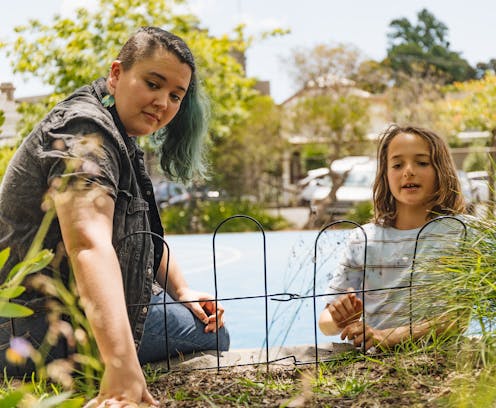
Students in all year levels at Carlton North Primary School in Melbourne worked with Uncle Dave Wandin, a Wurundjeri Elder, to create habitat for the flax-lily and learn about the species.
The program sought to embed both Indigenous and Western knowledge in a balanced and holistic way. Over ten weeks, the biology curriculum addressed sustainability and the environment, incorporating interactive and outdoor activities.
In one activity, students helped to construct a grassland ecosystem habitat with plantings of the flax-lily. Other activities included interactive food web role play, scientific drawing, seed planting, learning about Indigenous land management and the use of native ingredients in modern baking.
The grassland flax-lily has blue, star-shaped flowers from spring through autumn followed by purple berries. Shutterstock
Connecting to nature
We used surveys of students, teachers and parents to understand the outcomes of the program.
After participating in the program, students had a better understanding of the matted flax-lily and its ecology. They also felt more connected with nature and indicated that they had learned about the Traditional Custodians and the importance of the totemic species. One student said:
I really enjoyed science this term (and) I feel much closer to our Indigenous culture than I ever have.
Students told the lead teachers that they wanted to bring the blue-banded bee back and plant native species in their own gardens:
I never knew about the matted flax-Lily and that it was going extinct and now I’m planning to plant some in my backyard!
Teachers also told us they felt better equipped to teach students about traditional ecological knowledge in a culturally appropriate manner. The main educators in the program thought the approach could be extended to other disciplines, including engineering, art and mathematics.
Parents and guardians also felt positive, referencing their child’s high engagement as well as their own interest in learning more about Indigenous culture and totemic species. One parent stated their child started to ask regularly if they could “plant native plants because of how important they are”.
Students went beyond the project team’s expectations and began to take care of the garden themselves, protecting their species during break times at school, showing the garden to their families and teaching them about the different species within it.
Overall, the program improved student engagement with nature and science. This permeated through to parents and guardians.
Weaving into the curriculum
Our research has the potential to improve teaching of Indigenous content across Australia. The program shows how Indigenous science can be embedded into the existing curriculum in a holistic way.
Student engagement with nature and science also increased along with personal feelings of connection and responsibility to the environment.
Additional benefits included the creation of habitat for threatened species. Imagine if every school in Australia contributed in this way to the conservation of biodiversity?
The murnong or yam daisy has white tuberous roots that may be eaten raw or baked. Nicholas Rakotopare, Author provided
There’s also evidence that children playing in biodiverse schoolyards have improved cognitive function and reduced behavioural issues. Finally, greening our schoolyards can provide a critical cooling function.
Key to the program’s success was recognition of the time commitment from teachers and Wurundjeri Elders and recompensing them appropriately. This was crucial for facilitating deep involvement.
The school curriculum is already crowded with many competing demands. Expecting that an additional body of material can be incorporated without appropriate time and resources would have been impractical. Likewise, the time and knowledge of Traditional Owners is in high demand, so adequate provision of resources was an important feature of the program.
Further, embedding the material into an existing subject school-wide meant the program did not impose further demands on the curriculum. Instead, it was an efficient and effective way to deliver the material.
This also generated a sense of the topic being “core” to the curriculum, rather than an optional “add-on”. This alignment of the program with existing curriculum and the fact that the budget – while critical – was modest, mean it is entirely feasible to imagine implementation of similar programs in many other schools.
We hope that the program will be picked up and implemented in other schools across Australia. Ideally, the concept of totemic species will ultimately become integrated into the Australian curriculum.
The authors would like to acknowledge Emily Gregg, Benjamin May, Dave Wandin, Michael Harrison, Marnie Pascoe, Fiona McConachie and Alex Kusmanoff for their contribution to the research that underpins this article. Thanks also to the principal, staff, students and parents of Carlton North Primary School for supporting the project. Visit our website to download the Totemic Species in Schools resources, including the program curriculum, findings factsheet, and evaluation survey.
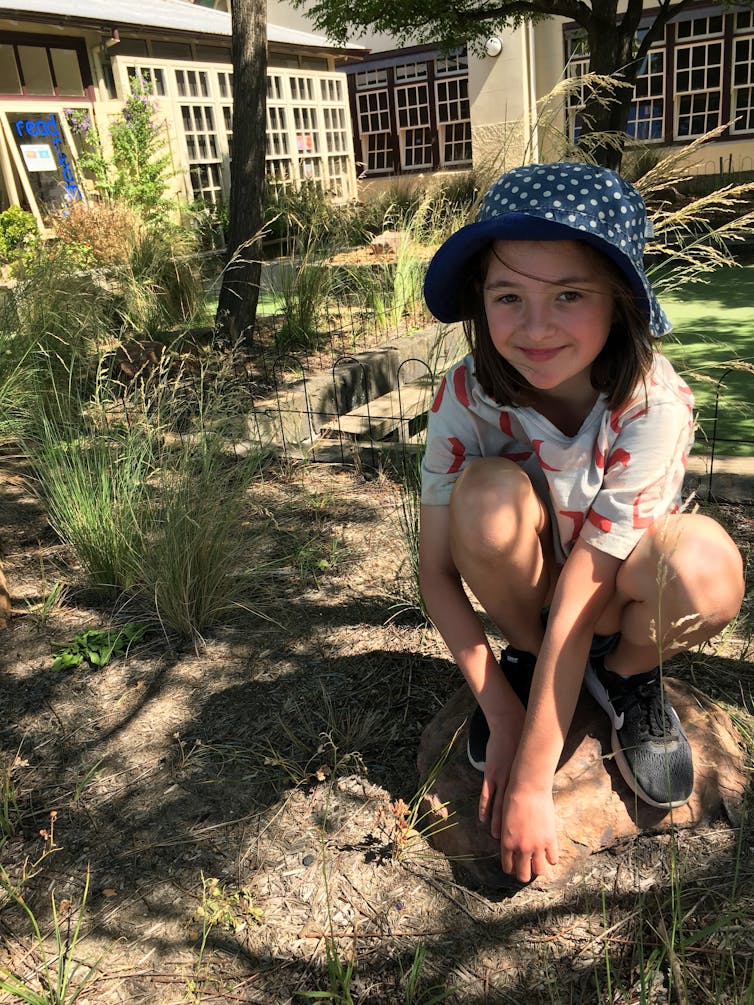
Zadie was one of 283 students involved in the pilot Totemic Species in Schools program at Carlton North Primary School, which culminated in the planting of a native garden. Sarah Bekessy, Author provided
Natasha Ward research cited in this article was undertaken by the Threatened Species Recovery Hub with funding from the Australian Government’s National Environmental Science Program (Phase 1).
Bradley J. Moggridge is affiliated with the University of Canberra, is a Governor with WWF Australia and a Member of the Wentworth Group of Concerned Scientists
Georgia Garrard receives funding from the Australian Research Council. Research cited in this article was undertaken by the Threatened Species Recovery Hub with funding from the Australian Government’s National Environmental Science Program (Phase 1). She is chair of Birdlife Australia’s Research and Conservation Committee, a member of Zoos Victoria’s Scientific Advisory Committee and a member of the Sustainable Subdivisions Framework advisory group for the Council Alliance for a Sustainable Built Environment.
Sarah Bekessy receives funding from the Australian Research Council, the National Health and Medical Research Council, the Ian Potter Foundation and the European Commission. Research cited in this article was undertaken by the Threatened Species Recovery Hub with funding from the Australian Government’s National Environmental Science Program (Phase 1) and the Victorian Department of Land, Water, Environment and Planning. She is a Lead Councillor of the Biodiversity Council, a Board Member of Bush Heritage Australia, a member of WWF’s Eminent Scientists Group and a member of the Advisory Group for Wood for Good.
Source: The Conversation (Au and NZ) – By Catharine Coleborne, Professor of History, School Humanities, Creative Industries and Social Sciences, University of Newcastle
This article is the first in our series on big ideas for the Universities Accord. The federal government is calling ideas to “reshape and reimagine higher education, and set it up for the next decade and beyond”. A review team is due to finish a draft report in June and a final report in December 2023.
There is a persistent idea that a generalist degree, such as a Bachelor of Arts, is less likely to land you a job when compared to a specific qualification. This is personified by the stereotypical arts student as a directionless young person who has chosen to explore sprawling and eclectic subjects with no clear outcomes.
This was reinforced by the introduction of the Job-ready Graduates package in 2020, which made most arts and humanities subjects more expensive to study from 2021. The cost of a Bachelor of Arts degree rose by 113%. (Incidentally, Universities Australia called for Job-ready Graduates to be scrapped this week, noting, “price signals as a driver of student choice simply do not work”.)
Either way, the idea a generalist degree just leads to overqualified graduates serving coffee Reality Bites-style is not only wrong, it is also a misguided understanding of what we need from graduates today and in the future.
Research shows social science and humanities graduates are getting jobs after their studies.
The 2022 Graduate Outcomes Survey found almost 73% of humanities, culture and social sciences graduates were working in a range of government, non-government and business roles within several months of graduating.
This was an increase of 15% on the previous year, and was noticeably better than the overall average increase of just under 10%.
Why are we so fixated on ‘vocations’?
Since the 19th century, “work” has been understood through types of “occupations” that were undertaken for a significant period of a person’s life, with opportunities for improvement and promotion, and potentially framed as “careers”.
But the idea individuals train to learn a set of skills or knowledge that prepares them for one stable career is outdated.
What US professor Frank Parsons (considered the father of careers counselling) called “choosing a vocation” in 1909 has been supplanted by employers who want people who are good at problem-solving and analytical thinking, have digital skills, and can demonstrate leadership, initiative and resilience.
We also need to reposition our understanding of “employability” by considering the uncertain future university graduates are heading into.
Along with the pandemic and climate change, we face increased global conflict, and important questions about how to support displaced peoples around the world and in our own region. There is also growing anxiety about what artificial intelligence will mean for our lives and workplaces.
Employers are increasingly looking for people with analytical and problem-solving skills. Mikhail Nilov/Pexels
Research shows our society will need the skills, deep knowledge and understanding to reframe what it means to create cohesive multicultural and diverse communities. It will need to support all lives – including the very young and the aged – with meaning and purpose in order to forge humanity’s future.
To do this, we should reimagine the future workforce through values, competencies and skills, not “professions”.
The rapid social change we are undergoing means future graduates will need to be highly flexible. Vocational degree training as we have understood it could leave students stranded and without the critical capability to understand how to adapt to new roles. For example, leaders in the profession of social work have predicted the vocational degree may need to be replaced by agile skills.
This is where the generalist degree comes in
This is why the generalist degree has a big part to play in the emerging higher education landscape for graduates. Humanities, social science, general science, technology and creative industries fields such as design can deliver adaptable, flexible mindsets.
Generalist graduates learn to argue, debate, discuss, engage with ideas, write and present.
These degrees also offer the so-called “soft skills” such as emotional intelligence, communication and teamwork.
A bold idea
What if the upcoming Universities Accord decided that generalist degrees, not vocational qualifications, were the future for university learning in Australia?
This could see more public-private partnerships to increase work experience and practical opportunities during study. This could create experiences in the community, industry and government.
In doing this, we should embrace the possibility of the broad curriculum that is offered by arts, humanities, social science and science degrees, but insist on elevating their transferable skills to set students up for a lifetime of work and learning.
However, a shift towards revaluing – and even elevating – generalist degrees will require a radical unpacking of degree structures, ways of teaching and learning, fee structures and models.
More students in Australia could be encouraged to expand their learning in a wide range of areas, but specialise and choose pathways by their second and third year of studies, with postgraduate credentials to follow.
Recent history tells us human adaptability will help us face future threats.
Young people want to engage in learning that will prepare them for futures we don’t yet see. Valuing the generalist degree – with graduates able to enjoy learning, develop the courage to think, reflect, interpret, evaluate, humanise, respond and create – will give young people confidence and a sense of their own agency.
Such a model could be world-leading.
Catharine Coleborne does not work for, consult, own shares in or receive funding from any company or organization that would benefit from this article, and has disclosed no relevant affiliations beyond their academic appointment.
Source: The Conversation (Au and NZ) – By Roger Wilkins, Professorial Fellow and Deputy Director (Research), HILDA Survey, Melbourne Institute of Applied Economic and Social Research, The University of Melbourne
Shutterstock
It has long been known that incomes in Australia are more evenly distributed than in the United States.
But Australia has been thought to be a less equal society than many European ones, sitting somewhere in the middle between the United States and countries such as France.
We can measure income equality using the so-called Gini coefficient, which gives a score of 0 to a country in which incomes are completely evenly distributed and a score of 1 to a country in which one person has all the income.
The OECD gives the US a score of 0.375, Australia a score of 0.32 and France a score of 0.29.
But we’ve done work using a broader measure of income that incorporates all taxes paid, all company profits and (importantly) in-kind benefits such as health and education. And we’ve found the positions of Australia and France are reversed.
The US has an even less equal distribution of incomes under this measure (0.49 compared to 0.375), France a somewhat less changed distribution (0.33 compared to 0.29), and Australia a more equal distribution (0.28 compared to 0.32), making Australia the most equal country of the three in terms of income broadly defined.
We can show this in another way, comparing the share of broadly defined national income going to the top 10% of income earners.
On this measure, the US is easily the least equal of the three, with high earners getting 39% of national income. In Australia and France they get about 25%.
The US is also the least equal of the three, with Australia and France almost tied, when comparing the share of broadly defined income going to the bottom 50%.
In Australia and France, the bottom 50% get the most, at around 29%. In the US, the least, at 19%
We used a method pioneered by researchers in the US and Europe that combines household survey data, administrative tax data and national accounts data to create what are known as distributional national accounts.
Compared with previous measures of inequality, it fully accounts for the effects of Australia’s system of in-kind government provision of services such as health and education, all company profits (including those not paid out as dividends) and all taxes including income tax, company tax and the goods and services tax.
Although we find Australian incomes are much more evenly distributed than previously thought, they have gotten less equal in the past three decades.
Since 1991, the average incomes of Australia’s top 1% – and the top 0.1% in particular – have grown far faster than the average incomes of the bottom 90%.
We also find a persistent gender gap in incomes, even when we account for income sharing in households, and for government spending on education, health, housing and social programs. Broadly measured, female economic wellbeing remains below that of males.
Our approach, described in full in our paper and guided by previous studies for France and the US, leaves room for refinement.
But it is enough to make clear that standard measures that leave out components of income and don’t account for taxes and benefits don’t tell the full story.
Roger Wilkins receives funding from the Australian Research Council.
Nicolas Herault receives funding from the French Ministry of Higher Education and Research and the French National Research Agency.
Matthew Fischer-Post does not work for, consult, own shares in or receive funding from any company or organization that would benefit from this article, and has disclosed no relevant affiliations beyond their academic appointment.
As it stands in Aotearoa New Zealand, beneficiary fraud (fraud by people on benefits) is largely dealt with under the Crimes Act, while tax evasion is prosecuted under the Tax Administration Act. This, among other factors, means beneficiaries engaging in financial fraud face significantly stiffer penalties than professionals doing the same.
This inconsistency in how fraud is handled in New Zealand underscores the strong case for ensuring financial crimes are treated the same. Sentencing guidelines are a good place to start.
To be fair, sentencing is more of an art than a science. The art is balancing consistency with fairness, alongside all the aims of sentencing: deterrence, denouncing the behaviour, holding offenders accountable, providing for the interests of the victim and, in some cases, protecting the community, assisting in rehabilitation, and providing reparation.
It probably goes without saying that the combination of these objectives creates a system that is multi-faceted and complex. What may be less clear is that the complexity generates the potential for inconsistencies in sentencing decisions. Sentencing guidelines could help.
Creating clarity in a complex system
Sentencing guidelines provide guidance to judges on the length and type of sentence that is appropriate for a particular offence. Typically they provide a sentencing range with some, usually limited, opportunity to depart from this range. Guidelines prescribe sentences based on the seriousness of the current offence, while considering any prior offending.
This approach to sentencing is not unheard of in New Zealand. Guideline judgements exist for a range of serious offences, including aggravated robbery, sexual violation, grievous bodily harm and various categories of manslaughter. These guidelines primarily deal with offending that is likely to result in a sentence of imprisonment.
But this limited approach is problematic because inconsistency is more likely to occur at lower levels of offending. This is also where there is less transparency of sentencing outcomes as there is generally less media, and therefore public, attention on these cases.
There have been efforts to establish sentencing guidelines across the spectrum of offences. Nearly 17 years ago, the Law Commission raised the idea of an independent sentencing council to develop sentencing guidelines in New Zealand.
The council came close to a reality. A bill establishing the council passed in 2007 and subsequently received royal assent the same year. But the legislation was never introduced after the change of government in 2008. It was repealed in 2017.
Minimising inconsistency across all sentencing
Research has identified inconsistencies in sentencing practice in New Zealand for many years. Findings include that the type of offender, the location of the court and/or the individual judge may influence the sentence handed down.
Sentencing guidelines can minimise these inconsistencies in sentences. Guidelines also offer a range of other benefits including:
increased transparency
efficiency gains, as sentencing guidelines generate a single source reference for a judge
improving public trust and engagement in the sentencing process
removing the politicisation of sentencing, whereby judges may feel pressure – or may wish to – move in response to the prevailing political or public mood.
sentence levels, and therefore the prison population, have increased in response to popular demand.
The increased visibility that sentencing guidelines can bring is important for addressing either the presence of, or the potential for, institutional bias.
Independence of the judiciary is essential. And at least some level of discretion is necessary, to ensure that the judiciary can consider all relevant factors when making sentencing decisions. However, where there is complete discretion, there will be disparities.
Some of the clearest illustrations of these disparities can be seen in how we respond to financial fraud.
The disparity in financial fraud
Historically, there have been clear differences in the numbers of investigations and prosecutions, and severity of sentences, for tax evaders and benefit fraudsters. That said, this is changing. A similar number of tax evaders and benefit fraudsters are now prosecuted in New Zealand.
But there are still stark differences in how different types of financial fraud are dealt with.
My research, to be published later this year, found that between 2018 and 2020, most benefit fraud cases were prosecuted under the Crimes Act (83%) with 17% charged under the Social Security Act 1964. This situation reversed for tax cases, where 84% were prosecuted under the Tax Administration Act and 16% were prosecuted under the Crimes Act 1961.
The Crimes Act provides for harsher sentences than the Tax Administration Act. This is despite the tax offences typically comprising higher average values of offending.
Sentencing guidelines cannot address inconsistencies of treatment prior to sentencing, such as the use of different charging legislation, or even choices about who is, or is not, investigated or prosecuted.
However, guidelines can limit discrepancies in the sentence. Moreover, they can provide an opportunity for greater public engagement, as justification is typically required when sentences are outside the specified range.
With this in mind, there is a strong case to revisit introducing sentencing guidelines in New Zealand for financial fraud – and potentially many other offences.
Perhaps the strongest argument for sentencing guidelines is that of fairness. To the extent that sentencing guidelines can minimise the potential for different outcomes for offenders who commit similar offences, they can positively contribute to the justice system.
Lisa Marriott does not work for, consult, own shares in or receive funding from any company or organisation that would benefit from this article, and has disclosed no relevant affiliations beyond their academic appointment.
You may have read this week that Australia’s super tax breaks are excessively generous (“well beyond any plausible purpose”) and that their costs unsustainable.
The claim came from a Grattan Institute report, Super savings. But is it realistic?
The figures quoted – A$45 billion a year or 2% of GDP “and set to exceed the cost of the age pension” – are derived from Treasury’s Tax Expenditures Statement and the government’s 2021 Retirement Income Review.
The benchmark for these estimates involves the income tax rate that is applied to ordinary income. Yet very few countries actually tax retirement savings in anything like that way.
$45 billion per year, but compared to what?
Grattan itself doesn’t suggest employers’ super contributions and super fund earnings should be taxed like ordinary income.
If all its recommendations for scaling back “tax breaks” were accepted, the breaks it claims to be concerned about would still exceed $30 billion a year and still be on track to cost more than the age pension.
A better benchmark would be the arrangement in most member countries of the Organisation for Economic Cooperation and Development in which savings are taxed at standard marginal rates on entering or leaving the system and untaxed while growing in the system, known technically as a TEE or EET regime.
In most cases, tax is applied only on leaving the system, an “EET” regime.
In 2017, the Treasury prepared a parallel calculation of superannuation tax expenditures using a TEE benchmark, meaning contributions taxed at full marginal rates with both earnings and withdrawals untaxed.
It found that instead of the tax break for employer contributions costing $16.9 billion per year and the low rate on fund earnings costing $19.25 billion, the first cost $16.9 billion and the second cost minus $9.45 billion (because Australia taxes fund earnings at 15% instead of zero), cutting the total cost by $30 billion.
Had the Treasury used the EET benchmark, which exempts contributions and earnings and taxes only withdrawals, its measure of total tax expenditure on super would almost certainly have been negative (largely because our super system is not yet mature and we don’t yet have big retirement incomes to tax).
In fact, our present system has a similar impact to the EET system common among OECD countries, even though it is achieved differently.
Making it harder for high earners to save
Without offering a clear benchmark for comparison, it is impossible to properly assess the Grattan Institute’s specific proposals.
Two would probably not shift the current regime too greatly away from the EET benchmark common in the OECD, although neither is essential. One is a more progressive tax on contributions.
The other is extending the 15% tax on fund earnings pre-retirement to presently exempt earnings in retirement (though this should probably be balanced by a reduction in the rate).
But another, a tightening the annual cap on pre-tax contributions from $27,500 to $20,000 and the cap on post-tax contributions from $110,000 to $50,000, has the potential to undermine super’s role in spreading lifetime incomes for middle and high income earners.
The government’s review that, for all but low-income workers, a retirement income of 65-75% of pre-retirement income was needed to provide a reasonable balance between living standards in working life and retirement.
The average mandated contribution rate in the 35 OECD countries with specific pension contributions delivering this level of income maintenance is 18.2%.
For those not eligible for any age pension (likely to be around 40% of retirees in the future), in one form or another, that is probably the level of savings they should be setting aside, though as the government’s review noted many retirees have significant savings from outside superannuation.
That means the Grattan Institute’s proposed $20,000 cap might cut in too soon, at about $100,000 a year, which is hardly a top income amongst those in their fifties, particularly amongst public servants and academics (many of whom are already contributing 15-20%).
The things Grattan missed
By continuing to focus on the taxation of super, Grattan is failing to focus on the desperate need to put in place the final piece of Australia’s retirement income system – to help people convert their accumulated savings into secure incomes that maintain living standards and meet the risks of old age.
The Institute is right to highlight that too much of superannuation savings are being passed on in inheritances rather than used in retirement, with the real risk of exacerbating inequality amongst future generations.
Too many retirees are skimping in retirement and leaving more in inheritances than they want to because of fear about future risks including long lives and health and aged care costs.
Sensible proposals are being developed for a “covenant” requiring funds to offer products in retirees’ best interests, including those that help them manage risks. But they are yet to be implemented.
I suspect that implementation of the covenant will identify major challenges, including market failures that make it hard for funds to offer value-for-money indexed annuities and to identify what is in their members’ best interests given the complexities of the age pension income and assets tests.
It is very likely that the government will need to simplify the means tests and consider ways to encourage the provision of indexed annuities including the option of selling government-created annuities.
Now there’s an agenda Grattan might usefully focus upon.
Andrew Podger does not work for, consult, own shares in or receive funding from any company or organisation that would benefit from this article, and has disclosed no relevant affiliations beyond their academic appointment.
Source: The Conversation (Au and NZ) – By Adrian Beaumont, Election Analyst (Psephologist) at The Conversation; and Honorary Associate, School of Mathematics and Statistics, The University of Melbourne
Dan Himbrechts/AAP
At the March 25 New South Wales state election, Labor won 45 of the 93 lower house seats (up nine since the 2019 election), the Coalition 36 (down 12), the Greens three (steady), independents nine (up six) and the Shooters zero (down three).
These results are pending a recount in Ryde, which the Liberals provisionally won by just 50 votes against Labor (50.05-49.95).
Labor won nine seats more than the Coalition, but owing to the large crossbench, they are two seats below an outright majority (47 seats). But Labor will have no trouble governing with support from the Greens and left-leaning independents.
Labor was unlucky in the close seats, winning all their seats by at least a 51.6-48.4 margin (Penrith was the closest Labor seat), while the Liberals won two seats by narrow margins: Ryde and Holsworthy (a 50.4-49.6 Liberal margin there).
While independents were up six, there were only two new independents, in Wakehurst and Wollondilly, where independents gained from the Liberals. The three Shooters elected in 2019 all successfully recontested as independents, as did former Liberal Gareth Ward in Kiama.
Statewide primary votes were 37.0% Labor (up 3.7% since 2019), 35.4% Coalition (down 6.2%), 9.7% Greens (up 0.1%), 1.8% One Nation (up 0.7%), 1.5% Shooters (down 1.9%) and 14.6% for all Others (up 3.6%). Others includes 8.7% for independents (up 3.9%). The ABC’s estimate of the statewide two party vote is currently 53.9-46.1 to Labor, a 5.9% swing to Labor.
There are many seats where Labor and the Liberal or National candidates did not finish in the top two, and there is currently no Labor vs Coalition two party count in those seats. The electoral commission will eventually give us an official statewide two party count that will include these seats, but for now the ABC’s estimate is what we have.
NSW is the only Australian jurisdiction that uses optional preferential voting, rather than the compulsory preferential voting used federally. ABC election analyst Antony Green says the Liberals won four seats that they would have lost under compulsory preferential – two to Labor and two to independents. So optional preferential probably cost Labor a majority.
Labor gained Camden, East Hills, Monaro, Parramatta, Penrith, Riverstone and South Coast from the Coalition. Most of these gains were the result of double digit swings to Labor, but there were only 2% swings in East Hills and Penrith. On the pre-election pendulum, Labor missed out on two seats they should have taken given the statewide swing: Upper Hunter and Goulburn.
How did the polls go?
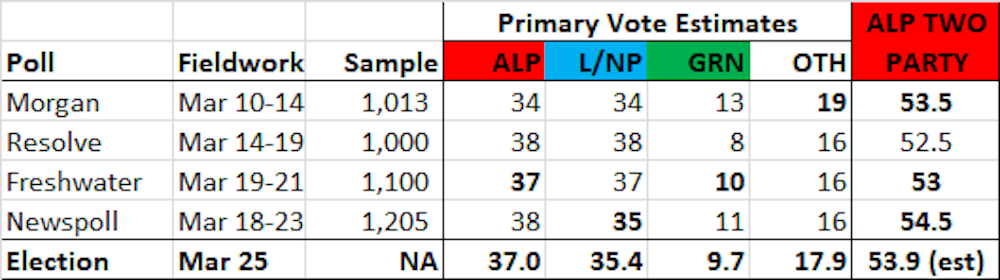
The table below compares the polls taken during the final two weeks of the election campaign to the results. Each poll is listed with its fieldwork dates, sample size, primary vote estimates for Labor, the Coalition, the Greens and all Others, and Labor’s two party estimate.
The final row in the table is the actual election results, using the ABC’s two party estimate. Bold numbers in the polls’ estimates are where they came within 1% of the election result.
NSW 2023 polls compared with election results.
Newspoll was the only pollster that gave Labor a lead on primary votes, with the other polls all showing a primary vote tie. While Morgan was closest on two party votes, they understated the major parties’ votes and overstated the Greens. Freshwater was very close on both Labor and the Greens, but overstated the Coalition.
I believe Newspoll was the best pollster, as it was reasonably close on the two party measure and correctly gave Labor a primary vote lead over the Coalition.
Resolve’s final poll had independents at 8%, close to the result of 8.7% for independents. Resolve has been too high for independents prior to the close of nominations, but their final polls have been accurate on the independent vote as they use actual candidate lists.
Resolve has generally been Labor’s best pollster both federally and in state polls since Labor won government in the May 2022 federal election. However, their final NSW and Victorian polls understated Labor, and other polls were better.
Animal Justice a chance to win final upper house seat
The NSW upper house has 42 members with 21 up every four years so members serve eight-year terms. All 21 are elected by statewide proportional representation with optional preferences, so a quota is 1/22 of the vote or 4.5%.
With nearly all votes initially counted, the ABC has Labor on 8.12 quotas, the Coalition 6.63, the Greens 2.00, One Nation 1.27, Legalise Cannabis 0.79, the Liberal Democrats 0.75, the Shooters 0.68, Animal Justice 0.47 and Elizabeth Farrelly 0.28.
Eight Labor, six Coalition, two Greens and one One Nation will be elected, and it is very unlikely that Legalise Cannabis, the Liberal Democrats or Shooters will be passed on preferences. The contest is between the Coalition and Animal Justice for the final seat.
Below the line (BTL) votes are not included in the initial count. The check count includes these votes, but is only at 59% of the initial count’s total votes so far. The major parties do relatively badly on BTL votes and minor parties well. The ABC is including BTL votes already in the check count in its totals.
By extrapolating the likely behaviour of the remaining BTL votes, analyst Kevin Bonham expects the Coalition will have 6.599 quotas and Animal Justice 0.475 when the check count is finished, provided there are no major errors in the initial count, so the Coalition’s seventh candidate would be 0.124 quotas ahead.
If this occurs, the Coalition will probably win the final seat, but Animal Justice has some chance. A Coalition win would hold the left to an 11-10 win on the 21 seats up for election, and a 21-21 overall tie, while an Animal Justice win would give the left a 22-20 overall majority.
The NSW upper house is expected to be finalised next week, when the “button” is pressed to electronically distribute preferences.
UK local elections and other international politics
I wrote for The Poll Bludger on April 6 about the May 4 English local elections, which Labour is expected to win easily. The May 14 Turkish elections and October New Zealand election were also covered.
Adrian Beaumont does not work for, consult, own shares in or receive funding from any company or organization that would benefit from this article, and has disclosed no relevant affiliations beyond their academic appointment.
Keith Rankin, trained as an economic historian, is a retired lecturer in Economics and Statistics. He lives in Auckland, New Zealand.
Analysis by Keith Rankin.
Keith Rankin, trained as an economic historian, is a retired lecturer in Economics and Statistics. He lives in Auckland, New Zealand.
Over Easter I relistened to Jim Mora’s RNZ interview (17 May 2020) of Johan Giesecke, “world leading epidemiologist” and Professor Emeritus at the Karolinska Institute in Stockholm, Sweden. In the period April to June 2020, Sweden gained notoriety for its divergent public health policies with respect to the management of the Covid19 pandemic. People – including me – widely pointed to Swedish authorities then as being more concerned about retaining a pretence of their economic normality rather than caring about people’s lives.
Swedish exceptionalism became a thing, again; this time seemingly for all the wrong reasons. Hitherto ‘progressive’ New Zealanders had regarded Sweden as an exceptional policy exemplar; now it seemed to be an outlier of classical liberalism.
Here are two summary measures of pandemic and post-pandemic mortality; comparing Sweden with Finland, Germany, New Zealand and Japan:
Table 1
Increase in ‘All-Cause’ Mortality
2019-23 cf. 2015-19*
2022/23 cf. 2018/19°
Sweden
2.4%
6.5%
Finland
7.3%
16.8%
Germany
8.1%
15.7%
New Zealand
8.4%
16.2%
Japan
9.9%
18.1%
*
quadrennial increase in total deaths
°
year to Jan 2023 increase cf. baseline year to May 2019
We note that all these countries have rising populations of older people, so some increase in deaths was to be expected in all of them. Sweden had covid vaccination rates comparable with these other four representatives of ‘the rest of the civilised world’, so differences in vaccination uptake cannot explain its mortality difference.
It’s worth relistening to this Giesecke interview, now with the perspective of hindsight. The context is that, in the contest (as it was then framed) of Sweden versus the rest of the civilised world (with the World Health Organisation settling on the counter-Swedish majority view), Sweden has come out a clear winner. The scandal is the failure of ‘the rest of the civilised world’ to acknowledge the statistical reality.
(Note that I use ‘civilised world’ with mock irony. In New Zealand at least, few politicians or high-profile commentators believed that there could be anything New Zealand authorities could learn from the experiences of West Europe, South America, or Africa; instead, the policy elite contemptuously assumed such countries to be ‘basket cases’. See the use of this phrase in 1980s: Days of greed and glamour, NZ Herald, while noting that we are still waiting for a balanced history of the ‘Muldoon Years’ referred to.)
Relating to points not covered in RNZ’s synopsis, Giesecke draws a direct comparison with Finland, which was pursuing a public health policy very close to New Zealand’s. His concern – shared by Finland’s state epidemiologist – was that the authorities’ actions were creating a significantly vulnerable population in Finland.
Giesecke, from that May 2020 perspective, mentions that if a good vaccine would come quite soon then New Zealand’s outcome might be better than Sweden’s. The irony is that, while a good vaccine did indeed come quickly, New Zealand’s authorities were slow to embrace the vaccine as the answer; having already decided that New Zealand had eliminated the virus as per the China policy. Then, after New Zealand’s people were vaccinated, the government doubled down on the lockdowns, not at all trusting the vaccine to work as a substitute for lockdowns. (Indeed, New Zealand only abandoned its border-quarantine policy in 2022 because that policy failed on its own terms. Had the border policy been implemented without error, New Zealand presumably would have followed a set of draconian restrictions through 2022, with a timeline similar to that of China. New Zealand’s border mishaps proved to be a blessing in disguise.)
In mid-2020, Johan Giesecke’s main expectation was that the mortality experience of all countries in the OECD (essentially the rich western plus the rich eastern countries) would all be about the same; and that Sweden’s major benefit would be in its substantially lesser disruption to normal life.
Where Giesecke was wrong was that the OECD ‘WHO countries’ (a label for the ‘civilised world other than Sweden’) ended up with substantially higher increases in deaths than did Sweden; he was wrong in a way that favoured Sweden rather more than he had expected.
The pandemic has nevertheless had an adverse impact on Sweden’s mortality. Sweden did experience the West European surge in deaths from respiratory illnesses late last year. Its people no more live in a bubble than do New Zealand’s. Overall though, Sweden got the win-win outcome: fewer deaths, and less social and economic dislocation. (David prevailed over Goliath.)
A very basic summary of the difference between the Swedish and the Goliath approaches is that Sweden focussed on its people whereas the prevalent strategy focused too much on the virus; the world by-and-large pursued a strategy of covid exceptionalism. (One consequence of covid exceptionalism was that a death clinically ascribed to Covid19 became a more noteworthy death than most other deaths.) Sweden focussed on having people with good levels of immunity, whereas in 2021 much of the rest of the world went down the unhelpful path of obsessing over the various mutant variants of the novel coronavirus.
Giesecke clearly had a better understanding the history of human coronaviruses than most other epidemiologists; these are viruses for which specific immunity is short-lived, from which we top-up immunity naturally through living our daily lives in a normal manner, and for which vaccine-conferred immunity would also be short-lived.
Sweden understood the science better; indeed, the interview tells us that there was a substantial scientific contest of interpretations of the evidence in Sweden, a good sign that actual science was taking place. Not only did a number of Sweden’s scientists prove to be among the better predictors of the future, people such as Johan Giesecke were also much more prepared to offer humility to their own people and to the world if they had got it wrong.
I am still waiting for our authorities – including the scientists – to do a proper retrospective comparison of New Zealand (and other countries, as in my table above) and Sweden. I am still waiting for a little gracious humility from our authorities in Aotearoa New Zealand. Humility is an important characteristic of civilised behaviour.
In the middle of the interview, Jim Mora noted: “Our readers are quite fascinated with Sweden; I think the world is”. When and why did that fascination stop? Or is it just that Goliath’s information mediators stopped being fascinated when the ‘contest’ moved in David’s favour?
————-
Keith Rankin (keith at rankin dot nz), trained as an economic historian, is a retired lecturer in Economics and Statistics. He lives in Auckland, New Zealand.
Enhanced image by Kevin M. Gill (CC-BY) based on images provided courtesy of NASA/JPL-Caltech/SwRI/MSSS.Media, CC BY
The European Space Agency’s JUICE mission (Jupiter Icy Moons Explorer) is launching today at 10:15pm AEST from Europe’s spaceport in French Guiana.
JUICE will be targeting three water-rich worlds – Jupiter’s moons Ganymede, Europa and Callisto – to check out potential habitats and evidence of past alien life, both on and below the surface. There’s an excellent reason why these worlds in particular are the mission target – they might be habitable for life as we know it.
The moons of Jupiter
Although we have just one moon lighting up our night skies, Jupiter has at least 92. Some, including the four Galilean moons (the largest Jovian moons) formed alongside Jupiter nearly 4.5 billion years ago in the early Solar System. Others have been drawn in and captured by this massive planet, adding to the collection over time.
These moons are made of hugely diverse materials, and some are thought to have conditions favourable for life, or could have in the past.
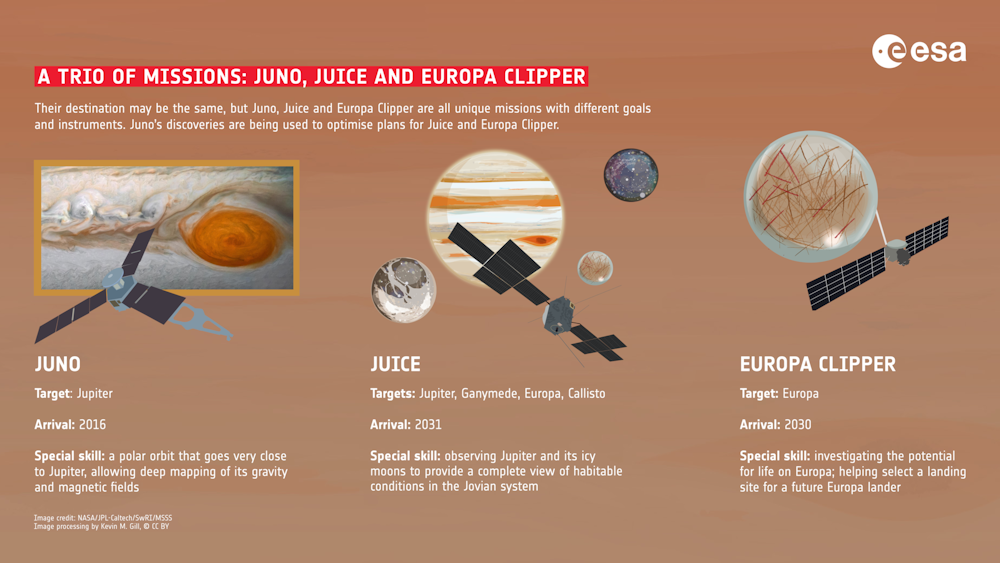
Fewer than ten interplanetary missions have ever flown past Jupiter, with only two NASA missions stopping to orbit the planet and investigate further: the Galileo mission between 1995 and 2003, and the current Juno mission, launched in 2011. These are the only two to have also made dedicated passes of the moons, gathering valuable information for upcoming missions.
NASA’s Juno mission laid the groundwork for both Juice and the upcoming Europa Clipper mission. ESA, CC BY-SA
Life as we know it
The Galilean moons are of particular interest. The second smallest, Io, may not be habitable, but has some of the largest active volcanoes in the Solar System (with eruptions that can be seen from Earth!).
The other three, Ganymede, Europa and Callisto, are all thought to have large bodies of liquid water under their icy surfaces, and maybe even thin atmospheres.
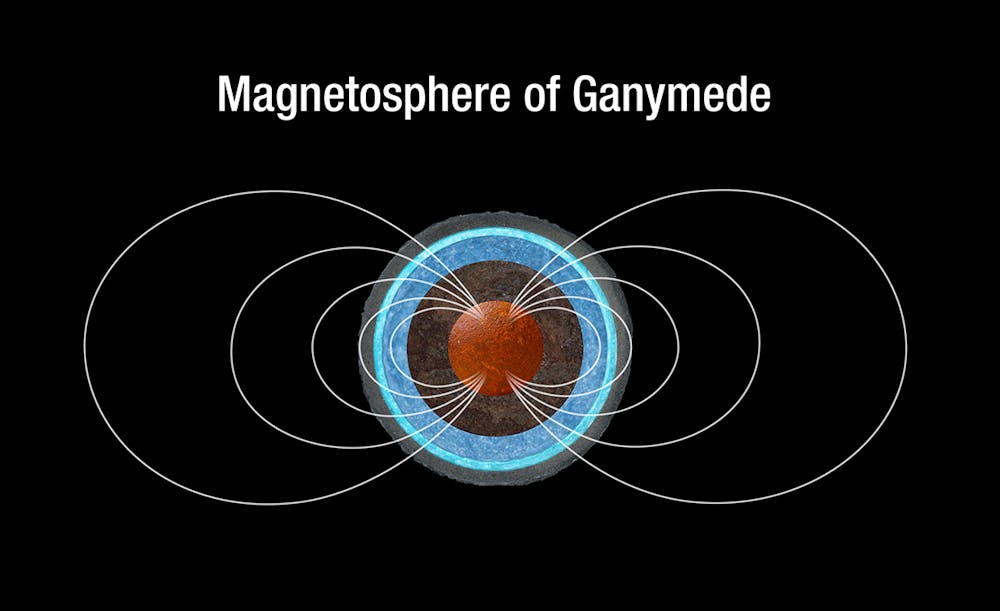
Ganymede’s liquid iron core also gives it a magnetic field, the only known moon in the Solar System to have one. Our own magnetic field protects Earth’s atmosphere from the harsh solar winds, shielding us from solar radiation. These are factors we associate with fostering and protecting life on Earth.
A sketch of the magnetic field lines around Ganymede, which are generated in the moon’s iron core. Hubble Space Telescope measurements of Ganymede’s aurorae, which follow magnetic field lines, suggest that a subsurface saline ocean also influences the behaviour of the moon’s auroras. NASA, ESA, and A. Feild (STScI)
We only know of life on Earth, so when we go looking for where life might exist (or once existed) elsewhere, we’re looking for factors we consider essential to life as we know it.
Watery or icy worlds are the first targets, as we know life on Earth originated in and around water. A rocky surface with warmish temperatures would be even more ideal. Jupiter itself is a complete write-off: the crushing pressures, toxic gases, freezing temperatures and lack of a stable surface would never support life as we know it. But the big, icy moons have good protection deep under the ice, potentially liquid water, and elements like carbon and oxygen.
JUICE will use its suite of science instruments to check out the thicknesses of the moons’ icy crusts, what they’re made of, and look for subsurface liquid water. On Europa in particular, it will look for evidence of organic molecules.
After its launch, the solar-powered JUICE will take nearly eight years to get to Jupiter. The spacecraft will use minimal propulsion, instead using other planets to give it speed and set its course.
These manoeuvres are called “gravity assists”. This essentially means JUICE will fly purposefully toward a planet, just missing it, in order to get pulled in by its gravity and “slingshot” past the other side. It may take time, but it is extremely efficient.
Juice’s first gravity assist in 2024 will go around both Earth and our Moon – the first time this has ever been done. Other gravity assists will take it around Venus in 2025, and Earth (only) in 2026 and 2029, before being kicked out to Jupiter for an arrival in mid-2031.
What happens when JUICE meets Jupiter?
Fun fact: it will be the first spacecraft to orbit a moon other than our own!
Usually a spacecraft will orbit the main planet (in this case Jupiter) and merely flyby the moons as it loops past. JUICE will start like this, flying by Callisto, Europa and Ganymede a total of 35 times during its three-year tour of the moons. It will briefly meet NASA’s Europa Clipper mission around Europa, complimenting this mission nicely.
But in 2034, JUICE will actually switch its orbit from around Jupiter to go around Ganymede. This will give it an exceptional view, and nearly a year to study this fascinating moon, probing its internal, surface and atmospheric systems.
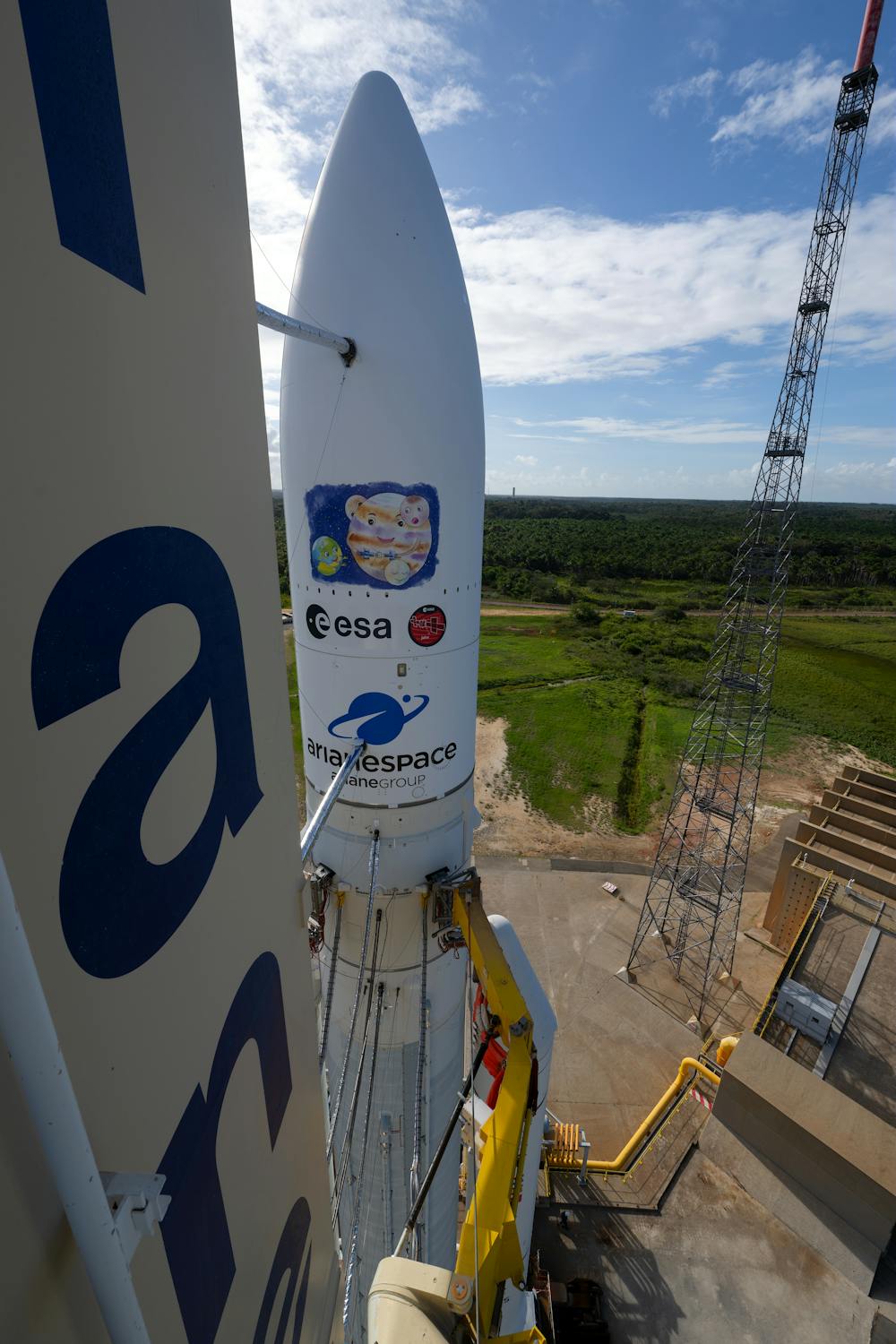
Ariane 5 VA 260 with JUICE ready for launch on the ELA-3 launch pad at Europe’s Spaceport in Kourou, French Guiana on April 12 2023. ESA/S. Corvaja, CC BY-SA
Of particular interest is the magnetic field. Ganymede is one of only three rocky bodies in our Solar System known to have one (Earth and Mercury being the other two). Questions JUICE will be able to investigate are not just the basic question of what is creating Ganymede’s magnetic field, but also what happens to it as Ganymede travels through the larger field produced by Jupiter itself, and how their complex interactions influence auroras on both Jupiter and Ganymede.
JUICE will also get a chance to study Jupiter itself, looking into characteristics of giant gas planets that might be universal. Could Jupiter be the key to understanding other solar systems, and the hundreds of exoplanets we have discovered orbiting other stars?
So, we might be waiting a while for JUICE’s arrival at Jupiter, but it will be well worth the wait. Could any of these moons have once supported alien life, and what might we learn about our own Earth, its early oceans, and the conditions needed to spawn life?
Eleanor K. Sansom receives funding from the International Centre for Radio Astronomy Research and is supported by the Space Science and Technology Centre at Curtin University and the Australian Research Council (DP230100301).
Despite warnings of a global economic downturn, Australia has again defied the odds with its official unemployment rate remaining steady at 3.5% in March.
Behind that number though, plenty happened. The total number of people in jobs grew by 53,000. The increase of 116,600 in employment in the past two months surpasses anything seen since the middle of 2022, when the unemployment rate first hit 3.5%. It seems there is still plenty of strength in labour demand.
The only reason Australia doesn’t have an even lower unemployment rate is that labour-force participation rose by about the same amount as employment – 51,500. In fact, the similar size of increases in employment and labour-force participation in the past two months, together with continued high vacancy rates, suggests employment growth now depends on new entrants to the workforce.
Another month with low unemployment is another month of the benefits that brings. Low unemployment means higher GDP, with more of the nation’s available labour supply being used to produce output.
It also means greater equity. Groups that have the most difficulty getting into work see the biggest boost in employment when unemployment is low.
With these benefits in mind, you might expect that making unemployment as low as possible would be a constant policy objective for government. Yet I don’t believe that has been the case in recent times.
Instead, the focus has been on achieving the target rate of inflation. Since that target was adopted, in the early 1990s, attention to unemployment has progressively declined.
Too much fear of inflation
Certainly, there has been concern when the rate of unemployment has threatened to rise above 5% or 6%, as it did with the Global Financial Crisis of 2007-2008, and with the onset of COVID-19 in 2020.
But apart from those times, we haven’t seriously attended to how low the rate of unemployment should be, or designed policy to seek that objective. By not thinking more seriously about the rate of unemployment, Australia missed the opportunity to push the rate lower in the 2010s.
In economics, it’s standard to regard full employment as the lowest unemployment rate possible without labour demand causing excessive wage growth and inflation.
This number – known as the non-accelerating inflation rate of unemployment, or NAIRU – is a matter of debate. Prior to the pandemic it was generally thought the unemployment rate couldn’t get lower than about 5% without being likely to cause wage inflation.
But during 2021-22, with the stimulus from fiscal policy to deal with COVID-19, the rate of unemployment fell to its current level, 3.5%, without accelerating wage inflation.
We need a new unemployment target
What is needed now, therefore, is a rebalancing of macroeconomic policy objectives. We need a full employment target, expressed as a level or acceptable range of unemployment or labour underutilisation, to accompany the existing inflation target.
A full employment target will force governments to engage with what is the minimum rate of unemployment possible to sustain; and increase accountability for taking action to achieve that goal.
Choosing the target needs to balance the benefits of a lower rate of unemployment for national output and equity, against the potential inflationary consequences of trying to push unemployment too low.
It needs to draw on a wide variety of indicators of labour market outcomes; beyond just the NAIRU, which ignores the output and distributional benefits of low unemployment.
Underemployment counts too
Ideally, the target should also be constructed recognising that the policy problem is broader than unemployment. What should motivate policy is people not being able to work the hours they want or are willing to work.
Unemployment is part of this. But increasingly so is underemployment. By 2022, about 45% of extra hours that could have been worked in the Australian labour market were due to workers being underemployed.
Hence, whatever way the full employment target is expressed, it needs to take account of the variety of types of labour underutilisation.
Finally, along with aggregate full employment target, we also need specific policy action for groups who require extra assistance. Even with the current low rate of unemployment, some groups are still missing out on employment opportunities to an unacceptable level – such as First Nations people, those with a disability, and people living in disadvantaged regions.
Jeff Borland receives funding from the Australian Research Council.
Source: The Conversation (Au and NZ) – By Joanna Mendelssohn, Honorary (Senior Fellow) School of Culture and Communication University of Melbourne. Editor in Chief, Design and Art of Australia Online, The University of Melbourne
State Library NSW
After media outlets breathlessly described the late John Olsen as a “genius”, I found myself humming The Chasers’ Eulogy Song.
This is perhaps a bit unfair, but the hyperbole surrounding Olsen’s death seems to have crowded out any assessment of his real and lasting achievements as an artist. There is a danger here.
Hyperbole invites a reaction, which is not always kind. It is still hard to have a dispassionate discussion on the merits (and otherwise) of Norman Lindsay, an artist often called a genius in his lifetime.
To understand Olsen, and his importance to Australian art, it is important to give some context. He emerged from that generation of Australians whose childhood was coloured by the deprivations of the second world war, and whose adolescent experience was of an expanding, changing Australia.
War meant that he finished school as a boarder at St Josephs Hunters Hill, while his father fought in the Middle East and New Guinea and his mother and sister moved to Yass in rural New South Wales.
His ability to draw meant that he escaped the tedium of a clerical job by becoming a freelance cartoonist while moving between a number of different art schools, including Julian Ashtons, Dattilo Rubio, East Sydney Tech and Desiderius Orban’s studio. As with other young artists of his generation, he was especially influenced by the experimental approach and intellectual rigour of John Passmore.
He found visual stimulation in Carl Plate’s Notanda Gallery in Rowe Street, a rare source of information on modern art at the time. Rowe Street was the creative hub for many artists, writers and serious drinkers who later became known as “The Push”. The informal exposure to new ideas on art, literature, food, wine and great conversation was more effective than a university. He learned about Kandinsky, Klee, the beauty of a wandering line, the poetry of Dylan Thomas and T.S. Eliot.
Olsen’s first media exposure was as the spokesman for art students protesting at the rigid conservatism of the trustees judging the Archibald Prize. There were no complaints about the Wynne Prize, which had exhibited his work.
John Olsen. A road to Clarendon – autumn. Winner of the Wynne Prize 1985. Art Gallery of NSW
The ‘first’ Australian exhibition of Abstract Expressionism
The friendship between Olsen and fellow artists William Rose, Robert Klippel, Eric Smith and their mentor John Passmore, led to the exhibition Direction 1 in December 1956.
An art critic’s over enthusiasm led to it being proclaimed as the first Australian exhibition of Abstract Expressionism, and its artists as pioneers of modern art. As a consequence, Robert Shaw, a private collector, paid for Olsen to travel and study in Europe. This was a transformational gift, coming at a time before Australia Council Grants, when travel was expensive.
He travelled first to Paris, then Spain where he based himself in Majorca and supported himself by working as an apprentice chef. The fluid approach to learning he had acquired in Sydney was enhanced in Spain. He saw, and appreciated the Tachiste artists, but took his own path, remembering always Paul Klee’s dictum that a drawing is “taking a line for a walk”.
John Olsen. Australia, England, Spain, Portugal. 1960. Art Gallery of NSW
That Spanish experience was distilled in the exuberant works he painted after his return to Sydney in 1960. Spanish Encounter paid tribute to the impact of this culture that continued to intrigue him, its energy and its apparent irrationality.
But he also found himself enjoying the “honest vulgarity” he found in the Australian ethos, leading to a series of paintings which incorporated the words you beaut countryin their title. Olsen’s confident paintings of the 1960s easily place him as the most influential Australian artist of that decade.
John Olsen. Summer in the you beaut country. 1962. National Gallery Victoris
Five Bells and landscape
In 1972, Olsen was commissioned to paint a giant mural for the foyer of the concert hall at the Sydney Opera House. Salute to Five Bells takes its name from Kenneth Slessor’s poem of death on the Harbour, but is more about elements of subterranean harbour life.
The heroic scale of the work meant that he worked with a number of assistants to paint the dominant blue ground. When the mural was unveiled in 1973, it received a mixed response. It was too muted in tone to cope with the Opera House lighting, too sparse in content, too decorative.
In the following years, Olsen turned towards painting the Australian landscape and the creatures that inhabited it. In 1974, he visited Lake Eyre as the once dry giant salt lake flooded to fill with abundant life. He made paintings, drawings and prints of the abundance – both intimate views and overviews from flying over. Lake Eyre and its environs was to be a recurring motif in the art of his later years.
While these works were commercially successful, and many were acquired by public galleries, Olsen was no longer seen as being in the avant garde. He was, however, very much a part of the art establishment and his art was widely collected.
John Olsen. Five bells. 1963. Art Gallery NSW
A man of his generation
The aerial perspective of many of his later decorative paintings could seem to have echoes of Aboriginal art. Indeed, when the young Abdul Abdullah first saw Olsen’s paintings in 2009 he at first assumed Olsen was an Aboriginal artist.
It was therefore a surprise to many when in 2017 Olsen mounted a trenchant attack on the Wynne Prize after it was awarded to Betty Kunitiwa Pumani for Antara, a painting of her mother’s country.
Despite some visual similarities to his own approach to landscape he claimed her painting existed in “a cloud cuckoo land”. In the same interview, he attacked Mitch Cairns’ Archibald-winning portrait of his wife, Agatha Gothe-Snape, as “just so bad”.
While it is not unusual for the radical young to become enthusiastic reactionaries in prosperous old age, there was a particular lack of grace in Olsen’s response to artists who were not a part of his social circle or cultural background. He was in this very much a man of his generation, with attitudes and prejudices that reflect the years of his youth.
Looking at Olsen’s paintings of the 1950s and ‘60s is a reminder that there was a time in Australia when brash young men could prove their intellectual credentials by quoting Dylan Thomas while making a glorious multi-coloured paella in paint.
Joanna Mendelssohn has in the past received funding from the Australian Research Council
This week, the High Court of Australia handed down a significant ruling in an immigration case that could affect hundreds of similar visa cases handled by the Department of Home Affairs.
Specifically, the ruling may call into question the legality of decisions the department has made since 2016 when it has rejected appeals for ministerial intervention in specific visa cases.
What was the case about
The High Court decision involved two individuals who sought to have the minister for immigration personally intervene in their cases and grant them permanent visas to remain in Australia.
Their requests were rejected by the Department of Home Affairs on the basis that their cases did not meet the criteria for a referral to the minister.
The first appellant, Martin Davis, is a citizen of the United Kingdom who had lived in Australia for around 16 years on temporary visas. His application for a permanent partner visa was refused by Home Affairs and in a subsequent review by the Administrative Appeals Tribunal.
The second appellant, who was referred to as DCM20 in the case, is a citizen of Fiji who had lived in Australia on a series of temporary visas for almost 20 years. She applied for a permanent visa, which was refused. Her application for review to the Administrative Appeals Tribunal was also unsuccessful.
Both Davis and DCM20 requested the immigration minister exercise their personal power under section 351 of the Migration Act 1958 to override the decisions by the Administrative Appeals Tribunal and grant them permanent visas.
According to this section of the Migration Act, the minister may grant a visa if they think it is “in the public interest”, but they are not required by law to consider every request. This power is exercised by the minister personally.
The minister receives many requests to personally intervene in such visa cases. Last month, for instance, Immigration Minister Andrew Giles intervened when a Perth family had their visas refused on the basis their son did not meet certain health criteria, as he was born with Down syndrome. The minister granted them permanent residency.
Guidelines will now need to be reviewed
In 2016, the minister published guidelines for department officials to use when reviewing such requests for ministerial intervention.
The guidelines say only to refer cases to the minister in cases where there are “unique or exceptional circumstances”. This includes compassionate circumstances.
Davis and DCM20 argued there were unique and exceptional circumstances that warranted intervention in their cases, pointing to their long periods of residence in Australia and the fact Australian relatives were dependent upon their care.
In both cases, a departmental officer decided their circumstances were not unique or exceptional, as required by the guidelines, and refused to refer their cases to the minister.
Howver, the High Court ruled that the decisions made by the department were unlawful because the power to intervene or not intervene in such cases must be exercised by the minister personally.
In these two cases, a departmental officer, in effect, made the decision not to intervene, not the minister.
What are the potential implications of the ruling?
The immigration minister will not only now have to revisit the current guidelines, but also all decisions made using those guidelines since 2016.
A document released under the Freedom of Information Act shows that hundreds of requests for ministerial intervention were made every year under these guidelines for the period from 2017–2020. The minister personally intervened and granted around 1,000 visa cases over that time.
However, the document does not show how many cases were never referred to the minister for consideration. There could potentially be hundreds of
people who were affected.
The minister will also likely have to review other guidelines under the Migration Act, where he has a personal intervention power.
For instance, the minister has personal discretion under section 48B of the Act. This allows asylum seekers who have been refused a protection visa to apply for a subsequent visa if the minister considers it “in the public interest” to do so.
But, as mentioned previously, the current ministerial guidelines require the department to consider whether “exceptional circumstances” exist for a case to be referred to the minister.
Statistics show the minister has only intervened in less than 10% of these requests by asylum seekers in the last 10 years.
Asylum seekers who arrive by boat are also barred from applying for any visa unless the minister personally allows them to. The High Court ruling could affect decisions made by the department not
to refer these cases to the minister, as well.
The minister still has vast powers to deny cases
The court was clear that the minister maintains broad discretion as to how and when to exercise their power to intervene in a case. The minister may consider all of these cases again and come to the same conclusion as the department.
The minister’s power is “non-compellable”, meaning they do not have to consider every case that is referred to them. And if they do consider a case, they have very broad discretion as to how to exercise their power in the public interest.
These have been described as “god-like powers”. Once a minister exercises their powers properly, the courts will rarely intervene.
Decisions made by the minister using these powers involve serious decisions and affect vulnerable people. The decision of the High Court is at least an opportunity for the government to review the ministerial intervention process to have a clearer, fairer and more transparent system.
Mary Anne Kenny has previous received funding from the Australian Research Council and sitting fees from the Department of Home Affairs
Catherine Opie/ Courtesy Regen Projects, Los Angeles and Lehmann Maupin, New York, Hong Kong, London, and Seoul, Author provided
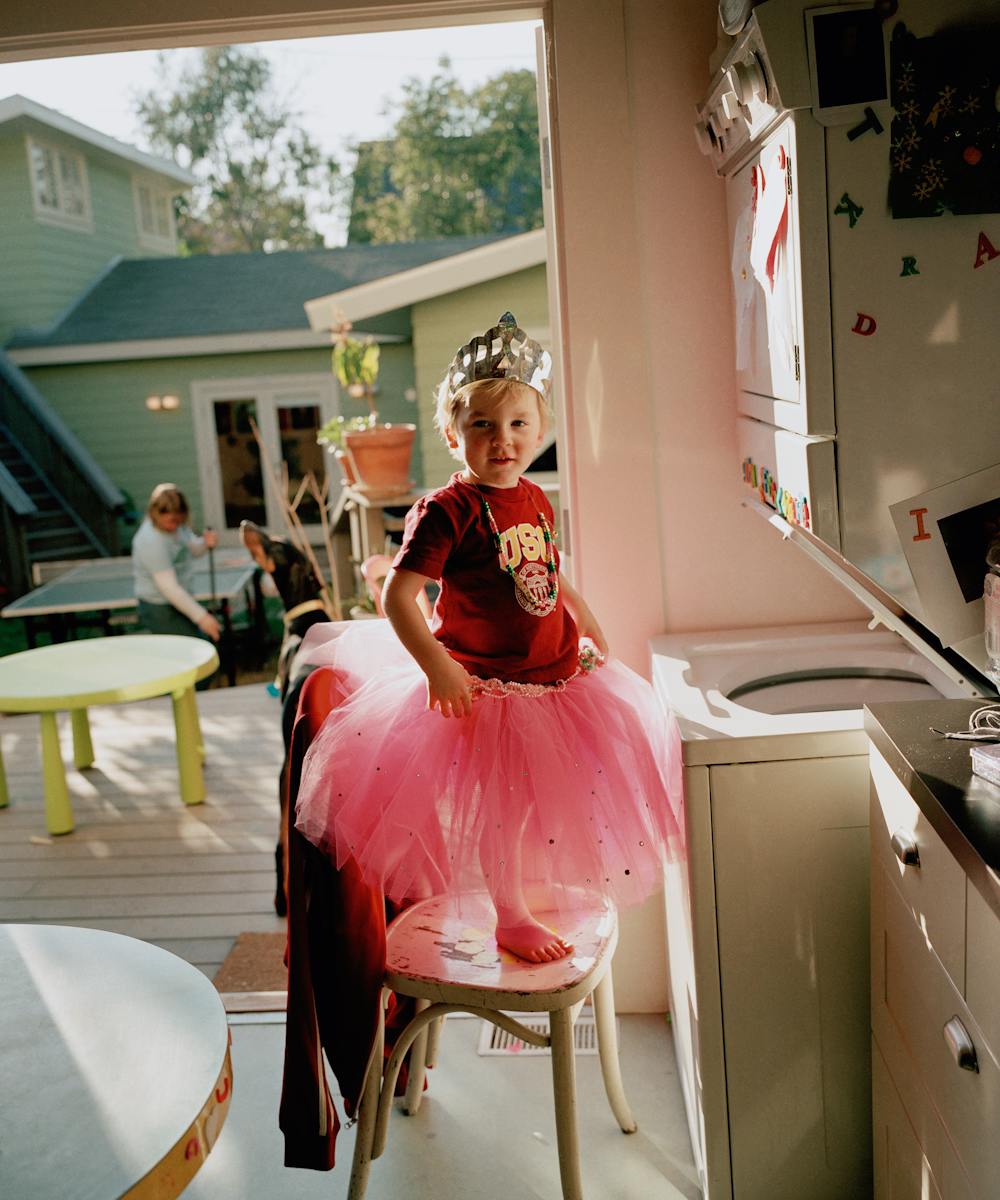
Oliver breastfeeding. Oliver at five dressed in a tutu. Oliver at ten with his pet mouse in his vest pocket, an exquisite re-staging of Leonardo da Vinci’s painting Lady with an Ermine from 1489.
These portraits of Oliver, the son of Catherine Opie, one of the world’s leading photographic artists, are among the highlights of Binding Ties, the first Australian survey exhibition of Opie’s work at the Heide Museum of Modern Art in Melbourne.
All three Oliver portraits use the art historical device of construing the sitter’s identity through allegory. Opie is expert in bringing out photography’s antecedents in the old masters or what we now call legacy media.
Catherine Opie. Oliver in a Tutu (2004) Courtesy Regen Projects, Los Angeles and Lehmann Maupin, New York, Hong Kong, London, and Seoul, Author provided
Drama and emotion
In the large-scale oval portraits of Opie’s friends and artistic peers, painterly references are repeated photographically. Sharp contrast of light and shadow – the chiaroscuro effect made famous by Caravaggio – creates drama and emotional effect.
In the magnificent Thelma and Duro (2017), an older African American couple are royally illuminated in black space, their eyes staring out of the frame in opposite directions as though they were at odds with each other. Thelma’s fingertips press hard on top of Duro’s right hand, his left hand free to assume the mannerist poise of a Renaissance prince.
In the oval portrait of Rocco (2012) we can see the trace of transition scars beneath “Tender Hearted”, the large breastplate tattoo that runs across the sitter’s chest. Rocco’s portrait visually mirrors the Opie self-portrait in which “Pervert” has been cut into her skin, a scarification ritual that brings out the innate capacity of the human epidermis to record change across time.
Catherine Opie. Rocco (2012). pigment print. Courtesy Regen Projects, Los Angeles and Lehmann Maupin, New York, Hong Kong, London, and Seoul, Author provided
Skin is on display in many of the Opie portraits, less as a metonym of race than as a thing that captures our difference from each other and ourselves as we wear and tear and toughen our way through life. Whether acne, stretchmarks and rosacea, or the piercings, tattoos and facial hair in which we electively dress our nakedness, Opie’s camera regards scars as signs of human dignity turned out for shared yet intimate apprehension.
For this reason, it is best to skim the didactic panels that point us towards symbolic meanings and simply look at the people and scenes before us in the way that Opie would have encountered them.
Catherine Opie. Self-Portrait / Cutting (1993) Courtesy Regen Projects, Los Angeles and Lehmann Maupin, New York, Hong Kong, London, and Seoul, Author provided
Dykes, drag and trans portraits
At the centre of the exhibition are the iconic portraits Opie created in the 1990s among her queer community in San Francisco and Los Angeles. Photographed against her signature brightly coloured backgrounds are leather dykes, drag performers and transgender friends, including her long-time collaborator Pig Pen.
Opie and her friends resist normative sexuality, gender stereotypes and the binary of gender categories. They use gesture, posture, dress and adornment to assemble ever-shifting identities for her camera.
While it would be easy to view these works with the casualness of contemporary understandings of queer sexuality and gender fluidity, these portraits were made in the 1990s when AIDS was the primary cause of death for Americans aged 25 to 44.
Like the earlier work of Robert Mapplethorpe and Nan Goldin, Opie’s portraits took a leading role in bestowing agency to the queer community by allowing them to see themselves as they wanted to be seen.
History and iconography
It is commonly thought that the most powerful portraits are made by photographers who know their subjects intimately.
While Opie’s photographs of her friends and family support this theory, how do we explain the portraits of high-school footballers that are among the most powerful in the Heide survey? These sweaty young athletes decked out in grid-iron armour with exposed midriffs and burgeoning six-packs are not obviously Opie’s fellow travellers but they each also testify to the ongoingness of transition.
Catherine Opie. Kaine (2007) Courtesy Regen Projects, Los Angeles and Lehmann Maupin, New York, Hong Kong, London, and Seoul, Author provided
Other iconic inclusions are the three classical self-portraits that command the middle gallery. Saturated in art historical references and Christian iconography, each portrait subverts the traditions it exemplifies.
In Self-Portrait/Pervert (1994), Opie plays with the sumptuary codes of wealth and prestige by facing the camera half-naked, her head covered in a leather BDSM hood. The ornate tattoo across her bleeding chest is stylistically linked to the decorative floral curtain behind her, while her strong arms display 23 surgical needles pinned through her skin like ornamental jewellery.
In Self-Portrait/Cutting (1993), the artist’s back, also bleeding from a childlike drawing etched into her skin, shows a stereotypical family scene in which the stick figures roles of mother and father are taken by two mothers. Rather than celebrating rainbow families, the scarification records the deep grief Opie felt at the demise of her long-term relationship and with it her domestic hopes.
The next year we see her as Bo (1994), her mustachioed male alter-ego. Then, precisely ten years later, her familial longings are realised in the double portrait of Opie breastfeeding her immaculate son in Self-Portrait/Nursing (2004).
A bit of everything
The Heide exhibition has tried to capture Opie’s 40-year oeuvre by including a bit of everything. There are seascapes with surfers from 2003 and more recent large-scale photographs of monuments and sunsets, some of them deliberately blurred.
There are several landscapes of a swamp (look out for the hidden owl) and three stop motion animations that are political responses to global issues of the day.
None of these capture the aura of Opie’s portraits. Her gift is to photograph people. She has a way of lighting her subjects, making them glisten, appear electric or serene but always human. Given this is Opie’s first survey show in Australia, a more in-depth approach focusing on continuity rather than novelty might have been warranted.
Catherine Opie. Untitled #7 (Swamps) 2019. Courtesy Regen Projects, Los Angeles and Lehmann Maupin, New York, Hong Kong, London, and Seoul
The most puzzling and unconvincing inclusion is The Modernist (2017), a grainy black-and-white film made up of 852 still frames that casts the now middle-aged Pig Pen in the unappealing role of an arsonist hell-bent on destroying the modernist architectural icons of LA. An odd exercise in ambivalence about artistic success, the film is at odds with Opie’s unassuming mastery of documentary photography and portraiture.
There is no doubt that Opie is a multifaceted artist. But given how much work was not on display, the spaces dedicated to the film, the surfers and the animations might have been better used to show more photographs from the oval portrait series or more domestic scenes with Opie’s family.
For not much more than the price of an Uber to and from Heide, you can purchase the artist’s monograph from the bookstore and explore the full breadth of the human photographic connections that have made her such a celebrated artist and recorder of life as transition.
Lee Wallace receives funding from the Australian Research Council for a project with Annamarie Jagose on the couple, an investigation of commitment and durability in the era of marriage equality.
Cherine Fahd ne travaille pas, ne conseille pas, ne possède pas de parts, ne reçoit pas de fonds d’une organisation qui pourrait tirer profit de cet article, et n’a déclaré aucune autre affiliation que son organisme de recherche.
Residents along Western Australia’s northwest coast are bracing for Tropical Cyclone Ilsa, which is expected to be one of the most destructive storms to strike the region in more than a decade.
The Bureau of Meteorology says Cyclone Ilsa has intensified and is now classed as a category-four system. It’s forecast to cross the WA coast between Port Hedland and Bidyadanga Thursday night or Friday morning.
Tropical cyclones are huge low-pressure systems that form in tropical waters. They can bring extreme winds, heavy rain and damaging waves, destroying infrastructure and the environment and causing injury and death.
Let’s take a look at how Cyclone Ilsa developed, and what we can expect from cyclones in this region in future.
Why did Cyclone Ilsa intensify?
Tropical Cyclone Ilsa is the first system of category-four or higher to cross Australian shores since Cyclone Trevor crossed the coast of the Gulf of Carpentaria in 2019.
Ilsa formed off the Northern Territory coast before tracking southwest towards Western Australia’s Kimberley region. It developed quickly on Tuesday into a category-two system, which involves wind gusts between 125 km/h and 164 km/h.
The cyclone intensified to a category-four storm on Thursday, which involves winds gusts between 225 km/h and 279 km/h. This was due to two main factors: high sea-surface temperatures and favourable conditions in the upper atmosphere.
Tropical cyclones (TCs) require sea-surface temperatures above 27℃. This provides warm, moist air that generates a massive amount of energy and fuels the cyclone.
Upper atmospheric conditions influence wind speed. Air is drawn in toward the centre of a tropical cyclone. In the Southern Hemisphere, the air spirals upwards in a clockwise direction then moves outwards to the upper troposphere, away from the storm. This air is known as “outflow”.
Cyclone Ilsa’s path led it into a region where the upper level wind was relatively light, which enhanced outflow.
As air moved outwards, more wind or “inflow” was drawn toward the centre of the system from the sea surface, bringing warmth and moisture. This enabled Cyclone Ilsa to rapidly intensify.
Australia’s cyclone capital
Northwest WA is Australia’s most cyclone-prone region. Records since 1970 show about 75% of severe cylones to make landfall in Australia occur in this region.
But why? It comes down to two things: the high sea surface temperatures in this part of the Indian Ocean, and the orientation of the coast.
Tropical cyclones tend to move polewards and, in the Southern Hemisphere, often curve southeast. The coast of northwest WA is oriented northeast/southwest, and so perfectly aligned to intercept these cyclones.
Several intense tropical cyclones have developed in the warm waters off northwest WA in recent years. However, the number to reach land in this region has been lower than average. That’s because mid- to higher-level atmospheric winds that steer tropical cyclones have directed many of them away from the WA coast.
In the Southern Hemisphere, tropical cyclones often curve southeast. BoM
What about climate change?
Climate change is expected to change tropical cyclone patterns. The overall number is expected to decrease, but their intensity will likely increase, bringing stronger wind and heavier rain.
More intense tropical cyclones are expected because higher sea-surface temperatures will make the atmosphere more warm and moist. Cyclones thrive in such conditions.
But the general frequency of tropical cyclones is expected to reduce under climate change in most ocean basins, including the Indian Ocean.
Tropical cyclones usually form when there’s a large difference between temperatures at Earth’s surface and the upper atmosphere. As the climate warms, this temperature difference is likely to narrow.
Research last year showed the annual number of tropical cyclones forming globally decreased by about 13% during the 20th century compared to the 19th.
The activity of tropical cyclones in any one ocean basin over a year is measured by what’s known as the “Accumulated Cyclone Energy” or ACE Index.
The index is calculated by measuring the cyclone’s wind speed every six hours squaring it, then adding these values together.
A study has shown the index values for cyclone activity in the Southern Indian Ocean have decreased significantly since 1990.
I specialise in reconstructing long-term natural records of extreme events. Research by myself and colleagues has shown tropical cyclone activity along the WA coast is at its lowest level since approximately 500 CE – about 1,500 years ago.
Tropical cyclones maintain energy over warm water, and lose energy once they move over land or over cooler oceans.
Cyclone Ilsa is expected to weaken overnight on Friday as it moves east into the Northern Territory.
Climate change will lead to fewer tropical cyclones overall. But those that do occur will be more intense and damaging. So unfortunately, WA can expect regular cyclone impacts even as the climate warms.
Jonathan Nott does not work for, consult, own shares in or receive funding from any company or organisation that would benefit from this article, and has disclosed no relevant affiliations beyond their academic appointment.
The intent of the proposed First Nations Voice to Parliament is to elevate and amplify our input across the nation into laws, policies and programs that will impact on Indigenous Australians.
The question of the design of these representational systems is crucial. Opposition leader Peter Dutton, in his announcement last week that the Liberal Party is against the proposal, branded the current plan a “Canberra Voice”.
But while we disagree this is a reason to oppose the Voice entirely, this stance does highlight the question of how the Voice can be truly representational of the many people who deserve to be heard.
The Kimberley region in Australia’s northwest is a long, long way from Canberra. Indigenous people here want reassurance that our Voice will carry to the national capital, and that our uniqueness as a region will be respected.
local and regional Voices would provide advice to all levels of government to influence policy and programs, and advise the non-government sector and business.
But governments’ effectiveness in delivering solutions on the ground in remote Indigenous communities has been patchy at best.
Aboriginal communities in remote New South Wales were left without food and medical supplies during the pandemic. And in the Kimberley, Aboriginal communities and organisations were excluded from COVID-related planning and decision-making processes.
Rising floodwaters in Darlngunaya, a community near Fitzroy Crossing, WA. Author provided
The impact of the recent floods in the central Kimberley was made even more catastrophic by a lack of coordinated planning across local, state and federal agencies.
Hundreds of people living along the Fitzroy River were left homeless by the disaster, and their trauma was compounded by pre-existing levels of overcrowding in the remote town of Fitzroy Crossing.
Joe Ross discusses the response to the Fitzroy floods with Prime Minister Anthony Albanese and Minister Murray Watt, federal minister for emergency management. Author provided
Politics in the Kimberley
The cultural and political landscape of the Kimberley is rich and complex. More than 93% of the region is now covered by 41 native title determinations. Most of these determinations reflect distinct land areas, language groups and histories – and each has its own legally constituted organisation.
The big question for this region – and other remote areas across Australia – is how a Voice to parliament can capture the diversity of aspirations held by different Indigenous groups in ways that respect Indigenous political organisation, and which are genuinely inclusive and representative.
This question is not a new one. Indigenous people in Australia have a long history of enduring governments’ attempts to incorporate Indigenous input into local and regional development priorities.
As such, the Kimberley now has a decades-long history of calls for a proper form of regional representation. Various models of regional governance have been proposed, and some delivered, since the late 1970s.
But if the Voice referendum results in a yes vote, it will be the first time any such regional governance frameworks will be implemented on a permanent basis.
Stability in this regard would be welcomed by regional leaders. But the very permanence of these models makes it even more crucial that their design reflects local and regional ways of working, and draws on the existingevidence showing what works, and what doesn’t.
Dozens of consultation processes are undertaken every year across the region – with unclear impacts on the levels of government investment in actual services. Author provided
In recent decades, the problem has not been that Indigenous people don’t have the opportunity to “advise” governments. Rather, it is that the mechanics of actually delivering solutions on the ground in remote Indigenous Australia have been far from straightforward.
There are no incentives for multitudinous agencies – across local, state and government jurisdictions – to identify program duplication or to invest thought or resources in minimising the burden their demands for consultation place upon remote communities.
Meanwhile, remote communities, certainly in the Kimberley, are falling through the gaps in terms of service delivery. Many people are suffering ongoing issues with basic needs such as housing, water and electricity.
This is clearly a failure of delivery rather than consultation, given it should be obvious to everyone that communities want safe and functional homes to live in.
How the proposed Voice could draw on regional representation
How the Voice will interact with the existing regional mechanisms is not yet clear. But, as delegates at the Uluru dialogues in 2017 made clear, it should follow a principle of subsidiarity, whereby a central Voice authority should perform only those tasks that cannot be done at a more local level.
What is certain is if the Voice is to prove its worth, it will need to prioritise practical outcomes and reduce bureaucratic duplication across all levels of government that are delivering programs to Indigenous Australians.
A mechanism that allows for clear articulation of aspirations from the ground is only one side of the equation. The other is a coordinated response from all levels of government to those aspirations.
Kathryn Thorburn currently receives funding from the Commonwealth Department of Education’s Emerging Priorities Program.
Stephen Kinnane is a part-time Research Coordinator with the Kimberley Aboriginal Law and Culture Centre which receives funding from the National Indigenous Australians Agency. He is affiliated with the Australian Institute of Aboriginal and Torres Strait Islander Studies (AIATSIS) Foundation, is a Director of Magabala Books, Broome, is a member of the Indigenous Working Party of the Australian Dictionary of Biography (ANU) and is a scholar with the ANU College of Arts and Social Sciences.
Joe Ross does not work for, consult, own shares in or receive funding from any company or organisation that would benefit from this article, and has disclosed no relevant affiliations beyond their academic appointment.
Axing the proposed merger of TVNZ and RNZ saved the New Zealand government a significant amount of money but left it with the problems the merger was supposed to fix. Newsroom co-editor Mark Jennings looks at Labour’s new slimmed down approach to public media.
ANALYSIS:By Mark Jennings
Until weeks ago, the future of Aotearoa New Zealand’s public media organisations was looking so grim the government was prepared to spend $370 million over four years to merge TVNZ and RNZ and future proof the new entity it was calling ANZPM.
Last December, when the merger plan was under intense scrutiny, then Prime Minister, Jacinda Ardern said RNZ “could collapse” if the merger did not go ahead.
Last week, Labour unveiled a very modest plan to strengthen public media. The old, very expensive one, had been thrown on the policy bonfire back in February.
The “burn it” decision had been widely anticipated after new PM Chris Hipkins’ started dumping unpopular policies to focus on cost of living issues.
Broadcasting Minister Willie Jackson stayed on message when he released the new public media plan last week. “We have listened to New Zealanders and now is not the right time to restructure our public media.”
Under the new plan RNZ will get $25 million more a year, NZ On Air will get a one-off boost of $10m for 2023/24 and TVNZ will get nothing.
Jackson claims the extra money will “deliver world class public media for all New Zealanders.” This seems improbable given the earlier dire predictions.
The additional $25 million a year for RNZ represents a 60 percent increase in its funding. It sounds a lot but the broadcaster has been under resourced for the past 15 years.
Coping with pandemic When National came to power in 2008 it froze RNZ funding for 9 years. The state broadcaster did get an increase from the Ardern government but it has had to contend with the additional costs of reporting on and coping with the covid-19 pandemic.
Lately, the demands of covering the Auckland floods and cyclone Gabrielle have stretched it further. Newsroom understands RNZ is currently running a deficit of close to $5 million.
The lack of funding is illustrated by the rundown premises RNZ occupies nationwide, its ageing equipment and out-of-date IT systems. Under constant financial pressure it has struggled to attract and keep top journalists.
Some of its best and brightest have been lured away to TVNZ, Newshub, Newsroom and Stuff.
Jackson’s media release said $12 million of the extra funding was for current services and $12 million for a new digital platform. $1.7 million is to support AM transmission so people can access information during civil emergencies.
Stuff, the NZ Herald and RNZ itself all reported (presumably from the media release) on the funding for the new multimedia digital platform. But there is no new platform. This was either clumsy language or a clumsy attempt at spin from Jackson and his comms people.
RNZ’s chief executive Paul Thompson told Newsroom the money would be used to make improvements to RNZ’s existing web platform and mobile app.
‘Fixing things’ “It is kind of fixing things that should have been fixed a long time ago. Our website and app are serviceable and do a good job but if we are going to be relevant in the future we need to be better than that.”
Thompson says the increase in the amount of baseline funding was calculated to restore RNZ to its former state, more than anything else.
“How much would it take us to stabilise our current operations and get them to where they need to be, so that’s well overdue. It is everything from our premises through to our content management systems, to our rostering — just having enough staff to do the job we do. It’s sufficient but we are going to have to spend every penny very wisely.”
A big part of the government’s reasoning for the merger was that minority audiences are under-served by the media.
Jackson now seems to expect RNZ to do the heavy lifting in this area. His media release quoted him saying the funding would allow RNZ to expand regional coverage and establish a new initiative to prioritise Māori and Pacific coverage.
Asked how he planned to do this, Thompson was circumspect. “It has got to be worked out . . . we are going to have to prioritise, we can’t do it all at once.”
Jackson wants other media to play an (unspecified) role in reaching these audiences. He has restored $42 million of funding to NZ On Air. Under the merger plan this money, which was the amount NZOA spent funding TVNZ programmes (mainly drama, comedy and off-peak minority programmes), was being handed to ANZPM to decide how it should be spent.
Production community upset The local TV production community was upset by this as it far preferred NZ On Air to be the gatekeeper and not TVNZ executives who would likely end up working for the merged organisation.
Jackson has also given NZOA a one-off boost of $10 million for 2023/2024.
“The funding will support the creation of high-quality content that better represents and connects with audiences such as Māori, Pasifika, Asian, disabled people and our rangatahi and tamariki. It is vital that all New Zealanders are seeing and hearing themselves in our public media,” he said in his media release.
One-off funding can be of limited benefit. It usually has to be project-based rather than supporting ongoing programming and the staff that go with it. It is possible Jackson is hoping or expects NZ On Air to use more of its baseline funding to sustain new shows and programmes for minorities.
On the same day as Jackson’s announcement, but with less fanfare, NZOA released its own revised strategy.
The document says, above all, funded content must have a “clear cultural or social purpose.”
Priority will be given to songs and stories that contribute to rautaki (strategy for) Māori, support a range of voices and experiences, including those of people from varying ages, races, ethnicities, abilities, genders, religions, cultures, and sexual orientations.
Unclear about TVNZ It is unclear where Jackson’s plan B leaves TVNZ. Throughout the merger discussions TVNZ executives, while saying they embraced the idea, were critical of the draft legislation, the level of independence the new entity would have and they often emphasised TVNZ’s commercial success.
Jackson has, on a number of occasions, linked TVNZ to the National Party which opposed the merger and was committed to rolling it back if elected in October.
When he became frustrated in an interview with TVNZ’s Jack Tame, before the merger was abandoned, Jackson used the line “your mates in National”.
During question time in Parliament last week, when asked what more he was doing to strengthen public media, Jackson said he was going to “sit down with Simon and the National Party mates over there.”
He was referring to TVNZ CEO, and former National Party minister, Simon Power.
Jackson said he wanted TVNZ to play a more active role in public broadcasting and, “we are going to traverse things with Simon in terms of a way forward.”
Power recently announced his resignation and will leave TVNZ in June. With many of the TVNZ board, including its influential chair Andy Coupe, likely to retire or be replaced in the next month, Jackson will, in reality, be sitting down with a new board and CEO to discuss his public media ambitions for TVNZ.
If he is interested in the job, RNZ’s Thompson must now be in with a real chance.
Thompson unequivocally endorsed the merger idea and was almost the only advocate able to clearly articulate its benefits. A new board, eager to take the company in a direction more sympathetic to its owner’s vision, might find that attractive.
Mark Jenningsis co-editor of Newsroom. Republished with permission.
Source: The Conversation (Au and NZ) – By Emma Beckett, Senior Lecturer (Food Science and Human Nutrition), School of Environmental and Life Sciences, University of Newcastle
Shutterstock
Personal bests, competition wins, new challenges – athletes, and particularly endurance athletes, tend to want to push themselves hard to perform. So it makes sense that there is a big interest in sports supplements, like running gels and protein powders.
We all need macronutrients: carbohydrates, proteins and fats that give us energy and build structures like muscles and other cells in our bodies.
When we are very physically active, like long-distance runners, cyclists or triathletes, our need for both energy and building blocks for muscles and other cells increases because of the extra work our bodies are doing.
So supplements – such as sports gels or protein powders – that contain these macronutrients might make sense. But can they do anything that food can’t?
Sports gels (also known as energy gels) are essentially carbohydrate supplements. They contain simple sugars like maltodextrin, fructose, and glucose. These sugars don’t need much digestion to be absorbed and used as energy. Sugars are the easiest form of energy for our bodies to use.
During long periods of exercise our stored sources of energy get depleted. Our blood sugar drops and we use the glycogen stored in our muscles. So during long bouts of exercise, athletes like long-distance cyclists and runners as well as players in extended length “stop and start” type sports, such as soccer need to replace these stores.
The research into the benefit of carbohydrate supplementation during exercise isn’t new. It dates back as far back as the 1924 Boston Marathon.
The gel forms are a bit more modern, taking off in the 1980s and 1990s. For some people and sports, they have replaced the sweet drinks used previously. Gels have the advantage of being a more concentrated form than a drink, which means less to carry and less to ingest for the same carbohydrate kick.
What about protein powders?
Protein powders are exactly what the name suggests. They are typically casein or whey (proteins found in milk) but can come in plant-based forms too.
Protein won’t give you the quick energy boost that sugars do, even though protein and carbohydrates have the same energy value (meaning gram for gram they have the same amount of calories).
This is because proteins are more complicated for the body to break down and use. But protein is not just important for energy. It provides important building blocks for most of our body’s structures, including our muscles. This is why protein powders are popular with weight lifters and other power-based athletes.
Weightlifters are often keen to supplement their protein intake to build muscle. Shutterstock
But can food do the same thing?
Plenty of foods are rich in carbohydrates and proteins. Honey, dried fruits, bananas and even those half-time orange wedges are all potential carbohydrate sources for athletes.
Consuming carbohydrates in these forms has been shown to have the same benefits as gels during exercise.
For protein, milk, eggs and meats are all great sources.
Food sources also have the added benefit of being complex, which means they have other good things in them in addition to the macros, including vitamins and minerals, and bioactive compounds which promote good health.
Foods that are whole (unprocessed) or minimally processed are the most cost-effective means to obtain a mix of nutrients needed for rest and recovery after exercise, as well as during. They might taste a bit better too.
But, the supplements do have some benefits. They are highly concentrated, meaning you can get a lot in quickly, with less to carry and less chance of feeling overly full.
So they are but are generally considered by athletes as more convenient and are also linked to less gut discomfort (like cramps and diarrhoea).
The processed and packaged nature also means you know exactly what and how much you are getting, which might be important for some athletes to keep track of.
Any downsides of macro supplements?
Macro supplements can be expensive, and they can use a lot of packaging. The huge variety of products on the market also means products could contain lots of other ingredients (for better and for worse). Some sports gels contain stimulants like caffeine or preservatives like salts. Some protein powders contain added sugar.
And like all supplements, they are not without their risks.
Highly concentrated sports gels can cause stomach upsets and excessive protein supplementation can damage other organs, such as the kidneys.
Macro supplements can also make dehydration worse because the body will need to shift water to deal with these concentrated products.
Blocks and chews and bars can be even more concentrated, but have a more complex composition.
Read the ingredients list carefully before adding gels to your kit. Shutterstock
The vast majority of studies on sports gels have used males, and the same benefits may not be seen in females. This is due to sex differences between males and females in how readily carbohydrates are used as energy, with females oxidising more fat and less carbohydrate, compared to males, during endurance exercise.
Ultimately, whether or not supplements or foods are the right choice for you during sports and exercise is going to come down to your preferences, budget, needs and the length and intensity of your exercise or sport.
For casual, short or low intensity sporting pursuits, supplements might be overkill, but for activities of high intensity or long duration, they can have benefits.
Emma Beckett has received funding for research or consulting from Mars Foods, Nutrition Research Australia, NHMRC, ARC, AMP Foundation, Kellogg, and the University of Newcastle. She also works for Nutrition Research Australia. She is a member of committees/working groups related to nutrition or the Australian Academy of Science, the National Health and Medical Research Council and the Nutrition Society of Australia.
Patrice Jones has received funding for research or consulting from the Victorian Government, Nutrition Research Australia, Victoria University, the Australian Academy of Science, NIH Fund, and the University of Newcastle. She is a member of committees related to nutrition/physiology: Nutrition Society of Australia, Australian Physiological Society. She is affiliated with the Institute for Health and Sport, Victoria University and Nutrition Research Australia.
On Thursday 20 April, the Ningaloo region of Western Australia will experience a total solar eclipse. Eclipse chasers from around the world are converging on the town of Exmouth in hopes of experiencing the profound awe of standing in the Moon’s shadow as it quickly races by.
Only a narrow path across Earth, which includes Exmouth and Barrow Island WA, eastern parts of East Timor and also parts of Papua in Indonesia, will experience totality – when the Moon fully blocks the light of the Sun.
Only locations along a narrow path will have the chance to see the total solar eclipse. Xavier M. Jubier
Can we see the eclipse in other parts of Australia?
Across the rest of Australia, we will get a partial solar eclipse. Exactly how much of the Sun is covered by the Moon, as well as the timing of the eclipse, depends on your location. The farther away from the path of totality, the shallower the eclipse will be.
Comparing Australian capital cities, Darwin will experience the deepest partial eclipse – with 85% of the Sun’s diameter hidden by the Moon. For Hobart, located at the other end of the country from Ningaloo, just 13% of the Sun’s diameter will disappear behind the Moon.
During a partial eclipse, there is nothing to notice or clue you in that an eclipse might even be happening. Even when 90% or more of the Sun’s diameter is obscured by the Moon (known as the eclipse magnitude) you might only notice a very slight dimming of daylight. More so, the colours and light around you may look a little strange.
The local circumstances for the eclipse across Australian capital cities are provided in the tables below. To find out what’s happening in your location, you can use timeanddate.com
or an online Google map created by French amateur astronomer Xavier Jubier (note that all times will need to be converted from UTC).
Tanya Hill Tanya Hill
What is a ‘hybrid’ eclipse?
Technically, this solar eclipse is a special type, known as a hybrid eclipse. It begins over the Indian Ocean as an annular eclipse, where the Moon is slightly too small to completely block the Sun and a ring of sunlight shines out from around the dark Moon. This happens when the Moon’s antumbral shadow hits Earth (see diagram).
During an annular eclipse, the Moon’s umbral shadow is not long enough to reach Earth and Earth is immersed in the antumbral shadow instead (diagram not to scale). The Conversation
By the time the Moon’s shadow reaches land, it will become a total eclipse – the Moon now appears large enough to completely block the Sun, and it is the Moon’s umbral shadow that falls on Earth.
It’s incredible that such an eclipse occurs, because it means Earth is situated in the sweet spot between the umbral and antumbral shadows. Parts of Earth are in the umbral shadow, while the curvature of the planet is enough to make other places sit slightly farther away, so that the antumbral shadow falls there.
The Japanese weather satellite Himawari-8, captured the Moon’s shadow racing across Earth during a total solar eclipse on 9 March 2016.
Don’t forget about eye safety!
Most importantly, a solar eclipse requires special precautions to observe it safely. Never look directly at the Sun because it can cause serious and permanent eye damage.
You can observe a solar eclipse safely by protecting your eyes with certified eclipse glasses or view the Sun indirectly by creating a pinhole camera to project a tiny image of the Sun onto a wall, the ground or a piece of paper.
A colander is a ready to use pinhole camera, creating many tiny images of the eclipsed Sun. John Lord/Flickr, CC BY
Just remember this is a projection technique – do not look at the Sun through any pinholes.
Observing the totality
For those fortunate to be in Exmouth, the eclipse will begin at 10:04am, and totality will occur at 11:30am, producing an eerie twilight. For just 58 seconds, eclipse observers will be plunged into the Moon’s shadow for an awe-inspiring experience.
What’s most amazing is totality reveals a part of the Sun we don’t normally see. The Sun’s magnificent corona – its outer atmosphere – extends millions of kilometres into space and can be seen dancing and shimmering.
It’s also possible to see planets and bright stars during totality, if you can tear your gaze away from the shimmering corona. There are currently four planets in our daytime sky and all will be revealed – Saturn and Jupiter sitting above the Sun, with faint Mercury and bright Venus below it.
During totality there’s a chance to see four planets, weather permitting. Museums Victoria/Stellarium
That brief moment of totality, when the Sun is completely covered by the Moon, is the only time to safely watch the eclipse directly. All too quickly, the Moon will move on and it will be time to shield your eyes again.
Australia, get ready for more
Remarkably, this eclipse is the first of five total solar eclipses to occur over the next 15 years in Australia.
What’s more, many of the upcoming eclipses will see totality pass over highly populated areas:
July 22 2028 – totality will cross from the Kimberley, WA, through the Northern Territory, southwest Queensland, New South Wales, and pass directly over Sydney.
Nov 25 2030 – totality will occur across South Australia, northwest NSW and southern QLD.
Jul 13 2037 – totality will cross southern WA, southern NT, western QLD, passing directly over Brisbane and the Gold Coast.
Dec 26 2038 – totality occurs over central WA, SA, and along the NSW/Victoria border.
Five total solar eclipses over Australia will occur during the next 15 years. Base map: Google Earth; Eclipse date: Xavier Jubier kmz files
For some Australians there will be no need to travel the world to experience totality, when you have the chance to see it from your own backyard.
Tanya Hill ne travaille pas, ne conseille pas, ne possède pas de parts, ne reçoit pas de fonds d’une organisation qui pourrait tirer profit de cet article, et n’a déclaré aucune autre affiliation que son organisme de recherche.
In the wake of Cyclone Gabrielle, New Zealand is again talking about “building back better”. But how do we build back better when we don’t necessarily understand what “better” means? Or how to achieve this across a country with significantly different risk profiles?
At its most basic level, build back better is an opportunity to rebuild homes and other buildings in a way that is responsive to future risks and sustainability needs. To achieve this, we need to address knowledge gaps around building within a circular economy. A circular economy is one that swaps the typical cycle of make, use, dispose in favour of re-using and recycling as much as possible.
A sustainable building in the circular economy model will minimise emissions and its impact on climate and natural resources across its entire life cycle. This life cycle includes the manufacturing of materials and construction, passive lifetime emissions, maintenance, as well as end-of-life requirements (deconstruction).
At the University of Waikato, our research is focused on material choices, both for long-term rebuild as well immediate emergency relief. We approach this from a structural engineering perspective and consider light steel, light timber, fiber reinforced polymers and concrete. We work alongside industry to develop know-how around deconstruction for light steel and timber structures.
The research will contribute to best practice guidelines and circular economy adaptation. Here’s why this is important.
Embracing a circular economy
The construction and demolition industry in New Zealand produces around 50% of all waste. According to the United Nations Environment Programme’s 2022 Global Status Report for Buildings and Construction, the sector accounts for more than 34% of energy demand globally and around 37% of energy and process-related carbon dioxide emissions. The report concludes that the building and construction sector are not on track to achieve decarbonisation by 2050 – the international deadline for achieving net zero energy emissions.
The New Zealand government has committed to the circular economy model in its plans to deal with waste.
But building back better isn’t simply about using sustainable materials and construction methods, and incorporating features that enable lower emissions during the “living phase” of a home.
Buildings need end-of-life considerations built into the design and construction, so they can be easily repurposed or deconstructed with minimal energy and then recycled, reused or disposed of in a manner that doesn’t send emissions through the roof.
Presently, we’re building sustainable homes on the premise of being carbon neutral by 2050, but they also need to be built on the premise of being carbon neutral at the end-of-life in 50 years.
We are not even close to achieving that. A report from building research institute BRANZ determined the climate impact of a new-build standalone house exceeds the 1.5℃ climate targets by a factor of 6.7 during its life cycle. This shows the substantial work needed to achieve carbon neutrality of new homes.
Modular buildings and new materials beckon
The solution to this issue may lie in modular homes and the development of new materials.
Quick and easy to make, modular homes provide fast options to house displaced people. They are also valuable for community wellbeing after the trauma of natural disasters. Finally, modular homes offer exciting opportunities for sustainability. They can be easily reconfigured to adapt to changing needs, for example, with the addition or removal of modules.
However, without careful design and know-how, modular homes and the foundations under them will not necessarily provide resilient and sustainable structures into the future.
The most challenging aspect of modular homes is the connection between the structures and their foundations. Therefore, it’s critical for resilient structures that the connections are designed carefully. Throughout the design process, those in charge need to consider the structure’s deconstruction or disassembly at the end of its life.
That said, modular homes are also not the cure all for the entire building industry. The global need for sustainable and resilient buildings is a driver for the development of new construction materials, such as the plasterboard substitutes saveBOARD and Neocrete, a low-emission concrete.
These products offer low-emission building options, which use recycled materials in manufacturing and provide an alternative to high-emission materials. But, due to a lack of strict regulations around adopting new materials and a lack of awareness in the industry, adoption has been slow.
Identifying the missing data
In New Zealand, we have different risk profiles across the regions, depending on the likelihood of earthquakes and natural hazards like flooding, landslides, and wildfires – as well as the intensification of those hazards due to climate change.
The location risk profile dictates the best materials, but to utilise new materials, we need local testing data which are very limited as of yet.
If we’re really committed to building back better, then we need to do the research and incorporate the evidence into the building code, design standards and information for construction practitioners.
This could mean a “passport” for new materials based on local testing. The passport would incorporate details on the potential to recycle and reuse, a disassembly guide and a sustainability record (in essence, an environmental declaration).
The adaptation of the circular economy approach to the “build back better” strategy for buildings will be essential in reducing the risk of future catastrophes, as well as the impacts on climate and natural resources. Setting up a clear guideline for this strategy will be a pivotal early step in helping the industry define and oversee its efforts towards these objectives, which are currently lacking.
Krishanu Roy does not work for, consult, own shares in or receive funding from any company or organisation that would benefit from this article, and has disclosed no relevant affiliations beyond their academic appointment.
New Zealand Parliament Buildings, Wellington, New Zealand.
New Zealand Politics Daily is a collation of the most prominent issues being discussed in New Zealand. It is edited by Dr Bryce Edwards of The Democracy Project.
It’s not called the Third Pole for nothing. The Tibetan Plateau forms the major portion of a vast upland area of ice and glaciers that covers some 100,000 square kilometres of Earth’s surface.
It is a cold, arid and unforgiving landscape that couldn’t be more different from the warm plains and valleys that gave rise to our species.
Yet, for thousands of years the Tibetan Plateau has been occupied by Homo sapiens. It has seen the establishment of agricultural societies, and the growth of religions, kingdoms and even empire.
How humans managed not just to subsist but to thrive in this high-altitude landscape is a question that has challenged researchers for decades – and one that has captivated us too.
We know part of the answer lies in Tibetan genes, and a unique adaptation that enables people living in the region to use oxygen more efficiently, avoiding the potentially lethal effects of hypoxia (the condition that arises from a lack of oxygen).
But just as important as avoiding hypoxia was finding enough food in the plateau’s unpredictable, freezing and hyper-arid environment.
Our research, published today in Science Advances, set out to look more closely at early Tibetan diets. To do this, we examined ancient dental plaque, a rich source of dietary information.
Our results show one food in particular may have been crucial to sustained human occupation and expansion across the Tibetan Plateau: milk.
Modern pastures on the highland Tibetan Plateau. Li Tang, Author provided
The benefits of not brushing
Without dentists, ancient people often accumulated thick layers of plaque – also known as calculus – on their teeth. Using a new method called palaeoproteomics, scientists can investigate the food proteins that became trapped and preserved in ancient people’s dental plaque.
Palaeoproteomics allows us to look at types of food, such as milk, that aren’t visible through traditional archaeological approaches, and to identify specific individuals who were consuming them.
Our study analysed all available human skeletal remains on the plateau: a total of 40 individuals, dating to between 3500 and 1200 years ago, from 15 widely dispersed sites.
One of the individuals we studied was a woman, aged 40-55, buried at the Ounie site. Hers were the highest altitude (4654 masl) remains studied, dated to around 601-758 CE. Li
Tang and Zujun Chen, Author provided
Our work yielded fascinating results. Preserved in the teeth of many of these people were fragments of proteins derived from milk products. The protein sequences showed the milk originated from domestic herd animals: sheep, goat and probably yak.
We could see dairy foods were consumed by a wide swathe of Tibetan Plateau society, including adults and children, elites and everyday people. Dairy was even present in the earliest Tibetan Plateau skeletons we looked at.
In fact, we found dairy was being consumed as far back as 3,500 years ago – pushing evidence for dairying on the plateau back 2,000 years earlier than records in historical sources, such as the 8th- and 9th-century Tongdian encyclopedia.
Evidence for dairying now corresponds with the earliest evidence for domesticated herd animals on the Tibetan Plateau, which suggests dairying and pastoralism spread together in this region.
Pushing beyond the cultivation boundary
Our results showed another interesting pattern: all the milk peptides we identified came from ancient individuals in the highest altitude parts of the plateau. These were the most inhospitable areas, where growing crops was difficult.
In the southern-central and southeastern valleys, where farmable land was available, we did not recover any dairy proteins from people’s calculus.
Dairy, it seems, was vital to human occupation of the parts of the plateau that lay beyond the reach of even frost-tolerant crops. This is a vast area, as less than 1% of the Tibetan Plateau supports crop cultivation.
In the lower-lying areas, long-term habitation has been sustained by cultivating plant foods. But across most of the plateau, the primary mode of subsistence has been pastoralism.
Dairy-free? Not an option
While dairy would eventually become central to Tibetan cuisine and culture, our results suggest it was initially adopted out of necessity. It allowed people in the Tibetan Plateau’s most extreme environments to turn the energy locked inside alpine meadow grasses into a protein-rich, nutritional food that was endlessly renewable – because animals weren’t killed to acquire it.
Today, dairy is an important part of modern Tibetan food and culture. Li Tang, Author provided
Dairying opened up the Tibetan Plateau to the spread and sustained growth of human populations, which ultimately enabled the emergence of substantial cultural complexity.
In one of Earth’s most inhospitable environments, then, it would appear dairy-free was not an option.
Future work on the plateau will be vital to understanding how the human adoption of pastoralism and dairying reshaped Tibet’s landscapes. And just as critically, it will shed light on what human-induced climate change means for the future of the ecosystems present-day herders rely on.
Modern Tibetan pastoralists make butter from yak milk. Li Tang, Author provided
The authors do not work for, consult, own shares in or receive funding from any company or organisation that would benefit from this article, and have disclosed no relevant affiliations beyond their academic appointment.
Reports have emerged from around Australia of waitlists of up to two years to receive a diagnostic assessment for neurodevelopmental conditions, such as autism and attention deficit hyperactivity disorder (ADHD).
Assessment delays can create additional stress for families who are already worrying their child may be developing differently.
These waiting times are a symptom of the significant strain our health systems are under. System reform will take time, and in the meantime, there are many children who require urgent support.
But supporting your child doesn’t need to be put on hold while you wait for assessment.
Diagnoses can provide parents and carers with a deeper understanding of their child. A diagnosis allows the child, their family and the supporting health professionals to benefit from all the information we have about that diagnosis, to understand how best to support the child going forward.
One reason why our diagnostic systems are currently under so much strain is because of expanding diagnostic boundaries. The criteria for autism and ADHD have changed over time, meaning more children meet criteria for these conditions than before.
Another reason is that our health, disability and education systems often require a formal diagnosis for a child to receive support. This further increases demand for diagnostic assessments.
Often, long waitlists result in children and families not getting timely access to crucial early therapy services. Delays can mean that many of the best opportunities to support children’s development early in life are missed, which can further entrench developmental disability and disadvantage.
However, importantly, there are many beneficial things that families can do in the meantime to pave the way for the future.
While a diagnosis may help a child access support services, they are still able to access services without a diagnosis.
If a parent is worried about their child’s development, then it is important they continue to seek out support services while the child is on a diagnostic waitlist.
A GP is typically the best person to consult in the first instance. They can then refer the child and family to public or private therapy services. However, private service options may involve out-of-pocket expenses, which can create inequity in access to services.
Parents can also take steps to:
1. Build connections with their child
A key part of all early supports is nurturing the connection parents have with their child. All children benefit from having frequent, meaningful time set aside to connect with their primary caregivers.
During this special connection time, parents might focus on slowing down, approaching their child with curiosity, being open to following their child’s special interests, and trying a variety of communication strategies (including words, gestures or using pictures) to support communication.
Parents needn’t feel pressure to spend all their time engaging with their child – but any time that can be dedicated to this will be time well spent.
2. Gather information to support diagnosis
Diagnoses of ADHD and autism are based on the observation of certain behaviours. A clinician will be able to observe some of these behaviours in their assessment, but they will also rely on information from parents about how their child usually behaves or interacts in different situations.
Parents can support this process by noting examples of the patterns of behaviours they’ve observed. These might include special interests, repetitive activities, social interactions, emotional regulation, sensory preferences or how their child communicates.
It is important parents don’t only note what a child finds difficult, but also their strengths and interests. Sometimes, the things a child is particularly good at can tell us just as much as their challenges.
3. Prioritise family wellbeing
While parents are often proactive in seeking support for their child, they can sometimes neglect their own need for support. Parents are the most important person in a child’s life, and parental capacity and wellbeing can have a significant influence on their child’s outcomes.
While waiting for a diagnosis, parents should start to plan how they are also going to get the support they need. This can include staying connected within the community and making time for activities that bring them and their family joy.
Remember to make time for activities that bring you and your family joy. Unsplash, CC BY
When parents seek out a diagnosis for their child, they want help to support their child’s development. But long waits for assessment and diagnosis can present barriers between Australia’s health, education and disability systems and the help families need. The long waiting lists to receive a diagnostic assessment are at odds with what we know about the importance of early intervention.
This approach prioritises acting quickly over diagnostic clarity, and makes it more likely children and families receive support during critical times in brain development.
As Australia seeks to reform our early childhood development system, the need of families to receive prompt support should be front of mind.
Sarah Pillar works for CliniKids at the Telethon Kids Institute.
Andrew Whitehouse is the Director of CliniKids at the Telethon Kids Institute. He receives funding from the National Health and Medical Research Council, the Australian Research Council, and the Autism CRC.
New Zealand is in an unusual position in the developed world when it comes to greenhouse gas emissions. About half of all emissions come from agriculture, and almost a quarter can be attributed to biological emissions (nitrous oxide and methane) from the dairy sector.
The latest synthesis report released by the Intergovernmental Panel on Climate Change (IPCC) in March highlights the challenges climate change presents for New Zealand. And it clearly illustrates the benefits of cutting emissions sooner rather than later.
How did we get here?
Dairy farming in New Zealand was traditionally characterised as a pasture-based and low-input system.
However, in recent times, dairy farmers have intensified production, largely by using more fertiliser and supplementary feed (palm kernel expeller, silage and concentrate) to improve farm performance. Dairy farming has also expanded into less naturally suited regions, which has required greater inputs.
This increase in the use of supplementary feed has occurred not only to feed a growing dairy cow population, which has almost doubled since 1990 to 6.4 million, but also to accommodate more intensive farming systems.
Dairy farming is by far the largest consumer of supplementary feed. In 2022, New Zealand used around 5.8 million tonnes of grain and feed. Imports far exceeded domestic production (3.7 million compared with 2.1 million tonnes, respectively).
Dairy cows consumed around 75% of the total grain and feed. In comparison, the poultry sector and people consumed 12% and 9% of the total, respectively.
New Zealand’s capability to import feed from other countries promotes dairy farming intensification, directly contributing to climate change.
Dairy cows eat 75% of the 5.8 million metric tons of grain and feed New Zealand produced or imported last year. Sandra Mu/Getty Images
Profit versus planet
It may seem that supplementary feed is being used to increase production and profitability within the sector and that what we are faced with is a classic trade-off between financial performance and the environment (emissions to air and water) and other factors such as animal health and welfare.
Our research on New Zealand’s experience with feed-use intensification suggests dairy farmers who use more supplementary feed are more technically efficient than those who use less. This means they are able to produce more output for each unit of input. This contributes to higher production of milk solids (by 6.3% to 14.2%) and revenue (by 6.3% and 15.6%).
There are other benefits associated with supplementary feed which may encourage its use. For example, supplementary feed helps fill feed deficits (periods when there is not sufficient pasture growth) so that milking cows maintain energy intake and production. Supplementary feed can also be used to improve the health of dairy cows and milk quality.
But our further research shows that while feed-use intensification boosts production, costs also rise significantly (by 10.9% to 24.3%). This ultimately leads to a reduced profit margin (by 7.4% to 17.4%).
Significant changes ahead
Dairy farm profitability is jointly determined by the price and output of milk solids and the costs and quantity of production inputs such as feed. As price-takers, dairy farmers can neither directly control the variations in input prices (such as feed prices) nor influence the price of milk.
To increase profitability, farmers must increase the production of milk solids while managing inputs more efficiently. However, other operating expenses increase when systems become more reliant on supplementary feeds. These increases are generally larger than the increases in milk-solids production, thereby reducing profit, on average.
Operating costs increase when a farm becomes reliant on supplementary feeds. Sandra Mu/Getty Images
Not all supplementary feeds are equal. Palm kernel expeller (PKE) is widely used as a supplement feed by dairy farmers and it has been shown to embody high emissions (0.51kg CO₂-equivalent per kg of dry matter) compared with other feeds.
New Zealand is the biggest importer of PKE in the world. In 2022, imports were higher than in the previous three years, at more than 2 million tonnes.
The dairy industry is well aware of these challenges and much effort has been put into encouraging farmers to adopt practices that can save them money while reducing overall emissions. These often focus on maximising the yield from pasture and using less carbon-intensive feeds such as homegrown feeds or byproducts of food and drink production.
The reason why there hasn’t been more progress may be in part because farmers are “locked in” to the current systems through what economists call path dependency. Investments have been made in both human and physical capital, and for many farms, debts have to be serviced. Therefore it is not a case that simply reducing the level of supplementary feed will reduce emissions and maintain profitability.
Reversing the trends requires significant changes to both management practices and physical infrastructure. High fertiliser prices, stricter regulations and the pricing of emissions may encourage this transition, but it may also be time to rethink the role supplementary feed has in our dairy systems.
Alan Renwick has received funding for projects with MPI, MBIE and DairyNZ
Kathryn Blackman Bicknell and Wanglin Ma do not work for, consult, own shares in or receive funding from any company or organisation that would benefit from this article, and have disclosed no relevant affiliations beyond their academic appointment.
It showed global temperatures are now 1.1℃ above pre-industrial levels. This warming has driven widespread and rapid global changes, including more frequent and intense weather extremes that are now impacting people and ecosystems all over the world.
But when an extreme weather event hits, how certain can we be that it was made more likely by climate change? How do we know it wasn’t just a rare, naturally-occuring event that might have happened anyway?
Fear & Wonder is a new podcast from The Conversation that takes you inside the UN’s era-defining climate report via the hearts and minds of the scientists who wrote it.
The show is hosted by Dr Joëlle Gergis – a climate scientist and IPCC lead author – and award-winning journalist Michael Green.
In this episode, we’re delving into one of the major shifts in the public communication of climate change – the attribution of extreme weather events to climate change.
Although in the past we knew climate change was making extreme weather more likely, advances in climate modelling now allow scientists to pinpoint the influence of natural and human-caused factors on individual weather extremes.
We speak to climatologist Dr Friederike Otto about a rapid attribution study of a heatwave in Toulouse, France, as it unfolded in 2019. We also hear from climatologist Professor David Karoly to help us understand how climate models actually work, while Professor Tannecia Stephenson explains how global models are then used to develop regional climate change projections over the Caribbean island of Jamaica.
To listen and subscribe, click here, or click the icon for your favourite podcast app in the graphic above.
Fear and Wonder is sponsored by the Climate Council, an independent, evidence-based organisation working on climate science, impacts and solutions.
Dr Joelle Gergis has received funding from the Australian Research Council and the Australian Government’s Department of Industry, Science, Energy and Resources in the past. She currently receives funding from the Australian National University.
Michael Green does not work for, consult, own shares in or receive funding from any company or organisation that would benefit from this article, and has disclosed no relevant affiliations beyond their academic appointment.
After more than five decades, the last operating units of the Liddell coal-fired power station will close this month. The station’s owner, AGL, is Australia’s largest carbon polluter. Liddell’s closure will reduce the company’s emissions by 17%.
Liddell, in the New South Wales Hunter Valley, is Australia’s oldest coal station. It started operations in the early 1970s – about the same time the Datsun 180B was released, and before the Sydney Opera House officially opened!
In the same way a Datsun 180B was a great car in its day, Liddell was the cheapest and most reliable electricity generation technology in the 1970s and 1980s (at least if you ignore the long-term costs of carbon).
But like all coal-fired power stations in Australia, Liddell’s performance declined as it aged. It became unreliable and inefficient. One unit of the station closed last year, leaving three operating.
Governments must act to make sure our electricity grid doesn’t fall short when coal plants close. But the demise of facilities such as Liddell means Australia has a once-in-a-generation opportunity to become a global energy superpower.
Life after Liddell
AGL announced the decision to close Liddell in 2015. Virtually no one in the energy industry argued against the move, but it triggered endless political debate.
Some politicians are still railing against Liddell’s retirement. Federal Nationals leader David Littleproud this week said the closure should be delayed to prevent supply problems, and suggested Australia should have an urgent conversation about building nuclear energy.
But closing Liddell is unlikely to cause the lights to go off in NSW. For now, the state has enough remaining capacity to ensure reliable supply.
In the eight years since the decision to close Liddell, large-scale renewable capacity in NSW has ramped up, as has new rooftop solar.
Plenty of new “firming” capacity is also being developed – that is, flexible energy capacity to be activated if renewables aren’t producing energy or electricity demand suddenly increases. Projects under construction in NSW include the Kurri Kurri and Tallawarra gas-fired power stations, the Waratah “super battery” and the Snowy 2.0 pumped hydro project.
When electricity consumption in NSW is at its highest, about 14,000 MW of power is required. Without Liddell, about 13,500 MW of coal, gas and hydro generation is available.
Add in existing wind and solar capacity, plus energy that can be imported from Victoria and Queensland via transmission lines, and total generation capacity in NSW looks to be more than enough.
However, the reliability of some of this remaining capacity – namely, remaining coal-fired power stations – is becoming less certain. That’s why the energy industry is looking past Liddell, to the closure of the Eraring coal plant in 2025, and others to follow.
Modelling by the Australian Energy Market Operator shows the closure of Eraring puts pressure on remaining electricity supply. However, it says the market would still meet the grid “reliabilty standard”, even if no new projects are developed.
Under that standard, expected unserved energy needs (leading to blackouts) should be no more than 0.002% of total energy used in a region. The standard assumes that while the occasional blackout is inconvenient, eliminating them completely is unfeasible because it would require building expensive power stations that are rarely used.
Blackouts could become more common, if extreme weather hits or coal units fail – which happened at Queensland’s Callide C power station in 2021. But blackouts are still far more likely to be the result of a power line problem in your street than a lack of generation capacity.
The grid will remain reliable after Eraring shuts down in 2025. Dean Lewins/AAP
Over to the Minns government
No electricity supply shortfalls are projected for Australia in the near-term. But to ensure the clean energy transition happens smoothly, we should develop new renewable energy and firming capacity ahead of coal closures.
The earlier-than-expected closure of coal units remains a possibility – as occurred with Victoria’s Hazelwood coal station due to unaffordable repair costs.
We have previously recommended a “waiting room” for capacity that can be brought quickly into the market when required. Batteries and pumped hydro would be developed ahead of coal closures, and brought into the market as soon as coal exits.
The NSW Minns Labor government can also bring forward investment through an existing policy called the NSW Energy Roadmap. This involves asking the Australian Energy Market Operator to enter into long-term contracts to underwrite new renewable energy and firming projects, to help reduce the financial risks proponents face.
One tender round is already under way, but this could be accelerated. Given the global energy crunch, it may be worth commissioning projects now, even if delivery is not required until later. This is a much better way to manage reliability than, for example, the NSW government using taxpayer money to buy Eraring – an option NSW Labor left on the table ahead of last month’s state election.
In the longer term, construction of renewable generation must dramatically scale up to ensure energy reliability and meet emissions reduction targets.
This will be challenging. But we can take heart from news this week that under the federal Albanese government, renewables projects are being approved at twice the rate of previous years.
There’s more work to be done to make sure the electricity grid can withstand coal plant closures.
Many new transmission lines must be built to carry electricity from renewables generators to the grid. And the ongoing development of renewable energy zones – clusters of large-scale renewable energy projects – will make establishing new projects quicker and simpler.
Importantly, local communities and First Nations people must be engaged and consulted throughout the transition.
But while adjusting to the exit of coal brings challenges, nuclear power in Australia is unlikely to be the answer.
Australia has world-class wind and solar resources – enough to eventually produce clean, cheap energy for ourselves and for export. Technologies such as batteries, hydrogen and hydro will fill the gaps when needed.
Producing energy from emerging nuclear technologies in the form of “small modular reactors”, as proposed by Littleproud, will be still be more than twice the cost of Australian renewable energy firmed by batteries or other storage technologies, even under the most ambitious scenarios. This gives Australia a global competitive advantage.
Liddell’s closure is an historic moment in the Australian energy landscape. Now, with tweaks to existing policies, the new NSW government can increase reliability, lower electricity prices and get on the path to net-zero.
Joel Gilmore is an Associate Professor at Griffith University and the GM, Policy and Regional Energy at Iberdrola Australia, which develops renewable projects and batteries.
Tim Nelson is an Associate Professor at Griffith University and the EGM, Energy Markets at Iberdrola Australia, which develops renewable projects and batteries. He is also a Climate Councillor.
Death is a part of life, an adage usually reserved for those who physically exist in our lives – family, friends, colleagues, acquaintances. So what happens when a profound death experience happens on the screen? Is that still a legitimate experience of mourning?
This week, the popular TV show Succession had a significant “on screen” death – where even the cast filming the scene spoke as if the response to the trauma had a very real feeling.
In the same way as the cast, social media reactions to the sudden and unexpected death of a person with a complex character, after four seasons of growing to understand them, can feel like the death of someone you actually know.
The research behind this phenomenon can be found as far back as the 1970s when early understandings around the death of a main character on children’s television served to provide real world insight into the irreversibility of death as a universal experience.
Over time, as popular culture and television became more nuanced, the diversity of the ways in which death occurred in fictional programs began to replicate the complexity of “real” loss in our lives. Via television, we get access to catastrophic loss, multiple casualty events, loss after significant illness – as well as seeing how death impacts the people left behind.
In the most recent episode of Succession, we also see what happens when a death occurs involving a person where their character or relationship to others is strained. We see ways in which grief is not always a byproduct of love.
Why does this grief feel real from an armchair perspective?
Death on screen can also act as a trigger or a reminder of the losses we have endured.
When a show realistically portrays grief in its purest form, the emotive or reflective reaction can unlock our own grief. Engaging with the small screen is an overt act of escapism, often for entertainment. We might be switching on a program with the intention of relaxation, only to be met with trauma and sadness.
When a sudden loss is brought into our lounge rooms, or via the devices on our laps, we experience shock, confusion and anger about the abruptness of an event, just like the feelings we can experience when loss happens suddenly in our real lives.
Safe reporting of sudden and traumatic death on fictional TV shows is not covered by media reporting guidelines. Warnings prior to a scene, or consistent information at the end of an episode about seeking additional support, might be minimal.
Recent research identifies multiple contexts related to warnings where TV shows may note that an episode will explore death, however, the complexity of how this might be portrayed is limited.
What is this grief called?
While there is no rulebook for grief, reacting emotionally to a small screen death can bring about concerns that we look silly or that we lack awareness of the distinction between reality and fiction. This form of parasocial grieving, described as having feelings attached to a pseudo-relationship, does feel real, does have consequences and does need space to be managed.
We don’t all watch the same shows, we don’t all respond to the death of a character the same way, we might even struggle to understand why people have the reactions they do when a TV death occurs. I would encourage you to pause for a moment and remember the ones that did get under our skin.
In 1985, Australian viewers lived through the death of Molly from A Country Practice, where the final image of a mother’s end-stage cancer diagnosis played out while watching her daughter fly a kite.
Teens watching Sarah Michelle Gellar stumble across the sudden untimely death of her mother in Buffy the Vampire Slayer shaped many feelings when there is a catastrophic loss without warning.
The global reaction to the Red Wedding scene in Game of Thrones had forums on Reddit unpacking why so many characters were murdered and sharing the impact of the sights and sounds of blood and murder and traumatic grief.
We engage in a social contract when we connect to a TV show. We expect to be removed from our real life and engage in the viewing of other spaces. Death in those spaces – and the reactions to that loss – can feel as if they break that contract.
Sarah Wayland does not work for, consult, own shares in or receive funding from any company or organisation that would benefit from this article, and has disclosed no relevant affiliations beyond their academic appointment.
A group of former leaders of Pacific island nations have condemned the AUKUS security pact saying it is “bringing war much closer to home” and goes against the Blue Pacific narrative.
The deal between Australia, the United States and the United Kingdom will see Canberra forking out billions of dollars over the next three decades to acquire a fleet of nuclear submarines.
In a swinging criticism of the agreement, the Pacific Elders’ Voice, which includes former leaders of Kiribati, the Marshall Islands, Tuvalu and Palau, said Australia was deliberately exploiting a loophole in the Pacific’s nuclear-free agreement — the Rarotonga Treaty — which permits the transit of nuclear-powered craft such as submarines.
“AUKUS signals greater militarisation by joining Australia to the networks of the US military bases in the northern Pacific and it is triggering an arms race, by bringing war much closer to home,” the Pacific elders said in a statement.
“Not only does this go against the spirit of the Blue Pacific narrative, agreed to all [Pacific Islands] Forum member countries last year, it also demonstrates a complete lack of recognition of the climate change security threat that has been embodied in the Boe and other declarations by Pacific leaders.”
The group stated that the “staggering” amount of money committed to AUKUS “flies in the face of Pacific islands countries, which have been crying out for climate change support”.
“The fact that not even a significant fraction of this figure is available for the region to deal with the greatest security threat shows a complete lack of sensitivity to this key Pacific priority in Canberra, London, Paris and Washington,” they wrote.
They also raised concerns about New Zealand’s ambitions to join the trilateral security deal, saying the forum should discourage Aotearoa from joining the “military alliance”.
“We are urging the Pacific Island Leaders to take a decisive and ethical stand on this important matter and not to be subsumed by the AUKUS nations. This does not only put our region at greater risk of a nuclear war but the real environmental impacts arising out of any incidents will be huge,” they said.
Pacific security threatened by ‘climate change’ — not China One of the spokespeople for the Pacific Elders’ Voice, former Kiribati president Anote Tong told RNZ Pacific it was disappointing that Australia — as a founding forum member — was ready to commit more than $3 billion for military expansionism.
Ex-Kiribati president Anote Tong . . . “In the Pacific, we have always been saying loud and clear that the greatest challenge to our security has been climate change.” Image: RNZ Pacific/AFP
Australia is also a signatory to the 2050 Strategy for the Blue Pacific, which is the strategy that underscores the climate crisis as the region’s single greatest security threat.
“In the Pacific, we have always been saying loud and clear that the greatest challenge to our security has been climate change. It has always always been at the top of the agenda,” Tong said.
“We understand that the security priorities of the AUKUS partners is different from our priority, but at least we also have the existing arrangements in the region with respect to nuclear.”
Australia, Tonga said, was more concerned about the geopolitics when it came to concerns about security.
But for Pacific islands “security is what is the threat that we see challenging our future existence and it is climate change,” he said.
“It is not China or what is happening on the other side of the world.”
The recent attempts by the Australian government to reassure regional leaders that AUKUS would not breach the Rarotonga agreement demonstrated the lack of consultation on Canberra’s part, according to the former Kiribati leader.
“The consultations are taking place [now], but if that had taken place before all of this had happened it would have removed all of these concerns. If we all understood what it involves [and] I am sure if Pacific leaders were happy with it and the region feels that here is no threat to the existing [security] arrangement then we would have no opposition to what is going on.”
‘Australia’s got to step up’ Tong said Australia needed to “step up as a part of the Pacific family”.
He said anytime that a major decision, like AUKUS, was made all Pacific nations must be consulted.
“We have known what has happened in the past when some countries have felt left out so we could have fragmentation,” he said, referencing the Solomon Islands security pact with China which was condemned by other Pacific countries for the lack of consultation on Honiara’s part.
“We do not want to repeat it. We all have an interest in what goes on in our Blue Pacific. It has to be an every-way process, not just a one-way process.”
But while the former leaders group, the forum, and several regional leaders have expressed strong opposition, a few have publicly supported Australia’s plans — including Fiji Prime Minister Sitiveni Rabuka and Palau’s President Saurengal Whipps Jr.
President Whipps told RNZ Pacific in an interview that as part of peace and security “you also have to have the capability of deterrence”.
“We support what Australia has done because we believe that it is important that Australia is ready and is prepared to defend the Pacific,” he said.
He said Oceania’s largest economy was the first to assist its smaller neighbours with illegal, unreported and unregulated (IUU) fishing and maritime security.
“Australia is doing its part in making sure that we protect freedom and democracy and peace, provide peace and security in the region is important.”
President Whipps said Palau had held seven referendums to amend its constitution to allow the US to transmit nuclear submarines or vessels through its waters because it was about peace and security.
“Now, should they be testing nuclear? Or dumping nuclear waste in our waters? No, we do not agree to that,” he said.
“But we also understand that nuclear energy is something that you need. It powers aircraft carriers or powers, submarines, it powers power plants, and it’s clean energy.
“We need to continue to discuss and put everything into context as to where we are and how we can all do our part and make any increase in peace and security in the region.”
The AUKUS deal will see Canberra fork out billions of dollars over the next three decades to acquire a fleet of nuclear submarines. Image: Australian Defence Force/ Lieutenant Chris Prescott/RNZ Pacific
‘We will not acquire nuclear weapons’ – Australia Last week, Vanuatu’s Climate Change Minister Ralph Regenvanu appealed in a tweet for Australia to assure its island neighbours that the nuclear submarines under the AUKUS agreement would not carry nuclear weapons.
Australia has signed up to the Treaty on the Prohibition of Nuclear Weapons (TPNW), a UN agreement that includes an unequivocal obligation for non-nuclear States Parties such as Australia to never acquire nuclear weapons.
“The Australian government has confirmed unequivocally that we do not seek, and will not acquire nuclear weapons,” a Department of Foreign Affairs and Trade spokesperson told RNZ Pacific.
“This reflects Australia’s existing international legal obligations under the TPNW and the South Pacific Nuclear Free Zone Treaty (SPNFZ), both of which we ratified decades ago.”
The spokesperson said the Australian government had reaffirmed that it would continue to meet in full its obligations under the TPNW and the SPNFZ Treaty.
“Australia has underscored the above position with Pacific governments, particularly during consultative engagements on AUKUS over the past 18 months.
“The Australian government shares the ambition of TPNW States Parties of a world without nuclear weapons.
“It is committed to engaging constructively to identify possible pathways towards nuclear disarmament and to an ambitious agenda to advance nuclear non-proliferation and disarmament,” the DFAT spokesperson added.
This article is republished under a community partnership agreement with RNZ.
The last fortnight has seen a series of brutal, deliberately provocative Israeli attacks on Palestinian worshippers at Al Aqsa Mosque in occupied East Jerusalem during the Muslim holy month of Ramadan.
Needless to say, Israel had no business interfering in Muslim worship at Al Aqsa, the third holiest shrine for Muslims after Mecca and Medina, and an area which is not under their authority or control.
Despite this, Israeli attacks on Al Aqsa have intensified in recent years as the apartheid state strives to undermine all aspects of Palestinian life in Jerusalem. It is applying ethnic cleansing in slow motion.
Inevitably missile attacks on Israel from Gaza and Southern Lebanon followed and Israel has reveled in once again trying to portray itself to the world as the victim.
There is an excellent 10-minute video in which former Palestinian spokesperson Hanan Ashrawi more than held her own against a hostile BBC interviewer here.
📽️ WATCH | A masterclass by @DrHananAshrawi illuminating the everyday violence & aggression Palestinians endure at the hands of Israel’s occupation, the inevitable local resistance to it & Israel’s ongoing impunity while also fending off @BBCWorld‘s spurious line of questioning. pic.twitter.com/eTpvXV7QbI
There is also an excellent podcast produced by Al Jazeera which backgrounds the increase in violence in the Middle East.
Inside Story: What triggered the spike in violence? Video: Al Jazeera
Nour Odeh – Political analyst and former spokeswoman for the Palestinian National Authority.
Uri Dromi – Founder and president of the Jerusalem Press Club and a former spokesman for the Israel government.
Francesca Albanese – United Nations Special Rapporteur on the Occupied Palestinian Territories.
Further background on the politics around Al Aqsa is covered in this Al Jazeera podcast.
I strongly condemn Israel’s excessive use of force against Palestinian Muslims praying at #AlAqsaMosque during Ramadan, & its breaches of the #StatusQuo. This recklessness risks bringing further devastation to both sides of the Green Line.
Full statement: https://t.co/ys58j0bIzthttps://t.co/mWfJiHSVaT
— Francesca Albanese, UN Special Rapporteur oPt (@FranceskAlbs) April 6, 2023
Initially reporting here in New Zealand was reasonable and clearly identified Israel as the brutal racist aggressors attacking Palestinian civilians at worship. However, within a couple of days media reporting deteriorated dramatically with the “normal” appalling reporting taking over — painting Palestinians as terrorists and Israel as simply enforcing “law and order”.
At the heart of appalling reporting for a long time has been the BBC which slavishly and consistently screws the scrum in Israel’s favour. The BBC does not report on the Middle East – it propagandises for Israel.
Journalist Jonathan Cook describes how the BBC coverage is enabling Israeli violence and UN Special Rapporteur on the Palestinian Territories, Francesca Albanese, called out the BBC’s awful reporting in a tweet.
Renewed violence against Palestinian worshippers at #AlAqsaMosque on yet another Ramadan turned into suffering,must be condemned,investigated & accounted for.
Misleading media coverage 👇contributes to enabling Israel’s unchecked occupation & must also be condemned/accounted for https://t.co/JI6YzNgCju
— Francesca Albanese, UN Special Rapporteur oPt (@FranceskAlbs) April 5, 2023
It’s not just the BBC of course. For example The New York Times has been called out for deliberately distorting the news to blame Palestinians for Al Aqsa mosque crisis.
It’s not reporting — it’s propaganda!
Why is BBC important for Aotearoa New Zealand? Unfortunately, here in Aotearoa New Zealand our media frequently and uncritically uses BBC reports to inform New Zealanders on the Middle East.
Radio New Zealand and Television New Zealand, our state broadcasters, are the worst offenders.
For example here are two BBC stories carried by RNZ this past week here and here. They cover the deaths of three Jewish women in a terrorist attack in the occupied West Bank.
The media should report such killings but there is no context given for the illegal Jewish-only settlements at the heart in the occupied West Bank, Israel’s military occupation across all Palestine, the daily ritual humiliation and debasement of Palestinians or its racist apartheid policies towards Palestinians — or as Israeli human rights groups B’Tselem describes it “A regime of Jewish supremacy from the Jordan River to the Mediterranean Sea: This is apartheid”.
Neither are there Palestinian voices in the above reports — they are typically absent from most Middle East reporting, or at best muted, compared to extensive quoting from racist Israeli leaders.
The BBC is happy to report the “what?” but not the “why?”
Needless to say neither Radio New Zealand, nor TVNZ, has provided any such sympathetic coverage for the many dozens of Palestinians killed by Israel this year — including at least 16 Palestinian children. To the BBC, RNZ and TVNZ, murdered Palestinian children are simply statistics.
RNZ and TVNZ say they cannot ensure to cover all the complexities of the Middle East in every story and that people get a balanced view over time from their regular reporting.
This is not true. Their reliance on so much systematically-biased BBC reporting, and other sources which are often not much better, tells a different story.
For example, references to Israel as an apartheid state — something attested to by every credible human rights groups, such as Amnesty International and Human Rights Watch — are always absent from any RNZ or TVNZ reporting and yet this is critical to help people understand what is going on in Palestine.
Neither are there significant references to international law or United Nations resolutions — the tools which provide for a Middle East peace based on justice — the only peace possible.
Unlike their reporting on the Russian invasion of Ukraine, RNZ and TVNZ reporting on the Middle East leaves people confused and ready to blame both sides equally for the murder and mayhem unleashed by Israel on Palestinians and Palestinian resistance to the Israeli military occupation and all that entails.
John Minto is a political activist and commentator, and spokesperson for Palestine Solidarity Network Aotearoa. This article is republished from the PSNA newsletter with the author’s permission.
“Divide and Dominate” . . . how Israel’s apartheid policies and repression impact on Palestinians. Image: Visualising Palestine
Over the past two days there’s been controversy over whether Prime Minister Anthony Albanese should accept an invitation to attend the NATO summit in Lithuania in July, with reports suggesting he will not.
Albanese’s office is yet to confirm whether the prime minister, who is currently on leave, will attend the meeting.
But the debate is a reminder that politicians and the public must recognise the value of such opportunities.
While Australia isn’t a member of NATO, it has a good relationship with the organisation. Australia is one of NATO’s “partners across the globe”, with permanent observer status.
Australia was a key partner during the long Afghanistan mission, with Australia seen as important in helping NATO meet its goals. Prime ministers Rudd and Gillard both attended NATO summits during this period.
There are currently two factors that make Australia a higher priority for NATO.
First, Australia is viewed as making a significant contribution to efforts to support Ukraine against Russia’s invasion. When I introduced myself to Ukraine’s youngest member of parliament, the first thing he said was thanks for Australia’s contribution of Bushmaster armoured vehicles. Australia is also working with France to manufacture ammunition.
Second, there is greater NATO focus on Indo-Pacific security issues. The 2022 NATO Strategic Concept mentioned issues around the threat from China for the first time. Australia is an obvious partner to NATO in Indo-Pacific security.
Griffith University’s Susan Harris Rimmer saw the invitation for Australia to attend the NATO summit in 2022 as a significant step reflecting NATO’s intent to focus on China and Indo-Pacific security.
We may be oceans apart. But our security is closely connected. And we share the same values, interests and concerns. This includes supporting Ukraine.
Anthony Albanese attends a NATO summit in Madrid shortly after winning the 2022 federal election. Lukas Coch/AAP
The case for attending
All this means there is a strong case for attending if possible. NATO is an important gathering of world leaders. As ANU’s John Blaxland puts it, the chance to “press the flesh” with world leaders is part of the “process of building relationships with key heads of states of important partner nations”.
For Australia to be taken seriously, it needs to show up. And given Australia’s location, the reality is that Australians are usually the ones who have to do the travelling. If we were to wait for all the NATO leaders to visit Australia, it would literally take decades.
It is clear Albanese recognises this. He attended last year’s NATO summit in Madrid not long after the election, saying “it was important that Australia be represented”.
The danger of negativity
Shadow Minister for Foreign Affairs Simon Birmingham has urged Albanese to attend this year’s summit, which he said would “demonstrate Australia’s 100% commitment to the rules-based order, our democratic partners and the defence of Ukraine”.
As he returned from the NATO summit and visiting Ukraine, Albanese was forced to defend his travel. He described criticism comparing this to his predecessor Scott Morrison’s trip to Hawaii during the 2019-20 bushfires as “beyond contempt”.
Supporting our leaders to have international impact
At this point it is not clear whether Albanese will attend the NATO summit. He is currently on leave, and acting prime minister Penny Wong said she would not announce Albanese’s schedule.
If media reports he will not attend turn out to be true, I hope the only reason would be a simple scheduling conflict. Albanese has a range of upcoming travel commitments, including the coronation of Charles III in the UK and the G7 meeting in Japan, both in May. He will host leaders of the “Quad” nations in Australia, and there is speculation about trips to India, the US and China.
For the national interest, it is important that both the public and political opponents support our leaders in engaging internationally as a key part of their role to promote Australia’s interests and represent us on the world stage.
As Albanese said in response to criticism of his travel in 2022, “we can’t separate international events from the impact on Australia and Australians”. This connection needs to be widely understood.
Melissa Conley Tyler is Executive Director of the Asia-Pacific Development, Diplomacy & Defence Dialogue (AP4D) which receives funding from the Australian Civil-Military Centre and the Department of Foreign Affairs and Trade.
Professor Marcia Langton holds the Foundation Chair of Australian Indigenous Studies at the University of Melbourne, and was co-author (with Professor Tom Calma) of the Indigenous Voice Co-design Process report to the Morrison government. She has been a fighter for rights and progress for Indigenous Australians for decades, and she’s one of those at the centre of the yes campaign for the Voice. Her own voice is always forthright and formidable.
Langton admits she isn’t “entirely confident” where the referendum stands at the moment but is more positive as the debate continues. “I’ve been gauging the response of the general public by reading a lot and having a look at the social media, and I think most people can see that this is a very simple and modest proposition and that it will make a difference. And what I’m seeing more and more is most people realising, yes, well, why don’t Indigenous people have a say about policies and the laws that affect them?
“They realise when they think about it that this has gone on for too long, where all of these laws and policies that seem to be universally ineffective in closing the gap, and causing more suffering, have been imposed on us by non-Indigenous people. […] I think most people are still very embarrassed about the Northern Territory intervention initiated by John Howard.”
While Langton admits she doesn’t agree with Julian Leeser’s preference to alter the proposed wording of the constitutional change, she believes Leeser – who has quit the opposition frontbench to campaign for the yes case – has shown “integrity and decency of the kind that most Australians aspire to. You can see from the response that he’s getting from across the political spectrum that he’s now even more respected for his stance.”
One key issue in the debate about the Voice is how extensive will be the issues on which it would be able to make representations.
Langton says a point “widely misunderstood […] is that the voice will be a statutory body. And like any other statutory body, it should be treated according to the standards of non-discrimination. If no other statutory body is restricted on the basis of race or gender or age in making representations to government, then to restrict the Voice in making such representations could be seen as racially discriminatory.”
A key question being asked is how people will be selected to represent their communities. Langton says: “We have to accommodate an already existing Indigenous governance landscape. So across the country we have an enormous number of existing bodies, none of which have any assured way of advising governments. None of them are provided with a formal way to advise governments. I’ll give you two examples.
“One is the Torres Strait Regional Authority. And the other is the ACT Indigenous elected assembly. Now, indeed, both of them can give advice to the state governments, and that’s a good thing. But they don’t sit in an integrated framework. […] We developed a set of principles for the creation of such bodies as the Indigenous voice arrangements.
“Those principles are:
Empowerment
inclusive participation
cultural leadership
community-led design
non-duplication and links with existing bodies
respecting long-term partnerships
transparency and accountability
capability driven data
evidence based decision making.
“Those are the principles, and it was our preference that those principles be legislated so that each body that is created, should we be successful, complies with those principles.”
A major point for debate around The Voice is whether it will deliver practical outcomes. Langton illustrates by example.
“As for the kinds of problems that the Voice would be able to tackle much more effectively than governments, I give you the case of the COVID-19 pandemic. The first people to respond effectively, long before governments did so, were the Indigenous health organisations […] The Indigenous community-controlled health sector leaders had dealt with two epidemics in recent history and one in particular had a very high mortality rate. So in response to that, the Indigenous health sector wrote an epidemic plan, and that was about ten years old, but it was easily revised to become the pandemic plan. So they went straight into action when we began to hear the news from overseas about COVID-19.”
“So who was first to close their borders? Not the states and territories. It was the Aboriginal landowners on advice from the Indigenous health sector that closed their borders to stop travel in and out of Aboriginal lands to keep their populations safe.
“Because the most vulnerable populations to COVID-19 were the Aboriginal and Torres Strait Islander populations with pre-existing health burdens such as chronic diseases, diabetes, kidney disease and so on.
“We expected, you know, an enormous death toll in the Indigenous community, we expected at least 3% of the indigenous population to contract the disease. 27,701 cases was the prediction.
“But because the Indigenous health sector rushed to implement the pandemic plan and set up a national taskforce with public health advisories that went out across our media sector, translated into at least 18 languages, we were able to stop the deaths. And so in the first year of the pandemic, I think we had one death as opposed to 27,000. And so we were the most successful group in the world, I would argue, in preventing COVID-19 from taking lives. So up until January 2021, there were only 148 cases of COVID among Indigenous people nationwide, 15% hospitalisations, one case in ICU and no deaths. And there were no deaths in remote communities and no cases associated with the Black Lives Matter marches because of our public health advisories.
“So I think that’s, you know, a very good example, of why Indigenous people in control of their own affairs is much more effective than governments. And we can see the terrible mistakes that governments across the country made, even though they were advised by the very best of our epidemiologists, is because they don’t have the reach into the local population that our Indigenous health sector has.”
Michelle Grattan does not work for, consult, own shares in or receive funding from any company or organisation that would benefit from this article, and has disclosed no relevant affiliations beyond their academic appointment.
Last week, without warning, the federal government significantly restricted the subsidy for an important and safe asthma medicine for children. A short document explained to prescribers what had changed, but gave no reasons.
The medicine, fluticasone propionate 50mcg, is a metered-dose inhaler, more commonly known by the brand names Flixotide Junior or Axotide Junior. It’s one of the the lowest dose medicines of its type available, and until April 1 the government had subsidised nearly 80,000 of these puffers each year.
However, the new change will make it harder to afford, especially for vulnerable families, who already suffer the greatest burden of asthma.
About one in ten Australian children has long-term asthma. It can cause frightening breathlessness, poor school participation, and sometimes hospitalisation. Rarely, and tragically, children die from asthma.
Children with persistent or severe asthma symptoms need medicines to reduce airway inflammation. “Inhaled steroids” are the safest and most effective treatments. In fact, the World Health Organisation has included them on its List of Essential Medicines for Children.
These medicines reduce the risk of severe flares of symptoms, especially in children with a history of such flares. The aim is to use the lowest effective dose, yet it is the subsidy of low dose fluticasone which the new policy affects.
Inhaled steroids can prevent an asthma flare up. Shutterstock
How medicine subsidy decisions work
To be sold in Australia, all prescription medicines must be registered by the Therapeutic Goods Administration, which assesses the safety and efficacy of the medicine.
The Pharmaceutical Benefits Scheme (PBS) is a list of medicines our government helps to pay for. This scheme caps the cost of dispensed medicines at about A$30 for most people, and about A$7 for people with concession cards.
Having this sort of process – a single major payer, and well-qualified decision-makers – is a good thing. It’s a reason Australia has much more affordable medicines than the United States. This usually benefits both patients and health authorities.
First, no one over the age of six will get any government subsidy to help with the cost of this medicine.
Second, the PBS will only subsidise it for children under the age of six if a paediatrician or lung specialist has started the medicine, and if the prescriber has first contacted the PBS for approval.
The PBS has not spelled out why this change was made, either on their website or when pressed by journalists.
Generally, if the Pharmaceutical Benefits Advisory Committee and a manufacturer can’t agree on a medicine’s price, the medicine will stay off the PBS, and will remain unsubsidised. Alternatively, the Pharmaceutical Benefits Advisory Committee may place restrictions on the population for whom the medicine is subsidised.
In this case, given no safety or effectiveness concerns have been raised, and the change coincided with a scheduled price-reduction date, the new restrictions may be simply about money – the Pharmaceutical Benefits Advisory Committee and the manufacturer not agreeing on a price.
What does it mean for families?
In children over the age of six, several alternative medicines can be prescribed.
But in children under five, there are no good alternatives, with no other age-appropriate low-dose steroid inhalers approved by the TGA.
In children aged over six, there are several alternative medicines, but that’s not the case for younger children. Shutterstock
In the under-five age group, GPs now have three options if they think their patient needs inhaled steroids:
prescribe fluticasone 50mcg on a private script
refer to a child or lung specialist
prescribe other medicines “off label” (in a way not approved by the TGA), which will often involve higher-dose steroids.
All of these are problematic.
The use of private scripts will mean families need to pay whatever their local pharmacy charges them. At many pharmacies we expect the price to be around $11 to $28 per inhaler, but there are no guarantees all pharmacies will provide the medication at this cost.
Requiring referral to a specialist also has many detrimental consequences. There are already bulging waitlists for these services, leading to delays in care. In many parts of Australia there are no bulk-billing specialists, which makes it hard for vulnerable families to access these services.
GPs will feel obliged to refer cases they previously would have been able to manage, which may erode the community’s trust in GPs.
The decision adversely impacts the interests of so many Australian kids, especially those from our most vulnerable populations who already suffer disproportionately from asthma. The Pharmaceutical Benefits Advisory Committee and the manufacturer should work together to reconsider it.
Brett Montgomery has no relationship with the manufacturer of the medicines discussed in this article (GSK). Brett is a member of the guidelines committee for the Australian Asthma Handbook, which is an unpaid role. The Australian Asthma Handbook is a project of the National Asthma Council Australia. The National Asthma Council Australia has received funding from GSK for some activities, but is not a sponsor of the Handbook. Brett writes here in an individual capacity rather than on behalf of any organisation.
Louisa Owens is affiliated with the National Asthma Council of Australia and Asthma Australia. Louisa has no relationship with the manufacturer of the medicines discussed in this article (GSK). Loiusa is a member of the guidelines committee for the Australian Asthma Handbook, which is an unpaid role. The Australian Asthma Handbook is a project of the National Asthma Council Australia. The National Asthma Council Australia has received funding from GSK for some activities, but is not a sponsor of the Handbook. Louisa is also a member of the Professional Advisory Council for Asthma Australia. Louisa writes here in an individual capacity rather than on behalf of any organisation
Shivanthan Shanthikumar does not work for, consult, own shares in or receive funding from any company or organisation that would benefit from this article, and has disclosed no relevant affiliations beyond their academic appointment.
Source: The Conversation (Au and NZ) – By Meg Elkins, Senior Lecturer with School of Economics, Finance and Marketing and Behavioural Business Lab Member, RMIT University
Shutterstock
TikTok allows video up to 10 minutes, but says surveys show almost half its users are stressed by anything longer than a minute. An Instagram video can be up to 90 seconds, but experts reckon the ideal time to maximise engagement is less than 15 seconds. Twitter doubled the length of tweets in 2017 to 280 characters, but the typical length is more like 33 characters.
It’s easy to get sucked into short and sensational content. But if you’re worried this may be harming your attention span, you should be. There’s solid evidence that so many demands on our attention make us more stressed, and that the endless social comparison makes us feel worse about ourselves.
For better mental health, read a book.
Studies show a range of psychological benefits from book-reading. Reading fiction can increase your capacity for empathy, through the process of seeing the world through a relatable character. Reading has been found to reduce stress as effectively as yoga. It is being prescribed for depression – a treatment known as bibliotherapy.
Book-reading is also a strong marker of curiosity – a quality prized by employers such as Google. Our research shows reading is as strongly associated with curiosity as interest in science, and more strongly than mathematical ability.
And it’s not just that curious minds are more likely to read because of a thirst for knowledge and understanding. That happens too, but our research has specifically been to investigate the role of reading in the development of curious minds.
Longitudinal surveys provide valuable insights by surveying the same people – in this case a group of about 10,000 young people. Every year for ten years they are asked about their achievements, aspirations, education, employment and life satisfaction.
There have been five survey cohorts since 1998, the most recent starting in 2016. We analysed three of them – those beginning in 2003, 2006 and 2009, looking at the data up to age 20, at which age most have a job or are looking for one.
The survey data is rich enough to develop proxy measures of reading and curiosity levels. It includes participants’ scores in the OECD Programme for International Student Assessment tests for reading, mathematics and science ability. There are survey questions about time spent reading for pleasure, time reading newspapers or magazines, and library use.
To measure curiosity, we used respondents’ answers to questions about their interest in the following:
learning new things
thinking about why the world is in the state it is
finding out more about things you don’t understand
finding out about a new idea
finding out how something works.
We used statistical modelling to control for environmental and demographic variables and distinguish the effect of reading activity as a teenager on greater curiosity as a young adult. This modelling gives us confidence that reading is not just correlated with curiosity. Reading books helps build curiosity.
Book reading helps teenagers grow into more curious adults. Shutterstock
Gloom and doom-scrolling
Does this mean if you’re older that it’s too late to start reading? No. Our results relate to young people because the data was available. No matter what your age, deep reading has benefits over social-media scrolling.
The short-term dopamine rush of scrolling on a device is an elusive promise. It depletes rather than uplifts us. Our limbic brain – the part of the brain associated with our emotional and behavioural responses – remains trapped in a spiral of pleasure-seeking.
US social psychologist Jonathan Haidt is among the researchers warning that high social media use is a major contributor to declining mental health for teenage girls:
Boys are doing badly too, but their rates of depression and anxiety are not as high, and their increases since 2011 are smaller.
Why this “giant, obvious, international, and gendered cause”? Haidt writes:
Instagram was founded in 2010. The iPhone 4 was released then too — the first smartphone with a front-facing camera. In 2012 Facebook bought Instagram, and that’s the year that its user base exploded. By 2015, it was becoming normal for 12-year-old girls to spend hours each day taking selfies, editing selfies, and posting them for friends, enemies, and strangers to comment on, while also spending hours each day scrolling through photos of other girls and fabulously wealthy female celebrities with (seemingly) vastly superior bodies and lives.
In 2020 Haidt published research showing girls are more vulnerable to “fear of missing out” and the aggression that social media tends to amplify. Since then he’s become even more convinced of the correlation.
Social media, by design, is addictive.
With TikTok, for example, videos start automatically, based on what the algorithm already knows about you. But it doesn’t just validate your preferences and feed you opinions that confirm your biases. It also varies the content so you don’t know what is coming next. This is the same trick that keeps gamblers addicted.
Tips to get back into books
If you are having difficulty choosing between your phone and a book, here’s a simple tip proven by behavioural science. To change behaviour it also helps to change your environment.
Try the following:
Carry a book at all times, or leave books around the house in convenient places.
Schedule reading time into your day. 20 minutes is enough. This reinforces the habit and ensures regular immersion in the book world.
If you’re not enjoying a book, try another. Don’t force yourself.
You’ll feel better for it – and be prepared for a future employer asking you what books you’re reading.
Les auteurs ne travaillent pas, ne conseillent pas, ne possèdent pas de parts, ne reçoivent pas de fonds d’une organisation qui pourrait tirer profit de cet article, et n’ont déclaré aucune autre affiliation que leur organisme de recherche.
In May and June of 2018, Australia’s first near-complete skull of a sauropod – a group of long-tailed, long-necked, small-headed dinosaurs – was found on a sheep station northwest of Winton in Queensland.
I was part of the dig team from the Australian Age of Dinosaurs Museum that made the discovery, and subsequently had the privilege of leading the team that studied the skull. After years of work, our results are published today in Royal Society Open Science.
The skull belonged to a creature we have dubbed “Ann”: a member of the species Diamantinasaurus matildae which shows surprising similarities to fossils found halfway across the world, lending weight to the theory that dinosaurs once roamed between Australia and South America via an Antarctic land connection.
The ‘Ann’ Site, dug in 2018. Trish Sloan / Australian Age of Dinosaurs Museum
A good skull is hard to find
The sauropod dinosaurs have been a source of lifelong fascination for me, and finding a sauropod skull was one of my childhood dreams. Sadly, the fossil record is biased towards preserving sauropod limbs, vertebrae and ribs, and heavily against skulls.
This makes sense when you consider the processes that act on an organism’s body after it dies, which palaeontologists call taphonomy.
Large, robust limb bones are resistant to decomposition, and if they are buried rapidly they might fossilise quite readily. Vertebrae and ribs comprise a significant proportion of a vertebrate skeleton, increasing their odds of preservation.
By contrast, sauropod skulls were relatively small, made up of many delicate bones that were only loosely held together by soft tissue, and seemingly easily detached from the end of the neck. They might also have been prime targets for carnivorous dinosaurs: the only previously described sauropod braincase from Australia preserves several bite marks from fierce theropods.
The original skull bones of the sauropod dinosaur Diamantinasaurus matildae. Trish Sloan / Australian Age of Dinosaurs Museum
The bones of the skull were found around two metres beneath the surface, scattered over an area of about nine square metres. Much of the right side of the face is missing, but most of the left is present. Sadly, many of the bones show signs of distortion (presumably a result of post mortem scavenging or trampling), which makes physical reassembly of the skull a delicate process.
Modern technology recreates an ancient animal
This being the case, we set out to reconstruct the skull digitally. We CT scanned the bones at St Vincent’s Hospital in Melbourne. This enabled the internal features of each bone to be observed on a computer.
Inside one bone in the snout (which we also had scanned at the Australian Synchrotron), we found replacement teeth. It has long been known that sauropods, like crocodiles today, continually replaced their teeth throughout their lives.
CT scanning a sauropod skull at St Vincent’s Hospital, Melbourne. Adele Pentland
We also scanned all of the bones with a surface scanner, enabling detailed 3D models of each bone to be made on a computer. The skull could then be reassembled in a virtual space with no risk of damage to the fossils themselves.
The teeth in the new sauropod skull were very similar to those found at other sites in the Winton area. Comparisons with Australia’s only other fragmentary sauropod skull (also from Winton) revealed additional similarities.
Diamantinasaurus occupies a low branch on the family tree of a group of sauropods called titanosaurs. Other members of the titanosaur group (from higher branches on their family tree) include the largest land animals that ever lived, such as Patagotitan and Argentinosaurus, which exceeded 30 metres in length. Titanosaurs were the only sauropods to live right until the end of the Cretaceous Period (66 million years ago), when the age of dinosaurs came to a close.
Diamantinasaurus has a rounded snout, typical of medium- to high-level browsing sauropods. Its teeth are robustly constructed, but those from other sites show little sign of wear by soil or grit, reinforcing the idea Diamantinasaurus preferred to feed some distance above ground level.
The reconstructed skull of Diamantinasaurus matildae, viewed from the left side. Stephen Poropat / Samantha Rigby
Only two replacement teeth are present in each tooth socket, implying that Diamantinasaurus replaced its teeth relatively slowly. And finally, the teeth are restricted to the front of the snout, meaning that Diamantinasaurus, like all other sauropods, did not chew its food.
Family resemblances
We compared our sauropod skull with others from around the world. The most similar skull was that of Sarmientosaurus musacchioi, which lived in southern South America. Diamantinasaurus and Sarmientosaurus lived at around the same time (about 95 million years ago), and at around the same latitude (50°S).
We had previously hypothesised that these two sauropods were close relatives, albeit on the basis of limited evidence. The new skull shores up that idea in a big way: bone for bone, the skulls of Diamantinasaurus and Sarmientosaurus are extremely similar.
This might seem strange, given the great physical distance between South America and Australia today. However, back then each of those continents retained a lingering land connection with Antarctica.
It is a privilege to be able to finally put a face to the name Diamantinasaurus matildae. Future discoveries will hopefully help cement its status as one of the most completely understood titanosaurs worldwide.
Stephen Poropat does not work for, consult, own shares in or receive funding from any company or organisation that would benefit from this article, and has disclosed no relevant affiliations beyond their academic appointment.
New Zealand Parliament Buildings, Wellington, New Zealand.
Analysis by Dr Bryce Edwards.
Political scientist, Dr Bryce Edwards.
Political deception is as old as politics itself. There have always been political actors who have attempted to twist and manipulate information. Sometimes this includes politicians, political activists, journalists, and even governments. When the inaccuracy of information is accidental and innocent it is referred to as “misinformation”, but when it is deliberate and malign it is labelled “disinformation”.
Arguably political deception is getting worse. The technological and media landscape is changing in ways that allow disinformation and misinformation to be spread more easily, with dangerous consequences.
Unfortunately, this heightened potential for deception comes at a time when there is much greater political polarisation and fragmenting of New Zealand’s social cohesion. This is not just a consequence of the pandemic hangover, but also accelerating social dislocation caused by ongoing crises of inequality, housing affordability, access to health and education, and so forth.
Protecting democracy
Coming into a general election it’s important that we are on guard against the possibility of politics being manipulated by bad actors. It’s therefore not surprising that on Friday there was widespread media coverage of the alarmist claims by a research company called The Disinformation Project. Their main spokesperson, Sanjana Hattotuwa, warned that urgent action needs to be taken to prevent New Zealand’s election descending into hatred and violence.
Hattotuwa was speaking in the context of the transgender culture wars that escalated after the Posey Parker rally in Auckland’s Albert Park was deemed unsafe and cancelled. At the same event, Green Party co-leader Marama Davidson was hit by a motorcycle, and she singled out domestic violence carried out by “Cis white men”.
The Disinformation Project was established to keep a close eye on fringe posts on social media such as Facebook and Telegram and, according to an RNZ report, Hattotuwa “says the levels of vitriol and conspiratorial discourse this past week or two are worse than anything he’s seen during the past two years of the pandemic – including during the Parliament protest”.
But what does Hattotuwa want done to protect New Zealand’s general election? He mentions the need for some sort of “legislation” to be passed, presumably in terms of greater censorship, hate speech, or tighter regulation of political activity during the election.
His critics have suggested Hattotuwa might simply be drumming up demand for business. His Disinformation Project is a research company which sells its analysis services to social media companies and the Department of Prime Minister and Cabinet (DPMC).
The latter employed The Disinformation Project’s services in 2022, commissioning Hattotuwa and his colleague Kate Hannah to provide monthly reports on levels of disinformation and online vitriol.
Unfortunately for Hattotuwa and Hannah, the DPMC contract didn’t last long, and The Disinformation Project has also recently been cut adrift from the University of Auckland, which initiated the research vehicle through Te Pūnaha Matatini, which is based in the University’s Physics Department.
Hattotuwa is now arguing for the Government to invest more in political infrastructure, as it did during the pandemic, to control dissident or extremist views and politics. He told RNZ last week: “Every institutional mechanism and framework that was established during the pandemic to deal with disinformation has now been dissolved. There is nothing that I know in the public domain of what the government is doing with regards to disinformation.”
Questions about hyperbole
Hattotuwa and Hannah have managed to gain a great deal of media coverage about their social media research, largely because they make quite extraordinary and colourful statements about what is going on online and it makes for good stories.
Last week, for example, Hattotuwa claimed that in the aftermath of the Posey Parker visit levels of vitriol directed at the trans community had risen to “genocidal” levels. He argued that nefarious disinformation spreaders had entered into the transgender debate spreading hate about the transgender community, and claimed that it represents the importation of content from foreign “neo-Nazi, neo-fascist, anti-Semitic networks and individuals”.
These claims received plenty of sympathetic media coverage without question. Although commentator Thomas Cranmer said the claims about genocide were “absurd” and “outlandish”, and only serve “to highlight that the Disinformation Project lacks any perspective or objectivity”.
In terms of the upcoming election, Hattotuwa claimed on Friday that “the election campaigning is not going to be like anything that the country has ever experienced”, and rising distrust in authorities is the problem. He told RNZ that dissidents are “going to go and vent their frustration, it might mean with a placard, it might mean with a gun.”
There is an element of escalation in Hattotuwa’s own claims. In media interviews over the last few years, the statement is constantly made that the latest levels of extremism and hate are “worse than anything he’s seen”. Each month, each year, each debate is apparently worse than the one before. A common refrain is that they are witnessing an “exponential growth” in disinformation, or hate has grown “inexorably”.
The Disinformation Project really made its mark during last year’s parliamentary lawn occupation, when it received global coverage for its research that showed political extremism was out of control in New Zealand. Hattotuwa told international outlets like the New York Times that “There is a tsunami of bile every day” in New Zealand. He said he had left the civil war in Sri Lanka but found that, although he had discovered a peaceful country when he arrived to study in New Zealand, it was now similar to Sri Lanka. He told the New York Times: “The long and short of it is that I can’t recognise our Aotearoa from what I studied then. There is no link. It’s chalk and cheese.”
Since last year, Hattotuwa says things have got much worse. Despite the anti-vaccine movement’s public protests getting smaller, and their political influence declining, he says they are getting bigger online. Hattotuwa told the Spinoff last month that “In every measurable way… it is more toxic today and more misogynistic than it was in 2022.”
Hattotuwa says when there was a news story about anti-vaccination parents preventing their baby from getting surgery due to concerns over blood donations, the Disinformation Project found the level of online aggravation was “unprecedented. It exceeded anything, including the 2022 protest.”
Similarly, things got worse again in 2023 according to the researchers. Hattotuwa told the Spinoff that the level of violent material posted in the wake of Jacinda Ardern resigning as prime minister was “greater than the sum total of what we studied in 2022”.
That has then been surpassed once again, apparently. This week Hattotuwa has said that the levels of hate directed at the Green Party co-leader Marama Davidson are even worse than what Jacinda Ardern ever received.
Questions about The Disinformation Project’s methodology
Do the constant claims from the Disinformation Project amount to fear-mongering? Some of the claims come across as hysterical, but it’s hard to tell because no real evidence is given to back them up.
The project’s website brings up many pseudoscientific arguments, but little in the way of what would normally be viewed as scientific research. For example, RNZ reported last week that “Hattotuwa said details of the project’s analysis of violence and content from the past week – centred on the Posie Parker visit – were so confronting he could not share it.”
Hattotuwa elaborated: “I don’t want to alarm listeners, but I think that the Disinformation Project – with evidence and in a sober reflection and analysis of what we are looking at – the honest assessment is not something that I can quite share, because the BSA (Broadcasting Standards Authority) guidelines won’t allow it.”
But when extraordinary claims are made about violence and hate, and how New Zealand’s democracy is in danger, surely some basic and substantial evidence is required? Otherwise, there will be suspicions that Disinformation Project is every bit as flaky as the conspiracy theorists that they seek to expose.
For instance, Hannah and Hattotuwa appeared recently in TVNZ’s Web of Chaos documentary in which they suggested that 350,000 New Zealanders have been captured by “alt-right” politics. Elsewhere Hattotuwa claimed that 1.8m New Zealanders subscribe to extremist beliefs. But no real evidence is provided.
Care needed not to silence democratic dissent
It is troubling that the Disinformation Project only concentrates on the misinformation and disinformation of fringe actors but never on that spread by authorities. A true disinformation project would also hold governments to account for when they have been caught out distributing or endorsing misinformation. As journalist Chris Lynch argued in the weekend, “the Disinformation Project’s efforts to combat misinformation seem to have fallen short when it comes to holding the government accountable for any inaccuracies or misleading information.”
The only complaint the Disinformation Project ever makes about the Government is that they aren’t investing enough money, or seeking enough advice, on defeating disinformation. As one critic suggested last week, the message about disinformation seems to be: “It’s so bad, you need to give us money”.
Such misuse of the disinformation problem could make things worse in election year – especially in terms of silencing debate and democracy. Chris Lynch argues: “This kind of propaganda is dangerous. It creates a false narrative that casts legitimate dissent and criticism as hate speech and attempts to silence those who hold differing views. By labelling critics as ‘transphobic’ or ‘bigoted’, his comments serve to stifle open and honest discourse while simultaneously inflaming tensions and further polarising society.”
Hannah and Hattotuwa are correct that extremism, hate, and disinformation are serious issues that need serious attention. But the Disinformation Project does a disservice to democracy and the fight against disinformation when they scaremonger in an opportunistic way. Therefore the media must report on their research in a sufficiently robust way that does the subject justice. The risk is that we actually make the problem worse if we tackle such sensitive issues so poorly.
The “Chicken Little” approach of claiming the sky is falling, or the “Boy who cried wolf” strategy of exaggerating real threats, should remind us all how the seriousness of problems can be undermined by reckless or opportunistic approaches. Instead, it’s now time for a more robust and sober discussion on disinformation and extremism.
New Zealand Parliament Buildings, Wellington, New Zealand.
New Zealand Politics Daily is a collation of the most prominent issues being discussed in New Zealand. It is edited by Dr Bryce Edwards of The Democracy Project.
In a new study published in Earth and Planetary Science Letters, we examined what’s left of the world’s oldest known impact crater: the 2.29 billion-year-old site at Yarrabubba in Western Australia.
We found evidence hot water circulated in fractures in the rock after the impact, possibly because the impact melted some of the ice that covered much of the planet at that time. Hot water in fractured rock may have provided a niche for early life-forms, and its presence also has implications for our understanding of how deposits of metal ore form in Earth’s crust.
Space rocks have been key players in Earth’s history
Meteorite impacts appear to come and go in a 200 million year cycle over the course of Earth’s history.
More than two billion years ago, a space rock slammed into the continental crust at Yarrabubba. This ancient crust had formed some 2.65 billion years before the present and was intensely changed by the impact.
Yarrabubba is an old, deeply eroded meteorite impact structure in Western Australia’s outback. A crater is not recognisable on the present surface. Andreas Zametzer, Author provided
The result was a crater with an estimated diameter of about 70km, which is nowadays eroded to a mere pimple. The shock of the impact was so great it even melted parts of the surrounding crust, which is made of granite – a common type of rock you might see in fancy kitchen bench tops.
In our new research, we took a close look at what the impact did to the chemistry of the crust. The chemical effects of meteorite impacts are not often explored, but they may be important in understanding the full range of environmental consequences.
CSI: Rock
Geologists forensically study minerals trapped in rocks to investigate what happens inside Earth, in much the same way that crime scene investigators study materials at a scene to determine their origins.
One kind of clue geologists are particularly keen on is isotopes. These are different forms of a particular element.
Different isotopes of an element all behave the same in chemical reactions, but they contain different numbers of neutrons inside the atom. This makes some isotopes unstable: over time, they will radioactively decay into different elements.
We can make use of this radioactive decay. For example, we can determine the age of the Yarrabubba crater and its surrounding rocks by measuring the ratio of uranium to lead isotopes, which acts like a stopwatch counting the time since a mineral has grown.
This tells us the age because uranium decays into lead over time, and we know the rate at which this decay happens. So measuring the isotopes of both elements in a sample shows us how much decay has happened, allowing us to calculate the mineral’s age.
Another way to use isotopes is in certain minerals where these ratios remain fixed over time and do not change. The isotopic signatures then become a powerful tool to track where material has come from, in much the same way that a person’s surname can give a clue to their family’s origin.
Messengers in a crystal bottle
We analysed the isotopic compositions of lead in mineral grains from the crust surrounding the crater at Yarrabubba.
We looked at crystals of feldspar, typically the pink-coloured grains in our granite bench top example, as these naturally contain lead but no uranium.
(a) Granite at the Yarrabubba impact structure. (b) Example rock samples to be analysed for isotopic composition. The pink grains in granite are typically feldspar that contains lead but no uranium and can be used for lead isotopic analyses. Andreas Zametzer, Author provided
This is important as the lead isotopes trapped within this mineral reflect the composition of the liquid from which the mineral originally grew.
We found a wide range of lead isotopic compositions, as well as new uranium-bearing minerals that grew within fractures in the grains at the time of the impact, starting new stopwatches.
The only plausible explanation for these modifications of isotopic signatures is that the impact must have generated networks of circulating hot water that infiltrated damage zones throughout the rock. In the case of Yarrabubba, the water may well have come from the meteor hitting an ice sheet, as ice covered much of the world 2.29 billion years ago.
The impacts of impacts
Our documentation of the circulation of heated water produced by an impact is important from two very different perspectives.
First, hot fluid systems may have nurtured early life. Impacts were much larger and more frequent on the early Earth, and in some ways these violent and disruptive events would have stood in the way of complex life evolving.
Yet researchers have demonstrated that microbial communities can blossom where heat, water and nutrients meet pulverised rock: exactly the conditions impacts can produce. Some have even suggested impacts are a fundamental part of planetary evolution and necessary for creating a habitable planet.
Second, seeing how impact-generated hot water can transport metals can help us understand how ore deposits are created. Some of the first sources of metal for early humans were meteorites, from which they chipped away bits of metal for tools and jewellery.
Yet impact sites can contain larger concentrations of metals than just from the meteorite itself, which is often vaporised. Ore deposits typically form when there is a geological structure, for example a fracture within a rock, into which metals can be moved by fluids.
Impacts clearly shatter the crust, but they also provide circulating hot water. If there is metal present in the target rocks to begin with, this hot water may carry and concentrate these metals into a richer deposit.
Chris Kirkland receives funding from the Australian Research Council and the Minerals Research Institute of Western Australia.
Andreas Zametzer does not work for, consult, own shares in or receive funding from any company or organisation that would benefit from this article, and has disclosed no relevant affiliations beyond their academic appointment.
Source: The Conversation (Au and NZ) – By Amin Naeni, PhD candidate at Alfred Deakin Institute for Citizenship and Globalisation, Deakin University
Atomic Energy Organization of Iran/AP
The on-again, off-again talks between Iran and western powers over Tehran’s nuclear program have stalled yet again due to disagreements between the two sides.
US Secretary of State Antony Blinken has blamed Iran for “killing an opportunity” to come back to the negotiating table and maintained the talks were no longer a priority for the Biden administration.
Iran, meanwhile, seems to be inching closer to being able to actually build a nuclear weapon.
Inspectors from the International Atomic Energy Agency have said Iran had enriched uranium up to 84%, just short of the 90% required for a bomb.
And General Mark Milley, the US chairman of the Joint Chiefs of Staff, told Congress in late March that Iran could have enough fissile material to make a bomb in “less than two weeks” and a nuclear weapon itself within several months.
Given these developments, is there any room left for an agreement?
Tunnel vision on nuclear talks
Over the past two years, both the US and European Union have been resolute in their efforts to revive the nuclear deal that had been scrapped by then-US President Donald Trump in 2018, known as the Joint Comprehensive Plan of Action (JCPOA).
However, Western attempts have yet to bear fruit, reportedly due to the “maximalist demands” made by the Iranians, including removing the Islamic Revolutionary Guard Corps from the US list of foreign terror organisations.
Despite this, the EU believes the Joint Comprehensive Plan of Action remains “the only way” for addressing Iran’s nuclear program. The US, despite de-prioritising the talks, is also not willing to officially announce the death of the deal.
This tunnel vision, however, seems to ignore the changes that have taken place since 2015, as well as the more general pattern of decision-making in Iran.
Although backers of the deal often argue it has significantly restricted Iran’s nuclear capabilities, Tehran’s nuclear program has actually expanded in just two years. And recently, a news outlet affiliated with the Revolutionary Guards made it clear that Iran cannot “close its doors to the scientific methods of making a bomb for rational reasons”.
Now, the big question is what Iran’s leaders will do next. The CIA director, William Burns, said in February that he believes Iran’s Supreme Leader has not yet made a decision on building nuclear weapons.
So, what is the Iranian leadership thinking? To answer a question like this, the pattern of decision-making in Iran’s history is a critical factor that has widely been ignored.
A history of painstaking deliberations
Since the 1979 revolution, Iranian leaders have exhibited a cautious and slow approach to making major decisions.
This protracted process of decision-making in Iran is rooted in anxiety about the long-term survival of the regime, which has been grappling with a range of internal and external threats over the past four decades.
For instance, it took eight years for the Islamic Republic to accept the ceasefire and peace talks with Iraq following their war in the 1980s.
In addition, Iranian authorities took a decade to be ready for serious negotiations on a nuclear agreement with the US and other global powers, following the disclosure of the country’s nuclear program in 2003.
Moreover, while Iran first suggested a “look to the East” policy in the mid-2000s under then-President Mahmoud Ahmadinejad, the country didn’t begin developing major policies in this direction until 2015. This has included military cooperation with Russia in both Syria and now Ukraine and a long-term economic, military and security agreement with China.
Russian Foreign Minister Sergey Lavrov, right, and Iranian Foreign Minister Hossein Amirabollahian following their talks in Russia in late March. Yury Kochetkov/AP
However, building nuclear weapons would certainly be the most consequential strategic decision by the Iranian leadership since the 1979 revolution.
So far, the slow process of decision-making in the Iranian leadership has played a significant role in hindering the weaponisation of the nuclear program.
And this limitation of the leadership could provide western powers with an opportunity, given the ongoing protests currently roiling the country.
The months-long protests erupted following the death of a woman in the custody of the morality police last year, hastening the decline of the regime’s legitimacy inside the country and bringing new rounds of sanctions from the international community.
If western countries abandon their obsession over the revival of the Joint Comprehensive Plan of Action and continue to support the Iranian people in their protests through diplomatic and economic pressure, it will send a powerful signal to Iran’s leaders: the threats to the regime’s existence are not limited to military factors, but also increasingly come from within the country.
It is important to note that amid the protests, Iranian officials and hardliner media have frequently stressed the nuclear deal is not dead and negotiations are ongoing, even though most of them had previously opposed any deal with the West.
This indicates the Islamic Republic would not be ready for the risks that the demise of the nuclear talks could bring – namely, even fiercer protests from the public if it caused another economic shock.
Therefore, the longer the balance of power between the Iranian people and government remains unsettled, the more unlikely it is the regime will make a firm decision on nuclear weapons in the near term.
Consequently, this will provide the West with powerful leverage to secure a more robust and effective agreement in the long term.
Amin Naeni does not work for, consult, own shares in or receive funding from any company or organisation that would benefit from this article, and has disclosed no relevant affiliations beyond their academic appointment.
Australia is currently experiencing the longest break between infection peaks since Omicron arrived in late 2021 and community-wide transmission took off.
With winter looming, it’s worth taking stock of where we are with COVID and what we might expect over the colder months – especially in the southern states and territories. The climate and the way our behaviour changes at this time of year increase the transmission potential for all infectious respiratory diseases.
This will be our second winter with Omicron subvariants, but there are signs it might not be as challenging as the last.
The last time we had national hospital counts above 2,400 was on January 20, some 12 weeks ago. Our dips in the Omicron era have previously been short lived. Variant BA.1 replaced BA.2 quickly this time last year and hospital counts rose above 2,400 within five weeks of the first wave. In November 2022, the hospital counts again climbed above 2,400 with a change in subvariants after only ten weeks of respite.
Will the current break last? Most states are seeing a rise in hospital numbers, but those that started climbing earliest (New South Wales, Victoria and Tasmania) might already be seeing hospital numbers levelling out. So there is hope the current surge will not lead to as high rates of severe illness.
And we know, COVID counts recorded for hospitals aren’t all admissions for COVID. Most are incidental infections. Tasmanian data show on average less than one third of COVID positive patients were admitted for COVID illness.
With each wave, a smaller proportion of COVID positive patients are being reported in ICU. The proportion of people on ventilators because of COVID has also reduced to less than 10% from 30% in the initial January 2022 Omicron peak. The deaths associated with each peak have also fallen with each main wave, with the summer wave just passed having about half the daily deaths reported at its peak compared with our previous summer. Antivirals have played an important role, but so too has population immunity, now estimated at 99.6%.
Community immunity
Thankfully, Omicron is less likely to cause severe illness, especially in a population with significant levels of immunity from both vaccine and prior infection. Antivirals also reduces the risk that infections will end up in hospital. But at times of peak infections, even a smaller proportion translates to significant loss of life among those who are vulnerable.
The shift in the dominant Omicron subvariants and their immune escape characteristics allow people to acquire new infections sooner than they might have if only exposed to the same variant they were infected with previously. Add to this the fact we now have a mix of variants in the population at any one time, then reinfections become more common and the overall infection rate will rise. So, while high levels of population immunity reduce the impact of infection, multiple variants circulating means infection rates can still rise.
Surveillance data from NSW shows this time last year there were only two Omicron variants in circulation, BA.1. and BA.2. Now genomic testing is capturing 12 different Omicron variants and the dominant variants keep shifting, with XBB emerging as the most dominant strain alongside XBB1.5.
Getting COVID again … and again
Reinfection is difficult to measure and will be seriously underestimated due to low reporting rates and mild or asymptomatic infections.
Reinfections help fuel infection rates and therefore increase the risk of exposure to people who are at risk of severe disease if infected.
We are still not sure whether having repeat infections might alter the chances of developing long COVID. It seems less likely for Omicron, especially in people who experience mild or no symptoms.
Young adults are still the group where most infections and reinfections occur. They should be conscious of the extra risks in the winter months with more indoor mixing and make sure they’ve have had at least one booster to reduce their long COVID risk.
Vaccination may still help reduce the risk of passing the virus on, even if you do become infected in the first month or two after a dose. A recent US prison study found the risk of onward transmission was reduced by nearly a quarter, and by 40% in those who were both vaccinated and had a recent infection, but this protection wanes by about 6% per week.
How this applies to a wider community is hard to gauge. People living in very close quarters have higher transmission rates than the general population – so it’s not clear how much of a reduction we would see in the community setting, even among younger adults with higher rates of work place and social mixing.
Younger adults, like everyone else, are only eligible for a booster six months after their previous dose or their last infection – and many may not go six months without infection as they are the ones most likely to be infected during each Omicron peak which have been spaced less than six months apart.
The best protection against onward transmission in the prison study came from a combination of vaccine and recent prior infection. Once young adults have had their first booster, ongoing immunity boosting from subsequent exposures or infections means they – and therefore the population – have less to gain from multiple boosters.
For those who are vulnerable to severe infection, have a weakened immune response, or have been shielding from the community, a booster dose with the latest vaccines is still strongly recommended.
The tools we used to manage transmission risk with previous variants do not work now. We saw with Delta that even strict lockdown and mask mandates could only just hold transmission in check with high vaccination coverage.
Omicron has some fundamental differences that undermine these measures, including a higher proportion of cases having a very high viral load, which means there is more virus in the aerosols people exhale. This undermines the effectiveness of masks, social distancing and other measures.
Omicron also has a shorter incubation period, which means more secondary cases will be infectious before the index case even knows they themselves are infected.
A reminder
The Australian winter will likely see a rise in cases again. The cycle of subvariants will leave us exposed and hasten the waning of immunity. And we’ll spend more time together indoors.
Being up-to-date with the latest CVOID and flu vaccines is critical for those more vulnerable to waning immunity and serious illness, and may reduce symptoms in any adults who hasn’t yet had their first booster or an infection in recent months.
It would be great if all symptomatic people could stay home. We’d have less respiratory illness all round. But even then exposure to COVID in the community would be inevitable with so many infectious people without symptoms.
Personal protection with well-fitted masks might still reduce the risk that exposure to Omicron variants will lead to infection in high risk settings. But the safest plan is still to stay home if you are unwell, look for well-ventilated areas when out, open windows to ventilate your home before and during visits, and be considerate of those who are wearing masks as they are more than likely vulnerable and anxious.
Catherine Bennett has received research funds from the NHMRC, MRFF and VicHealth, and sat on independent scientific advisory groups for ResAPP, AstraZeneca, Impact Biotech Health, Moderna and Novavax.
When faced with uncertainty, we often look for predictions by experts: from election result forecasts, to the likely outcomes of medical treatment. In nature conservation, we turn to expert opinion to assess extinction risk, or predict the long-term responses of plant species to fire management.
But how reliable are these predictions? There’s a well known saying, “Prediction is difficult, particularly when it involves the future”.
In our new research, we put this to the test. We asked eight experienced ornithologists to predict how bird species respond when farmland is revegetated – a common conservation practice.
The result? There was a surprising amount of variation among experts. And there were consistent biases, such as favouring birds commonly seen on farms while underestimating small woodland species. However, when we combined their responses, we got better outcomes.
Does this mean we shouldn’t use such expertise? No. Expert knowledge has a vital role in conservation decisions.
But like anything, it has limitations we should recognise. We should treat expert knowledge as a guide, rather than a source of truth.
Our experts underestimated how common small woodland birds like the brown thornbill would be. David Cook/Flickr, CC BY
How do you put experts to the test?
Expert knowledge is commonly used for making decisions in conservation, yet it is seldom tested.
We asked our expert ornithologists to predict which bird species would be found at 20 revegetation sites on farms in western Victoria, which were spread across an area of more than 1,400 square kilometres.
We gave each expert detailed information about the sites, including a map, the size of the revegetation plot and when it was planted, the number of tree species planted, and management at the site.
Our experts then had to make judgements about how likely specific bird species were to be detected there. This was based on a list of more than 100 species for each site, which had been recorded in the surrounding district.
Then we compared their predictions with data from bird surveys of the sites – undertaken by different experienced ornithologists – as well as a random selection of bird species.
What did we find? A lot of variation between our experts.
Across the eight ornithologists, the average number of species they considered likely to be detected at sites ranged from 15 to 45. The average recorded from bird surveys was 19.
The predicted composition of the bird community at each site also varied between experts. Some were closer in their predictions than others, but all differed significantly from the community of bird species actually observed.
Which birds return to revegetated farmland? It’s a surprisingly complicated process to answer. Ed Dunens/Flickr, CC BY
We all have biases – and experts are not immune
You might wonder if there were similarities in what the experts got wrong. There were.
By and large, our experts overestimated how likely common farmland species – like the galah, eastern rosella, willie wagtail and magpie-lark – would be. They also overestimated the likelihood of larger species that can occur in open country with scattered trees, such as the laughing kookaburra and black-faced cuckoo-shrike.
Why might this be? These species are very visible and common in farm landscapes, but they also range widely and are hence less likely to occur at a particular site while it was being surveyed.
By contrast, our experts tended to underestimate the presence of small woodland birds, such as the brown thornbill, superb fairy-wren, silvereye and grey fantail.
When we combined the expertise of our eight ornithologists, we saw less variability. When grouped, our experts performed much better than a random selection of bird species. Even so, their predictions still differed strongly from those actually observed.
Why does this matter? The loss of woodland birds in farmland areas of southern Australia is a major conservation concern. Revegetation helps restore wooded habitats for such species. These biases could lead to conservation managers discounting the benefits of revegetation for conservation.
The task we gave our experts was not easy. To make reliable predictions is complex. For each species, they had to make multiple judgements. How common is the species in this region? Was the revegetated area likely to provide suitable habitat? How might this species be influenced by the age of the planting and the diversity of tree species? Would it be a resident species, or a visitor? Regular or irregular?
Some of the variation we found is likely due to differing levels of familiarity with the birds of western Victoria. Our experts also had different levels of experience in carrying out surveys and studying birds in revegetated habitats.
What birds would you expect to find on revegetated areas of farmland? Shutterstock
What does this mean for our reliance on expertise?
Expert knowledge may be the best – or only – source of information for decision making when we need to rely on predictions, where knowledge has to be applied in novel circumstances, or where management involves complex interacting factors.
So how can we improve the accuracy and reliability of expert predictions, given we all have biases and gaps in our knowledge?
Carefully selecting experts based on relevant experience, using a structured protocol to draw out information, and combining knowledge from multiple experts can help.
Where possible, we should seize the opportunity to test expert predictions and identify potential biases. At present, this kind of testing is rare.
Good conservation management benefits from the wealth of knowledge held by experts, but it also depends on evidence from well-designed empirical studies.
Expert predictions are only as good as the data – and the experience – on which their judgements are based.
Andrew Bennett has received funding from the Victorian Department of Energy, Environment and Climate Action, and the Glenelg Hopkins Catchment Management Authority. He is affiliated with Birdlife Australia, the Ecological Society of Australia, the Australian Mammal Society, and the International Association for Landscape Ecology.
Angie Haslem is affiliated with the Ecological Society of Australia
Jim Thomson works for the Victorian Department of Energy, Environment and Climate Action.
Previously worked for the Victorian Department of Environment, Land, Water and Planning (Now Department of Energy, Environment and Climate Action). Currently working for them as an external research associate.
The recent report issued by the Intergovernmental Panel on Climate Change (IPCC) underscores the urgency of emissions reductions. For Aotearoa New Zealand, where 50% of emissions come from agriculture in the form of methane and nitrous oxide, this means the primary sector must be part of the response.
New Zealand is indeed the first country to investigate introducing a price on agricultural greenhouse gas emissions.
The most recent pricing proposals would require farmers to pay a levy on their agricultural emissions. To begin with, only 5% of emissions would be priced, with proposals to reduce the 95% free allocation gradually over time.
Much of the existing modelling shows emissions could be cut by up to 10% by reducing the intensity of production, often through lowering animal numbers and fertiliser use. This doesn’t necessarily mean lower profitability. With good pasture management, farmers may be able to reduce stocking rates and increase profits.
But Aotearoa is already one of the most efficient producers of meat and dairy products globally. If we reduce emissions here, will that not simply lead to other, less efficient countries picking up the lost production, while our farmers pay the price?
This idea is known as “carbon leakage” and is often used as an argument against any domestic policy that could result in reduced agricultural production. The issue is important as New Zealand depends heavily on agricultural exports. In 2022, of all merchandise trade, 65% were agricultural commodities.
Understanding whether carbon leakage will occur or not is a complex task. Here, we look at what evidence we have and insights from agricultural trade modelling.
It’s difficult to know exactly what might happen in agriculture, as emissions pricing on agricultural products has not yet been used elsewhere. There is no historical evidence to draw on.
International modelling studies present a mixed picture of the likelihood of leakage: an OECD study estimated 34% of agricultural emissions would be leaked, mostly to developing countries.
Recent modelling for New Zealand examines a series of scenarios of domestic pricing on its own as well as international pricing. The results show that for the current proposal where only 5% of emissions are priced to begin with, with a 1% increase each year, New Zealand’s production of meat and dairy products could decline by 2050.
The effect on dairy producers would be a loss of returns of under 1%, while meat producers would face a 6% decline. Some of the production would be taken up by other countries, but the overall volume would be lower than in the baseline situation, where no emissions pricing existed.
This graph shows the displacement of global dairy production in 2050, resulting from a levy on 5% of emissions from 2025, and increasing by 1% annually. Author provided, CC BY-ND
This shows leakage may occur, with reductions in production of New Zealand dairy products. But global meat and dairy production by 2050 would be considerably lower than without the policy, which would have a positive overall impact on the climate.
As the proportion of emissions that are priced increases, we expect the quantity of meat and dairy produced in New Zealand to decrease. This in turn could increase the volume of leakage. –
More sustainable future diets
It is important to remember that although there is a reduction in meat and dairy production, there is likely to be an increase in the production of other types of food which doesn’t contribute so much to climate change.
A recent study shows how food consumption alone could contribute an additional degree of warming above preindustrial temperatures by 2100. This demonstrates the importance of food choices in addressing climate change.
Many of New Zealand’s trading partners are exploring and beginning to implement their own agricultural emissions-reduction goals and targets. Internationally, there is an increasing focus on the role international trade rules can play in addressing climate change, including border carbon adjustment mechanisms and environmental standards for imports.
In a similar scenario as described above, but where New Zealand’s main competitors also take action, New Zealand may actually see a small increase in production by 2050, despite the domestic pricing policy.
The extent of leakage therefore really depends on how other countries tackle their own emissions. Economy-wide net zero emissions targets are in place for Australia, Chile, European Union countries, the US and the UK by 2050, and for China by 2060.
New Zealand could decide to be a leader and demonstrate to the rest of the world a commitment to reducing emissions from our highest emitting sector. This may result in some leakage initially, but this would likely decline as other countries take similar action.
Or we can wait until other countries begin to take more serious action on agricultural emissions. But in the meantime, emissions reductions will increasingly be driven through finance and private-sector initiatives, for example through access to processing companies, which are progressively requiring emissions reductions throughout their value chains and through lending and finance, where banks are beginning to offer reduced interest rates for sustainable practices.
The authors do not work for, consult, own shares in or receive funding from any company or organization that would benefit from this article, and have disclosed no relevant affiliations beyond their academic appointment.