Yet, compared to full-time staff, casuals are often treated as second-class citizens. Casual staff have little institutional support. They lack job security.
We are casual academics from diverse disciplines who jointly teach an online undergraduate unit. We have found team teaching to be collaborative, sustainable and rewarding.
In response to the COVID-19 pandemic, many universities increased their use of online delivery. When done well, online learning can be as effective as face-to-face teaching. Online studies can be engaging and interactive if teachers are adequately trained.
And team teaching can help ease staff into online delivery.
Participants in our research project reflected on teaching as part of our team in comparison to their other teaching experiences.
Some take on extra work, some demonstrate best practice in giving feedback, crafting lectures, finding relevant resources etc. Some research how the available technology can help improve our teaching, some advocate for the unit in their influence circles; some bring subject matter expertise. — Brett
All members of the teaching team contribute to decisions on included resources, lecture/webpage content, assessments, delivery of synchronised sessions, marking and sharing of ideas. — Astrid
I have noticed that sometimes team members act quite autonomously and responsively, and at other times there is a lot of consultation, and that both these approaches entail a lot of goodwill and trust. — Jason
As our participants noted, members take ownership of particular content, depending on expertise, interest and availability. Input and review come from the whole team. Decision-making is shared.
Collective decision-making requires regular team meetings. These meetings are genuine collaborations in which ideas are discussed and debated. Engaging in regular interactions helps to counter casual teachers’ typical experience of isolation and invisibility.
The weekly meetings help me to feel connected with other tutor members. Despite the unit and teaching being wholly online, the weekly catch-ups during semester help to facilitate rapport and camaraderie. — Poppy
With everyone working online, team teaching helps build camaraderie and overcome feelings of isolation. Shutterstock
Collaboration reduces the burden on individual teachers while ensuring continuity for the students and the course.
I felt very supported by the teaching team generally, and senior members in particular […] Weekly meetings were an opportunity to raise issues within an environment of shared understandings of the challenges of tertiary-level teaching, online delivery and confronting content. — Astrid
Overall, I feel very supported. I am generally able to take time off and team members will competently step up to cover my duties. I am confident team members know enough about my work so they can handle any emergency or issue in my absence. — Brett
Working together fosters peer learning. Participants described learning about all aspects of university teaching, including unit design, content development, assessment and online teaching skills.
Ruth said the unit was one of her best teaching experiences because she was learning the whole time. Experienced members of the teaching team described learning new approaches to student management and delivery.
“On-the-job” learning helps offset the exclusion of casual staff from professional development training and safeguards future academic teaching.
Successful collaboration requires team members to be skilled in providing constructive feedback. They must also be comfortable with their ideas being challenged. Solid interpersonal skills are necessary to resolve any dissent.
We contested each other quite a bit […] all of the colleagues are highly talented, but portray a real willingness to learn […] so there is a flexibility and lack of defensiveness that characterises all the colleagues. — Jason
Collaborative teaching teams also rely on institutional recognition and financial support.
The school … is also really supportive in terms of having a ‘champion’ and financial support for us to meet to collaborate. Financial support for the work we do is a literal way to show that we’re valued. — Phillipa
Collaborative teaching models provide a blueprint for a teaching environment that is supportive and enriching for staff. It’s also good for the long-term viability of the institution. These aspects of team teaching speak to its sustainability both for staff and the institution.
I earnestly believe that universities need to change radically to make good on their espoused values: this has to start with caring for people and placing value on collegiality […] and creating situations in which people can operate with genuine team spirit, with the appropriate skill sets for communicating openly and respectfully. — Jason
Despite the benefits of team teaching, it is not a panacea for the casualisation of university teaching. Further work needs to be done to address issues such as job security.
Sebastien Robin works for the University of Tasmania.
Emily Rudling, Maria Kunda, and Robyn Moore do not work for, consult, own shares in or receive funding from any company or organization that would benefit from this article, and have disclosed no relevant affiliations beyond their academic appointment.
Politicians love the vote-pulling power of major transport projects. They also quite like to keep details of of how they’ve decided to fund a project under wraps, avoiding the pesky scrutiny the public deserves.
Of 32 projects larger than A$500 million Australian governments have committed to since 2016, the Grattan’s Institute’s analysis shows just eight had a business case either published, or assessed by a relevant infrastructure body at the time money was committed.
A business case documents the essential elements of an argument that a particular project is worth building, and is the best available option to solve a specific problem.
Business cases should be essential to any government considering a large spending commitment. They enable decision makers to establish whether a particular project (or other policy) is a worthwhile investment, and if it is more worthwhile than alternatives. It is reprehensible that federal and state governments so often decide to invest in major projects without publishing such assessments – and often without doing them.
Even the biggest lack business cases
Size is no barrier. There was no published business case at the time of commitment even for the biggest $5 billion-plus projects, such as the 24 km Sydney Metro West rail tunnel between Sydney’s CBD and Parramatta, the Melbourne Airport Rail and the 10 km Torrens-to-Darlington section of Adelaide’s North South Corridor.
This means politicians committed to these projects without being willing to share – or even without knowing – if those projects are in the community’s interest to build, let alone if they are the best choice for the money.
Most of these 32 projects received federal as well as state funding.
Of the 22 large projects to which the federal government has committed a contribution since 2016, just six had a business case published or assessed by Infrastructure Australia, the federal agency established in 2008 to provide independent advice to governments on infrastructure.
Of the 16 projects without business cases, 14 were listed as “initiatives” on Infrastructure Australia’s priority list, indicating they had “the potential to address a nationally significant problem or opportunity”. But their assessment had not yet been completed when committed.
The remaining two projects are Stage 2 of the Monash Freeway Upgrade in south-east Melbourne, and the Albion Park Bypass on NSW’s Princes Highway, south of Wollongong. These two projects, worth more A$2 billion between them, had not appeared on any Infrastructure Australia priority list at the time the state governments committed to them.
As Infrastructure Australia put it in a 2018 report on decision-making principles: “Too often we see projects being committed to before a business case has been prepared, a full set of options have been considered, and rigorous analysis of a potential project’s benefits and costs has been undertaken.”
Cases after the facts
It’s true that 11 major transport projects ended up with a business case later on.
Just last month, for example, the Victorian government released the business and investment case for the first stage of its massive Suburban Rail Loop, expected to cost $30 to $34 billion — three years after it announced its commitment to the project.
We’ve also seen business cases after the decision to invest on Stage 1 of Sydney’s F6 motorway, several sections of Queensland’s M1 Pacific motorway, and on Tasmania’s biggest project, the $500 million Bridgewater Bridge across the Derwent River in Hobart.
Too much secrecy
It isn’t just business cases where there is a lack of transparency. Information about tender processes – who bid, who won, by what process, and the contract value – is not routinely published in Australia. Even when it is, it can be hard to find.
The Grattan Institute’s research shows NSW discloses more information than other states, publishing contract and tender information as a matter of routine in a central register. Queensland discloses the least information, and less of what it does publish is available in a central location.
Politicians may defend their secretive practices by pointing out they are elected to make decisions. But even those who you might imagine would be most likely to side with governments in preferring the shadows — those who build and advise the big projects – disagree with this.
In August the Grattan Institute hosted a webinar with two respected representatives of construction companies, Acciona Geotech’s Bede Noonan and McConnell Dowell’s Chris Lock, and an expert legal adviser, Infralegal’s Owen Hayford. All emphatically agreed governments should have and make public business cases – at the very least.
Not only was this a question of public accountability, they argued, but an opportunity to persuade the community of the merits of a proposal, and a chance to bring in more innovative ideas.
They are right. Transparency is not everything, but it is important. Governments should publish it all: business cases, tender documents, contract values, the basis on which claims for major projects are settled, evaluation criteria, post-completion reviews.
Politicians should welcome the scrutiny. In these fractured times, transparency builds trust.
A video of the Grattan Institute’s webinar “How to get better bang for our transport project bucks” is avaialable here.
Grattan Institute began with contributions to its endowment of $15 million from each of the Federal and Victorian Governments, $4 million from BHP Billiton, and $1 million from NAB. In order to safeguard its independence, Grattan Institute’s board controls this endowment. The funds are invested and Grattan uses the income to pursue its activities.
Source: The Conversation (Au and NZ) – By Andonis Piperoglou, Adjunct Research Fellow, Griffith Centre for Social and Cultural Research, Griffith University
For those with only a cursory familiarity with Greece and Greek music, the name of Mikis Theodorakis, who died last week aged 96, may conjure flashbacks to the 1964 film Zorba the Greek . That moment on a Cretan beach when Alexis (Anthony Quinn) teaches Basil (Alan Bates) how to dance the sirtaki, now universally known as the “Zorba dance”, is etched into our collective memory.
Born in 1925, Theodorakis began writing music when he was a child. During his lifetime, he was a political figure as much as a composer. Under the Greek junta (1967-1974) the dictatorship banned his music. Theodorakis was jailed, tortured, put under house arrest and, from 1970 until 1974, lived in exile. His Journals of Resistance (1973) was a statement of defiance to the military regime.
As a composer he fused poetry and popular musical idioms, achieving wide appeal at home and abroad. Reworking Greek folk rhythms, he incorporated past tradition with present inspiration and future hope. His Mauthausen Trilogy, a cycle of four arias composed in 1965, is credited as a standout composition on the Holocaust.
His composition of the Zorba is one of the most recognisable sounds of the 20th century. Its accompanying dance — with its slow, smooth actions that gradually transform into faster, more vivid movements in unison with the metallic sound of the bouzouki — is both loved and despised.
An article about Theodorakis’ tour, as it appeared in the Tribune, 22 February 1972. Trove
Interviewed in Melbourne, also for the Tribune, one Greek migrant expressed her elation: “Do you see what Theodorakis means to our country? […] The best poetry in the country was being sung in the streets to his music.”
Coinciding with an emergent Australian multicultural ethos, Theodorakis’ concerts also prompted a critique of the country’s desire to assimilate migrants.
If Greek culture is lost to us by assimilation […] rather than retained and developed by its integration into a multi-nation, multi-racial Australia, a crime will have been committed.
The Communist Party of Australia also praised his tour. In a statement, Greek members of the party said:
Never before in the history of Greeks in Australia has there been such an immense and spontaneous popular excitation for the Greece of struggle, justice and beauty as has happened during the Theodorakis concerts.
A few years after his tour, the White Australia Policy would be abolished, and multiculturalism would become official state doctrine, with Zorba becoming a mainstay at multicultural festivals.
Greek festivals bring Australians from differing regional backgrounds together, and the dance has contributed to how Greekness can be acquired and expressed. For third or fourth generation children of Greek background — who often lack Greek language skills — learning Zorba facilitates an awareness of distinctive ethnic roots.
The performance isn’t limited to the Greek community. It has spread to be taught in school sports classes and performed at events like the Sydney Olympics and at the NRL’s multicultural round.
In 2018, as part of the Melborune’s Lonsdale Street Greek Festival, attempts were made via a “Big Fat Greek Flashmob” to set a world record for the largest number of people dancing to the familiar tune. They were unable to beat the record of 5,614 people in Volos, Greece, in 2012.
But perhaps the most famous rendition of the dance came from an unexpected source.
Remastering Zorba, Yolngu Style
In 2007 a group of young Yolngu dancers from Elcho Island made global headlines. The Chooky Dancers (later renamed Djuki Mala) became famous when Frank Djirrimbilpilwuy uploaded an inconspicuous video recording on YouTube.
The viewer awaits a traditional dance routine. Instead, the young men move in sync to a pop techno remix of Zorba, performing movements usually reserved for Greek weddings and christenings.
The original video has now been viewed over three million times. It remains an uplifting cultural accomplishment: both poking fun at and remastering Zorba.
A way of sharing of Yonglu cultural expression, and a hallmark example of the way Greek Australian culture has become firmly part of the fabric of modern Australia.
The hospital in the home program has been used to care for COVID patients at home, according to a recent report by The Saturday Paper.
Expert opinion is divided on whether or not such COVID cases should be included in the hospitalisation rate figures released by governments; that question goes beyond my area of expertise, but what I can talk about is how hospital in the home works, and why we have it.
What is hospital in the home?
Many health services in most states in Australia operate hospital in the home services, allowing patients to receive nursing care, allied health care and medical care in their own home.
Being treated at home is better for the patient in many ways. If you don’t need to be in hospital, you shouldn’t be there.
Hospital in the home (sometimes abbreviated to HITH) also allows people to be kept out of hospital, which frees up beds for those who are more severely unwell.
New South Wales appears to be using hospital in the home for COVID patients as an admission prevention service.
In other words, hospital in the home is being used to give quite intensive monitoring for people who are COVID positive and feeling quite poorly — but who don’t require inpatient care at this time.
NSW premier Gladys Berejiklian said over the weekend that “if you need oxygen you’ll be taken to hospital”, reiterating a point made earlier by that state’s health minister, Brad Hazzard.
Hospital in the home involves very active monitoring.
The idea is that people who don’t need to be in hospital shouldn’t be in hospital — but if the situation worsens, they will be transferred quite quickly via ambulance. (It’s worth noting, however, that recent reporting has described an ambulance system under strain.)
Any nursing, medical or allied health staff visiting a COVID patient in the home would need to be wearing the same personal protective equipment (PPE) as they would be if dealing with COVID patients in hospital.
What other conditions might you be treated for in hospital in the home?
Traditionally, there were two main kinds of hospital in the home services.
One form of this service aims to prevent people from being admitted to hospital in the first place.
That might be, for example, someone with diabetes who has been having trouble controlling their condition and is becoming fairly ill. Hospital in the home allows that person to be managed at home with more intensive inputs to get the diabetes under control without having to go into hospital.
Other conditions that can sometimes be managed via hospital in the home care include pneumonia, deep vein thrombosis, chronic obstructive pulmonary disease (COPD) and
urinary tract infections.
The other main type of hospital in the home care is early discharge. Early discharge hospital in the home is for patients who have already been in hospital for something like a fall or major surgery.
Hospital in the home helps get you out of hospital earlier so you can get your recovery and rehabilitation started at home quicker; you might still be receiving quite an intense level of care, but you can receive it at home rather than stay extra days in hospital.
Hospital in the home is often used very successfully with older people after orthopaedic procedures.
What are the benefits for patients?
For patients who are not critically ill, there are many benefits to being treated at home.
As colleagues and I outlined in a previous article on The Conversation, research on the use of hospital in the home services (in the pre-COVID era) is associated with a lower likelihood of readmission within 28 days (2.3% vs 3.6%) and lower rates of patient deaths (0.3% vs 1.4%), compared with being an inpatient.
Home is a less stressful environment and is less disruptive at night (allowing for better quality of sleep).
And in cases where a person needs nursing care for a non-COVID related condition, there is another benefit to home-based care — you don’t have to share a room with a stranger.
Also, your carers and family can be with you in a way that’s much more convenient for them.
And crucially, you are less likely to pick up a hospital-acquired infection.
Hospital in the home involves very active monitoring. Shutterstock
What sort of care do you get in hospital in the home?
Nursing staff might be with you for a couple hours of day, changing dressings, administering drugs, changing intravenous lines.
The backbone of hospital in the home service is nursing and hospital in the home teams use highly qualified nursing staff.
Many hospital in the home programs have their own doctors or are linked to the hospital medical teams, so a patient might have registrars or a medical specialist coming out to see them (although possibly not every day).
Depending on the patient’s condition, the hospital in the home team may also include physiotherapists or occupational therapists.
There are some hospital in the home services that are very specialised. For example, there are paediatric hospital in the home services and a few mental health hospital in the home services, with specialist nurses and psychiatrists as part of the team.
Who is eligible for hospital in the home services?
It depends on your condition.
Clinically, the key characteristic for hospital in the home is that you are someone who is quite ill, or recovering from a fairly major procedure, and you need quite close care and monitoring for a period of days — but you are not so ill that the healthcare professionals are really worried you might decline rapidly.
If your healthcare team thinks you might decline rapidly, you’ll go to hospital.
Hospital in the home is used much more by public hospitals, but a few private hospitals are starting to develop hospital in the home services too. Some private health insurers will now pay for it via private hospitals.
What are the downsides of hospital in the home?
There is always some risk that we may have selected the wrong patient for hospital in the home care, and that they should have been in hospital.
But what hospital in the home teams are trained to do well, and what they spend a lot of time doing, is monitoring that risk incredibly closely. If things start to go wrong, the patient is transferred straight to hospital.
People usually expect hospital in the home will be cheaper for the public health system as a whole than hospital care — but in reality it’s not a lot cheaper for the public health bill.
This reflects the fact that hospital in the home uses very similar resources to an inpatient ward to ensure that appropriate, high quality care is offered — but it provides many other benefits to patients, families, and the health system.
Martin Hensher receives funding from NHMRC, Western Victoria Primary Health Network, the Victorian Transport Accident Commission, Medibank Better Health Foundation; no current funding is for hospital in the home-related research.
He is a member of the South Australian Health Performance Council.
With the Delta variant raging across New South Wales and Victoria, health services are stretched and strained. Behind the scenes is a fearful, anxious and overburdened workforce.
The nation is focused on plans to reopen borders and increase freedoms as soon as there are sufficiently high rates of vaccination. But what does “living with” COVID-19 look like for health professionals?
We found the pandemic had taken a considerable toll on the mental health of health-care workers, with significant numbers having symptoms of mental illness.
Alarmingly, 70.9% of our sample of 7,846 reported emotional exhaustion and 40% had moderate to severe symptoms of post-traumatic stress disorder.
Throughout the pandemic, health-care workers have been disproportionately infected – often through exposure to the virus at work.
We asked health-care workers about the key pressures of working during the pandemic. These were:
constant workforce and occupational disruption, including being redeployed or working longer, unpaid hours. Those most affected were more likely to experience poorer mental health
worries about being able to provide best care to patients, excluding families from visiting patients, and the emotional toll of caring for patients and their families when people died alone due to visitor restrictions
being blamed by, and placing more stress on, co-workers when they were exposed to or infected with COVID-19 and therefore could not be at work
worrying about people who were missing out on health care for various medical conditions during the pandemic because they were reluctant to seek health care or due to services being scaled back
worries about being safe at work; and bringing COVID-19 home from work, thus infecting their families.
Not surprisingly, we also found many health professionals were contemplating leaving the health workforce.
That was then – what has changed?
None of those issues have been resolved. Now health-care workers are facing even further pressures.
The sheer number of exposure sites, including exposure sites in or around health centres, are a major cause for concern. Exposure to the virus for health-care workers is enormously disruptive and leads to a cycle of COVID-19 testing and being furloughed for 14 days.
The flow-on effects of quarantining are huge. How do you manage, at short or no notice, caring for your children, the impact on your partner, and the rest of the over-stretched workforce having to step up to do your job?
We don’t have an unlimited supply of health-care workers. We also need to staff additional health workplaces, such as COVID-19 testing clinics and vaccine hubs.
This means there’s no slack in the system when we need to suddenly replace workers. Consequently, some health services may need to be reduced.
How can our health system cope?
Health-care workers in our survey also talked about how COVID-19 has emphasised the need to address existing “cracks in the system”.
As one respondent, a psychologist in her 40s, explained:
Things that were not going well, and had been neglected, have been made worse. Rundown buildings, casualised workforces working across multiple hospitals, stretched services covering multiple wards, a culture of “toughing it out” […]
The Australian Medical Association, too, is calling for a system overhaul, rather than a “top-up” funding approach, stating:
Even pre-COVID, emergency departments were full, ambulances ramped, and waiting times for elective surgery too long.
If we are to live with COVID-19, we need a health-care system that can cope with the “normal” pressures of providing health care for 25 million people, intermittent crises, plus respond to both the short and long-term needs of people with COVID-19.
Health-care workers’ mental health is an issue not only for themselves and their families, but for patient care and workforce retention as well: it’s an occupational issue.
Preparing the health-care system to respond to crises such as pandemics, must include supporting health-care workers and protecting them from burnout, overwork, and exhaustion. We risk losing our most valuable asset in the health-care system if we fail to urgently respond to these issues.
Karen Willis receives funding from grants awarded by the Australian Research Council. Funding for the Frontline Healthcare Worker Study was awarded by the Melbourne Hospital Foundation and the Lord Mayor’s Charitable Foundation.
Karen Willis and Natasha Smallwood also acknowledge the other Investigators on the Frontline Healthcare Worker Survey: Nicola Atkin, Elizabeth Barson, Marie Bismark, Shyamali Dharmage, Anne Holland, Leila Karimi, Clare Long, Anthony McGillian, Cara Moore,Jane Munro, Irene Ng, Irani Thevarajan, Mark Putland, Douglas Johnson, Debra Sandford.
Natasha Smallwood receives funding from research grants awarded by the National Health and Medical Research Council, Windermere Foundation, Lord Mayor’s Charitable Foundation and Royal Melbourne Hospital Foundation.
A sudden rule change by the Australian Research Council — to ban grant applications that cite preprint material — has deemed 32 early and mid-career researchers ineligible to receive critical funding.
A preprint is a scientific paper or report that has been made available before it is published in a peer-reviewed journal.
The researchers were caught unaware by the rule, which many consider unworkable and unethical. It is out of step with the way science operates.
What is a preprint?
Preprints are usually hosted on electronic preprint repositories, managed by the scientific community. Providing free and open access, preprints play a critical role in the rapid communication of scientific results.
They allow scientists to claim priority for their discoveries, making their work available ahead of the often slow peer review and publication process.
Preprint repositories also host documents never intended for publication, such as design reports for major experiments.
Preprints are not new. In decades past, it was common for physicists to mail paper copies of preprints to colleagues around the world. This practice was revolutionised in 1991, when the physics community pioneered the electronic preprint repository now known as arXiv.
This had a transformational impact on the way scientific information is shared and paved the way for the modern era of open-access publishing. Such was the success of arXiv that, by the turn of the century, the participation rate in the physics community approached 100%.
Other fields soon followed suit. The arXiv now hosts preprints in physics, astronomy, mathematics, computer science, biology and finance. Other disciplines, such as chemistry and medicine, developed their own dedicated preprint repositories.
Many ground-breaking discoveries were first communicated in non-peer-reviewed form. When Isaac Newton developed calculus, it was first recorded in his unpublished paper De Analysi per Aequationes Numero Terminorum Infinitas (On analysis by equations with an infinite number of terms), written during the plague years of 1665–1666.
In 2002 and 2003 Russian mathematician Grigori Perelman finally presented proof of the famous Poincare conjecture, which had eluded mathematicians for almost 100 years. He did so in three electronic preprints that have to this day never been published.
Who has been impacted?
The Australian Research Council (ARC) is the main government agency that allocates funding to Australian researchers working in the natural and social sciences and humanities.
There is stiff competition for this funding. All applications are subject to rigorous scrutiny from the ARC College of Experts in addition to experienced external experts.
Two important funding schemes, designed to support the careers of our most talented young researchers, are the Discovery Early Career Researcher’s Awards (DECRAs) and the Future Fellowships.
Each year, the ARC awards some 200 DECRAs and 100 Future Fellowships. After the ARC stipulated preprints cannot not be cited anywhere in a funding application, some 32 early and mid-career researchers, who referenced preprints in accordance with standard conventions, were devastated to learn their DECRA or Future Fellowship applications were deemed ineligible.
All these applications were in physics or astronomy. Ten of the disqualified applicants were from the University of Melbourne and Sydney alone — many at make-or-break career points.
In addition to the effect on the applicants themselves, this wasted significant time, effort and resources devoted by university grant administrators, academic mentors and expert reviewers.
Australia’s National Medical Health and Research Council (NHMRC) allows preprints to be used. So do all international funding agencies that we know of, such as the US National Science Foundation (NSF) and the European Research Council (ERC).
It flies in the face of core principles
Although physics and astronomy were hardest hit in the recent ARC funding round, the preprint issue transcends academic boundaries. Science moves fast. There is no better illustration of this fact than the rapid response to the current global pandemic. Often, by the time a paper is published, it is old news.
Science moves fast. The rapid development of several COVID vaccines is only one example. Shutterstock
Those who work at the cutting edge will necessarily learn of new advances via preprints and incorporate that knowledge into their own research strategies.
To have no mechanism to cite the most up-to-date available knowledge presents an ethical dilemma: how to properly credit the work of others, which either hasn’t yet been peer-reviewed or was never intended for peer review.
This is an unworkable predicament for scientists, for whom transparency and academic integrity are concepts held dear. An administrative ban on preprints flies in the face of these core, long-established, principles and practices.
Researchers strongly desire to work with the ARC to develop clear guidelines that recognise the importance of preprints in cutting-edge science. For its part, the ARC has said it is reviewing its upcoming policy position. But the Council must also urgently reconsider the applications impacted in the current round, in the spirit of academic integrity and fairness.
Both authors of this article are former Future Fellowship holders.
Nicole Bell receives funding from the Australian Research Council. She is the Vice President of the Australian Institute of Physics and chairs the Research Committee of the School of Physics at The University of Melbourne.
Archil Kobakhidze receives funding from the Australian Research Council. He is the Associate Head (Research) of the School of Physics at The University of Sydney
Review: Boy Swallows Universe, author Trent Dalton, writer Tim McGarry, director/dramaturge Sam Strong at QPAC, Brisbane
There are many ways of dealing with trauma. Repression. Denial. Anger. Nostalgia? Boy Swallows Universe, the theatrical adaptation of Trent Dalton’s best-selling novel, which opened the Brisbane Festival last Friday makes a strong case for reworking and sentimentalising your pain.
The play recreates a now-lost 1980s Brisbane with such love, warmth, and enthusiasm that one often forgets just how disturbing much of the plotline really is. In this world of rotary telephones and velour tracksuits, the shorts may be way too short, but the laughs are long.
On the face of it, the subject matter of Boys Swallows Universe is grim. The content warning provided by the theatre as we entered the performance was so comprehensive and alarming (alerting us to everything from suicide, drug use and domestic violence to replica pistols and herbal cigarettes) that I began to wonder if Quentin Tarantino had been given the task of adapting the work for the stage rather than Tim McGarry.
The play came with a heavy content warning. David Kelly
When the list of impending horrors eventually concluded with a warning about strobe lighting effects, it came as a relief.
And yet, the astonishing effect of this work is that you can sit through this tale featuring heroin addiction, bodily mutilation, and murder and still leave the theatre feeling positive about humanity.
Exuberant optimism
The secret lies in the genius of Dalton’s protagonist, the adolescent Eli Bell (Joe Klocek) whose exuberant optimism is more than a match for whatever life decides to throw at him. Eli is an odd mix of clueless naivety paired with extraordinary empathy. His 12-year-old legs may be hairless, but he bristles with emotional maturity. This depth allows him to be played so successfully by an older actor.
Eli’s partner is his largely mute and otherworldly brother Gus (Tom Yaxley). Together they reunite their separated parents and foil the plans of the villainous drug dealer Tytus Broz (Anthony Phelan) who for years has been bumping off his rivals using his artificial limbs business as a cover for disposing of their bodies.
Eli (Joe Klocek) and Gus (Tom Yaxley). David Kelly
Disclosing this eventual triumph of Eli and Gus isn’t really a spoiler. In this play, as in the novel, the journey is far more important than the almost-too-silly destination. This play is best treated as a companion piece to the novel rather than as a stand-alone work.
A catalogue of the novel’s greatest hits
Like the 1980s soundtrack punctuating its first half, this production is largely a catalogue of the novel’s greatest hits. Audience members who have not read the book may well struggle to fully understand the nature of the characters or the locations of the scenes.
Men and masculinity are the centre of this work. The question of what makes a “good man” is repeatedly posed throughout the play.
All of the men in Eli’s life are deeply flawed. They include the master of the prison escape, the “Houdini of Boggo Road”, Slim Halliday (also Anthony Phelan), a violent stepfather Lyle Orlik (Anthony Gooley), an emotionally crippled biological father (Matthew Cooper), and a sociopathic, incarcerated pen-pal (Joss McWilliam). Eli’s best friend is a shallow, foul-mouthed wannabe druglord, Darren Dang (Hoa Xuande).
Somehow, Eli turns into a kind, thoughtful adult. David Kelly
Somehow this dysfunctional crew manages to raise Eli into a kind, thoughtful adult. Their success is a reminder that we make a huge mistake in classifying people as either “good” or “bad”. The lesson of the play is that we need to train our eyes to see beauty in all the various shades of grey. Even the darkest soul is rarely a true black.
Given the focus on men, the female characters inevitably take a backseat. Whether it is muscular dystrophy or domestic violence, they largely exist to suffer and endure. The one exception is the karaoke-singing crime boss Bich Dang, played with gusto by Ngoc Phan. Beneath the spinning mirror balls on the stage of her Vietnamese restaurant, she is queen of all she surveys.
Darren (Hoa Xuande) and Bich Dang (Ngoc Phan). She is the queen of all she surveys. David Kelly
Her screeching rendition of Calling Occupants of Interplanetary Craft may be less Carpenters and more circular saw, but she is so fabulous you don’t care. She is far more attractive than the curiously insipid crime reporter Caitlyn Spies (Ashlee Lollback) that Eli inexplicably falls in love with.
A love letter to Brisbane
Above all, this play is a love letter to the suburbs of Brisbane. Australia is the great suburban nation, and no city is more suburban than Brisbane. The alluvial deposits of its defining river have bequeathed the city a sprawling topography where suburb gently blends into suburb.
Each community is too lacking in distinction to be treated like a village, yet not anonymous enough to be assimilated into the general urban fabric. Suburbs don’t so much colour as tint us. From the ghastly McMansions of Bellbowrie to the light industry of Darra, it is the subtlety of this shaping the play captures so well.
The word nostalgia literally means “the pain of wanting to return home”. In so effectively expressing the poetics of place, Boy Swallows Universe shows us why home will always exercise an irresistible pull.
Boy Swallows Universe is at QPAC until October 3.
Alastair Blanshard does not work for, consult, own shares in or receive funding from any company or organisation that would benefit from this article, and has disclosed no relevant affiliations beyond their academic appointment.
Source: The Conversation (Au and NZ) – By Alice Campbell, Postdoctoral Research Fellow, Life Course Centre and Institute for Social Science Research, The University of Queensland
New research undertaken for this week’s National Summit on Women’s Safety finds violence and unwanted sexual activity are far more common among young women experiencing financial hardship than women who are not.
It comes as the federal government has denied Australians locked down and living only on benefits such as JobSeeker the sort of extra support it offered last year, when it effectively doubled JobSeeker during the early months of the pandemic.
Our findings of a higher risk of violence for women living in financial hardship is a real concern, especially when coupled with 2020 research from the Australian Institute of Criminology.
That research found that of the Australian women who reported physical or sexual violence from a partner during the early months of the COVID-19 pandemic, 65% experienced an increase in the severity or frequency of violence, or experienced it for the first time.
Abuse twice to three times as likely
Our research, using data from women aged 21-28 collected for the 2017 Australian Longitudinal Study on Women’s Health, found 14.4% had experienced some form of abuse at the hands of a current or former partner in the previous 12 months.
The definition of abuse includes physical, emotional and sexual abuse, coercive control, harassment and stalking.
Among young women not reporting financial hardship, the rate was 12.9%. Among young women in financial hardship, it was 25.3%.
We characterised women as experiencing financial hardship if they reported they had been “very” or “extremely” stressed about money in the past 12 months and also said it was “difficult all the time” or “impossible” to manage on their income.
Overall, 4.6% of young women said they had been the victim of unwanted sexual activity in the previous 12 months.
Among young women not reporting financial hardship, the rate was 4%. Among young women in financial hardship, it was 9.4%.
To examine this we compared rates of abuse among young women who had been free of hardship the year before.
Among young Australian women aged 21-28 who were not experiencing financial hardship in 2016, the risk of moving into financial hardship in 2017 was 5.6% for women who had experienced no abuse in the past year.
The research builds a strong case for governments to continue to invest in programs including helplines and counselling to address violence against women, a case made stronger by COVID-19.
COVID has created new opportunities for agencies to move quickly with innovative, fast-moving partnerships, such as those seen between police and health departments.
But to enact real change, it will be necessary to look beyond dealing with perpetrators and supporting victims.
The causes of partner violence against women include broader power imbalances, among them the idea of “women’s work”, uneven family responsibilities, paying women differently, and ignoring unpaid care work.
In Australia, institutionalised gender divisions of labour in the home and at work entrench disadvantage. World Economic Forum data shows Australia’s overall score on gender disadvantage going backwards.
Alice Campbell receives funding from the Australian Research Council (ARC) Centre of Excellence for Children and Families over the Life Course.
Janeen Baxter receives funding from The Australian Research Council.
The sudden decision by Prime Minister Yoshihide Suga to step aside as leader of Japan’s ruling conservative Liberal Democratic Party (LDP) has dramatically shaken up this month’s leadership race — and likely the national election, due soon after.
Suga’s poor handling of the COVID-19 pandemic since succeeding Shinzo Abe last year led to a steady decline in his approval ratings, and the subsequent loss of backing from leaders in his party.
Instead of a post-Olympic bump, Suga’s cabinet saw its lowest approval ratings since he took office at just 29% in mid-August. The Japan Times blamed this on Suga’s government, specifically:
the public’s relentless frustrations over the country’s protracted vaccine rollout and empty promises on containing the pandemic.
A slew of candidates are now jockeying to replace Suga as prime minister at the LDP leadership election on September 29 and then carry the party into the general election, due by the end of November.
With a weakened opposition, the LDP would still be favoured to retain power in the Diet (Japan’s parliament) after the general election, meaning whoever wins the party leadership contest will likely remain the country’s prime minister.
Powerful factions could be key
There are two openly declared candidates already running: Fumio Kishida, a former foreign minister who finished second to Suga in last year’s leadership ballot; and Sanae Takaichi, a former internal affairs and communications minister who would become the first female prime minister, if successful.
Taro Kono, the minister leading Japan’s COVID vaccination drive, is now emerging as another challenger. Kono is already topping opinion polls as the preferred leader among the public, with former Defence Minister Shigeru Ishiba second and Kishida running third.
Whoever wins will come down to the seven main factions within the LDP — the competing yet ideologically aligned caucuses in the party, which have traditionally been the patronage networks of senior powerbrokers.
The factions have a sizeable influence over who gains pre-selection as candidates, who serves on Diet committees and in senior positions in the party organisation and the cabinet, and ultimately, who leads the LDP.
Wrangling support from the LDP’s factions, as well as the 59 unaligned party members in the Diet, will now consume the aspiring candidates, with feverish politicking already under way.
Fumio Kishida
Kishida is a relative moderate, who leads his own LDP faction of 46 members.
For his main leadership policy pitch, he has proposed large increases in government support to businesses and irregular workers affected by the pandemic, and other measures such as digital vaccine passports.
Kishida was Japan’s longest-serving foreign minister during former Prime Minister Shinzo Abe’s return to government from 2012–17, and so is highly experienced on the international stage. He played a large role in negotiating the Trans-Pacific Partnership treaty.
However, as head of the LDP’s Hiroshima branch, he was tainted by its association with a recent vote-buying scandal, in which a husband-and-wife political team based in Hiroshima was convicted for bribing local politicians to ensure their pre-selection.
Sanae Takaichi
Takaichi is unaligned to any faction and was previously considered an outlier. However, she upset the race at the weekend by receiving the vital endorsement of Abe, who is still in the Diet and wields considerable influence as Japan’s longest-serving prime minister.
Like Abe, Takaichi is a staunch conservative. She is a member of the ultranationalist Nippon Kaigi organisation, which aims to restore the emperor to divine status, keep women at home, prioritise public order over civil liberties, and rebuild Japan’s armed forces. She is also an enthusiastic supporter of the controversial Yasukuni shrine, where war criminals are deified.
If Abe convinces his Hosoda faction — the largest in the LDP with 96 members — to back Takaichi, this will give her a great advantage.
Taro Kono
Kono is backed by the departing Suga and the faction of Deputy Prime Minister Taro Aso, the second-largest in the LDP with 53 members.
The former foreign minister and defence minister is also popular with the public, due to his energetic social media presence and fluency in English.
The highly ambitious Kono has managed to maintain this popularity despite the challenges he has faced leading Japan’s sluggish vaccine rollout.
He has largely avoided public criticism by acknowledging and apologising for the initial delays, and recently overseeing an increase in the pace of vaccinations to more than a million a day.
Ishiba heads a faction of 20 members and is relatively popular among the LDP rank-and-file.
He placed third in last year’s leadership vote to succeed the departing Abe and said last week he is still willing to serve as prime minister.
The genial Ishiba is generally favoured among the public (although less so now than Kono), but he will struggle to gain much support among Diet members outside his own faction.
Weakened opposition won’t put up much fight
Opposition leader Yukio Edano quickly pounced on Suga’s decision to stand aside, calling it an “irresponsible” move as Japan continues to battle a fourth wave of COVID infections.
But Edano has been a lacklustre leader, and his party, the centrist Constitutional Democratic Party (CDP), currently holds just 113 seats in the lower house of the Diet. The CDP has announced it will only run the bare minimum of 233 candidates required to win a majority, which means it would need the support of smaller parties — including the Japanese Communist Party — to form a minority government.
Will former PM Shinzo Abe play an outsized role in the coming leadership fight? Kyodo News/AP
The LDP, by comparison, currently has 276 seats while its junior coalition partner, Komeito, holds another 29. By replacing the unpopular Suga, the LDP hopes it can limit the expected loss of seats to no more than 40, which would still allow it to govern with a clear majority.
Whoever wins the prime ministership, the next Japanese government will likely continue the LDP’s policies of debt-funded monetary and fiscal expansion, including record military spending and unwavering support for the US alliance and the “Quad” security grouping comprising the United States, Japan, India and Australia.
However, the greatest immediate challenge for Japan’s next leader will be completing the vaccine rollout and overseeing the economic recovery from the pandemic. The country’s beleaguered COVID response likely cost Suga his job, so whoever replaces him faces a tough task to regain the public’s trust and restore faith in the government’s ability to protect their health, security and prosperity.
Craig Mark does not work for, consult, own shares in or receive funding from any company or organisation that would benefit from this article, and has disclosed no relevant affiliations beyond their academic appointment.
Two distinct narratives have emerged in the public debate about COVID-19, a narrative of hope and a narrative of threat.
In the polarised atmosphere of our times, each has become politically branded.
This is partly because of deliberate exploitation by politicians and partly because of a genuine conflict in public attitudes about the management of the pandemic.
It is a conflict vividly demonstrated by the visceral reaction to an editorial published by The Age on September 1 headed “Victoria can’t go on like this”.
The fallout was such that the editor, Gay Alcorn, felt the need to write an open letter explaining how and why the editorial was written, and describing the response. She said in part:
The reaction to this editorial was extraordinary. Behind our live news blog, this was the most-read article on The Age online, almost unheard of for an editorial.
Some readers were furious, saying we had undermined public-health messages, had politicised the pandemic and that Peter Costello (chairman of The Age’s parent company, Nine Entertainment) must have written it. Then there were comments that it was a relief, the best editorial The Age had published for years and that it had articulated what many people were thinking and feeling at this moment.
Alcorn summarised the editorial’s argument in these terms:
It suggested that we had reached a point in Victoria where the harm strict lockdowns are causing should be factored in a little more when decisions about restrictions are made.
When the editorial is read as a whole, it is a lot stronger than that. The relevant paragraph says:
But there comes a point, and The Age believes that point has been reached, where the damage caused by the harshest and longest lockdowns in the country needs to be more seriously factored in. Wednesday’s announced “easing” was a harsh and cruel blow. Playgrounds can open on Friday (although, in true Victorian style, only one carer can attend and they cannot remove their mask even to eat or drink). Few experts ever endorsed the playground ban in the first place.
Among the furious responses was an article submitted to the paper by historian Emeritus Professor Jenny Hocking, author of The Palace Papers, the celebrated unearthing of correspondence between Sir John Kerr and Buckingham Palace concerning the dismissal of the Whitlam Government in 1975.
Hocking’s characterisation of the editorial was quite different from Alcorn’s. By way of illustration, she quoted this passage:
No more lectures about compliance. No more measures that have limited if any evidence to back them just in case they might assist around the edges.
This, Hocking wrote,
would have to be the most irresponsible and divisive editorialising imaginable in the midst of a pandemic. The work of the Victorian public health team over the past 18 months has been exceptional, it demeans The Age as much as it does that team to suggest that they might introduce measures without evidence, “just in case”.
It’s barely a month ago that the prime minister and Treasurer Josh Frydenberg (a Victorian, remember!) were applauding NSW Premier Gladys Berejiklian for refusing to lockdown early, even as numbers of infections were rising exponentially.
Hocking’s piece appeared in John Menadue’s blog, Pearls and Irritations, with a footnote saying The Age had declined to publish it.
There is enough in these brief extracts to illustrate the political undercurrents running through the narratives of hope and threat.
It is on the public record that Morrison and Frydenberg repeatedly berated Victoria’s Labor government over its imposition of lockdowns while praising the Liberal-National Coalition government of New South Wales for abjuring lockdowns in favour of reliance on swift contact-tracing: the so-called “gold standard”.
It is looking like fool’s gold now.
With a federal election due inside nine months, Morrison and his ministers have started cranking up the narrative of hope. “There is light at the end of the tunnel” has become a stock phrase.
Prime Minister Scott Morrison has gone hard on the ‘narrative of hope’ in recent weeks. Mick Tsikas/AAP
Morrison has also wheeled out the popular if fatuous expression that “it is darkest before dawn”. For him, the narrative of hope is all about positioning himself for the election.
Berejiklian, while criticising his government for the shortage of vaccine, has joined him in the chorus of hope, doubtless hoping to save her own skin too.
Meanwhile the Labor governments of Queensland, Victoria and Western Australia – as well as the Liberal government of South Australia – have adhered to the narrative of threat: threat to people’s health and threat to the sustainability of their hospital systems.
The resounding election wins for Labor in Queensland (2020) and Western Australia (2021) were based on the narrative of threat. They showed it to be a potent political weapon, and one that Morrison cannot get his hands on.
This is the background against which The Age published its editorial.
In Australia’s polarised media landscape, News Corporation champions the right while The Age, The Sydney Morning Herald, the ABC and Guardian Australia are seen as providing a counterpoint on the centre-left.
In this atmosphere of polarisation, any concession to the narrative of hope by those of the centre-left is seen as a sell-out. Yet, as anyone living through the sixth Melbourne lockdown knows, there is a need for some hope. Nothing reckless, just something.
Victorian Premier Daniel Andrews has subtly shifted his messaging in that direction.
The Age’s editorial can be seen as a recognition of this shift in sentiment, but its tone – “enough” – was impatient.
It also called for clear evidence that what it calls harsh restrictions are effective. This is not reasonable.
The Victorian Chief Health Officer, Professor Brett Sutton, has said repeatedly it is difficult to know precisely what contribution each measure makes, but taken together, they keep the rate of infection down. That much is demonstrably true, as a comparison with New South Wales makes clear.
However, evidence about the efficacy of specific measures is likely to be obtainable only in retrospect when enough comparative data from enough jurisdictions can be analysed.
The editorial is on stronger ground when it demands more information on what is known about the patterns of spread and on the modelling that shows the effects of various estimated rates of spread on people’s health and the health system.
The sane elements of the media, of which The Age is one, serve the community better when their opinions are measured and do not feed into the political polarisation developing around the pandemic.
Denis Muller does not work for, consult, own shares in or receive funding from any company or organization that would benefit from this article, and has disclosed no relevant affiliations beyond their academic appointment.
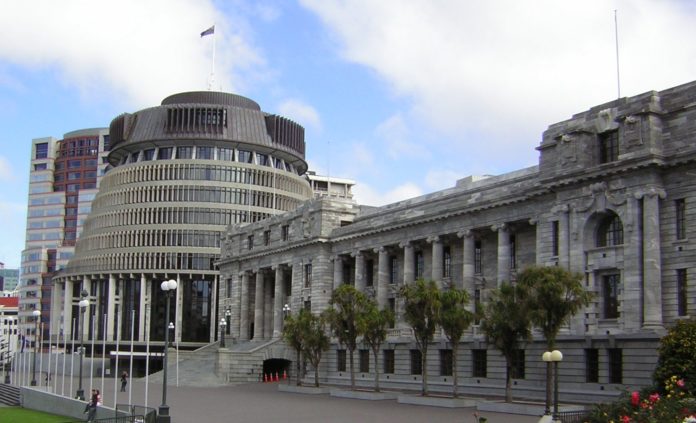
New Zealand Parliament Buildings, Wellington, New Zealand.
Editor’s Note: Here below is a list of the main issues currently under discussion in New Zealand and links to media coverage. Click here to subscribe to Bryce Edwards’ Political Roundup and New Zealand Politics Daily.
Those born after 2001 have only known a world “at war on terror”.
This means a generation growing up under under fears and moral panics about Muslims and unparalleled security measures around their bodies and lives.
In my new book, Coming of Age in the War on Terror, I look at what this has meant for young Muslims in Australia as they navigate their political identities at school.
An impact on everyday life
In 2018 and 2019, I interviewed and held writing workshops with over 60 Muslim and non-Muslim high school students across Sydney who were born around the time of the September 11 terror attacks. We explored their fears, their levels of trust with peers and teachers and political expression in a post 9/11 world.
No matter how many Muslim students spoke to me about their typically adolescent hobbies and interests, almost every student spoke about the impact of political and media discourse in their everyday lives. Abdul-Rahman, a 17-year-old Muslim boy at an Islamic school in western Sydney, put it this way:
I’m not afraid of terrorism. I’m afraid of being accused of being a terrorist.
Another student, Laila, told me:
I’ve always had this almost preconceived guilt attached to me […] [It’s] the million messages in the media, politicians, popular culture, all these little things that add up and add up.
‘Countering violent extremism’
For teenagers to talk about themselves as potentially “accused” is devastating, but not particularly surprising.
New South Books
For two decades, millions of federal and state dollars have been poured into “countering violent extremism” programs targeting Muslim youth. There has been no subtlety here. Counter-terrorism policies have been announced by politicians on the steps of mosques, with a focus on geographic and demographic populations deemed “at risk” (in other words, suburbs with large Muslim populations).
Consultations and round tables with government over “national security” have been highly publicised. Meanwhile, Islamophobic attacks have been condemned by politicians and the police because of how they might “undermine” relationships of cooperation between intelligence and law enforcement and the Muslim community.
Meanwhile, the public has been routinely reassured the government is tackling the “problem” of young Muslim Australians, “with strong, deradicalisation programs, working with Muslim communities”.
The figure of the vulnerable but also dangerous Muslim youth pops up time and time again, from moral panics around young “homegrown” terrorists, to attempts to introduce “jihadi watch” schemes in schools.
The pressure to self-censor
This landscape trickles down into young people’s everyday lives, including their schools.
The pressure to self-censor and manage your political and religious expression at school was a common theme among many students, resonating with what academics in the United Kingdom describe in their research.
Young Muslims spoke about how they had to ‘manage’ what they said in class. www.shutterstock.com
Anticipating how their tone, words and emotion would be interpreted by teachers and peers restricted students’ political expression.
This included a young Palestinian girl who had to push back against teachers, who reprimanded her for wearing a “Free Palestine” t-shirt at school, to students who refrained from writing about Iraq or Afghanistan as part of assignments because they had been cautioned not to “bring overseas conflicts into the classroom”.
Other students talked of staying quiet if controversial topics came up in class, such as news of a terrorist attack involving Muslims, or media headlines about Islam. I also met students who tried to appear as “good” or “moderate” Muslims (which inevitably meant apolitical) and erased all traces of their Muslimness to “fit in”.
Feeling targeted, isolated
In 2015, there was a media frenzy about youth radicalisation in prayer rooms in Sydney’s state schools. I interviewed students at a school in north-west Sydney three years later and they spoke about how that controversy had been felt in their school life.
Most of the students from suburbs and schools who came under media and political scrutiny as “problematic” had felt targeted and isolated. One student withdrew from his Muslim peers, abandoned his prayers at school, took different routes to school to avoid being hassled by the media, and “shut down” in class.
I got dragged into an argument with other kids in class about me following the same religion as these terrorists […] but my tone […] I came off very aggressive […] then I was scared, because that’s what people think of as radical extremists […] I felt like I’d be taken straight to the principal and you would have to deal with that. So I shut up.
We need a new approach
After two decades of seeing young Muslims as “problems” to be contained and managed, it is time we approached them in a different way.
Adolescence is a time to encourage critical thinking and support young people navigating their political identities and agency. Young people need to be empowered to work through their political and religious ideas and identities in safe, supportive environments. They need to be seen as individuals in their own right, not members of a demonised, racialised collective.
The vast majority of the young Muslims I spoke to were matter-of-fact about the global rise of Islamophobia and racism. They knew about certain jokes and assumptions in the popular vernacular (for example, “Allahu Akbar and bomb jokes” or “terrorist” equals “Muslim”).
Many were concerned about what this meant as they grew up and left school. They worried about facing discrimination at work and being able to practise their faith openly. They also knew how this suspicion and dehumanisation had been triggered by wider discourses and policies over which they had no power.
It is not up to the 9/11 generation to change this. We need teachers, politicians and the media to create a culture where young Muslims feel accepted and secure in their right to express their religious and political identities.
This piece was produced as part of Social Sciences Week, running 6-12 September. A full list of 70 events can be found here. Randa Abdel-Fattah will appear in a webinar on the “Implications of 9/11: 20 years” at 6pm on Thursday September 9.
Randa Abdel Fattah receives funding from the Australian Research Council under a Discovery Early Career Research Award.
When I stepped into the role of Victoria’s deputy chief health officer in July 2020, there was a lot to learn.
But the aspect most foreign to me was working with the media.
It felt very much like preparing for an exam. In the morning, I’d receive a briefing on the current facts and figures, the issues that journalists had raised and those that were anticipated to be raised, and I’d have an hour or so to remember as much as I could before answering questions at the press conference.
In reflecting on a year fronting press conferences, the role of journalism stood out as an important issue. I was aware the pandemic had become very much a political story, and that political journalists approached the story very differently to health or science journalists.
This is understandable. Public health is inherently political, and state premiers have never had so much exposure as during this pandemic. I was conscious that in standing up in front of media conferences, I was representing the work of thousands of people in government.
But for a hospital clinician unfamiliar with the public arena, having my every word scrutinised and dissected was a new and confronting experience.
I can think of several issues I might have taken a different approach to. It is particularly challenging to explain technical details in a press conference.
I recall once carefully coming up with an explanation of how we could tell when PCR tests might be falsely positive. Around halfway through explaining viral genomes and how a PCR test worked, it was evident all the journalists had tuned out and I was probably wasting everyone’s time.
Explaining and defending mathematical modelling to the public was also especially challenging, particularly because all models have limitations and assumptions.
It’s necessary to hold governments accountable, but not productive to crucify
From my perspective, it seemed there were several main types of media stories. The most constructive were explainers that interpreted complex data or concepts or giving an insight into what went on “behind the scenes”.
I felt the best use of the press conferences was in making sense of the current situation, and telling the stories and trends behind the numbers. Studies suggested these stories were more common earlier in the pandemic, and provided an opportunity for journalists to challenge us to provide the rationale for public health measures.
The “behind the scenes” stories were useful in conveying the complexity of the work of contact tracers or the hotel quarantine system, but could be difficult to organise. Much of the action occurs during online meetings and it was important to make sure the privacy of cases was protected.
The less constructive angles were those I termed “apportion blame and crucify”, and stories that were focused on finding conflicting opinions from experts or non-experts. Studies found reporting on blame peaked in August with the peak of Victoria’s second wave.
When events are moving at a rapid rate involving thousands of people, it is inevitable there will be mistakes or misunderstandings. It is human nature to try to find someone to blame.
This is not to diminish the impact that mistakes can have and the clear need to hold government accountable, particularly at a time when legal directions have a major impact on human rights.
On the other hand, a focus on finding fault can undermine confidence in the public health effort or erode compliance. The well-publicised breaches of UK restrictions by the advisor Dominic Cummings are cited as having eroded trust in government in the UK by “normalising” rule-bending.
More constructive questions would have been “what happened, what did we learn and how might we do better next time?”. This is what Victoria has tried to do in releasing reports on infections in health-care workers and in patients who acquired COVID while in hospital for other reasons.
We were also very conscious to try not to stigmatise communities in public. One of the first statements from the Australian Health Protection Principal Committee (AHPPC) was to call out racist behaviour against the Chinese community.
Since that time, many different communities have been affected, and there have been (and continue to be) extensive efforts to work together with community leaders and representatives to respond appropriately and effectively.
Although I had some experience in being a commentator earlier in the pandemic, being a representative of government has many new dimensions. Commentators are rarely accountable for their pronouncements. Prior to being deputy chief health officer, journalists rarely came back to me to follow up on what I had said before in the media. But as a public official, previous positions were often quoted back to me for comment. And it is much easier to point out problems than to find solutions to knotty issues.
Since I left the department in June, times have certainly been challenging with the large and escalating NSW outbreak, the rapidly escalating situation in Victoria, and the ongoing outbreak in the ACT. It’s evident the tools we used last year — lockdowns, testing, contact tracing — are no match for the increased infectiousness of the Delta variant.
We’re now back at “flattening the curve” — trying to slow the increase in cases to make sure COVID doesn’t run rampant. Even at current case numbers, there is significant strain on public health and hospitals.
The next months are going to remain difficult, as any significant relaxation of lockdowns is likely to result in a rapid rise in cases and hospitalisations. But to keep a lid on transmission, significant social restrictions are likely to be necessary. This reinforces the need to support those hardest hit by their impact.
However, I’m still hopeful about the future, as the “headwinds” posed by the increased infectiousness of the Delta variant will be reversed by the “tailwinds” of vaccination.
There will come a point, hopefully sooner rather than later, when there are enough people vaccinated that case numbers will start to decrease.
And like Victoria last year, NSW and Victoria will both start to plot their roadmaps out by slowly relaxing restrictions. The first steps are to permit the lowest risk activities, recognising some social contact is necessary to ease the mental burden on the community if lockdowns are going to continue for longer than a few weeks.
The modelling report led by the Doherty Institute and the experience of other countries provide us with a future where control will be easier, as public health measures will be complemented by high vaccination coverage.
The author would like to acknowledge Mia Lindgren, Professor of Journalism and Dean of Arts, Social Sciences and Humanities, Swinburne University, for her help with this article.
Allen Cheng receives funding from the Australian National Health and Medical Research Council. He was Victoria’s Deputy Chief Health Officer from July 2020 to June 2021.
The findings of the Intergovernmental Panel on Climate Change suggest Australia may have to jettison tracts of the bush unless there is a massive investment in climate-change adaptation and planning.
The potential impacts of climate change on employment and the livability of the regions have not been adequately considered. Even if emissions are curtailed, Australia likely faces billions of dollars of adaptation costs for rural communities.
As the IPCC’s Sixth Assessment Report (published last month) makes clear, the climate will change regardless of any mitigation actions taken now.
Even under its modest conservative projections, worldwide temperatures will rise by 1.5℃. That may not sound like much, but it will double the frequency of droughts — from once every 10 years to once every five.
Worse still, a 2℃ temperature rise — also a likely outcome without substantial emission reductions — will make droughts 2.5 times more frequent.
Climate change is already hurting Australian farmers. Compared with historical averages, agricultural profits have fallen 23% over the 20 years to 2020. This trend will continue.
The Australian Bureau of Agricultural and Resource Economics and Sciences (ABARES) predicts a likely scenario is that overall farm profit will fall by 13% by 2050. There will be significant differences between regions. Cropping profits in Western Australia, for example, are predicted to drop 32%.
Effect of 2001-2020 seasonal conditions on farm profit
With higher emissions, the reductions will be worse. Estimates of the fall in farm profits range from 11% to 50%.
These changes go beyond the cycles of weather with which Australian farmers have always had to cope. Inconsistent water supplies, increased natural disasters and greater production risks will render agricultural production in many areas uneconomic.
Due to these climatic changes agricultural assets, both land and infrastructure, could become virtually worthless – so-called stranded assets.
No future without water
Vibrant regional communities aren’t just about farms. They are interdependent networks of businesses, towns, public infrastructure and people.
The effect of falls in farm income will ripple throughout these communities. Lower output will mean fewer jobs. If farms close, so will other regional businesses, leading to more stranded assets. Those affected could face displacement along with an inability to sell their homes and businesses.
And of course these communities can’t survive without water.
So far development planning in Australia has not adequately considered the potential impacts of the climate on livability, especially in rural communities.
This failure to account for climate change exacerbates the potential for stranded assets.
For example, the NSW Auditor General reported in September 2020 that the state government had “not effectively supported or overseen town water infrastructure planning in regional NSW since at least 2014”. This contributed during the intense drought of 2019 to at least ten regional NSW cities or towns coming close to “zero” water.
In some areas these water problems are being compounded by population growth.
Consider, for instance, the NSW townships surrounding Canberra. In January 2020 the town of Braidwood (about halfway between Canberra and Batemans Bay) had to start trucking in water when its own water source, the Shoalhaven river, stopped flowing. Yet nearby Bungedore (about 50 km away) is building a new high school due to population growth.
This “tree-change” trend, with people leaving cities in search of a better lifestyle and more affordable housing, is widespread. It appears to have been amplified by the COVID-19 pandemic, with figures showing net internal migration of people out of Sydney and Melbourne.
More investment in adaptation needed
There is an urgent need for a comprehensive assessment by all levels of government of risks to livelihoods in agriculture and regional communities, and of the default risk on stranded assets.
Budget projections need to account for climate-change adaptation and economic structural change.
In last year’s budget the federal government committed to investing A$20 billion “to ensure Australia is leading the way in the adoption of new low-emissions technologies while supporting jobs and strengthening our economy”.
As important as this is, we must start planning and spending on adaptation.
The A$1.2 billion over five years the federal budget allocated for natural disasters is just the beginning. In some regions changed farming practices, subsidised insurance and investment in water infrastructure may be enough. But proper infrastructure takes many years to plan, and to build.
Some areas are going to become unviable. We will need deal with the loss of entire communities, and internal climate refugees.
It is time to start budgeting for the costs of living with climate change, not just the costs of cutting emissions.
The authors do not work for, consult, own shares in or receive funding from any company or organisation that would benefit from this article, and have disclosed no relevant affiliations beyond their academic appointment.
Papua New Guinean chief executives believe the country’s entire workforce needs to be vaccinated against covid-19 to be fully productive, says Business Council of PNG executive director Douveri Henao.
Although there seems to be a large number of vaccine hesitant people, Henao said that sooner or later it would be mandatory for companies or businesses that have more human contact, reports the PNG Post-Courier.
However, Lae Mayor James Khay said business houses in the country’s second-largest city must not force their employees to be vaccinated as this was against their constitutional rights of freedom of choice.
Khay said company managers, supervisers, human resource or anybody in management had no right to force their employees to get vaccinated as this was optional, not compulsory.
He said companies imposing strict “no jab, no job” policies as a preventive measure against covid-19 must remember that they would be depriving the rights of their employees to decide. This was totally wrong.
The controversy arose after 500 employees of Mainland Holdings Limited (MHL) walked off their jobs in Lae in protest over the their management’s vaccine policy.
Mainland Holdings Limited (MHL) management, in an unsigned circular, has advised staff members who have been vaccinated to come back to work.
Workers’ petition In the company’s response to a five-point petition presented by staff to the company directors, the company advised:
The company’s vaccination policy will not change; and
The company will follow “Niupela Pasin” protocols
MHL has agreed to pay wages and salaries, long service leave entitlements, rental fees and other entitlements.
All payments will be paid into bank accounts in compliance with company policies
The CEO refused to resign for keeping employees, families and the business safe.
Meanwhile, a major political party in the coalition government has weighed in on the “no jab, no job” controversy, saying it would support the people in a fight against companies demanding that their employees get vaccinated or lose their jobs.
The United Labour Party’s acting secretary Ruben Giusu, speaking from Lae, told the Post-Courier citizens had the constitutional right to choose whether or not get the covid-19 vaccine.
He said the party had met with unions in Madang and in discussion with the unions in Morobe Province about this and other issues affecting workers around the country.
“We have also received a petition from the Morobe Union and will be presenting that to the Prime Minister’s office,” he said.
Source: The Conversation (Au and NZ) – By Joe Burton, Senior Lecturer, New Zealand Institute for Security and Crime Science, University of Waikato
Fiona Goodall/Getty Images
As Friday’s attack by an ISIS sympathiser in a New Zealand supermarket has shown, ISIS’s extreme ideology still holds strong appeal for some disaffected Muslims living in the west. ISIS ideology did not die in Syria and Iraq with the defeat of ISIL and its plans to establish a caliphate.
ISIS continues to be a radicalising influence on those susceptible to anti-western narratives. Social networks, the dark web and encrypted platforms continue to facilitate the global spread of its beliefs.
That’s why we should be wary of describing him as a “lone wolf”. He may have acted alone, with no direct assistance from a terrorist group. But his ideology and process of radicalisation are connected to global groups deliberately seeking to promote their vicious world view and attract new adherents to their cause.
ISIS was never truly defeated. Their military defeat in Iraq and Syria has led to the diffusion of the threat to other countries, including Afghanistan. Following the Taliban’s declaration of an Islamic emirate in Afghanistan, there are concerns about a resurgence of Islamic violence internationally.
The Taliban are no friends of ISIS and there has already been some cooperation with the new Taliban government to protect Kabul airport from ISIS attacks. But extremists will have been inspired by the defeat of the US-led coalition in Afghanistan, and buoyed to continue their global aspiration for conflict between Muslim and non-Muslim peoples.
NZ’s global efforts to fight online terrorists
New Zealand is already pursuing international collaborations, including the Christchurch Call, to help eliminate terrorism online.
Some progress has been made, including reforming the Global Internet Forum to Counter Terrorism, creating a crisis response protocol for effective cooperation in the event of terrorist incidents with an online component, and greater involvement in the online counter-terrorism effort from civil society.
Hoewever, the threat landscape continues to evolve. There is now increased attention on the role of social media algorithms in directing users to extremist content, and the continued global threat from far-right groups, including the attack on the US Capitol earlier this year, which was organised online.
Prime Minister Ardern’s recent call for “ethical algorithms” to stop the risk and spread of extremist online content highlights the importance of the issue to the New Zealand government.
New Zealand has also committed to joining the Budapest Convention on cyber crime, which guides countries developing comprehensive national legislation against online crime. It also provides a framework for international cooperation to counter aspects of violent extremism, including investigations into extremism on social media and the dark web.
Beyond international efforts, New Zealand’s government is establishing a national centre of excellence on violent extremism to boost research and more effective counter-terrorism policy.
Why preventing attacks is so challenging
The type of attack committed in New Zealand on Friday is very difficult to prevent. It follows a number of similar incidents, including the killing of UK soldier Lee Rigby in 2013 and the more recent 2017 London Bridge attack, in which eight people were killed by a vehicle and knife attack by an Islamic extremist.
It raises questions about the role of New Zealand’s security services. The Auckland supermarket attacker had been monitored since 2017 for his extremist beliefs — and was even being followed by police on Friday before he began stabbing people, which is how they were able to shoot him within a minute. But this also points to some inherent difficulties in New Zealand’s and global counter-terrorism efforts.
The first problem is one of resources. Even though there are relatively few radicals living in New Zealand, security services still find it difficult to mount 24-hour surveillance of individuals who may plan to carry out acts of violence.
It remains difficult to stop offenders acting on their violent beliefs, especially in random attacks like the one in Auckland, and impossible to predict when or if their beliefs will translate into action.
More comprehensive and intrusive electronic surveillance of internet platforms is one option, but democratic societies like New Zealand are naturally reticent to use more heavy-handed practices, especially because whole communities can feel targeted.
Countering extremism can lead to further division and resentment, a lesson New Zealand policy makers have learned in the aftermath of the Christchurch mosque attacks.
New Zealand’s security services cannot arrest and hold people for their beliefs alone, and rightly so. This is the ultimate intractable problem with modern counter-terrorism.
Social cohesion is the key
Perhaps the best and only way forward in countering such attacks is community resilience and cohesion. The New Zealand Muslim community has already expressed its horror at this callous act of violence and will be concerned about any rise in anti-Muslim sentiment that may result from it.
New Zealand was able to take an international lead following the Christchurch attacks, and the national solidarity demonstrated in the aftermath of the attack was a lesson for other nations dealing with the scourge of terrorism.
Friday’s terrorist attack took place amid the global backdrop of the US and allied withdrawal from Afghanistan and the attack by ISIS-K, an Afghan affiliate of ISIS, which killed 13 US military personnel and over 150 civilians at Kabul airport.
It would be a stretch to draw any direct links between terrorism in central Asia and the attack in Auckland. But it shows that ISIS continues to recruit online and is harder to defeat there than on the battlefield.
Research for this work received funding from the European Union’s Horizon 2020 research and innovation programme under the Marie Skłodowska-Curie grant agreement No 844129.
New Zealand’s second terrorist attack in two years highlights weaknesses in existing counter-terrorism laws in preventing violent extremism. Beyond fast-tracking changes to terrorism suppression laws, there are still other areas of law and policy in New Zealand we need to urgently review.
Legislative change was already underway as part of an omnibus bill on terrorism. Following Friday’s attack, Prime Minister Jacinda Ardern will push parliament to pass those changes to terrorism suppression laws by no later than the end of this month, enabling stronger action against people who are considered a terrorist threat.
The perpetrator of Friday’s terrorist attack at an Auckland supermarket was under 24-hour surveillance and had recently been in prison for other terrorism-related offences. But as the judge noted, he could not be detained because the planning of a terror attack is not an offence under current laws.
The public has already made submissions on the new rules, and Ardern said a select committee is now considering changes that could prevent a similar attack.
While this will be very useful in the future, it is unclear how much value it would have had in yesterday’s attack.
Apart from the fact that law would have have had to exist before the attacker’s original convictions — it could not be retrospective — the elements of the crime (intent and ability to carry out the threat) would still have to be proven.
Two key legal areas needing action
There are two other areas of law and policy that should be reviewed now. The possession or threat of violence with knives in public places is unlawful in New Zealand, but we may now need to consider rules around their sale and accessibility.
Another set of laws needing to be re-examined relate to how a Sri Lankan national who was a known high-level security risk managed to reside in New Zealand. As a principle, any non-citizen who represents a threat to national security should be deported.
This includes refugees. If compelling reasons of national security can be shown in a court of law with all appropriate safeguards, they too should be expelled. In exceptional circumstances, even if someone is a citizen of New Zealand but has citizenship elsewhere, and they act against the interests of the country, there are options to expel them.
This may be the biggest gap in our defences, this time. But when the review is done, we must have zero tolerance for extremists, of any flavour, who represent a serious threat to national security.
The attack was classified as an act of terrorism because it was done with the purpose of advancing an ideological, political, or religious cause that intended to cause terror in the country or force the government to change a position.
The world has watched the influence of ISIS in Afghanistan. It had taken seven years to defeat ISIS in Iraq and Syria, and at the height of that conflict, there were an estimated 30 to 40 extremists under watch in New Zealand.
Those figures were vague, and we can assume they were lower during the years ISIS lost influence and the war on terror faded from view. As ISIS efforts in the Middle East collapsed, New Zealand’s concern turned more to those attempting to return from the war zones.
The focus was primarily on New Zealand ISIS operatives overseas, but the influence in New Zealand was not invisible.
In 2016, a man was prosecuted for possession of objectionable material after he walked into the US embassy in Auckland, wearing an ISIS shirt, and asked if the embassy was “bomb proof”.
In another instance, a man with prior convictions for intimidating behaviour, threatening to kill, and assault with a weapon, was found guilty of possessing 62 items of objectionable material and making and distributing material from Islamic State, which the government had classified as a terrorist organisation. He was sentenced to three years and nine months in jail.
Lessons learnt from past attacks
The laws around terrorism tend to evolve quickly after, not before, major attacks. For New Zealand, this meant our current foundation law, the Terrorism Suppression Act 2002 followed the attacks in the United States on September 11 2001.
This law has been amended multiple times over the following years, as the nature of the threat, and the need to better confront it, changed. Our most recent changes followed when terrorism hit New Zealand on March 15 2019.
The Christchurch mosque attacks were not fuelled by religious extremism but right-wing extremism. Other mass shootings around the same time period may have been narrowly avoided.
Agencies at the forefront of counter-terrorism reviewed their settings, splitting their counter-terrorism effort between violent extremism motivated by white identity and that motivated by religious faith.
As a result, New Zealand was better prepared for a terror attack. At the time of the Christchurch mosque attacks, the terrorism threat level was deemed low.
Yesterday, it was at medium, meaning an attack was “feasible and could well occur”. That proved to be right. New Zealand authorities were better prepared than last time, but gaps still allowed the attack to succeed. There is much more work to be done. Such incidents must not be allowed to repeat.
In 2015 I was jointly awarded a grant from the New Zealand Law Foundation to study the way NZ laws interacted with Islamic State.
Name suppression for the man responsible for yesterday’s New Zealand terror attack at a west Auckland supermarket has been revoked, but his name cannot be published yet.
The High Court has given his family who live overseas at least 24 hours to seek further suppression orders.
The Sri Lankan national was shot dead by police after stabbing six people inside Countdown in LynnMall.
Suppression orders prevented details about his identity and background from being made public.
The government filed an urgent application last night to have the court orders lifted, so details about the man’s identity and background could be made public.
In a judgment last night, Justice Wylie said there was no longer any proper basis for the suppression orders.
But he said the man’s family live overseas and lawyers needed time to contact them to take instructions.
He said he could consider extending the 24-hour period if needed.
Isis propaganda
However, it can be revealed the man was sentenced in July to one year of supervision after he was found guilty by a jury in the High Court at Auckland of two charges of possessing Isis propaganda that promoted terrorism.
He was found guilty of another charge of failing to comply with a search, but he was acquitted of a third charge of possession of objectionable material and a charge of possessing a knife in a public place.
Al Jazeera reporting of the New Zealand supermarket stabbing. Image: AJ screenshot APR
The state had sought to charge him under the Terrorism Suppression Act, but failed after a High Court judge ruled that planning a terror attack was not an offence under the law.
Because he had already spent three years in custody awaiting trial, he did not receive a further prison term for his offending.
Despite that, Prime Minister Jacinda Ardern said he had been under surveillance since 2016, because of his support for a violent ideology inspired by Islamic State.
The man was being so closely monitored by a surveillance and tactical team that police shot him within 60 seconds of the attack starting.
On the radar of authorities He arrived in New Zealand in October 2011.
He first came to the attention of authorities in 2016, when police formally warned him about posting anti-Western, pro-Isis, extremist content on the internet.
The man had also at some point told a worshipper at an Auckland mosque that he wanted to go to Syria to fight for Isis.
In a July 2020 judgment, Justice Downs said in May 2017, he had booked a one-way flight to Singapore but was arrested at Auckland Airport.
When police searched his apartment, they found a large hunting knife under the mattress on the floor and secure digital cards containing fundamentalist material, including propaganda videos and photos of the man posing with a firearm.
He was remanded in custody and in June 2018, he pleaded guilty to distributing restricted publications. In August 2018, he was sentenced to supervision, Justice Downs’ 2020 judgment said.
But the day after his sentencing, he went and bought the same model of hunting knife that police had earlier found under his mattress.
Arrested again
He was arrested again and another search found a large he had a large amount of violent Isis material, including one video about how to kill “non-Muslims”.
This time, the state sought to charge the man under the Terrorism Suppression Act, for planning a terrorist act.
But Justice Downs said that in itself was not an offence under the law.
In his decision, Justice Downs said: “Terrorism is a great evil. ‘Lone wolf’ terrorist attacks with knives and other makeshift weapons, such as cars or trucks, are far from unheard of.
“Recent events in Christchurch demonstrate New Zealand should not be complacent. Some among us are prepared to use lethal violence for ideological, political or religious causes.
“The absence of an offence of planning or preparing a terrorist act … could be an Achilles heel.”
Justice Downs said it was not for the courts to create such an offence.
“The issue is for Parliament,” he said.
A copy of Justice Downs’ judgment was provided to the Attorney-General, the Solicitor-General and the Law Commission.
High Court trial The man finally stood trial in the High Court at Auckland in May this year, on lesser charges.
A jury found him guilty of two charges of possessing Isis propaganda that promoted terrorism and one charge of failing to comply with a search.
He was acquitted of a third charge of possessing objectionable material and a charge of possessing a knife in a public place.
The man was sentenced in July.
In her sentencing notes, Justice Fitzgerald said the two publications on which he was found guilty were “nasheeds” – religious hymns.
Both were classified by the Censor as objectionable and contained Isis imagery and lyrics.
Justice Fitzgerald did not accept the explanation that he was listening to them to improve his Arabic language skills.
“Rather, I accept that the broader context to your possession of these nasheeds, which included a range of other materials relating to Isis or Isil, suggests that you have an operative interest in Isis.
“In other words, I do not accept that you might have simply stumbled across these and other Isis-related materials in your research of Islam or the historic Islamic State,” she said.
Report raised further flags
A pre-sentencing report raised further flags.
“The report writer suggests that you support the goals and methods of Isis,” Justice Fitzgerald said.
“The report writer concludes that the risk of you reoffending in a similar way to the present charges is high.
“It suggests that you have the means and motivation to commit violent acts in the community and, despite not having violently offended to date, as posing a very high risk of harm to others.”
Given he had already spent three years in custody awaiting trial, the man was sentenced to one-year supervision.
There were restrictions on his use of electronic devices, the internet and social media.
“The Police and Community Corrections clearly have concerns that you pose a not insignificant risk to the broader community,” Justice Fitzgerald said in her sentencing notes.
“I do not know whether those concerns are right and I sincerely hope that they are not, though having regard to all of the materials available to the court, I can say that they are not wholly fanciful.”
This article is republished under a community partnership agreement with RNZ.
New Zealand Prime Minister Jacinda Ardern says an attack at Auckland’s New Lynn Countdown supermarket today was a terrorist attack carried out by a violent extremist.
The prime minister and Police Commissioner Andrew Coster addressed media after the man was shot dead at a west Auckland mall this afternoon.
It is understood six people – all shoppers at the mall – have been wounded in the incident at LynnMall in New Lynn.
A St John Ambulance spokesperson said three patients in a critical condition and one patient in a serious condition had been taken to Auckland City Hospital; one patient in a moderate condition had been taken to Waitakere hospital; and one patient in a moderate condition had been taken to Middlemore Hospital.
Ardern revealed the terrorist was a Sri Lankan national who had arrived in New Zealand in October 2011 and he became a person of national security interest from 2016.
The reasons he was known to agencies was subject to suppression orders, but Ardern said it was her view that it was in the public interest to share as much information as possible.
The prime minister did say the terrorist held a violent ideology inspired by the Islamic State, but it would be wrong to direct any frustration at anyone other than this individual.
Personally aware She said she was personally aware of the terrorist before today’s attack.
Ardern said it was a senseless attack and she was sorry it had happened.
“What happened today was despicable. It was carried out by an individual.”
Ardern said the individual was under constant monitoring, and he was shot and killed within 60 seconds of the attack starting.
The police team who was monitoring shot and killed him.
Commissioner Coster said the man had been under heavy surveillance because of concerns about his ideology.
He had entered the store and obtained a knife from within the store before starting the attack.
When the man approached police with the knife he was shot and killed.
Police Commissioner Andrew Coster … surveillance teams were “as close as they possibly could be without compromising the surveillance.” Image: NZ govt screenshot APR
Surveillance teams ‘close’ Coster said the surveillance teams were “as close as they possibly could be without compromising the surveillance”.
“I acknowledge that this situation raises questions about whether police could have done more, whether police could have intervened more quickly. I’m satisfied based on the information available to me that the staff involved did not only what we expect they would do in this situation, but did it with great courage,” he said.
“The reality is, that when you are surveilling someone on a 24/7 basis, it is not possible to be immediately next to them at all times. The staff intervened as quickly as they could and they prevented further injury in what was a terrifying situation,” Coster said.
Ardern said all legal and surveillance power had been used to try to keep people safe from this individual.
“What I can say is that we have utilised every legal and surveillance power available to us to try and keep people safe from this individual. Many agencies and people were involved and all were motivated by the same thing – trying to keep people safe.”
Police at LynnMall today, the scene of the terrorist attack. Image: Marika Khabazi/RNZ
Coster said there had been nothing that would tell police the extent of his intentions, or that he intended to do this today.
He said the individual was very surveillance-conscious, and surveillance teams needed to maintain a distance to be effective.
intervened ‘in 60 seconds’ “There was nothing to prevent him being in the community and we were doing absolutely everything possible to monitor him and indeed the fact that we were able to intervene so quickly — in roughly 60 seconds — shows just how closely we were watching him.”
Ardern said the local Muslim community had been “nothing but helpful and supportive. It would be wrong to direct any frustration to anyone beyond this individual. That is who is culpable, that is who is responsible — no one else”.
She said his past behaviour and action did not reach the threshold to have him in in prison, which was why he was being constantly monitored.
An eyewitness told RNZ she had seen a man running around armed with a knife and heard many people screaming.
Another shopper who was in the supermarket at the time heard someone scream before shoppers started running towards the door.
Heavily armed police and ambulances remain at the scene.
This article is republished under a community partnership agreement with RNZ.
A high school student is one of three people — including his two brothers — who has been sentenced to 12 months in prison for breaching a Solomon Islands trial covid-19 lockdown late last month.
The 18-year-old was sentenced by a magistrates court on Wednesday with his older brothers after pleading guilty to one count of restriction of movement contrary to clause 4 (1) and (2) (a) and (b) of the Emergency Powers (COVID-19) (Honiara Emergency Zone) (Restriction of Movement) Order 2021 and Regulation 15 (1) (a), (2) and (4) of the Emergency Powers (COVID-19) (No. 2) Regulation 2021.
The court heard police had arrested the student and two other young men after attending a report of disturbances in the early hours of Monday, August 30, at Vavaya Ridge.
Police went to Vavaya Ridge at 2.45am and saw the three defendants on the main road main road.
Their lawyer, Donation Houa, from the Public Solicitor’s Office had told the court the student was drinking with his two brothers at his brother’s house before the lockdown exercise started at 6pm on Sunday, August 29.
“On his return home round 2am from his brother’s house, he was arrested,” Houa told the court.
He had asked the court to consider section 35 of the Penal Code (PC) to impose an unconditional discharge given that he was a student and that doing so would affect his education and future prospects.
‘I will not accept excuses’ However, principal magistrate Augustine Aulanga did not consider section 35 of the Penal Code when imposing the sentence.
“I will not accept those kinds of excuses,” he said.
“You are a student, you drink alcohol and then you commit an offence and then you plead to the court for mercy — I will not accept that,” Aulanga told the student.
In relation to the second defendant, the court heard that the 25-year-old was out looking for cigarettes when he was arrested.
“The reason why he was arrested was that he was away from his home looking for cigarettes,” Houa told the court.
The third defendant went out to the main road from his residence after hearing some boys drinking and they gave him alcohol.
“He took a sip and that’s when police arrived and arrested him,” Houa said, when he explained in court why his client was not home at the time of the offence.
Prosecution wanted a fine The lawyer also asked the court to consider when imposing sentence that there was no community transmission and that this was an exercise lockdown.
The prosecution had asked court to impose a fine of $300 or a term of imprisonment term equivalent to $300 if the defendants could not pay the fine.
Crown Prosecutor Geitaba Waletofea asked court to consider the fact that the three young men deliberately breached the movement restrictions despite knowing about the lockdown.
She said the men decided to ignore the law and continue to cause a disturbance.
Waletofea also added that although she understood that the virus was not yet in the Solomon Islands, the government had seen fit to impose such laws to help prepare foer the virus, and to know how to contain it in the future.
Magistrate Aulanga imposed a 12 month imprisonment term for each defendant.
The three defendants were among 32 people arrested during the 36 hour lockdown exercise from 6am, Sunday, August 29, to 6pm, Tuesday, August 31.
Papuan activist Victor Yeimo has been receiving medical treatment in hospital following a police crackdown on a protest in the provincial capital Jayapura demanding that he be released from detention to be treated for illness.
Hundreds of protesters had gathered at the Papua chief public prosecutor’s office on Monday to demand that West Papua National Committee (KNPB) spokesperson Yeimo be released from detention to be given hospital treatment.
Yeimo’s detention was finally deferred on Monday afternoon and he was taken to Jayapura public hospital for treatment.
The protesters arrived from the direction of Abepura, Jayapura city. They arrived at the chief public prosecutor’s office and began giving speeches on the street leading into the office.
In speeches, the demonstrators demanded that chief public prosecutor Nikolaus Kondomo immediately defer Yeimo’s detention.
Yeimo is currently being tried at the Jayapura District Court in a criminal case related to anti-racist demonstrations in Papua in 2019.
Demand for treatment The rally at the prosecutor’s office on Monday was because Yeimo had still not been released from detention. They demanded that the prosecutor release Yeimo immediately and allow him to be treated.
The police had already closed the main gate to the office and prohibited the protests from entering the grounds. About 1 pm police forcibly broke up the rally which was coordinated by the KNPB.
A number of protesters were injured, including Gad Holanue, Varra iyaba, Hengki Giban, Leti Soll, Egenius Tebay and Jufri Dogomo. Three protesters — Soleng Soll, Beni Orsa and Bayage — were arrested by police.
Papua Regional House of Representatives (DPRP) member John NR Gobai said he deplored the police actions. Gobai, along with DPRP member Laurenzus Kadepa, had been accepted by the court as guarantors for Yeimo to be released and treated in hospital.
“I was blocked by police, then I was pulled away by the demonstrators. I wasn’t able to get in and convey my wishes,” Gobai said.
A Regional Representatives Council (DPD) member from Papua, Herlina Murib, was also barred from entering the office.
“We hope that the police will not repeat this inhuman attitude which was shown by blocking us and removing people who wanted to convey their aspirations. This violates the law”, Murib said.
Second demonstration The demonstration at the prosecutor’s office on Monday was the second one held by activists demanding that Yeimo be allowed to receive hospital treatment.
Protesters had also gathered at the prosecutor’s office on Saturday, August 28, because the prosecutor was seen as ignoring the court’s ruling that Yeimo receive treatment.
However, Kondomo refused the request, saying Yeimo could only be released on Tuesday, August 31.
About 3.20pm on Monday, Yeimo was finally allowed to leave the Papua regional Mobile Brigade command headquarters detention centre and was taken to Jayapura public hospital. The ambulance transporting Yeimo was escorted by two police patrol cars and three black minivans.
Around 20 police officers escorted Yeimo to the hospital. Public prosecutors Adrianus Tomana and Valerianus Dedi Sawaki were also present at the hospital.
Advocate and lawyers Yeimo was accompanied to the hospital by advocate Emanuel Gobay and a number of other lawyers, Laurenzus Kadepa and John NR Gobai along with Yeimo’s wife and mother.
Speaking to Tabloid JUBI at Jayapura hospital, Tomana said the medical examination was in accordance with the court’s ruling. Tomana stated that how long Yeimo’s detention will be deferred would depend on the examination and the doctor’s diagnosis.
“How long the deferment will be depends on the results of the doctor’s examination. If the doctor declares that he is well, then we will revoke the deferment, and Yeimo will be returned to his detention cell,” he said.
Pacific health providers say a major New Zealand government funding boost is not just a recognition of the critical role they play in reaching Pasifika communities, but of the urgent and sustained response that the delta variant demands
It also announced a $23 million boost in funding to Whānau Ora to be divided between its three agencies including Pasifika Futures.
The funding comes with immediacy because health officials recognise the fast moving delta variant demands an urgent response.
Especially since the number of Pacific people infected is high, as is the number of Pacific peoples isolating.
Gerardine Clifford-Lidstone … funding will firstly secure the services of Pacific provider networks. Image: RNZ
Director of Pacific Health, Gerardine Clifford-Lidstone said the funding would firstly secure the services of Pacific provider networks in Auckland and Wellington regions where Pasifika needed the most, and immediate, support.
“The second is to support mobile services and ensure that people can get tested in the home and vaccinated in the home and have other health issues dealt with,” Clifford-Lindstone said.
“And then the third one is communications to ensure that our communities have access to information around vaccines and that needs to be in ethnic specific languages.”
Maintaining momentum The boost will help maintain momentum in the vaccine rollout and ongoing testing, which Pasifika Futures’ CEO Debbie Sorensen said had been met with a great response by the Pacific community
“And the Whānau Ora money will of course support people being able to stay in their bubbles. Being able to stay safe and keep their families fed and a roof over their families. We’ve had an assurance from Te Puni Kōkiri that we will have that money in our hands tomorrow,” Sorensen said.
She said there was no question that until now Pacific providers generally had been under-funded.
“They were not funded with any flexibility to meet a surge demand. So this will go some way to making sure that as a community we’re able to respond and support our families over the next fortnight but also to be looking into the future about what we do next,” she said.
Tevita Funaki of The Fono … welcomes the funding boost. Image: RNZ/Pasifika Futures
Tevita Funaki of Pacific health and social support provider The Fono welcomes the funding boost.
He said the health and social strains from this outbreak would have a significantly longer tail than those the community experienced after lockdowns last year.
And with the level of demand for The Fono’s food packages this time around, families needed more sustained support.
Welfare support initiative “The welfare support, so there’s a welfare support initiative that is supporting especially those that are in isolation. We’ll be able to maintain that because now we will have the ability to re-deploy staff into it. So this will help not only to scale it up, or help to resource it, but also will help to continue it, at least for the short to medium term,” said Funaki.
The innovation manager of Pacific health, disability and social services provider Vaka Tautua, Bernice Mene, said the boost made public health sense given what her organisation had seen working throughout the country.
“And a lot of the feedback is that they are keen for vaccinations but the access, there’s problems with access. And our disabilities community as well. It’s being able to access the vaccination stations, the essential workers or the workers as well,” Mene said.
She said increased support for communication, getting Pacific communities the essential information in a way they could access was also vital in the pandemic response.
This article is republished under a community partnership agreement with RNZ.
After years of waiting, the federal government finally introduced Australia’s first offshore electricity legislation in parliament yesterday. The bill will establish a regulatory framework for the offshore wind industry, paving the way for more than ten proposed projects.
Australia’s wind resources are among the world’s best, comparable to the North Sea between Britain and Europe where offshore energy is an established industry. In fact, research from July found if all the proposed offshore wind farms were built, their combined energy capacity would be greater than all of Australia’s coal-fired power plants.
But Australia’s lack of legal framework has meant we’re yet to commission our first offshore wind farm.
The new legislation took years of stakeholder anticipation leading to public consultation in 2020, but upon first reading one is left a little wanting. We find four reasons the bill isn’t up to scratch yet, from its inadequate safety provisions to vague wording around Native Title rights and interests.
A huge opportunity
The International Renewable Energy Agency (IRENA) identifies offshore wind as key in the transition from fossil fuels to clean energy, calling for the world’s offshore wind capacity to increase ten-fold, to 45 gigawatts per year by 2050.
In line with IRENA’s position, many of Australia’s trading partners have ambitious targets for offshore wind, including the UK, US, European Union, Korea and Japan. For example, the UK’s target is to reach a total of 40 gigawatts of offshore wind energy by 2030.
This new bill is Australia’s attempt to join its partners. It will give offshore electricity projects the framework for construction, operation, maintenance, and more.
One project, for example, is the Star of the South, which plans to build an offshore wind farm off the coast of Gippsland in Victoria. This project has the potential to supply 20% of the state’s energy needs. Like Australia’s other 12 proposed offshore wind projects, it has been waiting on an appropriate regulatory framework to go ahead.
Offshore wind is essential to help Australia cut its greenhouse gas emissions and create a sustainable and affordable electricity market. Indeed, the explanatory memorandum that accompanies the bill notes that if passed, the legislation will establish certainty that investors crave, potentially leading to billions of dollars worth of investment.
Wind energy infrastructure projects will also create thousands of jobs. Recent estimates suggest the offshore wind industry could create as much as 8,000 jobs each year from 2030. The Star of the South alone expects to create 2,000 direct jobs in Victoria over its lifetime, including 200 ongoing local jobs.
But the bill doesn’t go far enough
This bill represents a first attempt to establish a world-class regulatory regime. But does it?
Well, first of all it didn’t get off to a good start. In 2020, the government committed to having the legislation settings and framework in place by mid 2021. This target was not delivered.
And upon closer examination of the bill, we find critical omissions compared to best practice in North Sea jurisdictions.
Offshore wind is essential to help Australia cut its greenhouse gas emissions. Shutterstock
1. Weak protections for the environment
To protect the environment, projects need to create a management plan that complies with requirements under the federal environment law. But this won’t ensure marine life is unharmed by enormous, noisy turbines.
It only addresses select environmental issues. The law is far too broad to deal with the unique requirements of offshore wind turbines, which Australian waters have never experienced before.
For example, under the bill’s broad management plan requirements, many environmental issues such as underwater noise and impacts on fish spawning would likely not be addressed.
Compare this to jurisdictions in the North Sea. In the UK, offshore wind projects require a thorough strategic environmental assessment, detailing all possible environmental impacts.
2. Native Title holders lose out
Offshore energy project developers are prohibited from interfering with Native Title rights and interests. But the bill allows interference if it’s “necessary” for the for the “reasonable exercise” of project rights and obligations.
This raises a critical question — what is considered “necessary” and “reasonable”?
This vague wording could see projects go ahead when it conflicts with Aboriginal and Torres Strait Islander communities and their Native Title rights.
Offshore wind energy development holds inherent risks, such as transporting and constructing wind turbine components in hazardous environments, which are often subject to extreme weather. Without a solid safety framework, construction may lead to injuries or deaths, similar to those that have occurred in the North Sea.
Under the new legislation, the National Offshore Petroleum Safety and Environmental Management Authority (NOPSEMA) would be appointed as the offshore wind regulator. NOPSEMA would oversee safety using the generic Work, Health and Safety Act 2011.
But the bill says parts of the Work, Health and Safety Act will need to be modified so they’re “fit for purpose”. It would require extra provisions, exclusions and workarounds, making the assurance of structures difficult.
Compare this to offshore petroleum operations, which get a bespoke safety framework , one NOPSEMA is already familiar with. Why isn’t one put in place for offshore wind farms?
Offshore wind construction workers may have to deal with extreme weather, putting them at risk. Shutterstock
4. It may leave the community behind
In Denmark, offshore wind turbines are located less than 16 kilometres from the coastline. They’re obliged to offer at least 20% of ownership shares to local citizens.
But under Australia’s proposed bill, there are no explicit community benefit schemes. This is an important omission, because creating laws to increase community participation and engagement could reduce any risk of “not in my backyard” (Nimbyism) attitudes. It would also ensure hosting communities are actively involved early and frequently throughout the lifecycle of offshore wind projects.
In crafting best practice regulation coupled with community benefit schemes, the opportunities are limitless. A first step could be to create further public submission opportunities for communities to comment on the bill.
Offshore wind is our golden ticket to a reliable, affordable, and clean energy future. Investing in the offshore wind industry is a no-brainer for Australia, but it needs to be done right.
The nature and enforceability of university codes of conduct have been in the news lately. Prominent sackings for alleged misconduct include the cases of Professors Peter Ridd from James Cook University and Tim Anderson from the University of Sydney.
Anderson had a legal win this week when the full court of the Federal Court decided Sydney’s enterprise agreement contains an enforceable right of academics to “intellectual freedom”.
Previous court rulings had suggested intellectual freedom is an aspirational goal with limited legal force. Ridd and Anderson have both argued they were sacked for exercising their right to intellectual freedom, albeit in ways to which many, including us, would object.
The issue, broadly speaking, is what happens when the manner in which academics want to exercise their right of intellectual freedom under university enterprise agreements collides with what their university’s code of conduct requires of them. Universities are clearly wondering about the worth of their codes of conduct if they cannot dismiss staff for discourteous, disrespectful or offensive behaviour.
Universities and academics, and Ridd in particular, are awaiting the outcome of his appeal to the High Court.
As for Anderson, the National Tertiary Education Industry Union supported him in the case of NTEU and Anderson v University of Sydney [2021] FCAFC 159. The full court found this week that his right to exercise intellectual freedom is relatively unfettered. But victory is only partially complete: a Federal Court judge will now have to decide whether Anderson was exercising his right to intellectual freedom.
Anderson was dismissed in 2019 after the university repeatedly warned him about his social media activity. Among other things, he posted:
PowerPoint slides with an infographic of an Israeli flag with a swastika superimposed over it
a photo of one of his tutors wearing a shirt bearing the words in Arabic “Death to Israel”, “Curse the Jews” and “Victory to all Islam”
allegedly false references to the university’s allegations against him when he had been directed to keep their communications confidential.
Anderson removed the “University of Sydney” from the “about” details of his Facebook and Twitter accounts after receiving a final warning. He did not remove the comments and posts. After he reposted and retweeted the Israeli flag with swastika infographic, the university at first suspended and then terminated his employment for “serious misconduct”.
Anderson argues he was exercising his right to intellectual freedom under the university’s enterprise agreement and, as such, his activities could not constitute misconduct. He contends that, in warning him and terminating him, the university breached the agreement (it crossed two agreements, from 2013-17 and 2018-21) and contravened the Fair Work Act 2009.
What is the effect of the judgment?
What does the court finding mean? This right to intellectual freedom under their enterprise agreement allows Sydney’s academics to express unpopular or controversial views, provided they do not engage in harassment, vilification or intimidation. They must also exercise their right “in accordance with the highest ethical, professional and legal standards”.
The court found that if Sydney academics are exercising the right to intellectual freedom, it generally could not be misconduct or serious misconduct to do so. This was the case even if the manner in which they exercised their right breached the code of conduct.
In this way, the court privileged the intellectual freedom clauses over other clauses in the agreement. These included “misconduct” and “serious misconduct” being specifically defined as including breaches of the code of conduct.
The ongoing problem for Sydney’s academics is that the court decided the code of conduct did not identify the “standards” relevant to deciding whether intellectual freedom was being exercised “in accordance with the highest ethical, professional and legal standards”, as stated in the enterprise agreement.
The court was considering the legal issues of the relationship between Sydney’s enterprise agreement and its code of conduct. But whether Anderson’s social media activity was a permissible exercise of intellectual freedom under the agreement and whether he was wrongfully dismissed remains to be decided by a Federal Court judge. If the judge finds in favour of Anderson, the University of Sydney may have to reinstate and compensate him.
In the meantime, the Federal Court has left Sydney’s academics with a relatively unqualified right to express their opinions however they choose. They are unconstrained by any behavioural standards, as long as they do not harass, vilify, intimidate or fail to uphold the “highest ethical, professional and legal standards”.
This judgment underscores to Australian universities what they must do to ensure they can terminate staff for breaches of their codes of conduct. Their enterprise agreements must explicitly qualify the right of intellectual freedom by reference to upholding the code of conduct.
Universities will also have to consider the effect of the French Model Code for the Protection of Free Speech and Academic Freedom on this course of action.
For Australian academics generally, the judgment demonstrates that their right to intellectual freedom is strongly prescribed by what their particular enterprise agreement says.
The lingering question for Sydney academics is: what are the “the highest ethical, professional and legal standards”? This week’s judgment suggested these standards do not require them to avoid causing any offence to others. Nor did they necessarily have to conduct themselves with “respect”, “impartiality” or “courtesy”. It also did not matter to the court whether the conduct might be able to be carried out in a different way so as to not cause offence.
We, along with Anderson, now have to await a Federal Court judge’s view as to whether his conduct departed from the required standards.
The authors do not work for, consult, own shares in or receive funding from any company or organisation that would benefit from this article, and have disclosed no relevant affiliations beyond their academic appointment.
A new anti-conversion law passed in India’s most populous state, Uttar Pradesh, is being used to prevent inter-faith couples from getting married. Media reports suggest right wing groups are preventing interfaith marriages by claiming it involves “forced conversion”, or what they call “love jihad”.
“Love jihad” is a term used by these groups to suggest Muslim men seek to deceive Hindu women through marriage and convert them to Islam.
Under the new anti-conversion law, passed on November 28, interfaith couples must now give two months’ notice to a district official before getting married. Currently, under the Special Marriages Act, 1954, that governs interfaith marriages in India, couples must give a notice of 30 days.
The new law has criminal aspects, too, including a jail term of up to ten years if convicted of using marriage to force a spouse to change their faith. Parents, siblings and “any relatives” by marriage and adoption can complain against a conversion. Such marriages can also be nullified. The burden of proof lies on the persons converting, or those counselling the persons to convert, to prove the conversion isn’t forced.
Women’s rights advocates are pointing out this amounts to curtailment of the right to choose one’s partner by the state.
Under the Bhartiya Janata Party, also the ruling party at the federal level, eight of 29 states of India now have anti-conversion laws, including these interfaith marriage clauses. These laws seek to regulate religious conversions through “forcible or fraudulent means”, or through “allurement” or “inducement”. In practice, they restrain the citizens’ constitutional right to convert.
According to the Indian Constitution, citizens have the freedom to “profess, practice and propagate” religion. The word propagate must include the citizen’s right to convert.
However, the right to propagate and convert has come into contradiction with laws that restrict a citizen to do so. Anti-conversion laws have roots in India’s colonial history and the deep caste and communal fractures in its society.
As in other parts of the world, the British and other European colonisers were accompanied by cultural missions to “civilize” natives in India.
Proselytizing Christian missionaries have traditionally focused their efforts on better living standards and education among the tribal (Indigenous) people of India.
In the 1950s, Indian social reformer Dr Bhim Rao Ambedkar promoted mass conversion to Buddhism as a way for the lower castes, who were considered “untouchable”, to escape the Hindu religious order and attain a more dignified life.
Ambedkar was a jurist and chairman of the committee that drafted the Constitution of India. He took up the cause of the “untouchables” within the anti-colonial movement in India, and made a crucial contribution in ensuring freedom of religious conversion was included in the constitution.
The first generation of anti-conversion laws, euphemistically called “Freedom of Religion” Acts, were passed in the late 60s and early 70s. They were enacted in states with higher tribal populations. However a few princely states in India (those governed by a local ruler or king, unlike other states that were ruled by the British before India’s independence) had similar laws in place even before the country became independent in 1947.
These laws were enacted to allay anxiety among the caste Hindus around conversion to Christianity and Islam, and later to stop the lower castes converting to Buddhism, in order to maintain the caste hierarchy.
Recent laws, though, are more forthright in their intent, and include “conversion for marriages”.
How are the new laws being used?
The new laws have been passed in states where the Bhartiya Janata Party (the ruling party) has strong support. Through these laws, the ruling party’s agenda is to mobilise anti-Muslim sentiment in these states.
The case of the latest law in Uttar Pradesh shows the intensification of these tendencies due to upcoming state elections. As the most populous state, Uttar Pradesh sends the largest contingent of representatives to the Parliament of India. With the highest concentration of Muslims in the country, the state also had the highest number of Muslim MPs until 2014, when the ruling party swept the parliamentary elections by consolidating Hindu voters across caste divides.
The new anti-conversion laws, including the one in Uttar Pradesh, are being debated with the backdrop of a fake news campaign alleging Muslim men ensnare Hindu women with fraudulent marriages with the sole aim of overtaking the Hindu population to attain demographic majority status in India.
However, what is being missed in the social commentary on these laws is the criminal penalty for mass conversions (defined as two or more) among lower castes and tribal people. Converting for the purpose of attaining a better education, job and lifestyle is being called “allurement”.
Through such discriminatory law-making, right wing forces in power are seeking to achieve their core agendas.
First, they seek to mobilise anti-minority sentiments by fanning the insecurities of the Hindu majority, polarising people and explicitly disenfranchising Muslim minorities.
Second, they wish to mount a backlash against the gains made by the feminist movement in achieving increased autonomy for women in a patriarchal society.
A repeal of these laws may not be enough to bring about social justice in India, but it is a necessary step.
Ghazala Jamil does not work for, consult, own shares in or receive funding from any company or organisation that would benefit from this article, and has disclosed no relevant affiliations beyond their academic appointment.
Major sporting events like the Paralympics are a breeding ground for technological innovation. Athletes, coaches, designers, engineers and sports scientists are constantly looking for the next improvement that will give them the edge. Over the past decade, 3D printing has become a tool to drive improvements in sports like running and cycling, and is increasingly used by paralympic athletes.
The Paralympics features athletes with a diverse range of abilities, competing in a wide range of different categories. Many competitors use prosthetics, wheelchairs or other specialised components to enable them to perform at their best.
One interesting question is whether 3D printing widens or narrows the divide between athletes with access to specialised technologies, and those without. To put it another way, does the widespread availability of 3D printers — which can now be found in many homes, schools, universities and makerspaces — help to level the playing field?
Forget mass production
Mass-manufactured equipment, such as gloves, shoes and bicycles, is generally designed to suit typical able-bodied body shapes and playing styles. As such, it may not be suitable for many paralympians. But one-off, bespoke equipment is expensive and time-consuming to produce. This can limit access for some athletes, or require them to come up with their own “do-it-yourself” solutions, which may not be as advanced as professionally produced equipment.
3D printing can deliver bespoke equipment at a more affordable price. Several former paralympians, such as British triathlete Joe Townsend and US track athlete Arielle Rausin, now use 3D printing to create personalised gloves for themselves and their fellow wheelchair athletes. These gloves fit as if they were moulded over the athlete’s hands, and can be printed in different materials for different conditions. For example, Townsend uses stiff materials for maximum performance in competition, and softer gloves for training that are comfortable and less likely to cause injury.
3D-printed gloves are inexpensive, rapidly produced, and can be reprinted whenever they break. Because the design is digital, just like a photo or video, it can be modified based on the athlete’s feedback, or even sent to the nearest 3D printer when parts are urgently needed.
An elite athlete might be concerned about whether 3D-printed parts will be strong enough to withstand the required performance demands. Fortunately, materials for 3D printing have come a long way, with many 3D printing companies developing their own formulas to suit applications in various industries – from medical to aerospace.
Back in 2016, we saw the first 3D-printed prosthetic leg used in the Paralympics by German track cyclist Denise Schindler. Made of polycarbonate, it was lighter than her previous carbon-fibre prosthetic, but just as strong and better-fitting.
With research showing sprint cyclists can generate more than 1,000 Newtons of force during acceleration (the same force you would feel if a 100-kilogram person were to stand on top of you!), such prosthetics need to be incredibly strong and durable. Schindler’s helped her win a bronze medal at the Tokyo games.
More advanced materials being 3D printed for Paralympic equipment include carbon fibre, with Townsend using it to produce the perfect crank arms for his handbike. 3D printing allows reinforced carbon fibre to be placed exactly where it is needed to improve the stiffness of a part, while remaining lightweight. This results in a better-performing part than one made from aluminium.
3D-printed titanium is also being used for custom prosthetic arms, such as those that allow New Zealand paralympian Anna Grimaldi to securely grip 50kg weights, in a way a standard prosthetic couldn’t achieve.
Different technologies working together
For 3D printing to deliver maximum results, it needs to be used in conjunction with other technologies. For example, 3D scanning is often an important part of the design process, using a collection of photographs, or dedicated 3D scanners, to digitise part of an athlete’s body.
Such technology has been used to 3D-scan a seat mould for Australian wheelchair tennis champion Dylan Alcott, allowing engineers to manufacture a seat that gives him maximum comfort, stability and performance.
3D scanning was also used to create the perfect-fitting grip for Australian archer Taymon Kenton-Smith, who was born with a partial left hand. The grip was then 3D-printed in both hard and soft materials at the Australian Institute of Sport, providing a more reliable bow grip with shock-absorbing abilities. If the grip breaks, an identical one can be easily reprinted, rather than relying on someone to hand-craft a new one that might have slight variations and take a long time to produce.
All these technologies are increasingly accessible, meaning more non-elite athletes can experiment with unique parts. Amateurs and professionals alike can already buy running shoes with 3D-printed soles, and 3D-printed custom bike frames. For those with access to their own 3D printer, surf fins, cycling accessories and more can be downloaded for free and printed for just a few dollars.
However, don’t expect your home 3D printer to be making titanium parts anytime soon. While the technology is levelling the playing field to a certain extent, elite athletes still have access to specialised materials and engineering expertise, giving them the technological edge.
This article was written in collaboration with Dr Julian Chua, who is affiliated with ReEngineering Labs, a sports technology consultancy, as well as the Sports Technology Blog (https://sportstechnologyblog.com/).
Andrew Novak does not work for, consult, own shares in or receive funding from any company or organisation that would benefit from this article, and has disclosed no relevant affiliations beyond their academic appointment.
Most Australians diagnosed with COVID-19 recover at home, rather than in a quarantine facility or hospital. About 10% have required hospital treatment. However, a handful have had worsening symptoms, did not receive emergency care and died at home.
There appear to have been two factors behind such COVID deaths at home: worry about the perceived costs and risks of seeking official health care; and the sudden onset of complications from a worsening infection.
Here’s what to watch out for when symptoms worsen dramatically at home and when to call an ambulance.
As a GP I am asked this question often. Patients naturally want guidance on the signs to look out for so they don’t seek help too late or too early. This is called “safety netting”, and is guided by an understanding of the natural history (prognosis) of a disease and its response to treatment. People also seek advice on worrying symptoms to look out for, and specific information on how and when to seek help.
With COVID-19, the natural course of the infection varies. What starts out with cold and flu-like symptoms can lead to breathing difficulties within five days. Not all patients get symptoms that warrant hospital care. But of those who do go to hospital, this generally occurs around 4-8 days after symptoms start.
We know COVID-19 affects the lungs as well as multiple organs, leading them to fail. This includes complications such as pneumonia, liver or kidney failure, heart attacks, stroke, blood clots and nerve damage.
This progress to more severe disease happens as the virus triggers release of inflammatory proteins, called cytokines, flooding the bloodstream and attacking organs.
Some symptoms of these COVID complications include:
The main risk factors that predict progression to severe COVID include: symptoms lasting for more than seven days and a breathing rate over 30 per minute. Faster breathing is to compensate for the less-efficient transfer of oxygen to lung blood vessels, due to inflammation and fluid build-up in the airways.
But how diseases progress is rarely straight forward, making it impossible to give definitive lists of “red flag” symptoms to look out for.
Some COVID patients have “happy” or silent hypoxia. This features low levels of oxygen in the blood but there aren’t the usual signs of respiratory distress normally seen with such low oxygen levels, including feeling “short of breath” and faster breathing.
However, these patients can suddenly deteriorate. Faster and deeper breathing are early warning signs of failing lungs.
What to do
If you’ve already been diagnosed with COVID-19 and are concerned about your symptoms, call the phone number you will have been given by your local public health unit, or your health-care provider.
However, for a sudden deterioration, call an ambulance immediately. Tell the operator you have COVID.
If you’re not sure which applies or you can’t get through on the phone for medical advice immediately, call 000 anyway as operators are trained to triage your call.
Being in hospital if you develop severe COVID, with access to the best monitoring and treatments available, will increase your chance of surviving complications of COVID, and recovering well.
However, the likelihood of getting any of these complications if you’re fully vaccinated is very low. So the best way to protect yourself (and never having to think about calling 000 for COVID) is to get vaccinated.
David King does not work for, consult, own shares in or receive funding from any company or organisation that would benefit from this article, and has disclosed no relevant affiliations beyond their academic appointment.
University of Canberra Professorial Fellow Michelle Grattan and University of Canberra Vice-Chancellor and President Professor Paddy Nixon discuss the week in politics.
This week Michelle and Paddy discuss the state of the federation generally – with various states experiencing varying levels of lockdown and case exposure. Despite the disparity, the federal government is pushing to treat the virus as endemic.
They also discuss the economic growth experienced in the June quarter, and the prime minister’s further attempts to keep the minutes of national cabinet confidential.
Michelle Grattan does not work for, consult, own shares in or receive funding from any company or organisation that would benefit from this article, and has disclosed no relevant affiliations beyond their academic appointment.
Dynamic living processes get into feedback loops. The most common is a negative feedback loop, whereby processes self-regulate; when something happens then something else happens, in response, to offset the initial event. If it gets cold, we put on another layer of clothing. If a consumer good becomes scarce, its price will go up, and we buy less of it. As ‘loops’, these are incremental ‘trial and error’ processes. We may still need to adjust our clothing further. And the price of something falls in stages, following a consumer feedback response as noted.
Sometimes however we get into destabilising ‘positive feedback loops’; these may involve ‘arms races’, ‘races to the bottom’, or ‘tipping points’. We understand that economic ‘negative externalities’ generate adverse environmental consequences which may in turn lead to unsustainable economic behaviours arising from desperation; anthropomorphic climate change may be reaching an irreversible tipping point.
The Great Depression was ‘great’ because policy responses – for a number of years – became a part of the problem rather than part of the solution; most particularly, retrenchment of government spending and financial supports. Eventually new insights brought about new responses, and the global Depression stabilised to some extent. While negative (stabilising) feedback eventually prevailed, that was not soon enough to prevent World War Two (WW2); and indeed WW2 may itself be classed as feedback.
Covid19 Immunity Feedbacks
We know that evolution involves ‘arms races’ between species and their predators. While the main relation between species and their resident microbes is one of equilibrium – negative feedback – novel microbes can become dangerous micropredators. Indeed viruses, as we mostly understand them, are viral micropredators. Coronaviruses are micropredators (aka ‘pathogens’). People (as a host species) may be infected by coronaviruses new to humans, and then find ways to fight them off. The viruses – which, by their nature, can evolve rapidly – fight back, and people in turn fight back (for example with vaccines). We know that these particular arms races generally do not go on forever, because we coexist with a number of community coronaviruses for which we have an ‘endemic’ equilibrium relationship; viruses which were new, once.
For people – and other species subject to viral predation – there are three endgames. First is a return to normality achieved through a long-term elimination of the virus. (We can say that the 2003 coronavirus SARS-COV1 has been eliminated, though not eradicated. If it returns, it will be, in effect, a new virus; that’s because it was eliminated quickly; and because it has been eliminated for a long time, at least by the standards that apply to coronaviruses.) Second, and most extreme, is the elimination of a host species; the virus may itself avoid co-elimination by switching to one or more other host species.
Third is the development of an equilibrium between host and virus; the virus ceases to be novel, and the host species gains ‘herd immunity’ to that virus. There is a problem though, for host species, because immunity tends to wane; for different types of pathogen the rate of deimmunisation varies. Coronaviruses, as a class, would appear to be one microbe type for which deimmunisation is relatively rapid. (For a number of microbes associated with severe disease immunity is not only acquired, it may also be inherited. The means through which inherited immunity takes place is little known, but almost certainly through non-predatory microbes within the microbiome. The most important historical example is the very uneven ‘Columbian exchange’ through which Native Americans suffered a mass die-off from diseases from which Europeans, Asians and Africans had attained inherited immunity.)
Biohistory can be understood as an arms race that takes the form of a sequence of individual ‘games’ (where our struggle with Covid19 is such a game). For species such as humans to survive (or at least to survive in sophisticated urban civilisations), this is an arms race into perpetuity. As new micropredators evolve, humans need to acquire – in historical time – more immunity to more pathogen species. By and large, humanity has done this in the past without massive public health interventions; although there is a long and honourable history of intervention to diseases, with the development of vaccinations – starting with cowpox to beat smallpox – playing a particularly important role. (The word ‘vaccine’ derives from a Latin word ‘vacca’ for ‘cow’; vache in French.)
So that’s the background. Vaccines as a public health response may lead to elimination or to equilibrium. Some vaccines require boosters – reimmunisations to maintain an uneasy equilibrium – the most familiar of these being the relatively recent influenza vaccine, for which vulnerable people need annual revaccinations.
The question posed here, however, is whether – and under what circumstances – public health policy responses may lead to adverse positive feedback, such as a ‘race to the bottom’. (We have noted that vaccines contribute to the antiviral arms race, which, while a necessary and beneficial form of positive feedback in large domesticated populations, requires micropredators to themselves become fitter in an evolutionary sense. We may also note that our use of antibiotics has been central to an antibacterial arms race; a race that may be reaching its tipping point.)
The race that I am particularly concerned about is that between immunisation and deimmunisation. Immunisation takes place both naturally – the traditional way – and artificially (through vaccinations). The availability of vaccination technology does not mean that natural immunisation becomes unimportant. (It would appear that high levels of immunity to Covid19 at present in the European Union is due to a mix of both natural and artificial immunisation.)
To assess the likely outcome of this race, in relation to the present pandemic, we need much better knowledge of both natural immunisation (including co-immunisation) and deimmunisation. While these processes may be unaddressed (as ‘unknown unknowns’) by public health policymakers, the mere fact that I (and others before me) are raising these issues graduates them to ‘known unknowns’. Any question that is posed, but unanswered, is a known unknown. (Further, ‘knowns’ are provisional truths – undisproven; that’s the inherent nature of scientific knowledge.)
The potential for adverse positive feedback loops arising from Public Health Policy measures.
Public health measures, introduced in 2020 on an unprecedented global scale, unleashed many known and unknown unknowns. These measures included ‘stay-at-home’ lockdowns, widespread temporary business closures, and a decimation of international travel.
The unknowns which I am concerned about here relate to deimmunisation with respect to Covid19 in particular, and towards respiratory viruses in general. (In an earlier article, the dangers of Delta versus the dangers of reduced community immunity, I developed the concept of CRVI – community respiratory viral immunity – as a general measure of communities’ immunity towards respiratory viruses. The concept is one of ‘co-immunity’, whereby immunity to one virus may confer some immunity to others. Cities like London and New York, to survive and prosper, require the highest levels of CRVI. In the biohistory arms race, CRVI must keep increasing if civilisations are to survive.)
We can consider the issue by thinking about ‘rings’ of immunity. The inner ring represents immunity to a specific pathogen, in our case SARS-COV2 including its evolved variants such as ‘Gamma’, which devastated South America, and ‘Delta’, which is devastating Tahiti among other places. Immunity at this ‘inner ring’ level is boosted by infection and/or vaccination. The former (infection) is more costly to affected individuals than the latter (vaccination) because it is much more likely to lead to serious illness or death. The extent of immunity arising from either process – infection or vaccination – is known to depend on the attributes of immunised individuals (especially age and comorbidity). The key unknown is the extent that immunity to SARS-COV2 diminishes through time.
The next ring of immunity relates to the class of viruses known as ‘coronaviruses’. The question here – the known unknown – is the extent to which a general level of exposure to endemic coronaviruses (ie viruses other than SARS-COV2) may confer a degree of immunity to any coronavirus. And the corollary of that question is the extent that reduced exposure to endemic coronaviruses leads to reduced immunity to the Covid19 virus SARS-COV2. The implications of this question are profound: exposure to other circulating coronaviruses could confer a small or medium-size degree of protection against Covid19. And a loss of such exposure could reduce immunity towards both Covid19 and these other ‘common cold’ coronaviruses; that is, those coronaviruses which we have hitherto taken for granted could become more dangerous. On the bright side, vaccination against Covid19 may well provide a degree of protection against coronaviruses other than SARS-COV2.
Thinking about public health policy in this regard, we need to divide our lived time in a pandemic into emergency periods (when a novel virus is in active circulation), and into non-emergency periods (when the virus of concern is temporarily ‘eliminated’, or when all eligible people have had the opportunity to be vaccinated). In the emergency periods, policies need to break the chains of infection; eg through lockdowns, distancing, and protective clothing including facemasks. In the non-emergency periods, the policy emphasis needs to be on restoring any immunity that has been lost during the emergency phases; ie people would need to be encouraged to behave in diametrically opposite ways, compared to during the emergencies.
The third ring of immunity relates to other classes of infectious respiratory viruses; for example, influenzas and rhinoviruses. The same question arises here. Could there be a degree of cross-immunity between one class of respiratory virus and another? We do not know; it’s another known unknown. And if there is such co-immunity, then, once again, emergency measures (other than vaccination) would be contributing to loss of immunity to the coronavirus of concern, and also to the whole class of coronaviruses. So, ideally, emergency measures should be confined to emergency periods, such as the present Auckland emergency.
The fourth ring of immunity relates to all other immunity-suppression factors caused by public health restrictions. These are known to include socio-economic factors such as inequality, food insecurity and malnutrition. They also include mental illnesses, most likely including stress and ephemeral conditions such as teenage ennui. Indeed, loss of personal autonomy resulting from extended and extensive policy restrictions – and subsequent cultural changes in the direction of infantilisation and agoraphobia – almost certainly facilitates mental health decline.
Can the overuse – especially the extended overuse – of public health policy restrictions induce losses of immunity that outstrip the emergency benefits of these restrictions? If so, a pandemic becomes worse, not better, than it otherwise would be; worse in both severity and duration. If so, we get into a negative feedback loop of the ‘race to the bottom’ variety; a loop that could accelerate if a civilisation ‘tipping point’ is reached.
Covid19 Economy Feedbacks
We know that inappropriate economic policymaking can create negative feedback loops of the ‘race to the bottom’ type. Indeed, an understanding of competitive processes – through what economists call ‘game theory’ – means that some of these races to the bottom are well understood. I have already cited the example of the Great Depression.
My question here addresses the dichotomy of ‘the virus versus the economy’. In New Zealand, the explicit policy position is that the best economic response is the most extensive public health response. The contrast is what has been called the ‘light’ Swedish approach, which is in effect that the maintenance of a strong economy is also the best public health response. Sweden’s Anders Tegnell has repeatedly called the Covid19 pandemic a “marathon, not a sprint”.
A third possibility is that neither strategy is correct at their extremes, but that there is an optimal middle ground, in which a strong restrictive public health response should prevail under acute emergency conditions, and that an overtly unrestrictive policy should prevail when a society is not in an acute emergency state. This is indeed the policy approach already suggested, above. (The issue of what constitutes economic success cannot be addressed here; I may note however that the prevailing – and I believe incorrect – financial definition of economic success is essentially the same in the echelons of power in both Wellington and Stockholm.)
The issue is critical in Australia in 2021; it is becoming widely accepted in Australia that an emergency, by definition, cannot be not a semi-permanent state of affairs. To build (and to restore) sufficient immunity to a pathogen, or class of pathogens, a society cannot always be in an emergency state.
Economic decline – however defined, though ‘impoverishment’ comes close to a good definition – can be an important cause of reduced levels of immunity to diseases. Economic failure may contribute significantly to a loss of ‘host fitness’ towards micropredators. If a sub-optimal public health policy contributes to economic decline – that could be an unnuanced pandemic response that is either too weak (Sweden) or too strong (New Zealand?) – and impoverishment contributes to population deimmunisation, then a somewhat nasty race to the bottom can take place. Not a race between host and virus. The viruses and other pathogens win when this race starts. It’s a race between people and people; between untrusting policymakers and an untrusting precariat.
A healthy economy can facilitate public health. It works both ways.
Finally
Public health measures, introduced in 2020 on an unprecedented global scale, unleashed many unknown unknowns. Such policy measures, necessarily, have unintended consequences. One such consequence may be a form of acculturation that may be described as a form of agoraphobia.
If, on balance, extended public health policy measures (and subsequent acculturated voluntary measures) aggravate rather than ameliorate a pandemic, an unfortunate positive feedback loop can arise, with potentially dire consequences. It is not acceptable for policy-makers to be wilfully blind to these possibilities. The big unknown is the rate of – and process of – immunisation loss. We know next-to-nothing about co-immunity. And we actually know far less than we should about the importance of, the history of – and possible reactivation of – our familiar ‘common cold’ viruses; other branches of public health research, most likely, have been more career enhancing.
In New Zealand, while we necessarily lose natural immunity to coronaviruses during the emergency ‘elimination phases’ of our fight against ‘the virus’, we can build some general community immunity from non-emergency exposure to other viruses; some partial immunity that can support vaccination-induced immunity. (Some other countries, which have conspicuously failed in their emergency responses, have actually enhanced their immunity levels, through a mix of natural and artificial immunisation.)
Positive feedback can lead to very negative outcomes. We need to be alert to these possibilities. New Zealand authorities should ensure that they do not overcook public health policies through ‘an abundance of caution’, and do not acculturate the New Zealand population into a fortress mindset. New Zealand is currently besieged by Covid19. Extended sieges do not end well.
Keith Rankin (keith at rankin dot nz), trained as an economic historian, is a retired lecturer in Economics and Statistics. He lives in Auckland, New Zealand.
From 11:59pm on Tuesday September 7, every person in Aotearoa New Zealand over the age of 12 will be required to keep a record of their whereabouts, either by scanning QR codes or signing paper registers many businesses and event organisers will have to provide.
Mandatory record-keeping is part of an effort to strengthen contact tracing, in response to low numbers of people who were scanning or signing in before the current Delta outbreak and lockdown.
The new rules will lead to significantly more data being collected. The government has reassured the public that any data collected for contact tracing would only be used for that specific purpose, but there are concerns other government agencies could ask for such information for law-enforcement purposes.
In an open letter to COVID-19 response minister Chris Hipkins, signed by more than 100 academics and civil society organisations, we argue the public health response order that implements the new rules does not provide sufficient privacy protection.
Particular concerns about the potential use of contact-tracing data for other purposes include:
by police and government agencies with enforcement powers for investigatory or enforcement purposes
by private sector agencies for marketing purposes
by employers for purposes other than health and safety
The role of protections for contact tracing records
Penalties under New Zealand’s privacy laws are relatively low (up to NZ$10,000) in comparison with Australian laws that protect contact-tracing data (up to A$250,000 or five years’ imprisonment).
Better protection of contact-tracing data should be a relatively simple to introduce, and we have Australian law from which to draw inspiration. This would improve people’s confidence that their contact-tracing records will only ever be used for this purpose, and will help increase participation.
Before New Zealand’s current lockdown, participation in record-keeping was likely too low. We don’t know how many people were keeping pen-and-paper diaries, but only 10-15% of New Zealand adults were scanning QR codes or making manual entries in the NZ COVID Tracer on a regular basis.
Detailed record-keeping is important for contact tracers to figure out where and when people may have been exposed to an infectious person and to draw up a list of locations of interest as quickly as possible.
It is hard to remember exactly where you’ve been during the 14 days before a positive COVID-19 test. But it might make the difference between contact tracers being able to identify locations of interest and the virus continuing to spread in the community.
What it means for businesses
The list of businesses to which the new requirement applies is long and listed specifically under schedules 2 and 3 of the public health response order).
The onus to scan in won’t be on customers but on business owners. Supermarkets, dairies, hardware stores, food banks and petrol stations are exempt, but the new rules allow people to keep a record in their own diary, so they don’t have to use QR codes or any pen-and-paper option provided by a business.
We need most adults to participate in record keeping to have a significant impact on the spread of new variants, like Delta.
People can either scan in QR codes, sign in paper registers provided by businesses or keep their own diary. Dave Simpson/Getty Images, CC BY-ND
As New Zealand prepares to move down alert levels, more businesses will be allowed to operate. Businesses for which the mandatory record-keeping rule applies will be given seven days after an alert level change to comply. In a practical sense, this means two main things:
Businesses will need to provide a pen-and-paper system for individuals to record their visit. I recommend a “ballot box” to help protect privacy (rather than a sheet of paper anyone can read). A template is available. These records need to be kept for 60 days (preferably sorted by date), but then have to be disposed of. They shouldn’t be used for any other purpose, or shared with anyone other than a public health official.
Businesses must ensure customers are either scanning the QR code (which is mandatory to display) or otherwise recording their visit. Staff should also be scanning in too, so they can check whether the systems work properly.
A new simplified QR code poster design is available from the Ministry of Health.
Enforcing mandatory record keeping
It is up to businesses to decide their policy for dealing with people who refuse to record their visit. Strictly speaking, the order requires that a record be made, and there are fines of up to $1,000 for non-compliance.
But in reality, it is likely these fines will only be applied against businesses that repeatedly and flagrantly refuse to comply with the requirements.
Businesses trying to do the right thing will need to decide whether or not to serve individuals who refuse to make a record. Businesses can refuse service as they are simply upholding the law, and can call the police if someone is being particularly difficult.
In my opinion, staff should not have to put up with poorly behaved customers or put themselves in danger. The approach should be the same as with other health and safety regulations, such as not serving alcohol to intoxicated patrons.
Even without further legislation to protect the privacy of contact-tracing data, the benefits of everyone maintaining good record-keeping far outweigh the potential costs. Good records could make the difference between containing an outbreak and the whole country having to go into lockdown. It’s a relatively cheap and simple insurance to keep our communities safe.
Andrew Chen has provided some informal advice to the Ministry of Health and the Department of Prime Minister and Cabinet, but has no financial relationship. He is also a member of the Privacy Foundation.
An anti-discrimination law is, in effect, a code of conduct. An employer, an HR manager, a school principal, a shopkeeper, or hotelier needs to be able to pick up the act and get a good idea of what their obligations and duties are.
Similarly, a worker or student or customer needs to be able to pick up the act and understand how they are protected.
NSW’s outdated Anti-Discrimination Act fails as a code of conduct. Passed in 1977, it is cumbersome, wordy, opaque, repetitive and confusing.
But it need not be. The same laws in Queensland, the ACT, Victoria and Tasmania have wider scope, with fewer words in a more accessible form.
There is growing impatience with the inaction in NSW. Community groups are calling on the NSW attorney-general to review the outdated act. A recent report by the Public Interest Advocacy Centre also makes a case for how poorly the people of NSW are served by this antiquated law.
Shrinking budget and unfilled positions
In the past decade, Anti-Discrimination NSW, the statutory agency with oversight of the act, has had its budget reduced by 10% in dollar terms (in effect a 24% cut in real terms). A recurring statement in its annual reports has been
staff costs were controlled by keeping several positions vacant during the year.
The agency has only a part-time head, but for two of the past ten years that position was vacant. There have also been unfilled board positions in five of the past 10 years.
Lots of mini acts all strung together
The NSW act is in the same state of neglect. Considered state-of-the-art 40 years ago, the law today reads like a lot of mini anti-discrimination acts strung together.
First, it defines race discrimination, sets out each area of life where race discrimination is unlawful, and sets out the exceptions.
Then it defines sex discrimination, sets out each area of life where sex discrimination is unlawful, and sets out the exceptions.
It goes on like this, with regard to transgender people, marital status, disability, carer’s responsibilities, homosexuality, and age. Each time an additional attribute is added, a new part of the act is wedged in among the others.
Compare this to the Victorian Equal Opportunity Act, which is not a series of mini-acts but a single coherent statement of what discrimination is, who is protected, the areas covered, and the exceptions.
A law such as this must also be inclusive. But terms such as “homosexuality” and “transgender” in the NSW Act are limited in their scope. The absence of protection for gender identity, sexual orientation, political and religious belief, parental status, and industrial activity illustrates how far the NSW act is behind contemporary values.
Lacking a positive duty to ensure equality
Perhaps most significantly, the NSW act remains simply a law that prohibits discrimination — it does not actively promote measures to secure equality, as laws in other jurisdictions do.
Nor does the NSW law go beyond prohibiting disability discrimination and require steps be taken to make reasonable adjustments to accommodate a person’s disability. This is how other states’ laws work.
Without a positive duty to both eliminate discrimination and harassment and make reasonable adjustments to address inequality, the NSW act fails its essential purpose — to help our society towards equality.
The numbering of inserted sections has become ridiculous, such as s49ZYW(2)(a), which specifies when section s49ZYW(1) doesn’t apply. That may be fun for lawyers, but it’s no fun for anyone who wants to know their duties and rights.
It would be unconscionable to tack yet another piece onto the existing act. The people of NSW, instead, need an new and contemporary equality law.
So how might we get there? There are well-established and successful reform processes around Australia and internationally to draw from.
Reform in the UK began with an independent report, two public inquiries, and then extensive consultations with the public, specialists, stakeholders and interest groups. This iterative and collaborative process resulted in the Equality Act 2010 (UK), described in the Discrimination Law Review as “harmonising and simplifying the law” and “modernising the law”.
Victoria set about a similarly rigorous process to modernise its law, which had been in much the same form for over 30 years. The government commissioned an independent public consultation and launched a parliamentary committee inquiry, resulting in its 2010 Equal Opportunity Act. A similar process led to 2014 reforms in the ACT.
Updating discrimination law is a perennial task, responding to social change. It is happening now in Western Australia, where the Law Reform Commission is reviewing the 1984 Equal Opportunity Act, and in Queensland, where the Human Rights Commission is reviewing the 1991 Anti-Discrimination Act.
The Northern Territory’s review, meanwhile, is done and awaiting report.
Clearly, there are contemporary models in Australia that show the way for NSW to follow. It is not a brave step for NSW to commit to contemporary measures to secure non-discrimination and equality. We just need a government that cares.
Simon Rice is a member of the Australian Discrimination Law Experts Group
Source: The Conversation (Au and NZ) – By Melinda Rackham, Adjunct Research Professor, UniSA Creative, University of South Australia, University of South Australia
A palpable cast of women inhabit Barbara Hanrahan’s oeuvre, joined frequently by their “daddys”, sweethearts, valentines and husbands.
Given her father died the day after her first birthday, leaving Hanrahan (1939-91) to grow up with her maternal grandmother, mother and great aunt in Adelaide’s then working-class suburb Thebarton, it is no surprise the matriarchy dominates.
180 works on paper — woodcuts, linocuts, screenprints, lithographs, etchings, dry points and rarely-seen drawings, paintings and collage — produce a shrine to Hanrahan’s bold visual language.
Their breadth and depth, texture and translucency demand an embodied engagement.
You have to get up close, stretch and bend, almost breathe the same air as the artworks you are observing.
This show asks to be savoured, to be given time to absorb the spice of conical breasted, gartered and corseted ladies; the biting sadness of torrential tears; the sour aftertaste of society’s hypocritical expectations; the sweetness of childhood memories.
An independent woman
Encouraged by her mother’s work as a commercial artist in a department store, Hanrahan originally trained as an art teacher.
After graduating in 1960, she enrolled in night classes at the South Australian School of Art, making her first linocuts, etchings and lithographs.
Independently minded and influenced more by the drama of German expressionism than Australian printmakers such as Margaret Preston, Adelaide Perry and Ethel Spowers, Hanrahan set off to swinging London a few years later to pursue her creative dreams.
Gaining a taste for pop art and the burlesque, she was not so much a proponent of the Women’s Art Movement but worked in parallel, questioning beauty, social convention and sexual mores.
She regularly visited Australia to exhibit until returning to live in Adelaide with her partner in the late 1970s.
It seems quaint to recall that, in 1964, Sydney art dealer Barry Stern declined to show Hanrahan in his “family gallery” or, after purchasing many works, Adelaide gallerist Kym Bonython received legal advice not to exhibit her etchings of naked men.
Australian women artists of her era such as “femail” artist Pat Larter and Charis worked with sexually explicit imagery in drawing, collage, photography and video. But Hanrahan’s characters are often unaware, naive, or — as in Wedding Night (1977) — very awkward.
Ironically, while being labelled risqué, Hanrahan was simultaneously criticised for being too decorative in image and form, as if her technical excellence portrayed a shortcoming.
Her technical achievement is on stunning display here in etchings such as Earthmother (1975) and the perfectly registered multi-coloured screen prints like Moss-haired Girl (1977).
Hanrahan’s interspecies ecosystems are populated by celestial bodies and English and Australian flora and fauna.
Intertwining woman becomes tree, branches sprout from human trunks and crevices, vulvas filigree into flowers, birds nest in fibrous hair, a man lives in the moon, Adam and Eve frolic before the fall, angels float Chagall-like through troubled skies, women hover flower-strewn as Ophelia across the Serpentine in London’s Hyde Park.
In her work, the flutter of the dove and buzz of the bee are as vital as the ebb and flow of the tides or the flowering of the sun: all grounded in the order and fecundity of nature and its cycles of life and death.
Twinning, mirroring and doubling reoccur. As with Frida Kahlo, Hanrahan has a fascination with birth, giving birth to the self, and self-realisation.
From her alarmingly unconventional linocut Birth (1986) to women depicted with fully formed children inside their belly or on their clothing, Hanrahan celebrates the curious inner-child we all carry with us.
Over three decades, Hanrahan revealed her adventurous, desiring, fragile, dreaming self in over 400 images and 15 books. Her work would frequently return to portrayals of her grandmother, Iris Pearl, and she continued to explore the psychological underbelly of family lineages and the diverse neighbourhood characters that impressed her childhood.
She exorcised the socially demonic forces of propriety, unbinding the constriction of gendered stereotypes and, through western and eastern spiritual practices, came to a peaceful acceptance of her own terminal illness.
Works produced in Melbourne in Barbara’s final years beat with an abundant heart. Celebrating her mastery of line and intelligence of touch, Girl with dogs (1989) and The Angel (1991) are iconic Australian images.
This ambitious survey is set to ensure Barbara Hanrahan becomes a household name.
In 2014 I wrote an Essay for The Microscope Project, produced by FUMA, funded by the Government of South Australia through Arts SA (New Exhibitions Fund) and by Anatomy and Histology, Flinders University.
Source: The Conversation (Au and NZ) – By Noam Peleg, Senior Lecturer, Faculty of Law and Justice; Associate, the Australian Human Rights Institute, UNSW
European countries have been asked to focus on “ensuring the right of children to be involved in all decisions that affect them”, in a newly released report ahead of the school year in Europe.
The report was released by the European Office of the World Health Organization (WHO), United Nations Children’s Fund (UNICEF) and the United Nations Educational, Scientific and Cultural Organisation (UNESCO).
It’s based on the premise school closures are detrimental to child health, well-being and educational outcomes. It recommends, from a child-centred perspective, that school closures be avoided as much as possible.
And it presents ways to help keep children safe from COVID when they do go to school.
Schools in New South Wales are on track to reopen by October 25 following four months of closure. The state government has introduced an incremental reopening plan. Kindergarten and year 1 children go back to the classrooms first, followed by other cohorts on weekly bases — a process that should be complete by November 8.
Victoria has not given certainty to whether children will return to the classroom in term 4.
When comparing the NSW plan to international best practice, it doesn’t measure up. And Victoria’s movements don’t seem to be following a child-centred approach either.
Where the back-to-school plans fall short
The number of children contracting COVID-19 in Australia continues to rise. Meanwhile, data from the United States and the United Kingdom show high transmission rates in primary schools, especially where insufficient safety measures are in place.
According to the NSW plan, school staff will have to be vaccinated by November 8, but high school students, who are eligible for the vaccine, are free to return to school without getting the jab. This means primary school children, for whom a safe vaccine is not available, will return to school before all adults are vaccinated. So schools will have high concentrations of unvaccinated individuals coming together under one roof, spending hours indoors, every day.
Masks will be mandated for all adults on site and for secondary school children, but not for primary school children. This is despite their proven success in reducing transmission.
Despite their proven success in reducing transmission, masks will not be mandatory for primary school children when they return to school in NSW. Shutterstock
A study published earlier this month shows that, without mandatory masks and testing in primary schools, more than 75% of students are at risk of infection within three months of returning to school. Universal mask-wearing can reduce student infections by 26-78%, it says. Adding fortnightly testing can further reduce infections by 50%.
The effectiveness of masks in schools has been proven in other studies too.
The European report recommends rapid testing in schools. Austria, for example, has developed a rapid screening policy, aiming to avoid school closures by identifying infected children, removing them from schools and locating other infected students through secondary tracing. Children perform the test themselves, and most children and parents were satisfied with this regime as it helped keep schools open and reduce transmission.
Other recommendations in the European report include paying attention to children living in vulnerable situations, the effects school closures have on them, and how digital gaps can curtail their access to remote learning. Schools in Victoria are open to vulnerable children and children of essential workers.
But in NSW parents in LGAs of concern are “strongly encouraged” to keep their kids at home. Many of these are lower socioeconomic areas. This further marginalises children from communities who already suffer the most during the lockdown.
Children have internationally agreed rights
The July meeting in Europe heard that:
[…] the Committee on the Rights of the Child warned […] of the grave physical, psychological and mental impacts of the pandemic on children and called on countries to base their response not just on public health, but also on the broad framework of rights, including economic, social and cultural rights.
The report draws attention to several children’s rights governments should respect. Australia ratified the UN Convention on the Rights of the Child in 1990, which means children in Australia can expect the government to respect their rights.
The call to include children as part of decision-making follows a similar one from the UN Committee on the Rights of the Child in April last year.
Children have unique insight into how a school day looks. When presented with information about potential safety measures to be implemented – particularly around physical distancing — they will be able to provide views and solutions relevant to them and other children.
Participation of children requires more than giving them the opportunity to voice their concerns. Whenever a child speaks, there must be an adult willing to listen and to pay close attention to what the child is saying.
There is no evidence to suggest the NSW government gave children any meaningful opportunity to participate in the design of its back-to-school plan, nor that it based its decisions on any child’s rights assessment.
There is also no evidence to suggest the Victorian government is engaging with children as it prepares its own back-to-school plan.
A child’s rights assessment must account for a range of relevant rights under the UN Convention on the Rights of the Child. These include the rights to education, health, play, life and development. Children’s best interests must be a primary consideration, and this can not be done without giving proper weight to children’s own insights.
Emphasising physical safety and therefore closing schools while overlooking other equally important dimensions of children’s lives is not a child-friendly policy. Nor is opening schools in the name of facilitating adults’ “freedom”, without adequately protecting children’s rights.
Noam Peleg does not work for, consult, own shares in or receive funding from any company or organisation that would benefit from this article, and has disclosed no relevant affiliations beyond their academic appointment.
Source: The Conversation (Au and NZ) – By Christopher Latella, Lecturer, Master of Exercise Science (Strength and Conditioning), Edith Cowan University
Many people viewed the Tokyo Olympics as the pinnacle of human physical achievement. However, Paralympic performances often receive less attention despite amazing feats of strength, speed and endurance.
We’ve seen this with powerlifting, which is our area of interest. We’re working with para-athletes to learn more about how some can lift heavier weights than athletes without disabilities.
In the marathon, the Paralympic world record is a little over 1h 20min, set in 1999. This remains over 40 minutes quicker than the record for athletes without a disability.
However, athletes who use a wheelchair can maintain speed over longer distances, at least in part due to the advantage offered by purposely designed equipment and technology.
It’s the medium- and long-duration events, rather than the speed and strength sports, where Paralympic athletes tend to perform better than athletes without disabilities.
Paralympic powerlifters (or Para-powerlifters) have one or more impairments that would limit their ability to participate in traditional weightlifting. These include impaired muscle function, co-ordination and movement of the hips and legs, or short stature.
They compete in classes according to their bodyweight and bench press as much weight as possible under strict criteria.
Para-powerlifting world records are impressive. Some five out of eight female records and six out of eight male records would be held by Paralympians if they were compared directly to athletes without disabilities.
Our calculations are based on athletes in a similar weight class and compared Paralympians with those competing in International Powerlifting Federation competitions.
Records continue to be broken. Take China’s Guo Lingling who lifted 109kg in the female 41kg weight class at the Tokyo 2020 Paralympics.
This record is more than 2.6 times her bodyweight, a feat that would still be impressive for an athlete without a disability during a squat, let alone the bench press.
In the men’s competition, Paralympians can lift record-breaking weights more than 3.8 times their bodyweight. By comparison, the world record for a male athlete without a disability is about 3.3 times his bodyweight.
Why are Para-powerlifters so strong?
Due to lower limb impairments, Para-powerlifters may have a distinct advantage when comparing how much they can lift per kilo of bodyweight. That is, in some instances, lower-limb weight may be significantly less due to poor muscle quality even though automatic bodyweight additions are applied to athletes with amputations.
However, world records are based on the greatest weight lifted in each weight class rather than weight lifted per kilo of bodyweight. This is what makes Para-powerlifting records even more impressive.
So, we’re working with Para-powerlifters to find out more. Here are our three top reasons why they might be able to lift such heavy weights.
1. Leg position
Para-powerlifting rules are similar to those for athletes without disabilities. However, the legs of all Para-powerlifters must be placed or strapped to top of the bench when performing the bench press, rather than on the ground.
But scientific research remains at odds as to how much the legs contribute to powerlifting bench press performance. In fact, some research suggests upper-body muscles are better engaged when the legs are not placed on the ground.
In other words, the current evidence cannot say for certain whether leg position gives one group an advantage or disadvantage. We want to find out more.
2. Short stature may help
In the bench press the athlete lowers the bar to the chest, then pushes it up until the arms are fully extended. A shorter stature may mean some Para-powerlifters have to move the weight a shorter distance away from the chest. By moving through a smaller range, the muscle may be able work better throughout the movement.
Shorter limbs may also make it easier for some Para-powerlifters to overcome the torque (a rotating force on the joints) when lifting the bar.
However, in athletes without a disability arm length is not a major predictor of bench press performance, and not all Para-powerlifters have a short stature. So, more research is needed.
3. Focusing on the bench press
Para-powerlifters also train solely to perform the bench press. However, many record breaking powerlifters without disabilities also compete in competitions that include the squatand deadlift exercise.
Perhaps focusing on the one event gives Para-powerlifters some advantage.
What can we make of this?
Para-powerlifters show us not all superior world records are confined to endurance sports or influenced by technology.
They also highlight the importance of strength training for people with or without a disability.
Last of all, Para-powerlifters shift our perception of athletes with disabilities by highlighting their extraordinary sporting capabilities.
Dr Christopher Latella is currently collaborating with the International Paralympic Committee (Para powerlifting) on scientific research projects related to this article. He has previously (2013-2017) coached able-bodied powerlifting athletes competing in the International Powerlifting Federation. He co-leads a research working group named ‘The Strength Initiative’ which aims to understand and promote strength training across the lifespan.
Daniel van den Hoek is currently collaborating with the International Paralympic Committee (Para powerlifting) on scientific research projects related to this article. He co-leads a research working group named ‘The Strength Initiative’ which aims to understand and promote strength training across the lifespan.
New Zealand Parliament Buildings, Wellington, New Zealand.
Editor’s Note: Here below is a list of the main issues currently under discussion in New Zealand and links to media coverage. Click here to subscribe to Bryce Edwards’ Political Roundup and New Zealand Politics Daily.
Child sexual abuse material is rampant online, despite considerable efforts by big tech companies and governments to curb it. And according to reports, it has only become more prevalent during the COVID-19 pandemic.
This material is largely hosted on the anonymous part of the internet — the “darknet” – where perpetrators can share it with little fear of prosecution. There are currently a few platforms offering anonymous internet access, including i2p, FreeNet and Tor.
Tor is by far the largest and presents the biggest conundrum. The open-source network and browser grants users anonymity by encrypting their information and letting them escape tracking by internet service providers.
Online privacy advocates including Edward Snowden have championed the benefits of such platforms, claiming they protect free speech, freedom of thought and civil rights. But they have a dark side, too.
Tor’s perverted underworld
The Tor Project was initially developed by the US Navy to protect online intelligence communications, before its code was publicly released in 2002. The Tor Project’s developers have acknowledged the potential to misuse the service which, when combined with technologies such as untraceable cryptocurrency, can help hide criminals.
Tor is an overlay network that exists “on top” of the internet and merges two technologies. The first is the onion service software. These are the websites, or “onion services”, hosted on the Tor network. These sites require an onion address and their servers’ physical locations are hidden from users.
The second is Tor’s privacy-maximising browser. It enables users to browse the internet anonymously by hiding their identity and location. While the Tor browser is needed to access onion services, it can also be used to browse the “surface” internet.
Accessing the Tor network is simple. And while search engine options are limited (there’s no Google), discovering onion services is simple, too. The BBC, New York Times, ProPublica, Facebook, the CIA and Pornhub all have a verified presence on Tor, to name a few.
Service dictionaries such as “The Hidden Wiki” list addresses on the network, allowing users to discover other (often illicit) services.
The Hidden Wiki main page. Wikimedia Commons
Child sex abuse material and abuse porn is prevalent
The number of onion services active on the Tor network is unknown, although the Tor Project estimates about 170,000 active addresses. The architecture of the network allows partial monitoring of the network traffic and a summary of which services are visited. Among the visited services, child sex abuse material is common.
Of the estimated 2.6 million users that use the Tor network daily, one study reported only 2% (52,000) of users accessed onion services. This suggests most users access the network to retain their online privacy, rather than use anonymous onion services.
That said, the same study found from a single data capture that about 80% of traffic to onion services was directed to services which did offer illegal porn, abuse images and/or child sex abuse material.
Another study estimated 53.4% of the 170,000 or so active onion domains contained legal content, suggesting 46.6% of services had content which was either illegal, or in a grey area.
Although scams make up a significant proportion of these services, cryptocurrency services, drug deals, malware, weapons, stolen credentials, counterfeit products and child sex abuse material also feature in this dark part of the internet.
Only about 7.5% of the child sex abuse material on the Tor network is estimated to be sold for a profit. The majority of those involved aren’t in it for money, so most of this material is simply swapped. That said, some services have started charging fees for content.
Several high-profile onion services hosting child sex abuse material have been shut down following extensive cross-jurisdictional law enforcement operations, including The Love Zone website in 2014, PlaypEn in 2015 and Child’s Play in 2017.
A recent effort led by German police, and involving others including Australian Federal Police, Europol and the FBI, resulted in the shutdown of the illegal website [Boystown](https://en.wikipedia.org/wiki/Boystown_(website) in May.
But one of the largest child sex abuse material forums on the internet (not just Tor) has evaded law enforcement (and activist) takedown attempts for a decade. As of last month it had 508,721 registered users. And since 2013 it has hosted over a million pictures and videos of child sex abuse material and abuse porn.
The paedophile (eroticisation of pre-pubescent children), haebephile (pubescent children) and ephebophile (adolescents) communities are among the early adopters of anonymous discussion forums on Tor. Forum members distribute media, support each other and exchange tips to avoid police detection and scams targeting them.
The WeProtect Alliance’s 2019 Global Threat Assessment report estimated there were more than 2.88 million users on ten forums dedicated to paedophilia and paraphilia interests operating via onion services.
Countermeasures
There are huge challenges for law enforcement trying to prosecute those who produce and/or distribute child sex abuse material online. Such criminal activity typically falls across multiple jurisdictions, making detection and prosecution difficult.
Undercover operations and novel online investigative techniques are essential. One example is targeted “hacks” which offer law enforcement back-door access to sites or forums hosting child sex abuse material.
Such operations are facilitated by cybercrime and transnational organised crime treaties which address child sex abuse material and the trafficking of women and children.
Given the volatile nature of many onion services, a focus on onion directories and forums may help with harm reduction. Little is known about child sex abuse material forums on Tor, or the extent to which they influence onion services hosting this material.
Apart from coordinating to avoid detection, forum users can also share information about police activity, rate onion service vendors, share sites and expose scams targeting them.
The monitoring of forums by outsiders can lead to actionable interventions, such as the successful profiling of active offenders. Some agencies have explored using undercover law enforcement officers, civil society, or NGO experts (such as from the WeProtect Global Alliance or ECPAT International) to promote self-regulation within these groups.
While there is a lack of research on this, reformed or recovering offenders can also provide counsel to others. Some sub-forums seek to offer education, encourage treatment and reduce harm — usually by focusing on the legal and health issues associated with consuming child sex abuse material, and ways to control urges and avoid stimuli.
Other contraband services also play a role. For instance, onion services dedicated to drug, malware or other illicit trading usually ban child sex abuse material that creeps in.
Why does the Tor network allow such abhorrent material to remain, despite extensive opposition — sometimes even from those within these groups? Surely those representing Tor have read complaints in the media, if not survivor reports about child sex abuse material.
Roderic Broadhurst has received funding for a variety of research projects on cybercrime and darknet markets from the Australian Research Council, Australian Institute of Criminology, Korean institute of Criminology and, the Australian Criminology Research Council. Since April 2019 he has served on the Australian Centre to Counter Child Exploitation Research Working Group.
Matthew Ball does not work for, consult, own shares in or receive funding from any company or organisation that would benefit from this article, and has disclosed no relevant affiliations beyond their academic appointment.
Author Kate Murphy’s grandfather, Geoff Murphy, posing with children Pete, Lynne and Mick in 1955.Author provided, Author provided
Today’s Australian fathers are believed to be more “hands on” and engaged with their children than the stereotypical absent breadwinner of generations past.
However, our research exploring Australian fatherhood between 1919 and 2019 has found that while men’s family roles have changed, deep-rooted societal and cultural forces keep them from being the kind of fathers many of them would like to be.
The breadwinner of the early 1900s
Our research examined oral history interviews with (and about) fathers from diverse backgrounds, along with archival sources including letters, diaries and government files. Our goal was to better understand the experience of Australian fathering over the past 100 years.
We found a key factor shaping the history of Australian fatherhood has been the demands of paid work and the enduring power of the provider role — even in situations where dads are not the sole earners.
A father holding his infant on a calf, New South Wales, ca. 1915. National Library of Australia
While the breadwinner father is hardly a uniquely Australian phenomenon, the ideal became institutionalised here in distinctive ways.
The 1907 Harvester Judgement, a landmark court ruling, established the principle that the male basic wage should support a wife and three children. This decision, which in turn ensured lower wages for women, remained the basis for setting Australia’s minimum wage until the 1970s.
Male breadwinner assumptions shaped not just the country’s wages but also welfare and tax policy, so that it simply made better financial sense for fathers to work and mothers to stay at home with the kids. This entrenched a gendered division of labour in family roles that would last for generations.
Co-author Alistair Thomson’s grandfather, Hector, with his sons Colin and David in 1930. Author provided, Author provided
The Great Depression then made many fathers failed breadwinners. Geoffrey Ruggles, who was born in rural Victoria in 1924, recalled in an oral history interview that when his war-veteran father lost work, his mother was “forced to scrub other people’s washing”.
Humiliation fuelled marital discord and damaged Ruggles’ relationship with his father. He found an alternative father figure in his navy officer uncle:
[My uncle] had a lot of glamour about him […] an extrovert, a bright outgoing, merry man. A contrast to my father who was a sad sack. So Uncle Tom was a great fellow to be with, he gave me tools and helped me to start things like that, and fostered an idea of innovation – of doing what I wanted to do.
The sons of struggling Depression-era families often grew up determined to be good providers for their own families.
Many were also veterans who sought the stability of “traditional” family life. These men became the stereotypical, Holden-driving, breadwinner fathers of the “imagined fifties”, counterpart to the stereotypical 1950s housewife.
Families leaving England in 1947 to build homes for the Australian government in New South Wales. Keystone/Getty Images
These stereotypes are not entirely wrong. The sole-breadwinner father is often assumed to be the historical norm, but in fact this family arrangement was broadly achievable for only a brief time between the early 1950s and 1970s. For the only time in Australian history, many working-class families could manage on one wage.
By the mid-1970s, however, recessions, deindustrialisation and the casualisation of the workforce shattered the economic security of the (male) “job for life”. At the same time, feminism and equal pay were mounting a new challenge to the male breadwinner stereotype.
History is so often circular. The sons of the postwar, breadwinner fathers wanted to do things differently from their dads, too.
In another oral history interview, Peter, a man born in Melbourne in 1956, recalled:
As a teenager in the 1970s […] most of the guys that I knew had lousy relationships with their dads. And I think that was really common […] a lot of them had been to war, they’d come home and their role was to build a family, you know, build a financial basis for it so they worked long hours and they just really didn’t seem to relate to their sons.
We all got on really well with each other’s mothers. But the fathers were very distant figures and it’s very different from today.
An Australian corporal reuniting with his son in Victoria in 1941 after an overseas deployment. State Library of Victoria
The social, cultural and economic transformations sweeping Australia from the mid-1970s brought new opportunities and expectations for fathers. Feminism and the growing numbers of working mums challenged traditional gender roles in families and contributed to the emergence of the popular ideal of the “new man” by the 1980s.
Fathers of this generation were more likely to be present at the births of their children, and to be physically and emotionally “present” dads.
The inevitable outcome of these changes, some assumed, would be a dual worker-carer model of family life in which mothers and fathers have more equal parenting roles.
Yet, today’s fathers still find their working lives to be a significant barrier to their ability to be active and engaged fathers.
Since the mid-1990s, the most common family formation has been the “modified breadwinner” model. Mothers typically return to work after having children, usually part-time, while the full-time working father earns the primary wage.
Although fathers are caring for children slightly more than in the past, time use surveys confirm how much more time women spend doing childcare today compared to men. The unpaid labour of household and family management still largely falls on mothers, with dads “helping”, as homeschooling during COVID has laid bare.
Fathers interviewed in the late 1990s and early 2000s express a desire to be more involved, but are tied to paid work that limits the time and opportunity for parenting. Many speak of the stress of trying to meet expectations at work, as well as home, and some feel excluded from family life.
Peter, a man born in the mid-1950s in Victoria, recalls:
I was probably working pretty long hours and a lot of the duties were left up to my wife to do […] Even on the weekends, I found that if the kids had a choice of who they would go with, they tend to choose my wife anyway. I found that distressing quite often.
I never used to get home from work till 7:00-7:30. My job was to earn money, and the only time I did stuff around the house was on the weekend and for the kids.
The fathers who spend the most time with their children tend to be those living in less typical family types, including single and stay-at-home dads.
Gay male couples with kids are less detached from their children’s daily care than fathers in heterosexual couple families, perhaps because they are able to evade the “gender baggage” that influences men’s and women’s roles in families.
Father and son cutting a log in the forest at Kuitpo, South Australia. Shutterstock
The parenting paradox
Today’s Australian fathers face a striking paradox. They are expected to be more “hands-on dads”, yet there’s been little systemic change in their working lives (including access to, and uptake of, parental leave and flexible work). There’s also been little change to gendered roles in family arrangements: a situation that, admittedly, many fathers have been happy to roll with.
Most fathers are still working long hours and many are concerned about how little time they have to be engaged fathers. Today’s dads may not view breadwinning as their raison d’être, but the breadwinner model of Australian fatherhood is not yet “history”.
Kate Murphy receives funding from the Australian Research Council Discovery Grants scheme, for DP190100214 A History of Australian Fatherhood 1919-2019. She is affiliated with Monash University.
Alistair Thomson receives funding from the Australian Research Council Discovery Grants scheme, for DP190100214 A History of Australian Fatherhood 1919-2019, and the Australian Research Council Discovery Linkage scheme, for LP170100860 People, Places and Promises: Social Histories of Holden in Australia. He is affiliated with Monash University, and is member of the Australian Labor Party.
The design and construction of new homes in Australia may leave residents vulnerable to heatwaves and local councils can do little to fix the situation, our new research has found.
Our study focused on the Jordan Springs development at Penrith in Western Sydney. We found the estate may not be fit to withstand future heatwaves, potentially putting residents at risk and leaving them dependent on increasingly expensive air conditioning.
Australians are already experiencing significant heatwaves. And the Intergovernmental Panel on Climate Change this month warned heatwaves will become even more frequent, intense and longer.
Rising house prices in Australia’s major cities are driving many people to more affordable housing estates on the city fringe. But without interventions from state governments and local councils, such estates may be unsustainable as heatwaves intensify.
Exacerbating hot temperatures
Jordan Springs is a ten-year-old planned housing estate located 7km from Penrith. As of the 2016 Census, the estate was home to 5,156 residents. It currently consists of 1,819 homes and it is forecast to grow to about 13,000 residents in 4,800 homes.
Our research involved:
collecting secondary information about the area, including climate forecasts, regional growth forecasts and planning law
conducting surveys and interviews with residents, government and council officials and scientific experts
examining the estate’s physical exposure to heat through aerial imagery and ground cover analyses.
Inland suburbs are significantly hotter than those on the coast, due to the lack of cooling coastal breezes. That is true of Penrith, which lies 60km west of Sydney’s central business district. On average, Penrith experiences three times more days above 30℃ than the CBD.
Jordan Springs is compliant with building regulations and individual homes are compliant with NSW’s Building Sustainability Index (BASIX). However, we found the estate’s built environment exacerbates the region’s hot temperatures and exposes residents to higher indoor temperatures. This points to a need for better planning regulations and building design.
We suspect our findings may be true for other planned estate developments across New South Wales and Australia, but more research is needed to confirm this.
The study focused on the Jordan Springs housing estate in Western Sydney. Source: Lend Lease
What we discovered
Homes in the estate are built close together, with minimum side and rear distances from adjoining properties of 1.8m and 6m respectively. This can prevent air flow and allow heat to accumulate during the day. The close proximity also reduces space for vegetation.
The estate’s streets are wide and buildings are low. This reduces shade and maximises exposure to the sun of roofs, roads and other hard surfaces.
Almost 59% of Jordan Springs is heat-trapping hard surface cover such as concrete and asphalt. This compares to just 10% combined tree and shrub cover. A lack of greenery can contribute to the accumulation of heat.
Houses, roofs, and surrounding surfaces (such as roads, walls and fences) are generally dark-coloured, which increases heat absorption. For example, dark roofs have been recorded as 20-30℃ hotter than light coloured roofs (see images below).
A variety of dark and light coloured roofs. Sebastian Pfautsch Thermal imagery shows the dark roofs are significantly hotter than light ones. Sebastian Pfautsch
The NSW government last week recognised the problem dark roofs pose in hot weather, announcing light-coloured roofs will be mandatory in new homes in parts of southwest Sydney.
At Jordan Springs, we found some houses were poorly insulated and draughty. Yet many of these homes still attained a high BASIX star rating for energy efficiency.
The Conversation sought a response from the developer, Lend Lease. A company spokesperson said given the technical nature of the findings, it could not provide an adequate comment by deadline.
During heatwaves, the built environment can exacerbate already dangerous conditions for humans. Many people turn on their air conditioners to beat the heat, increasing energy use and leading to higher electricity bills.
So why does this situation persist?
One councillor believes the profit imperative of developers is a factor, telling us:
the developers are only thinking about their shareholders and directors … I don’t believe that the developer is eco-friendly.
Meanwhile, a scientific expert said:
Today people don’t build double brick because of the cost […] they are about building fast and moving on and building more because of the profit they make […] everything must be cheap or else you can’t be fast.
In recent years there have been media reports of private certifiers signing off on buildings which do not meet planning guidelines. One local councillor told us this can result in homes that don’t perform well in hot weather.
And even if councils could enforce stricter rules, they risk losing interest from developers – and associated financial benefits. A frustrated council official said if one council had strict rules around housing developments and heat, and the neighbouring council did not, then:
developers are more likely to go there to build housing … It’s a tricky balance. We still want growth, and we want to work with developers, but we want to improve how we are doing things.
Councils wanting to impose stricter planning rules fear loosing developments to neighbouring councils. Shutterstock
So where to now?
Clearly, many planned housing estates are not fit-for-purpose in our changing climate. But residents can take action to help their homes and estates stay cooler in hot weather.
Where possible, install heat-resistant features such as blinds, shades and awnings to increase passive cooling and reduce air conditioning dependence. Plant trees and shrubs in home gardens and encourage communities to engage in estate-wide greening initiatives.
Councils and developers should ensure prospective residents understand the benefits of light-coloured materials, passive design and urban green space. This will encourage them to make more informed decisions during the construction process.
But ultimately, the responsibility to ensure the heat-resilience of current and future housing rests with state governments and developers. While building new homes and returning profits is important, the well-being of citizens in a warmer world must be the paramount concern.
Dale Dominey-Howes receives funding from the Australian Research Council, the State and National Disaster Mitigation Program and the Global Resilience Partnership.
Emma Calgaro receives funding from the Australian Research Council, the State and National Disaster Mitigation Program and the Global Resilience Partnership.
Victoria Haynes does not work for, consult, own shares in or receive funding from any company or organisation that would benefit from this article, and has disclosed no relevant affiliations beyond their academic appointment.
Australia is in the middle of its worst COVID-19 outbreak. Our hospital system is under strain. Vulnerable communities are being hit hard. And more than half the nation is locked down.
There is an understandable desire to know when we can reopen. But there is also an even more important need to know how we can reopen.
The national plan endorsed by the prime minister and state and territory leaders goes part of the way to answering this question.
It sets thresholds for the proportion of the 16-plus population vaccinated beyond which it says certain restrictions can be less common.
But it doesn’t talk much about the other things we will have to do.
How we reopen is as important as when
It’s the big gap in the national approach. And it needs to be filled. Now.
That is what OzSAGE aims to do. OzSAGE is an additional expert resource for governments and business, health, education, community and non-government agencies in Australia.
Inspired by the UK Independent SAGE (Independent Scientific Advisory Group for Emergencies), OzSAGE members have expertise in public health, infectious diseases, epidemiology, Aboriginal health, engineering, the built environment, occupational hygiene, behavioural and social science, multicultural engagement, communications, law, data science, public policy and economics.
Ventilation will become a priority
Our first piece of advice on how to best live with occasional outbreaks centres on ventilation and what we are calling vaccines-plus.
Ventilation (and filtration) is about providing safe air and limiting transmission in shared spaces. These include workplaces, health and aged care, schools, prisons, social venues and homes, especially where overcrowding is present. COVID is airborne, meaning prevention requires safe air.
Vaccines are essential to our pandemic exit strategy, but overseas experience shows current vaccines alone are not sufficient to fight the Delta variant.
“Plus” refers to testing, contact tracing, masks and other non-pharmaceutical strategies that will continue to be required in the medium term to fight Delta, and may need to be scaled up or down depending on severity of the epidemic.
Our first recommendations have been with politicians for a week.
QUT’s Distinguished Professor Lidia Morawska, OxSAGE.
One of the things that made Australia’s 2020 pandemic response world-leading was that we acted early to keep the virus under control. This gave us options other countries did not have.
As we reopen we should ensure we do so safely enough to retain what economists call “option value” — the ability to adapt to changing circumstances.
Our approach should entail the following elements.
1. Living with occasional outbreaks rather than widespread disease
COVID-19 is here to stay, but we don’t have to resign ourselves to losing all the gains won in 2020. We should aim to control COVID-19 in the same way we control measles, which is even more contagious.
Right now that requires ventilation and “vaccines-plus” to manage outbreaks. But the level of innovation in vaccines is extraordinary.
When boosters or vaccines matched to variants are available, herd immunity ought to be possible using a smart and agile vaccine strategy.
2. Leaving no-one behind
Vaccine targets should be met for all, not only for the population as a whole but also for subgroups, recognising structural and social disadvantage.
These include all Aboriginal and Torres Strait Islander people, residents of remote and regional Australia, and other vulnerable high-risk and disadvantaged groups.
While vaccination is not available yet for all children, we recommend additional steps to protect them and make schools safe.
3. Protecting the health system
Australia has one of the best healthcare systems in the world. Despite this, urgent non-COVID care is already suffering in NSW.
We plan to outline a range of strategies essential to preventing the loss of health workers and protecting hospitals and their patients in cities and in regional areas.
The best-laid plans to reopen will be disrupted if the capacity of the health system to deal with COVID and non-COVID care is exceeded by a surge.
I am proud to be part of an expert group that will provide independent, cross-disciplinary advice on how to open up safely.
What’s next?
Our advice will be informed by the best evidence, but will be practical. It will provide government, business, and community organisations with a series of tangible measures that can be taken to ensure we can reopen safely.
Nobody knows what 2022 will hold. But we need to ensure Australia is in a position to consolidate its successes and avoid repeating its recent mistakes.
Proper ventilation is a start. We will have more to say in coming weeks.
Richard Holden is President-elect of the Academy of the Social Sciences in Australia and an executive member of OzSAGE, the Australian Scientific Advisory Group for Emergencies.
Hoda Afshar’s exhibition Remain, The Substation, Melbourne, 2019. Photograph by Leela Schauble. Courtesy the artist and The Substation, Melbourne
Australians have always loved photography exhibitions. They are consistently among the most well attended at our museums and galleries, and have formed an important part of our cultural landscape since the middle of the 19th century.
Our research reveals a fascinating history of encounters, spaces, and techniques of display — hidden in more conventional accounts that focus on famous photographers and iconic images.
Here are ten exhibitions that represent some key chapters in this history.
1. J. W. Newland’s ‘Daguerrean Gallery’, Sydney, 1848
First exhibition held in the Museum, Sydney, NSW, 1855. Lithograph by F. C. Terry and John Degotardi after an 1854 daguerreotype by James Gow. Courtesy National Gallery of Australia, Canberra
Visitors to Australia’s first photography exhibition in 1848 climbed the steps above a wine and spirits store in the centre of Sydney to the studio of J. W. Newland. He had just arrived with 200 daguerreotypes made during an almost three-year journey from New Orleans, thorough Central and South America, across the Pacific to New Zealand, and finally to Sydney.
In delicate images formed on polished silver plates ranging from the size of an iPad to an iPhone, visitors saw “views” of other great Pacific ports such as Peru’s Callao, “specimens” of various Indigenous people, and “likenesses” of celebrities they had only read about in newspapers. These included Queen Pomare IV of Tahiti who had famously become caught up in French and British colonial rivalry.
Visitors could also have their own portrait taken for the gallery, joining the other daguerreotypes Newland advertised as covering “two thirds of the globe”.
2. The Australian Intercolonial Exhibition, Melbourne, 1866
The Intercolonial Exhibition, Melbourne, Australia. Originally printed in The Illustrated London News March. Author provided
In 1866, where Victoria’s State Library now stands, two purpose-built, timber exhibition halls were filled with commodities from ten Australasian colonies for the first Intercolonial Exhibition. The hundreds of photographs crammed between the profusion of the displays were such an important component they attracted their own review from the now defunct Australian Monthly Magazine.
This “wanderer amongst the photographic views” thought they exhibited “the high standard of taste to which we, as inhabitants of new colonies, have arrived”. Like the pyramidal “trophies” of canned foods and confectionery placed throughout the exhibition spaces, the photographs visualised and quantified colonial prosperity.
Scale and spectacle were everything. Many views of the new colonial buildings were contact printed from glass plate negatives 25 x 30 cm in size, and one multi-panelled panorama of Sydney stretched over a metre in length. Viewers could peer into the binocular lenses of a stereoscope, which enabled them to see a number of paired images taken from slightly different angles as a sequence of 3D views of Hobart.
3. Harold Cazneaux’s ‘One Man Show’, Photographic Society of New South Wales, Sydney, 1909
Harold Cazneaux’s One Man Show, Photographic Society of New South Wales, Sydney, 1909. Courtesy National Gallery of Australia, Canberra
At the turn of the 19th century, Australian photography was transformed by the self-consciously artistic style of Pictorialism. In 1909, one of its emergent figures, Harold Cazneaux, held the first solo show by an individual Australian photographer.
Its 26 portraits, landscapes, seascapes, harbour scenes and “picturesque city corners” showed what “any energetic cameraist can secure in his lunch hour, if he is gifted with the ‘seeing eye’.”
Cazneaux proudly documented the tasteful installation of his show in the Sydney rooms of the Photographic Society of New South Wales. Each print was individually mounted behind a wide cardboard mat in an elegant frame and numbered, referring to a catalogue on a table beneath a vase of flowers. Cazneaux had set the template for thousands of photographers’ shows to come.
4. Wolfgang Sievers and Helmut Newton’s New Visions in Photography, Federal Hotel, Melbourne, 1953
Wolfgang Sievers and Helmut Newton’s exhibition New Visions in Photography, Federal Hotel, Collins Street, Melbourne, 1953. Photograph by Wolfgang Sievers. Courtesy National Library of Australia, Canberra
Staged over five days at the Federal Hotel on Melbourne’s Collins Street in 1953, Wolfgang Sievers and Helmut Newton declared the bold aim of New Visions in Photography in an introductory wall panel. It was “to demonstrate … the potential of industrial and fashion photography as a means of better promotion and bigger sales”.
The two German émigrés embodied a dramatically new approach to the photograph. Sievers’ industrial and architectural studies and Newton’s fashion images both exploited radical vantage points and close-ups to produce bold, graphic compositions in sharp, high contrast black and white — reflecting Australia’s emergence as a modern nation.
The magazine-like display matched the formal qualities of the photographs. Instead of framed images in a row, enlarged unframed photographs were presented on white pegboard and suspended in the air by fine thread, sometimes at radical angles.
This dramatic sculpting of space in the old hotel underscored Sievers and Newton’s belief in photography’s potential to make the world anew.
5. Urban Woman, Melbourne Town Hall, 1963
Group M’s exhibition Urban Woman, Lower Melbourne Town Hall, 1963. Courtesy National Library of Australia, Canberra
Urban Woman was the most ambitious and accessible exhibition by a collective of Melbourne-based amateur photographers including Albert Brown, George Bell, Roy McDonald and John Crook who called themselves Group M. Earnest teachers and chemists, they were inspired by the tradition of social documentary.
Urban Woman comprised over 200 mostly candid, long, focal length images by 13 photographers (all male), selected by designer Max Forbes. Inspired by the photographers’ observation of the “loneliness” of young suburban mothers, they aimed “to confront reality with an unprejudiced eye”.
The fact that an exhibition about women was made exclusively by men went unnoticed in the significant press coverage it attracted.
Conceived as a direct response to the international blockbuster The Family of Man, which toured to Australia in 1959, Urban Woman appealed to similar humanist sentiment. Its design featured purpose-built wooden structures to display huge, unframed prints, with subjects arranged from youth to old age.
6. Frontiers, National Gallery of Victoria, 1971
Frontiers, National Gallery of Victoria, Melbourne, 1971. Courtesy National Gallery of Victoria, Melbourne
The National Gallery of Victoria became the first Australian gallery to establish a department of photography in 1967, despite opposition from some trustees (one of whom referred to photography as a “cheat’s way of doing a painting”). At the time, it was one of only a handful of such departments in the world.
Frontiers featured the experimental and abstract photography of John Cato, Peter Medlen, Stanislaus Ostoja-Kotkowski, Mark Strizic and John Wilkins. All-male photography exhibitions remained common until the pioneering exhibitions of feminist photographers such as Sue Ford and Carol Jerrems in the mid-1970s.
The work in Frontiers was self-consciously contemporary, even psychedelic. Cato’s environmental protest work comprised 52 prints installed on crimson screens with strobe lighting. Ostoja-Kotkowski’s light transparencies, formed by laser beams and infra-red, were backlit from spotlights mounted on the ceiling. Strizic presented a 10-metre colour mural (later destroyed due to chronic fading).
7. William Yang, Sydneyphiles, Australian Centre for Photography, 1977
William Yang, Sydneyphiles, Australian Centre for Photography, Sydney, 1977. Courtesy the artist
In 1977, William Yang used the walls of the new Australian Centre for Photography for a diaristic exhibition, Sydneyphiles. This was Yang’s first exhibition, in which his small scale colour and black and white photographs of Sydney’s gay community and its art, fashion and socialite scenes were hung closely alongside and above each other to cover the walls like a giant personal scrapbook.
Sydneyphiles is significant for reasons beyond its controversial sexual content. It was an early example of the Centre moving beyond a more conventional framed black and white modernist tradition.
It is likely the first exhibition by an Asian-Australian photographer, and it included its community as part of the event (the press release notes Yang “invited many of the subjects of his photography” to his exhibition). Yang later said the exhibition “launched me as a photographer”.
8. National Aboriginal and Islander Photographers Exhibition, Aboriginal Artists Gallery, Sydney, 1986
NADOC 86 Exhibition of Aboriginal and Islander Photographers, Aboriginal Artists Gallery, Sydney, 1986. Back row: Darren Kemp, Michael Riley, Tracey Moffatt, Brenda L. Croft, Mervyn Bishop; front row: Tony Davis, Chris Robinson. Photograph by William Yang. Courtesy William Yang
The first exhibition in which Aboriginal people had control over their own photographs took place in 1986 during what is now known as NAIDOC week. On the raw brick walls of Sydney’s Aboriginal Artists Gallery, ten Indigenous photographers hung their exhibition.
They included Mervyn Bishop, Australia’s first Aboriginal press photographer, and others such as Brenda L. Croft, Michael Riley and Tracey Moffatt, who went on to become important figures in Australian art.
The show featured photographs that later became touchstones, such as Moffatt’s portrait of actor David Gulpilil relaxing at Bondi beach in board shorts and face paint.
It was an immediate success, as Moffatt ruefully commented: “To be honest, we got the kind of publicity which makes me want to vomit; e.g. ‘they’re Aborigines, they’re articulate, and gee whizz, they take good pictures’ sort of stuff. I guess I shouldn’t complain because we got a lot of people coming through looking at the show and buying work, which is what we do like!”
9. Photography Is Dead! Long Live Photography!, Museum of Contemporary Art, Sydney, 1996
Photography is Dead! Long Live Photography!, 1996, curated by Linda Michael, showing work by Pat Brassington and Jane Eisemann, Museum of Contemporary Art, Sydney. Courtesy the artist, Tolarno Galleries, Melbourne and Museum of Contemporary Art, Sydney
In 1996, as the medium was being transformed by the impact of digital photography, the Museum of Contemporary Art mounted Photography Is Dead! Long Live Photography! For curator Linda Michael its 32 exhibitors were “artists using photography”, not photographers per se. They saw photographs not as transparent windows onto the world, but as a material within themselves.
Some large unframed prints were suspended to curl delicately out from the wall, others were bonded onto aluminium for an industrial look; some were expressionistically cut up, others were physically sculpted.
Some — such as Jane Eisemann’s surrealist imagery and Patricia Piccinini’s glossy advertising style portraits of a celebrity starlet holding a genetically modified pet — were digitally produced, with computer manipulation an intrinsic part of their meaning.
10. Hoda Afshar’s Remain, The Substation, Melbourne, 2019
Hoda Afshar’s exhibition Remain, The Substation, Melbourne, 2019. Photograph by Leela Schauble. Courtesy the artist and The Substation, Melbourne
Photographs have long appeared in public space in the form of corporate messaging. They can be projections or billboards. To offer different messages, Tehran-born, Melbourne-based artist Hoda Afshar is one of many who have taken advantage of inexpensive, large-scale printing to give voice to the experiences of marginalised people.
In 2019 Afshar presented her striking, collaboratively-produced portraits of asylum seekers incarcerated by the Australian Government on Manus Island on 2.4-metre-high billboards along the train line that skirts The Substation in the western Melbourne suburb of Newport.
The Christ-like image of the Iranian journalist Behrouz Boochani was already becoming iconic, having won a major photography prize and circulated in newspapers and Afshar’s Instagram account (arguably the most important site for photography today).
But the public display amplified the political potency of her ghostly black-and-white portraits to new audiences. As she has said, “When you make a socially and politically engaged work, the intention is to communicate with the people”.