Scott Morrison has promoted two of his closest allies in a reshuffle that follows Christian Porter’s recent departure from the ministry.
Immigration minister Alex Hawke moves from the outer ministry into cabinet, while Ben Morton goes being an assistant minister into the outer ministry.
As expected, energy minister Angus Taylor retains the industry part of Porter’s old portfolio.
Taylor was installed as acting minister when Porter was forced to resign after he refused to disclose the names of donors who helped him finance his legal action against the ABC.
Taylor becomes minister for industry, energy and emissions reduction.
However the science part of Porter’s former portfolio is being hived off and given to defence industry minister Melissa Price, who adds science and technology to her other responsibilities.
Morrison said he had asked Taylor “to focus on the critical supply chain initiatives from the recent Quad and the unique role Australia can play based on our national strengths in areas such as critical minerals”, working with resources minister Keith Pitt.
Hawke, who has been a Morrison’s numbers man and close associate for years, doesn’t change his responsibilities for immigration, citizenship, migration services and multicultural Affairs, but fills the cabinet spot that Porter had.
Morrison said that “pleasingly” his elevation brought the immigration portfolio back into cabinet.
“Minister Hawke did an absolutely extraordinary job most recently in the evacuation from Kabul,” Morrison told a news conference.
Morton, who has been assistant minister to Morrison, goes into the ministry as special minister of state, minister for the public service, and minister assisting the prime minister and cabinet. Morrison said this would take in and expand Morton’s current responsibilities.
A former Liberal party director in Western Australia, Morton is a close confidant of Morrison’s.
Tim Wilson, from Victoria, has been promoted from the backbench to assistant minister to the minister for industry, energy and emissions reduction.
Attacking the reshuffle, Anthony Albanese said Morrison had “used it as an opportunity to reward his mates”. He said Hawke was one of the few people in the Liberal party close to Morrison.
Albanese said the industry ministry was a full time job but Morrison had chosen to promote Taylor into that position “on top of his existing responsibilities […] which have proven too much for him.”
He said that on the same day Gladys Berejiklian resigned over an ICAC investigation, Taylor – who has been the subject of various controversies – had been promoted.
“This is yet another reminder of how so many people in Mr Morrison’s government are walking, talking reminders of the need for a national anti-corruption commission.”
Michelle Grattan does not work for, consult, own shares in or receive funding from any company or organisation that would benefit from this article, and has disclosed no relevant affiliations beyond their academic appointment.
In announcing her intention to resign as NSW premier today, Gladys Berejiklian took the, “I have been given no option” option.
Her actions followed confirmation by the NSW Independent Commission Against Corruption (ICAC) that it would continue its public inquiry into whether she engaged in conduct that “constituted or involved a breach of public trust”.
The ICAC investigation relates to Berejiklian’s “personal relationship” with the former Liberal member for Wagga Wagga, Daryl Maguire.
At issue, according to ICAC, is whether she was in a “position of conflict between her public duties and private interests” in the promise or awarding of public funding for projects in Maguire’s electorate.
In her parting statement, Berejiklian was at pains to emphasise she has “always acted with the highest level of integrity”. She described the matters involving the ICAC inquiry as “historic”, noting she has “been the subject of numerous attacks […] by political opponents over the last 12 months.”
A record of accountability and delivery
Berejiklian’s statement focused substantially on control, timing and choice. This is significant.
For a decision that has profound implications for a state enduring the most severe public health and socioeconomic events in its history, her deferral of the decision to ICAC’s agenda was notable.
Her hand, she said, was forced. The timing? “Out of [her] control”. The decision? “Against every instinct in [her] being.” The choice? “ICAC’s prerogative”.
The acquiescence of responsibility in resignation is uncharacteristic for a premier who has forged a path defined by clear policy objectives, accountability and delivery. Those traits are largely a matter of public record.
Through her parliamentary career – since being elected in 2003 as the member for the northern Sydney electorate of Willoughby, then as the minister for industrial relations and transport, and later as treasurer and premier – Berejiklian has overseen major initiatives.
Her early management of the COVID-19 pandemic – through rapid contact tracing and agile testing regimes – was seen as further confirmation of her success, with the Australian Financial Review Magazine going so far as to herald her, “The woman who saved Australia”.
Equally, the premier’s presiding over a AAA credit rating set the state up for a large-scale stimulus response to the pandemic’s economic disruption.
A catalyst for government expansion
For the leader of a Liberal-National administration, Berejiklian might be remembered for her championing of some distinctly uncharacteristic ideological approaches. Her “Premier’s Priorities” set a series of social policy benchmarks for her ministers and departmental heads in areas typically viewed as Labor terrain.
Protecting vulnerable children, reducing domestic violence, preventing street homelessness, and increasing Aboriginal access to education are among key measures where her impact, over the longer term, might be more felt than the headline-grabbing pursuit of hard infrastructure.
Against the Liberal tradition of “small government”, she became a catalyst for its expansion. In her orbit, a plethora of agencies and statutory bodies arose. With nuanced purpose and specific remits, the last two parliamentary terms alone have ushered in the Greater Sydney Commission, the Western City Aerotropolis Authority, the Western Parkland City Authority, Investment NSW and Resilience NSW, to name a few.
From an electoral standpoint, Berejiklian has also been a steady hand. Taking the reins from her popular predecessor, Mike Baird, in January 2017, she lost some ground at the March 2019 election. Her party dropped six seats and weathered a 2.3% two-party preferred swing, despite having an impressive budgetary record and infrastructure pipeline.
Since then, Berejiklian’s more recent responses to the pandemic have attracted criticism. Her government was viewed by some critics as slow to act in responding to the state’s Delta variant outbreak. On stimulus, NSW was left in the shade by commitments like the $5.3 billion social housing investment made by the Victorian government.
Minns’ focus on engaging with large areas of Sydney’s west impacted by hard lockdowns and economic disruption will be difficult to counter for any incoming Liberal-National premier. The new leader will also need to consolidate a joint-party room destabilised by Berejiklian’s departure.
Who that new premier might be is a matter for conjecture. Treasurer Dominic Perrottet, a conservative faction figure, is viewed by many as a leading contender. He has been a vocal critic of the federal government’s approach to economic support during the pandemic.
Others in the Coalition have a case for leadership. Rob Stokes, a moderate, has championed a wider view of planning and public space in a portfolio critical to a state contending with rapid urban growth and questions of sustainability.
The firebrand transport minister, Andrew Constance, might rethink his commitment to bow out of state politics and test his leadership credentials with colleagues.
And Stuart Ayres, the moderate faction minister for western Sydney, may also prove compelling to peers who view him as a steady set of hands with deep ties to a key constituency.
For now, though, the ripples of Berejiklian’s announcement still need to play out.
In taking the “no option” option, she has made her own irreconcilable challenges on timing a matter for her colleagues to consider, as well. We’ll know the ramifications of that in coming days. The outgoing premier’s legacy, however, is something that will take much longer to determine.
Andy Marks does not work for, consult, own shares in or receive funding from any company or organisation that would benefit from this article, and has disclosed no relevant affiliations beyond their academic appointment.
Gladys Berejiklian will be remembered as premier of NSW for her resilience, level-headedness, crisis management skills, and administrative competence — and, of course, the ICAC investigation that toppled her.
Decent, determined and hard-working, she was unflappable in adversity.
Berejiklian leaves a legacy of economic achievement and major infrastructure creation. She achieved a major milestone both personally and for women by being the first female NSW premier to win a general election.
Energetic, effective and politically astute
Of Armenian descent, Berejiklian began her career in politics working for former Liberal leader Peter Collins. She was prominent in the Liberal moderates faction and was president of the Young Liberals. After a sojourn in banking, she was elected MP for Collins’ former seat of Willoughby in 2003. She proved to be an energetic, effective shadow transport minister.
Berejiklian impressed Liberal leader Barry O’Farrell, who became something of a mentor. When O’Farrell became premier in 2011, Berejiklian served in the important transport portfolio.
She was tipped as a possible future premier because of her strong performance. However, when O’Farrell resigned after misleading an ICAC inquiry in April 2014, Mike Baird had the numbers in the party room. Berejiklian, who was personally close to Baird, withdrew from the contest and was elected deputy leader. She was treasurer and industrial relations minister in the Baird government.
Berejiklian’s time came when Baird resigned in January 2017 — she was elected Premier unopposed in late January 2017.
Berejiklian’s policy direction was similar to that of her predecessor, with a strong focus on economics, infrastructure and public sector reform.
Also like Baird, Berejiklian was a small “l” liberal on social reform. She had a less outgoing personal style than Baird but succeeded in convincing the voters she was trustworthy, capable and sensitive to their needs.
The premier stabilised the government and showed it still had purpose and dynamism. She showed her political astuteness by quickly dumping the unpopular local government reforms that had been a factor in Baird’s downfall.
The premier survived two rounds of threatening by-elections in April 2017, a sign the anti-government feeling that marked the end of Baird’s term had diminished.
The serpentine politics of Sydney
The serpentine politics of Sydney sport and stadiums left Berejiklian wrong-footed at the end of 2017. She announced that both Allianz and Homebush stadiums in Sydney would be simultaneously demolished and rebuilt at an estimated cost of A$2.5 billion.
It was a major miscalculation that would haunt Berejiklian. Public reaction was overwhelmingly negative, a common theme being that it was a gross misuse of public funds to rebuild two stadiums, one only 17-years-old, instead of financing vital community facilities. The premier backtracked on the demolition of Homebush but much public resentment remained about Allianz.
In her campaign for the March 2019 election, Berejiklian ran largely on the government’s record.
The economy was performing well compared to other states, the public finances were in the best condition they had been in for a long time, and the infrastructure budget for the next four years was close to $90 billion. Labor leader Michael Daley made opposition to the demolishing and rebuilding of Allianz Stadium the spearhead of his campaign.
While not a flashy or magnetic campaigner, Berejiklian stayed “on message” and came across as sincere and conscientious. The result was a triumphant victory for her. The government’s two-party preferred vote was 52% and its primary vote 42% — 9% higher than Labor’s.
The premier had persuaded enough voters that the government had significant achievements to its credit and was better equipped to deliver more in the future.
Through bushfires and COVID
The last years of Berejiklian’s term were marked by skilful handling of major crises. Like other parts of Australia, in January 2020, NSW was ravaged by a devastating bushfire season, in which 25 lives were lost.
Unlike Prime Minister Scott Morrison, Berejiklian emerged from the bushfire crisis with enhanced prestige.
As political commentator Niki Savva, writing in The Australian, put it:
When the fires hit NSW, she made a point of being there, every day, standing next to the fire chief, Shane Fitzsimmons, supporting him and allowing him to do his job. She visited affected communities. Her embraces were accepted. No one refused to shake her hand.
No sooner had the bushfires ceased than the state was plunged into another crisis with the outbreak of coronavirus. Berejiklian responded in much the same way, this time with Chief Medical Officer, Kerry Chant, by her side.
The second NSW COVID outbreak proved to be more difficult and unpredictable to manage but by the time of her resignation the situation was coming under control.
Although she had been criticised by some for her handling of the crisis, Berejiklian’s calm, competent, communicative approach would seem to have resonated in the electorate.
ICAC’s Operation Keppel
ICAC’s Operation Keppel was inquiring into whether former Liberal MP for Wagga Daryl Maguire engaged in conduct that involved a breach of public trust.
Public hearings began in September 2020 and Berejiklian appeared as a witness in October.
In a disclosure that generated a widespread tsunami of shock, it was revealed the premier had been in a “close personal relationship” with Maguire from 2015 which had only recently ended.
Previously, the public persona of Berejiklian, who had never married, was that of a rather prim career woman wedded to her job.
Berejiklian said that she had no intention of quitting as she had done nothing wrong and most voters seemed to be sympathetic.
The general attitude was that she had made a miscalculation in her personal life, a not uncommon phenomenon, and did not deserve to be punished by losing her job.
As reporter Deborah Snow put it, writing in The Sydney Morning Herald,
there was relief inside the government that the crisis was playing out as a titillating love gone wrong scandal rather than a probity scandal.
The announcement of an ICAC inquiry into whether the premier had engaged in conduct that involved a “breach of public trust” as a result of her relationship with Maguire has precipitated her resignation.
She could have stepped aside pending the result of the inquiry, but instead has chosen to take the same course as O’Farrell, who decided to do the honourable thing and walk.
David Clune does not work for, consult, own shares in or receive funding from any company or organisation that would benefit from this article, and has disclosed no relevant affiliations beyond their academic appointment.
The AFR Magazine’s annual power issue, ranking Australia’s most powerful people in politics, business and professions, always makes for some interesting discussions.
This year, for the first time since it began in 2000, the prime minister has been pushed out of top spot. Thanks to the pandemic Scott Morrison is in second place, behind four state premiers (Daniel Andrews, Gladys Berejiklian, Mark McGowan and Annastacia Palaszczuk).
Third spot goes to Treasurer Josh Frydenberg, fourth to the nation’s chief health officers, and fifth to Reserve Bank governor Philip Lowe. Former ministerial staffer Brittany Higgins places sixth, followed by deputy PM Barnaby Joyce, Commonwealth Bank chief Matt Comyn, Opposition leader Anthony Albanese and defence minister Peter Dutton.
There are subsidiary lists for most covertly powerful, the most culturally powerful, the most powerful in business, and in sectors such as technology, education, property and consulting.
One thing the issue really lacks is a comprehensive assessment of the downsides of power. To put it simply, feeling powerful tends to inhibit a person’s ability to make good decisions.
Research shows having a formal position of authority with influence over people, resources and rewards is associated with cognitive and behavioural costs. People who feel powerful (either in the moment or consistently) make significantly lower estimates of the likelihood of negative outcomes. They are more likely to take risks both to obtain gains and avoid losses.
Feeling powerful makes us more prone to three behavioural patterns that increase the likelihood of making poor decisions: overvaluing our own perspective; dismissing the expertise of others; and failing to recognise limitations.
Those who feel powerful are more likely to overrate their own perspective and dismiss the advice of experts. Ben Gray/AP
Not seeing other perspectives
Taking the perspective of others is important in any leadership role. Those who feel more powerful tend, however, to overvalue their own perspective and discount the perspectives of others.
The researchers evoked feelings of greater or lesser power in participants by asking them either to recall a time they had power over someone else, or a time someone else had power over them. Others, who were asked to do neither, formed the control group.
Participants were then asked to perform three different tests measuring their ability to see the perspective of other people. One test, for example, required them to identify emotions expressed by others. Those encouraged to remember feeling powerful were, on average, 6% less accurate than the control group. They were also less likely to detect expressions of displeasure in emails compared to the group made to feel less powerful.
Dismissing expert advice
Feeling powerful makes us more prone to dismiss expert advice. This effect has been measured by organisational behavioural researcher Leigh Tost and colleagues.
In their experiments they used the same method as Galinsky and colleagues to make participants feel more or less powerful. They then asked participants to estimate of the weight of three people or guess the amount of money in three jars of coins.
After the first round of estimates, participants were given access to advice from people who had done the tasks before. They were told if these advisers were “experts” (with a strong performance record) or novices (with estimates that were just average).
Those encouraged to feel less powerful were more inclined to listen to the advice of the experts. Those who felt more powerful were more likely to dismiss the expert and novice advice equally.
Participants also completed a survey about their feelings during the task. The results from this element of the study show those who felt more powerful had a greater sense of being in competition with others. The authors conclude that dismissing advice from experts is connected to a desire to “preserve their social dominance”.
Not recognising constraints
The more powerful we feel, the more likely we will pursue goals aggressively and fail to recognise constraints. This is because power means we are, in fact, less constrained. The powerful have more resources to do what they like, and to tell others what to do.
Organisational researcher Jennifer Whitson and colleagues measured this tendency in experiments in which participants were given nine facts that could hinder achieving a goal — such as “not much money to invest” — and nine facts that could help, such as “there is high demand”.
Those that felt powerful (again established through the method used by Galinsky and colleagues) were significantly less able to recall the constraints. The authors conclude “the powerful are more likely to act on their goals because the constraints that normally inhibit action are less psychologically present for them”.
Refusing to acknowledge constraints can sometimes be a useful thing. Apple founder Steve Jobs, for example, was notorious for ignoring his engineers’ complaints that they couldn’t do what he asked for. There’s a story of him tossing an iPod into a fish tank to demonstrate there was wasted space enabling air pockets.
Apple co-founder Steve Jobs was a notorious taskmaster. Paul Sakuma?AP
But such stubbornness is more likely to lead to bad outcomes, such the fate of Elizabeth Holmes, who modelled herself on Jobs and refused to accept her idea of compact medical blood-testing device couldn’t be made to work. Now she’s on trial for fraud.
These downsides to power are worth remembering at a time when listening to different points of view and heeding expert advice has never been more important. Our experience from the pandemic is that power is best distributed. We need leaders who understand that power corrupts, and who are humble enough to listen.
Daniel de Zilva does not work for, consult, own shares in or receive funding from any company or organisation that would benefit from this article, and has disclosed no relevant affiliations beyond their academic appointment.
Are anti-corruption commissions, and their role, set to come under new attack in Australia?
Today, New South Wales Premier Gladys Berejiklian resigned after the Independent Commission Against Corruption (ICAC) announced an official investigation into alleged conflicts of interest. This is sure to reignite debate over the scope and powers of such bodies around the country.
The NSW ICAC is celebrated for exposing corruption across politics, including the now-convicted former Labor ministers Eddie Obeid and Ian Macdonald. But as the third Liberal premier to resign as a result of ICAC scrutiny since 1992, Berejiklian’s demise is almost certain to provoke a backlash.
The news followed the South Australia parliament passing sweeping amendments to its own Independent Commission Against Corruption (ICAC) last week, narrowing the scope of its operations and reducing its transparency.
Both events bring sharp focus to the right balance of powers for all such bodies, especially the long-awaited federal integrity commission, still in the works over two years after being promised by the Morrison government.
However, South Australia’s reforms in particular point to why a political backlash against these important agencies would be extremely unwise.
What did South Australia do?
Far from inspiring public confidence, the South Australian reforms have sparked considerable controversy. The changes strip the ICAC of its original powers to investigate not just corruption, but also misconduct and maladministration.
Commissioner Ann Vanstone has said the amendments “decimated” her powers to investigate corruption. A further suite of changes jeopardises her ability to even report publicly on the progress or outcome of investigations.
Some have said the changes are largely an exercise in self-protection by the state’s parliamentarians. The lightning speed with which SA’s parliament passed the laws only reinforces the public suspicion.
It is more worrisome than what happened in NSW in 2016, when the parliament restructured that state’s ICAC to add more commissioners and a full-time CEO, seriously altering Commissioner Megan Latham’s role. Latham resigned, returning to her seat on the NSW Supreme Court.
Some elements of South Australia’s reforms make arguable sense, such as giving the primary power over investigating maladministration back to the ombudsman. This role should never have been confusingly duplicated in the ICAC in the first place.
The challenge, however, is whether the ombudsman is up for the type of rigorous inquiries into government failures the ICAC excelled at. This includes being willing to sheet responsibility home to ministers and governments where necessary, not simply examine bureaucratic performance.
But a far bigger problem is shifting the power to examine official misconduct to the ombudsman, which is a poor fit for that office. It also strips the ICAC of a large part of its proper function.
Many defects in the original SA model have been amplified by the reforms, sounding warnings for other states and the proposed national body.
Limiting the ICAC purely to investigating criminal corruption leaves it unable to lift the lid on many forms of non-criminal misconduct. This includes conflicts of interest, which are the slippery slope to more serious corruption taking hold.
The best state models allow their anti-corruption bodies to examine allegations of serious or high-risk misconduct, alongside provable criminal offences – as in NSW. This power is key to actively preventing corruption in the first place.
Queensland’s Crime and Corruption Commission is another example of a state model that works this way. And even though Victoria’s Independent Broad-based Anti-Corruption Commission focuses on criminal acts, it has the benefit of a broad, common law “misconduct in public office” offence at its disposal.
The SA ICAC has also been the most secretive in the country. This is because it was modelled on federal crime commission legislation, not other states’ ICAC models. As such, it was never able to hold any public hearings. The recent amendments only make this secrecy worse.
As the recent Transparency International/Griffith University report on Australia’s national integrity system shows, safeguards are always needed, and there is always a balance to be struck in determining when anti-corruption bodies should use their public hearing powers — similar to royal commissions or coronial inquiries.
But there is no question, such powers are needed. And South Australia has none.
South Australia has given a big signal to other Australian jurisdictions on what not to do, especially for the proposed federal integrity commission. Even at times of crisis and political pressure.
Recent proposals for the federal body have raised similar concerns about too little transparency and too narrow a focus on the rare and high threshold of criminal offences, at the expense of “grey area” misconduct.
In the real world, there are no bright lines between criminal corruption and serious misconduct.
The federal purchase of land at Leppington for the Western Sydney airport has raised questions of both. While the Australian Federal Police has found no provable criminality in this controversial deal, the lack of an independent body to fully investigate and prevent recurrence of the non-criminal failures involved leaves ongoing, wider risks of corruption unaddressed.
The SA experience is also a reminder that while anti-corruption agencies might be initially popular, they can quickly end up with few powerful friends or admirers.
The uncomfortable truth is politicians, like many others in public service, are prone to cognitive dissonance. They know public integrity is a desirable goal, but become acutely sensitive to their own vulnerabilities when anti-corruption bodies are implemented.
The lessons here are clear: a best-practice federal integrity commission should look nothing like the South Australian model, and not be set back by the latest developments in NSW.
There can be no public confidence in a body aimed at rooting out corruption if its work is done behind closed doors, and with one hand tied behind its back.
A J Brown has received funding from the Australian Research Council, all of Australia’s Ombudsman offices, most of Australia’s anti-corruption agencies, various other Commonwealth and State regulatory agencies and the Victorian Parliament for his past research on integrity systems relevant to this article. He is also a boardmember of Transparency International Australia.
Andrew Goldsmith does not work for, consult, own shares in or receive funding from any company or organisation that would benefit from this article, and has disclosed no relevant affiliations beyond their academic appointment.
Gladys Berejiklian has resigned as NSW premier after the Independent Commission Against Corruption (ICAC) announced it is investigating whether she breached “public trust” arising from a potential conflict of interest involving her personal relationship with disgraced former state MP Daryl Maguire.
Berejiklian, premier since 2017, told a news conference: “Resigning at this time is against every instinct in my being and something which I do not want to do.
“I love my job, and serving the community, but I have been given no option following the statement issued [by ICAC].”
She said standing aside wasn’t an option for her because the NSW people “need certainty as to who their leader is during these challenging times of the pandemic”.
“To continue as premier would disrupt the state government during a time when our entire attention should be focused on the challenges confronting New South Wales. I do not want to be a distraction from what should be the focus of the state government during this pandemic, which is the wellbeing of our citizens.”
She will also resign from state parliament.
Her shock resignation comes at a critical point in the state’s COVID crisis as it prepares to come out of lockdown, which is set to trigger increased cases and hospitalisations.
Scott Morrison has regarded Berejiklian as his closest ally among the premiers, notably because she favoured where possible keeping things open.
Morrison told a news conference she was a “dear friend”. He had always found her “a person of the highest integrity”.
ICAC is investigating her conduct between 2012 and 2018. It is looking at funding given to the Australian Clay Target Association and funding promised or awarded to the Riverina Conservatorium of Music in Wagga Wagga.
It is also investigating whether her conduct “was liable to allow or encourage” corrupt conduct by Maguire.
Berejiklian declared her innocence. “I state categorically, I have always acted with the highest level of integrity. History will demonstrate that I have always executed my duties with the highest degree of integrity for the benefit of the people of NSW.”
Berejiklian’s future was put in question when last year she gave evidence to ICAC about her close personal relationship with Maguire. During the hearing, damaging phone taps of calls between her and Maguire were played.
State treasurer Dominic Perrottet is considered the front-runner to replace her.
Berejiklian is the third Liberal premier to be claimed by ICAC – the others were Nick Greiner and Barry O’Farrell.
Michelle Grattan does not work for, consult, own shares in or receive funding from any company or organization that would benefit from this article, and has disclosed no relevant affiliations beyond their academic appointment.
Source: The Conversation (Au and NZ) – By Mark Andrejevic, Professor, School of Media, Film, and Journalism, Monash University, Monash University
Social media platforms are transforming how online advertising works and, in turn, raising concerns about new forms of discrimination and predatory marketing.
Today the ARC Centre of Excellence for Automated Decision Making and Society (ADM+S) — a multi-university entity led by RMIT — launched the Australian Ad Observatory. This research project will explore how platforms target Australian users with ads.
The goal is to foster a conversation about the need for public transparency in online advertising.
The rise of ‘dark ads’
In the mass media era, advertising was (for the most part) public. This meant it was open to scrutiny. When advertisers behaved illegally or irresponsibly, the results were there for many to see.
And the history of advertising is riddled with irresponsible behaviour. We’ve witnessed tobacco and alcohol companies engage in the predatory targeting of women, underage people and socially disadvantaged communities. We’ve seen the use of sexist and racist stereotypes. More recently, the circulation of misinformation has become a major concern.
When such practices take place in the open, they can be responded to by media watchdogs, citizens and regulators. On the other hand, the rise of online advertising — which is tailored to individuals and delivered on personal devices — reduces public accountability.
These so-called “dark ads” are visible only to the targeted user. They are hard to track, since an ad may only appear a few times before disappearing. Also, the user doesn’t know whether the ads they see are being shown to others, or whether they’re being singled-out based on their identity data.
Severe consequences
There’s a lack of transparency surrounding the automated systems Facebook employs to target users with ads, as well as recommendations it provides to advertisers.
In 2017 investigative journalists at ProPublica were able to purchase a test ad on Facebook targeting users associated with the term “Jew hater”. In response to the attempted ad purchase, Facebook’s automated system suggested additional targeting categories including “how to burn Jews”.
Facebook removed the categories after being confronted with the findings. Without the scrutiny of the investigators, might they have endured indefinitely?
Researchers’ concern about dark ads continues to grow. In the past, Facebook has made it possible to advertise for housing, credit, and employment based on race, gender and age.
Investigative reports at ProPublica purchased an ad in Facebook’s housing categories via the company’s advertising portal. The ad purchased was targeted to Facebook users who were house hunting, but excluded anyone with an ‘ethnic affinity’ for being African-American, Asian-American or Hispanic. Julia Angwin and Terry Parris Jr/ProPublica, CC BY
This year it was found delivering targeted ads for military gear alongside posts about the attack on the US Capitol. It also enabled ads targeting African Americans during the 2016 US presidential campaign to suppress voter turnout.
Public support for transparency
It’s not always clear whether such offences are deliberate or not. Nevertheless they’ve become a feature of the extensive automated ad-targeting systems used by commercial digital platforms, and the opportunity for harm is ever-present — deliberate or otherwise.
Most examples of problematic Facebook advertising come from the United States, as this is where the bulk of research on this issue is conducted. But it’s equally important to scrutinise the issue in other countries, including in Australia. And Australians agree.
Research published on Tuesday and conducted by Essential Media (on behalf of the ADM+S Centre) has revealed strong support for transparency in advertising. More than three-quarters of Australian Facebook users responded Facebook “should be more transparent about how it distributes advertising on its news feed”.
With this goal in mind, the Australian Ad Observatory developed a version of an online tool created by ProPublica to let members of the public anonymously share the ads they receive on Facebook with reporters and researchers.
The tool will allow us to see how ads are being targeted to Australians based on demographic characteristics such as age, ethnicity and income. It is available as a free plugin for anyone to install on their web browser (and can be removed or disabled at any time).
Importantly, the plug-in does not collect any personally-identifying information. Participants are invited to provide some basic, non-identifying, demographic information when they install it, but this is voluntary. The plug-in only captures the text and images in ads labelled as “sponsored content” which appear in users’ news feeds.
Facebook’s online ad library does provide some level of visibility into its targeted ad practises — but this isn’t comprehensive.
The ad library only provides limited information about how ads are targeted, and excludes some ads based on the number of people reached. It’s also not reliable as an archive, since the ads disappear when no longer in use.
The need for public interest research
Despite its past failings, Facebook has been hostile towards outsider attempts to ensure accountability. For example, it recently demanded researchers at New York University discontinue their research into how political ads are targeted on Facebook.
When they refused, Facebook cut-off their access to its platform. The tech company claimed it had to ban the research because it was bound by a settlement with the United States’ Federal Trade Commission over past privacy violations.
However, the Federal Trade Commission publicly rejected this claim and emphasised its support for public interest research intended “to shed light on opaque business practices, especially around surveillance-based advertising”.
Platforms should be required to provide universal transparency for how they advertise. Until this happens, projects like the Australian Ad Observatory plugin can help provide some accountability. To participate, or for more information, visit the website.
Mark Andrejevic is a volunteer board member for Digital Rights Watch. His research is supported by the Australian Research Council through the Centre of Excellence for Automated Decision Making and Society (CE200100005) and the Discovery Project research scheme (DP200100189).
Daniel Angus receives funding from Australian Research Council through Discovery projects DP200100519 ‘Using machine vision to explore Instagram’s everyday promotional cultures’, and DP200101317 ‘Evaluating the Challenge of ‘Fake News’ and Other Malinformation’.
Jean Burgess receives funding from the Australian Research Council’s Centres of Excellence and Discovery Project schemes. She has consulted with Facebook in an advisory capacity on topics related to content policy.
Abdul Karim Obeid does not work for, consult, own shares in or receive funding from any company or organization that would benefit from this article, and has disclosed no relevant affiliations beyond their academic appointment.
According to the Oxford English dictionary, wilderness is defined as:
A wild or uncultivated region or tract of land, uninhabited, or inhabited only by wild animals; “a tract of solitude and savageness”.
Aboriginal people in Australia view wilderness, or what is called “wild country”, as sick land that’s been neglected and not cared for. This is the opposite of the romantic understanding of wilderness as pristine and healthy – a view which underpins much non-Indigenous conservation effort.
In a recent paper for the Proceedings of the National Academy of Science, we demonstrate how many iconic “wilderness” landscapes – such as the Amazon, forests of Southeast Asia and the western deserts of Australia, are actually the product of long-term management and maintenance by Indigenous and local peoples.
But this fact is often overlooked – a problem which lies at the heart of many of the world’s pressing environmental problems. Indigenous and local people are now excluded from many areas deemed “wilderness”, leading to the neglect or erasure of these lands.
Author provided
The Anthropocene and Indigenous people
“Anthropocene” is the term scientists use to refer to the time period we live in today, marked by the significant and widespread impact of people on Earth’s systems. Recognition of this impact has sparked efforts to preserve and conserve what are believed to be “intact” and “natural” ecosystems.
Yet, the Anthropocene concept has a problem: it is based on a European way of viewing the world. This worldview is blind to the ways Indigenous and local peoples modify and manage landscapes. It is based on the idea that all human activity in these conservation landscapes is negative.
The truth is, most of Earth’s ecosystems have been influenced and shaped by Indigenous peoples for many thousands of years.
The failure of European-based “western” land management and conservation efforts to acknowledge the role of Indigenous and local peoples is reflected in recent scientific attempts to define “wilderness”. These attempts lay out a strict and narrow set of rules around what “human impact” is, and in so doing, act as gatekeepers for what it is to be human.
The result is a scientific justification for conservation approaches that exclude all human involvement under the pretence of “wilderness protection”. The disregard for the deep human legacy in landscape preservation results in inappropriate management approaches.
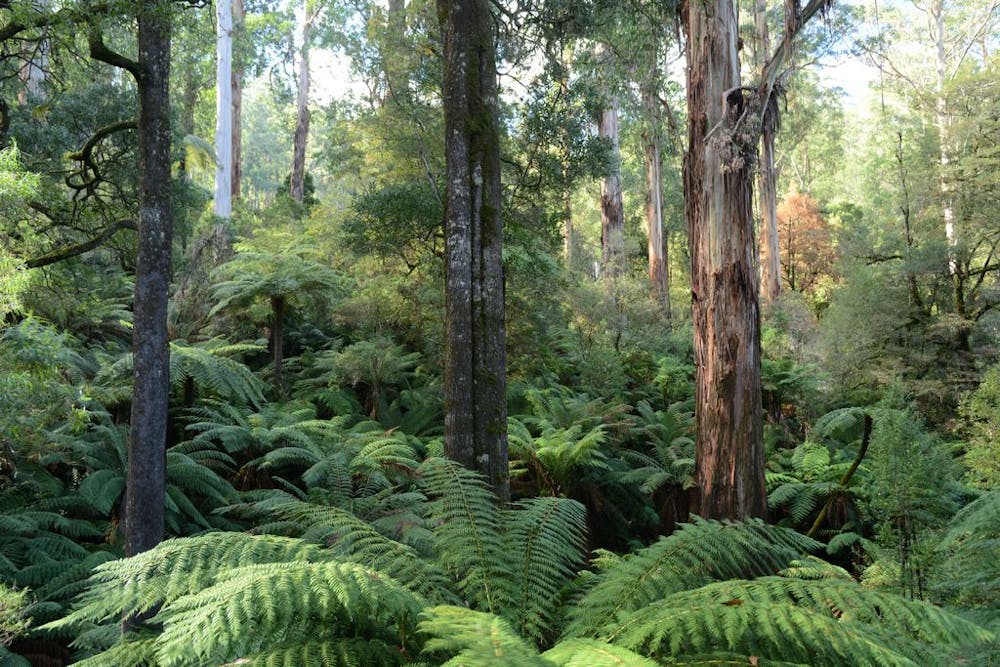
In the Amazon, forest management by Indigenous and local peoples has promoted biodiversity and maintained forest structure for thousands of years. Areas of the Amazon considered “wilderness” contain domestic plant species, anthropogenic soils and significant earthworks (such as terraces and geoglyphs), revealing a deep human legacy in the Amazon landscape.
Despite playing a key role in maintaining a healthy and diverse Amazon forest system, Indigenous and local peoples struggle constantly against wilderness-inspired conservation agendas that seek to deny them access to their homelands and livelihoods in the forest.
Similarly, the forests of Southeast Asia and the Pacific are some of the most biodiverse regions on Earth. These forests have been managed for thousands of years using rotational agriculture based on small-scale forest clearing, burning and fallowing. Scientific attempts to define the last remaining “wild places” falsely map these areas as wilderness.
Rather than being wild places, agriculture has actively promoted landscape biodiversity across the region, while supporting the lives and livelihoods of tens of millions of Indigenous and local peoples.
In the central deserts of Australia, areas mapped today as “wilderness” are the ancestral homes of many Aboriginal peoples who have actively managed the land for tens of thousands of years.
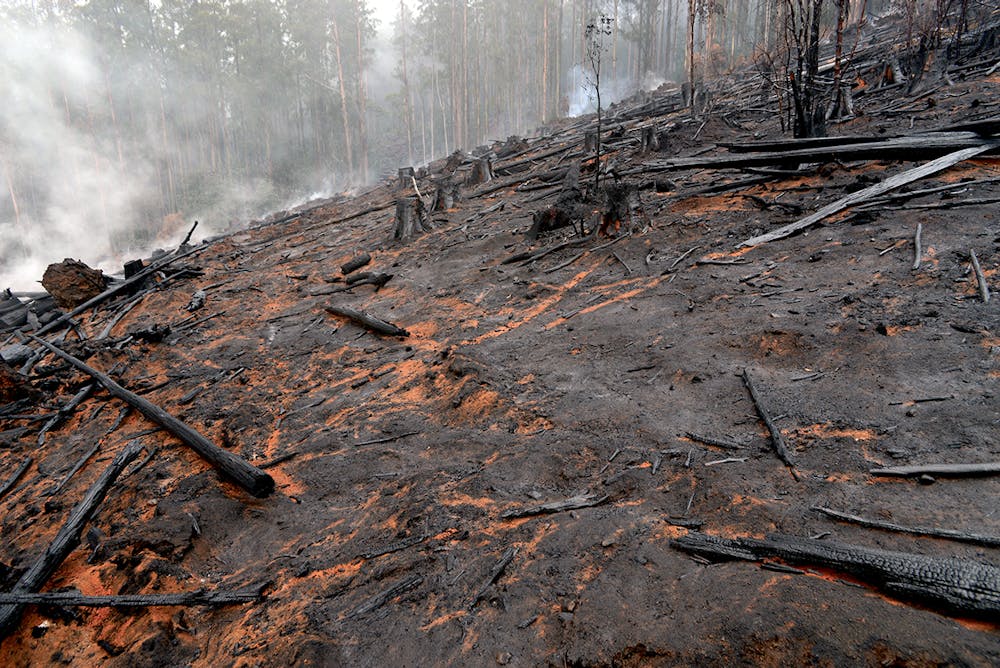
By framing landscapes created and managed by Indigenous and local peoples as wilderness, we are denying the land the care it requires. The effects of this neglect are evident in the catastrophic wildfires and environmental degradation occurring in Australia, northwest America and the Amazon – all lands invaded and colonised by Europeans.
Climate change is now making these problems worse.
Science alone has failed to solve these problems. Imposing land management approaches developed in Europe have failed. The idea of wilderness is destructive, and must be abandoned. We need new ways of engaging with the world around us if we’re to live sustainably on this planet.
Indigenous and local peoples must be engaged in the full range of efforts that affect their lands. This includes developing and implementing environmental initiatives and policymaking, the production and execution of research, and environmental management.
There are models that can be followed, such as developing Indigenous and community-conserved areas, Indigenous-protected and -conserved areas, or similar rights-based initiatives that merge the science and technology with the power of Indigenous and local knowledge.
This is one way forward in effectively decolonising conservation and making the Earth healthy again.
Michael-Shawn Fletcher receives funding from the Australian Research Council.
Lisa Palmer receives funding from the Australian Research Council.
Wolfram Dressler receives funding from the Australian Research Council.
Rebecca Hamilton does not work for, consult, own shares in or receive funding from any company or organisation that would benefit from this article, and has disclosed no relevant affiliations beyond their academic appointment.
University of Canberra Professional Fellow Michelle Grattan and Professor Lain Dare of the Institute for Governance and Policy Analysis at the University of Canberra discuss the week in politics.
On climate policy, they canvass the need for Scott Morrison to finalise a deal with the Nationals as the Glasgow climate conferences draws near.
While Morrison negotiates with Barnaby Joyce, in the electorate local groups are ramping up to back independent candidates to run in government-held seats on climate policy.
Michelle and Lain also discuss former prime minister Malcolm Turnbull’s scathing attack on the government, when he accused Morrison of deceitful conduct in dealing with the French and risking Australia’s national security.
Michelle Grattan does not work for, consult, own shares in or receive funding from any company or organization that would benefit from this article, and has disclosed no relevant affiliations beyond their academic appointment.
In a recent article, The Australian’s health reporter asked: “has any modelling put forward by scientific institutes throughout the pandemic ever proved accurate?”
It’s a good question but the answer lies in understanding the truth about modelling — it cannot predict the future.
Rather, it’s a process that identifies variables most likely to shape the course of, say, a pandemic and to quantify their impacts over time.
Politicians commission modellers to assess the present state of things then consider what might happen if various policy settings were to be adjusted.
By providing assessments of the costs, benefits and impacts of proposed policies, good modelling provides governments with a firm foundation for deciding which policies will have what effects.
Politicians know invoking “health modelling” generates public support for their policies.
This week, federal Treasurer Josh Frydenberg claimed his decision to scrap COVID support payments at 80% double-dosed vaccination coverage accorded with the National Plan as informed by the Doherty Institute modelling.
But in neither the plan nor the modelling is any connection drawn between ending support payments at any level of vaccination coverage.
Nor was any modelling apparently commissioned on the likely impact of removing financial support for the most vulnerable when infection rates are high – as in Sydney – and rising alarmingly as in Melbourne.
Since the beginning of the COVID pandemic, politicians have justified the many difficult decisions they’ve had to make as being based on “health advice”.
As it should be, “health advice” provided to politicians by chief health officers is informed by modelling commissioned from a range of well-respected and credentialed scientific research institutes.
The public draws a strong causal link between health modelling inputs and policy outcomes.
They are more likely to accept policies buttressed by modelling and health advice than not.
Modelling is therefore a powerful political tool.
In a pandemic, political decisions have human and economic impacts that are irrevocable, significant and for many a matter of life and death.
Even more reason, therefore, for the scientific integrity of modelling that informs those decisions to be beyond reproach.
The brief given to the modellers is critically important in setting parameters and assumptions and selecting the variables that will be assessed and measured.
Transparency is essential
The key to building public trust in modelling is full transparency.
But in Australia, these briefs and processes are often shrouded and opaque. Secrecy and a lack of transparency has greatly affected the quality of Australia’s response to COVID.
Yet within weeks of this advice being published, the modelling had been overtaken by events.
Travel from some but not all countries was stopped, international and domestic borders closed from late March 2020, and lockdowns implemented across Australia.
In the initial planning and options, lockdowns, cessation of travel and masks were not among the assumptions. The entire response was based on a paradigm of influenza rather than the facts of coronavirus and need for rapid, preventive responses.
The assumptions informing the initial modelling should have been published, interrogated and debated before, and not after, the initial and ineffectual policy settings were adopted.
Over the course of the pandemic, the assumptions of modelling commissioned by governments should have been published, scrutinised and debated before, not after, the modelling was undertaken.
Modelling ought to have been commissioned from a range of Australia’s excellent scientific institutions.
Open debate might have meant aerosol transmission of first Alpha and then Delta would have been factored into projections and policy-making about the efficacy of hotel quarantine and border protection far earlier than it was.
This unnecessary addiction to secrecy has eroded the trust and confidence that should exist between governments and the people.
Politics and science each have their separate and distinct roles to play in the managing the pandemic and reducing to the lowest possible levels the damage it causes to lives and livelihoods.
In the response to HIV/AIDS, the politicians of the day ensured scientific advice was provided independently of governments and published as it became available.
The advice became the foundation of the political decision-making process.
Now, as then, Australians expect a similar standard of open and independent scientific advice, information and assessment about the present and likely impact of the pandemic.
Whether commissioned by governments or acting independently, Australia’s pandemic modellers have lived up to their responsibilities to science and the Australian people.
They have applied their expertise to quantifying COVID and the costs and benefits of policy options.
But the critical decisions on assumptions, debate, contestability and transparency are made by politicians, not modellers.
As much as some politicians may wish to deny it, they alone are responsible and accountable to the Australian people for the decisions that have created Australia’s COVID response and will shape its future.
Modelling is integral to building the most robust, sustainable and well-supported response to the increasingly complex challenges of the pandemic.
The Australian people will be best served by separating science from politics.
Physical activity and sport are important in Aboriginal and Torres Strait Islander cultures. Traditional activities like hunting and caring for Country are still practiced today. These activities require physical exertion and have cultural significance.
Organised sport is important in many regional and remote communities where higher numbers of Aboriginal and Torres Strait Islander peoples live. This can be seen through competitions like the NSW Koori Knockout and the NAIDOC Netball Carnival.
Many factors influence Aboriginal and Torres Strait Islander participation in physical activity and sport. These can be classified as facilitators, that enable participation, or barriers, that can make participation more challenging.
Data from the Australian Bureau of Statistics show fewer than four in ten Aboriginal and Torres Strait Islander adults are doing enough physical activity. This is despite high Indigenous representation in professional sport, for example in Rugby League and AFL.
Doing physical activity has lots of positive health benefits, such as reducing the risk of heart disease and diabetes. There are also social benefits of participating in sport. Our previous research found some evidence of benefits for education, employment, culture, well-being, life skills and crime prevention.
Our new review found 62 different facilitators and 63 different barriers to physical activity and sport. Multiple, complex facilitators and barriers were experienced by Aboriginal and Torres Strait Islander adults across Australia.
The review included 27 studies of over 750 total participants aged 18 and over. The studies were published between 2008 and 2020 and took place in urban, rural/regional and remote areas. Most involved interviews, “yarning” or storytelling with Aboriginal and Torres Strait Islander people.
The main physical activity and sport motivators were support from family, friends and program staff, and opportunities to connect with community or culture. The main barriers were a lack of transport and financial constraints. Also, a lack of time due to work, family or cultural commitments.
Each facilitator and barrier were examined together to give five clear “Action Statements”. These statements give practical guidance for how future programs can increase and sustain participation. They also give advice to improve current programs and strategies.
Action Statement 1: personal attitudes and life circumstances of Aboriginal and Torres Strait Islander people should be considered
Many different attitudes, expectations and self-beliefs were identified that could either facilitate or hinder physical activity and sport participation. Physical activity needs to fit in with people’s daily life and personal circumstances. These circumstances include health issues and socioeconomic issues. In urban areas, self-motivation made participation more achievable. But a lack of self‐motivation was a barrier in all geographic locations.
Action Statement 2: promote the holistic health and personal benefits of physical activity and address participation challenges
People described wanting to improve their health as a motivation to do physical activity and sport. However, health or physical issues were barriers to participating. This means coming up with strategies to overcome these barriers are essential. People also described being motivated to participate as they enjoy physical activity. However, injury or illness was also described as a barrier.
Action Statement 3: recognise the importance of family and cultural connections
Providing opportunities for positive connections with family, peers and networks can help people do physical activity and sport. Family commitments, including caring for children, were a common barrier. Racism was also a barrier. But the importance and influence of family, friends, community members and role models were very evident.
Action Statement 4: respect connections to culture and support communities to be supportive, safe, and well-resourced
At the community level, infrastructure and neighbourhood safety are important factors. Community relationships also play an important role that can help or hinder physical activity participation. Connecting to culture and access to culturally safe places and activities is also important.
Action Statement 5: physical activity and sport programs should be sustainably funded and open to participants’ needs and expectations
Programs must accommodate the needs and expectations of Aboriginal and Torres Strait Islander people. Programs that are cost‐free, have a structure, provide transport and childcare and that are professionally delivered and well‐organised were appealing.
Next steps
Future decisions about Aboriginal and Torres Strait Islander physical activity and sport need to be made in partnership with Aboriginal and Torres Strait Islander people. It is also important to acknowledge the diversity in different Aboriginal and Torres Strait Islander cultures. Decisions should be consistent with local views and customs.
Future research could evaluate the impact of future programs, or changes to current programs. This way, we can best understand the benefits of physical activity and sport for Aboriginal and Torres Strait Islander people and enhance future opportunities.
Rona Macniven receives funding from the Heart Foundation.
John Evans receives funding from the Australian Research Council
Bridget Allen does not work for, consult, own shares in or receive funding from any company or organization that would benefit from this article, and has disclosed no relevant affiliations beyond their academic appointment.
Source: The Conversation (Au and NZ) – By Joanna Mendelssohn, Principal Fellow (Hon), Victorian College of the Arts, University of Melbourne. Editor in Chief, Design and Art of Australia Online, The University of Melbourne
Review: Fairweather and China, by Claire Roberts (Miegunyah Press)
Paintings by Ian Fairweather have been a part of every survey exhibition of Australian art since the Whitechapel exhibition of 1961. He is discussed as a major figure in each analysis of Australian art history since Bernard Smith’s Australian Painting of 1962. His paintings are collected in the National Gallery of Australia, all state art galleries and some regional centres. He has been the subject of a monograph by Murray Bail as well as the subject of several significant survey exhibitions.
Yet the conclusion Claire Roberts draws in this scrupulously researched examination of Fairweather’s art and ideas is he cannot be described as an Australian artist. This is not just because of Australia’s bad habit of claiming anyone who spends some time here as one of our own.
Fairweather, who was born in Scotland and raised on the Island of Jersey, first visited Australia in the 1930s and 40s, but in the 1950s he built a shack on Queensland’s Bribie Island where he lived and painted until his death in 1974.
Fairfield and Chinese art
Roberts’ earlier book on Fairweather, Ian Fairweather: A life in letters, co-written with John Thompson, is the background research for this study of the artist’s life, relationships & constant questing for meaning. Other important sources include the books he read and valued throughout his life.
What distinguishes this from any previous study of Fairweather is her scholarship in both Mandarin and contemporary art. As a result, Roberts is uniquely placed to examine Fairweather’s work in the context of his idiosyncratic understanding of Chinese literature and classical language.
The significance of Roberts’ Mandarin scholarship comes to the fore in her analysis of The Drunken Buddha (1965), Fairweather’s magnificently illustrated “free” translation of The Complete Biography of the Great Master Chi-tien (Jidian).
Dust jacket of The Drunken Buddha (1965). MUP
She notes that while many reviewers called this a significant scholarly work, it is better described as an exercise in creative exploration, in her own words “a summative significance for an understanding of Fairweather’s artistic practice”.
Ian Fairweather first visited China in 1929. He left for the last time in the face of the impending war with Japan in 1936. Nevertheless Chinese ideas, especially Taoism and Buddhism, continued to influence his art for the rest of his life.
Fairweather is probably best described as an itinerant British wanderer in the colonial tradition of the old Empire. When the Art Gallery of South Australia asked him to nominate the artist who most influenced him, he claimed to be “a disciple of Turner”, that most English of all 19th century artists.
His life bears all the marks, or scars, of the British Empire. He was born in Scotland, the ninth son of a doctor in the Indian Medical Service. When he was six-months-old his parents returned to India, leaving the baby in the care of a great-aunt. He did not see his parents for the next ten years. Duty and family expectations saw him join the British Army, but in 1914 he was captured by the Germans and became a prisoner of war.
It was in the library of a PoW camp he first encountered books on Chinese and Japanese art. After the war he studied art at the Slade under Henry Tonks, and then wandered — to Canada, China, Bali, Australia, the Philippines, India.
Throughout his life Fairweather seemed to take lunatic risks with his personal safety, but was always saved by chance. He found his eventual home of Bribie Island 1948 by accident when his ramshackle sailing boat crash-landed him there, but did not return until after his most famous misadventure.
That was in 1952 when he tried to sail north-west from Darwin in a homemade raft and was lost at sea. Most accounts of Fairweather’s life give substantial detail to this voyage, but Roberts summarises it in a single paragraph. There is no need to walk in paths well trod.
Her conclusion is Fairweather was an artist who belonged to no nation but took his own path, wandering for truth. What that truth may be is woven through the text – in the description of the young man caught in an avalanche in Switzerland and feeling at one with the mountains, of the sailor wanting to be with the sea, and the old man exposed to the elements, living on an island off the Queensland coast.
The artist must pierce beneath the mere aspect of the world to seize and himself be possessed by that great cosmic rhythm of the spirit which sets the currents of life in motion”.
I strongly suspect Fairweather would have regarded the idea of claiming his art as belonging to any one country or style as an irrelevancy.
Fairweather and China will be launched at the Art Gallery of South Australia, on Friday 1 October at 6 pm
Joanna Mendelssohn has previously received funding from the ARC
But while many think of tornadoes as a rare event in Australia, they are actually surprisingly common, and have killed quite a number of people since European occupation. Geoscience Australia says there have been more than 40 tornado-related deaths in Australia in the past 100 years.
That’s because Australia has the right environmental conditions that favour the formation of tornadoes, which have the fastest wind speeds of any natural hazard type on Earth.
The oldest known photograph of a tornado in Australia, taken at Marong in Victoria in 1911. C Hosken/Museum Victoria
Australia has expansive areas of flat land — usually agricultural land — and it’s over these large, flat areas that tornadoes like to form. It’s much the same in “Tornado Alley”, a stretch of central United States where tornadoes are most frequent.
You get thunderstorms developing over these areas of flat land because warm, moist air collides with a front of cold, dry air and that’s exactly what it takes for a storm to be born.
How a tornado forms.
You sometimes see a tube coming out from a thundercloud and it’s only once it touches the ground that it’s a tornado.
How long they live on the ground and how far they travel influences the scale of damage.
Most storms only last a few minutes, but in Tornado Alley in the US, there have been tornadoes up to 500m in diameter on the ground for four hours. That kind of tornado would cause monumental damage.
Some tornadoes touch down briefly and are quite narrow, perhaps just 20m across. They might run for a few metres and then die. Others can be much bigger and obviously if they touch down in a metropolitan area they can do a lot of damage very quickly — and they can behave very unpredictably.
Tornadoes can go up a street and pick one house out on the street and reduce it to a pile of debris, leaving the other houses alone. Or the opposite can happen — every house on the street is smashed but one.
Eventually, tornadoes run out of energy. If the base of the funnel loses contact with the ground, it dies. Most tornadoes occur in the mid afternoon to early evening.
Much like other types of natural hazards, tornadoes can be classified according to their impact. We have a magnitude scale for tornadoes called the Enhanced Fujita scale, which goes from 0-5 (where 5 is the biggest). It’s too early to say what the recent NSW tornado measured on the Enhanced Fujita scale because damage surveys are yet to be completed.
Tornadoes are classified in to six categories from 0 to 5, where 5 is the most destructive. NOAA
Australia has had some big tornadoes
The BOM has a national tornado database and record of accounts of tornadoes over last century and some were quite big. One of the most memorable tornadoes occurred in December 2015 where a tornado ripped through the Kurnell area of eastern Sydney. No one was killed but people were injured and the tornado caused a lot of damage. Windspeeds got up to 210km per hour. According the BOM, this tornado was recorded as a 2 on the Enhanced Fujita scale.
Generally, Australia gets tornadoes all over NSW and Victoria, as well as the southwestern part of Western Australia.
There is a distinct spatial geography to where tornadoes occur around the world. This map from the National Oceanic and Atmospheric Administration in the US shows those places around the world with the right conditions to allow tornadoes to form.
A global map of tornado regions. NOAA
How do we detect, monitor and give early warning of tornadoes?
The truth is it’s very hard to give precise early warnings. Rather, weather services monitor for the types of conditions right for tornado development because tornadoes can form very quickly.
The Bureau of Meteorology uses Doppler radar to detect them in the short term. In that imaging, they show an unusual thing called a “hook echo”. That’s basically showing inside the thundercloud system, where winds are rotating really fast – a telltale sign that a tornado might be about to form.
But in Australia and in the US, we only usually know when a tornado is coming toward the ground if tornado spotters report them.
Can we expect them to become more frequent with climate change? We’ve got no idea. It’s impossible for climate science to predict because they are such small size phenomena. We need to rely on good planning and great spotters.
In the US they have evacuation shelters in places such as toilets in malls or airports, which are reinforced with concrete. Residential houses tend to have a central shelter — sometimes in a cellar or under a staircase.
We generally don’t have that in Australia but if you end up in a tornado, it’s basically a case of “duck and cover”.
Find the most secure, reinforced part of the building — which is often the staircase, if the staircase is up against a wall. You want to take shelter in the part of the building that is most likely to stay up if the tornado comes over your head.
Dale Dominey-Howes receives funding from the Australian Research Council, the State and National Disaster Mitigation Program and the Global Resilience Partnership.
New Zealand Parliament Buildings, Wellington, New Zealand.
Editor’s Note: Here below is a list of the main issues currently under discussion in New Zealand and links to media coverage. You can sign up to NZ Politics Daily as well as New Zealand Political Roundup columns for free here.
Source: The Conversation (Au and NZ) – By João Marcos Azevedo Correia de Souza, MetOcean Solutions Science Manager of the Research and Development Team. Moana Project Science Lead, MetService — Te Ratonga Tirorangi
Shutterstock/Andrey Armyagov
The ocean around New Zealand is getting warmer, and extreme warming events have become more frequent over the past years.
These marine heatwaves can have devastating impacts on ocean ecosystems. When they happen in summer, they usually receive a lot of attention. But those happening during winter, when the ocean is cooler, are often ignored.
Yet, these winter events can affect the spawning and recruitment of fish and other sea animals, and in turn have significant impacts on aquaculture and fisheries.
To monitor the occurrence of such extreme events around New Zealand, we developed a marine heatwave forecast tool as part of the Moana Project. The tool has been operational since January 2021 and it forecasts marine heatwave occurrence, intensity and duration for 13 areas defined in collaboration with the seafood industry.
It revealed that most coastal areas around New Zealand were warmer than normal during this last winter (June to August 2021), as highlighted in the map showing the difference between winter 2021 average sea surface temperatures and the climatology (daily mean values based on data from 25 years).
Temperature anomaly in relation to 25 years of climate data. The boxes show the regions where detailed analysis and detection of marine heatwaves is carried out. Author provided
A warm winter for New Zealand’s waters
Marine heatwaves are defined as periods of five days or more of ocean temperatures in the top 10% of local average values for the time of year.
During winter 2021, surface waters were on average 0.3℃ (±0.75) warmer than usual, with peaks occasionally reaching +4.2℃. In contrast, in a few areas, such as the Pegasus and Kaikoura canyons to the north-east of Banks Peninsula, we observed cooler than normal temperatures.
Except for the Banks Peninsula and the FMA3 box to the east of the South Island, all other 11 areas experienced marine heatwaves during the winter.
The events varied in intensity and duration. While Cape Reinga showed a continuous moderate event, Stewart Island experienced a severe winter marine heatwave that lasted 87 days, with maximum temperatures reaching 1.9℃ above long-term climate data.
Sea surface temperatures for Stewart Island. The blue line shows the daily mean temperatures and the green line the 10% highest temperatures, calculated from a period of 25 years. The shaded red area indicates a marine heatwave. Author provided
Both areas are particularly important since they are located at the northern and southern extremities, respectively, of the main currents that hug the eastern coastline of New Zealand. The warm waters in these regions move downstream (southward from Cape Reinga, and north-eastward from Stewart Island) and warm most of New Zealand’s eastern coast.
We can expect serious economic impacts from such warming. Recent events in western Canada highlight the devastating impact summer marine heatwaves can have on coastal marine ecosystems and aquaculture.
In New Zealand, Fisheries Management Area 7 (FMA7) in the map matches hoki spawning grounds and is, therefore, of critical importance to deep-water fisheries. The hoki fishery is worth about NZ$230 million in export revenue. In 2017, the fishery’s catch shortfall was about 8,500 tonnes, which constitutes a loss to the New Zealand economy of some NZ$13 million.
Sea surface temperatures for the fisheries management area where hoki spawn. The red areas show the occurrence of marine heatwaves this past winter. Author provided
While the reasons for this are not yet fully understood, the Deepwater Group, which represent quota owners from New Zealand’s deep-water fisheries, suspects warmer-than-usual temperatures resulted in fewer hoki arriving at the winter spawning grounds off the west coast of the South Island.
A greater focus on winter marine heatwaves will help us understand how fisheries and aquaculture in New Zealand may be affected and what we can do to minimise economic, societal and biodiversity losses.
Changes across the southwest Pacific affect New Zealand
We know ocean temperatures are warming faster during winter than summer around New Zealand and across the wider subtropical southwest Pacific Ocean. The warming has become particularly evident since 2010 and has manifested in the emergence of the “Southern Blob”.
This ocean hotspot is centred northeast of New Zealand and has been linked to drought in both South America and New Zealand.
The current rate of warming in the Southern Blob exceeds natural variability, implying a contribution from human-induced climate change. Along with changes in the regional atmosphere, this large-scale process increases the likelihood of winter marine heatwaves around New Zealand.
Our research shows the deepest and longest-lasting marine heatwaves in the Tasman Sea are typically driven by ocean currents — in contrast to shallower summer marine heatwaves, which are driven by the atmosphere.
The warmer-than-normal winter ocean temperatures in the Tasman and coastal seas around New Zealand send warning signals about what the summer may bring. On top of impacts on coastal ecosystems, marine heatwaves also affect extreme weather and make floods and tropical storms over New Zealand more likely during the coming summer.
João de Souza works for MetOcean Solutions, part of the Meteorological Service of New Zealand. The research presented is part of the Moana Project, funded by the Ministry of Business, Innovation and Employment’s Endeavour Fund.
Amandine Schaeffer, Jonathan Gardner, and Robert Smith do not work for, consult, own shares in or receive funding from any company or organisation that would benefit from this article, and have disclosed no relevant affiliations beyond their academic appointment.
The weekend is approaching, your fridge is stocked with cheese and you’re eager to organise a COVID-compliant picnic with other fully vaccinated adults which your local rules stipulate. But choose your guests wisely — only fully vaccinated people can attend, and fines apply if the rules are broken.
These new rules, coming into effect in New South Wales and Victoria, place the responsibility for policing vaccination on individuals. Vaccine passports may eventually allow businesses to check people’s vaccination status on entry, but there is no app to scan before gathering for a picnic or home event.
So how do you find out who’s vaccinated, and what do you do with that information?
How do you start the conversation?
Vaccination can feel like a loaded topic, something you might not want to discuss if you can avoid it. But it doesn’t have to be a minefield. We can actually take some tips about approaching tricky personal topics from the field of sexual health.
First, try to talk about vaccination before you’ve confirmed plans with someone, and before you’ve communicated the plans to others. Once you’re already at the picnic, the stakes are much higher. You’re more likely to either go along with something that doesn’t feel right to you or end up in an argument.
Offer your own vaccination status first. You could say something like
FYI, I got my second dose last month. These new rules mean everyone coming will have to be vaccinated. Have you had both doses? I want to make sure we’re OK to go ahead.
Keep the question casual. Asking someone’s vaccination status is reasonable in these circumstances — it isn’t because you don’t trust the person.
What if the person says no?
Don’t jump to conclusions. Depending on your relationship with the person, you may want to find out more. When approaching a conversation about COVID-19 vaccines, start with an open mind and be ready to listen.
Ask them if they’d like to talk about why they aren’t vaccinated. Maybe they have some specific concerns, maybe they’re waiting for an appointment or for a different vaccine to the one available to them now.
Let them share all their concerns before you jump in and try to answer or correct them.
The person you’re talking to might not be on fence about the vaccine — they might be strongly opposed to it.
If that’s the case, your best strategy may be to establish your position and close the conversation. You could say:
OK, that’s not what I believe. But either way, we have to follow the rules.
Arguing with people who strongly oppose vaccination is rarely — if ever — effective, and it could ruin your relationship.
Try to talk about vaccination before you’ve confirmed plans with someone, and before you’ve communicated the plans to others. Shutterstock
While rules are in place that exclude unvaccinated people for the time being, it’s not necessary to cut someone out of your life because they aren’t vaccinated.
As those rules are relaxed and we move from suppressing COVID-19 to living with COVID-19, we will need to re-calibrate our risk assessments.
Of course these decisions are personal, but if you and your family are fully vaccinated, the risk of catching COVID-19, particularly in an outdoor environment, is significantly reduced.
If you have children too young to currently get vaccinated, the risks from COVID-19 are low except in certain circumstances so you’ll need to weigh health risks against social benefits.
Social exclusion leads to more conspiratorial thinking — in other words, cutting people off when they believe in conspiracy theories often leaves them to go further down the rabbit hole, unchallenged by alternative views.
You may have more positive impact by maintaining a relationship, within your boundaries, and role modelling the behaviour you believe in.
What about the picnic?
If your friend is a bit hesitant or firmly against getting the vaccine, your picnic with them will have to wait.
When you explain this, you may want to distance yourself from the rules. For example, you could say:
The new rules say… Unfortunately it sounds like we can’t get together for now. It’s only a temporary thing — we should all be able to get back to normal in a few more weeks.
You didn’t make the rules, but we’re all living with them for now. If relevant, convey how important the relationship is.
From the beginning, managing COVID-19 well has required us to take the evidence, abide by public health orders and, when we can choose, weigh the risks of an activity against the benefits.
For these sensitive social negotiations around vaccines, masks and other measures, we will need to communicate with care to keep connecting with each other as safely as possible.
Jessica Kaufman receives funding from the National Health and Medical Research Foundation and the Victorian Department of Health. She is a steering committee member of the Collaboration on Social Science and Immunisation.
Julie Leask receives funding from the World Health Organization and UNICEF.
As the climate crisis threatens millions of species worldwide, biodiversity conservation is now an all-hands-on-deck operation. Natural history collections play a critical role in this effort as repositories holding records of historical biodiversity shifts, like libraries made of biological specimens.
In response to the extinction crisis, the call is out to scour Australia’s collections for data to fill knowledge gaps.
For many species, however, recovering historical genetic data has been severely impeded, not by a lack of specimens but by the methods used to preserve them. This is where my new research comes in.
Our paper shows how natural history collections around the world can squeeze every last drop of historical genetic data out of their specimens, from dried iridescent wings of butterflies to platypus bills floating in alcohol.
Dried specimens, such as these rainbow lorikeets (Trichoglossus haematodus) collected in Papua New Guinea by the Australian National Wildlife Collection, often yield high-quality DNA. Martin Ollman, Author provided
To have a chance at combating biodiversity loss, we must use every last resource to learn about our unique corner of the globe.
The majority of bird specimens are prepared dry to preserve their plumage. Martin Ollman, Author provided
Long before the discovery of DNA, museums collected biological specimens to create a picture of where species live and how they are related. Today, the Atlas of Living Australia, which serves as a national database for Australia’s museums, contains approximately 2 million vertebrate specimen records.
Armed with modern techniques, we can now recover genetic data from specimens collected over the last 200 to 300 years. These data can then improve conservation outcomes for species struggling to cope with current environmental change.
For example, I recently used museum specimens to determine the historical native range of endangered Sonoran pronghorn in North America. This guided its reintroduction to the wild.
Thanks to old specimens of Sonoran pronghorn, we can now try to reintroduce this endangered species back into the wild. Shutterstock
Biodiversity time capsules
When you visit natural history museums, most specimens on display will have been dried to beautifully preserve their physical appearance. Plant and insect specimens are dried and pressed or pinned, while birds and mammals are stuffed and dried.
Research-focused collections don’t prepare and pose specimens for public display. When drying doesn’t sufficiently preserve physical features, large collections of murky jars containing specimens are commonly found behind the scenes.
This is called “liquid fixation”, where we use chemicals such as formaldehyde to preserve fish, amphibians and reptiles. It’s used for birds and mammals, too, when scientists want to preserve their internal organs.
Fish specimens are preserved using formaldehyde at the Australian National Fish Collection. CSIRO, Author provided
Nearly one-third of the 2 million specimens in our national database are preserved in liquid. Each of these specimens has a story to tell about how that species has coped (or didn’t) with our changing environment.
Together, dried and liquid-preserved specimens housed in collections around the world represent an irreplaceable record of biodiversity shifts in this period of rapid environmental change.
The problem with formaldehyde
Although drying and liquid fixation methods (such as with the chemical formaldehyde) both help preserve biological tissues, neither method was developed with modern genomic sequencing in mind.
Still, drying has the effect of slowing DNA degradation and a treasure trove of historical genetic data has been recovered from dried specimens in recent decades.
Extensive metadata preserved alongside museum specimens tells the story of historical ecosystems. Martin Ollman, Author provided
Recent examples include the use of egg shell DNA to solve mysteries surrounding extinct paradise parrots, and dried tissue DNA to examine the rapid extinction of native Australian rodents following European colonisation.
On the other hand, formaldehyde preserves tissues by stopping decay in its tracks by cross-linking the molecules within the tissue. Frustratingly, these cross-links turn DNA extraction into an exercise akin to chiselling strands of delicate thread out of a block of cement.
Formaldehyde is widely used by museums to preserve tissues for future study. Martin Ollman, Author provided
But in recent decades, museums have begun sampling fresh tissue from newly collected specimens and storing it specifically for DNA extraction.
This marks a pivot in preservation practices. Coupled with advances in extracting DNA from older dried tissues and those preserved in ethanol, it has ushered in an entire new field of museum genetics.
Meanwhile, extracting DNA from specimens preserved with formaldehyde has largely been left in the “too hard” bucket. This has left a gaping hole in the availability of older historical DNA for most fish, amphibians and reptiles.
Through advances in research, scientists have managed to find a way to successfully sequence a handful of formaldehyde-fixed museum specimens — lizards, snakes, salamanders and fish — that would have otherwise been lost to history.
But to collect at a greater scale, an important hurdle remains: community confidence.
These are liquid-preserved tree skinks (Egernia striolata) collected in the 1960s. Martin Ollman, Author provided
Improving the confidence of curators
Until now, getting useable genetic information from specimens preserved in formaldehyde has been largely hit or miss with an emphasis on the miss. Despite the declining costs of DNA sequencing, many scientists are unwilling to hitch their limited research budgets to the pursuit of risky specimens.
DNA extraction requires the destruction of at least part of a specimen, such as removing a small section of liver or muscle tissue. So museum curators hesitate to grant precious tissues for studies with low expected success rates.
In our recent study, we set out to find ways to minimise this risk. We found that, essentially, a quick inspection of the preserved animal’s gut and a measurement of the formaldehyde in the jar can empower researchers and curators to identify which precious specimens are worth damaging to recover genomic data.
The study’s methods can be used to predict sequencing success without damaging specimens such as this liquid-preserved thorny devil (Moloch horridus) collected in 1977. Martin Ollman, Author provided A close-up of the preserved thorny devil. Martin Ollman, Author provided
We also showcase a single DNA extraction method that works surprisingly well on both formaldehyde-fixed specimens and those preserved in ethanol.
This is useful because the preservation history of a specimen, especially older ones, is often unknown. While all of our wet specimens at the Australian National Wildlife Collection are currently in ethanol, like most collections, our records generally don’t indicate if they’ve come into contact with formaldehyde.
By reducing the need for specimen-specific methods, we can more quickly gather high quality historical data — even from long-ago disregarded jars of goopy specimens.
Erin Hahn works for the CSIRO Australian National Wildlife Collection.
Australia has ranked equal last on a gender pay gap scorecard across six countries, according to a major report released today.
It studied the gender pay gap reporting frameworks in Australia, France, South Africa, Spain, Sweden and the United Kingdom. Based on 11 indicators, Australia received a score of 4 out of 11, ranking equal last with the UK. Spain was the top ranked nation, scoring 8.5.
The good news is the research, detailed in our Australian-focused companion report, shows how making a small number of changes can give Australia a chance to ramp up progress to close the gender pay gap.
What the study looked at
In a global study aimed at identifying best practice in gender pay gap reporting systems, six countries were selected on the basis of having unique, potentially high-impact design features. Australia was selected on the basis of its world-leading gender equality dataset.
The research identified 11 indicators of best practice reporting, including accountability, coverage, enforcement and penalties, intersectional elements (such as race and ethnicity), transparency and action plans. The six countries were ranked against the indicators in a pay gap reporting scorecard.
The findings were based on interviews with key stakeholders from government, gender equality advocates and experts, and employers and trade unions. The report also used evidence from academic literature, reports and publications from international and country-specific organisations, and cross-country comparisons to identify strengths and weaknesses in each reporting system.
We used to be a world leader
Australia was one of the pioneers when it came to legislating for equal pay in 1969 and 1972, and then with gender equality reporting since 1986.
Introduced in 2012, the Workplace Gender Equality Act requires employers to report data by gender on remuneration, workforce composition and the recruitment, promotions and resignations of their employees. This data goes to the Workplace Gender Equality Agency.
The gender pay gap in Australia is more than 14%. Erik Anderson/AAP
The act was an important step towards accountability and produced promising early results, with the national gender pay gap dropping steadily from 18.6% in 2014 to 14.1% in 2018. This means average weekly earnings for women working full-time were 14.1% less than their male counterparts.
Since then, progress has stalled. In fact, the COVID pandemic has seen the gender pay gap increase slightly, to 14.2%.
This means that in 2021, the average woman working full-time has to work an extra 61 days each year to earn the same as the average man.
Why was Australia ranked last?
Although Australia’s legislation has generated a world-leading dataset on workplace gender equality, our research found that data collection and monitoring alone are not enough to drive widespread change.
Australia falls behind on aspects of transparency and accountability for corrective action. This means that neither the incentives nor punishments are strong enough to change organisational behaviour. This has ultimately stifled our progress.
Australia also ranks behind other countries for only requiring relatively large, non-public sector organisations to report on gender equality (plans to expand to the public sector have been announced by the federal government). Australia also fails to capture other measures of social disadvantage like race or ethnicity.
Catching up with other countries on these metrics requires re-thinking how our pay gap legislation works – this will be essential in driving widespread and inclusive workplace equality into the future.
In the short term, we need to make our current legislation work harder to incentivise employers to reduce their gender pay gap. The upside is that accountability and transparency can be improved with minimal change.
This can begin with three steps.
Step one: publish pay data for individual organisations
Although Australia calculates individual organisations’ gender pay gaps, the 2012 act does not allow these gaps to be published. Rather, only aggregated data for whole industries and Australia overall can be released publicly.
Publishing the pay gaps for each organisation would require minimal legislative amendment.
But it could have a major impact. For example, it would enable investors, consumers, employees, trade unions and activist groups to exert pressure on employers to improve their gender equality performance by investing in, purchasing from, or working for companies with lower pay gaps.
Step two: set a new minimum standard that matters
Under the current legislation, the minister for women can nominate minimum standards that large organisations must meet in order to fulfil gender equality reporting obligations under the 2012 act.
At the moment, the minimum standard is satisfied if a company simply has one gender equality policy or strategy in place. But having a policy does not ensure it is followed or that its goals are met.
With some small legislative changes, Australia could speed up progress on closing the gender pay gap. Lukas Coch/AAP
We need a performance standard that matters. Tying the minimum standard to outcomes will explicitly require organisations to correct pay inequalities and reduce their gender pay gap over time.
Step three: make use of sanctions
There need to be consequences if organisations don’t comply with laws requiring them to report pay data and meet the required minimum standards.
Current legislation does not impose specific sanctions, but does include the provision that non-compliant entities “may not” be eligible for government contracts and financial assistance such as Commonwealth grants.
A recent audit found 31 non-compliant organisations were still awarded government contracts.
Applying this provision would not be a major burden on government procurement processes and would signal government support for gender equality.
Unleashing the legislation’s full potential
The gender pay gap reporting legislation is only part of a broader package needed to promote gender equality — and there is always more work to be done. But we believe these minimal changes would have a significant impact on closing Australia’s gap.
We have the opportunity to ramp up support for the economic security of women and we should take it.
The global study was funded by the UN Foundation with additional funding from the Global Institute for Women’s Leadership ANU for the Australian case study.
A large, financially interconnected company is on the verge of collapse, weighed down by massive debt. The government ponders a bailout. There’s no easy answer. Doing nothing risks serious financial upheaval. But bailing it out will signal that greed, irresponsibility and moral hazard have no consequences.
It’s a tough call. And if this all sounds eerily familiar, then you’re right. In 2008 the US government faced the dilemma with what to do about Lehman Brothers, the nation’s fourth-biggest investment bank which found itself unable to pay debts totalling more than US$600 billion.
Now the Chinese government is facing a comparable situation with Chinese property and financial behemoth Evergrande.
Lehman Brothers, established in 1847, survived the US Civil War, the Great Depression and two world Wars. Then in the feverish bubble of risky bets on the US mortgage market in the 1980s, it got into deep trouble.
US Treasury Secretary Hank Paulson — a former senior Wall Street executive — was, by all accounts, offended that Lehman had so recklessly gotten into this position. Why not send a message that the US government wasn’t going to bail out big banks who behaved badly?
The answer, it turned out, is that letting Lehman fail ricocheted through the US and global economy.
When Lehman filed for Chapter 11 bankruptcy protection, it was facing the largest bankruptcy in history. Those to whom it owed money were immediately put under pressure. That put those to whom they owed money under pressure. Money markets almost completely froze up.
Even Goldman Sachs – Wall Street’s most venerable firm and basically on the good side of mortgage-market trades — was hammered. It took legendary investor Warren Buffett plowing US$5 billion into the company to avoid a modern-day bank run.
China’s Lehman moment?
Unlike Lehman Brothers, Evergrande isn’t an investment bank. Ostensibly it is a real estate developer, responsible for building apartments across China. But it has morphed into more than that — a highly leveraged and integrated company that does everything from banking to property development to selling electric cars.
Like many things in China, the true state of affairs is all a little unclear, but one reading is that Evergrande is basically a hedge fund with a property and vehicle business attached.
The proximate cause of concern is Evergrande missing an US$83 million interest payment on September 23. The clock is running, in that is has 30 days to “cure the breach” and figure out a way to pay. Otherwise things, as the cool kids say, will “start getting real”.
For now disaster has been averted by Evergrande agreeing to sell off its stake in a local bank (Shengjing Bank) for nearly 10 billion yuan (about US$1.5 billion) to the state-owned Shenyang Shengjing Finance Investment Group.
But Evergrande has US$300 billion in debt, so there’s really no running away from the issue for the Chinese authorities. If there are more dodgy dealings on Evergrande’s books then that US$1.5 billion will simply be buying time.
If things are as rotten in the state of Evergrande as many observers seem to think, then the Chinese government is going to have to bail it out, or let it fail.
In a sense, the CCP may be feeling “we’re all Hank Paulsons now”.
China’s extra tools
That said, there is an intriguing — if somewhat troubling — option available to Chinese authorities.
They could bail out the company but punish its top brass with serious personal sanctions. To put it bluntly, they don’t have to be concerned with the niceties of due process in the same way the US government does.
The Chinese government can, if it wishes, prevent the reverberations throughout the economy that would flow from an Evergrande collapse, but deter moral hazard in the future. It can send a very clear message of consequence for executives who engage in reckless and potentially corrupt behaviour. Maybe incarceration for life. Maybe worse.
It’s an interesting, if rather grim, example of the Tinbergen Rule — named after Jan Tinbergen, the winner of the first Nobel prize for economics. This rule says for each policy challenge one requires an independent policy instrument. The US government had one. The Chinese regime has two.
This all raises bigger issues
Beyond this lie much bigger issues. How well have Chinese enterprises actually been performing? Up until now it looked like the answer was remarkably well. But is this all a mirage, sustained by the lack of transparency that shrouds all Chinese institutions?
It looks as if there may be two types of Chinese corporation: the ones that “make” things, which have been successful and still are, and the ones that “bank” things, which look disturbingly similar to their capitalist counterparts in the Western world when moral hazard and corruption are allowed to run rampant.
The shakeout of the coming years will reveal a lot about the economic bedrock of Chinese global power.
Richard Holden is President-elect of the Academy of the Social Sciences in Australia.
When I experienced a great loss in in my early forties — almost a year to the day after another — I went to see my mother in the family home. She wasn’t a hugger or giver of advice, so instead we fed the birds. As she had when I was a child, she stood behind me in the kitchen with her shoulder propped against the back door, passing slices of apple and small balls of minced meat into my hand.
Each bird, apart from the snatching kookaburras, was touchingly gentle in the way it took food from my fingers. The white cockatoos ate daintily, one-legged. The lorikeets jumped onto the sloping ramp on both feet, like eager parachutists, to quarrel over the apple and press the juice from the pulp with stubby tongues.
Lined up on the veranda rail, the magpies cocked their heads to observe me before accepting meat precisely in their blue-white beaks. They had a beautiful, carolling song, with a chorded quality in the falling registers. But the bright-eyed butcher birds had the most lovely song of all: a full-throated piping, which I’ve heard compared to the Queen of the Night’s aria in Mozart’s Magic Flute.
Over decades, a family of these little blue-grey birds, had come to stack their hooked meat-eaters’ beaks with mince, which they flew to deliver to young somewhere in our neighbour’s garden, though we had never bothered to try to work out where they lived. This afternoon, when my mother and I opened the door, they landed by our side as they always had, having spotted us from their watching places. For a brief moment, surrounded by these vital creatures, I felt as if I might still want to be alive.
Small agents
Birds have always been small agents charged with carrying the burden of our feelings simply by following the logic of their own existence. The Irish imagined puffins as the souls of priests. The ancient Romans released an eagle when an emperor died in the belief it would “conduct his soul aloft”. In the Abrahamic religions, doves are given powers of revelation. We have even been inclined, right up until the present, to imagine birds as the souls of our recently departed returned to us, if only for a moment.
An Atlantic puffin about to feed its chicks. The Irish imagined puffins as the souls of priests. Robert F. Bukaty/AP
Even without being recruited into such labour, birds touch on our lives in small but significant ways. Once, in the botanical gardens of Melbourne, a boyfriend laughed until he almost cried at the mechanical, eager hopping of the tiny fairy wrens, a fact that only made me like him more. A friend tells the story of her uncle who ordered quail for the first time at a restaurant and cried when he saw it on his plate. “She had a raven’s heart, small and obdurate,” American author Don DeLillo writes of a nun in Underworld; it is my favourite description in any novel.
In Japan, where my partner and I tried to ease our sadness, the calls of crows were ubiquitous in every town. Like the low sounds of its deer, they had a subdued, almost exhausted quality, as hollow as the bells that are rattled to call the oldest spirits to its Shinto temples.
In 1975, when his first wife left him, Masahise Fukase began to photograph these birds, which he had seen from the window of a train. He would keep taking their pictures – on a hilltop tori at dusk, grouped on the budding branches of a bare tree, in flying silhouette – for ten years. Ravens would become one of the most famous books of modern photography, hailed as a “masterpiece of mourning”. While some people see the birds in his photos as symbols of loneliness I see them as embodiments of pure intention. “I work and photograph to stop everything,” Fukase said. As if fulfilling a prophecy, he would spend the last two decades of his life in a coma, after falling down the stairs at his favourite bar.
Yet for all our emotional investment in them, we’ve never treated birds particularly well. To train a falcon in Qatar, owners sew the young bird’s eyes shut, unstitching and then restitching them for longer intervals, until it is entirely dependent on its keeper. In Asia the appetite for caged songbirds is so great that their calls are disappearing from its forests. Our careless acceptance that these extraordinary creatures are subject to our will is perhaps as damning as any direct mistreatment of them. This is symbolised for me by that fact that, in North America, owners of long pipelines add a putrid odorant to the natural gas they carry so that turkey vultures, circling over the deathly smell, will alert them to methane leaks.
We are currently draining marshes globally three times faster than we are clearing forests. Migratory Red Knots fly 15,000 kilometres per year between Australia and their breeding grounds in the Arctic Tundra, but they’re declining because of the industrial development of the Yellow Sea’s tidal mudflats, where they stop to feed and rest. One of the details that most haunted me in the reports of Australia’s mega-fires was the fact that many birds that survived the radiant heat would die of smoke inhalation because the continuous one-way airflow of their breathing systems and air sacs meant they couldn’t cough to clear their lungs.
Migratory Red Knots in flight. shutterstock
When we first moved into my childhood home, wattlebirds fed in the grevilleas, calling from the rockery with voices that sounded, as a poet once said to me, like the cork being pulled from a bottle of champagne. While their long forms ending in a slim, curved beak seemed the embodiment of alertness, they were the birds our cat caught most often. To see one, rescued but internally injured, vomit up its honey and grow limp was one of my first intimations as a child of the world’s evils. Unable to bear the thought of their sleek, streaky bodies in the bare earth, my mother would bury them wrapped in tea towels. But it was the 70s and no one thought to keep the cat inside.
As my mother entered her nineties, her life contracted around her birds. Although experts were now advising that the lack of calcium could soften chicks’ bones, I continued, against my conscience, to put through her weekly grocery order, which contained as much bird mince as food for herself. She had stopped feeding the cockatoos, which had chewed her windowsills and the struts of the back door, but when they heard us in the kitchen they would still plaster their chests like great white flowers against the window or poke their heads through the large holes they’d made over the years in the door’s wire fly screen.
But it was only the butcher birds that ever entered through these gaps to wait for her by the sink, feathers fluffed calmly. Once or twice, one would come and find her in the dining room and quietly walk back ahead of her to be fed. When I came with the children, she would press food into their hands as she stood behind them at the door, leaning against the kitchen counter for support. So she continued to be one of the estimated 30 to 60% of Australian households that fed wild birds, a statistic that suggests that we need them far more than they need us.
A dead bird is seen on a burnt-out property in Bruthen South, Victoria, in January 2019., after fires burned through over six-million hectares of land. James Ross/AAP
Survivors
Scientists began to think in the 19th century that birds might have evolved from dinosaurs, when the 150-million- year-old fossil skeleton of Archaeopteryx — which we now know was capable of short bursts of active flight — turned up in a German quarry.
The Victorian biologist Thomas Henry Huxley observed the bony-tailed, feathered fossil’s striking resemblance to small dinosaurs like Compsognathus and proposed that it was a transitional form between flightless reptiles and birds. Huxley’s theory fell out of favour until the last decades of the 20th century, when a new generation of palaeontologists returned to the similarities between the metabolisms and bird-like structures of dinosaur fossils and birds, and there is now a consensus that birds are avian dinosaurs. That the birds with which we share our lives are the descendants of the hollow-tailed, meat-eating theropods is a true wonder that never fails to thrill me.
Thomas Henry Huxley pictured in 1874. Wikimedia Commons
Birds, like us, are survivors. They escaped the Cretaceous-Paleogene (or K-Pg) mass extinction event 65 million years ago: the fifth and last great dying in the history of our planet, until the Sixth Extinction taking place around us now.
Scientists were able to work out, from unusually high deposits of rare iridium (which mostly comes from outer space) in the Earth’s crust that a ten-kilometre-wide asteroid hitting the area that is now Mexico’s Yucatán Peninsula had killed off three quarters of the world’s living creatures by causing forest fires and then a freezing “nuclear winter,” which inhibited photosynthesis and rapidly acidified the oceans. Its blast was thousands of times more powerful than the combined force of all the nuclear weapons in the world today. The dust and debris it dispersed into the atmosphere eventually settled into a thin grey band of iridium-rich clay, which came to be called the K-Pg boundary and, above it, no trace of a non-avian dinosaur can be found.
In historical ironies whose obviousness would shame a novelist, it was geophysicists looking for petroleum in the 1970s who would discover the existence of the Chicxulub crater. Walter Alvarez, who discovered the “iridium anomaly”, was the son of physicist Luis Alvarez, a designer of America’s nuclear bombs, with whom he posited the asteroid strike theory; Alvarez senior had followed in a plane behind the Enola Gay to measure the blast effect as it dropped “Little Boy” on Hiroshima.
The ground-dwelling, beaked avian dinosaurs were able to scratch out a life for themselves in the ferny “disaster flora” that replaced the obliterated forests; their intelligence, their feathery insulation, their ability to feed on the destroyed forests’ seeds, and to digest the “hard, persistent little morsels” as one writer puts it, would help them to survive, and later flourish.
More incredibly, these dinosaurs were already recognisably bird-like, inside and out; capable of at least short horizontal flight like quails, the parts of their brains that controlled sight, flight and high-level memory as expanded as those of modern birds’, while our early mammal ancestors — small, nocturnal, insectivorous, shrew-like mammals — were hiding in clefts and caves.
This illustration by Phillip Krzeminski,provided by researchers in March 2020, shows the world’s oldest modern bird, Asteriornis maastrichtensis, in its original environment. Phillip Krzeminski/AP
It is now thought that the world’s oldest modern bird, Asteriornis maastrichtensis, could probably fly and was combing the shallow beaches of today’s Belgium, in the way of modern long-legged shore birds, 700,000 years before the K-Pg mass extinction.
Because of a wealth of new fossil evidence in China, we now also know that feathers are far more ancient than we once thought; they didn’t evolve with birds 150 million years ago but are instead probably as old as dinosaurs themselves. In fact, many of the dinosaurs that we have been trained to think of as scaly, were at least partially feathered, including the fearsome Tyrannosaurus Rex, which may have used its primitive feathers, like a peacock, for display.
Powerful electron microscopes have allowed scientists to determine that the long filaments covering 150-million-year-old Sinosauropteryx, the first feathered non-avian dinosaur discovered, in China, in 1996, were “proto-feathers”; and even, looking at the melanosomes inside them, that they were ginger, running in a “Mohican” pattern down its back and ending in a stripey white-and-ginger tail. Similar examination of the melanosomes of another Jurassic-era theropod found that it had a grey-and-dark plumage on its body, long white and black-spangled forelimbs, and a reddish-brown, fluffy crown.
Scientists are puzzled about what dinosaurs’ feathers, which developed before the capacity of feathered flight, were “for”, but I don’t really care: the fact of them is startling enough, along with the imaginative readjustments we have to make in seeing the fearsome creatures of paleoart that we grew up with, locked in orgasmic conflict, as softly plumaged. Did their young call for them with the same open-mouthed yearning as baby birds, I wonder? Did they possess their own sense of beauty? If we imagine dinosaurs as being less alien and fluffier, does it make our own era’s potential annihilation seem more real?
Over the last century folkorists and psychoanalysts have kept trying to account for birds’ deep hold over our imaginations; as agents of death, prophets, ferriers of souls, omens, and symbols of renewal and productivity. Some attribute it to the power of flight and their ability to inhabit the heavens, others to the way eggs embody transformation. But could it be that the vestigial shrew-like part of ourselves has always recognised them instinctively as the emissaries of a deep past, much older than we are? “We float on a bubble of space-time,” writes author Verlyn Klinkenberg, “on the surface of an ocean of deep time”.
A crow chases a wedge-tailed eagle. Could it be that the vestigial shrew-like part of ourselves has always recognised birds instinctively as the emissaries of a deep past? Rob Griffith/AAP
Recently, this deep past has begun to reassert itself as, even during coronavirus lockdowns, burned fossil fuels continue to release carbon dioxide into the atmosphere, bringing its concentration in the air to levels not seen since the Pliocene three million years ago when the seas were 30 metres higher. To try to help us understand the literal profundity of this moment in the history of the earth, writers have been looking increasingly below its surface, far beyond the human realm, to its deepest, billions-of-years-old strata.
In his astonishing Underland, English writer Robert Macfarlane travels physically far underground into caves, mines, and nuclear waste bunkers, to revive our ancient sense of awe as forces and substances once thought safely confined there begin to exert themselves above ground, but also to convey the enormity of the long shadow we will cast into the future of a planet that has already seen periods of great transformation.
In Timefulness, geologist Marcia Bjornerud argues that understanding the Earth through her discipline’s vastly expanded time-scales can help us avoid the almost unthinkably grave consequences of our actions. We live in an era of time denial, she writes, while navigating towards the future with conceptions of the long patterns of planetary history as primitive as a 14th-century world map. And yet, she writes, “as a daughter, mother, and widow, I struggle like everyone else to look Time honestly in the face.”
Yet here, I think, all around us on the surface of the planet, are our vivacious and inscrutable companions, feathered messengers from deep time, who still tell their own story of complex change.
A Comb Crested Jacana: inscrutable and vivacious. shutterstock
What lives and dies
At a writer’s festival in northern New South Wales, I remember, a magpie lark landed between the chair and speaker on stage to let forth a cascade of liquid notes, “as if, to say,” a droll friend sitting next to me said, “I too have something to contribute!” while I found myself wondering, yet again, how something with such a small heart could be so alive.
To think about dinosaurs, as evolutionary biologist Steven Brusatte writes, is to confront the question of what lives and what dies. To think that dinosaurs were far more complex than we imagined, Klinkenberg muses, interrupts the chain of consequence we’ve been carrying in our heads, which assumes that deep time’s purpose was to lead to us as the end point of evolution. The history of feathers and wings, in which the power of flight appears to have been discovered and lost at least three times, shows that evolution is not a tree, but a clumped bush. And yet, Klinkenberg writes, “Because we come after, it’s easy to suppose we must be the purpose of what came before.”
The same could be said of mothers. When the time came to choose the photographs for my mother’s funeral, the images of her as a child in Mexico and Canada seemed as unreal as dispatches from the moon. The photographs of our mothers as young girls are so affecting a friend wrote to me, because they show them living lives that were whole without us. Now my own children turn their heads away from pictures of me as a girl, because, they say, “You don’t look like you.” And yet, if our minds struggle to encompass the deep time of our mothers, I think, how can they hope to stretch across aeons?
On my last visit to my mother, I left her on her front step throwing meat to the two magpies which had learned to come around from the backyard, away from the other birds, and would follow her on stilted legs around the garden. When she pressed her emergency pendant the next morning, I missed her call; it was my partner, hearing her faint answers, who called the ambulance. Unconscious in the hospital, she died having never known that she had left her home. When I stopped back at the house afterwards, one of the butcher birds, which I had never seen around the front, was on the windowsill of her dark bedroom, break pressed against the glass, looking for her.
Delia Falconer does not work for, consult, own shares in or receive funding from any company or organisation that would benefit from this article, and has disclosed no relevant affiliations beyond their academic appointment.
If Scott Morrison doesn’t go to the Glasgow climate conference, “his absence will send a pretty strong message about his priorities”, Malcolm Turnbull said during his general excoriation of the prime minister this week.
Absolutely, it will. And Morrison’s priorities are clear. At the top of the list is political survival at next year’s election. Whether his political career lives or dies at that election will depend, in good part, on how he manages the issues of COVID and climate in the coming weeks and months.
The course of COVID from now on is unpredictable. Despite general (and politically fanned) excitement at the prospect of restrictions lifting or easing in NSW and Victoria, what happens then is highly uncertain, at least for the short term. And Queensland is suddenly a worry.
He might be PM but COVID management is always only partly in his hands (except the vaccine rollout, and we know the story there). The premiers will continue to flex their muscles.
Nor is climate policy, even at the federal level, under Morrison’s full control. He is determined to land that 2050 net-zero target for Glasgow, but can’t do it without the Nationals signing up.
We’re being reminded how differently the Nationals operate from Morrison’s preferred way of doing things. The PM likes secrecy, strict adherence to talking points, then everything put in place before the curtain is pulled aside to reveal an outcome trumpeted as ground-breaking. When it comes, the climate package will have plenty of tinsel.
In contrast the Nationals, as the minor partner in the Coalition, reckon they have to play loud and rough to get what they want. Also these days the party has a fair sprinkling of bomb throwers in its ranks who do what they like.
Any notion of cabinet solidarity is out the window, as we saw when Nationals Senate leader Bridget McKenzie had a public go at Treasurer Josh Frydenberg in an opinion piece in the Australian Financial Review this week.
McKenzie wrote: “It is easy for the Member for Kooyong [Frydenberg] or the Member for Wentworth [Dave Sharma] to publicly embrace net zero before the government has a position, because there would be next to zero real impact on the way of life of their affluent constituents.”
The following day, at a (virtual) joint news conference with McKenzie called on another matter, Frydenberg countered with “climate change has no postcode”. Scientifically he’s right. But, politically, one challenge for both Coalition and Labor in the climate debate is that it is often seen variously according to voters’ postcodes. Hence Labor’s past problems in trying to deliver separate messages in coal and inner-city electorates.
It is said by insiders that McKenzie was helping Joyce by making it clear the Nats can’t be taken for granted, although the impression to the casual observer was she added to the chaos.
The mood of Morrison, locked in The Lodge in quarantine, must be mixed. He’s buoyed by his US trip, with its AUKUS agreement and the promise of nuclear-powered submarines, even if by their delivery time he’ll be in his 70s (perhaps critiquing his successors, as has become the ex-prime ministerial fashion). But he must also be frustrated that the policy and political difficulties of reaching a climate agreement within the Coalition make the road to AUKUS start to look like a walk in the park.
The bar keeps being raised too, as it was this week by the NSW Coalition government increasing its ambition to a 50% emissions cut by 2030.
Nevertheless, Liberal backbenchers who’d sought a virtual meeting with Morrison to put their views ahead of Glasgow were reassured by his feedback, including his indication he’d found his discussions with Joyce constructive. Many of the Liberals on the Tuesday call spoke about the local political contexts they faced.
It’s not just Glasgow and pressure from Joe Biden and Boris Johnson that’s making it imperative for Morrison to secure agreement on 2050. A number of Liberals in safe seats will face well-organised and cashed-up challenges from independent candidates campaigning on climate change. Climate 200’s Simon Holmes a Court says there’s already more than $1.5 million in the kitty.
The independents will also be preoccupied with another issue that’s a weak point for Morrison – integrity. The rorting (sports grants, car parks) is a touchy point with voters, tapping into their distrust of politicians, and the government still has not set up an integrity commission (it promises to introduce legislation before Christmas).
It’s very hard for independents to win seats in the House of Representatives, given the electoral system. Recently their chances have been best where the incumbent has been weakened (this helped deliver victories in Indi, Mayo and Warringah), or has departed (Wentworth after Turnbull resigned, although the seat is now back in Liberal hands).
So no one should anticipate an influx of new independents next year. But the possibility of even one managing to get through, adding to the several expected to be re-elected, would concern Morrison. Especially if the election happened to produce a hung parliament, which is not out of the question, with voters disillusioned with both sides.
Whatever Morrison announces on climate is unlikely to be enough because, even with a firm 2050 target and something for the medium term, the government can expect to be widely criticised for failing to have sufficient medium-term ambition.
Morrison raised the prospect of not attending the Glasgow summit in an interview with the West Australian while he was abroad, saying he hadn’t finally decided. “It’s another trip overseas … and I’ve spent a lot of time in quarantine.”
The Glasgow conference comes immediately after the G20; Morrison couldn’t go to one without the other.
While there would be much criticism of his failure to be at Glasgow, the hard-headed counter argument would be that leaving the country during a time of high COVID uncertainty could backfire.
Unlike the US trip, Morrison would get no plaudits at Glasgow. He’d be seen, as best, as the under-performer who, facing enormous pressure, had lifted his game to a greater or lesser degree.
Morrison’s absence from Glasgow would give his opponents, and those independent candidates, ammunition. The more substantial issue, however, is the quality of the policy he unveils, on home soil, before the summit.
Beyond that, whether he travels can reasonably be left to a judgment on how the COVID situation is looking, although one cynic suggests he might have been wiser to stay silent on the possibility of cancelling until a decision had to be finalised.
Michelle Grattan does not work for, consult, own shares in or receive funding from any company or organization that would benefit from this article, and has disclosed no relevant affiliations beyond their academic appointment.
If Scott Morrison doesn’t go to the Glasgow climate conference, “his absence will send a pretty strong message about his priorities”, Malcolm Turnbull said during his general excoriation of the prime minister this week.
Absolutely, it will. And Morrison’s priorities are clear. At the top of the list is political survival at next year’s election. Whether his political career lives or dies at that election will depend, in good part, on how he manages the issues of COVID and climate in the coming weeks and months.
The course of COVID from now on is unpredictable. Despite general (and politically fanned) excitement at the prospect of restrictions lifting or easing in NSW and Victoria, what happens then is highly uncertain, at least for the short term. And Queensland is suddenly a worry.
He might be PM but COVID management is always only partly in his hands (except the vaccine rollout, and we know the story there). The premiers will continue to flex their muscles.
Nor is climate policy, even at the federal level, under Morrison’s full control. He is determined to land that 2050 net-zero target for Glasgow, but can’t do it without the Nationals signing up.
We’re being reminded how differently the Nationals operate from Morrison’s preferred way of doing things. The PM likes secrecy, strict adherence to talking points, then everything put in place before the curtain is pulled aside to reveal an outcome trumpeted as ground-breaking. When it comes, the climate package will have plenty of tinsel.
In contrast the Nationals, as the minor partner in the Coalition, reckon they have to play loud and rough to get what they want. Also these days the party has a fair sprinkling of bomb throwers in its ranks who do what they like.
Any notion of cabinet solidarity is out the window, as we saw when Nationals Senate leader Bridget McKenzie had a public go at Treasurer Josh Frydenberg in an opinion piece in the Australian Financial Review this week.
McKenzie wrote: “It is easy for the Member for Kooyong [Frydenberg] or the Member for Wentworth [Dave Sharma] to publicly embrace net zero before the government has a position, because there would be next to zero real impact on the way of life of their affluent constituents.”
The following day, at a (virtual) joint news conference with McKenzie called on another matter, Frydenberg countered with “climate change has no postcode”. Scientifically he’s right. But, politically, one challenge for both Coalition and Labor in the climate debate is that it is often seen variously according to voters’ postcodes. Hence Labor’s past problems in trying to deliver separate messages in coal and inner-city electorates.
It is said by insiders that McKenzie was helping Joyce by making it clear the Nats can’t be taken for granted, although the impression to the casual observer was she added to the chaos.
The mood of Morrison, locked in The Lodge in quarantine, must be mixed. He’s buoyed by his US trip, with its AUKUS agreement and the promise of nuclear-powered submarines, even if by their delivery time he’ll be in his 70s (perhaps critiquing his successors, as has become the ex-prime ministerial fashion). But he must also be frustrated that the policy and political difficulties of reaching a climate agreement within the Coalition make the road to AUKUS start to look like a walk in the park.
The bar keeps being raised too, as it was this week by the NSW Coalition government increasing its ambition to a 50% emissions cut by 2030.
Nevertheless, Liberal backbenchers who’d sought a virtual meeting with Morrison to put their views ahead of Glasgow were reassured by his feedback, including his indication he’d found his discussions with Joyce constructive. Many of the Liberals on the Tuesday call spoke about the local political contexts they faced.
It’s not just Glasgow and pressure from Joe Biden and Boris Johnson that’s making it imperative for Morrison to secure agreement on 2050. A number of Liberals in safe seats will face well-organised and cashed-up challenges from independent candidates campaigning on climate change. Climate 200’s Simon Holmes a Court says there’s already more than $1.5 million in the kitty.
The independents will also be preoccupied with another issue that’s a weak point for Morrison – integrity. The rorting (sports grants, car parks) is a touchy point with voters, tapping into their distrust of politicians, and the government still has not set up an integrity commission (it promises to introduce legislation before Christmas).
It’s very hard for independents to win seats in the House of Representatives, given the electoral system. Recently their chances have been best where the incumbent has been weakened (this helped deliver victories in Indi, Mayo and Warringah), or has departed (Wentworth after Turnbull resigned, although the seat is now back in Liberal hands).
So no one should anticipate an influx of new independents next year. But the possibility of even one managing to get through, adding to the several expected to be re-elected, would concern Morrison. Especially if the election happened to produce a hung parliament, which is not out of the question, with voters disillusioned with both sides.
Whatever Morrison announces on climate is unlikely to be enough because, even with a firm 2050 target and something for the medium term, the government can expect to be widely criticised for failing to have sufficient medium-term ambition.
Morrison raised the prospect of not attending the Glasgow summit in an interview with the West Australian while he was abroad, saying he hadn’t finally decided. “It’s another trip overseas … and I’ve spent a lot of time in quarantine.”
The Glasgow conference comes immediately after the G20; Morrison couldn’t go to one without the other.
While there would be much criticism of his failure to be at Glasgow, the hard-headed counter argument would be that leaving the country during a time of high COVID uncertainty could backfire.
Unlike the US trip, Morrison would get no plaudits at Glasgow. He’d be seen, as best, as the under-performer who, facing enormous pressure, had lifted his game to a greater or lesser degree.
Morrison’s absence from Glasgow would give his opponents, and those independent candidates, ammunition. The more substantial issue, however, is the quality of the policy he unveils, on home soil, before the summit.
Beyond that, whether he travels can reasonably be left to a judgment on how the COVID situation is looking, although one cynic suggests he might have been wiser to stay silent on the possibility of cancelling until a decision had to be finalised.
Michelle Grattan does not work for, consult, own shares in or receive funding from any company or organization that would benefit from this article, and has disclosed no relevant affiliations beyond their academic appointment.
Squid Game, an original Netflix drama produced in South Korea, is a streaming phenomenon. Released on 17 September, within two weeks the series has become the most watched Netflix title in 76 countries, including the US, Australia and South Korea.
Across nine episodes, desperate people enmeshed in debt voluntarily participate in a sequence of six sadistic and lethal survival games. The prize for the winner is 46.5 billion won (around A$50 million). At the outset, the 456 participants are unaware there is a twist. There can only be one winner — and the rest of the contestants will die along the way.
This outcome is foreshadowed for viewers in a segment that precedes episode 1, in which two groups of children are seen playing the eponymous Squid Game (essentially a violent game played by Korean schoolboys). The groups struggle for possession of a squid-shaped area drawn on the ground. Both attackers and defenders must resist being pushed out of the play area, for, according to the commentary, if you are pushed out you “die”.
Such games are commonly metaphors for life experiences. Games structured as a struggle for possession, or with the goal of overcoming a player in a position of control, are often stories about social aspiration and limited social mobility.
In the survival game played in episode 1, Red Light, Green Light (also known as “Hibiscus flowers have bloomed” in Korea and “Statues” elsewhere around the world), players can win if they can creep forward when the controlling figure’s back is turned. If seen to move, they are “eliminated” (and in this case, die).
The brutal adaptation of children’s games at the centre of Squid Game have clearly captured the imagination of the show’s viewers, and also provide a startlingly evocative metaphor for socio-economic inequality and capitalism.
Television drama frequently portrays Korea as a profoundly unequal and violent society. Its traumatic history throughout most of the twentieth century — Japanese colonisation, the Korean War, almost 40 years of military dictatorship, and financial crises — has left deep psychological scars on the national psyche.
Dark political narratives in TV and film continue to express the social impact of that history, such as the recent Netflix zombie series, Kingdom (2019–2021), along with D.P. (2021), Signal (2016) and Stranger (2015). The economic gap within Korean society is ever widening, and has become a recurrent motif in TV drama.
This unequal society is a staple of “Cinderella” stories in which protagonists are displaced into poverty and abused by those with wealth and power until they regain their place. It is also reflected in dramas about the super-rich such as Sky Castle (2018) and The Penthouse (2020-2021), which show how ultra-wealthy Koreans maintain their control over the country’s wealth.
Lee Jung-jae as Squid Game protagonist Seong Gi-hun, a desperate gambler. YOUNGKYU PARK/ Netflix
Economic stress
Socio-economic inequality in Squid Game is explored through the often heartbeaking narratives of the contestant’s economic stress. These are shown to be often compounded by Korea’s lack of a social safety net and unregulated financial structures.
Employment in underclasses is precarious: chief protagonist Gi-hun (Lee Jung-jae) has been retrenched, has amassed gambling debts, cannot afford lifesaving surgery for his mother, and has tried to solve his financial problems by borrowing from loan sharks.
Television dramas widely depict this latter practice as a blight upon society: interest rates are extortionate and borrowers easily slip into a form of modern slavery through ever increasing debt.
Effective slavery is also depicted in Squid Game in the exploitation of North Korean refugees and South Asian migrant workers, often by other underclass members.
Squid Game participants who question their commitment to the violent game are warned by those in control that because of their poverty or level of debt they will be much worse off in the world outside. Episode 2, Hell, is a realistic account of the precarious life of marginalised people, and the motivations that drive them into the perilous game.
Red light, green light is one of the sadistic adaptations of children’s games in Squid Game. Netflix
The popularity of Squid Game
The global popularity of Squid Game can be attributed to various factors.
First, it draws on a worldwide cultural obsession with game shows, from quiz shows where winners hope to make a fortune to reality television programs such as Survivor.
As the participants wake on their first morning in their huge dormitory, the soundtrack rather comically consists of Haydn’s triumphalist Trumpet Concerto, which was previously used as signal music in a popular Korean quiz game titled Janghak Quiz (1973-1996).
Squid Game also includes a level of violence characteristic of western cinema but rare in Korean TV drama. It forms a potent metaphor for a deep social malaise.
The series also contains a lot of black comedy and even schadenfreude. There is a humorous contradiction between events on the screen, and the romantic music of the soundtrack.
For example, the ominous preparation for the first game, including passage along an Escher-inspired staircase, is accompanied by Johann Strauss’s Blue Danube waltz. Having forgotten his daughter’s birthday, Gi-hun gets her a mystery present which turns out to be a cigarette lighter in the shape of a gun. The moment when she opens her present is both very funny and heart-wrenching.
Finally, the series is a high-quality production. Its visuals are strong and it builds suspense very effectively. Such elements temper what otherwise might seem heavy-handed social critique.
The success first of Parasite and now of Squid Game is bringing Korean film and media into the international limelight in an unprecedented way.
Hwang Dong-hyuk, director of Squid Game, had to wait 12 years to find a backer for his script. He has been a highly successful film maker, known for Dogani (2011) and Miss Granny (2014), and currently seems to have his sights set on a return to the large screen. Perhaps he can be persuaded otherwise?
Sung-ae Lee does not work for, consult, own shares in or receive funding from any company or organisation that would benefit from this article, and has disclosed no relevant affiliations beyond their academic appointment.
A View from Afar – In this podcast, Paul G. Buchanan and Selwyn Manning analyse the AUKUS Alliance and deep-dive into:
How the AUKUS Alliance has triggered a geopolitical realignment.
Why has this Anglophone AUKUS alliance formed? And what’s the fallout?
What does China do now?
How will Australia assert itself as the Southern Hemisphere’s military great power?
How does the AUKUS Alliance impact on the applied foreign policies of regional independent nations like New Zealand and indeed the ASEAN economies?
Where to from here for France and Europe, China and South East Asian nations, and New Zealand?
You can comment on this debate by clicking on one of these social media channels and interacting in the social media’s comment area. Here are the links:
Threat.Technology placed A View from Afar at 9th in its 20 Best Defence Security Podcasts of 2021 category. You can follow A View from Afar via our affiliate syndicators.
In the pre-digital world, advertising was largely carried by print media, radio and television.
Today, digital advertising has surpassed those channels, pervading our desktops and laptops, smartphones, tablets and a variety of other internet-connected devices. And perhaps the biggest player in the online advertising space is Google.
Australia’s competition watchdog, the Australian Competition and Consumer Commission (ACCC), says Google now dominates the country’s online advertising so throughly it must be reined in.
The ACCC maintains that over the past ten years, Google’s advertising technology has developed to the point of being anti-competitive.
The lion’s share
In a report released on Tuesday, the ACCC said Google had arrived at market dominance through a massive data advantage. The tech giant hoovers up vast quantities of information about the people who use Google Search, YouTube, Gmail, Google Calendar, Google Docs, Google Contacts, Google Sites, Google Meet, Google Chat, Cloud Search and more.
Google purchased YouTube in 2006 for US$1.65 billion. AP
The watchdog estimates 80–90% of all online ad impressions for Australia passed through at least one Google service in 2020. An “ad impression” is created when an ad is displayed on an app or webpage. It is the benchmark by which advertisers know how many times an ad has been viewed.
In light of this estimate, it’s fair to say Google has the lion’s share of Australia’s digital advertising industry, which last year reached A$9.5 billion in spending.
The ACCC has recommended a new industry code to make the end-to-end ad process more transparent. It also wants to impose rules on how user data is collected for digital advertising purposes, and how fees for services are calculated.
The full list of recommendations is aimed at limiting Google’s potentially monopolistic power in the digital advertising market.
What does Google say?
In response, Google has said the ACCC hasn’t properly taken into account other online advertising channels available to Australian advertisers, such as Facebook, Twitter and Snapchat.
Google also highlighted a PwC report which estimated three-quarters of the tech giant’s advertising customers in Australia were small to medium-sized enterprises (SMEs) — and that Google’s services contributed A$2.4 billion to Australia’s economy each year.
A Google spokesperson reaffirmed the company’s willingness to work with the ACCC to engender a “healthy ads ecosystem”, according to The Guardian.
Google’s winning formula
It may be apocryphal that in the early days of Google, when their only product was a revolutionary search engine, a business advisor is said to have asked the founders how they intended to make money. The reply was along the lines of “we’ll figure something out”. That something, it seems, was Google Ads.
Last year, Google Ads helped the market value of US company Alphabet (of which Google is a part) surge in excess of US$1 trillion, joining Apple and Microsoft. It places ads in Google Search results, as well on mobile apps, webpages and videos, and is the main tool through which advertisers can reach customers via Google’s services.
Each time someone uses Google Search, or visits a website hosting ads through Google Ads, an automated ad auction takes place behind the scenes. Advertisers bid on the maximum cost-per-click amount they’re willing to pay for their ad.
Paying cost-per-click means that rather than paying for the ad space itself, the winning advertiser pays a set amount to Google each time someone clicks on their ad.
Of course, not everyone who clicks an ad will also make a purchase. It might only be one click in ten that converts to a sale — this depends on how hot or cold the market is.
So if the cost per click is 50 cents, and the click-to-sale conversion rate is one in ten, the advertiser must sell their product for no less than $5 if they want to break even on their ad purchase. But how does that price compare with their competition’s? They must do their sums carefully.
For an ad to be displayed in a prime position, the cost-per-click bid must be sufficiently high, the ad must be of a high quality, and must have keywords directly related to the search enquiry.
According to Google, ads can be targeted based on a number of factors including audience “demographics” (certain locations, ages, genders and device types) and by picking out “similar audiences”:
Expand your audience by targeting users with interests related to the users in your remarketing lists. These users aren’t searching for your products or services directly, but their related interests may lead them to interacting with your ads.
The exact details of the process are murky, however, as Google guards its methods carefully.
What does the future look like?
As artificial intelligence (AI) comes increasingly into people’s lives, the job of buying things will conceivably be delegated to AI assistants. This is the vision of Peter Diamandis, one of Silicon Valley’s leaders best known as the founder of the technology nonprofit X Prize Foundation.
How would it work? Well, over time your personal AI will come to know all about your daily habits, the products you use, how often you use them, what brands you like, where you go, who you meet — everything.
It will then make product suggestions to you based on these patterns. This is an expanded version of what Google already does with its Google Assistant feature.
The Google Assistant uses AI to tailor its offerings to the devices’s owner. antonbe/ Pixabay
Amazon does this too, sending users messages along the lines of “we notice you’re reading this. Other readers who’ve read that have also read…”
The next step would be for AI to go ahead and buy the consumables it knows you need, when you need them, and have them delivered to you — without you expressly requesting it. This means you won’t run out of things you didn’t realise you were low on.
But on the other hand, this potential future raises serious concerns regarding our personal privacy, agency and consumerist behaviours.
David Tuffley does not work for, consult, own shares in or receive funding from any company or organization that would benefit from this article, and has disclosed no relevant affiliations beyond their academic appointment.
Armida Salsiah Alisjahbana is the United Nations Under-Secretary-General and Executive Secretary of the Economic and Social Commission for Asia and the Pacific (ESCAP).
Op-Ed by Armida Salsiah Alisjahbana.
Armida Salsiah Alisjahbana is the United Nations Under-Secretary-General and Executive Secretary of the Economic and Social Commission for Asia and the Pacific (ESCAP).
The growing number and share of older persons in Asia and the Pacific represent success stories of declining fertility and increasing longevity; the result of advances in social and economic development. This demographic transition is taking place against the backdrop of the accelerating Fourth Industrial Revolution. But COVID-19, with its epicentre now in Asia and the Pacific, has exacerbated the suffering of older persons in vulnerable situations and demonstrated the fragility of this progress.
Asia and the Pacific is home to the largest number of older persons in the world – and rapidly ageing. When the 2030 Agenda for Sustainable Development was adopted in 2015, 8 per cent of the region’s total population was 65 years or older. By 2030, when the Agenda comes to an end, it is projected that 12 per cent of the total population – one in eight people – will comprise older persons. Fifty-four per cent of all older persons in the region will be women, and their share will increase with age.
Asia and the Pacific has made much progress in connecting the region through information and communication technologies (ICTs). At the same time, it is still the most digitally divided region in the world. Approximately half of its population lacks Internet access. Women and older persons – especially older women – are the least likely to be digitally connected.
COVID-19 has demonstrated how technologies can help fight the spread of the virus, sustain daily life, support business continuity and keep people socially connected. It has also shown that those who are excluded from the digital transformation, including older persons, are at increased risk of being permanently left behind. Digital equity for all ages is, therefore, more important than ever.
The next few years provide an opportunity for Asia and the Pacific to build on its successes with regard to population ageing and rapid digital transformation, learn from the tragic consequences of the pandemic, and promote and strengthen the inclusion of older persons in the digital world. The 2022 Fourth Review and Appraisal of the Madrid International Plan of Action on Ageing and the further elaboration of the Asia-Pacific Information Superhighway will allow countries to develop policies and action plans to achieve digital equity for all ages.
Among those policies, it is particularly important to promote digital literacy and narrow digital skills gaps of older persons through tailored peer-to-peer or intergenerational training programmes. In the fast-changing digital environment, developing, strengthening and maintaining digital literacy requires a life-course approach.
Moreover, providing accessible, affordable and reliable Internet connectivity for persons of all ages must be a priority. Expanding digital infrastructure, geographical coverage and digital inclusion of older persons through targeted policies and programmes will improve access, enable greater social participation, empower older persons, and enhance their ability to live independently.
As highlighted in the Madrid Plan of Action, technology can reduce health risks and promote cost-efficient access to health care for older persons, for instance, through telemedicine or robotic surgery. Assistive technology devices and solutions can support more and safer mobility for older persons, especially those with disabilities or living alone. Social media platforms can promote social interaction and reduce social isolation and loneliness.
While older persons are among the least digitally connected population groups, they are among the most vulnerable to cyberthreats. It is, therefore, critical to establish adequate safety measures, raise awareness, and teach older users to be cautious online.
As we commemorate the United Nations International Day of Older Persons 2021, let us remind ourselves that the risks and vulnerabilities experienced by older persons during the pandemic are not new. Many older persons in the region lack social protection such as access to universal health care and pensions.
The COVID-19 recovery is an opportunity to set the stage for a more inclusive, equitable and age-friendly society, anchored in human rights and guided by the promise of the 2030 Agenda to leave no one behind. Digital equity for all ages, highlightedin the 2030 Agenda, goes beyond national interests. Greater digital cooperation by governments and stakeholders is instrumental for both inclusive and sustainable development and building back better. At the regional and subregional levels, digital cooperation can be fruitfully leveraged to build consensus and share good practices, lessons learned, and policy recommendations. These, in turn, can supplement national level policy and decision-making for the benefit of all age groups.
Armida Salsiah Alisjahbana is the United Nations Under-Secretary-General and Executive Secretary of the Economic and Social Commission for Asia and the Pacific (ESCAP)
Cigarettes are the only legal consumer product that kill up to half of their users when consumed exactly as the manufacturer intended. The diseases they cause cost Australia’s health system A$136.9 billion a year.
Philip Morris International (PMI) is one of the global leaders in the cigarette supply chain. But with steady declines in cigarette sales over the past 20 years, tobacco companies such as Philip Morris are now attempting to market themselves as health-care companies with visions for a “smoke-free future”.
One of the industry’s first moves was to manufacture non-cigarette nicotine products, such as nicotine replacement therapy to help people quit smoking.
In the latest move to diversify its portfolio, Philip Morris has acquired British health-care company Vectura Group Plc, at a cost of more than £1 billion (A$1.9 billion).
Vectura specialises in manufacturing inhalation products such as commonly used inhalers (or puffers) and nebulisers that help people with asthma and lung disease to breathe.
On August 12, the Vectura board announced it “unanimously recommended the PMI offer” to shareholders, with the decision based on price and access to resources.
[…] wider stakeholders could benefit from PMI’s significant financial resources and its intentions to increase research and development investment and to operate Vectura as an autonomous business unit that will form the backbone of its inhaled therapeutics business.
In acquiring Vectura, Philip Morris will profit from treating the very illnesses its products cause, as nebulisers are commonly prescribed for patients with tobacco-related lung disease.
The Vectura takeover cost Philip Morris more than £1 billion. Shutterstock
Philip Morris’s interest in the company is to help it generate “[…] at least $1 billion in annual net revenues from Beyond Nicotine sources in 2025”. In other words, Philip Morris plans to expand development of electronic cigarettes and start profiting from other inhaled devices.
This is despite there being limited evidence to support electronic cigarettes to help people quit smoking, but mounting evidence showing damaging health effects.
If Philip Morris really wants to move “beyond nicotine”, it should stop its aggressive promotion and sale of all tobacco products.
Why does it matter?
The consequences of Philip Morris’s acquisition of Vectura are far reaching, especially for the medical and research workforce fighting against respiratory disease. The Philip Morris takeover will have significant implications for the sector.
Many public health organisations, medical professional bodies, universities, individual health professionals and researchers cannot and will not work with tobacco companies or their affiliates. This is in line with the World Health Organization’s Framework Convention on Tobacco Control.
This means researchers who would have received support from Vectura, or used their products to pioneer the next generation of inhaler therapies, will no longer be able to do this.
There will be conflicts of interest prohibiting them from publishing their findings, collaborating on grants for new research, and presenting their work at conferences.
This has already begun to happen, with pharmaceutical industry conferences such as the Drug Delivery to the Lungs Conference terminating Vectura’s sponsorship, forcing the company’s representative to stand down from its committee, and barring them from participation.
Going forward, companies, health professionals and researchers now inadvertently linked to big tobacco through Vectura may be restricted from fully participating in the medical and scientific community. The European Respiratory Society, for example, excludes participation from anyone with links to the tobacco industry in the past ten years.
The Pharmaceutical Benefits Scheme (PBS) will need to consider if it’s appropriate for Australian taxpayers to subsidise inhaler devices licensed to Vectura or, more truthfully, to big tobacco.
Many doctors will be looking for alternative devices to prescribe for their patients that do not contribute to Philip Morris’s or Vectura’s profits.
Vectura makes nebulisers which help people with asthma and lung disease to breathe. Shutterstock
But switching from one inhaler to another comes with consequences, such as lower adherence and new side effects, causing poorer clinical outcomes.
There are also concerns Philip Morris’s takeover of Vectura could be used to buy “a seat at the table” with health care policymakers and professionals, meaning they could have a say in the development of government policies.
The tobacco industry hasn’t changed
The tobacco industry remains one of the world’s most lethal. And Philip Morris continues to undermine public health messages, while trying to disguise itself as a health brand.
Yet Philip Morris’s company statutory regulations, which are the standards by which they undertake business, list evidence-based actions to reduce smoking rates – such as strong health warnings on packets and smoking bans in public places – as “risk factors” for its business.
Philip Morris’s move into the health sector, reinforced with the latest acquisition of Vectura, should be met with equal measures of disgust and contempt.
Kristin Carson-Chahhoud receives funding from The National Health and Medical Research Council, Channel 7 Children’s Research Foundation, Cancer Australia, Ministry of Health, The Sax Institute, New South Wales Government, Thoracic Society of Australia and New Zealand, University of South Australia, Australian Association of Gerontology, Cancer Council Victoria, Asthma Australia, The University of Adelaide and the Australian and New Zealand School of Government. She has received honorariums and travel reimbursement from Pfizer Australia to present her research findings at the Pfizer annual general meeting and at the Ogilvy Smoking Exchange Summit. Kristin is a Board Director for the Thoracic Society of Australia and New Zealand (TSANZ), Chair of the TSANZ Research Subcommittee and Executive Director of the SA/NT Branch of the TSANZ. She is also a member of the Australian Association of Gerontology.
Bruce Thompson is immediate past president of the Thoracic Society of Australia and New Zealand. He has received research funding from the NHMRC, and historically speaker fees from Chiesi, Mundipharma, GSK and AstraZenca.
John Upham has received funding from the National Health & Medical Research Council. He is currently President of the Thoracic Society of Australia and New Zealand.
Which foreign country or territory is closest to New Zealand by jetplane?
Which foreign country or territory had the world’s highest per capita incidence of Covid19 last week?
Keith Rankin.
Before giving the answers, I would note that the worst-affected region of the world in September 2021 is the Caribbean, from where the West Indies cricket team comes. In the last week, these countries affiliated to the West Indies were in the Covid19 top 20 (for cases): Grenada (#3), Dominica (#5), St Vincent (#10), Barbados (#13), St Lucia (#16), Antigua (#18). Most of these countries have not previously featured in the Covid League Table. And then there was Bermuda (#2) (which has previously featured), where New Zealand won the Americas Cup in 2017. In the Covid19 top 20 (deaths) last week were: Grenada (#1), Saint Lucia (#4), Bermuda (#5), Antigua (#8), Dominica (#9), Anguilla (#17). How many of us in New Zealand have a clue about the tragedy the West Indies – our sporting brethren – are facing right now? (There are also, in both top-20 lists, a number of other Caribbean countries which do not play cricket.)
Number 20 in the deaths’ list last week was French Polynesia, homeland of New Zealand’s first colonisers, homeland of Tupaia. French Polynesia was number 1 at the beginning of this month. Their caseload in August became so high that they stopped counting cases in September.
Back to the Quiz Questions, both have the same answer: New Caledonia. New Zealand’s nearest neighbour (excluding Norfolk Island) is the worst afflicted territory in the world, yet hardly anybody in New Zealand knows how affected they are. We in Aotearoa are so self-absorbed. For Covid19 deaths per capita last week, New Caledonia was ranked second (to Grenada). Up until this month, New Caledonia was the one French territory that had seemed immune from Covid19. (And France itself is doing surprisingly well this year, at least in terms of covid-attributable deaths.)
The vulnerability of regions such as the South Pacific and the Caribbean should come as no surprise to us in New Zealand. After all, the worst afflicted territory in the world from the 1918 to 1919 influenza pandemic was New Zealand ‘protected’ Samoa, then recently ‘liberated’ from Germany.
More quiz questions. Which polities in the ‘white’ British Commonwealth were most afflicted by Covid19 last week? In cases, the United Kingdom as a whole is worst, plus the Isle of Man. But deaths are much less than in previous British outbreaks. So, which ‘white’ Commonwealth polities are in covid crisis at present? The worst is the Canadian province of Saskatchewan, closely followed by the more populous Alberta. British Columbia – think Vancouver – is not looking too good, either. Manitoba is not so bad this time for Covid19, but my contact in Winnipeg tells me that there is a different severe respiratory illness happening there. This is particularly worrying, because September in Canada is like March in New Zealand. It’s late summer, and probably the month least likely to be affected by regular winter infections.
(I note that Victoria, Australia, with record case numbers reported today, has now reached a daily incidence half of that of Alberta last week.)
In the United States, the northern Rocky Mountain states are now particularly badly afflicted: Montana, Idaho, Wyoming. Also the northern prairie states that border Canada. All of these areas in Canada and USA are noteworthy because, hitherto, they were the least inflicted parts of those two countries. Yes, these are among the least vaccinated provinces of both countries, and these regions have been taunted as being hotbeds of anti-vaxxer stupidity. More pertinently, these are places that are very similar to New Zealand, and are familiar to many New Zealanders. The main reason that they have comparatively low vaccination rates is the same as for Aotearoa New Zealand; they had a sense of exceptionalism, that Covid19 was mainly a problem somewhere else, and that they could take a comparatively sedate approach to protecting themselves by boosting their immunity levels. As in New Zealand, vaccination hesitancy in those places tends to melt away when the public health crisis takes hold.
Canada is a particularly useful country for doing comparative regional analysis of Covid19’s spread, and the different vulnerabilities of the different regional population spaces. The other particularly useful set of population spaces is the European Union. I have hardly ever seen any reporting of New Zealand’s public health experts doing useful statistical comparative analysis of either Canada’s provinces or European Union countries.
Immunity Calculus
So, what makes some populations more vulnerable to Covid19 (and to those other diseases most comparable to Covid19)? A calculus approach can work – not formal calculus as in differentiation and integration – but an approach which assigns good-guess numbers to relevant concepts; numbers that are fully contestable, and which some people (but not all people) might believe to be zero.
The calculus I am setting-up attributes modern first-world populations with an average pre-2020 immunity score of 95, and postulates a covid-target score of 100 that would be the minimum required to live normally in a covid-endemic world. This means that immunisation processes – vaccinations and natural exposure – are needed to raise a population’s score to above 100. And it means that processes which diminish the immunity score need to be avoided or offset. (For the technically minded, I am also postulating a population standard deviation of 5 immunity points. And I suggest that covid immunity has a negative skew, with various comorbidity and age factors combining to create a tail of under-immunity.)
(I am also suggesting that modern third-world populations have an average score of 90 with a standard deviation of 10, and that small island and other remote but still connected populations had an average pre-covid immunity score of 85, with a standard deviation of 7½. Thus these populations have larger proportions of more vulnerable people.)
First, what does an average score of 95 mean. It represents acquired immunity to a whole range of infectious diseases; acquired through exposure and imprinting since (and indeed before) the dawn of humanity, and also through being otherwise healthy. If a population had an average score of 95 (and the standard deviation is 5), then about 16% of its members will have had a pre-covid score of over 100. If everybody in such a population has an equal chance of catching Covid19, then 84% of those catching the virus would test positive, and about 50% of victims would have symptoms of different degrees of severity. (For more transmissible covid variants, such as Delta, the ‘equal chance’ of catching Covid19 is greater than for less transmissible variants.)
If, as a consequence of Covid19 and the defensive measures taken, a population can get its mean immunity score up to 105, then only around 2½ percent of that population will be vulnerable to a symptomatic expression of the disease. (That’s two standard deviations, for the statistically-literate.)
On the matter of ‘defensive measures’, there are broadly two kinds, all of which have some associated costs. There are barrier measures, which come with some costs. Then there are two kinds of immunisation measures; natural infection, and vaccination. Natural infection has considerably more potential costs than vaccination. The cost of barrier defensive measures is a reduction in a person’s immunisation score. If such measures – quarantines, lockdowns, facemasks, physical distancing – are mandated at the population level, then that population’s average immunity score will decrease; the extent of this fall in population immunity will be related to both the comprehensiveness and the duration of the ‘defensive mandate’ imposed by government.
Population immunity scores are raised by, say 1 point per each 10% of the population double-vaccinated. However, because RNA virus infection immunity is generally temporary, by six months after the second vaccination shot, a person’s immunity may have halved, and halved again over the next six months. To avoid this waning immunity, booster vaccinations are required. Vaccinations potentially have some costs – side effects – but these are very small for most modern vaccinations.
Population immunity scores are also raised by epidemic and endemic natural infection. (I was gratified to finally hear two New Zealand epidemiologists finally acknowledge the population vulnerability associated with low levels of natural immunity. Shaun Hendy did so last week, and Rod Jackson yesterday morning.)
Natural infection is of course, very costly. The costs are in deaths, illness, ongoing symptoms, and possibly reduced life expectancy through organ inflammation and the like. Nevertheless, if it happens, it is necessary to account for the immunity gains as well as the mortality and morbidity losses. And, for a novel virus, there can be no vaccination during its first epidemic waves. For a population’s first unmitigated exposure to Covid19, I would estimate an increment of 4 immunity points, with 3 immunity points from the next wave, then 2 and then 1. (Mitigations reduce these numbers.) As with vaccinations, natural immunity also wanes; immunity is supported, eventually, by endemic infection.
Defensive barrier measures give substantial gains during the early phase of a new epidemic disease. The biggest potential gain is the possibility of elimination – as indeed appears to have occurred with SARS in 2003. This was a serious event with similar origins to Covid19 that did escape the bounds of Asia; Toronto, Canada, had a significant outbreak which it eliminated. Nevertheless, such defensive measures have a cost, in both lost general immunity and lost specific immunity. So, the ideal barrier measures are short-lived; further, they should never be implemented if there is statistical certainty (about 95% certainty) that the virus of concern is not circulating in the population of concern.
Barrier defence undertaken when there is (with statistical certainty) no threat involves costs without offsetting benefits. I am estimating a loss of 2½ immunity points for every six months of substantial barrier defence.
Sweden
Sweden is an economically advanced country, and with a population with fewer comorbidities than most. I will give Sweden a standard pre-covid immunity score of 95 in January 2020. In the following 12 months, Sweden adds 5 points for natural immunity from two large outbreaks with little mitigation. Since then it scores 3 more natural immunity points (for Alpha and Delta outbreaks), and seven points for 70% vaccination. Sweden’s four outbreaks have all been within six months of each other, so I take away no points, so far, for lost immunity. Sweden’s present immunity score is 110. So just 0.5% of its population is at present risk from Covid19, and much less than that at serious risk.
Sweden’s cost has been a somewhat high death and illness toll, mainly incurred during its first two outbreaks.
Poland
Poland has a slightly lower life expectancy than Sweden, so I’ll give it a starting score of 94. As a result of barrier defences before its outbreak in late 2020, it will have had an estimated immunity score of 91 when the outbreak hit. Three outbreaks have taken its natural immunity to 100. And 50% vaccination takes it up to 105. After the first outbreak hit, barrier defences have been ineffective, so I will only deduct 1 immunity point for later barrier protection, giving Poland a present score of 104.
Excess deaths in Poland are 3.7 times as great as in Sweden. This is, it would appear, mainly because the principal effect of the initial barrier protection (which kept out the first European outbreak) was to increase the vulnerability of the Polish population to the second 2020 European outbreak of Covid19.
Alberta, Canada
The situation here would appear to be similar to Poland (albeit with a starting score of 95), except that I would give Alberta a natural immunity increment of just 2, a vaccination score of 6, a loss of immunity score of 8 (7 as a result of barrier defences, 1 as a result of waning vaccination immunity given than Canada was an early vaccinator). That gives Alberta a present score of 95, making it as vulnerable as Sweden was in January 2020. We are seeing the consequences of that vulnerability now, in Alberta, given that the barrier defences have breached.
The health costs in Alberta so far have been much less than in Poland, but will be significantly worse than in Sweden.
Victoria, Australia
Starting at 95, down to 89 as a result of its strong barrier defences (including the longest big city lockdown in the world), up 1 for natural immunity from its 2020 outbreak, and up to 95 as a result of vaccination. Thus Victoria is at a similar vulnerability level as Alberta was before its present outbreak. The latest figures for Victoria suggest that its present outbreak is currently at half the intensity of Alberta’s; but it’s looking like a ‘slow train wreck’, with signs that increased immunity is only just outpacing increased vulnerability. Further, once Victoria is fully vaccinated, if it persists with barrier defensive measures then its immunity score will decrease in 2022 unless it compensates with an adequate booster vaccination program.
Costs in terms of deaths and illnesses so far are less in Victoria than in Sweden. But the final tally is not in, and Victoria has suffered much more disruption to its people’s day-to-day lives. Also, Victoria would appear to be very vulnerable to other diseases, as Manitoba Canada is experiencing.
Aotearoa New Zealand
Starting out at 95, New Zealand loses 5 immunity points for its barrier defences, and gains 5 points for its vaccinations to date. New Zealand has no natural immunity to Covid19, to speak of. Aotearoa New Zealand has the same inadequate immunity measure as Alberta and Victoria; 95, the same that Sweden had in January 2020.
Fortunately, barrier protection in New Zealand has yielded low rates of death and illness so far. But the disruptive effects from those measures have been high, and projections are that these costs will be higher in 2022 than in Victoria. As in Victoria, the risk for 2022 is that decreased immunity from barrier measures, and from waning vaccination immunity, will decrease New Zealand’s covid immunity score in 2022.
The biggest problem in New Zealand has been the misuse of barrier defences, with the most glaring example being a substantial imposition of barrier protections onto parts of the country (eg the South Island) that clearly have not had any presence of the Covid19 virus for a very long time.
Aotearoa New Zealand will be, in 2022, at increased risk from Covid19, from other illnesses, and from substantial economic disruption.
Pacific Islands
I won’t do the sums here. We can see from the French Pacific territories, and also from the experiences of Fiji and of the Caribbean Islands, that such islands are extremely vulnerable, in part because they are islands which are somewhat sheltered from the pathogens that circulate endemically through the world’s most connected cities.
We think of Samoa’s experience in 1919.
And we think of the impact that metropolitan France – with its high endemic incidence of Covid19, and high associated immunity levels – is having on its island territories. The most significant group of Covid19 victims to date are poorer less immune people, such as working people in these territories, who out of necessity provide services to richer more immune people.
————-
Keith Rankin (keith at rankin dot nz), trained as an economic historian, is a retired lecturer in Economics and Statistics. He lives in Auckland, New Zealand.
Former Liberal backbencher Craig Kelly recently spammed large numbers of Australian voters by sending bulk text messages to their mobile phone numbers.
The spam texts, one of which promoted Kelly’s anti-vax views, struck many recipients as an invasion of privacy and triggered thousands of complaints to the Australian Communications and Media Authority (ACMA).
Kelly said the messages were “100% legal.” He is right.
Indeed, Australia’s anti-spam law applies only to “commercial” messaging and specifically exempts political communication (Section 44) — including text messages like Kelly’s.
Some have proposed changes that would allow people to unsubscribe from unwanted political text messages.
But it is likely in future we will see more, not less, unsolicited text messaging — and not just in politics.
How did they get my number?
Kelly, who joined Clive Palmer’s United Australia Party earlier this year, has said he used software to generate random mobile numbers.
That’s plausible: there are plenty of sites that will perform this relatively simple task.
But it is not cheap to upload the random numbers onto a server that can send text messages. It’s also not efficient, as many of the randomly generated numbers will not be real numbers.
Then again, Palmer’s track record of lavish electoral expenditure in the 2019 federal election suggests he can afford such an approach.
Kelly did not reveal the actual number of text messages he sent, though it is likely to be in the thousands.
There are plenty of other ways in which your mobile phone number might end up being fodder for marketing campaigns.
Think how many times you provide your private contact details for retail and financial transactions, social media accounts, ID checks, entertainment subscriptions.
Now ask yourself: how often do you read the privacy policy of the company or organisation collecting your data?
The reality is your private details have a commercial value. In the murky world of data harvesting, they can be transferred and bundled up into large data bases and rented out to telemarketers — or they can be leaked or hacked.
Phone subscribers can choose to have a “silent” (unlisted) number, and can opt out of telemarketing calls via the do not call register.
But even here, there are political exemptions. Researchers can be given permission to call numbers from the IPND to conduct interview-based research – including market research into “federal state and local government electoral matters.”
ACMA can punish companies that misuse numbers for “spam” marketing purposes.
But both Telstra and ACMA are clear they can’t block political parties, along with charities and some government agencies, from sending unsolicited marketing numbers.
What about the electoral roll?
When you enrol to vote, you provide your full name, date of birth, current residential address, phone number or numbers, email address and citizenship. You also need proof of identity such as a driver’s licence or passport.
These details are well protected and support Australia’s system of compulsory voting. Again, however, under the Electoral Act, your name and address can be provided to members of parliament, registered political parties and candidates for the House of Representatives.
For both major parties, ALP and Liberal, that information forms the basis of the large data bases they have assembled for targeted campaigning: making phone calls, knocking on doors, sending automated “robocalls” and texting.
Why are political parties exempt?
When Kelly joined Palmer’s party, he not only accessed Palmer’s campaign war chest. Registered political parties enjoy special treatment under Australian electoral law – including entitlement to public funding for their campaign costs, and exemptions from privacy rules governing access to personal data.
The rationale for the exemption is that no regulator should impede the free flow of information about electoral choice.
The argument is that claims and counterclaims by different politicians and parties — even false claims about vaccinations — constitute the lifeblood of democracy and should be resolved, ultimately, at the ballot box, not in the courts.
All this is underpinned by the High Court’s finding that the constitution “implies” the freedom of political communications to the extent necessary to allow the operation of democratic government.
For all these reasons, political advertising in Australia is largely unregulated. It doesn’t have to be truthful or factual. Courts and regulators would be reluctant in the midst of an election campaign to adjudicate on truth; voters are expected to have the wisdom to work it all out at the ballot box.
Of course, political parties are not just the beneficiaries of this lack of regulation; they are in a real sense its authors. The capacity of rival parties to collaborate in shaping laws to suit themselves forms a key pillar of the cartel theory of parties.
The main, virtually the sole, regulatory requirement for political ads is they are “authorised” – that is, they include the name of a person responsible for them. Authorisation provides accountability for political statements.
Remember ‘Mediscare’?
Back in 2016, however, SMS messages were not covered by this requirement. At the end of the 2016 federal election campaign, the Queensland Labor Party sent a bulk text message promoting its scare campaign about Liberal plans to “privatise Medicare”.
The text messages were not authorised and, moreover, purported to come from “Medicare.”
The law was tightened in 2019. Kelly’s text messages were authorised, by himself.
Is this likely to happen more often in the future?
During the Black Summer bushfires, blazes ripped through Cobargo on the far south coast of New South Wales. As part of the nation’s emergency warning system, thousands of landlines and mobile phones — my own included — were alerted with urgent warnings to evacuate.
Alerts were sent to mobiles according to their registered service address and also to the “last known location of the handset at the time of the emergency.”
It is a far cry from Kelly, and no one envisages political parties being able to target voters by this kind of electronic geo-location.
But it suggests the ability to send brief, urgent and unsolicited text messages, to large numbers of people, is too valuable to ignore.
Stephen Mills does not work for, consult, own shares in or receive funding from any company or organisation that would benefit from this article, and has disclosed no relevant affiliations beyond their academic appointment.
Victoria’s occupational health and safety regulator, Worksafe, has charged the state’s health department with 58 breaches for failing to provide hotel quarantine staff with a safe workplace.
The breaches occurred between March and July 2020, and at up to A$1.64 million per breach, could amount to fines of $95 million.
This should serve as a warning to all employers to start assessing their workers’ safety against COVID and how they can mitigate these risks, ahead of the nation reopening.
States and territories have responsibility for enforcing laws designed to keep people safe at work: occupational health and safety (OHS) laws.
Worksafe Victoria is responsible for and regulates OHS in Victoria. It’s responsible for making sure employers and workers comply with OHS laws; and it provides information, advice and support.
Victoria’s parliament has given Worksafe the power to prosecute employers if they breach OHS laws. In 2018-19, it commenced 157 prosecutions which resulted in nearly A$7 million in fines.
Unlike some other state OHS regulators, Worksafe also manages the Victorian workers’ compensation system.
Why did Worksafe charge the health department?
Worksafe charged Victoria’s Department of Health with 58 breaches of sections 21 and 23 of the Victorian Occupational Health and Safety Act.
The Act requires employers to maintain a working environment that is “safe and without risks to health” of employees. These obligations extend to independent contractors or people employed by those contractors.
Worksafe is alleging that in operating the Victorian COVID-19 quarantine hotels between March and July 2020, the Department of Health failed to maintain a working environment that was safe and limited risks to health, both to its own employees and to other people working in the hotels.
Essentially Worksafe is stating that through a series of failures, the department placed government employees and other workers at risk of serious illness or death through contracting COVID-19 at work.
Worksafe alleges the Victorian health department failed to:
appoint people with expertise in infection control to work at the quarantine hotels
provide sufficient infection prevention and control training to security guards working in the hotels, as evidence shows training can improve employees’ safety practices
provide instructions, at least initially, on how to use personal protective equipment, and later did not update instructions on mask wearing in some of the quarantine hotels.
Worksafe undertook a 15-month long investigation, beginning in about July 2020. It’s possible the trigger for this investigation was a referral from the Coate inquiry into hotel quarantine, but that has not been stated.
Is it unusual for a government regulator to fine a government department?
It’s not that unusual. Government departments are subject to the same OHS laws as other employers in the state, and so Worksafe’s powers extend to them as well.
In the past few years, Worksafe has successfully prosecuted the Department of Justice, Parks Victoria and the Department of Health, resulting in fines and convictions.
In 2018, for example, Worksafe prosecuted Corrections Victoria (part of the Department of Justice) after a riot at the Metropolitan Remand Centre in 2015 that put the health and safety of staff at risk.
The riot occurred after the introduction of a smoking ban in prisons. Worksafe considered prisoner unrest was predictable and its impact on staff could have been reduced by having additional security in place in the days leading up to the smoking ban.
In that case the Department of Justice pleaded guilty and was convicted and fined A$300,000 plus legal costs.
What does this mean for other employers?
This case highlights that employers have obligations to provide safe working environments for their staff, and other people in their workplaces. This extends to reducing risks of COVID-19 infection.
These obligations don’t just apply to government departments. They apply to every employer in the state.
Employers should ensure they have appropriate systems and policies in place to reduce COVID-19 infection risk to their staff. This includes, where appropriate, physical distancing, working from home, wearing personal protective equipment (PPE), good hygiene practices, workplace ventilation, and so on.
Employers should consider the risks unique to their environment and address them appropriately, in advance of the nation reopening when we reach high levels of COVID vaccination coverage.
Some employers in high-risk settings – such as health care, retail and hospitality – will need to do more to protect their workers than others.
What happens next for the Vic health department?
The case has been filed in the Magistrates court, with an initial hearing date set for October 22. It will progress through the court system from there. Most prosecutions are heard in the Magistrates Court although some proceed to the County Court.
If the Department of Health pleads guilty, the courts will determine if a fine should be paid and how much. The court may also determine if a conviction is recorded.
Alex Collie receives funding from the Australian Research Council, National Health and Medical Research Council, State Insurance Regulatory Authority of NSW, Worksafe Victoria and Safe Work Australia. He was previously CEO and Chief Research Officer of the Institute for Safety Compensation and Recovery Research, a research institute established by Worksafe Victoria and Monash University.
In May 2020, Rio Tinto blasted two rock shelters at Juukan Gorge in the Pilbara as part of its operations to feed an insatiable global appetite for iron ore.
Some 46,000 years of Puutu Kunti Kurrama and Pinikura people’s spiritual and cultural connections to Juukan Gorge were shaken with a detonation. The shockwaves also resounded globally. People took to social media and the streets to voice their anger at the actions of Rio Tinto.
While the final report of the Juukan Gorge inquiry is yet to be released, interim findings suggest the inquiry has the potential set a new precedent for legal codes to align with ethical standards for Aboriginal land management.
These outcomes are reflective of a shift in the balance of authority in Australia — and this shift is tilting towards Aboriginal people.
While the act was designed to protect sites of cultural significance to Aboriginal people, it hasn’t prevented their destruction.
The Juukan Gorge is “of the highest archaeological significance in Australia.” Over 7,000 artefacts have been discovered in the rock shelters, including a 4,000-year-old belt made from the human hair of the direct ancestors of the current Traditional Owners.
Rio Tinto was aware of the living cultural value of the rock shelters to the Puutu Kunti Kurrama and Pinikura people, “but blew it up anyway”.
Three senior executives responsible for this decision resigned from their jobs in the aftermath of the blast, including the chief executive.
The “Never Again” national inquiry was subsequently held and Rio Tinto was ordered to provide compensation to the Puutu Kunti Kurrama and Pinikura people.
A critical turning point in First Nations authority over land
We are witnessing a turning point in the control and management of Aboriginal lands and the flow of benefits from these lands. For Indigenous people, land is central to self-determination.
Indigenous people are part of their traditional lands and draw nourishment from them. Control of their lands is also key to the economic flourishing of Indigenous people.
This turning point is being driven by regulatory changes — such as the recommendations from the Juukan Gorge inquiry — as well as shifts in environmental and social governance, growing economic independence, and increased Indigenous representation in parliaments.
Regulatory changes in environmental and social governance
Australia is moving towards 80–90% of its land mass being under Native Title and Land Rights claims and agreements.
The recommendations of the “Never Again” report for stronger protections and informed consent hold significant implications for the governance of these lands. Shifting custodianship of land and water back into the hands of Indigenous Traditional Owners allows them to receive equal share of the benefits from the resources extracted from their lands.
The rise of environmental and social governance globally is further supporting the shift in authority back to Indigenous custodians of the land.
In addition, the global march towards zero-carbon emissions is creating a flow of capital towards markets that meet carbon emissions and sustainable growth targets. This includes renewable energy and circular food production. This de-carbonisation of economies has been termed “carbonomics”.
These sustainable practices are integral to Aboriginal land management. This is why Indigenous-owned and -managed operations are informing carbonomic solutions and attracting carbonomic capital investment.
Economic independence providing hope for the future
The Australian Indigenous procurement policy has begun mandating minimum procurement targets for contracts to be awarded to Indigenous-owned businesses. This has the potential to increase Indigenous participation in local and global economies.
The growth of carbonomics also illustrates the shift towards environmental and sustainable forms of commerce that are bringing Indigenous land and water management to the forefront of business operations and leadership.
The potent combination of investment in Indigenous land management systems, the recommendations in the Indigenous procurement policy, and increasing consumer demand for Indigenous-owned goods and services, is creating the conditions for an Indigenous-business boom.
However, further Indigenous representation at the highest levels of government, as well as corporate, education and community sectors, is needed for Indigenous voices to be heard on a national scale.
As has been seen with the backlash from Rio Tinto shareholders, investors and the media are holding corporations and their executives accountable for their treatment of Indigenous people and their lands.
There is more work to be done to ensure all Indigenous people are central to the land and water decisions of their respective Countries.
Yet, these changes are combining to give power back to Indigenous people. First Nations people need to be rightful authorities in the control, management and beneficiaries of the land. This will pivot the narrative from pain to power.
Affiliated with National Native Title Council.
Michal Carrington is affiliated with the Dilin Duwa Centre for Indigenous Business Leadership, University of Melbourne.
When I first moved to New Zealand – even after living in some of the highest-priced US property markets – I was taken aback by house prices. My shock was reinforced by the condition of the houses, many of which lack sufficient insulation, adequate heating or cooling, or double-glazed windows.
I wondered why I’d pay so much for a house that needed so much attention. Then I overheard someone quip, “In New Zealand, you pay for the land and the house comes for free.” Suddenly things made a lot more sense.
Unlike in the US, where land is valued at a small fraction of the “improvements” (the building that stands on the section), in New Zealand it’s the exact opposite.
But it also raised a big question: in a country where the cost of land is so exorbitantly high and the supply of housing so scarce, how could so many surface car parks exist?
Auckland’s Wynyard Quarter: apartments, restaurants, playgrounds – and car parks. Shutterstock
The price of parking
Take Auckland, for example, arguably the most housing-constrained market in New Zealand. Specifically, the still developing Wynyard Quarter on the downtown waterfront presents a clear case of car parking over potential housing.
One of the several abundant surface car parks is located on Jellicoe Street. It encompasses 8,146 square metres of tar, paint and parked cars. The massive lot has a NZ$37,000,000 valuation, with the improvements valued at $1,000,000 — presumably all that pavement and paint.
The next part is a bit more difficult to swallow. The land is valued at just over $4,500 per square metre. With the average parking spot occupying 15 square metres, that means each spot is worth about $68,000.
That’s just for the parking spots themselves, not all the land required for people to drive in and out and around the car park.
What parking earns
Now things get interesting. The Jellicoe Street car park is maintained by Auckland Transport which provides people who drive to the CBD the courtesy of a free initial hour of parking followed by a rate of $6 per hour.
So for just $18 drivers can park for four hours. On the weekend those four hours of parking will cost a mere $6.
Assuming a parking space is fully occupied during all operating hours (from 7am to 10pm Monday to Sunday), it could optimistically take in $480. Extended over an entire year, a single space might earn just under $25,000.
Ignoring overhead costs and more realistic occupancy rates, it would take almost three years for a single open-air parking space to earn back the cost of the land it sits on. Perhaps this sounds economically viable. But what isn’t in this equation is the actual, very high cost of cheap and plentiful parking.
The widespread availability of low-priced parking in high-demand locations has significant impacts on our cities. When people expect parking to be available in these locations, they often choose to drive rather than use a more sustainable mode such as public transport. This means people buy more cars and take more trips by personal vehicle.
When cheap parking spots fill up during peak hours, people tend to cruise for a parking space rather than search out slightly more expensive and less convenient alternative locations. That is, they circle a car park or a city block until someone else leaves. When enough drivers do this it creates more congestion, pollution and greenhouse gas emissions.
The long-term availability of cheap urban parking also implies that parking in such locations is a public good. People expect parking to always be in these places and will fight to keep the land from being used for higher and better purposes.
This is where the rubber hits the road. Open-air parking is the least productive use of important urban land. In the midst of the greatest housing affordability crisis in perhaps a generation, we could stand to lose some of this car space in favour of apartments.
People before parking
According to the Auckland District Plan, a one bedroom/one bathroom apartment should occupy about 45 square metres — precisely three parking spaces.
The good thing about an apartment building compared to an open-air car park is that we can build it up. Instead of some 200 spots for cars, we can build more than 600 apartments across ten storeys.
Rather than storing a couple of hundred cars for part of the day, with bare pavements overnight, we could provide living space for up to 1,200 people around the clock.
We could do the same thing with the car park across the street and the one a block over and so on — until we are a city and a country that focuses more on housing people than parking cars.
It will be hard to let go of the car parks. Where some see an opportunity for urban regeneration through the development of under-utilised space, others see the loss of car parking as another impediment for city workers to overcome.
But we simply have too much space in our cities dedicated to the car. Our land is far too valuable to pave over. It’s time to use a fraction of that space to house many people instead of a few machines.
Timothy Welch does not work for, consult, own shares in or receive funding from any company or organization that would benefit from this article, and has disclosed no relevant affiliations beyond their academic appointment.
New Zealand Parliament Buildings, Wellington, New Zealand.
Editor’s Note: Here below is a list of the main issues currently under discussion in New Zealand and links to media coverage. You can sign up to NZ Politics Daily as well as New Zealand Political Roundup columns for free here.
This week the Disability Royal Commission highlighted several failings in ensuring people with disability – a priority group in the rollout – could access vaccinations.
Children and adolescents don’t feature strongly in this report as they only became eligible for vaccination last month.
While numbers of children contracting severe illness because of COVID have been low to date, the Delta variant has changed this situation. Countries such as the United States are seeing spikes in hospitalisations among children and adolescents.
As Australia starts to “live with” COVID and restrictions ease, we will see substantial increases in severe infection in children and young people with disability – unless vaccination rates rise significantly among this group.
Australians with disability are at heightened risk during the COVID pandemic because many have other health conditions, such as respiratory problems, heart disease, and diabetes. This makes them more likely to get sicker or die if they become infected. This is the case for children with disability too.
In other countries we’ve seen people with disability die from COVID-19 at higher rates than their non-disabled peers. In England, nearly six out of every ten people who died with COVID in 2020 were disabled, and this risk increases with level of disability.
Severe COVID is uncommon in children and adolescents and rarely causes death, although children with pre-existing conditions are at greater risk of severe disease.
There is debate over whether the Delta variant of COVID causes more severe disease than previous variants in children. However, it does spread faster so the number of children who will develop severe disease will be increased.
Also, because older groups have been prioritised in vaccination campaigns, we will see infections grow in children as a proportion of overall infections.
We have seen this in the United States. Schools recommenced recently and the country reported its highest weekly rate of new cases in children and young people since the pandemic began.
US children’s hospitals are reported to be straining under pressure, with a fivefold increase in COVID hospitalisations. In any rise in cases, those with disability disproportionately bear the burden of severe disease.
Children with disability can’t book vaccinations
Children and Young People with Disability Australia (CYDA) wanted to understand whether children and young people and their families were experiencing challenges accessing vaccinations and if so, what the nature of those were.
Its online survey was open for one week and received 150 responses, which our research team then analysed. Some responses were from young people and most were from parents/caregivers of children and young people with disability.
The survey finds 62% of respondents were parents or carers who report having trouble in securing a vaccination for their child or children, some of whom had also experienced challenges getting vaccinated themselves.
Almost two-thirds of parents surveyed struggled to get a vaccination appointment for their child. Shutterstock
In total, 72% of survey respondents were either parents or young people who’d had challenges with vaccination. This includes difficulties with booking systems, not being recognised as part of the priority rollout, and not being able to book with GPs.
Systems are not designed with children and young people with disability in mind. Parents and caregivers struggled to get vaccination appointments and to prove their or their child’s eligibility.
The system is not set up to book for dependants, so if children do not have their own phone number and email address, parents cannot easily book appointments.
When phoning the call centre, things did not always get easier as one parent explains:
The person at call centre only wanted to talk to my son who is 16 and non-verbal. Refused to talk to me.
Parents report having to do much work via a number of different channels to secure an appointment for their child or young person, for example:
I ended up spending 7 hours in total calling different GP practices and sitting on hold and eventually secured my child an appointment. NSW Health hubs took a month to catch up with priority eligibility for 12-15-year-olds with disabilities.
I know people who have not been able to secure an appointment for their child with a disability. Many GP practices did not know that this group were eligible or would not accept anyone who wasn’t an existing patient. This is inherently discriminatory.
Inaccessible vaccination experiences
Once appointments were booked, several respondents reported vaccination hubs and GP practices were not accessible or able to cater to the needs of their child or young person. As one parent explained:
My son is Downs Syndrome and severe Intellectual Disability and going to a Vaccination Hub is traumatic. He has a phobia of needles and to take blood he has to go under general anaesthetic at […] Hospital.
Some young people with disability have experienced high degrees of medical trauma in the past and so find accessing regular vaccination processes very difficult. One parent told us that:
I know of many incidences where parents have had to do restrictive type practices to ensure that their child with a disability was able to remain still during their vaccination, lots of trauma and anxiety, not to mention the potential for future stress/trauma.
In many places a lack of access to GPs or specialist services mean parents have to make difficult decisions about whether to put their child through a traumatic process or else risk them being unvaccinated.
However, there are some areas where things have worked.
Victoria has a disability liaison officer service that seeks to link up people with disability with appropriate vaccination experiences. One parent explained:
Initially had this challenge until I was made aware of the Vic Disability Liaison support for COVID vaccination. They were awesome and my daughter was supported to have her first dose yesterday. Without them I’d still be waiting, without support and anxious. I understand this is only available in Victoria and should be available everywhere.
And some families have GPs who went the extra mile to vaccinate in a safe and appropriate way.
Some health providers have made the effort to provide appropriate services for children with disability. Shutterstock
But these good examples are not widespread and the communication around specialist services is not as strong as it might be.
As the country moves towards living with COVID and progressively lifting public health restrictions, it’s imperative we vaccinate as many children and young people with disability as possible. Otherwise we’re likely to see significant numbers of infections and severe illness in this group.
Identifying individuals and families who are eligible and providing appropriate specialist support so they can be vaccinated is a priority.
Helen Dickinson receives funding from ARC, NHMRC, Commonwealth Government and CYDA.
Catherine Smith receives funding from Victorian DET, ACCAN and CYDA.
Sophie Yates ne travaille pas, ne conseille pas, ne possède pas de parts, ne reçoit pas de fonds d’une organisation qui pourrait tirer profit de cet article, et n’a déclaré aucune autre affiliation que son organisme de recherche.
From October 1, Australians who use e-cigarettes and other vaping products containing nicotine will need a doctor’s prescription to buy them from a local pharmacy or to order them from overseas.
But there’s another evidence-based way to help more smokers quit, which Australia is yet to act on: reducing the nicotine in cigarettes to non-addictive levels. And e-cigarettes could play an important role in this policy.
If you know someone who’s ever tried to stop smoking and failed, nicotine addiction is likely the reason they found it so hard. While nicotine itself is not a significant direct cause of the health harms from smoking, it makes tobacco products highly addictive. In 1963, tobacco industry lawyers wrote:
We are […] in the business of selling nicotine, an addictive drug.
So what are other countries doing to reduce nicotine addiction? What role could alternative nicotine products including e-cigarettes play, and how could reducing nicotine in cigarettes backfire if not managed well? And how much potential does a new very low nicotine standard for cigarettes have to end Australians’ addiction to smoking?
That’s why many countries, including Australia, are setting targets to reduce smoking to very low levels. But new approaches are needed to achieve this goal.
Reducing the nicotine levels in cigarettes to non-addictive levels was first proposed by the US Food and Drug Administration in 1994. While it was not implemented at that time, there has been renewed interest in this policy.
When you smoke around your pets, they’re twice as likely to get cancer: Quitline New Zealand.
US President Joe Biden’s administration is also considering the US Food and Drug Administration’s proposal to reduce nicotine levels to “give addicted users the choice and ability to quit more easily”.
The good news is that it’s possible to reduce nicotine levels in cigarettes, and such cigarettes have already been tested in clinical trials.
Results show people smoke fewer cigarettes when given ones where the nicotine level has been reduced by 95% or more compared to regular cigarettes. They are also more likely to quit smoking. This is because those who smoke regularly find cigarettes with very low levels of nicotine less enjoyable and rewarding.
While it is not ethical to conduct similar studies with young people who do not already smoke, reducing nicotine levels is also expected to reduce the number of adolescents who become addicted to smoking, with promising results from animal studies.
How could alternative nicotine products help?
Allowing only very low nicotine content cigarettes to be sold would require increased investment in smoking cessation services and support, such as nicotine replacement therapies (including patches and gum), prescription medicines, and behavioural support from health professionals.
A nicotine reduction policy for tobacco products has also been made more feasible by the Australian government’s changes to how smokers can access nicotine-containing e-cigarettes from October 1 2021.
While not harmless, e-cigarettes are likely to be significantly less harmful than smoked tobacco products. They can provide an alternative source of nicotine for those who are nicotine dependent, and have been shown to increase quitting compared to nicotine replacement therapy.
Ensuring access to lower risk forms of nicotine is central to the policies being considered by both New Zealand and the USA.
But there are possible unintended consequences of a nicotine reduction policy. Many people hold misconceptions about nicotine and one risk is that people may believe reduced nicotine cigarettes are less harmful than regular cigarettes. This could reduce motivation to quit smoking.
That’s why we would also need a health education campaign encouraging people to quit tobacco smoking, and warning of the harms of continued smoking regardless of nicotine content.
Another risk is a growth in the illicit tobacco market, which would need to be monitored with increased enforcement effort.
Policymakers may also be concerned about the tobacco industry mounting legal challenges. However, Australia’s successful defence of tobacco plain packaging laws show that such industry challenges can be overcome.
Making it easier to quit — and stop kids ever getting hooked
Michael Russell, a founder of medical approaches to help people quit smoking, famously said if nicotine was removed from cigarettes, people would “be little more inclined to smoke cigarettes than they are to blow bubbles or light sparklers”.
Modelling suggests that mandating very low nicotine levels for cigarettes would give New Zealand a “realistic chance” of reaching its target of less than 5% of the population smoking. It has been estimated that 24 million deaths in the USA would have been prevented if nicotine in cigarettes had been reduced decades ago.
If we make tobacco smoking less addictive, we could prevent a new generation becoming addicted to smoking and help people who currently smoke to quit. And that’s a good thing, given the high cost of cigarettes and their contribution to health inequalities in Australia.
Australia led the world in tobacco policy by introducing tobacco plain packaging laws. Taking a leading role in new tobacco control policies, such as reducing the addictiveness of tobacco products, could help us achieve a smoke-free Australia.
But does Australia have the critical ingredient — political will — to finish the task?
Kylie Morphett is an affiliate of the NHMRC funded Centre for Research Excellence on Achieving the Tobacco Endgame. Her research has been funded by ARC and NHMRC grants. She is a member of The Society for Research on Nicotine and Tobacco.
Coral Gartner receives funding from the National Health and Medical Research Council and the Australian Research Council. She is a member of the Society for Research on Nicotine and Tobacco, and is a member of Project Sunset, which is a network of tobacco control researchers and advocates who support phasing out the general retailing of commercial combustible tobacco products.
The federal government has proposed replacing almost 200 recovery plans to improve the plight of threatened species and habitat with “conservation advice”, which has less legal clout. While critics have lamented the move, in reality it’s no great loss.
Recovery plans are the central tool available to the federal government to prevent extinctions. They outline a species population and distribution, threats such as habitat loss and climate change, and actions needed to recover population numbers.
But many are so vague they do very little to protect threatened species from habitat destruction and other threats. And governments are not obliged to implement or fund the plans, rendering most virtually useless.
Until federal environment law is strengthened and conservation management is properly funded, the prospects of our most vulnerable species will continue to worsen – and some will be lost forever.
Almost 200 threatened species and ecosystems would no longer have recovery plans under the proposal. Shutterstock
What’s being proposed?
All threatened species and ecological communities have a conservation advice, and some also have a recovery plan.
Recovery plans and conservation advices both set out the research and management needed to protect and restore species and ecological communities listed as threatened under federal environment law.
Both instruments are usually developed by state or federal environment departments. Recovery plans can be long, complex documents which take several years to draw up and get approved. Conservation advices are usually shorter and less detailed, and are approved when a species is listed as threatened.
The minister is legally bound to act consistently with a recovery plan – for example when considering a development application which would damage threatened species habitat. Conservation advices are not legally enforceable.
The government has been reviewing past recovery plan decisions, and has identified almost 200 threatened species and ecological communities for which it believes a conservation advice will suffice.
They include the spectacled flying fox, the Tasmanian devil and the ghost spider-orchid, as well as the giant kelp marine forests of southeast Australia and NSW’s Cumberland plain woodland.
The government says a conservation advice is a “more streamlined, nimble and cost-effective document” than a recovery plan for identifying conservation needs and actions.
Preventing extinctions of Australian lizards and snakes.
A broken system
On the surface, it may seem the federal government wants to replace a powerful conservation instrument with a weaker one. But in reality, most recovery plans have done little to protect threatened plants and animals – for several reasons.
First, the wording of recovery plans is often vague and non-prescriptive, which gives the minister flexibility to approve projects that will harm a threatened species.
One analysis in 2015 by environment and legal groups exposed weaknesses in the wording around habitat protection. Of the 120 most endangered animals covered by recovery plans, only 10% had plans where limits to habitat loss was clearly stated.
For example, North Queensland’s proserpine rock wallaby is threatened by land clearing for residential and tourism developments. The analysis found its recovery plan contained “no direct and clear requirement to avoid or halt land clearing or other destructive activities”.
The Carnaby’s black-cockatoo, of Western Australia, has lost much of its foraging and breeding habitat to land clearing. Yet its recovery plan also failed to specify limits to habitat loss, allowing substantial clearing to continue.
Second, many recovery plans never come to fruition. In October last year, plans were reportedly outstanding for 172 species and habitats, and the federal environment department had not finalised one in almost 18 months. The recovery plan for the Leadbeater’s possum, for example, was devised five years ago but has never progressed past draft form.
Third, conservation management in Australia is grossly underfunded. This means recovery plans are often just a piece of paper, without funding or a team to implement them.
Recovery plans have failed to protect many of Australia’s most vulnerable species. Shutterstock
So will conservation advices work?
A good recovery plan, such as that of the eastern barred bandicoot, includes all the relevant detail of biology, threats, budgets, timelines and targets to turn a population around.
In the next few years, hundreds of recovery plans will need updating – a huge bureaucratic task. Given so many recovery plans have been ineffective, one has to question whether that’s the best use of government conservation dollars.
So will the move to conservation advices do as good a job? Historically, they have contained such scant detail they were of little use. However, this has been changing. Conservation advice for the northern hopping-mouse, and Mahony’s toadlet, for example, provide precise details of habitat and threats.
The Threatened Species Scientific Committee is reportedly working with the federal environment department to ensure all conservation plans provide an efficient, best-practice method for conveying recovery needs. This work is crucial.
There’s some evidence to suggest conservation advices can have legal sway. Conservation advice on the Leadbeater’s possum last year helped persuade a Victorian court to stop logging in some habitat. (The decision was later overturned, for unrelated reasons).
And federal Environment Minister Sussan Ley last year directed A$18 million to koalas on the basis of a conservation advice. This shows they can successfully inform government investment decisions.
Environment Minister Sussan Ley announced koala funding on the basis of a conservation advice. Mick Tsikas/AAP
Looking ahead
Recovery plans will remain vital for species with complex planning needs, such as those that face multiple threats. Conservation advices can suffice in some instances, but also have failings.
Far better than both instruments would be to strengthen regulatory tools, such as critical habitat protection. This can happen independently of recovery plans or conservation advices.
Even better would be for the government to adopt the recommendations of Graeme Samuels’ recent review of federal environment law – particularly his recommendation for national, legally-binding environmental standards to guide development decisions.
But most importantly, the federal government must invest far more in threatened species protection. Without money, many threatened species will continue on the path to extinction.
Stephen Garnett has received funding recently from the Australian Research Council, the National Environment Scientific Program. He is affiliated with Charles Darwin University and BirdLife Australia
Ilgari Inyayimaha (Shared Sky), painted by artists Margaret Whitehurst, Jenny Green, Barbara Merritt, Charmaine Green, Kevin Merritt, Sherryl Green, Tracey Green, Wendy Jackamarra, Susan Merry, Johnaya Jones, Gemma Merritt, Craig ‘Chook’ Pickett, and Nerolie Blurton. Yamaji Art.
Have you ever looked up at the night sky and wondered what it all means? You are not alone. Billions of people before you have done the same. Looking at the stars to make sense of the universe, and our lives on Earth, extends back many tens of thousands of years, across all cultures.
A new 360 degree immersive film, Star Dreaming, set to screen around Australia and internationally, draws on our common wonder about the universe, exploring ancient culture and astrophysics, side by side.
In Australia, the world’s longest continuous culture can also claim to provide some of the first astronomers. Indigenous Australians attach rich meaning to the night sky, and its connection to the land and our environment.
Also in Australia, much more recently, astrophysics has become one of the nation’s most successful and prominent sciences. In Western Australia, one of the world’s largest astronomy projects is being hosted, the Square Kilometre Array (SKA).
Watch the Star Dreaming trailer.
On the land of the Wajarri Yamaji people, in mid-west WA, the SKA will be the largest radio telescope ever built, detecting radio waves from galaxies forming soon after the Big Bang, 13.8 billion years ago. This massive project will be completed towards the end of this decade.
Over the last 13 years, I have been privileged to work with colleagues from Yamaji Art in Geraldton, exploring Indigenous stories about the sky alongside the stories of the Greeks and Romans, and the astrophysical stories about the universe. We have learned from each other and taken our experience to the world through art exhibitions.
Three years ago, we started work on Star Dreaming. It has been filmed using a 360 degree camera and is designed to be shown inside a dome, like a planetarium. Star Dreaming is an immersive experience, combining live action and CGI animation, and a unique cross-cultural exploration.
The film is a narrative, following two children from Geraldton as they discover the astrophysical story of the universe and Yamaji stories of the sky and land. Max Winton and Amangu girl Lucia Richardson make their acting debuts, as do I as “the scientist”.
Filming was interesting and demanding. Over four days, we filmed prototype SKA antennas (from a drone), the landscape (including in scorching hot creek beds), and indoor sequences. The director, Perun Bonser (an Ngarluma man), Julia Redwood (producer), and cast and crew had their work cut out.
Left to right: director, Perun Bonser, Steven Tingay, Max Winton, Lucia Richardson, and producer, Julia Redwood setting up a shot to explain the expansion of the universe using bread dough. Prospero Productions
The film starts with the Big Bang, the origin of all matter and energy, space and time. We look at the life cycle of stars, and how stars produced the atoms that make up the Earth — and us. Without stars, we would not exist. We explain the speed of light, the temperatures and colours of stars, and the basics of how the SKA works.
This is interwoven with Indigenous stories, like the astonishing Emu in the Sky, which appears after dusk in March/April toward the east, appearing to sit on its nest on the horizon. This is the same time of year when real emus lay their eggs and tend to them.
When the Emu in the Sky appears, Indigenous people know it is time to hunt for the eggs. As Yamaji artist Margaret Whitehurst says in the film, “good tucker!” Margaret and fellow Yamaji artist and poet Charmaine Green lead the kids on an egg hunt, and cook up the results.
After discovering that the appearance of the Emu in the Sky tells people when to hunt for Emu eggs, Max and Lucia go on the hunt with Charmaine Green (right) and Margaret Whitehurst. Prospero Productions
Yamaji artists Barbara and Kevin Merritt show the kids the Seven Sisters, the Indigenous story of a hunter pursuing seven sisters across the country and into the night sky — repeated every night.
The author with Max and Lucia. Prospero Productions
Turns out, this is almost identical to an ancient story of the Greeks and Romans for this group of stars, also identified as seven sisters (the Pleiades) being chased by a hunter (Orion).
How is that cultures on opposite sides of the Earth, separated by thousands of years, arrive at the same story for the same group of stars? These are mysteries that hint at common origins.
As a scientist, I’ve learned so much from being with the artists and sharing our stories together. I have a much richer perspective on the universe and Indigenous culture, well beyond the night sky, as a result of our time together.
Another Yamaji artist, Wendy Jackamarra, paints the Jewel Box, a colourful cluster of stars right next to the Southern Cross that can only be seen with a telescopes; it comes to life on the screen, as does Margaret’s painting of the Emu in the Sky, and Barbara’s painting of the Seven Sisters. The paintings reveal themselves through CGI, telling their stories as the different elements come together.
Charmaine Green, with Max and Lucia, as Wendy Jackamarra (right) and Glenda Jackamarra (next to Wendy) talk about the Jewel Box star cluster and Wendy’s painting of it. Prospero Productions
I’ve been asked, “what do you want people to take away from the film?” Of course, I want people to come away with a better understanding of Indigenous culture, and to have learned something about the science. But, to me, the film captures intertwined cultural and scientific perspectives that are common to all peoples.
The atoms in our bodies are produced in stars and scattered into space when those stars die, providing the building blocks for planets and life. For many millennia, humans have sat under the night sky and watched all this unfold, our different cultural stories underpinned by our common sense of wonder.
Differences in race, religion, culture, politics, and society melt away with that perspective. We all experience a shared sky, a common origin.
Star Dreaming is screening at the WA Maritime Museum in Fremantle, WA. Keep an eye out for it in major cities and planetaria across Australia before the end of 2021. In 2022 it will be screened around the world. All aspects of the film and the project, including its name, were derived from consultations and formal sign-off between the Indigenous participants, Prospero Productions, and the scientists.
Steven Tingay receives funding from the Australian Government and the Government of Western Australia. He is a member of the Australian Labor Party.
Malcolm Turnbull has accused Scott Morrison of trashing Australia’s reputation for trustworthiness and putting national security at risk, in a swingeing attack on the Prime Minister’s handling of the cancellation of the French submarine contract.
Turnbull also revealed that since the blow up with France he had spoken to French President Emmanuel Macron – describing him as a friend and “an enormously important figure in global politics”. Macron has refused to take Morrison’s call, after the government quashed its contract effectively without notice.
Turnbull declined to go into the details of Macron’s reaction in their call but indicated French Foreign Minister Jean-Yves Le Drian, who accused Australia of stabbing France in the back, “was not speaking just for himself”.
“France believes it has been deceived and humiliated – and she was,” Morrison told the National Press Club. “This betrayal of trust will dog our relations with Europe for years.
“The Australian government has treated the French Republic with contempt. It won’t be forgotten. Every time we seek to persuade another nation to trust us, somebody will be saying, ‘Remember what they did to Macron? If they can throw France under a bus, what would they do to us?’”
Turnbull said when Morrison did something domestically which was criticised as slippery or disingenuous it reflected on him and the government, but “when you conduct yourself in such a deceitful manner internationally, it has a real impact on Australia.”
“What seems to have been overlooked is that one of our national security assets is trustworthiness,” Turnbull said. Morrison’s admirers were praising him for his “clever sneakiness”, but this was “an appalling episode in Australia’s international affairs” and the consequences would “endure to our disadvantage for a very long time”.
Turnbull said anyone who raised the unresolved questions about the AUKUS deal for nuclear-powered subs was essentially accused of being unpatriotic.
“I can say to you, I am not getting any lectures on patriotism from Scott Morrison. I defended the national security of this country and its national interest and I know the way that he has behaved is putting that at risk.”
Turnbull said Moorison defended his conduct by saying it was in Australia’s national interest. “So, is that Mr Morrison’s ethical standard with which Australia is now tagged: Australia will act honestly unless it is judged in our national interest to deceive?”
The government should have been honest and open with the French – who produce nuclear submarines – about exploring the acquisition of nuclear-powered boats. Macron would have been supportive, Turnbull said.
“Let us assume that after this discussion the conclusion was that only a US or UK submarine would do. If the contract was terminated at that point, nobody could say that Australia had been dishonest or sneaky. France would be disappointed, but not betrayed, disrespected or humiliated,” Turnbull said.
“Morrison’s response is to say that he could not be open and honest with Macron because the French might have run to Washington and urged Biden not to do the deal. That tells you a lot about how confident he is about the commitment of the Americans.”
Turnbull said despite its “awkward birth” he hoped AUKUS was “a great success. It should be. We are already the closest of friends and allies – none closer.”
Turnbull is off to Glasgow
Turnbull revealed he will attend the Glasgow climate conference
Asked what message it would send if Morrison did not go (the Prime Minister has indicated he might not), Turnbull said, “History is made by those who turn up. If Mr Morrison decides not to go to Glasgow […] his absence will send a pretty strong message about his priorities. This is a critical conference.”
Pressed on what Australia’s present 26-28% 2030 emissions reduction target should be raised to, Turnbull said there were plenty of scientists who said it should be 70%, but it should be at least 45% or 50%.
He was cagey on whether he would endorse climate-focused independents at the election if the government didn’t produce a satisfactory climate policy. Still a member of the Liberal party, he said “I haven’t made a decision about that”. “I will wait and see, I reserve my rights, as they would say.”
The NSW government this week boosted its 2030 emissions reduction target to 50%, from its previous target of 35% reduction.
Morrison is negotiating with Nationals leader Barnaby Joyce to embrace a net zero by 2050 target for the Glasgow conference.
In awkward timing on Wednesday Treasurer Josh Frydenberg, who is preparing the way for the 2050 net zero target, and Nationals Senate leader Bridget McKenzie, who took a swipe at Frydenberg this week, appeared jointly. They were talking about the coming end of the COVID disaster payment, but were inevitably put on the spot about climate policy.
McKenzie wrote in her opinion piece in the Australian Financial Review: “It is easy for the Member for Kooyong [Frydenberg] or the Member for Wentworth [Dave Sharma] to publicly embrace net zero before the government has a position, because there would be next to zero real impact on the way of life of their affluent constituents”.
Questioned about this Frydenberg said: “Climate change has no postcode. Climate change is a global challenge that requires national solutions.”
He said the government was “having very positive and constructive internal discussions. Not everyone will agree on every point.
“But it shouldn’t be seen as a binary choice between the regions and jobs. It shouldn’t be seen as a binary choice between city electorates or suburban electorates and regional electorates.
“When you reduce emissions in accordance with a well considered, funded plan, you actually create jobs.”
McKenzie said one message in her opinion price was to challenge the assumtion that “rural and regional Australians are anti climate and the National Party anti–caring for the climate.”
Her second message had been “that we had a job to do in the National Party and that is to stand up for our constituents and the industries that not just prop up our own local economies, but indeed prop up our national economy”.
“And the third message was that in this very, very serious debate, there are MPs out there, Josh isn’t one of them, Sharma isn’t one of them, but there are MPs out there who want to be cool for the climate, want to be cool on climate change, want to be popular without actually understanding and assessing and evaluating the consequences of these decisions.”
Michelle Grattan does not work for, consult, own shares in or receive funding from any company or organisation that would benefit from this article, and has disclosed no relevant affiliations beyond their academic appointment.
With the 2022 election looming, local activists are mobilising in many government seats to sponsor independent candidates. The push – stronger and more organised since the 2019 election – is driven especially by concerns about climate change and integrity issues, as well as the general declining faith in the major parties,
There will be substantial money and campaigning help for the more viable independent candidates. Businessman Simon Holmes à Court, with his Climate 200, is putting together a war chest that currently has more than $1.5 million, while former independent member for Indi, Cathy McGowan, who pioneered the “Voices” movement, is assisting local groups with advice on how to mobilise support.
Asked why people have shifted towards campaigns such as ‘Voices of’, Holmes à Court says these groups “are being set up by people who feel really let down”. He says expected target seats include Wentworth, North Sydney and Mackellar in Sydney, and Flinders, Kooyong and Goldstein in Melbourne. Hume may be also on the list. “There is a very strong ‘vote Angus [Taylor] out’ group [that] makes that an interesting seat as well.”
Noting many of the “Voices” groups are in safe seats, McGowan says “there’s a sense that if you’re in a marginal seat, you get better service from either the government or the opposition. But if you’re in a safe seat for either of those teams, you get missed out on… [the locals] want better representation and then they want more, certainly on policy areas”.
She points out crossbenchers can be “really effective. […] And I think people like the calibre of the crossbench. And in many cases they’re much, much more effective than a backbench, either in the opposition or in the government.”
Michelle Grattan does not work for, consult, own shares in or receive funding from any company or organisation that would benefit from this article, and has disclosed no relevant affiliations beyond their academic appointment.
Fumiko Kishida will become the next prime minister of Japan after winning a dramatic runoff in the ruling Liberal Democratic Party (LDP) leadership vote today.
He will be Japan’s third prime minister in just over a year, replacing the deeply unpopular Yoshihide Suga, whose fortunes began to fall after he followed Shinzo Abe into the prime minister’s office last September.
In a surprise result, Kishida, a former foreign minister, narrowly beat his main rival, Taro Kono, the popular vaccine minister, 256–255 in the first round of voting by party members. The two female candidates, ultra-nationalist Sanae Takaichi and liberal Seiko Noda, meanwhile, were eliminated.
In the second round of voting, which is dominated by the LDP’s members in the Diet (Japan’s parliament), Takaichi’s supporters, with the backing of Abe, threw their weight behind Kishida and secured his election.
In backing Kishida, the LDP favoured stability after a chaotic year marked by a sluggish vaccine rollout and contentious Olympics. Kunihiko Miura/AP
Kishida’s rise through the ranks
The mild-mannered Kishida, 64, comes from a family of parliamentarians — both his grandfather and father were members in the Diet.
As a child, Kishida spent three years in New York when his father was posted to the US as a senior trade ministry official, where he attended public school in Queens. After graduating from prestigious Waseda University in Tokyo, Kishida had a short stint in banking before becoming a member of the House of Representatives in 1993.
As Japan’s longest-serving, post-war foreign minister in Abe’s government from 2012–17, Kishida helped arrange US President Barack Obama’s historic visit to Hiroshima Peace Memorial Park in 2016.
Obama was the first sitting US president to visit the site of the world’s first atomic bomb attack. Shuji Kajiyama/AP
Despite representing Hiroshima in parliament, he defended Japan’s policy of remaining out of the Treaty on the Prohibition of Nuclear Weapons, citing the need to rely on the extended nuclear deterrence of Japan’s ally, the US.
After Kono replaced him as foreign minister, Kishida was briefly defence minister, and then took the post of LDP policy chief.
As a leader of one of the LDP’s powerful factions, which were instrumental to his victory in the leadership vote, Kishida is perceived as more able to build consensus than the headstrong Kono.
Unlike Kono and his similarly abstinent predecessors Abe and Suga, Kishida does enjoy a drink, having once reportedly challenged Russian Foreign Minister Sergey Lavrov to a drinking contest of vodka and sake.
Critics say Kishida is too indecisive, which could leave him open to influence by the party’s faction chiefs, particularly those from Abe’s more hardline nationalist group.
This could result in a push to alter Japan’s constitution to allow a more belligerent defence policy and further delay reforms to gender equality, which would go against the majority of public opinion.
Where does Kishida stand on major issues?
Kishida will be designated Japan’s 100th prime minister by a special session of the Diet on October 4, and then formally appointed by Emperor Naruhito.
He is then expected to announce his new cabinet. Many party heavyweights are likely to stay in place, such as deputy Prime Minister Taro Aso, Foreign Minister Toshimitsu Motegi and Defence Minister Nobuo Kishi, Abe’s younger brother.
Takaichi and Noda may also be returned to the cabinet to boost gender equality, with only two women in the outgoing Suga cabinet. Kono will also likely be kept in the cabinet, if only to keep his ambitions in check.
The popular Kono was favoured in public opinion polls, but fell just short in party voting. Eugene Hoshiko/AP
Kishida will then immediately lead his party into a national election, which must be held before November 28.
Assuming the LDP retains power, which is highly expected, Kishida will face the challenge of completing Japan’s much-criticised COVID-19 vaccination rollout and then leading Japan’s post-pandemic recovery.
During his leadership campaign, Kishida pledged to spend tens of trillions of yen to stimulate the economy, prioritising those on lower incomes, struggling regional areas and the tourism industry. This would take Japan further from Abe’s neo-liberal economic policies – nicknamed “Abenomics” – which worsened income inequality in society.
While committed to having Japan reach net-zero carbon emissions by 2050, Kishida has supported restarting the country’s idle nuclear reactors, investing in small modular reactors and fusion technology to do so.
As a member of the nationalist lobby group Nippon Kaigi, Kishida says he will “consider” visiting the controversial Yasukuni shrine dedicated to Japan’s war dead, even though this would anger neighbouring China and South Korea.
Then-Prime Minister Shinzo Abe’s visit to Yasukuni Shrine in Tokyo in 2013 prompted angry responses in both China and South Korea. Shizuo Kambayashi/AP
How about foreign affairs?
In foreign affairs, little is likely to change. Kishida will likely continue Japan’s promotion of the Quad – the security grouping made up of Japan, the US, Australia and India — and may even adopt Kono’s proposal to develop nuclear-powered submarines.
Kishida will continue to boost Japan’s Self-Defence Forces – including developing longer-range missiles – to deter China’s incursions in the East China Sea. He also backs Taiwan’s application to join the Comprehensive and Progressive Agreement for Trans-Pacific Partnership (CPTPP) — a major trade agreement China is also seeking to join.
However, Kishida regards maintaining stable relations with Beijing as a priority, as China remains Japan’s largest trading partner.
Kishida (left) meeting his foreign minister counterparts from South Korea and China in 2015. Ahn Young-joon/AP
Does the opposition have a shot in the election?
Even though the LDP is favoured to win the national election, Kishida’s elevation to prime minister will give a bit more hope to the opposition parties, who would have feared campaigning against the high-profile Kono.
The main opposition Constitutional Democratic Party has formed an agreement with the Japanese Communist Party and two other minor parties not to run against each other in order to maximise their chances of unseating marginal LDP members.
This alliance is still unlikely to defeat the LDP, but it may be enough to substantially reduce its current two-thirds majority in parliament (which it enjoys with its coalition partner, Komeito).
Kono, meanwhile, is certainly willing to bide his time and cultivate his already prominent profile for yet another attempt at the party leadership, due to be held in three years.
That is, unless Kishida succumbs to one of the LDP’s frequent political scandals, or like Suga, fumbles policy badly enough that he is driven to an early resignation, keeping the revolving door of leaders going.
Craig Mark does not work for, consult, own shares in or receive funding from any company or organisation that would benefit from this article, and has disclosed no relevant affiliations beyond their academic appointment.