Page 580

Gomes calls for ‘consensus’ in charting Kanaky New Caledonia’s future

RNZ Pacific

A New Caledonian member of the French National Assembly says a consensus needs to be found on Kanaky New Caledonia’s future statute after last month’s referendum saw a third rejection of independence from France.

The vote formally concluded the decolonisation process provided under the 1998 Noumea Accord.

Philippe Gomes, a former New Caledonian territorial president, was speaking in Paris in the first parliamentary debate after the December vote, which had been marked by the boycott of the pro-independence camp determined not to recognise its outcome.

While 96.5 percent voted against independence, more than 56 percent of the electorate did not take part in the referendum.

Because of the impact of the pandemic on the indigenous Kanak people, the pro-independence parties wanted the vote to be deferred until September this year — after the French presidential election in April, but Paris insisted on the December date.

Gomes said that in the Pacific, political decisions build on consensus, and New Caledonia could become a nation without becoming a state.

He said the anti-independence side expected to remain under the protection of the French state while the rival pro-independence parties want a sovereignty which restored their dignity.

Joint approach needed
Gomes said a joint approach needed to be found to sidestep a process such as referendums.

Speaking on behalf of New Caledonia’s Kanaks, French Polynesian member of the National Assembly Moetai Brotherson said the latest referendum was of “no consequence” to them, and likened the vote to a “recolonisation”.

Rejecting the outcome of the plebiscite as illegitimate, the pro-independence parties last month mounted a court challenge in France, and plan to campaign internationally for its annulment.

France Unbowed leader Jean-Luc Melenchon
France Unbowed leader Jean-Luc Melenchon … the 1998 Noumea Accord should remain in force for another 10 years to avoid confrontation. Image: RFI

Leader of French left-wing party La France Insoumise (LFI – France Unbowed) and candidate for the presidential election Jean-Luc Melenchon said New Caledonia should be maintained for another 10 years under the provisions of the Noumea Accord to avoid any confrontation.

French Overseas Minister Sebastien Lecornu said it would take time to assess the abstention but added that it must be noted that voters had rejected independence three times.

Paris plans to draw up a new statute by June next year and submit it to a vote.

Pro-independence leaders have ruled out any formal negotiations with Paris before this year’s French presidential and legislative elections.

They have also said they would not discuss another statute within the French republic but negotiate independence.

This article is republished under a community partnership agreement with RNZ.

Article by AsiaPacificReport.nz

Protesters in New Caledonia target state vax mandates, health card

RNZ Pacific

An estimated 1000 people in New Caledonia joined a protest march against the French government’s policies to fight the pandemic.

The unauthorised march in Noumea was held just a day after the government imposed a limit of 30 people for any outside gathering.

Police said that while the meeting was illegal, they did not intervene because many children were in the crowd.

However, according to the public broadcaster, police used teargas after the end of the rally to disperse some demonstrators.

The march was called to oppose a health pass required to enter venues, such as restaurants and museums, and to protest against the law making vaccinations mandatory.

The law, which is yet to be applied, was adopted last September just days before the territory’s delta outbreak, which rapidly infected thousands and killed more than 280 people.

Last Thursday, the first cases of the omicron variant were detected, renewing calls by the authorities to be prudent as the virus is expected to raise infection rates.

From yesterday, vaccinations have opened for children aged five and older.

Children aged 11 and older must wear masks in indoor settings.

About 65 percent of New Caledonia’s population has had at least two jabs, making it the most vaccinated French Pacific territory.

This article is republished under a community partnership agreement with RNZ.

Print Friendly, PDF & Email

Article by AsiaPacificReport.nz

Pacific media dangers: ‘I had death threats and my tyres slashed for my reporting’

SPECIAL REPORT: By Joyce McClure in Guam

I spent five years as the lone journalist on the remote Pacific island of Yap. During that time I was harassed, spat at, threatened with assassination and warned that I was being followed.

The tyres on my car were slashed late one night.

There was also pressure on the political level. The chiefs of the traditional Council of Pilung (COP) asked the state legislature to throw me out of the country as a “persona non grata” claiming that my journalism “may be disruptive to the state environment and/or to the safety and security of the state”.

During a public hearing of the Yap state legislature in September 2021, 14 minutes of the 28-minute meeting was spent complaining about an article of mine that reported on the legislature’s initially unsuccessful attempt to impeach the governor.

One politician then posted about me on his Facebook page, under which a member of the public posted a comment saying I should be assassinated.

American Bill Jaynes, editor of the Kaselehlie Press in Pohnpei, one of Yap’s sister states in the Federated States of Micronesia (FSM), has had his share of death threats over the years, too.

Several death threats
“In the 15 or so years I’ve been at this desk I have had several death threats,” he said.

“Early on in my tenure, some angry individual carved a request for me to perform an act of physical impossibility into the hood of my car which then rusted for posterity. Most of that was during the early days before I came to be trusted to view things from an FSM rather than a foreigner’s point of view and to handle things factually rather than sensationally.”

Freedom of the press is included in both the FSM and the Yap State Constitution, but as Leilani Reklai, publisher and editor of the Island Times newspaper in Palau and president of the Palau Media Council, says: “Freedom of the press in the constitution is pretty on paper but not always a reality.”

These incidents are shocking, but sadly are not isolated. Journalists in the Pacific face imprisonment, loss of employment and banishment from their homes.

“While there might not be assassinations, murders, gagging, torture and ‘disappearances’ of journalists in Pacific island states, threats, censorship and a climate of self-censorship are commonplace,” professor David Robie, founding editor of Pacific Journalism Review, wrote in a 2019 article for The Conversation.

A Fijian journalist, who asked to remain anonymous, said that after he posed questions to a politician during a public forum, the politician replied that he knew where the reporter lived. The following day, the reporter’s car was broken into.

Soon after, the reporter was told that if he didn’t stop being critical, he would be kicked out of his job “and can go bag groceries instead” and he was evicted from his housing. The reporter believes all of these incidents stemmed from the questions he asked of the politician.

“Within one week my life changed completely,” he said. “I do not see a future for me or any other journalist who is curious and questioning to make a career in journalism in Fiji.”

Fiji ranked 55th in world
According to the Reporters Without Borders’ 2021 World Press Freedom Index, Fiji is ranked as 55th out of 179.

The index highlights the “draconian” Media Industry Development Decree, introduced in 2010 and turned into law in 2018. “Those who violate this law’s vaguely-worded provisions face up to two years in prison. The sedition laws, with penalties of up to seven years in prison, are also used to foster a climate of fear and self-censorship,” said Reporters Without Borders.

In 2018, senior journalist Scott Waide of Papua New Guinea was suspended by EMTV after the airing of his report critical of the government for purchasing 40 luxury Maseratis and three Bentleys to drive attendees during the APEC conference.

Reinstated after a public and media outcry, Waide stated during an interview on ABC’s Pacific Beat programme: “Increasingly, not just EMTV, but nearly every other media organisation in Papua New Guinea has been interfered with by their boards or with politicians, or various other players in society.

“They’re doing it with impunity. It’s a trend that’s very dangerous for democracy.”

Daniel Bastard, Asia-Pacific director of Reporters Without Borders, said the situation is complicated by how small and connected many Pacific nations are.

“The fact is that political leaders are also economic bosses so there’s a nexus. It’s symptomatic of the small journalistic communities in the Pacific islands that need to deal with the political community to get access to information. They have to be careful when they criticise knowing the government can cut advertising, publicity, etc. There’s still a strong level of intimidation.”

While there are particular dangers faced by local journalists, foreign reporters living in the Pacific are not safe either.

Denied renewal of work permit
Canadian Dan McGarry, former media director of the Vanuatu Daily Post and a resident of the island nation for nearly 20 years, was denied renewal of his work permit in 2019. The reason given was that his job should be held by a local citizen.

But McGarry said he believed it was politically motivated due to his reporting on “Chinese influence” in the small nation. He was then denied re-entry to Vanuatu after ironically attending a forum on press freedom in Brisbane.

Regional and international news organisations came to his defence and the court granted McGarry re-entry, but the newspaper’s appeal to have his work permit renewed is ongoing.

I have written about some sensitive and difficult topics and like to think of myself as pretty fearless. In 2018 I wrote about illegal fishing by Chinese commercial fishing boats around the Outer Island of Fedrai. That coverage resulted in the expulsion of the fishing vessel and significant political consequences.

I’ve written about issues in the customs and immigration processes in FSM, that were potentially jeopardising tourism to Yap, which is so important to so many people’s livelihoods, and also about a huge and controversial proposed resort that would have seen thousands and thousands of Chinese tourists flown in to that tiny island on charter flights.

These stories matter and just because some Pacific nations are small and remote does not mean that they do not need or deserve the scrutiny of a free press.

But eventually, the threats to my safety were too much to handle. I spent too much time looking over my shoulder, living behind locked doors and never going out alone after dark.

In mid-2021, I moved to Guam for greater peace of mind where I am continuing to write about this largely invisible, but crucial part of the world.

Joyce McClure is a freelance journalist based in Guam. This article was first published by The Guardian’s Pacific Project and has been republished with permission.

Print Friendly, PDF & Email

Article by AsiaPacificReport.nz

Post-pandemic, ‘small business fetishism’ could cost us jobs, wages

Source: The Conversation (Au and NZ) – By Saul Eslake, Vice-Chancellor’s Fellow, University of Tasmania

shutterstock

Small business is “the engine room of Australia,” the “backbone of our economy,” the “hope of the side”.

They are the words used by the then treasurer and now prime minister Scott Morrison to justify special treatment for small businesses, an approach shared by leaders in every political party from Labor to One Nation to the Australian Greens

It’s a belief that underpins a wide range of grants and subsidies, free advice programs and preferential tax treatments, including

  • exemptions from payroll tax

  • a lower rate of company tax

  • discounts on personal income tax if unincorporated

  • exemptions in prescribed circumstances from capital gains tax

  • up-front tax-deductibility of capital investments

  • less onerous arrangements for remitting the goods and services tax.

What is extraordinary about the “engine room of the economy” doctrine is the complete absence of any evidence for it.

Advocates point to the large number of people who work for small businesses.

According to the Bureau of Statistics’ most recent count (in which small businesses are defined as those with fewer than 20 employees), they employed 4.67 million people as at the end of June 2020. That’s equivalent to 37.7% of total employment.

The ‘engine room’ that sheds jobs

What is less often pointed out is that number – 4.67 million – is smaller than it has been in all but four of the past 13 years. At no stage in the past 13 years have more Australians been employed in small businesses than in June 2007.

Rather than being the engine room of job creation, small business has presided over job destruction, creating not one single net new job in aggregate in 13 years.

Employment in small businesses has declined 6.3% in 13 years in which employment in medium-sized businesses has increased by 46.4% and employment in large businesses has increased by 48.4%.


Employment in small businesses as a share of total employment

‘Small businesses’ are those with fewer than 20 employees.
ABS Australian industry 2019–20

Nor has the “instant asset write-off” advanced to small businesses in the 2015-16 budget done anything to enhance capital expenditures by small businesses.

Gross fixed capital expenditure by small businesses fell 16.1% between 2014-15 (the year before the instant asset write-off) and 2018-19 (the year before the pandemic) – a much larger decline than in capital expenditures by medium-sized businesses (2.7%) and large businesses (6%).

Another pervasive myth is that small businesses are more innovative.

Less productive, less innovative

While some small businesses undoubtedly are innovative, the ABS surveys of innovation activity have consistently found small businesses are less likely to engage in any form of innovative activity than medium-sized or large businesses.

Productivity is lower at small businesses than at larger ones.

The ABS puts gross value added per person employed in small businesses at A$24,000, or 21% below the average for all businesses in 2019-20. Gross value added per person in large businesses was almost $41,000 – 36% above the average.

Lower productivity might be one reason why, in 2019-20, small businesses paid their employees 35% less than the average wage or salary paid by all businesses. Medium-sized businesses paid an average of around 12% more, and large businesses paid almost 34% more.


Apparent average annual wage or salary by size of business

Average annual wage or salary is obtained by dividing total wages and salaries paid by each category of business in 2019–20 by the average number of employees as at 30 June 2019 and 30 June 2020. In the absence of relevant data, no allowance is made for differences in the proportion of full or part-time employment between businesses of different size.
ABS Australian industry 2019–20, and author’s calculations

The obvious conclusion outlined more fully in my new piece in the Australian National University journal Agenda is the widely held belief small business is the “engine room of the economy” is simply wrong – as is the corollary that increased assistance to businesses simply because they are small is a good way to boost employment, investment, innovation and economic growth.

Less keen to pay tax

One thing small businesses are not particularly good at is paying the required tax.

The Australian Taxation Office Tax Gap program finds small businesses (which it defines as those with incomes of up to $10 million per year) voluntarily paid only 86.3% of the personal and company income tax they should have paid if they had fully complied with its interpretation of the 2018-19 tax law.

This is larger than any of the tax gaps calculated by the ATO.

The ATO finds high wealth voluntarily paid 91.4% of what should have been paid had they fully complied. Large corporations paid 91.7%.


Read more:
Is small business really the engine room of Australia’s economy?


The Tax Office numbers suggest small businesses accounted for 49% of what it defines as uncollected money. Large corporations and high wealth individuals accounted for only 10% and 3%.

Again, this is strikingly at odds with the popular perception that small businesses are unfairly persecuted by the ATO and that all of Australia’s fiscal problems would disappear if only “the top end of town” paid its fair share of tax.

During the pandemic, small businesses needed support

That’s not to say the substantial assistance provided to small businesses during COVID-19 were unjustified. Small businesses account for a disproportionately large share of most of the sectors that were hardest hit by the restrictions imposed in order to suppress COVID-19, hospitality among them.

Had governments not provided the extensive support for small businesses they did, it is highly likely the economy would have contracted by more, and the unemployment rate would have risen by more in the middle of last year.

However, it will be important to ensure this support does not become entrenched.

Policies that serve to prolong the existence of small businesses – which, as noted, on average have lower levels of productivity than larger businesses – will slow down the rate at which factors of production can move to higher productivity uses within industries and across the economy.

Post-pandemic, new businesses will matter most

Ideally, existing schemes of preferential tax treatment and other forms of assistance to small businesses, simply because they are small, should be scrapped entirely and replaced with preferential tax treatment for new businesses.

There are at least five reasons for this:

  • first, new businesses are more likely to be started in sectors of the economy with more sustainable economic prospects – whereas small businesses are typically in the sector they started in

  • second, new businesses are much more likely to create jobs than small businesses – one recent study showed firms aged less than two years created 1.44 million Australian full time equivalent jobs between 2006 and 2011 while firms aged three years or older shed around 400,000 jobs

  • third, new businesses are much more likely to innovate than small ones – indeed, the desire to introduce a new product or service, or to produce an existing product or service in a new way, is one of the principal motives for starting a new business

  • fourth, since there is no way new business can prevent itself from eventually becoming older, assistance can’t be gamed by new businesses staying new in the same way as it can be gamed by small businesses staying small

  • fifth, since almost all new businesses are inevitably small and most small businesses are not new, the budgetary cost of measures designed to help new businesses will be much less than the cost of measures designed to help small businesses, leaving more room to assist all businesses.

The Reserve Bank has repeatedly stressed the importance of lifting wages growth. The government in last year’s Intergenerational Report stressed the importance of lifting productivity growth.

We will emerge from COVID badly if we don’t take the opportunity to realign our programs in line with reality so they best achieve this.

The Conversation

I am a member of the Australian Taxation Office’s “Tax Gap” Expert Advisory Panel

ref. Post-pandemic, ‘small business fetishism’ could cost us jobs, wages – https://theconversation.com/post-pandemic-small-business-fetishism-could-cost-us-jobs-wages-173653

ARC grants: if Australia wants to tackle the biggest issues, politicians need to stop meddling with basic research

Source: The Conversation (Au and NZ) – By Toby Walsh, Professor of AI at UNSW, Research Group Leader, UNSW

In countries like Denmark and Germany, gifts are given on Christmas Eve, rather than Christmas morning. Likewise, on Christmas Eve 2021, 587 groups of researchers at universities around Australia received a festive gift from the Australian Research Council (ARC), in the form of news that their 2022 Discovery Projects were to be funded.

More brutally, 2,508 other groups of researchers also received the less than festive news that their proposed Discovery Projects were to be denied funding.

This acceptance rate was even lower than it should have been. Among the 2,508 unlucky applications were six that had passed the ARC’s rigorous peer-review process, but were vetoed by Stuart Robert, acting federal education minister, on the grounds they “do not demonstrate value for taxpayers’ money nor contribute to the national interest”.

In an open letter published today, I and 62 of my fellow ARC laureate fellows – including one who is also a Nobel Laureate – complain vigorously to the minister and to the chief executive of the ARC about this political interference in the funding of basic research.


Read more:
Ministerial interference is an attack on academic freedom and Australia’s literary culture


Discovery Projects are one of the main mechanisms to fund basic research in the sciences and humanities in Australia. They are an especially vital source of funding for early-career researchers. The Australian government spends around A$250 million of public money each year on these grants. With an acceptance rate of just 19%, these awards are highly competitive and prestigious.

The last time such ministerial intervention became public was in October 2018, when it emerged the then education minister Simon Birmingham denied funding to 11 ARC grants over the preceding two years. There was understandable outrage.

In response to significant criticism about that intervention, the government introduced a national interest test. And it was this very test that Robert used to veto funding last month.

The six grants rejected last month were all in the humanities, and included two on understanding modern-day China, and a third on the mass mobilisation of school students in climate change protests and what that means for their participation in democracy.

It’s hard to think of two topics more important for Australia’s future than understanding China and the climate change movement. But let’s put that aside for a moment.

The value of basic research

How and why should a nation decide to spend its precious tax revenue on basic research? The “why” is easy. Life expectancy has roughly doubled in the past 200 years because of investments governments have made in basic research. These investments have given us vaccines, for example, eliminating many diseases that used to kill us at a young age.

Besides being longer, our lives are also more enjoyable, thanks to inventions such as lasers and smartphones, and more knowledgeable, because of insights about everything from dinosaurs to political history.

The “how” is admittedly trickier. By the very nature of research, you don’t know the outcome before you start. But time and again, it has been shown that the best way to pick winners is not to pick winners. Instead, just let bright minds follow their curiosity.

Let me come back to the laser. It’s hard to imagine our lives without lasers. They are used everywhere from eye surgery to industrial welding, from the undersea cables that connect the internet, to barcode scanners in your supermarket checkout. Charles Townes, who won the Nobel Prize for helping discover them, never imagined these myriad uses when he set out to research the phenomenon of “light amplification by stimulated emission of radiation”.

In 1999, he wrote in his book How the Laser Happened:

The truth is, none of us who worked on the first lasers imagined how many uses there might eventually be […] Many of today’s practical technologies result from basic science done years to decades before. The people involved, motivated mainly by curiosity, often have little idea as to where their research will lead. Our ability to forecast the practical payoffs from fundamental exploration of the nature of things (and, similarly, to know which of today’s research avenues are technological dead ends) is poor. This springs from a simple truth: new ideas discovered in the process of research are really new.

Three laser pointers
Lasers: amazingly useful, and produced by basic research.
Wikimedia Commons, CC BY-SA

I am lucky enough to have the opportunity to do such research. In 2021, I won an ARC Laureate Fellowship, the largest individual grant awarded by the ARC, to learn about how to build trustworthy AI systems. I don’t know yet how it will work out.

But what I do know is there’s no place for government interference in the ARC’s funding decisions. Comparable countries don’t let governments interfere in this way. In the United Kingdom, for example, this is enshrined in the Haldane Principle, whereas in the United States, it is guided by engineer and science administrator Vannevar Bush’s stirring postwar manifesto, Science, the Endless Frontier, which helped power that country’s economic rise.

If Australia wants to come out of the pandemic healthier and stronger, and to tackle the many wicked problems we now face – including societal challenges like dealing with the politics of a changing climate and managing our troubled relationship with China – we must ensure basic research is not subject to political interference.


Read more:
Research funding announcements have become a political tool, creating crippling uncertainty for academics


You can read our open letter here.

The Conversation

Toby Walsh receives funding from the Australian Research Council in the form of a 5 year ARC Laureate Fellowship.

ref. ARC grants: if Australia wants to tackle the biggest issues, politicians need to stop meddling with basic research – https://theconversation.com/arc-grants-if-australia-wants-to-tackle-the-biggest-issues-politicians-need-to-stop-meddling-with-basic-research-174607

Are you one of the many Australians who never learned to swim? Here’s how to get started

Source: The Conversation (Au and NZ) – By Chris Zehntner, Lecturer in Health and Physical Education, Southern Cross University

Shutterstock

As a kid growing up in one of the hottest parts of Australia, I was always in the water – pond, pool or creek. It was the only way to get cool. I was lucky enough to pick up swimming as I went along – but plenty don’t. As a coach and teacher of swimming for over 30 years I regularly meet adults who can’t swim.

Swimming is one of the most popular physical activities undertaken by Australians, but a large number of Australians are poor swimmers or cannot swim at all. Recent research for for Royal Life Saving Australia found one in four adults are either weak swimmers or can’t swim.

If you’re an adult non-swimmer, you’re not alone. Many new Australians and Australians from non-swimming families don’t have a connection with the water. Some had a fright when learning to swim and avoid the water out of fear, some just never got the opportunity to learn as many Aussie school kids do today.

The good news is people of any age can learn to swim. With patience, perseverance and some expert help, it can be fun too. Just as when kids learn to swim, adults must first get familiar with the different sensations in and underwater.


Read more:
Why should my child take swimming lessons? And what do they need to know?


A swim coach teaches a lady how to swim.
Most learn to swim schools will run classes for adults.
Shutterstock

Start small

It is natural to feel anxious with your face in the water; after all, life is no fun without air. But with practice, the fear will diminish and having your face in the water will feel more natural.

Start with something simple like putting your face in the full flow of the shower. With your eyes open, put your face in the water stream and gently blow air out your nose while your mouth stays shut. Don’t forget to pop your face out for your next breath in (using the mouth).

Once you have developed confidence with fast-flowing water around your mouth and nose, you might try experimenting with how you can balance your body in the water.

Try a shallow pool at your local aquatic centre with a rail along the edge. Holding on to the rail, let your body relax into and be supported by the water.

For most people, the big parts of our body will want to float and our legs will probably sink. Finding your “balance” in the water and relaxing while you put your face under is a big hurdle for many non-swimmers. But try to take your time, have fun, and blow bubbles with your nose while your face is under. That keeps the water out of your nose.

Once you’re confident with your face in the water and want to get better at moving forward, it’s time for the next step. Use a floating aid like a pool noodle to help you balance, and experiment with using your arms and legs to push and pull your body through the water. Flippers can help with propulsion if you feel confident with them.

A man kicks in a pool with fins on.
Flippers can help with propulsion if you feel confident with them.
Shutterstock

Getting expert help and setting a goal

At this stage it is a great idea to get some expert help. Most learn to swim schools will run classes for adults.

These classes will accelerate your learning so your strokes develop effectively. A few classes will get you started and then it will just be a matter of practice. The more you practice, the better you will get.

Having a goal is a good idea. You might start by trying to get to 10 good strokes in freestyle. Then 20, then 30 and so on.

Next, try to do one lap of the pool. It’s okay if you don’t make it at first, or if your technique isn’t perfect. Once you’ve made it to one lap, try again and see if you can make your technique a little better.

When you feel ready, you might try for multiple laps. See if you can set a goal to go swimming once a week – even better if you can team up with a friend and go together.

Being a swimmer provides huge physical fitness benefits and reduces your drowning risk – but it’s also just a lot of fun.

Don’t spend another summer sitting high and dry on the poolside while others have all the fun in the water. Make 2022 the year you learn to swim!

Three young women have fun underwater at the pool
Don’t let others have all the fun at the pool this summer.
Shutterstock


Read more:
Health Check: why swimming in the sea is good for you


The Conversation

Chris Zehntner does not work for, consult, own shares in or receive funding from any company or organisation that would benefit from this article, and has disclosed no relevant affiliations beyond their academic appointment.

ref. Are you one of the many Australians who never learned to swim? Here’s how to get started – https://theconversation.com/are-you-one-of-the-many-australians-who-never-learned-to-swim-heres-how-to-get-started-173055

Without urgent action, these are the street trees unlikely to survive climate change

Source: The Conversation (Au and NZ) – By Renée M. Prokopavicius, Postdoctoral Researcher in Plant Ecophysiology, Western Sydney University

Shutterstock

Cities across the world are on the front line of climate change, and calls are growing for more urban cooling. Many governments are spending big on new trees in public places – but which species are most likely to thrive in a warmer world?

Numerical targets such as “one million trees” dominate tree-planting programs in cities such as Los Angeles, New York, Shanghai, Melbourne and Sydney. But whacking a million trees into the ground won’t necessarily mean greener suburbs in decades to come.

Often, not enough attention is paid to selecting the right trees or providing enough water so they survive a hotter, drier climate in future.

In our recent research, we assessed the effects of extreme heat and drought on urban tree species. Some much-loved tree species, widely planted across our cities, did not handle the conditions well. It shows how important decisions must be made today for urban greening programs to succeed in a warmer world.

City suburb with road and trees
We must pay more attention to ensuring urban trees survive climate change.
Shutterstock

A hothouse experiment

Dead tree near tram lines
Intense heat and drought can damage urban trees.
David Ellsworth

In January 2020, following several years of drought, Penrith in Western Sydney hit 48.9℃ – the hottest temperature ever recorded in Greater Sydney. Researchers later assessed about 5,500 street trees and found more than 10% displayed canopy damage. Exotic deciduous species fared the worst.

The event showed how simultaneous intense heat and drought can damage urban trees.

Trees cool down in hot temperatures by losing water through microscopic openings in their leaves called stomata. Sufficiently watered trees can often tolerate extreme hot temperatures, while drought-stressed trees may struggle to survive.

Our research involved stress-testing 20 broadleaf evergreen tree species from habitats ranging from tropical rainforests to semi-arid woodlands.

Seedlings were grown in a coordinated glasshouse experiment. After the plants were established and acclimatised, half of them – five plants per species – were exposed to a gradual, five-week drought.

In the final week of water deficit, all plants were exposed to conditions simulating a six-day heatwave.

What we found

The 20 plant species varied widely in their ability to handle these conditions.

Of the plants exposed to both heat and drought, two species suffered modest crown dieback (a decline in health of the canopy) and another four species suffered extensive crown dieback.

Most plants resumed growth after the heatwave but several individual plants died: two swamp banksia (Banksia robur) and one crimson bottlebrush (Callistemon citrinus).

Species with dense wood and small, thick, dense leaves use water efficiently and are drought-tolerant. The species which fared best in our study included orange jasmine (Murraya paniculata), inland rosewood (Alectryon oleifolius) and Australian teak (Flindersia australis).

Even when plant species had access to water, their tolerance of heat stress varied widely. Swamp banksia (Banksia robur) and powderpuff lilly pilly (Syzygium wilsonii) suffered extensive crown dieback even with access to water. This shows warmer heatwaves may threaten urban trees in both wet and dry years.

While some species may fare well in heat and drought, they may not necessarily be the best choice for cooling our cities. Many drought-tolerant species such as leopardwood (Flindersia maculosa) grow slowly and have sparse foliage that provides little shade or cooling. But these species could be planted in sunny, dry areas to create habitat and improve biodiversity.


Read more:
More green, more ‘zzzzz’? Trees may help us sleep


So what about trees like the weeping fig (Ficus microcarpa) and London plane tree (Platanus x acerifolia), which are widely planted in Sydney, Melbourne and other Australian cities?

These trees are at greater risk during heat and drought, because they have soft, low-density wood and thin, large leaves that are vulnerable to heat. But they grow quickly and form extensive canopies that help cool urban areas.

So these trees should be planted where water is available, either from rain or through active management such as irrigation.

Microscope image of leaf
Microscopic image of leaf damaged by heat in the glasshouse study.
Agnieszka Wujeska-Klause

Looking ahead to a hot future

Our research highlights how access to water is crucial for the survival of urban trees during hotter and drier summers.

That means urban greening programs must also incorporate elements of so-called “blue” infrastructure – retaining water in urban landscapes via engineered solutions and making it available for plant uptake. Such infrastructure comes together under the umbrella of “water sensitive urban design”.

Examples include passive irrigation (where trees draw water from storage pits containing stormwater) or raingardens – garden beds that filter stormwater runoff. Planting young trees in locations where such design is applied will improve their odds of survival.

Such methods offer multiple benefits: increasing the health of trees, helping prevent flooding during storms and reducing the need for additional irrigation from local water supplies.

Across the world, extreme heat in cities will affect citizens, infrastructure and natural environments. Effective planning for urban trees is needed now to strike the right balance between trees that cool our cities and those that will survive increasingly harsh conditions.


Read more:
The years condemn: Australia is forgetting the sacred trees planted to remember our war dead


The Conversation

Renée M. Prokopavicius receives funding from the Australian Government as recipient of an Australian Research Council Discovery Early Career Researcher Award (project DE200100649) and from a NSW Government Greening our City grant (project GoC0000000101); the views expressed herein are those of the author and are not necessarily those of the Government or the Australian Research Council. R. M. Prokopavicius worked on the Which Plant Where project from 2017-2020, which is funded by the Green Cities Fund, as part of the Hort Frontiers Strategic Partnership Initiative developed by Hort Innovation, with co-investment from Macquarie University, Western Sydney University, and the NSW Department of Planning, Industry and Environment.

d.ellsworth@westernsydney.edu.au receives funding from Hort Innovation Australia via the Green Cities Fund, as part of the Hort Frontiers Strategic Partnership Initiative developed by Hort Innovation, with co-investment from Macquarie University, Western Sydney University, and the NSW Department of Planning, Industry and Environment. He also receives funding from the Australian Research Council that can be related to this work.

Sebastian Pfautsch does not work for, consult, own shares in or receive funding from any company or organization that would benefit from this article, and has disclosed no relevant affiliations beyond their academic appointment.

ref. Without urgent action, these are the street trees unlikely to survive climate change – https://theconversation.com/without-urgent-action-these-are-the-street-trees-unlikely-to-survive-climate-change-172758

Scientists call for a moratorium on climate change research until governments take real action

Source: The Conversation (Au and NZ) – By Bruce Glavovic, Professor, Massey University

Mario Tama/Getty Images

Decades of scientific evidence demonstrate unequivocally that human activities jeopardise life on Earth. Dangerous anthropogenic interference with the climate system compounds many other drivers of global change.

Governments concur: the science is settled. But governments have failed to act at the scale and pace required. What should climate change scientists do?

There is an unwritten social contract between science and society. Public investment in science is intended to improve understanding about our world and support beneficial societal outcomes. However, for climate change, the science-society contract is now broken.

The failure to act decisively is an indictment on governments and political leaders across the board, but climate change scientists cannot be absolved of responsibility.

As we write in an article about this conundrum, the tragedy is the compulsion to provide ever more evidence when the phenomena are well understood and the science widely accepted. The tragedy is being gaslighted into thinking the impasse is somehow our fault, and we need to do science differently: crafting new scientific institutions, strategies, collaborations and methodologies.

Yet, global carbon dioxide emissions are 60% higher today than they were in 1990, when the Intergovernmental Panel on Climate Change (IPCC) published its first assessment. At some point we need to recognise the problem is political and that further climate change science may even divert attention away from where the problem truly lies.

Graph that shows governments' lack of action on climate change
Governments agree that the science is settled but scientists are compelled to do more research despite inadequate government action and worsening climate change.
Author provided, CC BY-ND

Was COP26 too little, too late?

The outcome of COP26, summarised in the draft Glasgow Climate Pact, includes some progress, including an agreement to begin reducing coal-fired power, removing subsidies on other fossil fuels, and a commitment to double adaptation finance to improve climate resilience for countries with the lowest incomes.

But many of the world’s leading scientists argue that this is too little, too late. They note the failure of COP26 to translate the 2015 Paris Agreement into practical reality to keep global warming below 1.5℃ above pre-industrial levels.

Even if COP26 commitments are fulfilled, there is a strong likelihood that humanity and life on Earth face a precarious future.

What are climate change scientists to do in the face of this evidence? We see three possible options — two that are untenable, one that is unpalatable.


Read more:
The ultimate guide to why the COP26 summit ended in failure and disappointment (despite a few bright spots)


Where to from here for climate change scientists?

The first option is to collect more evidence and hope for action. Continue the IPCC process that stays politically neutral and abstains from policy prescriptions. A recent editorial in Nature called on scientists to do just that: stay engaged to support future climate COPs.

However, this choice not only ignores the complex relationship between science and policy, it runs counter to the logic of our scientific training to reflect and act on the evidence. We know why global warming is happening and what to do. We have known for a long time.

Governments just haven’t taken the necessary action. In a recent Nature survey, six in ten of the IPCC scientists who responded expect 3℃ warming above pre-industrial levels by 2100. Persisting with this first option is therefore untenable.

The second option is more intensive social science research and climate change advocacy. As Harvard historian Naomi Oreskes recently observed, the work of the IPCC’s Working Group I (WGI, on the physical science basis of climate change) is complete and should be closed down. Attention needs to focus on translating this understanding into action, which is the realm of WGII (on impacts, adaptation and vulnerability) and WGIII (on mitigation of greenhouse gas emissions).

In parallel, growing numbers of scientists are getting involved in diverse forms of advocacy, including non-violent civil disobedience.

However, albeit more promising than option one, there is little evidence of impact thus far and it is doubtful this pathway will lead to the urgent transformative actions required. This option is also not tenable.

Halt on IPCC work until governments do their part

The third option is much more radical, but unpalatable. We call for a moratorium on climate change research that does little more than document global warming and maladaptation.

Attention needs to focus on exposing and re-negotiating the broken science-society contract. Given the rupture to the contract outlined here, we call for a halt on all further IPCC assessments until governments are willing to fulfil their responsibilities in good faith and mobilise action to secure a safe level of global warming. This option is the only way to overcome the tragedy of climate change science.


Read more:
Where to find courage and defiant hope when our fragile, dewdrop world seems beyond saving


Readers might agree with our framing of this tragedy but disagree with our assessment of options. Some may want greater detail on what a moratorium could encompass or worry it may damage the credibility and objectivity of the scientific community.

However, we question whether it is our “duty” to use public funds to continue to refine the state of climate change knowledge (which is unlikely to lead to the actions required), or whether a more radical approach will serve society better.

We have reached a critical juncture for humanity and the planet. Given the unfolding tragedy, a moratorium on climate change research is the only responsible option for revealing and then restoring the broken science-society contract. The other two options are seductive but offer false hope.


We would like to acknowledge the work by Andrés Alegría in preparing the graphic.

The Conversation

Bruce Glavovic acknowledges the support of the New Zealand Earthquake Commission in enabling his contribution to this research, and the support by the New Zealand Ministry of Business, Innovation & Employment through the National Science Challenge: Resilience to Nature’s Challenges.

Iain White acknowledges the support by the New Zealand Ministry of Business, Innovation & Employment through the National Science Challenge: Resilience to Nature’s Challenges.

Tim Smith acknowledges support by the Australian Research Council’s Discovery Projects Funding Scheme (Project FT180100652). The views expressed herein are those of the authors, and are not necessarily those of Massey University, the University of the Sunshine Coast, the University of Waikato, the governments of New Zealand or Australia, the Earthquake Commission, or the Australian Research Council.

ref. Scientists call for a moratorium on climate change research until governments take real action – https://theconversation.com/scientists-call-for-a-moratorium-on-climate-change-research-until-governments-take-real-action-172690

Post-pandemic, ‘small business fetishism’ could cost us jobs

Source: The Conversation (Au and NZ) – By Saul Eslake, Vice-Chancellor’s Fellow, University of Tasmania

shutterstock

Small business is “the engine room of Australia,” the “backbone of our economy,” the “hope of the side”.

They are the words used by the then treasurer and now prime minister Scott Morrison to justify special treatment for small businesses, an approach shared by leaders in every political party from Labor to One Nation to the Australian Greens

It’s a belief that underpins a wide range of grants and subsidies, free advice programs and preferential tax treatments, including

  • exemptions from payroll tax

  • a lower rate of company tax

  • discounts on personal income tax if unincorporated

  • exemptions in prescribed circumstances from capital gains tax

  • up-front tax-deductibility of capital investments

  • less onerous arrangements for remitting the goods and services tax.

What is extraordinary about the “engine room of the economy” doctrine is the complete absence of any evidence for it.

Advocates point to the large number of people who work for small businesses.

According to the Bureau of Statistics’ most recent count (in which small businesses are defined as those with fewer than 20 employees), they employed 4.67 million people as at the end of June 2020. That’s equivalent to 37.7% of total employment.

The ‘engine room’ that sheds jobs

What is less often pointed out is that number – 4.67 million – is smaller than it has been in all but four of the past 13 years. At no stage in the past 13 years have more Australians been employed in small businesses than in June 2007.

Rather than being the engine room of job creation, small business has presided over job destruction, creating not one single net new job in aggregate in 13 years.

Employment in small businesses has declined 6.3% in 13 years in which employment in medium-sized businesses has increased by 46.4% and employment in large businesses has increased by 48.4%.


Employment in small businesses as a share of total employment

‘Small businesses’ are those with fewer than 20 employees.
ABS Australian industry 2019–20

Nor has the “instant asset write-off” advanced to small businesses in the 2015-16 budget done anything to enhance capital expenditures by small businesses.

Gross fixed capital expenditure by small businesses fell 16.1% between 2014-15 (the year before the instant asset write-off) and 2018-19 (the year before the pandemic) – a much larger decline than in capital expenditures by medium-sized businesses (2.7%) and large businesses (6%).

Another pervasive myth is that small businesses are more innovative.

Less productive, less innovative

While some small businesses undoubtedly are innovative, the ABS surveys of innovation activity have consistently found small businesses are less likely to engage in any form of innovative activity than medium-sized or large businesses.

Productivity is lower at small businesses than at larger ones.

The ABS puts gross value added per person employed in small businesses at A$24,000, or 21% below the average for all businesses in 2019-20. Gross value added per person in large businesses was almost $41,000 – 36% above the average.

Lower productivity might be one reason why, in 2019-20, small businesses paid their employees 35% less than the average wage or salary paid by all businesses. Medium-sized businesses paid an average of around 12% more, and large businesses paid almost 34% more.


Apparent average annual wage or salary by size of business

Average annual wage or salary is obtained by dividing total wages and salaries paid by each category of business in 2019–20 by the average number of employees as at 30 June 2019 and 30 June 2020. In the absence of relevant data, no allowance is made for differences in the proportion of full or part-time employment between businesses of different size.
ABS Australian industry 2019–20, and author’s calculations

The obvious conclusion outlined more fully in my new piece in the Australian National University journal Agenda is the widely held belief small business is the “engine room of the economy” is simply wrong – as is the corollary that increased assistance to businesses simply because they are small is a good way to boost employment, investment, innovation and economic growth.

Less keen to pay tax

One thing small businesses are not particularly good at is paying the required tax.

The Australian Taxation Office Tax Gap program finds small businesses (which it defines as those with incomes of up to $10 million per year) voluntarily paid only 86.3% of the personal and company income tax they should have paid if they had fully complied with its interpretation of the 2018-19 tax law.

This is larger than any of the tax gaps calculated by the ATO.

The ATO finds high wealth voluntarily paid 91.4% of what should have been paid had they fully complied. Large corporations paid 91.7%.


Read more:
Is small business really the engine room of Australia’s economy?


The Tax Office numbers suggest small businesses accounted for 49% of what it defines as uncollected money. Large corporations and high wealth individuals accounted for only 10% and 3%.

Again, this is strikingly at odds with the popular perception that small businesses are unfairly persecuted by the ATO and that all of Australia’s fiscal problems would disappear if only “the top end of town” paid its fair share of tax.

During the pandemic, small businesses needed support

That’s not to say the substantial assistance provided to small businesses during COVID-19 were unjustified. Small businesses account for a disproportionately large share of most of the sectors that were hardest hit by the restrictions imposed in order to suppress COVID-19, hospitality among them.

Had governments not provided the extensive support for small businesses they did, it is highly likely the economy would have contracted by more, and the unemployment rate would have risen by more in the middle of last year.

However, it will be important to ensure this support does not become entrenched.

Policies that serve to prolong the existence of small businesses – which, as noted, on average have lower levels of productivity than larger businesses – will slow down the rate at which factors of production can move to higher productivity uses within industries and across the economy.

Post-pandemic, new businesses will matter most

Ideally, existing schemes of preferential tax treatment and other forms of assistance to small businesses, simply because they are small, should be scrapped entirely and replaced with preferential tax treatment for new businesses.

There are at least five reasons for this:

  • first, new businesses are more likely to be started in sectors of the economy with more sustainable economic prospects – whereas small businesses are typically in the sector they started in

  • second, new businesses are much more likely to create jobs than small businesses – one recent study showed firms aged less than two years created 1.44 million Australian full time equivalent jobs between 2006 and 2011 while firms aged three years or older shed around 400,000 jobs

  • third, new businesses are much more likely to innovate than small ones – indeed, the desire to introduce a new product or service, or to produce an existing product or service in a new way, is one of the principal motives for starting a new business

  • fourth, since there is no way new business can prevent itself from eventually becoming older, assistance can’t be gamed by new businesses staying new in the same way as it can be gamed by small businesses staying small

  • fifth, since almost all new businesses are inevitably small and most small businesses are not new, the budgetary cost of measures designed to help new businesses will be much less than the cost of measures designed to help small businesses, leaving more room to assist all businesses.

The Reserve Bank has repeatedly stressed the importance of lifting wages growth. The government in last year’s Intergenerational Report stressed the importance of lifting productivity growth.

We will emerge from COVID badly if we don’t take the opportunity to realign our programs in line with reality so they best achieve this.

The Conversation

I am a member of the Australian Taxation Office’s “Tax Gap” Expert Advisory Panel

ref. Post-pandemic, ‘small business fetishism’ could cost us jobs – https://theconversation.com/post-pandemic-small-business-fetishism-could-cost-us-jobs-173653

Appearance, aroma and mouthfeel: all you need to know to give wine tasting a go

Source: The Conversation (Au and NZ) – By Ursula Kennedy, Lecturer of Wine Science, University of Southern Queensland

Kelsey Knight/Unsplash

So you like drinking wine, but don’t actually know much about it? You want to feel more confident when talking about wine? You would like to know how to choose a “good” wine? You are not alone – but I am here to help.

Many of us enjoy drinking wine but do not really understand or appreciate the complexity of this amazing beverage. And many feel nervous about discussing wines, thinking they may say the wrong thing.

Fear not – there is no right or wrong when appreciating wine, however the more you know and understand, the more you will really treasure and enjoy the experience of wine tasting.

Here are my top tips for giving wine tasting a go.

Appearance, aroma and mouthfeel

When appreciating wine, all of the senses are employed.

Formal wine judges and critics will appraise the appearance, aroma and taste (or “mouthfeel”) of a wine, and anyone who has heard the pop of a cork from a bottle of sparkling has appreciated the sound.

A white wine.
Check to see if the wine is clear and free of solids.
Corina Rainer/Unsplash

A wine should be clear: free of any haziness or solids (“natural” wines may have some haziness due to yeast residue).

The colour of a wine is also important. A young white wine should be a very pale yellow or “straw” colour, and a young red may have purple notes. Brown tinges of a young wine indicate that the wine may be spoilt – possibly premature ageing due to poor storage.

There are hundreds of aroma compounds which all contribute to the smell of a wine. The term “aroma” refers to the smells originating from the grape, and “bouquet” from the smells resulting from the wine making process.

A good wine should not be simple – it should have an interesting array of aromas. A wine should not have any undesirable or off odours, as this can also indicate spoilage. The smell of a wine should make you want to have a taste of it!

A wine barrel.
Wines can take on oaky tastes and smells from the barrelling process.
Dan-Cristian Pădureț/Unsplash

While you are tasting, you can observe how wines range in style from dry (lacking any sugar) to very sweet, still to sparking, and may have varying concentrations of alcohol (ethanol). Pay attention to how acidic the wine is, and notice if the wine has an astringency or bitterness – these are the tannins found particularly in red wines.

Notice the different flavours derived from both the grape and the winemaking process.

All of these components contribute to the mouthfeel of a wine and should be in “balance”: no one component should over-dominate the others.


Read more:
Australians are embracing ‘mindful drinking’ — and the alcohol industry is also getting sober curious


How to taste

There are a number of factors which will improve your wine tasting experience, and three main steps taken when wine tasting.

Make sure you have clean wine glasses which can hold a reasonable volume of wine – at least 100mL with room to swirl! Wine should not be cold or too hot – room temperature is best.

Step 1: look

Is the wine clear and free from any deposits or solids? Does it have any bronzing? Does it have bubbles when it is not a sparkling style?

Step 2: smell

Swirl the glass to coat the insides with wine. This helps to release the aroma compounds. Put your nose right into the glass and take a deep sniff. Does it smell good? Free from any off odours? Can you smell fruity and floral aromas that come from the grape? Are there any oak or yeasty aromas from the winemaking process?

Step 3: taste

Take a big sip and move it about your mouth. Can you taste grape flavours, acid, warmth, some viscosity or oiliness? You can even suck some air in through your teeth which helps to release aroma compounds in your mouth, which can then travel through your nose to help you taste and smell the wine even better.

Is the wine complex? Does the taste last for a long time in your mouth, or does the wine taste quickly disappear?

There are also tools such as aroma wheels and tasting guides which may be beneficial to have on hand when tasting wines – these provide suggestions of wine descriptors. It may also be useful to write down your thoughts in a journal.

And how to appreciate

Friends drinking
The best way to really appreciate wine is to talk about it/
Kelsey Chance/Unsplash

The best way to really appreciate and enjoy wine is to talk about it. Enjoy wine with others such as a group of friends or a local wine enthusiast group. Taste wines side by side so you can compare the differences.

There is a wealth of information on wine appreciation available – wine critics give reviews of wines in print and online, and most larger wine retailers will also provide wine reviews. Or get out to wineries and talk to the cellar door staff or winemakers about their wines. It is very useful to talk to other people as this helps you to build up your “wine vocabulary”.

Consider the appearance, aroma and taste and then the overall impression of the wine. Your opinion is your opinion – nobody is right and nobody is wrong. If you want to go back for another taste, or another glass, then you have found the wine for you.

The Conversation

Ursula Kennedy does not work for, consult, own shares in or receive funding from any company or organisation that would benefit from this article, and has disclosed no relevant affiliations beyond their academic appointment.

ref. Appearance, aroma and mouthfeel: all you need to know to give wine tasting a go – https://theconversation.com/appearance-aroma-and-mouthfeel-all-you-need-to-know-to-give-wine-tasting-a-go-172500

View from the Hill: Morrison government considering whether to cancel Djokovic’s visa – again

Source: The Conversation (Au and NZ) – By Michelle Grattan, Professorial Fellow, University of Canberra

Michael Probst/AP

A sense of proportion is a very useful quality in politics. In the case of Novak Djokovic, the Morrison government has lost that sense entirely.

Late Monday in the Federal Circuit Court, Judge Anthony Kelly quashed last week’s cancellation of the tennis star’s visa, done on his arrival in Australia to play in the Australian Open.

The judge read a minute, agreed to by both sides, which said Djokovic wasn’t given sufficient opportunity to respond at the border (the saga went through the early hours, when he couldn’t contact people).

With Djokovic’s court win, the government immediately faced an invidious choice – accept its humiliation or launch a fresh, hairy-chested offensive.

Immigration Minister Alex Hawke has the power to move, under his ministerial discretion, to cancel the now-restored visa.

On Monday night, a spokesman for Hawke said “the minister is currently considering the matter and the process remains ongoing”.

Surely, it would have been better for the government to just cut its losses at once. The speaker of Serbia’s parliament, Ivica Dacic, made some sense in saying “the process should have ended when the court ruled”.

Most Australians – in a highly vaccinated population – would struggle with the tennis star’s resistance to the jab. It seems perverse and irresponsible. Many would say he should not have been allowed to get on a plane to come to Australia, whether or not he had met the (unclear) technicalities of the medical exemption criteria.

All fair enough. But the government shenanigans after he was granted a visa and arrived at Melbourne airport blew the matter into a diplomatic incident, and the theatre of the absurd.

Some commentators argue the government calculated that throwing Djokovic out would be a political distraction from the horrors of the escalating Omicron crisis.

But really? Would people struggling with illness, the search for tests, and the disruption to employment and businesses, have their attention so readily diverted? Certainly not for more than an instant.

Looked at rationally, it is near impossible to understand why the government chose to get itself into this mess. Or why it left things hanging after the court decision.

It would be a stretch to argue Djokovic is a danger to public health. Earlier in the pandemic, the unvaccinated player might have been a COVID risk – that is, when we had more or less “suppressed” the virus. That’s hardly the case now, when the latest COVID wave is spreading – and being allowed by the authorities to spread – like wildfire.

The government may have wanted to use a tall poppy to reinforce that “tough-borders” message – you don’t get in if you don’t follow “the rules”, as Prime Minister Scott Morrison said.

But the evidence given in Monday’s court case indicated Djokovic arrived thinking he had followed the rules. And it turns out the government got its comeuppance from the court for not abiding by procedural rules.

Kelly declared during the hearing, “The point I’m somewhat agitated about is what more could this man have done” to comply with the rules. Anyway, it defies common sense to believe Djokovic would have undertaken the trip unless he thought things were in order.

The federal and Victorian governments, Tennis Australia, Border Force and Djokovic himself all share responsibility for this inglorious episode, which has been laced with confusion.

Assuming Djokovic arrived on a sincere misapprehension, the sensible course would have been for the government to have found a way through rather than resorting to its heavy handedness at the border. This has made Australia look like hicksville, and been bad for the reputation of the Australian Open.

Serbia mightn’t be France, but its president can also pack a punch when national pride is at stake.

Turning Serbia’s national hero into Australia’s national villain has been harder than the government thought. It’s become an own goal for the government’s latest “operation sovereign borders” chapter.

The Conversation

Michelle Grattan does not work for, consult, own shares in or receive funding from any company or organisation that would benefit from this article, and has disclosed no relevant affiliations beyond their academic appointment.

ref. View from the Hill: Morrison government considering whether to cancel Djokovic’s visa – again – https://theconversation.com/view-from-the-hill-morrison-government-considering-whether-to-cancel-djokovics-visa-again-174604

Novak Djokovic’s path to legal vindication was long and convoluted. It may also be fleeting

Source: The Conversation (Au and NZ) – By Joe McIntyre, Associate Professor of Law, University of South Australia

Hamish Blair/AP

Novak Djokovic is – at least for now – free to defend his title at the Australian Open after Judge Anthony Kelly of the Federal Circuit and Family Court quashed the cancellation of his visa following an agreement between the tennis star’s lawyers and the government.

After a confusing day-long hearing involving dense legal arguments, Djokovic was ordered to be released from immigration detention on procedural grounds – the judge said he hadn’t been given enough time to contest the original cancellation of his visa last Thursday morning.

But this left unresolved the bigger question of whether Djokovic was entitled to rely upon a medical exemption from Tennis Australia to enter the country and compete in the tournament without being vaccinated against COVID-19.

It is entirely possible Djokovic’s success in these proceedings is a hollow victory, with the government’s lawyer flagging Immigration Minister Alex Hawke will now consider whether to exercise his personal power to cancel the tennis star’s visa for a second time.

Grounds to challenge the visa cancellation

The saga surrounding the nine-time Australian Open champion has gripped the sporting world since Djokovic was detained upon arriving in Melbourne last week due to questions about his medical exemption from vaccination to play in the tournament starting on January 17.

Djokovic was moved to immigration detention in Melbourne’s notorious Park Hotel following the cancellation of his visa. His lawyers then lodged an application to challenge that cancellation through judicial review proceedings.

Protest outside hotel where Novak Djokovic is being detained.
Protesters gather outside an immigration detention hotel in Melbourne where Serbia’s Novak Djokovic has been held since last week.
Hamish Blair/AP

The process of judicial review allows a judge to examine the lawfulness of government decision-making. It is a limited process, not concerned with whether a right, preferable or fair decision has been made, but only whether the decision followed the proper legal processes and requirements.

Before the hearing began today, Djokovic’s lawyers had put forth eight distinct grounds for why, in their submission, the decision to cancel Djokovic’s visa was not lawful.

These included some technical issues, such as a contention the notice given to Djokovic to cancel his visa was invalid and the decision was based on nonexistent grounds under the Migration Act.

Similarly, his lawyers argued the process was unfair as Djokovic was “pressured” to agree to a decision on his visa without first consulting his lawyers.

The bigger question around a medical exemption

The substance of Djokovic’s challenge, however, revolved around his assertion that by testing positive to COVID-19 on December 16, he was exempt from any requirement to be vaccinated for six months.

His lawyers based this argument on guidelines set by ATAGI, the Australian Technical Advisory Group on Immunisation, which said:

COVID-19 vaccination in people who have had PCR-confirmed SARS-CoV-2 infection can be deferred for a maximum of six months after the acute illness, as a temporary exemption due to acute major medical illness.

In response, the government argued this approach was an inaccurate reading of the guidelines, saying that mere previous infection would not be enough to allow an unvaccinated person entry into Australia. In essence, the guidance provides for a deferment of vaccination, not a reason to avoid it altogether.

Moreover, the Commonwealth argued Djokovic’s reliance on the Tennis Australia exemption letter was misguided, and ultimately he did not provide sufficient information to justify entry without vaccination.


Read more:
Secrecy surrounding Djokovic’s medical exemption means star can expect a hostile reception on centre court


The medical exemption from Tennis Australia was a matter of significant disagreement between the parties. In the hearing, Kelly seemed to show some deference to Djokovic’s argument, saying:

Here, a professor and an eminently qualified physician have produced and provided to the applicant a medical exemption. Further to that, that medical exemption and the basis on which it was given was separately given by a further independent expert specialist panel established by the Victorian state government […] The point I am agitated about is, what more could this man have done?

The Commonwealth argued that irrespective of what Tennis Australia or the Victorian government may have decided, it is the federal government’s decision whether a visa ought be cancelled on public health grounds.

And this highlights the significant powers of the federal government in immigration matters, and that ultimately, according to the government’s court filings, there is “no such thing as an assurance of entry by a non-citizen into Australia”.

What could happen next

Both sides agreed late in the day Djokovic hadn’t been given enough time to respond to the notification to cancel his visa. He was informed by border officials he would have until 8:30am on Thursday to respond, but his visa was cancelled at 7:42am. On this basis, Kelly ordered Djokovic to be released.

But the government’s lawyer immediately foreshadowed Hawke would consider using his personal power to cancel Djokovic’s visa again.

If such a decision is made, we should expect further litigation. Kelly said he expected to be “fully informed in advance” if he is required for future proceedings, ominously observing “the stakes have risen rather than receded”.

Kelly also noted Djokovic could be barred from re-entering Australia for three years if the personal power of the minister was used, though reports suggested this exclusion period could be waived.

For now, Djokovic is a free man. But it remains to be seen whether he will be spending the next few days on a tennis court or back in a federal court.


Read more:
Who can’t have a COVID vaccine and how do I get a medical exemption?


The Conversation

Joe McIntyre does not work for, consult, own shares in or receive funding from any company or organization that would benefit from this article, and has disclosed no relevant affiliations beyond their academic appointment.

ref. Novak Djokovic’s path to legal vindication was long and convoluted. It may also be fleeting – https://theconversation.com/novak-djokovics-path-to-legal-vindication-was-long-and-convoluted-it-may-also-be-fleeting-174603

Why has my child’s vaccination been cancelled? We’re reliant on overseas supply and a complex logistics network

Source: The Conversation (Au and NZ) – By Archa Fox, Associate Professor and ARC Future Fellow, The University of Western Australia

Shutterstock

Reports of GPs cancelling or postponing COVID vaccine appointments for 5-11 year olds are piling up, with desperate parents expressing anger and fear about how their as-yet unvaccinated children will fare as Omicron case numbers explode.

Federal COVID-19 Task Force Commander Lieutenant General John Frewen said on Monday:

Supply isn’t the issue; we’ve got enough vaccines. The real challenge now is just getting the distribution to where the demand is greatest.

South Australia’s health deputy chief executive Don Frater, however, has reportedly said that state has “more demand than what we have supply”.

The child’s dose comes in different vials to the adult dose, with different packaging.

The rollout of the Pfizer vaccine for children has come at a difficult time, from a logistics perspective. Many GPs have said “delivery delays” are behind the need to reschedule appointments.


Read more:
Australia may miss out on several COVID vaccines if it can’t make mRNA ones locally


What might be behind the delays?

This is a specialised product, which needs to be stored in special freezers at -80℃, and obviously needs to be transported in a certain way.

There are a lot of steps in the transport process – from the supplier overseas to the shipping service bringing them to Australia, from their landing spot in the country, to specialised storage, to individual GPs.

Each of those steps require staff on the ground to ensure the system works – and many workers in this system are likely being affected by Omicron.

The same staffing issues resulting in empty supermarket shelves could be affecting the vaccine distribution network too.

Thousands of drivers, administration staff, packers and logistics planners could be furloughed, off sick or in isolation because a household member is.

The rollout of the 5-11 year old vaccination program, timed in an effort to get kids vaccinated before school starts, also comes hot on the heels of the Christmas and New Year break; even without Omicron, it’s possible staffing numbers across the supply chain and logistics network are still yet to return to pre-Christmas levels.

There have been anecdotal reports of some people having their booster appointments being cancelled too, so it seems it is not only 5-11 year olds who are affected.


Read more:
Safety, side effects, allergies and doses. The COVID-19 Pfizer vaccine for 5-11 year olds explained


It’s hard to know how widespread the issue is. Frewen told Sunrise on Monday

if you’re having trouble at the moment, maybe with your normal healthcare provider, your GP, then please do try pharmacies, maybe try one of the state and territory clinics as they come online.

He told RN Breakfast that:

We will have more than enough vaccines for every kid to have their first dose before the end of the year.

This must be very frustrating for people who have tried to get in early and are keen to have their children vaccinated as soon as possible.

Clearly, something has fallen over somewhere in the distribution. It would be good to have some clarity from government and industry on exactly where the systemic problems are and what’s being planned to address them.

Domestic production of mRNA vaccines

The Therapeutic Goods Administration (TGA) only just provisionally approved the use of Pfizer’s COMINARTY COVID vaccine for people aged 5-11 years on December 3.

Moderna’s application for the use of SPIKEVAX COVID vaccine for children under age 12 is still under evaluation, according to the TGA.

Hopefully, once that is approved, parents of children in the 5-11 year old age bracket will have more choice on where and how they can get their child vaccinated.

Both Pfizer and Moderna’s COVID vaccines are mRNA vaccines, and experts have long called for a boost in domestic mRNA manufacturing capacity so Australia is less reliant on overseas supplies.

Promisingly, Moderna and the Australian government late last year announced an in-principle agreement to build a mRNA manufacturing facility in Victoria. The site will hopefully be up and running by 2024, according to media reports.

That’s something to be celebrated, and domestic manufacturing would hopefully mean a shorter and less complex supply chain with less opportunity for difficulties in future. But it does highlight it would have been good to have something worked out earlier.

It would also be prudent for the government to consider what it might take to lure Pfizer to develop mRNA manufacturing capability in Australia. You could argue, from a market point of view, it could be strategic for Moderna to have a manufacturing competitor here in Australia too.

If we are serious about building our biotechnology sector in Australia, then having monopoly of just one player in the country might not be ideal.


Read more:
Supermarket shortages are different this time: how to respond and avoid panic


The Conversation

Archa Fox receives funding from the Australian Research Council. She is a member of the Australia New Zealand RNA Production Consortium that has lobbied for establishment of onshore mRNA vaccine manufacturing in Australia

ref. Why has my child’s vaccination been cancelled? We’re reliant on overseas supply and a complex logistics network – https://theconversation.com/why-has-my-childs-vaccination-been-cancelled-were-reliant-on-overseas-supply-and-a-complex-logistics-network-174605

(The most social) bird of the year: why superb fairy-wren societies may be as complex as our own

Source: The Conversation (Au and NZ) – By Ettore Camerlenghi, PhD student, Monash University

Kaspar Delhey, Author provided

One mystery many biologists want to solve is how complexity develops in nature. And among the many social systems in the natural world, multilevel societies stand out for their complexity. Individuals first organise into families, which are members of bands, which are organised into clans.

At each level, associations between components (individuals, families and clans) are structured and stable. In other words, individuals within families usually stay together, and families usually interact with other specific families in a predictable way, to form stable clans.

Such social organisation has probably characterised much of human evolution (and is still common among many hunter-gatherer societies around the world).

In fact, multilevel societies likely played a fundamental role in human history, by accelerating our cultural evolution. Organising into distinct social groups would have reduced the transmission of cultures and allowed for multiple traditions to coexist.

In our research, published today in Ecology Letters, we studied social behaviours in a wild population of superb fairy-wrens. We found these birds also organise into multilevel societies – a level of complexity once thought to be exclusive to big-brained mammals.

Male superb fairy-wrens are noticeable due to their brilliant blue breeding plumage.

Cooperatively breeding birds

Although we have ideas about the advantages of multilevel societies, we know relatively little about how and why they form in the first place.

Of the few species known to live in multilevel societies, there is one characteristic shared among all. That is, they live in stable groups, in environments where food availability is inconsistent and difficult to predict.

This is also true for many cooperatively breeding birds, including the superb fairy-wren – familiar across southeastern Australia’s parks and gardens. They breed in small family groups, with non-breeding helpers assisting a dominant breeding pair. And this social system is common among Australian bird species.

The superb fairy-wren is a well-studied species and is beloved by Australians, even being crowned bird of the year in this year’s Guardian/BirdLife Australia poll.

These birds are notorious for their polyamorous approach to sex, despite being socially monogamous. Breeding pairs form exclusive social bonds, yet each partner will still mate with other individuals.

Our work now reveals this complex arrangement during the breeding season is just the tip of the iceberg.


Read more:
It isn’t easy being blue – the cost of colour in fairy wrens


Associating by choice

We tracked almost 200 birds over two years, by attaching different-coloured leg bands to each individual. We recorded the birds’ social associations and, from our observations, built a complex social network that let us determine the strength of each relationship.

We found that during the autumn and winter months, some breeding groups – (which include the breeding pair, one or more helpers and last summer’s offspring), stably associated with other breeding groups to form supergroups. And this was usually done with individuals they were genetically related with.

In turn, these supergroups associated with other supergroups and breeding groups on a daily basis, forming large communities. In the following spring, these communities split back into the original breeding groups inhabiting well-defined territories – only to join again next winter.

Just like humans, these little birds don’t associate with each other randomly during the long winter months. They have specific individuals and/or groups they choose to be with (but we’re currently not sure how they make this choice).

While it’s not yet clear why superb fairy-wrens form upper social units (supergroups and communities), we suspect this might allow individuals to exploit larger areas during winter, when food is scarce. It would also provide additional safety against predators, such as hawks and kookaburras.

This theory is supported by our literature study, which shows that multilevel societies are likely common among other Australian cooperatively breeding birds, such as the noisy and bell miners and striated thornbills.

Striated thornbills form larger flocks outside of breeding season.
Kaspar Delhey

Cooperative breeding is another strategy to deal with harsh condition such as food scarcity. So the conditions that favour cooperative breeding are the same as those that favour multilevel societies.

Multilevel societies in other animals

There are several other species which seem to have a similar social organisation. They include primates such as baboons, and other large mammals that exhibit rich animal cultures, such as killer whales, sperm whales and elephants.

For a long time, researchers thought living in complex societies might be how humans evolved large brains. They also thought this characteristic may be exclusive to mammals with large brains, since keeping track of many different social relationships is not easy (or so the reasoning went).

Consequently, other animals with whom we are less closely related have mostly been excluded from this field of investigation.

The bell miner is endemic to south-eastern Australia.
Kaspar Delhey

This might reflect a bias that we, humans, have towards our own species and species which are similar to us.

As it turns, you don’t need to be a mammal with a big brain to evolve complex multilevel societies. Even small-brained birds such as the tiny superb fairy-wren can do this – as well as the vulturine guineafowl a chicken-like bird from northeast Africa.

We strongly suspect quite a few birds will join their ranks in the coming years as more research is done.


Acknowledgement: we would like to thank our colleagues Alexandra McQueen, Kaspar Delhey, Carly Cook, Sjouke Kingma and Damien Farine who are co-authors on this research.

The Conversation

Ettore received funding from the Holsworth Wildlife Research Endowment and the Ecological Society of Australia.

Anne Peters receives funding from the Australian Research Council Discovery Program.

ref. (The most social) bird of the year: why superb fairy-wren societies may be as complex as our own – https://theconversation.com/the-most-social-bird-of-the-year-why-superb-fairy-wren-societies-may-be-as-complex-as-our-own-171494

Wearable resistance: how to get stronger by simply moving, with a little help from small weights

Source: The Conversation (Au and NZ) – By John Cronin, Professor, Strength and Conditioning, Auckland University of Technology

AUT Running Jul MCrawford

It’s the time of year to make resolutions to improve fitness and strength, but this may not require a gym membership or even hard work.

Strength training can be effective with small weights, provided by household items like a small can of spaghetti or wearable resistance loads incorporated into clothing.

You might remember from your school physics classes that strength and force are fairly synonymous. The formula for force was given to us by Sir Isaac Newton: force = mass x acceleration.

When you think of getting stronger or improving the force of certain muscles, you may have visions of lifting relatively heavy weights. But because of the large mass, you can’t move a heavy load quickly. As a result your movement velocities and accelerations are small.

But the Newtonian formula shows there is another possibility for improving strength. This type of training highlights the velocity and acceleration of movement, which means the masses have to be small or light – like the wearable resistance 600g weights the sprinter in this video is using on his thighs.

A sprinter training with 600g wearable resistance weights on his thighs.

Depending on whether he is doing a tempo run or a sprint, the angular velocity at his hip can be between 400 to 1000 degrees per second, in other words very fast.

Wearable resistance

From a physics perspective, there are two ways to develop strength. You either move heavy loads slowly or light loads quickly.

Bodybuilder doing strength training in the gym
A bodybuilder is training by lifting heavy weights.
Shutterstock/AAR Studio

Wearable resistance refers to strength training where you affix a load to your body in some manner. It takes advantage of the concept of moving small masses (micro-loading) at high velocities.

Athlete wearing shorts with small weights incorporated
An athlete wears small loads as part of strength training.
Author provided, CC BY-ND

That small mass is being accelerated and decelerated at high rates, which in turn loads the muscles substantially.

Let’s add one more layer of physics to show how micro-loading with wearable resistance trains strength. Have you heard of inertia? It describes the resistance to a change in motion. Resistance is a function of mass.

For example, if you place a 400g weight on your mid-thigh, then your thigh is 400g heavier and therefore requires more muscular effort to accelerate and decelerate. If you place the same weight further away from the rotating hip joint, you’ll need to put in more muscular effort to get it going because that loading has greater rotational inertia.

It’s this rotational inertia you are really interested in when it comes to assessing the muscle training with limb-loaded wearable resistance. It is important to understand so you can use it safely and effectively.

The formula here is: rotational inertia = mass x radius²

Let’s take the thigh as an example. The thigh requires rotational force (torque) to move it. The larger the thigh mass, the more muscular effort (torque) is required by the hip flexors and extensors.

By simply adding more wearable resistance to the thigh you can increase the rotational inertia, which means more muscular effort or turning force (torque) is required at the hip joint.

But let’s not forget the second part of the formula (r²), which describes where we put the mass. This has a bigger influence on rotational inertia (muscular effort) because the distance between the joint and the added weight (radius) is squared.


Read more:
Resistance band workouts are everywhere – but do they work?


Increasing the training effect

I have modelled the rotational inertia associated with the thigh of a 86kg athlete. In the table you can see the rotational inertia for a variety of loads when they are placed mid-thigh.

This table shows values for rotational inertia associated with different loads placed mid-thigh
This table shows how rotational inertia changes with heavier loads placed mid-thigh.
Author provided, CC BY-ND

By shifting the load further down the leg, you can increase the rotational inertia, for example from 4.7% to 12.1% for a 400g load.

This table shows values for rotational inertia associated with different loads placed above the knee
When the load is placed further away from the hip joint, the muscles have to work harder.
Author provided, CC BY-ND

This is called distal loading and it is one of the most important parameters to understand with wearable resistance. For every centimetre you move from the axis of rotation, the distance is squared and hence has a substantial effect on rotational inertia and therefore the muscular work required.


Read more:
Four ways older adults can get back to exercising – without the worry of an injury


Wearable resistance micro-loading provides an alternative to traditional strength training with heavy loads. It also has the added bonus of happening as part of what you are doing anyway, such as walking or swimming. For the time-poor, this is good news as the gym can take on less importance.

By slipping a weight further away from the rotating joint, you can systematically and progressively increase the training effect on your muscles without adding weight.

As a result of the greater mechanical load, your metabolic activity and calorie burning increase. There are many possible applications of wearable resistance training beyond strength and fitness building, including for general health, injury prevention and recovery.

The Conversation

John Cronin has worked for Lila Movement Technology, Malaysia and received shares in the company previously. He no longer receives funding or shares from this organisation.

ref. Wearable resistance: how to get stronger by simply moving, with a little help from small weights – https://theconversation.com/wearable-resistance-how-to-get-stronger-by-simply-moving-with-a-little-help-from-small-weights-166350

Covid-19 experts fear omicron may soon be in NZ community as border cases jump

By Jean Bell, RNZ News journalist

New Zealand covid-19 experts are nervously observing an ever-increasing number of cases at the border, as the threat of an omicron outbreak looms.

The highly transmissible variant has rapidly spread around the globe and New Zealand has dodged a community outbreak so far.

But with the escalating number of overseas returnees testing positive, there are fears a new wave of the virus could be out in the community within weeks.

Epidemiologist and University of Otago professor Michael Baker called the variant a “huge threat” and said it was not a matter of if there was an outbreak, but when.

Professor Baker was concerned there may have been undetected transmission of the virus — whether that was the delta or omicron variant — during the Christmas and New Year period.

“It will take a while for people to people to develop symptoms if they were exposed. Everyone should be aware of getting any cold or flu symptoms, which is unusual for this time of year.”

Daily new community Covid-19 cases 090122
Daily NZ new covid-19 community cases since 18 August 2021. Graph: RNZ News

MIQ hotels well set up
A Managed Isolation and Quarantine (MIQ) spokesperson told RNZ the hotels were well set up to cater for omicron cases and a number of precautionary measures were in place to manage the risk.

This included travellers staying 10 days in MIQ and undergoing four tests during that time.

Anyone who tested positive was treated as an omicron case until proven otherwise by genome sequencing.

Despite these measures, Dr Baker was doubtful the country could make it through the month without the omicron variant escaping.

“We’re getting more than 20 cases a day in the last three days. That’s going to put huge strain on the MIQ system, as we know every infected that arrives increases the risk of border failure.”

Microbiologist Dr Siouxsie Wiles, who is an associate professor at the University of Auckland, told RNZ Morning Report that rather than embracing the arrival of the new variant as some have done, Aotearoa needed to be prepared for its arrival.

‘Back to where we started’
“We’re kind of back where we started again, and what we really need to be doing is trying to delay that coming into our community for as long as possible so we can get everybody with that third booster dose and so that we can also get the vaccine rollout started and hopefully finished with our children,” she said.

“There is no controlled spread with omicron, I think it’s an absolutely ridiculous idea.

“There’s being prepared for it to come and then there’s welcoming it with open arms and all we have to look at is everywhere around the world doing open arms and it’s just not working at all.”

There were 64 new border-related cases in MIQ during the weekend, bringing the total to 227.
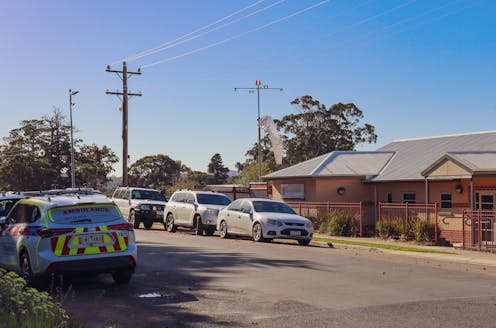
University of Otago senior lecturer Dr Lesley Gray said this did not bode well.

“We know that for every approximately 100 that we have in MIQ there is a risk that there might be one that might end up in the community.”

From January 7, travellers to New Zealand must return a negative test within 48 hours of their departure, down from 72 hours.

Catching virus in short time-frame
Director of Public Health Dr Caroline McElnay had previously said that people may have been incubating covid-19 before their flight or been exposed during their travel.

Dr Gray was concerned people were catching the virus within that short-time frame.

“We do have to ask the questions of ‘how, what, when, and why’. As these people travel, they’re distanced for the most part on the planes, when they’re in airports they’re wearing masks and they have to take a reasonable number of precautions,” she said.

She urged New Zealanders to ask themselves if they were ready for an omicron outbreak.

This included having adequate supplies and a suitable place to quarantine if needed.

She said getting a booster shot, scanning in, mask-wearing, and testing were among the best tools to tackle omicron.

This article is republished under a community partnership agreement with RNZ.

Print Friendly, PDF & Email

Article by AsiaPacificReport.nz

NZ police probe after Tamaki speaks at Christchurch anti-vaccine protest

By Niva Chittock, RNZ News Reporter

New Zealand police are investigating an anti-vaccine protest attended by Destiny Church leader pastor Brian Tamaki.

A Destiny Church spokesperson confirmed Tamaki visited Christchurch over the weekend to give the Sunday sermon at the local congregation.

Tamaki also spoke at an event in a central park on Saturday, which the spokesperson described as a “picnic”, not an anti-vaccine mandate protest.

They said once they learnt of Tamaki’s visit, they asked him to speak at Saturday’s event in Hagley Park.

Canterbury police district commander Superintendent John Price said enforcement action may be taken if breaches of covid-19 rules are found.

Tamaki has been charged three times after speaking at large protests in breach of Auckland’s level three rules.

At the time of the first event, gatherings were restricted to a maximum of 10 people. There were around 1000 people at the protests.

Superintendent John Price said: “We encourage individuals attending protests to conduct themselves in a safe manner and adhere to current covid-19 orange restrictions, which are there to ensure the safety of all.”

Destiny Church regularly meets in Christchurch’s Cranmer Square for their weekend sermon.

This article is republished under a community partnership agreement with RNZ.

Print Friendly, PDF & Email

Article by AsiaPacificReport.nz

‘The revolution has started’ – revolt against poverty and corruption in Kazakhstan

SPECIAL REPORT: By Ella Kelleher

The violent protests which erupted in major cities across Kazakhstan over the past week, fueled by the people’s fury over high gas prices, grew into a monumental anti-corruption movement with the hope of changing the country’s direction.

The Kazakh people are reportedly fed up with the country’s immense wealth, owed to large oil reserves, being held by a small number of corrupt elites.

However, as with so many revolutions, the battle has intensified into a bloody clash between the people and the military.

Last Sunday, the rebellion began in western Kazakhstan, a region known for its natural resources and oil richness, against a significant surge in fuel prices. Despite the Kazakh government’s promise to lower them­­, the protests spread throughout the country with a broader demand for better social benefits and less governmental corruption.

The Kazakh president, Kassym-Jomart Tokayev, issued a statement on Wednesday night calling, without offering evidence, protesters “a band of terrorists” who had been “trained abroad” – alluding to possible foreign interference.

Tokayev declared a state of emergency in Kazakhstan and requested the intervention from Russia’s version of NATO, the Collective Security Treaty Organization (CSTO), to which Kazakhstan and Russia are members. Others include Armenia, Belarus, Kyrgyzstan, and Tajikistan.

The chairman of the CSTO, Armenian Prime Minister Nikol Pashinyan, also blames “outside interference” for the mass protests.

Russian-led troops
As promised by the military pact between Russia and Kazakhstan, Russian-led CSTO troops have stormed into Kazakhstan’s largest city, Almaty, and were being met by large groups of demonstrators setting fire to trucks, police cars, and barricading themselves.

Some protesters wielding firearms were caught on camera looting shops and malls and setting government buildings on fire (including Almaty’s City Hall and the president’s former office).

President Kassym-Jomart Tokayev
President Kassym-Jomart Tokayev … claimed huge crowds of protesters were “a band of terrorists” without offering evidence. Image: Wikidata

Local demonstrators also captured the Almaty airport. Flights in and out of airports in Almaty, Aktau, and Aktobe were suspended until further notice.

Much of the violence and scale of the chaos can be witnessed on social media applications such as Instagram, Facebook, and Tik Tok. However, with the government’s internet shutdown on the entire country, many current reports are unconfirmed.

Kazakh locals, such as Galym Ageleulov, who has been witnessing the events of the past few days, states that throngs of criminals had co-opted the “movement that was calling for peaceful change”.

Suddenly, the protesters morphed into groups of primarily young men posing with riot shields and helmets captured from police officers.

According to Ageleulov, these groups of men had replaced the Almaty police force and were “highly organised and managed by gang leaders”.

Three police beheaded claim
Further unconfirmed reports sent in by locals on the ground in Almaty have stated that these men have beheaded up to three police officers.

The Kazakh interior ministry stated that at least eight police officers and national guard troops were killed during the protests while 300 were injured and more than 3800 protesters were arrested.

Kazakh Americans have flocked to social media to spread awareness of what is going on in the influential Central Asian nation.

One source on Tik Tok powerfully declared that “the revolution has started” and that the Kazakh people are calling for President Tokayev to “step down”.

In response to the people’s demands for a sincere governmental anti-corruption, Tokayev simply sacked the country’s cabinet — and this did little to ease dissent and infuriated the protesters.

Tokayev’s request for foreign military troops to help quell the protests has only further angered the Kazakh people, who feel deeply betrayed that their government would beckon foreign military groups to gun down Kazakh protestors chanting for their country’s freedom.

The nation’s fury with their authoritarian leader is exacerbated by Tokayev’s recent statement in a televised address that “whoever does not surrender will be destroyed. I have given the order to law enforcement agencies and the army to shoot to kill without warning”.

Locals line up for bread
Almaty’s commercial banks have been ordered to shut down, forcing Kazakhs to withdraw all their cash from ATMs. Stores and markets have been forcibly closed as well, causing locals to line up for rations of bread — a heartbreaking sight that has been unseen in Kazakhstan since the country’s independence from the Soviet Union in 1991.

Almaty’s City Hall, a famous white building that once served as the Communist Party headquarters, is charred black from protestors’ flames set on it.

Kazakhstan has been long been praised as being one of the most successful post-Soviet republics. The country has by far the highest GDP per capita in the Central Asian region and plenty of oil reserves, driven mostly by its western region.

Additionally, Kazakhstan accounted for more than 50 percent of the global uranium exports in 2020.

Kazakhstan is also the second largest country for bitcoin mining. Due to the Kazakh government’s shutdown of the internet, crypto markets have seen a considerable loss.

Despite the country’s abundance of natural resources, most of Kazakhstan’s enormous wealth has not been equally spread among the populace.

Corrupt elites live in style
Since the country’s independence, corrupt elites and officials have been living in luxury while the vast majority of the Kazakh people survive on paltry salaries.

The current dire situation in Kazakhstan can be interpreted as a significant warning for neighbouring Russia. Presidential succession creates unrest in authoritarian countries.

In 2019, former president Nursultan Nazarbayev hand-picked his successor, Tokayev. While this change may have seemed refreshing on the surface, the Kazakh people are well aware of Nazarbayev’s shadow-emperor hold on the country’s political power.

An invaluable lesson must be learned from Kazakhstan’s present state: a raging sea of anger and discontent might be storming beneath a thin veil of regional stability.

A petition posted on Change.org, which 36,000+ people have signed, calls to remove foreign military troops from Kazakhstan.

Ella Kelleher is a Kazakh American at English major graduate at Loyola Marymount University, Los Angeles, US. She is the book review editor-in-chief and a contributing staff writer for Asia Media International. Republished with permission.

Kazakh protests
One of the Kazakh protests across the country before the crackdown with the backing of Russian special forces. Image: Asia Media International
Print Friendly, PDF & Email

Article by AsiaPacificReport.nz

Fiji’s Health Ministry reports 1280 new covid-19 cases and five deaths

By Rohit Deo in Suva

Fiji’s Ministry of Health and Medical Services has reported 1280 new covid-19 community cases since the last update on January 5.

“We have recorded a total of 1280 new cases; of which 348 new cases were recorded on 06/01/2022, 320 new cases were recorded on 07/01/2022 and 612 new cases in the last 24 hours ending at 8 am this morning,” the ministry said in a statement on Saturday evening.
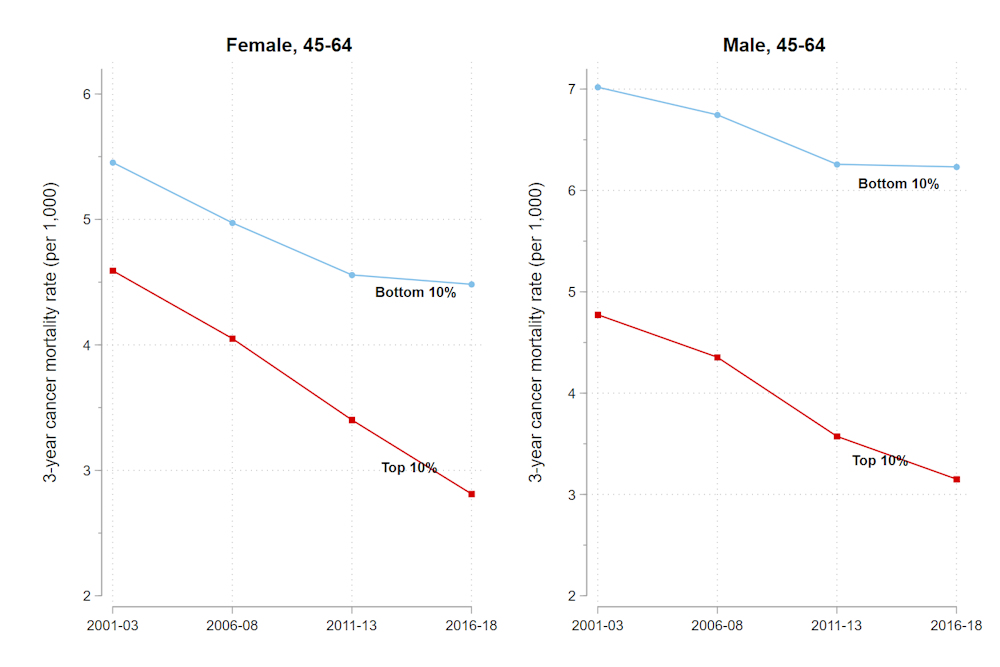
Of the 1280 cases recorded since the last update, 619 cases were recorded in the Central Division; 535 cases were recorded in the Western Division, 114 cases were recorded in the Northern Division, and 12 cases in the Eastern Division.

Overall, there have been 57,187 cases recorded, with 69 percent of the cases from the Central Division, 27 percent of the cases from the Western Division, 1 percent of the cases from the Eastern Division, and 3 percent from the Northern Division.

Fiji’s national 7-day rolling average is 349 daily cases calculated for 4 January 2022.

There are five covid-19 deaths to report:

  • The first covid-19 death to report is of an 89-year-old female from Taveuni who died at home on January 4. She had pre-existing medical conditions and was not vaccinated.
  • The second covid-19 death to report is of a 55-year-old male from Nausori who died at home on January 4. He had a pre-existing medical condition, received his first dose of the covid-19 vaccine in mid-July and the second dose in mid-August. He was fully vaccinated.
  • The third covid-19 death to report is of a 61-year-old female from Caubati who died at home on January 6. She had multiple pre-existing medical conditions that contributed to her death. She was not vaccinated.
  • The fourth covid-19 death to report is of an 83-year-old female from Suva who died at home on January 7. She had received her first dose of the covid-19 vaccine in mid-June and the second dose in mid-August. She was fully vaccinated.
  • The fifth covid-19 death to report is of a 27-year-old male from Nausori who died at home on January 7. He had a significant predisposing medical condition that was assessed by the attending doctors to have contributed to his death. He received the first dose of his covid-19 vaccine at the end of July and his second dose, mid-September. He was fully vaccinated.

There has been a total of 709 deaths due to covid-19 in Fiji.

Rohit Deo is a Fiji Times reporter. Republished with permission.

Print Friendly, PDF & Email

Article by AsiaPacificReport.nz

Papuan People’s Petition calls for release of advocate Victor Yeimo

Asia Pacific Report newsdesk

The Papuan People’s Petition — “Petisi Rakyat Papua” — has called on the Indonesian government to release detained human rights advocate Victor Yeimo and to revoke the special autonomy law (version 2).

Yeimo, international spokesperson of the National Committee of West Papua (KNPB), was arrested by the Indonesian police in Tanah Hitam, Abupura-Jayapura. He was serving as spokesperson of the Papuan People’s Petition.

Yeimo is a prisoner of the Papua High Prosecutor’s Office and is currently being treated at the Jayapura Regional General Hospital Dok II.

Previously, he was detained in the detention cell of the Mobile Brigade Headquarters in Kota Raja Jayapura, Papua.

Yeimo has been receiving treatment at the hospital because of public pressure both nationally and internationally over serious concerns for his declining health.

The Petisi Rakyak Papua (PRP) is aimed to call upon the central government of Indonesia in Jakarta to revoke the special autonomy law (Otsus) that was passed prematurely by Jakarta in November 2021 without public hearings and considering the voices and demands of the Papuan people brought by 113 organisations.

The call of rejecting the extension of the special autonomy law which expired last year was echoed a few years ago.

No benefit for Papuans
The petition says that since the central government granted the special autonomy law, the indigenous people of West Papua have not benefited. The law itself has become controversial.

The national spokesperson for the petition, Jefry Wenda, said that apart from the 113 organisations making submissions, 718,179 votes of grassroots people opposed support for extension of the special autonomy law. However, the central government of Indonesia has refused to listen.

Before the widespread rejection of the law from the grassroots level, the provincial government of Papua had tried to negotiate with the central government many times, but Jakarta has been reluctant to consider the provincial government’s aspirations.

This year, the Papuan People’s Petition reaffirms the call by stating:

1. PRP is a manifestation of the political stance of the West Papuan people who reject the existence and sustainability of Otsus in West Papua;
2. The PRP will oversee the attitude of the people of West Papua in fighting for the right to self-determination peacefully and democratically;
3. PRP rejected Otsus and agreed to continue raising the Papuan People’s Petition (PRP) for the third stage;
4. The PRP rejects all forms of compromise and political representation outside of the attitude of the West Papuan people;
5. The PRP is committed to promoting democratic unity in the struggle for the national liberation of West Papua; and
6. PRP urges the release of international spokesman Victor Yeimo and all West Papuan political prisoners without conditions!

PRP conference Papua
A Papuan People’s Petition conference. Image: PKP
Print Friendly, PDF & Email

Article by AsiaPacificReport.nz

Fiji denies tourist’s claims of covid ‘nightmare’ mistreatment by locals

By Christine Rovoi, RNZ Pacific journalist

The Australian government is assisting its citizens stranded in Fiji who also claimed they were mistreated by locals — claims rejects by tourism authorities — after testing positive to covid-19 when they arrived in the country on Boxing Day.

The move follows claims by an Australian family that they were locked in their hotel rooms and ignored by the staff soon after returning positive results for the coronavirus.

Fiji reopened its borders to international travellers on December 1 and that 30,000 visitors had arrived in the country since.

Tourism Fiji said about 75,000 people had booked to stay in hotels and resorts across the country through to the end of January.

Australia is Fiji’s largest tourism market with more than 40 percent of the visitors from Down Under.

In a report, dated 4 January 2022 and aired on Australia’s Channel 7 network, Jacqueline Hoy claimed that what was supposed to be a dream holiday in Fiji had quickly turned into a nightmare for her family.

Hoy said their ordeal began when her brother tested positive for covid-19 soon after the family arrived at Nadi Airport from Sydney on December 26.

Claim family was separated
She also claimed her family was separated and support was scarce.

Hoy said they were locked in their hotel rooms and did not get any food for three days — with calls for help to the hotel staff ignored.

“It is an absolute nightmare,” Hoy told the network. “On arrival at the hotel to check-in, there was no signage, no hand sanitiser and we waited four hours at the reception to check into our room.

“We didn’t get access to our rooms until 11.30pm. We were forced to sign a consent form which basically waived all our rights in relation to covid-19, access to our reports and medical records.

“I haven’t seen any medical reports, I’ve only been told I’m covid positive and I can’t leave my room in 10 days.

“We’ve been told that if any of our family members are seen together, coercing in the corridors — those who are negative will have to stay an extra seven days.”

The family is working with the Australian High Commission in Suva to get them home.

Australia’s Department of Foreign Affairs and Trade (DFAT) said it was providing consular assistance, in accordance with the Consular Service Charter, to the family.

“Due to privacy obligations we are unable to provide further information,” the DFAT said in a statement.

Tourism Fiji CEO Brent Hill
Tourism Fiji chief executive officer Brent Hill … rejected “nightmare” claims, saying this is not the full story. Image: RNZ Pacific/Michelle Cheer/Tourism Fiji

Tourism Fiji refutes tourist’s claims
Tourism Fiji chief executive officer Brent Hill has rejected Hoy’s claims saying this is not the full story.

Hill did not respond to a request for comment from RNZ Pacific but he told local media that the stakeholders in Fiji’s tourism industry took these allegations seriously and were facilitating both sides of the dispute.

The hotel in question on the popular Coral Coast strip has refused to comment.

Fiji’s Hotel and Tourism Association said its investigation had also found that Hoy had made false claims.

The association’s chief executive, Fantasha Lockington, said 30,000 visitors had already visited Fiji over the last five weeks and the majority of them had a wonderful experience.

Both Tourism Fiji and FHTA are expected to release a joint statement soon.

Fiji is currently battling a third wave of the coronavirus with a total of 3009 active cases in isolation and the death toll at 704.

Fiji Health Minister Dr Ifereimi Waqainabete
Fiji Health Minister Dr Ifereimi Waqainabete … “I’ve seen her talking and certainly she does not look too unwell.” Image: RNZ Pacific/Fiji govt

Fiji’s Health Ministry said there were 1555 covid-19 cases recorded since January 1 with 372 of them confirmed on Wednesday.

Health Minister Dr Ifereimi Waqainabete said the Australian woman’s claims of mistreatment by the locals were concerning.

Dr Waqainabete said he had viewed the Channel 7 report, adding that the safety of all visitors to Fiji was important.

“I’ve seen her talking and certainly she does not look too unwell — so we are thankful for that. Certainly, as I’ve alluded to the fact that she is being able to be fully vaccinated also supports her in that regard.

“But her health and safety is very important. That is something that we’ve been working on with Tourism Fiji and the Fiji Hoteliers Association.”

Dr Waqainabete said he had visited some of the hotels and resorts to check their standard operating procedures before Fiji’s borders reopened.

There are occasions where some challenges would be faced, he said.

“I am also grateful that there have been thousands and thousands of visitors that have come through to Fiji safely and have gone back home safely. And that is a testament to the processes that we have in place.”

International travellers arrive at Nadi Airport.
International travellers arrive at Nadi Airport. Image: RNZ Pacific/Facebook/Fiji govt

Be prepared for challenges, Australians told
Covid-19 remains an ongoing global health risk, and Australians who travel overseas during the pandemic have been urged to be aware of the continued challenges associated with international travel.

A government travel advisory states that Australians travelling overseas must be fully prepared, to closely monitor the covid-19 situation in their intended travel destinations and arrange suitable travel insurance.

They are also encouraged to consult the Smartraveller website for the latest travel advice and the Global Covid-19 Health Advisory.

Travel advice in relation to Fiji is available at Fiji Travel Advice & Safety/Smartraveller.

Australians have also been told that the reopening of their borders is not a return to the pre covid-19 international travel environment.

“All travellers need to be aware of risks and take care regardless of where they travel,” a government travel advisory stated.

“This includes having sufficient funds to meet their travel needs and ensuring they have travel insurance and fully understand the details of their insurance, especially regarding contracting covid-19.”

This article is republished under a community partnership agreement with RNZ.

Print Friendly, PDF & Email

Article by AsiaPacificReport.nz

Report from the future: Aotearoa New Zealand is looking good in 2040 – here’s how we did it

ANALYSIS: By Thomas Nash, Massey University

The year is 2040 and Aotearoa New Zealand has reduced its greenhouse gas emissions consistent with the commitment to keep global heating below 1.5°C above pre-industrial temperatures.

The economy, society, local government, transport, housing and urban design, energy, land use, food production and water systems have all changed significantly. Fossil fuels have been mostly phased out internationally and import taxes are imposed on high emissions goods.

New Zealand is now a world leader in natural infrastructure, clean hydrogen energy, engineered wood and high quality low emissions food. Despite ongoing challenges, with a prosperous economy, most people think the transition was worth it.

Cities are more pleasant places to live, air and water are cleaner, nature is more abundant.

Following the emissions budgets stipulated by the Zero Carbon Act in late 2021, emissions are now properly priced into all economic decisions. The Emissions Trading Scheme has been reinforced and the price of emitting carbon has stabilised at $300 per tonne, after hitting $75 in 2022 and $200 by 2030.

In 2026, New Zealand signed the International Treaty to Phase out Fossil Fuels, which prohibits fossil fuel extraction, phases out use and requires international cooperation on renewable energy.

Carbon import taxes mean many high emissions commercial activities are no longer economically viable. Trade unions have played a major role in the industrial strategy underpinning the transition to a lower emissions economy.

Māori economy bigger than any other sector
The Māori economy is bigger than any other sector and has benefited from wider international recognition of the long term value of climate and biodiversity work.

Queenstown
Queenstown … New Zealand’s economy is based on productive activity that stays within planetary boundaries while respecting social requirements, such as a decent standard of living for all. Image: The Conversation/Shutterstock

New Zealand’s economy is based on productive activity that stays within planetary boundaries – including emissions and pollution of land and water – while respecting social requirements, such as a decent standard of living for all.

Building on their successful response to the covid pandemic, marae-based organisations are prominent as centres of excellence for climate and economic strategy, health and social services, managed retreat from coastal areas and natural infrastructure development.

Public financing was radically rebalanced in the 2020s, delivering more for local government and a greater partnership between councils, government and Māori organisations. This has enabled far better delivery of local services and much more meaningful connections within communities.

Councils and council organisations laid the groundwork for the climate transition, helping address the unequal impacts of climate change on different groups. Councils and mana whenua collectively administer substantial funds for regional development.

People travel between cities primarily via electric rail
People travel between cities primarily via electric rail, managed by a new national passenger rail agency InterCity, which acquired the InterCity regional bus operator in 2023. Image: The Conversation/Shutterstock

Fast, frequent rail

The government’s 2022 Climate Budget provided the massive injection of funds required to redesign our cities, which are now organised around mass transit, safe and segregated routes for cycling and vibrant pedestrian areas. People can access fast, frequent light rail and dedicated busways with low cost fares. Less road space is required for driving, which is more accessible now for those who need it, including disabled people and service vehicles.

People travel between cities primarily via electric rail, managed by a new national passenger rail agency InterCity, which acquired the InterCity regional bus operator in 2023. Through major reforms in 2024, KiwiRail became a dedicated rail freight operator. A new government agency, OnTrack, oversees maintenance and renewal of tracks and rail infrastructure.

Passenger rail services run across the North Island main trunk line on improved electrified tracks at up to 160kph. South Island rail uses hydrogen trains fuelled by locally produced green hydrogen.

Most of the work to upgrade transport, housing and energy infrastructure has been done by a new Ministry of Green Works set up in 2025. This Ministry partners with local hapū and iwi, as well as councils through regional hubs. It is backed by the government’s expanded Green Investment Finance company.

The divide between property owners and renters
Anger at the divide between property owners and renters culminated in a general rent strike in 2024. Image: The Conversation/Shutterstock

Anger over housing for all
Anger at the divide between property owners and renters culminated in a general rent strike in 2024. The government responded with new financial rules ending the treatment of housing as an asset class. Kāinga Ora, Māori organisations and councils have undertaken a massive public housing construction effort.

Most new housing is now public infrastructure rather than private homes built to store individual wealth. Public ownership has expanded, in particular for entities that provide core services such as transport, energy and water.

In 2024, the government worked with councils to focus plans on quality universal design housing. Since the new building code was adopted in 2025, all new homes have high standards for energy efficiency and accessibility. Higher density apartments line public transport routes in the main centres, with terraced homes in smaller towns. Structural timber has replaced concrete and steel in many construction projects.

Changes to housing, transport and urban design have supported improvements in health, well-being and physical activity. Health improved dramatically after universal basic services were introduced in 2024 to cover free visits to the doctor and dentist as well as free childcare and elderly care.

Electricity generation has doubled, with a mix of wind, solar and geothermal.
Electricity generation has doubled, with a mix of wind, solar and geothermal. Image: The Conversation/Shutterstock

Energy goes green
Electricity generation has doubled, with a mix of wind, solar and geothermal. Many more energy storage facilities exist, including pumped hydroelectricity. Distributed energy is commonplace. Many councils have helped their communities set up local solar schemes and dozens of towns are completely independent of the national grid.

Green hydrogen is produced at the converted aluminium smelter at Tiwai Point using hydroelectricity. This is used in heavy industry and transport and exported from Southport.

In 2027, after New Zealand blew its first carbon budget, the government replaced MBIE with a new Ministry for Economic Transition. The ministry oversaw the transition to green jobs via a universal job guarantee scheme.

It also supported a dramatic reduction in energy use in all parts of society and the economy. This effort had a greater impact on emissions reduction than the replacement of energy and fuel with renewable sources.

The land heals
In 2025, the government established a Natural Infrastructure Commission. The term “natural infrastructure” emerged in the 2020s as a term to include native forests, wetlands, coastal environments and other ecosystems that store and clean water, protect against drought, flooding and storms, boost biodiversity and absorb carbon.

The commission has supported massive land restoration for carbon sequestration and biodiversity purposes, with an annual budget of NZ$5 billion from emissions revenue. Among other uses, the fund compensates land owners for land use changes that reduce emissions and build up resilience.

Under the new Constitution of Aotearoa adopted in 2040, ownership of the Conservation Estate transferred from Crown ownership to its own status of legal personhood.

International carbon taxes have transformed agriculture. Dairy herds have reduced in size and New Zealand is known for organic, low emissions food and fibre. High quality meat and dairy products, as well as plant-based protein foods, supply international markets.

Seaweed and aquaculture operations have flourished. Along with regenerative agriculture, this transition has reduced pollution and emissions. With native ecosystems regenerated, tōtara and harakeke can now be sustainably harvested for timber and fibre.

In urban and industrial settings water use has dramatically reduced. Every business, home and building stores its own water. Water use is measured and charges are levied for excess water use beyond the needs of the household. No water is ever wasted.

The country feels steadier than 20 years ago.
The country feels steadier than 20 years ago. There is hope for the future in a world that was full of uncertainty after the pandemic stricken early 2020s. Image: The Conversation/Shutterstock

A better place
The country feels steadier than 20 years ago. There is hope for the future in a world that was full of uncertainty after the pandemic stricken early 2020s.

Many government agencies and councils are now seen as useful and relevant, having been equipped with the money to provide housing, social services, environmental restoration and support for economic and land use change.

Moving away from high emissions exports was more successful than anyone expected, but it took strict rules to make it happen. Some in the business sector opposed more government direction and regulation, but it’s widely accepted that relying on market forces would not have delivered a successful transition.

That approach had driven the country to the brink of failure on climate, biodiversity and social cohesion. Having been leaders in milk powder and tourism, the country now leads on natural infrastructure and the future of food, timber and energy.

In 2040, Aotearoa is a better place to be.The Conversation

Dr Thomas Nash is social entrepreneur in residence, Massey University. This article is republished from The Conversation under a Creative Commons licence. Read the original article.

Print Friendly, PDF & Email

Article by AsiaPacificReport.nz

Filipino national artist, critic and columnist F Sionil Jose dies at 97

By Rappler

National Artist for Literature F Sionil Jose has died in the Philippines. He was 97.

His death was announced by the Philippine Center of International PEN (Poets, Playwrights, Essayists, Novelists) in a Facebook post.

According to the post, Jose was declared dead at 9:30 pm last evening at the Makati Medical Center, where he was confined ahead of an angioplasty due today.

Just hours before his death, Jose took to his own Facebook page to post what would become his final words.

“Thank you brave heart. There are times when as an agnostic I doubt the presence of an almighty and loving God. But dear brave heart you are here to disprove this illusion, to do away with the conclusion that if you doubt Him, you kill Him,” he wrote.

“I cannot kill you dear heart; you have to do that yourself.

“For 97 years you have been constantly working patiently pumping much more efficiently and longer than most machines. Of course, I know that a book lasts long too, as the libraries have shown, books that have lived more than 300 years. Now, that I am here in waiting for an angioplasty, I hope that you will survive it and I with it, so that I will be able to continue what I have been doing with so much energy that only you have been able to give.

“Thank you dear brave heart and dear Lord for this most precious gift.”

Rosales historical novels
Jose was known for the Rosales novels, a five-part series that follows a family throughout three centuries of Philippine history.

Mass, the final novel in the series, earned Jose one of his five Palanca awards.

He was named National Artist for Literature in 2001. Before that, he had already won a number of prestigious distinctions, including the CCP Centennial Honours for the Arts in 1999, and the Ramon Magsaysay Award for Journalism, Literature, and Creative Communication Arts in 1980.

He founded the Philippine chapter of PEN in 1958.

He was also a lecturer and owned the bookshop Solidaridad in Padre Faura, Manila.

In his later years, he maintained a column at The Philippine Star, where he wrote sometimes inflammatory critiques on Filipino society, culture and politics.

Republished from Rappler with permission.

Print Friendly, PDF & Email

Article by AsiaPacificReport.nz

How extremists have used the COVID pandemic to further their own ends, often with chaotic results

Source: The Conversation (Au and NZ) – By Kristy Campion, Lecturer in Terrorism Studies, Charles Sturt University

Throughout the COVID-19 pandemic, extremists have sought to exploit the pandemic environment to their own ends. Where most of the population sees an enduring health catastrophe, extremists tend to see opportunity.

Over the past two years, we have seen hospitals targeted by extremists, infrastructure attacked, and extremist narratives go viral. This has been most marked in western democracies, including Australia.

Funded by a Charles Sturt University COVID-19 Research Grant, we examined the Australian security context to better understand how extremists were understanding and responding to the pandemic. Our key consideration was what extremist responses would mean for the security of Australians both now and into the future.


Read more:
In COVID’s shadow, global terrorism goes quiet. But we have seen this before, and should be wary


Our focus quickly became extreme ideologies. Ideologies were important to our study because they helped us make sense of the link between knowing and doing, between thought and action. By observing extremist statements and behaviours, we were able to identify and map ideology in action.

Ideology can be divided into three parts:

  • it provides an explanation of the current state of affairs. That is, why the world is as it is
  • it imagines an alternative and preferred order.
  • it proposes a method of political action to achieve that alternative. For extremists, that method of political action is through severe, lethal violence that meets the threshold for terrorism.

This is important, because ideology shapes strategy. It is a significant factor in who extremists determine are valid targets of their violence. With reports of attacks against Australians of Asian descent early in the pandemic, we believed it was important to investigate these ideologically motivated behaviours.

To understand this better, we mapped narratives and activities of three primary extremist threats over 2020. These included violent Salafi jihadists, the extreme right, and the extreme left in Australia.

While we found little data on the extreme left, we had four key outcomes from the data collected on the extreme right and violent Salafi jihadists with respect to Australia. They were active in using the emerging pandemic to support their own beliefs.


Read more:
Why hundreds of westerners are taking up arms in global jihad


First, and most significantly, we identified ideological buttressing. This meant extremists were integrating the pandemic environment into their existing beliefs. For example, extremists incorporated COVID-19 to decry globalism, immigration, and modern society in general. This strengthened their existing narratives, which in turn positively influenced their ability to recruit.

This comes with national security implications. Extremists were able to cement beliefs and positions, thereby deepening the divide and distrust between fringe elements and their government. Buttressing ensures that the threat of lone actor and group terrorism will endure. It will also challenge future deradicalisation practices.

Second, we identified changes in existing ideologies – what we called diversification. That is, we found extremists adopting new or contradictory beliefs in addition to their former positions. Often, this occurred where extremists who were diverse in ideological affiliation gathered in the same space (albeit with differing goals). For example, traditional White supremacists adopted some of the sovereign citizen movement ideas on government oppression.


Read more:
‘Living people’: who are the sovereign citizens, or SovCits, and why do they believe they have immunity from the law?


What this means is that extremists were exposed to different ideas, goals, and people. Their ideology was shifted by having a more diverse range of people in their networks, but often with chaotic results: supporters held seemingly contradictory positions simultaneously.

This shifting will challenge the efficient identification and categorisation of an extremist or group of extremists: the pandemic has made everything messier. There could be, as a result, flow-on effects, both to the community in reporting suspected extremists and the authorities investigating extremists.

The third outcomes was what we call “idiosyncratisation”. This is where extremists integrated specific conspiracies into their narratives. Conspiracies are not usually ideologies in a technical sense, because they rarely provide a alternative order. Nonetheless, we saw the adoption of objectionable and disconnected beliefs, such as 5G causing COVID-19 across both extreme left and extreme right movements.

Finally, our fourth outcome was that – despite COVID-19 countermeasures – the sharing of ideologically motivated ideas did not solely occur online, as might have been expected in a pandemic environment. Instead, misinformation and ideological content was shared offline, and in some cases, in person. While the internet was a highway for COVID-19 narratives around the world, it was not the only one.


Read more:
Far-right groups have used COVID to expand their footprint in Australia. Here are the ones you need to know about


The context created by COVID-19 has complicated Australia’s national security environment. We have seen new leaders emerging and new ideas being adopted. At the same time, old movements are transforming and old ideologies being reinforced.

As we move into 2022 and the pandemic continues, there will be critical considerations for the national security landscape. Those include the increasing complexities associated with extremists and how they are using COVID to further their own means. The four key outcomes identified in our study shed light on this ever-evolving threat to our national security.

The Conversation

Funded by a CSU COVID-19 Research Grant

ref. How extremists have used the COVID pandemic to further their own ends, often with chaotic results – https://theconversation.com/how-extremists-have-used-the-covid-pandemic-to-further-their-own-ends-often-with-chaotic-results-174400

Should my child have a COVID vaccine? Here’s what can happen when parents disagree

Source: The Conversation (Au and NZ) – By Nicholas Wood, Associate Professor, Discipline of Childhood and Adolescent Health, University of Sydney

Shutterstock

Australian children aged 5-11 are eligible to receive their COVID-19 vaccine from today.

For many parents, vaccinating their child is a shared decision with both parents agreeing to go ahead.

But not all parents agree.

As we roll out COVID vaccines to younger children this week, what options are there if one parent wants to vaccinate their child but the other doesn’t?

Why do parents disagree about COVID vaccines?

Before COVID, parents chose to vaccinate their children for a range of reasons. This included a feeling of social responsibility, a belief in the protective medical benefit and safety of vaccines, and possibly a financial incentive, driven by policies including “No Jab No Pay”.

However, for some, barriers to timely vaccination remain. For instance, childhood illnesses may have prevented vaccination, or it may be difficult to get to a vaccine clinic because of work commitments or lack of transport.


Read more:
Why do people not vaccinate?


Others believe vaccination has unacceptable side effects or immunisation is ineffective in preventing disease. Others believe vaccines contain harmful substances, prefer natural or homeopathic alternatives, or mistrust medical evidence supporting the safety and efficacy of vaccination.

A minority of parents also falsely believe these apply to COVID-19 vaccines.

Why are disputes more of an issue now?

As we roll out COVID-19 vaccines to more children, vaccine disputes between parents may rise.

If parents disagree, what happens next partly depends on the age and maturity of the child.

For instance, teenagers aged 16 years and older are usually considered to have the capacity to consent for themselves. So if parents disagree, older teenagers with the capacity to consent can go ahead and get their shot anyway.

Where disputes are likely to arise is for younger children. For those aged 12-15, vaccinators like to see agreement from the adolescent to be vaccinated plus consent from the parent or guardian.

For children under 12, a parent or guardian needs to provide consent as young children are not deemed to have capacity to do so.

Written consent to vaccination is not required in Australia.

What happens next?

When parents disagree over whether to vaccinate their child, the child may be delayed in getting vaccinated or can remain unvaccinated until they can consent themselves.

Depending on the relationship between parents and whether it is safe to do so, parents can look together at reliable sources of information and answers to frequently asked questions about vaccination. These may address any misunderstandings or disagreements.

Seeking external advice from a neutral third party, such as a GP or specialist immunisation service, is also recommended. Other options include getting in touch with community organisations, such as family relationships organisations, or the Family Relationship Advice Line (1800 050 321). These may be able to advise about mediation.

If these methods fail, going to court may be the last resort. This comes with significant financial and emotional costs, so is best avoided.

Australia’s Family Court has set up a COVID-19 list to prepare for hearing disputes about children being vaccinated against COVID-19. The courts have already seen a rise in applications.

We can’t say for certain how the courts will decide. What we do know, however, is what happened when non COVID-19 vaccination disputes went to court.

The court has favoured vaccination

In research we have submitted for publication, we reviewed 27 cases involving parental disputes involving non COVID-19 immunisations. These went to court in Australia between 2002 and 2021.

In 21 of those cases, the court decided in favour of the parent who supported vaccination. In five cases, the court declined to make a decision due to a lack of medical expert evidence presented and asked this be gathered for future hearings. In only one case was parental responsibility awarded to the party opposing vaccination.

In all cases where traditional Western medical expert evidence was presented, the court decided in favour of the parent who supported vaccination.


Read more:
Safety, side effects, allergies and doses. The COVID-19 Pfizer vaccine for 5-11 year olds explained


In many cases, courts made statements on the individual and public benefits of immunisation. Common themes across judgements included:

  • any potential risks of vaccination are greatly outweighed by the risk of harm from vaccine-preventable diseases
  • failure of a parent to immunise exposes a child to risk of harm
  • indirect benefits of immunisation to the community argues in favour of vaccination.

Many of these statements made about non COVID-19 vaccines also apply to COVID-19 vaccines.

Based on prior experience it seems likely courts will decide in favour of immunisation.

Start the discussion now

Almost 80% of Australian 12 to 15 year olds have had one dose of COVID vaccine and about 73% have had two doses. So if vaccine uptake in this age group is an accurate guide of parents’ views, we are likely to see similar high uptake in children aged 5-11.

Over 7 million children aged 5-11 in the US have received the first dose of COVID-19 vaccine and over 4 million have had two doses.

Clinical trial data of children this age showed they made antibodies and the vaccine showed efficacy. Real-world data is anticipated. There have been no safety concerns to date.

So, if you haven’t already started talking about vaccinating your child, now is the time.

Grace Barbara, a 4th year medical student at the University of Sydney, conducted the review of legal cases and contributed to research mentioned in this article.

The Conversation

Nicholas Wood receives funding from the NHMRC for a Career Development Fellowship. He holds a Churchill Fellowship awarded in 2019.

ref. Should my child have a COVID vaccine? Here’s what can happen when parents disagree – https://theconversation.com/should-my-child-have-a-covid-vaccine-heres-what-can-happen-when-parents-disagree-174395

What is the value of a wave? How changes to our coastline could wipe out surfing’s benefits

Source: The Conversation (Au and NZ) – By Ana Manero, Research Fellow, Australian National University

Shutterstock

Before COVID-19, global surf tourism spending was estimated at up to A$91 billion per year. And since the start of the pandemic, demand for surfing has boomed as people increasingly turn to outdoor activities.

But surfing’s benefits to human well-being aren’t often studied in economics terms. This is a major knowledge gap we are now trying to fill.

Such research is important. Changes to the coastline – such as from sea walls and groynes – can dramatically reduce the quality of surfing waves. But the consequences of coastal developments on surfing are often poorly understood and rarely quantified before projects start.

It’s crucial we understand the real value of surfing, before we lose the myriad of benefits they bring – not only to Australia’s 1.2 million active surfers, but to hundreds of coastal towns where surfing underpins the local economy and lifestyle.

Surfing economics

There are many studies on the economic value of Australian beach pastimes such as fishing, swimming and diving. But not for surfing.

Internationally, we know surfing is a major direct contributor to the economy of wave-rich places. However, until recently, the value of surfing to human well-being has been largely unaccounted for.

Surfing is a major direct contributor to many local economies all over the world.
Shutterstock

This is despite recent evidence pointing to surfing’s positive social and health outcomes, including among war veterans and children with chronic illnesses.

Surfing Economics is an emerging field of research that documents and quantifies the total economic value of surfing. This can include, for example, increased house prices near good quality breaks, or social welfare benefits people derive from visiting surf beaches.


Read more:
Girls Can’t Surf shows how determined women battled sexism in their sport


Building on the few previous surfing economics studies in Australia, our research aims to calculate the total economic value of surfing.

Our forthcoming study on the Noosa World Surf reserve, so far, demonstrates that the local economic contribution of surfing is in the order of hundreds of millions of dollars. This in terms of surfers’ welfare, as well as direct spending on surf gear and travel.

Waves forming around rocks in Noosa.
Shutterstock

Overseas, the economic contribution is a little clearer. A 2017 study used satellite imagery to demonstrate that economic activity grows faster near good-quality surf breaks, particularly in developing countries such as Indonesia and Brazil.

In the UK alone, the overall annual impact of surfing on the national economy is calculated at up to £5 billion (over A$9 billion).

How coastal projects make or break waves

Swell waves are typically formed by winds blowing many kilometres offshore. It’s perhaps easy to think that this natural, distant origin means there’s nothing we can do about the formation of waves.

But the truth is surfing waves are the product of complex interactions between waves, tides, currents, wind and the shape of the seabed. Shallow coral reefs, headlands and sand banks are responsible for making highly sought-after waves.

By directly or indirectly impacting any of these factors, wave quality has been changed for better – or for worse.

Mundaka in Spain had world-renowned waves, until dredging in a nearby river affected the swells.
Shutterstock

The world-renowned Mundaka wave, in northern Spain, temporally disappeared because dredging of the nearby rivermouth changed ocean dynamics. This resulted in a decline in economic activity and the cancellation of the Billabong Pro World Championship in 2005 and 2006.

In the Portuguese island of Madeira, the construction of a rock-wall severely disrupted the formation of the Jardim do Mar wave in 2005, and a fall in local economic growth rates followed. In Peru, the extension of a fishing pier negatively impacted Cabo Blanco, one of Peru’s best barrelling waves, by shortening its length.

Closer to home, the Ocean Reef Marina, currently under construction in Perth’s north, will significantly impact three local surf breaks. About 1.5 kilometres of mostly unmodified beaches are being redeveloped into a brand new marina.


Read more:
Why surfing is an antidote to the relentless march of capitalism


Studies have shown that well planned coastal management interventions can dramatically increase benefits to surfers and non-surfers alike.

One of the most iconic examples is the “Superbank” at Snapper Rocks in the Gold Coast. There, a world class wave forms thanks to river sediment being relocated through the Tweed Sand Bypassing Project.

World-class waves at Snapper Rock in the Gold Coast.
Shutterstock

The project is costly to operate, but its expenses are outweighed by improvements to surf quality and beach amenity, which underpin the local economy and the nature-based, active lifestyle the Gold Coast is famous for.

Giving waves legal protection

Building on efforts nearly 40 years ago to protect Victoria’s iconic Bells Beach wave, Peru and New Zealand have granted statutory protection to their surf breaks under environmental protection laws.

In practice, this means threats to surf breaks by coastal activities, such as sewage discharges or building offshore structures, must be avoided or mitigated.


Read more:
Australia’s pristine beaches have a poo problem


Similar recognition and valuation of surfing resources is necessary and would be highly beneficial for Australia.

A rigorous, science-based evaluation of surfing’s total economic value could serve to inform cost-benefit analysis of coastal management programs. These may include fighting erosion to protect the coastline, or building artificial surf reefs.

In these uncertain times of COVID-19, many of us cannot yet travel far away. But with 85% of Australians living by the coast, many of us can still catch a wave at our doorstep – and that is priceless.


Read more:
White sharks can easily mistake swimmers or surfers for seals. Our research aims to reduce the risk


The Conversation

Ana Manero is an adjunct research fellow at the University of Western Australia.

From 2005-2010, Neil Lazarow was part of a team that received funding from Gold Coast City Council to produce the Gold Coast Shoreline Management Plan and various other small grants, such as for the development of the ‘Economic and social values of beach recreation on the Gold Coast’. He is also Member of the Planning Institute of Australia, and was a founding member of the Australian Coastal Society.

Alaya Spencer-Cotton and Javier Leon do not work for, consult, own shares in or receive funding from any company or organisation that would benefit from this article, and have disclosed no relevant affiliations beyond their academic appointment.

ref. What is the value of a wave? How changes to our coastline could wipe out surfing’s benefits – https://theconversation.com/what-is-the-value-of-a-wave-how-changes-to-our-coastline-could-wipe-out-surfings-benefits-173502

‘Lose some weight’, ‘stupid old hag’: universities should no longer ask students for anonymous feedback on their teachers

Source: The Conversation (Au and NZ) – By Richard Lakeman, Associate Professor, Faculty of Health, Southern Cross University

Shutterstock

Student evaluations, in the form of anonymous online surveys, are ubiquitous in Australian universities. Most students in most courses are offered the opportunity to rate the “quality” of their teachers and the course they take.

The original intention of student surveys was to help improve the learning experience. But it’s now become much more. Student surveys are often the only measure of teaching quality (along with pass rates). For lecturers, positive ratings and comments are often required to ensure continued employment or promotion.

But these anonymous surveys have also become a platform for defamatory, racist, misogynistic and homophobic comments against staff.


Read more:
Read the student survey responses shared by academics and you’ll see why Professor Hambling is justified in burning hers


We surveyed 791 Australian academics from different universities about their experience of anonymous student evaluations. The participating academics shared verbatim some of the non-constructive feedback students gave them. We collated examples of this feedback and published these in the journal Assessment & Evaluation in Higher Education.

We grouped the feedback into five broad themes: attire, appearance and accent; allegations against character; general insults; projections of blame; and threats or calls for punishment.

1. Attire, appearance and accent

Often the comments about appearance were gendered, misogynistic or racist with variations on being “too fat”, “ugly” and “old”.

One student wrote:

You look like something the cat dragged in.

Another said:

People who’s [sic] mother tongue is not English should not be employed as lecturers.

2. Allegations against character

These typically accused the lecturer of incompetence, racism or having negative attitudes towards students:

She is really rude which is why everyone hates her.

You are a cultural Marxist, your Wokeness undermines everything you do. Not all your students are left wing nut jobs like you. You seriously need to lose some weight.

3. General insults

Most insults were clearly designed to wound the teacher and there was no pretence about the comments having anything to do with teaching – although the following was an exception:

What the fuck did you think you were doing to take a couple of days off for your grandmother’s funeral when we had an assignment due?

Apart from variations on “I hate everything about you”, most insults were a combination of unimaginative adjectives or name calling including “bitch”, “bitter”, “crap”, “devil’s spawn”, “dick”, “dog”, “dinosaur”, “idiot”, “loser”, “mentally unstable”, “mole”, “Nazi”, “needs to chill”, “out of control”, “pathetic”, “psychotic”, “senile shit”, “smiling assassin”, “trash”, “unhappy” and “useless”.

4. Projections of blame

Most student evaluation surveys are done before grades are released but many students anticipated failure and blamed the teacher:

That fucking dyke bitch failed me she’s fucking useless that’s why I failed.

5. Threats and punishment

Hand-in-hand with projection of blame were threats or calls for punishment. Most often these called for the teacher to be sacked but also included far more harsher measures:

I’d like to shove a broom up her arse.

She should be stabbed with a pitchfork.

If I was X, I would jump off the tallest building and kill myself if I was that dumb.

Some managed to combine themes to achieve maximum offensiveness:

Stupid old hag needs a good fucking.

This bitch should be fired immediately. Why is someone this ugly allowed to teach? She better be careful I never see her in the car park. She needs to get a better fashion pick. Her clothes are hideous.

The impacts are serious

An analysis of research on university student evaluations of teaching, published in March 2021, found they were influenced by factors that have nothing to do with teaching quality. These include student demographics, and the teaching academic’s culture and identity. It also found evaluations include increasingly abusive comments.

While much of the criticism may seem like playground-level name calling, the impacts can be serious.

As part of our survey we asked teachers how anonymous student evaluations of their teaching affected their well-being, mental health, and professional and personal relationships. From our ongoing analysis of the survey data (yet to be published) a profile is emerging of a highly traumatised workforce. Early career academics, casual staff, women and minorities are disproportionately affected. Many appear to be triggered by every round of student evaluations.

If Australian universities persist in employing anonymous surveys, university teachers can continue to expect to receive racist, misogynistic, defamatory comments, threats of censure and even death.


Read more:
Our uni teachers were already among the world’s most stressed. COVID and student feedback have just made things worse


Even the Australian government is taking action against anonymous hate speech by announcing an inquiry into trolling on social media. But universities still protect people who want to insult, defame and make baseless accusations about others protected by a veil of anonymity.

Perhaps it is time to unmask the anonymous online trolls in the university sector, or require students to be potentially identifiable. The risk of being identified might at least reduce exposure to hate speech and increase civility in the corridors of higher learning.

If this article has raised issues for you, or if you’re concerned about someone you know, call Lifeline on 13 11 14.

The Conversation

The authors do not work for, consult, own shares in or receive funding from any company or organisation that would benefit from this article, and have disclosed no relevant affiliations beyond their academic appointment.

ref. ‘Lose some weight’, ‘stupid old hag’: universities should no longer ask students for anonymous feedback on their teachers – https://theconversation.com/lose-some-weight-stupid-old-hag-universities-should-no-longer-ask-students-for-anonymous-feedback-on-their-teachers-173911

Supermarket shortages are different this time: how to respond and avoid panic

Source: The Conversation (Au and NZ) – By Flavio Macau, Associate Dean Teaching & Learning, Edith Cowan University

Australia has experienced plenty of supermarket shortages since the COVID pandemic began. The emerging crisis now is a bit different.

In 2020 and 2021, empty shelves were due to spikes in demand, as shoppers responded to lockdowns by buying more toilet paper, pasta and other consumables. This disrupted the usual rhythms of predictable supply chains. Apart from the first wave in March 2020, shortages were localised.

Now the shortages are due to supply-side problems, and occurring (almost) nationally. As Omicron infections surge in every state apart from Western Australia, supply chains are being crippled by the sheer number of transport, distribution and shop workers now sick or required to isolate.

The major problem now is in transport and distribution. The Transport Workers’ Union says a third to half of Australia’s truck drivers are off work. Woolworths chief executive Brad Banducci said on Friday more than 20% of distribution centre staff and more 10% of store workers are absent.

There are also problems in production, particularly in meat processing – an industry prone to the spread of COVID-19. Hundreds of workers in eastern states abattoirs are off work, according to Meat Industry Council chief executive Patrick Hutchinson. He has warned of severe shortages within weeks due to the lack of rapid antigen tests.


Read more:
Treating workers like meat: what we’ve learnt from COVID-19 outbreaks in abattoirs


A self-fulfilling crisis

Then, of course, there is the response of shoppers to shortages (or the expectation of shortages). We’ve seen how this works multiple times: products disappear from shelves, people buy more in response. Fear of shortages become a self-fulfilling prophecy.

Coles has already imposed buying limits on certain meat items (except for WA) and warned customers to expect shortages for all of January. Woolworths and ALDI have not (apart from limits on hard-to-get rapid antigen tests).

But they might be forced to. That depends mostly on what happens in the next weeks in NSW, which plays a large role in national grocery logistics and where COVID-19 infections are surging.

So what to do?

What you can do

Open your freezer, go to your pantry. Do you have three weeks’ worth of essential items? Mince, pasta, rice, flour, beans, toilet paper?

I’ve been following these issues closely over the past two years. All of Australia’s supermarket supply crises were dealt with in less than three weeks. You really don’t need more than that.

If you don’t have three weeks’ supply, and have both the space and money to stock, go for it. If not now, because there is a shortage, then in the next opportunity. This is not about panic-buying or hoarding. I’m not suggesting you buy a year’s worth of toilet paper or tinned food. Just always have enough so you can have peace of mind next time.


Read more:
Disagreeability, neuroticism and stress: what drives panic buying during the COVID-19 pandemic


Supermarket restrictions

The pandemic has exposed the brittleness of just-in-time supply-chain management, which over decades honed the amount of stock held by manufacturers, wholesalers and retailers to a minimum. This was fine for maximising profits in good times. Now the times call for more of a just-in-case approach, with enough flexibility to avoid the system collapsing in a crisis.

Supermarkets have already made changes to avoid repeats of the supply crises of 2020 and 2021 by keeping more stock on hand. But this alone can’t solve the problem. The grocery business is competitive. Floor and refrigeration space is finite. They can’t afford to overstock.

What they can do is move to a more decentralised system for restricting quantities of items customers can buy when shortages do occur.

Every store can calculate safety stock levels to protect them from supply-chain fluctuations. When an item is about to go missing from the shelves they shouldn’t have to wait for a decision from the central office to restrict quantities. They should be able to do it on the spot, while corporate headquarters works out alternatives.

When the problem is not lack of inventory but insufficient people to move products from warehouses to stores, the solution is visibility – letting consumers know about staff shortages, that there’s more than enough product on its way as soon as logistics allow, and that other stores are better supplied.

Cooperation is key

It is unlikely every store will be equally hit by labour shortages at the same time. Imagine evolving to a point where a Coles store with empty shelves informs shoppers the product is available two blocks away at the IGA.

For this to happen, of course, requires cooperation between competitors, and therefore easing of the usual anti-cartel rules that expressly prohibit collusion. But there is a clear precedent for this. In April 2020 the Australian Competition and Consumer Commission gave temporary authorisation to telcos, banks, medical suppliers and supermarkets to collaborate to ensure supply of essential goods and services.


Read more:
Look who’s talking: Australia’s telcos, banks and supermarkets granted exemption to cartel laws


There is a clear case for supermarkets to cooperate now – and for the foreseeable future, with the Australian Retailers Association expecting the supply chain issues to continue for at least 12 months.

Both federal and state governments can help set the rules of engagement, and provide accurate and actionable information to give the correct dimension of the problem. They have, for example, data from past decisions such as the effect of Victoria’s restrictions on abattoirs in 2020.

If everyone is ready, doing what they can, we may reach a culture of resilience in Australia where empty shelves in supermarkets is but a bitter memory.

The Conversation

A/Prof Flavio Macau is affiliated with the Australasian Supply Chain Institute (ASCI)

ref. Supermarket shortages are different this time: how to respond and avoid panic – https://theconversation.com/supermarket-shortages-are-different-this-time-how-to-respond-and-avoid-panic-174529

Indigenous socialism, with a Chilean face.

Headline: Indigenous socialism, with a Chilean face. – 36th Parallel Assessments

Five days before Christmas and 51 years after Salvador Allende was elected as the first socialist president in Chilean history, Gabriel Boric re-made history as the youngest candidate (35) to win that office. A former student activist and Congressman from Punta Arenas in Tierra del Fuego, he first rose to prominence during the 2011 student demonstrations against increases in tuition fees at the University of Chile, then again during the 2019 anti-austerity demonstrations precipitated by a 30 percent rise in public transportation prices in Santiago. In 2021 Boric rode a wave of votes (the most since mandatory voting laws were dropped in 2012) to win 56 percent of the national ballot (although less than 60 percent of eligible voters cast ballots, leaving a large pool of disaffected or apathetic voters in the political mix). He campaigned on an overtly socialist, specifically anti-neoliberal agenda, promising to tax the super rich, expand social services and environmental conservation programs, promote pension reform and universal health care and make the fight against income inequality his main priority in a country with the worst income gaps in South America.

Boric’s victory is remarkable given the tone of the campaign. His opponent, Jose Antonio Kast, embraced Trumpian-style rhetoric and openly said that he would be the “Bolsonaro of Chile” (Jair Bolsonaro is the national-populist president of Brazil who emulates Trump, now hospitalized because of complications from a knife attack in 2018). He railed against Boric as someone who would turn Chile into Cuba, Venezuela, Nicaragua, or even Peronist Argentina. Kast is the son of a card-carrying Nazi who fled to Chile after WW2 and built a sausage-making business that served as a launching pad for his children’s economic and political ambitions during the Pinochet dictatorship (the Kast family dynasty is prominent in Chilean rightwing circles). Jose Antonio Kast openly praised the strongman and his neoliberal economic policies during his presidential campaign while downplaying the thousands of murdered, tortured and exiled victims of Pinochet’s regime. He won a plurality of votes in the presidential primaries but lost decisively in the second round run-off between the two largest vote-getters.

Surprisingly given their vitriol during the campaign, both Kast and the outgoing president, rightwing Sebastian Pinera (son of a Pinochet Labour Minister) extended their congratulations and offers of support to the newly elected Boric, who will be inaugurated in March. This makes the transition period especially important, as it may offer a window of opportunity for Boric to negotiate inter-partisan consensus on key policy issues.

Boric’s election follows that of several other Leftist presidential candidates in Latin America in the last two years, including those in Bolivia (a successor to the illegally ousted Evo Morales), Peru (an indigenous school teacher and teacher’s union leader) and Honduras (the wife of a former president ousted by a coup tacitly backed by the Obama administration). Centre-Left presidents govern in Belize, Costa Rica, Guyana, Mexico, Panama, and Suriname. A former leftwing mayor of Bogota is the front runner in this year’s Colombian presidential elections (now in Right-center hands) and former president Lula da Silva is leading the polls against Bolsonaro for the October canvass in Brazil. These freely elected Leftists are bookended on one end by authoritarian counterparts in Cuba, Nicaragua and Venezuela and on the other by right-leaning elected governments in Brazil, Ecuador, El Salvador, Guatemala Paraguay and Uruguay. Argentina, which has a Peronist government, straddles the divide between Left and Right owing to the odd (and very kleptocratic) populist coalition that makes up the governing Party.

One might say that the region is relatively balanced ideologically speaking, but with an emerging tilt to the moderate Left as a result of the exposure by the pandemic of inherent flaws in the market driven economic model that dominated the region over the last thirty years. It remains to be seen if this political tilt will eventuate in the type of socio-economic reforms upon which the successful Leftists candidates campaigned on. What is pretty clear is that it will not be a repeat of the so-called “Pink Tide” that swept the likes of Hugo Chavez and Evo Morales into power in the early 2000s, both in terms of the extent of their policy ambitions and the style in which they rule. This most recent wave still retains many characteristics of the much lauded (by the Left) indigenous socialism of twenty years ago, but it is now tempered by the policy failures and electoral defeats that followed its heyday. It is indigenous not only because of its origins in populations that descended from pre-colonial civilizations (although there is still plenty of indigena in Latin American socialism), but because it originates in domestic and regional ideological thought and practice. Within this dual sense of the phrase, it is moderation and pragmatism that appears to differentiate the original 2000s versions from what is emerging today.

Western observers believe that the regional move Left may give China an opportunity to make strategic inroads in the hemisphere. That view betrays ignorance of the Latin American Left, which is not driven by any Communist orthodoxy or geopolitical alignment with China (or even blind hatred of the US), but instead is a very heterogenous mix of indigenous, environmental, trade union, student and social movement activism that among other things is progressive on gender and sexuality rights and climate change. This is not a Leninist/Maoist Left operating on vanguardist principles of “democratic centralism,” but instead a fluid amalgam of modern (industrial) and post-modern (post-industrial) causes. What that means is, since China is soon to overtake the US as the primary extractor of raw materials and primary goods from Latin America and has a checkered environmental record as part of its presence as well as a record of authoritarian management practices in Chinese controlled firms, it is by no means certain that it will be able to leverage emergent elected Latin American Left governments in its favor.

In fact, given what has been seen in its relationship with the three authoritarian leftist states, many of the elected Leftist governments may prove reticent to deepen ties with the Asia giant precisely because of concerns about a loss of economic independence (fearing debt diplomacy, among other things). The Belt and Road initiative may seem an attractive proposition at first glance, but it can also serve to choke national sovereignty on the economic as well as diplomatic fronts. Boric and his supporters are very much aware of this given problems that have risen from Chinese investment in the Chilean mining and forestry sectors (such as disputes over water and indigenous land rights).

As for the internal political dynamics at play in Chile. For Boric to succeed he will have to deliver on very high public expectations. For that to happen he needs to navigate a three-cornered political obstacle course.

In one corner is his own political support base, which is comprised of numerous factions with different priorities, albeit all on the “Left” side of the policy agenda. This include members of the Constitutional Convention charged with drawing up a replacement for the Pinochet-era constitution still in force (something that was agreed to by the outgoing government in the wake of the 2019 protests). The Convention must design a new constitution with procedural as well as substantive features. That is, it must demarcate governance processes as well as grant enshrined rights. The balance between the two is tricky, because a minimalist approach that focuses on processes and procedures (such as elections, office terms and separation of powers) does not address what constitutes a “right” in a democracy and who should have rights bestowed upon them, whereas an encompassing approach that attempts to cover the universe of social endeavour risks granting so many rights to so many people and agencies that it overwhelms regulatory processes and becomes meaningless is real terms (the latter happened with the 1988 Brazilian constitutional reform, which covers a plethora of topics that have been cumbersome to enforce or implement in practice).

Not all of the delegates share the gradualist, incremental, moderately pragmatic approach to policy agenda-setting that Boric espouses, and because they are independently elected, it signals that the future of Chile resides in a very much redesigned approach to governance. It is even possible that delegates consider moving from a presidential to a parliamentary democracy given that Chile already has a very splintered party system that requires building multiparty coalitions to form majorities in any event. Whatever is put on the table, Boric will have to urge delegates to exercise caution when it comes to sensitive issues like taxation, military funding and autonomy, land reform (including indigenous land rights, which have been the source of violent clashes in recent years) etc., less it provoke a destabilizing backlash from conservative sectors. In light of that and the strength of his election victory, it will be interesting to see how Boric approaches the Constitutional Convention, how his Cabinet shapes up in terms of personnel and policy orientation, and how his support bloc in Congress responds to his early initiatives.

The latter matters because Boric inherits a deeply fragmented Congress that has a slim Opposition majority but which in fact has seen all centrist parties lose ground to more extreme parties on both the Right and Left. Even so and depending on the issue, cross-cutting alliances within Congress currently transcend the usual Left-Right divide, so it is possible that he will be able to use his incrementalist moderate approach to advance a Left-nationalist project that keeps most parties aligned or at least does not step on too many Party toes. On the other hand, the fact Boric won 56 percent of a vote in which only 56 percent of eligible voters went to the polls means that his policy proposals could easily be rejected on partisan grounds given the lack of unified majorities on either side of the ideological divide.

In another corner are the political Opposition, dominated by Pinochetista legacies but increasingly interspersed with neo-MAGA and alt-Right perspectives (what I shall call Chilean nationalist conservatism). The Right has a significant presence in the Constitutional Convention so may be able to act as a brake on radical reforms and in doing so create space for Boric and his supporters in the convention to push more moderate alterations to the magna carta (each constitutional change requires a 2/3 vote in order to pass. This will force compromise and moderation by the drafters if anything is to be achieved).

The fact that Pinera and Kast, scions of the Pinochetista wing (they do not like that name and disavow ties to the dictatorship other than support for its “Chicago School” economic policies), readily conceded and offered support to Boric may indicate that the neoliberal wing of Chilean conservatism understands that many rightwing voters may have abstained from voting or voted for Boric on economic nationalist grounds as a result of Pinera’s adherence to market-oriented policies that clearly were not alleviating poverty or providing effective pandemic relief even as the upper ten percent of society continued to capture an increasing percentage of national wealth. This could mean that the Chilean Right is less disloyal to the democratic process as it was in the run up to Allende’s election and therefore more committed—or at least some of it is—to trying to reach compromises with Boric on pressing policy issues. In that sense their presence in the Constitutional Convention may prove to be a moderating influence.

Conversely, in the wake of the defeat the Chilean Right might fragment between Pinochetista and newer factions, which will mean that conciliation with government initiatives will be difficult until the internal power struggle within the Right is resolved, and then only if it is resolved in a way that marginalizes Trump and Bolsonaro-inspired extremists within conservative ranks. After all, what sells in the US or Brazil does not necessarily sell in Chile. The most important arena in which this internal dispute will have to be resolved is Congress, where extreme Right parties have taken seats from traditional conservative vehicles. On the face of it that spells trouble for Boric, but the narrow Right majority in Congress and Pinochetista disdain for their extreme counterparts may grant him some room for manoeuvre.

In a very real sense, Boric’s political fate will be determined in the first instance by the coalition politics within his own support base as well as within the Right Opposition.

The final obstacle is getting the Chilean military on-board with the new government’s project. Of the three factors in this political triumvirate, the armed forces are both a constant and a wild card. They are a constant in that their deeply conservative disposition and institutional legacies are unshakable and guaranteed. This means that Boric’s government must tread delicately when it comes to civil-military affairs, both in terms of national security policy-making but also with regard to the prerogatives awarded the armed forces under the Pinochet constitution. Along with the Catholic Church and landed agricultural interests, the Chilean armed forces are one of the three pillars of traditional Chilean conservatism. This ideological outlook extends to the national paramilitary police, the Carabineros, who are charged with domestic security and repression (the two overlap but are not the same).

Democratic reforms (such as allowing female combat pilots) have been introduced into the military, especially during the tenure of former president Michelle Bachelet as Defense Minister, but the overall tone of civil-military relations over the years since democracy was restored (1990) has been aloof, when not tense. Revelations that Pinochet and other senior offices had received kickbacks from weapons dealers produced a paratrooper mutiny in 1993, and when Pinochet returned from voluntary exile in the UK in 2000 he was greeted with full military honors in a nationally televised airport ceremony. This rekindled old animosities between Right and Left that saw the military high command issue veiled warnings about leaving sleeping dogs lie. Until now, that warning has been heeded.

The role of the military as political guarantor and veto agent is enshrined in the Pinochet constitution. So is its receipt of a percentage of pre-tax copper exports. These powers and privileges have been pared down but not eliminated entirely over the years and will be a major focus of attention of the Constitutional Convention. With 7,800 kilometers of land bordering on three states that it has had wars with and 6,435 kilometers of ocean frontage extending out to Easter Island (and all the waters within that strategic triangle), the Chilean military is Army-dominant even if the other two service branches are robust given GDP and population size (in fact, the Chilean military is one of the most modernized in Latin America thanks to its direct access to copper revenues). What this means is that the Chilean armed forces exhibit a state of readiness and geopolitical mindset that is distinct from that of most of its neighbors and which gives it unusual domestic political influence.

The Chilean armed forces High Command continues to operate according to Prussian-style organizational principles that, if instilling professionalism and discipline within the ranks, also leads to highly concentrated and centralized decision-making authority in the services Flag-rank leadership. Moreover, although the Prussian legacy has diluted in recent years (with the Army retaining significant Prussian vestiges, to include parade march goose-stepping, while the Air Force and Navy have adored UK and US organizational models), the Chilean Navy is widely seen as a bastion for the most conservative elements in uniform, with the Air Force encompassing the more “liberal” wing of the officer corps and the Army and Carabineros leaning towards the Navy’s ideological position. The effect is to make democratic civil-military relations largely hinge on the geopolitical perspectives and attitudes of service branch leaders towards the elected government of the day.

Successfully navigating these three obstacle points will be the key to Boric’s success. The groundwork for that is being laid now, in the period between his election and inauguration. Should he be able to reach agreement with supporters and opposition on matters like the scope of constitutional reform and short-term versus medium-term fiscal and other policy priorities in the midst of a public health crisis, then his chances of leaving a legacy of positive change are high. Should he not be able to do so, then his attempt to impart a dose of pragmatism and moderation on Chilean indigenous socialism could well end in disarray.

We can only hope that for Boric and for Chile, the country advances por la razon y no por la fuerza.

Analysis syndicated by 36th Parallel Assessments

I’ve tested positive to COVID. What should I do now?

Source: The Conversation (Au and NZ) – By Natasha Yates, Assistant Professor, General Practice, Bond University

Shutterstock

For two years, COVID has dominated our world. In Australia, we’ve tested every sniffle, undergone extensive lockdowns, and double-vaccinated more than 90% of adults to combat this lethal virus.

So, it’s understandable our first reaction when we test positive to COVID ourselves is to panic.

However, a positive test doesn’t mean you will necessarily end up in hospital.

As a GP, here’s my advice on what you should do.

When you test positive

If you test positive on a rapid antigen test at home, you’re no longer required to get a PCR test.

If you have symptoms and cannot get either a PCR or a rapid antigen test, you should assume you have COVID and self-isolate until you can get tested.

Who should you tell?

Tell a support person – someone who will be able to check on you every day, either in person (taking appropriate precautions) or by phone.

Also notify your work and cancel any other commitments you have coming up for the following week.

Contact tracing is completely overwhelmed in most states and territories, so make sure to notify your close contacts yourself.

Currently, this is defined as a person who has spent four hours or more with you in a household or “household-like” setting while you’re infectious, which includes the two days before you got symptoms. Realistically, someone can catch it from you in much less than four hours, so notifying anyone you spent time with (even if less than four hours), would make medical sense.

In some states you are asked to notify the public health unit that you’ve tested positive. But at the time of writing there’s no national approach to self-reporting.

Only inform your doctor if you have certain conditions

Don’t automatically notify your GP. In many cases, if you’re young, fit and healthy there’s no benefit to you.

The current national recommendations for treating COVID suggest adults with mild illness and no other risk factors may manage their symptoms at home.

With tens of thousands of people being diagnosed daily – and GPs rolling out booster vaccines, vaccines for children, and continuing our usual work – we don’t have capacity to review every person in Australia who’s a positive test each day.

However, certain people testing positive should arrange a telehealth consultation with a GP regardless of how well they feel on receiving the news.

This includes people who are over 65, pregnant, immunocompromised, unvaccinated, or have certain diseases like diabetes, obesity, kidney, heart, liver or lung disease.

As people in this group are at higher risk of deteriorating, they may be able to access medications such as antiviral therapy to reduce that risk.


Read more:
It’s still not too late to fix the rapid antigen testing debacle. Why the national cabinet decision is wrong and must be reversed


Treating ourselves at home

Most of us will be treating ourselves at home.

This will usually apply to people who are under 65, aren’t pregnant, have had at least two doses of a COVID vaccine, and don’t suffer from any chronic conditions.

Here are some things to consider:

  • make sure your home is as safe as possible for others who live there. It’s not inevitable everyone at home will catch it from you, especially if you keep it well ventilated

  • as you’re not allowed to leave the house at all (except for urgent medical care), ensure you have ways of getting food and medication, such as via home delivery services

  • rest, keep up your fluids, and treat pain and fever symptoms with over-the-counter medications if needed, like paracetamol and ibuprofen

  • nausea, vomiting and diarrhoea aren’t uncommon. If you experience any of these, eat small meals more often, stick to “white coloured” foods (pasta, rice, potato, white bread), and drink enough for your urine to look pale

  • continue your usual medications. It’s very important you don’t stop taking these, unless your GP specifically advises otherwise

  • if you have access to an oxygen monitor, use it three times a day or if you feel your breathlessness is worsening. If your levels are 92% or lower, you need urgent review. Don’t rely on a smart watch for oxygen monitoring.

Here are some further helpful guides to managing COVID at home.


Read more:
5 tips for ventilation to reduce COVID risk at home and work


When to get medical help

The national Healthdirect website suggests asking yourself these questions morning, afternoon and night:

  • can I get my own food?

  • can I drink?

  • can I go to the toilet normally?

  • can I take my regular medication?

If you answer “no” to any of these questions, call your GP for a telehealth assessment.

Person sick at home holding chest
It’s important to speak to your GP if your condition deteriorates.
Shutterstock

Some parts of Australia have systems where home monitoring takes place under a management plan devised by a health-care provider. Your GP will help you access this if appropriate.

You may also like to complete a daily symptom checklist.

When to go to hospital

Bypass your GP, go to straight to hospital, or call 000 if you develop any of the following:

  • breathlessness, so you’re unable to speak in sentences, for example you cannot count to 20 in a single breath

  • fainting, unusually sleepy (difficult to rouse) or lethargic, or become unconscious at any point

  • skin turning blue or pale, or becoming clammy and cold

  • pain or pressure in the chest

  • confusion

  • passing no urine or a lot less urine than usual

  • coughing up blood.

When will you be safe to stop isolation?

Current guidelines on this are complicated, vary from state to state, and change frequently.

For starters however, you can expect at least seven days of isolation.

Rules around safely stopping isolation centre on protecting both yourself and others. Therefore, as a general rule, you may stop isolating once you’re no longer infectious (evidenced by a negative PCR or rapid antigen test), your symptoms have passed (mild/occasional coughing is OK as this can last weeks) and you feel well enough to return to your normal life.

It’s best to check local requirements before stopping your isolation.

Finally, if you’re reading this before having tested positive, now is a great time to do some planning and put preparations in place, just in case you do.

The Conversation

Natasha Yates is affiliated with the RACGP

ref. I’ve tested positive to COVID. What should I do now? – https://theconversation.com/ive-tested-positive-to-covid-what-should-i-do-now-174458

Leaf at first sight: how leaf-curling spiders pair up and build a family home

Source: The Conversation (Au and NZ) – By Jess Marsh, Research fellow at the Harry Butler Institute, Murdoch University

Shutterstock

Have you recently spotted a spider peeking out from a brown, curled-up leaf in your garden?

Chances are you’re sharing your yard with the leaf-curling spider, Phonognatha graeffei (pronounced fon-og-natha greef-e-i), a fascinating member of the orb-weaving spider family Araneidae (pronounced aran-ee-i-dee).

This spider – found in each state and territory in Australia – builds its orb web in plants and places in it a special custom-built hiding spot: a curled up leaf.

Similar to other orb-weaving spiders, the leaf-curling spider lives for only one year and is most commonly seen in late summer.

They are found in woodlands as well as urban gardens and greenery and have particularly interesting family arrangements.

Why and how do they curl the leaves?

To make their leafy retreats, these spiders use silk to lift a leaf up from the ground and into their orb web.

Using their legs, they then carefully curl it up and secure it with silk in a funnel or cone shape. They weave this curled leaf into the web using more silk.

If they can’t find a suitable leaf, they might use other objects such as snail shells and pieces of paper.

Young spiders, which aren’t as strong as adults, start by curling up small, fresh green leaves for their retreats and move on to bigger dry leaves as they get older.

The curled leaves – or bits of paper – protect the spider from hungry predators, such as birds. They also shield the spider from parasitic wasps, which lay their eggs on or in the bodies of other insects and spiders, eventually killing their hosts.

The spider can sit safely in their retreat, while keeping their front legs extended and in contact with their orb web. That way, the spider can sense any vibrations caused by an insect trapped in its web – and nip out to grab the food.

Like most other orb-weaving spiders, leaf-curling spiders are not fussy and will eat any insect that happens to get tangled in their web, such as flies, bees, moths and butterflies. They can even handle prey quite a bit bigger than them.

The spiders will spend most of their time in their retreat, only venturing out to get food in the day, or to repair and rebuild their webs (usually at night).

The spider can sit safely in their retreat, while keeping their front legs extended and in contact with their orb web.
Shutterstock

Venomous? Yes. Dangerous? No.

Nearly all spiders you come across are venomous – in other words, they have venom.

But being venomous isn’t the same as being dangerous to humans, and like most spiders, leaf-curling spiders aren’t dangerous to us.

The leaf-curling spider has small fangs that point together, a bit like pincers. Bites are rare. If you hassle one, the spider could try to bite, which may cause localised pain and swelling at the site – but the symptoms are generally mild.

If you spot one, just “leaf” it alone and it will do the same to you.

And remember: having leaf-curling spiders in your back yard is something to be proud of! These fascinating little creatures are great for keeping down pest insects and are a gardener’s friend.

Are there eggs or baby spiders inside the curled leaves?

These spiders have interesting family arrangements.

Unusually for spiders, males and female leaf-curling spiders form pairs and share a leaf retreat.

The male moves in with the female when she is young and once she is mature he will mate with her. According to one study

Females may cannibalise cohabiting males, which occurs independently of whether the female has been deprived of food.

After mating, the female makes another curled leaf retreat in vegetation away from her web. This one is a “nursery” retreat, in which she will lay her eggs.

A fascinating and beautiful world

Spiders aren’t top of most people’s favourite animal list, I get that.

But, if you are able to spend a bit of time observing their lives and getting to know them and their stories, it can open up a fascinating and often beautiful world.

Spiders and other invertebrates such as beetles, flies, snails and millipedes are really important for the workings of our natural world, and so for us.

And when you get to know them, they are also pretty cool.

The Conversation

Jess Marsh does not work for, consult, own shares in or receive funding from any company or organisation that would benefit from this article, and has disclosed no relevant affiliations beyond their academic appointment.

ref. Leaf at first sight: how leaf-curling spiders pair up and build a family home – https://theconversation.com/leaf-at-first-sight-how-leaf-curling-spiders-pair-up-and-build-a-family-home-170775

As COVID rips through Australia, is Scott Morrison’s media strategy starting to fail as well?

Omicron Variant. Image via WIKIMEDIA.ORG.

Source: The Conversation (Au and NZ) – By Denis Muller, Senior Research Fellow, Centre for Advancing Journalism, The University of Melbourne

As he embarks on an election year, there is a question about whether Prime Minister Scott Morrison’s media communications strategy, which has served him well for a long time, is fit for the current political environment.

The strategy is predicated on the proposition that Morrison is the government’s prime political asset, to be protected as necessary and exploited where possible. Doubtless this is a legacy of his “miracle” win in 2019.

To this end, it has four central elements.

The first is to maximise his visibility when there is good news or an “announceable” to unveil. These appearances are tightly controlled and usually supported by some theatrical prop: an officer in uniform; Morrison himself in a hard hat or some other form of dress-up – a chef’s apron, a medical researcher’s lab coat, a high-vis vest while sitting in the cab of a big truck. The media get plenty of footage but little chance to ask questions.

The second is to minimise his visibility when there is bad news. Handling this is delegated to a cabinet minister or a government official such as the chief medical officer. Where possible, blame for the bad news is also shifted to someone else.


Read more:
Morrison’s political judgement goes missing on rapid antigen test debacle


The third is to maximise his direct exposure to friendly media. These include Rupert Murdoch’s News Corp outlets, matey radio jocks such as Ray Hadley on Sydney’s 2GB, and conversational television programs like Channel Seven’s Sunrise.

The fourth is to minimise his direct exposure to critical media. These include the Nine newspapers – The Age, Sydney Morning Herald and Australian Financial Review – Guardian Australia and the ABC.

A key media strategy of the prime minister is to maximise visibility when there is good news or an ‘announceable’, often in high-vis or some other form of dress-up.
AAP/James Ross

The foundation on which this strategy rests is plausibility: that enough voters will believe Morrison to be trustworthy and competent.

However, mere plausibility is an unstable surface to build on. In recent months, Morrison’s has been seriously eroded.

On the question of trustworthiness, French President Emmanuel Macron said Morrison had lied to him about the cancelled submarine contract, and this was followed immediately by a cascade of further allegations that Morrison was a liar, most notably by Malcolm Turnbull, who said he had a reputation for dishonesty.

On the question of competence, Morrison now finds himself jammed between his political need to consign COVID to the past, and the reality of the Omicron wave. It is not going well.

As cases exploded across the country over Christmas and New Year, he persisted with his push for eased restrictions. His line was faithfully delivered for him by The Australian newspaper. On successive days – December 30 and 31 – it ran page-one banner headlines such as: “PM’s plea: set the people free”.

For a few days he went quiet. Then, on January 3, he stuck his head above the parapet to tell viewers of Seven’s Sunrise program that the government would not be supplying free rapid antigen test kits to everyone because “we just can’t go round and make everything free”.

This prompted an avalanche of criticism, including from News Corp’s news.com.au. Commissioning editor Riah Matthews, who published a scathing opinion piece saying it showed how out of touch Morrison was with “hardworking everyday Australians”.

Two days later, Morrison sought to hose down this criticism by leaking a proposal, subsequently adopted by national cabinet, for disadvantaged groups in the community to be given free rapid antigen tests.

Murdoch’s big tabloids, the Daily Telegraph in Sydney and Herald Sun in Melbourne, described this as a “backflip”. But the trusty Australian found a way to put a positive spin on it, saying it was an attempt by Morrison to end debate over COVID testing, “which is a state and territory responsibility”.

It is early days, but if this unusually discordant chorus from News Corp were to continue between now and the election, one of the key elements in Morrison’s media communications strategy would be undermined. He would no longer be able to rely on this most powerful of media allies for unquestioning support.

He has not made life easier for himself by reportedly trying to put pressure on the senior political correspondents of the Nine newspapers.

According to a report in The Australian, Nine’s chief executive Mike Sneesby and head of publishing James Chessell met Morrison and the head of his media team last month. Morrison was reported to have complained the political columnists on The Age and The Sydney Morning Herald were “too tough” on him.

The Nine organisation said no concessions had been made, and this became obvious within a week, when columns by the Herald’s political editor Peter Hartcher and the chief political correspondent for the two papers, David Crowe, were notably tough on Morrison.

Plainly, no one had warned Morrison about the culture of robust editorial independence on those newspapers. Or, if they had, he was cross enough to disregard it.


Read more:
It’s still not too late to fix the rapid antigen testing debacle. Why the national cabinet decision is wrong and must be reversed


Australia also enters an election year in the aftermath of the media diversity inquiry, the report of which was delivered in early December.

The political relevance of this inquiry lies not in its recommendations, but in the fact it was generated by widespread public concern at the concentration of media ownership in Australia. About two-thirds of the metropolitan daily newspaper circulation is controlled by News Corp.

This concern was demonstrated by the fact the inquiry was established as a result of a petition to parliament by former Prime Minister Kevin Rudd, focused on the influence of News Corp. It attracted more than half a million signatures.

The report noted the inquiry received 5,068 submissions, one of the largest number ever received by a Senate inquiry. It said this indicated

the high degree of public interest in the health of Australia’s media sector, including the availability, diversity and reliability of news content.

Media ownership and diversity are obviously not front-of-mind issues for most of the electorate. But they are not negligible considerations either.

Morrison relies heavily on the support of News Corp, which has become a de facto propaganda arm of the government. Anything that unsettles that cosy arrangement would compromise his media strategy and make an already difficult set of circumstances even more awkward.

The more fundamental question is whether his plausibility remains a strong enough foundation for the strategy to rest on. If not, those four central elements will have to change.

The Conversation

Denis Muller does not work for, consult, own shares in or receive funding from any company or organization that would benefit from this article, and has disclosed no relevant affiliations beyond their academic appointment.

ref. As COVID rips through Australia, is Scott Morrison’s media strategy starting to fail as well? – https://theconversation.com/as-covid-rips-through-australia-is-scott-morrisons-media-strategy-starting-to-fail-as-well-174332

Free rapid antigen tests makes economic sense for governments, our analysis shows

Source: The Conversation (Au and NZ) – By Jonathan Karnon, Professor of Health Economics, Flinders University

Following considerable public pressure over the past few weeks, the federal government has announced concession card holders will soon be able to collect up to ten free rapid antigen tests over three months.

But everyone else will continue to have to purchase their own rapid antigen tests, which cost upwards of A$10 a test.

In countries like Singapore, the UK and Germany, rapid antigen tests are free for everyone.

We’ve developed a model that estimates how cost-effective a policy of government-funded rapid antigen tests for all Australians would be. We’ve released our economic analysis as a pre-print online, which is yet to be independently reviewed by other researchers.

We found a policy of government-funded rapid antigen tests for all is highly likely to be cost-effective.

Even minor reductions in COVID transmission rates due to increased early isolation would justify the additional costs associated with the policy.

Here’s why.


Read more:
It’s still not too late to fix the rapid antigen testing debacle. Why the national cabinet decision is wrong and must be reversed


Why is testing so important?

Testing and contact tracing have been the primary measures used to interrupt the spread of COVID around the world.

One of the benefits of testing for cases is it allows countries to rapidly identify new cases, isolate affected people and their close contacts, and thereby slow further transmission of the disease.

Australia has relied on PCR (polymerase chain reaction) tests to confirm COVID cases, which are funded by the federal government and free for Australians.

But the emergence of the highly transmissible Omicron variant, coinciding with a relaxation of public health restrictions and the social festive season, has led to a surge in COVID cases in Australia, swamping the PCR testing system.

Governments are pivoting towards using rapid antigen tests to confirm positive cases, which can give results in 15 minutes, although they’re not as accurate as PCR tests.


Read more:
Taking your first rapid antigen test? 7 tips for an accurate result


How does our analysis work?

We created a “decision tree” model, which represents the testing pathways for a hypothetical group of people without COVID symptoms.

We used it to estimate the number of COVID-positive people isolating before developing symptoms.

It’s key people isolate as early as possible, to reduce the risk of spread to others.

We analysed a range of possible scenarios.

A decision tree showing possible outcomes with using, or not using, rapid antigen tests
A ‘decision tree’ showing the testing pathways for people without COVID symptoms, but who might have COVID.
Jon Karnon and colleagues, Author provided

A key parameter is the proportion of people who use a rapid antigen test who have COVID.

Let’s play out one scenario.

Let’s say a group of 10,000 people get free rapid antigen tests funded by the government. Assume 1,000 out of 10,000 users have COVID, and that a rapid antigen test costs $10.

Let’s also assume 2,000 of the 10,000 would buy rapid antigen tests if not government-funded. (The real-life proportion who would be willing and able to buy a rapid antigen test is impossible to know, given the current shortage.)

What did we find?

In the group where everyone had access to free rapid antigen tests, the model estimates this policy would result in successfully isolating an additional 464 people early, compared with a group in which 20% purchased their own rapid antigen tests.

Providing free rapid tests for 10,000 people would cost the government $100,000, but spending less on PCR tests (which are about $150 each) reduces the additional costs to the government to around $52,000.

Rapid antigen tests are less effective in people with no symptoms, so they wouldn’t catch everybody in the group who’s COVID-positive.

But the net effect is preventing an additional 464 people from infecting more people, thereby reducing costs to the economy of further infections. The costs of these people isolating only after developing symptoms would likely be far higher than the extra $52,000 spent on tests.

Dividing the $52,000 by the 464 earlier isolating cases gives us an estimate of the cost to the government per additional earlier isolating person with COVID – $112. This allows us to compare alternative scenarios.

For example, if only 500 of 10,000 users of government-funded rapid antigen tests had COVID, 232 more people would isolate early and the cost per additional earlier isolating person with COVID would be $328.

If only 100 of 10,000 users have COVID, the corresponding value is $2,052.

The less COVID circulating, the less effective a policy of free rapid antigen tests for all would be. But even with low prevalence, it’s still highly likely to be cost-effective.

The expected benefits of early isolation are difficult to quantify, but it can only help to constrain the spread of COVID and the number of people infected by each person with COVID (the reproductive number). Modelling shows that in Australia the reproductive number increased from around 1 to 1.5 over the course of December 2021, and daily reported COVID cases increased from around 1,000 to over 30,000. This illustrates the importance of the reproductive number and the magnitude of the potential effects of increasing early isolation of people with COVID. Even a minor reduction in the reproductive number will have a significant effect on the number of daily cases.

There are high costs to health and the economy of not successfully isolating COVID positive people early.

COVID positive people, who don’t know they’re positive, will spread it to others, many of whom will get sick, require medical attention, and take time off work. Some will need to go to hospital, be in intensive care, and be put on a ventilator. And some will die.

A proportion of those who do recover from the initial phase of the infection will have lingering symptoms from the virus, known as “long COVID”.

All of these outcomes impose significant costs to people and society. We could make a conservative assumption that each early isolated case prevents at least one new COVID case and that the broad range of costs associated with one COVID case are far higher than the $112 it might cost the government per additional early isolated person with COVID.

Are there any downsides?

One thing to consider is overuse. If people used rapid antigen tests too much, for example when people are highly unlikely to have been exposed to COVID, this would reduce the cost-effectiveness of the policy.

In saying that, the unpleasant nature of the testing process should limit such overuse – no one enjoys sticking the swab up their nose!

Hoarding is another risk, as with toilet paper in the early days of the pandemic. So it would be important to ensure confidence in the supply and distribution of the tests.


Read more:
Why are people stockpiling toilet paper? We asked four experts


Constraining the spread of COVID is important for many reasons, including avoiding short- and long-term health effects, reducing burden on the health system, and increasing availability of essential workers.

Easy and equitable access to testing is a cornerstone of the public health response to COVID. It also makes economic sense.

The Conversation

Jonathan Karnon receives funding from the National Health and Medical Research Council and the Medical Research Future Fund.

Billie Bonevski receives funding from the National Health and Medical Research Council, the Medical Research Future Fund, NSW Ministry of Health, National Heart Foundation and The Hospital Research Foundation.

Hossein Afzali receives funding from the National Health and Medical Research Council.

ref. Free rapid antigen tests makes economic sense for governments, our analysis shows – https://theconversation.com/free-rapid-antigen-tests-makes-economic-sense-for-governments-our-analysis-shows-174342

Surprisingly few animals die in wildfires – and that means we can help more in the aftermath

Source: The Conversation (Au and NZ) – By Chris J Jolly, Postdoctoral Research Fellow, Charles Sturt University

Getty Images

The estimate that one billion animals were killed by Australia’s 2019-20 Black Summer fires drew international attention to the fate of wildlife during fire.

This estimate assumed all animals in the fire’s path were killed by the flames, or in the immediate aftermath due to injury, predation, dehydration or starvation.

However, our new research, published today in Global Change Biology, suggests that, on average, the vast majority of animals (more than 90%) actually survive the immediate passage of a typical fire. But there are precious few studies of animal survival through catastrophic fires, such as those observed during Australia’s Black Summer.

We urgently need data on how animals cope with megafires, given these are expected to increase in a warming world.

How do we know how many animals are killed by fire?

How do researchers actually know the fate of wildlife exposed to fire? The most reliable way is to track animals wearing radio or GPS collars.

As fire passes through a landscape, animals in its path unable to flee or find shelter often die from the the flames, radiant heat, or smoke. By tracking these individuals, as well as those that survived, we can calculate the proportion of animals that live and die during fire.

This agile wallaby could not escape the flames during a hot fire in northern Australia.
Dr Chris Jolly, Author provided

We systematically reviewed all studies tracking animal survival during fires from around the world. The 31 studies we found came largely from Australia and North America. The fires included planned burns, as well as opportunistic studies where an unexpected wildfire passed through an existing animal tracking programme.

Studies mostly tracked mammals and reptiles, though some included birds and amphibians. Animals studied ranged from tiny red-backed fairywrens weighing only 8 grams through to African bush elephants, the world’s largest terrestrial vertebrate at up to 4.4 tonnes.

So what did we find? The most remarkable finding is that almost two-thirds of studies (65%) found zero animal deaths directly caused by the fires. It turns out animals are surprisingly good at avoiding oncoming fire. Some animals may have evolved these tricks over time.


Read more:
3 billion animals were in the bushfires’ path. Here’s what the royal commission said (and should’ve said) about them


For instance, all mountain brushtail possums tracked through Victoria’s intense 2009 Black Saturday fires survived.

It’s important to note the 31 studies often tracked only a handful of animals (half tracked less than ten individuals), with a wide variation in death rates. In one study, for instance, up to 40% of rattlesnakes were killed. However, this study only tracked five snakes, two of which perished in the fire.

When we aggregated the studies we found something interesting. On average, fires killed just 3% of tracked animals. This figure rose to 7% for studies tracking animal survival through high severity fires.

Not all fires are the same, and some animals are good at surviving one kind of fire, but succumb to other fires. Take frill-necked lizards, who typically shelter in the tree canopy during fires in northern Australia. When they employed this tactic during cool, early dry season fires, all tracked lizards survived.

When more severe fires occurred later in the dry season, a quarter of the lizards were killed. Many that remained in place were killed by flames that scorched the canopy. Those savvy enough to shelter in termite mounds survived.

Frilled-neck lizard and a grass fire
Frilled-necked lizards (top) tend to survive early dry season burns (right) but suffer higher mortality rates during more intense late dry season burns (left).
Clockwise from top-left: Dr Chris Jolly (CSU), Dr Rohan Fisher (CDU), A/Prof Samantha Setterfield (UWA)., Author provided

The silver lining: All is not lost after fire

When you read a headline about the number of animals killed in fires, it can be easy to despair.

That’s why we believe our research is good news. Why? Because it means there may be a narrow window of opportunity after fires to have a real impact, by helping animals survive the challenging post-fire period.

You might remember stories of helicopters dropping sweet potatoes and carrots to starving rock wallabies immediately following the Black Summer fires.

Our research suggests this is exactly the time to act to help as much wildlife as possible.

That’s because the post-fire landscape is exceptionally challenging for surviving wildlife. For months afterwards, home has turned hostile for animals.

It’s very hard to find shelter, with food and water also scarce. Predators roam, looking for easy pickings.

So what can be done? Efforts to reduce these dangers are key, such as supplementing food and water, and even dropping in temporary shelter options. Controlling foxes and cats might also help.

Taken together, this package could help save threatened species after wildfire – even from high-severity megafires. But these interventions need to be monitored to assess their effectiveness.


Read more:
Some animals have excellent tricks to evade bushfire. But flames might be reaching more animals naive to the dangers


Can animals cope with megafires?

At present, we know next to nothing about animal death rates during catastrophic fire events like the megafires raging over the Black Summer.

Although animals might survive typical fire, there are increasing instances of fires around the world that display extreme behaviour. For instance, the numerous fire storms that occurred during the Black Summer probably left a narrow pathway to survival for many species.

We simply lack the data to provide justifiable estimates of how many animals are killed across such vast areas during such extreme fires.

As climate change intensifies, megafires are likely to become more common.
Even if populations are resilient to individual megafires, their cumulative impacts may gradually erode that resilience. We also need to consider the major impact fires can have on habitat, which can last for decades or centuries.

We will urgently need to find ways of helping wildlife before and after these fires.

The Conversation

Chris J Jolly receives funding from Australian Government’s National Environmental Science Program (Threatened Species Recovery Hub).

Dale Nimmo receives funding from the Australian Research Council, the Department of Agriculture, Water and the Environment, the Department of Environment, Land, Water and Planning, the Department of Biodiversity, Conservation and Attractions, and the World Wildlife Fund.

ref. Surprisingly few animals die in wildfires – and that means we can help more in the aftermath – https://theconversation.com/surprisingly-few-animals-die-in-wildfires-and-that-means-we-can-help-more-in-the-aftermath-174392

Vital Signs: Sydney to Newcastle fast rail makes sense. Making trains locally does not

Source: The Conversation (Au and NZ) – By Richard Holden, Professor of Economics, UNSW

Shutterstock

Federal Opposition Leader Anthony Albanese this week announced a commitment to funding high-speed rail between Sydney and Newcastle.

At speeds of more than 250km/h, this would cut the 150-minute journey from Sydney to Newcastle to just 45 minutes. Commuting between the two cities would be a lot more feasible.

An artist’s impression of the proposed Very Fast Train in the 1980s.
Comeng

The Sydney-Newcastle link would be a first step in a grand plan to link the Melbourne-Sydney-Brisbane corridor by high-speed rail.

Albanese also wants the trains to be built at home, saying “we will look build as much of our fast and high-speed rail future in Australia as is possible”.

Of course, this idea has been around for a long time. Nobody has ever got the numbers to stack up before.

Federal infrastructure minister Paul Fletcher made the obvious but reasonable point that such a rail link would be very expensive.

“It is $200 to $300 billion on any credible estimate,” he said in response to Labor’s announcement. “It has to be paid for, and that means higher taxes”.

Or does it?

Social cost-benefit analysis

Traditional cost-benefit analysis is how governments tend to make decisions about big infrastructure projects like this. Figure out the costs (such as $300 billion) and then figure out the benefits. Adjust for timing differences and when money is spent and received, and then compare.

This generates an “internal rate of return” (IRR) on the money invested. It’s what private companies do all the time. One then compares that IRR to some reference or “hurdle” rate. For a private company that might be 12% or so. For governments it is typically lower.

An obvious question this raises is: what are the benefits?

An artist’s impression by Phil Belbin of the proposed VFT (Very Fast Train) in the 1980s.
Comeng

If all one is willing to count are things such as ticket fares, the numbers will almost never stack up. But that’s far too narrow a way to think about the financial benefits.

A Sydney-Newcastle high-speed rail link would cut down on travel times, help ease congestion in Sydney, ease housing affordability pressures in Sydney, improve property values along the corridor and in Newcastle, provide better access to education and jobs, and more.

The point is one has to think about the social value from government investments, not just the narrow commercial value. Alex Rosenberg, Rosalind Dixon and I provided a framework for this kind of “social return accounting” in a report published in 2018.

Newcastle might make sense, Brisbane might not

I haven’t done the social cost-benefit analysis for this rail link, but the social return being greater than the cost is quite plausible.

The other thing to remember is that the return a government should require has fallen materially in recent years. The Australian government can borrow for 10 years at just 1.78%, as opposed to well over 5% before the financial crisis of 2008.


Read more:
Let’s get moving with the affordable medium-speed alternatives to the old dream of high-speed rail


I’m less sure about the Brisbane to Melbourne idea. The cost would be dramatically higher for obvious reasons, as well as the fact that the topography en route to Brisbane is especially challenging.

Nobody is going to commute from Sydney to Brisbane by rail, and the air routes between the three capitals are well serviced.

Transport policy is not industry policy

The decision about building a Sydney-Newcastle rail link is, and should be kept, completely separate from where the trains are made. Transport policy shouldn’t be hijacked for industry policy.

To be fair, Newcastle has a long and proud history of manufacturing rolling stock, at what was the Goninan factory at Broadmeadows – much of it for export.

But ask yourself how sustainable that industry looks in Australia, absent massive government support. Can it stand on its own?


Read more:
Look beyond a silver bullet train for stimulus


It’s also true there have been some recent high-profile procurement disasters buying overseas trains.

Sydney’s light-rail project has run massively late and over budget, with Spanish company Acciona getting an extra A$600 million due to the project being more difficult than expected.

Then cracks were found in all 12 trams for the city’s inner-west line, putting them out of service for 18 months.

These are terrible bungles due to the government agreeing to poorly written contracts with sophisticated counterparties. When contracts don’t specify contingencies there is the possibility of what economists call the “hold-up problem”.

But these problems could have occurred with a local maker too.

The Tinbergen Rule

An enduring lesson from economics is the Tinbergen Rule – named after Jan Tinbergen, winner of the first Nobel prize for economics.

This rule says for each policy challenge one requires an independent policy instrument. This can be widely applied. But here the lesson is particularly clear.

Addressing housing affordability is a good idea, and a Sydney-Newcastle link could help with that. But if Labor want a jobs policy it should develop one.

The more TAFE places Labor has already announced is a reasonable start.


Read more:
Vital Signs: we need to make things in Australia, but not like in the past


Reviving 1970s-style industry policy – something that has almost never worked – is not a good move. Governments are lousy at picking winners. The public invariably ends up paying more for less, and the jobs are typically transient.

But aside from this conflation of policy goals, Albanese deserves credit for being bold about the future of high-speed rail in Australia.

The Conversation

Richard Holden is President of the Academy of the Social Sciences in Australia.

ref. Vital Signs: Sydney to Newcastle fast rail makes sense. Making trains locally does not – https://theconversation.com/vital-signs-sydney-to-newcastle-fast-rail-makes-sense-making-trains-locally-does-not-174341

‘Boost like crazy’ before omicron spreads, epidemiologist warns NZ

RNZ News

Rising covid-19 cases at the border are increasing the risk of the omicron variant spreading in Aotearoa but a leading epidemiologist says the country still has time to prepare for an outbreak.

Today there were 43 covid-19 cases identified at the border, a jump from 23 cases yesterday, and the Ministry of Health believes the majority are omicron.

But New Zealand still has time to keep omicron out and prepare the population before the virus enters the community, says University of Melbourne epidemiologist Professor Tony Blakely, originally from New Zealand.

Looking at New South Wales probably hitting its peak with omicron cases, he told RNZ Morning Report there were lessons for New Zealand to better manage an outbreak.

He said there was a huge “five-fold” undercount of cases because those infected with omicron were more likely to be asymptomatic. There could be up to 180,000 infections a day, he said.

His explanation for nearing the peak was: “It makes sense because of that number of infections per day … the virus exhausts the number of people it can infect because you’re chewing up all the susceptibles.”

He said there was a massive shortage of rapid antigen tests in Australia which was “just appalling”, thereby disrupting employment and the supply chain.

‘Flipping lessons to NZ’
“So flipping this to lessons for New Zealand: Get heaps of rapid antigen tests in before you get omicron and change your surveillance systems, or at least have them ready to go to pivot to being less reliant on PCR when the numbers of omicron go up.

“And follow some of the UK example of getting some free rapid antigen tests out towards citizens who have got some ready for when omicron arrives.”

He said New Zealand could take a few more steps to keeping covid-19 out because it had “the advantage of learning from pretty much every other country”.

“Try and keep the borders really strong which New Zealand has excelled at and wait for better vaccines that have wider coverage and not let omicron in. I think the chances of pulling that off are remote because omicron will get in at some point.

“The second option is, somewhat controversially, to embrace omicron.”

Blakely said omicron was “way less severe” thereby reducing the number of people that died or had to go to hospital.

“Omicron is less dangerous than delta … we’re talking somewhere between 1-5 percent of the mortality risk of a delta infection.”

Good immunity against delta
He said studies showed people who had had omicron then had good immunity against delta.

“So if New Zealand embraces omicron in, the trick is to manage it well.

“But there are other things to do in the next six weeks for New Zealand, which is boost like crazy, try and get at least two-thirds of the over 60 population boosted … before omicron comes in and get the public ready.

“Have a plan in place, mandatory masks when the case numbers get to a certain point.”

University of Canterbury professor Michael Plank said new cases in MIQ was a steep rise from last year, when most days, there were just two or three new cases arriving.

“What that really shows, there is a high risk at the moment of the virus leaking out.”

He said it mirrored international data showing infection rates were higher than ever, in some countries.

No assumptions over MIQ
Professor Plank said New Zealanders could not assume managed isolation and quarantine (MIQ) would keep the variant out.

New testing rules will come into effect for arrivals into the country, with travellers required to return a negative test result within 48 hours of departure, rather than 72 hours.

Professor Plank said it was a helpful step, but he would like to see rapid antigen tests also used, for a final check on the day of departure.

“These tests return a result in about 20 minutes so these can actually be done on the day. They won’t catch every last case but even if they only caught say 50 percent of cases prior to getting on the flight, that would be a help.”

Professor Plank said Aotearoa needed to buy as much time against omicron as possible, to roll out boosters and child vaccinations.

“If you’re eligible for that booster dose, don’t delay, don’t wait for a few weeks, because it could be too late by then.”

This article is republished under a community partnership agreement with RNZ.

Print Friendly, PDF & Email

Article by AsiaPacificReport.nz

- ADVERT -

MIL PODCASTS
Bookmark
| Follow | Subscribe Listen on Apple Podcasts

Foreign policy + Intel + Security

Subscribe | Follow | Bookmark
and join Buchanan & Manning LIVE Thursdays @ midday

MIL Public Webcast Service


- Advertisement -
- Advertisement -
- Advertisement -
- Advertisement -
- Advertisement -