Page 494

What are uterus transplants? Who donates their uterus? And what are the risks?

Source: The Conversation (Au and NZ) – By Mianna Lotz, Associate Professor in Philosophy & Chair of Faculty of Arts Human Research Ethics Committee, Macquarie University

Krishh/Unsplash

The opportunity to conceive, carry and give birth to a biologically related child is a deep desire for many women and their partners. Since the introduction of IVF in 1978, many people in countries such as Australia have accessed support and resources to help realise their reproductive goals.

For some women, the lack a functioning uterus has kept that opportunity out of reach. This includes those with a congenital condition such as Mayer-Rokitansky-Küster-Hauser syndrome, and those who had a hysterectomy for medical reasons.

For these women, the only options for parenthood have been surrogacy or adoption. Access to both is often difficult.

Uterus transplants are changing that. From next year, uterus transplants are being trialled in Australia. However, there are risks involved and ethical concerns which must addressed before it can become mainstream clinical treatment.

How does the process work?

Uterus transplantation is a set of medical procedures in which a donated uterus is surgically removed from a suitable donor and transplanted into an eligible recipient.

Hormones are used to stimulate menstruation in the recipient, and once the uterus is functioning normally, an IVF-created embryo is transferred into the woman’s uterus.

Following successful implantation and healthy development, the baby is delivered via caesarean section. This is because a uterus transplant pregnancy is regarded as high risk, and the woman may not be able to feel contractions. Women with the congenital absence of a uterus will not be able to deliver vaginally.


Read more:
Explainer: what are womb transplants and who could they help?


As with all transplants, the uterus recipient is prescribed immunosuppression medication to prevent rejection of the donor organ. These drugs are administered at levels deemed safe for the developing foetus. Close monitoring continues throughout the pregnancy to ensure the safety of both woman and foetus.

Immunosuppression continues until the delivery of up to two healthy babies or five years after the transplant, whichever is first.

Pregnant woman holds her dress under her belly
Donor recipients take immunosuppressing medication at levels deemed safe during pregnancy.
Omurden Cengiz/Unsplash

The uterus is then surgically removed via hysterectomy, enabling immunosuppression – which carries risks and side-effects – to be ceased. Risks from immunosuppression include infection, reduced blood cell count, heart disease and suppression of bone marrow growth. And these risks increase with time.

Uterus transplantation is an “ephemeral” transplant: a non-life-saving temporary transplant, aimed solely at enabling reproduction. These features make it medically and ethically distinct from other transplants.

When did uterus transplants start?

Scientists started developing uterus transplantation in animals in the 1970s. The first attempts in humans occurred in 2000 (Saudi Arabia) and 2011 (Turkey), both of which failed.

After 14 years of research, Professor Mats Brannstrom and his team at Sweden’s Sahlgrenska University Hospital started the world’s first human trials in 2013. In 2014, the first healthy baby was born.

With more than 25 countries now performing or planning uterus transplants, it is estimated that at least 80 procedures have been performed, resulting in more than 40 healthy live births. While not all transplants are successful, the live birth rate from a uterus that is functioning successfully after transplantation is estimated at over 80%.

In Australia, two trials have been approved and plan to start within the next 12-18 months.

Who donates?

Most uterus transplants so far have used altruistic living donors, typically a mother donating to her daughter or an aunt to her niece.

Mother and daughter lay on grass, looking at each other
Donors tend to be mothers or aunts.
Bence Halmosi/Unsplash

But cases using uteruses from deceased donors have also been successful, with at least four healthy live births reported.

Uteruses from deceased donors are mostly provided through standard family consent methods for medical research. But in future they could be provided through organ donor registration processes modified to include the uterus.

Currently, only pre-menopausal women can be uterus donors, and living donors need to have had a successful pregnancy to be eligible to donate. But this may not need to be a requirement for deceased donors, potentially enabling younger donors and increasing the availability of uteruses for transplantation.

Of the two approved Australian trials, only one (led by Royal Hospital for Women, for which I provide independent ethical advice) will conduct both living and deceased donor uterus transplantation. The other (through Royal Prince Alfred hospital) will trial only living donor transplantation.

Participation in these uterus transplant trials will remain limited while uterus transplantation is still in the research phase, and will depend on the availability of funding.

What are the risks of living donation?

For recipients, the main surgical risks are organ rejection, infection, and blood clots or thrombosis, as well as risks arising from the surgery duration (average 5 hours) such as blood clots (including in the lung) and from immunosuppression.

While challenging, these risks have been minimised through close monitoring and early intervention using blood thinners and encouraging recipients to move around soon after surgery.

For living donors, physical risks arise from surgery duration (6-11 hours) and operative and postoperative complications, the most common being urinary tract injury and infection.

There are also ethical and psychological risks. These include the possibility of a potential donor feeling pressured to donate to a family member, and experiencing guilt and failure if the transplant is not successful or results in adverse outcomes.

These risks may be reduced with appropriate counselling and support. But as with all altruistic organ donation, they cannot be entirely eliminated.

What about deceased donation?

Deceased donor transplantation also carries risks but involves less surgical time than living donor transplantation (typically 1-2 hours) and therefore less demand on medical resources and personnel.

Deceased donor transplantation may be less ethically fraught. There is no prospect of pressure, guilt or surgical risk to the deceased donor, who must have been declared brain dead and be suitable for multi-organ donation. Their organs may only be procured with proper consent, following the usual protocols and procedures.


Read more:
Would you donate your womb when you die?


In Australia, as elsewhere, organ donors are in short supply. But deceased donors might be found via existing donation registries and consent processes, such as those managed by DonateLife and NSW Organ and Tissue Donation Services.

Why investigate both types of donation?

It’s important to be able to compare the outcomes of living and deceased donation in similar recipients and contexts. This will inform future guidelines and policies around uterus donation, and determine whether it can become mainstream clinical practice.

Emerging evidence suggests deceased donation may yield better results for recipients. Using deceased donor organs allows longer veins and arteries to be retrieved, enabling better blood flow for the uterus and potentially greater success in transplants and pregnancies.

So although there are currently fewer cases of deceased donors, there are sound medical and ethical reasons for Australian uterus transplant research with both deceased and living donors.

The Conversation

Mianna Lotz provides independent ethical advice to the uterus transplant trial at Royal Hospital for Women.

ref. What are uterus transplants? Who donates their uterus? And what are the risks? – https://theconversation.com/what-are-uterus-transplants-who-donates-their-uterus-and-what-are-the-risks-190443

Ever heard of ocean forests? They’re larger than the Amazon and more productive than we thought

Source: The Conversation (Au and NZ) – By Albert Pessarrodona Silvestre, Postdoctoral Research Fellow, The University of Western Australia

Shutterstock

Amazon, Borneo, Congo, Daintree. We know the names of many of the world’s largest or most famous rainforests. And many of us know about the world’s largest span of forests, the boreal forests stretching from Russia to Canada.

But how many of us could name an underwater forest? Hidden underwater are huge kelp and seaweed forests, stretching much further than we previously realised. Few are even named. But their lush canopies are home to huge numbers of marine species.

Off the coastline of southern Africa lies the Great African Seaforest, while Australia boasts the Great Southern Reef around its southern reaches. There are many more vast but unnamed underwater forests all over the world.

Our new research has discovered just how extensive and productive they are. The world’s ocean forests, we found, cover an area twice the size of India.

These seaweed forests face threats from marine heatwaves and climate change. But they may also hold part of the answer, with their ability to grow quickly and sequester carbon.

What are ocean forests?

Underwater forests are formed by seaweeds, which are types of algae. Like other plants, seaweeds grow by capturing the Sun’s energy and carbon dioxide through photosynthesis. The largest species grow tens of metres high, forming forest canopies that sway in a never-ending dance as swells move through. To swim through one is to see dappled light and shadow and a sense of constant movement.

Just like trees on land, these seaweeds offer habitat, food and shelter to a wide variety of marine organisms. Large species such as sea-bamboo and giant kelp have gas-filled structures that work like little balloons and help them create vast floating canopies. Other species relies on strong stems to stay upright and support their photosynthetic blades. Others again, like golden kelp on Australia’s Great Southern Reef, drape over seafloor.

Only a few of the world’s most productive forests, such as the Great African Seaforest (GASF) and the Great Southern Reef (GSR), have been recognised and named.

How extensive are these forests and how fast do they grow?

Seaweeds have long been known to be among the fastest growing plants on the planet. But to date, it’s been very challenging to estimate how large an area their forests cover.

On land, you can now easily measure forests by satellite. Underwater, it’s much more complicated. Most satellites cannot take measurements at the depths where underwater forests are found.

To overcome this challenge, we relied on millions of underwater records from scientific literature, online repositories, local herbaria and citizen science initiatives.

Ocean forests support biodiversity worldwide.
Richard Shucksmith., Author provided

With this information, we modelled the global distribution of ocean forests, finding they cover between 6 million and 7.2 million square kilometres. That’s larger than the Amazon.

Next, we assessed how productive these ocean forests are – that is, how much they grow. Once again, there were no unified global records. We had to go through hundreds of individual experimental studies from across the globe where seaweed growth rates had been measured by scuba divers.

We found ocean forests are even more productive than many intensely farmed crops such as wheat, rice and corn. Productivity was highest in temperate regions, which are usually bathed in cool, nutrient-rich water. Every year, on average, ocean forests in these regions produce 2 to 11 times more biomass per area than these crops.

Biomass production of different crops and ocean forests (in grams of carbon per metre squared per year). Data derived from Pessarrodona et al. 2022 and the Food and Agriculture Organization.

What do our findings mean for the challenges we face?

These findings are encouraging. We could harness this immense productivity to help meet the world’s future food security. Seaweed farms can supplement food production on land and boost sustainable development.

These fast growth rates also mean seaweeds are hungry for carbon dioxide. As they grow, they pull large quantities of carbon from seawater and the atmosphere. Globally, ocean forests may take up as much carbon as the Amazon.


Read more:
A marine heatwave has wiped out a swathe of WA’s undersea kelp forest


This suggests they could play a role in mitigating climate change. However, not all that carbon may end up sequestered, as this requires seaweed carbon to be locked away from the atmosphere for relatively long periods of time. First estimates suggest that a sizeable proportion of seaweed could be sequestered in sediments or the deep sea. But exactly how much seaweed carbon ends up sequestered naturally is an area of intense research.

Ocean forests take up vast quantities of carbon dioxide, and some of it may be sequestred for long periods of time.
Helen Walne.

Hard times for ocean forests

Almost all of the extra heat trapped by the 2,400 gigatonnes of greenhouse gases we have emitted so far has gone into our oceans.
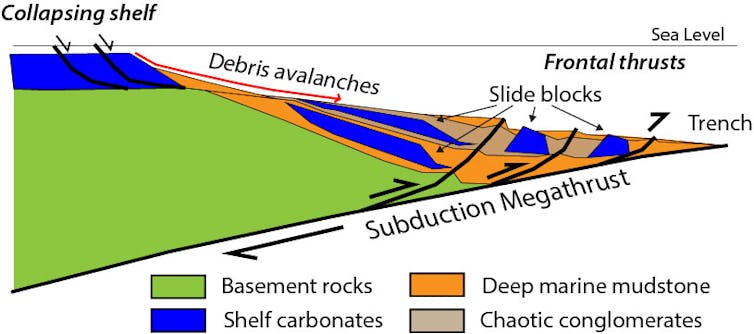
This means ocean forests are facing very difficult conditions. Large expanses of ocean forests have recently disappeared off Western Australia, eastern Canada and California, resulting in the loss of habitat and carbon sequestration potential.

Conversely, as sea ice melts and water temperatures warm, some Arctic regions are expected to see expansion of their ocean forests.

These overlooked forests play an crucial, largely unseen role off our coasts. The majority of the world’s underwater forests are unrecognised, unexplored and uncharted.

Without substantial efforts to improve our knowledge, it will not be possible to ensure their protection and conservation – let alone harness the full potential of the many opportunities they provide.


Read more:
Can selective breeding of ‘super kelp’ save our cold water reefs from hotter seas?


The Conversation

Albert Pessarrodona Silvestre receives funding from the Australian Government Research Training Program, the Holsworth Wildlife Research Endowment. He is also affiliated with Conservation International.

Karen Filbee-Dexter receives funding from the Australian Research Council, ArcticNet, the Norwegian Research Council, Schmidt Marine Technology Partners and Canopy Blue. Karen is affiliated with the Institute of Marine Research Norway and Laval University.

Thomas Wernberg receives funding from The Australian Research Council, The Norwegian Research Council, The Schmidt Marine Technology Partners and Canopy Blue. Thomas is also affiliated with the Institute of Marine Research, Norway and Rosklid University, Denmark.

ref. Ever heard of ocean forests? They’re larger than the Amazon and more productive than we thought – https://theconversation.com/ever-heard-of-ocean-forests-theyre-larger-than-the-amazon-and-more-productive-than-we-thought-190534

Nearly 30% of Australia’s emissions come from industry. Tougher rules for big polluters is a no-brainer

Source: The Conversation (Au and NZ) – By Rebecca Pearse, Lecturer, Australian National University

Australia’s historic climate law passed the Senate last week and enshrined an economy-wide target to reduce emissions. But an important measure to reduce Australia’s industrial emissions is still up for debate: the “safeguard mechanism”.

Introduced by the Abbott government in 2014, the safeguard mechanism is supposed to stop Australia’s largest greenhouse gas polluters from emitting over a certain threshold. But the policy has been frequently criticised for lacking teeth. The Labor government has promised to strengthen the mechanism, and is currently reviewing it.

Industry has raised concerns over any toughening of the policy. Meanwhile, the Greens will push Labor to strengthen it further.

The safeguard mechanism covers the grid-connected power stations with a sectoral target. It also applies to 215 of Australia’s largest industrial emitters. Together, these 215 facilities produce almost 30% of Australia’s total annual emissions. So a stringent policy to curb this pollution is crucial to climate action.

Wait, what’s the safeguard mechanism?

The safeguard mechanism works by setting a limit on the emissions individual enterprises can produce in a year. This limit is put into place with “baselines” that get set in a number of different ways, depending on the type of company involved. Such companies might include a mining company, aluminium smelter, steelworks or airline.

If the company emits beyond their limit, they can buy carbon credits to compensate for, or “offset”, the excess emissions.

The mechanism covers hard-to-abate industries which are regulated on an individual basis, such as new coal, oil and gas projects, steel, aluminium, manufacturing and transport. These include Woodside’s Northwest Shelf gas project, Qantas, Chevron’s Gorgon gas project, Port Kembla steelworks, and AngloAmerican coal mines in central Queensland.

Coal fired power remains our biggest industrial source of emissions, but is regulated separately. A “sectoral baseline” has been set for all electricity generators connected to the national grid at 198 million tonnes of CO₂ equivalent each year.

Rubbery baseline emissions

Historically, the safeguard mechanism hasn’t put strong obligations on industrial emitters to reduce their emissions. Indeed, industrial emissions have increased since the mechanism began in 2016.

Imposing a genuine carbon limit on high-emitting companies requires a clear definition and enforcement of the baselines. But the safeguard mechanism provides enormous scope for expanded production and, therefore, expanded emissions.

The government’s review paper identifies a major problem with how baselines have been set in the past. Namely, many facilities have been allowed to set their baseline emissions well above their actual emissions.


Read more:
1 in 5 fossil fuel projects overshoot their original estimations for emissions. Why are there such significant errors?


Baselines for each facilities’ emissions are currently measured according to “production-adjusted” emissions intensity. So, for example, a coal mine’s baseline is measured per tonne of coal commodity produced. This means over time, baselines rise or fall in proportion to a company’s expected production.

The government’s consultation paper reports that in the 2020-21 financial year the combined baseline emissions recorded for non-electricity grid emissions under the safeguard mechanism was estimated at 180 million tonnes of CO₂ equivalent.

But actual emissions in the same period were 137 million tonnes of CO₂ equivalent.

It should also be noted that research suggests up to one in five fossil fuel projects are underestimating their actual emissions. But regardless, the high baselines mean there’s no regulatory pressure for companies to reduce their emissions.

The current review paper seeks feedback on these issues. Removing the head room for facilities with baselines well above their actual emissions is on the cards.

Carbon credit questions

The government is poised to propose significantly expanding carbon credit trading under the safeguard mechanism.

Carbon credits are granted to projects that reduce, store or avoid greenhouse gas emissions. These credits can be sold to the federal government or to private companies to offset a project’s own emissions.

Under the current safeguard mechanism, if a company exceeds its baseline emissions, then it can purchase Australian carbon credits to offset this.

These carbon offsets, however, are plagued with credibility problems. In fact, another federal government review is underway to examine the issues.


Read more:
‘Untenable’: even companies profiting from Australia’s carbon market say the system must change


There are calls to strongly limit or remove questionable offsets linked to the safeguard mechanism.

For instance, climate science professor Mark Howden argued recently that offsets should not be used to give big emitters a “free ride” to continue polluting if they invest in carbon sequestration projects, at this stage.
Instead, the immediate priorities should be limiting fossil fuel combustion burning, and making concrete plans for other industries to transition.

Despite this, the federal government is considering expanding trade in these and potentially other types of carbon credits.

The government is proposing a new type of carbon credit for companies emitting below their baseline. For instance, if an aluminium smelter reduced its emissions over 2024 and 2025, it could be granted credits to sell to others in the carbon market.

The government is also considering allowing companies to trade carbon credits on an international level, pending reforms to address integrity issues in safeguard mechanism like the baseline headroom problem.


Read more:
Australia may be heading for emissions trading between big polluters


The international trade in carbon credits has been plagued with problems for 20 years. A 2021 literature review found little evidence demonstrating causal effect of carbon trading markets on emissions reduction.

It puts a strong case forward against linking carbon markets internationally, after Europe, Quebec and California case studies show linking carbon markets has led to price crashes and volatility – not stability.

The risk of a weak carbon trading market

We can expect industry to continue to lobby for a weak safeguard mechanism and carbon credit rules. But if the Labor government is genuine about wanting to reduce Australia’s emissions, our biggest polluters cannot be allowed to carry on emitting as usual.

And there is no role for a carbon trading policy that excuses big emitters from making clean energy transition plans.

Labor may need the numerous pro-climate independent senators or the Greens to make changes signalled in the safeguard consultation paper. They are unlikely to be satisfied with a weak carbon trading scheme.

Any proposed changes that undermine Australia’s emissions reduction goals will not easily be passed.

The Conversation

Rebecca Pearse receives funding from the Australian Research Council and the National Recovery and Resilience Agency.

ref. Nearly 30% of Australia’s emissions come from industry. Tougher rules for big polluters is a no-brainer – https://theconversation.com/nearly-30-of-australias-emissions-come-from-industry-tougher-rules-for-big-polluters-is-a-no-brainer-190264

New Zealand has announced a biofuel mandate to cut transport emissions, but that could be the worst option for the climate

Source: The Conversation (Au and NZ) – By Paul Callister, Senior Associate Institute of Governance and Policy Studies, Te Herenga Waka — Victoria University of Wellington

Hannah Peters/Getty Images

Biofuels – and a broader bioeconomy – are key parts of New Zealand’s recently released first emissions reduction plan, particularly for transport, forestry and a transition to a more circular use of resources.

Work is moving fast, with a biofuel mandate for land transport to be introduced from April 2023 and a plan to transform the forestry industry currently under consultation.

A bioeconomy is heralded as an opportunity to replace imported fossil fuels with carbon-neutral domestic biofuels and to create higher-value products from plantation forestry (much of which is currently exported as unprocessed logs) while supporting carbon sequestration at the same time.

New Zealand is not the only country thinking along these lines. Biofuels are part of a widespread strategy to address emissions from existing fossil-fueled vehicles, tens of millions of which are still being produced annually. They are also promoted for planes, ships and heavy trucks, often with few alternatives.

Both the Inflation Reduction Act, a landmark US law which aims to curb inflation by investing in domestic clean energy production, and the EU’s Fit for 55 package, expand support for biofuels through a combination of subsidies and mandates. In the International Energy Agency (IEA)’s Net Zero scenario, global biofuel production quadruples by 2050, to supply 14% of transport energy.

Unfortunately, a string of government reports, combined with experience of the real-world impacts of biofuels thus far, point to several downsides and challenges, both economic and environmental.


Read more:
Air of compromise: NZ’s Emissions Reduction Plan reveals a climate budget that’s long on planning, short on strategy


First-generation biofuels from food crops

The risks of first-generation biofuels, made from crops grown on arable land, are well known. They are not due to the fuels themselves or their production, but their indirect effects of how the land would have been used otherwise.

Already, 10% of the world’s grain is used for biofuels. This is at the heart of the “food-to-fuel” issue. This approach has been challenged because it could increase grain prices or, at the worst, lead to starvation. It has also led to agricultural expansion, often into ecologically sensitive areas.

Debated for years, it is now back in the spotlight as the effects of droughts in China, the US and Europe, combined with the war in Ukraine, push food prices up 50% on 2019-2020 levels.


Read more:
A shrinking fraction of the world’s major crops goes to feed the hungry, with more used for nonfood purposes


Palm oil has borne the brunt of criticism about landuse change, as vast areas of rainforest in Indonesia and Malaysia have been cleared for its production. The impact of such “induced landuse change” (ILUC) gives palm oil biofuel nearly three times the emissions of fossil fuel.

But palm oil is a substitute for many other vegetable oils. Therefore, biofuel production from other oils like rapeseed (canola) is also implicated in ILUC, as diverting rapeseed to fuel leads to more palm oil entering the food chain.

Sustainability and credibility of feedstocks

The EU has undergone a lengthy process of strengthening the standards of its biofuel mandate. In the end, palm oil was the only feedstock listed as “high ILUC”, but was given a reprieve until 2030.

The cheapest biofuels with the biggest emissions savings are made from used cooking oil and beef tallow. But these feedstocks are in limited supply and open to fraud. They also already have other uses, which again raises the issue of substitution.

Z Energy’s NZ$50m tallow biodiesel plant, opened in 2018, has been mothballed due to the rising cost of tallow. The company has stopped work on plans for a much larger plant.

Since New Zealand’s biofuel mandate will initially be met solely by imports, questions of sustainability and certifiability of feedstocks will be crucial. It is concerning that landuse change will not be considered when calculating emissions reductions.

The fuels will count as zero-emission in New Zealand, while the actual emissions from growing, fertilising, processing and transporting will take place overseas, likely in countries with weaker climate targets. Unless accounted for, this is carbon leakage by design.

Second-generation biofuels from inedible plant material

For all these reasons, proponents are keen to talk up the prospect of second-generation biofuels, made from non-food crops. In New Zealand’s case, the main crop is pine trees.

Although there is some forestry waste available, much of it is currently left on site and would be expensive to collect and transport. The Wood Fibre Futures report, commissioned by the government, focuses on logs-to-fuel, specifically “drop-in” fuels that can substitute directly for petrol, diesel or jet fuel.

However, there are no such plants in commercial operation anywhere. The report calls the risks of such an unproved technology extreme, with little prospect for mitigation.


Read more:
Biofuel: how new microalgae technologies can hasten the end of our reliance on oil


The economics are also challenging, in part because log prices are high due to the efficiency of the log export market. A plant capable of producing 150 million litres of drop-in fuels a year – just 1.5% of New Zealand’s liquid fuel demand – would cost $1.2 billion and have a negative rate of return.

To obtain an acceptable return, the government would need to pay for half the cost of the plant and the logs, and also subsidise (or enforce) a 50% higher sale price of the fuel. The report envisages such a plant being completed by 2028 in New Zealand.

A fundamental obstacle is that any such use has to compete with other uses – including sawn timber, wood chips and wood pellets – which are far simpler, more profitable and come with greater carbon benefits.

Stop the mandate, strengthen alternatives

For all these reasons, we have formed the interest group Don’t Burn Our Future, which aims to stop New Zealand’s biofuel mandate.

As advocates of strong climate action, these are painful conclusions to reach. But we argue that for transport, the answer lies in the avoid/shift/improve framework, which encourages people to drive less, shift necessary trips to other modes and make them less polluting.

Biofuels only enter in the third and least important step (improve) and even there, they are the worst option.

The transport transformations envisaged in the new climate plans for Wellington and Auckland are heavily focused on avoidance and shifts to other modes. These options should be the priority.

The Conversation

Paul Callister is affiliated with Don’t burn our future: Stop the NZ biofuels obligation

Robert McLachlan is affiliated with Don’t burn our future: Stop the NZ biofuels obligation.

ref. New Zealand has announced a biofuel mandate to cut transport emissions, but that could be the worst option for the climate – https://theconversation.com/new-zealand-has-announced-a-biofuel-mandate-to-cut-transport-emissions-but-that-could-be-the-worst-option-for-the-climate-189960

‘Thinking about my future is really scary’ – school leavers are not getting the careers support they need

Source: The Conversation (Au and NZ) – By Lucas Walsh, Professor and Director of the Centre for Youth Policy and Education Practice, Monash University

quokkabottles/Unsplash, CC BY

Australia’s class of 2022 is on the home stretch. Almost two million year 12 students will be sitting their final exams next month. In amongst this, they are making big decisions about their lives beyond school.

But research shows they are not getting the support they need as they finish school and move into the work or study that is right for them. Girls, in particular, are not getting the support they need.

This suggests careers support in high school is not working.

Careers advice at school

Careers education is not compulsory in Australian schools. There are guidelines such as the blueprint for career development. And the national curriculum up to year 10 calls on schools to “develop school-based approaches to career education […] to suit the needs of their students and the community”.

States and territories offer their own frameworks for years 11 and 12, such as Victoria’s careers curriculum framework.

These can be interpreted in a wide variety of ways. In reality, some schools may have dedicated careers teachers. Students sometimes seek private careers counselling. Others may have nothing.


Read more:
‘It’s kind of suffocating’: queer young Australians speak about how they feel at school and what they think of politicians


Our study

Our Monash University study published last month surveyed more than 1,300 female school students in years 10 to 12. We wanted to know about how they were choosing their careers.

While we found more than 83% wanted to go to university, there was a significant degree of uncertainty about what next:

  • one third did not know what career best suited them
  • nearly 40% were concerned they were never have a “real” career
  • about one third felt “unemployable”
  • 34% said they were doing subjects or activities with no sense of purpose
  • 26% said they often felt down or worried about selecting a career

The also continued to nominate careers within narrow fields. Half of young women’s chosen careers were concentrated in areas such as medicine (16.7%), law and paralegal studies (12.1%), nursing (11.5%), the creative arts (9.9%) and teaching (8.2%).

These ambitions are not bad, of course. But it means these young people might be overlooking new and growing careers around digital technology or fulfilling and potentially lucrative vocational options, such as trades.

Smith Family study

Another 2022 study released this week by The Smith Family surveyed over 1,500 young people and interviewed 38 students aged 17–19 experiencing disadvantage.

While most young people surveyed (86%) recalled receiving careers support while at school, only just over half found this support helpful. One in ten said it was not useful at all.

In some cases, there was no career advice. As interviewee Rabia said:

Because our school never really provided career counselling, right now a lot of my friends from school, they’re currently dropping out of their degree […] a lot of them are just not happy with what they chose.

Interviewee Mercedes said students needed advice that was individual and supportive:

More discussions around what’s on offer and job pathways would be a great thing […] instead of teachers saying ‘you know you probably can’t do that’ [they should say] ‘let’s think of some steps in order for you to get there’.

When choosing careers, interviewees said they valued hands-on work exposure, vocational study and being able to try different career options while at school. As Sahil said:

That work experience really opened my eyes to how IT would be in actual work settings. That shaped up my thinking of doing software engineering.

Careers advice needs to change

Careers advice needs to do much more than tell young people about what subjects to do in year 12 to qualify for certain degrees, or hand out pamphlets at university open days.

Apart from understanding the modern job market and current range of opportunities, careers advice needs to support young people as they move to the next stage of life.


Read more:
Choosing a career? These jobs won’t go out of style


Careers support is, of course, closely related to mental health and wellbeing. More than a third of those in The Smith Family Study had a health or mental health condition which was sometimes a barrier to employment, as Tarni said:

Honestly, thinking about my future is really scary. I never really did it ‘cos when you’re really mentally ill at a really young age, you don’t really make plans for it.

Young people need to know they are valued and have potential. An average of 110,000 fewer year 12s completed high school in the wake of COVID disruptions last year.

We need to find ways to keep them in school and provide them with better career support for their own and Australia’s future prosperity.

The Conversation

Lucas Walsh currently receives funding from The Paul Ramsay Foundation. He has worked with The Smith Family and sits on a voluntary advisory board unrelated to this study.

This article is part of The Conversation’s Breaking the Cycle series, which is supported by a philanthropic grant from the Paul Ramsay Foundation.

ref. ‘Thinking about my future is really scary’ – school leavers are not getting the careers support they need – https://theconversation.com/thinking-about-my-future-is-really-scary-school-leavers-are-not-getting-the-careers-support-they-need-190553

That $243 billion ‘saving’ from axing the Stage 3 tax cut is more mirage than reality

Source: The Conversation (Au and NZ) – By Ben Phillips, Associate Professor, Centre for Social Research and Methods, Director, Centre for Economic Policy Research (CEPR), Australian National University

Shutterstock

What if we could save A$243 billion by abolishing the Stage 3 tax cuts?

An article in Guardian Australia says we could spend it on all kinds of things, from pay rises for aged care workers to electrifying homes.

But the money probably wouldn’t be there – not most of it.

The Parliamentary Budget Office came up with the figure of $243 billion in response to a request from Greens Leader Adam Bandt to total the revenue the cuts would cost in their first nine years, which begin in July 2024.

The PBO used a standard, and, on face of it, an unexceptional assumption – that the cost would be the revenue that was lost in each year compared to what would have been raised if tax scales hadn’t been adjusted – for the entire decade.

Cost, but compared to what?

To recap, Stage 3 cuts the rate that applies to incomes over $45,000 from 32.5 cents in the dollar to 30 cents then extends that 30 cent rate all the way up to $200,000, abolishing an entire rung of the tax ladder.

The problem with the PBO’s assumption is that the alternative is unlikely to be borne out in reality.

Whenever incomes climb (The PBO assumes around 45 per cent growth in incomes over the next 10 years) the tax scales are typically adjusted to stop more income going into higher tax brackets – so-called bracket creep.

The graph below shows what would happen to the average tax rate in the absence of an adjustment over the next decade.

It would climb from 17.9% to 20.1% of household income.


With the Stage 3 cuts, average rates would at first fall to 17%, and then increase, climbing beyond current rates in 2028 as bracket creep reasserted itself.

This suggests the “cuts” aren’t much of cuts at all, certainly not long-lasting ones.

It is difficult to both claim that the cuts will cost the budget A$243 billion by 2032 and that they will allow the average tax take to climb.


Read more:
Stand by for the oddly designed Stage 3 tax cut that will send middle earners backwards and give high earners thousands


It means axing the cuts would produce less of a honeypot than might be thought.

While the PBO prepared its costing in accordance with standard practice, a more realistic costing of the Stage 3 cuts would have compared them to the sort of tax adjustments we could have expected without them.

Winners and losers

The Stage 3 tax cuts will be regressive, meaning they will cut the rates faced by high earners more than the rates faced by low earners.

My calculations suggest that in the first year they will cut the tax paid by the highest-earning fifth of households by 2.1 percentage points, leaving the tax paid by other households little changed.

And they will certainly will cost the budget money – leaving less money for services of the kind that mostly benefit lower income households – although nowhere near as much as the $243 billion quoted.

But the cost will be temporary. The effects on inequality will be longer-lasting.

The Conversation

Ben Phillips does not work for, consult, own shares in or receive funding from any company or organisation that would benefit from this article, and has disclosed no relevant affiliations beyond their academic appointment.

ref. That $243 billion ‘saving’ from axing the Stage 3 tax cut is more mirage than reality – https://theconversation.com/that-243-billion-saving-from-axing-the-stage-3-tax-cut-is-more-mirage-than-reality-190350

M*A*S*H, 50 years on: the anti-war sitcom was a product of its time, yet its themes are timeless

Source: The Conversation (Au and NZ) – By Daryl Sparkes, Senior Lecturer (Media Studies and Production), University of Southern Queensland

MASH, stylised as M*A*S*H, is the story of a rag-tag bunch of medical misfits of the 4077th Mobile Army Surgical Hospital thrown together against the horrors of the Korean war in the 1950s. The series endured for 11 seasons, from September 1972 to the final episode in 1983.

Originally it was centred on two army surgeons, the wisecracking but empathetic Benjamin “Hawkeye” Pierce, played by Alan Alda, and the deadpan “Trapper” John McIntyre, played by Wayne Rogers.

The show had an ensemble cast and different episodes would often focus on one of the featured characters.

There was the meek Corporal “Radar” O’Reilly, cross-dressing Corporal Klinger, the easy-going Lieutenant Colonel Henry Blake and pious Father Mulcahy. The antagonists, conniving Major Frank Burns and Major Margaret “Hot Lips” Houlihan, were foils for Hawkeye and Trapper but occasionally were central characters in some episodes too.

Based on the 1970 movie, itself based on a novel, MASH was designed as a “black comedy” set during the Korean War.

It was really a thinly veiled critique of the war in Vietnam raging at the time.

The creators of the show knew they wouldn’t get away with making a Vietnam war comedy. Uncensored news broadcasts showing the viciousness of Vietnam were transmitted straight to the American public who were, by now, growing jaded of the increasingly brutal war.

Setting the series 20 years earlier allowed the creators to mask their criticisms behind a historical perspective – but most viewers realised the true context.


Read more:
Alan Alda on the art of science communication: ‘I want to tell you a story’


An anti-war sitcom

What started as a criticism of the Vietnam war soon evolved into one for all wars.

In many episodes, audiences would be reminded of the horrors of lives lost in the fighting on the line, and the angst and trauma faced by those behind the line.

It didn’t matter which war this was, MASH was saying all wars are the same, full of shattered lives.

Cloaking this message in comedy was the way the creators were able to make it palatable to a wide audience.

The early seasons have a distinctive sitcom feel to them, mostly as a result of the series co-creators, Larry Gelbart and Gene Reynolds, who were from a comedy background.

When both creatives left by the end of season five the show took a more dramatic turn.

In particular, Alda became more involved in the writing and took it into a more dramatic direction, toning down the comedic elements. This was also reflected in the change of many of the secondary characters.

The philandering, practical joker Trapper was replaced by the moral and professional BJ Hunnicutt, the snivelling Frank Burns by the pretentious Charles Winchester, the laconic Henry Blake with the officious Sherman Potter, and the complete absence of Radar after season eight. The voice of the series took on a noticeably Hawkeye focus.

As the Vietnam war ended in 1975, the tone of the show also changed. It became less political and focused more on the dilemmas of the individual characters. The laugh track was toned down. But this did not make the show any less popular.

Audiences responded strongly to the anarchic anti-authoritarianism of Hawkeye and Trapper/BJ.

Almost all the characters are anti-war, reflecting the growing antagonism the American public was feeling towards the Vietnam war and war fatigue in general, post-Vietnam.

Even Frank and Hot Lips, the most patriotic characters, sometimes questioned if the war was worth all the suffering and death. And the series reminded people the humour used was not meant to disrespect those fighting but as a coping mechanism of the trauma by those involved.


Read more:
‘Accidental Napalm’ turns 50: the generation-defining image capturing the futility of the Vietnam war


A timeless classic

That’s not to say there aren’t issues with the show when looked at with modern sensibilities.

Contemporary audiences would find problems with some of the representations of characters and issues addressed in the series. Corporal Klinger would today be seen as contentious. His penchant for dressing in women’s clothes was not because he was trans or interested in drag, but because he was trying to get a “Section 8”, or mental health, discharge.

Many of the female characters were also relegated to little more than two-dimensional romantic interests or background characters.

The only woman who starred with a significant recurring role was “Hot Lips” Houlihan but, as the nickname implies, she was often the butt of sexualised humour.

This has not stopped the show maintaining its popularity in the continual re-runs it gets on cable and streaming services.

MASH was a product of its time, yet its themes on the absurdity of war are universal. It became more than a TV show: a shared cathartic experience for war-weary audiences.

At its heart is the eclectic mix of dysfunctional characters who use humour to laugh in the face of adversity. This is what makes MASH a timeless classic.

The Conversation

Daryl Sparkes does not work for, consult, own shares in or receive funding from any company or organisation that would benefit from this article, and has disclosed no relevant affiliations beyond their academic appointment.

ref. M*A*S*H, 50 years on: the anti-war sitcom was a product of its time, yet its themes are timeless – https://theconversation.com/m-a-s-h-50-years-on-the-anti-war-sitcom-was-a-product-of-its-time-yet-its-themes-are-timeless-190422

Politics with Michelle Grattan: Professor Joseph Ibrahim on COVID in aged care – and the end of nursing homes

Source: The Conversation (Au and NZ) – By Michelle Grattan, Professorial Fellow, University of Canberra

Jason South/The Age

Joseph Ibrahim, Professor and Head, Health Law and Ageing Research Unit, Monash University, specialises in aged care issues. He has been a long-term advocate for improving the quality of life for those in residential care and for reform of the sector.

In this podcast, Ibrahim says currently COVID in aged care facilities is going largely unnoticed in the media. “If you have a look into the media coverage it would seem that it’s not a problem at all. [But] COVID deaths are far greater than at any time in the last two to three years”. While the vaccines have helped get things under control, the absence of restrictions is seeing infection rates at an all-time high. Ibrahim believes there should be a more tailored approach to outbreaks at facilities, depending on the circumstances.

A key election promise from Anthony Albanese was for a nurse on-site 24/7 in aged care facilities. Ibrahim is sceptical about how this will be achieved, given how many would be needed to meet the objective. “We would need 15,000 new nurses just to have one nurse in every facility, 24/7.”

More generally, in relation to the desperate staff shortages in the sector, Ibrahim says there is a “lack of respect” for aged care workers, citing low pay, the treatment they are given compared to healthcare professionals in hospitals, and the lesser opportunities for a career path.

Home care packages are key to the ability of many older people to stay at home. “I don’t think we’re keeping people at home for as long as we could […] Both governments have addressed and increased the amount of support packages available. The issue with that is, the package may be available, but the staff aren’t there to deliver on what’s within that package”. In some cases “I think people want to stay at home because they’re fearful of going into residential care, and so residential care isn’t seen as an option, it’s seen as a last resort”.

More radically, Ibrahim would like to see the end of nursing homes altogether. “We shouldn’t be having nursing homes at all […] do we believe that orphanages are a good way to look after children who have fractured family or who don’t have parents?”

One alternative to nursing homes would be “you might have small communal housing that might have five to ten people in them”.

“Or there are design changes around what you do when you get to 60, 70 or 80 in terms of downsizing and moving into a home that is more likely to meet your needs […] There’s also shared communal housing with people of different ages and different needs.

“I think we’ve been very lazy in just relying on aged care homes as a solution. So we’ve picked a lazy solution and we’re doing it badly.”

The Conversation

Michelle Grattan does not work for, consult, own shares in or receive funding from any company or organisation that would benefit from this article, and has disclosed no relevant affiliations beyond their academic appointment.

ref. Politics with Michelle Grattan: Professor Joseph Ibrahim on COVID in aged care – and the end of nursing homes – https://theconversation.com/politics-with-michelle-grattan-professor-joseph-ibrahim-on-covid-in-aged-care-and-the-end-of-nursing-homes-190753

‘Not my king’: do we have the right to protest the monarchy at a time of mourning?

Source: The Conversation (Au and NZ) – By Maria O’Sullivan, Associate Professor, Faculty of Law, and Deputy Director, Castan Centre for Human Rights Law, Monash University

An anti-monarchy protestor being led away from the Palace of Westminster by British police. Chris J Ratcliffe/Getty Images

During the present period of mourning for Queen Elizabeth II, public sensitivities in the United Kingdom and Australia are high. There’s strong sentiment in both countries in favour of showing respect for the queen’s death. Some people may wish to do this privately. Others will want to demonstrate their respect publicly by attending commemorations and processions.

There are also cohorts within both countries that may wish to express discontent and disagreement with the monarchy at this time. For instance, groups such as Indigenous peoples and others who were subject to dispossession and oppression by the British monarchy may wish to express important political views about these significant and continuing injustices.

This has caused tension across the globe. For instance, a professor from the United States who tweeted a critical comment of the queen has been subject to significant public backlash. Also, an Aboriginal rugby league player is facing a ban and a fine by the NRL for similar negative comments she posted online following the queen’s death.

This tension has been particularly so in the UK, where police have questioned protestors expressing anti-monarchy sentiments, and in some cases, arrested them.

But should such concerns about the actions of the queen and monarchy be silenced or limited because a public declaration of mourning has been made by the government?

This raises some difficult questions as to how the freedom of speech of both those who wish to grieve publicly and those who wish to protest should be balanced.

What laws in the UK are being used to do this?

There are various laws that regulate protest in the UK. At a basic level, police can arrest a person for a “breach of the peace”.

Also, two statutes provide specific offences that allow police to arrest protestors.

Section 5 of the Public Order Act 1986 UK provides that a person is guilty of a public order offence if:

  • they use threatening or abusive words or behaviour or disorderly behaviour

  • or display any writing, sign or other visible representation which is threatening or abusive.

The offence provision then provides this must be “within the hearing or sight of a person likely to be caused harassment, alarm or distress” by those acts.

There’s some protection for speech in the legislation because people arrested under this provision can argue a defence of “reasonable excuse”. However, there’s still a great deal of discretion placed in the hands of the police.

The other statute that was recently amended is the Police, Crime, Sentencing and Courts Act of 2022, which allows police to arrest protestors for “public nuisance”.

In the context of the period of mourning for Queen Elizabeth II, the wide terms used in this legislation (such as “nuisance” and “distress”) gives a lot of discretion to police to arrest protestors who they perceive to be upsetting others. For instance, a protestor who holds a placard saying “Not my king, abolish the monarchy” may be seen as likely to cause distress to others given the high sensitivities in the community during the period of mourning.

Is there a right to protest under UK and Australian law?

Protest rights are recognised in both the UK and in Australia, but in different ways.

In the UK, the right to freedom of expression is recognised in Article 10 of the Human Rights Act.

In Australia, there’s no equivalent of the right to freedom of expression at the federal level as Australia doesn’t have a national human rights charter. Rather, there’s a constitutional principle called the “implied freedom of political communication”. This isn’t a “right” as such but does provide some acknowledgement of the importance of protest.

Also, freedom of expression is recognised in the three jurisdictions in Australia that have human rights instruments (Victoria, Queensland and the ACT).

Can the right to protest be limited in a period of mourning?

In this period of public mourning, people wishing to assemble in a public place to pay respect to the queen are exercising two primary human rights: the right to assembly and the right to freedom of expression. But these aren’t absolute rights. They cannot override the rights of others to also express their own views.

Further, there’s no recognised right to assemble without annoyance or disturbance from others. That is, others in the community are also permitted to gather in a public place during the period of mourning and voice their views (which may be critical of the queen or monarchy).


À lire aussi :
The Queen has left her mark around the world. But not all see it as something to be celebrated


It’s important to also note that neither the UK nor Australia protects the monarchy against criticism. This is significant because in some countries (such as Thailand), it’s a criminal offence to insult the monarch. These are called “lèse-majesté” laws – a French term meaning “to do wrong to majesty”.

The police in the UK and Australia cannot therefore use public order offences (such breach of the peace) to unlawfully limit public criticism of the monarchy.

It may be uncomfortable or even distressing for those wishing to publicly grieve the queen’s passing to see anti-monarchy placards displayed. But that doesn’t make it a criminal offence that allows protestors to be arrested.

The ability to voice dissent is vital for a functioning democracy. It’s therefore arguable that people should be able to voice their concerns with the monarchy even in this period of heightened sensitivity. The only way in which anti-monarchy sentiment can lawfully be suppressed is in a state of emergency. A public period of mourning does not meet that standard.

The Conversation

Maria O’Sullivan received funding from the federal Attorney-General’s Department to write a research report on automated decision-making and serves as a legal advisor (part-time) on the Human Rights Advisory Panel for Queensland Parliament.

ref. ‘Not my king’: do we have the right to protest the monarchy at a time of mourning? – https://theconversation.com/not-my-king-do-we-have-the-right-to-protest-the-monarchy-at-a-time-of-mourning-190687

Behind the ‘world’s friendliest COVID protocols’, Fiji’s health system remains stretched and struggling

Source: The Conversation (Au and NZ) – By Sharon McLennan, Senior Lecturer, Massey University

Getty Images

With Fiji “open for happiness” and a COVID test no longer required on arrival, the temptation to take that long awaited tropical holiday may be stronger than ever.

Fiji is clearly very keen to see tourists, and their money, return, having previously boasted that it provided the world’s friendliest COVID test. COVID restrictions are now minimal.

Despite the optimism, COVID continues to circulate in Fiji, and some requirements remain. Holidaymakers are required to have insurance that covers the costs of testing, treatment, isolation and transport home. Those unlucky enough to get COVID must isolate for five days.

But the current approach by the Fijian government towards COVID-19 highlights the gap between the tourist experience and the lives of ordinary Fijians. Many locals struggle to find and pay for those COVID tests, which cost NZ$8–$20 per kit and are only available from approved pharmacies.

Between ongoing issues in the health sector and the effects of the global cost of living crisis, the reality behind Fiji’s marketing images remains challenging for many.

COVID horror still lingers

Over the past year, 68,000 Fijians contracted COVID-19 and 878 died. Hospitals have been stretched to breaking point amid shortages of equipment, medicine and space.

Heath workers burned out and many left their jobs. Amnesty International has attributed the COVID deaths to an inadequately resourced healthcare system, noting thousands of patients were turned away from hospitals due to bed shortages.


Read more:
How your Spanish holiday could be quite different this year — and why that matters


To be fair, the Fijian health sector was struggling well before the pandemic. The country already faced a worsening noncommunicable disease (NCD) crisis as well as high rates of infectious disease, both of which exacerbated the impacts of COVID.

Outbreaks of typhoid, dengue and leptospirosis have been a particular concern.

Combined with ageing infrastructure and an exhausted workforce, the situation reflects long-term neglect and under-resourcing of Fijian health services. As a consequence, the country has seen an unprecedented exodus of nurses and other health professionals and the closure of operating theatres.

Divers going into the water of a boat with Fijian flag.
Fiji is welcoming tourists, an important revenue stream for the country, but visitors should be careful about adding extra strain to the struggling healthcare system.
Getty Images

Privatisation of health

The government’s response to these multiple crises has been twofold. Firstly, Fiji’s government promised increased support for health through the budget and a pivot to focus on NCDs.

At least 70% of the Fijian population who had COVID when they died were also suffering from a chronic disease. In response, health authorities are now focusing on wellness and promoting healthier behaviours to build people’s resilience to the virus.

This shift in strategy also means the government has committed to keeping better track of patients with NCDs and to keep the rest of the population healthy.

But the second response, one that began before the crisis and has expanded over the past three years, is a creeping privatisation of the health system. This has included the introduction of public-private partnerships (PPPs) (criticised for lack of adequate consultation), the rise in private laboratory, pharmaceutical and mortuary services and the expansion of a private GP scheme.

The potential impact of this is concerning in a country where the minimum wage is below US$2 a day. Without careful regulation and a well-functioning public health system, privatisation could put Fiji’s commitment to universal health care at risk. It might also lead to rising costs and a reduced focus on public health and health promotion.

Fijian children in traditional dress.
Tourism in Fiji relies on people but the local community is struggling with rising cost of living and a strained health system.
Getty Images

Be a good tourist

The rising cost of health care is already a reality for ordinary Fijians. Between 40–50% of the population is estimated to live in poverty; putting food on the table is an everyday struggle.

With a national election anticipated soon, how Fiji responds to these challenges and the global cost of living crisis is very much in the spotlight.

For tourists, these structural issues may not be obvious. But by taking precautions that reduce the strain on Fiji’s health services, tourists can show respect and care for the Fijians providing the human and cultural element of their holiday experience.


Read more:
COVID changed travel writing. Maybe that’s not a bad thing


Behind the famous “bula smile” they or members of their families may be struggling with returning to work in the resorts, or to access the health care and wellbeing support they need.

They may still offer the world’s friendliest COVID protocols, but it comes at a cost that cannot always be measured by money.

The Conversation

Apisalome Movono receives funding from the Royal Society Te Aparangi

Sharon McLennan does not work for, consult, own shares in or receive funding from any company or organisation that would benefit from this article, and has disclosed no relevant affiliations beyond their academic appointment.

ref. Behind the ‘world’s friendliest COVID protocols’, Fiji’s health system remains stretched and struggling – https://theconversation.com/behind-the-worlds-friendliest-covid-protocols-fijis-health-system-remains-stretched-and-struggling-190344

It’s hard to imagine better social media alternatives, but Scuttlebutt shows change is possible

Source: The Conversation (Au and NZ) – By Kate Mannell, Research Fellow in Digital Childhoods, Deakin University

Prateek Katyal/Unsplash

Last week, the US government released six principles for reforming Big Tech. It’s the latest example of growing efforts to regulate the handful of companies with enormous influence over the internet. But while there’s a growing appetite for a new, better kind of internet, it’s hard to imagine what that might look like.

We’ve just published research that looks at one alternative – a social network called Scuttlebutt, which provides an example of a platform that puts people before profit.

The internet wasn’t supposed to be like this

In the 1990s, many thought the internet would make the world a better place. By letting ordinary people connect across vast distances, it would help us become more empathetic and egalitarian. Today, that vision seems naive. The internet is fraught with serious issues regulators are struggling to tackle.

One factor underpinning many of these problems is the huge influence that a handful of companies, such as Meta and Google, have over the internet. By putting corporate interests ahead of user wellbeing and society at large, they are key contributors to misinformation, privacy violations, and online harassment and abuse.

There’s increasing interest in regulating these companies and the markets in which they operate, including from the Australian government. However, it’s hard to imagine alternatives to an internet dominated by private companies – they are such a ubiquitous and powerful part of our online lives.


Read more:
A new proposed privacy code promises tough rules and $10 million penalties for tech giants


Enter Scuttlebutt

Scuttlebutt is an example of alternative social media platforms, which try to keep the best bits of popular places like Facebook and Twitter while improving on their downsides.

On the surface, Scuttlebutt looks quite similar to Facebook. Users create a profile, post content, and like and comment on others’ posts. There are lots of people chatting about politics, current events, and obscure shared interests.

A screenshot that says Scuttlebutt, social network, a decentralised platform with a colourful hermit crab in each bottom corner

Scuttlebutt

But compared with regular platforms, Scuttlebutt has some radically different qualities. Crucially, it isn’t run by a company. Started by software engineer Dominic Tarr while living on a sailboat in New Zealand, Scuttlebutt is now being developed by an international community of people who run the platform collectively, using grant funding, donations and volunteer labour.

Because it’s not a company, Scuttlebutt doesn’t need to make a profit. There is no persuasive design trying to keep you hooked, no advertising, and it doesn’t collect, process or sell users’ personal data. Instead, data are stored and controlled on users’ own devices. (This process uses the novel secure “gossip” protocol for which the platform is named.) As it is open source, anyone can see, interact with, and reuse the code it’s built on.

While it’s impossible to know how many people are using this decentralised platform, Scuttlebutt has attracted substantial grant funding, along with the attention of tech luminaries and cultural critics.

Lessons for a better internet

We spent several years studying Scuttlebutt to understand the community building it, and the new models of online participation they’re trying to create.

We found that participation on Scuttlebutt is much deeper and more varied than mainstream platforms allow. Not only can users participate on the platform by posting, liking and sharing, they can also participate in the platform by helping shape how it is designed and run. Anyone interested is encouraged to contribute in whatever ways they can.

Compared with Facebook users, who resort to protests and petitions to try and improve its practices, Scuttlebutt users are empowered to collaborate in the creation of the online spaces they use.

Unlike mainstream social media, Scuttlebutt doesn’t ask you to give up your personal data as payment. So even forms of participation that look the same as on Facebook, such as creating a post, take place under more equitable conditions.

Scuttlebutt’s principles also reflect a view that developing fair and inclusive participation is as much a matter of culture as of technology design.

In contrast to Big Tech’s common focus on technology-first solutions, most Scuttlebutt contributors are as invested in improving the platform’s culture and governance as they are in building better technology. For example, when electing a council to distribute one of Scuttlebutt’s grants, priority was given to people with historically marginalised experiences in open-source communities.

These social elements may not scale to a platform the size of Facebook, but this isn’t a problem for Scuttlebutt, which doesn’t maximise user participation for profit. This means users can concentrate on encouraging a positive culture rather than trying to make as many people participate as much as possible.

In fact, we found that much of the Scuttlebutt community believes people need more choices in social media platforms, not a single Facebook replacement.

The future is already here

Scuttlebutt isn’t going to solve all the internet’s problems and, as we discuss in our research, it has its own issues – including the messiness of decentralised governance and ensuring accessibility for people from diverse backgrounds. But it does provide a way of exploring what the future of internet could look like.

These explorations highlight the importance of an internet where no single platform dominates and users have more control over shaping the spaces in which they gather.

In the meantime, Scuttlebutt also shows that platforms focusing on public benefit instead of profit are already possible.


Read more:
How dark is ‘dark advertising’? We audited Facebook, Google and other platforms to find out


The Conversation

The authors do not work for, consult, own shares in or receive funding from any company or organisation that would benefit from this article, and have disclosed no relevant affiliations beyond their academic appointment.

ref. It’s hard to imagine better social media alternatives, but Scuttlebutt shows change is possible – https://theconversation.com/its-hard-to-imagine-better-social-media-alternatives-but-scuttlebutt-shows-change-is-possible-190351

With most mandatory public health measures gone, is New Zealand well prepared for the next COVID wave?

Source: The Conversation (Au and NZ) – By Michael Plank, Professor in Applied Mathematics, University of Canterbury

Hospitality staff are no longer required to wear masks. Fiona Goodall/Getty Images

New Zealand’s decision this week to end most mandatory public health measures aimed at preventing COVID transmission received a mixed response. Our modelling suggests it was time to wind back restrictions, but some measures were perhaps scrapped prematurely.

The only requirements still in place are for people who test positive to isolate for seven days and for masks to be worn when visiting healthcare facilities and aged-care homes. Household contacts should test daily and mask up, but are not required to isolate unless they test positive.

We used our recent model to look at the effect of a 10-20% increase in transmission that could plausibly result from reduced mask wearing and less cautious behaviour. We found this could potentially bump up case numbers in the short term, though much less than the recent BA.5 wave.

The modelling shows that after a few months new infections settle at a level only 2-4% higher than without the changes. In other words, the 10-20% increase in transmission led to a much smaller increase in new infections because it ultimately also raised levels of immunity in the population.

This is not a good thing though: infections are always best avoided and immunity should not be a goal in itself.

It is, however, an important effect to take into account and international observations bear this out. Many countries have removed mask mandates this year and there are no obvious signs this has caused a significant rise in illness or deaths.

Balancing collective and individual action

A group of experts recently argued the aim of our COVID response should shift from limiting infection to preventing severe disease. Arguably this shift has already been happening over the past 12 months, but this week’s announcement marks another step on that journey.

To a large extent, this move is forced on us. As highlighted by our modelling above, a sustained reduction in the number of infections is difficult to achieve using the tools we currently have available.

People walking in the street, with only one person wearing a mask, but not covering their nose.
Masks are now off in most places except healthcare and aged-care facilities as part of a shift away from collective measures to limit the spread of COVID.
Fiona Goodall/Getty Images

Until March 2022, the epidemic was either growing exponentially or had the potential to do so if left uncontrolled. This meant collective action to reduce transmission was incredibly powerful.

The benefit of the vaccine in reducing severe disease was excellent. But it paled in comparison to the power of preventing an outbreak altogether or suppressing it through collective actions to stop spread.

Now, with widespread vaccination and 60% or more of the population likely having been infected, the relative importance of these effects has reversed. The benefit of actions to stop spread is likely to be relatively small. On the other hand, measures like boosters and antivirals continue to provide a large benefit to individuals and the broader community.

None of this is to argue that we shouldn’t try to reduce transmission. Preventing or delaying infections wherever possible is always beneficial as it reduces the amount of severe disease, long COVID and lost productivity.


Read more:
COVID: risk of diabetes and heart disease is higher after infection – but maybe only temporarily


The two protective measures still in place are important interventions. Although mass masking is likely to have only a marginal effect, targeted mask use remains an effective way to protect vulnerable people in healthcare and residential aged care.

Non-intrusive public health measures like improved ventilation and better sick pay entitlements deserve more attention as these would deliver health benefits more broadly than just for COVID.

And should case numbers increase again rapidly, a return to widespread masking may be justified to reduce risk for the vulnerable, ensure business continuity and take the pressure off the healthcare system.

Preparing for future waves

Since the pandemic began, a series of variants (Alpha, Delta, and the Omicron group of BA.1, BA.2 and BA.5) have caused worldwide waves. Another new variant is likely not far off. So while we enjoy the current lull in cases, we should prepare for the next wave.

Most of this preparation can only happen at the scale government or large institutions and businesses are capable of.


Read more:
Cutting COVID isolation and mask mandates will mean more damage to business and health in the long run


The government decision to remove the requirement for testing international arrivals using rapid antigen tests seems shortsighted. All outbreaks in Aotearoa New Zealand have been caused by new variants coming across the border. The requirement placed a low burden on arrivals and provided excellent information about what was arriving here before it gained traction in the community.

We will still detect new variants through sequencing of community and hospital cases and wastewater testing. But these are sometimes weeks behind border sampling and we will have lost valuable time to prepare.

Lower public awareness and normalisation of COVID may lead to reduced reporting of test results and daily case numbers will be an increasingly unreliable measure. The obvious answer to this is to run a regular random survey to accurately determine the true prevalence.

In July, the Ministry of Health announced such a survey would start in the “coming weeks” but it hasn’t materialised yet.

While there is much discussion about hybrid immunity, it is far more desirable to build immunity through vaccination rather than infection. Other countries have wider availability of vaccines than New Zealand, with fourth doses available to more age groups, bivalent vaccines that target Omicron variants, and vaccines available for children as young as two.

Health authorities should focus on ensuring we have widespread, timely and equitable access to the best vaccines and treatments. The community as a whole needs an ongoing focus on ensuring all eligible groups are up to date with vaccination.

The virus will continue to evolve. In this unpredictable situation, promises of certainty need to be taken with a pinch of salt. Taking the steps outlined above would ensure we are as prepared as possible for whatever COVID still has to throw at us.

The Conversation

Michael Plank works for the University of Canterbury and receives funding from the New Zealand Department of Prime Minister and Cabinet and the Ministry of Health for mathematical modelling of Covid-19.

David Welch has received funding from HRC, MBIE, and ESR for Covid-19 modeling and genomic analysis.

ref. With most mandatory public health measures gone, is New Zealand well prepared for the next COVID wave? – https://theconversation.com/with-most-mandatory-public-health-measures-gone-is-new-zealand-well-prepared-for-the-next-covid-wave-190528

How do we support Indigenous people in Australia living with musculoskeletal conditions?

Source: The Conversation (Au and NZ) – By Simon Davidson, PhD Candidate, University of Newcastle

shutterstock

There have been national, state and local campaigns to “Close the Gap” in Australia. Despite this, considerable health gaps still exist between Indigenous and non-Indigenous people.

Musculoskeletal conditions are an area of health where there is a significant difference between Indigenous and non-Indigenous people. Although Indigenous people experience musculoskeletal conditions more, their access to high-quality and culturally informed support remains low.

Musculoskeletal conditions can have a considerable effect on people’s lives. Such conditions can affect a person’s ability to walk, complete simple tasks at home without help, and participate in sports or work.

Government health organisations need to provide better support for Indigenous people suffering from these conditions by encouraging culturally safe community-based care.


Read more:
First Nations mothers are more likely to die during childbirth. More First Nations midwives could close this gap


What are musculoskeletal conditions?

Musculoskeletal conditions include disorders that affect the bones, muscles and joints such as back pain and osteoarthritis. They affect approximately one in three Australians.

Internationally, low back pain is the leading cause of disability, and osteoarthritis is the leading cause of physical activity limitation. Both of these ailments are more common in Indigenous people, who are 20-50% more likely to have osteoarthritis and 10% more likely to report current back pain than the non-Indigenous population in Australia.

Musculoskeletal conditions have also been shown to contribute to the development of chronic diseases such as diabetes and cardiovascular disease. With 46% of Australia’s Indigenous population having at least one chronic condition, this may lead to even higher rates of chronic diseases.

Many Indigenous people resign themselves to being in pain and living with their condition. The social impact of living with these conditions is important to consider. For some First Nations people, it has the potential to restrict participation in activities of cultural significance and minimising connection with family and Country.

For example, the ability to care for and connect with extended family, attend community and family gatherings and enjoy activities on Country. These limitations often have considerable emotional effects on individuals, leading to feelings of anger, depression and fear.


Read more:
Colonial ideas have kept NZ and Australia in a rut of policy failure. We need policy by Indigenous people, for the people


Community-based care is needed

Indigenous people’s access to health-care services to manage pain is half the expected rate compared to non-Indigenous people. Part of the reason for lower health care access is due to negative experiences with health-care services due to discriminatory attitudes toward pain from health-care providers. Unfortunately this is a common occurrence for Indigenous people. More than half (53%) of all Indigenous people have experienced racism when when seeking health care.

Ways to increase Indigenous peoples’ access to health services is for them to have better support with self-managing their condition. In addition, community-based approaches to health care would provide a safer space for these patients. The Indigenous Australians’ Health Programme and other funding bodies must work with communities, clinicians, and researchers to deliver programs addressing musculoskeletal conditions and chronic diseases. These programs need to ensure local communities are at their centre and cultural safety for participants is a priority. Such programs could be led by community-based allied health clinicians, but should include a range of health professionals to ensure optimal care is provided that addresses all factors related to musculoskeletal conditions.


Read more:
Indigenous people with disabilities face racism and ableism. What’s needed is action not another report


Health care needs to include cultural safety

A whole of system approach is required to improve access to health care for Indigenous people in Australia. National, state, and local services must work together to ensure culturally safe care is provided, placing Indigenous clients and local communities at its core. This shift will likely require changes in how clinicians deliver care, how the services organise care, and how the health-care system supports this care.

Ineffective communication is often sighted as a barrier to care for Indigenous people. This is why clinicians building connections and rapport with the Indigenous community they are treating is important. Undertaking training in cultural safety and effective communication strategies is essential to assist clinicians in providing optimal care.

To improve health services, programs providing care for musculoskeletal conditions should aim to partner with Aboriginal Community Controlled Health Organisations and ensure Indigenous people are trained and employed as part of the team. The health system should also ensure policies prioritise these employment opportunities as well as the importance of providing culturally safe care and working with local Indigenous communities.

A person’s musculoskeletal pain and the presence of chronic diseases are often intertwined. We must develop community-based models of care to address these conditions in Indigenous people, and ensure culturally safe care is being provided.
These changes will require ongoing training for health-care staff.

The fundamental shift is the inclusion of local Indigenous communities in all health care initiatives. These improvements will help ensure Indigenous people have the opportunity to self-manage their musculoskeletal pain, general health and well being.

The Conversation

Christopher Williams receives funding from National Health and Medical Research Council of Australia.

Jane Linton and Simon Davidson do not work for, consult, own shares in or receive funding from any company or organisation that would benefit from this article, and have disclosed no relevant affiliations beyond their academic appointment.

ref. How do we support Indigenous people in Australia living with musculoskeletal conditions? – https://theconversation.com/how-do-we-support-indigenous-people-in-australia-living-with-musculoskeletal-conditions-187068

A rapid shift to electric vehicles can save 24,000 lives and leave us $148bn better off over the next 2 decades

Source: The Conversation (Au and NZ) – By Hussein Dia, Professor of Future Urban Mobility, Swinburne University of Technology

Shutterstock

Reducing air pollution from road transport will save thousands of lives and improve the health of millions of Australians. One of the quickest ways to do this is to accelerate the current slow transition to electric vehicles.

Our newly published research evaluated the costs and benefits of a rapid transition. In one scenario, Australia matches the pace of transition of world leaders such as Norway. Our modelling estimates this would save around 24,000 lives by 2042. The resulting greenhouse emission reductions over this time would almost equal Australia’s current total annual emissions from all sources.

We also calculated the total costs and benefits through to 2042. Australia would be about A$148 billion better off overall with a rapid transition.


Read more:
Australia is failing on electric vehicles. California shows it’s possible to pick up the pace


Air pollution causes thousands of deaths

Every year, around 2,600 deaths in Australia are attributed to fine-particle air pollution. The main sources of this pollution are transport and industrial activities such as mining and energy generation.

An estimated 1,715 deaths were attributed to vehicle exhaust emissions in 2015. This was 42% more than the road toll that year.

Vehicle emissions increase respiratory infections as well, particularly in young children. Transport pollution contributes to many diseases, including lung cancer, heart disease, pneumonia, asthma and diabetes. It has also been linked to Alzheimer’s disease.

A 2019 study by the Electric Vehicle Council and Asthma Australia found vehicle emissions had 21,000 serious health impacts each year in New South Wales alone.

A Grattan Institute study last month showed exhaust-pipe pollutants from trucks kill more than 400 Australians every year.

A truck in heavy traffic belches smoke
Cities around the world have imposed bans on polluting trucks to reduce the harm to public health.
Shutterstock


Read more:
Australia could rapidly shift to clean transport – if we had a strategy. So we put this plan together


The benefits greatly outweigh the costs

Our new Swinburne University of Technology research evaluated the benefits of a transition to electric vehicles by considering public health, household and emissions reductions savings. We compared the benefits with costs, including charging infrastructure outlay, higher purchase prices for electric vehicles and green energy package costs – for household solar panels, battery storage and charging points.

Each electric vehicle was considered to have been bought along with a green energy package. The package minimises emissions and demands on electricity grid capacity, while increasing the benefits for households.

The study explored three scenarios:

  1. slow scenario – business-as-usual, with electric vehicle sales increasing slowly from the current rate (a 5% increase in the first year, followed by a 10% yearly increase)

  2. accelerated market-based scenario – aligns with the highest rates of adoption around the world like those in Norway (where 64% of new vehicles sold in 2021 were battery-powered), increasing by 5% every year

  3. aggressive regulatory scenario – assumes all new vehicle sales would be electric in the base year as a result of government regulation.

The main differences between the scenarios are the rate of electric vehicle uptake (once consumers decide to retire their current vehicles) and the degree of government intervention.


The research found the business-as-usual scenario undermines national efforts to reduce the loss of life and cut emissions. It also found the aggressive strategy would have to overcome massive barriers given Australia trails many other countries in adopting electric vehicles.

The accelerated adoption strategy, however, is well aligned with uptake in other nations. Their example shows it can be achieved using progressive policies and incentives.

If implemented, the accelerated scenario could reduce the loss of life by around 24,000 by 2042. The reduction in emissions over this time would be 444 million tonnes of carbon dioxide equivalent, or 91% of Australia’s emissions from all sources in 2021. The cost would be around $118 billion, less than half of the total benefits of $266 billion.


Read more:
Who’s holding back electric cars in Australia? We’ve long known the answer – and it’s time to clear the road


Putting us on track for emissions targets

The new Climate Change Act mandates targets of a 43% cut in emissions by 2030 and net-zero emissions by 2050. Our research shows effective electric vehicle policies can help achieve these targets.

Such policies can be adopted from nations that have made rapid progress on electrifying their transport sectors. These policies include strict and mandatory fuel efficiency standards, investment in electric vehicle charging stations and standardisation of charging infrastructure. They also include financial incentives to buy and run electric vehicles, and cheap loans to help households and freight operators with purchase costs.

Importantly, these nations recognise that electric vehicles are not a remedy for all transport challenges. They should be complemented by strategies to manage travel demand, reduce the numbers of cars and journeys by car, and improve access to public transport.


Read more:
Four ways our cities can cut transport emissions in a hurry: avoid, shift, share and improve


We shouldn’t accept so many avoidable deaths

Without a rapid shift to electric vehicles, Australia risks losing at least 1,200 lives a year – deaths that we could avoid – over the next 20 years.

The loss of life would be equivalent to six planes, each carrying 200 passengers, falling out of the sky every year and killing everyone on board. We don’t accept this in air travel, and we should not accept the loss of life to preventable air pollution.

Australia has a feasible rapid pathway to decarbonise its transport sector. Our findings show the benefits to society and the planet are hard to dismiss.

The Conversation

Hussein Dia receives funding from the Australian Research Council, the iMOVE Cooperative Research Centre, Level Crossing Removal Authority, Transport for New South Wales, Department of Infrastructure, Transport, Regional Development, Communications and the Arts, and Beam Mobility Holdings.

Christian A. Nygaard receives funding from the Australian Housing and Urban Research Institute, Community Housing Industry Association, iMove Cooperative Research Centre and Sustainability Victoria.

Krzysztof Dembek received funding from Austrade, BLab Australia and New Zealand, Deutsche Gesellschaft für Internationale Zussammenarbeit (GIZ), Forest and Wood Products Australia Limited, Rio Tinto, Siemens Australia, School of Government University of Melbourne. He is affiliated with WSB University, Poland, and Values20.

Magnus Moglia received funding from Sustainability Victoria, Sydney Water, iMove Cooperative Research Centre, Low Carbon Living Cooperative Research Centre, Department of Foreign Affairs and Trade, AusAID, Smart Water Fund, Queensland Government Department of Environment and Science, Transport for New South Wales, Office of Environment and Heritage NSW, Australian Centre for International Agricultural Research. He is affiliated with Regen Melbourne, and Victorian Circular Activator.

ref. A rapid shift to electric vehicles can save 24,000 lives and leave us $148bn better off over the next 2 decades – https://theconversation.com/a-rapid-shift-to-electric-vehicles-can-save-24-000-lives-and-leave-us-148bn-better-off-over-the-next-2-decades-190243

We were on a global panel looking at the staggering costs of COVID – 17.7m deaths and counting. Here are 11 ways to stop history repeating itself

Source: The Conversation (Au and NZ) – By John Thwaites, Chair, Monash Sustainable Development Institute & ClimateWorks Australia, Monash University

A global report released today highlights massive global failures in the response to COVID-19.

The report, which was convened by The Lancet journal and to which we contributed, highlights widespread global failures of prevention and basic public health.

This resulted in an estimated 17.7 million excess deaths due to COVID-19 (including those not reported) to September 15.

The report also highlights that the pandemic has reversed progress made towards the United Nations Sustainable Development Goals in many countries further impacting on health and wellbeing.

The report, from The Lancet COVID-19 Commission, found most governments were ill-prepared, too slow to act, paid too little attention to the most vulnerable in their societies, and were hampered by low public trust and an epidemic of misinformation.

However, countries of the Western Pacific – including East Asia, Australia and New Zealand – adopted more successful control strategies than most.

This had resulted in an estimated 300 deaths per million in the region
(around 558 per million in Australia and 382 per million in New Zealand to September 12). This is compared with more than 3,000 per million in the United States and the United Kingdom.

The report also sets out 11 key recommendations for ending the pandemic and preparing for the next one.


Read more:
Imagining COVID is ‘like the flu’ is cutting thousands of lives short. It’s time to wake up


Co-operation lacking

The report is the result of two years’ work from global experts in public policy, health, economics, social sciences and finance. We contributed to the public health component.

One of the report’s major criticisms is the failure of global cooperation for the financing and distribution of vaccines, medicines and personal protective equipment for low-income countries.

This is not only inequitable but has raised the risk of more dangerous variants.

The report highlighted the critical role of strong and equitable public health systems. These need to have: strong relationships with local communities; investment in behavioural and social science research to develop more effective interventions and health communication strategies; and continuously updated evidence.

11 recommendations

The report made 11 recommendations to end the pandemic and prepare for future ones.

1. Vaccines plus other measures – establishing global and national “vaccination plus” strategies. This would combine mass immunisation in all countries, ensure availability of testing and treatment for new infections and long COVID, coupled with public health measures such as face masks, promotion of safe workplaces, and social and financial support for self-isolation.

2. Viral origins – an unbiased, independent and rigorous investigation is needed to investigate the origins of SARS-CoV-2, the virus that causes COVID-19, including from a natural spillover from animals or a possible laboratory-related spillover. This is needed to prevent future pandemics and strengthen public trust in science and public authorities.

3. Bolster the World Health Organization and maintain it as the lead organisation for responding to emerging infectious diseases. Give WHO new regulatory authority, more backing by national political leaders, more contact with the global scientific community and a larger core budget.

4. Establish a global pandemic agreement and strengthen international health regulations. New pandemic arrangements should include bolstering WHO’s authority, creating a global surveillance and monitoring system for infectious disease outbreaks. It would also include regulations for processing international travellers and freight under global pandemic conditions, and the publication of an annual WHO report on global pandemic preparedness and response.

5. Create a new WHO Global Health Board to support WHO decision-making especially on controversial matters. This would be composed of heads of government representing each of the six WHO regions and elected by the member states of those regions.

6. New regulations to prevent pandemics from natural spillovers and research-related activities and for investigating their origins. Prevention of natural spillovers would require better regulation of domestic and wild-animal trade and enhancement of surveillance systems for pathogens (disease-causing micro-organisms) in domestic animals and humans. The World Health Assembly should also adopt new global regulations on biosafety to regulate international research programs dealing with dangerous pathogens.

7. A ten-year global strategy by G20 (Group of Twenty) nations, with accompanying finance, to ensure all WHO regions, including the world’s poorer regions, can produce, distribute, research and develop vaccines, treatments and other critical pandemic control tools.

8. Strengthen national health systems based on the foundations of public health and universal health coverage and grounded in human rights and gender equality.

9. Adopt national pandemic preparedness plans, which include scaling up community-based public health systems, investment in a skilled workforce, investment in public health and scientific literacy to “immunise” the public against dis-information, investment in behavioural and social sciences research to develop more effective interventions, protection of vulnerable groups, establishment of safe schools and workplaces, and actions to improve coordinated surveillance and monitoring for new variants.

10. Establishment of a new Global Health Fund where – with the support of WHO – there is increased and effective investment for both pandemic preparedness and health systems in developing countries, with a focus on primary care.

11. Sustainable development and green recovery plans. The pandemic has been a setback for sustainable development so bolstering funding to meet sustainability goals is needed.

Unlock a new approach

To improve the world’s ability to respond to pandemics we need to unlock a new approach. The key component to any meaningful transformation is to collaborate and work towards a new era of multilateral cooperation.

Governments in Australia, Aotearoa New Zealand and elsewhere have talked about “building back better”. We need to take the lessons learnt from the failures of the past few years and build a stronger framework. This will not only help reduce the dangers of COVID-19 but also forestall the next pandemic and any future global crisis.

By reassessing and strengthening global institutions and co-operation, we can build and define a more resilient future.


Chris Bullen, Professor of Public Health, University of Auckland, co-authored this article and The Lancet COVID-19 Commission report on which it was based.

The Conversation

John Thwaites is Chair of Monash Sustainable Development Institute and ClimateWorks Australia which receive funding for research, education and action projects from the Australian and state governments as well as from philanthropy and industry. He is former Deputy Premier of Victoria and a member of the Australian Labor Party.

Liam Smith receives funding from a number of government schemes, government bodies and private sector funders.

Margaret Hellard receives funding from a number of government funding schemes and government bodies and philanthropic organisations for work on COVID-19.
Margaret Hellard also receives funding from Gilead Sciences and Abbvie for research unrelated to COVID-19.

ref. We were on a global panel looking at the staggering costs of COVID – 17.7m deaths and counting. Here are 11 ways to stop history repeating itself – https://theconversation.com/we-were-on-a-global-panel-looking-at-the-staggering-costs-of-covid-17-7m-deaths-and-counting-here-are-11-ways-to-stop-history-repeating-itself-190658

When it comes to family violence, young women are too often ignored

Source: The Conversation (Au and NZ) – By Bianca Johnston, PhD Candidate , Monash University

Manny Becerra/Unsplash

Recent evidence shows the scale of sexual violence against women and children in Australia has been severely underestimated. Family violence is a key driver.

Yet, young women are currently invisible in responses to such violence. Our research sought to understand why young women’s experiences are so overlooked. We found that young women have typically been sidelined in approaches to family violence, and need to be given specific regard in any strategies to address it.

Young women’s over-representation in statistics

Research from Australia’s National Research Organisation for Women’s Safety (ANROWS) found 51% of women in their 20s have experienced sexual violence.

Further, the Australian Institute of Health and Welfare estimates 2.2 million Australians (12% of the population) have had experiences of sexual violence, threats and/or assault since the age of 15.

While physical assault rates for men have almost halved since 2008-09, the largest reported increase in physical assault is that experienced by young women aged 18 to 29. There are also increasing rates of sexual assault in Australia. Recent data show this rising for the tenth year in a row, from 83 to 121 victim-survivors per 100,000 since 2011.

Australian and global data show most violence against women is perpetrated by a family member or intimate partner (49%).

Despite experiencing unique and serious safety risks, young women are almost invisible in public debate on the issue.


Read more:
Women who suffer domestic violence fare much worse financially after separating from their partner: new data


Young women’s absence from discussions

Our recently published research found young women lack voice and visibility in discussions about family violence in Australia, and particularly intimate partner violence.

This is a considerable problem, as young women are overrepresented in family violence and sexual assaults statistics. National police data show young women aged 15-19 are more likely than any other age group of women to experience sexual assault.

Although there are no national data specifically focused on recording the intimate partner violence experiences of young women, national secondary school health surveys show 61% of young women aged between 14 and 18 report unwanted sex due to partner pressure. Despite such concerning figures, young women’s voices are rarely heard.

The 2015 Victorian Royal Commission into Family Violence highlighted that in the absence of youth-focused family violence supports, young people are generally relying on informal networks, such as friends, for family violence assistance. Seven years later, work is now being undertaken to raise awareness and develop a framework for youth intimate partner violence risk assessments.

We need a youth-focused national agenda

Across Australia, family violence work that is focused on young women generally involves primary prevention. This includes respectful relationships and consent education in schools, of which there is no current standardised national curriculum.

Unlike Canada and the United States, there are no dedicated Australian national agendas or plans that specifically address the issue of young people and intimate partner violence.

Nationally in Australia, there is currently no uniform definition of intimate partner violence in youth and adolescent relationships. Instead, the issue is known by a patchwork of terms: teen dating violence, adolescent intimate partner violence, youth family violence. This minimises the problem further.


Read more:
Almost 9 in 10 young Australians who use family violence experienced child abuse: new research


Young people’s relationships are different from those of adults. Although there are some common ways in which power and control are exerted and experienced, young women have unique needs and risks when embarking on their first relationships. When these involve abuse, this can have a serious impact on a young woman’s health, safety, identity, and how they understand themselves and relationships.

Moreover, these harmful patterns can persist into adulthood. Their experiences of harm and isolation are further compounded by the lack of youth specific and friendly family violence supports and services.

Our findings highlight the importance of not only recognising the unique and diverse experiences of young women, but the need to ensure services and responses reflect the complexity of young women’s experiences.

There has been some recent notable work by the Victorian government.

However, unless we grapple with the underpinning issues at a national level, we risk continuing to overlook these young women and exacerbate their experiences of violence. It is essential that youth-specific intimate partner violence responses exist. They need to be designed and implemented in a way that is informed by and honours the diverse voices of young women in Australia.

The Conversation

Bianca Johnston is employed for a youth non-for-profit organisation. This is separate to her PhD candidature.

Catherine Flynn has previously received funding from the Australian Research Council, the Victorian Department of Justice, and not-for-profit organisation SHINE for Kids for research in the area of criminal justice, and is currently in receipt of funding from SHINE to support research describing the needs of children who experience parental incarceration.

Faith Gordon receives funding from the Australian Research Council and the Australasian Institute of Judicial Administration.

ref. When it comes to family violence, young women are too often ignored – https://theconversation.com/when-it-comes-to-family-violence-young-women-are-too-often-ignored-190547

God save the King: why the monarchy is safe in Aotearoa New Zealand – for now

Source: The Conversation (Au and NZ) – By Richard Shaw, Professor of Politics, Massey University

Getty Images

New Zealanders with republican or just plain anti-monarchy sympathies will have been disappointed (though maybe not surprised) that the Queen’s death has not triggered a more critical conversation about the country’s constitutional future.

Quite the opposite, in fact, if the prime minister is right. Far from representing a possible inflexion point in the nation’s post-Elizabethan development, Jacinda Ardern has suggested the nation’s close connection to the royal family would continue and strengthen under Charles III.

If so, it would put New Zealand in the vanguard of colonial loyalty. Barbados, of course, has recently taken the republican route, as have 35 other former British colonies or dependencies. Antigua and Barbuda, Jamaica and other Caribbean nations are setting off down that path, and there is also the prospect Australia will join them at some point.

Indeed, of the 56 nations that are part of the Commonwealth, only 14 still retain the British monarch as head of state.

And yet, despite the future of the monarchy fast becoming a subject of debate around the remainder of the Commonwealth, it seems unlikely that much republican chatter will be heard any time soon in Aotearoa New Zealand.

Republican residues

This lack of enthusiasm for a debate is a little perplexing. It’s not as if republicanism is unknown in Aotearoa. The New Zealand Republican Party was even briefly (and unsuccessfully) involved in electoral politics in the late 1960s.

At the Labour Party’s 1973 national conference, a remit to declare the country a republic was debated but scuttled. And in 1994, then prime minister Jim Bolger suggested New Zealand should look to achieve republican status by 2001. He was clearly ahead of his time.

There has been at least one more recent attempt to get the republican ball rolling. In late 2009, Green MP Keith Locke had his Head of State Referenda Bill drawn from the parliamentary ballot.


Read more:
From evolving colony to bicultural nation, Queen Elizabeth II walked a long road with Aotearoa New Zealand


Had Locke’s bill been successful (it wasn’t, dipping out at the first reading by 15 votes), there would have been a referendum on remaking the governor-general as the ceremonial head of a parliamentary (rather than a presidential) republic.

And it is not that New Zealand isn’t constitutionally innovative or reluctant to have constitutional conversations. In 1951, it jettisoned its second parliamentary chamber and in the mid-1990s adopted proportional representation for national elections.

Debates about the place of Te Tiriti o Waitangi are a regular feature of public life, in which consideration has long been given to alternative constitutional structures that fit Aotearoa’s unique history and society.

Republican dreamer: former prime minister Jim Bolger wanted a republic by 2001.
Getty Images

Constitutional consistency

There may be several reasons why republicanism has not captured the public mood here the way it has elsewhere. For a start, there are simply always more pressing political priorities – right now including the cost of living, entrenched income and wealth inequalities, and the return of inflation.

Not many prime ministers would voluntarily expend political capital on a debate few New Zealanders appear to find especially relevant.


Read more:
Charles III: the difficult legacy and political significance of the new king’s name


Second, it may be that in an age of political polarisation, the idea of a head of state who is not only unelected but also happens to live a long way away appeals to those for whom politics has become distastefully partisan. In trying times, the pull of tradition and constancy is strong for some people.

A third reason lies in the significance of the relationship between Māori and the Crown, provided for by the cornerstone of the nation’s constitutional architecture, Te Tiriti o Waitangi.

The particulars of that relationship are hotly debated, but there is a view that replacing the Crown (as an institution) with something homegrown would disrupt the partnership it represents. The Crown may well be the historic coloniser, but for that very reason it is the Crown which must engage in the conversation about decolonisation.

If not now, when?

Of course, there are many New Zealanders for whom republicanism makes perfectly good sense. In part, that’s because, since the advent of responsible government in 1856, “the Crown” has effectively meant the political executive, not the person of the monarch. It is the prime minister and cabinet who govern, not the head of state.

There is, too, the basic weirdness of retaining a monarch who becomes head of state by virtue of having been born into one very particular English family domiciled on the other side of the world.


Read more:
How Queen Elizabeth II made the British monarchy into a global brand


Which means, of course, that no actual New Zealander (nor for that matter anyone who is not a Protestant) can ever be the head of state of New Zealand. (Happily those proscriptions do not apply to the monarch’s representative, the governor-general.)

This quirk of history notwithstanding, there is little to suggest the accession of a new monarch is about to generate a wave of republican sentiment in Aotearoa. And yet, the republican conversation has already been held in India, Barbados and Fiji, and is well under way across the Caribbean.

When and if that discussion heats up in Australia again, the promise – or spectre – of republicanism will be right next door. By then, memories of a monarch who ruled over the end of empire for 70 years will have started to fade. All bets will be off.

The Conversation

Richard Shaw does not work for, consult, own shares in or receive funding from any company or organisation that would benefit from this article, and has disclosed no relevant affiliations beyond their academic appointment.

ref. God save the King: why the monarchy is safe in Aotearoa New Zealand – for now – https://theconversation.com/god-save-the-king-why-the-monarchy-is-safe-in-aotearoa-new-zealand-for-now-190656

Starlink, Amazon and others are racing to fill the sky with bigger satellites to deliver mobile coverage everywhere on Earth

Source: The Conversation (Au and NZ) – By Melissa de Zwart, Professor (Digital Technology, Security and Governance), Flinders University

A SpaceX Falcon 9 rocket lifted off from the Kennedy Space Center on September 10 — with 34 Starlink satellites and a rideshare package for AST SpaceMobile. (Craig Bailey/Florida Today via AP) Craig Bailey/AP

Elon Musk’s space tech company SpaceX is rapidly advancing towards its goal of establishing Starlink – a massive satellite network capable of providing high-speed broadband internet across the world.

Starlink claims the network is already servicing more than 30 countries with high-speed internet, including the United States, parts of Australia and most of the United Kingdom. There are about 2,500 Starlink satellites in orbit, with plans to eventually create a constellation of 42,000.

The satellites are in “low Earth orbit” at an altitude of about 550 kilometres. This relative proximity provides the benefit of low latency (less delay in data processing), faster internet, and service for areas that cable internet can’t service.

Beyond internet, however, Starlink and a number of other satellite network providers are also in a race to establish global mobile phone service connection. Some of the latest proposals could be game changers, especially for people on the move and in remote parts of the world. But there are several hurdles to jump first.

Mobile phone service from space is coming

This weekend Starlink launched one of its Falcon 9 rockets for the 14th time, sending another 34 Starlink satellites into space.

The same rocket also carried a very different payload into orbit – a satellite called the BlueWalker 3. It’s the largest commercial antenna array ever launched into space.

Operated by American company AST SpaceMobile, the BlueWalker 3 is expected to provide global satellite phone service (distinct from internet) directly to standard mobile phones from space.

For now, satellite-to-phone connections still require special dedicated handsets, such as through the Iridium network. Iridium provides satellite phone services via its 66 satellites in low Earth orbit (at an altitude of 780km).

AST SpaceMobile will need to launch at least 100 more satellites to obtain global coverage. It has partnered with a number of mobile service providers, who will participate in connectivity tests starting next year. Currently, no date has been set for when the service will become commercially available.

T-Mobile, Apple and Verizon

Musk too plans to expand his Starlink network to provide satellite mobile phone connection directly to mobile devices.

In August, Musk announced a partnership between Starlink and US telecommunication provider T-Mobile. This will link T-mobile users directly to Starlink satellites, providing a limited service of text, MMS, voice messaging and potentially some messaging app connectivity to most of the US (including outside standard service areas).

The service is expected to launch in beta phase by the end of 2023, pending the deployment of second-generation Starlink satellites with larger antennas. However, at this stage it’s only intended as a connection of “last resort”, providing coverage for rescue and emergency services in areas currently without coverage. There are no plans for expansion beyond the US.

These announcements come around the same time as the launch of Apple’s iPhone 14 – the first regular smartphone to allow direct satellite connectivity.

From November, iPhone 14 users will be able to send short SOS messages where no other connection is available. The connection, which uses the Globalstar satellite network, will rely on access to clear skies and may not be available at all times and in all locations.


Read more:
Space debris is coming down more frequently. What are the chances it could hit someone or damage property?


Similarly, US-based mobile phone service provider Verizon has partnered with Amazon’s proposed Kuiper satellite network to provide mobile services. But the Kuiper network has yet to launch any of its planned 3,200 broadband satellites, so it’s unclear when the additional capacity for mobile phone service connection would roll out.

Moreover, all of these arrangements will involve working out the complicated allocation of mobile phone spectrum licences across the globe.

A licence to operate in the US would not necessarily give access to such rights in another country. For example, America can grant AST SpaceMobile a licence to provide satellite mobile phone connectivity to people in America, but Australia would have to grant a different licence for it to service people in Australia.

Starlink is lobbying to prevent changes to the allocation of the 12GHz spectrum in the US. Last year, the US Federal Communications Commission proposed opening up the 12GHz frequency band (currently used for space-based services) for more widespread use on Earth for 5G mobile connection.

Starlink satellites use this band to communicate data to the ground, so this change would lead to significant interference in its services.

Internet on the move

Starlink internet users within Australia can’t currently obtain a fully mobile service. With some exceptions, such as mobile homes, their service is locked to a single location where their satellite dish is placed.

Elsewhere, things seem to be advancing. In June the US Federal Communications Commission granted Starlink a licence to operate in moving vehicles, including cars, boats, planes and trucks.

And cruise operator Royal Caribbean (which services Australia) recently began installing Starlink terminals on its fleet, after successful internet trials on a cruise earlier this year.

SpaceX is also in negotiation with several commercial airlines regarding its internet service, which will be installed on Hawaiian Airlines flights beginning next year.

Subject to licensing approvals, the Starlink network will also provide internet for its Tesla vehicles – with emergency phone connection only available in the US.

The BlueWalker 3 and 34 Starlink satellites were launched on Saturday, and could be seen from Earth.

What about Australia?

Australia, with its vast remote areas, would certainly benefit from mobile phone coverage provided by a low Earth orbit satellite network. It would particularly benefit emergency services, remote communities, long-haul travellers and adventurers.

There are no clues as to when such a rollout may happen here. Yet, with the speed at which these developments are occurring, it seems likely Australians will get access to satellite-to-phone connections sooner rather than later – subject to the necessary licensing approvals.

In the interim, many are concerned about the congestion and light pollution that will arise due to the deployment of so many satellites. The BlueWalker 3, at 64 square metres, has only added to these concerns.


Read more:
Thousands of satellites are polluting Australian skies, and threatening ancient Indigenous astronomy practices


The Conversation

Melissa de Zwart is a member of the Strategic Advisory Board of Leo Labs and Deputy Chair of the Space Industry Association of Australia. She received funding from the Australian Research Council for a project on the regulation and use of Low Earth Orbit.

ref. Starlink, Amazon and others are racing to fill the sky with bigger satellites to deliver mobile coverage everywhere on Earth – https://theconversation.com/starlink-amazon-and-others-are-racing-to-fill-the-sky-with-bigger-satellites-to-deliver-mobile-coverage-everywhere-on-earth-190237

Media coverage of Queen Elizabeth’s death began well, but quickly descended into farce

Source: The Conversation (Au and NZ) – By Denis Muller, Senior Research Fellow, Centre for Advancing Journalism, The University of Melbourne

Saturday front pages of major papers commemorating the Queen’s death. News Corp Australia, Nine Entertainment

In Australia, as in Britain and the United States, professional mass media are part of the Establishment. This status even has its own name: the fourth estate. So at times like the death of Queen Elizabeth II, the pressure to conform to political and social expectations is intense.

Those expectations include treating such a story as being of overwhelming importance, and preferring to promote unity over divisiveness, respectfulness over criticism, the status quo over radical change, politesse over frankness, and sentimentality over hard-headedness.

It is a time when the fourth estate puts aside its fundamental role of holding power to account so as not to risk being pilloried for betraying those expectations.

The end result is what we have seen in abundance since Queen Elizabeth II died on September 8 2022. If it looks like a reflection of Establishment interests, that’s because it is.

But it is also, to an immeasurable but unmistakable extent, a reflection of public expectations too.

Queen Elizabeth was the only head of state any Australian not in their seventies has ever known. The esteem in which she was held has been obvious for many years simply by virtue of the accepted political wisdom that the prospect of Australians voting for a republic in her lifetime was nil.

It is only fair, then, that any critique of the coverage be set against the background of those realities.

Queen Elizabeth’s death was a huge story and it was right for the media to treat it as such. But it went on for too long and became increasingly banal.
Nathan Denette/The Canadian Press/AP

The Australian media certainly treated this as a story of overwhelming importance. On the Friday and Saturday immediately following the Queen’s death this was amply shown by rolling television coverage, commemorative lift-outs and wraparounds in the newspapers, followed by extensive coverage on inside pages.

There is a fixed routine to covering events like this – a trunk story summarising the main news points, reaction from political leaders, tributes, stories of ordinary people’s encounters with the queen, a potted history of her reign, reminiscences of her visits to Australia. It was all there.

So was the shmaltzy tone. From the Sydney Morning Herald: her “lasting love for the harbour city” and “We did but see her passing by […]”.

However, there was also in the SMH and elsewhere clear-eyed analyses of the fragile state of the United Kingdom and the contrast between the two Elizabethan eras. In the late 16th century, England was growing into a mighty military and commercial power; the reign of Elizabeth II was a period of long-run decline.


Read more:
The Queen has left her mark around the world. But not all see it as something to be celebrated


A striking aspect of the television coverage was that on the Friday night, Seven’s and Nine’s news bulletins heavily outrated the ABC’s. OzTAM TV ratings, from Australia’s five biggest cities, showed Seven News attracting 852,000 viewers, Nine News 736,000 and the ABC’s Queen Elizabeth II (1926-2022), only 201,000.

Even allowing for the fact the commercial bulletins usually out-rate the ABC’s, on a story like this it might be expected that the national broadcaster would at least close the gap.

However, over the weekend none of the networks’ news specials attracted many viewers. Seven’s coverage of the proclamation of Charles III attracted 279,000, its tribute to the Queen 279,000, and the ABC’s continuing coverage 206,000.

There is a lesson here. Public expectations about how stories of overwhelming importance are covered have clearly shifted. Rolling television coverage now loses impetus swiftly unless there is new material continuously replenishing it, as with the September 11 attacks on the US or bushfire emergencies. The same lesson probably applies to the print media also.

The steam had started to go out of the royal story by Saturday evening. The death of the Queen and the proclamation of the King had been done.

By Sunday, the only development was the start of the journey bringing the Queen’s body from Balmoral Castle to London.


Read more:
Beheaded and exiled: the two previous King Charleses bookended the abolition of the monarchy


Yet the ABC’s 7pm bulletin stuck with this for 24 minutes, nearly all of it rehashed from the previous day, and on Monday the newspapers were still giving over six or more forward news pages to it.

The coverage has just got more bizarre and banal by the day: clouds containing visions of the queen’s head or the queen on a horse; the new king losing his temper over a leaky fountain pen; a little girl who dresses up like the queen when she rides her horse; another little girl cuddling a corgi.

Meanwhile, in Ukraine there has been a decisive thrust by Ukrainian forces, which has pushed the Russians out of a substantial part of the Donbas region.

There comes a point at which editors and news directors need to recognise that expectations about the big story have been met. That point was reached by Saturday evening. Then was the time to cut back hard and wait for the funeral.

The fact that thousands of dollars have been spent sending teams to London doesn’t justify clogging up the news with non-stories.

The Conversation

Denis Muller does not work for, consult, own shares in or receive funding from any company or organisation that would benefit from this article, and has disclosed no relevant affiliations beyond their academic appointment.

ref. Media coverage of Queen Elizabeth’s death began well, but quickly descended into farce – https://theconversation.com/media-coverage-of-queen-elizabeths-death-began-well-but-quickly-descended-into-farce-190645

Imagining COVID is ‘like the flu’ is cutting thousands of lives short. It’s time to wake up

Source: The Conversation (Au and NZ) – By Michael Toole, Associate Principal Research Fellow, Burnet Institute

AP Photo/Francisco Seco

It is difficult to understand the ease with which we have accepted a major proportion of the Australian population getting infected with COVID in just a matter of months. Many have been infected multiple times, potentially exposing them to long COVID and other problems we are only beginning to understand. In the past 75 years, only the second world war has had a greater demographic impact on Australia than COVID in 2022.

As of September 12, Australia had reported more than 10 million cases of COVID. Of those, 96% were reported in 2022, coinciding with a succession of various Omicron sub-variants and the removal of most protective measures. What’s more, the number of reported cases is probably an underestimate.

While the midsummer wave of Omicron led to the highest number of reported cases since the pandemic began, the subsequent winter waves have killed thousands more people.

Between January 5 and March 16 this year, 3,341 Australians died with COVID, compared with 8,034 between April 4 and September 16, with August being the most deadly month of the pandemic for Australia. One often forgotten impact of these deaths is that an estimated 2,000 Australian children have lost at least one parent as a result of the COVID pandemic.

Rather than national cabinet looking at pandemic leave and under pressure to cut isolation periods, what’s needed is a shared vision and a strategic COVID plan that acknowledges it is not “just like the flu”.


Our World In Data

A disease evolving quicker than our defences

The deadly July-August wave happened despite greatly increased immunity from third- and fourth-dose vaccination, natural infection, and lifesaving therapies introduced in April this year.

In other words, Omicron has evolved faster than the tools we are using to combat it. So far in 2022, more than 12,000 Australians have died with COVID, six times the number of deaths in the previous two years.

This is a disease so significant it has reduced global life expectancy, one of the best measures of human development.

No other war or disease has done that in more than 65 years, not even the HIV pandemic. The global estimates have been reinforced in several countries, including the United States, where life expectancy has fallen by almost three years since 2019.

Changes in life expectancy only happen when very large numbers of people die “before their time”. In Australia there were 17% more deaths reported this year to the end of May by the Australian Bureau of Statistics than the five-year average. This does not count our most recent and lethal BA.5 wave.


World in Data

The ABS report shows two things. First, COVID is killing large numbers of people both directly and indirectly. At this rate, we can expect to lose many more lives by year’s end. Second, people are dying earlier than they otherwise would have, meaning our life expectancy trajectory will take a hit.

Then there is all we know about long COVID and its effects on the lungs, heart, brain, kidneys and immune system. It affects at least 4% of those infected with Omicron, including those vaccinated and those with mild initial illness.

We are being warned to prepare for what is effectively a mass disabling event with no known cure or end point.


Read more:
Long COVID should make us rethink disability – and the way we offer support to those with ‘invisible conditions’


Not ‘like the flu’

How did we come to this point? A key reason we have become so complacent is the common narrative comparing COVID to influenza – in the sense that we should live with COVID in the same way we do with the flu.

The statistics demonstrate a different picture. From the start of this year to August 28, there had been just under 218,000 reported cases of flu and 288 deaths this year. There have been 44 times as many COVID cases and 42 times as many related deaths. (It is worth noting here authorities are urging caution when comparing this flu season to previous years, given COVID measures and changes in health behaviour.)

Around 1,700 people have been hospitalised with the flu this year. Yet on just one day in July, 5,429 COVID patients were in hospital.

In Australia, we have just had our worst COVID wave in terms of the number of deaths and people admitted to hospital, a wave that is ongoing with thousands still in hospital and around 360 people dying each week.

Government health advisers are warning of another COVID wave in the coming months. Independent MP Monique Ryan is calling for a national COVID summit and more transparency regarding planning. In contrast, this year’s influenza wave looks to be over.


Read more:
5 virus families that could cause the next pandemic, according to the experts


Expendable lives

This has been a devastating year for older Australians. More than 3,000 residents of aged care facilities have died of COVID, triple the combined number who died in 2020 and 2021. As things stand, these lives appear invisible and expendable.

The most important discussion now is not about changes to any one intervention. It is one of overall strategy, one that focuses on reducing the spread of the virus.

Immunity from infection is, of course, real. It’s why people usually recover from infection, why waves disappear, and indeed what drives viral evolution to “escape immunity”.

But the more important questions are how much protection it offers, for how long, and at what cost? We now know immunity from Omicron infection is relatively poor and short-lived and is outpaced by rapid viral evolution, even in the face of vaccination.

Although vaccination vastly reduces the risk of serious illness, waves of infection continue to sweep through large populations, with many susceptible to reinfection within months. This continues to damage our short and long-term health, our health system, and our society.

COVID is nothing at all like the flu. It is causing a vastly worse scale of damage. We must change our tactics to dramatically cut transmission. In addition to a more vigorous campaign to increase vaccine booster coverage, we need to invest in indoor ventilation and actively promote the benefits of wearing high-quality masks in crowded indoor settings.

And we need a powerful messaging campaign to wake us from our “just like the flu” slumber.


Read more:
The pandemic changed what it means to have a ‘good death’


The Conversation

Michael Toole receives funding from the National Health and Medical Research Council.

Brendan Crabb and the Institute he leads receives research grant funding from the National Health & Medical Research Council of Australia and other Australian federal and Victorian State Government bodies. He is the Chair of The Australian Global Health Alliance and the Pacific Friends of Global Health, both in an honourary capacity. And he serves on the Board of the Telethon Kids Institute

ref. Imagining COVID is ‘like the flu’ is cutting thousands of lives short. It’s time to wake up – https://theconversation.com/imagining-covid-is-like-the-flu-is-cutting-thousands-of-lives-short-its-time-to-wake-up-190545

What caused the world’s largest die-off of mangroves? A wobble in the Moon’s orbit is partly to blame

Source: The Conversation (Au and NZ) – By Neil Saintilan, Professor, School of Natural Sciences, Macquarie University

Author provided

Over the summer of 2015, 40 million mangroves died of thirst. This vast die-off – the world’s largest ever recorded – killed off rich mangrove forests along fully 1,000 kilometres of coastline on Australia’s Gulf of Carpentaria.

The question is, why? Last month, scientists found a culprit: a strong El Niño event, which led to a temporary fall in sea level. That left mangroves, which rely on tides covering their roots, high and dry during an unusually dry early monsoon season.

Case closed. Or is it? While evidence clearly implicates El Niño, we found this climate cycle had a very large accomplice: the Moon.

In our study, released today, we mapped the expansion and contraction of mangrove forest cover over the past 40 years, and found clear evidence that the Moon’s orbital wobble had an effect.

Our mapping also shows mangroves are expanding and their canopy thickening across the entire continent, which is most likely due to higher carbon dioxide levels. Spectacular though it was, the Gulf of Carpentaria mangrove dieback event was entirely natural.

The author inspecting mangrove dieback in far north Queensland, April 2016.
Author provided

What clues gave away the Moon’s role?

During El Niño cycles like the one in 2015, sea levels fall around Australia and other countries in the western Pacific.

But these climate cycles affect the whole Indo-Australian region. If El Niño was the main cause, mangroves elsewhere should have been hit too. But the deaths of these tidal-flat dwelling shrubs and trees were largely localised to the Gulf of Carpentaria. Death rates were highest along shorelines that experience the full range of the tide. By contrast, mangroves continued to thrive at the tidal limits of the estuaries, far into the floodplains where climatic effects ought to be most strongly felt.


Read more:
Mangroves from space: 30 years of satellite images are helping us understand how climate change threatens these valuable forests


That’s where the Moon comes in – and particularly the “lunar wobble”. Back in 1728, astronomers noticed the plane in which the Moon orbits Earth isn’t fixed. Instead, it wobbles up and down, a bit like a spinning coin as it begins to slow.

When we mapped the extent and distribution of Australian mangrove forests over the past 40 years, we found clear signs of the Moon’s wobble at work. This 18.6-year orbital cycle turns out to be the main reason why mangrove canopy expands and contracts around most of Australia’s coastlines – and explains the patterns of mangrove mortality in the Gulf of Carpentaria.

You might be wondering why the wobble has such influence over whether mangroves live or die. It’s the tides. The wobble changes how the Moon’s gravity pulls on the world’s oceans, so periods of exceptionally high tides are followed by exceptionally low tides 9.3 years later.

moon over sea
The Moon’s influence on tides varies due to the wobble in its orbit.
Shutterstock

Research by NASA scientists suggests this cycle is likely to lead to major coastal flooding in the early 2030s, as extreme high tides meet accelerating sea-level rise.

The lunar-mangrove cycle is clearly visible from above. When we mapped changes to dense mangrove forest in Northwest and Western Australia, we saw clear peaks in closed canopy – where mangrove leaves and branches thicken to cover more than 80% of the ground – coinciding with the highest tidal phase of the lunar cycle.

When the tides are at their highest, water inundates mangroves and brings nutrients, which accelerate growth. These periods potentially influence how much blue carbon is stored by mangroves over thousands of square kilometres.

But when the tides are at their lowest, mangroves can’t get the water they need. Over 2015-2016, the lunar wobble reduced tide range in the Gulf of Carpentaria – enough to slash tides by an estimated 40cm. Earlier mangrove dieback events in 1998 and 1982 also coincided with these troughs.

In 2015, tides along Australia’s northern coastline fell further still under the influence of El Niño, which moves seawater to the eastern Pacific. The result of the overlapping lunar and climate cycle in the Gulf of Carpentaria was the mass death of mangroves.

figure
Closed canopy mangrove cover in northwest and Western Australia tracking the 18.6-year oscillation in tide range caused by the lunar wobble.
Author provided, CC BY

One challenge we had was to distinguish between the effects of El Niño and the lunar wobble, given they tend to occur in the same time period in the western Pacific. Some scientists have even suggested the lunar wobble may contribute to intense El Niño events.

To tease out the two causes, we relied on a quirk in the lunar wobble – and a quirk in the coastline.

The lunar wobble’s timing of the high and low tide range periods is reversed between coastlines with two high tides each day (semi-diurnal tides) and those receiving one high tide each day (diurnal tides).

The Gulf of Carpentaria is one of the few coastlines in Australia with diurnal tides. Most other coastlines have two high tides each day. Put together, this meant that in 2015, semi-diurnal coastlines had bigger-than-usual tides, while rare diurnal coastlines like those along the gulf had smaller-than-usual tides.

This explains why mangroves in the semi-diurnal coastlines directly next to the Gulf of Carpentaria were spared over the 2015-16 summer.

mangroves
Healthy mangroves rely on tidal inundation for seawater and nutrients.
David Clode/Unsplash, CC BY

The northern coastlines next to the gulf were in the big-tide, high-productivity phase of the 18.6-year cycle and so were protected from El Niño. In the diurnal Gulf of Carpentaria, the small tide phase of the lunar wobble cycle combined with El Niño. Lower sea levels and lower tidal range pushed mangroves over the edge.

Interestingly, mangroves kept growing near the tidal head of rivers in the gulf despite the El Niño, because the effect of the lunar wobble was less pronounced upriver.

This is good news for mangroves. We now know short-term natural climate cycles like El Niño likely cannot cause widespread mangrove deaths by themselves. And we can anticipate the danger times when it coincides with the low tides brought by the lunar wobble.

While mangroves still face an uncertain future adapting to a world of higher seas, we can chalk the 2015 mass death up to “natural causes”.


Read more:
Climate change killed 40 million Australian mangroves in 2015. Here’s why they’ll probably never grow back


The Conversation

Neil Saintilan does not work for, consult, own shares in or receive funding from any company or organisation that would benefit from this article, and has disclosed no relevant affiliations beyond their academic appointment.

ref. What caused the world’s largest die-off of mangroves? A wobble in the Moon’s orbit is partly to blame – https://theconversation.com/what-caused-the-worlds-largest-die-off-of-mangroves-a-wobble-in-the-moons-orbit-is-partly-to-blame-190141

What happened when we gave unemployed Australians early access to their super? We’ve just found out

Source: The Conversation (Au and NZ) – By Tristram Sainsbury, Research fellow, Tax and Transfer Policy Institute, Crawford School of Public Policy, Australian National University

Shutterstock

One of the most well-established practical observations in economics is that when we give an unemployed person a payment, it tends to delay their return to work.

Rightly or wrongly, it is an argument used to justify a rate of JobSeeker one third below the pension.

How well does the finding apply if the payment is a A$10,000 lump sum delivered at the height of a pandemic, funded through a corresponding reduction in someone’s retirement savings?

That is what we and colleague Timothy Watson at the ANU Tax and Transfer Institute set out to examine as part of new research.

The early release of super

By way of recap, the COVID early access to superannuation announced on Sunday 22 March 2020 was available to people who faced a 20% decline in working hours (or turnover for sole traders), were made unemployed or redundant, or received JobSeeker or related benefit.

These people were able to take out lump sums of up to $10,000 between April and June 2020, and a further $10,000 between July and December 2020.

The maximum $10,000 represented approximately 13 weeks of (effectively doubled)
unemployment benefit, and eight weeks of the minimum wage.

In essence, the government offered a bargain like this:

You know those superannuation savings you probably won’t be able to access until your late 60s? Well, life’s scary and uncertain. So here’s a chance to take out $10,000! You can only make use of it in the next three months though. That said, there’s a second chance in the next six months if you still qualify.

Three million Australians responded, close to one fifth of the population aged 16 to 65 with super accounts. Seven in ten took out the maximum $10,000.

This made the $38 billion withdrawn the second largest stimulus measure in 2020 behind the $88 billion JobKeeper wage subsidy, and one of the biggest stimulus measures in Australian history.


Weekly applications: a rush both times


Author calculations based on superannuation COVID-19 early release program records

Withdrawals delayed the return to work

We were given access to de-identified administrative records that link takeup of the offer to the length of stay on the unemployment benefit.

Focusing on the half a million Australians who arrived on payments as economic and social conditions deteriorated in the initial months 2020, we compared the length of time on benefits of the more than 230,000 who took advantage of early release with the 300,000 individuals who did not.


Read more:
Early access to super doesn’t justify higher compulsory contributions


We calculate that the withdrawers who completed their time on benefits by June 2021 (about 162,000) spent about seven weeks longer on benefits than similarly-placed recipients who didn’t withdraw.

The chart below shows the story. A big gap in the rate of exit from benefits opens up between those who took advantage of the opportunity to access their super and those who did not, with those who used more likely to stay on benefits.

The gap grows over the first 13 weeks on benefits, then narrows only slowly, taking 18 months to come close to closing.


Probability of staying on benefits, first lot of withdrawals

1 = 100% probability.


Interestingly, those who withdrew are also those we would ordinarily have expected to spend less time on benefits.

They tended to have higher pre-COVID wage and superannuation balances, and were more likely to be married, male, and have children.


Probability of staying on benefits, second lot of withdrawals

1 = 100% probability.


Factor in an extensive collection of population characteristics into our estimates, and – after a battery of sensitivity and robustness checks – we found that the large lump sums had large effects in extending benefit tenures.

This isn’t necessarily a bad thing. Being pushed into work too soon can push people into the wrong jobs. But we find no evidence that those who stayed out longer because of withdrawing their super found higher-paying jobs.

Implications

From today’s standpoint, two years on, with unemployment the lowest in almost 50 years, it is clear that early access to super delayed rather than prevented unemployed Australians returning to work.

But that mightn’t have been the case if the early withdrawal measure had been introduced at a different time, when the labour market wasn’t about to pick up.


Read more:
Raiding super early has already left women worse off. Let’s not repeat the mistake for home deposits


It is also clear that the measure helped people when they needed it, although it is too early to assess its impact on their rest-of-life incomes and super balances.

A further thing we can say is that early withdrawals should not be considered private “off balance sheet” matters without an impact on public finances.

A back-of-the-envelope calculation puts the cost of additional benefit payments to the 162,000 withdrawers we studied at $600 million, a figure that might climb to $1 billion if applied to everyone who used the scheme.

The Conversation

The authors do not work for, consult, own shares in or receive funding from any company or organization that would benefit from this article, and have disclosed no relevant affiliations beyond their academic appointment.

ref. What happened when we gave unemployed Australians early access to their super? We’ve just found out – https://theconversation.com/what-happened-when-we-gave-unemployed-australians-early-access-to-their-super-weve-just-found-out-188440

The exclusive dating app for celebrities and influencers – why Raya has been called ‘the Illuminati of the Tinder world’

Source: The Conversation (Au and NZ) – By Lisa Portolan, PhD student, Institute for Culture and Society, Western Sydney University

Shutterstock

In 2020, Sharon Stone tweeted that her Bumble dating profile had been closed due to users reporting the account as fake. In less than 24 hours, Bumble had restored her account and apologised for the misunderstanding.

You might be forgiven for thinking the Basic Instinct star couldn’t possibly be looking for love on a mainstream dating app like Bumble. It’s not every day that you swipe left to discover the next profile to be a Hollywood celebrity.

However it would appear celebrities, are just like the rest of us. Looking for love or intimacy in a world where the face-to-face meetings are no longer commonplace. Unlike Sharon Stone, instead of using Bumble, the majority use their own special dating app called Raya.

A membership to this invite-only dating app is as exclusive as you would expect, with only a small number of elite applicants accepted on the app ⁠– which means your chances of charming and dating someone rich and famous on Tinder (insert shocked emoji) just got even slimmer.

What is Raya?

Launched in 2015, Raya, prides itself on being “an exclusive dating and networking platform for people in creative industries.”

Cara Delevingne, Ruby Rose, Alexander Wang, Patrick Schwarzenegger, Teri Hatcher, Elijah Wood, and Zach Braff are among the elite crew rumoured to be on the dating app. Demi Lovato has been a longtime user of online relationship sites. She revealed in her documentary, Simply Complicated, that she chose Raya after her split from Wilmer Valderrama in 2016. Most recently Lily Allen and David Harbour credited their meeting to Raya.

Before you think about sneaking onto the platform sometimes known as the “Tinder Illuminati” of the dating-app-world, there’s a complex application process – which includes being referred by three people, and then being vetted by an unknown panel of judges. Rumour has it, Raya has over ten times more people waiting to get on the app – than those currently on it.

The New York Times reports only about 8% of applications are accepted, meaning Raya has a higher rejection rate than the illustrious Harvard Business School.

You’ll also need to pay for it it, with a conservative fee of AU $9.99 a month, and further in app purchases (for example, extra swipes – once you’ve swiped on a certain number of profiles, Raya temporarily stops showing you new profiles unless you choose to pay a small fee of $4.99) required. Promotional material indicates: “Raya’s primary goal is for like-minded people to have an easy, accessible, and comfortable platform on which to connect.”

The applications are “reviewed by an anonymous global committee” to “maintain that ideal.”


Read more:
‘High maintenance’ is a red flag on dating apps. Women are still expected to shrink themselves


How to find love on Raya

My research examines how and if dating apps have changed intimacy, sex and romantic relationships. How does love change as a result of a digital sieve? However, it’s difficult to locate Raya users to provide their testimonies on their exclusive experiences.

Most B grade users, that is, non-celebrities and non-influencers, report that the app is overwhelming, and doesn’t deliver matches. In simple terms if you’re not an A grade celebrity, you simply don’t have the celebrity pull to get the matches.

Insiders indicate that the app is awash with professional photos, where the majority of users look like models. On ordinary apps, such profiles are usually rejected as potentially fake profiles or as bots.

The profiles are shown in slideshow format, with users picking a song to play their slideshow to. All profiles include the person’s Instagram handle, so if you did really like the look of someone and wanted to make sure you did connect with them, you could add them on Instagram. In addition, screenshots, are not allowed within these hallowed halls.

From 40 people interviewed in Australia, only 2 had used Raya. Those interviewed described the app as a “waste of time”, indicating that while there was a plethora of recognisable talent on the app, the majority fell into the influencer category – and their strike/ or match rate was low if not non-existent.


Read more:
What is a ‘soft’ or ‘hard’ relationship launch? Explaining the celebrity-led trend


Celebrities and creatives

The app does raise a pertinent question around what we consider to be the creative industries in today’s society – and whether this terminology expands out to influencers or for example, OnlyFans content creators, and how we tier celebrities, and creatives.

Dating apps also tend to open a pandora’s box of judgemental behaviours. My research would indicate that the majority of users make split-second decisions mostly based on appearance, but also tend to continue this hypercritical behaviour as they discontinue direct message exchanges, and ultimately people.

Mainstream dating apps are highly white domains, with sexual racism proliferating, occurring in overt (for example, the common “No Asians” bio descriptions), to more covert behaviours such swiping left against ethnically diverse people.

They encourage a highly visual economy, where individuals are often reduced to a hot or not factor. Most of the participants in my focus groups and interviews felt like they had become more judgemental as a result of their dating app use – quickly rejecting punters who were not arbitrarily attractive.

Apps like Raya, while claiming to pool together like-minded people instead tend to extend and reinforce the idea that modern-day-love, categorised by the dating app, is only eligible for a certain hallowed few arbitrarily good-looking people, with solid Instagram, or Only Fans followings. Simultaneously, they warp the idea of the creative industries and creative people.

Raya opens up the promise of a private dating space in an online environment. However, in doing so it creates a digital culture where intimacy is limited to an elite group of people, no longer open to the masses.

As platforms like Tinder undergo scrutiny around pricing structures and safety, the future could entail a plethora of Rayas – defined by the attributes (and payment) of their community members. Importantly, keeping the undesirables at bay.

But in doing so are we further creating a world of intimacy haves and have-nots?

While a select few might be enjoying the sanctity of private and exclusive dating – the rest of us have been locked outside, left to navigate the wild-west of the digital dating world.

The Conversation

Lisa Portolan does not work for, consult, own shares in or receive funding from any company or organisation that would benefit from this article, and has disclosed no relevant affiliations beyond their academic appointment.

ref. The exclusive dating app for celebrities and influencers – why Raya has been called ‘the Illuminati of the Tinder world’ – https://theconversation.com/the-exclusive-dating-app-for-celebrities-and-influencers-why-raya-has-been-called-the-illuminati-of-the-tinder-world-186828

The Productivity Commission says Australian schools ‘fall short’ on quality and equity. What happens now?

Source: The Conversation (Au and NZ) – By Jenny Gore, Laureate Professor of Education, Director Teachers and Teaching Research Centre, University of Newcastle

Taylor Flowe/Unsplash, CC BY

The Productivity Commission has just released a review of school standards in Australia. It finds we “persistently fall short” when it comes to providing a high quality and equitable education for all students.

Coming in at 253 pages, there is a lot to read. And a lot we already know.

But this report comes at a crucial time for Australian education. Outcomes are slipping, despite repeated attempts to improve them. And teacher shortages mean we need urgent measures as well as long-term changes.

Why do we have this review?

In April this year, former treasurer Josh Frydenberg asked the Productivity Commission to review the National School Reform Agreement. This sets out nationally agreed initiatives for the next five years between the federal government, states and territories.

It is focused on three main areas: supporting students, supporting teaching and improving the data we have on schools in Australia. The next agreement is due to be signed in late 2023.

On Wednesday, the commission released its interim findings ahead of the final report to be delivered in December, when education ministers will begin hashing out a new agreement for the next five years.

What’s in the report?

There is little in this report we have not seen before. But the interim report certainly raises many key issues.

The report found too many students are falling behind. Every year, between 5% and 9% of Australian students do not meet year-level expectations in literacy or numeracy.

Student wellbeing is of significant concern, with one in five young people aged 11-17 reporting high levels of psychological distress, even before the pandemic.

Despite talk about improving results for Aboriginal students and those in rural and remote areas, and students with disabilities, it says, “governments are yet to demonstrate results in improving equity”. It calls for new strategies, developed with students, parents and communities, to support students from disadvantaged backgrounds.

We already know teacher shortages are an issue – and state and federal governments are working separately on a new workforce plan for teachers, also due in December.

Additionally, the report found teachers are overworked with “low-value tasks” and burned out. Work-life balance and wellbeing were the key reasons why teachers wanted to leave the profession.

What can we do?

There are no quick or easy fixes. But here are three practical solutions government can adopt now to improve the school system for teachers and students.

1. Quality teaching rounds

The commission’s report says quality teaching is key to improving student outcomes. It recommends teachers are given more time for planning and professional development.

The report also highlighted my work with colleagues on “quality teaching rounds” professional development. This approach brings teachers together to learn from each other, improve their teaching and lift student outcomes.


Read more:
What parents should and shouldn’t say when talking to their child about NAPLAN results


It is centred on three big ideas: a deep understanding of important knowledge, positive classrooms that boost learning, and connecting learning to students’ lives and the wider world.

Our evidence shows this approach has positive effects on teaching quality, teacher morale and student achievement, with greater impact in disadvantaged schools. This shows clear potential to narrow equity gaps and genuinely support teachers.

2. Support throughout teaching careers

The report acknowledges that school leadership roles are becoming more complex and demanding. It calls for the creation of a specific stream for aspiring school leaders.

This would see potential principals and other leaders (such as year-level and subject leaders) identified early in their careers and given specific support.

We also need a clear pathway from teaching degrees at university to induction in schools and ongoing development throughout teachers’ careers. This would mean teachers and school leaders are better equipped to do their jobs – and want to stay in the profession.

3. More funding for research

The report highlights the need for more evidence about what is working and what is not. It points out that previously agreed reforms for national data systems have stalled.

More than just creating systems of data, true reform requires rigorous research into all aspects of education.

Yet education does not receive the research dollars it deserves. For example, in the most recent round of the Australian Research Council’s discovery project grants, education received less than 1% of approved funds – some A$2.5 million of the A$258 million allocated.

If the government wants change, investing in educational research must be part of the next agreement.

What happens now?

Education in Australia has a history of reviews, reports, plans and great intentions.

But we are constantly let down by implementation of recommendations. Partly it’s due to organisational complexity. Not only do the federal and state governments have different responsibilities in education, but there is a gap between policy and what happens on the ground in classrooms.


Read more:
Australia spends $5 billion a year on teaching assistants in schools but we don’t know what they do


But with a new government and universal attention to the problem of teacher shortages, there is a rare opportunity now for Australian schools. We have a chance to make changes that genuinely support teachers and lift student outcomes.

The commission is now asking for comments on its interim report by October 21.

The Conversation

Jenny Gore receives funding from the Australian Research Council, Paul Ramsay Foundation and NSW Department of Education.

ref. The Productivity Commission says Australian schools ‘fall short’ on quality and equity. What happens now? – https://theconversation.com/the-productivity-commission-says-australian-schools-fall-short-on-quality-and-equity-what-happens-now-190646

What is The Line, the 170km-long mirrored metropolis Saudi Arabia is building in the desert?

Source: The Conversation (Au and NZ) – By Andrew Allan, Senior Lecturer in Transport, Urban and Regional Planning, University of South Australia

Shutterstock

As climate change rapidly advances, many Middle Eastern states are aiming to make the transition from carbon-based economies to alternatives that attract people from around the world – for tourism, business, work or to live.

One such example is a development known as NEOM, to be built in Saudi Arabia.

A key part of the plan is “The Line”, a A$725 billion futuristic city designed to house 9 million residents. It comprises a mirrored, wall-like structure 200 metres wide and 500 metres tall. To be built in Saudi Arabia’s north-western Tabuk province, the project will extend 170 kilometres inland from the Red Sea across coastal desert, mountain and upper valley landscapes.

The Line claims to set a new benchmark for sustainable development. Its footprint is just 34 square kilometres (less than 4 square metres per person), occupying a fraction of NEOM’s 26,500-square-kilometre site. This allows for a lighter touch on the landscape than would normally be expected for a mega city. In addition, the NEOM project includes an airport and shipping port, industrial areas, research centres, sports and entertainment venues and tourism destinations.

The Line is touted as a post-carbon eco-city, but the scale of its ambitions raises serious questions about whether the project can deliver on its environmental, economic and social goals within just a few years.


Read more:
LIV Golf: Sportwashing vs. the commercial value of public attention


NEOM | What is The Line?

The devil is in the details

At first glance, the project appears environmentally impressive. The urban edge is no more than 100 metres from any point in the city. A high-speed electric public transport service ensures no part of The Line is more than 20 minutes away.

Residing in such a gargantuan structure implies a claustrophobic lifestyle. But, in theory, each resident would enjoy an average of 1,000 cubic metres of urban volume. That’s much more generous than most dense city living environments.

Unfortunately, as in many high-density, high-rise buildings, a sophisticated vertical transportation system would be needed. The structure is equivalent to a conventional 125-storey skyscraper.

The project costs also seem modest at US$55,000 per resident. Let’s say this is achievable in a country with much lower employment costs than in developed economies and only relates to infrastructure. Even then, it remains to be seen how ultra-high-speed transit and cutting-edge infrastructure and services within the most massive building ever constructed can be cost-effective.

The linear design underpinning The Line is not a new idea. The Spanish urban planner Arturo Soria y Mata developed a “linear city” concept in 1882. This concept allowed great efficiencies in infrastructure (such as water, electricity, gas and transport) by incorporating it along a narrow, linear urban corridor. A key plank of the design was to “ruralise” the city and “urbanise” the countryside.

The Line echoes this concept. However, one wonders about its impacts on the countryside. How might a continuous 500-metre-high mirrored barrier, reflecting the desert heat and light and cutting across the landscape for 170km, affect local biodiversity?

The Line appears to be oriented along an east-west axis. This may be optimal for solar thermal management, but is likely to cast large shadows in mid-winter.

Map showing the location of The Line and NEOM region in Saudia Arabia
The Line runs from the Red Sea eastwards for 170km.
Shutterstock

Environmental and community impact

The Line aims for zero-emissions living. Energy comes from renewable sources, green hydrogen earns export income, wastewater is recycled, and it features the latest in “smart city” technologies and mixed-use buildings. Car ownership is eschewed in favour of walking, cycling and public transport.

However, the materials and construction of such an enormous project could be very emissions-intensive.

The concept claims no one would be more than two minutes from nature (in other words, the urban edge at ground level). But does this consider the waiting times for a lift? Without careful design, a high reliance on vertical transportation may stymie hopes for genuinely walkable or bicycle-friendly precincts.

The Line may be developed in modules, but whether these would correspond to neighbourhoods is not clear.

And will individuals, businesses and other entities have creative reign over how their designs are expressed – or will all parts of the city look much the same?

Independent expression of built form is an intrinsic part of conventional cities, but may not be possible with such as rigid structure as The Line. This raises questions about whether people would warm to it.


Read more:
New cities? It’s an idea worth thinking about for Australia


Creating and maintaining a vision

The Line was to be completed by 2025 in a desire to revolutionise urban living. With construction yet to begin in earnest, it remains to be seen whether such a complex megacity can be completed so soon.

And the project proposal makes precious little mention of important factors such as:

  • community structure

  • diversity of household types

  • likely demographics

  • governance

  • individual rights (equality of rights, property ownership, access to social services, civic involvement and citizenship)

  • tolerance of diverse religious and spiritual beliefs.

The Line promises to have “human experience” at its heart, that there will be “progressive laws” and healthcare will facilitate “individual empowerment”.

But maintaining this vision may be difficult as new migrants bring their own values.

An artist’s illustration of The Line where it meets the Red Sea.
The Line public design exhibition/NEOM


Read more:
In Saudi Arabia, women are turning to business as a form of ‘quiet activism’ in their feminist movement


A nation-building project

The Line appears to be a massive exercise in nation-building. Its planned 9 million population represents a 25% increase on Saudi Arabia’s current population of 35 million people.

The marketing focus of The Line is on environmental sustainability, technology, luxury and professional lifestyles, innovation and a strategic location. This suggests its planners and designers intend to produce a novel and exemplary urban development that will rapidly transition Saudi Arabia to a post-carbon future.

All the elements are there to do that. But, from a planning and construction perspective, it will require enormous strength of will, financial heft and capability.

And it remains to be seen how successfully The Line will attract the residents it needs to succeed.

The Conversation

The authors do not work for, consult, own shares in or receive funding from any company or organisation that would benefit from this article, and have disclosed no relevant affiliations beyond their academic appointment.

ref. What is The Line, the 170km-long mirrored metropolis Saudi Arabia is building in the desert? – https://theconversation.com/what-is-the-line-the-170km-long-mirrored-metropolis-saudi-arabia-is-building-in-the-desert-188639

Reminder: kangaroos are ‘vegetarian gladiators’ with kicks that can kill. An expert explains why they attack

Source: The Conversation (Au and NZ) – By Graeme Coulson, Honorary Principal Fellow, The University of Melbourne

Harrison Broadbent/Unsplash, CC BY

Kangaroos can be dangerous. This week a 77-year-old man tragically died in Western Australia after an attack by a kangaroo, which was reported to be his pet. He is believed to be the first person killed in a kangaroo attack since 1936.

Kangaroos are wild animals. It’s important to remember that while they can make interesting pets, they have never been domesticated, so their behaviour is driven mostly by instinct.

All kangaroos are large animals with powerful arms and massive feet. The largest is the iconic red kangaroo, which can easily tower over a tall human. Kangaroos use their arms, claws and feet as weapons in male-male combat, and for self-defence against predators such as dingoes and wedge-tailed eagles.

Indeed, a pet kangaroo may perceive its human owner as a rival kangaroo or a potential predator, or perhaps both. As a result, kangaroos sometimes attack people, causing nasty and even fatal injuries.

There are three species of kangaroo and all are known to attack humans: the red kangaroo, the eastern grey kangaroo and the western grey kangaroo. I’ve studied kangaroo behaviour since the 1970s, with a focus on human-kangaroo interactions. Here’s a reminder of why you should do you best to keep a respectful distance of them.

Vegetarian gladiators

Kangaroo attacks are rare, but not unheard of. Indeed, fewer than five people seek medical attention each year in New South Wales from kangaroo-related injuries.

While a kangaroo’s first response is usually to flee, it will attack if feels cornered or if it sees a human as a sparring partner. Of course, there are always exceptions to the rule.

They can cause serious injury. Their sharp claws can make deep cuts, and their powerful kicks can cause severe bruising and internal injuries.

Kangaroos are essentially peace-loving herbivores, but will attack if cornered or provoked.
Shutterstock

But don’t get me wrong, kangaroos are essentially peace-loving herbivores. Their days are spent resting in patches of sunshine in winter or shade in summer, then leaving to feed in evening twilight and much of the night, through to early morning.

They are gregarious creatures, forming loose mobs of both sexes and all ages. Only two things disturb their peaceful foraging: fighting among males and the threat of becoming prey.

Kangaroos can live for up to around 20 years and they grow throughout their lives. Males grow faster than females, which means males can become very large indeed. An old man kangaroo may weigh 90 kilograms or more and easily stand more than two metres tall.


Read more:
Is that selfie really worth it? Why face time with wild animals is a bad idea


As males grow, their body proportions also change, giving them huge shoulders, long arms and sharp claws. Their feet grow less in relative terms, but are still formidable, with a long, sharp nail at the tip.

Male kangaroos use these features as weapons in male-male combat, as they kick, claw and wrestle each other in fights for dominance. Most fighting takes the form of ritualised, almost gentlemanly bouts as they hone their skills and learn their place in the hierarchy.

However, serious fights can still occur and males usually carry scars, torn ears and other injuries. Occasionally, these fights are fatal.

Kangaroo Boxing Fight | BBC Earth.

Standing up to dogs

Other than humans, dogs – including large pets and dingoes – are the main predators of kangaroos. Dogs usually operate in packs to attack and kill kangaroos by running them down.

Kangaroos avoid attacks by maintaining vigilance, giving warning foot-thumps and fleeing to safety. Large male kangaroos are less likely to flee and may use their size and weapons to defend themselves against any dog that comes too close.

Kangaroos will also seek refuge in streams and dams, standing in the water while the dogs pace the shore.

A large male kangaroo has the height and upper-body strength to kill any dog that enters the water, as the first European colonists learned when their hunting dogs were drowned.

Domestic dogs and kangaroos do not mix. Many attacks on people occur when a kangaroo defends itself against a dog, then the owner tries to intervene.


Read more:
The dingo fence from space: satellite images show how these top predators alter the desert


When kangaroos and humans interact

When female kangaroos are found dead or injured on the side of the road, or sometimes tangled in a fence, they often have a joey still alive in the pouch. Most people call wildlife rescue organisations to care for the joey, while some may take the joey home to raise as a pet.

In Australia, a permit is usually required to keep a kangaroo as a pet, but regulations differ across the states and territories.

Hand-rearing a joey takes time and devotion, but can be rewarding as the youngster becomes imprinted on its human foster mother and faithfully follows them around.

As the youngster grows, it becomes more independent. By the time it reaches sexual maturity around 4 years of age, a hand-reared male is much bigger and is now quite a handful. Its foster mother could then becomes a sparring partner in practice fights, which are increasingly rough and dangerous as the young male continues to grow.

Another way we come into close contact with kangaroos is when we deliberately feed them. Kangaroos rapidly habituate to humans, losing their natural fear of us as they seek an instant food reward.

This reached has a dangerous extreme on the grounds of the Morisset Hospital on the New South Wales Central Coast, where domestic and international tourists deliberately feed the wild, resident kangaroos to get close-up photos. This unregulated activity has led to a number of attacks on people.

Mixed messages

We share our unusual upright posture with kangaroos. This might make kangaroos endearing to us. However, the message received by the kangaroo is quite different. A kangaroo probably sees our vertical stance as a threat, so may lash out in self defence if we approach.

An adult male kangaroo may view our stance as a serious challenge, and if large and confident, may escalate and attack.

This reaction gave us the classic boxing kangaroo, once a feature of sideshows around Australia in the late 19th and early 20th Centuries. The kangaroo wore gloves to protect the human boxer from sharp claws, and the human kept well out of range of a stranglehold or raking kick.

Today we have a more enlightened view of animal behaviour, and recognise that kangaroos are fundamentally wild animals and are potentially dangerous.

If a kangaroo attacks, keep an eye on it and get away as quickly as possible while keeping low in a crouch, because the kangaroo is less likely to give chase. If the attack persists and you can’t escape, drop down low, curl into a ball, protect your head with your arms and call for help.


Read more:
10 million animals are hit on our roads each year. Here’s how you can help them (and steer clear of them) these holidays


The Conversation

Graeme Coulson works for Macropus Consulting.

ref. Reminder: kangaroos are ‘vegetarian gladiators’ with kicks that can kill. An expert explains why they attack – https://theconversation.com/reminder-kangaroos-are-vegetarian-gladiators-with-kicks-that-can-kill-an-expert-explains-why-they-attack-190539

If rugby is still a religion in New Zealand, how should its high priesthood respond to a crisis of faith?

Source: The Conversation (Au and NZ) – By Mike Grimshaw, Associate Professor of Sociology, University of Canterbury

Getty Images

Rugby football was the best of all our pleasures: it was religion and desire and fulfilment all in one.

– John Mulgan, Report on Experience (1947)

Since failing to win the 2019 Rugby World Cup, the way the All Blacks have played – and often lost – has caused much anguish about a “crisis” in New Zealand rugby. It reached boiling point after the recent series loss to Ireland and first Test loss to Argentina.

Is the game’s administrative body, New Zealand Rugby (NZR), not up to the task? Have they and the All Blacks lost their way? Clearly something profound – existential even – is going on. In which case, maybe it’s time NZR turned to another kind of expert for answers.

Given it’s still common to talk of the “religion of rugby” in New Zealand, maybe the sociology of religion would be a good place to start.

The French sociologist Emile Durkheim (1858-1917), for example, would be deeply worried – for the All Blacks and for New Zealand society – even after the All Blacks’ second Test redemption against Argentina.

Durkheim founded “functionalism”, the view that society is divided into parts and sub-parts that fit together. Each institution and social group has its own function to perform for the benefit of society – even rugby.

Anomie and the ABs

For Durkheim, society is more than the sum of parts. If all the parts function well and are connected, then a new society occurs. If they don’t function and aren’t connected, then society and the individuals within it can suffer a breakdown in morals, values and meaning.

He called this “anomie”, where the collective consciousness of society fails to hold together and provide meaning. So the Bledisloe Test series beginning this week will be crucial for keeping that growing rugby anomie under control as we head toward the 2023 World Cup.

The notion of rugby as a religion first arose in 1908 following the Anglo-Welsh rugby tour of New Zealand. Durkheim viewed religion and society as interrelated; to worship your god is to worship your society, and so society is the real object of religious veneration.


Read more:
More than 40% of elite sport coaches we surveyed suffered mental ill-health. They need our support, not stigma


But because society is abstract and complex, we create “totems” as expressions of its identity and values. These become the objects of veneration and the expression of the collective consciousness.

Durkheim was also concerned that if the totems fail, the religion fails. The society then goes into decline. He would recognise the central totemic importance of the All Blacks for New Zealand society, and their role in the religion of rugby.

He would also identify the importance of the two central totemic figures: captain Sam Cane and head coach Ian Foster. Under them, New Zealand rugby has been suffering a totemic crisis. More losses will mean the loss of their totemic value, too.

In turn, those who find meaning and value through the totemic role of the All Blacks risk suffering a crisis of faith and meaning. In other words, they will suffer anomie. And when one section of a society suffers anomie, it can weaken the wider social glue.

Embattled totem: All Blacks head coach Ian Foster during the second Test against Argentina on September 3.
Getty Images

The charisma deficit

Maybe NZR might now look to sociologist Max Weber (1864-1920), who would immediately identify the root cause of the problem as a lack of charismatic leadership – the source of authority, able to inspire others.

Distinguishing between the “priestly” and the “prophetic”, Weber would say Cane and Foster were appointed as priestly leaders to maintain the practices of the religious cult, yet neither has the required charisma. He might identify Crusaders coach Scott Robertson as the right prophetic leader to challenge the status quo.


Read more:
Fostering a fear-based environment: Coach behaviour needs to change in high-performance sport


Turning to sociologist Peter Berger (1929-2017), NZR would learn that the decline in belief in the social function of rugby, and in its All Black totems, is perhaps inevitable due to New Zealand slowly becoming a properly modern society.

Weber would call this the “secularisation” of rugby and the All Blacks, most evident in the declining attendances at services in the churches and cathedrals of rugby (otherwise known as the National Provincial Championship and the Super Rugby competition).

He might link this to NZR’s own “rationalising bureaucracy”, which has seen contests and teams change, plus the effects of COVID restrictions and the impact of televising matches at nights.


Read more:
The Manly pride jersey furore is not as simple as a choice between inclusivity and homophobia


A new rugby religion

At this point, Berger might offer a glimmer of hope by reminding the board that, while it was believed religion would inevitably die out, the past 30 years have seen its return in many new ways and places.

His concept of a single, sacred “canopy” – the collective universe we use to give sense, meaning and order to our lives – has given way to a series of smaller, varied canopies to live under and between.

So, it’s not too late for NZR to restore rugby’s broken sacred canopy and give it meaning. The rise of schoolboy rugby as a new focus of meaning and identity, and the success of women’s rugby and sevens, all suggest a new pluralism within the game.

Rugby’s priesthood just needs to be open to a new, modern, meaningful order (what Berger would call “nomos”) where the secular non-rugby world and this new pluralistic rugby religion can coexist.

But Durkheim and Weber would both still stress the need for new totems and renewed charismatic leadership. If the rugby congregation slips into anomie, the effect can spread. After all, as has been said so often about rugby in New Zealand, it’s more than just a game.

The Conversation

Mike Grimshaw does not work for, consult, own shares in or receive funding from any company or organisation that would benefit from this article, and has disclosed no relevant affiliations beyond their academic appointment.

ref. If rugby is still a religion in New Zealand, how should its high priesthood respond to a crisis of faith? – https://theconversation.com/if-rugby-is-still-a-religion-in-new-zealand-how-should-its-high-priesthood-respond-to-a-crisis-of-faith-190238

Moonage Daydream: brilliant Bowie film takes big risks to create something truly new

Source: The Conversation (Au and NZ) – By Lisa Perrott, Senior Lecturer & Researcher in Screen and Media Studies, University of Waikato

Universal Pictures

Don’t fake it baby, lay the real thing on me

– David Bowie, Moonage Daydream (1971)

Hypnotic, immersive, kaleidoscopic, sublime: Brett Morgen’s film Moonage Daydream has been described as an “experiential cinematic odyssey” and a “colossal tidal wave of vibrant images and overpowering sound”.

But as a Bowie fan of 40 years, this film was a transformative experience for me because of the integrity with which Morgen reassembled “the real thing” to make something authentic and new.

Inspired by Bowie’s cautionary words about comfort and his philosophy to “always go further into the water than you feel you’re capable of being in”, Morgen embarked on a mission that would take him far outside his comfort zone.

Boldly eschewing the conventional biopic format, he immersed himself in a seven-year creative process – one that has led to a subjective but respectful representation of the artist who helped him navigate his own teenage journeys.

Propelling the biographical music documentary form beyond the expected conventions of talking heads and expert analysis, Morgen combines a documentary style with music video aesthetics and surrealist assemblage methods to craft a new form.

Employing an even more extensive collage approach than he’d used for his Kurt Cobain film Montage of Heck (2015), Morgen treats Moonage Daydream as an audiovisual tapestry, woven from numerous archival materials: songs, vocal recordings, still photographs and film footage derived from music videos, theatrical films, televised interviews and live performance.

Morgen brings these things to life by punctuating them with sonic and visual effects. Bravely facing the potential wrath of Bowie devotees, he takes the creative liberty of disassembling and reanimating Bowie’s hand-drawn sketches, storyboards and paintings.

Ziggy Stardust lives

A risky way to treat the work of a deceased artist, the approach nonetheless works because Morgen is channelling the Bowie “on his shoulder”. This is his reality of Bowie, but it allows space for viewers to fill in the gaps. As he explained recently:

Bowie invited us the way kabuki does, to kind of project and fill in the blanks. And so I tried to create a film in that manner […] We all have our own Bowie. You have your Bowie, I have my Bowie. I wanted the canvas to reflect back to each viewer their own Bowie, and ultimately themselves.

Taking two years to familiarise himself with millions of archival pieces, Morgen developed an intuitive sense about which materials to use and how they would project when blown up on a cinema screen. By allowing this raw material to retain flaws such as scratches, camera shake and blur, he conjures nostalgia for a moment in time.


Read more:
Space Oddity at 50: the ‘novelty song’ that became a cultural touchstone


Transported to the Hammersmith Odeon in 1973, I marvelled at the grainy texture of the film stock used to shoot D.A. Pennebaker’s film of the famous last Ziggy Stardust concert. I absorbed the texture of Bowie’s hair and the colour of his mismatched eyes in extreme closeups from Mick Rock’s music video Life On Mars? from the same year.

Grounding the film in reality, the rawness and heightened proximity of these projections enhance the sensory experience. One moment I was on stage with Bowie, just behind his shoulder, experiencing his exhilaration as he stepped towards throngs of adoring fans. Next, I was one of those fans in full Ziggy garb, reaching out to touch Bowie on that stage.

Cut-up and collage

This sense of intimacy and immersion in Bowie’s life explains why Moonage Daydream is such a treat for fans. But why did Bowie’s estate give their wholehearted approval to this film and not others?

Firstly, rather than relying on actors or expert commentators, the film allows Bowie to tell his story through his own words and his own art. Secondly, Morgen has taken more than inspiration from Bowie’s philosophy about life and creativity. He approached Moonage Daydream in a way that mirrors Bowie’s own creative process.


Read more:
David Bowie’s late revival belongs to a grand tradition dating back to Beethoven


Often described as a cultural magpie, Bowie was a rampant forager who used methods such as cut-up and collage to weave together a diverse array of inspirations and found materials. Morgen uses similar methods with archive material from across Bowie’s expansive oeuvre.

He shows how Bowie synthesised the gestures of Hollywood starlets, visual motifs gleaned from kabuki theatre and noh mask traditions, protopunk style and a Kubrick-esque science fiction aesthetic.

Morgen also uses cut-up and collage methods to show how Bowie fused the Pierrot persona (derived from the Commedia dell’arte performance form) with visual references derived from surrealist and German expressionist films, along with the aesthetics of the fledgling New Romantic subculture.

Fan tributes in Brixton, London, after the death of David Bowie in 2016.
Getty Images

Time and space

Mirroring Bowie’s creative process, the approach also replicates the artist’s treatment of time as medium, and his penchant for time travel. His songs, music videos and performances portray a constant, dizzying transit between past, present and future – something Bowie described as “future nostalgia”.

Ironically, Morgen’s non-linear editing works in tension with the film’s overarching linear chronology. This complex structure is appropriate, since it portrays the temporal fluidity and “loose continuity” that Bowie wove across five decades and several mediums.


Read more:
Which Lazarus was Bowie really referring to in his mesmerising swan song?


This sense of time travel extends to the treatment of the songs, too. Morgen worked with Bowie’s long-time friend and collaborator Tony Visconti, who uses cut-up and collage to create new soundscapes by merging isolated tracks from the original song recordings.

At one point, Blackstar (2016) gradually begins to merge with parts of Memory of a Free Festival (1970) and other songs. Combined with visual collage, this surprising mashup forms a densely layered audiovisual bricolage that takes the audience on an exhilarating trip through time and space.

Recalling the liberating experience of dancing up the red carpet at the premiere for Moonage Daydream, and the creative process behind this almost psychedelic filmic experience, Morgen told one interviewer:

If you ingest Bowie into your veins for seven years, you’re probably going to be a better person at the end of it than you were when you started […] It’s like having a natural high, I mean it’s like the endorphins are all alert.

I would never have arrived at that perspective without embracing his teachings, his philosophies towards creation.

Creating this film was a life changing experience for Morgen. Moonage Daydream is a bold work of art that promises a transformative experience for all of us. I saw my Bowie reflected back from Morgen’s canvas. Will you see your Bowie?


Moonage Daydream opens in cinemas worldwide on September 15.

The Conversation

Lisa Perrott does not work for, consult, own shares in or receive funding from any company or organisation that would benefit from this article, and has disclosed no relevant affiliations beyond their academic appointment.

ref. Moonage Daydream: brilliant Bowie film takes big risks to create something truly new – https://theconversation.com/moonage-daydream-brilliant-bowie-film-takes-big-risks-to-create-something-truly-new-190347

Moonage Daydream: brilliant new Bowie film takes big risks to create something truly new

Source: The Conversation (Au and NZ) – By Lisa Perrott, Senior Lecturer & Researcher in Screen and Media Studies, University of Waikato

Universal Pictures

Don’t fake it baby, lay the real thing on me

– David Bowie, Moonage Daydream (1971)

Hypnotic, immersive, kaleidoscopic, sublime: Brett Morgen’s film Moonage Daydream has been described as an “experiential cinematic odyssey” and a “colossal tidal wave of vibrant images and overpowering sound”.

But as a Bowie fan of 40 years, this film was a transformative experience for me because of the integrity with which Morgen reassembled “the real thing” to make something authentic and new.

Inspired by Bowie’s cautionary words about comfort and his philosophy to “always go further into the water than you feel you’re capable of being in”, Morgen embarked on a mission that would take him far outside his comfort zone.

Boldly eschewing the conventional biopic format, he immersed himself in a seven-year creative process – one that has led to a subjective but respectful representation of the artist who helped him navigate his own teenage journeys.

Propelling the biographical music documentary form beyond the expected conventions of talking heads and expert analysis, Morgen combines a documentary style with music video aesthetics and surrealist assemblage methods to craft a new form.

Employing an even more extensive collage approach than he’d used for his Kurt Cobain film Montage of Heck (2015), Morgen treats Moonage Daydream as an audiovisual tapestry, woven from numerous archival materials: songs, vocal recordings, still photographs and film footage derived from music videos, theatrical films, televised interviews and live performance.

Morgen brings these things to life by punctuating them with sonic and visual effects. Bravely facing the potential wrath of Bowie devotees, he takes the creative liberty of disassembling and reanimating Bowie’s hand-drawn sketches, storyboards and paintings.

Ziggy Stardust lives

A risky way to treat the work of a deceased artist, the approach nonetheless works because Morgen is channelling the Bowie “on his shoulder”. This is his reality of Bowie, but it allows space for viewers to fill in the gaps. As he explained recently:

Bowie invited us the way kabuki does, to kind of project and fill in the blanks. And so I tried to create a film in that manner […] We all have our own Bowie. You have your Bowie, I have my Bowie. I wanted the canvas to reflect back to each viewer their own Bowie, and ultimately themselves.

Taking two years to familiarise himself with millions of archival pieces, Morgen developed an intuitive sense about which materials to use and how they would project when blown up on a cinema screen. By allowing this raw material to retain flaws such as scratches, camera shake and blur, he conjures nostalgia for a moment in time.


Read more:
Space Oddity at 50: the ‘novelty song’ that became a cultural touchstone


Transported to the Hammersmith Odeon in 1973, I marvelled at the grainy texture of the film stock used to shoot D.A. Pennebaker’s film of the famous last Ziggy Stardust concert. I absorbed the texture of Bowie’s hair and the colour of his mismatched eyes in extreme closeups from Mick Rock’s music video Life On Mars? from the same year.

Grounding the film in reality, the rawness and heightened proximity of these projections enhance the sensory experience. One moment I was on stage with Bowie, just behind his shoulder, experiencing his exhilaration as he stepped towards throngs of adoring fans. Next, I was one of those fans in full Ziggy garb, reaching out to touch Bowie on that stage.

Cut-up and collage

This sense of intimacy and immersion in Bowie’s life explains why Moonage Daydream is such a treat for fans. But why did Bowie’s estate give their wholehearted approval to this film and not others?

Firstly, rather than relying on actors or expert commentators, the film allows Bowie to tell his story through his own words and his own art. Secondly, Morgen has taken more than inspiration from Bowie’s philosophy about life and creativity. He approached Moonage Daydream in a way that mirrors Bowie’s own creative process.


Read more:
David Bowie’s late revival belongs to a grand tradition dating back to Beethoven


Often described as a cultural magpie, Bowie was a rampant forager who used methods such as cut-up and collage to weave together a diverse array of inspirations and found materials. Morgen uses similar methods with archive material from across Bowie’s expansive oeuvre.

He shows how Bowie synthesised the gestures of Hollywood starlets, visual motifs gleaned from kabuki theatre and noh mask traditions, protopunk style and a Kubrick-esque science fiction aesthetic.

Morgen also uses cut-up and collage methods to show how Bowie fused the Pierrot persona (derived from the Commedia dell’arte performance form) with visual references derived from surrealist and German expressionist films, along with the aesthetics of the fledgling New Romantic subculture.

Fan tributes in Brixton, London, after the death of David Bowie in 2016.
Getty Images

Time and space

Mirroring Bowie’s creative process, the approach also replicates the artist’s treatment of time as medium, and his penchant for time travel. His songs, music videos and performances portray a constant, dizzying transit between past, present and future – something Bowie described as “future nostalgia”.

Ironically, Morgen’s non-linear editing works in tension with the film’s overarching linear chronology. This complex structure is appropriate, since it portrays the temporal fluidity and “loose continuity” that Bowie wove across five decades and several mediums.


Read more:
Which Lazarus was Bowie really referring to in his mesmerising swan song?


This sense of time travel extends to the treatment of the songs, too. Morgen worked with Bowie’s long-time friend and collaborator Tony Visconti, who uses cut-up and collage to create new soundscapes by merging isolated tracks from the original song recordings.

At one point, Blackstar (2016) gradually begins to merge with parts of Memory of a Free Festival (1970) and other songs. Combined with visual collage, this surprising mashup forms a densely layered audiovisual bricolage that takes the audience on an exhilarating trip through time and space.

Recalling the liberating experience of dancing up the red carpet at the premiere for Moonage Daydream, and the creative process behind this almost psychedelic filmic experience, Morgen told one interviewer:

If you ingest Bowie into your veins for seven years, you’re probably going to be a better person at the end of it than you were when you started […] It’s like having a natural high, I mean it’s like the endorphins are all alert.

I would never have arrived at that perspective without embracing his teachings, his philosophies towards creation.

Creating this film was a life changing experience for Morgen. Moonage Daydream is a bold work of art that promises a transformative experience for all of us. I saw my Bowie reflected back from Morgen’s canvas. Will you see your Bowie?


Moonage Daydream opens in cinemas worldwide on September 15.

The Conversation

Lisa Perrott does not work for, consult, own shares in or receive funding from any company or organisation that would benefit from this article, and has disclosed no relevant affiliations beyond their academic appointment.

ref. Moonage Daydream: brilliant new Bowie film takes big risks to create something truly new – https://theconversation.com/moonage-daydream-brilliant-new-bowie-film-takes-big-risks-to-create-something-truly-new-190347

Scientists have mimicked an embryo’s heart to unlock the secrets of how blood cells are born

Source: The Conversation (Au and NZ) – By Robert E Nordon, Associate Professor, Biomedical Engineering, UNSW Sydney

UNSW/Jingjing Li, Author provided

Stem cells are the starting point for all other cells in our bodies. The first such cells to be found were blood stem cells – as the name suggests, they give rise to different types of blood cells.

But there’s much we don’t know about how these cells develop in the first place. In a study published today in Cell Reports, we have shown how a lab simulation of an embryo’s beating heart and circulation lead to the development of human blood stem cell precursors.

The tiny device mimics embryonic blood flow, allowing us to directly observe human embryonic blood formation under the microscope. These results may help us understand how we can produce life-saving therapies for patients who need new blood stem cells.

Growing life-saving therapies in the lab

To treat aggressive blood cancers such as leukaemia, patients often need extremely high doses of chemotherapy; a blood stem cell transplant then regenerates blood after the treatment. These are life-saving therapies but are restricted to patients who have a suitable tissue-matched donor of blood stem cells.

A way around this problem would be to grow more blood stem cells in the lab. Unfortunately, past experiments have shown that harvested adult blood stem cells lose their transplantation potential if grown in the lab.

The discovery of induced pluripotent stem cells – stem cells made out of adult cells – in 2006 led to a promising new approach. Induced pluripotent stem cells are made from the patient’s own cells, so there is no problem with tissue rejection, or the ethical issues surrounding the use of IVF embryos.

These cell lines are similar to embryonic stem cells, so they have the potential to form any tissue or cell type – hence, they are “pluripotent”. In theory, pluripotent stem cell lines could provide an unlimited supply of cells for blood regeneration because they are immortalised – they can grow in the lab indefinitely.

But the development of processes to allow us to grow particular types of tissues, organs and cell types – such as blood – has been slow and will take decades to advance. One must mimic the complex process of embryogenesis in the dish!


Read more:
World’s first ‘synthetic embryo’: why this research is more important than you think


Engineering an embryonic heart

Current understanding of how embryonic blood stem cells develop is based on animal models. Experiments with anaesthetised zebrafish embryos have shown that blood stem cells arise in the wall of the main blood vessel, the aorta, shortly after the first heartbeat. For ethical reasons, it’s obvious this type of study is not possible in human embryos.

This is why we wanted to engineer an embryonic heart model in the lab. To achieve this, we used microfluidics – an approach that involves manipulating extremely small volumes of liquids.

A clear chip with colourful tubes coming out on both ends
The microfluidic device, with cell-seeding channels filled with red food dye; the heart ventricular contraction control channels and circulation valve control channels are filled with blue and green food dye respectively.
UNSW/Jingjing Li, Author provided

The first step in generating blood stem cells from pluripotent stem cells is to coax the latter to form the site where blood stem cells start growing. This is known as the AGM region (aorta-gonad-mesonephros) of the embryo.

Our miniature heart pump and circulation (3 by 3 centimetres) mimics the mechanical environment in which blood stem cells form in the human embryo. The device pumps culture media – liquids used to grow cells – around a microfluidic circuit to copy what the embryo heart does.

A step closer to treatment

Once we got the cells to form the AGM region by stimulating cells on day two of starting our cell culture, we applied what’s known as pulsatile circulatory flow from day 10 to day 26. Blood precursors entered the artificial circulation from blood vessels lining the microfluidic channels.

Then, we harvested the circulating cells and grew them in culture, showing that they developed into various blood components – white blood cells, red blood cells, platelets, and others. In-depth analysis of gene expression in single cells showed that circulatory flow generated aortic and blood stem precursor cells found in the AGM of human embryos.

This means our study has shown how pulsatile circulatory flow enhances the formation of blood stem cell precursors from pluripotent stem cells. It’s knowledge we can use in the future.

The next step in our research is to scale up the production of blood stem cell precursors, and to test their transplant potential in immune-deficient mice that can accept human transplants. We can do this by using large numbers of pluripotent stem cells grown in bioreactors that also mechanically stimulate blood stem cell formation.

If we can easily produce blood stem cells from pluripotent stem cell lines, it would provide a plentiful supply of these cells to help treatments of cancer or genetic blood diseases.


Read more:
Gut bacteria nurture the immune system – for cancer patients, a diverse microbiome can protect against dangerous treatment complications


The Conversation

This research was funded by Stem Cells Australia (ARC Special Research Initiative in Stem Cell Science) and an internal grant from the Faculty of Engineering, University of New South Wales.

Jingjing Li received Australia Postgraduate Award (APA) scholarship, Women in Engineering Research Top-Up Award and Engineering Supplementary Award (ESA) from University of New South Wales.

ref. Scientists have mimicked an embryo’s heart to unlock the secrets of how blood cells are born – https://theconversation.com/scientists-have-mimicked-an-embryos-heart-to-unlock-the-secrets-of-how-blood-cells-are-born-190530

Lush grasslands, higher allergy risks – what hay fever sufferers can expect from another La Niña season

Source: The Conversation (Au and NZ) – By Janet Davies, Professor, Queensland University of Technology

Pexels, CC BY

Australia has among the highest prevalence of asthma and hay fever globally. La Niña (and El Niño) will undoubtedly affect allergy sufferers.

Sea-surface temperatures across the east-central equatorial Pacific cycle between episodes of La Niña (when the sea is cooler) and El Niño (when it is warmer). These complex weather patterns are likely to alter the amount of pollen in the air.

A La Niña event has been declared for the third year in a row, increasing the likelihood eastern and northern Australia will be wetter than normal. This will raise health concerns for some people due to prolific pastureland growth and more grass pollen.

Allergic rhinitis (hay fever) and asthma can be triggered by pollen from grasses, weeds or trees. Thunderstorms can also be a trigger.

Record rainfalls in regional Victoria led up to Australia’s most catastrophic respiratory allergy event in November 2016, when thunderstorm asthma was linked to several thousand trips to Melbourne hospital emergency departments and ten deaths.

But our understanding of how climate change is affecting risk is limited by sparse and intermittent pollen monitoring in Australia. We’ll need continuous pollen records for at least ten or 20 years to track the effects on pollen exposure.


Read more:
A climate scientist on the planet’s simultaneous disasters, from Pakistan’s horror floods to Europe’s record drought


Climate change and what to expect

Climate change appears to increase our exposure to airborne allergens such as grass pollen. Research recently showed the amount of Brisbane grass pollen measured from 2016 to 2020 was almost triple the amount monitored between 1994 and 1999.

This was linked with increasing carbon dioxide in the atmosphere, increasing temperature and lusher vegetation. The number and proportion of days with grass pollen at high and extreme levels increased significantly over time, bringing more health risks.

Highly elevated grass pollen levels were also seen during the 2021 grass pollen season up until flooding in February 2022.

It’s early days, but given the declaration of another La Niña season, the upcoming grass pollen season will likely to be high again this spring and summer at least in some parts of Australia.

Pollen exposure differs significantly between locations and years. So understanding local environmental drivers is important.

Using over 20 years of satellite data and ground-based cameras to monitor the life cycle of grasses (including peak growth periods, flowering and pollination) we’ve shown climate change is altering the composition of grasslands with warm season grasses steadily increasing. Changes in the types of grasses growing alter allergen composition, severity, and the seasonal timing of pollen exposure. This is important for sensitisation, diagnosis and management of people with hay fever.

pollen in the air
Longer seasons for warm season grasses can exacerbate allergic conditions.
Shutterstock


Read more:
Do I have COVID or hay fever? Here’s how to tell


Keeping track of pollen

Currently, pollen monitoring is mostly undertaken by academic research groups dependent on short-term competitive funding.

Australia is several years behind Europe and Japan in adopting automated, real-time pollen monitoring. Our current manual pollen monitoring processes are labour intensive and imprecise.

For Australia to set up similar monitoring, instruments would need to learn to detect, match and count local pollens and be capable of operating over time in our diverse and often harsh external environments.

Access to real-time automated pollen monitoring across a broad coverage of sites would help with pollen forecasting. This could inform both short-term daily pollen forecasts, and early pollen season warnings.

While there are approximately 25 active pollen monitoring sites in Australia, these are mostly located in urban areas, and across Victoria. We need a wider network of monitoring sites to serve community needs and to foster better understanding of pollen sources and health implications.


Read more:
No, not again! A third straight La Niña is likely – here’s how you and your family can prepare


A national approach to allergies

The freshly launched National Allergy Centre for Excellence will hopefully push for all Australians with pollen allergies to have access to accurate pollen information.

For now, those with allergies should keep an eye on the currently available pollen counts. If you need advice on how to better manage your pollen allergies, especially if you are at risk of seasonal allergic asthma, consult your pharmacist or discuss treatment options with your doctor.

The Conversation

Janet Davies has received funding in the last five years from National Health and Medical Research Council (GNT1116107), Australian Research Council (DP210100347, LP190100216, DP190100376, DP170101630), National Foundation of Medical Research Innovation with co-funding from Abionic Switzerland. QUT owns patents granted for allergy diagnostics.

Alfredo Huete receives funding from the Australian Research Council (DP210100347, DP170101630), the Terrestrial Ecosystem Research Network (TERN), the National Health and Medical Research Council (GNT1116107), and Climate-KIC Australia Fairwater Living Lab.

Paul Beggs does not work for, consult, own shares in or receive funding from any company or organisation that would benefit from this article, and has disclosed no relevant affiliations beyond their academic appointment.

ref. Lush grasslands, higher allergy risks – what hay fever sufferers can expect from another La Niña season – https://theconversation.com/lush-grasslands-higher-allergy-risks-what-hay-fever-sufferers-can-expect-from-another-la-nina-season-189982

Jean-Luc Godard has died. He redefined what film is, and leaves a staggering legacy

Source: The Conversation (Au and NZ) – By Ben McCann, Associate Professor of French Studies, University of Adelaide

So, adieu Jean-Luc Godard. The titan of French cinema has died, aged 91, leaving behind a staggering legacy.

Godard’s free-wheeling, uncompromising film style kickstarted the French New Wave and its glorious, devil-may-care approach to storytelling.

Godard influenced generations of filmmakers, from Jim Jarmusch and Steven Soderbergh to Wong Kar-wai and Kelly Reichardt.

And he had a wonderful knack of summing up the essence of his cinema in short, sharp phrases:

A story should have a beginning, a middle and an end, but not necessarily in that order.

Or:

All you need to make a movie is a girl and a gun.

And my personal favourite:

Let’s do what has not been done.

A young critic

Born in Paris in 1930 to rich Franco-Swiss parents, Godard grew up in the rarefied world of politics, philosophy and literature. He dabbled with anthropology as a student, but his great love was cinema, and in particular American B-movies directed by Fritz Lang, Nicholas Ray and his idol Howard Hawks.

Drawn to the cinema clubs that flourished in Paris in the aftermath of the war, Godard made friends with fellow cinephiles Jacques Rivette, Eric Rohmer, Claude Chabrol and François Truffaut. Together, these five musketeers landed themselves jobs at a newly established film magazine Cahiers du cinéma.

Godard would watch dozens of films a week, and his reviews were often highly critical of home-grown films made by directors he felt were out-of-touch with modern France.

In a scathing editorial in 1959, he wrote:

your camera movements are ugly because your subjects are bad, your casts act badly because your dialogue is worthless; in a word, you don’t know how to create cinema because you no longer even know what it is.

To show them how to do it properly, he started making his own films.

What followed was a career of immense creativity that redefined the grammar of cinema. Conventional, “invisible” editing was replaced by abrupt jump cuts; smooth long shots alternated with unsettling montages and rapid close-ups; characters broke the fourth wall and directly addressed the audience.

These audacious innovations were all on display in his debut, Breathless (1960).


Read more:
From Nazis to Netflix, the controversies and contradictions of Cannes


Breathless film-making

Breathless remains a kind of cinematic Year Zero, marking a point of rupture between everything that came before it (coherence, elegance, neatness) and everything that would follow (iconoclasm, irreverence, rule-breaking).

Watched today, it remains sparklingly modern: a jazz soundtrack to die for, Paris shot in luminous monochrome, and the effortless cool of Jean-Paul Belmondo and Jean Seberg.

The golden rule of cinema up to this point was that your heroes had to be “doing” something. Not so, says Godard.

Instead, in the film’s famous hotel scene, we spend 23 minutes watching Seberg and Belmondo shoot the breeze: nothing happens, but everything happens – two lovers talking, smoking, play acting, being.

Godard’s work rate post-Breathless was astonishing: 25 films in seven years; three alone in 1963.

This was an artist brimming with ideas who shot guerrilla-style on the streets of Paris, becoming the most famous director in the world.

He crisscrossed genres, moving from crime film to science-fiction to Shakespeare adaptation. He’d leave in mistakes – like actors forgetting their lines – to remind viewers that all cinema was essentially fake.

Contempt (1963) is a glorious, technicolour moment of high modernist European cinema. Two or Three Things I Know About Her (1967) sees a remarkable close-up of swirling coffee, complete with Godard’s whispered voice-over.


Read more:
Agnès Varda, a pioneering artist who saw the extraordinary in the ordinary


Innovation

He pivoted in the late 1960s into political and militant cinema, addressing the Vietnam War, the May 1968 student riots and radical Marxism in his work.

He continued to innovate: his later films embraced video, 3D and digital technology.

Histoire(s) du cinéma (1998) – a four-hour video project that reflects on the history of cinema – took ten years to produce, and is now considered his greatest achievement.

Godard was awarded an honorary Oscar in 2010, but famously did not attend the ceremony.

As a young man, Godard had tremendous reverence for the American studio system. By 2010, he had fully distanced himself from the Hollywood machine, excoriating it as the worst kind of rampant commercialism.

“Every film is the result of the society that produced it. That’s why the American cinema is so bad now. It reflects an unhealthy society”, he once said.

Godard’s DNA continues to flow through contemporary cinema, from Martin Scorsese’s Casino (1995) to Greta Gerwig’s Frances Ha (2012). Quentin Tarantino called his production house A Band Apart in homage to Godard’s 1964 film Bande à part.

Godard’s final film, The Image Book (2018), was a fitting legacy to this career of formal daring: a collage of iPhone footage, old movies clips, paintings and photographs, narrated by himself. The voice was raspy. The hands frail. But the intellect as sharp as ever.

We will not see his like again.

My much-loved quote from Breathless is when a character is asked what his greatest ambition is. His response: “to become immortal…and then die”.

Well, Jean-Luc, you certainly did that.

The Conversation

Ben McCann does not work for, consult, own shares in or receive funding from any company or organisation that would benefit from this article, and has disclosed no relevant affiliations beyond their academic appointment.

ref. Jean-Luc Godard has died. He redefined what film is, and leaves a staggering legacy – https://theconversation.com/jean-luc-godard-has-died-he-redefined-what-film-is-and-leaves-a-staggering-legacy-190568

What happens when your classmates keep leaving? The impact of school transience on pupils ‘left behind’

Source: The Conversation (Au and NZ) – By Rachel Williamson-Dean, Postgraduate Research Fellow, Faculty of Education and Social Work, University of Auckland

Getty Images

The claim last week by National Party leader Christopher Luxon that 100,000 New Zealand schoolchildren were chronically truant quickly turned into an argument about terminology, statistics and how to interpret them.

In fact, it appears Luxon was referring a figure from term one this year that showed 101,861 children were “chronically absent”. This means they miss 70% or more half-days of school, but is not the same as being truant.

The wider political context of the debate was the current concern over youth crime and attendance levels in general. While truancy and chronic absenteeism are an obvious focus, there is another problem that deserves just as much attention: transience.

This refers to the frequent movement of students from one school to another. It’s linked to poverty and is typically driven by changes in family or employment circumstances, or by changes in housing availability.

Often overlooked in discussions of transience, however, is the impact it has on the school environment – and particularly on those students who are not transient themselves.

The impact of transience

The development of positive social relationships and social skills during childhood increases the likelihood of positive outcomes later in life. Schools provide opportunities for students to form bonds with peers and, through these relationships, build important social and emotional skills.

But a school’s ability to nurture social skills and relationships can be undermined by external factors such as poverty, which is linked to increased transience.

According to the Ministry of Education, children are considered transient if they attend two or more schools in a single school year. Over their eight years of primary school, some children change schools as often as ten times.


À lire aussi :
The cost of living crisis means bolder budget decisions are needed to lift more NZ children out of poverty


Although transience has been declining since 2016, transience rates are almost six times higher at low decile schools than high decile schools. Sadly, compared to other OECD countries, Aotearoa New Zealand has one of the highest rates of residential mobility among families of school children.

Children who move schools frequently can experience peer rejection, bullying, mental health problems, and, in some cases, demonstrate antisocial behaviour. Transience can also affect the school environment by disrupting or unsettling established classroom routines.

Children who attend highly transient schools are affected by the constant flux of peers moving in or out of the school community, which erodes social networks, social skill development and classroom climate.

Measuring the impact of transience

School programmes designed to build the social skills needed to mitigate the negative impact of transience have been shown to work. But less is known about the effect on students who attend schools with high transience rates, but who are not transient themselves.

Our research explored the impact of Kiwi Can, a values and life skills programme operated by the Graeme Dingle Foundation charity, on the classroom climate and social health of children.

The programme teaches positive relationships, integrity, resilience and respect. The curriculum is standardised, but can be tailored to the needs of the school. One Kiwi Can lesson is delivered each week to each class over the course of the school year.


À lire aussi :
Why student absences aren’t the real problem in America’s ‘attendance crisis’


We used a student questionnaire about positive relationships and classroom climate in 15 Kiwi Can schools (763 students) and nine control schools (456 students) at the start and end of an academic school year.

Seven Kiwi Can schools were classified as “new” because they had been in the programme for less than two years. The eight that had been in the programme for two or more years were classified as “experienced”.

We calculated the rate of transience for all schools using the number of students who completed both surveys as a proportion of the school roll. Rates were classified as “high” if the transience level was equal to or greater than 33%, “middle” between 32% and 15%, and “low” if under 15%.

Programmes that teach positive relationships, integrity, resilience and respect can make a difference.
Getty Images

Helping non-transient pupils

In our sample, five Kiwi Can schools were classified as having high transience rates. Of these, three were classified as experienced.

We found non-transient children attending highly transient schools struggle to forge healthy social relationships, feel connected to their peers or schools, behave in prosocial ways, and show caring and compassion for others.


À lire aussi :
Truancy: parents who take children on holiday during term time not the problem


They also seemed to feel less safe in their schools and enjoyed their schooling experience less than those in more stable (less transient) school environments.

While all schools reported lower scores against all these measures by the end of the year, this was greatest in schools with the highest rates of transience and the shortest experience of Kiwi Can. High transience schools that had longer experience with Kiwi Can had end-of-year results similar to those in middle transience schools.

Importantly, sustained participation in the Kiwi Can programme was found to mitigate the negative effects of transience for non-transient children. In fact, children who attended experienced Kiwi Can schools showed fewer declines in their social health over the course of the school year than children who attended new Kiwi Can schools in highly transient communities.


À lire aussi :
Teacher shortages are a global problem – ‘prioritising’ Australian visas won’t solve ours


More support for schools

This work draws much needed attention to the complexities of transience, which affects not only children who move frequently, but also those who do not.

Although we are all aware of the impact of poverty and should be working towards a long-term solution, we must also do what we can now to mitigate the negative impact of transience on the health and wellbeing of our tamariki (children).

Transience negatively affects children who don’t move a lot, but this can be mitigated through positive youth development programmes.

Long term investment is needed to support whole school programmes that nurture social skills and help children feel more connected to school. But schools must be funded to deliver these programmes consistently if we are to support the needs of those “left behind”.

The Conversation

Noting to disclose.

Gavin Brown et Rachel Williamson-Dean ne travaillent pas, ne conseillent pas, ne possèdent pas de parts, ne reçoivent pas de fonds d’une organisation qui pourrait tirer profit de cet article, et n’ont déclaré aucune autre affiliation que leur poste universitaire.

ref. What happens when your classmates keep leaving? The impact of school transience on pupils ‘left behind’ – https://theconversation.com/what-happens-when-your-classmates-keep-leaving-the-impact-of-school-transience-on-pupils-left-behind-190420

‘The most significant environmentalist in history’ is now king. Two Australian researchers tell of Charles’ fascination with nature

ANALYSIS: By Nicole Hasham, The Conversation

The natural world is close to the heart of Britain’s new King Charles III. For decades, he has campaigned on environmental issues such as sustainability, climate change and conservation – often championing causes well before they were mainstream concerns.

In fact, Charles was this week hailed as “possibly most significant environmentalist in history”.

Upon his elevation to the throne, the new king is expected to be less outspoken on environmental issues. But his advocacy work have helped create a momentum that will continue regardless.

As Prince of Wales, Charles regularly met scientists and other experts to learn more about environmental research in Britain and abroad. Here, two Australian researchers recall encounters with the new monarch that left an indelible impression.

Nerilie Abram, Australian National University
In 2008, I was a climate scientist working on ice cores at the British Antarctic Survey in Cambridge. On one memorable day, Prince Charles visited the facility — and I was tasked with giving him a tour.

At the time, I had just returned from James Ross Island, near the northern tip of the Antarctic Peninsula. There, at one of the fastest warming regions on Earth, I had helped collect a 364-metre-long ice core.

Ice cores are cylinders of ice drilled out of an ice sheet or glacier. They’re an exceptional record of past climate. In particular, they contain small bubbles of air trapped in the ice over thousands of years, telling us the past concentration of atmospheric gases.

We started the tour by showing Prince Charles a video of how we collect ice cores. We then ventured into the -20℃ freezer and held a slice of ice core up to the lights to see the tiny, trapped bubbles of ancient atmosphere.

Outside the freezer, we listened to the popping noises as the ice melted and the bubbles of ancient air were released into the atmosphere of the lab.

Holding a piece of Antarctic ice is a profound experience. With a bit of imagination, you can cast your mind back to what was happening in human history when the air inside was last circulating.

Prince Charles embraced this idea during the tour, making a connection back to the British monarch that would have been on the throne at the time.

All this led into a discussion about climate change. Ice cores show us the natural rhythm of Earth’s climate, and the unprecedented magnitude and speed of the changes humans are now causing.

At the time of the 2008 visit, carbon dioxide levels in the atmosphere had reached 385 parts per million — around 100 parts per million higher than before the Industrial Revolution. Today we are at 417 parts per million, and still rising each year.

In 2017, Prince Charles co-authored a book on climate change. It includes a section on ice cores, featuring the same carbon dioxide data I showed him a decade earlier.

Last year, the royal urged Australia’s then Prime Minister Scott Morrison to attend the COP26 climate summit at Glasgow, warning of a “catastrophic” impact to the planet if the talks did not lead to rapid action.

And in March this year, the prince sent a message of support to people devastated by floods in Queensland and New South Wales, and said:

“Climate change is not just about rising temperatures. It is also about the increased frequency and intensity of dangerous weather events, once considered rare.”

As prince, Charles used his position to highlight the urgency of climate change action. His efforts have helped to bring those messages to many: from young children to business people and world leaders.

He may no longer speak as loudly on these issues as king. But his legacy will continue to drive the climate action our planet needs.

Person in yellow raincoat stands at flooded road
In March, the then Prince of Wales sent a message of support to flood-stricken Australians. Image: Jason O’Brien/AAP

Peter Newman, Curtin University
In the 1970s, being an environmentalist was lonely work. It meant years of standing up for something that people thought was a bit marginal. But even back then Prince Charles — now King Charles III — was an environmental hero, advocating on what we needed to do.

I met the Prince of Wales in 2015. He and Camilla, the Duchess of Cornwall, visited Perth on the last leg of their Australia tour. I was among a group of Order of Australia recipients asked to meet the prince at Government House. I spoke to him about my lifelong passion – sustainability, including regenerative agriculture.

I knew earlier in their trip, Charles had toured the orchard at Oranje Tractor Wine, an organic and sustainable wine producer on Western Australia’s south coast. The vineyard is run by my friend Murray Gomm and his partner, Pam Lincoln, and I had encouraged them over the years. They had started winning awards, and it became even more special when the prince came down and blessed it!

The Oranje Tractor is now a net-zero-emissions venture: the carbon dioxide it sucks up from the atmosphere and into the soil is well above that emitted from its operations.

Charles’ eyes really lit up when I mentioned the Oranje Tractor. He was trying to do similar things in his gardening and at his farms – avoiding pesticides and sucking carbon from the atmosphere back into the soil.

Charles has that same knack the Queen had — an extraordinary ability to really listen and engage. To meet him, and see he’s been involved in sustainability as long as I have, it was validating and inspirational.

Now he is king, Charles will be a little more constrained in his comments about environment issues. But I don’t think you can change who you are. He will just be more subtle about how he goes about it.

Climate change is now at the forefront of the global agenda. But the world needs to accelerate its emissions reduction commitments. If we don’t move fast enough, King Charles will no doubt raise a royal eyebrow — and that’s enough.The Conversation

Nicole Hasham, energy + environment editor, The Conversation. This article is republished from The Conversation under a Creative Commons licence. Read the original article.

Print Friendly, PDF & Email

Article by AsiaPacificReport.nz

Anger as Nauru-backed company gets go ahead to mine on seafloor

RNZ Pacific

Deep sea mining could begin in the Pacific as early as this month, after regulators decided to allow The Metals Company to start mining the seafloor.

The International Seabed Authority (ISA) has granted permission to Nauru Oceans Resources, a subsidiary of The Metals Company, to begin exploratory mining in the Clarion Clipperton Zone between Hawai’i and Mexico.

According to the Financial Post, about 3600 tonnes of polymetallic nodules are expected to be collected during the trial beginning later this month with an expected conclusion in the fourth quarter of 2022.

It comes as French Polynesia recently voted for a draft opinion for a temporary ban on seabed mining projects.

Greenpeace Aotearoa is calling on world leaders to step in, and put a temporary ban on deep sea mining to protect the ocean.

Its seabed mining campaigner James Hita said Pacific peoples have been pushed aside for decades and excluded from decision-making processes in their own territories.

He said deep sea mining was yet another example of colonial forces exploiting Pacific land and seas, without regard to people’s way of life, food sources and spiritual connection to the ocean.

New destructive industry
Hita said the move signals the beginning of a new and destructive extractive industry that would place profit before people and biodiversity, threatening ocean health and people’s way of life.

“Deep sea mining is now right upon our doorstep and is a threat to each and every one of us. The ocean is home to over 90 percent of life on earth and is one of our greatest allies in the fight against climate change,” he said.

“The ISA was set up by the United Nations with the purpose of regulating the international seabed, with a mandate to protect it. Instead they are now enabling mining of the critically important international seafloor.

“The Legal and Technical Commission, that approved this mining pilot, meets entirely behind closed doors, allowing no room for civil society to hold them to account. This mechanism is simply unacceptable.”

“Right now people across the Pacific are taking a stand, calling for a halt to deep sea mining. Civil society, environmentalists and a growing alliance of Pacific nations are urging government leaders to stand on the right side of history and stop deep sea mining in its tracks. We must stand in solidarity with our Pacific neighbours and put a lid on this destructive industry to preserve ocean health for future generations,” said Hita.

This article is republished under a community partnership agreement with RNZ.

Print Friendly, PDF & Email

Article by AsiaPacificReport.nz

Women who suffer domestic violence fare much worse financially after separating from their partner: new data

Source: The Conversation (Au and NZ) – By Bruce Chapman, Director, Policy Impact, College of Business and Economics, Australian National University

Shutterstock

We recently published two reports that highlight the devastating financial consequences borne by women who leave their partners after suffering domestic violence.

We found women who experienced domestic violence fared much worse financially after separating from their partner compared to those who didn’t face such violence, for women both with and without children.

Before separation, mothers who experienced domestic violence had about the same household income as mothers who didn’t. But after separation, the mothers who experienced domestic violence on average suffered a significantly higher drop in income of 34%, compared with a 20% decrease for mothers who didn’t experience domestic violence.

It’s the first time in Australia (to the best of our knowledge) that we have specific data on what happens financially to these women.

Our results highlight the terrible option facing those who are experiencing domestic violence: to stay in a violent relationship, or leave and face a major decline in financial wellbeing.

What we studied

The first report, The Choice: Violence or Poverty by Anne Summers, presents previously unreported data from the Australian Bureau of Statistics (ABS) 2016 Personal Safety Survey.

The data reveal that of all women who’d ever been in a partnership, 22% have experienced violence from a current or previous partner. And, of single mothers living with children under 18 years of age, a staggering 60% had experienced physical violence, and 70% emotional abuse, from a partner they had previously cohabited with.

The data also show 50% of these now single mothers live in poverty, relying on government benefits such as JobSeeker as their main source of income.

It’s important to note the ABS figures come from what’s known as a “cross-section”, which means they reflect circumstances at a given point in time (2016). They can’t tell us what happens to women over time, or the immediate effects of domestic violence on their separation and/or income. This is a critical issue for domestic violence policy.

Understanding the dynamics of the financial situation of victim-survivors requires what’s known as “panel data”. This issue is addressed in the second report by Bruce Chapman and Matthew Taylor, where we analyse the Household Income and Labour Dynamics of Australia (HILDA) survey. HILDA is Australia’s best longitudinal data set, meaning it surveys the same people over time. To date, HILDA has followed around 19,000 people from 2002 to 2021.

We analysed HILDA data looking at the financial consequences for women likely to have experienced domestic violence. We covered both mothers and women who don’t have children.

HILDA doesn’t ask questions about the origins of violence experienced directly. So we had to devise a method of identifying separation due to domestic violence by linking the date of separation to reporting of an incident of violence: the presumption being that the incident was domestic violence (rather than, say, a street crime).

The report uses averages before and after separation of the three income categories, all measured in annual terms:

  • the partner’s contribution to household income
  • the woman’s wages and salaries
  • and total government financial support received by women.

What we found

In dollar terms, the drop in household income (which measures the total of all income) for mothers who experienced domestic violence after separation was from $54,648 to $35,921 a year.

There was also a fall in the household income for separating mothers not subject to domestic violence. But this fall is about $7,500 less compared to mothers who experienced domestic violence.

We also looked at the changes to a particular component of household income, the wages and salaries of the mothers (again, following separation). Similarly, we found those who’d gone through domestic violence fared far worse than those who didn’t.

It was expected the wages and salaries of women would increase on average after separation because of their need to compensate for the loss of the former partner’s income. But the extent to which this happened is quite different depending on whether or not the women experienced domestic violence.

Specifically, the wage and salary increase for mothers who’d experienced domestic violence was just 19% (from $11,526 to $13,747). But the wage and salary increase for mothers who hadn’t experienced domestic violence was much greater at 45% (from $14,414 to $20,838).

This means that these now single mothers who experienced domestic violence are considerably worse off financially than single mothers who didn’t face such violence.

When the pre- and post-separation incomes of women without children are examined, the findings are similar to those for mothers, but with even greater losses for childless women who’d experienced domestic violence compared to childless women who hadn’t. Childless women who experienced domestic violence suffered an extraordinary 45% drop in household incomes, compared with 18% for childless women who didn’t experience domestic violence.

The relatively large loss in household income for childless women is the result of significant differences in the post-separation income levels between childless women, depending on their experience of domestic violence.

Childless women who hadn’t experienced domestic violence had an average increase of 68% in their wage and salary incomes (to about $38,000) after separation. But childless women who’d experienced domestic violence had an actual decrease in wage and salary incomes of around 20% on average (to about $13,000).


Read more:
Why victims of domestic abuse don’t leave – four experts explain


A different way of illustrating the issue is the recognition that experiencing domestic violence doubles the likelihood of victim-survivors ending up in the bottom quarter of the income distribution.

We found around 50% of the women included in the data who have faced domestic violence and separated from their partners end up in the bottom quarter of the income distribution.

The ABS data reports a similar outcome, with 48.1% of now single mothers with children being in the lowest fifth of the income distribution.

More research and better data needed

These two reports have dug deeply into available data and unearthed findings of tremendous significance, results that reinforce each other.

While these findings have been rigorously tested and found to be statistically significant, the sample sizes for the longitudinal data are small.

This is currently the best available longitudinal data capturing incomes. But as both reports have highlighted, data collection in the field of domestic violence needs to be expanded considerably if we’re to have more comprehensive information on longer-term outcomes.

We urgently need a national longitudinal study of social behaviour and experience that probes the consequences of domestic violence (with respect to perpetrators as well as victims) and the financial, employment and health outcomes for all concerned, including the children caught up in these violent relationships.

The Conversation

Anne Summers receives funding from the Paul Ramsay Foundation.

Bruce Chapman and Matthew Taylor do not work for, consult, own shares in or receive funding from any company or organization that would benefit from this article, and have disclosed no relevant affiliations beyond their academic appointment.

ref. Women who suffer domestic violence fare much worse financially after separating from their partner: new data – https://theconversation.com/women-who-suffer-domestic-violence-fare-much-worse-financially-after-separating-from-their-partner-new-data-190047

I think I have ADHD, how do I get a diagnosis? What might it mean for me?

Source: The Conversation (Au and NZ) – By Tamara May, Psychologist and Research Associate in the Department of Paediatrics, Monash University

keenan constance nfmoJh n PM unsplash

Adult attention-deficit hyperactivity disorder (ADHD) has been in the spotlight lately, with comedian Em Rusciano detailing, at the National Press Club, her journey to diagnosis and how she now reflects on her younger self.

There has been a growing awareness of ADHD, a lifelong, neurodevelopmental condition that affects attention, activity levels and impulsivity. Perhaps you’ve read or watched something online about adult ADHD, or maybe another family member or friend has recently received a diagnosis.

If you think you have ADHD, getting a diagnosis can be a long, frustrating and often expensive process. So it’s important to decide what it might mean for you.

What is ADHD? And how can it affect your life?

People with ADHD have difficulties with flexibly focusing their attention. This means it may be hard to focus and sustain their attention on tasks that are a priority.

Instead, they may spend time getting lost scrolling on their phone or doing unimportant tasks. They may procrastinate: not starting activities or getting distracted so they don’t finish tasks. They may be forgetful, disorganised and run late.

Those with impulsive symptoms may overshare, be impatient and say yes to things without thinking it through, often with negative consequences in the long-term.


Read more:
ADHD looks different in adults. Here are 4 signs to watch for


Those with hyperactive symptoms will have a constantly busy mind, find it hard to sit still and relax, and may be a chatterbox. They may be constantly “on the go” seeking new and exciting stimulation, getting easily bored with hobbies, jobs and relationships.

Some people will have only inattentive symptoms, others only hyperactive-impulsive symptoms, and some will have both.

Inattentive, hyperactive and impulsive symptoms can impact achievement in studies and at work, negatively affect relationships, and result in feeling different to others and developing a negative sense of self.

Messy office
People with ADHD may struggle with organisation.
Wonderlane/Unsplash

The symptoms are neurobiological, resulting in differences in brain development. For most people symptoms persist throughout their lives.

Importantly, ADHD is not caused by “bad behaviour” or “laziness” and it is not a “character flaw”. ADHD symptoms can’t be changed through “putting in more effort” or “applying yourself”.

Sound familiar? So how do you get a diagnosis?

In Australia, this is not as easy as it should be. There are no adult public mental health services that can diagnose ADHD without cost.

Accessing private clinics and clinicians is the usual way adults can be assessed for ADHD in Australia.

If you are interested in accessing stimulant medication, the most effective treatment for ADHD, then seeing a psychiatrist who specialises in ADHD is usually the most efficient path.

A psychologist with expertise in ADHD can also conduct a diagnostic assessment for ADHD, they just can’t exclude possible medical causes or prescribe medication should the diagnosis be confirmed.


Read more:
Adult ADHD: What it is, how to treat it and why medicine ignored it for so long – podcast


An adult ADHD assessment usually involves an ADHD-experienced psychiatrist or psychologist conducting a clinical interview with the person and often with a partner and parent(s).

This will include asking about your early development including developmental milestones, academic and social development, signs and symptoms of ADHD, and your mental health history. You will usually be asked to provide your school reports, so the clinician can look for any evidence of symptoms in childhood as reported by teachers.

As ADHD is a neurodevelopmental condition, evidence of the symptoms in childhood before age 12 is needed. You and your family, and sometimes a partner or close friend, will be asked to complete rating scales for ADHD symptoms, in both childhood and current symptoms as an adult.

There should be a thorough examination of other possible diagnoses that may account for apparent ADHD symptoms; and other common co-occurring conditions should also be explored and diagnosed if present.

Indian-Australian man scrolls on his phone
Assessments look at current symptoms as well as those in childhood.
Siavash Ghanbari/Unsplash

Australia’s National Health and Medical Research Council has just approved an evidence-based clinical practice guideline for the diagnosis and treatment of ADHD in Australia, ahead of its release in October.

The guideline explains the diagnostic process and the most helpful treatments so clinicians can provide consistent and evidence-based assessments and treatment for people with ADHD. It’s hoped this will lead to easier access to diagnosis and support.

What might a diagnosis mean for you?

Finally receiving an ADHD diagnosis for many is a positive, life-changing experience. It can make sense of a lifetime of unexplained difficulties, often attributed incorrectly to being “lazy” or “incompetent”.

An awareness can result in a fuller understanding yourself and why your life may have taken a certain path. It can explain why certain things happened to you, why you experienced anxiety and depression but it didn’t go away with treatment, and why your trajectory has perhaps not been the norm.

It is not an easy process. Some experience a period of grief following a diagnosis when they reflect on how their life may have been different had they known and received support and understanding from an early age.

However, diagnosis can allow you to access medication which, for most people, is effective in reducing the core symptoms of ADHD and can result in clarity and focus.


Read more:
ADHD in adults is challenging but highly treatable – a clinical psychologist explains


You can also access psychological therapy, ADHD coaching and occupational therapy support to make changes in your life to minimise your symptoms and maximise your strengths.

An adult ADHD diagnosis can help you reject damaging self-beliefs. You may finally understand yourself as different, not defective, and see your strengths and value.

The Conversation

Tamara May works in private practice as a psychologist providing diagnosis and support for people with ADHD. She is a member of the Australian ADHD Professionals Association and was a member of the Australian ADHD guideline development group.

ref. I think I have ADHD, how do I get a diagnosis? What might it mean for me? – https://theconversation.com/i-think-i-have-adhd-how-do-i-get-a-diagnosis-what-might-it-mean-for-me-190239

- ADVERT -

MIL PODCASTS
Bookmark
| Follow | Subscribe Listen on Apple Podcasts

Foreign policy + Intel + Security

Subscribe | Follow | Bookmark
and join Buchanan & Manning LIVE Thursdays @ midday

MIL Public Webcast Service


- Advertisement -
- Advertisement -
- Advertisement -
- Advertisement -
- Advertisement -