Page 493

PNG Ports chief executive killed in Highlands fight

RNZ Pacific

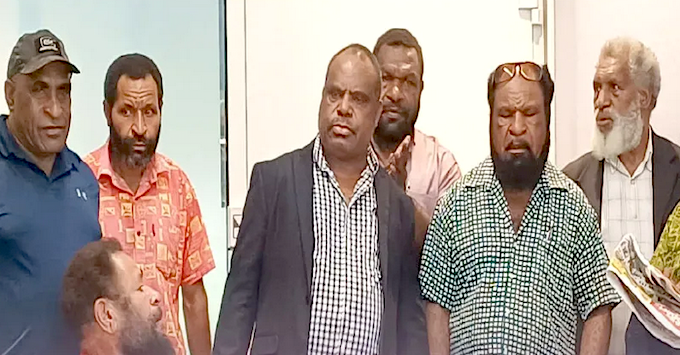
State-owned PNG Ports chief executive officer Fego Kiniafa has been killed at Nagamiufa in Goroka of Eastern Highlands Province, says Papua New Guinea’s Police Commissioner David Manning.

A police report said he had died in a fight after an argument was started over a few bottles of beer.

It said Kiniafa had allegedly shot and wounded the aggressor on his neck.

Kiniafa was then killed by members of the community who retaliated.

The situation in Goroka is reported to be tense.

Manning told news media his officers had started an investigation into the killing.

Board chairman Kepas Wali announced in a circular that Rodney Begley had been appointed acting CEO for the state-owned enterprise.

Wali expressed grief and sorrow at Kiniafa’s death.

This article is republished under a community partnership agreement with RNZ.

Goroka town, Eastern Highlands, Papua New Guinea.
Goroka town, Eastern Highlands, Papua New Guinea … an argument over “a few bottles of beer” led to the killing. Image: RNZ
Print Friendly, PDF & Email

Article by AsiaPacificReport.nz
PNG’s Sir Julius: ‘I shed tears of joy and sadness – for a new beginning’

PNG Post-Courier

The tears came freely as the birth of the new nation of Papua New Guinea was heralded by a new flag — the Glorious Red, Black and Gold.

Tears of joy, tears of freedom, tears of sadness, all rolled into one on the momentous occasion of the end of an era of colonialism.

Julius Chan, then a raw young politician and a prolific crusader for the cause of independence, remembers the occasion like it was yesterday.

And his tears overwhelmed the man from New Ireland, which implored an euphoric realisation of freedom after years of political bickering against Australia.

On the morning of 16 September 1975, the flag of Australia was lowered at the Sir Hubert Murray Stadium in Port Moresby.

With pomp and ceremony, the flag of the new nation of Papua New Guinea — the Kumul soaring over the Southern Cross constellation — was raised to signify the birth of our country.

These are solemn moments.

Flag raising touched hearts
The flag raising touched the hearts and lives of the people who were there, who were witnesses of a dramatic shift in colonization and democracy.

Many people cried, many in sadness and many more in joy. It is a moment etched in time, a proud moment of nationhood.

One man who was there, and who has carried the country through thick and thin is PNG’s longest serving parliamentarian and the Last Knight Standing, Sir Julius Chan.

In an exclusive interview with the Post-Courier’s senior reporter Gorethy Kenneth, Sir Julius remembers the solemnity of the moment.

“I shed tears of joy and sadness, the old had ended, and a new was beginning,” Sir Julius reminisced.

“I do remember very clearly the Australian flag being lowered, folded and presented by John Guise to Prince Charles — now our King Charles III — who then presented it to the Australian Governor-General Sir John Kerr.

“And when the Papua New Guinea flag was hoisted, at that very moment, how I felt? …well, very sensational, I was proud, a sensation of final achievement of a goal in life, I had my head down, first, I tilted my head up watching the flag being raised, and each time the PNG flag was raised by the bearers, there was feeling of pride, sensation,” he said.

Finally ‘broken free’
“I had a few tears, I felt, in my gut, for the first time that I had finally broken free of the colonial yoke, that is when I knew we were free. That was probably the most memorable moment.

“It is 47 years now and my greatest wish is that we make the best of what we have, never give up and don’t expect anything from nothing and everything.

“Life is not meant to be easy and to achieve anything in life; we got to work for it.

“And also probably we really have to reiterate corruption — corruption is so bad and it’s not paid for by the ordinary people that they playing with little games, corruption is wild at the top, that’s what I really think and that the three arms of government must act in accordance with the constitutional spirit of the constitution.

“They must not fear to intervene in the area in which the Constitution requires them to.

“It’s all about justice delayed is the cause and the root of all the evils happening today.”

Sir Julius said that at the stroke of midnight on September 1975 a fireworks display lit up the Port Moresby sky to signal the beginning of independence for Papua New Guinea.

The Australian flag, which had been flown since 1906, was lowered for the last time at dusk on 16 September 1975 and handed to Prince Charles, the heir to the British throne, who passed it on to Australia’s Governor General, Sir John Kerr.

Drums beat all night
All through the day and night, the beat of drums could be heard as members of tribes from all over the new nation of jungles and mountainous islands danced in celebration of their new identity.

Papua New Guinea, a nation of 2.6 million inhabitants most of whom lived in very rural settings, had to deal with a situation. Fifteen days before the independence, a declaration of independence was made on September 1 by a secessionist movement on Bougainville.

This declaration which posed a direct threat to the new central government’s authority was dispelled.

“We were still united,” Sir Julius said.

“Our Independence Day celebrations were massive and probably organised on a scale far superior to any other form of gathering in the country before or since.

“You ask anybody why 16 September 1975 was chosen as the official date, I do not think they could tell you.

“Perhaps it was nominated because it was convenient for the Australian Governor-General Sir John Kerr, or for Prince Charles, who came as the Queen’s special representative.

“Gough Whitlam as Prime Minister of Australia came, as well as Malcolm Fraser, who was then opposition leader.”

Good job governing
Australia had governed the enormous, rugged land, and had done a good job.

“I believe what they did was quite appropriate for a country at that stage of development,” he said.

“Any other colonial power such as Britain or Germany would run PNG in a completely different way. Australia was a very young country as they had only come into a Federation in 1901 and they were not entrenched in colonial rule, they themselves were treading on new ground.”

The flag lowering ceremony and fireworks display marked the end of efforts by the Australian Government of Prime Minister Gough Whitlam to thrust Papua New Guinea into independence and thus rid itself of the stigma of colonial rule.

Speaking at the ceremony, Sir John Guise, the first Governor-General of Papua New Guinea, said it was important that people realised the spirit in which the flag was being lowered.

“We are lowering it,” he said, “not tearing it down.”

Sir John Kerr said the ceremony did not mark the end of Australia’s interest in Papua New Guinea or involvement with it.

Australia, he said, “remains deeply and irrevocably committed to Papua New Guinea.”

But for 39-year-old Michael Somare, the last chief minister during colonial rule and now the nation’s first prime minister, and for other members of his government, Australia’s concern and involvement could be greater than it is.

Republished with permission.

Print Friendly, PDF & Email

Article by AsiaPacificReport.nz

Action on faulty vaginal mesh took too long, now women struggle to access mesh surgery that works

Source: The Conversation (Au and NZ) – By Jennifer King, Senior Clinical Lecturer, University of Sydney

Gwendal Cottin/Unsplash

Last week, Johnson & Johnson reached a A$300 million settlement for two class actions brought by Australian women affected by complications from vaginal mesh products.

The products are surgically implanted to correct urinary incontinence or prolapse, where the vaginal tissues weaken and sag outside the vagina.

However, women involved in the class action experienced a range of issues with vaginal mesh implants, including chronic pain, painful intercourse and incontinence.

The first of the Australian class actions against Johnson & Johnson was filed in 2012. Justice Katzmann ruled the company hadn’t fully researched these products (which carried significant risks), was motivated by commercial factors, and failed to give doctors or patients adequate safety information.

The following ten years have seen a radical overhaul in the use of vaginal mesh implants in Australia and throughout the world. But we’ve also seen unintended consequences, with some women not accessing care.

What has changed?

We now have strict training and credentialing guidelines for surgeons using vaginal mesh, plus detailed management protocols for pelvic floor disorders. Only surgeons with advanced training in pelvic floor surgery following their specialty training are able to perform vaginal mesh surgery.

All patients are first referred for extensive pelvic floor muscle training. Only those who don’t respond to conservative treatment and whose incontinence has a major impact on their quality of life are referred for a surgical review.

Mesh repair for prolapse is considered only in patients with severe or recurrent prolapse in whom basic surgery using the patient’s own tissues has failed. This tends to be patients with multiple health problems who are not fit enough for major abdominal surgery.


Read more:
Vaginal mesh controversy shows collective failure of the TGA and Australia’s specialists


Registration for mesh products has been rigorously upgraded and requires extensive pre- and post-marketing audit. This means implants are tested in lengthy clinicial trials before and after they’re implanted in patients. Trials also compare the outcomes and complications to women having surgery without mesh.

Formal audit systems monitor women’s long-term outcomes. And next year, all implants will have a unique device identifier. Similar systems are used for joint replacements and breast implants, allowing prompt review if there are concerns over a device.

All of these changes should have been standard practice a long time ago and will hopefully prevent similar mistakes in future.

Some women not seeking treatment

Through media coverage of the vaginal mesh issue, most of the population learned “mesh was bad”. They may not have known anything about prolapse or incontinence but they clearly got the message mesh was something to avoid.

Following the 2011 United States Food and Drug Administration (FDA) safety update citing possible complications associated with vaginal mesh, there was a marked reduction in the use of vaginal mesh implants for prolapse surgery.

Woman walks in the country with her dog
Patients haven’t wanted procedures with mesh.
Caspar Rae/Unsplash

Over the past ten years, fewer women have had surgery for pelvic floor weakness.

This is most noticeable for a type of surgery for urinary incontinence, mid-urethral sling, which has dropped 64% from its peak usage in 2010–2011. A mid-urethral sling uses a thin band of mesh under the urethra to manage incontinence.

Prolapse repair requires a larger patch of mesh to support the weakened vaginal walls.

Both these products are made from the same polypropylene mesh. This is the same material used in sutures (stitches) for many decades.

However, prolapse repair is more complex and has a higher risk of complications than mesh continence surgery, where short- and long term outcomes are very good.

Yet we have not seen any significant increase in other non-mesh continence surgery to compensate for this.


Read more:
Urinary incontinence can be a problem for women of all ages, but there is a cure


It’s possible more women are turning to physiotherapy treatment which can improve incontinence symptoms and is recommended as first-line treatment. Physiotherapy can also benefit women with mild to moderate vaginal prolapse.

However private physiotherapy care can be costly and difficult to access. There has also been an ongoing decline in physiotherapy and nurse continence services in public hospitals and community centres.

It is likely many women are not seeking help at all.

Mesh still has a place

The problem is, mesh is not inherently bad. Mesh has enabled surgeons to treat many women, including older or more frail patients, who aren’t suited to more major surgery.

Vaginal mesh surgery for prolapse is well tolerated in elderly and frail patients. Since its introduction, the greatest relative uptake in continence procedures has been in women 75 years and older.

Older woman sits near the beach
Mesh is still a good option for many women.
sk/Unsplash

For incontinence, a mid-urethral sling is more effective with fewer complications than other procedures for incontinence.
The most effective surgical repair for severe and recurrent prolapse, particularly in younger women, is a sacrocolpopexy. Generally performed via keyhole surgery, this technique uses a mesh strip anchored to the triangular bone at the base of the spine to support weakened vaginal tissues.

Sacrocolpopexy has a good safety profile, is effective and durable – and wasn’t part of the recent class actions.

But this is no longer available, as the manufacturers of mesh for sacrocolpopexy in Australia recently removed their products from the market. This was likely a commercial decision: the long-term studies required for registration of mesh products used in pelvic floor surgery are expensive and time consuming, and Australia is a relatively small market.

Mesh for vaginal prolapse had already been removed from the Australian Register of Therapeutic Goods in 2018, meaning it can’t be supplied in Australia, after Australia’s regulator classified it as high risk.

Progress has been made to protect patients from the harms of faulty mesh implants but we need to ensure women have access to safe, effective surgical procedures to treat incontinence and prolapse – and for some women, this will include mesh.


Read more:
Not all vaginal implants are a problem and treating them the same puts many women at risk


The Conversation

Jennifer King is affiliated with International Urogynaecological Association, Continence Foundation of Australia NSW Branch

ref. Action on faulty vaginal mesh took too long, now women struggle to access mesh surgery that works – https://theconversation.com/action-on-faulty-vaginal-mesh-took-too-long-now-women-struggle-to-access-mesh-surgery-that-works-190532

Young cold-blooded animals are suffering the most as Earth heats up, research finds

Source: The Conversation (Au and NZ) – By Patrice Pottier, PhD Candidate in Ecology and Evolutionary Biology, UNSW Sydney

Shutterstock

Climate change is making heatwaves worse. Many people have already noticed the difference – and so too have other animals.

Sadly, research by myself and colleagues has found young animals, in particular, are struggling to keep up with rising temperatures, likely making them more vulnerable to climate change than adults of their species.

The study focused on “ectotherms”, or cold-blooded animals, which comprise more than 99% of animals on Earth. They include fish, reptiles, amphibians and insects. The body temperature of these animals reflects outside temperatures – so they can get dangerously hot during heat waves.

In a warming world, a species’ ability to adapt or acclimatise to temperatures is crucial. Our study found that young ectotherms, in particular, can struggle to handle more heat as their habitat warms up. That may have dramatic consequences for biodiversity as climate change worsens.

Our findings are yet more evidence of the need to urgently reduce greenhouse gas emissions to prevent catastrophic global heating. Humans must also provide and retain cool spaces to help animals navigate a warmer future.

large and small beetles move across a log
A species’ ability to adapt or acclimatise to higher temperatures is crucial.
Shutterstock

Tolerating heat in a changing climate

The body temperature of ectotherms is extremely variable. As they move through their habitat, their body temperature varies according to the outside conditions.

However, there’s only so much heat these animals can tolerate. Heat tolerance is defined as the maximum body temperature ectotherms can handle before they lose functions such as the ability to walk or swim. During heat waves, their body temperature gets so high they can die.

Species, including ectotherms, can adapt to challenges in their environment over time by evolving across generations. But the rate at which global temperatures are rising means in many cases, this adaptation is not happening fast enough. That’s why we need to understand how animals acclimatise to rising temperatures within a single lifetime.

Unfortunately, some young animals have little to no ability to move and seek cooler temperatures. For example, baby lizards inside eggs cannot move elsewhere. And owing to their small size, juvenile ectotherms cannot move great distances.

This suggests young animals may be particularly vulnerable during intense heat waves. But we know very little about how young animals acclimatise to high temperatures. Our research sought to find out more.

snakes hatching from eggs
Ectotherms cannot escape their eggs to avoid a heatwave.
Shutterstock

Young animals at risk

Our study drew on 60 years of research into 138 ectotherm species from around the world.

Overall, we found the heat tolerance of embryos and juvenile ectotherms increased very little in response to rising temperatures. For each degree of warming, the heat tolerance of young ectotherms only increased by an average 0.13℃.

The physiology of heat acclimatisation in animals is very complex and poorly understood. It appears linked to a number of factors such as metabolic activity and proteins produced by cells in response to stress.

Our research showed young land-based animals were worse at acclimatising to heat than aquatic animals. This may be because moving to a cooler temperature on land is easier than in an aquatic environment, so land-based animals may not have developed the same ability to acclimatise to heat.


Read more:
Thousands of photos captured by everyday Australians reveal the secrets of our marine life as oceans warm


Large striped fish swimming with smaller fish
Aquatic animals appear better able to acclimatise to warmer conditions than land-based animals.
Shutterstock

Heat tolerance can vary within a species. It can depend on what temperatures an animal has experienced during its lifetime and, as such, the extent to which it has acclimatised. But surprisingly, our research found past exposure to high temperatures does not necessarily help a young animal withstand future high temperatures.

Take, for example, Lesueur’s velvet gecko which is found mostly along Australia’s east coast. Research shows juveniles from eggs incubated in cooler nests (23.2℃) tolerated temperatures up to 40.2℃. In contrast, juveniles from warmer nests (27℃) only tolerated temperatures up to 38.7℃.

Those patterns can persist through adulthood. For example, adult male mosquito fish from eggs incubated to 32℃ were less tolerant to heat than adult males that experienced 26℃ during incubation.

These results show embryos are especially vulnerable to extreme heat. Instead of getting better at handling heat, warmer eggs tend to produce juveniles and adults less capable of withstanding a warmer future.

Overall, our findings suggest young cold-blooded animals are already struggling to cope with rising temperatures – and conditions during early life can have lifelong consequences.


Read more:
We know heatwaves kill animals. But new research shows the survivors don’t get off scot-free


baby turtles moving across sand
Young cold-blooded animals are already struggling to cope with higher temperatures.
Shutterstock

What’s next?

To date, most studies on the impacts of climate change have focused on adults. Our research suggests animals may be harmed by heatwaves long before they reach adulthood – perhaps even before they’re born.

Alarmingly, this means we may have underestimated the damage climate change will cause to biodiversity.

Clearly, it’s vitally important to limit global greenhouse gas emissions to the extent required by the Paris Agreement.

But we can also act to protect species at a finer scale – by conserving habitats that allow animals to find shade and shelter during heatwaves. Such habitats include trees, shrubs, burrows, ponds, caves, logs and rocks. These places must be created, restored and preserved to help animals prosper in a warming world.


Read more:
Beyond net-zero: we should, if we can, cool the planet back to pre-industrial levels


The Conversation

Patrice Pottier works for The University of New South Wales. He is supported by a UNSW Scientia Doctoral scholarship.

ref. Young cold-blooded animals are suffering the most as Earth heats up, research finds – https://theconversation.com/young-cold-blooded-animals-are-suffering-the-most-as-earth-heats-up-research-finds-190606

Police texts in Kumanjayi Walker case another sordid example of systemic racism in Australia’s legal system

Source: The Conversation (Au and NZ) – By Robyn Newitt, Lecturer, Criminology, Western Sydney University

This article contains information on deaths in custody, racist language and violence experienced by First Nations people in encounters with the Australian justice system. It also contains references to and the names of people who have passed away.


The three-month coronial inquest into Kumanjayi Walker’s death in police custody began on September 5 at the Alice Springs Local Court.

During an attempted arrest, 19-year-old Warlpiri teenager Kumanjayi Walker was fatally shot on November 9 2019 by Northern Territory police constable Zachary Rolfe. In March 2022, Rolfe was acquitted of murder, manslaughter and engaging in a violent act causing death.

Last week, the inquest heard details of several text messages between Rolfe and other members of the NT police, including officers in more senior positions than Rolfe.

The texts contain derogatory and racist comments about Aboriginal people.

Racism among police will come as little surprise to many Aboriginal and Torres Strait Islander people. Indeed, systemic racism is entrenched in Australia’s legal system.

Racist texts are relevant for this inquest

Rolfe’s lawyers had objected to the inclusion of text messages between police officers downloaded from his phone after his arrest. But this was rejected by Coroner Elisabeth Armitage, who ruled the text messages should be examined by the inquest as potential evidence of racism playing a “conscious or unconscious” role in Walker’s death.


Read more:
Despite 432 Indigenous deaths in custody since 1991, no one has ever been convicted. Racist silence and complicity are to blame


That ruling was in contrast to Rolfe’s March 2022 trial, at which Supreme Court Justice John Burns ruled the text messages to be inadmissable.

In the opening week of the inquest, Peggy Dwyer, counsel assisting the coroner, said: “some of those text messages do suggest negative attitudes towards Aboriginal people that should and will cause great concern”.

Dwyer also stated the importance of understanding where these racist attitudes were coming from, and if there was a way to prevent them, asking: “Is there a risk that if we don’t, those attitudes may lead again to deadly confrontation?”

Racist attitudes from police are nothing new

Despite the media attention these racist text exchanges are now receiving, such racism is far from an isolated incident.

More than 30 years after the Royal Commission into Aboriginal Deaths in Custody, systemic racism remains entrenched in the Australian legal system. Systemic racism refers to colonial structures that perpetuate white racial superiority across institutions, laws, police and practices which continue to disadvantage Aboriginal and Torres Strait Islander people.

More than 500 Aboriginal and/or Torres Strait Islander people have died in custody since the Royal Commission into Aboriginal Deaths in Custody. No one has been held criminally responsible for any of these deaths.


Read more:
Explainer: what is systemic racism and institutional racism?


Police racially targeting Aboriginal people does not just happen in the NT. In Melbourne in 2020, Korey Penny said he was violently thrown from his bicycle by police who subjected him to foulmouthed racist abuse. Although it was reported Penny is pursuing court action, it’s unknown whether he has reached an outcome.

In the same year, three South Australian police officers were filmed violently arresting a 28-year-old Aboriginal man. And just last week, a 14-year-old Aboriginal boy was taken to hospital in New South Wales with lacerations to his head. The boy’s family allege the head injuries were caused by the violent arrest and excessive use of force by police.

Holding police accountable for violence, excessive use of force and systemic racism must involve an active approach to addressing police culture and dehumanising behaviours. The current investigative process, in which police conduct internal investigations of wrongdoing, is simply not working. The oversight of an external global body into systemic racism and police would be best placed, rather than police investigating police.

However, this coronial inquest is at least an improvement on internal police investigations, as the investigative process involves Walker’s family members’ questions being answered, and keeps them informed as far as practicable.


Read more:
The Kumanjayi Walker murder case echoes a long history of police violence against First Nations people


The acceptance and dismissal of racist language makes it easier for discriminatory behaviour to continue. Addressing systemic racism must go beyond further training and education for police.

Until colonial governments acknowledge the existence of systemic racism and are held accountable for it, Aboriginal people will never see just outcomes.

The Conversation

Robyn Newitt does not work for, consult, own shares in or receive funding from any company or organisation that would benefit from this article, and has disclosed no relevant affiliations beyond their academic appointment.

ref. Police texts in Kumanjayi Walker case another sordid example of systemic racism in Australia’s legal system – https://theconversation.com/police-texts-in-kumanjayi-walker-case-another-sordid-example-of-systemic-racism-in-australias-legal-system-190833

For the first time, robots on Mars found meteorite impact craters by sensing seismic shock waves

Source: The Conversation (Au and NZ) – By Katarina Miljkovic, ARC Future Fellow, School of Earth and Planetary Sciences, Curtin University

NASA / JPL-Caltech

Since 2018, NASA’s InSight mission to Mars has recorded seismic waves from more than 1,300 marsquakes in its quest to probe the internal structure of the red planet. The solar panels of the car-sized robotic lander have become caked with Martian dust, and NASA scientists expect it will completely power down by the end of 2022.


Read more:
First recorded ‘marsquakes’ reveal the red planet’s rumbling guts


But the internal rumblings of our planetary neighbour aren’t the only things that InSight’s seismometers detect: they also pick up the thuds of space rocks crashing into the Martian soil.

In new research published in Nature Geoscience, we used data from InSight to detect and locate four high-speed meteoroid collisions, and then tracked down the resulting craters in satellite images from NASA’s Mars Reconnaissance Orbiter.

Rocks from space

The Solar System is full of relatively small rocks called meteoroids, and it’s common for them to collide with planets. When a meteoroid encounters a planet with an atmosphere, it heats up due to friction – and may burn up entirely before reaching the ground.

On Earth, we know these incoming meteoroids as shooting stars, or meteors: beautiful events to observe in the night sky. Sometimes a meteoroid explodes when it reaches the thicker atmosphere closer to the ground, creating a spectacular airburst.


Read more:
Where do meteorites come from? We tracked hundreds of fireballs streaking through the sky to find out


Occasionally, a space rock survives its fiery path through the air and drops to the ground, where it is known as a meteorite.

A few of these meteorites hit the surface at such speed they blast a hole in the ground called an impact crater. Compared to a human lifetime, these events are very rare on Earth.

Recording space rock impacts

Scientists have detected the vibrations from meteoroid airbursts using seismic detectors numerous times, including a recent survey of bright meteors above Australia.

However, only once has a high-speed space rock crashing into the ground been observed both visually and with modern seismic equipment. This was an impact crater that formed in 2007 near the village of Carancas in Peru.

Numerous impacts were detected on the Moon by the network of seismic sensors set up during the US Apollo missions of the 1960s and ’70s. However, there was no recording of a natural impact associated with visual detection of a new crater.


Read more:
The moon is still geologically active, study suggests


The closest things to such an observation were artificial impacts: the crash-landings of the booster rockets of the ascent modules that lifted Apollo astronauts off the Moon.

These human-made impacts on the Moon were recorded both in seismic data and visual imagery from orbit. These data were recently used to test simulations of how impacts produce seismic waves.

Martian meteorites

Incoming meteoroids make waves in the atmosphere and also the ground. The atmosphere of Mars is equivalent to 1% of the Earth’s, and has a different chemical composition. This means meteor events on Mars take a different form.

For meteor events large enough to drop a meteorite, the fate of the meteorite and any resulting crater is different from what we have come to expect on our home planet.

Many craters on Mars come in clusters, because meteoroids often explode into fragments not long before they hit the surface.
MRO / HiRISE / NASA / JPL-Caltech / UArizona

Here on Earth, or on the Moon, single craters are the norm. On Mars, however, about half the time a high-speed space rock will burst in the atmosphere shortly before impact, resulting in a tightly grouped cluster of craters.

The separation of these individual fragments remains close at ground level, forming a cluster of small impacts.

From vibrations to craters

Recently, the InSight mission has observed acoustic and seismic waves from four meteoroid impact events. These waves travel at different speeds, and comparing their different arrival times and other properties allowed us to estimate the location of the impacts.

These impact locations were then confirmed with satellite imaging from the Mars Reconnaissance Orbiter.

A sketch of how an incoming space rock makes waves that InSight can detect and interpret.
Garcia et al. / Nature Geoscience

Knowing the size and exact location of these impact craters helps us calculate the size and speed of the incoming space rock and how much energy the impact released.

Once we are confident we know something about the impact that created the seismic waves we detected, we can use the waves to learn about the interior of Mars. What’s more, when we compare seismic observations on Mars with observations from Earth and the Moon, we can learn more about how the planets formed and how the Solar System evolved.

The Conversation

Dr Katarina Miljkovic works for Curtin University and is fully funded by the Australian Research Council. She is a science collaborator for the NASA InSight mission.

ref. For the first time, robots on Mars found meteorite impact craters by sensing seismic shock waves – https://theconversation.com/for-the-first-time-robots-on-mars-found-meteorite-impact-craters-by-sensing-seismic-shock-waves-190755

Are the West’s sanctions against Russia actually working?

Source: The Conversation (Au and NZ) – By Christopher Michaelsen, Associate Professor, UNSW Sydney

Dmitri Lovetsky/AP/AAP

Following the Russian invasion of Ukraine on February 24 2022, the United States, the European Union and other countries swiftly imposed a mix of wide-ranging diplomatic and economic sanctions.

Russia was excluded from the Council of Europe and voted off the United Nations Human Rights Council. Russian diplomats were expelled by various Western countries.

Travel bans were introduced to prevent Russian politicians and oligarchs from entering or transiting through US and EU territory.

Economically, the sanction measures included asset freezes. Several Russian banks were removed from the SWIFT banking system, the financial messaging infrastructure that links the world’s banks.

Western countries also sanctioned about half of Russia’s foreign reserves – roughly US$315 billion. And they introduced strong export controls.

For example, the US and Europe have widely prohibited exporting dual-use and advanced technology items. This covers a range of commodities and industrial parts and materials, including timber products, iron and steel products, metalworking, glass and woodworking tools as well as industrial and electrical equipment.

Six months after the Russian invasion, however, the war in Ukraine is raging on. While Ukraine has recently managed to reclaim territory in some of its eastern regions, a speedy end to the military conflict is unlikely.

So, does that mean the sanctions have failed?


Read more:
Kharkiv offensive has shown the west that Ukraine can win


Effectiveness of sanctions is difficult to assess

Speaking at an economic forum in Vladivostok earlier this month, Russian President Vladimir Putin claimed his country was coping with the West’s economic “aggression”. He warned that instead of having the effect the West desired, the sanctions were eroding the quality of life for Europeans and poorer countries were losing access to food.

Vladimir Putin has argued Russia is coping well with the West’s economic ‘aggression’.
Yuri Kochetkov/EPA/AAP

The EU’s viewpoint is different, of course. EU Commission President Ursula von der Leyen called the Russia sanctions the “toughest the world has ever seen”. Delivering the State of the Union Address in Strasbourg last week, she claimed the sanctions had been effective and Russia’s financial sector was on life support.

Some truth can be found in both narratives. But at this stage, an accurate empirical assessment of the effectiveness of the sanctions is difficult for two reasons: time-frame and access to data.

When it comes to assessing the impact of economic sanctions, six months is normally not enough time. Indeed, economists believe the real debate on the Russia sanctions goes beyond 2022.

The second challenge is selection of and access to reliable data.

A commonly used figure to measure the impact of sanctions is Gross Domestic Project (GDP) in a targeted country. In April, the International Monetary Fund forecasted the Russian GDP to drop 8.5% in 2022. It has now improved its outlook for the dynamics of Russia’s economy to a fall of 6%.

A similarly indicative figure is inflation rate. But as with GDP, a clear and singular causality between sanctions and inflation is impossible to establish.

According to First Deputy Prime Minister Andrei Belousov, inflation in Russia in 2022 will come in at 12-13%. The actual figure is likely to be higher.

A look at car sales in Russia offers another illustrative example, especially since households tend to try to buy durable goods during periods of high inflation.

Car sales in March 2022 were three times lower than in March 2021. By September 2022, the production of cars in Russia has fallen by three-quarters compared to last year.

A similar dynamic can be observed in the aviation industry. The Russian airline Aeroflot, for instance, has grounded planes because there are no more spare parts.

Equally, the Russian military is reportedly taking chips from dishwashers and refrigerators to fix their military hardware, because they ran out of semiconductors.

Car sales in Russia have fallen by three-quarters compared to last year.
Alexander Zemlianichenko/AP/AAP

This suggests that the system of Western export controls is working. Indeed, according to some estimates, imports in April 2022 collapsed as much as 70-80% year-on-year.

But sanctions are always a double-edged sword.

Ripple effects

As Russia is taking counter-measures, some policymakers in the West may have underestimated the consequences. A key example in this regard is exponentially rising energy costs.

With 40% of gas in Europe originating from Russia, the import and price of gas have become defining issues in daily politics as the continent is heading for winter.

Unsurprisingly, the prospect of freezing households features prominently in tabloids in Germany, France, and Italy. Yet, the economic consequences for these major European economies are potentially worse. In Germany, there are calculations that an import stop of Russian gas would lead up to a 3% decline in GDP.

Nonetheless, at the moment, 78% of Europeans are still supporting the sanctions imposed by the EU on Russia. But many are also recognising that they come at a cost. In Germany, 51% believe that the sanctions are actually hurting Germany more than Russia.


Read more:
Russia is fighting three undeclared wars. Its fourth – an internal struggle for Russia itself – might be looming


So, where does that leave us?

The sanctions have not stopped Russia from waging war in Ukraine. And, at least for the time being, Putin’s grip on power in Russia itself remains strong.

This means the short-term disruptions from the Russia sanctions may be less than originally hoped for. But there are early signs of significant stress for the Russian economy. Indeed, it is likely this stress will intensify in 2023 and beyond.

More generally, it is important to recognise that limiting an assessment of sanctions to measuring impact and causality is missing the bigger picture.

Short of direct military confrontation, the US, the EU and their allies had few alternatives at their disposal to respond to the Russian aggression. More importantly, perhaps, it is clear that eventually the Ukraine crisis can only be solved diplomatically.

And it is at this point that the sanctions – or the lifting of them – will come in handy as a major political and economic bargaining chip.

The Conversation

Christopher Michaelsen receives funding from the Australian Research Council.

ref. Are the West’s sanctions against Russia actually working? – https://theconversation.com/are-the-wests-sanctions-against-russia-actually-working-190424

Earth harbours 20,000,000,000,000,000 ants – and they weigh more than wild birds and mammals combined

Source: The Conversation (Au and NZ) – By Mark Wong, Forrest Fellow, The University of Western Australia

Shutterstock

Have you ever wondered exactly how many ants live on Earth? Possibly not, but it’s certainly a question we’ve asked ourselves.

Our research published today provides an approximate answer. We conservatively estimate our planet harbours about 20 quadrillion ants. That’s 20 thousand million millions, or in numerical form, 20,000,000,000,000,000 (20 with 15 zeroes).

We further estimate the world’s ants collectively constitute about 12 million tonnes of dry carbon. This exceeds the mass of all the world’s wild birds and wild mammals combined. It’s also equal to about one-fifth of the total weight of humans.

Eminent biologist Edward O. Wilson once said insects and other invertebrates are “the little things that run the world” – and he was right. Ants, in particular, are a crucial part of nature. Among other roles, ants aerate the soil, disperse seeds, break down organic material, create habitat for other animals and form an important part of the food chain.

Estimating ant numbers and mass provides an important baseline from which to monitor ant populations amid worrying environmental changes.

two ants carry a seed
Many ant species are important seed dispersers. Here, two worker Meranoplus ants carry a seed back to their nest.
Francois Brassard

Counting the world’s ants

There are more than 15,700 named species and subspecies of ants, and many others not yet named by science. Ants’ high degree of social organisation has enabled them to colonise nearly all ecosystems and regions around the globe.

The astounding ubiquity of ants has prompted many naturalists to contemplate their exact number on Earth. But these were basically educated guesses. Systematic, evidence-based estimates have been lacking.

Our research involved an analysis of 489 studies of ant populations conducted by fellow ant scientists from around the world. This included non-English literature, in languages such as Spanish, French, German, Russian, Mandarin and Portuguese.

The research spanned all continents and major habitats including forests, deserts, grasslands and cities. They used standardised methods for collecting and counting ants such as pitfall traps and leaf litter samples. As you can imagine, this is often tedious work.


Read more:
In defence of ants


hand squeezes bottle of green liquid into hole in ground
A researcher installs a pitfall trap, a standard method for collecting ants that crawl across the ground surface.
Francois Brassard

From all this, we estimate there are approximately 20 quadrillion ants on Earth. This figure, though conservative, is between two and 20 times higher than previous estimates.

Th previous figures employed a “top-down” approach by assuming ants comprise about 1% of the world’s estimated insect population. In contrast, our “bottom-up” estimate is more reliable because it uses data on ants observed directly in the field and makes fewer assumptions.

Our next step was to work out how much all these ants weigh. The mass of organisms is typically measured in terms of their carbon makeup. We estimated that 20 quadrillion average-sized ants corresponds to a dry weight or “biomass” of approximately 12 million tonnes of carbon.

This is more than the combined biomass of wild birds and mammals – and about 20% of total human biomass.

Carbon makes up about half the dry weight of an ant. If the weight of other bodily elements was included, the total mass of the world’s ants would be higher still.

We also found ants are distributed unevenly on Earth’s surface. They vary sixfold between habitats and generally peak in the tropics. This underscores the importance of tropical regions in maintaining healthy ant populations.

Ants were also particularly abundant in forests, and surprisingly, in arid regions. But they become less common in human-made habitats.

Our findings come with a few caveats. For example, the sampling locations in our dataset are unevenly distributed across geographic regions. And the vast majority of samples were collected from the ground layer, meaning we have very little information about ant numbers in trees or underground. This means our findings are somewhat incomplete.


Read more:
Where are all the ants? World-first ‘treasure map’ reveals hotspots for rare species


thousands of ants form a line across a road
The new research found ants are distributed unevenly on Earth’s surface.
Shutterstock

We all need ants

Ants also provide vital “ecosystem services” for humans. For instance, a recent study found ants can be more effective than pesticides at helping farmers produce food.

Ants have also developed tight interactions with other organisms – and some species cannot survive without them.

For example, some birds rely on ants to flush out their prey. And thousands of plant species either feed or house ants in exchange for protection, or dispersal of their seeds. And many ants are predators, helping to keep populations of other insects in check.

ant carries prey in jaws
A purple Rhytidoponera ant carries her prey between her jaws. Many ants serve as predators that help keep populations of other insects in check.
Francois Brassard

Alarmingly, global insect numbers are declining due to threats such as habitat destruction and fragmentation, chemical use, invasive species and climate change.

But data on insect biodiversity is alarmingly scarce. We hope our study provides a baseline for further research to help fill this gap.

It’s in humanity’s interest to monitor ant populations. Counting ants is not difficult, and citizen scientists from all over the world could help investigate how these important animals are faring at a time of great environmental change.


Read more:
Why tiny ants have invaded your house, and what to do about it


The Conversation

Mark Wong receives funding from the Forrest Research Foundation.

Benoit Guénard is an Associate Professor at The University of Hong Kong (HKU). This study was supported thanks to funding from HKU, an Early Career Scheme of the Research Grant Council of Hong Kong (# ECS-27106417), and by National Geographic.

Patrick Schultheiss is a Temporary Principal Investigator at the University of Würzburg in Germany. He currently receives funding from the Deutsche Forschungsgemeinschaft (DFG, German Research Foundation) – project no. 499479766. This study was further supported by a Division of Ecology and Biodiversity Postdoctoral Fellow Research Award from the University of Hong Kong.

Sabine Nooten receives funding from the Deutsche Forschungsgemeinschaft (DFG, German Research Foundation) — project No. 445715161

François Brassard and Runxi Wang do not work for, consult, own shares in or receive funding from any company or organisation that would benefit from this article, and have disclosed no relevant affiliations beyond their academic appointment.

ref. Earth harbours 20,000,000,000,000,000 ants – and they weigh more than wild birds and mammals combined – https://theconversation.com/earth-harbours-20-000-000-000-000-000-ants-and-they-weigh-more-than-wild-birds-and-mammals-combined-190831

Climate change threatens up to 100% of trees in Australian cities, and most urban species worldwide

Source: The Conversation (Au and NZ) – By Manuel Esperon-Rodriguez, Lecturer and Research Fellow, Hawkesbury Institute for the Environment, Western Sydney University

Photo: Jaana Dielenberg, Author provided

To anyone who has stepped off a hot pavement into a shady park, it will come as little surprise that trees (and shrubs) have a big cooling effect on cities.

Our study published today in Nature Climate Change found climate change will put 90-100% of the trees and shrubs planted in Australian capital cities at risk by 2050. Without action, two-thirds of trees and shrubs in cities worldwide will be at potential risk from climate change.

Increasing city temperatures mean their trees are becoming more important than ever. More than just shade umbrellas, the natural air-conditioning magic of trees happens as water moves up from the soil through their roots and evaporates out of their leaves into the air.

But how will the trees themselves cope with climate change as conditions shift beyond their natural tolerance limits for high temperatures or lack of water? Our team of scientists from Australia and France examined the impacts of temperature and rainfall changes projected for coming decades on 3,129 tree and shrub species planted in 164 cities across 78 countries.

About half of these urban tree and shrub species are already experiencing climate conditions beyond their natural tolerance limits.

These findings sound bleak – but read on. We have also identified steps people can take to help their local trees survive, thrive and keep on cooling.


Read more:
A solution to cut extreme heat by up to 6 degrees is in our own backyards


people walking through a tree-lined public space in Barcelona
Imagine this public space in Barcelona without trees – it would be unbearably hot in the Spanish summer.
Photo: Jorge Fernández Salas/Unsplash

Risks in Australia are higher

In Australia, reduced rainfall will be the most common stress on urban trees, but increasing temperatures will also be a major factor, especially in Darwin.

By 2050, the proportion of urban tree species that might be at risk of projected temperature increases in Australian cities is very high. Among the major cities with inventories of urban plantings, those with high percentages at risk include: Cairns 82%, Melbourne 93%, Perth 95%, Hobart 95%, Sydney 96%, Canberra 98% and Darwin 100%.

Common native species, including manna gum, swamp gum, yellow box, narrow-leaved peppermint, blackwood and brush box, and well-loved introduced species, such as jacaranda, oaks, elms, poplars and silver birch, are among the trees that could be at risk in Australia.

By at risk, we mean these species might be experiencing stressful climatic conditions that could affect their health and performance. However, we could buffer the risk for these species by providing water or creating other microclimate conditions. Also, urban trees may exhibit plasticity in traits that govern survival, growth and environmental tolerance, which can help them to adapt to local environmental conditions.

A green house surrounded by trees and shrubs
Houses surrounded by trees and shrubs stay cooler in warm weather.
Photo: Jaana Dielenberg, Author provided


Read more:
Our cities need more trees, but some commonly planted ones won’t survive climate change


More than 1,000 tree species at risk globally

Worldwide, we found common species of cherry plums, oaks, maples, poplars, elms, pines, lindens, wattles, eucalypts and chestnuts are among more than 1,000 species that have been flagged at risk due to climate change in most cities where they occur.

Even more worryingly, the number of species affected, and the scale of the impacts, will increase markedly by 2050 as temperatures increase. These trends jeopardise the health and longevity of urban forests and the benefits they provide to society.

A shady street through a cemetery
Urban forests like these horse chesnut trees in the Père Lachaise Cemetery in Paris are valuable for cooling cities and making them more liveable.
Photo: Akvile Jureviciute-Lenoir, Author provided

The United Nations predicts the world’s population will grow to around 8.5 billion by 2030, with more than half of those people living in cities. Climate change will further heat up the urban heat islands created by millions of people, vehicles and industries generating heat that’s retained among buildings and other infrastructure.

Urban trees have a vital role to play in keeping cities liveable. As they cool their surroundings, they reduce our electricity use for air conditioning, while also absorbing carbon dioxide, purifying the air, reducing city noise and providing wildlife habitat. They are also inherently beautiful, living things that underpin much of the biodiversity on Earth.

Being around their natural greenness also improves our mental health and well-being. Trees have helped us through stressful times such as pandemics.

However, when climatic conditions exceed the natural tolerance of trees, not only can this lead to poor tree health and limited growth, but it can also reduce their cooling effect and eventually lead to tree dieback. During drought or heat stress, trees can stop releasing water vapour from their leaves or shed leaves to reduce tissue damage. This means that at a time when we most need their natural air conditioning, they are more likely to be switching off.


Read more:
Cities could get more than 4°C hotter by 2100. To keep cool in Australia, we urgently need a national planning policy


People enjoying trees in Copenhagen, Denmark.
Photo: Rachael Gallagher

What can we do to protect our trees?

Increasing the number of trees and shrubs in our cities, collectively called urban forests, is a key climate change adaptation and liveability strategy being used around the world. Until now, though, little information was available on whether or not current climatic conditions exceed what urban forests can stand, or how these conditions compare with projected changes in temperature and precipitation (drought, rain and snow) around the world.

Our study provides guidance to urban forest managers in 164 cities about which species might be at risk and should be monitored. It also identifies which species are likely to be resilient to climate change and so suitable for future plantings.

The authors explain their findings and what they mean for trees and shrubs planted in our cities.

People can help urban forests to survive and keep providing their many benefits in a few simple ways:

1) reduced rainfall and soil moisture are a big threat to many species, so you can help rain soak into the ground to ensure precious water is not wasted down the drain – consider diverting water from your downpipe to a raingarden or a rainwater tank that trickle-feeds the garden (this also helps your local creek).

2) plant even more trees and shrubs, which helps to keep city temperatures comfortable for them and us – get advice from your local council or horticulturalists about suitable climate-resilient species for your area.

3) leave trees and shrubs in place – think twice before cutting down trees and shrubs, as they are providing you with more benefits than you realise.

A scientist inspecting a young urban tree
Author Manuel Esperon-Rodriguez checks on a young tree – the more we plant, the more they can cool their surroundings and improve their odds of coping with climate change.
Author provided


Read more:
Residential green spaces protect growing cities against climate change


The Conversation

Manuel Esperon-Rodriguez is employed by Western Sydney University and received funding from the Which Plant Where project via the Hort Frontiers Green Cities Fund developed by Hort Innovation with co-investment from Macquarie University, Western Sydney University, the New South Wales Department of Planning and Environment, and the Australian Government.

Mark G Tjoelker received funding from the Which Plant Where project via the Hort Frontiers Green Cities Fund developed by Hort Innovation with co-investment from Macquarie University, Western Sydney University, the New South Wales Department of Planning and Environment, and the Australian Government.

Rachael Gallagher receives funding from Hort Innovation Australia.

Jaana Dielenberg and Jonathan Lenoir do not work for, consult, own shares in or receive funding from any company or organisation that would benefit from this article, and have disclosed no relevant affiliations beyond their academic appointment.

ref. Climate change threatens up to 100% of trees in Australian cities, and most urban species worldwide – https://theconversation.com/climate-change-threatens-up-to-100-of-trees-in-australian-cities-and-most-urban-species-worldwide-188807

The city as laboratory: what post-quake Christchurch is teaching us about urban recovery and transformation

Source: The Conversation (Au and NZ) – By Kelly Dombroski, Associate Professor in Geography, Massey University

Maja Moritz, CC BY-ND

In the aftermath of a series of earthquakes that devastated Ōtautahi Christchurch 12 years ago, impromptu and transitional organisations kickstarted the city’s recovery.

On the many vacant sites in the demolished city, they supported pop-up shops, installations and events to keep city life and urban wellbeing going during the slow post-quake rebuild.

A sign saying the Commons in post-quake Christchurch.
The Commons is now a regular space for markets and events.
Gap Filler, CC BY-ND

Such transitional urban wellbeing efforts are just as relevant elsewhere as cities experience the impacts of climate chaos and wider ecological decline, and are subject to shocks, both acute and chronic.

Our research gathered key learnings on urban transition led by grassroots organisations.

Cities are under increasing pressure to shift to circular, zero-carbon and ecological living systems to support social, cultural and ecological wellbeing.

Researchers studying urban system change have identified key areas of action for holistic wellbeing. They emphasise the need for swift transitions in urban energy, economic and ecological infrastructures and transport and building systems to foster community and ecological wellbeing – all of which require people to collaborate, experiment and learn.


Read more:
Wellbeing: how living well together works for the common good


In partnership with Life in Vacant Spaces (LiVS), a behind-the-scenes organisation that negotiates with landowners to match projects with empty sites, we interviewed some of the people who were involved with the more than 700 transitional projects in Christchurch during the past decade.

People dancing in a makeshift space in post-quake Christchurch.
The Dance-o-Mat by Gap Filler is now a regular Christchurch dance spot.
Gap Filler, CC BY-ND

Our team visited sites, interviewed project leaders and did archival research – and we co-curated an exhibition and put together a collaborative book.

We found all projects, in some way, led to more socially and ecologically connected communities, a key aspect of urban wellbeing. But we also found a range of other social, cultural and ecological wellbeing outcomes, as well as knowledge about how broader transitions occur. Here are three useful findings.

Real action starts before government policy

After the earthquakes, many people identified the need for community connection and spaces for business, art and education. They did not wait to be told what to do but started projects and organisations to address these needs.

Photographer and co-working space operator Hannah Watkinson told us that because she and her friends were young at the time of the earthquakes, they could not help with more mundane recovery operations such as water and sewerage. They jumped in and did what they could to build the kind of city they wanted to live in.

A residential bike space in Christchurch's red zone
The East x East learn-to-ride track offers a safe space to practice cycling on car-free red-zone roads.
LiVS, CC BY-ND

This included co-working spaces, outdoor community spaces, transitional art exhibitions and more.

In the shift from acute earthquake recovery to broader urban wellbeing, Christchurch’s transitional organisations have supported collaborative learning and recovery. The city’s rebuild is not simply a return to business as usual, partly because of these organisations and other important transitional partners such as Ngāi Tahu.

Recent government policy encourages urban density to reduce transport emissions and control urban sprawl. The Christchurch experience now provides a model for living well in more dense urban environments.

Food stall pop-ups in post-quake Christchurch.
The food trucks on The Commons provided a way to eat out in the central city for some years after the earthquakes.
Gap Filler, CC BY-ND

Community-led action can be holistic and transformative

While many of the organisations and projects began as earthquake recovery, they were motivated by a vision to transform Christchurch. They were piloting and implementing key urban changes, with many founded on a redistributive circular economy.

A circular economy is one where resources are kept in use for as long as possible, then recovered, reinvested and recycled back into production. Transitioning to these forms of economy requires larger systemic change as well as adjustments in many people’s actions.

In Christchurch, that’s what many projects have been working towards.

In the foreground three bikes on a stand. In the background, a recycled tiny workshop with people repairing bikes
RAD bikes helps people to recycle a dunger with volunteer-run workshops aimed at teaching bike maintenance.
Jess Smale, RAD bikes

RAD bikes helps people to “recycle a dunger” bike. Rekindle teaches people how to turn common natural and waste materials into usable goods. Pop-up op shops helped redistribute unused clothing and 20:20 Compost turned city organic waste into an important food-growing resource, all on red-zoned land.

Circular and bioeconomy ideas have become increasingly topical as cities begin to calculate the carbon emitted from their landfills, transport, industry and built infrastructures but also encounter wider costs associated with pollution and over-extraction of resources. These LiVS-enabled projects are not just about one thing – they operate with holistic values that include circularity. They model the kind of changes other organisations can make to reduce carbon emissions.


Read more:
Report from the future: Aotearoa New Zealand is looking good in 2040 – here’s how we did it


People need space and time to experiment

Temporary projects are important for system change because they provide a testing ground for ideas. Social entrepreneurs, artists and visionaries can give something a go to see if it works. Other residents can get used to new ideas in the city.

Bailey Peryman experimented with urban agriculture in a number of projects. The urban farming and composting projects Agropolis, Cultivate and 20:20 Compost each scaled up decentralised community composting another notch, from a single garden bed, to a small urban garden, to a major composting initiative processing significant amounts of organic waste.

A group of people shovelling bark chips, with city buildings in the background
Volunteers at Cultivate Urban Farm shovel donated bark chips to be used in composting.
Alison Watkins

Alex Davies’ local food project in a public pizza oven was the basis for his low-carbon Gatherings restaurant.

Kilmore street was the site of many experimental projects in local food, challenging performance art, social networking and more. Some of these temporary projects helped local artists and entrepreneurs go on to do larger-scale transitional projects.

A spontaneous outdoor eatery in post-quake Christchurch.
Common Ground in the seaside suburb of New Brighton provides a community gathering space.
Steph Defregger, CC BY-ND

Transitioning cities from extractive to more resilient, circular and ecological systems is a complex, ongoing process. There is no single model emerging from Christchurch that can be exported to other places. However it is clear that collaborating horizontally across communities and governance organisations is necessary for just and effective change.

Examples of this kind of collaborative process include charitable trust Matapopore working with city council and Ngāi Tahu to put mana whenua voices in urban recovery and design, and Burwood residents contributing to new uses for red-zoned land.

As The Green Lab director Khye Hitchcock put it, change requires “a deeper connection with local communities rather than exporting a model […] which may or may not work”.

Genuine community leadership and co-creation is fundamental for transitioning to the more equitable and resilient urban systems needed at this time of change. As we enter into a period of increasing ecological disruption we can take some inspiration from the communities that are already enacting important transitions in holistic urban wellbeing.

The Conversation

Kelly Dombroski receives funding the Building Better Homes, Towns and Cities National Science Challenge. She is an outgoing board member of Life in Vacant Spaces.

Amanda Yates receives funding from the Ngā Kāinga Ora Urban Wellbeing programme part of the Building Better Homes, Towns and Cities National Science Challenge.

ref. The city as laboratory: what post-quake Christchurch is teaching us about urban recovery and transformation – https://theconversation.com/the-city-as-laboratory-what-post-quake-christchurch-is-teaching-us-about-urban-recovery-and-transformation-190738

A review into how university research works in Australia has just begun – it must confront these 3 issues

Source: The Conversation (Au and NZ) – By Gregory Michael McCarthy, Emeritus Professor, School of Social Sciences, The University of Western Australia

Emily Morter/Unsplah, CC BY

Education Minister Jason Clare has just announced an independent review of the Australian Research Council (ARC).

This is the body that oversees funding for non-medical research in Australian universities and plays a critical role in the careers of academics.

After years of concerns about the ARC – about political interference and low success rates – the review is a welcome step. But will it tackle the big issues?

ARC review

The review has been set up to look at the “role and purpose” of the ARC, its governance model and whether the ARC’s legislation creates an “effective and efficient university research system”.

However, this focus on operational issues is narrow and risks overlooking some of the most serious issues facing research in Australia. These include three ongoing challenges, as outlined in our recent paper.


Read more:
Jason Clare has just put the Australian Research Council on notice. This brings (some) good news for academics


1. Adequate funding

In Australia, the ARC does not usually fund the full cost of research. This is a mismatch identified as far back as the Bradley review of higher education in 2008.

This mismatch means government push funding back to universities, partly to save money and partly to encourage universities to be competitive to gain national and global ranking success.


Read more:
Why big university surpluses underscore the need to reform how they are funded and governed


As of 2018, universities spent about A$12 billion a year on research. About $6 billion came from the government while $6 billion came from universities’ own funds, of which $3 billion was from overseas student fees.

So universities must transfer funds from teaching overseas students to fund research grants. They then seek to attract overseas students based on research rankings. The risk here is that a decline in international student enrolments means a decline in research revenue – if one side fails so does the other.

For researchers, the task of funding projects is more complex and onerous than it should be. To even apply to the ARC, they have to be able to show the rest of the costs can be met by the university.

2. Political interference

All ARC research proposals need to include a “national interest test”. This is a 150-word statement that explains the benefit of the research to the Australian community.

Clare has recently said he will keep the national interest test, but make it “clearer”. This is a significant missed opportunity to abolish this problematic test.

The test was introduced in 2018 by then education minister Dan Tehan, who said it would “improve the public’s confidence” in why grants are awarded.

Former education minister Dan Tehan
Former education minister Dan Tehan introduced the national interest test in 2018.
Lukas Coch/AAP

It followed a public outcry after his predecessor, Simon Birmingham blocked about $4 million-worth of grants in humanities subjects.

The national interest test has not stopped the vetoing of research (as this is allowed in the ARC’s legislation). But it has increased the justification for it. Former acting education minister Stuart Robert vetoed six grants in late 2021, including one on student climate protests. His spokesperson argued, the proposals did not “demonstrate value for taxpayers’ money nor contribute to the national interest.

This has only increased academics’ concerns about political interference in their research.

The role of security agencies in the ARC process is also a deeply concerning development, thanks to the secretive nature of vetting. In late 2020, Tehan blocked five grants on national security grounds.

On top of all this, the national interest test is a highly time-consuming and frustrating process, as there is often a cumbersome back and forth between the ARC, university and researcher to clarify the statement.

3. What is university research for?

There is a misguided view in Australian politics that university research is flexible and easily adaptable to whatever industry needs.

For example, in late 2021, the Morrison government announced $240 million in grants for universities who could commercialise research. The new Labor government wants to see research conforming to the national reconstruction fund priorities, which is geared at projects that expand Australian industry. Its focus is on areas including mining, transport, medical science, renewable energy, defence technology and robotics.


Read more:
7 things the Australian Research Council review should tackle, from a researcher’s point of view


Clare has specifically told the ARC he wants to see “impact with industry”.

This emphasis is concerning because it sees research as a commercial, economic or “value-added” property, rather than something centred on discovering things in an independent, scientific way.

Governments also of course choose which industries they want to support based on their political priorities, which tend toward short-term objectives, based on the electoral cycle.

What next?

The new review began work in early September and will provide an interim report in December. A final report will be handed down in March 2023.

This review is important but it cannot obscure a much-needed debate about the purpose and value of research in Australia.

Australian researchers want to be able to do their work with secure, adequate funding. And they want to be able to do it independently of government. Meanwhile, governments want to be able to “use” the research to suit their own priorities. It is easy to see how the two don’t easily align.

The Conversation

Gregory Michael McCarthy has received in the past funding from the ARC. He was the BHP Chair of Australian Studies at Peking University from 2016-2019.

Kanishka Jayasuriya receives funding from the Australian Research Council.

ref. A review into how university research works in Australia has just begun – it must confront these 3 issues – https://theconversation.com/a-review-into-how-university-research-works-in-australia-has-just-begun-it-must-confront-these-3-issues-190551

3 ways ‘bossware’ surveillance technology is turning back the management clock

Source: The Conversation (Au and NZ) – By Dale Tweedie, Senior lecturer, Macquarie University

Matthew Henry/Unsplash, CC BY-SA

If you’re reading this during work hours, there’s a chance your boss knows about it. The market for “bossware” – digital tools that enable managers to keep tabs on what workers are up to – is reportedly booming.

News reports recount tales of health-care workers being ranked “idle” for not typing while counselling drug patients, and hospice chaplains losing “productivity points” for spending too long with the bereaved or dying.

In the United States 60% of employers with more than 200 workers now use “employee productivity monitoring technologies”, according to market research firm Gartner.

Once loaded on your computer, these tools (with names such as Clever Control, Time Doctor, Staffcop and Work Examiner) can track a dizzying array of data – key strokes, how often you move your mouse, if you are using messaging apps, your search queries and the websites you visit.

They can view your screen and record video from your webcam. Work Examiner boasts it can “record every second of an employee’s screen activity”.

They then turn this into easily digestable data on a dashboard (for your manager), highlighting your active hours and “idle time”, awarding you a productivity score, and ranking you against your colleagues.


This demo dashboard from Work Examiner shows the ‘productivity’ of an individual worker.
Work Examiner

This may be happening without you even realising. Even if you are informed, it’s done without your input. Too few mouse clicks? There may be a very good reason, but the software doesn’t care.

These technologies are relatively new but the thinking behind them – that productivity can be reduced to simple measurements, and that workers must be constantly surveilled and managed for maximum efficiency – is relatively old.


Read more:
‘They track our every move’: why the cards were stacked against a union at Amazon


More than a century ago techniques to observe and control workers movements intensively were developed into a theory of “scientific management” by US engineer Frederick Winslow Taylor. Tracking mouse clicks remotely is a high-tech version of the same game.

The promises of bossware – of better performance and more control – are tempting to management. But they are also profoundly wrong.

Inventing ‘scientific management’

Taylor, who was born in 1856, developed his management ideas while working at the Midvale Steel Works in Philadelphia, Pennsylvania, where he rose through the ranks to become chief engineer.

‘Testing Engineer at Work’: this photo taken at the Midvale Steel Company in Philadelphia, Pennsylvania circa 1885 is believed to be show Frederick Winslow Taylor observing an engineer at work.
The Kheel Center for Labor-Management Documentation and Archives, Cornell University, CC BY

His book Principles of Scientific Management was published in 1911. The fundamental “science” of management involved intensive surveillance of workers’ activities, breaking them down into constituent parts, and determining the most efficient way everything should be done.

Frederick Taylor's Principles of Scientific Management, published in 1911.
Frederick Taylor’s Principles of Scientific Management, published in 1911.
CC BY-SA

If workers went about drilling holes in different ways, for example, the scientific manager should time each method and then require everyone do it the fastest way. Even if the manager had never handled a drill, the stopwatch enabled them to judge what was most efficient.

Taylor’s book went on to become one of the most influential management books of the 20th century. But it has also been blamed for a “ghastly sublimation of the human spirit”.

Three problems with surveillance

So what’s wrong with excessive managerial surveillance?

First, it can be harmful to health – both mental and physical. This has been well-documented by research on call centres, which pioneered many of the white-collar surveillance techniques now spreading to other workplaces.


Read more:
3 ways ‘algorithmic management’ makes work more stressful and less satisfying


Second, measurement techniques create misleading accounts of what workers do. We have reviewed 100 years of performance management research and found that performance management systems are far from “scientific”.

Measurement is not just observation. It requires reducing work to elements that can be categorised and compared.

A “productivity score” based on measuring keystrokes and mouse clicks illustrates this starkly. It involves a misleading simplification. A stopwatch cannot tell whether a hole was drilled with precision or not. Neither can a mouse tracker capture a worker’s thoughtfulness and experience.

Third, intensive surveillance can actually decrease outcomes. This has been shown in multiple studies. For example, a 2016 study found intensive surveillance of cleaners prevented them cleaning rooms well. With just three minutes allowed per room, some resorted to scrubbing school floors and bleaching toilets for free on their weekends.

Excessive emphasis on single 'productivity' measures such as time can harm work quality.
Excessive emphasis on single ‘productivity’ measures such as time can harm work quality.
Shutterstock

A 2107 study of electronic monitoring of nurses providing home care to the elderly and disabled found a similar loss of work quality.

If they want to improve productivity, managers need to talk with workers. E-surveillance and performance dashboards that allow judgement from a distance, without context, undermine this relationship.

Measuring less, understanding more

The resurgence of management surveillance is a worrying trend.
But the fundamental problem is not the technology. It is managers’ desire – which technology enables – to know more than they can, and to trust workers less than they should. Bossware promises managers that illusion.

A different path would be to accept that most people want to work well, and generally know best how to do so. Managers might then measure less, but understand more.

The Conversation

The authors do not work for, consult, own shares in or receive funding from any company or organisation that would benefit from this article, and have disclosed no relevant affiliations beyond their academic appointment.

ref. 3 ways ‘bossware’ surveillance technology is turning back the management clock – https://theconversation.com/3-ways-bossware-surveillance-technology-is-turning-back-the-management-clock-189070

‘Soothing to an almost unexpected degree’: new online art project Glow is rethinking mindfulness for new parents

Source: The Conversation (Au and NZ) – By Madeline Sprajcer, Lecturer in Psychology, CQUniversity Australia

Jonathan Borba/Unsplash

As a new mum to a “bonny” 6-month-old boy (as several doctors have described him), being frazzled sometimes feels like just part of the job.

For the first three months of my baby’s life, my wife and I rarely got more than two or three hours of sleep at a time and felt like we were on a treadmill of feeding, changing, soothing and, let’s be honest, panicking.

Glow, a new online art project, invites mums like me and other carers of new babies to slow down, connect and breathe.

This project, created by a group of Australian artists, includes a series of audio and video “Moments”.

There are “We Moments” designed for carers to listen to with their baby, and “Me Moments” designed for solo listening or watching.

The Moments include a combination of soothing music, meditative poems or affirmations, or guidance on activities you can do with your baby to connect and relax together.

A deep lack of sleep

As a sleep researcher, I was all too aware of the potential effects of the broken and disturbed sleep I could expect after our son arrived.

I knew to expect things like fatigue, changes in mood, poor cognitive performance and maybe even times when I would be so tired I shouldn’t get behind the wheel of a car.

For many new parents, the effects of poor sleep are compounded by feelings akin to burnout, with many parents experiencing depression, anxiety or high levels of stress after having a baby.

A yawning baby
Babies need their sleep – but so do parents.
Minnie Zhou/Unsplash

Nearly 60% of new mums have poor sleep, with one in five mothers and one in ten fathers or partners reporting depression or anxiety during pregnancy or after the baby arrives.

Being woken up every few hours for months on end is something people are not expected to do even when employed under the most extreme work schedules.

For shift workers or on-call workers – whose sleep is often broken, shortened or poor quality – these negative effects are typically managed head-on, with regulated management strategies, employee assistance programs and calls for mental health support.

New parents, on the other hand, are generally limited to the (online and rare) support available from local family and health services and/or our local GP – in my case, at least.


Read more:
What is ‘normal’ baby sleep? How evolutionary clues, not cultural expectations, can help new parents


Mindful moments

Glow’s online Moments present the idea that perhaps the best strategy for relieving these feelings of exhaustion and burnout is to give space for new parents to practice a little mindfulness as part of their day.

The term “mindfulness” generally refers to being present and aware of what is going on around us in the moment.

Practising mindfulness typically involves a meditative component, where you can focus on your breathing or the sensations and sounds you are experiencing – to avoid your mind wandering to whether you left the oven on, or if the washing is ready to be hung out.

In recent decades, mindfulness has taken on a life of its own, with mindfulness retreats, smartphone apps and clinicians all espousing the potential benefits.

Baby feet
Being mindful is about being present in the current moment.
Alex Passarelu/Unsplash

For new parents, there is a wealth of evidence suggesting mindfulness can be effective in reducing depression, anxiety and stress.

Practising mindfulness can improve parent/infant bonding and increase feelings of self-efficacy (belief in your own abilities) and self-compassion (feelings of kindness towards yourself).

When I listened to the Moments presented on the Glow platform, I found myself breathing more slowly and deliberately.

These recordings and their lovely, calming artwork are soothing to an almost unexpected degree.

The first Me Moment I listened to – comfortingly titled “Put the Kettle On” – brought a sense of calm to an otherwise hurried task (“the kettle is taking too long! Why are we always out of pre-ground coffee?”).

As well as mindfulness for parents to do alone, Glow offers soothing background audio for shared activities with your baby, such as having a bath or playing with a fabric wrap. To me, this is the brilliance of the Glow platform.

Telling new parents to do mindfulness tasks with their five minutes of free time during the crazy first days of parenthood might not be realistic – but adding mindfulness to tasks you’re already doing? That’s just a good use of time.

Glow, by Threshold, is available online now.


Read more:
How effective is mindfulness for treating mental ill-health? And what about the apps?


The Conversation

Madeline Sprajcer does not work for, consult, own shares in or receive funding from any company or organisation that would benefit from this article, and has disclosed no relevant affiliations beyond their academic appointment.

ref. ‘Soothing to an almost unexpected degree’: new online art project Glow is rethinking mindfulness for new parents – https://theconversation.com/soothing-to-an-almost-unexpected-degree-new-online-art-project-glow-is-rethinking-mindfulness-for-new-parents-189884

Treatment offers new hope for lupus – and maybe for other autoimmune diseases too

Source: The Conversation (Au and NZ) – By Eric Morand, Head, School of Clincial Sciences at Monash Health, Monash University

Actor and singer Selena Gomez had a kidney transplant due to damage from lupus. Richard Shotwell/Invision/AP

When real patients have unprecedented positive outcomes to a new treatment, it’s tempting to talk about it as “breakthrough” for medical science. This describes the excitement around a new report from researchers in Germany of a radical new treatment for lupus.

The patients in the study – five people with severe lupus – went into remission following pioneering CAR T-cell treatment, which uses genetically altered cells.

So what is lupus, why is this such big news, and what could it mean for other patients and diseases?

Lupus and the immune system

Around 5 million people are affected by some form of lupus worldwide. The most common form of lupus is technically known as systemic lupus erythematosus. Though not widespread, it is more common than multiple sclerosis (MS). Both are “autoimmune” diseases where the immune system attacks its owner instead of the germs it is supposed to fight.

MS is an autoimmune disease where the immune system attacks nerve tissue. In contrast, lupus can affect any organ in the body. Treatments for lupus have been so poor for so long that even wealthy and famous people with the disease – like pop star and actor Selena Gomez – have had organ failure resulting in the need for a kidney transplant. A lot of complicating factors have made it hard to improve outcomes for people with the disease.

man with rash on face
Lupus can cause a characteristic ‘butterfly’ rash across the face.
Shutterstock


Read more:
Explainer: what is lupus and how is stress implicated?


Firstly, the variety of tissues lupus can affect means no two patients are exactly alike. Diagnosis is hard and often delayed. This also means we researchers have to deal with a lot of complexity as we try to work out what is causing the disease.

This clinical variability makes measuring improvement in response to treatment difficult, and many clinical trials have likely failed due to measurement issues.

Second, there is variation between patients in which part of the immune system goes wrong. This means different patients will need different treatments – and we still do not know with certainty how to get this right.

But progress is happening fast.

Innate and adaptive immunity

The immune system is in two parts.

The “innate” immune system responds fast but non-specifically to viruses and other germs that hit the body with a slug of germ-killing inflammatory proteins. The “adaptive” immune system is slower but more precise. It swings into action after the innate immune system and provides long lasting defense against the invading germ.

When you are vaccinated against a disease (such as COVID), the fever and aches you might get in the first day or two is your innate immune system at work. But the long-lasting protection from antibodies is provided by a part of your adaptive immune system, a key part of which is delivered by cells called “B cells”.

In lupus, both parts of the immune system are involved, and both have been successfully used to develop medicines. Earlier this year, the Therapeutic Goods Administration approved anifrolumab, a drug which blocks “interferon”, a crucial protein made by the innate immune system.

Another drug which works on B cells of the adaptive immune system, called belimumab, was approved a few years ago. Unfortunately, neither drug is on the Pharmaceutical Benefits Scheme yet so access is extremely limited.

However, we now know that interferon and B cells are both important, and so very strong treatments that almost completely eradicate either could be useful. That is where this potential new treatment comes in.


Read more:
How mRNA and DNA vaccines could soon treat cancers, HIV, autoimmune disorders and genetic diseases


Already used to treat cancer

Treatments to destroy B cells are used in cancers like lymphoma. The most powerful of these uses CAR-T cells, which train a type of natural cell to be an assassin of the B cell.

CAR-T medicines are highly complex to make, and extremely expensive – but they work.

T cells are collected from the blood, then re-engineered in a special laboratory.

Now, this new report shows targeting B cells using this approach could be effective in lupus too. Building on a first-ever patient treated in this way by the same group a year ago, doctors in Germany created a “homemade” CAR-T treatment and used it in five patients with severe lupus.

Remarkably, all five patients had near complete eradication of disease, allowing them to stop conventional medicines, like steroids, with potentially harmful side effects.


Read more:
Long COVID: How researchers are zeroing in on the self-targeted immune attacks that may lurk behind it


What this means for other patients

So what does it mean for patients in Australia? Well, most centres aren’t able to make their own CAR-T treatments, so delivering this potential treatment will require a commercial approach.

However, it might be quicker to market than other treatments in development as it takes a proven approach into a new disease, rather than being new from the ground up.

One day we might even be able to extend such treatments to other autoimmune diseases, like MS, where B cell-directed treatments have been helpful, as well as in lupus.

This would need to be balanced against risk. Importantly, short term side effects of CAR-T treatment (which include brain and bone marrow problems) can be severe. For this reason, such a treatment would only be used for the most severe cases in which standard treatments have failed, like the patients in the German trial.

Long-term side effects are also unknown at this time, and of course suppressing the immune system so profoundly in the setting of a pandemic is not without major risks.

Formal trials of a commercial CAR-T medicine for lupus are in the advanced planning stages already, and Australia is likely to be front and centre of these due to our lupus expertise and trial-friendly regulatory environment. With all these advances, we can at last tell our patients, and our friends and family with lupus, that there is light at the end of what has been a very long tunnel.

The Conversation

Eric Morand consults to companies involved in lupus drug development including Novartis and AstraZeneca. He receives funding from the NH&MRC, Lupus Research Alliance US, and multiple companies. He is affiliated with Monash University and Monash Health, and is a Director of Rare Voices Australia.

ref. Treatment offers new hope for lupus – and maybe for other autoimmune diseases too – https://theconversation.com/treatment-offers-new-hope-for-lupus-and-maybe-for-other-autoimmune-diseases-too-190835

Even mild COVID raises the chance of heart attack and stroke. What to know about the risks ahead

Source: The Conversation (Au and NZ) – By Clare Arnott, Co-Director of Global Chronic and Complex Diseases, George Institute for Global Health

Shutterstock

A concerning report recently published in Nature Medicine suggests even a mild case of COVID can increase the long-term risks of serious cardiovascular diseases such as stroke, heart attack and heart failure. The study highlights our limited understanding of the full consequences of COVID infection and the long-term impact of the COVID pandemic.

Australia has now reported more than 10 million cases of acute COVID infection and more than 14,000 deaths, with at least 600 million more people infected worldwide.

The immediate effects of COVID infection on the heart have been well documented, with myocarditis (inflammation of the heart muscle) an infrequent but potentially lethal complication. But myocarditis only occurs in about 40 people per million infected.

The big concern raised by this fresh study is that medium- to long-term harms on the body’s blood vessel network (the vascular system) may be much more common than that. And it could drive a new pandemic of cardiovascular disease over the coming years.


Read more:
Imagining COVID is ‘like the flu’ is cutting thousands of lives short. It’s time to wake up


What they found

The study, led by researchers at Washington University, showed a heightened risk of future cardiovascular events among people who have recovered from COVID.

The authors analysed the health records of around 150,000 US veterans, who are often studied because they are a well-documented group within a discrete health-care system. They compared the rates of cardiovascular disease in veterans who’d experienced a COVID infection against uninfected control groups that included some 10 million people.

Between 30 days and a year after recovery from COVID, survivors were 52% more likely to have a stroke, 63% more likely to have a heart attack, and 72% more likely to develop heart failure. This means that over one year, for every 1,000 people who had COVID, there would be five extra strokes, three extra heart attacks and 12 extra cases of heart failure. There was also evidence of an increased risk of serious blood clots on the lungs.

While these numbers might sound small to some, when scaled to 600 million COVID infections worldwide, the implications are enormous.

One particularly concerning finding was that while those with more severe acute COVID infections had the highest risk of a cardiovascular events over the following year, even those with a mild infection were at increased risk. And that risk was not restricted to those who’d had heart health problems before – it could affect anyone.


Read more:
Cutting COVID isolation and mask mandates will mean more damage to business and health in the long run


Necessary cautions

The study was large and had many strengths. But the findings must be reviewed with a degree of caution. It was an observational study (in which researchers draw inferences from what they see in a population, rather than control variables for an experimental study). So, we can’t be certain the increased risk of heart disease or stroke was definitely caused by the COVID infection. The people infected with COVID were not identical to the people who were uninfected.

That said, the researchers made statistical adjustments and could not identify another explanation for the large increases in risks seen.

It is also likely some people with asymptomatic COVID infection were accidentally included in the control groups. However, the effect of this would have been to underestimate the risks of COVID infection on cardiovascular risk.

And of course, US veterans are a very particular set of individuals (mostly older, male and white). Even if the effects of COVID on cardiovascular risk are real for them, there must be some uncertainty about whether the same effects would be seen in other populations.

COVID and hearts

The clear, but low, risk of heart disease at the time of COVID infection also provides support for a connection between COVID infection and medium- to long-term heart disease.

Even before the COVID pandemic there was a well-established link between the inflammation caused by infection and the risk of heart attack.

A heart attack occurs when an artery supplying blood to the heart is blocked and the heart muscle is starved of oxygen. This usually happens when rupture of a fatty plaque in the artery causes a blood clot to form. This process is driven by inflammation in the tissues and thickening of the blood, both of which can occur with COVID, and both of which can persist long after the initial infection has resolved.

These data remind us once again of the importance of limiting the spread of the SARS-CoV-2 virus. The best way to reduce COVID-related risks is to prevent COVID infection and reduce the severity of infection. We must maintain high vaccination rates and support infection control measures such as mask wearing in high-risk situations. Ever stronger evidence of the long-term effects of COVID redoubles the importance of these efforts.

Future problems

We rightly feared the respiratory complications of COVID throughout 2020 and 2021 but only now are we appreciating the full impact of the pandemic across other body systems.

Doctors will need to view COVID infection as a new long-term risk factor for cardiovascular disease in much the same way that many other chronic inflammatory conditions such as rheumatoid arthritis are viewed now. We should advocate for fair access to heart disease prevention and treatment in all Australians, particularly those at highest risk such as First Nations people. And most importantly, as patients, we must prioritise our own heart health.

And we’ll need to remain vigilant for the effects of new strains. Over the decades to come we’ll need to plan for the enduring effects of COVID.

The Conversation

The authors do not work for, consult, own shares in or receive funding from any company or organisation that would benefit from this article, and have disclosed no relevant affiliations beyond their academic appointment.

ref. Even mild COVID raises the chance of heart attack and stroke. What to know about the risks ahead – https://theconversation.com/even-mild-covid-raises-the-chance-of-heart-attack-and-stroke-what-to-know-about-the-risks-ahead-190552

Dugongs and turtles are starving to death in Queensland seas – and La Niña’s floods are to blame

Source: The Conversation (Au and NZ) – By Kathy Ann Townsend, Senior Lecturer in Animal Ecology, University of the Sunshine Coast

To rescue a turtle, University of the Sunshine Coast PhD candidate Caitlin Smith half-swam, half-crawled across mud on an inner tube. She tied a harness around its chest and front flippers, so the rest of the team could carefully pull it to safety. It was just one of 15 sick green turtles our team discovered in recent weeks in the Great Sandy Strait near Queensland’s Hervey Bay.

It’s not just turtles struggling at the moment. A dead dugong was found nearby, while another emaciated dugong was found still alive up the Noosa River.

They’re starving. Huge rains and floods have washed large quantities of sediment out to sea, where it smothers the seagrass these marine creatures rely on. There’s no relief in sight, as we enter our third wet year of La Niña.

This is the rescued green sea turtle, showing signs of poor health linked to the flooding. It was taken to a wildlife hospital.
Caitlin Smith/Author supplied

Why is this happening?

Most of the sick sea turtles we found – as well as those found by Queensland’s Department of Environment and Science team – showed signs of starvation and illness, including the newly identified soft shell disease.

What lies behind these deaths are the rains and floods brought by La Nina.

Like much of New South Wales and Queensland, the Great Sandy Strait has been heavily hit by flooding this year, with three major floods engorging the Mary River. Floodwaters have carried huge amounts of sediment into Hervey Bay, reducing the water quality and flushing pollutants into sea turtle and dugong habitat.

In normal years, sediment from rivers brings a flush of nutrients, which can actually cause a seagrass boom once the water quality improves. The problem is, there’s been just too much sediment. With one La Niña after another, it’s been harder for seagrass to recover or regrow.


Read more:
Restoring seagrasses can bring coastal bays back to life


As sediment from the floods spread out over the shallow seas, it made the water murkier. Soon, sunlight couldn’t penetrate the gloom to reach the seagrass meadows. Worse, floods release a cocktail of chemicals, including pesticides and herbicides, unintentionally washed down from farms and inundated townships.

The result has been widespread devastation in the Great Sandy Straits region. In May this year, a James Cook University team surveyed 2,300 square kilometres across the region and found almost no seagrass left in waters ranging from 1 metre to 17 metres.

dead dugong
This dead dugong was found in Hervey Bay – a likely casualty of the floods.
Ali Hammond, Author provided

Green sea turtles and dugongs are the grazers of the Australian seas and rely heavily on seagrass. In good years, they drift over these lush meadows of seagrass – which resemble grassy fields on land – eating as they go.

Summers are when our seagrass meadows usually flourish, letting turtles and dugong fatten up for the winter. During winter, seagrass naturally dies back. This year, local sea turtles and dugongs went into winter in poor condition, having missed out on fattening up during the summer season.

That’s why we’re seeing so many sick or dying animals. From January 1 to August 31 this year, volunteers from Turtles in Trouble Rescue have taken 91 sea turtles from the region to the nearest wildlife hospital, 300 kilometres away. By contrast, in 2019, before the La Niña cycle began, the group had only 12 transports.

Is there nowhere else they can get food from?

In flood-affected areas, turtles and dugongs have only two choices: move away, or try eating something else.

During the large 2010 floods, dugongs from Hervey Bay were found more than 200 kilometres south in Moreton Bay, offshore from Brisbane. Unfortunately, their migration didn’t leave them much better off – the seagrass in Moreton Bay had been hit by Brisbane River sediment. But we do know some survived.

Others were found dead, washed up 900 kilometres south after trying to find food and failing. Turtles can migrate too, but they’re often so weak from starvation that disease and parasites that they die before finding an alternative food source.

Mangrove leaves are acting as alternative food sources for desperate sea turtles.
Photo by Kathy Townsend

What about finding something else to eat? When our team analysed the stomachs of dead sea turtles from the Hervey Bay region, we found many were full of mangrove leaves.

Unfortunately, these trees have a range of natural toxins designed to stop animals eating them, such as the toxic sap of the milky mangrove. Worse, as the “kidneys of the coast”, mangroves use their leaves to store concentrated salt and toxins such as heavy metals. In short, this diet is no substitute.

Is this part of a natural cycle of boom and bust?

While turtles and dugongs do have natural variation in their populations over time – and often due to food availability – there are limits. Turtles and dugongs cannot respond to climate-induced pressures the same way fast-breeding mice can.

Female green sea turtles have to be 30 to 40 years old before they can begin to reproduce. They only undertake their long migrations to breed every three to eight years. They lay over 1,000 eggs in the hope just one hatchling will survive the perilous seas long enough to hit reproductive age.

Dugongs, meanwhile, only raise a single calf every three to seven years. These reproductive strategies make it very difficult to respond to fast changes to their environments.

Successive lean years caused by back-to-back La Niña events will hit both the survival rate and reproductive ability of these animals.

Sea turtles in poor condition will not be able to migrate successfully, which means they’re heading for a poor nesting season. Dugongs, too, will struggle. Without stores of fat, the females won’t be able to support their calves through to weaning stage. That will make it harder to replenish the population and recover from losses from starvation or relocation. We won’t know the full impact of this event until years from now.

More volunteers have put up their hand to help the stranded sea turtles.
Kathy Townsend

In response to the crisis, local volunteers have stepped up. The Turtles in Trouble Rescue group has gone from five to 50 trained members, and are working with the University of the Sunshine Coast to create a sea turtle rehabilitation centre in the area. We’ll be better prepared for the next flooding event.


Read more:
Dugongs: looking to the gentle sea creature’s past may guard its future


The Conversation

Kathy Ann Townsend receives funding from Australian Research Council.

ref. Dugongs and turtles are starving to death in Queensland seas – and La Niña’s floods are to blame – https://theconversation.com/dugongs-and-turtles-are-starving-to-death-in-queensland-seas-and-la-ninas-floods-are-to-blame-190663

Pacific radio stations unite to boost use of Indigenous languages

RNZ Pacific

Two radio stations linked to the French Pacific’s decolonisation movements want to co-operate to lift the use of indigenous languages.

The heads of Radio Tefana in French Polynesia and Radio Djiido in New Caledonia said this was in line with the United Nations declaring the next 10 years as the decade of vernacular languages.

Tahiti Nui TV quoted a member of Radio Djiido, Kengy Wiwale-Hauata, saying New Caledonia had 30 local languages and they were all honoured on the radio every day.

The two stations plan to expand co-operation in the region, considering partnerships with Wallis and Futuna, Solomon Islands, Vanuatu and Fiji.

The two stations were set up in the 1980s when the pro-independence movements were led by Oscar Temaru and the late Jean-Marie Tjibaou respectively. Both broadcast on the frequency 97.4FM.

Radio Tefana is threatened with closure because of a US$1 million fine imposed three years ago when Temaru, mayor of Faa’a and a former President of French Polynesia, was handed a suspended prison sentence over the station’s funding arrangement.

The conviction has been appealed but a hearing of the case has been deferred for a fifth time until next year.

This article is republished under a community partnership agreement with RNZ.

Radio Tefana logo
Radio Tefana … its existence is threatened by a US$1 million fine, currently under appeal. Image: Radio Tefana
Print Friendly, PDF & Email

Article by AsiaPacificReport.nz

Silence of the poets – has an ancient tradition of commemorative verse died with the Queen?

Source: The Conversation (Au and NZ) – By Sarah C. E. Ross, Associate Professor in English Literatures and Creative Communication, Te Herenga Waka — Victoria University of Wellington

Getty Images

Not so long ago, the death of a monarch would have been a cue for outpourings of elegies and poetic commemorations. One might have thought the end of the second Elizabethan era would prompt something similar – but apparently not.

So far, the death of Queen Elizabeth II has had only a muted response from our poets, both in the United Kingdom and here in Aotearoa New Zealand. Does this reflect shifting priorities in the national imagination? Are we witnessing the demise of poetry on public occasions?

We need only look back at the death in 1936 of the queen’s grandfather, George V, for comparison. John Betjeman and John Masefield were among the poets who marked the occasion. Betjeman was England’s poet laureate from 1972 until his death in 1984, and also wrote on the birthday of the queen mother and the marriage of Charles and Diana.

Betjeman stood in a long line of British poet laureates stretching back unbroken to John Dryden in 1668, and to poets such as Geoffrey Chaucer before that. But the culture of poetry responding to monarchs’ deaths has flourished outside the official post, too.

The unexpected death in 1612 of the 18-year-old Prince Henry, son and heir to James VI and I, prompted an outpouring of poetic tears. John Donne wrote an elegy, as did George Herbert, John Webster and Sir Walter Raleigh.

A flood of poetry: the execution of King Charles I, unknown artist, circa 1649.
National Portrait Gallery, London, CC BY-NC-ND

Elegiac energy

Particularly voluminous was the the flood of poetry that met the execution of King Charles I at the height of the English Civil Wars in 1649. His dramatic beheading on a scaffold erected outside Whitehall Palace made him a martyr to his loyal followers.

Literary historian Nigel Smith has described the way elegy became a royalist genre, as the death of the king “sucked all elegiac energy into its own subject”.

Poetic ‘sighs’ and ‘groans’.
State Library Victoria

And there are close connections nearby to these elegies on King Charles I. Melbourne’s State Library Victoria holds the John Emmerson collection of over 5,000 early modern English books, among which poems, pamphlets and other publications on the death of Charles I feature prominently.

Poetic treasures in the collection include a copy of Monumentum Regale: Or a Tombe, Erected for that Incomparable and Glorious Monarch, Charles the First, a volume of elegies and poetic “sighs” and “groans” published three months after the king’s execution. Royalist poets grapple with how they can possibly commemorate an “incomparable” king. The Earl of Montrose declares he has written his poem with “blood”, “wounds” and the point of his sword.


Read more:
How news of the death of Elizabeth I in the 17th century was communicated in ballads and proclamations


In Aotearoa New Zealand, the Alexander Turnbull Library is famous for its collection of works by a poet from the other side of the 17th-century political divide, John Milton. Turnbull (1868–1918) had a personal interest in Milton, an ardent republican. Even Turnbull’s collection, however, contains a notable number of volumes celebrating Charles I, including multiple editions of Eikon Basilike (The King’s Book), which represented Charles I as a Christ-like martyr.

Former NZ poet laureate Selina Tusitala Marsh speaking at a reception at Government House in 2018.
Getty Images

Public poetry isn’t dead

This vast body of public poetry about previous monarchs is in sharp contrast to the response to Queen Elizabeth II’s death. Even in the United Kingdom, the current poet laureate, Simon Armitage, seems to have struggled. The form of his poem “Floral Tribute”, an acrostic on the name “Elizabeth”, seems archaic at best and banal at worst.

New Zealand’s poet laurate, Chris Tse, inaugurated only a few weeks ago, has been notably silent. When I asked him why, he said writing a poem for the queen “would be a backwards step in terms of where I want the role to go”.

Tse’s reticence perhaps echoes the complicated thoughts of Selina Tusitala Marsh, the most recent former laureate, on performing her poem “Unity” for the queen in 2016. For Marsh, the British Crown’s colonial legacy (as she put it, “Her peeps also colonised my peeps”) made writing and performing the poem a complex commission to accept.


Read more:
What do Britain’s tears for Queen Elizabeth mean?


As laureate, Marsh preferred to write poems on occasions such as the birth of a prime ministerial baby. But the fact New Zealand even has a poet laureate in 2022 suggests there is still an appetite for public poetry, even if the days of poems on the death of a queen are numbered.

The modern monarchy itself, of course, provides rich material for poetry of a less commemorative kind. Bill Manhire, New Zealand’s inaugural laureate, speculated on Twitter that we are awaiting an acrostic on “Andrew”. And the most remarkable poem of the morning we awoke to news of the queen’s death was essa may ranapiri’s “The Queen is Dead”.

Immediate and visceral, it’s an unabashed anti-colonialist spit in the face of monarchy. Some will find it shocking, others will gasp with appreciation. But even those taken aback by its frank approach and timing may share the sense of distance it captures, in its formal displacement of the news from afar by scrambled eggs, spring sunlight and the joy of quotidian love as a new day begins.

Public poetry isn’t dead. But our poets’ responses to the death of the queen – the the silent, the awkward, the confrontational – tell us much, as ever, about the societies we live in.

The Conversation

Sarah C. E. Ross receives funding from the Australian Research Council for Transforming the Early Modern Archive: The Emmerson Collection at State Library Victoria.

ref. Silence of the poets – has an ancient tradition of commemorative verse died with the Queen? – https://theconversation.com/silence-of-the-poets-has-an-ancient-tradition-of-commemorative-verse-died-with-the-queen-190834

From curry nights to ‘coal kills’ dresses: how social media drives politicians to behave like influencers

Source: The Conversation (Au and NZ) – By Cameron McTernan, Lecturer of Media and Communication, University of South Australia

Jane Dempster/AAP

Why do politicians often post content that seems awkward, outrageous or strange? The answer could be an appeal to authenticity – something that has become a valuable currency in the world of politicians, influencers and social media.

A Facebook post shows a selfie of Scott Morrison mowing his lawn
Scott Morrison’s Facebook page bases its appeals on his ‘ordinariness’.
Scott Morrison/Facebook

When John Howard debuted his first YouTube video as prime minister in 2007 he famously began by addressing the audience with “Good morning”.

The gaffe – not realising that users might view the content at any time of day – represented the beginning of an era for Australian politicians on social media, and a period coloured by naivety and experimentation.

Yet if we were to examine the then prime minister Scott Morrison’s Facebook page ahead of the 2019 and 2022 elections (not to mention his famous “curry night” posts) you might be forgiven for thinking not much had changed.

Of course, Morrison and other pollies’ pages have plenty of high-production content that reflects their professional personas – but among this are also myriad posts that appear unscripted and unrefined.

It could very well be deliberate, and there is evidence to show it’s working.

Can we fake authenticity?

Media scholar Gunn Enli argues that for personalities in the media their public-facing “authenticity” is a kind of performance. This thinking suggests that in the media, being authentic is something you do as opposed to something you are.

Theories of authenticity have been used to examine influencers, reality television and Barack Obama’s presidential election campaign.

Ambivalence, imperfection and shared “live” experiences are among the range of qualities that Enli suggests constitute an authentic performance.

Pauline Hanson eating pizza
Behind-the-scenes photos can make politicians appear more ‘authentic’.
Pauline Hanson/Facebook

Strategic engagement with social media platforms has become a major preoccupation for politicians. But why?

Well, research has shown young voters in Australia, the UK and US want to see politicians who are more authentic and accessible online. So it could be politicians are taking the authenticity approach to appeal to young voters.

Another consideration is that social media often force campaigners to reduce the scope of their messaging. It’s hard to articulate the nuance of tax reform in Twitter’s 280 characters, or diplomatic efforts in 15 seconds on TikTok.

Appealing to emotions over logic (what is called “politics of the gut”) could be a strategy for campaigners trying to overcome the constraints of digital platforms.

So does ‘authenticity’ on social media work?

We can measure the success of content characteristics or appeals on social media, such as authenticity, by comparing high-engagement posts against a randomised sample.

If a particular characteristic is over-represented in the high-engagement sample, we can estimate it is contributing to its popularity online.

My analysis of social media posts by Australia’s federal party leaders ahead of the 2019 election indicates these kinds of authenticity appeals do, in fact, give posts an edge.

Using Enli’s analytical theory, the following graph shows six out of seven authenticity traits were over-represented in a sample of high-engagement posts. The data were collected from six party leaders: Bill Shorten, Scott Morrison, Clive Palmer, Pauline Hanson, Richard Di Natale and Michael McCormack.

This graph shows the mean frequency of authenticity appeals between random and top engagement samples. ‘Imperfection’ was the only trait that didn’t feature prominently in high-engagement posts.
Cameron McTernan

Of these qualities, “predictability” (which loosely refers to how on-brand they stay) and “immediacy” (use of “live” content) were the most frequently observed.

“Ambivalence” appeared to have the widest margin. Further examination at a page-by-page level revealed the majority of these posts were coming from Palmer’s page, reflective of the abundance of memes among Palmer’s high-engagement posts.

Clive Palmer’s posts are often ambivalent to formal political communication.
Clive Palmer/Facebook

We can understand authenticity alongside a constellation of political communication styles referred to as “politics of the gut”. Other appeals to politics of the gut include “populist” and “nativist” appeals.

Populism promotes the worldview that political elites are depriving the public of their rights. Nativism conveys a worldview that promotes divisions between non-migrants and migrants.

When I compared posts that have been measured for traits of populism and nativism, the inverse was observed. Populist and nativist appeals made by Australian party leaders received less support.

This would suggest that, in the context of Australian politics, there is less of an appetite for these kinds of appeals, compared to authenticity.

This graph shows the mean frequency of populist-nativist appeals between samples of random and top engagement posts.
Cameron McTernan

But authenticity is a good thing … right?

Politicians have sought to appear more authentic since well before the advent of social media. We can look to former US President Franklin D. Roosevelt’s “fireside chats” as an early example of politicians using the media and performance to appear more down to earth.

But is this a good thing for politics and democracy?

Politics of the gut comes at the cost of hearing politicians discuss matters that genuinely affect the public. If social media continue to be a leading arena for political communication, politicians will continue to engineer content that works best on these platforms. This might mean more political personality, but less political substance.

We saw this play out on TV ahead of the 2022 Australian federal election too, with Anthony Albanese’s authenticity being challenged by Morrison after the former’s “glow-up”.

More recently, Senator Sarah Hanson-Young wore an “end gas and coal” dress at a Press Gallery event – an obvious nod to US politician and social media icon Alexandria Ocasio-Cortez (whose “tax the rich” Met gala dress made headlines everywhere).

The research suggests people (especially young people) want more “authentic” politicians. But this might actually be a political literacy issue.

Wanting politicians to act more like influencers might only seem natural for a generation raised on internet media. Memes, selfies and curry nights help us relate to our political leaders, but they don’t help solve the issues that matter most.


The Conversation

Cameron McTernan does not work for, consult, own shares in or receive funding from any company or organisation that would benefit from this article, and has disclosed no relevant affiliations beyond their academic appointment.

ref. From curry nights to ‘coal kills’ dresses: how social media drives politicians to behave like influencers – https://theconversation.com/from-curry-nights-to-coal-kills-dresses-how-social-media-drives-politicians-to-behave-like-influencers-190246

Global tech titans under growing NZ pressure to pay for news

RNZ News

By Colin Peacock, RNZ Mediawatch presenter

There is mounting pressure on tech titans Google and Facebook to pay local news media to carry their news online.

Google has already done deals with some for its News Showcase, but other big names in news are still trying to get the platforms to pay — and the government is hinting it could force the issue soon.

“Are you putting the hard word on them to secure deals to pay for content? Are you going to legislate?” Newshub Nation host Simon Shepherd asked Willie Jackson last weekend, putting the hard word on the broadcasting and media minister.

“Are you putting the hard word on them to secure deals to pay for content? Are you going to legislate?” Newshub Nation host Simon Shepherd asked Willie Jackson a week ago, putting the hard word on the broadcasting and media minister.

“I’m trying really hard. I have said to them, [in] three months let’s see the deals in the marketplace,” the minister replied.

For years local news media have griped about getting very little from the platforms distributing their stuff to huge audiences  — and profiting from it.

The thing most likely to persuade the tech titans to pay local newsmakers is the likelihood of the government forcing the issue with legislation — and this was the first time that a government minister had set any kind of deadline publicly.

‘I want to see fairness’
“I want to see some fairness. I want to see all these Kiwi news organisations looked after . . and these big players have the funding and the resourcing to be able to do that,” Willie Jackson told Newshub Nation.

Some of the deals that have been done were revealed earlier this month when Google launched the local version of its News Showcase service, now available via Google’s websites and apps.

The first Kiwi outlets ever to get regular payments from Google for that include The New Zealand Herald’s owner NZME and its subscriber subsidiary BusinessDesk, RNZ, online sites Scoop and Newsroom and the Pacific Media Network. There is also a handful of local outlets too like Crux, which serves the Southern Lakes region, and Kapiti News.

“It’s part of our commitment to continuing to play a part in what we see as a very important shared responsibility to ensure the long term sustainability of public interest journalism in New Zealand,” Google’s local country representative Carolyn Rainsford told RNZ’s Gyles Beckford recently.

Broadcasting Minister Willie Jackson described that as “a good start, but not enough” — while the Spinoff’s founder Duncan Grieve was also underwhelmed.

He reckoned it was actually Willie Jackson that Google had in mind with the Showcase launch “to create a sense that Google is now a solid and public spirited ally to the news industry”.

Deal "close" report on NZME and Google
Deal “close” report on NZME and Google. Image: Mediawatch/RNZ

For now, Google News Showcase is far from a comprehensive or compelling service for Kiwis. It offers nothing from our biggest national news producer Stuff or other big names in news like TVNZ and Newshub — or smaller outlets such Allied Press and The Spinoff.

Bargaining collectively
Several publishers — including Stuff — have banded together with the News Publishers Association to bargain collectively with Google and Meta (the parent company of Facebook).

Earlier this year the Commerce Commission gave them permission to negotiate a deal for a 10-year period.

So how’s that going?

“We can’t comment much on the status, but we are engaging with the NPA,” was all Google’s regional head of partnerships Shilpa Jhunjhunwala would tell RNZ earlier this month.

A recent report by the Judith Nielsen Institute estimate Google and Facebook paid Australian media companies about A$200m last year.

“Unfortunately an interview won’t be possible,” Google New Zealand told Mediawatch last week (without explaining why).

Instead they gave us a statement attributable to Caroline Rainsford, country director Google New Zealand:

“We are proud of the launch of Google News Showcase and continuing our conversations with other local news media businesses.”

“We can’t give you any kind of commercial numbers because they’re all commercial and in confidence,” Google’s regional head of partnerships Shilpa Jhunjhunwala told RNZ’s Gyles Beckford earlier this month.

When pressed, she said Google’s global commitment to News Showcase was $1 billion over three years.

“But beyond that, we’re not able to share anything specific to New Zealand,” she said.

Why is there no deal with other New Zealand news publishers yet?

‘No serious offers on table’
“Those negotiations are underway, but neither of those companies have put any serious offers on the table,” Stuff chief executive Sinead Boucher told Mediawatch.

She said the Australian deals were their benchmark.

“What we produce is very similar kind of content and we operate in very similar markets. We’d be looking for payments that equate to more like NZ$40 million to $50 million a year into the industry here,” she said.

“I think the government and Minister Jackson have made clear that the government expect fair deals to be done — and that they are prepared to legislate in the near term to ensure that happens,” she said.

“The only way to materially address this is to create an environment where we can negotiate fair commercial payment from these giant multinationals who have built their businesses entirely off content created by other people,” she said.

“You could think of any search term and put it into Google and look down the results and see that a new story created by somebody is part of the results. What we are focused on negotiating a commercial payment for that content in the same way that you would for any other product,” she said.

“If you invested in a car and someone started running it as a taxi, you would expect them to compensate you for that — not to build their own business without recognising your investment,” Boucher told Mediawatch.

“Our problem is that these platforms are very reluctant to come to the table and have a fair negotiation. That’s why the sort of legislation has been needed in Australia and other countries and also here in New Zealand,” she said.

The tale across the Tasman.

For more than a decade, he chaired the Australian Competition and Consumer Commission (ACCC) Australia’s competition regulator.

“It was fraught at times, but we presented the report to government in mid-2019 and they accepted the recommendation to have a News Media Bargaining Code six months later. It was legislated in February 2021. That’s pretty quick in terms of policy development in Australia,” Sims told Mediawatch.

“Google’s done a deal with essentially all media businesses. Meta has only done a deal with media businesses which that employ 85 percent of (Australia’s) journalists. It’s crucial that . . . it’s widely shared and you need legislation so that everybody has the ability to bargain.

“I know for a fact that the payments were well in excess of A$200 million — so NZ $40 million to $50 million sounds absolutely the right number to be spread across all media,” he said.

“Google and Meta were required to bargain with all eligible media businesses — and if they could not reach agreement, then arbitration would come into place. The threat of that evened up the bargaining power,” he said.

“The second component was that if Google and Meta did a deal with one media player, then they were required under law to do a deal with all media players. So their choice was either have no media content on their platform, or do deals,” he said.

“They chose to do deals with media companies because there’s value to them,” he said.

Arbitration threat needed
“I’m a bit concerned that in New Zealand you don’t have arbitration at the end of the negotiation period negotiations fail,” he said.

A Google officer once told me struggling news media pleading for “compensation” were like redundant drivers of horse-drawn carriages and rickshaws expecting today’s taxi drivers to pay them.

“No, that’s completely wrong. This is not like the car taking the place of the horse and carriage or smartphones taking the place of Kodak film because Google and Facebook don’t produce any journalism. So they haven’t taken the place of media, because they’re just not in the media business,” Rod Sims told Mediawatch.

“For Google to be a good search engine, it needs to bring in media into its search just about every time. But they don’t need any particular media company. So only by the News Media Bargaining Code could you even up the bargaining power,” he said.

“Unless we get payment for media that’s being taken and used for free, we’ll have a lot less media and less media harms society,” he said.

“It’s not up to me to tell the New Zealand government what to do, but my advice would be to pass the Australian News Media Bargaining Code,” he said.

This article is republished under a community partnership agreement with RNZ.

Print Friendly, PDF & Email

Article by AsiaPacificReport.nz

Why should we trust science? Because it doesn’t trust itself

Source: The Conversation (Au and NZ) – By John Wright, Adjunct Research Fellow in Philosophy, La Trobe University

Shutterstock

Many of us accept science is a reliable guide to what we ought to believe – but not all of us do.

Mistrust of science has led to scepticism around several important issues, from climate change denial to vaccine hesitancy during the COVID pandemic. And while most of us may be inclined to dismiss such scepticism as unwarranted, it does raise the question: why ought we to trust science?

As a philosopher with a focus on the philosophy of science, I’m particularly intrigued by this question. As it turns out, diving into the works of great thinkers can help provide an answer.

Common arguments

One thought that might initially spring to mind is we ought to trust scientists because what they say is true.

But there are problems with this. One is the question of whether what a scientist says is, in fact, the truth. Sceptics will point out scientists are just humans and remain prone to making mistakes.

Also, if we look at the history of science, we find that what scientists believed in the past has often later turned out to be false. And this suggests what scientists believe now might one day turn out to be false. After all, there were times in history when people thought mercury could treat syphilis, and that the bumps on a person’s skull could reveal their character traits.

A model of a head with phrenology markings
Phrenology was a popular pseudoscience in the 19th century that claimed the bumps on a person’s skull could reveal their mental traits.
Shutterstock

Another tempting suggestion for why we ought to trust science is because it is based on “facts and logic”.

This may be true, but unfortunately it is of limited help in persuading someone who is inclined to reject what scientists say. Both sides in a dispute will claim they have the facts on their side; it is not unknown for climate change deniers to say global warming is just a “theory”.


Read more:
Vaccine hesitancy: Why ‘doing your own research’ doesn’t work, but reason alone won’t change minds


Popper and the scientific method

One influential answer to the question of why we should trust scientists is because they use the scientific method. This, of course, raises the question: what is the scientific method?

Possibly the best-known account is offered by science philosopher Karl Popper, who has influenced an Einstein Medal-winning mathematical physicist and Nobel Prize winners in biology and physiology and medicine.

A black and white headshot of Karl Popper
British-Austrian Karl Popper (1902-1994) was among the most influential science philosophers of the 20th century.
Wikimedia

For Popper, science proceeds by means of what he calls “conjectures and refutations”. Scientists are confronted with some question, and offer a possible answer. This answer is a conjecture in the sense that, at least initially, it is not known if it is right or wrong.

Popper says scientists then do their best to refute this conjecture, or prove it wrong. Typically it is refuted, rejected, and replaced by a better one. This too will then be tested, and eventually replaced by an even better one. In this way science progresses.

Sometimes this process can be incredibly slow. Albert Einstein predicted the existence of gravitational waves more than 100 years ago, as part of his general theory of relativity. But it was only in 2015 that scientists managed to observe them.

For Popper, at the core of the scientific method is the attempt to refute or disprove theories, which is called the “falsification principle”. If scientists have not been able to refute a theory over a long period of time, despite their best efforts, then in Popper’s terminology the theory has been “corroborated”.

This suggests a possible answer to the question of why we ought to trust what scientists tell us. It is because, despite their best efforts, they have not been able to disprove the idea they are telling us is true.

Majority rules

Recently, an answer to the question was further articulated in a book by science historian Naomi Oreskes. Oreskes acknowledges the importance Popper placed on the role of attempting to refute a theory, but also emphasises the social and consensual element of scientific practice.

For Oreskes, we have reason to trust science because, or to the extent that, there is a consensus among the (relevant) scientific community that a particular claim is true – wherein that same scientific community has done their best to disprove it, and failed.

Here is a brief sketch of what a scientific idea typically goes through before a consensus emerges it is correct.

A scientist might give a paper on some idea to colleagues, who then discuss it. One aim of this discussion will be to find something wrong with it. If the paper passes the test, the scientist might write a peer-reviewed paper on the same idea. If the referees think it has sufficient merit, it will be published.

Others may then subject the idea to experimental tests. If it passes a sufficient number of these, a consensus may emerge it is correct.

A good example of a theory undergoing this transition is the theory of global warming and human impact on it. It had been suggested as early as 1896 that increasing levels of carbon dioxide in Earth’s atmosphere might lead to global warming.

In the early 20th century, another theory emerged that not only was this happening, but carbon dioxide released from human activities (namely fossil fuel burning) could accelerate global warming. It gained some support at the time, but most scientists remained unconvinced.

However, throughout the second half of the 20th century and what has so far passed of the 21st, the theory of human-caused climate change has so successfully passed ongoing testing that one recent meta-study found more than 99% of the relevant scientific community accept its reality. It started off perhaps as a mere hypothesis, successfully passed testing for more than a hundred years, and has now gained near-universal acceptance.

The bottom line

This does not necessarily mean we ought to uncritically accept everything scientists say. There is of course a difference between a single isolated scientist or small group saying something, and there being a consensus within the scientific community that something is true.

And, of course, for a variety of reasons – some practical, some financial, some otherwise – scientists may not have done their best to refute some idea. And even if scientists have repeatedly tried, but failed, to refute a given theory, the history of science suggests at some point in the future it may still turn out to be false when new evidence comes to light.

So when should we trust science? The view that seems to emerge from Popper, Oreskes and other writers in the field is we have good, but fallible, reason to trust what scientists say when, despite their own best efforts to disprove an idea, there remains a consensus that it is true.


Read more:
Curious Kids: what is the most important thing a scientist needs?


The Conversation

John Wright does not work for, consult, own shares in or receive funding from any company or organisation that would benefit from this article, and has disclosed no relevant affiliations beyond their academic appointment.

ref. Why should we trust science? Because it doesn’t trust itself – https://theconversation.com/why-should-we-trust-science-because-it-doesnt-trust-itself-188988

I’ve had COVID and am constantly getting colds. Did COVID harm my immune system? Am I now at risk of other infectious diseases?

Source: The Conversation (Au and NZ) – By Lara Herrero, Research Leader in Virology and Infectious Disease, Griffith University

Pavel Danilyuk/Pexels, CC BY-SA

So you’ve had COVID and have now recovered. You don’t have ongoing symptoms and luckily, you don’t seem to have developed long COVID.

But what impacts has COVID had on your overall immune system?

It’s early days yet. But growing evidence suggests there are changes to your immune system that may put you at risk of other infectious diseases.

Here’s what we know so far.

A round of viral infections

Over this past winter, many of us have had what seemed like a continual round of viral illness. This may have included COVID, influenza or infection with respiratory syncytial virus. We may have recovered from one infection, only to get another.

Then there is the re-emergence of infectious diseases globally such as monkeypox or polio.

Could these all be connected? Does COVID somehow weaken the immune system to make us more prone to other infectious diseases?

There are many reasons for infectious diseases to emerge in new locations, after many decades, or in new populations. So we cannot jump to the conclusion COVID infections have given rise to these and other viral infections.

But evidence is building of the negative impact of COVID on a healthy individual’s immune system, several weeks after symptoms have subsided.


Read more:
The latest polio cases have put the world on alert. Here’s what this means for Australia and people travelling overseas


What happens when you catch a virus?

There are three possible outcomes after a viral infection:

1) your immune system clears the infection and you recover (for instance, with rhinovirus which causes the common cold)

2) your immune system fights the virus into “latency” and you recover with a virus dormant in our bodies (for instance, varicella zoster virus, which causes chickenpox)

3) your immune system fights, and despite best efforts the virus remains “chronic”, replicating at very low levels (this can occur for hepatitis C virus).

Ideally we all want option 1, to clear the virus. In fact, most of us clear SARS-CoV-2, the virus that causes COVID. That’s through a complex process, using many different parts of our immune system.

But international evidence suggests changes to our immune cells after SARS-CoV-2 infection may have other impacts. It may affect our ability to fight other viruses, as well as other pathogens, such as bacteria or fungi.


Read more:
No, the extra hygiene precautions we’re taking for COVID-19 won’t weaken our immune systems


How much do we know?

An Australian study has found SARS-CoV-2 alters the balance of immune cells up to 24 weeks after clearing the infection.

There were changes to the relative numbers and types of immune cells between people who had recovered from COVID compared with healthy people who had not been infected.

This included changes to cells of the innate immune system (which provides a non-specific immune response) and the adaptive immune system (a specific immune response, targeting a recognised foreign invader).

Another study focused specifically on dendritic cells – the immune cells that are often considered the body’s “first line of defence”.

Researchers found fewer of these cells circulating after people recovered from COVID. The ones that remained were less able to activate white blood cells known as T-cells, a critical step in activating anti-viral immunity.

Dendritic cells (red) attacking viruses (green)
Fewer dendritic cells (red) were circulating after COVID.
Shutterstock

Other studies have found different impacts on T-cells, and other types of white blood cells known as B-cells (cells involved in producing antibodies).

After SARS-CoV-2 infection, one study found evidence many of these cells had been activated and “exhausted”. This suggests the cells are dysfunctional, and might not be able to adequately fight a subsequent infection. In other words, sustained activation of these immune cells after a SARS-CoV-2 infection may have an impact on other inflammatory diseases.

One study found people who had recovered from COVID have changes in different types of B-cells. This included changes in the cells’ metabolism, which may impact how these cells function. Given B-cells are critical for producing antibodies, we’re not quite sure of the precise implications.

Could this influence how our bodies produce antibodies against SARS-CoV-2 should we encounter it again? Or could this impact our ability to produce antibodies against pathogens more broadly – against other viruses, bacteria or fungi? The study did not say.


Read more:
Explainer: what is the immune system?


What impact will these changes have?

One of the main concerns is whether such changes may impact how the immune system responds to other infections, or whether these changes
might worsen or cause other chronic conditions.

So more work needs to be done to understand the long-term impact of SARS-CoV-2 infection on a person’s immune system.

For instance, we still don’t know how long these changes to the immune system last, and if the immune system recovers. We also don’t know if SARS-CoV-2 triggers other chronic illnesses, such as chronic fatigue syndrome (myalgic encephalomyelitis). Research into this is ongoing.

What we do know is that having a healthy immune system and being vaccinated (when a vaccine has been developed) is critically important to have the best chance of fighting any infection.

The Conversation

Lara Herrero receives funding from NHMRC.

ref. I’ve had COVID and am constantly getting colds. Did COVID harm my immune system? Am I now at risk of other infectious diseases? – https://theconversation.com/ive-had-covid-and-am-constantly-getting-colds-did-covid-harm-my-immune-system-am-i-now-at-risk-of-other-infectious-diseases-188899

From crumbling rock art to exposed ancestral remains, climate change is ravaging our precious Indigenous heritage

Source: The Conversation (Au and NZ) – By Anna M. Kotarba-Morley, Senior Lecturer in Archaeology, Flinders University

Jarrad Kowlessar/courtesy of Gumurr Marthakal Indigenous Rangers

Climate change is rapidly intensifying. Amid the chaos and damage it wreaks, many precious Indigenous heritage sites in Australia and around the world are being destroyed at an alarming rate.

Sea-level rise, flooding, worsening bushfires and other human-caused climate events put many archaeological and heritage sites at risk. Already, culturally significant Indigenous sites have been lost or are gravely threatened.

For example, in Northern Australia, rock art tens of thousands of years old has been destroyed by cyclones, bushfires and other extreme weather events.

And as we outline below, ancestral remains in the Torres Strait were last year almost washed away by king tides and storm surge.

These examples of loss are just the beginning, unless we act. By combining Indigenous Traditional Knowledge with Western scientific approaches, communities can prioritise what heritage to save.

rocky landscape and blue sky
Australia’s ancient landscapes are a treasure trove of Indigenous heritage. Pictured: Mithaka Country in remote Queensland.
Shawnee Gorringe/courtesy of Mithaka Aboriginal Corporation

Indigenous heritage on the brink

Indigenous Australians are one of the longest living cultures on Earth. They have maintained their cultural and sacred sites for millennia.

In July, Traditional Owners from across Australia attended a workshop on disaster risk management at Flinders University. The participants, who work on Country as cultural heritage managers and rangers, hailed from as far afield as the Torres Strait Islands and Tasmania.

Here, three of these Traditional Owners describe cultural heritage losses they’ve witnessed, or fear will occur in the near future.

– Enid Tom, Kaurareg Elder and a director of Kaurareg Native Title Aboriginal Corporation:

Coastal erosion and seawater inundation have long threatened the Torres Strait. But now efforts to deal with the problem have taken on new urgency.

In February last year, king tides and a storm surge eroded parts of a beach on Muralug (or Prince of Wales) Island. Aboriginal custodians and archaeologists rushed to one site where a female ancestor was buried. They excavated the skeletal remains and reburied them at a safe location.

It was the first time such a site had been excavated at the island. Kaurareg Elders now worry coastal erosion will uncover and potentially destroy more burial sites.


Read more:
Sacred Aboriginal sites are yet again at risk in the Pilbara. But tourism can help protect Australia’s rich cultural heritage


here
Excavations of an ancestral burial eroded by king tides in the Torres Strait.
Michael Westaway, UQ/ courtesy of Kaurareg Native Title Aboriginal Corporation

– Marcus Lacey, Senior Gumurr Marthakal Indigenous Ranger:

The Marthakal Indigenous Protected Area covers remote islands and coastal mainland areas in the Northern Territory’s North Eastern Arnhem Land. It has an average elevation of just one metre above sea level, and is highly vulnerable to climate change-related hazards such as severe tropical cyclones and sea level rise.

The area is the last remnant of the ancient land bridge joining Australia with Southeast Asia. As such, it can provide valuable information about the first colonisation of Australia by First Nations people.

It is also an important place for understanding contact history between Aboriginal Australians and the Indonesian Maccassans, dating back some 400 years.

What’s more, the area provides insights into Australia’s colonial history, such as Indigenous rock art depicting the ships of British navigator Matthew Flinders. Sea level rise and king tides mean this valuable piece of Australia’s history is now being eroded.


Read more:
Shifting seasons: using Indigenous knowledge and western science to help address climate change impacts


rocky coastal area from above
The coastal area has an average elevation of just one metre above sea level.
Jarrad Kowlessar, Flinders University/courtesy of Gumurr Marthakal Indigenous Rangers
flat piece of rock partially buried in sand
Slabs of rock containing ancient Indigenous art have fallen into the sand.
Jarrad Kowlessar, Flinders University/courtesy of Gumurr Marthakal Indigenous Rangers

– Shawnee Gorringe, operations administrator at Mithaka Aboriginal Corporation:

rubble on dry earth
Remains of a traditional Indigenous fireplace currently at risk of destruction.
Shawnee Gorringe/courtesy of Mithaka Aboriginal Corporation

On Mithaka land, in remote Queensland, lie important Indigenous heritage sites such as stone circles, fireplaces and examples of traditional First Nations water management infrastructure.

But repeated drought risks destroying these sites – a threat compounded by erosion from over-grazing.

To help solve these issues, we desperately need Indigenous leadership and participation in decision-making at local, state and federal levels. This is the only way to achieve a sustainable future for environmental and heritage protection.

Mithaka Aboriginal Corporation general manager Joshua Gorringe has been invited to the United Nations’ COP27 climate conference in Egypt in November. This is a step in the right direction.

So what now?

The loss of Indigenous heritage to climate change requires immediate action. This should involve rigorous assessment of threatened sites, prioritising those most at risk, and taking steps to mitigate damage.

This work should be undertaken not only by scientists, engineers and heritage workers, but first and foremost by the Indigenous communities themselves, using Traditional Knowledge.

Last year’s COP26 global climate conference included a climate heritage agenda. This allowed global Indigenous voices to be heard. But unfortunately, Indigenous heritage is often excluded from discussions about climate change.

Addressing this requires doing away with the usual “top down” Western, neo-colonial approach which many Indigenous communities see as exclusive and ineffective. Instead, a “bottom up” approach should be adopted through inclusive and long-term initiatives such as Caring for Country.

This approach should draw on Indigenous knowledge – often passed down orally – of how to manage risk. This should be combined with Western climate science, as well as the expertise of governments and other organisations.

Incorporating Indigenous knowledge into cultural heritage policies and procedures will not just improve heritage protection. It would empower Indigenous communities in the face of the growing climate emergency.


Read more:
Caring for Country means tackling the climate crisis with Indigenous leadership: 3 things the new government must do


The Conversation

Anna M. Kotarba-Morley receives funding from the Australian Research Council (ARC) and National Centre of Science (NCN) in Poland.

Enid Tom does not have any thing to disclose.

Shawnee Gorringe has received funding from the Australian Research Council.

Marcus Lacey does not work for, consult, own shares in or receive funding from any company or organisation that would benefit from this article, and has disclosed no relevant affiliations beyond their academic appointment.

ref. From crumbling rock art to exposed ancestral remains, climate change is ravaging our precious Indigenous heritage – https://theconversation.com/from-crumbling-rock-art-to-exposed-ancestral-remains-climate-change-is-ravaging-our-precious-indigenous-heritage-188454

Why ‘best before’ food labelling is not best for the planet or your budget

Source: The Conversation (Au and NZ) – By Louise Grimmer, Senior Lecturer in Retail Marketing, University of Tasmania

Karolina Grabowska/Pexels

UK supermarkets have removed “best before” dates on thousands of fresh food products in an effort to reduce food waste.

One of the major supermarket chains, Sainsbury’s, is replacing these labels with product messaging that says “no date helps reduce waste”.

Apples, bananas, potatoes, cucumbers and broccoli are among the most wasted foods. Removing “best before” labels from these foods alone will reduce waste by an estimated 50,000 tonnes a year.

In Australia we produce 7.6 million tonnes of food waste every year – about 300kg per person. About 70% of what we throw out is still edible. Why aren’t we following the UK’s example?


Read more:
Scrapping use-by dates could prevent huge amounts of food waste – here’s what else could help


Some might worry about food safety. But two types of date labels – “best before” and “use by” – are used in Australia. “Use by” labels would still alert us to when food can no longer be regarded as safe to eat.

And consumers will still be able to assess the state of fresh produce for themselves.

Food waste has huge impacts

Food waste costs Australia A$36.6 billion a year.

This waste occurs right across the supply chain, including primary production, manufacturing, distribution, retail and hospitality. However, households produce more than half of the waste, at an average cost per household of A$2,000 to $2,500 a year.

In 2017, the Australian government pledged to halve food waste by 2030 when it launched the National Food Waste Strategy.

This is a complex issue, but one simple solution could be to follow the UK and remove “best before” dates.


Read more:
Want to reduce your food waste at home? Here are the 6 best evidence-based ways to do it


How will you know if food is still safe?

Our labelling system is fairly straightforward, but many consumers don’t understand the difference between “best before” and “use by”. This confusion leads them to throw away tonnes of food that’s still suitable for eating.

In Australia, the regulatory authority Food Standards provides guidance for manufacturers, retailers and consumers on using dates on product labels. These dates indicate how long food products can be sold, and kept, before they deteriorate or become unsafe to eat.

Food with a “best before” date can be legally sold and consumed after that date. These products should be safe, but may have lost some of their quality.

Products past their “use by date” are considered not safe.

The food supplier is responsible for placing date labels on the product.

Differences in packaging and date labelling can be subtle. For example, lettuce sold loose or in an open plastic sleeve does not have a “best before” date. The same lettuce packaged in a sealed bag does.

‘Best before’ assessments can be highly subjective.
Shutterstock

Bread is the only fresh food that uses a different system with “baked on” or “baked for” date labels.

Some foods, such as canned goods and food with a shelf life of two years or more, don’t have to be labelled with “best before” dates because they usually retain their quality for many years. They are typically eaten well before they deteriorate.

Food producers and retailers are keen to keep the labelling status quo, because it makes it easier to manage stock and encourages turnover.

The case for packaging

Some packaging is used to separate branded products such as fruit varieties protected by plant breeders’ rights, organic products and imperfect vegetable ranges. Once packaged, these products require a “best before” date.

Plastic packaging can greatly increase the shelf life of some vegetables. In these cases, it effectively reduces food waste. A striking example is cucumbers. Plastic wrap can extend their shelf life from a few days to two weeks.

Vegetables such as broccoli and cauliflower contain beneficial anti-cancer compounds called glucosinolates. Plastic packaging that seals in specialty gas preserves these longer. However, overcooking quickly erases this packaging benefit.

box full of plastic-wrapped cucumbers
Plastic wrap greatly increases the shelf life of cucumbers.
Shutterstock


Read more:
Why some plastic packaging is necessary to prevent food waste and protect the environment


Dead or alive?

The chemistry of a fruit or vegetable starts changing the moment it is picked. Some types of produce, such as bananas and pears, are picked early so they ripen in the shop and at home. Other produce, such as sweet corn and peas, rapidly decline in the quality and quantity of flavours and nutrients once they’re picked. Snap freezing is an excellent way to preserve this produce.

Fresh fruits and vegetables are still alive. Their cells remain full of chemical reactions and enzymatic activity.

This is why a cut apple turns brown. It’s also why ethylene gas released from bananas and other fruits can shorten the life of their neighbours in the fruit bowl.

Potatoes, one of the most wasted products, are sold with “best before” dates when packaged in plastic bags. But if stored correctly in low light and in a “breathable” bag (paper or hessian), potatoes stay “alive” and edible for months. Just make sure you cut away any green parts, which contain toxic solanine.

As well as fresh produce’s own cellular activity, there is microbial activity in the form of bacteria and fungi.

Fortunately, we come equipped with a number of evolved chemical sensors. We can feel, see, sniff and taste the state of fruits, vegetables and other products. Trust (and train) your instincts.


Read more:
Food expiration dates don’t have much science behind them – a food safety researcher explains another way to know what’s too old to eat


Questions to ask yourself

To reduce food waste, we need a combination of approaches, including appropriate packaging, sensible labelling and consumer awareness.

Ideally, the Australian and New Zealand Food Standards Code would be updated to reflect a more nuanced view of packaged fresh foods.

In the short term, consumer awareness and buying power are the best drivers of change. Ask yourself questions like:

  • Do I need a packaged product?

  • Does the packaging enhance shelf life?

  • Would I buy less if it wasn’t packaged?

Thinking about these questions will help us reduce the impacts of food waste.

The Conversation

The authors do not work for, consult, own shares in or receive funding from any company or organisation that would benefit from this article, and have disclosed no relevant affiliations beyond their academic appointment.

ref. Why ‘best before’ food labelling is not best for the planet or your budget – https://theconversation.com/why-best-before-food-labelling-is-not-best-for-the-planet-or-your-budget-189686

We can predict final school marks in year 11 – it’s time to replace stressful exams with more meaningful education

Source: The Conversation (Au and NZ) – By John Fischetti, Professor, Pro Vice-Chancellor of the College of Human and Social Futures, University of Newcastle

Yustinus Tjiuwanda/Unsplash, CC BY

Year 12 students around Australia are preparing to sit their final exams.
For many young people this is one of the most stressful parts of school, with their future supposedly coming down to one number.

This is an outdated way of finishing school and working out what students do in the next phase of their lives.

Universities and TAFEs are increasingly using other methods – such as interviews or portfolios – to offer places to school leavers. In 2021, more than 25,000 NSW students applied for an early offer through the “schools recommendation scheme”, to lock in a university place before they sit their exams. This is up from 5,447 in 2014, suggesting year 12 exams may not be as necessary as we once thought.

Our research shows you can reliably predict a student’s year 12 results by year 11. This also suggests we don’t need a battery of stressful exams to work out if a student is suited for tertiary education.

This gives us the opportunity to radically rethink how the final years of school are structured.

Our research

Two years ago, we studied more than 10,000 students in the Catholic Education Diocese of Paramatta, NSW. We have repeated the study and our work now includes 20,000 students across 21 exam areas.

Students doing year 12 exams in 2021.
Students sitting their year 12 English exams in NSW in 2021.
Mick Tsikas/AAP

We used predictive analytics which links multiple pieces of information about student progression through school.

We used 17 variables including year 9 NAPLAN scores, Higher School Certificate subject choices and year 11 attendance. We also use demographic information, such as how long a student has lived in Australia and a school’s socioeconomic rating.

Across both our studies, we found we could predict year 12 results in year 11, with a 93% accuracy rate.

Our purpose here is not to label students, but to change the focus of school and the efforts of students and teachers.

What can we do differently in schools?

We are already seeing the beginnings of new ways of “doing school” in Australia. Some schools are changing their focus from year 12 exams to students doing internships, creating portfolios of work, doing TAFE or university certificates, or doing an overseas exchange.

In British Columbia, Canada, final school assessments include a project that connects “real-world” applications of the curriculum for each student.


Read more:
3 things to help improve your exam results (besides studying)


In Estonia, now among the world leaders in education, traditional “knowledge and understanding” approaches have been replaced with a strong emphasis on critical thinking, problem-solving, entrepreneurship, digital skills and citizenship. These are all qualities that fit with both employers’ needs and measures of success in the adult world.

Students undertake a cross-disciplinary creative project to graduate from the equivalent of year 10 – an example might be studying the impact of music on managing the onset of dementia in older people. They then do a research project before finishing high school.

Year 12 exams are outdated

High school as we’ve known it has been dominated by high stakes, high-pressure exams that have outlived their usefulness. If we can reliably predict the results, we don’t need the tests.

We know young people’s mental health is already poor, and has suffered further during COVID.


Read more:
40% of year 12s suffer high anxiety. At exam time, here’s what parents can do to help


We should be looking for ways to improve, rather than exacerbate this. We also know universities are increasingly open to other ways of admitting students.

There is an enormous opportunity here to reallocate resources and create a modern, meaningful school experience that excites young people. It can encourage them to seek career-building activities, study overseas, learn languages or follow passion projects – not just study for stressful exams that tell us what we already know.

The research for this piece is a continuation of the work initiated by Dr Raju Veranasi for his 2021 Phd at the University of Newcastle.

The Conversation

John Fischetti is an unpaid, volunteer member of the Board of Directors of Big Picture Australia.

ref. We can predict final school marks in year 11 – it’s time to replace stressful exams with more meaningful education – https://theconversation.com/we-can-predict-final-school-marks-in-year-11-its-time-to-replace-stressful-exams-with-more-meaningful-education-190071

Despite high hopes, multi-employer bargaining is unlikely to ‘get wages moving’

Source: The Conversation (Au and NZ) – By Mark Wooden, Professorial Fellow, The University of Melbourne

The Conversation

One of the key measures announced to “get wages moving” in the wake of the federal government’s jobs summit was greater access to multi-employer agreements.

At the moment, most workers get their wages adjusted by bargaining with individual employers, so-called “enterprise bargaining”.

Others rely on awards and the minimum wage, set by the Fair Work Commission.

Multi-employer agreements would allow workers in particular occupations to bargain with their employers as a group, rather than employer by employer.

If multi-employer agreements were clearly a good way to get real wages moving, we would expect to see real wages growing more strongly in countries that allow multi-employer bargaining than in those that don’t.

What system lifts wages more?

To find out, I examined the measure of average annual wages per full-time and full-year-equivalent employee assembled by the Organisation for Economic Co-operation and Development, available at OECD.stat.

The OECD measure is derived from national accounts data, making it different to the wage price index commonly quoted in Australia, which comes from a survey of employers and at the moment shows real wage growth negative.

The measure I used has the advantage of including the effect of wage increases from promotions, annual increments and job changes, making it a better guide to the experience of workers than the wage price index, which merely records the rate at which the wages attached to particular positions grows.

17 countries compared

Less helpfully, because the OECD data is an average of all wages paid it can be affected by changes in the composition of the workforce. As an example, a rapid growth in employment concentrated in low-income jobs can make it look as if wage growth is slowing when it isn’t.

The OECD assigns countries to one of two groups:

  • those in which bargaining occurs mainly at the company level

  • those in which collective bargaining takes place with multiple employers, most often from the same industry, but sometimes from firms in the same region.

Not all countries fit neatly into these categories. Australia is one such exception, relying on centrally-set awards and a minimum wages in addition to employer by employer (and sometimes occupation by occupation) negotiations.


Read more:
Are real wages falling? Here’s the evidence


After omitting countries without comparable wages data, I found 14 countries where multi-employer bargaining dominates, and 12 where company-level bargaining dominates.

Examining the period 2011-21, I found that across the multi-employer bargaining countries, real wages growth averaged only 0.6% per year.

In contrast, among those in the company bargaining group, average real wage growth was about four times a high, at 2.3% per annum.


Read more:
Real wages are shrinking, these figures put it beyond doubt


But the company-bargaining group included many Eastern European countries which have greater room for productivity growth and thus wage increases.

Excluding these from both groups, I found that in the countries where multi-employer bargaining dominated, real wage growth averaged 0.7% per year.

Where company bargaining dominated, real wage growth averaged 1.1%.


Australia, which, along with Luxembourg, fits into neither category, had real wage growth of 0.4%.

These calculations are not consistent with the claim that multi-employer bargaining boosts real wages growth. If anything, they suggests the reverse.

We will need to try other things

But this isn’t to say Australia’s system of enterprise bargaining can’t be improved. The post-summit bipartisan commitment to reform the Better Off Overall Test that is applied to enterprise agreements holds potential.

Researchers at the E61 Institute have identified another problem ripe for attention: an apparent decoupling of wages from firm performance.

Multi-employer bargaining is unlikely to be able to address this; indeed it could make it worse.


Read more:
If the PM wants wage rises, he should start with the 1.6 million people on state payrolls


We also need to recognise that in an economy increasingly dominated by services, getting real wage gains from productivity gains becomes difficult.

Nowhere is this clearer than in the public sector, where teachers and nurses face wages set by government employers and in sectors such as aged care and childcare where governments help pay and effectively set wages.

The main obstacle to higher wage growth in these sectors is not enterprise bargaining, but simply an unwillingness on the part of governments (on behalf of taxpayers) to stump up the cash.

The Conversation

Mark Wooden is also a part-time member of the Fair Work Commission’s Expert Panel responsible for the Annual Wage Review. This piece, however, is written in his capacity as a professor of the University of Melbourne. None of the views expressed here should be attributed to either the Fair Work Commission or the University of Melbourne.

ref. Despite high hopes, multi-employer bargaining is unlikely to ‘get wages moving’ – https://theconversation.com/despite-high-hopes-multi-employer-bargaining-is-unlikely-to-get-wages-moving-190131

10 months and hundreds of subjects: how I took portrait photography to the streets of Parramatta

Source: The Conversation (Au and NZ) – By Cherine Fahd, Associate Professor of Visual Communication in the School of Design, University of Technology Sydney

Members of the River City Voices choir perform for a group portrait. Cherine Fahd, Being Together: Parramatta Yearbook (2021-2022)

For the past ten months, I have photographed hundreds of people in the Western Sydney suburb of Parramatta for a portrait project called Being Together: Parramatta Yearbook.

The portraits in the yearbook show the people who live, work and play in Parramatta against the backdrop of an ever-changing city.

The way a photographer and subject come together to make a portrait is usually invisible in a portrait.

Here, instead of trying to reveal the elusive individuality of a person, I have been focusing on the social dynamics of portraiture – what happens behind the scenes between me and the people I’m photographing.

Collages from the yearbook portray being together in Parramatta.
Cherine Fahd, Being Together: Parramatta Yearbook (2021-2022)

As Daniel Palmer notes in his book Photography and Collaboration, portraiture is by definition relational and collaborative. That is, the process of photographic portraiture inherently brings the photographer and subjects together to arrive at an image.

In the context of this project, coming together for a portrait creates playful opportunities for social interactions among strangers.

I hold my camera phone as a mirror to help a participant apply her lipstick while the audio producer for The Conversation Podcast captures our verbal interaction.
Cherine Fahd, Being Together: Parramatta Yearbook (2021-2022)

It is amazing what strangers will share with me in the space of five minutes.

Two men reveal they are brothers and haven’t seen each other for ten years.

One woman tells me she thinks she’s ugly and asks me to make her look beautiful.

Another keenly describes the floral wonders she is holding from her community garden.

One man whispers that he can’t speak English.

Another tells me he’s in a hurry to go to lunch.

Two brothers on the day they are reunited.
Cherine Fahd, Being Together: Parramatta Yearbook (2021–2022)

We chat about the everyday things, the weather, COVID, shopping and Rugby League.

There are stories of time spent in jail, and lives being turned around.

New arrivals to Australia speak of their family in lands faraway and citizens who have lived all their lives in Parramatta share insights on the city.

These are the stories photography can’t capture in the silent stillness of the image, but that’s no reason not to continue.


Read more:
How the arts can help us come back together again – podcast


Performing photography

Setting up a studio in the street and inviting people to pose together in front of the camera is a thing to see. We always had audiences of passersby watching and it wasn’t long before they were also in front of the camera.

If you look closely at the portraits there are talkative details and warm gestures: micro-movements of the body where people touch each other or hold hands; the spaces between our bodies; instances when we are caught by the camera laughing, chatting and applying lipstick.

Warm gestures can be seen in the detail of the yearbook’s collages.
Cherine Fahd, Being Together: Parramatta Yearbook (2021–2022)

I also see myself in action. I am both photographer and subject, a stranger dressed in red, wanting desperately to be with people, to steer them through a photographic moment, to pose and be uncomfortable together.

When people have their portraits made I want to know whether they enjoyed it or found it excruciating and awkward. After the photo is taken, we walk up to the laptop tethered to the camera and look at the photographs. They indicate which portraits they like and hate. I listen and take notes.

Involving people in the selection process creates instant trust.

A video trailer captures the construction workers reviewing their portraits with Pam, the project’s photo assistant.
Courtesy of the Museum of Contemporary Art.

In bringing people together before a camera, I became acutely aware of photography’s potential to foster social inclusion, social participation, visibility and a sense of belonging and connection to one’s place and people.

Photography is something we all do. It is familiar and familial. Group portraits activate a social encounter and conversation, listening and storytelling.

The social experience of photography is also extended through time. After the photographs have been taken and printed, they are displayed as a collage on a large scale photo wall in the heart of Parramatta in Centenary Square. I love watching people looking for themselves or pointing to familiar faces.

Looking for familiar faces on the photo wall.
Photo by Garry Trinh

As one passerby declared on seeing the photo wall:

Thanks for treating everyone the same, like we belong and are as deserving of recognition and dignity as others, instead of excluding us from being visible.

This feedback goes to the heart of the project that welcomed people from all walks of life to offer a view of Western Sydney that is far from the media stereotypes.

Fundamentally, the Parramatta Yearbook acts as a model for how cultural institutions and government can work together with artists to record and reflect community, create a sense of belonging and produce narratives about a place in transition that foregrounds the creativity of its citizens ahead of urban development.


Read more:
Drawing data: I make art from the bodily experience of long-distance running


The Parramatta Yearbook portraits are on public display in Parramatta’s Centenary Square until October 3, as well as in a 88-page downloadable yearbook from the Museum of Contemporary Art.

The Conversation

Being Together: Parramatta Yearbook is produced and presented by C3West on behalf of the Museum of Contemporary Art Australia in partnership with Parramatta Artists’ Studios, an initiative of the City of Parramatta.

ref. 10 months and hundreds of subjects: how I took portrait photography to the streets of Parramatta – https://theconversation.com/10-months-and-hundreds-of-subjects-how-i-took-portrait-photography-to-the-streets-of-parramatta-189448

Martial law brutality in ‘educational’ musical drama Katips touches raw nerve in NZ

REVIEW: By David Robie

Seven weeks ago the Philippines truth-telling martial law film Katips was basking in the limelight in the country’s national FAMAS academy movie awards, winning best picture and a total of six other awards.

Last week it began a four month “world tour” of 10 countries starting in the Middle East followed by Aotearoa New Zealand today – hosted simultaneously at AUT South campus and in Wellington and Christchurch.

The screening of Vincent Tañada’s harrowing – especially the graphic torture scenes – yet also joyful and poignant musical drama touched a raw nerve among many in the audience who shared tears and their experiences of living in fear, or in hiding, during the hate-filled Marcos dictatorship.

The martial law denunciations, arbitrary arrests, desaparecidos (“disappeared”), brutal tortures and murders by state assassins in the 1970s made the McCarthy era red-baiting witchhunts in the US seem like Sunday School picnics.

Amnesty International says more than 3200 people were killed, 35,000 tortured and 70,000 detained during the martial law period.

Tañada has brushed off claims that the film has a political objective in an attempt to sabotage the leadership of the dictator’s son, Ferdinand Bongbong Marcos Jr, who won the presidency in a landslide victory in the May elections to return the Marcos family to the Malacañang.

He has insisted in many interviews — and he repeated this in a live exchange with the audiences in Auckland, Wellington and Christchurch — that the film is educational and his intention is to counter disinformation and to ensure history is remembered.

Telling youth about atrocities
Tañada, from one of the Philippines’ great political and legal families and grandson of former Senator Lorenzo Tañada, a celebrated human rights lawyer, says he wanted to tell the youth about the atrocities that happened during the imposition of martial law under Marcos.

He wanted to tell history to those who had forgotten and those who aren’t yet aware.


The Katips movie trailer.

“You know, as an artist it is also our objective not just to entertain people but more important than that, we are here to educate,” he says.

“We also want to educate the young people about the atrocities – the reality of martial law.

“History is slowly being forgotten. We have forgotten it during the last elections and I guess we also have the responsibility to educate and let the youth know what happened during those times.”

Katips film director and writer Vince Tañada
Katips film director and writer Vince Tañada talking by video to New Zealand audiences in Auckland, Wellington and Christchurch today. Image: David Robie/APR

It is rare that such brutal torture scenes are seen on the big screen, and before the main screening at AUT the organisers — Banyuhay Aotearoa, Migrante Aotearoa and Auckland Philippine Solidarity — showed two shorts made by the University of the Philippines and Santo Tomas University of Manila featuring martial law survivors describing their horrifying treatment  during the Marcos years to contemporary students.

Some of the students broke down in tears while others, surprisingly, remained impassive, sometimes with an air of disbelief.

The film evolved from the 2016 stage musical Katips: Mga Bagong Katipunero – Katips: The New Freedom Fighters, which won Aliw Awards for best musical performance that year.

Freedom fighter love story
In a nutshell, Katips tells the love story of Greg, a medical student and leader of the National Unions of Students in the Philippines (NUSP), who with other freedom fighting protesters stage a demonstration against martial law on a mountainside called Mendiola.

His professor is abducted by the state Metropol police, murdered and his body dumped in a remote location.

The protesters begin a vigil and the police brutally suppress the protest and arrest and kidnap other freedom fighters. They are subjected to atrocious torture and their bodies dumped.

A safehouse branded “Katips House” takes in Lara, a New York actress and the daughter of the murdered professor who is visiting Manila but doesn’t yet know about the fate of her father. Lara and Greg form an unlikely relationship and their lives are thrown into upheaval when the safehouse “mother” Alet is abducted and tortured to death.

Greg and another protester, Ka Panyong, a writer for the underground newspaper Ang Bayan, are forced to flee into the jungle for the safety and become rebels. Both get shot while on the run, but manage to survive.

When Greg returns to Lara at the “Katips House” during the Edsa Revolution in 1986, he finds he has a son.

The film has a stirring end featuring the Bantayog ng mga Bayani, a memorial wall to the fallen heroes struggling against martial law– a fitting antidote to the Marcoses and their crass attempts to rewrite Philippine history.

Ironically, the same month that Katips was released in public cinemas, another film, the self-serving Maid of Malaçanang, was launched in a bid to perpetuate the Marcos myths.

A member of the audience poses a question to Katips film director Vince Tañada on AUT South campus
A member of the audience poses a question to Katips film director Vince Tañada on AUT South campus today. Image: David Robie/APR
Print Friendly, PDF & Email

Article by AsiaPacificReport.nz

‘Not my king’: do we have the right to protest the monarchy at a time of mourning?

ANALYSIS: By Maria O’Sullivan, Monash University

During the present period of mourning for Queen Elizabeth II, public sensitivities in the United Kingdom and Australia are high. There is strong sentiment in both countries in favour of showing respect for the Queen’s death.

Some people may wish to do this privately. Others will want to demonstrate their respect publicly by attending commemorations and processions.

There are also cohorts within both countries that may wish to express discontent and disagreement with the monarchy at this time.

For instance, groups such as Indigenous peoples and others who were subject to dispossession and oppression by the British monarchy may wish to express important political views about these significant and continuing injustices.

This has caused tension across the globe. For instance, a professor from the United States who tweeted a critical comment of the Queen has been subject to significant public backlash.

Also, an Aboriginal rugby league player is facing a ban and a fine by the NRL for similar negative comments she posted online following the Queen’s death.

This tension has been particularly so in the UK, where police have questioned protestors expressing anti-monarchy sentiments, and in some cases, arrested them.

But should such concerns about the actions of the Queen and monarchy be silenced or limited because a public declaration of mourning has been made by the government?

This raises some difficult questions as to how the freedom of speech of both those who wish to grieve publicly and those who wish to protest should be balanced.

What laws in the UK are being used to do this?
There are various laws that regulate protest in the UK. At a basic level, police can arrest a person for a “breach of the peace”.

Also, two statutes provide specific offences that allow police to arrest protesters.

Section 5 of the Public Order Act 1986 UK provides that a person is guilty of a public order offence if:

  • they use threatening or abusive words or behaviour or disorderly behaviour
  • or display any writing, sign or other visible representation which is threatening or abusive.

The offence provision then provides this must be “within the hearing or sight of a person likely to be caused harassment, alarm or distress” by those acts.

There is some protection for speech in the legislation because people arrested under this provision can argue a defence of “reasonable excuse”. However, there’s still a great deal of discretion placed in the hands of the police.

The other statute that was recently amended is the Police, Crime, Sentencing and Courts Act of 2022, which allows police to arrest protesters for “public nuisance”.

In the context of the period of mourning for Queen Elizabeth II, the wide terms used in this legislation (such as “nuisance” and “distress”) gives a lot of discretion to police to arrest protesters who they perceive to be upsetting others.

For instance, a protester who holds a placard saying “Not my king, abolish the monarchy” may be seen as likely to cause distress to others given the high sensitivities in the community during the period of mourning.

Is there a right to protest under UK and Australian law?
Protest rights are recognised in both the UK and in Australia, but in different ways.

In the UK, the right to freedom of expression is recognised in Article 10 of the Human Rights Act.

In Australia, there’s no equivalent of the right to freedom of expression at the federal level as Australia doesn’t have a national human rights charter. Rather, there’s a constitutional principle called the “implied freedom of political communication”.

This isn’t a “right” as such but does provide some acknowledgement of the importance of protest.

Also, freedom of expression is recognised in the three jurisdictions in Australia that have human rights instruments (Victoria, Queensland and the ACT).

Can the right to protest be limited in a period of mourning?
In this period of public mourning, people wishing to assemble in a public place to pay respect to the queen are exercising two primary human rights: the right to assembly and the right to freedom of expression.

But these are not absolute rights. They cannot override the rights of others to also express their own views.

Further, there is no recognised right to assemble without annoyance or disturbance from others. That is, others in the community are also permitted to gather in a public place during the period of mourning and voice their views (which may be critical of the queen or monarchy).

It is important to also note that neither the UK nor Australia protects the monarchy against criticism. This is significant because in some countries (such as Thailand), it is a criminal offence to insult the monarch. These are called “lèse-majesté” laws — a French term meaning “to do wrong to majesty”.

The police in the UK and Australia cannot therefore use public order offences (such breach of the peace) to unlawfully limit public criticism of the monarchy.

It may be uncomfortable or even distressing for those wishing to publicly grieve the Queen’s passing to see anti-monarchy placards displayed. But that doesn’t make it a criminal offence that allows protesters to be arrested.

The ability to voice dissent is vital for a functioning democracy. It is therefore arguable that people should be able to voice their concerns with the monarchy even in this period of heightened sensitivity. The only way in which anti-monarchy sentiment can lawfully be suppressed is in a state of emergency.

A public period of mourning does not meet that standard.The Conversation

Dr Maria O’Sullivan, associate professor in the Faculty of Law, and deputy director, Castan Centre for Human Rights Law, Monash University. This article is republished from The Conversation under a Creative Commons licence. Read the original article.

Print Friendly, PDF & Email

Article by AsiaPacificReport.nz
Fiji leader’s son faces domestic violence charges in Sydney

RNZ Pacific

The son of Fijian Prime Minister Voreqe Bainimarama is facing criminal charges in Australia over domestic violence-related allegations.

Meli Bainimarama, 36, was charged in the Windsor Court in Sydney with 17 offences related to domestic violence, including five charges of assault resulting in bodily harm, stalking, common assault, and destroying or damaging property.

The offences alleged happened between February and May of 2022 in Sydney.

Meli Bainimarama was arrested in Queensland last week and extradited to New South Wales the next day.

He was granted bail.

An interim suppression order, granted last Saturday, was lifted today.

Meli Bainimarama did not appear in person and his lawyer appeared via audio link.

This article is republished under a community partnership agreement with RNZ.

Print Friendly, PDF & Email

Article by AsiaPacificReport.nz
Papuan protesters warn Jakarta – ‘don’t criminalise’ Governor Enembe

COMMENTARY: By Yamin Kogoya

Papuan protesters from seven customary regions this week stormed the Mako Brimob police headquarters in Kota Raja, Jayapura, accusing the KPK and police of “criminalising” local Governor Lukas Enembe.

The protest on Monday was organised in response to the Komisi Pemberantasan Korupsi (KPK) Corruption Eradication Commission’s attempt to investigate corruption allegations against Governor Lukas Enembe.

This time, Enembe is suspected of receiving gratification of Rp 1 miliar (NZ$112,000).

These accusations are not the first time that the KPK has attempted to criminalise Lukas Enembe, the Governor of Papua. The KPK has tried this before.

KPK had attempted to implicate the governor in their corruption scam in February 2017, but the attempt failed.

On 2 February 2018, KPK attempted another attack against Governor Enembe at the Borobudur Hotel, Jakarta, but [this] failed miserably. Instead, two KPK members were arrested by the Metro Jaya Regional Police. The KPK announced a suspect without checking with the governor first.

The representative of the Papuan people at the rally stated that KPK failed to follow the correct legal procedures in executing this investigation.

KPK should avoid inflaming the Papuan conflict, as the Papuan people have so far followed Jakarta’s controversial decisions — decisions that are contrary to the wishes of the Papuan people, a representative stated at the rally.

For instance, Jakarta’s insistence on the creation of new provinces from the existing two (Papua and West Papua) has been strongly rejected by most Papuans.

Remained silent
The spokespeople for the protesters warned KPK that they had remained silent because Governor Enembe was able to maintain a calm among the community. However, if the governor continues to be criminalised, Papuans from all seven customary regions will revolt.

Papuan protesters hold banners in support of accused Governor Lukas Enembe
Papuan protesters hold “save him” banners in support of accused Governor Lukas Enembe. Image: APR

The KPK has named Governor Enembe as a suspect in the corruption of his personal funds.

“This is ‘funny’,” protesters said. “One billion rupiahs [NZ$112,000] of his own money used for medical treatment were alleged to be corrupt. This is strange. We will raise that amount, from the streets and give it to KPK.

“Remember that,” speakers said.

Stefanus Roy Renning, the coordinator of Governor Enembe’s Legal Council Team, said the case the governor was accused of (1 billion Rupiah) is actually, the governor’s personal funds sent to his account for medical treatment in May 2020.

Governor Lukas Enembe
Governor Lukas Enembe … seen as a threat and an obstacle for other political parties seeking the position of number one in Papua. Image: West Papua Today

Therefore, if you refer to this [KPK’s behaviour] as criminalisation, then yes, it is criminalisation.

This is due to the fact that the suspect’s status was premature and not in line with the criminal code, and that the governor himself has not been questioned as a witness in the alleged case.

Questioned as witness
Renning said that for a suspect to be determined, there must be two pieces of evidence and he or she must be questioned as a witness.

Benyamin Gurik, chair of the Indonesian Youth National Committee (KNPI), expressed apprehension about the allegations, saying it amounted to the criminalisation of Papuan public figures, which may contribute to conflict and division in the region.

“Jakarta should reward him for all of the good things he’s done for the province and country, not criminalise him,” said Gurik.

Supporters of Governor Lukas Enembe guard his home
Supporters of Governor Lukas Enembe guard his home. Image: APN

Otniel Deda, chair of the Tabi Indigenous group, urged the KPK to act more professionally.

He suspects that the KPK’s actions were sponsored by “certain parties” intent on shattering the reputation of the Papuan leader.

The governor himself has his own suspicions as to who is behind the corruption accusations against him.

He suspects KPK and the police force are among the highest institutions in the country being used to serve political games that are being played behind his back.

Purely a political move
According to Dr Sofyan Yoman, president of the Fellowship of West Papuan Baptist Churches (PGBWP), the attempted criminalisation of Governor Enembe is a purely political move geared toward dictating the 2024 election outcome, not a matter of law.

An angry group of Governor Lukas Enembe supporters performing a war dance
An angry group of Governor Lukas Enembe supporters performing a war dance armed with traditional bows and arrows outside his home in an effort to thwart police plans. Image: APR

Dr Yoman explained that other parties in Indonesia are uncomfortable and lack confidence in entering the Papua provincial political process in 2024.

There have been those who have seen, observed, and felt that the existence of Lukas Enembe is a threat and an obstacle for other political parties seeking the position of number one in Papua.

To break the stronghold of Governor Enembe, who is also the chair of the Democratic Party of the Papuan province, there is no other way than to use KPK to criminalise him.

In a statement to Dr Yoman on Wednesday, Governor Enembe said:

Mr Yoman, the matter is now clear. This is not a legal issue, but a political one. The Indonesian State Intelligence, known as Badan Intelligence Negara (BIN), and the Indonesian Democratic Party of Struggle, known as Partai Demokrasi Indonesia Perjuangan (PDIP), used KPK to criminalise me.

Mr Yoman, you must write an article about the crime so that everyone is aware of it. State institutions are being used by political parties to promote their agenda.

Account blocked
Dr Yoman met the governor and his wife at Governor Enembe’s Koya residence, where he was informed of the following by Yulce W. Enembe:

In the last three months, our account has been blocked without any notification to us as the account owner. We have no idea why it was blocked. We could not move. We can’t do anything about it. Our family has been criminalised without showing any evidence of what we did wrong. Now we’re just living this way because our credit numbers are blocked.

The governor himself gave an account of how he used the Rp 1 billion:

As my health was getting worse, we left for Jakarta at night in March 2019. We were in lockdown due to COVID-19 at the time. When I left, I saved 1 billion in my room. In May 2019, I called Tono (the governor’s housekeeper). I asked Tono to go to my room and take the money in the room worth 1 billion. I asked Tono to transfer it to my BCA account. That’s my money, not corruption money.

“The KPK is just anybody,” the governor stated. “The KPK’s actions were purely political, not legal. KPK has become a medium for PDIP political parties. Considering that the Head of BIN, the Minister of Home Affairs, and the KPK descend from one institution — the police — these kinds of actions are not surprising to me.

“I am being politically criminalised”, said the governor. “Part of a pattern of psychological and physical threats and intimidation I have faced for some time”

“I am not a criminal or a thief,” the governor said.

Singapore health travel
The governor’s overseas travels for medical treatment in Singapore have been halted [barred] by the Directorate General of Immigration based on a prevention request from the KPK.

This appears to be a punitive measure taken by the country’s highest office to further punish the governor, preventing him from receiving regular medical care in Singapore.

Media outlets in Indonesia and Papua have been dominated by stories about the governor’s name linked to the word “corruption”, creating a space for hidden forces to assert their narratives to determine the fate of not only the governor, but West Papua, and Indonesia.

West Papua is a region in which whoever controls the information distributed to the rest of the world, controls the narrative. It is a region where the Indonesian government and the Papuan people have fought for years over the flawed manner in which West Papua was incorporated into Indonesia in the 1960s.

When news of a criminalised Papuan public figure such as Governor Enembe comes to the surface, it is often conveniently used as a means of demoralising popular Papuan leaders who are trusted and loved by their people.

It has been proven again and again over the past decade that Jakarta would have to deal with the revolt of hundreds of thousands of Papuans if they sought to disturb or displace Governor Enembe.

Ultimately, these kinds of nuanced incidents are often created and used to distract Papuans from focusing on the real issue. The issue of Papuan sovereignty is what matters most — the state of Papua, as Jakarta is forcing Papuans to surrender to Indonesian powers that seek to transform Papua and West Papua into Indonesia’s dream.

Papuan dream turned nightmare
Tragically, the Indonesian dream for West Papua have turned into nightmares for the people of Papua, recently claiming the lives of four Indigenous Papuans from the Mimika region, whose bodies were mutilated by Indonesian soldiers.

In recent weeks, this tragic story has been featured in international headlines, something that Jakarta wishes to keep out of the global spotlight.

The UN acting High Commissioner for Human Rights Nada Al-Nashif raised West Papua in her statement during the 51st session of the Human Rights Council on Monday — the day that Governor Enembe was summoned to police in Kota Raja.

Despite Jakarta’s attempts to spin news about West Papua as domestic Indonesian sovereignty issues, the West Papua story will persist as an unresolved international issue.

Governor Enembe (known as Chief Nataka) his family, and many Papuan figures like them have fallen victim to this protracted war between two sovereign states — Papua and Indonesia.

Some of the prominent figures in the past were not only caught in Jakarta’s traps but lost their lives too. In the period between 2020 and 2021, 16 Papuan leaders who served the Indonesian government are estimated to have died, ranging in their 40s through to their 60s.

Papuans have lost the following leaders in 2021 alone:

Klemen Tinal, Vice-Governor of Papua province under Governor Enembe, who died on May 21.

Pieter Kalakmabin, Vice-Regent of the Star Mountain regency, died on October 28.

Abock Busup, Regent of Yahukimo regency (age 44), was found dead in his hotel room in Jakarta on October 3.

Demianus Ijie, a member of Indonesia’s House of Representatives, died on July 23.

Alex Hesegem, who served as Vice-Governor of Papua from 2006-2011, died on June 20.

Demas P. Mandacan, a 45-year-old Regent from the Manokwari regency, died on April 20.

The Timika regency (home of the famous Freeport mine) lost a member of local Parliament Robby Omaleng, on April 22.

In 2020, Papuans lost the following prominent figures: Herman Hasaribab; Letnan Jendral, a high-ranking Indigenous Papuan serving in the Indonesian Armed Forces, who died on December 14; Arkelaus Asso, a member of Parliament from Papua, died on October 15; another young Regent from Boven Digoel regency, Benediktus Tambonop (age 44), died on January 13; Habel Melkias Suwae, who served twice as Regent of Jayapura, the capital of Papua, died on September 3; Paskalis Kocu, Regent of Maybrat, died on August 25; on February 10, Sendius Wonda, the head of the Biro of the secretary of the Papua provincial government, died; on September 9, Demas Tokoro, a member of the Papuan People’s Assembly for the protection of Papuan customary rights, died; and on November 15, Yairus Gwijangge, the brave and courageous Regent of the Nduga regency (the area where most locals were displaced by the ongoing war between the West National Liberation Army and Indonesian security forces), died in Jakarta.

These Indigenous Papuan leaders’ deaths cannot be determined, due to the fact that the institutions responsible for investigating these tragic deaths, such as the legal and justice systems and the police forces, are either perpetrators or accomplices in these tragedies themselves.

Dwindling survival for Papuans
This does not mean Jakarta is to blame for every single death, but its rule provides an overarching framework where the chances of Papuans surviving are dwindling.

This is a modern-day settler colonial project being undertaken under the watchful eye of international community and institutions like the UN. This type of colonisation is considered the worst of all types by scholars.

It is only their grieving families and the unknown forces behind their deaths that know what really happened to them.

The region for the past 60 years has been a crime scene, yet hardly any of these crimes have been investigated and/or prosecuted.

Given the threats, intimidation, and illness Governor Enembe has endured, it is indeed a miracle he has survived.

A big part of that miracle can be attributed to his people, the Papuans who put their lives on the line to protect him whenever Jakarta has tried to harass him.

This week, KPK tried to criminalise the governor and Papuans warned Jakarta – “don’t you try it”.

Yamin Kogoya is a West Papuan academic who has a Master of Applied Anthropology and Participatory Development from the Australian National University and who contributes to Asia Pacific Report. From the Lani tribe in the Papuan Highlands, he is currently living in Brisbane, Queensland, Australia.

Print Friendly, PDF & Email

Article by AsiaPacificReport.nz

The retirement of Roger Federer is the abdication of tennis royalty

Source: The Conversation (Au and NZ) – By David Rowe, Emeritus Professor of Cultural Research, Institute for Culture and Society, Western Sydney University

This is a time of endings. In the midst of the all-consuming media spectacle surrounding the death of Queen Elizabeth II, “tennis royalty” in the form of Roger Federer will retire in the same week and in the same city that she is laid to rest.

When the career of a sporting celebrity concludes, it is widely represented as if they have died, in what journalists call “sports obituaries”.

The person in question is usually still alive and will probably go on to be successful in the business, media and/or charity sectors. But the experience of watching them perform live at the stadium or on screen immediately mutates into nostalgic reflection.

So, what can be said about the sporting life of “Roger”, one the few people often known solely by their given name?


Read more:
Serena Williams forced sports journalists to get out of the ‘toy box’ – and cover tennis as more than a game


The final curtain

When the institution of sport emerged during the late industrial revolution in the 19th century, it changed, as Allen Guttmann famously put it, “from ritual to record”. It became all about the numbers and the score.

By this measure, Federer’s sporting record is formidable – world men’s number one for the best part of six years, 20 Grand Slam singles titles (including six Australian Opens), the only player to win at least ten titles on clay, grass and hard court surfaces, and sundry other tennis achievements.

Of course, it has not all gone smoothly. The body that was his finely tuned instrument on the tennis court increasingly failed him, although the steely determination of the champion never wavered.

Until, facing one last hurrah but probably playing on one leg, he chose to lower the curtain at the event that he co-created.

Named after his tennis hero, the Laver Cup is a testament to Federer’s unusually intense immersion in tennis history and, ultimately, his own place within it. Federer, who arrived as a teenage firebrand, admires not just the impressive tennis record but also the demeanour of Rod Laver.

An elegant and courteous stylist who was instrumental in the professionalisation of tennis in the 1960s, he has been a significant role model for Federer.

Laver is not just acknowledged as a superlative tennis player, but widely respected and admired. In emulating him, Federer generally behaved well on and off court, although unlike Laver, he sometimes wept with frustration or joy.

In the pure aesthetics of tennis, Federer arguably eclipsed the master. No cold-eyed counting of tournament wins can capture the beauty of his backhand, the flourish of his forehand.

King Roger and the big three

In the early days of his career, the Swiss-South African Federer could have gone the way of Australian Nick Kyrgios, who is more than a decade younger. Both supremely talented and combustible, Federer and Kyrgios went in different directions.

Federer became “King Roger”, as he was anointed by the august Times of London in 2018 – a player who trained hard, curbed his temper, and won Wimbledon at the age of 21.

Kyrgios, by contrast, emerged as “Nasty Nick”, attracting media and spectator interest as much for his confrontational on-court antics as his sometimes sublime tennis.

Even if Kyrgios begins to win Grand Slams while continuing to fascinate younger tennis fans, it is unimaginable he will come close to Federer’s elevated place in the pantheon.

Federer’s place in tennis history has been enhanced in part by his membership of the “Big Three” alongside Rafael Nadal and Novak Djokovic – or the “Big Four” if Andy Murray is included.

With more than 60 Grand Slams between them, the three rivals dominated men’s tennis, supplying the kind of “golden age” narrative so beloved of terminally sentimental sport fans.

Now, with Nadal also prone to injury and Djokovic sacrificing tournaments by refusing to be vaccinated against COVID, Federer’s retirement signals the end of this era.

The departure of “Queen Serena Williams” from the women’s game and the youth of the singles winners in the 2022 US Open is further evidence that the wheel has, perhaps mercifully, turned in favour of renewal.

But longevity is a major aspect of Federer’s status. He has been at or near the top of tennis for most of the 21st century.

Just as most people have only known one Queen of England, young and middle-aged tennis fans have had the comforting certainty of King Roger plying his trade on the world tennis circuit.

Unlike constitutional monarchies, though, those of the sporting world are produced by performance, not heredity. The new tennis regime is yet to take shape.


Read more:
Who can break up the ‘Big 3’ monopoly on men’s tennis? Here’s what the numbers say


Astonishing athleticism

I only saw Roger Federer in the flesh once.

It was two decades ago in London’s shiny NikeTown, and young Roger – an up-and-coming professional contracted to Nike – was playing an exhibition game with oversized tennis balls and undersized racquets. My initial cynicism was overwhelmed by the astonishing athleticism on display.

I thought he’d do well then, but had no idea I was witnessing the rise of the House of Roger.

Federer, we are told, may return to such spaces to play post-retirement exhibition games. The Roger Federation Foundation, dedicated to alleviating child poverty through education, could use the money.

But before the next phase of King Roger’s life there must be the ceremonial media moment of his appearance in the O2 arena in London, this week’s global capital of farewell ceremonies.


Read more:
What the Ash Barty and ‘Special K’ tennis triumphs say about Australia and the buttoned-up sport industry


The Conversation

David Rowe does not work for, consult, own shares in or receive funding from any company or organization that would benefit from this article, and has disclosed no relevant affiliations beyond their academic appointment.

ref. The retirement of Roger Federer is the abdication of tennis royalty – https://theconversation.com/the-retirement-of-roger-federer-is-the-abdication-of-tennis-royalty-190832

We may be underestimating just how bad carbon-belching SUVs are for the climate – and for our health

Source: The Conversation (Au and NZ) – By Robin Smit, Adjunct Associate Professor, University of Technology Sydney

Australia’s love for fuel-hungry and fuel-inefficient SUVs is hampering our ability to bring transport emissions down. SUVs make up half of all new car sales last year, a National Transport Commission report revealed this week – up from a quarter of all sales a decade ago.

As a result, the carbon emitted by all new cars sold in Australia dropped only 2% in 2021, the report found. Sales of battery electric vehicles tripled last year, but still make up just 0.23% of all cars and light commercial vehicles on our roads.

In internationally peer-reviewed research earlier this year, we measured the emissions of five SUVs driving around Sydney, and our findings suggest the situation may actually be worse than the new report finds.

The National Transport Commission’s numbers are based on the “New European Drive Cycle” (NEDC) emissions test. Our research found the real-world emissions of SUVs are, on average, about 30% higher than the NEDC values. This means we are not reducing fleet average emissions by a few percent per year, but actually probably increasing them by a few percent every year.

What the report found

The transport sector is responsible for almost 20% of Australia’s emissions, ranking third behind the electricity and agriculture sector. The first year of the COVID pandemic only reduced transport carbon dioxide emissions by about 7%, compared to 2019 emission levels.

Overall, Australia’s pride in carbon-belching transport is evident by the fact transport CO₂ emissions have risen 14% between 2005 and 2020.


Read more:
Why Labor’s new tax cut on electric vehicles won’t help you buy one anytime soon


SUVs are generally larger and heavier than other passenger cars, which means they need quite a bit more energy and fuel per kilometre of driving when compared with smaller, lighter cars.

Although SUV sales are rising globally, the Australian fleet is unique due to its large portion of SUVs in the on-road fleet, often with four-wheel-drive capability.

According to the National Transport Commission report, sales of four-wheel-drives and utes surged by more than 43,000 in 2021, while large SUV sales rose by around 25,000.

Rapidly shifting to electric cars is an important way to bring emissions down. But the report found in 2021, just 2.8% of Australia’s car sales were electric. Compare this to 17% in Europe, 16% in China and 5% in the United States.

In Australia, there is still no option to buy an electric ute, and electric vehicles remain prohibitively expensive.

Measuring SUV emissions in Sydney

There are a range of methods scientists use to measure vehicle emissions.

One popular method worldwide uses so-called “on-board portable emission monitoring systems”. These systems are effective because they enable second-by-second emissions testing under a variety of real-world driving conditions on the road.

On the other hand, the New European Drive Cycle (NEDC) emissions test is conducted in the laboratory. It was also developed in the early 1970s and reflects unrealistic driving behaviour, because test facilities at the time could not deal with significant changes in speed.

We fitted five SUVs with a portable emission monitoring system and drove them a little over 100 kilometres around Sydney in various situations, such as in the city and on the freeway.

Testing on-board emissions from SUVs in Sydney.
Robin Smit

We then compared our measurements with the Green Vehicle Guide – the national guide to vehicle fuel consumption and environmental performance, which is also based on the NEDC test.

Our measurements of fuel consumption and CO₂ emissions were consistently higher. This varied from 16% to 65% higher than NEDC values, depending on the actual car and driving conditions.

On average, real-world fuel consumption and CO₂ emissions were both 27% higher than NEDC values. Importantly, this gap has increased substantially from about 10% in 2008.

Indeed, previous research from 2019 found fleet average greenhouse gas emissions for new Australian cars and SUVs has probably been increasing by 2-3% percent per year since 2015, rather than the reported annual reduction by, for instance, the National Transport Commission.

This detailed analysis showed a sustained increase in vehicle weight and a shift to the sale of more four-wheel-drive cars (in other words, SUVs) are probably the main factors contributing to this change.

More bad news for SUVs

We also recently summarised the results of various emission measurement campaigns conducted in Australia and compared them with international studies. These include results from a study of vehicle emissions in a tunnel, and a study of vehicle emissions measured on the road with remote sensing.

Measuring vehicle emissions with remote sensing in Brisbane.
Robin Smit

We found modern diesel SUVs and cars or diesel light commercial vehicles (such as utes) in Australia and New Zealand have relatively high emissions of nitrogen oxides and soot – both important air pollutants.

Around 2,600 deaths are attributed to fine-particle air pollution in Australia each year. Transport and industrial activities (such as mining) are the main sources of this.

And in 2015, an estimated 1,715 deaths were attributed to vehicle exhaust emissions – 42% more than the road toll that year.


Read more:
A rapid shift to electric vehicles can save 24,000 lives and leave us $148bn better off over the next 2 decades


The remote sensing emissions data suggest 1% of one to two-year-old diesel SUVs and 2% of one-to-two year old diesel light commercial vehicles have issues with their particulate filters, leading to high soot emissions.

These percentages are high when compared with a similar study conducted in the United Kingdom, which could not find any clear evidence of filters issues.

Three ways to move forward

Ever increasing SUVs sales are a drag on successfully reducing Australia’s total greenhouse gas emissions. So what should we do?

Of course there are several things to consider, but in terms of fuel efficiency and greenhouse gas emissions, we believe there are three main points.

First, we need to make sure we have realistic fuel use and emissions data. This means the National Transport Commission and Green Vehicle Guide should stop using the NEDC values and shift to more realistic emissions data. We acknowledge this is not a simple matter and it requires a lot more testing.

Second, we need to electrify transport as fast as we can, wherever we can. This is crucial, but not the whole solution.


Read more:
The road to new fuel efficiency rules is filled with potholes. Here’s how Australia can avoid them


To ensure Australia meets its net-zero emissions target, we also need to seriously consider energy and fuel efficiency in transport. This could be by promoting the sales of smaller and lightweight vehicles, thereby optimising transport for energy efficiency.

In all of this, it will be essential for car manufacturers to take responsibility for their increasing contributions to climate change. From this perspective, they should move away from marketing profitable fossil-fueled SUVs that clog up our roads, and instead offer and promote lighter, smaller and electric vehicles.

The Conversation

Robin Smit is the founder and director at Transport Energy/Emission Research Pty Ltd (TER) and an Adjunct Associate Professor at University of Technology Sydney.

Nic Surawski has worked on projects funded by city councils, alternative engine design companies, the Australian Coal Association Research Program, the federal Department of Environment and the Department of Climate Change and Energy Efficiency. Nic is a member of the Clean Air Society of Australia and New Zealand.

ref. We may be underestimating just how bad carbon-belching SUVs are for the climate – and for our health – https://theconversation.com/we-may-be-underestimating-just-how-bad-carbon-belching-suvs-are-for-the-climate-and-for-our-health-190743

Love of social work propels Rotuma’s Rachael Mario into local elections

By Sri Krishnamurthi

Rachael Mario isn’t just any woman, she is special in that she hails from the idyllic South Pacific island of Rotuma.

And it is her love for social work which she hopes will propel her and her Roskill Community Voice and City Vision team onto the Mt Roskill board.

It is also the first time a Pasifika person has decided to stand for the Puketapapa Local Board in Mt Roskill, in the current Auckland local government elections that began today.

Having lived in Tāmaki Makaurau Auckland for 33 years has given her a perspective on social justice and diversity for Auckland.

Much of that comes from time spent at the Whānau Community Hub in the Auckland suburb of Mt Roskill where her and her team do a sterling job in running different programmes for the good folk of Roskill.

For instance, every first Wednesday of the month they host a free seniors lunch, and it not just for Rotumans but for the diverse group of seniors who reside in Mt Roskill and who yearn for company and a good old talanoa”.

Quite apart from that, Mario and her team would be out delivering groceries to the needy, or holding health and well-being, financial literacy and language classes for children.

Community doubles
That the community doubles as the Rotuman-Fijian Centre is a testament to her 30+ plus years of marriage to Auckland Fiji human rights advocate Nik Naidu and former journalist, who she met in Fiji when he was a budding radio personality at FM96 in Suva.

When you first meet Rachael Mario she greets you with big smile and utters charming Noa’ia (the Rotuman language greeting) and then she inquires about you with an inquisitive mind just to see how things are going for you.

As Mario explains, the Hub isn’t just for Rotumans but is used by a plethora of other groups, including the Moana-Pasifika Seniors. It is also home to the recently formed Asia-Pacific Media Network (APMN), which publishes the Pacific Journalism Review at the behest of founder Professor David Robie.

With such a diverse bunch using the Whānau Community Hub it is small wonder that Mario would branch out and try to incorporate more diversity in her already busy lifestyle.

That is why the chair of the Auckland Rotuman Fellowship Inc. is now standing for her local Puketapapa Local Board in Mt Roskill.

But that has not been without social injustice challenges that her community has faced for many years.

Lack of language funding
Included in those is the housing crisis in Auckland but much closer to her heart was the lack of funding provided to Rotuman language programmes which was given a cold shoulder by local boards.

“The biggest challenge, which isn’t fair, is the discrimination against the Rotuman Community. The Ministry of Pacific Peoples choose to run a different language week against our community-led Rotuman language week programme,” she says.

Other issues she lists are climate change and the environment which she says are huge for Auckland and wider New Zealand.

Vincent Naidu
Vincent Naidu … candidate for the Waitakere Licensing Trust – Ward 4 (Henderson). Image: APR

What also occupies her mind is the city centre, economic and cultural development, better outcomes for Māori, wastewater and storm water, transport and parks and communities.

In a nutshell, Rachael Mario is all things to all communities.

Voting ends on October 8.

  • Three fellow candidates from the Fiji Collective contesting the local body elections are: Anne DEGIA-PALA (C&R – Communities and Residents) –  Whau Local Board candidate
  • Ilango KRISHNAMOORTHY (Labour) – Manurewa-Papakura Ward councillor & Manurewa Local Board candidate
    Vincent NAIDU (Labour) – Waitakere Licensing Trust – Ward 4 (Henderson) candidate
Print Friendly, PDF & Email

Article by AsiaPacificReport.nz

New Asia Pacific nonprofit takes up role of PJR publishing for research

Asia Pacific Report newsdesk

A new Asia Pacific nonprofit group has taken up the role of publishing the independent Pacific Journalism Review and other research and publication ventures.

The launch of the Asia Pacific Media Network | Te Koakoa Inc. (APMN) has ensured the viability of the New Zealand-based 28-year-old journal that was founded at the University of Papua New Guinea in 1994.

The journal has a focus on Asia Pacific, Australian and New Zealand media research but also publishes widely on global issues.

Chair Dr Heather Devere says the members of the network — mostly in Australia, Fiji and New Zealand — aim to “show support and work for the benefit of First Nations and other communities in Aotearoa and the Asia-Pacific region”.

But, adds Dr Devere, an author and retired director of research practice at the National Centre for Peace and Conflict Studies (NCPACS): “The first and most urgent aim is to enable the continued publication of the non-profit media research journal Pacific Journalism Review”.

Pacific Journalism Review 28(1&2) July 2022
Pacific Journalism Review … the latest edition cover. Image: PJR

The journal has already produced two double editions since becoming independent of its last host, Auckland University of Technology, which had followed the University of the South Pacific as publisher.

Professor David Robie, founding editor of the journal and who retired as AUT’s Pacific Media Centre (PMC) director in 2020, says he is “delighted” with this development and thanked colleagues for their support for the vision.

After organising the establishment of the APMN, he is now deputy chair and is looking for new projects. Dr Robie is also country representative of the Manila-based Asian Media Information and Communication Centre (AMIC) and looks to strengthen the Asian aspects of APMN’s research.

Dr Philip Cass, who succeeded Dr Robie as PJR editor, says APMN is intended to provide a focal point for academics and practitioners with a strong interest in the region and “a desire to use their expertise to contribute to the Pacific media through publications and hands-on projects”.

PJR is the only journal covering media, communication and journalism issues in the Pacific, he adds.

“It draws on the experiences and knowledge of educators, journalists, film-makers and photographers from across the region to provide a unique insight and analysis into a range of issues.”


A short video marking PJR’s 20 years of publication in 2014.   Video: PMC

Need for network ‘urgent’
Dr Devere says it was urgent to establish such a network “to continue the work on Aotearoa New Zealand’s role in the Asia Pacific region following the demise of the Pacific Media Centre at AUT”.

There was no longer a space for those working on the PJR, a journal that has been publishing research related to important and on-going issues in New Zealand’s immediate region.

Dr Devere said no New Zealand university is doing the work being done by APMN.

“While there is a current focus on Pacific issues, there is no stable space for those working on media issues in the Asia Pacific region,” she says.

“There is also a conflict of interest between universities that are now functioning as commercial institutions, and investigative journalism that is engaged in providing accurate and reliable information for citizens.”

Print Friendly, PDF & Email

Article by AsiaPacificReport.nz

Police arrest woman in South Korea over NZ child bodies in suitcase

RNZ News

A woman has been arrested for the alleged murder of two young children whose remains were discovered in suitcases in Manurewa, South Auckland, last month.

New Zealand police can now confirm that a 42-year-old woman has been arrested in South Korea.

Counties Manukau CIB detective inspector Tofilau Fa’ amanuia Vaaelua said South Korean authorities arrested the woman today on a Korean arrest warrant on two charges of murder relating to the two young victims.

The arrest warrant was issued by the Korean courts as a result of a request by NZ police for an arrest warrant under the extradition treaty between New Zealand and the Republic of Korea.

He said NZ police had applied to have her extradited back to New Zealand to face the charges and had requested she remain in custody while awaiting the completion of the extradition process.

“To have someone in custody overseas within such a short period of time has all been down to the assistance of the Korean authorities and the coordination by our NZ Police Interpol staff,” he said.

There were a number of enquiries to be completed both in New Zealand and overseas, he added.

Police said the children, believed to be aged between five and 10 years old, may have been hidden in the suitcases in an Auckland storage yard for several years.

The bodies were discovered on 11 August 2022 after a Clendon Park family won an auction for abandoned goods in a storage unit, without realising what was inside.

This article is republished under a community partnership agreement with RNZ.

Print Friendly, PDF & Email

Article by AsiaPacificReport.nz

‘With or without you, we’ll sail in both worlds’ – 50 years on from Māori Language petition

By Māni Dunlop, Māori news director, and Ashleigh McCaull of RNZ News

It has been a day of celebration and reflection for those who delivered the Māori Language petition exactly 50 years ago.

The day kicked off with a dawn ceremony at the National Library where mana whenua blessed an exhibition created in its honour.

The exhibition, named Tōku Reo, Tōku Ohooho – My Language Is My Awakening, included the petition itself, photos and videos.

Te Reo Māori Society member Dr Rob Pouwhare felt a mixture of emotions at the exhibition, including joy at how far the language had come.

“Things have advanced so quickly, so much is happening and I’m so thrilled that our kids are connecting with the language. Not just our kids, I see many New Zealand kids, Pākehā kids also connecting with the language,” Pouwhare said.

Māori Language Festival director Mere Boynton said it had been an emotional process.

“It is such a significant time for us and the petition is really the kaupapa, it’s essential, it’s the ngako of this hui ahurei and that’s the reason why mana whenua asked for a hui ahurei so that there was taonga that people could see,” Boynton said.

Crowds gathered outside Parliament in Wellington
Flags fly as crowds march towards Parliament to mark 50 years the presentation of the Māori Language petition. Image: Angus Dreaver/RNZ

Contrasting scenes
Come midday there were contrasting scenes to what unfolded on the steps of Parliament in 1972, when the group including Ngā Tamatoa, Te Reo Māori society and Te Huinga Rangatahi, led by kaumātua Rev Hemi Potatau and Te Ouenuku Rene, delivered the 33,000-strong signed petition to MPs.

They were the champions from across the motu calling for the revitalisation of te reo Māori — and it was key moment in the reclamation.

But today — 50 years on — tino rangatiratanga flags flew on the forecourt, te reo Māori was heard throughout the crowd as thousands came together to reflect and remember the battle fought for the language.

Many in the crowd included kōhanga reo and kura kaupapa students — and other students and members of the public from near and far, young and old.

Those gathered on the stage and just in front included members of that ope that arrived there half a century with a goal — a goal to keep te reo Māori alive.

There were others of course who were not there — like the late like Hana Te Hemara who spearheaded the petition and its message — and those rangatira who led them but they were top of mind for all attending.

When RNZ asked Te Kura Kaupapa Māori o Te Raki Paewhenua year 11 students Marara and Kahurangi what they would think now, their response was, “I think they would be proud”.

‘Long way to go’
“But we still have a long way to go,”

That was a key sentiment of the day — reflecting on how far Aotearoa has come in 50 years but how far there still is to go in the revitalisation and now increase of the use of te reo Māori.

Moana Maniapoto speaks to crowds who have gathered outside Parliament in Wellington on 14 September, to marks 50 years since the Māori Language Petition was presented to Parliament.
Moana Maniapoto speaks to the crowd outside Parliament. Image: Angus Dreaver/RNZ

Rawiri Paratene, who stood with his daughter and Greens co-Leader Marama Davidson, was touched by the event.

“I’m proud to be part of it and great to see heaps of my mates and see them on the stage and they’re all fluent,” Paratene said.

Davidson said: “We’re all proud of my pāpā, my nana who was the generation who were traumatised to lose our reo and her love for her tamariki lives in us still.

“I’m proud that my dad was part of an amazing group of rangatahi. I can’t believe they were 18-17”.

Hana-Rawhiti Maipi-Clarke — a descendent of Hana Te Hemara, who handed over the petition — also spoke at the event.

Half a century later she had picked up the rakau and spoke of the wins Māori have had since then.

Hana Te Hemara
Hana Te Hemara, who handed over the te reo petition … her descendant Rawhiti Maipi-Clarke also spoke at the anniversary event: “We’re even decolonising our blankets and chocolate.” Image: Twitter

“Māori Health Authority, Māori wards, Matariki, kura kaupapa, kōhanga reo, Te Matatini. We’re even decolonising our blankets and chocolate,” Maipi-Clarke said.

‘Are you ready’ plea
She ended by asking the audience if they were ready.

“I’ll leave the decision with you whether you want to jump on our waka or not, because with or without you we will sail in both worlds.

“We’ve come so far but we’ve got so long to go. Let’s see what we can do in the next 50 years.”

Māori Language Commissioner Rawinia Higgins said it was up to the next generation to carry on strengthening the language.

“As much as we take for granted today the language and all the initiatives that have come out of the language, I think there’s so much more to do and it’s the young people,” Higgins said.

“So the young people brought this petition to parliament, it’s the young people who are here today celebrating that and hopefully find inspiration from all those unsung heroes.”

Supporters of te reo had come so far in that time — and those signatures had not gone to waste, she said.

She was encouraging rangatahi to speak with their grandparents about their fight to keep the language going with hopes it would be even stronger in another 50 years.

This article is republished under a community partnership agreement with RNZ.

Print Friendly, PDF & Email

Article by AsiaPacificReport.nz

‘Find a solution’ to the Kanaky political impasse, Macron told new minister

RNZ Pacific

France’s new Minister for Overseas Territories Jean-François Carenco was told to “find a solution” to the political impasse in New Caledonia.

Carenco started his visit at the Assembly of the Loyalty island region, to the west of the mainland.

He was greeted in local Kanak customary way, after which the party made its way to the site of the Easo Cliffs, a favoured tourist destination.

Congress member Wali Wahetra said the minister’s speech mentioned a right to sovereignty as it is written in the French Constitution.

“It was pretty positive, but that is the goal of the meeting. He talked about the right to self-determination which I greatly appreciated.

“He also said that it’s a right that is inscribed in the constitution, that stays — that will continue to stay and will come.

“Mr Carenco said in his speech that President Macron told him to ‘find the solution’.

‘We need a dialogue’
Wali Wahetra also said Carenco discussed that New Caledonia had signs of identity and signs of sovereignty but also the right of a referendum.

She said that the pro-independence parties were not planning another referendum

“We needed a dialogue, because the anti-independence parties are still holding onto the referendum date of July which has been proposed by Mr Lecornu.

“However, we are not on this calendar at all and we absolutely don’t want another referendum as part of France.”

Carenco has deferred the referendum date from July 2023. He said a vote would happen once everybody was ready, noting there had been no dialogue for two years to advance the issue.

The minister was due to meet the New Caledonian territorial government President Louis Mapou’s party, National Union of Independence, and the Kanak and Socialist National Liberation Front (FLNKS).

‘Not an option’
He has been touring all three provinces of New Caledonia to meet each pro-independence camp.

Anti-independence groups say the date of the referendum on a new statute for the territory “is not an option but an engagement”.

They have written to Carenco to remind him that French President Emmanuel Macron has validated a new statute and that New Caledonians have a clear constitutional path.

The head of the anti-independence party Popular Movement Caledonia, Gil Brial, told La Premiere television that Carenco’s response did not match France’s obligation to commit to the July 2023 date.

This article is republished under a community partnership agreement with RNZ.

Print Friendly, PDF & Email

Article by AsiaPacificReport.nz

- ADVERT -

MIL PODCASTS
Bookmark
| Follow | Subscribe Listen on Apple Podcasts

Foreign policy + Intel + Security

Subscribe | Follow | Bookmark
and join Buchanan & Manning LIVE Thursdays @ midday

MIL Public Webcast Service


- Advertisement -
- Advertisement -
- Advertisement -
- Advertisement -
- Advertisement -