Page 1221

Disney’s Moana: First Pacific princess the real deal

]]>

AsiaPacificReport.nz

The Moana trailer … “magical but also our reality.”

By Vaimoana Tapaleao of The New Zealand Herald

You know the film is something special when the opening scene brings a tear to the eye.

It is the call of song from an ancestor: the voice of a woman singing the language of our forefathers. Her chant and her words are the welcoming scene for Disney’s movie of the moment: Moana.

She’s been a long time coming, but Disney’s first Pacific princess has finally arrived.

This one is different, though. There are no ballgowns or diamond tiaras. Her hair is not straight, it’s wavy and the kind our mothers had to try to tame with the Pasifika version of gel: coconut oil.

This princess has a pig for a pet and, my gosh, her legs actually have calves.

Walking into the movie theatre to see this film was a weird experience.

As a Samoan woman, there was a sense of expectation for this film from the day Disney announced it was happening. There was also something close to dread: “Will they get it right?”

Te Vaka drums and vocals
As New Zealand Pacific band Te Vaka opened with a series of harmonies, drums and vocals unique to our part of the world, I began to breathe again.

“Home,” I thought.

A lot of controversy surrounded Moana.

A lot of controversy surrounded Moana, even before the girl who would lend her voice to her was cast.

People questioned the right a big-time international franchise had to create it.

When images of Maui, voiced by Dwayne ‘The Rock’ Johnson, were released, people slammed the depiction of the revered demi-god who looked like an obese ogre.

Maui fished up the islands, and then deep-fried them, the memes said.

Disney was accused of cultural appropriation when it released a kids’ costume, a brown jump-suit with tattoos, just before Halloween. Disney answered the only way that would calm the waters, with an apology and removing the costume from shelves.

The thing is, however, this is the first time in Disney history that the people on screen actually look like us.

Mirror image of our backyard
In an earlier review of the film, an overseas-based writer said it was somewhat unrealistic because the scenery appeared magical.

The writer most probably has never stepped foot in the Pacific, because the Polynesia depicted in the film is an animated yet mirror image of our backyard.

The glittering sea-through ocean.

The glittering see-through ocean looks like the one the village kids splash in behind my mum’s family fale in Savai’i.

Tamatoa, Sina, Tui, Fiti and hell, even the chicken Hei Hei (Ho!) – are all names that belong to family and church members, or words I grew up hearing.

The siapo (tapa cloth) hanging in the fale are the same as ones at home and the pe’a tattoo worn by Moana’s father, Tui, is the same as one seen on old photos of my great-grandfather.

The way the lava meets the sea, the way the blow holes spit out jets of water near the beach and even the lushness of the plants, frangipani trees and teuila, or red ginger, yeah, it is magical, but it is also our reality.

As a kid, a lot of people would ask about the origins of my name.

“Where is it from?” The answer has always been: Samoa – but it’s also Tongan, Māori, Hawai’ian, Tahitian … actually, it’s from the whole of the Pacific.

In the same way, Moana belongs to us. She is not just another Disney princess. She is a daughter of the South Pacific, and for that, I am proud.

Vaimoana Tapaleao is The New Zealand Herald’s Pacific Affairs and People reporter. An award-winning journalist, she is also a graduate of Auckland University of Technology and won the Pacific Media Centre’s Storyboard Award for diversity reporting in 2007.

]]>

Chinese naval training ship in Fiji for goodwill visit

]]>

AsiaPacificReport.nz

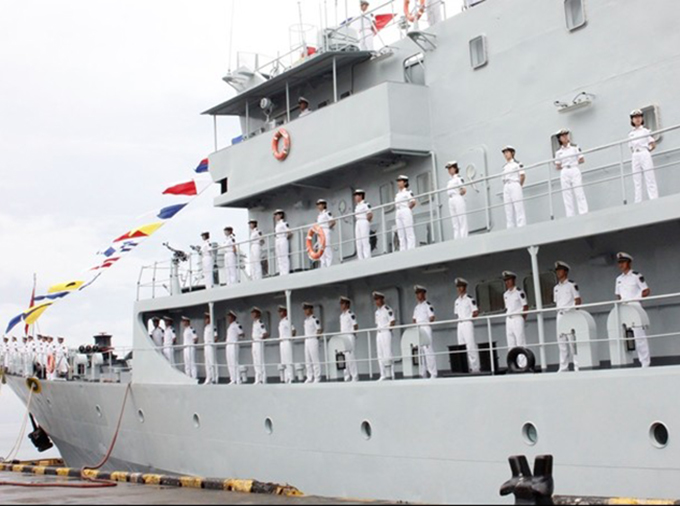
The Chinese training ship at Suva’s Kings Wharf. Image: Newswire

The Chinese naval training ship Zhenghe has travelled to Fiji on a goodwill visit.

The ship is carrying 349 crew on board, including 169 trainees, of whom 17 are women.

This is part of a long-term training exchange programme between Fiji and China and a global goodwill exchange programme.

Fiji’s Ministry of Defence Permanent Secretary Osea Cawaru welcomed the Commander, Yan Zhenming, who is also the director and head of the Dalian Naval Training School in North China where some Fiji naval officers have been sent for training.

Cawaru thanked China for offering training to the Fiji naval officers and hoped the friendship would continue in the future.

“We hope to strengthen the two countries bilateral ties further through today’s visit and hope to continue the exchange program for our Fijian naval officers training,” PS Cawaru said.

Commander Yan Zhenming said the ship departed China on October 24 and its first stop was in Jakarta, Indonesia, followed by visits to Sydney and  Auckland, before arriving in Fiji last Friday.

“We have two foreign cadets on board from Jakarta. The ship is 30 years old and has trained 30,000 Chinese cadets. It haS visited 30 countries so far and we are looking forward to having Fijian naval officers to be part of the ship,” Commander Yan Zhenming said.

]]>

Parkop calls on PNG to use state veto power to revoke land leases

]]>

AsiaPacificReport.nz

By Cedric Patjole in Port Moresby

Papua New Guinea’s National Capital District Governor Powes Parkop is calling on the state to use its veto powers to revoke land leases given to private companies or individuals and return them for public use.

Parkop said many of the ongoing court battles between the National Capital District Commission (NCDC) and companies or individuals over state land could be avoided if the Lands Minister and Secretary revoked leases given under suspicious circumstances.

‘The Minister and Secretary for Lands, they can just in one go, clean it out, say that it belongs to the public, and that’s it. They have the power to revoke whatever lease that has been granted out.

“Because at the end of the day, the land that is in the city belongs to the state and remains state land,” Parkop said.

The NCDC recently concluded one battle with the National Court recognising NCDC lease over land which the Koki Betelnut market sits, which has cost a considerable amount of money.

Legal battle
Parkop said with the legal battle over Unagi Oval, more than K1 million (NZ$440,000) has been spent on legal fees alone.

He added the Jack Pidik Park has been leased to a private developer and is recognised by Supreme Court decision well before Parkop entered politics.

“This is another case in which we are wasting unnecessary public funds, unnecessary time, because of the incompetency and the corruption in the department of lands.

“I’ve said this before and I will say it again. Lands Department is full of corruption. Why should we have to go to court to spend public money to correct something that can be corrected by the lands department or should not happen in the first place?” Parkop questioned.

Parkop said the Minister and Secretary for Lands were the custodians of state lands and had a legal and moral duty to protect it for the people.

Cedric Patjole is a Loop PNG reporter.

]]>

Phillip Knightley: The supreme investigative journo and storyteller

]]>

AsiaPacificReport.nz

Phillip Knightley … “always sceptical, fiercely intelligent, courageous, witty, highly sociable, politically astute” … Image: SBS

OBITUARY: By Richard Lance Keeble

Phillip Knightley, the investigative reporter who has died aged 87, was a wonderful storyteller. Once he told my students at City University (where I was a journalism lecturer from 1984 to 2003) how, when he was a rookie reporter in the late 1940s on a suburban Australian rag, the news appeared to have dried up for the next edition so his editor asked him to invent a story.

Phillip promptly wrote a “report” about a man (he dubbed him “the hook man”) who terrorised women on the local buses by lifting up their skirts with a clothes peg. So the front page splash headline: “‘Hook man’ terrorises women on the buses” duly appeared on the Friday.

Not surprisingly, Phillip worried about the response of the local cops to his invented “exclusive”. Monday passed without any call from the cops.

Then on Tuesday, he received a call from the local police station. “Is that Knightley?” the cop asked abruptly. “Yes,” he responded nervously. “Well,” the cop continued, “you know that ‘hook man’ – we’ve caught him!”

In every respect, that was a typical Phillip story: extremely funny – but was it true or false: fact or fiction? In reality, the story as well as being extremely entertaining was a device to encourage his audience to be sceptical.

Indeed, Knightley was for me the supreme journo: always sceptical, fiercely intelligent, courageous, witty, highly sociable, politically astute – as well as being a brilliant writer and storyteller.

Vast achievements
His achievements in journalism and publishing were vast: major roles in The Sunday Times’s investigations into the thalidomide scandal and Kim Philby, the British intelligence chief exposed as a Soviet spy; twice awarded the Journalist of the Year award; closely involved in the work of the International Consortium of Investigative Journalists – and so on.

But his contribution to the development of journalism education in this country was substantial too. His major texts (The First Casualty, his seminal history of war reporting; The Second Oldest Profession, on spying, and his autobiography, A Hack’s Progress) are essential reading for all journalism students.

They capture the best elements of journalism: original, clear writing, the synthesis of a vast amount of often complex information, a political awareness, an immediacy; a sense of history and a fascination with the complexities of human nature.

As he wrote at the end of A Hack’s Progress: “So my advice for the new generation of journalists is to ignore the accountants, the proprietors and the conventional editors and get on with it. And your assignment is the same as mine has been – the world and the millions of fascinating people who inhabit it.’

Moreover, Phillip clearly enjoyed the contact with students and his appearances at City University and more recently at the University of Lincoln (after I became a professor there in 2003 and where Phillip was appointed a Visiting Professor) always drew big, appreciative crowds.

He was also inspirational in smaller, workshop settings, forever keen to share his knowledge of investigative techniques and his spin on various tricky ethical/political dilemmas. For instance, intriguingly, he never had a bad word to say about cheque-book journalism.

Phillip spent a lot of his career writing on the intelligence services – but he was never seduced by the lure of the secret world and very critical of the hacks who got too close to the spooks. As he wrote: “…although journalism is riddled with people working for intelligence services, I would stay clear of the game.”

In his autobiography, he concluded wryly: “The main threat to an intelligence agent comes not from the security service in the country against which he is operating but from his own centre, his own people.”

Highly managed operation
And he bravely revealed that the Philby scoop was, in fact, a highly managed operation. The Secret Intelligence Service (MI6) “knew beforehand what we were about to publish each week. The editor-in-chief of The Sunday Times, Denis Hamilton, had come to an agreement with the service.” So much for intrepid investigative reporting!

Phillip was also an activist journalist. For instance, in 1999, I organised a meeting at the Freedom Forum in London protesting at Fleet Street’s coverage of the Nato attacks on Serbia and Phillip immediately agreed to speak on a panel.

At international forums and in media articles (in both the prestigious press and alternative, progressive journals), he constantly criticised government and military moves to censor and sanitise the reporting of war – and journalists’ failure to confront the secret state effectively.

As he reflected: ‘I know now that the influence journalists can exercise is limited and that what we achieve is not always what we intended. It is the fight that counts.’

Richard Lance Keeble is joint editor of Ethical Space: The International Journal of Communication Ethics. This obituary was first published on the Ethical Space blog. Knightley’s journalism career began in Fiji.

]]>

WJEC16: Student shootings in PNG, j-schools, corruption and climate change

]]>

AsiaPacificReport.nz

Heavily armed Papua New Guinea police in camouflage fatigues confront students before opening fire on them on 8 June 2016. Image: PMC video

The shootings of university students in Papua New Guinea in June, journalism education in the Pacific, climate change challenges in the Asia-Pacific region and corruption are topics in a series of Pacific Media Centre videos.

Originally filmed in live streaming sessions at the Fourth World Journalism Education Congress (WJEC) at Auckland University of Technology in New Zealand on 14-16 July 2016 and at a pre-conference organised by the Journalism Education and Research Association of Australia and the Pacific Media Centre, these videos are now available on the PMC’s YouTube channel:

Participants from the Asia-Pacific region were assisted with funding by the NZ Institute of Pacific Research, Asia New Zealand Foundation, Transparency International New Zealand and the Pacific Media Centre.

16 July 2016: Journalism education in the Pacific:
(Chair: Professor David Robie (PMC). Speakers: Emily Matasororo (UPNG – PNG), Dr Shailendra Singh (USP – Fiji), Dave Mandavah (VIT – Vanuatu), Misa Vicky Lepou (NUS – Samoa). Responder: Eliki Drugunalevu.

1: Speakers (including dramatic footage of the UPNG shootings in June)

2: Discussion

15 July 2016: After COP21, climate change journalism education in the Asia-Pacific:
(Chair: Professor David Robie, Professor Cispin Maslog (Philippines), Dr Hermin Wahyuni (Indonesia), Jose Maria G Carlos (Philippines), and Misa Vicky Lepou (Samoa). Responder: Dr Shailendra Singh, USP).

1: Crispin Maslog

2: Hermin Wahyuni

3: J M Carlos

4: Misa Vicky Lepou

5. Discussion

13 July 2016: Media and corruption in the Pacific:
(Organised by Transparency International New Zealand in association with the Pacific Media Centre and Journalism Education and Research Association of Australia (JERAA). Facilitated by Fuimaono Tuiasau, Transparency International NZ. Speakers: Alex Rheeney, chief editor, PNG Post-Courier; Dr Shailendra Singh, USP – Fiji; and Kalafi Moala, Taimi ‘o Tonga. Responder: Associate Professor Camille Nakhid.)

1: Speakers

2: Discussion

Thanks to Marcel Allen (Centre for Teaching and Learning – CfLAT, Auckland University of Technology).

Asia Pacific Report coverage of WJEC16

]]>

Indonesian anticorruption activist George Aditjondro dies in Palu

]]>

AsiaPacificReport.nz

George Junus Aditjondro (right) … “His works and audacity to speak up put him into trouble several times.” . Image: Tribun Jogja/Hasan Sakri Ghazali/The Jakarta Post

By Ruslan Sangadji in Jakarta

Activist, researcher, scholar and former Tempo magazine journalist George Junus Aditjondro has died in Palu, Central Sulawesi. He was 70 and is survived by his widow, Erna Tenge, and son from his earlier marriage, Enrico Suryo Aditjondro.

Since 2012 when a stroke affected his health, Aditjondrohad difficulty speaking. He died in Bala Keselamatan Hospital in Palu on Saturday morning.

Aditjondro was known as a passionate critic of what he saw as corrupt power. During the Soeharto regime he researched the business empire of the “Cendana family”, referring to Soeharto’s family that resided on Jl. Cendana in Central Jakarta.

He also wrote about military business in Indonesia.

A prolific writer and researcher, Aditjondro , who earned his PhD degree from Cornell University, had written dozens of books and hundreds of papers. His works and audacity to speak up had put him into trouble several times.

He had to leave Indonesia during the Soeharto era and he went to Australia from 1995 to 2002. He taught sociology at Newcastle University in Australia and was a guest lecturer at Murdoch University.

He also taught at Satya Wacana Christian University in Salatiga, Central Java, when he was part of a trio of passionate critics from the university at that time: Ariel Heryanto, Arief Budiman and Aditjondro himself.

Controversial books
After he returned home from Australia, he wrote more controversial books, including Dissecting Cikeas Octopus: Behind the Scene of Bank Century Scandal, which discusses then president Susilo Bambang Yudhoyono. The book looks into Yudhoyono and how four foundations allegedly helped raise money for his 2009 election campaign.

During the launch of the book in 2009, he was accused of violence against Ramadhan Pohan, a politician from Yudhoyono’s Democratic Party. Ramadhan accused Aditjondro of hitting him with a book.

Read also: George Aditjondro: Of watchdog and octopi

His last controversial criticism was in 2011 when he lived in Yogyakarta while his wife finished her PhD at Gadjah Mada University (UGM).

In a discussion at UGM about the controversial Sultan Ground, in which the Yogyakarta Sultanate marked plots of lands in the province as “Sultan Ground”, he criticised the sultanate. Several residents said he insulted the sultan and he was barred from his own home in Yogyakarta. Later he tried, to no avail, to apologise in person to Sultan Hamengkubuwono IX.

In September 2014 he moved to Palu after his Poso-born wife Erna completed her doctorate degree from Geography School at UGM. In Palu he researched and wrote about military and police operations in conflict-ridden Poso in Central Sulawesi. He joined Tanah Merdeka Foundation in Palu and did his research as an activist in the foundation.

Aditjondro was born on May 27, 1946, in Pekalongan, to a Javanese father and Dutch mother. Before Erna, he married Bernadetta Esti and they had a son, Enrico Suryo Aditjondro.

After his separation with Bernadetta, Aditjondro , who loved to keep his hair long, married Erna, 60, a scholar at Economic School in Tadulako University.

Ruslan Sangadji is a Jakarta Post journalist.

]]>

Greenpeace video shows NZ oil seismic blasts ‘betrayal’ over climate change

]]>

AsiaPacificReport.nz

The Schlumberger seismic survey vessel, Amazon Warrior, seismic blasting approximately 120 nautical miles off the East Coast of New Zealand’s North Island. Video: Nigel Marple/Greenpeace

Greenpeace NZ has released aerial footage from a reconnaissance flight of the world’s biggest seismic ship, the Amazon Warrior, blasting for oil 120 nautical miles off the Wairarapa Coast.

The reconnaissance is the latest stage of the organisation’s surveillance and monitoring of the ship, which will be searching for oil on behalf of Chevron and Statoil for the next several months.

Greenpeace climate campaigner, Kate Simcock, said in a media release the goal of the surveillance was to show New Zealanders what the government is allowing to happen far out of sight in our oceans.

“In order to find oil, this ship is blasting sound waves through the ocean into the seafloor every 10 seconds, 24 hours a day, from arrays that are the length of 80 rugby fields,” she said.

“This is the very oil that science says can’t be drilled and burnt if we are to avoid a climate catastrophe.

“The oil industry describe these blasts as comparable in sound to an underwater volcano: Just imagine how distressing it is  to the dolphins and whales for whom this ocean is their home,” Simcock said.

“It’s a complete betrayal that our government has invited this climate-wrecking beast to roam our unique coastlines. This is a wilful attempt to threaten the future of our children and grandchildren all in the name of short term profit for a select few.”

An unprecedented alliance of Māori communities have voiced opposition to deep water drilling on the East Coast.

The Schlumberger seismic survey vessel, Amazon Warrior. Image: ©Nigel Marple/Greenpeace

Almost 70 Māori hapū from Cape Runaway to Kaikoura have called on Statoil and Chevron to cease their operations and leave New Zealand. More than 10,000 New Zealanders have signed on to the letter.

In the last month, Auckland Council, Christchurch City Council, Environment Canterbury, Dunedin Council and Gisborne Council voted to oppose offshore oil prospecting, exploration and drilling.

“With the change of prime minister, the government should quit this mad oil program once and for all.  We’re calling on new Prime Minister Bill English to face the planetary climate emergency and listen to iwi, public and local government opposition, and ditch deep sea drilling now.”

Simcock said Greenpeace made the 120 nautical mile trip to find the seismic blasting ship because it seems to have been avoiding coming into port where it could face protest.

This included illegally switching off its mandatory AIS tracking safety device for days on end, throughout the 7.8 earthquake and tsunami threat, and having people and supplies delivered to it by boat and helicopter.

“The Marine Mammal Impact Assessment (MMIA) was also not published until we asked for it. These examples highlight why it’s more important than ever to have citizens monitoring this climate-killing industry. They’re clearly not being regulated well by the government.

“This oil exploration machine may think it can avoid making land in New Zealand, and do its dirty business out of sight and out of mind, but we want them to know it’s not safe from protest out on the ocean either. The Amazon Warrior can run but it can’t hide – we have it in our sights.

“Our message to the government and the oil industry is this: The ocean isn’t as big as it may seem.

“We will show New Zealanders exactly how you are blasting our marine environment and causing distress to our unique whales and dolphins – all in the name of climate-wrecking oil – and we will peacefully resist you until you leave our waters.”

Greenpeace media release

]]>

Duterte’s War: ‘He was alive when they hammered the nails into his head’

]]>

AsiaPacificReport.nz

Duterte’s War: ‘He was alive when they hammered the nails into his head’ | Asia Pacific Report

Duterte’s War: ‘He was alive when they hammered the nails into his…

]]>

Indonesia’s Jokowi still owes resolution of past rights abuses

]]>

AsiaPacificReport.nz

By Margareth S. Aritonang in Jakarta

After two years of running the country, President Joko “Jokowi” Widodo has still not fulfilled his campaign promise to address long-unresolved human rights abuse cases in Indonesia, a promise that is thought to have sealed his victory against his former contender Prabowo Subianto, who is implicated in the forced disappearances of pro-democracy activists in 1998.

“The government must fulfill its obligation to solve all cases of gross human rights violations that occurred in the past,” prominent human rights lawyer Todung Mulya Lubis said at a discussion yesterday.

“The President will forever owe us that promise unless he keeps his word.”

The unresolved cases that Jokowi promised to address consist of the 1989 Talangsari massacre, the forced disappearance of anti-Soeharto activists in 1997 and 1998, the Trisakti University shootings, the Semanggi I and Semanggi II student shootings in 1998 and 1999, the mysterious killing of alleged criminals in the 1980s, the anticommunist massacres of 1965 and various abuses that took place in Wasior and Wamena in Papua in 2001 and 2003, respectively.

Activist Al Araf from the Jakarta-based human rights watchdog Imparsial cited a lack of political will to prioritise human rights among Jokowi’s administration as a core reason behind the lagging attempts to address the issues during Jokowi’s two-year presidency.

As the world will commemorate International Human Rights Day today, Al Araf called for Jokowi and his subordinates to make the resolution of human rights abuse cases one of the government’s priority programs.

“Otherwise Jokowi’s regime will be no different to his predecessors,” he said.

]]>

Anti-Corruption Day: Journalists on front line of fight against corruption

]]>

Pacific Media Centre

On International Anti-Corruption Day today, Reporters Without Borders (RSF) is highlighting the important role that journalists play in exposing scandals, sometimes at the highest government level, and the grave dangers to which this exposes them.

In countries where it is endemic, corruption is often one of the biggest taboos for journalists and the most dangerous story to cover. Nonetheless, in both rich and poor countries, journalists are usually on the front line of anti-corruption efforts, paying a high price for investigative reporting that helps to prevent corruption from undermining democracy and fuelling human rights violations.

“Wars, political and economic crises and authoritarian excesses are the main factors that favour corruption,” RSF editor-in-chief Virginie Dangles said. “In countries such as Turkey, Eritrea, Somalia, Mexico, Russia, Malaysia and Iran, this curse often choses its victims in the ranks of journalists and citizen journalists. We call for more protection for media and journalists who, by combatting corruption, defend the very foundations of democracy and the rule of law.”

Dangers of covering corruption
Marcos Hernández Bautista
, a 38-year-old Mexican journalist working for the Noticias Voz e Imágen newspaper, was gunned down near San Andrés Huaxpaltepec in the state of Oaxaca on 21 January after writing articles that had touched on the “interests of bosses in the region.”

Not all investigative journalists risk their lives, but many of them are exposed to judicial reprisals designed to gag them. Hundreds of Turkish media representatives continued to be prosecuted in 2016 for exposing or referring to alleged corruption by those close to former Prime Minister and now President Erdogan.

Alexander Sokolov, a reporter for the RBC news agency who specialized in investigating large-scale corruption, is now a symbol of the persecution of those who dare to shed light on such abuses in Russia.

After being held for 15 months, he was finally brought before a Moscow court on 9 November on a charge of “organizing a terrorist group” (which is punishable by up to eight years in jail) because he carried out a detailed investigation into the embezzlement of 93 billion roubles (1.27 billion euros) in public funds in the construction of the Vostochny Cosmodrome in eastern Siberia.

The Russian authorities often target overly curious journalists such as Sergei Reznik, who repeatedly exposed corruption by the local elite in the southwestern city of Rostov-on-Don until his arrest in 2014.

Defamation suits rain on journalists who draw attention to conflicts of interest and collusion between the state and private sector. David Natera Febres, the editor of the Correo del Caroni newspaper in Bolívar state, in southeastern Venezuela, was sentenced to four years in prison on a criminal defamation charge on 11 March 2016 for his coverage in 2013 of a case of alleged corruption and extortion involving army officers and the state-owned Ferrominera Orinoco company.

In Angola, journalist Rafael Marques de Morais was given a suspended six-month jail sentence on 28 May 2015 on a criminal libel charge for exposing grave human rights violations and corruption in the diamond mining industry in the northeastern Lundas region.

Just days before the Global Anti-Corruption Conference held in Panama City from 1 to 4 December, Dutch journalist Okke Ornstein was arrested at the city’s Tocumen international airport to begin serving the jail sentence he had been given in 2012 in connection with some of his frequent blog posts about corruption in Panama.

Ornstein was sentenced to a total of 20 months in prison (eight months for insult and 12 months for libel) in response to a complaint by Canadian businessman Monte Friesner over a series of posts on one of Ornstein’s blogs, Bananama Republic, about allegedly illegal practices (fraud and money laundering) by Pronto Cash, a company created by Friesner in Panama.

Zulkiflee Anwar Haque, a Malaysian cartoonist better known as Zunar, is facing up to 43 years in prison on nine counts under Malaysia’s Sedition Act for posting nine cartoons on Twitter about alleged corruption within Prime Minister Najib Razak’s government and the high-profile judicial proceedings against opposition leader Anwar Ibrahim.

Like Zunar, Singaporean blogger Roy Ngerng was subjected to judicial persecution by his country’s prime minister, Lee Hsien Loong, over a May 2014 blog post accusing the government of mismanaging Singapore’s Central Provident Fund (CPF) for retirees. In many countries in the bottom third of RSF’s World Press Freedom Index, the lack of judicial independence and collusion between government officials, businessmen and judges pose an additional obstacle to investigative reporting.

As Kazakh journalist Lukpan Akhmedyarov put it in an interview in October 2012, when he received the Peter Mackler Award for Courageous and Ethical Journalism, “The judicial system has become a way of hounding independent news media.”

Whistleblowers who shed light on murky and sometimes illegal practices by leading private-sector corporations are also exposed to judicial reprisals, sometimes more so than journalists.

Such is the case with Antoine Deltour and Raphaël Halet, two former employees of international accounting firm PricewaterhouseCoopers (PwC), who received suspended sentences of 12 and 9 months in prison respectively from a Luxembourg court on 29 June for leaking documents revealing how Luxembourg helps multinationals to avoid tax. The court acquitted their co-defendant, journalist Edouard Perrin. All three have appealed.

The latest Corruption Perceptions Index published by Transparency International and RSF’s 2016 World Press Freedom Index show a degree of correlation between countries with little freedom of information and those with the most corruption,” Dangles added.

“It is not by chance that countries such as Denmark, Finland and Sweden top both indexes while countries such as Eritrea, North Korea and Sudan get the worst rankings from both Transparency International and RSF. Combatting corruption and protecting journalists should be a priority for these countries.”

In Iran, the persecution of journalists is often aimed at concealing governmental powerlessness or equivocation in the fight against corruption. Since the start of the year, at least four journalists have been jailed and four media outlets have been closed and prosecuted for revealing the involvement of senior officials in various cases of bribery and lavish salaries.

Sadra Mohaqeq, who is responsible for coverage of social issues at the daily newspaper Shargh, and Yashar Soltani, the editor of the Memarinews.com online newspaper, were arrested in September in connection with their coverage of Tehran city hall corruption and were then released pending trial. At the same time, access to the Puyesh and 9sobh news websites and the sites of the Mojnews and Bornanews news agencies was temporarily blocked because they had reported corruption allegations or had criticized the inconsistencies of the judicial system’s attempts to combat corruption.

With an estimated one thousand billion dollars spent on bribes every year, corruption is regarded by the United Nations* as one of the leading obstacles to political, economic and social development. All of the world’s countries are affected by corruption.

* The United Nations General Assembly passed Resolution 58/4 on 31 October 2003, adopting the Convention against Corruption and designating 9 December as International Anti-Corruption Day in order to raise awareness of corruption and the Convention’s role in combating and preventing it.

]]>

Pacific loses shortwave radio that dodges dictators – warns of disasters

]]>

AsiaPacificReport.nz

By Dr Alexandra Wake in Melbourne

As a magnitude 7.8 earthquake struck off the coast of Kirakira in the Solomon Islands early today, triggering a tsunami warning across the Pacific, many residents of the country would have turned to shortwave radio for more information.

The tsunami warning has since been called off, though assessments of damage from the quake are not yet complete.

Sadly, this vital communication service is under threat in this already under-resourced region.

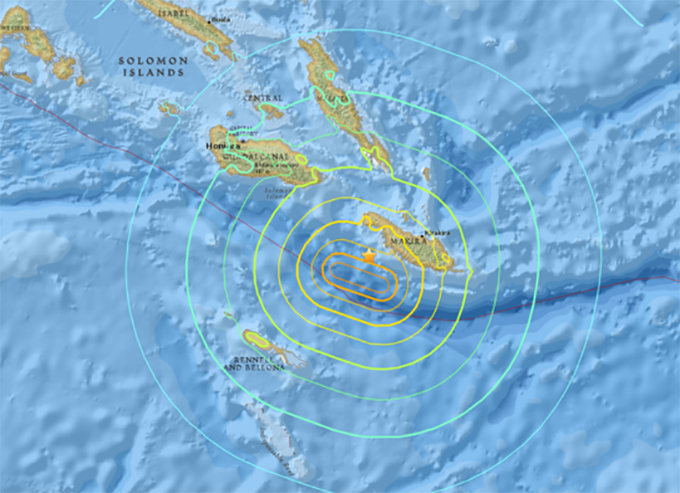
Graphic: AAP/United States Geological Survey

For almost 80 years, Australia has provided such shortwave services, including vital emergency service information, to Asia and the Pacific.

But government funding cuts saw Asian services turned off in January 2015. And now the Australian Broadcasting Corporation (ABC) has decided to cut the remaining services to residents of remote parts of the Pacific, Papua New Guinea and parts of northern Australia by ceasing its shortwave radio services to the Pacific from the end of January 2017.

The ABC has argued the shortwave transmissions, which can travel thousands of kilometres and be picked up by low-cost transmitters run on batteries or solar power, are outdated. Michael Mason, ABC’s Director of Radio said:

While shortwave technology has served audiences well for many decades, it is now nearly a century old and serves a very limited audience. The ABC is seeking efficiencies and will instead service this audience through modern technology.

The problem is, of course, that in remote places in the Pacific, particularly in Melanesian nations such as Papua New Guinea, Vanuatu and the Solomon Islands, there is no access to an FM signal, limited internet and, where internet is available, it is expensive.

Advances in technology such as low-earth orbit satellites, which provide high speed global internet services, show promise. But, as yet, the receiving technology is expensive and the receivers aren’t available in rural and remote area.

How shortwave evades censors
The ABC has said it will replace international shortwave services with digital services including a web stream, in-country FM transmitters, an Australia Plus expats app and partner websites and apps such as TuneIn radio and vTurner.

There was no mention of the use of updates to shortwave technologies, such as Digital Radio Mondiale, which is being used by Radio New Zealand, or using shortwave for digital data transmission, which cannot be censored or jammed.

The move away from shortwave to FM transmissions and digital and mobile services has been accelerated despite the fact that FM frequencies can easily be shut down by disaffected political leaders, as happened in Fiji in 2009 on the order of then self-appointed – but since elected in 2014 – Prime Minister Voreqe Bainimarama.

It was a matter of national pride at the time for the ABC to be providing independent information for Fijians via shortwave, with then managing director of the corporation, Mark Scott, highlighting a text message sent from inside Fiji to the ABC, which read: “We are trying to listen to you online but are having difficulty. Please keep broadcasting. You are all we have”.

Fiji’s Voreqe Bainimarama shut down the FM service in 2009. Image: Tim Wimborne/Reuters/The Conversation

Shortwave radio has played a valuable role in getting information to communities in the middle of civil disturbance, such as in East Timor in the lead up to independence.

In Burma, it was internal leaders who sought the shortwave services. In 2009, Burmese pro-democracy leader Aung San Suu Kyi called on Australia to provide shortwave broadcasts. At the time the ABC’s director of international, Murray Green, said the move reflected the ABC’s ongoing commitment to serving people in those parts of Asia and the Pacific who live without press freedom. Even before this announcement was made, the price of shortwave radios was increased in Burma’s Sittwe market.

Keeping people safe from disaster
It isn’t just a matter of providing information to censored countries. Shortwave also provides a reliable source of information, particularly during natural disasters.

Shortwave provides vital warnings of tsunamis to outlying island nations. It was a lasting communication method after the 2004 Boxing Day tsunami, and was vital in the response to 2015’s Cyclone Pam, which devastated Vanuatu.

The aftermath of Cyclone Pam in Vanuatu, 2015. Image: Reuters/The Conversation

Shortwave transmissions go over mountains and seas, have a longer range, and don’t fall over and twist in storms like FM radio towers.

Shortwave is seen as a vital part of keeping communities safe. As an ABC correspondent wrote on their Facebook page, and as technology reporter Peter Marks mentioned on air, after Cyclone Pam:

We expected the worst. Death, injury, hunger. But when we arrived, the Dillons Bay village chief … told me they knew the cyclone was approaching, so they sheltered in the two solid buildings in the village. Most houses were flattened but not a single injury. I asked him how he knew the cyclone was approaching. He said, ‘ABC Radio’.

New Zealand and the UK take on China
The cuts to the shortwave services at the ABC are just the latest in a long line of budget savings to its international services.

While other cuts to the broadcaster garnered many headlines, the ABC has cut the shortwave, and also quietly closed its Vietnamese, Khmer and Burmese language services on 2 December  2016. The French-language service to the French Pacific is due to end in February 2017.

Shortwave saves lives. Image: Matt Kieffer, CC BY-SA

Thankfully for Pacific nations, while Australia is dialling back its shortwave services, New Zealand’s RNZ International is maintaining Pacific-wide shortwave transmission. The British Broadcasting Corporation (BBC) has also announced a major boost to its international broadcasts, including producing shortwave radio programmes for North Korea. The BBC is fearful of the rise of state-backed broadcasters such as China’s CCTV, Qatar’s Al Jazeera, and Russia’s RT.

The Pacific appears to be a specific concern for China, with Australia’s Lowy Institute tracking the extent of China’s aid programme in the Pacific at more than 200 projects worth $US1.4 billion since 2006 and the state-owned Xinhua News Agency actively covering the Asia Pacific.

In light of this, the BBC clearly recognises a need to boost its international broadcasting, using shortwave to beat censors in autocratic regimes.

It is a great shame for the Pacific that Australia no longer agrees.

Dr Alexandra Wake, a senior lecturer in journalism at RMIT, is an academic who maintains a career as a freelance journalist. Her last assignment for ABC Radio Australia was more than two years ago. This article was first published by The Conversation today and is republished under a Creative Commons licence.

Magnitude 7.8 wake strikes Solomon Islands – tsunami warning eases

]]>

Magnitude 7.8 quake strikes Solomon Islands – tsunami warning eases

]]>

AsiaPacificReport.nz

Pacific countries on tsunami alert following a 7.8 magnitude earthquake off Solomon Islands. Image: USGS

A tsunami warning has been issued for several Pacific countries – including Papua New Guinea, Nauru, Solomon Islands and Vanuatu – following an earthquake with magnitude 7.8 about 68km off the coast of Kirakira in the Solomon Islands early today.

The US Geological Survey (USGS) initially reported the quake at 4.18am local time as 8.0, but later downgraded it to 7.8.

“Hazardous tsunami waves from this earthquake are possible within the next three hours along some coasts of Solomon Islands, Vanuatu, Papua New Guinea, Nauru, New Caledonia, Tuvalu and Kosrae,” stated the warning issued by the Pacific Tsunami Warning Centre.

The centre called on government agencies responsible for dealing with emergency situations to “take action to inform and instruct any coastal populations at risk in accordance with their own evaluation”.

The epicentre of the quake was registered at a depth of 48.7km, according to USGS.

There were no immediate reports of damage to homes in the capital, Honiara.

Tsunami warnings with ETA just hours after the quake struck was issued by the USGS for Kirakira, Auki, Honiara and parts of the Central and Isabel Provinces, but has since passed.

No evacuation was planned for the national referral hospital located on the coast of Honiara, sources said.

Preliminary reports from Kirakira said that while the quake was perhaps the biggest felt in recent times, there was no damage to homes and no immediate reports of casualties.

US Geological Survey

Pacific Tsunami Warning Centre

]]>

Greek VJ wins Rory Peck freelance award for refugees crisis video

]]>

AsiaPacificReport.nz

Fear and Desperation: Refugees and Migrants Pour into Greece. Prizewinning footage shot in October 2015 – March 2016, Greece. Video: Rory Peck Awards

Will Vassilopoulos, an Agence France-Presse (AFP) stringer since 2011, has won the Rory Peck award recognising the work of the world’s best freelance video journalists.

Will Vassilopoulos won the award for his coverage of the migrant crisis in Greece.

Since 2015, the country has been one of the main entry points to Europe for hundreds of thousands of people fleeing war, poverty and persecution. Vassilopoulos’s footage shows desperate migrants and refugees arriving in the country from Turkey, having crossed the Aegean Sea in overcrowded, rickety boats and rubber dinghies — and their rescue from open water in the middle of the night.

Vassilopoulos’s entry also includes a sequence from the island of Lesbos, which has seen the highest number of arrivals.  He filmed the arrival of a boatload of refugees on Skala Sykamias beach on 31 October 2015. He followed them to the makeshift, sprawling Idomeni camp on Greece’s northern border with Macedonia – which was evacuated last May.

He depicts demonstrations by refugees at the border post, their catastrophic living conditions and the desperate attempt of several hundred to cross a river a few kilometres from the camp to get into Macedonia on 14 March 2016.

Will Vassilopoulos started his career in text for Japanese news agency Kyodo News before becoming a news anchor at Greece’s state broadcaster ERT.

In 2011, Agence France-Presse financed a training course for Will to learn how to film and he has freelanced for the agency as a video journalist ever since, covering extensively topics such as Greece’s economic crisis, political unrest in Egypt and Turkey and the conflict in Ukraine.

Battle of Aden
News category finalists also included Nabil Hassan, who has freelanced for AFP since 2015. Nabil was nominated for his coverage of the Battle for Aden in which Shiite Houthi rebels opposed pro-government forces.

Will Vassilopoulos succeeds Zein Al-Rifai, who won the news prize last year.

Zein, who works regularly for AFP in Syria, covered the everyday lives of people in the rebel-held areas of Aleppo between 2014 and February 2015.

This is the third consecutive year that AFP has taken away the Rory Peck news award. In 2014, AFP stringer Pacôme Pabandji won for his coverage of the civil war in the Central African Republic.

The Rory Peck Awards were launched in 1995 by the Rory Peck Trust, set up in the memory of freelance journalist Rory Peck who was killed in Moscow in 1993.

The awards recognise the best independent news cameramen, and the awards ceremony is one of the main events through which the trust raises funds to assist freelance journalists.

Rory Peck Trust

]]>

Peter Solo Kinjap: Confronting corruption – know our rights and insist on them

]]>

AsiaPacificReport.nz

OPINION: By Peter S. Kinjap in Port Moresby

Many current Papua New Guinean parliamentarians are highly respected individuals in their own areas – successful in business, education or public service.

With such backgrounds, they routinely attract great respect. This drives their popularity and ability to attract votes when they make known their political aspirations. Voters put their trust in these people.

But when politicians attain public office, their pronouncements, decisions and actions at times may attract criticism and opposition. Politicians must be able to face such scrutiny when they decide to come out of their private life and become public figures.

Many parts of Papua New Guineas have misconceived perceptions of leadership. We mix Melanesian leadership style with Western leadership.

In Melanesia, a leader is one who owns many pigs, marries many wives and contributes greatly to society in terms of wealth-sharing and problem-solving.

With the introduction of the Westminster government system, the perception of leadership was different. PNG’s democratic system provides that any politician or public office holder who is not performing should be able to be questioned by any member of the public.

Recently, many local youths have been led to believe the tribal system or Melanesian perspective should prevail and many lives have been lost in related violence. Injuries have been sustained and homes and families have been destroyed.

Personal attack
This mostly happens when the information on the Western perspective is not disseminated. When we want to raise issues in social media forums (the only medium left for us to openly discuss and express ourselves) some people turn to personal attack or seem to oppose every idea put forward.

To post a question about government services and start debating and creating discussion is not wrong. But in PNG, it seems to be.

Some people think we should respect politicians and not criticise them on social media. Well, I hold the opinion that you can respect them as an individual but as politicians they are answerable to questions by any member of the community.

Holding onto the Melanesian ways of respecting even non-performing public office holders or politicians is totally unacceptable.

Let’s demand what is rightfully ours while still respecting them as private citizens and successful people in their own right.

Let’s know our rights and insist that politicians should act in our interests and then we can accord them our respect.

The more we confuse traditional respect with present day bad behaviour, the more we compromise with corruption.

Image: Peter S. Kinjap

There is a clear distinction between a Melanesian leadership perception and a Western perception.

The more we confuse ourselves with Melanesian and Western perceptions, the less government services we see in the communities and the more corruption is right in front of us.

Corruption is a real threat to the growth of the nation. It is a double-edged sword that hangs over our head.

Together we must fight against corruption for a better PNG tomorrow.

Corruption threat to PNG – is the death penalty the answer?

]]>

Mounting death toll tops 97 after strong quake hits Aceh buildings

]]>

AsiaPacificReport.nz

A car is half buried under the remains of a collapsed house in Pidie Jaya regency, Aceh, on yesterday after an earthquake measuring 6.4 on the Richter scale hit the northeastern part of the province. Image: Twitter/PMI kota Banda Aceh

By Hotli Simanjuntak in Banda Aceh

An earthquake measuring 6.5 on the Richter scale hit Aceh in Indonesia early yesterday morning, destroying buildings in Pidie Jaya regency and a rising death toll.

It was reported that several buildings, including the dome of the Dayah Mudi Mesra Samalanga Mosque, a coffee shop in a gasoline station and a building of STAI Al-Aziziah Islamic University, collapsed during the quake, which had its centre at a depth of 10 kilometers.

President Joko “Jokowi” Widodo has ordered government institutions to support the rescue efforts as news agencies reported at least 97 deaths and injured hundreds.

“I have instructed government institutions to carry out an [evacuation],” the President said on Wednesday.

Strong quake hits off Sumatra, people rush to high ground

Pidie Disaster Mitigation Agency head Apriadi said his agency had been monitoring the earthquake, which occurred at 5 am in the neighbouring regency, admitting that the rescue efforts were hampered by a lack of equipment.

“The heavy equipment is at other agencies. It’s difficult to quickly deploy, but our officers are ready anytime,” he said.

The earthquake was also felt in Takengon in Central Aceh regency, Banda Aceh and Bener Meriah regency. Takengon residents reportedly fled from their houses amid the quake.

Residents in some areas of North Sumatra also felt the quake.

Hotli Simanjuntak is a Jakarta Post journalist.

]]>

Philippines move to restore death penalty bill wins House support

]]>

AsiaPacificReport.nz

Rappler’s Evening wRap on President Duterte and the death penalty.

By Mara Cepeda in Manila

A proposed measure seeking to reimpose the death penalty in the Philippines has decisively passed the House committee level.

Voting 12-6-1, the panel approved the committee report on House Bill Number 1, which seeks to reinstate capital punishment for all “heinous crimes”, including the following:

  • Treason
  • Qualified piracy
  • Qualified bribery
  • Parricide
  • Murder
  • Infanticide
  • Rape
  • Kidnapping and serious illegal detention
  • Robbery with violence against or intimidation of persons
  • Destructive arson
  • Plunder
  • Importation of dangerous drugs and/or controlled precursors and essential chemicals
  • Sale, trading, administration, dispensation, delivery, distribution, and transportation of dangerous drugs and/or controlled precursors and essential chemicals
  • Maintenance of a drug den, dive, or resort
  • Manufacture of dangerous drugs and/or controlled precursors and essential chemicals
  • Possession of dangerous drugs
  • Cultivation or culture of plants classified as dangerous drugs or are sources thereof
  • Unlawful prescription of dangerous drugs
  • Criminal liability of a public officer or employee for misappropriation, misapplication, or failure to account for the confiscated, seized and/or surrendered dangerous drugs, plant sources of dangerous drugs, controlled precursors and essential chemicals, instruments/paraphernalia and/or laboratory equipment including the proceeds or properties obtained from the unlawful act committed
  • Criminal liability for planting evidence concerning illegal drugs
  • Carnapping

The bill outlines specific conditions on how these crimes were committed for a violator to be given the death penalty. The measure also provides 3 methods to carry out the death penalty: by hanging, firing squad, or lethal injection. (House death penalty bill: How they voted)

Speaker Pantaleon Alvarez, one of the co-authors of the bill, is hoping that the bill would be passed on 3rd and final reading before Congress goes on Christmas break next week.

The measure is also one of the priority bills of President Rodrigo Duterte, who counts more than 250 congressmen as his allies.

Punishment for ‘Satans’?
For Leyte 3rd District Representative Vicente Veloso, the death penalty bill seeks to punish individuals who repeatedly commit heinous crimes. The lawmaker compared them to “Satan”.

“What the substitute bill says, in our penal system, especially the Revised Penal Code, the maximum penalty there is life imprisonment. The problem really is we have a guy who keeps on raping, kidnapping for ransom people repeatedly, he commits the same offenses,” Veloso said at the committee meeting.

“If in front of you is Satan, what can courts do? None, because the maximum penalty provided for in our penal system is life imprisonment. Kung ang nasa harapan mo ay si Satanas na mismo, oh my God! Bigyan mo naman ang gobyerno ng option para patayin na ‘yan. Satanas na ‘yan ah (If the person in front of you is Satan himself, oh my God! Give the government the option to kill him. That is Satan already)!”

Majority Leader Rodolfo Fariñas also reasoned that the 1987 Constitution allows the death penalty to be implemented if Congress finds compelling reasons to do so.

Section 19, Article III reads: “Excessive fines shall not be imposed, nor cruel, degrading or inhuman punishment inflicted. Neither shall death penalty be imposed, unless, for compelling reasons involving heinous crimes, the Congress hereafter provides for it. Any death penalty already imposed shall be reduced to reclusion perpetua.”

Fariñas said there would no discussions on the reimposition of the death penalty now, had the framers of the Constitution completely removed the particular provision.

Bring back trust in legal system
“Nilagay nga po nila [na bawal], pero sinabi nila na nandiyan pa ‘yan at puwedeng ibalik ‘yan ‘pag nakita ng Kongreso na kailangang ibalik ‘yan. Hindi natin puwedeng sabihin na against God ‘yan. Eh bakit nasa Constitution? Eh di against God na ang ating Constitution!”
said Fariñas.

(They did put there that it should not be imposed, but they still placed it there and said it can be implemented if Congress sees fit to return it. We can’t say that is against God. Why is it in the Constitution then? That would mean our Constitution is against God!)

Oriental Mindoro 2nd District Representative Reynaldo Umali, committee chairperson, added that restoring capital punishment in the country would help bring back Filipinos’ trust in the justice system.

As of December 3, there have been more than 5800 drug-related deaths, both from legitimate police operations and vigilante-style or unexplained killings.

EJK versus death penalty. Don’t you realize that people, parang sobrang wala nang tiwala sa hustisya ‘yung mga tao, hindi sila masyadong nagagalit sa EJK? (EJK versus death penalty? Don’t you realize that most people have lost faith in the justice system that they’re not totally angry at EJKs?) Do we really want to maintain the status quo?” asked Umali.

Death penalty will ‘hurt the state’
But Dinagat Islands Representative Kaka Bag-ao said the death penalty cannot be compared to extrajudicial killings (EJKs).

“Tingin ko hindi puwedeng i-compare ang EJK at death penalty. Magkaiba ang kategorya, magkaiba ang klasipikasyon. Ano ang basehan ng pagkumpara? Ang sinasabi natin na gusto nating matugunan na matigil ang EJKs, pero ‘di puwedeng ikumpara ito na, ‘Ah sige, death penalty.’ ‘Di po ganun,” she said.

(I don’t think you can compare EJKs and the death penalty. They belong to different categories and classifications. What is the basis of the comparison? We want to end these EJKs, but we can’t solve it by saying, “Okay, death penalty.” That’s not how it works.)

“In fact, statistics would show that crime rate decreased after the death penalty law was repealed in 2006. Only 13 percent [or] 474 of the documented 3,524 reports on extrajudicial, vigilante-style, unexplained killings are arrested. The other 87 percent are still at large or under investigation. The real issue is not the imposition of the death penalty but the assurance to the public that offenders will be apprehended regardless of the nature of the penalty,” added Bag-ao.

Quezon City 6th District Representative Jose Christopher Belmonte acknowledged that should a heinous crime be committed against someone close to him, he would not be able to stop himself from considering killing the perpetrator.

But he said doing so would only make things worse.

“‘Pag nangyari sa anak ko o malapit sa akin, most likely gugustuhin ko rin at gagawin ko pa rin po ‘yung ganun. Andiyan na po ‘yan. And I think ‘di mo maaalis sa kahit sinong tao,” said Belmonte.

(If that happens to my child or someone close to me, most likely I’d want to do it and I would do it. The option is there already. And I think you can’t take this away from anyone.)

Pero (But) from personal knowledge and personal experience, this will diminish everybody involved. This will destroy you as a person. This will hurt the state. This will hurt our entire institutions kapag nilagay natin ang legal option na pumatay (if you give the legal option to kill),” he added.

Church opposition
Minority lawmakers had previously accused the House leadership of “railroading” the passage of the bill into law to meet Alvarez’s deadline, but the Speaker denied this, citing public consultations with various sectors to get their stand on the proposal.

The Catholic Church, human rights groups, and some lawmakers have objected to the reimposition of capital punishment in the country, saying it is not a deterrent to crime. (Lawmakers urged to reject revival of death penalty and A lethal mix: Death penalty and a ‘flawed,’ corrupt justice system)

Amnesty International had earlier expressed concern over the move to restore the death penalty in the Philippines shortly after it became clear that Duterte had won the presidency. (A shame for PH if death penalty is restored)

Lingayen-Dagupan Archbishop Socrates Villegas had called for a prayer rally against the proposed measure in his archdiocese on December 12.

Alvarez, however, advised Filipino Catholics to look for a new religion should they be ostracized for supporting the reinstatement of capital punishment in the country.

The Philippines was the first Asian country to abolish the death penalty under the 1987 Constitution, but it was reimposed during the administration of President Fidel Ramos to address the rising crime rate.

Capital punishment was eventually abolished in 2006, under the presidency of Gloria Macapagal-Arroyo. Now a Pampanga Representative, Arroyo is still against the reimposition of the death penalty.

Mara Cepeda is a journalist with Rappler.

]]>

Regional meeting eyes Pacific climate migration and displacement

]]>

AsiaPacificReport.nz

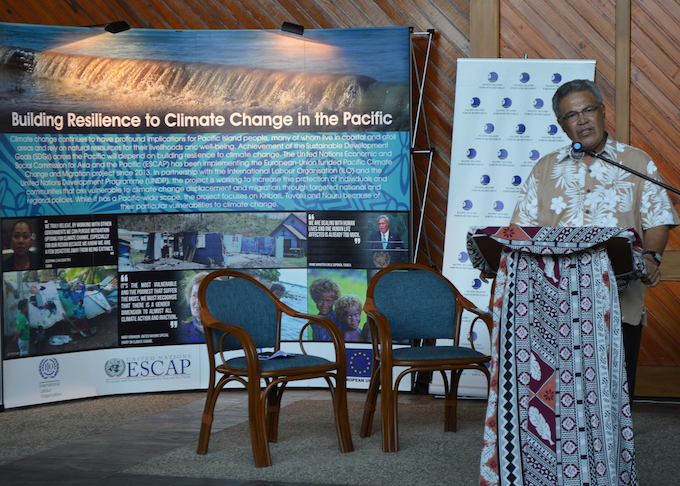
Tuvalu Prime Minister Enele Sosene Sopoaga delivers the keynote address at the opening of the regional meeting on climate change and displacement at the Pacific Islands Forum in Suva tonight. Image: UNESCAP

By Debbie Singh in Suva

A regional meeting to consider key Pacific priorities and responsibilities for advancing commitments under international and regional policy frameworks on climate change migration and displacement opened in Suva today.

Senior Pacific island government officials from Fiji, Kiribati, Nauru, Republic of the Marshall Islands, Samoa, Solomon Islands, Tonga, Tuvalu and Vanuatu, as well as representatives of development partners and various experts will be discussing issues at the three-day meeting such as:

  • development-migration nexus in the context of the Sustainable Development Goals (SDGs);
  • building resilience through labour mobility;
  • migration and displacement as they relate to loss and damage under the Warsaw International Mechanism on Loss and Damage;
  • and regional mechanisms to address the needs of migrants and displaced persons.

The meeting is a key activity of the European Union funded PCCM project which aims to develop the capacity of Pacific Island countries to address the impacts of climate change on migration through well-managed, rights-based migration schemes and policy frameworks, supported by comprehensive research and knowledge building.

It is a joint collaboration between the European Union funded Pacific Climate Change Migration Project (PCCM) implemented by the United Nations Economic and Social Commission for Asia and the Pacific (UNESCAP), the International Labour Organisation (ILO), the United Nations Development Program (UNDP) and the Pacific Islands Forum Secretariat (PIFS) with support from International Organisation for Migration (IOM) and the United Nations University (UNU).

‘Highly disruptive’
Delivering the keynote address at the opening of the meeting, Tuvalu Prime Minister Enele Sosene Sopoaga said: “Climate change displacement and unplanned relocation are highly disruptive to livelihoods, culture and society and require proper, well-planned interventions to support people in their efforts to adapt to the challenges, particularly in securing access to decent livelihoods.

“Maintaining sovereignty, self-determination, cultural identity and territorial rights are of primary concern to Pacific Islanders in any form of climate change-related migration.

“The international response must also include adequate strategies to deal with persons displaced because of climate change, and their human rights must be protected.”

Speaking on behalf of the European Union, Christoph Wagner said: “It is clear that climate change, and the impact climate change has on the environment, will become an increasingly important driver of migration from rural to urban areas within Pacific island countries and to other countries.

“The European Union is supporting the PCCM project to help prepare our partner countries for migration. Those who are going to be leaving their countries, either temporarily or on a permanent basis, need assistance from their governments, Pacific regional organisations and development partners.

“We also want to help those Pacific island countries who are going to be receiving migrants to maximise the opportunities that the additional labour, expertise and experience can offer.”

Collective strategy
Dame Meg Taylor, Secretary-General of the Pacific Islands Forum Secretariat, said: “The movement of people in the Pacific due to the effects of climate change is sadly a growing issue that needs our collective attention.

“The region must come together and work out a strategy for how to best ensure that the rights and wellbeing of our Pacific sisters and brothers who are facing displacement and relocation are protected and nurtured. This must include those who do not want to move”

The UN Resident Coordinator for the Pacific based in Fiji, Osnat Lubrani said the UN considers this complex issue requires greater attention in the context of the Pacific region’s journey to achieve the 2030 Sustainable Development Agenda.

The head of UNESCAP Pacific Office, Iosefa Maiava, noted that the need to address climate change and mobility issues is recognised in the newly-adopted Framework for Resilient Development in the Pacific (FRDP) by Pacific leaders.

The regional meeting will build on existing global and regional policy directions to promote alignment and coherence, including the FRDP, the Paris Agreement, the Warsaw International Mechanism on Loss and Damage (WIM), the Samoa Pathway and the 2030 Agenda for Sustainable Development.

Debbie Singh is Pacific communications specialist for the UNESCAP Pacific Climate Change and Migration Project.

]]>

IFJ praises ‘historic milestone’ with new information law in Vanuatu

]]>

AsiaPacificReport.nz

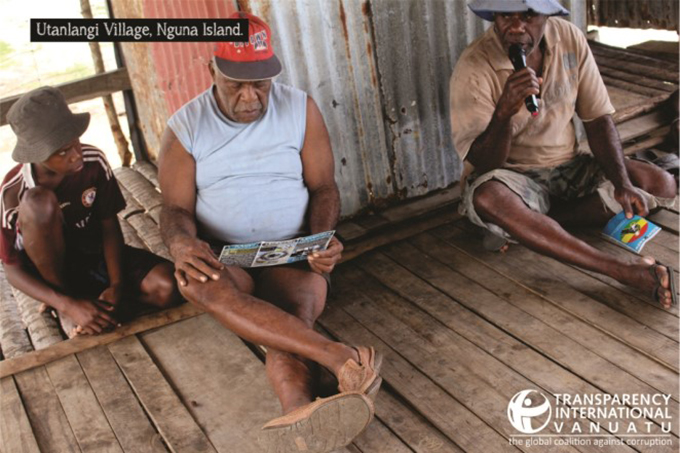
People from Utanlangi Village are informed about the Right to Information Act, Nguna Island, Vanuatu. Image: Transparency International Vanuatu (TIV)

The International Federation of Journalists (IFJ) has joined its affiliate, the Media Association blong Vanuatu (MAV), in commending the recent passing of a Right to Information (RTI) Act in Vanuatu.

On 24 November 2016, the Vanuatu Parliament unanimously passed an Act tabled by Prime Minister Charlot Salwai on the right to information.

The Act will provide for the guarantee of the right to information of all persons in Vanuatu.

The MAV described the RTI as “a ‘home-grown’ RTI – a major development and achievement not only for Vanuatu’s growing media industry but for the Vanuatu government also”.

In a statement, MAV said: “MAV understands that it takes many years for some countries in the world to have RTI. However, MAV is so grateful that the government can acknowledge the very important benefit of RTI and to provide all the necessary support for it.”

“This newly passed legislation will enable the people of Vanuatu access to government information, except information that is classified as ‘state secret’.

“It will also help government officers to keep records of government information… that [will] empower people to make decisions in the future so they can actively participate and contribute effectively to the development of the nation.”

In the lead up to the drafting of the Act, nationwide community consultations were conducted by Transparency International Vanuatu (TIV) to inform citizens of the Act and how it would impact on society as a law. TIV spent a year hosting public forums about the RTI policy in communities and schools throughout the islands of Vanautu, encouraging people to ask their MPs to vote for the Act.

The IFJ said: “The passing of the RTI Act in Vanuatu is a significant milestone in this country’s history. Public access to information is crucial for democracy. Enshrined in law, this will ensure that the Vanuatuan media will be able to report more accurately and responsibly on government activities, and that the public will be better equipped to engage in democratic processes.”

International Federation of Journalists

]]>

Toktok 34 / Summer 2016/2017

]]>

Pacific Media Centre

http://www.pmc.aut.ac.nz/

Pacific Media Centre

ISBN/code: ISSN 1175-0472

Publication date: Wednesday, December 7, 2016

Publisher: Pacific Media Centre


SUPPORT FOR WEST PAPUA
About 20 academics, librarians, journalists, students and Pacific issues activists gathered at the Pacific Media Centre at noon today for a Morning Star flag-raising ceremony as part of global actions for West Papuan freedom.

Kevin McBride of Pax Christi Aotearoa and the Asia-Pacific Human Rights Coalition (APHRC) spoke of the important human rights concerns for West Papua and how “we’re all part of the oppression” with New Zealand’s “complicity” with Indonesian policies.

PMC’s Dr David Robie talked of the “vision of hope” with mounting solidarity and support in Pacific Island nations, especially the Solomon Islands and Vanuatu.

Also:
Pacific Media Watch has talks in Paris

‘Atenisi’s dean Dr Michael Horowitz at PMC as visiting Pacific research fellow

PMC director’s sabbatical in images

]]>

Why the ‘treason’ arrests in Indonesia are a worry for Asia-Pacific

]]>

AsiaPacificReport.nz

By Abdul Qowi Bastian

Sri Bintang Pamungkas was arrested in his home in Cibubur, in the outskirts of Indonesia’s capital Jakarta, on early Friday morning, December 2.

The civil society leader of People Power Indonesia 2016 – a group that aims to repeal the constitution before it is amended – was supposed to join the rally against Jakarta Governor Basuki “Ahok” Tjahaja Purnama later that day.

Ahok, an ethnic Chinese-Christian politician, a double minority in the world’s most populous Muslim nation, is accused by conservative Muslim groups of committing blasphemy.

Pamungkas and 9 others were accused of attempting to impeach the current government led by President Joko “Jokowi” Widodo.

Among them are high profile individuals including rock musician Ahmad Dhani; human rights activist Ratna Sarumpaet; retired two-star Army general Kivlan Zein; and Rachmawati Soekarnoputri, sister of former president Megawati. They were arrested on treason charges under Article 107 of the penal code (KUHP).

The mobile phone video of the arrest Sri Bintang Pamungkas, filmed by his wife.

In a short video circulating on social media, Pamungkas was enjoying his cup of morning coffee on his porch when police officers handed him the warrant.

“Honey, I’m being arrested,” Pamungkas said to his wife who recorded the video on her mobile phone.

“Why?” his wife, Ernalia, was heard saying from behind the camera.

“They have the power to. Of course they can,” Pamungkas replied.

Pamungkas and People Power originally planned to occupy the parliament building, asking the council to revoke Jokowi’s presidency for, according to him, the former Jakarta governor’s inadequacy to follow the “people’s mandate”.

Seven people were released later that day because the police did not have sufficient evidence. Pamungkas in still in detention, along with two others who are still behind bars for allegedly insulting the President on social media, and violating the Internet Transaction Law.

Racial undertones
The December 2 rally was the third in a series of protests demanding Ahok to step down from his post as governor, for his remarks that allegedly insulted Islam.

The controversy started in September 2016 when he accused his opponents of fooling the electorate by misusing a Quranic verse, to sway voters to not vote for him in the upcoming gubernatorial election.

He has apologised for the remarks but is still being prosecuted for blasphemy.

Ahok is now a suspect and faces his first trial hearing next Tuesday. If proven guilty he could be jailed for up to 5 years.

But the issue has since spiraled to include other aspects. Critics have since accused the President —who was inaugurated two years ago—  of being inadequate to manage the country. Ahok became governor after Jokowi won the presidential election in 2014. As Jokowi’s deputy governor at the time, Ahok assumed the position.

Ahok himself is an outlier in the Indonesian political landscape. He was the former regent of Belitung Timur, a small region in Sumatera island, and was also a member of parliament before running as Jokowi’s deputy – but has always been considered as the “outsider” who came to the capital.

‘Crush the Chinese’
During the 200,000-people-strong rally on 2 December, some posters read, “Jail Ahok” and “Crush the Chinese”.

The race card used against Ahok is not new within Indonesia’s politics. It is deeply rooted in the New Order regime under former general Soeharto’s authoritarian regime. President Soeharto —who ruled Indonesia for more than 3 decades— banned expressions of Chinese culture and politically segregated the Chinese, because of suspected ties to communism.

Rally organisers and protestors used the Islam card which is an appealing pull for Indonesian Muslim voters.

One of Ahok’s opponents in next year’s elections, Agus Harimurti Yudhoyono, is the son of former President Susilo Bambang Yudhoyono who led the country from 2004-2014.

Conservative Islamist groups such as the Islamic Defenders Front (FPI) —one of the main rally organizers— have on social media openly supported Yudhoyono’s gubernatorial candidacy.

Shrinking civic spaces
Social media users in Indonesia are divided on the arrests. Some applaud the police force for attempting to prevent an impeachment attempt, while others see it as a violation of human rights.

“There seems to be no clear grounds for the arrest of these people,” said Benny Agus Prima, Human Rights Defender Programme Associate at the Asian Forum for Human Rights and Development (FORUM-ASIA).

Prima stressed that the government must protect its people’s rights to express their freedom of expression.

“The rights to freedom of expression and peaceful assembly are constitutional rights and guaranteed by international human rights law,” he said. “Exercising those rights is a foundation of democratic society.”

The freedom to associate and to assemble, to express written and and oral opinions in Indonesia, are regulated under Article 28 of the 1945 constitution.

If proven guilty, those arrested could be jailed for 15 years up to a life sentence.

Prima regretted the detention of the individuals, which he said was a sign of the shrinking civic space, not only in the country but also in the region as well.

Case4Space
Civic space is where people can freely exercise their basic civil rights, such as freedom of expression and freedom of assembly and association. This kind of problem is not unique to Indonesia.

During the 3-day conference entitled “Youth at the heart of the 2030 Agenda: The Case4Space” held in Bangkok, Thailand, panelists shared how there are 3.2 billion people living in countries where civic space is under threat.

“We’re seeing a trend of shrinking civic space in Asia Pacific with recent examples of the criminalization of activists,” Prima said, citing an example of Maria Chin Abdullah of Malaysia.

Abdullah is the leader of the Malaysian pro-democracy alliance Bersih, who was detained in November 2016 for organizing a mass rally calling on Prime Minister Najib Razak to resign over a corruption scandal.

But in the end, according to Prima, what Pamungkas and his peers did was still in accordance to the law. “They demanded the parliament to review Widodo’s presidency, not bearing arms asking [him] to step down,” Prima said.

The arrests, he said, should not have taken place in the first place as it would take Indonesia —a country who adopted democracy 16 years ago— back to autocratic state.

Rozinul Aqli, an Indonesian student at the American University in Cairo, Egypt, also voiced his disapproval in Twitter, saying, “[Widodo] is increasingly becoming more comfortable in borrowing a page from Soeharto’s playbook”.

“Ideally, there should be clear violent acts for something to deserve the label of treason,” Rozinul said in an email to Rappler.

“In practice, however, this article [Article 107 of the penal code] has been used to criminalize many activists that were not, strictly speaking, threatening national security,” he said.

Freedom of expression at risk
Prima further said this case would set a bad precedent for human rights defenders.

“What I fear the most is, this criminalisation will restrict human rights defenders’ freedom of expression,” he said.

Although he also noted that the people who were arrested should respect Ahok’s freedom expression as well.

“When we’re talking about freedom of expression, we should respect others’ freedom to express their thoughts as well,” Prima said. “We can’t force those who, let’s say, commit human rights violations by also violating others’ human rights.”

Rozinul added that rubber articles, such as Article 107 of the penal code, are problematic as they deprive citizens the right to legal certainty.

“If some of us are alarmed by this development, it is because we know that using rubber articles to silence dissents was one of the cornerstones of the New Order regime,” he said.

Abdul Qowi Bastian is a staff editor for Rappler based in Bangkok.

]]>

‘Beaten and left in cell screaming in pain’ – Amnesty alleges Fiji torture

]]>

AsiaPacificReport.nz

Nimilote Baleloa during an interview with the Fiji Times at his home in Namadi, Suva, this week. Image: Atu Rasea/Fiji Times

By Tevita Vuibau in Suva

It has been more than eight years since Nimilote Baleiloa saw the body of his late son Josefa Baleiloa in hospital.

Beaten and bruised, Josefa was laid up in a hospital bed, unconscious and unable to eat.

Josefa’s case was one of 11 featured in an Amnesty International (AI) report released this week titled Beating Justice: How Fiji’s Security Forces Get Away With Torture.

The report focuses on human rights violations perpetrated by Fijian defence forces on suspected criminals and escapees in their custody.

The report alleges Josefa was assaulted in Suva by a police and prison officers.

After the beating, his father claims Josefa was taken to the Nabua Police Station and left in the cell, calling for assistance and screaming in pain from the wounds he sustained.

He said when Josefa was finally taken to hospital, it was too late.

No arrests
He succumbed to his injuries several weeks later and no arrests were ever made in relation to his case.

When The Fiji Times visited Nimilote, he spoke of grief and guilt. Grief that he still carries at the loss of his son and guilt that he was unable to get justice.

He said eight years on, his soul was still not at rest.

Baleiloa said he could have fought harder, but did not have the money to pay lawyers to handle the case. He said it was not easy to live with the knowledge that he would not have justice done.

Baleiloa said he would not give up the fight.

Questions sent to the Fiji Police Force yesterday on the report remained unanswered

Under the 2013 Constitution, “absolute and unconditional immunity has been irrevocably granted to police officers from any criminal prosecution and from any civil or other liability in any court, tribunal or commission, in any proceedings including any legal, military, disciplinary or professional proceedings and from any order or judgment of any court, tribunal or commission, as a result of any direct or indirect participation, appointment or involvement in the government from December 5, 2006, to the date of the first sitting of the first Parliament elected after the commencement of the Constitution.”

‘Sharing a vision’
Fiji Times editor in chief Fred Wesley said today in an editorial that the release of the Beating Justice report “is going to attract a lot of interest”.

“The non-governmental organisation which is focused on human rights believes Fiji has failed to criminalise torture in line with its obligations in the 2013 Constitution and the Crimes Decree.”

Released at the Grand Pacific Hotel in Suva yesterday, the Amnesty International report highlights cases of interest, action taken, and made recommendations. It talks of investigations and prosecution.

“The report reiterated the global movement’s commitment to a world where human rights are enjoyed by all,” wrote Wesley.

“It talks about sharing a vision where every person can enjoy all the rights enshrined in the Universal Declaration of Human Rights and other international human rights standards.

“In its executive summary it suggests the ‘Fiji government has candidly acknowledged that ‘there have been a series of allegations pertaining to police brutality and the torture of detained persons. Such incidents have occurred for as long as the police force has been in existence’.”

The report said suspected criminals and escaped prisoners were most at risk of human rights violations in custody, and there was little sympathy for them when reports of torture emerged, Wesley wrote.

Security forces brutality
“Brutality by the security forces, [the report] suggested, resulted in at least five deaths since 2006 and other severe injuries, including one person having a leg amputated.

“It spoke about concerns raised by lawyers and witnesses, touched on the ‘close’ ties between the police and the military, and referred to ethno-political conflict and military coups.

“It claimed [that] despite accepting several Universal Periodic Review recommendations to stamp out abuses, violence (both actual and threatened) in Fiji, remains serious and widespread, and confessions, it claimed, were often obtained under duress.

“It suggested steps Fiji must take to effectively prevent torture and ill-treatment. The report, while damning, has not gone uncontested.

“The Attorney-General, Aiyaz Sayed-Khaiyum, labelled it as ‘biased and selective’.”

Sayed-Khaiyum expressed concern that Amnesty’s researchers did not contact the Fijian Director of Public Prosecutions, “who could have provided clarity on a number of issues that were raised in the report and also outlined the progress Fiji was making to dealing with complaints of alleged torture or abuse”.

Tevita Vuibau is a Fiji Times reporter.

]]>

Fiji deports US citizen for ‘swearing at president’

]]>

AsiaPacificReport.nz

Fiji President Jioji Konrote … target of an “obscenity”. Image: Fiji govt

By Talebula Kate in Suva

A United States national has been deported after swearing at the President of Fiji, Jioji Konrote, last week, it was reported today.

Director of Immigration Nemani Vuniwaqa confirmed this in a government statement saying Karen Seaton, a citizen of the United States, was deported from Fiji after she breached the terms of her residency permit by yelling an obscenity at the President on November 30, 2016.

“This unprovoked use of the ‘f word’ directed towards Fiji’s Head of State cannot be tolerated and Karen Seaton was subsequently detained and escorted onto a plane bound for the US,” Vuniwaqa said.

“Karen Seaton’s appearance before a parliamentary committee had no bearing whatsoever on the circumstances of her deportation,” he said.

Talebula Kate is a Fiji Times reporter.

]]>

Bryce Edwards: The 20 must-reads on John Key and the leadership of the National Party

]]>

Analysis by Dr Bryce Edwards.

John Key is gone. Why? Who will replace him? And what does it all mean?

[caption id="attachment_13635" align="alignleft" width="150"]Dr Bryce Edwards. Dr Bryce Edwards.[/caption]

It’s Keymageddon! The phenomenally successfully National Party Prime Minister has pushed the eject button, and everyone is scrambling to understand what it all means. Here are 20 items of analysis to help understand this quickly changing political situation.

1) Key’s departure is like New Zealand’s Brexit. Massey University political scientist Richard Shaw says “When future generations look back on this year they will refer to it as The Year No-One Saw Anything Coming. Not Brexit, not Trump and now – in our own little antipodean way – not John Key’s resignation” – see: The Year No-one Saw Anything Coming

Shaw doesn’t believe that Key’s endorsement of English will count for that much, but has some other interesting observations about the race for the deputy position. For instance, “Above all, perhaps, in these supposedly populist times they will be looking for someone who is able to connect with voters the way that Key has for so long. Objectively, of course, he shouldn’t have been able to do so: Key was no more an ordinary Kiwi bloke than Donald Trump is a natural ally of working people. But that wasn’t the point: what he has is a sense of self-deprecation, an ease with others and a finely tuned sense of what matters to people that National would like to bottle. They can’t, of course, but what chance a duo between a Westie Chick and a Southern Man?”

2) Key’s departure is sensible and smart, but also selfish. I make this case on the opinion piece, John Key’s calculated ‘hospital pass’ resignation. I argue that Key knew when to sell his political stocks, and could see that a drop in the value was on its way. And for a bonus item with some similar arguments as well as more detail on some of the potential looming dangers for Key, see Colin James’ John Key checks out. The game has suddenly changed

3) The mystery of John Key’s decision-making over his resignation is slowly being untangled. The best account so far is Tracy Watkins and Vernon Small’s: Key’s decision – how it played out. For a bonus view on all the possible reasons Key might have had to depart, see Simon Wilson’s John’s gone: The end of NZ’s Mr Feelgood

4) John Key will be missed by many. For a tribute from one of Key’s biggest supporters, see Mike Hosking’s John Key is the best Prime Minister of my lifetime

5) What will happen now? For the best overall discussion of which politicians will “seize this moment” and shine – English, Collins, Little, Peters, etc – see Tim Watkin’s excellent The call of the centre. He argues, “This is a rare moment where just about anything is possible.”

6) Why was Key so successful? One of the best analyses of his strengths is John Armstrong’s Leadership may be poisoned chalice for John Key’s successor. He argues that Key’s success arose out of two factors: “First, he was a great communicator who could charm people on every level… Most of all, he never suffered from one of the worst faults of politicians. He never talked down to anyone”; and “his pragmatism. He was an unrelenting believer that politics was the art of the possible. If it wasn’t possible then it didn’t happen. Full stop. More than that, he was willing to openly play fast and loose with National’s guiding principles if that was required to outflank the party’s opponents and capture ground which had traditionally been their stamping ground.”

7) Key’s legacy is uncertain. This is strongly argued in Giovanni Tiso’s excellent article, The man without a legacy. It’s a leftwing account, but one that’s very different from the usual critiques of Key. For an interesting bonus item with some similar themes, see Danyl Mclauchlan’s Reflections on Key

8) Key’s resignation was perfectly timed. Chris Trotter explains how Key has snookered National’s rightwing faction, and restricted the highly-damaging factional fighting that could have occurred if he had resigned in a different way – see: What a way to go! Some initial thoughts on John Key’s resignation

9) The rightwing faction of National don’t want Bill English. “The mood for change” has become the slogan of those on the right of the party who don’t want to just continue on a centrist road with English. Patrick Gower reports on those in the party who are keen on candidates like Judith Collins having a more prominent role – see: ‘Huge mood for change in National’ – MP

10) Key doesn’t want Judith Collins as his replacement, but can’t say that. Key’s diplomatic comments on Collins have been reported like this: “Judith Collins “could” have what it took to be prime minister, but “whether she is the right person to be the leader, that’s for others to decide”. She had a huge number of skills, was a good, decent person and he had supported her as a strong member of his team. He said her public persona could be different to the one behind the scenes” – see: PM’s regret: That flag referendum

11) The right of the party will remember John Key with less enthusiasm than most. For a rightwing critique of Key’s legacy, see Stuff’s John Key savaged by former National leader Don Brash for achieving ‘almost nothing of significance’. In this, Key predecessor gives him a rating of only 5 out of 10. For a bonus critique of Key from the right, see Peter Cresswell’s A can-kicking PM.

12) Bill English is likely to be the next PM, with Paula Bennett as his deputy. This is argued today by Rachel Smalley in: National’s likely new leaders – English & Bennett. Smalley also looks at the various other candidates – for instance, Judith Collins: “Would she make a good PM? Yes, she would. She’s experienced, she’s confident, she wants the job. If English wasn’t there, I think she’d be the front-runner.” On Amy Adams Smalley says: “Sound. Super smart. A very capable politician, but she’s too similar to English. Straight. Proper. Measured. You need a bit of sass in there.” But ultimately English will be PM, and he might surprise us: “I think you’d see quite a bit of movement under English on issues such as child poverty. He gets the economic implications, but I think he gets the social implications of child poverty and inequality as well. I also think he’ll raise the retirement age. I’ve questioned him on that issue time and again – and he tip-toes around it.” And for a bonus analysis of English’s policy inclinations, see Eric Crampton’s Prime Minister English?

13) Key’s economic legacy is mixed, at best. For an account of the PM’s impact on “wealth and incomes”, see Bernard Hickey’s John Key’s $400b legacy. For example, Hickey says “Mr Key’s legacy is sweetest for property owners, who saw the values of their homes rise NZ$400 billion to almost NZ$1 trillion on his watch”.

14) Key’s departure changes everything. The whole political landscape is changing with the PM’s resignation. Stacey Kirk details what it might mean for the main Opposition party – see: John Key is out – does that give Labour a clearer path into the Beehive? And for a bonus, see what it might mean for New Zealand First as well as the micro-parties of Act, United Future, and the Mana and Maori parties in Carrie Stoddart’s blog post: Gloves off election looming.

15) Key is the only PM to leave office of his own accord. David Farrar lists “how every New Zealand Prime Minister (since Seddon) has left office” in his blog post, Leaving on his terms. He shows how 11 were defeated at elections; 4 died in office; 4 were deposed by their party; 2 were defeated in Parliament; and 2 resigned for ill health. Farrar concludes: “So Key is the only Prime Minister in at least the last 100 years to have retired from the job on his terms, rather than get pushed out in some way.”

16) It’s going to be a strongly contested fight to be the new PM. For the most extensive coverage of this so far, see Audrey Young and Claire Trevett’s The race for Prime Minister gets crowded – It’s Bill English, Jonathan Coleman and now Judith Collins. The bonus item is Toby Manhire’s A beginner’s guide to the next prime minister of New Zealand

17) Disunity is finally erupting in what has been an extremely unified National caucus. Audrey Young details the factions and players in her article, Discontent stirs among National Party caucus after John key’s shocking resignation

18) Jonathan Coleman’s entry into the race for PM will surprise many. To read more on why he’s running, see the Herald’s There’s an appetite for change, says PM contender Jonathan Coleman. For a bonus item, see Guyon Espiner’s Listener interview with him from earlier in the year: Minister of Health Jonathan Coleman – interview

19) Judith Collins’ level of caucus support is hard to measure. But she does have some vocal supporters. For instance, Paul Henry says today that “Judith would get my vote” – see: John Key’s resignation fight will be a bloodbath. But Henry warns the contest will be ugly: “Make no mistake – there will be blood on the walls.”

20) John Key was never an easy politician for cartoonists to draw. But for a look at how they’re dealing with his departure, see my blog post, Cartoons about John Key’s resignation.

Today’s content

All items are contained in the attached PDF. Below are the links to the items online.

John Key resigns

John Armstrong (TVNZ): Leadership may be poisoned chalice for John Key’s successor

Tim Watkin (Pundit): The call of the centre

Richard Shaw (Stuff): The Year No-one Saw Anything Coming

Mike Hosking (Newstalk ZB): John Key is the best Prime Minister of my lifetime

Martin van Beynen (Stuff): John Key inspired confidence

Bryce Edwards (Herald): John Key’s calculated ‘hospital pass’ resignation

Herald: John Key’s resignation surprises political scientist

The Spinoff: David Slack, Morgan Godfery, David Seymour, Annabelle Lee and more on John Key’s resignation

Jared Nicoll (Stuff): Key’s legacy will be one of popular leadership without significant change, academics say

Giovanni Tiso (Overland): The man without a legacy

Chris Trotter (Daily Blog): What A Way To Go! Some Initial Thoughts On John Key’s Resignation

Hamish Rutherford (Stuff): After 8 years of John Key, just 30 National MPs could select new PM

Maiki Sherman (Newshub): John Key resignation: Maiki Sherman with the contenders for the top job 

Carrie Stoddart (NZ Coop): Gloves off election looming

Bryan Gould: John Key Has Gone – Why?

Tracy Watkins and Vernon Small (Stuff): Key’s decision – how it played out

Your NZ: Key to the Kingdom

Frances Morton (Vice): What’s Behind Prime Minister John Key’s Shock Resignation?

Edwin Mitson (BusinessDesk): NZ retirement age in question with Key exit

Reuters: The patient English: strong contender for PM

Colin James (ODT): John Key checks out. The game has suddenly changed

Audrey Young (Herald): Discontent stirs among National Party caucus after John key’s shocking resignation

Jane Patterson (RNZ): Key’s resignation a game-changer for the 2017 election

Simon Wilson (RNZ): John’s gone: The end of NZ’s Mr Feelgood

Toby Manhire (Herald): John Key’s exit – He did it his way and nothing became him like the leaving

Barry Soper (Newstalk ZB): National now in intensive care after New Zealand Prime Minister John Key’s resignation

Barry Soper, Felix Marwick (Newstalk ZB): National to consider new leader, though Collins only one talking

Dene Mackenzie (ODT): English well placed to convince colleagues he should be PM

Eileen Goodwin (ODT):Key sets up succession line

Herald Editorial: Successor to Key will have plenty on plate

RNZ: Top Billing? The National scrum begins

Southland Times (Stuff): Key always had an eye on the illuminated exit signs

Stacey Kirk (Stuff):John Key is out – does that give Labour a clearer path into the Beehive?

Claire Trevett (Herald): John Key marvels at his ‘dream run’ at the helm after resigning as Prime Minister

Claire Trevett (Herald): Marriage solid, health excellent, insists Prime Minister John Key following resignation

Martyn Bradbury (Daily Blog): The actual reason why Key has resigned

Isaac Davison (Herald): Opposition parties’ tributes for Key disguise excitement about election prospects

Martyn Bradbury (Daily Blog): Watch Simon Bridges and Maggie Barry to decide who is National’s next leader

Pete George (Your NZ): Key’s secret

The Civilian: John Key makes shock decision to resign in middle of the day, rather than at the end of the day

The Civilian: Bill English has yet to make a decision on leadership bid; has to talk it over with his pot plants

Ben Thomas (Stuff): John Key – the great re-assurer

Laila Harre (Daily Blog): What Key’s resignation means for Labour + the Greens

Danyl Mclauchlan (Dim Post): Reflections on Key

Eric Crampton (Offsetting Behaviour): Prime Minister English?

Greg Presland (Standard): John Key’s legacy

Audrey Young, Claire Trevett (Herald): NZ’s next Prime Minister: Looks like there will be a race

Stacey Kirk, Sam Sachdeva (Stuff): Jonathan Coleman hints at joining the race to be Prime Minister

Patrick Gower (Newshub) ‘Huge mood for change in National’ – MP

Herald: Key’s surprise exit creates uncertainty

RNZ: PM’s regret: That flag referendum

Stuff: John Key savaged by former National leader Don Brash for achieving ‘almost nothing of significance’

Chris Keall (NBR): National leadership: Will the Right challenge English? (paywalled)

Duncan Greive (Spinoff): Gower gasps and Hosking weeps: how TV news covered John Key’s resignation

RNZ:John Key’s $400b legacy

Kim Choe (Newshub): John Key was coy about resignation intentions when asked by Barack Obama

David Farrar (Kiwiblog):Leaving on his terms

Rachel Smalley (Newstalk ZB): National’s likely new leaders – English & Bennett

Peter Cresswell (Not PC): A can-kicking PM

The Daily Blog: The true legacy of John Key

Dave Kennedy (Local Bodies): John Key’s Real Legacy

Jo Moir (Stuff): National’s three support partners are all backing John Key’s endorsement of Bill English for PM

Kiwipolitico: Key exits right (on time).

Herald: There’s an appetite for change, says PM contender Jonathan Coleman

Audrey Young, Claire Trevett (Herald): The race for Prime Minister gets crowded – It’s Bill English, Jonathan Coleman and now Judith Collins

Herald: Bill English: Why I’m standing for Prime Minister

Brian Edwards: A Media Trainer Muses on John Key, Helen Clark and the Nightmare Prospect of New Zealand under Paula Bennett

Vernon Small (Stuff): Andrew Little finds more loving relationship with the media after John Key’s resignation

Paul Henry (Newshub): John Key’s resignation fight will be a bloodbath

Vernon Small (Stuff): Bill English is the overwhelming favourite to replace John Key in our new poll

John Roughan (Herald):John Key gave biographer a hint he could walk away

Laurel Stowell (Herald): John Key ‘an honorable man’ – Dame Tariana

Newshub: John Key resignation: ‘I’m not doing a comeback’

Story (Newshub): Story sits down with John Key following resignation

Jo Moir (Stuff): Judith Collins, Bill English and Jonathan Coleman are in the race to be Prime Minister

David Farrar (Kiwiblog): Three standing for Leader and PM

]]>

Former National leader slams Key as achieving ‘nothing of significance’

]]>

AsiaPacificReport.nz

New Zealand Prime Minister John Key (left) with his Fijian counterpart Voreqe Bainimarama in Suva last June. He said then he wanted to “reset” ties with Fiji. Image: Fiji Times

Former National Party leader Don Brash has condemned the man who ousted him for the party’s leadership, saying on New Zealand national radio John Key – who resigned in a surprise announcement yesterday – has achieved “almost nothing of major significance” in his eight years as prime minister.

Brash named Judith Collins as his personal preference to become the country’s next leader, saying Bill English, another former party leader, is the only person suitable to be finance minister.

English is preferred by Key and was named in his resignation announcement.

Brash was deposed as National leader by Key in 2006, after bringing the party to the cusp of victory at the 2005 election.

Speaking on Radio New Zealand’s Morning Report, Brash said Key had “actually left many big challenges undealt with” upon his resignation, including the country’s housing crisis.

“He’s tinkered with the housing issue, and we now have some of the most unaffordable houses in the developed world.

He had also failed to narrow the gap between New Zealand and Australia’s income levels, while not living up to the “one nation for all” credo against so-called special treatment for Māori.

“One of the things that the next National Party leader faces is a real challenge from NZ First which is saying the things which National used to say.”

Asked to give Key a score out of 10, Brash told Morning Report: “Five, because I mean, he hasn’t been disruptive, indeed he’s done almost nothing of major significance in the eight years.”

‘Poisoned chalice’
Writing for Television New Zealand, political commentator John Armstrong warned that the leadership role may be a ‘poisoned chalice’ for Key’s successor.

“In his passage from state house to Premier House, John Key has been the talking and walking embodiment of what the old welfare state sought to create,” he writes.

“The bountiful cradle-to-grave help handed to the poor was not just about equality. It was also about equity.

“That was the notion that everyone could become Prime Minister given the opportunity, no matter how humble their family background or financial circumstances.

“It was the function of the state to provide the means – be it free education or whatever – to enable individuals to break through the ceiling imposed by poverty and exploit their full potential in whatever career they chose to follow.”

Key grabbed that opportunity with both hands, writes Armstrong.

“The welfare state head been created with the purpose of being a safety net for those who had lost their jobs in the private or state sector, such as those who were thrown on the employment scrap heap in the wake of Labour’s adoption of free-market policies in the 1980s.

‘Market whizz kids’
“It was most definitely not intended to be a recruiting agency for money market whizz Kids like Mr Key who were the real beneficiaries when it came to making fast money out of the financial bubble that such ‘Rogernomics’ policies were responsible for artificially inflating.”

However, Key had learned the lesson from what happened to his predecessor as prime minister, Labour’s Helen Clark.

“Voters ultimately turn against a prime minister and do so with an ever greater and meaner vengeance the longer that person has been in the job.”

The surprise resignation has thrown New Zealand into an era of uncertainty with a general election due next year although National are ahead by more than 20 points in opinion polls.

The ruling National Party will choose a new prime minister and party leader next Monday.

]]>

Fiji parliamentary justice committee in heated debate over news media decree

]]>

AsiaPacificReport.nz

SODELPA’s Semesa Karavaki … dumped as standing committee deputy chair over challenge about Fiji’s media decree. Image: SODELPA

By Matilda Simmons in Suva

Two prominent Fiji lawyers and members of the Parliamentary Standing Committee on Law, Justice and Human Rights had a go at each other for almost 10 minutes during a submission hearing last week.

The quarrel between Opposition member of the committee Semesa Karavaki and committee chair Ashneel Sudhakar resulted in Karavaki being removed from the post of deputy chair of the committee.

The post is often held by Opposition members. The Opposition office said Karavaki would still be part of the standing committee as an ordinary member.

The committee was hearing submissions on the draft Information Bill from human rights advocate Peter Waqavonovono on Friday when Sudhakar and Karavaki trailed off into a debate of their own.

Waqavonovono had asked the committee to consider integrating the role of the media into the Information Bill and repeal the Media Industry Development Decree and other existing media legislation.

“One of the reasons I personally believe is it [Media Decree] contains extreme measures that have no place in a democracy that we’re trying to build for this country Fiji,” Waqavonovono said.

“The severe penalties imposed on journalists (can) impede the free flow of information and news. I believe that current legislation actually criminalises journalism and that’s my personal view.”

‘Roundabout way’
Karavaki then asked Waqavonovono whether the Media Decree could restrict a person from publishing the information accessed under the Information Bill. Sudhakar intervened and disallowed the question saying it was a “roundabout way of looking at the Media Decree”.

“Why disallow that question?” asked Karavaki. “I’m asking a question here and I have a right to the answer.”

Sudhakar replied the Media Decree was not being reviewed by them.

“We are not looking at MIDA [Media Industry Development Authority]. The Information Bill has not a single reference to the development decree. It is designed for mostly public to extract information held by government officers,” Sudhakar said.

“You’re asking a question on a Bill that is not even considered by this committee. You should know better.

“I do know better than you,” retorted Karavaki. “You are a small child!

“I will reprimand you for this, Sir,” said Sudhakar.

“This is totally out of order. You’re trying to ask that question just to get an answer that is not even looked at by this committee.

“What is wrong with that? What are you scared of?” asked Karavaki.

“I’m scared of your insanity. You are asking a question that has no reference to journalists in the Information Bill,” said Sudhakar.

Matilda Simmons is a Fiji Times reporter.

]]>

Vanuatu agrees to pay Vt18 million fine to avoid fisheries blacklisting

]]>

AsiaPacificReport.nz

Vanuatu-flagged Chinese fishing boat lands Port Vila in hot water with the Cook Islands. Image: Vanuatu Daily Post File

Compiled by Jane Usher in Port Vila

Vanuatu has reached an agreement to pay a substantial fine to the Cooks Islands, after Rarotonga reported a Vanuatu-flagged fishing boat for possible blacklisting in the Western and Central Pacific Fisheries Commission (WCPFC) Vessel List.

Director of Fisheries, Kalo Pakoa, has confirmed that the flagged vessel, a Chinese-flagged long liner ESSEN 108 entered into Cook Islands’ Exclusive Economic Zone (EEZ) in December 2015.

The matter was not reported in time and it was mid-2016 when Vanuatu got a report from the Cook Islands, and kickstarted negotiations for a settlement.

“We have managed to get the ship owner or the operator to commit to a fine to pay the Cook Islands,” Director Pakoa told Vanuatu Nightly News’ Kizzy Kalsakau.

“The fine is based on Vanuatu laws and is around $US180,000, which is almost equivalent to Vt18 million.

“We have received this money and we are working with the Ministry of Fisheries in the Cook Islands to settle the fine before they can proceed to remove our vessel from the potential listing under illegal, unreported and unregulated (IUU) fishing,” Pakoa said.

“We are now waiting for the Department of Finance to sort out the internal financial matters, so that we can transfer the funds to the Cook Islands.”

Once settled, Vanuatu will not be blacklisted.

“We are in the process of settling the matter, so it rules out any possibility of blacklisting,” the director assured.

Strict measures
The director said Vanuatu had very strict measures about its flagged vessels.

“We are trying to sort this out before the Commission convenes in Nadi, Fiji, next week,” he added.

“Our officials are now in Fiji and we are waiting for the Department of Finance to complete the process so we can transmit the money to Cook Islands.”

The WCPFC meeting is scheduled for Wednesday.

Referring to the WCPFC Technical and Compliance Committee’s report on November 17,  Islands Business magazine stated that the Cook Islands would be willing to withdraw the nominated listing as both countries are already in talks to resolve the matter.

Director Pakoa has confirmed Vanuatu will be attending the WCPFC meeting, represented by the Director General of Foreign Affairs and two officers from the Department of Fisheries.

The Department of Fisheries has continued to progress in its effort to effectively deter and eliminate IUU fishing activities, by its national flag fishing fleet of around 136 fishing vessels.

Less than six months ago, Vanuatu was the recipient of a certificate of recognition by the United Nation’s Food and Agriculture Organisation (FAO) for its commitment to fighting illegal fishing worldwide.

Jane Usher is a Vanuatu Daily Post reporter.

]]>

Indigenous West Papuans send solidarity to Standing Rock

]]>

AsiaPacificReport.nz

A previous activist video on West Papua Independence Day. Video: Free West Papua

Indigenous groups from around Oceania have sent their support to the ongoing struggle in North Dakota in the United States.

While protesters at Standing Rock and West Papua may seem worlds apart, they share a common bond from an indigenous struggle against a larger oppressor, says West Papuan independence leader Benny Wenda in a letter of solidarity and friendship.

“On behalf of the people of West Papua we offer solidarity to our indigenous brothers and sisters as we intimately understand the complicated struggles they are facing,” said Wenda via his website.

While last Thursday marked “West Papuan Independence Day,” the indigenous Melanesian people in West Papua are still subject to neo-colonial rule by Indonesia and have been struggling for independence for more than five decades.

West Papuans raising the banned Morning Star flag in defiance of Indonesian authorities in Yahukimo in the Highlands last Thursday. Image: Benny Wenda

Wenda said his independence movement was drawing parallels and inspiration from the ongoing protests in North Dakota and was “alarmed that their people, lands, and traditional ways of life have become threatened to the point of extinction.”

“As we witness militarised law enforcement agencies commit acts of violence against peaceful water protectors in the US, it reminds us of our own mistreatment at the hands of those intending to overpower and silence our voices,” he said.

Wenda, who is currently living in exile in the United Kingdom, added that “the urgent situation at Standing Rock reminds us to advocate for the right of every Indigenous person to protect their culture and religion, tribal systems and natural resources”.

Celebration hashtags
Around the world, supporters joined the celebration of West Papuan Independence Day through the hashtags #GlobalFlagRaising and #LetWestPapuaVote.

Because of a widespread media blackout by Indonesia, the independence movement gains little international coverage, but has increasingly taken to social media to raise awareness.

Wenda and Melbourne producer Airileke Ingram also released the track Sorong Samarai to coincide with the day.

On 1 December 1961,  Melanesian West Papuan first raised their Morning Star flag, but were then annexed by Indonesia in 1969 in a controversial referendum after previously winning their independence from Dutch colonialism in 1963 and then being invaded by Indonesian paratroops.

In ongoing oppression, about 500,000 Melanesians are thought to have been killed by Indonesian authorities and face restrictions of movement and assembly, with many protesters being held as political prisoners.

Indigenous groups in Australia and New Zealand have also expressed their support for West Papua and Standing Rock.

A number of New Zealanders from the Māori community have started posting versions of their traditional haka war dance to social media as a show of solidarity to the North American protesters.

“When one group of relations is being hurt, abused, being bullied, being ripped off, we all feel that – especially us as Māori – we are very much a leader to the indigenous people,” Te Hamura Nikora told Radio New Zealand.

Nikora, a New Zealand media personality, helped to create the Facebook page “Haka With Standing Rock”.

]]>

Carry on Fidel Castro’s global legacy, says Cuban ambassador

]]>

Report by David Robie. This article was first published on Café Pacific


Cuban ambassador to New Zealand Mario Alzugaray during his passionate tribute to Fidel Castro
at Auckland Trades Hall tonight. Video clip: Café Pacific

By David Robie 

CUBAN revolutionary leader Fidel Castro’s contribution to global social justice and dignity, and to developing nations worldwide – including the Pacific, was praised in New Zealand tonight.

Activists, politicians, academics, journalists, teachers, trade unionists and community workers were among about 100 people gathered at the Auckland Trades Hall to hear Cuban Ambassador Mario Alzugaray and other speakers give tributes to Castro’s life.

Alzugaray challenged the audience to continue Castro’s half century of struggle for a better society: “The best way to remember Fidel is to carry on his legacy and keep it alive.”

Fidel Castro … an internationalist since the beginning of the Cuban revolution. Image: David Robie/Al Jazeera

The ambassador said Castro had social justice at the core of his ideals and action.

“He was an internationalist since the very beginning,” Alzugaray said. “He was involved in every movement connected to the anti-imperialist struggle in Latin America.”

Before and after the Moncada garrison attack in 1953, Castro had recognised the importance of launching an appeal to the Cuban people.

Revolutionary spark
The Moncada garrison in Santiago de Cuba was named after General Guillermón Moncada, a hero during the war of independence against the Spanish. The attack by a small group led by Castro failed but this is regarded as the spark that fired the
Cuban Revolution which eventually overthrew the brutal dictatorship of Fulgencio Batista six years later.

Fidel Castro … an internationalist since the beginning of the Cuban revolution. Image: David Robie/Al Jazeera
 Castro died, aged 90, on November 25 and his funeral will be in Santiago tomorrow after the four-day cortege around the country.

“Fidel was the first one to effectively and successfully unite Cubans around the revolution,” Ambassador Alzugaray said.

The envoy praised Castro’s social policies in Cuba, such as agrarian reform, education and health.

“Fidel’s determination and involvement in international affairs made him possibly the most important leader to look after and represent the interests of developing nations,” Alzugaray said.

“His influence is huge and although CNN and other media organisations are trying to focus on the reaction of Cuban-American extremists in Miami, there are millions of people mourning the death of Fidel.”

Media ‘bias’
Alzugaray was critical of the “bias” of many news media in New Zealand and other Western countries.

“I was asked if Fidel was divisive. We live in a divisive world,” Alzugaray said. “Greed and personal interest are driving society in many parts of the world.

“It is completely biased to raise this opinion and to be silent about the United States embargo and permanent hostility towards Cuba.”

Alzugaray said people had to decide whether they were on the side of the poor, starving, or the rich and powerful.

Fundamental rights needed to come before a narrow Western concept of human rights.

“What Western powers and oligarchs can’t forgive is the huge impact of Fidel’s personality and, more importantly, his ideas, in international politics.

“Most of us will have people supporting or expressing their dissent. You just have to decide which side you’re joining.

Fidel Castro’s ashes are travelling to Santiago where they will be interred tomorrow.
Image: David Robie / Al Jazeera
Issues of humanity
“Fidel was very much involved in every important international issue affecting humanity.

“Environment, international financial order, independence and liberation movements, peace and global disarmament as well as human development as a comprehensive concept are some of the issues.

“He understood you can’t be poor, starving, homeless or lacking the fundamental right of proper access to public health and considered being part of an effective democracy.

“Fidel never took a rest. He was until the end very much involved in food security issues.”

Other speakers included Unite Union director Mike Treen, of the Cuban Friendship Society, organisers of the celebration, who said Castro had played a central role as a leader of the Cuban revolution for more than 50 years.

“In that time Cuba has literally saved the lives of millions of people through their medical aid programme,” he said.

“They have helped liberate southern Africa from apartheid and colonialism. They have ended illiteracy in their own country and repeated the practice across the globe.

“They have helped create the possibility for other countries in Latin America and the world to join them on the march to national independence and social justice.”

Treen also praised Castro’s support for independence movements in the Pacific, such as in Vanuatu and Kanaky/New Caledonia, and health care in Timor-Leste and across the region.

]]>

VIDEO: West Papua supporters gather at PMC for Morning Star flag event

]]>

Pacific Media Centre

About 20 academics, librarians, journalists, students and Pacific issues activists gathered at the Pacific Media Centre at noon today for a Morning Star flag-raising ceremony as part of global actions for West Papuan freedom.

Kevin McBride of Pax Christi Aotearoa and the Asia-Pacific Human Rights Coalition (APHRC) spoke of the important human rights concerns for West Papua and how “we’re all part of the oppression” with New Zealand’s “complicity” with Indonesian policies.

PMC’s Dr David Robie talked of the “vision of hope” with mounting solidarity and support in Pacific Island nations, especially the Solomon Islands and Vanuatu.

But he criticised the “collaboration” of Fiji and Papua New Guinea governments with Jakarta and highlighted the emerging stand in support of self-determination being taken by an Indonesian human rights group, Front Rakyat Indonesia untuk West Papua.

Del Abcede praised the turnout and spoke of another “creative” flag-raising ceremony being planned by Māori and Pacific women from the Oceania Interrupted collective at Mangere Bridge later today.

Oceania Interrupted was formed on 1 December 2013 in response to the need to raise awareness about Indonesian colonisation and human rights abuses being committed against the indigenous people of West Papua.

“Free West Papua” message at the Pacific Media Centre today. Image: Del Abcede/PMC

The open letter of current editors

Creative Commons Licence

This work is licensed under a Creative Commons Attribution-NonCommercial 3

]]>

Carry on Fidel Castro’s global legacy, urges Cuban ambassador

]]>

AsiaPacificReport.nz

Cuban ambassador to New Zealand Mario Alzugaray making an impassioned tribute to Fidel Castro at Auckland Trades Hall tonight. Image: David Robie/PMC

By David Robie

Cuban revolutionary leader Fidel Castro’s contribution to global social justice and dignity, and to developing nations worldwide – including the Pacific, was praised in New Zealand tonight.

Activists, politicians, academics, journalists, teachers, trade unionists and community workers were among about 100 people gathered at the Auckland Trades Hall to hear Cuban Ambassador Mario Alzugaray and other speakers give tributes to Castro’s life.

Alzugaray challenged the audience to continue Castro’s half century of struggle for a better society: “The best way to remember Fidel is to carry on his legacy and keep it alive.”

Fidel Castro … an internationalist since the beginning of the Cuban revolution. Image: David Robie/Al Jazeera

The ambassador said Castro had social justice at the core of his ideals and action.

“He was an internationalist since the very beginning,” Alzugaray said.

“He was involved in every movement connected to the anti-imperialist struggle in Latin America.”

Before and after the Moncada garrison attack in 1953, Castro had recognised the importance of launching an appeal to the Cuban people.

Revolutionary spark
The Moncada garrison in Santiago de Cuba was named after General Guillermón Moncada, a hero during the war of independence against the Spanish.

The attack by a small group led by Castro failed but this is regarded as the spark that fired the Cuban Revolution, which eventually overthrew the brutal dictatorship of Fulgencio Batista six years later.

Castro died, aged 90, on November 25 and his funeral will be in Santiago tomorrow after the four-day cortege around the country.

“Fidel was the first one to effectively and successfully unite Cubans around the revolution,” Ambassador Alzugaray said.

The envoy praised Castro’s social policies in Cuba, such as agrarian reform, education and health.

“Fidel’s determination and involvement in international affairs made him possibly the most important leader to look after and represent the interests of developing nations,” Alzugaray said.

“His influence is huge and although CNN and other media organisations are trying to focus on the reaction of Cuban-American extremists in Miami, there are millions of people mourning the death of Fidel.”

Fidel Castro’s ashes are travelling to Santiago where they will be interred tomorrow. Image: David Robie/ Al Jazeera

Media ‘bias’
Alzugaray was critical of the “bias” of many news media in New Zealand and other Western countries.

“I was asked if Fidel was divisive. We live in a divisive world,” Alzugaray said.

“Greed and personal interest are driving society in many parts of the world.

“It is completely biased to raise this opinion and to be silent about the United States embargo and permanent hostility towards Cuba.”

Alzugaray said people had to decide whether they were on the side of the poor, starving, or the rich and powerful. Fundamental rights needed to come before a narrow Western concept of human rights.

“What Western powers and oligarchs can’t forgive is the huge impact of Fidel’s personality and, more importantly, his ideas, in international politics.

“Most of us will have people supporting or expressing their dissent. You just have to decide which side you’re joining.

Issues of humanity
“Fidel was very much involved in every important international issue affecting humanity.

“Environment, international financial order, independence and liberation movements, peace and global disarmament as well as human development as a comprehensive concept are some of the issues.

“He understood you can’t be poor, starving, homeless or lacking the fundamental right of proper access to public health and considered being part of an effective democracy.”

“Fidel never took a rest. He was until the end very much involved in food security issues.”

Other speakers included Unite Union director Mike Treen, of the Cuban Friendship Society, organisers of the celebration, who said Castro had played a central role as a leader of the Cuban revolution for more than 50 years.

“In that time Cuba has literally saved the lives of millions of people through their medical aid programme,” he said.

“They have helped liberate southern Africa from apartheid and colonialism. They have ended illiteracy in their own country and repeated the practice across the globe.

“They have helped create the possibility for other countries in Latin America and the world to join them on the march to national independence and social justice.”

Treen also praised Castro’s support for independence movements in the Pacific, such as in Vanuatu and Kanaky/New Caledonia, and health care in Timor-Leste and across the region.

Fidel Castro’s ashes begin journey across Cuba

Fidel Castro’s anti-colonialist legacy

Video clip of ambassador’s speech

Sope praises Castro over Vanuatu

]]>

‘Rize of Morning Star’ boosts global ‘free Papua’ movement with new video

]]>

AsiaPacificReport.nz

The new video Sorong Samara. Video: The Rize Of The Morning Star

While Indonesian authorities tried to brutally suppress West papua “independence day” rallies across the republic this week, the creative empowerment group Rize of the Morning Star (ROTMS) has been campaigning with passion, determination and focus.

A new video, Sorong Samarai, from the group is rapidly raising global awareness for the Free West Papua Movement, with self determination through non-violence a core focus.

Filmed on location from the tip of West Papua (Sorong) to the tip of Papua New Guinea (Samarai), producers Airiliki say the programme features from from the highlands to the islands, and the bush to the city streets.

“Sorong Samarai….One People, One Soul, One Destiny. A celebration of Papuan Identity, fighting for a free West Papua.”

Using music as a key unifier and amplifier of energy and action, ROTMS has successfully organised some of the largest scale international Free West Papua solidarity actions so far.

According to the ROTMS website, the group “engages in a broad cross section of activity including mobilising, training and resourcing community, fund raising, concerts, partnerships, publicity, promotion and educating predominantly through the arts and entertainment industry”.

Activating a collective of musicians, filmmakers, journalists, publicists, activists, companies, brands and the wider community, ROTMS inspires and empowers individuals and communities to uphold equal rights for human beings, hold persecutors accountable and to play an integral role in the global momentum for a Free West Papua.

Papua Merdeka!

Let the light shine into the darkness, for the dawning of a new day comes, with the Rize Of The Morning Star!

]]>

Indonesian police seize public buses for 328 arrested at ‘free Papua’ demo

]]>

AsiaPacificReport.nz

Indionesian police fie water cannon on Papuan demonstrators in Jakarta yesterday. Image: SuaraPapua.com

By Yudhistira Amran Saleh in Jakarta

Hundreds of Papuan demonstrators from the Papuan Student Alliance (AMP) demanding independence for West Papua have been arrested and taken to the Metro Jaya regional police headquarters in Jakarta.

The transport of the activists had to be done in stages because the Indonesian police did not have enough vehicles to accommodate all of them. Some public buses were seized to take the activists away.

“The number of demonstrators was 328 people. The first load was 127 people, the second 201 people,” said Central Jakarta District police chief Senior Commissioner Hendro Pandowo at the Hotel Indonesia traffic circle on Jl. MH Thamrin in Central Jakarta.

The first load of demonstrators were transported using police cars and trucks. Meanwhile, the rest were taken by Metro Mini public buses.

Police officers escorting the December 1 “independence day” protesters were also transported by Metro Mini buses that had by chance passed by.

“There weren’t enough vehicles. So we used Metro Mini [buses],” said Pandowo.

According to Pandowo, the student protest was illegal because they did not have a permit to demonstrate. They also attempted to break through a police barricade in order to march to the nearby State Palace.

Teargas fired
The police then fired teargas to disperse the demonstrators who ran in the direction of Jl. MH Thamrin in the direction of Sudirman.

The demonstrators managed to cause a traffic jam between Jl. Sudirman and Jl. MH Thamrin. The situation is now calm but the weather cloudy.

Earlier, Arnold Belau reported for Suara Papua from Jayapura that Indonesian colonial police had arrested 221 people in three different cities at December 1 “independence” rallies with 203 people arrested in Jakarta, four in Sentani, West Papua and 14 people in the Central Java city of Yogyakarta.

In Jakarta, a peaceful demonstration commemorating the anniversary of the birth of the Nation of West Papua which was led by the Indonesian People’s Front for West Papua (FRI-West Papua) and the Papuan Student Alliance (AMP) ended with brutal arrests by the Metro Jaya regional police.

Papuan protesters demanding independence. The headbands with the West Papuan flag are banned by the Indonesian authorities. Image: Maubere

Before being arrested, the protesters from the AMP and FRI-West Papua said they were “roughed up” and protest materials seized.

“We hadn’t even reached the Hotel Indonesia traffic circle [in Central Jakarta] when we were blocked by security personnel. They (the security personnel) tore the Morning Star head bands off our heads, our command line was cut.

“Then we were sprayed with water from a water cannon. After this we were taken in four trucks to the Metro Jaya police headquarters,” one of the protesters Roberta Muyapa told Suara Papua.

He said that after being taken to the Metro Jaya police headquarters the protesters were left to “dry out” in an open area for around four hours.

All 203 of them, he said, were arrested by fully equipped Indonesian colonial police along with hundreds of officers from the Metro Jaya regional police and Mobile Brigade paramilitary police.

Translated by James Balowski for the Indoleft News Service. The original title of the report was Pendemo Asal Papua Diangkut ke Polda dengan Mobil Polisi dan Metro Mini.

Demos and arrests expose core West Papuan grievances

Participants of West Papua rally arrested

Indonesian police accuse protesters of ‘treason’

West Papua flag-raising at PMC

]]>

West Papua supporters gather at PMC for Morning Star flag event

]]>

AsiaPacificReport.nz

A West Papua video marking the global Morning Star flag-raising event today.

About 20 academics, librarians, journalists and Pacific issues activists gathered at the Pacific Media Centre at noon today for a Morning Star flag-raising ceremony as part of global actions for West Papuan freedom.

Kevin McBride of Pax Christi and the Asia Pacific Human Rights Coalition (APHRC) spoke of the important human rights concerns for West Papua and how “we’re all part of the oppression” with New Zealand’s complicity with Indonesian policies.

PMC’s Dr David Robie talked of the “vision of hope” with mounting solidarity and support in Pacific Island nations, especially the Solomon Islands and Vanuatu.

But he criticised the “collaboration” of Fiji and Papua New Guinea governments with Jakarta and highlighted the emerging stand in support of self-determination being taken by an Indonesian human rights group, Front Rakyat Indonesia untuk West Papua.

Del Abcede praised the turnout and spoke of another “creative” flag-raising ceremony being planned by Māori and Pacific women from the Oceania Interrupted collective at Mangere Bridge later today.

Oceania Interrupted was formed on 1 December 2013 in response to the need to raise awareness about Indonesian colonisation and human rights abuses being committed against the indigenous people of West Papua.

Kevin McBride of Pax Christi and Luqman Hayes of AUT Library’s digital journal Tuwhera project at the West Papua flag-raising today. West Papuans risk a 15-year jail sentence for raising this outlawed national flag. Image: Del Abcede/PMC Supporters of West Papuan self-determination at the Morning Star flag-raising at the Pacific Media Centre today. Image: Del Abcede/PMC Supporters of West Papuan self-determination at the flag-raising ceremony today. Image: Del Abcede/PMC “Free West Papua” message at the Pacific Media Centre today. Image: Del Abcede/PMC Supporters of a “Free West Papua” at the flag-raising ceremony today. Image: Luqman Hayes/AUT ]]>

The $100bn gold mine and the West Papuans who say they are counting the cost

]]>

AsiaPacificReport.nz

Grasberg mine in the Indonesian region has been a source of untold wealth for its owners, but, writes Susan Schulman, local communities say it has brought poverty and oppression

In 1936, Dutch geologist Jean Jacques Dozy climbed the world’s highest island peak: the forbidding Mount Carstensz, a snow-covered silver crag on what was then known as Dutch New Guinea. During the 4800m ascent, Dozy noticed an unusual rock outcrop veined with green streaks. Samples he brought back confirmed exceptionally rich gold and copper deposits.

Today, these remote, sharp-edged mountains are part of West Papua, Indonesia, and home to the Grasberg mine, one of the biggest gold mines – and third largest copper mine – in the world.

Majority-owned by the American mining firm Freeport McMoRan, Grasberg is now Indonesia’s biggest taxpayer, with reserves worth an estimated $100bn (£80bn).

But a recent fact-finding mission (by the Brisbane Archdiocese’s Catholic Justice and Peace Commission) described a “slow-motion genocide” (pdf) taking place in West Papua, warning that its indigenous population is at risk of becoming “an anthropological museum exhibit of a bygone culture”.

Since the Suharto dictatorship annexed the region in a 1969 UN referendum largely seen as a fixed land grab, an estimated 500,000 West Papuans have been killed in their fight for self-rule.

Decades of military and police oppression, kidnapping and torture have created a long-standing culture of fear.

Local and foreign journalists are routinely banned, detained, beaten and forced to face trial on trumped-up charges. Undercover police regularly trail indigenous religious, social and political leaders.

And children still in primary school have been jailed for taking part in demonstrations calling for independence from Indonesia.

“There is no justice in this country,” whispered one indigenous villager on condition of anonymity, looking over his shoulder fearfully. “It is an island without law.”

****

Dozy had not set out to find gold in 1936; his goal was to scale the region’s highest glacial peak. But his discovery sparked the interest of Freeport Sulphur – later to become Freeport Minerals Company and then, through a 1981 merger with the McMoRan Oil and Gas Company, Freeport McMoRan – whose board of directors included the well-connected Godfrey Rockefeller (serving from 1931 until the early 1980s) and Henry Kissinger (1988-1995).

Today, indigenous tribes such as the Kamoro and the Amungme claim their communities have been racked with poverty, disease, oppression and environmental degradation since the mine began operations in 1973.

Chief of the Kamoro people, Hironimus Urmani, in Tipuka, close to the Grasberg mine. Image: Susan Schulman/The Guardian

“We are a coastal people, and we depend on the environment,” says the Kamoro’s chief, Hironimus Urmani, in Tipuka, a lowland village down-river from the Grasberg mine.

“Nature is a blessing from God, and we are known by the three Ss: sago [trees], sampan [canoes] and sungai [rivers]. But life is very difficult now.”

Urmani motions to the river opposite, languishing green and motionless. He claims that tailing sediment from the mine has raised the riverbed, suffocating the fish, oysters and shrimp on which the Kamoro diet and economy are traditionally based. A 2012 report from Earthworks and MiningWatch Canada (pdf) asserts that mine waste from Grasberg has “buried over 166 sq km of formerly productive forest and wetlands, and fish have largely disappeared”.

‘We need to earn money’
Although most Kamoro still try to eke out a living fishing and foraging for food, they struggle to find paid work, says Urmani. “We need to earn money. But now we face major competition from non-Papuan migrants.”

Locals fear that the government’s controversial transmigration programme, which resettles Indonesians from high-density islands such as Java to low-population areas, is wiping out their population completely. Indigenous Melanesian Christians – they comprised 96 percent of the population in 1971 (pdf) – now make up a 48 percent minority, with numbers expected to fall to 29 percent by 2020 if migration rates continue.

Clashes between the indigenous Christians – and migrant Indonesian Muslims – have also resulted in riots, fires and injuries.

“Land has been taken away, directly by Freeport … and indirectly, as the Indonesian settlers have appropriated it,” says Dr Agus Sumule, professor of agricultural socio-economics at the University of Papua.

“The stresses [on indigenous people] are intense,” says Sumule. “They have been very negatively impacted.”

The Indonesian government signed over to Freeport the right to extract mineral wealth from the Grasberg site in West Papua in 1967. A 2002 report (pdf) from the International Institute for Environment and Development (IIED) details that land agreements were not negotiated with the Amungme until 1974, a year after the mine opened, and with the Kamoro in 1997.

The compensation paid for Kamoro and Amungme land has been mainly in the form of communal benefits, such as the building of homes, schools and places of worship. The IIED report notes, “Perceptions of land rights and historic compensation claims are a continuing source of dissatisfaction and conflict in the mining area.”

Recent census data shows Papua’s GDP per capita at $3510, compared to the Indonesian average of $2452. Yet Papua has the highest poverty rate in the country, nearly three times the national average. It also has the highest infant, child and maternal mortality rates in Indonesia, as well as the worst health indicators, and the poorest literacy rates.

Scale of destitution
The scale of destitution is best observed from the highland Amungme village of Banti, just 20 miles down from the Grasberg mine.

The river Aikwa, near Banti, is turned thick and silver with the tailings from the mine. Here, artisanal miners pan the tailings for gold. Image: Susan Schulman/The Guardian

Estimates from Earthworks suggest that Freeport dumps as much as 200,000 tonnes of mine waste, known as tailings, directly into the Aikwa delta system every day. The practice has devastated the environment, according to Earthworks and locals, turning thousands of hectares of verdant forest and mangroves into wasteland and rendering turgid the once-crystal waters of the highlands.

The tailings from the Grasberg mine are so rich with ore that Papuans walk for as long as a week to get here. Crowding the length of the river and the delta wasteland, thousands of unlicensed panners shore up small sections to slow the river’s flow and dig into the thick sediment on the side.

Although some of these panners are located within Freeport’s official mining operations, they are not evicted or controlled in any way, they said. Instead, they claim they sell their findings to the police and military who work as security on the mine. (An anonymous Freeport source also confirmed this).

One of the panners, Martine Wandango, 25, bends over her pail of water as she filters out rocks and searches for ore. “You can only survive with money, and you can only find money from gold,” says Martine, who followed her husband to the delta 15 years ago by walking 60 miles over the mountains from their remote highland village.

The Aikwa river, which used to provide the Kamoro people with the staples of their existence. Image: Susan Schulman/The Guardian

“I work really hard as I want to give my children better lives, so they can go to school. But it isn’t enough, so she helps me here mining,” says Martine of her daughter, nine, who swings a gold pan in her hands. “On a good day, I can get three grammes, which I sell either to the police or [to buyers] in Timika.”

A tiny village when Freeport arrived here 40 years ago, Timika is now a boom town dotted with bars, brothels, gold-processing shops and various military personnel. Under Indonesian law, Freeport is a designated “strategic industry”, which mandates that external security for the mine, its access roads and its pipelines all be provided exclusively by Indonesia’s security forces.

Freeport never implicated
Freeport has never been implicated in any human rights abuses allegedly committed by the Indonesian military in Papua.

Freeport McMoRan, based in Phoenix, Arizona, did not respond to multiple requests for comment.

The company’s website defends its method of disposal of tailings at Grasberg, managed by PT Freeport Indonesia (PTFI), an affiliate company: “PTFI’s controlled riverine tailings management system, which has been approved by the Indonesian government, uses the unnavigable river system in the mountainous highlands near our mine to transport tailings to an engineered area in the lowlands where the tailings and other sediments are managed in a deposition area.”

A 2009 report by the company says it utilises levees to contain tailings in the deposition area, and that the tailings management programme costs Freeport McMoRan $15.5m (£12.7m) each year. According to the report, company monitoring of aquatic life in the rivers found that fish and shrimp were suitable for consumption, as regulated by Indonesian food standards, while water quality samples met Indonesian and US Environmental Protection Agency drinking water standards for dissolved metals. In a 2011 BBC report (pdf) on alleged pollution in the area surrounding Grasberg, the company says that the tailings management method was chosen because studies showed the environmental impact caused by its waste material was reversible.

Elsewhere on its website, the company says: “We are committed to respecting human rights. Our human rights policy requires us (and our contractors) to conduct business in a manner consistent with the Universal Declaration of Human Rights, and to align our human rights due diligence practices with the United Nations Guiding Principles on Business and Human Rights (UN Guiding Principles).”

The company also emphasises its work with indigenous people in West Papua. A 2015 Freeport McRoRan report on working towards sustainable development said: “PTFI has engaged with indigenous Papuan tribes for decades, including through numerous formal agreements to promote workforce skills training, health, education and basic infrastructure development … In 2015, PTFI continued to evaluate the effectiveness of alternate options for Kamoro community members whose estuary transport routes are impacted by sedimentation associated with the controlled riverine tailings management system. Provision of smaller sized boats, in addition to 50 passenger vessels, for route flexibility as well as additional local economic development programmes were identified as additional mitigation measures during the year.”

Back in the area surrounding the Grasberg mine, many Papuans, struggling for work, find themselves pulled into the bar and sex industries that cater to the miners, particularly around the highland village of Banti. Here brothels and bars line up side by side, allegedly with help from the Indonesian military, who are said to supply sex workers and alcohol, according to a Freeport source who wished to remain anonymous.

Inside a brothel complex in Timika, West Papua. HIV rates in the region are of ‘epidemic’ proportions, according to the UN, 15 times higher than anywhere else in Indonesia. Image: Susan Schulman/The Guardian

Newfound promiscuity
Indigenous chiefs have watched as a newfound promiscuity has brought sexually transmitted infections that have ravaged their communities. “Traditional Papuan culture forbids free sex, but alcohol makes our communities vulnerable,” says the Amungme chief, Martin Mangal. “And brothels make it easy to contract HIV.”

HIV rates in West Papua are of “epidemic” proportions, according to the UN, 15 times higher than anywhere else in Indonesia. Driven almost entirely by unsafe sex, HIV is also far more prevalent among indigenous Papuans. Yet the existence of only one hospital – built by Freeport – means that most people, particularly those in remote highland villages, don’t get the help they need.

Late last year, the Indonesian president, Joko Widodo, claimed he was willing to work towards a “better Papua”: “I want to listen to the people’s voices.”

However, human rights violations have actually increased since Widodo took power, according to Indonesia’s Commission for the Disappeared and Victims of Violence (Kontras), which has logged 1,200 incidents of harassment, beatings, torture and killings of Papuans by Indonesian security forces since his election in 2014.

The Indonesian government did not respond to multiple requests for comment. The country’s military has consistently denied any wrongdoing in Papua.

Despite everything, there have been small glimmers of hope. This summer, Dutch human rights law firm Prakken D’Oliveira submitted a formal legal complaint against Indonesia to the UN Human Rights Council, accusing the government of “long-term, widespread and systematic human rights violations” and the “complete denial of the right to self-determination of the people of West-Papua”.

Later this year, West Papua is expected to be granted full membership of the Melanesian Spearhood Group, an important sub-regional coalition of countries including Fiji, Vanuatu and Papua New Guinea.

The Brisbane commission, which warned of the risk of genocide, is calling on Indonesia to allow Papua, once and for all, the right to self-determination.

Yet some fear the opportunity for change in Papua is long gone.

“Is healing even possible?” asked Professor Agus Sumule, shaking his head. “It could be too late.”

Susan Schulman is an award-winning video/photojournalist. She moved from her native New York to London in 1990. During the past 10 years she has chronicled many of the world’s forgotten tragedies, from the horrors of childbirth in Sierra Leone and child soldiers in Sudan to the wretched plight of gold miners in the Amazon basin. This article was first published in The Guardian and has been republished here with the permission of both the author and The Guardian. Go to The Guardian for full images and resource links.

How mining and militarisation led to an HIV epidemic in Papua

]]>

Across the Ditch: NZ In the Grip of a New Seismic Phase + Blackcaps in Australia

Across the Ditch: Australian radio FiveAA.com.au’s Peter Godfrey and EveningReport.nz’s Selwyn Manning deliver their weekly bulletin Across the Ditch – This week, some geologists suggest New Zealand has entered into a new and very active seismic phase not experienced in over two generations. Also: New Zealand Cricket’s Blackcaps are in Australia preparing for the Chappell-Hadleigh ODI series against Australia. The fist test kicks off on December 4, December 6, and December 9.

First up: Weather, currency, headlines roundup.

ITEM ONE – A New Seismic Phase

New Zealand is in the grip of a significant seismic phase – this week thermal activity in Lake Rotorua (in the central North Island) caused a geyser to appear in the lake shooting boiling water, steam, and mud 30 metres into the air. The newly formed geyser has continued to be active through this week.

Meanwhile, people isolated in Kaikoura have been able to reunite with their children this week. The children were mostly evacuated in the day after the 7.8 M quake two weeks ago.

And on Wednesday, drone footage revealed how the quake has caused a huge new canyon inland of Kaikoura.

ITEM TWO – Sport

New Zealand beat Pakistan winning both tests in a two test series. And the Black Caps are now in Australia preparing for the Chappell-Hadleigh One Day Series. They are in test form, but we shall see whether they can pull off a One Dayer win or two against you guys on your own turf.

Across the Ditch broadcasts live weekly on Australia’s FiveAA.com.au and webcasts on EveningReport.nz, LiveNews.co.nz, and ForeignAffairs.co.nz.

]]>

Duterte threatens to kill rights activists if drug problem worsens

]]>

AsiaPacificReport.nz

President Duterte says his accusers should be blamed if “war on drugs” fails. Image: Philippine Daily Inquirer

By Marlon Ramos in Manila

Human rights advocates, beware. You might just be next in “The Punisher’s” crosshairs.

President Rodrigo Duterte has threatened to kill human rights activists critical of his take-no-prisoner tactic against illegal drugs, which has claimed the lives of some 5000 people allegedly involved in the narcotics trade.

In a speech in Malacañang on Monday night, Duterte said those accusing him of ordering the summary executions of drug personalities should be blamed if the country’s drug problem worsened.

“The human rights (defenders) said I ordered the killings. I told them, ‘OK. Let’s stop. We’ll let them (drug users) multiply so that when it’s harvest time, more people will die,” the President said at the inaugural switch-on of a coal-fired power plant.

“I will include you because you are the reason why their numbers swell,” he said in Filipino.

Duterte had been openly giving out grim warnings to drug users and pushers, but had also been consistent in denying insinuations that his words were veiled sanctions for extrajudicial killings.

He infamously earned the moniker “The Punisher” for advocating the vigilante murders of petty criminals when he was still the mayor of Davao City for 23 years.

‘Stage 2 cancer’
As in all his previous speaking engagements, the President reiterated the magnitude of the country’s drug problem, likening it to a “stage 2 cancer”.

“If the human rights (community) could not understand what I’m saying, if you’re that stupid, then I cannot do anything for you,” he said.

He lambasted the United States and the European Union yet again for raising their concern over his threats to kill suspected drug personalities.

“When was it a crime to say, ‘I will kill you’ in protecting my country? When did saying, ‘if you harm my country and my children, I will kill you’ become a crime?’ My God!” he said.

Duterte also mocked the European lawyers, saying “their brain is just like a pea.”

“Don’t believe in European lawyers. They are stupid, believe me. Listen to Filipino (lawyers),” he said.

‘Validated list’
Duterte then showed his audience a 25cm thick pile of documents, which contained the “validated list” of about 5000 public officials allegedly behind the illegal drug trade.

The Chief Executive said most of those benefitting from the illicit business were village officials who were earning “easy money”.

“(That’s why) I acceded to an election this year for the barangay captains. We would have lost to the money of the drug industry,” he said.

Duterte said he also showed the documents to former President and now Pampanga Rep. Gloria Macapagal-Arroyo during their one-on-one meeting.

The President has blamed Arroyo and his predecessor, former President Benigno Aquino III, for allowing the drug trade to proliferate during their incumbency.

“I am not trying to scare you,” he said as he presented the so-called “narco-list.”

“This is the drug industry of the Philippines. These are all the names,” he continued. “I showed this to (former) President Arroyo. I said, ‘Ma’am, we are in a bind. I really do not know how to (handle this). I surrender. I cannot do this.’”

Even if he wanted to kill all those on the list, Duterte said he “would not have the time and resources to do it.”

He said “narco-politics” was already existing in the Philippines “given the so many thousands of policemen and mayors involved” in the sale and distribution of illicit substances.

Marlon Ramos is a reporter on the Philippine Daily Inquirer.

]]>

West Papua human rights violations ‘worse’ says new civil group

]]>

AsiaPacificReport.nz

West Papuans have been standing alone in their struggle for independence since Indonesia started colonisation in 1963, says a statement by a new civil society group supporting West Papuan self-determination on the eve of Morning Star flag-raising day.

“The human rights condition is getting worse, land grabbing is rampant, and there have been more than 4700 unlawful arrests of West Papuans in 2016 alone,” the statement said.

“We, Indonesian people united under ‘Front Rakyat Indonesia untuk West Papua‘ (Indonesian People’s Front for West Papua), will declare our support for West Papuans seeking their right to self-determination.”

The Fri West Papua logo.

Australian author Jason MacLeod, who wrote the recent book Merdeka and the Morning Star about civil resistance, describes this new development as the “most remarkable press release” he has seen emerging from the Indonesian solidarity movement for some years.

“This new grouping has been slowly building for some time. Now they express their unqualified support for West Papuans to determine their own future, even if that means separating from Indonesia,” MacLeod says.

“So clear. So brave. There is every chance the state will come down hard on these folks. And still they are prepared for that.

“They demonstrate some of the best of Indonesia.”

On the front’s website, the following statement has been published in Bahasa.

Indonesian People’s Front for West Papua Declaration – November 29, 2016

Greetings of National Liberation of West Papua!

Amolongo, Nimo, Koyao, Koha, Kinaonak, Nare, Yepmum, Dormum, Tabea Mufa, Walak, Foi Moi, Wainambe, Nayaklak

Wa…wa…wa…wa…wa…wa..wa..wa..wa..wa!

“Independence is truly the right of all nations and thus colonialism in the world must be abolished since it contravenes the sense of humanity and justice.”

Thus says the Preamble of the Indonesian Constitution of 1945. In reality, however, West Papua shows the opposite. The West Papuan people have experienced colonialisation of the Unitary State of the Republic of Indonesia.

Although the Indonesian people were subjects to the Dutch colonialisation, the Japanese fascism and the white supremacy, the memory of the past oppression is not able to turn the government of Indonesia to be more humane. Manipulation of history, discrimination, torture, imprisonment, and extermination — all have been done systematically for more than 50 years.

What is happening in Papua?
The majority of Indonesians believe that West Papua is Indonesia. It is not true! West Papua is not Indonesia. There is no happiness for the West Papuans as long as they become part of Indonesia. It is not possible for the West Papuans to live normally if manipulation and deceit of history persist, racial discrimination has been entrenched in every aspect of lives, genocide continues in a systematic way, and extortion of natural wealth destroys the livelihood and the culture of West Papuans.

1. Manipulation and deceit of history
On 27 December 1949 when the Netherlands transferred the sovereignty to Indonesia, West Papua was a non-governing territory as the United Nations and the Netherlands, which was then the colonial administrator, recognised.

The West Papuans declared its independence on 1 December 1961. It was then the West Papuans established its national parliament of New Guinea. The Government of Soekarno, however, did not recognise the declaration and claimed it as a puppet nation by the Dutch hands. Therefore, Soekarno launched its annexation over West Papua through Trikora (three peoples’ commands) program.

In 1963, when Indonesia took over the administration of West Papua, the territory remained under the status of a non-self-governing colony, which was entitled to exercise their right to self-determination under international law. Under the 1962 New York Agreement, Indonesia recognised this situation and thus confirmed the fact that Indonesia had no legal right over Papua. Indonesia’s presence in West Papua was a colonial administration that could continue only if the West Papuans had opted for integration in accordance with international standards.

The only exercise of the right to self-determination for West Papuans through PEPERA in 1969 was invalid. It was invalid because only 1022 individuals (4 individuals did not take part) were involved in the plebiscite, which was less than 0.2 percent of the Papuan population. Moreover, they had been put under pressure in order to express their consent to integrate with Indonesia.

Since the annexation was invalid, West Papua never became legitimate part of Indonesia. It remains a non-self-governing territory under a colonial administration of Indonesia.

2. Racial discrimination
The West Papuan people have experienced racial discrimination inside and outside Papua such as the Papuan students in Manado and recently in the Papuan students’ dormitory in Kamasan, Yogyakarta. They also experience racial discrimination in workplace, government and business sectors.

The racist attitude towards the West Papuans was already expressed by Ali Moertopo in 1966 long before the PEPERA. “Indonesia doesn’t need Papuans. Indonesia only needs the land and natural resources of Papua. If Papuans want to be independent, go ahead to find a new island somewhere in the Pacific or ask the Americans to give them a space in the moon for them to live.”

When a senior Indonesian official makes a racist statement, such a statement will be implemented by its lower level officials. This is what happened to Obby Kogoya, a Papuan student who was studying in Yogyakarta, when the Indonesian police stomped him on his head while calling him ‘ape’.

3. Slow motion genocide
For more than 53 years, more than 500,000 Papuans have been executed. It started during the Trikora and continues with eradication of the Fery Awom’s movement in 1967.
In the highlands of Agimuga, the Indonesian army shot at the Papuans randomly and dropped bombs in 1977 since the people raised the Morning Star flag. The location was then blocked and isolated from any contacts with outsider that caused starvation to the people. Thousands of people died of starvation.

Similarly, extrajudicial killings continued in Enarotali, Obano, Moanemani, Wamena, Waropko and Mindiptana that caused some 10,000 refugees crossed the border to Papua New Guinea between 1977-1978 until early the 1980s.

Artist and activist Arnold C. Ap who promoted the Papuan culture was arrested in 1984 by Kopasandha. His body was found in the bush nearby Jayapura.

Papua was declared under martial law in 1978 that lasted until 5 October 1998. The status caused systematic killings and forced migration of West Papuans to Papua New Guinea.

Following the 2nd Papua Congress in 2000, the killing of Papuan leaders by the Indonesian state apparatus continued. Theys Eluay, for instance, was kidnapped and his body was thrown in the bush nearby Jayapura. Kelly Kwalik was assassinated in Timika even though he was unarmed. Petrus Ayamiseba was killed in Timika during the strike of Freeport workers in 2011. Mako Tabuni, the leader of KNPB, was shot dead by the Indonesian police after being framed to leave the KNPB secretariat. Robert Jitmau who criticised Jokowi for not meeting his promise in building a market for the Papuan women in Jayapura was run over by car until he died. The killing is being disguised in hit and run accidents and suicides.

The result of slow-motion genocide is reduction of the population of the indigenous Papuans to 48.7 percent of the total West Papuan population.

4. Arbitrary arrests, torture and imprisonment
During the period of 2016, more than 4000 Papuans were arbitrarily arrested. In 1998, Dr Thomas Wanggai, the founder of the Papua Independence of the 14 Stars died in the Cipinang prison. Dozens of Papuan political prisoners were jailed in dire conditions. Filep Karma, who was jailed for more than a dozen years, testified, “I was hit, tortured and stripped naked”.

The Indonesian state authorities also commit torture and rape against the Papuans. Before a victim was killed, like Yawan Wayeni, his stomach was slit so that intestines were burst out. The leader of KNPB Sorong was killed and his body was wrapped into a gunny sack and thrown to the sea. A number of academic research have revealed that more than 431 cases of torture were committed by members of the Indonesian military and police.

5. Extortion of natural wealth
From the economy point of view, the extortion of natural wealth of Papua is enormous. For instance the forest of Wasior has been exploited illegally by the military and a number of logging companies so that the customary land of the locals has been confiscated. The complaint of the locals were met with shootings by the police that killed six people. The Wasior tragedy occurred during April-October 2001.

It also covers Freeport Indonesia whose the largest shares are under the possession of the US based Freeport McMoran since the 1960s. The gold and copper mine has contributed through their tax payment between USD 700-800 millions per year and even USD 1 billion. Let alone various ethnic groups of Papua who lost their land due to the MIFEE projects, such as Mahuze clan in Merauke.

West Papua is a nation
In the course of history of 1961, 1963, 1969 and post PEPERA’s oppression, we have to acknowledge: first, the presence of Indonesia in Papua is illegal; second, colonisation has been going in the last 50 years; third, West Papua is a nation.

A nation is constituted by a stable community which shares common languages, territory, livelihood, psychological change and is manifested in a common culture.

Deceit and manipulation of history, discrimination, imprisonment, extermination and genocide as well as lip service of the Special Autonomy will not deter the struggle and commitment to independence of the West Papuans. On the contrary, the West Papuans are united and their political strength are represented in the United Liberation Movement for West Papua (ULMWP).

The experience of oppression and struggle that has been manifested in the form of ULMWP demonstrate that West Papua is a nation.

It is hypocrisy if we or the Government of Indonesia are committed to support the liberation of Palestine but remain silent to the ongoing colonisation inside the territory of Indonesia. Therefore, there is no other reason to argue that West Papua is part of Indonesia both international law and political argument.

Why it is important to be in solidarity with West Papua?
First, the world will become a better and more beautiful place if every nation does not live under colonisation and could cooperate in democratic, fair and equal ways.

Second, what we see in West Papua is a systematic and inhumane oppression. When we talk about humanity but let colonisation continue in Papua, we are actually promoting inhumanity.

Third, our solidarity with the West Papuans to determine their own fate is part of democratisation of the Indonesian people who struggle for the consciousness of civilised humanity of the people and nation of Indonesia.

Fourth, our solidarity with the West Papuans to determine their own fate is part of the fight against imperialism and international corporations that support colonisation of Indonesia over West Papua.

Fifth, our solidarity is part of the fight against racism towards anyone, including the West Papua nation.

Sixth, there is no other way to end the practise of colonisation and militarism in West Papua than supporting the right to self-determination.

Seventh, there is no other way to end slow motion genocide in West Papua than supporting the right to self-determination.

What should be promoted?
Taking into account of the reality of West Papua, we believe that the ways to liberate West Papua are as follows:

1. To support the West Papua nation to exercise their right to self-determination through a referendum. The participation to referendum will be decided by the West Papuans through their political representatives, United Liberation Movement of West Papua (ULMWP).

2. To support the membership of ULMWP in the Melanesian Spearhead Group, Pacific Island Forum and struggle for a membership status to the United Nations.

3. As an inseparable condition, to withdraw organic and non-organic military from West Papua so that referendum can be held in a peaceful, fair and free from repression.

4. Freedom of information, expression, association and opinions of the West Papuans have to be guaranteed.

5. We oppose any imperialist intervention during the democratic struggle of West Papua.

6. We call on the international community to build solidarity with the struggle for the right to self-determination of West Papua.

7. We encourage the Indonesian people who live in West Papua to support the struggle of West Papuans in exercising their right to self-determination.

8. We oppose the racial politics endorsed by the Indonesian state and the Indonesian military and police in a systematic way against the West Papuans.

9. Free education, expansion of schools and universities, free health services, and cheap and mass transportation have to be provided for the West Papuans.

Finally, let us, the people of Indonesia, West Papua and the world, unite to end the manipulation of history and suffering in West Papua.

Long live West Papua nations!

Long live West Papuan people!

Jakarta, 29 November 2016

Surya Anta
Spokesperson of FRI-West Papua

The Indonesian People’s Front for West Papua (Front Rakyat Indonesia for West Papua – FRI-West Papua) is made up of the People’s Liberation Party (PPR), the Indonesian People’s Center of Struggle (PPRI), the Student Struggle Center for National Liberation (Pembebasan), the Indonesian Cultural Society Union (SeBUMI), the Socialist Study Circle (LSS) and the Solidarity Net Association. Their website.

]]>

Vanuatu motion of no confidence fails to make full hearing

]]>

AsiaPacificReport.nz

Prime Minister Charlot Salwai Tabimasmas … no confidence vote founders. Image: Loop Vanuatu

OPINION: By Bob Makin in Port Vila

The agenda item concerning the motion of no confidence in Vanuatu Prime Minister Charlot Salwai Tabimasmas failed to obtain a full hearing this afternoon in Parliament.

Everyone was there, a further 8 withdrew their signatures, but the Speaker ruled the matter could be taken no further when all there seemed to be was bickering from the supporters of the motion.

We the public were not given a single reason to reduce our confidence in the leader of the government, nor was our trust in him diminished. But the Opposition wasted an hour of everyone’s time trying to get a chance to bring him down.

The motion was trashed. The second extraordinary sitting was closed.

Jane Joshua commented earlier today in the Vanuatu Daily Post:

It is ironic that the PM Salwai is facing the first motion of no trust in his leadership in Parliament today, 24 hours after Vanuatu celebrated Unity Day.

The nation pays a high price each time the government changes.

In 2015, reliable sources told the Daily Post that government changes always resulted in over Vt9 million payout for the former ministers, first, second and third political advisers, supervisors, drivers, cleaners and other political appointees.

Nine months ago, 46 of the 52 MPs elected PM Salwai unopposed.

The first cracks in the Unity for Change coalition became obvious last month when now ousted Leader of Government Business and Graon mo Jastis Pati (GJP), MP William Tasso told the Daily Post that all government backbenchers will not vote for any government bill, unless the Ministerial Budget Committee (MBC) reconsidered the Vt10 million rejected budget for each area council.

Among other issues, including allegations of different party stances on income tax, purported intentions to reshuffle certain political parties and a probe to locate certain missing funds the extent of the discontent was revealed when the Opposition Bloc, which usually commands 14 MPs surprisingly, deposited a motion.

This report is compiled from files by the Vanuatu Daily Digest and Vanuatu Daily Post.

]]>

Keith Rankin’s Chart for this Month: Immigration by Gender from 1979 to 2016

]]>

Economic analysis by Keith Rankin.

From 1979 to 1999, male and female net immigration were roughly on par; 11,000 males and 21,000 females over those 21 years. (Gross immigration was of course much more; these low net figures reflect high levels of emigration from New Zealand.)

[caption id="attachment_13652" align="aligncenter" width="957"]Feminisation of New Zealand? Feminisation of New Zealand?[/caption]

From 2000 to 2016 – 17 years inclusive – there was a net inflow of 34,000 males and 157,000 females. Females prevailed every year except 2001, 2004, 2008, and 2015. While an important driving factor for the net data this century is less male emigration, other figures show that gross passenger movements of females exceeded males by 13,000 in 2016. In all other years from 1979, gross passenger movements favoured males by at least 86,000. In 2011, male passenger movements exceeded female passenger movements by 316,000.

I am surmising that large numbers of returning male New Zealand citizens are bringing foreign-born partners with them. And I suspect that many more females than males who initially came as students are gaining New Zealand residency, and staying on in New Zealand. This probably reflects the high success rates in education in New Zealand of female international students. (We might note here that recent net passenger movements of Chinese residents show a substantial excess of females – both arriving and departing – reflecting patterns that were established for Japanese and Korean residents from the mid‑1990s.)

It’s also interesting to note the high birth rate in New Zealand compared to many other countries. One of the most important contributions to new New Zealand demography is the numbers of children born in New Zealand to foreign‑born mothers. These children – authentic Kiwis – are certainly changing the face of non‑indigenous New Zealand.

]]>

After the Arab Spring: An analysis of the future of journalism in the Middle East

]]>

Pacific Media Centre

Map: Wikipedia

Pacific Media Centre

Wednesday, November 30, 2016

Abstract

Journalism in the Middle East has long suffered from the effect of autocratic and corrupt political regimes, which see control of the media as being vital to their continued ability to exert power over their nations. However, following the so-called “Arab Spring” uprisings, there has been a marked increase in the number of governments willing to give their press freedom to report, even to the point of criticising the actions of the current government. This has removed one of the most significant factors influencing the quality and objectivity of journalists in the Middle East. However, there are still other significant issues which remain, including the volatile political situation, the subtle influence of political parties or what is referred to as “deep state”, and the level of conflict which exists in the region as a whole. This thesis will examine the extent to which the Arab Spring and other recent developments in the Middle East have influenced journalism in the region. A qualitative approach was selected in order to provide a deeper level of analysis, and fuller conclusions about the direct and indirect influences of the Arab Spring on journalism. The analysis method used was a form of narrative content analysis, obtained through face-to-face interviews with eleven journalists from four Middle East and North Africa (MENA) countries. External reports from international organisations such as Freedom House, Committee to Protect Journalists (CPJ), and The Freedom Online Coalition (FOC) were used to judge participants’ commentaries or evidences. Findings show that considerable challenges still remain even after the end of the Arab Spring events. It is clear that the Arab Spring altered the social climate of all of these nations in one way or another, however the positive impact this may have had on press freedom is inconsistent, when comparing all four nations. Political power fluctuations, deep state, absence of government, and civil institutions’ role have contributed to empowering or denying journalism and press freedom in Middle East since the end of the uprisings. Measuring shifts that have occurred in media, as a civil institution after a social revolution, will be a crucial factor on deciding whether such revolution has achieved its ultimate goals.

Supervisors: Professor David Robie, Dr Allison Oosterman

]]>