Source: The Conversation (Au and NZ) – By Mandy Stefanakis, Sessional lecturer in music education, Deakin University
Review: 16 Lovers Lane, Melbourne Festival.
The Go-Betweens’ 1988 album, 16 Lovers Lane, was a bit of a sleeper when released. Over time, however, it has achieved critical acclaim to the point where the song Streets of Your Town was placed first in a recent Songs of Brisbane poll conducted by The Guardian.
Celebrating the 30th anniversary of the album’s release, members of the band have been performing its finely crafted songs in some of Australia’s major cities. On stage in Melbourne, original group members Lindy Morrison, Amanda Brown and John Willsteed were joined by Dan Kelly, Danny Widdicombe and Luke Daniel Peacock.
The presence of some of our very finest songwriters as special guests at this event – including Jen Cloher, Paul Kelly, Dave Graney and Laura Jean – was homage to the regard in which the band’s writers, Robert Forster and the late Grant McLennan, are held. Indeed Paul Kelly spoke about how he had “mined” the duo’s ideas as much as he could. In other fields, such a confession might be regarded with outrage, but for musicians, providing inspiration for others is the highest accolade one can receive.
Still, the role of the instrumentalists, the incredible constancy of Morrison’s drumming, the multi-instrumental and vocal work of Brown and the fine guitar playing of Willsteed contributed equally to the Go-Betweens’ unique style. Although many describe their work as epitomising the sound of the 1980s, it was always idiosyncratic, with its mix of poetic lyrics and folk/rock sound combined with the vocal edginess spawned by such bands as Talking Heads.
This concert provided an opportunity for greater vocal clarity, allowing the sentiments of song narratives to come to the fore. The impact was heightened by the detailed attention to the instrumental arrangements of each song.
Jen Cloher spoke about her own band’s performance of Love Goes On in various parts of the world where it is often recognised and instantly embraced. it opened the concert and Cloher’s vocal richness combined with the fullness of the band, set the scene for a warm, nostalgic experience.
Jen Cloher performing Love Goes On in 2017.
Rob Snarski sang the haunting Quiet Heart and Danny Widdicombe’s beautiful clean lead sound was a standout, as was Snarski’s brief improvisation on mouth organ.
There was something exquisite about Paul Kelly interpreting my favourite song on the album, Was There Anything I Could Do? The lyrics are about a partner who takes off, exploring the world, taking some life punts and engaging in a range of belief systems, while her lover wonders what could have been done to discourage this adventurousness. The answer, of course, is “zip”. Amanda Brown’s fabulous violin forays into the wilderness in response to Kelly’s voice of yearning attested to this fact. It was a lovely interplay.
Not only were most participants in this feast of an evening songwriters, but many, were also multi-instrumentalists. Laura Jean, like Amanda Brown, is classically trained and plays an array of instruments. She sang Streets of Your Town. The music is up-tempo and has a cyclic feel to it. The shades of lyrical darkness – of battered wives and butcher’s knives get lost in the optimism of the music. Laura’s vocal interpretation was strong and John Willsteed’s intricate acoustic guitar work a standout.
At the time the album was being written, McLennan’s relationship with Brown was ardent and many of his songs explore his feelings. Brown was the subject of The Devil’s Eye, a beautiful love song about being separated by distance. It was poignantly sung at the concert by Brown, and backed with simple, largely acoustic accompaniment sans drums and bass. Dan Kelly and Luke Daniel Peacock, as with many of the performances, worked wonders with finely balanced vocal harmonies.
Rob Snarski performing at the concert.Prudence Upton
Romy Vager and Rob Snarski’s collaboration on Apology Accepted, with fabulous steel pedal guitar and violin was also a standout. And Dave Graney has a voice which has a greater similarity to Forster’s than others performing, which he used truly on Dive for Your Memory. Clare Moore supported on vibes while Brown reproduced the distinctive oboe riff resplendent on the original.
Though Cattle and Cane is not on the 16 Lovers Lane album, it is a pivotal Go-Betweens song. It is also a deceptively difficult song, but was interpreted superbly by Alex Gow. The sustained complex rhythm demanding so much of Morrison on drums was highly memorable.
The concert ended with John Willsteed taking a photo of the audience who stood as one to applaud the musicians.
16 Lovers Lane was staged as part of the Melbourne International Arts Festival.
Source: The Conversation (Au and NZ) – By James Laurenceson, Deputy Director and Professor, Australia-China Relations Institute (ACRI), University of Technology Sydney
This article is part of our series of explainers on key moments in the past 100 years of world political history. In it, our authors examine how and why an event unfolded, its impact at the time, and its relevance to politics today.
By orchestrating China’s transition to a market economy, Deng Xiaoping has left a lasting legacy on China and the world.
After becoming the leader of the Communist Party of China in 1978, following Mao Zedong’s death two years earlier, Deng launched a program of reform that ultimately saw China become the world’s largest economy in terms of its purchasing power in 2014.
Last year it accounted for 18.2% of total global purchasing power, compared with 15.3% for the United States.
What happened?
A major turning point was the 3rd Plenum of the 11th Central Committee of the Communist Party of China, which took place in December 1978. For the three decades prior, production in China was structured around a central planning model: collectivised agriculture in rural areas and state-owned industrial firms (SOEs) in urban regions. The prices of goods and services were also fixed by the government rather than determined by supply and demand.
Deng recognised that the outcomes produced by the planned economy were poor, with more than 60% of the population living in poverty. That’s why he launched a series of measures such as opening up the economy to foreign trade and investment.
He summarised his distinctly pragmatic rather than ideological approach to development with the phrase, “It doesn’t matter whether the cat is black or white, so long as it catches mice”.
Under Deng, the market wasn’t given free rein immediately. There was no reform of the “big bang” variety seen in former centrally-planned economies of Central and Eastern Europe.
Rather, in the words of Barry Naughton, China’s economy was simply allowed to “grow out of the plan”.
For example, state-owned firms were not sold off to private entrepreneurs at the outset. Rather, privately-owned companies were permitted to emerge alongside SOEs. This gave Chinese consumers choices and the competition forced SOEs to become more responsive to market demand and efficient in their production practices.
The impact of the reforms
The outcomes of Deng’s reforms have been without historical peer.
The latest data put the proportion of China’s population living in poverty at less than 1%. Of course, despite hundreds of millions being lifted out of poverty, this does not mean that all Chinese are rich: average incomes are still only around one-third of those in Australia.
The reasons Deng’s reforms proved successful can be traced back to two key factors.
The first is policy logic.
John McMillan and Barry Naughton showed that the newly-emerged private sector played a crucial role in improving the Chinese economy’s overall efficiency.
Another key consideration was that China benefited from its starting point.
Jeffrey Sachs and Wing Thye Woo pointed out that in 1978, most Chinese people were poor and living in rural areas. Compared with other centrally-planned economies such as the former Soviet Union, this made the task of shifting labour from producing low-productivity agricultural output to higher productivity industrial goods easier.
Just how far along the path to a market economy has China come?
That depends on the measure and the part of China’s economy under focus.
Last month, Meixin Pei, a professor at Claremont McKenna College in the United States, pointed to China’s state sector as evidence its economic growth would slow. He wrote that China’s economy was “nowhere near as efficient as that of the US”. And the “main reason for this is the enduring clout of China’s state-owned enterprises (SOEs), which consume half of the country’s total bank credit, but contribute only 20% of value-added and employment”.
Yet, perhaps unwittingly, Pei makes an important observation. SOEs may account for one-fifth of China’s value-added output and employment. But that means four-fifths now comes from Deng’s private sector.
Contemporary relevance
Careful work by Nicholas Lardy at the Peterson Institute for International Economics has concluded that by 2011, China’s public sector, including SOEs, only employed 11% of China’s labour force. As a comparison, in 2013, Australia’s public sector accounted for 18.4% of total employment. In other words, at an aggregate level and in terms of employment, the private sector is more prominent in China than in Australia.
An OECD study in 2010 found that 87% of China’s 523 industrial sectors were highly competitive. They observed that this compared favourably with international standards, including with the US.
Commentators like Minxin Pei are correct that China’s SOEs do benefit from government policy support, such as cheap loans from state-owned banks.
But the data nonetheless point to China’s private sector being hyper-competitive in the sense that despite such discriminatory policies, the sector as a whole has continued to thrive.
In a 2016 paper for a Reserve Bank of Australia conference, Nicholas Lardy highlighted that in terms of output growth, profitability and indebtedness, private Chinese industrial firms outperform SOEs by a wide margin.
The prominent and vibrant role the private sector plays in China today means that its economic growth may be more sustainable than some of its critics imagine.
That said, the pace of economic reform has slowed under current Chinese leader, Xi Jinping, who took over in 2012.
Arguably the slowdown dates back even further. For example, in terms of subjecting Chinese firms to increased competition from overseas firms, China’s trade-weighted average tariff in 2000 stood at 14.7%. After entering the World Trade Organisation (WTO) in 2001, this fell dramatically to 4.7% by 2005. Since then, no further progress has been made. In fact, in 2016 the figure was higher at 5.2%.
Similarly, four decades after Deng began to allow foreign investment into the manufacturing sector, other parts of China’s economy, particularly the so-called “commanding heights” of the economy such as energy, telecommunication and finance, remain curtailed or off limits entirely. Overall, China is less open to foreign investment than high-income countries and many emerging markets as well.
This lack of reciprocity is at least partly responsible for much of the international community’s criticisms of China’s economy today. Jason Young, the Director of the New Zealand Contemporary China Research Centre wrote last week that the current US-China trade war is really a “dispute over what models of political economy are deemed fair and legitimate economic policy-making in today’s highly-integrated global economy”.
Over the past decade, around one-third of the world’s economic growth has emanated from China. Countries like Australia have been leading beneficiaries, with China buying $116 billion last year.
China’s economic growth, and therefore the world’s, will be more assured if Deng’s reform legacy is reclaimed by China’s current crop of leaders. Just announced tariffs cuts and new openings for foreign investment are steps in that direction.
Source: The Conversation (Au and NZ) – By Katina Michael, Professor, School for the Future of Innovation in Society & School of Computing, Informatics and Decision Systems Engineering, Arizona State University
New laws enacted in New Zealand this month give border agents the right to demand travellers entering the country hand over passwords for their digital devices. We outline what you should do if it happens to you, in the first part of a series exploring how technology is changing tourism.
Imagine returning home to Australia or New Zealand after a long-haul flight, exhausted and red-eyed. You’ve just reclaimed your baggage after getting through immigration when you’re stopped by a customs officer who demands you hand over your smartphone and the password. Do you know your rights?
Both Australian and New Zealand customs officers are legally allowed to search not only your personal baggage, but also the contents of your smartphone, tablet or laptop. It doesn’t matter whether you are a citizen or visitor, or whether you’re crossing a border by air, land or sea.
New laws that came into effect in New Zealand on October 1 give border agents:
…the power to make a full search of a stored value instrument (including power to require a user of the instrument to provide access information and other information or assistance that is reasonable and necessary to allow a person to access the instrument).
Those who don’t comply could face prosecution and NZ$5,000 in fines. Border agents have similar powers in Australia and elsewhere. In Canada, for example, hindering or obstructing a border guard could cost you up to C$50,000 or five years in prison.
A growing trend
Australia and New Zealand don’t currently publish data on these kinds of searches, but there is a growing trend of device search and seizure at US borders. There was a more than fivefold increase in the number of electronic device inspections between 2015 and 2016 – bringing the total number to 23,000 per year. In the first six months of 2017, the number of searches was already almost 15,000.
In some of these instances, people have been threatened with arrest if they didn’t hand over passwords. Others have been charged. In cases where they did comply, people have lost sight of their device for a short period, or devices were confiscated and returned days or weeks later.
On top of device searches, there is also canvassing of social media accounts. In 2016, the United States introduced an additional question on online visa application forms, asking people to divulge social media usernames. As this form is usually filled out after the flights have been booked, travellers might feel they have no choice but to part with this information rather than risk being denied a visa, despite the question being optional.
There is little oversight
Border agents may have a legitimate reason to search an incoming passenger – for instance, if a passenger is suspected of carrying illicit goods, banned items, or agricultural products from abroad.
But searching a smartphone is different from searching luggage. Our smartphones carry our innermost thoughts, intimate pictures, sensitive workplace documents, and private messages.
The practice of searching electronic devices at borders could be compared to police having the right to intercept private communications. But in such cases in Australia, police require a warrant to conduct the intercept. That means there is oversight, and a mechanism in place to guard against abuse. And the suspected crime must be proportionate to the action taken by law enforcement.
What to do if it happens to you
If you’re stopped at a border and asked to hand over your devices and passwords, make sure you have educated yourself in advance about your rights in the country you’re entering.
Find out whether what you are being asked is optional or not. Just because someone in a uniform asks you to do something, it does not necessarily mean you have to comply. If you’re not sure about your rights, ask to speak to a lawyer and don’t say anything that might incriminate you. Keep your cool and don’t argue with the customs officer.
You should also be smart about how you manage your data generally. You may wish to switch on two-factor authentication, which requires a password on top of your passcode. And store sensitive information in the cloud on a secure European server while you are travelling, accessing it only on a needs basis. Data protection is taken more seriously in the European Union as a result of the recently enacted General Data Protection Regulation.
Microsoft, Apple and Google all indicate that handing over a password to one of their apps or devices is in breach of their services agreement, privacy management, and safety practices. That doesn’t mean it’s wise to refuse to comply with border force officials, but it does raise questions about the position governments are putting travellers in when they ask for this kind of information.
Source: The Conversation (Au and NZ) – By Kwadwo Adusei-Asante, Senior Lecturer, Edith Cowan University
Recent episodes of violence among Australian youth of African descent have been a topic of mounting concern for politicians, the police and African communities alike.
The Australian public is divided on the issue. Some believe these violent acts are isolated cases that are being hyped by the media to create moral panic. Others argue that authorities are downplaying concerns over so-called “African gangs” and question the integration of all African migrants in Australia.
According to ABS data, Sudanese people have the highest imprisonment rate per capita of any ethnic group in Australia. But incarceration has not been an effective deterrent in reducing crime – many young people reoffend after returning to the community as they lack relevant support systems and opportunities to reintegrate.
But there may be another, less drastic way forward – peer mentoring.
Peer mentoring is considered an effective vehicle for communicating values to young people as they are more apt to listen and learn from like-minded youths in their communities rather than authority figures.
The program is being implemented in two phases. Phase One was dedicated to training 18 young Africans between the ages of 18 and 29 to become peer mentors.
This training involved a six-month program where they learned about WA criminal law, conflict resolution, the importance of self-esteem and identity, the history of African migration to Australia, the dangers of alcohol and drug abuse, financial management, the value of formal education and leadership skills.
The program is now in Phase Two, which involves the mentors going out to their respective communities to share violence prevention and conflict resolution techniques. A second batch of mentors is currently being recruited, as well.
The first induction of mentors in the Stop the Violence Project.Author provided
Cultural differences revealed
Edith Cowan University has designed an evaluative case study to examine the impact of the program. In the first part of the study, focus groups have been conducted with program facilitators and mentors before and after their training.
The discussions have so far focused on the nature of violence committed by African youths, the impact the program has had on the mentors’ lives and the readiness of the mentors to engage with their peers.
The study identified three main forms of violence occurring among African youth: inter-African country violence (for example, conflicts between sporting clubs of different African countries at sporting events); inter-ethnic or tribal conflict; and fights between groups over specific territory in their communities.
This helped the mentors understand the dynamics underpinning violence in their communities and develop more effective strategies for combating it.
The focus groups also revealed that many mentors were themselves unaware what types of behaviours constituted a crime in Australia. As a couple of the mentors explained to us:
I didn’t know that touching a person could be a crime and the law is against it … back home, we touch people freely … but it’s not OK here.
I knew about resolving conflict, but I would do it my own way, which usually involved the use of force. But the facilitators … explained them systematically in a way that made sense and is very applicable to us. I have learned that before violence breaks out, it goes through stages before escalating into aggression.
The mentors are now beginning their outreach into their communities. The impact of the mentoring on their peers will be evaluated, particularly where the peers are under 18.
Some of the mentors are organising seminars and workshops for their peers, at times also including their parents, the WA police and other community organisations. One mentor has launched cultural dance sessions as a way of keeping young people off the streets, while another is running a support program for African youths who have returned from detention, to help them reintegrate into the community.
Overall, the mentors report that they feel better equipped now to relate with their peers, recognise when an innocuous argument is likely to lead to violence and deescalate tensions when they do arise.
At first when I see violence about to start or people arguing I was confused and didn’t know what to do. But I have learned techniques to calm them down.
A positive impact in other communities
Peer mentoring programs have proven effective in preventing youth violence in other countries. According to one survey, at-risk youths who took part in the Big Brothers, Big Sisters program in the US were 32% less likely to hit another person, 46% less likely to start using drugs, and 27% less likely to start drinking alcohol. The program also showed other benefits, such as better school attendance and improved relationships with parents.
Another study looking at a Youth Inclusion Program in the UK found a 62% decrease in arrest rates and a 27% reduction in suspensions from school among a test group of 50 at-risk youths.
Our hope is the Stop the Violence project can achieve similar positive outcomes in Perth and perhaps be replicated in other communities in Australia. This depends, of course, on the outcome of the pilot program and the continued support from the community and funding from the government.
Our findings so far suggest we are on the right track, and Australian youth of African descent will be far better at communicating positive conflict resolution to their communities than tough-on-crime politicians.
Source: The Conversation (Au and NZ) – By Scott Avery, PhD Student, University of Technology Sydney
The National Disability Insurance Scheme (NDIS) began a full national rollout in July 2016 with a fundamental objective to give those with a disability choice and control over their daily lives. Participants can use funds to purchase services that reflect their lifestyle and aspirations. Two years on, how is the scheme faring?
Aboriginal and Torres Strait Islander people with severe disability face many barriers to fully accessing the support offered by the NDIS. This group of people has already experienced long-standing isolation and are particularly vulnerable to being left behind, again.
The prevalence of disability among Aboriginal and Torres Strait Islander people is twice that experienced by other Australians. It is more complex in terms of more than one disability or health issue occurring together, and it is compressed within a shorter life expectancy.
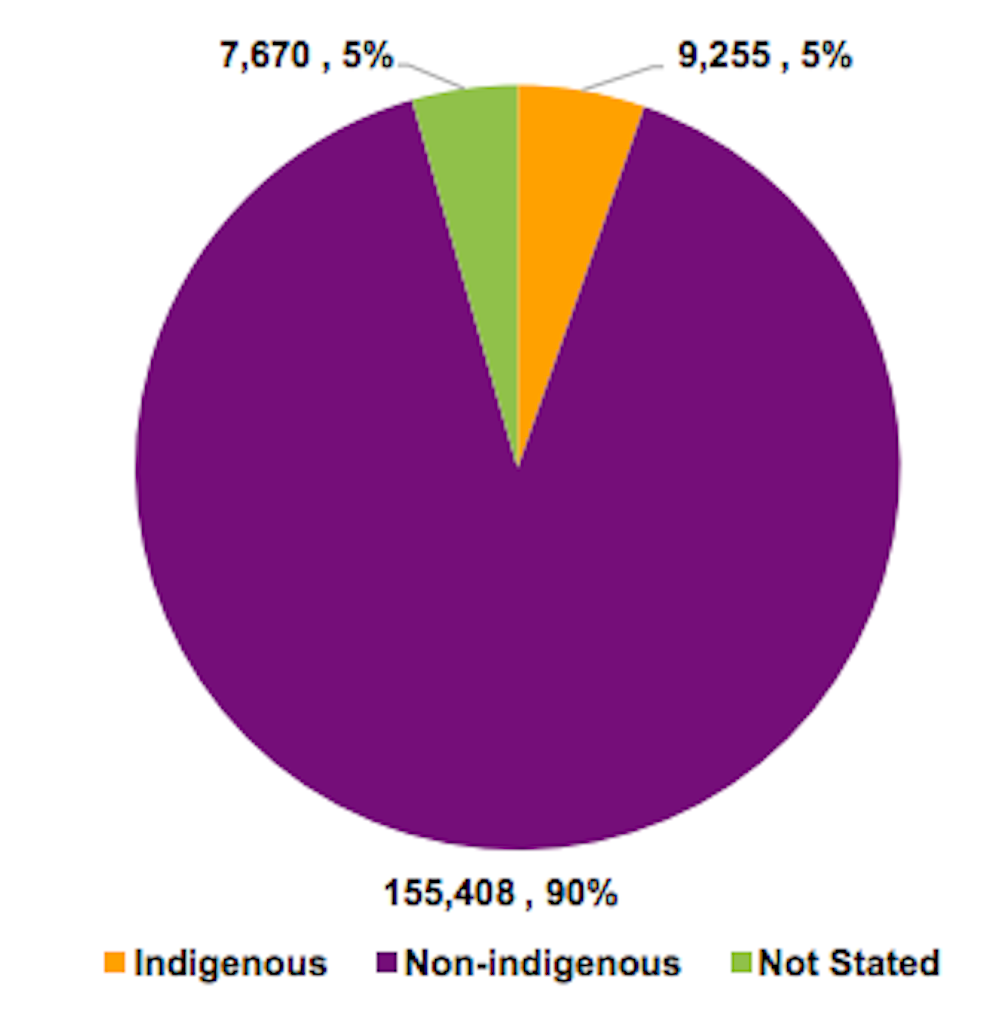
The latest NDIS quarterly report states 9,255 Aboriginal and Torres Strait Islander people are participating in the NDIS (roughly 5.4% of the total). Though, being a “participant” means they have been signed up to an insurance policy. It doesn’t necessarily mean the policy has been paid out. And many others aren’t on the scheme at all.
There are an estimated 60,000 Aboriginal and Torres Strait Islander people across Australia with a severe or profound disability. In 2014-15, around 45% of Aboriginal and Torres Strait Islander people aged 15 years and over said they experienced disability – 7.7% of whom needed assistance with core activities some or all of the time.
My recent research shows Indigenous people who live with disability experience far greater inequality when it comes to social, health and well-being, compared to other population groups. This includes Indigenous people without disability, and people with disability who are not Indigenous.
My research consisted of statistical data and the personal testimonies of 47 Aboriginal and Torres Strait Islander people with disability. It showed the NDIS isn’t accommodating the unique needs of Aboriginal and Torres Strait Islander people with disability.
People in one Aboriginal community said while the NDIS was providing support packages – in some cases at around A$50,000 per person per year – these were not translating into actual expenditure as there weren’t any disability services in the community that NDIS participants could purchase.
Members from another Aboriginal community pointed out that some families needed food and blankets because they were homeless and hungry. But while the NDIS is legislated to provide “reasonable and necessary” supports, food and blankets don’t meet the requirements of the definition. As one Aboriginal community Elder said:
Swags and blankets are something that our families ask for all the time, help with making sure that they’ve got somewhere warm and safe to sleep, and that’s a real practical thing […] And now the NDIS is saying ‘No, we don’t buy swags and blankets for people. That’s not reasonable and necessary’. But if you’ve got nowhere to sleep, of course blankets and swags are necessary.
This wheelchair couldn’t survive the conditions in Alice Springs.Author provided
In another community, wheelchairs provided to people with a mobility impairment weren’t suitable for an environment with no footpaths and where the heat can sometimes melt away the tyres.
This image shows what happens when a wheelchair designed for an urban environment is used in remote Australia.
We also spoke with people who said the houses built for them under a remote housing scheme didn’t have disability access in mind. In the Aboriginal community where the below photo was taken, we were told if people with disability came over, they would have to be lifted over a ledge and around the house so they could join in.
These cases highlight an unfolding design fault of the NDIS: if a person with a disability doesn’t have survival basics, the scheme falls short in its capacity to ensure the choice, control and independence it was set up to achieve for people with disability.
Disability access is missing in houses built under the remote housing scheme.Author provided
Proponents of the NDIS might point out it is designed as an insurance scheme and not intended to provide welfare. Basics such as blankets and food would be more the purview of the Closing the Gap framework to address Indigenous disadvantage.
But the NDIS and Closing the Gap live on two separate government islands, with no bridge in between. The NDIS is a market-based scheme devoid of a strategy that fills the gaps in basic public structure that make markets work. Nor does it have a plan to develop a workforce to meet the demand for disability services in Aboriginal and Torres Strait Islander communities.
Meanwhile, despite the link between disability and social inequality, there is no reference to disability in any of the Closing the Gap targets.
Addressing the core public infrastructure needed to make the NDIS work in remote communities, or developing the workforce to meet the demand for disability supports in the hard-to-reach markets are not quick fixes. We need a longer term strategic approach that focuses on community development to overcome the sustained inequality that comes with being both Aboriginal and living with disability.
Source: The Conversation (Au and NZ) – By Madeleine De Gabriele, Deputy Editor: Energy + Environment
Australia has just had its driest September on record, and the second driest month ever: the only drier month was April 1902.
The Bureau of Meteorology’s tropical cyclone outlook is out today. It’s predicting a weaker-than-normal tropical cyclone season this year but if one hits – and it’s likely one will – it’ll bring water to rain-starved soil that will soak it up and reduce the flooding risk.
Wes Mountain speaks to forecaster Andrew Watkins, who explains how the forecast works, why a cyclone could help some farms, and how to keep safe this cyclone season.
We’ve never gone through a tropical cyclone season without at least one hitting our coast, but Australia’s past may no longer be a reliable guide to our future.
Dr Gergis told Madeleine De Gabriele about creating the most comprehensive history of Australia’s climate ever, and why she still has hope for the future.
Source: The Conversation (Au and NZ) – By Linda Simon, Teacher in adult and vocational education, Charles Sturt University
This article is part of a series on the Future of VET exploring issues within the sector and how to overcome the decline in enrolments and shortages of qualified people in vocational jobs. Read the other articles in the series here.
In 1974, a review of the VET sector set out an agenda for the future of the vocational education and training sector. It emphasised education and social inclusion in work as key functions of the sector, rather than mainly its “manpower role”.
In the ensuing decades, this emphasis has been overturned. The vocational education and training system of today is industry-led. It is funded primarily to achieve employment outcomes.
VET’s role in skill development and educating those who engage in the range of occupations that contribute to Australia’s economy is critical. But we also need to strongly support the role VET plays in getting disadvantaged groups into education and work.
Previous social inclusion policies
Social inclusion in this case reflects the federal government’s social inclusion principles, established in 2010. These were created to ensure people have the resources, opportunities and capabilities they need to learn, work and have a voice.
Social inclusion initiatives are designed for groups generally identified as possibly experiencing disadvantage, who require extra support to succeed in education and work. Students with a disability, students from culturally and linguistically diverse backgrounds (CALD), Indigenous students and students from low SES backgrounds, women, and people from rural, regional or remote locations or communities are among those who might need this support.
Disadvantaged groups, such as students with a disability or who come from rural communities, may need more help to get into education and work.from www.shutterstock.com
The then Labor government established a National VET Equity Advisory Council (NVEAC) in 2009. Its task was to provide training ministers with advice on how to reform VET to ensure disadvantaged students achieved improved outcomes from participating in VET. Such outcomes include securing a job or further study.
NVEAC drafted the Equity Blueprint in 2011. This set out the advisory committee’s advice to ministers on what reforms were needed to ensure the VET system could support all learners to achieve their potential, no matter what their circumstances.
These reforms were designed to be long-term, as system-wide reform takes time. Suggested reforms included:
a new, more sustainable funding model for VET (including increased federal investment)
measuring and reporting on disadvantaged students’ progress and achievement to keep providers accountable
a national framework for building the capability of VET teachers to better train and support all students
listening to the voice of the learner so their actual needs and concerns would be addressed, including types of courses on offer, facilities and how they learn
investment in teaching foundation skills (such as literacy and numeracy) as a priority, and to do it better
embedding career, pathway and transition planning and advice into the VET and school systems to better support students into employment.
Unfortunately, the Equity Blueprint was not implemented. With a change of government in 2013, NVEAC was disbanded.
Where are we now?
The VET sector has been increasingly marketised. This marketisation is seen in cuts to government funding of VET and the shifting of responsibility for funding post-school vocational education onto students.
VET providers including TAFE, which has traditionally provided programs to meet the specific needs of disadvantaged groups, have increasingly cut access and Certificate I and II courses. It’s these low-level courses that can provide the initial skills and confidence needed to enter the workforce or to progress to an industry-recognised qualification.
Despite some acknowledgement by state and territory governments in their annual planning documents that there’s still a role for VET in meeting its obligation to equity and community service, funding has not fully reflected this. When restructures of the system are designed and money is tight, equity programs are often the first on the chopping block.
Equity programs are usually first on the chopping block when money is tight.from www.shutterstock.com
For example, the current restructure of TAFE NSW has cut many of the educationally qualified staff who designed and delivered outreach and support programs for students. This has meant reducing numbers of specialist staff for culturally and linguistically diverse students and those with disabilities.
Outreach programs provide opportunities for students to undertake relevant courses in their communities. This addresses both student and community needs.
Equity groups left out
National Centre for Vocational Education Research (NCVER) figures show a decline in the participation of several equity groups in recent years. They include people from remote and very remote areas, those in the most socio-economically disadvantaged group, female students and students in the youngest age group (15 to 19).
The fact many of these equity groups were targeted in the VET FEE-HELP scandals has possibly also undermined confidence in a VET pathway for these students.
Disadvantage often reaches into many aspects of a learner’s life, and that needs to be recognised and understood. Understanding issues around motivation to learn and social disadvantage is necessary.
How motivated a student is informs how much time and effort they put into their study. Factors such as low socio-economic status, language barriers or hurdles, and competing responsibilities at home can have negative effects on motivation to learn.
An NCVER study identified five effective strategies for supporting learners who become disengaged from study:
address the overall barriers and challenges experienced by students, which might include home life and socio-economic concerns as well as learning issues
provide appropriate teaching that meets students’ specific needs, such as team teaching with professionals who have tertiary qualifications as well as experience in literacy and numeracy, or giving students additional support while studying a vocational course
be flexible in the delivery of programs such as outreach programs so they’re delivered where students feel most comfortable, in community settings and at times that meet their parental and caring responsibilities
offer ongoing support beyond VET, which might include counselling, careers advice and further training in foundation skills
provide students with pathways to further study and/or work through VET providers, government agencies and community groups working together.
What needs to happen now
While VET has the capacity to offer socially inclusive educational programs, for successful and sustainable outcomes the training provider must also be able to work with other agencies supporting learners. A VET course is not the end of the journey. Government agencies and community groups can provide funding to ensure the VET qualification leads to meaningful work.
But success for many students is not just measured through completions and attainment of a qualification or job. When we talk about success here, it’s more in terms of less tangible outcomes such as building confidence, self-respect, life skills and engagement with their communities.
To rebuild this role, VET needs sustainable investment. Supporting disadvantaged learners is successful when it’s an institution-wide commitment.
Such support requires the commitment of all levels of government, not only to ensure VET retains this capacity, but so there’s an obligation of social inclusion that goes beyond the classroom. It should also build strong relationships with employers and communities.
Source: The Conversation (Au and NZ) – By Christine Judith Nicholls, Senior Lecturer in Australian Studies, Flinders University
A major thematic exhibition showcasing more than 280 film stills, costumes and casting books is on display in Adelaide. Starstruck: Australian Movie Portraits, co-curated by the National Film and Sound Archive of Australia and the National Portrait Gallery, encompasses more than a century of Australian film making.
This exhibition acts as an awakening force, occasioning reflective thought, with films like Caddie (1976), My Brilliant Career (1979), The Adventures of Priscilla, Queen of the Desert (1994), The Wog Boy (2000), Rabbit-Proof Fence (2002), Ten Canoes (2006) and The Sapphires (2012) signalling significant historical changes caused by catastrophic events and/or major socio-cultural attitudinal shifts.
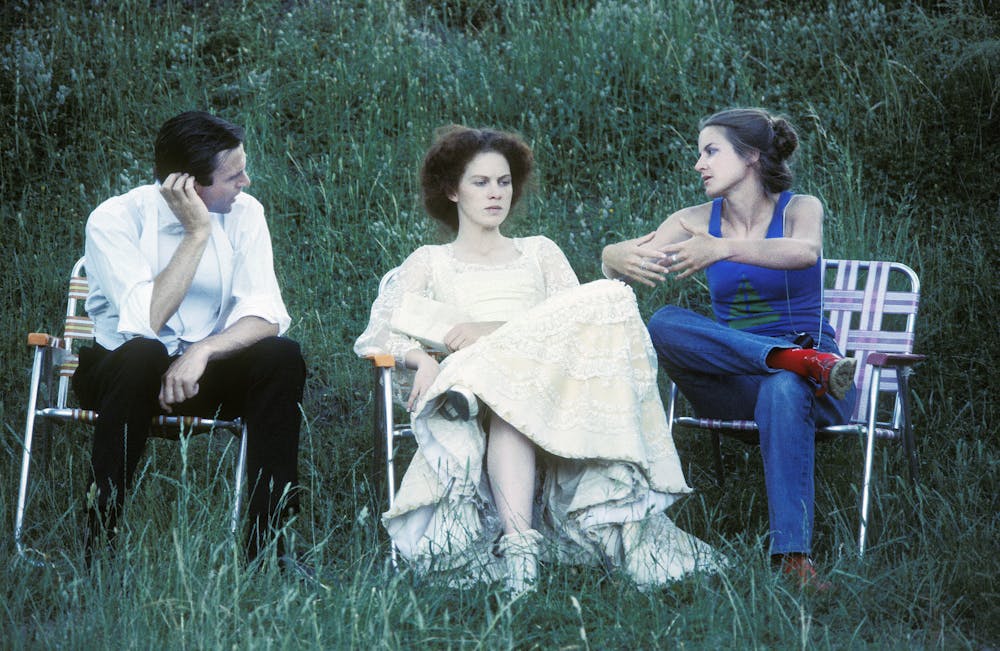
Sam Neill and Judy Davis photographed by David Kynoch on the set of My Brilliant Career (1979) with director Gillian Armstrong.Courtesy Margaret Fink, National Film and Sound Archive of Australia
The headshots and stills in Starstruck act as mnemonics for moments in Australian history. As Hayden White has written, “The historical evidence produced by our epoch is often as much visual as it is oral and written in nature.”
These film stills testify to a century that includes massive rupture (the two World Wars), and other more gradual changes (for example, the continuing impact of migration in Australia and mainstream Australian acceptance of the harsh reality of the Stolen Generations).
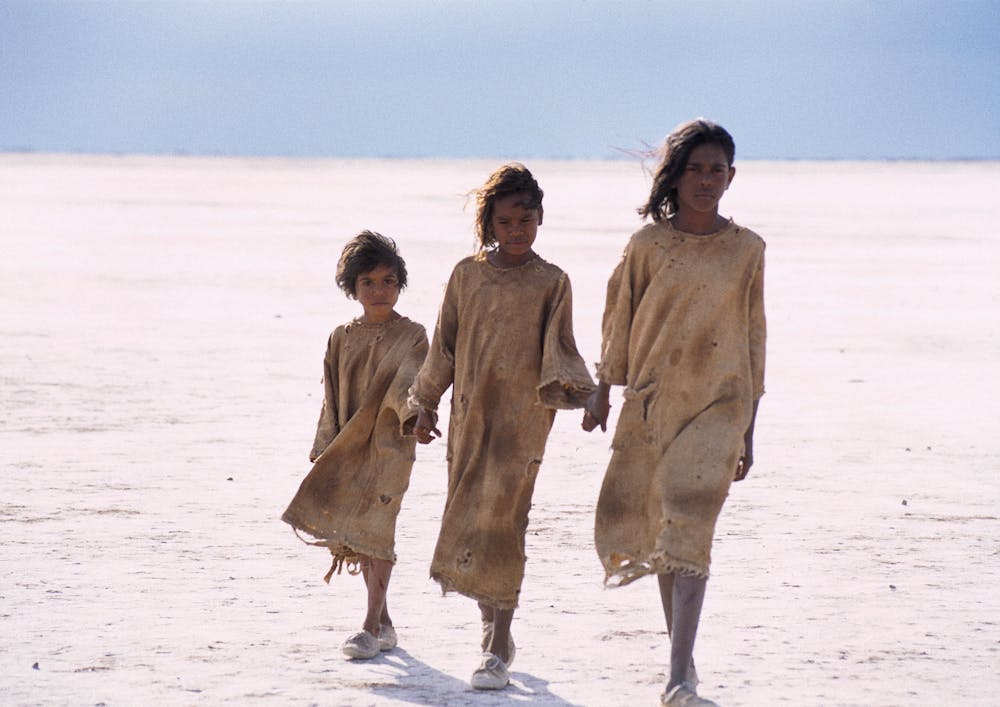
Tianna Sansbury, Laura Monaghan and Everlyn Sampi as Daisy, Gracie and Molly photographed by Matt Nettheim in Rabbit-Proof Fence, 2002.Courtesy Phillip Noyce, National Film and Sound Archive of Australia
Others are testament to continuing social and ideological contestations: the snakes and ladders progressive/regressive nature of Australian feminism from the 1970s until now, and the more recent, often toxic, exchanges a propos of gay marriage, not to mention the ever burgeoning celebrity culture that focuses on “stars”, successively held up as social exemplars, then routinely cut down as tall poppies.
Also on show in a darkened gallery space at the Samstag Museum is Rolf de Heer and Molly Reynolds’s sombre moving image work, The Waiting Room. It’s fitting that these two exhibitions are being showcased in Adelaide, where the South Australian Film Corporation was established in 1972 by the visionary Dunstan government. Since then, the corporation has acted as a catalyst by commissioning numerous film productions while developing a solid infrastructure (some of which has since been dismantled) to underpin the Australian film industry’s ongoing vigour.
Early works
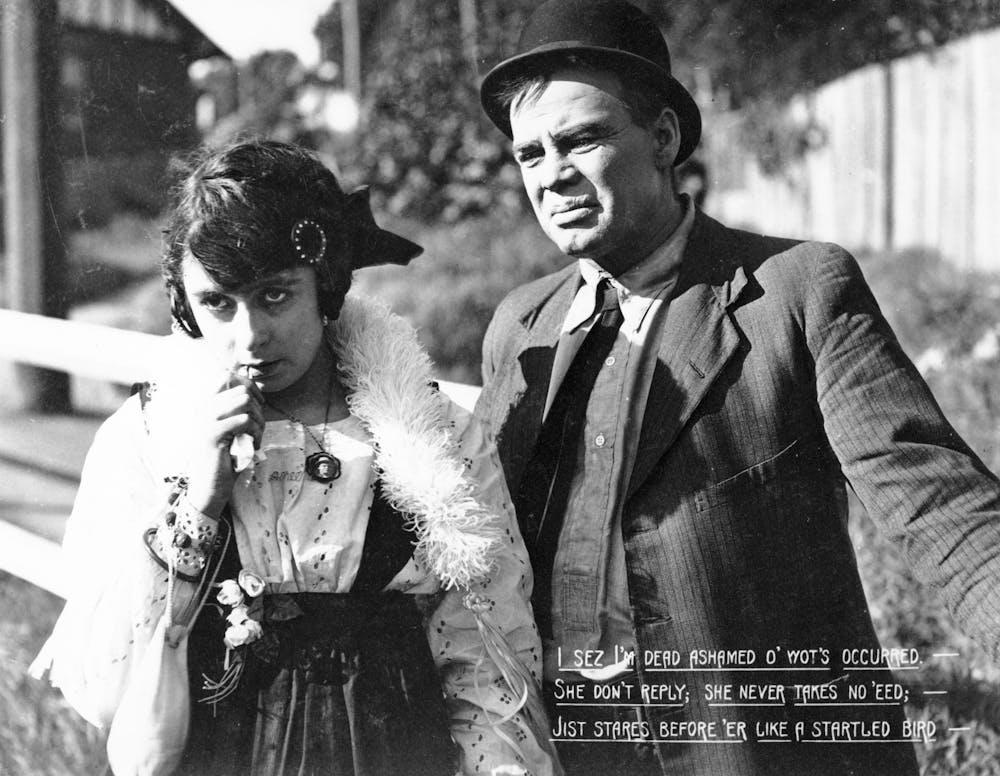
Significant early works in the exhibition include a 1919 still from The Sentimental Bloke, a silent film based on what Phillip Butterss has described as “C.J. Dennis’s verse narrative about a larrikin street-fighter and his nervous courtship of Doreen, a young woman who pastes labels in a pickle factory. It’s still the best-selling book of Australian verse. Since its publication in October 1915 more than 300,000 copies have been sold in upward of 60 editions.”
Lottie Lyell as Doreen and Arthur Tauchert as ‘The Bloke’, The Sentimental Bloke, 1919.National Film and Sound Archive of Australia.
As both book and film, The Sentimental Bloke offers a biting commentary on class in Australia. Given the Bloke’s historical – and continuing – significance, it’s surprising that it’s only represented by a single image in this exhibition.
A portrait of Louise Lovely, 1921, attributed to Glen MacWilliams.National Film and Sound Archive of Australia
Among other important early works is a photographic portrait of the Sydney-born actress Louise Lovely (1895-1980), who is recognised as the first Australian woman to forge an international acting career in the United States, later reigniting it in Australia.
Lovers and Luggers (1937), which focused on the pearling industry, and was filmed on Thursday Island in the Torres Strait, became famous owing to the glamorous Shirley Ann Richards’s portrayal of a sometime-androgynous vamp.
Shirley Ann Richards’ Lorna Quidley in Pearling Lugger, Lovers and Luggers, 1937.Courtesy Cinesound Movietone Productions, National Film and Sound Archive of Australia
This is immortalised in an extraordinary movie still in which she’s wearing a man’s safari suit while somehow also managing to strike a provocatively seductive pose.
The actor Chips Rafferty meanwhile, found his service in the RAAF reinforced his stature as a film star when in 1940 he had the leading role in Forty Thousand Horsemen. Revered not only as an actor, he came to be regarded as an archetypal figure of white Australian masculinity. This was well before the later incarnations of Jack Thompson and Paul Hogan.
Our more recent past
Nicole Kidman as Rae Ingram in Dead Calm (1989) holding a spear gun, photographed by Jim Sheldon.Courtesy Kennedy Miller Mitchell, National Film and Sound Archive of Australia
In 1989, a young Nicole Kidman launched her career in the Phil Noyce thriller Dead Calm, a gripping psychodrama that largely takes place aboard a yacht. In this film, Kidman really had to act, displaying naked emotion and vulnerability, while gradually building her character to the point where she taps into an inner strength enabling her to take on her murderous, psychotic persecutor.
Kidman’s hardened stare, along with the defiant posture she’s assumed in Sheldon’s photograph, hand clasping a harpoon, evince the young woman’s convincing transition.
Both films struck a chord with Australians, unselfconsciously using Aussie humour as a magnet and a weapon. A photograph in the show of Hugo Weaving as Mitzi in Priscilla captures a moment expressed succinctly by Bernadette (Terence Stamp) in conversation with Felicia (Guy Pearce): “That’s just what this country needs: a cock in a frock on a rock.”
Hugo Weaving as Mitzi, photographed by Elise Lockwood in The Adventures of Priscilla, Queen of the Desert, 1994.National Film and Sound Archive of Australia, courtesy of Rebel Penfold-Russell.
Where was I when…?
The photographic stills of more recent films act as an evocative force at the individual level (“What was happening in my life at the time I saw Rabbit-Proof Fence? and/or “Who accompanied me to that film?”). These images are also conduits for broader sociopolitical enquiry and reflection on Australia’s national history (“Did that film change my views on post-contact Aboriginal history?”), affording greater visibility to subjugated groups.
Certain directors and actors have also played significant roles in that national awakening and ensuing discussion, for example Gulpilil, Deborah Mailman, Judy Davis, Hugo Weaving, Raymond Longford, the Chauvels, Bruce Beresford, Gillian Armstrong, Nick Giannopoulos, Rachel Perkins, Scott Hicks, Wayne Blair, Jennifer Kent and others. The contemporary pantheon of Aboriginal, women, migrant and LGBTIQ directors and actors attest to this.
Many of the stills on display in Starstruck are photographs taken by Australia’s greatest photographers, including Robert McFarlane and Lisa Tomasetti.
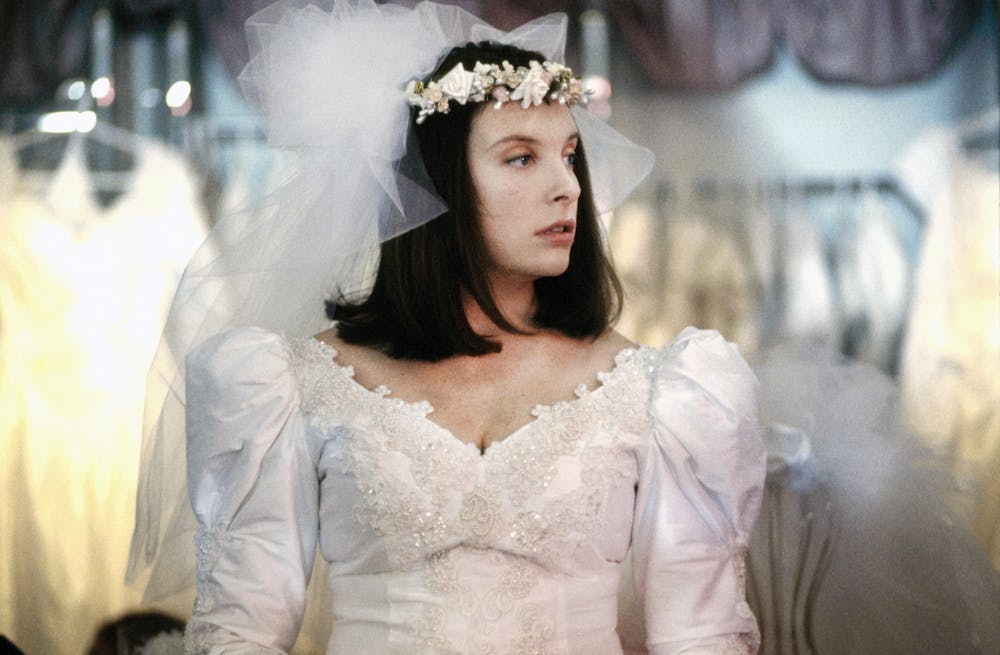
Toni Collette photographed by Robert McFarlane as Muriel trying on a wedding dress by in Muriel’s Wedding, 1994, directed by P J Hogan.National Film and Sound Archive of Australia. Courtesy House and Moorhouse Films.
Also on display is Matt Nettheim’s fine portrait of Geoffrey Rush as Sir Basil Hunter in the Fred Shepisi-directed film based on Patrick White’s novel, The Eye of the Storm. The long, patrician face of Hunter/Rush, wearing a ruminative expression, is brilliantly juxtaposed against the crass happy-smiley face of the entrance to Sydney’s Lunar Park.
A hanging offence?
Greg Rowe as Storm Boy holding Mr Percival photographed by David Kynoch in Storm Boy, 1976.Courtesy South Australian Film Corporation, National Film and Sound Archive of Australia
My only two beefs with Starstruck – a marvellous exhibition in many respects – are with “the hang” and absence of even a rudimentary chronology. Many of the photographic exhibits are exhibited too closely to one another, to some extent denying the integrity of the individual images – which are in themselves works of art. It must be said that this is a result of the curatorial approach taken by the Canberran curators, and not down to the Samstag Museum.
The crowded nature of the works on display is a minor criticism, however, in comparison with the fact that the curators have taken a thematic approach that’s largely ahistorical. While the works in Starstruck are loosely grouped into rather porous thematic categories, there’s no real attempt to establish a chronology. Some viewers – including this one – will regard this as an opportunity lost.
But prospective visitors should be undeterred by this. Starstruck is a marvellous exhibition offering a form of visual ethnography attesting to the dramatic transformations that have taken place in Australian society over the past century.
Accompanying Starstruck at the Samstag is Molly Reynolds and Rolf de Heer’s The Waiting Room, a virtual reality installation. The Waiting Room – a meditation on the fragile state of planet earth – presents a significant counterpoint to Starstruck’s anthropocentric preoccupations. While at one level it’s an elegant, lyrical piece, it offers a dark prognosis for the future, declaring homo sapiens to be the ultimate villain of the piece. The Waiting Room is a work for our times.
Starstruck: Australian Movie Portraits and The Waiting Room continue until Friday 30th November 2018, at the Anne & Gordon Samstag Museum of Art, Hawke Building, City West precinct, University of South Australia. Entry is free.
Palu mayor Rusdy Mastura (seen on the billboard), apologised in 2012 for the mass killings of Communists in Indonesia, becoming the first and only Indonesian official to do so. This paved the way for family and victims of the massacre to receive aid. Image: Ulet Ifansasti
ANALYSIS:By Dr Vannessa Hearman
When the earthquake and tsunami hit the city of Palu, Central Sulawesi, last weekend, they not only brought wreckage and death. The twin disasters also swept away efforts by activists and the municipal administration to support the survivors of Indonesia’s violent anti-communist purges in 1965-1966.
In the rest of the country, such survivors are still very marginalised.
In Palu, a city of some 350,000 inhabitants and the capital of Central Sulawesi province, activists had convinced local government leaders to work with them in helping these survivors.
Palu is the only place in Indonesia where a government leader has made an official apology to the victims of the anti-communist violence in the area. Some nine days after the devastating natural disaster, the fate of some of those activists is still unknown.
Indonesian people lived under Suharto’s New Order authoritarian regime between 1968 and 1998, when the president was forced to resign. From 1965-66, the army, under Suharto, spearheaded anti-communist operations that killed half a million people and led to the detention of hundreds of thousands.
-Partners-
The army blamed Indonesia’s Communist Party (PKI) for the murder of seven army officers on the night of 30 September and in the early hours of 1 October, 1965, by a group calling itself the Thirtieth September Movement. The 53rd anniversary of these events coincided with the terrible disaster in Central Sulawesi.
In 2012, the Palu mayor, Rusdy Mastura, apologised to the victims of the anti-communist violence. He pledged to provide assistance to them and their families in the interests of “equality, openness and humanitarian considerations”.
In his speech, Mastura recalled how, as a boy scout in 1965, he had been tasked with guarding leftist detainees.
Victims of abuses Mastura was speaking at an event organised by local human rights group, SKP-HAM (Solidaritas Korban Pelanggaran Hak Asasi Manusia, Solidarity with Victims of Human Rights Abuses).
SKP-HAM was founded in 2004. Its best-known leader is the dynamic secretary, Nurlaela Lamasitudju, the daughter of local Islamic cleric, Abdul Karim Lamasitudju.
SKP-HAM is part of the national Coalition for Truth and Justice (Koalisi Pengungkapan Kebenaran dan Keadilan, KKPK).
In 2012, the KKPK held several public events and community “hearings”, dubbed the “Year of Truth Telling”, to pressure the administration of President Susilo Bambang Yudhoyono to rehabilitate the victims of the violence.
In April 2012, Yudhoyono was reported as having expressed his intention to apologise to victims of human rights abuses committed during the Suharto New Order regime.
Yudhoyono’s promised apology never materialised. However, the “Year of Truth Telling” events yielded some important gains in Palu.
Following his apology, the SKP-HAM lobbied Mastura to deliver on his promises by providing healthcare and scholarships. A mayoral regulation and a Regional Action Plan for Human Rights (Rencana Hak Asasi Manusia, Ranham) were promulgated to enable this.
Autonomy laws These local government instruments have been made possible through Indonesia’s regional autonomy laws.
The mayoral regulation also established a committee to oversee human rights protection and restoration of victims’ rights. On May 20, 2013, Palu was declared a “Human Rights Aware City”.
Each year, the city holds a series of human rights-related events.
In May 2015, the Palu City Regional Planning Body oversaw the process of checking and verifying the identity of victims and their needs, using the information compiled by human rights groups as a base.
A trailblazing city SKP-HAM had collected 1200 testimonies about the 1965-66 violence from victims in the area. From these testimonies, it had created and uploaded to YouTube short films of survivors’ testimonies.
The group supported weaving cooperatives involving women survivors and ran a café and meeting space, Kedai Fabula, at its office in Palu. In partnership with religious groups and the municipal administration, members of the group organised social activities to involve abuse survivors in the life of the city.
The activities of SKP-HAM Palu is a reminder of what has been lost. It was a trailblazing city whose achievement in human rights advancement provided a model for the rest of the country.
The people of Palu, with a great deal of assistance, will rebuild, but we still wait for more news from the city.
SKP-HAM leader, Lamasitudju, survived the earthquake and tsunami. With a sprained ankle and having lost several family members in the disaster, she is volunteering to collect and provide information regarding the situation in Palu.
Indonesia needs groups like SKP-HAM that campaign for inclusiveness and equal rights to survive into the future.
Dr Vannessa Hearman is a lecturer in Indonesian studies at Charles Darwin University in the Northern Territory. She is a member of the Asian Studies Association of Australia Council. Charles Darwin University provides funding as a member of The Conversation AU. Asia Pacific Report republishes this article under a Creative Commons licence.
Bryce Edwards’ Political Roundup: An Embarrassing week for National
Published 5 October
[caption id="attachment_13635" align="alignright" width="150"] Dr Bryce Edwards.[/caption]
“Embarrassing” is the word of the week for the National Party. Leader Simon Bridges applied the term in various ways to MP Jami-Lee Ross, when explaining that Ross’ personal circumstances required his temporary departure from Parliament. Bridges described Ross’ personal situation as “perhaps actually embarrassing. A lot embarrassing, potentially”.
[caption id="attachment_15887" align="alignleft" width="300"] National Party Leader, Simon Bridges.[/caption]
It was then Bridge’s turn to be embarrassed when the focus quickly shifted to why Bridges insisted on using that term, before later retracting it. Some saw it as a sign of incompetence and a lack of empathy for the beleaguered Ross, and others saw it as a sign that Bridges was somehow signalling that the departing MP is in fact connected with the leak inquiry, or is suffering from mental health issues.
As most commentators have said, the timing of Ross’ departure and the leak inquiry is either unfortunate or very telling. It’s natural that speculation has fallen on Ross as being the leaker within National who was trying to undermine his leader. And Audrey Young reported that “Jami-Lee Ross is among a handful of National MPs who have been quietly suspected as a potential leaker among colleagues for some time”, and therefore “the timing of his time-out from politics is cruel. Because if he is not the leaker, many people are left wondering whether he is” – see: Timing of Jami-Lee Ross’ departure from Parliament raises questions.
Bridges had no choice, according to Young, but to announce in his press conference that Ross’ departure is unrelated to the inquiry, regardless of whether he is under suspicion. But she points out that if it turns out Ross is eventually announced as being involved in the leak, then “he would be in the best place to endure the fallout – away from potentially unforgiving colleagues and the limelight.”
It seems possible, therefore, that Bridges’ repeated use of the term “embarrassing” about Ross was consciously or unconsciously designed to intimate that, although Bridges was formally saying that his departure was unrelated, it was in fact highly-related.
[caption id="attachment_18102" align="alignleft" width="300"] National Party MP, Jami-Lee Ross.[/caption]
There has been a backlash against Bridges for his use of the word “embarrassing”. According to Newshub’s Duncan Garner, Jami-Lee Ross was also very unhappy about it. Garner says: “A senior source inside the National Party got hold of me yesterday to say Jami-Lee Ross, who stood down for personal reasons, is ‘highly pissed off’ with Bridges for saying the matter was embarrassing” – see: Jami-Lee Ross ‘pissed off’ with Simon Bridges’ ’embarrassing’ comment – source.
According to Garner, “The source went on to say what is embarrassing is National’s internal polling which has Bridges’ internal favourability collapsing”.
The National leader has now expressed regret, telling reporters: “I regret it, I think it was a poor choice of words” – see Newshub’s Simon Bridges speaks to media on Jami-Lee Ross, regrets calling MP’s issues ’embarrassing’. The same article also reports that “The investigation commissioned from PwC by National, is expected to report back in as little as a week. Bridges said today he expected it would be made public.”
Garner refers to a lengthy phone conversation with the National leader about the use of term “embarrassing” and whether there was a connection between the leaks and Ross: “Bridges got stern during the chat when he said Ross isn’t the leaker of his travel expenses and this is not some kind of manufactured cover up in advance of the investigation… He almost pleaded with me to believe that” – see: Simon Bridges’ ’embarrassing’ comment breached Jami-Lee Ross’ privacy – Garner.
There were other bizarre things said by Bridges at his press conference, such as: “You think you know your colleagues very well, but you don’t always know everything that’s going on”. Mike Hosking responds to this statement about Ross, saying: “What do we take out of that? We take out of that, he’s done something wrong”, and therefore Bridges “made matters a hundred times worse” – see: Bumbling Simon Bridges has made Jami-Lee Ross saga so much worse.
Hosking also speculates on Ross’ own statement about his need to put family and kids first: “which is [normally] code mainly for an indiscretion, or as the British so eloquently put it, you’ve been playing away.”
Bridges “looked spooked, rattled, and ill-prepared. Hence his bumbling performance” says Hosking. But perhaps that was simply because the situation is incredibly untidy: “So none of the speculation is surprising, and the pressure is now on National to make this look a lot tidier than it appears. Unless, of course, it can’t be tidied. Unless, of course, we have our leaker.” And he says that Bridges response to journalist’s questions about Ross’ innocence was “Not at all convincing.”
Veteran political commentator Richard Harman has thrown more petrol onto the fire, reporting further details. He conveys rumours that “Ross was being advised by National Party board member, Glenda Hughes”, who has previously helped other beleaguered MPs such as Todd Barclay – see: The Jami Less Ross affair.
Harman also puts a lot of attention on the claims of Winston Peters to know who the leaker is. The statement of Peters in Parliament a couple of weeks ago is reported: “Peters continued: ‘There are members over there that should be very nervous’. Peters was standing in his usual position, two seats below Ross but on the other side of the House. He then said “I won’t look at them” and then he turned to face where Ross had been sitting. He then said: “Or look where they should be, because if I do, then the suspicion will be cast on them without us getting the reward for disclosure.”
Harman draws attention to a blog post from Cameron Slater, which also deals with Peters and the leak in more detail – see: Winston to Bridges: “…reveal to the public who the leaker is, or I will”. Slater concludes: “I believe that Winston Peters does know who the leaker is. It is pretty much an open secret now among National people. I understand that the leaker has admitted as such to some Young Nationals in Auckland. I also know now who it is, and that is from many sources, all saying the same name. The clock is ticking. Observant and well informed journalists will also know as the leaker is now being shunned by caucus.”
All of this has turned into something of a disaster for Simon Bridges this week. Newspaper editorials have been scathing. The New Zealand Herald says about the inquiry: “This can not end well for National” – see: Simon Bridges’ stellar rise has struck bumbling block.
The editorial notes that “Ross, in his own public comments, implied his problems might not be confined to health.” But it’s Bridges who gets the worst evaluation: “The way an Opposition leader handles problems in his or her party provides an insight to their credentials for a more important job. So far, Bridges is not passing the test” – see: Simon Bridges’ stellar rise has struck bumbling block.
The Press also draws attention to Paula Bennett’s description of Ross’ personal situation as “traumatic”, which it says “again could increase public speculation and curiosity” – see: How to turn an opportunity into a disaster.
The newspaper complains that Bridges hasn’t dealt with Ross’ departure with “maturity and discretion” and expresses surprise that he used the word “embarrassing” about his MP “not once, not twice, but three times.” It concludes that Bridges “looks like a man who knows his days as leader are numbered.”
Leftwing political commentator Chris Trotter also sees the end in sight for Bridges, telling Duncan Garner yesterday that “When you see politicians gripped by this kind of paranoia, you know that things are very bad inside their party because why else would they be looking over their shoulder all the time?” – see: ‘Smell of death’ following Simon Bridges – Chris Trotter.
Trotter elaborates: “National is entering that terrible deadzone where all eyes are only on the leader – not on policy, not on the party, the deadzone that Labour lived in for nine long years.” The article also reports that Trotter believes “Bridges’ days could be numbered, with hints of a plot to roll him forming”.
The political editor of Stuff has some similar analysis: “Bridges’ pursuit of National’s travel expenses leaker is shaping up as one of those pivotal moments by which his leadership will be defined. If there were seeds of doubt in Bridges judgement before among his MPs, they must have blossomed into full grown dismay that Bridges’ decision to order an inquiry keeps blowing up in his face” – see Tracy Watkins’ Simon Bridges’ judgment call coming back to haunt him.
Finally, for some light relief from the National Party leader, watch the three-minute video of him doing comedy, which aired last night on the Jono and Ben show – see: Simon Bridges pranks customers at supermarket checkout.]]>
Dear Toni Street
Congratulations on the arrival of your child born through a surrogate. I have read of your frustration at the hoops you must jump through to now adopt him.
Thank you for lending your profile in support of a petition to update the Adoption Act 1955. By doing so, you are raising awareness of the inadequacies of this act.
The petition describes the Adoption Act 1955 as outdated, complicated and not clearly understood.
As a person adopted under that act, I would add that it is an archaic, moralistic and cruel piece of legislation.
The guise was saving children from the shame of illegitimacy. The real purpose was to provide children for infertile married couples.
As you have discovered, it is wholly unsuited to contemporary family building.
But in reading through the petition, I am struck by one thing. This call for change appears to encode the worst consequences of the 1955 act.
The act legalised the grafting of one family line onto another and the erasure of the family of origin. All family ties, whakapapa and genealogy were severed.
Back then the assumption was the child was a blank slate. The baby handed to worthy adopters was little more than dough to mould and shape as they saw fit. The very idea of inherited traits, of quirks and complexities, was anathema.
The act required a child to have two birth certificates. The first showed the mother’s name and held this as a state secret. Even after the introduction of the misnamed Adult Adoption Information Act 1985, the father’s name was often redacted.
The second public certificate showed the names of the adopters as natural parents. Nothing on this document hinted that the child was acquired through adoption.
Today this same concept is at the heart of the petition.
Intending parents with children created through assisted reproductive techniques want to be listed as parents from the day the child is born.
They want no legal reference to egg donors, sperm donors or surrogates.
Tell me, how is that different from the old severing of all ties? How is this different from birth certificates that list adopters as natural parents?
The 1955 act supports the rights of the parents over those of the people they adopt. Today’s new parents seem to be trying to achieve the same thing. Only they want it with less fuss, less red tape and less cost.
That person you’ve created is a sweet bundle in your arms for such a brief moment. As they grow are they not entitled to the same rights of heritage that you enjoy?
So what are we to do?
Assisted reproductive technologies, surrogacy and all the complexities are here to stay.
If heritage means anything, how do we enshrine it in a document as simple as a birth certificate? How do we also recognise the central role of the commissioning or intending parents?
First, we must commit to ending all secrecy, not only in the home but also in legislation.
Then we must provide a birth certificate that details all those involved. To do that we need a new vocabulary.
Something like this might work.
Fictive kin: Unrelated by birth or marriage, fictive kin have an emotionally significant relationship with a child, with all the characteristics of a family relationship.
If you create a child using outsourced gametes you are the fictive or commissioning kin.
Where one person in a couple is related genetically to the child, they would appear as lineal kin.
Lineal kin: Lineal kin are the man and the woman whose donated or purchased gametes created the child. They represent your child’s direct ancestors.
Affinal kin: Affinal kin is most often used to describe those related to you by marriage. But the term seems appropriate to describe the surrogacy relationship.
The woman whose blood runs through your child’s veins, whose uterus their fingers brushed against to form fingerprints, whose smell and voice and heartbeat your child know like their own, should be recognised as a new form of affinal kin.
When a surrogate is also a genetic mother, then she should appear on a birth certificate as lineal and affinal kin
These new terms allow for the complexities of assisted reproductive technologies. With the tradition of a married mother and father long gone, they allow for diverse forms of family.
But most importantly they provide the person created with a genuine and authentic life.
The secrecy of the Adoption Act 1955 has fueled the disenfranchisement of thousands of New Zealanders. It has cast them as second class citizens with no rights to their own histories.
This extends to their collateral kin, that is, lineal siblings, their nieces, nephews, cousins and descendants.
So, Toni, I’m 100% with you in wanting this act overturned.
It is time we built a new family tree. One with a lineal trunk, with collateral kin forming the branches, while affinal and fictive kin are the leaves and fruit upon that tree.
Together they make up the actual life of the person you create.
What matters most is that you tell the truth.
Once we enshrine a person’s most basic right to authenticity at the core of new legislation, all other contractual issues can be resolved.
How hard can that be?
Footnotes:
1. The petition represents a single view. The Adoption Act 1955 has impacted the lives of more than 100,000 New Zealand mothers, their children and the people who acquired them.
Any change to the Adoption Act 1955 without a full inquiry into forced adoptions would be a further crime against the humanity of every one of us caught up in this act.
2. The need to provide a secure home for a child with no kin to care for them will always present a requirement for society. This care should take the form of Enduring Guardianship. All ties are preserved, all needs for security for both the child and the people acting as parents are also maintained.
Vanuatu says New Zealand should get on the right side of history and support West Papuan self-determination. However, reports James Halpin of Asia Pacific Journalism, Indonesian diplomacy with its Pacific allies Australia, Fiji and Papua New Guinea are defiantly undermining Pacific “solidarity” on the issue.
Vanuatu’s Foreign Minister Ralph Regenvanu has called on New Zealand to get on the right side of history when it comes to West Papua.
Reaffirming Prime Minister Charlot Salwai Tabimasmas’ remarks at the UN General Assembly late last month, Regenvanu told Asia Pacific Report that the “people of West Papua have never had the opportunity to exercise their right of self-determination, which is an unalienable right under international law, and they must be given that opportunity”.
Vanuatu was one of three countries – four less than in 2016 – whose leaders gave UN strong messages in support of West Papuan self-determination.
READ MORE: Background to the 1969 Act of Free Choice
[caption id="attachment_12231" align="alignright" width="300"]ASIA-PACIFIC JOURNALISM STUDIES – APJS NEWSFILE[/caption]
Independence for Vanuatu was achieved from the co-colonisers France and the United Kingdom in 1980.
West Papua had been a colony of the Dutch New Guinea but was annexed by Indonesia after a paratrooper “invasion” in 1962 followed by a UN-supervised vote in 1969 described by critics as fraudulent.
Asked why Vanuatu has taken the lead in advocating for West Papua, Regenvanu says:
“We take this position because of our historical solidarity with the people of West Papua – we were once together and the struggles as colonies trying to become independent; we achieved ours and we will not forget our brothers-and-sisters-in-arms who have not got theirs.”
Forum failure
For Prime Minister Salwai and Regenvanu, the recent Pacific Islands Forum was a failure at gaining Pacific support for West Papuan self-determination.
“We are disappointed at the position of Papua New Guinea, Fiji and Australia to vocally oppose self-determination for West Papua. We are pleased that most other countries support self-determination, however.”
Regenvanu also criticises New Zealand for not following the advice that it gives to Pacific Island countries.
New Zealand should, “actively support with actions on this issue the ‘international rules-based order’ it is always promoting to PICs”.
The Melanesian Spearhead Group, which shares an ethnicity with the people of West Papua, has also failed at achieving solidarity over the issue.
“PNG and Fiji have strong ties to Indonesia and work actively to ensure the MSG does not address the issue.”
End colonialism call
Prime Minister Salwai introduced the issue of West Papua to the UN General Assembly this year.
Prime Minister Charlot Salwai Tabimasmas addressing the UN General Assembly about West Papua. Video: UN
“For half a century now, the international community has been witnessing a gamut of torture, murder, exploitation, sexual violence, arbitrary detention inflicted on the nationals of West Papua perpetrated by Indonesia.”
“We also call on our counterparts throughout the world to support the legal right of West Papua to self-determination.”
For Prime Minister Salwai, it is an issue of justice and equality for the people of West Papua,
“I would like to get back to the principles in the charter of the United Nations to reaffirm that we believe in the fundamental rights of human beings in dignity and worth of the human person and in equality of rights between men and women and nations large and small.”
Prime Minister Salwai has been the flag bearer of West Papuan self-determination. His aim is for West Papua to be placed back onto the decolonisation list under the UN charter.
However, Prime Minister Salwai was supported by two other Pacific leaders, Marshall Islands’ President Hilda Heine of the Marshall Islands, and Enele Sopoaga of Tuvalu.
Sopoaga said: “The United Nations must also engage with the people of West Papua to find lasting solutions to their struggles.”
Constructive engagement
President Heine staid that Pacific Island countries supported constructive engagement on the issue.
At the 2016 UN General Assembly, seven countries stated their supported for West Papuan self-determination. These were: Vanuatu, Solomon Islands, Nauru, Marshall Islands, Tuvalu, Tonga, Palau.
Decolonisation has become an important part of foreign relations in the Pacific with the New Caledonian independence vote on November 4.
After hundreds of years of European colonisation, the UN has provided a platform for and facilitated the self-determination of indigenous peoples across the world.
The Indonesian delegation denounced Vanuatu at the UN General Assembly just days ago. The Indonesia delegation used the entirety of their second right of reply in the general debate to deplore Vanuatu’s support for West Papuan self-determination.
“Although being disguised with flowery human rights concern, Vanuatu’s sole intention and action are directly challenging the internationally agreed principles of friendly relations between state, sovereignty and territorial integrity,” UN General Assembly Vice-President Muhammad Kalla said on behalf of his country.
UN General Assembly Vice-President Muhammad Kalla giving his speech. Video: UN
He said: “Like any other country, Indonesia will firmly defend its territorial integrity.”
The Indonesian representative, Aloysius Taborat, said: “respect for sovereignty and territorial integrity is the cardinal rule in the relation among nations and in the United Nations”.
However, critics say Indonesia’s handling of West Papua’s vote in the 1969 Act of Free Choice “was rigged” so that West Papua would vote to join Indonesia. Therefore, many see hypocrisy in Indonesia’s words, including in their reputation over press freedom.
Human rights abuses are a common occurrence in West Papua, according to human rights organisations. Simply raising the West Papuan flag can result in 15-years imprisonment.
James Halpin is a student journalist on the Postgraduate Diploma in Communication Studies course at AUT. He is filing articles in the Asia-Pacific Journalism Studies paper. ]]>
Health and human rights advocates fear the mental ill-health of refugees on Nauru could worsen following the Pacific government’s move to scrap a vital support service.
“At this stage MSF wishes to reiterate our strong commitment to providing quality mental health care to all those in need on the island,” a spokesperson said.
-Partners-
“We are extremely concerned that the health of our patients may be affected by this decision and urge the authorities to grant us permission to continue our lifesaving work.”
The abrupt dismissal follows a report by two prominent Australian refugee organisations saying most refugee children on Nauru are experiencing life-threatening mental health problems, including not eating or drinking and showing suicidal symptoms.
An Australian protest over deteriorating conditions for children at the Nauru detention centre. Image: Al Jazeera
‘Add to distress’ Advocacy group Refugee Action Coalition said MSF’s absence would “add enormously to the distress among asylum seekers and refugees” because the Australian government’s contracted mental health care provider, International Health and Medical Services, was “stretched to breaking point”.
The Department of Home Affairs said on Saturday MSF’s dismissal was a matter for the Nauruan government and that it would continue to provide “appropriate healthcare and mental health support to refugees and asylum seekers through contracted service providers”.
MSF uses more than 30,000 doctors, nurses and other mostly volunteer personnel to provide medical aid in more than 70 countries.
Prime Minister Jacinda Ardern recently addressed the UN General Assembly about the reality of climate change in the Pacific, and the threat inaction holds for the island nations. Maxine Jacobs reports for Asia Pacific Journalism that while climate and energy commentators welcome her leadership, they call for an even stronger “action” approach.
New Zealand Prime Minister Jacinda Ardern’s challenge to United Nations members last month to reflect on the impact climate change is having on the Pacific has been welcomed by social justice advocates.
But they would like to see the rhetoric matched by even stronger action to give the world its “best shot”.
The Prime Minister spoke of Kiribati, Tuvalu and the Marshall Islands as the Pacific’s most at risk nations which have contributed least to global emissions but are facing the full force of their consequences.
ASIA-PACIFIC JOURNALISM STUDIES – APJS NEWSFILE
“Our actions in the wake of this global challenge remains optional, But the impact of inaction does not,” she told the UN.
“If my Pacific neighbours do not have the option of opting out of the effects of climate change, why should we be able to opt out of taking action to stop it?”
Ardern said that in the South Pacific there was a reality of rising sea levels, increases in extreme weather events and negative impacts on water supply and agriculture.
-Partners-
“For those who live in the South Pacific, the impacts of climate change are not academic, or even arguable.
‘Grinding reality’ “We can talk all we like about the science and what it means … but there is a grinding reality in hearing someone from a Pacific island talk about where the sea was when they were a child, and potential loss of their entire village as an adult.”
Prime Minister Jacinda Ardern’s speech at the United Nations. Video: UN
Although New Zealand represents less than 0.2 percent of global emissions, the Prime Minister then vowed to “play our part” in continuing to decrease in emissions and support the global climate change battle.
Goals have been set of:
• 100 percent renewable energy generation by 2035; • zero emissions by 2050; • a halt on offshore oil and gas exploration permits; • a green infrastructure fund to encourage innovation, and • a 10-year plan to plan one billion trees.
“These plans are unashamedly ambitious [but] the threat climate change poses demands it.”
Real commitment A few days before her address to the UN in New York, the Prime Minister announced a $100 million increase to its global climate finance – an increase from $200 million, which will be spread in $25 million blocks over four years.
The Prime Minister said the additional funding would focus on practical action, helping Pacific states to build resilience and adapt to climate change.
“The focus of this financial support is on creating new areas of growth and opportunity for Pacific communities. We want to support our Pacific neighbours to make transition to a low carbon economy without hurting their existing economic base.”
The Prime Minister said she planned to bring greater attention to the impact of climate change alongside Pacific leaders and ensure global awareness of the cost of inaction.
“We recognise our neighbours in the Pacific region are uniquely vulnerable to the impacts of climate change.
“We have a responsibility to care for the environment in which we live, but the challenge of climate change requires us to look beyond our domestic boarders.”
Communications accounts manager for the Ministry for the Environment, Karen Goldsworthy, says two thirds of the global climate funding would be going towards Pacific nations to help adapt to their warming climate.
“We recognise that New Zealand alone cannot fix the challenge climate change poses to our region: it is a global problem that requires a global solution.
“New Zealand will continue to work actively to contribute to an effective global response to climate change through which Pacific resilience improves … and lose work more widely to encourage ambition through our leadership.”
A global model Renewable energy and climate change consultant Dr Bob Lloyd, a former director of energy studies at Otago University, says New Zealand’s commitment to climate change is a show of leadership to the rest of the world of what is achievable.
Lloyd called New Zealand a small-scale model of what can be achieved on a global scale, however this issue is one which cannot be resolved by one small nation.
“It’s up to countries like Australia, New Zealand, Europe and unfortunately the US to bring their emissions down.
“The big dilemma at the moment is that a lot of the poor countries want to increase their emissions and they’re not going to consider bringing their emissions down unless the big countries bring their emissions down first.
“The other onus is on the rich countries to actually help the poor countries come down, which means they need to transfer money to them to achieve their goals.”
Lloyd said the extra $100 million from New Zealand towards the global climate change fund was a good effort but would not have a huge impact. To achieve emissions reductions, developing countries would need trillions of dollars.
“The amounts of money which are needed just for the Pacific region – which are tiny compared to the rest of the world – are enormous,” he said.
Putting over ideas Although Lloyd, a self-proclaimed pessimist, thinks the world would not be able to outrun climate change he does not want to stop people from giving it their “best shot”.
“Without some countries trying, then the poorer countries and other countries will give up completely, so I think it’s extremely good that Jacinda is putting these ideas over and they’re trying to help as much as possible.
“She’s doing a remarkable effort. It’s also enthusing government. I was pleasantly surprised at how much influence Jacinda and the Labour Party is having on both New Zealand and internationally.”
Dr Kevin Clements, the foundation professor of Otago University’s National Centre for Peace and Conflict Studies (NCPACS) and current director of the Japan-based Toda Peace Institute, says the Prime Minister’s plea for climate change awareness has powerful emotional and normative appeal, but at the end of the day it is a numbers game.
“Every little bit helps. New Zealand’s voice on its own isn’t going to change Donald Trump or the behaviours of the major US multinational companies, but on the other hand it’s all part of creating a normative order which acknowledges the centrality of climate change and what it’s doing to us.”
Dr Clements says the Pacific is feeling the brunt of global emissions and has little capacity to do anything about it. However, the moral weight of New Zealand and the South Pacific can help larger nations become more proactive.
The Prime Minister advocating for climate change issues humanises her, says Dr Clements, but she needs to be stronger to be seen as a serious political leader on these issues.
“She really needs to make sure she’s coupling her soft power appeal and her own personal charisma with some hard-headed arguments and evidence based research so she is seen both as a wonderful human being but equally as a hard-headed negotiator on the issues that matter.”
Maxine Jacobs is a postgraduate student journalist on the Asia Pacific Journalism Studies course at AUT University.
I have a friend who loves biographies. She’s always telling me to read accounts of dire lives turned around, the fall and rise of a star or a tragedy overcome.
But I can’t. Biographies and especially autobiographies unsettle me. It is not the sweep of grand lives that leaves me undone. It is the minutiae.
In ‘I Always Wanted to Go to Patagonia’ a short story by Bruce Chatwin he describes tiny details of his childhood. A book from his aunt, a wooden camel from his father, a pink conch shell. Each piece is a talisman, freighted with meaning and connection. Then he says, “The Chatwin’s were fanatical sailors.”
Such a small comment. And yet, it all reeks of belonging. Of all the pieces of his life fitting together like the internal workings of an old clock.
I have none of those types of memories. No special objects. No touchstones to take me back to another time. Because I was not there, not really, not in any emotionally tangible way.
It’s an adoption thing. To not be present, to be in a dissociative state, fragmented and ambivalent.
Nancy Verrier, nn Coming Home to Self, talks about growing up with genetic amnesia. Where you have no reference points for one’s being, no reflection of one’s Self.
She says some adopted people are aware of this (while feeling abnormal). Others, disconnected from emotion and not knowing anything else may think their experience is normal.
That was me. Because closed or secret adoption is a form of gas lighting.
Not your everyday gas lighting where one person works to warp another’s mind. It is more of top-down abuse.
In her paper Adoption Law in New Zealand: the rights and well-being of the child, Catherine Moody argues genetic determinism dominated adoption law. “Since most adopted children were ‘illegitimate’, and were therefore considered to come from sinful families, it was believed that the sin would be passed on to the child.”
A complete break was the only answer. Nurture over nature was the only way to save the child from the immorality of the mother.
That was the job of the adopting parents. They had to wipe out their kids pre-loaded sin by pretending they were their natural children. It was a big ask. And it was a big lie.
But truth nibbles at the edges of everything and that’s where the dissonance creeps in. Adopted people often describe their childhoods as shrouded in fog.
My childhood is like a half-remembered dream. And yet the pressure to stay asleep is huge. It’s not enough to be an adopted person. You have to be a good adopted person. And good adopted people do not need to know about their origins. And I wanted to be good.
Because at the edge of the fog was a vast and lonely desert. A place reserved for adopted kids when they let down the people who worked so hard to nurture them.
Of course, not all adopted people feel this way. But aside from one person I know, who seems to like living in his fog, I’ve not met any.
I guess that’s what strikes me about Chatwin’s writing. He lives inside the life he is living. He is confident and complete. He is so taken up by his life that he never stops to question his right to it. And why should he? He knows without question that he owns his story and by extension, that of every Chatwin who came before him. In essence, to make sense of a life story, you need an authentic history.
So I avoid biographies. Not because they are poignant or sad or dramatic. But because they make me aware of all I missed out on while living a lie. All the time and energy expended in trying not to be me.
Now, I am gathering myself to fight to end the rule of the archaic Adoption Act 1955. And I think of myself as a salmon swimming upstream. I will never conquer the waters downward flow. It is a torrent of bureaucracy that has defined the lives of adopted people for over 60 years.
Instead, I am trying to catch the counter-flow. Tiny streams of water within the cascade that help to push the beleaguered salmon upstream.
But a salmon knows where it comes from and it returns there with eerie accuracy every year.
While an adopted person has no such surety of identity. And when you don’t know where you come from, there really is nowhere to return to.
Thanks to Mary Trainor Bigham for your contribution
I’ve spent most of my adult life searching for my biological family. I’ve encountered endless roadblocks. The majority of them from officialdom. During the search and now as I start a campaign to free all adoption files, I am often asked – what do you want?
But as an adopted person I know that often what people are really asking is – what more do you want?
This one question is at the heart of adoption.
It is filled to the brim with the idea that your mother gave you away and these kind people came along and saved you.
And the only response to this framing is one of gratitude. Anything less is disloyal to your adopting parents and the society that rescued you.
Gratitude is something adopted people know well. It’s not the gratitude of memes and self-improvement. It’s the gratitude a serf must pay to a master. It’s why we love it when our pets do our bidding, when they roll-over and beg on command.
Because in adoption gratitude is best friends with acquiescence, submission and deference. The attitude of gratitude is implicit in the social contract of closed, secret or stranger adoption.
All because without adoption you would be illegitimate. Because without adopting parents you would carry the shame of your mother’s sexual activity. Because without adoption you would be an orphan.
All because your mother gave you away.
But seriously, are we still expected to believe this narrative? That for around 50 years over 100,000 New Zealand women gave their babies away. As though a contagion overcame the country, causing women to abandon their mothering. To throw away their unwanted children. To bury the evidence of their shame in the deepest bureaucratic well.
Ask any mother. The very idea is ludicrous.
Ask any mother who ‘gave’ up her child and you’ll hear harrowing stories. Not of unwanted children placed in loving homes. But of their babies abducted, often taken straight from their arms. Or slipped out under cover of darkness. Or removed directly from their wombs and disappeared. You’ll hear stories of forged paperwork. Of no legal representation. Of being shamed and belittled into submission.
But we cling to that word ‘give’.
That way we don’t have to deal with the dark truths hiding in our recent history. The Anglican and Catholic Church and the Salvation Army waged war on women and their sexuality. Aided and abetted by the government.
Today, over 60 years since the implementation of the Adoption Act 1955, our government is still waging that war.
They are still holding the files of the women who had their children taken. They are still telling those women they have no rights. That shame and silence is their only option.
They are still holding the files of the people abducted in the name of morality. They are still telling them they are second-class citizens without right or recourse to their own information.
The irony is that our Prime Minister Jacinda Ardern has an out-of-wedlock daughter. Had she been born in, say, 1960, that child would have been uplifted straight from her arms. And placed with a married couple.
I am beginning to think that rather than irony it is profound hypocrisy. Our prime minister is enjoying life with her baby. Meanwhile, thousands of people live on in pain. The Adoption Act 1955 remains as law. So much for compassion and kindness.
So, what more do I want?
I want dignity for my mother. The callous and cruel treatment she suffered would make your hair curl. And then they stole her baby.
I want my files. I want the truth about my birth.
I want to know what or who the state is protecting me from?
I want to know what or who is being protected from me?
I want what you, the non-adopted person has. For the asking (and the payment of a small fee) Archives NZ will send you everything they have on you.
Under the amusing title Personal Identity, Archives NZ adds that access to many is restricted under the Adoption Act 1955.’
But of course, some of my files have been accessed. They are in the hands of office workers and social workers at the Ministry for Vulnerable Children.
I must appease and sweet talk whoever answers their phones. I must smile as I’m given wrong information or sent off on another wild goose chase. I must remain calm as I’m disrespected and belittled for daring to ask for my information. And every time I must remember not to offend anyone, to adopt the right attitude of gratitude. To always be nice (and never be angry) in the hope someone will take pity and slip me a morsel of information. A name here, a date there.
So ask me again what more do I want? I dare you.
And a few comments from other adopted people:
“I would like (all of us) to have equal rights to our/my original unadulterated birth certificate.”
“I/we need to be able to access citizenship to the appropriate countries of our/my kin/heritage.”
“I want recognition from our government that adoption, closed stranger (& maybe other scenarios) weren’t ideal (jeez, aren’t I generous).”
“I want recompense for a life half-lived. For the time in anguished searching and no access to appropriate counseling. For my parallel life, in a crazy wilderness of non-familial closeness.”
“I want adopting parents (even today) to to know that adoption is not a substitute for having a biological child or a replacement for a lost child.
I want adopting parents to educate themselves on what adoption means for the people grafted onto their family tree.
“I want the end of adoption. I want it replaced with enduring guardianship.”
“I want people to know I am not the problem, that adoption is the problem.”
“I am sick of living inside a world of fantasy and fiction.”
Thanks to Gillian Moynihan for contributing ideas.
There once was a woman who kept changing everything: her hair, her glasses, her furniture, her style, her husbands and her lovers. She moved 34 times and changed her name seven times. Her restless journey was almost unconscious. She described herself as emotionally and physically peripatetic. The idea of not belonging was who she was. It was not so much that she had lost her identity, but that she never had one.
I am that woman.
Identity as a concrete concept would hardly occur to any of us if it were not denied in some way. The idea of ‘having an identity’ is not relevant when ‘belonging’ defines your reality.
In our slumbering selves, we go way back, not to the moment of our birth or even conception. We go back to the dark reaches of our ancestors. Some cultures sing to their ancestors. Some dig up their bones and worship them. Others keep their ashes in finely carved containers. While others mark their graves for centuries.
These conversations with our dead are how we make our own stories real. We are here because of them, and their echoes inform our lives.
In The Faraway Nearby, Rebecca Solnit says ‘to be without a story is to be lost in the vastness of a world that spreads in all directions like arctic tundra or sea ice.’
That vastness has swallowed the thousands of New Zealanders denied their real stories.
I have been one of them.
The practice of secret, stranger adoption was widespread in New Zealand. For many years, the government sanctioned the forced removal of babies from their mothers.
The reasons were always spurious and moral and based on marital status. Those babies were then deposited with women considered more worthy – read married. In essence, making one woman childless to resolve another’s childlessness.
Children were handed over by the state as if they were inanimate objects, commodities, pets or windfall fruit. Blank slates.
You arrive into this new family reduced to nothing but your breath and your body.
The adopters must then infuse you with their culture, their family, their history and their mores and beliefs.
As if there is only nurture. As if nature is an aberration, worthy of denial.
But what happens when you grow up utterly unlike them? Taller, stronger, more fleet of foot and mind than those who took you?
In a dozen different ways, my adopting mother asks why can’t you get over it. My need to know exasperates her. As if I am somehow a defective person for not being ‘like them’.
If an open conversation were possible I would answer, why can’t you acknowledge what happened? How can you not see that closed secret adoption causes a primal wound?
And this is the question I will be asking of the courts.
Why can’t you get over your control and power of my life?
Why am I denied the most basic human right that many of you here enjoy?
I will ask the Judge, the stenographer, the officers and the lawyers – do you know your whakapapa? Do you have grandparents? Great-grandparents? Do you have famous ancestors? Are your roots Irish? German? Scandinavian? Polynesian? Jewish? Are you even a little bit interested in your family history? Have you had your DNA done? Do you have a family tree? Do you have cousins and siblings and aunts and uncles? Do you think you look a little like great aunt Sally? Do you share a trait: physical or intellectual with a forebear?
If you answer yes to even one of these questions then you are enjoying the complexity of your heritage. Something I am still fighting for.
I am a 58-year-old mother of four, stepmother of one and a grandmother of six. In this time of DNA, I finally know who my parents were.
My mother and I connected when I was 23. She was desperate to get to me and boarded the next flight out of Madrid. That plane crashed, and she died. She left behind two other daughters. For many years now we have been close and loving sisters.
I found my father only last year using DNA. He died five years ago at 92. Now I have another sister to make our family whole.
Identity may be porous but it is also rooted in our genes. One sister wrote columns and articles in the UK. I wrote columns and articles in New Zealand. Another sister loves to ride horses. I loved and longed to ride horses. My parents had significant lives, painted on large and complex canvases. My father was famous in his time. A jazz drummer and a race driver, his ribald humour, and bon vivant lifestyle was widely written about. My mother had a business brain, developed a remarkable tourist destination and possessed endless energy and verve.
These are the tiny scraps that constitute my inheritance.
I will also tell the court that DNA technology has negated the moralistic need to protect families from the spurious religious inspired shame of the past.
The governments continued theft of my identity serves only to protect the Catholic and Anglican Church, the Salvation Army, the doctors and institutions who all claimed the moral right to abduct children from their mothers.
You might reply that since I have this information, why do I need my birth files opened?
Because I want and need a complete picture. I want to know what the files say about me. And because to fully normalize my life I need to remove the stigma of being considered an illegitimate person. I am an equal citizen. I am owed the same right as non-adopted New Zealanders. The same right my children and grandchildren have to access their birth files.
Why do my birth files constitute a risk to society? And why am I still subject to a law created in 1955 and the narrow religious morality of those times?
The foundation of closed secret adoption in New Zealand is identity theft. As an adopted person, you lose your birth certificate. You lose your mother, your father, cousins and siblings. Aunts and uncles and grandparents disappear. In short, you lose everything and everyone that makes you unique. And your own children and grandchildren also lose their rightful place in the sweep of humanity.
Every single day of my life I long for my mother. For her smell, her touch, the sound of the voice I heard for nine short months. I am 58 years old, and I still grieve that I will never have the chance to hold and be held by my mother.
I have two birth certificates. The one I consider legitimate has me stamped as illegitimate. The other is a legal fiction showing my adopters as my biological parents. Then there’s the dropped comment from an Oranga Tamariki worker who had my file in front of her – that I’m actually born six months earlier than my birth certificate. And then a third item: a single sheet of yellowed paper, attesting to my time at Bethany Home. Except the dates do not match.
So which one is true?
How can the state continue to deny me the right to confirm the actual date of birth? How archaic. How cruel.
The very least the courts can do is hand over my records. And the records of anyone trapped in a closed secret adoption.
And, if not now, then when will the state return my identity to me?
sketch at top by Meryl – a frustrated me talking to Ministry for Children
Dear Prime Minister
Your child is almost three months old. I was this age when I was taken from my mother because of her marital status.
Or, it could have been earlier.
Or later.
I don’t know because I have three possible birth dates, seven months apart and two birth certificates.
Can you imagine not knowing when you were born?
Can you imagine living under a lifetime gag order?
This is the ongoing impact of the 1955 Adoption Act and the 1985 Adult Adoption Information Act.
These Acts enable discrimination against me for the perceived moral crime of my mother. These Acts ensure that I am unable to view my files or know my birth date.
But, any social worker can see my files. Office workers at Oranga Tamariki and Births, Deaths and Marriages can view my files.
Many people can read all about me – but I can’t.
Try to imagine for a moment how that might feel.
The United Nations and the Human Rights Commission have condemned the Adoption Act 1955. It contravenes our Bill of Rights Act. In 2000 the Privacy Commissioner denounced the Act. His law reform recommendations were never followed up.
Even your own law amendment failed.
Canada and Australia have issued public apologies for the harms caused by forced adoption. In those countries and the UK forced adoption is on the public and legislative agenda.
Consider the children born today through reproductive technology such as surrogacy. They are also subject to this archaic act formed by the morality of the 1950s.
I am a mother of four and grandmother of six. I am a documentary filmmaker and writer. I have had enough of being a second-class citizen, of having my most basic right to identity violated.
My children and grandchildren are also entitled to their rightful heritage.
If New Zealand is a forward-thinking country, we must correct the misguided mistakes of the past. We must do this today.
I am going to court to have my files opened. Both my parents are gone. My mother was killed in a plane crash on her way to meet me when I was 23. My father died five years ago, at 92. I am the only person affected by these files. However, given the outdated moral imperatives of the Act, I will likely lose.
I have begun filming, I have hired a lawyer and a PR firm, and I will not give up until we see these laws abolished.
It is unconscionable that we still deny people their identities, whakapapa and history.
I will not stop until people like me have the same right to their identity that you and your child enjoy.
On the anniversary of 125 years of Women’s Suffrage, this issue is being ignored. Today, thousands of women whose children were taken and those people removed from their mothers are still treated with contempt and dismissal by your government.
The question is Prime Minister will you be the person to address these archaic legislations?
Most respectfully
Barbara Sumner
Cloud South Films
Source: The Conversation (Au and NZ) – By Richard N Holdaway, Adjunct Professor, University of Canterbury
Just like a teenager wanting to be older, volcanoes can lie about their age, or at least about their activities. For kids, it might be little white lies, but volcanoes can tell big lies with big consequences.
Our research, published today in Nature Communications, uncovers one such volcanic lie.
Accurate dating of prehistoric eruptions is important as it allows scientists to correlate them with other records, such as large earthquakes, Antarctic ice cores, historical events like Mediterranean civilisation milestones, and climatic events like the Little Ice Age. This gives us a better understanding of the links between volcanism and the natural and cultural environment.
Taupo’s last violent eruption
Lake Taupo, in the North Island of New Zealand, is a globally significant caldera supervolcano. The caldera formed after the collapse of a magma chamber roof following a massive eruption more than 20,000 years ago.
Now it seems that the Taupo eruption that occurred in the early part of the first millennium has been lying about its age. But like many lies, it was eventually found out, and it reveals exciting processes we hadn’t understood before.
The eruption of Taupo in the first millennium has been dated many times with radiocarbon, yielding a surprisingly large spread of ages between 36CE and 538CE.
Radiocarbon dating of organic material is based on the concentrations of radioactive carbon-14 in a sample remaining after the organisms’ death. Over the past two decades, the method has been refined greatly by combining it with dendrochronology, the study of the environmental effects on the width of tree rings through time.
Radiocarbon dating of tree ring records has allowed scientists to construct a reliable record of the concentration of carbon-14 in the atmosphere through time.
In principle, this composite record allows eruptions to be dated by matching the wiggly trace of carbon-14 in a tree killed by an eruption to the wiggly trace of atmospheric carbon-14 from the reference curve (“wiggle-match” dating).
Scientists presently use wiggle-match dating as the method of choice for eruption dating, but the technique is not valid if carbon dioxide gas from the volcano is affecting a tree’s version of the wiggle.
Our study re-analysed the large series of radiocarbon dates for the Taupo eruption and found that the oldest dates were closest to the volcano vent. The dates were progressively younger the farther away they were.
This graph shows all of the ages obtained for the Taupo first millenium eruption, sorted by age, plotted on a digital model of the North Island of New Zealand. Lake Taupo is the caldera from which the eruption occurred. The oldest ages for the eruption are clustered around Lake Taupo, and older ages are located further from the volcano. We interpret this pattern as being caused by contamination of red areas with volcanic carbon dioxide.Provided by authors, CC BY-ND
This unusual geographic pattern has been documented very close (i.e. less than a kilometre) to volcanic vents before, but never on the scale of tens of kilometres. Two wiggle match ages, taken from the same forest, located about 30km from the caldera lake, were among the oldest dates from the series of dates.
This enlarged influence of the volcano can be explained by the influence of groundwater beneath the lake and its surroundings. The Taupo wiggle-match tree grew in a dense forest in a swampy valley where volcanic carbon dioxide was seeping out of the ground and was incorporated in the trees.
This conceptual image shows how gas from the triggering event, decades before the eruption, works its way into the groundwater system and is eventually incorporated in the wood of the trees that we date.Provided by authors, CC BY-ND
The ratio of carbon-13 to carbon-12 (the two stable isotopes of carbon) in the modern water of Lake Taupo and the Waikato River tells us that volcanic carbon dioxide is getting into the groundwater from an underlying magma body.
Can large eruptions be forecast over decades?
Our study shows that a large and increasing volume of carbon dioxide gas containing these stable isotopes was emitted from deep below the prehistoric Taupo volcano. It was then redistributed by the region’s huge groundwater system, ultimately becoming incorporated into the wood of the dated trees.
The increase was sufficiently large over several decades to dramatically alter the ratios of different carbon isotopes in the tree wood. The forest was subsequently killed by the last part of the Taupo eruption series. But the dilution of atmospheric carbon-14 by volcanic carbon made the radiocarbon dates for tree material from the Taupo eruption appear somewhere between 40 and 300 years too old.
The precursory change in carbon ratios gives us a way to gain insight into the forecasting of future eruptions, a central goal in volcanology. We found that the radiocarbon dates and isotope data that underpin the presently accepted “wiggle match” age reached a plateau (that is, stopped evolving normally). This meant that for several decades before the eruption, the outer growth rings of trees had ‘weird’ carbon ratios, forecasting the impending eruption.
We re-analysed data from other major eruptions, including at Rabaul in Papua New Guinea and Baitoushan on the North Korean border with China and found similar patterns. The anomalous chemistry mimics but exceeds the Suess effect, which reversed the carbon isotopic evolution of post-industrial wood. This implies that measurements of carbon isotopes in 200-300 annual rings can track changes in the carbon source used by trees growing near a volcano, providing a potential method of forecasting future large eruptions.
Source: The Conversation (Au and NZ) – By Adrian Beaumont, Honorary Associate, School of Mathematics and Statistics, University of Melbourne
The Wentworth byelection will be held on October 20. A ReachTEL poll for independent Licia Heath’s campaign, conducted September 27 from a sample of 727, gave the Liberals’ Dave Sharma 40.6% of the primary vote, Labor’s Tim Murray 19.5%, independent Kerryn Phelps 16.9%, Heath 9.4%, the Greens 6.2%, all Others 1.8% and 5.6% were undecided.
According to The Poll Bludger, if undecided voters were excluded, primary votes would be 43.0% Sharma, 20.7% Murray, 17.9% Phelps, 10.0% Heath and 6.6% Greens. Compared to a September 17 ReachTEL poll for GetUp!, which you can read about on my personal website, primary vote changes were Sharma up 3.7%, Murray up 3.3%, Phelps down 4.8%, Heath up 5.6% and Greens down 6.0%. Phelps fell from second behind Sharma to third behind Murray and Sharma.
Between the two ReachTEL polls, Phelps announced on September 21 that she would recommend preferences to the Liberals ahead of Labor, backflipping on her previous position of putting the Liberals last. It is likely this caused her slump.
While more likely/less likely to vote a certain way questions always overstate the impact of an issue, it is nevertheless bad for Phelps that 50% of her own voters said they were less likely to vote for her as a result of the preference decision.
This ReachTEL poll was released by the Heath campaign as it showed her gaining ground. Heath appears to have gained from the Greens, and the endorsement of Sydney Mayor Clover Moore could further benefit her.
Despite the primary vote gain for Sharma, he led Murray by just 51-49 on a two candidate basis, a one-point gain for Murray since the September 17 ReachTEL. The Poll Bludger estimated Murray would need over three-quarters of all independent and minor party preferences to come this close to Sharma.
At the 2016 election, Malcolm Turnbull won 62.3% of the primary vote in Wentworth. While the Liberals’ primary vote in this poll is about 19% below Turnbull, it is recovering to a winning position.
Trump, Republicans gain in fight over Kavanaugh Supreme Court confirmation
On July 9, Trump nominated hard-right judge Brett Kavanaugh to replace the retiring centre-right judge Anthony Kennedy. The right currently has a 5-4 Supreme Court majority, but Kennedy and John Roberts have occasionally voted with the left. If Kavanaugh is confirmed by the Senate, it will give the right a clearer Supreme Court majority. Supreme Court judges are lifetime appointments.
Although Kavanaugh is a polarising figure, he looked very likely to be confirmed by the narrow 51-49 Republican majority Senate until recent sexual assault allegations occurred. Since September 16, three women have publicly accused Kavanaugh of sexual assault when he was a high school or university student.
On September 27, both Kavanaugh and his first accuser, Christine Blasey Ford, testified before the Senate Judiciary Committee. On September 28, without calling additional accusers, the Committee favourably reported Kavanaugh by an 11-10 majority, with all 11 Republicans – all men – voting in favour.
However, after pressure from two Republican senators, the full Senate confirmation vote was delayed for a week to allow an FBI investigation. The Senate received the FBI’s findings on Thursday, and the investigation did not corroborate Ford. Democrats have labelled the report a “whitewash”, but it appears to have satisfied the doubting Republican senators, and Kavanaugh is very likely to be confirmed.
Since the sexual assault allegations against Kavanaugh began, Trump’s ratings in the FiveThirtyEight poll aggregate have recovered to about a 42% approval rating, from 40% in mid-September. Democrats’ position in the race for Congress has deteriorated to a 7.7 point lead, down from 9.1 points in mid-September.
Midterm elections for all of the US House and 35 of the 100 Senators will be held on November 6. Owing to natural clustering of Democratic votes and Republican gerrymandering, Democrats probably need to win the House popular vote by six to seven points to take control.
While the House map is difficult for Democrats, the Senate is far worse. Democrats are defending 26 Senate seats and Republicans just nine, Five of the states Democrats are defending voted for Trump in 2016 by at least 18 points. Two polls this week in one of those big Trump states, North Dakota, gave Republicans double digit leads over the Democratic incumbent.
The FiveThirtyEight forecast models give Democrats a 74% chance of gaining control of the House, but just a 22% chance in the Senate.
Republican gains in the polls are likely due to polarisation over Kavanaugh. In a recent Quinnipiac University national poll, voters did not think Kavanaugh should be confirmed – by a net six-point margin – but Trump’s handling of Kavanaugh was at -7 net approval. Democrats led Republicans by seven points, and Trump’s overall net approval was -12. Kavanaugh was more unpopular than in the previous Quinnipiac poll, but Trump and Republicans were more popular.
The hope for Democrats is that once the Kavanaugh issue is resolved, they can refocus attention on issues such as healthcare and the Robert Mueller investigation into Trump’s ties with Russia. However, the strong US economy assists Trump and the Republicans.
In brief: contest between left and far right in Brazil, conservative breakthrough win in Quebec, Canada
The Brazil presidential election will be held in two rounds, on October 7 and 28. If no candidate wins over 50% in the October 7 first round, the top two proceed to a runoff.
The left-wing Workers’ Party has won the last four presidential elections from 2002 to 2014, but incumbent President Dilma Rousseff was impeached in August 2016, and replaced by conservative Vice President Michel Temer.
Workers’ Party candidate Fernando Haddad and far-right candidate Jair Bolsonaro are virtually certain to advance to the runoff. Bolsonaro has made sympathetic comments about Brazil’s 1964-85 military dictatorship. Runoff polling shows a close contest.
In the Canadian province of Quebec, a conservative party won an election for the first time since 1966.
You can read more about the Brazil and Quebec elections at my personal website.
Policy makers, academics and NGO representatives discussed the urgent issue of climate change in the Pacific, where many communities have been forced to relocate. However, Michael Andrew of Asia Pacific Report, found that participants in last weekend’s workshop believe the Pacific voices of those most affected must be heard if conflict is to be avoided.
The gap between policy and people was a key topic at the last week’s Climate Change and Conflict in the Pacific workshop when experts from Western and Pacific countries gathered to share stories and studies.
Workshop facilitator and Toda director Professor Kevin Clements, who is also founding director of NCPACS, says it is an opportunity to understand Pacific perspectives and respond creatively to an existential threat.
“We in New Zealand and Australia have a deep responsibility to listen,” he says.
“If we don’t understand the Pacific way of thinking, we will begin to undermine relationships in unanticipated, unconscious ways.”
-Partners-
Relationships were a major theme throughout the workshop, with many participants affirming the unique relationship Pacific people have with their land.
Vanua philosophy Fijian teacher Rosiana Kushila Lagi says the traditional Fiji philosophy of Vanua reflects the absolute interconnectedness between people, land and sea.
Working in Tuvalu, Lagi is engaging communities to use the principals of Vanua to mitigate the destruction caused by climate change. The behaviour of animals, plants and the weather are all useful indicators of environmental change and can be used to prepare for extreme events.
However, she says many communities are losing this traditional knowledge when they are physically separated from the land, something that also contributes to a loss of identity.
Participants of the Climate Change and Conflict in the Pacific workshop in Auckland last weekend. Image: Lynley Brown
Tuvaluan minister Tafue Lusama shared a similar perspective, stressing the importance of traditional knowledge in the Tuvalu way of life.
“Indigenous knowledge is the way we focus our relationship to everything, to the land, to the sea, to each other and to all living things,” he says.
“It is our way to communicate with the clouds, birds, plants, animals; this includes communicating with the spirits of our ancestors.”
With an average height of 2m above sea level, Tuvalu is particularly vulnerable to the affects of climate change. Rising sea levels not only threaten property but also food and water sources.
Storm surges Storm surges can sweep inland, flooding deep-rooted crops like taro and coconut and contaminating fresh water reservoirs.
Yet for many communities who have already relocated, the struggles of adjusting to a new home can be just as harsh.
Discussed at the workshop were the people from the diminishing Carteret Islands, who in recent years have been relocated to land donated by the Catholic Church on mainland Bougainville.
Managed by grassroots organisation Tulele Peisa, the initiative sees every family given a hectare of land on which they can live and grow crops for trade and sustenance.
While the relocation project has been considered successful, there are concerns for the Cataract Islanders living in a region recovering from a bloody civil war over the Panguna copper mine. Even today, violence is widespread.
According to Volker Boege, a peace and conflict academic who has worked extensively in the region, there have been reports of attacks on the Carteret Islanders and their property.
He says this has a lot to do with tribal competition over limited land, much of which is customary.
Establishing relationships “Before the relocation, Tulele Peisa put in a lot of work establishing relationships with the Bougainville community and engaging in discussions with the chiefs. Nevertheless, land is scarce,” Boege says.
“The policies don’t take into account the complexities between the indigenous people and the fighting that can occur between tribes when relocated.”
For these people giving up home, identity and starting a new life in a foreign land is simply too much to ask.
While other Pacific communities are on the list for relocation, there was a commitment among the workshop participants to factor in the values, customs and wishes of both the relocating and the receiving communities into any polices moving forward.
Future collaboration between the many organisations present would also allow an inclusive, dynamic approach where information could be easily shared from the top down and vice versa, connecting the grassroots to the researchers and policy makers.
Ideal outcome For Paulo Baleinakorodawa, this was an ideal outcome of the workshop. As operations manager of Fiji-based NGO Transcend Oceania, he has worked extensively with relocated and relocating communities, resolving conflict and trying to make the process as peaceful as possible.
However, he says that plans for cross-organisation collaboration have stalled prior to the workshop.
“I was hoping that coming in here I would find an opportunity to actually push that into more actions,” he says.
“It’s been wonderful because there has been a lot of information, a lot of networking and commitment from people that are actually doing something about climate change.”
“And so now Toda, Transcend Oceania, the Pacific Conference of Churches, and the Pacific Centre for Peace Building are going to be partnering together to continue that project.”
While climate change and its affects will only continue to worsen, the workshop was an encouraging show of unity and compassion that will be needed if further suffering in Pacific is to be prevented.
Most importantly, it opened an essential conversation in which the many different voices could be heard.
“This is only the beginning of that conversation,” says Baleinakorodawa.
Michael Andrew is a student journalist on the Postgraduate Diploma in Communication Studies (Journalism) reporting on the Asia-Pacific Journalism course at AUT University.
Professor Kevin Clements facilitating the Climate Change and Conflict in the Pacific workshop. Image: Michael Andrew/PMC
Source: The Conversation (Au and NZ) – By Oliver Rawashdeh, Lecturer in Biomedical Sciences, The University of Queensland
On Saturday night, Australians who switch over to daylight saving time will get an hour less of sleep as they move their clocks forward.
Changing the clock causes a temporary state of misalignment in our internal biological time. We may not feel ready to go to bed an hour earlier and our alarms will wake us up before we’ve had enough sleep.
Changing the clock alters the body’s rhythmic production of melatonin, the hormone produced when it gets dark, and cortisol, the stress hormone. These regulate when we feel like going to sleep, when we’re hungry, and our ability to fight off bugs.
This misalignment is a form of jetlag, and can upset the body’s rhythms. It can affect our ability to think clearly and can increase the risk of heart attacks, depression, and even miscarriage.
Heart attack and stroke
Several studies have shown your risk of having a heart attack (myocardial infarction) and stroke increases in the two weeks after the changeover, compared with the two weeks before. The risk is highest in the first three weekdays following the switchover.
Researchers suspect the link is because an hour of sleep loss increases stress and provides less time to recover overnight.
The good news is the increased risk of a heart attack only appears to last for two weeks. After that, our biological clock seems to synchronise to the new time (though researchers are divided on this).
A person’s risk of heart attack may increase after the transition to and from daylight saving time.from shutterstock.com
When it comes to the increased risk of heart attack, women are generally more sensitive to the spring transition to daylight saving time, while men are more sensitive to the autumn transition from daylight saving time.
The reasons are unclear but it could be related to the roles sex-specific hormones play in the adjustment.
Mood
Research from Germany shows springing forward to summertime can have a negative effect on life satisfaction levels and feelings of anger and sadness, which can last a little over a week.
The effect is largest among full-time employees. These workers must instantaneously shift their work schedule to a time that’s in disagreement with their body’s biological rhythms, while others may allow themselves to ease into their new schedule.
Your risk of depression can also increase during the month after the daylight saving comes into effect. A 17-year Danish study of 185,419 hospital visits found the patient intake for patients diagnosed with depression rose by 11%. This effect dissipated over a ten-week period.
Miscarriage
A 2017 study of IVF patients found a greater chance of pregnancy loss after embryo transfer in spring, when daylight saving time began: 24.3%, as opposed to 15.5% before daylight saving time.
There was no significant difference in pregnancy loss rates during the transition from daylight saving time.
Researchers have found a link between daylight saving time and IVF pregnancy loss.William Stitt/unsplash
Physical activity
The transition to daylight saving time affects people’s exercise patterns. A 2010 Australian study found one in four people switched from morning to evening exercise sessions. But 8% stopped exercising altogether after the changeover.
However, a much larger study of Australian children found that daylight saving time increases children’s physical activity in the afternoon and evenings, by around two minutes per day.
The effect of daylight saving time depends on our chronotype: whether you’re a night owl or early rising lark.
We switch chronotypes as we age; adolescents are predominantly night owls but many will eventually switch to being morning larks in adulthood. So the impact of the transition to daylight saving time also changes as we age.
A 2009 German study showed that daytime sleepiness was an issue for older students for up to three weeks after the transition to daylight saving time. This is why sleep experts urge schools not to test students in the three weeks after the transition.
We all need time to adjust to daylight saving time – but students and full-time workers might have a tougher time in the weeks after the changeover. So go easy on your kids and colleagues.
Source: The Conversation (Au and NZ) – By Gregory Moore, Doctor of Botany, University of Melbourne
Sign up to the Beating Around the Bush newsletter here, and suggest a plant we should cover at batb@theconversation.edu.au.
The genus Acacia is Australia’s largest, containing nearly 1,000 different species. It includes our national floral emblem, the golden wattle, and is the source of the green and gold colours of many of our sporting teams. The variety of acacias is mind-boggling.
There are many well-known small, short-lived species that thrive both in their natural habitats and in suburban gardens, where they are known for attracting insects and birds. There are species that survive in the arid inland as inconspicuous, stunted shrubs that are more than 200 years old, and there are also tall forest trees such as the blackwood, Acacia melanoxylon that can live for centuries.
The black wattle, Acacia mearnsii, falls somewhere between these extremes. It ranges from 6 metres up to (occasionally) 15 metres in height. It is generally called “short-lived”, but often makes it past 20 years old, and may persist for 30 years or more under the right conditions.
It has attractive bi-pinnate (feathery) leaves, dark green foliage, and smooth, dark bark – hence its common name. It has the typical pale yellow to golden wattle flower. Its pea-like fruits are typically 10mm wide and up to 150mm long, which as they dry out can rattle on the tree. These fruits contain many tough, black seeds that can readily germinate if damaged, which breaks the hard seed coat. This explains the high weed potential, but makes them easy to propagate.
Different indigenous groups used wattles for various purposes. Seeds were often consumed as food. The bark of many species, including black wattle, was used for coarse rope and string, and the tannins and gums in the bark of black wattle were used as adhesives. Indeed, they are still used in the manufacture of some modern veneered and laminated timbers. An infusion of the bark in water has also been used for medicinal purposes.
Despite the name, black wattle have golden flowers – they’re named after their dark bark.Vinayaraj/Wikipedia, CC BY
Unusually, black wattle is probably better known and used outside Australia. Its fame and infamy stem from the fact that it has been grown for more than a century as far afield as South Africa, Portugal and Germany.
It was grown in plantations here and overseas, as its bark and wood contain high levels of chemicals called tannins, used in tanning leather. Indeed, many of the famous horse-riding paths, such as the Melbourne tan track around the botanic gardens, were once surfaced with black wattle waste from tanneries. The infamy arises because in many places, including parts of Australia, it is regarded as a highly invasive weed.
The tree was also grown locally and in places like India as a source of firewood and timber for light construction. It is easily killed by fire, but can also sucker prolifically, which can give rise to dense thickets that virtually eliminate other species. The bark and crevices are home to many insects, fungi and bacteria. Some arborists who have worked with the species dislike its brittle wood, as broken twigs and branches can easily cut workers with a risk of subsequent infection. So be wary when working with it!
Black wattle have feathery, bifurcated leaves.KENPEI/Wikipedia, CC BY
Given its occurrence over a large part of southeastern Australia, black wattle occurs naturally in a diverse range of habitats, from open eucalypt forests to drier woodlands and grasslands in New South Wales, Victoria, South Australia and Tasmania. It grows well in low rainfall, and in the heavy clays of the great basalt plain that extends from the outskirts of Melbourne to beyond the South Australian border.
This is a great fillip to the garden, as it requires little irrigation and has the added advantage of telling you when it needs water. When the plant is dry its leaves, which are usually open and in full display, noticeably close up. This is the time to give it a good drink.
In tougher environments where it is windy, frosty or very sunny, black wattle can be planted as a quick-growing tree among which other slower-growing and more sensitive species can be planted. The black wattle provides protection for these other tree species, and as it ages and starts to collapse (often at around 15 years) the other trees emerge and take over.
As for all acacias, black wattle is a nitrogen-fixing plant. This means its roots have bacteria that allow it to take nitrogen from the atmosphere and incorporate it into the plant’s structure, which also benefits the surrounding soil. This can be a real advantage to those establishing a garden in poorer soils or heavy clays.
The black wattle can also provide excellent natural mulch both in large-scale revegetation projects and domestic gardens. The mulch forms from the leaves and bark as they are shed, but also from the twigs and branches as the plant dies.
In the right parts of Australia, where it grows naturally, the black wattle is a valuable plant for revegetation work and an asset in the garden.
Source: The Conversation (Au and NZ) – By Michael Rawling, Senior Lecturer, University of Technology Sydney
Hot on the heels of the gig economy company Foodora shutting up shop in Australia amid accusations about its labour abuses, a Senate Committee report has recommended more robust laws to protect gig economy workers. But this doesn’t go far enough.
Foodora, which uses bicycle couriers to deliver food, says it has pulled out of Australia to focus on opportunities in other countries. Legal cases against it might also have had something to do with it.
The Fair Work Ombudsman took the company to court for sham contracting – treating its employees as independent contractors to avoid paying minimum wages, annual leave, sick leave and superannuation. The Australian Taxation Office is pursuing Foodora for unpaid employee entitlements.
The Fair Work Ombudsman has now dropped its case.
In two other cases the Fair Work Commission has decided that other gig workers – namely Uber drivers – are contractors for the purpose of unfair dismissal laws.
So the Senate committee report offers the best relief on the horizon to the “gig workers” that companies such as Foodora have used to drive down employment costs.
The report recommends changing the legal definition of employee to capture gig workers and ensure they are fully protected by Australia’s industrial relations system.
This would no doubt help. But it might not be enough to protect gig workers into the future.
The work rights of these gig workers needs to be clear from the start. The federal government not only needs to broaden the definition of employee but also empower the Fair Work Commission to set minimum rates and conditions for gig workers even if classified as contractors.
The crucial question has been whether gig workers are employees or independent contractors.
This legal distinction has allowed companies to circumvent or evade employee entitlements by engaging workers purportedly as contractors. Digital platform providers such as Uber, Deliveroo and Foodora have aggressively touted their workforce as “partners” or even “micro-entrepreneurs”. They describe themselves as providers of technology, not of services.
In Britain, the Employment Appeals Tribunal has disagreed. It has ruled that Uber is indeed a provider of transport services, and enters into dependent work arrangements with transport workers.
Similarly, the Senate committee report does not regard gig economy workers as independent contractors “in the true spirit of the term”. It argues that if a worker depends on a company for work and income, and the company profits from their labour, they are employees. It therefore recommends changing the legal definition of employee to include what gig workers do.
Work status shouldn’t matter
But effective government action to protect gig economy workers cannot solely rely on changing the legal definition of employee. This just sets up another artificial boundary that could be circumvented.
By tweaking their arrangements with their workforce, gig companies could find new grounds to argue their workers are contractors, not employees.
Broadening the definition of employee is not enough. It is also necessary to give the Fair Work Commission the power to inquire into any gig economy work arrangements and determine if the workers are getting fair pay and conditions.
This would be a better, and cheaper, approach than having to test the legality of a work arrangement in court. Gig companies would be on notice that they have to pay their workers fairly, regardless of whether they call them employees or contractors.
Keeping up with technology
Better regulating the gig economy is important to ensure everyone benefits from technological change. We need to consider the gains to workers, not just companies and consumers. Is technology going to provide quality jobs and increase people’s control over their work? Or is it going to be used to circumvent the basic minimum wage and drive down working conditions?
These questions about the emerging gig economy are part of a wider social conversation we need to have about technological change and the challenges of the digital divide. For starters, there needs to be a focus on transparency about who profits the most from technology. We need to implement technology in terms of net social benefit.
Source: The Conversation (Au and NZ) – By Brad Elphinstone, Lecturer in psychology., Swinburne University of Technology
Collingwood coach Nathan Buckley recently revealed that he’d embraced the Japanese art of kintsugi in coaching a team that few predicted would make the AFL Grand Final at the start of the year.
Even though the result didn’t work out as he would have hoped – his team lost to the West Coast Eagles – Buckley said kintsugi can help the team grow from the defeat. He said:
The philosophy underneath that is about celebrating your hardships, about understanding that the things that break you can actually have you coming out the other side stronger, can actually have you coming out the other side more resilient, a better version of you. I have got no doubt that we have celebrated that this year.
What is kintsugi?
Kintsugi is a Japanese practice of repairing broken ceramics or pottery with lacquer, often coloured with gold. Rather than discarding the broken vase, it is repaired and given a new lease on life by proudly and beautifully wearing the scars of being once broken.
It is a powerful metaphor that hardship does not mean failure or the end of the road, but an opportunity to bounce back, potentially better than before. Lessons about the importance of failure, and that our failures can lead to our greatest success, can be challenging to acknowledge, especially as they occur.
But through the related Buddhist notion of non-attachment, we can openly accept and embrace those lessons. Non-attachment is about not “clinging to” or being fixated on ideas, objects, relationships or experiences that are seen as desirable, or “pushing away” those that are undesirable.
This is important, because whether you like it or not, every aspect of your life will inevitably change. Every relationship you have will end, whether by growing apart or by death.
Your career will one day end, either through planned retirement or by other means. The new car that was once shiny and impressive gradually becomes just another car, sporting faded paint and the battle scars of runaway shopping trolleys. All things in life will change.
How things really are
If we go through life clinging to the hope or belief that our relationships will stay the same, that our possessions won’t break or degrade over time, and that people won’t get sick and die, we are living a life fixated on our mental representations of how we want things to be, rather than how they really are.
According to Buddhist philosophy, it is these mental representations, or attachments, that increase our potential for suffering – stress, anxiety and negative emotions – as we struggle to deal with this inevitable change.
At a deeper level, by relinquishing our attachments and coming to realise that everything, even our concept of who we are, is just a series of mental representations and ideas that come and go, we realise that there is not even a static unchanging “self” to build up or defend.
Research has shown non-attachment to be a balanced approach to life associated with greater well-being; flourishing in life; self-compassion; reduced symptoms of anxiety and depression; and greater empathy, kindness, and helpfulness towards others.
Kintsugi can be viewed as a visual metaphor of non-attachment insofar as there is no singular form or appearance that a piece of pottery must take or retain. It is through embracing the ever-changing flux and possibility present in all things that we can openly experience what they have to offer.
With this realisation we can reduce the stress and negativity that often accompanies failure, being wrong, making mistakes, or losing a Grand Final. These are not necessarily situations that reflect poorly on us as a person or indicate that future improvement and success is unachievable.
This type of radical acceptance and openness can make it easier to be more adaptable and to consider alternative approaches and strategies that can help future success.
The sporting connection
So how does this all relate to sport, where the focus is about winning?
In a team setting, this may even require the realisation that personal goals need to be set aside in pursuit of team success.
Losing a Grand Final should not be viewed as an outcome that forever brands the “self” as a loser, or seen as evidence that it is impossible to succeed in the future.
By fixating on these beliefs someone may miss out on the opportunity to identify the positives that could lead to future success. Alternatively, not reflecting on the experience so as to avoid negative emotions or feelings of inadequacy may also result in missing out on opportunities for growth.
Instead, through non-attachment the experience should be embraced and accepted, with the knowledge that one’s “self” will only be enhanced rather than diminished by the experience.
In other words, while the vase may be broken now (or the team lost this season’s Grand Final), there is nothing to be gained by leaving it be or discarding it entirely. With the art of kintsugi, if the vase can return better than before, then why not Collingwood’s hope for success next season too?
Source: The Conversation (Au and NZ) – By Alison Elliott, Professor of Education, CQUniversity Australia
On Thursday, the Labor party pledged an additional A$1.75 billion for early education if elected the next government of Australia. This is the largest investment in early childhood education in Australian history.
Most of this investment will go towards funding 15 hours a week of free preschool or kindy for three-year-old children. This means all Australian children will have access to two years of quality early childhood education before they start school.
Current funding only supports preschool programs for children the year before they start formal schooling. Typically, 15 hours a week equates to five short days per fortnight or two days a week of a preschool program in a school preschool, community kindy or long day care centre.
Early childhood educators, researchers and economists have long advocated the importance of early childhood education. If Labor does win the next election and commit to this promise, everyone will benefit. Two years of preschool will give young Australian children the best start in life.
What does the research say about development?
Neuroscience has shown the early years, particularly birth to eight years, are critical for optimal learning and development. Preschool attendance has shown consistent positive short and long-term effects across the world including in the US, Europe, Canada and New Zealand.
Play-based preschool programs delivered by qualified early childhood educators improve children’s learning and developmental outcomes and are particularly important for children from disadvantaged backgrounds.
A recent independent report to state and territory education ministers argued, in terms of improving school outcomes, the single most impactful reform Australia could make would be to increase access to quality early childhood education (preschool) for three-year-olds.
Preschool education has positive effects on early language and literacy, and school achievement.from www.shutterstock.com
Another report showed two years of preschool has more impact than one, especially for children who are developmentally vulnerable (such as those from a low socio-economic background).
Compared to other OECD countries, Australia is lagging behind in early childhood education. Australia ranked in the bottom third for participation in early childhood education and care. Only 15% of Australian three-year-olds are enrolled in a preschool program.
It also makes economic sense
Economists also back getting three-year-olds into preschool, as it’s a great opportunity for investment in human capital and the future workforce. It’s much more cost effective and beneficial to invest in early education than later remedial interventions targeted at poor literacy, school drop-outs and adults with limited basic skills. In early childhood, we set the foundation for learning dispositions and life skills.
Preschool education has positive effects on early language and literacy, and school achievement. A recent study showed two years of preschool had a cost benefit ratio of four, meaning for every one dollar invested, four dollars are returned to the economy.
What would these programs look like?
Universal access means younger children will have access to a four-year degree qualified teacher who provides a play-based program aligning with the Early Years Learning Framework. Play-based learning is where children learn through play, either self-directed (often called free play), or guided play where an adult intentionally extends children’s learning through play and related activities.
High quality preschool programs promote children’s academic and social development and provide a balance of intentional teaching and freely chosen play activities. Educators extend children’s learning by engaging in prolonged conversations where the educator and child solve problems together, clarify concepts or evaluate things that develop and extend thinking or understanding.
And what about these children and their parents?
Labor has promised the three-year-old preschool programs will be delivered through a range of early education settings. These include long day care centres, community preschools/kindies and schools. This is good news for parents who will be able to choose a program that suits their family’s needs and especially for children who currently attend child care. Embedding strong early learning programs with qualified teachers into child care means a more integrated and seamless learning experience for children.
Providing three-year-olds with access to universal preschool makes good economic and social sense.Dave Hunt/AAP
Three-year-old preschool programs will also help parents with childcare affordability. For parents with children already in care, 15 hours will be funded by the government, cutting costs to families.
The one caution in thinking about the logistics of providing 15 hours of preschool is around the current extreme shortage of early childhood teachers and other early childhood educators. As the 2015 Productivity Commission reported, supply of early childhood teachers does not meet demand. Unless there is a massive increase in training early childhood teachers the likelihood of staffing the new preschool places by 2021 is slim, especially in rural and remote Australia.
Today’s announcement of free training for early childhood education and care qualifications through the vocational education and training (VET) system should Labor be elected next year is welcome.
But caution is warranted as VET-credentialed educators (with certificates and diplomas) are not qualified early childhood teachers. Simply offering free training is a long way short of ensuring qualified educators are willing and able to actually work where they’re most needed.
And as the recent ASQA report highlighted, the quality of delivery of many VET courses in early childhood education and care is variable and often problematic.
No matter what your political or educational perspective, giving children the best start to early learning makes good sense. Investment in early childhood education can only benefit children, families and the nation.
Source: The Conversation (Au and NZ) – By Michelle Grattan, Professorial Fellow, University of Canberra
Michelle Grattan speaks with University of Canberra Vice-Chancellor Deep Saini about the week in Australian politics. They discuss the Labor party’s announcement of a series of roundtables to hear more banking victims where the Royal Commission hasn’t visited, and their announcement that a Labor government would subsidise preschool education for three-year-olds. They also talk about the Morrison government’s new formula for carving up the GST revenue.
Source: The Conversation (Au and NZ) – By Stuart Cunningham, Distinguished Professor, Media and Communication, Queensland University of Technology
Until 2010, the pathway to success in the screen industry depended on convincing broadcasters and film producers to give to you airtime or production resources. These days, all you need is an internet connection and a laptop or smartphone.
A new creative industry has been born in the last decade called “social media entertainment”. It’s peopled by young entertainers and activists who you may never have heard of: Hank Green, Casey Neistadt, PewDiePie and Tyler Oakley.
PewDiePie on a panel with fellow creators at a gaming culture festival in 2015.camknows/Flickr, CC BY-NC-SA
These creators started out as amateurs, but have evolved into media professionals who make money from content they publish on social media platforms. They are incubating their own media brands, building global fan communities, and enhancing Australia’s profile among young people around the world.
The Australian government is currently conducting separate inquiries into the future of film and television content in this country, and the market effects of digital platforms. Any decisions we make in these domains could affect social media entertainment, so it’s critically important we understand the industry lest we inadvertently strangle it as it’s just getting started.
Social media entertainment emerged soon after Google acquired YouTube in 2006 – around the same time as the launch of Twitter, and their counterparts in China, Youku and Weibo.
It can be a lucrative profession. More than three million YouTube creators globally make money from the content they upload. Then there’s Facebook, Instagram, Twitter and Twitch, among others. The larger the audiences, the more money to be made. In 2016, content creators earned more than US$5.9 billion across nine digital and social media platforms in the United States alone.
The majority of the highest paid creators are based in the US, but popular Australian creators include the Van Vuuren brothers, Wengie, and the SketchShe group. Estimates suggest the number of content creators in Australia has more than doubled in the last 15 years. That increase is almost entirely driven by an extra 230,000 creators of online video content entering the industry.
SketchShe’s ‘Mime Through Time Video’ has been viewed more than 42 million times.
A new kind of revenue model
Social media entertainment is certainly part of the gig economy. It’s inherently unstable, with huge growth over a ten year period. But the business models of social media entertainment have undergone fundamental changes during that time.
Creators have learned how to manage risk by diversifying their offerings in response to platform competition. For example, instead of making money from a single source – such as advertising income from YouTube – creators now earn revenue from multiple sources, including merchandising, licensing, crowdfunding and live appearances.
One of the biggest changes has been the rise of the “influencer” making money from brand integration. For example, when an Instagram star is paid to post pictures of themselves using a company’s product.
Successful creators of social media entertainment engage in a model of entrepreneurial practice that pays as much, if not more, attention to building and maintaining a subscriber community as they do to actually creating content. These fan communities are passionate enough to follow creators through thick and thin. And feedback is in real time, constant, fulsome and often confronting. This includes negatives, such as trolling.
Every kind of revenue model in this practice depends on activated community support. Mainstream arts, culture and screen industries, with all their talk of audience building, have a lot to learn about this from creators.
Of course, this takes a lot of work. Creators often upload content several times weekly, build and maintain their communities, deal with the vagaries of algorithms, and risk-manage their authenticity with demanding brands, and even more demanding communities. But still they enter the industry, in their thousands.
A new kind of engagement
It’s premature to bracket social media entertainment in the same category as traditional entertainment formats, such as film, television, print and radio – all of which are subject to Australian content regulation or receive public subsidy. Nevertheless, there’s still a lot for industry, policymakers and regulators to get their heads around.
One difficulty is where to draw the line between amateur creators and professionals, which isn’t always clear. Taste and quality are firmly in the eye of the beholder when it comes to screen content. But to be useful for policy makers, debates about quality need a much stronger dose of demand-side thinking. It’s not only about the quality of the content, but also the quality and diversity of engagement.
The younger generation has largely switched off from linear television. But these young people, from eight to 22 years of age, constitute a huge video market – around 20% of the Australian population.
Social media entertainment engages this demographic. It also provides production and career building opportunity for new voices. That includes young, culturally, racially and ethnically diverse creators and audiences – most of whom have never been near a screen production course or a funding agency.
And there is a lot of social innovation practice going on. For example, Nerdfighters is a global online community of young people that sprung up around a YouTube video series. Several thousand Australians are Nerdfighters, who often get together in real life to support each other.
Social media entertainers have arguably achieved levels of entrepreneurial professionalisation greater than many mainstream screen businesses. So it’s a mistake to perpetuate the “us professionals” versus “them amateurs” line, even if, for regulatory purposes, you have to draw the line somewhere.
Supporting content creators
There has been a great deal of movement globally around screen, broadcasting and arts agency support for social media entertainment. And support and enablement programs in this arena can afford to be more immediately responsive and experimental due to much lower production costs.
In 2016, RackaRacka, run out of Adelaide by brothers Danny and Michael Philippou, were beneficiaries of the Skip Ahead program. By then, their work making action-packed videos full of choreographed fight scenes, comic violence, and pop culture references was already reaching a wide audience. Their Marvel VS DC video alone boasted some 37 million views (it now has nearly 60 million).
Graeme Mason, the CEO of Screen Australia, has described RackaRacka as Australia’s most successful content creators, and they were rated 5th on Australia’s Cultural Power Index in 2017, ahead of screen icon, Nicole Kidman.
RackaRacka’s Marvel VS DC video has had almost 60 million views on YouTube.
How social media regulation could hurt
The big digital platforms that host these creators have been a provocative influence in the Australian communications and cultural policy space, to say the least. We have now entered a new era of potential regulatory oversight of the platforms.
While it’s not at all clear what benefits regulation might bestow on social media entertainment, it is abundantly clear how it could harm it.
Let’s not forget the “adpocalypse” and its unintended, but very unfortunate, consequences. In 2017, the revenue streams of numerous creators were lost when Google and Facebook changed the rules around the kinds of videos that could be monetised. It was done in response to some major brands withdrawing their advertising from the platforms after their ads were sometimes placed by algorithms beside extremist content.
RackaRacka’s content was caught up in the adpocalypse and the brothers lost hundreds of thousands of dollars of revenue. They are now in Los Angeles pursuing international opportunities.
The rapid response of the platforms was necessary to protect their major advertisers, but the consequences demonstrate how seemingly minor policy decisions can have widespread detrimental effects on this nascent industry, and the people driving it.
In media policy, we need better demand-side understanding of what young people have substituted for linear television. In screen support policy, we need greater attention to business model innovation, some of which must be modelled on social media entertainment.
We must take these creators seriously. With better recognition and support, the new voices found in social media entertainment will help to secure the generational future of Australian screen
Source: The Conversation (Au and NZ) – By Tony Walker, Adjunct Professor, School of Communications, La Trobe University
Bill Shorten can’t be accused of lacking flexibility – or sensitivity to the risk of getting wedged on national security.
Polling shows Shorten is vulnerable on security issues.
A year ago, he decried then Prime Minister Malcolm Turnbull’s decision to create a new super ministry under Peter Dutton with broad responsibilities for national security.
“I’d like to be convinced this is about national security, not Malcom Turnbull’s job security,” Shorten observed at the time.
In his criticism of Turnbull bestowing expanded ministerial responsibilities on Peter Dutton, Shorten had a point.
Mistakenly, Turnbull sought to bolster a Praetorian guard on his right, namely Dutton and Finance Minister Mathias Cormann, by drawing them into his inner circle.
Former prime minister Malcolm Turnbull appointed Peter Dutton to the head of the new home affairs super portfolio in July 2017, to sure up his ‘Praetorian guard’ on the right. That it did not work out well.AAP/Mick Tsakis
Both repaid that preferment by turning on him. Turnbull’s poor political judgement was manifest in those attempts.
In Shorten’s case, his resistance to the idea of stripping away some of the powers of the Home Affairs ministry accrued under Dutton has less to do with the merits of the case than it does with electoral politics.
Labor’s overwhelming concern is not to be outflanked on border security and immigration, both responsibilities of Home Affairs. Any sign of backsliding on these issues would be seized upon by the Coalition.
Shorten is under pressure from Labor’s left to consider an amnesty for asylum seekers, held in some cases in offshore detention centres for five years.
The case for such amnesties would seem to be compelling – unless you are an aspiring prime minister anxious to avoid a security wedge.
In considering options for a rejigging of a Home Affairs ministry cobbled together by Turnbull when he felt under pressure from the right, Shorten should consider returning responsibility for the Australian Security Intelligence Organisation (ASIO) to the Attorney-General.
In Mark Dreyfus Labor has an able shadow Attorney-General who could be expected to oversee ASIO with the sensitivity required.
Removing that responsibility from then Attorney-General George Brandis and handing it to Dutton caused significant tensions within the Coalition government.
It was no secret in Canberra that Brandis and then Foreign Minister Julie Bishop resisted moves that would enhance Dutton’s range of responsibilities.
They lost, although the Attorney-General did retain authority for ASIO surveillance warrants.
So, the question becomes: what is in the country’s best interests when it comes to deciding whether a ministry with responsibilities for the Australian “para-military” Border Force, the Australian Federal Police, ASIO, cyber-security, and immigration is too unwieldly?
Prime Minister Scott Morrison appeared to acknowledge that unwieldiness when he appointed a separate immigration minister within Home Affairs, but without cabinet rank.
Dutton retained his Home Affairs portfolio, and thus oversight of immigration. Newly-appointed immigration minister David Coleman sits outside the cabinet.
Labor would be wise to restore cabinet rank to the immigration minister. It should also consider detaching the portfolio from Home Affairs, given the sensitivities involved in administering a contentious area.
Immigration and citizenship responsibilities range across a swathe of government activities. They include administering the immigration intake itself, managing the country’s refugee programme, and dealing with the myriad discretionary immigration issues that cross a minister’s desk every day.
If we accept Australia is a “country of immigrants” – which it is – this would seem to dictate the need for a stand-alone ministry separate from the policing responsibilities of a Home Affairs portfolio, where the focus is on security.
Shorten should take this on board.
Apart from the Home Affairs ministry, the government has also embarked on a sweeping reform of its intelligence assessment processes.
An Office of National Intelligence will be established to oversee intelligence gathering and assessment, including the work of the Office of National Assessments.
This is a significant reform aimed at strengthening prime ministerial oversight – and coordination – of intelligence agencies. It grows out of an Independent Review of the Australian Intelligence Community led by former senior public servant Michael L’Estrange.
Both agencies distil intelligence provided by their respective country’s intelligence agencies to the president in the case of the US, and prime minister in Britain. In the US the Director of National Intelligence is a cabinet level post.
National security is a highly complex area of government. It requires careful monitoring and coordination. Our leaders should always remember how the rush to war in Iraq – based on faulty intelligence and politically compromised analysis of that intelligence – prompted a security fiasco.
But back to Shorten and his change of heart on the Home Affairs “super” ministry.
In July last year, when Turnbull announced his shake-up of the intelligence and security agencies and establishment of a new Home Affairs ministry after peremptory cabinet consideration, Shorten expressed concern about what appeared to be a rushed job. He said:
I don’t think this is a captain’s call, I think this is Peter Dutton’s call.
I’m very concerned these proposals aren’t being pushed by our security agencies, they’re being pushed by Peter Dutton.
Twelve months later, Dutton as a Labor bogeyman has faded somewhat, along with Shorten’s own opposition to the Dutton super ministry.
That reassessment might make sense given that a good deal of disruption would be caused by unscrambling the egg. But if the opposition were to win government, it should subject the new ministry to an assessment of just what has been achieved, and the extent to which its activities may have been politicised.
Community confidence in such a body would be enhanced if a less controversial minister than Dutton was in charge. Playing politics with national security needs to be avoided.
Source: The Conversation (Au and NZ) – By Ian Majewski, Laboratory Head & Victorian Cancer Agency Fellow, Cancer & Haematology Division, Walter and Eliza Hall Institute
As we age, our bodies inevitably deteriorate. Some changes, like grey hair and wrinkles, are easily visible. Others, like high blood pressure, often go unnoticed, but can be deadly.
Just as our body shows signs of ageing, so does our genome. Damage comes from chemical reactions that alter our DNA, and from errors introduced when it is copied. Our cells protect against these ravages, but these mechanisms are not foolproof and cells gradually accumulate DNA damage over a lifetime.
As a consequence of this damage, your genome is not the same in every cell; you are a patchwork of cells with subtle differences in their DNA. When a cell divides it will pass on these changes, and as they accumulate there is more and more likelihood that there will be consequences.
If these changes – we call them mutations – chip away at the systems that govern cell proliferation and survival, this can lead to cancer.
Our latest research, published today in the journal Blood, provides new clues about how our cells protect their genome and guard against cancer.
Guarding the genome
Nearly 10% of cancers have a familial component. Genes like BRCA1 and TP53 are among the best known cancer susceptibility genes, and both are involved in coordinating the cell’s response to DNA damage.
BRCA1 helps to repair a specific type of DNA damage, in which both strands of DNA are broken. Inheriting a defective BRCA1 gene elevates the lifetime risk of both breast and ovarian cancer.
When DNA repair mechanisms break down, cells can accumulate staggering numbers of mutations, and cancer becomes almost inevitable.
Beyond genetics, a complex mix of environmental and lifestyle factors modify cancer risk.
When we read the genome of a cancer it is possible to attribute mutations to certain types of stress. UV radiation, for example, will fuse certain DNA bases. The UV damage signature is writ large in melanoma, a cancer linked to sun exposure.
Lung cancers from smokers and non-smokers have different mutation patterns because of the action of chemicals in cigarette smoke that attack the DNA.
We can also use this approach to diagnose defective DNA repair, as each defect triggers a characteristic pattern of mutations. In this way, mutation signatures can help us understand why a cancer has developed.
A ticking genetic clock
Smoking, UV radiation and X-rays all damage your DNA, but damage also comes from reactive molecules present within the cell. These molecules are fundamental to the chemistry of life – take water, for example.
Water is a very reactive molecule and can do damage to our DNA. One of the most common mutations, either in cancer or in normal cells, results from water molecules reacting with methylated DNA.
DNA methylation is a small chemical modification that acts as a signpost on top of our genetic code. It helps to control which genes are switched on or off. This fine-tuning is essential for normal development, but methylation also makes DNA more susceptible to damage. Most of these events are quickly repaired, but the damage is unrelenting and some sneak through.
Cells accumulate mutations when DNA repair mechanisms break down.K.D.P/Shutterstock
Methylation damage is the most prominent feature of an ageing genome. It’s so pervasive and reliable it has been proposed as a molecular clock that marks ageing. But our new research shows this process occurs more rapidly in some people.
We found and studied three people whose pathways to repair methylation damage had broken down. They all lacked a DNA repair protein called MBD4, which led to a marked accumulation of methylation damage – as though their cells were ageing prematurely.
All three developed an aggressive form of leukaemia in their early 30s, a cancer which usually wouldn’t be seen until the person is in their 60s or 70s.
Methylation damage plays a role in most cancers, but in these cases it was the primary driver of the disease.
While complete inactivation of MDB4 – as occurred in the three participants – is extremely rare, our findings raise the question of how more subtle differences in DNA repair shape cancer risk, particularly in the context of ageing.
Turning back the clock
Ageing contributes to cancer risk in myriad ways. While we’ve focused here on the buildup of DNA damage, our immune system also plays an important role and tends to fade as we get older.
Lifestyle factors – such as obesity, stress and diet – also provide a cumulative risk that builds over a lifetime.
Understanding the interplay between these factors is key to finding strategies that will effectively diffuse the health consequences associated with ageing.
Our research is helping to tease apart the contribution of DNA damage in different disease processes. Our findings suggest that some people accumulate more DNA damage than others – their clocks are ticking a little faster – and measuring these differences may help to spot people at risk of developing cancer, or help match them with more effective treatments.
Source: The Conversation (Au and NZ) – By Tayanah O’Donnell, Honorary senior lecturer, Australian National University
The Kingscliff seawall, in the Tweed Shire in northern New South Wales, is an engineering marvel. It is 300 metres long and 6 metres deep, with a projected cost of between A$3 million and A$5 million. Its depth enables it to be covered in sand. When beach erosion occurs, the wall’s large concrete steps should, in theory, allow the public to carry on using and enjoying the waterfront.
The main purpose of the wall is to protect a beachfront caravan park, the main street, and the beach itself, from coastal erosion.
But while the seawall is innovative, it symbolises a major problem with how we approach coastal erosion and rising sea levels. Councils around Australia must chose between long-term adaption to a changing coastline, or fighting an expensive rearguard battle to protect mainly private property.
My PhD research has found that some elected councillors are willing to override long-range climate change planning so as to protect voters’ private property.
Kingscliff sea wall under construction.Author provided
Fundamentally, this can be categorised as a conflict of private versus public interests, especially where sea walls protect private property at the expense of public amenity and access to beaches.
Seawalls also provide a false sense of security to property owners who should not be encouraged to buy in high-risk locations. While it’s true that Kingscliff’s wall is sensitively designed, seawalls do not allow the coast to function as as a coast should. Coastal environments are dynamic and movable ecosystems; they are special places.
Sometimes, adapting to climate change means allowing places to change. Change can include retreating from some locations, well before disaster strikes. Climate change impacts will render some environments unrecognisable to the people who live in them now. The ultimate injustice would be for marginalised communities to fund the protection of high-risk private properties.
Severe storms in 2016 caused massive erosion at Collaroy on Sydney’s northern beaches.AAP Image/UNSW Water Research Laboratory
Protecting private property
The problem for local councils is that the main options for coastal adaptation (defend, manage, or retreat) are all likely to curtail individual property freedoms in some way. A key challenge for coastal management and climate adaptation planning is the ongoing priority afforded to private property rights.
During my PhD I explored how residents, local government staff and councillors in Port Stephens and Lake Macquarie approached climate change adaption.
I found that strategies are developed in negotiation between local councils, property owners and local communities, with reference to state policy. This dynamic makes it easier for the advancement of private property rights to become a default priority for some local governments.
This is not because of council staff – quite the opposite. Overwhelmingly, council staff are working hard to implement robust long-term planning to respond to climate risk. However, elected councillors have sometimes overridden staff decisions. They usually do so where decisions negatively affect local constituents’ private property rights or values. One councillor told me “it’s common sense” to allow people to do as they liked with their property. To protect themselves against future liability, some staff minuted legal advice.
Another interesting result of my research was seeing how residents rely on law and popular ideas associated with private property to advance individual property rights (such as exclusivity and freedom to redevelop). At the same time many look to the state for help when their own property is threatened by climate variability.
My data show that residents tend to view coastal residential property in two primary ways: as an asset, and through lived experiences. Most of the residents involved in my research had lived in their localities for decades.
Many respondents said they wanted intervention to protect their own properties from climate change impacts. However, they favoured no intervention for broader property protections. This was especially so where these interventions were because of “climate change”, or where these interventions would reduce property values or public amenity. Others thought we shouldn’t be paying to protect someone who has chosen to live in a high-risk location.
Local governments remain at the forefront of climate adaptation planning on developed coastlines around the world. Authorities can no longer ignore the legal, political, and cultural consequences of climate change impacts to our coastlines.
To respond effectively, elected officials must trust their staff to act in the best interests of the council. Council staff can and should create evidence-based policy, recognise their legal responsibilities, work with key stakeholders for effective community engagement, and most importantly, keep good, clear records.
This research, including additional fieldwork, is currently under contract for a monograph with Palgrave MacMillan, for publication in 2019.
Source: The Conversation (Au and NZ) – By Erica Smith, Professor of Vocational Education and Training, Federation University Australia
This article is part of a series on the Future of VET exploring issues within the sector and how to improve the decline in enrolments and shortages of qualified people in vocational jobs. Read the other articles in the series here.
Vocational Education and Training (VET) is an important part of the education sector and trains people of all ages for occupations vital across all sectors of the economy. It also makes a major contribution to social inclusion.
Australia endlessly debates the ATAR level needed even to enter teacher-training programs for school teaching.
But it doesn’t seem to care about the qualifications of those who teach our young people, workers and citizens in VET. For the last 20 years, VET teachers have only been required to have a Certificate IV level qualification in VET teaching, and the industry qualification at the level at which they are teaching people.
Teacher preparation has been identified as a key factor in the quality of education, so to improve the quality of the VET sector, we need to ensure teachers and trainers are getting the right training themselves. Other factors – such as funding – affect VET quality and student success.
But, in the school sector, it has been shown teachers make the most difference, so the same is likely to be true of VET. Teaching in any sector is a highly skilled activity and VET, especially, has such a range of learners that diverse teaching strategies are needed.
Who are these teachers and trainers?
VET teachers work in TAFE (the public provider) private registered training organisations (RTOs), community colleges or enterprise RTOs (providing qualifications to their workforces). They may teach full-time, have a portfolio of jobs across several providers, or may still work in their industry while they teach part-time.
They are “dual professionals”, needing to keep up with changes in industry, the economy and society, and developing their teaching skills to deal with increasingly complex learner groups and teaching environments.
Until 1997, all full-time TAFE teachers nationally were helped to get degrees in VET teacher training after recruitment, or graduate diplomas if they already had a degree in another area. They studied part-time while teaching.
In 1998, the minimum qualification – the Certificate IV level – was introduced for all VET teachers and trainers. States and territory TAFE systems gradually stopped requiring higher-level qualifications. The Certificate IV floor became a ceiling.
While some teachers undertake higher-level study, they are now the minority. Yet, those who undertake higher level qualifications can clearly point to their value.
Where’s the evidence these qualifications benefit teachers?
Our national study, conducted from 2015 to 2017, looked at whether and how VET teachers’ qualifications made a difference. The project had seven phases of qualitative and quantitative research over three years, with 1,255 participants from the sector, from all types of training provider and industry areas. We had good numbers of teacher participants at all qualification levels.
In TAFE and RTO case studies for this project, we interviewed supervisors, managers, professional development staff and students as well as teachers.
Based on detailed survey responses and our case study results, we found:
higher level qualifications, either in VET teaching practice or another discipline improve teaching approaches, confidence and ability
higher level qualifications in VET teaching specifically make a significant difference to VET teachers’ confidence in teaching a diversity of learners
the qualification level that makes the most difference is a degree.
How many VET teacher are qualified at different levels?
There is no national source of information on how many VET teachers are qualified at different levels. In our main survey, twice as many VET teachers had degrees in their industry area (37%) as had degrees in VET teaching (19%). Some 27% had qualifications only at Certificate III or Certificate IV in their industry area, and 64% had only a Certificate IV qualification in VET teaching.
By far, the greatest proportion of teachers sat in the lowest qualification combination (sub-degree qualification in their industry area and Certificate IV in VET teaching). Only 11.9% had qualifications at degree level or above in both their industry area and in VET teaching.
But our study showed teachers with degree-level knowledge in teaching and their industry area were the most confident in passing on knowledge and skills to their students. Some teachers with lower qualification levels did show the characteristics of excellent teaching, but these were more common in highly-qualified teachers.
What’s stopping VET teachers from qualifying themselves?
Perhaps the existence of a mandated minimum VET teaching qualification may provide an excuse not to progress further than the minimum. Some people think professional development can act as a substitute for qualifications – but our study found people with lower level qualifications undertake less professional development.
In most jobs, professional development supplements rather than replaces initial qualifications. Perhaps resourcing is an issue. TAFE teachers may expect their study to be supported by employer funding and a workload allowance, neither of which may be possible.
Some people imagine to get a university qualification in VET teaching, people must give up their jobs and go to university for three years. This could, of course, be difficult if it were true – but it isn’t.
All VET teacher-training courses at universities are part-time and offered flexibly, as most students are working full-time in VET or in industry and may live at a distance. Universities work closely with individual TAFE and other providers in making their VET teacher-training courses relevant.
What could help VET teachers become more qualified?
Already, a higher level qualification in adult education (the Diploma of VET or university degree) is recognised by the VET regulator, the Australian Skills Quality Authority (ASQA), as an alternative to the Certificate IV. VET teachers must now show continuous professional development in VET as well as in industry. Undertaking a VET teaching qualification can meet this requirement.
A more open attitude from some in the VET sector – allowing teachers to attain higher-level qualifications rather than the sector insisting only on educating its own – would help. Ambassadors, such as graduates of higher level courses, could spread the word about what they’ve gained from their studies, personally and in their careers.
Federal and state government could introduce policy provisions to improve teacher/trainer qualification levels, as they do with school teaching and have done with early childhood education.
Finally, a “Teach VET for Australia” program, similar to Teach for Australia would be useful. The idea of taking adults with life experience and training them as teachers is what VET teacher-training has done for decades. A named and targeted program could demonstrate the benefits of higher-level qualifications.
The author would like to thank Keiko Yasukawa, Roger Harris, Jackie Tuck, Patrick Korbel and Hugh Guthrie who were researchers on the ARC-funded project, and Steven Hodge who was involved in an earlier project.
Source: The Conversation (Au and NZ) – By Jayanta Sarkar, Senior Lecturer, Economics and Finance, Queensland University of Technology
Have you ever noticed that casinos don’t have clocks or windows?
That’s partly to encourage customers to lose track of time. Their owners have instinctively understood – long before this recent neuroscience study confirmed it – that sleep-deprived people tend to take more risks.
We have a wealth of knowledge from laboratory studies about what sleep loss does to mood, behaviour and our ability to think and work.
We get a taste of it when we travel across time zones, work night shifts or pull all-nighters before exams.
But what do we know about the real-life effects of the one hour of sleep loss that most of us experience on the same weekend each year due to daylight saving?
Spring forward
On the first Sunday of October, at 2am, clocks in NSW, Victoria, Tasmania, South Australia and the Australian Capital Territory spring forward an hour. People in those states are forced to get up earlier than they are used to.
Our cycle of sleep and waking is called our circadian rhythm – from the Latin circa (about) and dies (day). It is controlled by a tiny region in the hypothalamus of our brains that also regulates our hormone production, digestive function, electrolyte levels, body temperature and resting heart rate.
Jumping forward an hour means that, to start with, these things happen when we don’t want them to. It’s a bit like mild jet lag. Jumping forward at the beginning of daylight saving is worse than slipping back at the end, because it also eats into our sleep.
More risks
Many experts attribute accidents (such as the crash of American Airlines Flight 1420, the explosions of the space shuttle Challenger and the Chernobyl nuclear power plant, and the Exxon Valdez oil spill) to human error caused by lost sleep.
It can also affect our normal approach to “economic risks”.
A “daylight saving anomaly” has been described in international financial markets. According to a well-known study published in 2000, stock market returns were negatively affected in the weeks after both the change to and from daylight saving time. “In the United States alone,” they concluded, “the daylight saving effect implies a one-day loss of $31 billion on the NYSE, AMEX and NASDAQ indexes.”
The neuroscience study mentioned above provides the first solid evidence that sleep deprivation makes gambling more tempting. This supports a previous finding that people with disturbed sleep are more likely to be problem gamblers.
Another study finds that sleep deprivation accentuates the tendency to take risks in pursuit of potential gains but to be even more risk-averse when faced with potential losses.
The results from the laboratory studies are usually hard to generalise to real-life situations.
The annual move to daylight saving in some states but not in others provides a real-world opportunity to examine if missing an hour’s sleep by bringing the clock forward an hour makes a practical difference to ordinary people going about their lives.
Not in Australia
I and colleagues Markus Schaffner, Benno Torgler and Uwe Dulleck recruited volunteers from both sides of the Queensland-NSW border. All lived within a short distance of each other. None were told to lose sleep.
The only known difference between those on each side of the border (except for their State of Origin jersey colours) was that those in NSW had their rhythms disrupted by the start of daylight saving.
A week before the switch we had participants do two tests. The first required them to call mismatches between the name of a colour (i.e. “RED”) and the colour the word was displayed in. The second asked them to choose between different types of lotteries offering small amounts of cash as prizes.
We did it again immediately after the switch to daylight saving, and again a week later.
We found no statistical difference in cognitive performance or risk-taking behaviour, either on the day of the switch or one week after.
The results suggest that, away from the laboratory, the lost hour of sleep and the changed displays on our clocks don’t affect us much.
Fingers poised
It doesn’t mean bigger sleep disruptions don’t make a difference.
Many heads of states appear to be sleep-deprived. US president Donald Trump says he sleeps just four to five hours a night.
He has his finger on the world’s biggest nuclear button. Should that alarm us? I’ll leave that to you.
Source: The Conversation (Au and NZ) – By Lyn McCredden, Personal Chair, Literary Studies, Deakin University
One of the most rancorous, persistent and polarising dualisms today is, arguably, that between the secular and the sacred. Sacred and secular are capacious categories, but in the field of lived and popular culture, such terms are being transformed kaleidoscopically, with the songs of Nick Cave, Hozier, and many others exploring the sacred embedded in very human, secular contexts.
So what happens if we unpack our individual relationship to that dualism? Do the safe walls we have, possibly, built around ourselves, either against religion (or more broadly, the sacred), or against atheism, stand unbudgeable, untouchable? There’s always that middle ground, agnosticism. But do we feel the need to open the gates, prepared to hear our own clichés fly: “Australia is such a modern secular nation”; religion, isn’t that an opiate?; “priests are all pedophiles”; “nothing’s sacred anymore”; “thanks to my Catholic childhood, but no thanks …”
Well, guess what? The enquiry into sacredness is not over, it’s just beginning for the 21st century, and in wildly, playfully, wonderfully disparate modes and places. Enter Nick Cave, that dark prince of early punk music, now striding restlessly back and forth between punk and popular. His song lyrics, with those often melancholy, churchy organ chords, are dripping in references to what might be called sacredness in a secular world.
Take, for example, the wry, self-deprecating lyrics of his popular song Into my Arms: “I don’t believe in an interventionist God / But I know, darling, that you do / But if I did, I would kneel down and ask Him …”
Or the lyrics of a lesser-known song, Brompton Oratory, which takes as its scene the beautiful old church in central London, where a dispirited lover sings to himself, to his absent love, and to a God who is transposed across the absent lover:
Up those stone steps I climb Hail this joyful day’s return Into its great shadowed vault I go Hail the Pentecostal morn. The reading is from Luke 24 Where Christ returns to his loved ones I look at the stone apostles Think that it’s alright for some
And I wish that I was made of stone So that I would not have to see A beauty impossible to define A beauty impossible to believe A beauty impossible to endure The blood imparted in little sips The smell of you still on my hands As I bring the cup up to my lips
The music of Brompton Oratory juxtaposes a restless, walking, syncopated rhythm and the moody tones of the church organ. In Cave’s by now famous metaphorical merging of flesh and spirit – “the smell of you still on my hands/As I bring the cup up to my lips” – the singer presses imaginatively, movingly, against the border between death and life, worldly and spiritual love.
Hope and belief merge too, because the sacred here does not equate with dogma, religion, or institution (though the Oratory’s steps are hard, and the apostles are made of stone), but rather with the raw, recognisable longing of one who desires rather than knows, who yearns both spiritually and in the flesh.
Cave’s 10th album, The Boatman’s Call (1997), where these two songs appear, is immersed in sacred and secular intertwined, two lovers knotted together, wrapped in each other’s arms in mutual need, suspicion and recognition. Have a look at the lyrics to There is a kingdom or Idiot Prayer . The idiot in the latter poem has faith, but also doubt. He hopes for heaven and yet sees hell all too viscerally:
This prayer is for you, my love Sent on the wings of a dove An idiot prayer of empty words.
Imagination is one route towards the sacred, but it so often crumbles into “empty words” in Cave’s ecstasies. This blend of lyric rapture and melancholy is familiar if you are a Leonard Cohen fan too. In Cohen’s 1984 song Hallelujah, so exquisitely rendered by Jeff Buckley, as well as by John Cale and many others, sacred possibilities are embedded in a lyric of high desire and doubt:
Now, I’ve heard there was a secret chord That David played, and it pleased the Lord, But you don’t really care for music, do you? It goes like this, the fourth, the fifth, The minor fall, the major lift, The baffled king composing hallelujah…
Cohen’s complicated sexual and spiritual meditation does not shy away from the entanglement of the sacred and the secular (material, sexual, bodily) urges of human life: “There is a crack in everything (there is a crack in everything)/That’s how the light gets in” (Leonard Cohen, Anthem). His hallelujah is “not a victory march/It’s a cold and it’s a broken Hallelujah.”
Irish singer Hozier’s Take me to Church, covered by Ed Sheeran and others, sings of a he and a she enthralled with each other, making sense of what is human, clean, innocent, generous, in terms that collapse the sacred and the secular.
No masters or kings when the ritual begins There is no sweeter innocence than our gentle sin In the madness and soil of that sad earthly scene Only then I am human Only then I am clean Amen, Amen, Amen
Take me to church I’ll worship like a dog at the shrine of your lies I’ll tell you my sins and you can sharpen your knife Offer me that deathless death Good God, let me give you my life
But Hozier’s video for the song (one of two videos, the other a balletic production) is of a he and a he, a gay relationship, which presents another twist to our understanding about why the dualisms of right and wrong, embedded in heteronormativity, must be questioned. The video presents a confronting narrative of persecution and violence against gay sexuality. At the same time, it is a lover’s paean.
The chorus’ “Amen, Amen, Amen” is sung against the visual images of brute hatred and destruction, producing a complex response to the injustice of “the madness and soil of that sad earthly scene”.
Yes, the dualisms of sacred and secular, right and wrong, which fuel homophobia still motivate many cultures, with their need to hierarchise, dominate, or exterminate the other.
But Hozier’s song holds on, through images of total violence, to the beauty and rapture of lovers finding the ground for a love which “dares not speak its name”, still, in many places.
How far have we come from the rigid linguistic and lived dichotomies that shape people’s identities, that police who they can love, that dictate what we should find sacred? Perhaps it’s not a question of “how far have we come”, but of the fecundity of our processes that seek to understand and learn from difference.
Cultures seek sameness, likeness, but more and more, globally, we need to relate to difference, to keep trying to comprehend how different skins, different histories, different sexualities, different beliefs might find openness in living together. That quest for enlightened attitudes to difference speaks into what is at the root of both sacred and secular approaches to living on the earth.
It is a continuing conundrum that in this so-called secular nation of Australia we cannot find fuller and richer ways – politically, religiously – of acknowledging past violence and failure, of moving forward into places where differences are proudly enunciated, rather than nourishing the roots of hatred and dismissal of the other. This conundrum is highlighted when we consider relations between white and Aboriginal Australia.
How often have I heard (white) academics making welcome to country pronouncements, acknowledging Aboriginal sacred relations to place and country, but then in more ways than one eschewing, for themselves, the category of the sacred?
What is it that makes one people declare its sacred relation to ancestors and country, and another people so committed to a modern, secular existence – the material, or hyper-capitalist, or individualistic – while cohabiting the same country?
Queensland’s Innovation Minister Kate Jones (centre right) and entrepreneurs watch an Indigenous welcome to country performance on arrival at the 2018 Myriad Festival in Brisbane in May.Dan Peled/AAP
It was good, therefore, to hear recently of Australian academic David Newheiser’s current research project, Atheism and Christianity: Moving Beyond Polemic, emerging from a team at the Australian Catholic University’s Institute for Religion and Critical Inquiry.
Yes, the Catholic institutional context of ACU might raise some immediate questions about the nature of real debate in this evaluation of atheism. But listening to the reach and openness of this project is fascinating and uplifting (for more, go to ABC Radio National’s The Spirit of Things podcast). Old, cold dualisms are tumbling in this piece of research into the interrelatedness of belief in both atheism and Christianity.
And in relation to our joint life in Australia, racially and spiritually, Aboriginal people today are addressing the present Prime Minister, asking that he hear their claims to sovereignty and deep, historical, sacred relations to culture, country and language. The words of that enormously popular 1991 Yothu Yindi song Treaty still ring out.
Now two rivers run their course Separated for so long I’m dreaming of a brighter day When the waters will be one
Treaty Yeh Treaty Now Treaty Yeh Treaty Now Treaty Yeh Treaty Now Treaty Yeh Treaty Now
With its wonderful, 1980s guitar riffs, the song still holds up, still provokes dreams of “a brighter day/When the waters will be one.”
Of course “one” here doesn’t suggest homogenization, a cloaking of all difference, a refusal to acknowledge racial distinctions, languages and cultures. There are two rivers, different languages, the need for a treaty between different worldviews; but there is, equally, a dream of harmony and respect, a hearing of the others’ voices, a reflective displacing of the dichotomy “us and them”.
In political reality there is, of course, still a great divide, a hierarchy of black and white, of them and us, pre-modern and modern, colonised and coloniser. But there is also lyrical, even utopian, hope. A moving beyond dualisms listened to by many in the music of Yothu Yindi, Archie Roach, Ruby Hunter, and the transcendent Geoffrey Gurrumul Yunupingu.
In his monumental and widely influential 2007 work A Secular Age, theologian Charles Taylor wrote of the West’s history of belief and secularism, up to the current moment where, in what he describes as the secular wasteland: “… young people will begin again to explore beyond the boundaries”, eschewing the disembodying of spiritual, celebrating “the integrity of different ways of life”.
Today, flesh and spirit are in new forms of exploration, popular music soaring in the updraught.
Source: The Conversation (Au and NZ) – By Michelle Grattan, Professorial Fellow, University of Canberra
While the Coalition took a hit in its two-party vote after the leadership change, the next few Newspolls will tell whether Scott Morrison – who’s started better than many anticipated – restores the government to the 49-51% position of Malcolm Turnbull’s last days.
That would still leave Labor election favourite, not least because the government has no fat in terms of seats and the redistribution works against it. Plus, of course, the voters’ sour mood.
But the narrowing would put Labor nerves on edge. It would judge that if, come election time, it goes into a campaign against Morrison with a lead around 51-49%, the fight could be tougher than if the margin were similar but the opponent had been Turnbull. Turnbull was a poor campaigner; Morrison shows the signs of a good one.
Labor has had plenty of luck, but it needs to keep up the momentum, to look the positive alternative, not just a fallback for disillusioned voters.
This week again saw Bill Shorten on the move. His proposed funding to extend subsidised pre-schooling to three-year-olds is playing to Labor’s policy strength in education.
His other initiative – roundtables to hear the stories of more victims of the banks and other financial institutions – exploits the potent politics of a scandal that has gripped most people’s attention. Labor’s research tells it the public are red hot with anger about what’s come out at the royal commission.
The government accuses the opposition of disrespecting the commission by launching its own listening tour.
But it’s unlikely too many voters will see it that way. And the sessions, especially those in regional areas, will build on another strength. As leader Shorten has held town hall meetings all over the country. Such grassroots gatherings are useful for establishing Labor’s presence on the ground.
Between now and Christmas Shorten will be rolling out more policy. Meanwhile, the government continues working on removing negatives.
Morrison as treasurer had started on one of these when in July the government announced a new formula for distributing the GST revenue, rectifying Western Australia being disadvantaged under the existing one. To smooth the way, the Commonwealth threw in an extra $9 billion over a decade so no state or territory would be left worse off.
With several WA Liberal seats at risk, getting this sorted was urgent; the government decided not to haggle with the states for an agreementbut to legislate the change.
But, despite the assurance there’ll be no losers, state treasurers on Wednesday conjured up possible adverse scenarios and insisted the “no worse off” guarantee must in the legislation, a demand the federal government is resisting.
The legislation is expected to pass in the end, but only after more argy bargy. It is another example of how messy barnacle-removal can be.
Especially when it involves state governments that have elections pending: Victoria goes to the polls on November 24 and NSW on March 23. NSW treasurer Dominic Perrottet was particularly vocal on the GST guarantee.
The Berejiklian government has its elbows out more generally. It recently attacked the Morrison deal to give a pot of money to the Catholic (and other non-government) schools to buy peace. NSW complained this was unfair because it left out government schools and distorted the Gonski-based policy announced by Turnbull.
The Morrison and Berejiklian governments might be of the same stripe but, with both facing elections in the first half of 2019, their interests rub up against each other uncomfortably.
Each is on the nose. The thinking is that whichever goes to the peoplefirst could get a double hit, with NSW voters taking out their angersimultaneously against both administrations.
This is a big strike against a March federal poll in the eyes of federal Liberals, apart from the problem of partially overlapping campaigns. The NSW government would dearly like Morrison to run first but all the federal Liberal planning appears to be heading towards May.
“Morrison needs time,” is the mantra. Maybe. But there is a counter argument, even if it is not being run.
Morrison hasn’t received a honeymoon bounce in the two-party vote, but he has had good publicity. He’s been cast as a can-do guy. But will this fade as the months wear on?
By the time the governments gets to the weeks before a May election, the arguments about policy will have deepened, and how will Morrison go then?
In particular, will the Coalition’s energy policy uncertainty be difficult to handle as the weather starts to chill and people look to another winter?
It is unlikely there will be serious good news on consumer prices. It’s early days but the new energy minister, Angus Taylor, has not at yet come across strongly or indeed been much in evidence. Will he be convincing when he’s put under pressure?
An election launched at the start of February for early March would come off a non-parliamentary period; one launched in April for May (with, incidentally, Easter falling awkwardly during the campaign) would come after parliamentary sittings, which often are difficult for the government.
A factor in the government’s standing over the summer will be the October 20 Wentworth byelection – the outcome will affect its morale and subsequent media coverage.
One reason for the May timetable is that the government needs to fit in a pre-election economic statement (because there would not be a budget before the poll). But though a squeeze, it wouldn’t be too hard to have that statement early.
The conventional wisdom is that a prime minister (who can choose the date, unlike a premier faced with a fixed date) will go when the evidence suggests they can win. This is trickier if a loss seems more probable than victory, whatever the date.
So the assessment becomes: when will the government be at its peak, whatever that peak might be?
Whether Morrison would be at his strongest in March or May is a moot point.
According to the filmmakers: “During the Second World War, the inhabitants of the island of Banaba were forcibly displaced to Rabi Island in Fiji due to phosphate mining by the British Phosphate Commission.
“The island of Banaba was decimated and the Banabans had to start afresh in Rabi. The documentary follows the people in Rabi and sheds light into the problems that they face now, especially with climate change.”
Film maker Blessen Tom said on the documentary’s Facebook page: “It’s an amazing news for all of us. The festival will be the first time the full documentary is screened in public.
-Partners-
“Super excited for the Pacific screening. If you’re in Tonga on November 22-23, be sure to visit us.”
Documentary maker and senior lecturer Jim Marbrook said: “This is great and it’s a very cool first step,” adding that plans should be made for other film festival entries.
Pacific Media Centre director Professor David Robie said: “This is a tremendous achievement for starters and a reward for the really hard work that Blessen and Hele have put into making this quality and inspirational doco.”
Vietnam’s human rights record could jeopardise an upcoming free trade deal with the European Union, according to Human Rights Watch. Asia-Pacific Journalism’s Jessica Marshall reports.
A global human rights watchdog claims that Vietnam’s human rights record could jeopardise a free trade deal with the European Union.
A warning letter by Human Rights Watch, dated September 17, sent by 32 Members of the European Parliament (MEPs) was addressed to the EU Trade Commissioner, Cecilia Malmström.
It called for a “push for robust progress in Vietnam’s human rights record ahead of the possible ratification of the EU-Vietnam Free Trade Agreement (EVFTA)”.
“. . . loose provisions on national security have been widely used to suppress peaceful dissent and jail scores of human rights defenders. . .,” the letter said.
The letter claimed that there was a need for a series of targets that the country should meet before the agreement was handed over to the European Parliament for its approval.
-Partners-
The ratification of the EVFTA agreement is slated to happen at the end of this year and would rid the country of at least 99 percent of customs duties paid on exports into Europe.
Censorship has lately become a growing concern.
Censoring reality The words Bachelor: Vietnam contestant Minh Thu uttered to Bachelor Quoc Trung on the episode which aired on September 21 said: “I went into this competition to find love, and I’ve found that love for myself, but it isn’t with you. It’s with someone else”.
“In Vietnamese pop culture, there’s a lot of people that are rumoured to be LGBT or people that hint at it. . . So to see a moment that’s unequivocal, where someone is saying that they love someone else . . . I think it’s going to be very powerful to young people,” says the shows story producer Anh-Thu Nguyen.
At this point in the history of Vietnam, few are willing to come out of the proverbial closet – in more ways than one.
Despite this, censors allowed the confession to air almost completely, a move surprising many viewers and commentators.
Vietnam, a Communist country since 1976, has seen much censorship over the years and its culture, it appears, has been no different.
Bachelor: Vietnam, currently in its first season, has faced issues of potential censorship since its inception. According to the show’s executive producer, Anh Tran, it was difficult to sell to networks.
Many of the traditional parts of the United States’ version of the show had to be edited or cut out entirely to avoid censure from censors.
The rose ceremony, for example, has to be carefully edited to avoid showing a line-up of women vying for a man – the main plot point for the show.
Mai Khoi, the woman who has been dubbed as Vietnam’s own Lady Gaga or Pussy Riot and who recorded the controversial number Dissent, was detained and “interrogated for eight hours”. Image: Hanoi Grapevine
Censorship of culture Vietnam is ruled by the Communist Party, and censorship is seemingly common in the cultural realm as singer Mai Khoi could attest.
In March, the woman who has been dubbed as the country’s own Lady Gaga or Pussy Riot, was detained at the airport, and “interrogated for eight hours”.
Copies of her latest album, Dissent, were confiscated, she claimed in a Facebook post. She has written songs about the women’s movement and LGBT rights. She also ran – unsuccessfully – for public office in the country. She now performs in secret in her own country.
The country has been a Communist nation since the 1960s, and censorship has long been a part of that.
Last month, Reuters reported that a court had jailed an activist for 12 years in prison and a further five years’ house arrest.
Nguyen Trung Truc, 44, was – according to a statement given by police – among a group called “Brotherhood for Democracy” in 2013. The group, police said, conducted “anti-government activities” with the aim of creating a system of “multi-party democracy” in Vietnam.
‘Hurt the prestige’ A second man, Bui Manh Dong, 40, was convicted over his comments on September 28. Police said that Dong had “hurt the prestige and leading role of the [Communist] party and the state”.
Dong, and one other man, Doan Knanh Vinh Quang, were accused of encouraging people to protest against government policies or write posts that were critical of the government.
Vietnam has a high level of social media use among its citizens yet the country’s Communist government has introduced a new law which, according to Amnesty International, would force tech companies like Apple, Google, and Facebook to hand over data from their users.
“This decision has potentially devastating consequences for freedom of expression in Viet Nam,” said Clare Algar, international director of global operations for Amnesty International, in June.
“With the sweeping powers it grants the government to monitor online activity, this. . . means there is now no safe place left. . . for people to speak freely”.
Last year, it was reported that the country had built up a force of “cyber-troops” to tackle what they call “wrongful views”.
Jessica Marshall is a student journalist on the Postgraduate Diploma in Communication Studies course at AUT. She is filing articles in the Asia-Pacific Journalism Studies paper.
Source: The Conversation (Au and NZ) – By Lisa A Williams, Senior Lecturer, School of Psychology, UNSW
Friends, children, romantic partners, family members – many of us exchange hugs with others on a regular basis. New research from the United States, published today in PLOS, now shows hugs can help us to cope with conflict in our daily life.
Hugs are considered a form of affectionate touch. Hugs occur between social partners of all types, and sometimes even strangers.
They often arise in positive contexts – while greeting, celebrating an achievement, or simply enjoying the presence of a loved one – but they can also occur in negative contexts when support is needed.
Affectionate touch buffers anxiety associated with potential negative events. For instance, in one study, brain activity among participants who held their romantic partner’s hand during a stressful situation reflected less intense threat responses compared to that of participants who held a stranger’s hand, or no hand at all.
Hugs and conflict
The new research, led by Carnegie Mellon’s Michael Murphy, reveals the important role that hugs can play in buffering against the negative impact of interpersonal conflict such as disagreements and arguments.
This study used data from 404 generally healthy adults. They were interviewed via phone by a researcher at the end of the day, each day, for 14 days.
Participants indicated whether or not they had experienced any interpersonal tension or conflict during their day, and whether anyone had hugged them in the past 24 hours. They also rated their experience of both positive affect (such as happy, calm, cheerful) and negative affect (for instance, unhappy, angry, tense) that day.
Most participants (93%) reported receiving a hug on at least one day of the interview period. The same was true for interpersonal conflict (69%). Four per cent of total days of interview data involved conflict with no receipt of a hug. Ten per cent of days involved conflict and receipt of a hug.
How did interpersonal conflict and hugs contribute to emotional experience? On days when individuals experienced conflict when they had had a hug, they experienced less negative affect and more positive affect than on days when they experienced conflict when they had had no hug. The pattern for negative affect even carried over to the next day.
You might wonder how robust these results were. When the researchers examined participant sex, they found a few overall results (e.g., men reported both more conflict and more hug receipt than women), but the key finding above held for both sexes.
Further, in all analyses, the researchers controlled for participants’ age, ethnicity, marital status, education, and the number of unique individuals participants had interacted with on a given day – thus ruling out many alternative explanations.
What we don’t yet know is the causal order of this relationship. The study design only assessed whether a hug was received and whether interpersonal conflict had occurred. So, it’s unclear whether the hug preceded or followed from the conflict.
We also don’t know whether the hug and the conflict involved the same person, nor do we know the type or severity of the conflict. So we should be careful about advocating “hugging it out”.
Those caveats aside, this research fits within a broader field of research that points to the importance of affectionate touch – for both physical and social wellbeing. For instance, other findings from this research team show that receiving hugs reduces the likelihood of catching the common cold, and reduces the severity of symptoms even if infected.
Why are hugs beneficial?
Why might hugs be beneficial? Being hugged leads to release of the hormone oxytocin, setting off a range of downstream outcomes that could explain the benefits of hugging. Oxytocin is involved in a complex range of social processes, but has been implicated romantic bonding and trust.
Other research suggests the benefits of hugs and affectionate touch more generally rest within the cardiovascular system. One study found lower systolic blood pressure in the husbands of couples asked to increase the frequency of affectionate touch with one another. Other research documents lowered blood pressure and heart rate among women who receive frequent hugs.
Psychologically, hugs and affectionate touch more generally communicate social support.
We hug to convey that we care, that we’re grateful for a benefit received, that we share in an achievement. Receiving a hug therefore serves as a signal that the social relationship is characterised by closeness and concern. It’s no surprise then, that relationships characterised by frequent affectionate touch are happier relationships.
Not all hugs are alike. Does variability in hug characteristics matter?
Does giving hugs carry similar benefit as receiving hugs? Some research indicates that being on the receiving end of affectionate touch has the most benefit. Chances are, though, that fully reciprocal hugs are equally beneficial.
Can the benefits of affectionate touch carry beyond humans? The answer is yes. Hugging and affectionate touch with robots, therapy dogs and pets of all types produce a range of positive outcomes, likely supported by the same underlying mechanisms as human to human touch, such as oxytocin release.
Does the number of hugs and the number of people you hug matter? More hugs are better, at least among romantic couples, but we don’t yet know if more frequent hugs with a larger number of people is important.
Does the duration of the hug matter? Most hugs are three seconds long, but evidence suggests that hugs of 20 seconds are those that kick off the cardiovascular benefits mentioned above.
So seek out a hug. Chances are, you’ll be better for it.
Source: The Conversation (Au and NZ) – By Stephen Fankhauser, Deputy Chair, Aviation Department, Faculty of Science, Engineering & Technology, Swinburne University of Technology
The world is running out of experienced pilots. Supply is not keeping up with the growing demand for air travel. In Australia the effects are already starting to bite.
Even flagship carrier Qantas is having problems. In recent months it has had to perform a very nimble tap dance to crew its vast fleet and maintain its extensive flight schedule.
In response Qantas has plans for one of the biggest pilot training programs in its history. It has just announced its first ever pilot training academy, training 250 pilots a year, will be based in Toowoomba. A second site, to train a similar number of pilots, is still to be announced.
Training this many pilots, though, will be a struggle. The academy will first have to find enough instructional pilots to deliver the required training flights.
Ruptured training pipelines
The reason airlines and other operators are in this predicament stems from the rupturing of the training pipelines that historically supplied pilots across all levels of the aviation industry.
Experience is everything in aviation. Qantas and Australia’s other major carriers – Virgin Australia, Tiger and Jetstar – have mostly employed pilots with high levels of flying experience. Pilots gained that experience flying for regional airlines, charter operators and, critically, as instructors at flight training schools.
As pilots gained experience and progressed to more lucrative flying positions, newly qualified pilots were employed to replace them. Together with a trickle of ex-military pilots topping up the airlines, the whole system had sat more or less in equilibrium.
This equilibrium has been at tipping point for some time. Almost a decade ago (in 2009) a government white paper predicted the training system would fail without remedial action.
Some measures were put in place, but not enough. Most of the weaknesses went uncorrected. It was only because of the Global Financial Crisis, which suppressed global demand for air travel, that crisis was delayed.
A leading indicator of system failure is a dearth of available experienced trainers, as flying school instructors move into airline employment. Without these instructors, flight schools struggle to train new pilots to feed the industry from the bottom up.
In Australia there is no mechanism to maintain this vital pool of flight instructors. There are no formalised career pathways and minimal financial support to those looking to teach others to fly. A bespoke airline training scheme won’t remedy the problem if its pilots all go straight into the airline’s employ.
Taking care of training pathways
In the US the system is somewhat different. Despite substantial evidence to show that airline cadetship programs posed no negative impact to flight safety, in 2013 the US Federal Aviation Administration chose to stipulate a substantial minimum level of experience a pilot must have to be employed by a major airline.
While this has exacerbated the pilot shortage issue for American airlines, it has also forced the industry to create formal pathways to train new pilots and help freshly qualified pilots progress to an airline career. Such pathways often include a period of employment as a flying instructor.
A similar “instructing pathway” needs to be a central part of Australia’s airline training programs if they are going to be sustainable.
Government also has a role to play, as noted by the expert panel charged with recommending strategies for a sustainable and successful aviation training sector in Australia. A key issue is education funding.
Sky-high student costs
The cost to become a commercial pilot is comparable to that of becoming a doctor or a veterinarian. A university-trained commercial pilot with a flight-instructor rating will pay more than $140,000 in fees.
But unlike those doing medicine or veterinary science courses, trainee pilots have never been adequately assisted by federal student subsidy and loan schemes such as HECS, FEE-HELP of VET Student Loans.
Recent amendments to the Higher Education Support Act cap the maximum debt a student can have under the Higher Education Loan Program (HELP) at $104,440. The only exceptions are medicine, dentistry and veterinary science, where the cap is $150,000.
This effectively means students wanting to undertake a flight training degree need to find close to $35,000 upfront. The effect will be profound. Many talented potential pilots will not be able to pursue the career.
Over the horizon
Looking further into the future, we must find more ways to maintain the pilot training pipeline. Encouraging more female and Indigenous students to pursue the career would be a start. The numbers now are woefully low.
Finally, the entire process of pilot training needs to be made more effective and efficient. Practices have remained essentially unchanged since flight training began.
Our future training systems must make pragmatic use of learning technologies and theory to enhance student progression, reduce failure and maximise the use of expensive aircraft resources. This requires investment.
In Canada, the training and simulation giant CAE, in partnership with the national and Quebec governments, is investing C$1 billion over the next five years to develop the next generation of aviation training systems.
In Australia we need to recognise this opportunity for innovation and act now, before our pilot training system completely crumbles.




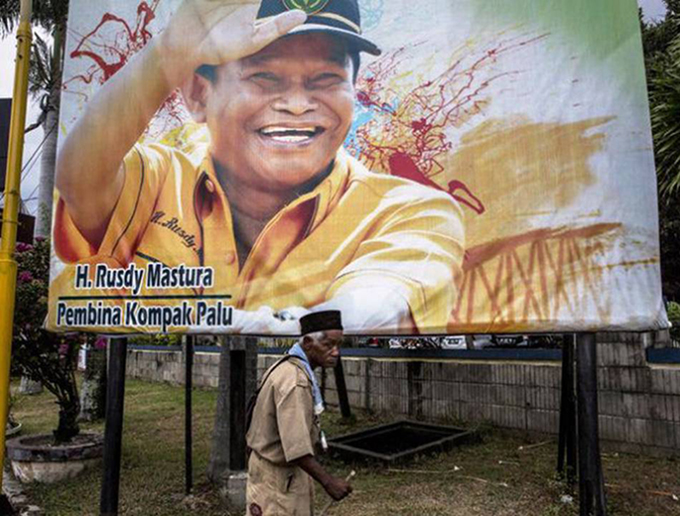
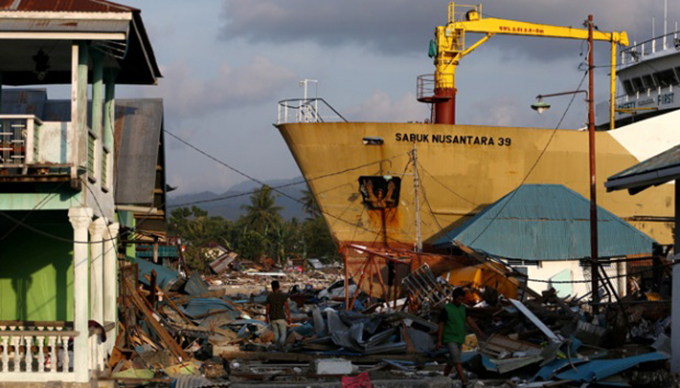 The Palu earthquake and tsunami aftermath … fate of many 1965-1966 “purge” human rights activists unknown. Image: Tempo –





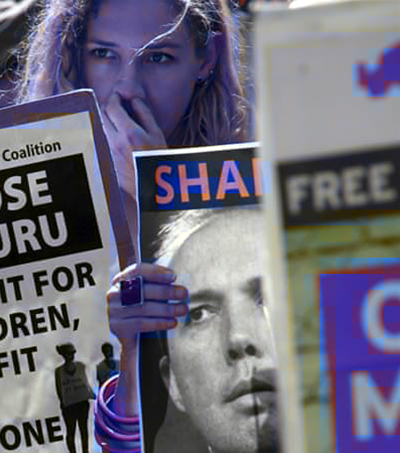 An Australian protest over deteriorating conditions for children at the Nauru detention centre. Image: Al Jazeera


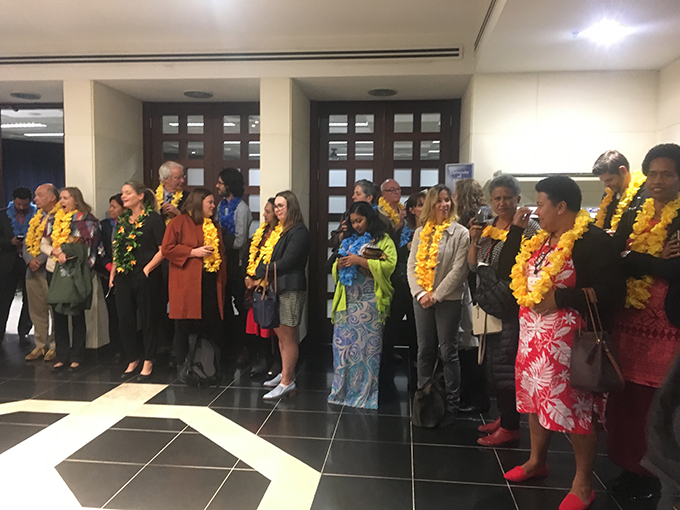 Participants of the Climate Change and Conflict in the Pacific workshop in Auckland last weekend. Image: Lynley Brown
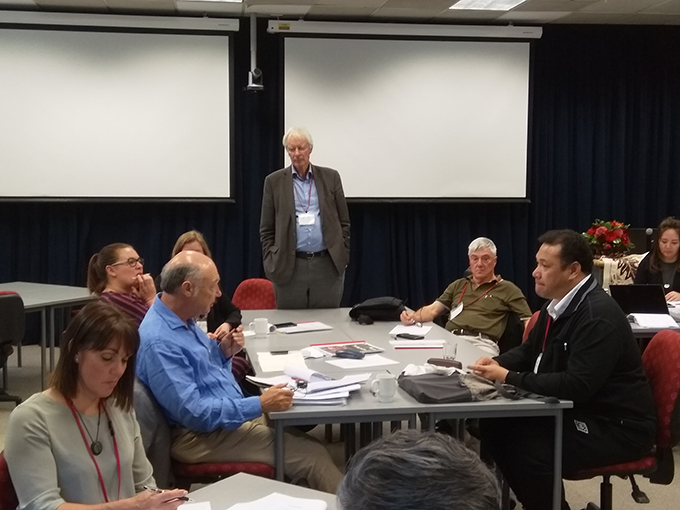 Professor Kevin Clements facilitating the Climate Change and Conflict in the Pacific workshop. Image: Michael Andrew/PMC


 Banabans of Rabi: A story of Survival.
 The 2018 Nuku’alofa Film Festival.

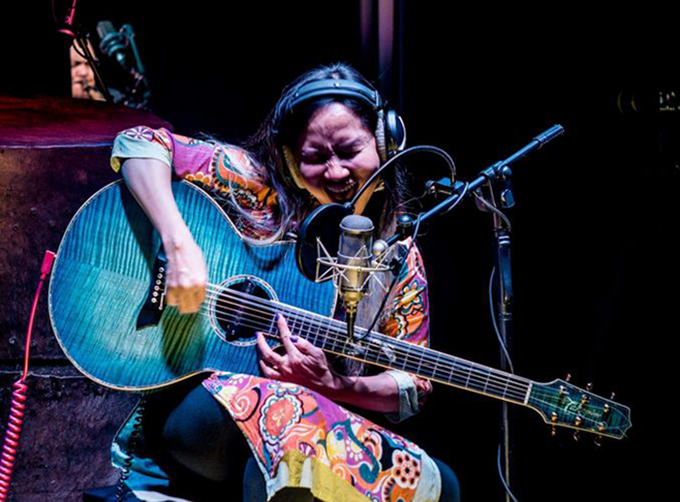 Mai Khoi, the woman who has been dubbed as Vietnam’s own Lady Gaga or Pussy Riot and who recorded the controversial number Dissent, was detained and “interrogated for eight hours”. Image: Hanoi Grapevine