Page 1117

Mega study confirms pregnant women can reduce risk of stillbirth by sleeping on their side

]]>

Source: The Conversation (Au and NZ) – By Lesley McCowan, Professor, Obstetrics & Gynecology, University of Auckland

A New Zealand-led international study published today provides the strongest evidence yet that women can more than halve their risk of stillbirth by going to sleep on either side during the last three months of pregnancy.

This mega study (known as individual participant data meta-analysis) has also confirmed the risk of stillbirth associated with sleeping on the back applies to all pregnant women in the last trimester of pregnancy.


Read more: More than 20,000 stillbirths worldwide are avoidable


Risk factors

In New Zealand, stillbirth is defined as the loss of a baby after 20 weeks of pregnancy. An estimated 2.64 million babies die before birth globally each year, and around 300 babies are stillborn in Aotearoa New Zealand each year. About one in every 500 women in New Zealand will experience the tragedy of a late stillbirth and lose their baby during or after 28 weeks of pregnancy.

We have analysed all available data worldwide from five previous studies, including our earlier research, the 2011 Auckland Stillbirth Study, which first identified a link between mothers’ sleeping position and stillbirth risk. The main finding in the mega study, which included information from 851 bereaved mothers and 2,257 women with ongoing pregnancies, was that going to sleep lying on the back (supine) from 28 weeks of pregnancy increased the risk of stillbirth 2.6 times.

This heightened risk occurred regardless of the other known risk factors for stillbirth. However, the risk is additive, meaning that going to sleep on the back adds to other stillbirth risk factors, for example, a baby who is growing poorly in the womb.

Existing common risk factors for late stillbirth are not easily modifiable. They include advanced maternal age (over 40), obesity, continued cigarette smoking and an unborn baby that is growing poorly, especially if the poor growth is not recognised before birth. Women also have a higher risk during their first pregnancy, or if they have already had three or more babies. Women of Pacific and South Asian ethnicity also have an elevated risk of late stillbirth, compared with European women.

If modifiable risk factors can be identified, some of these baby deaths could be prevented. Importantly, our mega study has shown that if every pregnant woman went to sleep lying on her side after 28 weeks of pregnancy, approximately 6% of late stillbirths could be prevented. This could save the lives of about 153,000 babies each year worldwide.

Reduced blood flow

The relationship between the mother going to sleep lying on her back and stillbirth is biologically plausible. A supine position in late pregnancy is associated with reduced blood flow to the womb. Hence, women in labour and women having a caesarean section are routinely tilted onto their side to improve blood supply to the baby.

Recent research carried out at the University of Auckland has provided sophisticated evidence about how the mothers’ position influences blood flow. Results obtained using Magnetic Resonance Imaging (MRI) demonstrate the major vessel in the mother’s abdomen, the inferior vena cava, being compressed by the pregnant womb when she is lying on her back. This reduces flow through this vessel by 80%.

The MRI images show the inferior vena cava (IVC) in blue and the aorta in red. In the left image, the mother is lying on her left side, while in the right image, she is on her back. provided, CC BY-SA

Although the mother’s circulation responds by increasing the flow through other veins, this does not fully compensate. The mother’s aorta, the main artery which carries oxygen-rich blood from her heart, is also partly compressed when the mother lies on her back. This decreases blood flow to the pregnant uterus, placenta and baby.

We speculate that while healthy unborn babies can compensate for the reduced blood supply, babies that are unwell or vulnerable for some other reason may not cope. For example, our mega study showed that the risk of stillbirth after 28 weeks of pregnancy is increased approximately 16 times if a mother goes to sleep lying on her back and also is pregnant with a very small baby.

What to do

New Zealand research has shown that pregnant women can change their sleeping position. In a recent survey conducted in pregnant women from south Auckland, a community that has a high rate of stillbirth, more than 80% of women surveyed stated that they could change the position they went to sleep in with little difficulty if it was best for their baby.

Our advice to pregnant women from 28 weeks of pregnancy is to settle to sleep on their side to reduce the risk of stillbirth, and to start every sleep, including day-time naps, on the side. It does not matter which side. It is common to wake up on the back, but we recommend that if this happens, women should simply roll back on to either side.

ref. Mega study confirms pregnant women can reduce risk of stillbirth by sleeping on their side – http://theconversation.com/mega-study-confirms-pregnant-women-can-reduce-risk-of-stillbirth-by-sleeping-on-their-side-114601

India destroys its own satellite with a test missile, still says space is for peace

]]>

Source: The Conversation (Au and NZ) – By Bin Li, Lecturer, University of Newcastle

On March 27, India announced it had successfully conducted an anti-satellite (ASAT) missile test, called “Mission Shakti”. After the United States, Russia and China, India is now the fourth country in the world to have demonstrated this capability.

The destroyed satellite was one of India’s own. But the test has caused concerns about the space debris generated, which potentially threatens the operation of functional satellites.

There are also political and legal implications. The test’s success may be a plus for Prime Minister Narendra Modi, who is now trying to win his second term in the upcoming election.


Read more: India’s WhatsApp election: political parties risk undermining democracy with technology


But the test can be viewed as a loss for global security, as nations and regulatory bodies struggle to maintain a view of space as a neutral and conflict-free arena in the face of escalating technological capabilities.

According to the official press release, India destroyed its own satellite by using technology known as “kinetic kill”. This particular technology is usually termed as “hit-to-kill”.

A kinetic kill missile is not equipped with an explosive warhead. Simply put, what India did was to launch the missile, hit the target satellite and destroy it with energy purely generated by the high speed of the missile interceptor. This technology is only one of many with ASAT capabilities, and is the one used by China in its 2007 ASAT test.

Power and strength

Since the first satellite was launched in 1957 (the Soviet Union’s Sputnik), space has become – and will continue to be – a frontier where big powers enhance their presence by launching and operating their own satellites.

There are currently 1,957 satellites orbiting Earth. They provide crucial economic, civil and scientific benefits to the world, from generating income to a wide range of services such as navigation, communication, weather forecasts and disaster relief.

The tricky thing about satellites is that they can also be used for military and national security purposes, while still serving the civil end: one good example is GPS.

So it’s not surprising big powers are keen to develop their ASAT capabilities. The name of India’s test, Shakti, means “power, strength, capability” in Hindi.

Danger of space debris

A direct consequence of ASAT is that it creates space debris when the original satellite breaks apart. Space debris consists of pieces of non-functional spacecraft, and can vary in size from tiny paint flecks to an entire “dead” satellite. Space debris orbits from hundreds to thousands of kilometres above Earth.

The presence of space debris increases the likelihood of operational satellites being damaged.

Although India downplayed the potential for danger by arguing that its test was conducted in the lower atmosphere, this perhaps did not take into account the creation of pieces smaller than 5-10 cm in diameter.

In addition, given the potential self-sustaining nature of space debris, it’s possible the amount of space debris caused by India’s ASAT will actually increase due to the collision.

Aside from the quantity, the speed of space debris is another worrying factor. Space junk can travel at up to 10km per second in lower Earth orbit (where India intercepted its satellite), so even very small particles pose a realistic threat to space missions such as human spaceflight and robotic refuelling missions.

Regulatory catch-up

As we’re seeing clearly now in social media, when technology moves fast the law can struggle to keep up, and this leads to regulatory absence. This is also true of international space law.

Five fundamental global space treaties were created 35-52 years ago:

  • Outer Space Treaty (1967) – governs the activities of the states in exploration and use of outer space
  • Rescue Agreement (1968) – relates to the rescue and return of astronauts, and return of launched objects
  • Liability Convention (1972) – governs damage caused by space objects
  • Registration Convention (1967) – relates to registration of objects in space
  • Moon Agreement (1984) – governs the activities of states on the Moon and other celestial bodies.

Read more: I’ve Always Wondered: could someone take ownership of a planet or a moon?


These were written when there were only a handful of spacefaring nations, and space technologies were not as sophisticated as they are now.

Although these treaties are binding legal documents, they leave many of today’s issues unregulated. For example, in terms of military space activities, the Outer Space Treaty only prohibits the deployment of weapons of mass destruction in space, not conventional weapons (including ballistic missiles, like the one used by India in Mission Shakti).

In addition, the treaty endorses that outer space shall be used exclusively for peaceful purposes. However, the issue is how to interpret the term “peaceful purposes”. India claimed, after its ASAT test:

we have always maintained that space must be used only for peaceful purposes.

When terms such as “peaceful” seem to be open to interpretation, it’s time to update laws and regulations that govern how we use space.

New approaches, soft laws

Several international efforts aim to address the issues posed by new scenarios in space, including the development of military space technologies.

For example, McGill University in Canada has led the MILAMOS project, with the hope of clarifying the fundamental rules applicable to the military use of outer space.


Read more: We’re drafting a legal guide to war in space. Hopefully we’ll never need to use it


A similar initiative, the Woomera Manual, has been undertaken by Adelaide Law School here in Australia.

Though commendable, both projects will lead to publications of “soft laws”, which will have no legally binding force on governments.

The UN needs to work much harder to attend to space security issues – the Disarmament Commission and Committee on the Peaceful Uses of Outer Space can be encouraged to collaborate on the issues regarding space weapons.

It is in everyone’s best interests to keep space safe and peaceful.

ref. India destroys its own satellite with a test missile, still says space is for peace – http://theconversation.com/india-destroys-its-own-satellite-with-a-test-missile-still-says-space-is-for-peace-114441

Health Check: what should our maximum heart rate be during exercise?

]]>

Source: The Conversation (Au and NZ) – By Angela Spence, Senior Lecturer in Exercise Physiology (BSc, PhD), Curtin University

You have your runners on, your FitBit is charged, but now what?

When you exercise, your heart and breathing rates increase, delivering greater quantities of oxygen from the lungs to the blood, then to exercising muscles.

Determining an optimal heart rate for exercise depends on your exercise goal, age, and current fitness level.


Read more: What should my heart rate be and what affects it?


Heart rate and exercise intensity share a direct, linear relationship: the more intense the exercise, the higher the heart rate.

When you exercise at the highest possible intensity, your heart will reach maximal heart rate (HRmax), the fastest rate it is capable of beating.

But exercising at a maximal heart rate (HRmax) for every exercise session will not produce efficient fitness results. These high intensities can rarely be sustained, negating the potential benefit of the exercise.

Exercise makes your heart more efficient

Typical resting heart rate can vary quite substantially between people and even within an individual. Around 60-80 beats per minute (BPM) for adults is common.

Heart rate can be easily be measured with devices like FitBits and Apple Watches, although they have their limitations. Andres Urena/Unsplash

Improving your aerobic fitness reduces your resting heart rate, as the heart becomes more efficient with each beat. An athlete’s resting heart rate, for instance, is typically around 40 BPM.

In fact, evidence suggests that long-term exercise training increases the size of the heart, specifically the left ventricle, a phenomenon known as “Athlete’s Heart”. A bigger heart means more blood can be pumped with each beat, and fewer beats per minute are required to maintain blood flow around the body. This is a beneficial physiological adaptation allowing athletes to exercise at higher intensities for longer.

How to calculate your maximal heart rate

There is substantial variation in HRmax. The only true method of determining HRmax is to conduct a maximal exercise test. But HRmax can be estimated using formulas based on age.


Read more: Measuring up: this year, aim for fitness over fat loss for long-term success


The authors of a 2001 study proposed the following revised equation for estimating maximal heart rate:

HRMax = 208 – (0.7 x Age)

This means a 45-year-old would have a predicted HRmax of 177 BPM.

Indeed, our genetics can influence actual maximal heart rates from their predicted value. However, HRmax is not a major determinant of exercise or athletic performance. Far more important is our physiological efficiency.

When assessing heart rate, it’s also important to take into account the effects of emotions such as excitement or fear, stimulants like caffeine, and circulating hormones like adrenaline, all of which can increase heart rate.

Is exercising at maximal heart rates unsafe?

In short, the answer is no. For most adults, the risk of not doing enough exercise is far greater than that of doing excessive endurance exercise.

The health benefits of regular exercise are well established, although emerging evidence suggests excessive exercise may not provide extra cardiovascular health benefits.

Likewise, there’s a higher chance a sedentary person will experience an acute cardiac event, like a heart attack, during exercise when they’re unaccustomed to high-intensity exercise, or they have a pre-existing heart condition. The maximal risk is 0.3 to 2.7 events per 10,000 person-hours.


Read more: Health Check: in terms of exercise, is walking enough?


With a third of Australians not meeting the WHO recommended guidelines of accumulating 150 minutes of exercise per week, encouraging regular physical activity continues to be a pervasive public health message.

In terms of assessing risk, an exercise pre-screening assessment with an ESSA-qualified exercise specialist will be able to assess and mitigate the risk of exercise participation.

Exercise intensity: what happens when we go ‘all out’

Exercising at your maximal heart rate is not necessary to achieve cardiovascular health benefits. Unsplash

Muscle cells require two key ingredients to function: fuel (glucose) and oxygen.

Muscles rely heavily on blood vessels to deliver the necessary nutrients and oxygen around the body, and also to remove by-products such as carbon dioxide.

The more muscles used in exercise, the more blood is distributed towards the active tissues.

When the intensity of the exercise is particularly high, the muscles start to produce another by-product called lactate.

Cells can also use lactate as a fuel although if production rate exceeds metabolism, lactate starts to accumulate and can interfere with cellular function.

The point at which this by-product starts to accumulate is termed the “lactate threshold”.

Any exercise intensity that can be comfortably sustained is usually below this threshold, and will have an accompanying heart rate. As it is much easier to measure heart rate than lactate production, heart rate can be used as a surrogate measure of exercise intensity.

What is the best exercise for heart rate?

While interval-style exercise training is a popular choice for people who are time-poor, the intermittent nature of the exercise means heart rate will fluctuate, providing not much more benefit than traditional steady-state exercise.


Read more: Health Check: high-intensity micro workouts vs traditional regimes


From a scientific perspective, athletes typically use heart-rate ranges to train at specific intensities during aerobic exercise, like cycling or long-distance running.

Exercising at certain intensities are known to elicit adaptive responses from the body, for example, exercising at or below the lactate threshold.

These intensities are called training zones and are expressed relative to HRmax. For instance, a light aerobic training session would be prescribed below 75% HRmax, while training at threshold (around 95% HRmax) will induce physiological change.

Overall, some exercise is better than no exercise for your cardiovascular health. Accumulating 150 minutes of exercise per week is the minimum requirement for health benefit. Exercising at your maximal heart rate is not necessary to achieve these benefits. Athletes can use training zones, relative to HRmax, to achieve optimal adaptation and enhance endurance performance.

ref. Health Check: what should our maximum heart rate be during exercise? – http://theconversation.com/health-check-what-should-our-maximum-heart-rate-be-during-exercise-107963

How to get ready as the US-China trade war spills over to other countries

]]>

Source: The Conversation (Au and NZ) – By Hongzhi Gao, Associate professor, Victoria University of Wellington

The ever-escalating tensions in trade relations between the US and China have caught the nerve of politicians, businesses and the public. This conflict is challenging the traditional approach to trade disputes, which usually involves one of the disputing countries taking the case to the World Trade Organization (WTO) for arbitration or adjudication.

International institutions, including the WTO and the International Monetary Fund (IMF), have warned that the consequences of the conflict could include growing economic nationalism, rising protectionism and a downturn in global growth.

This will have flow-on effects for other countries such as Australia and New Zealand.


Read more: Huawei or the highway? The rising costs of New Zealand’s relationship with China


A new framework

Both countries have developed close political ties with the US while fostering strong economic ties with China. As China is a top trading partner for Australia and New Zealand, the impact of the US-China trade war on their exports could be significant.


Read more: What’s worse than the US-China trade war? A grand peace bargain


Although the dollar value of any effect of the trade war is difficult to gauge, a qualitative analysis is important so that policymakers, investors and businesses can develop an informed view of this live event.

To analyse the impact of the trade war on the exports of third-party countries, we have developed a new framework.

The first factor to consider is whether an original demand for products from a disputing country has been redirected to a third-party country. For example, China’s demand for Brazil’s soybeans has sky-rocketed over the past year, with 5.07 million tonnes imported from Brazil in November 2018, up more than 80% from a year ago. It is predicted that members of the European Union, Mexico, Japan and Canada, among other countries, may capture about US$70 billion of US-China bilateral trade affected by the trade war.

The second factor is whether an original supply from one disputing country to another has been redirected to a third-party country. It has been reported that soybean exports from the US to the European Union have increased by 133% from July through mid-September 2018, compared with the same period in 2017.

European Union consumers and downstream businesses of the soybean industry, such as producers of animal feed and biofuels, have enjoyed the benefits of a lower price of soybeans as a result of the additional supply from the US.

Changing international supply chains

The third factor is whether the trade tension has disrupted the global supply chain of an industry (e.g. smartphones) that is important to the third-party country. The levies imposed by the US government on imports from China are said to destabilise international supply chains inside and outside of China that companies have invested in over years. Countries such as Thailand, Cambodia and Vietnam are catching up with China in terms of manufacturing expertise and capacities. Companies from already industrialised economies such as Taiwan and South Korea are considering revamping their home country’s competitive advantages.

Uncertainty in the price and supply of intermediary goods from these countries into the third-party country’s supply chain are critical for determining the spillover effect on the third country.

The last factor is whether the focal industry in the third-party country has developed a proactive response to the risk from the trade war. A proactive response would mean that companies in the focal industry in the third-party country have started to adjust strategic investment in research and development, sourcing, and manufacturing in or outside the US or China.

Risks and opportunities

The trade war will create risks and opportunities to third-party countries such as Australia and New Zealand. Filling the supply and demand gaps caused by higher tariffs on both sides of the trade war is an opportunity for a third-party country. But this requires flexibility in production and export capabilities in companies and industries.

As the trade spat continues, it remains a balancing act for the third-party country dangling between two political and economic powers. We have already seen the tensions between the US and China spill to this region in the context of the US ban on Huawei and its persuasion of Australia and New Zealand to follow suit.

Companies such as Air New Zealand and Sanford have been reported to face challenges on “operational” matters when the country’s political relationship with China is in question.

ref. How to get ready as the US-China trade war spills over to other countries – http://theconversation.com/how-to-get-ready-as-the-us-china-trade-war-spills-over-to-other-countries-114361

Leonardo da Vinci revisited: was he an environmentalist ahead of his time?

]]>

Source: The Conversation (Au and NZ) – By Susan Broomhall, Professor of History, University of Western Australia

On the 500th anniversary of his death, this series brings together scholars from different disciplines to re-examine the work, legacy and myth of Leonardo da Vinci.

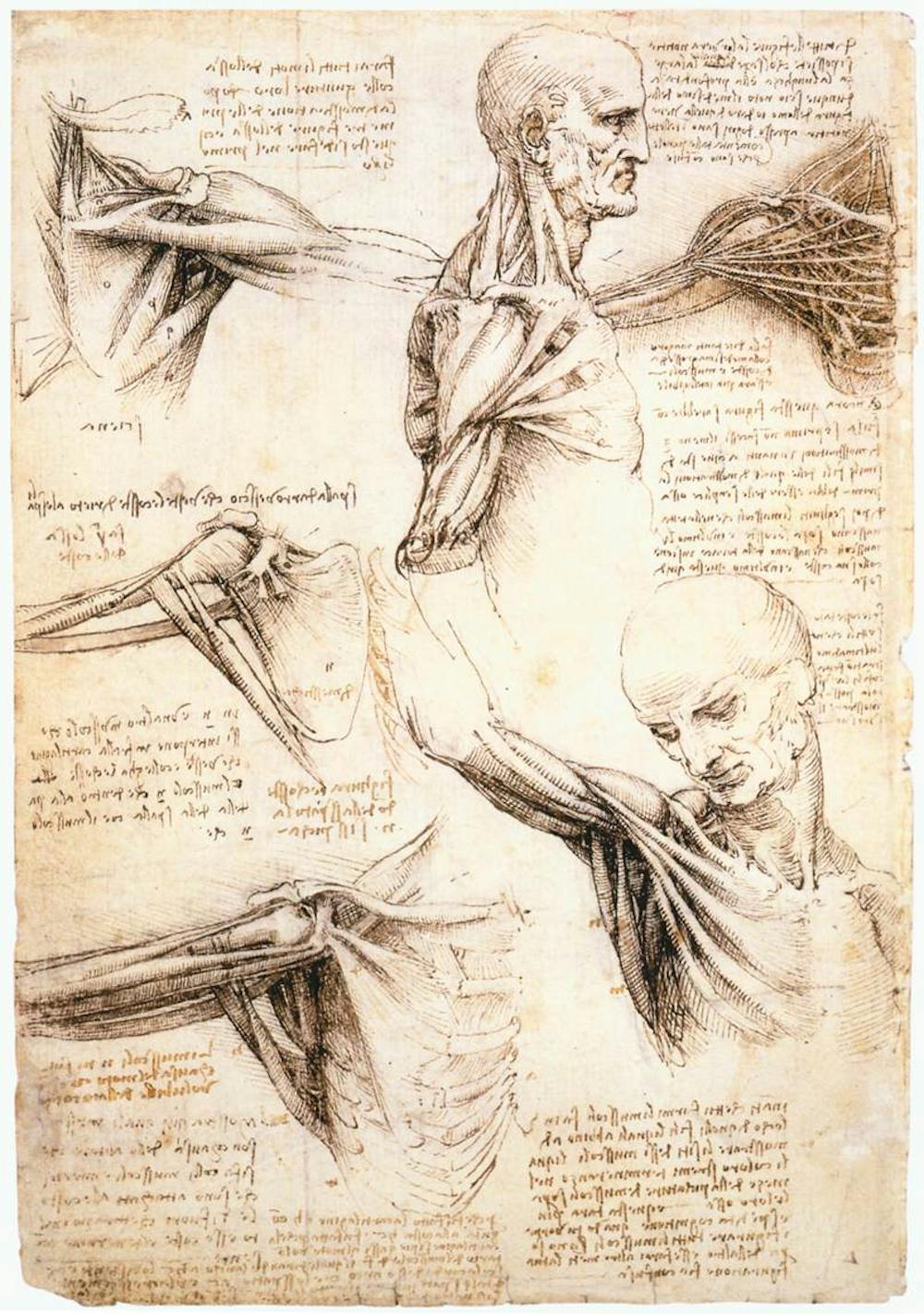
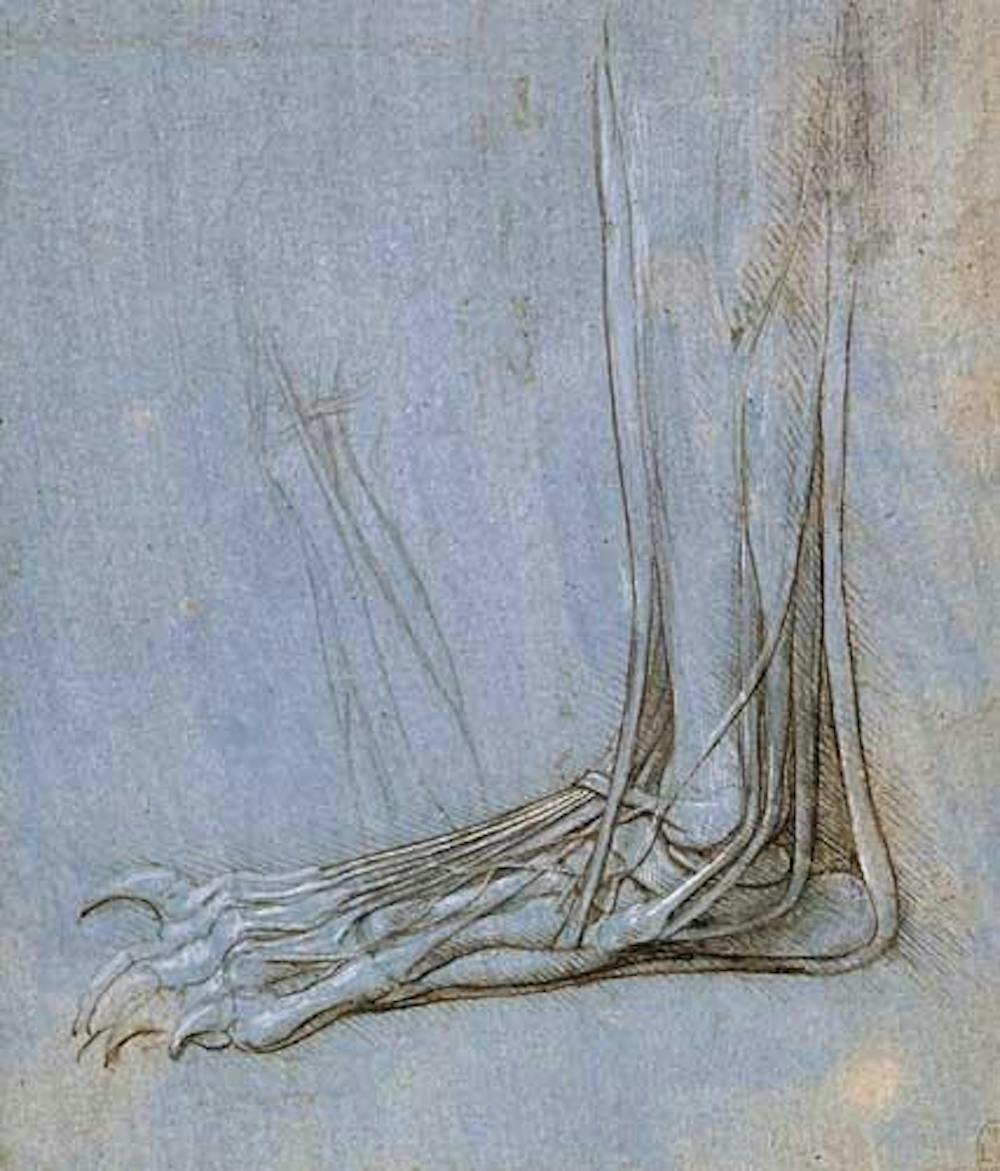
Leonardo’s notebooks are filled with illustrations of nature, both plants and animals, their interactions with humans and in local ecosystems. Did his deep engagement with the natural world make him an environmentalist ahead of his time?

Leonardo was a child of the Tuscan countryside, raised in the tiny village of Anchiano, although he spent most of his adult life at the courts of dukes, kings and princes.

Some of his work for these patrons involved planning interventions into nature, most often managing waterways, but his sketches suggest his attention roamed further than the projects he was commissioned to undertake.

He spent time with friends in a villa outside of Milan observing the country nearby and sketching plans for gardens there, and ended his life on a little country estate that was then on the outskirts of Amboise in France.

One of his first biographers, Giorgio Vasari, tells us that Leonardo

delighted much in horses and also in all other animals, and often when passing by the places where they sold birds he would take them out of their cages, and paying the price that was asked for them, would let them fly away into the air, restoring to them their lost liberty.

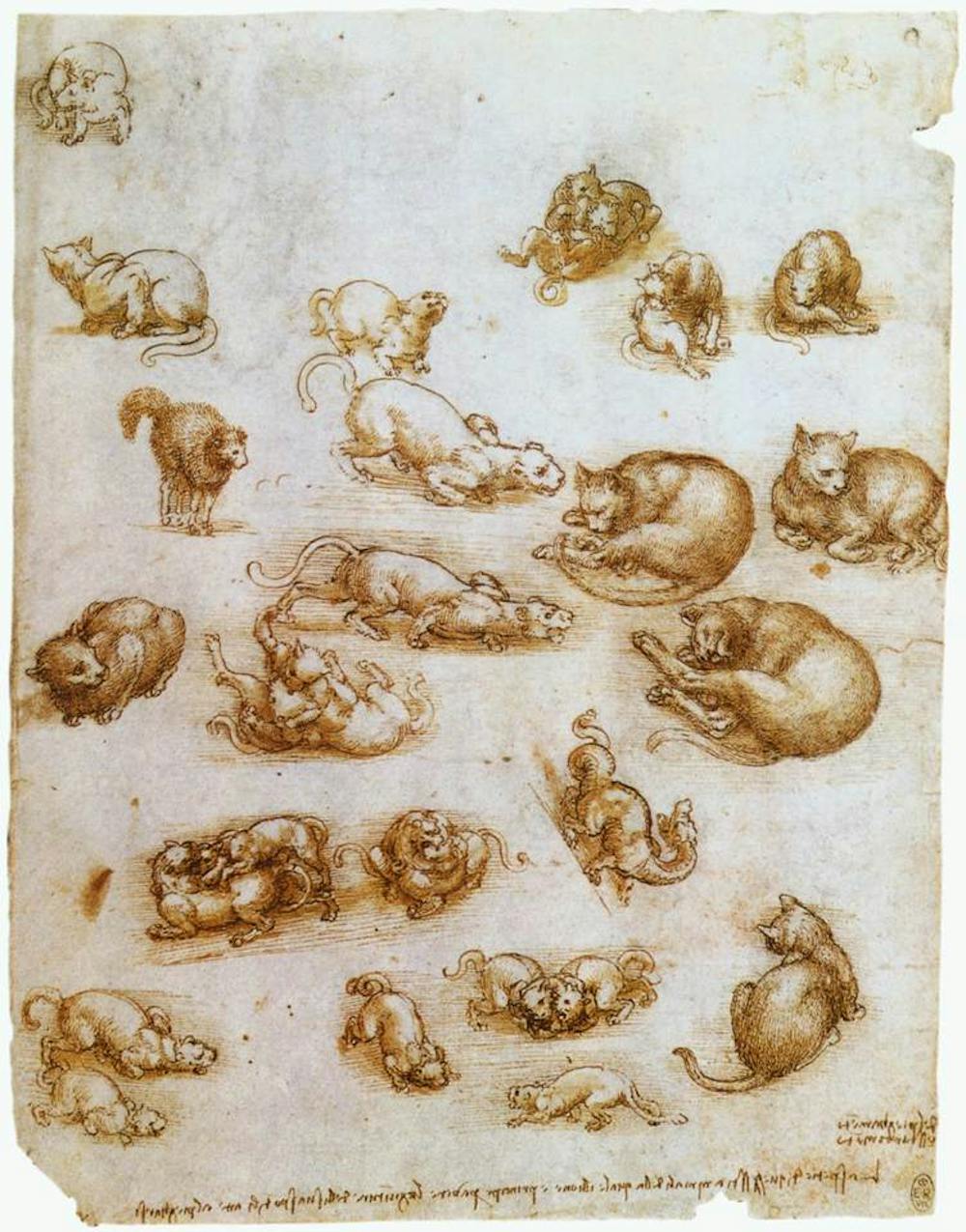
Leonardo da Vinci, Study sheet with cats, dragon and other animals, c. 1513. Wikiart.org

Leonardo was also reportedly a vegetarian. This supposition comes from the explorer Andrea Corsali’s description of the non-meat-eating Gujarati people (from modern India) as like “our Leonardo da Vinci”.

The many notebooks and loose sheets Leonardo filled with jottings and illustrations across his lifetime reveal his close observation of nature — from cats and crabs to flowers and copses of trees – and the spirit of enquiry from which he drew many lessons.

One jotting simply states: “Ask the wife of Biagio Crivelli how the capon nurtures and hatches the eggs of the hen”.

His understandings of the habits of animals informed a series of fables and proverbs bearing witness to various emotional traits he attributed to them: gratitude, rage, cruelty and generosity among them. He suggested, for instance, that “we see the most striking example of humility” in the lamb.

Star of Bethlehem, Ornithogalum umbellatum Wikiart.org

The random cruelty of nature

But Leonardo was also struck by the violence of natural processes. Nature appears to have been “rather a cruel stepmother”, he wrote. “Why did nature not ordain that one animal should not live by the death of another?”

He reflected on the random cruelty of nature in a series of riddles, created across his notebooks. For instance, in the entry on walnut trees, he writes in emotional terms of the violence wrought upon these trees as humans enjoyed their seeds: “beaten, and their offspring taken and flayed or peeled, and their bones broken or crushed.”

Leonardo da Vinci, Studies of crabs, c. late 15th century. Wikiart.org

Still, Leonardo does not seem to have been particularly concerned about the role of humans in enacting violence against other species. His own quest for knowledge and artistic creativity demanded it.

Vasari tells a story of the young Leonardo seeking to depict a frightening creature on a shield he had “brought for this purpose to his room, which no one entered but himself, lizards, grasshoppers, serpents, butterflies, locusts, bats, and other strange animals of the kind …” “The smell in the room of these dead animals was very bad, though Leonardo did not feel it from the love he bore to art.”

Vasari talks of how Leonardo “suffered much in doing it” – but not as much as the other species whose lives were sacrificed for his art.

In other tales, Vasari tells us how Leonardo, while he was working for Giuliano de’ Medici in Rome, discovered an unusual lizard and promptly

made some wings of the scales of other lizards and fastened them on its back with a mixture of quicksilver, so that they trembled when it walked; and having made for it eyes, horns, and a beard, he tamed it and kept it in a box.

For Vasari, these stories show Leonardo’s “marvelous and divine” mind, but they could also be interpreted as showing the instrumental way in which Leonardo thought about nature, as a resource to expand human knowledge and control the environment.

Leonardo da Vinci, Birch copse, c. 1500. Wikiart.org

Leonardo’s nature

His contemporaries clearly thought there was something different about Leonardo and his interest in nature. Does this make him a kind of pre-modern environmentalist?

Western environmentalism (and before it, preservationism) is often understood to have become possible when nature had been subdued by technology. With urbanisation and development of a middle class, more people could feel sentimental about nature.

Although he was raised in the countryside, Leonardo spent most of his everyday adult life in major European towns in the company of princes and kings. He was no longer concerned directly with the need to cut down wood for warmth or kill animals for food. We could say, then, that he could afford to be more sentimental about nature.

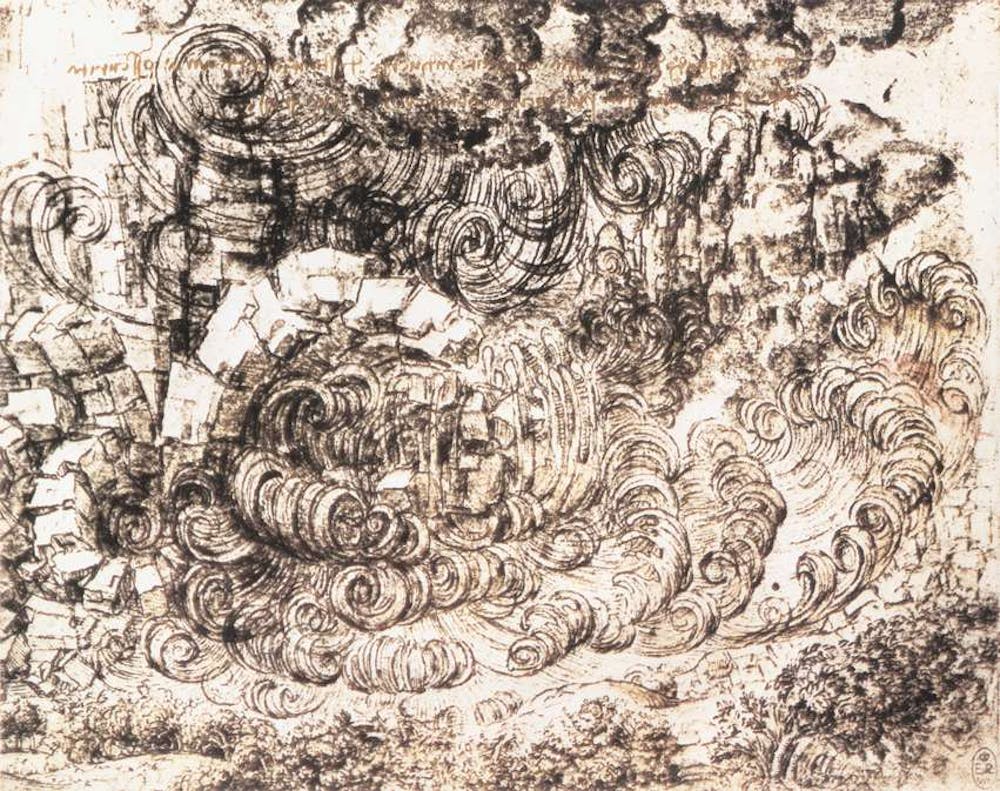
Leonardo da Vinci, Natural disaster, c. 1517. Wikiart.org

Certainly his exquisite drawings suggest a particular depth of feeling, attunement and sensitivity to the natural world. And yet it seems that preservation of nature was not on Leonardo’s mind.

He had not witnessed the speed and scale of devastation of the natural world wrought by humanity with the onset of industrialisation. Instead, he understood destruction as part of the cycle of nature. If, as he wrote, nature “seeks to lose its life, desiring only continual reproduction”, there was nothing to be protected, for annihilation and creation went hand in hand.

ref. Leonardo da Vinci revisited: was he an environmentalist ahead of his time? – http://theconversation.com/leonardo-da-vinci-revisited-was-he-an-environmentalist-ahead-of-his-time-112404

Migrants want to live in the big cities, just like the rest of us

]]>

Source: The Conversation (Au and NZ) – By Sajeda Tuli, Fulbright Scholar, Institute for Governance and Policy Analysis, University of Canberra

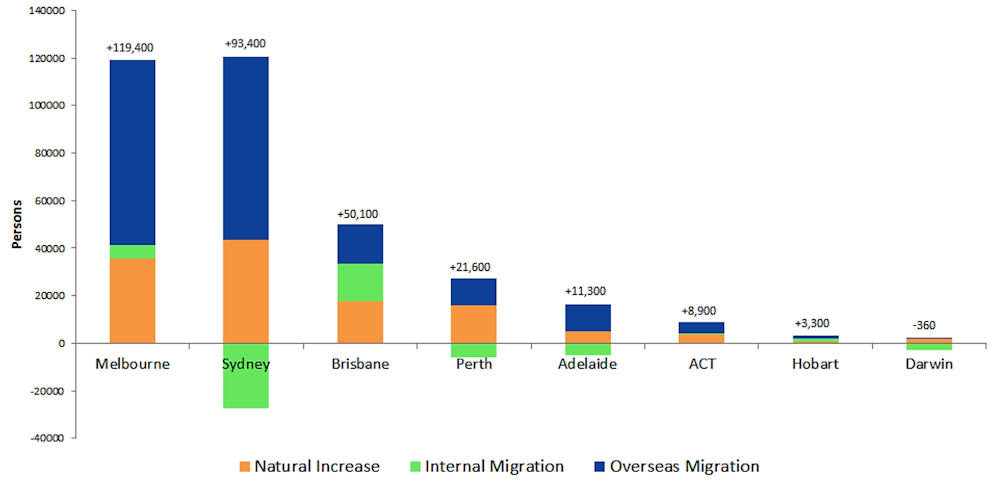
Migration is getting increasing attention in Australia, with the Morrison government recently putting the focus on settling migrants in regional areas to ease pressure on the capital cities. Newly released statistics show 79% of Australian population growth was in the capital cities in 2017-18. The population of these cities grew by 307,800, a 1.9% increase.

This was nearly twice the growth rate of non-capital-city areas, which gained only 83,200 people – although many regional areas would welcome more people to revitalise struggling towns.

The chart below shows growth in capital city populations from international and internal migration, as well as natural increase (births minus deaths).

BREAKDOWN OF CAPITAL CITY POPULATION GROWTH 2017-18

ABS, 3218.0 – Regional Population Growth, Australia, 2017-18, CC BY

Many towns would welcome migrants because they are agents of development, contributing to economic growth and prosperity. According to the International Organisation for Migration, if current trends continue, there could be 405 million international migrants globally by 2050 in the world.

Like other OECD countries, Australia uses skilled migration to overcome skill shortages and sustain economic growth. The proportion of skilled migrants in the immigration intake more than doubled from 29.1% in 1993-1994 to 68% in 2005-2006.

The latest data continue a longer-term trend of migrants settling in our biggest cities. They are attracted by demand for their skills and the economic opportunities the cities offer.

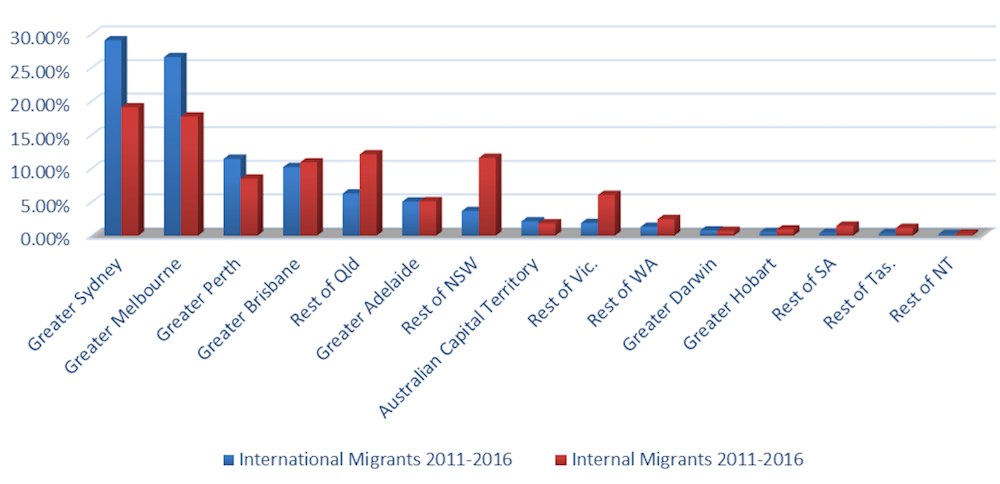
Australia received 1,379,055 international migrants between 2011-2016, of whom nearly 50% were high-skilled or semi-skilled. The chart below shows 85.52% of them settled in the greater capital cities, which also attracted many internal migrants from elsewhere in Australia. Greater Sydney and Greater Melbourne, the nation’s top two global cities, received more than 50% of migrants.

Only 14.1% of international migrants settled outside the capital cities. Outside these cities, internal people movement was greater than international.

MIGRANT DISTRIBUTION IN CAPITAL CITIES AND REST OF AUSTRALIA 2011-16

Author provided


Read more: Settling migrants in regional areas will need more than a visa to succeed


Why is growth concentrated in a handful of cities?

Migrants are just following the same trend as the non-migrant population in Australia. Australia is a highly urbanised country and most people live in or near its major cities.

At the time of the last census in 2016, two-thirds of the population lived in the capital cities, which is where 66% of employment was located. Outside those metropolitan areas, some big regional cities such as Newcastle, Wollongong and Geelong also have a significant share of employment.

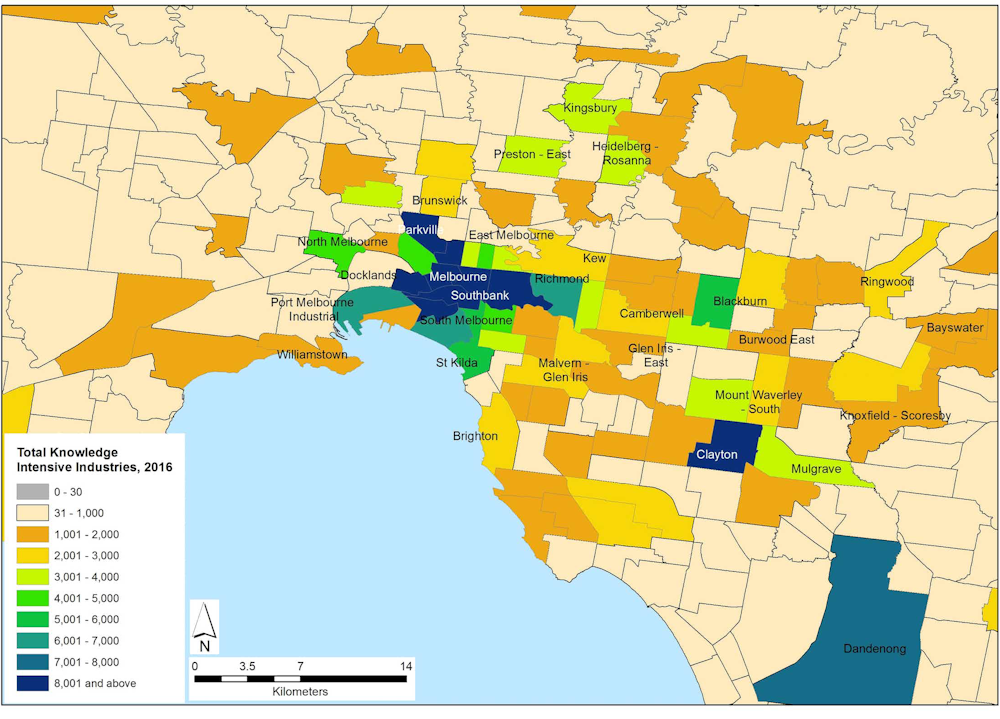
The chart below shows the concentration of knowledge industry workers in Greater Melbourne. They are concentrated in the inner Melbourne area. Most major Australian cities follow the same trend.

DISTRIBUTION OF KNOWLEDGE INDUSTRY WORKERS IN MELBOURNE

Created by author from ABS Census 2016 data

According to the 2016 Census, the majority of skilled migrants, 63%, are settling in the greater capital cities. They are simply following the employment.

The big cities offer diverse opportunities, similar jobs to advance their careers and a lifestyle for them and their families. These are the main reasons the big cities are the main destinations of these large numbers of skilled migrants.

Asian-born migrants dominate current migration intakes. In the past, migrants were mostly from Europe and the UK. Migrants are reshaping Australia and we are becoming truly multicultural.


Read more: How Australian cities are adapting to the Asian Century


In addition, migration is significantly reducing the rate of population ageing in Australia. According to the 2016 Census, more than 85% of migrants are of working age, compared to 65% of existing Australian residents.

In future, Australia will face significant skills shortages, which means skilled migration will be important for Australia’s economic development. Since most knowledge jobs are concentrated in the major cities, skilled migrants will continue to concentrate there too.

Therefore, migration and skilled migrants are important for Australian cities at present and will be into the future. They are contributing to demographic balance, meeting skills shortages and enhancing economic prosperity.


Read more: The government is right – immigration helps us rather than harms us


Why is regional Australia failing to attract migrants?

Although the government has policies in place to meet skill shortages in regional Australia, lack of employment choice and diversity are still a problem in these areas. Therefore, a qualified migrant doctor or engineer will likely go where they might have more opportunities after they finish any mandatory period of living in a regional or designated area.

Migrants, especially international migrants, follow the jobs. Internal migrants are more likely to follow family and lifestyle. These drivers need to be understood if we hope to shift settlement patterns.

If regional Australia is to be made more attractive to migrants, we need to diversify employment opportunities, improve amenity, services and infrastructure, and most importantly ensure migration policies focus on the nature and needs of the regional economy. This requires research to identify which regional cities have capacity to grow. Migrants along with the rest of Australia will follow the opportunities and lifestyle there.


Read more: Forcing immigrants to work in regional areas will not boost regional economies in the long run


ref. Migrants want to live in the big cities, just like the rest of us – http://theconversation.com/migrants-want-to-live-in-the-big-cities-just-like-the-rest-of-us-113911

Who do Chinese-Australian voters trust for their political news on WeChat?

]]>

Source: The Conversation (Au and NZ) – By Wanning Sun, Professor of Media and Cultural Studies, University of Technology Sydney

There are currently about 1.2 million people of Chinese origin in Australia. Approximtely half of them were born in China and speak Mandarin in the home. For those who have come from a one-party state where electoral voting is a foreign concept, figuring out which party to vote for is part of the process of learning how to be citizens in a democratic society.

Recent state elections show that the widespread adoption of the social media platform WeChat by Chinese-Australians has led to a much higher level of political participation. We’ve also seen that this community is as divided politically as English-speaking Australians.

But whose information and opinions do Mandarin-speaking voters trust? And who is more likely to influence how they vote?

Prime Minister Scott Morrison has his own WeChat account now, but the reach of Mandarin-speaking candidates like Gladys Liu is far wider. Stefan Postles/AAP

These are among the first set of questions we posed in a longitudinal study of the role played by Chinese-language digital media in the political, economic and cultural lives of Mandarin-speaking migrants in Australia.

Since the beginning of the year, we have been closely following a number of WeChat groups based in Melbourne, Sydney and Perth, in addition to a couple national groups. We also conducted a large survey of Mandarin-speaking social media users on Survey Monkey last month.


Read more: Chinese social media platform WeChat could be a key battleground in the federal election


We asked the participants who are citizens (and thus able to vote) to identify their main sources of information about state and federal elections. We then combined our ethnographic and survey results to present the following key findings:

1. Less politically engaged voters rely on friends

We found that an important source of information and influence in the Mandarin-speaking community comes from postings on WeChat’s “Moments” feature, which is similar to Facebook’s timeline except the information shared on Moments can only be accessed by a person’s friends and acquaintances, not by others.

Around 26% of citizens surveyed said that postings by friends on Moments was one of their primary sources of information on political news. These people tended not to invest much time in deciding how to vote. They trusted the opinions of friends more than the media, politicians and public commentators. People in this group were also often less educated, less proficient in English or less engaged in politics.

On the days leading up to the recent NSW election, we frequently saw postings such as:

Have to vote in the state election this weekend. Any ideas who to vote for?

Replies included:

Best stick with Liberal. They’re better at managing the economy.

2. WeChat groups are a growing source of influence

Most WeChat users are members of several WeChat groups, which are self-formed, private messaging communities that can include up to 500 members. In our survey, around 22% of participants cited information shared in WeChat groups as another important source of electoral information.

Unlike friends on Moments, members of a particular group may be unknown to each other. Groups can based on special interests (parenting, gardening, cooking), place of origin (the Shanghai Migrant Association), or current place of residence (Chisholm in Melbourne). In the period leading up to elections, the topic of discussion in many of these groups tends to pivot towards the pros and cons of the major political parties.

WeChat groups with a more explicit political agenda are usually created and administered by candidates of Chinese heritage, or by friends and supporters of these candidates. Although the partisan nature of some groups is clear, they usually include some members from across the political spectrum. Debates in these groups often becomes very heated, sometimes quite combative.


Read more: Thinking of taking up WeChat? Here’s what you need to know


3. Gatekeepers mediate news from English-language sources

As many as 50% of Chinese-Australian voters we surveyed also named mainstream English-language media as a source of information and opinion on politics. But our ethnography suggests that this information is only consumed after it has been processed, curated and framed within a particular editorial stance by bilingual gatekeepers within the Chinese-speaking community.

For example, an active member in a Perth-based WeChat group made three posts in quick succession a couple of weeks ago. The first, in Chinese, said:

The Sydney Morning Herald reported eight years ago on Scott Morrison’s proposal to use anti-Muslim sentiment to win votes – a claim that Morrison did not deny at that time.

His second post was a link to News.com.au journalist Malcolm Farr’s recent story about Morrison accusing TV presenter Waleed Aly of lying over this issue. The third post quoted a few key paragraphs from Farr’s story.

From the first post, it’s clear the WeChat group member is not a fan of Morrison’s. And this frames the news in a certain way for other members of the group.

4. Chinese-speaking candidates are more relatable to voters

Politicians like Morrison and Bill Shorten may have their own WeChat accounts now, but they are not as influential as candidates of Chinese heritage. About 23% of voters in our survey said WeChat messages from Mandarin-speaking political candidates were their primary source of information about elections. Mainstream politicians scored only 13%.

Chisholm Liberal candidate Gladys Liu’s WeChat account illustrates this finding. Her site lists a series of stories – no doubt put together by her supporters – detailing how Liu helped individual members of the Chinese community in need.

These feel-good stories were also widely circulated by Liberal supporters on WeChat. Liu is very active in WeChat groups, and often takes time to respond to messages that challenge her on particular issues.

Liberal candidate for Chisholm Gladys Liu’s WeChat account. Screenshot

5. The emergence of new opinion leaders

Chinese-language print magazines and newspapers have long been key influencers of community sentiment, but this status is increasingly under threat.

Similarly, traditional community organisations are no longer as influential as they once may have been. These organisations were mostly established by migrants from Hong Kong, Taiwan and the Cantonese-speaking areas of China before the arrival of large numbers of Mandarin speakers from China in the last couple of decades. They also predated the emergence of social media platforms such as WeChat.

New opinion leaders tend to come from within the ranks of individual WeChat users. Many are able to marshal large followings on their WeChat subscription accounts. They tend to be bilingual (Mandarin and English) and have a constant presence in WeChat group discussion. Their opinions or analyses are informed by their own understanding of Australian party politics.

These opinion leaders often emerge organically through interactions with other WeChat users and their influence usually rises and falls unpredictably.


Read more: How Australia’s Mandarin speakers get their news


These findings should provide food for thought for Australian politicians wishing to reach out to Chinese communities.

WeChat has shown a promising capacity to facilitate civic engagement and promote democratic dialogue among Chinese-speaking migrants. But the government and non-Chinese-speaking politicians need to do their homework to figure how to use this platform effectively and make an impact on voters whose trust, at times, has been hard to win over.

ref. Who do Chinese-Australian voters trust for their political news on WeChat? – http://theconversation.com/who-do-chinese-australian-voters-trust-for-their-political-news-on-wechat-113927

Curious Kids: why do we have fingernails and toenails?

]]>

Source: The Conversation (Au and NZ) – By Amanda Meyer, Lecturer of Human Anatomy, University of Western Australia

Curious Kids is a series for children. If you have a question you’d like an expert to answer, send it to curiouskids@theconversation.edu.au You might also like the podcast Imagine This, a co-production between ABC KIDS listen and The Conversation, based on Curious Kids.


Why do we have fingernails and toenails? – Jake (age 9) and Ben (age 7), Melbourne.


The reason we have fingernails and toenails is not to pick our noses or to scratch our siblings.

The short answer is we have evolved to have nails because they help us pick things up (like food), pick things off (like bugs), and hold tightly onto things.

Early humans who had these type of nails (instead of claws) tended to live long enough to have babies and pass on the fingernails gene to their kids. So over time, the number of human ancestors with nails grew and the number with claws shrunk. That’s how evolution works.

But the story goes back further than that.

Flat nails are better than claws for grasping. Shutterstock

Our primate ancestors and cousins

Humans are members of the primate family. The primates are the most intelligent group of mammals (mammals are animals who do not lay eggs). Primates have evolved to have nails.

That’s why you see primates like apes and monkeys also have nails on all their fingers and toes, as well as our closest primate “cousins”: gibbons, bonobos, chimpanzees, gorillas and orangutans.

While humans don’t usually use our toes these days to pick things up, our primate cousins do. So our toenails are a hangover from a time in our evolutionary past where we often used our feet to pick stuff up and pick stuff off.

All these primates – including us – evolved from a common ancestor that had claws.

Here you can see a chimpanzee’s fingernails and toenails. Nils Rinaldi, CC BY-SA

Nails vs claws

So why did we evolve to have nails instead of claws? The answer is that nails let us do a lot of important things that you can’t do with claws.

Compare your nails to those of a dog or cat. Your nails are wide, flat and shield-shaped. They are also on the back of the tip of your fingers and toes.

A dog or cat has claws that are thin, curved and pointed. They wrap around the end of their “fingers” and “toes”.

Claws are great for scratching but would get in the way if you had to hold a tool or pick up something tiny. Shuttertock

By having nails, you can pick up tiny things like small LEGO bricks off the ground, pick off stickers, or pick a bug off you easily. You can make and use tools. Can a cat do that with its claws? No! In fact, having super-long, clawlike nails can make it really hard to do a lot of things humans need to do – like eating, washing and holding things.

Without nails, it would be much harder to pick up small things. Shutterstock

On the other hand, claws are useful for some things that cats and dogs often need to do.

By having claws, your cat can quickly run up a tree (even if it doesn’t have many lower branches) to catch a bird. Plus your dog can dig up your backyard in one afternoon (to find food, for example).

Primates also climb trees but we mostly do it by grasping onto branches, and long claws get in the way when you’re grasping. Nails provide a rigid backing to primates’ fingertips to improve grasping. We dig too, of course, but we use tools for that. You don’t have the same needs as a dog or a cat, so you don’t have the same type of nails or claws.

Each type of animal has evolved to have the type of finger-covering (either claws or nails) that best suits its needs.


Read more: Curious Kids: how do tongues taste food?


What if we didn’t have nails?

Imagine for a moment that humans didn’t have nails. First, a lot of nail salons would go out of business, and we couldn’t enjoy painting our nails lots of different colours.

But more importantly, having a lump of soft skin at the end of our fingers would make it harder to hold things and control our grip on them. The ends of our fingers and toes have changed to match our changed lives.

So next time you’re at the zoo, look at the hands of gibbons, chimpanzees, gorillas and orangutans, and you’ll see they have nails just like yours. Think about all the amazing things we primates can do with nails.

Orangutan nails are not that different to ours. Shutterstock


Read more: Curious Kids: is everything really made of molecules?


Hello, curious kids! Have you got a question you’d like an expert to answer? Ask an adult to send your question to curiouskids@theconversation.edu.au

CC BY-ND

Please tell us your name, age and which city you live in. We won’t be able to answer every question but we will do our best.

ref. Curious Kids: why do we have fingernails and toenails? – http://theconversation.com/curious-kids-why-do-we-have-fingernails-and-toenails-110989

Former PM Morauta accuses Australia of ‘whitewashing’ PNG poll rigging

]]>

Former Papua New Guinea prime minister Sir Mekere Morauta has strongly criticised “foreign governments and organisations”, singling out Australia, for their assessments of the 2017 PNG national election.

Sir Mekere accused them of “whitewashing the rigging and corruption associated with it”.

by the Australian National University and Transparency International. Image: Screenshot/PMC

“The ANU report and the report of TI PNG stand out in stark contrast to the remarks made by some foreign governments and in other observer reports of the 2017 election,” he said.

“While those other observers noted irregularities, mostly with the electoral roll, they failed to expose the widespread abuse, violence, intimidation and rigging that voters experienced.”

-Partners-

“It is true that the scope of other observer missions was not as wide as the ANU team, and their resources were more limited, but the variance in the findings is striking,” he said.

Sir Mekere particularly mentioned huge failings in the polls in National Capital District, Southern Highlands, Hela, Enga, Western Highlands and Jiwaka, although local observers in Chimbu also reported significant malfeasance in the way polling was conducted and considerable violence in Kundiawa town.

‘Ignored’ evidence
The former prime minister commended the work of the hundreds of Papua New Guineans, academics and researchers who contributed to the ANU report.

“The report was based on evidence that was either not noticed or was deliberately ignored by other teams apart from Transparency International,” he said.

“I trust that the other observer missions will now study the ANU and TI reports carefully and compare their own reports with them.

“I also trust that foreign governments study the reports and take stock of their opinions articulated at the time of the election, blindly praising Peter O’Neill and the Electoral Commission for the conduct and the result of the election.”

Sir Mekere particularly singled out for criticism the Australian Department of Foreign Affairs.

“I don’t know who DFAT talks to or where their intelligence comes from,” he said. “They are out of step with the thinking and experience of the vast majority of Papua New Guineans.

“How on earth could the Australian foreign minister [at the time, Julie Bishop] have congratulated PNG on a ‘successful election’?

‘Bad joke’
“At the time the remark was widely considered a joke, a bad joke, but it is a serious insult to the people of PNG.

“Most Papua New Guineans expect Australia not to tolerate corruption, not to endorse electoral fraud and rigging, and to condemn violence.

“We were amazed and very disappointed that the Australian government not only seemed to condone what had happened but continued to praise Peter O’Neill publicly.

“Australia’s long history of technical and financial support to the Electoral Commission also needs to be questioned,” Sir Mekere said.

“Australia gave assistance to the 2002, 2007, 2012 and 2017 elections. It does not seem to have resulted in an efficient, capable organisation or in free and fair elections.”

Sir Mekere said the 2017 election was by far the worst his country had experienced in terms of abuse, rigging and violence.

Turned blind eye
He said Australian advisers working in the Electoral Commission apparently turned a blind eye to malpractices concerning the storage and distribution of ballot papers, while the assistance to the electoral roll update clearly did not result in any material improvement.

“The 2017 election was designed to be chaotic; it was designed to be rigged; it was designed to produce a particular result,” he said.

“Those responsible for the chaos were Peter O’Neill, Isaac Lupari and the Chief Electoral Commissioner. They do not deserve praise for their actions.

“The ANU report should be a wake-up call for Australia to start thinking more constructively about its engagement with Papua New Guinea.”

This article is republished by Asia Pacific Report with permission and was originally published by Keith Jackson’s blog PNG Attitude.

Article by AsiaPacificReport.nz

‘I still have trust in Indonesian military,’ Jokowi tells Prabowo

]]>
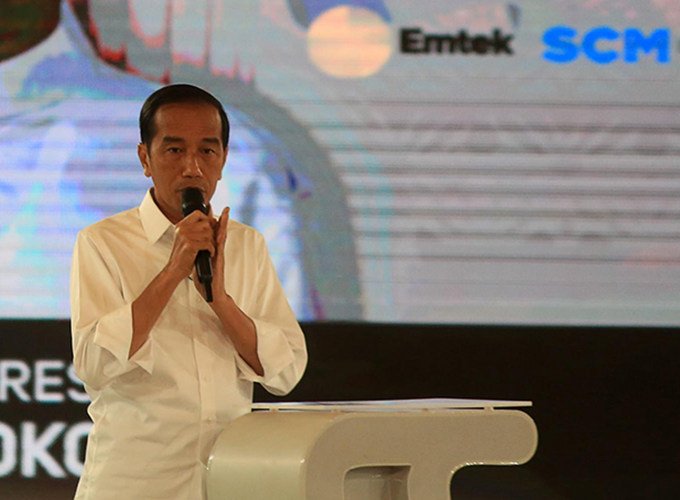
Incumbent President Joko “Jokowi” Widodo speaks during the fourth presidential candidate debate held at Shangri-La Hotel, Jakarta, at the weekend, which discussed ideology, governance, security and foreign affairs. Image: Seto Wardhana/Jakarta Post

Pacific Media Centre Newsdesk

Presidential candidate Joko “Jokowi” Widodo has shrugged off a concern expressed by challenger Prabowo Subianto, who questioned the capability of the Indonesian Military (TNI) to protect the country.

The retired army general said “Indonesia’s defence is too weak” because the budget allocated for defence was too small, claiming that “all of our money is flowing overseas”.

“I think Pak Prabowo does not have faith in our military. As a civilian, I have great faith in our military,” the incumbent President Jokowi said.

READ MORE: Pacific value of ‘one family’ lost on Indonesia

Jokowi went on to mention that command centers in Natuna regency, in Riau Islands as well as in Sorong, West Papua, showed how Indonesia was ready to anticipate a foreign threat.

Instead, the former businessman said Indonesia should be concerned about possible internal conflict.

-Partners-

“According to information from defence strategists, there is no threat of foreign invasion in the next 20 years. What is more important is domestic conflict, which will be amplified by technology,” Jokowi said.

“Our defence budget is Rp 107 trillion [NZ$11 billion], the second-biggest after the Public Works and Housing Ministry. This is not a joke, even though some improvement is needed,” he added.

Prabowo was quick to question the claim, saying that the budget allocated for the military was no more than 1.5 percent of the state budget.

  • The Indonesian presidential elections are on April 17.
Print Friendly, PDF & Email

Article by AsiaPacificReport.nz

How DNA ancestry testing can change our ideas of who we are

]]>

Source: The Conversation (Au and NZ) – By Caitlin Curtis, Research fellow, Centre for Policy Futures (Genomics), The University of Queensland

Have you ever wondered who you are or where you come from?

I think it’s a fundamental human desire to want to know this.

One way we’re seeing this curiosity play out is in the rise of the at-home DNA ancestry business. You’ve probably seen the ads for tests like 23andme and Ancestry DNA: you spit in a tube, and then receive a report breaking you down into neat little slices in a pie chart telling you that you’re, say, 30% German and 70% English. As a population geneticist, I find this fascinating.

But how does our collective interest in ancestry testing interact with our ideas and conversations about race?


Read more: A DNA test says you’ve got Indigenous Australian ancestry. Now what?


‘No borders within us’

Earlier this year, a Mexican airline, Aeromexico, ran a tongue-in-cheek ad campaign, called “DNA Discounts” with the slogan “there are no borders within us”. For the ad campaign they gathered a group of North Americans who were willing to take a DNA test and get their results on camera. This group contained some members with, let’s just say, a somewhat negative view of Mexico.

Do you want to go to Mexico?

In the ad, the airline offered rewards to these people based on their DNA results, in the form of a discounted airline ticket to Mexico. The size of the discount depended on the amount of Mexican ancestry. If their test showed 15% Mexican ancestry, that meant a 15% discount.

The footage of people getting their results on camera is pretty funny, and some of them seemed somewhat surprised, and maybe even upset about their reported ancestry. More than half of those tested appeared to have Mexican ancestry, even though they weren’t aware of it.

The slogan “there are no borders within us” has an element of political commentary related to Donald Trump’s border wall. But the ad also teaches us two important things.

It shows how DNA testing can challenge not just our ideas of race and identity, but our notion of being. Your genetic ancestry might be completely different from your cultural identity. Just ask the folks in the ad.

Beyond this, it also highlights how mainstream this kind of science has become, and how much DNA ancestry testing has entered into pop culture.


Read more: Five things to consider before ordering an online DNA test


Recent, dark past

I think we humans have always been interested in our ancestry, but it hasn’t always been a healthy interest – sometimes it’s been much darker and more sinister. And we don’t even have to look too far into the past to see that.

The eugenics movement was part science and part social engineering, and based on the idea that certain things – such as being poor, lazy, “feeble-minded” or criminal – were actually traits that were inherited in families. These traits were often linked to certain ancestries or racial groups using biased methodology.

Eugenics was the idea that humanity could engineer a better future for itself by identifying and regulating these groups using science and technology.


Read more: Boyer Lectures: the new eugenics is the same as the old, just in fancier clothes


In the United States in the early 20th century, eugenics became a recognised academic discipline at many prestigious universities – even Harvard. By 1928, almost 400 colleges and universities in America were teaching it.

In 1910 the Eugenics Record Office was set up to collect ancestry data, literally door to door. It then used this data to support racist agendas and influence things like the 1924 Immigration Act to curb immigration of southeastern Europeans, and ban most Asians and Arabs altogether.

Although we may think of eugenics as something linked with Nazi Germany in World War II, Hitler based some of his early ideas about eugenics on these academic programs in the US. There was a fear of “pollution” of the purebred genetic lineage, and that the “inferior” races would contaminate the “superior” race. Many Nazi defendants at the Nuremberg trials claimed there wasn’t much difference between the Nazi eugenics program and the ones in the US.

Racism with flawed science

The events of that time are still relevant now. More than seven decades have passed and we’re seeing the rise of far-right groups and ideologies – the world of Trump, and the return of restrictive immigration policies.

We’re seeing a mainstreaming of ideas about race that we rejected not long ago. We’re once again seeing the science of genetics being misappropriated to support racist agendas.


Read more: Dramatic advances in forensics expose the need for genetic data legislation


Late last year, the New York Times reported on a trend among white supremacists to drink milk. Most people of northern European ancestry have a version of a certain gene, called a lactase gene, that means they can fully digest milk as adults. This is due to a genetic mutation several thousand years ago, around the time of the first cattle herders in Europe.

The article described how people from the far right have taken this scientific result and run with it – producing bizarre YouTube videos in which people chug milk from 2-litre containers, swigging it and throwing it around in celebration of their supposed “genetic superiority” – and urging people who cannot digest milk to “go back”. Comedian Stephen Colbert even picked up on this story (in his words: “lactose is their only form of tolerance”).

The white supremacists took this bit of science and twisted it to suit their needs. But what they have ignored is research showing that a similar version of this gene evolved among cattle breeders in East Africa too.

DNA does not define culture

It’s not just popular culture: DNA ancestry has also entered political culture.

The right-wing Australian nationalist One Nation recently called for DNA ancestry tests as a requirement to prove Aboriginal identity to access “benefits”. I don’t want to give this dangerous idea any more oxygen, and as a geneticist I can tell you it won’t work.

Cultural identity is much more than simply what is in our DNA. Aboriginal communities are the ones who determine who is and who is not Indigenous. I think this episode highlights a worrying trend for genetic tests to be seen as the ultimate decider of race and identity in public debates.


Read more: Why DNA tests for Indigenous heritage mean different things in Australia and the US


So how does the marketing of the DNA companies themselves influence our thinking about ancestry?

These ancestry companies use the language of science in their marketing, and present their results as being highly scientific – which people interpret as meaning accurate and factual. The process of estimating ancestry from DNA is scientific, but people may not realise it can also be a bit of a blurry process, and actually more of an estimate.

When you look at your slice in the pie chart and it says 16% German, it is not a fact that you are 16% German. It’s an estimate, or an educated guess, of your ancestry based on statistical inference.

I think representation of our ancestries in pie charts is not helping our conversations.

Twins got different results

Recently, two identical twins put five DNA ancestry companies to the test, and this provides a really interesting look at how this process works.

The raw data for each twin was more than 99% identical, which shows that the way the companies produce the raw data is indeed quite accurate.

The shocking thing was that the companies provided each twin with noticeably different ancestry estimates.

From one company, the first twin got 25% Eastern European, and the second got 28%. Just to be clear, this shouldn’t happen with identical twins because they have the same DNA.


Read more: Genetic ancestry tests don’t change your identity, but you might


Even more surprising, one company said the twins were 27-29% Italian, but another said they were 19-20% Greek. A lot of this difference would be based on the size of the databases that the companies use as references and who is in the databases, and – very importantly – who has been left out of the databases. These factors would be different between the different companies, and change through time.

So the results you get now could be different to the results you might get in, say, six months when the databases are updated.

Estimating our ancestry is hard, and the main reason it is hard is because our ancestry is much more mixed up than some people might have thought. It’s not really so clear-cut as a pie chart might suggest. The statistics are blurry because our populations are blurry.

The bigger picture that’s emerging from DNA ancestry testing is that we’ve underestimated the extent of mixing between ancestral groups throughout human history.

Looking at the pie chart might give you the impression that there are discrete borders within you and boundaries between your different ancestries, but as Aeromexico so eloquently put it, “there are no borders within us”.


This article is an edited version of a story presented on ABC’s Ockham’s Razor and delivered at the World Science Festival, Brisbane in March 2019.

ref. How DNA ancestry testing can change our ideas of who we are – http://theconversation.com/how-dna-ancestry-testing-can-change-our-ideas-of-who-we-are-114428

From irreverence to irrelevance: the rise and fall of the bad-tempered tabloids

]]>

Source: The Conversation (Au and NZ) – By Rodney Tiffen, Emeritus Professor, Department of Government and International Relations, University of Sydney

“Kick this mob out” shouted the front page of The Daily Telegraph on the day that Tony Abbott triumphed in the 2013 federal election. Restraint and modesty have never been the hallmarks of tabloid newspapers. Sometimes they celebrate what they claim is their impact – most famously when the London Sun proclaimed “It’s The Sun wot won it” after the 1992 Conservative victory.

But it is a long time since any tabloid newspaper could plausibly claim such a role because their reach has shrunk so markedly. In 1972, the biggest-selling newspaper in Australia was The Sun News Pictorial in Melbourne, with a daily circulation of 648,000. Its stablemate, the Melbourne Herald, was the biggest-selling afternoon newspaper with 498,000.


Read more: Christchurch attacks provide a new ethics lesson for professional media


By 2018, the print circulation of the merged Herald Sun was around 303,000, still the largest in the country. However, in 1972, Melbourne’s population was 2.6 million and by 2018 it was 4.9 million. The Sun’s circulation in 1972 was around one-quarter of Melbourne’s population. In 2018, the Herald Sun’s was about one-14th.

Sure, business models changed, but so did the tabloids’ temper

This is a stunning story of commercial decline and failure. Of course, over the past two decades, all major media have had their business models challenged by the digital revolution. But the decline of newspapers in relation to population had already been going on for several decades, partly because the first source of news for most people had become radio and television. My guess is that tabloid newspapers are the least likely of all legacy media to thrive in the digital age.

Beyond the changing technologies, where tabloid newspapers are on the wrong side of history, at least part of the reason for their decline is the changes in their own product. Viewed over decades, we can see how these papers, and especially those owned by Rupert Murdoch, have been on an editorial trajectory that is self-defeating and has added to their decline. Compare the Herald Sun of 2019 with the Melbourne Sun of the early 1970s.

One of Australia’s most distinguished journalists, Adrian Deamer, the first successful editor of The Australian until Murdoch fired him in 1971, later a senior legal adviser to Fairfax newspapers, had once been an editorial executive at The Sun. In the 1980s, he told me:

The Sun was extremely competent in its coverage of news. It was short and sharp, limited background. The Sun was then a serious tabloid, not like the Sydney afternoon newspapers. Its news covered the same things as The Age but sharper. It had a very wide, comprehensive coverage of the news, although it didn’t disregard trivia. It knew Melbourne better than any other paper knew its city. It presented Melbourne to Melbourne. It was very close to its readers. A remarkable association.

Tabloid newspapers are much less close to their readers now. One indicator suggesting this is how human interest news has changed. My research showed that in The Sun/Herald-Sun and Daily Telegraph, human interest stories covering “ordinary people” comprised 10% of all stories in 1956 but only 3% by 2006. Entertainment-related and celebrity stories had grown from 3% to 12% in the same period.

Perhaps there were changes in public demand, but equally it was much cheaper to feed off the spin of the entertainment industry than invest in the reporters necessary to engage with community news.

The columnist as outrage machine

Perhaps the clearest sign of change is in the papers’ major columnists. For more than a decade, The Sun’s columnist was Keith Dunstan. His “A Place in the Sun” was marked by warmth and humour, eloquence and lightness of touch.

Today their major columnist is Andrew Bolt. Bolt is the highest-profile person to have been convicted of breaching Section 18C of the Racial Discrimination Act in an error-filled article full of bile against his Aboriginal targets.

Recently, Paul Barry on Media Watch called out some of Bolt’s Islamophobia

And if our politicians will not speak frankly and protect us from Islam, watch out for a civil war. A frightened public will not put up with this for much longer, and will defend themselves. (15-7-2016)

On March 25 this year, ten days after the massacre, his headline was:

Christchurch: Do the Greens have blood on their hands?

The default setting for Bolt and his fellow columnists is outrage. There is rarely consideration, let alone appreciation, of contrasting views. Rather there is dismissal of climate “warmists”, political correctness, the left and so forth. Waging culture war is their core business.

The London Sun famously boasted of its electoral clout in 1992. Wikicommons

Today’s tabloids are the result of a long editorial trajectory. Murdoch’s London Sun is often blamed for many of the sins of modern tabloids. It had the page three girl, was irresponsible in much of its reporting, and full of marketing gimmicks. But that paper for most of the 1970s, under Larry Lamb, had a refreshing cheekiness and humour. After another decade under Kelvin Mackenzie, the humour was gone. Its politics and its view of the world were consistently nasty.

Perhaps there was a marketing logic to this. Its main competitor in circulation, the Daily Mail, set out on a similar course denigrating racial minorities, calling for more punitive approaches to crime, and denouncing those it disagreed with.

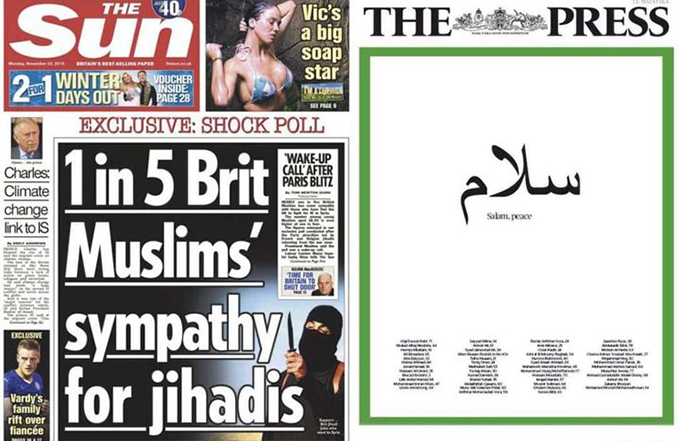
Paul Dacre’s last memorable front page before he ended his 26-year reign as editor was about the Supreme Court judges who ruled that the executive government had to get parliamentary approval for Brexit. The story screamed:

GuerillaWire

You’re either with us or against us

Polarisation runs through the way tabloids frame the news – between triumph and disaster; heroes and villains; common sense and absurdity. These papers offer their readers certainty and simplicity rather than ambiguity and complexity; they give them the opportunity to vent their anger at the modern world.

We should not romanticise the old Herald and Weekly Times newspapers. Their editorial outlook was rooted in a smug conservatism. Their international coverage was simplistic and stereotyped. They were unresponsive to emerging issues on the political agenda – including feminism, multiculturalism, environmentalism and consumerism. They were indifferent to many of the injustices in society.

But there was a tolerance and occasionally a generosity of spirit that is markedly lacking in their successors. Moreover, they believed in honest reporting. This in addition to their large audiences which gave them a political relevance today’s tabloids lack.

Probably the most important journalist in the Canberra press gallery during the Whitlam government was Laurie Oakes, working for the Melbourne Sun. It is impossible to imagine any Murdoch tabloid reporter having that centrality today.


Read more: How the right-wing media have given a megaphone to reactionary forces in the Liberal Party


Bill Shorten, unlike his predecessors Kevin Rudd and Julia Gillard, has recently been reported as deciding not to have dinner with Rupert Murdoch in New York to pay homage. This is a sound political judgment. Very few swinging voters are reading the Murdoch tabloids.

The papers are so set in their anti-Labor ways that there is little prospect of meaningful change in their news coverage. Moreover, the anti-Labor diet has been so constant that if the readers have not yet been persuaded to go against Labor it is hard to imagine what future coverage will make them do so.

Much of their coverage of the coming campaign can be anticipated. There will be unflattering photoshops of Labor or Green politicians. Each day will bring either a triumph for the government or starkly presented disasters and scandals for Labor and the Greens. But shrillness should not be mistaken for relevance.

For a long time, the tabloids have given up trying to engage with the range of views in a pluralistic and dynamic society. Instead they have practised ghetto journalism, catering to an aged, monocultural, alienated constituency.

Commercially, this is the equivalent of a political party knowing it is bound for defeat trying to save the furniture. Politically, it means their coverage is full of sound and fury, but signifying almost nothing of electoral relevance.

ref. From irreverence to irrelevance: the rise and fall of the bad-tempered tabloids – http://theconversation.com/from-irreverence-to-irrelevance-the-rise-and-fall-of-the-bad-tempered-tabloids-113656

It’s time to lift the restrictions on medical abortion in Australia

]]>

Source: The Conversation (Au and NZ) – By Caroline de Costa, Professor of Obstetrics and Gynaecology, James Cook University

Over the past thirteen years, many Australian women have used the drug mifepristone (RU486) to bring about a medical abortion.

Rather than undergoing a surgical abortion in a clinic or hospital operating theatre, a medical abortion is induced by taking drugs prescribed by a doctor.

But while mifepristone has been available in Australia since 2006, only some women, in some parts of the country, are able to access it. As I argue today in the Medical Journal of Australia, this needs to change.


Read more: Where Australian states are up to in decriminalising abortion


Chequered history in Australia

Mifepristone was developed in France in the 1980s and was soon being used for medical abortion in many parts of the world. Not, however, in Australia, where two male politicians did a deal that gave no consideration to women’s health needs.

In 1996 the anti-abortion Senator Brian Harradine, who held the balance of power in the Howard government, persuaded John Howard to pass legislation banning mifepristone in Australia, in return for his supporting Howard’s Telstra-privatisation bill.

Australian women were deprived of mifepristone for ten years, until a vigorous cross-country campaign resulted in the parliament’s overturning of the Harradine legislation in 2006.

But this didn’t mean the drug immediately became widely available. The political controversy made pharmaceutical companies reluctant to manufacture or market it.

Doctors, including myself, began personal applications to the Therapeutic Goods Administration (TGA) to import and use the drug in Australia – a lengthy and complicated process.

But by 2012, more than 80 doctors across Australia were prescribing the drug, and two large Australian studies covering more than 13,000 women showed it was safe and effective.

In 2012, the TGA finally gave mifepristone a full license and in 2013 it was placed in the Pharmaceutical Benefits Scheme, which means the government subsidises the cost of the drug.


Read more: Arrival of RU486 in Australia a great leap forward for women


Still no drug company would take on distribution, so rights were given to Marie Stopes International Australia (MSIA). Marie Stopes has for many years provided women’s health care but this was a new role.

The TGA required Marie Stopes to develop an online three- to four-hour instruction module for doctors, who must complete this and register to prescribe mifepristone.

Pharmacies must also register to dispense the drug. But many have declined to do so.

GPs can manage medical terminations

No other drug has this kind of special status, which is unnecessary. Doctors study pharmacology and drug prescription in medical school, and use this knowledge every day in clinical practice.

Singling-out mifepristone, as well as continuing to stigmatise abortions and the women who seek them, has also dissuaded doctors, especially general practitioners, from registering and using the drug.

GPs are the doctors most appropriately placed to manage early medical abortion (to nine weeks of pregnancy) for women requesting it. But just 1,500 of Australia’s 35,000 GPs have so far registered.


Read more: One in six Australian women in their 30s have had an abortion – and we’re starting to understand why


Over the past seven years a vast amount of data has been accumulated from the experience of nearly 200,000 Australian women, showing the drug is safe and effective, and importantly, very acceptable to the women using it.

It’s time to take mifepristone out of its cage and put it on pharmacy shelves with every other drug.

Services over the phone

Early medical abortion also lends itself to the practice of tele-medicine —phone and video consultations. This increases access for women living in rural or remote areas, who have difficulty travelling to larger centres for surgical abortion or accessing pharmacies.

Four years ago gynaecologist Paul Hyland established the Tabbot Foundation to provide early abortion care via telephone consultations and postage of the drugs to such women. His team has successfully managed around 6,000 early medical abortions this way. The complication rates have been low and are comparable with services where consultations are face-to-face.

Other doctors have followed in various parts of the country and in all places tele-medicine services have been well-received.

But the Tabbot Foundation is closing down. This is likely to result in large unmet need among women in rural and remote areas.

What next?

Recently the Australian Labor Party announced that if elected, it would tie federal funding for public hospitals to the provision of abortion services in the public sector.

This was welcome news, and interestingly did not result in the polarised public debate that surrounded the overturning of the Harradine legislation thirteen years ago.

Around 80% of Australians now support a woman’s right to choose abortion. While abortion is not yet part of mainstream medical practice, it is clearly moving that way, as state laws change and society comes to appreciate that safe, accessible abortion is an important part of women’s reproductive health care.

Mifepristone must be removed from its special status so doctors and women everywhere who wish to access it for medical abortion, directly or by tele-medicine, can do so easily. Mifepristone must become a drug like any other in our pharmacies.


Read more: Some women feel grief after an abortion, but there’s no evidence of serious mental health issues


ref. It’s time to lift the restrictions on medical abortion in Australia – http://theconversation.com/its-time-to-lift-the-restrictions-on-medical-abortion-in-australia-114364

Bleaching has struck the southernmost coral reef in the world

]]>

Source: The Conversation (Au and NZ) – By Tess Moriarty, Phd candidate, University of Newcastle

This month corals in Lord Howe Island Marine Park began showing signs of bleaching. The 145,000 hectare marine park contains the most southerly coral reef in the world, in one of the most isolated ecosystems on the planet.

Following early reports of bleaching in the area, researchers from three Australian universities and two government agencies have worked together throughout March to investigate and document the bleaching.

Sustained heat stress has seen 90% of some reefs bleached, although other parts of the marine park have escaped largely unscathed.

Bleaching is uneven

Lord Howe Island was named a UNESCO World Heritage site in 1982. It is the coral reef closest to a pole, and contains many species found nowhere else in the world.

Coral bleaching observed at Lord Howe in March 2019. Author provided

Two of us (Tess Moriarty and Rosie Steinberg) have surveyed reefs across Lord Howe Island Marine Park to determine the extent of bleaching in the populations of hard coral, soft coral, and anemones. This research found severe bleaching on the inshore lagoon reefs, where up to 95% of corals are showing signs of extensive bleaching.

However, bleaching is highly variable across Lord Howe Island. Some areas within the Lord Howe Island lagoon coral reef are not showing signs of bleaching and have remained healthy and vibrant throughout the summer. There are also corals on the outer reef and at deeper reef sites that have remained healthy, with minimal or no bleaching.

One surveyed reef location in Lord Howe Island Marine Park is severely impacted, with more than 90% of corals bleached; at the next most affected reef site roughly 50% of corals are bleached, and the remaining sites are less than 30% bleached. At least three sites have less than 5% bleached corals.

Healthy coral photographed at Lord Howe marine park in March 2019. Author provided

Over the past week heat stress has continued in this area, and return visits to these sites revealed that the coral condition has worsened. There is evidence that some corals are now dying on the most severely affected reefs.

Forecasts for the coming week indicate that water temperatures are likely to cool below the bleaching threshold, which will hopefully provide timely relief for corals in this valuable reef ecosystem. In the coming days, weeks and months we will continue to monitor the affected reefs and determine the impact of this event to the reef system, and investigate coral recovery.

What’s causing the bleaching?

The bleaching was caused by high seawater temperature from a persistent summer marine heatwave off southeastern Australia. Temperature in January was a full degree Celsius warmer than usual, and from the end of January to mid-February temperatures remained above the local bleaching threshold.

Sustained heat stressed the Lord Howe Island reefs, and put them at risk. They had a temporary reprieve with cooler temperatures in late February, but by March another increase put the ocean temperature well above safe levels. This is now the third recorded bleaching event to have occurred on this remote reef system.

Satellite monitoring of sea-surface temperature (SST) revealed three periods in excess of the Bleaching Threshold during which heat stress accumulated (measured as Degree Heating Weeks, DHW). Since January 2019, SST (purple) exceeded expected monthly average values (blue +) by as much as 2°C. The grey line and envelope indicate the predicted range of SST in the near future. Source: NOAA Coral Reef Watch

However, this heatwave has not equally affected the whole reef system. In parts of the lagoon areas the water can be cooler, due to factors like ocean currents and fresh groundwater intrusion, protecting some areas from bleaching. Some coral varieties are also more heat-resistant, and a particular reef that has been exposed to high temperatures in the past may better cope with the current conditions. For a complex variety of reasons, the bleaching is unevenly affecting the whole marine park.

Coral bleaching is the greatest threat to the sustainability of coral reefs worldwide and is now clearly one of the greatest challenges we face in responding to the impact of global climate change. UNESCO World Heritage regions, such as the Lord Howe Island Group, require urgent action to address the cause and impact of a changing climate, coupled with continued management to ensure these systems remain intact for future generations.


The authors thank ProDive Lord Howe Island and Lord Howe Island Environmental Tours for assistance during fieldwork.

ref. Bleaching has struck the southernmost coral reef in the world – http://theconversation.com/bleaching-has-struck-the-southernmost-coral-reef-in-the-world-114433

If we want students to feel safe at school, we can’t encourage teachers to spot potential extremists

]]>

Source: The Conversation (Au and NZ) – By Clarke Jones, Research Fellow, Research School of Psychology, Australian National University

In the wake of the Christchurch terrorist attack, former UK Prime Minister, Tony Blair told a global education forum extremism should be treated as a global problem like climate change. He said:

there should be an international agreement to put teaching against extremism into education systems around the world.

Following terrorist attacks, it’s understandable politicians want to come up with quick, tangible measures to prevent other incidents and to tackle the problem at what is seen to be its core. There is merit in Blair saying challenging prejudice “needs to begin at an early age” (in schools). But we must also be cautious when promoting kneejerk responses to complex issues, particularly when it involves the welfare and future of children.

Governments have been reaching into schools to try to nip violent extremism in the bud for some time. The Obama administration announced a Countering Violent Extremism (CVE) program in 2014. This aimed to deter US residents from joining violent extremist groups by bringing community and religious leaders together with law enforcement, health professionals, teachers, and social service employees.

This program has since come under scrutiny for focusing on, and stigmatising, the Muslim community. When we consider that the proportion of fatalities from terrorist attacks committed by nationalist groups, including the one in Christchurch, is increasing, and deaths from attacks by Islamic militants are in decline, there is clearly potential for these programs to be misdirected.

Programs like these have also been introduced without adequate evidence for their effectiveness. Delivering a program that hasn’t been properly evaluated could make the underlying issues worse. It could ultimately increase youth vulnerabilities (rather than resilience) to radicalisation, and other antisocial behaviours.

‘Spot a radical’ in school

Schools often become an easy focal point. The rationale for a CVE program is getting onto the threat before it starts, or capturing it if it has already begun to grow. Often this has meant CVE school programs mainly teach staff how to “spot a radical” and report them to government and remedial channels.

But identifying the key components for preventing and addressing radicalisation towards violent extremism in schools remains under-researched. It’s fraught with negative consequences – such as further marginalising and stigmatising vulnerable students – if not delivered cautiously and sensitively.

The UK government, for instance, has faced significant difficulties when connecting CVE initiatives to schools. In 2016, the UK teachers’ union backed a motion to reject the government’s counter-radicalisation strategy, Prevent. This obliged teachers to refer to police pupils they suspected of engaging in some sort of terrorist activity or radical behaviour. The union claimed Prevent targeted Muslim students.

Data certainly supports such concerns. Between 2007 and 2010, 67% of referrals under the program were Muslims. Between 2012 and 2013, that figure was 57.4%.


Read more: We need to stop conflating Islam with terrorism


One study argued such programs undermine the dignity of many Muslim children, which has a significant effect on the “mental health and emotional well-being of Muslim children and young people and their families”.

The toolkit given to teachers under the Prevent strategy was said to contain poorly constructed definitions of “extremism” and “radicalisation”. These then shaped and informed equally problematic CVE practices that appeared to be directed at Muslim students.

The toolkit was therefore seen as extending the UK’s monitoring capabilities into classrooms, which can inhibit Muslim children’s ability to become active and equal members of society.

This can contribute to a young Muslim person’s sense of isolation, marginalisation and alienation, as well as potentially reinforcing and perpetuating racism and Islamophobia in schools.

What about Australia?

The Australian government has largely modelled its CVE strategies on the UK’s, even though there has been no empirical evidence to support their effectiveness. This has translated to several school programs that focus specifically on CVE.

The NSW program, for example, is conducted online and was designed primarily to educate teachers about violent extremism. It encourages teachers to promote awareness of CVE and develop family and school environments that promote resilience among youth.

It also encourages parents to be cyber-aware, to encourage open and honest communication at home, and to model positive behaviour.

Another program runs in Western Australian schools, where teachers and support staff are trained to identify changes in the behaviour of all at-risk students, assess potential concerns, and provide appropriate support when needed. If a concern is raised about a student, the level of risk is assessed and follow-up action is provided.

A few years ago, the federal government sent out toolkits to the nation’s schools. This enables teachers and other frontline workers to identify students who might be at risk of radicalisation and intervene as early as possible. Follow-up training courses have been provided to teachers to educate them about radicalisation and risk factors in students.

Outside these specific program, there is little public information about how many students have been identified as at-risk or reported to police and government agencies. Most of the work is being conducted under government confidentiality.

There is also little data available to evaluate these initiatives. But I know first-hand of cases in which students have been falsely reported to police. One particular case significantly affected the student’s school grades, resulting in him missing out on a university placement, as well as creating issues around his identity and sense of belonging.

I will not speculate on what would have happened if there hadn’t been a supportive family and community network around him.


Read more: Want a safer world for your children? Teach them about diverse religions and worldviews


It is paramount that any program developed to protect young people from radicalisation does not contribute to the underlying issues that make young people vulnerable to it. Research shows school connectedness and belonging, and student-teacher relationships are critical aspects of a school environment that impact on the well-being of its students. It is crucial the development of CVE programs does not disrupt the relationships schools and teachers have with students and families.

CVE and national security have very little place in schools. If any new programs are to be introduced, they must be sensitive to these relationships and be very cautious not to damage individual, family or community connectedness with schools.

ref. If we want students to feel safe at school, we can’t encourage teachers to spot potential extremists – http://theconversation.com/if-we-want-students-to-feel-safe-at-school-we-cant-encourage-teachers-to-spot-potential-extremists-114431

Settling migrants in regional areas will need more than a visa to succeed

]]>

Source: The Conversation (Au and NZ) – By John van Kooy, Research Associate & PhD Candidate, Monash Migration and Inclusion Centre, Monash University

Prime Minister Scott Morrison has announced two new regional visas as part of a national population plan. The Skilled Employer Sponsored and Skilled Work regional visas require workers to live outside major cities for three years before they can apply for permanent residency. Morrison said the new visas would benefit communities “looking for more people to come and settle in their districts, to fill jobs, inject more life into their towns, and shore up the important education and health services for the future”.

However, newly released statistics on regional population growth in Australia in 2017-18 show current growth is heavily concentrated in the capitals. People clearly prefer to settle in these cities. So how can migration to the less favoured regional centres be made to work?

POPULATION GROWTH ACROSS AUSTRALIA, 2017-18

Population change by SA2 (a community that interacts together socially and economically) across Australia in 2017-18. ABS, CC BY

Research by the Monash Migration and Inclusion Centre and Welcoming Cities has examined the benefits and risks of regional migrant settlement. We identify five key factors — four essential and one desirable — that will make regional settlement successful.


Read more: Forcing immigrants to work in regional areas will not boost regional economies in the long run


Five elements of success

First, coordination and planning must be inclusive and driven by local communities. These are more than just buzzwords. Local employers, service providers and community groups are best placed to determine realistic settlement options together.

Local councils, in particular, are a crucial channel for information and community perspectives. Planning should carefully consider social and economic conditions so migrants and existing residents can develop clear expectations.

State and federal authorities may be called upon to provide a package of supportive policies, such as funding for relocation programs. However, in the absence of a whole-of-government regional settlement strategy, local stakeholders still need to lead the process.

Second, sustained employment is vital. It “speeds up” migrants’ integration into Australian society and makes long-term settlement viable. The celebrated “win-win scenario” in regional areas demands stable employment. The example of the Nhill poultry business in western Victoria shows some destinations can be a good fit for migrants and refugees from rural-agricultural backgrounds.

Karen-Burmese refugees helped revitalise the previously shrinking town of Nhill.

However, regional labour markets can be quite “thin”. The number and variety of jobs on offer are often limited.

Short-term visa schemes can help plug gaps in local labour markets. But migrants may not stay if they find themselves in jobs that don’t match their skills and experience.

Third, public housing, transport and services form crucial infrastructure to support migrant settlement. Regional towns vary significantly in their levels of access and affordability. Communities like Mingoola have taken the creative step of renovating abandoned farmhouses to accommodate refugee families.

Resettling African refugees saved Mingoola’s school from closure and breathed new life into the small town.


Read more: When a country’s towns and villages face extinction


But, in addition to housing, new migrants may require access to specialised service providers, like skilled health workers. Regional towns already grappling with social challenges can face a “double disadvantage” when migrants increase demand on existing services.

Here again, consultation and thorough needs analysis are required. Local government and community associations have central roles to play in this.

Fourth is a culture of welcome in regional communities. Building and sustaining such a culture is perhaps the most challenging element of success. The early stages of planning need to develop an understanding of local attitudes towards migrants, as well as perceptions about different cultures and ethnicities.

Some communities may benefit from induction and resources to develop long-term acceptance of cultural change. The City of Greater Bendigo – a recognised Refugee Welcome Zone — has attracted migrants by promoting its approach to cultural diversity and inclusion.

A culture of welcome can reduce the cultural distance between migrants and local residents, and reduce the risk of isolation for migrants. This not only bolsters the longer-term viability of migrant relocation, but can also lead to the social, cultural and economic revitalisation of the broader community.

As custodians of all settlement destinations in Australia, the leadership of First Nations people in welcoming work is also critical in negotiating matters of cultural exchange and understanding.

A final, desirable element of regional settlement is the presence of multicultural organisations and ethnic communities. Established migrant communities can act as “anchors” for new arrivals. They provide experience, advice and familiarity with local settlement processes and opportunities.

In contrast, the absence of culturally and linguistically diverse groups in regional towns can be a “unique source of acculturation stress”, especially for young migrants.


Read more: Australia’s regional migration: a selective success story


Moving forward with regional migration

Migration has the potential to breath new life into regional economies. It can add cultural richness and diversity to regional communities. At the same time, regional migration can ease the pressure on capital city infrastructure and services.

In reality, however, few regional destinations optimally combine all key success factors. Potential benefits of migration can be offset by existing inequalities, narrow employment pathways and gaps in social infrastructure. Limited understanding of cultural diversity also acts as a barrier to the inclusion of new migrant communities.

These risks can compromise the sustainability of regional settlement before it has begun.

Our research recommends that regional councils and local partners consider their readiness to grow a culture of welcome, build intercultural connections, and inform uptake of regional visa opportunities. Early planning that considers both the challenges and the opportunities for migrant settlement is critical to ensure a sustainable win-win outcome.


Aleem Ali, the national manager of Welcoming Cities and CEO of Welcome to Australia, is a co-author of this article.

ref. Settling migrants in regional areas will need more than a visa to succeed – http://theconversation.com/settling-migrants-in-regional-areas-will-need-more-than-a-visa-to-succeed-114196

Expect a budget that breaks the intergenerational bargain, like the one before it, and before that

]]>

Source: The Conversation (Au and NZ) – By Danielle Wood, Program Director, Budget Policy and Institutional Reform, Grattan Institute

The tens of thousands of young people who were protesting at the school climate strike two weeks ago know that they are being left a stinking great environmental mess to clean up.

But I suspect that many are yet to appreciate that this is not the only mess they’ll be left with.

Australia’s tax and welfare system is built around an implicit generational bargain. Working-age Australians, as a group, are net contributors to the budget – they pay more in taxes than they receive in either benefits or spending. These contributions support older Australians who take a lot more out in spending and pension payments than they contribute in taxes.

Today’s working-age Australians expect the generation after them to support them in the same way as they age. But this longstanding bargain is under threat.

A bargain betrayed

The number of working-age Australians for every person aged 65 and over fell from 7.4 in the mid-1970s to 4.4 in 2015, and is projected to fall to just 3.2 in 2055.

This could be seen as just bad luck for today’s young people. There are swings and roundabouts we all have to live with.

But what’s less easy to accept is a series of policy decisions that have substantially increased the size of the transfers workers will have to make to older people – expanding their good fortune at the expense of the generations who come out of them.

Let me tell you how.

Budgets have been tilting the scales

First, future pension costs have climbed as a result of deliberate policy decisions to boost the rate and eligibility for the pension. As a share of average weekly earnings it has climbed from 30% to 37% over the past two decades.

The ever-widening gap between the rate of the pension and Newstart, and the increasing ease with which retirees can get at least some pension, speaks to the political perception that there are deserving and undeserving welfare recipients, “lifters” and “leaners,” in the words used by Treasurer Joe Hockey in the 2014 budget.

Newstart recipients now live on A$40 a day compared to A$65 for full-rate pensioners.

Second, health spending is climbing. Commonwealth health spending has been climbing by 3% a year over and above inflation for the past decade.

State health spending has climbed 3.7% a year.

The increase has been particularly stark for those in their 70s and 80s – with average health spend per person increasing by over A$4,000 in just twelve years.


Read more: Tough choices: how to rein in Australia’s rising health bill


Most Australians support increased health and pensions spending. They might not, or might not support it as much, if they realised where it was coming from.

A series of tax policy decisions over the past two decades – tax-free superannuation income in retirement, refundable franking credits and special tax offsets for seniors – have meant we now ask older Australians to contribute a lot less than we once did.

Incomes for households over 65 have more than doubled over the past 25 years, substantially faster growth than for households under 55.

But households over 65 pay virtually no more income tax than people that age did 25 years ago. Indeed, the share of older households paying any tax has fallen from 27% in the mid 1990s to 17% today.

And that has contributed to a tax system where someone’s date of birth is almost as important as someone’s income in determining their tax contribution.


Read more: Why every generation feels entitled


An older household earning A$100,000 a year pays on average less than half the total tax of a working-age household earning the same amount. Considered another way, an older household on A$100,000 pays about the same tax as a working-age household on A$50,000.

And these calculations exclude dividend imputation franking credit refunds that largely benefit older Australians. There is simply no policy justification for this degree of age segregation in the system.

We are facing intergenerational theft

One argument that is sometimes advanced to defend age-based tax breaks is that older Australians have “paid their taxes”. But in a generational sense, this argument does not hold water. Younger households today are underwriting the standard of living of older households to a much greater extent than in the past.

People born in the late 1940s, at the beginning of the baby boom generation, reached their peak contribution to the tax system in their early forties – and at that point they were contributing an average of A$3,200 a year to support older generations in retirement. An average 40-year-old today, born at the tail end of Generation X, is paying an inflation-adjusted A$7,300 a year.

That is more than they are contributing to their own retirement through compulsory superannuation.

Under current policy settings, the child of today’s 40-year-old will need to pay around A$11,400 a year by the time he or she reaches 40 just to sustain the current levels of benefits in retirement.

And ever-bigger budget deficits

In an economy that is growing, it can be sustainable for each generation to take out more than it put in, knowing it will be easier for the next one to put money in, but the sheer size of this growth in payments far exceeds that capacity.

That’s why the treasury produces an Intergenerational Report every five years to remind us how ugly business-as-usual looks.

Without policy changes, budget deficits are set to grow ever bigger (even after what will probably be the temporary return to surplus promised in Tuesday’s budget) and net debt will expand to uncomfortable levels.

The unwanted fiscal inheritance will fall on the generation of Australians that have seen its incomes and wealth stagnate – the generation that has missed the property boom and is entering the workforce during a period of flatlining real wages.

So what would a budget that seriously tackles these issues look like?

We could still put things right

First, it would wind back some of the tax concessions for older Australians who can afford to make a contribution. It is simply no longer sustainable for comfortably off older Australians to opt out of taxes for two or three decades they are in retirement. The obvious place to start would be a tax on superannuation earnings, and winding back the seniors and pensioners tax offset.

The politics isn’t easy. The reaction to Labor’s franking credit policy gives a sense of what governments face when trying to wind back these transfers. The public hearings for the inquiry into the franking credits policy sometimes looked more like the frontline in a generational war than a staid government inquiry.


Read more: Words that matter. What’s a franking credit? What’s dividend imputation? And what’s ‘retiree tax’?


Here the contrast with the climate strike is difficult to ignore: while older Australians picket for their franking credits, young people are protesting for their very future.

Second, there would be no decisions that further undermine the structural position of the budget. If there is one lesson to take from the past two decades it is that commodity windfalls come and go. We should not lock in higher recurrent spending, or offer another round of tax cuts, every time revenues surprise on the upside. Nor should we pile uneconomic infrastructure investments off budget. To do so is to further weaken the generational bargain.

What if Tuesday’s budget was a start?

Ahead of tomorrow’s budget I should say that I hope I’m wrong.

I hope this government will use this budget and its election commitments to address our long-term challenges. I hope we can discuss generational fairness without it descending into generational warfare.

I hope none of us would want our legacy to be mortgaging our children’s environment and their economic future.


Danielle Wood presented a longer version of this article as part of the Women In Economics federal budget perspectives event at the National Press Club in Canberra on Wednesday March 27, 2019. Watch the discussion here.

ref. Expect a budget that breaks the intergenerational bargain, like the one before it, and before that – http://theconversation.com/expect-a-budget-that-breaks-the-intergenerational-bargain-like-the-one-before-it-and-before-that-114508

Leonardo da Vinci revisited: how a 15th century artist dissected the human machine

]]>

Source: The Conversation (Au and NZ) – By Susan Broomhall, Professor of History, University of Western Australia

On the 500th anniversary of his death, this series brings together scholars from different disciplines to re-examine the work, legacy and myth of Leonardo da Vinci.

Leonardo da Vinci was fascinated by the human body. His disdain for painters who did not bother to learn anatomy was barely concealed in his criticisms of those who “draw their nude figures looking like wood, devoid of grace; so that you would think you were looking at a sack of walnuts rather than the human form”.

Leonardo da Vinci, Anatomical studies of the shoulder, c 1510. Wikiart.org

His bodies envisioned something very different – living mechanics – combining ideas that he explored across many fields of investigation, including animal and human dissections.

In doing so, he anticipated many questions that now preoccupy modern scientists, from the mechanics of the human body to the possibility of a mechanical body for humans.

Leonardo was born the illegitimate son of a notary and a peasant woman. He did not attend a university and had a rather haphazard and informal education. His knowledge of the human body was self-taught and largely experiential.

Leonardo’s notebooks are filled with an explosion of ideas, in treatises, sketches and jottings. One note mentioned the following:

Have Avicenna’s work on useful inventions translated; spectacles with the case, steel and fork and…., charcoal, boards, and paper, and chalk and white, and wax;…. …. for glass, a saw for bones with fine teeth, a chisel, inkstand …….. three herbs, and Agnolo Benedetto. Get a skull, nut,— mustard.

In this jumble of thoughts, we see Leonardo’s interest in the body, one he would explore through dissection. Perhaps his most famous dissection was that of a man who claimed to be over 100 years old, at the Santa Maria Nuova hospital in Florence in 1506.

Leonardo had chatted to this man on the night he passed away: “And this old man told me, a few hours before his death, that he was over a hundred years old and he was conscious of no bodily failure, apart from weakness.” After he had died, Leonardo proceeded to probe the man’s corpse.

Anatomical mechanics

Leonardo’s anatomical drawings show exploded and multiple views, unusual for his time but similar to modern mechanical drawings and descriptive geometry.

Superficial anatomy of the shoulder and neck, recto, c. 1510, Royal Collections, RCIN 919003, Google Art Project. Wikimedia Commons

As he wrote: “If you wish thoroughly to know the parts of man, anatomically, you – or your eye – require to see it from different aspects, considering it from below and from above and from its sides, turning it about and seeking the origin of each member.”

Leonardo was thinking outside the box. His approach connects anatomy to engineering.

His interest in machinery linked to his fascination with motion. His drawings vividly illustrate how components of machines, animals and humans are designed to move, and how motion and forces are transferred from one component to another.

Strong analogies are formed between mechanical and biological parts, such as the role of ropes and cords, and sinews and tendons.

Leonardo da Vinci, Anatomy of a Bear’s Foot, c. 1488-90. Wikiart.org

Leonardo was fascinated by the change of form over time, whether in the processes of nature or the gradual disintegration of the human body. He found the 100 year-old man’s artery, for instance: “to be dry, shrunk and withered.”

Alongside this autopsy, he recorded another dissection: “of a child two years old, in which I found everything the opposite that of the old man”.

A re-construction of Leonardo’s mechanical knight. Photography by Erik Möller, Wikimedia Commons.

Leonardo also had a lifelong interest in depicting decrepitude and the grotesque in human form. In his work, we see the contrast between robust mechanical forms and ageing bodies.

With his designs for various forms of automata – machines that operate alone by following predetermined instructions for movement – some of which witnesses suggest he brought to life, Leonardo moves from the human body, which is subject to weakness and ageing, to the wholly mechanical body.

The mechanical knight, for example, that he sketched in the Forster notebooks appears to have been designed from clockwork and geared mechanisms. It could move its arms, hands and legs, and turn its head.

Leonardo’s interest in automata in a human form and replicating human bodily movement foreshadow ideas present in modern robotics.

Through Leonardo’s exploration of the human body, we see his fascination with engineering, motion, anatomy and ageing, topics that still preoccupy us scientifically today.

ref. Leonardo da Vinci revisited: how a 15th century artist dissected the human machine – http://theconversation.com/leonardo-da-vinci-revisited-how-a-15th-century-artist-dissected-the-human-machine-112399

Mediawatch: Reporting Islam before and after 15/3

]]>

The Imam of the Al Noor Mosque, Gamal Fouda speaking to Christchurch, New Zealand, and the watching world. He says despite the terrorist’s intentions, New Zealand remains “unbreakable”. Video: TRT World Now

COMMENTARY: By Jeremy Rose of RNZ Mediawatch

The speech by Imam Gamal Fouda of Al Noor mosque delivered just a week after the Christchurch massacre was a remarkable celebration of love, compassion and unity.

This terrorist chose to tear our nation apart with an evil ideology which has torn the world apart. But instead we have shown that New Zealand is unbreakable and that the world can see in us an example of love and unity. We are broken-hearted but we are not broken.

But Imam Fouda didn’t shy away from criticising those he believes helped pave the way to the massacre of 15 March 2019.

The martyrdom of 50 innocent people and the injury of 42 last Friday did not come overnight – it was the result of the anti-Islamic and anti-Muslim rhetoric by some political leaders, some media agencies and others.”

LISTEN TO RNZ MEDIAWATCH

-Partners-

Freelance journalist Saziah Bashir is among those who have joined Imam Fouda in his criticism of the media.

“Muslims have been dehumanised and demonised in the media the world over since 9/11. The failure to include Muslim voices in this narrative has left unchallenged the stereotypes painted of us, as if we are a two-dimensional monolith, a single monstrous Other,” said Bashir, writing on RNZ’s website four days after the massacre.

And there’s plenty of hard evidence of skewed media reporting both here and overseas.

Montage: The Sun/The Press/RNZ #TheyAreUs

An article in The Guardian last week cited 2007 research that found 91 percent of stories about Muslims appearing in a single week were negative. A 2011 study carried out over three months put the figure at 70 percent.

Australia’s Muslim One Path Network carried out research last year with similar results. It examined the 2017 coverage of Islam in five Australian newspapers owned by Rupert Murdoch’s News Corp and found “almost 3000 articles that referred to Islam or Muslims alongside words like violence, extremism, terrorism or radical”.

“We also found 152 front pages over the year that featured Islam in some negative capacity. A lot of the time, these articles and exclusives were the featured item, the most important story for selling the newspaper.”

Support for that negative coverage goes right to the top. Rupert Murdoch – who has an ownership stake in vast swathes of the world’s media including The Wall Street Journal and Fox News – in 2015 tweeted:

Rupert Murdoch’s tweet on jihadists. Image: RNZ

The situation in New Zealand
In 2017 the New Zealand media featured 14,349 stories that included the word Islam – nearly 13,000 of those stories mentioned either terrorism or Islamic Jihad.

Khairiah Rahman … representations of Islam research. Image: Khairiah Rahman/AUT

The statistics are from an academic article in Pacific Journalism Review, Representations of Islam and Muslims in New Zealand Media, by Khairiah Rahman and Azadeh Emadi.

The paper concluded:

“There appears to be a growing misconceived hatred for a faith supported by 1.5 billion of the world’s population, but more importantly, this destructive trend is promoted by the media, consciously or not, and has the potential to ultimately cause an unnecessary and irreparable rift in civil society.”

Rahman – a senior lecturer in communication studies at Auckland University of Technology – told Mediawatch that in 2017 for every New Zealand-produced story that mentioned Islam, there were seven that mentioned Islamic terrorism. And the ratio in overseas newswire stories was even higher.

“We found that stories tend to be more fair and balanced when Muslim voices are represented. And they tend to be negative or confused in their treatment of Muslims and Islam when the Muslim voice is absent or manipulated,” said Rahman.

She said virtually all of the stories mentioning terrorism or jihad lacked a Muslim perspective.

But things have changed dramatically since the tragic events of March 15.

“In the last week… the New Zealand media did actually make a difference. I think they’re leading the way. It’s not just about Muslims or Islam or Islamophobia, but it’s about representation of diversity and the different voices in societies where there is predominantly one sort of culture,” she said.

Former RNZ journalist Mohamed Hassan agrees.

“The coverage has been incredibly sympathetic. I think a lot of the media has done really well and has been really generous in opening up those spaces and giving those spaces to Muslim voices…. myself included,” he told Mediawatch.

Mohamed Hassan … “incredibly sympathetic”. Image: RNZ

Hassan, who now works for Turkish public broadcaster TRT World, said it had taken the media “a very long time to figure out how to talk about terrorism when those involved in it are of a Muslim background.”

He said there were a lot of media outlets that completely ignored Muslim voices.

“Every time you have a terrorist attack, as a media organisation you have a panel of five experts talking about Islam, none of whom are Muslim, none of whom come from those communities. So everything they say, there’s no rebuttal to,” he said.

“This week has been a really great case study of how to deal with issues that involved the Muslim community.

“Now that there are these Muslim who have been presented and have had their say – all of them are very eloquent, all of them are amazing representatives for their community, and they’re trusted… (it’s important) these voices are not forgotten when the time comes and there’s an issue that involves the Muslim community.”

Susie Ferguson, Mohamed Hassan, Omar Suleiman and Qasim Rashid Ahmad discuss issues around the Christchurch mosque attacks from the RNZ special broadcast outside the Botanic Gardens. Image: RNZ

This article is republished under the Pacific Media Centre’s content partnership with Radio New Zealand.

Print Friendly, PDF & Email

Article by AsiaPacificReport.nz

Mosque atrocity remembrance service calls for ‘love, solidarity’ to continue

]]>

Fifty Kowhai Intermediate School children sing the waiata at the remembrance service in Eden Park rugby stadium in Auckland today. Video: Del Abcede/PMC

By Amy Williams and of Brooke Jenner of RNZ News

All Black Sonny Bill Williams has challenged hundreds of people at Auckland’s memorial service for those who died in the Christchurch mosque attack two weeks ago to reach out to Muslims in their community.

The people gathered at the Eden Park rugby stadium for the city’s service this afternoon.

Among them, hundreds of Muslims from across the city huddled into a prayer room at Eden Park to pray and reflect on the atrocity and the aftermath.

READ MORE: NZ stands together – ‘evil must not take root’

The Auckland service began with a call to prayer shortly after 1.30pm. In a sermon, Sheikh Muhamed Shaakir Ismail said terrorism had no race and creed and he called on New Zealanders of all different cultures to get to know each other better.

-Partners-

“We need to learn about each other from each other, not from the media and what people may think,” he said.

“Our mosques, synagogues, churches maraes and religious centres should be funded so that people can come in and learn more about the religion and the people.”

Auckland Muslims at the remembrance service at Eden Park, the bastion of New Zealand rugby. Image: Del Abcede/PMC

Following prayers, they joined the crowd gathered in Eden Park’s south stand.

Mayor speaks of forgiveness
Mayor Phil Goff told the crowd the forgiveness shown by Farid Ahmed, a victim of the mosque attack who spoke in Christchurch this morning, took his breath away.

He said people had gathered to reaffirm their commitment to multi-faith and multi-cultural society.

People came from all over Auckland to stand together with the Muslim community, wearing colourful headscarves and green ribbons on their wrists in a show of solidarity.

After prayers, a group of over 50 children from Kingsland’s Kowhai Intermediate started the remembrance service with a waiata.

All Black Sonny Bill Williams … saddened by how little people had known about Islam before the tragedy. Image: Dan Cook/RNZ

All Black Sonny Bill Williams said while he was saddened by how little people had known about Islam before the tragedy. However, he was heartened by the compassion and empathy that had been shown since.

“We cannot and will not allow such acts to deter us from loving one another,” he said. “And just like in the last couple of weeks, New Zealanders, I want to say let’s keep leading the way.”

“Let’s keep being that light in stormy waters for the rest of the world to see how it’s done.”

National Muslim Association president Ikhlaq Kashkari asked people to continue to show the love and kindness expressed over the past two weeks in the coming months.

New Zealand music icon Dave Dobbyn closed the service with his anthem, “Welcome Home”, leaving Auckland with its heart wide open.

This article is republished under the Pacific Media Centre’s content partnership with Radio New Zealand.

A family from Lautoka, Fiji, at the remembrance service at Eden Park today. Image: Del Abcede/PMC

Print Friendly, PDF & Email

Article by AsiaPacificReport.nz

Why are we losing so many Indigenous children to suicide?

]]>

Source: The Conversation (Au and NZ) – By Pat Dudgeon, Professor, The Centre of Best Practice in Aboriginal and Torres Strait Islander Suicide Prevention, the Poche Centre for Indigenous Health, University of Western Australia

This article was written with Rob McPhee, Deputy CEO of the Kimberley Aboriginal Medical Service and co-chair of the Commonwealth-funded Kimberley Aboriginal Suicide Prevention Working Group.


The recent child and youth suicides in our communities are a tragedy. Five young Indigenous Queenslanders have taken their lives this month. This adds to a spate of child deaths in Adelaide and Western Australia in January.

There is nothing new about Indigenous child suicide. In 2017 it was the leading cause of death among our children aged 5 to 17. Aboriginal and Torres Strait Islander people account for just 2.8% of the population, but over the past five years, one in every four Australian children who died by suicide was Indigenous.

There is something especially shocking about the suicide of a child for whom life was just beginning. It indicates serious underlying issues in our society, and our children are reacting to their environment. We need to act now to prevent as many potential child suicides as possible in our communities.


Read more: Indigenous suicide rates in the Kimberley seven times national average


Tackle both short- and long-term change

Short- and long-term action is essential, but alongside this, long-term action must begin to address the traumatic, disrupting and intergenerational effects of colonisation and its aftermath: poverty and social exclusion. These are deep-rooted contributors to Indigenous suicide and child suicide.

Children may be at higher risk of suicide if they experience behavioural and emotional challenges, bullying, family and relationship breakdown, and issues that contribute to other forms of psychological distress.

In the short term, we need to identify and provide immediate help to our children and young people in crisis situations. Families, peers and schools need to be involved, with backup from counsellors and, if required, 24/7 access to culturally competent mental health professionals.


Read more: It’s despair, not depression, that’s responsible for Indigenous suicide


Some child and young person suicides occur in “clusters”, where several deaths occur over a short period in the same place.

Ensuring children and young people exposed to family and community suicide receive “postvention” support can also be vital to preventing further suicides. Postvention is an intervention after a death to provide counselling, material support, and other assistance to the family and community of the deceased.

To avoid imitations, responsible, non-sensational media and social media discussion about suicide is crucial. Proactively monitoring the social media activity of children for signs of suicidal thoughts can also play a role in preventing suicide in a community.

In the medium term, communities must be empowered to co-design and control responses that capitalise on the community’s strengths.

We can also learn from past programs that have been evaluated and shown to be successful in preventing Indigenous child and youth suicide. This includes peer-to-peer mentoring networks; programs to engage children and young people, including in sport; and connecting young people to Elders and culture.

Culture is Life backs Aboriginal-led solutions that deepen connection and belonging to culture and country and supports young Aboriginal and Torres Strait Islander people to thrive.

Blueprint for action

In November 2018, two Indigenous suicide prevention conferences in Perth brought together 500 delegates from the national and international Indigenous communities to identify solutions that work in Indigenous suicide prevention.

The delegates called for a new national Aboriginal and Torres Strait Islander suicide prevention strategy – and fully funded implementation plan – with a focus on preventing child and youth suicide.

This should build on the 2013 strategy, adapted to the current policy environment, with an increased focus on suicide prevention.

The plan should also address stopping, and otherwise healing, child sexual abuse that is increasingly associated with suicide.

It’s important the plan is developed in genuine partnership with our communities, suicide prevention experts and mental health leaders. It should:

  • support Indigenous community empowerment and self-determination
  • enable suicide prevention programs to be co-designed with Indigenous communities
  • focus on increasing the Indigenous suicide prevention workforce to levels that meet demand
  • ensure the workforce is culturally safe and competent
  • embed (and appropriately remunerate) youth peer workers, Elders and cultural healers in mental health and suicide prevention services
  • include a plan to build the evidence-base for, and fund, Indigenous suicide prevention research.

Read more: Well-connected Indigenous kids keen to tap new ways to save lives


Truth and healing to move forward

Any sustainable response must go to the deeper, underlying historical causes of hopelessness and despair, which contributes to suicide. This isn’t just a problem among children; the suicide rate peaks in those aged between 25 and 34.

These deeper causes include intergenerational trauma. Poverty, racism, social exclusion, substandard housing, and economic marginalisation of our communities are the legacies of colonisation.

Indigenous suicide is different because it cannot be separated from the historical and related present-day situation of our peoples. Indigenous people from around the world share both similar histories and high rates of child, youth and other suicide.

Acknowledging the truth allows people to start healing. Annie 888/Shutterstock

Indigenous leaders want to see a broader Australian recovery and healing. Truth is the basis for healing and moving forward. And this process can begin by recognising the impacts of colonisation on present-day trauma, disadvantage, marginalisation, and neglect.

Some Elders have suggested a royal commission or “truth and reconciliation commission” could form the foundation for this process.

Our communities and cultures are sources of identity, values and practices that can help protect against suicide. Such strengths provide the foundation for a mix of short, medium, and longer-term action to turn the trajectory of Indigenous child and youth suicide deaths around.


Read more: Reducing Indigenous suicide through empowerment and pride


If you or anyone you know needs help or is having suicidal thoughts, contact Lifeline on 131 114 or beyondblue on 1300 22 46 36.

ref. Why are we losing so many Indigenous children to suicide? – http://theconversation.com/why-are-we-losing-so-many-indigenous-children-to-suicide-114284

Hannah Gadsby’s follow-up to Nanette is an act of considered self-care

]]>

Source: The Conversation (Au and NZ) – By Jana Perkovic, Sessional lecturer and researcher, University of Melbourne

Review: Hannah Gadsby, Douglas, Melbourne International Comedy Festival


Hannah Gadsby’s new show, Douglas, is not earth-shattering the way Nanette was; but then, nothing could be.

Many of us watched with fascination as Gadsby’s tenth solo show, Nanette, took her from a local niche market in queer comedy to international superstardom, skipping quite a few steps in between.

The comedian had intended Nanette to be her farewell show, and by all accounts was not prepared for what followed: major awards at international comedy festivals, a world tour, a Netflix special, appearing at the Emmys, moving to Los Angeles, and receiving endorsements from the likes of Ellen Page, Roxane Gay, and Monica Lewinsky. It was well deserved, but also disconcertingly rapid.

Gadsby was diagnosed with autism in the years leading up to Nanette. In fact, she tells us in Douglas that the show came directly out of that diagnosis: “I found a name for how I experienced the world.” Gadsby’s comedic voice changed with Nanette; there, she spoke with the newfound confidence of someone who has come to understand themselves, someone who no longer seeks to belong to clubs that wouldn’t have them.

How Gadsby weathered being thrust into Hollywood is a good question, but Douglas reads like a direct response to that experience, and an act of considered self-care.

As a comedy show, Douglas is in some ways deliberately very normal. It is funny throughout, it has those rehearsed non-sequiturs that move the narration forward, and its progression is linear rather than exponential in the way of Nanette. Gadsby takes time to talk about her last show, her last tour, what she has learned – all that ordinary stuff local comedians do at every Melbourne Comedy Festival.

These are no doubt premeditated choices. Gadsby has spoken at length about not wanting to be seen as a non-funny comedian, or to quit comedy altogether (even though quitting was the premise of Nanette). After all, Nanette’s great success made her think that her best move would be to showcase her comedic craft “instead of trying to learn a whole new skill set”.

While performing Douglas, Gadsby talks about the emotional toll of spending two years touring a show about trauma. She adds: “That was only my fault. I started that conversation.” Formally, if Douglas is about anything, it is about recreating comedy as Gadsby’s safe, comfortable space.

Douglas begins with phones being taken away from audience members and locked into magnetic pouches. Having spent considerable time introducing the sensory sensitivity associated with autism, Gadsby later explains that the sudden flashing of light in the audience is very distracting.

She notes that she now has to pay people to touch her, despite the discomfort it causes her: a stylist, a tailor, a hairdresser. She describes the “meltdown” that autistic people experience with complete sensory overload, often dismissed as a “tantrum”, but in reality anything but.

Gadsby also notes the intentional medicalisation of women’s emotional range: “Sure, I may nibble on a bit of dark chocolate on a full moon. But I’ve never wanted to punch a door!” She points out that expectations of women to be the emotional workhorses of social situations are so high, and autistic women learn to camouflage their symptoms to such a degree, that autism in women and girls was once thought to be an impossibility.

Throughout the show she narrates her life, lived in the consequences of these misconceptions and misdiagnoses. Again and again she returns to a lament: “This is because we live in a world where everything is named by men.”

Nanette was a terrifically crafted piece of standup comedy, as well as a timely reckoning with patriarchy, sexual violence and homophobia, just as #MeToo was getting going. It was always going to be a very hard act to follow.

Douglas is a deftly executed, brilliant comedy about women and autism – speaking about an often painfully experienced difference without self-deprecation or condescension. I hope it finds its audience.


Douglas is on at Arts Centre Melbourne until April 7.

ref. Hannah Gadsby’s follow-up to Nanette is an act of considered self-care – http://theconversation.com/hannah-gadsbys-follow-up-to-nanette-is-an-act-of-considered-self-care-114502

Why we need to fix encryption laws the tech sector says threaten Australian jobs

]]>

Source: The Conversation (Au and NZ) – By Damien Manuel, Director, Centre for Cyber Security Research & Innovation (CSRI), Deakin University

Australia’s technology sector is angry. This is because Australia’s encryption legislation clearly shows the government’s lack of understanding and poor consultation process with the wider public and industry stakeholders, big and small.

The Telecommunications and Other Legislation Amendment (Assistance and Access) Act 2018 – or TOLA for short – was passed late last year by the Coalition with Labor’s support, despite concerns.

At the Safe Encryption Australia forum in Sydney this week it became clear the Morrison government didn’t even consult with some of Australia’s top tech businesses such as Senetas and Atlassian.


Read more: How big tech designs its own rules of ethics to avoid scrutiny and accountability


The Parliamentary Joint Committee on Intelligence and Security has referred the TOLA to the Independent National Security Legislation Monitor for review and report.

Based on the conversations at the forum, it is evident the Australian tech sector continues to haemorrhage.

Francis Galbally, non-executive chairman of Senetas, said “this legislation will force our company to go offshore”.

Atlassian cofounder and co-CEO Scott Farquhar added: “We’ve got to recognise this law threatens jobs.”

This sentiment highlights the seriousness and the economic threat the legislation poses to our developing tech sector, and Australia.

After June 30, the Home Affairs Minister must produce an annual report outlining the number of times the Act has been used. So why are people so angry and what does it mean for Australians?

What is the TOLA?

The TOLA seeks to prevent terrorists, paedophiles and other criminals communicating in secret, without law enforcement and security agencies being able to “crack their code”, as put by Mike Burgess, director-general of the Australian Signals Directorate.

The act attempts to do this by requiring a provider to do things to assist certain agencies. This can include removing electronic protection (authentication and encryption), providing technical information to subvert protection, facilitating access to information, installing software or equipment, and concealing the fact anything has been done.

The Act can be used for “serious Australian offences” that are punishable by a maximum term of imprisonment of three years or more.

Under this definition, the Act can be used against people suspected of internet trolling, attempting to disrupt electronic communications, people growing marijuana for the purpose of trafficking, or those suspected of theft or recklessly causing injury.

If the law was really intended to catch paedophiles as the government stated, rather than mass surveillance of large segments of society, why wasn’t the benchmark of serious crime set to ten years which is the maximum term for knowingly possessing child pornography? Why is the bar set so low?

How does the TOLA impact you?

Trust in the devices and technology we use on a daily basis is key for both consumers and producers of the technology. Trust is achieved by knowing your data, photos and personal information are not accessible by anyone without your knowledge and that the providers of the services you use, will protect your data and information.

Essentially, your privacy is respected. With the TOLA, you now have no privacy when it comes to your online information and any technology you use.

It is like giving the government a key to your house, so they can come in anytime, without proper judicial oversight and go through all your things, just in case you might be a terrorist or a criminal.

If you work for a company or provider who is requested to assist under the Act and you disclose that information to anyone who is not authorised to know, you can go to prison for five years.

Unlike the European Union and United States, which have provisions to protect the privacy of their citizens and prevent government overreach, Australia unfortunately has none.

Can criminals and terrorists get around the Act?

The simple answer is yes. Anyone, even law-abiding Australians, can get around the new laws by using one or more of the following techniques:

  1. Use apps that are outside the jurisdiction of the Australian government. These will typically be produced by organisations based in countries Australia has no influence or agreement with making the law harder to enforce.

  2. Buy a Virtual Private Network (VPN) service that ensures point-to-point encrypted connections with no logging.

  3. Download and start using the Tor browser, a free and open-source browser for enabling anonymous communication. Tor was originally designed by the US Naval Research Laboratory to protect US intelligence communications online.

A major consequences of the Act is that it now incentivises criminals or terrorists to use these and other methods to evade detection. Worse still, it encourages them to build their own tools, making it even harder for law enforcement to find, monitor and track them.

Who is to blame for this mess?

First to blame is the Morrison government for rushing through Parliament poorly written legislation. Second is Labor, for helping the government pass the legislation.

The Shadow Minister for the Digital Economy, Ed Husic, told the forum Labor passed the laws with a view to making amendments in 2019.

“Our view was to give something to the security agencies in the short term”, he said.

But really, is that any excuse for helping to pass legislation that is causing uncertainty and doubt for Australia’s tech sector and their local and international customers.


Read more: Why new laws are vital to help us control violence and extremism online


Husic also told the forum Labor was now committed to “fix these terrible laws”.

But this will take time our newly developing tech sector and established businesses cannot afford as they lose revenue and customers.

The right thing to do by Australian businesses, before they move offshore, is to repeal the legislation. Helping to keep Australia globally competitive, restoring confidence in our tech sector and respecting the Australian community would be a refreshing change.

ref. Why we need to fix encryption laws the tech sector says threaten Australian jobs – http://theconversation.com/why-we-need-to-fix-encryption-laws-the-tech-sector-says-threaten-australian-jobs-110435

Hannah Gadbsy’s follow-up to Nanette is an act of considered self-care

]]>

Source: The Conversation (Au and NZ) – By Jana Perkovic, Sessional lecturer and researcher, University of Melbourne

Review: Hannah Gadsby, Douglas, Melbourne International Comedy Festival


Hannah Gadsby’s new show, Douglas, is not earth-shattering the way Nanette was; but then, nothing could be.

Many of us watched with fascination as Gadsby’s tenth solo show, Nanette, took her from a local niche market in queer comedy to international superstardom, skipping quite a few steps in between.

The comedian had intended Nanette to be her farewell show, and by all accounts was not prepared for what followed: major awards at international comedy festivals, a world tour, a Netflix special, appearing at the Emmys, moving to Los Angeles, and receiving endorsements from the likes of Ellen Page, Roxane Gay, and Monica Lewinsky. It was well deserved, but also disconcertingly rapid.

Gadsby was diagnosed with autism in the years leading up to Nanette. In fact, she tells us in Douglas that the show came directly out of that diagnosis: “I found a name for how I experienced the world.” Gadsby’s comedic voice changed with Nanette; there, she spoke with the newfound confidence of someone who has come to understand themselves, someone who no longer seeks to belong to clubs that wouldn’t have them.

How Gadsby weathered being thrust into Hollywood is a good question, but Douglas reads like a direct response to that experience, and an act of considered self-care.

As a comedy show, Douglas is in some ways deliberately very normal. It is funny throughout, it has those rehearsed non-sequiturs that move the narration forward, and its progression is linear rather than exponential in the way of Nanette. Gadsby takes time to talk about her last show, her last tour, what she has learned – all that ordinary stuff local comedians do at every Melbourne Comedy Festival.

These are no doubt premeditated choices. Gadsby has spoken at length about not wanting to be seen as a non-funny comedian, or to quit comedy altogether (even though quitting was the premise of Nanette). After all, Nanette’s great success made her think that her best move would be to showcase her comedic craft “instead of trying to learn a whole new skill set”.

While performing Douglas, Gadsby talks about the emotional toll of spending two years touring a show about trauma. She adds: “That was only my fault. I started that conversation.” Formally, if Douglas is about anything, it is about recreating comedy as Gadsby’s safe, comfortable space.

Douglas begins with phones being taken away from audience members and locked into magnetic pouches. Having spent considerable time introducing the sensory sensitivity associated with autism, Gadsby later explains that the sudden flashing of light in the audience is very distracting.

She notes that she now has to pay people to touch her, despite the discomfort it causes her: a stylist, a tailor, a hairdresser. She describes the “meltdown” that autistic people experience with complete sensory overload, often dismissed as a “tantrum”, but in reality anything but.

Gadsby also notes the intentional medicalisation of women’s emotional range: “Sure, I may nibble on a bit of dark chocolate on a full moon. But I’ve never wanted to punch a door!” She points out that expectations of women to be the emotional workhorses of social situations are so high, and autistic women learn to camouflage their symptoms to such a degree, that autism in women and girls was once thought to be an impossibility.

Throughout the show she narrates her life, lived in the consequences of these misconceptions and misdiagnoses. Again and again she returns to a lament: “This is because we live in a world where everything is named by men.”

Nanette was a terrifically crafted piece of standup comedy, as well as a timely reckoning with patriarchy, sexual violence and homophobia, just as #MeToo was getting going. It was always going to be a very hard act to follow.

Douglas is a deftly executed, brilliant comedy about women and autism – speaking about an often painfully experienced difference without self-deprecation or condescension. I hope it finds its audience.


Douglas is on at Arts Centre Melbourne until April 7.

ref. Hannah Gadbsy’s follow-up to Nanette is an act of considered self-care – http://theconversation.com/hannah-gadbsys-follow-up-to-nanette-is-an-act-of-considered-self-care-114502

The government’s electricity shortlist rightly features pumped hydro (and wrongly includes coal)

]]>

Source: The Conversation (Au and NZ) – By Mark Diesendorf, Honorary Associate Professor, UNSW

The federal government this week released a shortlist of 12 project proposals for “delivering reliable and affordable power” to be considered for subsidy under its Underwriting New Generation Investments program.

The shortlist features six renewable electricity pumped hydro projects, five gas projects, and one coal upgrade project, supplemented by A$10 million for a two-year feasibility study for electricity generation in Queensland, possibly including a new coal-fired power station.

The study is unnecessary, because the GenCost 2018 study by CSIRO and the Australian Energy Market Operator already provides recent cost data for new power generation in Australia. It shows that new wind and solar farms can provide the lowest-cost electricity, even when two to six hours’ worth of storage is added.

Hence there is no economic case for new coal-fired power in Australia. After a century of coal, it should not be subsidised any longer.


Read more: It’s clear why coal struggles for finance – and the government can’t change that


State of the states

While Queensland and Victoria have state government policies to drive the rapid growth of large-scale solar and wind, New South Wales does not even have a renewable electricity target. Yet the retirement of large, old coal-fired stations is in the pipeline: Liddell, nominally 1,680 megawatts, in 2022 and Vales Point, nominally 1,320MW, possibly in the late 2020s.

Coal baron Trevor St Baker bought Vales Point from the NSW government for the token sum of A$1 million in 2015. He wants to refurbish it and run it until 2049 – and his plan has made it onto the government’s shortlist.

Given that Vales Point is now arguably a A$730 million asset, St Baker has made a huge windfall profit at the expense of NSW taxpayers, and so a government subsidy to upgrade it would be unjust.

With the price of solar and wind electricity still falling, it will soon be cheaper to replace old operating coal stations that have paid off their capital costs with new renewable electricity, including storage.

Unfortunately, the newly elected NSW Liberal-National Coalition government has no policies of substance to fill the gap left by retiring coal stations with large-scale renewable electricity. It will therefore be up to the federal government after the May election to provide reverse auctions with contracts-for-difference, matching the policies of the ACT, Victorian and Queensland governments. Also, increased funding to ARENA and the Clean Energy Finance Corporation is needed for dispatchable renewables (those that can supply power on demand) and other forms of storage.

Driving the change

The transition to renewable electricity is already well under way, as even the federal energy minister Angus Taylor admits. The low costs of solar and wind power are driving the change. To maintain reliability, dispatchable renewables (as opposed to variable sources such as solar and wind) and other forms of storage are needed in the technology mix.

Batteries excel at responding rapidly to changes in supply and demand, on timescales of tens of milliseconds to a few hours. But they would be very expensive for covering periods of several days, even at half their current price. So there is a temporary role for open-cycle gas turbines (OCGTs) to meet demand peaks of a few hours, and to fill lows of several days in wind and/or solar supply.

Small-scale pumped hydro, in which excess local renewable electricity does the pumping, has huge potential for storage over periods of several days, but takes longer to plan and build, and has higher capital cost per megawatt, compared with OCGTs.

Small-scale pumped hydro should be the top priority for the federal program. In particular, the off-river proposal by SIMEC Zen Energy, which is part of Sanjeev Gupta’s GFG Alliance, will use a depleted iron ore pit and provide cheap, reliable, low-emission electricity for both GFG’s steelworks at Whyalla and other industrial and commercial users.


Read more: Five gifs that explain how pumped hydro actually works


Hydro Tasmania’s proposed “Battery of the Nation” would involve building a new interconnector across the Bass Strait, together with possibly three new pumped hydro plants. It’s very expensive and is already receiving A$57 million in federal funding. Its inclusion in the shortlist is worrying because it could soak up all the program’s unspecified funding for pumped hydro.

Furthermore, the need to greatly increase Tasmania’s wind capacity to deal with droughts appears to be an optional extra, rather than an essential part of the project.

Little information is available for the other shortlisted pumped hydro projects. UPC Renewables is proposing a huge solar farm, together with pumped hydro, in the New England region of NSW. In South Australia, Sunset Power (trading as Delta Electricity, chaired by Trevor St Baker), in association with the Altura Group, is proposing an off-river pumped hydro project near Port Augusta, and Rise Renewables is proposing the Baroota pumped hydro project. BE Power Solutions, which does not have a website, is proposing pumped hydro on the Cressbrook Reservoir at Crows Nest, Queensland.

Pumping for Snowy 2.0 (which is not part of the program) will be done mostly by coal power for many years, until renewables dominate supply in NSW and Victoria. Therefore, I give low priority to this huge and expensive scheme.


Read more: Snowy hydro scheme will be left high and dry unless we look after the mountains


To sum up, new coal power stations and major upgrades to existing ones are both unnecessary. They are more expensive than wind and solar, even when short-term storage is added – not to mention very polluting.

A few open-cycle gas turbines may be acceptable for temporary peak supply during the transition to 100% renewable electricity. But the priority should be building pumped hydro to back up wind and solar farms. This will keep the grid reliable and stable as we do away with the old and welcome the new.

ref. The government’s electricity shortlist rightly features pumped hydro (and wrongly includes coal) – http://theconversation.com/the-governments-electricity-shortlist-rightly-features-pumped-hydro-and-wrongly-includes-coal-114503

Pacific value of ‘one family’ lost on Indonesian government

]]>

A West Papuan academic’s response to the Indonesian Foreign Affairs Minister’s opinion article in The Jakarta Post.

ANALYSIS: By Yamin Kogoya

Lst Thursday, The Jakarta Post published an opinion article by the Indonesian Foreign Affair Minister, Retno LP Marsudi, highlighting a plan for diplomatic engagement with the South Pacific countries.

According to the minister, Indonesians and the people of Pacific countries belong to “one family” and call the Pacific Ocean “our home”. She emphasised the importance of developing physical connection and enhancing the connectivity of “hearts and minds”.

Marsudi said that cooperation is needed to develop the South Pacific to define the future for the next generation.

READ MORE: New era of Indonesian-South Pacific engagement

“Family” and “home” are powerful words that represent a place where human dignity and quality are nurtured and valued. A safe, loving, and peaceful home environment is important for quality of life: this should be a priority for the future generations of the Pacific Ocean families.

-Partners-

Strong communities are built upon these intrinsic human values.
Indonesian Foreign Minister Retno Marsudi with some Pacific leaders … “hearts and minds” a vehicle for political strategy. Image: Jakarta Post

Minister Marsudi must understand the significance behind these words that she uses for her agenda; she cannot simply use “family” and “home’ lightly – words that have special value for the people of the Pacific. It is the people’s hope that the minister understands the implications of using these words.

Marsudi emphasises the importance of establishing engagement, dialogue, and “mutual respect” between Indonesia and Pacific Island countries, noting that the people need to connect “hearts and minds”.

It is a concern that the minister uses these words as a vehicle for political strategy to sustain Indonesia’s influence over other countries. Connecting people beyond cultural biases and hostility and recognising humanity as “one family” is an urgent need for the people in order to set the precedent for the future of the relationship between Indonesia and Pacific Islands.

Indonesia’s abuse of power
In 1963 Indonesia invaded West Papua, an already independent nation. West Papuans who opposed this invasion migrated to Europe, Africa and America via Pacific Island routes. It was during this journey of exile that the stories of the West Papuans’ first horrors of the Indonesian military invasion were shared with Pacific Island people.

This early Papuans diaspora had planted the seed of resistance in the hearts and minds of these ancient regions of Oceania. Since then, people of the Pacific have been praying and grieving with their brothers and sisters in West Papua.

Indonesia is not willing to address the fact that since the nation came into existence after the Second World War, they have been behaving dishonourably and disgracefully towards the people of West Papua and East Timor especially.

Their actions have instilled terror in the hearts and minds of communities across the Pacific Islands. It has been estimated that more than 500,000 indigenous people of West Papua have died in the hands of Indonesian security forces. Indonesia is continuing to ostracise and slaughter the Papuans in their own home.

The recent visit by the World Council of Churches (WCC) has confirmed this tragedy.

“The Papuans have been marginalised and access to the Papua region has been severely restricted in the past,” said WCC director for international affairs Peter Prove.

Reports are continually released that many young Papuans die every single day under Indonesia’s tyrannical ruling. When the oppressed people attempt to express their dissatisfaction through peaceful rallies, oppressive security forces continue to imprison, mistreat and even kill unarmed civilians – civilians which the minister considers “family”.

Live snake interrogation
“Recently, a young Papuan was interrogated by Indonesian security forces by using a live snake. This horrendous act by Indonesian police went viral on social media and made international headlines.

United Nations experts have called for investigation for “prompt and impartial investigations” into inhumane treatments of Papuans by Indonesian police and military. One African media outlet, Wake Up Africa, commented on the event, saying “sadly this is not an isolated incident, but one that the black people of West Papua have endured for years under the brutal regime of the Indonesian government.”

As the world mourns over the Christchurch massacre along with New Zealand – a terrible loss of innocent lives in a place of worship by an Australian right-wing terrorist – more than 120 Papuans lost their lives in the floods of Sentani, Papua.

Many people are still missing, while hundreds of others have lost their homes. The tragedy is that unlike the support given to the Christchurch families from their government, local communities, celebrities and world leaders, Papuan families receive no support from the Indonesian central government, nor from world leaders.

Not only are the Papuan victims traumatised by this natural disaster, on top of this they have to worry about the heavy involvement of the Indonesian police and military.

There has been a circulated recording of a flood victim voicing her concerns about military and police involvement. The Papuan mother talks of how they cannot eat the food that has been donated to them by the Indonesian police and military in case it has been poisoned or tampered with.

While grieving family members in New Zealand can rely on their government for moral and physical support, it is horrific how grieving Papuan families cannot even trust their own government due its history of oppression and mistreatment of its people.

Indonesia has fostered distrust, fear and trauma in the Pacific Island people.

“There is no difference between the natural flooding crisis and the Indonesian state horrors”, said one survivor of the recent floods.

Minister Marsudi, is this how you treat family? Terrorising them with machine guns, tanks and snakes? Why does Indonesia continue to traumatise and kill the innocent, unarmed Papuan people that belong to the Pacific Ocean “family”?

Community voice must be heard
In September 2016, seven Pacific leaders publicly condemned Indonesia’s brutal treatment of Papuans and advocated for West Papua’s right for independence at the United Nation General Assembly (UNGA). They were attempting to send a clear message to Indonesia that the people of the Pacific are not happy and are mourning over the tragedy of pain and death inflicted on their fellow people every day.

The Pacific people also recognised the plight of Papuans by allowing the United Liberation for West Papua (ULMWP) to become an observer in the Melanesian Spearhead Group (MSG). To demonstrate further support, the leaders of ULMWP were also invited to attend the Pacific Island Forum (PIF) meeting in 2018.

The unwavering commitment of the Vanuatu government and its people to impede on Indonesia’s attempts to annihilate their fellow Melanesian Papuans cannot be underestimated. The grassroots support from Pacific Island NGOs, churches, universities and youth are growing as Indonesia continues their oppressive actions.

We Bleed Black and Red, Pacific Network for Globalization (PANG), Pacific Islands Association of Non-Government Organisation (PIANGO) are among the Pacific civil solidarity groups that brought the tears of the Papuan people to the world’s attention.

This growing support of the Pacific Island communities, from the regional forums such as PIF and MSG, and civil solidarity groups indicate that the people of Oceania are sincerely concerned about the fate of the West Papuan people. If people truly believed the words of their foreign minister, then the best way to demonstrate this “family connection” is by treating the Papuans with dignity and respect, even if this means they must give West Papuans the right to be free in their own ancestral land.

Recognising the value of humanity and human rights is what it means to connect “hearts and minds”. Any dialogue of human activity that deviates from this recognition is a violation of fundamental human rights.

Indonesia’s problematic development mentality
Whether Indonesia likes it or not, as long as the West Papua issue goes unresolved, they will never become free or great. Just like East Timor has been, West Papua is the pebble in Indonesia’s shoe.

Even if Indonesia recognises their crimes and cease terrorising the Papuans, the challenges are still immense for these nations to sit as one family under the same roof to discuss family matters. Indonesia has a paternalistic outlook on the Pacific people – it wants to “develop” the island communities.

This development mentality is problematic. Why do industrial first world countries and Indonesia always try to develop Pacific Islanders? What is wrong with the natural state of being an Islander? This imperialistic view of civilising Oceania through developmental programmes is posing a greater existential threat to its people.

Indonesia would have the Pacific Islands stripped of their heritage and culture, and everything that makes them a unique and beautiful community.

Indonesian Foreign Affairs Minister stressed the message from President Joko “Jokowi” of the need for Indonesia to invest in international development programmes, including developing the South Pacific.

Indonesia sees itself as part of, or at least recognised by, the “big boys club” – their emerging power and large Muslim population give extra weight to their global political bargaining. They want to play the same games as the “big boys”, flexing their financial and political muscles over small countries.

‘Development, progress and civilisation’
Oceania and the First Nation People all over the globe have learned that much of the destruction of their languages, cultures, sacred lands, forests and islands are being committed in the name of “development, progress and civilisation”.

These three words have inflicted more damage to the Papuan people than Indonesian bullets. Naturally, the question presents itself: development for whom, and for what purpose?

All those meetings and disputes between the USA, Indonesia, Dutch and other influential powers that went on in the 1950s and 60s about the future of West Papua were done without involving or consulting the Papuans.

Why weren’t the people who were affected by this included in the decisions about their fate? Because the world has declared that Papuans are primitive and naked jungle dwellers that are incapable of governing themselves. These disputes were not simply over Papuans right to independence, no: Dutch investigative journalist Willem Leonard Oltmans at that time stated that the dispute was over “who will train the Papuans to eat with knife and fork”.

Since these events in the 60s, Indonesia has been trying to redesign Papua through numerous developmental programmes supported by heavily armed military and police. Indonesia built a system in West Papua – not to protect the diversity of languages and cultures, but to demonise them and force change upon them.

This is an evil colonial system, intentionally built to annihilate the peaceful people who wish to exist freely in their own home.

Development programmes and civilising missions were a Trojan Horse used for invasion. It is an old strategy – Babylonian, Greek and Roman empires used it to legitimatise their collective pathological existence. Europeans used this strategy effectively after the 1300-1400 Renaissance in Italy.

Since then, the Europeans endeavored to discover lost worlds full of treasure and conquer savage Pagan lands. It is these kinds of attitudes that Europeans imparted on Indonesians over 300 years.

Now, it these same attitudes that Indonesia imparts on Papuans. They want to break down and rebuild these peaceful communities – change their languages and stories, rewrite their history and dictate their future. They want to develop the beautiful lands by cutting down millions of trees and killing rich biodiversity; they want to build giant highways across sacred mountains and uproot sacred grounds.

It is exactly these development and civilising policies and approaches that angered the West Papua National Liberation Army (TPNPB) to kill 16 Indonesian military construction workers whom TPNPB believed to be disguised as civilians in Nduga weeks before Christmas.

Moving forward – resolving the broken system
If there is any sincerity in the words expressed by Minister Marsudi about Pacific Islanders belonging to one family, home and culture with Indonesians, then Indonesia needs to exemplify these promises through their actions.

First of all, the Minister should consider re-educating Indonesian leaders in Jakarta that Papuans are not primitive people and do not need to be “developed”. They are human beings that have survived for thousands of years with their own sophisticated system of culture, communication and knowledge.

Building connectivity from hearts and minds must begin by recognising that just because you have means of brute force to terrorise unarmed humans and nature, doesn’t mean you are more evolved or “above” the people you oppress. What it indicates is that you are the savage ones.

Contemporary global crises such as ignorance of climate change, terrorism and nuclear threats are not caused by people whom the Indonesia and Western governments consider to be savage and primitive. These extreme global threats are undertaken by the so called “civilised” and industrialised humans of the first-world countries.

If Indonesia is indeed sincere about climate change action and development of the Pacific, they should start by going to Washington, London, Paris, Moscow, Tokyo, Canberra, Berlin, Delhi, and Beijing to educate and civilise these people so that they don’t destroy all species of life on this planet in the name of progress and development.

Many Pacific Islands are sinking into the rising ocean due to climate catastrophes caused by the projects of modernity, progress and industrialisation led by the first-world countries – not because of the lack of development of these islands.

The most humane thing that Indonesia could do for the people of the Pacific Island communities is to stop the unending oppression and slaughter of the Papuans and restore their human dignity and freedom – the freedom that was stolen from them by Indonesia and Western governments during the shamefully fabricated “Act of Free Choice” in 1969.

Stop fooling Pacific nations
Stop trying to fool these communities with empty and dishonest words such as the ones expressed by Foreign Affairs Minister Marsudi. The people of the Pacific Islands are resilient. They are the descendants of the survivors of European colonisation – they are still fighting with all kinds of influence of a modern world that wants to wipe out their history and culture. Indonesia cannot go to countries in Melanesia, Polynesia, Micronesia and the aboriginal continent of Australia and say “we are one family, Oceania is our home, we are one culture” while simultaneously annihilating the indigenous cultures that they are supposed to protect.

All the noble diplomatic ideas expressed by the Indonesian Foreign Affairs Minister such as building a connection with the Pacific Islands via political forums, academics and business cannot be realized while terrorising them and striking fear and distrust into their hearts.

The brutal and inhumane images of Papuan agony at the hands of the Indonesian colonial rule that spread via social media throughout the world have created a distasteful public image of everything associated with this entity called “Indonesia”. It is unlikely that Pacific Island communities will accept Indonesia as a harmless and nurturing member of the “family”.

These memories of fear and anger instilled in Pacific Islanders by Indonesia’s oppressive forces cannot be forgotten through bribing the people with trinkets, or by blocking West Papua from international media attention.

Restoring the relationship between the nations will require a fundamental shift of understanding from hearts to minds on the part of Indonesia.

Yamin Kogoya is a West Papuan academic who has a Masters of Applied Anthropology and Participatory Development from the Australian National University. From the Lani tribe in the Papuan Highlands, he is currently living in the Gold Coast, Queensland, Australia.
Print Friendly, PDF & Email

Article by AsiaPacificReport.nz

The false hope offered by talk of a living wage

]]>

Source: The Conversation (Au and NZ) – By John Freebairn, Professor, Department of Economics, University of Melbourne

Labor is promising a “living wage” rather than a “minimum wage” if elected.

It will ask the Fair Work Commission to first determine what wage would offer a “decent standard of living for families”, and then to determine the time frame over which it should be phased in, taking into account the capacity of businesses to pay, and the potential impact on employment, inflation and the broader economy.

It is selling the idea of what would be a very big increase on the present minimum wage as “good for workers and good for the economy”.

“Consumer spending makes up 60% of the Australian economy,” its employment spokesperson Brendan O’Connor said. “When low-paid workers get a pay rise, they spend it in the local shops and help small businesses. It’s good for everyone.”

The idea harks back to the 1907 Harvester judgement, in which an arbitration court judge decreed that wages at a Melbourne factory should be based on the cost of living “for a worker and his family”.


Read more: Budget explainer: why is Australia’s wage growth so sluggish?


To get there from the current bare minimum wage of A$18.93 per hour would almost certainly require increases bigger than the sum of productivity growth and inflation, which are running at a combined annual rate of around 3%.

Unacknowledged by Labor in spruiking the policy this week was the fallacy of its consumer spending argument, the cost of the proposal to jobs, and the likelihood that it won’t much help many of the people who need it.

The false increased spending argument

One of the claimed benefits of a living wage is that employees will spend most of their extra income, resulting in large increases in national spending, national income, and even the tax take.

An implicit assumption is that the extra money comes “as manna from heaven” with no second-round effects.

But given that other labour costs won’t come down (it is hard to see executive pay being cut), the labour cost for each affected business will climb, pushing down returns to the providers of capital, including the returns to shareholders and small business owners.

With lower returns, less capital will be put up to invest.

Where businesses can, they will pass on the increased costs not matched by increased productivity by increasing prices.

They will get away with it unless they face competition from imports or other exporters.


Read more: ‘Once upon a time, when Australia had a steel industry …’


Where import competitors and exporters face international competition, they will reduce output. In turn, the greater amount of money sent out of the country will eventually push down the Australian dollar, pushing up the Australian dollar price of import and export products.

In the short term, the increases in prices of goods and services will cut the purchasing power of the wage increase. In the longer term, it might create a vicious cycle of wage and price hikes, with adverse economic consequences.

The bad news on jobs

It is well established that wage increases above the rate of productivity growth plus inflation lead to less employment than there would otherwise be, in both the number of employees and the hours worked per employee.

Labour costs are a major expense for most businesses.

In response to higher labour costs, many employers will choose less labour-intensive ways of making their products. The large and rapid wage increases in the mid-1970s and early 1980s resulted in sharp reductions in employment. In contrast, the recent low rates of labour cost increases have helped drive significant increases in employment and a fall in unemployment.

With the Australian economy facing a likely slowdown over the next year or two, a large increase in wages might be particularly poorly timed.

The false hope for those most in need

Universal education and health care, and the redistribution of income via social security payments funded by a progressive income tax, are the most direct and effective ways to fight household poverty.

The world today is very different to the world of the Harvester case in 1907. Then, most workers were in full-time employment and needed a living wage to support a family. Now, about a third are employed part-time. Redistribution via the tax and payments system is how we support families who need it.


Read more: A national living wage is on the table. Now let’s talk about a global living wage


A higher minimum or “living wage” would provide minimal assistance to some on low incomes, and would lift the incomes of many others not generally considered in need of support.

Many of those below the poverty line who are only employed part-time or not at all would not be lifted out of poverty. A higher living wage would provide more to those already in full-time jobs than it would to part-time workers.

And it would provide more to low-wage employees who are members of high-income families, who probably shouldn’t be our first concern.

We can do more more directly to alleviate poverty by reforming the income tax and social security systems. They are specifically designed to redistribute income according to need.

We should start by reducing income tax on low earnings, automatically indexing tax brackets, and increasing Newstart.

ref. The false hope offered by talk of a living wage – http://theconversation.com/the-false-hope-offered-by-talk-of-a-living-wage-114359

VIDEO: Michelle Grattan on One Nation’s NRA affair and the Morrison’s coal offering

]]>

Source: The Conversation (Au and NZ) – By Michelle Grattan, Professorial Fellow, University of Canberra

University of Canberra Vice-Chancellor Deep Saini speaks to Michelle Grattan about the week in politics. They discuss One Nation seeking donations from the American gun lobby, Scott Morrison’s preference decision on One Nation, the government placating the Nationals by announcing an upgrade for a small coal-fired power station in NSW, and what to look for in next week’s budget.

ref. VIDEO: Michelle Grattan on One Nation’s NRA affair and the Morrison’s coal offering – http://theconversation.com/video-michelle-grattan-on-one-nations-nra-affair-and-the-morrisons-coal-offering-114506

One Nation, guns and the Queensland question: what does it all mean for the 2019 federal election?

]]>

Source: The Conversation (Au and NZ) – By Chris Salisbury, Research Associate, The University of Queensland

Of all the controversies to conceivably bring Pauline Hanson undone, private discussions about gun law amendments wasn’t an obvious candidate.

Yet her recorded comments about the 1996 Port Arthur massacre and subsequent gun law reforms are potentially destructive for her One Nation party. Only potentially, though; Hanson’s supporters have long shown a propensity to forgive or shrug off her party’s outlandish or shocking assertions.


Read more: Grattan on Friday: Scott Morrison struggles to straddle the south-north divide


Already, Hanson and party colleagues have shifted blame for the Al Jazeera “sting” to a media “stitch-up” and, they claimed, foreign political interference by an “Islamist media organisation”.

Presumably some Hanson adherents will find that plausible – the party has made anti-Muslim rhetoric part of its regular platform. Other One Nation supporters might now question the principles the party claims to stand for.

Why guns policy?

Why would One Nation seemingly risk whatever political capital it possesses by flirting with changes to gun controls and seeking assistance (if not funding) from gun lobby groups?

The party’s nativist policy positions on refugees, immigration and foreign investment are well known and readily detailed on its website. Until now, gun law amendment has sat well behind these. One Nation’s listed policies on firearms regulations include increasing penalties for gun-related crime and “streamlining” weapon licensing requirements. Not exactly controversial stuff.

But it is important to remember that the party first emerged in the wake of the Port Arthur shootings and rural resistance to the Howard government’s gun ownership reforms. Hanson and her candidates campaigned in the party’s early years on relaxing John Howard’s laws. They also benefited politically from a mainly regional backlash against these – and against Howard’s National Party partners.


Read more: How Fraser Anning was elected to the Senate – and what the major parties can do to keep extremists out


Recently highlighted connections between Australian gun lobby groups and minor parties, including One Nation and Katter’s Australian Party, bring the backdrop to this policy agenda into sharper relief.

One Nation’s original and more recent platform caters to disaffected, largely non-metropolitan constituents who feel the party’s anti-immigration, anti-foreign business and anti-government intervention policies “speak for them”.

In its recent incarnation, One Nation has tried – and found ready accomplices in sections of the media – to “mainstream” its appeal and some of its positions. It’s been observed that the party’s Senate members have regularly supported the Coalition government’s legislative agenda during this term, on matters ranging from the reintroduction of the Australian Building and Construction Commission (ABCC) to reduced welfare spending.

The party’s suite of published policies covers matters of concern to many Australians, such as power prices, transport infrastructure, water supply and jobs creation.

In this respect, it was perhaps not so surprising that Liberal MPs should describe the party as “more responsible” than its earlier manifestation. Even former prime minister Tony Abbott, Hanson’s one-time political nemesis, endorsed One Nation owing to its “constructive” relationship with the government in parliament.

But this normalisation fails to mask the party’s extreme stances or inconsistent policy positions – even between its own members. One Nation adheres to curious policies decrying United Nations infringement on our sovereignty, as well as questionable claims about evidence-based climate policy.

Then there is the attention-seeking behaviour: Hanson wearing a burqa in the Senate chamber; or Queensland Senate candidate Steve Dickson suggesting the Safe Schools program involved teachers instructing students in masturbation techniques; or New South Wales upper house candidate Mark Latham proposing Indigenous welfare recipients undergo DNA testing. Stunts like these place One Nation firmly on the political fringe – though not without fellow dwellers. Notoriously, Coalition senators scrambled to backtrack on supporting Hanson’s Senate motion decreeing that “it’s OK to be white”.

Stunts such as Pauline Hanson wearing a burqa in the Senate place One Nation on the political fringe. AAP/Mick Tsikas

This latest party engagement in seeking out overseas gun lobby assistance highlights another inconsistency, given Hanson’s vote in the Senate supporting new restrictions on foreign donations.

The Queensland question

Considering this, why do One Nation’s policies seemingly still appeal to significant numbers of voters, particularly in Queensland? Traces of an entrenched conservative political culture thumbing its nose at “the establishment” partly explain the party’s appeal in Queensland (and perhaps some of Peter Dutton’s ill-judged, racially charged comments as immigration minister).

It’s a culture underpinned by a history of less diverse migrant influence than other parts of the country and arguably a more wary, paternalistic past regarding Indigenous and minority communities.

Another reason is the accentuated city-country divide in Australia’s most decentralised mainland state. Here, some agrarian-themed party policies – such as for dam building or vegetation management – directly pander to regional voters. As a minor party not in government, though, One Nation has limited opportunity to carry these through, beyond aiming to wield balance-of-power influence in the Senate.

More telling is One Nation’s claimed inheritance of an old National Party constituency. It is one that feels “left behind” – a sentiment the Shooters, Fishers and Farmers Party successfully tapped into in the NSW election.

As in the past, the Nationals will seek to differentiate themselves from their Coalition partners and marginalise One Nation and other far-right parties ahead of the 2019 federal election.

But that’s no easy feat in Queensland. Since the Liberal and National parties merged in the state to form the LNP in 2008, there has been no distinct outward National Party. Some rural and regional voters in Queensland have felt unrepresented to a certain extent, and their grievances have placed many in a resurgent One Nation camp.

The party’s identification with aggrieved outer-urban and regional conservative interests keeps its voters’ preferences an issue. Again, this is especially so in Queensland, where several LNP MPs hold seats in such areas on tight margins.

But following this week’s revelations, and particularly in the wake of the Christchurch shootings, the preference issue will bedevil the Coalition in this state and elsewhere.


Read more: Guns, politics and policy: what can we learn from Al Jazeera’s undercover NRA sting?


The prime minister’s latest announcement directing the Liberal Party’s state branches to preference Labor ahead of One Nation sends a needed message, but not unequivocally. It apparently leaves Liberals free to place One Nation ahead of the Greens or others, and is ambiguous on how this will apply to all LNP MPs in Queensland, or possibly influence Nationals MPs elsewhere.

But the clamouring of Queensland’s Nationals-aligned MPs for new coal-fired power stations – mirroring One Nation policy – indicates their likely preference leanings in favour of the minor party (and presumably leaves the Greens last of all).

The recorded actions and comments of Hanson and her party colleagues could bring a political reckoning for One Nation at the coming federal election. Voters will soon judge if the party warrants their electoral support and decide if this new controversy is a bridge too far.

For its part, the Coalition is treading a line between getting its hands burned over preference “deals”, as happened at Western Australia’s last election, or doing as John Howard (ultimately) did and jettisoning One Nation preferences altogether.

ref. One Nation, guns and the Queensland question: what does it all mean for the 2019 federal election? – http://theconversation.com/one-nation-guns-and-the-queensland-question-what-does-it-all-mean-for-the-2019-federal-election-114280

The wanted man, the CIA, the Russians and a Tongan king’s jumbo dream

]]>

Julian Pettifer introduces his 1979 BBC series Diamonds in the Sky. Video: Julian Pettifer

ANALYSIS: By Dr Philip Cass

There was an American entrepreneur who claimed he was being pursued by the CIA and an Australian bookmaker whose racing career could best be described as colourful.

There were Libyans with money to spare and political ambitions in the Pacific and Russians after oil and a fishing port in Tonga.

The Australian and New Zealand governments were concerned. The US embassy in Fiji appears to have been slightly frantic.

READ MORE: Quixotic ruler who brought education, health and agricutural reform to his South Pacific kingdom

It was 1977 and as a major diplomatic crisis brewed in Nuku’alofa, in the midst of it all was King Taufa’ahau Tupou IV, who was convinced that the way to prosperity for the kingdom was to build an airport that could handle 747 jumbo jets.

-Partners-

The king believed his dreams would be financed by the Bank of the South Pacific, a financial institution whose existence he had allowed and placed in the hands of John Meier.

The late King Tupou IV of Tonga (left) and fraudster John Meier … colourful dreams. Image: Kaniva News

Meier, an American financial adventurer, once claimed he had once seen the body of his former boss, reclusive billionaire Howard Hughes, in a deep freeze in Florida.

According to a US diplomatic cable released by Wikileaks, other ambitious projects being floated included establishing a Tongan flag airline, establishing aircraft and boat construction industries, funding a pharmaceutical distribution centre and building an industrial park.

Diamonds in the Sky
Speaking to BBC reporter Julian Pettifer for the 1979 television series Diamonds in the Sky, the king said he planned to build a 3657.6 metre long runway that would turn Tonga into “an anchored aircraft carrier in mid-Pacific.”

At the time of the interview Fuaʻamotu International Airport, which started life as an American bomber base during the Second World War, could only take twin engine BAC1-11s (then operated by Air Pacific) and Boeing 737s.

He wanted to upgrade it to be able to take 747 jumbo jets which then stopped at Nadi in Fiji on their way to New Zealand and Australia. He believed that if the runway was available then the bigger airlines would want to use it.

He told Pettifer a dozen airlines had told him that they wanted to put Tonga on their flight schedules.

Pettifer was sceptical, noting the enormous cost of building and maintaining such a facility and remarking that “unfortunately, His Majesty may be unaware that in a world where there are not too many kings remaining, there may be a tendency among commoners to tell royalty what they imagine royalty want to hear.”

Regardless, the king saw a future in which Tonga was the base for an electronics industry, with parts being flown in and assembled by cheap labour. Looking at neighbouring Fiji, he also saw it as a boost for tourism in the kingdom.

All of this would, he believed, be funded by the BSP. Perhaps unknown to the king, Meier was wanted on charges of swindling his employer out of tens of millions of dollars and had fled to Canada before arriving on Tonga.

US government radar
Meier had persuaded the king to establish the Bank of the South Pacific, whose operations would be essentially controlled by Meier rather than the king or the Tongan government. Alongside Meier was a group of people with no apparent banking experience, but all of whom were on the US government’s radar.

Bridging the gap between the Americans and the king was Tonga’s honorary consul general in Sydney and Melbourne, Australian bookie and racehorse trainer Bill Waterhouse. Waterhouse would gain as much notoriety as wins on the track during his career.

Meier’s presence in the kingdom seriously alarmed Washington, Wellington and Canberra, which kept a close eye on proceedings. On September 16, 1977, the US Embassy in Suva sent a cable US diplomatic cable outlining its concerns.

It described the BSP as a merchant bank, but quite how it would work remained the subject of “considerable puzzlement”.

“Main office will apparently remain Vancouver, with Nuku’alofa branch handling offshore activities free of taxes according to charter approved by Privy Council,” the cable said.

The funding for the bank would come from Canadian, Japanese and Arab sources. The bank would be permitted to receive a cut of a head tax on passengers arriving in Tonga and would be involved in buying new aircraft.

The US report said the king had his heart set on an airport extension and had dismissed what it called “the fishy odour” surrounding the operation. It described King Tupou as “bright and determined,” although it said he was often “heedless of practical considerations”.

No truth to rumour
It said he had “smilingly” told the Commander-in-Chief of the US Navy’s Pacific Headquarters in Hawai’i that there was no truth to a rumour that the Soviet Union had approached him about building the airport, claiming the money would come from Canada.

The diplomatic cable warned that if the BSP collapsed the king could well turn to the Russians to improve the airport in return for fishing bases in Tonga. In 1976, Soviet oil companies had expressed interest in prospecting in Tonga and there were negotiations between Tonga and the Soviet Union about a loan to develop Tonga’s airport and make it 11,000 feet long, more than the required length for a fully laden 747.

In March 1978, King Tupou IV visited Libya to talk with President Muammar Gaddafi about a loan for the airport project.

Meier later claimed that in 1978 he had been offered financial assistance with the runway project by a Soviet Embassy official in Wellington. He also claimed that on the flight back to Nuku’alofa he had been warned by an American naval officer that Washington would block the runway project.

What also exercised Washington was that the king had given Meier a diplomatic passport, making him immune to extradition or arrest. Meier was wanted not just for allegedly defrauding the Hughes Corporation, but also for his alleged role in a murder.

Meier would always maintain his innocence and would claim that he had long been targeted by the US government for his role in the Watergate scandal that brought down President Nixon.

Meier travelled extensively trying to sell bonds in the BSP, but as any substantial investment failed to materialise, there was intense pressure to find a way to have him arrested and brought back to the US.

Difficult to judge
How much of this was due to a desire by US authorities to bring Meier to justice and how much was an attempt to make sure the Russians and Libyans did not gain a foothold in the South Pacific is difficult to judge 40 years after the events.

Unfortunately, much of what has been written about John Meier since then often reads more like a conspiracy theory than sound analysis.

In July 1978 Meier was arrested in Sydney on an extradition warrant from the United States alleging fraud and tax evasion. Using his diplomatic passport, which had been endorsed by the Australian High Commission in Suva, Meier walked free, but the US, Australia and New Zealand were anxious to bring the matter to a head

Later that month the Australian High Commissioner in Suva and senior US diplomatic staff flew to Nuku’alofa to meet with King Tupou IV.

Before the meeting, the Tongan Supreme Court had ruled that the charter ordinance on which the BSP was based had been issued extra-constitutionally and would have to be resubmitted to Parliament in statutory bill form.

According to a US diplomatic report on the meeting between the Western diplomats and the king released by Wikileaks, the US Embassy in Wellington reported that the charter of the Bank of the South Pacific would not now be submitted to Parliament for confirmation.

The diplomatic cable said Meier’s associated with Tonga would be ended and he would have to deal with criminal charges as a private citizen. Police were ordered to confiscate his diplomatic passport if he returned to Tonga.

‘Not disturbed’
“The king indicated that he was not disturbed by the actions of the government of Australia or the US government,” the cable said.

The report continued: “The king’s face-saving comment at the end of the audience was that the Tongan government had used Meier as far as it could and that at least he had interested ‘others’ who were now willing to take up the airport project.

“The ‘others’ are apparently Japanese or Arab commercial interests, both of which the king has mentioned recently. We remain sceptics about the possibility of anyone picking up the project at this stage.”

Back in Australia, Meier sent his family to Canada and then – according to one highly colourful account – used a fake New Zealand passport supplied by the Cuban embassy to flee Australia. He reached Canada later that year, but was arrested and extradited to the United States where he was tried and convicted the following year of obstruction of justice.

He later claimed that while in jail the CIA tried to force him to sign a confession that he had deposited large sums of money from Libyan ruler Muammar Gaddafi into King Tupou’s bank account.

Soon after his release from prison he was indicted for murder, but after a tortuous legal process the case collapsed and he was freed after agreeing to a lesser charge, but did not serve any jail time.

Timelines:

Born in 1933, John Meier is believed to be still alive.

King Tupou IV died in September 2006.

Libyan dictator Muammar Gaddafi was overthrown and murdered during a coup on October 20, 2011.

The Russians never did explore for oil or establish a fishing port in Tonga.

The Soviet Union disintegrated in 1991.

Today, the United States, Australia and New Zealand worry about Chinese expansion in the Pacific instead.

Fuaʻamotu airport’s main tarmac runway is now 2681 metres long, just enough for a 747. However, no jumbo jet has ever landed or taken off there because the runway is not strong enough to support its weight.

Dr Philip Cass is a media academic, associate editor of Pacific Journalism Review and editorial adviser to Kaniva Tonga. This article was first published by Kaniva Tonga which has a content sharing arrangement with the Pacific Media Centre.

References:

Print Friendly, PDF & Email

Article by AsiaPacificReport.nz

‘Misconceived hatred’ gives way to Muslim voices finally being heard

]]>
Evening Report
Evening Report
‘Misconceived hatred’ gives way to Muslim voices finally being heard
Loading
/

By Jeremy Rose of RNZ Mediawatch

In 2017, the New Zealand media featured 14,349 stories that included the word Islam – nearly 13,000 of those stories mentioned either terrorism or Islamic Jihad.

The stats are from an academic article in Pacific Journalism Review by Auckland University of Technology’s senior lecturer and Pacific Media Centre board member Khairiah Rahman and Azadeh Emadi of Glasgow University:

READ MORE: Representation of Islam and Muslims in New Zealand media

LISTEN TO MEDIAWATCH

The pair wrote that the paper was necessary because:

“there appears to be a growing misconceived hatred for a faith supported by 1.5 billion of the world’s population, but more importantly, this destructive trend is promoted by the media, consciously or not, and has the potential to ultimately cause an unnecessary and irreparable rift in civil society.”

-Partners-

And they wrote:

“The media can rectify their misrepresentations of Muslims by adopting intercultural dialogue. The outcome would present a holistic story that uses the voices of those involved respectfully.”

In the days since the mass murder at the mosques in Christchurch Muslim voices are finally being heard. It’s beyond tragic that it’s taken an act of such murderous evil to bring that about.

Unsurprising to Muslims
If there’s been a unifying theme among many of the op-eds published in recent days it’s that as shocking as the white supremacist attack was – it wasn’t surprising to Muslims.

Waleed Aly, a co-host of the Australian version of The Project, began last Friday’s programme with an editorial. He said:

“Of all the things I could say tonight, that I’m gutted and I’m scared and I feel overcome with utter hopelessness, the most dishonest thing, the most dishonest thing would be to say that I’m shocked. I’m simply not. There’s nothing about what happened in Christchurch today that shocked me. I wasn’t shocked when six people were shot to death at a mosque in Quebec City two years ago. I wasn’t shocked when a man drove a van into Finsbury Park mosque in London about six months later and I wasn’t shocked when 11 Jews were shot dead in a Pittsburgh synagogue late last year or when nine Christians were killed at a church in Charleston. If we’re honest, we’ll know this has been coming.”

The video has been shared 12 million times and seen Prime Minister Scott Morrison threaten Network 10 with a defamation case.

Writing on the Vice website lawyer and chairperson of the Khadija Leadership Network Pakeeza Rasheed wrote:

“I am sad that this happened but I am equally angry that little had been done to address the issues leading up to this event. As Muslims we have been told our anger is dangerous, our anger is unacceptable. … For so long we have been told to be quiet, to be invisible, to know our place and apologise for our very existence. To be grateful that we were allowed to be a part of a utopian paradise. But let’s not fool ourselves. We have never really been a part of New Zealand. We have merely been allowed to exist—never embraced, never included, never accepted. Muslims have been in New Zealand since the 1800s but we are still treated as outsiders.”

‘We ignored it’
Donna Miles-Mohab writing on Newsroom said:

Islamophobia: you cannot tackle it if you don’t acknowledge it exists. Let’s face it; we ignored it. We chose to look away. We chose to refuse to acknowledge that Islamophobia is a problem in New Zealand. It’s a hard pill to swallow, I know – especially now that most of us feel so devastated by the news and feel so shocked that such an evil act can happen in a country full of love and tolerance. But to many Muslims, especially hijabi Muslim women, the hate that gave rise to this evil act is not entirely unfamiliar.”

And she noted: “An informal survey of 100 young Muslim women conducted by the Islamic Women Council of New Zealand (IWCNZ) showed 80 percent were harassed or discriminated within the previous year.”

On RNZ’s website Saziah Bashir wrote:

“Muslims have been dehumanised and demonised in the media the world over since 9/11. The failure to include Muslim voices in this narrative has left unchallenged the stereotypes painted of us, as if we are a two-dimensional monolith, a single monstrous Other.”

And she had some suggestions…

“Share on social media the commentary from Muslims who are sharing their thoughts and experiences and if you are white then share the immense platform you are often privileged to occupy.”

Plenty of sharing
There’s been plenty of sharing going on. The Manukau Police posted a video on Facebook of Inspector Naila Hassan – New Zealand’s highest ranked Muslim police officer – addressing a vigil marking the tragedy.

In a profile of Inspector Hassan published by Stuff last year, she revealed that it had taken her 20 years to admit to her colleagues she was Muslim – clearly it’s not just the media that at times has felt less than welcoming to Muslim views.

Green MP Chloe Swarbrick used her Facebook page to let her friend Mukseet to tell his story. The post has been shared 10,000 times.

Mukseet writes candidly about growing up in a racist country and then shares this anecdote: .

“I watched my mum bursting with pride as she recounted to my aunty in Bangladesh the story of how she went for a walk this morning, and a white woman came up to her, greeted her as a friend, took her hands and said ‘I’m so sorry for your loss’.”

He continued: “Your messages mean a lot. Your support means a lot. They have brought me to tears, helped to keep me grounded, and brought me back from some really dark places. But if I’m to be honest; they’re not enough. Action is so much harder than apathy. But look where apathy and complacency got us.

“In these times when hate and bigotry no longer have to hide in the shadows; listen to minorities, talk to those around you, if you hear someone spouting hate, call that shit out.”

Earthquake shelter
Dr Anwar Ghani of the Federation of Islamic Societies was asked on TVNZ’s Marae on Sunday about that lack of surprise at the attacks but he had other things he wanted to say first:

This particular mosque at Deans Avenue was a place for shelter when we had the earthquakes and they used to serve meal to three to four hundred people every day. And the community made a point of going the provide at least whatever they could. That was their sense of doing community good.”

And then Dr Ghani answered the question about why the attack hadn’t come as a complete surprise to Muslims.

While we are not surprised but we are certainly shocked that it could happen at this level, this magnitude. We are lost for words. We also know that New Zealand stands together. We have seen at the vigil in Hamilton – such a small community but six seven thousand people came and showed solidarity.”.

One of the biggest challenges coming up for the media is how to deal with the upcoming trial of the man responsible this crime. Anjum Rahman, of the Islamic Woman’s Council, was asked on TVNZ’s Q and A programme about the accused mass murderer’s plan to represent himself in court.

She replied that he would represent himself and like all New Zealanders he had that right but the media had a responsibility not to report everything just for the sake of it. “I would be asking all media to show extreme restraint in terms of which of his messages they choose to put out to the public. Don’t let him play the game.”

If Anjum Rahman was looking forward to the media reporting responsibility, the Spinoff’s Duncan Grieve was looking at how the media was handling some of its less edifying efforts from the past. In an article titled: ‘The quiet deletion of the Islamophobic archives,’ Grieves pointed out that a photo Newstalk ZB’s Mike Hosking holding up a tee-shirt with the Okay symbol that is popular with white supremacists had been removed (Hosking has said he was unaware of the symbol’s associations with the alt-right); and that an article by fellow ZB host Chris Lynch that asked “Does Islam have any place in public swimming pools?” had also been removed.

On-air apology
Mediawatch hasn’t read the the scrubbed op-ed but presumably it objected to women only hours – often popular with non Muslim women as well – on the grounds it was buckling to Islamic demands.

Lynch made an on-air apology.

Newsroom’s Thomas Coughlan took a look at the recent history of politicians criticising Islam and Muslim immigration to New Zealand. (He spoke to Bryan Crump about it on Monday night on Lately.)

He pointed our current foreign and deputy Prime Minister Winston Peters is a repeat offender. Peters is quoted as saying: “They say – ah yes – but New Zealand has always been a nation of immigrants. They miss a crucial point. New Zealand has never been a nation of Islamic immigrants…” .

Coughlan’s list was far from comprehensive. In 2002 Richard Prebble – then the leader of the ACT Party – warned of the dangers of people from desert cultures and advocated taking in white farmers from Southern Africa instead – who he described as real refugees.

The comments barely rated a mention with Scoop and Australia’s Green Left Weekly being the only places online with articles mentioning the press release.

Didn’t rate a mention
And in his self-published 2014 autobiography Don Brash dedicated a whole chapter to the question fundamentalist religion.

Most of the chapter is made of an article that Brash wrote while he was the leader of the National Party but was never published because his colleagues at the time warned him that it would confirm people’s impression that he was a racist.

In it he quotes approvingly from a paper by a former Australian Treasury secretary – “not some kind of extreme right-wing nutter,” according to Brash – which advocated bringing Muslim immigration to a virtual halt because, he claimed, Islam was a culture that “for the past 500 years or so failed its adherents as its inward-looking theocracy has resulted in it falling further and further behind the West”.

Brash’s book was the subject of quite a few interviews but as far as Mediawatch is aware his support for massively restricting Muslim immigration didn’t rate a mention.

This article is republished under the Pacific Media Centre’s content partnership with Radio New Zealand.

Print Friendly, PDF & Email

Article by AsiaPacificReport.nz

From the bronze age to food cans, here’s how tin changed humanity

]]>

Source: The Conversation (Au and NZ) – By Michael Cortie, Physics Discipline Leader, University of Technology Sydney

To mark the International Year of the Periodic Table of Chemical Elements we’re taking a look at how researchers study some of the elements in their work.

Today’s it’s tin, a chemical that has little use by itself, but mix it with other elements and it takes on a whole new life.


Mention tin and most people would think of the typical tin can, used to preserve foods you store in your cupboards. Tin is used here to help protect the can against corrosion (although not all cans today contain tin).

But while the use of tin in canning only dates back to the early 1800s, the mixing of tin with other elements dates back many centuries.

The tin in cans helps to protect them from corrosion. Flickr/Salvation Army USA West, CC BY

Tin – chemical symbol Sn with an atomic number 50 on the periodic table – is soft and silvery in colour, with a melting point of only 232℃. At first sight it doesn’t seem to be a promising prospect for making anything.


Read more: Where did you grow up? How strontium in your teeth can help answer that question


Somehow, humans discovered that adding controlled amounts of tin to copper produced a splendid, golden-yellow alloy we call bronze.

I first became interested in bronze during my final year undergraduate research project in 1978. That interest continues today – I’m working with colleagues in Thailand to reverse-engineer the technologies used to make ancient Thai bronze bangles.

Early bronze

The first known tin bronzes seem to have appeared in the Caucasus region of Eurasia in about 5800 to 4600 BCE. That these very scarce early examples of tin bronze may have been accidentally made from rather rare ores that naturally contained both copper and tin simultaneously.

There is abundant evidence that by about 3000 BCE, tin bronzes were being made in the Aegean and Middle East (Turkey, Syria, Iraq, Iran) by deliberately alloying tin and copper, with the ores being obtained from separate sources.

Clearly, a series of somewhat unlikely events had to occur before this could be the norm.

An accidental melt would have to have been made from suitable minerals containing oxides of tin and copper. The resulting metal would have to be recognised to have desirable properties, such as hardness, colour and toughness, such that superior weapons or ornaments could be produced.

Craftspeople would then have had to be organised enough to be able to work out how to repeat this smelting process to create artefacts such as swords, axe heads, bowls and bangles.

This 4000-year-old bronze axe with a low tin content was found in Sweden. Flickr/The Swedish History Museum, CC BY

Trading networks then had to be established to bring the comparatively rare tin from faraway places, such as Afghanistan or Cornwall in Britain’s southwest, to any foundry. The metallurgical craft would have to be passed on to other practitioners, probably by oral means.

The spread of bronze

The trick of deliberately adding tin to copper then spread throughout the Old World, reaching Western Europe by about 2800 BCE, Egypt by 2200 BCE, the populous North China Plain by 2200 BCE, China’s Yunnan province by about 1400 BCE, Thailand by about 1100 BCE, and southern India by 1000 BC (if not a century or two earlier).

This has led to some robust discussion among archaeometallurgists on whether the special knowledge of tin’s useful attributes spread from a single founding location in the Middle East, or whether it had been repeatedly independently developed by indigenous craftspeople.

In the case of Thailand and Cambodia, arguments have been raised for several scenarios: that the technology was independently developed, that it was brought south from China (or maybe the reverse, exported from northeast Thailand to China), or that it was imported from Bengal.

An ancient Thai bronze bangle from a site at Sa Kweo in east Thailand. Courtesy of Dr Supitcha Supansomboon and Assoc Prof Seriwat Saminpanya, Author provided

With China, some local scholars have favoured the view for independent local discovery of tin bronze, although it the balance of evidence suggests that the knowledge was transmitted by horseriding visitors from West Asia.

African bronze

Tin was also mined in precolonial times in Southern Africa, and some bronze artefacts – such as pieces of metal sheet or ingots – have been recovered at old metalworking sites there.

The available evidence for this region suggests the technology for producing and working iron, copper and bronze appeared contemporaneously at locations in sub-Saharan Africa, beginning about 500 BCE in the north and reaching South Africa in about 300 CE.

How did the metallurgical knowledge get to Southern Africa? Was it an indigenous discovery of the Bantu of East Africa that was then carried with them on their migrations, or was the skill transmitted southwards from the Middle East, and if so by who and how?

As in the case of Asia, interpretation of these issues can be coloured by modern political sensibilities. The question of the source of the metalworking skills that produced the beautiful copper and gold ornaments of the ancient city of Mapungubwe in South Africa, for example, has still not been settled.

Bronze in the Americas

The ancient cultures of the Americas also developed sophisticated skills for processing precious metals, copper and tin.

They were able to manufacture bronze artefacts such as rings, pendants, body ornaments, ornamental tweezers, sheet metal breastplates, large discs, ornamental shields and especially bells, by casting, albeit only from about 1000 CE in South America and then soon afterwards in western Mexico.

In the case of Mesoamerica, the knowledge of bronze was believed to have been carried north from Peru and Ecuador to Mexico by maritime traders.

Clearly, the ancient world, both Old and New, was well connected by lengthy trade routes along which ideas (and in many cases tin) flowed.

The mix of tin

The transmission of the technology can also be followed by paying attention to specific aspects of the physical metallurgy involved.

When more than about 15% tin by mass is added to the copper, the resulting alloy becomes rather brittle in its cast form, even if it still has a wonderfully warm golden yellow colour.

Somebody, somewhere, made the remarkable discovery that if such a casting is rapidly quenched from red heat into water (or better, brine), it becomes softer and relatively more ductile and workable.

The quenching heat treatment leaves a very characteristic needle-like microstructure (known as martensite) in the artefact that can be detected by a microscope. This tells an archaeologist that the part has been manufactured by a comparatively complex process, rather than merely cast.

The presence of martensite needles in microsections taken through high-tin bronze artefacts is a sure sign that they have been quenched into water from red heat. Michael Cortie, Author provided

When the tin content is less than about 15%, no martensite forms and nothing remarkable happens on quenching.

The result obtained when heat-treating a high-tin bronze is counterintuitive because, when iron is treated this way, it becomes hard and brittle. The trick to make the bronze tough is so specific that it is most likely this knowledge was transmitted from person to person.

Its transfer across the Old World would have required knowledgeable individuals travelling significant distance to foreign climes. The appearance of these artefacts at far-flung locations across Eurasia and Africa is another sign of ancient globalisation.

An extra element

There is one more trick that appears in the ancient bronzes, although this one might have been independently discovered at more than one location.


Read more: Hydrogen fuels rockets, but what about power for daily life? We’re getting closer


Some time in the Late Bronze Age or Early Iron Age (around 500 BCE), craftspeople began to add lead to their tin bronze castings. This gives the molten metal extra fluidity, allowing it to flow into fine detail in a mould so that castings with fine details and embossed figures can be made.

As an element, lead is not as shiny or attractive as tin; it is much denser and is found in quite different ores such as galena (lead sulfide). The earliest known cast bronzes with significant controlled additions of lead appear to be from China (500 BCE to 200 CE). Once again, it was clearly a deliberate innovation, and once again it spread rapidly all over Eurasia.

Another ancient bronze from Thailand (measure is in centimetres). Courtesy of Dr Supitcha Supansomboon and Assoc Prof Seriwat Saminpanya, Author provided

As more sites such as the ones in eastern Thailand are excavated, and as the database of alloy compositions and dates increases, it will become possible to cast more light on ancient routes of trade, migration and tech transfer.

The presence and usage of tin at these sites will act as a kind of metallurgical DNA, an indicator for ancient cultural and human exchanges.


If you’re an academic researcher working with a particular element from the periodic table and have an interesting story to tell then why not get in touch.

ref. From the bronze age to food cans, here’s how tin changed humanity – http://theconversation.com/from-the-bronze-age-to-food-cans-heres-how-tin-changed-humanity-114195

The AFL and its clubs must continue to expose and sanction online trolls, it’s the law

]]>

Source: The Conversation (Au and NZ) – By Eric Windholz, Senior Lecturer and Associate, Monash Centre for Commercial Law and Regulatory Studies, Monash University

We have experienced what at times has felt like an epidemic of online trolling of AFL players in recent weeks. Some of the trolling has taken the form of sexual abuse, such as that of Taylor Harris. Others have been racist in nature, such as that of Eddie Betts and Liam Ryan.

It’s beyond doubt that online trolling is a serious issue due to the significant, and potentially long term, impacts cyberbullying can have on the mental health and well-being of its targets, and their families.

Eddie Betts, for example, has described racist comments from fans “wrecking” his enjoyment of the game and bringing his wife to tears. And Taylor Harris similarly has described how vulgar sexist comments make her feel “uncomfortable in my workplace”, not knowing whether the people making them would show up at the football on the weekend.

What to do about online trolling is more problematic.


Read more: Fighting online abuse shouldn’t be up to the victims


Some forms of online trolling are illegal

Some laws already operate to criminalise the behaviour in certain defined circumstances. For instance, under the Australian Commonwealth Criminal Code, it’s an offence for a person to use the internet, including social media:

in a way that reasonable persons would regard as being, in all the circumstances, menacing, harassing or offensive.

And according to the Victorian Crimes Act, it’s an offence to publish on the internet a statement or other material relating to the victim:

with the intention of causing physical or mental harm to the victim […] or of arousing apprehension or fear in the victim for his or her own safety or that of any other person.

Trolling also may constitute unlawful racial hatred under the Commonwealth Racial Discrimination Act if done to offend, insult, humiliate or intimidate another person, or a group of people, on the basis of their race, colour or national or ethnic origin.

And trolling may be defamatory. Defamation generally occurs when a person intentionally publishes – including through social media – information about another person or group of people that damages their reputation, or can make others think less of them.


Read more: Don’t be a bystander: Five steps to fight cyberbullying


But the law is hard to enforce

While declaring trolling to be a criminal offence (and defamatory) is strong on symbolism, enforcement can be slow and costly. And proving intent is difficult. It’s also a reactive, after-the-event remedy. The damage is done well before prosecutorial action is taken.

For this reason, people have been searching for more proactive legal remedies. After all, prevention is better than cure.

This has led to calls for legislation requiring social media companies to act more quickly to identify and remove sexist and racist comments from their sites. Some, including the West Australian Premier Mark McGowan and AFL Players Association Chief Executive Paul Marsh, have even called for legislation to force people to use legitimate names on social media, removing the false bravado that comes from anonymity.

But it’s unclear what more social media companies should do to protect AFL players – especially in a political environment in which governments are calling on them to do more to address child sexual abuse material and extremist content.

Each social media company already has its own rules about what is and is not allowed on their platforms, and the way users are expected to behave towards one another. See, for example, Facebook’s Community Standards Policy, Google’s User Content and Conduct Policy, and Instagram’s Community Guidelines.

These rules generally prohibit sexist and racist content that purposefully targets individuals with the intention of bullying, harassing or degrading them. And each company employs literally thousands of people to monitor and remove content that is in breach of their rules.


Read more: Can Facebook use AI to fight online abuse?


It’s about work health and safety

This then leaves us with the AFL itself, and its clubs. Their immediate response has been positive. The AFL has taken the initiative to expose and sanction the trolls behind recent racist and sexist comments, and, where appropriate, to refer the trolls to the police for investigation.

In the case of Liam Ryan, the AFL was, in a short period of time, able to trace the comments back to a member of the Richmond Football Club, which then imposed a two year ban on the perpetrator attending games.

But the AFL has also signalled there are limits to what it can do. AFL Chief Executive, Gillon McLachlan, said:

It’s a big wide world out there and you can’t do it for all of them.

But this is exactly what the AFL and its clubs must aim to do. Why? Because online trolling is a workplace health and safety issue.

Under work health and safety laws, AFL clubs must, so far as is reasonably practicable, provide and maintain for their players a working environment that is safe and without risks to health. And the AFL, as the sport’s governing body, must ensure, so far as is reasonably practicable, that players are not exposed to risks to their health or safety arising from the conduct of the AFL competition.

We already have observed that online trolling is a risk to mental health. And as Taylor Harris’s comments suggest, it can also make a workplace unsafe.

Through their actions, the AFL and its clubs have demonstrated they are able to expose and sanction trolls. This leans heavily in favour of the measure being reasonably practicable. The courts have made clear that once the availability and suitability of a relevant safety measure is established:

that safety measure should be implemented unless the cost of doing so is so disproportionate to the benefit (in terms of reducing the severity of the hazard or risk) that it would be clearly unreasonable to justify the expenditure.

For the AFL to now do less would not only be morally debatable, it also would be legally questionable.

ref. The AFL and its clubs must continue to expose and sanction online trolls, it’s the law – http://theconversation.com/the-afl-and-its-clubs-must-continue-to-expose-and-sanction-online-trolls-its-the-law-114293

The challenge of drawing a line between objectionable material and freedom of expression online

]]>

Source: The Conversation (Au and NZ) – By Philippa Smith, Senior Lecturer in English and New Media, Auckland University of Technology

When it comes to debates about free speech that needs to be protected and hate speech that needs to be legislated, the idiom of “drawing the line” is constantly referenced by politicians, journalists and academics.

It has surfaced again as New Zealanders struggle to comprehend the abhorrence of the Christchurch terror attack and the issues surrounding the online publication of the alleged perpetrator’s manifesto, now declared objectionable by New Zealand’s chief censor.

Legislation in the digital age

When it comes to drawing a line between hate speech and matters of public interest, several country-specific laws apply. Some legislation, such as Ireland’s 1989 Prohibition of Incitement To Hatred Act is very particular. In other countries, hate speech is covered more broadly under criminal or penal codes or human rights laws such as those held by Denmark, Germany and New Zealand.

Following the Christchurch terror attack, there have been calls for New Zealand to introduce specific hate speech laws. But in a digital age, with its blurring of national boundaries in virtual spaces, it is proving a challenge to come to any consensus on what is, and what is not, acceptable online behaviour.


Read more: Why new laws are vital to help us control violence and extremism online


The academic world demonstrates the diversity of negative online behaviours through the many descriptors that are emerging in scholarly works. Research has focused on topics such as dangerous speech, excitable speech, offensive speech, extremist discourse, cyber bullying, trolling, doxing and flaming.

These negative online behaviours offer potential outlets for online hate and abuse that can be amplified through wide dissemination via the internet. More subtle ways of distributing hateful language have surfaced through deliberate disinformation, fake news and information laundering. It is no surprise that the so-called “line” between hate speech and free speech is problematic.

A thin, grey line

The task force on internet hate, under the auspices of the Interparliamentary Coalition for Combating Antisemitism, notes that when it comes to hate speech “the line is very grey and difficult to interpret”. The European Commissioner, Věra Jourová, stated last year that the line between prohibiting hate speech and censorship on the internet was “very thin”.

Tech companies have also taken up the idiom, as YouTube’s harassment and cyber bullying policy at one stage appealed to users to “[r]espect people’s opinions online but know when it crosses the line”.

These examples highlight a key issue of the online hate speech/free speech debate. Actually knowing when this figurative line has been crossed has become far more complex to interpret and even more challenging to manage.

Who gets to push delete

Historically, tech companies have been reluctant to take responsibility for user-generated content that appears on their platforms. They argued their point in favour of freedom of expression.

Some governments have clearly had enough of online toxicity and called on companies such as Facebook, Google and Twitter to intervene and take down offensive material. These include Germany and the network enforcement law (NetzDG) its government implemented in 2018. It is the most rigorous legislation so far. Companies risk a fine if they fail to take down offending material.

The UK government has been preparing a white paper to support its intention to legislate to improve online safety, and in France President Emmanuel Macron last year called for the larger internet platforms to be liable for publishing “hate content”. New Zealand is the most recent nation to lambast Facebook for enabling the livestreaming of the Christchurch massacre – though it has little power to enforce any action.

Free speech advocates are wary about any moves that dictate who controls the delete button. Whether it relies on government legislation or the humans and algorithms employed by tech companies, the decision-making process as to what content classifies as “extremist, hateful and illegal” is problematic and may impinge on free speech.


Read more: Why it’s a mistake to celebrate the crackdown on hate websites


Other concerns about internet interference prevail. This includes the potential sanitising of the world once all the “bad stuff” has been taken down, or the “chilling effect” where people are reluctant to have their voices heard online because of speech-restricting laws that may result in their prosecution.

Countering hate

Deciding where to draw the line between internet hate and free speech will be an ongoing exercise because online hate can take so many forms and be interpreted in different ways. Perhaps it is time to broaden our thinking when it comes to responding to hate speech.

It may be that this “drawing the line” idiom needs to be reconsidered. After all, it dates back to the late 1700s and relates to the actual drawing of boundaries in the game of tennis or to the separation of opposition parties in parliament to prevent sword fights.

We need to pay greater attention to educating the public on how to counter negative online behaviour. Empowering people to take up effective counter-speech initiatives would be a first step in the battle against hate.

A number of academics, including myself, are developing various taxonomies of counter-speech initiatives to see what might be most effective. Susan Benesch, the director of the Dangerous Speech Project, says that critiquing a poster of inflammatory material in a “civil and productive” way can work and, in some cases, lead an offender to apologise. Certainly, presenting counter arguments through discussion groups or websites can serve to delegitimise those arguments that express hateful ideologies. When this occurs in a public online space it also exposes counter arguments to a wider audience.

Meanwhile a number of organisations such as the Anti-defamation League in the US, the Online Hate Institute in Australia and the No Hate Speech movement in Europe have developed various tools and educational resources, including training sessions for bloggers, journalists and activists. These aim to educate people of all ages to apply critical skills to counteract online hate.

ref. The challenge of drawing a line between objectionable material and freedom of expression online – http://theconversation.com/the-challenge-of-drawing-a-line-between-objectionable-material-and-freedom-of-expression-online-108764

Premiums up, rebates down, and a new tiered system – what the private health insurance changes mean

]]>

Source: The Conversation (Au and NZ) – By Peter Sivey, Associate Professor, School of Economics, Finance and Marketing, RMIT University

If you have private health insurance, or are considering getting it, a series of changes coming into effect on April 1 are worth knowing about.

These include the annual premium increase, a small decrease in rebates, the introduction of a new tiered system designed to simplify things for consumers, and some premium discounts for young people.

This year’s premium increase is quite small compared to recent years, and the reforms are generally sensible. But cost pressures and confusion in private health insurance cannot be fixed overnight.


Read more: Is it time to ditch the private health insurance rebate? It’s a question Labor can’t ignore


A modest increase in premiums

Private health insurance premiums will increase by an average of 3.25% in 2019. These increases are relatively modest, as premiums have been rising at between 4% and 6% per annum for more than 10 years.

However, compared to consumer price index inflation of 1.8% and wage inflation of 2.3%, premiums are still rising substantially in real terms for Australians.

But in the current environment, above-inflation premium rises are not unexpected.

For comparison, consider the public health system, where spending increased at nearly 7% per year in the decade to 2017.

Out-of-pocket spending by patients also had an above-inflation trend of 5.1% per year over the past decade.

So both public and private expenditure on health are increasing substantially. Driving this is the increased usage and price of health care. Hospital visits are growing at 4% a year, and health price inflation is a further 2% per year.

Many hospital procedures such as cardiothoracic surgery, colonoscopies, hip and knee replacements, are increasing in volume by over 5% a year. So as patients use their health insurance more, it’s reasonable for the price to rise.


Read more: Here’s what’s actually driving up health insurance premiums (hint: it’s not young people dropping off)


Rebates continue to decrease slowly

Most Australians with private health insurance receive a rebate from the Australian government to help cover the cost of premiums.

Means testing of rebates along income tiers was introduced in 2012. This sees individuals and households with higher incomes receive lower subsidies.

From 2014, the government began indexing rebates every year, using a formula that is calculated as a difference between the consumer price index, and the industry weighted average increase in premiums.

As a result of indexation, rebate entitlements have been gradually falling.

Government rebates for private health insurance go down a small amount each year. From shutterstock.com

For example, this means in 2013/14, a person aged 65 or below earning less than $88,000 (base tier) would have received a 30% rebate. Today, a person of the same age in the base tier would receive a rebate of just over 25%.

From April 1, rebates will decrease between 0.1% to 0.5% from their levels in 2018/19, depending on the income tiers that people fall into.

For a typical family policy that covers both hospital and extras (with premiums approximately A$140 a fortnight), the decrease in the rebate translates to a very small rise in premiums of A$1 a fortnight.

Basic, bronze, silver or gold?

One key initiative starting on April 1 is the introduction of four tiers of private health insurance coverage: basic, bronze, silver, and gold. This is distinct to the income tiers we talked about above.

In this case, each tier mandates the minimum set of treatments (defined by clinical categories) that insurers must cover.


Read more: If you’ve got private health insurance, the choice to use it in a public hospital is your own


For instance, policies in the “basic” tier are required to cover rehabilitation services, hospital psychiatric services, and palliative care.

Insurers can include other types of treatments which are not mandatory under the basic tier, if they choose to do so. Each additional tier covers a wider range of treatments, in addition to services mandated in lower tiers.


The Conversation/Australian Government, CC BY-ND


This simplified categorisation of policies is designed to help consumers understand how comprehensive their cover is, and enable them to more easily compare products offered by different health funds.

While this initiative provides consumers with greater clarity on the types of services covered by each type of health insurance product, it still does not standardise care completely.


Read more: Private health insurance premium increases explained in 14 charts


Health funds can offer to cover, in lower tier products, treatments that are mandated only in higher tiered policies (such as providing coverage for pregnancy in a basic policy).

This may confuse patients if they assume their policy covering pregnancy will also cover other costly private procedures such as joint reconstructions (bronze), or back, neck and spinal surgery (silver).

Young people

From April 1, health funds will be able to offer discounts on premiums of 2% for each year a person is under the age of 30 when he or she takes up private health insurance. Premium discounts are capped at a maximum of 10%. The discount is retained until the person reaches the age of 41, after which it will be gradually phased out.

This initiative is being introduced to encourage young Australians to purchase private health cover and to stem the decline in private health insurance ownership among younger people. From September to December 2018, the largest net decrease in insured persons was recorded in people aged 25 to 29.

These discounts on premiums for young people complement the Lifetime Health Cover policy introduced in 2000, which was designed to encourage Australians to take up private hospital insurance earlier, and also to maintain cover.

Under the Lifetime Health Cover policy, which is still in force, people above the age of 30 without private cover are required to pay a 2% loading on premiums for each year they are over 30, if they choose to take up private cover later on.

Other changes

Another key change is that health funds are permitted to offer private hospital policies with a higher excess, in return for lower premiums. The maximum permitted excess is increasing from A$500 to A$750 for singles, and A$1,000 to A$1,500 for families.

Travel and accommodation benefits will be allowed to be included in hospital insurance plans for customers living in regional and rural parts of Australia. This will assist patients and their carers to meet the additional costs of having to travel to urban centres or capital cities to receive specialised treatment.

Natural therapies such as yoga, naturopathy, pilates and reflexology will no longer be covered under a general treatment policy. A total of 16 natural therapies are excluded. A review undertaken by the National Health and Medical Research Council concluded there is no clear evidence of the efficacy of these therapies.

Finally, to strengthen consumer protection, the role of the private health insurance ombudsman will be expanded, giving the agency new powers and greater capabilities to address issues and complaints.

ref. Premiums up, rebates down, and a new tiered system – what the private health insurance changes mean – http://theconversation.com/premiums-up-rebates-down-and-a-new-tiered-system-what-the-private-health-insurance-changes-mean-114086

Deadly frog fungus has wiped out 90 species and threatens hundreds more

]]>

Source: The Conversation (Au and NZ) – By Benjamin Scheele, Research Fellow in Ecology, Australian National University

It started off as an enigma. Biologists at field sites around the world reported that frogs had simply disappeared. Costa Rica, 1987: the golden toad, missing. Australia, 1979: the gastric brooding frog, gone. In Ecuador, Arthur’s stubfoot toad was last seen in 1988.

By 1990, cases of unexplained frog declines were piling up. These were not isolated incidents; it was a global pattern – one that we now know was due to chytridiomycosis, a fungal disease that was infecting and killing a huge range of frogs, toads and salamanders.

Our research, published today in Science, reveals the global number of amphibian species affected. At least 501 species have declined due to chytrid, and 90 of them are confirmed or believed extinct.


Read more: Where did the frog pandemic come from?


When biologists first began to investigate the mysterious species disappearances, they were at a loss to explain them. In many cases, species declined rapidly in seemingly pristine habitat.

Species declines typically have obvious causes, such as habitat loss or introduced species like rats. But this was different.

The first big breakthrough came in 1998, when a team of Australian and international scientists led by Lee Berger discovered amphibian chytrid fungus. Their research showed that this unusual fungal pathogen was the cause of frog declines in the rainforests of Australia and Central America.

However, there were still many unknowns. Where did this pathogen come from? How does it kill frogs? And why were so many different species affected?

After years of painstaking research, biologists have filled in many pieces of the puzzle. In 2009, researchers discovered how chytrid fungus kills frogs. In 2018, the Korean peninsula was pinpointed as the likely origin of the most deadly lineage of chytrid fungus, and human dispersal of amphibians suggested as a likely source of the global spread of the pathogen.

Yet as the mystery was slowly but surely unravelled, a key question remained: how many amphibian species have been affected by chytrid fungus?

Early estimates suggested that about 200 species were affected. Our new study reveals the total is unfortunately much larger: 501 species have declined, and 90 confirmed or suspected to have been killed off altogether.

The toll taken by chytrid fungus on amphibians around the world. Each bar represents one species; colours reveal the extent of population declines. Scheele et al. Science 2019

Devastating killer

These numbers put chytrid fungus in the worst league of invasive species worldwide, threatening similar numbers of species as rats and cats. The worst-hit areas have been in Australia and Central and South America, which have many different frog species, as well as ideal conditions for the growth of chytrid fungus.

Large species and those with small distributions and elevational ranges have been the mostly likely to experience severe declines or extinctions.

Together with 41 amphibian experts from around the world, we pieced together information on the timing of species declines using published records, survey data, and museum collections. We found that declines peaked globally in the 1980s, about 15 years before the disease was even discovered. This peak coincides with biologists’ anecdotal reports of unusual amphibian declines that occurred with increasing frequency in the late 1980s.

Encouragingly, some species have shown signs of natural recovery. Twelve per cent of the 501 species have begun to recover in some locations. But for the vast majority of species, population numbers are still far below what they once were.

Most of the afflicted species have not yet begun to bounce back, and many continue to decline. Rapid and substantial action from governments and conservation organisations is needed if we are to keep these species off the extinct list.


Read more: Saving amphibians from a deadly fungus means acting without knowing all the answers


In Australia, chytrid fungus has caused the decline of 43 frog species. Of these, seven are now extinct and six are at high risk of extinction due to severe and ongoing declines. The conservation of these species is dependent on targeted management, such as the recovery program for the iconic corroboree frogs.

The southern corroboree frog: hopefully not a disappearing icon. Corey Doughty

Importantly, there are still some areas of the world that chytrid has not yet reached, such as New Guinea. Stopping chytrid fungus spreading to these areas will require a dramatic reduction in the global trade of amphibians, as well as increased biosecurity measures.

The unprecedented deadliness of a single disease affecting an entire class of animals highlights the need for governments and international organisations to take the threat of wildlife disease seriously. Losing more amazing species like the golden toad and gastric brooding frog is a tragedy that we can avoid.

ref. Deadly frog fungus has wiped out 90 species and threatens hundreds more – http://theconversation.com/deadly-frog-fungus-has-wiped-out-90-species-and-threatens-hundreds-more-113846

Explainer: what are Confucius Institutes and do they teach Chinese propaganda?

]]>

Source: The Conversation (Au and NZ) – By Jeffrey Gil, Senior Lecturer in ESOL/TESOL, College of Humanities, Arts and Social Sciences, Flinders University

Government concerns about Chinese influence in Australia continue. One example is the Foreign Influence Transparency Scheme, which seeks to provide for the public and government

visibility of the nature, level and extent of foreign influence on Australia’s government and political process.

It has been reported the Attorney-General’s Department has written to universities that host Confucius Institutes, asking them to register the institutes under the scheme. Confucius Institutes are Chinese language and culture centres set up through partnerships between an Australian university, a Chinese university and Hanban – an organisation directly under China’s Ministry of Education.

Critics of these institutes consider that the funding Hanban provides gives China influence, if not control, over Chinese language and culture education. But universities have so far reportedly chosen not to register the institutes under the scheme. This indicates they may not consider the institutes’ actions as falling under the scheme’s scope.

So, what are Confucius Institutes, and do they teach Chinese propaganda?

What are they?

Australia has 14 Confucius Institutes at 13 universities and one in the New South Wales Department of Education. There are also 67 Confucius Classrooms, which support Chinese language education in schools. These are usually attached to a Confucius Institute.

According to Hanban’s website, Confucius Institutes:

have provided scope for people all over the world to learn about Chinese language and culture. In addition they have become a platform for cultural exchanges between China and the world as well as a bridge reinforcing friendship and cooperation between China and the rest of the world […]

The usual process for establishing a Confucius Institute involves Chinese and Australian universities jointly submitting an application to Hanban. If approved, Hanban and the Australian university provide equal funding.

Hanban provides start-up funding, annual funding of US$100,000, teaching material and teaching staff. The Australian university provides office space and a director. The Chinese university supplies a deputy director and sometimes teaching materials and teaching staff.

Confucius Institutes are established on five-year contracts, which can be renewed. Schools that host a Confucius Classroom receive A$10,000 in upfront funding, as well as books and other materials to the value of about A$10,000 each year.


Read more: Why the NSW government is reviewing its Confucius Classrooms program


What do they teach?

All Confucius Institutes teach Chinese language and culture but the nature of what they offer varies. Language courses may focus on everyday Chinese, such as those at the University of Sydney’s Confucius Institute, or business Chinese, such as those at the University of Melbourne’s Confucius Institute. The culture courses can vary too, from calligraphy to cooking to tai chi.

Many Confucius Institutes also run a range of activities and events for a general audience. The University of Adelaide’s Confucius Institute, for instance, runs a China Briefing Series – public lectures on political, economic and cultural developments in China.

Confucius Institutes might also organise translating and interpreting services, administer the Chinese language proficiency test, coordinate language competitions and arrange study tours to China.

Confucius Classrooms support Chinese language education in schools. from shutterstock.com

Some Confucius Institutes specialise in a certain area. The one at QUT, for instance, specialises in professional development for teachers and in supporting Chinese language and culture education in schools. The one at Griffith University focuses on language and culture training for tourism purposes. The Confucius Institute at RMIT University mainly teaches Chinese medicine.

These courses are short and aimed at the general public or specific audiences such as business people. For the most part Confucius Institutes don’t offer courses for credits that count towards a university degree. But institute staff may do some teaching in Chinese language courses offered by the university.


Read more: How should Australia respond to China’s influence in our universities?


A student undertaking a university degree could do a course through an institute but this would not be part of their degree. The University of Queensland’s Confucius Institute, for example, offers free courses in Chinese language and culture to students and staff. Students could also participate in the activities and events run by the institutes.

Is there Chinese influence?

The materials Hanban provides, including textbooks, are published in China but it’s up to the institute if and how to use them. One director told me:

We get more than 3,000 books, journals and also DVDs, which are very useful in our classroom teaching.

The University of Sydney’s courses are based on the textbook series Integrated Chinese, published by Cheng & Tsui, an independent publisher based in Boston, USA.

Confucius Institute staff I’ve spoken to have said such materials don’t push Chinese government propaganda. As one director put it:

If you look at the actual content, they are as innocent as strawberries. They look like the language teaching material for any other language you might want to pick up from a democratic parliamentary state.

The concerns of the institutes are of a more practical, rather than political, nature. At a languages and cultures university colloquium in 2017, for example, a teacher working at a Confucius Classroom explained that the TV, desktop computer and printer Hanban donated were not useful because the school was already equipped with smartboards and teachers had laptops. He also said students were unable to read the books Hanban had donated.

Confucius Institutes do nevertheless focus on the positive aspects of China. A recent study of Confucius Institutes’ activities, including some Australian ones, found they focused on traditional Chinese culture and generally avoided politics. Sensitive topics such as the Tiananmen Square massacre or the issue of Tibet were ignored.


Read more: University China centres are vulnerable to vested interests because of a lack of funding


The study reasonably concludes Confucius Institutes portray a selective, rather than propagandistic, view of China. Whether this means Confucius Institutes are deemed to be exerting influence on the part of the Chinese government will be an interesting test of the Foreign Influence Transparency Scheme.

ref. Explainer: what are Confucius Institutes and do they teach Chinese propaganda? – http://theconversation.com/explainer-what-are-confucius-institutes-and-do-they-teach-chinese-propaganda-114274