For most of us, it is easy to pass judgement on others while finding it difficult to reflect on ourselves.
Diversity Arts Australia recently undertook a research project, Shifting the Balance, with the assistance of Western Sydney University and BYP Group. We investigated representation of culturally and/or linguistically diverse (CALD) Australians in leadership positions within our major arts, screen and cultural organisations.
The focus was on CALD rather than other measures because we wanted to reflect the Australian Human Rights Commission’s classification of cultural backgrounds. Where participants self-identified as First Nations people we recorded this data but we did not include it in this report (we aim to expand the focus in collaboration at a future date).
We began with an analysis of the publicly available biographical information about board chairs and members, CEOs, creative directors, senior executives and award panel judges from 200 major cultural organisations, awards and government bodies. These findings were then returned to these organisations to confirm or review the data.
We made it clear the information would be non-identifiable – our aim, after all, is to identify issues, not attack organisations.
It did not take long for some of our funders to call us about concerns that had been raised with them regarding our research.
The 2019 Ramsay Art Prize displaying exciting work from young Australian artists of many cultural backgrounds.Saul Steed/Art Gallery of South Australia
A number of organisations and individuals told us they would not participate. We were accused of not understanding the complexity of the organisations or, indeed, diversity.
One respondent explained to us that, because their spouse was ethnically Chinese, they did not see themselves as “Anglo-Australian”. Privately, I was even told by one potential funder that migrant populations did not prioritise “the arts” – so such research was a waste of time.
This sort of sensitivity demonstrates exactly why we need this research: many Australians are not aware of how far their misunderstanding of lack of diversity extends.
Despite such reactions, we made the decision to persist with the research. When organisations refused to participate, we thanked them for their consideration, removed them from our database and replaced them with alternative ones.
Overwhelmingly non-migrant
The findings were staggering. Despite public commitments to diversity, leaders, directors and board members of Australia’s major cultural bodies are overwhelmingly from non-migrant backgrounds.
Less than half of our nation’s museums, music and opera companies, screen organisations and theatre companies have any representatives from diverse cultural or linguistic heritage among their leadership teams.
Less than 10% of artistic directors come from culturally diverse backgrounds.
Belvoir Theatre’s Counting and Cracking (2018) had a primarily Sri Lankan-Australian cast.Brett Boardman/Belvoir
The literary and publishing industry had the highest CALD representation among leaders, 14%. This figure in theatre, dance and stage was just 5% – mirroring numbers found by the Australian Human Rights Commission when looking at the broader corporate sector.
A progressive sector?
Australia’s arts sector sees itself – and is seen by others – as progressive and inclusive. So understanding why it falls short in actual representation is complex.
England’s primary art funding body, Arts Council England, has released an annual diversity report since 2016. In the introduction to this year’s report, chair Nicholas Serota noted “in some respects there are improvements; in others we are still treading water”.
Writing on this for the Guardian, Clive Nwonka, a fellow at the London School of Economics, argued that:
A combination of industries placing economic interests over social interests, resistance and disinterest from stakeholders, and poorly conceptualised initiatives left diversity in the wilderness. […] The sector became littered with the corpses of failed diversity schemes.
While it is difficult to compare the experience of different nations, the response from our research shows similar resistance in some sections of the community.
A culture of resistance
Australia has a history of separating “ethnic art” from the mainstream arts community. Non-English language companies peaked in the late 1980s, with companies such as the Greek-language Filiki Players in Melbourne and the Italian-language Doppio Teatro in Adelaide.
Despite almost 50% of Australians having at least one parent born overseas, this separation between “mainstream” and “ethnic” art has continued.
Through many symposium and discussion forums, we confirmed many artists and creatives felt major organisations often saw diversity as the domain of minor organisations.
This bias is likely to be unconscious. Recognition of such bias within orchestras saw the introduction of “blind auditions”, which have increased the representation of female musicians in top orchestras from 5% in 1970 to over 30% today.
What can be done?
The arts are there to tell the stories that capture the rich tapestry of our nation – and to do this, we must seek out artists and artistic leaders that reflect this diversity.
The cast of The Heights, a new Australian soap showing the diversity of Australia.Ben King/ABC
The cultural and screen sectors must set targets, design, and implement diversity inclusion plans. These should not be undertaken via a tick-the box-training session, but progressive and ongoing strategies that are embedded into the organisation.
We need strong arts policy (Australia doesn’t have a national arts policy at all) with diversity at its core.
As in the UK, funding bodies must tie funding to meeting minimum diversity targets, ensuring organisations reflect on what it means to tell an Australian story.
The arts act as a mirror to who we are. If the arts community simply reflects on Australia of a bygone era we fail to acknowledge our complexity, exclude most Australians and lack authenticity.
Finally, while 22 organisations refused to participate in our research, and many did not respond, we must remember 49% did send through their data – giving us the potential for an arts and screen community that really reflects Australia.
As the inquest begins into the death in custody of Yorta Yorta woman Tanya Day, who fell asleep on a train in Victoria before she was arrested for public intoxication, questions are being asked about what it takes to stop Aboriginal people dying in custody.
Earlier this month was the fifth anniversary of the death of Ms Dhu, a young Yamatji woman who died after four days in South Hedland police lockup. The Western Australian coroner said:
In her final hours she was unable to have the comfort of the presence of her loved ones, and was in the care of a number of police officers who disregarded her welfare and her right to humane and dignified treatment.
And in 2016, Wiradjuri mother Rebecca Maher died in custody after police failed to conduct any physical checks for her safety or take her to hospital, where expert evidence indicated she could have survived.
A recent analysis found Australia’s incarceration rate is sitting at 0.22%, the highest it’s been since 1899, with Indigenous people making up 28% of those in prison. Tanya Day, Ms Dhu and Rebecca Maher are among the 400 people who have died in custody, more than 25 years since the Royal Commission into Aboriginal Deaths in Custody.
But how many deaths could have been avoided?
In Ms Dhu and Maher’s inquests, the families believed access to a custody notification service would have been an important check in the absence of police care.
The custody notification service is a 24/7 “telephone hotline” for Aboriginal people to receive legal advice and a welfare check. The Royal Commission recommended it be
mandatory for Aboriginal Legal Services to be notified upon the arrest or detention of any Aboriginal person.
A custody notification service is necessary as a health and legal line, including to alert police when a person needs medical help and make crucial referrals to community-controlled health and legal services.
But custody notification services aren’t accessible to people in protective custody, such as for intoxication.
And the services operate inconsistently across Australia, on short-term funding arrangements. Often they do not enable a conversation between the person in custody and the person on the line. Generally, the police are the ones who contact the service.
If Aboriginal deaths are to be prevented, the custody notification service needs to be funded nationally and implemented locally. It must encompass a well-being and legal service to Aboriginal people in police custody, a direct line to the Aboriginal person in custody and a mechanism for police accountability.
Northern Territory: too little and too late
In the Northern Territory, protective custody was introduced to decriminalise intoxication. But it has led to police stations becoming known as “drunk tanks” exclusively for Aboriginal people.
Between 2003 and 2012, eight Aboriginal men and women died in the Northern Territory while in, or associated with, protective custody.
The Northern Territory government set down regulations for a custody notification service only last month – the last Australian jurisdiction to commit to such a service.
While the regulations provide little detail, they do have two notable exclusions: protective custody and paperless arrests.
The regime of paperless arrests allows police to take a person into custody where they would otherwise receive an on-the-spot fine.
Under these laws, Warlpiri artist and children’s book illustrator Kumunjayi Langdon died on a concrete bench in police lockup in Darwin in 2015 from treatable heart disease.
Both paperless arrests and protective custody already provide fewer procedural protections than arrests for an offence that result in charges. Removing access to the custody notification service for Aboriginal people arrested under these laws is another denial of safeguards.
New South Wales is leading by example
New South Wales led the way with its state-wide custody notification service, implemented in 2007. It is set apart from many other custody notification services in Australia by providing direct contact with the person in custody.
Like the NT and most other Australian jurisdictions, NSW police have the power to detain an intoxicated person for their own protection.
Maher died in custody in 2016 within five hours of being held in protective custody for intoxication, and wasn’t given access to the custody notification service.
She was held under part 16 of the Law Enforcement (Powers and Responsibilities) Act 2002 (LEPRA), which allows for the detention of intoxicated people. It means she didn’t receive the benefit of a notification to the Aboriginal Legal Services given to those arrested under part 9 of the same law.
In July 2019, the NSW coroner in the inquest into Maher’s death identified the custody notification service was too narrow in its application.
She recommended that an Aboriginal person detained under part 16 of LEPRA is given the same access to the service as an Aboriginal person held under part 9, and that the service should be sufficiently funded to extend to these people.
What’s more, the federal government is working with the NSW government to ensure the custody notification service is funded so it “extends to protective custody”.
The custody notification service needs to be rolled out to protective custody across the nation to enable Aboriginal and Torres Strait Islander people in custody to have a direct line to the service.
For this service to effectively stop deaths in police custody, it must be fully-funded, consistently-funded and available to all Aboriginal and Torres Strait Islander people in custody, not only those arrested.
Opposition leader Anthony Albanese is a step closer to securing the expulsion of rogue union leader John Setka from the ALP, although a court judgment has highlighted possible internal party complications.
The Supreme Court of Victoria on Tuesday dismissed the construction union boss’s bid to prevent the Labor party from expelling him.
Judge Peter Riordan said the legitimacy of the motion to expel Setka was not within the court’s jurisdiction.
“The court does not interfere with internal decisions of voluntary unincorporated associations unless it is protecting or enforcing a contractual or other right recognised in law or equity,” the judge said.
But he said that in case he was wrong and the court had jurisdiction, he had determined that the powers of the ALP national executive to expel a member “are subject to compliance with the preconditions set out” in the rules of the ALP’s Victorian branch.
Setka’s lawyers had argued that the party’s power of expulsion lay with its Victorian branch, and the national executive therefore could not expel him.
A spokesperson for Albanese immediately repeated the case for expulsion:
While we are waiting to read the full judgement, we welcome the decision.
John Setka has been convicted by the court of harassment against a woman.
He has also been convicted of breaching a Family Violence Intervention Order. He denigrated the work of anti-violence campaigner Rosie Batty.
There is no place in the Labor Party for somebody who treats women with the contempt Mr Setka has shown.
The numbers are there on the ALP national executive to expel Setka. But Labor sources said it was uncertain whether Setka could launch fresh legal action.
Albanese’s move against Setka was initially triggered by claims he had denigrated Batty in comments at an internal union meeting – claims that were then contested – but he also broadened the grounds for expulsion to Setka’s general record of bad behaviour.
ACTU secretary Sally McManus urged Setka to quit his union post for the good of the movement, but he refused.
Setka has strong backing from his union rank and file. The Victorian branch of the Construction, Forestry, Mining and Energy Union has warned if Setka is expelled “all financial and in-kind support to the ALP [would cease] immediately from the Victorian branch of the CFMEU”.
The Morrison government has declared that Australian citizen and writer Dr Yang Hengjun has not been spying for Australia.
Yang, 54, who has been incarcerated by the Chinese for more than seven months, was formally arrested last Friday on suspicion of espionage.
Foreign Minister Marise Payne, asked by The Conversation whether Yang had been spying for Australia, said “there is no basis for any allegation Dr Yang was spying for the Australian government”.
The Chinese have not specified who Yang is alleged to have been spying on behalf of.
A one-time official in the Chinese foreign ministry, Yang, who moved to Australia in 1999, has been an outspoken democracy advocate.
His charging will inject further tension into the already strained relationship between Australia and China.
In a strong statement, Payne said the government was “very concerned and disappointed”.
“Dr Yang has been held in Beijing in harsh conditions without charge for more than seven months. Since that time, China has not explained the reasons for Dr Yang’s detention, nor has it allowed him access to his lawyers or family visits,” Payne said.
“I have discussed this twice with China’s Foreign Minister, State Councilor Wang Yi, and have written to him three times, stating my concerns, and those of the Australian government and people. We have serious concerns for Dr Yang’s welfare, and about the conditions under which he is being been held. We have expressed these in clear terms to the Chinese authorities.”
Payne said Australia expected that “basic standards of justice and procedural fairness” were met.
“If Dr Yang is being held for his political beliefs, he should be released. We expect Dr Yang to be treated in accordance with international human rights law, including the Universal Declaration of Human Rights, with special attention to those provisions that prohibit torture and inhumane treatment, guard against arbitrary detention and that protect the right to freedom of thought, conscience and religion.”
Consular officials are due to visit Yang immediately.
Payne said she would “continue to advocate strongly on behalf of Dr Yang to ensure a satisfactory explanation of the basis for his arrest, that he is treated humanely and that he is allowed to return home”.
Yang, who was living in the United States and was a visiting scholar at Columbia University, flew to China with his wife and child in January. He was detained at once. The Chinese Foreign Ministry said that month that he was suspected of “engaging in criminal acts that endangered China’s national security”.
Source: The Conversation (Au and NZ) – By Terry Slevin, Adjunct Professor, School of Psychology, Curtin University and College of Health and Medicine, Australian National University
Much loved former deputy prime minister Tim Fischer, who died last week from leukaemia, has talked about the possible link between his exposure to Agent Orange in Vietnam and his various cancers.
Mr Fischer had reportedly been dealing with cancer for the past ten years, starting with bladder cancer, then prostate cancer, two melanomas, and finally, a blood cancer called acute myeloid leukaemia.
While his is a classic instance of the challenge in definitively linking a specific exposure to a specific cancer, Mr Fischer told the ABC TV’s Australian Story last year, “at least one specialist has suggested my immunity broke down a lot more quickly as a direct consequence” of exposure to Agent Orange.
Fischer’s death is a timely reminder of the long-term implications of Agent Orange to our Vietnam veterans and the many other hazards to which defence force personnel, and other Australian workers, are exposed.
What is Agent Orange and how does it affect your health?
Agent Orange was a mixture of two herbicides, 2,4-D and 2,4,5-T, and kerosene or diesel fuel. Each herbicide contained small amounts of dioxin, a highly toxic and carcinogenic compound.
US aerial spraying of jungle aimed to expose Viet Cong and North Vietnamese troops who sheltered under the jungle’s thick canopy. It also sought to destroy “the enemy’s” food crops.
Some 60,000 Australians served in Vietnam between 1962 and 1975. There were 521 Australian deaths and 3,000 wounded in the conflict. But the damage did not stop there.
Concerns about the effect of Agent Orange on Vietnam veterans emerged in the 1970s. A 1985 Australian Royal Commission recognised Agent Orange’s adverse health effects but could not find a definitive link to cancer in the veterans. It did, however, leave the door open to further investigation.
In 1991, the United States congress passed the Agent Orange Act, which required a report from the National Academies of Sciences, Engineering and Medicine, updated every two years, of Agent Orange’s health effects.
The most recent report from 2018, the 11th in the series, lists diseases that are clearly associated with exposure to this herbicidal chemical cocktail. This includes cancers such as soft tissue sarcoma, Hodgkin and non-Hodgkin lymphoma and chronic lymphocytic leukaemia, as well as hypertension (high blood pressure).
Another 12 conditions including prostate and bladder cancer have “limited or suggestive evidence of association” with Agent Orange.
The US Department of Veterans Affairs also recognises more than 18 birth defects among the children of mothers who served in the military in Vietnam. These conditions have been linked to the birth mother’s service in Vietnam and not specifically to exposure to Agent Orange or a specific component of it.
Exposure to cancer-causing agents at work
Too many Australians are exposed to to cancer- and other disease-causing agents at work.
But the longer the time between exposure and the occurrence of a related health problem, the harder it is to establish any causation link, and then to respond constructively.
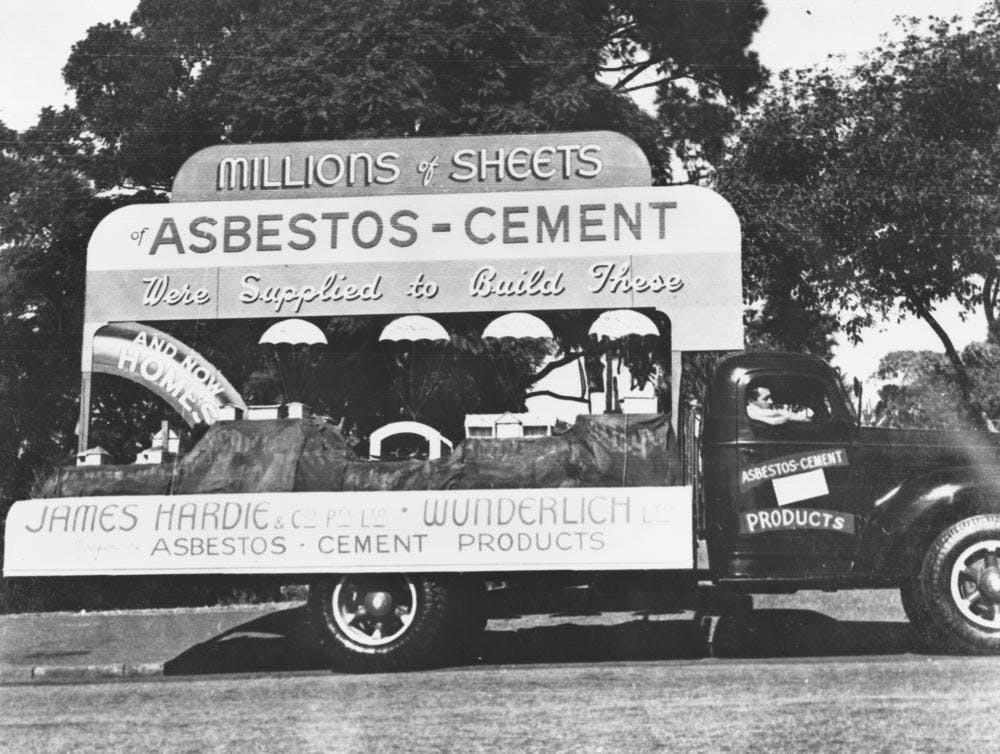
When it comes to occupational cancers more broadly, we have taken action on asbestos, but more cases of cancer and lung disease are likely to emerge in future.
There is much more work to be done on other occupational health issues such as silica dust which can enter the lungs of joiners making kitchen benchtops from stone, causing silicosis, a type of lung disease.
Defence force personnel are exposed to many more hazards in the course of their employment.
Death in battle, or in the course of training, are stark realities.
Exposure to physical, chemical and biological hazards is also greater than it is, on average, in civilian life.
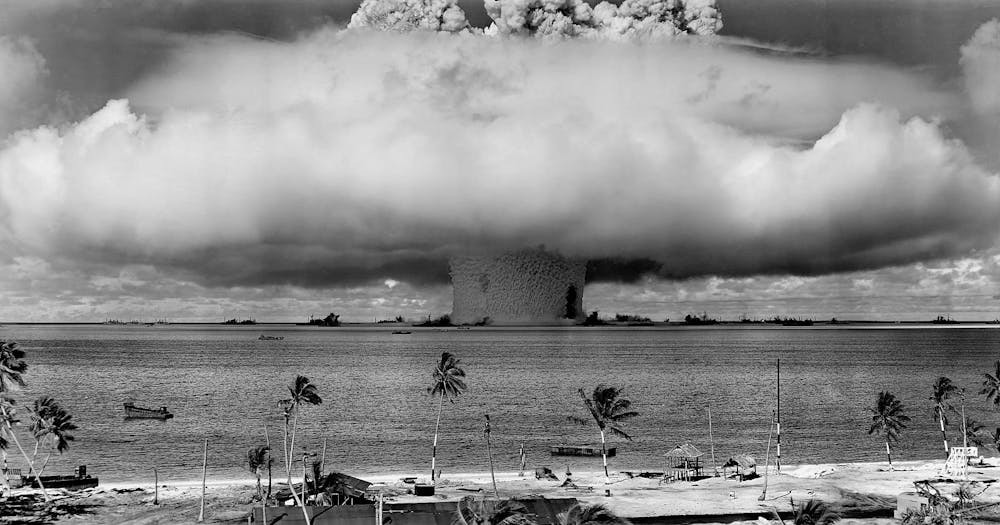
Returned service personnel must also face the prospect of long-term health problems from chemical exposure in their distant past, such as from nuclear radiation during nuclear weapons testing.
Nuclear radiation is known to cause cancer; Australian defence force and related staff were measurably exposed during the conduct of these tests from 1952 to 1965.
Tim Fischer’s commitment to help those who have, or may have, suffered long-term health consequences of their defence force experience should drive our efforts to openly, systematically and fairly address these issues.
When Alan Jones encouraged Australian Prime Minister Scott Morrison to “shove a sock down” the throat of New Zealand Prime Minister Jacinda Ardern, it was not the first time he launched a broadside and lost advertisers.
This time, 52 advertisers have so far withdrawn from Jones’ 2GB radio programme, buoyed by social media campaigns by activist groups publicising a list of boycotting advertisers as well as naming and shaming those who remain, such as Virgin Australia.
When asked about Jones’ comment on a television morning news programme, Ardern said she didn’t engage and does not intend to respond because she doesn’t “have an opinion on every single person who says something about me.”
Ardern has risen to worldwide recognition, particularly following her empathetic response to the terror attacks in Christchurch. Her fans have been quick to call out slurs on her character such as Jones’ comments, as well as any associated brands.
In today’s interconnected and increasingly more accessible world, brands are recognising the potential damage of not responding to an incident like this. Brands are actually responding strategically by capitalising on the press attention, visibly and loudly disassociating themselves from negative events or scandals.
It is not primarily about the money. Between at least seven of the boycotting brands, the money they put towards Jones’ 2GB radio show accounts for less than 1% of their media budget. But the long-term reputational and financial risk avoided by dissociating from Alan Jones is significant.
A toxic affiliation, even when that accounts for only a small piece of the marketing budget and media exposure pie, can have disastrous effects on a brand.
When brands partner
Like Jacinda Ardern, Alan Jones is a brand. People are aware of who he is and his name evokes certain associations (rightwing, shock jock). When companies choose to buy advertising space within his talk show, they are engaging in a brand partnership.
Once partnered, brands gain exposure to each other’s audiences and trigger the transfer of associations between brands (for example, George Clooney’s global status can be transferred to an instant coffee brand). But when one brand attracts bad publicity, it is not the only one that suffers damage to their image. All affiliated brands are at risk.
Tiger Woods lost US$22 million in endorsement and sponsorship contracts after his 2009 sex scandal. Accenture, AT&T and Gatorade dropped Tiger Woods, and the scandal cost shareholders of brands such as Nike and Gatorade US$12 billion. Similarly, Sandpapergate saw some major sponsors cutting ties with the Australian cricket team in 2018 for fear of the negative associations with cheating that accompanied the ball tampering incident.
Partnerships mean that the brands involved are not completely in charge of their narrative. People encounter brands in various ways and each encounter shapes perceptions, despite not being curated by the brand.
While boycotting advertisers such as ME Bank, Chemist Warehouse, Koala and Volkswagen knew that audiences would be exposed to their brand within Alan Jones’ radio show, they can’t control what else is happening at that time and what they are being linked to by virtue of association.
Turning a negative into a double positive
Advertisers have not only mitigated the spillover of misogynistic and violent connotations to their images, they’ve used this boycott as an opportunity to drive up brand sentiment. Walking away from Alan Jones not only firewalls them from his brand of outrage but signals their brand as principled, virtuous and willing to take a stand.
The incident has also highlighted the fact that these companies actually sponsored the show in the first place – a show which was known for its controversial viewpoints before this particular incident. Paradoxically, righting this wrong by boycotting could enhance satisfaction with these companies more than if they had never advertised with the programme in the first place.
This is particularly meaningful in a climate where consumers want to buy from brands that share their own values and act on social and political issues. Yet consumers discern between brands that back up their messages through practice. They’re looking for brands to “walk the talk”.
Credibility based on attractiveness, expertise and trustworthiness is key.
A recognisable brand is one of the most lucrative assets on a company’s books. The Apple brand, for example, is worth US$214 billion. Partnering with an entity with characteristics that boost a brand’s credibility will also increase brand equity, which captures the value of the brand name alone.
Brand equity starts with people’s knowledge of the brand – what comes to mind when they hear the name. By cutting ties with 2GB, the boycotting companies have made sure it’s not Alan Jones, sock-shoving and misogyny.
If you have a question you’d like an expert to answer, send it to curiouskids@theconversation.edu.au.
Why do our toes and fingers get wrinkly in the bath? – Jade, aged almost 4.
Thanks for your question, Jade.
The truth is scientists aren’t exactly sure why our fingers and toes get wrinkly in the bath.
Here’s what we do know:
it happens when we stay in the bath for more than about five minutes, but can happen faster if the water is hotter. In warm water (about 40 degrees Celsius), the skin on your hands and feet can wrinkle in only 3.5 minutes
it only happens on our hands and feet. The rest of our skin doesn’t tend to wrinkle in this way.
The truth is: scientists aren’t sure why our fingers and toes get wrinkly in hot water.Radarsmum67/flickr, CC BY
We do know the water doesn’t just leak into our fingers all by itself. The body actually works to let the water past the first few layers of skin. It has something to do with our nervous system, the network of “wires” that help pass messages from your brain to various parts of your body.
And we also know the wrinkling has something to do with blood vessels shrinking. Blood vessels are the tiny pipes that carry blood around your body. Veins, arteries and capillaries are all types of blood vessels.
So we have some clues about how the skin wrinkles, but no clear answer on why.
Even though we don’t really understand why this wrinkling happens, there are some theories. Theories means scientists have come up with their best guesses.
Good grip in a slippery situation?
Have you found things that are wet are easier to pick up when your hands are wrinkly?
Some scientists think wrinkling may give us better grip in water. This makes it easier for us to touch and hold wet objects with our hands. Our toes also wrinkle in water, and so maybe this helps us safely walk on wet surfaces.
A very long time ago, this would have helped our ancestors collect food from underwater, especially in fast-flowing water like you might see in a creek or river.
However, some scientists tested this idea, and found having wrinkled fingers often did not help. So maybe this isn’t the answer after all.
Why aren’t our fingers always wrinkly?
If there are some good things to do with wrinkly fingers and toes, why aren’t they always this way?
Well, wrinkles might make it easier for our skin to get injured or make it harder to feel sensations. And if your feet are wet and wrinkly all the time you might get a painful and dangerous condition called trench foot.
So maybe wrinkly hands and feet aren’t something you want all the time.
Your question is a very interesting one that scientists still wonder about. Maybe one day you will find the answer.
Source: The Conversation (Au and NZ) – By Amanda Tattersall, Postdoc in Urban Geography and Research Lead at Sydney Policy Lab. Host of ChangeMakers Podcast., University of Sydney
The Hong Kong protest movement is not deescalating – nor will it. Having battled for 12 weeks, this multi-million-person movement has lasted much longer than the unsuccessful 79-day Umbrella protests in 2014.
This is because protesters believe this is their last chance to protect the “one country, two systems” model that came into effect after Hong Kong’s 1997 handover to China and also expand the scope of the democracy in the city.
Yet, despite the enormous, peaceful marches, along with the more militant protesters who have shut down the airport and engaged in repeated battles with police, Hong Kong Chief Executive Carrie Lam has remained unmoved.
This dynamic is hard for Western governments to understand. If these protests were happening in a democratic society, the government would likely seek to enter into concession bargaining with the protesters, knowing that compromise and negotiation are core strategies for deescalating tensions.
This has not happened in Hong Kong. At her regular Friday press conferences, Lam neither acknowledges nor engages in any discussions about the protesters’ five key demands, including the formal withdrawal of the extradition bill that initially sparked the protests back in June.
It raises two questions – why isn’t this movement slowing down, and what will Lam, or Beijing, eventually do in response?
Carrie Lam evading questions about her inability to formally withdraw the extradition bill.
As one protest leader described it to me in Hong Kong,
we flow to where the needs or energy lies, and leave where it’s not working.
This is the approach behind the apparently spontaneous protests all over the city – from the airport, to the New Territories, to Hong Kong Island. But they aren’t spontaneous at all – the ideas for the demonstrations are deliberated on LIHKG, a Reddit-style website where anyone can post an idea and have it debated and voted up or down by other protesters.
The movement has great solidarity across it, despite the presence of sometimes militant tactics. This, too, is hard to understand in the West, as most assume the radically different tactics by the largely older, more peaceful weekend protesters and the younger, more militant faction is likely to lead to a split.
What many don’t see is that the peaceful wing and the more militant youthful wing deeply respect each other’s roles. During the 1.7 million-person march on August 18, for instance, some suggested there should be an occupation of police headquarters. Yet, this idea was voted down on LIHKG because most said it would undermine the peaceful role the rally was designed to serve.
There are some tensions, of course. During Sunday’s clashes with police, there was some criticism after a photo emerged of a protester brandishing a BB gun. But overall, the movement has largely stuck together.
This is exactly what the protesters didn’t do during Umbrella. When a more militant arm emerged during those protests, it was criticised by the older generation. The split meant that the movement was incapable of making decisions, including negotiating an end to the occupation. The movement became isolated, leaving it vulnerable to attack. It lost support from the Hong Kong people.
The other cohesive element this time around is the recognition that the “one country, two systems” model that ensures certain rights and freedoms for Hong Kong residents until 2047 is increasingly under threat.
While previous generations of Hong Kong democratic leaders drew their energy from collective anger over the 1989 Tiananmen Square massacre, the current generation fears living as adults within the People’s Republic of China.
The 2047 timeline has been brought forward to 2019, and the fight for a democratic Hong Kong is now.
Lam’s reluctance to negotiate
So what does Carrie Lam – and her backers in Beijing – do in response to that?
Last week, Lam instigated a so-called “listening process”. But protesters accused her of being disingenuous. Her first act involved listening to her allies and members of her cabinet. Even so, several pro-Beijing supporters suggested she withdraw the extradition bill and consider an inquiry into accusations of police brutality.
But Lam hasn’t shifted. And this begs the question – what autonomy does she have? If Hong Kong has its own “separate system”, then negotiations with the protesters on questions related to that system should be seen as an important political step.
Many protesters fear the lack of momentum on negotiations reflects the extent to which Hong Kong’s system is under threat. And this, in turn, affirms the need to continue protesting.
Instead of prioritising real dialogue, the government’s response has been an escalation of force. On Sunday, we saw water cannons fired into crowds for the first time and live ammunition shot into the air. Beijing has also amassed large convoys of military vehicles at the border in recent weeks.
The government’s escalating response to the protesters: fight water with water.Jerome Favre/EPA
Is another Tiananmen in the offing?
The internet is wild with rumours about “another Tiananmen”. And, in many ways, that is the purpose of the tanks on the border. Their presence provokes great fear. It raises the stakes for any protester.
This kind of fear also circulated during the Umbrella movement. I interviewed many protest leaders back then who said they went to the streets prepared to die for Hong Kong.
That said, a military incursion in a place as large as Hong Kong would be gravely difficult. Making it even more challenging is the fact it is hard to shoot water, which is akin to taking aim at a guerrilla army instead of people standing in a square.
And, it’s important to remember that even the military crackdown on the Tiananmen protesters was a process. First, the government implemented curfews in late April in 1989, followed by martial law in late May. The tanks were finally deployed on June 4.
A more likely response from the government in Hong Kong is an intensification of the police response to the protesters. There will be more water cannons, more rubber bullets. Chinese military and police might also be deployed to support the Hong Kong police on the ground. It’s a kind of military engagement, but done through the Hong Kong system.
There will also likely be more attacks on the protesters’ digital tools. Telegram, Whatsapp and LIHKG may be targeted with cyber attacks or temporarily shut down – turning the water off at its source.
The government will also ramp up its use of face recognition tools to identify the protesters to use in future prosecutions. The protesters are aware of this possibility and have begun removing “smart lamp posts” and their cameras at the site of recent protests.
No one knows what will happen in Hong Kong – not the government, not Beijing, not the protesters. The fluid dynamic of the protests is unprecedented.
The protesters are young, but highly experienced after having participated in the 2014 Umbrella movement. They are also motivated to continue fighting for what they believe is the future of their city.
Lam has deeply underestimated their momentum and the enormous levels of support they have across all segments of society. The protests will not stop until a pathway for a stronger democracy is on the table. Western governments can either help make that pathway happen through diplomatic interventions, or watch as the movement faces increasingly violent repression.
Source: The Conversation (Au and NZ) – By Susan Harris Rimmer, Australian Research Council Future Fellow, Griffith Law School, Griffith University
Prime Minister Scott Morrison has had a busy fortnight of international diplomacy. Barely had the dust settled from his performance at the Pacific Island Forum in Tuvalu, than the prime minister announced troop commitments to the Straits of Hormuz, then fronted a delicate press conference in Vietnam speaking about the South China Sea, en route to France.
After a year in the top job, Morrison may be slowly understanding what it takes to make an impact at a global level in order to pursue Australia’s interests.
The Golden G7 Ticket
Morrison scored a rare and valuable invitation to the 45th Group of Seven (G7) Summit in Biarritz, France. The G7 membership consists of the industrialised economies of US, France, Germany, Japan, the UK, Italy and Canada, along with the Presidents of the European Union and European Commission, and usually Spain. The World Bank, IMF, OECD, African Union, ILO, African Development Bank and NEPAD are also usually invited, the UN Secretary-General was also there.
The G7 used to be the G8, but Russia is still suspended. On March 24 2014, the G7 members cancelled the planned G8 summit that was to be held in June that year in the Russian city of Sochi, and suspended Russia’s membership of the group, due to Russia’s annexation of Crimea. However, Russia has not been permanently expelled.
French President Emmanuel Macron used his invitations strategically to promote a “league of democracies” concept. He invited leaders from Australia, India, Chile and South Africa to join the outreach activities at the summit, in particular to attend a Sunday night dinner to discuss environmental challenges.
Australia is a member of the G20, which includes India, Indonesia and China. But it has often cast a wistful eye to Canada’s participation in the G7/8, despite the relative similarity in economic strength between the two nations.
This year, the Henry Jackson Society released its second Audit of Geopolitical Capability report, which assesses the geopolitical capability of the Group of 20 nations plus Nigeria. It ranked Australia as the eighth most capable in the world, ahead of India and Russia.
But since the election of Donald Trump as US president, the G7 has lost much of its consensus and related power. The 2019 summit was like an Agatha Christie play, full of shocks, tensions, surprise reveals and difficulties.
Tensions and diplomatic shocks
The US president walked out early from last year’s G7 summit in Canada over criticism of his tariffs policy, and then refused to sign the final statement. Macron therefore organised the summit to have a two-hour lunch alone with the president, and abandoned the idea of a final communique.
Saturday working sessions were held on jobs, global inequality, climate change and women’s empowerment, leading to criticisms from the US delegation that the agenda was too “niche”. Sunday was devoted to the extremely difficult trade discussions and the Amazon forest fires.
The European G7 nations, as well as other EU members such as Ireland and Spain, sparred over whether to block the EU-Mercosur free trade agreement unless Brazilian President Jair Bolsonaro takes forceful action on the forest fires raging in the Amazon and on climate change in general.
Trump pulled out of the Paris Climate Agreement in 2017, shortly after he attended his first G7 in Italy. Climate was still a sticking point at this summit, with leadership from the G7 unlikely on climate as an economic risk.
The Saturday dinner was thrown into uproar by Trump championing the re-entry of Russia to the G7, with the EU arguing back that Crimea would be better.
Sunday saw the surprise arrival of Iranian Foreign Minister Mohammad Javad Zarif to meet with Macron. Zarif, sanctioned by the US, said salvaging the 2015 nuclear deal would be difficult but “worth trying”.
Trump withdrew the US from the Iran nuclear accord in 2018, leaving European signatories scrambling to preserve the pact. German Chancellor Angela Merkel said she welcomed efforts toward deescalation. Europeans have so far declined to join Australia, the US, Bahrain and the UK by engaging in the Strait of Hormuz. The situation in Hong Kong was barely raised.
Salty summit
Just before the summit, UK Prime Minister Boris Johnson – attending his first G7 summit – and European Council President Donald Tusk traded barbs over the UK’s exit from the European Union. Tusk said he would not negotiate a no-deal scenario, and said he hoped the prime minister did not want to go down in history as “Mr No Deal”. Johnson took a swim in the sea and created a lengthy metaphor for journalists about Brexit as a result.
Most world leaders attending the summit declared they would ask the US to resolve the trade war with China. However, Trump announced additional duties on Chinese imports one day before he arrived in France. He then threatened to levy import duties on French wine “like they’ve never seen before”. The US president also said the British would lose “the anchor around their ankle” after leaving the EU.
Outside the summit, more than 9,000 anti-G7 protesters marched peacefully over a bridge linking France and Spain, about 30 kilometres from Biarritz. Yellow Jacket protesters held pictures of Macron upside-down.
Australian leadership on digital hate
In the midst of such turmoil, it would be difficult to make an impact as an invited guest. However, Morrison kept up his advocacy on the Christchurch Call.
At the close of the G7, Morrison announced an undisclosed amount of funding from the OECD and A$300,000 to fund the development of voluntary transparency reporting protocols for social media companies to prevent, detect, and remove terrorist and violent extremist content.
A summit of ‘senseless disputes’
This was the EU President Tusk’s final G7 Summit and he reflected sadly on Saturday that leaders of the world’s richest and most powerful democracies are increasingly unable to find “common language”, and were instead at risk of getting caught up in “senseless disputes among each other”.
The summit seems to have borne out his worse fears. Hopefully Scott Morrison was inspired by the fractured state of the big stage to become part of the solution.
If you went to your dentist for a check-up and dental clean in the last year, give yourself a pat on the back. Not everyone loves the dentist, but research shows people who visit at least once a year for preventative care are happier with their smile.
Regular dental visitors are also less likely to need a filling or have a tooth removed.
So how often do we need to go to the dentist? Most of us can get away with an annual trip, but some people at higher risk of dental problems should visit more often.
While we all do the best we can on our own, professional teeth cleaning removes plaque, the soft yellowish build-up, and calculus (hardened plaque) we can’t get to. This soft build-up is made up of billions of different types of bacteria that live and reproduce in our mouth by feeding on the food we eat.
Most bacteria live in our bodies without causing too much trouble. But certain bacteria in dental plaque, when they grow in numbers, can lead to cavities (holes in the teeth) or gum disease.
A dental clean will reduce your chance of getting cavities or gum disease by significantly reducing the amount of plaque and calculus in your mouth.
So how often?
As a dentist, my patients often ask me how regularly they should get their teeth cleaned. My response is usually: “That depends”.
Most private health insurance schemes cover a dental check-up and clean once every six months. But there’s no hard and fast evidence, particularly if you’re a healthy person who is less likely to get a cavity or gum disease.
However, some people are at higher risk of getting dental cavities or gum disease – and this group should get their teeth cleaned more often.
Hole in one
We know certain health and lifestyle factors can affect a person’s risk of developing cavities. Here are some yes/no questions you can ask yourself to understand whether you’re at a higher risk:
is your drinking water or toothpaste fluoride-free?
do you snack a lot, including on sweets?
do you avoid flossing?
do you brush your teeth less than twice a day?
do you visit your dentist for toothaches rather than check-ups?
do you need new fillings every time you visit the dentist?
is your dentist “watching” a lot of early cavities?
do you have to wear an appliance in your mouth such as a denture or braces?
do you suffer from a chronic long-term health condition such as diabetes?
do you suffer from a dry mouth?
If you answered “yes” to most of these questions, you’re likely to need to see your dentist or hygienist at least every six months, if not more often.
As well as removing the bug-loaded plaque and calculus, people prone to cavities benefit from the fluoride treatment after scaling.
Evidence shows professional fluoride treatment every six months can lead to a 30% reduced risk of developing cavities, needing fillings or having teeth removed.
People taking blood thinners and other medications, such as pills and infusions for osteoporosis, may need to visit the dentist more regularly too. These medications can complicate the process of an extraction or other dental work, so regular checks and cleans are best to help detect problems before they become serious.
People who visit the dentist regularly are less likely to need a filling or have a tooth removed.From shutterstock.com
People with bleeding gums should also see their dental practitioners more often. This is especially important if you have been diagnosed with advanced gum disease, known as periodontal disease.
What about the budget?
The average cost of a check-up, dental clean and fluoride treatment is A$231, but the cost can vary from A$150 to A$305. You can contact your local dentist to find out what they charge. Your dentist may offer you a payment plan.
If you can’t afford this, you may qualify for free or discounted treatment if you hold a concession card. Children from families that receive a Family Tax Benefit A may be eligible for free dental treatment through the Child Dental Benefits Schedule.
People with private health insurance with extras or ancillary cover will also have some or all of their dental treatment covered.
Protecting your smile
So you don’t really get cavities or have gum disease, but would prefer to see your dentist every six months? Great. Some people prefer to go twice a year to reduce the chance of a nasty toothache.
Parents often wish to set a good example for their children by making regular check and clean appointments for the whole family.
There are many benefits to regular checks and cleans. Visiting your dentist regularly helps reduce the chance of needing more complex and expensive dental treatment later on.
And touching base with your oral health practitioner provides that nudge we all need now and again to eat healthily, brush better and floss more often.
Increasingly acidic oceans are putting algae at risk, threatening the foundation of the entire marine food web.
Our research into the effects of CO₂-induced changes to microscopic ocean algae – called phytoplankton – was published today in Nature Climate Change. It has uncovered a previously unrecognised threat from ocean acidification.
In our study we discovered increased seawater acidity reduced Antarctic phytoplanktons’ ability to build strong cell walls, making them smaller and less effective at storing carbon. At current rates of seawater acidification, we could see this effect before the end of the century.
Carbon dioxide emissions are not just altering our atmosphere. More than 40% of CO₂ emitted by people is absorbed by our oceans.
While reducing the CO₂ in our atmosphere is generally a good thing, the ugly consequence is this process makes seawater more acidic. Just as placing a tooth in a jar of cola will (eventually) dissolve it, increasingly acidic seawater has a devastating effect on organisms that build their bodies out of calcium, like corals and shellfish.
Many studies to date have therefore taken the perfectly logical step of studying the effects of seawater acidification on these “calcifying” creatures. However, we wanted to know if other, non-calcifying, species are at risk.
Diatoms in our oceans
Phytoplankton use photosynthesis to turn carbon in the atmosphere into carbon in their bodies. We looked at diatoms, a key group of phytoplankton responsible for 40% of this process in the ocean. Not only do they remove huge amounts of carbon, they also fuel entire marine food webs.
Diatoms use dissolved silica to build the walls of their cells. These dense, glass-like structures mean diatoms sink more quickly than other phytoplankton and therefore increase the transfer of carbon to the sea floor where it may be stored for millennia.
Diatoms are microscopic plant plankton that collectively remove huge amounts of carbon from the atmosphere.Alyce M. Hancock, Author provided
This makes diatoms major players in the global carbon cycle. That’s why our team decided to look at how climate-change-driven ocean acidification might affect this process.
We exposed a natural Antarctic phytoplankton community to increasing levels of acidity. We then measured the rate at which the whole community used dissolved silica to build their cells, as well as the rates of individual species within the community.
More acid means less silicone
The more acidic the seawater, the more the diatom communities were made up of smaller species, reducing the total amount of silica they produced. Less silica means the diatoms aren’t heavy enough to sink quickly, reducing the rate at which they float down to the sea bed, safely storing carbon away from the atmosphere.
On examining individual cells, we found many of the species were highly sensitive to increased acidity, reducing their individual silicification rates by 35-80%. These results revealed not only are communities changing, but species that remain in the community are building less-dense cell walls.
Most alarming, many of the species were affected at ocean pH levels predicted for the end of this century, adding to a growing body of evidence showing significant ecological implications of climate change will take effect much sooner than previously anticipated.
Marine diversity is in decline
These losses in silica production could have far reaching consequences for the biology and chemistry of our oceans.
Many species affected are also an important component of the diet of the Antarctic krill, which is central to the Antarctic marine food web.
Fewer diatoms sinking to the ocean floor mean significant changes in silicon cycling and carbon burial. In a time when carbon drawn down by our ocean is crucial to helping sustain our atmospheric systems, any loss from this process will exacerbate CO₂ pollution.
Our new research adds yet another group of organisms to the list of climate change casualties. It emphasises the urgent need to reduce our dependency on fossil fuels.
The only course of action to prevent catastrophic climate change is to stop emitting CO₂. We need to cut our emissions soon, if we hope to keep our oceans from becoming too acidic to sustain healthy marine ecosystems.
Many teenagers use mobile phones and social media almost constantly. And children are gaining access to these devices and platforms at increasingly younger ages.
This is a challenge for parents who need to keep up with their children’s use, the evolution of devices, and how this changes how they have to parent.
Studies show parents feel anxious and lack sufficient knowledge about their children’s use of devices.
When parents try to restrict their children’s online interactions, children usually find a way around it. Instead, parents should have conversations with children from a young age about cybersecurity. This will help them develop the skills they need to be safe online.
What are children exposed to?
Social networking – which includes interactions through gaming, as well as texting and social media – brings with it exciting opportunities and unique risks.
Online gaming presents unique dangers because user-generated games (where content is developed by gamers on platforms such as Roblox) are not regulated. This means children can be exposed to inappropriate sexualised and violent content.
Children are vulnerable when they interact with other users on social media, in chat rooms and within gaming. This could involve grooming by a sexual predator either to meet in person or send sexually explicit images.
While the study by the eSafety Commissioner found children and teenagers usually attempted to assess the danger of meeting someone unknown face-to-face, such as by looking for similar interests and ensuring there was no sexual content in the online communication, sexual predators use deceptive tactics to lure their victims into meeting in person.
Another Australian study found half of children played online games with someone they didn’t know. Boys were more likely to do so than girls.
How do children deal with online situations?
Research has been mixed on how young people manage cybersecurity risks.
One study found that children who are at least 11 years old seem to have some awareness of the consequences of online interactions. They use safety measures including removing comments, tags and images and blocking and deleting content when interacting online. They also rarely use photos of themselves and disable their geolocations to protect their identities.
But children also engage in risky behaviours such as sharing passwords and contacting strangers. Some findings indicated the more teens use social media sites, the more they tend to disclose personal information.
In one US study, researchers asked nearly 600 students aged 11-13 about cybersafety. The results indicated 40% accepted friend requests from people they do not know, and they were more concerned with protecting their personal information from parents than strangers online.
Several studies found children think parental restrictions are intrusive and invade their privacy. This includes teens feeling disrespected and even stalked by their parents, which leads to a loss of trust.
What can parents do?
Restricting children’s online use is unhelpful. Parents should talk to their children about healthy and age-appropriate online interactions.
This includes avoiding disclosing personal information (real name, date of birth, phone number, address, school, or pictures that reveal such information). Parents should provide guidance and explain the consequences of online dangers to their children in a way that does not instil fear but explains their concern.
Parents should talk to their children about online risk and safety behaviours from a young age, as soon as they start using online games and engaging on social media sites, to help them build a stronger foundation for their transition to adolescence.
Children deserve to play online games and participate on social media, but still be protected from harm. Internet technology does have many advantages, including connecting people through social networking, education and recreation. With caution and open communication, the risks can be managed together.
When children are supported and can discuss safety strategies with their parents, they’re more likely to reach out when something happens that makes them feel unsure or uncomfortable about certain online interactions.
Source: The Conversation (Au and NZ) – By Rachel Ong ViforJ, Professor of Economics, School of Economics, Finance and Property, Curtin University
Outright home ownership has long been regarded as a supporting pillar of Australian retirement incomes policies. A report released today by the Australian Housing and Urban Research Institute (AHURI) raises concerns that rising mortgage debt and falling home ownership rates in later life are undermining the role of home ownership in supporting retirees’ financial wellbeing.
Achieving outright home ownership is similar to the accumulation of pension income entitlements that come on stream in later life. This is because the outright owner does not have to meet rents. That reduces the need for a large income stream to pay for shelter as well as the chances of low-income older Australians falling into poverty.
According to data from the Australian Bureau of Statistics (ABS) Survey of Income and Housing, home-ownership rates among Australians aged 55-64 years dropped from 86% to 81% between 2001 and 2016. We are also seeing a major shift in older Australians’ readiness to shoulder mortgage debt in later life.
Mortgage burdens have spiked in the 55-64 age group. In 2001 roughly 80% were mortgage-free. Fifteen years later this had plummeted to only 56%.
Indebtedness is even growing among owners aged 65 and over. In 2001 nearly 96% were mortgage-free. By 2016 this proportion had fallen below 90%.
These trends are expected to continue. That means, as the population ages, a growing number of older Australians will still be paying off mortgages, or trying to meet rents from fixed incomes.
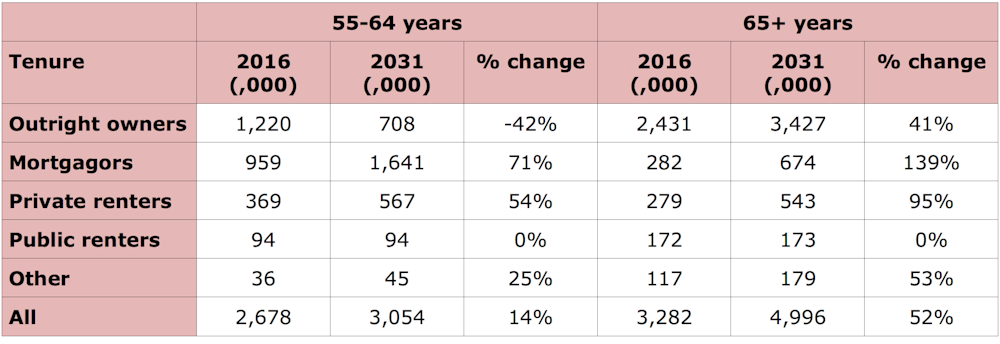
The table below shows how the housing tenures of older Australians are projected to change between 2016 and 2031 based on ABS population forecasts and modelling estimates.
Projected changes in housing tenures of older Australians between 2016 and 2031.Authors’ calculations from HILDA Survey and ABS population projections, Author provided
We expect the number of outright owners aged 55-64 to plunge by 42%, from more than 1.2 million to 708,000. The number of 65-plus outright owners is predicted to rise by 41%, but this lags behind the 52% population growth in this age group.
On the other hand, the numbers of older mortgagors and private renters are projected to soar. Among 55-to-64-year-olds, mortgagor numbers jump from under 1 million to over 1.6 million, a 71% increase. The number of private renters rises by 54% from 369,000 to 567,000.
Beyond what was the age pension threshold of 65 years, mortgagors and private renters are expected to roughly double in number.
The combined impact of these changes in tenure and demographics is expected to increase Commonwealth Rent Assistance (CRA) eligibility among seniors.
On its own, demographic change is forecast to lift the number of CRA recipients, and the real cost of providing CRA, by around 35%.
Add the projected increases in the private rental share of the housing stock and the number of CRA recipients is estimated to rise by 60%, from 414,000 to 664,000, between 2016 and 2031.
The real cost to the federal budget of rent assistance payments to older Australians is forecast to blow out from $972 million to $1.55 billion a year.
Actual 2016 and projected 2031 tenure shares and population counts among Australians aged 55+ years.Authors’ calculations from HILDA Survey and ABS population projections, Author provided
We can also expect to see public housing waiting lists grow if these tenure changes and demographics eventuate. Their combined impact through to 2031 is expected to swell the number of older persons eligible for public housing from 247,000 to 441,000 – a 79% increase.
What are the impacts on poverty?
On an income-only basis we estimate 1.25 million seniors were in poverty in 2016. On taking their housing costs into account, that number falls to 802,000.
But the role of home ownership in preventing poverty is challenged if our projected declines in home ownership rates and increases in debt eventuate. The table below shows the projected increase in the after-housing-cost poverty count from 802,000 in 2016 to 1.15 million in 2031.
Actual 2016 and projected 2031 poverty counts on a before- and after-housing-cost basis among Australians aged 55+ years.Authors’ calculations from HILDA Survey and ABS population projections, Author provided
Policy challenges on multiple fronts
The demand for public housing will grow. If all else remains unchanged in the housing system and economy, seniors on public housing wait lists will increase by over 75%. That’s more than twice the 35% increase in the population of seniors between 2016 and 2031.
Community housing organisations would also come under increasing pressure.
As the number of senior private rental tenants grows, governments will need to reform tenancy regulations in ways that enable housing retrofits to meet mobility needs and allow for ageing in place. Tenure insecurity in the rental sector could hinder planning for aged support services.
We may also see a more fundamental transformation of Australia’s housing system and lifestyles in old age. High real house price growth relative to incomes remains a barrier to first home ownership despite low interest rates. Furthermore, the mandatory superannuation guarantee likely displaces some saving in other assets, including housing.
There is therefore a growing prospect of delayed entry into home ownership and of people carrying more debt in later life. Longer working lives and the use of superannuation benefits to pay down mortgages both look increasingly likely.
Treasurer Josh Frydenberg’s key message to business in a landmark speech on Monday was “back yourself”.
He said the best way to boost economic growth was to boost productivity, and the best way to do that was for businesses to undertake productivity-enhancing investments.
My message today for business is to back yourself and use your balance sheet to invest and grow.
With Australian corporates enjoying healthy balance sheets, record low borrowing costs and strong equity market conditions, the question is: are corporates being aggressive enough in the pursuit of growth?
On Thursday the Bureau of Statistics will release investment figures for the three months to June. The trend estimates for the three months to March showed mining investment down 2.8%, manufacturing investment down 4.3%, and other investment up just 0.7%.
According to Frydenberg too many businesses are using funds that would have once invested to buy back their own shares and return capital to their shareholders.
Why businesses don’t back themselves
He was effectively alluding to something that had come to notice as far back as the 1980’s and that has fascinated some economists, but mostly those outside the mainstream.
It is the incentive for firms to avoid the difficult and risky search for the long-term returns that can come from expansion and modernisation and instead maximise immediate shareholder value.
To the extent that it inhibits growth, it certainly doesn’t help the economy.
But if his speech was meant to be a piece of moral suasion directed at corporations, I fear it missed the point and might in any case be fruitless.
Decisions about whether to invest come down to views about returns from investments, and they come down to views about likely growth in consumer and business spending.
Consumers aren’t spending
Put another way, investing in new capacity is ultimately about whether or not there will be demand for the goods and services that will be produced by the new capacity.
Right now, to state the bleeding obvious, the outlook for spending isn’t particularly rosy.
We’ve sluggish consumer demand, sluggish business demand, and are facing sluggish overseas demand in part because of an impending trade war and in part from a government over-reliant on using the Reserve Bank to stimulate the economy instead of its won spending.
In this sort of climate, I suspect no amount of moral suasion will improve the expected rates of return on investments in new capacity.
Investment can be counterproductive
The treasurer is aware that there is a demand problem, as his comments about trade agreements and public sector infrastructure projects indicate.
But in underplaying the need create demand, his calls for investments that boost labour productivity bring with them a potential downside.
Enhanced productivity growth in the absence of sustained improvements in spending is likely to cost jobs or force up unemployment.
Being able to produce more with the same amount of labour means less employment, unless demand is increasing.
Of course, when demand does take off the economy will need the capacity to meet it, so the concern with productivity enhancing investment is legitimate. But it helps not to have it until it is clear demand is going to take off.
Frydenberg might be leaning to the view that once productivity grows, demand will be taken care of.
More productivity mightn’t always be good
It is a popular view; that greater labour productivity (more production per worker) will create the conditions for faster wage growth which will itself boost consumer spending.
Frydenberg set it out at the beginning of his speech. Economic growth was driven by population, productivity and (labour market) participation.
There’s even a view that technological change will itself create jobs and consumer demand.
The counter proposition is that technological change displaces workers and generates technological unemployment.
It’s a debate with real world Australian resonance. If Australian businesses did boost investment as the treasurer wants, the improved productivity that resulted would necessarily generate unemployment unless demand grew alongside it.
The question for us is whether the productivity growth would increase demand in and of itself, or whether the government would need to act to make sure it happened.
Michel Foucault was one of the most famous thinkers of the late 20th century, achieving celebrity-like status before his untimely death in 1984.
His academic career culminated in a 1970 appointment as “professor of history of systems of thought” at France’s most prestigious university – the College de France. This unusual title was created because of the distinctive nature of Foucault’s work, which straddled disciplines such as philosophy, history, and politics.
Foucault was interested in power and social change. In particular, he studied how these played out as France shifted from a monarchy to democracy via the French revolution.
He believed that we have tended to oversimplify this transition by viewing it as an ongoing and inevitable attainment of “freedom” and “reason”. This, he said, had caused us to misunderstand the way that power operates in modern societies.
For instance, even though the new form of government no longer relied on torture, and public hangings as punishments, it still sought to control people’s bodies — by focusing on their minds.
In his 1975 book Discipline and Punish, Foucault argued that French society had reconfigured punishment through the new “humane” practices of “discipline” and “surveillance”, used in new institutions such as prisons, the mental asylums, schools, workhouses and factories.
These institutions produced obedient citizens who comply with social norms, not simply under threat of corporal punishment, but as a result of their behaviour being constantly sculpted to ensure they fully internalise the dominant beliefs and values.
In Foucault’s view, new “disciplinary” sciences (for instance, criminology, psychiatry, education) aimed to make all “deviance” visible, and thus correctable, in a way that was impossible in the previous social order.
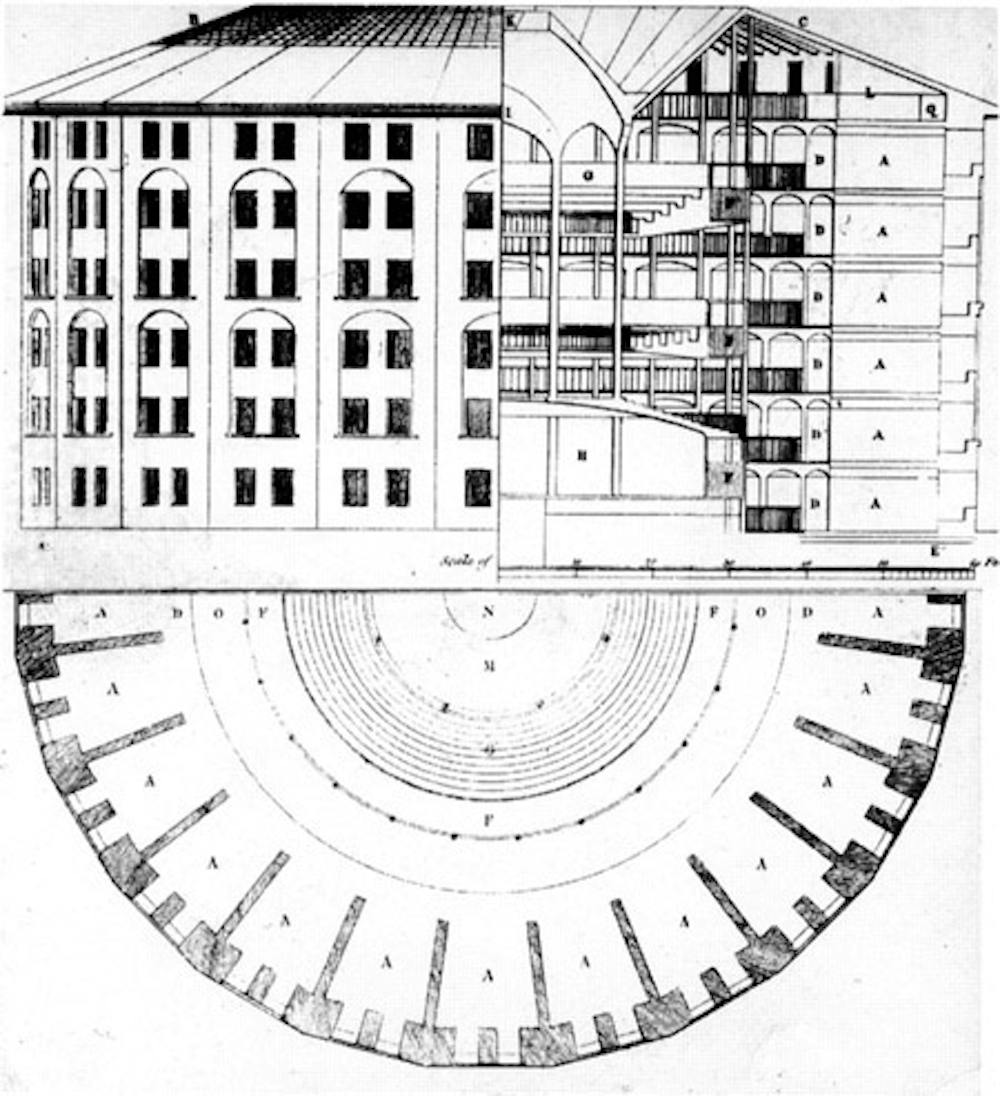
He used English philosopher Jeremy Bentham’s 1787 Panopticon as a metaphor to illustrate his point. This was a circular prison designed to lay each inmate open to the scrutiny of a central watchtower, which was positioned so that individual prisoners could never know when they are being watched.
The prisoners therefore always had to act as though they were being watched. In the wider world, he argued, this resulted in docile people who could fit into the discipline of factories, mental institutions, and the dominant sexual morality.
Foucault argued that people with “mental illnesses” (formerly known as madness) were controlled by relentless efforts at correction to a scientifically determined “norm”.
His 1976 History of Sexuality Volume 1 argued that, rather than talking about deviant acts, scientists talked about deviant types, such as “the pervert” or “the homosexual”, who were in need of concerted efforts of medical intervention and correction.
Power/knowledge
Foucault argued that knowledge and power are intimately bound up. So much so, that that he coined the term “power/knowledge” to point out that one is not separate from the other.
Every exercise of power depends on a scaffold of knowledge that supports it. And claims to knowledge advance the interests and power of certain groups while marginalising others. In practice, this often legitimises the mistreatment of these others in the name of correcting and helping them.
What has made Foucault so appealing to such a broad range of scholars is that he didn’t just look at abstract theories of philosophy or of historical change. Rather, he analysed what was actually said. In his most important works, this included an analysis of texts, images and buildings in order to map how forms of knowledge change.
For example, he argued that sexuality was not simply repressed in the 19th century. Rather, it was widely discussed in an expanding new scientific literature where patients were encouraged to talk about sexual experiences in clinical settings.
With the recent explosion in surveillance cameras as well the role of “big data” we have now well and truly entered the surveillance society. Foucault’s insights on this topic continue to be explored by scholars across the social sciences and humanities.
He has also had a substantial influence on contemporary work in sexuality and gender, sociological studies of mental health institutions and of the medical profession; and in history, politics, cultural studies, and beyond.
An important feature of his theory is that where there is power there is also always resistance. So there are always “sites of resistance”: spaces that hold out the promise for a reconfiguring of power relations in a way that might redress oppressive institutions and practices.
For example, homosexuality has historically been reinterpreted as a “sin”, a “medical pathology”, and now a legitimate “sexuality”, showing how change is possible.
But it is only through a deepened understanding of the origin and structure of our present social order that we will be able to grasp and seize future possibilities for social change.
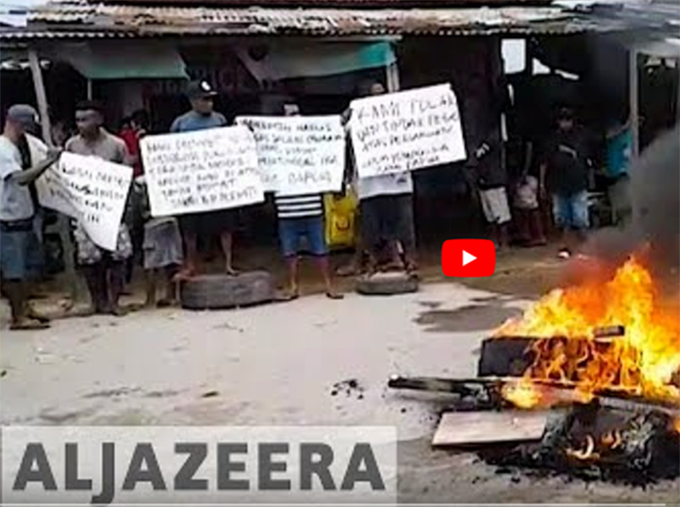
A West Papuan journalist, editor and media freedom advocate has lodged a protest to the United Nations about Indonesia’s internet blackout as more protests reportedly spread across the Melanesian region, including Wamena in the highlands.
Victor Mambor and Tabloid Jubi have made the protest with the help of human rights lawyers and he appealed through Pacific Media Watch for the Pacific media to “spread information about the appeal”.
Indonesian authorities claim the internet gag has been necessary to stem “fake news” which it blames for the rash of Papuan protests over the past week, with at least one death and dozens injured.
The journalist group issued a statement saying that a fake Twitter account had “disseminated an unfounded attempt to discredit and intimidate” Mambor, who is a national organiser for AJI.
– Partner –
“We consider that what Victor has done through his media is the standard thing done by the media, which is to convey information as objectively as possible and publish it after going through a verification process,” the AJI statement said.
The AJI reminded social media users – and the security forces – that journalists carrying out their profession were protected by Press Law 40.
Hampered by blackout Mambor said the ability of Papuan journalists to report on the protests had been hampered by the internet blackout.
Journalist and media freedom advocate Victor Mambor at a public meeting for West Papua in Jakarta in May, 2017. Image: David Robie/PMC
RNZ Pacific reported earlier today that Victor Mambor had filed an urgent appeal to the UN Special Rapporteur on Freedom of Expression, David Kaye.
The Communications Ministry said blocking of the internet would continue until the Papua region was “absolutely normal”.
Mambor said the blockage violated international human rights law.
“When we talk about the ability of journalism to send the real true situation about West Papua,” he said.
“But now we cannot do it. There’s much information from the road. They send it to me, but we cannot clarify or cannot verify the information. There is a problem for journalism.”
The block has also restricted the people’s right to mobilise, RNZ Pacific reported Mambor saying.
‘Discrimination against Papuans’ “I think it’s a kind of discrimination against West Papuan people. The authorities should look for perpetrators who say ‘monkey’ to our people. They should arrest them, not block the internet.”
Mambor said people could generally tell the difference between hoax and accurate news coverage.
His appeal, made through the human rights lawyers Jennifer Robinson and Veronica Koman, also claims the internet blocking fundamentally violates the rights of all West Papuans,” RNZ Pacific reports.
“We appeal to the UN Special Rapporteur, and to the UN Human Rights Commissioner Michele Bachelet, to raise our concerns with the Indonesian government about the military crackdown and internet blocking in West Papua,” Robinson said.
She also urged the UN to call on Indonesia to ensure that Mambor and West Papuan journalists were able to report “without fear of intimidation and harassment”.
The government has deployed 1000 extra military and police to Papua, as some of the protests turned violent.
Local media outlets have been restricted in their ability to send photographs and videos of the protests.
A Papuan protest in Wamena. Image: via Andrew Johnson/FB
The Jakarta Post reports that legal experts have demanded the police prove that shooting tear gas and arresting 43 Papuan students at a dorm in Surabaya on August 17 without an investigation was “necessary” just because the police suspected there were “certain items” inside the dorm.
This was the incident that triggered the widespread protests.
East Java police spokesperson Frans Barung Mangera said on Friday in Surabaya that an internal police investigation carried out late last week revealed that none of the personnel had violated standard operating procedures by using tear gas.
The Paris-based Reporters Without Borders, New York-based Committee to Protect Journalists and other global media groups have demanded Indonesian authorities immediately restore internet access to Papua region.
The Pacific Media Centre has also condemned the internet blackout, with director Professor David Robie saying the authorities have “inflamed’ the situation with the ban by encouraging misinformation and rumours.
“Papuans, and indeed everybody, are entitled to free and unfettered information about the crisis and the reports of human rights violations,” he said.
Outgoing secretary of the Prime Minister’s Department Martin Parkinson has condemned “entrenched disadvantage” in Australia, in his valedictory address on leaving the public service.
Parkinson also warned it was imperative that Australia did not allow “the kind of retreat from openness and vilification of differences” that had happened in some other countries.
During his long career Parkinson headed the climate change department (now defunct) and treasury (from which he was sacked by Tony Abbott), as well as the prime minister’s department, where he will now be succeeded by Phil Gaetjens, formerly Scott Morrison’s chief of staff and most recently head of treasury.
In his Monday address Parkinson said Australia had not had “the rising income inequality at the top end” of the United States and much of western Europe, “although wealth has become more unequally distributed off the back of rising house prices”.
But this was a “low bar”, he said.
“Our history has bequeathed a degree of entrenched disadvantage that should be seen as a disgrace in any country, but particularly one as developed as Australia,” he said.
More than half of those in the bottom decile in 2000 were still in the lowest 20% 15 years later, he said.
Ideally, people should only be at the bottom of the income distribution spectrum temporarily due to life events, not whole families and communities sentenced to it for generations.
If you want a single thing to blame for the disadvantage we see in Australia, particularly in our remote areas, look no further than an understandable lack of hope. With those kind of odds, anything else would be irrational.
A key to evening people’s chances was to have the best education system that could be achieved and a culture valuing learning, Parkinson said.
He said Australia would need to use all its advantages to sustain its prosperity and security in the future. These included its multicultural society, a merit-based culture and a market-based approach.
There are really only two choices for this country. We can take pride in our diversity and use it as an advantage when interacting with the world, or we can hunker down behind borders and slowly gnaw at each other.
Parkinson said that “to their credit, our parliamentary leaders have maintained a remarkable commitment to an open economy and social cohesion, despite immense pressures the other way”.
On the international front, Parkinson said many regional and global institutions, including the International Monetary Fund and the World Bank, the G20 and APEC, were struggling.
It’s particularly hard for the WTO to enforce trade rules when the largest countries are openly flouting them.
The United States largely built this order in its own image, under-writing it with security guarantees. We benefit immensely from this order and must help support it wherever we can.
He reflected on his disappointment at his dismissal as treasury secretary. “I received the ‘wooden spoon’ as head of the Treasury in 2013 – a job I enjoyed and in which I aspired to follow the nation-building work done by predecessors such as Chris Higgins, Ted Evans and Ken Henry.
“It was a drawn out departure, and I couldn’t even look forward to sitting on the couch to watch a care free game on the weekend as the Essendon Bombers also had a terrible season.”
The number of suicides in Australia has been rising in the last decade, with more than 3,000 Australians taking their life in 2017, according to the latest available ABS figures. Some of the most vulnerable groups include Indigenous Australians, young Australians, unemployed people, and veterans.
Scott Morrison has declared this a key priority area for the government. He has appointed Christine Morgan, CEO of the National Mental Health Commission, as the national suicide prevention advisor to the prime minister.
On this episode, Christine Morgan speaks with Michelle Grattan about the issue – what we know so far, and what needs more clarity. She stresses the role of communities in tackling the rising rates, and also argues for a more holistic view – beyond narrow mental health problems – of the factors that drive people to contemplate taking their own lives.
Yes, it may be that they’re suffering from a mental health condition. Yes, they may be suffering from a health condition. But they may also be being affected by other things which significantly impact, like what is their housing security?[…]What is their employment situation? what is their financial situation? Have they come from a background of trauma?
Anyone seeking support and information about suicide can contact Lifeline on 131 114 or Beyond Blue on 1300 224 636.
New to podcasts?
Podcasts are often best enjoyed using a podcast app. All iPhones come with the Apple Podcasts app already installed, or you may want to listen and subscribe on another app such as Pocket Casts (click here to listen to Politics with Michelle Grattan on Pocket Casts).
You can also hear it on Stitcher, Spotify or any of the apps below. Just pick a service from one of those listed below and click on the icon to find Politics with Michelle Grattan.
Pasifika people in New Zealand need to take charge against climate change which is already threatening their home islands, an Auckland hui has heard.
Political leaders have been too slow, warned climate experts, community, youth and Pasifika leaders who were joined at the Roskill Climate Restart hui by Minister for Climate Change James Shaw and Mt Roskill Labour MP Michael Wood.
“We have no choice. It’s about my people surviving in this world. My people [in Tuvalu] are already suffering. In terms of food they can’t plant crops now because of the salinity of the soil,” said E Tū union Komiti Pasifika representative Fala Haulangi.
“Every day our people live in fear and that’s the reality people have to face. So, when we talk about what we will do in the next 10 years, no, let’s talk about today.”
Haulangi said there is a lack of trust in politicians among Pasifika communities but believes in the power of community to tackle climate change.
– Partner –
Pacific climate warrior Brianna Fruean said more attention needs to be placed on the resilience and adaptability of Pasifika people.
“Young people in Tokelau are building keyhole gardens for their villages so their gardening is raised off the ground as a way of adapting to climate change and soil salinisation. I’ve seen so many examples of the resilience humans can bring forward.
“We need more attention on the solutions and how we can look at people who really shouldn’t be as resilient as they are, considering all the obstacles that are given to them, and how they’ve overcome them. If someone in the Pacific can put up a fight against climate change, then anyone in the world can.”
James Shaw agreed, saying it was critical government works with communities when it comes to assessing real life effects of climate change.
“Wellington can’t work that out all by itself. [Risk assessment] is an area where we need to work closely with other communities because they have on the ground knowledge. Communities often have knowledge that has been passed down from generations.
“It’s going to take everything that we’ve got at every single level. It is one of those things that has to involve political change.”
The hui began with a community cycle ride around the newly-opened Te Auaunga (Oakley Creek) walkway led by “local biking heroes” Roskill Bike Kitchen and Global Hope Mission, followed by a free lunch provided by Wise Collective.
Ayla Miller is studying Journalism through AUTs postgraduate diploma of communications and has an interest in arts, culture, entertainment and environmental news
Over the last week, a weight loss app targeted at children and teenagers aged 8-17 has sparked concern among health professionals and parents around the world.
More than 90,000 people have signed an online petition calling for withdrawal of an app called Kurbo.
Kurbo was launched in 2014. WW (formerly Weight Watchers) bought it last year and have recently relaunched it.
It’s currently only available in the United States, but we could see it launched in Australia.
Overweight and obesity affect one in four Australian children and adolescents. Excess weight is likely to persist into adulthood and is associated with the development of chronic disease.
While there are calls for better treatment options, the way treatments for obesity are delivered is important.
Unsupervised use of an app that encourages children to track their weight carries the danger of perpetuating body image issues and leading to disordered eating.
“red” (limit or budget them into your plan, for example lollies and soft drinks)
“amber” (watch your portion, for example lean meat and pasta)
“green” (eat any time, for example fruit and vegetables)
The aim of this system is to encourage families to eat more “green” foods and less “red” foods. The traffic light system has been shown to be effective in improving weight-related outcomes in children treated for overweight or obesity without a negative effect on eating behaviours, when used by the whole family through a supported program.
But Kurbo uses the traffic light system as an online app targeted to children directly, rather than to parents or families. Children aged under 13 need a parent’s permission to download the app, but those over 13 don’t.
Alongside other features, the paid version of the app provides children with a weekly video-chat check-in with a health coach. The training health coaches have had in child obesity, mental health and body image is unclear.
Technology and apps providing health services are growing in number, and can be convenient and cost effective.
Importantly, families actually want to use technology for more flexibility in the way they receive nutritional support.
In one study of a telehealth nutrition intervention with a website, Facebook group and text messages, benefits included ease of self-monitoring and increased access to services for families living in regional or remote areas. This intervention resulted in improved eating habits in children.
Apps in particular are a promising option because they’re portable and can connect with other technologies.
Kurbo was one of three apps targeted to children identified in a 2016 review of mobile apps for weight management. The version of the app evaluated at the time of the review was found to meet eight evidence-based strategies for weight management: self-monitoring, goal-setting, physical activity support, healthy eating support, social support, gamification, and personalised feedback delivered via a health coach.
Technology evolves rapidly, so it’s unclear if these features all remain in the current version. As we’re based in Australia, and the app is only available in the US, we can’t access the app directly to verify this.
But importantly, the app hasn’t been researched scientifically and independently.
Possible cons
Targeting children with a weight-focused app brings up concerns about the potential risk of developing disordered eating or eating disorders.
Research has shown an association between self-reported dieting during adolescence and an increased risk of binge eating and eating disorders. These data highlight the risk of unsupervised dietary change.
Children around the age of puberty are particularly vulnerable to body image issues.From shutterstock.com
Targeting children, rather than parents, shifts the responsibility to the child. With the foods available to them largely out of their control, this could lead to internalised feelings of failure if they cannot comply with the program.
While Kurbo is designed to develop healthy eating behaviours, the marketing materials send different messages. This includes the use of before and after pictures in children as young as eight years old to promote success stories.
We don’t know how these will impact children, both in the short and long term. Children are at an age where body image is fragile due to changes occurring in preparation for, or during, puberty.
The importance of supervision
A recently published review of 30 studies found professionally run obesity treatment programs, conducted in children and adolescents, were associated with reduced eating disorder risk.
Treatment programs included in the review involved regular face-to-face contact with a trained professional; usually a dietitian, nutritionist or psychologist.
This review highlights that mode of delivery and length of contact are important aspects of weight management.
There have been limited studies assessing children’s risk of developing eating disorders following online interventions, so the impact of Kurbo on this remains unknown.
Kurbo states it will monitor participants for safety concerns including rapid weight loss and mental health issues, notifying parents if these occur.
As a commercially available program, it is unclear how and if such safety measures will be acted upon. This compares to a program delivered in a health setting or as a clinical trial, which would have strategies in place, approved by an ethics committee, to identify unexpected adverse events.
Weight loss isn’t always the right goal
Australian guidelines recommend weight maintenance rather than weight loss for most children before puberty, because it’s expected their weight and height will increase as they grow.
Weight loss is recommended, with the support of a health professional, for adolescents with moderate to severe obesity and/or those who have started to develop complications such as pre-diabetes. Treatment should be targeted to the individual lifestyle, and involve regular contact.
If parents are concerned about their child’s weight, they should consult their GP or an Accredited Practising Dietitian, to assess if intervention is required, and suitable options.
Source: The Conversation (Au and NZ) – By Quentin Grafton, Director of the Centre for Water Economics, Environment and Policy, Crawford School of Public Policy, Australian National University
While this is a laudable aim, the Inspector General – currently former Australian Federal Police Commissioner Mike Keelty – cannot hope to do this job without knowing how much water is being used in the Basin, by whom it is used, and where.
We urgently need a comprehensive audit to track the water in the Murray Darling Basin, so Inspector General Keelty can effectively investigate what he has already described as a “river ripe for corruption”.
Up the creek
Back in 2004 all governments in Australia agreed to track and provide information on water in terms of planning, monitoring, trading, environmental management, and on-farm management.
But water accounts still lack many essential features including double-entry accounting. When applied to water, double-entry accounts means that when one person consumes more water, someone else must consume less.
As a recent report from the Natural Resources Commission shows, without proper accounting, too much water is taken upstream – seriously harming downstream communities.
Wide support for an audit
An independent Basin-wide water audit is supported by communities and some irrigators.
In July NSW farmers voted in support of a federal royal commission into “the failings of the Murray Darling Basin Plan”. In our view, this vote shows many farmers support much greater transparency about how much water is being consumed, and by whom.
Double-entry water consumption accounts would help identify whether the billions of dollars planned in subsidies to increase irrigation efficiency will actually deliver value for money. But irrigation improvements only generate public benefits when more water is left or returns to flow in streams and rivers. Such flows are essential to healthy rivers and sustainable Basin communities.
Irrigators’ crops benefit from increased efficiency, so subsidies help farmers greatly – but it is very unclear whether they do anything for the public good. In fact, they seem to reduce the amount of water that finds its way back into the rivers. Research also shows infrastructure subsidies to improve irrigation efficiency typically increases water consumption at the Basin level.
Our research, published earlier this year in the Australasian Journal of Water Resources shows federal irrigation infrastructure subsidies may have reduced net stream and river levels. This is even after accounting for the water entitlements irrigators provided to the government in exchange for these subsidies.
For the average taxpayer, who has to justify every dollar they get from the government, it’s hard to imagine how some corporations can be given millions of dollars in subsidies without actual measurements (before and after) of the claimed water savings.
If Newstart recipients need to report and manage their income and have a job plan, as part of a system of appropriate checks and balances, shouldn’t the Australian government also be checking whether billions spent on subsidies for irrigators actually saves water?
Importantly, independent water consumption accounts would allow the Inspector General for the Murray-Darling Basin to effectively manage our most critical nature resource, water.
The video surfaced last week and shows Bainimarama seizing the coat of National Federation Party member Pio Tikoduadua and giving him a light shove in a car park outside the parliamentary building in Suva.
About six of the Prime Minister’s body guards looked on during the incident but made no attempt to intervene, reports RNZ Pacific.
The video, which has been viewed on Facebook over 250,000 times, contradicts the governing party’s denial of the accusations Tikoduadua made in parliament on August 9.
– Partner –
The government called the claims a “blatant lie”, with Bainimarama insisting he only spoke sternly with the opposition MP, who he accused of personally insulting him in parliament.
According to RNZ, the video is consistent with Tikoduadua’s claim that he was assaulted and his glasses were broken; the video shows the glasses failing to the ground after Bainimarama grabbed him.
Tikoduadua also claimed that Bainarmarma personally insulted him. The video shows the two men arguing but the words cannot be heard.
After the incident, Tikoduadua spoke to media saying: “An assault on any member of this house is an assault on the sanctity of parliament and consequentially an assault on democracy.”
He has filed a complaint with police and said that he hopes the video will speed up the investigation, although he has not yet received a response, reports the ABC.
“I am waiting in earnest for them to do their job and I keep waiting,” Tikoduadua said.
According to The Fijj Times, Tikoduadua does not resent the Prime Minster for his actions.
“I have no hard feelings towards Prime Minister Voreqe Bainimarama because carrying a grudge has no value,” he said.
The Prime Minister has made no statement since the video emerged and the Police Commissioner Sitiveni Qiliho has said he will not discuss the matter publicly until the investigation concludes, reports Fiji Village.
One of my banks invited me to a customer lunch a few weeks back so that it could announce its commitment to the new Banking Code of Conduct.
Here was a chance for it to say sorry to its customers and promise that things would be better in the future.
So I accepted the invitation, and the chief executive did indeed say sorry. A representative from the Australian Banking Association briefly introduced the code. No questions or comments were sought from attendees, and good food was served.
However, before attending the lunch I did some homework on the new code.
If it was an article sent to a journal for review it would have been sent back to the authors for another revise and resubmit.
There’s much that’s missing…
The latest version of the code is a revision of the 2013 version – which obviously did not work. This one is better: it is a set of enforceable standards that customers and small businesses and their guarantors can expect from Australian banks. It has been approved by the Australian Securities and Investments Commission.
But it has has some gaping holes in it. Let me explain.
It is preceded by an introduction written by Anna Bligh, the head of the Australian Banking Association, a bank-funded lobby group. It says the new code is designed to “better meet community standards and expectations”.
But what are those community expectations?
Nowhere in the code does it say.
So I asked my dining companions, invited to the lunch by the bank, what they expected of banks.
It quickly became apparent there are two types of expectations.
One deals with the process of banking. In essence, this means the banks will do the paperwork correctly. The new code is all about process, roughly 40 pages and 200 paragraphs. From the perspective of the banks trying to regain trust, this is helpful. If the banks abide by the new code they can expect co-called “cognitive” trust to be restored. Cognitive trust is the belief that procedures are being followed.
…including outcomes
The second type deals with outcomes. As I noted, outcomes are missing from the new code. The customers at my table wanted four:
good service, especially when there is a problem
convenient banking, via ATMs, branches, internet applications, etc.
affordable banking which means reasonable fees and charges
passing on Reserve Bank interest rate changes
Luckily we had two bank employees at our table to ask how the bank was providing such outcomes. The conversation did not go well.
For example, one complaint was that when you call the bank for help you have to go through an extended menu of options before you get to talk to someone – often in Manila. Wouldn’t it be possible to have a call centre in Australia and speak directly to a local? No. Why? Because it is cheaper to have the call centres in Asia, and the other banks do it.
Similar profit-before-customer-service explanations were provided for questions in categories 2, 3 and 4.
Our hosts were becoming just a little bit defensive by the time lunch concluded.
What they were hearing was that the new code was failing to prod the banks into restoring emotional trust. This is the sort of trust that provides the glue for customer loyalty and word-of-mouth or word-of-mouse recommendation.
Liking, or as some advertising agencies like to suggest, loving a brand is what makes it successful.
It’s a standard consultants’ document
The people who drafted the new code appear to have followed standard consulting advice. This says that you can guarantee a process but never an outcome. Outcomes are often determined by factors outside your control.
So the safe practice is to draft a code that focuses on process. It might help to restore cognitive trust but it will do little to rekindle emotional trust.
It means that even though the Australian Banking Association and the banks are proud of their new code, it will do only do half the job. It’s an opportunity lost.
What do the bankers think?
Heading out from lunch I met the bank chief executive. Five minutes later we both agreed that the new code was as much public relations as substance. However, his bank was way ahead of the code in its journey to restore trust. He and his team have begun significant internal culture change. Never again would bad apples and bad process contaminate good banking practice.
I wonder if the team members at our table will provide our feedback about the code and the bank’s culture of putting profit before customers to their next team meeting?
Our emotional trust stayed exactly where it was after what was a very pleasant meal, even though we now know who will end up paying for it.
Some people have gone as far as cryogenic freezing after death in the hope that one day science will have advanced enough to resurrect them. Others believe the route to immortality lies in the digital realm.
The theory that humans can be digitised and live on within the digital confines of a computer-based existence has been the subject of debate. But until recently, no one had taken the idea much beyond research and discussion.
Last year, a consortium of unidentified individuals launched Virternity with the stated goal of a digital life for all. A world that would be owned not by any government but by the people.
This digital world, Virternity said, would remove the physical constraints upon us and the planet and usher in a completely new plane of existence. Then, without any warning, Virternity disappeared.
Although the future evolution of humanity is much discussed and conjectured, perhaps nobody had taken it quite as seriously as this. In its infancy, Virternity seemed concerned with the launch of a new digital currency, the Virie, by which it proposed to fund its endeavour.
An interesting point is that the creators of Virternity were so concerned with ensuring public ownership that very few people even know or knew who exactly they were. Their reasoning was apparently to prevent governments and their agencies subsuming their interests with corporate and other less desirable aims. But being anonymous also has its advantages if a company wants to slide into the shadows, as appears to have been the case.
The biggest question is whether it is even possible for a human, or any living being for that matter, to be digitised in the first place. Therein lies the dichotomy of two different schools of thought.
Those who would align themselves with thinkers such as Gilles Deleuze and Henri Bergson believe there is a higher consciousness above the physical persona or body. Such philosophical thinking rests on the idea of duality – the mind and the body are not the same. Therefore, it would seem impossible to digitise a human. How can one put the essence of a human spirit into a computer, almost like a genie into a bottle?
Conversely, several prominent scientists and neurosurgeons contend that the physical is all there is. If one can copy the brain of a human in digital form then the rest is easy. Copying the brain is not particularly simple, though. Proposals include making thousands of micro-thin slices of a brain and copying the neural network revealed.
To do this, a machine would need to be constructed that can make these slices, and then a willing volunteer would need to be found. These would be physical slices from a brain preserved before death. That’s the drawback. In fact, a startup, Nectome, has been proposing to do just that and preserve your brain until the day it can be digitised.
The person, or at least the contents of their brain, would ultimately be transferred to a computer, and thus remain alive or perhaps be reborn. Experiments have been undertaken on scanning a mouse brain but the breakthrough of digitising the entirety of even a mouse brain has not happened.
What the future might hold
Moving on from the mechanics that might digitise us all, what would await humanity with digital immortality? Virternity said that great scientists and artists could pursue their careers for centuries, and we need never say goodbye to our loved ones.
The demand for planetary resources would be severely reduced to only that needed for the physical humans left on the planet and of course the computers holding the rest of us. The planet itself might return to a more natural state. We ourselves would be free of famine, pestilence and disease, and could pursue whatever life we wanted, until the end of time.
Perhaps these sound like admirable goals, a utopian dream. But if humans were unleashed into this apparently digital world, would we take advantage of the freedom or simply go about reproducing a digital hell on earth? And what about digital viruses and other distortions of the virtual world itself?
We already have the experience of worlds such as Second Life, a highly successful virtual world.
Second Life explained.
Virternity would have been the first wholly immersive endeavour to replace the physical reality with a purely digital one. Once digital, there probably would be no going back.
Other important questions arise. How much computing power would we need to run Virternity. Where would it be based and how can we ensure that nobody will simply just switch us all off or press delete?
Perhaps these questions never will be answered or at least not by Virternity as it was. Perhaps a new pheonix will arise from their ashes or someone else will take up the torch. But for now it seems we will have to wait for a digital utopia to become a fact rather than fiction.
As the state election loomed last year, the NSW government rushed through a new crime targeting drug suppliers. A person who supplies a prohibited drug for profit can now be prosecuted for homicide if another person uses the drug and dies as a result.
The first of its kind in Australia, the offence of “drug supply causing death” carries a maximum 20 year sentence. The law was enacted after the deaths of 23-year-old Joshua Tam and 21-year-old Diana Nguyen at the Defqon.1 music festival in September, 2018.
In its haste to “do something” in response to their tragic deaths, the NSW government failed to consider harmful consequences that may arise from treating drug-related fatalities as homicide. In fact, my research of how similar laws have operated in the US suggests the new crime of “drug supply causing death” may increase the risk of fatal drug overdoses.
Two deaths at the DEFQON.1 music festival led the NSW government to rush through the new crime of ‘drug supply causing death’.Dushan Hanuska/Flickr, CC BY-NC-SA
An unprincipled approach
Just three days after the festival deaths, NSW Premier Gladys Berejiklian commissioned a panel comprising three heads of government agencies to advise whether “new offences or increased penalties were needed to stop drug dealers endangering lives”.
The panel was directed not to consider pill testing, consistent with the government’s “zero tolerance” approach to illicit drug use.
And the panel warned “more analysis and consultation” was needed before enacting the offence, given the “legal complexities” involved.
But the government ignored this advice. Without any known consultation with criminal law experts or the NSW Law Reform Commission, it hastily enacted the offence of “drug supply causing death” in November last year.
The crime of ‘drug supply causing death’
Like the controversial “one-punch” homicide offence introduced in 2014, the new drug homicide offence is an attempt to quickly “fix” a complex public health problem.
The offence is in section 25C of the Crimes Act 1900, and says the supply must be for “financial or material gain”, as opposed to what Attorney-General Mark Speakman called the “young friends” scenario. In other words, people who pass on drugs to their friends without making a profit shouldn’t be prosecuted for this offence (but may be liable for other drug supply offences).
The legislation was drafted before the government could consider the recommendations of the NSW coronial inquest into the drug-related deaths of six young people at music festivals. The coroner is expected to hand down her findings in October.
The music festival deaths have been linked to ecstasy (MDMA) use. However, section 25C targets drugs beyond ecstasy and contexts beyond music festivals. It extends to the supply of anyprohibited drug (except cannabis) including crystal methamphetamine (ice), cocaine and opioids such as heroin.
On the other hand, if a person supplies another person a legal — albeit potentially harmful — drug, such as alcohol or tobacco, and the user dies from ingesting or inhaling that drug, the supplier cannot be prosecuted under section 25C.
New crime may do more harm than good
Similar drug-induced homicide laws in the US, which have existed since the 1980s, show how the NSW crime might exacerbate, rather than prevent, drug-related harms.
In many US states, drug suppliers are zealously prosecuted for homicide, with police opting to pursue low-level dealers as opposed to major traffickers.
Charges are disproportionately laid against people of colour in cases involving white victims. People of colour also serve longer sentences for these offences than white defendants.
Disturbingly, evidence from the US suggests drug homicide offences increase the risk of death to drug users. Faced with the prospect of prosecution and a lengthy prison sentence, suppliers and bystanders are more likely to abandon people experiencing drug overdose symptoms than seek medical help.
The NSW parliament could have, but did not, enact a “Good Samaritan” immunity alongside the crime of drug supply causing death. This immunity would allow dealers to avoid prosecution for homicide when they immediately seek medical help for users showing signs of distress.
Section 25C is a radical departure from NSW homicide law. For the crimes of murder and manslaughter, the prosecution must establish a causal link between the defendant’s actions and the victim’s death.
NSW Premier Gladys Berejiklian consulted heads of government agencies, but no criminal law experts.Joel Carrett/AAP
Applying established rules of causation, in 2012, the High Court held that a methadone supplier was not criminally responsible for the death of the person who self-administered the methadone. The High Court reasoned that the voluntary and informed decision of an adult to take a prohibited drug broke the “chain of causation” between supply and death.
Section 25C departs from the libertarian principle that individuals are responsible for independently-made choices that may bring about harm to themselves.
For the crime of drug supply causing death, a “causal link” need only be established between the drug user’s action in taking the drug and their death. As a result, a person might be prosecuted for drug supply causing death when:
a person overdoses on drugs to intentionally end their own life
a person drives under the influence of drugs, crashes their vehicle and dies
a person loses their inhibitions from taking drugs, jumps off a bridge and dies.
These are just some of the unintended consequences that may arise from the failure to subject this law to rigorous scrutiny.
Assessing risk of death
One aspect of the offence that is narrower than its US counterparts is the “mental” element. The prosecution must prove the person who supplied the drug knew, or should reasonably have known, the drug supply would expose another person to a “significant risk of death”.
Assessing whether a risk of death is significant will be no easy task, and will depend on the unique facts of each case. Variables include whether the accused knew, or should have known, about the quantity, strength and toxicity of the drug; whether the drug was consumed with other drugs including alcohol; environmental factors; and the user’s health.
What’s clear is this punitive criminal law response to a serious public health problem, without adequate consultation or evidence, will produce unintended consequences. Failing to learn from the US experience, the new offence of drug supply causing death is likely to result in more harm than good.
Last week, voter enrolment for the 2019 local government elections closed in New Zealand and concerns about low voter turnout resurfaced. During a panel discussion run by Auckland Council, the idea was raised to pay people to vote to encourage participation.
The concerns about low voter turnout are well founded. Voting rates in local government elections have been falling for at least 30 years and voter participation now rests around 40% – almost half that of general elections.
The idea that we should be paying people to cast their vote in New Zealand isn’t new. But the notion ignores the evidence that using explicit monetary incentives to induce pro-social behaviour can be counterproductive.
The suggestion to pay people to vote rests heavily on the assumption that people subscribe to the self-interested motivations of Homo economicus: the idea that people make decisions purely on extrinsic motivations often determined by financial incentives.
This type of thinking has guided political theorists and constitutional thinkers since the late 18th century; influencing policy and causing laws to be designed to induce people to act as if they were civic minded, rather than explicitly encouraging the cultivation of civic virtues.
But this approach to policy making ignores the fact that we frequently observe people making choices in the best interests of society, rather than solely on what might best financially benefit themselves. These decisions are understood to be guided by intrinsic motivations, as opposed to extrinsic motivations.
The issue is that in situations where intrinsic motivations are ignored and substituted for market mechanisms, such as rewards or fines, we can “crowd out” intrinsic motivations. In other words, rather than enhancing pro-social behaviour, rewards and fines can actually reduce peoples’ natural tendencies to be good citizens.
Perhaps the most well known illustration of crowding out was a controlled behavioural experiment in Haifa, Israel, where parents who were late picking up their children at the end of the day were fined. Parents responded to the fine, but not as the daycare centres had hoped. Rather than encouraging cooperative behaviour the fine appeared to undermine the parents’ sense of personal obligation to avoid inconveniencing the teachers, and late pick-ups more than doubled.
In each of these cases, peoples’ natural tendencies to do good were crowded out by fines, bonuses or other incentives that put a price on their civic behaviour, and left them less inclined to act in a pro-social and generous way.
Message for policymakers
Voter turnout rates help to show how citizens feel about government, both in terms of their confidence in political institutions and whether their participation can make a difference. Because of this, the long-term trend in local government voter engagement should be raising red flags among decision makers in New Zealand.
So what to do? Although there is unlikely to be a panacea for increasing turnout, a mix of strategies that integrate structural reform with behavioural tools, such as requiring voters to opt out rather than opt in or offering “I voted” stickers, could offer incremental improvements. Likewise, investing in civic education could stimulate long-term changes in beliefs and norms, thereby increasing the scope of citizens’ intrinsic motivations and levels of voter engagement.
Whatever the strategies explored, policymakers need to be aware that fines, bonuses or other incentives have the potential to compromise peoples’ pre-existing civic values and intrinsic motivations. Subsequently, New Zealand decision makers need to take a comprehensive view of the things that motivate people to act when considering ways to increase voter engagement at the next election.
Last week, one of the world’s leading medical journals declared the medical community must act now to limit the health effects of climate change.
In a stark editorial, readers of the New England Journal of Medicine were reminded that hospitals, even airconditioned and sterilised, are not protected from “the environmental chaos unfolding outside”.
The effects of climate change are “frighteningly broad”, the editorial continued, including risks to medical supply chains, health infrastructure and all aspects of human health.
The special issue represents an important new focus for the journal and for the medical community: protecting human health in a changing climate calls for urgent, dramatic climate action.
Our contribution shows how doctors have taken up planetary-scale issues in the past, and helped shift the course of history.
We show how, in the 20th century, doctors learned to apply environmental ethics to medicine, and to apply medicine to politics — and how these developments featured in the New England Journal of Medicine.
Nuclear war, not cardiac arrest, the threat
In the early 1960s, as nuclear arms proliferated, a group of doctors inspired by Nobel Peace Prize Laureate Sir Philip Noel-Baker decided nuclear war, and not cardiac arrest, presented the greatest threat to human health.
Organising as Physicians for Social Responsibility, they published a series of articles in the New England Journal of Medicine describing the likely effects of a 20-megaton blast over Boston: death, injury, ecological damage, and profound disturbance to social structures.
Introducing the articles, the editor declared no group could be more interested in the prospect than physicians, since none were more committed to human health and survival.
Despite the threats to other species and natural systems, these articles emphasised the threat to human health.
Physicians for Social Responsibility wrote a series of articles about the impact of nuclear war, to warn against repeating the horrors of Hiroshima and Nagasaki (pictured here) at the end of WW2.from www.shutterstock.com
Australian paediatrician Helen Caldicott revived the group in 1978 when she was working in Cambridge, Massachusetts. Together with International Physicians for the Prevention of Nuclear War, its leaders helped educate doctors and concerned citizens worldwide about the dangers of nuclear war.
They showed the most significant threats to human health might lie outside the conventional realms of medicine, and to protect it, doctors might need to do more than practise medicine.
And they succeeded. Membership of Physicians for Social Responsibility grew rapidly, and the model was widely exported. Caldicott met with then US-President Ronald Reagan and the International Physicians for the Prevention of Nuclear War won the Nobel Peace Prize in 1985.
Australian doctor, Helen Caldicott, is still fighting nuclear power, nuclear war and climate change today.Screenshot/Twitter
The downsides of economic growth
Ecological education deepened across the 20th century, with increased awareness of the environmental impacts of post-war economic growth.
It was the mounting evidence of ozone depletion in the 1980s, however, which brought the lesson home. Humans were altering not only the face of the earth, but the composition of the stratosphere.
In 1987, the World Commission on Environment and Development, chaired by doctor and former Prime Minister of Norway Gro Harlem Brundtland, articulated the threats to the planet’s species and systems from human activities.
Doctor and former Prime Minister of Norway, Gro Harlem Brundtland, wrote a landmark report about how human activities were affecting the planet.screenshot/theelders.org
The Brundtland Report regretted the retreat of government and business from social and environmental concerns, and yet called for optimism. It advocated “sustainable development”, and concerted work towards a “common future” where ecological and economic issues were addressed together.
Others were less optimistic. As evidence of ecological collapse at a planetary scale gathered like storm clouds, doctors who had had their visions of health expanded by the nuclear threat took up their pens.
Alexander Leaf, a professor of preventive medicine at Harvard University and leading member of the Physicians for Social Responsibility and the International Physicians for the Prevention of Nuclear War, was one. He was deeply concerned by the Brundtland Report and by how little had been written about the health implications of environmental change.
In 1989, encouraged by his friends Arnold Relman, the new editor of the New England Journal of Medicine, and doctor and researcher Marcia Angell, Leaf wrote an article for the journal about the likely effects of ozone depletion, air pollution and global warming.
If the planet’s systems could not support explosive population growth and consumption habits, nor could human bodies, Leaf argued. The actual effects of global environmental changes might prove as catastrophic as the theoretical effects of nuclear war. What was the role of the doctor in dealing with these global environmental challenges, Leaf asked his colleagues.
Yet many doctors proved reluctant to organise against environmental threats as they had against nuclear war.
Re-setting the research agenda
The Brundtland Report also helped produce a new research agenda. The first assessment report of the Intergovernmental Panel on Climate Change addressed health effects, and in 1990, the World Health Organization and Australian National Health and Medical Research Council issued reports on the likely links between greenhouse gases and human health.
Andrew Haines, at the London School of Tropical Medicine, began writing about the health effects of climate change.
And in Australia, Anthony McMichael took up the cause. The “bottom line”, he suggested, was threats to human health (not deforestation or species extinctions) would drive human responses to environmental degradation.
As evidence grows of ever greater disruptions to natural systems, the broader medical community is once again taking action to protect human health in a planetary crisis.
Shifting the boundaries of medicine
Our research shows how the boundaries of medicine have shifted in the face of emerging threats, expanding to a planetary scale, to political advocacy, to new research directions and efforts to translate scientific evidence into powerful public messages.
It draws attention to the new ethical commitments realised in crises — commitments to current and future generations, other species, and to the planet itself.
Authors of the paper mentioned in the article are James Dunk, Warwick Anderson and Anthony Capon (University of Sydney) and David Jones (Harvard University).
Australia’s young high achievers are turning their backs on teaching. They want to make a difference in their careers, and they are interested in teaching, but when it comes to the crunch they choose professions with better pay and more challenge.
This is not just a cultural problem – governments can and should do more to make teaching an attractive career for our best and brightest. If they don’t, we’ll feel it for generations to come.
A Grattan Institute survey of 950 young high achievers Australia-wide shows what might change their minds. In our new report, Attracting high achievers to teaching, we propose a reform package that would transform the teaching workforce within a decade.
More high achievers in teaching would mean more student learning. Internationalevidenceshowsteachers who are good learners themselves do a better a job in the classroom. One New York City initiative cut the achievement gap between the poorest and richest schools by a quarter simply by encouraging high achievers to become teachers in poorer schools.
But in Australia, demand from high achievers for teaching has steadily declined over the past 40 years. As top-end salaries for teachers became less competitive with other professions, fewer high achievers chose to teach.
Over the past decade, high-achiever enrolments in teaching courses fell by a third – more than for any other undergraduate field of study.
Today, only 3% of young high achievers choose teaching in their undergraduate studies, compared with 19% for science and 9% for engineering.
Better pay and more challenge
Our survey of young high achievers (aged 18-25 and with an ATAR of 80 or higher) found the best and brightest would take up teaching if it offered better top-end pay and greater career challenge.
This does not mean young people today are not altruistic. In fact, all higher achievers in our survey said they wanted to make a difference. But they thought they could do so in any number of better-paid careers.
Grattan Institute survey of 950 young high achievers, Author provided
High achievers’ big worry was that they would get stuck in the one classroom, doing the same thing over and over again. They knew teaching is a tough job, but they wanted greater intellectual challenge and “the ability to move forward”. As one respondent told us:
It feels like teachers don’t have a clearly defined career progression path.
High achievers also know that teaching falls short on pay. They estimated that by the time they reached the top of their chosen career, they would be earning A$142,000 a year. That’s a very achievable goal in fields like law, engineering, and commerce. But for teachers, that sort of salary is only a very remote possibility.
ABS 2017
How to reform the teaching workforce
We propose a $1.6 billion reform package for government schools to double the number of high achievers choosing teaching within a decade. The reform package would lift the average ATAR of teaching graduates from 74 to 85, and when fully implemented would give the typical Australian student an extra six to 12 months of learning by Year 9.
The package has three key components.
First, offer $10,000-a-year cash-in-hand scholarships to high achievers to study teaching, a fast and cheap reform.
Second, make career pathways more challenging, by offering new roles with much higher pay and significantly more responsibilities. About 5-to-8% of teachers would become Instructional Specialists, responsible for helping all other teachers in their school to improve, and paid around $140,000 each year – $40,000 more than the highest standard pay rate for teachers.
About 0.5% of teachers would become Master Teachers, responsible for improving the quality of teaching in their region, and paid around $180,000 a year – $80,000 more than the highest standard teacher pay.
Third, run a $20 million-a-year marketing campaign, similar to the Australian Defence Force recruitment campaigns, to promote the new package and re-position teaching as a challenging and well-paid career option for high achievers.
The reforms package will help current teachers too. All teachers benefit if there are better opportunities for career progression, higher pay and new dedicated roles that help teachers develop and improve.
The package would costs $620 per government school student per year, or $1.6 billion across the country. It’s not cheap, but it is affordable – and ultimately it would pay for itself many times over in improved educational outcomes for future generations.
Since 2000, planning authorities in Australia have overseen a massive rezoning of inner-city industrial land to make way for mixed-use residential development. They claim central industrial space is obsolete in a post-industrial economy driven by knowledge, finance, and real estate. And rezoning offers opportunities to house people near jobs and services, thereby slowing urban sprawl.
While industrial rezonings have contributed to the densification of Australian cities, they also open the door to real estate speculation and accelerate gentrification. This has forced many people to move outward in search of affordable shelter.
Can urban policy make room for manufacturing and create real diversity and a mix of employment opportunities in our cities?
Australian manufacturing misunderstood
Manufacturing employment has declined for decades. This is typically attributed to competition from low-wage countries. In reality, Australian manufacturing is changing and is largely distinct from overseas high-volume, low-cost mass production. Urban policy and an outdated vision of manufacturing are as much to blame for the loss of central industrial land.
Today, Australian manufacturing is small, nimble, and specialised. Firms with fewer than 20 people provide 93% of all manufacturing employment. And most firms (74%) have fewer than five employees.
These businesses are not pumping out automobiles or anoraks. They are more likely to engage in small-batch production of high-value-added and design-intensive products.
Much of this production is directly linked to the cultural industries, such as architecture, fashion and home furnishings, and is geared toward local consumption, particularly food and beverages. Combined, these forms of production account for about half of all manufacturing employment.
Carol and Stuart Faulkner of Heartwood Creative Woodworking in Marrickville, Sydney.Paul Jones, used with permission, Author provided
Yes, manufacturing does not provide as many jobs as it once did. Yet it remains crucial to a diversified economy.
Contemporary manufacturing thrives among the dense networks and consumer markets found in cities. Or it would, if we did not rezone all of our central city industrial land. The decline in manufacturing employment over the past 20 years coincides with major industrial rezonings.
Despite a net increase in industrial land due to outer suburban expansions, Greater Melbourne lost 2,423 hectares (or nearly 19 Hoddle grids) since 2000-01. These were mostly small industrial pockets (less than 5 hectares) in the inner suburbs. The few that remain have no vacancies.
Sydney has virtually no inner industrial land left. This follows years of industrial rezonings at the hands of major property developers.
Property speculation designs out mixed-use activity
Indeed, industrial rezonings have arisen less from an obsolescence of manufacturing than from opportunistic targeting of higher-return land uses. Two-thirds of Melbourne’s industrial land was rezoned to promote residential development or other mixed use that does not permit industrial activity.
That leads to an immediate rise in property values and, of course, speculative investment. An infamous example in Victoria is then planning minister Matthew Guy’s 2012 rezoning of 250 hectares) of central Melbourne industrial land at Fishermans Bend for a high-density mixed-use precinct. But this is a global phenomenon.
Paradoxically, while mixed use is the planner’s holy grail, many new mixed-use projects do not foster the dense and walkable neighbourhoods they seek. Most are simply “shop-top” apartments with nominal ground-floor retail, not a diverse mix of uses. Meanwhile, retail vacancies are on the rise – nearly 40% in some suburbs.
While some mixed-use projects include office space, rarely do they incorporate multiple forms of work space. This means they do not support a rich business mix. Nor do they help solve the challenge of affordable housing, because an increase in housing supply does not guarantee lower prices.
For these reasons, zoning out employment land in the central city may not be “the highest and best use”. Even in a post-industrial economy, we need urban industrial zones that provide flexible work spaces, incubate new creative activities, allow for maintenance and repair and, above all, temper market rents for firms that provide quality, essential jobs and services.
How to renew inner-city industry
Inner-city industrial land is at capacity. If urban policymakers do not confront the legacy of industrial rezonings, they risk compounding problems in housing, jobs and retail. That, in turn, will further homogenise our cities and worsen inequality.
We can tackle the problem in three ways:
1. Preserve inner and middle industrial zones
To support a critical mass of enterprises would require no longer treating industrial lands as an opportunity for speculative housing and mixed-use activity. Tenure security for hundreds of micro-enterprises encourages local entrepreneurialism, in contrast to the part-time, low-wage jobs that generic chains bring to mixed-use projects.
US cities such as Chicago, Milwaukee and Portland have long maintained central “industrial sanctuaries” that prohibit residential development.
2. Develop alternative mixed-use zoning
Current mixed-use zoning primarily creates residential development and assumes manufacturing is incompatible. In fact, there are important spatial interdependencies between manufacturing and creative industries.
Melbourne, Portland, San Francisco, and Vancouver have implemented new zoning designations intended to accommodate this mix. This is a positive step, but uptake of measures like the Commercial 3 Zone in Melbourne has been slow.
SFMade’s 150 Hooper Street is a mixed-use project that provides the first new manufacturing space in San Francisco in 20 years.Carl Grodach
3. Add new inner-city industrial space
Consumers want direct relationships with makers. Rising land prices and the changing size and scope of manufacturing today means there is potential to add industrial to commercial and even residential redevelopments, via cross-subsidy incentives. Empty shop-top retail could be carefully retrofitted for creative and small manufacturing, with new building codes that enable alternative low-impact, ground-floor uses.
Join us at the Festival of Urbanism in Melbourne on September 4 to explore these issues.
Last week, menstrual pad brand Libra launched their Blood Normal commercial in Australia, running it during prime time television shows including The Bachelor, The Project, and Gogglebox. Australia is a little late to the party: Blood Normal first ran in the UK and Europe in October 2017 and won the Grand Prix at Cannes in 2018 for its de-stigmatised depiction of menstruation.
The new ad campaign features real-life influencers.
Breaking new ground in menstrual product advertising terms, the ad has received most attention for showing menstrual blood as red and on the inside of a woman’s thigh, rather than as the bizarre blue liquid we’ve seen for decades being squirted onto a pad by someone in a lab coat.
Busting period stigmas
The ad bombards us with a rapid fire array of stigma-busting micro-dramas featuring fashionable young people (some of whom are well-known European cultural influencers). A hip boyfriend (Swedish fashion blogger Julian Hernandez) buys pads in the local supermarket; a young woman (French activist Victoire Dauxerre) stands up and asks “Does anyone have a pad?” across a dinner table of hipsters; a university student walks into a public toilet carrying a wrapped pad openly in her hand; a woman’s fingers type: “I am having a very heavy period and will be working from home today”.
Unpacking the ad reveals a combination of the old and the new in menstruation ad-land. There is the tired old trope of the menstruating woman engaging in boisterous and fun physical activity, echoing the freedom message of women dressed in (improbable) white, riding horses and motorbikes in ads from the 1960s on.
Wearing white without fear is the goal of menstruating women in this 1966 print advertisement.Photoplay magazine/flickr, CC BY
In Blood Normal though, the notion that a menstruating woman can do anything is taken into more intimate territory, with a scene of a couple having (gentle) period sex. A woman shown at the swimming pool looks serene and thoughtful, more as if she is taking time out for self-care than trying to prove menstruation doesn’t make any difference in her life and that she is as non-cyclical as a man.
The modern-day stance that menstruation should be suppressed emerged from the second wave feminist need to assert women’s equal rights within a still-masculinised world.
Where Blood Normal really breaks ground is by presenting all the moods and moments of the menstrual experience, including the pain and the turning inward. It also does a brilliant job of showing the sweetness of getting and giving support within a sisterhood and brotherhood, in an idealised setting in which everyone is menstrually-aware.
This vision may be nearer than we might think: the characters in Blood Normal are in their teens and 20s and recent reports indicate this generation is rapidly shifting in terms of menstrual norms. Young women are reporting much higher interest in menstrual cycle awareness and it is now one of the “biggest wellness trends”.
In Australia, talkback radio reflected this shift, picking up on suggestions of menstrual leave. Celebrity Yumi Styne’s book for first-time menstruators Welcome to Your Period was published this month.
A new book seeks to demystify menstruation for first-timers.Hardie Grant
Menstruation is big business
Despite this ad being touted by its makers as a public service, we cannot forget the corporate profit-driven self-interest involved in menstrual product ad construction. Recent valuations of the “global feminine hygiene product” market (of which around 50% is menstrual pads), vary from US$20.6 billion (A$30.5 billion) to US$37.5 billion (A$55.5 billion), with projections of US$52 billion (A$77 billion) by 2023.
High profit margins along with environmental devastation are contained within those figures. Disposable products use up resources, clog landfill sites, and pollute oceans. In the past, manufacturers have been less than honest about product safety, such as in the infamous Rely tampon Toxic Shock Syndrome scandal. Menstrual product advertising has been shown to increase self-objectification and has cynically exploited and added to anxiety surrounding leaks and smells.
There’s a massive gulf between the sweet and loving world of the Libra ad and the uncomfortable reality of the disposable menstrual product industry.
More work to do
So, why now? Why has it taken the disposable menstrual product industry almost a hundred years to talk about menstruation as normal and in terms that actually match lived experience, rather than as an unspeakable problem that their products will absorb and conceal, allowing the menstruator to “pass” as a non-menstruator.
The answer partly lies in the process of cultural change: things take time, and menstrual stigma was a big chunk of patriarchal power relations for feminism to tackle. It also lies in the influence of the new “femtech”: new cycle tracking apps, and reusable pads, period underwear, and menstrual cups made using new technologies. These innovations are reshaping menstrual experience in ways that disrupt self-objectification based on stigma, while replacing it with new forms of control through data collection.
Blood Normal is a great ad campaign, and yes, menstrual stigma is being dismantled. But we’re not there yet. When all women have access to reusable, sustainable menstrual products; when menstrual self-care becomes a cultural norm in homes, schools and workplaces; when women feel free not only to jump around when bleeding, but to live with the cycle rather than against or in spite of it … then we’ll be there.
Indonesia’s harsh policies towards West Papua ought to be scrapped. Whatever happened to the brief window of enlightenment ushered in by President Joko “Jokowi” Widodo in 2015 with promises of a more “open door” policy towards foreign journalists and human rights groups?
They were supposed to be seeing for themselves the reality on the ground. But apart from a trickle of carefully managed visits by selected journalists after the grand announcement – including two multimedia crews from RNZ Pacific and Māori Television in 2015 – no change really happened.
Instead, Jakarta has launched in recent years a major diplomatic offensive in the region through aid and efforts to win Pacific “hearts and minds” as demonstrated by last month’s “Pacific” Expo hosted in Auckland’s Sky City.
– Partner –
The futility of Jakarta’s hard line approach has been exposed for the world to see this week with the masses of protests across the two easternmost Melanesian provinces of Papua and West Papua in response to a racist attack in Surabaya.
The more repressively Jakarta has acted towards Papuans, the more the resilience of a colonised people after five decades of repression has bounced back.
Increasingly, Indonesian community leaders and civil rights advocates elsewhere in the republic are questioning the wisdom of clinging stubbornly to the unitarian nation stance in relation to Papuan self-determination. A more relaxed, compassionate and nuanced approach needs to be taken towards the Papuans, one that recognises the determination and courageous aspirations of the Melanesian people.
The editorial board of the English-language Jakarta Post, calling for a refreshed policy of respect and dignity, admitted this week “something, if not many things has gone wrong with the way we deal with Papua”.
Kontras coordinator Yati Andriani … “Jokowi should learn from Gus Dur.” Image: Pojok Satu
Kontras coordinator Yati Andriani … “Jokowi should learn from Gus Dur.” Image: Pojok Satu
Why even criminalise the flying of the symbolic Morning Star flag, asks coordinator Yati Andriani of the Commission for Missing Persons and Victims of Violence (Kontras) about persistent acts of defiance by Papuans who risk up to 15 years in jail for doing this.
She thinks that President Widodo should follow the precedent set by the country’s fourth president, Abdurrahman “Gus Dur” Wahid, who was far more lenient and accommodating with Papuan aspirations during his term of office in 1999-2001 (he died eight years later).
“Even if the Morning Star flag is flown and it doesn’t do any harm, doesn’t use violence, then it shouldn’t be treated as a criminal act, or criminal in any way,” Andriana says, according to Pikiran Rakyat.
“I think Jokowi should learn from Gus Dur, who allowed the Morning Star flag to be flown.”
Time to listen It is time for the central government in Jakarta to start “listening” to the Papuan people, she believes.
“This is a Jakarta perspective about nationalism – the NKRI [Unitary State of the Republic of Indonesia] being non-negotiable, but they close their eyes to what the people want,” she explains.
Andriani also deplores the statement by President Widodo calling on the Papuan people and students to forgive he attackers who “besieged” the Papuan student dormitory in Surabaya last week, an event that triggered the rioting and protests in Manokwari, Sorong and Jayapura and many other places.
Instead, Andriani thinks that Jokowi should apologise to the Papuan people.
“Before this incident, there have been many cases of prohibitions and restrictions on political, economic, social and cultural rights, which the Papuan people are not granted.
“This all points to an important thing, the complex issues in Papua, so the president’s approach of just stating that we should all forgive each other, is a statement that is inadequate to respond to the problems happening in Papua.”
Gusdurian Network’s Alissa Wahid … “Papuan people need their dignity respected”. Image: Pikiran Rakyat
Gusdurian Network’s Alissa Wahid … “Papuan people need their dignity respected”. Image: Pikiran Rakyat
The spokesperson for another group, Alissa Wahid, coordinator of the Gusdurian Network founded in honour of the late former president, says that during his life, Gus Dur – both as an ordinary citizen and as a leader of Islam and the republic – has provided a good example over relations with Papua.
Papuan name restored According to Muhammad Irfan in Pikiran Rakyat, Gus Dur had restored the name of Papua as the region’s official designation (previously it was “West Irian”) and allowed the Morning Star to be flown by Papuans as a symbol of pride and cultural identity.
“This model needs to be followed as an example,” Wahid says. “So that the Papuan people are no longer treated with discrimination, and their aspirations are listened to and their human dignity respected.”
This momentum will continue to grow until the Papuans get their genuine United Nations vote on their destiny, not the sham one of 1969, described by a US diplomatic cable at the time as a “Greek tragedy”.
History is on their side, just as it was for the Timorese in 1999, who next weekend will be celebrating their referendum vote for independence two decades ago.
Thanks to translations from Bahasa Indonesian by James Balowski of the Indoleft News Service.
The Indonesian media is contributing to resentment and racism toward Papuans, according to a human rights researcher and former journalist.
Andreas Harsono of Human Rights Watch Jakarta told Pacific Media Watch many Indonesian journalists either view Papuans as enemy “separatists” or deviants and their reporting tends to convey these stereotypes.
“The attack was reported by the media, videoed by the media, but it raised anger back home, now almost 30 cities are having rallies protesting against the use of the word monkey for this Papuan people.”
– Partner –
Part of the problem, he says, is that many journalists are working for military or intelligence agencies and are therefore writing to a specific agenda.
“Another bad thing that Indonesian journalists in West Papua usually do is that many of them are collaborating with Indonesian military or Indonesian police, some of them are even on the payroll of the intelligence service.”
According to Harsono, a 2010 leaked report revealed that 600 people were informing for the military and at least 200 were journalists.
“Some of them are agents on the payroll, some of them informers; they are kind of freelancers who provide information to the military.
“Also, it is quite common for intelligence officers to be stationed inside newsrooms, either in Jayapura or Manokwari.”
Harsono wrote about a case in which a police officer had been placed under cover inside the Jubi newsroom in Jayapura. Editors discovered his identity when they saw on his computer messages detailing the editorial meetings that he had sent to the local police headquarters.
‘Broken journalists’ But newsrooms have also been compromised in other ways. While there are journalists who have tried to report fairly and objectively, Harsono says many have been “broken” through intimidation and attack.
“So that is another category; those that are already broken, they dare not to do independent reporting.”
‘Soul searching’ However, he says there are some newsrooms which are doing some “soul searching” and re-evaluating the way they’ve historically reported West Papua.
“They say that we did wrong over the last 50 years to look at Papua so black and white. They are starting to be professional as journalists and at least cover both sides if not all sides.”
Unlike much of the Indonesian media, these journalists are choosing to view the world around them through the unbiased, balanced tenets of free journalism rather than through a lens of dogmatic religion.
Harsono says this distinction is key to improving the quality of journalism and stemming the gradual erosion of Indonesia’s democracy.
Faith and profession However, it remains one the media’s greatest challenges as many journalists – most of whom are Muslim – struggle to differentiate between their faith and their profession.
“They tend to see others from their Sunni Islam perspective and those who in their view are not aligned with the Indonesian Ulama Council might be seen as blasphemous or deviants.”
He says this is particularly telling when reporting on West Papua, a place with an entirely different culture and set of customs that those of Islam, such as the eating of pork and women going bare-chested.
Harsono says it is crucial that journalists do not let their background or identity create bias and “pollute” the principals of unbiased journalism.
“I believe if I am a journalist, I go out from my house and I leave behind my background, my religion my nationality, my ethnic background, my social status. I’m going out there in the field reporting, interviewing, doing research as a professional journalist.”
Ongoing protests Unfortunately, the media has not helped calm the current Papuan protests in Indonensia as people continue to rally across the archipelago, he says.
According to The Guardian, more than 1000 military have been dispatched to West Papuan cities to quell the demonstrations while internet has been cut off from parts of the region to prevent the unrest spreading.
Chairman of Indonesia’s Alliance of Independent Journalists Abdul Manan and Amnesty International Indonesia’s executive director Usman Hamid have condemned the internet block saying that it will prevent journalists from reporting on events and stop Papuans from sharing evidence of human rights abuses, reports Reuters.
The violence has already resulted in casualties with a Papuan demonstrator shot dead in a gunfight in the town of Wamena. Another man and a police officer were also injured.
In the Papuan towns of Jayapura, Timika, Sarong and Fakfak police reportedly used tear gas and fired warning shots to clear crowds after they set fire to a market and destroyed ATMs and shops. Local media report 45 people were arrested, reports The Guardian.
President Joko Widodo’s plea for Papuans to be patient and forgive the racism has done little to appease demonstrators who are demanding an end to oppression.
According to Indonesian news service Pojok Satu, the coordinator of the Commission for Missing Persons and Victims of Violencer (Kontras), Yati Andriyani has lambasted Jokowi’s efforts as “totally inadequate” and demanded that the President apologise for the racism and abuse Papuans have suffered.
Meanwhile, protests have spread to the Indonesian capital Jakarta, where the West Papuan flag for independence – the Morning Star – has been raised at a rally in front of the presidential palace, reports CNN Indonesia.
The small flag was flown as demonstrators were dancing and singing a song with lyrics demanding Papuan independence.
Record fires are raging in Brazil’s Amazon rainforest, with more than 2,500 fires currently burning. They are collectively emitting huge amounts of carbon, with smoke plumes visible thousands of kilometres away.
Fires in Brazil increased by 85% in 2019, with more than half in the Amazon region, according to Brazil’s space agency.
The growing number of fires are the result of illegal forest clearning to create land for farming. Fires are set deliberately and spread easily in the dry season.
Ironically, farmers may not need to clear new land to graze cattle. Research has found a significant number of currently degraded and unproductive pastures that could offer new opportunities for livestock.
New technical developments also offer the possibility of transforming extensive cattle ranches into more compact and productive farms – offering the same results while consuming less natural resources.
Smoke covers the city of Porto Velho, Rondonia, Brazil.EPA/Roni Carvalho
2. Why the world should care
The devastating loss of biodiversity does not just affect Brazil. The loss of Amazonian vegetation directly reduces rain across South America and other regions of the world.
The planet is losing an important carbon sink, and the fires are directly injecting carbon into the atmosphere. If we can’t stop deforestation in the Amazon, and the associated fires, it raises real questions about our ability to reach the Paris Agreement to slow climate change.
The Brazilian government has set an ambitious target to stop illegal deforestation and restore 4.8 million hectares of degraded Amazonian land by 2030. If these goals are not carefully addressed now, it may not be possible to meaningfully mitigate climate change.
3. What role politics has played
Since 2014, the rate at which Brazil has lost Amazonian forest has expanded by 60%. This is the result of economic crises and the dismantling of Brazilian environmental regulation and ministerial authority since the election of President Jair Bolsonaro in 2018.
Regulations and programs for conservation and traditional communities’ rights have been threatened by economic lobbying.
Over the last months, Brazil’s government has announced the reduction and extinction of environmental agencies and commissions, including the body responsible for combating deforestation and fires.
Fires in the Amazon rainforest have increased 85% on the same period last year.EPA/ROGERIO FLORENTINO
4. How the world should react
Although Brazil’s national and state governments are obviously on the front line of Amazon protection, international actors have a key role to play.
International debates and funding, alongside local interventions and responses, have reshaped the way land is used in the tropics. This means any government attempts to further dismantle climate and conservation policies in the Amazon may have significant diplomatic and economic consequences.
For example, trade between the European Union and South American trading blocs that include Brazil is increasingly infused with an environmental agenda. Any commercial barriers to Brazil’s commodities will certainly attract attention: agribusiness is responsible for more than 20% of the country’s GDP.
Brazil’s continued inability to stop deforestation has also reduced international funding for conservation. Norway and Germany, by far the largest donors to the Amazon Fund, have suspended their financial support.
These international commitments and organisations are likely to exert considerable influence over Brazil to maintain existing commitments and agreements, including restoration targets.
Brazil has already developed a pioneering political framework to stop illegal deforestation in the Amazon. Deforestation peaked in 2004, but dramatically reduced following environmental governance, and supply change interventions aiming to end illegal deforestation.
Moreover, private global agreements like the Amazon Beef and Soy Moratorium, where companies agree not to buy soy or cattle linked to illegal deforestation, have also significantly dropped clearing rates.
We have financial, diplomatic and political tools we know will work to stop the whole-sale clearing of the Amazon, and in turn halt these devastating fires. Now it is time to use them.
Basketball fans around the world were recently sickened by the footage of NBA star Kevin Durant’s Achilles tendon rupturing during a game.
But while many think it’s only elite athletes who suffer from Achilles tendon issues, a fifth of the over-50 population actually suffers from Achilles tendinopathy (pain). And while very few of these will be ruptures, the pain can be frustratingly persistent and limit our ability to exercise and enjoy life.
What is Achilles tendinopathy?
The Achilles tendon is one of the strongest tendons in the human body. It attaches the calf muscles to the heel bone of the foot, helping you to run fast, jump high, and change direction quickly. During these types of exercises the tendon acts like a spring that propels you forward more efficiently.
Many labels are used to describe what’s going on when the tendon is injured. People are often told their tendon is torn and may think of it as a rope hanging on by a thread. These descriptions are unhelpful and inaccurate, often leading to expensive and unnecessary treatments.
We know words are extremely powerful and influence what treatment you think you need. For example, would you do the exercises your physiotherapist gave you if you believed your tendon was hanging on by a thread? Probably not.
Our work has found a painful tendon is not like a torn rope at all. It’s more like doughnuts stacked on top of each other. Even though changes in tendon structure are seen as a “hole” in the middle of the tendon, there is still a lot of delicious doughnut (in other words healthy tendon) surrounding the damaged area. The tendon adapts by getting thicker, making it stronger and allowing you to exercise.
Critically, pain poorly reflects damage. Tendon pain is not present because the tendon is damaged, weak or hanging on by a thread. More than 30% of AFL players have a “hole” in their tendon when we scan them but are able to play at the highest level with no pain.
Achilles tendinopathy can affect athletes who participate in sports that involve running or explosive movements (Australian football, track and field). Most players do not miss competition as a result of Achilles tendon pain.
But our research found more than 20% of AFL players report that pain in their Achilles tendon significantly affects their training and performance. That’s four or five of your favourite 22 athletes playing this weekend.
Some 20% of AFL players suffer from pain in the Achilles tendon that affects their performance.www.shutterstock.com
But most people who experience this type of pain are aged 40-64 years.
That’s because the Achilles tendon bears the brunt of activities like running, playing golf, walking the dog, and stepping off the kerb throughout life. Being overweight, having diabetes, and high cholesterol all increase the risk of developing Achilles tendon pain. Tendon pain can lead to further weight gain and a greater impact on someone’s health beyond just their ability to run and exercise.
Overcoming tendon pain
The good news is that painful Achilles tendons rarely rupture. Some 80-90% of people who rupture their tendon have never had Achilles tendon pain. Your brain is clever as it uses pain to protect your Achilles tendon by changing your behaviour. But it’s easy to become overprotective.
Completely resting the tendon, either by using crutches or a walking boot, is one thing that should be avoided. This is because of the “use it or lose it” principle. With even two weeks’ rest, your tendon and calf muscles become weaker, meaning a longer recovery time.
Just like muscles, tendons get stronger with exercise. Starting exercise that produces no or minimal pain and progressively increasing the intensity of exercise is by far the best option, based on research.
In consultation with an experienced physiotherapist, this program should include strength training to help strengthen the tendon and the calf muscles. If you want to get back to running, slowly introduce exercise that requires the tendon to act like a spring, such as skipping and jumping.
It can be tempting to look for a quick fix for your pain. But interventions such as surgery or injections are often ineffective, costly, and can be harmful.
These approaches should be a last resort, and actually all still require exercise to strengthen the tendon. Unfortunately, there are no shortcuts when recovering from a tendon injury.
Unlike Achilles in Greek mythology, your Achilles tendon does not have to be a point of weakness. Consulting with an experienced physiotherapist to develop a progressive exercise program is the best protection you can have against further injury.
The possibility of blackouts affecting half of Victoria has attracted plenty of attention to a document once read only by industry insiders and policy wonks: the Electricity Statement of Opportunities.
The Statement, updated every year by the Australian Energy Market Operator (AEMO), forecasts 10-year supply and demand in the main grids that serve the Australia’s south and eastern states.
But the chance of huge blackouts is just part of the Statement – and in fact it reveals a growing tension between the market operator and the bodies that oversee electricity regulations.
So, what does the latest Statement say? The good news is AEMO calculates the expected level of “unserved energy” – that is, demand that cannot be met by supply – is likely to be fairly low, which makes blackouts unlikely.
The bad news is AEMO thinks a standard based on “expected unserved energy” is a poor way to forecast keeping the lights on.
Instead, AEMO points to the unlikely events that nonetheless could have a significant impact on consumers and says we should frame reliability obligations around those.
In its analysis of these, AEMO finds it is possible (albeit unlikely) about half of Victoria’s households could lose supply in a single event in the coming year.
So, on the one hand AEMO expects the system will basically meet the current obligations for unserved energy, but it also says there is nonetheless the possibility half of Victoria’s homes could suffer outages because of shortfalls on the main power system.
Importantly, as AEMO’s obligation is to hit the expected unserved energy standard, not beat it, it is not authorised to take actions to mitigate these outside possibilities.
Market vs regulators
To really understand the issues here, we need to look back to last year. In 2018, AEMO sought to change Australia’s energy regulations so AEMO could buy as much reserve capacity as it decided was needed to reliably manage unlikely but possible severe failures.
It also asked for the authority to buy reserves for longer periods so that it could source reserves more cheaply.
The Australian Energy Market Commission (AEMC) that sets the rules rejected this application on the basis that the standards were already high enough – maybe even too high – and AEMO was unduly risk-averse (the political risk associated with power failures made it so). By implication, left to its own devices AEMO would look after itself, at customers’ expense.
Whatever the stated rationale, underlying AEMC’s rejection of AEMO’s application is the philosophy of the sanctity of the market: wherever possible, the market is to be protected from intervention.
From the regulator’s perspective, were it to have acceded to AEMO’s request to expand the volume of reserves AEMO bought outside the market, it would be buying reserves it did not need and allowing the price signals in the market to be further undermined.
But I would argue the regulator’s decision is better characterised as protecting the National Electricity Market’s monopoly for the exchange of wholesale electricity.
It may be acceptable to force transactions through a market if there is confidence in that market. But the evidence of market failure is abundant: wholesale prices in Victoria at record highs, rampant exercise of market power, reliability concerns that often make the front page, and in certain cases shortfalls in dispatchable capacity, storage and price-responsive demand.
In its Statement, AEMO signalled it will work with Victoria’s state government to explore ways they can work together to meet Victoria’s reliability needs, in spite of the AEMC’s decision.
This is a very significant development and I envisage it will presage similar bilateral arrangements between AEMO and other states.
Should we be worried about this? Not in the least. Electricity markets do not spontaneously arise; they are administrative constructions. For too long the National Electricity Market has had a monopoly on the exchange of wholesale electricity and the AEMC has had a monopoly on its oversight. Monopolies and markets ossify when they get stuck in their originating orthodoxy and ideology.
AEMO is beginning to clear a log jam. There is a spirit of innovation and discovery in the air. This is something to welcome and it is not a moment too soon.
Amid the tributes to former deputy prime minister Tim Fischer and the stories of his authenticity, courage and quirky interests – like trains and military history – what has struck me most are the examples of his personal kindness.
One of those stories is how Fischer helped a desperate Laotian refugee who in 1986 pulled a gun at the Immigration office in Albury, near Fischer’s office. It turned into a siege. Fischer walked in alone and defused the situation. He then travelled to Thailand in an attempt to get the man’s family out of the refugee camp in which they were stuck.
There are many similar stories – from army mates, farmers, journalist and politicians of all parties. I experienced Fischer’s personal kindness several times.
Tim Fischer with his book ‘Trains Unlimited in the 21st century’. Fischer had six books published, three of them about trains.Alan Porritt/AAP
Austrade memories
The first was when I was appointed chief economist at Austrade in 1999. That made Fischer, who was the federal trade minister as well as deputy prime minister, my boss.
My appointment was heavily criticised in The Australian newspaper – presumably because my previous job was with the Australian Council of Trade Unions. It called my appointment “payback” for Fischer’s chief of staff, Craig Symon, getting a senior executive role at Austrade.
I was a bit worried. But then I got a phone call from Fischer. “You got the job on your abilities as an economist,” he said to me. “If you get any political crap, let me know.”
Austrade staff loved working for Fischer. Every time he made a speech at a public event, he would single out an Austrade employee and recall something good they had done. It it made the person feel like a million bucks.
The second was when my book The Airport Economist was published, in 2008. Fischer took a copy to Thailand and gave it to the Thai prime minister, Abhisit Vejjajiva, an avid reader of economic literature.
At a later APEC summit, when world leaders were asked their favourite book, Abhisit replied: “The Airport Economist.” Straight away the Bangkok Post published the book in the Thai language. We had a book launch at the Bangkok Stock Exchange with Australia’s Ambassador to Thailand and Thai TV anchor Rungthip Chotnapalai. The book became a best seller in Thailand, all thanks to Fischer.
Tim Fischer (in doorway) watches a re-enactment of the Kelly Gang holding up the Glenrowan train in June 2008. The steam train was making its final journey along the broad-gauge track between Seymour and Albury in Victoria.Paddy Milne/AAP
An unsung hero of Asian engagement
Fischer is in many ways the unsung hero of Australia’s changed attitudes to Asia in the 20th century. Labor’s legends Gough Whitlam, Bob Hawke and Paul Keating are all known for championing Asian economic engagement. But Fischer also played a huge role in cementing relationships. He laid his Akubra hat on negotiating tables in most of Asia’s capitals, spruiked deals and hammered out treaties.
A veteran of the Vietnam war, his army days no doubt affected how he thought Australia should view our neighbours. His passion for improved ties with Asia generally, not just in trade, was genuine and authentic. He loved Thailand and Bhutan in particular.
He was in some ways, part of a tradition of Country/National party leaders who pushed Australia towards Asia, largely for economic reasons. For example, John “Black Jack” McEwen negotiated the Commerce Agreement with Japan in 1957, just 12 years after World War II. In the 1970s, Doug Anthony also championed our interests in Asia. Fischer similarly saw Asia as “Our Near North” rather than that quaint old term “The Far East”.
Fischer had his blind spots, to be sure. He failed to appreciate the High Court’s Mabo and Wik decisions, for example. He was a sucker for conspiracy theories at times. But you can’t have everything.
Tm Fischer joins National Disability Insurance Scheme campaigners outside Parliament House in 2012.Alan Porritt?AAP
His political career was long, beginning with election to the New South Wales parliament at age 24. But his ministerial career was quite short – just three years. In 1999 he quit his ministerial posts, and the leadership of the National Party, to spend more time to his family – especially his son Harrison, then aged five, who had been diagnosed with autism.
But the impression Fischer made makes it seem he spent much longer at the top. He was like cricketer Mike Whitney and rugby union player Peter Fitzsimmons. Neither played many tests for Australia but they sure leveraged that time into successful subsequent careers. Fischer did the same.
Current leader of the National Party, Simon Bridges.
Current leader of the National Party, Simon Bridges.
Analysis by Dr Bryce Edwards – Is Simon Bridges really trying to channel Donald Trump? Or is he taking his cue from Scott Morrison? Or is he looking to emulate Boris Johnson? Whatever the inspiration, there’s been a clear change in the National Party leaders’ political positioning and tactics in recent months that suggests he’s decided to go down a more rightwing-populist path in the search for power.
This week’s debate over the Government’s proposed Parliamentary Budget Office gave yet another indication of this more Trump-like orientation. Covered in yesterday’s column, Playing politics with proposals for an election policy watchdog, it is clear that National is not just pushing back particularly aggressively on the Government’s proposal, but asserting a new populist line about the untrustworthiness of state institutions.
Bridges spoke out against the idea, saying “They want to illegitimately, undemocratically screw the scrum on the opposition”, and he “said he would block it every step of the way, because he did not trust the government” – see Jo Moir’s Policy costings plan: Opposition’s response ‘absolutely ridiculous’ – Robertson.
This led to Government ministers implying Bridges was adopting cynically motivated populist stances. Finance Minister Grant Robertson said: “This feels to me like political gameplaying, potentially electioneering. I think it’s the introduction of a style of politics into New Zealand that New Zealanders don’t want… We don’t want to be taking the very worst of American politics or the very worst of the Crosby Textor playbook again. That’s what this feels like from Simon Bridges”.
Greens co-leader James Shaw had some equally strong allegations to make: “It’s really consistent with everything Simon Bridges has been doing recently which is to try and undermine public confidence in public institutions, especially independent objective institutions that are designed with upholding the quality of our democracy. So he’s had a real go at those sorts of institutions recently and this language is consistent with that”.
Others in the media have shared some similar concerns this week. Veteran political journalist Richard Harman said “The comments raise questions as to whether he is embarking on a Trump-like populist trajectory” – see: Bridges withdraws support because of staffing dispute.
And Harman asked Bridges whether National was therefore now attempting to challenge the Government’s integrity and trust, to which Bridges replied: “No, I wouldn’t go that far… I think it’s more about competence and the Government’s ability to get it together a bit over halfway through their term”. Harman reports that Bridges “says that though that raises questions of trust, it’s not a core component of National’s pitch to the electorate.”
The Press newspaper highlighted Bridges’ strong opposition to the Parliamentary Budget Office idea in an editorial: “It is a colourful phrase, and one can almost admire Bridges for finding a feisty tone that he has mostly been lacking, while also having serious concerns about what he is actually implying. It appears to be part of a wider strategy to encourage ever deeper distrust with the operations of the Government that goes far beyond ideological disagreements” – see: Voters would be well served by a referee in the fiscal fight.
The newspaper complained that National’s blocking of the new idea was regrettable as “it is clear that the rights of voters to be fully informed will have been sacrificed for short-term political gain.” They also warn against National going down the path of stirring up populist distrust: “Bridges is essentially asking the public to see the Government as unethical. This is a risky game to play, and it signals that we may be in for an ugly and contentious election.”
Newsroom political journalist Sam Sachdeva was even more disparaging, saying the episode was an indication of “Bridges’ creeping paranoia over independent government institutions”, writing a column arguing “to suggest that a statutorily independent entity would somehow conspire with the Government to embarrass National is nonsensical to say the least” – see: Bridges digs himself deeper over policy costing plans.
Sachdeva criticises Bridges for sowing distrust in general, but particularly about the idea of the Parliamentary Budget Office: “Just because something may win you votes does not mean you should do it, however. In a world where shrieks of ‘fake news’ are thrown around too liberally and the public trust in politicians is steadily eroding, flippantly sowing distrust without good cause is dangerous.”
Raising questions about election legitimacy
Bridges’ position on the Parliamentary Budget Office is not a one-off, but comes after a number of other statements and attacks that have raised questions about him deliberately adopting a Trumpian or populist approach to holding the Government to account. Part of this was covered last week in my column Toxic clash over census stats. In this, I asked whether it is “Trumpian” to dispute the veracity of the botched census statistics.
Bridges’ dispute over Statistics NZ’s handling of the Census related more broadly to the role of questionable data being used to redraw electorate boundaries for next year’s general election. Henry Cooke explains National’s ongoing political orientation to this exercise: “National’s argument has strong emotional resonance: They screwed up the census, so should we really allow them to screw up the election too? Instead of just attacking the Government, you attack the entire system” – see: Election 2020 is going to be a huge mess.
Cooke elaborates: “It remains to be seen how far National will take this matter. It is easy to loudly register your discontent, but going to court or seriously torpedoing the commission is a whole other matter.” But it could indeed get serious, he says: “National has the potential to seriously destabilise the election with this attack, and it’s got the Government worried. Even though electorates are extremely unlikely to decide who gets to form governments under MMP, attacking the legitimacy of an election is a potent tool rarely used in New Zealand politics.”
The questioning of the legitimacy of elections is an well-used populist technique, and one that Donald Trump has been associated with. And that’s why it’s notable that Bridges has also been calling into question the legitimacy of the last election outcome, saying on the AM Show last week: “I reckon that there is a very strong majority of New Zealanders right now who say ‘you know what, actually National at the last election got 44 percent, the system was in a sense gamed, there was one old rooster who held the country to ransom’ and so I think people are open to National making sure it does have options and the ability to be in Government in 2020” – see Jamie Ensor’s Simon Bridges says most Kiwis believe system ‘gamed’ at last election
Attacking Ardern as “a part-time PM”
Generally, Simon Bridges and National haven’t been focusing their firepower on Prime Minister Jacinda Ardern. But that seems to have changed recently, especially with criticisms of the PM going to Tokelau earlier this month, and Bridges using this to attack her for being a “part-time prime minister”.
Cooke says the broadside seemed quite a deliberate low blow: “while it made no logical sense, it made for a strong emotional argument. There is a sense among a subset of people that the Prime Minister cares more for her international image for her domestic matters, that she would rather be chatting wellbeing with people thousands of miles away than actually embedding her government’s work at home”.
For Claire Trevett, the attack was clearly made to take advantage of Ardern’s apparent slipping popularity: “Bridges will not have missed that Ardern’s ratings as preferred PM had slipped from 51 per cent in April – soon after the mosque attacks – to 45 per cent in June, to 41 per cent in July. He clearly deduced the stardust was reaping diminishing returns, and tried to hasten the process” – see: Simon Bridges’ ‘part-time PM’ jibe about Jacinda Ardern a lesson all round (paywalled).
Trevett also suggests that there’s a general desire amongst National’s base pushing Bridges to take a more aggressive stance towards the PM: “For good measure, Bridges coupled it with a couched dig at Ardern for again appearing in international media, saying he would never get on the cover of Vogue – ‘but I am going to release good policies’. It was the most direct attack Bridges has mounted so far, and was more for the benefit of core National Party voters than anything – those supporters who want to see the leader take Ardern on”.
Here’s Armstrong’s main point: “It is not only garbage. It is garbage tainted with a nastiness that is not that far removed from the kind of sick politics in which Donald Trump loves nothing better than to wallow. Bridges’ none-too-subtle recourse to dog-whistle politics to pander to the prejudices of those who cannot cope with the roles of Prime Minister and new mother being carried out by one and the same person has National’s leader veering into unacceptable territory.”
Similarly, Oscar Kightley wrote: “As political sledges go, it’s hard to recall one more disrespectful. National leader Simon Bridges this week calling Jacinda Ardern a ‘part-time prime minister’ seemed to represent a new weirdly nasty tone entering New Zealand politics” – see: Was nasty ‘part-time PM’ slur a hint Bridges is adopting Aussie smear tactics?
Kightley suggests there is more to come: “these tricks have been pretty effective overseas (eg Brexit and Trumpism) so why wouldn’t those seeking power, try it here. It will be a very interesting next 12 months and when it comes to our political discourse, we haven’t seen the end of this nasty tone.”
At the same time, Bridges has also criticised the Prime Minister for not taking a stronger stance against Ihumātao protesters, suggested they should be told “to go home”. This has led to comparisons with Trump’s widely-condemned instruction to elected US congresswomen to go back where they came from.
The National Party leader recently made a rather Trumpian-style statement that “One person’s misinformation is another person’s fact.” This was in reaction to National MP Chris Penk’s claims about late-stage abortions being allowed under the proposed new abortion law reform.
This has alarmed former government minister Peter Dunne, who says that Bridges is Crossing the bridge to a post-truth world. In this, Dunne criticises the National leader for suggesting that “facts and misinformation are interchangeable”.
National has also been embarking on a much more negative advertising strategy against Labour and the Greens. This is examined in Thomas Coughlan’s article about the various “car tax” ads on Facebook and other such advertising strategies – see: Next election will be Simon Bridges v Julie Anne Genter v Jacinda Ardern.
Coughlan says to expect more of this from National: “National thinks it’s got a winning formula. Sources within the party say Bridges’ meeting in Sydney in July with Australian PM Scott Morrison changed the party’s political messaging to be closer to that which brought Morrison victory in May. They think Morrison’s formula of near constant mini video ads, created by Kiwi team Topham-Guerin, helped secure the embattled Liberals an unlikely return to power.”
So, if National is going down the populist path under Bridges’ leadership, where is he likely to go next? Martin van Beynen wrote about this last month, suggesting targets might include: “the state’s renewed focus on redress for Māori”; “political correctness”; “the sneering and out-of-touch political class”; “the new gun legislation as an infringement of the rights of people who have done nothing wrong”; free speech; “foreign ownership of New Zealand assets”; and immigration – see: What a populist National Party would look like.
Finally, Chris Trotter asks: where will it all end? He suggests that if Bridges takes National “into the dark territory of whatever it takes” to win, the end result might not be very rewarding for the National leader: “By the time Bridges gets to switch on the lights on the Beehive’s ninth floor, ‘whatever it takes’ will have wrought its inevitable changes. The face that stares at him from the mirror of the prime-ministerial bathroom will be as unfamiliar as it is frightening” – see: Simon Bridges leads National down into the dark.
Michelle Grattan talks about the sad news of the passing of former Deputy Prime Minister Tim Fischer with University of Canberra Vice-Chancellor Professor Deep Saini. They also discuss Scott Morrison’s recent announcement about joining the US-led coalition in the Strait on Hormuz, and reflect on his first year as Prime Minsiter.