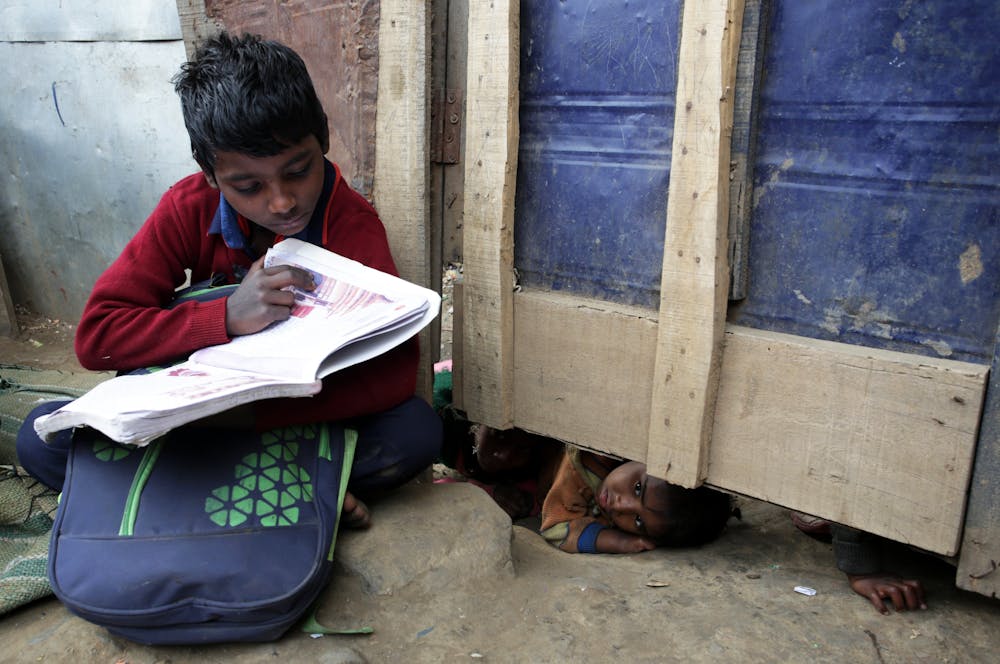
The latest biennial report of the Australian Institute of Health and Welfare highlights the ways in which social and economic position is transmitted between generations.
Research points to several key factors in inherited disadvantage — notably parental disability, family structure and unemployment.
Gender patterns
Understanding the nature and extent of inherited disadvantaged in Australia has been aided by five significant research studies in the past five years. Four of them use data from the comprehensive Household, Income and Labour Dynamics in Australia (HILDA) Survey. The fifth used tax records to estimate the intergenerational mobility of people born between 1978 and 1982.
Among the results to come from these studies are estimates of the degree to which a 10% increase in fathers’ earnings affect their sons’ earnings. The studies offer a range of 1% to 3.5% – with a higher percentage meaning less social mobility.
One study highlights some interesting gender variations. It found a 10% increase in a father’s earnings associated with a 2% increase in sons’ earnings, but only a 0.8% increase in daughters’ earnings. A 10% increase in mothers’ earnings was linked to a 1.6% increase in sons’ earnings and a 1.5% increase in daughters’ earnings. This suggests girls’ earning trajectories are slightly less determined by their parents’ experience.
Other findings, however, point to certain types of disadvantage being most inherited by women. For example, those raised by a single parent receiving parenting payments are 2.2 times more likely to become a single-parent payment recipient themselves – and women make up more than 80% of single-parent payment recipients.
Patterns of transmission
The single-parenthood pattern was among those identified in research published in 2017 by myself, Sarah Dahmann, Nicolas Salamanc and Anna Zhu. The importance of family structure is underlined by the fact young adults are more likely to receive a range of welfare payments if they grow up in single-parent families.
The following graph shows the results of our research.
A larger disparity in the relative chance of receiving welfare given parental welfare receipt indicates a greater degree of intergenerational transmission of disadvantage.AIHW, Australia’s welfare 2019 data insights, Author provided (No reuse)
Overall, we found young Australians aged 18-26 were 1.8 times more likely to receive welfare if their parents ever received welfare. That is, 58% of young people whose parents ever received welfare were also on welfare, compared with 31.8% of those whose parent were not.
Young people whose parents received unemployment payments while they were growing up were 1.6 times more likely to receive unemployment payments before age 22, and 1.3 times after age 22.
Intergenerational disability
But the strongest relationship in intergenerational disadvantage involves parental disability.
Our results showed young people whose parents received disability support payments were 2.8 times more likely to receive disability support payments.
Young people whose parents received the Disability Support Pension for mental health reasons were almost three times as likely to be receiving the mental health-related disability benefits as other young people. They were also more likely to need other social assistance payments
The intergenerational relationship between youth unemployment and parental disability, for example, and was just as strong as that with parental unemployment.
These findings do not imply that poor children would have been better off had their parents not received social assistance — only that poor children are more likely to need assistance than non-poor children.
Stretching the rungs
Social mobility is higher in Australia than many other developed countries (most notably the United States). But it remains lower than the Scandinavian countries, and is threatened by any increase in inequality.
A growing gap between richest and poorest grows pulls the the rungs of the socioeconomic ladder further apart, making it harder for disadvantaged Australian children to avoid becoming disadvantaged adults.
The relentless supply of movies about superheroes and supervillains is difficult to ignore. Some people can’t get enough. Others hope to avoid them. But psychological researchers see a cultural phenomenon worthy of study.
Fictional characters with supernatural powers are often based on mythical gods and goddesses, fighting an ancient battle between good and evil with abilities that violate our intuitive expectations about the world.
In our recently published research, we asked 300 study participants to describe features of fictional supernatural beings and we compared them with features of the gods people worship. We found some striking differences that provide clues as to why some beings attract religious devotion, while others do not.
The question of why religious beings are special is more puzzling than it first appears. Initially, it seems obvious that an ancestral spirit that, for example, reads minds and walks through walls, could be an object of worship. We expect minds to be private, living things to die, and solid objects to be impermeable. Entities that defy such expectations – which researchers call “folk theories” – are remarkable and memorable.
The problem is, many other entities violate our folk theories in the same way. Some superheroes can read minds and walk through walls as well, and yet these characters rarely elicit belief. Still other entities with superhuman powers, such as Bigfoot, vampires or werewolves, are occasionally believed in, but not prayed to.
Why don’t people worship such entities, which defy our expectations just as well as Jesus, Allah and Zeus do?
When we asked participants about the traits they ascribe to supernatural religious figures, we found that, on average, they rated them as more beneficent than fictional beings that people do not worship. In other words, religious beings are better equipped to improve people’s lives in significant ways than fictional characters with superhuman abilities.
Gods are seen as beings that can improve our lives.Supplied, CC BY-ND
The comfort theory
Religious beings were also found to routinely defy folk theories about psychology in particular – possessing abilities such as omniscience, mind-control, telepathy and precognition – rather than defying folk theories about biology (such as regeneration) or physics (flight).
In our current research, we found people believe that beings with such psychological abilities are better equipped to help us. This may be because threats to our species have become increasingly social over evolutionary time. Detecting deception, maintaining one’s reputation and avoiding social exclusion have become more significant concerns than avoiding predators and finding shelter. Religious beings with the ability to mitigate these social threats should be particularly appealing.
Other features pointed to the comfort theory in less obvious ways. We found that abilities attributed to religious beings were more ambiguous than those attributed to fictional characters. For example, omnipotence and weather control certainly defy expectations, but which ones, and how many? Is god manipulating a storm with his mind, or physically pulling it into position? This ambiguity may best be described with the phrase “God works in mysterious ways.”
Research has shown that when we want to believe in something, such as personally possessing a positive trait, it helps if the trait is ambiguous (e.g. sophisticated) rather than precise (e.g. punctual). This gives us latitude to interpret a variety of evidence in its favour.
The same argument can apply to gods we want to believe in. One person may prefer the god that pulls storms into position. Another may prefer the telekinetic god. If both interpretations are allowed, the god can be made to fit what each person finds plausible. Ambiguous features therefore make it easier to believe in comforting gods.
The final feature of religious beings we discovered is that they do not easily fit into the superhero or supervillain categories that often distinguish fictional beings. Gods are more beneficent, but they are also more ambivalent, than fictional characters.
They have the ability to reward, but also to threaten and punish. While a mix of carrots and sticks undoubtedly helps gods enforce religious and moral rules, we suggest that ambivalence is also crucial for eliciting religious rituals and prayers, which in turn reinforce belief.
Indeed, there is little point in beseeching a purely benevolent or malevolent god: the former will always grant your request, and the latter never will. Only an ambivalent god can be swayed by an act of faith or a faithfully performed ritual.
A similar account might help explain why polytheistic religions typically contain a mix of positive and negative gods, the latter of which provide little comfort on their own.
In summary, gods are more beneficent, ambivalent, ambiguous and psychologically astonishing than fictional characters and, notably, these are precisely the traits that encourage belief. So even if you shudder at the thought of yet another Marvel movie, the fictional universe has taught us quite a bit about what makes gods special and what motivates some of us to believe in them.
This week’s United Nations climate summit may go down in history – but not for the reasons intended. It was not the tipping point for action on global warming that organisers hoped it would be. It will instead probably be remembered for the powerful address by Swedish teen activist Greta Thunberg, who castigated world leaders on behalf of the generation set to bear the brunt of inaction.
Young people are not sitting back and waiting for older generations to act on the climate crisis. Days before the summit, school students led a climate strike attended by millions around the world. And at the first ever UN youth climate summit, more than 500 young people from 60 countries, including myself, explored how to meet the commitments of the Paris Agreement.
This group of activists, innovators, entrepreneurs, and change-makers aged between 18 and 30 showcased potential solutions and put global political leaders on notice: they must fight off the climate crisis at the scale and pace required.
A young boy takes part in the global climate strike on September 20 at Parliament Square in London.Neil Hall/EPA
Youth voices matter
Youth aged 15 to 24 years represent 16% of the world population and will reach 1.3 billion people by 2030. Obviously the action (or otherwise) of today’s decision makers on climate change and other environmental threats will affect generations to come – a principle known as intergenerational equity.
Millions of young people around the world are already affected by climate change. Speaking at the youth summit, Fijian climate action advocate Komal Kumar said her nation was at the frontline of a crisis and worldwide, young people were “living in constant fear and climate anxiety … fearing the future”.
“Stop hindering the work [towards a sustainable future] for short term profits. Engage young people in the design of adaptation plans,” she said. “We will hold you accountable. And if you do not remember, we will mobilise to vote you out.”
UN Secretary-General António Guterres attended the event and his deputy Amina Mohammed took part in a “town hall” with the attendees, alongside senior representatives from government and civil society.
Young people are not sitting idly by
Technological solutions presented by youth summit participants included 3D printing using plastic waste, data storage in plant DNA, a weather app for farmers and an accountability platform for sustainable fashion.
Participants learnt how to amplify their voices using Instagram and how to create engaging videos with their mobile phones. An art workshop taught youth how creativity can help solve the climate emergency, and a networking session showed ways that youth leaders to stay connected and support each other.
Greta Thunberg, second from right, speaks as United Nations Secretary-General Antonio Guterres and young climate activists listen at the start of the United Nations Youth Climate Summit.Justin Lane/EPA
Elsewhere, you don’t have to look far to see examples of young climate warriors, including in the developing world.
Programs funded by the UN development program include in Kazakhstan where youth are helping implement an energy efficiency project in schools, and in Namibia where young people are being trained as tour guides in national parks and nature reserves. In Nepal, young people cultivate wild Himalayan cherry trees as a natural solution to land degradation.
Harness the power of nature
Kenyan environmental activist Wanjuhi Njoroge told the youth summit of her nation’s progress in restoring the country’s forest cover.
Nature-based solutions to the climate crisis – such as conserving and restoring forests, grasslands and wetlands – were a key focus at the summit. Efforts to meet the Paris climate goals often focus on cutting fossil fuel use. But nature has a huge ability to store carbon as plants grow. Avoiding deforestation keeps this carbon from entering the atmosphere.
Thunberg and British writer George Monbiot released a film ahead on the New York summit calling on world leaders protect, restore and fund natural climate solutions.
A film by Greta Thunberg and George Monbiot calling for more nature-based climate change solutions.
To date, such solutions have received little by way of investments and funding support. For example in 2015, agriculture, forestry and land-use received just 3% of global climate change finance.
Appearing at the youth summit, the global Youth4Nature network told how it mobilises young people to advocate for nature-based solutions. Their strategy has included collecting and sharing youth stories in natural resources management in more than 35 countries.
Youth ‘will be watching’ their leaders
When it comes to climate change, young people have specific demands that must be acknowledged – and offer solutions that other generations cannot.
But globally there is a lack of youth representation in politics, and by extension, they are largely absent from climate change decision-making.
Some youth summit participants reportedly questioned whether it achieved its aims – including the value of some workshops, why celebrities were involved and whether anything tangible was produced.
A young girl attends the the global climate strike in Brisbane.Dan Peled/AAP
Certainly, there was little evidence that world leaders at the climate summit were listening to the demands of young people. This was reflected in the failure of the world’s biggest-polluting countries to offer credible emissions reduction commitments.
But the youth summit went some way to granting young people space and visibility in the formal decision-making process.
Pressure from young people for climate action will not subside. Thunberg said it best when she warned world leaders that youth “will be watching you”.
“The eyes of all future generations are upon you,” she said. “If you choose to fail us, I say we will never forgive you”.
Source: The Conversation (Au and NZ) – By Bridget Harris, Senior Lecturer, School of Justice; Crime, Justice and Social Democracy Research Centre, Queensland University of Technology
Crime prevention initiatives targeting sexual violence are by no means new. But as technology advances and costs decrease, we are seeing an abundance of digital and technological strategies emerge.
The stamp can be used by victims to mark someone who gropes them on public transport. This mark can only be seen when a black light (that comes with the device) is cast over it.
But we need to ask: are apps, wearables and virtual reality programs really reducing incidents, improving safety or transforming responses to harm?
Ultimately, there can be benefits to using technology to prevent sexual violence, but we must also encourage social shifts that tackle the heart of the problem.
Designed to be worn by women, anti-rape underwear and shorts are resistant to attempts at cutting, tearing and pulling. Some designs have a coded padlock and siren which sounds if someone tries to forcibly remove the clothing. Sirens can also be activated on demand.
Anti-vaginal penetration devices have also been designed. Rape-aXe, introduced in 2010, is a “female latex condom” with rows of serrated “teeth” that latch onto a penis during penetration.
In 2014, undergraduate students at North Carolina University began promoting the Undercover Colors nail polish. The polish supposedly changes colour when dipped into a drink laced with date-rape drugs such as GHB, Rohypnol or Xanax.
The team now involved with the company has since launched SipChip, a “coin-sized drug test” on a key fob that can be slipped into a pocket or fixed onto a phone cover.
Ideally, these tests can be carried out discretely.
Fundamental flaws
Overwhelmingly, these digital devices are targeted at possible victims (typically women), asking them to assume responsibility for own their safety and management of risk. But as critics have noted, they can reinforce misconceptions about sexual violence instead of challenging them.
Victim-blaming of those who have experienced sexual assault is unfortunately common. It occurs in a variety of domains, including in the media, community, and criminal justice settings.
All too often, victim/survivors are asked what they might have done to facilitate or provoke an attack. In expecting women to control their bodies and environments with the help of anti-rape devices, the question of “what were you wearing” could be reframed as “what anti-rape devices were you wearing?”.
“How much did you drink” could turn into “did you check the drink was drugged?”.
The constant vigilance expected of women cannot be overlooked.
Anti-rape apps and devices are specifically designed to intervene in risky situations. They can potentially be valuable in preventing particular incidents.
But such measures may only deter perpetrators from harming one person, not necessarily from harming others, or attacking the target at another time.
Problematic perspectives
Assaults on public transport and in public spaces are undoubtedly an issue. But focusing on the “unknown” danger from strangers can take away focus from the higher level of sexual violence enacted by acquaintances, friends, dates, and intimate partners – often in private places.
About one in seven young Australians reported a man would be justified in using force if a woman initiated sex but subsequently changed her mind about continuing. Almost one in four young men also believed women find it flattering to be persistently pursued, even if they are not interested.
Such “problematic attitudes to violence against women” were said to be common among young people with mainly male friends.
When it comes to technological responses to sexual violence, perpetrators and bystanders are rarely the focus. This is an oversight that warrants attention.
Digital support solutions
Technology can offer support for women in the aftermath of an incident.
Victim/survivors use digital channels to call out sexual hostilities, aggression or unfavourable experiences on dating apps. Examples include public Instagram accounts such as tindernightmares.
Bye Felipe also features posts “calling out dudes who turn hostile when rejected or ignored”.
Advocates have created apps that provide victim/survivors with ways to report violence and seek assistance. For instance, Sunny helps survivors with disabilities share their stories and locate information about their rights and support.
Apps such as SmartSafe+ and Arc, developed by the Domestic Violence Research Centre Victoria, can help in evidence collection.
Prevention before reaction
Virtual reality is another innovative channel we can use to promote and practice bystander intervention in a simulated environment.
Users can see and experience how bystanders – which could be any of us – might intervene to prevent sexual violence.
Ideally, this would be trialled alongside discussions about ideologies and behaviours that foster perpetration, and how consent can be understood and respected.
In many ways, technology can provide tools that help prevent sexual violence and offer support to victim/survivors. But we must develop digital initiatives that seek to promote real world, social shifts.
Technologies should seek to engage with and prevent perpetration, promote bystander intervention and challenge the myths, attitudes and underlying structures that facilitate sexual violence.
In other words, we need to prevent sexual violence at its source.
In late September, Home Affairs Minister Peter Dutton introduced a new bill that would give him stronger powers to strip the Australian citizenship off dual nationals convicted of terror-related offences or who engage in related activities.
In response to the prospect of foreign fighters returning from conflicts overseas, the bill proposes extending the current citizenship revocation law to any dual national who is convicted of a terrorism offence carrying at least three years imprisonment (compared to the current six).
It would also be back-dated to account for any terrorism convictions or conduct from May 2003 onwards (compared to the current cut-off date of December 2015).
To protect the rights of dual nationals, the bill proposes changing the process for revoking citizenship. Instead of it automatically ceasing when people engage in terror-related conduct, the minister would have the sole power to decide if they should be stripped of their citizenship.
This procedural change is unusual because moves to repeal or wind back anti-terrorism laws have been few and far between.
Unfortunately, however, in all other respects, the new citizenship bill fits squarely within the pattern of overzealous Australian anti-terror law-making over the past 18 years.
Since the September 11, 2001, terrorist attacks in the United States, the Australian parliament has responded to the threat of terrorism here and overseas by enacting dozens of new laws or amending existing laws.
Note: Hover on desktop to see names and links of individual Acts.
In 2011, University of Toronto Professor Kent Roach famously described this response in Australia as one of “hyper-legislation”.
Another expert, UNSW Professor George Williams calculated that between the September 11 terrorist attacks and the defeat of the Howard government in November 2007, a new anti-terror law was enacted on average every 6.7 weeks.
The declaration of a caliphate by the Islamic State in mid-2014 led to another flurry of legislative activity in parliament.
In the five years since then, 19 more anti-terrorism laws have been passed. That brings the total number of substantive anti-terrorism laws enacted by parliament to 82 since the Sept. 11 attacks, with a further six bills either currently before parliament or about to be introduced.
This is a staggering number of laws, and far exceeds the volume in the United Kingdom, Canada and even the United States in response to Sept 11.
Draconian and unworkable laws
It is not only the sheer number of laws, but also their scope, which makes Australia stand out among Western democracies.
At the core of Australia’s anti-terrorism regime is a carefully considered and, in the eyes of most commentators, balanced definition of terrorism.
However, as the years have gone by, increasingly draconian, and often unworkable, legislation has spiralled out beyond this definition. For instance, the mere act of travel to certain areas, such as Mosul in Iraq, has been criminalised, as well as advocating terrorism.
Instead of working with companies like Facebook and Twitter in the aftermath of the Christchurch terrorist attacks, the government imposed impractical obligations on them to scrutinise the online activities of their customers (with further laws threatened in the event of non-compliance).
In addition to the stripping of the citizenship of dual nationals, another bill would prevent anyone from returning home from overseas conflicts for a considerable period of time under a Temporary Exclusion Order, even Australians who don’t hold another passport.
Another bill before parliament would require people who have previously been charged with a terrorism offence (regardless of whether they were ultimately acquitted) to prove extraordinary circumstances before being granted bail for a subsequent offence.
This demonstrates just how far lawmakers have strayed from the fundamental human rights and principles of criminal justice.
Home Affairs Minister Peter Dutton would have the power to decide on revoking citizenship for those convicted of terror offenses under a new bill before parliament.Sam Mooy/AAP
What anti-terror laws are intended to do
In the immediate aftermath of the September 11 attacks, Australian lawmakers might have been excused any overreaction on the grounds the country didn’t have much historical experience with terrorism or in legislating in response to this threat.
At the time, there were no specific anti-terrorism laws at the federal level in Australia. This was undoubtedly a significant oversight which needed to be remedied.
Even today, more than 18 years on and with over 80 laws in place, it’s somewhat understandable lawmakers react to terrorist attacks by seeking to take swift action.
One of the (few) downsides of a democratic political system is that parliamentarians are hit with the full force of public hysteria about actual and perceived terrorist threats. The most obvious way for the parliament to address these fears is through the enactment of laws.
As Roger Wilkins, a former secretary of the Attorney-General’s department, said in support of proposals to strengthen the control orders laws in the aftermath of the November 2015 Paris terrorist attacks:
In a modern, liberal democracy, that’s about the only thing you can do.
Despite frequent claims to the contrary, this is not just a case of political opportunism on the part of the governing party. The steps taken by lawmakers are crucial in re-establishing the community’s sense of security.
We need to acknowledge, above all, that the buck stops with our elected representatives to protect the lives of the Australian people. They bear both the personal and professional responsibility if a terrorist act occurs which could have been prevented.
It is this, as much as anything else, that explains the rapid and bipartisan passage of so many laws through the parliament.
Terrorism can’t be defeated through laws alone
Having said all this, it’s unfortunate successive Australian governments on both sides seem to have learned little over the course of the last 18 years.
Statements made in the aftermath of every terrorist attack, and, most recently in responding to concerns about foreign terrorist fighters, have identified the ultimate goal as being to “defy” and “defeat” terrorism.
While statements such as this are clearly rhetorical, what underpins them is a failure to recognise the permanence of terrorism.
Terrorism in one form or another has always existed, and will always continue to exist. Neither legislation nor anything else will be able to eliminate this threat.
The idea of managing the threat of terrorism, in the sense that some degree of terrorism is acceptable or at least to be expected, might seem politically unpalatable. However, open acceptance of the permanence of terrorism means lawmakers will no longer be chasing – and the public no longer demanding – the achievement of an impossible goal.
It will also, in turn, facilitate a more proportionate response to the challenges posed by the foreign fighters phenomenon and the threat of terrorism more generally.
A better way forward
In a quest to eliminate terrorism, laws have been enacted that make ever-increasing intrusions into people’s lives and curtail human rights for diminishing returns in terms of security.
Some have even suggested these laws make us less safe. In its submission to the Parliamentary Joint Committee on Intelligence and Security’s inquiry into the citizenship stripping laws, ASIO said these measures could:
have unintended or unforeseen adverse security outcomes – potentially including reducing one manifestation of the terrorist threat while exacerbating another.
It will never be appropriate or desirable for governments to sit back and take no action in response to the threat of terrorism. But what we need is a sharp change in approach.
Countering violent extremism programs have been used in Australia and other countries as another tool for responding to terrorism threats. Instead of treating such programs as a “backup” option, as they currently are in Australia, these should be brought to the fore.
The critical lesson of the past 18 years is that we must think creatively about how to combat the threat of terrorism, rather than continually reworking existing – and often demonstrably unsuccessful – strategies.
If you’ve read the headlines about poor standards in Australia’s nursing homes, it’s only natural to be concerned about your own family or friends in residential aged care.
For instance, there was news in recent weeks that 45 of 72 Bupa nursing homes in Australia had failed to meet all health and safety standards, with 22 putting residents at “serious risk”.
So, how do you check if your loved one’s nursing home is really up to scratch? How do you interpret audit reports about residents’ health and safety? And how else could you find out if your mum or dad’s nursing home lives up to the promise of its marketing brochures?
Every nursing home in Australia receiving government funding is assessed and accredited by the Australian Aged Care Quality and Safety Commission. Assessments are conducted every three years or more often if there are concerns.
Commission staff check if each nursing home meets eight minimum standards. These include whether residents are treated with respect, the nursing home is providing safe and effective clinical care, and staff have adequate qualifications and training to do their jobs.
Commission auditors interview residents, families and staff; observe care; and review the facility’s documentation. Visits can be unannounced to get a better picture of what regular care is like. Auditors then use that information to write a site audit.
It takes about a month after a site audit for the commission to decide on the quality of care. Then there’s up to another month for the audit report to be posted online.
Posting the decision publicly can be delayed further if a nursing home asks for the decision to be reconsidered. We understand this often happens if a home receives a poor report.
What is a bad report?
When a home is judged as not meeting standards, the commission will decide how serious it believes these deficiencies are. In increasing order of seriousness, the report says if a home is:
1. Not meeting standards. Nursing homes can be judged as not meeting one or more of the eight minimum aged care standards. Each standard has three to seven individual requirements. Nursing homes don’t have to meet all the individual requirements to meet the overall standard. The more standards or requirements a nursing home fails to meet, the poorer the care.
2. Serious risk. If a nursing home is given a “serious risk” judgement, the quality of care has placed or may place the safety, health or well-being of a resident at serious risk. An example might be a home not having enough skilled staff, leading to clinical mistakes, such as the wrong medication administered often.
3. Sanctions. Sanctions are imposed on homes when care places an immediate and severe risk to residents’ health, safety or well-being. This might be for multiple organisational problems (such as with clinical care, staffing, wounds not being cared for), leading to multiple poor outcomes (such as assault, avoidable illness, and the dangerous administration of medication). Homes can also be sanctioned if they do not fix continued non-compliance.
Families are notified in writing, and facilities must hold a meeting for residents and families to tell everyone what the problems are and how they will fix them by a certain date.
When a nursing home is sanctioned, it is penalised in several ways, depending on what was poor about the care:
the home is not allowed to receive Commonwealth subsidies for any new resident for a set time (usually six months)
and
an adviser and/or administrator is appointed to the home to help it comply with its responsibilities
and/or
the home provides specified training to staff within a set time.
A home’s history of non-compliance, serious risk decisions and sanctions are archived online (see below for details). So it might be worth taking a look when choosing a nursing home, as well as checking on an existing one.
4. Revoking accreditation status. If sanctions are imposed and there is no improvement, the commission can revoke a home’s accreditation status. This means a home cannot take new residents or receive government subsidies. Some of these homes reapply for accreditation, others shut down.
How do I find out? Looking online
The most up-to-date information on nursing homes not meeting standards (non-compliance) and sanctions is through myagedcare’s non-compliance checker. This allows you to see if an individual home has not met standards, is sanctioned currently or has been in the past. Some archived sanctions on the website go back to 2002.
However, the myagedcare website doesn’t list “serious risk” reports. For those, you have to go to the Aged Care Quality and Safety Commission’s website.
There’s lots of information online about nursing home standards and care, not all of it easy to understand.from www.shutterstock.com
You can also search the commission’s website for audit and consumer experience reports, which provide more detail on the quality of care.
Audit reports can be difficult to understand because their intended audience is aged care professionals, not the general public. Reports before July 2019 are on the 44 old aged care standards. Reports from July 2019 are on the new eight standards.
Consumer experience reports show what residents said about their care. That’s from whether staff followed-up when they raised an issue, to what they thought about the food. These reports are easier to follow.
How do I find out? Other ways
It can be hard for family to know if their expectations for care are reasonable, particularly when feelings of sadness and guilt colour those expectations.
So, it can help to consider the aged care standards when making your own decisions about whether the quality of care is good enough.
You can do this by observing what happens day to day. Do residents wait too long for attention, for instance, to be taken to the toilet? Do staff speak respectfully and kindly to residents? Are meals appetising and healthy? What happens when residents are distressed? Is there high staff turnover?
Does the nurse on duty know the detail of your loved one’s clinical needs, for instance, diet, illnesses or medications? Is the manager responsive when you raise issues?
You can also talk to other families about their experiences of care.
What should I do next?
If you find that your loved one’s home doesn’t meet standards or is sanctioned, here’s what to expect.
The commission gives the home a set period of time (usually three or six months) to improve care. Commission staff keep visiting the home until they are confident the home is meeting standards.
Commission staff come back to the nursing home until they are confident standards are being met.from www.shutterstock.com
You will probably want to visit regularly and keep an even more careful eye on your mum or dad’s care. Speak to the home or commission about any concerns.
You can ask your home’s management:
about its plan to improve care
about staff changes and staff ratios — staff often leave or are asked to leave when there are sanctions and lots of new and agency staff are a challenge to providing quality care
for regular written updates and meetings including actions taken and the outcomes. This could be data on the home’s use of antipsychotic medications, and how often residents have falls, critical incidents or pressure ulcers.
The issue of whether to move a loved one to a new nursing home is a difficult one. It’s a personal decision involving weighing up the negative impacts you think the care is having with your own energy levels, funds and whether you can find a suitable new home.
Government reforms presume market forces will drive up the quality of aged care. In the meantime, we hope the resources in this article will help you make a more informed decision about your loved one’s care.
The number of international students who stay in Australia after graduating on the temporary graduate visa – often referred to as the 485 visa – is growing fast. There were nearly 92,000 temporary graduate visa holders in Australia as of June, 2019. That’s up from from around 71,000 in June 2018 – a 29% increase.
The 485 visa was introduced in 2008 and updated in 2013, taking on recommendations from the 2011 Knight Review, which recognised post-study work rights for international students as crucial for Australia to remain competitive in the education export market.
Under the visa, international recent graduates of a degree or qualification from an Australian institution can stay in Australia for two to four years, depending on the qualification. The government points to the visa as providing an opportunity for international students to remain in Australia for a limited period of time and gain international work experience.
In our recent study, we examined the effects of the 485 visa policy on international students in Australia and on the labour market.
Out of the visa holders we surveyed, 76% said access to the visa was an important factor in their decision to study in Australia. And the majority of past (89%) and current (79%) 485 visa holders in Australia participated in the labour force. (Past holders of the visa refer to either those who have returned to their country or remained in Australia but moved on to another visa).
But many graduates did not work full-time, and they did not necessarily work in their field of study. A considerable number of graduates were employed in retail, hospitality or as cleaners.
The numbers
We collected data through an online survey from 1,156 international graduates, some of whom are in Australia and others back in their home countries. We also conducted in-depth interviews with students and other key stakeholders such as employers.
Our analysis included that of government figures and policy.
The top five citizenship countries of 485 visa holders in Australia (India, China, Nepal, Pakistan, Vietnam) have also been the top five source countries of international enrolments in Masters by coursework (China, India, Nepal, Pakistan, Vietnam) programs since 2013.
Up to 56% of current visa holders either worked outside their field of study (35%) or were unemployed (21%), which puts these groups at risk of financial stress and vulnerability.
Australian government data shows occupations such as “sales assistants and salespersons” as well and “cleaners and laundry workers” are in the top three for 485 visa holders across all occupations.
Were visa holders satisfied?
We asked participants to rate how satisfied they were (on a five point scale form extremely dissatisfied to extremely satisfied) with their employment experience while on visa 485. There was an overall satisfaction rate of 66%.
Those who reported being dissatisfied did so for five main reasons:
the two-year time limit was too short to give employers confidence, to help graduates gain membership with a professional body, and to build work experience and secure employment
employers prefer applicants with permanent residency (PR) and lack understanding of the 485 visa
there’s a lack of flexibility in extending or renewing the visa
there’s a lack of support from related stakeholders (including continuing access to institutional career support services) and lack of advice around temporary graduate visa and post-graduation pathways
the temporary graduate visa isn’t an easy pathway to permanent residency, even though many think it is.
One international graduate told us:
Most of the employers don’t know what post study work visa is […] when I was applying for a job […] the recruiter liked my profile but in the last stage, when I told them I am on temporary graduate visa, they don’t know what exactly is it and they don’t care for the explanation you give about the same […] 50% of the good jobs out there ask for PR and citizenship when the term they offer employment for only one year.
Stereotyping about international students such as that they are “mere PR hunters” is also a barrier to job seeking. The importance attached to being a good “cultural fit” or “best fit” in recruitment is a form for racism, disadvantaging international students and graduates in the Australian labour market.
Many international graduates identified a number of benefits to the 485 visa. Some saw the visa as a way to buy time in Australia to enhance their English language proficiency, acquire different forms of work experience and develop professional and social networks.
In other cases, international graduates were able to repay their study loans while working in jobs unrelated to their field of study.
Working in odd jobs also helped some international graduates improve their communication and soft skills. These are necessary for them to get their foot in the door and gain employment that’s more appropriate to their qualifications.
Our study also found 52% and 49% of those who graduated in 2015 and 2016 respectively reported they secured full-time jobs in their field of study in 2019. This indicates securing a full-time job in their field of study improved over time and specifically for those who were able to secure permanent residency.
It’s important to raise local businesses’ awareness of the temporary graduate visa, its purpose and scope to decrease stereotyping and give international graduates more of a chance to gain skills in their field.
It’s crucial for the international education sector, universities and related stakeholders to have specific campaigns, as well as flexible and practical approaches to align employers’ needs and international graduates’ strengths.
It’s important for the government to include an option to extend or renew the 485 visa for an additional one or two years for those who have been employed full or part-time in their field of study for at least six months, or those who have started their own business in or outside their field of study with a certain level of income.
Importantly, this option needs to be communicated clearly to employers to address their concerns and hesitations about the short-term nature of the temporary graduate visa.
It’s in Australia’s interest to ensure temporary graduates on 485 visas gain employment in their field. This will deliver benefits to local businesses, community and the economy. Positive employment outcomes will also enhance Australia’s reputation for international education globally.
We found the homelessness rate for veterans who recently left the ADF was 5.3% – significantly higher than the 1.9% for the general population.
A lack of data
Before the release of this estimate, an accurate number of homeless veterans in Australia was not known, and estimates varied widely. That is because there is limited national data available to count homeless veterans.
Prevalence rates are typically calculated by dividing the number of people with a specific characteristic (such as not having a secure home) by the total number of people in the population of interest (such as veterans).
This method is not possible in Australia as there is no data set that defines the veteran population. We do not even know how many veterans there are in Australia, because reliable data of serving personnel is only available from 2001.
One previous attempt at determining prevalence of homelessness among veterans was the Veterans at Risk report in 2009, funded by the Department of Veterans’ Affairs (DVA). This relied on census data (which does not identify veterans) and produced an estimate of around 3,000 homeless veterans.
Another attempt was made by DVA in 2016. No information was provided on how it estimated there to be around 200-300 homeless veterans throughout Australia.
This knowledge gap was a concern for government policymakers as well as veteran advocates who have been calling for further research and an increased service response for years.
Without a baseline count, they are unable to determine whether veteran homelessness is increasing, plan an appropriate service and policy response, or assess the effectiveness of any interventions.
It is therefore vital to establish a more robust estimate.
How we came up with our estimate
Our estimate is obtained from survey data representative of all veterans who left regular Australian Defence Force (ADF) service between 2010 and 2014.
The survey was done as part of the DVA and Defence Department-funded Transition and Wellbeing Research Programme. This is the most comprehensive study in Australia that examines the impact of military service on the mental, physical and social health of serving and ex-serving personnel.
The survey was completed by 4,326 men and women who left the ADF in the five-year time period. The results were weighted to represent the entire population of Australian Defence Force personnel that left between 2010 and 2014.
We used the Australian Bureau of Statistics’ definition of homelessness. This classifies as homeless anyone who is sleeping rough, couch-surfing, or living in emergency or temporary accommodation such as shelters.
We found around 5.3% of these veterans reported they had been homeless within the past 12 months.
To calculate the prevalence of homelessness we extrapolated this proportion to the total population of veterans who enlisted after January 1, 2001, and were discharged sometime between 2001 and 2018.
The veteran population total is 108,825, so taking 5.3% of this figure gives us an estimate of 5,767 of veterans who were homeless within a 12-month period.
This extrapolation reasonably assumes the homelessness rate is similar between veterans who transitioned from Regular ADF service between 2010 and 2014 and the total population of veterans (2001-18).
Both groups fall within the cohort described as contemporary veterans by the DVA. These veterans have seen military operations from 1999 onward and often share features of recent service, such as the impact of multiple deployments in smaller contingents and the use of new technologies.
While the 12-month homelessness rate for veterans (5.3%) and the general Australian population aged over 15 (1.9%) were calculated using different techniques, the comparison shows veterans are overrepresented in the Australian homeless population.
The best estimate, so far
We believe our method provides the best estimate to date of homelessness among veterans in Australia, but it is still likely to be an underest.
Homeless veterans are an extremely hard group to reach. It is likely that many potential survey participants who were homeless at the time the survey was conducted, did not complete the survey.
Our estimate also excludes all those who served in the ADF prior to January 1, 2001. Older veterans such as those who served in Vietnam do experience homelessness in Australia, but the prevalence among this group is unknown.
As part of our research, eight of the 29 homeless veterans we interviewed were aged over 55, with the oldest being 74. US research says there is often a long time lag between transition from military service and becoming homeless.
Lest we forget
Our research puts a new number on the problem. We still do not know whether veteran homelessness is increasing over time, but the broader context of homelessness increasing throughout Australia suggests this may be the case.
As Remembrance Day approaches, and Australians prepare to thank our military men and women for their service, we suggest that attention should also turn to addressing this national shame.
Our research also identifies ways that service responses can be improved. It will require a great deal of will and significant funding to address what has until now been an underestimated problem.
On Friday Treasurer Josh Frydenberg said he expected a final report by June, just seven months after the issues paper he wants it to deliver by November.
The deadline is tight for a reason. In recommending the inquiry in its report on the (in)effeciency of Australia’s superannuation system this year, the Productivity Commission said it should be completed “in advance of any increase in the superannuation guarantee rate”.
In other words, in advance of the next leglislated increase in compulsory superannuation contributions, which is on July 1, 2121.
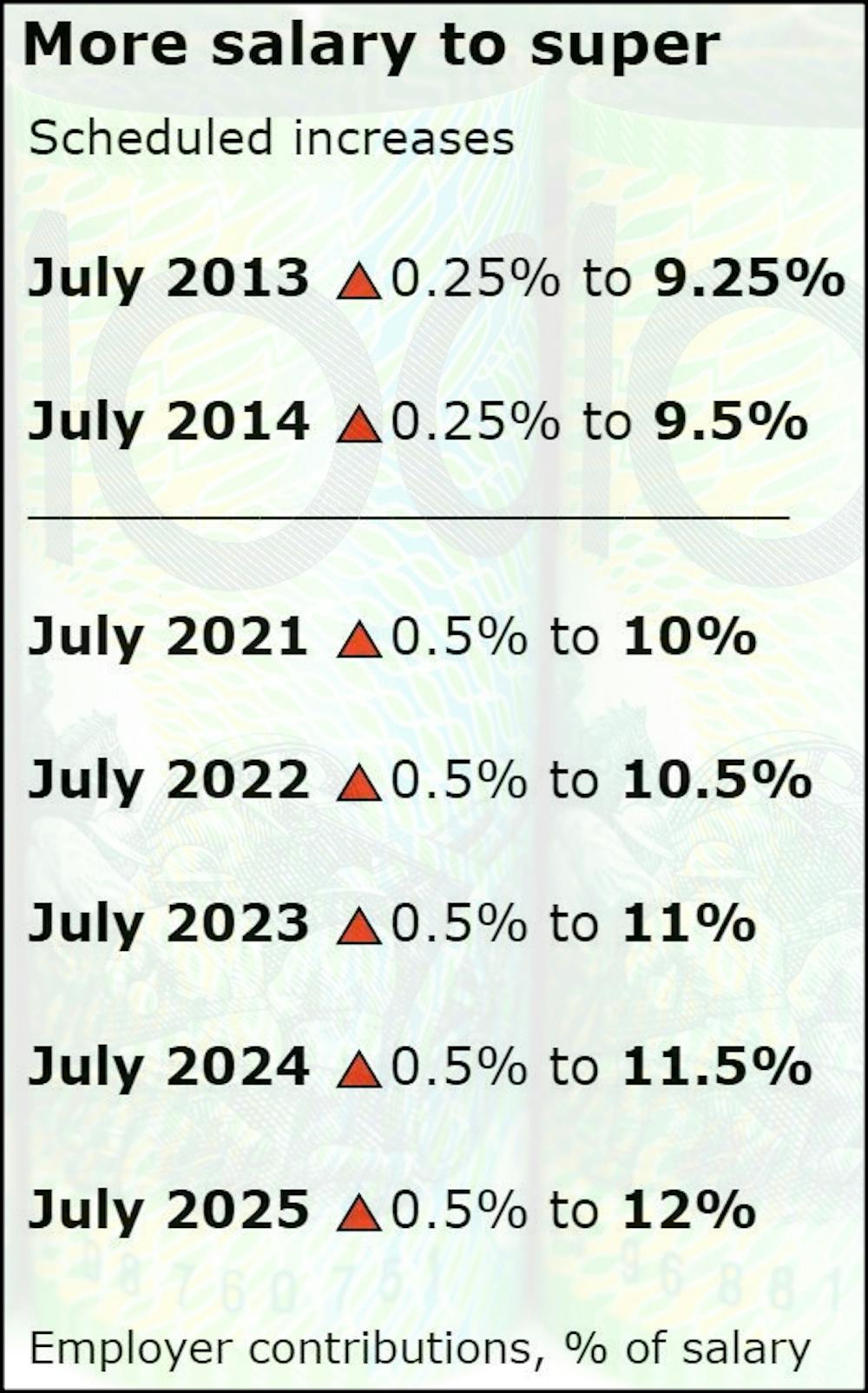
And they were small – an extra 0.25 per cent of salary each.
The next five, to be imposed annually from July 1 2021, are twice the size: 0.5% of salary each.
If taken out of wage growth, they’ve the potential to cut it from its present usually low 2.3% per annum to something with a “1” in front of it, pushing it below the rate of inflation, for five consecutive years.
If we were going to do that (even if we thought the economy and wage growth could afford it) it would be a good idea to have a good reason why. After all, compulsory superannuation is the compulsory locking away of income that could otherwise be spent or used to pay down debt or saved through another vehicle, regardless of the wishes of the person whose income it is.
Question 1. What’s it for?
Fortunately, the new inquiry doesn’t need to do much work on this one.
For most of its life compulsory super hasn’t had an agreed purpose. At times it has been justified as a means of restraining wage growth, at times as means of restraining government spending on the pension, at times as means of boosting national savings.
In 2014, more than 20 years after compulsory super began, the Murray Financial System Review asked the government to set a clear objective for it, and two years later the government came up with one, enshrined in a bill entitled the Superannuation (Objective) Bill 2016.
The bill lapsed, but the objective at its centre lives on as the best description we’ve come up with yet of what compulsory super is for:
to provide income in retirement to substitute or supplement the age pension
Which raises the question of how much we need. For compulsory super, the answer is probably none. People who want more than the pension and their other savings can save more through voluntary super. People who don’t want more (or can’t afford to save more) shouldn’t.
Question 2. How much do people need?
Assuming for the moment that how much people need in retirement is relevant for determining how much compulsory super they need, the inquiry will need to examine what people need to live on in retirement.
The “standards” prepared by the Association of Superannuation Funds of Australia are loose. The more generous of the two allows for overseas travel every two or so years, A$163 per couple per fortnight on dining out, $81 on alcohol “or equivalent spent with charity or church”.
It isn’t a reasonable guide to how much people need to live on, and certainly isn’t a reasonable guide for how much the government should intervene to make sure they have to live on. They are standards it doesn’t intervene to support while people are working.
And there’s something else. Super isn’t what will fund it. Most retirement living is funded outside of super, either through the age pension, private savings, or the family home (which saves on rent). Most 65 year olds have more saved outside of super than in it, and a lot more than that saved in the family home.
It’s a slight of hand to say that retirees need a certain proportion of their final wage to live on and then to say that that’s how much super should provide.
Question 3: Does it come out of wages?
The best guess is that, although paid by employers in addition to wages, compulsory super comes out of what would otherwise have been their wage bill.
Though compulsory superannuation guarantee contributions are paid by employers, wage setting generally takes into account all labour costs. As such, it is widely accepted that employees bear the cost of higher superannuation guarantees in the form of lower take home pay.
The inquiry will probably make its own determination. If it finds that extra contributions do indeed come out of what would have been pay rises, it will have to consider the tradeoff between lower pay rises (and they are already very low) and the compulsory provision of more superannuation in retirement.
Question 4: Does it boost private saving?
It’d be tempting to think that the compulsory nature of compulsory superannuation meant that each extra dollar funnelled into it increased retirement savings by an extra dollar. But it doesn’t, in part because wealthy Australians who are already saving a lot have the option of offsetting it by saving less in other ways.
For them, the increase in saving isn’t compulsory.
For financially stretched Australians unable to afford to save (or for Australians at times in times life when they can’t afford to save) the compulsion is real, and unwelcome.
The inquiry will have to make its own assessment, updating Reserve Bank research which found in 2007 that each extra dollar in compulsory accounts added between 70 and 90 cents to household wealth.
Question 5: Does it boost national saving?
Boosting private saving (at the expense of people who are unable to escape) is one thing. Boosting national savings (private and government) is another. The tax concessions the government hands out to support compulsory super are expensive. The concession on contributions alone is set to cost $19 billion this year and $23 billion in 2022-23, notwithstanding some tightening up. It predominately benefits high earners, the kind of people who don’t need assistance to save.
On balance it is likely that the system does little for national savings, cutting government savings by as much as it boosts private savings. But because the question hasn’t been asked, not since the Fitzgerald report on national saving in 1993 shortly after compulsory super was introduced, we don’t know.
It’ll be up to the inquiry to bring us up to date.
The Australian cultural sector has rarely lacked for innovation or creativity, but it has consistently failed to properly lobby for itself. Culture in Australia employs around 400,000 workers and represents A$112 billion of economic activity. But it has negligible political clout compared to industries like agriculture, mining or gambling.
Enter The New Approach, a newish think-tank in Canberra with lofty goals of improving the public perception of Australian culture.
So it’s fair to say its very first report was awaited by Australia’s arts community with some interest. Australian culture could do with a pep up just now.
The election of the Morrison government was a huge disappointment for many in the sector. While Bill Shorten and Labor put forward a proper arts policy with more than A$300 million in funding promises, the Coalition didn’t bother with a cultural policy at all (although some small promises were made to the music industry).
The New Approach’s first report is a topic of perennial interest to the cultural sector: government funding. The report collates available public data on cultural funding across the three levels of government, giving us an overall picture in an easily digestible form for the first time.
A high point for funding?
The report’s number one finding will surprise many: cultural funding “reached its highest point ever” in 2017-18. The big picture findings show that cultural funding has been increasing in recent years. All up, across federal, state, territory and local governments, cultural spending by governments was A$6.86 billion last fiscal year, up from A$6.31 billion in 2007-08.
Total combined cultural funding by all levels of government (adjusted to June 2018 wage price index and non-adjusted) 2007–08 to 2017–18.A New Approach
There is a hole in the time series throughout the report, with data for several years after 2013 missing. That’s because Tony Abbott and Joe Hockey cut funding to the Australian Bureau of Statistics in 2014. The ABS then had to discontinue the data collection.
Rather diplomatically, A New Approach’s Kate Fielding told The Conversation this was “very disappointing.”
While funding is up overall, in per capita terms the picture is less rosy: funding per person has been trending down for a decade, from $289 per person in 2007-08 to $275 last year – a 4.9% fall in 11 years.
Cultural funding per capita (adjusted to June 2018 WPI) for all levels of government combined.A New Approach
Actually, that “highest ever” line is a bit misleading. The report has adjusted figures to 2018 dollars, by indexing them to the wage price index. But wages have been growing very slowly in Australia over the past decade. By the more conventional inflation measure of the consumer price index, cultural funding is well down on 2007-08 figures.
Decomposing the figures across the three levels of government shows why. The Commonwealth has embarked on a swingeing austerity drive in cultural spending, particularly since the Coalition was elected in 2013.
As anyone in the arts sector could tell you, the past six years have been a bumpy ride. The report refers to the “volatility” of funding, and that’s evident from the data series.
Cultural funding fell dramatically in the Abbott years, but has risen by around 11% since. And the culprit does appear to be the federal government: according to The New Approach, Commonwealth funding has fallen by 19% per person since 2007-08.
Cultural funding per capita by different levels of government (adjusted to June 2018 wage price index), 2007–08 to 2017–18.A New Approach
But there is some good news. Local government in particular has picked up its game, increasing funding per capita by 11% since 2007-08.
A stark story
“The most interesting element is that local governments are clearly playing a bigger role in public support for arts and culture,” Fielding wrote in an email.
“Across the 11 years reviewed, the balance shifts from the federal government being a major supporter to a far more even split between the three levels of government,” she wrote.
Fielding is also concerned about falling per capita funding.
“As with other areas of government expenditure that don’t keep up with population growth, we risk a decline in the relevance and accessibility of cultural opportunities for people right across the country.” She argues there is a “pressing need” for more cooperation between the three levels of government.
There’s been a fair degree of skepticism in the cultural sector about The New Approach, and whether it will deliver anything tangible. This new report should start to allay some of those concerns. Pulling together the available statistics on public funding of culture in this country is a worthy task. The picture, now painted, tells a stark story.
Australia’s artists and cultural leaders now have a very simple question they can put to Scott Morrison’s new arts minister, Paul Fletcher: when will the austerity end?
The government has announced very broad terms of reference for its inquiry into Australia’s retirement income system, which will trigger fresh debate about the planned future rises in the superannuation guarantee rate.
Treasurer Josh Frydenberg and Assistant Minister for Superannuation Jane Hume said in a statement the review “will cover the current state of the system and how it will perform in the future as Australians live longer and the population ages”.
It would “establish a fact base of the current retirement income system that will improve understanding of its operation and the outcomes it is delivering for Australians.”
It is understood the government is not looking for the review to make recommendations.
The terms of reference say:
It is important that the system allows Australians to achieve adequate retirement incomes, is fiscally sustainable and provides appropriate incentives for self-provision in retirement.
They refer to the retirement income system’s three pillars: a means-tested age pension; compulsory superannuation; and voluntary savings, including home ownership.
The review is asked to identify:
•how the retirement income system supports Australians in retirement;
•the role of each pillar in supporting Australians through retirement;
•distributional impacts across the population and over time; and
•the impact of current policy settings on public finances.
Michael Callaghan, a former executive director of the International Monetary Fund and a former senior Treasury official, will chair the review.
The other panellists will be Carolyn Kay, who has long experience in the finance sector in Australia and abroad, including on the Future Fund Board of Guardians, and Deborah Ralston, a professorial fellow in banking and finance at Monash University, a member of the RBA’s Payments System Board, and most recently chair of the Alliance for a Fairer retirement, a group set up in response to Labor’s proposal to disallow refunds of excess franking credits.
There will be a consultation paper released in November and the report will be done by June next year.
A review was recommended by the Productivity Commission, which said there should be an “independent public inquiry into the role of compulsory superannuation in the broader retirement incomes system, including the net impact of compulsory super on private and public savings, distributional impacts across the population and over time, interactions between superannuation and other sources of retirement income, the impact of superannuation on public finances, and the economic and distributional impacts of the non-indexed $450 a month contributions threshold.”
The PC said this inquiry should be done before there was any rise in the superannuation guarantee rate.
The superannuation guarantee – increases in which have been pause – is due to start rising again from mid-2021.
Under the law in place, the increases would take the rate gradually from the current 9.5% to 12% by 2025.
The review’s broad terms of reference will reactivate a vocal group of government backbenchers who want to stop any further rise in the guarantee rate.
This is regardless of the government’s commitment to the legislated rise and Frydenberg’s answer, when asked on Friday whether that position still stood. “The government’s policy on the superannuation guarantee has not changed,” he said.
Frydenberg also reaffirmed, in relation to the family home,“As I said in parliament in July, including the family home in the pension assets test is not our policy and never will be.”
The retirement incomes issue is highly charged politically, so the government is potentially opening a can of worms.
Industry Super Australia chief executive Bernie Dean welcomed the “government’s acknowledgement of compulsory superannuation as one of the key pillars of Australia’s retirement income system.
“With the superannuation guarantee legislated to increase to 12% by 2025, ISA agrees with the government that sensible and evidence-based reform is needed to improve the efficiency of the compulsory savings system and ensure that members get even more out of every dollar they’ve been promised,” he said.
“In particular, ISA welcomes the review’s intention to examine the distributional impacts … This is an opportunity to address some of the inadequacies in our current system, where we see lower income and vulnerable workers, those with interrupted work patterns and in particular women, retire with significantly less super than other Australians.”
Yet before events spiralled out of control, police blocked three journalists who work for The Jakarta Post (Beny Mawel), Suara Papua (Ardi Bayage) and Tabloid Jubi (Hengky Yeimo) from covering the student gathering.
The journalists reported being forced not to cover the events, verbally abused by police and taken to the police station.
– Partner –
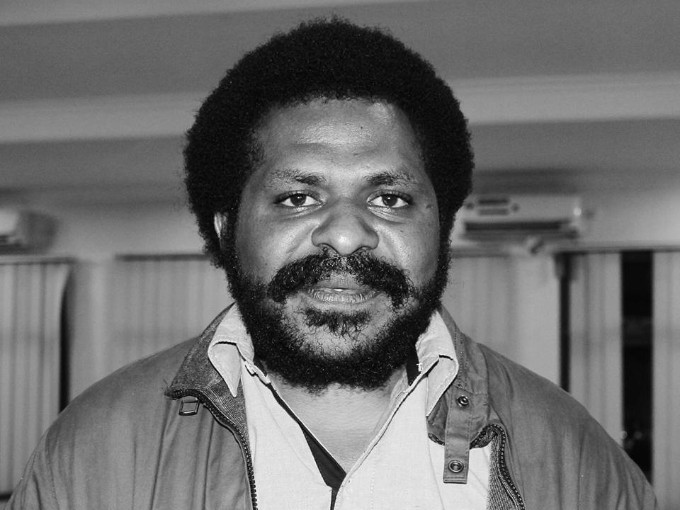
Arnold Belau of the Papuan Native Journalist Forum said the police actions were discriminatory and violated Indonesia’s press law.
“The law guarantees the journalist to do their work, free from intimidation and restriction from any party,” he explained.
“What the police have done to the three Papuan journalists today is proof of how far police understand the tasks and functions of the press.”
Police officers were reported to have called some of the journalists “provocateurs” and “dogs”.
Belau urged police to provide guarantees for journalists to do their work without pressure from any party.
“Officials in Papua must change their perspective and stop having suspicion on the journalists in Papua, especially native Papuan journalists who are too often being victims when doing their job.”
This was echoed by Lucky Ireeuw from the Alliance of Independent Journalists in Jayapura who characterised the police actions as an affront on the public who have a right to know what’s going on.
“AJI Jayapura strongly regrets such arbitrary actions, moreover, it was carried out by police officers who are protector of the people,” Ireeuw said.
“Indonesia is a democratic country, where the press is the fourth pillar. In democracies, journalists at work are protected by the press law.
“Start looking for news, obtain, process, store, to convey the information received to the public.
“Moreover, what is conveyed by journalists is, of course, in the public interest.
“If journalists are intimidated, discriminated against and hindered by their work, the right of the people to obtain valid and accurate news will be impeded,” Ireeuw said.
The latest unrest in Jayapura came on the same day as deadly violence around a student protest in the Papuan city of Wamena which resulted in around twenty deaths.
Indonesia’s government has subsequently blocked access to the internet in Wamena.
This article is published under the Pacific Media Centre’s content partnership with Radio New Zealand
University of Canberra Vice-Chancellor Deep Saini discusses Scott Morrison’s trip to Washington – including the state dinner thrown in his honour, his speech at the UN General Assembly, and his message to China – with Michelle Grattan. They also talk about possible Commonwealth intervention after the ACT passed a bill legalising marijuana for personal use.
The AFL Grand Final is more than a physical contest between professional athletes.
It is a culture unto itself, crafted through a distinct set of social practices enacted by players, coaches, supporters, and the media, realised by a set of shared meaning making and communicative practices.
“Meaning making” is a term used in disciplines like linguistics and semiotics to refer to the human processes of production (speaking, writing, creating) and reception (listening, reading and viewing) and their role in shaping culture. We can understand the culture of an AFL grand final as it is realised through these meaning making practices.
As linguists with an interest in sports discourse, we present six significant moments of meaning making for supporters on AFL Grand Final Day.
1. The roar of the crowd
The crowd is cheering!
They’re yelling and jeering; booing and grunting.
They’re mumbling: softness, a slow rhythm, a lax voice quality, a low pitch.
They’re screaming: loudness, speed, tension, and high pitch.
This is spoken language at its most emotive, the way supporters participate in the play: at the oval, at the pub, or at the BBQ.
Language in this form is a physical response to tension – or a release from tension – brought about by the game. Think about the way your body reacts when a player on your team is about to be tackled. You tense your body, clasp your hands, lean forward into the action.
The seconds seem like hours.
This tension is released as sound and language: “kick it, kick it, kick it… Arghhh!”
This physical expression of language is heightened during a grand final. As the tension reaches its peak for the season on the field, the tension reaches its peak in your body.
For the 2015 AFL Grand Final between Hawthorn and West Coast, the AFL produced a video capturing the sound of the crowd at important moments in the game.
Listen to this video without viewing the footage. The sound from the crowd of over 90,000 people is a unified soundscape, never silent, shifting from cheers to boos, with crescendos and decrescendos throughout the game.
As the game comes to its conclusion, the variation in the soundscape expands to include a “bronx” cheer (a sarcastic cheer), chanting, and then a final siren cheer that surpasses all others in volume.
2. High-stakes commentary
Commentary has multiple functions: it describes the real-time sporting event; provides context and statistical; and it can include emotive language from the commentators with the aim to keep an audience interested.
An AFL grand final is especially high-stakes for commentators: they need to perfectly capture through language iconic moments, as their commentary becomes part of the history of the game.
Mike Williamson’s “Jesaulenko, you beauty” from the 1970 VFL Grand Final is noteworthy for its timing, simplicity and use of Australian vernacular. It has become an Aussie classic with a life of its own.
Ted Whitton’s “Hit the boundary line!” in the final minutes of the 1966 Grand Final as St Kilda led Collingwood by one point wonderfully captures the tension felt at that moment in the game.
Stephen Quartermain’s “Leo Barry, you star!” from 2005 has become iconic, as the Sydney Swans defender took a high-flying mark to secure victory.
Supporters not only remember the iconic physical on-field acts, but also the words that accompanied their viewing.
3. The Record
The Football Record from 1919, where Geelong played Essendon.
The beloved Footy Record. The title says it all. The official written artefact of the game.
On the one hand, it functions as a record of the game. Possession of it signifies in-person attendance.
Supporters read the text, analyse the numbers, and view the images. They record scores and make notes.
They are active producers of the meaning making: they mark the artefact and help share in its production.
4. Showing allegiances
Meaning making is not exclusively words on a page or sounds from vocal tracts.
Supporters make meaning through the clothes they wear and the objects they possess.
This is especially the case on AFL Grand Final Day, as supporters go to extremes to show their allegiances through scarves, hats, socks, jumpers, face painting – even underwear.
They do the same with objects: balloons, flags, footballs, teddy bears and the icing on the cake is, well, icing on a cake.
From a meaning making perspective, two factors are particularly important: colour and symbols.
Here, Collingwood supporters at the 2018 Grand Final deployed the colours black and white through a range of dress and paraphernalia.
The black and white crowd show their allegiance through colours alone.David Crosling/AAP
The symbol of the magpie shows their allegiance: to their team, and to each other. You don’t need to tell the world through language you are aligned with one team or another: your paraphernalia says it all.
5. The post-match interview
Post-match interviews are critical moments of meaning making in sport.
Supporters listen to player’s responses to journalist’s questions, hoping to get insight into the mindset of their respective teams; a glimpse of their favourite player’s character; and a better understanding of what happened on the field.
Typically, these interviews are cliched events. Linguistic analysis of AFL post-match interviews has shown players follow a strict pattern: they avoid being overly positive, because this is perceived as arrogant; they avoid being overly negative, because this is perceived as weak.
The result is a predictable language pattern of low commitment, and countering positivity with negativity (and vice versa).
In this video, Dayne Beams is asked about Collingwood beating the Brisbane Lions, 123 points to 61.
“It was a really even team performance tonight. Everyone played their role and chipped in. Um. Yeah. We came away pretty comfortable.”
Post-match interviews on AFL Grand Final Day present a deviation from this norm.
Players express heightened emotional language, they swear and they boast. They are less formal, less predictable, and less cliched.
They don’t reference “next week.” They reference loved ones and support networks. They scream and they cry.
A grand final post-match interview is worth observing for what it is not, as much as for what it is. This is illustrated wonderfully in the following exchange, after Richmond ended its grand final drought in 2017:
“Dusty, are you happy to stay at Tigerland?”
“Oh fucking oath! Richmond fans! It’s awesome! Come on!”
6. Songs to bond
The team song. A meaning making act exclusively for the victorious team. This is the ultimate moment of bonding between players, coaches and staff.
At the 2012 Grand Final, the Sydney Swans refused to begin the song until all players were linked together in a circle.
For supporters, the team song is also significant vocal ritual. Unlike the game itself, supporters don’t have to watch the players sing. They actively participate. They sing in chorus, in physical and semiotic unison with their heroes.
Passion play
To participate in AFL Grand Final Day is to make meaning.
Supporters speak, they listen, they create and they consume. They reveal identities and allegiances. The game and its culture is much more than players on the field – it is also about us in the stands or at home, barracking along, feeling every bit a part of the game as the professionals.
When you watch the game this weekend, try and step back for a moment and look at the range of shared systems of meaning making which bond us as a culture.
In this case: a culture with a serious passion for sport.
The budget is bouncing out of deficit and is set to stay in surplus for the decade to come.
That’s what the April budget and the final budget outcome for 2018-19 tell us, and Thursday’s report from the Parliamentary Budget Office doesn’t say any different.
It isn’t allowed to. The Parliamentary Budget Office is required to take the government’s surplus and deficit projections, economic forecasts and tax and spending decisions as given, whether realistic or not.
What it is allowed to do, and does once a year in a publication entitled medium-term fiscal projections, is to set out the implications of those projections.
Those implications, spelled out on Thursday, show the projected budget surplus to be so fragile as to be unrealistic, except the parts that rely on much higher personal income tax collections.
That’s right: much higher income tax collections per person, even after taking into account the coming decade of legislated tax cuts.
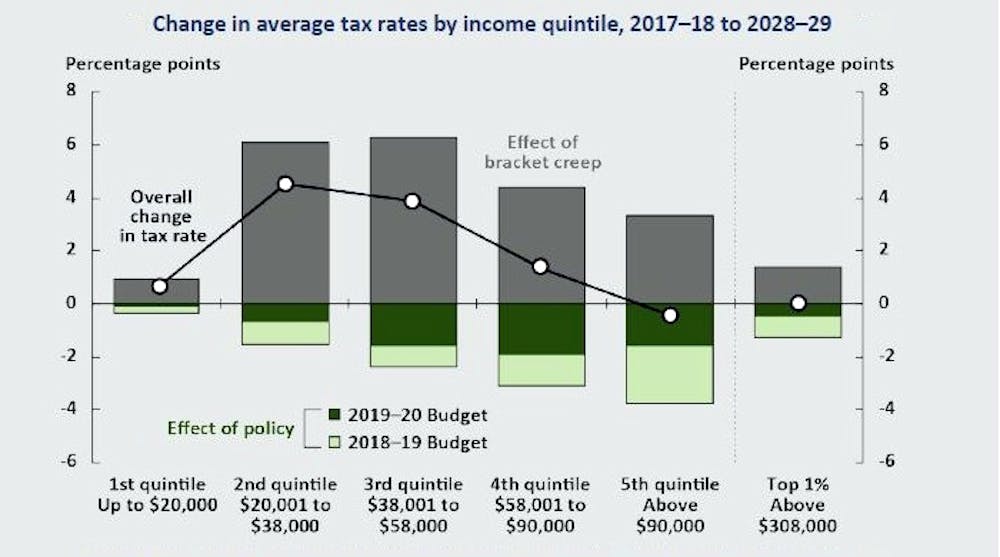
The middle fifth of earners will pay far more of their income in tax in ten years’ time under the government’s projections, according to the PBO’s calculations. Instead of paying 14.9% of their income in tax, by 2028-29 they will pay 18.8%.
That’s after taking into account the long-term tax cuts the government pushed through parliament in May and went to the election on.
Without those legislated tax cuts, they would have been paying an extra 6.3% of their income in tax. With the legislated cuts (and others pencilled in by the PBO to keep the government’s tax take within its promised ceiling) they will be paying an extra 3.9%.
Put another way, the government’s tax cuts will undo some of the damage caused by bracket creep as more of each pay packet climbs into higher brackets, but not most of it.
It’s the same for pattern for the second-lowest fifth of earners. They will move from paying 5.3% of their income in tax to 9.9%, a near doubling, which is taken is taken into account in the surplus projections.
The second-highest fifth will move from paying 22% of their income in tax to 23.4%, even after the tax cuts. The bottom fifth, who don’t pay much tax, will move from paying 0.6% to 1.2%.
Highest earners escape
But workers in the top fifth, which at the moment is workers earning above A$90,000, won’t pay a cent more, at least not on average.
The government’s projections, as spelled out by the PBO, have them paying less of their income ten years from today than they do today.
Put another way, they are the only fifth of the population that won’t be expected to wear pain to keep the budget surplus.
There are other contributors to the budget surplus. One is a pretty hefty assumed decline in government spending over the next decade, amounting to 1% of GDP, taking it from 24.9% to around 23.9% of GDP.
If it was all to come from wages it would be the equivalent of firing every 25th public servant. But the PBO says the bulk of it is projected to come from tighter eligibility criteria for payments such as the Newstart unemployment benefit and the disability support pension.
And it sounds this warning:
The spending restraint seen over the past few years may be increasingly difficult to maintain over coming years given the length of time over which restraint has been applied, the pressures emerging in some spending areas, and the potential need for fiscal stimulus, noting that the projected improvement in the budget balance is mildly contractionary.
What it is saying, gently, is that it the longer the government attempts to restrain spending (for instance by imposing tough conditions on access to benefits and using debt collectors to recover alleged overpayments), the harder it will get.
And it is saying the government might need to spend in ways it hasn’t accounted for, including on measures to support the economy in the event of a downturn.
Budget conventions to the rescue
The projections assume the opposite of a downturn.
No blame should attach to this government for them, but our rather odd budget conventions dictate that the worse the economy is, the better the budget’s projections for economic growth. That’s right: the weaker our current economic growth, the stronger the budget’s projections for future economic growth.
The thinking is that over the long term, the economy should grow at roughly its long-term average growth rate. To get there when the economy is weak, as it is now, the budget assumes several years of stronger than normal economic growth to catch up.
In this case it’s five years of stronger than normal economic growth.
The PBO contents itself with the observation that economic growth that was merely normal (or worse, remained weaker than normal) for some of those years would have a “significant and compounding effect on the budget position over time.”
The surplus is far from assured, and it shouldn’t be. The government might well find that it can’t and shouldn’t restrain spending on payments as much as is projected in the decade ahead, and it might find it needs to spend to support the economy.
It will almost certainly find that lifting the tax take on middle Australians from 14.9% of income to 18.8% is intolerable.
Nearly one in five Australians are affected by hay fever. If you’re one of the unlucky ones, you’ll know how troublesome the symptoms can be.
Grass pollen is the major outdoor trigger of hay fever and allergic asthma. Pollen grains contain a variety of allergens that can trigger allergic reactions in people who are sensitised to pollen.
The good news is, if pollen is a problem for you, there are things you can do to manage your exposure to it. By adopting some simple tips alongside preventative medications, you may find this hay fever season a little more manageable.
Sensitisation involves development of specific antibodies (called Immunoglobulin E, or IgE) that can bind to the triggering allergen. Repeated exposure to the triggering allergen leads to the activation of inflammatory cells, causing the release of histamine and other mediators. That’s when the symptoms kick in.
An allergic reaction to pollen can lead to hay fever symptoms affecting the upper airways, including itchy, watery eyes, an itchy, inflamed throat, a runny or blocked nose, and sneezing.
Pollen allergy can also lead to what we call allergic asthma – if the allergen components enter deeper into the lungs, this can cause inflammation and symptoms of asthma, like shortness of breath.
While hay fever has long been regarded a trivial condition, it can be a serious chronic disease associated with other problems such as sinusitis, sleep disturbance because of nasal blockage, and asthma, leading to fatigue and poor performance at work or school.
What can you do to reduce exposure to pollen allergens?
The tragic thunderstorm asthma epidemic of November 2016 in Melbourne shocked many and elucidated the potential harm of grass pollen exposure.
Lessons from this event illustrate staying indoors with the windows closed reduces risk of experiencing severe symptoms.
Many people affected by thunderstorm asthma recall being outside prior to the passage of the thunderstorm across the greater Melbourne region during the late evening of November 21, 2016.
Of course, this was an uncommon event, and the majority of people who get hay fever will not experience this level of illness.
On high pollen days, or after thunderstorms in spring, people who are allergic to pollen should stay inside with windows closed when possible. They should also drive with the car windows closed and the air on a setting where it’s circulating, rather than coming in from outside.
Other actions people can take to reduce allergen exposure are to hang washing inside or use a tumble dryer on high pollen days, avoid activities such as mowing the lawn, wear sunglasses outdoors, and shower after activities likely to involve pollen exposure.
Close to one in five Australians suffer from hay fever.From shutterstock.com
A national standardised pollen monitoring network
For people with hay fever, knowing when the pollen count is likely to be high can be helpful in managing exposure. There are an increasing number of mobile apps you can use to monitor the pollen count in your area in real time.
A screenshot from pollen monitoring app ‘Melbourne Pollen Count’.Screenshot
In 2016, the National Health and Medical Research Council funded the AusPollen Partnership. Since its inception, and with the efforts of many researchers, a national standardised pollen monitoring network is being established to help address unmet needs of patients with hay fever and allergic asthma in our community.
The AusPollen Partnership seeded the growth of a number of projects in which pollen monitoring is a key activity; for instance AirRater in Tasmania and VicTAPS in Victoria. Australian pollen monitoring sites now adopt standard protocols to harmonise pollen monitoring processes so data is comparable between locations.
While expanding the pollen monitoring network, we’ve had the opportunity to evaluate how providing people with local, current daily pollen information helps.
In a pilot study, we found people who didn’t have access to local pollen information indicated a desire to have local pollen information, while people who did have access to pollen information reported it was very useful. Respondents used pollen information to plan their daily activities, to minimise pollen exposure and to optimise medication use.
While minimising exposure to pollen may help reduce symptoms when pollen levels are high, the cornerstone to symptom management and safety during the pollen season is preventative medication like steroid nasal sprays and antihistamines. These can reduce the underlying allergic inflammation and alleviate symptoms of hay fever.
Before the onset of the pollen season, people who are allergic to pollen and suffer from troublesome symptoms should start using medications daily. Control of underlying allergic inflammation in the upper airways is best achieved with nasal sprays containing a topically active steroid. Non-sedating antihistamine tablets and eye drops provide symptom relief (but don’t alter the underlying inflammation).
Seasonal asthma and/or thunderstorm asthma can occur during the grass pollen season in some people with pollen allergy. Those who experience lower airway symptoms during the grass pollen season such as a cough, tight chest, breathlessness or wheeze, should seek medical attention to consider whether they have undiagnosed asthma.
If you have a question you’d like an expert to answer, send it to curiouskids@theconversation.edu.au.
What has the search for extraterrestrial life actually yielded and how does it work? – Rose, age 13.
Hi Rose, great question!
I am lucky enough to be a professional “alien hunter” for the Breakthrough Listen project, which is the biggest search for extraterrestrial intelligence we humans have ever undertaken.
My role in the search is to use data from the Parkes radio telescope in Australia to look for signals from space that might have been be sent by intelligent extraterrestrial life.
The Breakthrough Listen program has been going for three years, and we have another seven years of searching to go. But people have been searching the skies for signs of intelligent life since the 1960s and to date we have found… zero aliens.
But don’t lose hope! The Universe is mind-bogglingly large, and with the latest technology, the search is only just starting to heat up.
There are three exciting ways we might detect life beyond Earth in the coming years.
The first is by sending probes to planets and moons in the Solar system. We already know there isn’t any other intelligent life in the Solar system, but there could be simpler life like microbes.
You may have heard about the NASA missions to Mars – the latest is the Curiosity Rover, and it has special equipment that might detect simple life like microbes on the red planet’s surface.
NASA has sent the Curiosity Rover to Mars to investigate the planet’s surface.Shutterstock
Curiosity recently uncovered an intriguing mystery: occasionally its sensors pick up methane gas in the atmosphere. Methane is produced here on Earth by animals (in particular, cows and sheep), so finding methane could point to there being some microbes in the soil.
That would be an amazing discovery, but it could still be something less interesting, like a chemical reaction between rocks. Another upcoming mission is called Dragonfly, which will venture to Saturn’s moon Titan (which, amazingly, has an atmosphere) and will fly around looking for signs of life.
NASA says its Dragonfly drone will fly around Saturn’s moon Titan looking for signs of life.
Studying the atmospheres of other star systems
The second way we might detect life is by looking closely at the atmospheres of planets in other star systems, which are called exoplanets.
Excitingly, the next generation of optical telescopes will be able to detect gases in the atmospheres of nearby exoplanets. If we see that an exoplanet’s atmosphere has a mix of gases like Earth, that would be strong evidence that we are sharing the galaxy with other beings.
The search for extraterrestrial intelligence or ‘SETI’
The search for extraterrestrial intelligence, or “SETI” as it is known, is the third way scientists are looking for life. In SETI, we look for signals from space that look artificial or that don’t seem natural. Detecting an artificial signal would tell us that there was not only life, but life capable of producing advanced technology.
SETI could detect an artificial signal from much, much further away than the other two methods; the disadvantage is that intelligent life is almost certainly rarer. We just don’t know yet how rare, and that’s the reason we need to look.
The best explanation for why we haven’t found life beyond Earth yet is simply that we haven’t been looking hard and long enough, and our technology has not advanced enough. There are hundreds of billions of stars in the Milky Way alone, and there are more stars in the Universe than there are grains of sand here on Earth.
As SETI pioneer Jill Tarter is fond of saying:
You wouldn’t dip a glass in the ocean, come up with no fish inside and conclude, ‘No fish exist’.
The tide pools and coral reefs of the Universe may be filled with life, we just need to keep dipping our glasses into the darkness.
Western Australia boasts seemingly endless fields of pink, white and yellow everlasting daisies. But while there might seem to be an infinite number, one species in particular is actually endangered. The showy everlasting (or Schoenia filifolia subsp. subulifolia) once grew in the Mid West of WA. Now it is found in just a few spots around the tiny inland town of Mingenew.
But a WA primary school is helping my colleagues and me save the beautiful showy everlasting. With new seed banks, a genetic project and a whole lot of digging, we’re hopeful we can keep this gorgeous native daisy around for the next generation.
The first European to collect the showy everlasting was eminent botanist James Drummond, most likely in the mid-1800s. Initially the species was placed in the Helichrysum family (a group of plants also known as everlastings), but in 1992 botanist Paul Wilson formally described the species based on a specimen collected from Geraldton.
The genus name Schoenia is in honour of the 19th-century eye specialist and botanical illustrator Johannes Schoen, and the species name filifolia refers to its long, slender leaves.
Showy everlastings retain their colour long after they’re picked and dried.Andrew Crawford, Author provided
Everlastings get their name from the fact that that the flowers hold their colour long after they have been picked and dried. The species is known as the showy everlasting because its large, brightly coloured flowers put on a spectacular show when in bloom.
The showy everlasting is an annual plant, growing around 30cm high, with long narrow leaves. Its bright yellow flowers bloom from August to October. The showy everlasting has two closely related sister species: the more common Schoenia filifolia subsp. filifolia, found throughout the WA Wheatbelt, and Schoenia filifolia subsp. arenicola, which grows around Carnarvon but hasn’t been collected for decades. The main differences between the showy everlasting and its sister species are the much larger flowers and the shape of the base of the flower, which is hemispherical rather than vase-shaped.
Collections of the showy everlasting housed in the Western Australian Herbarium indicate the species was once more widespread. It’s likely land clearing for farms and infrastructure led to the disappearance of the species from much of its known range.
It was listed as endangered in 2003. At that time the species was found in just three locations. At each of these sites, threats such as chemical drift from nearby agricultural land, grazing by animals, competition from weeds, and increasing soil salinity were all jeopardising the survival of the species.
Unfortunately, by the late 2000s two of these three populations had succumbed to these threats and were lost. However, continued search efforts since then have uncovered two new populations. The showy everlasting is hanging on, but a concerted conservation effort is needed to ensure its survival in the wild.
New populations needed
To ensure the long-term survival of the showy everlasting, we need to establish new populations – a process called translocation.
As an insurance policy, in 2007 seeds were collected and frozen in the Threatened Flora Seed Vault at the Western Australia Seed Centre. In 2015 my colleagues and I used some of these seeds in small-scale translocation trials, successfully getting new plants to grow, flower and seed in three small populations.
Despite this success, we knew the populations would need to be much, much larger and we would need many more populations to ensure persistence of the species. And for that we needed more information about the showy everlasting’s biology, and larger amounts of seed.
Currently a genetic study is underway to look at the difference between the showy everlasting in different locations and its sister species. As part of my PhD study with Murdoch University, I am running a glasshouse experiment to see whether different populations of the showy everlasting can cross and produce viable seed, and whether there are benefits or risks to such crosses.
The initial translocation trials have proved we can successfully establish new populations, but we’re currently limited by the amount of available seed. This is because our trials showed the most efficient way to establish the showy everlasting is by planting seeds directly into the ground. However, this process uses a lot of seeds – more than we have stored in the Seed Vault. Rather than denude the wild populations, we needed a new source.
Fortunately, at this time Andrew Crawford, manager of the Threatened Flora Seed Vault at the Western Australian Seed Centre, was approached by the principal of the Woodlupine Primary School, Trevor Phoebe. He was looking for a meaningful way to involve his students with plant conservation. This led to the establishment of a seed production area at the school which aims to grow and harvest seed of the showy everlasting. The students at the school are involved with planting, monitoring and taking care of the plants, and will help collect the seed when they ripen.
It is still early days for this project, however early signs are promising. Seedlings have established well and have begun flowering. Seed collection is planned for later in the year.
The seed harvested will be used in the future to boost plant numbers in the existing populations, and to establish new sites, hopefully securing this beautiful species in the wild so that everyone can enjoy the showy everlasting for decades to come.
Just before 7am on September 29, 2009, a magnitude 8 earthquake struck the sea floor in the central South Pacific, about 190kms south of Samoa. It was exactly the sort of earthquake – in fact, it was two almost simultaneous quakes – that create devastating tsunami.
The Earth’s crust tore apart, triggering a region-wide tsunami. Within minutes it inundated Samoa’s coastline, before rolling on to American Samoa and Tonga.
While a tsunami warning was issued by the Pacific Tsunami Warning Center and relayed by Samoan officials, it was not rebroadcast everywhere. Regardless, the tsunami arrived too quickly for many to escape. In Samoa, 189 people died when the tsunami reached up to 14 metres above normal sea level and many more were injured across the region. Hundreds of millions of dollars of damage was done.
Ten years on from this tragedy, it’s time to look back at the lessons we learned – and how they can help us adapt to a rapidly changing climate, which is making similar natural disasters more and more likely.
Location of earthquake shown by yellow star in South Pacific south of Samoa (Source: USGS)
A new approach to post-disaster research
As is common after a major disaster, Samoa’s government and emergency services quickly began assessing the damage and the needs of affected communities, to direct relief and recovery efforts. The government did an excellent job given the logistical challenges that face small island developing states after such events.
It is also common for researchers from a wide range of disciplines, from earth sciences to engineering to health studies, to visit impacted areas to study the causes and effects of such disasters, and make suggestions to improve future disaster management planning and practice.
Such researcher-led field reconnaissance surveys are usually small, comprising just a few individual researchers and usually from the same discipline. These expeditions are quickly organised, and the researchers get in and out fast – too often focused on their own interests, and not working with the government or scientists of the affected country. This means serious ethical issues can arise.
After this earthquake and tsunami, I thought we could do better.
I proposed bringing incoming researchers from multiple disciplines, to collaborate with local communities and Samoan researchers and officials. This proposal was accepted, and I was quickly appointed to head up what became the largest ever international post-tsunami survey team.
Our team ended up comprising nearly 200 local and international participants working in multidisciplinary teams for up to a month between October and November 2009.
Critically, for the first time, the team negotiated between incoming scientists with specific questions, and local scientists and the government to ensure their research really did benefit Samoan communities.
As team leader, I reported daily to the prime minister and King of Samoa updating them on research findings, gave local TV and radio interviews on how things were going and worked with researchers to nudge field activity in directions that benefited everyone.
At the end of the survey the team provided a report to the prime minister and government on our findings. This set a new global benchmark for how post-disaster surveys could be done.
A boy looks through the wreckage of a Samoan village after the 2009 tsunami.Paul Miller/AAP
geological studies show us these large hazard events occur much more frequently than we realised before
natural ecosystems on which humans depend exhibit both great vulnerability and resilience to the forces of nature, but human management of those ecosystems really affects resilience
different types of buildings experience damage and destruction in different ways. This knowledge can be used in land use zoning and improving building codes and design standards
despite continuing public education campaigns about natural hazards and disasters, individuals, families and communities still don’t always do what emergency management agencies want them to do (for example, evacuate to high ground if you feel a strong earthquake at the coast)
human beings are the most remarkable of species – capable of incredible resilience and generosity in the aftermath of disasters
there is still so much we do not understand about natural hazards and disasters
as a global community, we must work hard to reduce inequality which makes too many people vulnerable to disasters, and rise to the challenge presented by human-induced climate change.
In fact, according to the United Nations Office for Disaster Risk Reduction, weather and climate related disasters have more than doubled over the last 40 years. They have said,
90% of recorded major disasters caused by natural hazards from 1995 to 2015 were linked to climate and weather including floods, storms, heatwaves and drought.
Number of people affected by disasters of different types between 1998 and 2017.UNISDR
A heart wrenching factor is the poorest people around the world always bear the greatest burden of loss to natural disasters due to inequality and poverty. Layered on top of the particular vulnerability of poorer people to disasters, global statistics show the Asian region experiences the most disasters of all types.
Occurrence of different types of disasters by regions. Cylinders show the percentage of each particular disaster in a given region in relation to the whole world.Alcantara-Ayala, 2002
Earth is unique, dynamic, fragile and dangerous. Human activity is driving changes that, if not addressed soon, will result in disasters in the near future that are outside our experience and capacity to cope with.
There have been many explanations for the turmoil in Hong Kong, which is now heading toward its 16th weekend. However, the powerful links between the economic and political elites in the city and the grossly inadequate system of governance they preside over are too often ignored.
In explaining the source of Hong Kong’s unrest, many leaders have predictably blamed the teaching of liberal studies in schools. The notion that students should gain a critical understanding of politics and society – not to mention actively participate in these – is simply too much for those who believe they must make the big decisions.
On the other side, the ire of many protesters is overwhelmingly directed toward China and the Hong Kong government, particularly Chief Executive Carrie Lam. Lam’s actions – first disappearing and then reappearing with equal measures of bureaucratic steeliness and obstinacy – have only made matters worse, as have the actions of a police force once revered by many as “Asia’s finest” and the posturing of Chinese forces.
Indeed, the sum total of these efforts has been a hardening localist identity that has become more apparent among the protesters as the unrest has continued.
Moreover, mutual animosity has grown to such an extent that backing down by either side would seem unlikely. Indeed, for the last few weeks it has been much easier to imagine escalation than the opposite.
Decline without hope
However, the most likely explanation for the unrest lies not in the education curriculum or Beijing’s influence over the city, but rather the nature of Hong Kong government and society itself.
Despite the way the Hong Kong government markets itself to the world – emphasising the rule of law and promoting the city’s high-quality business environment – the city has actually been in decay for decades.
Firstly, Hong Kong has been subject to the “hollowing out” processes that have plagued many former industrial economies – a situation in which industry leaves and nothing replaces it.
Importantly, this has been coupled with an inability of those at the top end of town to recognise the vast inequalities this has contributed towards. According to government statistics, Hong Kong’s wealth gap hit a historic high in 2017, with the wealthiest households earning 44 times the poorest.
Long delays to move into public housing are the norm. “Nano apartments” smaller than a parking bay are the only housing option for many, with many flats in the city housing multiple generations of families.
Young Hong Kongers who have been raised on the city’s golden age stories of tycoons like Li Ka Shing (known here affectionately as “Superman”) also face depressing futures in low-paying service jobs.
Moreover, higher education hasn’t helped young people secure higher-paying jobs. One recent survey found that average graduate salaries are significantly lower than they were in 1987.
Student protesters taking part in a human chain in Hong Kong this month.Fazry Ismail/EPA
While market fundamentalists like Milton Friedman famously heralded the entrepreneurialism of Hong Kong. In reality, it’s laissez-faire for the top end of town, and colonial-era bureaucracy for the rest. Young people contemplating opening a business face oligopolies, rapacious landlords eager to gain from the first signs of success and, in some sectors, rigid government regulations.
Making matters worse, anything vaguely progressive in a redistributive sense is often dismissed by anti-government protesters as too narrowly focused on economic factors at the expense of democratic reforms.
Much like the United States, which has become a positive reference point for many protesters, a pull-yourself-up-by-the-bootstraps individualism prevails in Hong Kong.
Frustratingly, rather than taking aim at the tycoons and conglomerates that dominate the economy, or the property developers and landlords who control the housing market, the main target of the protesters has been the government.
And the protesters don’t condemn the government for protecting the elite’s economic interests to the exclusion of many Hong Kongers, but rather for implementing the will of Beijing.
Why protesters aren’t focusing on economic elites
Indeed, even after some of the richest people in the territory voiced support for the government in recent weeks, very few in the protesting camp have turned their anger towards the city’s economic elites.
This fact speaks to the power of the founding myths of modern Hong Kong and how the city’s rich made good. There’s a certain reverence for the city’s tycoons that persists here, along with a lack of class consciousness and an ingrained ideological hostility towards anything vaguely left-leaning politically.
Moreover, while universal suffrage is a key part of the demands made by protesters, this overwhelmingly relates to the selection of the chief executive, not the structure of the government itself.
For instance, under an anachronistic colonial arrangement known as the “functional constituencies”, a host of economic sectors (such as the financial services, real estate and tourism) gain political representation in the Legislative Council at the expense of citizens.
Crucially, too, little effort has been made to explain why universal suffrage would be so important in Hong Kong beyond thwarting China’s influence. This has limited the formation of lasting coalitions within the protest movement that could rally around the idea of using increased political power to resolve pressing social issues.
Combined with some protesters flying American, British and colonial flags and waving pictures of US President Donald Trump on top of a tank, the movement often appears to be erring closer towards being just another form of reactionary populism.
US flags have been a common sight at many protests in Hong Kong.Jerome Favre/EPA
Rebuilding hope and the city
The fact that young people are grappling with forging a more positive future is to be admired. However, for Hong Kong to have any reasonable future, the city requires nothing short of large-scale economic and political transformation.
Universal suffrage is one part of this, but in isolation it is insufficient. The question for Hong Kong is whether the protesters and other members of society recognise what needs to be done in a holistic sense and can pull together to make it possible.
In a city characterised by vast inequalities in economic and political power, this challenge is nothing short of revolutionary in the genuine sense of the word.
New Zealand Prime Minister Jacinda Ardern meets with US President Donald Trump in New York, September 2019.
Analysis by Dr Bryce Edwards
New Zealand Prime Minister Jacinda Ardern addresses the United Nations general assembly, September 23, 2019.
Jacinda Ardern’s diplomatic trip to New York has been a success. She participated in at least 32 notable events, including a large number of bilateral meetings, and gave nine speeches. And she showed once again what an asset she is for New Zealand on the world stage.
New Zealand journalists were taken along for the recording of the show this morning, and Cheng reports on the light-hearted chat between the host and the prime minister, in which she joked about her time “trying to save the world” at the UN this week. The article also reports on the praise she received backstage from Hollywood actor Renee Zellweger over her handling of the Christchurch terrorist attacks.
Jacinda Ardern addresses the United Nations Private Sector Forum, September 2019.
Cheng outlines the rest of Ardern’s busy three days in New York: “She has rubbed shoulders with the world’s most powerful leaders, including US President Donald Trump, UK Prime Minister Boris Johnson and UN Secretary-General Antonio Guterres, as well as tech executives including Facebook’s chief operating officer Sheryl Sandberg, Microsoft president Brad Smith and Twitter boss Jack Dorsey.”
There have been some important announcements by Ardern. The most substantial was the Agreement on Climate Change, Trade and Sustainability (ACCTS) at the United Nations today – see Derek Cheng’sJacinda Ardern in New York: Only five countries sign up for NZ’s trade agreement to tackle climate change. This relates to removing trade tariffs on environmental goods such as wind turbine parts and solar panels, while also trying to eliminate fossil fuel subsidies.
Reactions haven’t been all that positive, so far – especially with so few countries signing up. Long-time climate change blogger, No Right Turn has suggested the size and scope of the measure isn’t that impressive – see: Climate Change: Meh.
Here’s his main point: “if this is as ambitious as the leaders of the five supposedly most ambitious countries can get, it’s really not very ambitious at all – just a restatement of former principles. If these five ‘high ambition’ countries wanted to actually lead, they’d be drafting a fossil-fuel non-proliferation treaty instead. instead, they’ve chosen to take the easy bits of that regime, without the actual meaningful commitment.”
Some, however, have questioned whether all these fine words in New York actually match the reality of what Ardern’s government are achieving back home. Today former Cabinet Minister Peter Dunne says: “It is one thing to parade virtue on the international stage, but something else to have to match it to domestic reality. How much longer the government can get away with this game of two stories remains to be seen. In the absence of effective and decisive action, and any evidence of progress, it is going to become increasingly difficult to maintain the pretence” – see: Ardern’s rhetoric on climate change not matched by domestic reality.
There are some signs that Ardern’s promise of bringing agriculture into the ETS might not happen – see Thomas Coughlan and Luke Malpass’ Jacinda Ardern feted abroad, but Emissions Trading Scheme extension in trouble at home. According to this, previous “plans had stalled after ministers within the patchwork government were unable to agree on the details.”
Explaining the situation today, Richard Harman writes on the Politik website that “a group of agriculture organisations have made significant progress in getting the three parties that make up the Government to accept their proposal for a self-regulatory approach to farm emissions rather than the ETS over the next five years” – see: Ardern hints at climate change compromise.
Trump and Trade
New Zealand Prime Minister Jacinda Ardern meets with US President Donald Trump in New York, September 2019.
For many, Ardern’s greatest New York triumph was her meeting with US President Donald Trump. Not a lot came out of the highly anticipated event. Derek Cheng reported that “Ardern emerged from the meeting – for which media were banned – at the InterContinental Hotel with warm smiles and high praise for Trump” – see:Jacinda Ardern in New York: What she discussed with Donald Trump.
Trump himself retweeted the above article, adding “True. A wonderful meeting!” Clearly the President appreciated the meeting and was able to use it show his ability to get on with another ally.
Given that Ardern wasn’t able to substantively bring up issues of climate change or indeed any of the other problems she might have with Trump’s actions, it raises the question of whether Ardern should have put herself in the position of meeting Trump in the first place. Elsewhere, political leaders are refusing to meet with him. For example, Ardern’s Labour Party counterpart in Britain, Jeremy Corbyn, spoke out this week against Trump, especially regarding his orientation to climate change and proclaimed: “Let’s have no more if this hand-holding of Donald Trump.”
Earlier in the year Corbyn refused the invitation to go to a state banquet for Trump at Buckingham Palace, saying “Theresa May should not be rolling out the red carpet for a state visit to honour a president who rips up vital international treaties, backs climate change denial and uses racist and misogynist rhetoric”. And he wasn’t the only one to refuse to go – both the House of Commons speaker John Bercow and the Liberal Democrat leader Vince Cable also rejected offers to meet with Trump.
So, was Ardern’s meeting with Trump a mistake? Probably not for more conservative voters, who would see this as successful diplomacy. Ardern simply did what is traditionally expected of prime ministers, and appeasement of powerful leaders is part of that game. However, some on the left might feel let down by this approach, as I wrote about for the Guardian – see: Ardern was supposed to be the anti-Trump, but she failed to speak truth to power.
Here’s the main point: “Ardern’s meeting ticked the usual objectives for a New Zealand prime minister meeting the US president. Business as usual has been achieved. Therein lies the problem for Ardern. Ardern isn’t supposed to be a traditional PM. She came to power riding a wave of enthusiasm for being different. Jacindamania was based on the expectation that she would do politics differently and would reject business as usual.”
Of course, it could be argued that it would have been futile or undiplomatic for Ardern to take any other approach than to appease Trump. But it’s worth looking at to what commentators and politicians said back when Bill English was prime minister and had to navigate issues with Trump – see my political roundup from that time: Bill English loses the Trump immigration debate. At the time, English was rightly skewered for his approach for trying to keep onside with the Americans by playing nice.
Prior to Ardern’s meeting this week, former Cabinet Minister Laila Harré spoke on TVNZ’s Q+A programme, saying “Ardern has an obligation, not just as New Zealand prime minister but as an important leader in the Pacific to raise the US’s withdrawal from the Paris climate change agreement, in her meeting with Mr Trump” – see: ‘Disingenuous’ for Ardern to raise free trade deal with Trump says former MP, unionist Laila Harré.
Harré feared that instead of using the meeting to discuss climate change, the PM would instead concentrate on furthering New Zealand’s trade interests, saying if that happened then she’d be “disappointed by that”. Furthermore, “It’s either disingenuous of her to put a free trade agreement on the agenda with this president, or it’s worse”.
Of course, although there was plenty of admiration from the likes of Business New Zealand for Ardern having furthered New Zealand’s trade interests, others have voiced concern about whether such a deal would be good for New Zealand. For example, the NBR’s Brent Edwards argued that such a deal was extremely unlikely, given Trump’s highly protectionist stance – see:Cost of US free-trade deal might be too high (paywalled).
Brent Edwards says that even if a deal was on offer, it would be likely to be a bad one for this country: “And if Trump is keen on free trade talks, would New Zealand be stupid enough to engage? Trump makes a point of looking at trade flows. Countries that export more to the US than they import are not at the top of his list. As he imposes more restrictions on trade, he is hardly looking for deals that would make it easier for countries to export to the US. Trump’s America First policy means there is little in it for the other partner in the negotiation, particularly one as small as New Zealand compared with the economic powerhouse that is the US.”
With the AFL Grand Final between Richmond and Greater Western Sydney this Saturday on the hallowed turf of the MCG, punters around the country will be encouraged to place their bets hoping they can score a sweet victory.
But there have been major concerns at the links between sports betting and the AFL this year. In recent months, Collingwood’s Jaidyn Stephenson bet on AFL matches, which led to him being banned for ten games. This brought the issue back onto the public radar.
Stephenson announced during a press conference he was regretful, would take responsibility for his actions, and promised to do better in the future.
But what if Stephenson was merely reflecting the norms of Australian society, which has seen the establishment of sports betting as an everyday social practice?
Australia is the gambling world leader by a mile. Australia’s betting losses per adult are the highest in the world, and they’re around 50% higher than the country in second place, Singapore.
And with sports betting heavily marketed and apps making it easier than ever to bet, punting will only become more deeply entrenched in Australian culture. If we really want to do something about tackling gambling related harm, we need to de-normalise sports betting as an everyday social practice in Australia.
A season of gambling debates
Debate about the AFL’s relationship with sports betting has raged all season. Collingwood coach Nathan Buckley called the punishment of Jaidyn Stephenson a hypocrisy given the AFL has a long-standing sponsorship deal with BetEasy.
Brisbane Lions have announced betting company Neds will appear on their guernsey from next season. And concerns about AFL’s relationship with gambling companies even led Western Bulldogs captain Easton Wood to say he would support players taking a pay cut to end gambling sponsorship.
In recent months Jaidyn Stephenson was banned for ten matches for breaking an AFL betting ban. But was this hypocritical?AAP Image/Julian Smith
These concerns are related to the effect gambling has on society. Gambling expenditure in Australia was estimated at A$23.7 billion in 2016–2017, an average of A$1,251 per adult who gambled. Research estimates between 80,000 and 160,000 Australian adults suffer from severe gambling problems; and between 250,000 and 350,000 are identified as at moderate risk.
Problem gambling can lead to a severe harms for the partners, families, communities and employers of gamblers – including financial hardship, family breakdown, headaches and nausea, stress, anxiety, and depression. In fact, the social cost of gambling harm is conservatively estimated at A$4.7 billion per annum.
Australians associate sport with betting
While gambling and related harm has traditionally been understood as an individual issue, this is changing with growing recognition forms of gambling such as sports betting are becoming normalised.
Sports betting is now the fastest growing sector of the gambling market. What’s more, sports betting is heavily marketed, especially during the television broadcast of sports like the AFL. And a recent report pointed to how Sportsbet – one of the biggest players in the market, has spent nearly half a billion dollars over the past five years on marketing to Australians.
Technological advancements, such as the introduction of mobile phone sports betting apps, now mean Australians can bet on sports anywhere, anytime, and on anything.
Australians now punt on their phones in the home, at work, at the game, or out with their friends. Research has shown sports betting apps relate to social grouping, passion, mateship, competition, and knowledge of the game, creating social norms that associate sport with betting.
It also means people who would not traditionally bet, such as females on a night out with male friends, are now getting involved.
So, it’s no surprise AFL stars such as Jaidyn Stephenson are engaging in sports betting. Their behaviour merely reflects the norms in Australian society.
Don’t blame the players when betting is in our social fabric
If we wish to tackle gambling related harm, and prevent sports stars from having a punt, then we need to first understand and address these norms.
The research – led by myself with a team of sociologists, geographers and neuroscientists – will combine visual ethnography and cognitive neuroscience methods, such as eye tracking, to examine how people use mobile phone sports betting apps and how this shapes sports betting practices.
The project findings will enhance understanding of social practices of sports betting and the role of mobile phone sports betting apps, to help inform gambling policy and programs to support better health and social outcomes.
So, next time an AFL star is caught and pilloried for betting on a game we should recognise they are merely reflecting our social fabric. The AFL could make a start by taking responsibility and rejecting gambling sponsorship.
After months of delays and uncertainty, Afghanistan is set to hold its presidential election on Saturday. This election, the third since the overthrow of the Taliban regime in 2001, has critical implications for the political stability and security of the country.
Most importantly, it will test the resilience of the country’s fragile democratic process and shape the conditions under which the now-defunct negotiations between the United States and the Taliban can be resumed with more meaningful participation from Kabul.
And if the vote produces a broadly acceptable and functioning government – which is not a guarantee after the last presidential election in 2014 and parliamentary elections in 2018 – it will have profound repercussions for the Afghan people.
Nearly two decades after the US-led coalition invaded the country and ousted the Taliban, Afghanistan is still in a downward spiral. In June, the country replaced Syria as the world’s least peaceful country in the Institute for Economics and Peace’s Global Peace Index report. The BBC tracked the violence in the country in August and found that on average, 74 Afghan men, women and children died each day across the country.
Further, the number of Afghans below the poverty line increased from 33.5% in 2011 to nearly 55% in 2017.
And in another bleak assessment of where things are at the moment, Afghan respondents in a recent Gallup survey rated their lives worse than anyone else on the planet. A record-high 85% of respondents categorised their lives as “suffering”, while the number of people who said they were “thriving” was zero.
Tests of democracy in Afghanistan
Despite the major challenges posed by insecurity and risks of electoral fraud, Afghanistan’s recent elections have been serious contests between the country’s various political elites.
Ordinary voters take extraordinary risks to participate in the polls. Thanks to a dynamic media sector, these contests involve spirited debates about policy-making and the visions of the candidates. This is particularly true when it comes to presidential elections, as the country’s 2004 Constitution concentrated much of the political and executive power in the office of the president.
There have been serious tests of Afghanistan’s nascent democracy before, however. The 2014 election was tainted by allegations of widespread fraud, pushing the country to the brink of a civil war.
The political crisis was averted by the formation of the national unity government, in which Ashraf Ghani became president and his main challenger in the election, Abdullah Abdullah, took the position of chief executive officer, with powers similar to a prime minister.
Abdullah Abdullah is again the main challenger for President Ashraf Ghani, similar to the 2014 vote.Jalil Rezayee/EPA
Negotiations with the Taliban
Since the withdrawal of most of the US and NATO forces from Afghanistan in 2014, the Taliban has considerably expanded the areas under its influence. Nonetheless, the insurgent group has been unable to score any strategic military victories by gaining control of provincial or population centres.
In 2016, President Donald Trump came to the White House with the promise of ending the war in Afghanistan. However, after a meticulous assessment of the risks associated with a complete troop withdrawal, he backed away from that pledge.
Trump instead called the 2014 departure of most US troops a “hasty withdrawal” and declared a new strategy that included an increase in the number of US forces in Afghanistan.
Afghan President Ashraf Ghani (centre) has adopted a populist style in his re-election campaign to connect better with voters.Ghulamullah Habibi/EPA
The deployment of additional troops significantly escalated the military campaign against the Taliban but failed to decisively change the security dynamics in the country.
Then, in 2018, the Trump administration formally began engaging the Taliban in a series of direct negotiations in Qatar. The process was called off by Trump earlier this month when it was reportedly at the threshold of an agreement.
Critics noted, however, the many flaws of this approach and the haste with which the negotiations were conducted by Zalmay Khalilzad, the US special representative for Afghan reconciliation.
Ironically, at the insistence of the Taliban, the process excluded the government of Afghanistan, which the Taliban refuses to recognise as the legitimate authority in the country. This led to phased negotiations, whereby a deal between the US and the Taliban was expected to be followed by an intra-Afghan dialogue and eventually a ceasefire.
A successful presidential election that produces a broadly acceptable outcome can significantly strengthen the position of the new government in negotiating and implementing a peace process with the Taliban. This is one reason why Ghani does not want to be sidelined from the negotiations.
Challenges for the upcoming vote
The election involves a significant number of political players and coalitions, but is essentially a replay of the 2014 poll between Ghani and Abdullah. While none of the other 13 candidates have a realistic chance of winning, they can split the votes to prevent one of the leaders from claiming victory in the first round. A run-off was required in the last two presidential elections in 2009 and 2014.
Another factor is the threat of violence from the Taliban. The group has already vowed to violently disrupt the election. In recent weeks, it has claimed responsibility for deadly attacks on election rallies, including a devastating attack on the campaign office of Amrullah Saleh, the first vice-president on Ghani’s ticket.
Supporters of incumbent President Ashraf Ghani at a rally in Jalalabad this month.Ghulamullah Habibi/EPA
Insecurity will also likely prevent significant numbers of people from participating in the process. The number of polling stations has significantly dropped to less than 5,000 this year compared to 7,000 in 2014, highlighting the deteriorating security conditions.
There are also fears that more polling stations will be closed on election day, both for security reasons and political reasons (the latter in areas that are likely to vote for opposition candidates).
This election is unlikely to be a game changer in the face of the magnitude and complexity of the challenges facing Afghanistan and its people.
Nonetheless, the election presents a rare opportunity for the country’s people to exercise their rights to choose who governs the country.
And if the supporters of the leading candidates stay committed to a transparent process, even a reasonably credible outcome can go a long way in restoring confidence in the country’s shaky institutions and strengthening the position of the government in any future peace negotiations with the Taliban.
How can I control the excessive oil secretions on my face that leads to acne? Anonymous
Pimples are the worst! They hurt, pop up overnight and can be impossible to hide.
You’re right that oily skin is believed to be the most critical factor for causing acne.
But rest assured, there are a few things you can do to keep your oil at bay and control the likelihood of a break out.
Why am I so oily… all the time!
Before we start talking about how to avoid acne, let’s chat about why oily skin causes acne.
Oily skin is caused by the overproduction of sebum by an overactive oil gland (also known as the pilosebaceous unit, which is just a fancy term for a hair follicle and its oil gland).
There are a few reasons we get acne, one being the pore of the oil gland can be blocked – this can be made worse by using certain types of makeup.
Some of our hormones during puberty drive sebum overproduction, hence acne-overload. Fun fact: anabolic steroids, typically used by bodybuilders, can trigger acne too.
Acne bacteria lives on the skin and its overgrowth around your oil glands can worsen inflammation and pus formation. This is what causes acne to hurt sometimes.
If there’s a strong history of acne in your family, there’s a good chance you might get it too.
Trust me on this, a proper skin routine is everything
As a dermatologist, I recommend cleaning your face every morning and evening. If you wear make up, ALWAYS wipe it off before going to bed – no excuses!
Using pore-clogging oil-based make up can worsen or cause acne. This can become worse if make up is not thoroughly removed!
If you want to hide your acne with make up, just be sure to use brands that contain good ingredients (I talk a bit more about this below).
A few tips to help keep your skin clear ?
Diet: Eat a healthy balanced diet containing low glycaemic index food groups with complex carbohydrates and omega-3 fatty acids. There might be a role for oral zinc supplements. It is best to avoid sugary, processed and refined food.
Make up and hair products: If you choose to wear make up, opt for mineral-based foundations, eg. La Roche Posay, Bare Minerals, Nude by Nature, Jane Iredale, Youngblood and Ultraceuticals. Wash your hair regularly with shampoo, especially if you’re using hair products and if you have oily hair or scalp. Avoid using oil-based products on your face and beware of oil-based pomades and hair wax, especially near your forehead.
Regular use of a good quality broad spectrum SPF 30 and above ultralight sunscreen lotion: This reduces early onset wrinkles, pigmentation issues and in the long-term reduces your risk of developing sunspots and dangerous skin cancers.
I recommend using a blotting paper or oil-control film when this happens. They aren’t too expensive – Target sells packs of 100 for A$5 – and can be bought at supermarkets and pharmacies.
You can also apply a thin layer of mattifying gel or a mineral-based loose powder foundation to reduce and absorb excess oil.
Some final words of advice
Use oil-free and non-comedogenic cleansers, moisturisers and make up. When picking a foundation opt for “oil free” liquid silicone (dimethicone or cyclomethicone) matte foundations over oil foundations
remember to thoroughly remove your make up with a make up remover
avoid touching, picking or scratching your pimples
if you feel your acne is particularly bad, make sure you see your GP or get a referral to see a dermatologist. It’s always best to get on top of your acne and reduce risk of acne scarring.
I Need to Know is an ongoing series for teens in search of reliable, confidential advice about life’s tricky questions.
If you’re a teenager and have a question you’d like answered by an expert, you can:
Please tell us your name (you can use a fake name if you don’t want to be identified), age and which city you live in. Send as many questions as you like! We won’t be able to answer every question, but we will do our best.
Most of the 24 million annual visitors to Queensland don’t notice the series of seemingly innocuous yellow buoys at many popular beaches. Beneath the waves lies a series of baited drumlines and mesh nets that aim to make Queensland beaches safe from the ominous threat of sharks.
Earlier this week the Queensland government lost a legal challenge in the Federal Court to continue its shark culling program in protected areas of the Great Barrier Reef, and Fisheries Minister Mark Furner has written to the federal government to request legal changes to keep the program operating.
While proponents of the program argue the absence of human deaths at beaches with shark control gear is proof of the program’s success, leading shark experts are not so sure.
Can shark control programs control sharks?
Large sharks roam across very large swathes of the ocean.Photo courtesy of Juan Oliphant, Author provided
Through a series of baited drumlines and mesh nets, shark control programs aim to reduce local populations of large sharks, thereby reducing the number of times humans and shark meet along our coastline.
Scientists believe that resident sharks may learn that nets and drumlines placed in their local areas represent an obstacle and actively avoid them. This in itself deters and reduces the local population of large sharks in that particular area.
There are two problems with this logic. First, large apex sharks are not local to individual beaches – satellite tracking data indicates they are highly mobile, moving thousands of kilometres across coasts, reefs and open oceans every year. Sharks tagged in the Whitsundays and Cairns have travelled thousands of kilometres throughout the Great Barrier Reef and beyond.
Second, there’s no clear evidence that sharks avoid drumlines. In fact, baited drumlines and nets actively attract, not deter, large sharks. Similar programs in Hawaii were stopped after an expert review concluded their effectiveness had been overstated.
Do shark control programs make our beaches safer?
Nets do not place an impenetrable barrier between swimmers and sharks. It is true only one death has occurred at beaches with nets and drumlines, but over the same period there were 26 unprovoked non-fatal incidents.
While a reduction in fatalities is often attributed to the success of the shark control program, it could also be that reduced response times and better medical interventions are more successful at saving lives in recent decades.
Culls, nets and baited drumlines are a blunt tool, unable to completely remove the threat of people and sharks meeting on our beaches. Advances in technology and improved education of swimmers may be a more effective way to create safer beaches in Queensland with less ecological cost.
Smart technology
Modern technology allows us to help people avoid sharks, by modifying our behaviour at beaches. Shark-detecting drones are being trialled on New South Wales beaches as part of that state’s A$16 million shark management strategy, allowing for real-time monitoring of popular coastal areas.
Technology like drones and smart buoys are increasingly good at spotting sharks.Matt Pritchard/Wikimedia Commons
Underwater “clever buoys” installed at NSW beaches in place of baited drumlines allow for real-time detection of sharks using sonar technology, instantly notifying lifeguards of the location, size and direction of sharks. Solar-powered, beach-based shark warning systems operate on remote beaches in Western Australia, cutting the response time between shark sightings and authorities alerting beachgoers from nearly an hour to a matter of minutes.
Education about shark behaviour can also help. Sharks are more active in certain places, like river mouths, and at certain times, such as at dawn and dusk.
In fact, the Queensland government is prioritising research into shark and human behaviours. This research could support education that mitigates the risk of shark interactions, without causing ecological harm.
Earlier this year the Queensland government committed to a A$1 million annual funding boost towards trialling alternative technologies. Adoption of modern innovations and better education for the general public would improve beach safety while avoiding the expensive and ineffective methods of culls, baited drumlines, and nets.
The cost of shark control programs
While we will never have an exact idea of how many sharks used to roam the eastern coastline, historical estimates from shark control programs suggest that the number of large sharks has declined by 72-97% in Queensland and by as much as 82% in NSW since the middle of the 20th century.
Shark nets, culls and baitlines are expensive and ineffective.Nicole McLachlan, Author provided
NSW and Queensland shark controlprograms combined have removed more than 1,445 white sharks from the eastern Australian coastline since the middle of the 20th century. To put this in context, current estimates indicate that the eastern population of white sharks sits at around 5,460 individuals in total.
The idea that sharks numbers have boomed in recent years represents a classic example of shifting baseline syndrome. The number of sharks on our beaches may seem to have grown since the late 1990s, but it is a fraction compared with a 1960s baseline, and long-term trends indicate that declines are ongoing.
The number-one priority at our beaches is keeping swimmers safe. At the same time, we have a responsibility to protect threatened and endangered species. There are smarter ways to manage both humans and sharks that will make our beaches safer and help protect sharks.
Source: The Conversation (Au and NZ) – By Craig Jeffrey, Director and CEO of the Australia India Institute; Professor of Development Geography, University of Melbourne
India released a Draft National Education Policy (DNEP) in June 2019. It’s the first comprehensive policy proposal on education in the country since 1986 and a major, game changing statement.
Australia has a moral duty to engage with the global challenge of providing quality education to hundreds of millions of Indian youth. And by engaging with India as it rolls out this policy, Australian universities stand to gain knowledge and research capacity, among many other things.
What’s the new policy trying to achieve?
India’s National Policy on Education was framed in 1986 and modified in 1992. Clearly a lot has change in the country since then.
The proposed new policy is remarkable for two main reasons.
First, it takes a cold-eyed look at the existing educational structures and processes in India. The document reflects honestly and in depth on state-level universities and colleges where the majority of students study. In these institutions, the facilities, teaching, and governance are usually poor.
A second remarkable element to the draft is the scale and boldness of the vision. The policy aims to make changes across all levels of education – from early childhood to university.
The draft policy, which is currently in the consultation phase, recommends doubling funding for public education from the present figure of roughly 3% of GDP to 6%.
It aims to change the structure of school education so children begin their schooling at three years old, with three preschool years incorporated into the formal structure.
India’s draft education policy aims to restructure the system so children start school from three years old.JAIPAL SINGH/EPA
The draft policy also calls for an overhaul of teacher training which will now occur in universities rather than specialist colleges, which are often of low quality.
In tertiary education (though the draft is weak on the issue of vocational education), the policy sets a target of 50% of youth being enrolled in universities by 2035 (in 2016, the figure was 24.5%).
The DNEP recommends dismantling the current system of universities and private and public colleges to develop between 10,000-15,000 multi-disciplinary universities, which would be funded in part through the increased government investment in higher education.
The document notes the current system is made up of more than 850 universities and about 40,000 colleges, with 20% of those colleges offering just a single program of study, and 20% having under 100 students.
The main thrust of this policy regarding higher education is the ending of the fragmentation of higher education by moving higher education into large multidisciplinary universities and colleges, each of which will aim to have upwards of 5,000 or more students.
The new institutions are envisioned to promote education in the arts and social sciences. The focus on “liberal arts” will encourage critical thinking and appreciation of the value of education beyond just preparing the population for employment.
The DNEP emphasises the importance of developing a research culture across most universities in India and stresses the value of internationalisation by “preparing our students to participate in world affairs through providing them with learning experiences that cut across countries and cultures”.
It also aims to to “attract students from other countries to participate in our higher education programmes”.
Why Australia should care
The poor quality of school and university described in the DNEP is a critical global challenge. As it stands, large parts of India, especially northern India, are unlikely to meet the United Nation’s Sustainable Development Goal 4, which calls for accessible, quality education for everyone.
Australia should partner with India to address the needs of the hundreds of millions of young people demanding a better education.
Australia has a lot to gain from engaging with India on its new education policy.MICK TSIKAS/AAP
By interacting with top Indian researchers and students, Australia can also improve its own research and knowledge capacity. Australia can make commercial gains from working with India in the redevelopment of its education system.
Australian universities can act in five areas in particular:
1. Build research capacity in India and across the Australia-India boundary
Australia already has a research partnership with India, the Australia India Strategic Research Fund (AISRF). This should be extended, through a joint new research fund with India’s already established new National Research Foundation.
India faces a major challenge in creating a body of excellent researchers capable of occupying positions in its proposed new universities. It is therefore crucial that research partnership also involves building this capacity, especially by creating new PhD training and post-doctoral positions.
2. Partner with India in open and distance learning (ODL)
The DNEP’s goal of increasing the number of students in university in India to 50% can’t occur through bricks and mortar expansion. India has a lot of experience on ODLs but Australia and India could usefully partner in the development of better quality technology platforms.
3. Help train Indian school teachers
Australia has major strength in teacher education. India is looking to other countries to assist in training the staff in universities who will be responsible for training teachers in the new system. Australian action in this area would greatly help Indian education into its next phase.
4. Provide expertise on internationalisation
Australia has been very successful since the 1990s in internationalising its education. Education is now one of Australia’s largest exports. Australian universities and peak bodies such as the Group of Eight Universities could be partners in India’s efforts to internationalise.
5. Building campuses in each other’s countries
The DNEP recommends overturning regulation that prevents foreign universities from establishing campuses in India. It invites the world’s top 200 universities to develop a physical presence in the subcontinent. It also encourages Indian institutions to consider opening campuses abroad.
Australian universities could approach Indian institutions to discuss the development of a physical presence in each other’s countries, such as laboratory spaces, research centres or campuses.
The DNEP is remarkable on many levels: a bold effort to rethink education from first principles in a country containing one fifth of the world’s youth. Australia should make it a priority to engage.
Greater Tokyo took a major hit earlier this month from Typhoon Faxai, which stopped regional transport and knocked out power in the eastern prefecture of Chiba.
Japan’s choices are often simplistically represented as either denser cities or regional dispersal. The former is portrayed as coldly technocratic spatial planning and the latter as the road to an idyllic, sustainable, community-friendly utopia.
But there is a middle option: cities that are both spatially compact and better networked through people, infrastructure and smart technology.
Artificial intelligence to the rescue
There have been numerous studies on Japan’s dilemmas. One of the most innovative was a 2017 artificial intelligence (AI) experiment by researchers at the Hitachi Kyoto University Laboratory.
To compare the merits of urban concentration versus regional dispersal, the researchers looked at 149 indicators of population growth, health, employment, happiness and so on. With these variables they generated 20,000 future scenarios covering the period 2018 to 2052.
In Japanese with English subtitles.
Their results identified regional dispersal as the best way to ensure healthy ageing, inter-regional equity and environmental sustainability.
But the researchers also warned policymakers they had until roughly 2027 to decide on either urban centralisation or regional decentralisation. The AI simulation predicted a lock-in effect that would make it difficult to revert or change course after that time.
Extreme weather events hit back
Yet the scale of Typhoon Faxai’s devastation has revealed Japan’s vulnerability in the face of disasters.
Chiba is only 40 kilometres east of Tokyo. Even so, the typhoon’s landfall took out a large part of the electricity grid, destroying or damaging an estimated 2,000 utility poles.
Japan’s Disaster Management Bureau said peak service interruptions saw 934,900 of Chiba’s households left in the dark and more than 139,700 without water.
Typhoon Faxai’s costs are still being calculated. They seem unlikely to reach the A$22.1 billion (¥15 trillion Japanese Yen) toll of Typhoon Jebi, which hit Japan’s densely-populated Kansai area last September.
This latest typhoon also hit less than a year before Tokyo hosts the 2020 Olympics.
Commuters are stranded at Kawaguchi station in Kawaguchi after Typhoon Faxai landed near Tokyo.EPA/JIJI PRESS JAPAN
Japan’s major policy crossroad arrives early
At first glance, Typhoon Faxai’s devastation might seem to confirm the argument for regional decentralisation versus urban density.
But this disaster is drawing attention to the middle ground between these polarised scenarios. For example, an article in Japan’s financial daily news Nikkei argued that a combination of disasters, population decline and ageing infrastructure may require a strategic retreat into compact and networked cities.
A similar argument was outlined in much greater detail in a report three years earlier from the Organisation for Economic Co-operation and Development (OECD).
Endorsing Japan’s 2015 National Spatial Strategy, the OECD highlighted the goal of promoting a compact and networked settlement pattern. The OECD pointed out that striking a balance between centralisation and decentralisation would help bolster cities without writing off the regions.
Under this strategy, three city-regions (Tokyo, Osaka and Nagoya) are seen as vital to national prosperity. Communities outside these metropolitan areas are encouraged to network with them to share health, waterworks, power and other essential services.
Rebuilding for resilience
There are already indications Typhoon Faxai is accelerating the policies to realise compact and networked cities.
But more action is needed to alleviate the dangerous over-concentration of functions, such as government and business, in the Tokyo area. Typhoons are hardly the only hazard.
For example, forecasts indicate Tokyo is likely to be hit by a major earthquake within the next 30 years. The current effort to move functions out of Tokyo should be expanded.
Japan’s compact and smart cities also use eco-systems to mitigate disaster risk. For example, forests and green space are robust against storm and tsunami threats. This year, Japanese policymakers reached agreement on the need to emphasise disaster-resilient green infrastructure.
In contrast to Anglo-American climate denial, Japanese pragmatists respond to extreme weather events with measures that achieve both climate change adaptation and mitigation. Chiba’s reconstruction seems a good opportunity to ramp up this approach.
It’s often remarked that Japan’s multiplicity of challenges make it a place where the world should be learning how to use smart policy and natural assets to build resilience. Typhoon Faxai has revealed some of the policy-making terrain we ought to be looking at.
Australia’s prime minister, Scott Morrison, had to walk a series of fine lines in his official visit to the United States this week.
He had to appear supportive of US president Donald Trump without looking like a sycophant. He had to emphasise Australia’s deep bond with the United States without aggravating China.
There are, of course, important matters of international relations and geopolitics involved in how Australia positions itself regarding the interactions between China and the United States.
In that report – launched, incidentally, by then treasurer Scott Morrison – we highlighted that though China is Australia’s largest trading partner, the US is our largest economic partner more broadly.
Our indispensable investment partner
Australia has always been a capital-thirsty country, and our largest provider of foreign capital now and historically is the United States.
The cumulative value of two-way investment between the US and Australia is about A$1.5 trillion. US investment in Australia, totalling more than A$900 billion, comprises more than a quarter of all foreign investment. It is close to double the investment from second-placed Britain and roughly 10 times that from China.
US ownership of companies operating in Australia is also double that any other other country. US foreign direct investment (defined as owning 10% or more of a business) is responsible for more than 330,000 high-paying jobs (US-affiliated companies pay employees an average of more than A$115,000) and more than A$1 billion a year in research and development spending.
The US has more foreign direct investment into Australia than in all of South America, Africa or the Middle East.
Australians are heavily invested in the US, too. Australian companies from CSL to Atlassian see the US as both a large market and a springboard to the world. As our report highlighted:
The United States has been the largest destination of Australian investment for many years. Making up more than 28% of all Australian overseas investment, total Australian investment in the United States is valued at A$617 billion, more than seven times the A$87 billion that Australia has invested in China.
Our indispensable trading partner
That said, China is a crucial trading partner for Australia.
One-quarter of Australia’s exports go to China, which is an important source of high-quality low-cost goods for Australian consumers. Imports and exports both represent about 20% of Gross Domestic Product, and China is a key nation for both.
Furthermore, we might have just scratched the surface in terms of export potential. As the Chinese economy grows, there are big opportunities in agricultural products like Wagyu beef and services like education (already our third-largest export market).
China’s per capita GDP has grown rapidly in the past 30 years but still stands at A$9,600, compared with A$56,000 for Australia. There is a lot more room for growth. As China does so, its middle class will become an even more attractive market. For a relatively low-growth Australian economy, it’s a bright opportunity.
Maintaining both relationships
It will take some skilled diplomacy to keep both China and the US happy – particularly at a time when they are not particularly happy with each other. Among other things, it means not taking sides in their trade and currency disputes. There are no winners from that – and kudos to trade minister Simon Birmingham for having said so.
We can also continue to avoid taking a stance on contentious issues like the status of Taiwan.
None of this is easy, but it is terribly important.
Perhaps the ultimate question, to paraphrase a classic 1975 pop song, is: “Why Can’t We Be Friends?”
Perhaps we can be friends with both China and the United States. It would certainly be in our national interest to do so. Perhaps both the US and China can see benefits in our respective bilateral relationships.
On the other hand, the band that had a hit with that 1975 classic was called War. Let’s hope that’s not an omen.
In the market parlance of boom and bust cycles, the Australian art market has long been leaning towards the latter. Over the past decade, it has performed very poorly. According to Australian Art Sales Digest, the combined volume of secondary market sales through Australian auction houses was $107 million in 2018. This amount has remained essentially unchanged for the last ten years and is 39% lower than its apex in 2007. Prices for Australian artwork in the secondary market have followed a very similar pattern.
Commercial art galleries, traditional representatives of artists’ new work, are struggling to counteract declining foot traffic. There are fewer now than there were ten years ago, with several new closures, such as the landmark Watters Gallery in Sydney, announced in recent years.
Struggling artists
This decline in demand has of course resulted in a disheartening reduction in the incomes of many of Australia’s visual artists. Lowensteins Arts Management, accountants to more than 4,000 Australian artists across all creative disciplines, has calculated incomes for “established” visual artists decreased by 15% between 2010 and 2017.
The Australian art market has stagnated over the last decade.www.shutterstock.com
Incomes for “mid-career” artists fell by 4% over the same period. Interestingly, “emerging” artists benefited from a gain of 109% in their incomes – but these incomes were very low to start with.
Media commentators and industry operators commonly blame this underperformance on the economic disruptions brought about by the global financial crisis. Certainly, the immediate drop in auction sales experienced in 2008 can be attributed to the loss of wealth and confidence that was endemic across the globe at that time.
However, the recently released The Art Basel and UBS Global Art Market Report 2019 shows that art market sales in the United States, the epicentre of the GFC, have increased by 38% in the decade since 2008, with global art market sales increasing by 9% over the same period.
Given Australia’s experience of the GFC was less severe than most other industrialised countries, it’s time to start identifying and dealing with the specific factors responsible for declining demand in the local art market and the consequent impact on visual artists’ livelihoods and careers.
Unintended consequences
Prior to 2011 in Australia, collectable and personal use assets, such as artworks, were cost effective for self managed superannuation funds (SMSFs) to own because they could be leased to the fund’s members, stored in their private residence and insured under their house and contents insurance.
Concern SMSF members might be tempted to gain a benefit from these assets before their retirement by displaying them, as opposed to simply storing them, led to the prohibition of this practice in July 2011.
Despite politicians from both sides promising these legislative changes would “not act as a disincentive for SMSFs to invest in Australian art”, the new requirements for collectable assets to be stored offsite and independently insured resulted in a substantial increase in the cost of owning artwork through a SMSF.
The following chart illustrates the impact on SMSF demand for collectable assets. While SMSF balances have increased from A$395 billion in June 2011 to $715 billion in March 2019, SMSF investments in the collectable asset class have fallen from $713 million to $371 million over the same period.
Author provided (No reuse)
Before the 2011 changes, SMSFs represented an important component of the demand for local artwork with anecdotal accounts reported in 2010 suggesting SMSFs represented between 15% and 25% of all sales in the local art market. This makes sense because SMSFs have a very distinctive member profile: 75% of SMSF members are older than 50 years and 60% have funds in excess of $500,000.
Art patronage studies and recent research into the profile of art consumers show this is almost exactly the same demographic who are the traditional buyers of artwork produced by “established” artists. Essentially, the compulsory and tax-efficient nature of the Australian superannuation system has gathered a large portion of the discretionary savings of high-net-worth Australians into SMSFs and then discouraged them from buying art.
Surely the recognised importance of the visual arts sector, both in financial and non-financial terms, justifies “investment grade artwork” having a dedicated ATO asset class rather than being lumped together with other collectable and personal use assets. The usage of mint condition coins, antique furniture or recreational boats would clearly detract from the benefit they could provide SMSF members in retirement. The financial value of artwork, to the contrary, is enhanced rather than diminished when it is displayed and circulated.
Reigniting investment
Portrait of Aboriginal Elder Daisy Tjuparntarri Ward by artist David Darcy, winner of the 2019 Archibald People’s Choice award.Bianca De Marchi/AAP
The creation of a separate asset class would allow for targeted rules relating to definitions, valuations, maximum portfolio exposure and compliance, that should alleviate government concerns about the administration of SMSF investment in art. Given the scale of SMSF balances versus the size of the Australian art market, a simple reversal of the 2011 amendments for “investment grade artwork”, would almost certainly see a dramatic improvement in the demand for Australian art.
If these amendments had never been implemented and the 0.18% SMSF allocation toward collectables in June 2011 had been maintained over the subsequent eight years, it’s likely we would’ve seen SMSF investment in artwork double instead of the substantial divestment that has actually occurred.
If the government went further and allowed “investment grade artwork” to be displayed in the private residences of SMSF members, the boost to demand would likely be much greater. This would of course raise reasonable questions in relation to the social equity of the superannuation system.
We could ask why wealthy Australians should be given an additional benefit from an already generous superannuation system? The fact is exceptions to the prohibition of pre-retirement benefits already exist in the current system. For example, a company owned by a SMSF member is permitted to lease a property owned by the member’s SMSF at commercial rates.
A public policy shift in either of these directions would have zero cost implications for government. Indeed, additional sales growth in the arts economy would generate GST, income tax and likely reduce welfare payments to struggling artists. There were no winners from demanding artwork be stored in offsite facilities, but the arts economy is certainly the loser under the current rules.
We can’t blame the GFC for the decline in Australian art value.www.shutterstock.com
Pros and cons of the Resale Royalties Scheme
Two years before the SMSF rules were amended in 2011, the Resale Royalty Right for Visual Artists Act 2009 was passed in Federal parliament and the associated Retail Royalties Scheme commenced in June 2010. Under the scheme all commercial sales of artwork exceeding a threshold of $1,000 are now subject to a 5% resale royalty on the sale price of the artwork inclusive of GST, which is payable to the originating artist or their estate for a period of 70 years from the artist’s death.
The objective of this legislation was to nurture Australian visual art culture by enhancing the moral rights of artists and ensuring they financially benefited from future sales of their artworks. As at March 2019 the scheme has generated $7 million in royalties for more than 1,800 artists. The average payment has been in the order of $370 and 63% of the artists receiving payments have been Aboriginal or Torres Straight Islanders.
A post-implementation review of the scheme was conducted in 2013, which received 74 submissions from interested parties, predominantly art market professionals. Despite many of the submissions criticising the administrative burden created by the scheme, and some identifying concerning market behaviours, the results of the review were never made public and no amendments to the scheme have been made.
Clarice Beckett’s Beach Scene.CBUS Collection of Australia Art as Advised by Dr Joseph Brown AO OBE
The importance of resale royalties, both in their objective to enhance artist’s incomes and potential to disrupt art market sales, warrants further investigation to ensure the terms of the scheme are set at optimal levels. Unfortunately, the close proximity of the changes to the SMSF rules in relation to collectables and the introduction of resale royalties make it difficult to measure the specific impact of the Resale Royalties Scheme on art market sales.
However, anecdotal feedback supports many of the submissions to the 2013 review that claimed the low level of the threshold amount creates a disproportionate administrative burden compared to the final resale royalty paid to an artist. On a $1,000 sale, an artist would only receive $42 after the administrators of the scheme, Copyright Agency Limited, deducts their mandatory 15% fee. The risk for emerging artists is that commercial galleries and auction houses may be incentivised to avoid low value transactions as a way to minimise the administrative burden of the scheme.
Other industry participants complained the royalty rate was too high relative to similar international schemes. One of the recommendations made by the Australia Council for the Arts in their submission to the 2013 review was to consider replicating similar thresholds and rates applied by equivalent schemes operated in the United Kingdom and European Union.
The latter scheme allows for a royalty that is calculated on a sliding scale from 4% to 0.25% and is capped at 12,500 euros (A$20,330) per transaction. The royalty for the Australian scheme remains uncapped and this potentially invites undesirable market behaviours, such as high value transactions being conducted in foreign tax jurisdictions or cash sales occurring between private parties.
Another Australia Council for the Arts recommendation was to charge the royalty on the sale price of the artwork before GST is added to avoid the royalty acting as a tax on a tax. At the moment the Resale Royalty Scheme rate in Australia is effectively 5.5%.
Amendments to the scheme could remove obvious loopholes, make the scheme less burdensome and improve market efficiency.
Provenance and authenticity
As well as systemic economic impediments, the Australian art market also has broader cultural issues that need to be addressed. To date, the art market has opted to be self-regulating. However, as evidenced by recent art market scandals, the opaque transactional environment endemic to the art market globally is undermining confidence in the market.
A close inspection of the painting Wanjina (1971) by Charlie Numbulmoore.Julian Smith/AAP
These issues are not exclusive to Australia. Globally, collectors and authenticating bodies are discovering that legal frameworks are deficient for an industry of high value but low regulation. Indeed, many foundations that administer the legacy of an artist have closed down due to the financial pressures of legal action taken by frustrated and aggravated collectors. Evidence of art experts declining to provide professional opinions for fear of litigious reprisal is also concerning.
A key element of the provenance issue is a reliable track record of ownership of an artwork, from its moment of production to its current point of ownership. Ideally, an open access database of artworks could provide collectors with an easily accessible reference point. The data collected by Copyright Agency Limited for the Resale Royalties Scheme purposes ostensibly appears to be a good vehicle for this; however, the nature of the data collected, along with inherent issues with the system itself, has not yielded any comfort for collectors.
Recently, a plethora of start-ups have been making substantial claims for blockchain technology to provide solutions for a myriad of art market issues. However, they are yet to demonstrate any evidence or practical impact on the market. The market has to be a willing participant, and the technology needs to be motivated by a greater good than simply profit for its creators, to have any meaningful impact on the broader art world. Again, this implies a role for government or an industry agency.
Raising our global profile
The historically insular nature of the Australian art market presents another impediment to growth. Collector demand for Australian art could be greatly expanded by increasing the international profile of Australian artists and their artworks.
It is critical to encourage programs, both commercial and non-commercial, that allow for Australian artworks to be continuously seen alongside their international peers to drive interest, familiarity and confidence with international collectors.
Australia needs to raise its profile on the global arts scene.www.shutterstock.com
The recent exhibition of ten contemporary Australian Indigenous artists at the Gagosian Madison Avenue gallery in New York provides a topical example of how much collector and media attention can be gained through international exposure. Most of the paintings in this exhibition are owned by Hollywood actor Steve Martin, who acknowledged in a recent interview the potential for greater international demand once Australian Indigenous artwork was better understood and marketed in the company of other high profile contemporary artwork.
In this regard, the growth potential of online sales must surely be seen as a promising opportunity for the Australian art industry to reach a global audience of art collectors given the challenges presented by its geographic isolation.
Blaming the GFC for the continued underperformance of the Australian art market and its failure to generate satisfactory income growth for artists only diverts attention away from the real issues that continue to undermine sales growth and confidence. There needs to be a greater focus on addressing the structural issues evident across all sectors of the Australian art market ecosystem.
Scott Morrison has a good deal riding on Donald Trump winning re-election next year. During his week in the United States, the Prime Minister tied himself to the President to a remarkable degree.
Morrison will want the trip’s enduring images to be the White House welcome and the state dinner in the Rose Garden under the stars. And they are the markers that underlined the depth of the Australian-American alliance.
But the startling image was of Morrison and Trump on stage together at billionaire Anthony Pratt’s paper factory in Wapakoneta, Ohio.
No, that wasn’t a rally, the PM’s office insists. But Trump certainly made it look like one.
For a self-respecting Australian leader, this was beyond awkward diplomatically, and may be problematic at home. This year’s Lowy poll showed only 25% of Australians have confidence in Trump to do the right thing in world affairs.
The crowd at the opening of billionaire Anthony Pratt’s paper factory, which the PM’s office insists wasn’t a rally.Mick Tsikas/AAP
That was, perhaps, something of a turning point in the visit. The Washington days were better than Morrison’s later appearances, which saw him open the China debate and having to defend Australia’s mediocre performance on climate change.
In sum, this has been a trip that will be rated a success but carry some costs. Notably, while reaffirming the alliance and bonding with Trump, Morrison has further annoyed our biggest trading partner.
The alliance was in fine repair already but there’s nothing like some face time in the Oval Office and formal-dress glamour to shout out its closeness.
While there may not be any specific requests on foot, there’s more credit in the bank for when either partner wants to ask a favour (as the US did recently in relation to the Middle East freedom of navigation operation, and Malcolm Turnbull did a while ago on steel and aluminium tariffs).
Getting close to Trump personally is something most leaders find difficult, and some mightn’t even attempt.
A conservative who won an unexpected election victory, the knockabout Morrison ticks the boxes for Trump. He’s appropriately and voluably grateful for presidential attention; he’s not a man whose charisma threatens to steal the limelight at a joint appearance.
Morrison was fully focused on Trump and the Republicans. Asked, after the Ohio appearance, if he’d felt he had been at a Trump rally and whether he’d reached out to the other side of politics during his trip, he said, “Well, I have been here to see the President – that was the intention”.
We’ve yet to see the longer term implications of the Morrison remarks on China, delivered in his major foreign policy speech in Chicago (where he was avoiding the New York United Nations leaders summit on climate).
His declaration that China has reached the stage of a developed economy and should therefore accept the responsibilities of that status in trade and its environmental obligations, rather than enjoying the concessions of a developing one, was basically an elaboration of what he’d argued earlier at home.
But place and context are pivotal in foreign policy. Said in the US, with a posse of the Australian media in tow, and with Trump’s anti-China rhetoric at full force, Morrison’s words were amplified to high volume.
China has quickly cast Morrison as articulating the Trump position, hitting back in a statement from its embassy in Canberra. “The assertion of China being a ‘newly developed economy’ by the Australian side doesn’t hold much water. It is both one-sided and unfair. And it is basically an echo of what the US has claimed.
“It is true that China, through its own efforts, has made remarkable achievements in economic and social development over the past decades and become the world’s second largest economy. However, there is still a big gap between China and the developed countries in terms of overall development level. China still has a long way to go to achieve full modernisation.
“In a comprehensive analysis, China is still a developing country, which is widely acknowledged by the international community,” the statement said.
China already has Australia in the so-called deep freeze. Morrison would like to visit – there has not been a prime ministerial trip to Beijing since 2016. But as the PM has pointed out, he can’t go without an invitation. His analysis won’t help with that. Morrison’s assertion that a meeting between Foreign Minister Marise Payne and her Chinese counterpart on the sidelines at the United Nations showed “that relationship continues to be in good shape” didn’t cut it.
Climate was always set to be difficult for Morrison on the trip, because the UN leaders’ summit on the issue fell between his commitments in Washington and his speech to the UN General Assembly. But he didn’t want to be there.
The government tried to justify his absence on the grounds that only countries announcing new plans received a speaking spot. But that wasn’t an adequate excuse for Morrison not turning up, sending Payne instead. His no-show simply reinforced the criticism of Australia, which has seen rising emissions over the past several years, after the carbon price was scrapped.
Morrison used his address to the General Assembly to defend the government’s actions, declaring “Australia is doing our bit on climate change and we reject any suggestion to the contrary”.
He talked a good deal about Australia’s efforts on plastics waste, including “plastic pollution choking our oceans”. Embarrassingly, his speech coincided with the Intergovernmental Panel on Climate Change releasing a report about the urgent need for action to contain rising ocean levels.
Morrison insists Australia is ‘doing our bit’ to tackle climate change, and talked a good deal about efforts on plastic waste in his speech to the UN General Assembly.Mick Tsikas/AAP
As Morrison’s foreign policy continues to emerge, this trip has highlighted his priorities and approach.
Specifically, that he operates on an America-first basis and he has translated that to a Trump-first one. Never mind the unpredictability and idiosyncrasy of the President (and now the attempt to impeach him), what’s needed is connection. Turnbull, who also sought to get close to Trump personally, pitched to him as one businessman to another. Morrison, having been picked by Trump as a favourite, has struck a mutually useful easy familiarity with the unlikely leader who mobilised the quiet Americans.
When Morrison gave his big trade speech in June, the line from the government was that it was not choosing sides between the US and China (though it did seem to be and it always appeared inevitable it would). After his American trip both the US and China are in no doubt which side Australia is on.
The UK Supreme Court’s finding that Boris Johnson’s suspension of parliament (or prorogation) was unlawful has raised the question of whether similar judicial action could be taken to challenge a controversial prorogation in Australia.
There have been several occasions in the past when prorogation has been used in Australia to achieve political aims.
The Keneally government in NSW and the Rann government in South Australia both prorogued parliament for long periods prior to elections. The moves prompted allegations they were intended to shut down embarrassing inquiries, but no one sought to challenge them in court.
In light of the UK legal challenge to Johnson’s prorogation that impeded parliamentary action prior to the Brexit date of October 31, will similar court challenges to these types of suspensions be more likely in the future? And would Australian courts consider hearing such challenges?
What the UK Supreme Court ruled
The UK case potentially has relevance for Australia because it neatly side-stepped the more contentious question of whether the prime minister’s advice to the Queen could be the subject of judicial review on the ground it was given for an improper purpose.
Instead, the Supreme Court focused on its judicial power to determine the existence and extent of the executive’s “prerogative” powers.
These are the traditional powers of the monarch that have been passed down over centuries rather than being conferred by law. Australian and UK courts have long recognised that it is up to the courts, through applying the common law, to determine the scope of these powers.
In doing so, the UK court looked to fundamental constitutional principles, such as parliamentary sovereignty and responsible government, as imposing limits on the executive’s power to prorogue.
It recognised that parliamentary sovereignty would be undermined if the executive could prevent parliament from exercising its legislative authority for as long as it pleased.
It also expressed concern that responsible government would be undermined and replaced by “unaccountable government” if parliament were prevented by the executive from scrutinising its actions.
The Supreme Court held that advice to the Queen to prorogue parliament, and any decision based upon that advice, will be
unlawful if the prorogation has the effect of frustrating or preventing, without reasonable justification, the ability of parliament to carry out its constitutional functions as a legislature and as the body responsible for the supervision of the executive.
Whether or not the prorogation has this effect is a question of fact which falls well within the jurisdiction of the courts to determine.
‘Reasonable justification’ to suspend parliament
More controversial is the assessment of what is a “reasonable justification” to suspend parliament.
The Supreme Court pointed out that a short period of prorogation for the purpose of ending a session of parliament and starting a new one would not require further justification.
The court would only need to consider additional justification in “unusual circumstances”. In doing so, it would need to be sensitive to the responsibilities and experience of the prime minister.
In this particular case of the prorogation of the UK parliament for five weeks, the court deemed the circumstances to be not only “unusual”, but “exceptional”.
This was because a “fundamental change” in the Constitution of the United Kingdom is to occur on October 31 when the country is due to leave the European Union. In addition, the House of Commons had already demonstrated that it does not support the government on Brexit, and the prorogation would prevent parliament from carrying out its constitutional role for a significant period before that date.
The Supreme Court was also not offered a reasonable justification by the UK government for the length of the prorogation. It was merely told that a new session of parliament was desired so the government’s agenda could be set out in the Queen’s Speech.
Moreover, there was no consideration by the government of how much time was needed to scrutinise and enact legislation prior to the October 31 deadline, or the competing merits of adjourning or proroguing parliament.
The court pointed to the prime minister’s constitutional responsibility to take into account all relevant interests, including those of parliament, when advising the Queen. In an unusually pointed observation, it noted there was “no hint” of Johnson exercising that responsibility.
Based on this evidence, the court ruled it was impossible to conclude there was “any reason, let alone a good reason” to prorogue parliament for five weeks.
This meant that not only was the advice to prorogue parliament unlawful, but also that parliament would be able to continue in session.
Boris Johnson sought the Queen’s approval to prorogue parliament for five weeks. The Supreme Court ruled there was no reason for him to do so.Victoria Jones/EPA
Will the UK ruling set a precedent in Australia?
Would the same kind of challenge occur if a government prorogued parliament in Australia?
Proroguing parliament for a short time to ensure it sits to exercise its functions, as was done by the Turnbull Government in 2016, would clearly be acceptable.
Proroguing parliament for a long period would be much more vulnerable to challenge if it prevented parliamentary inquiries from continuing, for example, or delayed the tabling of embarrassing documents.
The government would have to be prepared to provide evidence to the courts showing “reasonable justification” for the period of prorogation, if it were challenged.
Would Australian courts be prepared to follow the UK Supreme Court precedent?
They would certainly give serious consideration to it, as this is the only precedent on the prorogation of parliament in a Westminster-style system of government, and the unanimous judgement of a significant court.
Moreover, the UK court’s reasoning is very similar to existing Australian cases in which courts have ruled that the common law must be interpreted in a manner that is consistent with constitutional principles.
This means that Australian governments should, in the future, be quite careful when proroguing parliament. They will need to ensure they do not do so for unnecessarily long periods of time and to prevent parliament from fulfilling its legislative and scrutiny functions, especially during periods of political controversy.
If their action is challenged in the courts, they will also need to be prepared to provide evidence of a reasonable justification for doing so.
The Australian Capital Territory took the next step towards regulation of the illicit drug market yesterday with new legislation passing through parliament.
The legislation, which won’t come into effect until January 31, 2020, allows cultivation and possession of small amounts of cannabis for personal use for anyone over 18 years.
However, the sale or supply of cannabis is still a criminal offence.
The ACT has historically been one of the more liberal jurisdictions when it comes to cannabis.
The territory removed criminal penalties for possessing small quantities of cannabis in 1992 and broadened this in 2013. Currently, anyone found in possession of less than 50g of dried cannabis receives a “simple cannabis offence notice”, essentially a fine.
What changes next year?
The new legislation allows adults to grow cannabis plants at home, with limits of two plants per person and four per household, or to possess 50g of dried cannabis.
Cannabis plants can only be cultivated in parts of someone’s home not generally accessible by the public, and only by people who usually live there.
There is a 150g limit for fresh (or “wet”) cannabis to account for cannabis that has been harvested but not yet dried.
The law allows adults to possess cannabis within these limits without the need for a cannabis offence notice to be issued.
What safeguards are in place?
The legislation states cannabis must be kept securely when not in someone’s possession to restrict access by children and young people. Smoking cannabis near children is also an offence.
To protect the interests of children and young people, the simple cannabis offence notice still applies for people under 18. This puts it in line with the way possession of tobacco and alcohol by people under the age of 18 is dealt with.
There are still questions about how this law interacts with stricter Commonwealth laws governing banned drugs, with some MPs warning about possible conflicts.
How does this compare with similar regulation overseas?
Cannabis regulation comes in many forms internationally. The most common model allows the legal sale or supply of cannabis to adults, with further allowances for home grown plants.
The ACT’s allowance of four plants per household is on par with what other jurisdictions allow internationally. However, the ACT’s allowable weight of possessed cannabis is on the lower scale.
Some jurisdictions in Europe allow “cannabis social clubs”, which are a version of a “home grown” model. These are not-for-profit collectives where cannabis is grown and used. Cannabis is not sold. The clubs are only open to members, who own their own plants, and limits to the number of plants per person apply.
How will it affect people’s interactions with health services?
Criminalisation of use and possession of drugs reinforces the stigmatisation of people who use them, a major barrier to accessing health services.
The further we move away from the war on drugs, the more illicit drug use becomes a health and human rights issue, potentially reducing stigma.
This law is unlikely to have a big impact on the health system. Most people who use cannabis do so irregularly and acute harms (such as overdoses or severe reactions) are rare.
Medical cannabis is treated under a completely separate law, in line with other pharmaceutical products. So, the change in recreational cannabis laws do not effect medical cannabis prescribing in the ACT.
However, it is possible that under the new laws people will self-medicate rather than go through medical channels. So they may not have the appropriate medical monitoring of their condition.
Will other jurisdictions follow?
Each state and territory determines its own drug laws. Currently there is significant variation in both legal frameworks and implementation of laws in each jurisdiction. So, it is hard to tell whether other jurisdictions will follow.
Some Victorian politicians have been advocating for cannabis legalisation, but this may be some way off. Reason Party leader Fiona Patten has successfully campaigned for a parliamentary inquiry into cannabis to investigate the matter further.
Denisova Cave in Siberia’s Altai Mountains is one of the world’s most important archaeological sites. It is famous for preserving evidence of three early human groups: Neanderthals, early Homo sapiens, and a third group known as the Denisovans.
Fossil bones, stone tools and ancient DNA gathered from the cave have told a story that is extremely significant for understanding the early chapters of human evolution in Asia, going back 300,000 years.
But our new analysis of the cave’s dirt floor reveals that it was also frequented by hyenas, wolves, and even bears for much of its history.
Our research, carried out with Russian colleagues and published today in Scientific Reports, takes the story of the cave’s occupation down to the microscopic level – examining the dirt from the cave to piece together new evidence that is invisible to the naked eye.
We found that the sediments contain abundant fossil droppings, but surprisingly scant evidence of human activity such as fires.
The foothills of the Altai Mountains in the area of Denisova Cave.
Digging deeper
The Denisova Cave fossils have already told us some remarkable tales about the cave’s past, and the now-extinct cousins of our own species that sought shelter there. DNA analysis of one bone fragment showed that it belonged to the teenage daughter of a Neanderthal mother and a Denisovan father.
But by looking more closely at the very fabric of the cave, we can learn even more. Dirt – or sediment, to archaeologists – is the material that links all archaeological sites. And it can preserve evidence that would otherwise have little chance of surviving the ravages of time.
Block of sediment (dirt) extracted from the site for laboratory analysis.
By using a technique called micromorphology to study archaeological deposits at microscopic scales, we can spot particular features and arrangements of sediment particles that reveal clues about what was happening at the time those sediments were deposited.
This method can potentially identify miniscule traces of detritus left behind by humans living in the cave. These can include the products of burning, such as ash and charcoal, which indicate that humans lit fires there.
Caves are also attractive shelters for other animals, and fossil droppings can indicate the presence of both human and non-human cave dwellers.
Carnivores’ cave
The sediment in Denisova Cave contains evidence for its long-term use by humans and other animals, including hyenas, bears and wolves, that inhabited the wider landscape. We indeed found microscopic traces of both human and animal occupation, judging by the dropping fragments we identified.
But curiously, despite the cave having been occupied by humans for hundreds of thousands of years, as evidenced by the many fossils and stone tools already found there, its sediments contain scant evidence for the use of fire.
Microscope images of fossil hyena dropping (coprolite) with evidence of a meal (bone fragment) contained inside (left), and small charcoal fragments associated with burning by ancient human cave-dwellers (right)
This is intriguing, as archaeological evidence for fire-use in caves is usually commonplace, even if the sediments have been disturbed by processes such as animal burrowing, erosion by wind or water, or chemical changes to the sediment.
One possibility is that these traces were washed away by percolating water or weathered away by increased acidity.
But what the sediments do clearly tell us is that large carnivores were common visitors to the cave. As humans and large carnivores would not have happily cohabited the cave, this tells us that what we see in the sediments is a compression in time, with animal and human evidence overlain on top of one another.
We also recorded the presence of ice in some of the sediments, indicating periods when it was both colder and wetter than at present.
Our findings show just how much we can learn by putting dirt under the microscope. It is likely this “microarchaeological” approach will continue to surprise us with finds that are invisible to the naked eye.
Two weeks after the September 12 Democratic presidential debate, Joe Biden continues to lead with 29.0% in the RealClearPolitics Democratic national average, followed by Elizabeth Warren at 21.4%, Bernie Sanders at 17.3%, Pete Buttigieg at 5.8% and Kamala Harris at 5.0%.
No other Democrat candidates have more than 3% support. And the last three polls average to a tie between Elizabeth Warren and Joe Biden.
Since the debate, there have been gains for Biden, Warren and Buttigieg, and a continued slump for Harris. After the first debate on June 26 to 27, Harris surged from about 7% to 15%. Now, she has lost all that support and can no longer be considered a top-tier candidate.
The contests that will select the Democratic presidential candidate will be held between February and June 2020, with four states permitted to hold contests in February.
Iowa (February 3) and New Hampshire (February 11) are the first two states, so doing well in one of them is important. To win any delegates, candidates need at least 15% in a particular state or congressional district.
Elizabeth Warren is surging into the Iowa lead with 23.0%, followed by Joe Biden.Justin Lane/EPA
There have been three Iowa polls conducted since the debate, including one by the highly regarded Selzer poll. The RealClearPolitics average shows Warren surging into the Iowa lead with 23.0%, followed by Biden at 20.3%, Sanders 12.0%, Buttigieg 11.3% and Harris 5.3%. The one post-debate poll in New Hampshire also has Warren leading with 27%, followed by Biden at 25%, Sanders 12% and Buttigieg 10%.
Biden is disadvantaged in Iowa and New Hampshire because these states’ populations are almost all white. CNN analyst Harry Enten says Biden’s strongest support comes from black voters.
In South Carolina, where black voters made up 61% of the 2016 Democratic primary electorate according to exit polls, Biden leads by over 20 points, though none of those polls were taken since the debate. South Carolina votes on February 29.
The next Democratic debate will be on October 14, with the same rules for participation as in the September debate. At least two more candidates will qualify, and this will mean a two-night debate with the 12 candidates split over these nights. The participation threshold has been increased for November and further debates.
Trump’s ratings rise, likely due to the economy
In the FiveThirtyEight poll aggregate, Donald Trump’s ratings are currently 42.9% approve, 52.8% disapprove (that equates to a net -9.9%) with all polls.
With polls of registered or likely voters, his ratings are 43.8% approve, 52.1% disapprove (net -8.3%). Trump’s approval has not been higher since November 2018. But since my September 5 article on the polls, Trump’s net approval has risen about three points.
In August, there were prominent predictions of a recession, and the Dow Jones tanked. In September, there has been far less recession talk, and the Dow recovered its August losses. The economy likely explains the recovery in Trump’s ratings.
Will Trump’s ratings take damage from the impeachment controversy?
On September 24, Democrats launched an impeachment inquiry over allegations Trump attempted to get incriminating material on Biden from the Ukraine, including by threatening to withhold funds.
The next day, a White House memo of Trump’s phone conversation with Ukrainian President Volodymyr Zelenskiy showed Trump asked for “a favour”, and for Zelenskiy to “look into” Biden.
I do not believe this affair will do lasting or serious damage to Trump’s ratings: the better-educated voters already detest him, and the lower-educated will be far more concerned with the economy.
Removing a president from office requires a majority in the House and a two-thirds majority in the Senate. Democrats control the House, but Republicans have a 53-47 Senate majority. So there is very little chance of Trump being removed before the November 2018 election.
Impeachment may not do lasting or serious damage to Trump’s ratings.AAP Image/Mick Tsikas
In RealClearPolitics averages, Trump trails Biden by 7.7 points (9.9 points in my September 5 article). He trails Warren by 4.0 (4.1 previously) and Sanders by 4.8 (6.0).
Biden’s electability argument is enhanced by these figures. The pro-Trump Rasmussen polling company showed Trump leading Biden by four, but did not poll other match-ups. Without this Rasmussen poll, Biden would be placed 10.0 points ahead.
Why is Biden doing much better against Trump than other Democrats?
I think a key reason is he sometimes says things that are not politically correct, which the media construe as gaffes.
But those with a lower level of education are very dubious about the values of the “inner city elites”. Saying things the elite disagree with probably makes some Trump 2016 voters more comfortable supporting Biden than Warren.
There have been four major upsets in the US, UK and Australia in the last three years: the June 2016 Brexit referendum, Trump’s November 2016 victory, the UK Labour surge that produced the current hung parliament in June 2017, and the Australian Coalition’s triumph in May 2019.
My theory is the Remain campaign, Hillary Clinton and Australian Labor performed worse than expected because they were all seen as too close to the “inner city elites”.
In contrast, UK Labour adopted a pro-Brexit position before the 2017 election, and this assisted them as they were not seen as serving elite opinion.
To win elections, perhaps the left needs to break free of elite opinion in ways that do not compromise its core agenda.
The UK’s Brexit referendum is among four major upsets in recents years that may show the left need to break free of elite opinion to win elections.Jessica Taylor/EPA
UK Supreme Court rules prorogation unlawful
On September 24, the UK Supreme Court – the highest UK court – ruled the prorogation of parliament was illegal. The House of Commons resumed sitting the next day. Had parliament still been prorogued, the Commons would not have sat until October 14.
With both parliament and the courts hostile to Prime Minister Boris Johnson, it is unlikely he can deliver Brexit by October 31 as he has promised.
As I wrote for The Poll Bludger in mid-September, parliament bears a large portion of responsibility for the Brexit shambles as it can only agree to procrastinate. It cannot agree to any method to resolve Brexit.
Israel, Austria, Portugal, Poland and Canada elections
I recently wrote for The Poll Bludger about the September 17 Israeli election results and said it is unlikely anyone can form a government. I also wrote about upcoming elections in Austria (September 29), Portugal (October 6), Poland (October 13) and Canada (October 21). All these countries except Canada use proportional representation, while Canada uses first-past-the-post after Prime Minister Justin Trudeau wimped on electoral reform after winning the October 2015 election.
Australian Newspoll: 51-49 to Coalition
In the last Newspoll, conducted September 5-8 from a sample of 1,660, the Coalition led by 51-49, unchanged since mid-August.
Primary votes were 43% Coalition (up one), 35% Labor (up one), 12% Greens (up one and their best in Newspoll since March 2016) and 5% One Nation (up one).
Scott Morrison’s net approval was +10, up four points, while Anthony Albanese slumped into negative net approval at -5, down 12 points. Morrison led as better PM by 48-28 (48-30 previously). Figures from The Poll Bludger.
Source: The Conversation (Au and NZ) – By Christopher Ferrie, Senior Lecturer, UTS Chancellor’s Postdoctoral Research and ARC DECRA Fellow, University of Technology Sydney
A quantum computer may have solved a problem in minutes that would take the fastest conventional supercomputer more than 10,000 years. A draft of a paper by Google researchers laying out the achievement leaked in recent days, setting off an avalanche of news coverage and speculation.
While the research has not yet been peer-reviewed – the final version of the paper is expected to appear soon – if it all checks out it would represent “the first computation that can only be performed on a quantum processor”.
That sounds impressive, but what does it mean?
Quantum computing: the basics
To understand why quantum computers are a big deal, we need to go back to conventional, or digital, computers.
A computer is a device that takes an input, carries out a sequence of instructions, and produces an output. In a digital computer, these inputs, instructions and outputs are all sequences of 1s and 0s (individually called bits).
A quantum computer does the same thing, but it uses quantum bits, or qubits. Where a bit takes on only one of two values (1 or 0), a qubit uses the complex mathematics of quantum mechanics, providing a richer set of possibilities.
Building quantum computers takes phenomenal engineering. They must be isolated to ensure nothing interferes with the delicate quantum states of the qubits. This is why they are kept in vacuum chambers containing fewer particles than outer space, or in refrigerators colder than anything in the universe.
But at the same time, you need a way to interact with the qubits to carry out instructions on them. The difficulty of this balancing act means that the size of quantum computers has grown slowly.
However, as the number of qubits connected together in a quantum computer grows, it becomes exponentially more complicated to imitate its behaviour with a digital computer. Adding a single qubit to your quantum computer could double the amount of time it would take a digital computer to carry out equivalent calculations.
By the time you get up to 53 qubits – that’s how many are in the Sycamore chip used by the Google researchers – the quantum computer can quickly perform calculations that would take our biggest digital computers (supercomputing clusters) thousands of years.
What is quantum supremacy?
Quantum computers won’t be faster than digital computers for everything. We know they will be good at factorising large numbers (which is bad news for online security) and simulating some physical systems like complex molecules (which is good news for medical research). But in many cases they will have no advantage, and researchers are still working out exactly what kinds of calculations they can speed up and by how much.
Quantum supremacy was the name given to the hypothetical point at which a quantum computer could perform a calculation no conceivable digital computer could perform in a reasonable amount of time.
The Google researchers now appear to have performed such a calculation, although the calculation itself is at first sight uninspiring.
The task is to execute a sequence of random instructions on the quantum computer, then output the result of looking at its qubits. For a big enough number of instructions, this becomes very hard to mimic with a digital computer.
Useful quantum computers still not in sight
The idea of quantum supremacy is popular because it is a graspable milestone – a valuable currency in the highly competitive area of quantum computing research.
Google’s achievement is technically impressive because it required full programmability on the 53-qubit chip. But the task performed was designed specifically to demonstrate quantum supremacy, and nothing more. It is not known whether such a device can perform any other calculations that a digital computer cannot also do. In other words, this does not signal the arrival of quantum computing.
A usable general-purpose quantum computer will need to be much larger. Instead of 53 qubits, it will require millions. (Strictly speaking, it will require thousands of nearly error-free qubits, but producing those will involve millions of noisy qubits like those in the Google device.)
Ubiquitous quantum computing is still far enough away that attempting to predict when it will occur and what useful tasks it will eventually be used for is a recipe for embarrassment because history teaches us that unforeseen applications will blossom as access to new tools becomes available.
A new tool for science
From a scientific point of view, the future of quantum computation is now much more exciting.
On one hand, quantum computation is confronting. In the same way the outputs of early digital computers could be verified by hand calculations, the outputs of quantum computers have until now been verifiable by digital computers.
This is no longer the case. But that is good, because now these new devices give us new scientific tools. Just running these devices produces exotic physics that we have never encountered in nature. Simulating quantum physics in this new regime could provide new insights into all areas of science, all the way from more detailed understandings of biological processes to probing the possible effects quantum physics has on spacetime.
Quantum computation represents a fundamental shift that is now under way. What is most exciting is not what we can do with with a quantum computer today, but the undiscovered truths it will reveal tomorrow.
A landmark scientific report has confirmed that climate change is altering the world’s seas and ice at an unprecedented rate. Australia depends on the ocean that surrounds us for our health and prosperity. So what does this mean for us, and life on Earth?
The Intergovernmental Panel on Climate Change (IPCC) findings were launched in Monaco on Wednesday night. They provide the most definitive scientific evidence yet of warmer, more acidic and less productive seas. Glaciers and ice sheets are melting, causing sea level to rise at an accelerating rate.
The implications for Australia are serious. Extreme sea level events that used to hit once a century will occur once a year in many of the world’s coastal places by 2050. This situation is inevitable, even if greenhouse gas emissions are dramatically curbed.
The findings, titled the Special Report on the Ocean and Cryosphere in a Changing Climate, strengthen the already compelling case for countries to meet their emission reduction goals under the 2015 Paris agreement.
Beachgoers cool off in the water at Bondi Beach in Sydney, February 2019. Australia’s coast dwellers must adapt to the inevitable effects of climate change.Joel Carrett/AAP
A rapid and dramatic cut in greenhouse gas emissions would prevent the most catastrophic damage to the ocean and cryosphere (frozen polar and mountain regions). This would help protect the ecosystems and people that rely on them.
The report entailed two years of work by 104 authors and review editors from 36 countries, who assessed nearly 7,000 scientific papers and responded to more than 30,000 review comments.
The picture is worse than we thought
Mountain glaciers and polar ice sheets are shrinking and, together with expansion of the warming ocean, are contributing to an increasing rate of sea level rise.
During the last century, global sea levels rose about 15cm. Seas are now rising more than twice as fast – 3.6mm per year – and accelerating, the report shows.
The IPCC’s projections are more dire than in its 2014 oceans report. It has revised upwards by 10% the effect of the melting Antarctic ice sheet on sea level rise by 2100. Antarctica appears to be changing more rapidly than was thought possible even five years ago, and further work is needed to understand just how quickly ice will be lost from Antarctica in future.
Key components and changes of the ocean and cryosphere, and their linkages in the Earth system.IPCC, 2019
If you live near the Australian coast, change is coming
By 2050, more than one billion of the world’s people will live on coastal land less than 10 metres above sea level. They will be exposed to combinations of sea level rise, extreme winds, waves, storm surges and flooding from intensified storms and tropical cyclones.
Many of Australia’s coastal cities and communities can expect to experience what was previously a once-in-a-century extreme coastal flooding event at least once every year by the middle of this century.
Our island neighbours in Indonesia and the Pacific will also be hit hard. The report warns that some island nations are likely to become uninhabitable – although the extent of this is hard to assess accurately.
Some change is inevitable and we will have to adapt. But the report also delivered a strong message about the choices that still remain. In the case of extreme sea level events around Australia, we believe a marked global reduction in greenhouse as emissions would buy us more than 10 years of extra time, in some places, to protect our coastal communities and infrastructure from the rising ocean.
Indonesian residents wade through flood water in Jakarta. The northwestern part of Jakarta is rapidly sinking.MAST IRHAM/EPA
More frequent extreme events are often occurring at the same time or in quick succession. Tasmania’s summer of 2015-16 is a good example. The state experienced record-breaking drought which worsened the fire threat in the highlands. An unprecedented marine heatwave along the east coast damaged kelp forests and caused disease and death of shellfish, and the state’s northeast suffered severe flooding.
This string of events stretched emergency services, energy supplies and the aquaculture and manufacturing industries. The total economic cost to the state government was an estimated A$445 million. The impacts on the food, energy and manufacturing sectors cut Tasmania’s anticipated economic growth by about half.
Reefs and fish stocks are suffering
The ocean has taken a huge hit from climate change – taking up heat, absorbing carbon dioxide that makes the water more acidic, and losing oxygen. It will bring ocean conditions unlike anything we have seen before.
Marine ecosystems and fisheries around the world are under pressure from this barrage of stressors. Overall, the fisheries potential around Australia’s coasts is expected to decline during this century.
Heat build-up in the surface ocean has already triggered a marked rise in the intensity, frequency and duration of marine heatwaves. Ocean heatwaves are expected to become between four and ten times more common this century, depending on how rapidly global warming continues.
The report said coral reefs, including the Great Barrier Reef, are already at very high risk from climate change and are expected to suffer significant losses and local extinctions. This would occur even if global warming is limited to 1.5℃ – a threshold the world is set to overshoot by a wide margin.
This report reinforces the findings of earlier reports on the importance of limiting global warming warming to 1.5℃ if we are to avoid major impacts on the land, the ocean and frozen areas.
Even if we act now to drastically reduce greenhouse gas emissions, some damage is already locked in and our ocean and frozen regions will continue to change for decades to centuries to come.
Mertz Glacier in east Antarctica. IPCC scientists say the expected effect of melting Antarctic ice on sea level rise is worse than projected five years ago.Australian Antarctic Division
In Australia, we will need to adapt our coastal cities and communities to unavoidable sea level rise. There are a range of possible options, from building barriers to planned relocation, to protecting the coral reefs and mangroves that provide natural coastal defences.
But if we want to give adaptation the best chance of working, the clear message of this new report is that we need to reduce greenhouse gas emissions as quickly as possible.
A landmark scientific report has confirmed that climate change is altering the world’s seas and ice at an unprecedented rate. Australia depends on the ocean that surrounds us for our health and prosperity. So what does this mean for us, and life on Earth?
The Intergovernmental Panel on Climate Change (IPCC) findings were launched in Monaco on Wednesday night. They provide the most definitive scientific evidence yet of warmer, more acidic and less productive seas. Glaciers and ice sheets are melting, causing sea level to rise at an accelerating rate.
The implications for Australia are serious. Extreme sea level events that used to hit once a century will occur once a year in many of the world’s coastal places by 2050. This situation is inevitable, even if greenhouse gas emissions are dramatically curbed.
The findings, titled the Special Report on the Ocean and Cryosphere in a Changing Climate, strengthen the already compelling case for countries to meet their emission reduction goals under the 2015 Paris agreement.
Beachgoers cool off in the water at Bondi Beach in Sydney, February 2019. Australia’s coast dwellers must adapt to the inevitable effects of climate change.Joel Carrett/AAP
A rapid and dramatic cut in greenhouse gas emissions would prevent the most catastrophic damage to the ocean and cryosphere (frozen polar and mountain regions). This would help protect the ecosystems and people that rely on them.
The report entailed two years of work by 104 authors and review editors from 36 countries, who assessed nearly 7,000 scientific papers and responded to more than 30,000 review comments.
The picture is worse than we thought
Mountain glaciers and polar ice sheets are shrinking and, together with expansion of the warming ocean, are contributing to an increasing rate of sea level rise.
During the last century, global sea levels rose about 15cm. Seas are now rising more than twice as fast – 3.6mm per year – and accelerating, the report shows.
The IPCC’s projections are more dire than in its 2014 oceans report. It has revised upwards by 10% the effect of the melting Antarctic ice sheet on sea level rise by 2100. Antarctica appears to be changing more rapidly than was thought possible even five years ago, and further work is needed to understand just how quickly ice will be lost from Antarctica in future.
Key components and changes of the ocean and cryosphere, and their linkages in the Earth system.IPCC, 2019
If you live near the Australian coast, change is coming
By 2050, more than one billion of the world’s people will live on coastal land less than 10 metres above sea level. They will be exposed to combinations of sea level rise, extreme winds, waves, storm surges and flooding from intensified storms and tropical cyclones.
Many of Australia’s coastal cities and communities can expect to experience what was previously a once-in-a-century extreme coastal flooding event at least once every year by the middle of this century.
Our island neighbours in Indonesia and the Pacific will also be hit hard. The report warns that some island nations are likely to become uninhabitable – although the extent of this is hard to assess accurately.
Some change is inevitable and we will have to adapt. But the report also delivered a strong message about the choices that still remain. In the case of extreme sea level events around Australia, we believe a marked global reduction in greenhouse as emissions would buy us more than 10 years of extra time, in some places, to protect our coastal communities and infrastructure from the rising ocean.
Indonesian residents wade through flood water in Jakarta. The northwestern part of Jakarta is rapidly sinking.MAST IRHAM/EPA
More frequent extreme events are often occurring at the same time or in quick succession. Tasmania’s summer of 2015-16 is a good example. The state experienced record-breaking drought which worsened the fire threat in the highlands. An unprecedented marine heatwave along the east coast damaged kelp forests and caused disease and death of shellfish, and the state’s northeast suffered severe flooding.
This string of events stretched emergency services, energy supplies and the aquaculture and manufacturing industries. The total economic cost to the state government was an estimated A$445 million. The impacts on the food, energy and manufacturing sectors cut Tasmania’s anticipated economic growth by about half.
Reefs and fish stocks are suffering
The ocean has taken a huge hit from climate change – taking up heat, absorbing carbon dioxide that makes the water more acidic, and losing oxygen. It will bring ocean conditions unlike anything we have seen before.
Marine ecosystems and fisheries around the world are under pressure from this barrage of stressors. Overall, the fisheries potential around Australia’s coasts is expected to decline during this century.
Heat build-up in the surface ocean has already triggered a marked rise in the intensity, frequency and duration of marine heatwaves. Ocean heatwaves are expected to become between four and ten times more common this century, depending on how rapidly global warming continues.
The report said coral reefs, including the Great Barrier Reef, are already at very high risk from climate change and are expected to suffer significant losses and local extinctions. This would occur even if global warming is limited to 1.5℃ – a threshold the world is set to overshoot by a wide margin.
This report reinforces the findings of earlier reports on the importance of limiting global warming warming to 1.5℃ if we are to avoid major impacts on the land, the ocean and frozen areas.
Even if we act now to drastically reduce greenhouse gas emissions, some damage is already locked in and our ocean and frozen regions will continue to change for decades to centuries to come.
Mertz Glacier in east Antarctica. IPCC scientists say the expected effect of melting Antarctic ice on sea level rise is worse than projected five years ago.Australian Antarctic Division
In Australia, we will need to adapt our coastal cities and communities to unavoidable sea level rise. There are a range of possible options, from building barriers to planned relocation, to protecting the coral reefs and mangroves that provide natural coastal defences.
But if we want to give adaptation the best chance of working, the clear message of this new report is that we need to reduce greenhouse gas emissions as quickly as possible.
Scott Morrison has used his address to the United Nations to strongly defend the government’s performance on climate change, declaring defiantly Australia was “doing our bit” and “we reject any suggestion to the contrary”.
In a speech concentrating on Australia’s response to “the great global environmental challenges” Morrison emphasised dealing with plastic waste.
“To protect our oceans, Australia is committed to leading urgent action to combat plastic pollution choking our oceans, tackle over-exploitation of our fisheries, prevent ocean habitat destruction and take action on climate change,” he said.
Meanwhile, a new report from the Intergovernmental Panel on Climate Change, released on Wednesday, calls for urgent climate change action “to address unprecedented and enduring changes in the ocean and cryosphere”.
The IPCC says that with the increase in temperature that has already occurred “the ocean is warmer, more acidic and less productive. Melting glaciers and ice sheets are causing sea level rise, and coastal extreme events are becoming more severe”.
With much international attention on the Great Barrier Reef, Morrison declared the reef was “vibrant and resilient and protected under the world’s most comprehensive reef management plan”.
He said that on climate change Australia was “taking real action … and getting results”, and attacked critics.
“We are successfully balancing our global responsibilities with sensible and practical policies to secure our environmental and economic future.
“Australia’s internal and global critics on climate change willingly overlook or ignore our achievements, as the facts simply don’t fit the narrative they wish to project about our contribution.”
Morrison’s speech came in the wake of considerable criticism of his failing to attend the UN leaders summit on climate at the start of the week.
Reeling off facts and figures on Australia’s performance, the Prime Minister told the General Assembly, “this is a credible, fair, responsible and achievable contribution to global climate change action. It represents a halving of emissions per person in Australia, or a two thirds reduction in emissions per unit of GDP”.
Australia had the world’s highest per capita investment in clean energy technologies, he said, and one in five households had rooftop solar systems.
Referring to the Australian government’s decision not to put more money into the Global Green Climate Fund, Morrison said it preferred to invest directly, targeting Pacific island countries.
In sum, Australia was taking “significant and comprehensive action … in response to the world’s greatest environmental challenges”.
On the push by young people on climate issues – highlighted last week by the school strikes and this week by Swedish activist Greta Thunberg’s much publicised address to the summit – Morrison said that like other leaders he received many letters from children about their future.
“I deeply respect their concerns and indeed I welcome their passion, especially when it comes to the environment.
“My impulse is always to seek to respond positively and to encourage them. To provide context, perspective and particularly to generate hope.
“To focus their minds and direct their energies to practical solutions and positive behaviour that will deliver enduring results for them.
“To encourage them to learn more about science, technology, engineering and maths – because it’s through research, innovation and enterprise that the practical work of successfully managing our very real environmental challenges is achieved.”
The passion and aspiration of the young must be respected and harnessed, he said. At the same time “we must guard against others who would seek to compound or, worse, facelessly exploit their anxiety for their own agendas. We must similarly not allow their concerns to be dismissed or diminished as this can also increase their anxiety.
“Our children have a right not just to their future but to their optimism.
“Above all, we should let our children be children, let our kids be kids, let our teenagers be teenagers – while we work positively together to deliver the practical solutions for them and their future.”
Before delivering his speech Morrison visited an Australian company’s recycling facility in New York.
At a press conference there, he told reporters his talks had reinforced the fact “that we’ve just got to keep working hard to get our energy costs down” so they could compete globally.
“I keep coming back to this issue of gas and looking at all the alternatives on the table.” he said.
There was more work to be done on dealing with electricity prices.
“It’s a constant challenge”, he said, while shifting a lot of the weight to the state governments.
The federal government wasn’t the primary government with the impact on electricity prices, he said.
“We all know that it’s the state governments who basically are in charge of the assets and resources access that principally determines these costs and the cost of the system and the utilities.
“They also determine whether you can get gas out from under people’s feet. Now the reason electricity prices are as low as they are in the United States, and particularly down south, is because of access to gas. We’ve got heaps of gas and it’s being kept under people’s feet. So that’s something we’ve got to change,” he said. The states needed to change the rules.