Source: The Conversation (Au and NZ) – By David Peetz, Professor of Employment Relations, Centre for Work, Organisation and Wellbeing, Griffith University
The future of jobs has been used to justify the major changes to university education announced last week. Fees for courses that, according to the government, lead to jobs with a great future will fall, while those with a poor future will rise.
But can the government predict the jobs of the future? And do proposed fee changes match those jobs that will grow?
In the research I have done on the future of work, several things are clear. The further you look ahead, the less useful the present is as a guide. This is especially the case in employment because, in a quickly changing world, technology is hard to predict and changing consumption patterns even harder.
As prices for products fall in the face of new technologies, and new products are invented, those future consumption patterns are crucial but unforeseeable. Otherwise, we would all be using beta video camcorders but not the cameras on mobile phones.
From these we can tell some factors that will be important.
These include the ageing population and the increasing demands that will be put onto care workers. In the short to medium term, it is clear care work will be a major area of growth. But it is a lot harder to judge in the long term.
Artificial intelligence means it is no longer just routine jobs (remember typists?) that are threatened by new technology.
Information and communications technology (ICT) occupations may be strategically important but they need not provide lots of jobs. Computer programming may be done by other computers, for instance. Projected employment growth for ICT managers to 2024 (1.2%) is barely one sixth the average for all jobs (8.3%). Some jobs in ICT might end up quite insecure.
The type of skills (or competencies) that will likely be in demand appear to be those relating to creativity, problem-solving, collaboration, cooperation, resilience, communication, complex reasoning, social interaction and emotional intelligence.
They include empathy-related competencies such as compassion, tolerance, inter-cultural understanding, pro-social behaviour and social responsibility.
Some of these are what universities preferred to call “critical thinking” skills – the sorts developed by generalist degrees like arts and commerce.
Choosing exactly the right field for a degree is less important, in terms of getting a job, than simply doing one. Reflecting the constant pressure of credentialism, employers will demand a more educated workforce (and continue to complain it is not“work ready”), regardless of universities’ or governments’ ability to anticipate the skill needs of the future.
Fee changes and future jobs
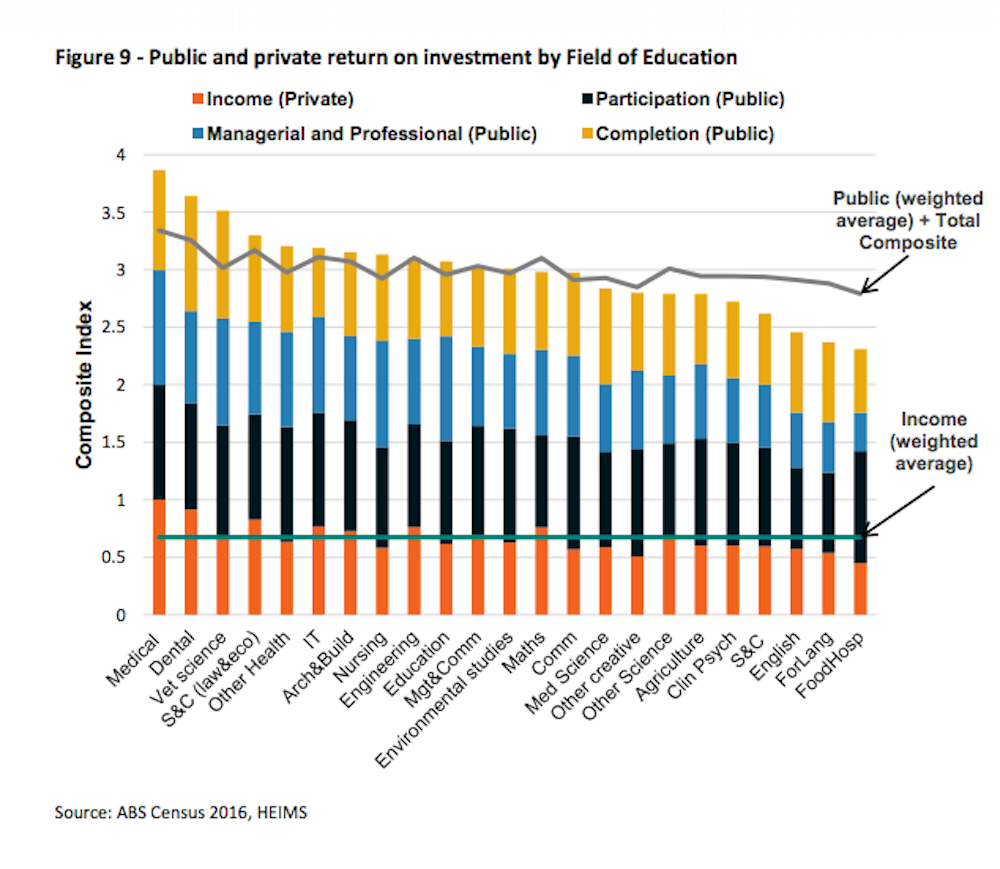
The government claimed higher personal incomes (“private returns”) from studying its preferred courses explained the different fees structure in its reforms. That’s how it justified raising fees for humanities, business and commerce courses while reducing fees for ICT, engineering and science.
But its own data actually showed there was no correlation between the two.
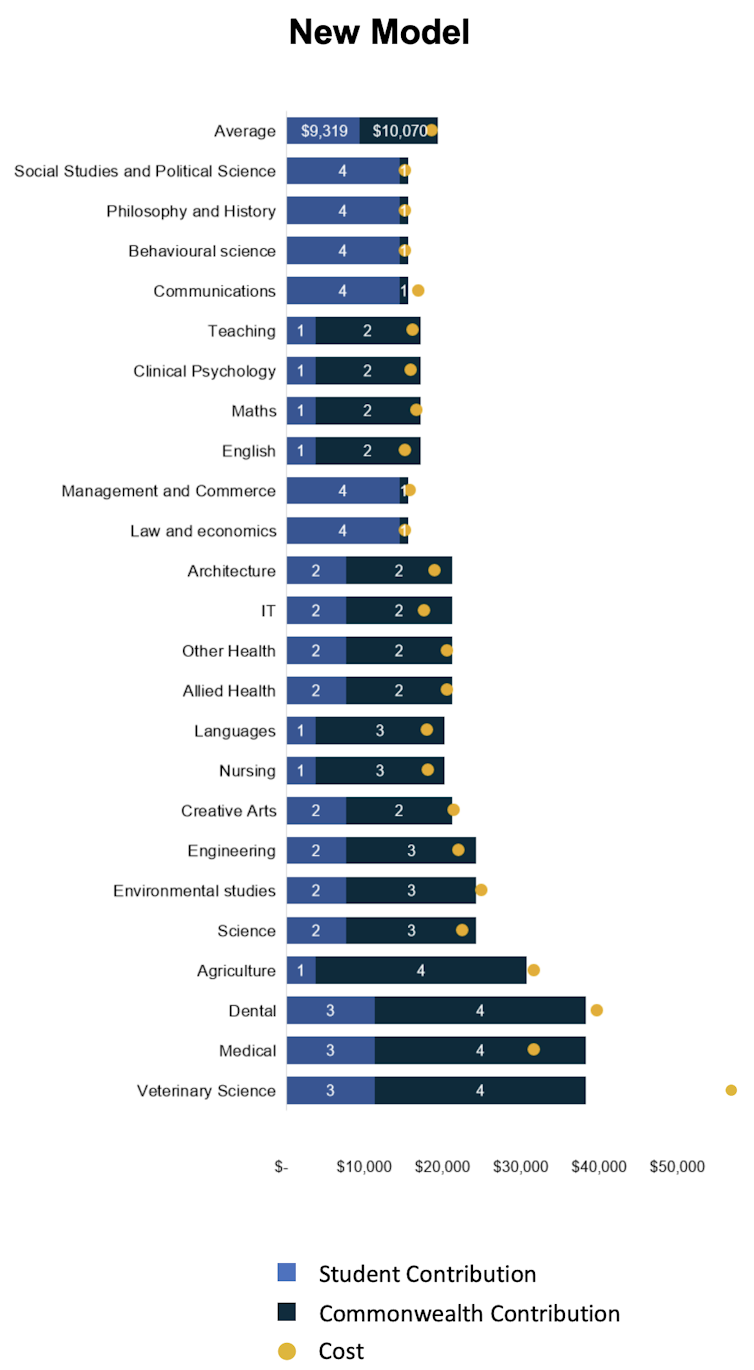
For example, by the logic of government policy, law and economics should have the fourth lowest student fees because their figures (see the chart above) show the expected private returns from law and economics courses are the fourth best. Yet the fees for law and economics under the proposed schema are equal worst (band 4, in the chart below).
The student fees for management and commerce, by their logic, should be right in the middle of the fee range as the returns are in the middle. Yet their fees are also equal highest.
And the government did not even use future-facing data to estimate private returns. It used census data from 2016 – on-average earnings in the census year. These did not account for the year a qualification was obtained.
That was a major gap, as returns tend to increase as time since graduation grows. These estimates made no use of the government’s own employment projections that suggested, for example, that employment for “industrial, mechanical and production engineers” would fall by 1.3%.
So it is hard to believe, even if the government thought it could predict the jobs of the future, that this is what motivated the changes to fees.
After all, in many areas where student fees are cut, government contributions are also cut — by more. The resources to universities to provide the content of the future will be reduced. For instance, science and engineering courses will see a 17% reduction per student per year.
A more plausible explanation for the changes to university fees is that the marketable skills argument is just a cover for another agenda.
Critical thinking is a key skill for the future, but one can’t help but think it is not something the government wants encouraged.
For a short time Australia has an unrivalled opportunity to set itself apart from donors to the Pacific including China, Japan and the European Union.
As Victoria’s current COVID-19 spike shows, it will take Australia some time to open its borders to the world and allow residents to travel wherever they like.
But there’s no reason why it shouldn’t open its borders to some parts of the world sooner than others, especially those in which it has a special interest and in which the spread of coronavirus is slowing.
Australia and New Zealand have been talking about setting up a trans-Tasman “travel bubble” for some time.
It would allow quarantine-free travel between two geographically-isolated island nations that face little risk of outside infection.
Fiji has already expressed interest in joining, extending the bubble.
Throughout the South Pacific, youth unemployment averages over 23%. Tourism accounts for as much as half of gross domestic product and up to one in four jobs.
A bubble that extended beyond tourism to trade, education, and guest workers could help the Pacific (and holidaying Australians) in a way that the generous loans available from powers such as China could not.
Much of the architecture for a trade and tourism bubble is already in place.
The agreement encompasses Australia, New Zealand and nine Pacific island countries: the Cook Islands, Kiribati, Nauru, Niue, Samoa, Solomon Islands, Tonga, Tuvalu and Vanuatu. It has been ratified by five of the members and will come into force when it is ratified by eight.
For the Pacific Islands, a “bubble” would provide a major boost to economic development and recovery from the crisis.
It could help relieve the social pressures that come from growing youth populations and attendant unemployment and minimise the danger of future political crises and associated need for Australian interventions and financial support.
The long-term importance of continued access to quality education, vocational and tertiary, for Pacific Islander youth is essential. Hard-pressed Australian Universities and vocational education suppliers would benefit too.
For Australia (and New Zealand) it could provide relief from isolation via travel to attractive destinations. Perhaps more importantly, it could help fill gaps in Australia’s skill set by supplying tradespeople and agricultural workers to meet genuine shortages.
It would also help maintain Australia’s business and investment interests in the Pacific. PACER Plus implementation would reinforce these gains. It will facilitate more investment and trade opportunities, in goods and services.
Unfortunately, Fiji and Papua New Guinea have not yet signed PACER Plus, for various reasons.
It is unfortunate because trade and investment flows are their best long-term route to advancement. There are strong economic complementarities between Australia and Pacific nations, especially for Papua New Guinea.
A bubble, implemented when the health situation allows, would be supported by many Pacific islands nations and most likely their regional coordinating body, the Pacific Island Forum Secretariat.
Together with PACER Plus implementation, it would benefit Australia and benefit the region in a way that aid and infrastructure support from big powers can not.
In light of Victoria’s COVID-19 resurgence, and with school holidays imminent, it might seem likely premier Daniel Andrews would tighten social mobility restrictions and his New South Wales counterpart, Gladys Berejiklian, would close the border with Victoria.
Politicians have varying degrees of competence. We voters only learn about that over time, based on their track record. We draw inferences about their competence from their actions. Because of that, politicians are reticent to ever admit they were wrong.
Judging competence
Imagine, for simplicity, there are just two types of politician: competent and incompetent. The reality is more complicated, of course, but all useful models simplify reality. To paraphrase the celebrated British economist Joan Robinson, a map on a scale of 1:1 is no use at all.
Let’s assume both types have a chance of knowing the best policy course, though competent types are more likely to get it right.
All else being equal – factoring out policy positions, for example – voters would like to elect competent politicians.
In lieu of better information (or even with it), they draw inferences about competency from politicians’ public actions.
Consider a politician who is competent. Faced with a degree of uncertainty about the right course, they take a specific policy stance. Think of Andrews going for a harder lockdown in Victoria than other Australian states. Or Berejiklian insisting Queensland closing its border with New South Wales was a bad idea.
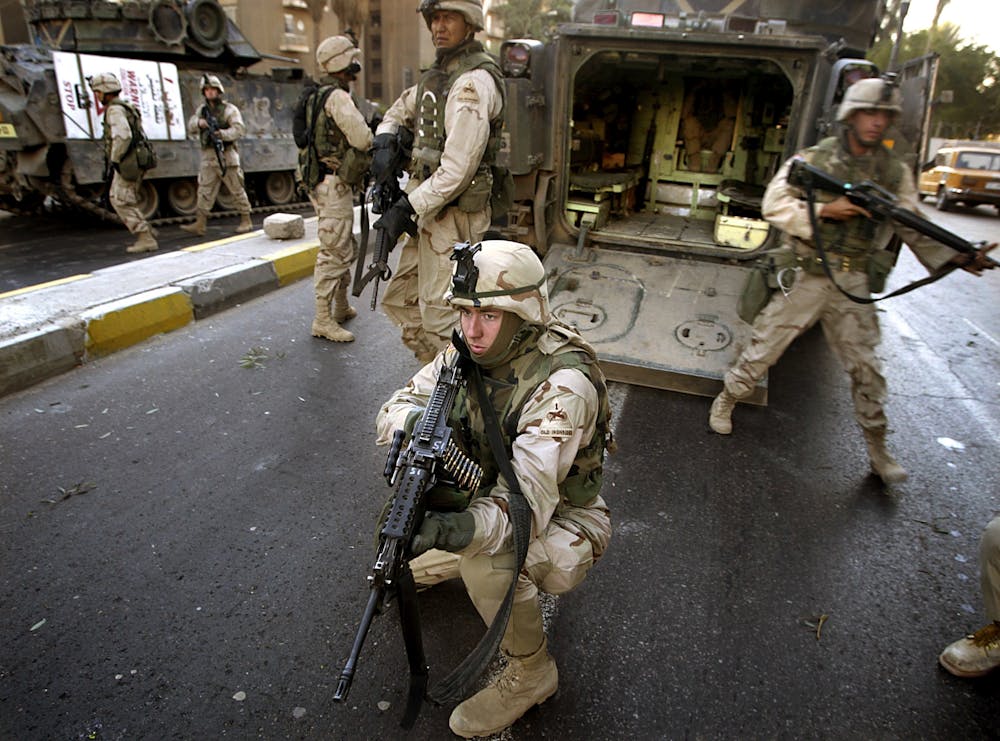
Or think of a stark example of incompetence, such as US president George W. Bush’s 2003 decision to invade Iraq and topple Saddam Hussein. Whatever one thinks of the decision – I consider it the then most significant US foreign policy mistake since Vietnam – the Bush administration believed it would bring democracy to the Middle East.
US soldiers in central Baghdad in November 21, 2003.Damir Sagolj/Reuters
My belief is we will, in fact, be greeted as liberators.
Then, as is wont to happen, new information arrives that casts doubt on the original decision. In the case of Iraq, it turned out Americans weren’t greeted as liberators, and toppling Saddam sparked a vicious and protracted civil war.
But did Bush reverse course?
He did not. A big part of the reason (along with neoconservative advisers like Cheney and Paul Wolfowitz being in his ear) was that to do so would be admitting he got it wrong.
Incentives to gamble
In the language of economics, this would have led voters to update their beliefs about the probability of Bush being competent.
This might sound blindingly obvious. But it is also a subtle point. Why wouldn’t voters, we might ask, reward a politician who says: “I messed up. I made the best decision with the information I had at the time. Now I have new information, and when I get new information I change my mind.”
But voters have limited information to figure out if a politician is competent. So while we know people do make mistakes, it’s also rational to consider a politician who admits to getting it wrong as less likely to be competent, because incompetent types are more likely to make mistakes.
Even when faced with new information, politicians thus have an incentive to “gamble” on the risky choice that vindicates their initial stance. By not changing course, they preserve their reputation with many voters as likely competent. In fact, “sticking to their guns” might even boost their appeal.
So it is that competent politicians may fail to admit their mistakes, even when they know they’ve messed up.
Doubling down
Back to the spike in COVID-19 infections in Victoria.
If Andrews reverses course and tightens social-distancing provisions, he will be implicitly admitting his government relaxed them too soon.
Similarly, if Berejiklian now says closing the border with Victoria is a good idea, voters will question her past stance on borders.
In both cases, the premiers may wish to gamble (to a degree) by doubling down on their positions.
The perverse but logically inescapable possibility is this. Andrews and Berejiklian might well have been right all along. It might now make sense for them to change course. But doing so could damage their re-election prospects.
Maybe politicians have an even tougher job than we give them credit for.
Washington Post publisher, Philip L. Graham, famously declared that journalism is the “first rough draft of history”. It’s also the first rough draft of inspiration for movies and books “based on a true story”.
Since four Victorian journalists witnessed Ned Kelly’s last stand on June 28 1880, their vivid accounts have influenced portrayals of the bushranger – from the world’s first feature film in 1906 to Peter Carey’s 2000 novel, True History of the Kelly Gang, adapted to a gender-bending punk film earlier this year.
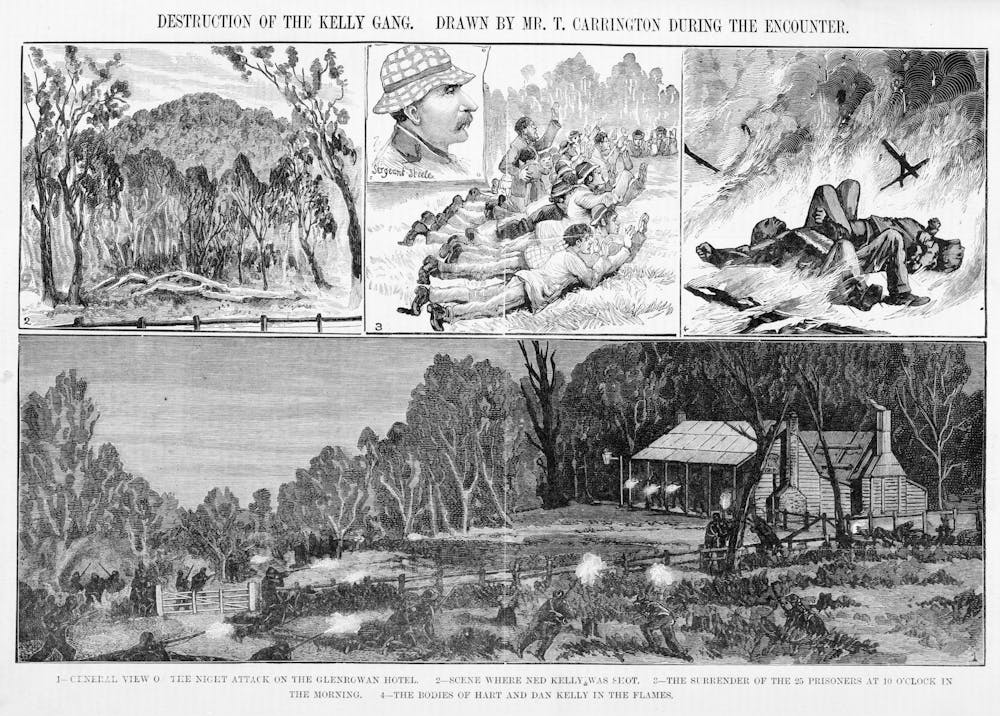
In the hours before the Glenrowan siege, the four newspaper men – Joseph Dalgarno Melvin of The Argus, George Vesey Allen of the Melbourne Daily Telegraph, John McWhirter of The Age and illustrator Francis Thomas Dean Carrington of The Australasian Sketcher with Pen and Pencil – received a last-minute telegram to join the Special Police Train from Melbourne to confront the Kelly Gang.
The rail journey would prove to be one hell of an assignment and inspiration for Kelly retellings over the next 140 years.
The journalists have a fleeting scene in the 1970 Ned Kelly film starring a pouty Mick Jagger. Two characters rush up to the train, holding huge pads of paper to signal their press credentials to the audience.
It’s a cinematic glimpse of the journalists whose historic descriptions continue to influence the Ned Kelly cultural industry that is the cornerstone of Australia’s bushranger genre.
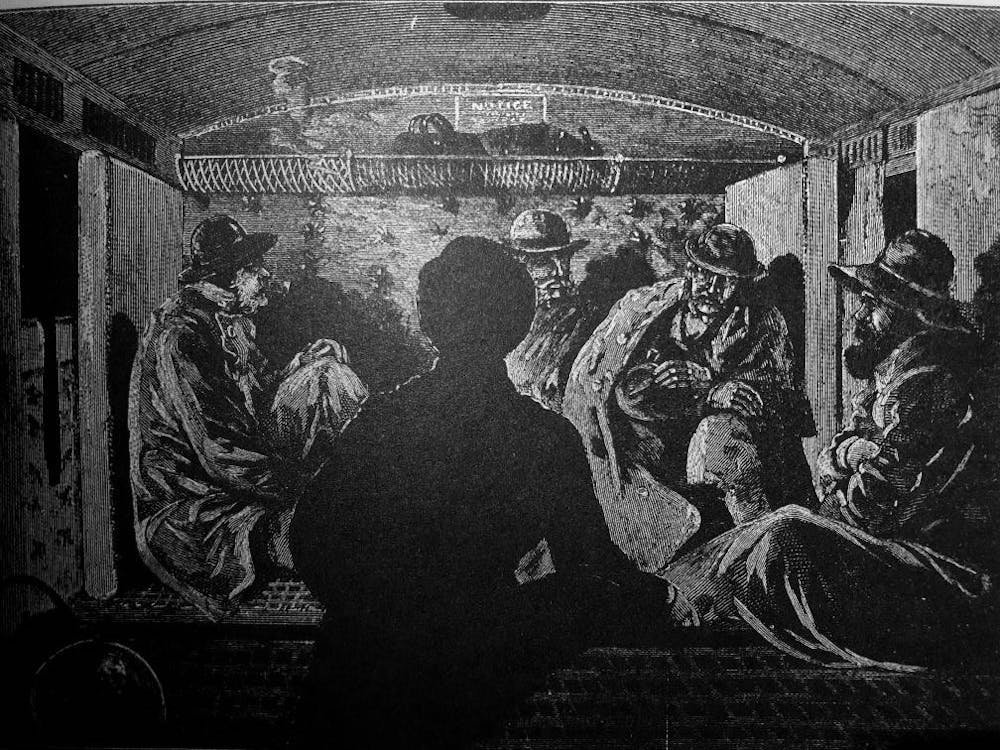
Four reporters (plus a volunteer) huddle in the train’s press carriage in an image drawn by Carrington.T. Carrington/SLV
The train left Melbourne late Sunday evening. Carrington, “embedded” along with the others, described the journey:
… the great speed we were going at caused the carriage to oscillate very violently … The night was intensely cold.
McWhirter’s take was somewhat more upbeat, suggesting a thrill in the cold evening air. He wrote the night was
a splendid one, the moon shining with unusual brightness whilst the sharp, frosty air caused the slightest noise in the forest beyond to be distinctly heard.
After 1am Monday, the train arrived at Benalla, where it picked up more troopers, horses and “Kelly hunter” Superintendent Francis Hare, played by Geoffrey Rush in Gregor Jordan’s 2003 adaptation of Robert Drewe’s novel, Our Sunshine.
Sometime later, the train was flagged down before Glenrowan by schoolteacher Thomas Curnow, alerting the travelling party to the dangerous Kelly gang ahead. In a follow-up article about the siege, Melvin reported the first details of the teacher’s bravery. This would become a pivotal scene in future Kelly recreations: “Kindling a light behind a red handkerchief, he improvised a danger signal”.
When the train arrived at Glenrowan station, the horses were released and bolted “pell-nell into a paddock”, wrote Carrington, as the Kellys opened fire.
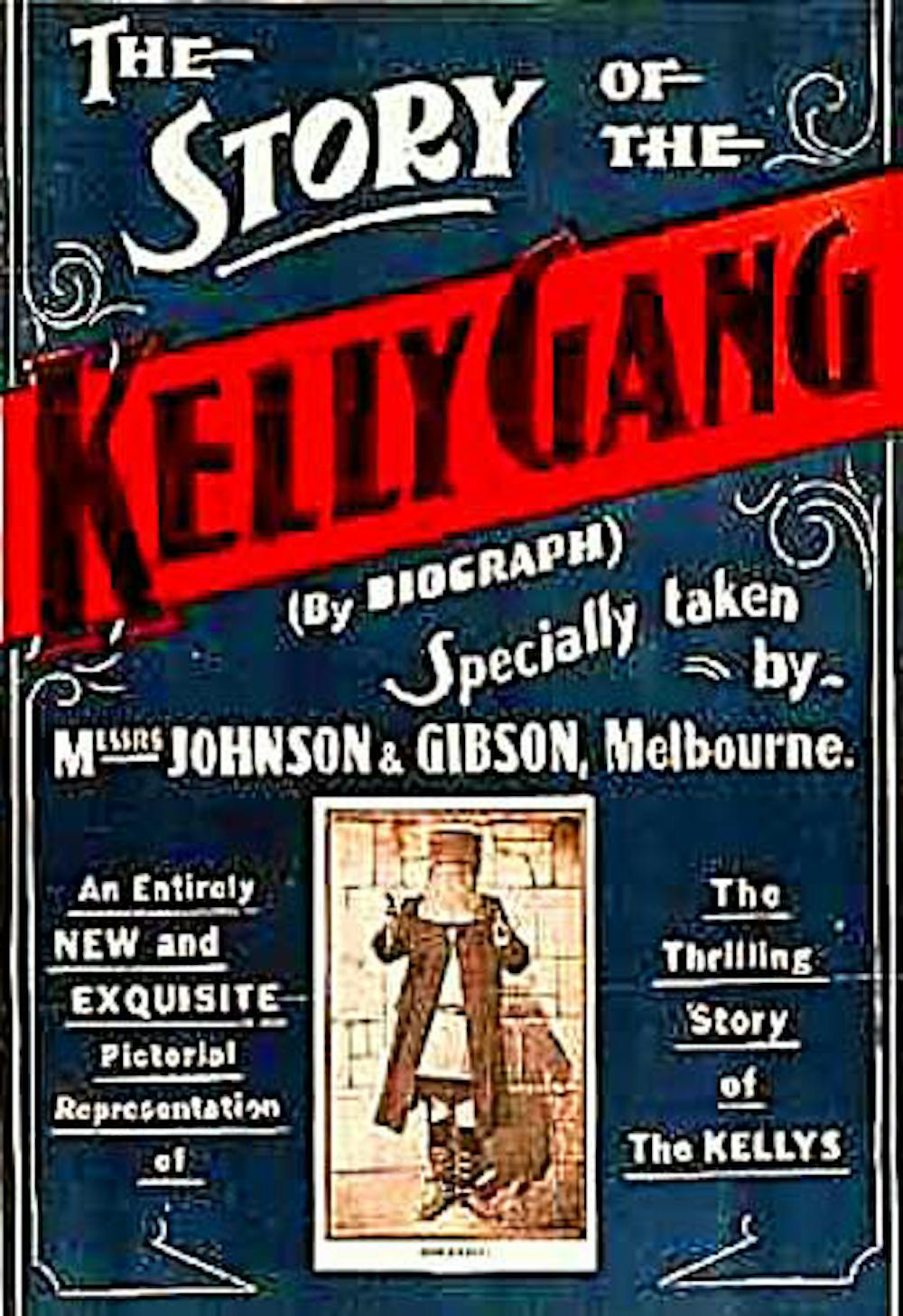
A 1906 Australian-made production is thought to be the world’s first feature-length narrative movie.
Part of the story
Unhindered by modern media ethics, the journalists became actively involved in the siege. Their involvement is a nod to “gonzo journalism” practices – made famous nearly a century later by writer Hunter S. Thompson – in which journalists join the action rather than neutrally report on it.
Kelly had a love-hate relationship with the press. He once wrote:
Had I robbed, plundered, ravished and murdered everything I met, my character could not be painted blacker than it is at present, but I thank God my conscience is as clear as the snow in Peru …
Early in the siege, the journalists sheltered from the gunfire at the station, until they saw Hare bleeding from the wrist. Carrington wrote:
We plugged each end of the wound with some cotton waste and bound it up with a silk pocket handkerchief … Mr Hare again essayed to start for the hotel. He had got about fifty yards when he turned back and reeled. We ran to him and supported him to a railway carriage, and there he fainted from loss of blood … Some of the bullets from the verandah came whistling and pinging about us.
As the siege continued into the early hours, the journalists recorded the wails of the Glenrowan Inn’s matron, Ann Jones, when her son was shot, as well as the eerie tapping of Kelly’s gun on his helmet, which Carrington wrote sounded like “the noise like the ring of a hammer on an anvil”.
Their interviews with released hostages revealed gang member Joe Byrne was shot as he reached for a bottle of whiskey that, like Curnow flagging down the train, has become another key Kelly siege scene.
In one frame, drawn during the siege by Carrington, 25 prisoners are released.State Library of Victoria
Man in the iron mask
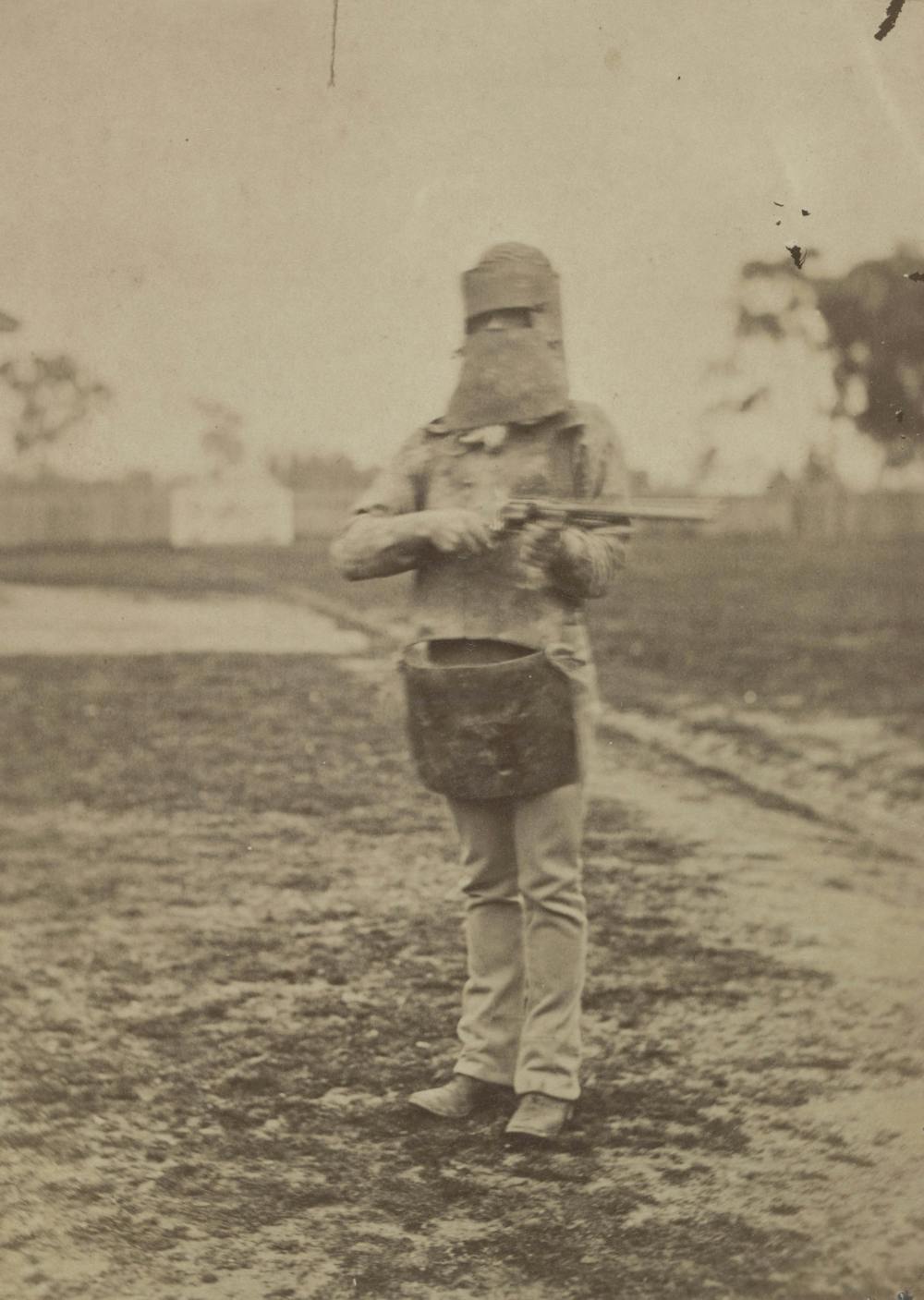
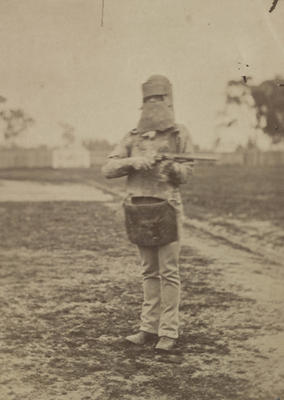
Of all the gripping details the journalists recorded, their first descriptions of the bushranger emerging in his armour in the morning mist were what proved most inspiring to subsequent Kelly creators.
Allen wrote the helmet was “made of ploughshares stolen from the farmers around Greta”, describing the cutting blade construction, and called him “the man in the iron mask”. Carrington wrote:
Presently we noticed a very tall figure in white stalking slowly along in the direction of the hotel. There was no head visible, and in the dim light of morning, with the steam rising from the ground, it looked, for all the world, like the ghost of Hamlet’s father with no head, only a very long, thick neck.
After Kelly was shot in the legs, the writer described his collapse and his dramatic unmasking:
The figure staggered and reeled like a drunken man, and in a few moments afterwards fell near the dead timber. The spell was then broken, and we all rushed forward to see who and what our ghostly antagonist was […] the iron mask was torn off, and there, in the broad light of day, were the features of the veritable bloodthirsty Ned Kelly himself.
Precious film footage restored by the Australian National Film and Sound Archive of the 1906 film The Story of the Kelly Gang, the world’s first feature film, shows Kelly shooting at police in his iconic armour, then collapsing by a dead trunk on the ground surrounded by police. The scene is just as Carrington and his colleagues described it in their reports.
Perhaps the most faithful rendering of Carrington’s Kelly description is Peter Carey’s fictional witness in the preface of True History of the Kelly Gang.
Carey’s witness echoes the description of Kelly as a “creature” and describes its “headless neck”.
After he was shot in the legs, the witness recounts Kelly “reeled and staggered like a drunken man” and falling near dead timber. The book’s preface and Melvin’s first Argus report both describe Kelly after he fell as “a wild beast brought to bay”.
Carey’s witness may be fictional, but his account is based on journalists’ accounts of witnessing Kelly’s capture. Carey credited many of his research sources to Kelly historian Ian Jones, who republished Carrington’s account titled Catching the Kellys – A Personal Narrative of One who Went in the Special Train along with illustrations in Ned Kelly: The Last Stand, Written and Illustrated by an Eyewitness.
The journalists helped the police strip Kelly of his armour and carry him back to the station, cut off his boots and kept him warm, all the while interviewing him as the siege continued with the remaining bushrangers inside the inn.
McWhirter remarked the bushranger was “composed”.
“I had several conversations with him, and he told me he was sick of his life, as he was hunted like a dog, and could get no rest,” Carrington wrote. He described Kelly’s clothes underneath the armour – a crimean (meaning a coloured, no button flannel) shirt with large black spots.
The journalists then turned their attention to the burning of the inn, featured in the background of Sidney Nolan’s 1946 painting, Glenrowan which depicts a fallen Kelly towering in his armour over policemen and Aboriginal trackers.
Kelly was hanged in Melbourne in November 1880, a few months after the journalists’ train ride and the siege.
The journalists continued their careers, with Melvin becoming the most prominent of the four in participatory journalism. After a stint as a war correspondent, he joined the Helena ship as an crew member to investigate, undercover, the “blackbirding” trade that indentured South Pacific Islanders to the Australian cane fields.
In the 1906 review of the first feature film – The Story of the Kelly Gang and exhibition, The Age critic wrote, “if there were any imperfections in detail probably few in the hall had memories long enough to detect them”.
Yet, the 1906 film was criticised by the Argus for not being faithful to the original descriptions of his “bushman dandy” dress as described by Carrington and his colleagues on the day.
The art may be in the interpreting eye, but the scenes are from that first rough draft of history.
Excess buying of toilet paper has become a leading indicator of public alarm about COVID-19. This week in Victoria, people were heading for the shelves again.
Just when Australians’ march out of our dark months was accelerating, Victorian numbers of new cases started ticking up. The state government reimposed some restrictions and declared dangerous hotspots.
Daniel Andrews asked the military to help on both the logistical and medical fronts. Other states were ready to assist. More negatively, the Berejiklian government, which has been insisting Queensland should lift its border restrictions, suddenly wasn’t too keen on traffic across the open NSW-Victorian border.
“Please reassess where you’re going in the next few weeks,” Gladys Berejiklian said on Thursday. “If you have a planned trip to Melbourne, please don’t go. Please do not welcome your friends, who may be intending to visit from Victoria, in the next few weeks, into your home.”
Australia remains balkanised.
Scott Morrison’s frustration is obvious. After reluctantly but wisely initially accepting more of a shutdown than he wanted, Morrison has his eye firmly on the exit sign. With the government announcing $250 million for the creative arts sector, he is asking national cabinet to give the entertainment industry a timetable for reopening.
Even chief medical officer Brendan Murphy, a fixture at prime ministerial news conferences for months, is vacating his role for a much-delayed start on Monday in his new job as secretary of the federal health department.
When the reopening of the economy began some weeks ago, Morrison and Murphy warned there would be fresh COVID outbreaks that would have to be managed. Now they’ve arrived, and how effectively they can be contained is yet to be seen.
Victoria’s daily tallies of new cases this week were: Monday 16; Tuesday 17; Wednesday 20; Thursday 33. Numbers are expected to rise with wider testing. The question for coming weeks is, when do selective outbreaks turn into a new “wave”?
Unless the health situation deteriorates dramatically, Morrison is determined not to take a step backward.
He sees Australia having the chance to emerge more strongly and rapidly from the crisis than most countries, a prospect reinforced by the latest figures from the International Monetary Fund. It revised its forecast for the Australian economy’s contraction in 2020 from 6.7% to 4.5%. But the broader picture became grimmer: the world recession is likely to be deeper and more prolonged than earlier thought.
Morrison believes in Australia we have reached the point where, with an adequately-reinforced health system and arrangements for dealing with limited outbreaks, we need to accept “that we live alongside the virus”. Speaking at the launch of the arts aid, he said with some force, “We can’t go, stop, go, stop, go. We can’t flick the light on and off, and on and off, and on and off, and on and off. ”.
But ultimately, it is the states that have the whip hands and in general the premiers, and not just Andrews, are a lot more risk-averse than the prime minister.
Andrews announced he was dispatching 1000 door-knockers to canvass a slew of suburbs, telling people to get tested at vans and ambulances stationed at the end of streets. “We again find ourselves on a knife’s edge,” he said on Thursday. “What we do now will determine what comes next.”
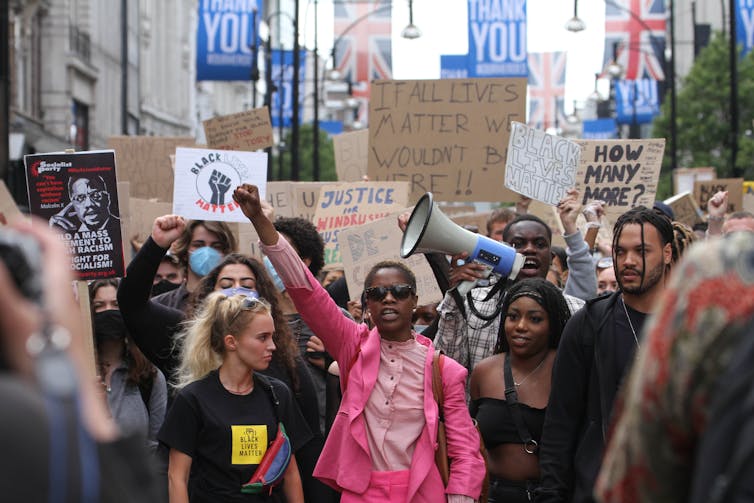
The Victorian outbreaks have stirred a blame game. Critics claim Victoria fell down on testing, didn’t spread the health messages effectively to ethnic communities, and failed to act strongly enough against the black lives protest.
Although only several protesters have tested positive and there’s no evidence the demonstrators in Victoria and other states spread the virus, the condemnation has become that they set a bad example, resulting in other people flouting restrictions and social distancing.
Morrison, who’s been outspoken about various states maintaining closed borders and censorious about the protests, is in general keeping himself in check. This is both to ensure his national cabinet works as smoothly as possible despite internal differences, and because he knows the public wants co-operation at this time, not political sniping.
In just-conducted University of Canberra focus group research ahead of the July 4 Eden-Monaro byelection, participants were in furious agreement with the proposition that in a post-virus world politicians needed to be more collaborative and less adversarial.
Most participants felt Morrison had gone through a learning process and this was reflected in the creation of the national cabinet. But there were some fears the old, more negative politics would return.
Labor’s research in this seat it holds on a margin of less than 1% would no doubt be hearing the same messages, which fit with leader Anthony Albanese’s point, expressed when he became leader, that the public has conflict fatigue.
With an eye to Eden-Monaro, Albanese this week proposed his lets-get-together-and-talk initiative – that he and Morrison should negotiate a bipartisan “framework” for energy policy.
Albanese stressed he wasn’t seeking the impossible – bipartisan agreement on the detail. Rather, this was a quest for broad brush strokes to give investors the certainty they crave.
The Albanese move could be read several ways.
Some regarded it as a policy pivot by Labor, especially as its reference to support for carbon capture and storage meant – though it was not spelled out in the letter he wrote to Morrison – there was provision for the coal and gas industries.
And here was Albanese trying to juggle Labor’s internal strains over climate policy, given the pressure from some in the caucus, notably resources spokesman Joel Fitzgibbon, to have the opposition’s 2019 position softened.
But primarily, Albanese was trying to put Morrison on the spot, given climate is an important issue in Eden-Monaro and voters are demanding a co-operative approach to politics.
In his letter, Albanese made no significant policy concessions. This was about a public political vibe.
For the opposition leader, there seemed little to lose. The push for bipartisanship echoes what business groups as well as the public desire.
Assuming it goes nowhere with Morrison, the proposal provides Labor with a serviceable line to run out in the last days of the byelection.
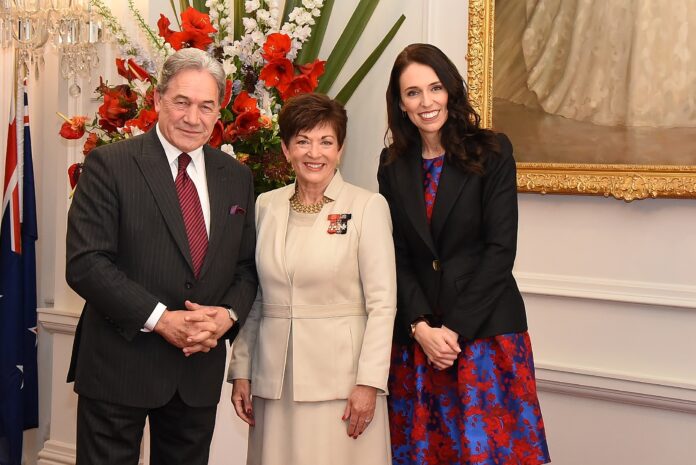
2017: Governor General Dame Patsy Reddy with Prime Minister Jacinda Ardern and Deputy PM Rt Hon Winston Peters before being sworn in (October 2017).
Editorial by Selwyn Manning.
Selwyn Manning, editor of EveningReport.nz.
With the New Zealand General Election campaign looming, parties in the Labour-led coalition government are openly parading their differences (rather than common-ground) before the voting public.
It’s a situation that can be interpreted as being typical of MMP politics. But it also causes voters to rethink its record-level support for its most favoured party Labour, and, Prime Minister Jacinda Ardern.
This week’s June 25 Colmar Brunton poll reveals what we suspected: New Zealand First has collapsed, down a further 1.1% to 1.8%, while Labour holds impressively above 50% support. National has rebounded from a bruising 29% in the May Colmar Brunton to 38% support. The Green Party is up 1.3% to 6%. ACT is up 0.9 to 3.1%, and, of the parties outside of Parliament, the Maori Party is on 0.9%.
It is clear, that battle for the political centre-ground shows New Zealand First has been squeezed out by National – this under the new leadership of social-conservative and traditional stakeholders’ choice, Todd Muller.
It also explains why New Zealand First leader Winston Peters this week began tactically to signal that his political mongrel is back. Peters’ has unleashed a determination to create distance between his party and those of his coalition partners Labour and the Greens.
Peters exits the week openly antagonistic toward articles of the coalition Government’s legislative agenda – a move that’s caused Labour to file plans for its 2017 election promise (to build light rail in Auckland) and to further negotiate with New Zealand First points of its ‘fair commercial rent reductions and compulsory arbitration plan’. The latter is an important cog in the Government’s post-Covid stability plan. The former is simply a kick in the guts from New Zealand First – a party that Labour has often resisted irritating through this three year term.
But considering Muller’s and National’s rising fortunes (and it must be said, the collapse of New Zealand First) is it time for Labour to abandon Peters to the proverbial wolves? Is there political currency in calling a spade a spade – to admit to voters that New Zealand First is destabilising the coalition Government and that disloyalty must be dealt with before a largely supportive public gets fed up and votes accordingly on Polling Day?
IT’S ALL ABOUT THE STRATEGY
Normally, early in an election year, we would expect smaller parties in the Labour-Greens-New Zealand First coalition to begin speaking loudly to their base. But the Covid-19 lockdown poured water over that.
Now there’s desperation among the Greens and New Zealand First MPs. They will be well aware that political history involving MMP shows small parties in government often lose their political voice and, on election day, are bypassed by the voting public.
New Zealand First, in particular, is demanding to be heard. I spoke about this on Radio New Zealand today.
When you stand back and observe the coalition, its dynamic, its purpose, its stability (up until now…) it is clear, Peters’ actions are strategic while destabilising.
Winston Peters insists his party is principled with commonsense as the central premise. But the reality is, Peters is sending a signal to centre-voters (and conservatives who believe Labour is going to win the 2020 General Election) that he and New Zealand First will be their insurance policy. That he, post-election, will stop any non-centrist/conservative policies from getting off the ground.
His tactics soak up attention-time when explaining his party’s behaviour. His stance demands to be heard, to be relevant through the election campaign – despite the 2% poll showing. The goal is for Peters to re-emerge this September as a King or Queen maker in post-election negotiations.
But at this juncture, should Labour tolerate this destabilisation? Should it permit Peters to play his strategy out? Or, should Labour create outcasts of Peters and his MPs?
That strategy, as does Peters’, comes with risk. Labour could be seen to fail its post-Covid recovery plan and elongate the insecurities that election campaigns create.
New Zealand First risks being regarded as a destructive element in an otherwise popular Government – where some see Labour as having been kept back by New Zealand First and desiring of a government post-election where Jacinda Ardern can be a true natural-born leader without being shackled by coalition sensitivities.
The Greens, if they play their hand well, may counter New Zealand First by demonstrating its loyalty to Ardern’s style of leadership and campaign as a necessary and true friend of Labour’s.
When the cards fall, New Zealand First risks standing alone as a political irrelevance – but it’s a risk that Peters is prepared to take. Some will say, at 1.8% he has nothing to lose.
THE CAUSE AND EFFECT
The Green Party and New Zealand First came out of lockdown to realise Labour had become a political juggernaut.
Their respective voices were drowned out by the Labour machine. As we emerged from Alert Level 4:
Labour, was well on the way toward eliminating Covid-19 from our communities
Labour had delivered HUGE financial support to people and business
Labour had initiated fiscal stimulus programmes (many favourable to NZF)
Jacinda Ardern became the most popular Prime Minister in a generation.
BUT… as National slowly got its act together, after a series of well-documented stumbles, National’s new leadership team put its running shoes on and, suddenly, competition for New Zealand’s centre-votes intensified.
From June 17, National created in some measure the perfect storm (please see last week’s EveningReport editorial: Snakes and Mirrors which lays bare how National placed politics ahead of the public’s health).
Since then, it has continued to create a sense of chaos, insisting its old foe, the Labour-led Government had bungled its Covid-19 controls at the border and at isolation and quarantine facilities. In effect, National successfully politicised the handling of the pandemic – a certain danger that overseas experience shows is at odds with the public interest when fighting against Covid-19.
But among the political noise, National did expose a relaxed culture among those officials, the gatekeepers, charged with ensuring our Covid-19 testing regime was robust. Politics aside, it was clear, the country and the Government had been let down. But National was able to juxtaposition Labour as the cause of the fiasco.
Despite the Prime Minister Jacinda Ardern immediately transferring management of isolation and quarantine facilities to the military – a move that was swift, decisive, and characteristically Ardern – the perfect political storm created uncertainty and fear among the population.
Remember, politics is a commodity and day after day for over a week, the public has heard calls from National that the Minister of Health David Clark should resign. Many media, scenting controversy and political blood, polished up their competitive-bias to seize the moment too. After all, political relevancy isn’t the only show in town.
That is the backdrop to New Zealand First’s advance.
HAS LABOUR HAD ENOUGH?
Labour, for its part, has decided enough’s enough.
This week, Labour revealed New Zealand First was opposing legislation destined to advance before The Parliament AFTER it had supported it through Cabinet. With New Zealand First acting contrary to its interests, Labour’s leadership has decided a passive-aggressive bare knuckle fight is necessary.
As the party with its political hand firmly on the Government’s tiller, Labour is now openly identifying legislation that can be filed until after the election while pushing legislation that SHOULD be addressed with urgency.
If Labour does believe New Zealand First has gone beyond the Rubicon, and it appears it is moving toward that position, then it will be in Labour’s and the nation’s interests to paint Winston Peters and his party as disruptive and disloyal to a handshake made in good faith.
If it does, it will likely be New Zealand First, not Labour, that will be further punished at the polls. And frankly, in the public’s interest, the General Election can’t come soon enough.
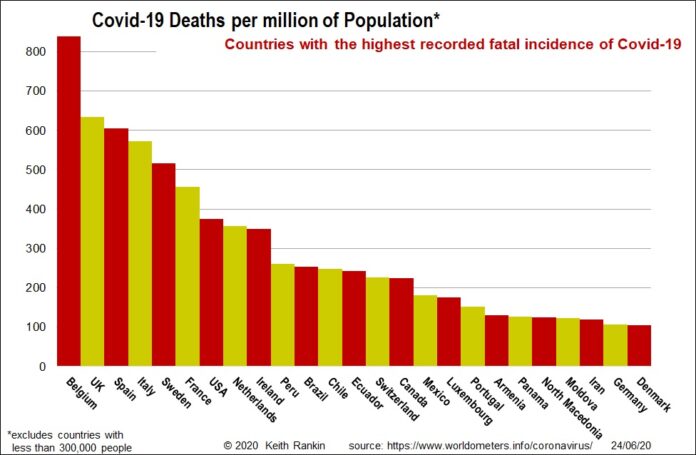
Chart 2: Belgium has easily the worst Covid19 mortality. Chart by Keith Rankin.
Analysis by Keith Rankin.
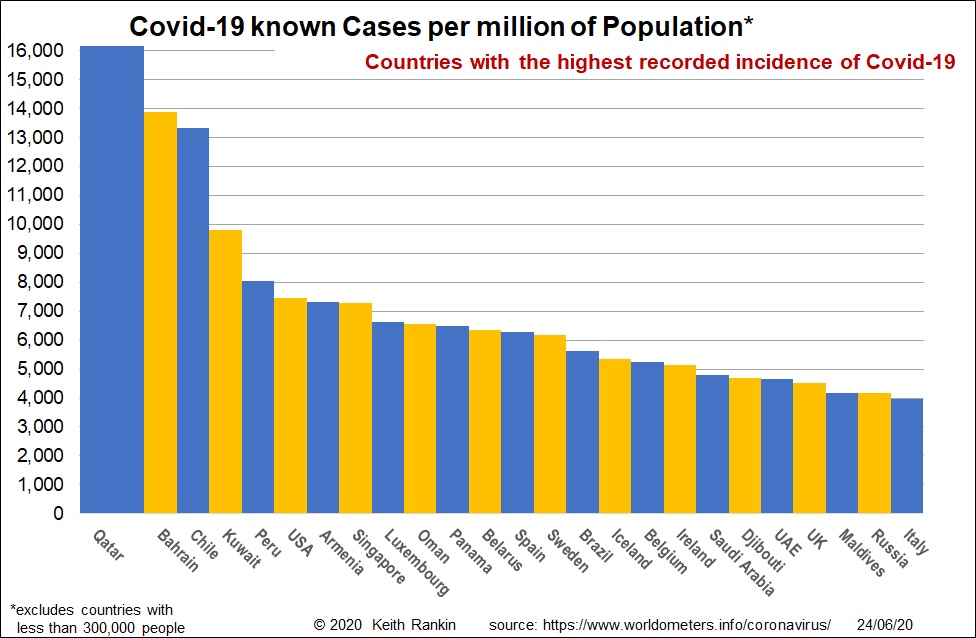
Chart 1: Qatar has the highest recorded incidence of Covid-19. Chart by Keith Rankin.
We get a very biased picture of which countries have had the most experience of Covid19. It’s because the mainstream media almost never adjust their figures for population. So, in June, we keep hearing about United States and Brazil, but that’s mainly because they are very populous countries. It’s also because they have controversial political leaders.
For known incidence, the Gulf states (Arabian Gulf) are worst, especially Qatar, which is now the world’s number one hub for intercontinental air travel. The Gulf states have high testing rates, and large young populations of migrant workers. So they have low death rates, and apparently high rates of asymptomatic and pre-symptomatic transmission. Singapore is similar. UAE, which has the most testing in the region, has the lowest incidence among the Gulf states shown here.
In Latin America – the present hot continent for Covid19 – Chile, Peru and Panama have more known cases than Brazil.
In Europe, Luxembourg, Belgium, Spain, Sweden and Iceland rate highest. Netherlands should be in this list; the main difference between Belgium and Netherlands is the greater level of testing in Belgium.) Iceland, which had many early cases, has eliminated Covid19 in the same sense that New Zealand has. It’s death rate (0.5%) is authentic, and may probably prove to be the eventual death rate for the world. (Based on a likely world infection rate of 10%, this would mean an eventual global covid death toll of four million.
We must note that all these charts omit countries with less than 300,000 people. Many such countries have been very badly affected by Covid19.
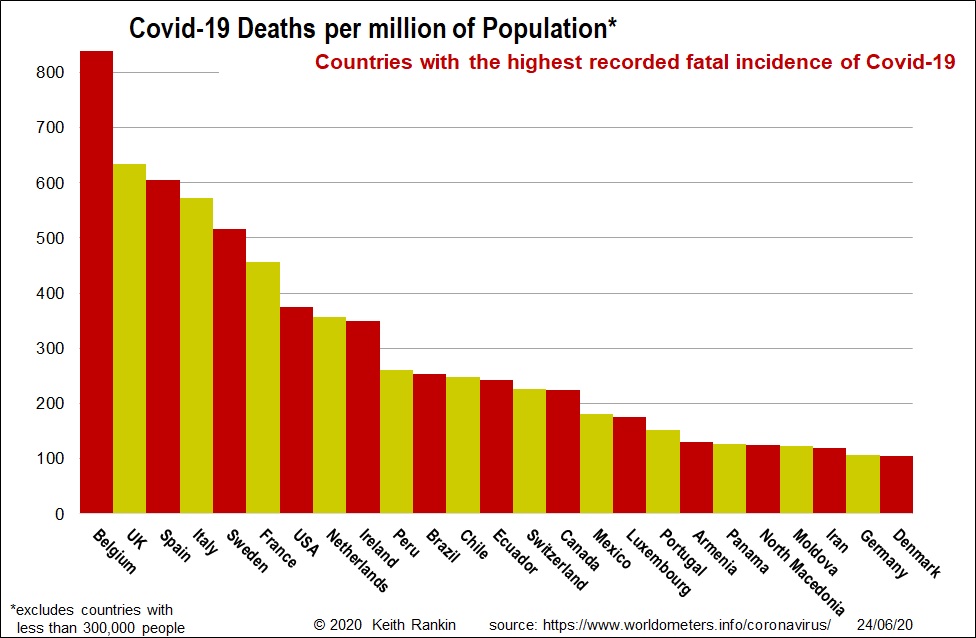
Chart 2: Belgium has easily the worst Covid19 mortality. Chart by Keith Rankin.
Belgium still has the most deaths, adjusted for population. Belgium’s political leader – Sophie Wilmès – can count herself lucky that Belgium is a small country, and that mistakes made there did not see her face plastered all over the world’s media. To Belgium’s credit, recent infections and deaths are much lower than, for example, Sweden. (Even Sweden’s politicians – as irresponsible as those in the United States – are not lambasted in the global media, despite their failure to look after their own people.)
Europe continue to dominate the mortality data, for various reasons. Europe is the continent from which the pandemic spread. And Europe has many elderly people. After Europe, the Americas are prominent. There is also a hint of Eastern Europe, with Iran having a high number of deaths in large part due to its early outbreak (February).
Because these are cumulative data (Charts 1 and 2), they will accentuate the earliest countries in the pandemic.
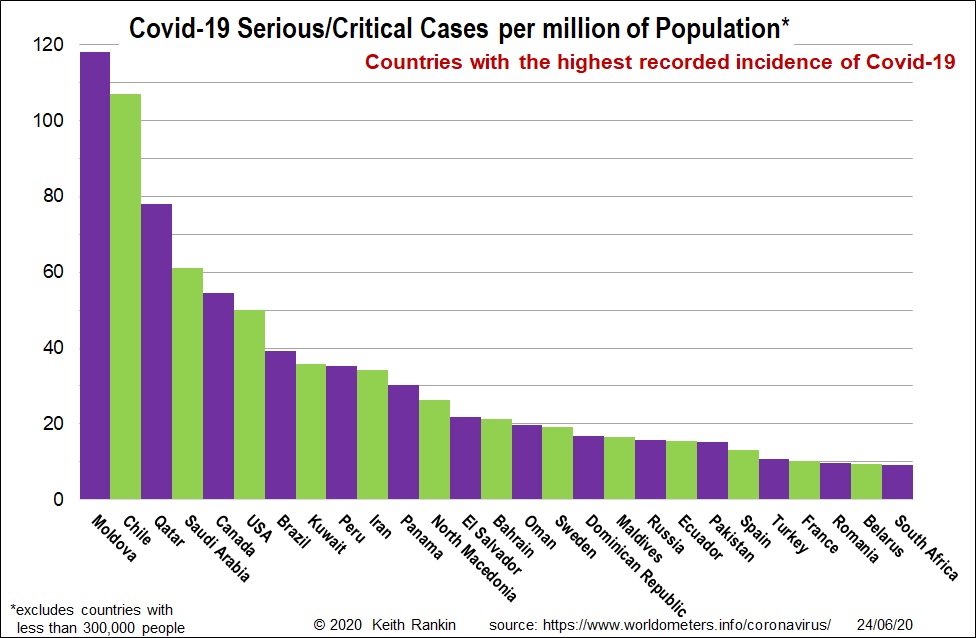
Chart 3: Moldova and Chile. Chart by Keith Rankin.
Serious and critical cases are an important guide to recent covid calamity. Moldova has led the way in Eastern Europe; presumably its low testing rate is a large part of its problem.
Chile is of particular concern in South America; it is a country with strong ties to New Zealand. Chile initially imposed some quite strong restrictions, but presumably not at its main border – Santiago Airport. Chile’s outbreak is predominantly in Santiago. It is astonishing in its scale, and in the lack of awareness in the rest of the world, which only sees Brazil. Peru’s situation seems similar to that of Chile, with a very large outbreak that has affected Lima at an order of magnitude higher than the rest of the country; though that may be in part due to more testing and better record-keeping in the capital city.
Canada remains a country of considerable concern. And note Pakistan, a country in Asia with a higher population than Brazil.
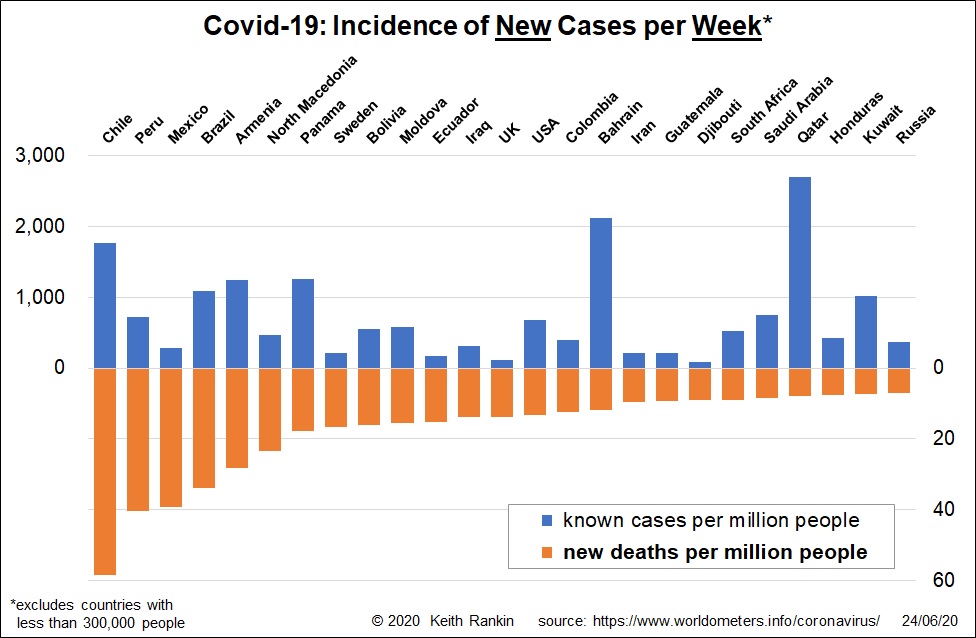
Chart 4: Chile and Peru, but watch Mexico. Chart by Keith Rankin.
This chart shows the countries with the highest Covid19 death rates over the last week. I feel for Chile, Peru and Mexico, all countries I have fond memories of. The smaller central American countries are also starting to show up as having rising Covid19 mortality rates.
We also see the emergence of some Eastern European countries, though not the ones with the larger populations. The recent tennis debacle in Serbia suggests that Eastern Europe and the Caucasus will still become Covid19 hotspots.
In this chart, the only regions of the world conspicuous by their absence are East Asia and Oceania. For whatever cultural reason, these are the two regions which have been most committed to the elimination of the SARS-Cov2 virus which causes Covid19.
Africa only shows through Djibouti and South Africa. But it is likely to have much more infection than is known, and should continue to have low death rates due to its young population.
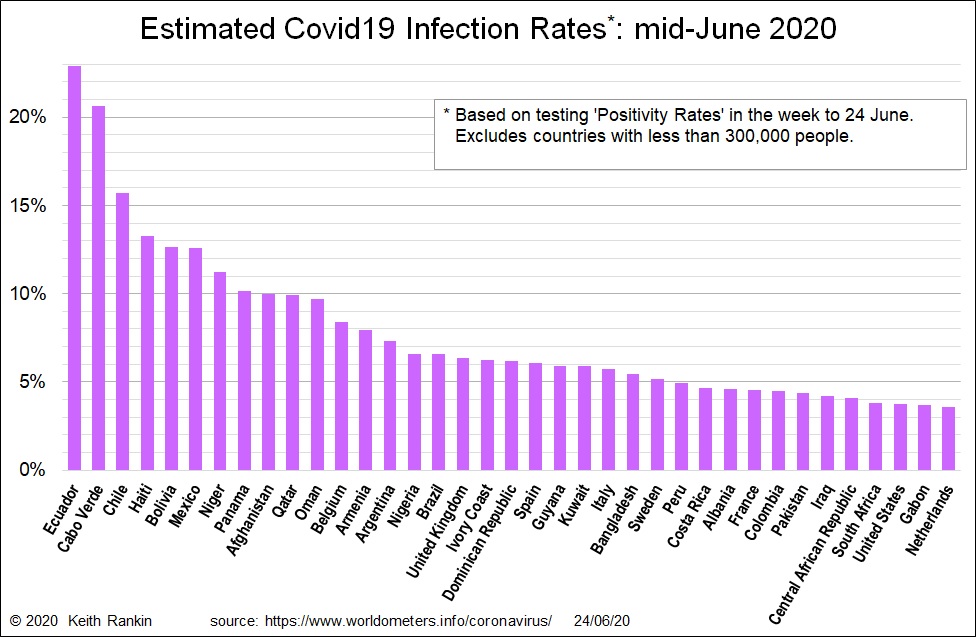
Chart 5: While South America dominates these estimates, some African countries appear. Chart by Keith Rankin.
This chart is a revision of last week’s chart. It is a revision in that it uses data subsequent to that used last time. And, for countries with high known death rates, I have now divided the mortality rates by 1% (same as multiplying by 100) to estimate their true infection rates.
Once again, all regions show except East Asia and Oceania. This is the chart that shows the extent of the problem in Africa better than other charts; it makes use of high positivity rates in countries with lower testing rates.
I will note two countries here. I expect the estimates for Argentina to fall, as more testing should produce lower positivity rates in a country that has been quite strict in its lockdown regime. And I note that the Netherlands’ data almost certainly is too low, with many people who were infected never having been tested. This problem applies to other European countries too: eg Sweden, United Kingdom, France. In these countries present positivity rates are low.
One final note. While the country of Ecuador, and the cities of Santiago and Doha may in 2021 be in a position to attain ‘herd immunity’ (though that depends on the extent that exposure does indeed confer immunity), most countries and cities will fall short of achieving such immunity in the absence of a vaccine. Simply put, for most countries the price of attaining herd immunity will be an unacceptably high number of deaths.
Miss Universe NZ 2019 beauty queen Diamond Langi is being trolled by thousands of Indonesians on social media for speaking up about discrimination against West Papuans.
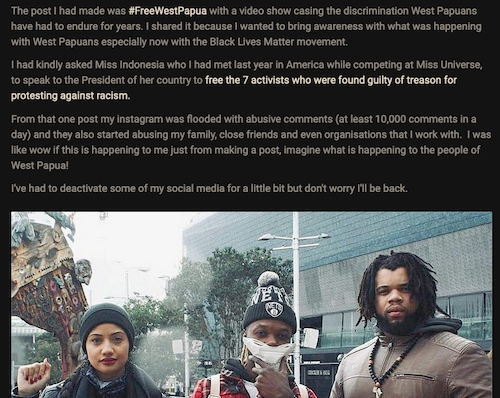
“The post I had made was #FreeWestPapua with a video showcasing the discrimination West Papuans have had to endure for years,” she declared on Coconet TV’s Facebook and Instagram pages two days ago.
She says that from that one post she has been hounded by Indonesian trolls who still exist on her Facebook page.
While there was support for her stance, some of the abuse from some Indonesians bordered on plain hatred, whereas others claimed the Melanesian region of West Papua belonged to Indonesia [it was annexed by Jakarta in in 1969 in a disputed colonisation process that has resulted in armed struggle and peaceful resistance ever since – Pacific Media Watch].
‘My Instagram was flooded’ “From that one post, my Instagram was flooded with abusive comments (at least 10,000 comments in a day) and they also started abusing my family, close friends, and even organisations that I work with,” she says on her Coconet TV webpage.
Some of Diamond Langi’s #FreeWestPapua solidarity comments. FB screenshot/PMC
“I was like, wow if this is happening to me just from making a post, imagine what is happening to the people of West Papua!
“I’ve had to deactivate some of my social media for a little bit but don’t worry I’ll be back,” she says.
But she also had support for her stance.
“Very concerning that our beautiful Pacific sister, Diamond Langi’s public Facebook page is under attack by a few propaganda-fuelled keyboard warriors from Indonesia, because she’s chosen to use her emerging platform and political freedom to stand in solidarity with our indigenous whanau in West Papua,” @Oceania Interrupted said on Facebook.
“Black Lives Matter all over the world, even in the Pacific – and bullying someone for standing in solidarity with indigenous people in our Pacific context, who continue to be brutally oppressed, exploited, silenced and killed in their own land is sickening!
“If you haven’t already, please go on her page, show some love for what she is standing in solidarity for; And if you know a thing or two about THE REAL WEST PAPUA [sic] situation, please school the ignorant bullies on her page and in our world,” the cultural activist group says.
Earlier this year, Langi acted in a Polish-American feature film titled, Sosefina. The film is written by Manu Tanielu and Namualii Tofa and directed by Hinano Tanielu.
The theme of Sosefina has been to tell the story of a marginalised and overlooked Polynesian community. The movie was released in the United States on 31 January 2020.
Research has found people who have clarity around what provides meaning in their lives tend to be happier, healthier, more satisfied with life and resilient in the face of adversity.
Given the dramatic growth in mental health issues, particularly in young people, researchers have recently tried to more deeply understand what gives young people’s lives meaning.
We conducted a research project with 174 students in year seven, where they used photographs to show what was important to them. We found relationships – with friends, family and pets – were what they most believed gave meaning to their life.
Using the mind’s eye
A 2013 study in the US explored the meaning of life for college students using what the researchers called “the mind’s eye” technique.
Researchers asked college students to take photos of things that made their lives meaningful and write a short narrative to describe them. The photographs became a record of meaning-in-life sources. The most common photos were of relationships, hobbies and activities, and nature.
The research method also provided a personalised view on why students chose these images.
We used the same approach in an Australian secondary school to determine what gave 174 year seven students meaning in life – at school and outside of it.
The students took two photos each – of what provides meaning in life at school and out of school – and wrote why they had chosen these images.
Meaning in life, at school
Friends were overwhelmingly what gave children meaning at school.Author provided
Students took a variety of images. But overwhelmingly they identified friends as the main source of meaning in life at school, followed by their own learning.
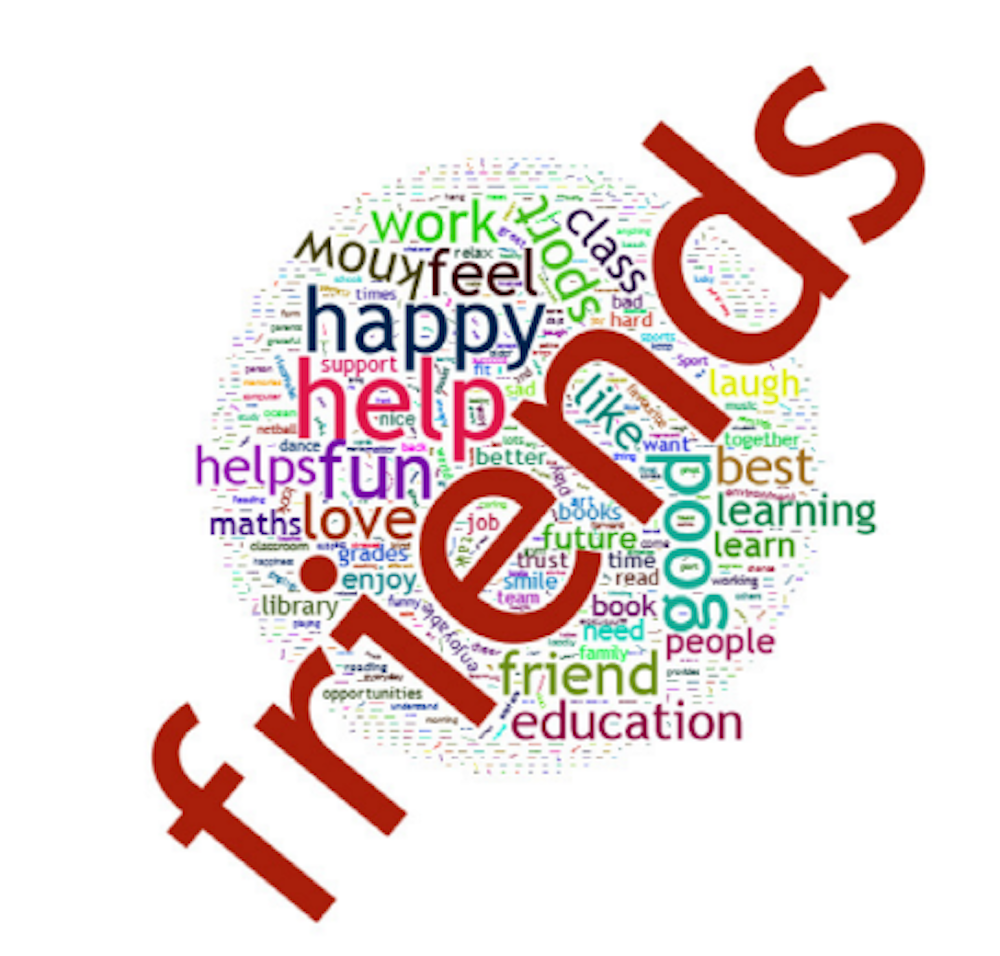
This word cloud highlights the most commonly used words in the students’ narratives, and shows how important friends are in young peoples’ school lives.
Photo by a student who said friends gave her life meaning.Author provided
Students suggested their friends not only provided meaning because they were fun to be with and shared common interests, but because they provided support as they tackled the challenges of high school.
Of the 151 images devoted to friendships, 31 of the accompanying narratives used the term “they’re always there for me”, suggesting these friendships were built on commitment and emotional support.
One student said friends
give my life meaning because if I didn’t have them I wouldn’t be the person I am now. Friends are people you learn from, they’re like fun teachers. They teach us what to do and what not to do.
Another student described her friends as inspirational
[…] they give my life meaning because they are always there to help me and inspire me to do great things. They are positive people who don’t bring me down – they make me feel better about myself.
Meaning in life, outside school
Students continued the theme of relationships when talking about the sources of meaning in their lives outside school. Their three main sources of meaning were sport, family and pets.
The selection of sport for both boys and girls appeared based more on the friendships in these settings, rather than the sport itself.
For example, this student took a photo of her trophies to represent netball, but said it was “the people you get to meet and the things you get to do that make it meaningful”.
Sports gave this girl meaning, but it was the friendships she made that meant more than the sport.Author provided
Students also found meaning in life from their families. They consistently expressed the importance of being cared for and supported. It was clear that love and togetherness gave their young lives coherence.
Simple things were telling. One student wrote of their family:
[…] they give my life meaning because they love me, accept me and help me thorough the tough times.
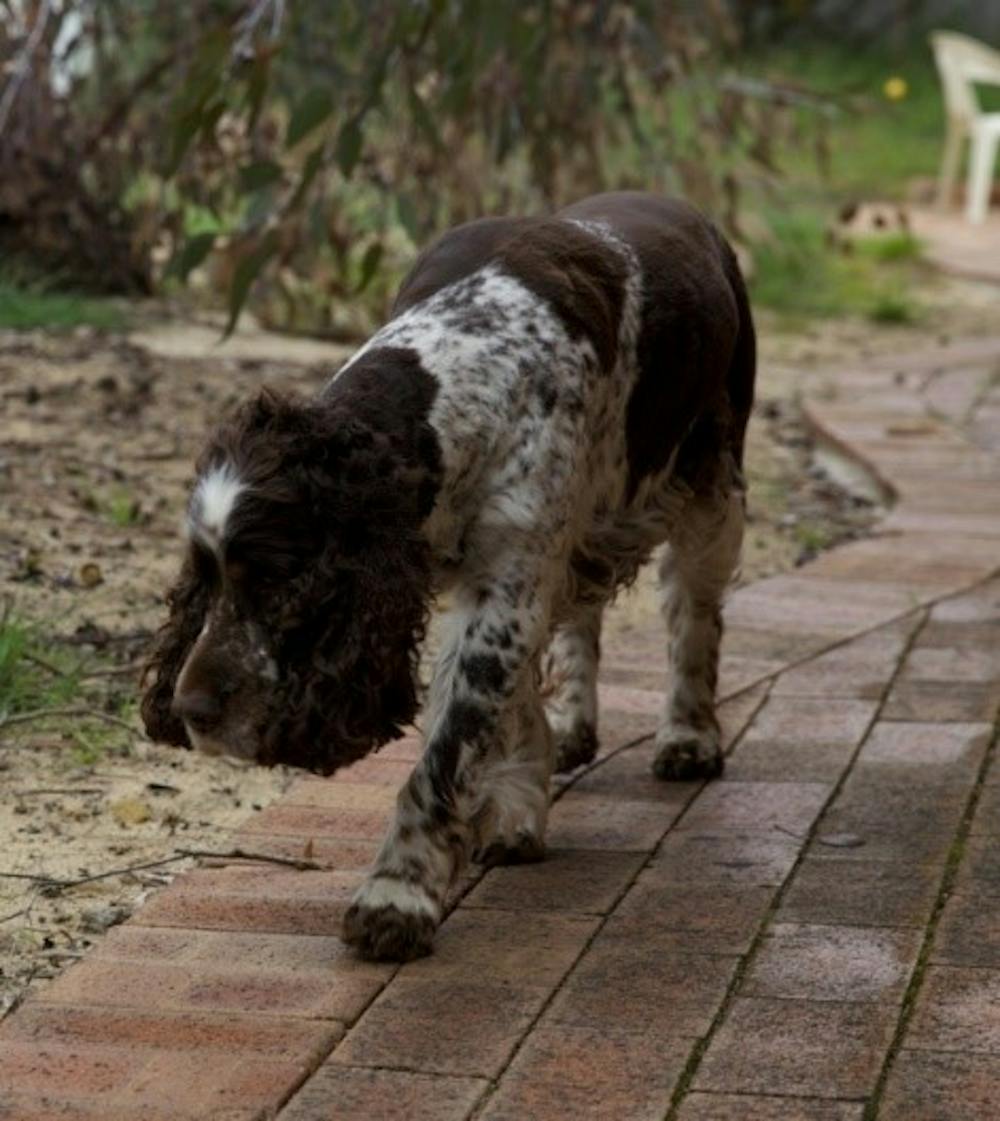
Students also saw pets as part of the family and a strong source of meaning in life. Given students’ desire for loyalty and consistency from their friends, it was not surprising the uncomplicated relationships with pets were so important.
One student wrote:
This is a photo of my dog[…] She gives my life meaning because I love her, and love walking, playing and taking care of her. She is like a sister to me.
‘She is like a sister to me’Author provided
Others enjoyed creative pursuits. One student took a photo of herself singing and said:
It gives my life meaning because I love to do it, it’s fun and helps me to dream big for the future ahead.
While schools keep a careful eye on their students’ learning, it’s important they ensure academic growth is aligned with meaning and purpose.
Practical research interventions such as the minds-eye can provide schools with a sense of what gives their students meaning. This can direct programs and tailor support around nurturing these sources, and let students “dream big for the future”.
Why are our top eyelashes longer than our bottom eyelashes? Lilia, aged 7
Thanks for this great question, Lilia.
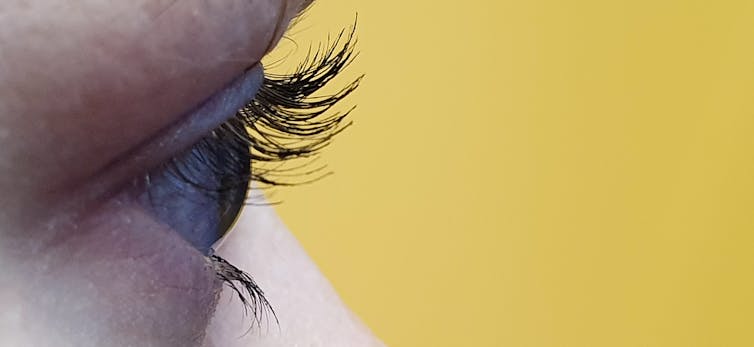
The upper eyelid is larger, longer and has deeper roots so it can support more luscious lashes.
All mammals have this feature, but why have the eyes developed this way?
The most significant reason is to protect our eyeballs. But having longer top eyelashes can also help us express our feelings and communicate with others.
They protect you
We have between 90 and 160 eyelashes in each upper lid, each of which grow between 8mm and 12mm long. In each lower lid, we have around 75 lashes which grow 6–9mm long.
Together, your long top and shorter bottom lashes provide a curtain of protection that covers the whole eye socket. This stops dust, insects or sweat getting into your eye and hurting it.
Without eyelashes, your eye would also dry out much quicker, and would be more likely to catch nasty germs. This is why people without eyelashes have to blink much more often.
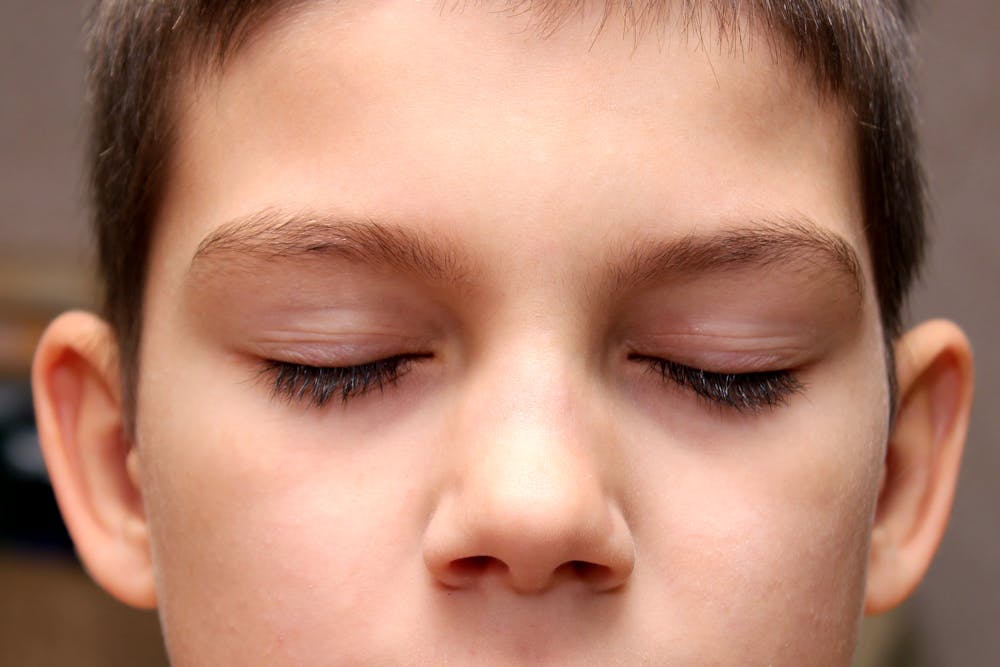
The perfect length of eyelashes is one-third the width of the eye.Christian Moro/Author Provided
There is actually an “ideal length” for upper eyelashes.
Using eyelash lengths from humans, as well as across a range of animal species, this is one-third the width of the eye. Any shorter and wind gets through too easily. Any longer and the wind starts to become caught under the lashes, with both scenarios causing the eyes to dry out more.
Humans are not the only animals that have eyelashes — all mammals have them, including cats, dogs, elephants, and mice. But they differ in length and density depending on where the animal lives. In most cases, other animals also have much longer lashes on the upper lid.
For animals that live in dusty areas, their eyelashes stop them getting specks of dust in their eyes. This is why camels, kangaroos, elephants and giraffes have several rows of long eyelashes, not just one row.
Giraffes have long eyelashes to protect their eyes from dust.Evgeny Gubenko/ Shutterstock
In rodents, such as rats, eyelashes are positioned around the eye and act as sensors. That way, rats can protect their eyes by blinking whenever they sense an unknown object near their eyes.
But it’s not just mammals. Birds have also developed eyelash-like feathers around their upper eyelids.
These feathers protect birds’ eyes from sunlight by casting a shadow on their eye. Compared to mammals, these eyelash-like feathers are long (up to 2cm), thick, and widely spaced out.
If you are feeling tired, surprised or concerned, your eyelashes can help someone else tell how you are feeling. Also, fluttering your eyelashes at someone might be a way to indicate you really like them. The extra length of the top eyelashes helps to emphasise this.
On July 4, the voters of Eden-Monaro will give their judgment on the performances of Scott Morrison and Anthony Albanese.
The seat is held by Labor on a margin of just under 1%. Labor is campaigning hard on JobKeeper ending in late September, while the Liberals are hoping the government’s handling of the coronavirus crisis will outweigh Scott Morrison’s poor conduct during the bushfires.
In this podcast, Michelle Grattan discusses the byelection campaign with the main candidates, Labor’s Kristy McBain and Liberal Fiona Kotvojs.
McBain: “I think everybody’s sick of old politics … this idea that you govern for only the people that vote for you. When you’re elected, you’re elected to represent everybody, whether they agree with you or not. You should be hearing them out, and I want to make sure that people in Eden-Monaro have a strong fair voice in Canberra for them.”
Kotvojs: “There [are] two key issues: one is about recovering after fires and after COVID, and the other is in terms of rebuilding our economy. So in terms of the first one, what we need to do is to look at getting more consistency and an integrated approach between the three levels of government… In terms of the rebuilding the economy, that’s all about jobs.”
Source: The Conversation (Au and NZ) – By Margarietha de Villiers Scheepers, Senior Lecturer Entrepreneurship and Innovation, University of the Sunshine Coast
Market commentators view Apple’s announcements at this week’s Worldwide Developers Conference 2020 (WWDC) as one of the company’s most important strategic moves of the past decade.
Among the key announcements were details of the watchOS 7 – with a pandemic-inspired handwashing detection feature – and plans to end Apple’s reliance on Intel for Mac processing chips.
While Apple still views itself as an innovator, critics point out many of its product innovations in recent years have been incremental – with calls for an entire new product category. And consumers have been finding it increasingly hard to distinguish between Apple and competitors like Samsung.
Will we ever again see something from Apple that truly changes the market?
We think Apple’s newest updates may be early signs it is, in fact, looking to get back on the map as a “business model innovator”. This describes how an organisation creates, delivers and captures value through business activities.
As University of Pennsylvania’s Wharton School professor Raffi Amit explains, Apple has renewed its business model many times – from changing the music industry with Apple Music, to creating a community of independent app providers through the App Store.
A pro-hygiene smartwatch
In today’s COVID-19 world, Apple’s new watch OS7 (expected to be released later this year) will offer automatic handwashing detection.
Motion sensors, the microphone (which will listen for water sounds) and on-device machine learning will detect when a user is washing their hands. The watch will then start a 20-second timer.
By monitoring the frequency and duration of handwashing, preventative health care will be in the hands of users.
Apple uses its wealth of consumer trend data, combined with advances in machine learning, data and analytics to offer an intensely human experience to suit users’ lifestyles. By focusing on the customer’s journey, Apple is in a unique position to create products with superior customer value.
For the WatchOS 7’s handwashing feature, the customer journey starts by reminding users to wash their hands when they get home. The health app monitors the process, even detecting if a user stops prematurely. By focusing on each step of this “journey”, Apple aims to provide peace of mind and address customer anxieties during the pandemic.
In the market of fashionable wearables, Apple’s smartwatch dominates. Last year, the Apple Watch outsold the entire Swiss watch industry.
In line with a strong trend towards personalisation, Apple’s WatchOS 7 also offers customisable watch faces, sleep tracking, improved workout apps with dancing and several built-in acoustic health features such as monitoring ambient sound levels.
Apple’s WatchOS 7 will have one watch face called ‘Glow Baby’. Parents can use this to view times for naps, changing and feeding all at once.Apple
Breaking up with Intel
Apple’s long-awaited breakup with Intel was confirmed at the WWDC 2020. Chief executive Tim Cook announced the company’s plans to transition to using its own Apple silicon processors for Macs.
Currently, Mac computers operate with Intel’s x86 desktop chips. By 2021, these will be replaced with the custom-designed processors Apple has already been using in newer iPhones and iPads – spelling the end of a 15-year partnership between Apple and Intel.
The move is part of Apple’s continued strategy to gain as much control as possible over its product ecosystem and development processes. It could also be seen as a reaction to Intel’s hesitance to meet its requirements.
Intel has fallen behind in the industry’s race to miniaturise and has experienced production delays and shortages. Apple’s new processors promise more power efficiency, are lighter and have superior performance for 3D graphics and for apps using artificial intelligence.
Similar to other tech giants, Apple is expanding its capabilities not just through acquisition, but also by developing its inhouse capabilities.
And while the Apple-Intel partnership only amounted to 5% of Intel’s overall sales, the breakup will still impact Intel’s image as a market leader in chip manufacturing.
It’s likely the decision from Apple signals their intent to exert more control over developers, suppliers and customers through the Apple product ecosystem. Indeed, Apple’s tendency to entrench its customers in this ecosystem has raised concerns.
For instance, larger players like Netflix, Spotify and Amazon Kindle have been fighting back against Apple’s policy of forcing users to use Apple pay to purchase their apps, which sees Apple collect up to 30% of the revenue up front.
While companies such as Netflix can reach users independently through online marketing, smaller app developers are forced to pay the Apple tax of 15-30%.
CEO Tim Cook delivered a keynote address during the virtual 2020 Apple Worldwide Developers Conference on June 22. The conference runs until June 26.Apple/EPA
Still a leading innovator?
At the WWDC, Cook framed the newest announcements as evidence of Apple’s ongoing commitment to innovation.
For many consumers, the most exciting updates will be Apple’s new internet-based technologies. These include spatial audio for AirPods Pro, a feature that creates a more realistic surround sound experience and the new CarKey function which will be compatible with 2021 BMW 5 Series. This will let drivers unlock and drive their car using their iPhone, thanks to a specialisied NCP (network co-processor) chip inside the phone.
It seems Apple has plans to keep excelling as a business model innovator.
The company’s innovations – even when incremental – still drive product value. This is used to turn profits which can then be reinvested into broader business model innovation.
It’s no surprise shareholders and enthusiasts remain confident about Apple’s future.
Australia has weathered the coronavirus pandemic better than many other countries, recording just over 7,500 cases and 100 deaths so far. But various errors, such as the Ruby Princess debacle, show we can – and must – do better.
Opposition leader Anthony Albanese advocated for one this week, as did Australian Medical Association President Tony Bartone. It is likely these calls will grow louder as the pandemic progresses, especially if we see a second wave in Australia.
Support has been building for decades
The proposal for an AusCDC has been debated for at least the past 33 years.
In 2012, a parliamentary committee on trans-border health threats received submission after submission supporting the creation of an AusCDC, prompting the committee to recommend commissioning an independent review into the feasibility of its creation.
However, after a limited consultation and six-year delay, the federal government responded by saying a centralised agency to coordinate health emergency responses was not needed.
The need for a coordinated and improved response to health emergencies across Australia’s multiple jurisdictions has been flagged many times during COVID-19. So what’s stopping us?
Politics getting in the way
The short answer is politics. While the public health community has long supported the creation of an AusCDC, it has repeatedly fallen foul of state and federal politics.
NSW and Victoria have consistently held any CDC should be based in their respective states, while others have argued for Canberra.
Australia’s pandemic preparedness efforts throughout the early 2000s established a solid foundation for the national COVID-19 response, but successive governments dropped the ball.
Multiple recommendations to continue strengthening our preparedness efforts were ignored. Our national influenza vaccine manufacturing capacity that once guaranteed Australians priority access has been privatised.
And our national medical stockpile of personal protective equipment appears to have been subjected to budget cuts and efficiency savings to the point where there was insufficient stock when the pandemic struck.
While our politicians will no doubt point to the National Cabinet as evidence Australia managed the crisis well, its creation was a stop-gap measure invented in the middle of a crisis that ignored Australia’s existing pandemic governance arrangements.
Admittedly, an AusCDC would not fix all of these problems. But there is a reason why countries like China and Nigeria, as well as entities like the European Union, have followed the US lead in creating one.
In fact, Australia is the only OECD country without such a centralised disease control agency.
Basing a new AusCDC in the north
Building an AusCDC is only one small part of the equation. Our region is one of the most disaster-prone areas of the world. Added to that, it comprises nearly two-thirds of the world’s population, many of whom live in high-density urban environments where diseases can spread easily.
When the next crisis emerges – and it will – Australia will have an important role to play.
For these reasons, it makes little sense to locate the new AusCDC in Canberra or Sydney. It needs to be as close to Asia as possible – in Darwin.
Locating a new AusCDC in Darwin would address one of the Coalition’s long-standing priorities of developing Australia’s north, guaranteeing the creation of new jobs and infrastructure.
This would provide new opportunities for civil and military cooperation in health, and counter China’s growing influence through its military medical diplomacy activities across the region.
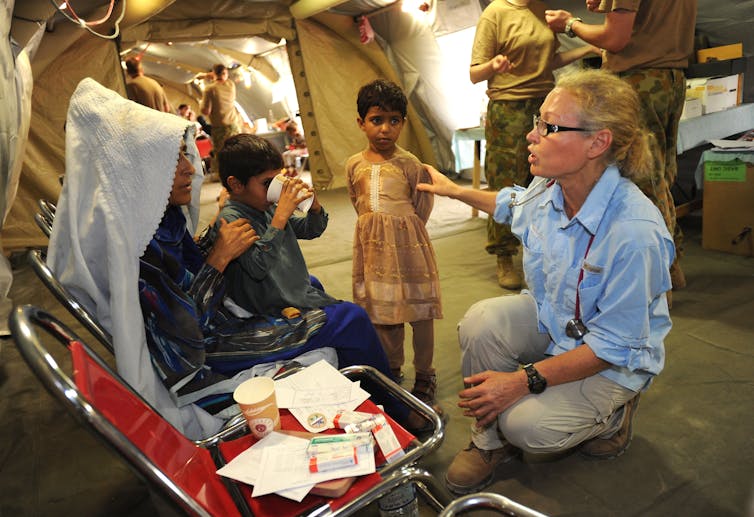
An AUSMAT nurse consulting a woman in an Australian health centre in Pakistan.Petty Officer Damian Pawlenko/Australian Defence Force
We could be doing more
An AusCDC would allow us to add another component – a new Australian Public Health Corps (AHPC), a uniformed service of epidemiologists, nurses, pharmacists, physicians and even engineers that could be deployed at a moment’s notice to respond to disasters or health emergencies.
This workforce would be based on the US Public Health Service Commissioned Corps (USPHSCC), which has responded to disasters such as Ebola outbreaks in Africa, Hurricane Katrina in Louisiana and the 2010 earthquake in Haiti. It also provides healthcare services to Native Americans living on remote reservations.
The same concept could work with an Australian Public Health Corps, staffed partially by highly skilled Indigenous health care professionals, who could provide health care services to rural and remote communities.
This would not only aid our Closing the Gap efforts, but also provide Indigenous healthcare workers with new employment opportunities similar to the Indigenous Rangers programme that has proven so successful.
We must look to the future and ensure we are better prepared for the next pandemic or regional health emergency. The time for the creation of an Australian Centre for Disease Control is well past due.
Source: The Conversation (Au and NZ) – By Jo Caust, Associate Professor and Principal Fellow (Hon), School of Culture and Communication, University of Melbourne
It is now over 100 days since the country went into lockdown as a result of COVID-19. Overnight, all arts venues had to close, and arts activities essentially ceased because of the need for social distancing.
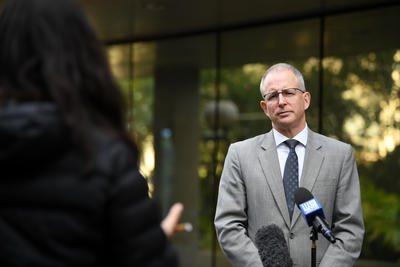
On March 19, three days after the lockdown, the Federal Arts Minister Paul Fletcher convened a meeting with state arts ministers to talk about the dire situation facing thousands of unemployed arts workers.
In late March, we waited for an announcement that the federal government would be offering targeted forms of support. We knew already that the sector provides enormous economic value to the country because the government published figures saying so.
And we waited.
Yet apart from a package announced in early April, of A$27 million for regional artists, indigenous visual arts organisations and mental health, the federal government announced nothing. Until now.
A new directed package, part of the JobMaker scheme, has been allocated $250 million. Prime Minister Scott Morrison said
Our JobMaker plan is getting their show back on the road, to get their workers back in jobs … This package is as much about supporting the tradies who build stage sets or computer specialists who create the latest special effects, as it is about supporting actors and performers in major productions.
There is an emphasis in this statement that workers in the creative economy are not just “artistic” types, but seemingly more palatable “workers”.
$75 million in competitive grant funding, providing capital for performing arts events (Seed Investment)
$90 million in concessional loans through commercial banks to assist new productions and events in job creation (Show Loans)
$50 million to support local film and television production and administered by Screen Australia (Kick Start)
$35 million to provide financial assistance to support significant Commonwealth-funded arts and culture organisations to be delivered by the Australia Council (Supporting Sustainability)
a Creative Economy Taskforce to partner with the government and the Australia Council to implement the JobMaker plan for the creative economy.
This package, while clearly welcome, preferences larger events, significant arts organisations (read organisations included in the major performing arts framework) and film and television production.
These packages will boost employment for artists and arts workers in the longer term. Given how the packages are described though, it is unlikely small to medium arts organisations will receive much benefit.
It is good the federal government has finally responded to pleas from the arts sector for help. It is disappointing it has taken so long and doesn’t acknowledge the breadth of the sector.
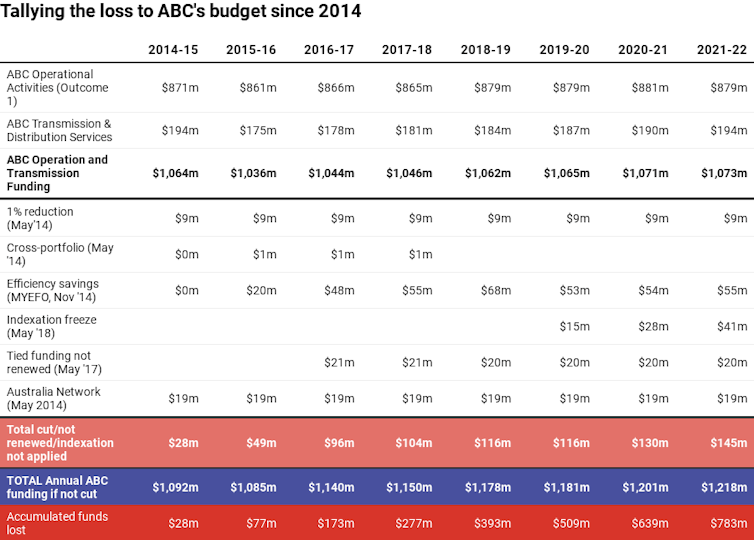
Fletcher adds in the press release that the federal government is providing $100 million per month to the arts sector through the JobKeeper program and other cash flow assistance. What this entails is hard to calculate.
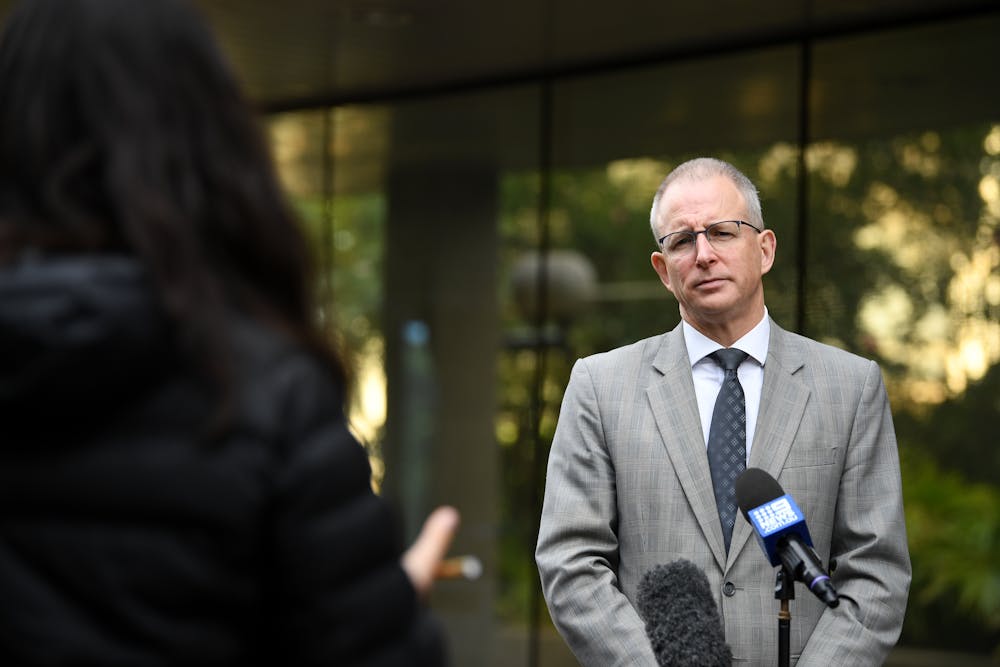
Minister Paul Fletcher met with state arts ministers in March. Yesterday he spoke about ABC cuts.AAP/Joel Carrett
We know many artists and arts workers have been unable to access JobKeeper. Many arts workers fell through the gaps of both schemes, given the nature of employment in the sector, which relies on short term contracts and often multiple sources of employment.
While aware of these anomalies, the government rejected a move by the Greens to widen eligibility for JobKeeper.
State support
All the states have provided additional support to the arts sector, but some are offering a great deal more than others.
Both Victoria and Queensland, and more recently New South Wales, have offered generous support to both individuals and arts organisations. Until now, South Australia and Western Australia have offered very little.
The Australia Council redirected $5 million of its funding towards special grants (of $5,000 to $10,000) for individual artists and small organisations.
Though these small grants are unlikely to make a massive difference overall, the council has been trying in other ways: running training webinars for artists and arts workers to upskill themselves in the digital arena. It has also been more flexible in managing its grant agreements.
Yet in early April 2020, the council cut funding to over 30 small-to-medium arts organisations, bringing the toll to more than 90 organisations cut over the past four years.
The ability of artists to adapt creatively to the changing situation is laudable, but they may have been too generous in this process, by giving away their talent for free.
In March, industry leaders said $850 million in assistance was needed.
Further, the latest figures from the ABS note that 78% of the sector has had a major decrease in income and only around 18% of the sector is operating normally. The capacity for parts of the sector to reactivate are now bleak.
Don’t call it culture
This latest announcement signals the government is more comfortable if the sector is framed as the “creative economy” rather than arts and culture.
Raising the cost of tertiary creative arts and humanities education implies the government believes they are expensive indulgences and not to be taken seriously.
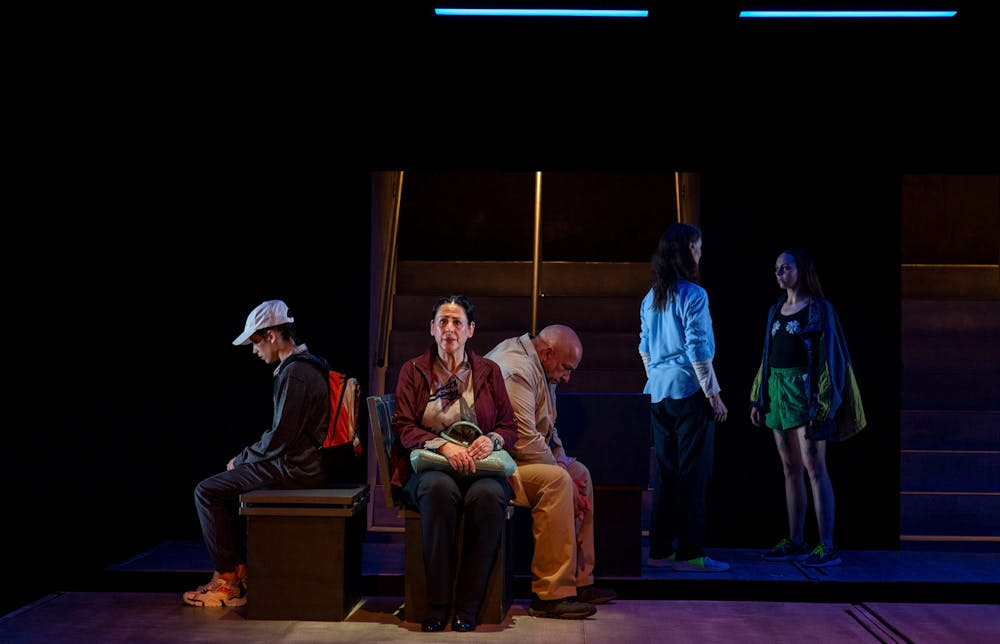
Anthem, performed at the Melbourne International Arts Festival in 2019.Pia Johnson
The devastating destruction of unique indigenous cultural heritage and the threat of further destruction by mining companies, with no formal protest from government, is another warning sign.
Through this period of lockdown, we have all benefited by the books we could read, the music we could listen to, the exhibitions we could visit online and the films and television we could watch.
This work is made by artists and facilitated by arts workers. They have our support, they deserve government support too.
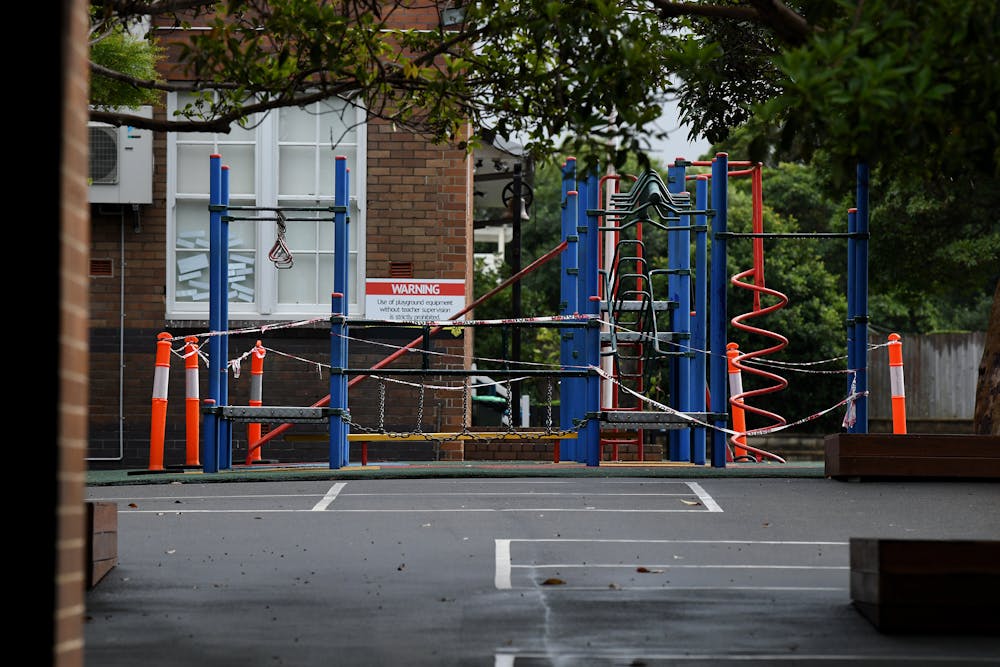
Brunswick East Primary School and Keilor Views Primary School in Melbourne have temporarily shut down after children from both schools tested positive to COVID-19, while a confirmed case in a year 2 student led to the closure of Sydney’s Lane Cove West Public School. A childcare centre in the Melbourne suburb of Essendon has also closed for cleaning after a child tested positive.
These cases, and others in young children, follow a handful of positive cases in teenage students in Sydney and Melbourne and may be prompting some to wonder whether it’s time to rethink reopening schools after lockdown.
The short answer is: no. The research still suggests that while children can be infected with COVID-19, it is uncommon. They also don’t seem to pass the disease on as efficiently as adults do, and cases of child-to-child infection are uncommon. And when children do get infected, they don’t seem to get very sick.
The temporary closure of schools (and at least one childcare centre) is evidence the system is working as it should — cases are being identified, contact tracing and deep cleans are underway and every effort is made to limit the spread.
We still don’t know exactly why COVID-19 is much more common in adults than children. The COVID-19 virus (SARS-CoV-2) infects people by attaching itself to a receptor called the ACE2 enzyme, and differences in this receptor in children may be one reason why children are less susceptible.
A lot of the thinking around schools and COVID-19 in Australia is based on follow up of school cases by the National Centre for Immunisation Research and Surveillance (NCIRS). It was released in April but still reflects what is currently known about the virus and how it interacts with children and school settings.
The report found:
In NSW, from March to mid-April 2020, 18 individuals (9 students and 9 staff) from 15 schools were confirmed as COVID-19 cases; all of these individuals had an opportunity to transmit the COVID-19 virus (SARS-CoV-2) to others in their schools.
735 students and 128 staff were close contacts of these initial 18 cases
no teacher or staff member contracted COVID-19 from any of the initial school cases
one child from a primary school and one child from a high school may have contracted COVID-19 from the initial cases at their schools.
Data from the Netherlands also found “children play a minor role in the spread of the novel coronavirus”.
In younger children, a rare but severe complication called PIMS-TS has been described. However, these cases have occurred in areas where there is extremely high transmission of COVID-19 in the community.
A bigger concern around schools is how adults congregate. Schools now have some version of physical distancing in the staff room and on school grounds to limit the risk of transmission between adults. Parents are asked not to enter school grounds or congregate in close quarters at the school gate, although the fact that this is outdoors and not a long period of contact also helps reduce the risk.
We still don’t know exactly why COVID-19 is much more common in adults than children.BIANCA DE MARCHI/AAP
What about COVID-19 and high school students?
There have been several reports of cases in high schools both in Australia and abroad.
Older children in high school start to have similar risk to adults, although the risk of complications is still substantially lower than in the elderly. Importantly, kids in this age group are more able to physically distance and adhere to personal hygiene measures than primary school-aged kids.
At least one instance of a high school outbreak in Auckland was related to an event outside the classroom at which many adults were present. So it was less about transmission in the classroom and more related to a particular event.
It’s important that schools remain open. But precautions are still required: teaching children to maintain personal hygiene, enhanced cleaning, and making sure adults (teachers and parents) are appropriately distanced from each other.
The latest school cases are not unexpected, and don’t mean that school closures across the board are required. They show the system is working as it should — we are spotting cases early and intervening quickly to limit the spread.
When we do find COVID-19 cases in children, we don’t usually find cases of child-to-child transmission. But of course, we still need to go through the process of managing each case as it arises.
If there are ongoing cases in the community, it is likely that cases will continue to occur in students or teachers, and schools will need to have contingency plans for this.
Parents need to make sure their children are well before sending them to school, and be prepared to get them tested and to keep them at home if they show any sign of illness. And of course, hammer home the message about hand washing.
Hand washing and physical distancing remain the very best things we can do to reduce the risk of COVID-19 spreading.
Papua New Guinean Prime Minister James Marape says an aircraft with four Chinese businessmen on board had complied with requirements before they were allowed to fly into Port Moresby.
The government has also confirmed that another case of covid-19 has been detected in Papua New Guinea – a second soldier, taking the country’s total to 10.
Responding to questions from EMTV News, Marape said that no quarantine measure was broken as the Chinese businessmen came in under the request of Minister Wera Mori and measure no. 2 paragraph 12 was used to allow them not to quarantine – but instead self-quarantine in a hotel while conducting business.
The four Chinese nationals were tested 14 days prior to their arrival, with the results negative, allowing them to arrive under strict self-quarantine measures.
The Prime Minister’s comments come after the opposition Peoples’ National Congress Party (PNC) leader and former prime minister Peter O’Neill called on Marape to state clearly their business of travel and why the 14-day quarantine period did not apply to the four foreigners.
Marape also said that at some point the country needed to open its border to allow for business to operate normally. This would be the first step.
Murray Barracks soldier positive RNZ News reports that Police Commissioner David Manning had said the new covid-19 case was a 27-year old member of the PNG Defence Force, who worked at the Murray Barracks in Port Moresby.
The case was picked up during mass testing of staff at the barracks where PNG’s 9th case was recorded last week in a visiting Australian soldier.
“The identification of this case provides evidence of local transmission in Port Moresby and the risk is very high that more cases may be identified in the coming days. Papua New Guineans need to take responsibility and remain vigilant to stop the chain of transmission,” Manning said.
“The country needs to work together to apply the ‘Niupela Pasin’ or the ‘new normal’. This will involve changing our old ways of doing things and replacing them with behaviours and actions to reduce risk of getting infection.”
The commissioner has urged people in the PNG capital to maintain social distancing and avoid mass gatherings.
Meanwhile, Manning said that PNG’s 9th covid-19 case had safely returned to Australia.
The human rights group Indepaz reports that 800 activists have been killed in the past three and a half years in Colombia, since November 24, 2016, the date the government signed “the Peace Accord” with the FARC.[1] Taking advantage of society’s fear and distraction, and the demobilization caused by the novel coronavirus, state and paramilitary actors have intensified their violence against organizers and their communities. Human rights activists refer to themselves as “sitting ducks,” explaining that they are pinned down by the pandemic and cannot as easily flee and hide from the forces of repression.[2]
While state and non-state military actors are notorious for violence in Colombia, the police are also guilty of human rights crimes. On May 19, Anderson Arboleda, a 21-year-old Afro-Colombian was beaten to death by the police for supposedly “violating the quarantine” in the Pacific department of Cauca.[3] The police killing of Arboleda — which many compare to the Minneapolis Police Department murder of George Floyd — was not an isolated act. Journalists have found that black and indigenous Colombians have suffered the highest rates of institutional discrimination and police violence.[4]
Human Rights Watch conducted an investigation into Colombian police violations of the rights of peaceful protesters the past year as hundreds of thousands of Colombians took to the streets against budget cuts and political assassinations. They found 72 cases of extreme police brutality. No officer was ever held responsible.[5] One of these cases was that of 17-year old Dilan Cruz. On November 23, Cruz was at a protest when he was killed by the Escuadrón Móvil Antidisturbios (the ESMAD or Mobile Riot Squad) which fired live ammunition at him from a close distance.
COVID-19: double down crisis on poor Colombians
Colombia now has more than 71,000 cases of COVID-19 and has experienced 2,300 deaths.[6] In Latin America, Colombia trails only Brazil, Chile, Ecuador, Peru and Mexico in terms of the total number of cases and deaths from COVID-19.[7] At El Cumbe Internacional Antiimperialista, Afrodescendiente y Africano (The International Gathering Ground of Antiimperialists, Afro-descendents and Africans) on June 14th, former Colombian senator and lawyer Piedad Córdoba stated: “COVID-19 lays bare the moral, medical and political infrastructure of our country, especially in the poorer Afro-Colombian regions of the Pacific and the Caribbean. Our people have been the most beaten down by the pandemic.”[8] Senator Córdoba went on to speak about the “hurtful image of a young Black man from Quibdó in the Pacific department of Choco who died on a stretcher in front of a hospital without receiving care for the coronavirus.”[9]
Despite this unprecedented public health crisis, president Iván Duque and his government seem to be more concerned with suppressing the freedom of speech of activists, criminalizing resistance and encircling its neighbor Venezuela than seriously confronting the pandemic.
War as state strategy
The negotiations in Havana, Cuba from 2012 to 2016 resulted in a historic peace deal meant to end a 50-year war that cost over 220,000 lives and left 7 million displaced.[10] The centrist presidency of Juan Manuel Santos received a Nobel Peace Prize in 2016 for his role in the negotiations, though none of the peasant organizations on the other side of the war who endured decades of displacement, torture and death were ever mentioned as a candidate for the prize or in the ceremony. The government promised a Truth and Reconciliation Committee, land reform, reintegration of former guerrilla fighters, demilitarization of the conflict zones and political openings for the left. The June 2018 electoral victory of Iván Duque, a protégé of far right wing Alvaro Uribe, spelt immediate doom for the Havana peace accords. The government reneged on all of its promises and the areas where the FARC once commanded saw the highest rise in politically-motivated assassinations.[11] According to the United Nations, more than 170 former fighters have been murdered since the peace deal was signed.[12]
In response to these charges, Duque and the Colombian media dismissed the FARC dissidents as “narco terrorists,” despite their legitimate status as demobilized non-belligerents.[13]
Analyst, surgeon and the founder of Pueblos en Camino (The People in Motion), Manuel Rozental explains that the rich in Colombia do not want the military conflict to end because war has always been their cover for appropriating land and resources.[14] Colombian elites and transnationals, such as British Petroleum, Occidental Petroleum Corporation, Exxon Mobil, Coca Cola, Drummond and hundreds of others, use the war as a pretext to clamp down on social movements across Colombia.[15] War is their strategy to displace and dispossess. Any peasant or social organizations who stand in their way can easily be dismissed as coercive or criminal elements. Joel Villamizar is one example. Villamizar was a leader of La Asociación de Autoridades Tradicionales y Cabildos U’wa – ASOU’WA. When he was ambushed and murdered earlier this year the media and authorities simply dismissed him as a guerilla terrorist.[16]
“A War on Drugs?” or a “War on Sovereignty”?
According to all reputable data, Colombia is the main supplier of cocaine in the world and the U.S. is the main consumer.[17] The U.S. allegations that Nicolás Maduro oversees a narco government are politically motivated and not backed up by facts on the ground. Approximately 70 percent of cocaine that arrives in the U.S. comes from Colombia via different supply routes, many through the Pacific ocean.[18] The U.S. Navy is surrounding and blockading Venezuela, not to stop the flow of cocaine into the streets of the U.S., but rather to stop the progress of the Bolivarian process.
It is also worth pointing out that the drug epidemic in the U.S. is not caused principally by cocaine but rather by opioids, many of which are legally prescribed by doctors. According to the Center for Disease Control, over 70 percent of the 67,000 overdoses in 2018 were from opioids.[19]
On March 26th, Attorney General William Barr formerly accused the Venezuelan government of “narco terrorism” without even clarifying which drugs are killing Americans and where they come from.[20] This spoke to the political motivations behind the claims which were really trumped up charges designed to provide the legalese to ratchet up the war on Venezuela. Meanwhile, Washington takes no action against the government of Honduras, accused by even U.S. courts of being involved in drug related crimes, including Juan Orlando Hernández’s family and the president himself.[21]
The US Navy sent ships to further blockade Venezuela’s Caribbean coast on April 1[22] and the Southern Command deployed 800 more special force soldiers to Colombia on June 1.[23] This ignited a national debate in Colombia about the question of sovereignty. The Colombian Congress never agreed to allow foreign soldiers into their homeland.[24] Aida Avella, senator of the Patriotic Union party, stated: “The U.S. military cannot enter Colombian territory above Congress to advise the fight against drug trafficking. We reject the use of the country for wars and invasions of other countries.”[25] Lenín Moreno ceded “a new airstrip” in the Galápagos Islands of Ecuador for use by the U.S. military.[26] The U.S. military currently has nine bases in Colombia, twelve in Panama and 76 total in Latin America.[27] The US has deployed between 500 and 1,500 troops to Soto Cano air base in Honduras under the guise of humanitarian and drug-fighting operations.[28] There is also some evidence that the Colombian military may have supported the mercenaries who trained in Colombia before launching incursions into Venezuela in early May in a botched attempt to capture the Venezuelan president.[29]
Resistance is everywhere
Distrustful of the government’s commitments, thousands of government opponents have returned to the mountains or sprawling slums of Colombia’s cities.[30] Calling for a second Marquetalia Republic, in reference to the autonomous zones armed peasants held after La Violencia in 1948, rebel commanders like Iván Marquez and Jesús Santrech and their soldiers have taken back to the mountains.
Not all social actors embrace this strategy however. Warning that war is a trap, social movements drafted a letter to the FARC discouraging them from playing into the hands of the state. Around 70 percent of all casualties in the 50-year and running civil war have been civilians.[31]
In an interview on June 16 with Colombia’s Caracol Radio, representative of the Ejército de Liberación Nacional (ELN) [32] and the head of the Dialogue Delegation of the guerilla army, Pablo Beltrán, explained their perspective. Beltrán said the ELN desires a cease fire but not as long as Duque brings in more U.S. soldiers, making a clash with those troops inevitable in Norte de Santander and Arauca on the border with Venezuela. The ELN has expressed that the priority should be alleviating poverty and keeping people safe from the coronavirus.
As the coronavirus impacts the poorest and most vulnerable sectors of Colombian society, there is little trust that Trump’s faithful partner, the notorious anti-Bolivarian Iván Duque, will respond in a comprehensive way to the health and economic needs of the population. Three national strikes convulsed Colombia between November and December last year because of the neoliberal cuts implemented by Duque. Unable to resolve the needs of their own population, the Colombian elites participate in the destabilization of one of its neighbors. The external and internal contradictions of Colombian society continue to sharpen, promising the playing out of a 50-year national liberation struggle Washington has always feared and sought to contain.
[Main photo: Colombian and US military personnel, in a joint program in Riohacha, Colombia. Credit: US Navy, open license]
New Zealand’s “intransigence” over wanting to allow Australians in before New Zealanders out to the covid-free Pacific does not stand up to scrutiny, says a Cook Islands resort owner and doctor.
“If we unwittingly let the virus cross the Tasman, our country will take a huge hit,” says New Zealand-based John Dunn, a resort owner and visiting surgeon at Rarotonga Hospital.
Instead of concentrating on a possible travel bubble with Australia, New Zealand should be demonstrating “kindness” and offering a tourism economic lifeline to the Cook islands, Niue and Tokelau.
John Dunn … Testing in other island countries has been “patchy”. Image: JD
“Kindness was brilliantly promoted by Prime Minister Jacinda Ardern as a principle in the pandemic fight, alongside testing and tracing,” he wrote today in a guest column in The New Zealand Herald.
“Kindness can be misplaced, such as allowing infected people to travel the country. Alternatively, it could be used powerfully, by saving Pacific economies.
“The Cook Islands, Niue and Tokelau don’t feature in the UN list of member countries. That’s because they aren’t fully independent, existing in free association with New Zealand.
“While self-governing, their historical status means they depend on us in varying ways in matters like defence and foreign policy. And they are New Zealanders. We have real responsibility for them stemming from the colonial era.”
‘Malevolent engine’ Moreover, the Cook Islands, Niue and Tokelau are free of the “malevolent engine of SARS-Cov-2”.
“It has never penetrated these islands. The Cooks in particular have been conscientious and aggressive, testing 15 percent of the tiny population – all negative.”
Dunn praised the guidance of Dr Aumea Herman, the Cook Islands Secretary of Health, for this achievement.
“She is an internationally trained public health expert and has fiercely guarded the nation’s borders with the support of the government, shutting down one critical week earlier than New Zealand.”
Testing in other island nations had been patchy and reporting was unreliable, especially from those living under non-democratic regimes and with larger populations, he wrote in a clear reference to Fiji which has lately been pushing the idea of a “Bula bubble” with Australia and New Zealand.
“There exists, therefore, a strong argument to regard Rarotonga in the Cook Islands as a domestic destination and Prime Minister Henry Puna has made exactly that appeal.”
Dunn cited numbers such as only 15,000 people live in the 15 Cook Islands, mostly on Rarotonga and Aitutaki. (60,000 live in New Zealand).
Travel is economically vital “Tourism represents 70 percent of GDP and 70 percent of the 170,000 annual visitors are from New Zealand. This travel is vital to the economy,” he wrote.
“At present Rarotonga is unnecessarily empty, the resorts are unnecessarily deserted and the airport – the lifeline – unnecessarily vacant. There is absolutely no danger in travelling there. Visitors are at more risk from a tsunami or cyclone.”
Dunn said that Prime Minister Ardern had stated she did not want to think about this issue until after a transtasman bubble was established. However, former prime minister Helen Clark had advocated opening to the islands at the same time as Australia.
“The argument that it is better for our economy to allow Australians in before New Zealanders out to the Pacific does not stand up to scrutiny,” wrote Dunn.
“Also, most of the New Zealand dollars spent in the Cook Islands return home via exports purchased and revenue for companies like our national carrier. Finally, the lesson from the GFC is that unemployment in the islands triggers a further diaspora to [New Zealand] which becomes a welfare load and further decimates the local population.
New Zealand should open up to selected Pacific nations now, wrote Dunn.
“To not do so is illogical and damaging. It makes more sense to keep New Zealand, and the Cook Islands, Australian-free while they still have active coronavirus.”
While lockdown restrictions have eased in many places, the coronavirus threat isn’t over yet. The number of cases globally has surpassed 9 million, and infections have slowly crept back for Victoria.
Restaurants, pubs and cafes have been among the first places to which people have flocked for some respite from social isolation. In many cases, diners must provide their personal details to these venues for potential contact tracing later on.
Unfortunately, there’s a lack of clarity regarding what the best options are for businesses, and many aren’t following official guidelines.
Keeping records
In the rush to reopen while also abiding by government requirements, many businesses are resorting to collecting customer information using pen and paper.
This entails sharing the stationery, which goes against the basic principles of social distancing. Your written details can also be seen by other diners and staff, triggering privacy concerns.
You wouldn’t normally leave your name, phone number, email, address or any combination of these on a piece of paper in public – so why now?
Businesses collecting personal information from customers must abide by the Australian Privacy Principles under the Privacy Act 1988. This requires they “take reasonable steps to protect the personal information collected or held”.
The federal government has also released an updated guide to collecting personal information for contact tracing purposes. Establishments must use this guide in conjunction with individual directions or orders from certain states and territories. See some below.
QLD
Must keep contact information about all guests and staff including name, address, mobile phone number and the date/time period of patronage for a period of 56 days.
The guide also outlines how businesses should handle customers’ contact information. The relevant parts are:
you should only collect the personal information required under the direction or order
you should notify individuals before you collect personal information
you should securely store this information once you have collected it.
One point specifically notes:
Do not place the names and phone numbers or other details in a book or on a notepad or computer screen where customers may see it.
Thus, many establishments are clearly not sticking to official guidance. So could you refuse to give your details in such cases?
No. Customers are required by law to provide the necessary details as per their state or territory’s order. Venues can deny entry to people who refuse.
What would a comprehensive solution look like?
For contact tracing to work effectively, it should be implemented systematically, not in a piecemeal way. This means there should be a system that securely collects, compiles, and analyses people’s data in real time, without impinging on their privacy.
It’s perhaps too much to ask hospitality businesses to take the lead on this. Ideally, government agencies should have done it already.
The COVIDSafe app could have provided this service, but with it being optional — and contact tracing by businesses being mandatory — it’s not a viable option. That’s not to mention the issues with the running of the app, including Bluetooth requirements, battery life drainage, and history of problems with iPhones.
Nonetheless, there are some free technologies that can offer better alternatives to the manual collection of customers’ details. These include:
All these tools have a similar set up process, and provide similar services. Let’s take a look at one of the most popular ones, Google Forms.
Using Google Forms
Google Forms is a tool that comes free with a Google account. The “contact information template” is a good starting point for businesses wanting to make a secure log of visitor details.
In Google Forms, you can create a workable contact tracing form within minutes.
Once you create a form to collect customers’ information, you just have to share a URL, and customers can fill the form on their own device.
You can generate a shareable URL for your Google form.
Data gathered via Google Forms is stored securely on the Google Drive account and can only be accessed through the same login that was used to create the form. The transmission of data from the customer’s device to Google Drive (where the data is then stored) is also secure.
Or use a QR code
If you want to make the whole process even easier, and not use a clunky URL, then using a QR code (linked to the URL of your Google form) is a great option. For this, you can use anyfree external QR code generator. These will generate a QR code which, when scanned by a smartphone, will direct the user to your URL.
This code can also be printed and hung on a wall, or stuck to tables where it’s easy to access without any human-to-human contact. A comprehensive guide to creating and accessing Google Forms can be found here.
QR code created using the website https://www.qr-code-generator.com/
That said, although the process of setting up and using such tools is very simple, there may still be people who are too mistrusting of the way their data is used, and may refuse to hand it over.
For many, the allegations of sexual harassment against Dyson Heydon came as a shock. It seems difficult to imagine a senior member of the legal profession, a justice of the High Court, would engage in inappropriate or potentially unlawful behaviour.
Yet, sexual harassment in the legal profession is longstanding, and has proven an intractable problem in its incidence, reporting and effects. Nearly half of all female lawyers in Australia, New Zealand and the Pacific report being sexually harassed at work.
This is at least partly to do with the culture of the profession. This culture has been built by men for men over centuries, and the legal profession continues to rely heavily on personal networks that by their very nature reinforce the status quo.
Tackling endemic sexual harassment requires a shift in the norms that make it an “open secret” – known about but ignored – and accepting women as professional equals rather than sexual objects.
A man’s world
The legal profession is traditionally the preserve of men. Women were for a long time under a “legal disability”, prevented from studying law and from practice. The first women practitioners were admitted in Australia in 1915 (Queensland) and 1917 (South Australia), and it was many more years before women began serving as judges.
Progress has been made in recent years in women studying law. From the mid-1980s, law schools were enrolling approximately equal numbers of men and women. Now, women comprise approximately 60% of law graduates.
Yet, women remain underrepresented in the senior ranks of the profession. In the mid-1990s, the Australian Law Reform Commission found women continued to be underrepresented in positions of influence and were concentrated in the less prestigious and well-paid areas of the profession.
Of particular concern is that lack of diversity at the bar means lack of diversity in the pool from which judges are appointed. The proportion of women judges and magistrates is highest in the ACT (54%) and Victoria (42%), but in most other jurisdictions, women make up only around a third of judicial officers.
Unless the government of the day is committed to increase diversity on the bench, the composition of the judiciary will not change in a way that reflects society’s needs.
The culture tacitly accepts sexual harassment
For all of the time women have been absent from the profession broadly, and in its senior positions particularly, the law has been populated by men who, consciously and unconsciously, have influenced its culture based on their own preferences and biases.
A recent study found, for instance, that female High Court judges were interrupted by counsel more frequently than their male colleagues. These findings reflect broader social norms about men interrupting women’s speech as a typical way of asserting male dominance.
In a hierarchical profession like law, which is highly competitive and performance-oriented, sexual harassment is another feature of male dominance. The culture of the legal profession, which has excluded women for centuries, continues to tacitly accept this behaviour.
This is why, when allegations about sexual harassment are made public, we often hear the behaviour was an “open secret”.
There are two consequences of this culture that help explain why sexual harassment is so persistent. First, those who are harassed are themselves expected to adhere to the norm, and accept the behaviour or leave. Secondly, witnesses will not themselves see fit to speak out against it.
Such unethical, now unlawful, behaviour will only continue within this closed system, unless a broader cultural change is made.
Networks are key to professional advancement
Reinforcing the predominance of men in the senior ranks of the profession is the importance of personal networks to advancement.
Mentoring relationships are integral to the development of junior lawyers. Universities recognise this, and promote student placements in professional internships as a way of developing these networks.
Here, too, women have long found it more difficult to develop the types of networks needed to succeed. Advancement frequently requires not only a mentor, but a sponsor – someone “on the inside” – who will open doors to professional opportunities.
The majority of those “on the inside” are men, and their conscious and unconscious bias can exclude women from opportunities to advance their careers.
Junior lawyers, especially those without established professional networks, must also compete to establish relationships with senior practitioners – including with judges through sought-after associateships.
The power in these relationships rests with the senior practitioner, most of whom are men in charge of their own domain and well-connected in the upper echelons of the legal fraternity.
Women are qualified to fill these coveted positions, but once there, the question becomes whether they are equipped to tolerate the “open secret” of sexual harassment as the price of maintaining the relationships they need for advancement.
In this kind of environment, a junior lawyer has very little power to call out unwanted sexual advances – particularly when the behaviour is accepted by those around her.
This contributes to the attrition of talented women from the profession and, of course, entrenches the male domination of its senior ranks.
Cause for optimism
Despite this grim picture, something changed this week. Allegations made by the most junior against the most senior were listened to and acted on.
While seemingly a small step, it represents a huge challenge to the culture of the “open secret” of sexual misconduct in the legal profession and the possibility of establishing new cultural benchmarks for the law.
Source: The Conversation (Au and NZ) – By Nicholas Wood, Associate Professor, Discipline of Childhood and Adolescent Health, University of Sydney
It’s Sunday night, around 8pm, when your ten-year-old tells you she has a sore throat. She doesn’t have any other symptoms, and feels OK. You tell her “let’s see how you feel in the morning” and she happily goes off to sleep.
But you’re left wondering what you’ll do if her throat is still sore the next day — or if she’s developed other symptoms by then. Should you get her swabbed for COVID-19?
Like most Australians, you haven’t recently travelled overseas or been in contact with anyone with COVID-19. And like most kids, your children often get coughs and colds during winter.
COVID-19 symptoms in kids resemble other respiratory infections
Generally, in their first 12 years, children can experience up to four to eight respiratory tract infections, or “colds”, per year. This number is highest among the youngest children.
One-quarter of all GP visits in children under five in Australia are for respiratory tract infections.
A recent review showed COVID-19 symptoms in children were typical of most acute respiratory infections and included fever, cough, sore throat, sneezing, muscle aches and fatigue.
In general, COVID-19 in children is less severe than in adults.
In children, the symptoms of COVID-19 might appear like the symptoms of any cold or flu.Shutterstock
It’s possible these could also be symptoms of a different respiratory infection. But if your child is displaying any of these symptoms, the current federal government guidelines recommend they stay at home and get tested.
You can also ask your GP if you’re not sure whether your child needs a test.
How likely is it my child will test positive to COVID-19?
Although Victoria is currently experiencing a spike, Australia has largely “flattened the curve”. In the past month there have been less than 40 new cases nationally each day.
Around the country, since the pandemic began, we’ve performed more than two million tests and identified 7,521 cases.
This means fewer than 0.5% of tests have been positive. And only a small proportion of confirmed cases have been in children.
So in our current situation it’s much more likely your child’s fever or runny nose is caused by one of the common respiratory viruses, such as rhinovirus, that we see each winter.
How sustainable is all this testing?
We’re now performing more tests each day than we were at the height of the pandemic in late March.
Australia’s high level of testing has undoubtedly played a significant role in our successful response to the COVID-19 pandemic.
But we now must ask ourselves whether, with potentially diminishing returns, it’s sustainable to keep testing every child with a cold for the foreseeable future.
Let’s remember there are 4.7 million children in Australia under 15 and each of them, particularly the younger ones, are likely to get multiple respiratory infections each year.
One of the risks of a continued emphasis on COVID-19 testing is that when a child returns a negative result, the parent thinks “all good, my child doesn’t have coronavirus, they can go back to school”.
This risks spreading non-COVID-19 viruses to others, who then develop respiratory symptoms and need to be tested. Many of these viruses spread easily among children, especially where they’re in close contact, such as in childcare centres.
This may lead to an upward spiral of respiratory infections, particularly during winter when colds and the flu are traditional foes.
Viral infections can spread easily among children.Shutterstock
Keep sick kids at home
While testing is important, physical distancing and hygiene measures have been instrumental in flattening the curve.
And as a bonus, these measures may have led to decreased incidence of other viral infections in the community.
In our hospital in Sydney, we’ve seen fewer hospitalisations for respiratory syncytial virus this year, a common cause of infant hospitalisations.
Nationally, in the first five months of 2020 there were 20,569 influenza notifications, compared to more than 74,000 at the same point last year.
Although restrictions are easing, Australians should continue to focus on physical distancing and hygiene throughout winter.
We need to see this pandemic as an opportunity to shift to a new normal: that is, staying at home when you’re sick, and keeping your child at home if they’re unwell (until their symptoms resolve).
We know it’s not always practical, but hopefully this “new normal” will see more flexibility from employers in these circumstances.
Finally, yes, follow public health advice around getting tested for COVID-19. But let’s not view this as the only thing that matters.
The coronavirus pandemic has wreaked havoc on the Australian economy, and the financial effects for many are deeply personal.
Sadly, there’s no shortage of terrible advice online when it comes to personal finance. And as September 30 looms – the date by which JobKeeper, the increased JobSeeker and many negotiated rent and mortgage deferrals end – it’s important to be fully informed before you make potentially life-changing financial decisions.
As a former financial counsellor and former consumer credit educator for the Australian Securities and Investments Commission (ASIC), here’s what I think you need to know if you’re considering mortgage deferral, rent relief or bankruptcy.
Residential mortgages are covered by federal legislation, under which lenders can assist when borrowers can’t afford their usual repayments due to changed circumstances — such as losing hours or employment.
For example, you can ask your lender put on hold payments from June to September. It’s up to you and the creditor to establish clearly what happens to those payments. Are they pushed to the end of the contract, thereby extending the life of your loan? Or will you repay extra when you can afford repayments again?
Make sure you understand how much more it will cost you in additional interest if you extend the life of your loan by deferring these payments to the end of the contract. Depending on the details of your loan, you could be adding thousands of dollars to the amount you need to repay.
Most mortgage lenders don’t really want to repossess your house. It’s costly, time-consuming and stressful. But before asking for mortgage relief, you need to have a plan for the post-deferral period.
What happens if you still can’t make your usual repayments? Any licensed financial professional should be able to help negotiate a deferral on your mortgage or other consumer debts such as credit cards, but you should first consider seeing a free financial counsellor who is independent of any lenders. They can be contacted on 1800 007 007 or through the National Debt Helpline
Before asking for debt relief, you need to have a plan for the post-deferral period.Shutterstock
Rent relief
If you can’t pay your rent due to changed circumstances, you can ask your landlord to reduce or defer your rent. They can, of course, say no.
Unlike mortgage deferral, the implementation and process is inconsistent across states and territories. It can be difficult to navigate.
There are reports of some landlords asking for comprehensive financial statements to support claims, or for their tenants to access the early release of up to A$10,000 in superannuation to pay the rent.
Ausralia’s corporate watchdog, the Australian Securities and Investments Commission (ASIC), has warned real estate agents that advising tenants to take money from their superannuation may constitute giving unlicensed financial advice and/or be against people’s best interests, attracting possible fines and jail time.
If you’re talking with your landlord about rent relief, be clear on whether you’re talking about rent payments being reduced, deferred or permanently waived, and whether these payments would need to be made up by a certain date. Renters can seek help from free financial counsellors or a tenants’ union.
State and territory governments have established various schemes to help renters work out agreements with their landlord (see this Western Australian scheme as an example).
Bankruptcy should be a last resort. Many creditors have shown they’re willing to provide short-term delays (for about 90 days, for example) if people need more time to pay a debt.
Consumer credit contracts are written on the basis that life has its ups and downs and if a debtor genuinely can’t pay, the creditor can help by reducing payments, stopping interest charges, deferring payments and/or restructuring loans.
In almost all consumer bankruptcies, there is no return to creditors so they generally don’t want debtors to go bankrupt. It’s in their interest to help debtors through a difficult period so they can return to making payments.
Call the National Debt Hotline before you make any big decisions around bankruptcy.Shutterstock
Of great concern to consumer advocates is that searching “bankruptcy” or “help with debts” on the internet will often generate results for companies with a vested interest in placing you in what’s called a “debt agreement”. These should be approached with caution. It basically means you pay for a company to help you declare bankruptcy – but this is unnecessary.
A debt agreement is an act of bankruptcy that directs fees to those companies and quite often places consumers in unmanageable and unsustainable long-term repayment plans.
Instead, try to find free financial counsellors, some of whom work for charities. They are professional, unbiased and expert at informing people of their options when in debt. They can be found via the government’s MoneySmart site.
If you can’t pay your debts, there are many options available. The key is contacting the right person or organisation – and knowing whatever comes up first in a Google search is not necessarily the best or most impartial place to get help in a financial crisis.
Choosing care for your child when returning to paid work can be challenging, and to the uninitiated the terms can be confusing. One alternative to long day care in a larger child care centre is known as family day care.
Family day care is where a child is educated in a small group in a family style atmosphere at an educator’s home, seeing the same educator or educators each day.
The ratio in family day care is one educator for a maximum of seven children, and there can be no more than four children who are preschool age or under (per educator). The educator’s children must be counted in those seven children if they are under 13 years and not being cared for by another adult at the premises.
All family day care educators must hold or be “actively working towards” at least an approved certificate III level education and care qualification. (In South Australia, though, a family day care educator must hold at least an approved certificate III level education and care qualification.)
All family day care educators must hold an approved first aid qualification and have undertaken approved training in anaphylaxis management and emergency asthma management.
The approved provider of a family day care service must read — or ensure a nominated supervisor or a person in day-to-day charge of the service has read — a person’s working with children check before the person is engaged or registered as a family day care educator as part of the service. You can see which check applies in your state or territory here.
There’s a clear focus on learning and development based on the principles, practices and learning outcomes of the Early Years Learning Framework. The educator will plan an educational program for each child, share it with families and invite family input.
What’s the difference between family day care and long day care in a child care centre?
The most obvious difference is size.
Child care centres are usually much bigger and busier, with children usually grouped according to age. There are various educator-to-child ratios for each age group and it may be different depending on your state (as you can see here).
Like family day care, child care centre staff are required to have a qualification in early childhood education and care. The qualifications required will depend on their roles and responsibilities.
Routines at long day care centres are usually tailored to the needs of each child, especially for very young children, but may move to routines that are more based around a group dynamic as the child gets older (for example, having lunch time at the same time).
How to choose a family day care provider that’s right for you
If you’re interested in family day care, start by finding out which registered providers are near you. Then, you can organise a visit to the educator’s home.
When judging the quality of the care and educational program, it helps to ask yourself:
is the care child-focused, or time-focused? (For example, are nap times tailored to each child or grouped at the same time of day?)
how many children does the educator have each day and what are their ages?
what learning experiences are available for the children each day and will this suit my child?
do the children attend a playgroup during the week? For some parents, this represents bonus social interaction opportunities but for others it’s not a priority
are meals provided and if so, how is the menu determined?
how does the educator manage supervision of children indoors and outdoors?
are there other people in the home when family day care is provided and how do you feel about that?
what ratings did the family day care service achieve under the National Quality Standards (more on that in a minute)?
does the cost suit your budget?
Family day care services are part-funded by the Australian government, and the costs vary across services and family income.
Family day care services are assessed for the quality of the education and care under the federal government’s National Quality Standard.Shutterstock
How the regulator judges quality
Family day care services and long day care services are assessed for quality of education and care under the Australian Children’s Education and Care Quality Authority’s National Quality Standard.
Seven quality areas are assessed and rated to determine a quality rating, including the educational program, childrens’ health and safety, the physical environment, staffing, relationships with children and families, governance and leadership.
State and territory regulatory authorities assess and rate family day care services as either “exceeding”, “meeting”, “working towards”, or “significant improvement required” using the National Quality Standard, also known as the NQS.
Here’s how family day care compared with child care centre-based care, according to the regulator’s data as at March 31, 2020:
However, there is great variation across and within each service and centre. Finding out as much as you can about each provider on your shortlist can help inform your decision.
Many families prefer the home-like family environment of family day care for their children, especially when they are young, and then move their children onto long day care when the child is old enough to want friends.
It can be a trade-off between a small intimate family-like atmosphere for a more active, stimulating environment with many more people.
The Morrison government has announced a $250 million package for the entertainment, arts and screen sectors, which have been particularly hard hit by the COVID-19 crisis.
The grants and loans will be rolled out over the next 12 months.
Activity collapsed in these sectors with events quickly cancelled when the pandemic began and gatherings were prohibited. Many people have not been able to access JobKeeper. Getting work started again will be complicated by ongoing social distancing requirements that will make for smaller audiences.
Scott Morrison is anxious to stress the package isn’t just aimed at helping the public faces.
“This package is as much about supporting the tradies who build stage sets or computer specialists who create the latest special effects, as it is about supporting actors and performers in major productions,” he said.
Morrison will seek approval from the national cabinet to give the entertainment industry greater certainty about the timetable for enterprises to be able to re-activate their businesses.
The government says the “creative economy” is worth $112 billion and employs more than 600,000 people.
The measures include:
$75 million for seed investment to reactivate productions and tours. These competitive grants will provide capital to help production and event businesses to stage new festivals, concerts, tours and events, “including through innovative operating and digital delivery models”. Grants will be between $75,000 and $2 million.
$90 million for concessional “show starter” loans. They will assist businesses to fund new productions and events. The loans will be delivered through banks, backed by a 100% Commonwealth guarantee.
$50 million to “kick start” local screen production. It will be administered by Screen Australia and support local film and television producers to secure finance to re-start filming. Filming of new productions has largely stopped as insurers are not providing coverage for COVID-19.
$35 million direct financial assistance for Commonwealth-funded arts and culture organisations facing threats to their viability due to COVID-19. These may be in theatre, dance, circus, music and other areas. The Government will partner with the Australian Council to deliver this funding.
Morrison said the commercial arts and entertainment sector was one of the first sectors hit by the pandemic and would be one of the last to come out of hibernation.
“We’re delivering the capital these businesses need so they can start working again and support the hundreds of thousands of Australians who make their living in the creative economy,” Morrison said.
“These measures will support a broad range of jobs from performers, artists and roadies, to front of house staff and many who work behind the scenes, while assisting related parts of the broader economy, such as tourism and hospitality.”
He said many in the sector would find a new way to operate while the current social distancing measures remained.
A ministerial taskforce will be set up to partner with the government and the Australia Council to implement the plan for the creative economy.
The government said the package was on top of $100 million a month going into the arts sector through JobKeeper and cashflow support over April and May.
Australian supermarket giant Woolworths has announced its single biggest investment in logistics infrastructure, spending A$780 million to replace up to 1,300 workers with robots.
It plans to build one semi-automated and one fully automated distribution centre in south-west Sydney. About 650 jobs will be created at the new centres, to open in 2024. Three existing centres (two in Sydney, one in Melbourne) will close as a result.
Woolworths’ chief supply chain officer, Paul Graham, emphasised the safety benefits of automation:
Cutting-edge automation will build tailored pallets for specific aisles in individual stores – helping us improve on-shelf product availability with faster restocking, reducing congestion in stores, and enabling a safer work environment for our teams with less manual handling.
In these COVID-conscious times that’s the obvious spin.
But it’s true this is a response to the changes being wrought on the retail sector by COVID-19.
The principal change is a matter of pace. COVID-19 has turbocharged the shift to online shopping. Even as social-distancing rules ease, this trend will consolidate. Many bricks-and-mortar shops are in trouble, particularly those in shopping centres.
Retail will also be shaped by how COVID-19 has changed our shopping behaviour, with thrift and value being important.
Shopping online is the new norm
In April, 5.2 million Australians shopped online, according to Australia Post’s 2020 eCommerce Industry Report. The Australian Bureau of Statistics estimates those sales were worth A$2.7 billion, 11.1% of all physical retail sales, compared with 7.1% in March 2019.
This sharp hike in demand exposed weaknesses in retailers’ online capabilities. For example, crushing online demand meant both Woolworths and major rival Coles temporarily suspended their online shopping services.
More automated fulfilment centres are part of meeting these online demands. Of course, such investments were already on the radar.
In March 2019, Coles announced an exclusive deal to use the “end-to-end online grocery shopping solution” developed by Ocado, a British online supermarket chain that has no stores, only warehouses. Its technology spans the online shopping experience, automated fulfilment and home delivery.
An Ocado warehouse in Wimbledon, southwest London.Willy Barton/Shutterstock
The Coles plan included two new “highly automated” customer fulfilment centres in Melbourne and Sydney, to be ready in 2023. Coles also announced plans for two new automated distribution centres in Queensland and NSW, costing A$700 million, in October 2018.
Woolworths itself has already opened the Melbourne South Regional Distribution Centre, whose automated features are hyped in the following promotional video.
So these latest moves are part of a trend, albeit one unexpectedly accelerated by COVID-19. And once consumers try new channels, studies show, they are likely to stick with them.
The future is dark
At the other end of the supply chain, the shift to online shopping has created demand for “dark stores” – essentially, stores without customers. These smaller, decentralised facilities, located in suburbs rather than industrial parks, are designed to pick and dispatch online orders quickly.
Woolworths opened its first dark store in Sydney in 2014. Coles opened its first in Melbourne in 2016. Existing stores are also being repurposed as dark stores. In April 2020, Australia’s Kmart temporarily converted three stores to use as fulfilment centres.
Such moves may become permanent, as shoppers demand faster delivery times and physical store assets become less viable as “traditional” retail businesses.
Existing stores are also being adapted to respond to customer demands for faster, more efficient online shopping. In January 2020, Woolworths began building its first “eStore” – an automated facility adjoining its supermarket in Carrum Downs, Melbourne.
Fewer, smaller stores
As online shopping increasingly provides greater revenue streams for retailers, more physical store closures are also on the cards.
In May, Kmart’s owner, Wesfarmers, announced it would shut 75 of its Target stores (and convert the rest to Kmart stores). Also looking to downsize are Australian department store icons Myer and David Jones, which have accelerated their plans to reduce floor space 20% by 2025.
Footwear giant Accent Group – which owns more than a dozen shoe brands and has more than 500 stores in Australia and New Zealand – is planning to close 28 stores and focus more on online sales.
As online revenues grow, expect more “right-sizing” and closures.
Hype DC, one of the footwear brands owned by Accent Group.Tracey Nearmy/AAP
Repurposing shopping centres
All these closures will add to the woes of shopping centres.
Though crowds reportedly surged back to centres when “lockdown” restrictions were eased, growing awareness that the pandemic is not over and social distancing protocols continue to create consumer anxiety.
Until people feel safe shopping, dining and gathering in crowded public places, consumer aversion will remain.
In response to these COVID-conscious times, shopping centres will endeavour to enhance those aspects of the shopping experience, such as sensory elements and entertainment, which the online shopping experience can’t provide.
The retail mix will change: fewer fashion and general merchandise shops, and more services such as medical centres, offices and childcare centres.
Opportunities for smaller retailers
One bright spot may be for local and independent shops.
Smaller retailers can often adapt faster than larger ones. Smaller community pharmacies, for example, implemented social distancing and hygiene measures more easily than larger retailers, due mainly to their smaller size and having less traffic.
There are opportunities to leverage shoppers’ desire to support local shopkeepers, producers and growers. Locally made goods and services are also less likely to have long supply chains that will impede overseas deliveries while COVID-19 is uncontained.
But they’ll still need to sort out their online shopping experience.
While Australia gradually opens up from COVID-19 lockdown, Victoria is still struggling to contain the outbreak. The Black Lives Matter protest in Melbourne on June 6, which attracted thousands of face-masked and hand-sanitised protesters, did not prove to be the public health nightmare many commentators (particularly politically conservative ones) had predicted. But Melbourne is nevertheless contending with a worrying spike in case numbers arising from infection clusters around staff working in quarantine sites and extended family gatherings.
From the beginning of the COVID-19 pandemic, we were told two behaviours were crucial to keeping us safe: social distancing and handwashing. The coronavirus crisis has brought the mundane act of washing our hands into public discussion, and the internet is now awash (ahem) with advice, from the practical to the surreal.
Judi Dench on hand with some helpful, if mildly unsettling, advice.
If there’s one place where you would expect hand cleanliness to be beyond reproach, it’s hospitals. But this isn’t necessarily the case.
Surprisingly, hand hygiene is a vexing issue in hospitals all over the world. Repeated studies have shown it is common for hospital staff to follow hand hygiene protocols less than 50% of the time. This is as true in Australia and New Zealand-Aotearoa as it is globally. As any infection control nurse will tell you, specialist doctors are often among the worst offenders.
Who teaches hospital staff how to handwash?
Like most Western-style hospitals, all Australian hospitals have infection control experts, typically nurses, whose job is to educate, advise and monitor compliance on infection control protocols among hospital workers. This is lifesaving work, because hospitals are prime breeding grounds for deadly antibiotic-resistant bacterial strains.
The main line of defence in hospitals against these potentially fatal infections is prevention, hence the strict protocols around hand hygiene, and widespread use of gloves, robes, masks and safety googles.
Proper hospital hand hygiene involves using gloves, hand sanitiser, and frequent handwashing. Protocols dictate that gloves should be used in situations where health workers might expect to come into contact with blood, bodily fluids or other contaminants. Staff should wash or sanitise their hands before and after every patient contact, and in all situations where there has been contact with potentially contaminated material.
Infection control nurses undertake routine hand hygiene audits, and hospital staff can be disciplined if they fail to comply with the protocols.
Three types of handwashers
What makes hospital staff more or less likely to comply? It turns out there are different categories of handwasher, and therefore different ways to help people remember to do it.
While working on a project looking at communication in a multidisciplinary hospital team, infection control education became one of the areas of interest. Part of the study focused on the hand hygiene habits of hospital staff in a ward with particularly high infection risks.
Based on observations, interviews and informal conversations, we discovered nursing staff tended to fall into one of three broad categories: “hero healthworkers”, “family members”, and those who were “working for the whitegoods”.
Overall, most health-care workers practised good hand hygiene most of the time. But when there was time pressure — such as during short-staffed shifts, or when multiple patients were in particular need at the same time — nearly everyone had moments of non-compliance. But, fascinatingly, there were patterns to this non-compliance.
No matter how busy things were, “hero healthworkers” always practised hand hygiene before approaching a patient’s bed. But if time was short, sometimes they did not wash or sanitise their hands on leaving the patient. Nurses (and doctors) who exhibited this behaviour tended to make comments suggesting they valued patients’ health above their own.
“Family members” always practised good hand hygiene when leaving a patient, but sometimes missed out on washing or sanitising before interacting with a new one. In each case, these staff members had vulnerable people in their household – mostly young children, and in a couple of cases older relatives. Interviews and informal discussions revealed deep concern around infection risks and “taking something home”.
The third group was mostly meticulous in their practice when observed by a superior, but much less conscientious when only peers were around. Nurses who fitted this pattern tended to be disparaged by their colleagues as “working for the whitegoods” – treating nursing less as a professional vocation and more as “just” a job to earn money.
These patterns were observed — sometimes with minor variations — in more than a dozen wards over three different hospital sites during subsequent research projects.
How to improve things
None of these behaviours appear to have been conscious, even among the least conscientious “whitegoods” group. Many staff recognised their own behaviour patterns when they were pointed out, but said they had not been explicitly aware of them.
Identifying these characteristic behaviour patterns allowed the infection control educator to target education efforts more effectively. “Hero healthworkers” were educated on the risks to other staff by potentially transmitting infection to work surfaces and other places in the hospital by not handwashing after seeing a patient. “Family members” were reminded of the risks to patients of transmitting infections in the opposite direction. And those who only complied when being directly supervised were counselled on the need to have high standards at all times.
This shift in education strategy was employed along with a number of other infection control interventions, resulting in a significant reduction in multidrug-resistant infections.
One insight we can take from this for our day-to-day realities in the middle of COVID-19 is to be reflective about our own handwashing practices. When are we conscientious, and when do we let our standards slip? Is there a pattern in our own behaviours that we can identify, and what are the subconscious beliefs driving those practices? Can we use that knowledge to change our behaviours?
The simple act of handwashing is perhaps more complex than we realise. But it is one of the things that will determine how well we fare in the current pandemic.
At the height of the coronavirus emergency, and on the back of devastating bushfires, Australia’s much awarded and trusted national broadcaster has again been forced to make major cuts to staff, services and programs. It is doing so to offset the latest $84 million budget shortfall as a result of successive cuts from the Coalition government.
In the latest cuts, wrapped up as part of the national broadcaster’s five-year plan,
250 staff will lose their jobs
the major 7:45am news bulletin on local radio has been axed
ABC Life has lost staff but somehow expanded to become ABC Local
independent screen production has been cut by $5 million
ABC News Channel programming is still being reviewed.
Even the travel budget, which allows journalists and storytellers to get to places not accessible by others, has been cut by 25%.
These are just the latest in a long list of axed services, and come off the back of the federal government’s indexation freeze.
Announced in 2018, that freeze reduced the ABC budget by $84 million over three years and resulted in an ongoing reduction of $41 million per annum from 2022.
The indexation freeze is part of ongoing reductions to ABC funding that total $783 million since 2014. In an email to staff, Managing Director David Anderson said the cut to the ABC in real terms means operational funding will be more than 10% lower in 2021–22 than it was in 2013.
To be fair, the way in which the ABC executive has chosen to execute the latest cuts does make some sense, pivoting more towards digital and on-demand services. Right now, the commuting audience that has long listened to the 7:45am bulletin is clearly changing habits. However, with widespread closures of newspapers across the nation, the need for independent and trusted news in depth, that is not online has never been more important.
ABC Life is a particular loss. It has built an extremely diverse reporting team, reaching new audiences, and winning over many ABC supporters and others who were initially sceptical. The work they produced certainly wasn’t the type commercial operators would create.
Clearly the coronavirus pandemic has slashed Australia’s commercial media advertising revenues. But the problems in the media are a result of years of globalisation, platform convergence and audience fragmentation. In such a situation, Australia’s public broadcasters should be part of the solution for ensuring a diverse, vibrant media sector. Instead, it continues to be subject to ongoing budget cuts.
Moreover, at a time when the public really cannot afford to be getting their news from Facebook or other social media outlets, cutting 250 people who contribute to some of Australia’s most reliable and quality journalism and storytelling – and literally saving lives during the bushfires – appear to be hopelessly shortsighted.
The latest Digital News Report 2020 clearly showed the ABC is the media outlet Australians trust the most.
These latest cuts join a long list of axed services in the past seven years. They include
While not everyone will miss every program or service that has gone, and even with its occasional missteps, there is no doubt the ABC is the envy of the liberal democracies that do not have publicly funded assets, particularly the United States.
Has the ABC’s budget been increased?
Communications Minister Paul Fletcher has continued to suggest the funding cuts are not real, are sustainable without service reductions for Australians, and has claimed the ABC has received “increased funding”.
The minister’s comments are not consistent with data we published last year based on the government’s own annual budget statements and the reality of the ongoing situation for the ABC.
The government argues base or departmental funding is higher in 2020-21 than it was in 2013-14. The relevant budget papers do show that in 2013-14, the ABC was allocated $865 million for “general operational activities”. The most recent budget statement shows this has increased to $878 million in 2020-21.
So how can it be the ABC budget shows this increase when we have been arguing they are facing an overall cut?
First, we noted last year the complexity of the budget process, which means, for example, the reinstatement of short-term funding can be counted as extra funds, or the ending of such funds, while reducing an agency budget, will not appear as a reduction in allocation.
Second, the 2020-21 ABC budget reflects the inclusion of indexation for increases in CPI-related costs between 2013-14 and 2018-19. This is the funding that is being halted until at least 2021-22.
So despite statements to the contrary, nothing can change the fact the ABC has suffered massive cuts in recent years. The data published last year showed the reality of the ongoing situation for the ABC, with an annual cost to its budget in 2020-21 of $116 million. As the table below shows, taking into account actual budget allocations and adding the items cut, frozen or otherwise reduced, the ABC should have funding of approximately $1.181 billion in 2020-21, not the $1.065 billion it will receive.
It is against this background the latest funding freeze, due to a failure to meet the impact of inflation costs, occurs. While it doesn’t sound like a lot, the three year impact is $84 million, and has resulted in the cuts announced today.
But more importantly, these ongoing cuts represent an attack by the federal government on the broadcaster, its role in democracy, and in keeping Australians safe, informed and entertained.
Source: The Conversation (Au and NZ) – By Joanna Mendelssohn, Principal Fellow (Hon), Victorian College of the Arts, University of Melbourne. Editor in Chief, Design and Art of Australia Online, University of Melbourne
On September 10 1965, Sir Robert Menzies commissioned the National Art Gallery Committee of Inquiry to consider the establishment of a national gallery for Australia.
The resulting Lindsay Report, published in 1966, is an ambitious document, describing an art gallery to serve the nation through the quality and range of its collections and exhibitions.
It emphasised the need to have an all encompassing collection of Australian art. The report recognised, in the second half of the 20th century, it was not possible to acquire a significant collection from European art history and advised a focus on modern art, including from Indigenous Australian artists, south and east Asia, and the Pacific Islands.
James Mollison became the gallery’s first director and began collecting work in 1971, construction began in 1973, and the National Gallery of Australia finally opened in 1982. The Lindsay Report was most recently reviewed in 2017, and is still the guiding document for the gallery’s foundation and continuing collection policies.
Menzies understood a culture that supported the arts and the humanities was essential to Australia’s development. Although his aesthetic taste was conservative, often described as reactionary, he greatly valued the arts.
For many years, his successors showed equal enthusiasm for seeing the National Art Gallery grow into international prominence.
Now, with subsequent efficiency dividends, the gallery is facing a budgetary shortfall and will lose 10% of its staff. The gallery has also recently reduced the number of new acquisitions, leading some to assume a connection to the loss of funding. This is not the case.
A $6 billion collection
In the late 1970s, after the prices paid for American and European art became a political issue, the Fraser government placed restrictions on the price the gallery could pay for international art. Any major purchases would now require permission from parliament.
As the gallery’s acquisition budget was not otherwise constrained, the gallery redirected its purchases to create an encyclopaedic collection of Australian art. Over the years, the collection has matured into a balance between Australian, American, European, Asian and Pacific art, still keeping the bias towards art of the 20th and 21st centuries as proposed by the Lindsay report
Children seen inside Within, Without, by American artist James Turrell. The gallery acquired the sculptural ‘skyspace’ in 2010.Lukas Coch/AAP
The collection now comprises almost 160,000 works of art valued at A$6 billion – a remarkable achievement for a collection that began only fifty years ago.
Over the last decade, the gallery has added an average of 2,134 items to its collection each year, including 863 new purchases.
In the early years, under James Mollison’s directorship, there was a need to build the collection from a very small base of works that had found their way into the hands of the old Commonwealth Art Advisory Board.
Collections policy is not governed by numbers of works but by the nature of what is available, and how it relates to other works already in the collection. Once the collection was established, acquisitions could be focused on areas of particular need. Rod Radford expanded the Pacific collection; current director Nick Mitzevich is focused on contemporary art.
The gallery’s significant budget cuts will not impact the acquisitions budget. Gallery director Nick Mitzevich tells The Conversation the $16 million annual spend on buying art will be maintained, and cannot be appropriated for other purposes.
With such a collections base to work from, he says the gallery will focus on the quality, rather than quantity, of works which can be purchased from the same budget: collecting major works, or, as Mitzevich describes, “absolute excellence”.
National Gallery of Australia director Nick Mitzevich.Lukas Coch/AAP
But while the acquisitions budget is being maintained, other gallery departments are facing serious budget cuts.
With the exception of the Australian War Memorial, which will receive a controversial $500 million expansion, Australia’s national cultural organisations have been hit exceptionally hard by a succession of conservative governments.
The gallery’s operations budget must comply with the Australian Public Service’s efficiency dividend. This year, operating revenue is reduced by $1.5 million. To counteract this reduction, the gallery will cut 10% of its total staff, beginning with voluntary redundancies.
This will inevitably mean a loss of senior staff, some of those with the greatest expertise.
Shifting worlds
It has been a difficult year for the gallery. Due to smoke from the bushfires on January 5 and 6, the gallery had to close for the safety of its collection, including the major summer blockbuster Picasso and Matisse.
It was the first time the National Gallery of Australia has ever closed for more than one day.
Xu Zhen’s European Thousand-Armed Classical Sculpture is currently on display at the gallery.Lukas Coch/AAP
Then, COVID-19 struck. The gallery shut its doors on March 23, not re-opening until June 2. Visitor numbers remain small. Yesterday, only 250 came through the doors. This time last year they were in the thousands.
Mtizevich has yet to calculate the full cost of these dual disasters to the gallery’s revenue. He told The Conversation the act of keeping to budget while keeping faith with the National Gallery’s objectives is “not an easy job, a tightrope”.
He is adamant the collections policy will remain unchanged.
In the interest of transparency, the University of the South Pacific should make public the contents of the university’s “secret” BDO Report and also the allegations made against vice-chancellor Professor Pal Ahluwalia, says a leading New Zealand-based Fiji academic.
“Public interest demands that the BDO report needs to be released and the work by the commission expedited while the allegations against the vice-chancellor be released also and properly investigated as well,” said political sociologist professor Steven Ratuva, a former USP academic.
Professor Ratuva, director of the Macmillan Brown Centre for Pacific Studies at the University of Canterbury, said secrecy “does not serve anyone any good”.
He said USP was a regional institution and there should be no political interference that would undermine its independence.
“As we have seen in other developing countries, politicisation of universities has led to their demise as respectable institutions.
“What USP needs is not vendetta-based vengeance and counter-vengeance politics which will run the institution down, but independent scholarly innovation to raise the level of high impact research and teaching to become a world class institution of learning.”
BDO report ‘now history’ USP Council chair and pro-chancellor Winston Thompson, a retired Fiji diplomat, said the BDO report was “now history” and people should stop trying to resurrect it.
Today’s Fiji Times front page. Image: Fiji Times screenshot/PMC
Thompson said the university’s position on the report was that its findings had already been considered by the council in its special meeting in August last year.
He also said allegations against him in the BDO report were “comparatively minor”.
In box gum grassy woodlands, widely spaced eucalypts tower over carpets of wildflowers, lush native grasses and groves of flowering wattles. It’s no wonder some early landscape paintings depicting Australian farm life are inspired by this ecosystem.
But box gum grassy woodlands are critically endangered. These woodlands grow on highly productive agricultural country, from southern Queensland, along inland slopes and tablelands, into Victoria.
Many are degraded or cleared for farming. As a result, less than 5% of the woodlands remain in good condition. What remains often grows on private land such as farms, and public lands such as cemeteries or travelling stock routes.
Very little is protected in public conservation reserves. And the recent drought and record breaking heat caused these woodlands to stop growing and flowering.
But after Queensland’s recent drought-breaking rain earlier this year, we surveyed private farmland and found many dried-out woodlands in the northernmost areas transformed into flower-filled, park-like landscapes.
And landholders even came across rarely seen marsupials, such as the southern spotted-tail quoll.
Native yellow wildflowers called ‘scaly buttons’ bloom on a stewardship site.Jacqui Stol, Author provided
Huge increase in plant diversity
These surveys were part of the Australian government’s Environmental Stewardship Program, a long-term cooperative conservation model with private landholders. It started in 2007 and will run for 19 years.
We found huge increases in previously declining native wildflowers and grasses on the private farmland. Many trees assumed to be dying began resprouting, such as McKie’s stringybark (Eucalyptus mckieana), which is listed as a vulnerable species.
This newfound plant diversity is the result of seeds and tubers (underground storage organs providing energy and nutrients for regrowth) lying dormant in the soil after wildflowers bloomed in earlier seasons. The dormant seeds and tubers were ready to spring into life with the right seasonal conditions.
For example, Queensland Herbarium surveys early last year, during the drought, looked at a 20 metre by 20 metre plot and found only six native grass and wildflower species on one property. After this year’s rain, we found 59 species in the same plot, including many species of perennial grass (three species jumped to 20 species post rain), native bluebells and many species of native daisies.
On another property with only 11 recorded species, more than 60 species sprouted after the extensive rains.
In areas where grazing and farming continued as normal (the paired “control” sites), the plots had only around half the number of plant species as areas managed for conservation.
Spotting rare marsupials
Landowners also reported several unusual sightings of animals on their farms after the rains. Stewardship program surveyors later identified them as two species of rare and endangered native carnivorous marsupials: the southern spotted-tailed quoll (mainland Australia’s largest carnivorous marsupial) and the brush-tailed phascogale.
The population status of both these species in southern Queensland is unknown. The brush-tailed phascogale is elusive and rarely detected, while the southern spotted-tailed quolls are listed as endangered under federal legislation.
Until those sightings, there were no recent records of southern spotted-tailed quolls in the local area.
A spotted tailed quoll caught in a camera trap.Sean Fitzgibbon, Author provided
These unusual wildlife sightings are valuable for monitoring and evaluation. They tell us what’s thriving, declining or surviving, compared to the first surveys for the stewardship program ten years ago.
Sightings are also a promising signal for the improving condition of the property and its surrounding landscape.
Changing farm habits
More than 200 farmers signed up to the stewardship program for the conservation and management of nationally threatened ecological communities on private lands. Most have said they’re keen to continue the partnership.
The landholders are funded to manage their farms as part of the stewardship program in ways that will help the woodlands recover, and help reverse declines in biodiversity.
For example, by changing the number of livestock grazing at any one time, and shortening their grazing time, many of the grazing-sensitive wildflowers have a better chance to germinate, grow, flower and produce seeds in the right seasonal conditions.
They can also manage weeds, and not remove fallen timber or loose rocks (bushrock). Fallen timber and rocks protect grazing-sensitive plants and provide habitat for birds, reptiles and invertebrates foraging on the ground.
Cautious optimism
So can we be optimistic for the future of wildlife and wildflowers of the box gum grassy woodlands? Yes, cautiously so.
Landholders are learning more about how best to manage biodiversity on their farms, but ecological recovery can take time. In any case, we’ve discovered how resilient our flora and fauna can be in the face of severe drought when given the opportunity to grow and flourish.
The rare hooded robin has also been recorded on stewardship sites during surveys.Micah Davies, Author provided
Climate change is bringing more extreme weather events. Last year was the warmest on record and the nation has been gripped by severe, protracted drought. There’s only so much pressure our iconic wildlife and wildflowers can take before they cross ecological thresholds that are difficult to bounce back from.
More government programs like this, and greater understanding and collaboration between scientists and farmers, create a tremendous opportunity to keep changing that trajectory for the better.
Cook Islands Members of Parliament want to ban a journalist from Parliament for what they claim was inaccurate reporting over them seeking travel perks in the House.
They have asked the Speaker, Nikki Rattle, to withdraw senior Cook Islands News journalist and political editor Rashneel Kumar after he wrote an article published on Friday titled “MPs seek allowance top-ups in downturn“.
Pacific Media Watch reports that in his opening sentence he stated that there was “public dismay” at MPs using House sitting time to raise the question about spousal allowances for travel.
The article reported on main opposition Democratic Party MP Terepai Maoate Jnr’s questioning of payment of his spousal allowance entitlement, and asking whether outer island MPs living in their constituencies were entitled to the same privileges as those living on Rarotonga.
“Maoate Jr MP from Aitutaki, used one of their Parliamentary questions to seek payment of a spousal allowance, which he said was already appropriated in the last Budget,” Kumar reported.
“A concerned member of the public, watching the session live on Parliament’s Facebook page, asked if the question was of national concern,” he wrote giving the headline used in the article credibility.
By yesterday, the article was a major talking point for all MPs with Deputy Speaker in the House, Tai Tura, raising a question in Parliament about the article.
‘A bit mad with the newspaper’ He said he was “disappointed and a bit mad with the newspaper” for tarring all MPs with the same brush for suggesting they had the intention of increasing the allowances.
And then the question: “Can we try and get these reporters out of Parliament for false information to the public?” he asked Prime Minister Henry Puna.
Puna’s Cook Islands Party is a minority government supported by independents; the DAP is the opposition.
However, the Prime Minister agreed that the Cook Island News article was accurate and factual.
“I beg to differ, it’s really pointing a finger at all of us here at this House that we are seeking a top-up or an increase in our allowance,” he was reported as saying.
“We have a responsibility to ensure that the media is responsible in their reporting of our proceedings in this House without sensationalising anything that they report. Because that headline certainly achieves that.”
After a motion declaring the article “incorrect and unfair,” they then agreed that the Speaker should decide whether Cook Island News journalist Rashneel Kumar should be banned from Parliament for some time as determined by the Speaker.
Covid-19 not the priority In his editorial in Monday’s Cook Islands News, editor Jonathan Milne lamented about the unity of MPs who came together seeking the withdrawal from Parliament of the journalist rather than fight covid-19.
Additionally, he stood by his journalist, saying his reporting on Parliament was accurate.
“To be clear: Cook Islands News stands by its reporting of Parliamentary questions about MPs’ entitlement to their spousal travel allowances. Our report was fair, and it was accurate – one need only check back on the recordings of Parliament to recognise that,” he says in his editorial.
Milne is a highly respected former editor of Stuff in New Zealand before he moved to the Cook Islands.
Source: The Conversation (Au and NZ) – By Johanna Reidy, Lecturer, Department of Public Health, Wellington School of Medicine , University of Otago
Māori have demonstrably poorer health outcomes than other New Zealanders and this disparity has persisted for decades.
A recently released and long-awaited major review of New Zealand’s health and disability sector points to systemic racism, lack of responsiveness to Māori needs and insufficient integration between services as reasons for unequal health outcomes.
It recommends a new Māori health agency to tackle ethnic inequalities and argues that without a fundamental culture change and deliberate steps to address racism, healthcare would not be in a good state for future generations.
But the review panel was split on whether the new Māori agency should provide advice only or be directly involved in decisions about resource allocation.
This is an uncomfortable exercise, and we should not underestimate the system’s tendency towards the status quo. If the government is serious about reducing inequity in health, it would do well to heed advice that Māori have to be involved at all levels of decision making.
The proposal for a Māori health agency addresses a fundamental and unresolved question about meaningful co-governance between Māori and the Crown.
An earlier major shake-up of the health system in the early 2000s tried to address inequality in health outcomes between Māori and non-Māori, but the gap remains stark. Māori fare worse than the general population on most health and social indicators, which shows they struggle to access healthcare — and even if they do, the health system can be unresponsive to their needs.
This latest review includes some features that could make inroads by building levers for change into the system: a charter, better planning and adjustments to funding. These features also address financial and health service sustainability and stewardship of the whole system.
The review proposes a charter with a set of shared values, including upholding equity, a focus on well-being, a commitment to the Treaty of Waitangi and an a collaborative approach. Every organisation and person in the health system would have to subscribe to this and the system would hold itself to account against these values.
The charter would make sure everyone is pulling in the same direction as the system transforms itself. A focus on equity would facilitate culture change and help build capacity – both among Māori themselves and of the system to become more responsive to Māori needs.
The review also recognises that longer planning timeframes are necessary, beyond an election cycle, to show health improvements and embed culture and system change.
It recommends an adjustment of the current population-based funding formula to provide funding to district health boards according to the socio-economic and ethnic profile of the geographic area they serve.
The last reforms of the early 2000s have taught us that unless Māori have a voice, their input will be limited and marginal, and once again, Māori health won’t improve.
There are several Māori health providers contracted to district health boards throughout the country, but the funding for these services is small compared with the overall health spend. These services also tend to be overburdened with compliance and fragmented.
Such services cannot meet the needs of all Māori, and “mainstream” services must improve. For real change, Māori cannot simply advise but need to have meaningful governance or co-governance, across all processes of designing, planning, purchasing and monitoring services.
This is where the adage “whoever has the gold makes the rules” rings true. The health system review made two sets of recommendations. Some of the review panel members recommended the proposed Māori health agency should note Māori views, but with few practical levers to transform them into action.
Dissenting panel members and experts from a Māori advisory group have written their own alternative plan. They argue that without requiring active Māori involvement at all levels of commissioning health services and using every system lever available to improve Māori health, we will simply end up repeating the mistakes of the past.
This reform is about fundamentals. The proposed charter, the focus on culture change and clear values are not simply warm fuzzies. They are vital.
Equity can only be achieved through accessible services, and only if the entire system is behind this. The fact the review panel was split in its recommendations but chose to include both views shows the importance of power sharing.
But their unanimous vote was not to introduce a new weapon in the fight against covid-19; it was to condemn Cook Islands News for its reporting on MPs’ travel allowances.
They went further and asked Speaker Niki Rattle to require that Cook Islands News journalist Rashneel Kumar withdraw from reporting Parliament for an (as yet undecided) period.
READ MORE:
The ban move … Prime Minister Henry Puna said the allowances article “reflected badly on all MPs”. Image: Cook Islands News screenshot/PMC
To be clear: Cook Islands News stands by its reporting of Parliamentary questions about MPs’ entitlement to their spousal travel allowances. Our report was fair, and it was accurate – one need only check back on the recordings of Parliament to recognise that.
Sometimes we will make mistakes, we are human, and if we do we’ll correct them as our Code of Ethics requires.
We believe this report was accurate.
Yet the front page report of MPs spending Question Time pushing for their allowances to be paid out was also embarrassing for MPs, it seems, and that is why they have come down so hard on the newspaper.
The public can decide for themselves whether the time Parliamentarians have spent defending their allowances is a good use of the House’s scant sitting hours, at a time of national crisis.
What is certain is that the motion to stop our most experienced political journalist reporting on Parliament is an assault on a fundamental democratic right, the freedom of the media – the same right that Prime Minister Henry Puna had paid lip service to just hours earlier.
Cook Islands News editorial republished with the permission of the editor.
The Cook Islands News MP allowances article that caused a stir. Image: Cook Islands News screenshot/PMC
The Australian government recently announced plans to establish the country’s first taskforce devoted to fighting disinformation campaigns, under the Department of Foreign Affairs and Trade (DFAT).
Last week, Foreign Minister Marise Payne accused China and Russia of “using the pandemic to undermine liberal democracy” by spreading disinformation to manipulate social media debate.
“Where we see disinformation, whether it’s here, whether it’s in the Pacific, whether it’s in Southeast Asia, where it affects our region’s interests and our values, then we will be shining a light on it,” Payne said.
In her speech to Canberra’s National Security College, she claimed Australia is going through an “infodemic”. But is it really? And if so, what can be done about it?
170,000 accounts removed, but how many missed?
Disinformation campaigns are coordinated attempts to spread false narratives, fake news and conspiracy theories. They’re characterised by repetitive narratives seemingly emanating from a variety of sources. These narratives are made even more believable when republished by trusted friends, family, community figures or political leaders.
Disinformation campaigns exist along a continuum of different cyber warfare techniques, including the massive state-sponsored cyberattacks targeting Australian government institutions and businesses. These sustained attacks reported on Friday were also purportedly emanating from China.
Social media networks such as Twitter and Facebook provide a perfect forum for disinformation campaigns. They’re easily accessible to foreign actors, who can create fake accounts to spread false but seemingly credible stories.
Earlier this month, Twitter removed more than 170,000 accounts connected to state-run propaganda operations based in China, Russia and Turkey. Of these, about 150,000 were reportedly “amplifier” accounts boosting content.
According to a report published this month by the Australian Strategic Policy Institute (ASPI), a “persistent, large-scale influence campaign linked to Chinese state actors” has been targeting Chinese-speaking people outside China.
The campaign is allegedly aimed at swaying online debate surrounding the COVID-19 pandemic and the Hong Kong protests, among other key issues.
Twitter is banned in China, so there would be minimal opportunity for the Chinese government to develop and embed troll accounts into local Twitter networks. Instead, China has likely hacked, stolen or purchased legitimate accounts.
Twitter hasn’t revealed exactly how it detected the state-sponsored accounts, presumably because this would give other states a “how-to” guide on circumventing the platform’s security barriers.
But according to a New York Times report, one giveaway is when a user logs into many different accounts from the same web address. Twitter has also suggested unblocked accounts posting from China may be acting maliciously with government approval.
Earlier in June, Foreign Minister Marise Payne accused China of spreading disinformation during the coronavirus pandemic. She said Australia would push for the World Health Organisation to better protect the country’s national interests.JOEL CARRETT/AAP
Information warfare is a growing threat
Australia’s Department of Home Affairs has warned there’s a “realistic prospect” foreign actors could meddle in Australian politics, including in the next federal election – unless steps are taken to prevent this.
The government has warned of this as a future threat. But based on the available evidence, we contend disinformation is already being used to manipulate public debate in Australia.
A University of Oxford report published last year suggested organised social media manipulation campaigns have occurred in 70 countries, including Australia.
Earlier this week, analysts at ASPI reiterated how Islamophobic and nationalist content was intentionally spread online during last year’s election campaign.
Perhaps the most infamous example of a large-scale disinformation campaign came from Russia in 2016, when a coordinated campaign was deployed to meddle with the US presidential election. Like Russia, China now appears to be investing substantial resources into disinformation campaigns.
Australia should expect to see further complex attacks conducted by both foreign and internal agents. These may be foreign state-sponsored campaigns, or dirty tactics used on the electoral campaign trail.
During last summer’s horrific bushfires, a large number of Twitter bot accounts were found posting #ArsonAttack, to perpetuate the idea the fires were largely attributable to arson, rather than climate change. The false claims were taken up by News Corp publications, which then influenced debate surrounding the crisis.
Such claims sow confusion among the public. They increase political polarisation, and erode trust in media and political institutions.
The best defence is a collective one
While we can hope Twitter builds on efforts to detect malicious accounts that spread lies, we can’t assume state-sponsored actors will sit back and do nothing in response. Governments have invested too much into such attacks, and campaigns have proven successful.
The most readily available means of defence, as per most contemporary cybercrime, is user education. Social media users of all political persuasions should be aware what they’re seeing online may not be accurate, and should be viewed with a critical eye.
Some of us are better at differentiating between what is real and fake online, and can help filter out content that’s untrustworthy, unverified or plain wrong. Simple ways to do this include stating the facts (without specifically focusing on the myths), and offering explanations that coincide with the other’s preexisting beliefs.
It’s also important to remember how little actions such as “liking” and “retweeting” content can further spread disinformation, regardless of intent.
Also, while the above steps help they’re unlikely to completely insulate Australia from the potentially disastrous effects of future disinformation campaigns. We’ll need new solutions from both government and private industry.
Ideally, we’d like to see government regulation around disinformation. And although this hasn’t happened yet, the announcement of a government-run disinformation taskforce is at least one step in the right direction.
PNG Defence Force soldiers are undergoing mass testing for covid-19 while there is controlled access into Murray Barracks to reduce further possible spread of the coronavirus, reports the PNG Post-Courier.
Defence Minister Saki Soloma in response to a confirmed case of covid-19 at Murray Barracks said yesterday the case had been identified as an officer serving with the Australian Defence Force working with the Defence Cooperation Programme team.
“I wish this officer a speedy recovery. He has been in isolation for nearly three weeks and is showing strong signs of improvement.”
Soloma said the PNGDF had put in place measures to reduce the possible further spread of the virus, the Post-Courier reported.
“Firstly, there is now controlled access to Murray Barracks with only authorised personnel and their families permitted to enter.
“This will be extended to other PNGDF bases in Port Moresby and similar restrictions will be put place at other bases in PNG.
“There has also been a rigorous contact tracing program put in place to ensure we know where the patient may have contracted the virus and who he had been in contact with before going into isolation,” he said.
Mass testing programme “The PNGDF was also undertaking a mass testing programme, led by the chief of the Defence Force, the Secretary of Defence and their senior staff.
“And adjusting their work patterns for the next two weeks to reduce the potential for further cases to occur.”
Soloma said he was proud of what the servicemen and women had done, and continued to do, in support of the national covid-19 response programme.”
“I again thank the PNGDF and our Australian Defence Force partners for their hard work – Kumul Karim,” Soloma said.
SBS News reports that an Australian Defence Force officer has tested positive to coronavirus while posted in Papua New Guinea.
The officer, who has been in PNG since January, self-isolated on June 5 after reporting cold and flu-like symptoms.
The officer will stay in isolation until cleared by doctors, the Department of Defence said.
“The High Commission has conducted contact tracing and provided this information to the PNG government,” Defence said in a statement.
Another five Australian Defence Force officers were last month flown home after contracting coronavirus in the Middle East.
The Australian government recently announced plans to establish the country’s first taskforce devoted to fighting disinformation campaigns, under the Department of Foreign Affairs and Trade (DFAT).
Last week, Foreign Minister Marise Payne accused China and Russia of “using the pandemic to undermine liberal democracy” by spreading disinformation to manipulate social media debate.
“Where we see disinformation, whether it’s here, whether it’s in the Pacific, whether it’s in Southeast Asia, where it affects our region’s interests and our values, then we will be shining a light on it,” Payne said.
In her speech to Canberra’s National Security College, she claimed Australia is going through an “infodemic”. But is it really? And if so, what can be done about it?
170,000 accounts removed, but how many missed?
Disinformation campaigns are coordinated attempts to spread false narratives, fake news and conspiracy theories. They’re characterised by repetitive narratives seemingly emanating from a variety of sources. These narratives are made even more believable when republished by trusted friends, family, community figures or political leaders.
Disinformation campaigns exist along a continuum of different cyber warfare techniques, including the massive state-sponsored cyberattacks targeting Australian government institutions and businesses. These sustained attacks reported on Friday were also purportedly emanating from China.
Social media networks such as Twitter and Facebook provide a perfect forum for disinformation campaigns. They’re easily accessible to foreign actors, who can create fake accounts to spread false but seemingly credible stories.
Earlier this month, Twitter removed more than 170,000 accounts connected to state-run propaganda operations based in China, Russia and Turkey. Of these, about 150,000 were reportedly “amplifier” accounts boosting content.
According to a report published this month by the Australian Strategic Policy Institute (ASPI), a “persistent, large-scale influence campaign linked to Chinese state actors” has been targeting Chinese-speaking people outside China.
The campaign is allegedly aimed at swaying online debate surrounding the COVID-19 pandemic and the Hong Kong protests, among other key issues.
Twitter is banned in China, so there would be minimal opportunity for the Chinese government to develop and embed troll accounts into local Twitter networks. Instead, China has likely hacked, stolen or purchased legitimate accounts.
Twitter hasn’t revealed exactly how it detected the state-sponsored accounts, presumably because this would give other states a “how-to” guide on circumventing the platform’s security barriers.
But according to a New York Times report, one giveaway is when a user logs into many different accounts from the same web address. Twitter has also suggested unblocked accounts posting from China may be acting maliciously with government approval.
Earlier in June, Foreign Minister Marise Payne accused China of spreading disinformation during the coronavirus pandemic. She said Australia would push for the World Health Organisation to better protect the country’s national interests.JOEL CARRETT/AAP
Information warfare is a growing threat
Australia’s Department of Home Affairs has warned there’s a “realistic prospect” foreign actors could meddle in Australian politics, including in the next federal election – unless steps are taken to prevent this.
The government has warned of this as a future threat. But based on the available evidence, we contend disinformation is already being used to manipulate public debate in Australia.
A University of Oxford report published last year suggested organised social media manipulation campaigns have occurred in 70 countries, including Australia.
Earlier this week, analysts at ASPI reiterated how Islamophobic and nationalist content was intentionally spread online during last year’s election campaign.
Perhaps the most infamous example of a large-scale disinformation campaign came from Russia in 2016, when a coordinated campaign was deployed to meddle with the US presidential election. Like Russia, China now appears to be investing substantial resources into disinformation campaigns.
Australia should expect to see further complex attacks conducted by both foreign and internal agents. These may be foreign state-sponsored campaigns, or dirty tactics used on the electoral campaign trail.
During last summer’s horrific bushfires, a large number of Twitter bot accounts were found posting #ArsonAttack, to perpetuate the idea the fires were largely attributable to arson, rather than climate change. The false claims were taken up by News Corp publications, which then influenced debate surrounding the crisis.
Such claims sow confusion among the public. They increase political polarisation, and erode trust in media and political institutions.
The best defence is a collective one
While we can hope Twitter builds on efforts to detect malicious accounts that spread lies, we can’t assume state-sponsored actors will sit back and do nothing in response. Governments have invested too much into such attacks, and campaigns have proven successful.
The most readily available means of defence, as per most contemporary cybercrime, is user education. Social media users of all political persuasions should be aware what they’re seeing online may not be accurate, and should be viewed with a critical eye.
Some of us are better at differentiating between what is real and fake online, and can help filter out content that’s untrustworthy, unverified or plain wrong. Simple ways to do this include stating the facts (without specifically focusing on the myths), and offering explanations that coincide with the other’s preexisting beliefs.
It’s also important to remember how little actions such as “liking” and “retweeting” content can further spread disinformation, regardless of intent.
Also, while the above steps help they’re unlikely to completely insulate Australia from the potentially disastrous effects of future disinformation campaigns. We’ll need new solutions from both government and private industry.
Ideally, we’d like to see government regulation around disinformation. And although this hasn’t happened yet, the announcement of a government-run disinformation taskforce is at least one step in the right direction.
As a female legal academic, former practising lawyer, and judge’s associate, I hope the explosive allegations raised by the inquiry into former High Court judge Dyson Heydon will create the Australian legal profession’s #metoo moment. It is my professional culture. I have lived it and observed it. We need a moment to expose, examine and fundamentally change a culture that tolerates sexual predation.
In addition, as a legal academic who has studied the systems for complaints against judges for almost a decade, I also hope that these allegations provide a long-awaited catalyst for fixing the larger accountability vacuum that still yawns over the Australian federal judiciary.
It is a vacuum that has allowed sexist, racist and other troubling conduct to go largely unaddressed.
The complaints against Dyson Heydon and the High Court’s response
Dyson Heydon.AAP/Joel Carrett
As Chief Justice of the High Court Susan Kiefel explained in her statement, the complaints against Heydon by his former associates were investigated by an administrative inquiry that had to be specially set up for the task. The inquiry’s six recommendations, all of which the High Court has indicated it will adopt, were tailored to redress the particular position of power held by a judge over an associate.
These changes are needed. The judge-associate relationship is one in which there is a particularly strong power imbalance, held as it is between a senior legal practitioner and someone just entering the profession.
It is both professional and deeply personal. In addition to being their associate’s boss and often their mentor, judges will spend long hours alone with their associate. They often dine and travel together, and there are expectations for the associate to attend social functions with the judge.
The status of judges
However, the further investigations by journalists Kate McClymont and Jacqueline Maley into Heydon’s conduct towards members of the legal profession and the judiciary demonstrate the unique and privileged position of judges extends beyond the judge-associate relationship. It cuts through an entire profession that is based on relationships and hierarchy.
Through his lawyers, Heydon told the SMH he emphatically denies the allegations.
Judges occupy an extraordinary, status-based position within the legal profession. In all contexts – including private ones – deference is accorded to judges by lawyers who may have to appear before them. Deference is displayed to higher court judges from those in lower courts whose judgments might be overturned by them. It is displayed from legal academics, who hope their work might be influential to their legal thinking. And the whole legal profession feels the responsibility for maintaining the idea that judges are of the highest integrity, in order to justify the level of power they wield in public life.
Complaints against judges – the status quo
At the federal level in Australia, there is no independent regulatory mechanism to deal with complaints that are made against judges – be they related to sexual misconduct or other forms of misbehaviour.
That’s not to say there aren’t many ways in which the judiciary are accountable – including through the appeals process, the principle that judicial proceedings are conducted in public (although the extent to which this has been able to be maintained during the coronavirus crisis has highlighted weaknesses), and of course as individuals through the criminal justice system.
Under the current system, complaints against individual judges must be made either to the attorney-general or the head of jurisdiction (that is, the chief justice or judge) of the relevant court.
If a complaint is made, investigated and found to be substantiated, there is no penalty available short of removal of the judge. Rather, the chief justice might recommend the judge undertake counselling, or training, or reassign them from sitting on certain cases, or from sitting on any cases.
Unlike, for instance, the legal or medical professions, or the public service, these avenues for accountability are not designed to provide an independent, standing institutional response when an individual has a complaint about the conduct of a judge — be that on or off the bench.
Removal of judges
Removal of a judge can only occur if both houses of parliament agree to it. It is an all-or-nothing option subject to partisan influences, political opportunism and argy-bargy. There has never been a federal judge removed in Australia. The closest we got was the inquiries into the removal of Justice Lionel Murphy in response to allegations in the 1980s that he had attempted to pervert the course of justice.
It is an interesting thought experiment to contemplate whether, had Heydon been a sitting High Court judge, the allegations against him would have been enough to have him removed from the bench. Maybe.
But what about if there were a similar suite of allegations against a lower level judge? Would that have been sufficient? It would, I think, depend on the extent of media coverage, the people involved and the general political context at the time the allegations were made. And it shouldn’t.
Misconduct in the judiciary
This is not to say there are pandemic levels of misconduct within the judiciary. But there are sufficient levels to require an institutional response. The allegations against Heydon provide us with but one recent example. There are myriad others.
The allegations of incompetence, rudeness, and bias against federal circuit court judge, Sandy Street, and incompetence, rudeness and unfairness against Judge Salvatore Vasta, that emerged over the course of last year provide us with two others.
For months, there was no institutional response to the conduct of these two judges. This was despite a number of complaints, including from the Law Council of Australia. Finally, the chief judge of the Federal Circuit Court, Will Alstergen, indicated that the judges had agreed to undertake mentoring. He also defended the current Federal Circuit Court complaints procedures.
Also last year, a Northern Territory judge, Greg Borchers, was found to have made comments that contained negative racial stereotypes. It was conduct the then Law Council of Australia President Arthur Moses branded “disparaging, discriminatory and offensive, insulting and humiliating to Indigenous Australians based solely on their race”.
This notwithstanding, Chief Judge Elizabeth Morris said that in the absence of a complaints framework, she could impose no sanctions. In the fallout from this episode, the chief justice of the Northern Territory, Michael Grant, called for an overhaul of the regulatory framework.
Attempts at reforming the status quo
Some states and territories have implemented independent complaints mechanisms to deal with misbehaving judges.
New South Wales was the first to introduce a Judicial Commission in 1987. Under its model, after an investigation, complaints are still either referred to parliament to contemplate removal, or to the chief justice to deal with as an internal issue for the court, according to the traditional process.
South Australia, Victoria and the Australian Capital Territory have now all adopted their own versions of an independent commission or commissioner, and one is said to be introduced into the Northern Territory this year.
In 2012, efforts were made to formalise the mechanism for investigating complaints at the federal level. However, these fell far short of establishing an independent commission. Indeed, they merely formalised the status quo and the responsibility of the chief justice for receiving, investigating and resolving complaints.
Serious complaints are referred to the attorney-general and dealt with by the parliament if they consider the seriousness warrants it. There is a process in place to allow for a parliamentary committee to be established to investigate further if desired.
The High Court is currently exempt from any formal complaints mechanism.AAP/Lukas Coch
In any event, the High Court was exempt from the 2012 changes, on the basis that the High Court occupies a “special position”, and that – because the High Court sits at the apex of the judicial system – it may be called on to determine the constitutional validity of any oversight mechanism.
An institutional response
The allegations against Heydon demonstrate a pressing need for a deep cultural change within the Australian legal profession. But they also demonstrate the uniquely privileged status of judges, and the need for an independent, standing complaints mechanism for the federal judiciary. Any oversight mechanism must extend to the High Court, and should also cover the conduct of former judges, who continue to enjoy an elevated status within the legal profession.
A standing, independent complaints body with appropriate powers would ensure there is a place for complaints to be received, the capacity to investigate them properly, and an independent body to impose penalties should misconduct be found. This would address the poor public perception of the judiciary monitoring the judiciary, concerns that the responses of the head of jurisdiction are too soft, not to mention the challenges if the allegations are made against the chief justice himself or herself, which is not without precedent.
It would avoid the accusation, made on Heydon’s behalf by his lawyers, that the process undertaken in his case was “conducted by a public servant and not by a lawyer, judge or a tribunal member”, without “statutory powers of investigation and of administering affirmations or oaths”, and that it may have failed to accord procedural fairness.
Certainly, such a mechanism must preserve judicial independence and be designed with appropriate caution. It must respect the separation of powers between the judiciary, the government and the legislature.
Such a design is not impossible. There are blueprints across the world – in Canada, the United Kingdom and increasingly in the Australian states and territories.
In the face of the allegations and findings of misconduct that have arisen against federal court judges in the last two years alone, the absence of such a mechanism is indefensible.
In May 2020, with the world still in the grip of the coronavirus pandemic, Margaret MacMillan, an historian at the University of Toronto, wrote an essay in The Economist about the possibilities for life after the pandemic had passed.
On a scale of one to ten, where one was utter despair and ten was cautious hopefulness, it would have rated about six. Her thesis was that the future will be decided by a fundamental choice between reform and calamity.
She saw the world as being at a turning point in history. It had arrived there as a result of the conjunction of two forces: growing unrest at economic inequality, and the crisis induced by the pandemic.
It was at such times, she argued, that societies took stock and were open to change. Such a time, for example, was in the immediate aftermath of the second world war, which resulted in radical reforms to international political and economic frameworks.
She was writing against a backdrop of a larger crisis – the crisis in democracy. The most spectacular symptoms of this were the election of Donald Trump as president of the United States and the Brexit referendum. Both occurred in 2016, and both appealed to populism largely based on issues of race and immigration.
The election of Donal Trump as US president in 2016 was symptomatic of democracy’s crisis.AAP/Reuters/Jonathan Ernst
Then, somewhat surprisingly, in May 2020 a new spirit of what might be called “economic morality” announced itself.
This came from within the Republican Party of the United States. It happened while Trump, that most amoral of Republican presidents, was in office, and reasserted some of the fundamental values of conservatism.
American Compass’s mission, as stated on its website, was to:
…restore an economic consensus that emphasises the importance of family, community, and industry to the nation’s liberty and prosperity.
As the coronavirus pandemic wreaked havoc across the United States, Cass described the nation’s response as an indictment of what he called an “economic piety” – a form of ideological purity – that ignored many values that markets do not take into their calculations.
These included the well-being of workers, the security of supply chains, and the running down of America’s self-sufficiency, exemplified by a shortage of medical supplies.
His line of argument was supported by a senior Republican, Senator Marco Rubio, in an article for The New York Times. Rubio’s critique of the failure of American economic policy over two decades was crystallised in one sentence:
Why didn’t we have enough N95 masks or ventilators on hand for a pandemic? Because buffer stocks don’t maximize financial return, and there was no shareholder reward for protecting against risk.
Has the coronavirus changed the way democracies operate?AAP/Reuters/Jonathan Ernst
The fact that this significant shift in economic thinking and socio-political priorities was coming out of elements in the Republican Party in the lead-up to the presidential election is perhaps an indication that MacMillan’s thesis has some substance. Perhaps democracies are on the cusp of a change in direction.
How the pandemic contracted the media landscape further
Alongside these developments, the existential crisis facing news media was made worse by the coronavirus pandemic. As business activity was brought to a stop by the lockdown, the need for advertising was drastically reduced.
Coming on top of the haemorrhaging of advertising revenue to social media over the previous 15 years, this proved fatal to some newspapers.
In Australia, the impact of this was worst in regional and rural areas. News Corp announced in May that more than 100 of its regional newspapers would become digital-only or close entirely.
In April, Australia’s largest regional newspaper publisher, Australian Community Media (ACM), announced it was suspending the printing of newspapers at four of its printing sites, halting the production of most of its non-daily local newspapers. ACM has about 160 titles.
These developments represented a serious loss to local communities and added to the democratic deficit already apparent over more than a decade as advertising revenue flowed away from traditional media to the global social media platforms.
Defending against the digital onslaught
At a national level, the Australian government took up a recommendation by the Australian Competition and Consumer Commission to force the global platforms, particularly Facebook and Google, to pay for the news it took from Australian media.
The platforms mounted a fierce rearguard action against this proposal, which remains unresolved for now.
If a democratic revival is to occur, however, a strong media will be a necessary part of it. The necessity of a free press has been clear since the germination of modern democracy in the late 17th century, and in the late 18th century it was given powerful recognition in both legal and political terms.
Edmund Burke.National Galleries of Scotland
In 1791 it was articulated in the First Amendment to the US Bill of Rights. In 1795, Edmund Burke stood up in the British House of Commons and asserted that the press had become what he called “the fourth estate of the Realm”.
If the media are to play their part in any democratic revival, however, financial and material security will be only a part of what is required.
One factor that has contributed to the present crisis in democracy is polarisation, the opening up of deep divisions between the main political parties of mature democracies. This has been magnified by media partisanship.
There is a lot of research evidence for this. One of the most significant is a 2017 study that showed the link in the United States between people’s television viewing habits and their political affiliations.
A further factor in the crisis has been the emergence of the “fake news” phenomenon. In the resultant swirling mass of information, misinformation and disinformation that constitutes the digital communications universe, people have returned to traditional mass media in the hope that they can trust what they see and hear there.
The Edelman Trust Barometer, an annual global study of public attitudes of trust towards a variety of institutions, including the media, showed that since 2015, public trust in the traditional media as a source of news had increased, and their trust in social media as a source of news had decreased.
Populism and scapegoating
A third factor in the crisis, exacerbated by the first two, is the rise of populism. Its defining characteristics are distrust of elites, negative stereotyping, the creation of a hated “other”, and scapegoating. The hated “other” has usually been defined in terms of race, colour, ethnicity, nationality, religion or some combination of them.
Powerful elements of the news media, most notably Fox News in the United States, Sky News in Australia and the Murdoch tabloids in Britain, have exploited and promoted populist sentiment.
This sentiment is reckoned to have played a significant part in the election of Trump.
It follows that if these are contributing factors to the crisis in democracy, then the media has a part in any democratic revival.
To do so, it needs to take four major steps. One is to focus resources on what is called public interest journalism: the reporting of parliament, the executive government, courts, and powerful institutions in which the public places its trust, such as major corporations and political parties. This work needs to include a substantial investigative component.
A second is to recommit to the professional ethical requirements of accuracy, fairness, truth-telling, impartiality, and respect for persons.
The third is to take political partisanship out of news coverage. Media outlets are absolutely entitled to be partisan in their opinions, but when it taints the news coverage, the public trust is betrayed.
The fourth is to recalibrate the relationship between professional mass media and social media.
That recalibration involves taking a far more critical approach to social media content than has commonly been the case until now.
While it is true the early practices of simply regurgitating stuff from social media have largely been abandoned, social media still exerts a disproportionate influence on news values. Just because something goes viral on social media doesn’t make it news unless it concerns a matter of substance.
Social media still exerts too much influence on news values.Shutterstock
Social media is where fake news flourishes, so the filter applied by professional mass media to what appears there needs to be strong and close-meshed.
That is the negative side of the recalibration.
The positive side is to further develop the extraordinary symbiosis that has been shown to exist between social and professional mass media.
It was most spectacularly demonstrated by the Black Lives Matter protests that followed the death of George Floyd in Minneapolis.
Social media allowed millions of people all over the world to be eyewitnesses to this gross act of police brutality.
Professional mass media, by applying its standards of verification and corroboration then disseminating the footage on its mass platforms, ensured the killing became known to the community at large, well beyond the confines of echo chambers and filter bubbles.
It also added that element of long-established public trust that respected news brands have to offer.
The world saw how powerful that combination was. A single act of police violence with racist overtones in a relatively obscure American city set off protests not just in the United States but in many countries with a history of police brutality against people of colour: Canada, Britain, Belgium, France, Australia, the Dominican Republic.
Thanks to the power of the media, the killing of George Floyd triggered protests around the world.AAP/Sipa USA/Sopa Images
And then the same combination exerted a high level of accountability on the police for their further acts of violence against the protesters, which spilled over into police violence against the media covering those protests.
These events show the importance of the community having a common bedrock of reliable information on which to base a common conversation and a common response to an issue of common concern. It is the opposite of the fragmentation that is created by online echo chambers.
If Margaret MacMillan is right, and the world really is at a point where significant economic, political and social change is possible, let’s hope the media might be brave and honest enough to reflect on the contribution they have made to the creation of democracy’s crisis, and be prepared to change in order to help rebuild public trust in democratic institutions.