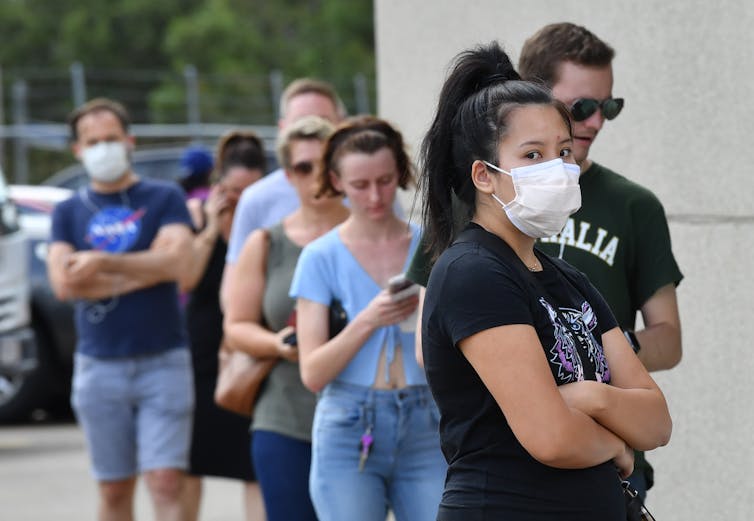
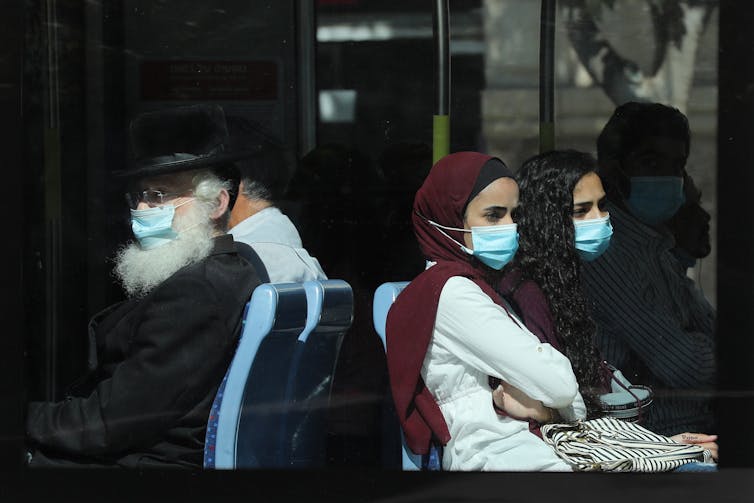
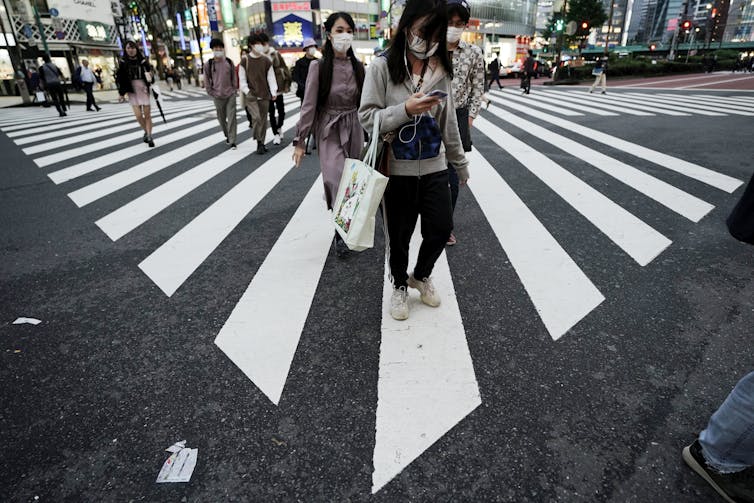
If the past few months have been like a long-haul flight, Victorians are now standing in the aisles waiting for the cabin door to open, a little groggy and disoriented but relieved.
They have every right to be. No other place in the world has tamed a second wave this large. Few have even come close.
Comparing different countries’ fights against COVID-19 is not a straightforward exercise, given differences in demography, geography, health system capability, and government strategy.
Perhaps most importantly, not every country has tried to get down to zero, or near zero, community transmission. This may not have been a realistic goal for countries with less border control than Australia.
Also, as Victorians understand acutely, the virus is unpredictable. Today, as the crisis accelerates in Europe and elsewhere, Victoria’s “zero new cases” are the envy of the world. But there can be no certainty about where things will be in a few months’ time.
All of this is to say that a favourable international comparison should not encourage complacency. But it is nevertheless true that Victoria’s efforts are notable on the world stage. The state’s success has warded off a significant human toll and further economic damage. As a result, Australia has a much better chance of returning to an approximation of “normal life” in the new year.
Victorians should be proud of these efforts, and the starkly different outcomes in countries that were in a similar position should reassure them that the efforts were worthwhile.
Surfing the second wave: Victoria, Singapore, then daylight
On August 5, Victoria’s seven-day average of daily new cases reached 533, the worst numbers seen anywhere in Australia.
Several other countries had similar numbers around that time, including Canada, Japan, Singapore, and most of Europe. They had taken different paths to get there; for Europe, these numbers represented a low ebb, not a peak. But the trajectories after this period diverged even more dramatically.
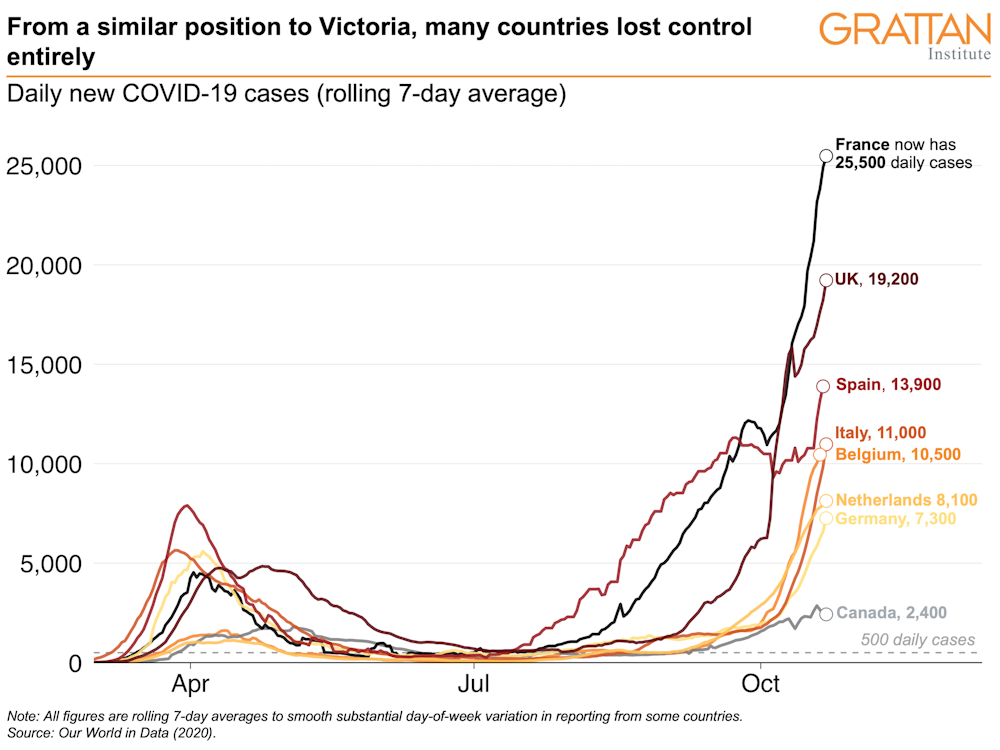
As the chart below shows, case numbers in several European countries began to accelerate steeply and are now much worse than ever. In contrast, Japan, Denmark, Sweden, Norway, Singapore, and Australia have so far kept case numbers at a moderate level.
Grattan Institute, Author provided
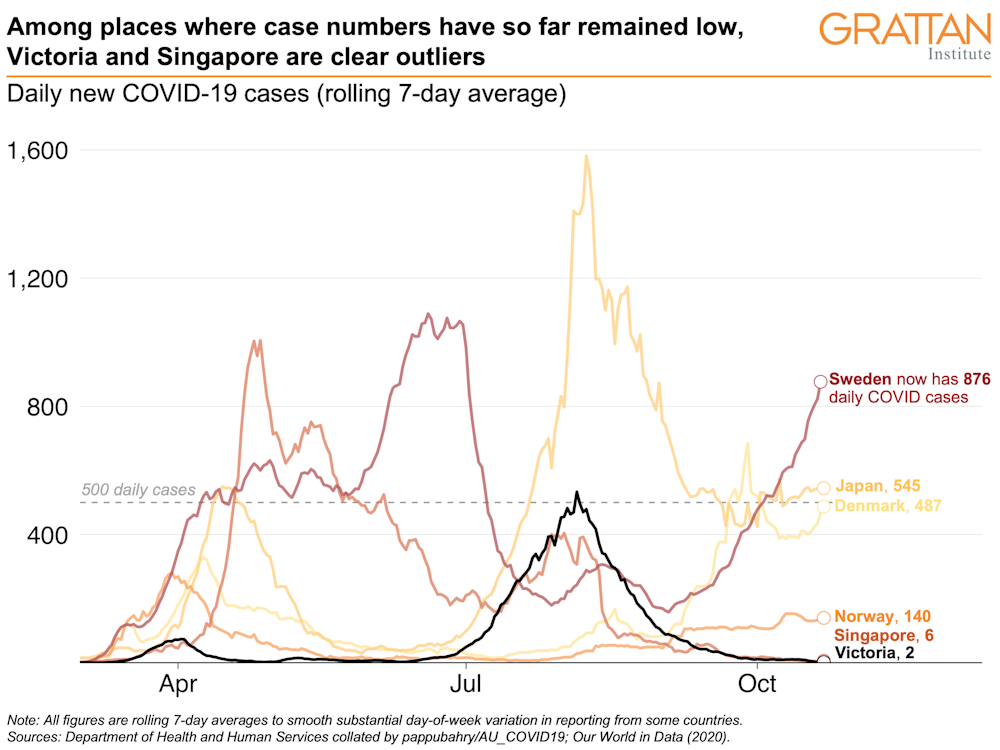
But as this next chart shows, there is significant divergence even among these relatively stable countries. Sweden appears on track to replicate the sharp acceleration seen elsewhere in Europe. In Denmark and Japan, case numbers remain at a moderate level but are not trending towards zero. Only Victoria and Singapore, which peaked at around 300, have returned to single digits.
Grattan Institute, Author provided
By suppressing their second waves, Victoria and Singapore are well placed to join a small club of countries that have sustained zero or near-zero cases, including New Zealand, Thailand, Vietnam, China, and the rest of Australia. The dividend for these countries has been economic, not just health-related, as the chart below shows.
Grattan Institute, Author provided
Victoria’s lockdown has been long and difficult, but it now occupies a rare and envious position. As Victorians await new freedoms on the next step towards COVID-normal, they should feel a sense of accomplishment.
Independent MP Helen Haines has just introduced a bill into parliament that seeks to establish a robust new federal integrity commission.
This is a consensus bill that involved consultation with legal academics, panels of retired judges, civil society stakeholders, ethicists and MPs.
Without the government’s support, it is unlikely to pass. But it is a move designed to force the government’s hand.
Although the government has agreed to establish a Commonwealth Integrity Commission, it has been dragging its heels on the issue. An exposure draft of the government’s CIC bill was sent to the attorney-general in December, but it has yet to be publicly released.
The government has said the bill’s release was delayed due to the immediate priority of responding to the pandemic.
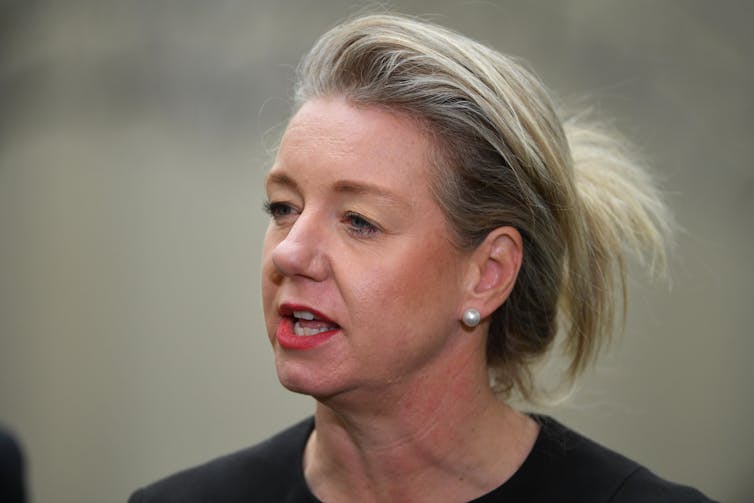
Bridget McKenzie was forced to resign after the sports rorts affair.Mick Tsikas/AAP
A strong — and independent — integrity commission would be able to investigate such issues thoroughly. It shouldn’t be left to the government to monitor itself any longer.
Overall, the bill proposes a robust commission with strong powers, coupled with checks and balances to ensure it does not abuse its powers.
Perhaps most significantly, the proposed integrity commission would have the power to conduct public hearings if it believes it’s in the public interest, balancing the seriousness of allegations with any unfair prejudice to a person’s reputation or unfair exposure of a person’s private life.
This is a proportionate model that enhances public trust through public hearings, but also takes into account legitimate concerns about damage to an individual’s reputation.
By contrast, the government’s proposed CIC would not have the power to conduct public hearings.
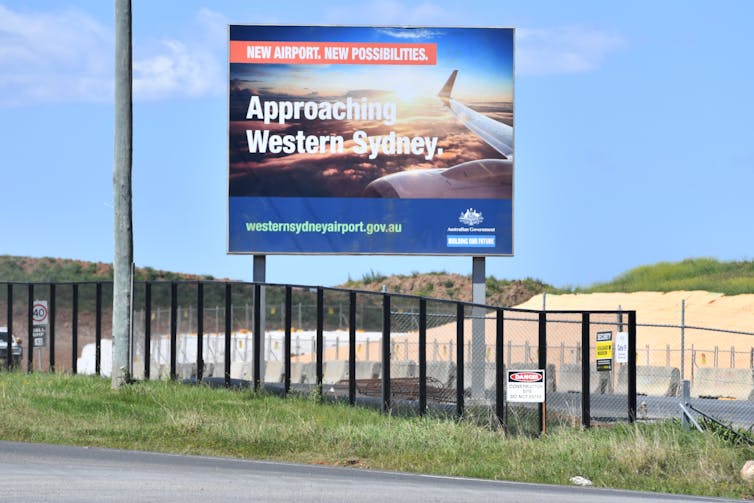
The AFP is investigating possible criminal offences linked to the $30 million land deal for the new Sydney airport.Mick Tsikas/AAP
Haines’s proposed commission would also have the power to make findings of fact and recommendations in a public report. It could refer matters involving criminality to law enforcement authorities.
The commissioner would be a statutory office holder who is independent of government. He or she would be supported by several assistant commissioners to allow for internal checks and balances.
And the body would include a whistleblower protection commissioner, which is particularly necessary given how weak Australia’s whistleblower laws are considered to be.
Importantly, the bill would provide for external accountability mechanisms to “watch the watchdog” via parliament and the courts.
Specifically, there would be oversight by a parliamentary joint committee to ensure the body’s compliance with the law, due process and other standards. Its decisions would also be subject to judicial review.
The commission’s funding would need approval by the joint parliamentary committee, as well, which provides some financial protection. This is important as the NSW Independent Commission Against Corruption (ICAC) has had its budget severely cut following its explosive revelations of corruption in government.
Haines’ bill also proposes a corruption prevention program for the Commonwealth public sector. This is a positive, pro-integrity function that monitors major corruption risks across all sectors.
The NSW ICAC is currently investigating former MP Daryl Maguire’s alleged misuse of public office for personal gain.ICAC handout
Why the government’s model has been criticised
The government’s CIC model is a watered-down version of Haines’s proposed body. It has been criticised for a few reasons.
The first is that it would fail to achieve its main aim of exposing corruption in the public sector.
The bar for investigation is too high, requiring a reasonable suspicion of corruption amounting to a criminal offence before an inquiry can even begin. This is a difficult hurdle to clear.
The Morrison government has been criticised for postponing its proposed integrity commission.Mick Tsikas/AAP
Lessons from the state anti-corruption commissions show evidence of corruption is typically unveiled through investigations themselves (based on credible allegations), rather than before an investigation begins.
Another major criticism is the proposed CIC will not have the power to hold public hearings.
Public hearings ensure proceedings are not cloaked in secrecy. They also increase public trust. Widespread corruption has been uncovered through such hearings in the past, such as the Fitzgerald inquiry in the 1980s into corruption in the Queensland police force. This led to the resignations and imprisonments of various former ministers and officials.
All states now have an anti-corruption commission and the federal government is lagging behind.
A bill is now before parliament that puts forward a strong, yet proportionate, vision for an integrity commission with robust powers and both internal and external accountability mechanisms.
It has been developed through a strong consultative process with legal experts, academics and civil society.
In short, it is a better model than what the government has proposed. It is now time for the government to move forward to promote political integrity — without any further delay.
Review: Real Worlds: Dobell Australian Drawing Biennial 2020, Art Gallery of NSW, Sydney
Why do drawers draw?
Drawing is historically connected to creative practice, but also truth and accuracy. It helps materialise story and culture, perhaps because it’s often the fastest way to get an idea down on paper. But drawing can also be slow, meditative and reflective. When the artist is in the flow state, a drawing can take hours and hours to resolve itself.
The 2020 Dobell Australian Drawing Biennial is an insightful window into the active compulsion of drawers. With the theme of Real Worlds, this wonderful array of work turns our minds back to representational forms of drawing and the way in which the medium envelops our connection to self, place, and country.
The works provide pause to consider the visual narrative and what the future of drawing might look like given new technologies — but less government support — at the tertiary level.
Real versus abstract
Sir William Dobell won the Archibald Prize for portraiture three times but his day job as a draughtsman is often referred to. Perhaps this is an attempt to legitimise his skills. Since the controversy of his 1943 Archibald prize — an image of fellow artist Joshua Smith derided by some vocal critics as caricature — his work has always made us question what is drawing today?
The Dobell Biennial, which ran from 1993—2012 alongside the Archibald as a prize worth A$30,000 before being reinvented as a curated exhibition, continues the conversation. The Dobell Drawing Prize, now hosted by the National Art School, was won last year by Justine Varga for a work entitled Photogenic Drawing (2018).
Real Worlds exhibits a tight selection showcasing the ideologies and technical skills of eight artists.
The work of Ország requires us to evaluate the role of observation and composition. Her work expresses our longing for a Utopian pre-technological society.
The drawings ‘reflect our capacity to imagine something better and different’ says Dobell Biennial curator Anne Ryan.
Mellor’s work connect us to ecology, history and Dreaming narratives while Bell’s impressively sized, interwoven type, line drawing and nostalgic drawn-on-paper tapestry recalls the 80s.
Mungkuri’s large layerings of Country in ink captivate and pull the viewer into a mesmerising cartography. Coyle wants you to dream alongside him, while Hawkes provides a splash of colour. Finally, Wright’s drawings tap into human fears of excess consumption.
The sheer scale of the works is striking and the time involved is impressive. Each artist shows us the deeply cognitive nature of their practice.
Peter Munkari’s Punu Ngura (Country with trees) 3 (2019).Peter Munkari/AGNSW
Learning to draw and think
The skill and technique of drawing has been diminished in schools and university curricula.
The newly formed Drawing Education Network seeks to understand the potential of drawing across all forms of education and to counter this shortsightedness.
As noted at a recent event, the dynamic of drawing within universities has dramatically shifted over the last 20–50 years. We might be losing a generation of learning for “job ready” visualisation skills — despite operating in a visual era.
Keynote Presentation ‘un-thinking Drawing and un-drawing thinking’ with Stuart Medley and discussion with Alan Male.
The future of drawing lies in its ability to persist throughout time, notes University of Newcastle creative industries head Paul Egglestone:
Drawing continues seemingly unfazed — even energised — responding to and feeding off copious new ways to make images — electronically and mechanically — on film, video and computers. Images are being made today we can legitimately call drawing that would not have been possible or even imaginable at one time.
Following the Art Gallery of NSW exhibition, Real Worlds: Dobell Australian Drawing Biennial 2020 will tour regionally to Lismore Regional Gallery (27 February–25 April 2021) and Museum of Art and Culture Lake Macquarie, yapang (8 May–18 July 2021).
The UN Treaty on the Prohibition of Nuclear Weapons will finally come into force after the 50th country (Honduras) ratified it over the weekend. The treaty will make the development, testing, stockpiling and use of nuclear weapons illegal for those countries that have signed it.
This is an extraordinary achievement for those who have suffered the most from these weapons — including the hibakusha (survivors) of the bombings of Hiroshima and Nagasaki and the islanders who lived through nuclear weapons testing in the Pacific.
Since 1956, the hibakusha in Japan, South Korea, Brazil and elsewhere have been some of the most strident campaigners against the use of these weapons. Among them is a group of Japanese Catholics from Nagasaki whom I interviewed as part of my research collecting the oral histories of atomic bomb survivors.
A 92-year-old hibakusha of the atomic bombing of Nagasaki in 1945 and a brother in a Catholic order, Ozaki Tōmei, explained the significance of the treaty to survivors like him. He was orphaned from the bombing at 17 and never found his mother’s body.
The Germans made tools for war including poisonous gas, which was [eventually] banned […] However, when the USA made an atomic weapon, then they … wanted to try it out. It was a war […] they were human.
And so this is why we say we have to eliminate nuclear weapons […] They said they did it to end the war, but for the people who were struck, it was horrific […] there was no need to use it.
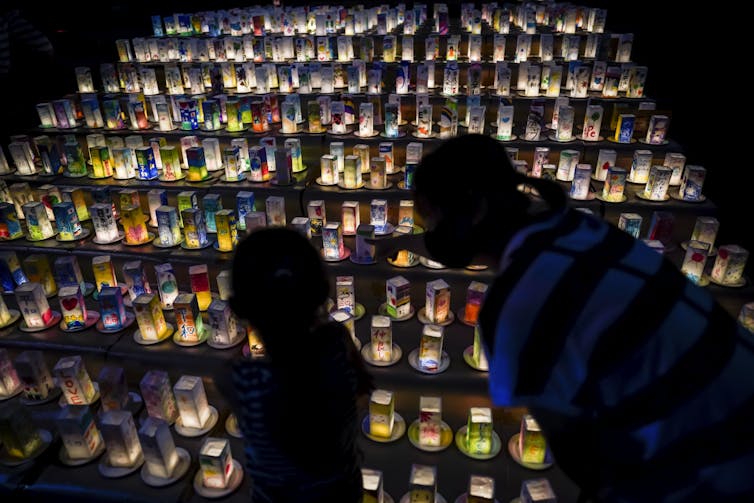
Lanterns with messages of peace are lit on the 75th anniversary of the Nagasaki bombing.DAI KUROKAWA/EPA
Treaty does not have support of nuclear powers
The treaty was adopted at the United Nations in 2017 by a vote of 122 nations in favour, one against and one abstention.
Sixty-nine nations, however, have not signed it, including all of the nuclear powers such as the US, UK, Russia, China, France, India, Pakistan and North Korea, as well as NATO member states (apart from the Netherlands who voted against), Japan and Australia.
Since the treaty was adopted, it needed ratification by 50 countries to come into force. This will now happen in 90 days.
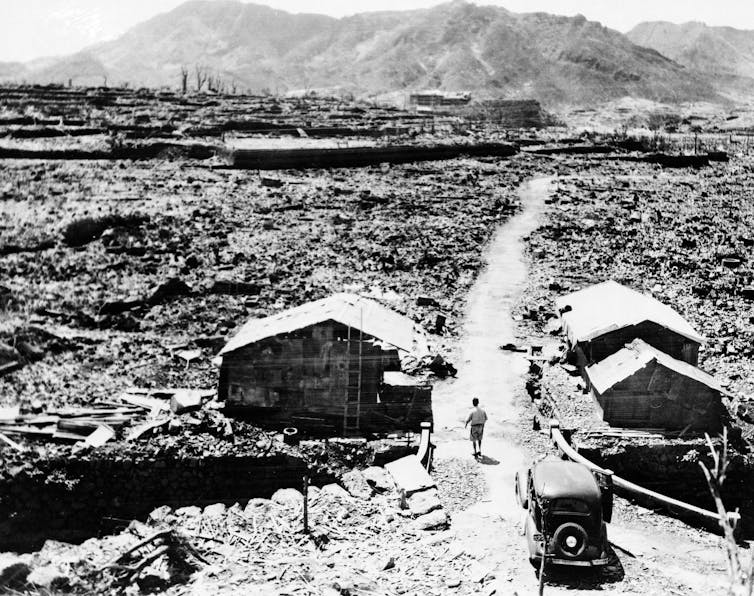
Shacks made from scraps of debris from buildings that were leveled in the aftermath of the atomic bomb that was dropped over Nagasaki.AP
The campaign for the treaty has relied heavily on civil society and organisations such as the Nobel Peace Prize-winning International Campaign Against Nuclear Weapons (ICAN).
And from the beginning, it has exposed political fault lines. The United States has been particularly outspoken in its opposition to the treaty, warning last week the treaty “turns back the clock on verification and disarmament and is dangerous” to the 50-year-old Nuclear Nonproliferation Treaty (NPT).
The NPT sought to prevent the spread of nuclear arms beyond the five original weapons powers (the US, Russia, China, UK and France). It has been signed by 190 countries, including those five nations.
The head of ICAN, Beatrice Fihn, says the new treaty banning nuclear weapons merely builds on the nonproliferation treaty.
There’s no way you can undermine the nonproliferation treaty by banning nuclear weapons. It’s the end goal of the nonproliferation treaty.
States like Japan and Australia have opposed the treaty on the grounds their security is boosted by the US stockpile of nuclear weapons. Japan’s former prime minister, Shinzo Abe, has said the treaty
was created without taking into account the realities of security.
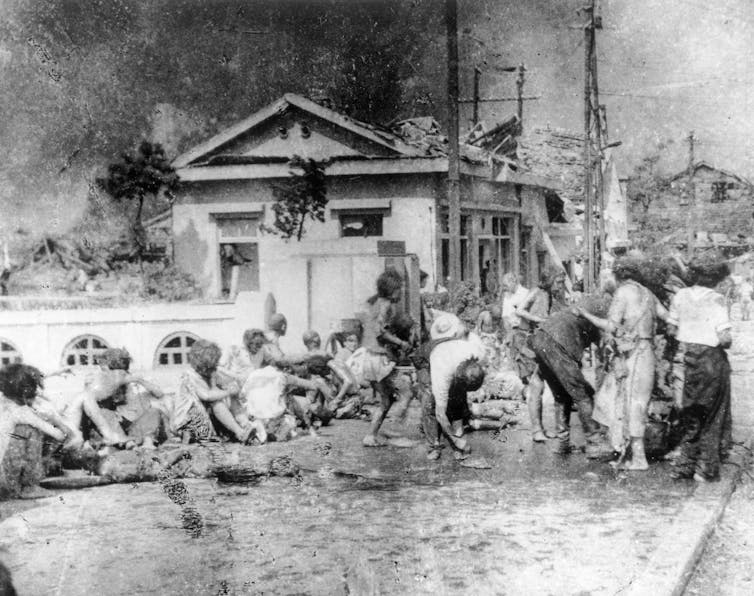
Survivors of the Hiroshima atomic bomb await emergency medical treatment.AP
The efforts of hibakusha in advocating for a treaty
Making the bomb illegal turns an old US justification for the weapon on its head. Harry Stimson, the former US war secretary, argued in 1947 the bombings of Hiroshima and Nagasaki were necessary to compel the Japanese to surrender at the end of the second world war.
The atomic bomb was more than a weapon of terrible destruction; it was a psychological weapon.
The damage from the bombings was colossal. It is unknown how many people were killed, but estimates range from 110,000 (the US army’s toll) to 210,000 (the figure accepted by ICAN and others).
At the forefront of the campaign to support the nuclear weapons ban treaty have been the voices of hibakusha who experienced the carnage firsthand.
Another Catholic hibakusha, Nakamura Kazutoshi, told me the stockpiling of nuclear weapons enables states to carry out genocide.
In war, we are at a level below animals. Among monkeys, or chimpanzees, there are no animals who would carry out a genocide.
Nakamura Kazutoshi.Author provided
A third hibakusha, 90-year-old Jōji Fukahori, told me about how he lost his mother and three younger siblings in the Nagasaki bombing.
His younger brother, Kōji, died an excruciating death around a week after the bombing, walking in the hot ash with no shoes and complaining to his brother, “I’m so hot!”
At the site where Fukahori’s brother was exposed, the temperature was about 1,000 degrees Celsius. Fukahori said,
You would have thought everyone would have turned into charcoal.
For Fukahori, the lasting effects of radiation exposure is a major reason why nuclear weapons must be banned. He continued:
the terror of radiation has to be fully communicated … The atomic bomb is unacceptable. I still cannot get over it.
Since 2009, Fukahori has been speaking out at the Nagasaki Atomic Bomb Museum and on the Peace Boat, a non-governmental organisation that organises cruises where passengers learn about the consequences of using nuclear weapons from hibakusha.
Jōji Fukahori telling his story.
Pressure building on Japan
The Japanese government is now under mounting pressure to ratify the treaty. Major Japanese financial institutions and companies have said they will no longer fund the production of nuclear weapons and nearly a third of all local assemblies have adopted proposals calling on the government to act.
The government, however, has been unmoved. In August, Abe gave a speech at a memorial service in Nagasaki, in which he suggested the effects of the bombings had been overcome.
Seventy-five years ago today, Nagasaki was reduced to ashes, with not a single tree or blade of grass remaining. Yet through the efforts of its citizens, it achieved reconstruction beautifully as we see today. Mindful of this, we again feel strongly that there is no trial that cannot be overcome and feel acutely how precious peace is.
Visitors pray for the atomic bomb victims at the Hiroshima Peace Memorial Park.Koji Ueda/AP
A Japanese atomic researcher, who knows how Fukahori and other hibakusha have not been able to move on, told me Abe’s words don’t go far enough:
Rather than placing a ‘full-stop’ at the end of damages such as this, we have a necessity to make our claim that the damages are not finished.
The nuclear weapons ban treaty offers a moment of hope for all the hibakusha of Hiroshima and Nagasaki still with us after 75 years. It is certainly their hope the ratification of the treaty now moves us one step closer to a world free of nuclear war.
Source: The Conversation (Au and NZ) – By Ian Anderson. Palawa, Deputy Vice-Chancellor Student and University Experience, Australian National University
It’s also the first time an agreement between governments on Indigenous issues was negotiated and signed by Indigenous Australians. The Coalition of Aboriginal Peak Organisations represented Indigenous Australians.
To reach the higher education target, universities and vocational education providers must overcome the educational and social barriers Indigenous students face. Higher education providers can also have an impact on all the agreement’s target areas as well as the reform agenda set out in the agreement.
What is the target?
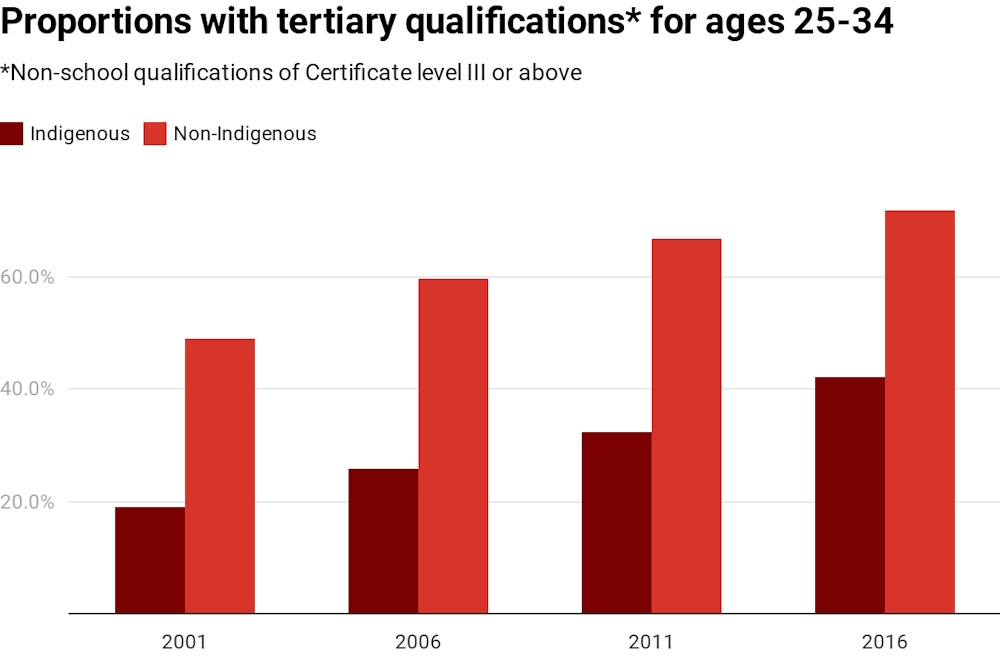
The higher education target is for 70% of Indigenous Australians between 25 and 34 years of age to have a tertiary qualification by 2031.
In 2016, 42.3% of Indigenous Australians in this age group had tertiary qualifications at the target’s required level. The proportion had more than doubled from 18.9% in 2001. By contrast, however, 72% of non-Indigenous Australians had such qualifications in 2016.
The target includes all university qualifications and those in vocational education above Certificate III level. Tertiary qualifications at these levels prepare Indigenous Australians for jobs.
Helping students take the next step
Year 12 completions are one factor with an impact on tertiary outcomes. It is encouraging to see growing numbers of Indigenous students completing high school. In 2020 this target was on track.
However, schools need to ensure Indigenous students who complete Year 12 are academically equipped for further university education and/or vocational training. More focus is needed on educational attainment in schools. Options for Indigenous students can also be broadened, including stronger pathways in secondary school mathematics and science.
Many Indigenous students are the first in their family to enter higher education. To support their journey, universities and vocational education providers need to develop long-term relationships with schools and Indigenous communities.
Indigenous university enrolments continue to grow. In fact, Indigenous enrolments increased by about 100% over the decade from 1996.
Source: AIHW analysis of Department of Higher Education Statistics Collection, Author provided
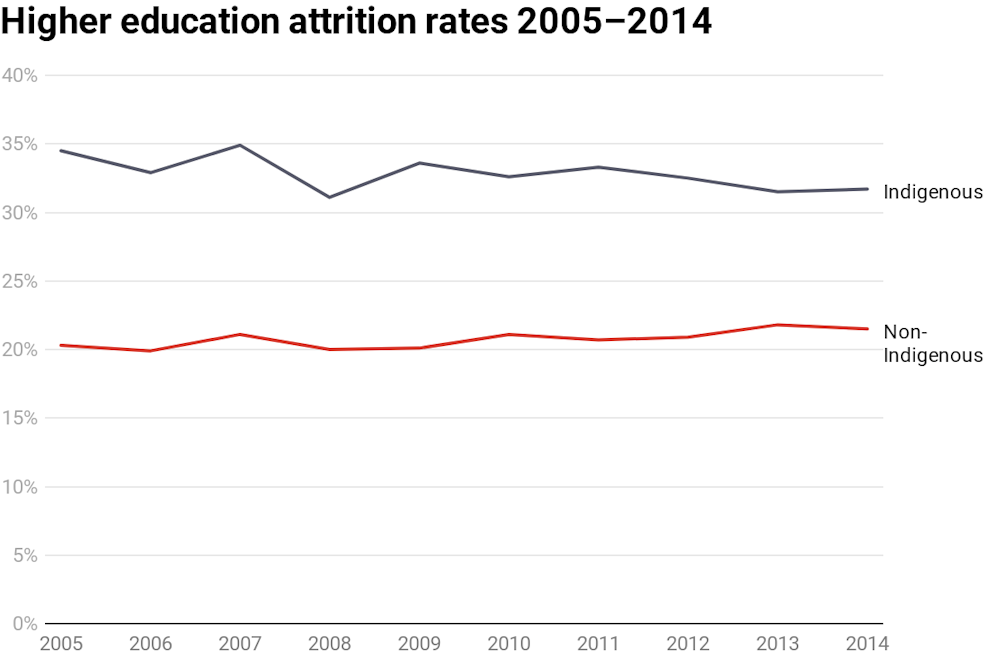
However, Indigenous attrition rates continue to be high. This is a key issue that demands attention.
Source: AIHW analysis of Department of Higher Education Statistics Collection, Author provided
A number of things can be done to improve university completions and lower attrition rates. Targeted education support is sometimes needed for Indigenous students who have gaps in their earlier education. Universities should also continue to provide appropriate social and cultural support.
The university sector has already taken some important steps to address these issues. It’s important to maintain the momentum for reform, particularly while we respond to the challenges posed by COVID-19.
Indigenous students are enrolled in vocational education at a higher rate than their non-Indigenous peers. However, enrolments tend to drop off significantly above Certificate III level. There is, however, some evidence this pattern is changing.
Educational strategies to improve literacy and numeracy will improve progression to higher levels of vocational education. Strong regional links between employers and vocational education will help ensure training lines up with jobs.
Leading change in other ways
Higher education providers also can contribute across all priorities in the Closing the Gap agenda. The new agreement has 16 targets. The targets cover: health, early childhood and child protection, education, housing, employment, community safety, language and land.
Higher education providers can better equip all their students to engage with these priorities over their professional lives. Embedding Indigenous knowledge in curricula is a key to this. So too is research undertaken to investigate Indigenous disadvantage and identify strategies to improve the quality and impact of Indigenous services.
The agreement has a particular focus on Indigenous-led initiatives.
An important reform is shared decision-making between governments and Indigenous Australians. The agreement also outlines reforms to strengthen the Indigenous community-controlled services sector. Finally, there is a focus on Indigenous-led evaluation and data management.
To that end, it is important that universities and vocational education providers think about how they can lead change. They should consider how they invest in Indigenous leaders within the sector. They should also consider the quality of the Indigenous partnerships they develop.
The National Agreement on Closing the Gap presents some new challenges for higher education providers. The first is to focus on improving educational outcomes for Indigenous Australians. However, these providers have a broader contribution to make; their role in producing the knowledge and workforce for change is equally important.
Source: The Conversation (Au and NZ) – By Susan Harris Rimmer, Professor and Director of the Policy Innovation Hub, Griffith Business School, Griffith University
The Queensland election is a history-making poll. For the first time in a state or federal election, two women are going head-to-head.
Does this mean gender equality issues are finally writ large across an election campaign?
Sadly, neither Labor’s Annastacia Palaszczuk, nor the Liberal National Party’s Deb Frecklington appear to be interested in highlighting the needs and perspectives of women ahead of election day on October 31.
Women making political history in Queensland
Labor goes into this election with a remarkably strong — and rare — record of female ministers in recent years.
In 2009, Anna Bligh became the first woman in Australia to win an election as premier. Six years later, Palaszczuk was the first woman to lead an opposition into government.
She also had the first female dominated-cabinet in Australian history – with eight out of the 14 ministers being women in 2015. After the most recent reshuffle this year, eight of Palaszczuk’s 18-member cabinet were women.
For the Queensland LNP, Frecklington is making history as their first female leader. But she is one of just five women in the LNP’s 23-member shadow ministry.
Despite these achievements, the proportion of women running in the 2020 election isn’t substantially different to the past. Across all 597 candidates, only 219, or 37%, are women. This is up from 32% in the 2017 election.
So, overall, progress is is being made, but slowly.
Hard hats and hi-vis
And just because both leaders are women, this does not mean “women’s issues” or even a focus on female perspectives is featuring prominently in the campaign. On the contrary.
Premier Annastacia Palaszczuk campaigning at a sand supplier.Dave Hunt/AAP
COVID-19 has hurt women’s work more than men’s, leading to a so-called “pink recession”. Women are more likely to be in part-time, casual or insecure work, and to work in industries most affected by lockdowns or economic downturn, such as retail and hospitality, tourism, human services, creative arts and universities.
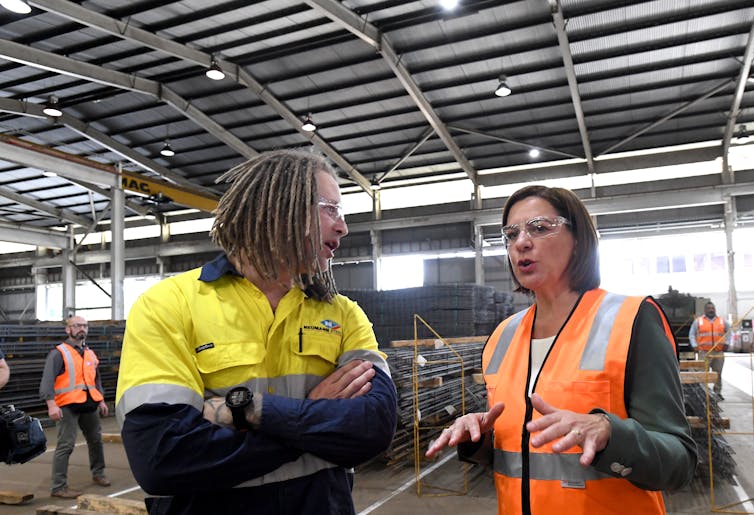
Despite this, the leaders are making male-dominated industries the focus of their campaigns.
LNP leader Deb Frecklington visiting a steel fabricator.Dave Hunt/AAP
While hi-vis may be convenient shorthand for “jobs”, it’s lazy politics. And it doesn’t make sense in this particular election, given the extent to which women have been affected by COVID-19.
What gender issues are featuring in the campaign?
There are some exceptions to the hard hat focus, however, and these are notable ones – even if they are not generating significant attention on the campaign trail.
The ALP has pledged free sanitary pads and tampons for 120 schools “most in need”. This would make Queensland only the second state, after Victoria, to offer a program like this.
On Thursday, the LNP said it would spend A$70 million to improve before and after school care and a further A$10 million to subsidise childcare training courses.
Both major parties are also taking significant domestic violence policies to the polls.
Following the murder of Brisbane woman Hannah Clarke and her three children in February, the LNP announced a package including laws against coercive control and emergency accommodation grants.
Earlier this month, the Palaszczuk government also pledged to do more to tackle coercive control, including training programs for first responders and a community awareness campaign, although has stopped short of specifically promising new laws.
Abortion law concerns
In disturbing news for women’s advocates, Frecklington has also committed to a review of the state’s abortion laws in her first term of government, with a focus on the gestational limit for terminations.
While it seems Frecklington is attempting to distance herself from the debate — saying it is not a “priority” — it is a worrying proposal for women specifically and the state more generally.
Are the leaders feminists?
Gender issues also got some attention in the second week of the campaign, after the leaders were questioned about their views on feminism. It wasn’t exactly a Helen Reddy “hear me roar” moment.
Asked whether she would describe herself as a feminist, Palaszczuk said, “if a feminist is about believing in equality, absolutely”.
Frecklington was even more noncommittal.
I identify as a female who wants to get Queensland working again.
Undermined from within
In Australian politics, we are used to women politicians being undermined by the media, opposition and even their own parties.
During this campaign, we have seen little media undermining on gender, perhaps because both leaders are women and their gender is not seen as a point of difference.
But we have seen further demonstration of female leaders being attacked from within.
In the early stages of the campaign, the ABC reported Frecklington had been referred to the Electoral Commission of Queensland by her own party over fundraising concerns. The LNP denies this, and Frecklington denies any wrongdoing.
The episode has not dominated the campaign since it was reported in mid-October. But it will only serve to make her leadership more precarious, should the LNP lose on October 31.
Not that it was particularly secure to begin with. This follows intense speculation about a leadership spill ahead of the election campaign.
So far, women appear to back the ALP
In the meantime, the major parties need women’s votes to win. The latest Roy Morgan Poll for Queensland shows the key to the ALP’s slim lead in week three of the campaign comes via its support from women.
Women may be the deciding factor in the state election.Darren England/AAP
Women favour the ALP 53.5% over LNP 46.5% on a two-party preferred basis, while men more narrowly favour the LNP 51.5% to 48.5% (overall, the ALP has its nose in front, 51% to 49%).
Women’s perspectives may not be dominating the campaign but they may be being crucial when it comes to the result.
Regardless of the election outcome, we can be sure that without either leader stepping up more strongly for women — and being supported by their parties to do so — this election will also be a historic lost opportunity.
Of the 215 nations and territories that have reported COVID-19 cases, 120 have experienced clear second waves or late first waves that began in July or later. That’s according to the Worldometer global database, which sources data from national ministries of health and the World Health Organisation.
Of these 120, only six have definitively emerged from their second wave: Australia, South Korea, Japan, Hong Kong, Vietnam and Singapore. I am not including New Zealand, as the series of clusters that arose in Auckland in mid-August never evolved into a clear second wave.
Ultimately, Victoria has performed extremely well by international standards. Only Vietnam and Hong Kong have enjoyed comparable success in quashing the second wave. Victorians’ sacrifice during lockdown has left Australia well placed to sustain very low numbers of cases through the coming summer.
A grim global context
Any comparison between Australia and other countries takes place amid a grim global context. The worldwide tally of cumulative cases is adding one million new cases every three or four days. On Wednesday, of the 100 countries with the highest total reported cases, just seven reported fewer than 50 new cases: Australia, China, Nigeria, Singapore, Ivory Coast, Zambia and Senegal. The same day, France and the United Kingdom each reported more than 26,000 new cases, and 20 European countries posted all-time daily record numbers.
Some European countries, such as the Czech Republic, Poland and Georgia, are now reporting daily case numbers 25-30 times higher than during their first waves.
Europe and North America face enormous challenges to control their outbreaks as winter looms and pandemic fatigue sets in. But already there are signs of decisive measures including a national lockdown in Ireland — very similar to Melbourne’s — and night curfews in Paris, seven other French cities, Brussels, Athens and Rome. Their current struggles stand in stark contrast to Australia’s situation.
Israel’s second wave came early
Which countries offer the most instructive comparison with Australia? Let’s start with Israel, one of the first countries to experience a second wave far more severe than the first.
Israel was also a founding member of the long-forgotten First Movers Group, comprising Austria, Denmark, Norway, Greece, the Czech Republic, Israel, Singapore, Australia and New Zealand. Each member nation implemented restrictions early in the pandemic, and held a virtual summit in May to share tips about controlling the virus. Since then, every member except New Zealand has experienced a major second wave.
Israel is yet to emerge from its second wave of COVID-19.ABIR SULTAN/EPA/AAP
Israel’s second wave was largely caused by transmission among high school and middle school students, and an uncoordinated exit from the first lockdown. By the end of May, citizens were allowed to go to shopping centres and community gatherings, despite a growing resurgence of cases. During the Israeli summer there was minimal enforcement of face mask use, and moderate restrictions were reimposed on July 17.
Cases continued to surge, prompting a second lockdown introduced on September 18. This included restricting people’s movement to within 1km from their homes. The mishandling of the first wave had eroded public trust in the government, and morale was seemingly bleak during what was the first national lockdown in the world in response to a second wave. While cases have declined in the past few weeks the country has not yet emerged, with daily new case numbers still between 800 and 1,100.
National lockdowns not essential for success
Four of the five Asian countries that have emerged from their second wave demonstrate that lockdowns aren’t an all-or-nothing choice. There are intermediate options, but they only work if certain conditions are met. These include effective testing, contact tracing and isolation capacities; a culture of wearing masks and following public health directives; electronic contact tracing; and selective local restrictions such as closing bars, restaurants and places of worship.
Japan and South Korea have had success controlling their second waves without blanket lockdowns, but neither are out of the woods yet.Eugene Hoshiko/AP/AAP
Vietnam was one of the first countries to contain its first wave and did not record a single death until July. Measures included early border closures, aggressive testing and tracing, and enforced quarantine of all cases and their contacts. This may not be an option in less authoritarian countries. Vietnam did have a national lockdown for a two-week period in April.
Clear communication with the public was a crucial element of Vietnam’s response. The government used a range of creative ways to spread messages about symptoms, prevention and testing sites, including via state media outlets, social media, text messages and, famously, a viral song about the importance of handwashing.
Vietnam’s viral video.
After 99 days of zero daily cases, Vietnam’s first community transmission case was reported in Da Nang on July 25. It started with a man who tested positive without any travel history, and it’s still unclear how he contracted the virus.
By September 4, Vietnam’s health ministry had confirmed 632 new cases and 35 deaths. As during the first wave, blanket testing was conducted in Da Nang, transport in and out of the city was cancelled, and bars and restaurants closed. The same local measures were implemented in certain neighbourhoods in Hanoi when new cases were identified. The country has not reported any community transmission since early September.
Besides enforced quarantine, Japan, Hong Kong and South Korea have mostly followed the same strategy as Vietnam and haven’t imposed blanket lockdowns. After two months of near zero daily cases, South Korea experienced a series of spikes linked to bars, nightclubs and karaoke venues, with a major surge in August linked to a large church. The response has been characterised by robust decentralised testing, contact tracing and isolation, and a registration system at entertainment venues based on QR codes. However, the country is not yet out of the woods, reporting 50-90 cases a day.
Likewise, Japan continues to report 400-700 cases a day. But Hong Kong is approaching the same level as Victoria, reporting between five and 18 cases a day.
Singapore has a population comparable to Victoria’s, but has reported nearly 60,000 cases compared to Victoria’s 20,000.WALLACE WOON/EPA/AAP
Singapore is a very different case. It has by far the highest per capita number of cases in Asia. With a population of just 5.8 million, the country has reported 57,921 cases — more than twice the number of Australia (which has more than four times the population).
Between mid-April and mid-June, Singapore experienced a massive spike in cases mostly among overseas migrant workers. On June 19, the country eased restrictions opening restaurants and gyms. In the seven subsequent weeks leading up to August 8, Singapore reported 13,096 new cases or 267 per day. Cases have subsequently declined to single digits, comparable to Victoria.
This week, the bushfire royal commission is due to hand down its findings. Already, the commission’s officials have warned the status quo is “no longer enough to defend us from the impact of global warming”.
Australia’s young people appear to know this all too well. Preliminary findings from our recent research show many young people are worried about the future. And those directly exposed to the Black Summer bushfires suffered mental health problems long after the flames went out.
Young people with direct exposure to the bushfires reported significantly higher levels of depression and anxiety, and more drug and alcohol use, than those not directly exposed.
It’s clear that along with the other catastrophic potential harm caused by climate change, the mental health of young people is at risk. We must find effective ways to help young people cope with climate change anxiety.
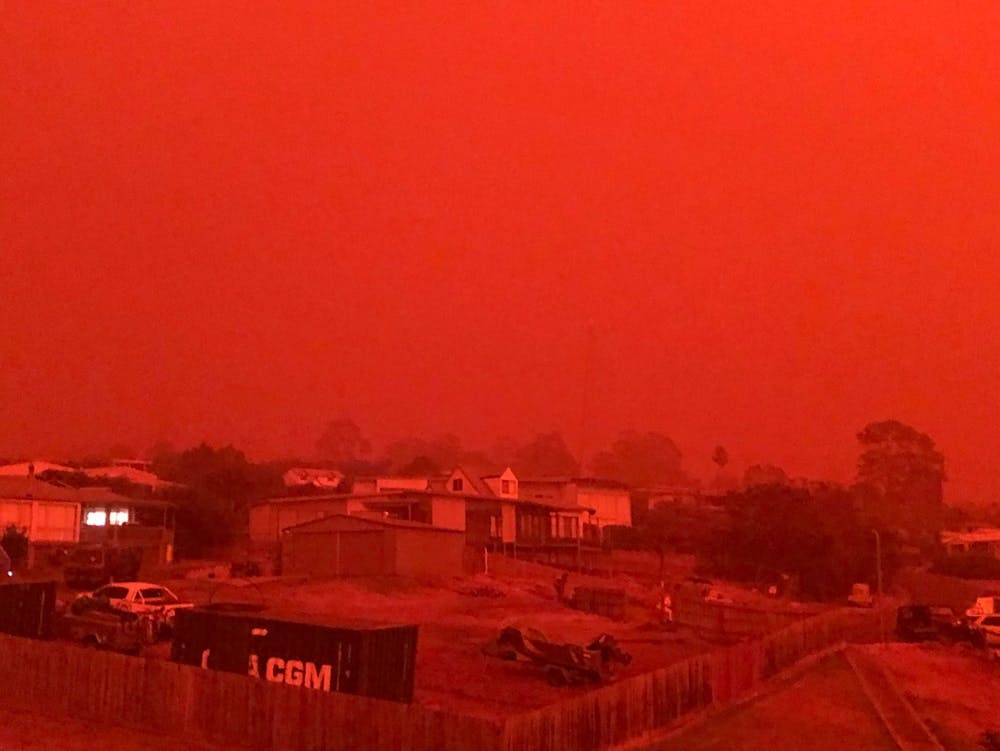
Young people affected by the Black Summer bushfires of 2019-2020 have continued to suffer mental health problems long after the fires went out.AAP Image/Supplied by Twitter, @brendanh_au
Concern about the future
Our yet-to-be published study was conducted between early March and early June this year. It involved 740 young people in New South Wales between the ages of 16 and 25 completing a series of standardised questionnaires about their current emotional state, and their concerns about climate change.
Our early findings were presented at the International Association of People-Environment Studies (IAPS) conference online earlier this year.
Some 57% of respondents lived in metropolitan areas and 43% in rural or regional areas. About 78.3% were female, about 20.4% male and around 1% preferred not to say.
Overall, just over 18% of the respondents had been directly exposed to the bushfires over the past year. About the same percentage had been directly exposed to drought in that period, and more than 83% were directly exposed to bushfire smoke.
Our preliminary results showed respondents with direct exposure to the Black Summer bushfires reported significantly higher levels of depression, anxiety, stress, adjustment disorder symptoms, and drug and alcohol use than those not directly exposed to these bushfires.
Many of the respondents were clearly concerned about the future.Shutterstock
Many young people were clearly concerned about the future. One 16 year old female respondent from a rural/regional area told us:
From day to day, if it crosses my mind I do get a bit distressed […] knowing that not enough is being done to stop or slow down the effects of climate change is what makes me very distressed as our future and future generations are going to have to deal with this problem.
Another 24 year old female respondent from a rural/regional area said:
It makes me feel incredibly sad. Sad when I think about the animals it will effect [sic]. Sad when I think about the world my son is growing up in. Sad to think that so many people out there do not believe it is real and don’t care how their actions effect [sic] the planet, and all of us. Sad that the people in the position to do something about it, won’t.
Young people directly exposed to drought also showed higher levels of anxiety and stress than non-exposed youth.
‘I feel like climate change is here now’
Those with direct exposure to bushfires were more likely than non-exposed young people to believe climate change was:
going to affect them or people they knew
likely to affect areas near where they lived
likely to affect them in the nearer future.
Both groups were equally likely — and highly likely — to believe that the environment is fragile and easily damaged by human activity, and that serious damage from human activity is already occurring and could soon have catastrophic consequences for both nature and humans.
One 23 year old female respondent from a metropolitan area told us:
I feel like climate change is here now and is just getting worse and worse as time goes on.
One 19 year old male respondent from a metropolitan area said:
I feel scared because of what will happen to my future kids, that they may not have a good future because I feel that this planet won’t last any longer because of our wasteful activities.
When asked how climate change makes them feel, answers varied. Some were not at all concerned (with a minority questioning whether it was even happening). Others reported feeling scared, worried, anxious, sad, angry, nervous, concerned for themselves and/or future generations, depressed, terrified, confused, and helpless.
One 16 year old female respondent in a metropolitan area told us:
I feel quite angry because the people who should be doing something about it aren’t because it won’t affect them in the future but it will affect me.
Though they were slightly more upbeat about their own futures and the future of humanity, a significant proportion expressed qualified or no hope, with consistent criticisms about humanity’s selfishness and lack of willpower to make needed behavioural changes.
One 21 year old female respondent from a metropolitan area said she felt:
a bit dissappointed [sic], people have the chance to help and take action, but they just don’t care. I feel sad as the planet will eventually react to the damage we have done, and by then, it will be too late.
Many participants listed COVID-19 as an extra stressor in their life.Shutterstock
Extra stressors
Many participants listed COVID-19 as an extra stressor in their life. One 18 year old female said:
Slightly unrelated but after seeing all of the impacts on a lot of people during the COVID-19 pandemic, all of my hope for humanity is gone.
A 25 year old woman told us:
Due to the fact of this COVID stuff, we are not going to be able to do a lot of activitys (sic) that we did before this virus shit happen (sic).
A 16 year old male said:
At present with how people have reacted over the COVID-19 virus there is no hope for humanity. Everyone has become selfish and entitled.
Irrespective of bushfire exposure, respondents reported experiencing moderate levels of depression, moderate to severe anxiety and mild stress. They also reported drug and alcohol use at levels that, according to the UNCOPE substance use screening tool, suggested cause for concern.
What does this mean?
We are still analysing the data we collected, but our preliminary results strongly suggest climate change is linked to how hopeful young people feel about the future.
We are already locked into a significant degree of warming — the only questions are just how bad will it get and how quickly.
Young people need better access to mental health services and support. It’s clear we must find effective ways to help young people build psychological resilience to bushfires, and other challenges climate change will bring.
University of New England researchers Suzanne Cosh, Melissa Parsons, Belinda Craig and Clara Murray contributed to this research. Don Hine from the University of Canterbury in New Zealand was also a contributor.
It is estimated around half the world’s students’ schools remain shut down. All told, this has been a potentially damaging disruption to the education of a generation.
But one of the few positive outcomes from this experience is an opportunity to rethink how digital technologies can be used to support teaching and learning in schools.
Our collective experiences of remote schooling offer a fleeting opportunity for schools to think more imaginatively about what “digital education” might look like in the future.
This is not to echo the hype (currently being pushed by many education reformers and IT industry actors) that COVID will prove a tipping-point after which schools will be pushed fully into digital education.
On the contrary, the past six months of hastily implemented emergency remote schooling tell us little about how school systems might go fully virtual, or operate on a “blended” (part online, part face-to-face) basis. Any expectations of profiting from the complete digital reform of education is well wide of the mark.
Instead, the most compelling technology-related lessons to take from the pandemic involve the informal, improvised, scrappy digital practices that have helped teachers, students and parents get through school at home.
Technology during the pandemic
All over the world, school shutdowns have seen teachers, students and families get together to achieve great things with relatively simple technologies. This includes the surprising rise of TikTok as a source of informal learning content. Previously the domain of young content creators, remote schooling saw teachers of all ages turn to the video platform to share bite-size (up to one minute) chunks of teaching, give inspirational feedback, set learning challenges or simply show students and parents how they were coping.
TikTok also been used as a place for educational organisations, public figures and celebrity scientists to produce bespoke learning content, as well as allowing teachers to put together materials for a wider audience.
Even principals have used it to keep in contact with their school — making 60-second video addresses, motivational speeches and other alternatives to the traditional school assembly speech.
Classes in some countries have been run through WhatsApp, primarily because this was one platform most students and families had access to, and were used to using in their everyday lives.
Elsewhere, teachers have set up virtual BitMoji classrooms featuring colourful backdrops and cartoon avatars of themselves. These spaces act as a friendly online version of their familiar classroom space for students to check in and find out what they should be learning, access resources and temporarily feel they were back at school.
Some teachers have worked out creative ways of Zoom-based teaching. These stretch beyond the streamed lecture format and include live demonstrations, experiments, and live music and pottery workshops.
Social media, apps and games have proven convenient places for teachers to share insights into their classroom practice, while students can quickly show teachers and classmates what they have been working on.
These informal uses of digital media have played an important role in boosting students, teachers and parents with a bit of human contact, and additional motivation to connect and learn.
So, what now?
All this will come as little surprise to long-termadvocates of popular forms of digital media in education. There is a sound evidence base for the educational benefits of such technology.
For example, a decade’s worth of studies has developed a robust framework (and many examples) of how students and educators can make the most of personal digital media inside and outside the classroom. These include allowing students to participate in online fan-fiction writing communities, digital journalism, music production and podcasting.
The past ten years has also seen a rise in e-sports — where teams of young people compete in video games.
This stresses the interplay between digital media, learning driven by students’ interests and passions, and online communities of peers. Informal digital media can be a boon for otherwise marginalised and disadvantaged youth and allowing students to find supportive communities of like-minded peers regardless of their local circumstances.
Australia continues to be one of the few countries in the world where classroom use of smartphones is banned by some governments. Some of the most popular social media platforms, content creation apps, and open sites such as YouTube remain filtered and blocked in many schools too.
At the same time, official forms of school technology are increasingly criticised for being boring, overly-standardised, and largely serving institutional imperatives, rather than pitched toward the interests of students and teachers.
The past six months have seen many schools forced to make the best of whatever technologies were immediately to hand. Previously reticent teachers now have first-hand experience of making use of unfamiliar technologies. Many parents are now on board with the educational potential of social media and games. Most importantly, students have been given a taste of what they can achieve with “their” own technology.
With US schools now exploring the benefits of establishing official TikTok creation clubs to enhance their video-making skills, it might be time for Australian educators to follow suit. Let’s take the opportunity to re-establish schools as places where teachers, students and families can work together to creatively learn with the devices and apps most familiar to their everyday lives.
Source: The Conversation (Au and NZ) – By Rebecca Bentley, Professor of Social Epidemiology, Principal Research Fellow in Social Epidemiology and Director of the Centre for Research Excellence in Healthy Housing in Melbourne School of Population and Global Health, University of Melbourne
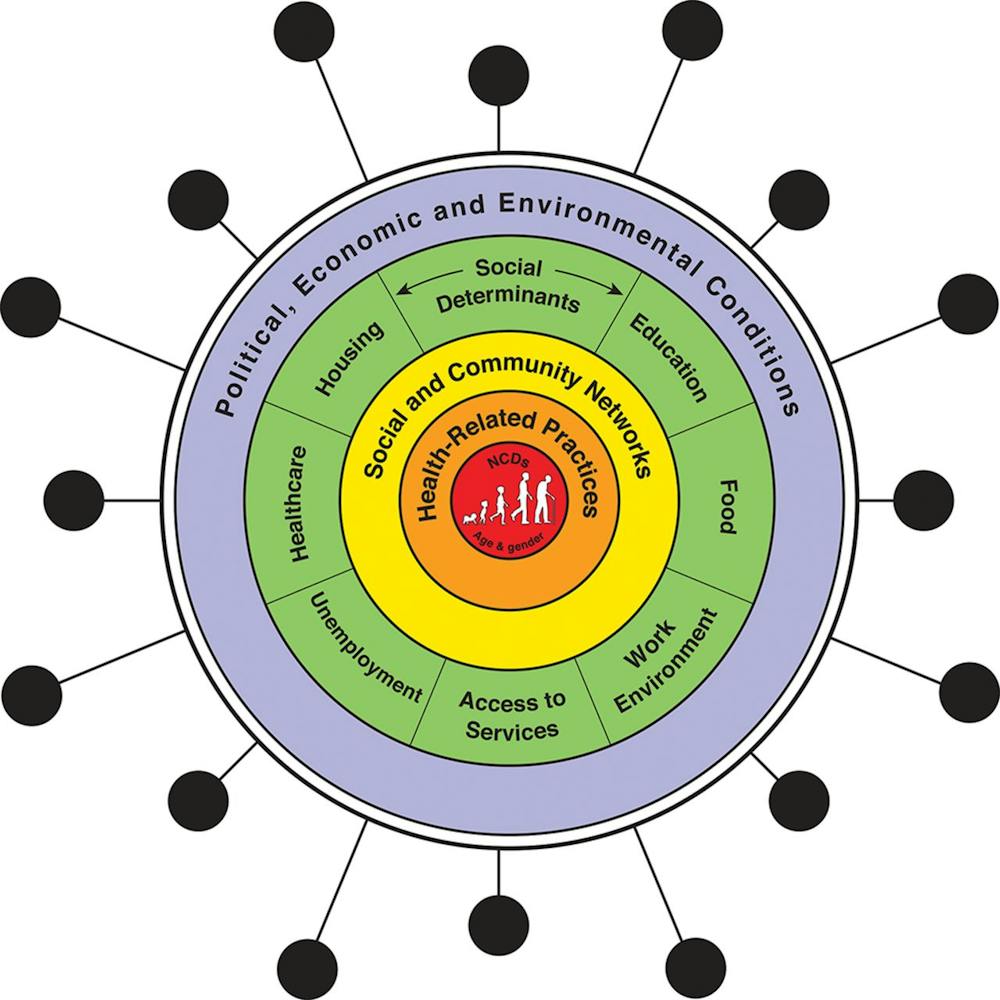
The World Health Organisation has always been interested in housing as one of the big “causes of the causes”, of the social determinants, of health. The WHO launched evidence-based guidelines for healthy housing policies in 2019.
Australia is behind the eight ball on healthy housing. Other governments, including in the United States, United Kingdom and New Zealand, acknowledge housing as an important contributor to the burden of disease. These countries have major policy initiatives focused on this agenda.
In Australia, however, we do housing and we do health, but they sit in different portfolios of government and aren’t together in the (policy) room often enough. Housing should be embedded in our National Preventive Health Strategy.
The COVID-19 pandemic has forced us to rethink how we approach health and protect our populations. It has amplified social and economic vulnerability. The pandemic has almost certainly brought housing and health together in our minds.
Housing – its ability to provide shelter, its quality, location, warmth – has proven to be a key factor in the pandemic’s “syndemic” nature. That is, as well as shaping exposure to the virus itself, housing contributes to the social patterning of chronic diseases that increase COVID-19 risks.
Housing affects health in many ways. At the broad scale, housing disadvantage, unaffordable housing and housing of poor quality have been the focus of much recent Australian research. More specific housing drivers of health, such as household mould, injury, overcrowding, noise, cold and damp, have received renewed global attention.
However, capturing the combined health effect of housing is difficult. It’s hard to measure and has many components, and everyone has slightly different housing (and health).
But epidemiologists can provide us with a useful way of estimating the “burden” of various risk factors for population health. Housing risk factors have rarely been examined in Australia, but our estimates flag that the increasing health burden of housing demands attention.
For example, we estimate the health cost (measured in disability-adjusted life years) due to respiratory and cardiovascular disease that can be attributed to mouldy or damp housing is about three times the cost attributable to sugary drinks in Australia. Damp, cold and mouldy housing generates a substantial health burden and could be an easy target for public health prevention strategies. These housing conditions stand alongside many of the classic risk factors such as diet, smoking and obesity.
This estimate of health burden does not even factor in the important role housing plays in mental health. Housing affordability, security, suitability, location and condition are all associated with good mental health.
With rates of eviction likely to increase once moratoriums are lifted across the country, the housing-related mental health burden will almost certainly increase too.
Simple housing-focused interventions could reduce the sizeable health burden from housing-related problems. As the WHO advocates, this requires policy and research that have an eye on both health and housing.
In practical terms, a preventive health strategy would include:
minimum rental housing standards to protect occupants’ health, which would target structural factors related to damp and mould, ventilation, heating and cooling, injury hazards, maintenance and repair
good-quality public housing that is easy to access as a foundation for healthy lives
help with fixing problems, such as mould removal and servicing of heaters, for people in poor-quality housing
insulation to maintain indoor temperature and increase energy efficiency.
Poorly insulated housing is a serious health issue in Australia.fizkes/Shutterstock
COVID has caused us to rapidly rethink public housing, nursing homes, share houses and small inner-city apartments. When choosing our current housing, few of us would have factored in the potential for isolation and loneliness, the need for separate working and study spaces, access to private green space, or the infection risk of shared lifts.
The experience of many Australians during the pandemic has almost certainly changed our view of the housing that we need, and what we consider to be healthy. It is time to harness this knowledge and learn from our COVID-19 experience.
Many have lamented the missed opportunity to create economic stimulus in our nation’s COVID recovery plan by building more social housing. But social housing is only a small part of the story. Australia needs to embrace a future where good population health goes hand in hand with good-quality, affordable and secure housing – where health is at the forefront of housing policy and public preventive health strategies harness housing.
In a new series, our writers explore their best worst film. They’ll tell you what the critics got wrong – and why it’s time to give these movies another chance.
While some may know John Waters through his family friendly Hairspray (1988) – adapted into a stage musical in 2002 and back to the screen in 2007 – many know him as the Prince of Puke, the King of Bad Taste or the Pope of Trash.
Perhaps his most notorious film is the exploitation comedy Pink Flamingos (1972), the first in his “Trash Trilogy”, which also includes Female Trouble (1974) and Desperate Living (1977).
Pink Flamingos is emblematic of Waters’ camp aesthetic, juxtaposing grotesque subject matter against pastel colours, kitsch props and bubblegum pop music.
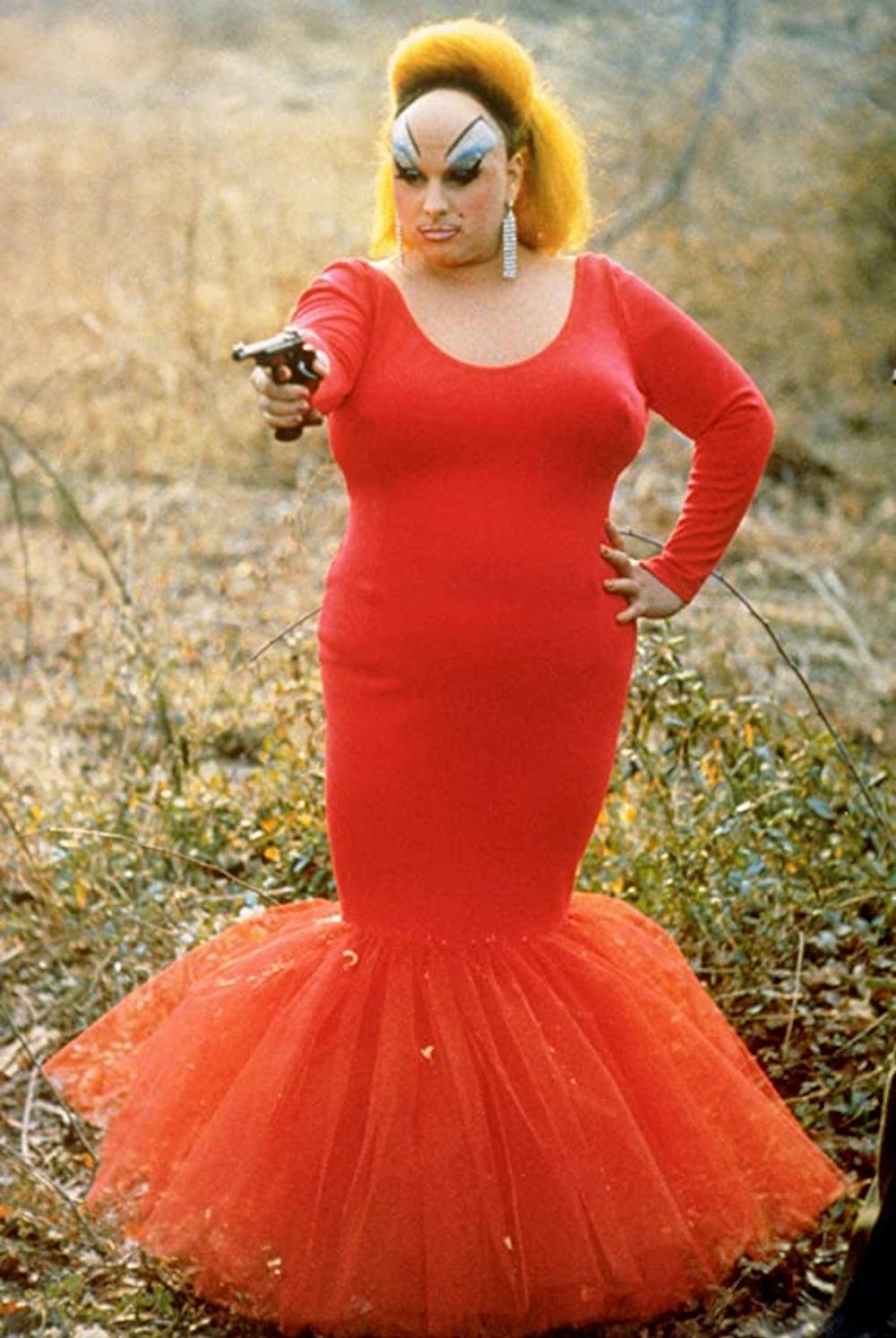
Waters’ muse Divine is Babs Johnson, the “filthiest person alive.” She lives with her mother Edie (Edith Massey), who dresses as a baby, sits in a crib and screams for eggs; her ghoulish lover Cotton (Mary Vivian Pearce); and her son Crackers (Danny Mills), who, in a particularly gruesome moment, has sex with a woman while a live chicken is crushed to death between their two bodies.
But Babs’ title of “filthiest person alive” is at stake, and she must rival Raymond (David Lochary) and Connie Marble (Mink Stole), who kidnap women, imprison and forcefully impregnate them, and sell their babies to lesbian couples.
Variety’s first review is now famous, calling it “one of the most vile, stupid and repulsive films ever made.”
Banned for indecency
It wasn’t just the critics who were unimpressed. When distributors tried to bring the film to Australia in 1976, it was banned for “indecency”. A cut version was given an R rating and released that year theatrically.
The film’s full version was eventually granted an X18+ rating, for pornographic, non-simulated sexual activity, restricting sale and hire of the film to the ACT and some regions of the NT.
In 1997, for a 25th anniversary cinematic re-release, the uncut film was again refused. The classification board said films could receive an R rating when sexual activity was “realistically simulated” – but not when it was “the real thing”.
Babs Johnson may have been the world’s filthiest person – but the classification board thought this could be the world’s filthiest film.IMDB
Films with unsimulated sexual activity, such as Catherine Breillat’s Romance (1999) and John Cameron Mitchell’s Shortbus (2006) have since been awarded R18+ classification, allowing the category to include films with unsimulated sexual activity.
But the full version of Pink Flamingos maintains an X18+ rating. Even the National Film and Sound Archive’s 2017 screenings of banned films showed a cut version rated R18+.
Stupid? No: it was groundbreaking
Despite this reception, Pink Flamingos is now heralded as ground-breaking. It shaped the boundaries of bad taste and gross out humour.
There are several shocking scenes in the film. One sees Divine and Crackers break into the Marbles’ home where, after licking all the furniture, Divine fellates her son. Another sees a shot of a man flexing his prolapsed anus so it looks like it’s miming the words to “Surfin’ Bird”.
But perhaps the most notorious is where, in the final scene, Divine eats dog faeces to “How Much is the Doggy in the Window?”.
Just how much can you stomach when watching something disgusting?
The characters in Pink Flamingos challenge normative ideas around sexuality, gender and family. Confronting perceptions of “good taste”, Pink Flamingos attacked an elitist culture that excluded many communities, such as queer folk and punks.
Pink Flamingos wasn’t interested in telling respectable stories of queer lives.IMDB
Unlinke the respectable queer characters palatable to a broad audience in Love, Simon (2018) or Will & Grace (1998–2005, 2017–), Pink Flamingos allows us pleasure in others’ disgust at these mad characters.
Pink Flamingos draws on a queer rage that channelled the discontent many viewers felt with assimilationist politics. Babs Johnson and her family were disgusting and broke the law – and the audience loved her for it.
The film contributed to a camp aesthetic that is imbued in many popular queer films, such as But I’m a Cheerleader (1999) and Raspberry Reich (2004), and Waters’ rage became a key part of queer cinema, seen elsewhere in the New Queer Cinema movement of the early 90s and beyond.
In an era when films depicted queer folk as painfully banal, such as The Boys in the Band (1970), or offensive, such as Cruising (1980), Waters’ films were a funny and crude counterpoint.
They were a promise of a brighter and queerer future.
As I have argued elsewhere, Waters’ films do not make explicit political statements. His ideology is conveyed through humour.
Through co-opting the plastic, pink flamingo lawn ornament, Waters makes fun of a middle class sense of respectability. Before carrying out the punishment of the Marbles (for “asshole-ism”, no less), Babs Johnson proclaims:
Kill everyone now! Condone first degree murder! Advocate cannibalism! Eat shit! Filth is my politics! Filth is my life!
The humour lies in the absurdity of the situation.
When Variety dubbed the film “one of the most vile, stupid and repulsive films ever made”, Waters used this on the posters promoting the film. Waters wanted to offend people with Pink Flamingos – and if you can stomach to look past the offence, you will find a biting and hilarious film, as shocking and politically relevant as ever.
But in revisiting Pink Flamingos, there is one scene that still doesn’t sit right with me. The on-screen deaths of the chicken (purely for the sake of comedy) is a cruelty and grotesquery that goes beyond my own sense of good taste. Everyone has their limits.
The Australian government has registered “serious concerns” with Qatar about an incident in which female passengers, including Australians, were taken off a flight bound for Australia and subjected to an invasive search.
The incident happened at Hamad international airport in Doha earlier this month after a fetus was discovered in an airport bathroom.
The story was broken by the Seven Network, which reported that “women at the airport, including thirteen Australians, were removed from flights, detained and forced to undergo an inspection in an ambulance on the tarmac.”
According to the report, Qatari authorities forced the women to remove their underwear.
A foreign affairs spokesperson said on Sunday: “The Australian government is aware of concerning reports regarding the treatment of female passengers, including Australian citizens, at Doha (Hamad) airport in Qatar.
“We have formally registered our serious concerns regarding the incident with Qatari authorities and have been assured that detailed and transparent information on the event will be provided soon.”
The matter is being handled by Foreign Minister Marise Payne.
The Morrison government and business have reacted angrily to Daniel Andrews’ “cautious pause” on announcing the easing of COVID restrictions in Melbourne, suggesting it showed the state government lacked faith in its contact tracing.
The delay of the announcement – which Andrews said would only be for a day or two – follows an outbreak in the northern suburbs of Melbourne. Andrews insisted the pause would not stop things opening on or before November 1, as scheduled.
After talking up expectations of a major announcement, the premier hosed them down on Saturday before declaring on Sunday a hold until at least 1,000 test results from the northern metropolitan outbreak were processed.
The federal government said the pause was “a profound disappointment.”
“At some point, you have to move forward and put your public health systems to work in a bid to reclaim the jobs that have been lost, and rescue the livelihoods and peace of mind of so many Victorians who have been affected by the inability to contain the outbreak that lead to the second Victorian wave,” Prime Minister Scott Morrison, Treasurer Josh Frydenberg, and Health Minister Greg Hunt said in a statement.
“Victoria’s public health systems are either up to the task of dealing with future outbreaks or they are not. The decision to keep businesses closed suggests that there is still not sufficient confidence within the government that their systems can support reopening.”
Andrews’ delay brought a sharp reaction from his former Health Minister Jenny Mikakos, who tweeted:
“The set reopening is gradual & safe so any delay is unnecessary. It’s paralysis in decision-making.”
The Australian Industry Group said the state government’s failure to set out guidelines for Melbourne’s reopening was “yet another hammer blow to business confidence”.
“The decision reflects a clear lack of confidence by the government in its own testing and tracing systems,” Ai Group chief executive, Innes Willox, said.
The Business Council of Australia also pointed the finger at Victoria’s health system. “There can only be one explanation for the delays – Victorian authorities do not have confidence in their procedures to manage local outbreaks and we urge them to collaborate with NSW and adopt the NSW system,” BCA chief executive, Jennifer Westacott, said.
The Victorian pause is especially frustrating for the federal government because on Friday all jurisdictions except Western Australia agreed in principle to a new “Framework for National Reopening Australia by Christmas”.
Morrison and his ministers said in their statement that while the federal government “welcomes Victoria’s commitment to the national framework agreed at national cabinet to have Australia open by Christmas, for many Victorian businesses and their workers today’s announcement will mean they will simply not be able to make it”.
The Victorian government delay comes as there were seven new cases reported in the state, six of them linked to cases associated with the northern metropolitan outbreak.
Andrews insisted at his daily press conference the delay in making an announcement was “not a setback”.
“This is not anything other than a cautious pause, to wait to get that important information, to get the results of those tests.”
Andrews said that even if an announcement on easing Melbourne restrictions had been made on Sunday businesses would not have opened before Tuesday night or Wednesday.
The premier did announce some further easing of restrictions for regional Victoria.
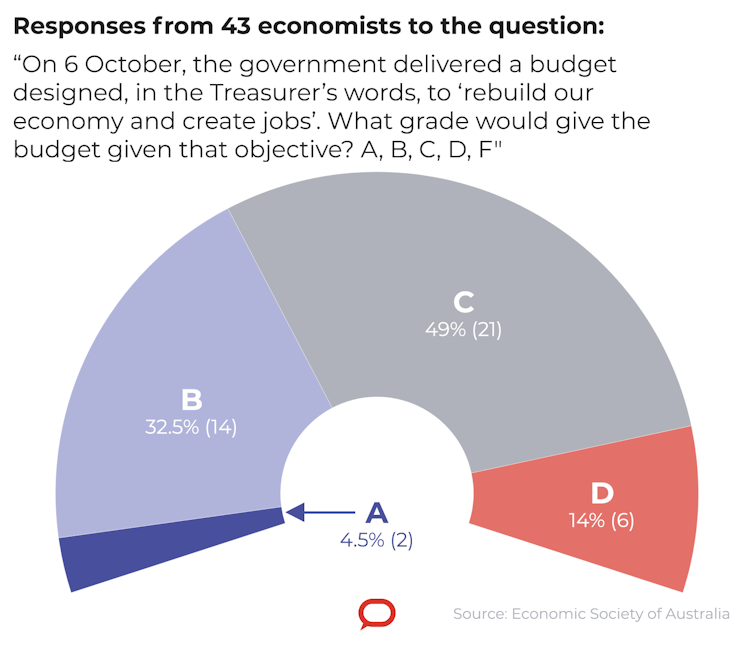
Australia’s leading economists have struggled to grade this month’s budget.
Challenged by the Economic Society of Australia and The Conversation to rate it on a scale of A to F when judged by its stated aims of rebuilding the economy and creating jobs, none of the 43 economists who responded gave it the lowest grades of E or F.
But most who gave it a pass were unhappy.
Financial markets expert Kevin Davis praised “the willingness of a conservative government to adopt needed large deficit spending at variance with its ideology”.
Economic modeller and former Reserve Bank board member Warwick McKibbin said he would give it an A for scale.
But Davis said tax cuts “to the better-off employed” weren’t the best way of achieving desired outcomes, and McKibbin said the composition could have been much better designed.
“There was an opportunity to invest in green infrastructure as part of a fiscal response and a climate/energy policy response that would have longer-term economic and environmental payoffs,” McKibbin said.
“For spending support, transfers to low income households rather than income tax cuts would have given a bigger bang for the buck. Greater support of childcare would support incomes and labour supply.”
Bob Breunig said the design of the childcare benefit created a well-documented income cliff for second earners making it difficult for them to work more hours. It was a known problem and would have been easy to fix.
Hard hats instead of soft skills
The Grattan Institute’s Danielle Wood said it was “absolutely the right call to change course on fiscal strategy and recognise the need for sizeable stimulus, so marks for that”.
But the budget “very much bet the house on a private sector-led recovery”.
Where it had spent money directly it mostly went to “hard-hat” professions such as infrastructure, construction, manufacturing, defence, utilities and energy.
“Some of these sectors haven’t even seen job losses during COVID,” Wood said, and there is already a healthy pipeline of work for transport infrastructure projects, so why spend your stimulus dollars here?“
Renee Fry McKibbin noted that the burden of COVID-19 falls on front-line workers in health, caring industries, hospitality, tourism, arts and education, yet she said the budget focused on sectors “traditionally dominated by men”.
Climate change overlooked
Wood said the price of those blindspots would be a weaker recovery than otherwise, unemployment higher for longer than it could have been, and women’s economic disadvantage entrenched.
Labour market specialist Sue Richardson said relying on incentives such as instant asset write-offs and hiring subsidies was risky because the private sector might not respond in the way that had been hoped.
What direct spending there was seemed “intended largely to recreate the economy of the past, rather than invest in the economy of the future”.
“The economy of the future will, among other things, need to have much lower greenhouse gas emissions and much greater ability to cope with the unavoidable damage arising from climate change.”
How we handle the recovery will either set us on a path towards net-zero emissions or lock us into a fossil fuel system from which it will be hard to escape.
Saul Eslake gave the government “great credit for being willing, explicitly, to recalibrate its budget strategy” and run up what (for Australia) were large amounts of debt.
On average, a bare pass
But he said the measures chosen would be less effective in delivering jobs and recovery than others available including vouchers for spending in sectors hard-hit sectors and spending on social housing and childcare.
All but one of the 43 economists who responded to the survey also responded to the pre-budget survey which nominated spending on social housing, education and training and permanently boosting JobSeeker as the top budget priorities.
Assessing the budget, 16 of the 43 (37%) awarded it either an A or a B. Almost half (49%) awarded it a C, or “bare pass”. Six (14%) gave it a D.
Some of the economists who awarded a B said it was really a “B-minus”
One of them, Lata Gangadharan, said when it came to opportunities for women (those worst affected by the downturn) the budget “failed miserably” and would attract a D.
James Morley said he might have been “too easy of a marker” by awarding a B, but that it was “possible to lose the forest for the trees when only evaluating the budget on its specifics”.
‘B’ reflects the big picture, not the details
The big picture was that deficit-financed stimulus was needed and that the budget provided much more than might have been expected given the previous positions of the treasury and the Morrison government.
He said the forward guidance that put off “budget repair” until after the unemployment rate fell below 6% was welcome, even if one could ask why the threshold of 6% number had been chosen.
The more one looks at the details, the more one wants to significantly mark down the grade for budget. But I will still give it a “B” because the big picture is on the right track and I will just hope the Treasurer somehow becomes an “A” student in the future.
Rana Roy said he would have to grade the budget a C rather than an A or B, “more in sorrow than in anger”.
While he approved of the deficits and the tax cuts and the focus on infrastructure, he strongly suspected the measures would not be enough.
“For example, in an immediate sense it is likely that the negative impact of tapering and terminating JobKeeper will overpower the positive impact of the new wage subsidies for new hires.”
Two of those surveyed awarded the budget a B primarily because it had shown restraint. Tony Makin said two much spending would have pushed up the dollar and drawn resources away from the private sector. Geoffrey Kingston said it was important to avoid “maxing out the national credit card”.
Chris Edmond awarded it a C primarily because its assumptions relied on hope.
By simply assuming a widespread effective vaccine will be available next year and not otherwise thinking hard about how to beat the pandemic, the government is being very optimistic.
A permanent increase JobSeeker would have given a million Australian confidence in the leadup to Christmas. Higher education, a major export earner with a direct impact on productivity, was being left to shrink.
John Quiggin said the budget pursued “cultural/ideological vendettas against perceived enemies like renewable energy and the university sector”.
But he said it was still worth a C. The government was right to budget for a large deficit, and deserved continuing credit for JobSeeker and JobKeeper.
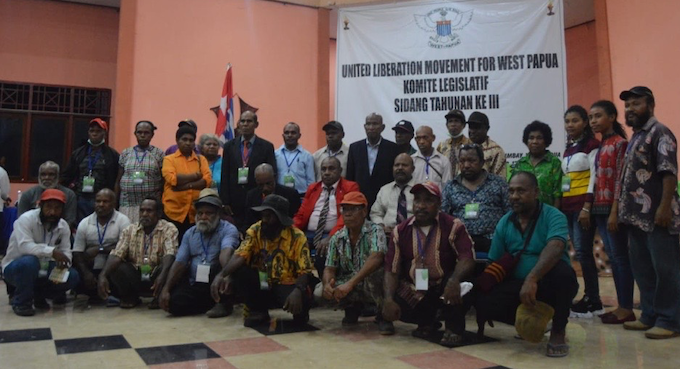
An Indonesian government-sanctioned joint fact-finding team has reported that it found indications that security forces were involved in the shooting of Papuan pastor Yeremia Zanambani after investigating a series of shootings in Intan Jaya regency, Papua.
The team gave its findings to the Office of the Coordinating Political, Legal and Human Rights Minister this week and Coordinating Minister Mahfud MD disclosed several key points from the 14-day investigation.
“Regarding the killing of pastor Yeremia Zanambani on September 19, the information and facts obtained by the team in the field indicate the alleged involvement of elements of security forces, even though there’s also a possibility that a third party was behind [the killing],” Mahfud said during a press conference.
Additionally, the team reported that an “armed criminal group” – a description frequently given to pro-independence rebels – was allegedly behind the killings of two military officers and a civilian on September 17.
Mahfud said the government would follow up on the findings, ordering the National Police and Attorney-General’s Office to solve the cases by following the applicable criminal and state administrative laws.
The coordinating minister would also pass on the findings to the National Police, the Indonesian Military (TNI) and the State Intelligence Agency for further investigation.
Furthermore, Mahfud also recommended that the government equip vulnerable areas with better security to provide safety to locals.
No witnesses found National Police Commission (Kompolnas) head and fact-finding team chief Benny Mamoto said that the team found no eyewitnesses of Zanambani’s killer and that the team was open to all possibilities regarding who was behind the killings.
“There are findings from this fact-finding team that are very, very significant. From my perspective, it should not take [law enforcement] a long time to start investigating them,” Mamoto said during the conference.
The team concluded its field investigation last week after conducting crime scene investigations and questioning around 42 witnesses.
During the fieldwork, two members of the team, Gadjah Mada University (UGM) lecturer Bambang Purwoko and TNI soldier First Sgt. Faisal Akbar, were wounded after being shot at by a pro-independence group, the West Papua National Liberation Army (TPNPB).
Previously, the Indonesian Communion of Churches, the Indonesian Evangelical Christian Church (GKII) and local media in Papua said that Yeremia was allegedly shot by TNI personnel on his way to his pig pen on September 19, at the same time a military operation was reportedly taking place.
Moch. Fiqih Prawira Adjiereports for The Jakarta Post.
James Shipton, chairman of the Australian Securities and Investments Corporation, has stood aside after an adverse Audit Office report about $118,557 paid by ASIC on his behalf when he relocated from the US.
The Audit Office also found payments of $69,621 for deputy chairman Daniel Crennan, to relocate from Melbourne to Sydney, had not been within the guidelines. He has not stood aside.
ASIC is the national corporate regulator.
Both men said they would repay the money. The funds for Shipton related to taxation advice and support when he relocated to take up his position, while Crennan received payments for housing expenses.
The Audit Office indicated the amounts might exceed the limits set by the Remuneration Tribunal, and pointed to Commonwealth procurement rules not being followed.
The revelations about ASIC come a day after the government forced Australia Post CEO Christine Holgate to stand aside when she revealed four employees had been given Cartier watches worth $3000 each as a reward for their work on a major commercial deal.
Scott Morrison, who on Thursday denounced the Post rewards, said on Friday the government was taking legal advice about whether Holgate should be paid while an inquiry – by public servants with outside assistance – is conducted into the matter. Australia Post is a government-owned business.
Asked on Friday whether a broad inquiry was needed into remuneration and other arrangements for all government appointees, Morrison said: “I think there wouldn’t be a board member of a government agency or a CEO of a government agency that did not get my message yesterday. I think they got it with a rocket. And so, my advice to them is to get it.”
The tax services for Shipton were provided by KPMG and the fees escalated. The Auditor-General said: “The fee increases were described by KPMG as being due to the complexity of the tax affairs being managed”.
After its finding about the ASIC payments the Audit Office recommended
… ASIC review the processes supporting the approval of remuneration and benefits paid to executive office holders, including the trigger points for seeking advice should amounts outside the Renumeration Determination be considered, and
… a review be undertaken of the procurement processes around payments for tax advice paid on behalf of the chair to determine the internal controls that need to be either reinforced or redesigned.
Frydenberg has ordered an independent review of the matter.
In his statement Shipton said: “ASIC acknowledges the processes supporting the approval of these relocation expenses were inadequate and, given the high standard ASIC holds itself to, it is disappointed that such situation has occurred.
“ASIC anticipates the independent review will assist it to make appropriate changes to key policies and processes.
“In the interim ASIC has implemented changes to procedures associated with approval of expenses relating to geographic relocation for statutory appointees to ensure that there is Commission oversight of those expenses and that the arrangements for new statutory appointees are clearly documented prior to them being made.”
The accommodation payments for Crennan were ceased following his request, Shipton said. “He offered and agreed to repay the accommodation payments made to him as a debt due to the Commonwealth.”
Shipton said he had advised Frydenberg that it was appropriate to stand aside while the review was done. “I hold myself to the highest possible standard.”
A deputy chair of ASIC, Karen Chester, will act as chair in the interim.
Green Party co-leader, James Shaw. Image, Wikipedia.
By Selwyn Manning – Editor, EveningReport.nz
Selwyn Manning, editor of EveningReport.nz.
The Green Party has settled on its negotiation team, agreeing to who will represent the party’s members when considering the shape and outcome of talks with the incoming Labour-led Government.
The negotiating team has a similar make up to the group that considered the merits of negotiations with Labour post the 2017 General Election.
The group, called Tatau Pounamu, a Negotiation Consultation Group, has also settled on its terms of reference, giving a guideline for how it will settle on a final decision on what the Green Party’s relationship with Labour in Government will look like.
Tatau Pounamu’s terms of reference proposes a consensus be sought, and, if that fails, then a 75 percent vote of the Tatau Pounamu group in favour will be required “to carry a proposal that alters the status quo”.
Green Party co-leader, James Shaw. Image, Wikipedia.
The terms of Tatau Pounamu agreement state: “All decisions concerning the negotiations, including what agreement, if any, would be taken to a Special General Meeting (SGM) will be taken by the combined membership of Tatau Pounamu.”
“Decisions will be reached by consensus. When this is not possible it will be by vote, with at least 75% of votes in favour to carry a proposal that alters the status quo.”
“Only members of Tatau Pounamu selected by the three-petal approval processes are involved in decision-making.”
The group consists of 16 Green members, including some MPs, ex-MPs, and the upper echelons of the Green Party who have existing positions in the hierarchy. Significant among them are Gwen Shaw (General Manager), Roland Sapsford, John Ranta.
Green Party co-leader, Marama Davidson. Image, Wikipedia.
The Green’s negotiating team incudes:
The membership of the Ihu (the team that are talking directly with Labour’s leader Jacinda Ardern and her negotiating team are:
Wiremu Winitana
James Shaw
Marama Davidson
Tory Whanau.
It is believed the membership of Tatau Pounamu are:
Briar Wyatt
Julie Nevin
Elizabeth Kerekere
Eugenie Sage
Gwen Shaw
Julie Anne Genter
Jan Logie
James Shaw
Marama Davidson
Mojo Mathers
Roland Sapsford
Teanau Tuiono
Tory Whanau (chief of staff, that is Green parliamentary staff)
Wiremu Winitana
(male party co-convenor)
Penny Leach
(co-convenor of Tatau Pounamu & female party co-convenor)
An ideal COVID-19 vaccine would not only protect people from becoming ill, it would also stop the virus spreading through the population. The best way to do this is to vaccinate as many people as possible.
If the best available vaccine is only moderately protective — for example, if it only prevents 50% of infections — we might need to vaccinate children as well as adults to interrupt the spread.
There is no COVID-19 vaccine being developed specifically for children. So if children are to be vaccinated, they will likely receive the same vaccine as adults. They might require a different dosing schedule, but that is not yet clear.
So what are the issues with developing a safe and effective COVID-19 vaccine for children? And where are we up to with clinical trials including them?
There is also a broader issue at stake. Delaying children’s access to vaccines could delay our recovery from COVID-19. This would prolong the pandemic’s considerable impact on children’s education, health and emotional well-being.
The way a child’s immune system reacts to pathogens or vaccines can be different to adults. Age can determine the number of required doses. For example, infants sometimes require more doses of a vaccine than older children.
Age can also influence the side-effect profile of a vaccine. For example, mild fever following vaccination can be common in babies and young children.
So vaccine developers need to include children in their clinical trials so they can gather age-specific information on the immune response, the effectiveness of the vaccine in preventing disease, and any side-effects.
Are COVID-19 vaccines already being tested in children?
Vaccine trials are usually done in stages. They typically start with healthy, young and middle-aged adults.
Once a vaccine is confirmed to be safe in these earlier trials, developers then test the vaccine in older and younger age groups.
Some vaccine developers have already announced plans to test their COVID-19 vaccines in children.Shutterstock
Several COVID-19 vaccine developers already have plans to include children in their clinical trials.
University of Oxford researchers will recruit children aged 5-12 into a phase 2/3 trial of its vaccine. This is one of the vaccines for which the Australian government has a supply agreement, should clinical trials prove successful.
How could we get more children included in trials?
We need more children included in clinical trials, an issue recognised globally. For instance, the US Food and Drug Administration announced it will work as quickly as possible with vaccine developers to set up trials for COVID-19 vaccines in children.
The US National Institutes of Health is developing a protocol for researchers to include children in vaccine trials in a safe but timely way.
Having a universal protocol, which we don’t yet have for COVID-19 vaccine trials, would make it easier for researchers to include children in future trials, and to compare different vaccines.
There are no protocols yet including children in COVID-19 vaccine trials run in Australia. Any Australian studies would only likely examine the immune response and safety in children (phase 1 and 2 trials). They would probably not examine effectiveness (phase 3 trials) because of the low rates of COVID-19 here.
Before any child is enrolled in a trial their parent or guardian will be asked to read an information sheet that explains the risks and benefits of taking part. Safety data from earlier trials in adults would need to be included in child-specific information sheets, so parents are aware of the known risks before they decide to enrol their child.
In Australia, it may be a challenge to enrol children in COVID-19 vaccine trials, as the disease burden is low compared with other countries, so parents may not want their child to take part.
However, it is important we learn as much as we can about how COVID-19 vaccines perform in children, and participating in such research helps us gather this valuable information.
How is vaccine safety assessed?
Vaccine trials are closely supervised by an independent data and safety monitoring board, who follow strict protocols and have the authority to pause a trial if there are safety issues.
Australia also has strict guidelines for the registration of vaccines. A vaccine will only be licensed if its safety has been demonstrated in large studies, usually including many thousands of people. Usually, vaccines are registered according to the age groups in which trials have been done.
Even after a vaccine is licensed in Australia, its safety continues to be monitored. A doctor, patient or parent can report side-effects to the authorities.
Alternatively, researchers can more actively engage with the public to monitor side-effects, such as with the AusVaxSafety system.
In this system, when a GP gives someone a vaccine, that person receives a text message three days later to ask about side-effects and to complete a survey on their smart phone or computer. This is “real time”, important safety data.
We already use this system to monitor the safety of each year’s flu vaccines and will potentially use it when COVID-19 vaccines are rolled out into the community.
In a nutshell
Although there has been extraordinary progress in COVID-19 vaccine trials, only some vaccine developers have taken steps to recruit children so far. That needs to change if we are to protect children and the wider community. So we need protocols that make it easier for researchers to recruit children into COVID-19 vaccine trials.
As early data in adults accumulates, providing information to parents — and where age-appropriate, their children — to consent to their child participating in trials has a lot of benefits. It will also ultimately help us in the race to end this pandemic.
The COVID-19 pandemic has caused significant disruptions to all major sports in Australia, but perhaps the most fascinating — and unlikely — change is the playing of the AFL grand final in Brisbane.
When most Australians think of sports preferences by state, AFL naturally comes out on top in Victoria, while rugby union is thought of as a Queensland and NSW game.
But Australian rules football was actually played first in Queensland — and it was only a quirk of history, as well as an enduring love of the British empire, that caused Queenslanders to eventually switch allegiances.
Sports in the early colonial days
Unlike many countries, Australia supports four major football codes (Australian rules, rugby union, rugby league and soccer). The story of how these four sports developed here goes back to the pre-Federation days.
After the British began colonising Australia, sports were one of the most important ways for early settlers to replicate British culture. It was a demonstration of British nationalism and loyalty to the home country.
The first sports in Australia included horse racing and cricket, but were soon followed by others, such as coursing (hunting with dogs) and bowling.
The other popular British sport at the time was football. But unlike other sports, there were various forms of football played in the home country. This was particularly evident in the British private boys’ schools, where football was played according to the respective schools’ rules.
Two distinct forms of football ultimately emerged in England — what we now call soccer and rugby union. This history has been very contentious and still provides some very passionate debate.
As Britain began colonising various parts of the world, rugby union emerged as the dominant football sport, not soccer. That is, the elite sanctioned rugby union as the imperial football code.
This legacy can be felt today as New Zealand, South Africa and Australia are the dominant rugby union countries, while in the former colonies of countries like Spain, Portugal and France, soccer is the sport of choice.
A simpler, safer and more attractive game
In the late 1850s, momentum grew in Melbourne to establish football clubs and play matches. The only problem was rugby union and soccer had not yet been codified — that is, there was no accepted set of rules.
So, the early settlers in Melbourne attempted to establish their own rules for “football”, creating what they believed would be an easily understood, safe and attractive game. It took some time to get right.
Some little unpleasantness was occasioned owing to the vague wording of the rule which makes ‘tripping’ an institution, and after the match a meeting of the committee was held, at which most of the existing rules underwent revision, and some new ones were added.
From the very beginning, Australian rules football developed as its own thing. The members of the Melbourne Cricket Club who established the rules were free to experiment as they liked to produce a game they believed would grow in popularity.
The rest is history. Australian rules football soon became the dominant code in Victoria, Tasmania, South Australia and Western Australia.
Wood engraving of an Australian rules football match at the Richmond Paddock, Melbourne, about 1866.Wikimedia Commons
For the next decade, Australian rules was the official football code in Queensland, though the Brisbane Football Club also dabbled in some rugby union games.
When it became clear rugby union was becoming the dominant football code across the British empire, however, there was a concerted push in Queensland to change to rugby union. And in 1876, the various Brisbane football clubs switched allegiances, though this wasn’t without controversy.
For several years, supporters and clubs were torn between the two games. It’s clear from media reports that Australian rules had some advantages: the game was more enjoyable to play and watch, easier to understand, and safer.
Rugby union promoters, meanwhile, had difficulty translating their rules into practice, leading to confusion. As one rugby union detractor said in the Brisbane Courier in 1876,
there is too much holding of the ball and disputing about ‘on’ and ‘off’ side. This is not football at all, and for this reason these rules were discarded by Melbournians, and new ones, far better, substituted. The rugby union code contain fifty-seven rules, which the Melbourne rules are only fifteen.
But rugby union was the game preferred by the elites; it was the British game. So, rugby union ultimately prevailed in Queensland (as well as NSW) from around 1880.
Australian football premiership finals at the Brisbane Cricket Ground, 1907.Wikimedia Commons
AFL push into rugby union country
This divided football landscape changed very little throughout the 20th centuries. But as the codes have become more commercialised in recent years, the AFL in particular has made efforts to expand its reach beyond Victoria and reach new players and spectators in NSW and Queensland.
This process began with the expansion of the VFL/AFL, beginning in the 1980s. But more significantly, there has also been growth at the grassroots level among both adults and children, men and women.
The Brisbane Lions won three premierships in the early 2000s.Dave Hunt/AAP
This year, the pandemic provided the AFL with a great opportunity to make even further inroads into the rugby-playing states. Not only did Brisbane host matches when Victoria went into lockdown, but spectators started watching in greater numbers, too.
The opening match of the finals series earlier this month between Port Adelaide and Geelong saw huge increases in Sydney (up 259% over the 2019 week one final) and Brisbane (up 112% over 2019).
I’m not saying we’re the number one sport here in Queensland, but it’s certainly nice to be in the conversation. Right now, it feels like it’s close to being Queensland’s game.
If these spectator numbers are any indication, Australian rules football is coming back to Queensland. And it might not be leaving like it did in the early 1880s.
Imagine visiting the Europe of 2048. The cities are strangely silent. Desperate communities in Paris, London and Berlin struggle in the shadow of hollowed-out buildings. The once-popular coastal resorts have also been abandoned, as rises in sea level have taken their toll.
Heading out to rural areas, you find where the fortunate few have gone: shining citadels, high-tech gated communities designed to protect residents from the ravages of climate change and ongoing pandemics.
That doesn’t mean life in 2048 is always grim. The world is gearing up for the 39th Summer Olympics, to be held in Kuala Lumpur, Malaysia. The greatest athletes will be attending, but also thinkers, artists and heroes nominated from around the globe for their work fighting the climate crisis.
Europeans, Americans and Australians are hoping for a great medal haul, but this year, as in most others, the country expected to dominate is China, the world’s leader in the fight to survive climate change.
Is this the future we face? Even if it isn’t, what can imagined scenarios like this teach us about the challenges we face in the present?
Researchers from 13 countries are currently thinking about such questions as part of the IMAJINE project, funded by the European Commission’s Horizon 2020 programme. IMAJINE’s aim is to explore inequality and injustice across the European Union’s member states.
Inequality isn’t just the gaps between the haves and have-nots in the present. As the world changes and societies evolve, different forms of unfairness can arise.
COVID-19 has fuelled uncertainty and, as both the pandemic and our response to it have reshaped societies, made these issues more urgent. We need to anticipate new and emerging forms of inequality and injustice — and understand how we can counter them.
To do this, IMAJINE uses scenario planning, a tool for envisioning different future worlds.
Scenarios aren’t predictions; they are valuable even if they never come to pass. The aim of the four visions we’ve created isn’t to forecast what will certainly happen, but to find our blindspots when it comes to planning for the future of inequality.
A future of digital citizenship or five-person marriages
In our first scenario, outlined above, we picture a world in which cities are abandoned and today’s rural backwaters become the most desirable places to live.
The fight against climate change is a global priority and next-generation clean manufacturing technology is expanding rapidly. Inequality here is based on who has the means to protect themselves from the changing climate.
Another scenario explores a world in which citizenship is entirely digital. It becomes so removed from your place of residence that you might be a European citizen online, even though you physically live in Australia.
The haves and have-nots in this future aren’t defined by where they call home, but where they’re allowed to work, play and gather in virtual space. Advanced technology lets the privileged explore, enjoy and profit from these digital environments, while the less fortunate are locked out.
Yet another scenario explores a breakdown of trust driven by “fake news”, which leads to a fragmentation of cultures and values.
In that future, some parts of Europe celebrate five-person marriages, while others double down on traditional values. Where you live might hold you back from exploring your identity — or create new opportunities to define and celebrate who you are.
Learning from imagined futures
Each of these scenarios shows how inequality isn’t just a question of how wide the gap is between the haves and have-nots. It’s also about the changing ways we understand injustice.
The IMAJINE team are inviting stakeholders to explore these worlds and consider how they relate to social challenges in the present. We want to inspire fresh solutions, not impose our own.
Policy decisions are still often based solely on the numbers: what policies cost, who and how many people benefit. Yet changing social and cultural values also steer people’s perceptions of what is fair and acceptable, beyond the numbers.
The scenarios we’ve created test our sense of what matters when the world changes. They provide a stage on which to play out new ways of thinking when it comes to policy ideas. They help us devise policies that are broadly accepted and can be adapted to local needs.
These imagined futures may never happen, but they might keep us from sleepwalking into new kinds of inequality and prepare us for whatever shocks our world will inevitably encounter.
This week the United States Department of Justice (DoJ) filed a lawsuit accusing Google of using “anticompetitive tactics to maintain and extend its monopolies in the markets” for search and advertising.
It is the most significant antitrust case since the US government took on Microsoft in 1998 for using its dominant position as the provider of the Windows operating system to force PC makers to bundle its Internet Explorer web browser.
That case was fought out in US courts for years before Microsoft agreed to settle in 2001. This case will no doubt be heavily litigated, and likewise take years to conclude. But it’s not too soon to consider the basic economics.
The bottom line is more complicated than one might think. Yes, Google has a huge share of the search-engine market – 92% globally according to statcounter.com, compared with 2.8% for Microsoft’s Bing, 1.6% for Yahoo! and 0.5% for DuckDuckGo.
But does that give Google a lot of “market power” – the ability to charge high price or produce low-quality products? Probably not.
To judge if a company like Google is really a monopolist, it is crucial to understand the difference between ordinary markets (like those for clothes, cars, or breakfast cereal) and technology markets (like those for internet search, social media, or ride sharing).
Any introductory economics textbook will tell you a large market share is smoking-gun evidence of market power; and that with market power comes the ability to shut out competitors, charge high prices and even get away with producing low-quality products.
Economists of all stripes agree that regulating monopolies and making markets more competitive benefits consumers, through lower prices and better products.
Indeed, this was the motivation behind the so-called “trust-busting” movement in the US in the early 20th century. The most famous scalp was John D. Rockefeller’s Standard Oil, which the US Supreme Court ordered in 1911 be broken up into 34 separate companies. (The break-up made Rockefeller the world’s richest man).
But internet search isn’t like oil. Neither is social media, ride sharing or platforms like Amazon. These are what economists call “markets with network externalities”. That is, when more consumers use the product, it becomes more valuable for other consumers.
Facebook is useful because it connects one with lots of other users. A thousand little, disconnected social media platforms would be much less useful. Amazon connects lots of sellers with million of consumers. This is hugely valuable for both. Google connects lots of consumers with advertisers and information. Again, this is valuable to both sides of the market.
Because network externalities mean — all else being equal — the bigger the market share the more valuable the company’s product is to consumers, we tend to see one dominant company and a few smaller ones in such markets.
Just because tech companies have a big share of the market now, however, doesn’t mean they are destined to keep it.
Remember Netscape? In the mid-1990s it had a 80% share in the browser market, before losing it to Microsoft’s Internet Explorer.
But Internet Explorer’s dominance, peaking at 95% share in the early 2000s, didn’t last either. It now claims barely 1% of the browser market.
This is why companies in markets with network externalities are never asleep. Uber and Facebook are constantly running experiments to innovate their products, as are other companies like Amazon and, you guessed it, Google.
Influencers and defaults
An important part of the Department of Justice’s suit against Google is that it allegedly pays Apple as much as US$11 billion a year to be the default search engine on the Safari browser on every iPhone.
This is a bit like paying for a social media influencer to plug your product — with a twist. Making something the default doesn’t mean the user has to use it, but the small effort to choose an alternative means most don’t bother.
But if it really wasn’t a good product and didn’t deliver good search results, wouldn’t consumers (a) remove it and (b) be less likely to buy iPhones?
There’s a big difference between something being a default and there being no choice. Articulating this difference may end up being an important part of how the Google litigation plays out.
As with the suits against Standard Oil and Microsoft, the case against Google will be decided by the courts, perhaps ending with the US Supreme Court. The outcome will be instructive as to whether other tech companies like Amazon, Facebook or Uber will also wind up in the firing line.
Ironically, at a time of extreme polarisation in US politics, breaking up big tech companies is popular on the left and the right.
But we should remember that consumers are huge beneficiaries from these tech companies. Think about how much it used to cost to take and print photographs. A 2018 International Monetary Fund report cites research suggesting US consumers would need more than US$25,000 a year to compensate for the loss of free services from tech companies.
What is crucial for competition regulators around the world to note is that the markets in which big technology companies operate are not like other markets. Because of network externalities they tend to have big “in” firms (with a large market share) and smaller “out” firms (with small market shares but providing competitive discipline).
That doesn’t mean these markets aren’t competitive. It means the “in” companies have a lot to lose by being leapfrogged by a small competitor. Which is why they work so hard to innovate and keep prices low.
Landowners are unwavering in their opposition to the deep sea tailings placement (DSTP) method for waste from Papua New Guinea’s proposed K18 billion (NZ$7.7 billion) Wafi-Golpu mine project.
They travelled to Lae yesterday from various areas of Morobe which will be affected by the project.
It is awaiting approval by the government.
The two methods being discussed to dispose mine waste are the DSTP which the government is leaning towards and the on-shore dam which the landowners prefer.
Prime Minister James Marape has given stakeholders until the end of this week to agree on a tailings placement method otherwise he will make a ruling himself.
Yesterday’s meeting was organised by Morobe Governor Ginson Saonu for landowners of the special mining lease, pipeline and DSTP areas.
United Morobe Voice Against DSTP chairman and former Huon Gulf MP Sasa Zibe said the dumping of mine waste at sea could impact marine life and ecosystem.
‘We depend on the sea’ “We depend on the sea and the marine environment to sustain our livelihoods,” Zibe said.
“Our communities should not be disturbed as a result of DSTP.
“So we say no to DSTP.”
Saonu backed their call saying other options needed to be considered.
“We have to look at all the options available and make sure we employ the one that best suits the developer, the Government and most importantly, the landowners,” Saonu said.
He described the DSTP as a cheap method of disposing mine tailings which had the potential to permanently damage the environment.
Saonu said despite the significant revenue expected to be generated by the mine, the people’s concerns must be respected.
He said PNG had seen environmental damage caused by mine waste and did not want Wafi-Golpu to suffer the same.
“For any disposal of mining waste on land or sea, we have to be convinced fully before the Wafi-Golpu project is to start,” he said.
The Pacific Media Centre publishes The National articles with permission.
The recent reelection of the Jacinda Ardern-led Labour government in New Zealand offers leaders elsewhere a potent lesson about how best to respond to COVID-19. Saving lives is, not surprisingly, a real vote-winner.
Labour can therefore govern alone, if it wishes. It’s the first time any party has had this choice since New Zealand moved to a mixed-member proportional electoral system in 1993.
Pending special votes, Labour has secured more support than its competitors in 77% of local neighorhoods. The result is the most dramatic swing in more than a century of elections.
The election outcome constitutes a compelling endorsement of Ardern, whose decisive response to the first wave of the coronavirus in March was a master class in crisis leadership.
A clear majority of voters obviously did not accept these views. Indeed, the election result suggests voters have confidence in Ardern.
Key features of her leadership approach to COVID-19 are discernible – and offer useful lessons for leaders elsewhere – even given the specific advantages New Zealand has, such as its geographic isolation and relatively small population.
Prioritizing both health and economic considerations as central concerns affords a fundamentally different strategy from the yo-yo-ing between either health or the economy, which characterizes the approach taken by the likes of U.K. Prime Minister Boris Johnson.
U.K. Prime Minister Boris Johnson during a coronavirus briefing.Toby Melville/Pool Photo via AP
While this dual focus doesn’t magically solve everything that might arise from COVID-19, emphasizing both as mission critical avoids the strategic misstep of allowing largely unfettered economic activity alongside weak levels of control over the virus’s spread.
So this dual focus has been made clear and is ethically defensible, which helps in garnering the support of citizens – who are, after all, the voters.
Listen to and act on expert advice
Ardern is persistent in her commitment to a science-led approach. Effective engagement with the media by New Zealand’s director-general of health, Dr. Ashley Bloomfield, has lent real credibility to Ardern’s claims that the political arm of government is listening to independent, expert advice. This practice of being led by expertise is the second key feature of Ardern’s effective pandemic leadership.
Ardern also has a strong focus on mobilizing collective effort. This involves informing, educating and uniting people to do what’s needed to minimize harm to lives and livelihoods.
Tougher talk and action.
Regular press conferences show Ardern doesn’t pull her punches when delivering bad news, but she balances this with explaining why government directives matter and conveying empathy for their disruptive effects.
She also has a strong focus on practicalities and avoids getting defensive when questioned.
To secure unfiltered feedback from the public, she runs regular, impromptu Facebook Live sessions.
All these measures help give people confidence that Ardern genuinely cares about and is interested in people’s needs and views, thereby mobilizing community support for government mandates.
Ardern also focuses on actions that help to enable coping. This involves a range of initiatives to help people and organizations plan ahead. One example is the government’s Alert Level framework, which sets out the different rules and restrictions that apply depending on the current risk of community transmission.
A focus on building knowledge and skills relevant for surviving the pandemic, on kindness and on innovation form part of this approach, addressing both practical and emotional needs.
Pandemic leadership: A good practices framework.Suze Wilson/The Conversation, CC BY-ND
No ‘magic bullet’ … but
None of this constitutes a magic bullet for easily overcoming COVID-19. Not in New Zealand nor anywhere else.
And, looking ahead, the expectations on Ardern’s government to deliver economic recovery, as well as substantive progress on other key issues such as climate change and poverty reduction, are enormous.
But even though Ardern’s approach has not been faultless, her reelection makes it clear the effective pandemic leadership practices she demonstrates attracted strong levels of voter support.
That’s a lesson no elected leader ought to ignore. For U.S. President Donald Trump, who is seeking reelection on Nov. 3 and whose nation has suffered 220,000 COVID deaths so far, it remains to be seen if voters will punish or endorse the kind of leadership approach he has taken to the pandemic.
U.S. President Donald Trump at the White House.Andrew Harnik/AP Photo
Source: The Conversation (Au and NZ) – By Angelique Chan, Executive Director of the Centre for Ageing Research & Education, Duke-NUS Medical School, National University of Singapore
This article is part of our series on aged care. You can read the other articles in the series here.
Unlike in Western countries like Australia, traditional Asian cultures place a heavy emphasis on filial piety — the expectation children will support their parents in old age.
Historically, filial piety played an important role when families were large, pension schemes unavailable and life expectancy was around 50 years old.
Today, however, families in east and southeast Asia are much smaller, divorce rates and rates of non-marriage are increasing, and fewer adult children are living with their parents. These demographic shifts are nowhere more apparent than in China, Hong Kong, Japan, Singapore, South Korea and Taiwan.
Also, people are living much longer. By 2030, the UN estimates 60% of the world’s older population (60+) will reside in Asia.
Demographic changes in places like China are putting huge pressures on societies.Shutterstock
Families can only do so much
In the midst of these demographic and cultural changes, Asian governments continue to promote the idea families should be primarily responsible for the care of older family members.
But for many adult children, the pressures to fulfil the demands of filial piety are immense. Those who are unable to provide care because of work demands or their own family responsibilities often find it emotionally difficult to put their parents or grandparents in institutional care.
Research has shown even hiring a live-in domestic worker is associated with negative self-esteem among adult children. Care-giving for older parents can therefore become a harrowing journey requiring time, money and in-depth knowledge of the health and social care systems.
Because of these challenges — as well as the rapidly ageing populations in many Asian countries — we are being forced to think creatively about how to improve community care for older people who don’t have around-the-clock family support.
Asian countries are at the forefront of this research out of necessity. But many of these strategies can easily transfer to other parts of the world — and in some cases already are — despite any cultural differences that may exist.
At present, the mandatory retirement age in Singapore is 62. The old-age dependency ratio — the number of working-age people available to support one older person — has decreased from 13 in 1970 to four in 2020.
Like many developed economies, aged care in Singapore has become increasingly fragmented. Today, an older person typically has specialists for each organ and may visit a general practitioner, a doctor in a polyclinic, a hospital or a traditional healer over the course of a year. None of these health records are integrated.
Thus, older people are seen as a sum of parts — and this not only affects the efficacy of their care, but also their quality of life.
The World Health Organisation has recognised the limitations of this kind of fragmented care and last year launched the Integrated Care for Older People framework for countries dealing with rapidly ageing populations. This framework promotes people-centred and integrated health services for older persons via a seamless network of families, communities and health care institutions.
Ageing in place is a strategy being embraced in Singapore.Shutterstock
In its ideal form, integrated care allows older people to “age in place”, that is in their own homes. Older people can have their health and social care needs satisfied without having to be institutionalised, which decreases the need for government spending on institutional aged care.
Previousresearch has shown older adults who “age in place” are happier and have a higher quality of life than those in institutions.
In order to achieve an integrated care system, there has to be an alignment of goals across players in the health and social care systems.
In Singapore, this ethos has taken hold in the last decade. In 2015, the government established an Agency for Integrated Care (AIC), which acts as a central repository of information for older adults and provides them with referrals and placements with health and social services.
For example, older people can be accompanied by their caregivers to the AIC to obtain referrals for dementia day care or rehabilitation services if they have injured themselves, returning to their homes in the evenings.
The idea is to provide older people with the medical and social support when they need it, but not to take them out of their communities.
Bringing nurses to residents in their communities
At the same time, community health and social care services are being ramped up and new models of care are being tested in order to achieve a truly integrated care system.
One example of a new model of care that is being piloted is a program called Care Close to Home (C2H). In this model, a registered nurse and at least five nursing assistants are situated in communities and provide health and social care to residents living in the area during weekdays.
Residents are encouraged to seek help from the C2H team if, for example, they have an asthma attack or a non-serious fall. In most cases, the nurse can manage the situation.
Again, the goal of this system is to manage people’s health and social care needs at home to reduce frequent hospitalisations and entry into nursing homes.
The importance of these kinds of community health and social care services is recognised at the government level in other countries, too.
China, for example, is currently experimenting with different models of community health services to achieve an integrated care system. Japan has invested heavily in the training of geriatricians and the development of community care services.
In the next decade, the models of health and social care for older adults must be re-imagined like this to support ageing populations.
Integrated care is the way forward — this is the best solution for maintaining a high quality of life among older adults. We can no longer rely on the family as the primary support system for older adults.
Source: The Conversation (Au and NZ) – By Philip Russo, Associate Professor, Director Cabrini Monash University Department of Nursing Research, Monash University
Spring and summer in Australia and the gradual easing of restrictions means we can expect weddings, with more guests, back on the calendar.
However, any wedding you plan or attend will be quite different to one held before COVID-19.
The rules around how many wedding guests are allowed change over time, and differ by state and territory. You can find the most up-to-date advice for your jurisdiction by following the links in this guide.
Besides following restrictions on how many people can attend, if you’re planning a wedding, there’s lots you can do to minimise the risk of coronavirus spread on the big day.
Why can pandemic weddings be risky?
We know COVID-19 is spread by close contact with an infected person, contact with droplets from coughs or sneezes (larger droplets or tiny aerosolised ones), or touching surfaces the droplets have contaminated.
We also know of particular COVID-19 outbreaks associated with weddings. Why? Because weddings tick all the boxes that make certain events especially risky for transmission. Weddings usually involve:
large numbers of people, close together
people congregating for a long time
poor ventilation, if inside
aerobic activity, if dancing
lots of singing or loud voices
alcohol (meaning potentially less COVID-safe behaviour)
sharing objects, food or drink.
So to reduce the risk during the pandemic, couples and guests need to consider these issues.
The number of guests that can attend varies depending on where you live, the size of the venue, and whether the wedding is inside or outside.
But even if you’re allowed 100 guests or more, generally speaking, the fewer the better to reduce your risk of transmission.
2. Outside is better
The best venue will be outdoors — open air, natural ventilation and lots of space. That’s because the risk of transmission indoors is around 18 times higher than outdoors.
If you choose an inside venue, ask about ventilation, because poor ventilation and crowding can increase the risk of transmission.
Instead of the usual ceremony followed by a reception that goes late into the night, keep it short. For example, a ten-minute service followed by an hour or two of celebration.
We know the risk of COVID-19 spread is related to length of exposure, so the shorter the time spent in close contact — particularly in confined spaces — the lower the risk.
4. Plan for physical distancing
If there’s a sit-down meal, use only every second seat. So a table that normally sits ten will only accommodate five.
Place markings on the floor to indicate an appropriate distance to stand apart. And encourage guests to avoid congregating around entrances, exits, toilets and bars.
Outside is better than inside, if possible.Shutterstock
5. Tell everyone the rules
With every invitation, include this brief list of rules, so everybody knows what to expect:
please social distance by 1.5m, including when dancing
regularly use hand sanitiser available throughout the venue
use the COVIDSafe app
stay home if you are unwell (including the bridal party).
That last one is particularly important. If guests feel unwell (even with mild, flu-like symptoms), they must not attend.
And if you are unwell, cancel. We know it’s hard to cancel an event you’ve been looking forward to, but this important message remains the same. If you have any symptoms, stay at home and get tested at the earliest opportunity.
6. Ditch the vigorous dancing
Skip the loud music and vigorous dancing. This only invites close contact combined with aerobic activity and loud vocalisation. You don’t want to turn this into a gym class because they too have been associated with outbreaks.
Consider limiting the amount of alcohol served. Rather than the traditional endless supply of beer and wine, consider one or two classy cocktails per guest.
The shorter duration of the celebration should also reduce the likelihood of poor decision-making that comes with drinking too much.
8. Tag everyone’s glass
Place an easily identifiable tag on each glass so there’s no confusion about which one belongs to whom. That way you minimise the chance of people drinking from someone else’s and transferring the virus via contaminated glasses.
And on the day, raise your glasses rather than clinking them.
Is that my glass? With a tag, you’ll always know.Shutterstock
9. No buffet
Don’t share food or utensils. That means no buffets or serveries. Engage some wait staff to serve the food instead.
It’s a good idea to ensure your venue has a COVID-safe plan. This will guide the processes waiters and other staff serving your guests will follow.
10. Provide hand sanitiser
Put hand-sanitiser dispensers on every table, and at entrances and exits, at a minimum, and encourage your guests to use it.
How to be a COVID-safe wedding guest
If you’re lucky enough to be one of the select folks invited to the wedding, you have a responsibility to keep yourself and others safe.
Frequently use the hand sanitiser provided, or stay away altogether if you’re sick.
Follow the guidelines for your jurisdiction regarding mask use.
Don’t rush up to others expecting warm hugs and kisses. Respectfully keep your distance, and encourage others to do the same.
And don’t kiss the bride — unless you’re the one who has just married her.
A wedding during this pandemic will be different, but still fun. Remember, at the end of the day, the happy couple will still end up being married, which is what it’s all about, right?
New Zealand’s public health response to the COVID-19 pandemic may be the envy of the world, but as the new government looks ahead, potentially with a more progressive lens, it will have to face several challenges in the health sector.
New Zealand is recognised internationally for having a good health system. Unlike citizens of some other high-income countries, all New Zealanders have, in principle at least, access to free secondary health care.
Among the first non-COVID-19 health challenges for the government will be to decide whether to implement any recommendations from the recent Health and Disability System review, commissioned by the previous Labour-NZ First coalition government.
New Zealand has been praised for eliminating community transmission of COVID-19.Hannah Peters/Getty Images
The first requirement for the review panel was to “recommend how the system could be designed to achieve better health and well-being outcomes for all” — and it highlighted addressing equity. The panel recommended adequate funding and an increased focus on public health as important steps towards achieving equity.
Achieving more equitable outcomes for Pasifika communities, people living in poverty or with disabilities and other marginalised groups is crucial. But the first priority should be to honour the Tiriti o Waitangi (Treaty of Waitangi) by embedding genuine partnerships with Māori at all levels of our health system.
Some health organisations have deliberately appointed Māori health leaders to executive levels to advance equity for Māori. But genuine partnership must ensure many Māori voices are at the table, and heard — from local health committees to boards and executive leadership teams throughout the health system.
Consultation can not be the end point of equity partnerships. They must move to financial and decision-making empowerment. Most of the review panel, as well as the Māori advisory group, recommended a proposed Māori Health Authority, which should:
commission health services … for Māori using an indigenous-driven model within the proposed system to achieve equity.
The government must look closely at this as well as the Waitangi Tribunal’s report on the Health Services and Outcomes Inquiry to support Māori aspirations for tino rangatiratanga (self-governance) and mana motuhake (autonomy, independence).
The government also needs to explicitly address racism in the health system, which underlies health inequities.
Another challenge will be to get the balance right between regional and central decision-making.
New Zealand has a small and geographically dispersed population, and currently, more than three-quarters of public health funds go to 20 regional district health boards. These regional authorities plan, buy and provide health services within their respective areas.
The Health and Disability System review proposed a new agency, Health NZ, which would be separate from the Ministry of Health and responsible for leading health service delivery, with fewer district health boards. If Health NZ is established, its mandate could include reducing regional differences in access to, and quality of, care.
The current health funding also creates barriers to accessing primary care services. For many people, the cost of seeing a GP or after-hours service is too high, and these barriers fall unfairly.
Past governments have taken steps to increase the eligible age for free youth primary care services. GP visits are currently free for children under 14 — an improvement on the earlier age limit of six. These are positive steps and could be expanded to include all youth and marginalised groups.
Public versus private healthcare
New Zealand’s health care is a dual system of public and private provision.
New Zealand also has a strong and unique system of universal no-fault accident compensation. It looks after injured New Zealanders, from injury to rehabilitation, including salary support.
But people affected by illness have fewer services and only very limited means-tested financial support options available to them. The inequities arising from this include the obvious differences in financial and rehabilitation support, but also fewer people of working age with an illness returning to paid employment.
New Zealand’s first Labour government introduced universal healthcare in 1938.Hannah Peters/Getty Images
Building on Labour Party history
In 1935, in a landslide, Michael Joseph Savage led the Labour Party to its first electoral victory. His government had a clear mandate and went on to establish New Zealand’s universal health-care system in 1938.
Jacinda Ardern’s leadership has shown we can act decisively in the face of a pandemic with, so far, relatively equitable health outcomes (although a Pasifika leader and two Māori men died in the August outbreak in Auckland).
The new Labour government could use its mandate to implement changes to health services with the explicit goal of realising health equity. Opportunities for this exist in genuine partnership with Māori at all levels of the health system and mandatory anti-racist systems and processes.
Further goals should include reducing regional variation, continuing to remove cost barriers and, finally, realising Justice Sir Owen Woodhouse’s 1967 vision of a united no-fault system of support for all New Zealanders in need, regardless of whether they have experienced major illness or injury.
Source: The Conversation (Au and NZ) – By Tilman Ruff, Associate Professor, Education and Learning Unit, Nossal Institute for Global Health, School of Population and Global Health, University of Melbourne
The Japanese government recently announced plans to release into the sea more than 1 million tonnes of radioactive water from the severely damaged Fukushima Daiichi nuclear plant.
The move has sparked global outrage, including from UN Special Rapporteur Baskut Tuncak who recently wrote,
I urge the Japanese government to think twice about its legacy: as a true champion of human rights and the environment, or not.
Alongside our Nobel Peace Prize-winning work promoting nuclear disarmament, we have worked for decades to minimise the health harms of nuclear technology, including site visits to Fukushima since 2011. We’ve concluded Japan’s plan is unsafe, and not based on evidence.
Japan isn’t the only country with a nuclear waste problem. The Australian government wants to send nuclear waste to a site in regional South Australia — a risky plan that has been widely criticised.
Contaminated water in leaking tanks
In 2011, a massive earthquake and tsunami resulted in the meltdown of four large nuclear reactors, and extensive damage to the reactor containment structures and the buildings which house them.
The tanks storing treated water from the crippled power plant. It’s not yet clear how the water will be discharged into the ocean.Kyodo via AP Images
Water must be poured on top of the damaged reactors to keep them cool, but in the process, it becomes highly contaminated. Every day, 170 tonnes of highly contaminated water are added to storage on site.
As of last month, this totalled 1.23 million tonnes. Currently, this water is stored in more than 1,000 tanks, many hastily and poorly constructed, with a history of leaks.
How does radiation harm marine life?
If radioactive material leaks into the sea, ocean currents can disperse it widely. The radioactivity from Fukushima has already caused widespread contamination of fish caught off the coast, and was even detected in tuna caught off California.
Ionising radiation harms all organisms, causing genetic damage, developmental abnormalities, tumours and reduced fertility and fitness. For tens of kilometres along the coast from the damaged nuclear plant, the diversity and number of organisms have been depleted.
Of particular concern are long-lived radioisotopes (unstable chemical elements) and those which concentrate up the food chain, such as cesium-137 and strontium-90. This can lead to fish being thousands of times more radioactive than the water they swim in.
Failing attempts to de-contaminate the water
In recent years, a water purification system — known as advanced liquid processing — has been used to treat the contaminated water accumulating in Fukushima to try to reduce the 62 most important contaminating radioisotopes.
But it hasn’t been very effective. To date, 72% of the treated water exceeds the regulatory standards. Some treated water has been shown to be almost 20,000 times higher than what’s allowed.
One important radioisotope not removed in this process is tritium — a radioactive form of hydrogen with a half-life of 12.3 years. This means it takes 12.3 years for half of the radioisotope to decay.
Tritium is a carcinogenic byproduct of nuclear reactors and reprocessing plants, and is routinely released both into the water and air.
The Japanese government and the reactor operator plan to meet regulatory limits for tritium by diluting contaminated water. But this does not reduce the overall amount of radioactivity released into the environment.
Minister Keith Pitt. Legislation to send nuclear waste to a remote town in SA is currently being considered in the Senate.AAP Image/Lukas Coch
How should the water be stored?
The Japanese Citizens Commission for Nuclear Energy is an independent organisation of engineers and researchers. It says once water is treated to reduce all significant isotopes other than tritium, it should be stored in 10,000-tonne tanks on land.
If the water was stored for 120 years, tritium levels would decay to less than 1,000th of the starting amount, and levels of other radioisotopes would also reduce. This is a relatively short and manageable period of time, in terms of nuclear waste.
Then, the water could be safely released into the ocean.
Nuclear waste storage in Australia
Australians currently face our own nuclear waste problems, stemming from our nuclear reactors and rapidly expanding nuclear medicine export business, which produces radioisotopes for medical diagnosis, some treatments, scientific and industrial purposes.
This is what happens at our national nuclear facility at Lucas Heights in Sydney. The vast majority of Australia’s nuclear waste is stored on-site in a dedicated facility, managed by those with the best expertise, and monitored 24/7 by the Australian Federal Police.
But the Australian government plans to change this. It wants to transport and temporarily store nuclear waste at a facility at Kimba, in regional South Australia, for an indeterminate period. We believe the Kimba plan involves unnecessary multiple handling, and shifts the nuclear waste problem onto future generations.
The Opal nuclear research reactor at Lucas Heights in Sydney, 2008.AAP Image/Tracey Nearmy
The infrastructure, staff and expertise to manage and monitor radioactive materials in Lucas Heights were developed over decades, with all the resources and emergency services of Australia’s largest city. These capacities cannot be quickly or easily replicated in the remote rural location of Kimba. What’s more, transporting the waste raises the risk of theft and accident.
And in recent months, the CEO of regulator ARPANSA told a senate inquiry there is capacity to store nuclear waste at Lucas Heights for several more decades. This means there’s ample time to properly plan final disposal of the waste.
The Conversation contacted Minister for Resources Keith Pitt who insisted the Kimba site will consolidate waste from more than 100 places into a “safe, purpose-built, state-of-the-art facility”. He said a separate, permanent disposal facility will be established for intermediate level waste in a few decades’ time.
Pitt said the government continues to seek involvement of Traditional Owners. He also said the Kimba community voted in favour of the plan. However, the voting process was criticised on a number of grounds, including that it excluded landowners living relatively close to the site, and entirely excluded Barngarla people.
We should take the time needed for an open, inclusive and evidence-based planning process for nuclear waste storage and disposal, rather than opting for a quick fix.Kyodo via AP Images)
Kicking the can down the road
Both Australia and Japan should look to nations such as Finland, which deals with nuclear waste more responsibly and has studied potential sites for decades. It plans to spend 3.5 billion euros (A$5.8 billion) on a deep geological disposal site.
Intermediate level nuclear waste like that planned to be moved to Kimba contains extremely hazardous materials that must be strictly isolated from people and the environment for at least 10,000 years.
We should take the time needed for an open, inclusive and evidence-based planning process, rather than a quick fix that avoidably contaminates our shared environment and creates more problems than it solves.
It only kicks the can down the road for future generations, and does not constitute responsible radioactive waste management.
This week the United States Department of Justice (DoJ) filed a lawsuit accusing Google of using “anticompetitive tactics to maintain and extend its monopolies in the markets” for search and advertising.
It is the most significant antitrust case since the US government took on Microsoft in 1998 for using its dominant position as the provider of the Windows operating system to force PC makers to bundle its Internet Explorer web browser.
That case was fought out in US courts for years before Microsoft agreed to settle in 2001. This case will no doubt be heavily litigated, and likewise take years to conclude. But it’s not too soon to consider the basic economics.
The bottom line is more complicated than one might think. Yes, Google has a huge share of the search-engine market – 92% globally according to statcounter.com, compared with 2.8% for Microsoft’s Bing, 1.6% for Yahoo! and 0.5% for DuckDuckGo.
But does that give Google a lot of “market power” – the ability to charge high price or produce low-quality products? Probably not.
To judge if a company like Google is really a monopolist, it is crucial to understand the difference between ordinary markets (like those for clothes, cars, or breakfast cereal) and technology markets (like those for internet search, social media, or ride sharing).
Any introductory economics textbook will tell you a large market share is smoking-gun evidence of market power; and that with market power comes the ability to shut out competitors, charge high prices and even get away with producing low-quality products.
Economists of all stripes agree that regulating monopolies and making markets more competitive benefits consumers, through lower prices and better products.
Indeed, this was the motivation behind the so-called “trust-busting” movement in the US in the early 20th century. The most famous scalp was John D. Rockefeller’s Standard Oil, which the US Supreme Court ordered in 1911 be broken up into 34 separate companies. (The break-up made Rockefeller the world’s richest man).
But internet search isn’t like oil. Neither is social media, ride sharing or platforms like Amazon. These are what economists call “markets with network externalities”. That is, when more consumers use the product, it becomes more valuable for other consumers.
Facebook is useful because it connects one with lots of other users. A thousand little, disconnected social media platforms would be much less useful. Amazon connects lots of sellers with million of consumers. This is hugely valuable for both. Google connects lots of consumers with advertisers and information. Again, this is valuable to both sides of the market.
Because network externalities mean — all else being equal — the bigger the market share the more valuable the company’s product is to consumers, we tend to see one dominant company and a few smaller ones in such markets.
Just because tech companies have a big share of the market now, however, doesn’t mean they are destined to keep it.
Remember Netscape? In the mid-1990s it had a 80% share in the browser market, before losing it to Microsoft’s Internet Explorer.
But Internet Explorer’s dominance, peaking at 95% share in the early 2000s, didn’t last either. It now claims barely 1% of the browser market.
This is why companies in markets with network externalities are never asleep. Uber and Facebook are constantly running experiments to innovate their products, as are other companies like Amazon and, you guessed it, Google.
Influencers and defaults
An important part of the Department of Justice’s suit against Google is that it allegedly pays Apple as much as US$11 billion a year to be the default search engine on the Safari browser on every iPhone.
This is a bit like paying for a social media influencer to plug your product — with a twist. Making something the default doesn’t mean the user has to use it, but the small effort to choose an alternative means most don’t bother.
But if it really wasn’t a good product and didn’t deliver good search results, wouldn’t consumers (a) remove it and (b) be less likely to buy iPhones?
There’s a big difference between something being a default and there being no choice. Articulating this difference may end up being an important part of how the Google litigation plays out.
As with the suits against Standard Oil and Microsoft, the case against Google will be decided by the courts, perhaps ending with the US Supreme Court. The outcome will be instructive as to whether other tech companies like Amazon, Facebook or Uber will also wind up in the firing line.
Ironically, at a time of extreme polarisation in US politics, breaking up big tech companies is popular on the left and the right.
But we should remember that consumers are huge beneficiaries from these tech companies. Think about how much it used to cost to take and print photographs. A 2018 International Monetary Fund report cites research suggesting US consumers would need more than US$25,000 a year to compensate for the loss of free services from tech companies.
What is crucial for competition regulators around the world to note is that the markets in which big technology companies operate are not like other markets. Because of network externalities they tend to have big “in” firms (with a large market share) and smaller “out” firms (with small market shares but providing competitive discipline).
That doesn’t mean these markets aren’t competitive. It means the “in” companies have a lot to lose by being leapfrogged by a small competitor. Which is why they work so hard to innovate and keep prices low.
Let’s talk about “city deals”. The Australian government is.
Its department of infrastructure website describes them as “a genuine partnership between the three levels of government and the community to work towards a shared vision for productive and liveable cities”.
The idea comes from the UK. There they award extra funding and special decision-making powers to local authorities who can demonstrate they will use them to boost economic growth.
So far Australia has had eight city deals, in Townsville, Launceston, western Sydney, Darwin, Hobart, Geelong, Adelaide, Perth and southeast Queensland.
This announcement about the western Sydney deal from federal urban infrastructure minister Alan Tudge and NSW minister Stuart Ayres is typical:
The Western Sydney Aerotropolis and Western Sydney International (Nancy-Bird Walton) Airport will attract infrastructure, investment and skilled jobs, and the benefits will flow into health and education, retail, hospitality and industrial activities that will power the region.
It’s one of 22 such announcements about the Western Sydney deal in the past two years.
The deal no vice-chancellor can refuse
Whatever their merits as a tool for planning, city deals are useful for making announcements about jobs, and also for spending money in electorates in which the government takes a special interest.
In western Sydney, four universities – one of them the University of Newcastle, which is hundreds of kilometres away – are being funded to develop a “Aerotropolis Multiversity”.
City deal funding is funding no university can resist, in part because it is now about the only way they can get money from the federal government for buildings.
It comes at an eye-watering cost of A$695 million. The university has to find $300 million. The federal government will provide $245 million.
The Western Australian government might come out ahead. It will contribute a $50 million CBD site it has had problems selling and take possession of the university’s Mt Lawley campus, just 5 kilometres north of the CDB, which it can use to expand the adjacent high school and sell what’s left for medium-density housing.
It has promised to use the proceeds to “underwrite” $100 million of the university’s costs, although whether this will be a loan or a grant is not clear.
Instead of being in a spacious campus that needs some renovation, 10,000 students will be in a vertical city building of the kind the University of Technology Sydney no longer uses for teaching, because of the difficulty of moving students between floors.
City buildings from Perth to Launceston
The first city deal was in Launceston. This involves moving part of the University of Tasmania’s campus from the suburb of Newnham to Inveresk, a site 5 km closer to the centre of Launceston.
The five-kilometre move planned in Launceston.
It has many similarities to the Perth city deal, not the least being the university will have to do most of the heavy lifting, including bearing the risk of cost overruns.
There are rosy projections that the new site will attract more students, including internationals, but they run counter to the experience of the university’s School of Architecture and Design, which has experienced a catastrophic decline in enrolments despite being at Inveresk for many years.
In another part of the “Northern Transformation” project, the University of Tasmania is moving its Burnie operation from a 25-year-old campus at Mooreville Road 2 km to a new $85 million campus at West Park.
All up, the Northern Transformation project will cost the University of Tasmania more than $300 million, which at the moment it does not have.
Darwin is getting yet another CBD campus
A similar story is playing out in Darwin, where a new CBD campus for Charles Darwin University is being delivered 14 km from its main campus at Casuarina.
There the aim is to create an iconic building “that links city-based elements of CDU to each other and to various parts of the city, and offers the potential to reimagine the CBD with the university at its heart”.
What’s odd is that Charles Darwin University already has a CBD campus, organised in a deal with a local developer. It hasn’t met its student growth targets, mainly because it lacks the things needed to attract students, including a decent library, cheap places to eat and affordable accommodation.
The new CBD campus will be better than that, but the vastly more efficient option of simply redeveloping the main Casuarina campus and dumping the failed existing city campus wasn’t on the table.
While the Darwin CBD campus will generate jobs during construction, and the territory government will be overjoyed to be getting some cranes back on the Darwin skyline, the benefit for the university is harder to identify.
Funding ought to be needs-based
I am not against funding university redevelopments, far from it. Many of Australia’s university buildings are old and in need of updating.
The University of Tasmania, Charles Darwin University, Edith Cowan University and Western Sydney University, among others, enrol less of the international students that have allowed other universities to fund the maintenance and redevelopment of their buildings. Charles Darwin University and the University of Tasmania are the only universities in their states.
But the City Deal process is forcing universities to move into CBDs to get funds, whether it makes sense or not.
Evidence suggests that CBD campuses are a fad, not a solution. Campuses in tall buildings cost about twice as much per delivered square metre as low to medium rise sites and CBD buildings lack the long-term development flexibility of a campus.
Most importantly, undergraduate students don’t much like them. They lack parking spaces, they often lack child-care facilities, students are forced to cram into lifts to move between classes, and they are not near cheap accommodation.
Students prefer space to height
The campuses popular with students around the world tend to be about 5-10 km from a CBD and have 5,000 to 20,000 students, with a high proportion living on campus.
Bond, the University of New England and Griffith University are good Australian examples. Leiden, Bath, Lancaster and Stanford are overseas examples.
It is sometimes said CBDs attract students, particularly international students, but most of Australia’s biggest and most successful universities are located in the city fringe or the suburbs.
Few successful research universities are located in the centre of cities. Of the top 100 research universities in the world, as measured by the Academic Ranking of World Universities, only a handful are in CBDs, and usually only because the CBD engulfed them.
The best research comes out of large campuses, rather than single buildings.
The best-value university projects ought to be the ones that get funded rather than those that have the side benefit of allowing politicians to (repeatedly) claim they are “revitalising” cities.
But that would require paying attention to universities for their own sake, something the government appears reluctant to do.
When a young celebrity writes a memoir or has a biography written about them, a common response is: they are too young. This child or adolescent cannot possibly have lived enough of a life, or have a useful perspective. Their story cannot be instructive enough to be valuable to others.
This point of view reveals the weight of expectation around public life storytelling. We too often dismiss the valuable contribution children make to politics and culture.
This week sees the release of the biographical film I Am Greta, directed by Nathan Grossman. The film follows Thunberg across 2018 and 2019, as she became known to the world. It reflects a close collaboration between Grossman and Thunberg, and the access he had to her life during this time.
Such critiques reflect a rather narrow perspective on how biographical storytelling works. I Am Greta, like many contemporary life stories, does not conform to the “great man” model for biography, where history was thought to be understood through the life of men with political or colonial achievements. As new biographical subjects are chosen, so are new ways of telling their stories.
‘Our leaders have failed us … we will not stop until we are done.’
In choosing not to centre on Thunberg’s family and early life, I Am Greta defies genre expectations. The film centres on Thunberg’s voice, illuminating her words and her image at a particular moment in history. The focus is not on who inspired Thunberg to acquire knowledge, but how she — a young activist — developed these interests independently.
A rich history
Children and young people have been engaging in life storytelling for centuries. We just haven’t been paying enough attention. As Anna Poletti and I found in our research, there are many examples through history of young women writing politically-engaged autobiography.
Young English housemaid Elizabeth Parker embroidered her life story of cruelty and abuse in a cross-stitch sampler in 1830. This was the only way she could tell it.
Ukrainian-French diarist Marie Bashkirtseff wrote in her diary every day from age 14 until her death from tuberculosis at 25 in 1884. Hers was an ambitious social commentary on middle-class life.
Anne Frank’s Holocaust diary was the precursor for Riverbend who blogged the Iraq war. Both Malala Yousafzai in Pakistan and Bana Alabed in Syria have been compared to Anne Frank with their diaristic recounts of war.
The Diary of Anne Frank has let millions into the life of a child during the Holocaust.Wikimedia Commons
When we give attention to young people’s stories, it shows respect for their lives. Children are not just adults-in-waiting: their experiences and voices are significant in themselves and worthy of our attention.
Reading young people’s stories recognises their citizenship and the vital role children play in the political world.
‘A spokeschild’
In I Am Greta, we meet Greta on the steps of Swedish parliament, complete with the now famous homemade sign, protesting global warming. She is a lone figure, but not for long.
Thunberg started her school strike alone; that wouldn’t be true for long.Hanna Franzen/EPA
In this opening scene, Thunberg’s words are juxtaposed with those of adults. We hear the voices of politicians; of adults passing by who ask her what she is doing and why she isn’t in school. These moments signal the film’s focus: the contrast between Thunberg’s voice and those of the adults who condescend or criticise her.
I Am Greta asks us to think differently — not just about Thunberg, but about children’s voices more generally. Thunberg’s father, Svante, speculates that due to her photographic memory, Greta likely knows more about climate change than 97% of politicians. Such knowledge is possible.
When Yousafzai rose to prominence, critics referred to her as “the darling of Western media”, and “a tool for political propaganda”. Like Thunberg, her activism was assumed to be advancing her father’s politics and career.
Like many young activists, Yousafzai would find her voice was dismissed.AP Photo/Nelson Antoine
Activists like Yousafzai and Thunberg are symbolic of rebellion, reconciliation and the complex spaces in between. Neither Yousafzai nor Thunberg ever intended their stories to become “master narratives”. Their activism is not an attempt to dilute the experiences or stories of other children, quite the opposite. Both have centred their careers on making connections with other young activists across the globe.
Young activists find themselves at the coalface of difficult histories and debates. They are writers and public speakers. But they are also children who become a consistent focus for the media. This media is not always kind.
The criticisms levelled at young activists reveal the mixed feelings society has around children’s voices and their capacity to act meaningfully when it comes to social change. Why does it come as such a surprise that children can hold knowledge and perspectives that are culturally and politically valuable?
As Thunberg speculates, international leaders talk a good talk when it comes to being inspired by her. They invite her to their castles and palaces, sites representing the kind of opulence and over-consumption Thunberg denounces.
Thunberg understands the optics she delivers to world leaders when they meet with her – even if they don’t act on her message.World Economic Forum via AP
They profess a commitment to change, but the change never comes. Thunberg understands her position as symbolic of the future, as a “spokeschild” who helps leaders improve their own appearance.
Condescending adults
I Am Greta shows multiple incidents where powerful adults are condescending, awkward or dismissive of Thunberg. Donald Trump and Brazilian president Jair Bolsonaro are amongst the more vehement critics of Thunberg, but there are many others.
Greta Thunberg told world leaders they had stolen her childhood with their empty words at the UN Climate Action Summit last year.
And there are others again who damn Thunberg with faint praise. The French President Emmanuel Macron, in patronising tone, asks, “You read a lot on climate?”
She meets Arnold Schwarzenegger, whose presence pales in light of Thunberg’s. She speaks intelligently at length, but Schwarzenegger simply repeats her final statement — “we need to join the dots” — as if lost for words.
Delegates at the 2018 United Nations Climate Change Conference where Thunberg offered a powerful oration, seem adolescent in their desire to take selfies with Thunberg. There is nothing subtle in the film’s approach to this role reversal.
Thunberg convincingly argues she has little choice but to speak publicly. She equips herself with sophisticated knowledge and trusts science.
She speaks readily about climate change because leaders do not.
An early telling
In I Am Greta, handheld camera shots bring us intimately into Thunberg’s life. We see her alone, reflecting; starting small, thinking big.
Being in the public eye triggers her anxiety, but so did her knowledge of climate change — when she first learnt of the enormous problems the world was facing, she could not eat, sleep, and would not even talk.
We see her sensitivity and quirky vulnerability. Thunberg argues that being on the autism spectrum allows her to “see through the static” and acquire deep knowledge quickly and astutely.
Perhaps it is confronting for some to imagine it is a young, neurodiverse woman who can show us the way to a better future.
Being in the public eye triggers Thunberg’s anxiety – but so did the knowledge of climate change.Gabriel Monnet/EPA
I Am Greta represents an early version of Thunberg’s life story. Thunberg herself has readily circulated parts of her story through social media. There have been a plethora of literary and media representations of her. There is a biographical picture book. There will be more to come. This is not unusual now.
I am Greta reveals how young people’s stories and perspectives might be received generously and potently to promote change.
I Am Greta is in cinemas now and will stream on DocPlay from November 14.
The United Liberation Movement for West Papua says it is adopting a provisional constitution for a democratic state.
The organisation is seeking a referendum in West Papua on independence from Indonesia.
The movement’s Legislative Council had been holding its third annual session in Jayapura.
It decided that the movement’s bylaws should be upgraded to provisional constitutional status as part of the journey to achieving independence.
The Provisional Constitution would establish a government guided by rules and norms of democracy, human rights and self-determination.
The movement said every element of the Provisional Constitution was democratic, and designed to protect West Papuan culture and way of life.
It also said as well as the rights of indigenous Papuans, customary land ownership and gender equality, the constitution defended the rights of Indonesian migrants in West Papua.
Established environment protections It also said it established protections in law for the environment, all religions and every living being.
“We have learnt from the world the need to protect and build education, healthcare and renewable energy,” a statement from the ULMWP executive said.
To date, Indonesia’s government has ruled out a referendum on West Papuan independence.
It had also condemned the leadership of the ULMWP’s chairman Benny Wenda, saying Papuans already freely elect their own leaders within the Indonesian republic.
However Wenda’s recent call for Indonesian military forces to pull back from Papua was echoed by Papuan churches which wrote to President Joko Widodo, concerned about security forces’ crackdowns on student protests.
Meanwhile, the movement’s congress adopted a resolution that “fully accepts and supports the political positions taken by the people of West Papua in their rejection of the Law No. 21, 2001 on Special Autonomy for Papua”.
“We are not going to bow down to Jakarta’s renewal of so-called Special Autonomy. We are reclaiming our sovereignty from Indonesia,” Wenda said in a statement.
“We are working towards establishing a government in West Papua, a government that can lead us to our goal of a referendum and beyond.”
The ULMWP assembly at Port Numbay, Papua. Image: ULMWP
The government can act super-fast on integrity issues when it wants.
On Thursday a Senate estimates committee was told the government-owned Australia Post bought Cartier watches worth $3,000 each for four senior employees as rewards.
Scott Morrison said he was “appalled” – immediately the government ordered Post’s CEO Christine Holgate to stand aside (or quit entirely if she preferred) and launched an inquiry, which will report to cabinet.
But when it comes to structural reform to improve integrity, the pace has been snail’s, the slowness justified by COVID.
On any reasonable timetable parliament would be voting about now to set up a national integrity commission.
Instead, draft legislation sits in the files of Attorney-General Christian Porter. In Senate estimates this week it was confirmed he’s had it since December last year.
The government was not inclined to conduct the necessary detailed consultations during the pandemic, Porter told parliament. Morrison said he wasn’t having a single public servant diverted from COVID.
Now COVID is more or less under control, and Morrison this week indicated to the Coalition parties he intends to run full term – that is, into early 2022.
So he has all next year to get this commission legislated and ready to start, assuming he really wants to.
He’d prefer not to be going down this path. The Coalition has been cornered by the politics into committing to a commission. Even Labor, which has become a passionate advocate, didn’t see the need for a federal body until recent years.
The New South Wales’s ICAC hearings about disgraced former state Liberal MP Daryl Maguire and premier Gladys Berejiklian have reignited the debate about integrity and a federal body.
More directly, a recent report from the federal Auditor-General exposed that the Commonwealth paid $30 million for a parcel of land, later valued at only $3 million, near Badgerys Creek, site for Sydney’s second airport.
The sale, now being investigated by the police, didn’t reach ministerial level.
But the other major scandal uncovered by the Audit Office this year had a minister at its core. “Sports rorts” claimed the scalp of Nationals’ Bridget McKenzie, though Morrison forced her out on a technicality and never admitted the political rorting.
Issues of accountability and transparency tend to be “nerdy” except when they break into spectacular headlines. But they’re at the heart of achieving good government.
Ministerial standards in practice vary from time to time but federally they’re lower than they used to be (for example in periods of the Fraser and Hawke governments and the first days of the Howard government). The inclination of governments is to hang onto ministers, however compromised. McKenzie was only chopped when it was politically impossible to sustain her.
The top of the public service has also become increasingly politicised, reducing the checks in the system. On the other hand, Senate estimates hearings have proved themselves invaluable forums to mine information that’s embarrassing or worse, as we saw again this week.
Though the government says it is committed to an integrity commission, it has blunted its proposed teeth, so far as they would apply to politicians, their staff and public servants.
The commission would have a law enforcement division and a public sector division – the latter (which we are concerned with here) covering federal parliamentarians, staffers and bureaucrats.
While Porter says its powers would be “greater than a royal commission” the hearings in this division would be in secret. Those who favour secrecy argue it is necessary to avoid the “kangaroo court” aspect of ICAC; others believe open hearings are in the public interest and the threat of them can be a deterrent.
Crossbenchers have been strong proponents of integrity measures.
On Monday Helen Haines, independent member for Indi, will introduce her private member’s bill for an integrity body; she describes it as “a consensus bill with strong safeguards”.
Senate independent Rex Patrick (formerly of Centre Alliance) says the pandemic is no excuse for the government failing to table its draft legislation immediately.
“They haven’t progressed it fast enough”, he says. “Their heart isn’t in it. They are trying to hide behind COVID.”
Patrick believes the commission should be able to hold open hearings at the discretion of the commissioner. But, he says, a threshold should be met before people’s names become public.
If anyone needed evidence of the Morrison’s government’s lack of enthusiasm for scrutiny bodies, they’ve only to consider the treatment of the Audit Office in this month’s budget.
The office unsuccessfully sought $6.3 million extra funding for 2020-21. Its finances are complicated – the best measure of what is happening to it is actually how much work it can do.
Its target is 48 performance audits a year. Auditor General Grant Hehir told Senate estimates: “We are forecasting that in 2020-21 we will produce 42 audits, falling to 40 in the following year, and then, by 2022-23, down to 38”.
In what might be less-than-welcome news for the government, Hehir noted in the Office’s annual report that its program in the longer term “will need to address the delivery of the intended outcomes of the COVID-19 response, including at a macro level, and we will plan for audits of recovery programs”.
Given the Coalition’s attacks on Labor’s programs responding to the global financial crisis, it will be interesting to see how its programs fare under forensic scrutiny.
Labor’s Julian Hill, deputy chair of the parliamentary joint standing committee of public accounts and audit, accuses both that committee (which receives the Office’s draft budget estimates) and Morrison of failing to stand up for the Office.
He claims the government has cut the Office’s funds in “revenge” for it exposing sports rorts, the Badgerys Creek land deal and defence spending blowouts.
Hill proposes changes to strengthen the independence of the Auditor-General – who is already an “officer of the parliament” but sits within the Prime Minister’s department administratively and has to look to the PM to support budget pitches.
The Audit Office deserves a big shout-out this year. But it can’t fill the gap that exists because of the absence of an integrity commission.
Surely the government can only dally on that for so long, shielded by COVID.
Epidemiologist Sir David Skegg is concerned at the level of complacency the public and government is showing towards covid-19 since the country reverted to alert level 1.
A pop-up community testing centre was being set up in Greenhithe today for members of the public.
However, the owner of The Malt pub in Greenhithe, where the infectious person visited, told RNZ’s Morning Report that when he went to get tested on Wednesday night he was told by staff to come back on Thursday for a test as the wait time was over three hours long.
Sir David Skegg … government messages not clear enough. Image: RNZ/New Zealand Parliament screenshot
Sir David, an epidemiologist at the University of Otago Medical School and former chair of the Public Health Commission, told RNZ Nine to Noon the messaging from the government was not clear enough and was leading to a cavalier attitude among the public.
“I think we all have to bear in mind the possibility, or in fact the certainty, that this virus is going to get into our community from time to time,” he said.
“There will be increasing pressure to relax our borders which clearly has happened with these deep sea fisherman and I think the rest of us need to behave with that knowledge.
”I’m really concerned’ “I’ve been really concerned now for two or three weeks – I still always use my app to record a QR code, I hardly ever see anyone else do it. I haven’t flown recently…
“People tell me most people aren’t wearing masks on the plane and again the government gave the wrong message there, I think, because I think people have just been led to believe that we’ve defeated this virus and we haven’t.
“It’s going to keep happening – and if we want to avoid lockdowns we’re going to have to change our behaviour.”
Sir David also believed officials had dropped the ball over the bunking of rooms at the Sudima Hotel in Chrischurch.
“Having people two to a room is sloppy procedure, it doesn’t make sense because it’s quite easy to work out that one person could infect the other who would not give a positive test before they come out into the community, so it just defies the principles of quarantine,” he said.
“To have a whole lot of people who have come from a country [Russia] with one of the highest incidences in the world, two to a room, I can only assume it was done as an economy measure to save the company, who are presumably paying for this quarantine…
“I sort of feel that it’s worrying that this kind of thing is happening, it almost seems as though the authorities don’t understand that the epidemiology is a disease.”
That would mean they would have to stay on an additional 14 days in managed isolation to ensure they aren’t infectious when they enter the community.
If someone in NZ really did get infected after just 3 mins contact then looks like we’re going to need to be isolating all casual contacts as well as close, or redefining what we mean by close.
Sir David said the testing surveillance throughout could also be stronger.
Yesterday more than 7000 tests were conducted, raising the rolling weekly average to 4449.
He said it was hard to know if that was enough.
“Certainly my anecdotal observations, talking to people who have had symptoms that could’ve reflected covid-19 suggest to me we’re not testing as consistently as we should,” he said.
“But testing is just one of the things, we need to keep practising sensible physical distancing, I’m trying to avoid shaking hands with people, it’s actually quite awkward, but actually shaking hands is a great way of passing viruses around.
“We just need to be vigilant because we’re so lucky in New Zealand, we’ve done so well, we’re enjoying freedoms and security that just are a distant memory in most countries, but we shouldn’t assume this is going to go on forever if we don’t take precautions.”
Sir David said the government should enforce the wearing of masks on public transport during the Labour Day long weekend to help stop any further community spread of covid-19.
This article is republished by the Pacific Media Centre under a partnership agreement with RNZ.
For up-to-date information on testing locations in Auckland call Healthline on 0800 358 5453 or visit the ARPHS website.
What’s the difference between an independent and non-independent director?
This question lies at the heart of the scandal embroiling Crown Resorts, Australia’s largest gaming company, which owns casinos in Melbourne and Perth, and is seeking a licence to run a third in Sydney.
The inquiry into the company’s suitability to hold that licence by New South Wales’ Independent Liquor and Gaming Authority’s has revealed abject board failures, including failing to prevent its casinos being used for money laundering.
As the Australian Financial Review has editorialised, the inquiry has revealed “a litany of extraordinary events, remarkable management failures, a bullying culture and an appalling lack of corporate governance.”
At Crown Resort’s annual general meeting today, shareholders expressed their displeasure with 34% of votes cast rejecting Crown’s remuneration report. Any vote of more than 25% represents a “first strike”. A second strike could require a spill of the entire 11-member board.
There were also significant votes against the reappointment of individual board members. Two directors were saved only by the votes of major shareholder James Packer, who holds a 36% share of the company.
But that’s a big part of the problem – how much the board has been in the pocket of Packer, who quit as the board’s executive chairman in 2018.
In particular the inquiry has raised questions about four of Crown Resorts’ six “independent directors”, meant to ensure the company is run in the interests of all shareholders, not just major shareholders.
James Packer appears before the NSW gaming-licence inquiry on October 6 2020.Inquiry under section 143 of the Casino Control Act 1992/AAP
Committed to Packer’s interests
At the top of the list of cosy personal relationships is that between Packer and Andrew Demetriou, the former boss of the Australian Football League who Packer invited to join the board as an independent director in 2014.
Independent directors, as the name suggests, are expected to have no personal or economic ties with the company, its management or major shareholders.
But the inquiry heard how Demetriou pushed for less focus on complying with gambling regulations and more on increasing profits. In December 2018 he emailed Packer about compliance and regulatory issues taking up “time, resources, costs and focus of management”.
He went on: “We exist to win; I asked management and the board to come back in the new year and turn our minds to strategies to grow revenue.”
In a 2019 email he assured Packer of his commitment “to serving the best interests of Crown, and most importantly you”.
Demetriou’s relationship with Packer appears indicative of the relationship between the entire board of Crown Resorts and its major shareholder.
Since 2016, for example, Crown has provided Packer and his private company CPH Holdings confidential information not available to other investors. This arrangement was terminated the day before the annual general meeting.
This includes Helen Coonan, a former federal minister in the Howard goverment, appointed board chair in January; former Australian chief medical officer John Horvath; former senior federal public servant Jane Halton; former Aristocrat Leisure executive Antonia Korsanos; and advertising guru Harold Mitchell.
Yet the NSW inquiry also heard evidence of Packer’s personal ties to Horvath, once the doctor of Packer’s father Kerry, and Mitchell, given a “no-strings-attached” $1.9 million loan by Kerry Packer in the 1990s. It also heard Korsanos should not have been categorised as an independent director, given poker machine maker Aristocrat’s business contracts with Crown.
Crown Resorts’ casino and hotel development being built at Barangaroo in Sydney. All the company needs now is a licence to operate it.Dan Himbrechts/AAP
The rule, not the exception
My research into boardroom dynamics suggests cosy boardroom relationships are the rule, rather than the exception.
As part of my research I’ve interviewed more than 30 directors from for-profit, not-for-profit and government organisations. Those interviews confirm how important personal connections are in getting appointed to a board. Close friendships between senior executive and board members were not infrequent.
For example, one experienced director on the board of a public company described the intertwined relationship between the chair and chief executive. This included the chief executive renting his home from the chair and employing the chair’s former personal assistant. The problem, as the director told me, was “people didn’t know it”.
Misleading shareholders
This research – and the Crown Resorts saga – highlights a significant problem with corporate governance disclosures.
Independence on paper does not always translate to independence in decision-making. Boards are meant to assess and review the independence of directors. But while formal relationships are considered, friendship ties and social connections are typically ignored, despite the obvious conflict. And social connections among the corporate elite abound.
This potentially misleads shareholders looking for independence as an indicator of good governance.
Minority shareholders without inside knowledge of a company’s decision-making rely on independent directors in particular to ask the hard questions and keep management accountable. In the absence of any clarity around a director’s true independence, shareholders are left guessing who is looking out for them and who has other loyalties.
Coonan has promised more “independence of thought” in the boardroom.
But as long as it remains at the board’s discretion to review and determine director independence, shareholders need to be aware that what they see may not be what they get.
Electronic prescriptions (or e-prescriptions) are being rolled out in stages across Australia after being used in Victoria during the pandemic.
E-prescriptions have been common in countries such as the United States and Sweden for more than ten years. In Australia, a fully electronic paperless system has been planned for some time.
Since the arrival of COVID-19, and a surge in the uptake of telehealth, the advantages of e-prescriptions have become compelling.
So what are they? How does it all work? And is this the end of paper prescriptions?
How do e-prescriptions work?
Now, most doctors use a function in a patient’s electronic medical records to print out their prescription in the surgery. Patients then take it to the pharmacy for dispensing. The pharmacy needs to store this paper prescription for two years.
However, with e-prescribing, doctors can use their medical software package to write and transmit that prescription as a “token” to the patient’s phone. This can be as an SMS or email, containing a QR code.
Patients are then free to choose which pharmacy to take the token to for dispensing. They can present their phone to be scanned, or forward the SMS or email to the pharmacy.
The pharmacy imports the code into its dispensing program, unlocks the prescription, checks it, and dispenses the medication.
If patients accidentally delete the email or SMS, they will have to contact their doctor to have their token cancelled and reissued. This is not that different to someone losing a paper prescription.
Although e-prescribing has been used during telehealth consultations in Victoria, for instance, it can also be used during a normal face-to-face consultation, once it rolls out in your area.
What are the benefits of going paperless?
Telehealth initially involved a lot of extra paperwork. Doctors would fax or email a prescription to a particular pharmacy for the script to be dispensed, then medication was delivered to patients at home.
The pharmacy needed to wait for the doctor’s surgery to mail the paper prescription, or had to collect it from the doctor’s surgery. It also had to store the prescription for two years after dispensing.
However, regulations have now changed to legalise e-prescriptions with no need for paper.
This allows an efficient, contactless system for distributing medication, improving pharmacy workflows, and removing storage requirements.
For patients, it means not having to worry about paper copies, and offers the convenience of being able to send a code to the pharmacy of their choice.
Is it accurate? Does it save time?
When researchers evaluated other benefits of e-prescriptions, they had mixed results.
A review of 19 studies showed e-prescriptions may be clearer or more complete than paper handwritten prescriptions, reducing the need for pharmacists to contact doctors to clarify their instructions.
Another advantage is that e-prescriptions for addictive drugs, such as opioids, do not need doctors to write any details by hand (as is currently required for paper scripts for drugs of addiction).
However, e-prescriptions may not reduce the time it takes to process the prescription, as new errors may be introduced.
For instance, a Swedish study compared the number of times pharmacists had to contact the doctor to clarify information from new e-prescriptions, compared with computer-generated or faxed prescriptions.
The study found e-prescriptions were nearly eight times more likely to have issues about the dosage or how to take the medication. The authors believed this may be due to some electronic systems misinterpreting common shorthand doctors use (for example, lt3d for “one tablet three times daily”).
Is this the end of paper scripts?
About 10% of Australians do not have a smart phone. So paper prescriptions are still available and you can choose a paper one if you prefer or you don’t feel comfortable using the technology.
Some patients might find it a bit fiddly handling multiple e-prescriptions for multiple medications. At present, individual prescriptions are sent as separate emails or SMS messages and patients need some familiarity with searching their device to retrieve the right one.
Some people may prefer to stick with paper prescriptions.Shutterstock
However, in the near future, you will be able to store all of your current prescriptions electronically in an “Active Script list”. This will allow a patient to have all their medications in one file and choose to give a doctor or pharmacist access to either add more prescriptions or dispense medication. Once this is in place, using an app to aggregate all this information may make this more usable.
Until then, some patients with multiple medications might prefer to stick with keeping their paper prescriptions together in a folder as it helps them keep their current medication list up to date.
How about privacy and security?
When it comes to their health data, people are often understandably concerned about privacy and security.
The Australian Digital Health Agency, the federal agency that oversees e-prescriptions, requires providers to conform to rigorous standards when managing sensitive data.
Countries that have had e-prescriptions for some time, such as Greece, have explored the issues around privacy. Australia, being much later to adopt e-prescriptions, has had the opportunity to address these concerns as part of the implementation process.
In April, as the coronavirus pandemic was gathering force around the world, reporters asked Brendan Murphy, then Australia’s Chief Medical Officer, about international case numbers. In his answer, he made an interesting comment:
The only numbers I have total faith in are the Australian numbers.
“Faith” might seem an odd word to use about about official statistics. But in our research, which involves talking to statisticians, public servants and journalists who produce and communicate the statistics that govern our lives, people say overwhelmingly that faith and trust are essential parts of what makes statistics useful.
Despite the objective and impartial appearance of statistics, it is a web of people and human processes that makes them trustworthy.
When trust falters
The COVID-19 pandemic has shown us the importance of numbers we can rely on. In many cases, early problems in data management have been indicators of bigger problems to come.
In the United Kingdom, a lack of local case data was hindering public efforts as early as June. By October, it emerged that some 16,000 cases had been lost from national reporting due to sloppy data management.
In Australia, the quality of COVID-19 responses in different states has broadly reflected existing perceptions of the quality of each state’s published data.
New South Wales was celebrated early on by data scientists for its responsiveness and transparency in data management, long before Prime Minister Scott Morrison’s September comment that the state’s contact tracing was the “gold standard”.
Meanwhile, inconsistencies in Victoria’s data management — such as irregular definitions of “local” and “community” transmission, and confusion over the definition of “routine testing” — were rankling data scientists back in June, before the state’s mystery cases blew up into a second wave.
Governing by numbers
Public statistics play a huge role in our lives. Political staffers we have interviewed in our research explained how the “mere presence of any kind of numbers” seems to make people more trusting of any claim.
Enthusiasm for decisions made “on data” often relies on the image of statistics having what philosophers call “mechanical objectivity”. By this logic, statistical results are essentially produced by machines or mechanical processes, so decisions based on data can be routine, apolitical, unbiased and incontestable.
But talking to the people behind our national numbers reveals how official statistics are in fact the product of expertise, immense resources, personal judgement calls, and trust.
Experts say published statistics may represent the visible tip of an iceberg of sources and stories that went into their production.Shutterstock
Analysts we spoke to described official statistics as “icebergs” concealing vast tangles of sources and stories. Statisticians often used words like “instinct” and “vibe” in explaining how they check data sources and rely on long-term relationships to gather figures. One public servant summed up the situation neatly:
A lot of personal relationships are stringing together government statistical work.
The process of transforming real life into tables of data takes expert human intervention at every stage. These interventions can result in vastly different answers to the same initial questions. As the answers often form the bedrock of public decision-making, it becomes crucial we can trust the people who make the decisions behind the scenes.
“Total faith” in Australian numbers
When the Statistical Society of London was founded in 1834, discussion of interpretation or “opinion” was banned at its meetings. Modern statisticians have a much greater understanding of the importance of how people feel about data: the theme of this year’s World Statistics Day was “Connecting the world with data we can trust”.
But trusting “data” buries the work of the people who create statistics. In practice, they are the ones we are trusting.
In Australia, at least, we trust them a lot. Murphy’s “total faith” in “Australian numbers” is reflected in a 2020 survey conducted by the Australian Bureau of Statistics, which found 85% of the general community trust ABS statistics. The figure is even higher among “informed users”: a near-unanimous 99%.
Our communal faith in the numbers produced by the ABS reflects a web of trust and relationships built over decades.
Why trust matters
For many policy issues, such as unemployment, ABS statistics are taken as our absolute measure of reality. In these cases, the fact that 99% of informed users trust the numbers is what lets government and society keep functioning.
ABS data forms a shared basis for discussion. One analyst told us it’s not just trust in the bureau’s expertise that creates trust in the data — it’s also “because everybody else is using it as well”.
Those who work with public statistics agree these networks of trust — both between institutions like the ABS and the Australian public, and between individual academics, public servants, statisticians and journalists — rely on day-to-day honesty and responsiveness.
Transparency and consistency are essential. Statisticians and journalists alike emphasised that even data formatting plays a role in building trust. One journalist we interviewed talked about a health agency releasing coronavirus statistics as PDF files emailed to a private list early in the pandemic, describing it as “a ridiculous situation” that created extra work for the journalist to make the numbers clear and accountable in public. (State governments have since improved on this, generally making daily case numbers publicly available online.)
Long-term trust
Our response to future crises, whether the next pandemic or the impacts of climate change, will rely on the strong communal web of trust in our statistics.
Statistical failures, like the UK losing 16,000 cases or the United States massively undercounting coronavirus deaths, damage public trust in government. When institutions can prove their statistics are trustworthy, the public are more willing to follow directives based on those statistics. How do we know we can trust statistics? We talked to the humans behind the numbers to find out
In all the talk of tackling environmental problems such as climate change, the problem of population growth often escapes attention. Politicians don’t like talking about it. By and large, neither do environmentalists – but former Greens leader Bob Brown has bucked that trend.
Brown recently declared the world’s population must start to decline before 2100, telling The Australian newspaper:
We are already using more than what the planet can supply and we use more than the living fabric of the planet in supply. That’s why we wake up every day to fewer fisheries, less forests, more extinctions and so on. The human herd at eight billion is the greatest herd of mammals ever on this planet and it is unsustainable to have that growing.
Research suggests our species has far exceeded its fair share of the planetary bounty, and Brown is right to call for the global population to peak. It is high time others joined the chorus – not only other environmentalists, but those concerned with international development and human rights.
Bob Brown says the global population should peak before 2100.Shutterstock
Population growth, by the numbers
COVID-19 has killed more than one million people. While undeniably tragic, the figure is minor compared to world’s annual growth in population, estimated by the United Nations at about 83 million.
In 1900, the world’s population was about 1.6 billion people. By 2023 it’s expected to hit 8 billion. According to the UN, it will reach 9.7 billion by 2050 and 11.2 billion by 2100.
(The US-based Institute for Health Metrics and Evaluation recently forecast a lower peak of about 9.7 billion by 2064, falling to about 8.8 billion by 2100.)
Why is the population growing so fast? Much of it is due to advanced fertilisers and intensive farming practices, leading to higher crop yields that can sustain more people. Health care has improved, and people are living much longer. And many parts of the world have historically had high fertility rates.
There is no expert consensus on how many people the planet can support. The answer will largely depend on how much humans produce and consume, now and in the future. Some experts believe we’ve already hit the limit.
The “planetary boundaries framework” is one way to measure Earth’s carrying capacity. Introduced about a decade ago, it involves nine planetary boundaries such as biodiversity loss, climate change and ozone depletion. If the boundaries are crossed, Earth’s capacity to support civilisation is at risk. Research suggests in some parts of the world, multiple boundaries have already been breached.
In some places, Earth’s limits have already been exceeded.Shutterstock
It’s time to talk
In recent decades, many conservationists, politicians and scientists have been reluctant to talk about population growth.
When The Australian approached Greenpeace, the Australian Conservation Foundation and the Wilderness Society regarding Brown’s remarks, the groups said they did not comment on population growth. Brown told the newspaper environmentalists avoided the issue because they were “frightened” of being targeted by News Corp.
In an address to the National Press Club this month, Greens leader Adam Bandt reportedly wouldn’t say whether he is concerned about population growth, saying “my priority is getting energy at running on 100% renewable. That makes much more of a difference than […] population size.”
Bandt wouldn’t be the first environmental advocate to avoid the topic. But why? I believe there are three main reasons.
Most obvious is the fear of being accused of racism. Some past advocates of population “control” supported eugenics and coercion, including forced sterilisation and abortion. In fact, eugenics and forced sterilisation has been reported in both rich and poor countries.
Second, the Catholic Church has played a big role in suppressing the topic. In the 1960s a papal commission suggested the church’s decades-long ban on birth control be dropped. But in 1968, Pope Paul VI rejected the advice, and declared artificial birth control to be morally wrong.
A statue of Pope Paul VI, who believed birth control was morally evil.Shutterstock
Third is the ascendancy of free-market economics. High population growth in low-income countries is convenient for capitalism, because these populations depress wages worldwide.
In 1984, the Reagan administration became the first in a long line to deny the importance of population problems. Its views were influenced by economic theorist Julian Simon, who believed adding to the world’s population was good for human well-being.
Julian Simon argued adding to the world’s population was good for human well-being.Shutterstock
Starting the conversation
As Brown said, we should be “having a mature debate” about population growth. But where to start?
An obvious beginning is the unmet demand for contraception. For example, a UN report in 2015 reported fewer than half of African women who are married or in a union, and who need contraception, have their family planning needs satisfied.
Slowing global population growth will be helped by promoting the UN Sustainable Development Goals. One goal seeks to ensure “universal access to reproductive health and family planning” by 2030. Improving female literacy – especially when combined with internet access – is also an important way to empower women.
Apart from reproductive health care, general improvements to health, including well-funded health systems, would give couples greater confidence their children will thrive. This would reduce their perceived need for additional children in case one or more dies.
These measures all require increased investment and public attention. The environmental movement, in particular, must awaken to the link between population growth and environmental degradation. “Business as usual” will hinder human development, further oppress women and magnify many forms of environmental damage.
Footscray has been, and continues to be, an important Vietnamese community in Melbourne’s west. Unsurprisingly, there has been substantialcommunitybacklash about this decision. At the time of writing, an online petition initiated by one of the parents at the school has garnered around 17,000 signatures.
According to the latest census (2016) Vietnamese remains the most commonly spoken language in Footscray other than English — 11.4% of the population speak it (compared to 1.2% nationally). Vietnam is also listed the most common country of birth for residents who were born outside Australia (9.6%, compared to 0.9% nationally), or whose parents were (12.9% mothers, 12.4% fathers; compared to 1.4% nationally).
Italian does not figure in the top five responses in any of these categories.
The bilingual program at Footscray Primary School is not a mother tongue maintenance program. It is a program that should deliver academic and content-based outcomes as well as language and culture to all students, regardless of which language they speak at home.
But placing Vietnamese on equal footing with any other bilingual program ignores its special significance to the local Vietnamese community, and beyond.
It also ignores the relentless battles people from minority immigrant and FirstNations communities have had to fight to keep our cultures and languages alive in ways that are meaningful to us.
We live in, and through, language
German philosopher Martin Heidegger once described language as “the house of being”. What he meant is that language is more than a means of communication or transaction. Rather, we dwell in language. And since he conceives “being” as a kind of dwelling, it is in language that we are (or be).
That’s language — but what of languages?
French philosopher and philologist (who studies the history of languages) Barbara Cassin writes the maternal language is:
the one in which we are steeped … we are master of this language and yet it is the one that has a hold on us. It’s an extraordinary relationship. We are master because we can say what we want in it, but it has a hold on us because it determines our manner of thinking, our manner of living, our manner of being.
Cassin’s words might ring true for some, but not all in diasporic communities, as language retention among second and subsequent generations can be difficult to sustain.
Yet if one lives in a society where one’s maternal language is not the dominant one, the linguistic intimacy Cassin describes still only presents a partial picture. This is because our “manner of being” is also shaped by how we are received, supported and validated (or not) in our broader communities.
In a context where non-white migrant communities are perennially held in suspicion and at the margins — that is, until our cultures and cuisines become trendy enough to consume — to “be” or “dwell” in our language becomes a lot more fraught.
Latinx feminist and queer theorist Gloria Anzaldúa calls this relentless switching, negotiating, and self-contorting between language-worlds, living in “the borderlands”, a state of psychic unrest. There is much to affirm and celebrate about living this enriching state of in-betweeness. But it does not erase the labour non-white communities are endlessly performing, to translate our languages, cultures and selves to a decidedly committed monolingual society.
Nor does it erase the pain often felt. Celebrated Chinese Australian artist Lindy Lee has said of her experience growing up under the White Australia Policy:
It was telling me that my difference was not acceptable. And that is an excruciating place to live in.
The ‘superiority’ of some languages
Bilingual language programs are not the only way to maintain local community languages, and in fact few bilingual programs across the country explicitly serve this purpose. But they present a powerful, and rare, opportunity to support such languages, while still offering benefits to the rest of the school community.
As language and literacy experts have recognised, bi- or multilingual children in Australia are chronically underestimated and undervalued in our education system; the system “kills off” languages already existing in their community during early school years, only to encourage new languages in the final years of schooling, when it is least effective.
The decision by Footscray Primary does not do exactly this, since the proposal is to replace one bilingual program with another — Vietnamese with Italian. But it does point to how we value languages differently. Researchers have long recognised the perceived “prestige” of European languages in Australian society, compared with Asian languages, which are often only seen as instrumentally useful — for example, as “trade languages”.
But for migrant communities, language is more than instrumentally useful, and programs such as these are more than an educational “value add”.
A revived Twitter thread recently asked: “What’s considered trashy if you’re poor, but classy if you’re rich?” To which many replied: “speaking two languages”. Substitute “rich and poor” for “white and non-white” and the quip starts to ring a little truer.
Source: The Conversation (Au and NZ) – By Eva Anagnostou-Laoutides, Associate Professor in Ancient History, Australian Research Council Future Fellow, Macquarie University
The year has been a strange one for sports lovers.
We’ve seen athlete protests here and around the world. Where big gatherings have been permitted in the US, discordant NFL crowds have highlighted America’s divisions.
Sport can unite people with a common sense of purpose and identity. The sporting crowd can also vent community concerns and express social dissatisfaction.
This power of cheering — or jeering — goes back to ancient times.
By the late Roman Republic, prominent statesmen were expected to provide public entertainments, which also served to keep the masses content and under control.
Like his predecessors, emperor Augustus organised gladiatorial games but also a number of athletic events, taking his inspiration from the Greek Olympic Games.
To commemorate his victory against Antony and Cleopatra in 31 BC at the naval battle of Actium, Augustus established the Actian Games, which took place every four years in emulation of the Olympic Games.
Notably, in his Res Gestae, the public summation of his reign, Augustus rejoiced in his games alongside his conquests. In each of the events he attended, the leader and his public barracked in chorus and their harmony represented the harmony of the state.
The same could not be said of the chariot races between rival teams — the Blues and the Greens — in Constantinople in 532 AD. Emperor Justinian, an unpopular ruler, was watching at the hippodrome with up to 100,000 spectators at one of the 70-odd races held there annually. Then the crowd turned on him.
The amphitheatre had already been the scene of chaos in 501 AD, when the Greens ambushed the Blues and massacred 3,000 people.
Mosaic of Justinianus, Basilica San Vitale Ravenna.Wikimedia, CC BY
Yet in 532 AD, the fans, upset by Justinian’s high taxes and poor response to their political demands, along with widespread corruption among his officials, put sporting rivalries aside to chant “Nika!” in unison, meaning “Conquer!” A slogan typically used to cheer on charioteers, was now directed against the emperor. Massive civic unrest erupted for a week; the city was torched, its major church (Agia Sophia burnt, and thousands murdered.
Justinian’s reign went on to be marred by disaster: from 541 to 549 AD, Constantinople suffered the first old world pandemic. In 542 AD alone, 5,000—10,000 deaths occurred daily, until one third of the population was wiped out. Justinian was infected and although he survived the plague, he remained unpopular.
At sporting events and other large crowd spectacles in the ancient world, people could pitch requests and voice socioeconomic grievances.
It was customary for high officials — the emperor, his ministers, or local authorities — to be present, and they were expected to respond to such petitions.
In 362 AD, the people of Antioch, in Roman Syria, greeted the emperor Julian in the hippodrome with the chant, “Everything is plentiful, everything is dear,” protesting the high prices of grain in the city.
In first century Alexandria, meanwhile, which was home to a large Jewish population, racial tension, combined with racially-based tax exemptions and civic rights, found expression at sports grounds and public events. Violence consumed the city in 38 and again in 66. It began at the gymnasium and the theatre.
The importance of sport for cementing authority was also reflected in 540 AD when the Sasanian king Khosrau I tried to oversee chariot racing in a captured Roman city in Asia Minor. According to the historian Procopius , Khosrau demanded that the Blues lose the race because he knew they were Justinian’s favourite team!
And, as in ancient times, symbolic or vocal protests in venues and at events laden with national significance are hard to ignore. When these actions are witnessed by thousands and speak to raw existential conflict, such as famine (in the past) or racism (today), they become even more powerful.
This year’s grand final has already been mired in political point-scoring. How the crowd behaves remains to be seen.