Page 916

Radical neoliberalism was born and will die in Chile

Source: Council on Hemispheric Affairs – Analysis-Reportage

Print Friendly, PDF & Email

By Patricio Zamorano
From Washington DC

A wave of Indigenous peoples supporting the Luis Arce-David Choquehuanca presidential ticket defeated the main right-wing candidate, Carlos Mesa by 20 points, restoring democracy to Bolivia. Just days later around 80% of Chilean voters decided by referendum to re-found their nation with a new constitution. These momentous events represent twin victories for Latin American independence, the rejection of radical neoliberalism, a desire for socio-economic reform, and the insistence on self-determination from the bottom-up.

In the Chilean case, historical markers are all over the place. In Bolivia, a democratic election restored the political protagonism of Indigenous leaders after a coup that sought to reverse the gains of “the process of change.” This was an historic event. The plebiscite’s result in Chile means that, for the first time in the country’s history, a constitution will be drafted by representatives elected directly by popular vote. Those 155 constitutional delegates to be elected by April 2021 aim to represent the broad diversity of grassroots organizations, political views, sectoral rights and the legitimate interests of groups beyond the traditional elites. On Sunday October 25 hundreds of thousands of Chileans from all sides of the political spectrum gathered in Santiago Downtown around the now called “Plaza de la Dignidad” (Dignity Square) to celebrate peacefully, for the entire night, with music, dancing, and chants of hope. With almost 7.6 million voters, it is the biggest turnout since the restoration of democracy in 1989.

The Bolivarian origin of a new Chilean hope

The story of this process is stunning. Whether social democrats and conservatives in Chile like it or not, the seed of Sunday’s resounding electoral outcome was planted way back in 1999. Then little-known progressive leader, Hugo Chávez, who ran on a platform for a “An Alternative Bolivarian Agenda” was elected president of Venezuela, breaking through the political wall created by 40 years of the Punto Fijo agreement that alternated power between two political parties, which excluded popular movements and the advancement of social rights. At that time, this new leader, who also won by a landslide, was calling for an “Asamblea Constituyente” (Constituent Assembly). Just a couple of years ago, that small and timid phrase took hold among small groups of supporters of the Bolivarian Revolution in Chile.

Gradually the idea of hammering out a new constitution gained currency among the thousands participating in spontaneous street protests. Demonstrators were subjected to brutal police repression that, among thousands of human rights violations, blinded hundreds of protesters, with eyes destroyed by rubber bullets.

Decades of acute deterioration of living conditions in the so-called “neoliberal miracle of Latin America” shattered the establishment narrative and started the process that came to fruition this historic October 25.

Because the Bolivarian-Chavista origin of this movement to rewrite the constitution did not sit well with the conservative political establishment, they modified the phrase “Constituent Assembly” in the final version of the ballot to “Constitutional Convention.” It does not matter. Chile, one of the last bastions of radical neoliberalism, finally responded to that desire for far-reaching reforms that led the peoples of Ecuador (2007), Bolivia (2006), and Venezuela (1999) to rewrite their charters.

The end of neoliberal economics

The most important symbolic and concrete effect of Sunday’s popular decision is that radical neoliberalism started and ended in Chile, exactly 40 years after the 1980 Constitution was forged under a dictatorship that imposed a military curfew and widespread repression. The ultra-nationalist Pinochet chose, ironically, a foreign ideology to frame his reign of terror. The Chicago Boys, recruited by conservative religious leaders who lent ideological support to the dictatorship, were welcomed to Santiago.

Milton Friedman’s theories were then applied in Chile, in an uncontrolled social experiment imposed through military rule: tens of thousands of Chileans were tortured, disappeared, thrown into the Pacific Ocean with their abdomens open, exiled, and expelled from government posts. In this bloody context, the Chicago Boys’ neoliberal ideology was infused into the Constitution, which privatized fundamental aspects of the lives of Chileans. This Constitution imbued principles of profit and capital investment in such key and sensitive sectors as education, healthcare, pensions, labor regulations, and other socially vital areas of the economy. The contract between the state and the citizenry was completely privatized.

The social experiment continued to dramatically impact the lives of Chileans well after the Pinochet dictatorship ended, primarily because of the long shadow of the 1980 Constitution. Its rigid mechanism for amendments and the electoral trap created by right wing lawyers and conservative constitutionalists required super majorities to extricate the country from the system created by the Chicago Boys and Pinochet. That is why even so-called “socialist administrations” (Lagos and two Bachelet terms) were incapable of instituting meaningful reform.

Last Sunday’s vote and the massive street protests that have engulfed the country for several years (students had led a wave of broad mobilizations prior to 2019) finally broke the nation free from these political fetters.

The rejection of 40 years of cruel neoliberalism in Chile is no surprise. The country’s seemingly healthy macroeconomic performance does not obscure the reality of what the population endured in Chile during the dictatorship and to this day. Today, half the population survives on less than $500 a month. About 70% makes less than $700. As COHA reported a few months ago:

Approximately half of the 9 million Chilean workers[1] are in debt.[2] A June 2017 study showed that 31% of those in debt have a financial burden greater than 40% of their income, and 22% of debtors have a financial burden greater than 50%. Also, 43% of debtors have monthly income less than 500,000 pesos, equivalent to a little less than $700 according to present exchange rates.[3] It is simply impossible to make ends meet with peace of mind.

Today’s levels of inequality are simply hard to believe. Chile is now one of the most dramatic examples of social and economic inequality on the planet:

Everything leads toinequality. According to a 2019 ECLAC report, the richest 1% of Chileans hold 26% of the nation’s wealth.[4] And Chile ranks seventh among the most unequal countries on the planet, as reported by the World Bank in 2018.[5]

Now the challenge for progressive social movements in Chile is to make sure the new Constitutional Convention is not co-opted by the conservative wealthy politicians and their corporate benefactors. Their candidates will fill the TV airwaves and newspapers ads. The assembly of representatives, who will re-found the country by writing a new constitution, must live up to the expectations of so many generations of Chileans who have sought to create a country that protects and takes care of all its inhabitants, instead of just the privileged few.

The results of last Sunday’s vote will undoubtedly disappoint the pro-market forces in the Americas. The  neoliberal ”Chilean success story” did not turn out the way they had planned. It will take years for the country and its population to recover from the Chicago Boys’ experiment, imported from that faraway land, the U.S., policies that even the most ardent capitalist nation did not dare to apply at home.

We hope that Chile will soon cease to be known as one of the most unequal nations and come to be recognized as a land of fairness, equal opportunities, and also equal rights. Maybe the dream of President Salvador Allende, shared through a dramatic radio signal from the Moneda Palace as it was consumed by the flames of the Air Force bombers that fateful September 11th of 1973, will finally come true 40 years after his sacrifice:

“They have the power, they will be able to dominate us, but social processes can’t be stopped neither by crime nor force (…) I have faith in Chile and its destiny (…) Much sooner than later, great avenues will again open, through which will pass the free man, to construct a better society.”

This last Sunday October 25, 2020, part of that dream became a hopeful reality.

Patricio Zamorano is a political analyst, academic and Co-Director of COHA

Jill Clark-Gollub and Fred Mills assisted as editors of this article

[All photos, by Pressenza News Agency, open license]


A historic day in pictures

Big presence of the Mapuche flag, representing the original Native people of Chile and Argentina, that demand constitutional recognition, land recovery, and the end of Chilean State harassment.


Sources

[1] Banco Mundial. https://datos.bancomundial.org/indicator/SL.TLF.TOTL.IN

[2] “SBIF realiza radiografía del endeudamiento en Chile”, https://www.sbif.cl/sbifweb/servlet/Noticia?indice=2.1&idContenido=11889

[3] “SBIF realiza radiografía del endeudamiento en Chile”, https://www.sbif.cl/sbifweb/servlet/Noticia?indice=2.1&idContenido=11889

[4] “Cepal describe a Chile como un país desigual: Un 1% concentra el 26,5% de la riqueza”, https://www.cnnchile.com/pais/cepal-describe-a-chile-como-un-pais-desigual-un-1-concentra-el-265-de-la-riqueza_20190116/

[5] “Aparece Chile: estos son los 10 países más desiguales del mundo”, https://www.biobiochile.cl/noticias/nacional/chile/2018/07/04/aparece-chile-estos-son-los-10-paises-mas-desiguales-del-mundo.shtml

NZ referendum preliminary results – yes to euthanasia reform, no to cannabis

The euthanasia referendum has passed New Zealand’s public vote, with 65.2 percent voting in favour, but the cannabis question has 53.1 percent voting “no” so far, preliminary results show.

The number of voters who chose “no” in the End of Life Choice referendum reached 33.8 percent.

In the cannabis question, “yes” received 46.1 percent of the vote so far, compared to 53.1 percent of “no” votes.

But with almost half a million votes still to be counted, New Zealand will need to wait until next Friday for full and final results.

The euthanasia question gathered a total of 1,574,645 “yes” votes and 815,829 “no” votes so far.

There were a total of 1,114,485 “yes” votes for cannabis reform, 167,333 short of the 1,281,818 votes for “no”.

In a statement, Justice Minister Andrew Little said assisted dying remains illegal in New Zealand until 6 November 2021, and the Cannabis Legalisation and Control Bill will not be introduced as legislation by the Labour government this term.

The End of Life Choice – or euthanasia – referendum was based on a member’s bill put forward by ACT leader David Seymour, with the aim of legalising a form of safe euthanasia for some people experiencing a terminal illness.

The bill had already passed through Parliament, on the proviso that the referendum held at the election supports it.

The recreational cannabis referendum is a different story. The government released a draft bill for a law it would seek to pass depending on the result, but the Cannabis Legalisation and Control Bill has not yet been through Parliament so would be subject to change before it was made law.

Labour has also suggested – despite earlier promises the referendum result would be binding – that Parliament’s final vote on the bill would be a conscience vote, meaning MPs would not be required to vote along party lines.

Polling ahead of the election showed the euthanasia referendum was likely to pass, but the recreational cannabis referendum was on a knife’s edge.

Campaigners for cannabis legalisation were hoping the widespread support for leftist parties – Labour and the Greens – at the election will point to support.

Final results for the referendums and the election are due when the special votes are counted on November 6.

Special votes include post-in and overseas votes, and votes made by people who enrolled after 13 September. It also includes prisoners who are on remand and – for the first time in a decade – prisoners who have been sentenced to less than three years.

This article is republished by the Pacific Media Centre under a partnership agreement with RNZ.

Article by AsiaPacificReport.nz

For French Muslims, every terror attack brings questions about their loyalty to the republic

Source: The Conversation (Au and NZ) – By Greg Barton, Chair in Global Islamic Politics, Alfred Deakin Institute for Citizenship and Globalisation, Deakin University

After three people died in a knife attack in Nice this week that French President Emmanuel Macron called an “Islamist terrorist attack”, there was a sense of déjà vu — we have seen this before.

Amid the sadness of innocent lives taken in a most horrible fashion, there is a sense of foreboding about what is about to come, based on what has so often happened before.

The people of France have lived through so many terrorist attacks in recent decades. This is not just the awful violence associated with the rise of ISIS, but a seemingly endless series of attacks going back to the Strasbourg-Paris train bombing in June 1961 that killed 28.

In 2014, the rise of ISIS saw the beginning of a different kind of terror attack in France. Assault weapons featured in the Charlie Hebdo and kosher supermarket attacks of January 2015 and in the attack on the Bataclan theatre in November 2015.

In some respects, the most shocking of all was another lone actor attack in Nice. On June 14, 2016, a truck driver drove at speed into hundreds of pedestrians celebrating Bastille Day on the promenade, killing 86 and injuring more than 400.

For France’s six million Muslims, the current sadness is compounded by dread and fear.

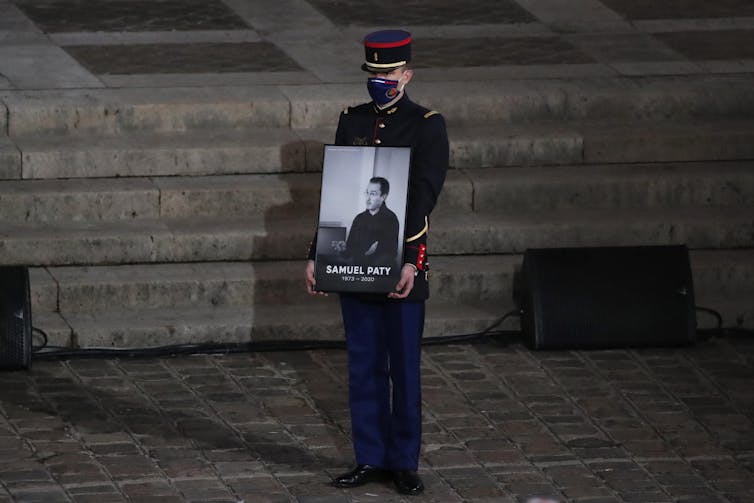
The outrageous beheading of the well-meaning teacher Samuel Paty on October 16, and a similar attack on a 60-year-old woman and two others in the Notre-Dame cathedral in Nice two weeks later were acts of violence calculated to provoke anger.

The barbarism was deliberate. It was intended to divide France and its people.

A Republican Guard holds a portrait of Samuel Paty during a national memorial event. Francois Mori / POOL/ EPA

Macron takes aim at Islamists

An opinion poll after Paty’s murder found 79% of respondents felt “Islamism had declared war” on France and the French republic. An even higher percentage considered France’s rigid approach to secularism to be threatened.

In a society in which almost one in 10 people are immigrants, being French means acting French, and secularism means there is no place in public life for expressing religious identity or commitment – unless that happens to be aligned with French Catholicism.

For French Muslims, every Islamist terror attack triggers a fresh wave of public questioning about their loyalty to the republic and its values.

After the murder of Paty, the French Council of the Muslim Faith (CFCM) sought to remove any doubt about where French Muslims stood:

The horrible assassination […] reminds us of the scourges which sadly mark our reality: that of the outbreaks in our country of radicalism, violence and terrorism, which claim to be Islam, making victims of all ages, all conditions and all convictions

In an emotional speech during a national ceremony for Paty, Macron expressed similar sentiments, saying

Samuel Paty was killed because Islamists want our future and because they know that with quiet heroes like him, they will never have it. They divide the faithful and the unbelievers.

Macron has called for unity in the wake of the attack. ERIC GAILLARD / POOL / Reuters

France’s Muslims backed into a corner

Tragically, while so much of what Macron said accords with what the vast majority of French people believe (Muslim and non-Muslim alike), it leaves France’s Muslims backed into a corner. No matter how hard they try, they can’t be French enough unless they stop being Muslim and, in public at least, turn their back on their faith.

Macron was immediately denounced by Turkey’s President Recep Tayyip Erdogan, who questioned his mental health, and Pakistan’s Prime Minister Imran Khan, who more thoughtfully tweeted:

This is a time when President Macron could have put a healing touch and denied space to extremists rather than creating further polarisation and marginalisation that inevitably leads to radicalisation

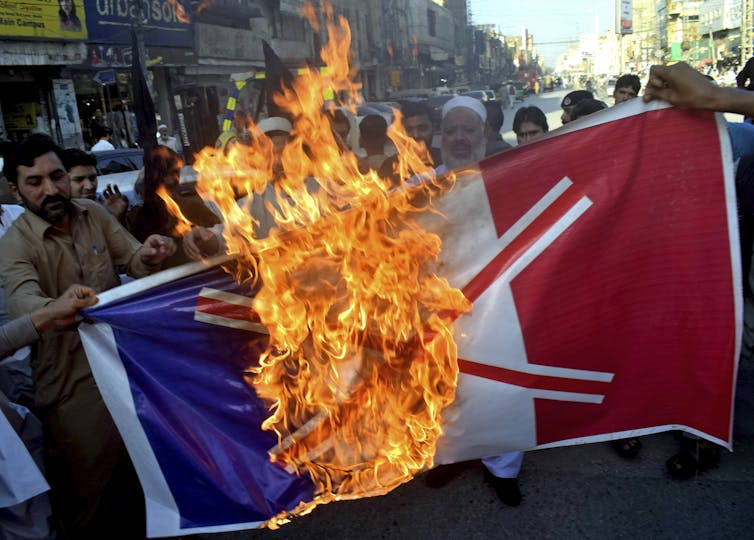
Pakistani traders burn the French flag during a protest. Muhammad Sajjad/AP

Former Malaysian Prime Minister Mahathir Mohamad, meanwhile, did not even try for moderation when he provocatively tweeted:

Muslims have a right to be angry and to kill millions of French people for the massacres of the past

In their statements, Erdogan and Khan had their eyes on domestic politics. Mahathir, who has a long history of making provocative statements, just seemed to be seeking attention, heedless of the fact he is playing with fire.

In responding to the terrorist attacks in France, Canada’s Prime Minister Justin Trudeau echoed the thoughts of the French Muslim leaders of the CFCM, saying

They were heinous, criminal acts, unjustifiable by any circumstance and an affront to all of our values.

The criminals, the terrorists, the cold-blooded murderers who perpetrated these attacks do not represent Islam. They do not get to define Muslims in France, in Canada or anywhere around the world.

The French-speaking Trudeau understands France well, but he also understands the multiculturalism of immigrant societies like Canada in a way Macron does not.

Macron is leading a deeply plural society shaped by immigration, but France is a nation that struggles with the language and practice of pluralism.

The multiculturalism of Canada, the US, Australia or New Zealand, on the other hand, is much more relaxed. These countries have an approach to national unity that allows for public expression of difference.

Duelling extremisms

In the hours after the Nice attack, a man threatening a North African shopkeeper with a pistol in the French city of Avignon was shot dead by police after refusing to drop his weapon.

He appeared to be wearing a jacket emblazoned with the “Defend Europe” logo of the far-right, anti-immigrant, group Generation Identity, a group that espouses similar conspiratorial ideas as the Australian who massacred 51 people at mosques in Christchurch – ideas of a “great replacement” of white Christians by Muslims.

As France goes into a second-wave COVID lockdown, its economy on its knees and its people anxious and fearful, the spectre of duelling extremisms and an escalating cycle of violence is the last thing the country needs.

This is a difficult time to be French, but it is especially difficult if you are a French Muslim.

Macron understands this, he recognises the barriers presented by soaring rates of unemployment for French youth in general and Muslim youth in particular, and he recognises the enormous problem of systemic racism and bigotry.

But, so far, he, and the nation of France, are stuck in a rut, endlessly repeating the mistakes of the past, burdened by a flawed framing of identity and a needlessly narrow path to belonging. Déjà vu indeed.

ref. For French Muslims, every terror attack brings questions about their loyalty to the republic – https://theconversation.com/for-french-muslims-every-terror-attack-brings-questions-about-their-loyalty-to-the-republic-149151

Labor politicians need not fear: Queenslanders are no more attached to coal than the rest of Australia

Source: The Conversation (Au and NZ) – By Bruce Tranter, Professor of Sociology, University of Tasmania

It’s written into electoral folklore that Labor was wiped out at the 2019 federal election because Queensland didn’t like its position on coal. As the story goes, Labor’s lukewarm support for the Adani coal mine and its ambitious climate policies antagonised Queensland’s mining communities and cemented another Coalition term.

But our recent research casts doubt on this conventional wisdom. Our findings challenge claims that the issue of new coal mines in Queensland was largely to blame for Labor’s election loss.

We examined how support for coal mines was linked to voting at the last federal election. We found Queensland voters supported new coal mines, and this was definitely a factor in the federal election. But the influence of coal mines as an election issue in Queensland was similar to that in most other mainland states.

Queenslanders head to the polls tomorrow to decide the state election. Throughout the campaign, the Palaszczuk Labor government has vocally backed expansion of the resources industry – but our research suggests the issue will not necessarily decide the election result.

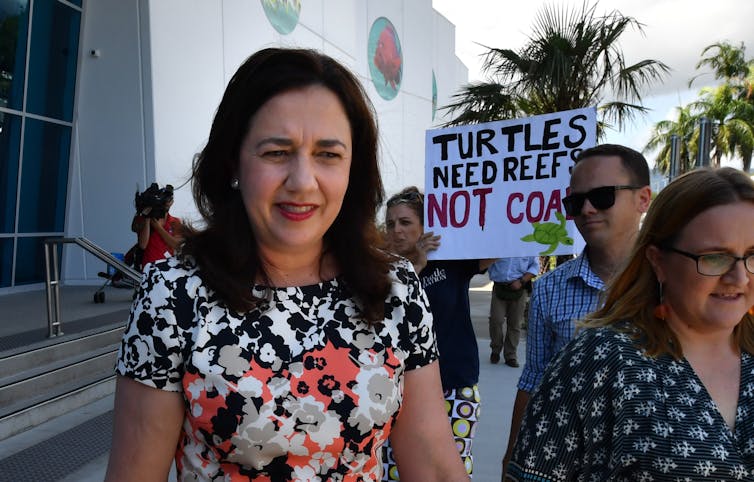
Annastacia Palaszczuk being heckled
Annastacia Palaszczuk has strongly backed the Queensland resources industry. AAP/Darren England

A shock loss

After Labor lost the election in May 2019, many analysts and commentators – not to mention the party itself – were left scratching their heads. Labor had been thumped in what was billed as the climate change election, despite its policy on cutting greenhouse gas pollution being far more ambitious than the Coalition’s.

Labor had pledged to cut Australia’s emissions by 45% between 2005 and 2030. It wanted renewable energy to form half the electricity mix by 2030 and would have implemented an emissions trading-type scheme to limit pollution from industry.

During the campaign, Labor was accused of fence-sitting on the Adani coal mine. Leader Bill Shorten had stopped short of saying it shouldn’t proceed, instead insisting it should stack up environmentally and financially, and should not receive Commonwealth funding.

On election night, Labor received an electoral walloping in Queensland, and its messaging on coal and climate was widely blamed.


Read more: New polling shows 79% of Aussies care about climate change. So why doesn’t the government listen?


Several commentators, and even Coalition MPs, said the government owed its re-election to a convoy of anti-Adani protesters, led by former Greens leader Bob Brown, which travelled through Queensland and purportedly alienated voters.

While the Coalition strongly supported the construction of new coal mines, Labor struggled to articulate its position – wedged between its blue-collar base in regional areas, and urban voters concerned about the environment.

After the election, Labor frontbencher Joel Fitzgibbon conceded Labor’s positioning on the Adani mine overlooked the importance of investment and jobs, and left coal miners worried.

But does the empirical evidence support the view that Labor lost Queensland – and the election – over the issue of coal?

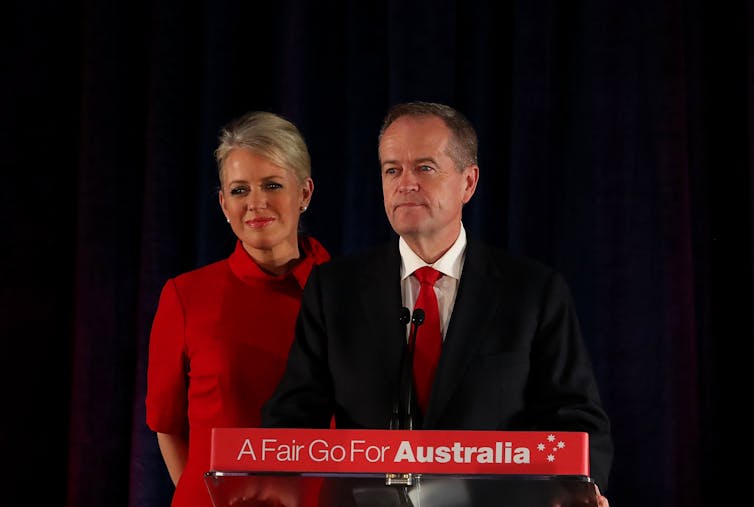
Bill Shorten and wife Chloe Shorten
Bill Shorten’s election defeat was largely attributed to the Queensland coal issue. David Crossling/AAP

Our surprise findings

To answer this questions, we examined data from a 2019 national survey, the Comparative Study of Electoral Systems (CSES). The data indicated 46% of Australians supported the construction of new coal mines, and 52% were against.

On average, people who favoured new coal mines tended to be Coalition supporters, less likely to have a tertiary education, more likely to be men than women and were older than average. In contrast, those who accept that human-driven climate change is occurring tend to be tertiary-educated Greens or Labor supporters. They are more likely to be women than men and are younger than average.

Support for new coal mines declined as interest in politics increased in NSW and Victoria. Yet in Queensland and (to a lesser extent) Western Australia, the pattern was very different. In these so-called “mining states”, support for new coal mines increased with political interest.


Read more: Why this Queensland election is different — states are back at the forefront of political attention


What’s more, as interest in politics increased among Labor identifiers, support for new coal mines decreased. However as political interest increased among Coalition identifiers, support for new mines increased.

These results suggest coal mines influenced voting behaviour in regional and remote areas of Queensland in the 2019 election.

However, our research also suggests the issue was no greater a factor for voters in Queensland than in other states. Those who supported new mines were more likely to vote for the Coalition than for Labor. But the association between new coal mines and voting was not stronger in Queensland than in New South Wales, Victoria, South Australia or Western Australia.

Coal mine
Queenslanders support for new coal mines is not greater than anywhere else in Australia. AAP/Dave Hunt

Labor should not abandon climate ambitions

Just days after federal Labor’s 2019 electoral rout in Queensland, Palaszczuk swung into action. Obviously fearing for the electoral prospects of her own government, she ordered state officials to give a “definitive timeframe” on approvals for the Adani mine within days.

The Queensland state election campaign has been dominated by the issues of economic recovery, job creation and infrastructure. Early in the campaign, the Palaszczuk government signed off on a new metallurgical coal mine in the Bowen Basin, further affirming its support for Queensland’s resources industry. Climate action, and the need to move away from coal, has been mentioned in the campaign, but it’s not at the fore.

Federal Labor is still struggling to regroup after its election loss. It has not revealed the emissions reduction targets it will take to the next federal election, and reportedly this month resolved to support the Morrison government in developing new gas reserves.

But at both a state and federal level, Labor should not hasten to back fossil fuels, nor should it abandon an ambitious climate policy agenda. The issue of new coal mines may not be a huge election decider in Queensland after all.


Read more: China just stunned the world with its step-up on climate action – and the implications for Australia may be huge


ref. Labor politicians need not fear: Queenslanders are no more attached to coal than the rest of Australia – https://theconversation.com/labor-politicians-need-not-fear-queenslanders-are-no-more-attached-to-coal-than-the-rest-of-australia-148993

Set up national air fleet to fight fires, says royal commission, warning of worsening weather

Source: The Conversation (Au and NZ) – By Michelle Grattan, Professorial Fellow, University of Canberra

Australia should develop a national aerial fire fighting capability and fuel load management strategies should be more transparent, the inquiry set up following last summer’s devastating bushfires has recommended.

In its 80 recommendations, including many shared between federal and state governments, the Royal Commission into National Natural Disaster Arrangements calls for a bigger federal role in dealing with disasters but stresses

there are compelling reasons for state and territory governments to continue to be responsible for disaster management.

The 2019-20 fires took 33 lives, nine of them firefighters including three Americans.

The recommendations are aimed at increasing national co-ordination to prepare better for natural disasters, respond more rapidly (including through the army), and ensure the recovery is focused on making communities more resilient.

Natural disasters have changed, and so must the management arrangements, the report says.

Extreme weather has already become more frequent and intense because of climate change; further global warming over the next 20 to 30 years is inevitable. Globally, temperatures will continue to rise, and Australia will have more hot days and fewer cool days. Sea levels are also projected to continue to rise.

Tropical cyclones are projected to decrease in number, but increase in intensity. Floods and bushfires are expected to become more frequent and more intense. Catastrophic fire conditions may render traditional bushfire prediction models and firefighting techniques less effective.

But the report does not make recommendations on climate change policy.

Calling for a “national” approach to natural disasters, the commission says this doesn’t mean the federal government taking over, but rather a “whole of nation” level of cooperation and effort.


Read more: To reduce disasters, we must cut greenhouse emissions. So why isn’t the bushfire royal commission talking about this?


As part of playing a greater role, the federal government should be able to declare “a state of national emergency”.

A declaration should be the catalyst for a quicker, clearer and more pre-emptive mobilisation of federal resources but should not give the federal government power to determine how state resources are to be used, the report says.

While usually a state or territory would have asked for help, “in some limited circumstances” the federal government should be able to take action during a natural disaster, “whether or not a state has requested assistance”.

In the bushfire crisis, there was tension between the NSW and federal governments over the deployment of military personnel.

The commission’s recommendations on the controversial issue of fuel loads concentrate on questions of clarity.

Public land managers should clearly convey and make available to the public their fuel load management strategies, including the rationale behind them, as well as report annually on the implementation and outcomes of those strategies,“ the reports says.

It also says governments should review the assessment and approval processes on vegetation management, bushfire mitigation and hazard reduction to make it clear what landholders and land managers need to do and minimise the time taken for assessments and approvals.

On air capability, the report says all Australian governments should develop a “modest, Australian-based and registered, national aerial firefighting capability”. This would be made up of “more specialised platforms … to supplement the aerial firefighting capability of the states and territories”.


Read more: The bushfire royal commission has made a clarion call for change. Now we need politics to follow


After some anger at charities’ use of money donated for bushfire victims, the commission has said federal, state and territory governments should create a single national scheme for the regulation of charitable fundraising.

The Minister for Emergency Management David Littleproud said cabinet would consider the report next week.

ref. Set up national air fleet to fight fires, says royal commission, warning of worsening weather – https://theconversation.com/set-up-national-air-fleet-to-fight-fires-says-royal-commission-warning-of-worsening-weather-149165

The bushfire royal commission has made a clarion call for change. Now we need politics to follow

Source: The Conversation (Au and NZ) – By David Bowman, Professor of Pyrogeography and Fire Science, University of Tasmania

The bushfire royal commission today handed down its long-awaited final report. At almost 1,000 pages, it will take us all some time to digest. But it marks the start of Australia’s national disaster adaptation journey after a horrendous summer.

The report clearly signals the urgent need to improve disaster management capacity in Australia. Closer examination of the report will determine if other recommendations are needed. But overall, this seems a realistic report that incorporates a diverse and complex body of evidence. And it arrives at recommendations likely to enjoy broad political, institutional and community support.


Read more: Summer bushfires: how are the plant and animal survivors 6 months on? We mapped their recovery


As the report states, the 2019-2020 bushfires were the catalyst for, but not the sole focus of, the inquiry. It also looked at floods, bushfires, earthquakes, storms, cyclones, storm surges, landslides and tsunamis.

The recommendations demonstrate the Royal Commission is serious about shifting the status quo when it comes to managing Australia’s natural disasters – events that will become more frequent and severe under climate change. What’s needed now is political will for change.

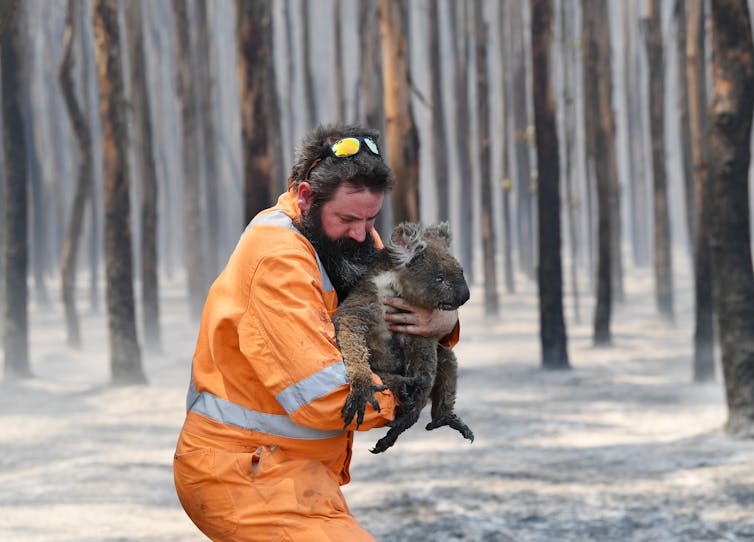
Wildlife rescuer saves a koala from a forest fire.
Australia endured its own bushfire disaster just months ago. David Mariuz/AAP

A picture of devastation

The commission received evidence from more than 270 witnesses, almost 80,000 pages of tendered documents and more than 1,750 public submissions. It recaps the damage wrought, including:

  • more than 24 million hectares burnt nationally

  • 33 human deaths (and perhaps many more due to smoke haze over much of eastern Australia)

  • more than 3,000 homes destroyed

  • thousands of locals and holidaymakers trapped

  • communities isolated without power, communications, and ready access to essential goods and services

  • an estimated national financial impacts over A$10 billion

  • nearly three billion animals killed or displaced

  • many threatened species and other ecological communities extensively harmed.

The report noted every state and territory suffered fire to some extent, adding “on some days, extreme conditions drove a fire behaviour that was impossible to control”.

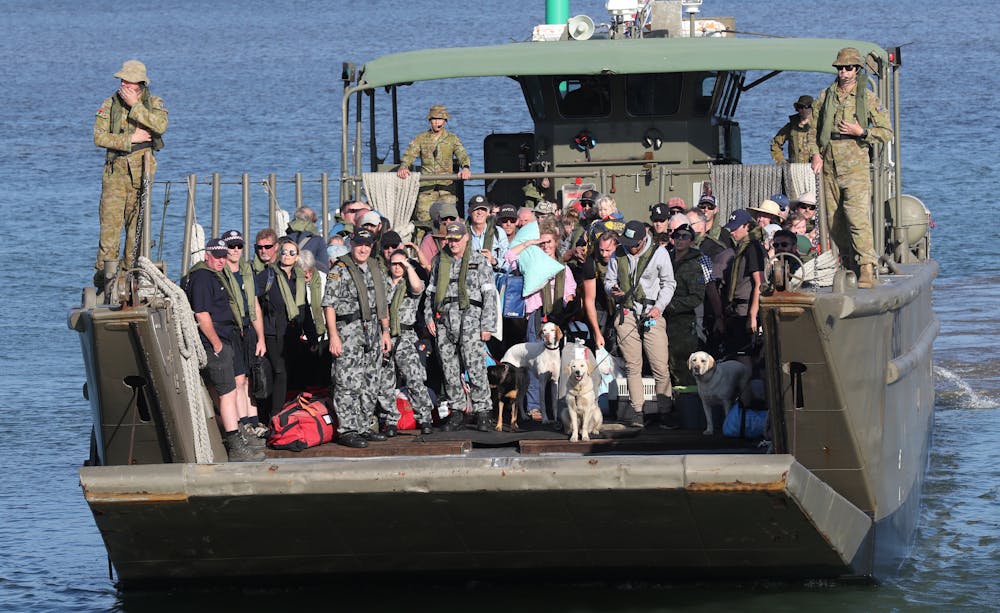
Evacuees on a landing craft
Mallacoota residents and CFA firefighters were evacuated to Hastings on landing crafts to escape the bushfires. AAP Image/David Crosling

A new role for national government

The scope of the commission’s recommendations is vast. For government, it would mean changes across land-use planning, infrastructure, emergency management, social policy, agriculture, education, physical and mental health, community development, energy and the environment.

Broad areas of recommended change include a clearer leadership role for the federal government and establishing a national natural disaster management agency. The report notes while state and territory governments have primary responsibility for emergency management, during the bushfire crisis the public “expected greater Australian Government action”.

Other recommendations include:

  • nationally consolidating aerial firefighting capacity

  • more capacity in local government

  • nationally consistent warnings including air pollution (especially bushfire smoke) forecasts

  • acknowledgement of the role of Indigenous fire managers in mitigating bushfire risks.

The commission says preparing for natural disasters “is not the sole domain of governments and agencies”. Individuals and communities must also ensure they’re prepared. As the commission notes:

While we heard that some individuals and communities were well prepared for the 2019-2020 bushfire season, this was not always the case. For other individuals and communities, although they did prepare, the intensity of the bushfires meant that no level of preparation would have been sufficient. For others, they were seemingly unprepared for what confronted them.

The inquiry said governments have a critical role to play here, by providing information on disaster risks through community education and engagement programs.

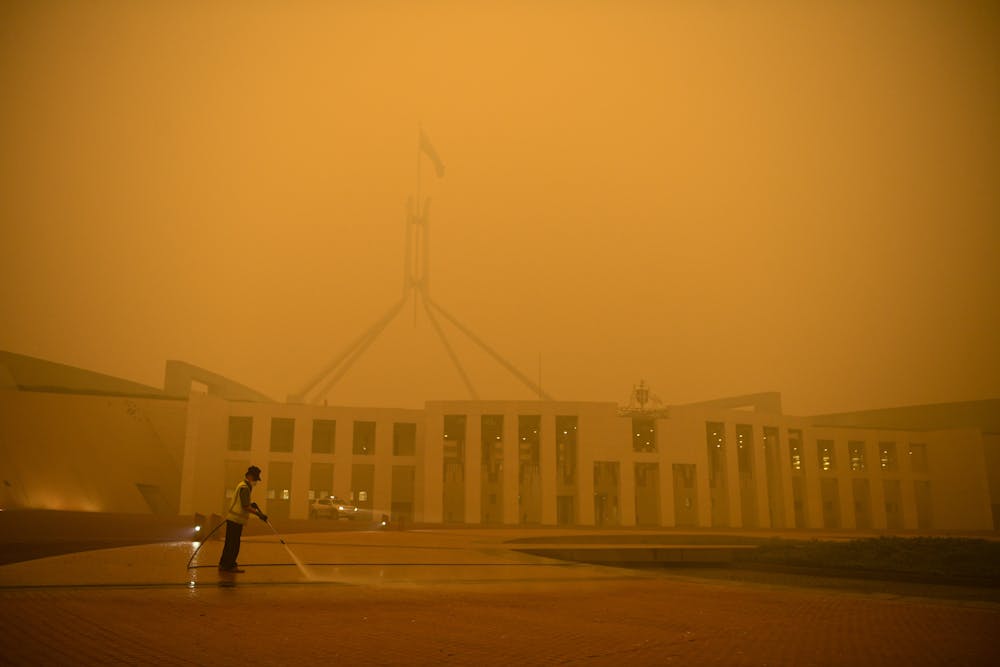
Orange smoke haze shrouds Parliament House.
More than 445 deaths were attributed to the smoke haze generated by the Black Saturday bushfires. AAP Image/Lukas Coch

The climate question

During last summer’s bushfire crisis, Prime Minister Scott Morrison was reluctant to draw links to climate change. And before the inquiry commenced, there was much doubt over whether it would adequately probe how climate change is contributing to natural disasters.

Significantly, the commission’s final report explicitly recognises climate change increases the risk and impact of natural disasters. It says global warming beyond the next 20 to 30 years “is largely dependent on the trajectory of greenhouse gas emissions”, but stops far short of calling for federal government action on emissions reduction.

The report says extreme weather “has already become more frequent and intense because of climate change; further global warming over the next 20 to 30 years is inevitable”. It goes on:

Globally, temperatures will continue to rise, and Australia will have more hot days and fewer cool days. Sea levels are also projected to continue to rise. Tropical cyclones are projected to decrease in number, but increase in intensity. Floods and bushfires are expected to become more frequent and more intense. Catastrophic fire conditions may render traditional bushfire prediction models and firefighting techniques less effective.

Among its recommendations, the report calls for improved national climate and weather intelligence to support governments to implement, assess and review their disaster management and climate adaptation strategies.

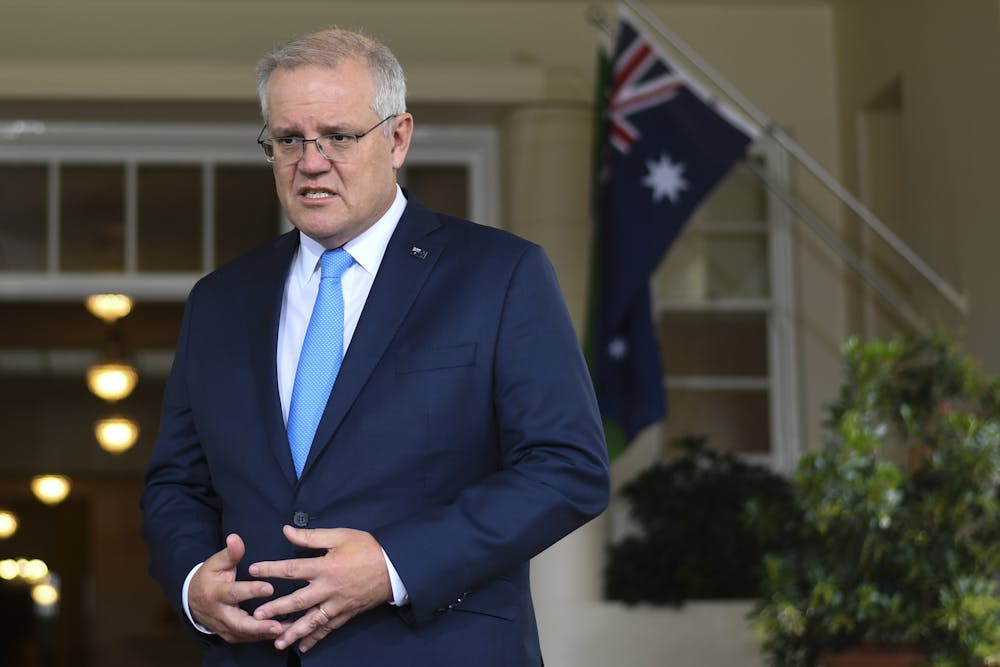
Scott Morrison
Prime Minister Scott Morrison was reluctant to draw links to climate change during the Black Summer bushfires. AAP Image/Lukas Coch

Now’s the time to act

The commission acknowledged most of its recommendations identify what needs to be done, rather than how it should be done.

The commission also says while governments and others have backed the notion of improving natural disaster resilience, “support is one thing – action is another”. And the time to act to improve arrangements, the report says, is now.

This is a key point. As noted by the report, more than 240 inquiries about natural disasters have been held in Australia to date. Many would have been time-consuming and expensive. And while many recommendations have been implemented and have led to significant improvements, the report said, “others have not”.


Read more: New polling shows 79% of Aussies care about climate change. So why doesn’t the government listen?


So will this royal commission lead to substantive change? The inquiry suggests this will require that governments “commit to action and cooperate and hold each other to account”. Further, progress towards implementing the recommendations should be publicly monitored.

Fundamentally, political appetite will determine whether the royal commission’s recommendations ever become reality. There is much work to be done by governments and others to iron out the legal, administrative, social and practical complexities of changing the status quo. And the Morrison government has given next to no indication it’s willing to seriously tackle the problem of climate change.

Ultimately, these findings are small steps towards achieving natural disaster reliance. To paraphrase Winston Churchill, this report can be read not as the beginning of the end, but perhaps the end of the beginning of the long road to climate change adaptation.

ref. The bushfire royal commission has made a clarion call for change. Now we need politics to follow – https://theconversation.com/the-bushfire-royal-commission-has-made-a-clarion-call-for-change-now-we-need-politics-to-follow-149158

The bushfire royal commission sets a strong precedent for change. Now we need politics to follow

Source: The Conversation (Au and NZ) – By David Bowman, Professor of Pyrogeography and Fire Science, University of Tasmania

The bushfire royal commission today handed down its long-awaited final report. At almost 1,000 pages, it will take us all some time to digest. But it marks the start of Australia’s national disaster adaptation journey after a horrendous summer.

The report clearly signals the urgent need to improve disaster management capacity in Australia. Closer examination of the report will determine if other recommendations are needed. But overall, this seems a realistic report that incorporates a diverse and complex body of evidence. And it arrives at recommendations likely to enjoy broad political, institutional and community support.

As the report states, the 2019-2020 bushfires were the catalyst for, but not the sole focus of, the inquiry. It also looked at floods, bushfires, earthquakes, storms, cyclones, storm surges, landslides and tsunamis.

The recommendations demonstrate the Royal Commission is serious about shifting the status quo when it comes to managing Australia’s natural disasters – events that will become more frequent and severe under climate change. What’s needed now is political will for change.

Wildlife rescuer saves a koala from a forest fire.
Australia endured its own bushfire disaster just months ago. David Mariuz/AAP

A picture of devastation

The commission received evidence from more than 270 witnesses, almost 80,000 pages of tendered documents and more than 1,750 public submissions. It recaps the damage wrought, including:

  • more than 24 million hectares burnt nationally

  • 33 human deaths (and perhaps many more due to smoke haze over much of eastern Australia)

  • more than 3,000 homes destroyed

  • thousands of locals and holidaymakers trapped

  • communities isolated without power, communications, and ready access to essential goods and services

  • an estimated national financial impacts over A$10 billion

  • nearly three billion animals killed or displaced

  • many threatened species and other ecological communities extensively harmed.

The report noted every state and territory suffered fire to some extent, adding “on some days, extreme conditions drove a fire behaviour that was impossible to control”.

Evacuees on a landing craft
Mallacoota residents and CFA firefighters were evacuated to Hastings on landing crafts to escape the bushfires. AAP Image/David Crosling

A new role for national government

The scope of the commission’s recommendations is vast. For government, it would mean changes across land-use planning, infrastructure, emergency management, social policy, agriculture, education, physical and mental health, community development, energy and the environment.

Broad areas of recommended change include a clearer leadership role for the federal government and establishing a national natural disaster management agency. The report notes while state and territory governments have primary responsibility for emergency management, during the bushfire crisis the public “expected greater Australian Government action”.

Other recommendations include:

  • nationally consolidating aerial firefighting capacity

  • more capacity in local government

  • nationally consistent warnings including air pollution (especially bushfire smoke) forecasts

  • acknowledgement of the role of Indigenous fire managers in mitigating bushfire risks.

The commission says preparing for natural disasters “is not the sole domain of governments and agencies”. Individuals and communities must also ensure they’re prepared. As the commission notes:

While we heard that some individuals and communities were well prepared for the 2019-2020 bushfire season, this was not always the case. For other individuals and communities, although they did prepare, the intensity of the bushfires meant that no level of preparation would have been sufficient. For others, they were seemingly unprepared for what confronted them.

The inquiry said governments have a critical role to play here, by providing information on disaster risks through community education and engagement programs.

Orange smoke haze shrouds Parliament House.
More than 445 deaths were attributed to the smoke haze generated by the Black Saturday bushfires. AAP Image/Lukas Coch

The climate question

During last summer’s bushfire crisis, Prime Minister Scott Morrison was reluctant to draw links to climate change. And before the inquiry commenced, there was much doubt over whether it would adequately probe how climate change is contributing to natural disasters.

Significantly, the commission’s final report explicitly recognises climate change increases the risk and impact of natural disasters. It says global warming beyond the next 20 to 30 years “is largely dependent on the trajectory of greenhouse gas emissions”, but stops far short of calling for federal government action on emissions reduction.

The report says extreme weather “has already become more frequent and intense because of climate change; further global warming over the next 20 to 30 years is inevitable”. It goes on:

Globally, temperatures will continue to rise, and Australia will have more hot days and fewer cool days. Sea levels are also projected to continue to rise. Tropical cyclones are projected to decrease in number, but increase in intensity. Floods and bushfires are expected to become more frequent and more intense. Catastrophic fire conditions may render traditional bushfire prediction models and firefighting techniques less effective.

Among its recommendations, the report calls for improved national climate and weather intelligence to support governments to implement, assess and review their disaster management and climate adaptation strategies.

Scott Morrison
Prime Minister Scott Morrison was reluctant to draw links to climate change during the Black Summer bushfires. AAP Image/Lukas Coch

Now’s the time to act

The commission acknowledged most of its recommendations identify what needs to be done, rather than how it should be done.

The commission also says while governments and others have backed the notion of improving natural disaster resilience, “support is one thing – action is another”. And the time to act to improve arrangements, the report says, is now.

This is a key point. As noted by the report, more than 240 inquiries about natural disasters have been held in Australia to date. Many would have been time-consuming and expensive. And while many recommendations have been implemented and have led to significant improvements, the report said, “others have not”.


Read more: New polling shows 79% of Aussies care about climate change. So why doesn’t the government listen?


So will this royal commission lead to substantive change? The inquiry suggests this will require that governments “commit to action and cooperate and hold each other to account”. Further, progress towards implementing the recommendations should be publicly monitored.

Fundamentally, political appetite will determine whether the royal commission’s recommendations ever become reality. There is much work to be done by governments and others to iron out the legal, administrative, social and practical complexities of changing the status quo. And the Morrison government has given next to no indication it’s willing to seriously tackle the problem of climate change.

Ultimately, these findings are small steps towards achieving natural disaster reliance. To paraphrase Winston Churchill, this report can be read not as the beginning of the end, but perhaps the end of the beginning of the long road to climate change adaptation.

ref. The bushfire royal commission sets a strong precedent for change. Now we need politics to follow – https://theconversation.com/the-bushfire-royal-commission-sets-a-strong-precedent-for-change-now-we-need-politics-to-follow-149158

Review: Cursed! is a play of outrageous wit and deep thought

Source: The Conversation (Au and NZ) – By Anthony Uhlmann, Professor of English, Writing and Society Research Centre, Western Sydney University

Review: Cursed! by Kodie Bedford, directed by Jason Klarwein

Tucked away at the back of the program for Kodie Bedford’s first play Cursed! is a blurb on Belvoir, mentioning the company has “faith in humanity”.

What has humanity been doing in recent times, you might ask, to be deserving of faith? Yet this seems precisely the point of theatre: challenge cynicism, build connections.

I didn’t understand what had been missing until I was reminded at the opening of this vibrant and crucial play by a talented new voice.

Cursed! is a full-body comedy experience, gathering the cast into tempests of craziness as if they were being animated by the gut-busting Southerly wind that pummels Geraldton and – to paraphrase the magnificent Dawn (Sacha Horler) – gives everyone the shits.

Complicated families

Stephen Curtis’ impressive set design sees a blue wall-papered flock-carpeted room with a dinner table. There is a beam of light as if from a lighthouse, circling the stage and carrying visible smoke from the sweet-smelling smoke machine. A 1980s pop anthem plays from a beat-box atop a piano. Carefully ordered trinkets and snapshots. Everything is significant.

The play begins with Bernadette (wonderfully played by Chenoa Deemal) hitting us with the sharp wit which characterises Bedford’s brilliant comic writing. Everything is complicated in Sydney, including the racism, she says, so she has come to miss Geraldton, WA, where someone will just call you a “black cunt”. This outrageous saying of what can’t otherwise be said characterises comedy.

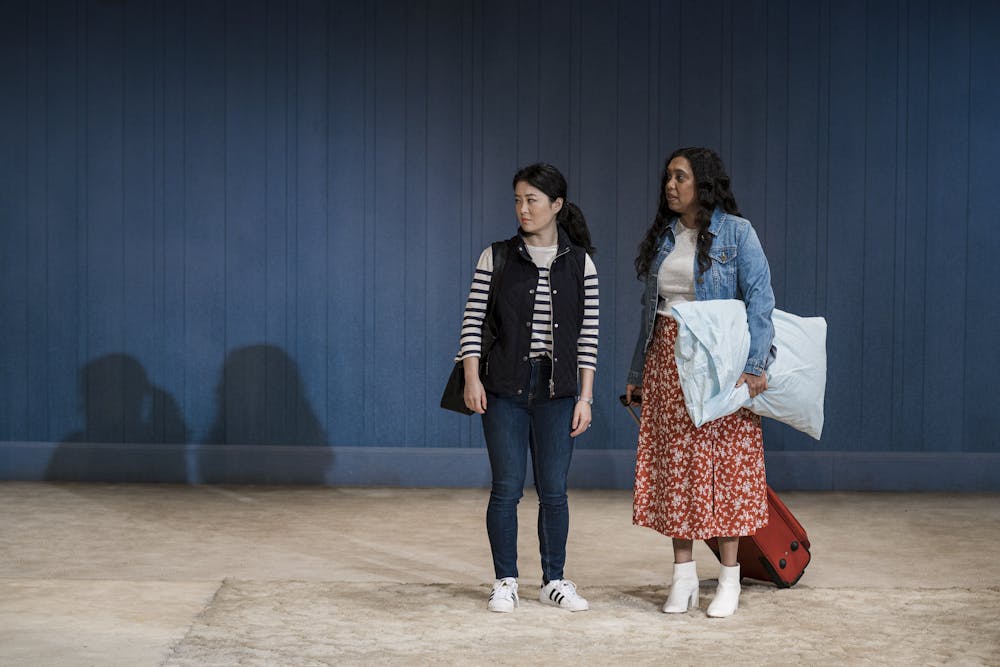
The sisters stand together.
Cursed! gives voice to those things which go unsaid. Luke Currie Richardson/Belvoir

Bedford talks about “good madness” in her program note: the kind of madness that sees the truth but makes it funny, and so, like magic, can tell people things they might otherwise refuse to hear.

The audience laughs in disbelief when Bernadette makes her racism joke, but howls in a kind of ecstasy when Bernadette’s prim half-Chinese sister Marie (Shirong Wu) overcomes her aversion of the “c-word” to spit the insult out at Bernadette during the play’s climax, as the children play out mock battles that serve to affirm their connections.

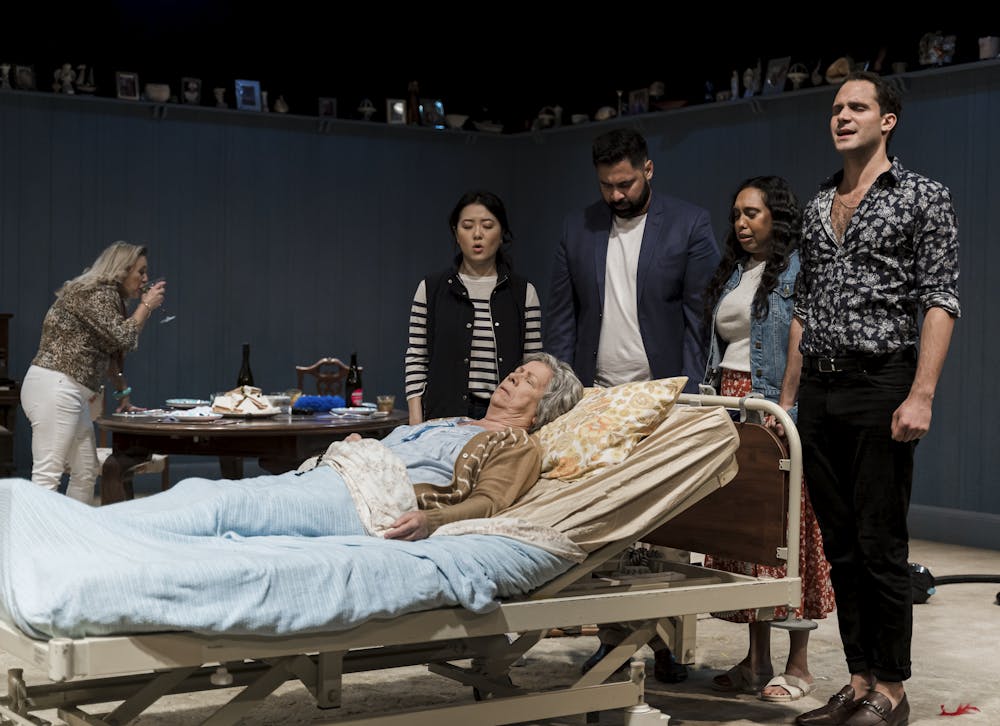
Bernadette is called back to Geraldton to gather with the “crazy white side” of her family around their dying grandmother, Nan (Valerie Bader).

Production photo: the family gather around Nan in a hospital bed
When the family is brought together, all of their madness and rituals are on display. Luke Currie Richardson/Belvoir

Benadette’s mother, Dawn, has suffered mental illness since the birth of her first child, Sebastian (Alex Stylianou), who says she has gone through “a lot of coloured cock” mothering her three children to Maltese, Aboriginal and Chinese fathers.

Demonstrating Bedford’s skillful, dramatic irony, Sebastian comes out as gay as soon as he appears on stage, but only fesses up to it while mistaking Bernadette’s long-suffering fiancé Izzy (Bjorn Stewart) for a “butt slut” Grindr date. Sebastian tries to renounce his gay sin while praying on Nan’s deathbed, and Catholicism’s strictures, hypocrisies and Nan’s sincerity as a rare “good Catholic” are a source of arch humour throughout.

The fragile family Nan has held together gather around her deathbed, with Izzy brought into the fold. Through Izzy, Bedford shows us the insane rituals the family have invented to hold themselves together.

These rules include never be alone in a room with Dawn, and never say yes if she asks to sing. Of course, Izzy breaks both, has his virtue tested and unleashes a song and dance number where Dawn lip-syncs into a dildo – which she explains to the perplexed Nan is something “you put in your twat for pleasure”.

Dawn in a red boa singing into a dildo.
Be careful when Dawn asks you if you want to sing. Luke Currie Richardson/Belvoir

So too, one must beware of Dawn’s mock funerals, in which every family member is given a role – the funeral song, the eulogy – as Dawn lies in state on the dining table.

Balancing madness

As an undercurrent to the madness, Bedford offers symbols that gnaw at us.

Bernadette is haunted by a talk she prepared as a six-year-old on the horrific trauma of the wreck of the Batavia off the coast of Geraldton, where Dutch castaways descended into murderous madness.

Neither Nan (cursed by the fear of leaving the house) nor Dawn (cursed by insanity and committed) could attend her talk and it causes a crisis for the young Bernadette.

This image returns to Bernadette again and again. She struggles with the fear she and her siblings are cursed to go mad like their mother; the fear she will be unable to cope with the responsibility of holding the family together once Nan dies.

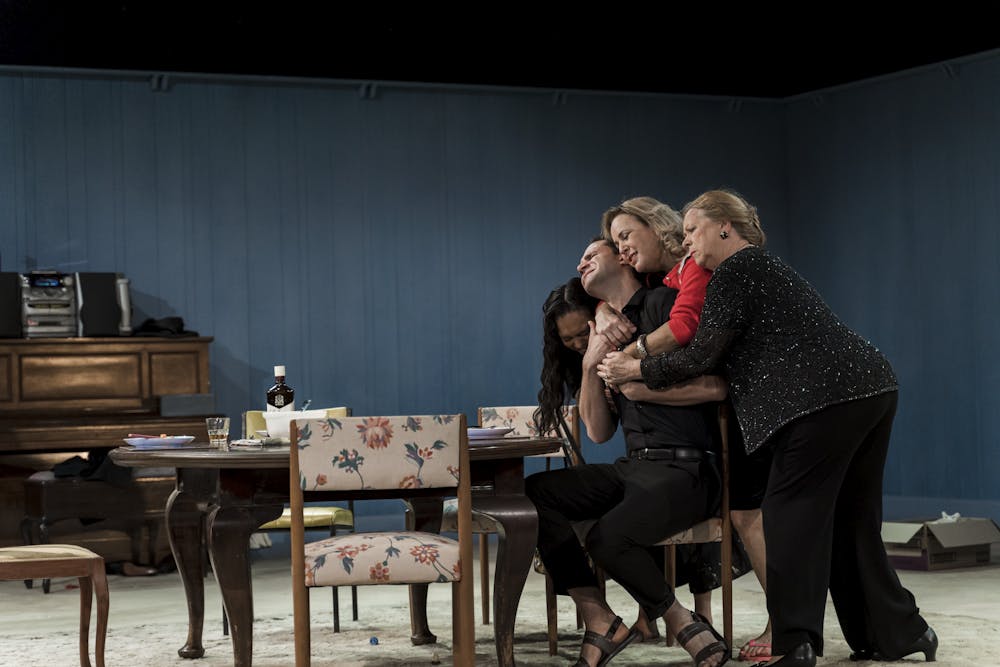
The family hug
There is comfort in shared madness. Luke Currie Richardson/Belvoir

Bad madness – to contrast Bedford’s good madness – is a dissolution or violence, a breaking of connections, and it serves as an understated symbol of colonial Australia.

But her good madness somehow holds things together in a glue of insanity, where the truths of colonial Australia’s violent dispossession of Aboriginal peoples is always on the surface, repurposed as jokes.

The play began with loud applause from the masked and socially distant audience, and ended with a standing ovation. A shy Bedford had to be urged to her feet by director Jason Klarwein, who shares the triumph, as the cast called her out of hiding.

She might have to get used to the attention.

Cursed! plays at Belvoir until November 29.

ref. Review: Cursed! is a play of outrageous wit and deep thought – https://theconversation.com/review-cursed-is-a-play-of-outrageous-wit-and-deep-thought-148333

Keith Rankin Chart Analysis – Covid-19: Belgium, Switzerland and Sweden

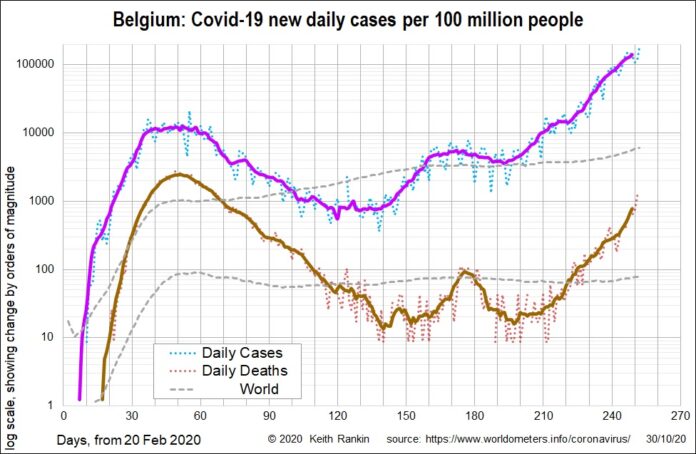
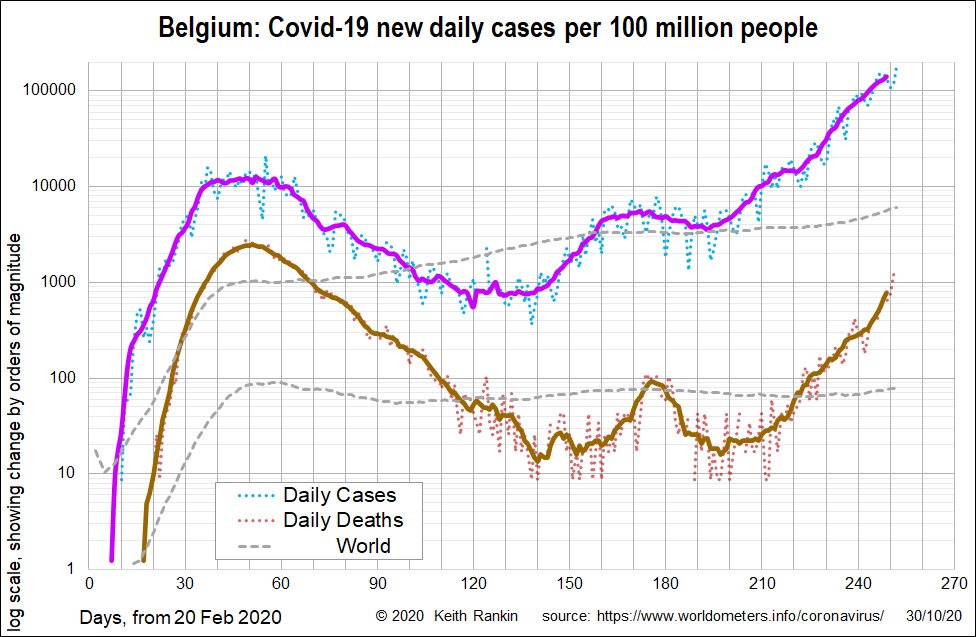
Belgium has had the highest statistics per capita in the European Union. Chart by Keith Rankin.

Analysis by Keith Rankin.

Belgium has had the highest statistics per capita in the European Union. Chart by Keith Rankin.

This week’s charts show three small economically prosperous European countries with similar populations; Belgium has 11.6 million people, Switzerland 8.6 million, and Sweden has 10.1 million.

Belgium has the third highest per capita death toll in the world from Covid-19; only Peru and little San Marino have had more deaths.

Belgium got on top of its Covid19 epidemic by the end of May, at least in a way that Sweden did not. Daily known cases minimised in June at around 600 per 100 million, which would be equivalent to 30 cases per day in New Zealand. But, like much of Europe, exponential growth of cases recommenced in July, paused in August, and has surged unabated over September and October. A surge in death rates followed in September and October. Belgium is breaking new records for its daily cases – now officially ten times higher than in April; and deaths look like they will exceed April’s record highs in November. At present rates, over one percent of Belgium’s entire population is being infected each week; equivalent to 50,000 new cases of Covid19 in New Zealand in a single week.

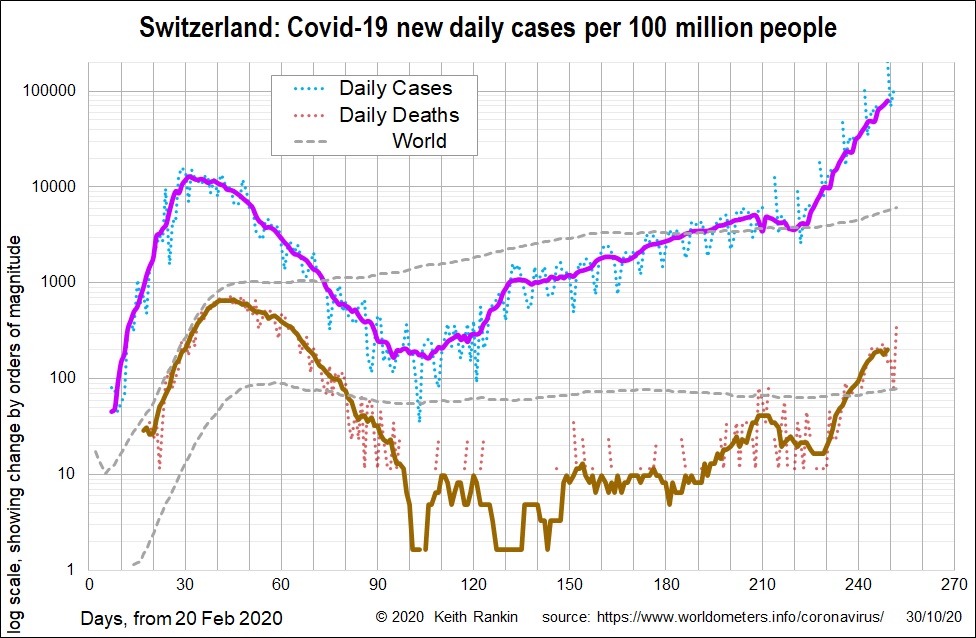
Switzerland has accelerating exponential growth of daily cases. Chart by Keith Rankin.

In Switzerland, the case profile is similar to that of Belgium; though deaths remain markedly less. Switzerland’s first exponential outbreak preceded Belgium’s, showing the importance of the skifields (or at least the skifields’ associated bars and restaurants) as the initial Covid19 breeding ground in Europe. Also, Switzerland seemed to have got on top of its caseload more quickly than Belgium.

However, Switzerland has shown unmitigated exponential growth of cases since the beginning of June. Further, this has accelerated markedly in October. Switzerland is one of the world’s richest countries, and it plays a very important role in the global Covid19 story. It is one of the key European source countries, it is the home of the World Health Organisation, it has the most rapid acceleration of Covid19 cases over the last few weeks, and may overtake Belgium next month for the number of daily diagnosed cases per million of population. In its favour, Switzerland’s death rate is still much lower than Belgium’s, suggesting that Switzerland has relatively fewer undiagnosed cases.

Switzerland falls under the radar because it is a small country. It deserves much more attention than it gets. Covid19 continues to be a disease of privilege.

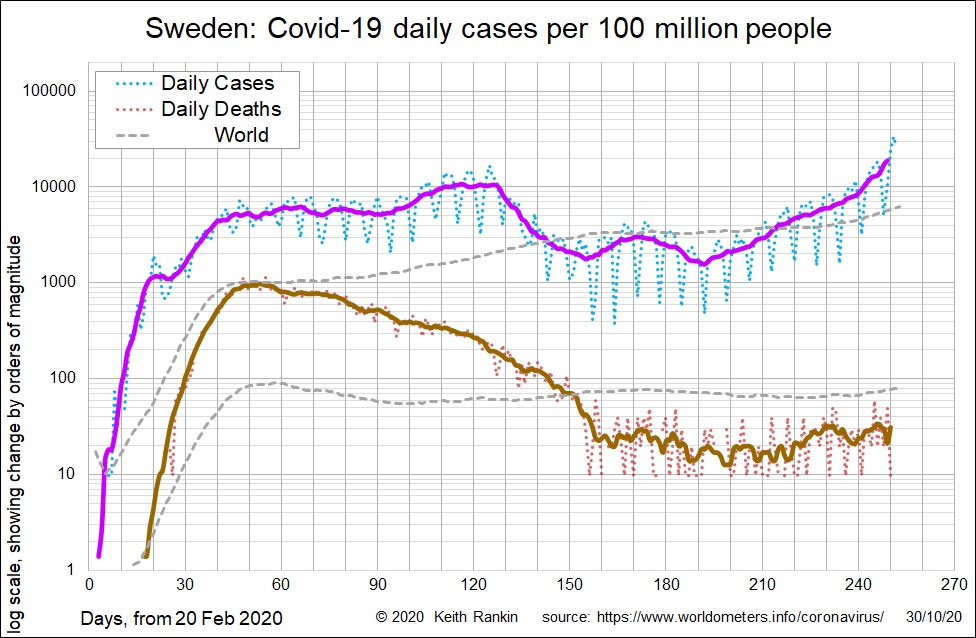
Sweden had many deaths, and has also returned to exponential growth. Chart by Keith Rankin.

Finally, Sweden is remarkable because of its complete inability to check the spread of Covid19 during Europe’s first wave (which was the world’s second wave). It took Sweden six months to get its diagnosed cases down to the levels of Australia’s August peak. And now it’s on an exponential growth path that has persisted for two months, and shows signs of accelerating. While Sweden was a late starter in Europe’s second wave, it may also be – once again – a late finisher.

The people of Asian countries must be quite bemused by the inability of affluent westerners to respond to the Covid19 pandemic, by their propensity to address the pandemic by pretending it was not happening. It’s not the only problem that Europeans address in that way.

At least, in the second half of 2020, European countries are making some effort to find out through testing just how prevalent Covid19 is; a marked contrast to the policies of wilful ignorance that was prevalent earlier in the year. I am concerned, however, that the many undiagnosed victims of Covid19 will struggle to get the help they may need in future, given the propensity of governments in the west to prioritise money over people, and given that, for some, Covid19 is a chronic condition.

How political parties legally harvest your data and use it to bombard you with election spam

Source: The Conversation (Au and NZ) – By Erica Mealy, Lecturer in Computer Science, University of the Sunshine Coast

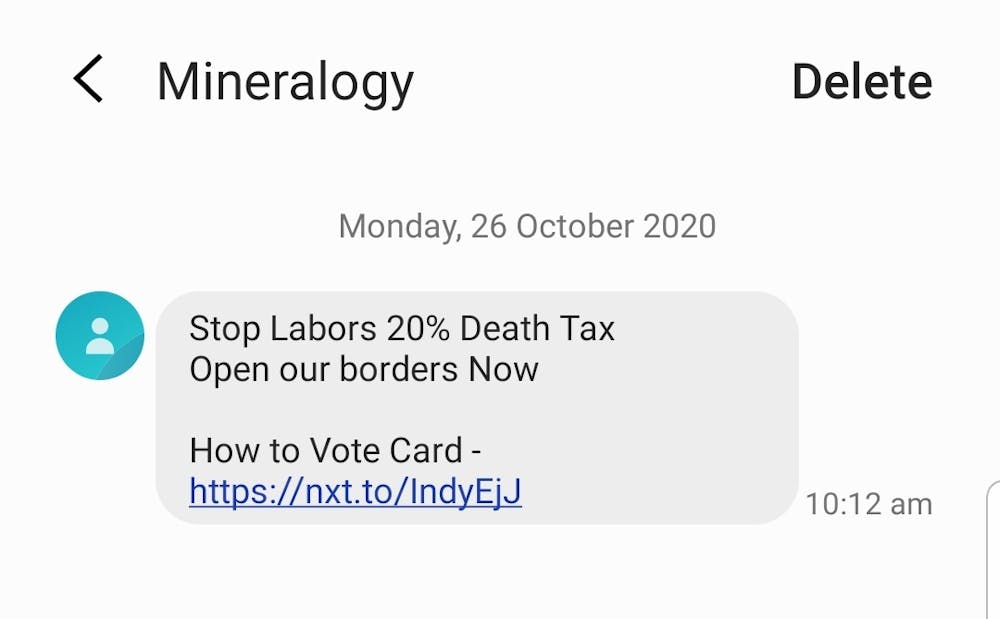
On Monday October 26, five days ahead of Queensland’s election, many voters received an unsolicited text message from Clive Palmer’s mining company Mineralogy, accusing Labor of planning to introduce a “death tax” and providing a link to an online how-to-vote card for Palmer’s United Australia Party.

Screenshot of campaign text message
Screenshot of a text message sent by Clive Palmer’s Mineralogy. Author provided

Many recipients angrily wondered how Palmer’s firm had got hold of their contact details, and why they were receiving information that had already been thoroughly debunked.

It’s not clear how many voters received the message, although Deputy Premier Steven Miles accused Palmer of sending it to “hundreds of thousands of Queenslanders”. The message was also sent to many permanent and interstate residents not eligible to vote in the election.

Screenshot of election text message.
Not all of the recipients of this message were in the relevant electorate. Author provided

But the issue goes deeper than Palmer’s dubious tactics, although his message was a particularly egregious example. This and similar messages have been sent to voters outside the relevant electorate. For example, one message from an independent candidate for the electorate of Macalister was received by a resident of Stafford.

In fact, there’s no law to prevent registered political parties — and the contractors and volunteers who work on their behalf — collecting your contact details and bombarding you with messages, regardless of whether you consented or not.

The problem of spam text messages was also prevalent during the 2019 federal election, when the tactics of Palmer’s United Australia Party in particular were called into question, prompting the party to pledge to stop the practice.


Read more: From robo calls to spam texts: annoying campaign tricks that are legal


Political candidates, including independents and members of registered political parties, can request access to the Australian Electoral Commission’s database of voters’ contact details, to use in their campaign messaging. And it doesn’t stop there: they can also buy access to voters’ data from “information aggregator” companies such as Sensis, including voters’ names, home addresses, phone numbers and e-mail addresses.

Information aggregators also collect and analyse your publicly available data. Your Twitter, Facebook, LinkedIn, Tiktok or Instagram posts can easily be scraped. If your phone number or email address appears publicly, such as on an advert for a community event or public comment on a town planning submission, it can be collected. Few people realise how large their digital footprint really is.

This can reveal not only your contact details but also your political views. Publicly share a post about environmental concerns or social justice issues and you may have just pigeonholed yourself as a left-leaning voter, potentially putting you in line for targeted campaign messages.

Australia has laws against unsolicited spam, so how do political parties get away with this? Because they are entirely exempt from anti-spam legislation.

How politicians dodge spam laws

Private businesses have to abide by strict federal laws about data privacy and spam. The Privacy Act 1998 and the Spam Act 2003 were enacted to protect the public from unwanted and harmful information sharing.

The Privacy act regulates who may have access to your personal information, how it must be stored and what must happen should that data be compromised. For example, if your data is hacked you must be notified.

As summarised by the Australian Communications and Media Authority (ACMA), Spam is unwanted marketing messages sent via email, text or instant messaging containing offers, advertisements or promotions. Permission to contact you by these means can be part of the terms and conditions of sale or use of a product, through a specific check box or if you make your e-mail or phone number public. Specific exemptions are made in the Spam Act for registered charities, government organisations, educational institutions and registered political parties.

Of course, in an open democracy it makes sense to allow elected officials to communicate directly with the voting public, particularly at election time. But aside from the nuisance and (legal) invasion of privacy, there are two main problems with the current free-for-all.

Problem 1: data security

If a data breach occurs for a non-exempt organisation, such as a bank or government organisation, any person who could be harmed from having information shared must be notified. The types of harm include the potential for identity theft and fraud.

But political parties, being exempt from privacy laws, are also exempt from this responsibility. This means if a political party has a data breach and shares your contact details, it doesn’t have to tell you.

Political parties reportedly maintain detailed databases of their constituents. These databases contain not just personal information held by the electoral commission, but any interactions with elected members, including complaints and contacts with electorate offices.

Problem 2: misinformation

Palmer’s text messages were a blanket salvo rather than tailored to particular voters. Hundreds of voters, and many non-voters, received the same message, despite repeated explicit denials from Labor it’s considering introducing a “death tax”.

In Australia, with an arguably free press and available fact-checking, the public can seek balanced, factual information if they are motivated to do so. But in the internet age, many people are vulnerable to “fake news”, whether through naivete or because of “confirmation bias” — the increased likelihood of believing information that fits with their pre-existing worldview.

What can you do about it?

Screenshot of election campaign message
Clive Palmer’s follow-up message sent on October 29. Author provided

Until the law changes, there are limited ways to combat political text and email intrusion. The first is judicious use of the block and delete buttons and e-mail spam filters. While not foolproof, this does reduce the potential for receiving messages again from that same number or email. However, this tactic would not have helped avoid a second round of messages sent by Palmer on October 29 from a different number.

The second way to combat these messages is to prevent your data and opinions from reaching political databases. In Australia, there is currently no reliable service to help remove your data from the public view, so the best option is to keep it from getting out in the first place.

To do this, you must always read the terms and conditions before giving away personal data. If you have time, audit your entire public online presence to find all the places on the internet that store your personal data, including on all social media platforms and on personal, professional or community web pages. You must always remain vigilant about protecting your information, which is no simple task.

ref. How political parties legally harvest your data and use it to bombard you with election spam – https://theconversation.com/how-political-parties-legally-harvest-your-data-and-use-it-to-bombard-you-with-election-spam-148803

Yes, Adele has sung its praises. But the Sirtfood diet may be just another fad

Source: The Conversation (Au and NZ) – By Clare Collins, Professor in Nutrition and Dietetics, University of Newcastle

The Sirtfood diet has been in the news again this week after singer Adele showed off her slimmed-down figure on US comedy show Saturday Night Live.

Adele has previously credited her significant weight loss to the Sirtfood diet. Following her appearance on SNL, there was a spike in people searching the diet on Google.

But what exactly is the Sirtfood diet, and does it work?

What’s the premise?

Two nutritionists in the United Kingdom launched the Sirtfood diet in 2016.

The premise is that a group of proteins called sirtuins, which are involved in regulation of metabolism, inflammation and ageing, can be accelerated by eating specific foods rich in a class of phytonutrients called polyphenols.

Phytonutrients are chemical compounds plants produce to help them grow well or defend themselves. Research is continuing to shed light on their potential benefits for human health.


Read more: Phytonutrients can boost your health. Here are 4 and where to find them (including in your next cup of coffee)


The idea is that eating foods rich in polyphenols, referred to as “Sirtfoods”, will increase the body’s ability to burn fat, boosting metabolism and leading to dramatic weight loss.

Common Sirtfoods include, apples, soybean, kale, blueberries, strawberries, dark chocolate (85% cocoa), red wine, matcha green tea, onions and olive oil. The Sirtfood diet gets some of its fame because red wine and chocolate are on the list.

Two phases

The diet involves two phases over three weeks. During the first three days, total energy intake is restricted to 4,200 kilojoules per day (or 1,000 Calories).

To achieve this, you drink three sirtfood green juice drinks that include kale, celery, rocket, parsley, matcha green tea and lemon juice. You also eat one “Sirtfood” meal, such as a chicken and kale curry.

On days four to seven, you have 2-3 green juices and one or two meals up to a total energy intake of 6,300 kJ/day (1,500kcal).

During the next two weeks — phase two — total energy intake should be in the range of 6,300-7,500 kJ/day (1,500-1,800 kcal) with three meals, one green juice, and one or two Sirtfood snacks.

There’s a diet book available for purchase which gives you the recipes.

After three weeks, the recommendation is to eat a “balanced diet” rich in Sirtfoods, along with regular green juices.

People clink glasses of red wine.
Red wine is a ‘Sirtfood’. But it should still be enjoyed in moderation. Kelsey Knight/Unsplash

Positives

The idea of losing a lot of weight in just three weeks will appeal to many people.

The eating plan encourages a range of polyphenol-rich foods that are also good sources of vitamins, minerals and dietary fibre, and would be recommended in a range of diets designed to assist with weight management, or as part of a healthy, balanced eating plan.

A weight loss diet will be effective if it achieves sustained total daily energy restriction. So the biggest benefit of the Sirtfood diet is the daily energy restriction — you are likely to lose weight if you stick to it.

Also, the exclusion of energy-dense, ultra-processed “junk” foods will help lower the risk for chronic disease.

But there are drawbacks to consider too.

Negatives

It would be wise to watch the portion size for some of the foods listed, such as red wine and chocolate.

Like most restrictive diets, phase one may be challenging and is not recommended for people with underlying health conditions without the supervision of a health professional.


Read more: Health Check: what’s the best diet for weight loss?


The rapid weight loss in the first phase will reflect a loss of water and glycogen, the stored form of energy in muscles and the liver, rather than being all body fat.

Rapid weight loss can increase the risk of gallstones and amenorrhoea (missing menstrual periods).

The food list includes specific products that may be hard to locate in Australia, such as lovage, a European leafy green plant whose leaves can used used as a herb, roots as a vegetable and seeds as a spice. Some other items on the list can be expensive.

A person steps onto bathroom scales.
The Sirtfood diet can result in rapid weight loss, but that’s not always a good thing. Shutterstock

Sirt science

Most research has looked at the sirtuin-mediated effects of energy restriction in worms, mice or specific body tissues. No studies have tested the effect of diets that vary polyphenol content on the action of sirtuins in mediating weight loss.

A search on PubMed, the scientific database of research studies, didn’t locate any human trials of the Sirtfood diet. So the short answer about whether the Sirtfood diet works or not is we don’t know.

The authors’ claims about effectiveness are based on anecdotal information from their own research and from personal testimonials, such as the one from Adele.


Read more: What is a balanced diet anyway?


Considering the hype surrounding the Sirtfood diet against a checklist on spotting a fad diet sounds alarm bells. For example:

  • does it promote or ban specific foods?

  • does it promote a one-size-fits-all approach?

  • does it promise quick, dramatic results?

  • does it focus only on short-term results?

  • does it make claims based on personal testimonials?

Looking at the Sirtfood diet, the answers to most of these questions seem to be “yes”, or at least a partial yes.

The best diet for weight loss is one that meets your nutrient requirements, promotes health and well-being, and that you can stick with long-term.


If you’d like to learn more about weight loss, enrol in our free online course The Science of Weight Loss – Dispelling Diet Myths, which begins on January 27, 2021.

ref. Yes, Adele has sung its praises. But the Sirtfood diet may be just another fad – https://theconversation.com/yes-adele-has-sung-its-praises-but-the-sirtfood-diet-may-be-just-another-fad-148902

How COVID all but killed the Australian CBD

Source: The Conversation (Au and NZ) – By Paul J. Maginn, Associate Professor of Urban/Regional Planning, University of Western Australia

The central business district has historically been the beating heart of metropolitan regions across Australia. The polished glass and steel high-rise offices, hotels and apartment complexes stand as monuments to architectural, construction, engineering and, of course, economic success.

CBD-based workers and visitors, plus increasing residential densities, have played a major role in sustaining the diversity and vibrancy of retailing in our capital cities. The COVID-19 pandemic has changed that. The impacts on CBDs across Australia’s capital cities have been devastating.

We explore these impacts city by city in this article. In a second article, we consider the implications of the loss of CBD activity for our cities.

In urban planning terms, CBDs have long stood at the apex of the activity centre hierarchy. They are key nodes of employment and consumption for the services, hospitality and retail sectors. Most CBD workers and shoppers travel from middle and outer suburbs.

Globally, however, the retail sector has experienced profound changes over the past 5-10 years. The result is so-called “dead malls” in the US and the “death” of the high street in the UK.

In Australia, CBD-based retailing has been on life support for most of 2020. At times Australian CBDs, especially Melbourne, and some shopping centres have resembled ghost towns.

A hollowed-out CBD

Data from Google’s Community Mobility Reports provide insights into visitor trends to retail/recreation places at a range of scales – national, state and local government area. The Google data show percentage changes in visitor numbers from a baseline day: “the median value from the 5-week period Jan 3 – Feb 6, 2020”.

For the two weeks from February 15-29, average visitor numbers to retail/recreation places across all major capital cities were above their baselines. Adelaide led the way with numbers up by 23.2%. Melbourne (8.5%) and Sydney (5.8%) were performing relatively well. Brisbane’s footfall was up by only 0.7%; below the national average of 1.3%.

Adelaide’s numbers were 56% and 50% above the city baseline on February 29 and March 7. Two factors explain this: the Adelaide Festival was on; and March 6-9 was a long weekend public holiday in South Australia.

The arrival of COVID-19 in late February and government responses had a dramatic impact on visitors to retail/recreation places across all capital cities. CBD-dominant local government areas (LGAs) – Adelaide, Melbourne, Perth and Sydney – were more badly affected than Hobart and Brisbane whose metropolitan regions are defined by a single LGA.

As can be seen below, visitor numbers began to decline in early March. Perth’s numbers fell by 42% on March 2. A week later, March 9, numbers in Brisbane, Melbourne and Hobart fell by 10%, 19% and 34% respectively. Sydney experienced its first double-digit decline (19%) on March 14.

From mid-March the numbers went into free fall across all state capitals.

Nationally, retail/recreation visitors were down 76% by April 10. CBD-dominant LGAs were even more dramatically affected. Perth was down by 95%. Melbourne, Adelaide and Hobart were close behind at -93%, -92% and -90% respectively. Brisbane (down 80%) was the least affected capital city.

All these capitals began to experience a rebound in visitor numbers from mid-April through to late July. Brisbane led the way as numbers climbed back to their highest levels, 3% below its baseline, on July 19. Perth was 12% below baseline on the same day.

Empty shop up for lease
Some CBD businesses, like this one in Perth, didn’t survive the plunge in visitor numbers. Paul Maginn, Author provided

The return of retail/recreation visitors in Sydney has been a slow, bumpy process and lagged well behind the national trend. The city’s best visitor numbers for the April-July period were on July 4 with -32%. Sydney did not surpass these numbers until October 4 when visitors were 30% below its baseline.

Melbourne’s best day since its low of -95% on April 10 was June 20 when footfall was down by 53%. The second lockdown in early August sent Melbourne’s visitor numbers plummeting again, to -90% on August 22. As of October 16, the city had made a small recovery with numbers down by 85%.


Read more: Cars rule as coronavirus shakes up travel trends in our cities


‘Localism’ on the rise

As a result of many people, especially casuals, losing their jobs and large numbers of office-based CBD workers working from home, the suburbs have emerged as the dominant space of retail/recreation activity in metropolitan Australia.

The data clearly show retail/recreation numbers in outer-suburban LGAs were much less affected than CBD-dominant LGAs. In other words, a new sense of “localism” has emerged.

The table below provides an overview of the changes (average, median, minimum and maximum) in visitors to retail/recreation places nationally and for 30 LGAs from across the capital city metropolitan regions from February 15 to October 16.

Nationally, numbers were down almost 20% on average, with a low of -76% on April 10. Nineteen LGAs performed above the national average. Most of these were traditional outer-suburban LGAs in Adelaide, Perth and Sydney.

Summary of retail/recreation visitor numbers by CBD and outer-suburban LGAs (Feb 15 – Oct 16, 2020) Data: Google COVID-19 Community Mobility Reports, Author provided

Unsurprisingly, average visitor numbers in Melbourne’s outer suburban LGAs were well below the national trend. But so too were numbers for the Gold Coast (-22.45%) and Parramatta (-24.16%), Sydney’s so-called second CBD.

The charts below provide detailed overviews of daily trends for CBD-based and outer-suburban LGAs across Adelaide, Melbourne, Perth and Sydney.

Overall trends in CBD and outer-suburban LGAs across the state capitals have followed similar trajectories. However the fall in numbers has been much more severe in CBD-dominant LGAs, while recovery has been more rapid in outer suburban LGAs.

Perth and Adelaide have fared better than Australia’s two powerhouse CBDs – Sydney and Melbourne. This is largely due to a combination of factors including: more effective management of COVID-19; smaller and less dense populations; and fewer international and interstate visitors.

The rebounds in Adelaide and Perth, albeit still below baseline, and the upcoming Christmas shopping period offer a glimmer of hope for CBD retailers in Sydney and Melbourne.

Now that the hard lockdown in Melbourne has ended, we are likely to see an immediate rebound in visitor numbers. However, given how low numbers have fallen, a return to “normality” – a dominant CBD – seems a long way off.

CBD retailers will likely continue to endure the legacy impacts of COVID-19 when this pandemic eventually passes. And they face wider structural challenges from within the wider retail sector, which we discuss in our second article.

ref. How COVID all but killed the Australian CBD – https://theconversation.com/how-covid-all-but-killed-the-australian-cbd-147848

VIDEO: Michelle Grattan on state borders, Australia post, and Doha airport

Source: The Conversation (Au and NZ) – By Michelle Grattan, Professorial Fellow, University of Canberra

University of Canberra Professorial Fellow Michelle Grattan and Vice-Chancellor and President Paddy Nixon discuss the week in politics.

This week the pair discuss the ongoing disputes between the federal and state governments concerning borders, Australian Post CEO Christine Holgate’s evidence before senate estimates, and the incident which affected Australian women at Doha airport.

ref. VIDEO: Michelle Grattan on state borders, Australia post, and Doha airport – https://theconversation.com/video-michelle-grattan-on-state-borders-australia-post-and-doha-airport-149156

French minister Lecornu holds future talks in New Caledonia retreat

French Overseas Minister Sebastien Lecornu has held talks with 10 New Caledonian politicians at a retreat near Noumea to promote dialogue between rival camps, saying a new accord will emerge.

The minister, who delayed yesterday’s planned departure for Paris by at least two days, convened five anti-independence and five pro-independence leaders on Lepredour island, including three provincial presidents and three of the territory’s members of the French legislature.

There has been no official statement about the discussions but in an interview with the Les Nouvelles Caledoniennes, Lecornu said some sort of new accord would emerge as New Caledonians want answers to key questions.

He said they wanted to know what it was to be French in 2020 and what it was to be independent in 2020.

Lecornu said there would not be a status quo.

He said should New Caledonia opt for independence, there would be a transition agreement or otherwise there will be a new accord with France.

In the interview, the minister made no reference to a third referendum in 2022, which the anti-independence camp wants to avoid and the pro-independence camp has said it will insist on.

The minister earlier took part in a ceremony in central Noumea where the central park was renamed Peace Square.

It was earlier known as Olry Square, named after the 19th century French governor who successfully put down a rebellion by the indigenous Kanaks.

On the square, a statue of Jean-Marie Tjibaou and Jacques Lafleur will be erected in honour of their efforts to halt the intercommunal violence of the 1980s.

This article is republished by the Pacific Media Centre under a partnership agreement with RNZ.

Article by AsiaPacificReport.nz

Assisted dying will become legal in New Zealand in a year — what has to happen now?

Source: The Conversation (Au and NZ) – By Andrew Geddis, Professor of Law, University of Otago

The preliminary results of New Zealand’s referendum on the End of Life Choice Act were conclusive. Some 65.2% of voters supported the law coming into force, while 33.8% opposed it.

Although around 480,000 special votes are still to be counted, the margin is so great there is no chance these will alter the final outcome. Consequently, the End of Life Choice Act 2019 will come into force on November 6 2021, one year after the official vote is announced next week.

It will then become lawful to offer assisted dying (AD) to terminally ill individuals who meet the legislation’s eligibility criteria. The delay in the law taking effect provides a 12-month window to implement the necessary arrangements for AD to take place.

One significant issue yet to be determined is whether AD services will be specifically funded, and if so how. The Ministry of Health will need to resolve this over the next year.

In the meantime, what needs to happen next? Immediate priorities for the Director-General of Health under the legislation are:

  • to appoint a Registrar (assisted dying)
  • to establish the Support and Consultation for End of Life in New Zealand (SCENZ) Group
  • to appoint an End of Life Review Committee.

The role of the Registrar (assisted dying)

The Registrar (assisted dying) plays a core role in monitoring and reporting on compliance with the Act. They will also direct any complaints about AD to the appropriate bodies.

The Act, administered by the Ministry of Health, requires adherence to strict regulatory processes. These must be documented in prescribed forms submitted to the Registrar before AD may be performed.

Approving and issuing these prescribed forms falls to the Director-General of Health.


Read more: As NZ votes on euthanasia bill, here is a historical perspective on a ‘good death’


What SCENZ will do

Curiously, the Act does not prescribe the composition of the SCENZ Group. It simply requires that the Director-General appoint members with the necessary knowledge and understanding to perform its functions.

The group essentially has two roles:

  • to determine standards of care and advise on the required medical and legal procedures for the administration of medication for AD
  • to provide practical assistance if requested.

The second role is largely administrative and facilitative. SCENZ is required to curate and maintain a list of health practitioners willing to be involved in AD, which includes:

  • doctors willing to act as replacement medical practitioners should a person’s own doctor be unwilling to participate in AD due to conscientious objection
  • medical practitioners willing to provide an independent second opinion on a person’s eligibility for AD
  • psychiatrists willing to provide specialist opinions on a person’s capacity, should either or both the attending or independent medical practitioners not be satisfied that the person requesting AD is competent
  • pharmacists willing to dispense the necessary drugs.

Given these functions, the SCENZ group will presumably be comprised of suitably qualified medical practitioners and pharmacists as well as individuals with knowledge of the relevant law and tikanga Māori, although its final composition remains to be seen.


Read more: Assisted dying referendum: people at the end of their lives say it offers a ‘good death’


Compliance and review

The Director-General of Health must also appoint a three-person End of Life Review Committee. This body is tasked with evaluating reports of assisted deaths to determine if the statutory requirements are being complied with. It can refer cases to the Registrar if it is not satisfied.

The Act requires the committee to be comprised of one ethicist and two health practitioners, one of whom must be practising end-of-life care.

people protesting with placards

The no vote: an early protest against the assisted dying referendum, outside parliament in 2019. GettyImages

Role of the Medical Council

Given the medical profession will have primary responsibility for providing AD, it’s likely its professional body, the Medical Council of New Zealand, will need to begin formulating and consulting on clinical practice standards for medical practitioners involved in providing or facilitating AD.

While the council publishes generic standards of professional practice, including standards for obtaining informed consent and cultural safety, specific guidance should be developed for AD.

The standards should incorporate the legal obligations imposed on medical practitioners under the Act. These include the prohibition on initiating a discussion of AD with a patient, and the legal obligation to inform a patient of their right to a replacement medical practitioner if their doctor objects to AD.


Read more: In places where it’s legal, how many people are ending their lives using euthanasia?


The Medical Council could also provide guidance on clinical practice issues that may arise, including ways of identifying coercion, or how to manage difficult conversations with patients (such as when they are found to be ineligible under the Act).

Objection and obligation

Significantly, the Act doesn’t require health institutions to provide AD services. Hospice New Zealand has already signalled it will not provide AD, as it is contrary to its philosophy “neither to hasten nor to postpone death”.

However, a recent High Court decision notes that although institutions may choose not to provide AD, medical practitioners will still be required to discharge their obligations under the Act — including the obligation to provide information to patients.

Although an organisation may elect not to provide AD, it may employ medical practitioners who are willing to. Provisions will need to be made to enable such practitioners to provide AD outside their own organisation. This is an area that will require careful navigation.

ref. Assisted dying will become legal in New Zealand in a year — what has to happen now? – https://theconversation.com/assisted-dying-will-become-legal-in-new-zealand-in-a-year-what-has-to-happen-now-149138

Research shows whipping horses doesn’t make them run faster, straighter or safer — let’s cut it out

Source: The Conversation (Au and NZ) – By Kirrilly Thompson, Adjunt Senior Research Fellow, University of South Australia

The Melbourne Cup is upon us. This year will be different due to COVID-19 — but one thing we don’t expect to change is concern about horses’ welfare, which seems to resurface each year.

Just days before the Cup, Victoria’s parliament has heard allegations that unwanted thoroughbreds continue to be slaughtered in knackeries and abattoirs in New South Wales, The Guardian reports.

Billionaire executive chair of Harvey Norman Gerry Harvey reportedly apologised after one of his ex-racehorses was sent to a pet food factory for slaughter, despite the state’s racing industry announcing rules against this in 2017. It’s not the first time we’ve heard of such gruesome cases.


Read more: Who’s responsible for the slaughtered ex-racehorses, and what can be done?


Beyond this, there are persisting concerns about how racehorses have been ridden for more than a century. In particular, the use of the whip to “encourage” horses to run faster and straighter has been shown to potentially be both painful and dangerous.

For our research, published yesterday in the journal Animals, we analysed more than 100 race reports to determine exactly how whip use influences the dynamics of a race.

We found whips make no difference to horse steering, jockey safety, or even a horse’s speed. Our study offers scientific findings that support Racing Victoria’s recently announced plan to gradually phase out whip use until whips are only being used when absolutely necessary.

Justifications from the racing industry

Advocates of whip use, such as Racing Australia and the British Horseracing Authority, claim it’s necessary for horse and rider safety. They argue it facilitates the steering necessary to reduce interference between horses on the course.

Another justification given is that whipping makes horses run faster. This is considered fundamental to racing integrity. In a billion-dollar industry that relies on gambling, all parties — including punters, trainers, breeders and owners — want to know the horse they’ve backed will be given every opportunity to win.

For many racing aficionados, breaches of “integrity” and the thought of a horse not being fully “ridden out” on its merits is just as corrupt as the horse being doped, or a race being fixed by some other means.

Jockeys and horses mid-race.
Last year’s Melbourne Cup first prize winner received A$4,400,000 in prize money. Vince Caligiuri/AAP

The growing importance of racehorse welfare

But animal welfare is also important to racing integrity, according to the International Federation of Horseracing Authorities and other racing bodies.

Racing stewards are in the unenviable position of enforcing horse welfare during races, while also having to ensure whips are used to give each horse full opportunity to win.

For all official races in Australia, there are detailed regulations for the number and style of whip strikes allowed at the different points of a course.

Research over past decades has concentrated on jockeys’ accuracy, compliance with whip rules, the link between whip use and catastrophic falls that can injure or kill horses or jockeys and simply whether or not whipping hurts.

But until now, few have stopped to ask whether whips actually work. That’s simply because there hasn’t been a way to scientifically test the culturally entrenched assumption they do.


Read more: Whips hurt horses – if my leg’s anything to go by


Racing without using the whip

However, since 1999, a form of whipping-free racing has been conducted in Great Britain via the “hands and heels” racing series for apprentice jockeys. In this form of racing, jockeys are permitted to carry whips but can’t use them unless under exceptional circumstances, such as trying to avert a collision.

After races, stewards produce an official report noting any unusual or unorthodox jockey behaviour (which may or may not have affected race placings), jockey infringements, horse movement on the course, interference between horses, and veterinary issues.

We analysed reports for 126 races involving a total of 1,178 starters (horses and jockeys). These included all 67 hands and heels “whipping-free” races in the period starting January 2017 and ending December 2019. For these, we were able to case-match 59 traditional “whipping-permitted” races.

Thus, we were able to compare the performance of racehorses under both “whipping-free” and “whipping-permitted” conditions in real racing environments, to figure out whether whipping makes horses easier to steer, safer to ride and/or more likely to win.

Our results indicated no significant differences between horse movement on the course, interference on the course, the frequency of incidents related to jockey behaviour, or average race finishing times.

Put simply, whip use had no impact on steering, safety or speed. Contrary to longstanding beliefs, whipping racehorses just doesn’t work.

Jockeys and horses mid-race.
The Melbourne cup has been running for more than 150 years, with the first official cup trophy awarded in 1865. Vince Caligiuri/AAP

The way forward

Our findings reinforce the need for more support for whipping-free races. Importantly, they indicate whip use could potentially be banned without any adverse effect on horses, riders or racing integrity.

“Whipping-free” races are not the same as “whip-free” races. While some might argue for races with no whips at all, an agreeable compromise would be to let jockeys carry whips, but only use them if their safety is jeopardised.

This approach has already been adopted in Norway, where whipping-free races have been held for more than 30 years with no apparent negative consequences.

Given evolving social values, we believe transitioning to a whipping-free approach is essential for the future of an industry that relies on a social licence to operate.


Read more: Dressing up for Melbourne Cup Day, from a racehorse point of view


ref. Research shows whipping horses doesn’t make them run faster, straighter or safer — let’s cut it out – https://theconversation.com/research-shows-whipping-horses-doesnt-make-them-run-faster-straighter-or-safer-lets-cut-it-out-144405

The reputation of Australia’s special forces is beyond repair — it’s time for them to be disbanded

Source: The Conversation (Au and NZ) – By Christopher Elliott, PhD Researcher (Political Anthropology), Defence Studies Department, King’s College London

Four years into a constant stream of misconduct allegations, it’s hard to know how to process the latest revelations about the actions of Australia’s special forces in Afghanistan.

In village after village — in places like Darwan, Sara Aw, Zangitan, Patan, Sola, Shina, Deh Jawz-e Hasanzai and Jalbay — we have seen plenty of evidence to support allegations that some Australian special operators committed war crimes in Afghanistan. These stories are now a well-entrenched part of the Australian news cycle.

Oddly though, and despite photographic evidence, video evidence, document-based evidence and witness statements from Australians, Afghans and Americans, there are still doubters out there.

Some defence commentators seem to cling to the strange fiction that if an allegation has not been rubber-stamped by the inspector-general of the Australian Defence Force (IGADF) or proven in a court, we cannot decide for ourselves whether or not it is true.

As important as Justice Paul Brereton’s long-awaited report into alleged war crimes is though, we do not need his nod of approval to know there is a problem in Australia’s special forces. Something has to change.

Minor changes are not enough

Certainly, there are indications minor changes are already being implemented. According to the army, these changes include the introduction of a new ethics training package and a new special forces selection course.

But this is not enough. Rather than a solution, the special forces selection ritual is actually part of the problem – designed as it is to elevate and separate an anointed few from the rest of the military.

This process, which concludes with the receipt of a specially coloured beret, has many of the classic features of a cult initiation – a central part of the “code of silence” that prevented whistleblowers from coming forward for so long.

Then there is the fact that key figures behind the new ethics training were early critics of the media’s reporting on alleged misdeeds in Afghanistan – with the coverage described as “cheap shots” against Australian soldiers. This denialist viewpoint has remained strong within the command until only recently and seems to persist among some sectors of the public.

Indeed, the most prominent factor that led to these incidents in Afghanistan is the decoupling of special forces from the command relationships and discipline structures of the conventional army.

Currently, Special Operations Command (the umbrella organisation that manages Australia’s special forces) recruits and trains completely separately from the rest of the Army – deploying small groups for a variety of sensitive tasks abroad. But this step away from the rest of the Army (and its long-tested disciplinary norms) appears to have led to all sorts of improprieties in Afghanistan.


Read more: How a special forces ‘band of brothers’ culture leads to civilian deaths in war


Also problematic is the fact those who are implementing the new changes (the chief of the defence force and chief of army) are both ex-special forces officers. This is not to suggest generals Angus Campbell and Rick Burr are compromised in some way – only to point out that extant unit loyalties are formative in any soldier’s thinking.

There are also signs that Burr, in particular, does not understand the cause of the problem.

For example, despite strong evidence that the practice of giving excessive authority to junior leaders created an unaccountable “brotherhood” and a general culture of impunity, Burr continues to describe this “command and control philosophy” as an “imperative” for the special forces.

Disbanding the special forces

Naturally, the fate of Australia’s special forces should ultimately be a captain’s call from Australia’s civilian leadership – perhaps the prime minister himself. And here, there is a compelling argument to be made that the command be disbanded.

To some, this might appear a radical suggestion – a sweeping change without precedent. But military units have been moved, shuffled, re-branded, disbanded and reactivated frequently throughout Australia’s history. Surely, a pattern of war crimes allegations is as good a reason as any to make some major institutional changes.

The Australian Defence Force will, of course, still require a special operations capability for complex operations abroad. Special forces do provide an advanced infantry skill set that is sometimes useful for policymakers — be it for a counter-terrorism raid or light-footprint reconnaissance tasks.


Read more: It’s time for Australia’s SAS to stop its culture of cover-up and take accountability for possible war crimes


But these needs can be met without continuing to feed billions of dollars to an elite force that is isolated from the rest of the military.

Instead, the Australian Defence Force could create special operations-capable companies in the conventional infantry battalions. This would mean teams of highly-qualified soldiers who are rapidly deployable, but still governed by traditional “green army” rules and strictures.

Rather than being “selected” and cloistered away from the rest of the force, these soldiers would simply be “trained” – that is, up-skilled and returned to line units, ready for special deployments abroad.

This is comparable to the French Groupement des Commandos Parachutistes (GCP) model, in which special operations capabilities are fully integrated with the rest of the force.

It would also be in keeping with the finest history and traditions of the Australian Army. Elite fighting units like the 2/2 Independent Company have previously been integrated with a regular infantry force (as seen with the Sparrow Force during the Battle of Timor in the second world war).

Whatever our leaders decide – and again, it should be stressed the Cabinet must be front and centre in these changes – Australia’s sullied special forces are not salvageable, at least in their current structure.

Irrespective of what the IGADF and Commonwealth prosecutors are able to prove, the organisation has lost its credibility. It must be disbanded.

ref. The reputation of Australia’s special forces is beyond repair — it’s time for them to be disbanded – https://theconversation.com/the-reputation-of-australias-special-forces-is-beyond-repair-its-time-for-them-to-be-disbanded-148795

From scary pumpkins to bridal bling, how masks are becoming a normal part of our lives in Australia

Source: The Conversation (Au and NZ) – By Deborah Lupton, SHARP Professor, Vitalities Lab, Centre for Social Research in Health and Social Policy Centre, UNSW

On Halloween this Saturday, it won’t be just trick-or-treating children who are wearing spooky costumes. Adults handing out sweet treats may also be sporting Halloween-themed face masks, which are now readily available online.

Come the festive season, you will also be able to wear a Christmas-themed face mask as you unwrap gifts with family and friends. You may even find some handmade cloth masks as part of your present haul.


Read more: Friday essay: vizards, face gloves and window hoods – a history of masks in western fashion


As social researchers completing a book on face masks during COVID, we are keeping a close eye on the social trends and popular culture related to these simple objects.

We have observed increasing evidence masks are becoming normalised and part of everyday life, noting they are currently compulsory in Victoria. They are now commonly seen in public places around Australia and a thriving industry has sprung up to cater for every possible face mask need.

Before coronavirus, masks were a rarity

Pre-COVID, face masks are commonly worn in parts of Asia for a variety of reasons — including protection from pollution and the sun, personal privacy, and warding off seasonal flu and the common cold.

But in countries such as Australia, masks were rarely seen. A year ago, few Australians would not have given much thought to the humble surgical face mask, or ever considered buying, much less wearing one. Face masks were only for healthcare professionals.

Woman wearing a mask, walking her dog at Brighton Beach.
Masks have become a sign of how much COVID has changed Australian society. James Ross/AAP

But with the arrival of the COVID-19 pandemic, the face mask has taken on a new significance. Even though we were initially advised against wearing them to reduce the spread of coronavirus, state health authorities in NSW and Queensland now recommend face masks should be used in situations where physical distancing is not possible.

The Victorian government has also mandated the use of face coverings for its citizens since the second lockdown in August. Earlier this month, fitted face masks (not bandanas or scarves) were made compulsory every time people leave their homes.

As Victoria opened up earlier this week, Premier Daniel Andrews noted, “masks need to be with us across the whole state for some time to come”.


Read more: Which mask works best? We filmed people coughing and sneezing to find out


In Australia, we haven’t seen the intense political debates and activism around face masks that have emerged in the United States. Compared with the US, Australians tend not to see preventive health as a political issue. In fact, there is evidence of a growing acceptance face masks are becoming part of our everyday lives.

Steady increase in Australians wearing masks

Australian Bureau of Statistics figures show the proportion of Australians wearing face masks has steadily increased over the past few months.

Back in April, only about 17% of Australians reported wearing a face mask as part of their precautions against COVID-19.

By September, this number had increased dramatically. In total, 66% of Australians reported wearing a face mask “in the past week”.

Not surprisingly, the figures were much higher for people in Victoria, with 97% of reporting they wore a face mask. Even in New South Wales, where there have been sporadic but well-controlled outbreaks of COVID-19, most people (78%) were masking up.

It is notable that in all other states and territories, 23% reported wearing a mask in the past week at the time of the survey. This shows significant normalisation of mask-wearing, even when it’s not recommended by health authorities.

Woman wears a mask during a Lions AFL game at the Gabba in Brisbane.
An increasing number of people around Australia are wearing masks. Darren England/AAP

Other surveys have also shown significant levels of support for mask wearing.

An ABC survey conducted in September found two-thirds of Australians agreed mask use should be mandatory in all public places. Meanwhile, an August Australian National University study revealed some interesting findings when it comes to different social groups.

It found 39% of surveyed Australians said they mostly or always wore masks indoors in public places, while 37% did so outdoors in public places. Younger Australians (aged 18 to 24 years) and older Australians (aged 75 years and over) were more likely to be mask wearers, as were those who spoke a language other than English at home, had a university education, and lived in a capital city.

A mask for every occasion

In the course of writing our book, we have noticed some fascinating developments in how face masks are portrayed in popular culture. In addition to being available in a range of prints and fabrics (including Australiana themes), there are face masks for every occasion and milestone.

Masks are promoted as a new form of bridal wear, with luxury face masks embellished with beads, diamantes and lace. Wedding guests may also find customised face masks as gifts to wear as part of the celebrations.

Bride wearing a white bridal face mask.
Customised face masks and now being marketed to brides. www.shutterstock.com

There is also a wide range of customised masks on offer for footy matches, birthdays, baptisms, bar and bat mitzvahs, first communions and even funerals (“in loving memory…”).

These new ways of presenting and decorating masks demonstrates they are becoming not only part of everyday life, but also central elements of special occasions during COVID times.

Wearing a mask is more than showing the wearer is taking a responsible, caring approach to protecting others’ health. Masks are now also part of a culture of decoration and fashion. So they are not just a preventive health device but a mode of self-expression.

Are face masks here to stay?

Of course COVID and its path through our society is unpredictable. But it is highly likely COVID outbreaks will continue to occur well into 2021 and possibly beyond, and mask wearing will continue to be promoted as one of the key measures to contain the spread in these situations.


Read more: Millions of face masks are being thrown away during COVID-19. Here’s how to choose the best one for the planet


In some countries pre-COVID, face masks had already become part of everyday life. Our research suggests the widening meanings, purposes and diversity of face masks could support a normalisation of masking in Australia, even once the critical phase of the pandemic has passed.

This will not necessarily mean that people will automatically wear them every day. But they are likely to have a selection of different styles waiting, ready to be used for higher-risk public activities or even special occasions.

ref. From scary pumpkins to bridal bling, how masks are becoming a normal part of our lives in Australia – https://theconversation.com/from-scary-pumpkins-to-bridal-bling-how-masks-are-becoming-a-normal-part-of-our-lives-in-australia-148718

COVID-19 slashed health-care use by more than one-third across the globe. But the news isn’t all bad

Source: The Conversation (Au and NZ) – By Ray Moynihan, Assistant Professor, Bond University

It’s no secret the COVID-19 pandemic has changed many aspects of our lives. One is how often we access health care.

We’ve conducted what we believe is the first systematic review on this topic, bringing together studies documenting changes to health-care use during COVID-19 from around the world.

We found a 37% reduction across all parts of the health system, from February to May this year, compared to the same period in previous years.

Many people will suffer as a result of having missed out on lifesaving care, such as for heart disease or cancer. But others may benefit, by avoiding care they did not need in the first place.

Dramatic drops across all categories

Together with a global team of researchers and doctors, we identified 81 studies from 20 countries, including Australia. It’s important to note our work is currently undergoing peer review, although in keeping with much pandemic-related research, it’s available as a preprint.

Between February and May 2020, those studies reported on around 7 million health services, such as having a scan or an operation, compared to roughly 11 million in the same period the year before.

Overall, there was a 37% median reduction across all categories of health care. Visits to seek care, such as going to a GP or the emergency department fell by 42%; admissions to hospital dropped 28%; the use of diagnostic tests fell 31%; and the use of treatments, such as procedures to treat heart disease, dropped by 30%.

The outside of an emergency department in Glasgow, Scotland.
Fewer people are presenting to emergency departments around the world during the pandemic. Shutterstock

One of the biggest individual studies in our review found a 42% reduction in visits to all United States emergency departments during April. Weekly visits fell from 2.1 million in 2019 to just 1.2 million in 2020. For visits among children the drop was 72%.

A smaller study in Australia found a 37% fall in emergency department visits at two hospitals in Victoria during April.

There are many possible reasons for these trends. For example, people may have stayed away from hospitals for fear of contracting COVID-19. People have also been unable to access some types of health care, as services like elective surgery were suspended.

Rates have bounced back in many places, but some remain significantly lower than previous years. Total admissions to hospitals in New South Wales, for example, were still down in the most recently available figures (up to the end of June).


Read more: Victorian emergency departments during COVID-19: overall presentations down but assault, DIY injuries up


In a small number of studies we also found some things increased, including treatments for acute stroke. And future studies will likely find large increases in services such as telehealth.

Reductions are greater for less severe illness

Many of the studies in our review found reductions in use were greater for people with milder illness. That US study found the biggest fall in emergency department attendance was for people with abdominal pain.

Likewise, the Australian study found bigger falls among those with the least acute problems. For example, attendance was lower than expected for people with gastroenteritis and wrist fractures — but there was no change in category 1 triage patients (the most severe who require urgent attention).

Notably, several studies found larger reductions in admission for milder forms of heart attacks than for more severe forms. A large English study in late March found national admissions for the more severe form dropped 23%, while admissions for the milder form dropped 42%.

In terms of mental health, a study from Paris found a 55% reduction in emergency visits in the first four weeks of lockdown, but with greater reductions in visits for anxiety and stress, and smaller reductions for psychotic disorders.

At the height of the pandemic, doctors in Northern Italy found a 68% drop in presentations to children’s emergency departments. The reduction in attendance for the “white” triage category, the minor conditions which don’t require a doctor, was 89%.


Read more: Most people want to know risk of overdiagnosis, but aren’t told


An opportunity to reduce unneeded care

Clearly many people will have been harmed by missing out on needed care. As the authors of the English study on heart attack admissions made clear, public campaigns are important to assure people that visiting hospital is safe. Reluctance to call an ambulance when experiencing severe symptoms, they write, results in “unnecessary deaths and disability”.

But many experts around the world are also seeing this crisis as a potential opportunity to wind back unnecessary care, and to free up resources for those most in need.

The Italian doctors who found significantly fewer children presenting to hospital with mild complaints suggested this has freed resources to “provide critical services to patients suffering from medical emergencies in a timely manner”.

Young happy child sits on hospital bed holding a blue bunny toy.
Studies in our review showed fewer children are presenting to hospital during COVID-19. Shutterstock

There’s already a lot of evidence about overuse of medical services and overdiagnosis, also known as low-value care. Examples include the inappropriate use of antibiotics and opioids, unnecessary diagnoses of prostate cancer, and the overuse of CT scans for children.

As health systems continue responding to the pandemic and deal with the urgent backlog of care, addressing this harmful waste becomes even more pressing.


Read more: The coronavirus ban on elective surgeries might show us many people can avoid going under the knife


Commentators in the British Medical Journal and the New England Journal of Medicine, and influential doctors’ groups, have echoed this view.

The tragedy of the pandemic has underscored the importance of reducing unnecessary and harmful care, and offers us a real opportunity to address this problem.

ref. COVID-19 slashed health-care use by more than one-third across the globe. But the news isn’t all bad – https://theconversation.com/covid-19-slashed-health-care-use-by-more-than-one-third-across-the-globe-but-the-news-isnt-all-bad-148537

UN report says up to 850,000 animal viruses could be caught by humans, unless we protect nature

Source: The Conversation (Au and NZ) – By Katie Woolaston, Lawyer, Queensland University of Technology

Human damage to biodiversity is leading us into a pandemic era. The virus that causes COVID-19, for example, is linked to similar viruses in bats, which may have been passed to humans via pangolins or another species.

Environmental destruction such as land clearing, deforestation, climate change, intense agriculture and the wildlife trade is putting humans into closer contact with wildlife. Animals carry microbes that can be transferred to people during these encounters.

A major report released today says up to 850,000 undiscovered viruses which could be transferred to humans are thought to exist in mammal and avian hosts.

The report, by The United Nations’ Intergovernmental Science-Policy Platform on Biodiversity and Ecosystem Services (IPBES), says to avoid future pandemics, humans must urgently transform our relationship with the environment.

Covid-19 graphic
Microbes can pass from animals to humans, causing disease pandemics. Shutterstock

Humans costs are mounting

The report is the result of a week-long virtual workshop in July this year, attended by leading experts. It says a review of scientific evidence shows:

…pandemics are becoming more frequent, driven by a continued rise in the underlying emerging disease events that spark them. Without preventative strategies, pandemics will emerge more often, spread more rapidly, kill more people, and affect the global economy with more devastating impact than ever before.

The report says, on average, five new diseases are transferred from animals to humans every year – all with pandemic potential. In the past century, these have included:

  • the Ebola virus (from fruit bats),
  • AIDS (from chimpazees)
  • Lyme disease (from ticks)
  • the Hendra virus (which first erupted at a Brisbane racing stable in 1994).

The report says an estimated 1.7 million currently undiscovered viruses are thought to exist in mammal and avian hosts. Of these, 540,000-850,000 could infect humans.

But rather than prioritising the prevention of pandemic outbreaks, governments around the world primarily focus on responding – through early detection, containment and hope for rapid development of vaccines and medicines.

Doctor giving injection to patient
Governments are focused on pandemic responses such as developing vaccines, rather than prevention. Shutterstock

As the report states, COVID-19 demonstrates:

…this is a slow and uncertain path, and as the global population waits for vaccines to become available, the human costs are mounting, in lives lost, sickness endured, economic collapse, and lost livelihoods.

This approach can also damage biodiversity – for example, leading to large culls of identified carrier-species. Tens of thousands of wild animals were culled in China after the SARS outbreak and bats continue to be persecuted after the onset of COVID-19.

The report says women and Indigenous communities are particularly disadvantaged by pandemics. Women represent more then 70% of social and health-care workers globally, and past pandemics have disproportionately harmed indigenous people, often due to geographical isolation.


Read more: The next global health pandemic could easily erupt in your backyard


It says pandemics and other emerging zoonoses (diseases that have jumped from animals to humans) likely cause more than US$1 trillion in economic damages annually. As of July 2020, the cost of COVID-19 was estimated at US $8-16 trillion globally. The costs of preventing the next pandemic are likely to be 100 times less than that.

People wearing masks in a crowd
The cost to governments of dealing with pandemics far outweighs the cost of prevention. Shutterstock

A way forward

The IPBES report identifies potential ways forward. These include:

• increased intergovernmental cooperation, such as a council on pandemic prevention, that could lead to a binding international agreement on targets for pandemic prevention measures

• global implementation of OneHealth policies – policies on human health, animal health and the environment which are integrated, rather than “siloed” and considered in isolation

• a reduction in land-use change, by expanding protected areas, restoring habitat and implementing financial disincentives such as taxes on meat consumption

• policies to reduce wildlife trade and the risks associated with it, such as increasing sanitation and safety in wild animal markets, increased biosecurity measures and enhanced enforcement around illegal trade.

Societal and individual behaviour change will also be needed. Exponential growth in consumption, often driven by developed countries, has led to the repeated emergence of diseases from less-developed countries where the commodities are produced.

So how do we bring about social change that can reduce consumption? Measures proposed in the report include:

  • education policies

  • labelling high pandemic-risk consumption patterns, such as captive wildlife for sale as pets as either “wild-caught” or “captive-bred” with information on the country where it was bred or captured

  • providing incentives for sustainable behaviour

  • increasing food security to reduce the need for wildlife consumption.

People inspecting haul of wildlife products
Cracking down on the illegal wildlife trade will help prevent pandemics. AP

An Australian response

Australia was one of the founding member countries of IPBES in 2012 and so has made an informal, non-binding commitment to follow its science and policy evidence.

However, there are no guarantees it will accept the recommendations of the IPBES report, given the Australian government’s underwhelming recent record on environmental policy.

For example, in recent months the government has so far refused to sign the Leaders’ Pledge for Nature. The pledge, instigated by the UN, includes a commitment to taking a OneHealth approach – which considers health and environmental sustainability together – when devising policies and making decisions.

The government cut funding of environmental studies courses by 30%. It has sought to reduce so called “green tape” in national environmental legislation, and its economic response to the pandemic will be led by industry and mining – a focus that creates further pandemic potential.


Read more: New polling shows 79% of Aussies care about climate change. So why doesn’t the government listen?


Finally, Australia is one of few countries without a national centre for disease control and pandemics.

But there are good reasons for hope. It’s within Australia’s means to build an organisation focused on a OneHealth approach. Australia is one of the most biologically diverse countries on the planet and Australians are willing to protect it. Further, many investors believe proper environmental policy will aid Australia’s economic recovery.

Finally, we have countless passionate experts and traditional owners willing to do the hard work around policy design and implementation.

As this new report demonstrates, we know the origins of pandemics, and this gives us the power to prevent them.

ref. UN report says up to 850,000 animal viruses could be caught by humans, unless we protect nature – https://theconversation.com/un-report-says-up-to-850-000-animal-viruses-could-be-caught-by-humans-unless-we-protect-nature-148911

First, do no harm: education research should answer to the same standards as medicine

Source: The Conversation (Au and NZ) – By David Lawrence, Principal Research Fellow, University of Western Australia

Australia has one of the highest-quality systems of medical research in the world. It has helped underpin the high standing of Australia’s health system — it’s ranked as one of the finest in the world.

Strong principles to protect safety and prevent harm underpin medical research. These have been developed due to a history of sometimes well intentioned, but ultimately harmful, medical interventions over the course of the 20th century.

Australia’s National Statement on Ethical Conduct in Human Research is the primary guidance not only for medical research in Australia but for most research involving people, which includes education. But the harm and impact of educational programs — that are, on the surface, deemed important to educational improvements and well-being — face far less scrutiny in the applications process than do those of medical research.

No-one wants our children to be used as research guinea pigs. High standards of ethical oversight are needed to ensure no child is exposed to possible harm. While the medical research ethics model was developed to provide exactly this level of protection, perversely, in education, it may be exposing our children to harm.

Differences between medical and education research

There is a critical difference between medicine and education that impacts research. While drug and surgical therapies are administered to individuals, education is a shared activity. Students are taught in classes and schools.

Research ethics require individual signed consent from parents for their child to participate in any research project. This makes it difficult to study classroom teaching and class- and school-based programs. While few parents oppose educational research, families have busy lives, and notes home from school are easily overlooked or forgotten.

Studies show the requirement to sign a consent form results in research participation rates of between 30% and 60%. In this case, the educational intervention being studied can be altered to only be delivered to some of the students in the class. This can lead to biased findings. Or the study may not go ahead if only some parents sign the form. It is no wonder many programs used in schools lack an evidence base informed by rigorous educational research.

As one example, most of the more than 200 mental health programs recommended by the Beyond Blue Be You national education initiative have not actually been tested in Australian schools.

A Productive Commission report noted the largest gaps in Australia’s education evidence base relate to

the evaluation of policies, programs and education practices in Australian schools and early childhood education and care services to identify what works best, for whom and in what circumstances.

While educational research ethics are guided by the National Statement on Ethical Conduct in Human Research, there is another critical difference between health and education. A new medical therapy can only be approved for the Medicare or Pharmaceutical Benefits Scheme if it has been proven to be safe, effective, and more cost effective than existing therapies. There is no such requirement in education.


Read more: Not every school’s anti-bullying program works – some may actually make bullying worse


Schools and teachers are given wide latitude to adopt untested educational programs and strategies based on their professional judgements. Some programs such as Visible Learning, which helps teachers evaluate their own practices, have been developed to rigorous standards. But the implementation of such programs is less scrutinised, and questions are seldom raised about their potential harms.

A new medical therapy must be proven to be safe, effective, and more cost effective than existing therapies. Shutterstock

Research into the high stakes NAPLAN test shows several negative effects. These include teachers limiting the scope of what they teach and concentrating only on what will be in the test, and encouraging students to write badly, to a formula that will get them higher marks. But despite this, not much has changed in terms of the way the testing is implemented.

Whose interests are being served?

The requirement by university ethics committees for individual signed consent for research studies sounds prudent. Yet is it ethical not to evaluate the impacts of programs that are actually being taught in schools? And how can it be ethical to teach a program in schools that has not been rigorously evaluated?

Ethics committees ought to routinely ask questions about whose interests are being served. Rather than a focus on harm minimisation, a focus on who benefits from the research might be more appropriate.

Children don’t generally die from poor quality teaching. However, high quality education is one of the main drivers of economic opportunity and increased choices throughout life.


Read more: Too many adjectives, not enough ideas: how NAPLAN forces us to teach bad writing


Some educational programs are evaluated and assessed for the outcomes they produce, as well as the methodologies they use. But a database of evidence of these studies, similar to the Cochrane Collaboration which summarises previous medical studies about one topic, could be used to inform educational policy and decision making. It could also offer conclusive evidence about these programs and interventions.

In the main, educational projects that intend to help schools respond to policy objectives, such as improving national or international test scores, are rarely evaluated for the potential harm that might arise. For example, the Australian government is investing $10.8 million to develop free phonics checks for Year 1 students to improve literacy levels. While there is mention of research that may help children, there is not, as yet, any adequate evidence-base for phonics testing.

Funding differences

Educational research in Australia is also underfunded compared with medical research. The Australian government provided $1.2 billion through the Medical Research Endowment Fund and the Medical Research Future Fund in 2019 — roughly 1% of the $103 billion Australian governments spend annually on health care. While the $11.2million of education funding provided by the Australian Research Council in 2019 is only 0.02% of the $58 billion Australian governments spend annually on school education.


Read more: Gaps in education data: there are many questions for which we don’t have accurate answers


Without research to guide what we invest in, we fail to learn from the experiences of the past and lack the information to guide improvements in our schools and education systems. Although researchers do question and contest educational policies, the impact of this research remains in our peripheral vision.

Australia needs to improve the education evidence base by systematically evaluating the effectiveness of policies, programs and practices. It must also evaluate and their implementation strategies within a cycle of learning, feedback and continuous improvement.

ref. First, do no harm: education research should answer to the same standards as medicine – https://theconversation.com/first-do-no-harm-education-research-should-answer-to-the-same-standards-as-medicine-148904

Aged care isn’t working, but we can create neighbourhoods to support healthy ageing in place

Source: The Conversation (Au and NZ) – By Melanie Davern, Senior Research Fellow, Director Australian Urban Observatory, Deputy Director (Acting) Centre for Urban Research, RMIT University

This article is part of our series on aged care. You can read the other articles in the series here.


In 2020, the coronavirus pandemic has exposed issues and inequities across society. How we plan for ageing populations and older people is one critical issue that has been neglected for decades. Fresher-faced youth and families have become the demographic focus of increasingly short-term electoral cycles, reinforcing a deep-seated prejudice against ageing and older people.

If Gandhi is right, and the true measure of a society can be found in how we treat the most vulnerable, then Australia has a lot to learn from the 683 deaths from COVID-19 in residential aged care this year. Australia needs a radical shift to policies that better support ageing in place — that is, in their own homes — rather than relying so heavily on underfunded and poorly resourced residential aged care.


Read more: Despite more than 30 major inquiries, governments still haven’t fixed aged care. Why are they getting away with it?


Residential aged care populations are growing, with 70% of facilities located in major cities and 30% in regional areas. These facilities and current policies are failing our older people as identified by the current Royal Commission into Aged Care. Reform is needed now.

However, residential aged care is only part of the problem of failing to plan adequately for ageing. Neoliberal policies have turned the ageing population into a growing consumer market while filial piety or family caring becomes rarer as economic and social pressures on working families (their adult children) become greater.

Old and young women sit together in a garden
Caring for older family members is becoming rarer in Australia, but remains common practice in Asia. Chayatorn Laorattanavech/Shutterstock

Read more: Asian countries do aged care differently. Here’s what we can learn from them


These trends have reinforced health inequities. More than 100,000 people are on the waiting list for in-home support package funding. Over the past two years, 28,000 people have died before receiving any funding.

Older women are particularly vulnerable. In 2007, 75% of women aged over 70 had no superannuation (with superannuation beginning in the 1980s). Two-thirds of residents in aged care were women.

Being age-friendly makes cities more liveable

We need to shift the conversation on ageing to healthy ageing and creating environments that better support ageing in place. Age-friendly places aren’t just good for older people. They also support the needs of children, people with a disability and everyone else in a community.


Read more: ‘Ageing in neighbourhood’: what seniors want instead of retirement villages and how to achieve it


The 50-year-old child-friendly cities movement has increasingly emphasised how the features of a city that make it safe, healthy and accommodating for its most vulnerable citizens can also make it much more liveable for everyone.

In recent research we looked at how the World Health Organisation’s Global Age-Friendly Cities Guide can be applied in local planning. The aim was to develop practical tools to help policymakers and planners assess the age-friendliness of local neighbourhoods. This included the use of spatial indicators to measure the eight domains of the Age-Friendly Cities framework.

Spatial indicators investigating the relationship between health and place are created using geographic information systems (GIS) to map the presence of features within a local area. We have suggested key indicators that can be created and mapped using desktop analysis to understand how age-friendly local spaces are.

Table of key indicators for assessing age-friendly cities
Author provided

One of the most striking features is that many of these suggested measures are important for everyone living locally and not just older people. Examples include good walkability, public open spaces, public transport, affordable housing, local services, cafes, doctors and internet connectivity. Others are age-specific such as in-home aged care.

Most importantly, all of these factors are essential ingredients of healthy and liveable communities. Together, they support better health and well-being outcomes for all. We have mapped many of the suggested measures of age-friendly communities in the Australian Urban Observatory.


Read more: How do we create liveable cities? First, we must work out the key ingredients


The use of additional technology such as sensor and robot technology should also be considered in future community and housing design, but this depends on household internet access. That can be a problem, particularly in regional and remote areas where populations are ageing rapidly and fewer aged-care places are available.

Some of these indicators might not necessarily be feasible for all regional and rural communities. Many regional communities have reduced access to services. However, these indicators still provide an important starting point for discussions with diverse rural older people about what is important and what constitutes reasonable access within their community.


Read more: The average regional city resident lacks good access to two-thirds of community services, and liveability suffers


If we have learnt anything from this difficult year, then post-COVID recovery must include a broader approach to ageing that extends beyond residential aged care to a focus on healthy ageing. That means better support for people to age in place.

Age-friendly communities enable older people to continue to make significant economic and social contributions to families and communities. However, this can’t occur unless local places plan for all ages and abilities from the beginning.

ref. Aged care isn’t working, but we can create neighbourhoods to support healthy ageing in place – https://theconversation.com/aged-care-isnt-working-but-we-can-create-neighbourhoods-to-support-healthy-ageing-in-place-148635

Vital Signs: we’ll never cut unemployment to 0%, but less than 4% should be our goal

Source: The Conversation (Au and NZ) – By Richard Holden, Professor of Economics, UNSW

One of the most concerning things that happens in any recession is the spike in unemployment. The COVID-19-induced recession in Australia and around the world is no exception – other than perhaps the magnitudes involved.

Being out of work is distressing, even in advanced economies with a social safety net (like Australia). Welfare payments rarely, if ever, replace the full loss of income from employment.

In many countries, such as the US, unemployment benefits expire after a certain period of time. This puts the unemployed at risk of being destitute. In Australia (and other countries) receiving unemployment benefits requires proving you are actively looking for work. These obligations can be quite onerous, even if well-intentioned.

Worse still, being unemployed can tilt the scales against an employer offering you a job.

As MIT and Harvard economists Robert Gibbons and Lawrence Katz noted in a landmark 1991 paper, if employers have some discretion over whom to lay off – as is often the case – the labour market will rationally infer that laid-off workers are less desirable employees.

High unemployment also leads to what economists call “labour-market scarring”. This means all those starting work in a bad labour market can suffer long-term economic effects. Either because they don’t get on the job ladder as early as they would have, or because they start off in a job that doesn’t build their skills as well as would have been the case in a strong economy.


Rarely has Australia’s unemployment rate fallen below 5%

Seasonally adjusted. ABS Labour Force

These effects can be significant and are of particular concern during this pandemic, as University of Michigan economist Betsey Stevenson has pointed out in an excellent paper on how to mitigate those effects.

Finally, a job also has non-financial benefits. As US presidential candidate Joe Biden has rightly reminded us, a job is about more than a paycheque:

It’s about dignity. It’s about respect. It’s about being able to look your kid in the eye and say everything will be okay.

All of this points to why policy makers need to make low unemployment one of their core missions.

This involves central banks using monetary policy to reduce unemployment and smooth out the business cycle, and governments using fiscal policy to boost demand when it is flagging.

Searching for jobs

That said, there are two important imperfections in labour markets that make some amount of unemployment inevitable. The first is that employers and employees need to be matched together. This involves workers searching for the right job – a process that takes time.

As Peter Diamond, awarded the 2010 Nobel prize in economics for his pioneering work on “search theory”, has observed:

We have all visited several stores to check prices and/or to find the right item or the right size. Similarly, it can take time and effort for a worker to find a suitable job with suitable pay, and for employers to receive and evaluate applications for job openings.

Indeed, searching for better matches between employers and employees is an important contributor to labour market efficiency. As Diamond noted, in the US on average 2.6% of employed workers have a different employer a month later. Some people spending some time unemployed is part of a healthy labour market.

A second important friction was pointed out by another Nobel laureate, Joseph Stiglitz (joint winner of the economics prize in 2001 for his work on asymmetric information).

Efficiency wages

That is, employers might not want to pay their workers the bare minimum they can get away with. Paying above market – what is called an “efficiency wage” – can induce workers to work harder and more efficiently, because the prospect of losing their job is even more painful.

Another way to think about this was offered by George Akerlof (co-winner of the 2001 Nobel economics prize with Stiglitz and A. Michael Spence).

Akerlof brought insights from sociology into economics by viewing the contract between employers and employees as, at least in part, about “gift exchange”. As he put it:

According to this view, some firms willingly pay workers in excess of the market-clearing wage; in return they expect workers to supply more effort than they would if equivalent jobs could be readily obtained (as is the case if wages are just at market clearing).

What is ‘full employment’?

These frictions in the labour market mean full employment, practically speaking, is not zero. It’s almost surely not 1% or 2%, either. The level depends, in part, on how brutal we are willing to make being unemployed. It also depends on the level of the minimum wage.

I, for one, am glad Australia does not cut off unemployment benefits after 16 weeks (as in the US state of Arkansas) and consign the jobless to abject poverty. I’m also glad Australia’s national minimum hourly wage is A$19.84 (about US$14) – double the US federal minimum of US$7.25.

Does that make unemployment higher here than in countries that take a harsher approach? It does. But it also makes us a more compassionate and empathetic society that takes human dignity seriously.

So when federal Treasurer Josh Frydenberg said a few weeks ago that once Australia’s unemployment rate is “comfortably below 6%” the task of “budget repair” should begin, I gasped.


Read more: No snapback: the budget sets us up for an unreasonably slow recovery. Here’s how


If “comfortably below” means something like 4%, then fine.

Because of the labour market frictions mentioned above, and our approach to unemployment benefits, it’s going to be hard to get unemployment much below that in Australia.

But the idea we should tolerate unemployment of, say, 5.5% in normal times is, frankly, intolerable. Monetary and fiscal authorities should use all the firepower at their disposal to avoid that outcome.

ref. Vital Signs: we’ll never cut unemployment to 0%, but less than 4% should be our goal – https://theconversation.com/vital-signs-well-never-cut-unemployment-to-0-but-less-than-4-should-be-our-goal-149070

Friday essay: Alice Pung — how reading changed my life

Source: The Conversation (Au and NZ) – By Alice Pung, Author (non-fiction, fiction, young adult), University of Melbourne

Having survived starvation and been spared execution, my father arrived in this new country, vassal-eyed and sunken-cheeked. I was born less than a month later and he named me Alice because he thought Australia was a Wonderland. Maybe he had vague literary aspirations for me, like most parents have vague infinite dreams for their babies, so small, so bewildered, so egoless. I arrived safe after so many babies had died under the regime created by a man who named himself deliberately after ruthless ambition — Political Potential, or Pol Pot for short.

“There was a tree,” my father told me when I was a teenager, “and this tree was where Pol Pot’s army, the Khmer Rouge, killed babies and toddlers. They would grab the infant by their ankles and swing them against the trunk and smash them again and again until they were dead.”

When I was an adult, I found out that there was not just the one tree. There were many such trees from which no cradle hung.

Alice Pung. Author provided

But as a child, growing up in Australia, the oldest of four, I knew the words to comfort crying babies. They’d been taught to me by my schoolteachers, with rhyme but without reason: when the bough breaks the cradle will fall and down will come baby, cradle and all. A gentle song to rock my sisters to sleep. If my mother understood the words I was singing, she’d yell at me.

My mother was always hollering at me about one thing or another. After the age of eight, I was never left in peace. She repeatedly told me that babies had really soft skulls, that there was even a hole in their heads that hadn’t yet closed. When I looked at my baby sister, I could see something pulsing on the top of her scalp, beneath the skin. Never drop a baby, they warned me, or your life will be over. They spoke in warnings and commands, like Old Testament sages. They’d seen babies dropped dead. Their language was literal, not literary, but it did the trick.

We could not complain that we were dying of boredom because they’d seen death close-up, and it was definitely not caused by a lack of Lego. We could not say that we were starving because at one malarial point in his life, my father thought that if he breathed inwards he could feel his backbone through his stomach. We could never be hungry or bored in our concrete house in Braybrook, behind a carpet factory that spewed out noxious methane smells that sent us to school reeking like whoopee-cushions.

Melbourne suburb photographed from above
‘We could never be hungry or bored in our concrete house in Braybrook.’ Tom Rumble/Unsplash

But in this scatological suburb, I was indeed often bored shitless. Imagine this — you go outside and hoons in cobbled-together Holdens wind down their windows and tell you to Go Back Home, Chinks. So you walk home and inside, it’s supposed to be like home. But it’s not a home you know.

It’s a home your parents know, where the older siblings look after the younger ones and your mum works in an airless dark shed at the back making jewellery, and you think it’s called outworking because although she’s at home she’s always out working. Just like her mum in Phnom Penh and her mum’s mum in Phnom Penh and every other poor mum in the history of your family lineage.

“What are you doing here? Stop bothering me,” your mum would tell you. Or when she was desperate, she’d be cajoling: “Take your siblings out. Go for a walk. If you give me just one more hour, I’ll be done.” Her face would be blackened, her fingers cut. She’d have her helmet on, with the visor. She looked like a coal miner.

Back in Cambodia, the eldest siblings looked after the bevy of little ones, all the children roaming around the Central Market, en masse. Here, in these Melbourne suburbs they’d call it a marauding Asian gang, I bet. I preferred to stay at home. I had plenty to keep me occupied there. Our school library let me borrow books, but I can’t even remember the names of the librarians now. They didn’t like some of the kids because sometimes we stole books.

Girl uses stands on a stack of books
The school librarians ‘didn’t like some of the kids because sometimes we stole books.’ Rabie Madaci/Unsplash

My best friend Lydia read a book about Helen Keller that so moved her, so expanded her 10-year-old sense of the world that she nicked it and stroked the one-line sample of Braille print on the last page until all the raised dots were flat. I nicked books too, books on needlecraft and making soft toys. Sometimes one of my aunts would come by and give us a garbage bag filled with fleecy fabric offcuts from her job sewing tracksuits in her own back shed.

Being a practical kid who bugged her parents at every opportunity possible for new toys, I wanted to have reference manuals on how to make them. I didn’t nick story books or novels because to me, those were like films I often only wanted to experience once.

One day, my baby sister rolled herself off the bed when I was supposed to be watching her. She was three months old. I had just turned nine. My mother ran into the house and railed at me like a dybbuk, “You’re dead! You’re dead!” She scooped my sister out of my hands. “What were you doing? You were meant to watch her!”

“She was asleep,” I sobbed, “I was reading a book.”

Girl reads a book in bed
‘If this wasn’t the high life, then what was?’ Annie Spratt/Unsplash

While my mother was working to support us in the dark back shed, I had been in the sunlit bedroom, staring for hours and hours on end at little rectangles, only stopping occasionally to make myself some Nescafé coffee with sweetened condensed milk. If this wasn’t the high life, then what was? Those books were not making me any smarter, she might have thought. Or even said, because it was something she was always telling me, because she couldn’t read or write herself. The government had closed down her Chinese school when she was in grade one, as the very first step of ethnic cleansing in Cambodia.

My mother called up my father and roared over the phone for him to come home immediately because I’d let my sister roll off the bed and she might be brain-damaged. “If she’s brain-damaged, you’re going to be dead,” my father said to me, before they both left for the hospital with my sister.

I hated my parents at that moment, but I hated myself more. I also hated the Baby-Sitters Club, all of those 12-year-old girls for whom looking after small children was just an endless series of sleepovers and car-washes and ice-cream parties and they even always got praised and paid for it. The only people I did not hate were my siblings. They were blameless.

Three girls sit on the grass
‘The only people I did not hate were my siblings. They were blameless.’ Charlein Gracia/Unsplash

This fucking reading, I thought, because this is how I thought back then, punctuated by profanity, because this is how I wrote back then in diaries I made at school of folded paper stapled together with colourful cardboard covers that I’d then take home and fill in with pages and pages of familial injustice. Sometimes the pen dug in so aggressively underlining a word of rage that I’d make a cut through the paper five pages deep. And this is how the kids talked at school, and also some of their parents who picked them up from school. But then I also realised, reading’s the only fucking good thing I have going for me.

It showed me parents who were not only reasonable, but indulgent. They were meant to be friends with their kids. They were meant to foster their creativity and enterprise. They hosted parties and baked cupcakes and laughed when their children messed up the house, and sat them down and explained things to them carefully with great verbal displays of affection. But only if the kids were like Kristy or Stacey or Dawn in the Baby-Sitters Club.


Read more: Friday essay: need a sitter? Revisiting girlhood, feminism and diversity in The Baby-Sitters Club


If they were anything like me, then they didn’t talk very much. We were refugees in school textbooks, there for edification, to induce guilt and gratitude. The presence of third-world people like us in a book immediately stripped that book of any reading-for-pleasure aspirations. We were hard work. We were Objects not Subjects. Or if subjects, subjects of charity and not agents of charity. Always takers, never givers. No wonder people resented us.

‘The presence of third-world people like us in a book immediately stripped that book of any reading-for-pleasure aspirations.’ Joseph Gonzalez/Unsplash

Hell, even I resented us! “Girls are more responsible,” my mother always told me. When my aunties dumped their children, my little cousins, with me, they’d always say, “Alice is so good. We trust her.” What’s one or two or three more when you already have so many in the house? they reasoned.

I imagined if some prying interloper had called the cops on my parents when I was young, seeing our makeshift crèche with no adult supervision around. “If you tell the government what I do,” my mother always warned me when I was a child, “they’ll take me away and lock me up and your brother and sisters will be distributed to your aunts and uncles or be put in foster homes.”

What she did — her 14-hour days in the back shed, working with potassium cyanide and other noxious chemicals to produce the jewellery for stores that would then pay her only a couple of dollars per ring or pendant — she thought was a crime. She got paid cash in hand, so she never paid any taxes. She just didn’t understand that she wasn’t the criminal; she was the one being exploited.

My mother began work at 13 in a plastic-bag factory, after her school was closed down. When all the men were at war, the factories were filled with women and children. One afternoon, she told me, she accidentally sliced open a chunk of her leg with the plastic-bag-cutting machine. She had to stay home for the next two weeks. She spent those two weeks worrying whether she’d be replaced by another little girl. In her whole working life, spanning over half a century, my mother has never signed an employment contract because she can’t write or read.

Woman rides a bicycle through Phnom Penh
‘My mother began work at 13 in a plastic-bag factory, after her school was closed down.’ Arisa Chattasa/Unsplash

“People can rip me off so easily,” she would often lament, “that’s why I have to have my wits about me at all times.” She’d always count out the exact change when she went grocery shopping even though it mortified me as a kid, and drove those behind her in line nuts. “If they overcharge me and you’re not here, how can I explain anything to them?” she’d ask, “I don’t speak English.”

She’d memorise landmarks when driving, because she couldn’t read street signs. During elections, she would put a “1” next to the candidate who looked the most attractive in their photo. And she’d ask me to read the label on her prescription medicines.

“Tell me carefully,” she’d instruct, “too much or too little and you could kill me.” The power over life and death, I thought, not really a responsibility I wanted at eight. But power over life and death is supposed to be what great works of art are about. Sometimes, there’s not a huge chasm between being literate and being literary. They are not opposite ends of a continuum.

Sure, I enjoyed the classics, especially that line in Great Expectations when Pip determines that he will return a gentleman and deliver “gallons of condescension”. But the depictions of working children, children treated as economic units of labour, as instruments for ulterior adult ends – this was nothing new to me.

Girls in backpacks walking
‘Looking after children is hard work.’ Free To Use Sounds/Unsplash

Looking after children is hard work. No one cares when things go right, it is the natural course of the universe. But everyone swarms in when things go wrong. A whole swat team, sometimes consisting of your own extended family members, ready to whack at you like a revolting bug if harm should befall your minor charges. The sad reality is that when you slap a monetary value onto these services, people sit up.

They pay attention. They first splutter about how outrageous it is. Then slowly they accept it. You hope that one day no children will be left at home, minding other children while their parents work, because all working parents will be able to access good, affordable childcare.

Often when people rail, think of the children! they are not really thinking of the children. Otherwise, they would listen to the children, not condemn the parents for situations beyond their control — illiteracy, minimum wages, poverty.

Jeanette Winterson wrote about art’s ability to coax us away from the mechanical and towards the miraculous. It involves just seeing the extraordinary in the ordinary. To understand that an eight-year-old can and will take responsibility and care of themselves when left to their own devices requires imaginative empathy, not judgement.

Reading showed me what the world could be. My life told me what the world was. It was not Jane Eyre or Lizzie Bennet or even Nancy Drew that opened my life to the possibility of a better existence. It was Ann M. Martin and her Baby-Sitters Club. That children should get paid was a crazy idea, that they should get paid for babysitting even more audacious.

That a handful of pre-teen girls could start a small business from Claudia’s home — beautiful artistic Asian Claudia Kishi with her own fixed phone line — and that they could muster all the neighbourhood children under their care and largesse was revolutionary to me.

In my life, the miraculous does not involve magic. There is nothing that makes the state of childhood particularly magical. There is a lot that is frightening, brutal and cruel about every stage of life. After all, I know that a single tree can harbour a cradle or a grave. But to be able to do what my hardworking, wonderful mother never could — time-travel, mind-read, even never to mistake dish detergent for shampoo because the pictures of fruit on the bottle are similar — this is a gift I will never take for granted.

This is an extract from The Gifts of Reading: Essays on the Joys of Reading, Giving and Receiving Books curated by Jennie Orchard, with all royalties to be donated to Room to Read (RRP $32.99, Hachette Australia), available now.

ref. Friday essay: Alice Pung — how reading changed my life – https://theconversation.com/friday-essay-alice-pung-how-reading-changed-my-life-147442

Grattan on Friday: As Melbourne’s Christmas arrives early, Queensland’s election will test whether COVID is a vaccine for incumbents

Source: The Conversation (Au and NZ) – By Michelle Grattan, Professorial Fellow, University of Canberra

Anticipating reactions to political attacks can be a tricky business.

When Scott Morrison spectacularly trashed the reputation of Australia Post CEO Christine Holgate over her now-notorious gift of Cartier watches to high-performing employees, he assumed “quiet Australians” would be outraged at the largesse in a government-owned business.

Whether they are will be tested in the focus groups. But the prime minister almost certainly didn’t anticipate Australia Post’s small-business stakeholders, as well as some top-end-of-town voices and conservative commentators, would come out so strongly for Holgate.

Many Post franchisees are furious over the attack – because the deal with three big banks for which the employees were rewarded propped up their businesses.

At the other end of the wealth spectrum Marcus Blackmore, major shareholder in the well-known health empire where Holgate was preciously chief executive, told The Australian the way she’d been treated was “bloody disgusting”. He added, as testament to her business ability, “Blackmores’ business has been dismal since Christine left”.

Morrison has also received a hiding from commentators such as News Corp’s Terry McCrann who labelled him an “outrageous misogynist”.

Assuming Morrison did not have some prior agenda against Holgate before the revelations about the watches at Senate estimates, he has put the government in a bind by acting on the spur of the moment.

He’s called an inquiry that will cost a deal more than the nearly $20,000 value of the Cartier gifts. On Thursday Holgate’s lawyer was weighing into the argument, which raises the spectre of a costly legal fight.

Regardless of the inquiry’s findings, Holgate’s position is near impossible. Presumably she will end up out of Australia Post, sparking a search for a new CEO just when the business is facing upheavals caused by COVID. In the unlikely event she remained, she’d be damaged and relations with the government beyond awkward.

On a very different front, the parliamentary motion moved by Labor this week to congratulate Victorians for overcoming the COVID second wave is also a notable case study in the vagaries of reaction.

By far the strongest speech in the brief debate was from Treasurer Josh Frydenberg. A Victorian, he highlighted the costs of the lockdown and attacked the Andrews government, saying “it all comes back to the failures in hotel quarantine, for which we still do not have any answers”.

The speech won both high praise and deep condemnation. Critics variously saw it as an assault against Victorians, the wrong tone on a day of celebration, and a distasteful exercise in politicking.

The backlash revealed not just the sharp divisions over the Andrews government’s COVID handling, but also the intensity of feelings.

Only a misreading could portray Frydenberg’s speech as an attack on the people of the state. His first line was: “The Victorian people have been magnificent”; what he said subsequently did not undermine that sentiment.

Whether negatives should have been put aside on such a positive day is a matter of opinion, but there wasn’t anything confected about Frydenberg’s sentiments. He has been genuinely angry for months about the state government’s mistakes, highly cognisant of the economic damage but also concerned about the mental health implications (remember, his mother is a psychologist).

Where his speech was at fault was not in calling attention to the origin of the second wave, but in narrowing the blame for how it panned out.

The Andrews government – its quarantine bungle and its inadequate contact tracing – must absolutely wear blame. But the Morrison government must assume its share too. Most of the hundreds of deaths were in aged care, which comes under the federal government (intersecting with the state government, which is responsible for public health). The residential aged-care sector was simply not up to the task of protecting those living in it, as the royal commission has pointed out.

With Melbourne now entering (according to some retailers) an early Christmas mood as it comes out of lockdown, Andrews can expect to maintain for the immediate future the solid support he’s enjoyed, mistakes not withstanding.

But there are two major challenges ahead for him.

One is to ensure there is not another wave, which means the Victorian health system needs to be (finally) up to scratch. On Thursday NSW Premier Gladys Berejiklian, talking about when she might open her border to Victorians, said it would take a couple of weeks to test the robustness of that system.

The other challenge is how Andrews responds when the inquiry into hotel quarantine reports, which surely must make very tough findings. The premier has pushed aside many questions, saying he wouldn’t pre-empt the investigation.

On Thursday the inquiry was extended. There will be an interim report on November 6 with recommendations for a proposed quarantine program.

But the findings on the botched hotel quarantine program will be delayed until the final report, now due December 21. That’s uncomfortably close to the holidays which, however, must not be used by the state government as political cover.

Facing an election on Saturday, Queensland Labor Premier Annastacia Pałaszczuk has been claiming her opponents would have left her state vulnerable to a second wave like Victoria’s by opening the border.

The Queensland poll will be the first COVID electoral test for a state government (we’ve had territory elections).

Before COVID, the Pałaszczuk government appeared in considerable trouble. During the pandemic, its chances improved substantially, with the border closure very popular. Recently, Labor has become more nervous.

The Liberal National Party would have to win some nine seats in net terms for majority government. Labor would be pushed into minority government if it lost a net two seats.

Pałaszczuk, who’s been under attack from the federal government for months over her border, is using her record on COVID as a very large crutch.

Berejiklian this week said (unhelpfully for the LNP) that Queensland Opposition Leader Deb Frecklington “has been very open … that she would have opened to NSW, and I commend her for that position”.

But it is notable this isn’t Frecklington’s current public line. She is assuring voters she’d rely on the health advice in determining border policy.

Such is thought to be the political potency of COVID.

If Labor suffers a serious knock in Queensland, the result will be interpreted as the likely beginning of the end for COVID’s role as a protective vaccine for incumbents. If COVID is seen to have shielded Pałaszczuk, that will further embolden the states, which have become extremely assertive during the pandemic.

ref. Grattan on Friday: As Melbourne’s Christmas arrives early, Queensland’s election will test whether COVID is a vaccine for incumbents – https://theconversation.com/grattan-on-friday-as-melbournes-christmas-arrives-early-queenslands-election-will-test-whether-covid-is-a-vaccine-for-incumbents-149086

As Melbourne’s Christmas arrives early, Queensland’s election will test whether COVID is a vaccine for incumbents

Source: The Conversation (Au and NZ) – By Michelle Grattan, Professorial Fellow, University of Canberra

Anticipating reactions to political attacks can be a tricky business.

When Scott Morrison spectacularly trashed the reputation of Australia Post CEO Christine Holgate over her now-notorious gift of Cartier watches to high-performing employees, he assumed “quiet Australians” would be outraged at the largesse in a government-owned business.

Whether they are will be tested in the focus groups. But the prime minister almost certainly didn’t anticipate Australia Post’s small-business stakeholders, as well as some top-end-of-town voices and conservative commentators, would come out so strongly for Holgate.

Many Post franchisees are furious over the attack – because the deal with three big banks for which the employees were rewarded propped up their businesses.

At the other end of the wealth spectrum Marcus Blackmore, major shareholder in the well-known health empire where Holgate was preciously chief executive, told The Australian the way she’d been treated was “bloody disgusting”. He added, as testament to her business ability, “Blackmores’ business has been dismal since Christine left”.

Morrison has also received a hiding from commentators such as News Corp’s Terry McCrann who labelled him an “outrageous misogynist”.

Assuming Morrison did not have some prior agenda against Holgate before the revelations about the watches at Senate estimates, he has put the government in a bind by acting on the spur of the moment.

He’s called an inquiry that will cost a deal more than the nearly $20,000 value of the Cartier gifts. On Thursday Holgate’s lawyer was weighing into the argument, which raises the spectre of a costly legal fight.

Regardless of the inquiry’s findings, Holgate’s position is near impossible. Presumably she will end up out of Australia Post, sparking a search for a new CEO just when the business is facing upheavals caused by COVID. In the unlikely event she remained, she’d be damaged and relations with the government beyond awkward.

On a very different front, the parliamentary motion moved by Labor this week to congratulate Victorians for overcoming the COVID second wave is also a notable case study in the vagaries of reaction.

By far the strongest speech in the brief debate was from Treasurer Josh Frydenberg. A Victorian, he highlighted the costs of the lockdown and attacked the Andrews government, saying “it all comes back to the failures in hotel quarantine, for which we still do not have any answers”.

The speech won both high praise and deep condemnation. Critics variously saw it as an assault against Victorians, the wrong tone on a day of celebration, and a distasteful exercise in politicking.

The backlash revealed not just the sharp divisions over the Andrews government’s COVID handling, but also the intensity of feelings.

Only a misreading could portray Frydenberg’s speech as an attack on the people of the state. His first line was: “The Victorian people have been magnificent”; what he said subsequently did not undermine that sentiment.

Whether negatives should have been put aside on such a positive day is a matter of opinion, but there wasn’t anything confected about Frydenberg’s sentiments. He has been genuinely angry for months about the state government’s mistakes, highly cognisant of the economic damage but also concerned about the mental health implications (remember, his mother is a psychologist).

Where his speech was at fault was not in calling attention to the origin of the second wave, but in narrowing the blame for how it panned out.

The Andrews government – its quarantine bungle and its inadequate contact tracing – must absolutely wear blame. But the Morrison government must assume its share too. Most of the hundreds of deaths were in aged care, which comes under the federal government (intersecting with the state government, which is responsible for public health). The residential aged-care sector was simply not up to the task of protecting those living in it, as the royal commission has pointed out.

With Melbourne now entering (according to some retailers) an early Christmas mood as it comes out of lockdown, Andrews can expect to maintain for the immediate future the solid support he’s enjoyed, mistakes not withstanding.

But there are two major challenges ahead for him.

One is to ensure there is not another wave, which means the Victorian health system needs to be (finally) up to scratch. On Thursday NSW Premier Gladys Berejiklian, talking about when she might open her border to Victorians, said it would take a couple of weeks to test the robustness of that system.

The other challenge is how Andrews responds when the inquiry into hotel quarantine reports, which surely must make very tough findings. The premier has pushed aside many questions, saying he wouldn’t pre-empt the investigation.

On Thursday the inquiry was extended. There will be an interim report on November 6 with recommendations for a proposed quarantine program.

But the findings on the botched hotel quarantine program will be delayed until the final report, now due December 21. That’s uncomfortably close to the holidays which, however, must not be used by the state government as political cover.

Facing an election on Saturday, Queensland Labor Premier Annastacia Pałaszczuk has been claiming her opponents would have left her state vulnerable to a second wave like Victoria’s by opening the border.

The Queensland poll will be the first COVID electoral test for a state government (we’ve had territory elections).

Before COVID, the Pałaszczuk government appeared in considerable trouble. During the pandemic, its chances improved substantially, with the border closure very popular. Recently, Labor has become more nervous.

The Liberal National Party would have to win some nine seats in net terms for majority government. Labor would be pushed into minority government if it lost a net two seats.

Pałaszczuk, who’s been under attack from the federal government for months over her border, is using her record on COVID as a very large crutch.

Berejiklian this week said (unhelpfully for the LNP) that Queensland Opposition Leader Deb Frecklington “has been very open … that she would have opened to NSW, and I commend her for that position”.

But it is notable this isn’t Frecklington’s current public line. She is assuring voters she’d rely on the health advice in determining border policy.

Such is thought to be the political potency of COVID.

If Labor suffers a serious knock in Queensland, the result will be interpreted as the likely beginning of the end for COVID’s role as a protective vaccine for incumbents. If COVID is seen to have shielded Pałaszczuk, that will further embolden the states, which have become extremely assertive during the pandemic.

ref. As Melbourne’s Christmas arrives early, Queensland’s election will test whether COVID is a vaccine for incumbents – https://theconversation.com/as-melbournes-christmas-arrives-early-queenslands-election-will-test-whether-covid-is-a-vaccine-for-incumbents-149086

Wenda accuses Indonesian special forces over Papua ‘hunting ground’

Pacific Media Centre Newsdesk

Indonesian special forces are turning West Papua into “more of a hunting ground”, warns an exiled Papuan leader in response to the shooting of protesting university students this week.

“These were live rounds.”

Earlier, Benny Wenda, the London-based chair of the United Liberation Movement of West Papua (ULMWP), said Indonesia was effectively imposing martial law.

More than a dozen students were wounded in the crackdown in the Papuan capital, Jayapura, on Tuesday with witnesses claiming Indonesian troops opened fire to disperse a peaceful rally, reports Virginia Langeberg of SBS News.

A young man was also severely beaten during the rally, according to video clips broadcast by SBS World News and shared widely on social media.

Months of fresh demonstrations have gripped the region as thousands of indigenous West Papuans renew calls for an independence referendum amid repression in the Indonesian-ruled Melanesian provinces.

Some 13 university students were injured in Jayapura on Tuesday, with victims and witnesses claiming Indonesian troops opened fire to disperse a peaceful rally of about 20 people.

Cause of tension
Indonesia’s control of the provinces has long been a cause of tension among indigenous locals with low-level conflict and independence movements simmering for decades.

Despite a heavy military presence in the region and the threat of covid-19, demonstrations calling for an independence referendum reignited in July.

It came after hundreds of thousands rallied in August and September of 2019, only to be silenced by a flood of more armed troops.

The mounting death toll of West Papua’s latest escalation in violence has seen Australia being pressured to take a stronger stance.

It’s estimated up to 70,000 people have been displaced and 250 killed in the past two years of violence.

Victor Yeimo from the West Papua National Committee said action would continue.

“Our message is very clear, West Papuan people need a political solution,” Yeimo said.

“We’re calling on our Melanesian and Pacific leaders to upgrade its resolution to get the people of West Papua free from colonial power.”

For West Papuan refugees who fled to Papua New Guinea in the 1970s, there is still hope they will one day be able to return.

“We will stay in PNG for the rest of our life, or if West Papua independence is decided, we go back to our home,” said Olof Wayabgkau, who fled Jayapura in 1975.

SBS News contacted the Indonesian embassies in Sydney and Canberra but did not receive a response.

  • Four speakers from West Papua and Indonesia will take part in a New Zealand webinar with the theme “#PapuanLivesMatter” hosted by West Papua Auckland Action on Sunday, November 1, 4pm. The speakers taking part are lawyer Veronica Koman, Papuan musician and activist Ronnie Kareni, KNPB international spokesperson Victor Yeimo and Papuan human rights worker Rosa Moiwend.
Print Friendly, PDF & Email

Article by AsiaPacificReport.nz

Colourful opal fossils point to a diverse group of giant dinosaurs that shared Australia’s terrain

Source: The Conversation (Au and NZ) – By Timothy Frauenfelder, PhD Candidate in Palaeontology, University of New England

North-central New South Wales today is known for its arid, drought-prone climate. During the Cretaceous period, however, it was a lush coastal floodplain with a high diversity of vertebrates including dinosaurs, crocodiles, turtles and soaring pterosaurs.

A typical landscape of the late Cretaceous Period.
Australian landscapes during the Cretaceous Period would have been much unlike today’s. Karen Carr/Australian Museum, CC BY-NC-ND

New insights gleaned from opalised teeth, found near the town of Lightning Ridge, are now helping paint a picture of the most enormous dinosaurs to ever roam the planet: sauropods.

Our work, published today in the journal Lethaia, reveals up to three different sauropod species once lived in the region, feeding at different heights within the forest canopy.

Scintillating and sizeable specimens

Opalised fossils are natural casts made entirely out of opal. While they generally don’t preserve the original organism, they do preserve its shape.

In Lightning Ridge, opalised fossils are a rich source of palaeontological information. For decades, miners have excavated these fossils — including the sauropod teeth we studied — from deep underground its opal fields.

The sauropods were a group of dinosaur species with markedly long necks, long tails and a herbivorous diet. Potentially weighing up to 90,000 kg, they were the largest animals to have ever walked the Earth.

Sauropods were an extremely important component of the known vertebrate fauna in northern Australia. Until recently, we knew of four named species from Queensland: Savannasaurus elliotorum, Diamtinasaurus matildae, Austrasaurus mckillopi and Wintonotitan wattsi.

However, whether this diversity was unique to Queensland, or extended into more southern regions, remained unknown.


Read more: Meet Savannasaurus, Australia’s newest titanosaur


The wisdom in studying teeth

For our study, we examined 25 sauropod tooth fossils aged between 95-100 million years old. From these, we identified five “morphotypes”, or tooth-shape categories. Several features of a tooth can define its morphotype, including its symmetry, the presence or absence of grooves and wear patterns.

Humans have multiple morphotypes within their mouths, such as molars for grinding, incisors for nipping and canines for grasping. But unlike humans, we know all the teeth of sauropod species would have served similar functions and would have thus had little variation.

This is good news for us, because it means we can be pretty confident sauropod tooth fossils with different shapes came from different species.

Five sauropod teeth fossils (not to scale) showing the diversity of tooth shapes found at Lightning Ridge. The fossils have different colours since they’re all made out of opal. Timothy Frauenfelder

We interpreted three of the five morphotypes in our fossil collection as coming from the upper jaw and the other two from the lower jaw. By comparing our fossils with those from more completely studied sauropods, we were able to link them with at least three distinct species that would have cohabited the area around what is now Lightning Ridge.

While we couldn’t assign the 25 tooth fossils to specific species (as we’d need more than just teeth to identify a dinosaur species), we do know all the teeth belonged to a large group of sauropods known as Titanosauriformes.

This group included the late Jurassic Brachiosaurus, which famously reared-up on its hind legs in the 1993 movie Jurassic Park.

You may remember this iconic Brachiosaurus scene from Jurassic Park.

Also, one of the morphotypes likely came from a later subgroup of Titanosauriformes, called Titanosauria. This group contained species such as the truly gigantic dinosaurs Argentinosaurus and Patagotitan.

A tooth tells the truth

Tooth fossils aren’t only useful to gauge past diversity, but also to infer diets of long-extinct animals. The dietary link is evident since teeth are the primary tool for obtaining and processing food.

When studying teeth, one way we can interpret diets is through looking for “microwear”. This refers to an assortment of small features found on teeth from tooth-to-food or tooth-to-tooth contact.

These features can be preserved in tooth fossils as scratches or pits visible on worn surfaces. Specifically, the ratio of scratches to pits can indicate the grittiness, or smoothness, of a dinosaur’s diet.

More pits means more grit (dust minerals) in the diet. This shows feeding took place closer to the ground. Conversely, more scratches indicates a diet of smoother food, such as foliage, found higher in the forest canopy.

While microwear patterns of North American sauropods have been extensively researched, this is the first time they’ve been observed in sauropods from Australia.

Rendering of two Savannasauruses.
Savannasaurus elliottorum (nicknamed ‘Wade’) — the only species in the Savannasaurus genus — was one of several long-necked sauropods that existed in Queensland during the mid-Cretaceous period. Travis Tischler/Australian Age of Dinosaurs Museum of Natural History, CC BY-NC-ND

Zooming in on pits and scratches

From our collection, two tooth fossils had preserved microwear features. The others were either not worn or had their microwear features obliterated during the opalisation process.

Interestingly, the fossils that did preserve microwear also had different morphotypes. This suggests at least two of the three sauropod species that once roamed NSW were able to coexist by consuming different food within the forest canopy.

One species had a higher proportion of scratches than pits, so it likely fed on soft vegetation between 1-10m above the ground. The other had a higher proportion of pits, which suggests it ate harder vegetation less than 1m above the ground.

Our research may have been limited to teeth, but it demonstrates even incomplete fossils can provide key insights into the lives of long-extinct creatures.

Importantly, it discloses the fascinating sauropod diversity that once inhabited New South Wales, previously identified only in Queensland.

Much like animals today, we believe their coexistence would have depended on them eating different foods in the same area. This would have led to a colourful, cosmopolitan dinosaur landscape in a past, much different, Australia.


Read more: Has dinosaur DNA been found? An expert explains what we really know


Acknowledgements: we’d like to thank the Australian Opal Centre and the Australian Museum for supplying the fossils for our research.

ref. Colourful opal fossils point to a diverse group of giant dinosaurs that shared Australia’s terrain – https://theconversation.com/colourful-opal-fossils-point-to-a-diverse-group-of-giant-dinosaurs-that-shared-australias-terrain-148541

Genome and satellite technology reveal recovery rates and impacts of climate change on southern right whales

Source: The Conversation (Au and NZ) – By Emma Carroll, Rutherford Discovery Fellow, University of Auckland

After close to a decade of globe-spanning effort, the genome of the southern right whale has been released this week, giving us deeper insights into the histories and recovery of whale populations across the southern hemisphere.

Up to 150,000 southern right whales were killed between 1790 and 1980. This whaling drove the global population from perhaps 100,000 to as few as 500 whales in 1920. A century on, we estimate there are 12,000 southern right whales globally. It’s a remarkable conservation success story, but one facing new challenges.

A southern right whale calf breaches in the subantarctic Auckland Islands.
A southern right whale calf breaches in the subantarctic Auckland Islands. University of Auckland tohorā research team, Author provided

The genome represents a record of the different impacts a species has faced. With statistical models we can use genomic information to reconstruct historical population trajectories and patterns of how species interacted and diverged.

We can then link that information with historical habitat and climate patterns. This look back into the past provides insights into how species might respond to future changes. Work on penguins and polar bears has already shown this.

But we also have a new and surprising short-term perspective on the population of whales breeding in the subantarctic Auckland Islands group — Maungahuka, 450km south of New Zealand.

Spying on whales via satellite

Known as tohorā in New Zealand, southern right whales once wintered in the bays and inlets of the North and South Islands of Aotearoa, where they gave birth and socialised. Today, the main nursery ground for this population is Port Ross, in the subantarctic Auckland Islands.

Adult whales socialise at both the Auckland and Campbell Islands during the austral winter. Together these subantarctic islands are internationally recognised as an important marine mammal area.

In August 2020, I led a University of Auckland and Cawthron Institute expedition to the Auckland Islands. We collected small skin samples for genetic and chemical analysis and placed satellite tags on six tohorā. These tags allowed us to follow their migrations to offshore feeding grounds.

It matters where tohorā feed and how their populations recover from whaling because the species is recognised as a sentinel for climate change throughout the Southern Hemisphere. They are what we describe as “capital” breeders — they fast during the breeding season in wintering grounds like the Auckland Islands, living off fat reserves gained in offshore feeding grounds.

Females need a lot in the “bank” because their calves need a lot of energy. At 4-5m at birth, these calves can grow up to a metre a month. This investment costs the mother 25% of her size over the first few months of her calf’s life. It’s no surprise that calf growth depends on the mother being in good condition.


Read more: I measure whales with drones to find out if they’re fat enough to breed


Females can only breed again once they’ve regained their fat capital. Studies in the South Atlantic show wintering grounds in Brazil and Argentina produce more calves when prey is more abundant, or environmental conditions suggest it should be.

The first step in understanding the relationship between recovery and prey in New Zealand is to identify where and on what tohorā feed. The potential feeding areas for our New Zealand population could cover roughly a third of the Southern Ocean. That’s why we turn to technologies like satellite tags to help us understand where the whales are going and how they get there.

Where tohorā go

So far, all tracked whales have migrated west; away from the historical whaling grounds to the east near the Chatham Islands. As they left the Auckland Islands, two whales visited other oceanic islands — skirting around Macquarie Island and visiting Campbell Island.

It also seems one whale (Bill or Wiremu, identified as male using genetic analysis of his skin sample) may have reached his feeding grounds, likely at the subtropical convergence. The clue is in the pattern of his tracks: rather than the continuous straight line of a whale migrating, it shows the doughnuts of a whale that has found a prey patch.

Migratory track of southern right whale Bill/Wiremu, where the convoluted track could indicate foraging behaviour.

The subtropical convergence is an area of the ocean where temperature and salinity can change rapidly, and this can aggregate whale prey. Two whales we tracked offshore from the Auckland Islands in 2009 visited the subtropical convergence, but hundreds of kilometres to the east of Bill’s current location.

As Bill and his compatriots migrate, we’ve begun analysing data that will tell us about the recovery of tohorā in the past decade. The most recent population size estimate we have is from 2009, when there were about 2,000 whales.


Read more: Humans threaten the Antarctic Peninsula’s fragile ecosystem. A marine protected area is long overdue


I am using genomic markers to learn about the kin relationships and, in doing so, the population’s size and growth rate. Think of it like this. Everybody has two parents and if you have a small population, say a small town, you are more likely to find those parents than if you have a big population, say a city.

This nifty statistical trick is known as the “close kin” approach to estimating population size. It relies on detailed understanding of the kin relationships of the whales — something we have only really been able to do recently using new genomic sequencing technology.

Global effort to understand climate change impacts

Globally, southern right whales in South Africa and Argentina have bred less often over the past decade, leading to a lower population growth rate in Argentina.

Concern over this slowdown in recovery has prompted researchers from around the world to work together to understand the relationship between climate change, foraging ecology and recovery of southern right whales as part of the International Whaling Commission Southern Ocean Research Partnership.

The genome helps by giving us that long view of how the whales responded to climate fluctuations in the past, while satellite tracking gives us the short view of how they are responding on a day-to-day basis. Both will help us understand the future of these amazing creatures.

ref. Genome and satellite technology reveal recovery rates and impacts of climate change on southern right whales – https://theconversation.com/genome-and-satellite-technology-reveal-recovery-rates-and-impacts-of-climate-change-on-southern-right-whales-147168

We put forward a way to govern ASIC better. The government said no

Source: The Conversation (Au and NZ) – By Kevin Davis, Professor of Finance, University of Melbourne

The current governance/management crisis at the Australian Securities and Investments Commission, ASIC has seen a deputy chairman resign and the chairman step aside under a cloud.

It might have arisen simply because of lax internal accounting, compliance, and reporting procedures regarding payments (larger than those approved) benefiting the chairman and deputy chairman (a bad look for a regulator).

Or it might reflect something more substantive about whether the way ASIC is set up is consistence with good governance.

The financial system inquiry set up by the Coalition after taking office examined the governance structure of ASIC in 2014. I was one of members of the inquiry.

ASIC’s governance (and also that of Australian Prudential Regulation Authority, the Australian Competition and Consumer Commission and other statutory authorities) is built around a “commission” structure.

A small group of full-time executives (appointed by the government as “commissioners” and one designated as the “chairman” or chief executive) are responsible for both the governance and management of the organisation.


Read more: ASIC chair James Shipton steps aside after adverse finding by Auditor-General


This contrasts with the conventional corporate structure found in the private sector where a board (in theory appointed by the shareholder owners, but often a self-perpetuating “mates club”) is separate from the day-to-day management of the business which is undertaken by the chief executive and other full-time employees.

The board is responsible for monitoring company performance, determining strategy (including approving funding plans), and hiring and firing the chief executive.

We considered carefully the best way to run ASIC

In considering the governance structure we noted that a board structure involving part-time external directors was put in place when the Australian Prudential Regulation Authority was established in 1998 but discarded after a few years.

This reflected the recommendation of the royal commission into the collapse of HIH insurance, which concluded that the board structure had blurred accountability between management and the board.

Our inquiry (the Murray financial system inquiry) also decided that a board structure was not appropriate.

What was needed was oversight

Why not? Well, it is very hard to imagine the federal treasurer giving up the powers to appoint (and sack) the chief executive, determine the funding level, and set mandates and performance objectives. In practice the board would have little to do.

In fact all that would really be left would be monitoring the performance of the regulator.

While the regulators are required to report to the minister and are monitored in other ways (including by the audit office) we came to the view that a separate overarching Financial Regulator Assessment Board (FRAB) would be the best way to oversee the performance of all of the regulators.

Although the treasurer could do this, we came to the view that in practice things would slip under that treasurer’s radar.

Financial System Inquiry final report, November 2014

It was one of the only two (out of 44!) recommendations rejected by the government.

But it has resurfaced as a recommendation of the Hayne royal commission into misconduct in the banking, superannuation and financial services industries.

Recommendation 6-14 is for the establishment of a new oversight authority, differing in some details from our recommendation, but otherwise similar.

Royal Commission into Misconduct in the Banking, Superannuation and Financial Services Industry final report , February 2019

In its response to the Hayne report the government accepted this recommendation, despite having earlier rejected ours.

Consultation on draft legislation to set up such a body took place in early 2020, but the bill has not yet been brought to parliament.

Whether having such an oversight authority will help resolve ASIC’s internal management and governance failings is an open question.

The current structure isn’t helping

In the 2015 ASIC Capability Review (led by Karen Chester – subsequently appointed as an ASIC Commissioner), a significant recommendation was to “realign its internal governance structure to achieve a clear separation of the non-executive (governance) and executive line management roles”.

The primary focus of the commissioners would become “setting the strategy of the organisation and supervising overall delivery and performance against the strategy, along with making, and taking ultimate responsibility, for key regulatory decisions”.


Read more: It’s about to become easier to lend irresponsibly, to help the recovery


Commissioners would no longer be in charge of individual divisions, a change ASIC later adopted in 2018.

Has it worked? If reports on internal ASIC conflicts in the media are to be believed, not really.

The proposed assessment authority wouldn’t help with uncovering compliance failings such as those prompting the current crisis – they remain the responsibility of the auditor.

Our idea could help put it right

But it would help with the broader goal of ensuring ASIC is working well.

Its remit would include how ASIC’s governance and management arrangements enable it to achieve the mandate and performance expectations set for it by the government.

Whether the government will go beyond a knee-jerk reaction to the current scandal and actually adopt such a more considered approach is anyone’s guess!

ref. We put forward a way to govern ASIC better. The government said no – https://theconversation.com/we-put-forward-a-way-to-govern-asic-better-the-government-said-no-149002

How witchcraft became a multi-billion dollar industry

Source: The Conversation (Au and NZ) – By Nicole Lenoir-Jourdan, PhD candidate and author, Deakin University

Yoko Ono once noted: “people respect wizards. But a witch, my god, we have to burn them”.

Witches were maligned for centuries because of their perceived dark power and influence — but could this fear have stemmed from their commercial success?

Witches have been savvy business women since the 13th century, when they flourished in the seaside towns of Scotland, England and Finland.

Today, witchy toys, crystals, and potion kits are big business and the craft has even cast its spell on some global brands.


Read more: Toil and trouble: the myth of the witch is no myth at all


Helping sailors, healing villagers

Some 800 years ago, superstitious sailors would seek out sea witches to purchase wind knots — magical ropes bearing three knots. Untying one was believed to bring a breeze, two a stronger wind and three to cause a gale.

When women were killed during the witch hunts of the Early Modern period around 1450 to 1750, sailors sought other methods to control the wind. But villagers who couldn’t afford doctors were more dependent on them.

Many witches were excellent healers despite being banned from practising medicine in the 13th century. They offered a variety of treatments that are still found in drugs today. These include willow bark for inflammation (aspirin was developed from a chemical found in the willow tree), garlic for cholesterol (though research on its efficacy is inconclusive) and flying ointment of henbane, nightshade and mandrake. While we don’t use it for flying now, the plant henbane contains hyoscine used for motion sickness and nightshade contains atropine, a muscle relaxant.

La Voisin surrounded by devils and other evil creatures.
Portrait of La Voisin by Antoine Coypel (1661–1722), calling her a ‘source of so many evils’. Met Museum

In 17th century France, witches could earn a grand living selling love potions and poisons. Catherine Deshayes, also known as La Voisin, amassed a fortune selling women potions to poison a spouse or competitor — including selling to Louis XIV’s mistress. She also provided abortions. Deshayes was burned at the stake in 1680.

Witch hunters often treated independent women with suspicion. Between 1620 and 1725 in New England, 89% of women put on trial for witchcraft were wealthy, with no male children nor male siblings to share in their inheritance.

Pagan rituals to social media

Deshayes was a satanist. The wind sellers were pagan because they did not adhere to Christian beliefs. Yet they led the way to the development of the Wicca form of modern witchcraft in the mid-20th century.

In 1954, Gerald Gardner, considered the founder of modern Wicca, published the book Witchcraft Today and founded his first coven.

By 2014, the Pew Research Center estimated almost 1 million Americans identified as Wiccan or pagan.

Spiritual pathways come with accoutrements, whether they be rosary beads, incense, or crystals. So, like the wind knots sold to 13th century sailors, witchcraft has enduring revenue potential.

Crystals, spices and herbs.
Catholics have rosary beads; witches have crystals. Joanna Kosinska/Unsplash

On dark moonlit nights, Renate Daniel, a small business owner and witch from Newcastle, can be found working either in a cemetery in Wollombi, New South Wales, laying flowers on gravestones while showing tourists on a ghost tour, or assisting in a paranormal investigation.

Witches can combine different spiritual practices alongside their witchcraft. Sydney witch, Janine Donnellan combines healing magic with Reiki and chakra balancing. Books like the one written by musician Fiona Horne and businesses like Witchin’ Wares cater to the estimated 22,000 Australians who identify as Wiccan and pagan.

Witchcraft for most practitioners isn’t all about commerce. Donnellan says she has “a few people in the freezer” — meaning she has worked spells meant to keep negative energy away by putting someone’s name in a bag, filling it up with water and freezing it.


Read more: A murky cauldron – modern witchcraft and the spell on Trump


The American psychic services industry — including palm readers, mediums and astrologists — is worth US$2.2 billion (A$3.2 billion), mostly from small businesses.

Savvy witches are thriving on the internet. #witchtok on TikTok has had over 5.3 billion views, and #witchesofinstagram has more than 5.5 million posts. You can buy over 400,000 products tagged “witch” on Etsy, from candles to spell bottles to pentagram necklaces.

Corporate witchcraft

It isn’t just cottage psychics and online influencers getting in on the act. Large corporations are exploring the mystical — with mixed success.

The Ouija Board, a tool witches and spiritualists said helped them commune with spirits, was patented in 1891 by the Kennard Novelty Company. Within a year, the company grew from one factory in Baltimore to two in Baltimore, two in New York, two in Chicago and one in London. By 1967, the patent was in the hands of toy company Parker Brothers and annual sales reached 2 million — more than Monopoly.

In 2018, cosmetics giant Sephora launched their US$42 “Starter Witch Kit”, containing sage, tarot cards and rose quartz. After witches around the globe decried it as cultural appropriation, Sephora pulled the product from the market.

Woman reading tarot.
Tarot cards are no longer consigned to speciality stores. Jen Theodore/Unsplash

Read more: Cyclones, screens, lost souls: how the ghosts we believe in reflect our changing fears


This controversy hasn’t dissuaded other corporations. Last year Airbnb offered fall equinox rituals as holiday experiences. Urban Outfitters sell smudge sticks, tarot cards and crystals in their US stores and witch hat incense holders in Australian outlets. Booktopia sells tarot cards.

Witches can also claim globally recognised marketing iconography in the form of the black hat. Though COVID has put a dampener on Halloween, Americans are still expected to spend US$8 billion on the holiday with pagan roots.

The commercialisation of witchcraft has allowed modern witches to prosper financially without the fear of being burned at the stake, drowned or tortured. Now, having come out of the broom closet, there is no going back.

ref. How witchcraft became a multi-billion dollar industry – https://theconversation.com/how-witchcraft-became-a-multi-billion-dollar-industry-148101

Fear of going out? Here’s how Melburnians can manage anxiety when returning to ‘normal’

Source: The Conversation (Au and NZ) – By Jill Newby, Associate Professor and MRFF Career Development Fellow, UNSW

Many Melburnians are joyous at the prospect of a return to socialising, as the city regains some old freedoms this week following significantly eased coronavirus restrictions.

Social media is teeming with images of people looking ecstatic about the end of lockdown.

But in stark contrast to these images, some people might feel nervous about socialising or going out again — especially those who were anxious before the pandemic. If you feel like your social skills are a bit rusty, you might feel more comfortable at home. And the fear of another lockdown might also make you want to avoid going out altogether.

And on top of these, there’s a raft of new and often complicated rules to understand, which can be overwhelming and draining. Then there’s the stress and pressure of making plans and having busy schedules again.

However, it’s important to remember there are ways to cope.


Read more: Today marks the official end of the second wave in Victoria, as old freedoms return


Fear of going out

It’s helpful to remember you’re in an unusual situation with no perfect map of how to cope, or a “right” or “wrong” way to get through it. For most people, the anxiety will naturally ease over time. It’s normal to feel anxious, nervous, apprehensive, and even overwhelmed, and equally normal to find yourself feeling excited or joyous. It’s also OK to take your time and slowly ease back into how things were before the lockdown started.

It’s OK to say no to some events or situations if you don’t feel comfortable with them at first.

However, if you’re shy or nervous in social situations, avoiding social situations completely can make it worse. The more we avoid, the scarier socialising becomes, and the less chance we have to discover we often cope better than we expect.

To build your confidence, it can be helpful to take it step by step, using the principles of exposure therapy. Begin by socialising with people you feel more comfortable with, and then gradually building up to larger crowds, such as in shops, pubs or other large venues.

It’s also useful to be conscious of negative thoughts that make you feel more anxious, and learn techniques to challenge and change these thoughts into more realistic or helpful ones that help you feel more confident. Cognitive behavioural therapy teaches you practical techniques to manage anxious thoughts, and is available online.

Patrons enjoying drinks after Melbourne's restrictions eased in late October
Even though some people are eager to get back to socialising, not everyone is. And that’s OK. James Ross/AAP

Coronaphobia

Melbourne has conquered its second wave of COVID-19 and is now seeing very low new daily case numbers, with a 14-day rolling average of just 2.4.

Although the risk of contracting COVID-19 is now much lower, it’s normal to still feel some anxiety about contracting it, or worry about unwittingly spreading the virus to your loved ones. The invisible nature of the virus, and the fact it can be spread by people without symptoms, is what’s had public health authorities and epidemiologists so concerned. And with a lot of exposure to public health messaging to stay safe and protect yourself and the community, it’s easy to have internalised these messages so much that the outside world feels dangerous.

Our research at the Black Dog Institute with 5,070 Australian adults showed that while many feared contracting COVID-19, it was also common to worry about loved ones getting it.

It’s normal to feel a bit worried about COVID-19, as you return to restaurants, pubs, cafes and workplaces. But there are some signs to look out for that your worries might be getting out of hand, and that it’s time to seek some help.

If you find it hard to stop worrying, the worries are persistent or intense, you constantly check yourself for symptoms, you actively avoid certain situations, you’ve become overly obsessive about decontaminating surfaces or your clothes, or if anxiety interferes with your life, you might find it helpful to chat to a psychologist. The best place to start is to talk to your GP to get a referral to a psychologist, or you can complete a brief online assessment to get evidence-based treatment recommendations, such as the Black Dog Institute’s Online Clinic.

There are also ways you can manage these anxieties, including by reducing the time you spend reading media reports about the virus, avoiding googling about the virus, and learning ways to help you feel safe, but also work towards returning to normal at a pace you feel comfortable with.


Read more: 7 ways to manage your #coronaphobia


Feeling overwhelmed

Managing fear of another lockdown, anxiety about socialising, and fear of COVID-19 are all happening on top of rules like remembering to bring your mask with you and wear it. And no doubt many business owners and staff will be stressed about maintaining hygiene and ensuring their venues are COVID-safe.

There are undoubtedly good reasons for these rules. But processing, internalising, and remembering the various rules can be draining, and put more cognitive load on people who may already feel tired, uncertain, stressed and overwhelmed.

It can help to learn techniques to break down what feels overwhelming into smaller, more manageable steps, and to write things down (like the rules!) so you’re not overloading your already taxed memory. It might also help to learn ways to combat stress, such as improving your sleep habits, doing physical activity, learning relaxation techniques, and sharing how you’re feeling with others so you feel supported and not alone.

Go a bit easier on yourself if you’ve been expecting too much of yourself, or are too self-critical. It also helps to take breaks away from work, and from stressful situations, including smaller mini-breaks during the day, but also longer breaks like a holiday.


Read more: No wonder isolation’s so tiring. All those extra, tiny decisions are taxing our brains


If this article has raised issues for you, or if you’re concerned about someone you know, call Lifeline on 13 11 14.

ref. Fear of going out? Here’s how Melburnians can manage anxiety when returning to ‘normal’ – https://theconversation.com/fear-of-going-out-heres-how-melburnians-can-manage-anxiety-when-returning-to-normal-148981

Living with the train wreck: how research can harness the power of visual storytelling

Source: The Conversation (Au and NZ) – By Angela Fitzgerald, Associate Professor of Science Curriculum and Pedagogy, University of Southern Queensland

Mesmerised by the cats of YouTube? Tumbled down the rabbit holes that are Insta Stories? Horrified by the US presidential debate, but kept watching regardless?

You are not alone.

Visual narratives have a powerful hold over us and, like the metaphoric train wreck, we are finding it increasingly difficult to look away. We often tend to bring a level of healthy scepticism and questioning to the stories we read or hear. But if we “see” the story, we are far less critical and more likely to be drawn to jump on board and go along for the ride.

As the train continues to run away, we need to pay significantly more attention. We need to question the value and quality of the visuals that constantly filter through our feeds and devices.

Reclaiming documentary from the dark side

The genre of documentary has a particularly important role to play. Thanks especially to the prolific work of David Attenborough and the like, we are now hardwired to connect with real-life stories as a form of indisputable truth.

In contradiction, we need to acknowledge the darker side of documentary and its ability to misinform. To have any hope of preventing conspiracies derailing the train, we need to sharpen the focus on quality documentary processes.


Read more: UK election 2019: after fake Keir Starmer clip, how much of a problem are doctored videos?


We first used documentary filmmaking as a process to inform an educational research project in 2018. We supported five graduate teachers to record their lived experiences by creating video journals as they embarked on their first year in the profession. The journals were curated as a documentary film, Mapping the Messiness, and provide compelling insights into their individual journeys.

Young woman talking
Applying quality criteria in the making of Mapping the Messiness ensured the documentary presents five graduate teachers’ stories with integrity. Screenshot from Mapping the Messiness (Magnolia Lowe/Vimeo)

Predictably, the visual product that evolved draws the viewer in and strongly connects them with the experiences of the graduates. It is difficult to avoid being deeply moved by their stories. Yet beneath this compelling surface lies a rigorous application of quality criteria that guided our interactions with the graduates.

Our learnings from this experience highlighted that the key factors informing a quality visual story are two-fold. It is about, firstly, supporting the storytellers to voluntarily share their own stories and, secondly, ensuring their input is clearly valued and conveyed in the final product.


Read more: In era of fake news, honest documentary makers have never mattered more


The ethics of visual storytelling

We have entered an era where it is vital to apply ethical standards in the capture and curation of visual stories. By applying quality criteria, we introduce a framework that invites peer review, which strengthens the ethical basis of the approach. The opinions and feedback of others provide a way to ensure the credibility and authenticity of the documentary.

Awareness of the need for such an approach is increasing. Changes to ethical codes and practices to counter fake news in our visual streams are being seen in countries like, for example, New Zealand. Collectively, these are steps to avert the consequences of the runaway train.

A recent legal case in New Zealand dismissed an attempt to block the use of a documentary film, developed by an independent current affairs organisation, as evidence. This legal precedent confirms visual storytelling is a legitimate means of delivering evidence and should be considered as a credible source.

This documentary was accepted as evidence at a New Zealand inquiry into the removal of Māori children from their families.

Read more: Where are the in-depth documentaries calling to account the institutions that are failing us?


We will continue to be faced with train wrecks in our visual world and will continue to find it hard to draw our eyes away. That is OK. It is part of human nature. But, if we are to have any hope of minimising the wreckage, we need to be reassured that visual stories can be credible and honest. To achieve this, we need to continually question and challenge the quality of the visual content we consume.

All aboard.

ref. Living with the train wreck: how research can harness the power of visual storytelling – https://theconversation.com/living-with-the-train-wreck-how-research-can-harness-the-power-of-visual-storytelling-147459

Australia must do more to ensure Myanmar is preventing genocide against the Rohingya

Source: The Conversation (Au and NZ) – By Felicity Gerry, Professor and Queen’s Counsel, Deakin University

In January, the International Court of Justice ruled unanimously that Myanmar must take all measures to prevent acts of genocide against the Rohingya minority by its military and police forces.

Since then, Amnesty International has questioned whether Myanmar has been fully transparent in its reporting on its compliance with the order. And Human Rights Watch has argued the steps Myanmar has taken so far have not gone far enough to prevent genocide.

Last month, Canada and the Netherlands gave the concerns of the international community a major boost when they announced they would intervene in the ICJ proceedings

to prevent the crime of genocide and hold those responsible to account.

Australia has maintained military, diplomatic and trade relationships with Myanmar since the ICJ case was brought against it. If Myanmar is not fully complying with the order, this puts Canberra in a tricky position.

Should Australia follow the lead of the Canadians and Dutch and use its legal weight in the ICJ to ensure Myanmar complies with its obligations under international law?

Myanmar leader Aung San Suu Kyi appears before the International Court of Justice last year. KOEN VAN WEEL/EPA

What the UN Genocide Convention says

The case against Myanmar was brought to the ICJ in November by the tiny African nation of The Gambia, alleging Myanmar had carried out mass murder and rape and destroyed the communities of the Rohingya in Rakhine state.

The UN Genocide Convention of 1948 requires states to take measures to prevent and punish the crime of genocide.


Read more: Explainer: why the UN has found Myanmar’s military committed genocide against the Rohingya


Prevention must include averting any preparation, complicity in, or commission of genocide. And punishment is reserved for those who commit genocide, as well as those who conspire to commit or incite genocide, or are complicit in the act.

This is not merely an idealistic aim but requires practical steps to be taken by states. According to German scholar Björn Schiffbauer, this means

measures of prevention need to start as early as possible, which may include taking mere measures of precaution whether or not there is any known specific genocidal danger.

Myanmar, which is a party to the Genocide Convention, was effectively put on notice by a UN fact-finding mission in 2018, which collected extensive evidence of acts committed by the armed forces (known as the Tatmadaw) against the Rohingya, including

the killing thousands of Rohingya civilians, as well as forced disappearances, mass rape and the burning of hundreds of villages.

Has Myanmar abided by the ICJ order?

In May, Myanmar submitted its first report to the ICJ on its compliance with the order to prevent genocidal acts against the Rohingya, ensure the military and police do not commit genocide, and preserve any evidence of previous genocidal acts.

This report has not been publicly released, but news outlets have suggested it was based on directives issued by Myanmar President Win Myint’s office in April.


Read more: Why Aung San Suu Kyi is in The Hague defending Myanmar against allegations of genocide


According to Human Rights Watch, the directives are not enough to protect the Rohingya, particularly as they only appear to focus on the armed forces. A careful read also shows none of the directives appear to refer to preventing complicity.

In international law, both complicity and conspiracy can involve the commands and conduct of a range of actors, including political and military leaders, as well as third-party groups under their control or influence.

Amnesty believes Myanmar is in breach of the ICJ order. This ought to cause the Australian government severe concern, particularly as Australia has maintained trade and military ties with Myanmar.


Read more: Explainer: why the UN has found Myanmar’s military committed genocide against the Rohingya


Australia has placed sanctions and travel bans on five generals named in the UN fact-finding report, but not the commander in chief, General Min Aung Hlaing.

Australia also has an arms embargo in place for Myanmar. However, it has not placed sanctions on some Tatmadaw-controlled or foreign-owned companies that do business in or with Myanmar.

This was recommended by the UN fact-finding mission on its sanctions list.

Rohingya refugees at a camp in Cox’s Bazar, Bangladesh. Shafiqur Rahman/AP

What Australia should be doing

When Canada and the Netherlands indicated their intention to intervene in the case against Myanmar, they said they specifically wanted to provide assistance to the ICJ

with the complex legal issues that are expected to arise and … pay special attention to crimes related to sexual and gender-based violence, including rape.

Australia could assist in a similar way, particularly with regard to interpreting how the duty to prevent genocide works under international law. This could include whether states or foreign individuals would be considered complicit by maintaining trade or military ties with Myanmar.

These legal questions should also compel Australia to give serious consideration to checking its relationship with Myanmar.

In January, Min Aung Hlaing received the Australian ambassador, Andrea Faulkner, for a diplomatic visit, during which they exchanged gifts and discussed various topics. This included the provisional measures decided by the ICJ, according to a press release.

But the statement also stressed the “improved relations between Myanmar and Australia”, including cooperation between their armed forces.


Read more: Myanmar might finally be held accountable for genocide, but the court case must recognise sexual violence


Australia would be unlikely to breach its obligations under the Genocide Convention by simply maintaining diplomatic relationships with Myanmar. And in principle, continuing high-level diplomatic relationships with Myanmar may be instrumental in compelling it to comply with the ICJ order.

However, it could be argued providing support in the form of military aid and the benefits of trade could compromise Australia’s duty to use all reasonable means to prevent genocide in Myanmar — if this encourages or assists those who should be held accountable for past crimes.

This is supported by the ICJ’s 2007 decision in Bosnia’s genocide case brought against Serbia.

Australia’s current position is a concern. It could be improved greatly by joining the ICJ proceedings to clarify where the duty to prevent genocide ends and complicity begins, and how to ensure that Myanmar complies with the court orders.

ref. Australia must do more to ensure Myanmar is preventing genocide against the Rohingya – https://theconversation.com/australia-must-do-more-to-ensure-myanmar-is-preventing-genocide-against-the-rohingya-147451

Port Moresby evicts 400 squatters to make way for new capital highway

By Miriam Zarriga and Clifford Faiparik

About 400 squatters in Papua New Guinea watched helplessly as excavators demolished their homes and properties to make way for the construction of a K100 million four-lane road outside the capital of Port Moresby.

Police were present to ensure that the court-ordered eviction at 14-Mile on the border of the Moresby North East electorate and the Kairuku-Hiri district of Central was carried out by the National Capital District Commission (NCDC) on Tuesday.

Assistant Police Commissioner Anthony Wagambie Jr, the police commander for Central and NCD, said police would be involved only if evictions were ordered by the court.

“The eviction at 14-Mile instituted by the NCDC and police was only following what is in the court order,” he said.

“Police are not carrying out the eviction.

“I have directed that they provide security and ensure it is done peacefully.

“We understand that over a period of time people have built houses on the land.

‘Police have a duty’
“But police have a duty to enforce the court order or be held in contempt otherwise.”

National Capital District Governor Powes Parkop had earlier met with representatives of the settlers.

“The settlers were given a notice in 2018. At that time there were not many settlers.

“We had plans for the initial settlers but instead of cooperating with us they took us to court,” he said.

The families confronted Moresby North East MP John Kaupa who they claimed had promised them they would not be evicted.

Last month, the settlers sought a stay order on the eviction from the court.

But on September 21, the NCDC was allowed by the court to go ahead with the eviction.

It ordered the squatters to vacate the piece of land and not to threaten, interfere, disrupt and harass NCDC officers.

The families accused Kaupa of giving them “false hope” last week that they would not be evicted.

But Kaupa assured them he had done everything he could to stop the eviction.

He advised them to see Parkop and Moresby South MP Justin Tkatchenko.

Landowner Rachael Keaka said she could not believe that the government was evicting her from her ancestral land.

The Pacfic Media Centre republishes The National articles with permission.

Print Friendly, PDF & Email

Article by AsiaPacificReport.nz