Playwrights, teachers, reverends, advocates, athletes and a former boxer are among the 13 Pacific people who have received New Year’s Honours, a group the Pacific peoples’ minister has described as inspiring.
Auckland early childhood educator, Afamasaga Vaafusuaga Telesia McDonald-Alipia is now an Officer of the New Zealand Order of Merit.
Afamasaga has had a long-involvement with Pacific early childhood education, dating back to 1991. She was New Zealand’s national coordinator for the Home Interaction Programme for Parents and Youngsters, which now has 40 centres across the country.
Award-winning playwright Victor Rodger has been made an Officer of the New Zealand Order of Merit, for his services to theatre and Pacific arts.
His works deal with race, racism and identity including issues confronting Pacific peoples and the rainbow community.
Victor Rodger and his mother, Nora Williams … his works deal with race, racism and identity including issues confronting Pacific peoples and the rainbow community. Image: Victor Rodger/RNZ
Rodger said the recognition was a tribute to his palagi mother, even though his work has largely dealt with Pasifika themes and characters.
“It’s kind of ironic in some ways because my Samoan father was not part of my life growing up, and mum raised me from a very young age by herself, so that’s what I have been reflecting on since I learnt I got the honour. I see it as a real tribute to her.
“She’s always had my back, and just wanted me to figure out what made me happy both personally and professionally, and I do look at it as a tribute to her more than a tribute to me on a personal level,” he said.
His first play Sons premiered in 1995, a reworked version of which won four Chapman Tripp Theatre Awards.
‘Battling La’avasa’ A high-ranking middleweight boxer in the 1970s, Lega Tagoa’i Muipu La’avasa Sagaga, has been made a Member of the New Zealand Order of Merit.
Lega, known as ‘Battling La’avasa’, won the Samoan and South Pacific Games amateur titles before embarking on a professional career.
After retiring from boxing, he went on to spend 20 years mentoring and training youth in Otara, some of whom went on to international acclaim, like David Tua.
His daughter, Tina Henry, said her father was really pleased with the recognition.
“It obviously meant a lot to him because everyday he asks when is he getting his pin, when is he going to get his haircut and new clothes for the ceremony.”
“Battling La’avasa” today. Image: Tina Henry/RNZ
Community and netball Nive Venning Ahelemo was a founding member and cultural advisor of the Tokelau Nurses and Health Workers Association of New Zealand, and she has been awarded the Queen’s Service Medal.
Ahelemo has also been involved with the Tokelau Hutt Valley Sports and Culture Association for more than 40 years.
Georgina Venning (daughter – from left)), tournament official Olivia Aunoa, Malia Venning (player and granddaughter) and Nive Venning Ahelemo at the 2019 Pacific Games in Samoa. Image: Georgina Venning/RNZ
She said sports had always been a part of her life, but particularly netball, which she started playing in Samoa and continued with when her family migrated to New Zealand.
“When we developed our Tokelau Hutt Valley Sports and Culture Association, I stood up to make sure our women are included in their development.”
Ahelemo said she still participated from the sidelines.
The other recipients: Inspector Sam Aberahama, whose parents left the Cook Islands in the 1960s, is to be a Member of the New Zealand Order of Merit for his services to the police and the community.
Pauline Smith … author of My New Zealand Story: Dawn Raid. Image: RNZ
Author of My New Zealand Story: Dawn Raid and founding member of Southland’s Murihiku Polyfest, Pauline Smith, has been made a Member of the New Zealand Order of Merit for services to Pacific arts and the community.
Dr Tasileta Teevale is to be a Member of the New Zealand Order of Merit for services to Pacific education and public health research. Dr Teevale has contributed to the public service and academia for more than 20 years through research in Pacific youth health and education, sports, physical activity and public health.
Reverend Elder Tumama Vili, who with his wife runs the largest EFKS church in Christchurch and oversees 11 other parishes in the South Island, is to be a Member of the New Zealand Order of Merit.
The chief executive of Pacific Trust Otago, Lester Dean, will receive a Queen’s Service Medal.
The chair of Wellington Cook Islands Society, Grace Hutton, will also receive the medal. Hutton has played a leading role in the annual Cook Islands Language Week, and the Wellington Cook Island Soldiers of World War I committee.
Reverend Falkland Liuvaie from Wellington’s Kilbirnie Presbyterian Church and Pacific Islands Presbyterian Church (PIPC) of Christ the King in Porirua is also a QSM.
Reverend Falkland Liuvaie and his wife, Salati. Image: Reverend Falkland Liuvaie/RNZ
Netball organiser Martha Taru has been recognised with a QSM for her years of volunteer work for both the Pacific community and netball in Wellington.
Therese Weir has been recognised for services to people with disabilities. In a 25-year career in the public sector, Weir’s leadership saw groups who were often overlooked, especially disabled Māori and Pacific women, received help to lead and to build organisations such as PIASS Trust, Vaka Tautua, Te Roopu Waiora Trust, Taikura Trust, and Ripple Trust.
This article is republished under a community partnership agreement with RNZ.
The best meteor showers are a spectacular sight but, unfortunately, 2021 starts with a whimper. Moonlight this January will wash out the first of the big three — the Quadrantids (seen above in 2020).
After that, the year just gets better and better, with the Perseids (another of the big three along with the Geminids) a particular highlight for northern hemisphere observers in August.
In addition to the year’s other reliable performers we’ve included one wild card: the Aurigids, in late August. Most years, the Aurigids are a very, very minor shower, but they just might put on a show this year.
So here is our pick of the meteoric highlights for 2021.
For each meteor shower, we give you a finder chart showing the radiant (where the meteors appear to come from in the sky) and where best to look in the sky, the full period of activity and the forecast peak. Most meteor showers typically only yield their best rates for about a day around maximum, so the peak night is definitely the best to observe.
The Zenithal Hourly Rate ZHR is the maximum number of meteors you would expect to see under perfect observing conditions. The actual number you will see will likely be lower.
Most meteor showers can only really be observed from either the northern [N] or southern [S] hemisphere, but a few are visible from both [N/S].
Lyrids [N/S; N favoured]
Active: April 14–30
Maximum: April 22, 1pm UTC = 11pm AEST (Qld) = 7am CST = 3am Hawaii time
The Lyrids are one of the meteor showers with the longest and most storied histories, with recorded observations spanning millenia. In the past, they were one of the year’s most active showers, with a history of producing spectacular meteor storms.
Nowadays, the Lyrids are more sedate, putting on a reliable show without matching the year’s stronger showers. They still throw up occasional surprises such as an outburst in excess of 90 meteors per hour in 1982.
This year’s peak Lyrid rates coincide with the first quarter Moon, which will set around midnight, local time, for most locations. The best time to observe will come in the early hours of the morning, after moonset.
For observers in the northern hemisphere, the Lyrid radiant will already be at a useful altitude by the time the Moon is low in the sky, so some brighter meteors might be visible despite the moonlight in the late evening (after around 10:30pm, local time).
Once the Moon sets the sky will darken and make the shower much easier to observe, yielding markedly higher rates.
Across the US, the Lyrid radiant is high in the east before sunrise, above the Summer Triangle of Vega, Deneb and Altair. Low to the horizon, Jupiter and Saturn are rising. US around 4am local time.Museums Victoria/Stellarium
For observers in the southern hemisphere, the Lyrid radiant reaches a useful altitude in the early hours of the morning, when the Moon will have set. If you’re a keen meteor observer, it could be worth setting your alarm early to get out and watch the show for a few hours before dawn.
The Boorong from north-western Victoria saw the Lyrids as Neilloan, the Mallee fowl, kicking up shooting stars while preparing her nest. Melbourne, 5am.Museums Victoria/Stellarium
Lyrid meteors are fast and often quite bright so can be rewarding to observe, despite the relatively low rates (one every five or ten minutes, or so). Remember, this shower always has the potential to throw up an unexpected surprise.
Eta Aquariids [S]
Active: April 19–May 28
Maximum: May 6, 3am UTC = 1pm AEST (Qld/NSW/ACT/Vic/Tas) = 11am AWST (WA)
The Eta Aquariids are an autumn treat for southern hemisphere observers. While not one of the big three, they stand clear as the best of the rest of the annual showers, yielding a fine display in the two or three hours before dawn.
The Eta Aquariids are fast meteors and are often bright, with smoky trains. They are fragments of the most famous comet, 1P/Halley, which has been laying down debris around its current orbit of the Sun for tens of thousands of years.
Earth passes through that debris twice a year, with the Eta Aquariids the best of the two meteor showers that result. The other is the Orionids, in October.
Where most meteor showers have a relatively short, sharp peak, the Eta Aquariids remain close to their best for a whole week, centred on the maximum. Good rates (ZHR > 30 per hour) should be visible before sunrise on each morning between May 3–10.
The Moon will be a waning crescent when the Eta Aquariids are at their best. Its glare should not interfere badly with the shower, washing out only the faintest members.
Observers who brave the pre-dawn hours to observe the Eta Aquariids will have the chance to lie beneath a spectacular sky. The Milky Way will be high overhead, with Jupiter, Saturn and the Moon high to the east and bright, fast meteors streaking across the sky from an origin near the eastern horizon.
The crescent Moon, the two biggest planets, a couple of bright stars and the Eta Aquariids all in the east before sunrise on May 6. Australia, around 4am local time.Museums Victoria/Stellarium
Perseids [N]
Active: July 17–August 24
Maximum: August 12, 7pm–10pm UTC = 8pm–11pm BST = August 13, 4am–7am JST
The Perseids are the meteoric highlight of the northern summer and the most observed shower of the year. December’s Geminids offer better rates but the timing of the Perseid peak makes them an ideal holiday treat.
The Perseids are debris shed behind by comet 109P/Swift-Tuttle, which is the largest known object (diameter around 26km) whose orbit currently intersects that of Earth.
A Perseid crosses the sky over the Teide volcano and Teide Observatory on Tenerife.Flickr/StarryEarth, CC BY-NC
Perseid meteors are fast, crashing into Earth at a speed of about 216,000km/h, and often bright. While the shower is active, at low levels, for more than a month, the best rates are typically visible for at the three nights centred on the peak.
The Perseids radiate from the north-east, with the radiant rising high in the sky during the early hours of the morning. London, 11pm (left) and 4am (right)Museums Victoria/Stellarium
For observers at European latitudes, the Perseid radiant rises by mid-evening, so the shower can be easily observed from 10pm local time, and remains high all through the night. The later in the night you look, the higher the radiant will be and the more meteors you’re likely to see.
Aurigids [N favoured]
Active: August 28–September 5
Maximum: Potential Outburst on August 31, peaking between 9:15pm–9:40pm UTC = 10:15pm–10:40pm BST = 11:15pm–11:40pm CEST = September 1, 1:15am–1:40am Gulf Standard Time = September 1, 5:15am–5:40am AWST (WA)
Where the other showers are reliable and relatively predictable, offering good rates every year, the Aurigids are an entirely different beast.
In most years, the shower is barely visible. Even at its peak, rates rarely exceed just a couple of meteors seen per hour. But occasionally the Aurigids bring a surprise with short and unexpected outbursts of 30-50 meteors an hour seen in 1935, 1986, 1994 and 2019.
The parent comet of the Aurigids, C/1911 N1 Kiess, moves on an orbit with a period far longer than the parent of any other shower on our list.
It is thought the orbit takes between 1,800 and 2,000 years to complete, although our knowledge of it is very limited as it was only observed for a short period of time.
In late August every year, Earth passes through debris shed by the comet at a previous passage thousands of years into the past. In most years, the dust we encounter is very sparse.
But occasionally we intersect a denser, narrow stream of debris, material laid down at the comet’s previous passage. That dust has not yet had time to disperse so is more densely packed and hence gives enhanced rates: a meteor outburst.
Several independent research teams studying the past behaviour of the shower have all come to the same conclusion. On August 31, 2021, the Earth will once again intersect that narrow band of debris and an outburst may occur, with predictions it will peak around 21:17 UTC or 21:35 UTC.
Such an outburst would be short-lived. The dense core of the debris stream is so narrow it will take the Earth just ten or 20 minutes to traverse. So you’ll have to be lucky to see it.
The forecast outburst this year is timed such that observers in Eastern Europe and Asia will be the fortunate ones, with the radiant above the horizon. The waning Moon will light the sky when the radiant is above the horizon, washing out the fainter meteors from the shower.
From Europe, the expected peak of the Aurigids occurs just before Moonrise. Be sure to look for the Pleiades whilst watching for any Aurigids – they’re a spectacular cluster of bright stars, commonly known as the Seven Sisters. Vienna, 11:30pm.Museums Victoria/StellariumThe crescent Moon has risen in Asia at the time the Aurigids peak. Dubai, 1:30am.Museums Victoria/Stellarium
The Aurigids tend to be fast and are often quite bright. Previous outbursts of the shower have featured large numbers of bright meteors. It may just be worth getting up and heading outside at the time of the predicted outburst, just in case the Aurigids give us a show to remember.
While waiting for the Aurigids, the morning sky in Perth is also packed with many famous constellations and bright stars. Perth, 5:30am.Museums Victoria/Stellarium
Geminids [N/S]
Active: December 4–17
Maximum: December 14, 7am UTC = 6pm AEDT (NSW/ACT/Vic/Tas) = 3pm AWST (WA) = 2am EST
The Geminid meteor shower is truly a case of saving the best until last. By far the best of the annual meteor showers, it graces our skies every December, yielding good numbers of spectacular, bright meteors.
The shower is so good it is always worth observing, even in 2021, when the Moon will be almost full.
Over the decades, the Geminids have gradually become stronger and stronger. They took the crown of the year’s best shower from the Perseids in the 1990s, and have continued to improve ever since.
For observers in the northern hemisphere, the Geminids are visible from relatively early in the evening, with their radiant rising shortly after sunset, and remaining above the horizon for all of the hours of darkness.
As the night progresses, the radiant gets very high in the sky and the shower can put on a truly spectacular show.
For those in the southern hemisphere, the situation is not quite as ideal. The further south you live, the later the radiant will rise, and so the later the show will begin.
When the radiant reaches its highest point in the sky (around 2am–3am local time), it sits closer to the horizon the further south you are, so the best meteor rates you observe will be reduced compared to those seen from more northerly locations.
At its highest point, the Geminids radiant sits higher from Brisbane (left) than from Hobart (right), which is why northern observers have a better chance of seeing more meteors.Museums Victoria/Stellarium
Despite these apparent drawbacks, the Geminids are still by far the best meteor shower of the year for observers in Australia, and are well worth a look, even on the moonlit nights of 2021.
Peak Geminid rates last for around 24 hours, centred on the official peak time, before falling away relatively rapidly thereafter. This means that observers around the globe can enjoy the display.
The best rates come when the radiant is highest in the sky (around 2–3am) but it is well worth looking up at any time after the radiant has risen above the horizon.
The Geminid radiant rises at about the following times across Australia., Author provided
So wherever you are on the planet, if skies are clear for the peak of the Geminids, it is well worth going outside and looking up, to revel in the beauty of the greatest of the annual meteor showers.
Source: The Conversation (Au and NZ) – By Chris Wallace, Associate Professor, 50/50 By 2030 Foundation, Faculty of Business Government & Law, University of Canberra
Australian Cabinet papers from 2000, released today, reflect a relatively quiescent Australia where Islamic militancy and offshore detention were barely glimpses on the horizon, and climate science denialism was not a factor in cabinet considerations at all.
In contrast, in 2000, John Howard (prime minister 1996-2007) later mused, “we had no conception of the challenges which would engulf the world in the next few years”.
The government’s concerns half-way through its second term, with a 14-seat majority, were overwhelmingly domestic. The approach to global issues mostly prioritised local implications over international obligations.
Minchin throws a stick in the wheel of an ETS
On climate change, the papers reveal a working consensus among cabinet ministers, with one exception, that an emissions trading scheme (ETS) was not only a possible but a likely route by which Australia would eventually fulfil its international environmental obligations.
The market-based nature and sectoral neutrality of an ETS made it the quality choice, cabinet submissions and departmental co-ordination comments make clear. The papers show early work being done on an ETS within the government.
Senator Nick Minchin stood alone in his objection to an ETS to tackle climate change.Alan Porritt/AAP
Industry and Resources Minister Nick Minchin stood out against the ETS consensus. Advocating a massive expansion of the gas industry, Minchin pushed for compensation for carbon-intensive industries so large and across so many sectors that it would have massively blunted an ETS’s impact. This drew sharp adverse comments from across the key departments.
Treasurer Peter Costello and his department supported expansion of the gas industry, but drew the line at Minchin’s proposed emasculation of a future ETS. Costello would unsuccessfully bring an ETS proposal to cabinet three years later, in 2003. Howard announced one in the lead-up the 2007 election.
So the 2000 papers contain foundational documents at the heart of this policy arc. They show Minchin as central in swerving cabinet from its consensus ETS support in 2000, to hostility by the time he helped install Tony Abbott as Liberal opposition leader in 2009.
Costello’s implementation of the goods and services tax (GST) was the centre of heavy cabinet deliberations ahead of its implementation on July 1 2000.
It was the culmination of a textbook exercise in conceiving, publicly advocating for and then successfully implementing a major, complex public policy – an object lesson for governments today.
It begs the question whether, had the Coalition won the 2007 election, an ETS might now be an unremarked-upon aspect of public finance in Australia too, just like the once controversial GST.
Rural and regional Australia was a major focus, with cabinet submissions generally including rural impact statements.
Howard benefited from a congenial relationship with the National Party leader and deputy prime minister, John Anderson.
Anderson was the best-educated Nationals leader since Earle Page. He was aligned with the National Farmers Federation (NFF) push for market-oriented policy over the old Country Party “deal-making” policy style, to which the Nationals later reverted.
Howard could count on Anderson’s support in cabinet. In exchange, Anderson ran a massive infrastructure program bringing concrete benefits to the bush and regions and kept its voters welded to the Coalition.
Howard had a strong relationship with Nationals leader John Anderson (right), which offered advantages to both men.AAP/Alan Porritt
Women are barely mentioned in the papers and were almost non-existent in Howard government decision-making. There was only one woman in the 17 strong cabinet: the family and community services minister, Senator Jocelyn Newman.
Bishop’s cabinet submission in the wake of the crisis trumpeted the government’s Aged Care Act 1997 as “the basis for a sound and sustainable aged care system” and “the most significant change for the industry in its history”.
There was no need to restore nursing ratios, she argued. A “return to ratios would return the industry to detailed input regulation and reduce its efficiency” the submission, which cabinet backed, said.
Indigenous Australians are little mentioned other than in relation to workforce disadvantage and the Northern Territory’s move to mandatory detention for minors.
Cabinet supported only a fraction of the assistance requested by Aboriginal and Torres Strait Islander Affairs Minister John Herron to address deep and worsening Indigenous unemployment.
The government decided not to override the NT government’s mandatory detention move. Instead, it asked Attorney-General Daryl Williams to write to his NT counterpart about its concerns. A week later, cabinet was outraged when it found a United Nations committee investigating potential human rights breaches in Australia against Indigenous citizens, without consultation.
Indigenous Australians receive little mention in the 2000 cabinet papers.AAP/Marianna Massey
What the 2000 cabinet papers reveal concerning the growing issue of unauthorised boat arrivals in Australia, and in particular the “deterrent” approach Immigration and Multicultural Affairs Minister Philip Ruddock recommended, and cabinet adopted, is historically significant.
They show a government under increasing pressure and moving quickly down a particular path. Departmental comments show this rang increasingly loud alarm bells in the major departments, even as they broadly supported the “deterrent” approach.
There are, and likely always will be, different opinions about the deterrent strategy, and public discussion usually turns on the binary question of whether it was right or wrong.
The 2000 papers are important, not least because they open up critical additional questions, even for its supporters, about whether this strategy could have been implemented differently and better.
Anglosphere politics had begun to make a particular kind of shift to the right, and the Howard government was in the vanguard. It was still relatively early days in that shift, as the fact the government had a cabinet position that included “multicultural affairs” in its title attests.
To put this shift into international context, media mogul Rupert Murdoch would not appoint Roger Ailes CEO of his Fox News channel in the United States until the following year.
Pauline Hanson’s arrival in Canberra in 1996 marked a shift to explicitly nativist politics in Australia.AAP/Alan Porritt
Australia’s insurgency of explicitly nativist politics was marked by the arrival in Canberra in 1996 of One Nation’s Pauline Hanson as the member for Oxley. Internationally, this wave may have peaked in the election of another nativist redhead, US President Donald Trump, 20 years later.
The fierce conduct of the “history wars” in Australia from the 1990s, the prominent role of conservative think tanks in it, and the early challenge and ongoing political consequences of unauthorised boat arrivals in Australia – which has only relatively recently emerged as an issue in Europe – make Australia an early example of a phenomenon that shifted mainstream conservative politics to a distinctly different place from that occupied before.
In 2000, elements of it were evident but not yet fully activated. The following year, from September 11, they would be supercharged.
Chris Wallace is the official historian for the 2000-2001 cabinet papers release from the National Archives of Australia. You can read her full essay on the 2000 papers here.
It’s that time of year when many of us are setting goals for the year ahead. The most common New Year’s resolution – set by 59% of us – is to exercise more.
But our research suggests the way we typically set goals in exercise often doesn’t work. So, what should we do instead?
Our research interviewing elite athletes suggests one possibility is to set open goals instead.
Generally we’re advised to set specific, or SMART, goals (where SMART stands for specific, measurable, achievable, realistic and timebound). Aiming to walk 10,000 steps per day is a common example.
This advice is typically based on goal-setting theory from the 1990s. However, that theory has now evolved, with research now suggesting specific goals in some cases can actually put us off.
One problem is specific goals are all-or-nothing: you either achieve the goal or you fail.
That’s why you might feel you’ve failed after “only” recording 9,000 steps when your goal was 10,000. In reality, 9,000 steps might actually be an achievement (especially on a busy day) — but because you didn’t reach your specific target, it can feel disappointing.
When you stop making progress towards your goal, or start to feel like you’re failing, it’s easy to give up — just like many of us do with New Year’s resolutions.
Used incorrectly, specific goals even cause unethical behaviour (like using devices to artificially increase our step counts and benefit from lower insurance premiums!).
One alternative is to set what’s known as an open goal.
The problem is specific goals are all-or-nothing: you either achieve the goal or you fail.Shutterstock
What are open goals?
Open goals are non-specific and exploratory, often phrased as aiming to “see how well I can do”. For example, professional golfers in one study described performing at their best when aiming to “see how many under par I can get”.
I was just thinking, ‘Oh I’ll just see how it goes and take it as it comes.’ I climbed higher and higher and the climb had got more and more engrossing and difficult and all-encompassing really […] until I discovered that I’d climbed like 40 metres without consciously knowing what I was doing.
Open goals don’t just work for elite athletes – they work well in exercise too. One study found insufficiently active people performed better (in this study that meant they walked further) when pursuing open goals than they did with SMART goals.
The fitness industry is already starting to use open goals. For example, the Les Mills fitness brand now recommends open goals (“to see how active you can be”), and the Apple Watch now incorporates open goals as a workout option.
Psychological benefits of open goals
Open goals aren’t just good for performance — they’re also much more psychologically beneficial than SMART goals.
Indeed, the elite athletes who first reported open goals described how they were an important part of experiencing flow – the enjoyable, rewarding state when everything just seems to click into place and we perform well without even needing to think about it.
Follow-up studies found open goals – compared to SMART goals — make walking more enjoyable, make people more confident and make them feel they performed better. That boosts motivation and suggests open goals can help people stick with exercise routines longer.
One participant said open goals “took away the trauma of failing”.
Open goals aren’t just good for performance – they are also much more psychologically beneficial than SMART goals.Shutterstock
Why do open goals work differently to SMART goals?
There’s another important difference between open and SMART goals. When you set a SMART goal, you’re identifying something in the future you want to achieve (“I want to be able to walk 10,000 steps every day”).
So pursuing SMART goals is about reducing the gap between where you are now and where you want to get to – you’re always lagging behind where you want to be. That can make it feel like your progress is slow, and slow progress doesn’t feel good.
When you set an open goal, your focus is on your starting point. If your goal is to “see how many steps I can reach today”, then as your step count rises, it will feel like you’re making progress. You may start to think, “Oh, I’m already on 2,000 steps… Now it’s 3,000 steps… Let’s see how many I can get to.”
Rather than comparing against where you should be, you’re constantly building on your starting point.
That makes the process much more positive – and the more positive we feel during exercise, the more we’ll want to do it again and again.
When you set an open goal, your focus is on your starting point, from which you can only build and make progress.Shutterstock
To set your own open goals, think first about what you want to improve (for example “being more active”). Then identify what you want to measure, such as your daily average step count.
Phrase your goal in an open-ended, exploratory way: “I want to see how high I can get my average daily step count by the end of the year.”
And then get started! With an open goal, you’re more likely to see progress, enjoy the experience, and stick with it until you’re ready to set — and achieve — more specific goals.
While we should be avoiding sunburn, it’s sometimes easier said than done in the Australian sun.
What can you do once you realise you’re turning into a temporary lobster?
First, the bad news
Once you’re sunburnt, you can’t undo the damage to your DNA and skin structures, and you can’t speed up skin healing. You can only treat the symptoms.
Sunburn is a radiation burn caused by too much exposure to ultraviolet (UV) rays, causing extensive damage to the DNA in your skin. When your skin’s DNA monitoring and repair system judges there’s too much damage to fix, it flags the cells for destruction and calls in the immune system to finish the job.
The immune cells and extra fluid squeezing into the skin cause the swelling, redness, heat and pain we know as sunburn. Blisters develop when whole sheets of cells die and lift away, and fluid fills in the space below. Later, dry peeling results when large sheets of dead cells peel off to make way for fresh ones.
By the time you get to skin peeling, or ‘desquamation’, your sunburn is almost completely healed.Rjelves/Wikimedia Commons, CC BY-SA
However, while your skin does its thing, you can manage the symptoms and make yourself more comfortable.
Step 1: Prevent further damage and assess your burn
First, get out of the sun until the redness and pain have subsided, even if this takes several days. The full effects of a sunburn can take up to three days to develop, and further UV exposure will only compound the damage.
Next, assess whether to seek medical help. Severe cases can involve second-degree burns, which disrupt the lower layer of skin, the dermis, and stop the skin from regulating fluid loss effectively. If you have a second-degree burn across a large area of you body, complications can include electrolyte imbalances due to large amounts of fluid loss, or shock, also due to extreme fluid loss. Secondary infections are also possible since the upper layer of skin is no longer acting as a tough barrier to germs. You should definitely see a doctorif you:
have large areas of blistered skin, especially on the face
have severe swelling
can’t manage the pain with over-the-counter painkillers
experience fevers, chills, nausea, dizziness or confusion.
Blistered sunburn in children needs immediate attention from your GP.
As with a thermal burn, water is your friend. Drink plenty to correct any dehydration from being in the sun too long and replenish the fluid being drawn into your skin. Cool baths, showers or damp cloths ease the sensation of heat and can be used as often as you like throughout the day. Avoid putting ice on a sunburn, as this can make matters worse by causing intense vasoconstriction, where blood vessels narrow sharply and cut off local blood supply to already damaged skin.
Moisturising lotions can also help soothe by keeping moisture in, but avoid skin-numbing creams unless prescribed by your doctor. Any water-based moisturiser should do, including aloe vera gel.
Despite its popularity as a home remedy, there’s surprisingly little research on aloe vera for sunburn specifically. There’s promising data for its use in wound healing, but many studies investigated aloe extracts taken orally, rather than gel on the skin. In any case, a commercial aloe vera gel won’t do you any harm if you find it soothing. However, gel straight from the plant in your garden comes with a risk of soil-borne infections in skin that’s already damaged (warning: gruesome pictures in that link).
Over-the-counter painkillers like ibuprofen or paracetamol can take the sting out of your sunburn and help you rest more comfortably. If your skin is very itchy, try an antihistamine. USguidelines also often suggest low-dose (0.5-1%) hydrocortisone cream; there’s not much evidence for its effectiveness, but it also won’t hurt you to try it for a few days.
If you have blisters, try not to pop them as that exposes the damaged skin underneath to infection; cover them up with a wound dressing if you’re tempted.
While none of these remedies will fix the damage in the way antibiotics fix an infection, they will make you more comfortable while your skin gets on with healing itself.
While you’re stuck inside, pinpoint how you got burnt and how you might prevent it next time. Most sunburn happens when you did not expect to be outdoors for long, or when you thought sunburn was unlikely because the weather was cool, windy or cloudy. UV radiation is still present in these conditions, but you don’t have the benefit of feeling hot to remind you to get out of the sun.
got burnt when you unexpectedly had to park 10 minutes’ walk away? Apply sunscreen as part of your daily routine whenever the UV index will be 3 or over. This will protect you from these sneaky sunburns and also from sub-sunburn levels of UV damage. Don’t worry — there’s no evidence wearing sunscreen every day will make you vitamin D deficient or cause a toxicbuild-up of chemicals in your body
arrived at the cricket and realised you left your hat or sunscreen at home? Many venues offer free sunscreen, so ask at the check-in or the health and safety officer
coming in from the beach, garden or bike ride just a bit too late? Sunscreen won’t protect you all day, so make sun-protective clothes part of your regular attire — a rashie, long-sleeved shirt, or UV-protective armguards and leggings
got to the park BBQ when all the shady spots were taken? Arrange your next outing to avoid the most UV-intense middle of the day. The SunSmart app or Bureau of Meteorology weather report will tell you the UV forecast and when you need sun protection
forgot to reapply sunscreen? Set an alarm on your phone next time to remind you.
Throughout the world architects are designing green buildings, whether it’s in their sustainable construction, environmentally friendly operation or actually green by style.
It’s broadly titled biophilia, connecting people with nature, and it can lead to some creative and innovative designs.
But now we are finding that literally greening the world — by covering building walls and roofs with vegetation — can also come with some unexpected problems.
In the Chinese city of Chengdu, a vast green experimental housing estate of 826 apartments was constructed where people can live in a vertical forest with every open space and balcony containing live vegetation.
Trouble is they must share the plants with a scourge of mosquitoes and other bugs. Most apartments in the Qiyi City Forest Gardens development were sold by April 2020, but six months later only a handful of families had reportedly moved in.
The towers were built in 2018 and plants were provided to reduce noise and clean up pollution. But the plants thrived, while sales moved slowly, and no one was clipping the greenery to keep it in control.
Now mostly empty balconies have cascading branches of plants overtaking space, blocking windows.
It might not help that Chengdu and its population of 16.3 million people are located in Sichuan, central China, which is humid and semi-tropical, a perfect environment for fast-breeding mossies.
But a slow uptake, with tenants slow to move in, made the problem worse as the plants subsumed their buildings.
Some vertical vegetation living success
Other green projects across the globe have avoided this particular problem, so far.
They reportedly spent long hours selecting suitable vegetation, a variety of 800 trees, 5,000 shrubs and 15,000 plants, which would suit their location and the Milanese climate.
The twin towers of the Bosco Verticale residential buildings in Milan, Italy.AP Photo/Luca Bruno
Their plan was to improve air quality in the city via the green facades, and residents have embraced the concept, which appears to be where Qiyi City Forest has gone wrong.
In Chengdu, maintenance and care of the plantings is almost non-existent, so no truly symbiotic relationship between accommodation and human occupier has formed as part of biophilic living. As is nature’s way, the non-human occupiers (the bugs) are winning.
Gardens need a gardener
US landscape architect Daryl Beyers, from the New York Botanical Garden, says the Chengdu setup didn’t work partly as a result of bad design.
In Chengdu’s humid climate and clammy monsoons, stagnant water collects in planters which are not properly drained, and mosquitoes breed in these.
Beyers adds:
They [the developers] didn’t think about the maintenance […] You can’t have a garden without a gardener.
They were touting it as a manicured garden outside on your deck. If it’s manicured, someone has to do the manicuring.
The idea of fully manicured vegetation on balconies only works if the plants are cared for regularly. Apparently, gardeners attend Qiyi City just four times a year to maintain the plants, but they require weekly care.
One Central Park is the world’s largest vertical gardens.Shutterstock/SAKARET
French botanist Patrick Blanc selected the plants on the building for their capacity for healthy growth and suitability to the Sydney habitat.
By using acacias (wattles) and poa (grasses) on upper levels and goodenia (hop bush) and viola (native violet) lower down, the vegetation is attuned to its place and growing successfully.
More than 1,100 square metres of walls support many species of plants, most of them native to Sydney. They are at home with the local climate and seasons. The plants can withstand hot, dry and windy Australian summers and have survived since 2014.
How to green your buildings
Green buildings are necessary for the environment. We need to redress the loss of our natural resources and their benefits, and green buildings can do that by adopting appropriate design, energy efficiencies, renewable materials and green technologies.
Central Park’s success could be emulated at Chengdu, by tracing back the original design intent and adopting a workable maintenance and management plan.
The lessons from both projects indicate that proper planning and appropriate selection of vegetation, which is then fed and watered by applicable technology, will yield a proficient green building.
People feel comfort living with nature, and a vertical garden gives those in high-rise towers a chance to share that comfort. But with the benefits come responsibilities.
The clue here is that a faithfully biophilic building must be appropriate for use. That means appropriate in terms of the place, natural resources, local climate and the people who must manage and occupy the natural surroundings.
What’s with those jandals, hokey pokey ice-creams, buzzy bees, Swanndris and gumboots? Far from being random and unrelated objects, these icons of so-called Kiwiana tell a story of late 20th-century nostalgia at a moment of rapid social transformation.
Definitions of Kiwiana vary and the term is widely applied to objects, expressions and pastimes that evoke a sense of national identity. But, as sociologist Claudia Bell has argued, it’s an identity where Pākehā culture is dominant.
When including Indigenous content, Kiwiana has occupied a largely aesthetic and apolitical place. The focus has been on flora and fauna, such as the kiwi itself, the silver fern, koru and pāua shell. Māori incorporation within Kiwiana involves myth-making, traditional costumes and objects such as kete, poi and tiki.
In the 2020s, then, Kiwiana is arguably no longer fit for purpose in a diverse, decolonising nation. Yet these relic symbols persist, part of art and culture in schools and still selling products.
www.shutterstock.com
Comfort in times of anxiety
When Britain joined the European Economic Community (EEC) in 1973, New Zealand lost its major trading partner and status as “Britain’s farm”. Global oil shocks dealt a further blow, ending the post-war economic “golden weather”. Decolonisation spread from the economy to the social, cultural and political worlds.
As author Richard Wolfe put it, Kiwiana objects emerged as “reminders of who we are”, which served as anchors in a world of change. It was sentimental and looked backwards, nestled in nostalgia.
This all happened in the context of a wider popular “heritage moment” in the late 20th century. The British historian Raphael Samuel said these “historical fictions” were affectionately conjured up, often in reaction to change, with Americana, Canadiana and Australiana all part of the same phenomenon.
In the 1980s, however, economic deregulation meant cheap imports began to flood the local market. Iconic brands were subject to buyouts and takeovers, fuelling nostalgia for a post-war rural idyll.
www.shutterstock.com
Symbols out of time
In a sense, Kiwiana was about evoking the uniformity of a post-war closed economy. The farmed bounty of the land, in particular from the traditional meat and dairy industries, was the mainstay of New Zealand’s economy.
Comforting Kiwiana clothing revived a settler farming and rural mythology, such as the Swanndri, a New Zealand-made woollen bush shirt popular in the 1950s and ’60s with rugged outdoor men including farmers, deer cullers and timber workers.
Along with lamb chops and full-cream milk, nothing captured this quite as much as the breakfast cereal Weetbix. According to legend, Weetbix fuelled Edmund Hillary in his successful ascent of Mount Everest in 1953. By the 1980s it had captured an estimated 40% of the breakfast cereal market.
Similarly, Tip Top commanded the domestic ice-cream market. Its hokey pokey flavour, a local adaptation involving toffee nuggets in vanilla, became popular in the post-war years. From the 1980s it qualified as Kiwiana, promoted as an example of Kiwi ingenuity, originality and playfulness.
When local supermodel Rachel Hunter become the advertising face of Tip Top, she embodied the connections between the land, produce and consumption. Commercial interests were central in the construction of Kiwiana.
www.shutterstock.com
An expression of uniqueness
As cheap imports began to replace locally made objects, Kiwiana came to represent a strange kind of authenticity. The humble jandal is a case in point. Auckland businessman Morris Yock started making these “Japanese sandals” in his garage in 1957. Touted as an example of Kiwi ingenuity and adaptation, they were sucked up into the Kiwiana vortex.
The buzzy bee re-emerged in response to the plethora of plastic toys from overseas. Manufactured from 1948 by the Ramsey brothers, the local variation of the wooden pull-along toy was lodged in the infant memories of baby boomers.
Objects such as the buzzy bee and Crown Lynn crockery became valued for their manufactured localness — a response, as Claudia Bell put it, to “the risk of annihilation of difference through the impacts of globalisation”.
In the late 20th century, trade with China, Australia, the United States and Japan had overtaken Britain, and tourism had become a major industry. Ironically, kitsch Kiwiana souvenirs made overseas filled a new demand for symbols of an invented national story of Kiwi culture.
Meanwhile, massive social, socioeconomic and political change was challenging the post-war Kiwi consensus. Race and gender relations were shifting. The Waitangi Tribunal’s powers were extended in 1985 and te reo Māori became an official language in 1987. Homosexuality was decriminalised in 1986, paving the way for civil unions and same-sex marriage in the early 21st century.
www.shutterstock.com
The past isn’t what it used to be
Post-war family values gave way to a greater acceptance of divorce, blended families, and solo and gay parenting. Traditional Kiwiana was effectively out of step in this new world.
At the same time, migration from Asia and the Pacific was creating an ethnically diverse population with no cultural memory of Kiwiana or its origins in the fuzzy sameness of a New Zealand that no longer existed. The professional transformation of the once predominantly rural and amateur “national game” of rugby embodied the shift.
And yet, Kiwiana has been carried along in the visual, digital age by a wave of marketing and souvenir commerce. The symbols may have been past their expiry date, but there was still profit to be made in Kiwiana.
It might even be that Kiwiana filled a void left by the decline of religion and its icons in an increasingly secular age. As a kind of national symbolism it is broad, accepting and appealing.
But a closer examination reveals a narrow and nostalgic set of symbols that mirrored colonial settler narratives at a time of economic, social and cultural change. Comforting nostalgia on one level, it’s nonetheless the assertion of an imagined world that was fading away.
With international tourism paused for the time being, maybe now is the perfect opportunity to gently draw the curtains on our Kiwiana past and re-imagine the symbols of our national identity.
Bad weather has delayed the second relief supplies drop to Papua New Guinea’s landslide victims at Saki village near the former Tolukuma gold mine in Woitape, Goilala, in Central province.
Acting Provincial Administrator Francis Koaba confirmed that yesterday a provincial disaster team and supplies, including digging tools and chainsaws, were provided to assist in retrieving the buried bodies.
Koaba also confirmed that 13 people were still buried in a landslide that swept down on the hut as they were sleeping at dawn on Monday.
Only two bodies have been recovered.
“As of yesterday, information received from the Member for Goilala William Samb on site is that a total of 15 people were buried alive in the landslide. Two were uncovered and 13 unaccounted for,” Koaba said.
“This morning the Disaster Team and supplies, including digging tools and chainsaws, were dispatched to the site by the Central Province Administration.
“The second flight this afternoon has been deferred to tomorrow [Thursday] due to bad weather,” Koaba said.
The Saki hamlet is a three hour walk across rugged and deep gorges from the former Tolukuma gold mine.
Saki has become a small hub where an estimated 3000 small scale alluvial gold miners from surrounding villages camp to pan for gold.
Harlyne Joku is a Papua New Guinean journalist. This article is republished with permission.
Gulf Province is only six hours away from Port Moresby, Papua New Guinea’s capital city, and is one of the most least developed provinces in the country.
Its main town, Kerema, is in a sad state. The market has closed, forcing locals to sell their fresh fish and garden food in an open sports field. The BSP Bank closed after a robbery, forcing locals to withdraw cash from Chinese shops in town.
I haven’t been to the hospital or the police station yet, but the town is littered with outsiders who have come to town to buy betelnut.
I think its time the town authority sat down and really looked into mapping out the town area and rehabilitating existing infrastructures. There must be laws also governing the influx of betelnut buyers to protect the locals’ interest.
The provincial government should also help find and establish markets for fish with buyers outside of the province, because Gulf definitely has a lot to offer in the fisheries sector. A market for cocoa should also be set up.
Despite having various projects like logging in the province for years, Gulf has little to show in terms of development.
People still walk for kilometres out in the villages to access basic services. There is no sea ambulance, many times pregnant mothers give birth at home – some die, and for them it is an everyday experiance.
No local jail In terms of law and order, Gulf, despite been a province of its own, doesn’t have a jail. Detainees and remands are transported back to Port Moresby’s Bomana Jail. An expensive exercise.
People take advantage of this, knowing that only the serious cases will be prosecuted.
There are a lot of educated Gulf men and women in the country, yet, we are tolerant. We see, we complain but we do nothing.
Most choose to turn a blind eye to the state of their province and live in luxury in Port Moresby.
I say this, with a lot of shame, because I am honest enough to admit that I have never been home, never written about my province, and today I have come.
And I want to write.
It’s time to tell Gulf stories.
Rebecca Kuku is from Uaripi Village in Papua New Guinea’s Gulf Province. She is an occasional contributor to Asia Pacific Report, a content contributor to The Guardian (Australia) and to the PNG Post-Courier. This article was first published on Scott Waide’s My Land, My Country blog and is republished with permission.
Before the recession we were on a collision course with environmental disaster.
The recovery provides a rare opportunity to do things differently; to rebuild a better economy that can support living standards without irretrievably damaging the environment.
The closer we get to irreversible climate change, the harder that will become.
Doughnut economics, a concept principally developed by UK economist Kate Raworth, provides an intuitive way of thinking about it.
The ideas outlined in her book, subtitled Seven Ways to Think Like a 21st-Century Economist, are increasingly being used around the world, including by a new collaboration Regen Melbourne, that’s looking at ways to making Melbourne a better, more socially-just and environmentally-responsible city.
The image to keep in mind is that of a doughnut, on the inside of which is economic and social freefall.
We need a certain amount of economic and social/political development to ensure everybody can live a good, healthy life with full social and political participation.
On the outside of the doughnut is an unsustainable impact on the environment.
The sweet spot, the “safe and just space for humanity” is, of course, in the doughnut itself. Mmm… doughnuts.
Conceptually it’s pretty straightforward. Practically, it is challenging.
Economics is traditionally defined as the study of the way societies allocate scarce resources. But in the modern world the reality is that, for rich countries such as Australia, there is no overall scarcity.
The challenge is to remain within the doughnut
Such countries have homeless and hungry people, for sure. But the also have enough resources, homes and food to provide for them. That they don’t is a question of distribution rather than scarcity.
In terms of the diagram, we already use enough resources to ensure nobody need be left in the hole on the inside of the doughnut. The danger is that we use too many resources and move beyond the outer edge of the doughnut into climate and ecological breakdown.
For quite some time amongst economists there’s been faith in what’s called the Environmental Kuznets Curve, where increasing consumption is said to lead to increased environmental degradation up to a point.
Beyond that point, as a society becomes post-industrial, extra consumption is said to lead to less environmental degradation as people become more environmentally conscious and use their wealth to buy different things – more services (such as yoga classes) and fewer goods (such as hamburgers).
While the Environmental Kuznets Curve does indeed appear to be real, there is every indication that the global peak in environmental impact is far higher than the biosphere can withstand, which means a diagram like this:
We will need to bring the peak down, and that will be difficult for precisely the same reasons that people remain poor amid extraordinary wealth.
One is the capacity of deep-pocketed interests to influence regulators and governments to maximise profits. The other is the extent to which neoliberal economic thinking permeates social and political structures.
The modern neoliberal thinking tells us the best outcomes are achieved when markets are “free” without government “interference”.
Government attempts to tax, fine or charge for environmental damage are portrayed as interference, rather than protecting the environment.
This is easy because each individual hectare of vegetation that’s cleared doesn’t, by itself, do much damage to the environment, just as each tonne of carbon dioxide that’s released doesn’t do much damage to the climate.
It’s possible to introduce a carbon price or a carbon tax, but its easy to lobby against. Australia’s lasted two years, and governments are frightened to have another go.
The pandemic has expanded what’s possible
The pandemic has shown us that it’s possible to overcome that fear.
Environmental campaigner George Monbiot points out that for 10 years the number of people living – and dying – on Britain’s streets had climbed year by year. There wasn’t enough money to house them.
Then suddenly when the pandemic hit, and they were seen as potential carriers, the money could be found.
He says for decades government and industry had claimed that people would never give up international holidays and business flights. When humanity’s future was seen to be on the line, they did.
Source: The Conversation (Au and NZ) – By Hugh Breakey, President, Australian Association for Professional & Applied Ethics. Senior Research Fellow, Moral philosophy, Institute for Ethics, Governance & Law, Law Futures Centre., Griffith University
2020 has been a challenging year. For some challenges, such as the coronavirus, a light is appearing at the end of the tunnel. But for others, the true consequences may be only beginning to appear.
This is perhaps no more true than in the assault on political legitimacy. In 2020, this was threatened by forces on opposite sides of politics: cancel culture on the left and conspiracy theories on the right.
Each poses a serious threat, as a collapse in political legitimacy means people think the normal rules don’t apply anymore, making the world a more difficult and even dangerous place for all of us.
What is political legitimacy?
What exactly is political legitimacy and why is it important?
Let’s start with a definition of legitimacy. Legitimacy, in this context, refers to whether we should accept a decision, rule or institution.
It doesn’t require wholehearted agreement. For example, we might think a workplace decision is misguided, but decide that as an employee we should go along with it anyway.
Political legitimacy refers to the legitimacy of laws and authorities in the eyes of the people. It allows rules and public institutions to function effectively.
We will never all agree on exactly what the law should be — particularly in pluralistic societies. However, we can all agree that democratic decision-making is an appropriate way to make laws.
Of course, legitimacy has limits. If a democracy votes to enslave an ethnic minority, this wouldn’t be acceptable. Legitimacy only works when the outcomes are tolerable.
The terms “cancel culture” and “call-out culture” — which became ubiquitous in 2020, particularly on the political left — refer to practices of shutting down, shaming or deterring those who are perceived to speak in offensive or harmful ways.
Examples abound, but one notable case occurred during the Black Lives Matter protests against police brutality in the US in May.
Political analyst David Shor tweeted a summary of a Black Princeton professor’s research about the historical impact of violent protests on Democratic voting. When called out for perceived anti-Blackness, Shor apologised, but was nevertheless fired.
More recently, employees at Penguin Random House in Canada lodged an official protest at the news that a sequel to Jordan Peterson’s bestseller, 12 Rules for Life, would be published. It echoed an earlier employee-led revolt against the publication of J.K. Rowling’s new children’s book.
Rowling was ‘canceled’ by many for a tweet that was seen as transphobic.Joel C Ryan/AP
Stifling and shutting down controversial voices, such as Peterson and Rowling, presents two challenges to political legitimacy.
First, it prevents inclusive dialogue. Those in the minority on any issue can no longer console themselves with the fact that at least they had the opportunity to say their piece and have their views considered. Instead, they are silenced and excluded.
Second, the idea that voters on the right have not just wrong, but harmful views poses a further threat to legitimacy.
Why should progressives respect democratic outcomes — such as the victories of Republican legislators in the 2020 US elections, or Trump’s win in 2016 — if these outcomes simply reflect what they perceive as the manifestly intolerable views of millions of conservative voters?
How conspiracy theories undermine democratic legitimacy
From the opposite side of politics comes another threat: conspiracy theories.
To be sure, conspiracies do occur, but they are usually confined to close-knit groups at single organisations that excel at secrecy (for example, intelligence agencies).
Many currently popular conspiracy theories require strikingly poor reasoning practices.
Even setting aside QAnon’s wacky beliefs, the idea peddled by outgoing President Donald Trump that the US election was stolen is far-fetched. No tangible evidence has been presented for this claim.
Many Trump supporters continue to believe the election was stolen, despite no evidence of this.Chris Kleponis/POOL/EPA
In fact, many of the institutions certifying the result were run by Republican officials, while Republican-appointed judges have thrown out many Trump campaign cases brought to court. And though Joe Biden won the presidential contest, Democrats had an unexpectedly poor showing in other races.
If Trump’s claim was true, such a conspiracy would have to be far-reaching (including both Republicans and Democrats) and powerful (leaving no evidence), while at the same time being stunningly incompetent (having forgotten to ensure Democratic victories in Congress).
Yet, this theory is extraordinarily popular, with the vast majority of the president’s 74 million voters believing fraud changed the election outcome.
This impacts political legitimacy because a stubborn lack of respect for evidence undermines public deliberative practices. It is impossible to find points of agreement when large-scale conspiracies throw so much into question.
Conspiracies about election results also threaten democratic legitimacy. If everything is controlled by a sinister cabal, then elections are a farce.
Worse, if one’s political opponents are seen as utterly evil — for example, cannibalistic Satanic child traffickers — then not even authentic elections could legitimise their rule.
Striking similarities
So, both conspiracy thinking and cancel culture can challenge the legitimacy of democratic decision-making.
But this is not all they have in common. Both are longstanding practices whose recent rise has been fuelled by social media. Both are personally rewarding, as they allow believers to position themselves as manifestly superior to others (the “deplorables” or “sheeple”).
Both views are also “self-sealing” insofar as adherents shield themselves from contrary ideas and evidence (allowing groupthink to flourish).
Clashing protest movements was an all-too-frequent sight in 2020.MLive Media Group/AP
Cancel culture advocates never need face uncomfortable critique because opponents can simply be cancelled or called out, derailing further discussion.
And conspiracy theorists can simply dismiss critique as part of the conspiracy, or based on falsities spread by the conspiracy.
What can be done?
Even in Australia, commentators have observed the woeful state of political deliberation and its impact on trust in institutions. In the wake of the Banking Royal Commission, for example, Commissioner Kenneth Haynes lamented
political rhetoric now resorts to the language of war, seeking to portray opposing views as presenting existential threats to society as we now know it.
Unfortunately, because these views are self-sealing, and because they attach to people’s chosen identities, there are no easy responses to them.
Many fear a loss of ability to even talk to people with differing political views.STRMX/AP
Still, these movements are not monolithic. Many from the left have spoken out against political intolerance, and some Republican officials in the US have stood up against Trump’s conspiracy theories.
At a base level, keep in mind that others may have legitimate concerns: conspiracies do happen and everyone has limits to what they will tolerate.
Rather than reacting with anger or mockery, or directly challenging someone’s position, it’s often best to enquire carefully into their views.
And if you disagree with them, rather than aiming to change their mind, instead try to sow a few seeds of doubt that may lead to reasonable discussion and encourage later reflection.
Summer is the season when we like to cool off with a plunge into water. For some it’s in the local or backyard swimming pool, but others prefer the salt water of the ocean.
Sometimes referred to as “wild swimming”, it is happening at many of the beaches, coves, bays or estuaries in Australia.
But wild swimming is not only good for our health, it can also be good for ocean and beach ecologies too.
A healthy ocean plunge
Annual competitive ocean swims, such as the Byron Bay Winter Whales and the Bondi to Bronte, are a mainstay of many Australian coastal towns and city suburbs. Daily and weekly recreational swimming groups are also well established at many of our beaches.
In European cultures, immersion in salt water has long been believed to be good for human health and seaside resorts there remain popular.
Ocean swimmers often wax lyrical about the health and wellbeing benefits they get from their regular ocean swims. And research from both the humanities and sciences backs up these claims.
It’s common to hear swimmers describe their troubles and anxieties washing away in the water. Like a daily cleansing, they emerge from their swim feeling energised, calm and ready to face their days.
Journalist and broadcaster Julia Baird has written about how her daily swims in Sydney inspire a sense of awe that shifts how she navigates other challenges in her life.
Other research talks about swimming as a process of “therapeutic accretion” whereby the pleasures of our regular short dips and longer swims in the ocean layer onto us and “build to develop a resilient wellbeing”.
In the UK, online movements such as #risefierce and Mental Health Swims promote regular swimming as a positive practice for our health and wellbeing.
Part of this is accepting that ocean conditions can change day to day. Some days are calm and clear, others are wild with waves and winds. If we want to swim, we have to learn to navigate the conditions we are dealt.
This capacity for decision-making in the face of challenge is helpful for a sense of confidence and resilience – something that has been clear during COVID-19 lockdowns around the world.
Swimming, like other ocean sports like surfing and diving, is a way of immersing us in ecologies and bringing us into contact with animals, plants, weather, waves and rocks in a way that we cannot control.
We may encounter fish, birds, rays, turtles, cephalopods and other animals. All are reported to help with a sense of wellbeing. This highlights how we are part of these ecologies too.
The recent film My Octopus Teacher resonated with many people who swim and who regularly encounter the same animals.
Some swimmers even relate the effect of swimming to animals that live in oceans. In a study on swimming in the UK, one swimmer explained how they “went in like a cranky sea lion and came out like a smiling dolphin”.
Care for the oceans
Being part of an ecology means we have responsibilities too. In Australia, we need to take a lead from Indigenous Australian people to care for the sea country we swim in.
Many cultures are aware of the interconnections between people and the environments they live in. For example, Native Hawaiian and Māori researchers write about their links to oceans, and the Ama women in Japan connect with underwater soundscapes as they dive for abalone.
In Australia, Aboriginal and Torres Strait Islander people are deeply aware of the connections between the health of people and the land, sea and sky countries they live on.
And that’s why wild swimming could be good for ocean and beach ecologies too. The more we learn about the health and wellbeing impacts of ocean and coastal ecologies, the more we should feel invested in taking care of them.
Let’s swim together
The lack of control we have over conditions in ocean waters can be frightening, and the same encounters that thrill some people are terrifying for others.
Even for experienced swimmers, drowning is a very real risk. Between July 2019 and June 2020, 248 people drowned in Australia, with 125 of those coastal drowning deaths.
For others their fear of shark attacks and encounters is enough to keep them out of ocean water.
So if you want to give the ocean a try this summer, many people find comfort and safety by wild swimming with others. This is reflected in the growth of swimming groups.
Websites such as oceanswims.com and Swim Sisters list ocean swimming groups and competition swims around Australia. It’s easy to find information through your local community too.
Swimming in the sea can be as simple as taking that first plunge in knee-deep water, or as challenging as an hours-long marathon along the coast. Whatever you prefer, take the time to enjoy being immersed in a watery world.
Source: The Conversation (Au and NZ) – By Alexander Mitchell Lee, PhD Candidate, Crawford School of Public Policy, Australian National University
Australia built a number of coastal defences to help protect the country from any enemy attack during the second world war. Now, almost 80 years later, some of the physical remnants of those historic facilities lie forgotten and decaying.
These monuments to the nation’s home defence are in desperate need of preservation. While their condition varies greatly, too many have faded into obscurity.
For example, if you take a drive through the city of Wollongong today you could be forgiven for thinking the city played no role in the war. There is little indication this city was once heavily defended against a much-feared Axis attack.
If you take a 15-minute drive south of the city centre you’ll find some remnants of the city’s home defences. The well-developed Port Kembla Heritage Park, with its cluster of tank traps and ruined gun instalments, alludes to the history of a city that was once extremely important to Australia’s war effort.
This site, known as Breakwater Battery, was the first, smallest and weakest of three interconnected strongpoints designed to defend the industry of the Illawarra region of New South Wales from attack.
But this raises the question: where are the other two stronger points of Wollongong’s defensive network?
Our hidden defences
These sites still exist but are hidden. If you head to the leafy suburb of Mount Saint Thomas or Hill 60 Park in Port Kembla, you will find the more impressive remnants of the city’s defences.
Mount Saint Thomas and Hill 60 Park once hosted the military centres of Fort Drummond and the Illowra Battery respectively.
Dug into the hillside in both locations are impressive concrete casemates that once housed powerful naval guns. Hundreds of men and huge amounts of Australia’s limited wartime resources were dedicated to building and staffing these sites in the wartime period from 1941-1942.
The Illowra Battery, sitting right on the coast, was designed to replace Breakwater Battery as the pivot of local defences. It was strengthened over time with barbed wire, radar and tunnels deep in the hillside.
In the case of Fort Drummond, the 9.2-inch coastal guns were originally slated to be installed in Darwin in the Northern Territory, but were diverted south to strengthen the defences of Wollongong.
The prioritisation of the defence of Wollongong over Darwin, which was bombed, shows just how important protecting this southern region was.
The three strong points were designed to operate in concert to defend the region from an attack on Australia’s manufacturing core.
The industrial Illawarra was an economic behemoth for wartime Australia, producing everything from bullets to aircraft parts. It exported the materials of war across the British Empire, as far away as England and Singapore, and alongside Newcastle (in NSW) was the heart of Australian industry.
Yet, despite their important role in the war, these monuments are now overgrown, slowly being reclaimed by nature.
The Illowra Battery exterior: the entrance is heavily overgrown and the path to the site is undeveloped.Alexander Lee, Author provided
In the 1960s and early 1970s, the dark tunnels of Fort Drummond were converted to mushroom farms, not military history attractions.
As for Hill 60, instead of being developed as a tourist attraction the place has appeared on lists of the most haunted places in the Illawarra.
Reports five years ago that Hill 60 would be redeveloped, opening the tunnels, adding signage and highlighting the area’s Aboriginal history, have come to nothing.
Such stories of neglect are repeated at other defence sites across Australia.
Even in areas of historical significance to Australia, where the country’s colonial history has been well preserved, such as the Sydney suburb of La Perouse, the nearby second world war artillery battery sites and lookout posts are neglected.
Considering these sites are often in idyllic locations and — by necessity at the time they were built — boast impressive ocean views, it is odd their value, even as tourist sites, remains unrealised.
There are other sites across Australia that have received investment in preservation, such as Fort Lytton in Brisbane and Fort Scratchley in Newcastle. These are now tourist destinations.
With relatively small investments the neglected sites could be made more accessible. The public would then be able to learn and understand their history and significance.
Signposting, basic repairs and publicising these important relics of our wartime history would be easy first steps to revive public interest in these locations.
The educational and touristic values of Australia’s second world war defences are readily apparent. All they require is a little bit of attention after so many decades of neglect.
Inside the Illowra Battery graffiti covers the walls next to the tunnels, visible behind metal bars.Alexander Lee, Author provided
No book prepared ahead of time better targeted the year in economics.
Just as governments including Australia’s were embracing debt (A$800 billion and counting) and creating money out of nowhere ($200 billion scheduled) came a treatise explaining that at times like these (actually, at any time when the resources of the economy aren’t fully employed) that’s entirely responsible.
Stephanie Kelton’s book has rightly been displayed on Alan Kohler’s desk, and Kohler himself has become a convert to modern monetary theory which the book outlines in the clearest of terms.
Kelton explains that in an economy such as Australia’s the purpose of tax isn’t to raise money but to slow spending, and something else: demanding the payment of tax in Australian dollars forces Australians to use them.
The example of teenagers not cleaning up around the house that she used in her talk at Adelaide University in January is priceless. You can watch the video here.
Written as we were coming to grips with what to do, and posted online chapter by chapter to get real-time feedback, the Australian author’s flash of inspiration was that we have experience in shutting down an economy and then restarting it.
That his way of seeing things now dominates talk about the pandemic doesn’t make it less radical. It’s partly because of his insights, published in April, that most governments no longer think that in this crisis they can trade off health against wealth.
He persuades by analogy. Fans of Mission Impossible II, the computer game Plague Inc and the came of chess will appreciate the references.
The idea that every possibility can be reduced to a number, to a probability, is what makes simple mathematical economics work. It’s what makes insurance and credit ratings and assessments of the risk of getting coronavirus work. And it’s wrong, as became clear in the devastation caused by the global financial crisis.
By itself, that’s not a particularly useful observation, but what is useful is the author’s discovery of where the idea that probability could be reduced to a simple number came from. The Nobel Prize winning economist Milton Friedman shares much of the blame. He insisted that every uncertainty could be reduced a number that a rational utility-maximising human being could use to make decisions.
Before Friedman and contemporaries, there used to be two numbers, one representing risk, and the other representing uncertainty, which are quite different things and can’t be thrown together.
If you’re too busy for the book, try the London School of Economics podcast.
Fully Grown: Why A Stagnant Economy Is A Sign Of Success
Advanced economies may or may not roar out of the recession, but they are unlikely to boom as they did before. For decade after decade throughout the 1900s annual economic growth has been strong, averaging 2% per capita in the US.
In the first two decades of the 2000’s that growth has been weak, averaging 1% – only half of what it did.
Dietrich Vollrath, who blogs on growth and had no preconceptions, approached the puzzle as a mystery and found that the usual suspects (rising inequality, slower innovation, competition from China) didn’t explain enough.
The extra comes from success. The populations of the US and kindred nations have become so rich and (on average) old that having more children and striving for even higher incomes no longer makes sense.
The technical stuff is at the back. The message from the front is that we’ve arrived at our destination, which needn’t be a bad thing.
Economics in One Lesson, published in 1946 financial journalist Henry Hazlitt, was a homage to the power of prices in a free market.
In lesson one (the first half of the book) Quiggin teases out Hazlitt’s thinking, and in lesson two shows how it follows from it that in many circumstances the market has to be contained.
Central to both lessons is opportunity cost, “what you give up in order to get something”, the most important concept in economics.
Polluters will make the wrong decisions if the cost of their pollution (largely borne by others) isn’t charged for. It’s a persuasive and increasingly-pressing argument.
A friend listened to her first podcast last month – an investigative journalism narrative – and binged the whole series over a long Friday evening. Now she’s avid for more. It was a reminder that, despite the vaunted podcast boom, 70% of Australians surveyed last year still hadn’t listened to one.
So to get you started, here are some of the best to listen to on these long summer days.
I’ve avoided heavy true crime, and while audio fiction is on the rise, I’ve opted for mostly true stories because to me that’s what podcasting does best: taking us inside another person’s head and heart.
Scintillating and surprising, this series examines notions of morality, home, politics, inclusion and the American psyche, with classic country songs and brilliant production by Shima Oliaee and host Jad Abumrad.
Premised on the question “how did the queen of the boob joke become a feminist icon?”, the podcast interviews Parton to document her life story, alongside commentary from academics who parse pro-woman lyrics written by someone who despises the word “feminism”.
Parton defies pigeonholing. One story explored is her friendship with Abumrad’s father, Naji, a doctor at Vanderbilt University. They met when he treated her after a car accident, and the episode traces the unlikely connection between his Lebanese village and the two-room Appalachian cabin where she grew up.
From this friendship, last month it was revealed Parton had donated US$1 million (A$1.37 million) towards COVID-19 research at Vanderbilt.
A quirky Kiwi take on the “I-was-scammed” genre, in Snowball, three brothers track down the Californian con-woman who made their parents homeless.
Host Ollie Wards’ wry, affectionate approach blends serious sleuthing with domestic detail – such as informing us of his father’s burning ambition to make it on to an episode of Dr Phil.
The most likeable family in podcast land.
A woman recounting her husband’s death from lung cancer doesn’t sound like standard holiday fare, but this is a precious, tender offering from veteran ABC Radio National producer Sophie Townsend and acclaimed UK producer Eleanor McDowall.
Townsend’s writing is achingly honest, moving from well-observed trivia of family life to the surreal horror of watching your partner die. McDowall has a real feel for personal storytelling and the production avoids mawkishness.
You will smile and cry.
A compelling British variation on the con artist genre started by Dirty John and given an Australian twist by Who The Hell is Hamish, this centres on a charismatic Bulgarian purveyor of bogus currency, Dr Ruja Ignatova.
Host Jamie Bartlett and producer Georgia Catt uncouple themselves from their BBC background to include podcasty, meta-stories about their process as they hunt Ignatova across Europe while the FBI close in.
A soaring Bulgarian choir adds class and the bonus episode provides a satisfying close-up of the elusive Ignatova.
The payoff doesn’t deliver, but the journey is so delicious you forgive host Patrick Radden Keefe.
Keefe is exploring a fascinating theory: that the CIA tried to gain “soft power” in the disintegrating Soviet Union of the early 1990s by writing the song “Wind of Change” for a popular German heavy metal band The Scorpions.
Throw in cocaine dealers, intelligence agents and former Panama dictator General Noriega and you’re still only halfway there.
A strangely touching exploration by New York Times journalist Ellen Barry of a family caught in a time warp in the fallout of the India-Pakistan partition.
Barry comes across a man professing to be part of a displaced Muslim royal family, who lives in a crumbling palace in the jungle, in the middle of New Delhi.
The Jungle Prince is a study of Barry’s own obsessive urge to investigate, as she gets caught up with the tragic prince and heads to the UK to sort out an intertwined history of colonialism, sectarianism and madness.
A clever idea from the Metropolitan Opera and New York radio station WQXR, this podcast explores one famous aria each episode, featuring a celebrated opera singer and guests who relate to the opera’s theme.
A Song Exploder for opera, the podcast links compelling contemporary personal stories, whetting the appetite for the conclusion where the guest singer delivers the aria in full.
Aria Code is an engaging way to get acquainted with the canon, or a satisfying extension of the relevance of the aria for those already in the zone.
Resistance tells stories of black activism around the world in a warm, personal style.
In one episode, host Saidu Tejan-Thomas Jr introduces us to a 22-year-old black New Yorker who, in a few months, goes from attending his first street protest to deciding to run for city council.
In another, Tejan-Thomas tries to understand how the only black man in a mid-Western town hangs onto his “blackness” in such a cultural void.
A timely show that chimes with the #BlackLivesMatter movement.
An effortlessly seductive podcast in which a Great Writer selects a short story by another Great Writer, tells fiction editor Deborah Treisman why they like it — and reads it aloud.
Sometimes the pairing seems obvious: Margaret Atwood selects fellow Canadian Alice Munro; Dave Eggers picks another American former wunderkind Sam Shepard.
Sometimes it is more intriguing: Salman Rushdie goes for Italo Calvino; Orhan Pamuk for Jorge Luis Borges.
Apart from the sheer pleasure of having great stories read aloud, the podcast provides an intimate insight into writers’ literary passions.
Yes it’s been around since 2017, but this is the apotheosis of audio storytelling.
Set aside seven hours for this Southern Gothic ode to the mordant genius that is John B. McLemore, a disgruntled resident of “Shit-town”, Alabama.
Produced by the team who broke the internet with Serial, this is literary journalism for your ears. It starts a bit slowly, but episode two is a massive gut punch and it gets more and more mesmerising from there.
If Truman Capote had had a podcast, this would be it.
Source: Council on Hemispheric Affairs – Analysis-Reportage
Op-Ed By Arnold August From Montreal, Canada
On December 14, a live webinar was broadcast on the topic of “The National and Regional Impact of Parliamentary Elections in Venezuela.” It was organized by the Washington DC-basedCouncil on Hemispheric Affairs (COHA).Along with electoral observersDr. Margaret Flowers, and Danny Shaw,who had just returned from Venezuela, the main speaker was Venezuela expertSteve Ellner.He is Associate Managing Editor of the journalLatin American Perspectives, and a retired professor of the University of the East in Venezuela.
During his informative presentation, Ellner called out Venezuelan opposition figure Enrique Ochoa Antich for writing recently “Are they [the victoriousChavistaleaders] going to celebrate with thunder, drummers, trumpets and fireworks that ‘Pyrrhic victory’ (which, like those of the famous Greek general, only leaves acountry more destroyed)?”Antich’s assessment fails to take into consideration the political and economic context of the December 6 elections. A non-stop hybrid war against Venezuela has been waged by the US, the European Union and the Lima group since (and even before) Juan Guaidó proclaimed himself “president” in January 2019. Their goal? The overthrow of the Maduro administration by any means necessary, to be replaced by the USsurrogateJuan Guaidó and his US-funded shadow government.
However, not only did the strategy fail, but the Bolivarian government was able to organize the constitutionally mandated December 6 legislative elections right under the nose of the mighty Western nations and their Latin American allies. Indeed, the electoral process took place peacefully despite attempts at sabotage. Moreover, theChavistaswon over 70% of the vote and an overwhelming majority of seats in the new parliament. So where was the fraud? Even the newly-elected opposition deputies, who oppose Guaidó’s pro-US interventionist policy, agreedthat the elections were legitimate.
So, how can the extremist Guaidó party deny theChavistavictory and instead claim a triumph? The only pretext was the relatively low voter turnout of 31%. However, as both Steve Ellner, in his presentation in the COHA webinar, and Leonardo Flores, inCommon Dreamspoint out, a fair-minded perspective on the participation rate ought to take into account the economic war being waged against Venezuela, the pandemic, gasoline shortages, the opposition boycott by the hardline opposition, as well as historic participation rates both in Venezuela and in other countries that have recently held parliamentary elections. Given this context, the December 6 elections were a clear victory for the allied parties of the Great Patriotic Pole (GPP), led by the United Socialist Party of Venezuela (PSUV).
Trump-Guaidó’s “Pyrrhic Victory”
In any case, the most salient feature of the election results, aside from theChavistapopular vote, consisted of thesplits and infightingwithin the different sections of the opposition that promoted a boycott of the elections. An outstanding feature wasnotthe voter turnout, which was to a large extent expected given the adverse situation. While there had often been division in the past, this time the intramural opposition descended into backstabbing, which was plain for all the world to see while the international corporate media focused on the elections. One example of this dogfight venting its frustration in public was when opposition figure and two-time presidential candidate Henrique Capriles told the BBCthat Guaidó and hisVoluntad Popularparty are “finished, closed, done.”
When the Trump-backed Guaidó faction declared “victory” because of the low voter turnout, it is reminiscent of the “Pyrrhic victory” cited above by opposition figure Ochoa Antich as having left behind “a country more destroyed.” However, the “country” here is notChavismoor Venezuela, but rather the land that exists in the imagination of the extremist opposition. If ever the term Pyrrhic victory were to apply, it would be to thishara-kiriin motion. On December 6, the “Greek general,” that is Trump, his Venezuelan acolytes, and European and right-wing Latin American allies left behind nothing but their own political destruction . On the other hand, bothChavismoand Maduro came out of the elections fighting and in better shape than before. The former US-dominated National Assembly is dead and buried, while the new one is opposed to US sanctions and interference. Not exactly a Pyrrhic victory for the Bolivarian Revolution, but rather a real one.
The Trump-Guaidó Achilles Heel in Venezuela.
How did millions of humbleChavistasturn the table on their formidable enemy in the weeks leading up to December 6? In a February 2019 visit to Caracas, I attended a semi-private meeting with President Maduro. This experience resulted in the first of a series of articles striving to explain how the Bolivarian Revolution has managed to stave off the combined criminal sanctions and coup attempts. It has done so to maintain its sovereignty, while clearly advancing the social, cultural, educational, health and housing goals at the heart of the Bolivarian Revolution.
Both the economy and the food supply however, have been greatly affected by the US sanctions. There have also been issues with the way the government has handled runaway inflation, the precipitous drop in oil prices, and the shortcomings of a country highly dependent on the fossil fuel industry–a chronic problem that Chavismo hasn’t been able to resolve. With a renovated National Assembly in January, the government will need to urgently address these challenges in the face of both a blockade and a pandemic.
The theme of my first article stressed the“Trump-led Alliance’s Achilles Heel,” referring to the civil-military union that Maduro brought to life for us that day in Caracas. No matter how hard the Trump-Guaidó faction has tried, it has not been able to remove that thorny arrow from its heel. It is its Achilles heel.
Have things changed since our February 2019 meeting in Caracas? Yes, in many ways. First, membership in the militia, a voluntary force that is part of the Armed Forces, has increased substantially. Second, the political consciousness and patriotism inspired by thecivil-military union,when confronting the combined forces of the criminal sanctions and the pandemic, has moved up another notch. All efforts by the US and its allies to provoke a mutiny in the ranks of the military and an uprising of the people have dismally failed.
In the weeks prior to voting day, the civil-militaryunion contributed to the peaceful exercise of the right to vote, acting as that Achilles heel, and helping turn the December 6 elections into aChavistavictory. Meanwhile, those who hoped for a Trump-Guaidó victory only experienced a Pyrrhic one.
Arnold August is a Montreal-based author and journalist whose articles are published in web sites across North America, Latin America, Europe and the Middle East in English, Spanish and French. He is a Fellow at the Canadian Foreign Policy Institute.
Source: Council on Hemispheric Affairs – Analysis-Reportage
By COHA From Washington DC
Renowned scholar Steve Ellner offered an insightful analysis of the December 6, 2020 parliamentary elections in Venezuela which took place in the midst of severe hardship imposed by a US blockade, a pandemic, and a US-EU backed campaign to boycott the election.
The COHA webinar, titled “The National and Regional Impact of Parliamentary Elections in Venezuela”, took place on December 17 from Washington DC through Zoom and Facebook Live.The panel also included Margaret Flowers, Director of Popular Resistance, one of the final four defenders of the Venezuelan embassy in Washington, DC in the spring of 2019, and who was in Venezuela during the December 6 elections as an electoral observer. Professor Danny Shaw, Senior Research Fellow at COHA, who was also in Venezuela as an observer, joined the panel as well from Dominican Republic.
In summarizing the political consequences of these parliamentary elections, Ellner disagreed with those opposition figures who maintain that Maduro emerged as a loser. “I don’t think so. I think it is just the opposite. I think the election results were a victory for the Chavistas and even more so, it was a victory for a broad group that includes the Chavistas but also the moderate opposition that participated in these elections.”
Professor Ellner added that “the forces in favor of dialogue, against the sanctions, those are the forces that went out on December 6.” He highlighted the fact that even two-time presidential candidate for the opposition, Henrique Capriles, is asking the international community to no longer recognize Juan Guaidó as “president” of Venezuela. Professor Ellner explained that Capriles’ message seeks to persuade the incoming Biden Administration to move away from Guaidó and to support Capriles, as a representative of a faction of the radical opposition.
While Ellner said that there is a lot of distortion of the Venezuelan situation in the mainstream media, he also warned progressive sectors against oversimplifying the politics of the country. “We have to get away from the idea, the utopian idea, that things are black and white,” he explained.
He reminded the audience that the current sanctions that are harming Venezuela are not the only factor causing the economic crisis in the country. “The war on Venezuela has been going on since the first year of the Chávez presidency (…) It didn’t begin with Trump. Obama also implemented sanctions,” explained Ellner.
He also analyzed the low turnout of around 31%, which he explained is a new normal for several countries, not only Venezuela. “It is not a surprise to have low participation in elections in Venezuela”, Ellner said. The country is deeply “affected by the fall of oil prices” that have always created political instability in the country. He added that there were “a lot of impediments that affected electoral participation”, including the big factor of the COVID-19 pandemic, the gasoline shortage that affected the access to transportation to vote, and also the fact that 3 to 4 million Venezuelans have emigrated, in circumstances that the vote from overseas is only allowed for Presidential elections. Ellner also indicated that there had been some erosion in support from the Chavista base, compared to past elections of Hugo Chávez, but that this must be understood in the context of years of attacks on Venezuela.
In response to a follow-up question, Ellner agreed that the Maduro administration has pivoted towards encouraging more private investment as well as public–private partnerships. Margaret Flowers added that a coalition of Chavistas that criticize the PSUV from the left, under the umbrella of the Communist Party (the Popular Revolutionary Alternative) oppose the new anti-blockade law which would facilitate private investment, but that it remains loyal to the common cause of defending the country from outside intervention.
Margaret Flowers also answered a question from the audience regarding the successful story of Venezuela in terms of the fight against COVID-19. She highlighted the high level of prevention measures the government has implemented throughout the country, in the cities, shops, public and private spaces, public transportation, at the airports, that includes strict controls through tests, in every corner of the country. This is a big contrast with what she experienced coming back to the US through Miami where almost no strict controls were implemented for the thousands of travelers.
Steve Ellner is an Associate Managing Editor of the journalLatin American Perspectivesand a retired professor of the University of the East in Venezuela. He is the author ofRethinking Venezuelan Politics;editor ofLatin America’s Pink Tide: Breakthroughs and ShortcomingsandLatin American Extractivism: Dependency;and editor ofResource Nationalism and Resistance.He has frequently published articles inNACLA: Report on the Americas,In These TimesandJacobinand has published on the op-ed page of theNew York TimesandLos Angeles Times.
Fred Mills,Jill Clark-Gollub,and Patricio Zamorano edited this article.
COHA Guest Scholar and Keynote Speaker: Steve Ellner
Election Observer Brief: Dr. Margaret Flowers
COHA Election Report From the Field: Danny Shaw and Alina Duarte
The Parliamentary Elections in Venezuela took place in the midst of severe hardship imposed by a US blockade, a pandemic, and a US-EU backed campaign to boycott the elections.
Steve Ellner will provide an analysis of the implications of the Parliamentary elections for Venezuela and the region.
Steve Ellner is an Associate Managing Editor of the journal “Latin American Perspectives” and a retired professor of the University of the East in Venezuela. He is the author of Rethinking Venezuelan Politics and the editor of Latin America’s Pink Tide: Breakthroughs and Shortcomings and Latin American Extractivism: Dependency, Resource Nationalism and Resistance. He has frequently published in NACLA: Report on the Americas, In These Times and Jacobin and has published on the op-ed page of the New York Times and Los Angeles Times.
Professor Danny Shaw and independent journalist Alina Duarte are Senior Research Fellows at COHA. They were present in Venezuela as electoral observers, as well as Margaret Flowers.
Source: The Conversation (Au and NZ) – By Amanda Barnier, Pro Vice-Chancellor (Research Performance) and Professor of Cognitive Science, Macquarie University
In Charles Dickens’ famous 1843 ghost story, A Christmas Carol, Ebenezer Scrooge is visited by the Ghosts of Christmas Past, Christmas Present and Christmas Yet to Come.
However, we do not need supernatural powers or a ghostly escort to travel in time to holidays past, present and future, at least not in our minds.
The ability to remember our past and imagine our future relies on the uniquely human gifts psychologists call retrospective and prospective memory.
What memories are we thinking of as we head towards a holiday season unlike any we’ve had before? What memories will we think back on when our break is over? Will we recall our COVID Christmas fondly or will we hope to put 2020 behind us?
What use is memory anyway?
Memory serves many important psychological and social functions. It helps us navigate everyday situations, such as remembering gifts we need to buy or where we’ve parked our car in a crowded shopping centre. It helps define who we are as people, our values, rituals and beliefs. It allows us to learn from the past, then predict and navigate the future. Finally, it helps shape and deepen personal and social bonds with friends, families and communities.
For many people, holidays are a time when we do our favourite things — holiday rituals, family traditions, longed-for getaways — the kinds of things we’ve always done at this time of year.
We organise our life stories — our autobiographical memories — according to reliable patterns of life events or “life scripts”. But this year, we can’t do some things in the same way. We can’t travel to all the places we usually would; family and friends might not be able to visit; and important events may be postponed or restricted.
The good news is any new rituals, traditions or holiday experiences we adopt this year may be especially memorable and meaningful. That’s because we’re particularly likely to remember novel, rather than routine, events.
For instance, in ten years’ time, we may be more likely to remember the holiday season when we shared embarrassing family stories via Zoom than ten years of “normal” Christmases before or after.
Memory builds resilience
Of course, these holidays will still have their challenges. We might be inclined to forget 2020 and our summer break entirely. But there is value even in memories of stressful events.
In a trial published earlier this year, Macquarie University psychologist Monique Crane and her colleagues asked people over 50 to reflect on stressful or challenging events during a busy Australian Christmas period in 2018.
In this type of reflection, known as guided self-reflection, the researchers asked study participants to recall stressful experiences and then analyse what happened and how they behaved. People in the study were also asked to consider how they would tackle a similar situation in the future.
Christmas can be stressful. But remembering and reflecting on these experiences can actually help us in the future.Shutterstock
The researchers found self-reflection led people to rate themselves more resilient (agreeing with questions like “I tend to bounce back quickly after hard times”), and feeling less stressed and more positive during the previous two weeks. This is compared to people in a control group, who talked about resilience but did not recall and reflect on their own experiences.
In other words, stressful events during Christmas became an opportunity for positive growth when people reflected on memories of their experiences and used them as building blocks for more resilient responding in the future.
Whether good or bad events, the very act of recalling memories delivers other important benefits when we remember together. Across a series of studies, my colleagues and I show talking with family and friends about life events supports or “scaffolds” individual memories.
In a study published earlier this year, we arranged for families of mothers, fathers and their two primary school-aged children to complete a Halloween-themed obstacle course in a park.
A few weeks later we asked them to reminisce about this event in mother-child, father-child and sibling-sibling pairs. Although mothers and fathers were most successful in helping their children to remember, even our littlest participants asked questions and offered their own memories in ways that encouraged and supported their memory partner’s recall.
Remembering together is just as valuable, perhaps more so, as we age and if our memories start to fade. In a second study, we asked long-married couples — people married on average for 50 years — to recall their wedding day. We first asked husbands and wives to remember separately. A week later, we asked them to remember together. Couples recalled many new details when they remembered collaboratively compared to alone.
Remembering together strengthens personal and social connections. In a year that has challenged these connections and isolated many of us, telling stories and sharing memories with our loved ones — even of these difficult and unusual times — may support and protect both our psychological and cognitive health.
The end of an era is something of a cliché, but it’s the only way to describe the closure of Sydney University’s International House at the end of this year.
Prominently located on the corner of City Road and Cleveland Street, in Darlington, Sydney, it’s been home to many thousands of university students, both international and local, since 1967.
One of those local students was me. International House was my home for three years during the 1970s.
The author (right) relaxing with friends in a resident’s room in 1975.Gregory Houseman, Author provided
My career as an academic led me to jobs in the US, Australia and eventually Leeds in the UK, but I still have fond memories and many friends made at Sydney IH.
A home away from home
The accommodation model of residential halls like International House provides the opportunity to socialise daily with a broad spectrum of people from different countries studying different courses.
The friendships made by those who have lived there are of enormous value to both the individual and society. What you learn from interacting with the kind of diverse population living there can equip you for living in a globalised world, better than anything you learn in class.
International House at Sydney University has its origins in a different era, when the White Australia policy was only recently discarded.
The federal government was only then getting around to constitutional amendments that protected the rights of the original Australians. International students were relatively few.
Some high-profile initiatives such as the Colombo Plan, an intergovernmental program designed to strengthen relationships within Asia and the Pacific, were in place and Australian universities had begun to attract privately funded foreign students.
The universities saw the many benefits that could accrue from attracting foreign students, in particular the opportunity for students from other countries to interact with Australian students and to learn about each other’s cultures and attitudes.
Times gone by: meet the ‘Greek’ dancers on one of the International Night celebrations at International House.University of Sydney
International House was an initiative to support that goal. It allowed foreign and Australian students to share the university experience at a deeper level than is possible when you only meet other students in formal lectures and tutorials.
The idea of an International House came originally from Columbia University in New York in the 1920s. It was conceived by Harry Edmonds, a far-sighted man who resolved to overcome the barriers and isolation faced by foreign students in New York.
One frosty morning [in 1909] I was going up the steps of the Columbia library when I met a Chinese student coming down. I said, ‘Good morning.’ As I passed on, I noticed he stopped. I went back.
He said, ‘Thank you for speaking to me. I’ve been in New York three weeks and you are the first person who has spoken to me.’
With my wife’s insistence, I agreed I had to do something.
The first International House in New York (meet the Australian at 3’33”).
The International House model has influenced the lives of many thousands of students, first at Columbia University but later in many cities around the world where the concept was adopted and thrived.
At Sydney University in the 1960s, the then deputy principal, Wilson Harold Maze, championed the concept but it was only realised with major sponsorship from Rotary International.
Harold Maze (centre) and guests with an early model of International House in 1965.University of Sydney
Award-winning architect Walter Bunning designed the distinctive buildings, and the house officially opened its doors to students in 1967 under director Graeme de Graaf.
Where the world comes together
International House is more than just a student dormitory. Going to live there opened my eyes to a world view that sees people rather than nations, and cuts away much of the baggage associated with nationalism.
Some of the early residents at International House in 1967.University of Sydney
Meals were taken together in a common dining hall where any resident could talk daily with others from around the world who were taking courses in anything that the university offered.
This daily give-and-take provided for me the essence of the university experience. One of the things you learn in a place like International House is that people basically have the same range of needs, wants, capabilities, problems and potential, wherever they come from.
At a time when populist politics too easily leads people to label others as different, or threatening, or somehow less good or less deserving, such institutions are more important than they have ever been.
Without this kind of environment, a foreign student can feel completely isolated, or fall too easily into the habit of mixing socially only with students who have come from the same country. They then never really experience what the host country has to offer.
If you go to university with the objective of just learning the dry technical details encapsulated in the course you enrolled in, you miss a huge opportunity.
So what happens next?
Why then is International House closing on December 31 2020?
Those award-winning buildings now have some serious maintenance issues and are too small for what is required to keep residence fees at a competitive level. A redevelopment of the site is planned.
A candlelight and closure ceremony held at International House in November.
We expect to see in coming years a new, larger complex on the same site. It should further develop the essential role of International House, providing a home and learning environment to many future generations of students who will end up working in Australia and around the world.
Malekula, the second-largest island in the Vanuatu archipelago, has a linguistic connection to Aotearoa. All of its many languages are distantly related to te reo Māori and the island is the site of a long-term project to document them.
Vanuatu has been described as the world’s “densest linguistic landscape”, with as many as 145 languages spoken by a population of fewer than 300,000 people.
Malekula itself is home to about 25,000 people, who between them speak more than 30 Indigenous languages. Some are spoken by just a few hundred people.
For 20 years, our team of linguists has been working with small communities to document their languages and to develop resources to help preserve them.
Indigenous languages around the world are declining at a rapid rate, dying out with the demise of their last speakers. The UN Permanent Forum on Indigenous Issues (UNPFII) estimates one Indigenous language dies every two weeks.
As each language disappears, its unique cultural expression and world views are lost as well. Our project in Malekula hopes to counter this trend.
The work in Malekula began in the 1990s when the late Terry Crowley hosted a Neve’ei-speaking university student from a small village. The encounter inspired his interest in the island’s many Indigenous languages.
One of the authors, Julie Barbour, with a group of women at Larevet Village, Malekula.Royce Dodd, Author provided
The Malekula project is a response to the urgent need to record the island’s Indigenous languages in the face of significant changes to almost every aspect of traditional life.
These changes have brought indigenous languages into contact and competition with colonial English and French and the home-grown Bislama, a dialect of Melanesian pidgin. From education to religion, administration and domestic life, Bislama is now often the language of choice.
Why is that a problem? The value of Indigenous languages lies in the fact that they articulate the way in which people have engaged with and understood their natural environment.
Malekula has a 3,000-year history of human settlement. Each language spoken on the island encodes unique ways in which its speakers have sustained life.
Indigenous languages preserve ways in which people engage with their environment.Royce Dodd, Author provided
Another fundamental aspect of Indigenous languages is their direct link to cultural identity. In a place where distinctive local identities are the norm, the increasing use of Bislama reduces the linguistic diversity that has been sustained for millennia.
Returning knowledge to communities
In recent times, the way of life for the people of Malekula has shifted from intensely local communities to broader formal education. Imported religions have similarly influenced local belief systems.
The same centralised governance that facilitates infrastructure development and access to medical care also affects the autonomy of small communities to govern their affairs, including the languages in which children are taught.
The author with speakers of the Uripiv language.Royce Dodd, Author provided
Traditionally, linguistic field research has produced valuable research for a highly specialist linguistic audience. Most scholars had no expectation of returning their research to the community of speakers.
We initially followed this tradition in writing about the Neverver language of Malekula, but grew increasingly dissatisfied with the expectations of the discipline. Looking to modern decolonising research methodologies and ethical guidelines in Aotearoa, we developed the “first audience principle”. This means Indigenous language communities should be the first to hear about any field research findings.
The Malekula project has a dual purpose: to conduct linguistic research and to develop language resources with and for their people. In 2019, its mandate was closely aligned with the three topics of the International Year of Indigenous Languages: support, access and promotion.
In 2020, the COVID-19 pandemic and travel bans brought linguistic fieldwork to an abrupt halt. During this unwelcome hiatus from fieldwork with Malekula communities, it has been tempting to focus on more technical analysis for our fellow academics. But our obligation to communities remains, and we are developing new ways of working with our archived field data in preparation for the time when we can return to Malekula.
On December 10, it finally happened. Instead of demanding an interest payment from the government in return for lending it money, a group of investors offered to pay the government in order to lend it money.
Naturally enough, the offer was accepted.
The government needed A$1.5 billion which it promised to repay on March 26.
It sought tenders. What was the lowest return an investor would accept to lend it the money?
It wasn’t short of offers. It fended off $8.2 billion of bids, and some of them were prepared to accept very low returns indeed.
The lowest was -0.01%. The minus sign indicates that, instead of the government paying the lender a return for lending to it, the lender would pay the government a return for the privilege of lending to it – a perfectly-legal backhander if you like.
The government got a fair chunk of the $1.5 billion for less than nothing.
Some of the bidders demanded more, but nothing too far into positive territory.
It happened because the sale of bonds benefits both parties: the government gets to borrow money it needs and the investor gets a safe place to park their money.
In those circumstances, where benefits flow in both directions, there’s no reason to suppose that the final payment will flow in only one direction.
And sometimes the direction chosen is arbitrary. Economist Joshua Gans made the point on Twitter talking about the coronavirus vaccine.
He said “half of the economists out there think people should be paid to be vaccinated, the other half think they should pay to be vaccinated earlier.
He asked: “can we at least work out whether the price is positive or negative?”
Which bank pays which bank?
Two banks are involved when you whip out a debit card to pay for a purchase – your bank (that issues the card), and the seller’s bank (that accepts the card).
Which should pay which? Usually the seller’s bank pays a fee to buyer’s bank, but not always. Depending on the type of card and bank, sometimes the fee flows the in the other direction, from the buyer’s bank to the seller’s bank.
The truth is both parties benefit from the transaction, and who the banks ultimately manage to pass the fee on to (the buyer or the seller) is another question altogether.
Home taping is killing music?
The advent of cassette recorders frightened record companies, and throughout the 1970s, 1980s and 1990s they persuaded governments in Australia, Canada, the United States and much of Europe to impose levies (taxes) on the sale of blank recording media such as cassette tapes and compact discs in order to compensate the companies that would suffer.
There was only one problem. The companies didn’t suffer. The advent of the cassette made it possible to listen to recorded music in places other than the loungeroom record player (most notably in cars and later, with the Walkman while walking or jogging).
The amount of time people spent listening to recorded music shot up, recorded music sales in the US more than doubled, and the record companies took in more money than ever before.
Radio stations should pay to play, or…
If anything, record companies should have been paying the purveyors of cassette tapes rather than the other way around.
The same sort of two-way exchange happens when radio stations play music.
Radio stations pay the artists, composers and record companies for the music they play (although not very much) and sometimes the recording companies pay the radio stations (payola) in order to ensure their records are played.
In 1970 Australia’s six largest record companies demanded more money from the radio stations, which they refused to pay. The resulting “record ban” saw commercial radio drop the British and Australian artists represented by the majors and instead play the American and independent local artists whose companies weren’t demanding more money.
Without airplay, sales faded. The Long and Winding Road cracked the top five most places it was released, but not in Australia.
Now the government is insisting that platforms such as Google and Facebook pay news organisations for the content they link to, in something of a world first.
Or at least it seems to be. The original draft legislation released in April required the arbitrating panel to take account of the direct and indirect benefits of the news content to the digital platform.
After representations from Google and Facebook the revised final legislation released in December also requires the panel to take account of the benefit “to the registered news business” of having the digital platform pointing to its content.
That benefit is huge. Without Google and Facebook, news websites would be bereft of traffic (which is why they allow Google and Facebook to point to their content).
The Treasurer calls it a “two-way value exchange”. At least to me, it’s no longer clear in which direction the money should flow.
Worn with small variations across Egypt, Rome, Greece, sub-Saharan Africa, India, China, Korea, Japan and some Latin American cultures, the shoe was designed to protect the sole while keeping the top of the foot cool.
Australians have long embraced this practical but liberating shoe — but history shows we can’t really claim to it as our own.
Japan is often cited as the pivotal influence, perhaps because the culture features not only the thong’s closest ancestor (the flat-soled zori, traditionally made from straw) but also the chunky geta sandal, famously worn by geisha for centuries in an effort to keep trailing kimono hems out of the mud.
In the late 19th century, Japan started to export aspects of its culture to diverse corners of the world. An early example was the Hawaiian “slipper” or “slippah”, a thong-like version of the zori with roots in the footwear of Japanese plantation worker immigrants in the 1880s. The slipper rapidly became part of the Hawaiian sartorial code (as in Australia, the shoe suited the relaxed outlook and beach lifestyle).
The popularity of the shoe may have spread after US soldiers, stationed in the East Pacific during the second world war, brought back souvenirs — but that claim is contested.
During the 1940s the technology for mass-producing synthetic rubber was developed, and this undoubtedly increased dissemination and influence of the humble flip flop. However, it was not until around the same time Hawaii became the official 50th state of the USA in 1959 that thongs became a globally recognised symbol of leisure.
Downunderfoot
Despite the thongs’ strong identification with Australia, details of its exact arrival here are not easy to pin down.
From 1907 onwards, for example, advertisements described “Japanese sandals” with “flexible wooden” or jute soles, although the few illustrations that exist do not depict shoes with a thong fastening.
In 1924, Melbourne’s The Herald discussed criticism levelled at Melburnians for walking with a “flip-flop movement, bringing the back of the heel down too heavily on the ground, causing jarring to the body and fatigue”.
Heels were suggested as a remedy for women with this complaint. Nearly a century later, podiatrists still recommend avoiding thongs for long term wear. (These days, they’re not fans of heels either.)
In 1946, department store David Jones promoted “Olympia”, a Greek-inspired thong sandal with additional ankle straps. But it was not until around 1957, when Kiwi businessmen Maurice Yock and John Cowie both claimed credit for what they termed the “jandal” — a portmanteau of “Japanese” and “sandal” — that Australia’s connection with the flip flop became more established and, at the same time, questioned.
In 1959, Dunlop in Australia imported 300,000 pairs of thongs from Japan. They started producing them internally in 1960.
As Australia’s tourism boomed during the 1950s and 60s, so too did its sartorial image, with thongs taking centre stage as the footwear of choice for an egalitarian, laid-back society.
So widespread did they become, in fact, that by the mid 1960s bans were being sought by state governments to avoid frequent injuries at the workplace — especially construction sites.
Kylie Minogue came by thong to the Sydney Olympics. Could it be more Australian?AAP/David Longstreath
In the name of professionalism, in 1978 the Queensland government decreed that schoolteachers not be permitted to wear thongs to work. This year, they have been banned for wear at Australia Day citizenship ceremonies — a decision reflecting a wish for greater “significance and formality” to be represented at official events.
But the rubbery love affair endured, perhaps shown most ardently when Kylie Minogue made her entrance as part of the Sydney 2000 Olympics atop a giant rubber thong carried by lifeguards.
Dressing up, dressing down
Thong-related concerns have not been limited to Australia.
In 2005 members of an American college women’s lacrosse team wore them to the White House to meet President Bush. There followed a furor over whether this brazen act was disrespectful, a distraction from the women’s achievements or signalled a casual shift in attitudes to leaders (and fashion) in the years after the Clinton sex scandals.
The Northwestern University lacrosse team (and their flip flops) go to Washington.Wikimedia Commons
Since the late 1990s it has been possible to buy more formal heeled versions. Although these were widely mocked as expensive aberrations of the style, they looked to making a Kardashian-led comeback in recent times.
Branded versions are also available, with couturiers like Hermès selling a very unassuming flip flop for a cool A$600.
There is a poignant irony in the fact that thongs are the most popular kind of shoe in developing countries, precisely because of their cheap manufacture (often made from recycled rubber tyres) and consequently, very low purchase cost.
Australians take their thongs seriously. You can tell because they don’t call them ‘thozzas’.Shutterstock
Rather than a form of fashion whimsy, Australians take their thongs seriously. Even the naming of them — after the structural make-up of the shoe’s fastening rather than the onomatopoeic “flip flop” used by other countries — flies in the face of the Australian preference for shortened diminutives and nicknames.
That shows true commitment, but also that thongs are not really so dinky-di, after all.
More than 4000 people are still in evacuation centres in Fiji nearly two weeks after Tropical Cyclone Yasa struck.
Relief supplies are getting out to affected areas, but there is growing concern about the risk of disease.
Officials said 4035 people were in 84 evacuation centres, most of them in the northern island of Vanua Levu, which bore the brunt of the category five storm.
Health officials are now concerned about the possible spread of diseases like leptospirosis and dengue fever – particularly with more heavy rain forecast this weekend.
The government said work crews and relief supplies have made it to all the affected areas, but items like water tanks and shelter are needed.
A photo taken by the Red Cross of damage to a house on Vanua Levu after the cyclone moved south. Image: RNZ/AFP/Red Cross
Permanent Health Secretary Dr James Fong told Fiji Village that it normally takes at least a month for these cases to develop after a cyclone.
Dr Fong said they had not received any reports of anything out of the ordinary as yet.
The Fiji Emergency Medical Assistance Team is in the Northern Division to carefully monitor the health situation after Tropical Cyclone Yasa.
The team are establishing a forward operating base.
An Australian navy ship is on the way to help, but its crew will be subject to strict coronavirus protocols with little public interaction.
This article is republished under a community partnership agreement with RNZ.
Alliance of Independent Journalists (AJI) chairperson Abdul Manan says there has been a sharp rise of cases of violence against journalists in Indonesia – a record 84 during 2020
Manan said that what were referred to as violence against journalists were actions which can be categorised as attempts to obstruct journalists from doing their job.
This, said Manan, was based on the standards on handling cases of violence against journalists as set out by the Indonesian Press Council.
“It covers various kinds of acts ranging from intimidation, seizure of equipment, deleting photographs, criminalisation, to murder,” Manan told a press conference on Monday.
“These are the categories which can be said to be violence against journalists,” said Manan.
Manan said that based on these categories, AJI had recorded at least 84 cases of violence against journalists throughout Indonesia in 2020, compared with 53 cases in 2019.
The most cases of violence which could be categorised as severe before this occurred in 2016 with 81 cases.
‘Largest number if cases’ “What is more crucial is that this is the largest number of cases of violence [against journalists] monitored by AJI since it began gathering data,” said Manan.
“I think that this is not good news for journalists and the Indonesian press because violence should tend to decline, not the reverse,” he said.
Manan said that considering the spread of cases, the largest number occurred in Jakarta with 17, followed by the East Java cities of Malang with 15 cases and Surabaya with 7 cases.
In terms of the type of cases, Manan said that the majority were intimidation against journalists.
Nevertheless, based on AJI’s records, the next most common type of violation after intimidation was physical violence, damaging equipment and the deletion of photographs and videos.
“If we summarise the incidents that made a big contribution to the quite significant increase in cases of violence against journalists, if we look at the data, then the largest contributor to cases of violence was indeed cases related to the Omnibus Law,” said Manan.
Massive demonstrations Manan said the massive demonstrations against the recently enacted Omnibus Law on Job Creation by civil society, workers and students in early October, was the largest contributor to cases of violence against journalists.
He said that on October 5 the demonstrations were quite massive and occurred in several parts of the country, which of course journalists covered.
“And it was over this period of demonstrations that [there were many] cases of violence against journalist ranging from intimidation so they wouldn’t report, assault and also damage [to equipment] and seizure of video equipment as well as photographs resulting from reportage,” he said.
For many cultures, the dawn of the new year is marked not only with celebration, but also the opportunity for personal reflection and growth.
But as the year progresses, our initial drive for self-betterment can falter.
The good news is our tendency to give up can be circumvented. There are various ways we can strengthen our commitment to our new year’s goals.
A mismatch between aim and actions
In early 2020, my colleagues and I surveyed 182 participants to study personal goal factors which promoted well-being and sustained people’s pursuit of their most important new year’s resolution.
We found 74% of participants listed their most important resolution as the same, or nearly the same, as in the previous year.
More than half of the resolutions focused on either “diet” (29%) or “exercise” (24%). This suggests health-related goals tend to get rebooted each year — perhaps because New Year’s Day follows plenty of end-of-year festivities and feasting.
Furthermore, despite the participants reporting a strong commitment to their listed resolution, about two thirds gave up within one month. Other studies have shown similarly high rates for not sticking with new year’s resolutions.
If you’re wanting to set yourself a resolution for 2021, a good place to start is to reflect on the year that was.
Our personal reflection on 2020, and the key lessons we took away from it, will help determine our hopes and visions for the year ahead.
Due to the coronavirus pandemic, 2020 was marked by prolonged lockdowns, isolation, loss and shifts in opportunity. But personal growth and strength can stem from such experiences, as past research has revealed.
Living though difficult and stressful times can pave the way for a greater appreciation for life, deeper self-understanding, and increased personal resilience (which means being able to bounce back quicker).
When setting resolutions, it’s important they’re linked to meaningful goals and values that can sustain motivation.
For example, the resolution to “lose five kilos” will more likely endure in the face of obstacles, difficulties or other competing resolutions if it’s linked to higher personal values, such as beliefs about one’s health or appearance.
If you’re wondering whether your motivation to reach a certain goal will dwindle later on, look at why you want to achieve the goal in the first place. What does it really mean to you?Shutterstock
Our study also found “goal flexibility”, which refers to being able to adapt to various situations, was positively associated with mental well-being. In turn, this was associated with a greater chance of sticking to new year’s resolutions.
So being adaptable in the process of meeting your goals will not only improve your general well-being, it will also help you pursue your new year’s resolutions.
Tips for setting your 2021 new year’s resolutions
When it comes to sticking to resolutions, insight gleaned from psychology research can be distilled into several practical and easy-to-apply tips.
1) Set resolutions that match your deeper values
Your personal beliefs and hopes have a key role in sustaining your motivational impetus and keeping you focused. This form of motivation is associated with increased personal well-being.
2) Try to set “new” resolutions
This is preferable to recycling old ones. If you still want to pursue a resolution from last year, try to be more specific in your approach.
3) Set resolutions as specific plans
These should account for factors such as time, place and people. Specific plans provide the mental cues needed to stick to our goals.
This is because they’re also less mentally taxing than more vague or generic plans that require further thinking. For instance, consider this resolution:
I will walk for at least 30 minutes around the nearby lake with my friend Sam on Monday, Wednesday and Friday mornings.
It already sets a framework that provides plenty of mental cues and strategies on which to follow up. Also, including another person in the plan also sets a greater sense of responsibility, accountability and social enjoyment — compared with a more vague resolution such as:
I’ll go on more walks this year.
4) Identify and imagine your desired positive outcome
Visualising your goals will help keep you focused on identifying the specific resources your resolution requires. It will also help mobilise a sustained pursuit of the goal.
5) Reward small gains along the way
Enjoying small progress gains is not only pleasurable, it will also help to motivate you.
Taking stock of how far you’ve come in the process of achieving a goal can provide the internal drive needed to see it to the end.Shutterstock
6) Set resolutions you want to pursue, rather than those you think you should
Research consistently shows pursuing freely chosen goals that are internally motivated enhances well-being. Meanwhile, goals that are externally motivated are associated with psychological distress and are less likely to be achieved.
Examples of external motivation include doing something because the situation demands it, because it might please someone else, or to avoid shame or guilt that may arise if it isn’t done.
7) Be flexible
If your resolution isn’t working for you, reset it or adjust it to make it more meaningful and/or achievable.
8) Be realistic
The more realistic your resolution is, the more achievable it will be and the less likely you are to set yourself up for failure.
9) Learn from past failures
Instead of engaging in self-criticism and negative self-evaluation, a positive attitude towards failed resolutions can help you do better next time.
Source: The Conversation (Au and NZ) – By Rachael L. Brown, Director of the Centre for Philosophy of the Sciences and Senior Lecturer at the School of Philosophy, Australian National University
But to a philosopher like me, more vexing than these calculated cases of disinformation has been the amount of sloppy reasoning in public discourse about Australia’s COVID epidemic.
Barely a day goes by without a politician, official or commentator making the kind of basic failure of critical thinking that I teach first-year philosophy undergraduates to avoid.
While these are sometimes deliberate attempts to obfuscate, it is more frequently the well-intentioned who fall victim to these often appealing fallacies. The only antidote is a large dose of scepticism, mixed with some understanding of where our reasoning frequently goes wrong.
Here are three critical thinking errors that were rife in 2020.
It is certainly reasonable to ask whether the costs of lockdown outweigh the benefits. But any such reckoning needs to factor in the costs of not imposing a lockdown.
It is a mistake to use the “pre-COVID normal” as the baseline for comparison. We’re not in Kansas any more, Toto. Pre-COVID cancer rates or school grades are irrelevant when thinking about the impact of public health measures in our current circumstances.
Lockdown was tough, but the alternative may well have been even tougher.Erik Anderson/AAP Image
What is relevant is the expected outcomes given the impact of the COVID infections that would occur without public health measures in place. In the case of cancer detection, for example, we should expect a drop in diagnoses relative to pre-COVID levels both with, and without, lockdowns in place. During a pandemic, the fear of infection creates a significant extra factor that would make people less likely to visit their doctor for a cancer check.
Similarly, when looking at the impact of school closures, particularly on socioeconomically vulnerable students, we need to factor in the likely impact of increased COVID infections. As has been shown both at home and abroad, the impacts of COVID outbreaks are disproportionately felt by disadvantaged communities.
Fallacy 2: failing to see the nuance behind the numbers
Victorians were understandably glued to the daily case numbers during their epic lockdown, while their New South Wales neighbours nervously kept an eye on their own tally. But the focus on numbers can mislead; bald case numbers don’t tell the whole story.
Why, for example, did two such similar states have such contrasting fortunes? Behind the headline numbers were some key differences that can explain why Victoria endured a major second wave, while NSW escaped relatively unscathed. Not all of them involve differences in contact-tracing capacity.
To illustrate, despite similar absolute case numbers over the ten days to October 14, about 60% of the cases in NSW were returned international travellers, compared with none in Victoria. Given that a positive case in hotel quarantine is easier to contain than one at large among the public, Victoria clearly faced a more challenging situation than NSW.
Fallacy 3: thinking everything happens for a reason
The ancient Greeks blamed unexpected bad outcomes in their lives on Tykhe, the goddess of chance, and the Romans similarly blamed Fortuna. In our largely secular modern world, however, we typically assume a bad outcome to be a sign of failure rather than simple bad luck.
But in a pandemic, not only can relatively small differences in situations lead to large differences in outcomes, but these small differences often come down to dumb luck. This is especially true when talking about very small numbers of cases, as we have in Australia now.
It is easy to interpret any jump in case numbers as indicating a failure of the public health measures in place. But this overlooks the role of other factors: whether a COVID-positive person lives with one other person or six, or whether they work in aged care, or from home, where they shop, whether or not they developed symptoms while infected, and whether or not they self-isolated as a result. All of this can make a significant difference to the potential number of others whom they infect with the virus.
It is also harder to trace the contacts of someone working outside the home, compared with someone working from home and only leaving to go to the shops once a week. No two infections are truly equal.
This doesn’t mean we shouldn’t be concerned by a sudden spike in cases, and it doesn’t mean we can’t ask questions about what went wrong. But it also doesn’t mean it necessarily warrants any shift from our current public health measures.
It’s an uncomfortable thought, but luck is a huge part of where we find ourselves today, and where we could be in the future.
If there’s one thing everyone seems to agree on, it’s that 2020 was a nightmare of a year. This was the year of political crisis: not just one, but several, one after another.
Street artists have always responded to the political issues of the day by writing, painting and sticking posters on walls. What kind of street art could be seen on walls in 2020?
In the early months of 2020, Australia’s political street art was dominated by the bushfires that incinerated over 17 million hectares of land, destroyed 3,094 homes, and killed 34 people and over a billion animals.
Shocked by the severity and extent of the fires, many people, including artists, wondered whether this was no ordinary fire season. Posters quickly appeared in Fitzroy, simple sheets of paper, each with two news photos. One showed a child in a boat fleeing the fires in Mallacoota on New Year’s Day; in another, firefighters ran through a torrent of burning embers. Between the two images, block capitals stated: “THIS IS CLIMATE CHANGE”.
A few weeks later, climate anxiety continued to motivate street artists: during the Australian Open tennis tournament, a “street sculpture” was glued to a windowsill in Melbourne’s Hosier Lane. Initially looking like a large blob of lime-green ice-cream, a closer look revealed it to be a melting tennis ball, emblazoned with the words #ClimateCrisis.
Soon after the bushfires, the spread of a new coronavirus led to the declaration of a global pandemic. Lockdowns and states of emergency were implemented in numerous countries from March onwards. Despite stay-at-home orders, graffiti and street art have appeared on walls in cities all over the world.
Much of this was about the pandemic itself. During Melbourne’s first lockdown from March to early June, posters satirised the hoarding of toilet paper or showed Bart Simpson saying “ay corona”. Some artists simply wrote “COVID-19” as if it was a graffiti tag, evoking the tag names of decades gone by in New York and other American cities.
After the second wave of coronavirus infections hit Victoria in July, Melbourne’s lockdown intensified. Street art reflected the divided views expressed in media and political debates about public health. An artist added the words “MOCKING SCIENCE” to a “STOP” sign, perhaps as a riposte to COVID-deniers or anti-mask campaigners. Others wrote on bridges over freeways “the government lies” and “it’s just a flu”.
As this second lockdown went on, artists’ activities became more elaborate and more emotional. In South Melbourne, one mural revised Michelangelo’s The Creation of Adam, which shows God giving life to Adam and is famed for its almost-touching fingers. This rendition placed the two figures far apart and put the words “physical distancing” between them.
This South Melbourne mural turned iconic art into a message about physical distancing under COVID-19.Instagram/streetart_melbourne
Separation from friends and family members generated extensive anxiety and sadness in lockdown. Posters in Fitzroy exhorted us to “Be kind. Let’s look out for one another” and reminded us that “kindness is contagious too”. In Brunswick, one artist created posters evoking the semi-abstract figures of Matisse, with two people embracing, surrounded by the words “together soon enough”. Frequently, individuals simply condensed their emotions into two words, writing “fuck corona”.
As Melbourne’s harsh second lockdown ended, well-known artist Lushsux painted a mural of Victorian Premier Daniel Andrews, posting a photograph on Instagram accompanied by a voice-over criticising Andrews for “the longest and most severe lockdown probably in the entire world”.
Black Lives Matter
The killing of George Floyd by a police officer in Minneapolis on May 26 led to widespread unrest in America, Australia and around the world. Artists both protested and memorialised his death. Murals, usually showing Floyd’s face and often including phrases such as “Say his name” and “I can’t breathe”, appeared in dozens of cities, including Barcelona, New York, London, Berlin, Los Angeles, Binnish in Syria, and in Minneapolis itself.
The Black Lives Matter protests gave rise to much new street art in Australia, just as the arrival of the coronavirus pandemic had done.James Ross/AAP
In Melbourne, posters proclaiming “Cops are not our friends” and the spray-painted slogan “NO JUSTICE NO PEACE” appeared in Hosier Lane, as the same messages sprung up in London and New York. Black Lives Matter protests were held in several Australian cities.
Artists contributed temporary and more long-lasting interventions. Pieces of cardboard were left propped up against trees in the Exhibition Gardens in Melbourne, stating “432 Deaths in Custody” and “Justice for Tanya Day”. On the outside wall of the Tote Hotel in Collingwood, Melbourne, someone had written “END ABORIGINAL DEATHS IN CUSTODY” in huge white capital letters.
Although much street art is anonymous, some makers sign their street artworks. During 2020, two artists stood out for their creation of highly political artworks.
Artist Scott Marsh’s depiction of Scott Morrison, who was widely criticised for being on holiday in Hawaii while bushfires raged in Australia.scottmarsh.com.au
In Sydney, having painted Prime Minister Scott Morrison on holidays while bushfires blazed in Australia in December 2019, Scott Marsh continued to paint murals that pressed buttons on hot topics throughout 2020. He followed up his Morrison-in-Hawaii mural with one of climate deniers and, in June, a mural in Redfern of a burning police van, which was removed within 24 hours of it being completed.
As US President Donald Trump protested that the election outcome in November was based on fake results, Marsh took inspiration from CNN anchor Anderson Cooper’s description of Trump as a turtle flailing on its back in the sun. Marsh painted this as a cartoonish mural on the wall of a Newtown pub. (Marsh’s website is also selling T-shirts of Trump as a turtle.)
As 2020 came toward an end, with everyone hoping for respite from the crises that had dominated their lives, Melbourne artist Julie Shiels created an art installation in the streets of Fitzroy that seeks to keep politics in the minds of the public.
The Grandmasters is a series of paste-ups featuring famous artworks altered to include the heads of Australian politicians. From their mouths, speech bubbles emit comments made by them in 2020. The series includes 12 separate works, pasted along a hoarding at a construction site.
It features federal government ministers such as Alan Tudge and Josh Frydenberg, former prime minister Tony Abbott and Scott Morrison. Each is featured in an artwork whose scenario relates to the politician’s role. When juxtaposed with the speech-bubble quotations, the painting’s titles provide excoriating political critique.
Frydenberg features in Caravaggio’s The Cardsharps; Morrison is shown in Quentin Massys’s work, The Money Changer and His Wife, saying: “We don’t want to see women rise only on the basis of others doing worse.” Morrison’s mouth is open and he stares directly at the spectator, while the eponymous wife stares resignedly downwards.
Julie Shiels’s interpretation of Quentin Massys’s The Money Changer and His Wife.Julie Shiels
The only non-Australian politician featured is Donald Trump, shown spliced into Rembrandt’s The Anatomy Lesson saying: “Don’t be afraid of COVID. Don’t let it rule your life.”
And, as if to keep our minds on the issue that began the disasters of 2020, Shiels includes a reworked Raft of the Medusa by Gericault with Abbott sitting amid dead and dying refugees on a sinking raft, saying: “Climate change is crap.”
Despite the seemingly endless series of disasters in 2020, we can take some comfort and inspiration from the ways in which so many artists expressed their views on the walls and in the streets of Australia.
The COVID-19 pandemic brought the global tourism industry to a screeching halt in 2020. With vaccines starting to be rolled out, there is hope international travel can resume soon, but exactly when — and how — is the million-dollar question.
However, with almost no international travel in 2020, we now have the opposite problem. The pandemic caused a 70% drop in international tourist arrivals globally from January to August, compared to the same period last year.
But attempts to reboot international travel on a wider scale have so far failed due to successive waves of COVID-19.
As a more transmissible and harder-to-control coronavirus variant has emerged in the UK and South Africa in recent days, dozens of countries have announced they would close their doors to travellers from both nations. Some countries, like Japan and Israel, have gone a step farther, banning all foreign nationals from entering.
Even before this, travel bubbles and corridors between countries have been proposed, but few have managed to take root.
The recently-announced trans-Tasman bubble between Australia and New Zealand is one of the few options for international travel in the pipeline.DEAN LEWINS/AAP
With borders closed, many countries have put a focus on attracting domestic tourists instead. This has helped maintain economic stability in countries such as China and Japan.
Travel health requirements may soon start to resemble the past. In the 1970s, having appropriate vaccinations and health clearances was essential for travel to and from many countries. Coronavirus vaccinations will likely become similarly standard for international flights.
Travellers are screened and have their temperature checked at Los Angeles International Airport.ETIENNE LAURENT/EPA
One solution may be the CommonPass, a new digital health passport that looks to be a trustworthy model for validating people’s COVID-free status consistently across the globe.
Other health measures will also remain vital, including mandatory in-flight masks, pre-departure and arrival testing, mandatory quarantining and social distancing. If vaccination uptake in destinations is low, these measures will become even more important.
Lengthy quarantine periods are one of the biggest obstacles to restarting international tourism — few people can afford 14 days in a quarantine hotel on top of their holiday.
There are potential alternatives being tested. Before the new COVID variant emerged, British Airways and American Airlines had piloted a voluntary testing program for some passengers as a way of avoiding the mandatory 14-day quarantine period in the UK.
Many planes are now parked in deserts in the US and Australia. They will need to be retrieved and thoroughly serviced before recommencing flights. Crews will have to be rehired or retrained.
Grounded planes parked at a storage facility in Alice Springs, Australia.DARREN ENGLAND/AAP
But it’s not as simple as just getting planes back in the air. A more formidable challenge for airlines will be reestablishing air routes while ensuring their ongoing viability.
As airlines slowly build up these networks again, travellers will have to put up with less frequent connections, longer journeys and drawn out stopovers.
There is some encouraging news, though. In the US, domestic airfares have dropped, and though international flight schedules have been drastically reduced, low demand has kept some prices down.
Airports, meanwhile, will require temporary or permanent reconfigurations to handle new public heath screening and testing arrangements — providing yet another possible frustration for travellers.
The Thanksgiving holiday in the US and Golden Week in China suggest the appetite for travel remains robust. Some analysts also anticipate leisure travel will likely recover faster than business travel.
However, it remains to be seen whether travellers will have a high appetite for risk, or how quickly they’ll adapt to new safety protocols.
However, the likely reality is that destinations will be desperate for economic recovery and will compete vigorously for tourism dollars when borders reopen.
So, if consumer behaviour trends are anything to go by, the new normal might not be too dissimilar from the old. It’s doubtful, for example, that we would tolerate flying less when travel is proven safe again. This doesn’t bode well for the planet.
If international travel is going to “build back better”, communities, governments and the global tourism industry must come up with a transformative plan that is workable and helps drive traveller behaviour change and decarbonisation.
The pandemic has given us a chance for a reset — we should make the most of the opportunity.
It’s the holidays and we’re spending more time outdoors. This means we’re exposed to the more annoying and painful aspects of summer — insect bites and stings.
There are plenty of products at the local pharmacy to treat these. Some treat the initial bite or sting, others the itchy aftermath.
What about natural remedies? Few studies have actually examined them. But if they work for you, and don’t irritate already inflamed skin, there’s likely no harm in continuing.
When insects bite and sting, they are either defending themselves or need something from us (like blood).
Whatever the motivation, it can leave us with a painful or itchy reaction, sometimes a severe allergic reaction, or even a debilitating disease.
While insects sometimes get a bad rap, there are relatively few that actually pose a serious threat to our health.
Flies, mosquitoes
Many types of flies, especially mosquitoes, bite. In most instances, they need blood for nutrition or the development of eggs. The method of “biting” can vary between the different types of flies. While mosquitoes inject a needle-like tube to suck our blood, others chew or rasp away at our skin.
While researchers have studied what happens when mosquitoes bite, there is still much to learn about how to treat the bites.
We still have lots to learn about treating mosquito bites.A/Prof Cameron Webb
Fleas, lice, mites and ticks
There are lots of other insects (such as bed bugs, fleas, lice) and other arthropods (such as mites, ticks) that bite.
But it is difficult to determine which insect has bitten us based on the bite reaction alone. This is generally because different people react in different ways to the saliva injected as they start to suck our blood.
Bees, wasps, ants
Then there are stinging insects, such as bees, wasps and ants. These are typically just defending themselves.
If you suffer potentially severe allergic reactions from bites or stings, immediately seek appropriate medical treatment. But for many other people, it is the initial painful reaction and itchy aftermath that require attention.
Despite how common insect bites can be, there is surprisingly little formal research into how best to treat them. Most of the research is focused on insect-borne diseases.
Even for recommended treatments, there is little evidence they actually work. Instead, recommendations are based on expert opinion and clinical experience.
For instance, heath authorities promote some general advice on treating insect bites and stings. This includes using pain relief medication (such as paracetamol or ibuprofen). They also advise applying a cold compress (such as a cold pack, ice, or damp cloth soaked in cold water) to the site of the sting or bite to help reduce the inflammation and to ease some of the discomfort.
Ice cubes aren’t just for summer cocktails. They can help reduce inflammation from insect bites and stings.Shutterstock
However, if you do nothing, the discomfort of the bite or sting will eventually fade after a few days. The body quickly recovers, just as it would for a cut or bruise.
If you’re still in pain for more than a couple of days, or there are signs of an allergic reaction, seek medical assistance.
What about the itch?
Once the initial pain has started to fade, the itch starts. That’s because the body is reacting to the saliva injected when insects bite.
For many people, this is incredibly frustrating and it is all too easy to get trapped in a cycle of itching and scratching.
In some cases, medications, such as corticosteroid creams or antihistamines could help alleviate the itchiness. You can buy these from the pharmacy.
Then there’s calamine lotion, a mainstay in many Australian homes used to treat the itchiness caused by insect bites. But there are few studies that demonstrate it works.
If you’re looking for a home remedy to treat insect bites and the itchiness that comes with it, a quick internet search will keep you busy for days.
Potential home remedies include: tea bags, banana, tea tree or other essential oils, a paste of baking soda, vinegar, aloe vera, oatmeal, honey and even onion.
There is little evidence any of these work. But not many have actually been scientifically evaluated.
However, if a home remedy works for you, and it’s not causing additional irritation, there’s no harm in using it if you’re getting some relief.
With so much uncertainty about how to treat insect bites and stings, perhaps it is best if we avoid exposure in the first place. There are plenty of insect repellents available at your local pharmacy or supermarket that do this safely and effectively.
If you ask someone to imagine an orchid, chances are pots of moth orchids lined up for sale in a hardware store will spring to mind, with their thick shiny leaves and vibrant petals.
Orchids like this may be what comes to mind when you think of them, but there are actually more 30,000 different orchid species.Shutterstock
But Australia’s orchids are greater in number and stranger in form than many people realise. Rock orchids, fairy orchids, butterfly orchids, leek orchids and even onion orchids all look more or less the same. But would you recognise a clump of grass-like roots clinging to a tree trunk as an orchid?
What about a small, pale tuber that spends its whole life underground, blooms underground and smells like vanilla? This is the underground orchid, Rhizanthella, and it’s perhaps the strangest Australian orchid of them all.
Even to me, having spent a lifetime researching orchids, the idea of a subterranean orchid is like finding life on Mars. I never expected to even see one, let alone have the privilege of working on them.
Known for almost a century, but rarely seen
The family Orchidaceae is the largest group of flowering plants on Earth, comprising more than 30,000 species. Australia is home to around 1,550 species and 95% are endemic, meaning they don’t occur naturally anywhere else in the world.
Rhizanthella has been known to science since 1928, when a farmer in Western Australia who was ploughing mallee for wheat fields noticed a number of tuber-like plants among the roots of broom bushes. Recognising them as unusual, he sent some specimens to the Western Australian Herbarium.
In 1931, another underground orchid was discovered in eastern Australia at Bulahdelah in NSW by an orchid hunter who was digging up a hyacinth orchid and found an unusual plant tangled in its roots. Three quarters of a century later, I was involved in conserving the population of Rhizanthella in this location when the Bulahdelah bypass was built.
And most recently, in September, I confirmed an entirely new species of underground orchid, named Rhizanthella speciosa, after science illustrator Maree Elliott first stumbled upon it four years ago in Barrington Tops National Park, NSW.
Elliott’s discovery brings the total number of Rhizanthella species known to science to five, with the other two from eastern Australia and two from Western Australia.
The newly discovered species, Rhizanthella speciosa, found in Barrington Tops.Mark Clements, Author provided
All species are vulnerable
For much of its life, an underground orchid exists in the soil as a small white rhizome (thickened underground stem). When it flowers, it remains hidden under leaf litter and soil close to the surface, its petals think and pink, its flower head a little larger than a 50 cent coin.
Its pollinator is probably a tiny fly that burrows down to lay eggs in the orchid, mistaking the flower for a fungus.
Today, all Rhizanthella species are vulnerable: the species R. gardneri and R. johnstonii are listed as critically endangered under national environment laws, while R. slateri and and R. omissa are listed as endangered. The most recently discovered species hasn’t yet been listed, but its scarcity means it’s probably highly vulnerable.
Rhizanthella speciosa. The seeds of underground orchids are like ball bearings, and the fruits smell like vanilla.Mark Clements, Author provided
The conservation of the underground orchid is complicated. Knowing where it exists, and where it doesn’t, is one problem. Another is knowing how to grow it.
All orchid species need a buddy, a particular soil fungus, for their seeds to germinate, and Rhizanthella must have its habitat to survive. Unfortunately, it’s extremely difficult to just grow it in a pot.
Seeds like ball bearings
We also know very little about the biology of Rhizanthella. But here’s what we do know.
We’ve discovered the fungus that buddies up with underground orchids in Western Australia is indeed the same as that in eastern Australia. We know underground orchids tend to grow in wetter forests and that burning will kill them. And we know that after pollination, the seed head of an underground orchid takes 11 months to mature.
The floral structures of four described species of Rhizanthella: (a) R. slateri (b) R. omissa (c) R. johnstonii (d) R. gardneriChris J. Thorogood, Jeremy J. Bougoure et Simon J. Hiscock/Wikimedia, CC BY-SA
Most orchids have wind-dispersed seeds. Some are so light that drifting between Queensland and Papua New Guinea might be possible, and might explain its vast distribution.
The seeds of underground orchids, however, are like ball bearings and the fruits smell like the famous vanilla orchid of Mexico, whose seeds and pods add scent and flavour to everything from candles to ice cream.
In nature, bats disperse the seeds of the vanilla orchid. So we set up infra-red cameras in Bulahdelah as part of the bypass project to find out what animals might disperse the seeds of the underground orchid. We observed swamp wallabies and long-nosed bandicoots visiting the site where R. slateri grows.
We suspect they disperse the seeds of underground orchids via their excrement, finding the orchid among truffles and other goodies in the leaf litter and soil of the forest floor.
Swamp wallabies and long-nosed bandicoots may disperse the underground orchid seeds, but they’re locally extinct in WA.Shutterstock
In Western Australia, these animals are locally extinct. Without bandicoots and wallabies to transport seeds away from the parent plant, the natural cycle of renewal and establishment of new plants has been broken. This cannot be good for the long-term survival of the two Western Australian Rhizanthella species.
An alien in the floral world
Conservation of the underground orchid might require intricate strategies, such as reintroducing bandicoots to a protected area, preventing bushfires and using alternatives to burning to manage the land.
An important first step is to find more populations of underground orchids to help us learn more about them.
A leek orchid.Shutterstock
Our work with DNA has shown, in the orchid family tree, Rhizanthella is most closely related to leek orchids (Prasophyllum) and onion orchids (Microtis).
But as you can see from the photo of a leek orchid above, it bears no resemblance to a subterranean flower, like an alien in the floral world.
Summer is the time for holidays and travel. But as we weakly wave goodbye (we hope) to the horrors of 2020, international travel is off the table and even domestic travel is still restricted.
A book is still your most faithful companion on summer journeys, even if that trip is limited to the journey between the kitchen and a sun lounge in the backyard.
Curated here is a mix tape of great literary road trips. There is one oldie but goodie, some 21st-century hits and shout-outs to the authors who mapped the way. Buckle up — or curl up — and enjoy.
A series of stories told by a group of travellers, in Chaucer’s Middle English, takes readers on a pilgrimage to the shrine of Saint Thomas à Becket in Canterbury. Indeed, the pilgrimage can be seen as the earliest form of today’s holiday (a “holy day”), in which the faithful would journey for days or even weeks to visit a holy site. The physical demands of the travel itself contributed to the pilgrim’s spiritual growth.
Each pilgrim of The Canterbury Tales represents a different class or social position — the knight, the priest, the merchant, and so on. Additionally, each story not only represents a particular and symbolic genre — the low humour of the miller’s fabliaux, or the knight’s idealisation of the courtly love poem — but when taken together signify the interactions between people and experiences of the period.
Perhaps best known for the image of Reese Witherspoon tossing her hiking boots into a canyon in the 2014 film adaptation, Cheryl Strayed’s memoir of her solo hike along the Pacific Crest Trail is an epic pilgrimage in its own right.
Just as the archetypes of The Canterbury Tales undertake both a physical and a spiritual journey, so too Strayed commits to the trail as a trip of transformation and discovery: “a world I thought would both make me into the woman I knew I could become and turn me back into the girl I’d once been. A world that measured two feet wide and 2,663 miles long”.
Wild constitutes a modern, even feminist, reimagining of the American frontier narrative — a lone journey into the “wild west”, stripped of the markers of civilisation to truly find a self-made paradise. The book echoes and subverts the classic road trip novel, Jack Kerouac’s On the Road (1957) — a compulsory addition to any literary road trip list. It also hearkens back to Mark Twain’s boyhood novel, The Adventures of Huckleberry Finn (1885), or even Vladimir Nabokov’s twisted trip in Lolita (1955).
That the road trip is frequently used as a symbolic journey of understanding the self makes it ripe for the contemporary bildungsroman form — a novel of development — in the Young Adult genre. Author John Green has plumbed this trope a number of times, perhaps most successfully in Paper Towns. The acclaimed Amy & Roger’s Epic Detour by Morgan Matson (2010), or the more recent I Wanna Be Where You Are by Kristina Forest (2019) both also fall within this category.
Poised on the precarious cusp of adulthood and searching for their adventurous friend Margot, the teenaged protagonists of Paper Towns set off on a road trip through the night, determined to “right a lot of wrongs … wrong some rights … (and) radically reshape the world”. It is thus a moral journey, an effort to imprint the emerging self on a world not yet acknowledging its presence. The travellers want to make decisions about their lives, rather than be swept down a predetermined road.
Australian road trip narratives are more often described by fear than frontierism, as in Kenneth Cook’s Wake in Fright (1961) or cinema’s Wolf Creek (2005). Similarly, Ari’s drug-fuelled trip around inner Melbourne in Christos Tsiolkas’s Loaded (1995) tracks the urban intersections of individual, national and multicultural identity.
2020 has been a triumphant year for Tara June Winch. Her earlier short story cycle, Swallow the Air won the David Unaipon Award.
With a nod to the structure of The Canterbury Tales, Winch’s stories follow the cross country journey of a young Indigenous girl, May. She is determined to escape and change the cycles of violence and misery to which her family has been subjected. Like Tony Birch’s Blood (2012), it adopts the road trip as a means of going back to Country, providing not only a specifically cultural innovation in the genre, but a different understanding of self-discovery.
Not all road trips constitute journeys into the self. Instead, a psychological voyage might constitute a plunge into the depths of the nightmarish unconscious.
Joe Hill, son of that most famous horror writer Stephen King, offers up a road trip we might prefer not to take, although it does have a festive theme. In N0S4A2, Christmasland is the horrific and fantastic destination for the child victims of a phantom vehicle and its deranged driver.
Hill offers the chilling prophesy that “sooner or later a black car came for everyone”, pointing out the horrific inevitability of one final road trip. It’s a journey in the tradition of the monstrous vehicle, as in King’s Christine (1983), as well as the apocalyptic father-son walk in Cormac McCarthy’s The Road (2006), Josh Malerman’s Bird Box (2014), King’s The Stand (1978) and (as Richard Bachman) The Long Walk (1979).
After the year we’ve all had, I hope your road trip is less nightmarish.
A huge landslide has buried a long hut with 13 people asleep inside at the foot of the Tolukuma gold mine in Papua New Guinea’s Central province.
The community from Saki village, Tolukuma, experienced the massive landslide yesterday morning between 4.30 am and 6 am amid heavy rain.
They were surprised to see that the long house built for visitors from nearby villages who come and reside there while panning for gold had disappeared.
“We have sent a message to the Central Provincial Disaster Office to assist with a chain saw and excavator to dig and cut through the trees, logs and dirt to uncover the house and search for the people buried by the landslide,” Saki village spokesman Cyril Samana told the PNG Bulletin by phone.
“We cannot do it ourselves with our bush knives because the slide has buried many of trees and logs too.
“The disaster occurred at about 4.30 am while the people were asleep. The landslide caught them by surprise coming down from the nearby Tolukuma mountain,” Simana said.
He said the people buried were from nearby villages panning for gold during the Christmas weekend.
‘Huge landslide debris’ “We woke up to see the huge landslide debris and the long house disappear. We have informed the disaster authorities and waiting for them to arrive possible tomorrow [Tuesday],” Simana said.
Simana said that since the Tolukuma mine was in operation in the early 1990s and 2000s, the ground on Tolokuma mountain had become soft.
He said the recent heavy rain in the afternoon till early morning may be the cause of the massive landslide burying the 13.
A map showing Tolukuma in Papua New Guinea’s Central Province. Image: PNG Bulletin/PNG Report
“Hopefully when the Disaster Office arrives, we will start clearing and digging,” Simana said.
“We have not been able to get through to the MP for Goilala or the Governor for Central. But we managed to reach the provincial disaster office,” Simana said.
The news on the Sydney northern beaches COVID-19 outbreak is encouraging, with just five locally acquired new cases announced today from more than 15,000 tests in the last 24 hours. All five locally acquired cases were contacts of known cases and already in isolation.
The way NSW Health has managed this outbreak — and at such a tricky time of year — has been impressive, but risks remain. The number of people coming forward for testing has fallen in recent days. Worryingly, cases continue to pop up outside the northern beaches, including several around the Belrose Hotel where the chain of transmission is unclear. NSW Health has asked anyone who spent any time there during December to get tested.
New Year’s Eve presents a higher risk, because it often involves different household groups gathering indoors, talking face-to-face for extended periods, without masks. These are the conditions the coronavirus likes best.
However, there’s a lot you can do to reduce your own, and the collective, risk in coming days.
New Year’s Eve parties: just because you can, it doesn’t mean you should
NSW has now cancelled a previous plan to offer frontline workers special access to the harbour foreshore to watch the New Year’s Eve fireworks display. NSW Premier Gladys Berejiklian has encouraged everyone to stay out of the Sydney CBD for New Year’s unless they have a permit from Service NSW.
In Greater Sydney, however, you can have up to ten visitors in your home (including children) for New Year’s. Outdoor gatherings have been capped at 50, as long as people are socially distanced and separate groups don’t mingle.
But just because you can do these things doesn’t mean you should. It’s like a speed limit — you don’t have to drive at the maximum.
If you’re planning to go to a party in Sydney on New Year’s, think quite carefully about whether you really need to. New Year’s decisions should include doing everything possible to support what NSW Health is trying to do — and that might mean staying home.
Don’t create the opportunity for you to be linked to the next NSW cluster; being linked as a casual contact to an outbreak can mean an incredibly inconvenient period of quarantine for you and your household, even if you don’t get the virus. The less mixing everybody does, the better.
If you must get together, do what you can to reduce risk — try to make the gathering outdoors or in a well-ventilated space, encourage physical distancing, avoid crowding around drink or snack tables and keep a record of all attendees.
NSW Premier Gladys Berejiklian encouraged everyone to stay out of the CBD for New Year’s unless they have a permit.MICK TSIKAS/AAP
Encouraging response but risks remain
Overall, I’m confident in how this outbreak is being managed by NSW Health. The way they are communicating cases details and their understanding of risk, the amount of detail contact tracers are gathering within the first critical hours, the updated lists of exposure sites and the high testing rates this has encouraged — it’s all reassuring.
However, there are still cases of community transmission where the exact relationship to known cases is unclear — and that could signal a potential new cluster.
That terrible mix of someone at their most infectious taking the virus into an enclosed space, being face-to-face with others, with no mask — that’s the worrying scenario that could drive an escalation in numbers.
That’s what NSW saw with the Crossroads Hotel outbreak in July. It took months to shut it down as it kept reappearing in new clusters because there were ongoing insidious chains of transmission.
The same could happen if the virus spreads into greater Sydney, or beyond.
It’s important to remember we are still not quite capturing all the cases in this outbreak, despite the generally high level of testing. And so it’s vital testing levels remain high.
Crucially, people should consider repeat tests if they were near any of the exposure sites. If you test negative in the early days after exposure, you might still be incubating the virus and could become infectious and test positive a week or more later. You are not in the clear until 14 days after exposure, so if you get symptoms, you must re-test. And even if you don’t, it’s worth re-testing after day 11.
If you’re outdoors at the beach and you maintain physical distance from others, it’s not as risky as going to shopping centres or supermarkets without a mask.DAN HIMBRECHTS/AAP
What about the beach or the gym?
In general, I am less worried about Sydney beach visits than I am about household gatherings. If you’re outdoors at the beach and you maintain physical distance from others, it’s not as risky as, say, going to shopping centres or supermarkets without a mask. You absolutely should be wearing a mask in Sydney if you are on public transport or visiting any indoor crowded area with people outside your household.
If you’re a Sydney-sider considering hitting the gym after Christmas, make sure the gym is operating in a COVID-safe way. Is equipment cleaned regularly? Are numbers tightly controlled so distancing can be maintained? If you get to the gym and it’s crowded, turn around and head home. Go for a walk or a run instead. A crowded Sydney gym is not where you want to be right now.
Outbreak control is about individual responsibility but it’s also about what the community does as a whole. We don’t ever count on everyone doing the right thing all of the time but if most of us do, we will reduce the risk to ourselves and our loved ones, and help NSW Health get on top of this faster. And that means a speedier return to normality.
Source: The Conversation (Au and NZ) – By Chris Wallace, Associate Professor, 50/50 By 2030 Foundation, Faculty of Business Government & Law, University of Canberra
It has been both a remarkably good and remarkably bad year for Australian women.
Their leadership in Australian politics and public life has been more prominent and successful than ever before. Yet the pandemic has set back the broad swathe of women at home, in education and in the workplace.
A new golden age
First the good news. In 2020 we have entered something of a golden age for women in political leadership.
In October, Queensland Premier Annastacia Palaszczuk emerged as the most successful female politician in Australian history, when she became the first woman to win three elections in a row.
Palaszczuk’s victory capped her 2015 success as the first woman in Australia to win an election from opposition. It also follows her 2017 win, when she created gender equity in an Australian ministry for the first time.
But a woman would have been premier whatever happened on October 31. With Deb Frecklington leading the LNP, the Queensland election was the first state or federal election to see two women going head-to-head in a contest for premier.
Queensland has had a female leader for 10 of the past 13 years — between them, Anna Bligh and Palaszczuk have won four elections.
Palaszczuk’s achievement, and Bligh’s before her, is worth pondering. They show the often privately voiced assumption in federal political circles that male leaders are more likely succeed in what is seen as the masculinist state of Queensland as one of the great lies of Australian politics.
Palaszczuk and Berejiklian
Palaszczuk also survived sustained attacks on her COVID border management in the lead up to and during the state election. She stared down NSW Premier Gladys Berejiklian and brushed off similar pressure from Prime Minister Scott Morrison.
NSW Premier Gladys Berejiklian repeatedly called on Queensland’s Annastacia Palaszczuk to open the borders.Marc McCormack/AAP
The Queensland premier’s battles with her NSW counterpart Berejiklian also draw attention to another important feature of Australian politics in 2020. From opposite sides of politics, these two women govern about half of Australia’s population (about 13 million out of almost 26 million people) – literally, no small thing.
If there was a NSW election tomorrow, it too would be governed by a woman whatever the result, since the NSW opposition leader is Labor’s Jodi McKay.
Women win big in the ACT
Meanwhile, Australia got its first majority female ministry in a majority female parliament at the ACT Assembly election in October. Each party in the ACT Assembly is at least 50% women, and the ACT Liberals chose an all-woman leadership team in the election aftermath.
New ACT opposition leader Elizabeth Lee — as an Australian of Korean heritage — is the latest example of women thriving in politics despite not fitting the male Anglo-Celtic stereotype.
She joins Palaszczuk, with Polish and German heritage, Berejiklian with Armenian heritage and senior politicians like Penny Wong, with Chinese-Malaysian heritage and Tanya Plibersek, with Slovenian heritage — all making conspicuous contributions to Australian public life.
Lastly, it remains too little known that men and women are almost equally represented in the federal Labor caucus – a mighty achievement and, given its commitment to the quota mechanism that helped bring this about, one set to last.
Women prominent in pandemic response
Women leading in a broader sense has been more conspicuous in 2020 than ever before, too.
Female chief health officers have been prominent in the management of the COVID-19 pandemic. The Australian Council of Trade Unions leadership team of president Michele O’Neil and secretary Sally McManus have been unrelenting in their efforts especially for those in the most vulnerable parts of Australia’s highly casualised workforce – typically women.
NSW chief health officer Dr Kerry Chant has been front and centre of Australia’s pandemic response.Mick Tsikas/AAP
Australia’s main employer organisation, the Business Council of Australia, is female-led too. Jennifer Westacott is due to reach her ten year milestone as chief executive in 2021. The chief justice of the High Court is also a woman, Susan Kiefel.
That’s the good news. The bad?
But (still) too few women in the federal Coalition
Less than one-quarter of Morrison government MPs are women. This is because the federal Coalition parties remain stubbornly against the proven method – quotas – which can change this. They do so on narrow ideological grounds.
ABC journalist Louise Milligan’s Four Corners report on the bullying of female staffers inside the government provides the latest in a string of reminders of the cultural problems in Coalition ranks. These are both a product and cause of gender inequity in the Coalition.
Women still are still in the minority in the Coalition’s ranks.Mick Tsikas/AAP
This lack of female representation has fed into a disastrously gendered policy response to the COVID-19 pandemic, which was already especially bad for Australian women. They won’t quickly forget the government providing free childcare during lockdown, only to withdraw it as one of its first policy decisions post-lockdown.
Already in a weaker position in the workforce, concentrated in low-paid, casualised work, women disproportionately withdrew from the labour market compared to men during the pandemic — the hasty withdrawal of free childcare was a critical factor in this.
The 14% difference between female and male average full-time weekly earnings – the national gender pay gap – also influenced family decisions about who should pick up the extra burden at home. This and gender stereotyping saw men’s domestic labour rise a little during the pandemic and women’s rise a lot, especially for childcare and home-schooling.
Women withdrew from higher education at greater rates than men during the pandemic. Domestic violence, overwhelmingly committed by men against women,rose too.
Despite a chorus of community voices and academic analyses showing how and where the Morrison government was either blind to, or actively worsening,the gendered impacts of its pandemic response, it failed to change course. Bereft of enough women to lean against these policies, the Morrison government discounted and disadvantaged women across the board.
The agenda for 2021
So a “pink” recession has taken hold. 2020 likely marks a structural lurch backward in the position of women at home, in education, and in the labour force so significant it takes years to recover.
We need to take a leaf from the grace, guts and drive displayed by women working to make things better, come what may. They get up, get going, show solidarity with other women, and get things done.
Sharing the load, sharing the benefits and sharing the power ought to be on every woman’s agenda, and every other thinking person’s agenda, in 2021.
A year ago, who could have even imagined 2020 would turn out the way it did? A pandemic, closed borders, lockdowns, economic crisis, a delayed election … but here we are at the end of a year like no other.
So, if New Zealand were to receive a report card for its performance in the year of COVID-19, measured against members of the global community, how might that look?
On the pandemic
We take gold at being the best in the world at confronting the COVID-19 pandemic, according to the Foreign Policy publication.
Global business leaders agree, report The Guardian and others, citing a Bloomberg Media survey that looked at a number of factors including political stability, the economic recovery, virus control and social resilience.
New Zealand acted early and quickly to reduce the spread of coronavirus.Shutterstock/YIUCHEUNG
A place to do business
The World Bank says we are the best place in the world for doing business.
Transparency International says we are back to being top of the class (joint 1st with Denmark) in terms of being corruption free.
The Economist says our internet (in terms of affordability and access) is also ranked 2nd best, behind Sweden.
But not competitive
Conversely, the last Global Competitiveness Report has us fall a spot, to 19th place.
Similarly, the Global Innovation Index, recorded New Zealand falling out of the top 25, to 26th position.
A peaceful place
For peace, in terms of societal safety and security, the extent of ongoing domestic and international conflict, and the degree of militarisation, Vision of Humanity says we are ranked 2nd best, behind Iceland.
The Index for Economic Freedom (which covers everything from property rights to financial freedom) has us as third best.
A democratic place
The Democracy Index, which looks at considerations such as free and fair elections and influence of foreign powers, has us at 4th best in the world. Norway, Iceland and Sweden do better.
Excellence is also merited for our democracy in the Freedom in the World Index with a score of 97 out of 100, but we dropped one point due to the Christchurch terror attack.
Reporters Without Borders has us as 9th best in the world, but we fell two places due to recent concerns about the quality and independence of some media outlets.
Our wellbeing
In terms of falling out of the top ten countries, but still doing really well, the latest Human Development Index has us increase two places, to 14th, in terms of life expectancy, education and income.
That’s just ahead of the United Kingdom and the United States but well behind Australia in 6th place.
The environment and climate
With regards to environmental concerns we do good, but not great. According to the Yale Environmental Performance Index, which measures environmental health and ecosystem vitality, our overall rank is 19th, noting we are falling, not rising, in this ranking.
In some areas, such as with fresh water and sanitation, we are only 26th in the line-up.
In terms of climate change, the Climate Change Performance Index has our country rise to 37th, a good jump from the previous position of 44th.
But the Climate Tracker Index is a little harsher, putting our response as “insufficient” despite our good intentions with our Zero Carbon law.
Jobs and earnings
Unemployment hit 5.3% in September, which although a percentage point higher than where it was pre-COVID it’s not that bad, and certainly better than most comparable OECD countries at the moment.
As of the middle of the year, the medians for weekly earnings from wages and salaries, compared to last year, increased NZ$44 (4.3%) to NZ$1,060.
Although each one of these deaths is a tragedy, and we have a very long way to go as a country in this terrible area, this decrease (of 31 deaths, and a drop in the suicide rate from 13.93 deaths per 100,000 to 13.01) is moving in the right direction.
Crime …
In terms of crime, New Zealand Police figures show assaults have increased more than 14% on the previous 12 months but that’s partly due to the introduction of new family violence offences.
The amount of both burglary and theft has fallen.
… and punishment
Slight progress is evident with our rates of incarceration. While high compared to similar countries, the good news is the number of people in prison has fallen slightly to 9,469 by the middle of 2020, down from 9,969 the year befofre.
The housing crisis
The housing crisis, driven by demand outstripping supply and prices escalating much faster than comparable countries, is creating a fearful situation for those who cannot afford an abode, or the costs of it eats up too much of their money.
Homelessness, which was entrapping tens of thousands before the COVID pandemic remains systemic.
Demand is outstripping supply for new housing.Shutterstock/Emagnetic
People in poverty
Probably the sharpest end of the poverty crisis is with children. Figures from the beginning of 2020 show about one in five Kiwi children (235,400) lived in relative poverty.
So while New Zealand’s report card contains a very impressive collection of clear excellences, and reflects some positive changes, we need to be vigilant and must seek to improve. There are a few areas of failure that must be addressed if we wish to claim we are the best country in the world.
Finally, the holidays are here — the break you’ve been waiting for. You want to leave work behind, kick back and enjoy time with family and friends.
But you’re still checking work emails and taking work calls. Even if you are at a remote location that screams holiday, you’re still thinking about work, or even doing work, although you promised yourself this time would be different.
One reason is you, like many others, might derive a strong sense of self from your work.
Work helps shape your identity
Humans crave answers to the question “who am I?”. One place we find these answers is in the activities we do — including our work. Whether we work by choice, necessity, or a bit of both, many of us find work inevitably becomes a source of our identity.
Your work identity can make it harder to switch off
We all know people who are mentally “on holidays” even before the holidays have started. But for others, switching off from work is not so easy. Why?
One factor is our identity mix. We all have multiple identities, but the range and relative importance of our identities vary from person to person.
If work-related identities occupy a central place in how we see ourselves, they’re likely to shape our thinking and behaviour beyond work hours — including during holidays. In other words, we stay mentally connected to work not because the boss or the job necessarily requires it, but because it’s hard to imagine other ways of “being ourselves”.
Equally important to why some of us struggle to switch off on holidays are environmental cues. That relaxing chair by the pool or the company of family tell us we’re off work. But email alerts or phone calls, or even the simple sight of our laptop, can activate work identities and associated mindsets and behaviours. No wonder our plans for switching off are doomed.
Yes, but what can I do about it?
It’s worth considering all that obvious advice you’ve heard on the benefits of digital detox.
This is even more important in the new normal of working from home in 2020 and beyond. For many of us, the office and home are now one and the same, meaning we have to work even harder to protect non-work time from work-related incursions.
From an identity perspective, though, there’s a lot more we can do.
First, we can scan the environment and remove any cues that might activate our work identity (beyond switching off email alerts). This might be something as simple as hiding your laptop in a drawer.
At the same time, introduce cues to activate other identities. For instance, if you’re a tennis player or an aspiring artist, keep your gear visible so your brain is primed to focus on those aspects of your self.
Keep your tennis gear visible so your brain is primed to focus on your identity as a tennis player.Shutterstock
Second, research suggests we can engage in “identity work” and “identity play”. That’s deliberately managing and revising our identities, and even experimenting with potential new ones. Imagining and trying new and more complex versions of ourselves takes time, but it can be an effective antidote to an overpowering work identity.
But simply trying to not think about work over the holidays is likely to do more harm than good. Much research shows trying to suppress certain thoughts tends to have the opposite effect, making us not only have the thought more, but also feeling worse afterwards.
A better approach may be to accept the thought for what it is (a simple mental event), and naturally let your mind move to the next carriage in your train of thought.
In the long term, it’s worth reflecting on whether you might be over-identifying with work.
One way to test this is by assessing how you feel about doing the unthinkable of completely unplugging for a while. Does that make you anxious?
What about the idea of retirement — that final “holiday” we’ve worked towards our entire life? This too can be challenging for identity reasons: giving up work can feel like giving up a part of ourselves. We can prevent that, and ensure we enjoy retirement and all other holidays, by considering what else we could use as equally valid sources of identity.
Ultimately, the aim is to see ourselves as the complex creatures we indeed are, defined by more than just our work, so we can make the most of our precious time away from it.
Disclaimer: We wrote part of this article on holidays. Academics are perhaps the best (or worst?) example of over-identifying with work. Time for us to really practise what we preach.









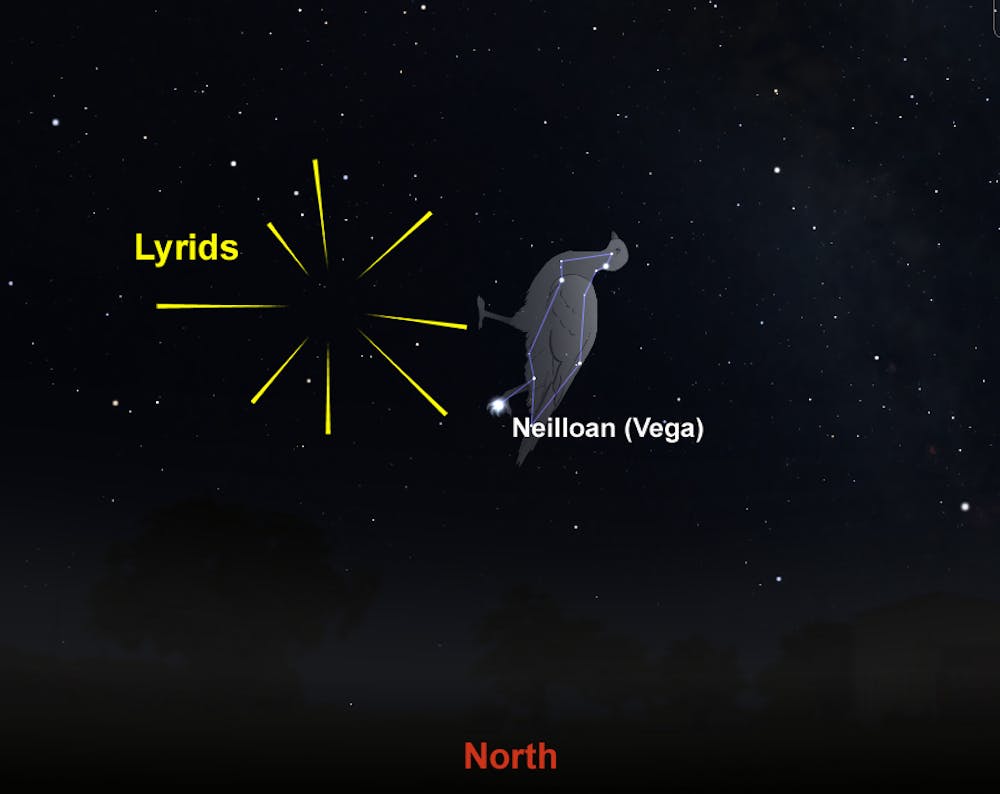

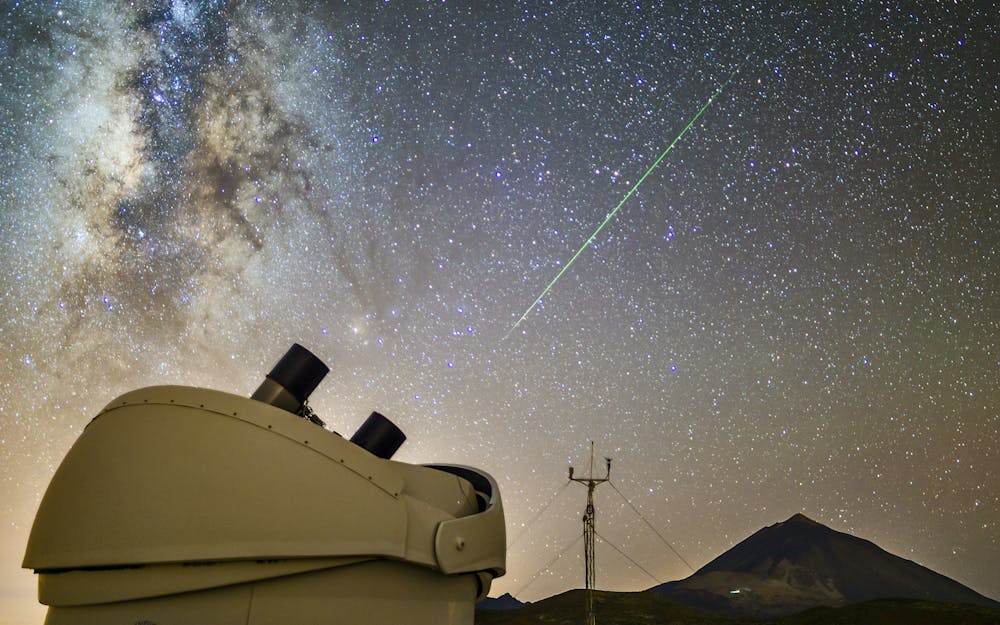
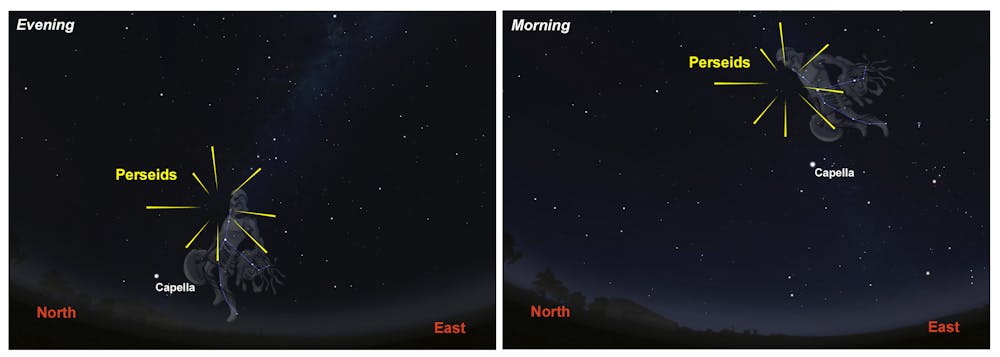

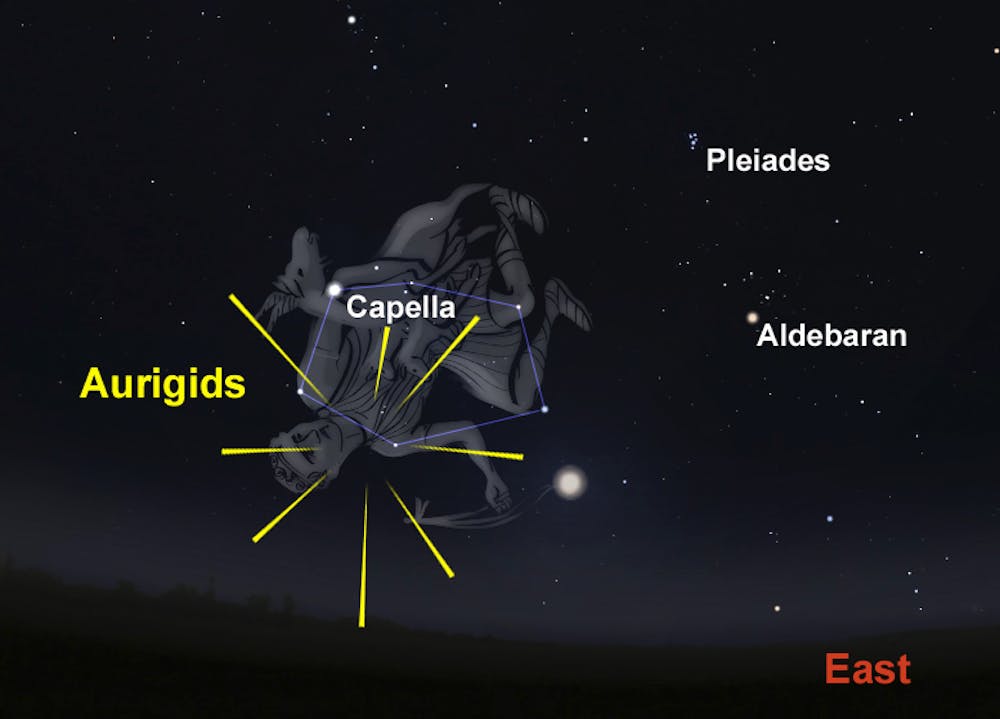
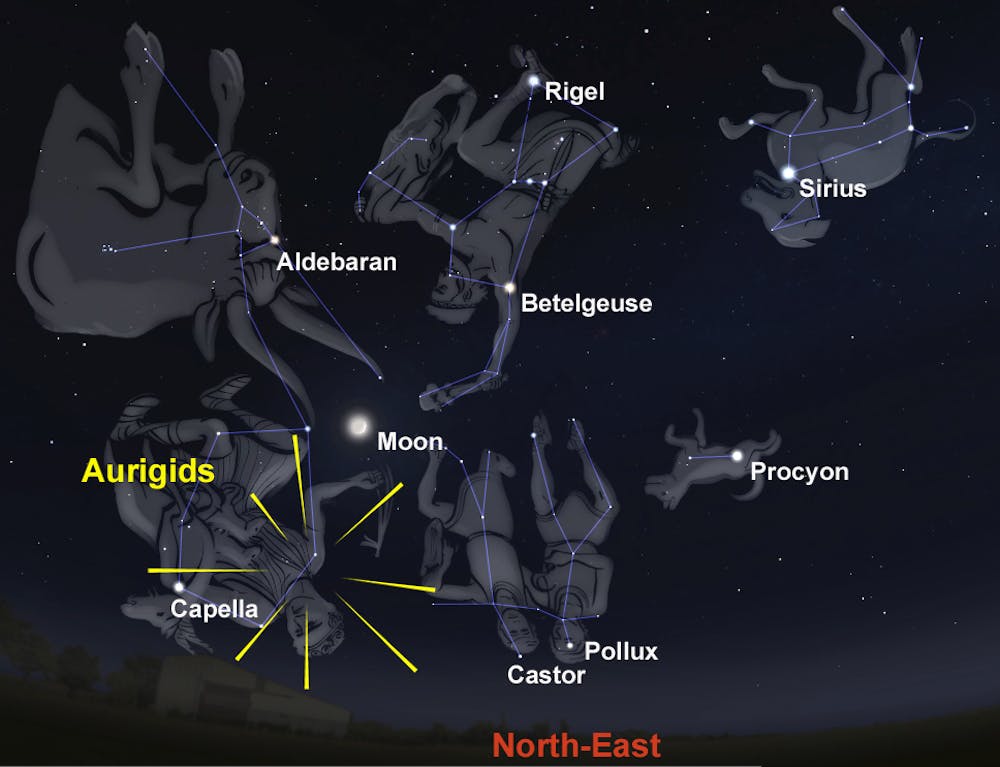
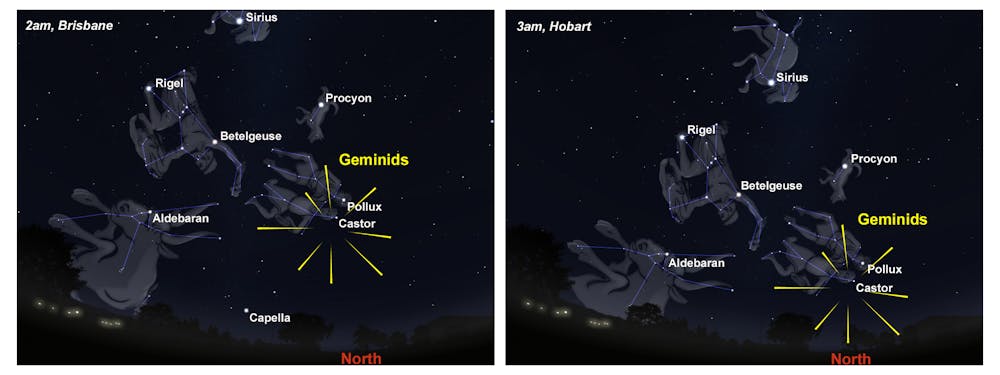
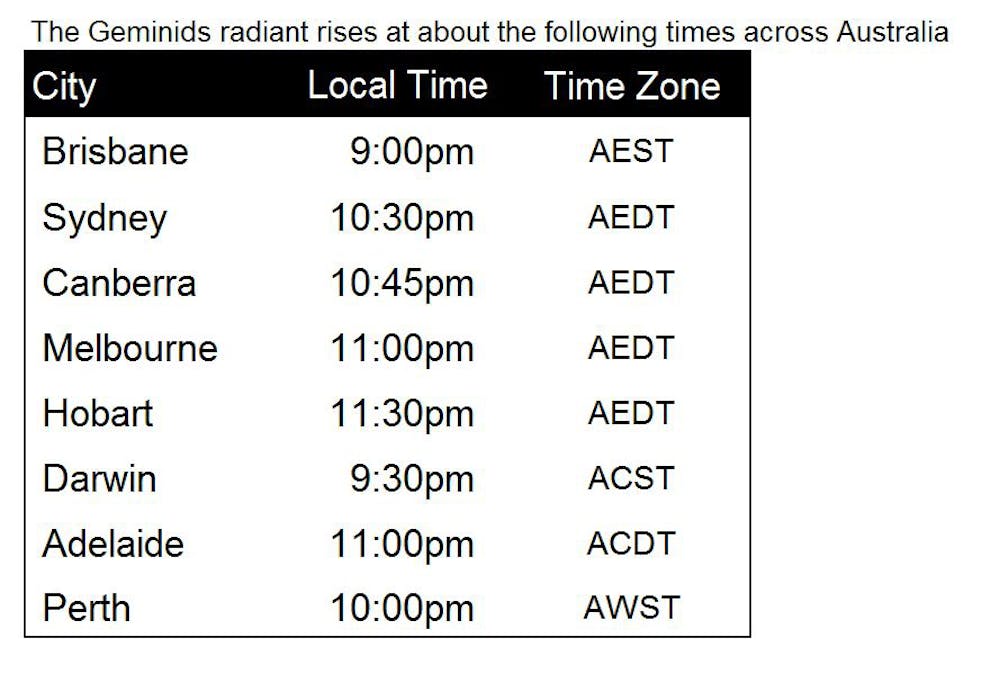


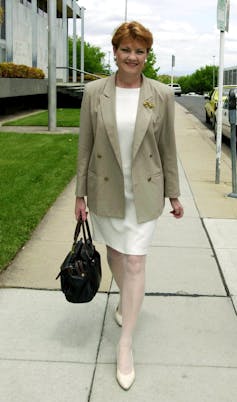



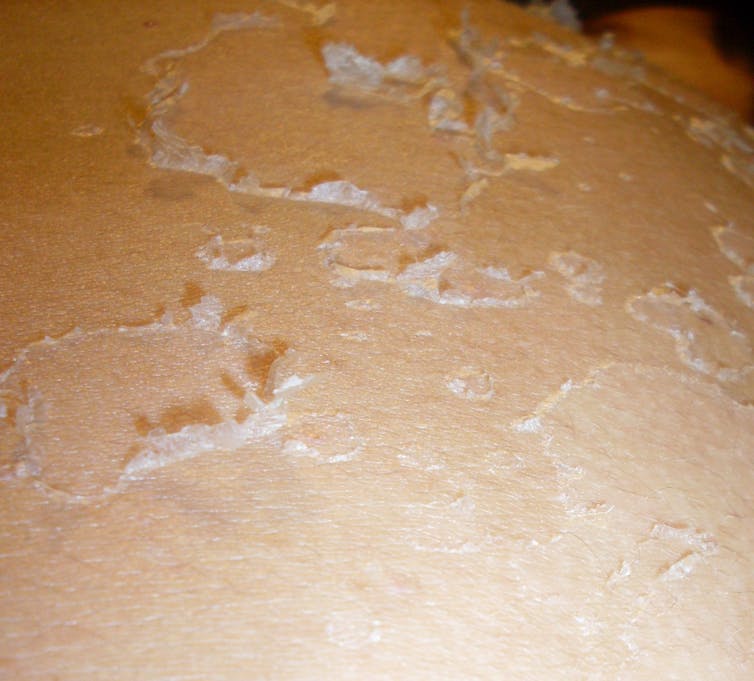
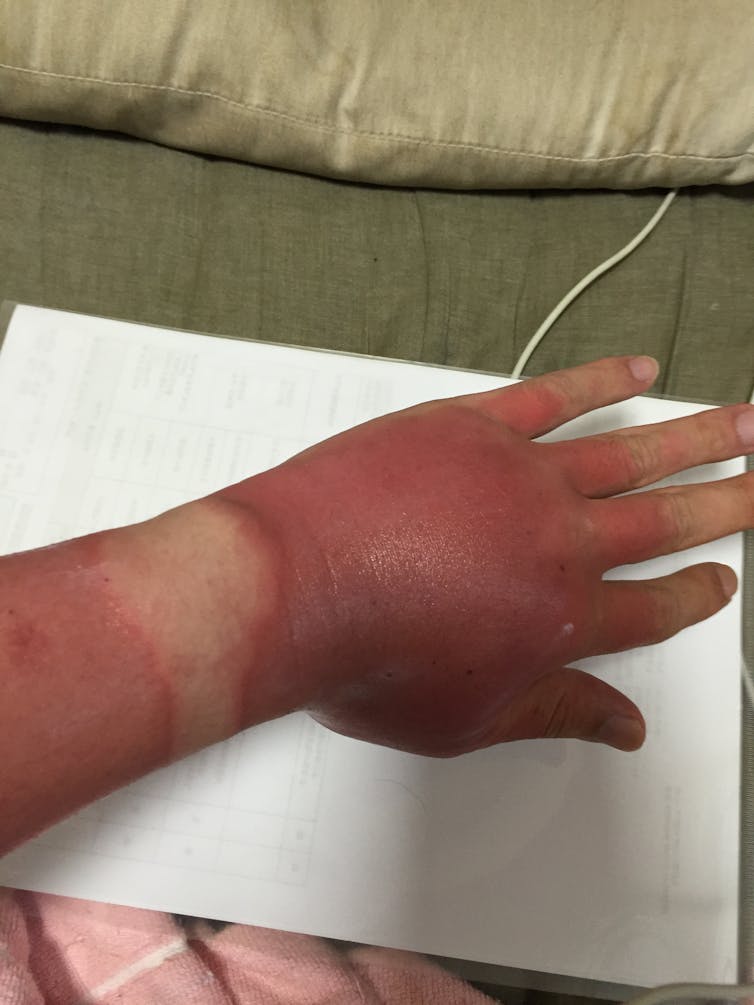
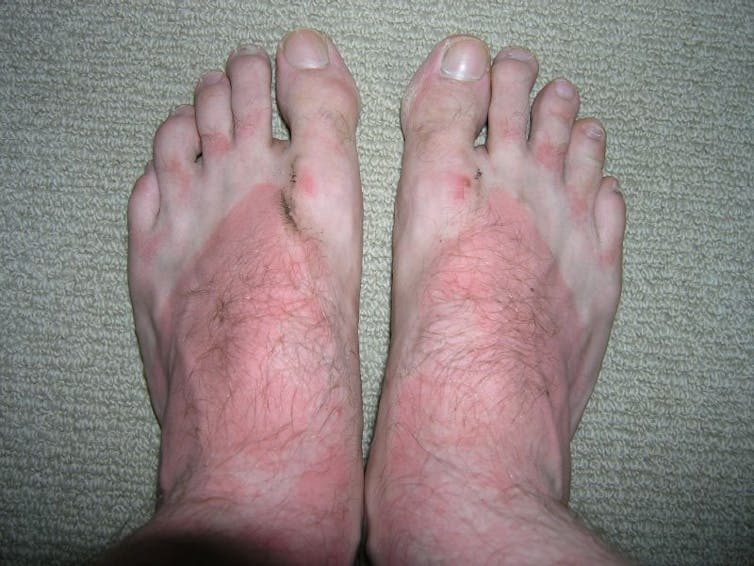
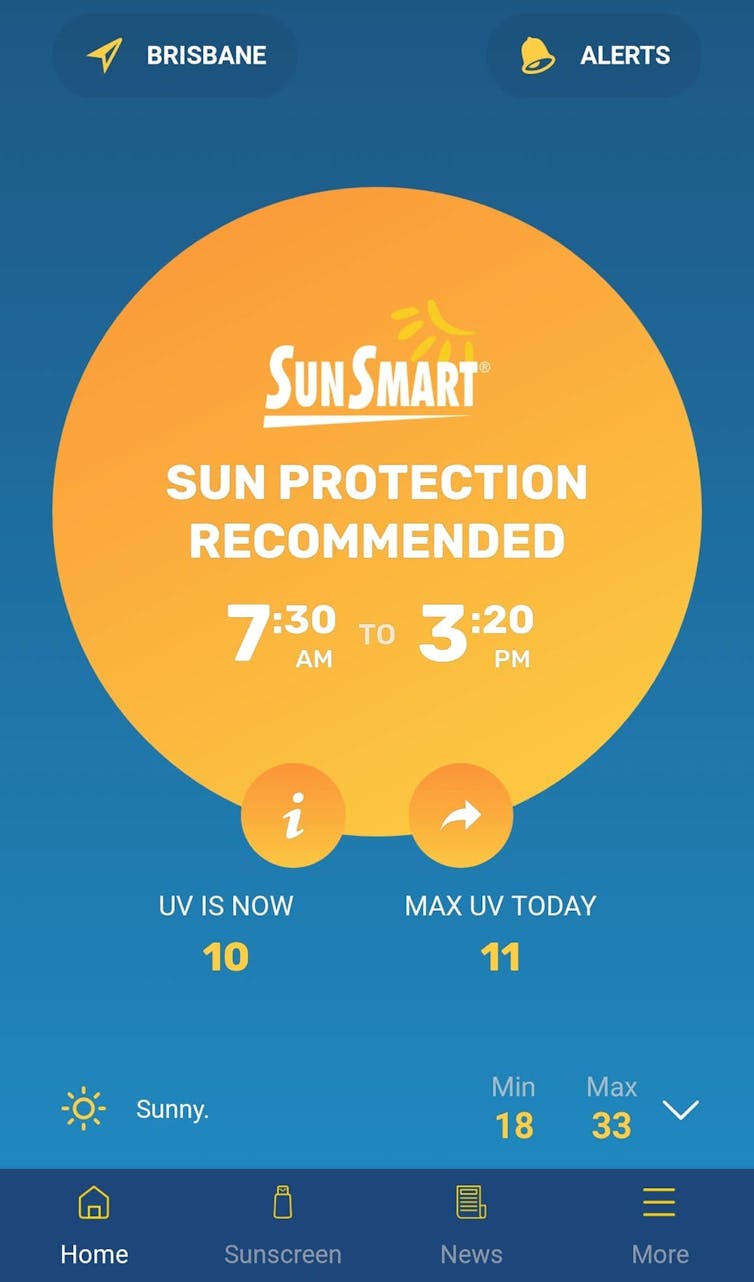
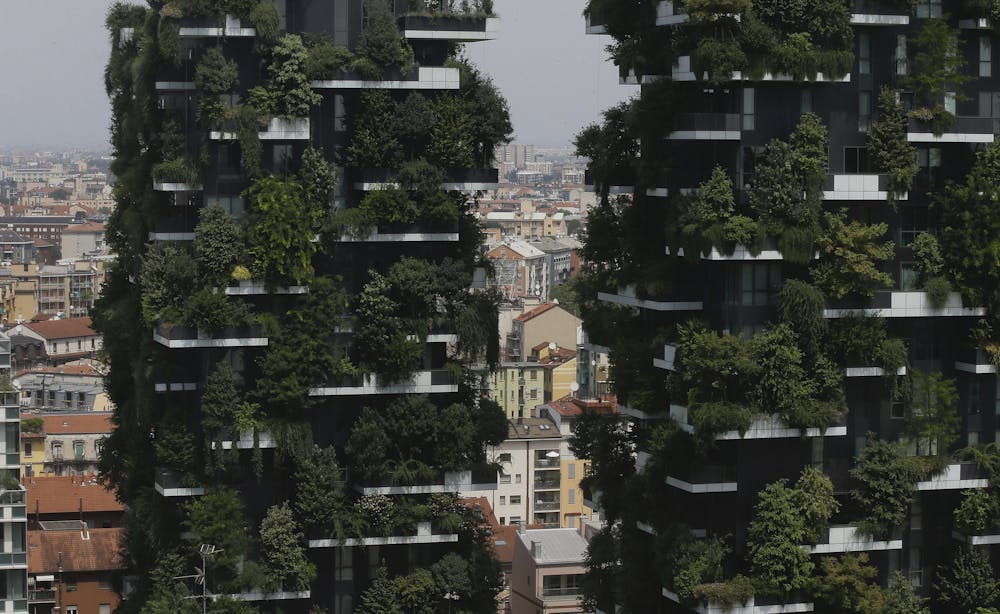




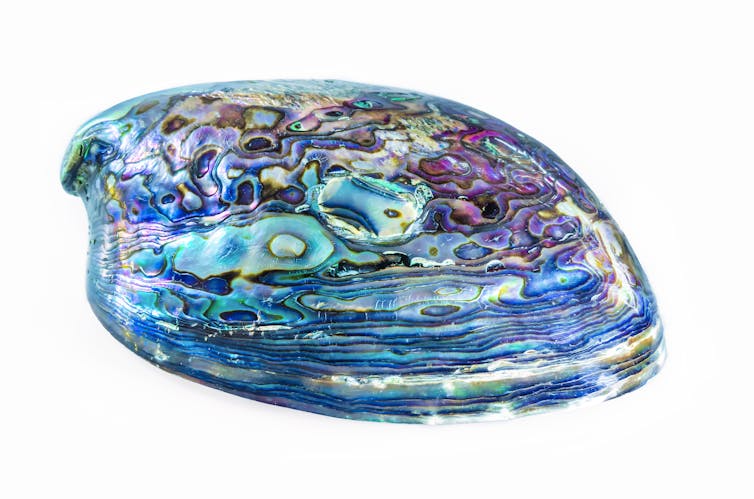
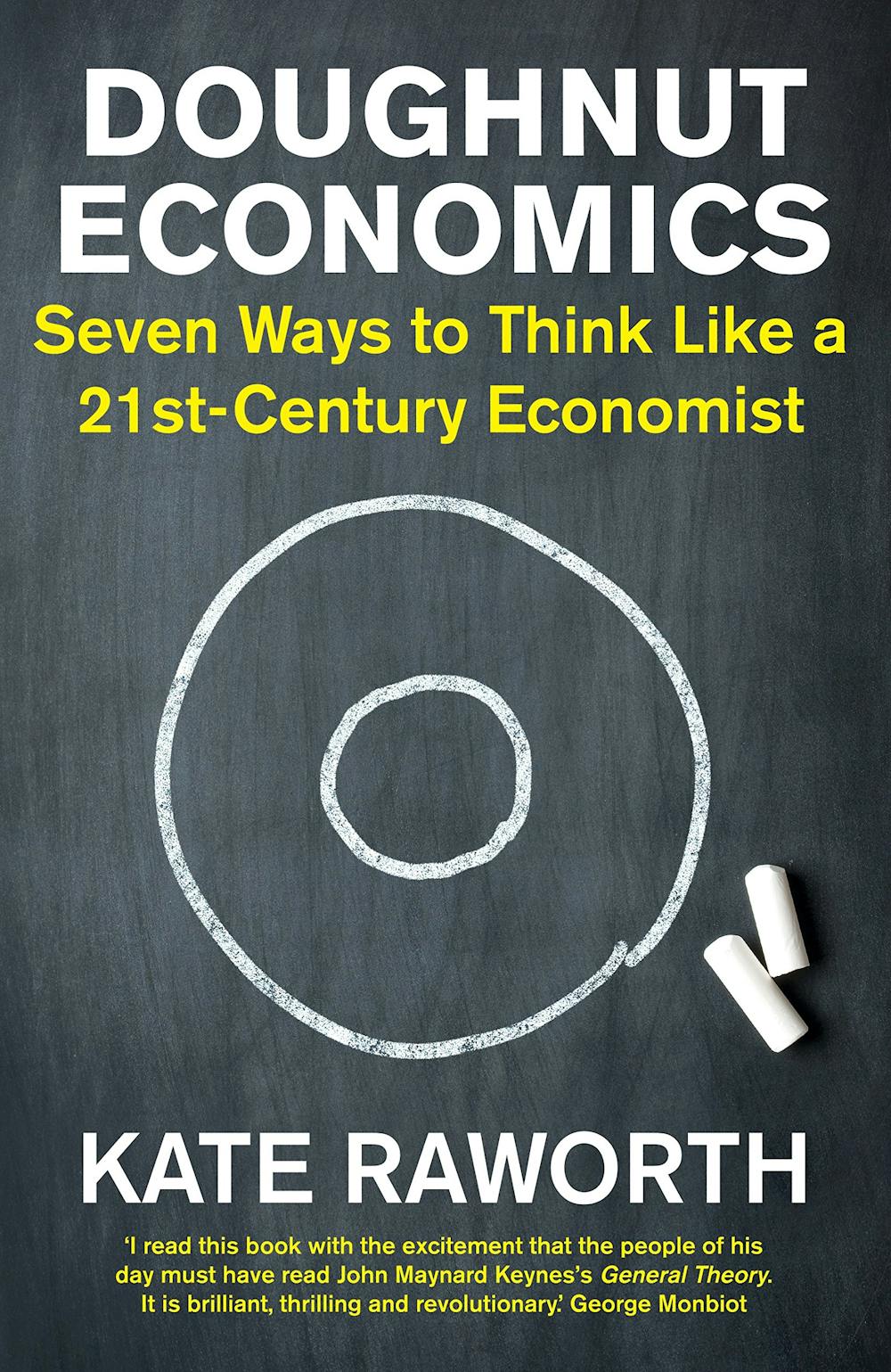
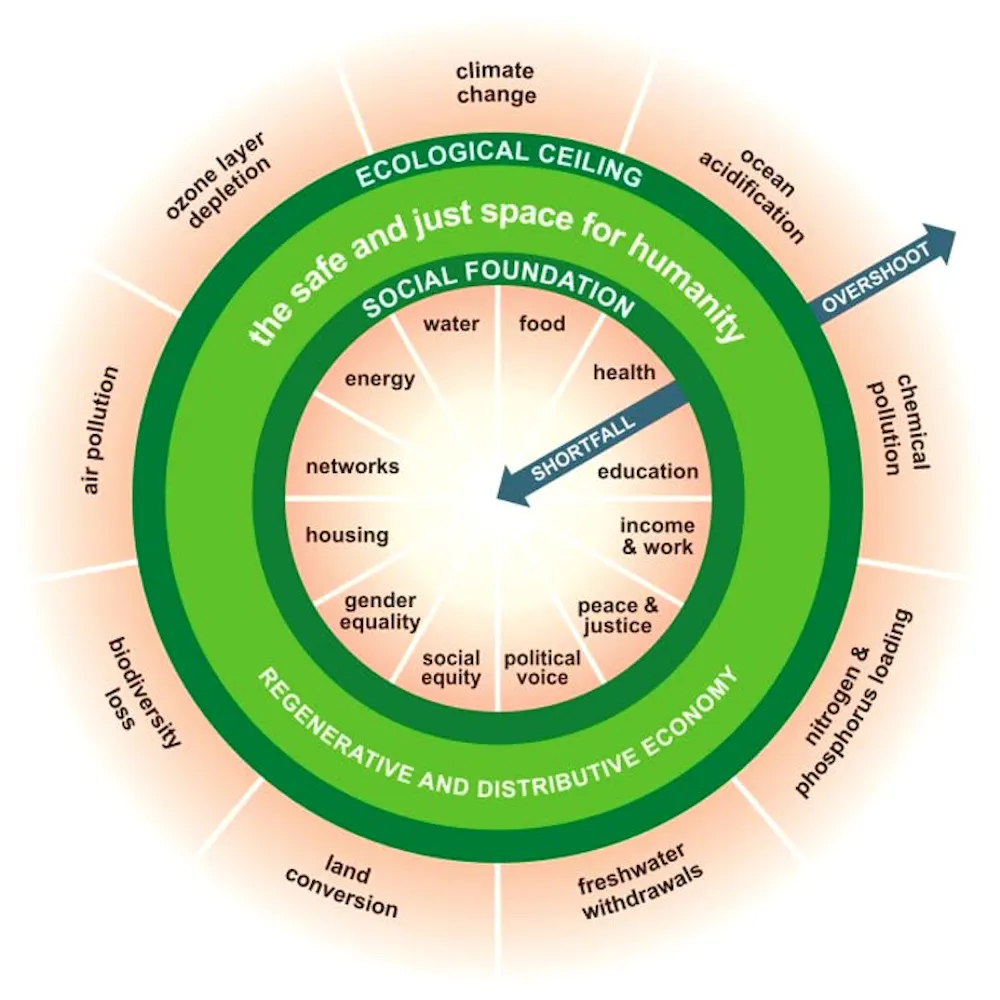
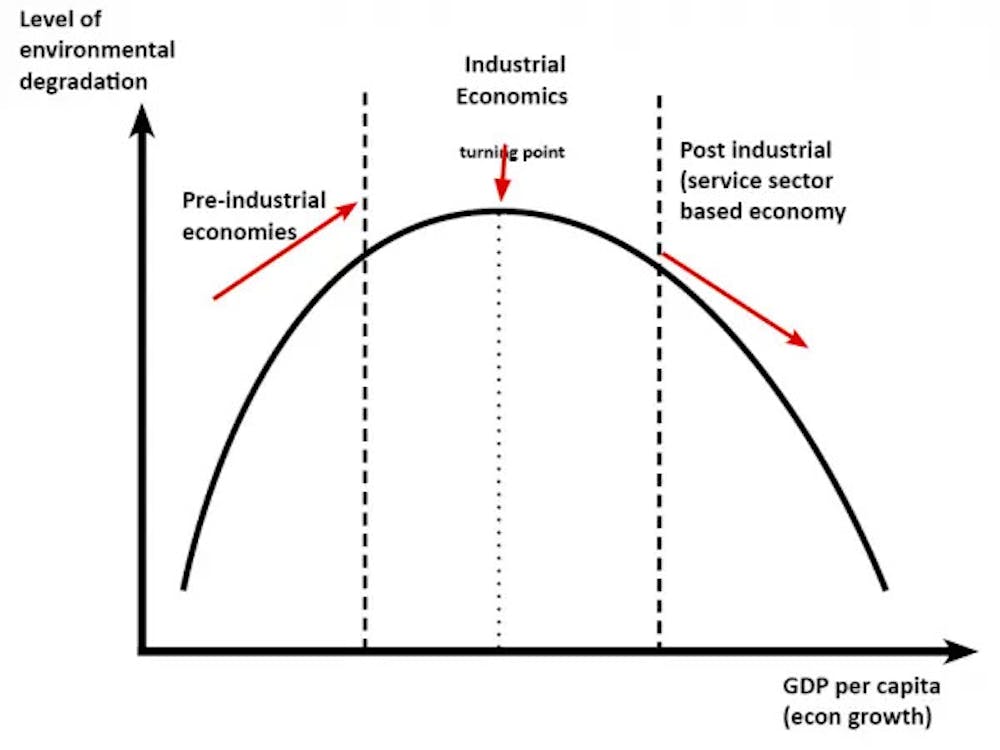
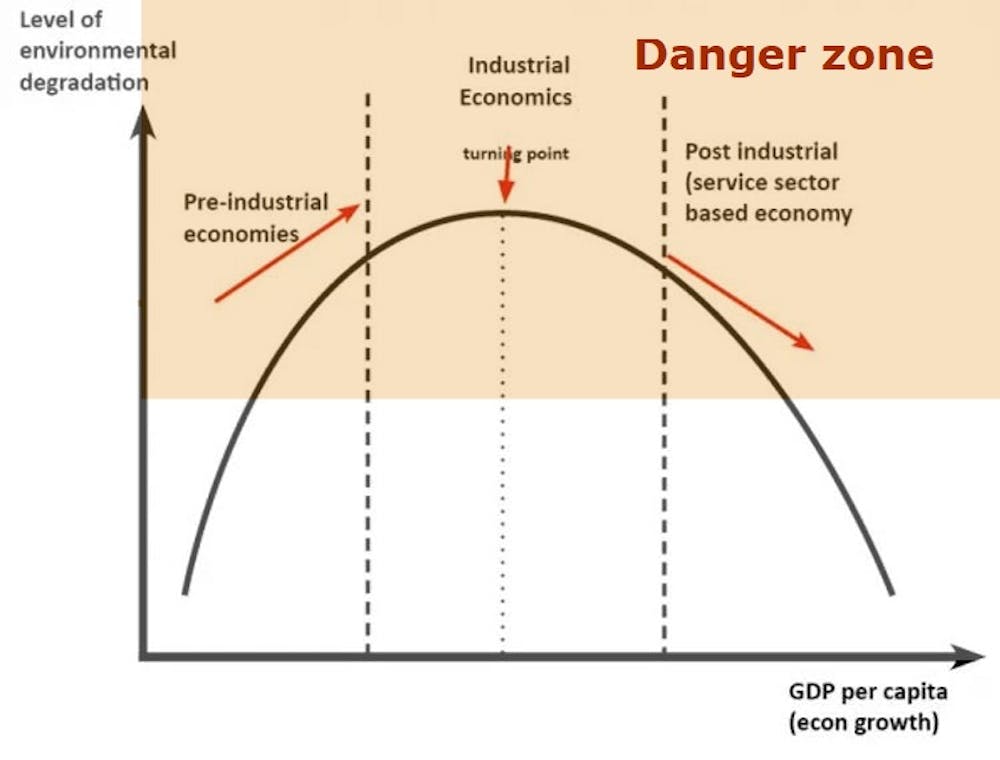



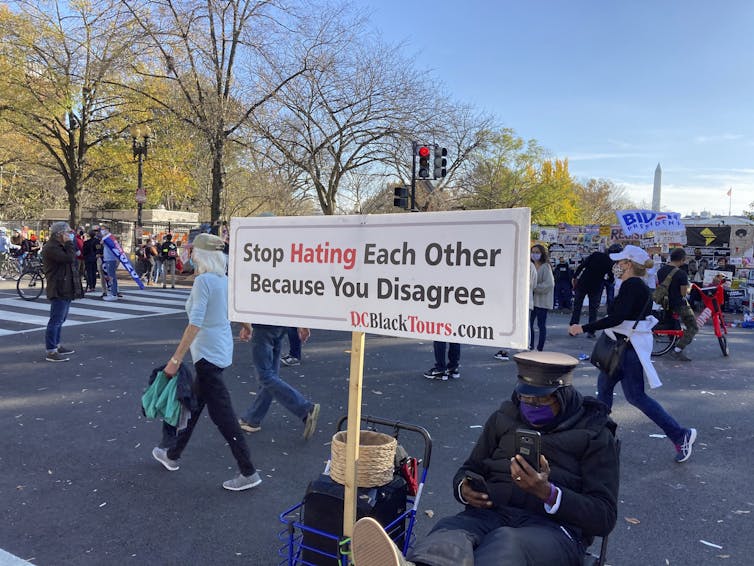

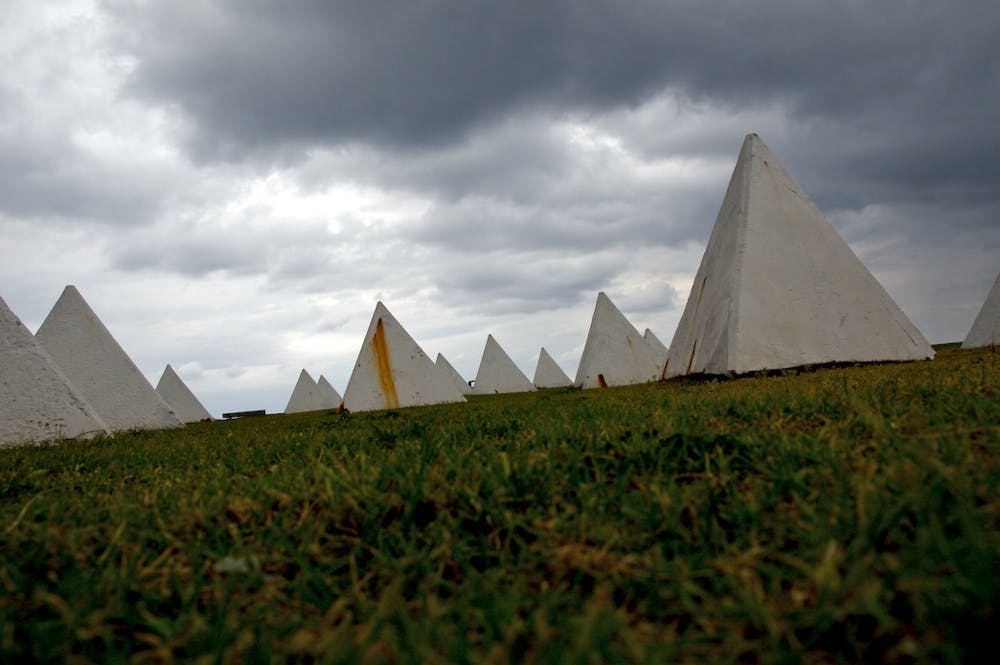
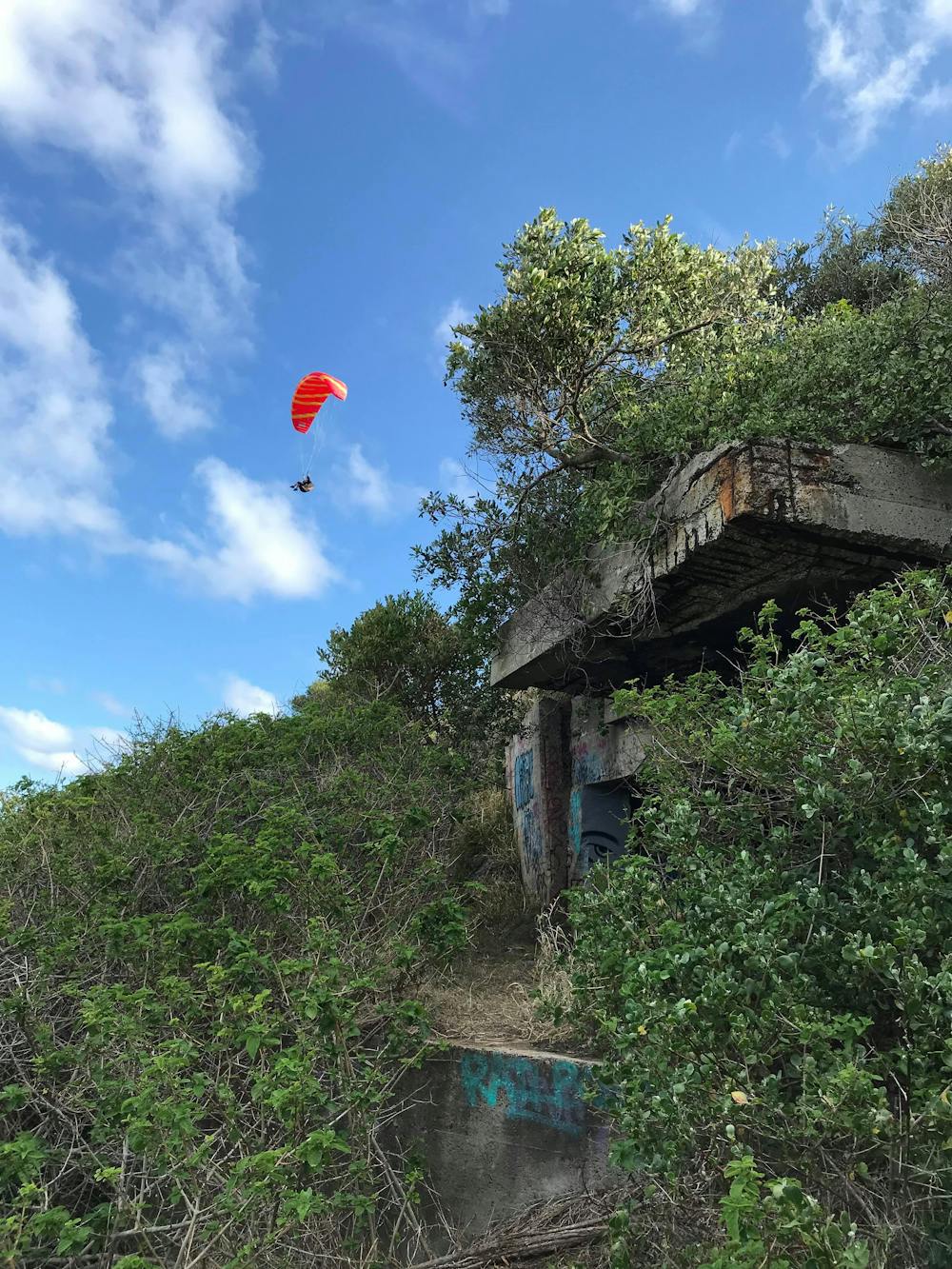


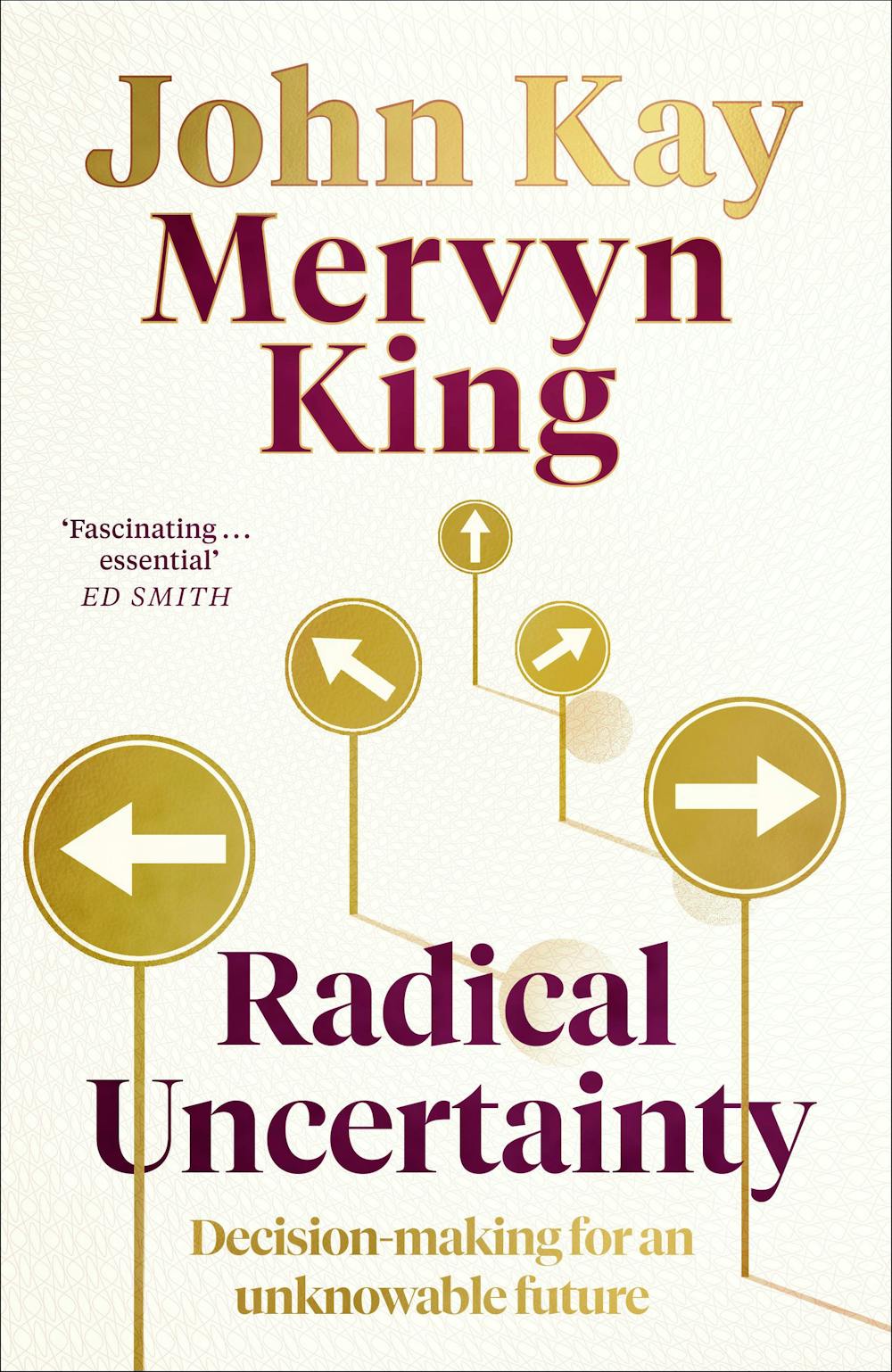
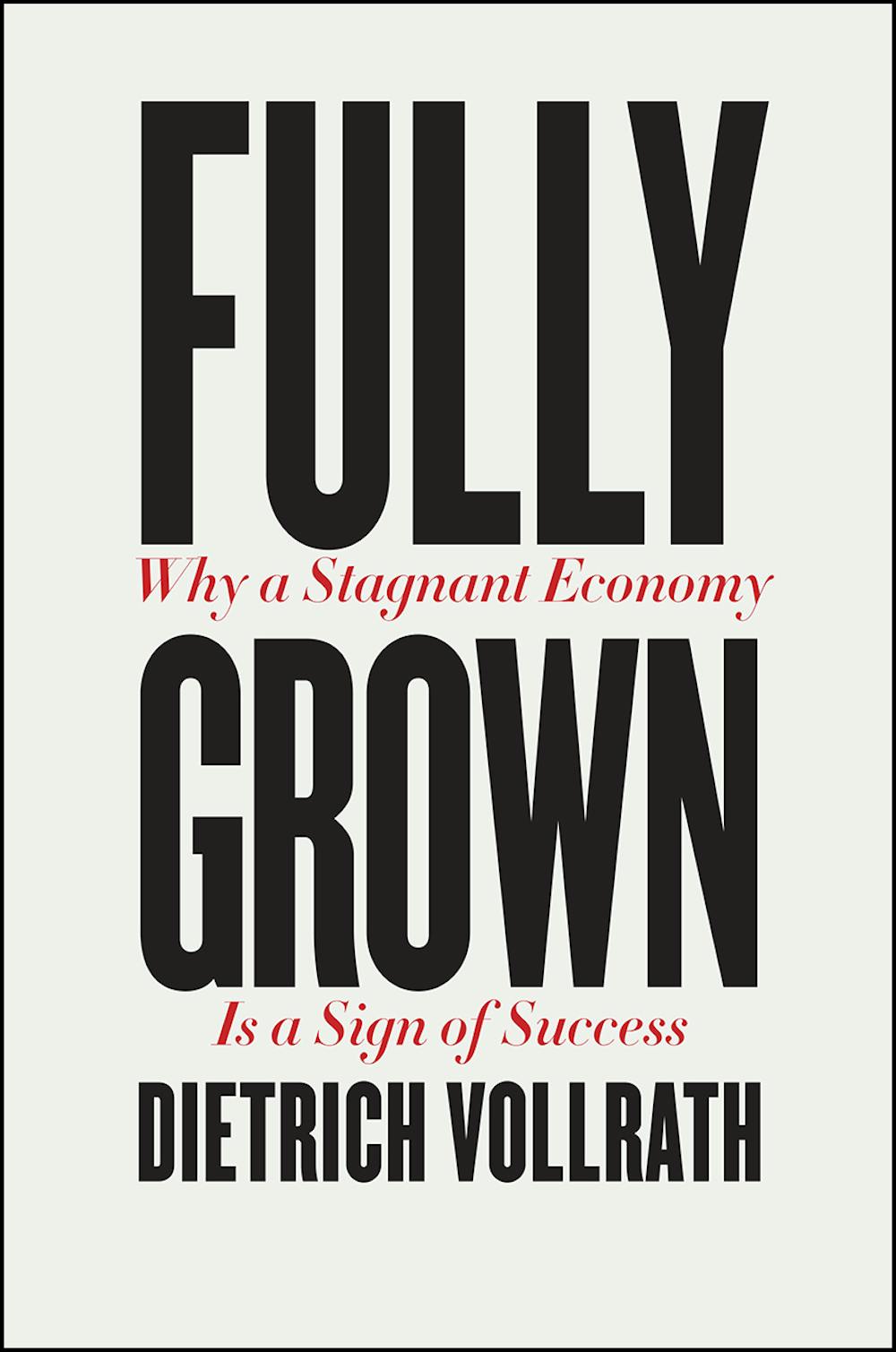















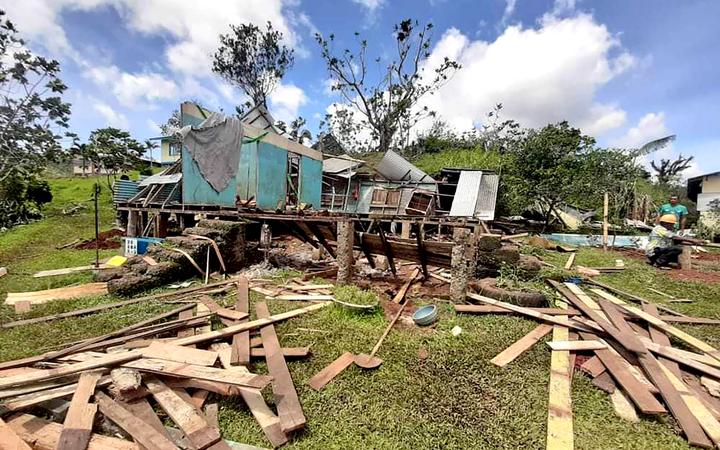

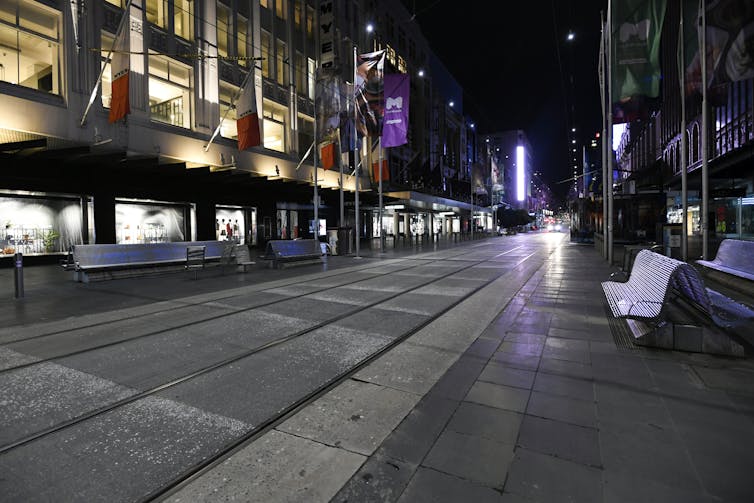
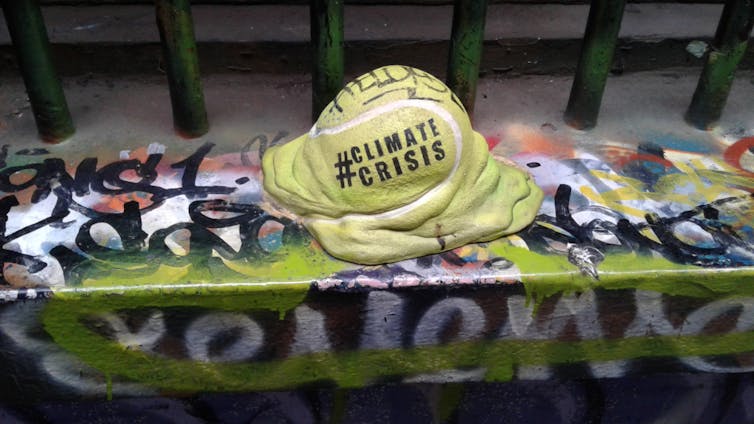
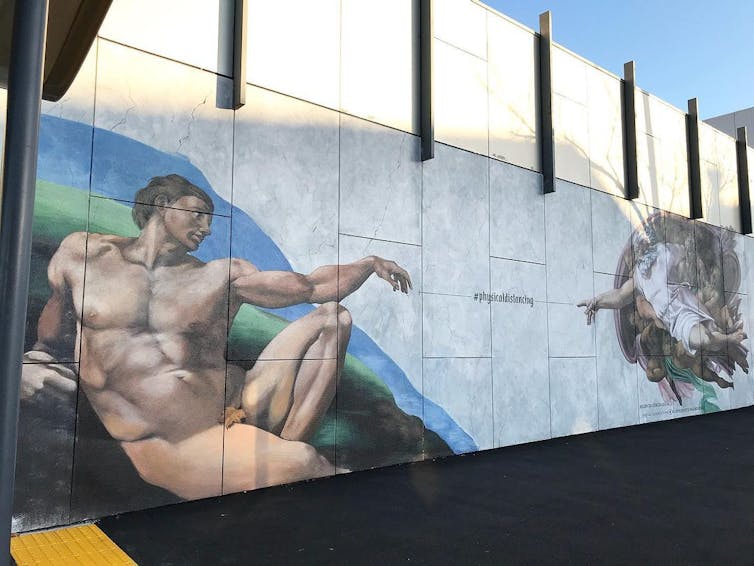
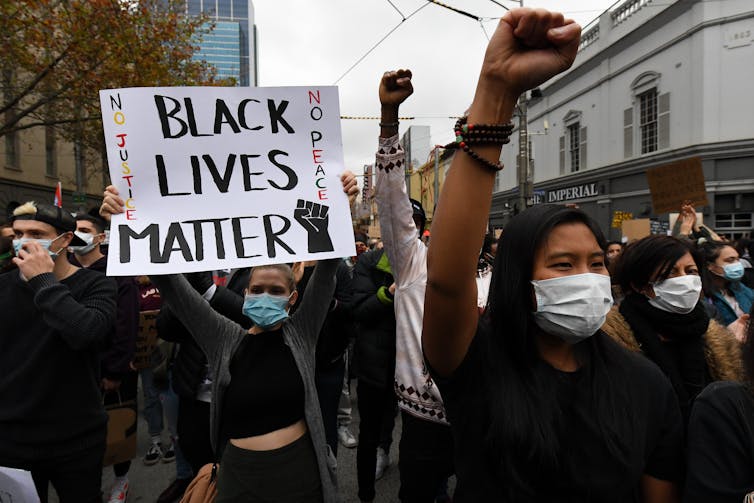


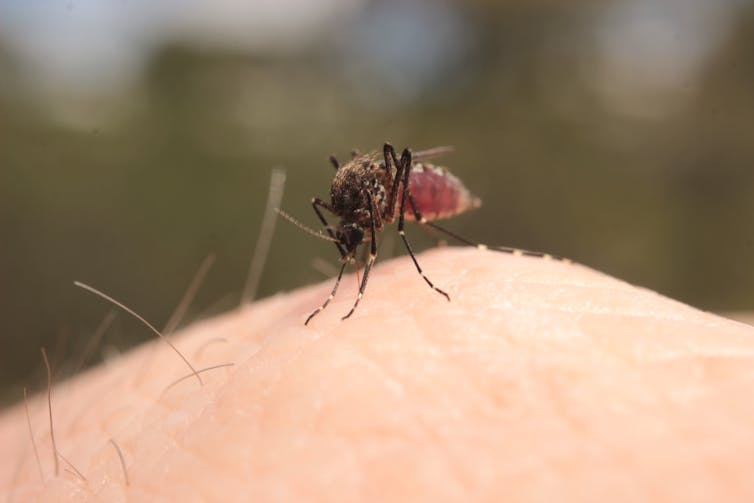




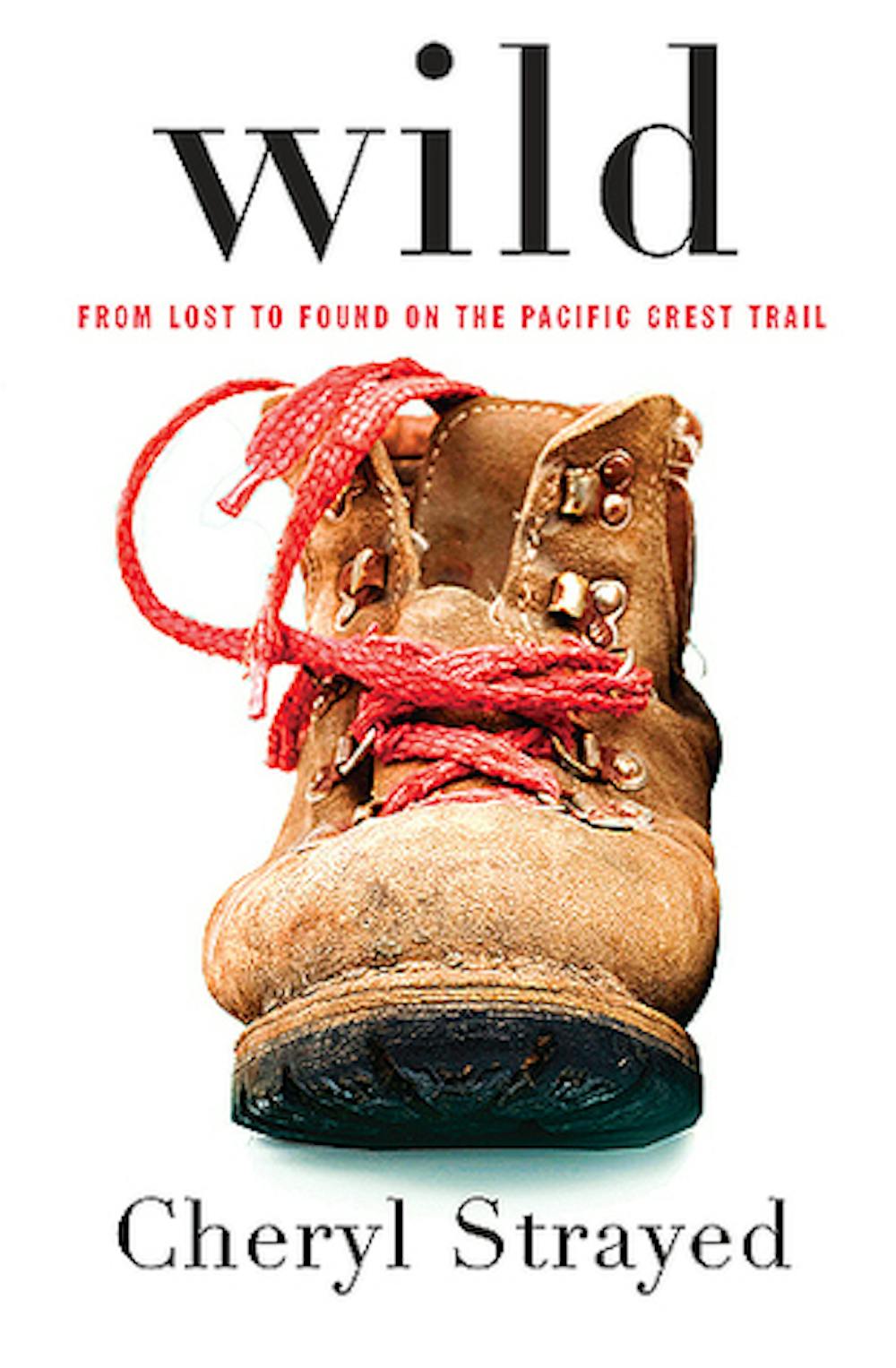
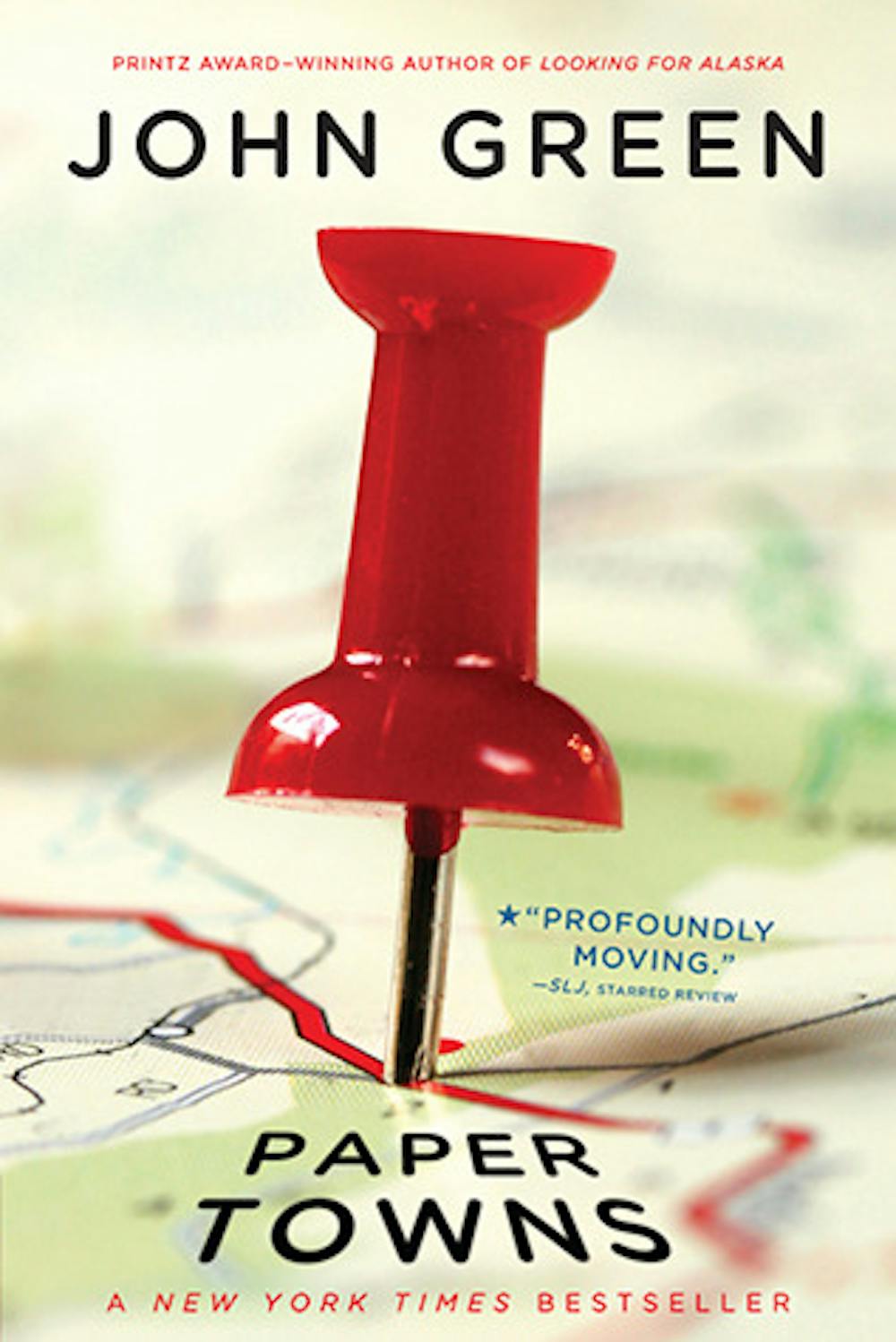

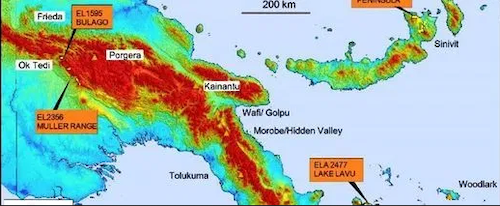
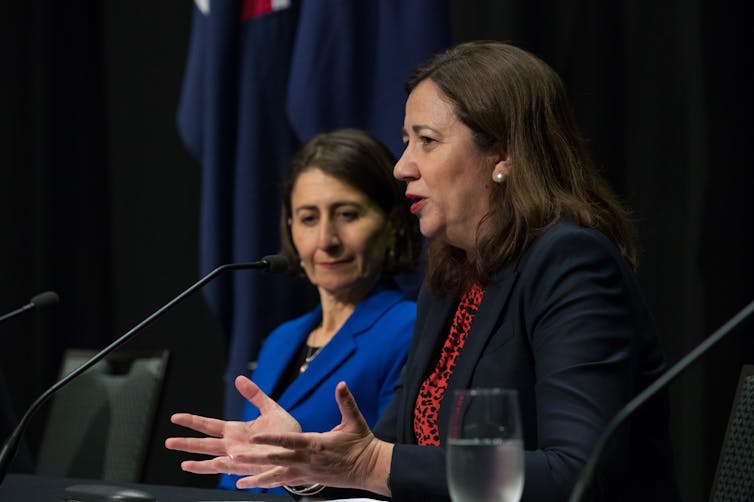

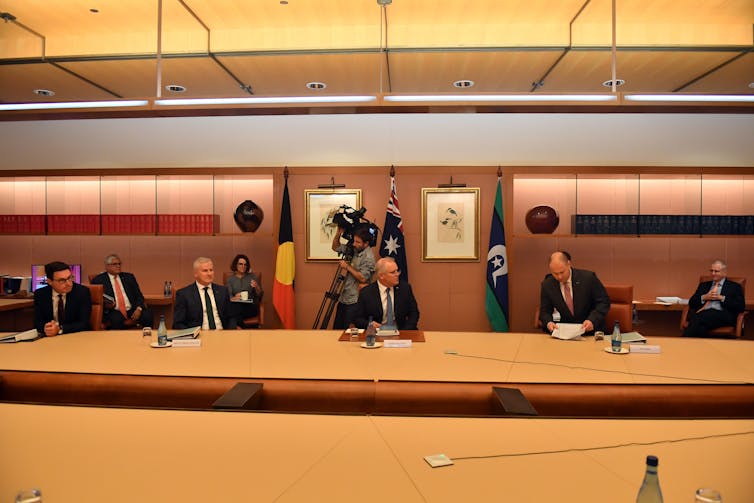

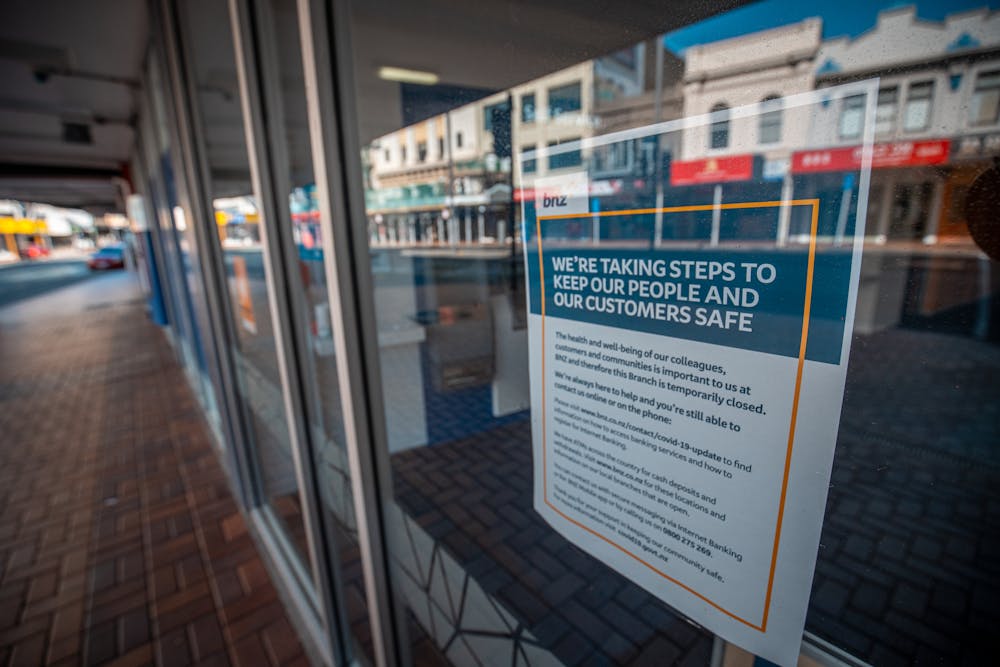

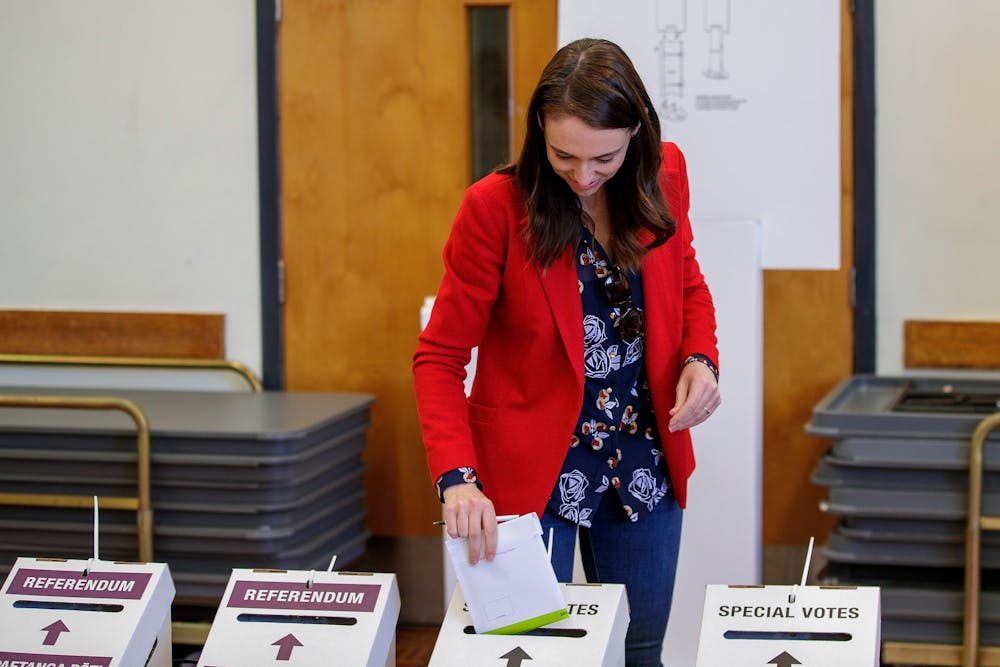





.jpg)