Australian universities enrol thousands of people to become teachers. Some who choose to study education are motivated by a desire to make a difference to the lives of young people, while others are looking for job security and intellectual fulfilment.
A course in education encompasses a broad range of cognitive and technical skills aligned to professional teacher standards. Yet, what is largely missing from a teaching degree is what to do with emotions as a teacher.
Despite all the theory, training and practical experience, research shows teachers’ professional lives can be highly demanding, pressured, stressful and at times, emotionally exhausting.
In doctoral research, I followed pre-service teachers throughout their course. I found there exists an invisible rule book that defines what teachers can and cannot do with their emotions.
Emotional labour is hard work
Our teachers recently started the school year. Many are likely facing a range of emotional challenges including working with difficult students and communities, managing increasing administrative control over their work and standardisation reforms. All these can result in substantial mental health issues.
One Australian study found increasing numbers of teachers suffer from persistent anxiety and depression. Up to 50% burn out or simply leave in the first five years of their career.
Early studies are showing the COVID-19 lockdowns of 2020 are further exacerbating the stresses facing Australian teachers.
Because teaching is emotionally demanding, teachers experience what is known as “emotional labour”. This is when teachers have to manage, suppress or feign their emotions as part of the work. Like other forms of labour, doing so can become exhausting.
Understanding these facts is a fundamental part of learning to become a teacher. I’ve come to know this through years of researching teacher emotions, specifically focused on those learning to teach.
Putting on a mask
I spoke with and collected questionnaires from almost one hundred education students in a large Western Australian university. I wanted to find out how someone who wants to become a teacher learnt what they should or should not be doing with their emotions in secondary schools.
I found pre-service teachers learnt about the rules for emotional behaviour from expectations and assumptions about teacher’s work, which was confirmed when they began training in school placements.
From interviews, focus groups, dairy entries and questionnaires, I have summarised some of the unwritten rules these teaching students spoke of:
Don’t ever cry in front of students, because if you do, they will see you as weak and eat you alive.
Don’t lose your temper, shout or get angry, because if you do, students will lose respect for you.
Don’t show your emotional vulnerability, especially not to other teachers, because if you do, they might think you are not right for the job.
Many pre-service teachers explained they worked at “hiding” or “suppressing” their vulnerable emotions from students and other teachers.
Some said they put on a “mask”, “a brave face” or “façade” to show they were “professional” and could “control” their emotions.
One participant experienced “intense frustration” during school placement in trying to manage and engage a group of behaviourally difficult students, which led to her feeling “emotionally overwhelmed”.
Teachers says they have to wear a mask to hide their emotions.Shutterstock
She hid these emotions from her supervising teacher, telling me she did not want to “appear weak”. So she held back her tears because she would “hate” being the “little woman that cries at work, who gets upset”.
This shows there exists a demand for teachers to behave in ways they believe to be acceptable. All these pre-service teachers have learnt to keep a hold of their “inappropriate” emotions in front of other teachers or risk being perceived as incompetent and unprofessional.
Let’s talk about it
Navigating the emotional rules of learning to teach is a significant aspect of becoming a teacher, yet it goes largely unrecognised in an initial teacher education course.
Such labour in teaching can have personal costs and lead to emotional exhaustion, depression and anxiety.
If we are to ensure thousands of newly enrolled teachers are to thrive in their courses and careers, we must make the invisible emotional rules of the profession seen and heard.
I believe if pre-service teachers can come together with teacher educators to explore these emotional rules, they could build resilience to confront the many emotional challenges of modern teaching.
Review: Clarice Beckett — The Present Moment, Art Gallery of South Australia
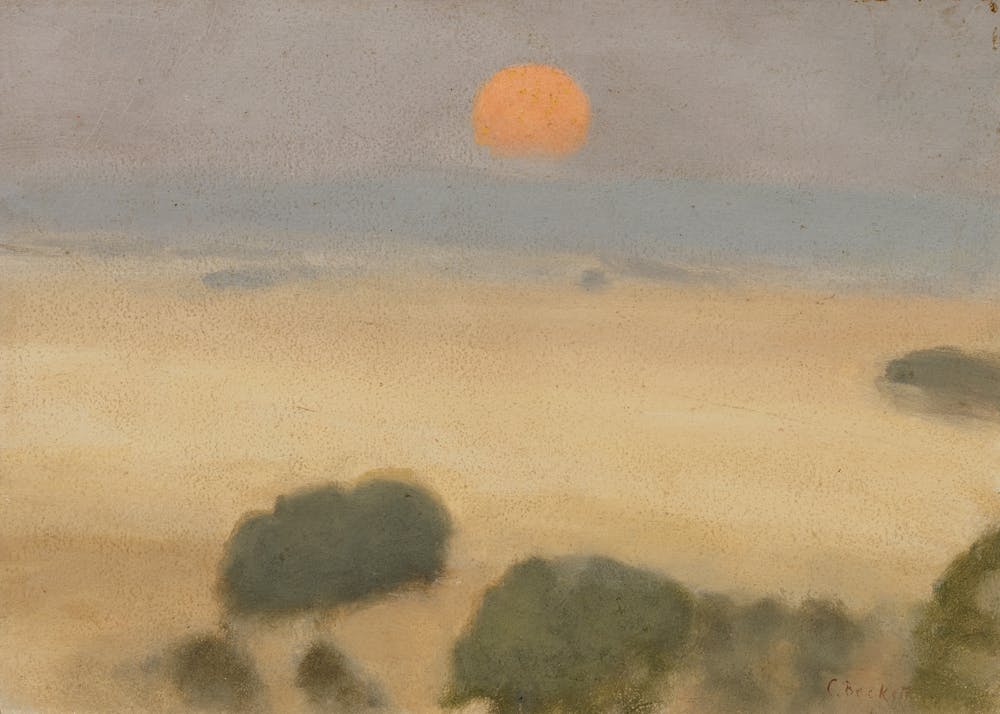
Featuring the artist’s luscious and distinctive soft focus, the Art Gallery of South Australia’s newly opened Clarice Beckett exhibition, curated by Tracey Lock, presents her paintings as a sensorium — with colour, music and video to enhance the experience.
Each room in the gallery’s exhibition space is dedicated to her paintings of specific times of the day, from sunrise, to early morning, then midday and sunset, concluding with the nocturnes. She was fascinated with temporal change. The exhibition is very much an experiential journey. Viewers enter through an elliptical portal to an immersive rounded space filled with magnified projections of her paintings, and music from Simone Slattery’s specially commissioned soundscape.
Beckett was musical too. The transcendence to another realm has begun. The mood changes with each room in the exhibition.
‘Almost like a magician at work.’ AGSA Australian art curator Tracey Lock pays tribute to Clarice Beckett.
A sad loss but precious works remain
The poignant Clarice Beckett story is known by many. She died from pneumonia in 1935 at 48 years of age, and left behind a large cache of work. It was stored for a number of years in an open-side shed in rural Victoria, only to be discovered in the late 1960s, in a poor state of repair, by art historian Rosalind Hollinrake. She salvaged a mere 369 paintings — 1,600 were beyond repair.
Hollinrake guided the artist’s rediscovery at a time when numerous women artists were reinserted into the canon. The impetus for this exhibition is the generous donation by Alastair Hunter of a large collection of Beckett’s work previously held by Hollinrake.
Beckett lived in Beaumaris from 1919 with her ageing parents, and she was a familiar figure painting en plein air, meaning: in the open air.
The artist would walk miles to nearby beaches or districts to paint, fascinated with observing and portraying the changing mood and movement of the day. She was known to rise at 4am and walk to a nearby beach to watch the dawn rise as portrayed in Silent approach (circa 1924), in which shapes are just beginning to emerge with the coming morning light. Minimal figuration leaves painterly space for contemplation of a higher realm.
Clarice Beckett, Australia, 1887 – 1935, Wet sand, Anglesea, 1929, Victoria, oil on board; Gift of Alastair Hunter OAM and the late Tom Hunter in memory of Elizabeth through the Art Gallery of South Australia Foundation 2019, Art Gallery of South Australia, Adelaide.AGSA
Theosophy — a belief in divine wisdom via mysticism — was a major influence on her approach to painting. Like others around the world, Beckett came under the popular esoteric movement’s spell in the early years of the 20th century. She owned a well-thumbed copy of Madame Blavatsky’s seminal occult text The Voice of Silence, attended spiritualist meetings and moved in artistic circles where post-dinner seances were often held.
Clarice Beckett painting at Mt Macedon, Victoria circa late 1920s.Artists of the Valley
But Beckett also took on board painter Max Meldrum’s quasi-scientific ideas about rational analytic observation of subtle visual patterns of tones and accents. She studied with him for nine months, although it is widely accepted she surpassed him with her brilliant tonal landscapes. This is the hybrid intellectual and artistic milieu she moved in, supplemented by an interest in Eastern philosophy and Freud.
For Beckett, painting was as much about performing her spiritual beliefs as it was about portraying that which was observable. Her friends in the Melbourne Society of Women Painters and Sculptors, to which she belonged, recall she loved talking about theories behind her work.
What emerges in the exhibition is her finely honed and daring visual language. In some a compositional tension emerges between horizontal and vertical forms as in Wet night, Brighton (1930). That tension marks a point of transcendence.
Clarice Beckett, Australia, 1887 – /1935, Motor lights, 1929, Melbourne, oil on board; Gift of Alastair Hunter OAM and the late Tom Hunter in memory of Elizabeth through the Art Gallery of South Australia Foundation 2019, Art Gallery of South Australia, Adelaide.AGSA
In others her economy and discipline in imagery is awe-inspiring as in Passing trams (circa 1931), in which the mist enveloping the trams is relieved by the merest gesture of colour; while her sheer versatility as an artist emerges in her busy yet spacious beach scenes in full sun, Sandringham Beach (circa 1933) and Sunny morning (1933).
In magical paintings such as Across the Yarra (circa 1931), a study in transience, the moonlight bleeds through the hazy evening mist and merges with glimmering lights reflected from the city onto the river. Its filtered grey light, close tonal range and soft edges prompt contemplation of a higher plane. In yet another painting the day’s heat coming off the surface of the land is palpable in Summer fields (1926), seen at sunset.
Clarice Beckett, Australia, 1887 – 1935, Summer fields, 1926, Naringal, Western District, Victoria, oil on board; Gift of Alastair Hunter OAM and the late Tom Hunter in memory of Elizabeth through the Art Gallery of South Australia Foundation 2019, Art Gallery of South Australia, Adelaide.AGSA
An artist without a studio
A curatorial coup is achieved with the installation of a domestic kitchen in the exhibition space. Her father had declined her request for a studio to work in. He suggested she use the kitchen table instead.
While most of her paintings were completed outdoors, she did paint still life and portraits, and finish off larger en plein air works at home. This work was indeed done on the kitchen table, which is so tellingly included in the exhibition, surrounded by her still life paintings including Marigolds (1925).
Clarice Beckett: The present moment featuring Zinnias (Flower piece) by Clarice Beckett, 1927, Private collection, Art Gallery of South Australia, Adelaide, 2021.AGSA/Saul Steed
The exhibition ends on a high note with “the shed”. Artist Peter Drew’s filmic time-lapse sequence of a shed, any shed, is emblematic of the Clarice Beckett legend. It is symbolic of the fragility of one’s archive, and a memorial to Beckett whose legacy was almost lost.
Clarice Beckett: The Present Moment is an immersive curatorial gesture which takes viewers through the cycles of the day she portrayed. More than that, it causes viewers to stop, contemplate each painting, to experience the void, and to enter another realm.
Scott Morrison has received a great deal of criticism over the government’s handling of then Liberal staffer Brittany Higgins’ allegation she was raped by a colleague in a minister’s office.
Now, if it’s possible, he faces an even worse situation, following the airing of an historical claim made by a woman – who last year took her own life – that she was allegedly raped by a man who is presently a member of the federal cabinet.
In an anonymous letter to Morrison, friends of the woman called for him to order an investigation.
The letter – also sent to Labor’s Senate leader Penny Wong and Greens senator Sarah Hanson-Young – was reported by Four Corners late on Friday.
The allegation relates back to 1988, years before the man entered parliament, when the woman was a teenager.
The call for action by Morrison draws on written and audio material left by the the woman, who also spoke to police. The letter included a statement written by her.
The ABC reported that on the eve of her death, the woman told police she didn’t want to go ahead with the investigation. After she died, the NSW police suspended their investigation.
Many people have been aware of the allegation for some time. Malcolm Turnbull has said the woman wrote to him and his wife Lucy in 2019. Labor’s Penny Wong said she heard of the allegation from the woman “when I ran into her in Adelaide in November 2019”. Both Turnbull and Wong encouraged her engagement with the police.
The story has been in the Parliament House rumour mill for months.
While such an allegation is obviously a matter for police – and Morrison has sent it there – that route faces a block because the alleged victim is dead.
But the suggestion that Morrison should order an investigation is fraught. The difficulties of such an inquiry are obvious, given the nature of the alleged crime and the fact the alleged victim has died.
The letter refers to a parliamentary investigation, but that would likely divide along party lines, and hardly be seen as independent. If there were some other form of inquiry, how would it operate and what would be its powers and processes?
Moreover, there is something troubling about having the government try to deal with a matter that so obviously should rest with the legal system.
Those urging an inquiry point to the handling by the High Court (and the government) of allegations of sexual harassment against former judge Dyson Heydon. In his case, however, there were women who could be questioned.
So Morrison is left with a minister subject to a most serious allegation – who must be accorded the presumption of innocence – but without a satisfactory path to a resolution.
The matter is unlikely to go away, especially given the present debate about the treatment of women.
Anthony Albanese danced around the issue on Sunday. He told the ABC the Prime Minister appointed the cabinet and he “must confirm to himself … that it’s appropriate for [the minister in question] to stay in his current position”.
Absolutely. But how this translates into a course of action, if the man denies the claim and there is no appropriate way of testing it, is unclear.
Morrison is certainly not asking the minister to stand down. The Prime Minister’s Office points to the statement of ministerial standards which says “ministers will be required to stand aside if charged with any criminal offence1”.
That line can be held while the minister’s name is not public. But one would think it is probably only a matter of time before the name is canvassed in a parliament under privilege.
If that happens, the situation would move into uncharted waters. But also probably towards an outcome.
As Denis Muller, from Melbourne University’s Centre for Advancing Journalism, says, this is “a situation best left to play itself out through the political process, because there’s nothing a prime ministerial-generated inquiry would yield that the political process will not eventually yield”.
Meanwhile on another front, the government has been dealt a blow with Liberal MP Nicolle Flint, who holds the highly marginal seat of Boothby in South Australia, announcing she will not contest the next election.
Flint, on the right of the party, has been relentlessly and personally targeted, with sexist attacks and the repeated defacement of her electorate office.
She has said of her experiences in the 2019 election, “This was a campaign to destroy me personally, a concerted attack to destroy me mentally”.
In a statement Morrison said, “The public attention from being a parliamentarian does sometimes attract unacceptable behaviour, and I have admired Nicolle’s efforts to stand against the bullying and nastiness of particular groups and individuals”.
With the debate of the last fortnight centred on the “toxic” culture in Parliament House, some of Flint’s experiences are a reminder that the toxicity stretches much more broadly than what goes on within the “Canberra bubble”.
Toxicity is infecting our politics and political discourse and behaviour generally. In particular, social media has boosted exponentially the amount of bile and enabled it to be disseminated far and fast. And even sections of the mainstream media have become forums for abuse and disrespect.
As expected, genome sequencing has now confirmed the new community COVID-19 case in Auckland is linked to the Papatoetoe cluster, and is the more infectious B.1.1.7 variant.
When the first cases in this cluster were reported on Feburary 14 Auckland moved to level 3 for just three days. This time, it’s seven days, with the rest of New Zealand at level 2 for the same period.
Since Auckland came out of level 3 on February 18, six additional community cases in two families had been reported until Saturday. So why did this latest case trigger a stronger response from the government?
‘Case M’ was infectious and active
There were two key factors contributing to the longer level 3 decision. First, the new case — “case M” — has likely been infectious since February 21, almost a whole week before their test came back.
During this time they visited a number of busy locations in South Auckland, including some high-risk settings like the gym. This is different from other cases at the tail of this cluster, which were all picked up within a day or two of developing symptoms.
There was a much lower risk that those cases had passed the virus on before going into quarantine.
The second factor was the lack of an established link between the new case and the existing Papatoetoe High School cluster. We now know there is a genomic link as well as a plausible epidemiological link — that is, public health officials have identified how the two families may have come into contact.
On Saturday night, however, a link to the school was much less certain because the student in the family tested negative three times and did not have any symptoms.
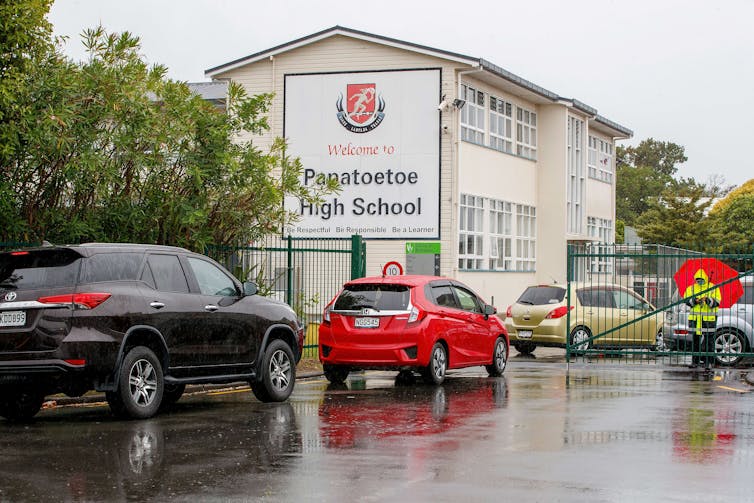
Motorists queue for a COVID-19 test at Papatoetoe High School, centre of the latest cluster in Auckland.GettyImages
The B.1.1.7 variant changes things
The news on Sunday is more encouraging, but officials will need to confirm there is a clear person-to-person epidemiological link. If not, there could be still be missing links in the chain of transmission from the cluster to the new case.
These could date all the way back to early February, meaning they have had up to three weeks to potentially start outbreaks of their own. Until this link is confirmed we will need widespread testing in the Auckland region to rule out the possibility of a large undetected outbreak.
We have known since the beginning of the outbreak that we are dealing with the more infectious B.1.1.7 variant first identified in the UK. This variant is estimated to be 43 – 82% more transmissible than the original virus. That may not sound like much but, like interest on credit card debt, the difference compounds over time and quickly grows.
For example, left unchecked, an outbreak of the B.1.1.7 variant could cause around 200 cases after just three weeks, compared to around 40 cases with the original virus. This makes it all the more important to “go hard and go early” when dealing with an outbreak of this variant.
Was the previous alert relaxed too soon?
When the outbreak was first detected, there was a possible link to the border via the LSG Sky Chefs workplace, so there was a reasonable chance the outbreak was still small and relatively well contained.
This time, because we know the virus has been in the community for at least three weeks, there is the potential for a lot more undetected cases. A week will give our testing and contact tracing systems the time they need to track down additional cases and shut off chains of transmission.
If we are lucky, there won’t be too many additional cases to find. But we should be prepared for the possibility of a larger outbreak.
People will ask whether the government was wrong to relax level 3 restrictions in the first place. Hindsight is a wonderful thing, but with the information available at the time, it would have been difficult to justify a two-week lockdown with only a handful of cases in just three families.
We have become used to our contact tracing systems being able to manage small outbreaks like this. But managing a cluster of B.1.1.7 cases within a school environment has proved very challenging. We learn more about this virus every time we encounter it.
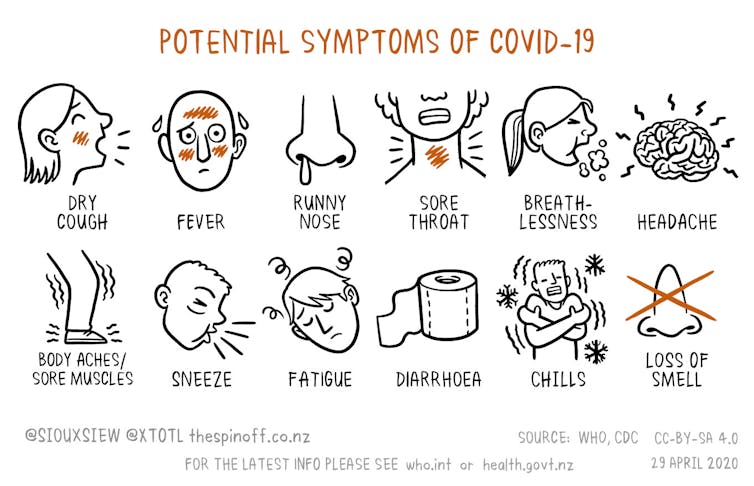
Potential symptoms of COVID-19. Siouxsie Wiles, Toby Morris, The Spinoff. CC-BY-SA 4.0.Siouxsie Wiles, Toby Morris, The Spinoff
Be aware of different symptoms
The most important thing now is for everyone to follow the rules in their part of the country, and for anyone with symptoms to stay at home and arrange a test.
As Director-General of Health Ashley Bloomfield has pointed out, B.1.1.7 symptoms can be different and include muscle aches and fatigue as well as respiratory symptoms like a cough or sore throat.
Moving Auckland to alert level 3 and the rest of the country to alert level 2 puts us in the best position to get on top of this outbreak as quickly as possible. As frustrating as it is, it is the right move to keep Auckland and New Zealand safe.
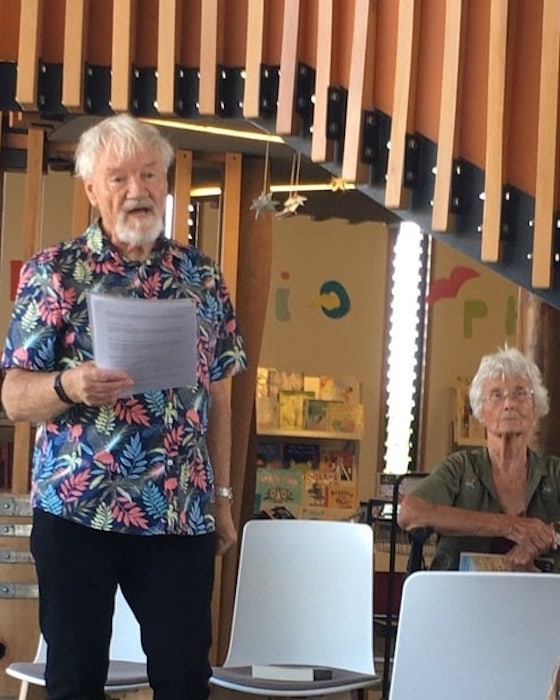
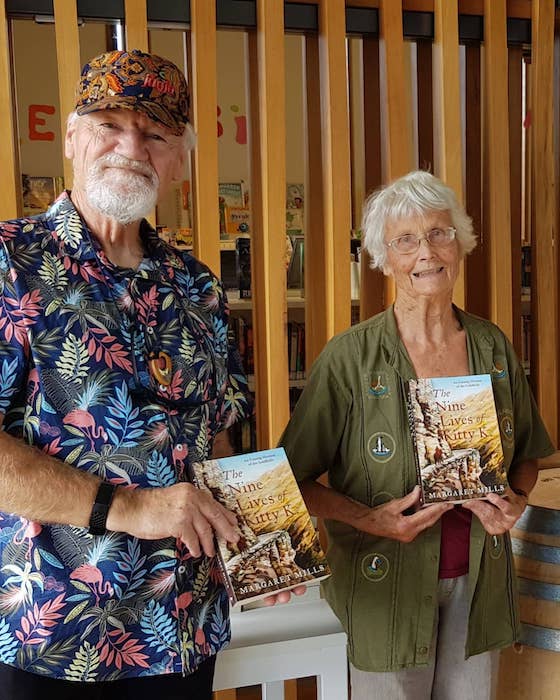
Author Margaret Mills speaking at the launch of The Nine Lives of Kitty K
at Waiheke Library today. IMAGE: David Robie
Introduction for the book launch of The Nine Lives of Kitty K by Margaret Mills
Waiheke Library, Waiheke, 27 February 2021
AUTHOR Margaret Mills and I go back a long way. All the way back to 10 July 1985 (and a bit before) when a certain environmental ship sank in Auckland Harbour in outrageous circumstances that sent shocked headlines around the world.
The fateful bombing of the Rainbow Warrior by French secret agents has etched its memories deeply into our lives – and the lives of many activists on Waiheke Island. This is how I first came to get to know Margaret as a journalist on board the Greenpeace flagship when researching one of my own books, Eyes of Fire: The Last Voyage of the Rainbow Warrior.
As it turned out, while it might have been the last voyage of the original Warrior, two more campaigning ships of the same name came in its wake.
As we all know, You can’t sink a Rainbow!
Recalling that moment in Eyes of Fire, I wrote that Margaret Mills woke with a jolt. She thought there had been two explosions. Immediately before the engineroom blast, somebody had dropped the gangway on deck. She could hear water gushing into the ship. It sounded like somebody had left the firehose cock running. In spite of no lightbulb in the cabin, Margaret managed to pull on her tracksuit and sneakers. But she couldn’t find her glasses. She couldn’t find her way around without them.
Andy Biedermann, the ship’s doctor , appeared in the cabin doorway and grabbed her.
Like the nine lives of the heroine of Margaret’s debut book, Kitty Kirk, Margaret was safe.
But photographer Fernando Pereira wasn’t safe; he perished tragically that night. And Margaret penned a beautiful poem, dedicated to Fernando’s life.
One of the many positive things that Margaret says about her Rainbow Warrior experience was gaining a whole lot of new friends – 20 years or so younger than her, like me. Many of them living on Waiheke.
Margaret, it is truly a privilege to be standing here today alongside you, to have the honour of introducing you and launching your book … and even humbly sharing your limelight.
At 91, you have lived an extraordinary life and are an inspiration to us youngsters.
Just like your heroine Kitty K, who discovered at the age of 12 she was a horse whisperer.
This 378-page book spans generations across a century in the tough Otago pioneering days and the tail end of the gold rush … and Margaret is already 900 words into her next book.
The genesis of The Nine Lives of Kitty K is truly remarkable. Margaret Mills is a consummate environmentalist, community activist and story teller. And her rich recreation of the life of Kitty Kirk in the 19th century echoes in some respects Margaret’s own life, in the sense of battling the odds, her tenacity to triumph in spite of the obstacles, and to do so with honesty, gutsiness and warm humanity.
This book has been mulling around in Margaret’s mind for almost four decades, longer than I have known her. Ever since she promised her main informant Winnie Mulholland back in Queenstown in the mid-1970s that she would “get the story out”.
However, earlier on Margaret was far too busy with her own life and her own nature reserve block at the top of Trig Hill Road to be able to sit down at a typewriter – as in the early days – or a computer to write this epic period saga.
In fact, I didn’t know it then but when Margaret was on board the Rainbow Warrior as relief cook (in the place of Natalie Mestre) back in July 1985 she had been writing the narration for a play script based on the Kitty K story. Two acts had already been drafted thanks to the encouragement of a director.
And then she had completed a third act and was ready to send it off. But it sank with the Rainbow Warrior and that was the end of that.
After countless afternoons as a postie listening to Winnie Mulholland relate the tales of Kitty’s life over cups of tea over a six-month spell, her original draft was a 12-page overview that found its way into the Lake County Museum.
Ironically, a heart attack suffered by her partner Trevor Darvill in 2016 gave an opening for her to begin writing this book as she was spending more time at home supporting Trevor. And now here it is – the published success 27 drafts later.
Margaret said to me that she was worried about whether the prose lived up to the striking cover by Greg Hepworth. It certainly does. It’s such an extraordinary saga and tragedy. Like her, I was worried about whether my introduction today would live up to her achievement.
Kitty K, who was born in 1855 and died in 1930, had a reputation for incredible bravery with hair-raising horse rides on the cliffside tracks in Skippers that continued long after her death.
In fact, it is Margaret who brought the memories alive through her painstaking research and storytelling skills.
Margaret was partially inspired to write this book by a poster of the Battle of Omdurman – and her knowledge of this obscure 1898 British army triumph – which gained the confidence of Winnie Mulholland.
I have to confess, Margaret, that I knew nothing about this battle either until you mentioned it to me and I had to Google it.
It was during the British army’s invasion of Sudan when General Kitchener defeated the Mahdi’s forces, naturally claimed to be twice the size of the imperial brigade. Today Omdurman is a suburb of the capital of Khartoum.
At the end of the book, Winnie Mulholland is quoted by Margaret as saying Kitty Kirk was an “unsung heroine of Wakatipu history”. Well, for me, Margaret Mills is the “unsung heroine of Waiheke”. This book is a superb achievement, Margaret.
Like Kitty K, you’re a legend. In your case, a living legend.
Kia kaha manawanui, Margaret – congratulations on the launching of The Nine Lives of Kitty K.
At the very well-publicised “birthday party” held in the home of a diehard Catholic supporter, Gusmao embraced and hand-fed Daschbach birthday cake, and tipped champagne into his mouth.
The visit has been interpreted as a heavy-handed attempt to whitewash Daschbach’s ruined reputation just before the court case commenced, and intimidate the prosecution, and the young witnesses who are in hiding due to just this sort of pressure.
In blatantly favouring the reputation of an ex-priest over the safety and wellbeing of his alleged victims, these male elites demonstrate a fundamental element of patriarchy defined as: “… a set of social relations between men, which have a material base, and which, through hierarchy, establish or create interdependence and solidarity among men that enable them to dominate women”. (Hartmann, 1979, p11).
Why would Gusmao bother? It can be explained by long-term patriarchal relationships between particular conservative priests and resistance leaders such as Gusmao, and the almighty political, social and spiritual power of the Catholic Church in Timor-Leste to co-opt political leaders.
Gusmao’s visit is said to have been to honour the ex-priest’s role in the struggle for independence. Yet it also has to do with the low status and lack of power of poor young females, orphans with no one to protect them, and the phenomenal combined power of the clergy and the heroes of the resistance – when these patriarchal forces come together in Timor, very few can contest their will.
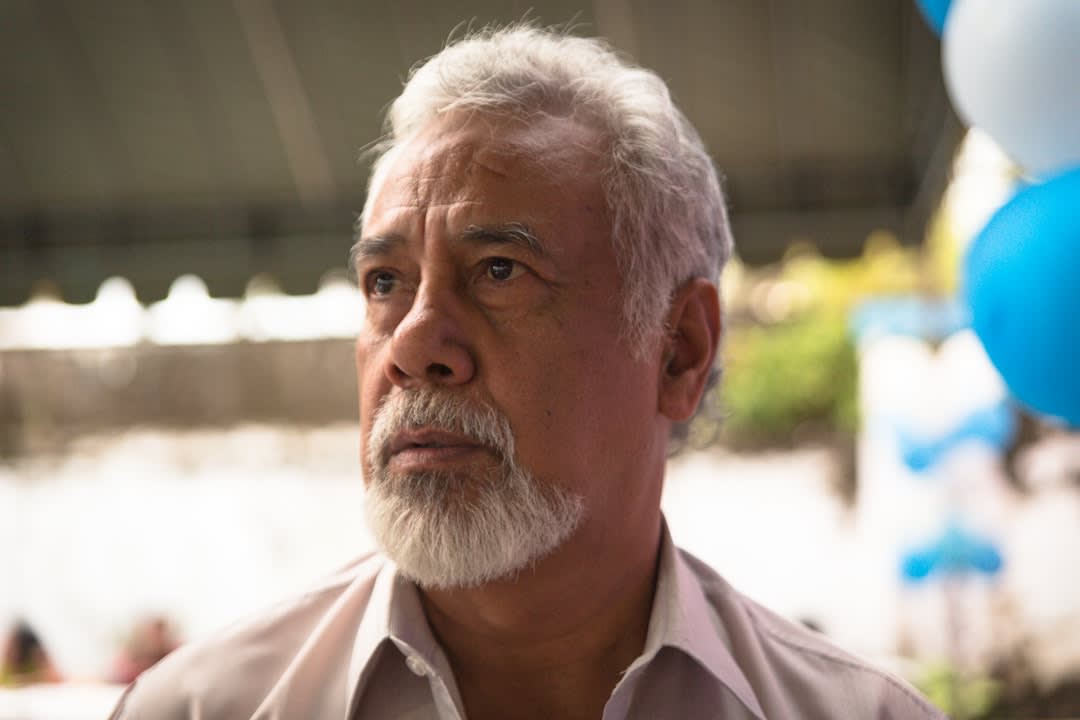
Xanana Gusmao has come under fire for visiting self-confessed paedophile priest Richard Daschbach. Image: Lens.Monash.edu
Yet some are speaking – and have spoken out – including Gusmao’s Australian sons; more progressive clergy; journalists and their professional association; lawyers representing the victims and others from the legal community; the women’s organisations protecting the alleged victims; and ordinary citizens expressing horror on social media, where the topic has been discussed.
This list will continue to grow. These are the new progressive forces in Timor-Leste contesting the power of the old patriarchal forces.
Daschbach has openly confessed more than once to the crimes, and was expelled from the priesthood and Catholic Church after an investigation in 2018. Since then, the justice system in Timor has struggled with prosecuting the case due to the interference of local religious supporters of the ex-priest, and a lack of appetite for arresting and imprisoning a priest.
While the problem is a global one and not well dealt with anywhere, to understand why this has happened in Timor, some appreciation for the particularities of the Catholic Church there is required.
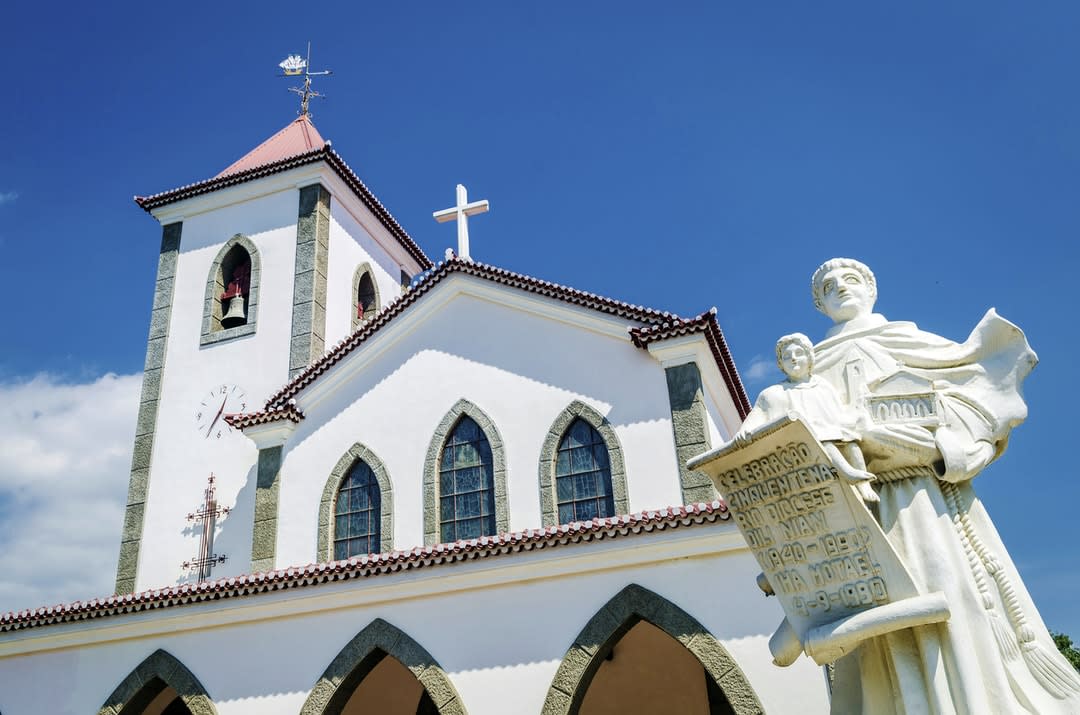
As a Catholic country, with more than 90 percent adherence, the church wields enormous social, political and spiritual power in Timor-Leste. Image: Lens.Monash.edu
People still bow down or kneel and kiss the ring of priests to greet them. Others are simply too afraid to speak out for fear of excommunication, and the social, political and spiritual implications of this for themselves and their families.
The deeply conservative church provides the moral and spiritual underpinning of an unequal gender regime. This leads to the significant conservative impact of religious discourses on gender roles and relationships, sex, reproduction, and homosexuality.
The church’s religious doctrines heavily influence government policy, leading to a lack of sex education in schools and reproductive healthcare, including the use of condoms as a protective measure to avoid pregnancy and disease, resulting in many avoidable deaths.
The inner circle: The Catholic Justice and Peace Commission While the Bishop of Dili has urged all Catholics to respect the Vatican’s decision to expel Daschbach, there’s a hardcore group within the church, led by lawyers from the Catholic Justice and Peace Commission, who have led his campaign of support.
Commission members even visited the orphanage where the abuse is alleged to have occurred, and spoke to potential victims and witnesses, as well as parents, police, and lawyers.
In a report, they accuse the Timorese judicial and police authorities and organisations that have supported victims of being a “justice-mafia” and, perversely, of “collective sexual abuse” (for conducting medical examinations), “exploitation of underage girls”, and “human trafficking” (for moving them to a safe house).
By disclosing the names of alleged victims, witnesses, and the suspect himself, one local lawyer says they have broken the law. The Archbishop swiftly sacked the president of the commission.
The gender challenge Gender relations apparent in contemporary Timorese society are the result of complex political and historical circumstances.
The dominance of men in Timorese history and politics, and the legacy of militarisation and conflict with neighbouring Indonesia during the national struggle for independence (1974-1999) are significant issues in contemporary Timorese society that pose enormous challenges for the nation.
As in most post-conflict societies, the effects of militarisation on society have not been adequately dealt with. I have argued that it was this that led to internal violence among the male political leadership resulting in a national crisis in 2006, and shattering of national reconstruction and development.
A tough and brutalised masculinity has significant damaging effects for the young men who try to live up to it, but also others such as the LGBTI community who face persecution and discrimination.
The negative influence of the Catholic Church on attitudes to homosexuality highlights the crucial work needed to combat the solid wall of intolerance built by conservative forces.
A recent secret research report found that young women have a lack of knowledge, choice, and agency in first sexual experiences leading to sexual abuse. Young women were often unaware that their consent was even required for sex.
In another study, between 20 to 30 percent of men admitted to rape, and in another acceptance of public sexual harassment and forced sex was clear. This may be linked to even higher levels of sexual abuse experienced by men. A shocking 42 percent of the men surveyed in 2016 reported being sexually abused before the age 18.
More powerful men While research data does not yet exist on perpetrators of male victims, it seems likely that more powerful boys or men from within their own families, communities, clubs, schools and churches were the perpetrators.
The patriarchal hierarchies of power within institutional settings must be challenged if vulnerable people, including women and children, are to be protected – and not just in Timorese society.
There is no disputing that Gusmao completed a Herculean task in leading the East Timorese people to independence, and his resolute leadership and bravery will never – nor should ever – be forgotten.
Yet his reputation is being tarnished by such allegiances to the old authoritarian patriarchal order that he once fought against as a young man. Culture is dynamic, and both internal and external progressive forces signal change in Timor-Leste.
Newer progressive forces in Timor contesting older hierarchies of power are in need of support and international solidarity, and supporters of Timor-Leste, and Gusmao in particular, in Australia and other places need to take note.
There are Timorese men working and advocating for an end to violence against women, alongside Timor’s tenacious women’s movement that has worked so hard in this space, but more political leadership on gendered violence is required by the state.
Timor Leste’s extremely youthful population represents a great opportunity for positive change and renewal.
Dr Sara Niner is a lecturer in anthropology, School of Social Sciences, Monash University. This article is republished from Lens Monash under a Creative Commons licence. Read the original article.
Sir Michael was a man of many titles. He was father, grandfather and chief.
As a tribal leader, he was Sana, the peacemaker. His influence and his reputation extended beyond Papua New Guinea’s border to the Pacific and other parts of the region.
Sir Michael Somare has left an incredible legacy: 49 years in politics, a total of 17 years as prime minister spread out over three terms.
The state of Papua New Guinea bestowed upon him the title of grand chief in later years. Ordinary Papua New Guineans called him Chief, Father of the Nation, Papa, Tumbuna.
From the early years of his leadership, his family had to share their father with the rest of Papua New Guinea. Just after midnight, the eldest of the Somare clan, Bertha sent out a statement announced their father’s passing.
“Sir Michael was a loyal husband to our mother and great father first to her children, then grandchildren and great granddaughter. But we are endeared that many Papua New Guineans equally embraced Sir Michael as father and grandfather.”
The Grand Chief was diagnosed with late stage pancreatic cancer and was admitted to hospital on the February 19.
Father among first policemen Michael Somare was born in Rabaul, East New Britain on 9 April 1936. His father, Ludwig, was one of the first policemen in the colonial territory.
He attended high school in Dregahafen in Morobe Province and later went on to work as a teacher and radio broadcaster.
During the 1960s, the young Michael Somare, became increasingly dissatisfied with Australian colonial rule and the racial discrimination. He, and other like-minded people began pushing for independence.
He attributed his entry into politics to the former Maprik MP, firebrand politician, Sir Peter Lus.
In 1972, and during an era that saw a strong push for decolonisation worldwide, Michael Somare, was elected Chief Minister. Three years later, in 1975, he led the country to independence when he became Papua New Guinea’s first Prime Minister.
Sir Michael was a pivotal, uniting force in a very fragmented country. He brought together the four culturally district regions and people who spoke close to a thousand different languages.
A master tactician “A multitude of tribes – some of whom were forced to transition, rapidly, from the stone age into the age of artificial intelligence in less than half a century.
In politics, Sir Michael was a master tactician. Highly skilled in managing volatile political landscapes on multiple fronts. He survived multiple instances of political turmoil and retired in 2017.
As a regional leader, Sir Michael was the longest serving. In many instances, seeing the sons of those he served with take on leadership reins.
While Papua New Guineans have accepted that this day would come, many are still coming to terms with the news.
There is still a lot more to tell about Sir Michael.
Asia Pacific Report republishes articles from Lae-based Papua New Guinean television journalist Scott Waide’s blog, My Land, My Country, with permission.
The Governor General was handed the report of the aged care royal commission on Friday. It will be made public in the coming week.
Overlaying its considerations has been Australia’s 909 deaths from COVID-19, more than two-thirds of them (685) people in aged care facilities.
It has to be recognised that COVID accounts for an extremely small share of deaths in Australia, and even deaths of senior citizens. 127,082 Australians aged 70 and over died in 2019. To date 851 in that age group have died of COVID.
Some good might come from these sad deaths if they prompted us to think about where we are likely to die.
Around half of all deaths of Australians aged 70 and over occur in nursing homes, but this neither means that nursing homes are particularly dangerous places nor that a large proportion of Australians aged over 70 are in them at any one time.
At any one time only about 9% of Australians in their seventies and beyond are in nursing homes, and those days are their final ones.
Some will not stay for long – one in five admitted to permanent care will stay less than 6 months, and half for around 18 months – but others will stay for three years or more.
The unpredictability of the length of stay makes it hard for us to be sure we can fund it ourselves.
Many would prefer to die somewhere else; at home, perhaps in our sleep, but few will have such luck. Even fewer will die in an accident, either on the roads or somewhere else. Quite a few will die in an acute care hospital after a serious illness.
Although we generally want to be cared for in our home for as long as possible, there are limits to what is possible, and acceptable. Not all of us have our own home, or one that is suitable for care. Large numbers of us have no living family members, or no family members able to provide the needed care.
Adult children of those in their late 80s or 90s are often in their 60s and have their own problems with health and disability. Some live far away, and others are estranged.
Even high levels of in-home community care can leave very frail individuals lonely and fearful, and family and other carers exhausted. So admission to a nursing home becomes inevitable.
Death and taxes
Death and taxes were once the only certainties, but paying tax is far less certain these days, especially among retirees after the 2006-07 Howard-Costello budget abolished the tax on most super fund earnings and payouts in retirement.
The Grattan Institute has demonstrated that many young workers are paying more tax than retirees on much higher (tax-free) incomes. These well-off retirees are as much “taxpayer subsidised” as “self funded”.
The Royal Commission has already flagged the need for large increases in aged care funding.
About 80% of the operating cost of residential aged care is funded directly by the Commonwealth. The remaining 20% comes from “user contributions”, much of which comes from Commonwealth age pension payments.
Means-tested fees not funded by the pension account for less than 5% of costs.
Which raises the question of where the increased funding would come from.
History suggests that private insurance is not a viable option: the private health insurance coverage of nursing home benefits that was in place from 1977 to 1981 ended with government bailouts at an eventual cost to the Commonwealth budget.
Internationally, the take-up of private long-term care insurance is low and unstable, even in the United States.
Social insurance has better prospects, and a Medicare-type levy offers a tempting solution. But in the current climate with wage growth down to record lows, even a 1% levy might struggle to gain acceptance.
Research conducted for the Commission about public views on aged care funding found that close to 90% thought “the government should provide higher funding”.
But many of those surveyed did not seem to connect “the government” with taxes.
Almost 40% of those who currently pay income tax said they would not be willing to pay any more tax to provide for aged care, with the rest divided evenly between those willing to pay 0.5% more tax, 1% more tax, or even more.
So where to get the funds
The Association of Superannuation Funds reports that 25% of women and 13% of men reach retirement with no super.
In contrast, it finds the 10% able to make large extra contributions (most of them men and nearly all of them high earners) have average balances of $500,000 and in many cases balances of well over $1 million).
They are the ones who get the bulk of the concessions on super fund earnings
Clawing back $5 billion per year from those concessions would cover about a quarter of the Commonwealth’s residential aged care bill of around $20 billion.
It could be done by applying a 5% “aged care levy” to the earnings of the top quarter of super fund balances held by those aged 50 to 70.
High-end super could help
As well as redressing some of the inequities in the super, an aged care levy would link super to the risk of needing aged care, a more common risk than many appreciate.
Applying the levy only to people near to or early post retirement would be fairer than applying it to all age groups – all of whose taxes go towards funding the super concessions.
Despite the hopes of some who are trying to come up with ways of funding better aged care, very few of the very old who are admitted to residential care have the capacity to pay more towards its cost, either now or in the foreseeable future.
High-end housing much less so
Even among those who have lots of super, few will have enough to last to the time they are admitted to residential care in their late 80s or 90s.
And wealth stored in the form of housing faces the same problem.
Like wealth stored as super, it is unevenly distributed. One in four Australians aged 65 and over are renters, and have few if any assets to draw on.
Among homeowners, the value of wealth stored in housing varies widely and can be eroded with advancing age.
Most of those entering aged care are very old women. It will be a great day when they have high incomes and are able to pay their way, but it is a long way off.
Denial can only last so long
Meantime, will knowing that we have a one in two chance of ending our lives in an aged care home make us more committed to improving the system after COVID-19 and the Royal Commission?
Probably not. For many of us the day of reckoning is far away, we have other things to think about, we think things will change, and we hope we will be in the other half of the population who die elsewhere.
The largest and most destructive earthquakes on the planet happen in places where two tectonic plates collide. In our new research, published today in Nature Communications, we have produced new models of where and how rocks melt in these collision zones in the deep Earth.
This improved knowledge about the distribution of melted rock will help us to understand where to expect destructive earthquakes to occur.
What causes earthquakes?
Giant earthquakes, such as the magnitude-9.0 quake in 2011 that caused the Fukushima nuclear disaster, or the magnitude-9.1 event in 2004 that caused the Boxing Day tsunami, occur at the collision zones between two tectonic plates. In these so-called subduction zones, one plate slides beneath the other.
The sinking plate acts as an enormous conveyor belt, carrying material from the surface down into the deep Earth. Earthquakes occur where the sinking plate gets stuck; strain builds up until it eventually quickly releases. Fluids and molten rocks in the system lubricate the plates, helping them slide past each other and stopping big earthquakes from happening.
When happens when ocean mud ends up inside Earth?
My colleague Michael Förster and I were interested in what happens to sediments when they are carried down into the deep Earth at a subduction zone. These sediments start out as thick layers of mud on the ocean floor but get carried down into the deep Earth as part of the sinking plate.
Michael took a sample of mud collected from the ocean floor and heated it up to the high temperatures and pressures it would experience in a subduction zone. He found the sediments melt and then react with the surrounding rocks, forming the mineral phlogopite and also saline fluids.
A puzzle solved
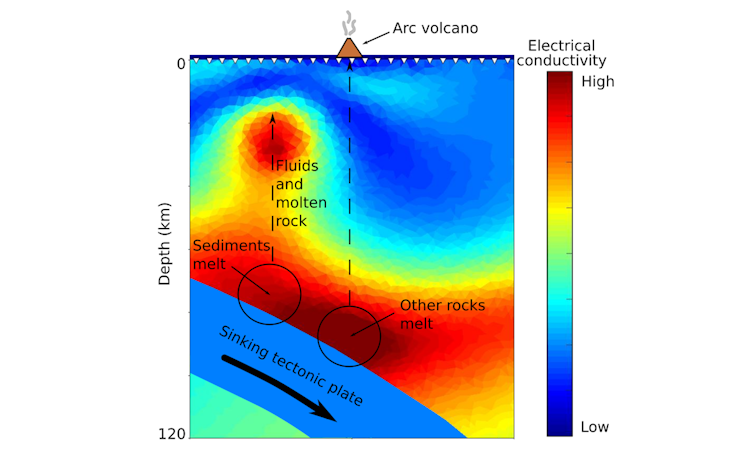
Geophysical models of subduction zones allow us to map out exactly where the molten rocks and fluids are. These measurements are like x-rays of Earth’s interior, helping us peer into places we cannot otherwise see.
We were particularly interested in models of the electrical conductivity of subduction zones. This is because the fluids and molten rock we were looking at are more electrically conductive than the surrounding rock. Models of subduction zones have long been enigmatic, because they show Earth is very conductive in regions where people did not expect to see a lot of fluids and molten rock.
Melting sediment from the seafloor helps tectonic plates slide over one another without creating major earthquakes.Selway & Forster, Author provided
I calculated the electrical conductivity of the phlogopite, molten sediments and fluids that were produced in the experiments and found they matched extremely well with the geophysical models. This provides good evidence that what we see in the experiments is happening in the real Earth, and allows us to calculate where the molten rock and fluids are in subduction zones around the world.
Understanding where big earthquakes are likely to occur
Giant earthquakes are not likely to occur in the parts of the subduction zone where the sediments melt. All of the products of the melting — the molten rock itself, the saline fluids, and even the mineral phlogopite — help the two plates slide past each other easily without causing large earthquakes.
We compared our models with locations of earthquakes in subduction zones along the west coast of the United States. We found there were no large earthquakes where sediments were melting, but the movement of fluids from the melted sediments could explain some small, non-destructive earthquakes and very faint signals of tremor where the two plates easily slide past each other.
Earthquakes are a tangible reminder that we live on an active planet and that, deep beneath our feet, huge forces are making rocks flow and melt and collide. Accurately predicting earthquakes will be an ongoing goal of geoscientists for decades to come.
It requires intricate detective work to weave together all the tiny threads of information we have about processes that occur so deep in the Earth that we will never be able to see or sample them. Our results are one new thread in this puzzle. We hope it will contribute to one day being able to keep people safe from the risk of earthquakes.
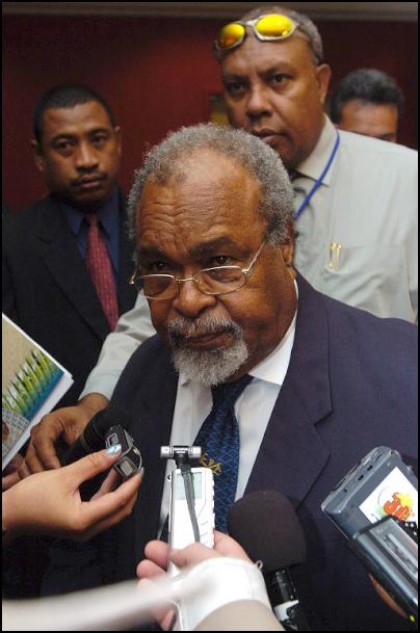
Former Melanesian Spearhead Group (MSG) statesman, and the first Prime Minister of an independent Papua New Guinea, Sir Michael Somare. (Photo courtesy of Scoop.co.nz and by Jason Dorday.)
Grand Chief Sir Michael Somare, former prime minister of Papua New Guinea and a giant of Pacific politics, has died from pancreatic cancer. He was 84.
Known as “Mike” to some and “the chief” to others, Somare in more recent years became widely referred to as “the grand chief” – the highest position in his nation’s honours system.
In his long career, Somare dominated PNG and Pacific politics.
He was regarded as the “father of the nation” for his role in moving PNG from colonial dependency of Australia to a fully fledged independent state. He helped build a nation that sits at the meeting point between the Pacific and dynamic East Asia with all the strategic, economic and cultural issues that brings.
Somare was the colossus of PNG’s political landscape: chief minister from 1972 to 1975 while the country was still an Australian-administered territory, its first prime minister (1975-1980), as well as its third (1982-85) and 12th (2002-2011, although some consider that his term concluded in 2012).
In fact, for 17 of PNG’s 45 years since gaining independence – more than a third of the period – Somare was its leader. When not in this role, he was very much the power behind the scenes, kingmaker, sometimes troublemaker and – often – peacemaker.
In 1967, Somare joined with other young nationalists, discontented and angered by the slow progress towards independence from Australia, to form one of PNG’s first political parties, the PANGU Pati (Papua and New Guinea United Party). Their criticism of the worst kind of Australian paternalism brought them attention from the colonial authorities, which Somare wrote about using a pseudonym.
PANGU’s mild politics
In truth, PANGU’s politics were of the mildest variety. When anti-colonial movements in other places were pursuing armed revolution, Somare and his fellows – always a small group of educated (and thus, elite) Papua New Guineans – forecast merely:
[…] if the present system of colonial or territory government continues, with all its inevitable master-servant overtones, serious tensions will develop.
They then made modest calls for self-government by 1968.
When Somare and other PANGU members were elected to PNG’s territorial House of Assembly in 1968, they formed an unofficial opposition to the administration. In April 1972 – before the election of the Whitlam Labor government in Australia – PANGU, with Somare as leader, was able to form a coalition that took the territory to independence in 1975.
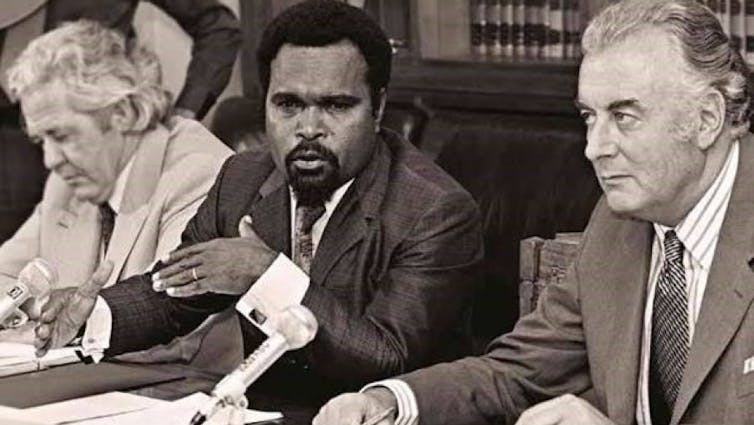
Sir Michael Somare meets with Australian Prime Minister Gough Whitlam (right). Image: ANU/The Conversation
In that year, Somare – amazingly – found the time to write his autobiography, Sana, which records his journey from his village in the Murik Lakes area of the Sepik River to becoming the nation’s first prime minister on the eve of PNG’s independence. The book provides a first-hand account of PNG’s path to self-government and nationhood, importantly from the perspective of the colonised.
Always a strong communicator, Somare used the book to foster pride among Papua New Guineans in their own nation, which gained its independence in a way that was both constitutional and peaceful. As its first governor-general, Sir John Guise, famously pronounced on September 16 1975, PNG Independence Day:
[…] we are lowering the flag of our colonisers […] not tearing it down.
The way PNG gained its independence owes a great deal to Somare’s careful devotion to the spirit of sana: a word from his people’s language that denotes taking a peaceful, consensual approach to resolving disputes.
In the face of a colonial system that was often stubborn and narrow-minded, and amid an expatriate population – overwhelmingly Australian – who were too often discriminatory and racist, he could have chosen a path of violent resistance. Instead, he chose the way of peace, of toktok (Tok Pisin for discussion) and of consensus.
‘Radical, red-ragger’
Even as a young leader, described in British government confidential notes as “a radical and red-ragger”, he believed in words over guns. It was a quality that was demonstrated in his handling of the separatist movement in Bougainville, which threatened to divide PNG even before it gained independence.
As well as drawing on the principle of sana to keep the nascent state together and prevent secession, Somare’s greatest achievement was bringing a reluctant people to embrace the creation of their nation.
Aided by a body of capable and committed PNG leaders in the Constitutional Planning Committee (CPC) that he established soon after becoming chief minister in 1972, Somare set out on a mission to develop a constitution that was, in his words “home-grown”.
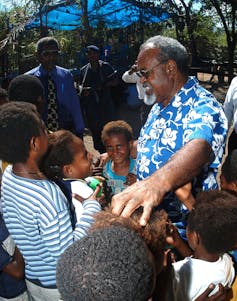
Somare is swamped by children in Port Moresby in 2003. Image: Jim Baynes/AAP/The Conversation
The CPC was given the task of consulting widely with Papua New Guineans in their highlands and islands, to ensure they felt their wishes and beliefs would be fully reflected in the new nation’s foundational document. By the time of independence in 1975, it is reasonable to say this goal had been achieved.
It is perhaps presumptuous for me to say that I was a constitution‐maker, but in some respects we all were. Anybody who went to a CPC meeting […] was a constitution-maker.
In following the principles of sana – consensus, discussion, inclusion and peaceful resolution of conflict – Somare was adhering to a way of dealing with others that is shared across the Pacific region. It is appropriate that Taylor, who learned about sana from working closely with Somare, should have held to these principles in her role as PIF secretary-general.
Shared identity across Pacific
With her retirement from this role, and even more so with the death of Somare, there is a pressing need for some sana to be deployed, to hold this important Pacific regional organisation together. Toktok, talanoa, or just conversation that recognises a shared identity across the Pacific from West Papua to Rapa Nui (Easter Island), is needed.
It is a tragedy that perhaps the greatest exponent of this – Michael Somare – has left us. His life spanned the modern history of PNG and now, more than 45 years after his nation gained independence, his influence remains profound.
He will be remembered as a quiet but persistent champion of his people. In a region that is dominated by superpower rivalry and challenged by climate change, perhaps we would all do well to learn from his example and practise more sana.
University of Canberra Professorial Fellow Michelle Grattan and University of Canberra Vice-Chancellor and President Professor Paddy Nixon discuss the week in politics.
This week Michelle and Paddy discuss the continued probe into the culture of the government and parliament house, Craig Kelly’s future following his departure from the LNP, Linda Reynold’s future in light of the Brittany Higgins alllegations and her hospital visit, as well as the beginning of the coronavirus vaccine rollout and the government’s new JobSeeker payment.
This is the second of two articles on the past and future of the university campus.
The “dreaming spires” of Oxford University that Matthew Arnold romanticised in 1865 still have a powerful grip on our image of the university. Nevertheless, the university town is part of the past. A key reason for this is the expense of developing facilities on a confined site, particularly in a heritage setting.
The new Beecroft physics building at Oxford is ten storeys high but five are below ground because of government-imposed height restrictions. Unfortunately, this configuration requires a large percentage of floor space to be devoted to stairs, lifts and ventilation ducts. Although the building costs about £5,500 (A$9,840) per square metre of gross floor area, the cost per usable square metre is an eye-watering £15,000. That’s about double the going rate for this type of building on a large-area campus.
The new Cavendish Laboratory at Cambridge will cost £300 million for similar reasons.
Expansive campuses dominate overseas
In the 1970s, the University of Heidelberg moved from its site in the town of Heidelberg to a new 112-hectare campus on the north bank of the Neckar River. This enabled the university to develop new space, particularly laboratory space, at economical cost. In the decade after 2007, Heidelberg rose from between 51st and 75th in Science on the Academic Ranking of World Universities (ARWU) to 39th. Oxford slipped from tenth to 13th and Cambridge from fourth to seventh.
Of the No. 1 universities in the 54 subjects tracked by the ARWU, including humanities subjects, 84% occupy large campuses of 50 hectares or more.
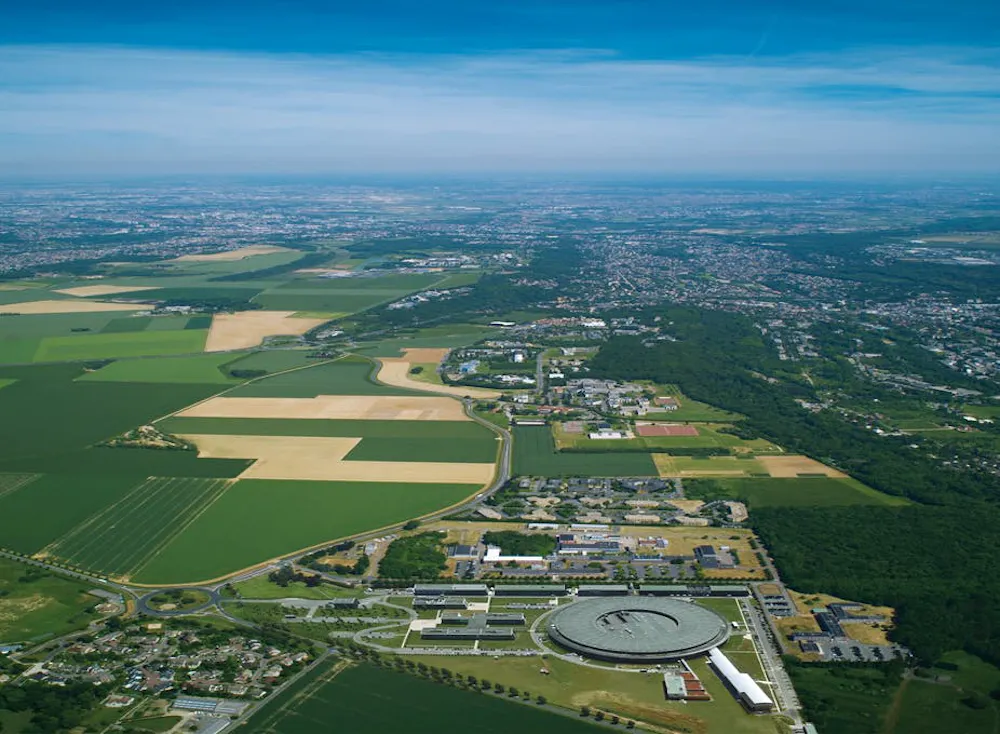
Aerial view of the University of Paris-Saclay campus under construction in 2015, when it began its first full academic year.Paris-Saclay
The most interesting campus development in the world at the moment is the University of Paris-Saclay. The French government is grabbing the best bits of the University of Paris and assembling them into a super research university. Intended to rank within the ARWU top ten, it is already first in mathematics and 14th overall.
Paris-Saclay is located on 189ha of farmland south of Paris, close to a railway station. It’s the classic large-area campus. Next to the campus lots of cheap land has been made available for startup companies that will be spun out of the university or existing companies that relocate to use its research or facilities.
ARINA, Author provided
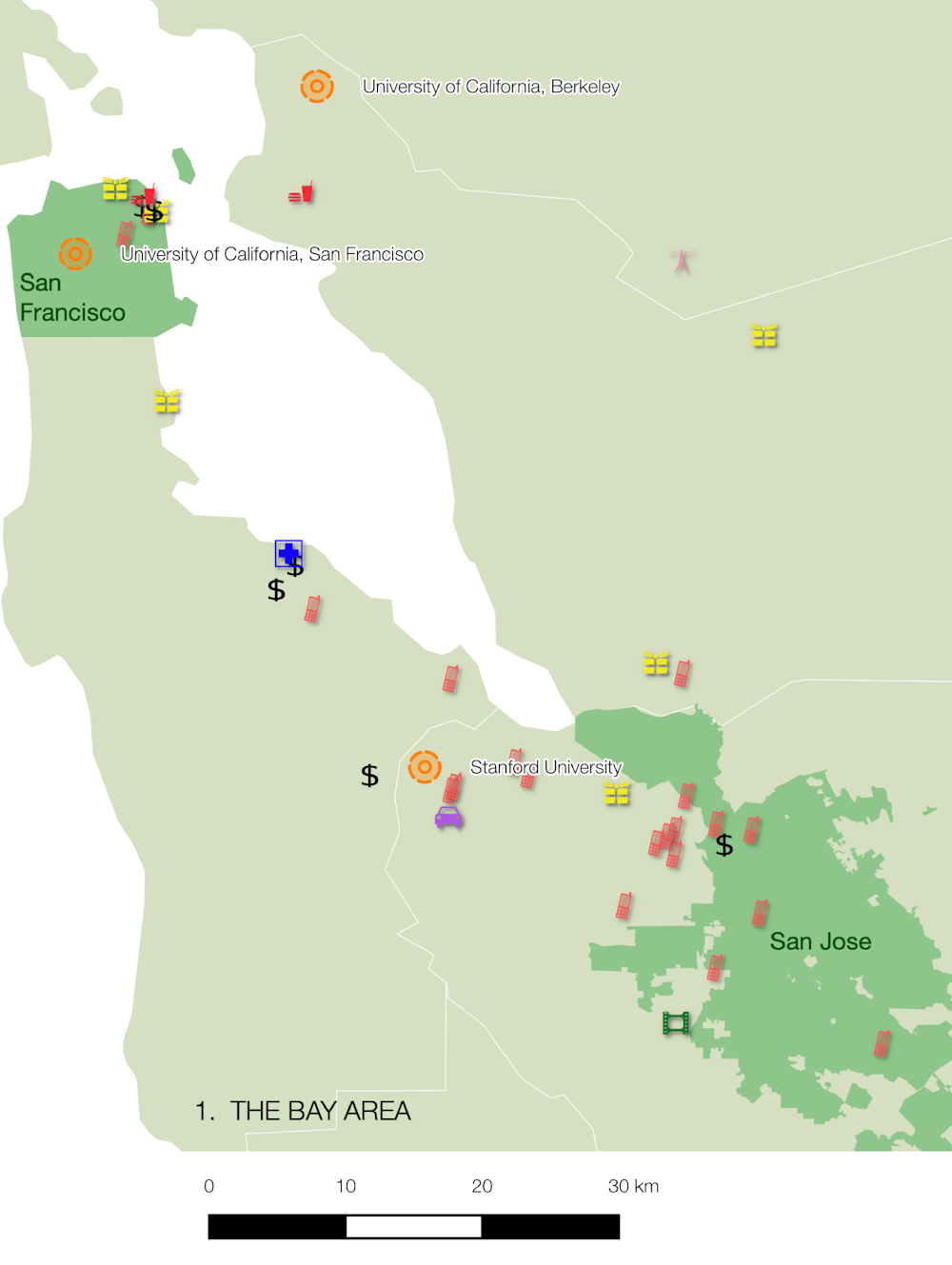
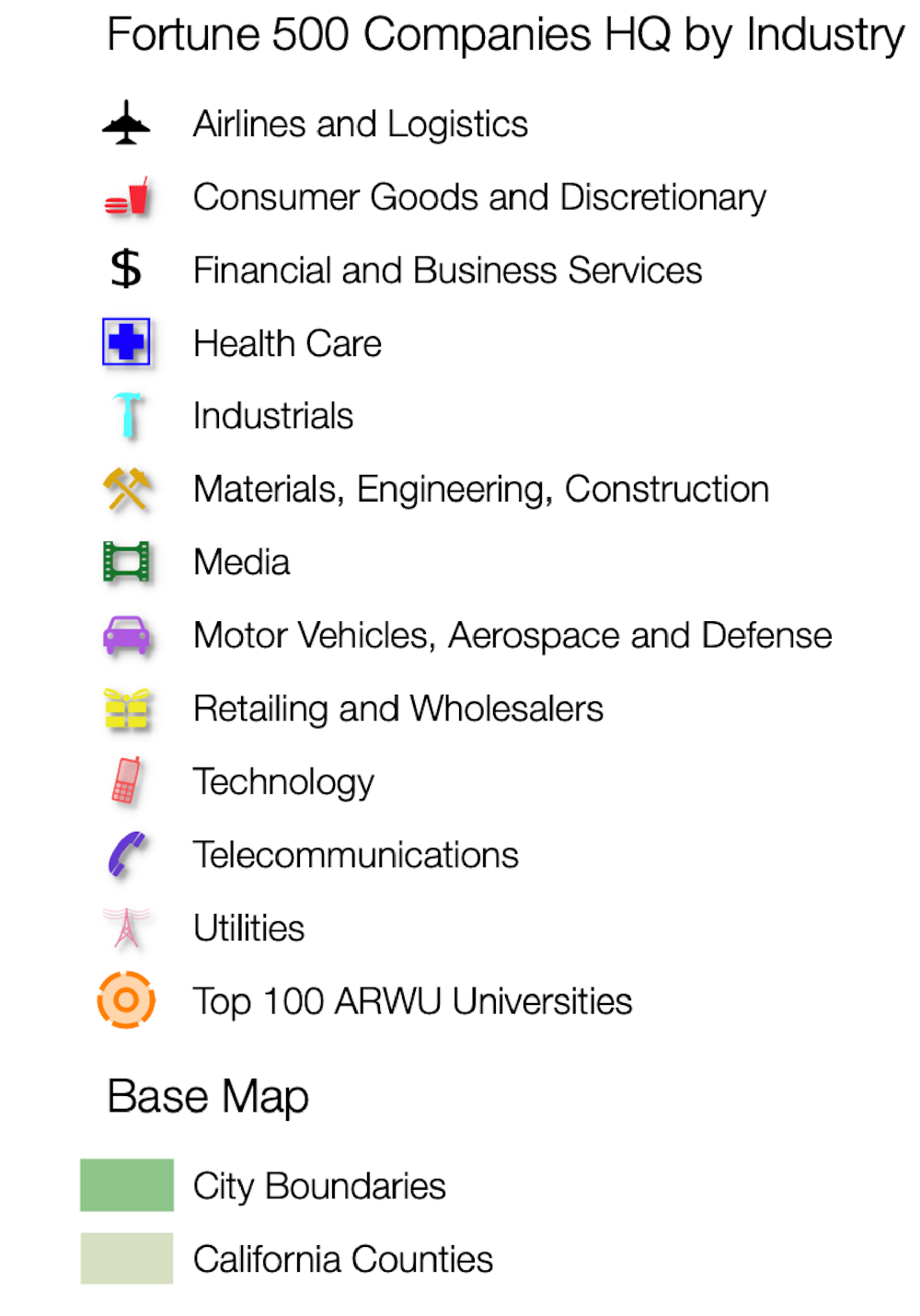
It is another attempt to recreate Silicon Valley, and there’s every reason to try. As part of research by ARINA, an architectural firm specialising in higher education, community and public design, a simple mapping project shows 67% of the market capitalisation of US Fortune 500 Tech companies is located in the triangle between San Francisco, Oakland and San Jose. Two top ten universities, Stanford and UC Berkeley, are also located there.
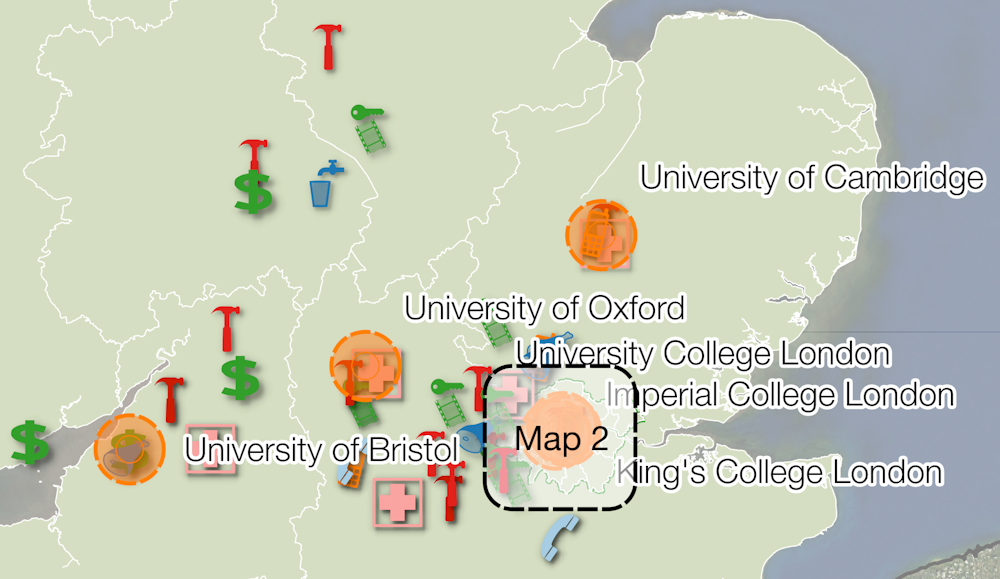
Similarly, in the UK, a belt of high-tech and new-economy industries stretches from Bristol through Oxford, Milton Keynes, Bedford and Cambridge. Also located here are the ARWU top 100 universities of Bristol, Oxford and Cambridge and the nearly-there Warwick.
ARINA, Author provided
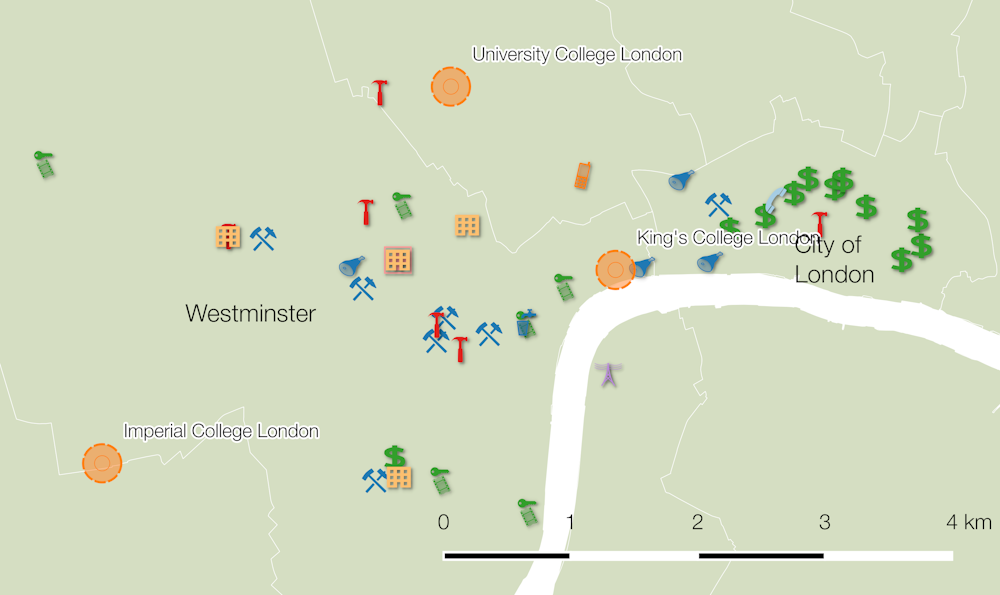
More than 50% of the market capitalisation of companies in the FTSE Tech 100 are also located in this area. Only 17% of companies in this index are located in Greater London, and none in central London.
UCL (formerly University College London) is building a new large-area campus at UCL East on the former London Olympics site in Hackney. Its aim is to ease pressure on the 9.7ha UCL campus in Bloomsbury and to provide opportunities for partners to be located close by.
ARINA, Author provided
What about Australian developments?
In Australia, our most recent efforts at building campuses are a mixed bunch.
The new Western Sydney “Aerotropolis” and the new University of Melbourne campus at Fishermans Bend in Melbourne are plausible because they are expansive campuses with land for partners to invest in nearby facilities. Delivering low and mid-rise buildings on less expensive land served by public transport seems like a good bet.
Macquarie University’s role in the Macquarie Park business and innovation district in Sydney and Deakin’s Waurn Ponds campus in Geelong have successfully attracted private investment and provide evidence that this concept can work.
Other universities have demonstrated how to mess this up. UNSW built a new building to accommodate a commercial partner in photovoltaics. Unfortunately the commercial partner then dropped out. The university was left with a large bill and an empty building.
The key lesson of this, and many other initiatives, is for the university (and government) to deliver attractive intellectual property but to avoid investing in building facilities that the private sector might occupy at some unspecified time in the future. In other words, don’t build and expect them to come.
ARINA research suggests the economy in CBDs is increasingly focused on banking, finance, insurance, property development, accounting and consulting – rentier industries built on income from property or securities that depend on government rather than research to prosper. These are not industries that need a helping hand to grow and they are not industries that initiate change. Putting university campuses physically next to them is pointless.
With its key product, the iPhone (launched in 2008), Apple has probably done more to change the world than any other corporation in recent times. It has done so from a campus in Cupertino, roughly midway between San Jose and Stanford University.
The research that has produced the Pfizer COVID-19 vaccine originated in Mainz, Germany, population 217,000. The research for the AstraZeneca vaccine was carried out in the outskirts of Oxford, UK. Moderna’s research facilities are in Cambridge, Massachusetts, near MIT.
Most of the things that have made a difference start in sheds (Boeing and Douglas aircraft companies) or garages (Apple, Google and Hewlett Packard), or cheap office space (Intel).
I start and finish these articles with the observation that it costs about half as much per delivered square metre to build on a large-area campus. Low to mid-rise buildings have more usable space per gross sq m, are more sustainable because they use less embodied energy and are inherently more adaptable.
A very large campus provides space to develop facilities that will be required as research evolves over time. The surrounding land is cheaper and therefore more attractive to the firms that might draw on university research. That’s the “secret” of both Silicon Valley and the UK high-tech belt. And it’s why the University of Paris-Saclay will work.
In Australia, we should contemplate why the Bay Area is so successful, learn from the example of the University of Paris-Saclay and rethink our obsession with CBD campuses.
Source: The Conversation (Au and NZ) – By Dominic O’Sullivan, Adjunct Professor, Faculty of Health and Environmental Sciences, Auckland University of Technology and Professor of Political Science, Charles Sturt University
The government earlier this year released a discussion paper exploring how an Indigenous Voice to government might work.
The Voice to government is not the same as the Voice to parliament that the Uluru Statement from the Heart proposed in 2017. This is because the government doesn’t support the Uluru idea of a distinctive Indigenous body enshrined in the constitution.
Instead, it prefers a body set up by an act of parliament. The government of the day could change its powers, or even abolish it, as it pleases. The powers could be expansive, but equally, they could be meaningless.
The government’s discussion paper is open for consultation. Indigenous people will form views on how it compares with the aspirations of the Uluru Statement.
But either way, constitutional recognition for Indigenous people is an important concept for every citizen. How and where political authority is exercised — and by whom — determines how fairly and effectively Australian democracy works.
A symbolic act that just acknowledges Indigenous prior occupancy without making any substantive changes to the constitution or opportunities for meaningful Indigenous political participation isn’t enough.
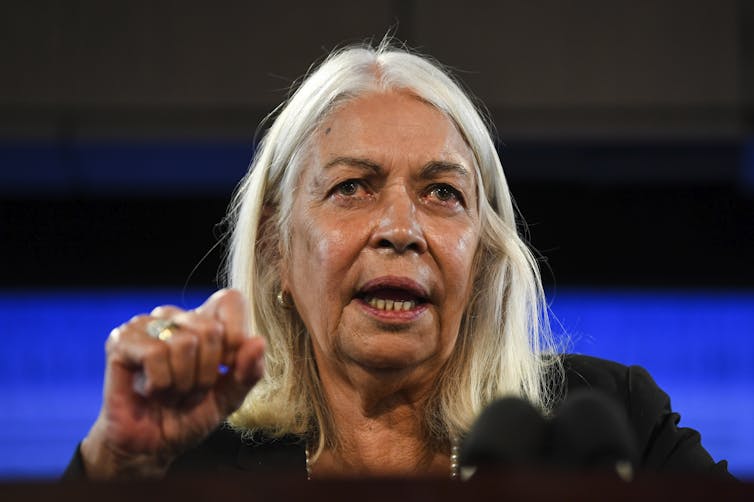
Professor Marcia Langton is designing the Voice proposal with Tom Calma.Lukas Coch/AAP
The Canadian First Nations’ writer, Glen Coulthard, argues strongly against recognition because he says symbolism makes the state feel like it’s being inclusive, but doesn’t actually mean that Indigenous people have real influence over policies that matter to them.
I argue that recognition is a theory of political freedom, which means that every person is equally entitled to help influence the society in which they live. And equally entitled to make decisions about how they will live.
A Voice to Parliament is an example of what these ideas could mean in practice.
Voice is more than a right to ‘input’
The government’s consultation paper says Indigenous people are entitled to “input” into these decisions.
Input, however, is a limited political authority. It makes recognition a small ambition, just as it was when the Howard government proposed that recognition could be satisfied by an amendment to the constitution
honouring Aborigines and Torres Strait Islanders, the nation’s first people, or their deep kinship with their lands and for the ancient and continuing cultures which enrich the life of our country.
Recognition, rather, is really about sovereignty, or how political authority is distributed. In Australia, sovereignty is often understood as an absolute political authority that the state exercises over and above the people. But in practice, sovereignty actually refers to the people’s authority to determine how and by whom they will be governed.
It is the authority to elect parliaments and to amend the constitution. The authority to share in public decision-making. This is much more than the right to have an “input”.
Sharing the sovereign means ensuring political structures give people meaningful opportunities to influence and make decisions. It isn’t just a matter of recognising Indigenous people were living here before the British settlers arrived.
Recognising everybody’s right to be equal participants in deciding how society works is a complex task, but it is not beyond a liberal democracy’s capacity to work out.
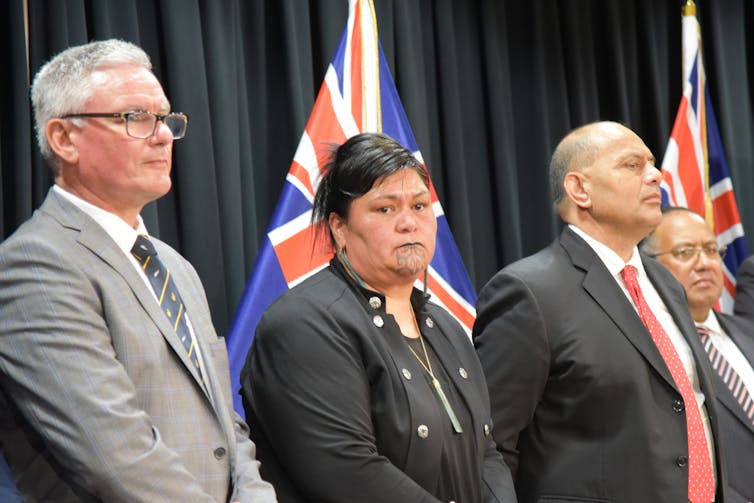
In New Zealand, Maori have had guaranteed representation in parliament since 1867, and five of the 20 ministers in Prime Minister Jacinda Ardern’s cabinet are Maori.
This week, parliament passed legislation to remove a discriminatory obstacle to Maori representation in local government.
Local government minister Nanaia Mahuta has been fighting to increase representation for Māori in local government in New Zealand.Ben McKay/AAP
In British Columbia, Canada, a law has been passed to implement the UN Declaration on the Rights of Indigenous Peoples, which is focused on ensuring Indigenous peoples enjoy the right to self-determination.
The purpose of a liberal democracy is to manage the differences in what people say they want politics to achieve — and differences in people’s understandings of what it means to be free and equal.
In this light, recognition can be transformative — not merely a symbolic step.
Ultimately, whether they are supported or not, the Commonwealth’s proposals for a Voice to government have provided us with a way of thinking about the meaning of political equality.
But the proposal to establish a representative body only by legislation is limited and limiting.
Recognition, on the hand, should be enduring and certain. Denying a referendum to give constitutional certainty to the Voice means the government is standing between Indigenous and non-Indigenous people on this question of political equality.
Business etiquette has one golden rule: treat others with respect and care. The same is true for encouraging cyber safety at work, on everything from password security to keeping valuable information like tax file numbers safe.
But how can you encourage cyber-safe behaviour at work without becoming the office grouch?
The trick, as it often is in life, is to encourage the right behaviours tactfully and by offering helpful solutions. Vilifying or mocking those who “do the wrong thing” is unlikely to help.
In short, offer alternatives and not reproach.
Hey, what’s your password?
Many organisations have policies to prevent password sharing (and most, by now, would hopefully actively discourage people from keeping passwords on a Post-it note stuck to a computer). However, asking others for a password is not yet necessarily considered taboo.
Perhaps your colleague wants to use your computer and asks for your login. Or they may need access to a shared repository such as Dropbox but have forgotten the password.
If you’re reluctant to share your personal password, your instincts are correct.Shutterstock
If you’re reluctant to share your personal password, or broadcast a team password in Slack or on a group chat, your instincts are correct. Passwords are deeply valuable pieces of information, and many catastrophic security breaches can be traced back to poor password management at work.
But if your colleague asks for a password, rather than responding with a short, sharp “no”, soften the blow by asking why they want it. If there is a legitimate reason, work with them to resolve the issue — without giving anything away.
For example, instead of posting a Dropbox password on Slack, can you direct them to your organisation’s password manager and help them learn how to retrieve passwords from it? If it’s access to a computer they need, can you help them restart a computer and log in as a guest instead of as you?
If systems are not in place at work to help people who need access to a shared password or a computer terminal, talk to your IT team about finding long-term solutions. That might include investing in a password manager such as 1Password, Dashlane or LastPass.
Files can be shared within teams through OneDrive, Dropbox or other organisational repository to reduce the need for a colleague to access your computer to “just get a file off it”.
‘Please fill in this confidential form and email it to me’
It’s not uncommon for IT, HR, finance or well-meaning admin support staff to ask you to fill in a form with sensitive information and just “email it back”.
Even doctors and lawyers have been known to mishandle documents with signatures, tax file numbers or other identifying information such as birthdays.
Don’t feel under pressure to do it. The fact is, such information is invaluable to hackers and identity thieves. Should your workplace email suffer a data breach, bad actors may be able to retrieve these scanned forms from inboxes they’ve invaded.
Most organisations have secure ways of transferring files, varying from a secure cloud storage solution to secure file sharing sites. Use them, and never your personal email or cloud solutions.
If your organisation doesn’t have a secure way to save the files you can use one and send your colleague the link in a work email.
Alternatively, you can send an encrypted PDF in an email, which means much tighter control of who can access the file.
Sometimes the safest solutions are the simplest. Go old-school: walk the documents over to the person instead of scanning and emailing them.
If you’re asked to send personal information in an insecure way, hide your Pikachu face. Instead, say: “We’re supposed to be transferring files this way. If you want, I can show you how for next time?”
Offering a solution, rather than shaming, is much more likely to lead to change.
Sometimes the safest solutions are the simplest; if you can, just walk the documents over to the person instead of scanning and emailing them.Shutterstock
Can you pass on my resume?
Job-hunters may try to get their foot in the door by leveraging a friend or ex-colleague. Many of us would be keen to help a friend by passing on their CV to the boss.
Unfortunately, malicious actors of all kinds also know this. As outlined in this article, fake CVs can be sent by email with a Microsoft Excel attachment. When opened, the attached file can launch malware that:
…then attempts to hijack private information, credentials from users of targeted financial institutions, and passwords and cookies stored in web browsers. Attackers can then exploit these acquisitions to make financial transactions.
Malware is not just embedded in links and attachments – even LinkedIn messages can contain malware. The consequences of opening such links or attachments can be extreme, and may even include ransomware (where hackers refuse access to files or online systems until the victim pays up).
Even LinkedIn messages can contain malware.Shutterstock
Don’t pass on CVs, especially if the person is a friend of a friend. Instead, pass on the person’s name to the boss, so she or he can look them up on LinkedIn. Don’t follow links sent to you, even by trusted contacts. Links can often be difficult to check without clicking on them and you may be redirected to a malicious site.
And if you are the jobseeker, demonstrate your own cyber-security awareness by not circulating CVs or other documents with personal information that may be valuable to identity thieves. No birthdays, addresses, just email, mobile number and LinkedIn.
The same rule applies to QR codes – don’t blindly open the webpage pointed to on a business card QR code. You may get more than you bargained for.
Resist the urge to do something unsafe when on deadline
Unfortunately, many workplaces still see cyber-unsafe behaviour as broadly acceptable and the pressure to do something unsafe, especially when on deadline, can be profound.
But by treading respectfully, and helpfully, you can improve your office reputation as a cybersafe staff member and help reduce the risk to your organisation.
Although Australia is now largely COVID-free, the repercussions of the pandemic are ongoing.
As the pandemic enters its second year, many people will be continuing to suffer with poor mental health, or facing new mental health challenges.
The effects of recurrent lockdowns, fears about the effectiveness of the vaccines, restricted movement within and beyond Australia, and the bleak economic outlook are taking their toll on psychological well-being.
Now is the time to think about sustainable, evidence-based mental health programs that will serve Australians as we confront the mental fallout of the pandemic in 2021 and beyond.
The evidence is in
We now have incontrovertible evidence mental health has deteriorated during the pandemic. Large studies that assessed people’s mental health before and during COVID-19 have reported marked increases in anxiety, depression and post-traumatic stress since the pandemic began.
Although many experts predicted people with pre-existing mental disorders would be most vulnerable, we’ve seen even greater increases in psychological distress among those without a history of mental illness.
Unemployment and financial stress have exacerbated psychological problems during the pandemic. The major concern is that the increase in mental health problems will persist for years because of the economic downturn facing most nations.
Research shows financial hardship is associated with poorer mental health.Dan Peled/AAP
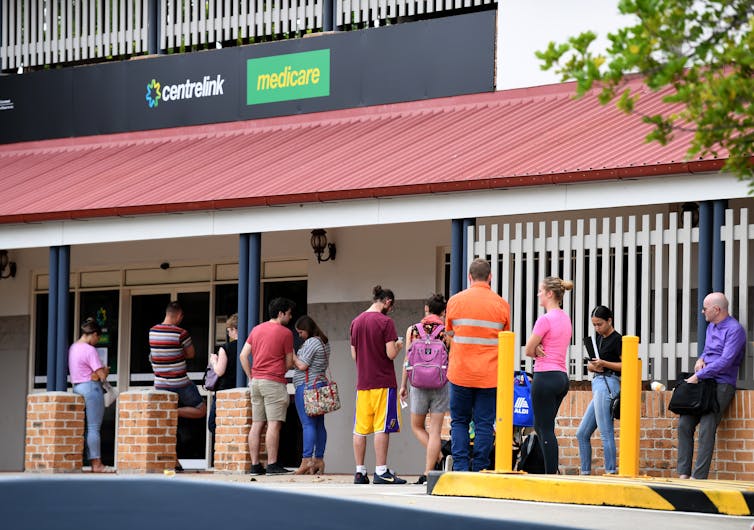
The impact of unemployment and financial hardship on mental health is relevant for many Australians, as fears of reduced support from the JobSeeker and JobKeeper schemes loom. Although the government this week announced the JobSeeker payment will go up, welfare groups have warned it’s still not enough.
The question now facing many nations is how to manage the unprecedented number of people who may need mental health assistance. There are several challenges.
First, lockdowns, social isolation, and fear of infection impede the traditional form of receiving mental health care in clinics. These obstacles might now be greater in other countries with higher infection rates, but we’ve certainly seen these challenges in Australia over the past year.
Second, many people who have developed mental health conditions during the pandemic would never have had reason to seek help before, which can impede their motivation and ability to access care.
Third, many people experiencing distress will not have a clinical mental disorder, and in this sense, don’t require therapy. Instead, they need new skills to help them cope.
Since the pandemic began, there’s been widespread promotion of smartphone mental health apps as a remedy for our growing mental health problems.
While these programs often work well in controlled trials, in reality most people don’t download health apps, and even fewer continue using them. Further, most people who do use health apps are richer, younger, and often in very good health.
Evidence does suggest apps can play a role in delivering mental health programs, but they don’t represent the panacea to the current mental health crisis. We need to develop more effective programs that can be scaled up and delivered in an affordable manner.
One approach
A few years ago, the World Health Organization and the University of New South Wales (UNSW) jointly developed a mental health treatment program.
The program consisted of face-to-face group sessions teaching people affected by adversity new skills to manage stress more effectively. It has been shown to reduce anxiety and mood problems in multiple trials.
We’ve tailored a program to address the mental health challenges of the COVID pandemic.Brooke Cagle/Unsplash
My team at UNSW has adapted this program during COVID-19 to specifically address the mental health needs of people affected by the pandemic. A clinical psychologist leads weekly sessions via video-conferencing over six weeks, with four participants in each group. The sessions cover skills to manage low mood, stress and worries resulting from the pandemic.
Typically, mental health programs have attempted to reduce negative mood and stress by using strategies that target problem areas. A newer approach, which we use in this program, focuses on boosting positive mood, and giving people strategies to optimally experience positive events and pleasure when faced with difficulties.
Trialling this tailored program around Australia in recent months, we’ve found it effectively improves mood and reduces stress. Although we haven’t yet published our results in a peer-reviewed journal, our preliminary data suggest the program results in a 20% greater reduction in depression than a control treatment (where we give participants resources with strategies to manage stress and mood).
This raises the possibility agencies could provide simple but effective programs like these to people anywhere in Australia. Delivering a program by video-conferencing means it can reach people in remote areas, and those not wishing to attend clinics.
One of the common patterns we’ve seen in previous disasters and pandemics is that once the immediate threat has passed, governments and agencies often neglect the longer-term mental health toll.
Now is the time to plan for the delivery of sustainable, evidence-based mental health programs.
Australians experiencing distress related to the pandemic can express interest in participating in the trial program here.
If this article has raised issues for you, or if you’re concerned about someone you know, call Lifeline on 13 11 14.
In 1992, 1700 scientists warned that human beings and the natural world were “on a collision course”. Seventeen years later, scientists described planetary boundaries within which humans and other life could have a “safe space to operate”.
These are environmental thresholds, such as the amount of carbon dioxide in the atmosphere and changes in land use.
Crossing such boundaries was considered a risk that would cause environmental changes so profound, they genuinely posed an existential threat to humanity.
This grave reality is what our major research paper, published today, confronts.
In what may be the most comprehensive evaluation of the environmental state of play in Australia, we show major and iconic ecosystems are collapsing across the continent and into Antarctica. These systems sustain life, and evidence of their demise shows we are exceeding planetary boundaries.
We define collapse as the state where ecosystems have changed in a substantial, negative way from their original state – such as species or habitat loss, or reduced vegetation or coral cover – and are unlikely to recover.
The good and bad news Ecosystems consist of living and non-living components, and their interactions. They work like a super-complex engine: when some components are removed or stop working, knock-on consequences can lead to system failure.
The Great Barrier Reef has suffered consecutive mass bleaching events, causing swathes of coral to die. Image: Shutterstock
Our study is based on measured data and observations, not modelling or predictions for the future. Encouragingly, not all ecosystems we examined have collapsed across their entire range. We still have, for instance, some intact reefs on the Great Barrier Reef, especially in deeper waters. And northern Australia has some of the most intact and least-modified stretches of savanna woodlands on Earth.
Still, collapses are happening, including in regions critical for growing food. This includes the Murray-Darling Basin, which covers around 14 percent of Australia’s landmass. Its rivers and other freshwater systems support more than 30 percent of Australia’s food production.
The effects of floods, fires, heatwaves and storms do not stop at farm gates; they’re felt equally in agricultural areas and natural ecosystems. We shouldn’t forget how towns ran out of drinking water during the recent drought.
Drinking water is also at risk when ecosystems collapse in our water catchments. In Victoria, for example, the degradation of giant Mountain Ash forests greatly reduces the amount of water flowing through the Thompson catchment, threatening nearly five million people’s drinking water in Melbourne.
This is a dire wake-up call — not just a warning. Put bluntly, current changes across the continent, and their potential outcomes, pose an existential threat to our survival, and other life we share environments with.
A burnt pencil pine, one of the world’s oldest species. These ‘living fossils’ in Tasmania’s World Heritage Area are unlikely to recover after fire. Image: Aimee Bliss/The Conversation
In investigating patterns of collapse, we found most ecosystems experience multiple, concurrent pressures from both global climate change and regional human impacts (such as land clearing). Pressures are often additive and extreme.
Take the last 11 years in Western Australia as an example.
In the summer of 2010 and 2011, a heatwave spanning more than 300,000 sq km ravaged both marine and land ecosystems. The extreme heat devastated forests and woodlands, kelp forests, seagrass meadows and coral reefs. This catastrophe was followed by two cyclones.
A record-breaking, marine heatwave in late 2019 dealt a further blow. And another marine heatwave is predicted for this April.
These 19 ecosystems are collapsing: read about each
What to do about it? Our brains trust comprises 38 experts from 21 universities, CSIRO and the federal Department of Agriculture Water and Environment. Beyond quantifying and reporting more doom and gloom, we asked the question: what can be done?
We devised a simple but tractable scheme called the 3As:
Awareness of what is important
Anticipation of what is coming down the line
Action to stop the pressures or deal with impacts.
In our paper, we identify positive actions to help protect or restore ecosystems. Many are already happening. In some cases, ecosystems might be better left to recover by themselves, such as coral after a cyclone.
In other cases, active human intervention will be required – for example, placing artificial nesting boxes for Carnaby’s black cockatoos in areas where old trees have been removed.
Artificial nesting boxes for birds such as the Carnaby’s black cockatoo are important interventions. Image: Shutterstock/The Conversation
It might also include replanting banks along the Murray River with species better suited to warmer conditions.
Some actions may be small and localised, but have substantial positive benefits.
For example, billions of migrating Bogong moths, the main summer food for critically endangered mountain pygmy possums, have not arrived in their typical numbers in Australian alpine regions in recent years. This was further exacerbated by the 2019-20 fires. Brilliantly, Zoos Victoria anticipated this pressure and developed supplementary food — Bogong bikkies.
We must rapidly reduce greenhouse gas emissions to net-zero, remove or suppress invasive species such as feral cats and buffel grass, and stop widespread land clearing and other forms of habitat destruction.
Our lives depend on it The multiple ecosystem collapses we have documented in Australia are a harbinger for environments globally.
The simplicity of the 3As is to show people can do something positive, either at the local level of a landcare group, or at the level of government departments and conservation agencies.
Our lives and those of our children, as well as our economies, societies and cultures, depend on it.
As the bells tolled with the sad news of the passing of the much beloved statesman and the founding father of the nation, newsfeeds and social media were abuzz with shock, grief, sadness and tributes to the great man who led his country to independence in September, 1975.
Grand Chief Sir Michael Thomas Somare was 84 when he succumbed to pancreatic cancer at the Pacific International Hospital in the country’s capital Port Moresby.
The national government has ordered all flags lowered to fly half mast as the country prepares to mourn a man considered the architect and cornerstone of a free and democratic Papua New Guinea.
The Somare family announced his passing in a brief media statement saying Michael Thomas Somare had passed away at 2am today.
In a statement his family announced: “Sir Michael was only diagnosed with a late stage of pancreatic cancer in early February and was admitted to hospital on Friday, 19 February 2021.
“Sadly, pancreatic cancer is one of the most aggressive cancers that are rarely detected early. We as a family had only two weeks to look for possible treatments.”
“Sir Michael, born on 9 April 1936 in Rabaul, was a pivotal politician leading PNG to independence on 16 September 1975.
“His political career spanned half a century from 1968 until his retirement in 2017. He had been the longest-serving prime minister (17 years and four terms of office).
“He had been minister of foreign affairs, leader of the opposition and governor of East Sepik.
“As a man of great faith, Sir Michael was able to be given his last rites and anointing by Cardinal [John] Ribat. In our presence Sir Michael opened his eyes to acknowledge the blessing by his eminence before passing away peacefully. We take this opportunity to thank the cardinal for making himself available so quickly.”
The family said that Sir Michael would be taken home to his final resting place in the East Sepik province.
“We, his children, know that it is the wish of both our parents to be laid to rest together on Kreer Heights in Wewak.
“We thank everyone who in those few days had worked so hard to save Sir Michael’s life be it through a Medivac, healthcare itself or providing transport. We also thank everyone who wrote in to express their support and offer their prayers to our father and our family. We are humbled.”
Indonesian police have asked participants at a protest action against Special Autonomy (Otsus) in Papua to take covid-19 rapid tests at the site of the demonstration in front of the Home Affairs Ministry office in Jakarta this week, reports CNN Indonesia.
The protesters refused, saying it was an attempt to silence them.
Police Assistant Superintendant Budi asked all of the demonstrators at the Wednesday protest to take turns in undergoing a covid-19 rapid test. Police had provided healthcare works and rapid test for free.
“Please protesters take a rapid test first to confirm that everyone here is safe from the [corona] virus pandemic”, said Budi from a police command vehicle in front of the Home Affairs Ministry office.
Budi said that the protesters needed to take a rapid because there were too many of them, adding that under the Micro Enforcement of Restrictions on Public Activities (PPKM) the maximum limit on a gathering was 10 people.
The police claimed that they wanted to ensure that the demonstrators were safe and even declared they would take firm action if the students failed to follow the rules.
“Before we [have to] take firm action, please follow the rules,” said Budi.
Papuan students refuse The Papuan students however refused to take the rapid test saying that they felt that the rule was only intended to restrict freedom of expression.
“Regarding the rapid test, last December we also refused because there was no mandatory letter. So, we reject the rapid test. This is curbing democratic space for Papuan people on the grounds of Covid-19”, said one of the speakers, Ambrosius Mulait.
Police continued to appeal to the demonstrators but the Papuan students were reluctant to take a rapid test. Instead, they began singing together.
“Papua is not the red-and-white, Papua is not the red-and-white, Papua is the Morning Star, the Morning Star”, shouted the demonstrators, referring to the red-and-white Indonesian national colours and the Morning Star independence flag of Papua.
Source: The Conversation (Au and NZ) – By Peter S. Field, Head of Humanities and Creative Arts and Associate Professor of American History, University of Canterbury
The idea of “news” is a pretty new thing. So is the concept of “fake news”, as in false or misleading information presented as news. Accordingly, we don’t expect to understand the term outside of our own epoch.
Most people identify “fake news” with Donald Trump, as he used the term widely to challenge mass media coverage of his 2016 presidential campaign. Trump ran as much against the “fake news” of the New York Times and CNN as against Hillary Clinton and the Democrats.
For sure, it’s a long way from Trump to Thucydides, the famous Athenian historian and general. There was no “news” in the ancient world, unless we consider the scuttlebutt in the agora (city square) as a kind of Athens Times or some such.
And poor Thucydides would probably cringe at being compared to Trump. Yet there seems to be a meaningful analogy between Trump and fake news, and Thucydides and myth. More on that in a moment.
Mistrust and misinformation
By news, we mean something like truth, facts about the world. In that sense, fake news is an oxymoron. News can be false, of course. But we’d like to believe that untrue in this case really means a mistake, a gaffe that in some sense is always correctable. News agencies can and do retract stories and reporters file corrections.
News suggests the default is truth or a commitment to truth. If they are true to their profession, journalists demonstrate a higher commitment or calling, to get stories right, or at least not to fake it. Intentional falsification results in professional suicide.
Fake news is good news: Donald Trump on the campaign trail in 2020.www.shutterstock.com
Which brings us back to Trump and Thucydides. Trump’s brilliance, if we can call it that, was his grasp of a certain presentiment in the American electorate that proved strong enough to catapult him to victory in 2016.
People’s mistrust in institutions seems to be at an all-time high. They feel they are being gaslighted, that there exists a cabal of smug elites who hold them in contempt. As Trump would have it, that cabal includes a press corps, threatened by new media, that has sold out and joined with the deep state and the Democratic Party.
Trump realised he could not become president by preaching to Republicans only, to those who never or almost never voted Democratic. He needed those whose distrust of institutions was compounded by a sense of betrayal.
The point of all of this is the importance of truth. Real fake news (as opposed to the claim that all news is fake) is about serving up falsehood as truth. No news or fake news in a democracy can be extremely pernicious, as representative government relies on information.
In the US today, a fundamentally ill-informed public produces inferior laws and weak administration. Over time it may well bring about the ultimate disintegration of the democratic regime altogether.
Statue of Thucydides in Vienna.www.shutterstock.com
So, too, went the argument in ancient Athens 26 centuries ago.
There was no Trump or (fake) news. But there was Thucydides (and Plato) and a democracy that needlessly destroyed itself. By engaging in the disastrous Peloponnesian War, the Athenians forfeited their empire, upended their democracy and lost their freedom.
Thucydides and Plato lived through the crisis of Athenian democracy and, not unlike Trump, informed posterity that the fate of their beloved Athens resulted from the systematic misinformation and mis-education of the citizens.
Demagogues easily manipulated the Athenian demos (common people), precisely because they had mistaken the fake for the real, because they had been systematically mis-educated. Of course, neither blamed the press or journalists. They blamed the poets.
Statue of Plato in Athens.www.shutterstock.com
Athenians read, or had read to them, Homer and the stories of epic heroes and war trophies and great victories on the battlefield. Thucydides and Plato decried Homer as the fake news of the ancient world. These heroes were the wrong kind and the myths containing their stories had to go.
Plato seemed desperate to displace Homer. His teacher Socrates was offered as an antidote to the sullen, self-centred, violent heroes of Homer’s Iliad and Odyssey. Socrates was a new hero for a new time, a hero of logos (reason) for a new era where the reed would be mightier than the sword.
So too with Thucydides. Throughout his history of war and plague, he demonstrated with scientific observation the futility of appealing to gods and myths. What good did sacrifices to the gods do the Athenians? How did faith in a higher justice serve the Melians or the people of Mytilene?
Homeric fake news doomed the citizenry of Athens to war and decline. Salvation depended on the people dis-enthralling themselves. Survival entailed embracing the logos and adopting a science of society.
The Athenians instead exiled Thucydides and offered Socrates a hemlock milkshake. Trump got off lightly, being merely impeached twice.
This story is based on the author’s public lecture, “Fake news in ancient times: Thucydides, Plato and the expense of truth”, University of Canterbury, February 25.
Grand Chief Sir Michael Somare, former prime minister of Papua New Guinea and a giant of Pacific politics, has died from pancreatic cancer. He was 84.
Known as “Mike” to some and “the chief” to others, Somare in more recent years became widely referred to as “the grand chief” – the highest position in his nation’s honours system. In his long career, Somare dominated PNG and Pacific politics.
He was regarded as the “father of the nation” for his role in moving PNG from colonial dependency of Australia to a fully fledged independent state. He helped build a nation that sits at the meeting point between the Pacific and dynamic East Asia with all the strategic, economic and cultural issues that brings.
Somare was the colossus of PNG’s political landscape: chief minister from 1972 to 1975 while the country was still an Australian-administered territory, its first prime minister (1975-1980), as well as its third (1982-85) and 12th (2002-2011, although some consider that his term concluded in 2012).
In fact, for 17 of PNG’s 45 years since gaining independence – more than a third of the period – Somare was its leader. When not in this role, he was very much the power behind the scenes, kingmaker, sometimes troublemaker and – often – peacemaker.
In 1967, Somare joined with other young nationalists, discontented and angered by the slow progress towards independence from Australia, to form one of PNG’s first political parties, the PANGU Pati (Papua and New Guinea United Party). Their criticism of the worst kind of Australian paternalism brought them attention from the colonial authorities, which Somare wrote about using a pseudonym.
In truth, PANGU’s politics were of the mildest variety. When anti-colonial movements in other places were pursuing armed revolution, Somare and his fellows – always a small group of educated (and thus, elite) Papua New Guineans – forecast merely:
[…] if the present system of colonial or territory government continues, with all its inevitable master-servant overtones, serious tensions will develop.
They then made modest calls for self-government by 1968.
When Somare and other PANGU members were elected to PNG’s territorial House of Assembly in 1968, they formed an unofficial opposition to the administration. In April 1972 – before the election of the Whitlam Labor government in Australia – PANGU, with Somare as leader, was able to form a coalition that took the territory to independence in 1975.
Sir Michael Somare meets with Australian Prime Minister Gough Whitlam (right).ANU
In that year, Somare – amazingly – found the time to write his autobiography, Sana, which records his journey from his village in the Murik Lakes area of the Sepik River to becoming the nation’s first prime minister on the eve of PNG’s independence. The book provides a first-hand account of PNG’s path to self-government and nationhood, importantly from the perspective of the colonised.
Always a strong communicator, Somare used the book to foster pride among Papua New Guineans in their own nation, which gained its independence in a way that was both constitutional and peaceful. As its first governor-general, Sir John Guise, famously pronounced on September 16 1975, PNG Independence Day:
[…] we are lowering the flag of our colonisers […] not tearing it down.
The way PNG gained its independence owes a great deal to Somare’s careful devotion to the spirit of sana: a word from his people’s language that denotes taking a peaceful, consensual approach to resolving disputes.
In the face of a colonial system that was often stubborn and narrow-minded, and amid an expatriate population – overwhelmingly Australian – who were too often discriminatory and racist, he could have chosen a path of violent resistance. Instead, he chose the way of peace, of toktok (Tok Pisin for discussion) and of consensus.
Even as a young leader, described in British government confidential notes as “a radical and red-ragger”, he believed in words over guns. It was a quality that was demonstrated in his handling of the separatist movement in Bougainville, which threatened to divide PNG even before it gained independence.
As well as drawing on the principle of sana to keep the nascent state together and prevent secession, Somare’s greatest achievement was bringing a reluctant people to embrace the creation of their nation. Aided by a body of capable and committed PNG leaders in the Constitutional Planning Committee (CPC) that he established soon after becoming chief minister in 1972, Somare set out on a mission to develop a constitution that was, in his words “home-grown”.
Somare is swamped by children in Port Moresby in 2003.AAP/Jim Baynes
The CPC was given the task of consulting widely with Papua New Guineans in their highlands and islands, to ensure they felt their wishes and beliefs would be fully reflected in the new nation’s foundational document. By the time of independence in 1975, it is reasonable to say this goal had been achieved.
It is perhaps presumptuous for me to say that I was a constitution‐maker, but in some respects we all were. Anybody who went to a CPC meeting […] was a constitution-maker.
In following the principles of sana – consensus, discussion, inclusion and peaceful resolution of conflict – Somare was adhering to a way of dealing with others that is shared across the Pacific region. It is appropriate that Taylor, who learned about sana from working closely with Somare, should have held to these principles in her role as PIF secretary-general.
With her retirement from this role, and even more so with the death of Somare, there is a pressing need for some sana to be deployed, to hold this important Pacific regional organisation together. Toktok, talanoa, or just conversation that recognises a shared identity across the Pacific from West Papua to Rapa Nui (Easter Island), is needed.
It is a tragedy that perhaps the greatest exponent of this – Michael Somare – has left us. His life spanned the modern history of PNG and now, more than 45 years after his nation gained independence, his influence remains profound.
He will be remembered as a quiet but persistent champion of his people. In a region that is dominated by superpower rivalry and challenged by climate change, perhaps we would all do well to learn from his example and practise more sana.
It’s not often you get to cast your eyes on a creature feared to be long-gone.
Perhaps that’s why my recent rediscovery of the native bee species Pharohylaeus lactiferus is so exciting — especially after it spent a century eluding researchers.
But how did it stay out of sight for so long?
A creature overshadowed
Australia is home to 1654 named species of native bee. Unfortunately, these are often overshadowed in the eyes of public by the widespread and invasive European honeybee.
Scientific research on Australian native bees is lagging, compared to many other nations.
With this in mind, it may not be surprising to learn some native species can go unnoticed for many years. Although, when it’s the only representative of a whole genus, one might start to worry about losing something special.
In this case the genus is Pharohylaeus, where “pharo” means “cloaked”, as these bees’ first three abdominal segments overlay the others to resemble a cloak.
I found the cloaked bee P. lactiferus during a major east coast sampling effort of more than 225 unique sites. The discovery, and what I learnt from it, helped me find more specimens at two additional sites.
It also made me wonder why P. lactiferus had been missing for so long. Is it naturally rare, hard to find, or perhaps threatened?
Many Australian bees are very difficult to identify to a species level. In fact, some might be nearly impossible.
However, P. lactiferus is a relatively distinct black and white masked bee. Masked bees are those from the subfamily Hylaeinae, named so because they often have striking, bright facial patterns on an otherwise dark face.
With this distinctive appearance, identification issues weren’t a contributor to the mystery of P. lactiferus.
Seeing red
Still, despite having sampled extensively across sites and flowering plant species, I only found P. lactiferus on two types of plant: the firewheel tree and the Illawarra flame tree — both of which boast exuberant red flowers.
The Illawarra flame tree (Brachychiton acerifolius).James Dorey, Author provided
Bees generally don’t see shades of red, so such plants are usually pollinated by birds. It could be that bee researchers tend to avoid sampling these red flowering plant species for this reason.
Then again, bee vision and bee perception are not always the same. And bees are also guided by their keen sense of smell.
Habitat specialisation
So far, I’ve only found P. lactiferus within about 200 metres of one major vegetation subgroup, which is tropical or sub-tropical rainforest.
The first specimens I collected were in Atherton, Queensland. I later found more in Kuranda and Eungella. Some of these specimens are now stored in the South Australian Museum.
One sampling site was Mt Bartle Frere, the highest mountain in Queensland.Author provided (No reuse)
The habitat specialisation of P. lactiferus may suggest it has an above-average level of vulnerability to disturbances, particularly if it needs a strict set of requirements to make it through its entire life-cycle.
It is one of myriad bee species that nest in narrow, wooden hollows. Some bees such as Amphylaeus morosus dig these themselves and may require specific plant species to make their nest in.
Others such as Exoneurella tridentata need to use holes made by weevil larvae in two particular tree species: western myall and bullock bush.
Rainforests are also notoriously hard to sample. If a bee species spends much of its time in the high canopy, finding it would be difficult.
That said, two early collectors managed to find six specimens of P. lactiferus between 1900 and 1923. So its rarity doesn’t necessarily come down to it being a canopy-dweller.
We know in the bioregions where P. lactiferus has been found that rainforests have undergone both habitat destruction and fragmentation since European colonisation. This threat hasn’t abated and Queensland is still a land-clearing hotspot.
We also know these rainforests burnt across Queensland every year between 1988 and 2016. The 2019-20 black summer megafires burnt nearly double the area of any previous year.
For some bee species this may not be a problem. But for a species that potentially requires specific foods, habitats and even other species, it could mean local extinction.
Only so many populations of a single species can disappear, before there are none left.
Where does this leave us?
P. lactiferus persists, which is wonderful. Unfortunately, we can’t yet say whether or not it is threatened.
To determine this confidently would require a robust, extensive and targeted survey regime.
We may not be able to undertake such a regime for all 1654 of the named bee species in Australia. But perhaps we could make that effort for the country’s only cloaked bee.
A close up of Pharohylaeus lactiferus.James Dorey, Author provided (No reuse)
The alleged rape of former Liberal Party staffer Brittany Higgins has raised many questions about how sexual assault gets reported.
Members of the Morrison government have repeatedly stressed the appropriate response to allegations of sexual assault is to go to the police.
Another former staffer Dhanya Mani, who alleges she was indecently assaulted while working in NSW state politics, says she received a similar response from senior Liberal figures.
In both cases, the complainants did not want the police involved at the time of their first disclosure. Higgins initially spoke to police in 2019, but then withdrew her complaint, because she felt it would put her career in jeopardy. Mani says she did not want to go through the police process because it would be “traumatising […] it doesn’t empower us”.
Sadly, these women’s experiences are all too common. Many survivors feel they will not believed or taken seriously by police. For some, the experience of giving a statement is retraumatising and stressful.
Survivors also express concern about how their workplaces and colleagues may respond, especially if the alleged offender is well-known.
We are currently researching anonymous and confidential options for reporting sexual assault in Australia.
It is important people know that making a formal complaint to police is not the only avenue. While it is clear the criminal justice current system needs substantial improvement, we also need to identify alternative ways survivors can be heard.
Alternatives to a formal report
There are many alternative and informal ways that sexual assault survivors can — and do — disclose their experiences.
At the more informal end, they can tell a trusted friend, family member, colleague, GP, counsellor or psychologist. This enables survivors to commence the recovery process in a safe environment, where they can process their experiences, develop coping skills, tell their story and consider their different options.
The #MeToo movement has seen survivors talk about their stories of harassment and abuse.www.shutterstock.com
Increasingly, survivors are also going online to tell their stories and receive support.
This includes platforms such as Reddit and Tumblr, where people post their experiences on particular message boards and others respond. Millions of survivors have also disclosed their experiences online using the #MeToo hashtag on Twitter and Facebook.
Informal options with police
Police forces in Australia still encourage formal reporting, but recognise the value of alternative options. There is some overseas evidence that informal reporting can improve rates of formal complaints.
In some states, police offer confidential, informal reporting options that do not count as official statements. The main purpose is to gather information about where crimes occur and adopt strategies to address emerging crime hot-spots.
Police can use informal reports to solve other, similar cases.www.shutterstock.com
In New South Wales, victims of sexual assault can fill out a form, which is available online and can be done anonymously. This form contains detailed questions about the offence, the offender and the victim, such as where the assault happened, what it it involved and whether the victim went to hospital.
NSW police say these reports can be used to “assist in other prosecutions” as well as working out crime prevention strategies.
Queensland similarly has an alternative reporting option, which police say can be an “extremely useful healing strategy”. In the ACT, adult sexual assault survivors can report a sexual assault that occurred more than six months ago online.
In states where there is no dedicated informal reporting option, survivors who wish to remain anonymous can make a report using a Crime Stoppers hotline.
Issues with alternative options
These alternative options are not designed to address the physical or mental health needs of survivors. They are more focused on police gathering useful information to try and either solve other assaults or work out patterns of crime.
The forms also include questions like “were you affected by alcohol or drugs?” and “what were you wearing at the time of the assault?”, which criminologists regard as victim-blaming.
Giving survivors more control
Our research team is working with police and sexual assault support centres to identify the obstacles and opportunities for alternative reporting.
We want to find out how these can benefit police work without compromising the needs of survivors.
Models like this have worked in the past in Australia — although none are funded at the moment. Under this approach, users submit an informal but confidential report via a website. Information from these reports is then passed on to police, including detailed information about locations of alleged incidents, which could be used in crime mapping.
Users can include a phone number or email address so expert staff could contact them to arrange counselling.
What needs to change
So far, our work suggests alternative, informal reporting options may provide survivors with greater control over the outcomes of reporting. In particular, having a support service as a first contact, rather than police, may assist survivors in working out what their options are and providing them with greater agency.
Our research also suggests the design of forms can be improved to avoid leading or suggestive questions that might contaminate the survivor’s story with false information.
Forms need to be based on good practice interviewing. This means the interviewee’s story is told in their own words and open questions are prioritised over closed requests for specific information.
Lastly, there is no national standard to alternative reporting options around sexual assault. We need to make sure any uniform approach is carefully designed to protect survivors.
If this article has raised issues for you, or if you’re concerned about someone you know, call 1800RESPECT on 1800 737 732
In 1992, 1,700 scientists warned that human beings and the natural world were “on a collision course”. Seventeen years later, scientists described planetary boundaries within which humans and other life could have a “safe space to operate”. These are environmental thresholds, such as the amount of carbon dioxide in the atmosphere and changes in land use.
Crossing such boundaries was considered a risk that would cause environmental changes so profound, they genuinely posed an existential threat to humanity.
This grave reality is what our major research paper, published today, confronts.
In what may be the most comprehensive evaluation of the environmental state of play in Australia, we show major and iconic ecosystems are collapsing across the continent and into Antarctica. These systems sustain life, and evidence of their demise shows we’re exceeding planetary boundaries.
We define collapse as the state where ecosystems have changed in a substantial, negative way from their original state – such as species or habitat loss, or reduced vegetation or coral cover – and are unlikely to recover.
The Great Barrier Reef has suffered consecutive mass bleaching events, causing swathes of coral to die.Shutterstock
The good and bad news
Ecosystems consist of living and non-living components, and their interactions. They work like a super-complex engine: when some components are removed or stop working, knock-on consequences can lead to system failure.
Our study is based on measured data and observations, not modelling or predictions for the future. Encouragingly, not all ecosystems we examined have collapsed across their entire range. We still have, for instance, some intact reefs on the Great Barrier Reef, especially in deeper waters. And northern Australia has some of the most intact and least-modified stretches of savanna woodlands on Earth.
Still, collapses are happening, including in regions critical for growing food. This includes the Murray-Darling Basin, which covers around 14% of Australia’s landmass. Its rivers and other freshwater systems support more than 30% of Australia’s food production.
The effects of floods, fires, heatwaves and storms are felt equally in agricultural areas as in natural ecosystems.AAP Image/Dan Peled
The effects of floods, fires, heatwaves and storms do not stop at farm gates; they’re felt equally in agricultural areas and natural ecosystems. We shouldn’t forget how towns ran out of drinking water during the recent drought.
Drinking water is also at risk when ecosystems collapse in our water catchments. In Victoria, for example, the degradation of giant Mountain Ash forests greatly reduces the amount of water flowing through the Thompson catchment, threatening nearly five million people’s drinking water in Melbourne.
This is a dire wake-up call — not just a warning. Put bluntly, current changes across the continent, and their potential outcomes, pose an existential threat to our survival, and other life we share environments with.
A burnt pencil pine, one of the world’s oldest species. These ‘living fossils’ in Tasmania’s World Heritage Area are unlikely to recover after fire.Aimee Bliss, Author provided
In investigating patterns of collapse, we found most ecosystems experience multiple, concurrent pressures from both global climate change and regional human impacts (such as land clearing). Pressures are often additive and extreme.
Take the last 11 years in Western Australia as an example.
In the summer of 2010 and 2011, a heatwave spanning more than 300,000 square kilometres ravaged both marine and land ecosystems. The extreme heat devastated forests and woodlands, kelp forests, seagrass meadows and coral reefs. This catastrophe was followed by two cyclones.
A record-breaking, marine heatwave in late 2019 dealt a further blow. And another marine heatwave is predicted for this April.
These 19 ecosystems are collapsing: read about each
What to do about it?
Our brains trust comprises 38 experts from 21 universities, CSIRO and the federal Department of Agriculture Water and Environment. Beyond quantifying and reporting more doom and gloom, we asked the question: what can be done?
We devised a simple but tractable scheme called the 3As:
Awareness of what is important
Anticipation of what is coming down the line
Action to stop the pressures or deal with impacts.
In our paper, we identify positive actions to help protect or restore ecosystems. Many are already happening. In some cases, ecosystems might be better left to recover by themselves, such as coral after a cyclone.
In other cases, active human intervention will be required – for example, placing artificial nesting boxes for Carnaby’s black cockatoos in areas where old trees have been removed.
Artificial nesting boxes for birds such as the Carnaby’s black cockatoo are important interventions.Shutterstock
It might also include replanting banks along the Murray River with species better suited to warmer conditions.
Some actions may be small and localised, but have substantial positive benefits.
For example, billions of migrating Bogong moths, the main summer food for critically endangered mountain pygmy possums, have not arrived in their typical numbers in Australian alpine regions in recent years. This was further exacerbated by the 2019-20 fires. Brilliantly, Zoos Victoria anticipated this pressure and developed supplementary food — Bogong bikkies.
We must rapidly reduce greenhouse gas emissions to net-zero, remove or suppress invasive species such as feral cats and buffel grass, and stop widespread land clearing and other forms of habitat destruction.
Mountain pygmy possums were saved from potential catastrophe after Zoos Victoria developed alternative food for them.AAP Image/Department of Sustainability and Environment /Tim Arch
Our lives depend on it
The multiple ecosystem collapses we have documented in Australia are a harbinger for environments globally.
The simplicity of the 3As is to show people can do something positive, either at the local level of a landcare group, or at the level of government departments and conservation agencies.
Our lives and those of our children, as well as our economies, societies and cultures, depend on it.
It’s that time of year again when hundreds of thousands of Australian students start university for the first time. Commencing students account for about 40% of the more than 1.6 million Australians enrolled in university (as at 2019, the most recent available data). It’s an important step for many in pursuing their educational and occupational dreams.
Those who are first in their families to pursue higher education can find this momentous step both exciting and daunting. “First in family” refers to students whose parents do not have a university degree. They are complete “newcomers” to higher education.
University is uncharted territory for these students, their families and even their communities. Our research shows “first in family” students often face complex and multiple forms of disadvantage that shape their transition to university. Despite this cohort of students now accounting for about half of university enrolments nationwide, government and university policies often overlook the particular challenges they face.
The difference in aspirations between students with parents who have university degrees and those who don’t emerges from an early age.Shutterstock
An overlooked equity category
Australian universities are now often described as being open to the masses. However, the enduring relationship between parental education and university enrolment harks back to the days of an elite higher education sector.
For the past three decades, the Australian government has invested heavily in programs to widen participation in higher education. The aim has been to create a student body that more closely reflects the broader population.
The government has focused on a number of groups that are underrepresented in higher education, usually because of social, economic and/or educational disadvantage. These “equity target groups” are:
Indigenous Australians
people from low socioeconomic status (SES) backgrounds
people from regional and remote areas
people with disabilities
people from non-English-speaking backgrounds (NESB)
women in non-traditional areas of study.
Improving access to university for these groups is vital for a fair and just society. However, our research shows first-in-family students are overlooked in this equity agenda.
A clear gap in aspirations
Our study focused on students in primary and secondary school. We drew on survey data from 6,492 students (across Years 3 to 12) enrolled in 64 government schools in New South Wales. The survey was part of a larger four-year project examining the formation of educational and occupational aspirations among young people.
We compared the prospective first-in-family students to their peers with university-educated parents.
We found many prospective first-in-family students belong to multiple equity categories. They are more likely to identify as Indigenous, come from lower socioeconomic circumstances and live in regional/remote areas than those with university-educated parents.
These prospective first-in-family students often experience overlapping forms of social and economic disadvantage. For example, many were from a low-SES background and lived in a regional or remote area.
However, some first-in-family students don’t belong to any existing equity groups. As a result, current equity interventions could overlook them.
Overlaps of socio-demographic categories for prospective first-generation students.On ‘being first’: the case for first-generation status in Australian higher education equity policy, S. Patfield, J. Gore, N. Weaver (2021)
Next, we examined the students’ educational aspirations. Starkly, we found prospective first-in-family students are much less likely to aspire to university than those with university-educated parents. The gap was clear across every stage of schooling.
Even after accounting for other socio-economic and demographic factors, we found young people with university-educated parents were just over 1.6 times more likely to aspire to university than their prospective first-in-family peers. This finding mirrors enrolment trends.
Our findings suggest prospective first-in-family students begin to rule out the idea of higher education from an early age.
Our research provides evidence of the need for a targeted focus on supporting first-in-family students to gain access to university.
While first-in-family status intersects with many existing equity categories, it’s an additional form of educational disadvantage that current policy doesn’t cover.
Practically, conversations about university need to occur early in schooling. It’s not a matter of asking young people to “choose” their post-school destination. Instead, they should be exposed to a wide range of possible options before they decide this pathway “isn’t for them”.
Some first-in-family students end up deciding later in life to go to university. That’s why enabling programs are also crucial to help these students get into higher education.
Arguably, first-in-family status should be the quintessential concern of university equity agendas. These students face unacknowledged hurdles in navigating a different pathway from the one their families took.
Their triumph in “being first” should be recognised for the new course it sets in family histories, often against great odds.
Australia’s electricity market is unsustainable. Texas shows us why.
A week ago Texas experienced a bout of severe weather as arctic air reached deep into the state, driving temperature down to levels that had not been experienced for 30 years. The full human toll is yet to be counted, but 20 deaths have so far been associated with motor accidents, from fires lit for warmth and from carbon-monoxide poisoning after residents used their cars to try to warm their homes.
At the peak, 4.5 million people were without power in many cases for extended periods. The Texas Poison Centre received 450 calls about carbon monoxide poisoning.
A colleague in Austin, Texas, an expert in power markets, endured 59 hours without electricity during which period the temperature in his well-insulated home dropped to six degrees Celsius.
The main explanation was that gas pipelines froze, denying gas supply to Texas’s dominant gas-fired generators. One of the two Texas nuclear power stations also failed and the blades of some of the wind farms not equipped with de-icing equipment iced over.
Remarkable as the physical story was, the financial story is even more amazing.
For nearly four days the Texas wholesale electricity price reached its maximum cap of US$9,000 per megawatt hour, about 300 times the level it would otherwise have been expected to be.
Prices 300 times higher
Whereas the typical Texan household could expect to spend about $2 per day on electricity, if that household was not cut off during the freeze and was exposed to the real-time market, it would have been charged around $600 per day.
Many energy economists and public interest advocates have long yearned for customers to be exposed to the varying price of electricity in wholesale markets.
They have been saying it would make demand more responsive to supply and reduce the need for wholesale prices to ever climb particularly high.
But it is the users of a Texas start-up, Griddy, that does exactly that, that have been hit the hardest.
Households with power unable to afford it
These customers would have signed up to Griddy expecting to have to occasionally cut their demand for an hour or two to avoid peak prices and so reduce their bills.
As the storm approached, Griddy encouraged them to leave for safe harbour with other retailers that offered fixed price deals, but many could not find retailers to take them.
The physical storm has passed, but the financial storm has only just started.
There are rising concerns of a full-blown credit crisis in the Texas power market sending retailers and customers bankrupt. The Governor has ordered an inquiry.
Australia has the same system
It is difficult to know where to start with a problem as big and complex as this, but reaching for parallels is as good a place as any.
The closest parallel to the market for electricity is probably the market for petrol.
Australian motorists get upset if the price of petrol climbs by 10% in the space of a week. But in Texas wholesale electricity prices climbed by almost 30,000% during the storm and stayed at the US$9000 per megawatt hour ceiling for four days.
The theory on which the market rests is that the possibility of an enormous price spike is needed to ensure supply. It makes it worth someone’s while to do something expensive to get more electricity into the system.
It’s the same theory on which Australia’s market rests. Evidently, there’s room for improvement.
Australia’s ceiling is A$14,500 per megawatt hour. It has been reached only briefly (usually for no more than a few hours) and rarely (usually only a few times a year).
Australia’s market has the additional protection of caps on cumulative prices, but in the event of a Texas-style catastrophe, it could still send retailers broke.
The smallest retailers – often the lifeblood of retail competition – are most at risk.
The proliferation of regulatory obligations to bolster reliable supply is testament to policy makers’ growing lack of confidence that price spikes are the way to do it.
It’s time for energy economists to reconsider what for many has been an article of faith — that prices are the right solution for everything.
Tim Hart was sitting on his couch one evening in November 2011 when he got an email with the subject line: “I’m watching”. The message that followed was short and to the point …
Did you hear me? I’m at your house. Clean your fucking attic!!! — Jack Froese
Jack Froese had been a close friend of Hart’s since their teens. A few months earlier Froese and Hart had been up in Hart’s attic at his home in Dunmore, Pennsylvania. Jack had teased him then about how messy it was; now, it seemed, he was doing it again.
Except Jack was dead.
That June, Froese had died suddenly of a heart arrhythmia, at the obscenely young age of 32. Months later, he started emailing people. Those who replied to these emails never got a response, and the messages stopped as abruptly as they began.
Not long after Froese’s death, a group of philosophers gathered in a seminar room on the other side of the Atlantic to hear David Oderberg, Professor of Philosophy at the University of Reading, offer a curious thought experiment: what if you received an anonymous email, containing information that you and you alone were privy to?
In Oderberg’s example, the email might say, “I know you felt like killing Mr Watson for failing you on your A-level English exam,” — something you’d never told anyone at all — “but you deserved to fail”.
Who could this message come from: God? Your future self? A spambot whose random message just happened, by mind-boggling coincidence, to describe your early life? The late Mr Watson, now posthumously aware of how you felt that day and eager to set the record straight?
For the specific purpose of the interaction, says Oderberg, it doesn’t really matter, just as when a soldier receives an order on the battlefield it doesn’t matter whether the order comes from the colonel or the general.
Both options have what Oderberg dubs “telic possibility”. Something is telically possible if it might as well have been true. The purpose of the order is to command an action. It might as well have come from the colonel as from the general: an order’s an order.
Not infrequently, according to Oderberg, electronic communication is just like this. If all you want is to know how to drive to the nearest supermarket, GPS navigation with synthesised speech is just as effective as a human sitting next to you with a roadmap.
Someone under the misapprehension there is a flesh-and-blood person on the other end of the SatNav reading out driving instructions to them in real time will get to their destination just as quickly as someone who understands they’re listening to a computer. The voice might as well be a person as a piece of software.
There are other plausible, earthly explanations for Jack’s emails, though not all of them check out. You can send an email after you die, if you’ve done a bit of planning. There are online services specifically designed to send pre-prepared messages on your behalf after your death.
Some rely on a next of kin contacting the service to let them know the user has died. Others require the user to log in at set intervals or reply to periodic emails, and will assume the user has died if they don’t respond. (So if you’re keen to use such a service to tell people how much you secretly hated, cheated on, or lusted after them, just make sure you don’t fall into a long coma and then wake up. Things could get awkward.)
That would be a very neat explanation for Froese’s emails — except that an email his cousin received mentions an injury that happened long after Froese had died.
But what’s really interesting here is not how the emails came about, but the responses of the people who got them. Hart’s attitude was that, even if someone other than Jack wrote the emails, it ultimately didn’t matter:
… we spoke to his mother, and she told us, you know, ‘Think what you want about it, or just accept it as a gift’.
In other words, to use Oderberg’s language, Froese’s friends and family treated it as telically possible that the emails were from Jack. For the purpose of the communication, it didn’t really matter. They had the emails, and felt comforted by a sense of Jack’s persistence, whatever their origin.
Jack’s mother told his friends they could accept each posthumous email as ‘a gift’.Unsplash/Florian Krumm, CC BY
Ghosts in the machines
The dead persist everywhere and nowhere, from the solidity of corpses to wispy traces in dreams, writing, building, and even in the faces of their descendants.
From the ancestor mask processions of the Romans through to the death masks of the royal and famous that began to be produced during the late Middle Ages, from the earliest portraiture to photography and video, humans have found ways to preserve the phenomenality of the dead, the distinctive way they appear and sound.
New technologies allow the dead to persist among us in enhanced ways, yet risk turning the dead into mere fodder for the living. Danger lies in the very thing that makes electronic communication so powerful: the transparency of the medium, the frictionless ease with which others appear to us, unburdened by distance and delay.
And we will always love her. A hologram of late US singer Whitney Houston performs in Spain, 30 October 2020.EPA/FERNANDO VILLAR
As the internet folds itself into the sinews of our everyday existence, as our flesh becomes increasingly digitised, the gap between electronic and face-to-face communication is closing. That makes it far easier for the dead to remain among the living. But it can also change our relationship to the dead in ethically troubling ways.
The dead are both more robust and more vulnerable — and we’re not ready for any of this. We need, urgently, to understand what the internet era means for our relationship to the dead, and what new demands this makes of us.
It’s easy to lose sight of the fact that electric communication is now in its third century, reckoning from Francis Ronalds’ first working telegraph of 1816, two decades before Samuel Morse. What’s perhaps even more remarkable is that, as the cultural historian Jeffrey Sconce demonstrates in his book Haunted Media, the idea of communicating with the dead became conceptually entangled with electric communication right from the start.
Commercial telegraph services began to appear at roughly the same moment as the table-turning craze, which began with the rapping “spirits” that plagued the Fox Sisters in Hydesville, New York in 1848. The uncanny new technology of communication-at-a-distance provided a helpful structuring metaphor: the electric telegraph allowed the living to speak to each other across vast distances, while the “spiritual telegraph” of the séance room bridged the gulf between the living and the dead.
That association of the dead with electric communication, as Sconce notes, lingered right throughout the 20th century. Near the end of his life, Thomas Edison was speculating to reporters about the possibility of building a machine so sensitive it could communicate with the dead. Both Edison and Alexander Graham Bell, inventor of the telephone, experimented with telepathy by winding wires around people’s heads. (It didn’t work.)
Many people found the telephone unsettling and even creepy the first time they heard it, reminiscent of the mysterious disembodied voices of the séance room. In particular, the entirely new phenomenon of white noise unnerved early telephone users; some came to interpret sounds within the phone line static as somehow connected to or even communications from the afterlife.
Electronic media collapses time and space, removes the tyranny of distance and absence; understandable, then, that overcoming the ultimate distance and the final absence, the chasm that separates us from the dead, would come to figure in the cultural imagination of the first generations of humans to live with this new technology.
But the dead do not just appear to us in terrifying visions or mysterious ciphers, but in the very real material and mental traces they leave behind.
Haunting is an everyday event, not an anomalous one. And with the digital age, the dead have found new ways to haunt us more comprehensively than ever before.
Ancient questions about the metaphysical and ethical status of the dead collide with new ones about our relationship to our information and our ownership of digital property.
Anxieties about whether public grief is “real” and who has the right to grieve are amplified when mourning is instantaneous and global. Crucially, this is not just an academic concern, but an urgent practical one. How are we to meet the conceptual and ethical challenges of the world that is coming into view? Can people really survive death online? Should we let them?
Though he began his working life on a manual typewriter, journalist Mark Colvin was an avid Twitter user — even posting after his death.ABC/AAP
In 2017, Australian journalist Mark Colvin died, aged 65. A universally admired broadcaster and author, Colvin was also an avid and highly responsive Twitter user. The news broke around 11:40am, and Twitter was immediately flooded with tributes. Then, at 1:18pm, Colvin’s account posted a single tweet:
It’s all been bloody marvellous.
Had it been sent by a family member on his behalf? Had he, knowing the end was near, scheduled the tweet? Was the ghost of Mark Colvin somehow using his iPhone?
Nobody, it seemed, felt like asking. They all just wanted to say goodbye and explain what Colvin meant to them. It was what it was. “Think what you want about it, or just accept it as a gift”.
Brisbane has just been confirmed as the preferred host for the 2032 Olympics. But Olympic organisers have more immediate concerns in mind — how to safely run the postponed Tokyo Olympics, due to start in July.
That’s why the International Olympic Committee (IOC) has released its “playbooks”, a set of rules to help ensure the safety and health of athletes and officials, as well as the wider community, during the pandemic.
Requirements for athletes include COVID-19 testing and using a contact-tracing app, but COVID-19 vaccination is not mandatory. It is, however, recommendedwhen available in athletes’ home countries.
Most COVID-19 vaccine programs around the world, including Australia’s, are prioritising high-risk people such as those in aged care and front-line workers. And the IOC is not recommending athletes “jump the queue” to get priority vaccination. So, under most national vaccination programs, most Olympic athletes will not have been offered vaccines by July.
But some athletes may be offered vaccinations before then, and future international sporting events may include similar vaccination recommendations.
Guidelines for vaccinating athletes, including Australia’s, before the Olympics have not been publicly released. But discussion on details of “vaccination passports” is growing. It is likely that recommendations would include all doses being completed (usually one or two doses) before travel. Injections would need to be three to 12 weeks apart, depending on the vaccine. But if it’s a single-dose vaccine, there may be a recommendation for allowing about a month for protection to build up before travel.
So, for any vaccine, preparation and planning will be important.
For most of us, planning to receive a COVID-19 vaccine might include thinking about travel and work schedules, and the possibility a vaccine reaction could mean a day off work, but likely little more.
For an elite athlete with detailed training and recovery plans, with potentially restricted access to training locations, and the possibility of a vaccine reaction, it gets a little more complicated.
Reassuringly, rates of severe or serious adverse events after COVID-19 vaccines are very low — at less than 1% of those vaccinated.
But the rates of mild or moderate vaccine reactions are higher. And unlike other vaccines, reactions to various COVID vaccines tend to be more common in younger adults (18-55 years old) than older adults.
Some vaccines (such as the Oxford/AstraZeneca vaccine) tend to have more systemic reactions such as headache and fever after the first dose; others (such as the Pfizer/BioNTech) after the second.
For people receiving the Pfizer/BioNTech vaccine, about 89% reported local reactions (mostly vaccine site pain, with 51% reporting mild pain with no impact on daily activity). About 83% reported systemic reactions (mainly headache or fatigue, mostly mild).
For both vaccines, the reactions were mostly mild, not impacting activities, were reported in the first one or two days after vaccination, and resolved within a few days.
These reactions might have little impact on most of our daily lives but could stop an athlete training for a day or so.
Some researchers who conducted these vaccine studies are considering whether taking paracetamol before vaccination might help reduce reactions. For instance, reactions to the Oxford/AstraZeneca vaccine were reduced for people who took paracetamol, without compromising the immune response.
But not all doctors agree this is a good idea, as studies with the influenza vaccine showed less effective responses when people tool paracetamol beforehand.
What does that mean for athletes? We know athletes lose training time when suffering from common cold symptoms. We also know vaccine reaction rates are higher in younger adults. So athletes may need to consider the possibility of a mild reaction. And it would be wise to plan for rest and recovery in the few days after their injection.
Does exercising help?
Fortunately, exercise appears to be a friend of vaccination. Athletes show stronger responses to the influenza vaccine than healthy adults of similar age. So athletes’ immune response after a COVID vaccine might be particularly strong. However, there have been no studies to test this specifically.
What we do know is that exercise causes immediate and long-term changes in our immune systems. A single bout of exercise causes release of signalling molecules and increases the number of immune cells circulating in the blood. Researchers believe that if exercise is timed immediately before or after a vaccination, these changes help our immune systems react to the vaccination.
Exercise close to the vaccination itself might also help reduce common COVID-19 vaccine reactions.
Exercise immediately before receiving a vaccine reduced rates of local and systemic reactions, although this was after two different vaccines, influenza and HPV (human papillomavirus). We don’t know for sure whether this will be the same for the COVID-19 vaccines because no one has actually tested it yet.
In a nutshell
So, athletes need to plan ahead. They might train before the injection, and take paracetamol in advance, if their doctor advises them to. They might need to plan for a reduced training load in the days after vaccination. They might also make sure they start the doses far enough ahead to complete all doses before travelling.
Defence Minister Linda Reynolds faces an agonising question. Should she say to Scott Morrison she doesn’t feel up to staying in what is one of the most demanding portfolios in the government?
Reynolds broke down in parliament last week. On Wednesday she was hospitalised after feeling unwell. This was described as “a precautionary measure”. Her office said it followed “advice from her cardiologist relating to a pre-existing medical condition”.
Like any minister embroiled in a serious crisis over how they’ve handled an issue, Reynolds has been under immense pressure since the Brittany Higgins story first appeared on Monday of last week.
Morrison publicly criticised her for not informing him when the incident occurred in 2019 that there was a rape allegation. The opposition in the Senate pursued her relentlessly and this week she had to correct information she’d given.
She’s also personally anguished about her conduct given that, although she appears to have done the best she could for Higgins at the time, Higgins now says she did not feel supported.
This is not the first occasion Reynolds has shown the stress the job can impose on her.
It was clear after the release late last year of the report on alleged war crimes committed by Australian soldiers in Afghanistan, which was followed by a row over whether a meritorious unit citation should be removed. Reynolds found herself caught between backing the strong position taken by Chief of the Defence Force Angus Campbell and the more political stance of Morrison, who was listening to the predictable backlash from some veterans and their supporters.
Leaving aside the Higgins matter, Reynolds has plenty of critics of her portfolio performance. Now she is under fire, they have their own reasons for raising doubts about her future.
Her detractors describe her as a “nice person” but a minister lacking the capacity or political authority to deal with the defence behemoth and its continuing problems such as the vexed submarine program.
Although she was formerly in the Australian Defence Force, and so had knowledge of its issues and culture, Reynolds had limited ministerial experience when she moved into this mega job. She was given the defence industry post shortly before the 2019 election, with the promise of taking over the senior portfolio after it. It was all about Morrison’s number of women.
On the other hand, Reynolds has defenders. Neil James, of the Australia Defence Association, says her comparatively limited ministerial seniority is a handicap at times, but maintains: “We can see no reason to move her as long as her health holds up, and it’s hard to see anyone in the party who could do a better job. New ministers require six months to read into the role – and we can’t afford six months’ further delay now.”
Morrison says he has confidence in Reynolds and looks forward to her coming back. Whatever he thinks, in all the circumstances – not least that she’s a high-profile female – it would be difficult for him to push her out of defence in the immediate future.
So, at least at this moment, her future rests in her own hands. And it is a painful choice.
If she stepped away from the defence job, it would be seen as conceding to her attackers (or to Morrison’s criticism).
Also, she has been in this portfolio less than two years and it would be galling to leave when, she might argue, she’ll have more runs on the board with more time.
But this fortnight has left her politically weakened, and the question of her health will hang over her. She is from Western Australia and the travelling for ministers from that state is particularly gruelling.
A different, less gigantic portfolio would better suit Reynolds’ abilities and situation. That, of course, is assuming her health is robust enough for her to continue in politics.
One mentioned successor for defence, if Reynolds left it, is Home Affairs Minister Peter Dutton.
Dutton this week was himself drawn in by the tentacles of the Higgins matter. After Higgins re-engaged with the police on February 5, the Australian Federal Police alerted Dutton on Thursday, February 11. This was proper under the protocols for what are defined as “sensitive” investigations.
Dutton says, “I took a decision at that time that I wasn’t going to inform the prime minister because this was an operational matter.”
But then “as a courtesy to the Prime Minister’s Office on the 12th, when there were media inquiries, we provided some detail to him, just that the AFP had an interest in this matter and I wasn’t provided with the ‘she said, he said’ details of the allegations. It was at a higher level and that’s the basis on which we provided information to the PM.”
This information went from Dutton’s chief of staff to John Kunkel, Morrison’s chief of staff.
We previously knew the PM’s press office worked from Friday February 12 through that weekend on questions from a journalist about the Higgins matter – without telling Morrison. With Dutton’s disclosure, we now know the most senior PMO staffer was also informed on the Friday – and didn’t mention anything to his boss.
The information didn’t raise a red flag for Kunkel, apparently because it was vague. Those who argue the silence was driven by a “don’t ask, don’t tell” approach ignore the fact that would be counter-productive when someone was obviously going to “ask” very soon, and the PM would be caught short.
Before the December reshuffle, Dutton trailed his coat for the defence portfolio, when there was quite a push against Reynolds. If he does eventually get the job (whatever the timing), one question that exercises the bureaucracy is whether he could take with him his present departmental head, Mike Pezzullo (maybe with a lag, while the successor settled into home affairs).
Pezzullo, a hawk and lead author of the 2009 defence white paper when he was in the Defence Department, is the toughest senior operator in the public service. Some say he’d be just what defence needs; others say the military and some defence officials would be apoplectic.
The reverberations of the Higgins affair for the government will continue rumbling for some time. But in the most positive development of the week, with Higgins laying a formal complaint against her alleged assailant, the wheels of justice have started turning, albeit nearly two years after they should have.
Much of archipelagic Fiji was forced indoors by lockdowns and a nationwide curfew in March last year when the country recorded its first case of covid-19.
The quick and decisive action by legislators was successful in helping contain the spread of a highly contagious virus and received international praise.
But in other ways, the policy has scarred the country.
Civil society groups say that social isolation and confinement is proving far more dangerous for many of the country’s women than the deadly virus stalking the outdoors.
Activists and non-government organisations report a “concerning increase” in violence against women and girls since the pandemic began in a country where rates of domestic violence were already among the highest in the world.
“It [the pandemic] has definitely increased [violence against women] compared with 2019 and last year – the frequency and intensity has increased,” says Shamima Ali, the coordinator of the Fiji Women’s Crisis Centre (FWCC).
“The beatings are getting really bad too – there is punching and kicking, which was always there but also the use of weapons such as knives and cases of forced prostitution of women and children.”
Among highest violence rates The Pacific region, home to just 0.1 percent of the world’s population, has some of the highest rates of violence against women and girls globally.
On average, 30 percent of women worldwide experienced some form of physical or sexual violence, mostly by an intimate partner before the pandemic, according to the United Nations.
The figure was twice as high in Fiji, where some 64 percent of women said they had been the target of some form of abuse. The numbers were similarly high in other Pacific nations, including Kiribati (68 percent), Solomon Islands (64 percent) and Vanuatu (60 percent).
Although there have been no studies yet to determine the full scale of Fiji’s post-covid-19 domestic violence, the feedback from women’s groups, coupled with trends seen overseas, indicate a grim situation, fuelled by the rise in unemployment and poverty that have accompanied the pandemic.
Experts describe the trend as a ”crisis within a crisis” and warn that unless urgent action is taken, the social fabric of the region is at risk.
The FWCC’s toll-free national helpline recorded a 300 percent increase in domestic violence-related calls one month after curfews and lockdowns were announced, including 527 in April, 2020, compared with 87 calls in February and 187 in March.
While the lockdown has been eased, the curfew – from 11pm until 4am each night – remains in force.
‘Shadow pandemic’ The UN reports that all types of violence against women and girls intensified worldwide during the pandemic, labelling it the “Shadow Pandemic”.
Ali says the root cause for the violence is a pervasive culture of patriarchy and entrenched attitudes across Fijian society in which women are viewed as “second-class citizens”.
“And then you add on the issues of religion, which is very patriarchal also. We have a deep belief and reverence for religion and it is often used to keep women oppressed,” Ali said.
These pre-existing domestic violence triggers have been exacerbated by the pressures inflicted by the pandemic’s socioeconomic impacts.
With a population of 900,000, Fiji is the Pacific’s second-largest economy and a popular tourist destination.
The decline in international travel and the subsequent collapse of global tourism led to more than 115,000 job losses in the country, as well as an overall economic contraction of 21 percent in 2020.
The effect has been greatest in the western part of the country, which relies most heavily on tourism, which has international hotel chains such as the Marriott Fiji Resort, Sheraton Fiji and Radisson Blu Resort.
Stress of job losses Sashi Kiran, founder and director for the Foundation for Rural Integrated Enterprises and Development (FRIEND) in Fiji, says men were finding it difficult to deal with the stress of job losses, which was leading to family violence and other social issues.
The combination of unemployment-related stress and social confinement, compounded by women’s lack of access to the formal justice system, has created the perfect conditions for violence to thrive, she says.
Nalini Singh, executive director of the Fiji Women’s Rights Movement (FWRM), says the rise in violence was not unexpected. Previous crises have tended to disproportionately affect women and girls, she notes.
“It’s a great concern for us because violence against women and girls is already a shadow pandemic in Fiji; covid-19 only makes the situation worse,” Singh says.
Rajni Chand, the board chair of FemLINK Pacific, a feminist regional media organisation working with rural women, said social isolation was “increasing and intensifying” violence inside homes.
“The woman is socially isolated, and in a ‘lockdown’ at home and the perpetrator is also in the same ‘lockdown’,” she says.
The violence women and girls experience at home is also detrimental to their economic and political participation, in a region where women are historically underrepresented in both these sectors.
‘Shocking levels’ of violence A 2015 paper on Domestic Violence and its Prevalence in Small Island Developing States found that the cost of domestic violence to the Fijian economy was 6.6 percent of gross domestic product (GDP).
More recently, a report by the National Democratic Institute found that the “shocking levels of violence” in Fiji, Papua New Guinea and Solomon Islands hindered women’s participation in politics.
National and regional governments, as well as civil society organisations, have launched various initiatives to tackle the issue.
In 2018, the European Union, Australian Government, United Nations, the Pacific Community and the Pacific Islands Forum Secretariat launched a 22.7 million euro (US$27.5 million) Pacific Partnership to End Violence against Women.
The key outcome of the five-year project is to promote gender-equitable norms through education to prevent violence against women and girls, as well as empower civil society at the national and regional level.
Patriarchal attitudes Fiji’s Ministry of Women is also holding national consultations to develop a “whole-of-government and whole-of-community” National Action Plan to prevent violence against women and girls.
But the post-covid-19 surge has added to the pre-existing challenges, with calls for these initiatives to incorporate a more holistic approach in the wake of the pandemic and its gender-specific impacts.
“At the moment, there’s a lot of emphasis on reviving the economy rather than continuing with the work that was put in place before the pandemic,” says Shamima Ali of the FWCC.
“Fiji is very lucky to have a robust feminist movement and we’re raising our voices to ensure women are included in economic planning but other countries [in the region] don’t have that.”
Ali adds that Fiji has a number of pieces of progressive domestic violence legislation, including the Domestic Violence Restraining Order and No Drop Policy, which means that authorities will investigate even if a woman withdraws the case or there is a reconciliation.
“These legislations do work in many cases; but they also don’t work due to the attitudes of the implementers,” she says.
“There’s a lot of talk saying the right things but how it actually plays out in the system – the courts, police stations and medical services – is very different and does not often protect women.”
FWRM’s Nalini Singh says a long-term solution is needed to address the root cause of gender-based violence – patriarchal attitudes – and encourage men to change their attitudes and behaviour.
“There is a need to allocate specific resources during the pandemic to deal with domestic violence,” Singh says.
“The battle is still ongoing.”
Sheldon Chanel is a Fiji-based journalist who contributes to Asia Pacific Report. This article was originally published by the Al Jazeera English here. It has been republished with the permission of the author and AJ English.
The indigenous people of West Papua have rejected the extension of special autonomy and the planned expansion of new provinces announced by the central government of Indonesia.
The rejection comes from grassroots communities across West Papua and Papuan students who are studying in Indonesia and overseas.
Responding to the expansion of a new province, Mimika students demonstrated in front of the Ministry of Home Affairs, Jl. Medan Merdeka Utara, central Jakarta, this week.
Representing Mimika students throughout Indonesia and abroad, about 30 students who are currently studying in Jakarta, took part in the protest on Monday.
A statement received by Asia Pacific Report said that the Mimika regency students throughout Papua, Indonesia, and globally rejected the division of the Central Papua province and return the provincial division to the MRP and DPRP of Papua Province, and return the customary institutions (LEMASA & LEMASKO) to the tribal and Kamoro indigenous communities in Mimika regency.
DPRP stands for Dewan Perwakilan Rakyat Papua (Papua People’s Representative Council) and MRP stands for Majelis Rakyat Papua (Papuan People’s Assembly). LEMASA stands for Lembaga Masyarakat Adat Suku Amungme (Indigenous Community Institution of Amungme Tribe). LEMASKO stands for Lemabaga Masyarakat Suku Komoro (Indigenous Community Institution of Komoro Tribe).
Jony Jangkup, general coordinator of students from Mimika regency said that they had previously taken action in Timika, but this was never followed up by the regional government, therefore they approached the Ministry of Home Affairs office.
‘Two major tribes’ “In Mimika, there are two major tribes, namely the Amungme and the Kamoro. However, in this area there is PT Freeport, which limits the movement of indigenous people of Papua.
“Apart from that, there were frequent repressive actions there. The Ministry of Home Affairs must communicate with the regent to encourage an open deliberation of the two institutions to regulate their customary territories and lands,” said Jangkup.
“We ask that the division of Central Papua Province not be carried out unilaterally between the central government and the regents of the Mapago customary area. We fully support the decision of the MRP and the Papuan provincial government,” said the statement.
The statement also said that if the central government in Jakarta did not follow up on their demands, the students would mobilise the masses in the region and occupy the centre of the government offices in Mimika and the head office of PT Freeport which is based in Mimika.
“We reject the declaration of the expansion of the Central Papua province, which was carried out by the regents and DPRD (Regency People’s Representative Council), LMA (Jakarta-backed indigenous people’s institutions) and stakeholders unilaterally on Thursday, February 4, 2021 in Mimika,” said the statement.
Creating new provinces Previously, Tirto.id reported that the central government wanted to create three new provinces in Papua to bring the total to five. This expansion plan has actually been public for a long time.
Coordinating Minister for Political, Legal, and Security Affairs Mahfud MD refirrmed this plan after a meeting with the Chairman of the MPR (People’s Consultative Assembly) Bambang Soesatyo, Minister of Home Affairs Tito Karnavian, and representatives of the TNI-Polri at the MPR / DPR Building, Jakarta, on 11 September 2020.
Mahfud said this expansion was an order of Law Number 21 of 2001 concerning Special Autonomy for Papua Province.
“The affirmation of Article 76 concerning the division of Papua, which is planned to be divided into five, plus three from the current one,” he said.
Article 76 of the Special Autonomy Law states, ” The expansion of the Papua Province into provinces shall be carried out with the approval of the MRP and the DPRP giving close attention to the social-cultural unity, the readiness of the human resources, and the economic ability and development in the future.”
However, the Chairman of Papuan People’s Assembly, Timotius Murib, said the conditions in Article 76 would not be fulfilled because the plan to expand the province in Papua had been rejected.
Murib said President Joko “Jokowi” Widodo had never met them even though he had visited Papua several times.
Development ‘too top-down’ He said that development in Papua was too ‘top-down’. The President had not heard the aspirations of the indigenous people, in many ways, including the issue over this division.
The government had failed to develop Papua because activities were not controlled by the community or indigenous Papuans.
“It is also this ‘top-down’ development model that ultimately creates distrust from the Papuan people and makes the perception that Indonesia is gripping Papua even stronger,” he said.
He also criticised Papuans for being pro-pemekaran (expansion). He called them “a group that is indirectly committing genocide or eradicating indigenous Papuans in the Land of Papua.”
Meanwhile, Suara Papua reported that the Central Highlands of Papua Indonesia Student Alliance (AMPTPI) had issued a motion of no confidence to the chairman of the Papua DPR (Papua People’s Representative Council).
The motion was over the fact that the institution was not pro-Papuan.
AMPTPI secretary-general Ambrosius Mulait said his party gave the motion of no-confidence to the Chairman of the Papua DPRP, which ignores and contradicts the aspirations of the Papuan people.
Papuan students demonstrating in central Jakarta on Monday. Image: APR special
Discriminatory policies “The Papuan people have a “Memoria Passionist” because of Jakarta’s policies which are discriminatory and racist against Papuans. If the legislature is not true, this is the impression that will give the people,” he said.
“The good thing is that the chairperson of the Papua DPRP resigns respectfully, so as not to have a bad impact on the fate of the Papuan people in the future.”
He said that the provincial government and the chairperson of the DPRP, as branches of the central government, should not ignore the aspirations of the Papuan people.
The regional government should have acted as a bridge in following up the aspirations of the Papuan people related to the rejection of the extension of Special Autonomy and the expansion of New Autonomous Region in Papua, he said.
Mulait said that efforts to solve problems in Papua in a holistic manner but out of sync with the legislative conditions would give a bad impression to the Papuan people.
“The DPRP must accommodate the aspirations of the people, not the aspirations of certain groups that appear to be detrimental to the people. The destruction within the Papuan DPRP member fraction is a manifestation of the inability of the legislature to carry out the oversight and control function over government policies,” said Mulait.
He said that the two camps in the Papua Legislative Internal Affairs gave a bad impression about the history of the Papuan Parliament.
The chairman of the Papua DPRP is able to summarise all factions because since he was appointed as a member of the Papua DPRP, no new breakthroughs have been made. The impact of the two camps in the DPRP Papua has had a bad political effect on Papuans.
This report has been compiled by a special West Papuan correspondent drawing on Papuan media reports.
Papuan students demonstrating in central Jakarta on Monday. Image: APR special
The statement was from the Harbor-UCLA Medical Center, a trauma centre, where golfer Woods was taken for emergency treatment after the single-vehicle accident.
I’m a practising orthopaedic surgeon specialising in trauma surgery and I lecture nationally and internationally on the orthopaedic treatment of fractures.
Here’s my explanation of some of the technical terms in the statement, and what this might mean for Woods’ recovery.
What were his injuries?
It appears from the statement his injuries were confined to his right lower leg. This may appear surprising to many who have seen the footage of the accident and heard that his vehicle rolled over.
However, it is common these days to have people admitted after bad car accidents with only injuries to their lower leg. This is because of seat belts, airbags and vehicle construction. These have done a lot to prevent the previously common facial injuries (from windscreens and steering wheels) and head, chest and abdominal injuries.
The statement says he had “comminuted open fractures affecting both the upper and lower portions of the tibia and fibula”.
Let me break that down. “Comminuted” means the bones had broken into many fragments, the opposite of a “simple” fracture where the bone breaks into two parts.
The “upper and lower portions” suggests he has what is called a “segmental” fracture, where the bone is broken in two separate locations.
The comminuted and segmental nature of the injury is not unexpected after high-energy injuries like car accidents and doesn’t change the treatment too much.
People place a lot of importance on how many pieces bones are broken into, but as long as the bones heal, they all end up in one piece regardless of how many pieces there were to start with.
The fact that it was a bad fracture, however, means it might be harder to get it to heal and that it might take longer.
“Open” fractures mean the skin overlying the broken bone was broken. The main concern is that having an open fracture increases the risk of infection. However, given Woods remained in the vehicle (he had to be broken out of it with special equipment), there is unlikely to be any dirt or highly contaminated material involved.
How did doctors treat his injuries?
The tibia and fibula are the two bones that link the knee to the ankle, the tibia being the much larger, main bone. His tibia and fibula were “stabilized by inserting a rod into the tibia”.
It is routine to treat fractures like this with a rod inserted inside the bone from top to bottom to line it up. The rod only needs to go into the tibia because the fibular usually follows the tibia into alignment, as the two bones are connected.
The statement also said that trauma to the soft-tissues of the leg required “surgical release of the covering of the muscles to relieve pressure due to swelling”.
This refers to a procedure called a fasciotomy which is performed for actual or impending “compartment syndrome” — a build-up of pressure in the leg.
We do not have information on whether the muscle was damaged as a result of the increased pressure (in which case there could be permanent weakness) or whether the muscle is intact. If the fasciotomy was done early and adequately, it is likely there will be no permanent muscle damage.
Will he recover?
The interesting thing about Woods’ injuries is that, while the “open” and “comminuted” fractures of the tibia and fibula sound very bad, if he can avoid the early problem of infection, these injuries on their own do not necessarily mean that he will have any permanent problems.
Once healed, the leg can potentially be just as straight and strong as it was before. Muscles can be strengthened and skin and bones usually heal.
The point of most concern relating to his long-term function is the part of the statement that said: “additional injuries to the bones of the foot and ankle were stabilized with a combination of screws and pins”.
Injuries that involve the joints — the parts where one bone joins another bone — are the ones that commonly lead to long-term problems. This is especially the case in the foot and ankle, as these joints take our whole body weight when walking. And these joints allow us to not only walk normally, but also swing a golf club.
If, for example, he has fractures that involve the ankle joint or any of the foot joints, this can result in permanent loss of flexibility and pain on walking.
Did Woods get special treatment?
People may be wondering if Woods got special treatment, or was even overtreated, which is something that can occur with famous people, and when people seek treatment and have the resources to pay for it.
With trauma though, particularly the type of trauma in this case, the treatment usually follows fairly standard practice. Although some surgeons and hospitals vary in exactly how they treat certain injuries, the management of these lower limb injuries is fairly uniform. So it is unlikely he was treated differently to any other patient who would present to that hospital.
Review: A Forest of Hooks and Nails, Fremantle Arts Centre for Perth Festival
Several years ago, when being shown around an exhibition under preparation with a Nobel prize-winning guest, an academic colleague asked what one of the install crew was doing high above on a scissor lift.
When told he was moving a speaker 5mm to the left, my colleague scoffed and asked if that was necessary.
His guest boomed in, “I would never have been awarded a Nobel Prize if I hadn’t taken that level of care.” Duly rebuffed, they moved on, and the work proceeded.
The Nobel Prize winner and the young man installing the work were well aware of the importance of attending to the small details that make a difference.
Indeed the install crew at any art gallery is typically a group of talented and committed young artists. Their job requires attention to detail, complex problem solving, respect for the integrity of every artwork, and a willingness to respond to changes of mind — no matter how close to the deadline.
Of course, it must be a little frustrating for artists to install the work of others when they would ideally be preparing their own works for exhibition. So, this year for a Perth Festival exhibition, the Fremantle Arts Centre has made their dreams come true.
Tom Freeman, the gallery’s install coordinator, has curated an exhibition of the work of 10 of his install staff, allowing them to take over the walls, floor, and gallery spaces as artists in their own right.
Phoebe Tran, Moss lounge for contemplating gallery spaces. Moss, wintergreen couch grass, sun lounge, geotextile fabric, found stones.Fremantle Arts Centre/Rebecca Mansell
Among their work is a small altar to installation, a shelf on which the tools of their trade are laid out in a row of implements and accessories.
Wall plugs of different sizes and colours, rolls of tape, paint cans, a laser level, a paint stirrer, and the cleverly folded paper dust collector used when drilling are aligned together alongside signs announcing “PLEASE DON’T PAINT THIS SECTION,” another “PLEASE DO NOT TOUCH.”
The installation is a homage to former gallery director Jim Cathcart, who described the middle of an install as like entering “a forest of hooks and nails”.
Freeman conceptualised the exhibition as an opportunity to showcase the talents of his remarkable crew, but also a chance for staff to reveal “the bones” of the building, built by convict labour in the 1860s for use as the Fremantle Lunatic Asylum.
Making magic
Rob Kettels’ work is an act of imaginative transformation. Occupying the small gallery to the rear of the building, his installation, Mineral Rites, uses salt, lighting gel, audio, and acrylic paint to create a magical environment.
Based on his 2016 experience of trekking across the dry salt-lake Wilkinkarra/Lake Mackay, one of Australia’s remotest places and our fourth-largest lake, Kettels investigates the ambience of the salt-infused environment and deploys those sensual cues within the gallery to shift our consciousness.
Rob Kettels, Mineral Rites. Salt, lighting, gel, audio, acrylic paint.Fremantle Arts Centre/Rebecca Mansell
The juxtaposition of the seductive salt crystals covering the floor and the soft leaching of pink colour up the walls toward the blue sky is completely absorbing and convincing.
Within that space, we are transported to a different reality where everything is subsumed or inflected with the heat, the piercing light, and the brittle dryness of that remote site.
The work of the gallery
Other artists in the exhibition have found inspiration in their roles as install assistants.
Maxxi Minaxi May’s marvellous, fugue-like variations on rulers, set squares, measuring tapes and assorted plastic protractors are both witty and aesthetically intriguing. Despite the fact she lists her favourite install tools as the scissor lift and drill, she mines a great deal of visual impact from assembling these measuring devices into sculptural forms.
Maxxi Minaxi May, The light crystals. FSC wood and plastic rulers, glue.Fremantle Arts Centre/Rebecca Mansell
Deployed within the gallery, they throw interlocking shadows against the wall, mix colour through refraction, and re-articulate the space in surprising ways.
Tyrown Waigana is similarly inspired by installing — painting walls, unpacking artworks, and the inevitable cleaning up. His delightful digital animation documenting the unpacking of each new artwork on arrival in the gallery is enthralling.
In combination with his sculptural portrayal of wall preparation, we are given an insight into the attraction of install as professional engagement for an artist.
Not only do these artists get to work with the materials of their craft — in itself a great joy — but there is also the pleasure of engaging with the work of artists you admire.
Perhaps that is why this is such a joyous exhibition. The works of these ten artists fill the galleries of the Fremantle Art Centre with their creative energy, with their delight in transforming spaces, and their enthusiasm for sharing the pleasure of encountering artworks for the first time.
Less than two decades ago, South Australia generated all its electricity from fossil fuels. Last year, renewables provided a whopping 60% of the state’s electricity supply. The remarkable progress came as national climate policy was gripped by paralysis – so how did it happen?
Our research set out to answer this question. We analysed policy documents and interviewed major actors in South Australia’s energy transition, to determine why it worked when so many others fail.
We found governments need enough political power to push through changes despite opposition from established fossil fuel interests. They must also watch the energy market closely to prevent and respond to major disruptions, such as a coal plant closing, and help displaced workers and their towns deal with the change.
South Australia shows how good public policy can enable dramatic emissions reduction, even in a privately owned electricity system. This provides important lessons for other governments in Australia and across the world.
South Australia is a world leader in renewables deployment.Solar Thermal Power Plant
Why is the energy transition so hard?
In decades past, fossil-fuel-dominated energy markets revolved around a few big, powerful players such as electricity generators and retailers. Overhauling such a system inevitably disrupts these incumbents and redistributes benefits, such as commercial returns, to newer entrants.
This can create powerful – and often vocal – losers, and lead to political problems for governments. The changes can also cause hardship for communities, which can be rallied to derail the transition.
The change is even harder in a privatised energy market, such as South Australia’s, where electricity generators and other players must stay profitable to survive. In the renewables shift, fossil fuel businesses can quickly become commercially unviable and close. This risks supply shortages, as well as price increases like those after Victoria’s Hazelwood coal plant closed in 2017.
The obstacles help explain why a wealthy nation such as Australia, with extremely high per capita emissions and cheap, plentiful renewable resources, has struggled to embrace its clean energy potential. Even frontrunners in environmental policy, such as Germany, have struggled to make the switch.
Coal workers and their communities must be assisted during the renewables transition.Dan Himbrechts/AAP
How South Australia did it
South Australia is a dry state – extremely vulnerable to climate change – with abundant wind and solar resources. These factors gave it the motivation and means to transition to renewables.
The South Australian Labor government, elected in 2002, adopted a target for 26% renewables generation by 2020. At the time, wind energy was already a competitive supplier of new generation capacity in Europe, creating an established wind farm industry looking to invest.
Some of South Australia’s best onshore wind potential was located near transmission lines running 300 kilometres from Port Augusta to Adelaide. This greatly reduced the cost of connecting new wind generators to the grid.
South Australia benefited greatly from the federal renewable energy target, established by the Howard government in 2001 and expanded under the Rudd government.
The scheme meant the South Australian government didn’t need to offer its own incentives to meet its renewables target – it just had to be more attractive to private investors than other states. This was a relatively easy task. Under the state Labor government, South Australia’s energy and environment policy was consistent and coordinated, in contrast to the weak and inconsistent policies federally, and in other states.
To attract renewable energy investors, the government made laws to help construct wind farms in rural zones away from towns and homes. New wind farms were regularly underwritten by state government supply contracts.
As the transition progressed, the state’s largest coal generator, at Port Augusta, was wound back and eventually closed. To help workers and the town adjust, the state government supported employment alternatives, including a A$6 million grant towards a solar-powered greenhouse employing 220 people.
The Labor government enjoyed a long incumbency, and the state was not heavily reliant on the export of fossil fuels. This helped give it the political leverage to push through change in the face of opposition from vested interests.
A state government grant helped establish a solar greenhouse.Sundrop Farms
It’s not easy being green
South Australia’s transition was not without controversy. Between 2014 and 2018, the state’s consumer electricity prices rose sharply. While critics sought to blame the increasing renewables share, it was largely due to other factors. These include South Australia’s continued reliance on expensive gas-fired power and the closure of the Hazelwood coal-fired power station in neighbouring Victoria, which fed large amounts of power into South Australia.
And in late 2016, South Australia suffered a statewide blackout. Again, renewables were blamed, when the disaster was in fact due to storm damage and overly sensitive trip switches.
After a second, smaller blackout six months later, the then federal treasurer Scott Morrison brought a lump of coal into parliament and argued South Australia’s renewables transition was:
…switching off jobs, switching off lights and switching off air conditioners and forcing Australian families to boil in the dark as a result of their Dark Ages policies.
In 2018, Labor lost office to a Liberal party highly critical of the renewables transition in opposition. But by then, the transition was well advanced. In our view, specific legislation would have been required to halt it.
The state Liberal government has now firmly embraced the renewables transition, setting a target for 100% renewable electricity by 2030. By 2050, the government says, renewables could generate 500% of the state’s energy needs, with the surplus exported nationally and internationally.
Scott Morrison, holding a lump of coal in Parliament, said SA’s renewables policy took the state back to the Dark Ages.Lukas Coch/AAP
Leading the world
The South Australia experience shows a successful renewables transition requires that governments:
have enough political power to advance policies that disadvantage energy incumbents
monitor the energy market and respond proactively to disruptions
limit damage to displaced workers, businesses, consumers and communities.
It also highlights the importance of having transmission infrastructure near renewable resources before new generators are built.
As energy markets the world over grapple with making the clean energy transition, South Australia proves it can be done.
Northern Australia is by far the most fire-prone region of Australia, with enormous bushfires occurring annually across thousands of square kilometres. Many of these vast, flammable landscapes have precious few barriers to slow down a fire. Infrastructure and resources are limited, and people are widely dispersed across the region.
Our team at the Charles Darwin University’s Darwin Centre for Bushfire Research has been working with Indigenous land managers, conservation, research and government organisations in northern Australia for the last 25 years to find more effective ways to manage wildfires.
These collaborations have led to a new approach, blending modern scientific knowledge with traditional Indigenous land management practices to reduce bushfire risk.
How? By reducing fuel load through a patchy mosaic of small, low intensity, burns early in the fire season that cut the risk of late dry season fires when greenhouse gas emissions are much greater.
Reducing fuel load through a patchy mosaic of small, low intensity, burns early in the fire season cuts the risk of late dry season fires when greenhouse gas emissions are much greater.Waanyi Garawa Rangers (Jimmy Morrison), Author provided
By collaborating with Indigenous ranger groups, this experience shows Australia can develop economically sustainable long-term solutions to manage bushfire risks — and shows what might be possible for other natural hazards such as cyclones and floods.
Such collaborations deliver benefits such as:
When done well, a collaborative approach to emergency management can create opportunities on country, enhance cultural and learning opportunities for Indigenous peoples and deliver environmental benefits for everyone.
Northern Australia is by far the most fire-prone region of Australia, with enormous bushfires occurring annually in some places.AAP Image/Dave Hunt
Making fire management economically sustainable: a case study
Indigenous fire management skills and traditions have long been practised in Australia but part of the challenge, as one study put it, is “finding the economic means to reinstate this type of prescribed strategic management.” In other words, how do we pay for it?
After Australia ratified the Kyoto Protocol in 2007, there was renewed focus on reducing wildfires in Australia’s tropical savannas due to their significant role in creating greenhouse gas emissions.
In collaboration with Indigenous land managers and others, our collective efforts helped to develop what’s known as the savanna burning methodology. This system incentivises management of fire in the north.
Under this method, Indigenous land managers in tropical savannas can earn income for managing fire on their land to reduce greenhouse gas emissions. This is done through a tightly controlled system in which their emissions savings are measured in terms of carbon credit units.
Self-acquired funds from the system go far to support Indigenous rangers to develop and improve skills so they can continue improving fire management across the north.Waanyi Garawa Rangers (Jimmy Morrison), Author provided
This approach has allowed a new carbon economy to bloom in remote northern Australia. As one study put it:
Since the development of the first savanna-burning methodology determination in 2012, 25% of the entire 1.2 million km2 eligible northern savannas region is now under formally registered savanna-burning projects, currently generating [more than] A$30m per year.
These self-acquired funds go far to support Indigenous rangers to develop and improve skills so they can continue improving fire management across the north.
As Dean Yibarbuk, fire ecologist and senior traditional owner in West Arnhem Land has said:
This fire management program has been successful on so many levels: culturally, economically and environmentally. Through reinstating traditional burning practices, new generations of landowners have been trained in traditional and western fire management, hundreds of thousands of tonnes of greenhouse gas have been abated, and the landscape is being managed in the right way.
A consistent and reliable flow of funds from carbon contracts, as well as other government and philanthropic sources, further offers many other socio-economic benefits. It has been instrumental in allowing art centres, weed and feral animal control businesses, rock art conservation projects, and bi-cultural schools to flourish.
Investing money to save money
This system shows what’s possible with the right engagement and policy levers. Perhaps one day a similar approach could help reduce risk from other kinds of natural disasters, all while building community resilience.
Indigenous land managers in certain areas can earn income for managing fire on their land to reduce greenhouse gas emissions.AAP Image/Dave Hunt
In the future, could we have similar systems where flood mitigation projects or cyclone risk reduction projects are made economically viable for local communities?
This would reduce reliance on emergency services. It also makes it less likely cultural protocols are breached when non-local emergency personnel are sent in. For example, tree removal is a common cyclone risk reduction practice but it’s important to know which trees are culturally significant in a community, and why you need to leave them alone.
As a start to this engagement, we brought together Indigenous leaders, government representatives, and emergency management agency personnel from across the north for a meeting at Charles Darwin University late last year, supported by the Bushfire and Natural Hazards Cooperative Research Centre.
Many of the key personnel in these groups were meeting for the very first time, despite having worked for years on trying to address the same problems.
With appropriate funding, we could make such gatherings regular events so it’s easier for these stakeholders to work together. Long term collaborations can reduce disaster risk for northern Australian communities who live there permanently, build their resilience, and cut significant costs for Australian governments.
Resources to cover training, transport, and logistics are crucial to implement such an integrated approach.
Long term solutions cost money. But by drawing on local Indigenous knowledge and expertise on disaster risk reduction, we can make huge savings in the long term.
This story is part of a series The Conversation is running on the nexus between disaster, disadvantage and resilience. You can read the rest of the stories here.
In response, Google, Facebook, Microsoft, TikTok, Redbubble and Twitter have agreed to abide by a code of conduct targeting misinformation.
Suspiciously, however, the so-called Australian Code of Practice on Disinformation and Misinformation was developed by, well, these same companies. Behind it is the Digital Industries Group (DIGI), an association formed by them and some other companies.
In self-regulating, they hope to show the government they’re addressing the proliferation of misinformation (false content spread despite intent to deceive) and disinformation (content that intends to deceive) on their platforms.
But the only real commitment under the code would be to appear to be doing something. Since the code is voluntary, the platforms signed up can basically “opt in” to the measures at their own discretion.
A modest goal
The code suggests platforms might release data trends about known misinformation, or might label known false content or content spread by seemingly unreliable sources. They might identify and restrict paid political ads trying to deceive users, or they might reveal the sources of misinformation.
These are all great actions the platforms “might” take, as they aren’t bound by the code. Rather, the code will likely encourage them to police misinformation around an “issue of the day” by taking visible action around one topic, without confronting the spread of other profitable false information on their platforms.
The consequences of this would be great. False “news” can lead to dangerous conspiracies and armed attacks. It can even influence elections, which we saw in 2019 when Facebook hosted posts claiming the Labor party would introduce a “death tax” on inheritance. Things quickly spiralled.
It’s unclear, for instance, whether the Morrison government would view posts about a supposed Labor “death tax” as being a real threat to democracy — even though this is misinformation.
Regulating speech on the internet is difficult. In particular, misinformation is hard to define because often the distinction between genuinely dangerous misinformation, and valued myth or opinion, is based on a community’s values.
The latter is information that may not be accurate but which people still have a right to express. For instance:
Nickelback is the best band on the planet.
This is probably untrue. But the statement is relatively harmless. While the actual “truthfullness” is lacking, its subjective nature is clear. Considering this nuance, the solution then is for misinformation to be policed by the community itself, not an elite body.
Reset Australia, an independent group that targets digital threats to democracy, recently proposed a project in which interested tech platforms and members of the public could be subscribed to a live list of the most popular misinformation content.
A citizen-run jury could monitor the list to help ensure public oversight. This would involve the whole public sphere in the debate about misinformation, not just the government and platforms.
Once fake news is in the open, it becomes easier for public figures, journalists and academics to expose.
Who can you trust more?
Another effective strategy would be to create a national register of misinformation sources and content. Anyone could register what they think is misinformation to the Australian Communications and Media Authority, helping it quickly identify malicious sources and alert the platforms.
Digital platforms already do this internally, both through moderators and and by allowing the public to report posts. But they don’t show how posts are judged and don’t release the data. By creating a public register, ACMA could monitor whether platforms are self-regulating effectively.
Such a register could also keep a record of legitimate and illegitimate information sources and give each one a “reputation score”. People who accurately reported misinformation could also receive high ratings, similar to Uber’s ratings for drivers and passengers.
While this wouldn’t restrict anyone’s right to expression, it would be easier to point to the reliability of the source of information.
How much of our collective potential do we sacrifice when we leave critical challenges, such as eradicating misinformation, to the government and to elite business people?Shutterstock
It’s worth noting this type of community-based peer review system would be open to potential abuse. Movie review site Rotten Tomatoes has had serious problems with people trolling film reviews.
For example, Captain Marvel was awarded a low audience rating because toxic online communities decided they didn’t like the idea of a female superhero, so they coordinated to rate the film poorly. But the platform was able to identify this pattern of behaviour.
The site ultimately protected the film’s score by ensuring only people who had bought a ticket to see the movie could rate it. While any system is open to abuse, so is ‘self regulation’ and communities have shown they can (and are willing to) solve such problems.
Wikipedia is another community-driven peer review resource and one which most people consider highly valuable. It works because there are enough people in the world who care about the truth.
Wikipedia has remained ad-free since its creation in 2001. But there’s a history of debate on whether the site should consider hosting ads for more revenue.Shutterstock
Judging the accuracy of claims made in public allows for a consensus that is open to be challenged. On the other hand, leaving decisions about truth to private companies or political parties could actually exacerbate the misinformation problem.
A chance to move news into the 21st century
The news media bargaining code has finally passed. Facebook is set to bring news back to Australia, as well as start making deals to pay local news publishers for content.
The agreement between the government and Facebook — which serves the interests of those parties — seems like just another echo of the past. Large media players will retain some revenue and Google and Facebook will continue to expand their immense control of the internet.
Meanwhile, users remain reliant on the benevolence of tech platforms to do just enough about misinformation to satisfy the government of the day. We should be careful about surrendering power to both platforms and governments.
This new code won’t force significant change out of either, despite the pressing need for it.
Exactly one year ago tomorrow (February 26) the first confirmed case of COVID-19 arrived in Aotearoa New Zealand. Identified only as “a person in their 60s recently returned from Iran”, the case marked the beginning of an extraordinary period in the life of the country.
A year on, what are some of the lessons we have learned about this pandemic? And what are the implications for improving our response in future?
One of the main reasons for asking these questions lies in the legacy value of any improvements we make. That is, the potential for using this crisis as the catalyst for an urgently-needed upgrade to the country’s public health infrastructure, to enhance health, equity, prosperity and sustainability in the long term.
This successful approach has required decisive science-backed government action and outstanding communication to create the social licence needed for an effective response.
Communication is key: Minister for Covid-19 Response Chris Hipkins, Director-General of Health Ashley Bloomfield and Prime Minister Jacinda Ardern announce the arrival of the Pfizer/BioNTech vaccine on February 12.GettyImages
Prevention remains a fundamental strategy. At a technical level, we have learned COVID-19 transmission is mainly through airborne spread indoors, often from pre-symptomatic people. This highlights the value of mask use and good ventilation.
The risk from contaminated surfaces has been overemphasised. The virus shows large “transmission heterogeneity” (only about 20% of infected cases are responsible for most of the transmission), further underlining the importance of preventing super-spreading events.
Ongoing vaccination challenges
Another key lesson was how quickly the world developed highly effective, safe vaccines. The new messenger RNA (mRNA) vaccines are performing particularly well.
But the COVID-19 endgame remains uncertain. Plausible global scenarios range from endemic infection (like seasonal influenza) to eradication (like SARS, smallpox, rinderpest and two of the three serotypes of poliovirus).
A co-ordinated international effort to ensure equitable distribution of vaccines will not only protect the most vulnerable, it will also provide the best hope of containing the pandemic.
Essential workers first: a border worker receives the COVID-19 vaccine in Auckland on February 20.GettyImages
5 challenges for 2021 and beyond
Aotearoa faces five key challenges over the next year to weather the pandemic and deliver a valuable and lasting public health legacy.
1. Improving border biosecurity
Preventing the re-introduction of COVID-19 into the country remains the single most important short- to medium-term challenge to sustained elimination of the virus.
The goal of having no infected people arriving in the country should become increasingly realistic. This should allow for the careful introduction of quarantine-free travel with other parts of the world that have also achieved elimination.
Investing in a purpose-built but versatile quarantine facility offers important short- and long-term benefits.
2. Enhancing outbreak detection and management
For the foreseeable future, New Zealand will need to maintain and enhance its systems for rapid detection and control of COVID-19 outbreaks as a backup measure for border failures.
Promising enhancements include the use of daily saliva testing of border workers and wastewater testing to detect community transmission sooner, as well as continuing improvements to contact tracing.
New Zealand has relatively high voluntary uptake of its COVID Tracer app, but routine use is poor. An obvious improvement would be to make use of the app mandatory when entering high-risk venues (nightclubs, indoor bars and restaurants, gyms, churches, entertainment venues) and by MIQ workers and recently returned travellers.
The alert level system needs revision to reflect new knowledge about transmission. There needs to be a greater focus on limiting crowding in high-risk indoor environments, promoting mask use (which is effective at reducing transmission) and using more geographically targeted and less disruptive “circuit-breaker lockdowns”.
3. Delivering vaccinations effectively and equitably
Vaccination strategies must prioritise effective border control, protect the most vulnerable and promote health equity. Achieving high coverage will depend on social engagement, community networks, and high-quality, comprehensive information systems such as the upgraded national immunisation register.
4. Establishing an effective public health agency
The pandemic provides a vivid illustration of the need to invest in effective public health infrastructure. A dedicated national agency is needed to create the critical mass of expertise in strategy and delivery that was missing at the start of the pandemic in New Zealand.
Such agencies are increasingly common in high-income countries. It was a key feature in the highly effective COVID response in Taiwan. This agency could provide the critical mass needed to put disease prevention and preparedness at the centre of government activities.
The effective New Zealand pandemic response benefited from having a government that considered scientific advice and was concerned with well-being. However, the government has been slow to innovate in some areas.
An opportunity to reset the system
One of the greatest legacies from this pandemic could be to institutionalise an improved set of processes for decision-making in emergencies that do more to foster learning, innovation, continuous quality improvement and transparency. Key changes would be:
political processes that enable highly informed debate and scrutiny while aiming for cross-party support of key response strategies (such as an ongoing epidemic response committee of parliamentarians)
advisory processes that ensure high-level, multidisciplinary science input into the all-of-government response (e.g. the formation of a COVID-19 science council/rōpu).
a well-resourced research and development strategy to ensure a high level of scientific evidence to shape the response and its evaluation
commitment to, and a timetable for, an official inquiry to assess the pandemic response and drive wider system improvements.
In summary, the COVID-19 pandemic has provided a profound opportunity for reassessing health, social and economic functioning in Aotearoa New Zealand. It has demonstrated the value of proactive government decision-making to manage threats to population health.
The COVID-19 response provides a model for responding to a wide range of tough societal challenges, including the climate change emergency and growing social inequities.
Tens of thousands of Australian teenagers live with a communication disability, meaning they struggle with speaking, listening, reading, writing, and/or social skills.
Communication disability can include
It can start in early childhood and much of Australia’s speech pathology services are geared toward early intervention.
But communication disability can also be acquired later in life — or can start early but persist into adolescence.
Demand for speech pathology services across Australia is consistently strong but whether or not a teen gets access to speech pathology services may depend largely on where they live.
Some states have government-mandated provision, where the education department employs speech pathologists to work in schools or offer some other kind of school-based support.
We surveyed 96 speech pathologists who work with 12-16 year olds.
About 45% of the respondents were from states with government-mandated provision of services (Queensland, South Australia, Tasmania, and Victoria).
The remaining 55% were from states and territories with zero or minimal government-mandated provision (the Australian Capital Territory, New South Wales, and Western Australia). Minimal means government-mandated speech pathology services are usually only provided for the youngest school students.
Northern Territory has minimal government-mandated provision of speech pathology services in public schools. However, no speech pathologists practising in the Northern Territory completed our survey.
Some states have government-mandated provision, where the education department employs speech pathologists to work in schools.Shutterstock
We found states with government-mandated speech pathology services (Queensland, South Australia, Tasmania, and Victoria) offer more intervention support for high school students with communication disability than states and territories with zero or minimal government-mandated provision (Australian Capital Territory, New South Wales, and Western Australia).
In states where speech pathology services are not government-mandated, families of teens with communication disability must either seek out expensive private services, sometimes far from home — or miss out altogether.
In states where speech pathology services are government-mandated (Queensland, South Australia, Tasmania, and Victoria), about 49% of speech pathologists were employed in government service roles. In the Australian Capital Territory, New South Wales, and Western Australia, the figure was 15%.
States without government-mandated provision of speech pathology services had a greater proportion of speech pathologists employed in private practice (67% in Australian Capital Territory, New South Wales, and Western Australia compared to 30% in Queensland, South Australia, Tasmania, and Victoria).
Young people with communication disability should have the right to inclusive education in mainstream classrooms. In many places, speech pathologists work closely with school teachers and principals, and help students either in small groups, one-on-one or sometimes working with the whole class.
Our research highlights that whether or not you can access such help may boil down to what state you’re in.
Younger children and speech pathology
In 2018, the Australian Early Development Census (AEDC), which collects nationwide data on all children in their first year of formal schooling, found 45,708 Australian children were at risk or vulnerable to challenges in speaking and listening.
Our study builds on previous research showing speech pathology services are not provided equally across Australia for children at the start of school. That’s particularly true for children who live in regional or remote areas, or who are developmentally vulnerable (a group in which children from lower socioeconomic and languages other than English backgrounds are over-represented).
Our research shows this unequal access to speech pathology across Australia continues into adolescence.
Listening to, and asking, young people about their experiences with communication disability is crucial.pixabay.com
Listening to, and asking, young people about their experiences with communication disability is also crucial. There are many practical ways to consult students about reasonable adjustments that can be made in the classroom to make learning easier. These can include changing the pace or volume of information delivered.
The bottom line is access to speech pathology services for 12-16 year olds in public schools is inconsistent across Australian states and territories. Whether or not you’re able to access this kind of help shouldn’t depend on where you live.
Since May 2007, US-based digital artist Mike Winkelmann (who goes by the name Beeple) has posted a new artwork online every day. He posted the 5,000th one in January, and has now packaged them into an enormous digital collage titled Everydays: The First 5000 Days, which will be auctioned online by Christie’s on February 25.
The work will be sold in purely digital form, as a 21,069 × 21,069-pixel JPEG file and a “non-fungible token” or NFT. NFTs use blockchain technology to give the successful bidder unquestioned ownership of the work.
NFT artworks are becoming a serious business. Last year, Beeple made US$3.5 million on an NFT auction.
But the entry of a global blue-chip auction house like Christie’s into this domain may mark a new stage for blockchain technology, as a widespread tool for both maintenance and transformation of digital art markets.
Not as new as it seems
The digital work Ever Blossoming Life – Gold by teamLab.teamLab
Christie’s claims the sale of Everydays is the first time a major auction house has offered a purely digital artwork. Christie’s has sold digital works before, including videos (such as Ryan Trecartin’s A Family Finds Entertainment in 2013) and software-based installations (such as teamLab’s Ever Blossoming Life – Gold in 2018).
But these were accompanied by physical trappings, such as certificates of authenticity or fancy hard drives to house the digital files. This time, however, it’s simply the image file and an accompanying NFT.
What are NFTs?
NFTs support claims to an artwork’s value. While the JPEG file of Everydays may be copied, the collector’s blockchain-based record of ownership will allow them to display the work (and to resell it) on a number of online platforms.
Here’s a copy of Everydays: The First 5000 Days. Without an NFT, it’s not worth much.Beeple
Christie’s has teamed up with one such platform, Makersplace, for the deal. Makersplace uses an open standard smart contract for its NFTs, which means the work can be sold in many other places in the the increasingly complex NFT ecosystem.
NFTs are useful in the digital art market because they enable claims to authenticity and scarcity, despite the ease with which digital works can ordinarily be copied. Artists and galleries have tried to create scarcity via limited-edition works and to assure authenticity with certificates, but NFTs seek to automate this process.
NFTs record ownership on a blockchain, which is a decentralised alternative to a central database. Built through cryptography and peer-to-peer networks, blockchains are resistant to tampering and hacking, which makes them useful for storing important records. Vince Tabora from US tech website Hacker Noon has written an accessible explainer of how blockchain is different from older ways of storing and organising data.
Why blockchain?
Ever since blockchains were described in the white paper published by pseudonymous Bitcoin inventor Satoshi Nakamoto in 2008, the idea of a “trustless” way to keep secure public records has evolved into a so-called “confidence machine”, fuelling a considerable amount of hype. Simultaneously, voices have emerged to encourage more nuanced and critical engagement with blockchain’s possibilities and limitations.MoneyLab Reader 2: Overcoming the Hype and There is No Such Thing as Blockchain Art are two key publications exploring these tensions across varied cultural domains.
Carnegie Mellon Researchers have described potential use-cases for the art industry, including securing artwork provenance (see Verisart) or enabling secure forms of fractional ownership (see Maecenas).
And Christie’s is no stranger to new technology. The company has hosted regular Art+Tech Summits since 2018 (the inaugural topic being blockchain).
The algorithmically generated Portrait of Edmond Belamy by French collective Obvious was sold by Christie’s in 2018 for US$432,500.Obvious
In 2018, Christie’s proudly announced it was “the first auction house to offer a work of art created by an algorithm”, with the sale of the AI-generated painting Portrait of Edmond Belamy for more than 40 times its estimate.
So by selling Everydays as “the first purely digital work” to be offered by a major auction house, Christie’s is reinforcing its self-described “position at the forefront of innovation in the art world”.
Virtual trading cards and CryptoKitties
At the same time, Christie’s upcoming auction is only the tip of the NFT-collecting iceberg. Industry publication Coindesk estimates the total value of the NFT market to be US$250 million. Platforms such as Opensea, Nifty Gateway and SuperRare host a rapidly expanding range of digital collectibles to buy and sell by a growing community of collectors.
Beyond art, digital collectibles include virtual trading cards, artefacts and attire for virtual gaming worlds. They also underpin games such as CryptoKitties, in which NFTs serve to secure the “unique genome” of each kitty in the game. These examples reflect the uptake of NFTs across different digital subcultures, providing collectors with claims to uniqueness that were previously considered impossible in the online realm.
Blockchain for artists
Artists and other creative practitioners may also benefit from blockchain-backed systems.
Researchers at RMIT published a paper on how blockchain infrastructures could help Australia’s creative economy in 2019. They note how blockchains could support artists in trading, creating contracts, getting their work discovered, sharing resources – and making money to support their livelihoods.
Artists themselves are also searching for new ways to use blockchain and other “distributed ledger” technologies. Over the past decade, Furtherfield in London has worked with artists to explore the possibilities and limitations, partnering most recently with Goethe Institute and Serpentine Galleries for The DAOWO Sessions: Artworld Prototypes. Other notable projects include Artists Re: Thinking the Blockchain, which showcases how artists have a stake in this technological shift, and DisCo Coop, Trojan DAO and Black Swan DAO, which examine how new tools for organisation can challenge the value systems of the traditional art market, rather than further solidify them.
Blockchain futures
This reexamination of art in light of blockchain has also been happening in Australia. In 2019, Baden Pailthorpe and I worked with the Bitfwd community to curate a project called Blocumenta, which brought together local artists, designers and hackers to examine how blockchain could affect the arts, culture and heritage in the Asia-Pacific.
More recently, Nancy Mauro-Flude and I co-curated an event called Economythologies – MoneyLab#X, which was co-presented by several universities, galleries and arts organisations. We presented a program of talks, performances and artworks that considered how blockchain’s uprooting of legacy economic systems and narratives opens space to imagine different ways to value, design and organise our creative and cultural practices.
At this stage it’s hard to say exactly what blockchain will mean for art. For now, perhaps we should let Beeple have the last word:
bruh, i just learned wtf an NFT is like two weeks ago, not gonna act like i have a ton of intelligent shit to say here. this crypto space seems super interesting though and i see a ton of potential to do some weird shit nobody has done yet…
The Blocumenta Blockathon was co-presented with bitfwd ventures and community, with the generous support of the University of Canberra, ACT Government, the Australian National University, DAOStack and Sigma Prime.