Page 874

A year on from the arrival of COVID-19 in NZ: 5 lessons for 2021 and beyond

Source: The Conversation (Au and NZ) – By Michael Baker, Professor of Public Health, University of Otago

Exactly one year ago tomorrow (February 26) the first confirmed case of COVID-19 arrived in Aotearoa New Zealand. Identified only as “a person in their 60s recently returned from Iran”, the case marked the beginning of an extraordinary period in the life of the country.

A year on, what are some of the lessons we have learned about this pandemic? And what are the implications for improving our response in future?

One of the main reasons for asking these questions lies in the legacy value of any improvements we make. That is, the potential for using this crisis as the catalyst for an urgently-needed upgrade to the country’s public health infrastructure, to enhance health, equity, prosperity and sustainability in the long term.

Elimination is the right strategy

Arguably, New Zealand’s greatest lesson is that an elimination strategy is the optimal response for a moderate to severe pandemic like COVID-19. The strategy provides a vivid example of how protecting public health also protects the economy when compared with mitigation or suppression strategies.

This successful approach has required decisive science-backed government action and outstanding communication to create the social licence needed for an effective response.

Chris Hipkins, Ashley Bloomfield Jacinda Ardern
Communication is key: Minister for Covid-19 Response Chris Hipkins, Director-General of Health Ashley Bloomfield and Prime Minister Jacinda Ardern announce the arrival of the Pfizer/BioNTech vaccine on February 12. GettyImages

Prevention remains a fundamental strategy. At a technical level, we have learned COVID-19 transmission is mainly through airborne spread indoors, often from pre-symptomatic people. This highlights the value of mask use and good ventilation.

The risk from contaminated surfaces has been overemphasised. The virus shows large “transmission heterogeneity” (only about 20% of infected cases are responsible for most of the transmission), further underlining the importance of preventing super-spreading events.

Ongoing vaccination challenges

Another key lesson was how quickly the world developed highly effective, safe vaccines. The new messenger RNA (mRNA) vaccines are performing particularly well.

But the COVID-19 endgame remains uncertain. Plausible global scenarios range from endemic infection (like seasonal influenza) to eradication (like SARS, smallpox, rinderpest and two of the three serotypes of poliovirus).


Read more: COVID vaccines: rich countries have bought more than they need – here’s how they could be redistributed


Newly emerging SARS-CoV-2 variants increase transmission risk and will probably reduce vaccine effectiveness over time, requiring vaccine reformulation.

A co-ordinated international effort to ensure equitable distribution of vaccines will not only protect the most vulnerable, it will also provide the best hope of containing the pandemic.
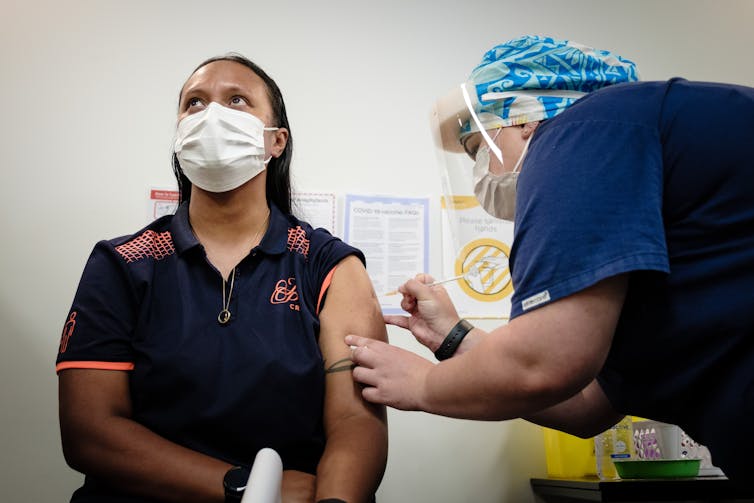
A border worker receiving a dose of the COVID-19 vaccine
Essential workers first: a border worker receives the COVID-19 vaccine in Auckland on February 20. GettyImages

5 challenges for 2021 and beyond

Aotearoa faces five key challenges over the next year to weather the pandemic and deliver a valuable and lasting public health legacy.

1. Improving border biosecurity

Preventing the re-introduction of COVID-19 into the country remains the single most important short- to medium-term challenge to sustained elimination of the virus.

There are obvious benefits in taking a highly systematic approach to this process by considering the entire journey of travellers: from their week prior to departure, their flight to New Zealand (during which they can become infected), their two-week stay in MIQ facilities (where again they can become infected), and the period after leaving MIQ when they remain at elevated risk of being infectious.


Read more: How the coronavirus mutates and what this means for the future of COVID-19


The goal of having no infected people arriving in the country should become increasingly realistic. This should allow for the careful introduction of quarantine-free travel with other parts of the world that have also achieved elimination.

Investing in a purpose-built but versatile quarantine facility offers important short- and long-term benefits.

2. Enhancing outbreak detection and management

For the foreseeable future, New Zealand will need to maintain and enhance its systems for rapid detection and control of COVID-19 outbreaks as a backup measure for border failures.

Promising enhancements include the use of daily saliva testing of border workers and wastewater testing to detect community transmission sooner, as well as continuing improvements to contact tracing.


Read more: CDC says masks must fit tightly – and two are better than one


New Zealand has relatively high voluntary uptake of its COVID Tracer app, but routine use is poor. An obvious improvement would be to make use of the app mandatory when entering high-risk venues (nightclubs, indoor bars and restaurants, gyms, churches, entertainment venues) and by MIQ workers and recently returned travellers.

The alert level system needs revision to reflect new knowledge about transmission. There needs to be a greater focus on limiting crowding in high-risk indoor environments, promoting mask use (which is effective at reducing transmission) and using more geographically targeted and less disruptive “circuit-breaker lockdowns”.

3. Delivering vaccinations effectively and equitably

Vaccination strategies must prioritise effective border control, protect the most vulnerable and promote health equity. Achieving high coverage will depend on social engagement, community networks, and high-quality, comprehensive information systems such as the upgraded national immunisation register.

4. Establishing an effective public health agency

The pandemic provides a vivid illustration of the need to invest in effective public health infrastructure. A dedicated national agency is needed to create the critical mass of expertise in strategy and delivery that was missing at the start of the pandemic in New Zealand.


Read more: How New Zealand could keep eliminating coronavirus at its border for months to come, even as the global pandemic worsens


Such agencies are increasingly common in high-income countries. It was a key feature in the highly effective COVID response in Taiwan. This agency could provide the critical mass needed to put disease prevention and preparedness at the centre of government activities.

5. Establishing optimal emergency decision-making processes

The effective New Zealand pandemic response benefited from having a government that considered scientific advice and was concerned with well-being. However, the government has been slow to innovate in some areas.

An opportunity to reset the system

One of the greatest legacies from this pandemic could be to institutionalise an improved set of processes for decision-making in emergencies that do more to foster learning, innovation, continuous quality improvement and transparency. Key changes would be:

  • political processes that enable highly informed debate and scrutiny while aiming for cross-party support of key response strategies (such as an ongoing epidemic response committee of parliamentarians)

  • advisory processes that ensure high-level, multidisciplinary science input into the all-of-government response (e.g. the formation of a COVID-19 science council/rōpu).

  • a well-resourced research and development strategy to ensure a high level of scientific evidence to shape the response and its evaluation

  • commitment to, and a timetable for, an official inquiry to assess the pandemic response and drive wider system improvements.

In summary, the COVID-19 pandemic has provided a profound opportunity for reassessing health, social and economic functioning in Aotearoa New Zealand. It has demonstrated the value of proactive government decision-making to manage threats to population health.

The COVID-19 response provides a model for responding to a wide range of tough societal challenges, including the climate change emergency and growing social inequities.

ref. A year on from the arrival of COVID-19 in NZ: 5 lessons for 2021 and beyond – https://theconversation.com/a-year-on-from-the-arrival-of-covid-19-in-nz-5-lessons-for-2021-and-beyond-155367


For teens, getting access to speech pathology services depends on where you live

Source: The Conversation (Au and NZ) – By Nichola Shelton, PhD candidate, University of Sydney

Tens of thousands of Australian teenagers live with a communication disability, meaning they struggle with speaking, listening, reading, writing, and/or social skills.

Communication disability can include

It can start in early childhood and much of Australia’s speech pathology services are geared toward early intervention.

But communication disability can also be acquired later in life — or can start early but persist into adolescence.

Demand for speech pathology services across Australia is consistently strong but whether or not a teen gets access to speech pathology services may depend largely on where they live.


Read more: Common myths about speech problems in children


Some states better than others

Our research, published this week in the International Journal of Speech Language Pathology, highlights how unequally speech pathology services are provided in Australian public schools.

Some states have government-mandated provision, where the education department employs speech pathologists to work in schools or offer some other kind of school-based support.

We surveyed 96 speech pathologists who work with 12-16 year olds.

About 45% of the respondents were from states with government-mandated provision of services (Queensland, South Australia, Tasmania, and Victoria).

The remaining 55% were from states and territories with zero or minimal government-mandated provision (the Australian Capital Territory, New South Wales, and Western Australia). Minimal means government-mandated speech pathology services are usually only provided for the youngest school students.

Northern Territory has minimal government-mandated provision of speech pathology services in public schools. However, no speech pathologists practising in the Northern Territory completed our survey.

Man teaching to class
Some states have government-mandated provision, where the education department employs speech pathologists to work in schools. Shutterstock

We found states with government-mandated speech pathology services (Queensland, South Australia, Tasmania, and Victoria) offer more intervention support for high school students with communication disability than states and territories with zero or minimal government-mandated provision (Australian Capital Territory, New South Wales, and Western Australia).

In states where speech pathology services are not government-mandated, families of teens with communication disability must either seek out expensive private services, sometimes far from home — or miss out altogether.

In states where speech pathology services are government-mandated (Queensland, South Australia, Tasmania, and Victoria), about 49% of speech pathologists were employed in government service roles. In the Australian Capital Territory, New South Wales, and Western Australia, the figure was 15%.

States without government-mandated provision of speech pathology services had a greater proportion of speech pathologists employed in private practice (67% in Australian Capital Territory, New South Wales, and Western Australia compared to 30% in Queensland, South Australia, Tasmania, and Victoria).

Working collaboratively with school leaders

Communication disability can affect literacy and other educational outcomes, mental health and future employment.

Young people with communication disability should have the right to inclusive education in mainstream classrooms. In many places, speech pathologists work closely with school teachers and principals, and help students either in small groups, one-on-one or sometimes working with the whole class.

Our research highlights that whether or not you can access such help may boil down to what state you’re in.

Younger children and speech pathology

In 2018, the Australian Early Development Census (AEDC), which collects nationwide data on all children in their first year of formal schooling, found 45,708 Australian children were at risk or vulnerable to challenges in speaking and listening.

Our study builds on previous research showing speech pathology services are not provided equally across Australia for children at the start of school. That’s particularly true for children who live in regional or remote areas, or who are developmentally vulnerable (a group in which children from lower socioeconomic and languages other than English backgrounds are over-represented).

Our research shows this unequal access to speech pathology across Australia continues into adolescence.

Children in uniform hold sign with caption, 'We are the future'
Listening to, and asking, young people about their experiences with communication disability is crucial. pixabay.com

Listening to, and asking, young people about their experiences with communication disability is also crucial. There are many practical ways to consult students about reasonable adjustments that can be made in the classroom to make learning easier. These can include changing the pace or volume of information delivered.

The bottom line is access to speech pathology services for 12-16 year olds in public schools is inconsistent across Australian states and territories. Whether or not you’re able to access this kind of help shouldn’t depend on where you live.


Read more: How to tell if your child has a speech or language impairment


ref. For teens, getting access to speech pathology services depends on where you live – https://theconversation.com/for-teens-getting-access-to-speech-pathology-services-depends-on-where-you-live-147193

A token sale: Christie’s to auction its first blockchain-backed digital-only artwork

Source: The Conversation (Au and NZ) – By Denise Thwaites, Assistant Professor in Digital Arts and Humanities , University of Canberra

Since May 2007, US-based digital artist Mike Winkelmann (who goes by the name Beeple) has posted a new artwork online every day. He posted the 5,000th one in January, and has now packaged them into an enormous digital collage titled Everydays: The First 5000 Days, which will be auctioned online by Christie’s on February 25.

The work will be sold in purely digital form, as a 21,069 × 21,069-pixel JPEG file and a “non-fungible token” or NFT. NFTs use blockchain technology to give the successful bidder unquestioned ownership of the work.


Read more: Blockchain is useful for a lot more than just Bitcoin


NFT artworks are becoming a serious business. Last year, Beeple made US$3.5 million on an NFT auction.

But the entry of a global blue-chip auction house like Christie’s into this domain may mark a new stage for blockchain technology, as a widespread tool for both maintenance and transformation of digital art markets.

Not as new as it seems

The digital work Ever Blossoming Life – Gold by teamLab. teamLab

Christie’s claims the sale of Everydays is the first time a major auction house has offered a purely digital artwork. Christie’s has sold digital works before, including videos (such as Ryan Trecartin’s A Family Finds Entertainment in 2013) and software-based installations (such as teamLab’s Ever Blossoming Life – Gold in 2018).

But these were accompanied by physical trappings, such as certificates of authenticity or fancy hard drives to house the digital files. This time, however, it’s simply the image file and an accompanying NFT.

What are NFTs?

NFTs support claims to an artwork’s value. While the JPEG file of Everydays may be copied, the collector’s blockchain-based record of ownership will allow them to display the work (and to resell it) on a number of online platforms.

Here’s a copy of Everydays: The First 5000 Days. Without an NFT, it’s not worth much. Beeple

Christie’s has teamed up with one such platform, Makersplace, for the deal. Makersplace uses an open standard smart contract for its NFTs, which means the work can be sold in many other places in the the increasingly complex NFT ecosystem.

NFTs are useful in the digital art market because they enable claims to authenticity and scarcity, despite the ease with which digital works can ordinarily be copied. Artists and galleries have tried to create scarcity via limited-edition works and to assure authenticity with certificates, but NFTs seek to automate this process.

NFTs record ownership on a blockchain, which is a decentralised alternative to a central database. Built through cryptography and peer-to-peer networks, blockchains are resistant to tampering and hacking, which makes them useful for storing important records. Vince Tabora from US tech website Hacker Noon has written an accessible explainer of how blockchain is different from older ways of storing and organising data.

Why blockchain?

Ever since blockchains were described in the white paper published by pseudonymous Bitcoin inventor Satoshi Nakamoto in 2008, the idea of a “trustless” way to keep secure public records has evolved into a so-called “confidence machine”, fuelling a considerable amount of hype. Simultaneously, voices have emerged to encourage more nuanced and critical engagement with blockchain’s possibilities and limitations.MoneyLab Reader 2: Overcoming the Hype and There is No Such Thing as Blockchain Art are two key publications exploring these tensions across varied cultural domains.

Carnegie Mellon Researchers have described potential use-cases for the art industry, including securing artwork provenance (see Verisart) or enabling secure forms of fractional ownership (see Maecenas).

And Christie’s is no stranger to new technology. The company has hosted regular Art+Tech Summits since 2018 (the inaugural topic being blockchain).

The algorithmically generated Portrait of Edmond Belamy by French collective Obvious was sold by Christie’s in 2018 for US$432,500. Obvious

In 2018, Christie’s proudly announced it was “the first auction house to offer a work of art created by an algorithm”, with the sale of the AI-generated painting Portrait of Edmond Belamy for more than 40 times its estimate.

So by selling Everydays as “the first purely digital work” to be offered by a major auction house, Christie’s is reinforcing its self-described “position at the forefront of innovation in the art world”.

Virtual trading cards and CryptoKitties

At the same time, Christie’s upcoming auction is only the tip of the NFT-collecting iceberg. Industry publication Coindesk estimates the total value of the NFT market to be US$250 million. Platforms such as Opensea, Nifty Gateway and SuperRare host a rapidly expanding range of digital collectibles to buy and sell by a growing community of collectors.

Beyond art, digital collectibles include virtual trading cards, artefacts and attire for virtual gaming worlds. They also underpin games such as CryptoKitties, in which NFTs serve to secure the “unique genome” of each kitty in the game. These examples reflect the uptake of NFTs across different digital subcultures, providing collectors with claims to uniqueness that were previously considered impossible in the online realm.

Blockchain for artists

Artists and other creative practitioners may also benefit from blockchain-backed systems.

Researchers at RMIT published a paper on how blockchain infrastructures could help Australia’s creative economy in 2019. They note how blockchains could support artists in trading, creating contracts, getting their work discovered, sharing resources – and making money to support their livelihoods.

Artists themselves are also searching for new ways to use blockchain and other “distributed ledger” technologies. Over the past decade, Furtherfield in London has worked with artists to explore the possibilities and limitations, partnering most recently with Goethe Institute and Serpentine Galleries for The DAOWO Sessions: Artworld Prototypes. Other notable projects include Artists Re: Thinking the Blockchain, which showcases how artists have a stake in this technological shift, and DisCo Coop, Trojan DAO and Black Swan DAO, which examine how new tools for organisation can challenge the value systems of the traditional art market, rather than further solidify them.

Blockchain futures

This reexamination of art in light of blockchain has also been happening in Australia. In 2019, Baden Pailthorpe and I worked with the Bitfwd community to curate a project called Blocumenta, which brought together local artists, designers and hackers to examine how blockchain could affect the arts, culture and heritage in the Asia-Pacific.

More recently, Nancy Mauro-Flude and I co-curated an event called Economythologies – MoneyLab#X, which was co-presented by several universities, galleries and arts organisations. We presented a program of talks, performances and artworks that considered how blockchain’s uprooting of legacy economic systems and narratives opens space to imagine different ways to value, design and organise our creative and cultural practices.

At this stage it’s hard to say exactly what blockchain will mean for art. For now, perhaps we should let Beeple have the last word:

bruh, i just learned wtf an NFT is like two weeks ago, not gonna act like i have a ton of intelligent shit to say here. this crypto space seems super interesting though and i see a ton of potential to do some weird shit nobody has done yet…


Read more: Friday essay: The Australian art market has flatlined. What can be done to revive it?


Economythologies – MoneyLab#X was co-presented by Centre for Creative and Cultural Research (University of Canberra), Institute for Culture and Society (Western Sydney University), School of Art and Design (Australian National University), Holistic Computing Aesthetics Network and Cultural Value Impact Network (RMIT University), Ainslie+Gorman Art Centre and Bett Gallery , with the support of the Institute of Network Cultures and Despoinas Media Coven.

The Blocumenta Blockathon was co-presented with bitfwd ventures and community, with the generous support of the University of Canberra, ACT Government, the Australian National University, DAOStack and Sigma Prime.

ref. A token sale: Christie’s to auction its first blockchain-backed digital-only artwork – https://theconversation.com/a-token-sale-christies-to-auction-its-first-blockchain-backed-digital-only-artwork-155738

‘Destruction by a thousand cuts’: the relentless threat mining poses to the Pilbara cultural landscape

Source: The Conversation (Au and NZ) – By Sarah Holcombe, Senior Research Fellow, The University of Queensland

Just as the parliamentary inquiry into Rio Tinto’s destruction of the Juukan Gorge rock shelters was reconvening in Canberra, another culturally significant site was damaged at one of BHP’s iron ore mines in the Pilbara.

This latest rock shelter, a registered site for the Banjima peoples, was reportedly damaged by a rockfall in late January. BHP said the site was not part of its current mining operations and the cause of the rockfall was not known.

Both incidents make clear the invidious and relentless threat to Aboriginal cultural heritage in the Pilbara (and elsewhere in Australian mining regions).

The destruction of one ancient and sacred rock shelter is, of course, devastating. But there’s a greater and as yet unrecognised loss to cultural heritage that is occurring from the “cumulative impacts” of mining activities in the Pilbara. It’s destruction by a thousand cuts.

A heavily industrialised landscape

It is difficult for most people to imagine the scale of the iron ore and gas operations in the region. Large swathes of this remote and ecologically delicate environment (a global biodiversity hotspot for subterranean fauna) have been transformed over the last several decades into a heavily industrialised landscape.

There are more than 25 industrial-scale iron ore mines in the Pilbara. Of these, Rio Tinto owns 16. They are part of an integrated network to transport iron ore out of the region, which includes four independent port terminals, a 1,700-kilometre rail network and other related infrastructure.

Western Australia’s iron ore sales have more than doubled over the past decade from 317 million tonnes in 2008-09 to 794 million tonnes in 2018-19. This was worth more than A$4.4 billion in royalties to the WA government in 2018.
Rio Tinto iron ore mine in the Pilbara.
The Rio Tinto West Angelas iron ore mine in the Pilbara region. Alan Porritt/AAP

Ancestral paths are being ‘boxed up’

As a submission to the parliamentary inquiry from the Wintawari Guruma Aboriginal Corporation stated, more than 93% of their Country is covered by mining tenements. There are seven mines in total, most owned by Rio Tinto.

This group is not unusual. The neighbouring Yinhawangka have four Rio Tinto mines on their Country, plus others owned by different companies, including FMG.

Under the current WA Aboriginal Heritage Act, the focus of heritage protection efforts is on tangible (often archaeological) sites defined as discrete “way-points” on a map and separated from the cultural landscape that supports them.

But this is a core misunderstanding of cultural heritage management. Intangible or ethnographic sites, which are rarely visible to non-Indigenous people or those who are not customary knowledge holders, struggle to find recognition.


Read more: Friday essay: masters of the future or heirs of the past? Mining, history and Indigenous ownership


These intangible sites are part of the interconnected spiritual journey known as “dreaming tracks” and “song-lines”. For the knowledge holders, these ancestral paths represent a fundamental truth of connection to Country.

However, as mining activity intensifies in the Pilbara, even if certain “sites” are protected, these ancestral paths are being “boxed up” and cut off from one another.

This is because the WA Aboriginal Heritage Act assesses applications and projects on an individual basis, without reference to the cumulative impacts of mining activities or the bigger picture of regional and national heritage.

Protest against Rio Tinto after the Juukan Gorge explosion.
Rio Tinto’s destruction of the 46,000-year-old Juukan Gorge rock shelters was deeply distressing to the Puutu Kunti Kurrama and Pinikura people. Alan Porritt/AAP

What are cumulative impacts?

These cumulative impacts include such things as

1) loss of access to sacred sites, cultural places (including customary harvest grounds) and cultural materials

2) loss of cultural integrity of cultural places through destruction of Country in close proximity

3) loss through indirect effects, such as increased dust, vibration and noise

4) diminished amenities and visual integrity.

In 2015, BHP prepared a “cumulative impact assessment” of its direct and indirect mining footprint in the Pilbara. The authors indicated it was the first of its kind for the region.

Though the focus was purely on the environmental effects of mining activities — not cultural effects — the results are nonetheless revealing.

The authors listed five species from the region, including the olive python and the northern quoll, that are now considered “vulnerable” or “endangered”. These species also have great significance for traditional owners. Yet, they were not engaged in the cumulative impact assessment process.

To the best of our knowledge, none of the major mining companies in the Pilbara have undertaken cumulative impact assessments for Indigenous cultural heritage that encompass the entirety of their operational footprint.


Read more: Can a mining state be pro-heritage? Vital steps to avoid another Juukan Gorge


Land access protocols, locked gates and PPE

The ability of traditional owners to access Country to care for it, maintain their obligations to it, monitor the effects of mining operations and ensure inter-generational knowledge transfer is another sensitive issue.

Many groups in the Pilbara have “land access protocols” with the companies operating on their land. A publicly available protocol between the Yinhawangka and Rio Tinto gives insight into the strict visitation parameters for the company’s mining leases and tenements.

For instance, the “general conditions” require visitors to have vehicles fitted with a suitable UHF radio set to the sign-posted channels.

The requirements also include

providing information of all the areas that you plan to visit within the … mining lease area, the number of people/vehicles in your group, the date and time that access is required and the duration of your trip.

Each person entering a mining lease must also “meet the minimum PPE requirements”.

Iron ore piles at a Rio Tinto mine in the Pilbara.
Iron ore piles at Rio Tinto’s Marandoo Mine in the Pilbara. Christian Sprogoe/Handout/EPA

Though we recognise the need to manage for occupational health and safety, such intensive requirements would make access extremely difficult and unrealistic for many people, especially the elderly and children.

Land access protocols do not just apply to mining leases, but also to pastoral leases, which are owned by the companies to facilitate the development of mining operations and ensure land access. Rio Tinto owns six such leases in the Pilbara.

The visitation rights for these pastoral leases are similarly strict. The protocols for Rocklea station, for instance, allow native title holders to camp for no more than three nights.


Read more: Juukan Gorge inquiry puts Rio Tinto on notice, but without drastic reforms, it could happen again


The importance of conservation agreements

WA’s draft new heritage laws contain the phrase “cultural landscapes”, which is a step in the right direction.

However, to truly protect cultural heritage and accommodate Aboriginal rights and interests requires conservation agreements, similar to the Murujuga agreements made between the Commonwealth and both Rio Tinto and Woodside in the Pilbara.

The state government would have to forgo some mining royalties and, in line with recommendations by the parliamentary inquiry, native title holders would have the right to protect sites and declare areas “no-go zones”.

This has been the successful model under the Aboriginal Land Rights Act in the NT for more than 40 years. Such a model recognises

the interdependence of all life within Country constitutes a hard but essential lesson – those who destroy their Country ultimately destroy themselves.

The risk is that if decisive and strong measures aren’t taken, large swathes of the Pilbara will become desecration zones, or “sterilisation” zones, as some Aboriginal groups have termed the industrial mining landscape.

This will be the legacy, not only for the mining companies, but for Australia and most painfully, for the traditional owners who remain long after the miners have gone.

ref. ‘Destruction by a thousand cuts’: the relentless threat mining poses to the Pilbara cultural landscape – https://theconversation.com/destruction-by-a-thousand-cuts-the-relentless-threat-mining-poses-to-the-pilbara-cultural-landscape-155941

Paid on par with cleaners: the broader issue affecting the quality of aged care

Source: The Conversation (Au and NZ) – By Ben Farr-Wharton, Associate Professor in Management, Edith Cowan University

The aged care royal commission is due to hand down its final report on February 26, and it will be tabled in parliament in the days after that.

The long-term sustainability of the aged-care workforce and the financial health of the sector more broadly, have been hot topics, regularly under the microscope as part of the royal commission.

Underpinning this focus is a belief that quality health and well-being outcomes of elderly Australians in our aged-care system is impacted by the staff who service them, and the funding arrangements of aged-care organisations themselves.

Our research into the Australian aged care sector strongly supports the need to revise existing policy, ensuring aged-care organisations are adequately staffed and resourced. When that happens, residents will receive a higher quality of care.

Pay and aged-care work

But there is a deeper problem that remains largely overlooked: the payment of aged-care workers.

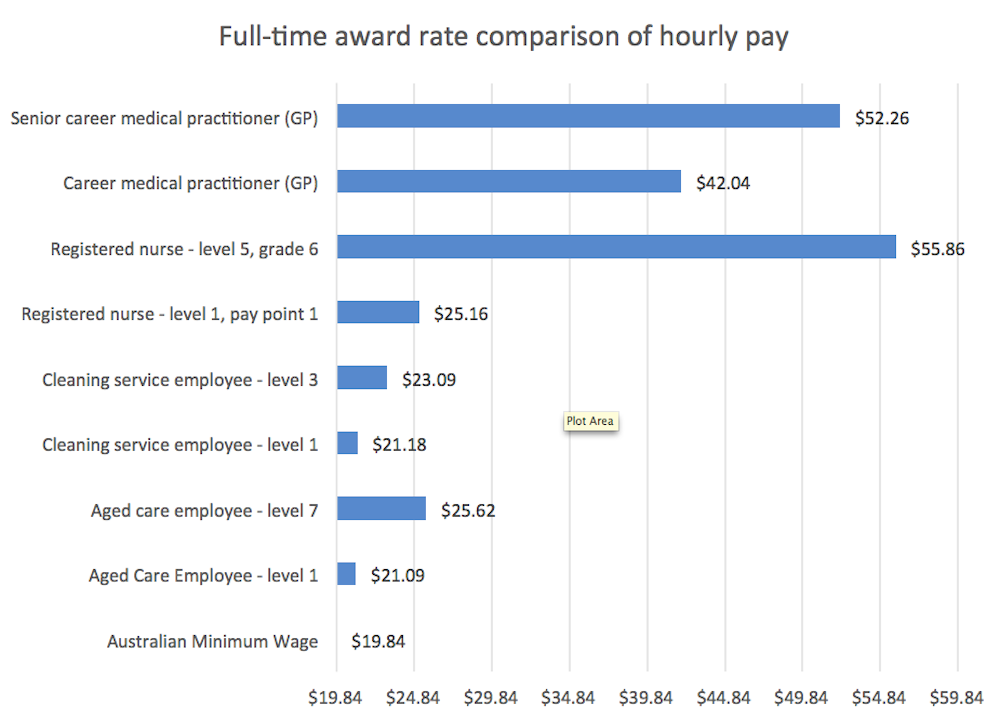
Graph of full-time pay for aged-care workers
Author provided

When beginning their career, the award rate for a full-time aged care worker is A$21.09 per hour – slightly less than a cleaner, and only $1.25 per hour more than the Australian minimum wage.

It goes without saying that aged-care workers do much more than clean. Although ensuring cleanliness and hygiene is certainly a component of aged-care duties, the job is substantially more complex and demanding, both physically and emotionally.

Aged-care work involves a broad spectrum of tasks: administering medication, identifying and treating pressure injuries, feeding, helping with mobility, facilitating choirs, card games and group excursions, and more.

Working in aged care requires someone who is engaged, focused, well-trained and ready to thrive in challenging clinical and social environments. Aged-care workers also need to contend with the emotional grief associated with end-of-life care and death. They need to do this while professionally engaging with families who themselves may be grief-stricken.


Read more: Australians want more funding for higher-quality aged care — and most are willing to pay extra tax to achieve it


That we have allowed this vital work to be so poorly remunerated and under-resourced is a grim reality that our society, and our government, need to face.

Societal values have radically shifted over the past decade – with the community expecting very high levels of quality care, and there is now an appetite for change in the way we value ageing, and those who work in aged care.

So, how might we restructure aged care to more appropriately pay the workforce, and improve outcomes for the elderly?

Lessons from nursing

Parallels can be drawn between the current state of our aged-care sector and that of the nursing profession in the first half of the 20th century. At that time, nurses were widely regarded as little more than cleaners and carers who happened to work in hospitals — reflecting the snail-paced change since Florence Nightingale’s innovations during after her military nursing in the Crimean war.

Over time, however, as societal values (particularly regarding the role of women) have shifted, it has become impossible to ignore the fact that nurses play a substantial clinical role for patients.

Slowly, and as recently as the early 2000s, nursing was becoming fully professionalised. Along with this came the requirement that registered nurses have university training. Now, the role that nurses play in clinical care in hospitals is central, perhaps even more so than doctors. This is particularly because patients’ contact time with nurses is generally greater than with doctors.

Group of nurses having a meeting
Over the past half-century nursing has slowly but surely become more professionalised. Albert Perez/AAP Image

To be a nurse is to enter a profession that is highly valued, respected and relatively well-paid. The base award for a registered nurse is $25.16/hr, but this extends to a ceiling of $55.86/hr. The median hourly earnings in Australian nursing in 2019 was $36/hr. Many of today’s nurses are highly innovative and engaged, and increasingly efficient as a result.

So, while nurses may cost more to employ now than 50 years ago, they also contribute much more. The aged-care sector can certainly learn from this.

The benefits of professionalisation

Regardless of the royal commission’s specific findings, the Australian government will inevitably need to provide a more robust funding model to the aged-care sector to help meet the complex health needs of older Australians.

Yet research conducted as part of the royal commission has highlighted cost inefficiencies in the current system. We argue these inefficiencies can be mitigated by further professionalising the aged-care workforce.

Valuing the aged-care workforce as a profession will require investment in training. Improving access to higher levels of training for all aged-care workers will deliver a range of benefits: the workforce will become more adaptable, agile and innovative. This will prepare them for integration with new technologies such as Robear, the nursing-care robot.


Read more: Nurses of the future must embrace high-tech


If the COVID pandemic has taught us anything, it’s that governments can, when there is strong public appetite, spend significantly to resolve major crises. If left on its current trajectory, the aged-care sector may implode – particularly if we lose access to migrant labour as a result of our closed international borders.

It’s time to work smarter, not harder, and invest in the future of our aged-care workforce. There is every chance most Australians alive today will reap the benefits of a more engaged, innovative and productive aged-care workforce.

ref. Paid on par with cleaners: the broader issue affecting the quality of aged care – https://theconversation.com/paid-on-par-with-cleaners-the-broader-issue-affecting-the-quality-of-aged-care-155753

The Texas deep freeze left the state in crisis. Here are 3 lessons for Australia

Source: The Conversation (Au and NZ) – By Tim Nelson, Associate Professor of Economics, Griffith University

The US state of Texas has this month experienced some of its coldest weather on record. Houston recorded a temperature of -10.6℃, which is around 20℃ below average. And Dallas-Fort Worth recorded its lowest-ever temperature of -18.9℃.

It appears Texas infrastructure was not designed to deal with such extreme low temperatures. The cold snap caused chronic electricity and water shortages, and a major disaster has been declared.

The consequences have been bleak. Dozens of people have died and others, especially the vulnerable, have been left shivering in their homes.

Australia does not generally experience such cold winter temperatures. Yet our electricity systems are also vulnerable to climate change, extreme weather and power outages. So, there are valuable lessons to be learned from the Texan disaster.

What happened to the power system in Texas?

Essentially, the freezing temperatures appear to have caused power generators to fail while, at the same time, electricity demand reached a new record winter peak of 69 gigawatts.

Aerial view of a long line to buy groceries in the snow
Long lines to buy groceries in Austin, Texas, during the extreme cold snap and widespread power outage. Jay Janner/Austin American-Statesman via AP

It’s understood that due to the extreme weather, up to 46 gigawatts of electricity generation was unavailable, spread across many types of generators including thermal (coal, gas, and nuclear) and renewable (wind).

With record demand and failing generators, the system operator was forced to cut power to homes and businesses on a rotating basis. Up to 20 gigawatts of customer demand was unmet due to these outages.

The Texas power grid is not well connected to those in neighbouring states, and so could not draw electricity from those power systems.

For millions of people in Texas, this meant they were without power in freezing conditions and essential services such as hospitals experienced critical issues, including water outages and hospital bed shortages.


Read more: Texas electricity grid failure shows how microgrids offer hope for a better future


The combination of high power demand and low supply meant prices skyrocketed on the wholesale electricity market, where electricity generators sell power to retailers.

The average daily price during the extreme weather was close to the US$9,000 per megawatt hour price cap. For a point of reference, the average daily price in Australia’s market in recent months has been between A$20/MWh and A$40/MWh.

The Texas crisis serves as a warning to the world. Here are three lessons for Australia.

Lesson 1: We must prepare our electricity system for climate change

Australia must further acknowledge that climate change will bring severe weather events which threaten our power systems.

We may not experience extreme cold weather events, but increasingly challenging summers will bring high temperatures, heatwaves, floods and bushfires.

We only have to think of last summer and the extreme stress put on our power system due to bushfires, which led to blackouts in various towns across the east coast.

A man in a high-vis top holds a pole in blackened bushland.
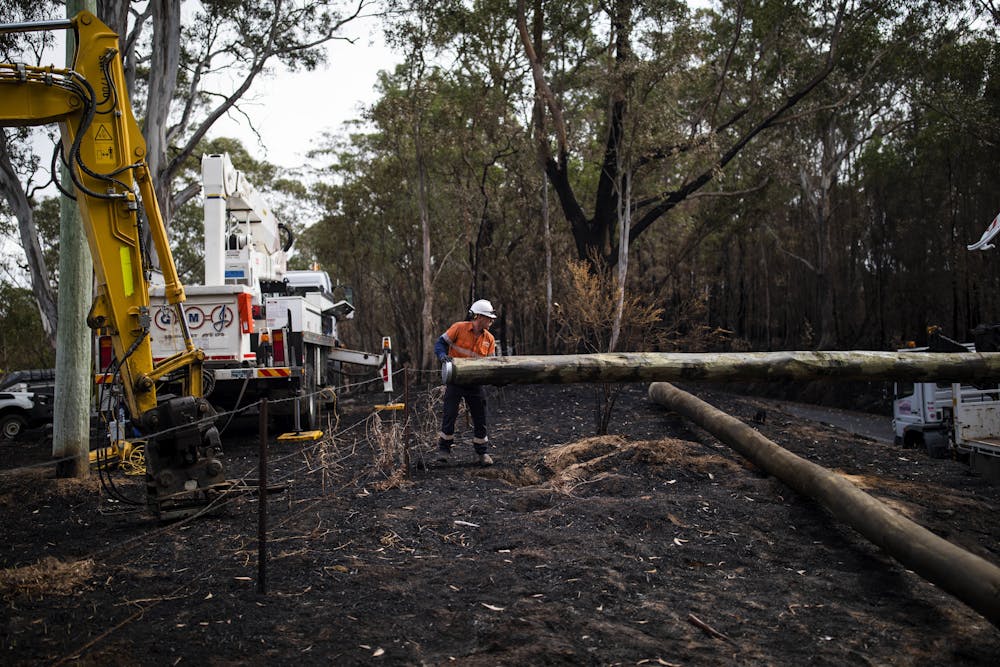
Crews worked across Australia to replace bushfire-damaged power poles after the Black Summer fires, such as here in Brogo, NSW. AAP Image/Sean Davey

As US-based energy expert Fereidoon Sioshansi noted to us this week:

With climate change, we need to revisit our outdated assumptions about resilient grid planning in Texas and places such as Australia.

Australia’s energy regulators should consider climate change when approving new transmission investments.

And greater interconnection between the states would provide more resilience to extreme weather, allowing states to provide energy to other states whose power supplies are damaged by extreme weather.

Lesson 2: Don’t support the technologies of yesterday

Like Texas, Australia’s east coast market — called the national electricity market (NEM) — is an “energy-only market”. This means generators get paid only for the energy they produce, not the capacity they make available to supply electricity in the future.

The issues in Texas have led to discussion among economists and politicians about whether Texas needs a “capacity market”, where generators get paid for the capacity they make available. They say a capacity market would make the system more reliable.

But we believe this is misguided for three reasons.

First, a capacity market would not have changed the outcome in Texas because no one anticipated a scenario like this (see Lesson 1!).

Second, a capacity market in Australia is likely to be used to support existing, ageing, unreliable coal-fired plants, because they are already in the electricity system. Coal-fired plants are inflexible — they’re slow to respond to signals to produce more electricity. This means they’re more likely to detract, rather than add, resilience to our system.


Read more: Texas electricity grid failure shows how microgrids offer hope for a better future


Instead, we need flexible options that respond much faster to high electricity demand. These include technologies like battery storage, gas-fired peaking units (which run only at peak demand) and pumped hydro.

But this flexibility isn’t rewarded under a capacity market, because capacity would be paid for irrespective of whether electricity production can be turned on quickly (or not).

Grey towers of a coal-fired power station
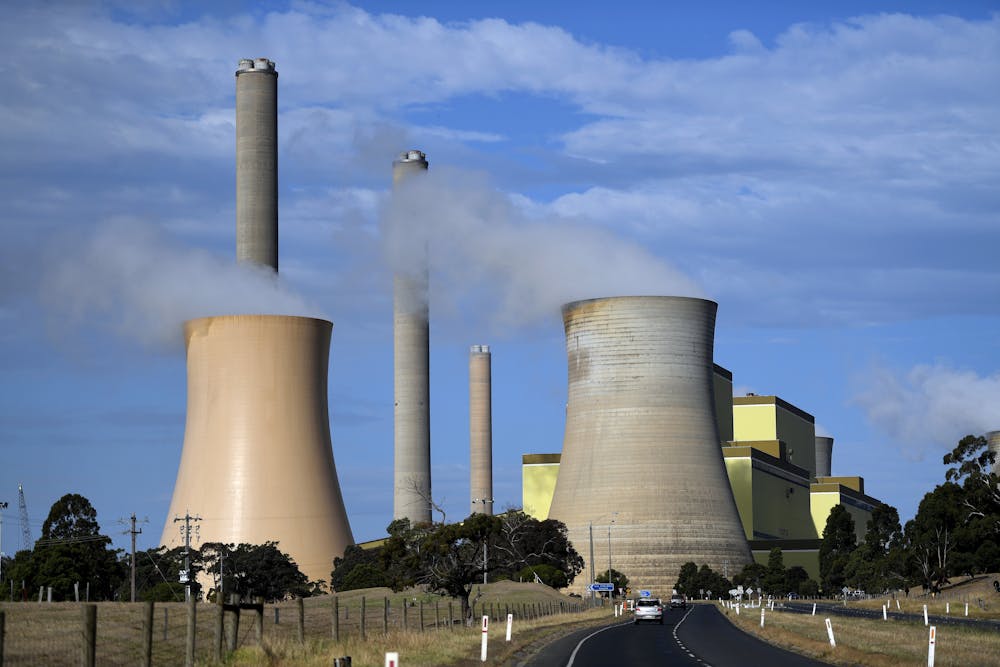
It’s critical Australia implements enduring policies to reduce greenhouse gas emissions. AAP Image/Julian Smith

Third, there’s a better option for creating a more resilient, reliable system: a so-called “operating reserve” market.

This involves providing incentives to customers to reduce electricity use at short notice when power supplies are low. Generators and customers that can rapidly respond to challenging conditions are paid in this separate market (but only when necessary).

Australia’s regulators are currently considering whether to introduce this type of market. While Texas has a similar scheme, it focuses on creating higher prices to encourage spare capacity, rather than paying consumers and generators to make electricity available if needed.

Lesson 3: We need to do our fair share and decarbonise our electricity system rapidly

To prevent extreme weather from becoming a bigger problem, it’s critical Australia implements an enduring policy to reduce greenhouse gas emissions.

The simplest way of doing this would be transitioning the existing renewable energy target into an emissions intensity scheme. Essentially, this is where lower emissions generation (such as renewables) gets rewarded, while higher emissions generation (such as coal) gets penalised.

Allowing renewable energy generators to export their greenhouse abatement to other sectors would underpin faster decarbonisation and greater investment in new electricity supply.


Read more: Climate explained: how emissions trading schemes work and they can help us shift to a zero carbon future


Australia has always been one of the most fragile continents when it comes to the effects of climate change. We need to prepare our electricity system to be resilient to more extreme weather.

But we also need to rapidly scale up the decarbonisation of our electricity supply to ensure Australia plays its part in reducing global greenhouse emissions.

ref. The Texas deep freeze left the state in crisis. Here are 3 lessons for Australia – https://theconversation.com/the-texas-deep-freeze-left-the-state-in-crisis-here-are-3-lessons-for-australia-155760

School banking programs target ‘vulnerable consumers’. But research shows kids are smarter than you think

Source: The Conversation (Au and NZ) – By Shasha Wang, Lecturer, Queensland University of Technology

The ACT Legislative Assembly recently passed a motion to ban banking programs, like Commonwealth Bank’s Dollarmites, from schools later this year.

The move comes a few months after Victoria announced it would also ban such programs in state schools.

The Australian Securities and Investments Commission’s (ASIC) two-year review of school banking programs was released in December 2019. It found, among other matters:

young children are vulnerable consumers and are exposed to sophisticated advertising and marketing tactics by school banking program providers.

But our research suggests many young children are aware of marketing tactics, and not as vulnerable as we think.

The banking programs

Much of the criticism of school banking programs has been directed at the Commonwealth Bank’s Dollarmites (running in Australian schools since 1931). But the ASIC report found at least ten such programs were active across schools nationally.


Read more: We don’t need banks teaching kids about money. Schools have it covered


While around 63% of Australian primary schools had joined a school banking program, most primary school students (92%) did not participate or have accounts.

A survey of 1,349 Australian residents found most (84%) parents with children participating in school banking programs were satisfied with the program and 63% supported financial institutions offering bank accounts to students through school programs.

But the survey also identified 51% of parents had concerns about financial institutions marketing to young primary school students.

The inference children are vulnerable consumers appears to drive the narrative toward removing such programs from schools.

What’s a vulnerable consumer?

Vulnerability stems from consumers who enter service exchanges with some type of disadvantage. These might be personal or social characteristics, which may lead to discriminatory — or even predatory — actions by providers.

Many consumers find themselves vulnerable because they lack expertise regarding the services they are purchasing (such as financial services or insurance).


Read more: Social media platforms need to do more to stop junk food marketers targeting children


Children have long been viewed as particularly vulnerable in society, especially when it came to the sophisticated marketing of products like junk food, cigarettes or alcohol. There have been strong arguments to ban marketing communications targeting children in many countries (such as in Europe, the United States and Australia).

Yet, a 2017 review of studies and tests on the vulnerability of young children as consumers concluded:

Although the bases and measures of children’s vulnerability have existed for over 40 years, little of this research has been able to link children’s vulnerability to their consumption. A review of these tests reveals causes for inconsistencies and their implications for further research and public policy remedies for children’s vulnerability.

We put it to the test

Children under eight years old are viewed as especially vulnerable to marketing communications because they do not have sufficient knowledge about “persuasive advertising messages”.

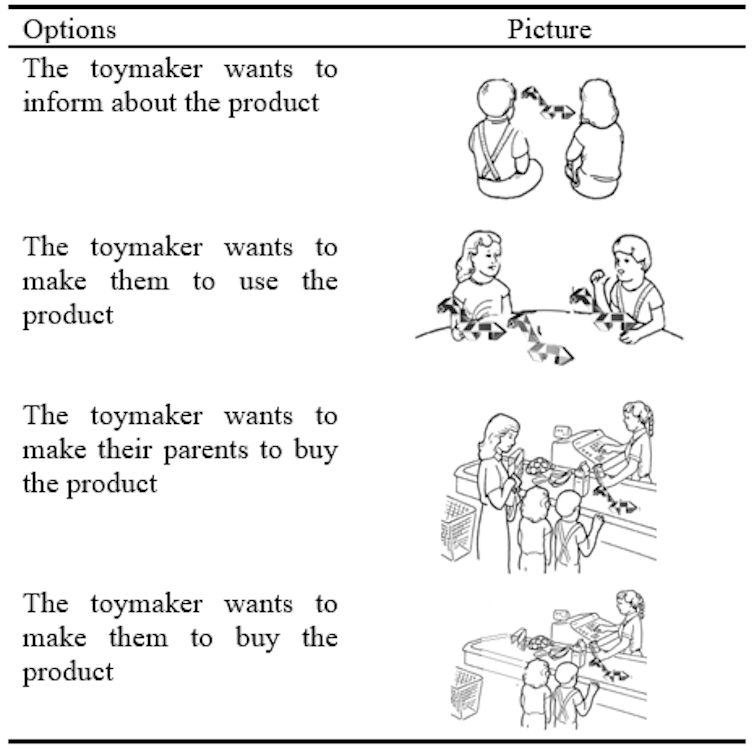
We showed a video of a toy advertisement to 233 children, aged four to seven. We were conscious the young children may not have the verbal ability to articulate responses to questions. So we used images of children’s movies, television programs and advertisements so the children could identify what they believed was the nature of the toy advertisement. Children could select whether they thought it was a movie, a TV show or an advertisement.

We then used other images for children to identify whether they believed the source of the advertisement was a toy manufacturer, a teacher or a parent.

Children could also indicate the intentions of the adverts, such as “because they want you to know about the toy” or “because they want you to buy the toy”.

Children could indicate what they believed were the intentions of the advertisement we showed them. Images were adapted from Carter et al (2011) and Macklin (1987)

More than 75% of children knew four to six aspects of the persuasive advert.

For example, 76% knew the “toymaker made the advertisement” and 82% knew the “toymaker wanted to encourage children to use the product”. Although only 37% knew the “toymaker wanted them to buy the product”, children in that age group have less opportunities to use or see cash.

While many people may think children know nothing about advertising, our study showed most children could identify the nature and intentions of persuasive advertising.


Read more: No presents, please: how gift cards initiate children into the world of ‘credit’


We extended our study to see if children could make responsible financial decisions. We found children who earned pocket money were more likely to save money and reject the offer to buy an advertised toy.

Over-regulation could have negative effects

While the ASIC report is valid and balanced, the response to remove banking programs from schools may unintentionally negate the social and economic benefits of such programs.

Even if the Dollarmites program doesn’t educate children on consumer behaviour directly, marketing plays an important role in socialising consumers. It can help them understand their consumer rights, how to use unit pricing or how to save money.

Over-regulation may generate reactance. Consumer reactance occurs when a consumer feels lack of control over their choice and when behavioural freedom is threatened.

For example, children may only learn about products from their parents or friends based on their preference or knowledge. This means they may never get the opportunity to choose or practise their own coping strategies for marketing persuasion.

While most parents might be cautious about school banking programs, our results indicate children can demonstrate responsible consumption behaviours, save their pocket money and can identify persuasive advertising messages.

ref. School banking programs target ‘vulnerable consumers’. But research shows kids are smarter than you think – https://theconversation.com/school-banking-programs-target-vulnerable-consumers-but-research-shows-kids-are-smarter-than-you-think-155360

I teach architecture and have been in quarantine a lot lately. Here are ways design can protect us against COVID-19

Source: The Conversation (Au and NZ) – By Mengbi Li, Lecturer in Built Environment (Architecture), First Year College and Research Fellow, ISILC, Victoria University

The coronavirus has been escaping with distressing frequency from quarantine hotels, threatening serious outbreaks. To make things worse, multiple variants of the virus, possibly more infectious and deadly, have recently been detected. This accentuates the need for robust hotel quarantine, especially in countries like Australia that have controlled community transmission.


Read more: Perth is the latest city to suffer a COVID quarantine breach. Why does this keep happening?


While the hotel quarantine system has received wide attention, relatively few people have had the opportunity to experience and observe it first hand. Even fewer have been able to compare with other regions handling similar challenges. I happen to have needed to travel overseas and thus experienced quarantine in several places over the past months.

Based on my experience as an academic in architecture, I share some thoughts and observations here on how the design or redesign of buildings, infrastructure and cities can help people overcome the health challenges created by COVID-19.

Our buildings and cities were not designed to handle such extraordinary situations as this pandemic. One consequence is their design has often made the need to touch surfaces unavoidable.


Read more: How worried should I be about news the coronavirus survives on surfaces for up to 28 days?


Take lifts, for example

Some of the most frequently touched surfaces in buildings are the buttons in lifts. In some buildings in China, plastic wrap is used to cover the buttons and a sticker showing the time and date of last disinfection is attached nearby. Other buildings provide tissues for people to use as disposable finger covers.

In quarantine hotels, this procedure is even more carefully managed. Staff help guests by pressing the button. This small touch area needs frequent cleaning, which calls for extra human resources.

Various strategies used in public lifts. Above left, in Melbourne; above right and below left, in Kunming; below right, in Guangzhou. Photos: Mengbi Li (top row and bottom left), Fei Zhou (bottom right)

At Baiyunshan airport in Guangzhou, I used a lift with touch-free buttons. The keypad had infrared sensors installed next to the usual button. With just a wave of their finger over the touch-free button, users can select their destination.

A lift with infrared sensors at Baiyunshan airport in Guangzhou. Photo: Xiao Xu
A lift with infrared sensors at Baiyunshan airport in Guangzhou (video by Xiao Xu)

Another mode free of physical screens features numbers displayed in a front-projected holographic display. A sensor detects the movement of pressing a button in the air to activate the lift.

A front-projected holographic display means there’s no need to physically touch the buttons in this lift.

This technology is not out of our reach. In response to the pandemic, authorities in Melbourne and Sydney have trialled touch-free buttons using infrared technology at pedestrian crossings.

A pedestrian crossing signal with an infrared sensor in Melbourne. Photo: Mengbi Li, Author provided

One concern about touch-free buttons is the challenge they present to the visually impaired. Currently, a push-button is placed next to the infrared sensor. An alternative for people who need assistance would be to use gesture or voice commands. Other concerns include reliability and vandal-proofing.

Another sensitive touch spot is the toilet. The airport toilets I visited in Australia, China and Singapore are equipped with touch-free features to activate the flush, tap, soap dispenser and hand dryer. However, the doors and locks cannot function without touch. Touch-free sensors or foot pedals would probably help.

Alternatively, new materials or coatings like antimicrobial polymers could be applied in areas where touch is unavoidable. Of course, care must be taken to ensure the antiviral potency is both reliable and people-friendly.


Read more: Automatic doors: the simple technology that could help stop coronavirus spreading


Design solutions don’t have to be high-tech

A touch-free hand sanitiser dispenser in Melbourne. Photo: Mengbi Li

Interestingly, touch-free public spaces do not always rely on advanced materials or sophisticated technology. In a Melbourne quarantine hotel, I noticed several bollards with foot pedals being used as hand sanitiser dispensers. These are designed to function mechanically and require no power connections.

Instead of a simple stainless steel bollard, this dispenser could be further reimagined as an artistic sculpture integrating the building’s signage at the entrance. Elsewhere, this design could be incorporated into litter bins along the streets.

Usually, for architectural design, circulation patterns are analysed to see how people reach each space and establish the relationships between different areas. For safety purposes, exits are checked to ensure people can evacuate in a timely way. To prepare for future pandemics, these studies could add analysis of touch points in both pandemic and non-pandemic periods.

The shared challenge posed by the pandemic has prompted some innovative ideas. For example, physical reminders to keep a social distance have variously involved using carpet tiles, mowed or trimmed landscape patterns, furniture arrangements, temporary structures and pavements or stickers.

Other solutions involve applying modular construction from well-equipped containers to create emergency hospitals or mobile testing stations.


Read more: Hospital beds and coronavirus test centres are needed fast. Here’s an Australian-designed solution


A shipping container adapted for use as an intensive care unit
Plug-in intensive care units created from a shipping container were installed at a temporary hospital set up in Turin, northern Italy. Max Tomasinelli/Carlo Ratti Associati

From touch-free public spaces to designing for social distance and modular construction, there are still many ways the design or redesign of our buildings and cities can help to protect the public. Good design is particularly important to protect those in high-risk environments, such as workers and senior citizens in health care and aged care.


Read more: Poor ventilation may be adding to nursing homes’ COVID-19 risks


The Six Feet Office uses design to enable social distancing.

As necessity is the mother of invention, there is nothing like a period of stress to stimulate creativity, industry and innovation.

ref. I teach architecture and have been in quarantine a lot lately. Here are ways design can protect us against COVID-19 – https://theconversation.com/i-teach-architecture-and-have-been-in-quarantine-a-lot-lately-here-are-ways-design-can-protect-us-against-covid-19-154840

Facebook versus News: Advertising is the real problem

Source: The Conversation (Au and NZ) – By John Quiggin, Professor, School of Economics, The University of Queensland

The fight between Facebook and the Morrison government is over almost before it began. Having drastically overplayed its hand by banning a vast range of content, Facebook has been forced to settle for what appear to be cosmetic concessions, such as a two-month period of mediation before disputes are subject to compulsory arbitration.

Its apparent decision to capitulate was doubtless assisted by the uniformly hostile international reaction to its bullying tactics.

The debate in Australia has been much less one-sided. Many commentators view it simply as a dispute between Facebook and News Limited, and take the view that News owner Rupert Murdoch is a greater threat to global democracy than Facebook owner Mark Zuckerberg.

This view is defensible in general, but in this specific case, it was Zuckerberg who attempted to bludgeon a democratically elected government into submission, while the established media worked through the normal political process.

More interestingly, many supporters of Facebook’s position applied a standard market analysis to the media legislation.

They concluded that there was no reason Facebook (and Google) should be compelled to hand over advertising money to the media companies who benefit from links on Facebook and Google sites.

This critique seems compelling at first, if we think of both news and advertising as standard goods. But news is a special kind of good, and advertising (at least the kind of advertising in dispute here) isn’t really a good at all.

News spreads, making it hard to contain

Looking first at news, it is, like other forms of information, a textbook example of a “non-rival” good, rather like a magic pudding. No matter how much of it I consume, there is just as much left for you and everyone else.

Before the rise of the internet, this wasn’t quite true. Most information was communicated on printed paper, which was a costly resource. But today, no matter how vital or trivial, information can be communicated to billions of people at almost no cost beyond the fixed cost of the network connecting them.

At the same time, information is costly to discover and interpret.

As a society, we have developed various ways of paying for it.

On the other hand, news is costly

We fund academic research directly through government grants and indirectly through the long-standing practice of requiring most university teachers to undertake research along with their teaching work.

Another way we fund information and analysis is by restricting access to it by erecting paywalls. They work to some extent, but information has a way of leaking out past even the most secure barriers. Once public, information can spread rapidly, just like viruses (hence the phrase “going viral”).

Traditionally, the most common way of funding news has been to package it with advertising. In the 20th century, the main funding source for newspapers was the “rivers of gold” provided by classified ads for jobs, real estate, cars and so on.


Read more: This week’s changes are a win for Facebook, Google and the government — but what was lost along the way?


Readers wanted to read the advertisements and were forced to buy them bundled with news, on occasions throwing away the news part of the newspapers so they could read the ads.

Newspapers, television and radio used the revenue from the advertisements to subsidise the production of news, analysis and entertainment.

The internet has disrupted this model, enabling specialised websites such as Seek, Domain and Gumtree to provide a better service than either newspapers or their websites.

Ads that are hard to avoid. Josh Taylor

When most of the ads that people want to see are removed, what’s left are ads they would prefer not to see. Newspapers, radio and TV have been forced to present them in ways that are hard to avoid.

It’s always been an unsatisfactory arrangement. In television there is a constant struggle between broadcasters who need ads to be seen and viewers who try to screen ads out. The head of Turner Broadcasting once suggested that skipping ad breaks in order to go to the toilet was a breach of contract.

But, unsatisfactory as the arrangement has been, it has worked well enough to keep newspapers and broadcast organisations in business.

Until the arrival of Google and Facebook.

They are able to offer advertisers much better targeting of ads than either news organisations or traditional broadcasters.

Google and Facebook do ads better

Much of the content used to make this targeting work is links to content prepared by traditional news organisations.

The entire debate about who benefits most — the organisations that do the linking or the organisations that are linked to — misses the point.


Read more: One of these things is not like the others: why Facebook is beyond our control


We have always put up with advertising in order to get the information produced by news organisations.

Now the advertising revenue is flowing to Google and Facebook, and we have no model for funding news media in the future.

We may need direct public funding, perhaps financed by a tax on advertising.

In the meantime, forcing Google and Facebook to pay for links is not a particularly satisfactory solution, but it’s the best we’ve got.

ref. Facebook versus News: Advertising is the real problem – https://theconversation.com/facebook-versus-news-advertising-is-the-real-problem-155639

Guide to the classics: Darwin’s The Descent of Man 150 years on — sex, race and our ‘lowly’ ape ancestry

Source: The Conversation (Au and NZ) – By Ian Hesketh, ARC Future Fellow and Association Professor, The University of Queensland

When Charles Darwin’s theory of evolution was first published in On the Origin of Species in 1859, the book was conspicuously silent about how his theory applied to humans.

Darwin believed the subject of human evolution was so “surrounded with prejudices” he was determined to avoid it entirely.

It was only when he became frustrated by the way others conceived of human evolution that he took up the subject himself. His two-volume The Descent of Man, and Selection in Relation to Sex was published on 24 February 1871.

Revisiting this work 150 years on, it is striking how some of Darwin’s most radical claims — such as humanity’s ape-like ancestry — are now taken for granted while some of his other views were clearly embedded in Victorian racial and gender stereotypes.


Read more: Guide to the classics: Darwin’s On the Origin of Species


Sexual selection

Darwin’s objective in Descent was threefold: to consider whether humans were descended from a pre-existing form; to consider the nature of human development; and to consider the differences between the “human races”.

In coming to terms with these issues, Darwin focused on the theory of sexual selection.

Darwin’s earlier theory of natural selection explained how the struggle for limited resources led to adaptations that were beneficial to certain individuals of the same species at the expense of others.

Black and white illustration
An illustration of a peacock feather as published in The Descent of Man. Wikimedia Commons

Sexual selection, in contrast, explained how the struggle for mates led to adaptations with no survival benefit. The bright plumages of male birds of paradise and the spectacular tail of the peacock were a product of mate choice by female birds, he wrote.

A similar process, he theorised, explained the development of specialised weapons for battle, such as the large horns of beetles: a result of males struggling against one another to secure mates.

Applying this principle to humans, Darwin argued that in the early stages of humanity’s development, men took the power of selection away from women. Men struggled against other men to select their mates, he wrote, and so became stronger and more intelligent over time, while women became more nurturing in their pursuit to attract mates through the cultivation of fashion.

It is not difficult to see how this theory of sexual selection naturalised Victorian gender relations.


Read more: How Darwin’s sexual selection theory co-stars in ‘The Handmaid’s Tale’


The development of the races

For Darwin, sexual selection also explained how different human races had developed.

While he was committed to the theory of monogenism, believing humans were a single species, he also adhered to a racial hierarchy. As historian of science Evelleen Richards shows in her recent book, Darwin’s encounters with Indigenous peoples during his Beagle voyage, circumnavigating the globe between 1831 and 1836, led him to perceive vast physical and intellectual differences between the human races.

Black and white illustration
RT Pritchett’s drawing of a catamaran off the Brazilian state of Bahia, as seen on the Beagle Voyage. Freshwater and Marine Image Bank at the University of Washington

He came to believe many of those differences could be explained by the processes of sexual selection. Differences in skin colour were, for Darwin, the result of diverse aesthetic preferences, which subsequently led to the development of distinct races. And as the races diverged, they were further shaped by inherited customs and social practices.

By accepting a racial hierarchy in this scheme, Darwin believed Indigenous peoples, or “savages” as he called them, represented “early stages” in human development.

In the final observation of the book, Darwin confessed he would rather be related to a “heroic little monkey” than to a “savage who delights to torture his enemies”.

His deeper message, however, was that readers should be consoled by the fact some of the nobler qualities of humans were shared by many of the great apes — even if they seemed to be absent from humanity’s “early stages”.

What makes humans moral?

The Descent of Man included three chapters dedicated to the subject of mind and morals. Darwin aimed to show there was “no fundamental difference between man and higher mammals” in their moral and mental faculties.

His moral theory relied heavily on animal observations, including those of dogs, apes, and even bees. He insisted humans shared the capacity to feel guilt, shame, and compassion with other social animals — therefore moral conscience was not unique to humans.

Darwin’s theory rejected essentialist and religious categories of “right” and “wrong”. He postulated different animals developed different moral systems depending on their environment and social structures, famously using bees as an example.

If, for instance, to take an extreme case, men were reared under precisely the same conditions as hive-bees […] our unmarried females would, like the workerbees, think it a sacred duty to kill their brothers, and mothers would strive to kill their fertile daughters; and no one would think of interfering.

Morality was the product of factors related to the struggle for survival and reproduction, and not divinely ordained.

Bees!
Morality, wrote Darwin, was not absolute: if humans evolved like bees, our understanding of right and wrong would be very different. Eric Ward/Unsplash

Reception

Even though plant and animal evolution was largely accepted by the scientific community at the time, the subject of human evolution was still highly contentious. Darwin’s views were heatedly debated in the press and in public.

A reviewer for the Edinburgh Review observed:

no book of science has excited a keener interest than Mr. Darwin’s new work on the ‘Descent of Man.’ In the drawingroom it is competing with the last new novel, and in the study it is troubling alike the man of science, the moralist, and the theologian. On every side it is raising a storm of mingled wrath, wonder, and admiration.

By the end of 1871, the work was translated into Dutch, German, Italian and Russian.

Despite its commercial success, The Descent of Man was heavily criticised. At the beginning of 1872, Darwin lamented “hardly any naturalists” agreed with him on sexual selection.

Charles Darwin, as an ape, holds a mirror up to another ape.
Darwin was frequently caricatured in the press as an ape, as here in a colour lithograph by F. Betbeder. Wellcome Collection, CC BY

Most naturalists felt Darwin attributed too much power to female choice, and they rejected the idea other animals could possess an aesthetic sensibility.

It was Darwin’s analysis of morality, however, that caused the greatest outrage. He stood accused of undermining the foundation of Christian society by advocating moral relativism.

Leading feminist Frances Power Cobbe rejected Darwin’s theory of morality as “simious”, while The Times thundered Darwin’s ideas could encourage “the most murderous revolutions”.

Darwin received hate mail from offended readers like Mr. D. Thomas, who referred to him as a “venerable old Ape”. Darwin began to be regularly caricatured as an ape in the press.

Descent today

Certain aspects of Descent hold up well, such as Darwin’s speculation humans originated from Africa, as evidenced by multiple fossil discoveries in the mid-20th century, notably by Mary and Louis Leakey.

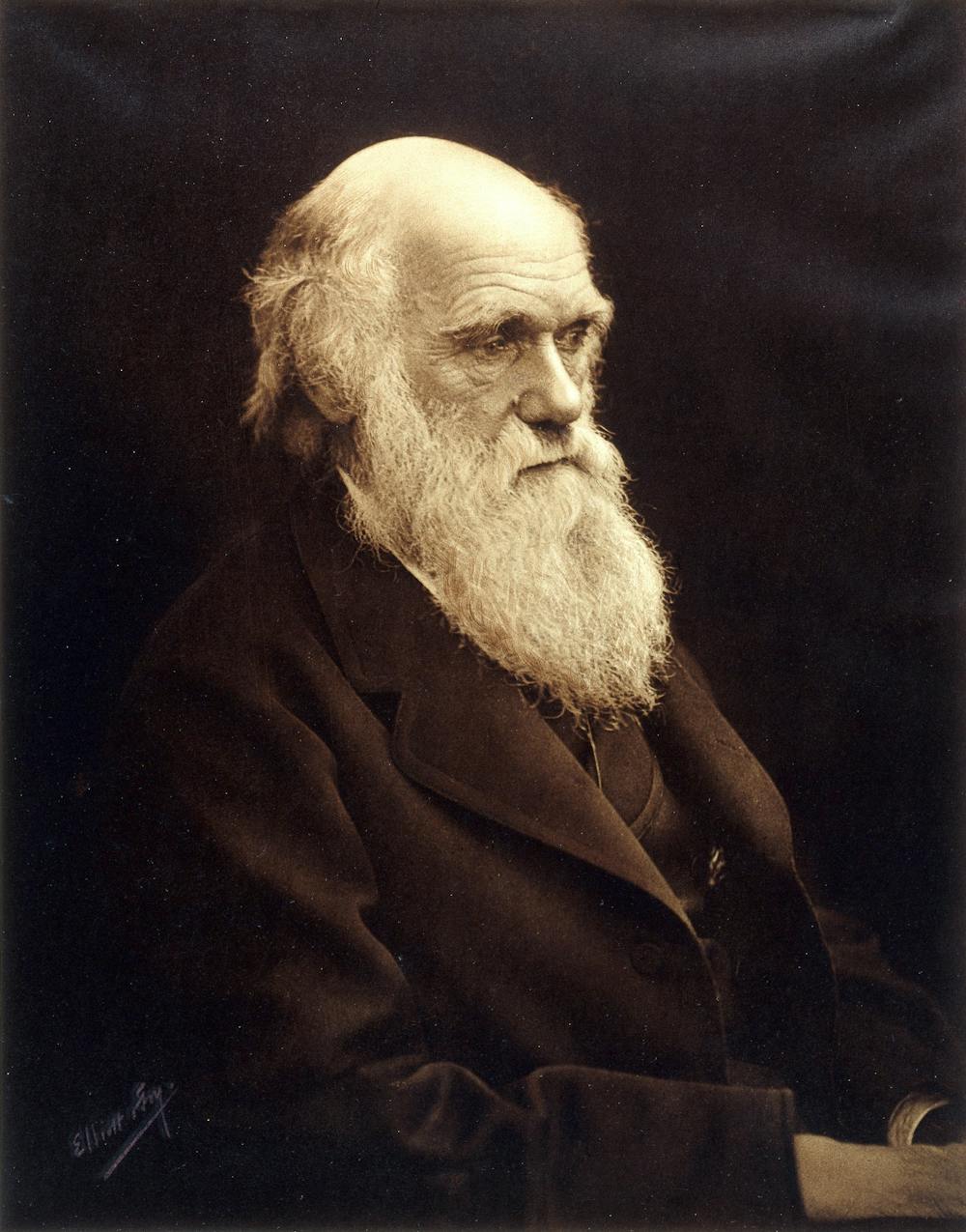
Charles Darwin. Wellcome Collection

Many of his controversial insights in relation to morality have been central to recent debates about “evolutionary ethics” among moral philosophers considering the relationship between our understanding of morality and evolution.

And his theory of mind and morals informed the development of multiple scientific disciplines in the 20th century, including evolutionary psychology, neuroscience, and psychoanalysis.

The same cannot be said about Darwin’s theory of sexual selection. While the idea of “female choice” has been revived several times, such as in Robert Trivers’s parental investment theory which argues the sex that takes on the primary caring role has the greatest choice in a mate, there is very little consensus on the relationship between mate choice and beauty.

Moreover, most evolutionists consider male combat — as Darwin wrote about in horned beetles — a form of natural selection, rather than sexual selection.

And when it comes to Darwin’s general views of race and gender, he very much appears a man of his time and social background.

Today, what is most compelling about The Descent of Man is how Darwin’s portrayal of humans was made within the context of a system of evolution that applied equally to all of nature. At a time when other evolutionists stressed humanity’s uniqueness, Darwin instead sought to uncover man’s “lowly nature”.

ref. Guide to the classics: Darwin’s The Descent of Man 150 years on — sex, race and our ‘lowly’ ape ancestry – https://theconversation.com/guide-to-the-classics-darwins-the-descent-of-man-150-years-on-sex-race-and-our-lowly-ape-ancestry-155305

Concern grows over PMC after shock office ‘closure’ and no director

Report by, and courtesy of, Café Pacific.


The Pacific Media Centre on 18 December 2020 … everything removed in early February 2021 without consultation with the stakeholders – VIDEO: Cafe Pacific.

PACIFIC journalists, media researchers, students and other stakeholders have expressed concern about the future of New Zealand’s Pacific Media Centre after more than two months without a director and a recent shock “closure” of the centre’s office.

The centre, founded in 2007 and described by an external review as a “jewel in the AUT crown”, had worked in its current Communication Studies office in the Sir Paul Reeves Building at the Auckland University of Technology’s city campus since it opened eight years ago.

It was abruptly emptied earlier this month of more than a decade of awards, books, files, publications, picture frames and taonga, including a traditional carved Papua New Guinean storyboard marking the opening of the centre by then Pacific Affairs Minister Luamanuvau Winnie Laban in October 2007.

The official line is that it is a “move” for the centre but there is confusion over the actual location of any replacement space.


It is understood that none of the centre’s staff or the PMC Advisory Board members were consulted, nor were they notified before the removal took place. None were present at the removal.

Concern has been expressed over the treatment of taonga – “highly disrespectful and inappropriate”, say some critics.

A social media posting criticising the action drew 150 responses and more than 80 negative comments – most of them from Pacific journalists, media personalities and current or former project students, some describing it as “academic vandalism”.

However, one defending comment said the materials had been relocated to a “new space”.

Television New Zealand Pacific affairs correspondent Barbara Dreaver responded by asking: “Do you want to show us all a photo of this new space you speak of?”

The AUT website still lists the PMC office as being located at the original WG1028 – not level 12 as being cited.

Among many criticisms, the doyen of Tongan publishing Kalafi Moala said: “That’s unbelievable … We are still trying to get over the Gestapo-style deportation of the USP vice-chancellor from Fiji, and now this? How shameful!”

Leading Vanuatu-based photojournalist Ben Bohane said: “Outrageous example of a disposable mentality, but your legacy will remain …”

Director of the Toda Peace Institute in Tokyo Professor Kevin Clements said:“This is terrible … but typical of NZ universities at the moment.”

Australian columnist Keith Jackson, a retired academic, journalist and former administrator in Papua New Guinea, said: “That’s the kind of behaviour that happens in the worst organisations … Damn shame … But you and I and hundreds of others know you are a consummate pro who built a terrific organisation that affected and informed thousands of people. Sori tru.”

Dr Jason MacLeod, an academic affiliated with the West Papua Project of the University of Sydney, said: “So sad. Another uni with no soul or sense of purpose beyond bottom lines.”

Seini Taumoepeau, an Oceanic creative consultant and former presenter at ABC Australia, said: “Oh, so sorry for the loss – this is heartbreaking.”

Ena Manureva, a Tahitian doctoral candidate, said: “This is shameful given the recommendations of the [recent harassment policies] “review” and AUT promising to do better and this is what you get – an utter failure and shame!

Ami Dhabuwala, a onetime Gujarat Guardian reporter and former PMC Bearing Witness climate project student, said: “This is heartbreaking! PMC was the only thing that got me through my time in AUT! PMC was the best thing that happened to me. Thank you so much for all the support and the work you do.”

Founding director Professor David Robie, who retired late last year, was also critical of the “unconscionable” closure/relocation, saying that no inventory had been drawn up and it was disrespectful of the research publications and artefacts gifted by partner organisations around the Asia-Pacific region.

Concern from collaborating Asia-Pacific groups worried about the status of their projects with PMC has been growing too as there has not been an appointment of an acting or substantive director in more than two months since Dr Robie retired.

The website PMC Online and its YouTube and Soundcloud offshoots for multimedia and the radio programme Southern Cross have not been updated since mid-December.


Pacific Media Centre’s office as featured on Facebook … active to empty. IMAGE: Cafe Pacific


This article was first published on Café Pacific.

SCHEDULED LIVE: Buchanan + Manning on private enterprise and the conflict market

A View from Afar: Thursday March 4 @ midday (NZDST / Wednesday, 6pm USEST) Paul G. Buchanan and Selwyn Manning will conduct a deep dive into the largely covert role of private enterprise in the intelligence, conflict, and war markets.

Most recently, New Zealanders discovered that its national airline had been in business with the Saudi Arabia military which has been waging war in Yemen. Air New Zealand also has contracts with five or six other countries including military entities within the United States, Australia and New Zealand.

Then there’s the emergence of fully-fledged private military companies like Blackwater and a host of other businesses that operate as armies for profit. New Zealanders are involved in this global reach. They include ex-military personnel (often ex-NZ Defence Force SAS soldiers) who are involved in a network of private security companies that do VIP protection and close security abroad.

And then there’s the emergence of private intelligence companies that arguably can operate without the checks and balances applied to government intelligence agencies.

Join Buchanan and Manning LIVE to discuss this issue.

COMMENT ON THIS DISCUSSION:

You can interact with the programme by clicking on one of these social media channels. Here are the links:

If you miss the LIVE Episode, you can see it as video-on-demand, and earlier episodes too, by checking out EveningReport.nz or, subscribe to the Evening Report podcast here.

West Papua needs urgent Red Cross intervention over crisis, says Wenda

Asia Pacific Report

The Indonesian state is causing a renewed humanitarian crisis in West Papua. Three young West Papuan men have been murdered by the Indonesian military in Intan Jaya Regency, and hundreds of residents have now fled the area in fear.

Indonesia must urgently allow the International Committee of the Red Cross and the UN High Commissioner for Human Rights into West Papua, says the leader of a “provisional” Papuan government.

The authorities in Jakarta have been blamed for “causing a renewed humanitarian crisis”.

Benny Wenda, interim president of the United Liberation Movement of West Papua provisional government, said in a statement that three young Papuan men had been murdered by the Indonesian military in Intan Jaya regency.

Hundreds of residents had now “fled the area in fear”.

Wenda also called on Pacific nations to pay close attention to what was happening in West Papua.

The three men, Janius Bagau were, Justinus Bagau and Soni Bagau, were alleged to have been tortured and killed on February 15 in a health centre where one of them was receiving treatment after being shot in the arm by a soldier.

Amnesty statement of concern
Amnesty Indonesia has issued an urgent statement of concern over the killings.

“Fearing more acts of violence, at least 600 men, women and children have been displaced by the military’s actions, seeking shelter in a Catholic compound,” said the statement.

“They join over 50,000 West Papuans internally displaced by Indonesian operations since December 2018. Over 400 have died from a lack of medical treatment and supplies. Indonesia is ethnically cleansing my people.”

Wenda said that people displaced by the operations would have no access to healthcare.

“They cannot tend to their crops. The children cannot go to school. In the middle of a pandemic, Indonesia continues to kill us West Papuans and force us from our homes by our thousands.

“The Indonesian state has imposed martial law, using the covid-19 crisis as a cover to conduct military operations.

“As the West Papua Council of Churches, the four Protestant denominations in our nation, put it in a statement on February 5, ‘The Land of Papua has become a military operation area’.

International monitoring
The ULMWP provisional government demanded that Indonesia immediately allow the international community into West Papua to assist civilians affected by military operations. It said:

  • Indonesia must allow the UN High Commissioner for Human Rights into West Papua to conduct an investigation into the human rights situation, in accordance with the call of 83 international states; and
  • Indonesia must invite the International Committee of the Red Cross into West Papua. The Red Cross was banned from entering in 2009.

“Regional leaders must pay attention to what is taking place in West Papua,” said Wenda.

“Australia, New Zealand, the Pacific Islands Forum: Indonesia is hiding behind claims of ‘sovereignty’ to crush my people.

“This is not an ‘internal matter’, this is a question of military occupation and colonialism.

“Our right to self-determination under international law is bullet-proof. Indonesia has lost the moral, political and legal argument, and has turned to the last thing it has left: brute violence.

“We need urgent action to protect my people.”

Print Friendly, PDF & Email

Article by AsiaPacificReport.nz

Facebook and Google deals may leave small publishers out in the cold

Asia Pacific Report

The federal government must act urgently to support small Australian news outlets that could be shut out of commercial deals with Facebook and Google under its News Media Bargaining Code, says the union for Australia’s journalists.

The Media, Entertainment and Arts Alliance (MEAA) said in a statement that it welcomed Facebook’s decision to no longer block news links in Australia following negotiations with the federal government over the code, but added that it was concerned about what this will mean for small media organisations and freelancers.

MEAA media federal president Marcus Strom said that while the way had now been cleared for the big media companies to strike commercial deals with Facebook and Google, it was unclear to what extent small outlets would benefit.

“For small publishers that have become reliant on Facebook to distribute their news, it will be a huge relief that the news tap has been turned back on,” Strom said.

“But they will remain at the mercy of Facebook and Google, which are both seeking to avoid mandatory regulation and will instead choose which media companies they come to agreements with.

“This will particularly affect small publishers if the Treasurer deems that Google and Facebook have done enough not to be named as respondents to the News Media Mandatory Code.

“For small publishers who fail to make side deals with the tech giants, they could be locked out, further entrenching the narrow ownership base of the Australian media market.

A ‘threat to misbehaving companies’
“We now face the strange possibility that the News Media Mandatory Code could be passed by Parliament and it applies to precisely no one. It will just sit in the Treasurer’s drawer as a threat to misbehaving digital companies, which could later counter threat to turn the tap back off.

“It shouldn’t be up to Facebook and Google to cherry pick and groom publishers it deems acceptable for side deals. Any code should be mandatory, uniform, predictable, and fair; not at the whim of technology executives”

Strom said there also remained no guarantees that any money raised for news media from the tech companies would be spent on journalism.

“Where is the commitment to stable funding to the public broadcasters? Where are the tax incentives to support public interest journalism? And where is the ongoing commitment to support rural, suburban and regional media, along with freelancers?’ he asked.

“While we support this Bill, MEAA has always maintained that the News Bargaining Code alone has never been a ‘silver bullet’ for small, regional, community and independent outlets.

“Throughout the long process of developing the code, going back to the original digital platforms inquiry by the ACCC, MEAA has called for a holistic suite of reforms to nurture a vibrant and diverse media ecosystem.

“Beyond meaningfully addressing the need to ensure digital platforms pay for the news content they carry, there are a range of discrete measures that can be adopted in Australia to maintain the viability of media company operations and, critically, encourage new entrants.

Reforms called for
Among the reforms that were called for by the MEAA were:

  • extending the operation of the Public Interest News Gathering programme to become an annual round of funding;
  • the adoption by the federal government of critical measures which have been used overseas, such as directly funding local news, offering taxation rebates and incentives;
  • part-funding editorial positions;
  • and resetting government assistance to ensure funding is available for new media organisations, as well as traditional media companies.
Print Friendly, PDF & Email

Article by AsiaPacificReport.nz

When vaccinating 26 million Australians, expect a mistake or two. But we can minimise the risk of repeating Queensland’s overdose incident

Source: The Conversation (Au and NZ) – By Nigel William Crawford, Associate Professor, Murdoch Children’s Research Institute

It emerged today that two aged-care residents in Brisbane were given an incorrect dose of the Pfizer vaccine — more than the amount recommended.

The 88-year-old man and 94-year-old woman were receiving their vaccinations yesterday as part of the first phase of Australia’s vaccine rollout, which began this week.

Both residents are being monitored, but haven’t shown any signs of adverse reactions so far.

Health Minister Greg Hunt has revealed the doctor who administered the vaccines had not completed the proper training. The doctor has been stood down from his position while the error is investigated.

But how did this mistake happen, and how can we aim to minimise the risk of it happening again?

The challenge of a multi-dose vial

We don’t yet know exactly what happened, as the incident is still under investigation. But it’s likely the doctor gave the patients either the whole or a larger part of the multi-dose vial than indicated.

COVID vaccines come in vials containing several doses. A vial of the Pfizer vaccine contains five or potentially six doses, and health-care staff need to extract individual doses from the vial. This is different to most other vaccines, which come in single-dose vials.

Multi-dose vials are useful in a pandemic situation. They allow manufacturers to distribute more vaccine, more easily and rapidly around the world.

We’ve actually seen this kind of mistake before — we call it a multi-dose vial error. It can happen if clinicians are not careful with the extraction, or haven’t fully understood the education and training with regards to multi-dose vials.

Other countries, such as Israel and Germany, have reported these kinds of incidents during their COVID vaccine rollouts. But similarly, there haven’t been serious adverse effects reported to date for the patients involved.

We (SAEFVIC — the Victorian vaccine safety service) reported on a similar case in Melbourne with the H1N1 (swine flu) vaccine in 2010, which came in a vial containing ten doses of vaccine. A person was accidentally given the whole vial (5 millilitres, ten times the recommended 0.5ml). They were monitored and experienced a small local reaction, but no other side-effects.


Read more: How the Pfizer COVID vaccine gets from the freezer into your arm


Safety isn’t a significant concern here

In the early phase 1 and 2 vaccine clinical trials, scientists test a variety of dose sizes to determine what dose delivers the best immune response, while also not using more vaccine than necessary. This helps determine what dose is then used in the phase 3 efficacy trials.

In clinical trials for BNT162b2 (Pfizer’s COVID vaccine), some participants received more than three times the dose the Therapeutic Goods Administration (TGA) has provisionally approved (30 micrograms). These participants didn’t experience adverse reactions much more so than those who received the smaller doses, apart from one participant who had local pain at the injection site.

Although you can overdose on medications, vaccines are a bit different. I often say “you can’t have too much of a good thing” when it comes to vaccines. Really large amounts might produce challenges, but we are reassured by the phase 1 and 2 clinical trial data.

Even if these aged-care residents received up to five or six times the recommended dose (if they did in fact receive a whole 1.8ml vial), this is still a relatively small amount and not likely to be harmful. Of course, it’s still important to monitor them closely.

It’s possible any local side-effects, such as pain at the injection site or fever, may be slightly heightened with a larger dose. But the information we have from clinical trials, and the reports from other countries, tells us we have no reason to be concerned about anything more serious in the short or long term.

Elderly person getting vaccinated by health worker wearing gloves
Aged-care residents are among the first groups to be vaccinated in Australia. Shutterstock

What happens now?

Even if these “overdoses” are not likely to be harmful, it’s always safest to stick to the recommended dose. We don’t want to see an incident like this repeated. It may also undermine confidence in the vaccine rollout, and where COVID vaccines are a precious resource, it’s important we try not to waste a single dose.

In such a large-scale vaccine program, human errors are bound to happen occasionally. It’s very positive that a nurse reportedly stepped in on noticing this mistake, and that we’ve seen open disclosure around the incident.


Read more: Open disclosure: why doctors should be honest about errors


The key now is what action we’re going to take to minimise the risk of this happening again.

Clinicians in Australia are not accustomed in their usual practice to delivering vaccines from multi-dose vials, meaning there’s a greater risk of error. This incident should be the impetus to make sure everyone administering vaccines has completed the required training, including the multi-dose vial component. This should be documented via their Australian Health Practitioner Regulation Agency (AHPRA) registration number (where applicable).

This event should also prompt us to look at how we capture and report these sorts of errors in Australia. The focus on vaccine safety surveillance is, for the most part, on patients who have had an adverse event following immunisation — these are summarised nationally by the TGA.

Not all vaccine errors will lead to an adverse reaction, but we need to ensure we also have a systematic way to capture any errors in administering the vaccines. The newly established Vaccine Operation Centre, a federal government initiative, is in a good place to capture and collate this information.


Read more: How do we know the COVID vaccine won’t have long-term side-effects?


In the context of global vaccinations against COVID-19, multi-dose vials are the only way forward. The AstraZeneca vaccine will also come in multi-dose vials. So this is something we must do the best we can to get right.

ref. When vaccinating 26 million Australians, expect a mistake or two. But we can minimise the risk of repeating Queensland’s overdose incident – https://theconversation.com/when-vaccinating-26-million-australians-expect-a-mistake-or-two-but-we-can-minimise-the-risk-of-repeating-queenslands-overdose-incident-155945

Keith Rankin Chart Analysis – Covid-19: Where are the New Cases now?

Cases: Lots of little countries exposed to Europe. Chart by Keith Rankin.

Analysis – Keith Rankin.

Cases: Lots of little countries exposed to Europe. Chart by Keith Rankin.

It is not poor countries with poor access to vaccines that are getting the most new cases. But there are a number of very small countries in the Caribbean Sea and the Indian Ocean which are or were European colonial dependencies, and are very exposed to European covid spreaders. San Marino and Andorra still feature, as they did throughout 2020. While both are now close to having herd immunity status, and not because of the vaccine, they are still getting lots of new cases.

Cases, excluding the little countries: EU countries – and Israel – still dominate. Chart by Keith Rankin.

When we remove the little countries, we see a chart dominated by Europe. There is a major new outbreak in Czechia, which should probably be regarded today as part of Western Europe.

We must note the strong showing – in all the wrong ways – of Israel. Israel was supposed to be the poster child of the vaccination program. What we are probably seeing there is complacency re all the other behaviours known to restrict the spread of Covid19. We should also note that the chart also includes three of Israel’s close neighbours – including Palestine – and three other Middle Eastern countries.

Seventeen of the countries shown in this chart are European Union (EU) members. The chart also includes four non‑EU European countries. France is one major EU country that appears to be embarking on a new wave of infection. (We note, in the news, the concerning incidence of Covid19 in the French rugby team.) Sweden is another. While the European Union may have been slower than necessary to start its vaccination program, the ongoing new infection rate there is a matter of deep concern. So is the ongoing presence of the USA in this chart.

(In New Zealand we are very fearful of infectious diseases, but not at all fearful of private debt. The mercantilist countries of Europe are the opposite, complacent about infectious diseases but very fearful of private debt!)

Deaths: Whoa, Gibraltar! Chart by Keith Rankin.

Little Gibraltar – part of the United Kingdom, and presumably now facing border issues with the European Union much as Northern Ireland does – now has the highest incidence of Covid19 of all countries in the world. 0.27% of Gibraltans have died of Covid19; which translates to a 54 percent infection rate, on the assumption that the case fatality rate of Covid19 is 0.5%.

The United Kingdom still has very high per capita death rates – though well below its January peak. Based on the European and Israeli evidence, I would be inclined to believe that the fall off of new cases in the United Kingdom is due more to its harsh (by European standards) lockdown, than to its advanced vaccination programme; though undoubtedly the vaccinations are having some effect in bringing the death rate down.

Deaths, excluding the little countries: As expected, Eastern Europe leads. Chart by Keith Rankin.

Fifteen of the countries in this chart are in Eastern Europe (counting Czechia as eastern). Many of the others are in Western Europe, including Germany which has had stubbornly high covid death rates this time around.

The only African country in any of these four charts is in this last chart; that’s Botswana, a comparatively prosperous country. South Africa does not show in these charts, despite the publicity given to the ‘South African variant’ of SARS‑Cov2. I am not sure that we can yet attribute South Africa’s apparent success to the vaccinations. Indeed South Africa partially suspended its vaccine programme due to concerns that one of the vaccines was not very effective re the South African variant.

Podcast host, DJ …. how the much lampooned Paris Hilton has rewritten the celebrity script

Source: The Conversation (Au and NZ) – By Corey Martin, PhD Candidate, Swinburne University of Technology

Paris Hilton — model, reality TV star, actor, pop singer and DJ — gained worldwide notoriety in 2003 because of a leaked sex tape. Over the years she has been viciously parodied and lampooned, famously on South Park and in World of Warcraft.

But she has endured — and this week launched a new podcast, This Is Paris.

In the first episode, Hilton and her co-host, US television personality Hunter March, discuss love, commitment and hard work. Hilton’s fiance, Carter Reum also appears — apparently as a favour to her “because you know I hate this stuff”. The episode ends with a modern advice column in which Hilton responds to fan voicemail questions, including “how do I look hot on Zoom?”

In her recent tell-all documentary of the same name Hilton opened up about her difficult experiences growing up in the spotlight and alleged she had endured traumatic abuse at boarding school as a teenager.

The treatment of female celebrities

As with Framing Britney Spears (2021), the documentary prompted timely discussion of the treatment of women celebrities and their struggle to maintain agency within the structures of Hollywood and the media.

Hilton modelling for Brazilian designer Colcci in 2004. AP Photo/Renzo Gostoli

Born in 1981, Hilton was first known as an heiress to the Hilton hotels empire, founded by her great-grandfather. She began modelling as a child, and by the age of 18 was a socialite regularly photographed in the A-list New York party scene.

The 1990s has been dubbed “the tabloid decade”, and along with celebrity compatriots such as Lindsay Lohan and Tara Reid, Hilton was ruthlessly torn down for her perceived moral failings. Notably, it was young women who bore the brunt of this criticism — not men who behaved “badly”.

When she was 22, in 2003, internet pornography company Marvad Corp leaked a sex tape of Hilton and her then-boyfriend Richard Salomon (released as One Night in Paris in 2004).

Hilton sued the internet company she claimed illegally distributed the video (the case was later dismissed). In her documentary, she spoke about its release:

That was a private moment with a teenage girl not in her right headspace. But everyone was watching it and laughing, like it’s something funny. If that happened today it would not be the same story at all. But they made me the bad person. Like I did something bad.

It was my first real relationship. Eighteen. I was so in love with him and I wanted to make him happy. And I just remember him pulling out the camera. And he was kind of pressuring me into it.

But it was this leaked sex tape that ultimately helped solidify her status as a celebrity. In 2003, Hilton and fellow socialite Nicole Richie began filming The Simple Life (2003–2007), right when reality TV’s popularity was soaring.

The show, following Hilton and Richie as they attempted working-class jobs such as farming and fast food service, drew 13 million viewers the night it premiered. This humiliation of the privileged Hilton gave audiences an opportunity to recognise her for more than her tabloid presence.

She became a celebrity who was famous for being famous.

Changing with the times

Over the years, Hilton morphed into a legitimate celebrity through her sheer deftness at embodying — and doing the work of — celebrity itself.

She released her first fragrance in 2004, and her debut single in 2006. If bitterly, she even received some critical praise for her titular debut album: “it’s really not all that bad,” said one critic.

She forayed into acting, with bit parts on The O.C. and Veronica Mars, reaching a peak when she starred in the schlocky horror film House of Wax (2005). Like her pop album, her performance in this film was received with a combination of ridicule and begrudging appreciation.

In 2012, the year electronic dance music (EDM) was named the fastest growing mainstream music genre in the US, Hilton began her lucrative EDM DJ endeavours earning up to US$1 million per 90 minute set. She continues to DJ, including at the reputable Tomorrowland festival in Belgium in 2019.

Hilton DJing at the Ministerium nightclub, Odessa, Ukraine in 2016. Shutterstock

Up close and personal

In the current digital media epoch, “authenticity” is required of celebrities. Generating a persona that allows her fans a seemingly real connection, Hilton is once again making savvy use of the zeitgeist.

With a tone that feels self-aware and bold, Hilton’s new podcast is reflective not only of her experiences as a celebrity, but also her resilience.


Read more: Michelle Obama, podcast host: how podcasting became a multi-billion dollar industry


The overtly constructed nature of many of Hilton’s former pursuits might attract little admiration in today’s social media spaces — and as an heiress, she is undoubtedly from a privileged background.

Yet her current intimate mode of celebrity is likely to lengthen her celebrity shelf life. As she strives for “authenticity”, Hilton is again rewriting her own celebrity script.

ref. Podcast host, DJ …. how the much lampooned Paris Hilton has rewritten the celebrity script – https://theconversation.com/podcast-host-dj-how-the-much-lampooned-paris-hilton-has-rewritten-the-celebrity-script-155304

New Zealand’s COVID-19 stimulus is a ‘lost opportunity’ to move towards a low-emissions economy

Source: The Conversation (Au and NZ) – By David Hall, Senior Researcher in Politics, Auckland University of Technology

In every crisis there is opportunity. Even during New Zealand’s strictest COVID-19 lockdown last year, many people felt the pandemic offered a chance to tackle other global crises, especially climate change.

The government responded to the pandemic with an extraordinary package of monetary and fiscal stimulus, most notably a NZ$50 billion allocation to the COVID-19 response and recovery fund.

But did the government embrace the call to “build back better” by directing that stimulus toward the low-emission economy or have these financial flows favoured carbon-intensive incumbents, locking us into an economic system implicated in making pandemics and other disasters more probable?

We partnered with international research network Energy Policy Tracker (EPT) to compare New Zealand’s response against other major countries.

We found New Zealand sits in the middle of the pack, with room to improve for future policy.

A pie chart which shows that New Zealand has committed $1.14 billion to fossil fuels and $1.14 billion to clean energy
Energy Policy Tracker, CC BY-ND

The good and bad of energy policy

The Energy Policy Tracker focuses on energy policy but excludes other sectors, such as land use or adaptation. It classifies COVID-19-related funding according to energy type, and it uses three buckets:

  • policy that supports the fossil fuel economy
  • policy that supports clean energy
  • and policy that supports other energy, such as nuclear and biofuels.

The overall balance for Aotearoa New Zealand was 44.6% fossil fuel-related, 54.5% clean energy, and less than 1% other energy. By global standards, that is a fairly middling performance.

Among the countries the Energy Policy Tracker has analysed, the global average sees nearly one-half of economic stimulus going to fossil fuels, over one-third to clean energy, and one-sixth to other energy.

New Zealand’s performance looks increasingly ambivalent when we drop down to the next level of analysis.


Read more: Rich and poor don’t recover equally from epidemics. Rebuilding fairly will be a global challenge


The Energy Policy Tracker also analyses the environmental conditions placed on energy policy. On the one hand, it asks whether clean-energy policy involves major environmental trade-offs, such as fuel mixes that include oil or gas, or large hydropower projects that create emissions through construction and ecological disruption.

On the other hand, it asks whether fossil fuel-related policy comes with “green strings attached” that steer recipients toward cleaner long-term outcomes.

One example is the French government’s rescue package for Air France, which involved €7 billion in loans. It also requires Air France to renew its fleet with more fuel-efficient planes to reduce emissions, and to cease a few domestic routes that have transport alternatives like rail. Through policy innovations like this, about two-thirds of France’s fossil fuel-related stimulus is conditional.

Plane flying over Paris, with eiffel tower in the background
Air France is expected to stop routes where low-emission transport alternatives exist. Shutterstock/SAHACHATZ

Contrast this with New Zealand where one-twelfth of fossil fuel-related spending is conditional, such as road upgrades that incorporate cycling and pedestrian infrastructure. Meanwhile, 12 times as much, more than $1.4 billion, supports fossil fuel infrastructure unconditionally, much of it committed to Air New Zealand’s $900 million standby loan facility.

This is a lost opportunity to lock in the transition to a low-emissions economy.


Read more: New Zealand’s COVID-19 budget delivers on one crisis, but largely leaves climate change for another day


This is also mirrored on the other side of the ledger. Nearly $2 billion was spent on clean energy, but only one-quarter of this was unconditional. Big ticket items like wind farms are absent.

The majority went to clean conditional spending, such as investment in rail, ferry and bus infrastructure. Although these forms of public transport are more energy efficient, if they rely on fossil fuels they also emit carbon dioxide.

Compare that with the UK where relative support for unconditional clean energy policy was twice as high, including big commitments to energy efficiency, and walking and cycling infrastructure.

A pie chart which shows how much the UK's post-Covid-19 stimulus has committed to fossil fuels or clean energy
Energy Policy Tracker, CC BY-ND

Takeaways for the next crisis

Given New Zealand will face further shocks in future, what lessons should we learn to improve our response?

Firstly, New Zealand is missing a trick on policy innovation. Some other countries are doing better, even in the midst of an emergency, to take an integrated approach that aligns crisis measures with long-term objectives.

Policy makers should be less reactive and more anticipatory. They should be working to create a climate-aligned investment pipeline, which is unambiguously weighted toward clean energy, with “green strings attached” wherever appropriate.

Secondly, the government should adopt a responsible investment framework, which prioritises low-emissions projects and screens out climate-misaligned investments.

In an emergency, decision making is often suboptimal because there is little time for due diligence. Some “shovel-ready” infrastructure projects ought to have been excluded on climate change grounds, including the Muggeridge Pump Station.

Thirdly, there is cause to be positive about New Zealand’s overall direction. Our strong baseline of renewable electricity means that untargeted economic stimulus is soaked up by a relatively clean energy system. Also, there are substantial commitments to non-energy climate policy, most notably the $1.245 billion Jobs for Nature programme.

The rudiments of a project pipeline have emerged through initiatives like the Provincial Growth Fund and various energy-related strategies, which were accelerated when the pandemic struck.

Consider, for example, the $18 million commitment to the Whale Trail, a 194km cycling and walking trail from Picton to Kaikōura, which enables travellers to explore their own backyard by climate-friendly means. If this is what climate-aligned infrastructure looks like, it is an investment we’re unlikely to regret.

ref. New Zealand’s COVID-19 stimulus is a ‘lost opportunity’ to move towards a low-emissions economy – https://theconversation.com/new-zealands-covid-19-stimulus-is-a-lost-opportunity-to-move-towards-a-low-emissions-economy-155838

This week’s changes are a win for Facebook, Google and the government — but what was lost along the way?

Source: The Conversation (Au and NZ) – By Rob Nicholls, Associate professor in regulation and governance, UNSW

After almost a year of heated discussion about the News Media Bargaining Code, there will shortly be a new law of the land – one that’s unlikely to be applied to the platforms it was intended to reign in. But that’s not to say it hasn’t done its job.

With some final tweaks expected to the draft legislation, Facebook on Tuesday announced it would restore news for Australian users and strike up commercial agreements with local publishers. It signed its first deal with Seven West media yesterday.

Google has already done deals with News Corp, Nine Fairfax, Seven West Media, The Guardian and regional news company ACM, turning back on its initial threat to pull Google Search from Australia.

Meanwhile, Facebook threatened to stop providing Australians access to news — and did (while also blocking domestic violence helplines, children’s cancer charities and the Royal Australian College of Physicians).

In return, the federal government said it would stop all advertising campaigns on the platform. Interestingly, it’s this move which most likely “assisted” the recent negotiated outcome with Facebook.

The amendments

The changes made to the code — other than the opportunity to sell advertising to the Commonwealth again — were small, but important. It’s worth remembering the code’s aim was to balance out the bargaining imbalance between big tech platforms and news media businesses.

Essentially, it provides a mechanism to force a deal when a commercial outcome can’t be reached voluntarily. The code is mandatory, since the Australian Competition and Consumer Commission (ACCC) took the view the platforms would not otherwise get to a commercial offer, let alone a commercial settlement.

As set out by Treasurer Josh Frydenberg, there were four changes made that have met Facebook’s needs:

  1. before a digital platform is made subject to the code by being “designated”, the minister must first take into account whether it has reached commercial agreements with news media businesses

  2. the government must give at least one month’s notice of designation to any platform it intends to make subject to the code

  3. the non-discrimination provisions (crafted as an anti-avoidance mechanism) will not be triggered in respect to remuneration amounts or commercial outcomes that arise in the course of usual business practice

  4. final offer arbitration will be a last resort and should be preceded by good faith mediation, provided this lasts no longer than two months.


Read more: Feel like breaking up with Facebook? Maybe it’s time for a social media spring clean


A major change?

The above amendments made by the government are not major, in terms of changing the scope of the News Media Bargaining Code. However, they do include some important clarifications regarding how the code will operate.

Both Google and Facebook were very concerned the approach of “final offer arbitration” would adversely affect them. In this, if a deal couldn’t be struck, both the platform and media business would have to present their offers and defer to an arbitrator to choose one.

Google and Facebook initially argued for “commercial arbitration”, where the arbitrator acts with more discretion. Commercial arbitration tends to favour the party with the most information or bargaining power.

The compromise of requiring good faith mediation before any compulsory arbitration (whether commercial or final offer arbitration) is a classic dispute resolution approach.

Win some, lose some

The News Media Bargaining Code has changed in a way that is a compromise, but hasn’t lost its original intention. The process of negotiating changes to the code has revealed the private values of Facebook, Google and any similar parties that could be impacted by the code.

The exposure draft, the introduction of the Bill, the Senate committee and Facebook’s petulant actions: all have acted to identify a financial outcome for each of Google, Facebook and the Australian news publishers.

The process has been a classic, but painful, exchange of information that would otherwise have been held close to the players’ respective chests.

For Google, it has shown Google Search must remain untouched, even if this means forking out millions in a matter of days. For Facebook, it has demonstrated that rapidly changing social media offerings (such as trying to remove news in Australia) can’t be done without major complications.

It may be too soon to judge whether Facebook’s approach of taking its lobbying to the brink worked in its favour, or to its detriment. The platform’s first interactions with the new UK Digital Markets Unit (a regulatory regime targeted at big tech firms) will likely shed some light.

And finally, the ACCC can claim it was right in its initial recommendation; after a long drought, there will soon be money flowing to public interest journalism.


Read more: Why Google is now funnelling millions into media outlets, as Facebook pulls news for Australia


Who pays?

The intention of the News Media Bargaining Code was to create an environment where commercial deals would be struck between the platforms and news media businesses in Australia.

Now, under several deals, Google and Facebook will pay Australian news media businesses tens of millions of dollars each year for locally created content.

According to an Australian Financial Review report, Facebook Australia paid a little under A$17 million in tax in 2019. Shutterstock

There’s also a reasonable expectation regional news businesses will receive funds in exchange for regional news — although a clear standard offer is yet to be made by the platforms.

This development will not change the inevitable shift of the news business model to a largely digital environment. But it does balance the value proposition between news creation and news curation.

It has also made clear to Facebook, Google and news media businesses that they exist and operate in a symbiosis. The status of this relationship? Well, it’s complicated.


Read more: Google’s and Facebook’s loud appeal to users over the news media bargaining code shows a lack of political power


ref. This week’s changes are a win for Facebook, Google and the government — but what was lost along the way? – https://theconversation.com/this-weeks-changes-are-a-win-for-facebook-google-and-the-government-but-what-was-lost-along-the-way-155865

This week’s changes are a win for Facebook, Google and the government — but here’s what was lost along the way

Source: The Conversation (Au and NZ) – By Rob Nicholls, Associate professor in regulation and governance, UNSW

After almost a year of heated discussion about the News Media Bargaining Code, there will shortly be a new law of the land – one that’s unlikely to be applied to the platforms it was intended to reign in. But that’s not to say it hasn’t done its job.

With some final tweaks expected to the draft legislation, Facebook on Tuesday announced it would restore news for Australian users and strike up commercial agreements with local publishers. It signed its first deal with Seven West media yesterday.

Google has already done deals with News Corp, Nine Fairfax, Seven West Media, The Guardian and regional news company ACM, turning back on its initial threat to pull Google Search from Australia.

Meanwhile, Facebook threatened to stop providing Australians access to news — and did (while also blocking domestic violence helplines, children’s cancer charities and the Royal Australian College of Physicians).

In return, the federal government said it would stop all advertising campaigns on the platform. Interestingly, it’s this move which most likely “assisted” the recent negotiated outcome with Facebook.

The amendments

The changes made to the code — other than the opportunity to sell advertising to the Commonwealth again — were small, but important. It’s worth remembering the code’s aim was to balance out the bargaining imbalance between big tech platforms and news media businesses.

Essentially, it provides a mechanism to force a deal when a commercial outcome can’t be reached voluntarily. The code is mandatory, since the Australian Competition and Consumer Commission (ACCC) took the view the platforms would not otherwise get to a commercial offer, let alone a commercial settlement.

As set out by Treasurer Josh Frydenberg, there were four changes made that have met Facebook’s needs:

  1. before a digital platform is made subject to the code by being “designated”, the minister must first take into account whether it has reached commercial agreements with news media businesses

  2. the government must give at least one month’s notice of designation to any platform it intends to make subject to the code

  3. the non-discrimination provisions (crafted as an anti-avoidance mechanism) will not be triggered in respect to remuneration amounts or commercial outcomes that arise in the course of usual business practice

  4. final offer arbitration will be a last resort and should be preceded by good faith mediation, provided this lasts no longer than two months.


Read more: Feel like breaking up with Facebook? Maybe it’s time for a social media spring clean


A major change?

The above amendments made by the government are not major, in terms of changing the scope of the News Media Bargaining Code. However, they do include some important clarifications regarding how the code will operate.

Both Google and Facebook were very concerned the approach of “final offer arbitration” would adversely affect them. In this, if a deal couldn’t be struck, both the platform and media business would have to present their offers and defer to an arbitrator to choose one.

Google and Facebook initially argued for “commercial arbitration”, where the arbitrator acts with more discretion. Commercial arbitration tends to favour the party with the most information or bargaining power.

The compromise of requiring good faith mediation before any compulsory arbitration (whether commercial or final offer arbitration) is a classic dispute resolution approach.

Win some, lose some

The News Media Bargaining Code has changed in a way that is a compromise, but hasn’t lost its original intention. The process of negotiating changes to the code has revealed the private values of Facebook, Google and any similar parties that could be impacted by the code.

The exposure draft, the introduction of the Bill, the Senate committee and Facebook’s petulant actions: all have acted to identify a financial outcome for each of Google, Facebook and the Australian news publishers.

The process has been a classic, but painful, exchange of information that would otherwise have been held close to the players’ respective chests.

For Google, it has shown Google Search must remain untouched, even if this means forking out millions in a matter of days. For Facebook, it has demonstrated that rapidly changing social media offerings (such as trying to remove news in Australia) can’t be done without major complications.

It may be too soon to judge whether Facebook’s approach of taking its lobbying to the brink worked in its favour, or to its detriment. The platform’s first interactions with the new UK Digital Markets Unit (a regulatory regime targeted at big tech firms) will likely shed some light.

And finally, the ACCC can claim it was right in its initial recommendation; after a long drought, there will soon be money flowing to public interest journalism.


Read more: Why Google is now funnelling millions into media outlets, as Facebook pulls news for Australia


Who pays?

The intention of the News Media Bargaining Code was to create an environment where commercial deals would be struck between the platforms and news media businesses in Australia.

Now, under several deals, Google and Facebook will pay Australian news media businesses tens of millions of dollars each year for locally created content.

According to an Australian Financial Review report, Facebook Australia paid a little under A$17 million in tax in 2019. Shutterstock

There’s also a reasonable expectation regional news businesses will receive funds in exchange for regional news — although a clear standard offer is yet to be made by the platforms.

This development will not change the inevitable shift of the news business model to a largely digital environment. But it does balance the value proposition between news creation and news curation.

It has also made clear to Facebook, Google and news media businesses that they exist and operate in a symbiosis. The status of this relationship? Well, it’s complicated.


Read more: Google’s and Facebook’s loud appeal to users over the news media bargaining code shows a lack of political power


ref. This week’s changes are a win for Facebook, Google and the government — but here’s what was lost along the way – https://theconversation.com/this-weeks-changes-are-a-win-for-facebook-google-and-the-government-but-heres-what-was-lost-along-the-way-155865

Policing by consent is not ‘woke’ — it is fundamental to a democratic society

Source: The Conversation (Au and NZ) – By Bethan Greener, Associate Professor of Politics, Massey University

National Party justice spokesperson Simon Bridges has accused New Zealand Police Commissioner Andrew Coster of being a “wokester” whose commitment to “policing by consent” is out of step with the law.

The claims were in response to Coster’s avowed belief that police need to engage with the community in a nuanced manner, which includes the wider principle of policing by consent. Coster has also recently said the police “can’t arrest our way out of the gang problem”.

But Bridges should know consent is a fundamental requirement for democratic policing. In the absence of public consent, we would have an occupying force, not a police force.

Modern police forces in liberal democratic states are a recent creation. Unlike the standing armies that formed alongside the sovereign state in the 1600s, policing (at least in the way we understand it in Western democracies) came late to the fray.

Policing by consent

As European monarchs struggled to imbue diverse regional groups with a sense of nationalism and national loyalty, countries such as France, Spain and Italy created a more militarised and mobile “continental” model of policing. These utilised “gens d’armes” — armed people — to establish constabulary forces.

In the UK, however, a different model of policing evolved. In the early 1800s, citing disorder and rising crime, British Home Secretary Robert Peel argued for the creation of a unified policing force that would seek to use minimum force to maintain law and order.

A nine-point summary of Peel’s 1829 instructions captures his core principles, including an emphasis on the need to prevent crime and disorder.

Seven of the principles emphasise, in different ways, the need for the public to approve of and co-operate with the police for them to successfully carry out their mission.

This is the heart of the concept of policing by consent: the public as a whole gives consent to the idea that some members of the community are trusted to have and exercise the powers required to keep the peace on behalf of the community.

Police commissioner Andrew Coster in uniform
Police Commissioner Andrew Coster: consent is fundamental. GettyImages

Robert Peel’s legacy

These ideas were taken further by the UK’s first police commissioners, Charles Rowan and Richard Mayne, who were charged with developing a metropolitan police force for London.

Statue of Sir Robert Peel
Statue of Sir Robert Peel in Cheshire, England. www.shutterstock.com

England was a constitutional monarchy, with a representative assembly, which meant attempts to build a police force had to secure the passage of the requisite bills through parliament, as well as overcome any public scepticism.

Rowan and Mayne therefore made concerted attempts to secure the legitimacy of their nascent police force in the eyes of the populace. In time, this process led to the ideal of the English police officer – the “British Bobby” who lives in, protects and serves their community.

This idea of consent remains fundamental to policing in the UK as well as the countries that adopted this Peelian model, including New Zealand.


Read more: Black Lives Matter outrage must drive police reform in Aotearoa-New Zealand too


So the police have, at least in theory, always been based on a philosophy of policing by consent. This is not new or “woke”. It is nonetheless interesting that the New Zealand police have recently reiterated the centrality of these principles to their work and ethos.

As well as Commissioner Coster, Police Association president Chris Cahill has directly referenced Peelian principles in emphasising the importance of consent:

Of Peel’s nine principles, I believe the second to be the most important and the foundation of a fair and accepted police service – “to recognise always that the power of the police to fulfil their functions and duties is dependent on public approval of their existence, actions and behaviour, and the ability to secure and maintain public respect”.

Approval and consent

Yet while the police in New Zealand have typically enjoyed strong approval ratings, it is also clear this has differed across various communities.

The New Zealand Police is the descendant of the Armed Constabulary that played a role fighting against certain iwi in the 19th-century colonial wars rather than providing them with a citizen-based consensual police system.

Contemporary statistics still show an imbalance in policing of and for Māori. Prominent Māori activists have long called for and continue to call for reform of the justice system as a whole.


Read more: Trust, risk and routine arming: the killing of a frontline officer challenges New Zealand police practice


Coster’s emphasis on thoughtfully engaging with different communities appears to be an attempt to ensure all parts of New Zealand society approve of the police, and consent to be policed by them.

Moreover, recent research into justice and policing suggests that heavily punitive approaches, except in very select cases, are expensive and counter-productive. Research also increasingly demonstrates that incarceration does not significantly affect crime and disorder statistics.

An agency that is, to quote Bridges, “much less about arrest, much less about catching gangs and criminals”, but which is more about preventing criminality in the first place, is therefore entirely in step with the fundamental ethos of democratic policing.

ref. Policing by consent is not ‘woke’ — it is fundamental to a democratic society – https://theconversation.com/policing-by-consent-is-not-woke-it-is-fundamental-to-a-democratic-society-155866

Unwelcoming and reluctant to help: bushfire recovery hasn’t considered Aboriginal culture — but things are finally starting to change

Source: The Conversation (Au and NZ) – By Bhiamie Williamson, Research Associate & PhD Candidate, Australian National University

Disaster resilience and recovery conversations are filled with mentions of “community”, but collapsing various groups together this way fails to acknowledge that people experience disasters differently.

For Indigenous peoples — whose experiences are shaped by vastly different historical and cultural contexts to non-Indigenous Australians — the lack of understanding or cultural safety demonstrated by government agencies and non-government organisations created additional trauma during the Black Summer bushfires.

The final report of the NSW bushfire inquiry found:

In some communities Aboriginal people felt unwelcome at evacuation centres and in some cases support services were reluctant to provide immediate relief… These experiences compounded the trauma they had already experienced as a result of the bush fires.

The Victorian government’s After the Flames report also found:

For Aboriginal people, relationships to Country, culture and community are not only interconnected, they are intrinsically linked to one’s identity. This means that when one of these foundations is impacted by a disaster, Aboriginal Victorians experience unique pain and loss.

In response to these findings, Bushfire Recovery Victoria has identified a number of unique issues faced by Indigenous peoples, including inappropriate funding models and reluctance to engage with support services due to experiences of racism.

Equally significant, Bushfire Recovery Victoria has identified the need to embed Aboriginal culture and healing in its programs.

Acknowledging the trauma associated with encounters between Indigenous people and culturally unsafe recovery agencies during Black Summer — and the long-overdue recognition of the place of culture and healing in disaster recovery — is a positive step.

This signifies the sector’s increasing willingness to address the systemic neglect of the needs of Indigenous peoples.


Read more: 1 in 10 children affected by bushfires is Indigenous. We’ve been ignoring them for too long


Indigenous healing and disaster recovery

In recent times, Indigenous healing frameworks have been called upon to respond to the forced removal of Indigenous children from their families and communities. But it also has broader significance and is now applied in areas such as family violence, justice reinvestment and more.

We suggest healing as a process and practice can also be applied in disaster affected Indigenous communities.

A tree is shown as fire engulfs the landscape behind it.
Indigenous healing can be thought of as a cultural and spiritual process and inherently tied to the land. AAP/ANDREW BROWNBILL

Indigenous healing can be thought of as a cultural and spiritual process and inherently tied to Country.

As I (Bhiamie Williamson) outlined in a submission to the Royal Commission into National Natural Disaster Arrangements, Indigenous healing literature foregrounds the importance of culture and cultural specificity.

Indigenous approaches recognise that healing:

  • is a holistic process that seeks to identify imbalance in a person’s life and rectify these imbalances
  • is a social rather than an individual journey
  • compels people to identify the root source of trauma and take actions to rectify this.

Healing resources also include activities such as storytelling, yarning circles, and land-based activities, to provide practical tools so professionals can support people and communities on their healing journey.

Although the field of Indigenous disaster recovery is in its infancy, it’s clear culturally-informed approaches to healing help support Indigenous communities recovering from disaster.

But these lessons have larger relevance to (non-Indigenous) community recovery more generally.

As governments, non-government organisations and researchers embark upon this long overdue work, it is important to reflect on how we frame these issues.

Non-Indigenous peoples learning from Indigenous peoples

Too often, the rebuilding of infrastructure and economies are considered separate to and above social, cultural and environmental elements of recovery.

By contrast, Indigenous culture and healing approaches emphasise the interconnectedness of all aspects of life.

But for positive and meaningful collaboration — and for others to learn from Indigenous healing approaches — non-Indigenous peoples and institutions must hear what Indigenous people are really saying, and examine their own practices.

This requires more just and equitable approaches to disaster recovery and resilience.

A woman tends to new growth in a burned forest.
Aboriginal culture and healing approaches emphasise the interconnectedness between all aspects of life. AAP Image/JOEL CARRETT

More research in Indigenous disaster recovery is needed, of course, but it’s also important to think carefully about how such research is done.

For Indigenous and non-Indigenous collaborations, it’s appropriate to ask: will the approach address power imbalances between Indigenous and non-Indigenous peoples?

A more productive collaborative approach can begin with reframing Indigenous communities to illuminate the sources of strength rather than vulnerability. It starts with focusing on systems – rather than people – as problems to be fixed.

Beyond ‘vulnerable’

The language of “vulnerable populations” is used to describe groups of people whose needs are distinct from mainstream populations, such as people with a disability, migrants, children and Indigenous peoples.

But viewing Indigenous peoples as vulnerable masks the inequitable power relationships that produce these same vulnerabilities. It typecasts Indigenous peoples as a problem to be solved and non-Indigenous peoples as benevolent helpers.

The language of vulnerabilities often overlooks or ignores the entrenched marginalisation of Indigenous peoples in areas such as local, state and federal governments, universities and business communities among others.

Vulnerabilities do exist, but they are not inherent characteristics of Indigenous peoples — instead they stem from systems of inequity.

Equally, the many strengths that exist in Indigenous communities are too often overlooked.

Many Indigenous communities can be characterised as possessing close social bonds, shared understandings of history and the ability to withstand extreme events and adjust to new norms.

These characteristics have been identified by community recovery researchers as enabling effective and timely recovery post-disaster.

Much can be learnt from Indigenous healing approaches to incorporate the pursuit of systemic change as an empowering — and necessary — complement to personal and community recovery.


Read more: Strength from perpetual grief: how Aboriginal people experience the bushfire crisis


This article is part of a series The Conversation is running on the nexus between disaster, disadvantage and resilience. You can read the rest of the series here.

ref. Unwelcoming and reluctant to help: bushfire recovery hasn’t considered Aboriginal culture — but things are finally starting to change – https://theconversation.com/unwelcoming-and-reluctant-to-help-bushfire-recovery-hasnt-considered-aboriginal-culture-but-things-are-finally-starting-to-change-154954

The $50 boost to JobSeeker will take Australia’s payment from the lowest in the OECD to the second-lowest after Greece

Source: The Conversation (Au and NZ) – By Peter Whiteford, Professor, Crawford School of Public Policy, Australian National University

Fifty dollars sounds like a lot. But the increase in the JobSeeker unemployment benefit announced by Prime Minister Morrison on Tuesday is $50 per fortnight, which is just $25 per week, and it will replace the present temporary Coronavirus Supplement of $75 per week which is itself well down on the $275 per week it began at in March last year.

It’s hard to see the increase as other than a cut, especially when coupled with another of the changes which will allow recipients to earn other income of only $75 per week before JobSeeker gets cut, down from the present $150 per week.

It is, as the prime minister said, better than it would have been if things had reverted to back where they were before special Coronavirus provisions, when recipients could earn only $53 per week before having their payment cut.

But it’s not particularly generous. The Age and Sydney Morning Herald are quoting senior government sources as saying the $50 per fortnight increase in the rate was the lowest figure the party believed would be palatable to the public.

Morrison justified the increase of $50 per fortnight rather than $150 (which would have left what’s left of the Coronavirus boost in place) or $100 or any other figure by saying it will bring the payment to

41.2% of the national minimum wage, which puts us back in the realm of where we had been previously

Taking account of taxes paid and superannuation received by minimum wage workers, gives a slightly higher replacement rate of 42.3%, taking it back to roughly where it was at the end of the Howard Government in 2007.

However, there’s no readily-apparent reason why that should be a benchmark. During the life of the Howard government the level of the single payment fell from around 50% of the minimum wage to 42%, meaning what’s proposed will return it to its lowest point relative to other benefits under Howard.


JobSeeker and age pension as a proportion of the minimum wage 1990-2021

Notes: Rates for single adult shown relative to net income when receiving a full-time minimum wage (deducting tax and Medicare levy, and adding employer superannuation contribution). Any casual loading not included. Rates shown at first of each month. Any rent assistance not included. Poverty line is half of median equivalised household income for non self-employed workers. Rates include coronavirus supplement, future rates are estimates.

Morrison also said the increase was the largest permanent increase in the unemployment benefit since 1986. It’s an increase of 9.7%.

During the Hawke and Keating administrations the payment increased 23% in real terms, during the Whitlam administration it increased 50%. This means that while what’s offered is substantial by the standards of recent decades, it’s less so in the longer run.

But what about the supplements?

Morrison also argued in his press conference that JobSeeker is more adequate than the base rate would suggest because

on top of that, if they’re receiving Commonwealth Rent Assistance, that payment would increase to $760.40; and on top of that, the average value of stand-alone supplements, the energy supplement and so on, is an additional $13.03. So the suggestion that anyone who was on JobSeeker is simply on that payment alone and there aren’t additional supports that are provided is not correct.

It is true that all people on income support receive the energy supplement, but for a single person on JobSeeker the supplement is only $8.80 per fortnight or less than 65 cents a day.

Many people do indeed get rent assistance, but after paying rent they become worse-off rather than better-off.

This is because to get the maximum rate of rent assistance for a single person of $140 per fortnight, that person has to be paying around $310 per fortnight in rent, and if that person is paying more they get no extra help.

Private sector renters are amongst the worst-off recipients of income support.


Read more: Top economists want JobSeeker boosted $100+ per week, tied to wages


Other supplements such as the remote area allowance are indeed available, but are of no help to people who do not live in remote areas and may be inadequate to cover the higher costs involved. Supplements for help with language and literacy and are only paid to people in special educational programmes.

To calculate an average for supplementary payments when different groups receive very different supplements is inherently misleading.

How Australia compares

Net replacement rates measure the proportion of previous in-work income that is maintained after several months of unemployment. They are the benchmark used by the the prime minister to compare benefits to the minimum wage.

Using two months in unemployment as the measuring point (and using the most-recently published 2019 rankings) before the pandemic Australia’s replacement rate was the lowest in the OECD, even after rental assistance was added in.


Unemployment benefit, share of previous income after two months

Net replacement rates in unemployment including rent assistance, 2019 or latest available data. OECD.Stat

When the maximum rate of Coronavirus Supplement was briefly in force in 2020, Australia moved to around the OECD average.

The new rate from April 2021 will move Australia from the lowest to the second lowest, ahead of Greece only.


Unemployment benefit, share of previous income, after Australian increase

Net replacement rates in unemployment including rent assistance after two months, 2019 or latest available data. OECD.Stat

It should be acknowledged that Australia’s system is based on different principles to many other OECD countries in which workers and their employers make contributions to and withdrawals from unemployment insurance. lso uses replacement rates.


Read more: $50 a fortnight rise in JobSeeker comes with tougher job search requirements


But the difference in the philosophy does not change the brutal reality that when Australian workers lose their job, their incomes fall more than in almost any other high-income country.

Even after what the government has trumpeted as a historic increase, there will be few developed countries in which people will be as worse off after losing work. Any permanent increase is welcome, but there is a long way to go.

ref. The $50 boost to JobSeeker will take Australia’s payment from the lowest in the OECD to the second-lowest after Greece – https://theconversation.com/the-50-boost-to-jobseeker-will-take-australias-payment-from-the-lowest-in-the-oecd-to-the-second-lowest-after-greece-155739

AI facial analysis is scientifically questionable. Should we be using it for border control?

Source: The Conversation (Au and NZ) – By Niamh Kinchin, Senior Lecturer, School of Law, University of Wollongong

Developments in global border control technologies are providing innovative ways to address issues relating to migration, asylum-seeking and the introduction of illegal goods into countries.

But while governments and national security can benefit from this, advanced surveillance technology creates risks for the misuse of personal data and the violation of human rights.

Technology at the border

One of US President Joe Biden’s first actions was to introduce a bill that prioritises “smart border controls”, as part of a commitment to “restore humanity and American values to our immigration system”.

These controls will supplement existing resources at the border with Mexico. They will include technology and infrastructure developed to enhance the screening of incoming asylum seekers and prevent the arrival of narcotics.

According to Biden, “cameras, sensors, large-scale x-ray machines and fixed towers” will all be used. This likely entails the use of infrared cameras, motion sensors, facial recognition, biometric data, aerial drones and radar.

Under the Trump administration, the Immigration and Customs Enforcement agency (ICE) partnered with controversial data analytics firm Palantir to link tip-offs from police and citizens with other databases, in a bid to arrest undocumented people.

Similarly, from 2016 to 2019, Hungary, Latvia and Greece piloted an automated lie-detection test funded by the European Union’s research and innovation funding program, Horizon 2020.

The iBorderCtrl test analysed the facial micro-gestures of travellers crossing international borders at three undisclosed airports, with the aim of determining whether travellers were lying about the purpose of their trip.

Avatars questioned travellers about themselves and their trip while webcams scanned face and eye movements.

Europe’s border and coastguard agency Frontex has also been investing in border control technology for several years. Since last year, Frontex has operated unmanned drones to detect asylum-seekers attempting to enter various European states.

While Australia has been slower to implement enhanced surveillance at maritime borders, in 2018 the federal government announced it would spend A$7 billion on six long-range unmanned drones to monitor Australian waters. These aren’t expected to be operational until at least 2023.

According to the Department of Home Affairs, as of December 31 last year a total of 37,326 ‘illegal maritime arrivals’ were granted bridging visa E, which allows them to stay while they make arrangements to leave, finalise immigration matters or wait for an immigration decision. Brian Cassey/AAP

Automated border control systems, however, have been used since 2007. SmartGates at many international airports use facial recognition to verify travellers’ identities against data stored in biometric passports.

Last year, the Department of Human Services implemented the Enterprise Biometric Identification Services. The system was reportedly rolled out to meet an expected surge in demand for visa applications and citizenship.

It combines authentication technology with biometrics to match the faces and fingerprints of people who wish to travel to Australia.

Misuse of data

Governments may promise, as the Biden administration does, that technology will only serve “legitimate agency purposes”. But data misuse by governments is well documented.

Between 2014 and 2017 in the US, ICE used facial recognition to mine state drivers licence databases to detect “illegal immigrants”.

Refugees in various countries, including Kenya and Ethiopia, have had their biometric data collected for years.

In 2017, Bangladeshi Industry Minister Amir Hossain Amu said the government was collecting biometric data from Rohingya people in the country to “keep record” of them and send them “back to their own place”.

Data misuse can also happen when questionable “science” is involved. For instance, emotion recognition algorithms used in unproven lie-detection tests are highly problematic.

The way people communicate varies widely across cultures and situations. Someone’s ability to answer a question at a border could be affected by trauma, their personality, the way the question is framed or the perceived intentions of the interviewer.

Girl makes different faces
The way different people express emotions is highly nuanced and contextual; it’s not something AI can be relied upon to gauge accurately. Shutterstock

Technologies such as iBorderCtrl undermine the rights of migrants, asylum-seekers and all international travellers. They could be used to refuse entry or detain travellers based on race or ethnicity.

Racial profiling at borders isn’t uncommon. It came to light again when New South Wales MP Mehreen Faruqi experienced it at a US airport in 2016.

The Pakistani-born Greens member told The Guardian she was detained at an airport for more than an hour, after immigration staff took her fingerprint, asked her where she was “originally from” and how she got an Australian passport.

Facial recognition technology has already been found to be capable of bias against people of colour. Enlisting this at airports and maritime borders — where human rights have historically been undermined on the basis of race — could be disastrous.

Fighting back

The good news is many people are now speaking out against how border control technologies can impact migrants, refugees and other travellers.

In February, the European Court of Justice heard a case brought by digital rights activist and German politician Patrick Breyer.

Breyer is seeking the release of documents on the ethical evaluation, legal admissibility, marketing and test results of iBorderCtrl. He is concerned the EU is being secretive about a “scientifically highly controversial project” funded by taxpayer money.

In Australia, the Digital Rights Watch is the main organisation that scrutinises surveillance practices.

Of particular concern is the Telecommunications and Other Legislation Amendment (Assistance and Access) Act 2018. This gives the Australian Border Force extensive powers to search devices carried by people travelling internationally.

Last year the government recommended the legislation be amended so agencies can’t authorise the detention of travellers whose devices are searched by the border force.

However, without an Australia bill of rights, which would prevent laws that infringed privacy rights, the potential for data misuse will persist.

ref. AI facial analysis is scientifically questionable. Should we be using it for border control? – https://theconversation.com/ai-facial-analysis-is-scientifically-questionable-should-we-be-using-it-for-border-control-155474

Yes, the culture in Parliament House is appalling. But there are systemic problems that also need urgent reform

Source: The Conversation (Au and NZ) – By Anne Tiernan, Professor of Politics. Dean (Engagement) Griffith Business School, Griffith University

Since news broke last week of Brittany Higgins’ alleged rape in a ministerial office in 2019, three other women have come forward, alleging sexual assault by the same Morrison government ministerial staffer. Higgins is expected to make a formal complaint to police this week.

Each allegation sheds light on a system that privileges political considerations above everything, and enables and emboldens systematic and highly gendered abuses of power.

By Friday, four separate inquiries had been launched. These include

  • a review of culture in Coalition MPs’ offices

  • a review of the formal links between the Department of Finance (which administers ministerial and parliamentary services) and parliamentary offices

  • a review of correspondence to determine when and who within the prime minister’s office had been informed of Higgins’ allegations

  • a cross-party review of workplace culture in Parliament House.

This fourth review seem to be the most substantive, and has drawn qualified support from Labor, the Greens and independents.

Two of these reviews seem designed to address the Coalition’s lingering “woman problem”. The other two focus on the toxic workplace culture of Parliament House.


Read more: Morrison invokes Chinese walls defence on why staffer didn’t tell him of Higgins’ rape allegation


While it is understandable in the context of these deeply disturbing allegations, the focus on toxic workplace culture risks obscuring more fundamental, structural issues at play. That is, the the ambiguous position that ministerial staff occupy within Australia’s political system, and the recurrent controversies it produces.

The governance framework that applies to ministerial staff is inadequate to a public institution of its size, cost, complexity and importance. There is simply no accountability built into it, and no independent complaints mechanism, however cleverly designed, can help to resolve that.

Prime Minister Scott Morrison has announced several inquiries in the wake of Brittany Higgins’ allegations, but none are aimed at addressing the structural problems associated with ministerial staff. AAP/Lukas Coch

How ministerial staffing became out of control

My 2007 book Power Without Responsibility traces the growth and evolution of the ministerial staffing system. It highlights how, over time, the system outgrew the conventions and understandings that had underpinned its development. This happened as staff assumed more active roles in policy and political management, and particularly following the move to the new Parliament House in 1988.

Ministerial offices comprise a mix of political, policy and media advisers, administrative and support staff. They all serve and support their minister. The cohort is explicitly partisan, and is employed under specific legislation.

This means ministerial staff are significantly different in career and outlook from the independent, non-partisan public servants in government departments. However, despite the important work they do to advise and support ministers, there are remarkably few rules, conventions, supports or infrastructure to govern staffing arrangements or the operations of ministerial offices.

Each government – indeed each minister – structures their own offices according to their own or the prime minister’s requirements or perceived needs. Political staffers have little training and few underlying systems. There is also little in the way of formalised processes, which accounts for a lack of continuity and institutional memory given high rates of turnover among ministerial staff.

It has been clear for a long time that the model that has evolved to support ministers – and which they have driven – is not serving them well.

We’ve been here before

This is not the first time the system has come under scrutiny and been found wanting. The “children overboard” scandal in 2011 exposed systemic problems of ministerial staff conduct and behaviour. It showed its incongruity with Australia’s Westminster-style system, which is premised on a close, cooperative relationship between ministers and their public service advisers.

Reviews and inquiries into the affair sparked debate about the role of ministerial staff, their relative lack of accountability and concerns they could be used to provide “plausible deniability” for prime ministers and ministers unwilling to accept responsibility for the actions of their staff.

Because ministerial staffers are not elected, they are not subject to the same constitutional responsibilities as MPs, or public servants. So the convention is staff are an extension of their minister, and have no independent constitutional identity. They exercise “delegated authority”, not executive power, on their minister’s behalf. This means they are never called before an inquiry or, in contrast to counterparts in state jurisdictions, subject to other oversight or accountability mechanisms.

Under the convention of ministerial responsibility, it follows that staff act with the knowledge and authority of their minister. So in principle, advising the staff of a matter is the same as advising the minister. This has proved problematic in practice as staff numbers have grown, and senior staff in the prime minister’s office have assumed managerial responsibility for other staff.

This circular logic, particularly in the absence of an independent integrity and corruption authority, explains calls to clarify staff roles and responsibilities.

The convention has long been that ministerial staffers cannot be called before inquiries. Shutterstock

A 2003 Senate inquiry recommended a suite of reforms. These included that chiefs of staff could be called before parliamentary committees if ministers refused to accept responsibility for the actions of their staff. This was adopted as policy by the Australian Labor Party in 2004, but has never been tested. The political parties continue to observe the “McMullan principle” – that staff should not be called to appear.

The view that something is awry with ministerial staffing arrangements is widely shared among analysts and practitioners alike. But reform has limited support among ministers themselves. The issue was absent from the Independent Review of the Australian Public Service in 2010 and limited to ministers’ relationship with public service departments in the recent Thodey Review.

Despite growing evidence of its shortcomings, successive governments have stubbornly resisted calls to reform ministerial staffing arrangements. Maintaining the notion there may be “a few bad eggs” is an effective means of stone-walling demands for more accountability and closer management of ministerial staff.


Read more: View from The Hill: Linda Reynolds feels the lash after Scott Morrison says he was blindsided by rape allegation


Why reform needs to go beyond culture

What accounts for politicians’ lack of interest in issues that have been at the heart of political scandals that have cost them political capital and undermined trust in politics and political processes?

My research identifies four explanations.

First, ministers value the support they receive from their ministerial staff. They believe they are best served by flexible arrangements, determined by incumbent governments to reflect their own needs and preferences.

Second, they fear reforms will limit their ability to cope with the pressures of contemporary politics. Acutely sensitive to constraints on their capacity to achieve their objectives, they are sceptical of proposals advanced by those they suspect want to limit their discretion.

Third, because of their immersion in partisan politics, and because they are driven by concerns about power rather than institutions, ministers are unable to perceive the organisational dimensions of the ministerial staffing problem. They are careerists not managers, and often have limited experience of working in organisations. This can lead them to be more focused on individual rather than systemic issues.

A final explanation is that arrangements as they stand serve ministers well, providing them with personal insurance in the face of political problems. They can then use this set-up as a shield to deflect responsibility, in the knowledge it will be the prime minister who will determine the final outcome, based on judgments about the political damage being sustained.

There has never been a substantive review of the governance framework that supports ministerial staff, examining the basis on which they are employed and managed, their relationship to the parliament or the community. Unless and until we address this fundamental gap at the heart of Australian governance, the potential for abuses of power will continue. With the shocking allegations made by Brittany Higgins, such a review is more urgent than ever.

ref. Yes, the culture in Parliament House is appalling. But there are systemic problems that also need urgent reform – https://theconversation.com/yes-the-culture-in-parliament-house-is-appalling-but-there-are-systemic-problems-that-also-need-urgent-reform-155755

How do we know the COVID vaccine won’t have long-term side-effects?

Source: The Conversation (Au and NZ) – By Samantha Carlson, Post Doctoral Research Officer, Telethon Kids Institute

As Australia’s COVID-19 vaccine rollout begins this week, many people still have questions about the safety of COVID-19 vaccines, both in the short and long term.

As vaccine experts, we hear these concerns all the time, and it’s normal to have questions about a vaccine.

The good news is that scientists have already been testing COVID-19 vaccines for months. For starters, serious side-effects are very, very rare. And, together with what we know about previous vaccines, if side-effects are going to occur, they usually happen within a few months after getting a vaccine. This is why international medical regulators, including Australia’s Therapeutic Goods Administration (TGA), require the first few months of safety data before approving new vaccines. This, plus information coming from vaccine recipients in the northern hemisphere, gives us confidence that COVID-19 vaccines are safe.

In fact, most side-effects occur within the first one or two days. And most of these are minor, such as pain at the injection site, fatigue or fever — which are signs your immune system is building a response against the thing you’ve been vaccinated against.

What do we know about long-term side effects?

Since December, more than 200 million people have received at least one dose of a COVID-19 vaccine worldwide — more than the total number of people who have been infected with the virus (112 million).

Given the sheer number of vaccines administered to date, common, uncommon and rare side-effects would have been detected by now. What’s more, we’ve been testing these vaccines in clinical trials since mid-2020, and both the Pfizer and AstraZeneca vaccines have shown excellent safety results.

This gives us confidence the vaccines that’ll be used around Australia are safe.

We’ve also seen some people raise concerns online about mRNA vaccines, such as the Pfizer-BioNTech vaccine, being a “new” technology. mRNA (or “messenger” RNA) is found in all living cells. mRNA is a message that tells cells how to make proteins that trigger the immune response inside the body. That immune response is what protects against infection if an individual is exposed to the virus. mRNA is not the same as DNA (your genes), and it cannot combine with our DNA to change our genetic code. mRNA vaccines do not affect or interact with DNA in any way. So we can be assured there’ll be no long-term DNA-altering effects from these vaccines.

A man wearing a mask walks past a sign saying 'COVID-19 vaccination clinic'.
The COVID vaccine rollout has now begun in Australia. Mark Stewart/AAP

What’s more, checking the safety of the vaccines doesn’t just stop after they’ve been registered for use. Once a vaccine has been introduced, ongoing monitoring of its safety is a crucial part of the vaccine development process.

Australia has a robust system for this ongoing monitoring. The system was established to detect any unexpected side-effects from vaccines (if they occur) and ensure they’re investigated promptly. This type of monitoring is standard practise in Australia for vaccines. The data about COVID-19 vaccination collected in these surveillance systems will be published weekly on the TGA website. This should reassure Australians that if there’s a new serious side-effect, we will know about it, communicate it, and act on it quickly.


Read more: COVID vaccines have been developed in record time. But how will we know they’re safe?


Withdrawal of vaccines after introduction to the general population is a very rare event. In the United States, a rotavirus vaccine called Rotashield led to a small increase in the number of small intestinal blockages. This prompted its withdrawal in the late 1990s. In Australia, an increased risk of febrile seizures in young children following a specific influenza vaccine was identified in 2010. It was subsequently withdrawn from use in that age group, and we now vaccinate with a different, safer flu vaccine. This vaccine is no longer available in Australia, and has been subsequently reformulated.

Both of these side-effects were observed within weeks of vaccination.

We now have improved monitoring systems in Australia to detect such serious side-effects even sooner, in the general population after clinical trials, than we did a decade ago.

But what about short-term side-effects?

Pfizer-BioNTech COVID-19 vaccine

The expected side-effects of the Pfizer vaccine have been reported from trials involving roughly 43,000 participants aged 16 years and older from the US, Argentina, Brazil and South Africa. Half of the participants received the Pfizer vaccine and half received a placebo. And as part of COVID-19 vaccine rollouts around the world, millions of people have already been given this vaccine since December, meaning we have safety data now from both clinical trials and two months of “real world” vaccination.

For those receiving this vaccine in the large clinical trials which started in July 2020, about 80% have reported pain at the injection site. Other common side-effects included fatigue, headache, muscle pain, chills, joint pain and fever.

These were most often reported one or two days after the day of vaccination, and typically only lasted about one day. While some vaccine recipients may need a day off work due to some of these side-effects, this does not indicate the vaccine is unsafe.

In trials, no difference was seen in the rate of severe side-effects between the Pfizer vaccine and placebo. Early in the US program, 21 cases of anaphylaxis were reported. It’s estimated anaphylaxis occurs at a rate of 11 in every one million recipients (0.0011%) of the Pfizer COVID-19 vaccine. Most occurred within 15 minutes, and all patients recovered. This is why it’s a good idea though to remain at the vaccine clinic for up to 15 minutes after vaccination so that treatment and care can be provided if necessary.

A further concern was raised in January, after the death of 30 very frail elderly patients in Norway after receiving the Pfizer-BioNTech COVID-19 vaccine. But investigation by the European regulator concluded these weren’t related to the vaccine, but rather to underlying conditions present before vaccination.

A smiling nurse receives the COVID vaccination from a fellow health-care worker.
Registered nurse Maddison Williams received the Pfizer vaccine in Canberra on Monday. Lukas Coch/AAP

Oxford-AstraZeneca COVID-19 vaccine

This vaccine has been tested in ongoing trials with around 55,000 participants from the United Kingdom, Brazil, South Africa and the US. About half received the Oxford-AstraZeneca vaccine and half a placebo. Millions of doses have been already been administered among the general population, particularly in the UK.

Data from four clinical trials which commenced in April 2020 in the UK, Brazil and South Africa, show the most common side-effects were pain at the injection site, fatigue, headache and muscle pain. Similar to the Pfizer vaccine, there was no difference in the rate of reported severe side-effects for the vaccine compared with the placebo.

Just 0.7% of participants (79 people) from the four clinical trials who received the Oxford-AstraZeneca vaccine reported a serious side-effect after receiving at least one dose, compared with 0.8% (89 people) of those in the placebo group. No additional safety concerns have been identified since the vaccination program began in the UK.


Read more: Should I get a COVID vaccine while I’m pregnant or breastfeeding? Is it safe for me and my baby?


If recommended a COVID-19 vaccine, take it

With countries continuing to monitor those who have received vaccines, we should be reassured there are no major safety concerns detected for serious side-effects so far. With millions of people vaccinated already, our confidence about the safety of COVID-19 vaccines is very high.

In Australia, and internationally, we have robust systems in place to continually monitor vaccine safety, ensuring Australians can be safely afforded the protection that COVID-19 vaccines are designed to provide.

ref. How do we know the COVID vaccine won’t have long-term side-effects? – https://theconversation.com/how-do-we-know-the-covid-vaccine-wont-have-long-term-side-effects-155714

The dingo fence from space: satellite images show how these top predators alter the desert

Source: The Conversation (Au and NZ) – By Adrian G. Fisher, Lecturer in Remote Sensing, UNSW

As one of the longest structures in the world, the dingo fence is an icon of Australia. It stretches more than 5,600 kilometres across three states, including 150 kilometres that traverses the red sand dunes of the Strzelecki Desert.

Since it was established in the early 20th century, the fence has had one job: to keep dingoes out. The effect of this on the environment has been enormous — in fact, you can see it from outer space.

Our research has, for the first time, used satellite imagery to show the effects of predators on vegetation at a vast scale.

Dingoes eat kangaroos, and kangaroos eat grass. So on the side of the fence where dingoes are rare, there are more kangaroos, and less grass cover between sand dunes. This has important flow-on effects for the ecosystem in the region.

Similar changes to vegetation may have occurred throughout the world, where other large predators, such as wolves or big cats, have been removed. But these aren’t visible without the stark contrast boundaries like the dingo fence provide.

Reshaping the landscape

The fence was built to stop dingoes moving into sheep grazing land in southeastern Australia. As Australia’s largest terrestrial predator, dingoes pose a big threat to livestock.

Today, dingoes “inside” the fence continue to be killed by various means (not all of them humane), including poison baits, trapping and shooting.

Where dingoes are removed, increasing populations of kangaroos can lead to overgrazing. Nick Chu

It has long been understood that removing large predators can drive changes in ecosystems across large areas. A well-known example is the removal of wolves in Yellowstone National Park in the 1920s, which saw an elk grazing increase, limiting the growth of tree and shrub seedlings.

Where dingoes are removed, increasing populations of kangaroos can lead to overgrazing. This, in turn, damages the quality of the soil, making the landscape more vulnerable to erosion.

Less vegetation can also leave small animals, such as the vulnerable dusky hopping mouse, exposed to other threats like cat predation. Indeed, 2019 research showed dingoes “outside” the fence keep cat and fox populations down in the Strzelecki Desert.


Read more: Like cats and dogs: dingoes can keep feral cats in check


And research from 2018 showed dingo removal could even reshape the desert landscape, as changes to vegetation alter wind flow and sand movement.

Changes this large can’t be seen from the ground

Often, however, the effects of removing predators have gone unnoticed. There are two main reasons why.

First, many large predators were removed before scientists monitored ecosystems. For example, wolves were hunted to extinction in Britain during the 17th or 18th century (although there are now proposals to reintroduce them).

Second, changes occur over such large areas, so it’s difficult to spot any differences when researching from the ground.

So to gauge the impact of the fence, we used images captured by sensors on the NASA Landsat satellites, which have been regularly observing the Earth since 1972.

We looked at a section of the fence that follows the state border of New South Wales through the Strzelecki Desert, and used this to analyse the effects of removing a top predator.

32-year time lapse of dead vegetation cover for the Strzelecki Desert.

Capturing the impact

We used images processed for Australia by the Joint Remote Sensing Research Program, which are publicly available.

Using thousands of field measurements, each satellite image was converted into an image of “fractional cover”. This splits the landscape into three core components: bare soil, green vegetation and dead or dry vegetation.


Read more: Kangaroos (and other herbivores) are eating away at national parks across Australia


The dead vegetation fraction, which includes all non-photosynthetic material such as dry leaves and twigs, is particularly useful in the desert. It’s a more reliable indicator of vegetation cover, as green vegetation only sticks around for three months or so after rain.

Viewing “natural colour” satellite images of the Strzelecki Desert, as our eyes see the world, doesn’t show the differences across the dingo fence very well. But when we view images of dead vegetation cover a few months after rainfall, we can see the stark effect kangaroo grazing has on the landscape, where dingoes are rare.

You can see these effects in the images below.

A natural colour Landsat image from winter in 2011 after a large rainfall event (left) does not show the dingo fence, though it does when converted to dead vegetation cover (right). Adrian Fisher

When we analysed dead vegetation cover images for each season between 1988 and 2020, we found obvious differences between the maximum dead vegetation cover and the variability of dead vegetation cover through time, as the images below show.

The differences in vegetation cover across the dingo fence become most apparent after satellite images are converted to dead vegetation cover and analysed over time. Adrian Fisher

The results from satellite images were supported by ground surveys. This included repeated nighttime counts of kangaroos and dingoes seen with powerful spotlights.

We also fenced off plots and observed how the vegetation changed. After five years, the kangaroo-free plots in the dingo-free areas looked like islands of grass in an otherwise bare desert.

One of the fenced plots excluding kangaroos in Sturt National Park, western NSW, showing a clear difference in vegetation cover due to grazing pressure where dingoes are rare. Mike Letnic

What do we do about dingoes?

So, should we tear down the fence to reintroduce dingoes back into landscapes for the biodiversity benefits, like wolves in Yellowstone?

There are no simple answers to this question. Allowing dingoes to return to the landscape inside the fence will reduce kangaroo numbers and increase grass growth — but will also devastate sheep farming.

Conservationists, farmers and other land managers need to start discussing where and how we can safely return dingoes to landscapes, finding a balance between restoring ecosystems and protecting farms.


Read more: Living blanket, water diviner, wild pet: a cultural history of the dingo


ref. The dingo fence from space: satellite images show how these top predators alter the desert – https://theconversation.com/the-dingo-fence-from-space-satellite-images-show-how-these-top-predators-alter-the-desert-155642

It’s 2am, you’re sleeping, and a flash flood hits your home. Without a warning system, what do you do?

Source: The Conversation (Au and NZ) – By Spyros Schismenos, PhD Fellow / Research Assistant, Western Sydney University

In March 2019, a powerful storm hit southern Nepal. Residents in the Bara and Parsa districts had little warning. They sheltered in huts made from mud and brick which collapsed in the wind and rain. At least 28 people died and more than 600 were injured.

The disaster shows how small, remote communities are extremely vulnerable to flash floods, storms and other water disasters. In particular, like many disadvantaged communities, people in these districts had no or limited access to electricity, and no flood alert systems were in place.

We are experts in “humanitarian engineering”, an emerging research field that seeks engineering solutions for populations in great need.

Our recent research identifies the types of communities at most risk of damage from water disasters, including in Australia. It also suggests how local renewable energy generators can electrify disadvantaged communities and help power vital early warning systems.

Man and child kayak down flooded street
Early warning systems are vital to communities facing floods. Jason O’Brien/AAP

A global problem

According to the World Bank, 1.47 billion people are directly exposed to the risk of intense flooding, and more than a third of them are poor and face grave, long-term consequences. What’s more, climate change is making such disasters worse.

The impacts of water disasters are greatest in remote, low-income communities where inadequate infrastructure, poor governance and lack of emergency services is common.

Many of these communities have no access to electricity. Aside from leading to poor health, productivity and living standards, a lack of electricity means few effective early warning systems.

When a flash flood hits a remote riverside village at 2am, with no alerts in place, the results can be devastating. For example in Afghanistan in August last year, a flash flood at night flattened homes and killed more than 100 people, including children.

A man searches for belongings in flooded house
A flood hit Afghanistan in the middle of the night, killing 100 people including children. Rahmat Gul/AP

Closer to home

In Australia, natural hazard statistics showed that between 1900 and 2015, floods were the second-biggest killer, second only to heatwaves.

We should note here that flood-affected communities in Australia differ in significant ways to poor, remote communities overseas. First, many flood death victims in Australia were aware of the flood, and many died when attempting to cross a bridge or flooded road. And most communities in Australia have far better resources to withstand and build back after floods.

However in Australia, as overseas, the public is not always fully aware of the potential magnitude of a flood. For example, in 2011 the Bureau of Meteorology reportedly predicted a flash flood in Toowoomba about an hour before the torrent hit, but did not include the information in its public warning.

And the same year, an official review found Victoria’s flood warning system needed improving. Flood risk assessment too often fell to under-resourced local governments, and should be “better tailored to meet local requirements”, the report said.

In Australia as elsewhere, a lack of electricity supplies can also pose problems after a flood. For example in 2017, Tropical Cyclone Debbie left thousands of people in Mackay and the Whitsundays with no electricity or clean water.


Read more: I lived through Hurricane Katrina and helped design the rebuild – floods will always come, but we can build better to prepare


Homes in floodwaters
Cyclone Debbie left thousands of Queensland homes without power. Dan Peled/AAP

A win-win solution?

Our research has examined engineering interventions to both improve the social and economic well-being of vulnerable populations, and improve their ability to withstand disaster.

In particular, we’re developing small, low-cost solar or hydropower units, combined with flood warning systems. These hybrid units have the potential to meet both everyday power needs and emergency needs such as sirens and evacuation lights.

Here’s how it would work. Small hydropower units in a river, or solar panels nearby, would generate constant electricity. Sensors detecting water level and flow would be attached to the units. When critical conditions were identified, an alert system such as sirens or lights would go off, warning residents of the danger.

Such systems would function as off-grid renewable energy generators for communities without regular access to electricity, including in Australia. They would also serve as a backup to Australia’s main energy and flood response systems.

We are working with the Sunkoshi Rural Municipality in Nepal to test the feasibility of a hybrid system. We’ve also begun discussions with communities in Brazil, Guatemala and Greece on integrating community solar panels with warning systems to cover both daily and disaster response needs.


Read more: Underinsurance is entrenching poverty as the vulnerable are hit hardest by disasters


WOman walks through floodwaters with dog
Poor communities, where infrastructure is poor, suffer worst in floods. Ernesto Guzmán Jr/EPA

A word of caution

Small renewable energy systems could be a game-changer for some disadvantaged populations, but they are not a silver bullet.

Vulnerable communities require resources to keep the systems running. For example, renewable energy projects in Sub-Saharan Africa have been found to fail, or not perform well in the long-term, due to bad management and planning, poor maintenance and a failure to involve local stakeholders.

And energy systems that are expensive, foreign to local know-how or complex are unlikely to attract long-term involvement from residents.

It’s important that such solutions are community-led and put local needs at the core of decision-making. And such interventions can only be successful alongside strong climate action and sustainable socio-economic development, to help mitigate the effects of disasters.


This article is part of a series The Conversation is running on the nexus between disaster, disadvantage and resilience. You can read the rest of the series here.


Read more: Water injustice runs deep in Australia. Fixing it means handing control to First Nations


ref. It’s 2am, you’re sleeping, and a flash flood hits your home. Without a warning system, what do you do? – https://theconversation.com/its-2am-youre-sleeping-and-a-flash-flood-hits-your-home-without-a-warning-system-what-do-you-do-154805

A school system tailored to individual ability rather than age sounds good, but there’s no evidence it works

Source: The Conversation (Au and NZ) – By Rachel Wilson, Associate Professor in Education, University of Sydney

One of the boldest recommendations in the review of the New South Wales curriculum was to introduce “untimed syllabuses”. According to the review’s report – delivered in June 2020 — these

do not specify when every student must commence, or how long they have to learn, each syllabus. Students progress to the next syllabus once they have mastered the prior syllabus. Students who require more time have it; students ready to advance are able to do so.

The idea of letting kids work at their own pace is at first glance appealing. The NSW government said recently it would trial the concept on a small-scale basis in the coming years.

But while some similar strategies have been researched, there is no evidence on how an “untimed syllabus” would work in schools. Such a proposal also presents serious disruptions to schooling and a range of risks.

What available research shows

Changing the delivery of the curriculum so students can progress at different rates is part of what’s known as a differentiated curriculum approach.

A 2018 review analysed 20 good quality studies since 1995 on how differentiation affects language and math performance in primary schools.

They found where it was applied to and between classes, it had a small negative effect on low-ability students, and no effect on others. But when differentiation occurred as part of broader school reform, with teacher professional development and technology implementation for example, there was a small to moderate positive effect on students’ performance.

Another study published in 2019, of 14 quality studies on the effects of differentiated instruction in secondary schools, said the majority of the studies found small to moderate positive effects on student achievement. But the authors also noted:

… there are still severe knowledge gaps. More research is needed before drawing convincing conclusions regarding the effectiveness and value of different approaches to differentiated instruction for secondary school classes.

But the NSW curriculum review’s proposal for “untimed syllabuses” is a very different reform to what the reviews above looked at. These explored differentiated learning across specific classes, or lessons – not a whole education system.


Read more: Why the curriculum should be based on students’ readiness, not their age


One recent review examined 71 studies of implementation of personalised learning approaches in kindergarten through to year 12. Only two studies evaluated school-wide implementation and none evaluated a system-wide approach.

No studies examined the impact of an individualised curriculum alone, without other initiatives (such as teacher training), and there were no studies relevant to the “untimed syllabus” proposal.

Wordwide, there hasn’t been one education system to try such an approach.

Such an approach is experimental and does not have sufficient preliminary evidence to ethically support it.

It’s not only about academic outcomes

While there is at least some evidence differentiated approaches can positively affect academic scores, there is a lack of rigorous research on how they might affect social or emotional outcomes, or change the nature of teaching.

Schools are complex ecosystems and they serve purposes beyond academic learning. Educational philosopher Gert Biesta outlined three major purposes of schooling: qualification, socialisation and subjectification. Subjectification is about individuation and can be understood as the opposite of the socialisation function.

A good education works towards all three goals and finds an agreeable balance between them. Educational progress in each of these also affects the other two. This means a policy changing the social interactions of a classroom can have wide-reaching repercussions.


Read more: What’s the point of education? It’s no longer just about getting a job


Shifting to an individualised or differentiated, untimed curriculum risks losing some important aspects of socialisation as a key driver of academic learning, as well as important social developmental outcomes.

Consider, for example, the peer-to-peer learning that occurs, in both directions, when a high achieving child is seated next to a low achiever and both work together on class activities.

Also consider the potential for “untimed syllabuses” to leave some students working alone on aspects of the curriculum that are either way behind or way ahead of their peers, and you start to see the magnitude of disruption to the social fabric of classrooms.

A tech-heavy reform

Practical implementation of a personalised curriculum requires online services like the learning management systems, and integrated curriculum and assessment platforms.

If a curriculum system is to be truly “untimed” that requires personalised learning accounts. Many are currently in development. But a recent independent review from Germany acknowledges “hardly any evaluation studies have been done to prove the effectiveness of technology-enhanced personalised learning”.


Read more: Gonski’s vision of ‘personalised learning’ will stifle creativity and lead to a generation of automatons


It may be possible to create sensitive ways of implementing individualised approaches to curriculum, using technology while preserving a focus on social relationships. But developing these may take many years.

Until we have research documenting and evaluating such approaches, at scale across whole schools and systems, the risks far outweigh the potential benefits.

ref. A school system tailored to individual ability rather than age sounds good, but there’s no evidence it works – https://theconversation.com/a-school-system-tailored-to-individual-ability-rather-than-age-sounds-good-but-theres-no-evidence-it-works-155358

Fires bring home climate-driven urgency of rethinking where we live – and how

Source: The Conversation (Au and NZ) – By Barbara Norman, Chair of Urban & Regional Planning and Director of Canberra Urban & Regional Futures, University of Canberra

As we were still recovering from last summer’s fires in southeast Australia, the southwest fires brought in 2021. Both were far more intense fires than seen before, driven by deep drying, extreme heat and powerful winds. It’s a harsh reminder that climate change is going to bounce us up and down with increased frequency.

We have published a new research paper in the journal Nature, titled Apocalypse Now: Australian Bushfires and the Future of Urban Settlements. It was put together as the fires were raging in the east, and comes out as Perth residents are still reeling from the devastating fires in the west this month.

Both sides of Australia have now learnt hard lessons.


Read more: As Perth’s suburbs burn, the rest of Australia watches and learns


What have we learned?

1. Bushfires have become more frequent and more intense

The 2019-2020 Black Summer bushfires were unprecedented in their scale and were fuelled by unprecedented climatic conditions.

The fires burned about 21% of eastern Australia’s temperate broad-leafed (mainly eucalypt) forests. That’s more than ten times the annual average of about 2%, even in extreme fire seasons.

Individual fires were also massive in size. For example, the Gospers Mountain fire near Sydney burned more than 500,000 hectares. This made it the largest individual fire ever recorded in Australia.


Read more: Asking people to prepare for fire is pointless if they can’t afford to do it. It’s time we subsidised fire prevention


2. Climate change is creating unprecedented conditions

The preceding climatic conditions were also unprecedented. 2019 was Australia’s hottest year on record. The average maximum temperature was 2.09°C above the baseline and 0.5°C higher than the previous record.

Australia also experienced its driest year on record in 2019. Rainfall was about 40% below average across the continent.

Climate change played a strong role in driving these weather records.


Read more: Cities could get more than 4°C hotter by 2100. To keep cool in Australia, we urgently need a national planning policy


3. It’s a global problem

Modelling by the Intergovernmental Panel on Climate Change (IPCC) shows if the world goes past the 2°C rise on average and moves towards 3°C, the world is likely to lose most of the forests in dry climate areas like ours.

The southwestern region of Australia has been drying for 40 years, linked to climate change. In recent years, the Perth region has depended on desalinating seawater for about half of the water supply to more than 2 million residents.

perth desalination plant
Perth’s rainfall has fallen dramatically for decades and the city now relies very heavily on desalination for its water supply. Callistemon/Wikimedia Commons, CC BY-SA

Read more: Cities turn to desalination for water security, but at what cost?


The bushfires have become more intense over the past decade. Similar patterns are found in California and other areas with a Mediterranean climate.

4. The global community is watching

State and federal governments must commit to net-zero emissions targets. These would signal to industry and communities that there is a diminishing future for fossil fuels and encourage investment in a renewable future.

The fires strikingly remind people that we remain a global climate laggard. This will soon spread to our trade discussions and ability to raise finance for nation-building infrastructure and major projects.


Read more: All eyes on Australia as World Urban Forum urges climate action


5. Our settlements will need to change

The most vulnerable parts of our cities are in the urban fringes where there is substantial scattered development set in bush. Such homes are going to be increasingly vulnerable. As a result, owners will find insurance harder to secure.

Consolidating the city will need to start by reviewing such lifestyle zonings to reduce risk to communities. Rural areas and coastal settlements also will need a new model based on new green technology infrastructure, new building materials and new ways of living together rather than living in forest hideaways.

road sign warning of high fire risk in a burnt-out area
Increasingly intense fires will force us to reassess whether homes should be built in the areas of highest bushfire risk. David Crosling/AAP

Read more: Disaster season is here — do you have a Resilience Action Plan? Here’s how the small town of Tarnagulla built theirs


6. Indigenous fire management needs to be applied to all bush

Indigenous fire techniques are beginning to be developed and adapted with local communities after the fires last summer. These are needed around our cities and in urban bushland, as well as in forests and rangelands across our country.

If we don’t begin to adopt such “cool burn” approaches, then we face the prospect of losing our forests, even those in and around our cities.


Read more: Australia, you have unfinished business. It’s time to let our ‘fire people’ care for this land


What must we do to make this happen?

Key elements include:

  • regional urban centres make the transition to renewable energy

  • urban design becomes responsive to climate through retrofitting programs and consolidating settlements

  • settlements retreat from areas of high climate risk, working with affected communities to identify options

  • community climate action plans get funded, including climate change adaption, climate-sensitive urban design and heat reduction though urban green spaces

  • embed action on climate change (mitigation and adaptation) through a national investment program, in partnership with the states, to review urban planning processes.

This is a crisis that needs strong leadership of the type shown in the COVID response. That means working together, fostering innovation and investing in creating and building more climate-adapted communities.


This article is part of a series The Conversation is running on the nexus between disaster, disadvantage and resilience. You can read the rest of the series here.

ref. Fires bring home climate-driven urgency of rethinking where we live – and how – https://theconversation.com/fires-bring-home-climate-driven-urgency-of-rethinking-where-we-live-and-how-155044

Book review: Claire Thomas’s The Performance triggers burning questions

Source: The Conversation (Au and NZ) – By Cecily Niumeitolu, PhD Candidate, University of Sydney

Book review: The Performance by Claire Thomas.

Theatre and its constant recreation, allows for the possibility of the political. Sometimes this is manufactured by directors as they place a loaded question on stage. Sometimes it occurs as an unexpected interruption to the usual flow of a performance.

Claire Thomas explores the possibility of both in her new novel The Performance.

Historically, Samuel Beckett’s Waiting for Godot (1953) has been a rallying point for theatre practitioners and audiences living through a state of crisis: waiting through incarceration, dispossession, racial segregation, or the wake of environmental disaster.

But what if our waiting for tomorrow succumbs to an earth that waits for no one?

At the centre of The Performance is another Beckett drama, Happy Days (1961).

Winnie’s tangential recollections and gestures on stage reverberate into the perspectives and memories of three complex women stuck in the auditorium, watching the play: Margot, the world-weary professor with a theatre subscription; Ivy, the philanthropist lured to donate more money through the offer of free tickets; and Summer, the usher working under duress.

The Performance book cover

The audience watches Winnie as the earth increasingly swallows her, and her terminal happiness. Happy Days is a play adequate to contemporary times: the sixth mass extinction.

The Performance is set against Australia’s bushfire season. Just as Winnie’s parasol catches alight in Happy Days, there is the latent hazard the cool theatre could go up flames. As Ivy watches the play, she thinks: “Climate change is the key moral question of the age”.

And yet, as Thomas explores through her characters, what about those who are not scientists, engineers, policy makers, experts, activists and politicians directly involved in the challenge of global warming?

“The world is a swarm of need, and Ivy knows she cannot save it,” writes Thomas.

Margot, Ivy and Summer do not truly choose to watch Happy Days. It is more so their place in the theatre that night happens through their financial entanglements.

The bodily functions and reactions — ranging from disdain to intimacy — are conducted through Winnie’s words and her pace. Inseparable from this shared performance is the site and its time:

Summer is feeling worried, so worried, but she cannot work out if she’s worried about Winnie, or herself, or the blazing world outside, and where the blood is pooling or spilling at this moment, inside a certain body or beyond it.

Breathe, Summer. Remember to breathe.

Phrasing the musical

Actors and directors who collaborated with Beckett have recounted how he directed his plays for stage, television and radio in musical terms.

The voice he wrote for demanded a certain colour, accent, tone, rhythm. The cast were his instruments and elements.

Billie Whitelaw, Beckett’s favourite female actor, said Beckett “conducts me, something like a metronome”.

Of Happy Days, she mused how “terribly courageous” Winnie was.

Every day, an institutional bell rings, and life demands of Winnie one more day. One more day to apply her lipstick, play her music box, kiss her revolver, to speak in “the old style”: meagre defences in a life barely witnessed, barely there.

And when these props fail Winnie — and when her companion Willie exists only as a possibility out of sight — she sings in hope of an ear in the darkness. She holds on.

The Performance echoes Beckett’s musicality. Thomas tends to the base, cloying, funny, fragile disturbances that make theatre an imperative act. She gives breadth to her characters’ thoughts in tension to the daily performances they play in the role of mother, grandmother, friend, wife, lover, daughter.


Read more: Billie Whitelaw was one of Beckett’s greatest actors – she suffered for her art


She opens up the care it takes for these characters to not leap into easy connection, to allow space for their own and a stranger’s difference. She teases out how ideals and identities fall short of life’s ambiguity.

She gently holds the inescapable paradoxes of wanting, needing and enduring in these strange-becoming-stranger times.

Dissonances of life and art

The Performance is a poetics of the political, without preaching or judgement: it triggers burning questions. This is achieved through the novel’s clever structure. Chapters are a compilation of different points of view with no character’s point winning out over the others.

These perspectives converge in the middle of the book — an interval — which then affects the chapters after.

This book itches at sore points of neoliberalism, class, privilege (and lack thereof), race and Australia’s violent colonial history, gender, sexuality, and the bruises and yearnings that join, alter, or wear away the crossing paths of strangers, friends, and family.

For the treasure hunter, motifs and fragments of visual art, drama, and fiction weave through the plot. There are gestures towards the theatre novel like Virginia Woolf’s Between the Acts (1941).

And for those interested in Beckett’s biography, there are snippets of his life, body of work and Happy Days itself threaded throughout — both pointedly and hidden.

Written with passion, The Performance is a brave book: unafraid of confronting the dissonances of living in a modern Australia.

The Performance is out now through Hachette.

ref. Book review: Claire Thomas’s The Performance triggers burning questions – https://theconversation.com/book-review-claire-thomass-the-performance-triggers-burning-questions-155043

Democratic struggle won’t end with ITE law revision, says Koman

By a special Asia Pacific Report correspondent in Jakarta

It was September 2019, and exiled Indonesian human rights lawyer Veronica Koman was enjoying her final days in Australia. Her studies at the Australian National University in Canberra were almost over and all that was left was to wait for graduation day.

One afternoon, Koman’s mobile phone rang. There was an SMS message from a friend in Indonesia.

Her colleague informed her that the police had declared Koman a suspect.

Since August 17, 2019, the Papua issue had been heating up. Racist actions by rogue security personnel against Papuan students in the East Java provincial capital of Surabaya had triggered a wave of public anger.

Protest actions were held in several parts of the country, including in Papua. The government even cut internet access in Papua after several of the demonstrations ended in chaos.

In the mist of this critical situation, Koman was actively posting on Twitter, sharing information about the mass movement in Papua.

On September 4, Koman was officially declared a suspect. Police charged her under multiple articles, including the Information and Electronic Transaction (ITE) Law.

ITE law ‘is so rubbery’
Aside from the ITE Law, Koman was also indicted under Law Number 1/1946 on Criminal Regulations, Article 160 of the Criminal Code (KUHP) and Law Number 40/2008 on the Elimination of Racial and Ethnic Discrimination.

“I had thought about what articles would perhaps be used to criminalise me. I strongly suspected it would be the ITE. It turned out to be true, because the ITE is so rubbery,” explained Koman when contacted by CNN Indonesia.

Koman said that it was easy to use the ITE Law to criminalise people. Aside from the “rubber” (catchall) articles, the law does not require much evidence. A screen capture from the internet is enough, and the case can go ahead.

She believes there has been a tendency to use the ITE Law to silence activists over the last few years and she gave several examples of cases in Papua.

Koman said that several Papuan activists were indicted under the ITE Law in 2020. They were accused of committing hate speech, yet the activists only criticised police policy.

“Hate speak must contain SARA [hatred based on ethnic, religion, race or inter-group]. Not for hating the police, that has now become hate speech. The tendency in Papua is like that, the ITE Law’s interpretation of hate speech is like that.

“Yeah, I was confused, upset,” she said laughing.

After being declared a suspect, Koman was also put on the wanted persons list (DPO). Because she had been declared fugitive, she was unable to return to Indonesia after her graduation.

“The problem was, if I got imprisoned, who would report alternative information (about Papua)? If they want to arrest me, then arrest me, but I’m not going to turn myself in,” she said.

Agreement with Widodo
Koman supports President Joko “Jokowi” Widodo’s recent proposal to revise the catchall articles in the ITE law, saying that the law violates freedom of expression.

She related how she was often teased by her followers on Twitter. They say she wasn’t afraid to criticise the government because she had unwillingly ended up on the DPO. Meanwhile, they are afraid to criticise because of the ITE Law.

For Vero – as Koman is known – there is a serious issue behind the jokes by her followers. She says freedom to express an opinion in Indonesia is violated by the ITE law.

“[Indonesian] citizens don’t have to be imprisoned by the ITE law for their rights to be violated, no. When citizens feel afraid to express themselves, express an opinion, then their rights have already been violated,” said Koman.

Nevertheless, Koman warned that the struggle to uphold democracy will not end with the planned revisions to the ITE Law. She hopes that the public will take part in monitoring steps to improve the quality of democracy in Indonesia.

“Don’t be satisfied because President Jokowi hopes that the move to revise the ITE law will restore democracy. That’s just one step, there’s still a lot of homework to be done to restore democracy”, she said.

Waiting for Widodo’s ‘seriousness’
Many are now waiting for Widodo to demonstrate his seriousness in abolishing the catchall articles in the ITE law. So far he has asked Indonesian police chief General Listyo Sigit Prabowo to draft guidelines on interpreting the law.

“All that it needs is political will. Does he want to do it or not, or is it just lip service?” asked Indonesian Legal Aid Foundation (YLBHI) chairperson Asfinawati when contacted by CNN Indonesia.

According to data released by the Southeast Asia Freedom of Expression Network (SAFEnet), the catcall articles in the law which need to be abolished include Article 26 Paragraph (3), Article 27 Paragraph (1), Article 27 Paragraph (3), Article 28 Paragraph (2), Article 29, Article 36, Article 40 Paragraph (2) a, Article 40 Paragraph (2) b, and Article 45 Paragraph (3).

Translated by James Balowski for IndoLeft News. The original title of the article was “Nasib Jerat UU ITE: Jadi DPO dan Tak Bisa Pulang Kampung”.

Print Friendly, PDF & Email

Article by AsiaPacificReport.nz

View from The Hill: Craig Kelly’s defection leaves government with razor thin majority

Source: The Conversation (Au and NZ) – By Michelle Grattan, Professorial Fellow, University of Canberra

Craig Kelly’s jump to the crossbench leaves Scott Morrison’s government looking like the man who suddenly finds his jacket feels a little thin in the wind.

It still has a majority, but not a comfortable one.

The Coalition’s block of 76 in a House of Representatives of 151 members means it does not possess a working majority on the floor. A vote would be tied if Labor and all crossbenchers opposed it.

Its majority of one includes the Speaker, Tony Smith. He has a casting vote in the event of a tie – one that he would exercise in a procedurally conservative manner, to preserve the status quo.

The Coalition’s position is not like that of late 2018, when it fell into minority government as things unravelled after the overthrow of Malcolm Turnbull.

But losing a number makes descent into minority more of a possibility – if some unforeseen event took out another government MP. That would put it at greater risk of losing votes.

Kelly has said that, beyond supporting the government on confidence and supply, he will back it on the program it took to the election.

This gives him room to play up on a few measures, if he feels inclined, for example on any legislation relating to climate.

On the other hand, he would be unlikely to find parliamentary bedfellows on his pet issues.

Given the makeup of the crossbench, the government can be confident of its numbers, even if they’ve become a little more precarious.

Rebel Nationals would love to recruit Kelly to their party, to get an extra vote in the cause of removing Michael McCormack from the leadership. But Kelly sees himself as an “independent Liberal”; anyway, he’d have nothing to gain by joining the Nationals (which of course would restore the Coalition numbers).

The government is determined to portray Kelly’s departure in the most positive light it can find. “Good riddance”, is the official informal line.

With his passion for spruiking ivermectin and hydroxychloroquine, unproven treatments for COVID, Kelly has been deeply irritating for Morrison. The Prime Minister recently called him into his office for a dressing down, after Kelly’s spectacular corridor clash with Tanya Plibersek.

He wanted Kelly to shut up. Instead Kelly, the zealot with the contrarian cause, is now more than ever on a mission to promote those controversial drugs,

This is the second defector to catch Morrison on the hop.

In 2018 word came of Julia Banks’ desertion when she was on her feet in the House of Representatives. Morrison was giving a news conference at the time.

Kelly on Tuesday only showed his hand in the party room. He said he wanted to tell his colleagues first. But perhaps there was a touch of tit for tat after that bawling out.

For Kelly’s part, he had the choice of an attention-grabbing exit from the Liberal party, or being dispatched from his seat by the preselectors, who would have ensured he’d not be the Liberal candidate at the election.

What harm can Kelly do the government do now?

He can cast an anti government vote now and then.

He can shout his views on COVID treatments and climate change. But he’s done that often enough. Arguably, at least in the mainstream outlets, when he is not talking as a rebel Liberal, what he says on COVID will get less attention. He’ll just be a crossbench voice.

He is signalling he is likely to run as an independent at the election. If he does, he wouldn’t poll well and it’s doubtful his presence would do much harm to the Liberals in the seat.

In what’s a painful fortnight for the government, an element of the Kelly story fed into its problems with handling allegations of rape and sexual misconduct.

A staffer in Kelly’s office, Frank Zumbo, is being investigated over claims of sexual harassment in the workplace (which he denies).

When this matter was raised with Morrison’s office last year by a local reporter via email, it did not answer her.

Morrison on Tuesday said he had spoken to Kelly about both this matter and the staffer’s performance. But Kelly has kept the man on.

The government had a significant win on Tuesday when Facebook agreed, in a deal involving the Coalition making some changes to its legislation, to lift its ban on republishing news on its Australian site.

Any other time, that would have made it a very good day.

ref. View from The Hill: Craig Kelly’s defection leaves government with razor thin majority – https://theconversation.com/view-from-the-hill-craig-kellys-defection-leaves-government-with-razor-thin-majority-155897

Melbourne finally has a Crown royal commission — is this going to stop crime and gambling harm?

Source: The Conversation (Au and NZ) – By Charles Livingstone, Associate Professor, School of Public Health and Preventive Medicine, Monash University

The Victorian government has announced a Royal Commission into Crown Melbourne, following the damning findings of the Bergin inquiry into Crown’s Sydney casino licence earlier this month.

The inquiry found Crown Sydney Gaming was “not a suitable person” to operate the Sydney casino.

It also found Crown Resorts was “not suitable to be a close associate of the licensee,” pointing to the infiltration and exploitation of Crown’s Melbourne and Perth operations by “criminal elements, probably including international criminal organisations”.


Read more: ‘Not suitable’: where to now for James Packer and Crown’s other casinos?


Last week, the Western Australian government announced an inquiry into the operations of the Perth casino. Now, it is Victoria’s turn.

The Victorian royal commission will look specifically at the suitability of Crown Resorts Ltd (the parent company) to be the operator of the Melbourne Casino. The terms of reference are narrowly oriented towards Crown’s compliance with Victorian law and regulation, rather than focusing on regulation more broadly.

What about existing regulation?

The royal commission appears to be a vote of little confidence in the Victorian gambling regulator. The Victorian Commission for Gambling and Liquor Regulation has at least three inquiries already underway into Crown. These include a review of the Bergin findings and a review announced after 2019 media revelations about links to organised crime. These is also a regular review of the casino licensee, brought forward from 2023.

Crown Casino in Melbourne.
The Victorian government called the royal commission on Monday. Michael Dodge/ AAP

Then again, in her report, Commissioner Patricia Bergin recommended regulation of casinos should be undertaken by an independent casino commission. She also said this body should be armed with the powers of a standing royal commission.

The logic here is conventional regulators lack the power to properly inquire into, and demand evidence of, the workings of a business that is a magnet for criminal involvement and money laundering.

Don’t forget pokies

Of course, any proper investigation into gambling regulation needs to look far beyond what happens in casinos.

Poker machines in Australia’s clubs and pubs take about $A13 billion) from punters every year, more than twice the $A5 billion lost at casinos. Much of what is lost at casinos goes into poker machines. Harm and money laundering are also endemic in suburban pubs and clubs.

Crown, perhaps more than other gambling venues, is a locus of gambling harm. It has more than 2,600 poker machines, each making about $A170,000 per year, or $A462.7 million in total, as Crown’s annual report reveals. The “high rollers” are the cream on top of the profitable “grind” of the main floor — the term casino operators apply to their regular customers.

Poker machines
Crown’s gaming machines make more than $460 million a year. www.shutterstock.com

Across Australia, there are nearly 200,000 poker machines operating in other casinos and suburban clubs and pubs. These are also magnets for money laundering and tax evasion. This might be at a smaller scale individually, but in the aggregate, is it as big a problem as those identified at Crown.

This is easiest in NSW, where poker machines have a “load-up limit” of $A7,500. Laundering drug profits, or some cash-in-hand payments, is as easy as a quick visit to the local club.

So, any scrutiny of Crown’s suitability surely needs to consider how the casino addresses its legal obligation to provide gambling responsibly.

There is certainly evidence this is a significant issue for Crown. It has previously been fined for tampering with poker machines and reprimanded by the Victorian regulator for not taking harm minimisation seriously.

Too big to fail?

Crown is touted as a large employer, a contributor to tax revenue, and a major entertainment and tourism venue.

It may be all of these things, but as far as employment goes, the Australian Bureau of Statistics tells us gambling activities across Australia employed 26,000 people in November 2020, while the creative and performing arts employed 50,000.

As a contributor to tax revenue, the Bureau of Statistics also says Crown contributed less than 1.0% of Victoria’s state tax revenue in 2018-19, or about $A228 million. Lotteries contributed more than twice that, and poker machines in clubs and pubs nearly five times as much.


Read more: ‘Not suitable’: where to now for James Packer and Crown’s other casinos?


It’s entirely possible the net value of the operation to Victoria may be overstated, to put it mildly.

First steps

On Monday, the Victorian government said it would “legislate” later this year to “give effect to any findings of the royal commission”. It also said it had started work to set up an independent casino regulator.

This would be a solid step, but it also needs to encompass the regulation of all forms of gambling. There is no doubt Crown’s malfeasance in Melbourne and Perth went apparently undetected for so long because regulation was under-powered, under-resourced, and frequently undermined by political parties of both major persuasions.

There is also no doubt legislative and regulatory breaches by suburban pokie pubs and clubs are going undetected. There is ample evidence the requirements to protect people harmful gambling habits are not being met, including by Australia’s largest operators.

What happens next?

Melbourne’s Crown royal commission needs to report back by August. This is an ambitious timeline.

In the meantime, it will be fascinating to observe how Crown remakes itself, as has been promised by chair, Helen Coonan, who is now also CEO.


Read more: Australia has a long way to go on responsible gambling


Even more fascinating will be whether the other inquiries, reviews, and assessments also now underway actually produce any real change.

Only when the regulator, the system of regulation, and the legislation that underpins it all are robust, suitably powered, and properly resourced, will there be real change.

Until then, we can expect periodic scandals to engulf gambling operators, and the machinery of gambling harm production to grind on.

ref. Melbourne finally has a Crown royal commission — is this going to stop crime and gambling harm? – https://theconversation.com/melbourne-finally-has-a-crown-royal-commission-is-this-going-to-stop-crime-and-gambling-harm-155759

Having trouble sleeping? Here’s the science on 3 traditional bedtime remedies

Source: The Conversation (Au and NZ) – By Nenad Naumovski, Associate Professor in Food Science and Human Nutrition, University of Canberra

Sleep is essential for good health. Poor sleep quality, or not enough sleep, can negatively affect our mood, cognitive function, and immune system.

Stress can impact our sleep, and stress and anxiety associated with the COVID pandemic have meant many of us are not sleeping as well as we used to. A survey of 2,555 people across 63 countries found 47% of people were experiencing poorer sleep than usual during the pandemic, compared with 25% before COVID hit.

We also know stress is associated with poor dietary habits. People who are feeling stressed and tired may be more likely to reach for energy drinks and caffeinated beverages. But a high intake of caffeine as well as sugar-sweetened and energy drinks can keep us awake. So it’s something of a vicious cycle.

Similarly, people who are feeling stressed may be more likely to drink alcohol. Alcohol before bed, especially in excess, can also disrupt our sleep.

So what can you drink to improve your sleep?

Chamomile

Chamomile tea has been used in traditional medicine for centuries to treat a range of sleep ailments, such as insomnia.

The plant extract contains apigenin, a chemical compound that binds to the same receptors in the brain as benzodiazepines (drugs used to treat anxiety and insomnia), producing a sedative effect.


Read more: Can’t sleep and feeling anxious about coronavirus? You’re not alone


Studies have shown chamomile (consumed in the form of an extract or a tea) leads to significant improvement in sleep quality.

However, although the evidence is positive, these studies were relatively small and we need larger, well-designed clinical trials to reinforce these observations.

A pot of chamomile tea.
If you’re having trouble sleeping, it might be worth trying a cup of chamomile tea before bed. Irene Ivantsova/Unsplash

Milk

A warm cup of cow’s milk is a popular bedtime beverage in Western cultures, particularly for children.

Milk is a source of the essential amino acid tryptophan, which our bodies need to produce compounds including serotonin and melatonin in the brain. These compounds are involved in the sleep-wake cycle, which could explain why milk helps us sleep better — if indeed it does.

Scientists have studied the effects of milk and milk products (such as yogurt and cheese) on sleep quality for decades, but the evidence is still inconclusive.

It may simply be the ritual of drinking warm milk before bedtime that relaxes the brain and body, rather than the effects of compounds present in the milk itself. We’ll need more research evidence before we can be confident one way or the other.


Read more: Get headaches? Here’s five things to eat or avoid


Cocoa

Hot cocoa (commonly dissolved in milk) is also regarded as a sleep-promoting drink. The cocoa bean is a rich source of many beneficial chemicals, including compounds called flavonoids.

Flavonoids have a range of potential health benefits, and may be used to treat some neurodegenerative disorders.

There’s limited research on the effects of cocoa on sleep quality. But a study in mice suggested natural cocoa may improve stress-induced insomnia.

In humans, consuming cocoa is associated with a reduction in blood pressure (in healthy people and those with high blood pressure). This lowering of blood pressure, which relaxes the smooth muscles that line our arteries, could produce a calming effect, making it easier to go to sleep.

A man sits on the couch reading a newspaper, with a mug in hand.
Some people like to drink a glass of milk or a cup of cocoa before bed. Shutterstock

While these sleep remedies are unlikely to be harmful, the overall evidence on improvement in quality of sleep is weak. You may like to try them, but you shouldn’t see any of them as a quick fix.

At the end of the day, several lifestyle factors can influence our sleep quality, including screen time, physical activity, stress and diet.

If you are consistently struggling to sleep, it’s best to consult with your general practitioner.


Read more: Why our brain needs sleep, and what happens if we don’t get enough of it


ref. Having trouble sleeping? Here’s the science on 3 traditional bedtime remedies – https://theconversation.com/having-trouble-sleeping-heres-the-science-on-3-traditional-bedtime-remedies-150360

West Papuans send prayers for the recovery of Sir Michael Somare

By Benny Mawel in Jayapura

The United Liberation Movement for West Papua (ULMWP) has sent prayers for the recovery of the former Prime Minister of Papua New Guinea, Sir Michael Somare, who is critically ill with pancreatic cancer.

Sir Michael, who served as prime minister four times in Papua New Guinea, is also the founder of the Melanesian Spearhead Group (MSG). He is a figure who has played an important role in supporting ULMWP to become a member of the group.

Now 84, Sir Michael is being treated at the Pacific International Hospital in Port Moresby, as reported by Asia Pacific Report.

PNG’s The National newspaper said that Cardinal Sir John Ribat had celebrated a special Eucharist with Sir Michael and his wife, Lady Veronica, at his hospital bed.

The executive director of ULMWP in West Papua, Markus Haluk, said the movement and the people of West Papua also sent prayers for the recovery of Sir Michael Somare.

“The people of West Papua [send] healing prayers for Sir Michael Somare,” Haluk told Jubi yesterday.

Haluk said that the news of Sir Michael Somare’s health condition reminded him of the meeting between ULMWP leaders and Sir Michael Somare at the MSG forum in Port Moresby in February 2018.

‘Look to the future’
“I remember a message from Sir Somare, ‘West Papua don’t look at the past, but look to the future. I have opened my heart, you [ULMWP] are not alone anymore,” said Haluk.

The National 230221
“Get well, Sir Michael” – today’s front page banner headline in The National. Image: The National screenshot APR

Haluk also remembers that a few minutes later the Prime Minister of Papua New Guinea at the time, Peter O’Neill, came to the MSG meeting venue.

ULMWP leaders were standing and chatting with Sir Michael Somare.

Haluk, realising O’Neill had arrived, wanted to turn around and greet the prime minister, but Somare prevented him.

“Sir Somare grabbed my shoulder, winked at me, telling me, ‘Don’t turn to face PM O’Neill. Later he will come in your midst ‘. I also followed Sir Somare’s body language,” said Haluk.

What Sir Michael Somare said came to pass. After Peter O’Neill greeted all invited guests, ambassadors and MSG delegates, O’Neill went to Somare’s circle with the ULMWP delegates.

“I spontaneously greeted PM O’Neill. ‘Nopase waaa… waaa… waaa…’ (Papuan greetings to an honourable figure). Sir Somare gasped at my greeting. O’Neill greeted, ‘waa… waa… waa… Thanks Bro ‘.

“Then we shook hands with PM O’Neill,” said Haluk.

‘That’s Papuan politics’
Haluk said he was very impressed with the meeting.

“That’s Papuan politics, Melanesian politics. Everything flows from our hearts. [We] understand each other, acknowledge each other. You are important to me. We both need each other. Continue to keep the fellowship alive,” said Haluk.

Haluk said the West Papuan people remember the stories and services of great figures such as Sir Michael Somare.

According to Haluk, the people from Sorong to Samarai sent prayers for the recovery of Sir Michael Somare.

“Commemorating all the great services and sacrifices for the Papuan people, from Jayapura, West Papua, we send sincere prayers for healing to Sir Somare. I hope you get better soon,” said Haluk.

This article has been translated by an Asia Pacific Report correspondent from Tabloid Jubi and published with permission.

Lady Veronica & Sir Michael Somare
Sir Michael Somare with his wife, Lady Veronica, in the Pacific International Hospital in Port Moresby. Image: Diocese of Wewak
Print Friendly, PDF & Email

Article by AsiaPacificReport.nz

Spate of PNG covid-19 cases include national pandemic chief

By RNZ News

Papua New Guinea’s covid-19 cases have jumped to more than 1000, including the National Pandemic Controller and members of his family.

Eight new covid-19 cases were reported in the country over the weekend taking the country’s number of infections to 1056.

The latest cases were reported in East New Britain, Madang and in the National Capital District.

Ages ranged from an infant of five months old to a 43-year-old woman.

The eight new infections follow 59 positive results reported on Friday.

Ten cases out of the total have resulted in fatalities while 200 people are currently in isolation.

Seventeen provinces, including the Autonomous Region of Bougainville (AROB,) have reported covid cases.

Pandemic controller has covid-19
PNG’s Pandemic Response Controller David Manning is one of those people who have tested positive for the coronavirus.

Two members of Manning’s family have also tested positive and are in isolation.

Manning said his covid results were confirmed over the weekend.

He said given the nature of his job and with the high level of exposure to the infection it was bound to happen sooner or later.

Manning said he had always been impressing upon citizens the need for covid-19 tests so that they could know their status and protect their family.

“I have been telling people to be tested for covid-19 and as the Controller I had to take the test. I am glad I did, so I am now taking measures to protect my family.

“I urge everyone to go to your nearest health centre and get tested. It is by knowing your status you can then take steps to protect your loved ones, especially the most vulnerable including the old and those with existing medical conditions,” Manning said.

Covid ‘not a death sentence’
He told the public not to be be afraid, saying although covid-19 was five times worse than getting the normal flu, testing positive for the coronavirus was not a death sentence.

“Statistics have indicated most people have recovered from covid-19.”

Meanwhile, Manning expressed serious concerns about the low number of covid-19 tests being done in PNG.

“Our covid-19 response is more than 12 months in place but we have only tested about 50,000 people. This is roughly 0.5 percent of the PNG population.

“I want to see more tests being done around the country so that we can have a fair idea of where the pandemic is in PNG and take measures to mitigate and contain it.”

This article is republished under a community partnership agreement with RNZ.

Print Friendly, PDF & Email

Article by AsiaPacificReport.nz

RSF condemns Facebook news ban in Australia – block reported to be lifted

Asia Pacific Report

Reporters Without Borders (RSF) has condemned Facebook for carrying out its threat to block the sharing of its journalistic news content in Australia in retaliation to the federal government’s plan to make platforms pay media outlets.

The ban impacts on the reliability and pluralism of the information available on this social media platform, said the Paris-based global media watchdog.

“No posts yet” is the message that the Facebook pages of the Australian media have been showing since February 17, says RSF in a statement.

This blackout is deliberate. Facebook announced on February 17 that it would “restrict publishers and people in Australia from sharing or viewing Australian and international news content.”

The decision was taken in reaction to the Australian government’s proposed News Media Bargaining Code, under which platforms such as Facebook and Google would have to pay Australian media outlets for the content they display.

Facebook’s response, called the “nuclear option” by The Australian daily newspaper, is radical.

Australian media can no longer share or post content on their Facebook pages, while users in Australia can no longer see or share links to news on the platform, whether Australian or international news.

Facebook ‘abusing dominant position’
Facebook is abusing its dominant position to defend its economic interests at the expense of online news reliability and pluralism,” said Iris de Villars, the head of RSF’s Tech Desk.

“Regardless of the proposed law being discussed, these restrictions affect the ability of Australian citizens to access reliable and independent information on this platform.

“We urge Facebook to reverse this decision, which totally contradicts its pledges to combat disinformation.”

To implement these restrictions, Facebook has been using machine-learning tools to identify news content publishers but this has had the collateral effect of blocking other kinds of content, including the pages of several NGOs such as RSF, public health bodies, governmental institutions and even entities that handle emergencies.

Facebook has not as yet responded to RSF’s questions.

Asia Pacific Report and Pacific Media Watch collaborate with Reporters Without Borders.

Print Friendly, PDF & Email

Article by AsiaPacificReport.nz