Review: Appropriate, directed by Wesley Enoch. Sydney Theatre Company.
Wesley Enoch’s exuberant return to the Sydney Theatre Company to direct African-American playwright Branden Jacobs-Jenkins’ Appropriate is a wild ride back to the power of live theatre.
This production is a deep dive into contemporary debates in America (and across most settler-colonial societies) about race, racism and its legacy. Jacobs-Jenkins unpicks and restitches the stories held within a white American plantation owning family. The once colonised are (almost) entirely absent from his stage, save for images and unmarked graves that return as haunting.
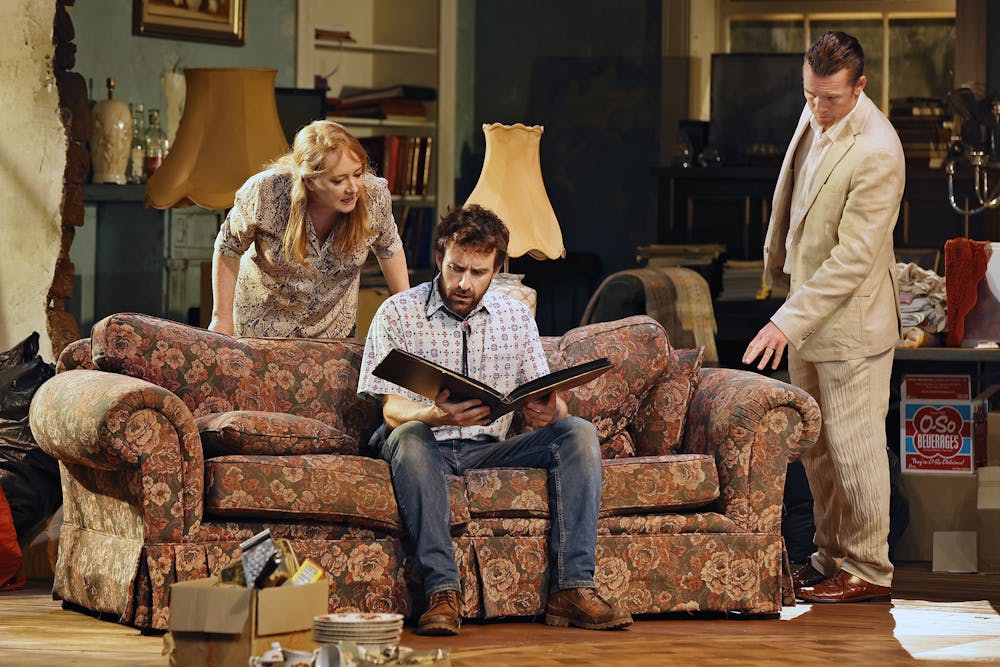
The estranged and dysfunctional Lafayette family gather in Arkansas following the death of their patriarch and last remaining parent. Accompanied by partners and children, Toni (Mandy Mcelhinney) and her brothers Bo (Sam Worthington) and Franz (Johnny Carr) converge in their father’s dilapidated mansion, overflowing with junk and burdened with debt. An upcoming auction offers the siblings hope of financial windfall, and finalisation of their difficult relationships.
Ghosts have been stored away in boxes and photo albums, but they can’t stay hidden forever.Prudence Upton/Sydney Theatre Company
As we settle in our seats, the lights lower as a chorus of cicadas evoke a smothering, humid southern summer night. The cicada song rises in volume and tempo for longer than is comfortable prompting a murmur through the audience (is this a technical hitch?). The insects hush — but are not silenced — when the plush red curtain lifts. We are perched at the edge of the night-dark living room to bear witness to the acerbic, bigoted and ferocious exchange among the adults.
Outside, nature is closing in.
Ebbs and tides of pain
The family history is disclosed to us piece by piece. Images of lynchings in a discovered album among the detritus cause shock and disbelief for some family members; others are more knowing of the family’s past. Another becomes defensive.
Among the father’s boxed up possessions, the confederate flag spills out. Trophy jars of flesh and bone are revealed: carefully kept family heirlooms from a violently racist past.
These material things unleash the ghosts. Some disgraces are viewed with greater alarm than others; some are denied; some charmingly misconstrued.
All are ultimately unresolved.
Jacobs-Jenkins’ rapid, emotive dialogue is fired from one player at another, rising and falling in rhythm and volume as the cicadas do for the entire course of the play. The writing encapsulates the surges of hurt, loss and love: remembering, forgetting, disavowal, denial and attempted redemption.
The ensemble performs the humorous and abrasive dialogue with magnificent energy.
As Toni, in her madness and grief and denial, McElhinney is outstanding, whipping up the family maelstrom from centre stage.
When grief becomes overwhelming, rather than face it, the family stuffs down the pain.Prudence Upton/Sydney Theatre Company
But she is lonely and isolated, in search of a hug that she is only ever able to request — and receive — from her “fuck up son”. The rest of the family manifest their relationships through passionate embrace, squeezed fingertips, faces held firmly or a comforting clutch. After the year we have had, our shared sense of humanity needs to shine through: can somebody give her a hug?
Grief is all around the family; no less so in their losses of position and influence. In the end, all they can do is stuff thoughts and memories deeper down, in vain hope to quell the haunting.
Human frailty
By end of act two, with disgraces laid bare, the families depart in a flurry of torment.
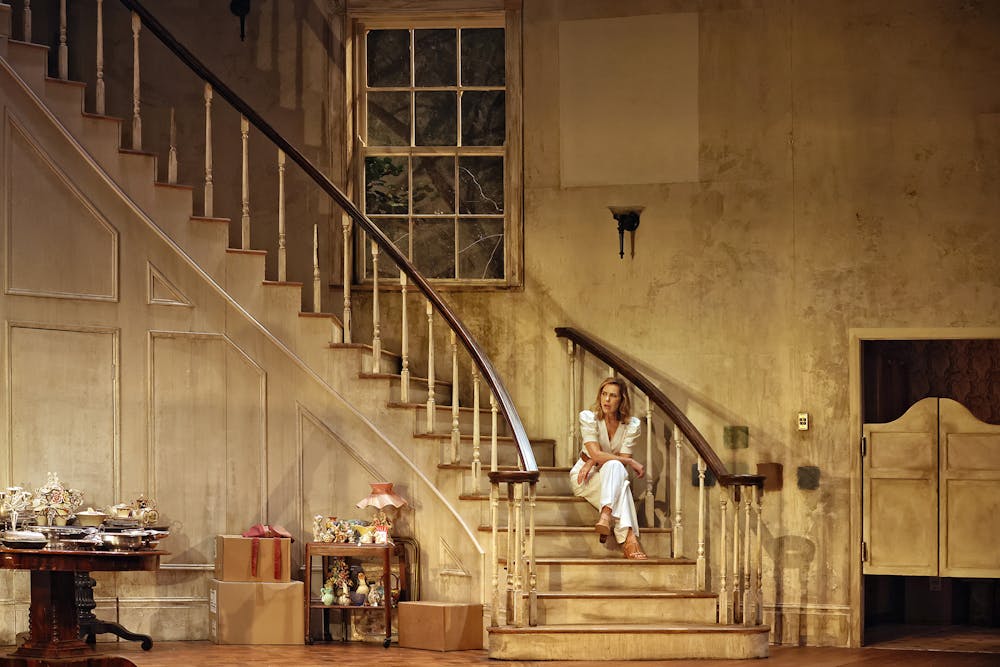
The once grand home filled with material fineries fast decays.
Enoch spectacularly stages a time-lapse passage of night and day. Seasons cycle; the cicada thrum surges and fades. Storms lash the exterior until nature crashes through a window.
Under siege, the grand old house sighs and begins to drop her fineries. The precarity of accumulated wealth is revealed as reliant on the presence of human pride and power. In the absence of humans the weather, the woods, the lake, the unmarked graves of those who have returned to the soil, prevail.
In these final moments, Appropriate seems to suggest this is the end of days for the economic structures and social order that built the United States and the west. In the tight, living room drama of a family in crisis, Jacobs-Jenkins speaks to global themes of truth telling and historical legacy, and ultimately humanity.
Appropriate is at the Roslyn Packer Theatre until April 10.
The past week has marked a watershed moment in Russia’s relations with the West — and the US in particular. In two dramatic, televised moments, US President Joe Biden and Russian President Vladimir Putin have changed the dynamics between their countries perhaps irrevocably.
Most commentators in the West have focused on Putin’s “trolling” of Biden by dryly — though, according to Putin, unironically — wishing his American counterpart “good health”. This, of course, came after Biden called Putin a “killer”.
But a more careful and complete reading of Putin’s message to the US is necessary to understand how a Russian leader is, finally, ready to tell the US: do not judge us by your claimed standards, and do not try to tell us what to do.
Putin has never asserted these propositions so bluntly. And it matters when he does.
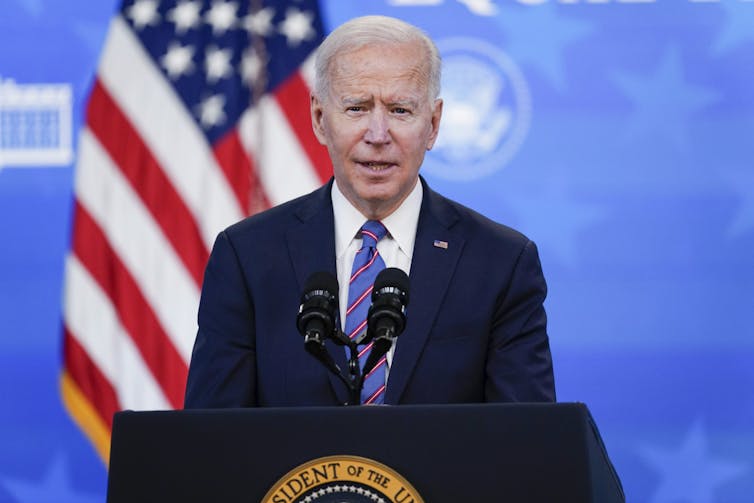
Biden has put Putin on notice, saying he will ‘pay a price’ for alleged meddling in the 2020 US presidential election.Evan Vucci?AP
Putin’s message to the new US president
The tense test of strength began when Biden was asked about Putin in an interview with ABC News’ George Stephanopoulos and agreed he was “a killer” and didn’t have a soul. He also said Putin will “pay a price” for his actions.
Putin then took the unusual step of going on the state broadcaster VGTRK with a prepared five-minute statement in response to Biden.
In an unusually pointed manner, Putin recalled the US history of genocide of its Indigenous people, the cruel experience of slavery, the continuing repression of Black Americans today and the unprovoked US nuclear bombing of Hiroshima and Nagasaki in the second world war.
He suggested states should not judge others by their own standards:
Whatever you say about others is what you are yourself.
Some American journalists and observers have reacted to this as “trolling”. It was not.
Putin invited Biden to hold a live online conversation; Biden said he’s sure they’ll talk ‘at some point’.ALEXEI DRUZHININ/KREMLIN POOL/SPUTNIK/EPA
It was the preamble to Putin’s most important message in years to what he called the American “establishment, the ruling class”. He said the US leadership is determined to have relations with Russia, but only “on its own terms”.
Although they think that we are the same as they are, we are different people. We have a different genetic, cultural and moral code. But we know how to defend our own interests.
And we will work with them, but in those areas in which we ourselves are interested, and on those conditions that we consider beneficial for ourselves. And they will have to reckon with it. They will have to reckon with this, despite all attempts to stop our development. Despite the sanctions, insults, they will have to reckon with this.
This is new for Putin. He has for years made the point, always politely, that Western powers need to deal with Russia on a basis of correct diplomatic protocols and mutual respect for national sovereignty, if they want to ease tensions.
But never before has he been as blunt as this, saying in effect: do not dare try to judge us or punish us for not meeting what you say are universal standards, because we are different from you. Those days are now over.
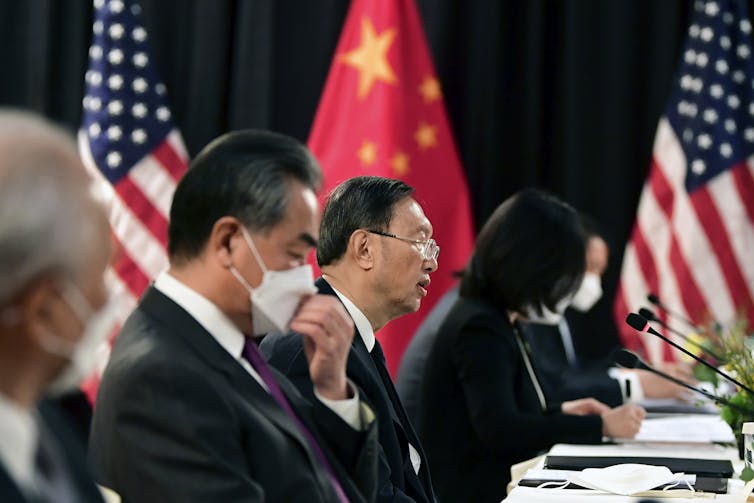
Putin’s forceful statement is remarkably similar to the equally firm public statements made by senior Chinese diplomats to US Secretary of State Antony Blinken in Alaska last week.
Blinken opened the meeting by lambasting China’s increasing authoritarianism and aggressiveness at home and abroad – in Tibet, Xinjiang, Hong Kong and the South China Sea. He claimed such conduct was threatening “the rules-based order that maintains global stability”.
Yang Jiechi, centre, speaking at the opening session of US-China talks in Alaska.Frederic J. Brown/AP
Yang Jiechi, Chinese Communist Party foreign affairs chief, responded by denouncing American hypocrisy. He said
The US does not have the qualification to say that it wants to speak to China from a position of strength. The US uses its military force and financial hegemony to carry out long-arm jurisdiction and suppress other countries. It abuses so-called notions of national security to obstruct normal trade exchanges, and to incite some countries to attack China.
He said the US had no right to push its own version of democracy when it was dealing with so much discontent and human rights problems at home.
Putin’s statement was given added weight by two diplomatic actions: Russia’s recalling of its ambassador in the US, and Foreign Minister Sergey Lavrov’s meeting in China with his counterpart, Wang Yi.
Beijing and Moscow agreed at the summit to stand firm against Western sanctions and boost ties between their countries to reduce their dependence on the US dollar in international trade and settlements. Lavrov also said,
We both believe the US has a destabilising role. It relies on Cold War military alliances and is trying to set up new alliances to undermine the world order.
Though Biden’s undiplomatic comments about Putin may have been unscripted, the impact has nonetheless been profound. Together with the harsh tone of the US-China foreign ministers meeting in Alaska — also provoked by the US side — it is clear there has been a major change in the atmosphere of US-China-Russia relations.
What will this mean in practice? Both Russia and China are signalling they will only deal with the West where and when it suits them. Sanctions no longer worry them.
The two powers are also showing they are increasingly comfortable working together as close partners, if not yet military allies. They will step up their cooperation in areas where they have mutual interests and the development of alternatives to the Western-dominated trade and payments systems.
Countries in Asia and further afield are closely watching the development of this alternative international order, led by Moscow and Beijing. And they can also recognise the signs of increasing US economic and political decline.
It is a new kind of Cold War, but not one based on ideology like the first incarnation. It is a war for international legitimacy, a struggle for hearts and minds and money in the very large part of the world not aligned to the US or NATO.
The US and its allies will continue to operate under their narrative, while Russia and China will push their competing narrative. This was made crystal clear over these past few dramatic days of major power diplomacy.
The global balance of power is shifting, and for many nations, the smart money might be on Russia and China now.
As federal parliament has been rocked by allegations of sexual violence, one of the frequent questions has been “why don’t victims go to police?”
But this is not a straightforward or easy solution. And victims can easily end up being re-traumatised by going through the criminal justice system.
How can we make going to court better for those seeking justice? One critical way is to provide victims with their own lawyers.
What many people may not realise, is that throughout the legal process, victims are simply assigned a lawyer through the Director of Public Prosecutions. This means they do not have access to their own lawyers to protect their privacy and individual interests at trial.
Women’s fears and community mistrust
According to the Australian Bureau of Statistics, almost 90% of women do not report their sexual assault to police.
One of the reasons victims do not report sexual violence — or delay reporting — is fear they will not be believed. This does not come out of nowhere.
According to a 2017 national survey, there is a widespread mistrust of women’s reports of violence by the community, even though evidence shows false reports are rare.
The DPP has significant powers
Even for those who do report, the ability for victims to get justice is out of their hands.
The Director of Public Prosecutions has significant discretionary powers, including the ability to decide whether a criminal case should proceed and how it will be prosecuted. The reality is victims have no control or ability to challenge prosecutors’ decision-making.
For cases that proceed to prosecution, victims’ experiences are generally negative. This is due to insensitive treatment by criminal justice personnel, including defence lawyers.
Given victims are disclosing highly personal and distressing details about their assaults, and potentially being subjected to fierce cross-examination at trial, they are often re-traumatisated by going to court.
This intensifies the barriers women face reporting and having their stories heard, which further denies them validation and control.
if one set out intentionally to design a system for provoking symptoms of traumatic stress, it would look very much like a court of law.
The adversarial system
The adversarial nature of Australia’s criminal justice systems means crime is contested between two parties: the state who prosecute in the public interest and the accused person.
This means the victim is not considered a party to proceedings, despite being directly impacted by the offence, and therefore does not have an active role or voice.
Courts have a duty to protect victims from certain misleading, intimidating and humiliating questioning, such as in relation to victims’ sexual history and character.
However, research shows defence counsel continue to ask such questions to undermine victims’ character and testimony.
Calls for victim lawyers
Scholars and victim advocates, including women’s specialist and legal services, have raised concerns over the lack of judicial intervention.
This has led to calls for government-funded legal representation to enhance victims’ treatment in the legal process and reduce the likelihood — or extent of —re-traumatisation.
Victim lawyers are used in other legal systems, particularly in Europe.www.shutterstock.com
If victims can be assured their privacy and interests will be protected, they might be more inclined to report and/or stay engaged in the criminal justice system. Having a lawyer present at trial may also decrease victims’ feelings of stress and anxiety and improve their confidence when testifying.
As former South Australian Commissioner for Victims’ Rights, Michael O’Connell, has argued, legal representation can allow victims to feel like
integral players […] rather than mere bystanders in the criminal justice system.
Victim lawyers around the world
There are several different models of legal representation for victims around the world.
In the German system, victims of sexual offences can engage lawyers who have rights to represent them, including the ability to elicit evidence and ask questions of the accused person at trial. In Denmark and Sweden, victims of sexual offences also have the right to engage a lawyer from as early as the police reporting stage, to receive advice about the legal process and compensation claims, as well as moral support.
Victims have a much more powerful role in German criminal trials.www.shutterstock.com
The right to victim lawyers in adversarial systems – like Australia’s — is less common. Victim lawyers are available in Ireland to prevent the disclosure of victims’ sexual history evidence in court. England and Wales also recently piloted provision for victim lawyers, as has Northern Ireland.
In Queensland and New South Wales, sexual assault victims can be legally represented when challenging defence applications for the disclosure of their counselling notes and other confidential therapeutic records. However, this representation does not extend to the actual criminal trial.
Resistance to the idea
Despite the benefits of lawyers for victims, concerns about practical implications remain.
This is due to the perceived threat a third party — a victim’s lawyer — might pose to the two-sided contest between the state prosecutor and the accused person. There are concerns the system would become unbalanced.
However, this fails to recognise victims have legitimate interests that might compete with the interests of the prosecution, who represent the public interest. These include rights to privacy about their personal records and prior sexual history, and to be free from character attacks during cross-examination at trial.
While it may not be viable, at present, to introduce victim lawyers throughout the entire prosecution process, there is certainly scope to introduce them at specific stages.
Change that is positive and possible
In the first instance, we need social and cultural change to quash the myths and stereotypes about sexual violence. They prevent victims from reporting and undermine investigations, prosecutions and victim experiences.
In the meantime, introducing victim lawyers is a practical, possible change we can make to enhance victims’ well-being, safety and access to justice.
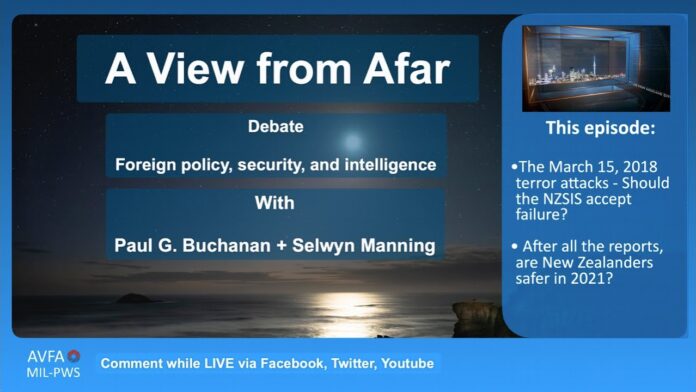
PODCAST: Buchanan + Manning: After all the intel reports on the 2019 Terror Attacks are Kiwis safer in 2021
/
RSS Feed
Share
Link
Embed
A View from Afar: Paul G. Buchanan and Selwyn Manning debate:
Whether the New Zealand Security Intelligence Service has accepted its failure to identify and detect terrorist planning activity in the lead up to the tragedy that occurred in Christchurch against Muslim people on March 15, 2019.
ALSO, since the Christchurch terror attacks, after the Commission of Inquiry, after all the external and internal assessments and reports, should New Zealanders be satisfied that the NZSIS is match-fit, ready and resourced, equipped to identify extremist hate ideologies and prevent them from posing threats against this country’s peoples?
If not, what needs to change?
COMMENT ON THIS DISCUSSION:
You can interact with the programme by clicking on one of these social media channels. Here are the links:
We know COVID-19 and its associated changes to our work and learning habits caused a marked increase in the use of technology. More surprising, perhaps, is the impact these lockdowns have had on children’s and young people’s self-reported enjoyment of books and the overall positive impact this has made on reading rates.
A recent survey from the UK, for example, showed children were spending 34.5% more time reading than they were before lockdown. Their perceived enjoyment of reading had increased by 8%.
This seems logical — locked down with less to do means more time for other activities. But with the increase in other distractions, especially the digital kind, it’s encouraging to see many young people still gravitate towards reading, given the opportunity.
In general, most children still read physical books, but the survey showed a small increase in their use of audiobooks and digital devices. Audiobooks were particularly popular with boys and contributed to an overall increase in their interest in reading and writing.
There is no doubt, however, that digital texts are becoming more commonplace in schools, and there is a growing body of research exploring their influence. One such study showed no direct relationship between how often teachers used digital reading instruction and activities and their students’ actual engagement or reading confidence.
What the study did show, however, was a direct, negative relationship between how often teachers had their students use computers or tablets for reading activities and how much the students liked reading.
These findings suggest physical books continue to play a critical role in fostering young children’s love of reading and learning. At a time when technology is clearly influencing reading habits and teaching practices, can we really expect the love of reading to be fostered by sitting alone on a digital device?
Reading alone on a digital device is no substitute for the real thing.www.shutterstock.com
The limitations of eBooks
In schools and homes we often see eBooks being used to support independent reading. As teachers and parents, we have started to rely on these tools to support our emerging readers. But over-reliance has meant losing the potential for engagement and conversation.
Studies have shown children perform better when reading with an adult, and this is often a richer experience with a print book than with an eBook.
Reading when we’re young is still a communal experience. My own seven-year-old is at the age when reading to me at night is a crucial part of his development as a reader. Relying on him to sit on his own and read from his device will never work.
This is not to deny the usefulness of eBooks. Their adoption in schools has been led by the desire to better support learners. They provide teachers with an extensive library of titles and features designed to entice and motivate.
These embedded features provide new ways of helping children decode language and also offer vital support for children with special needs, such as dyslexia and impaired vision.
The research, however, suggests caution rather than a wholesale adoption of eBooks. Studies have shown the extra features of eBooks, such as pop-ups, animation and sound, can actually distract the learner, detracting from the reading experience and reducing comprehension of the text.
The book as object
Real books may lack these interactive features but their visual and tactile nature plays a strong role in engaging the reader.
Because books exist in the same physical space as their readers — scattered and found objects rather than apps on a screen — they introduce the role of choice, one of the big influences on engagement.
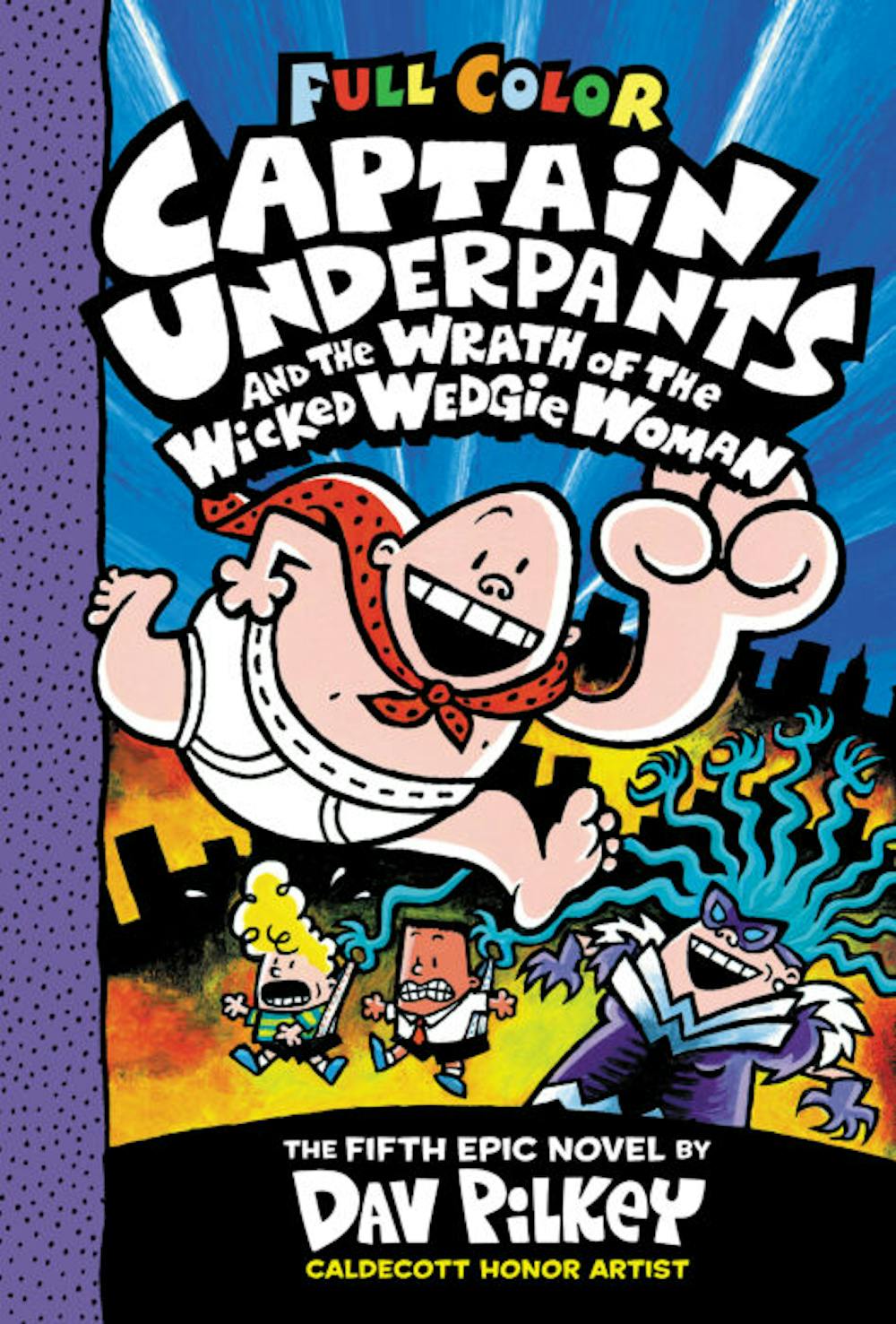
While generally a reluctant reader, my child loves to flick through books and look at the pictures. He might not necessarily read every word, but books such as Dog Man, Captain Underpants and Bad Guys have provided a fantastic opportunity to engage him.
We have even managed to link reading with our children’s favourite online games. Their Minecraft manuals have become valuable resources and are even taken to friends’ houses on play-dates.
Many of our books are not in the best shape, evidence they are lived with and loved. Second hand shops and school fairs provide a cheap option for adding variety, and libraries are also valuable for supplementing the home shelves.
Keeping it real
But cuts to library budgets and collections, such as have been announced recently by Wellington Central Library, threaten to further undermine the role of the physical book in children’s lives.
School libraries, too, are often the first space to be sacrificed when budgets and space restrictions tighten. This encourages the uptake of digital books and further reinforces a reliance on technological alternatives.
Of course, digital technology plays an important role in supporting children to engage and learn, often in powerful new ways that would otherwise be impossible.
But in our haste to adopt and rely on “digital solutions” without clear justification or consideration of their effective use, we risk undervaluing the power of objects made from paper and ink.
As we emerge from a pandemic that has accelerated digital progress, we can’t let these developments obscure the place of real books in real — as opposed to virtual — lives.
Source: The Conversation (Au and NZ) – By Julian Savulescu, Visiting Professor in Biomedical Ethics, Murdoch Children’s Research Institute; Distinguished Visiting Professor in Law, University of Melbourne; Uehiro Chair in Practical Ethics, University of Oxford
When someone gets sick after receiving a vaccine, this might be a complication or coincidence. As the recent rollout out of the AstraZeneca vaccine in Europe shows, it can be very difficult to know how to respond.
For instance, reports of blood clots associated with the AstraZeneca vaccine led to several European countries suspending their vaccination programs recently, only to resume them once these clots were judged to be a coincidence. However, authorities couldn’t rule out increased rates of a rare brain blood clot associated with low levels of blood platelets.
There are also problems with the Pfizer and Moderna vaccines. By early February 2021, among the over 20 million people vaccinated in the United States, there have been 20 reported cases of immune thrombocytopenia, a blood disorder featuring a reduced number of platelets in the blood. Experts suspect this is probably a rare vaccine side-effect but argue vaccination should continue.
So what happens with the next safety scare, for these or other vaccines? We argue it’s best to give people the facts so they have the autonomy to make their own decisions. When governments pause vaccine rollouts while investigating apparent safety issues, this is paternalism, and can do more harm than good.
The ‘precautionary principle’ can backfire
Like any medicine, vaccines have risks associated with their benefits. And no one wants to recommend or use a vaccine with serious side-effects.
So when faced with recent unconfirmed serious side-effects following vaccination, European countries were tempted by the “precautionary principle”, or “better safe than sorry”. They opted to pause and gather more evidence.
Some might argue a precautionary approach could help protect the public’s confidence in vaccination in the long term. However, suspending or withdrawing a vaccine could also undermine confidence. Once a vaccine program is stopped due to safety concerns, it may not recover. This happened with the HPV (human papillomavirus) vaccine in Japan.
The precautionary approach can also be lethal. In a pandemic, suspending or withdrawing an effective vaccine leads to preventable deaths. The number of preventable deaths depends on three factors.
1. Delay
The first is how many people will be delayed in receiving a vaccine. Fortunately, the AstraZeneca vaccine is not the only approved vaccine in Europe, so its suspension or withdrawal would not wholly prevent vaccination; however, some people’s vaccinations could be delayed.
2. Deaths
The second factor is the risk of people dying if vaccines are delayed. For example, in England (a country that did not suspend the AstraZeneca vaccine), people aged 56-59 are currently being invited to book appointments for vaccination. A study in 2020suggests roughly 0.3% of unvaccinated 55-59 year-olds infected with coronavirus die. But in countries that have not yet vaccinated older people, the risks of a suspension will be higher. The same study suggests the risk of dying for (unvaccinated) 70-74 year-olds infected with the coronavirus is roughly 1.7%. For those infected over 80, the risk is 8.3%.
3. How widespread is the virus?
A third factor is how common infections are at the time of suspension. When rates of infection are higher, we expect more deaths.
According to the European Centre for Disease Prevention and Control, as low as 8 or as many as 1,518 out of 100,000 people are infected with the virus. The rate varies between countries. Australia could afford to be precautionary because testing figures currently suggest a low incidence of COVID-19 (only 0.2% of COVID-19 tests conducted in the past week have returned positive results). Indeed, its slow vaccine rollout is consistent with a precautionary approach, as evidence is gathered from other countries.
European countries suspended their vaccine rollout, then resumed. But this isn’t the only way to handle safety scares.from www.shutterstock.com
Safety regulation involves value judgements around evidence and weighing risks and benefits. It also involves judgements about who we allow to make decisions about that balance.
Paternalism is the practice of making judgements for other people about what is best for them. And the strongest form of paternalism (“hard paternalism”) fails to respect the autonomy of competent adults, and breaches their right to make decisions about their own lives.
Suspension or withdrawal of vaccines is hard paternalism. Preventing someone from accessing an effective life-saving vaccine to protect them from low risks of rare side-effects is a severe restriction of their autonomy.
There are limits to autonomy. Where an intervention will clearly do more harm than good, it is the government’s responsibility to prevent it. And when there are limited public resources, it is necessary to distribute benefits and burdens fairly.
But what matters ethically is not only vaccine confidence and public health, but whether people can make their own autonomous decisions about the risks they want to take: the risks of COVID-19 or the risks of vaccination.
So how would this work?
Autonomous decision-making here requires:
disclosure of even small risks if the outcomes are significant
admission of limits to confidence (for instance, how much we know about the risks and what we don’t know)
disclosing this information in ways appropriate and comprehensible to all sections of the community
helping people to think for themselves about the inevitable uncertainties of life.
Safeguarding autonomy here also requires putting safeguards in place to protect those who do not have the capacity to provide valid consent.
When looking at the background rates of blood clots, anaphylaxis or any other rare adverse events, it seems pretty clear vaccines are safe and the associated risks are small.
We must investigate all vaccine safety signals thoroughly. But the process also needs to maintain the public’s confidence in vaccines through effective and transparent communication of risk. Communicating risk in terms people understand is challenging but it is essential to ensure informed decision-making.
For most people, the benefits of being vaccinated will outweigh the risks. But we should treat people as adults and allow them to make up their own minds.
Governments should not be nannies, nor nervous ninnies. Suspending vaccination fails to respect people’s right to make their own choices. It also threatens to cause much more harm overall.
During COVID-19 the government ran what turned out to be a giant real-world experiment into what happens when you boost someone’s unemployment benefits and free them of the “mutual obligation” to apply for jobs.
On April 27 2020 the government as good as doubled the $565.70 per fortnight JobSeeker payment, lifting it by $550 per fortnight for what turned out to be six months. In September the boost dropped to $250 per fortnight, and in December to $150 per fortnight.
Next Thursday the boost vanishes, although the base rate of JobSeeker will climb by a less-than substantial $50 a fortnight, leaving recipients $100 a fortnight worse off than they have been, $500 per fortnight worse off than back when JobSeeker doubled and back well below the poverty line.
From Thursday April 1 they will also be subject to much more demanding work tests, having to show they have applied for a minimum of 15 jobs a month, climbing to 20 jobs a month from July 1.
Yet the government’s natural experiment where they doubled benefits and freed recipients of “mutual obligations” provides us with an opportunity to examine how a more generous approach affected recipients and whether, as the government says, a tougher approach is needed in order to compel people to work.
During last year’s more generous approach, we conducted an online survey of JobSeeker recipients and found that (contrary to what appears to be the government’s expectation), it was helping get people into work.
Freed of “mutual obligations”, many were able to devote time to reengaging with the workforce.
As one respondent said,
I was able to focus on getting myself back into the workforce. Yes, mutual obligation activities PREVENT people from being able to start a new business or re-enter the workforce as an employee
And the extra income freed recipients to do things that would advance their employment prospects; either through study, through properly looking for work, or buying the tools needed to get work.
One said
I could buy things that helped me with employment — equipment for online work, a bicycle for travel, a proper phone”
An Australia Institute review of unemployment payments and work incentives in 33 OECD countries found something similar — that higher payments correlate to lower unemployment.
Another respondent said the suspended mutual obligation requirements made it easier to care for an elderly parent during pandemic and their recovery from major surgery.
Another said she had been able to focus on her health needs and her children.
People on social security are often accused of being dependent on welfare, but it’s often the economy and society that are dependent on their unpaid labour.
Yet (except for during the worst of the pandemic) these people have been denied a safety net that ensures their survival.
Fewer obligations meant parents were better able to care for children.Shutterstock
The inadequacy of payments goes to a major and enduring flaw in the Australian social security system — its inability to recognise all of the productive activities people undertake, including unpaid care largely undertaken by women.
The decisions the government took during 2020 made a major difference to the lives of people outside the formal workforce.
They enabled them to turn their attention away from day-to-day survival towards envisioning and realising a more financially and emotionally sustainable future for themselves and their dependants.
The flow-on benefits, to all of us, ought to be substantial.
The government ought to be very interested.
If it was, it would examine the findings further, but they don’t seem to be on its radar.
A View from Afar: Join Paul G. Buchanan and Selwyn Manning debate:
Whether the New Zealand Security Intelligence Service has accepted its failure to identify and detect terrorist planning activity in the lead up to the tragedy that occurred in Christchurch against Muslim people on March 15, 2019.
ALSO, since the Christchurch terror attacks, after the Commission of Inquiry, after all the external and internal assessments and reports, should New Zealanders be satisfied that the NZSIS is match-fit, ready and resourced, equipped to identify extremist hate ideologies and prevent them from posing threats against this country’s peoples?
If not, what needs to change?
COMMENT ON THIS DISCUSSION:
You can interact with the programme by clicking on one of these social media channels. Here are the links:
New Zealand Parliament Buildings, Wellington, New Zealand.
Editor’s Note: Here below is a list of the main issues currently under discussion in New Zealand and links to media coverage. Click here to subscribe to Bryce Edwards’ Political Roundup and New Zealand Politics Daily.
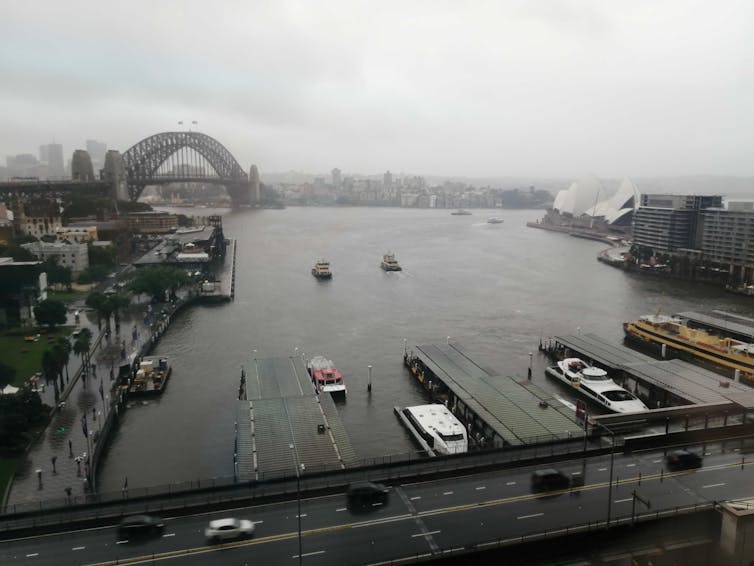
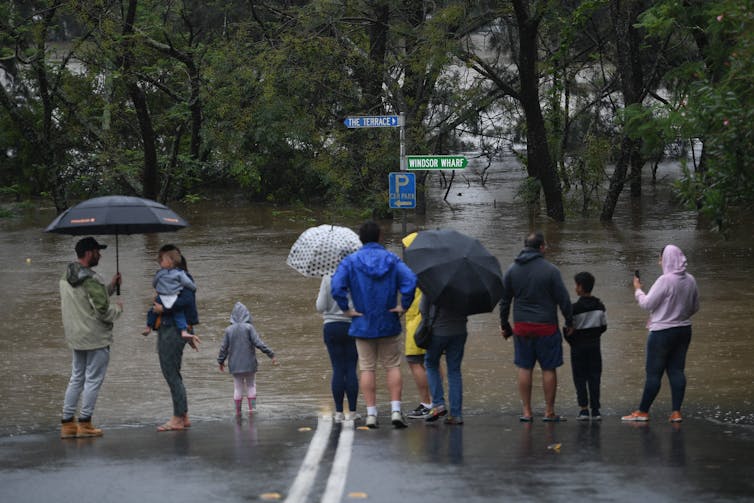
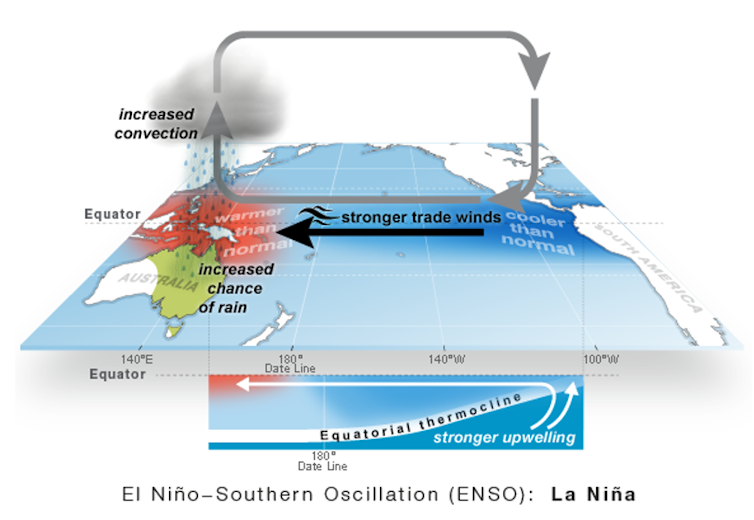
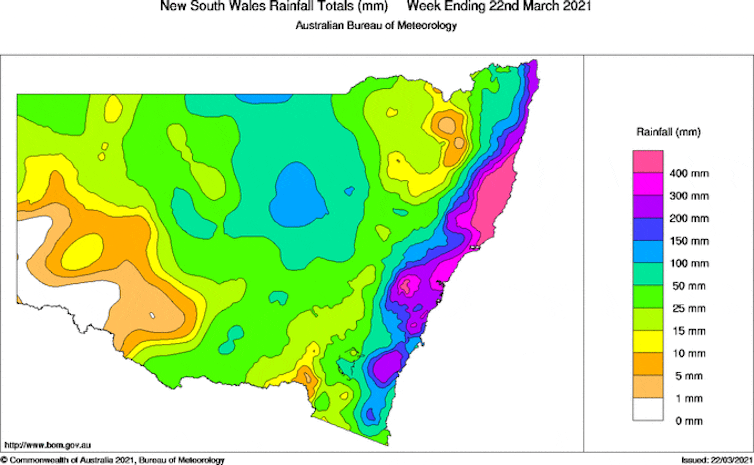
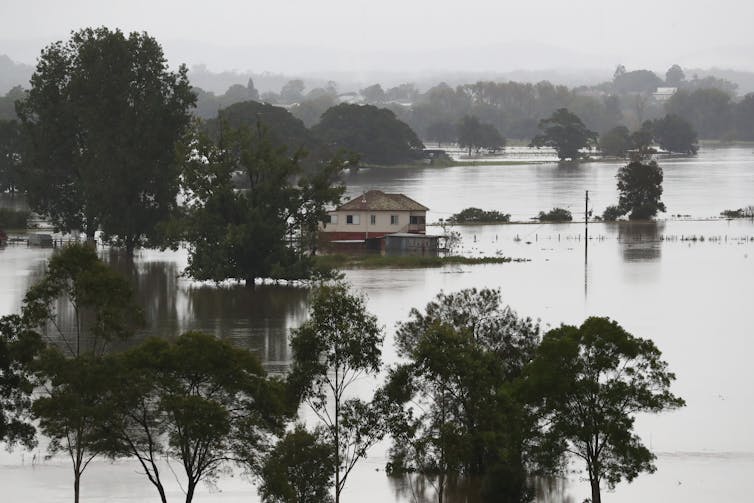
Record-breaking rain has destroyed properties across New South Wales, forcing thousands of people to evacuate and leaving hundreds homeless.
Humans aren’t the only ones in trouble. Many of the animals that live with and around us are also heading for higher ground as the floodwaters rise.
Often small creatures — especially invertebrates like spiders, cockroaches and millipedes — will seek refuge in the relatively dry and safe environments of people’s houses. While this can be a problem for the human inhabitants of the house, it’s important to make sure we don’t add to the ecological impact of the flood with an overzealous response to these uninvited guests.
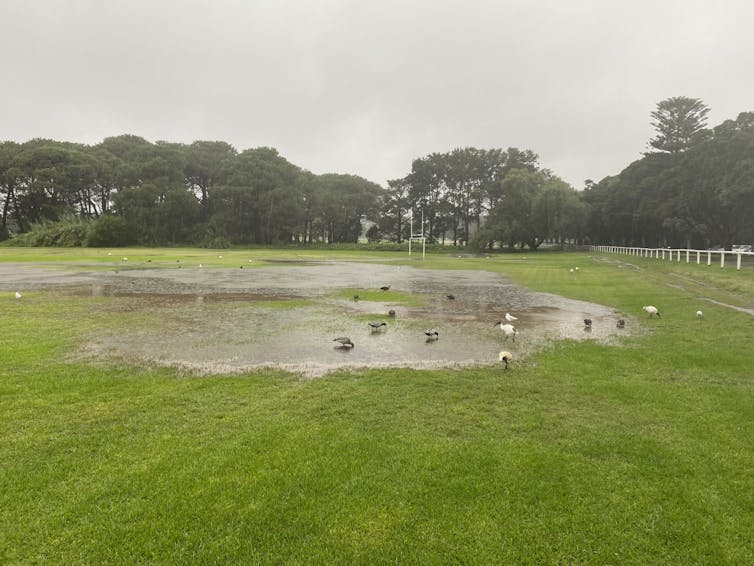
Warragamba Dam in southwestern Sydney has been spilling a Sydney Harbour’s worth of water each day during the rains.Eliza Middleton, Author provided
What floods do to ecosystems
Floods can have a huge impact on ecosystems, triggering landslides, increasing erosion, and introducing pollutants and soil into waterways. One immediate effect is to force burrowing animals out of their homes, as they retreat to safer and drier locations. Insects and other invertebrates living in grass or leaf litter around our homes are also displaced.
Burrowing invertebrates come to the surface during floods, providing food for opportunistic birds.Dieter Hochuli, Author provided
Snakes have reportedly been “invading” homes in the wake of the current floods. Spiders too have fled the rising waters. Heavy rain can flood the burrows of the Australian funnelweb, one of the world’s most venomous spiders.
Some invertebrates will boom; others may plummet
Rain increases greenery, which can support breeding booms of animals such as mosquitoes, locusts, and snails.
Even species that don’t thrive after floods are likely to become more visible as they flock to our houses for refuge. But an apparent short-term increase in numbers may conceal a longer story of decline.
After periods of flooding, the abundance of invertebrates can fall by more than 90% and the number of different species in an area significantly drops. This has important implications for the recovery of an ecosystem, as many of the ground dwelling invertebrates displaced by floods are needed for soil cycling and decomposition.
So before you reach for the bug spray, consider the important role these animals play in our ecosystem.
What to do with the extra house guests?
If your house has been flooded, uninvited creatures taking shelter in your house are probably one of the smaller issues you are facing.
Once the rain subsides, cleaning in and around your property will help reduce unwanted visitors. Inside your house, you may see an increase in cockroaches, which flourish in humid environments. Ventilating the house to dry out any wet surfaces can help get rid of cockroach infestations, and filling crevices can also deter unwanted visitors.
In the garden, you may see an increase in flies in the coming weeks and months as they lay eggs in rotting plants. Consider removing any fruit and vegetables in the garden that may rot.
Mosquitoes are also one to watch as they lay eggs in standing water. Some species pose a risk of diseases such as Ross River virus. To prevent unwanted mozzies, make sure to empty things that have filled with rainwater, such as buckets and birdbaths.
If you do encounter one of our more dangerous animals in your home, such as venomous snakes and spiders, do not handle them yourself. If you find an injured or distressed snake, or are concerned about snakes in your house, call your local wildlife group who will be able to relocate them for you.
Just like the floods, which will subside as the water moves on, the uninvited gathering of animals is a temporary event. Most visitors will quickly disperse back to more appropriate habitat when the weather dries, and their usual homes are available again.
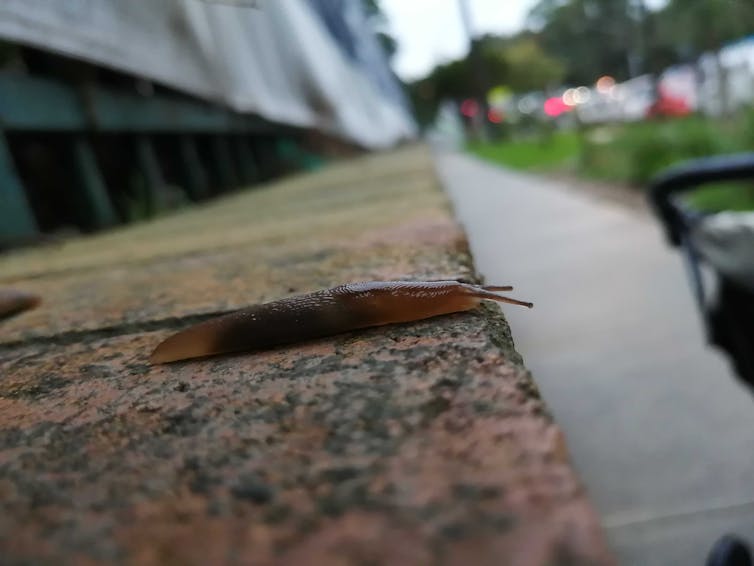
You may see an increase in slugs in your local area after rainy conditions.Eliza Middleton @smiley_lize
Don’t sweat the small stuff
While many of the impacts of floods are our own making, through poor planning and development in flood-prone areas, effective design of cities and backyards can mitigate the risks of floods. Vegetation acts as a “sponge” for stormwater, and appropriate drainage allows water to flow through more effectively. Increasing backyard vegetation also provides extra habitat for important invertebrate species, including pollinators and decomposers.
With severe weather events on the rise, it is important to understand how ecosystems respond to, and recover from natural disasters. If invertebrates are unable to perform vital ecosystem functions, such as soil cycling, decomposition, and pollination, ecosystems may struggle to return to their pre-flood state. If the ecosystems don’t recover, we may see prolonged booms of nuisance pests such as mosquitoes.
A few temporary visitors are are a minor inconvenience in comparison to the impacts floods have on the environment, infrastructure and the health and well-being of people impacted. So while it may seem like a bit of a creepy inconvenience, maybe we should let our house guests stay until the flood waters go down.
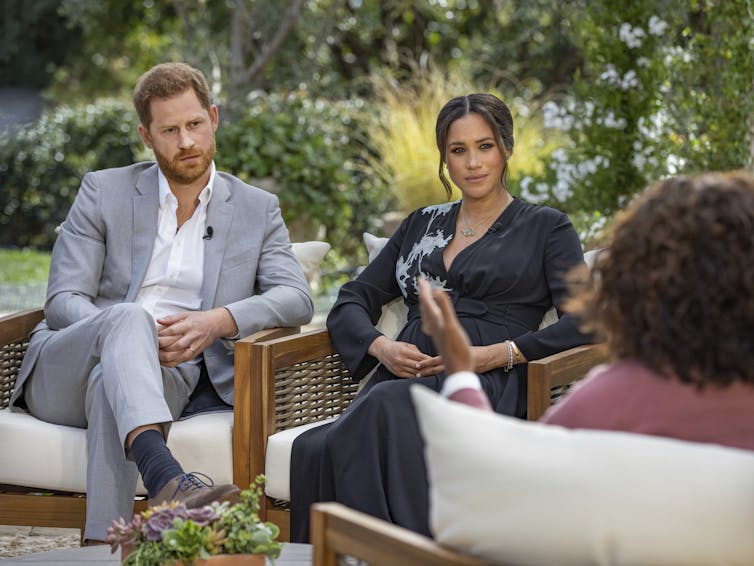
Oprah Winfrey’s brilliantly stage-managed “tell-all” interview with Meghan Markle and Prince Harry was for viewers, advertisers and the three participants, a tremendous success.
For the royal family, not so much. Globally, the interview’s audience was “gargantuan”. It was watched by nearly 50 million people as it went to air and in Australia, was Network Ten’s highest rating special in a decade. This remarkable reach continues to climb with millions of viewers on demand and, of course, generating its own hashtag — #OprahMeghanHarry.
Royalty as American celebrity had truly arrived.
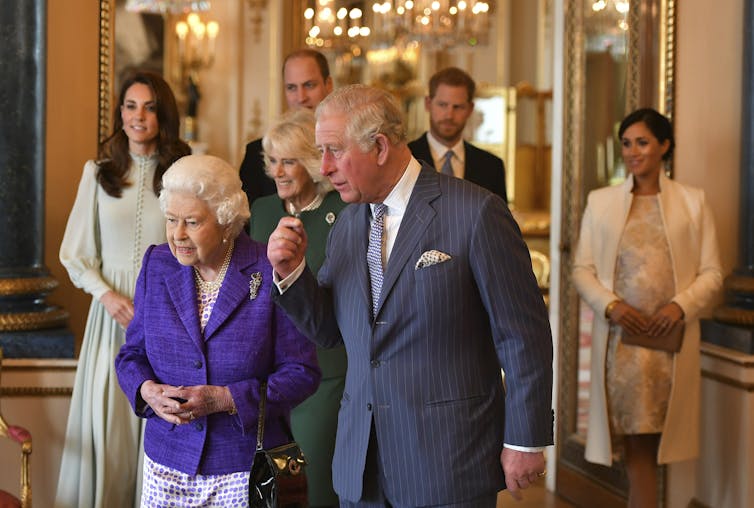
Although it is easy to dismiss this interview as a cynical marketing exercise, it raises important questions about the contemporary role and relevance of the royal family in a modern liberal democracy, and Australia’s place in the arcane system of constitutional monarchy.
In doing so, it has added to the momentum for an Australian republic, highlighting the incongruity of the British monarch as the Australian head of state through the right of monarchical succession and not as the choice of the Australian people.
Palace secrecy
Above all, this interview broke through the armour of secrecy, the carefully constructed royal image, which is the monarchy’s great protector. This is #OprahMeghanHarry’s most important contribution beyond the celebrity circuit — the breach of royal secrecy that has given us a window onto the inner workings of “The Firm”.
What we saw there was not at all pleasant.
Among the litany of damaging claims aired are that Markle had faced the repeated leaking of false claims about her to select royal watchers in the media. This ranges from the petty — “Meghan made Kate cry!” — to more serious claims of bullying.
Almost 50 million people worldwide watched the Sussexes’ tell-all with Oprah Winfrey as it went to air.Jo Pugliese/AP/AAP
More disturbing, however, is Meghan’s description of isolation, powerlessness and depression, culminating in suicidal thoughts during her pregnancy. When she sought help from Buckingham Palace officials, she was told it would look bad for the monarchy if it were known she was having treatment for mental health issues. “Suck it up, princess”, literally.
Then came the claim by both Harry and Meghan that there had been “concerns and conversations” with a senior member of the royal family about the colour of their child while Meghan was pregnant.
Whaaatttt?
Oprah’s perfectly timed response hung in the air just long enough to hook us all back in, after the (very long) ad break.
Race and royalty
Race had been a peculiar fascination in the relentless media focus on Markle, escalating dramatically when she was first linked with Harry. One of the most overt, and it was just one of thousands, was the Daily Mail’s depiction of the fairy-tale “upward mobility” of Meghan’s family: from “cotton slaves to royalty” in just 150 years, with an accompanying family tree pointing to the “mulatto” antecedents of her “dirt poor” forebears.
That there would be “shocks” from the renegade royals’ interview was widely anticipated, but what was actually revealed during these coruscating two hours was never imagined. This was devastating, brutal and highly damaging.
Just two weeks before the interview aired, an early blow to Meghan’s reputation was struck with claims she had “bullied” staff at Buckingham Palace and “undermined their confidence”. These were leaked to preferred royal watchers in the British media. The palace immediately instituted a full investigation into these anonymous claims, stating it was “very concerned”.
It is notable no such investigation has been called into the relationship between Prince Andrew and Jeffrey Epstein, the late disgraced financier and convicted paedophile. Nor was any undertaken into Markle’s own claims of racial comments about her child. Those would be dealt with “privately”, the queen announced.
As Birmingham City University professor of Black Studies Kehinde Andrews writes, none of this would be of a surprise
to any Black person who spends their time navigating White institutions. The constant feeling of being out of place, undermined and misunderstood take a daily toll. The term we use in academia is ‘microaggressions’ — the paper cuts of racism that have the cumulative effect of damaging our mental health.
Unleashing on Harry and Meghan
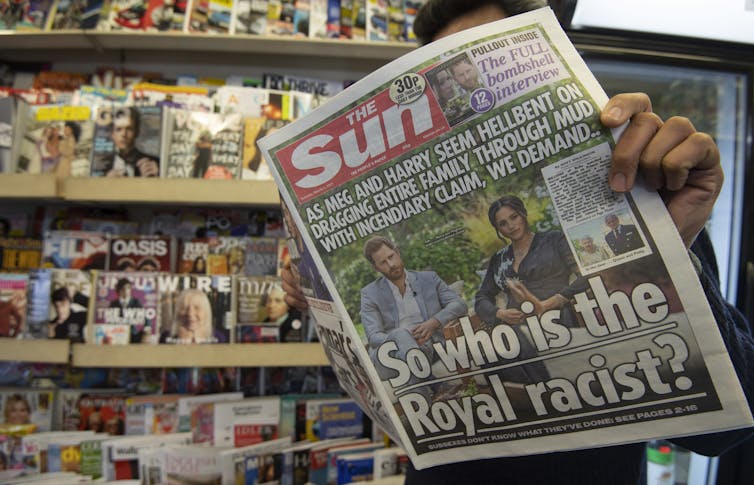
In line with these micro-aggressions, and apparently determined to confirm everything Markle had said about them, the British media duly unleashed on #OprahMeghanHarry for their temerity in speaking out and doing this interview.
They reserved special contempt for Markle. A woman of colour, a commoner, a divorcee, an American, and an actress. On all counts an outsider. And she had dared to break the bounds of royal secrecy and reveal the monarchy for what it is, or at least what she perceived it to be: a monument to dynastic privilege and stupendous inherited wealth on the one hand, and a dysfunctional, emotionally damaged family, irreparably torn apart on the other.
The visceral response was almost as remarkable as the interview itself. The vaudevillian excess of the British media was encapsulated in ITV host Piers Morgan’s diatribe against Markle for well, everything.
I don’t believe a word she says. I wouldn’t believe it if she read me a weather report.
He then stormed off the set, never to return.
Racism and royalty
More difficult to sustain were the denials and denunciation of any suggestion of racism from within the royal family (and it’s difficult to write that with a straight face). This is an impossible line to run for even the most sympathetic monarchist.
When asked, Prince William said “we’re very much not a racist family”. The reality however, is very different, as historian Benjamin T Jones has discussed.
Harry and Meghan would not say who had raised concerns about the colour of their unborn child’s skin, other than specify it it was not the queen or Prince Philip.Facundo Arrizabalaga/EPA/AAP
It’s impossible to ignore the structural racism of monarchy and empire, the historic support for and profit from slavery, King Edward’s overt racism and well-documented Nazi sympathies, and Prince Philip’s repeated racist comments – always politely and inappropriately dismissed as “gaffes”.
The inconvenient fact is that race is the logic of empire and the driver of imperial expansion. It lies at the heart of notions of dynastic monarchy and of a hereditary title of the blood. “Blue blood” is a thing.
Nor is it any coincidence there has been a lack of racial diversity in the queen’s body guard and royal household. Despite the existence of a diversity policy, Buckingham Palace acknowledges “more needs to be done” and is set to appoint a “diversity tsar”.
Until Markle, there was also no diversity in the royal family. Little wonder her arrival caused consternation over the prospect of colour entering the family — and even how much colour — as she related.
A palace above politics?
These unsettling revelations are the latest of several instances where the veil of royal secrecy has been lifted. None has been welcomed by the palace.
The 2015 release of the “black spider memos” from Prince Charles to members of Tony Blair’s government, revealed our future king’s personal input into government policy. In February, The Guardian showed the queen’s interference in legislation through the process of royal assent in order to advance and protect the financial interests of herself and Prince Charles.
My own palace letters legal case revealed the queen’s embargo over a vast array of historic documents held in our National Archives, including her extensive correspondence with Governor-General Sir John Kerr, about Kerr’s prospective dismissal of Gough Whitlam’s government.
Soon to be released letters between Kerr’s predecessor, Governor-General Sir Paul Hasluck, and the queen are likely to further highlight the queen’s involvement in political matters during the Whitlam government.
The very real and much denied political power of the queen and the monarchy is now beyond dispute, thanks to the breakdown in royal secrecy to which this interview has contributed.
Institution vs family
In this display of royal family breakdown, one thing that stood out is the impossible duality of the monarchy as both institution and family. It succeeds as the former only by destroying the latter.
This is The Firm, the institutional family made up of the senior royals, staff, a clique of aristocratic courtiers, centuries of ritual and a fixed institutional memory, and yet bigger than them all. It speaks as one, follows protocol as one, and everyone knows their place.
In the process, the usual human interactions even within the family are stripped back to a callous and unresponsive dynastic dysfunction.
The royal family still has rules and protocols when interacting in private.Dominic Lipinski/AP/AAP
Markle’s professed shock at having to curtsy and Harry having to bow to the queen in private — “but she’s your grandmother!” — illustrates the surreal formality and artifice that governs their every move.
It is difficult not to feel sympathy for Harry after his public revelation his father stopped taking his calls and that after initially inviting him to dinner, the queen was “too busy” to see him before he and Meghan left for Canada. The royal courtiers, in his view, had stepped into this “family” matter and put the interests of the monarchy first.
It is a rare and unpalatable window onto a strangely Victorian mindset that remains unchanged in its settled imperial form and uncertain of its contemporary role. The palace has shown itself unable and unwilling to adapt to the expectations of a modern liberal democracy in which we should make our own choices and fully govern ourselves.
What now for the Australian Republic Movement?
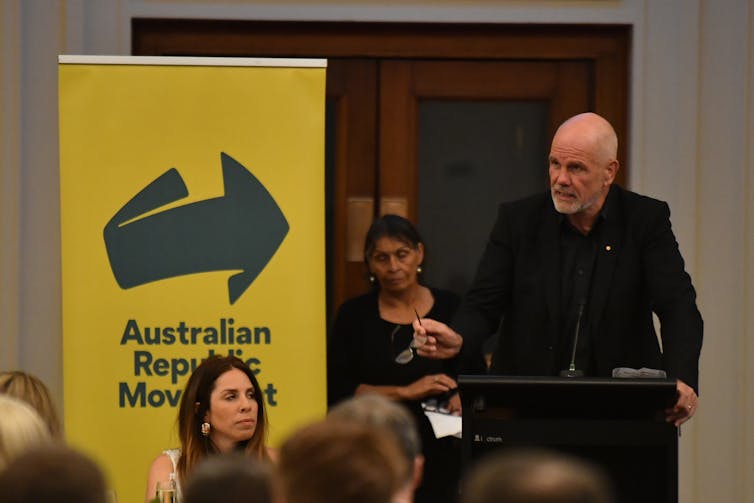
The Australian Republic Movement has certainly felt the impact of the Meghan and Harry interview, despite claims to the contrary.
It saw a marked increase in members in the week after this deeply damaging interview aired, reflecting broader concerns about the dynastic dysfunction it revealed and the growing incongruity of our residual monarchical ties.
Peter FitzSimons is chair of the Australian Republic Movement.Mick Tsikas/AAP
This comes on top of a 19% increase in members over the last year — despite the difficulties of COVID and lockdowns.
Opinion polls consistently show that a significant number of Australians support a republic – so why aren’t we one?
A new model
For some time, the Australian Republic Movement has been working towards a new model for a republic with an Australian head of state, with major input from public submissions, discussions with expert groups and all political parties to develop a consensus position.
The proposed model will be released by the end of this year.
The core requirements of any successful model are
it has enough bipartisan political support to pass through parliament as the formal referendum question
it needs to reflect the lessons of the unsuccessful 1999 referendum and bridge the artificial divide between an “elected or appointed” model, which drove a wedge between republicans last time
most critically, it must be able to win the support of the Australian public.
If we can do those three things, then an Australian republic is not far off.
It has been more than a generation since the 1999 republic referendum and one of the strongest sentiments for retaining the monarchy — that a republic would be seen as “ditching the queen” — is fast losing relevance.
We are getting closer to the day when the queen will be succeeded by King Charles of Australia and the choice then will be stark. Do we embrace a post-colonial future of independence and autonomy in all matters of governance? Or retain this residual connection with a monarch and a monarchy out-of-step with expectations of democratic practice?
‘If you can see it, you can be it’
In a very different context in the Oprah interview, Markle spoke of the importance of representation for all peoples. She talked of a line from one of her son’s books,
if you can see it, you can be it.
This resonates with questions about our own head of state, which is neither representative of us, nor something we can aspire to. It is and can only be the British monarch – we can see it, but we can never be it nor have a say in who it is. This is the defining familial privilege at the heart of monarchy itself, based on notions of superiority and heredity which are completely at odds with a modern democracy in which representation, accountability, and transparency are central.
Our head of state should be one of us, not one of them.
The COVID vaccine rollout is underway, with Australians lining up to get their jabs. But what if you have already had COVID-19? Is it still a good idea to get vaccinated?
Although natural exposure to the virus stimulates immunity, we don’t yet know how long this immunity will last. And people will vary in their ability to mount a protective immune response.
Even if you’ve had COVID-19, you should still get vaccinated. A COVID vaccine may offer more reliable and sustained immunity than a previous infection. At the very least, it will add an extra layer of targeted protection.
Here’s how our immune response works after a natural infection versus a vaccine.
From B cells to neutralising antibodies
Soon after becoming infected with SARS-CoV-2 (the virus that causes COVID-19), our immune cells (T cells and B cells) activate. Activated B cells produce so-called neutralising antibodies. These antibody-secreting cells defend our bodies against the infection by making antibodies that bind to spikes on the virus surface, and block the virus from entering our cells.
Neutralising antibodies spill over into the bloodstream and travel around the body looking to mop up virus. After the infection has resolved, these activated B cells calm down and transition to a resting state. They move from our blood to our lymph nodes and bones. These so-called memory B cells survive for decades, along with help from memory T cells.
But they need a nudge once in a while to ensure they’re ready to kick into gear if we’re exposed to an infection.
SARS-CoV-2 viral particles have surface spikes (in green), to which antibodies attach.NIAID/flickr
Our immune cells rely on memory
When we’re re-exposed to a virus, or receive a vaccine booster, these memory cells awaken, become activated and produce large amounts of antibodies much faster. This immune memory reduces the risk we’ll become infected with SARS-CoV-2. But if we do, it allows for quicker healing from COVID-19.
Sustained neutralising antibody levels indicate a good degree of protection against SARS-CoV-2. How long we hang onto natural immunity after COVID-19 is variable and depends on viral, human and environmental factors. For example, the viral variant can make a difference, along with our genes, underlying health conditions, and age.
These factors can affect our neutralising antibody levels, which can wane over time to dip below protective levels.
As COVID-19 hasn’t been around for a particularly long time, it’s difficult to know how long natural immunity generally lasts. However, antibodies and immune memory appear to last for at least two months.
For patients who have recovered from SARS, a related coronavirus, research has shown they maintained antibodies for up to two to three years following infection.
Again, because of the short time frame, we have limited data on sustained antibody responses following vaccination. But immunity appears to be strong three months after the Oxford/AstraZeneca vaccine.
With COVID-19 vaccines, certain variable factors have been targeted, in a way they can’t with natural infections. For example, considerations like the dose size and the time between doses are all established to confer optimal immunity.
As we continue to monitor people who have received the COVID vaccines, we’ll develop a better understanding of protective immunity and its longevity.
Staying on top of variants
Natural immunity from infection may protect against other variants to some degree, but vaccines will play a crucial role as the virus continues to mutate.
It may be necessary to get regular boosters of the COVID vaccine until the pandemic is under control. This will provide protection against variants our pre-existing antibodies may not be able to neutralise.
Boosters enhance our broad immunity to parts of the spike proteins shared between different virus variants. Antibodies produced to these common regions can neutralise the virus and stop infection.
We saw this to a limited extent in people who had common cold infections with other coronaviruses before COVID-19.
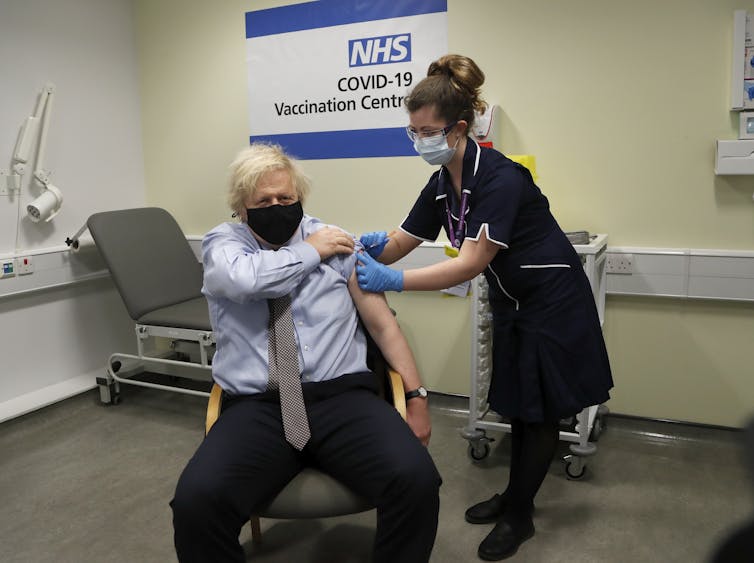
Boris Johnson, who was in intensive care with COVID last year, received the first dose of his COVID vaccine recently.Frank Augstein/AP
Only one jab? Vaccines as a cure for long COVID?
There’s been some research suggesting people who have had COVID may only need one dose of the vaccine to be protected.
For people who have had COVID, one dose may serve to top up their antibodies to protective levels. This is because they’re starting on a stronger footing in terms of their antibody levels and immune memory, compared to people who haven’t had the virus.
But experts in Australia still recommended two doses, regardless of whether you’ve had COVID.
Meanwhile, reports have indicated people experiencing long COVID may also benefit from vaccination. We’re not sure how this happens, but symptoms may improve with clearance of any hidden virus reservoirs from the body. Research into this phenomenon is ongoing.
At the end of the day, when the vaccine is available to you, you should get vaccinated, even if you’ve had COVID-19. While the vaccine is likely to protect you, it’s also important to protect others, as we look towards a goal of herd immunity.
Poll after poll suggests a large majority of Australians cares about climate change. Yet in recent federal elections, this hasn’t translated into wins for parties with stronger policy platforms on climate change.
So what determines someone’s climate change attitude, and how does it translate into voting?
In research published today, we studied 2,033 Australian voters’ attitudes across the political spectrum in the context of the 2019 federal election. And we found over 80% said they think it’s important Australia reduce greenhouse gas emissions. This includes close to 70% of conservative voters (those voting for Coalition parties).
However, digging deeper reveals nuance to these attitudes. While most Australians support climate action, stark differences emerge along political party preferences in terms of how important voters think it is.
Our research suggests the question about social support for climate action in Australia is no longer: “does climate change matter to enough Australians?”. Instead, the critical question may well be: “does climate change matter enough to Australians to shift climate politics?”.
Why the ‘climate election’ didn’t pan out
We conducted our survey in July 2019, two months after the Coalition won the federal election. Its victory came as a surprise to many, as the election was sometimes billed the “climate election”, implying climate change was a bellwether issue.
The climate policies of the two major parties were night and day, with the Labor Party campaigning on ambitious mitigation targets and the incumbent Coalition maintaining the status quo of very limited climate policy.
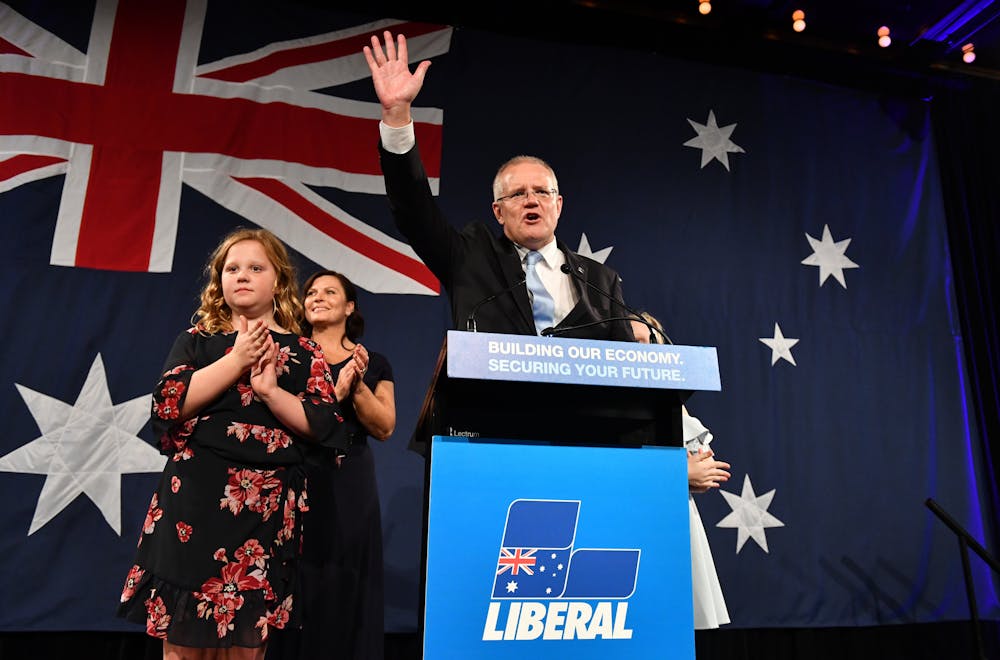
Prime Minister Scott Morrison led the LNP to victory in 2019, defying the polls.AAP Image/Mick Tsikas
So what were the voters thinking?
We found about half of Australian voters (52%) said climate change was important when deciding their vote in the 2019 Australian federal election. However, climate was the most important issue for only 14% of voters.
Even among those who said they felt it was extremely important for Australia to reduce greenhouse gas emissions, most (58%) said climate change was important, but not the most important issue, when deciding their vote.
Climate change was stated as the most important issue for 21% of Labor voters and 39% of Greens voters, but for less than 5% of Liberal Party, National Party, and Queensland LNP voters.
This pattern was reversed for those who didn’t take climate change policy into account in their vote: 26% of Liberal, 21% of National, and 31% of Queensland LNP voters did not consider climate change when deciding their vote. Under 15% of Labor and Greens voters did the same.
And when we looked at how much voters cared about climate action, the differences become more potent. Three quarters (73%) of progressive voters (those voting for the ALP or the Greens) see Australian action to reduce emissions as “extremely important”. Only one quarter (26%) of conservative voters say the same thing.
Who’s more willing to make sacrifices for the climate?
Our research also explored the extent voters were willing to accept a personal cost to support climate action. We asked about their willingness to accept a significant or small personal cost, but didn’t specify what we meant by small or significant, because a small cost to one person may be a significant cost to another.
Most voters (72%) said they’d be willing to incur some personal cost in return for emissions reductions. Across the political spectrum, the proportion of voters willing to accept a small personal cost is relatively similar: 60% of progressive voters, 55% of conservative voters.
Major differences emerge when it comes to “significant personal cost”.
While 26% of progressive voters are willing to incur a significant personal cost, only 5% of conservative voters feel similarly. At the other end of the spectrum, 40% of conservative voters are unwilling to incur any personal cost, but only 14% of progressive voters feel the same.
Support for strong climate policies may depend on whether the policies will, or are perceived to, personally impact voters. Given political leaders’ stances influence public support for climate policies (as 2018 research showed), our research highlights an opportunity for conservative political leaders to clarify their position on climate change.
Interestingly, age was a consistent predictor of responses. Younger people were more likely than older people to consider it important that Australia reduce greenhouse gas emissions. Younger people were more willing to incur a personal cost to support climate action, and to consider climate change when deciding their vote.
In fact, we found an Australian voter from the Baby Boomer generation is half as likely as a voter from Generation Z to consider it important to reduce greenhouse gas emissions.
Divisive politics have a limited shelf life
If future young people cared just as much about climate change as today’s young people, and if existing cohorts don’t change their views as they age, then the percentage of Australian voters who consider greenhouse gas emissions to be “extremely important” is likely to increase from 52% in our 2019 data, to 56% by 2030. By 2050, this figure could rise to 65%.
These projections are purely on the basis of more climate-aware cohorts coming into voting age and replacing older voters. It doesn’t consider any future changes in attitudes within cohorts (which may also make a big difference).
The key implication is simple. If Australian political leaders pursued stronger climate action, they could rest assured most of the voting population will broadly support them, along with most of their own voter base — regardless of which party is in power.
This will become only more pronounced with gradual generational change, and likely changes in attitudes within age groups. In any case, it’s clear divisive politics that result in climate delay have a limited shelf life.
Homeschooling registrations for children in Victoria in 2020 were almost four times the number of the previous year, recent reports show.
Some families who had children learning from home during lockdown discovered they enjoyed spending more time together and some children found they learnt better at home. Parents may have recognised academic or social challenges for their child at school and decided to continue with homeschooling.
But even before COVID-19, homeschooling was on the rise. If you’re considering homeschooling because your child seems to do better at home, but are unsure if it’s the right thing to do, here are five things to take into account.
1. Homeschooling is different to remote learning
Homeschooling is different from remote learning. Remote learning is the experience of teachers delivering the school curriculum to children at home, as was done during the recent school closures. This is more like distance education, which some families do if they live remotely, for instance.
In homeschooling, parents have elected to meet their child’s educational needs themselves, rather than using government or other school options.
Some parents put together a school structure at home with lesson plans and routine break times. They may employ a tutor to help with their child’s education or do this themselves.
Others choose to use an unstructured or “unschooling” learning method. This is an informal way of learning that advocates student-chosen activities rather than teacher-directed lessons.
The process of developing a homeschooling routine takes time, effort and patience. Parents may be required to submit a plan to their state education department, which, in most cases, should show an alignment between their child’s learning and the national curriculum.
Parents may have to develop or implement a full school curriculum at home without the resources available in schools.
Even if parents decide to teach children in an informal way, they will need to put in significant time and effort. For example, a parent may use a trip to the shops to cover geography (the child navigating), mathematics (the child calculating the cost of items), or economics (supply and demand factors), but this may add hours to a routine shop.
A trip to the shops can be a learning experience.Shutterstock
So, parents will need to consider their ability and desire to take on this leading role in their child’s education. For some parents it can also take an emotional toll and feel isolating if there isn’t a plan or enough support.
3. Consider social and other difficulties at school
Some families homeschool on religious or ideological grounds; others are motivated by practical limitations to school access — such as if the school is too far from home or their child has a disability.
Many individual children can face difficulties going to school, such as the separation of leaving their carer or parent. Other children may be bullied at school.
There is very little research into the effects on children who are experiencing difficulties at traditional schools and change to homeschooling.
But parents should know schools have a legal obligation to provide a safe environment for children. They must address bullying behaviour and provide support for both the victim and the perpetrator. When there are difficult interactions parents, teachers, the school and children (where appropriate) should collaborate to improve the situation.
Children often need support from teachers and parents to navigate exposure to bullying. But if the behaviour is allowed to continue with options exhausted, students will be more likely to experience negative psychological health from ongoing bullying.
Data from 2016 show around 70% of children aged 12–13 experienced at least one bullying-like behaviour within a year. All forms of bullying have the potential to create long-term and disastrous psychological as well as physical effects. Some young people who have died by suicide were found to have done so after persistent bullying.
Evidence suggests bullying constitutes a traumatic experience for students who are bullied. How teachers and schools respond to bullying and the frequency of bullying can also result in mental distress for students.
Bullying can have long-lasting psychological consequences.Shutterstock
Not all schools can and do adequately manage bullying and other unsafe situations children may be in. In these instances, parents may decide to remove their child from school and homeschool their child.
Parents can consider whether their child is showing ongoing signs of psychological distress such as changes in behaviour, withdrawal from others, irritability or problems concentrating.
Specialist support from a psychologist may help parents and students to understand the benefits and limitations of changing schools and homeschooling. If there are underlying social or separation anxieties involved, these issues should be addressed as they are likely to linger at home too.
4. Children can thrive academically
Children’s academic outcomes need to be considered in the context of the parents’ motivation for choosing homeschooling. For example, if a parent’s primary concern is religious education their focus may not be on their child gaining the highest year 12 results possible.
Research shows academic results of children who are home educated are mixed. This is partly because there are diverse parental motivations which may or may not prioritise academic pursuits.
In Australia, some studies have focused on NAPLAN results. These suggest home-educated students score higher than state averages across every measure. The effect continues even if the child returns to school.
An Australian survey of homeschooling families showed nearly 50% of children participated in at least one club activity. This included 24 different sports — from AFL to aerial silks and yoga — and clubs including lego and chess. Around 40% attended at least one regular learning group. Classes included new languages, gardening, Shakespeare and archaeology.
The majority of research participants regularly had “play dates” with homeschooling and/or non-homeschooling families. Children actively participated in their community through the arts, including community theatre, bands, choirs, dance and visual arts classes.
Parents should consider the reasons behind their choice to homeschool and seek advice to ensure the best outcomes for their child socially, emotionally and academically.
Film review: The Last Vermeer, directed by Dan Friedkin.
Among the thousands of plundered treasures discovered in May 1945 by the Allies was an undocumented picture supposedly by Johannes Vermeer, a masterpiece titled Christ and the Adulteress.
Held in the personal collection of Reichsmarschall Hermann Göring, no one knew anything about it. Where had it come from? How did Göring get his hands on it?
The Last Vermeer — the first directorial outing for billionaire Dan Friedkin — recounts the fascinating story of the painting’s discovery, and exposure as a fake.
Han van Meegeren, Christ and the Adulteress, 1942.Fundatie Museum
In the process, Friedkin turns a spotlight onto the art market, questioning why some artworks are worth millions and others only a few hundred dollars, and querying who makes these decisions.
Early in the film, our hero, the infamous Dutch art forger Han van Meegeren (played with flair by Guy Pearce), suggests the problem facing the film’s protagonist Captain Joseph Piller (played woodenly by Claes Bang) is not one of art. Instead, Piller should be “investigating money and power”.
From the rollicking beginning, it seems Friedkin intends to investigate just that, but after about 15 minutes, the wheels fall off. For the next hour, we lose track of the central narrative until suddenly (and unconvincingly) we arrive at the 1945 trial in which van Meegeren is accused of treason for selling national treasures to the Nazis.
Forgery as revenge
Born in 1889, the unsuccessful artist-turned-art-dealer van Meegeren was a charlatan, talented painter, bon vivant, opportunist, satirist, critic and — eventually — national hero.
Sadly, The Last Vermeer does not explore the complete and detailed narrative of this forger, the Nazi, and the art market. Instead, the film introduces a cohort of characters that confuse rather than clarify, changing and ignoring critical details of the story.
As we discover in the film, van Meegeren’s early career was impacted by negative reviews from his first solo exhibition in 1917.
To win back his self-esteem (and make himself absurdly wealthy) he began forging artworks.
Han van Meegeren painting in 1945.Wikimedia Commons
One expert, art historian and curator Dr Abraham Bredius found fault with an early attempt and pronounced it a fake, instantly becoming the target for van Meergeren’s revenge.
To convince the world of his true genius, van Meegeren painted forgeries to fulfil Bredius’ theory that the Dutch master Johannes Vermeer had been influenced by Italian painting. Van Meegeren painted the quintessential “missing link” to try to prove this Italian connection.
By 1936, he had perfected his technique, painting Christ and the Disciples at Emmaus. Bredius was delighted, and arranged for the Museum Boijmans in Rotterdam to buy the painting, which he believed to be a Vermeer, for a huge sum.
In 1942, van Meegeren sold another painting, Christ and the Adulteress, as a true Vermeer to Göring.
In the film, once the plot is set up with the discovery of the treasures, the story meanders around the central characters and a lengthy exposition of antipathy between the Dutch and their liberators, before Friedkin finally returns to the core of the story.
However, here he presents a revamped version.
The film suggests van Meegeren, on trial for treason for selling Vermeers to the Nazis, convinced his jailers to allow him to paint and drink whiskey while in confinement.
The real story was much more dramatic.
Even though he could tell the jury which paintings they would find under his “Vermeers” when x-rayed (forgeries are often painted over existing paintings from the same era), the court remained unconvinced.
To settle the case, van Meegeren was set up in a house rented by the Dutch government — under the scrutiny of six witnesses — to paint another Vermeer. To their astonishment, he completed Jesus among the Doctors in a matter of weeks.
Han van Meegeren’s Jesus among the Doctors, also called Young Christ in the Temple (1945) was painted in just six weeks.Wikimedia Commons
Surely this is a much better cinematic scenario than the absurdity of soldiers setting their prisoner up in a studio with all the comforts of home.
Nevertheless, the result of this extraordinary evidence was so conclusive van Meegeren was convicted of forgery — not treason — in November 1947. And as the man who had swindled Göring, he became an instant folk hero for the liberated Dutch.
Sadly, his glory was short-lived. He died of a heart attack six weeks later.
Faking the fakes
Despite the rambling first half of the film, we do finally get most of the details of this extraordinary story of power, the art market, the role of critics, and how the latter two can destroy careers.
But I do feel sorry for van Meegeren, the most successful forger in history. The master forger would be rightly horrified that instead of using his own forgeries of Vermeer, Friedkin hired a scene painter named James Gemmill to create rather ham-fisted versions for his film.
Van Meegeren’s The Supper at Emmaus (1937): his forgeries are much better than the versions in the film.Wikimedia Commons
Although not Vermeers, they were van Meegerens — and worthy of our admiration.
Like Göring, who according to the film’s final credits, “looked as if for the first time he had discovered there was evil in the world” when told his beloved Vermeer was a forgery, van Meegeren would be justifiably horrified by this final insult.
Scott Morrison has pointedly left in doubt the future of Christian Porter as Attorney-General, saying he is presently considering advice on Porter’s situation in the context of the “ministerial guidelines”.
Morrison’s statement heightened speculation about a cabinet reshuffle after parliament adjourns this week until the May budget.
Defence Minister Linda Reynolds, currently on medical leave with heart problems but due back to work on April 2, is considered unlikely to stay in her portfolio.
It was learned on Wednesday that on medical advice she would not attend the Raisina Dialogue on April 13 in India.
Morrison’s failure to clarify Porter’s future comes a week before he is due to resume his duties as first law officer, after taking mental health leave in the wake of being accused of a 1988 rape, which he denies.
It was the second time in two days the Prime Minister had indicated he was still mulling advice about Porter.
In parliament on Wednesday, opposition leader Anthony Albanese asked whether Morrison had received advice from the Solicitor-General about Porter’s portfolio responsibilities.
Albanese also noted Morrison had previously confirmed he had sought advice from his department in relation to the Attorney-General and ministerial standards.
“Is the Prime Minister preparing to make his Attorney-General a part-time minister or is he preparing to drop him all together?” Albanese asked.
Morrison said he was considering “that advice with my department secretary, in terms of the application against the ministerial guidelines”.
“When I have concluded that assessment […] I’ll make a determination and I’ll make an announcement at that time.”
The assessment of Porter’s position follows his launch of federal court action against the ABC over its February 26 report that the allegation of rape made by a now deceased woman had been sent in a letter to several parliamentarians including Morrison.
It has already been announced Porter will not deal with anything to do with the federal court or the ABC.
Last week Morrison said he had sought advice from the Solicitor-General about the scope of the Attorney-General’s “portfolio responsibilities in light of the defamation law suit”.
Porter is also Minister for Industrial Relations and Leader of the House of Representatives.
Depending on the content of the Solicitor-General’s advice, Morrison has the options of further carve outs of Porter’s Attorney-General responsibilities to avoid conflicts of interest, standing him aside, or removing him altogether from that position.
If he wished to show some continued support for Porter, he could leave him in cabinet holding just the industrial relations job.
Reynolds went on medical leave after coming under attack for her handling of the Brittany Higgins matter. Higgins alleged she was raped by a colleague in the office of Reynolds, then defence industry minister, in 2019.
Meanwhile, Tasmanian Liberal senator Eric Abetz on Wednesday was accused by the Speaker of the Tasmanian parliament, Sue Hickey, of denigrating Higgins.
Hickey told the Tasmanian parliament that on March 1 at a citizenship ceremony in Hobart she had casually asked Abetz whether Porter was the minister involved in the historical rape allegation.
She said Abetz had replied it was Porter, “but not to worry, the woman is dead and the law will protect him”.
According to Hickey, Abetz “then said ‘as for that Higgins girl, anybody so disgustingly drunk who would sleep with anybody could have slept with one of our spies and put the security of the nation at risk’”.
Abetz said he categorically denied “Ms Hickey’s defamatory allegations under Parliamentary privilege”.
“As someone who was on the inaugural committee of a women’s shelter and its honorary legal adviser for a decade prior to entering parliament, I reject outright her suggestions and gross mischaracterisation of our discussion,” Abetz said.
“It’s noteworthy Ms Hickey has made her assertions some 3 weeks after she alleges they occurred.
“At no stage has Ms Hickey ever raised concerns with me about any of our conversations.”
Abetz suggested Hickey was motivated by Tasmanian Premier Peter Gutwein telling her on Sunday she would not be endorsed by the Liberal party for the next state election.
After the conversation with Gutwein, Hickey said she had been “effectively sacked” from the Liberal Party. “It appears that the men in dark suits are firmly in control and there is no place for small ‘l’ Liberal women who refuse to kowtow or be subservient to the dominant males.”
In 2018 Hickey won the speakership with Labor and Greens support, against the Liberal candidate.
Abetz said that “on her way out the door she is trying to destroy the party”.
Hickey hit back in another statement in parliament on Wednesday, accusing Abetz of “very grubby politics”. She stood by her account and said, “I have witnesses who can testify that I told them of the discussion at the event and immediately afterwards”.
Late Wednesday the ABC reported that Gutwein had written to Morrison requesting he consider Hickey’s allegations against Abetz.
It said that in a written statement Gutwein said Hickey had told him several weeks ago Abetz had made offensive comments but had not gone to the level of detail she had raised in state parliament.
“As Ms Hickey has outlined her allegations in more detail in the Parliament, this afternoon I have written to the Prime Minister and requested that he consider the matters raised.”
Public debate about our rape laws in recent weeks has fixated, yet again, on the concept of consent and whether our current definition in the law is “fit for purpose”.
Over the past three decades, Australia’s states and territories have set out to modernise the definition of consent, albeit with some variability in how it is defined.
South Australia, New South Wales and Northern Territory, for example, have a requirement of “free and voluntary agreement” to sexual intercourse, while Victoria and Tasmania have a more pared-down version of “free agreement”.
Queensland and Western Australia have gone their own way, rejecting the idea of consent as “agreement” in favour of a more active interpretation that consent is “freely and voluntarily given”.
These definitions are still being refined and debated. The NSW Greens have, for instance, introduced a bill to extend the current definition to require enthusiastic consent to sex. This is a qualitative threshold that would go far beyond the “free and voluntary” language in the current law.
Last week, NSW Police Commissioner Mick Fuller also proposed using an app to record sexual consent — an idea that was roundly criticised.
Fuller has conceded his consent app ‘could be a terrible idea’, but the idea was intended to start a debate.Dean Lewins/AAP
Why consent can’t be contractually given
Advocates for rape law reform argue our current definitions of consent are leading to “staggeringly low” reporting rates of sexual assaults and conviction rates.
According to the national statistics, nearly nine in 10 victims of sexual assaults do not go to police.
In NSW, official statistics reveal the number of sexual offences reported to police increased from 3,541 to 4,444 from 2015–19. Of most concern, however, is that only 19% of these incidents proceeded to trial in 2019. (Two-thirds of those charged were found guilty.)
Understanding the attrition of cases is complex. This can turn on the strength of evidence, as well as how police and prosecutors exercise their powers to progress a case at various points in the process.
These statistics are often cited in support of the case for expanding the legal definition of rape. Some law reform advocates and survivors are calling for a broader “affirmative” consent standard, which would require consent to be actively given by actions and/or words before, and continuously throughout, a sexual act.
Encouraging open conversations about consent before and during sexual activity is important, as awkward as this might be for some people. Though it may seem “unromantic” — as Fuller noted last week — this type of communication provides safety and assurance for both parties.
The NSW police commissioner’s idea that consent could be structured and recorded via an app, however, has raised the ire of many commentators.
Some critics argue this approach to consent is apt to mislead. It promotes a contractual understanding of sexual relations – an “offer and acceptance” model, in which one person actively initiates sex with an offer and terms that can be revised, accepted or rejected by the other person.
Indeed, the idea of a “consent app” is deeply problematic. It is reminiscent of the paper-based consent forms that floated about some university campuses (with free condoms) in the 1990s.
Such written consent forms, on closer scrutiny, had little if any legal or evidential value in sexual assault cases. The key point behind a “positive” definition of consent is that it should be viewed as an active, conscious and above all reflexive exercise.
Consent is given and obtained through communication, not contracts. It cannot be inferred from a written document or an app, negotiated some time before the sexual activity. And it must be remembered that consent must be ongoing and can be withdrawn at any time before and during sex.
Put simply, consent should never be implied or inferred by an offender from apps, Tinder swipes or social media likes.
The proposal for a consent app has little merit, except perhaps to provide a platform for educating people about the law and reminding them about the standards of behaviour expected from people when engaging in sex.
Perceptions of what constitutes ‘real’ rape
From my perspective, there is another core issue that is leading to low reporting and high attrition rates of sexual assault cases — and this can’t be solved by further fiddling with our legal definitions of consent.
This is how our community perceives rape — or what constitutes “real” rape as opposed to consensual intercourse.
The law has an important role in shaping community standards. Over the past three decades, the legislature and courts have worked to embed and reflect more modern concepts of human dignity and respectful decision-making in the law governing sexual activity.
Thousands demanded justice for women at marches across the country earlier this month.Rick Rycroft/AP
For instance, marital rape gradually came to be criminalised in all Australian states and territories, though the process took many years.
And the legislatures and courts have provided further guidance on the wide range of cases where the victim’s apparent “consent” has been compromised by the effects of intoxication, fraud, mistakes, blackmail, threats or other abuses of power.
The battle at the heart of rape trials rarely relates to issues of identity or whether in fact sexual activity took place. Rather, cases often turn on the differing perceptions of the people involved about what took place (what is referred to as “he said, she said”).
And this is where community attitudes toward gender, sexuality and race invariably come into play.
When it comes to consent, for example, juries must decide whether the prosecution has proven beyond a reasonable doubt there was no free and voluntary consent. And the perceptions of juries are influenced by these wider societal beliefs and attitudes.
In the end, the “law’s truth” about consent, as legal feminist Carol Smart pointed out more than three decades ago, is decided in the context of how the police, prosecutors, defence team, courts and wider community view what constitutes a “real rape” (or not).
Countering these entrenched biases and myths about “real rape” is needed to improve sexual assault reporting and conviction rates.
We can do this by reviewing our laws and procedures governing rape investigations, improving our judicial and lawyer education, and providing better jury directions on consent in “plain English”.
This is the best way forward to tackle what is, and will remain, a complex and often deeply contested aspect of every rape trial.
No-one has done more for Australian drama than Katharine Brisbane. When she talks, we should all be listening to what she has to say. Over seven remarkable decades, she has played one of the leading roles in Australian culture.
As theatre critic for the Australian from 1967 to 1974, she documented the most exciting, innovative and tumultuous period of the nation’s artistic, cultural, social and political activity — from the avant-garde stirrings of the late 1960s, through the revolutions of the Australian Performance Group in Melbourne and the Nimrod Theatre in Sydney.
Australia’s new wave was not so much a singular wave, but a thrashing, roiling series of tempests lashing the complacent, monochrome cultural landscape: Brisbane was there to document it all.
With her late husband, Philip Parsons, Brisbane founded Currency Press in 1971 committed to publishing the explosion of new Australian plays, a commitment it maintains to the current day.
A public discussion
In 2001, responding to a sense of “despondency” amongst performing arts workers — deriving in no small part from the contraction of funding over the prior decade — Brisbane and a handful of collaborators set up a monthly discussion club they called “Currency House”.
Over the following three or four years, the group encouraged artists to join them in an attempt to restore a sense of purpose and significance: to reignite the passion, optimism and energy of the years of cultural expansion that followed the establishment of the Australian Council for the Arts in 1968, and the fiscal (and ideological) investments of subsequent governments.
In 2004, Currency House took the private discussions public, launching the quarterly essay series Platform Papers. Now 89, Brisbane’s latest provocation, an essay called On the Lessons of History, is a stirring call to arms for the arts sector, and, reportedly, her last Platform Paper.
On the surface, On the Lessons of History presents as a retrospective of the 62 essays and their authors, luminaries of contemporary practice and thinking, including Wesley Enoch, Lyndon Terracini, Lee Lewis and Alison Croggon.
However, there is something much more important going on here, as hinted in the title’s nod to Will and Ariel Durant’s formative The Lessons of History (1968), a book that distilled history into sharp, focused themes, with a view to better understanding the past and the times to come.
Brisbane’s sights are set resolutely on the future. The essay charges artists with a responsibility not only to their practices, but to a broader project. The arts, she writes, should provide a space where we undertake reflection as an active, interventionist and disruptive project.
In this, theatre can lead us to an imagining of “Australia as a wiser and more creative country”.
Crafting a new future
Brisbane writes with informed urgency. Since 2001, she has observed “a period of cultural change from which we have emerged a different nation”.
But not a better one, she writes. Rather:
we have allowed ourselves to be swept up in fears and occupied with distraction — new [electronic] devices of incomprehensible ingenuity that invite entry into dazzling new worlds to escape the wreck we have made of this one.
Artists are caught up in the terror: precarious, scared to speak out for fear of losing work, locked into logics of competition, celebrity and commerce.
In response to this trend, and to the acute challenges of the most recent few years — drought, pandemic, the shattering revelations of corruption and inhumanity across our public institutions — Brisbane urges a fundamental repositioning of the arts.
Most pointedly, she points to the “fatally flawed” terms under which the Australia Council was established.
Katharine Brisbane’s ongoing legacy is formidable.Currency House
Since its establishment in 1968, the council has been focused on funding “products rather than creators”, and dividing the arts sector into discrete artforms — losing sight both of the artists themselves, and the ways art forms meld and evolve.
Rather than persisting in the “endless, competitive pursuit of excellence” — a trajectory which culminated in former arts minister George Brandis siphoning funding away from the Australia Council — we must reconsider the needs of the arts sector in the 2020s and beyond, and act on these new needs.
Instead of framing arts funding as “money with which to produce art”, could we not instead see it as “money for cultural research”?
This, then, is what Brisbane describes as Currency House’s new project: concrete steps toward re conceiving and redesigning the arts and cultural sector.
The first of those steps is to provide a rallying point for artists: an activist platform from which to build upon the proposals and provocations of the Platform Papers series, lobbying and advocating for genuine change. For Brisbane, among the most pressing demands should be a cabinet-level acknowledgement of the creative sector, with an arts department “staffed by arts workers, dedicated to forward planning and fostering collaborative enterprises.”
Crucially, it is artists themselves who must show the way forward. They must not be cowed into silence, but instead must demand, at the very least, “funds to experiment and a living wage.”
“In 2021” Brisbane writes, “we are starting again.” What, she concludes, do we have to lose?
Platform Paper 63: On the Lessons of History by Katherine Brisbane, is on sale now.
The past 12 months presented unprecedented challenges for the performing arts as the pandemic curtailed many live performances.
Some organisations relied on pushing digital content to remain in the public eye, but this was next-to-impossible to monetise.
A New Zealand Symphony Orchestra performance streamed live for free in March 2020.
Now, as the COVID vaccines roll out and the sector heads towards a reset, it’s worth applying some fresh thinking to the arts landscape of the future.
Some have asked for more sustainable funding, others for more funding. But the central question is: can we get better value-for-money from the spend through central and local government?
The answer is “yes” — if we don’t duplicate effort, if we target funding to those organisations that are of an appropriate scale, and if those organisations take a more creative approach to market development.
We love the arts
Pre-pandemic research in 2017 commissioned by Creative New Zealand (CNZ) found the majority of people agreed the arts improve our society and help define what it is to be a New Zealander.
The research also found about 52% of people believe the arts should receive public funding, with only 17% disagreeing.
The arts sector overall contributed NZ$2.38-billion to GDP in 2018, about half as much as sports and recreation.
Of all art forms, the performing arts (music, dance and theatre) are the most popular and just over half of all New Zealanders attended an event in 2017.
Value for money
Performing arts organisations receive some funding from local government but the bulk comes from CNZ, which in 2018-19 received $16 million from the Ministry for Culture & Heritage (MCH) and $43 million from the Lottery Grants Board.
A small number of national performing arts organisations receive funding from MCH directly, out of its total budget of $577 million.
A look at some of the publicly available performance reports of arts companies provides an interesting picture of how that money is used.
What becomes apparent if you adopt a systemic perspective of the sector are at least two key, interlinked areas that need attention:
scope and scale of organisations
the need for market development.
The first key issue is related to organisational scale and scope – those that are too large and those too small.
National tours
At the large end, NZ features organisations required to deliver performances on a national scale, in multiple centres around the country.
For the organisations themselves, this is expensive. It leads to large chunks of budget being spent on production costs — including hotels, daily allowances and airfares. Funding levels must make up for this.
For example, in 2019 the Wellington-based New Zealand Symphony Orchestra (NZSO) spent almost 40% of its total revenue of $20m on mounting its 98 performances around the country. These costs were over and above paying all the personnel and general operating costs.
In contrast, the Auckland Philharmonia Orchestra (APO) spent almost half that proportion of its ($12.4-million) budget mounting its 70 performances in Auckland.
How to play with a pandemic.
Government funding must accommodate high touring costs. Almost three-quarters of the NZSO’s total revenue was derived from government funding. Less than half the APO’s total revenue came from government.
National touring also leads to a lot of duplication of effort. In addition to the 70 APO performances in Auckland in 2019, the NZSO delivered 15 more to satisfy its mandate.
On the whole, organisations that stick to their city deliver better value for money. So we should be aiming for organisations with the right size and scope that meet market needs, while still delivering excellence.
That doesn’t mean we won’t have national performing arts organisations. It just means they will be called “national” because they are based in the capital city, much like other countries around the world.
Size should matter
There are also issues with very small performing arts organisations.
The median income for all New Zealanders in 2019 was $51,800. For artists it was $32,400 for those in acting and theatre production, $28,300 in music and sound, and only $17,500 in dance.
In Auckland there has been a proliferation of small contemporary dance companies — assembled around individual choreographers. Achieving efficiency is enormously difficult, with a large proportion of funding going to administrators and managers, not performers.
The scale of these organisations also hobbles their ability to engage in effective marketing and audience development, leading to modest box office take.
Government funding comprised 63% of total revenue for one of these organisations, for another it was 86% and for another, 100%.
Our city-based theatre companies are much better sized to deliver the full package both artistically and managerially.
Court Theatre in Christchurch received a modest 23% of total revenue from government and 37% from box office. And Auckland Theatre Company received 36% from government funding and 41% from box office.
So which organisations qualify for recurring CNZ investment funding needs careful reconsideration. This means making some hard decisions about what’s really needed.
The second key issue is the need for more deliberate development of the market for performing arts — largely through collaboration.
Currently, arts organisations see each other as competitors.
We know what happens when organisations compete. They are reluctant to collaborate, become risk-averse and carefully protect intellectual property — such as subscriber databases.
But we aren’t talking about Pepsi and Coke. Any ticket sold to a live performance is a small victory for the entire sector.
Our research shows how collaboration between competitors can be used to shape markets, leading to new networks, practices, assumptions and levels of engagement. Ultimately, in the arts this would deliver increased audiences.
A market-shaping strategy works in multiple contexts. For example, what is today the entertainment behemoth Cirque du Soleil emerged in the 1980s. At the time, it was just one of numerous new circus troupes.
But what Cirque did differently was to build close connections into related disciplines, including Broadway and gymnastics. It worked closely with circus education programmes, and built truly imaginative productions that challenged the status quo and appealed to a wide range of people.
So the appropriate response is for the sector to better articulate the value proposition — the benefit to customers — of the performing arts. Then arts managers should decide how to deliver it together, which will generate some fresh thinking.
When you think about international artists such as André Rieu or, more locally, the Pop-Up Globe, you see great attention put into production values, setting, timing and dedication to audience appeal.
Audiences loved the Pop-Up Globe productions, here in pre-pandemic times with Twelfth Night in 2016.Wikimedia/Benny Vandergast, CC BY-SA
For NZ performing arts, a revitalised value proposition might leverage off people’s growing need for experiences that distract them from their busy, digital lives.
Arts funding should not be reduced, nor should it necessarily be increased. Instead, some fresh thinking needs to be applied to the status quo to increase New Zealander’s value for money.
“We want your blood,” declared Dark Mofo on Saturday. This was not a metaphorical call. This was a literal request of First Nations Peoples by Spanish artist Santiago Sierra.
The call-out was confronting — and probably set out what it intended to do: shock — but the white curators may not have counted on the level of Indigenous disgust, refusal and critique it prompted.
The critical question is how this was allowed to be programmed in the first place? And what structures support white curators to speak of Black traumas?
Trawlwoolway and Plengarmairenner Pakana visual artist and dancer, Jam Graham Blair led the call on social media to denounce the project, and is now among those calling for artists to boycott MONA.
Artists and curators such as Jam Graham Blair are now calling for a boycott of MONA until demands on organisational reforms are met.James Tylor/change.org
Yorta-Yorta curator Kimberley Moulton described “the neo-colonial curatorial practice that haunts us”. Wardandi (Nyoongar) curator Clothilde Bullen reminded the art world “this is why we need far more Aboriginal and Torres Strait Islander arts workers and curators in senior leadership and director positions.”
As Noongar writer and researcher Cass Lynch wrote for Overland: “the proposed artwork betrays itself as hinging on violence against Indigenous bodies.”
More than ever, we need Black curators who work from community standpoints.
A track record
Aboriginal blood is still being spilt in acts of generational colonial violence at the hands of the police. In the 30 years since the Royal Commission into Aboriginal Deaths in Custody, over 450 First Nations people have died in custody.
As Aboriginal People, we know racism and white supremacy are not hidden in corners. Indeed, MONA has a track record of unsettling practices and cancellations. In 2014, they pulled an Aboriginal DNA identity testing installation by Swiss artist Christoph Buchel after a similar outcry.
Union Flag aimed to literally extract Aboriginal blood as an anthropological and biological specimen. Extracted to be used as paint without the bodies or sovereign voices it belongs to and within.
Aboriginal bodies are still stored in museums around the world. Here, Aboriginal elder Major Sumner is outside the World Museum, Liverpool, following the return of an Australian Indigenous human skull in 2009.AP Photo/Paul Thomas
This is a deep triggering of the wounds caused by the exploitation done to and on the bodies of our Ancestors and Old People in the name of anthropology and science. Our remains are held in museums in Australia and around the world.
This is unfinished business unaided by empty performances of decolonial consciousness.
We are taught by our Elders that our bodies and all they hold are sacred, from our hair to our sweat.
Capitalism and colonialism work hand in hand in the art world, dominated by privileged white Australians, directors, curators, wealthy board members and customers. Few white artists are able to contend with the violence of the ongoing colonial project without literally using or alluding to the blood of Indigenous Peoples.
Aboriginal artists create work that is nuanced, complex, multi-layered and engaged with lived realities, the traumas caused by colonial violence and how to survive and thrive in spite of it.
Part of this is because of our abilities and skills to resist and contest the never-ended colonial project and all the tentacles of its violence. This violence that disturbs and unsettles us once again with the daily labour of responding to white peoples’ poorly constructed ideas.
MONA’s David Walsh has now apologised, saying he “didn’t see the deeper consequences of this proposition” and Dark Mofo creative director Leigh Carmichael said he had “made a mistake” in commissioning Union Flag.
But Dark Mofo know better. In partnership with the Tasmanian Museum and Art Gallery, the 2019 festival presented the work of Trawlwoolway artist Dr Julie Gough. Her 25-year career survey show, Tense Past, showed her long engagement with art-making on the ongoing impact of colonisation on Tasmania’s First People.
How is it lead curator Carmichael, who also sits on the board of the Australia Council, isn’t complying with arts protocols for using First Nations cultural and intellectual property?
This isn’t about mistakes. This is about the wilful decision making focused on shock tactics and sensationalism that is part of the Dark Mofo brand.
Aboriginal curators and artists have been asking for positions of leadership and decision making for decades. If MONA, Dark Mofo, and indeed all of Australia’s arts institutions centred First Nations people in collaborative leadership and curatorial positions, festivals could still make work that engages without shock, and without contributing to ongoing colonial trauma.
The criticism of Union Flag was not about censorship, cancel culture or halting personal expression. It is about accountability and ethics.
To recognise and memorialise First Nations grief and loss caused by ongoing colonialism (not an historical past tense, as referred to by this project) requires sovereign Aboriginal led and self-determined decisions.
This work continues to be done by artists and academics, such as Dr Vicki Couzens’, Dr Fiona Foley, Djon Mundine and many other Aboriginal community peoples, artists, activists, curators and educators.
Our peoples’ prior and informed consent is non-negotiable to making shared, collective projects.
Variants of the virus that causes COVID-19 are emerging and becoming dominant around the world. So some vaccines are being updated to allow our immune system to learn how to deal with them.
But this process of identifying and characterising variants that can escape our immune system, then tweaking a vaccine to deal with them, can take time.
So researchers are designing a universal coronavirus vaccine. This could mean one vaccine to protect against different variants of SARS-CoV-2, the coronavirus that causes COVID-19. Alternatively, a universal vaccine would target many different coronaviruses, perhaps one waiting in the wings to cause the next pandemic.
Here’s where the science is up to and the challenges ahead.
Why would we need a universal coronavirus vaccine?
Coronaviruses, such as SARS-CoV-2, belong to a large and diverse family of viruses that infect humans and animals. And a universal coronavirus vaccine might be particularly important under two scenarios.
The first is the emergence of new variants of SARS-CoV-2. The second is the emergence of new coronaviruses that may cause a pandemic in the future. Indeed, SARS-CoV-2 is not the first of the coronaviruses that has “crossed” from animals and can cause severe disease in humans and it is unlikely to be the last.
Researchers are already designing and testing a universal vaccine against influenza. If successful, this would avoid needing to tweak the vaccine every year to guard against new variants. So we can apply what we’ve learnt to designing a universal coronavirus vaccine.
We could identify parts of the virus common to the entire family of coronaviruses or variants. So we could analyse and compare the genetic sequences of the viruses to find some common ground.
Alternatively, we could isolate immune cells that can react with all coronaviruses or a number of variants. These could be antibodies or T cells (a type of immune cell that specialises in identifying and killing virus-infected cells). Then we could map where on the viruses these target. In other words, we’re looking for a common antigen or group of antigens.
We can then use that knowledge to design a vaccine to teach the immune system how to specifically recognise those parts of the virus.
Several pharmaceutical companies around the world are investigating such approaches against COVID-19, although all are at very early stages of development, and have yet to start clinical trials.
An alternative approach is to make a “mosaic” vaccine. This is a vaccine that contains antigens from a few different variants or coronaviruses.
These are arranged on a nanoparticle — an extremely small biological structure made from proteins that serves as a platform for delivering antigens. Using this approach, our immune system figures out the commonalities itself. It then learns how to generate antibodies that react broadly to all the different viruses.
Scientists from the US have tested this approach in mice. After being vaccinated with the mosaic vaccine, the mice had an immune response against SARS-CoV-2 and a range of other coronaviruses from bats. The results are interesting for two reasons.
The first is the type of immune response. The mice raised a broad range of neutralising antibodies, the types of antibodies that can stop a virus from infecting our cells and therefore provide the strongest protection. These neutralising antibodies are the main goal of vaccines.
The mice also raised an immune response to bat coronaviruses. This strategy could be useful for providing protection against future pandemics, should a bat coronavirus cross over to infect humans.
But “mosaic” vaccines against coronaviruses have yet to be tested in humans.
So what are the challenges ahead?
The design of a universal vaccine against any group of viruses is no small task. Indeed, universal vaccines against HIV or influenza have been the focus of intense research for years.
Some candidate universal vaccines against HIV or influenza have been assessed in human clinical trials and shown to be safe. However, the efficacy results have generally been modest.
One big challenge is these vaccines need to able to protect against an incredibly large number of possible variants. The good news is that SARS-CoV-2 mutates slower than HIV or influenza viruses, so variants may take longer to arise.
The second challenge is establishing long-lasting immunity, which both HIV and influenza universal vaccines have yet to show.
A third barrier to overcome is learning how to anticipate the virus’ next mutation or which animal coronavirus may cause the next pandemic.
So it is likely a universal coronavirus vaccine, whether it aims to cover multiple variants of SARS-CoV-2 or animal coronaviruses with pandemic potential, may take years to develop.
It is no joke that New South Wales residents are in the midst of their fourth “one in 100 year” event since January 2020. Much of the Australian east coast continues to experience heavy rainfall, strong winds and abnormally high tides. All will make the current floods worse.
As climate tipping points are reached and the Earth’s systems begin to buckle under the strain, the need for considered adaptation strategies is overwhelmingly clear. One of these strategies is for human settlements to retreat from areas most at risk, whether from floods or bushfires. While something needs to be done to ensure future generations do not suffer catastrophic consequences, managed retreat is a complex tool.
These strategic decisions in the next five to ten years will be challenging. And these decisions really matter: where and how do we build residential areas that can cope with a climate-changed world?
Managed retreat can be defined as “purposeful, co-ordinated movement of people and assets out of harm’s way”. Managed retreat more often refers to the retreat of existing development out of harm’s way. Planned retreat is usually the preferred phrasing for new development that is planned for possible future relocation.
Both planned and managed retreat are focused on the permanent relocation of people and assets, as opposed to the evacuations we are seeing now.
Managed retreat is experiencing a resurgence in scientific literature as the impacts of climate change become increasingly frequent, severe and more obvious. These impacts bring with them a recognition of the need for adaptation even as we urgently reduce greenhouse gas emissions.
Of course, relocating away from high-risk locations is not an entirely new concept. However, managed retreat in response to a changing climate is not only complex, but also has a lot of political baggage. The complexity spans legal, financial, cultural and logistical factors among others: the political baggage seemingly associated with effective climate action in Australia often hinders governments’ abilities to respond properly.
Societies around the world need to grapple with the reality that managed retreat will become a suite of tools to respond to crisis. Insurers will not always be available, and the costs to governments (and therefore to you, the taxpayer) of responding to increasing rates of disasters, irrespective of insurance, will continue to grow exponentially.
Responding to events after the fact is an unsustainable model of adaptation. There is, too, a need to acknowledge settlement needs and historical built environment legacies that have put significant state infrastructure in harm’s way.
Managing difficult trade-offs
We know trade-offs need to be made between what we protect and what we let go in suburban floodplain areas.
Legal machanisms to force people and assets to move can and must be thoughtful. The implementation of managed retreat in urbanised areas faces multiple hurdles. These include:
It is wrong to see managed retreat as the panacea for climate risk and development in vulnerable locations. In many cases, once development is in place, it can be more appealing to some to protect an at-risk area rather than work towards managed retreat. Even where managed retreat has been successful, as in the case of the flood-prone township of Grantham, it was not without pain.
There are also other, more basic needs, such as having land available where people can relocate.
Working out highest and best use of land
There are ways that land can be used for its highest and best use at a point in time. For example, tools like easements can enable vulnerable land to be used, subject to event-based or time-based trigger-point thresholds. Once these thresholds are reached, the land is put to some other use. The advantage of these machanisms, especially for new development, is that owners are clear about the risks from the start.
This still leaves us with hard decisions about responding to at-risk current developments. Putting off these hard decisions and leaving them for future decision-makers will result in a huge injustice, because there will be catastrophe as Earth’s tipping points are bypassed. Development decisions made now will determine the impacts on our children and grandchildren.
Urban development decisions for both new and existing development in this coming decade demand courage and leadership. If we accept that Australian cities will continue to expand and increase in density, then we have some serious questions to ask ourselves. What kind of future do we want?
There is a risk that an over-reliance on managed retreat will over-simplify the challenge of working out what to do about development in at-risk locations. There is a clear need to separate out what to do about current and past developments, and how to approach new developments.
The latter is easy – do not rebuild residential homes in at-risk areas. Governments should repurpose these zones for uses that permit nature-based solutions to the need to adapt to climate change.
Current development is much more complex. In some cases, managed retreat – done thoughtfully and considerately – will be the only option.
Source: The Conversation (Au and NZ) – By Jim Mann, Professor of Medicine and Director, Healthier Lives National Science Challenge and the Edgar Diabetes and Obesity Research Centre, University of Otago
Type 2 diabetes has reached epidemic proportions in New Zealand and will get much worse unless action is taken now, according to a new report on the economic and social cost of the disease.
Already 228,000 New Zealanders (4.7% of the population) have type 2 diabetes. The estimated annual cost is NZ$2.1 billion — a staggering 0.67% of GDP.
The report projects that if nothing is done to change the current trajectory, the number of people with type 2 diabetes will increase by 70-90% (to 6.6%-7.4% of the population) in 20 years. Costs are expected to rise by 63% to $3.5 billion by 2040.
Hospital care is the biggest cost to the public purse but losses from tax revenue, personal income and unpaid labour contribute to overall economic losses. The human cost of lives cut short cannot be quantified. Māori, Pacific and Asian communities bear the brunt of the disease burden.
The scale of New Zealand’s type 2 diabetes epidemic underscores the urgent need for prevention at a population level. It is a societal problem that needs a societal solution.
While individuals’ lifestyles must change if their health is to improve, New Zealanders need a supportive environment to make changes that stick.
A public health approach
A range of approaches would help to reduce the risk of developing type 2 diabetes. Re-introducing a national healthy eating and activity policy for schools and young people would likely also benefit parents and carers. At school, children should be free from harmful drinks and foods which are packed with sugar, fat and salt. Our children must be protected from being bombarded by junk food advertising in their homes and neighbourhoods.
More effective food labelling would help consumers to better understand what they are putting in their supermarket trolleys, and encourage food producers to forge ahead with reformulating products so they contain less harmful ingredients.
Many other countries have introduced policies to protect their populations, including the UK’s 2018 soft drinks industry levy regulations. It’s time for New Zealand, which has among the highest rates of adult and childhood obesity in the western world, to catch up with our international peers.
We must not forget that in some parts of New Zealand, families experience food scarcity and insecurity and buy cheaper, less healthy foods. We must remedy this by tackling the root causes of poverty.
In addition to public health measures, there are also things we can do immediately to improve the treatment and care of people who already have type 2 diabetes and to prevent people with pre-diabetes from progressing further.
The report recommends rolling out four cost-effective programmes which could help thousands of New Zealanders:
lifestyle interventions that reduce the risk of progression from pre-diabetes to type 2 diabetes (sustained changes in diet and exercise)
intensive lifestyle interventions to achieve remission of type 2 diabetes (clinical nutrition therapy)
“gold standard” medications to better manage type 2 diabetes
Two new medications for managing type 2 diabetes have recently been funded by New Zealand’s medicines-funding agency PHARMAC. This is a great start but we can do much more.
Pre-diabetes is being identified in many New Zealanders as part of screening for heart disease risk factors. Healthy lifestyle support programmes have been shown to halve the risk of progressing to type 2 diabetes. Culturally appropriate support should be made widely available to people with pre-diabetes.
International evidence has recently shown that it is possible to achieve remission of type 2 diabetes through clinical nutrition therapy. Investment in such services could save our hospital system from becoming overwhelmed by serious medical complications arising from type 2 diabetes, including kidney failure, heart attacks, stroke and blindness.
We could avoid around 600 diabetes-related amputations each year if all District Health Board foot screening and protection services were operating at an optimal level. Some are already close to achieving this.
Such measures, along with a public health approach to disease prevention, are essential if we are to prevent health costs from escalating out of control and our healthcare system from being overwhelmed.
Lessons from the COVID-19 response
New Zealand’s response to the COVID-19 pandemic has shown us how effective a co-ordinated, government- and science-led approach can be in tackling a major health problem.
In New Zealand we have seen how aiming high — for elimination of an infectious disease — has saved lives and livelihoods. Excellent communication has been key to New Zealanders’ enthusiasm for playing their part.
We need a similar approach and resolve to tackle the type 2 diabetes epidemic. This problem is too big to leave to individual district health boards, which are dealing with competing health problems on strained budgets.
We urgently need a national strategy for tackling type 2 diabetes to change the trajectory New Zealand is currently on. If we don’t act now the scale of the problem in 20 years’ time is almost unimaginable.
Ten years ago this month, Syrians took to the streets to call for political reform and social dignity.
The success with which earlier protest movements in Tunisia and Egypt had toppled dictators Zine el-Abidine Ben Ali and Hosni Mubarak, as well as NATO’s air campaign against Muammar Gaddafi’s forces in Libya, seemed outwardly to present an opportunity for change in Bashar al-Assad’s Syria.
Instead, the Syrian uprising turned into an insurgency and then a bloody civil war.
By December of 2011, 133 countries in the United Nations General Assembly (including Aotearoa New Zealand) were strongly condemning the Syrian authorities’ “grave and systematic human rights violations” in its response to the uprising.
Alas, this was to no avail. In the past decade, 7 million Syrians (from a pre-conflict population of 22 million) have been internally displaced, and 5.6 million have fled to neighbouring countries.
More than 500,000 have been killed, including 55,000 children. According to the UN Commission of Inquiry on the Syrian Arab Republic, thousands of civilians have been subject to torture, sexual violence or death in detention, or have disappeared.
The dire circumstances of more than 64,000 mostly women and children being held in the Al-Hol and Al-Roj detention camps in north-eastern Syria have become the most recent statistic in the Syrian tragedy.
How did this ongoing disaster happen? While the Syrian conflict is complex, it is possible to identify three things that facilitated the militarisation of the uprising and al-Assad’s political survival.
Aerial view of the Atma refugee camp on the Turkish-Syrian border, 2021.GettyImages
First resort to violence
Like their counterparts in neighbouring countries, Syrians faced a pervasive mukhabarat (security establishment), poverty and the absence of basic freedoms.
Their desire for change found early expression when a group of schoolboys painted a slogan, first seen in Tunisia and then in Tahrir square in Cairo, onto a wall in the southern Syrian city of Daraa: الشعب يريد إسقاط النظام (as-shab yurid isqat an-nizam), translated as “the people want the fall of the regime”.
But the al-Assad government did not fall. It violently cracked down on the protest movement. In Daraa, the schoolboys were detained and tortured. When the mukhabarat dismissed the tribal elders who intervened on their behalf, it sparked demonstrations in the city.
The demonstrators were met with live ammunition and later tanks. Whole neighbourhoods and villages were put under siege. This excessive use of violence against demonstrators in Daraa and elsewhere militarised the Syrian uprising and undermined the protest movement.
Syrian president Bashar al-Assad meets his key ally, Russian president Vladimir Putin, in Damascus, 2020.GettyImages
Failure of the UN Security Council
The UN Security Council, initially slow to react, became no more than a witness to the violence in Syria.
Seven months after the protests in Daraa began, a resolution tabled by France, the UK, Germany and Portugal condemned Syria’s human rights violations, and raised the potential use of force under Article 41 (Chapter VII) of the UN Charter.
Russia and China vetoed the resolution, and non-permanent members India, Brazil, South Africa and Lebanon abstained. No punitive action occurred.
Opposition to the draft resolution was motivated by what had happened in Libya. On March 17 2011, UN Security Council Resolution 1973 had authorised “necessary measures” under Chapter VII of the UN Charter to protect Libyan civilians against Gaddafi’s military.
The UN-sanctioned, NATO-led military campaign began two days later, but did not cease after the feared attack against civilians in Benghazi was foiled. It continued for seven months until Gaddafi was captured and killed.
Russia’s veto of the first Syrian UN Security Council resolution was based on a suspicion that regime change, as had occurred in Libya, was also planned for Syria.
But Russia has gone on to veto a further 15 resolutions, rendering the security council largely impotent in the face of a war that has seen thousands of Syrian civilians killed, maimed, detained, tortured and forcibly displaced.
The pretext of terrorism
In late 2016, Syrian forces, backed by Russia and Iran, recaptured eastern Aleppo. The battle for the city had been a prolonged, bloody and strategically important standoff between government forces and anti-government armed groups that had taken a terrible toll on civilians.
For ten years, al-Assad’s permanent representative to the security council had used the threat of terrorism to justify sieges on whole cities and neighbourhoods, the use of barrel bombs on civilians, and attacks on medical personnel and facilities.
However, in the first six months of the Syrian uprising, al-Assad decreed an amnesty for “political prisoners”. At least four radical Islamists who later joined or formed militias were among those pardoned.
When Aleppo fell, Aotearoa New Zealand was serving as a non-permanent member of the UN Security Council. Then-Prime Minister John Key told the security council that although terrorism was a major consequence of the Syrian war, “it did not cause it”.
Later, as Aotearoa New Zealand’s term came to an end in December 2016, its permanent representative stated:
I choose to believe the Secretary-General and the people working for him when they say the issue is not terrorism, but it is barbarism.
Without denying the legacy of UN-designated terrorist groups Islamic State (ISIS) and Hayat Tahrir al-Sham (former Jabhat al-Nusra) in the Syria conflict, Aotearoa New Zealand was right to reject the Syrian state’s justification for its actions.
One minor irony in all this is that the same Syrian permanent representative to the UN was also, in his capacity as rapporteur for the UN Decolonisation Committee, charged with monitoring Aotearoa New Zealand’s administration of Tokelau.
However, this authoritarian absurdity pales in comparison to an ongoing tragedy in Syria. What Key said to the UN in 2016 remains true: a political solution is the only way out of this conflict.
Island Southeast Asia has one of the largest and most intriguing hominin fossil records in the world. But our new research suggests there is another prehistoric human species waiting to be discovered in this region: a group called Denisovans, which have so far only been found thousands of kilometres away in caves in Siberia and the Tibetan Plateau.
Our study, published in Nature Ecology and Evolution, reveals genetic evidence that modern humans (Homo sapiens) interbred with Denisovans in this region, despite the fact Denisovan fossils have never been found here.
Conversely, we found no evidence that the ancestors of present-day Island Southeast Asia populations interbred with either of the two hominin species for which we do have fossil evidence in this region: H. floresiensis from Flores, Indonesia, and H. luzonensis from Luzon in the Philippines.
Together, this paints an intriguing — and still far from clear — picture of human evolutionary ancestry in Island Southeast Asia. We still don’t know the precise relationship between H. floresiensis and H. luzonensis, both of which were distinctively small-statured, and the rest of the hominin family tree.
And, perhaps more intriguingly still, our findings raise the possibility there are Denisovan fossils still waiting to be unearthed in Island Southeast Asia — or that we may already have found them but labelled them as something else.
An ancient hominin melting pot
Stone tool records suggest that both H. floresiensis and H. luzonensis are descended from Homo erectus populations that colonised their respective island homes about 700,000 years ago. H. erectus is the first ancient human known to have ventured out of Africa, and has first arrived in Island Southeast Asia at least 1.6 million years ago.
This means the ancestors of H. floresiensis and H. luzonensis diverged from the ancestors of modern humans in Africa around two million years ago, before H. erectus set off on its travels. Modern humans spread out from Africa much more recently, probably arriving in Island Southeast Asia 70,000-50,000 years ago.
We already know that on their journey out of Africa about 70,000 years ago, H. sapiens met and interbred with other related hominin groups that had already colonised Eurasia.
The first of these encounters was with Neanderthals, and resulted in about 2% Neanderthal genetic ancestry in today’s non-Africans.
The other encounters involved Denisovans, a species that has been described solely from DNA analysis of a finger bone found in Denisova Cave in Siberia.
Only a handful of Denisovan fossils have been found, such as this jawbone unearthed in a Tibetan cave.Dongju Zhang/Wikimedia Commons, CC BY-SA
Intriguingly, however, the largest amounts of Denisovan ancestry in today’s human populations are found in Island Southeast Asia and the former continent of Sahul (New Guinea and Australia). This is most likely the result of local interbreeding between Denisovans and modern humans — despite the lack of Denisovan fossils to back up this theory.
To learn more, we searched the genome sequences of more than 400 people alive today, including more than 200 from Island Southeast Asia, looking for distinct DNA sequences characteristic of these earlier hominin species.
We found genetic evidence the ancestors of present-day people living in Island Southeast Asia have interbred with Denisovans — just as many groups outside Africa have similarly interbred with Neanderthals during their evolutionary history. But we found no evidence of interbreeding with the more evolutionarily distant species H. floresiensis and H. luzonensis (or even H. erectus).
This is a remarkable result, as Island Southeast Asia is thousands of kilometres from Siberia, and contains one of the richest and most diverse hominin fossil records in the world. It suggests there are more fossil riches to be uncovered.
So where are the region’s Denisovans?
There are two exciting possibilities that might reconcile our genetic results with with the fossil evidence. First, it’s possible Denisovans mixed with H. sapiens in areas of Island Southeast Asia where hominin fossils are yet to be found.
One possible location is Sulawesi, where stone tools have been found dating back at least 200,000 years. Another is Australia, where 65,000-year-old artefacts currently attributed to modern humans were recently found at Madjebebe.
Alternatively, we may need to rethink our interpretation of the hominin fossils already discovered in Island Southeast Asia.
Confirmed Denisovan fossils are extremely rare and have so far only been found in central Asia. But perhaps Denisovans were much more diverse in size and shape than we realised, meaning we might conceivably have found them in Island Southeast Asia already but labelled them with a different name.
Given that the earliest evidence for hominin occupation of this region predates the divergence between modern humans and Denisovans, we can’t say for certain whether the region has been continuously occupied by hominins throughout this time.
It might therefore be possible that H. floresiensis and H. luzonensis (but also later forms of H. erectus) are much more closely related to modern humans than currently assumed, and might even be responsible for the Denisovan ancestry seen in today’s Island Southeast Asia human populations.
If that’s true, it would mean the mysterious Denisovans have been hiding in plain sight, disguised as H. floresiensis, H. luzonensis or H. erectus.
Solving these intriguing puzzles will mean waiting for future archaeological, DNA and proteomic (protein-related) studies to reveal more answers. But for now, the possibilities are fascinating.
New Zealand Parliament Buildings, Wellington, New Zealand.
Editor’s Note: Here below is a list of the main issues currently under discussion in New Zealand and links to media coverage. Click here to subscribe to Bryce Edwards’ Political Roundup and New Zealand Politics Daily.
A year after Aotearoa New Zealand went into full lockdown for a month (it felt like longer, but lasted from March 25 to April 27), the country has without doubt fared better than many other places.
True, the cost of buying (or renting) a house is terrifyingly high, the capital city’s infrastructure is crumbling (literally bursting, actually, in the case of its water pipes), and young people are disproportionately affected by unemployment and the wealth gap.
But on the up side, Team New Zealand retained the America’s Cup, Crowded House has been playing to sold-out crowds, and a trans-Tasman travel bubble is pending — we hope.
Unfamiliar working conditions and several short spells in lower alert levels aside, most New Zealanders spent the past year doing pretty much what they would have been doing had COVID-19 never arrived.
That has generated a lot of things: gratitude, pride, appreciation, indifference, complacency — and (in response to some ill-informed foreign commentary) some excellent ironic memes about life in the “hellhole” that is Aotearoa. Cue selfies on the beach, in the mountains, knocking back flat whites at the local café, swimming with the local dolphins, etc.
Most attributed this good fortune to a government that is both competent (mostly) and cares about its citizens, led by someone who knows what she is doing. While the edges might have frayed a little during the last level 3 lockdown in Auckland, Jacinda Ardern’s Labour majority government has stayed high in the polls.
It also helped that the health bureaucracy is both competent (mostly) and cares about the people it serves, led by someone who also knows what he is doing (although director-general Ashley Bloomfield’s halo slipped a little when he accepted free tickets to a cricket match when he probably shouldn’t have).
A temporary social cohesion
As a consequence of all of this competence, New Zealanders’ trust in their governing institutions remains high. Not counting some disgruntled anti-vaxxers and COVID-sceptics, our democracy appears to be in rude good health. From the outside we must positively exude social cohesion. So that’s all right then.
Except it isn’t, not really. Because beneath the surface, daily life for a lot of New Zealanders is a long way away from those sunny beaches and witty memes.
Let’s start with those without work. Credit where it’s due — many people will concede that Ardern’s governments have done a better-than-expected job of keeping the economy ticking over in challenging times. It might not feel that way, though, if you are Māori, Pasifika or a woman, all still over-represented in unemployment figures.
As to housing, the only way you cannot know about the extreme unaffordability of home ownership and renting is if you are the kind of person who remains convinced smashed avocados are the reason young New Zealanders are locked out of the housing market.
Despite its latest attempt to dampen real estate speculation, it remains fashionable to blame the government for this state of affairs. But rarely do those with the means to purchase a second, third or fourth house as investments appear to point the finger at themselves.
Competence and reassurance: Jacinda Ardern and Ashley Bloomfield head to a COVID-19 briefing in Wellington.GettyImages
A reckoning to come
Above all, the country is well and truly betraying its young people. Disproportionately higher rates of unemployment, exorbitant housing and rental prices, and long stretches of learning via Zoom have left many feeling real psychological distress.
Older generations who expect young people, once this is over, will blithely continue to fund government superannuation and subsidise property speculation need to think again. There is a righteous anger smouldering among the young of Aotearoa, and there will be a reckoning. Or there should be.
The causes of some of these faultlines reach back to the colonial violence done to the economic, social and political fabric of Māori.
Other explanations are more recent, traceable to the choices of the neo-liberal cultists of the 1980s and 1990s. Their creaking policy diagnoses and prescriptions remain dogma for too many in this country. The coronavirus has simply made matters worse.
So, yes, perhaps from the other side of an ocean Aotearoa New Zealand does appear socially cohesive. But social cohesion is an aspiration in this country, not a state of being.
Life here has rarely approximated the self-serving egalitarian myth that is the nation’s origin story (least of all for Māori), and which is the closest thing we have to a sense of exceptionalism.
The narrative of the “team of 5 million” is the latest iteration of this. There is no question Ardern’s catchphrase has been a great rallying cry. But neither can there be any doubt it obscures the extent to which we are not really a team at all.
Some of us are on the bench, some are non-travelling reserves. And some are not even remotely interested in team sports (or, indeed, sport of any kind).
But the notion “we are all one people” runs deep in this country. It is risky to gainsay the forced cohesion of the team of 5 million. To break with team culture is to risk being labelled a “dickhead” — breaking the champion All Blacks’ informal rule of “no dickheads” — and who wants to be that person?
But the splits in the dressing room are there, if you care to see them. Maybe a year on from that first lockdown it’s time for a new national story, one that makes room for all of us, whether or not we make the team.
As the nights begin to close in and the temperatures cool, it’s clear winter is approaching again.
With the winter season comes the risk of the usual winter lurgies, most of which result from respiratory infections. Some of the usual suspects include rhinoviruses (the common cold), RSV (respiratory syncytial virus), and influenza.
This year, of course, we’re also contending with the possibility that SARS-CoV-2 (the virus that causes COVID-19) could escape from its quarantine status and circulate alongside these other viruses.
We don’t know yet how the winter season will play out in terms of respiratory viruses. But one important way we can prepare for it is by getting a flu vaccine.
What will winter bring?
In 2020 there was a paucity of seasonal winter viruses. Only rhinoviruses circulated widely, while the others were either vastly reduced (for example, we saw a very minimal flu season) or very delayed (RSV circulated later than usual in some states until spring or even summer).
So what’s going to happen in 2021? Will it be similar to 2020, or will it be like 2019, which saw very high levels of influenza? Or perhaps something completely different?
We simply don’t know for sure. With COVID-related restrictions having eased in all Australian states and territories — albeit to varying degrees — people are free to move around, come together in crowds, and attend schools, universities and offices.
These activities promote the transmission of respiratory viruses, which explains why we saw such different trends in the usual winter lurgies last year, when we were mixing much less.
But the virus circulation needs to start from somewhere. While some viruses are happy to circulate domestically, like rhinoviruses and adenoviruses, others, like influenza, are largely transported into the country each year. So it’s possible that if Australia’s international borders remain closed through winter, we may again have a less serious flu season in 2021.
On the other hand, if borders are opened and the flu does take hold, people might have reduced immunity to the viruses given the missed season last year, and be more susceptible.
Last winter we saw significantly fewer cases of the flu than usual.Shutterstock
A vaccine is your best bet
In the face of this uncertainty, the usual adage prevails: “prevention is better than cure”. The best measure we can take is to get our influenza vaccine.
The flu vaccines available in Australia in 2021 under the National Immunisation Program are:
for children aged six months to five years — Vaxigrip Tetra® (Sanofi) and Fluarix® Tetra (GSK)
for children and adults aged five to 64 years — Vaxigrip Tetra®, Fluarix® Tetra and Afluria® Quad (Seqirus)
for adults aged 65 and over — Vaxigrip Tetra®, Fluarix® Tetra, Afluria® Quad and Fluad® Quad (Seqirus).
The Fluad® Quad vaccine, which is slightly different and more potent than the others, is the preferred vaccine for the over-65 age group. It contains a component called an adjuvant, which helps boost the immune response in elderly people.
This season’s flu vaccines are made up of four different viruses — two influenza A types and two influenza B types. The 2021 vaccines have two changes (both in the influenza A types) from the 2020 influenza vaccines.
It’s very hard to predict in advance which strains will circulate, but the World Health Organization provides guidance on this every year, and recommends which components of the vaccine should be updated accordingly.
All the influenza vaccines used in Australia are inactivated virus vaccines, meaning the virus contained in the vaccine doesn’t replicate, so you can’t get the flu from the vaccination.
In addition to the flu vaccines under the National Immunisation Program, a new vaccine called Flucelvax® Quad (Seqirus) is available through retail outlets, like pharmacies, for people aged nine years and older.
This vaccine is the first influenza vaccine available in Australia which has been produced entirely in cell culture, rather than chickens eggs. This new vaccine may have some benefits over the traditional egg-based vaccines for certain people, for example those with severe egg allergies.
How effective are flu vaccines?
Flu vaccines are only moderately effective at preventing infection with influenza. On average, they offer around 60% protection across the population, although rates can often be higher in children.
While this is lower than we’d like, it’s the best measure we currently have to protect us from influenza infections. There’s also evidence it reduces the more severe consequences of being infected, such as being hospitalized or dying.
Scientists are continuing to work on new flu vaccines that may offer greater protection.
The COVID vaccine rollout might somewhat complicate the flu vaccine rollout this year.HEALTH QLD/AAP
The practicalities
This year’s vaccines are already becoming available through pharmacies and some GP clinics, and will be available under the National Immunisation Program from GPs and other providers, such as workplace immunisation programs, in April.
The flu season generally starts in earnest around June, so it’s reasonable to get your vaccine any time between now and then.
Under the National Immunisation Program, some groups are eligible to receive the influenza vaccine for free. These include:
adults 65 and older
all Aboriginal and Torres Strait Islander Australians six months and older
children aged six months to five years
pregnant women
people with certain medical conditions.
For people who don’t fall into these groups, the vaccine costs as little as A$14.99.
Influenza vaccines are being rolled out this year alongside the COVID-19 vaccines. With both programs operating at the same time, there may be some confusion and logistical challenges.
The Australian Technical Advisory Group on Immunisation have recommended a 14-day gap between the COVID and flu vaccinations, regardless of which one you have first. This is something both individuals and providers will need to keep in mind and will mean some extra planning this year.
Over the past three years, I’ve been working on the forthcoming report by the United Nations’ Intergovernmental Panel on Climate Change. I’m a climate scientist who contributed to the chapter on global water cycle changes. It’s concerning to think some theoretical impacts described in this report may be coming to life – yet again – in Australia.
The recent flooding in New South Wales is consistent with what we might expect as climate change continues.
Australia’s natural rainfall patterns are highly variable. This means the influence climate change has on any single weather event is difficult to determine; the signal is buried in the background of a lot of climatic “noise”.
But as our planet warms, the water-holding capacity of the lower atmosphere increases by around 7% for every 1℃ of warming. This can cause heavier rainfall, which in turn increases flood risk.
The oceans are also warming, especially at the surface. This drives up both evaporation rates and the transport of moisture into weather systems. This makes wet seasons and wet events wetter than usual.
So while Australia has always experienced floods, disasters like the one unfolding in NSW are likely to become more frequent and intense as climate change continues.
Flooding is likely to become more severe as the planet warms.AAP
Understanding the basics
To understand how a warming world is influencing the water cycle, it’s helpful to return to the theory.
From year to year, Australia’s climate is subject to natural variability generated by the surrounding Pacific, Indian and Southern oceans. The dominant drivers for a given year set up the background climate conditions that influence rainfall and temperature.
It is a combination of these natural climate drivers that makes Australia the land of drought and flooding rains.
However, Australia’s climate variability is no longer influenced by natural factors alone. Australia’s climate has warmed by 1.4℃ since national records began in 1910, with most of the warming occurring since 1970. Human-caused greenhouse emissions have influenced Australian temperatures in our region since 1950.
This warming trend influences the background conditions under which both extremes of the rainfall cycle will operate as the planet continues to warm. A warmer atmosphere can hold more moisture (higher water vapour content), which can lead to more extreme rainfall events.
A warmer atmosphere can hold more moisture which can lead to more extreme rainfall events.Climate Council
Since the winter of 2020, Australia has been influenced by the La Niña phase of the El Niño–Southern Oscillation (ENSO). Historically, sustained La Niña conditions, sometimes with the help of a warmer than average Indian Ocean, have set the scene for severe flooding in eastern Australia.
During these events, easterly winds intensify and oceans around Australia warm. This is associated with the Walker Circulation – a giant seesaw of atmospheric pressure that influences the distribution of warm ocean waters across the Pacific Ocean.
Ocean and atmospheric conditions associated with La Niña conditions.Bureau of Meteorology
The last La Niña occurred in 2010–2012. It led to widespread flooding across eastern Australia, with particularly devastating effects in Queensland. The event caused the wettest two-year period in the Australian rainfall record, ending the 1997–2009 Millennium Drought.
Oceanographers from UNSW studied the exceptional event. They demonstrated how a warmer ocean increased the likelihood of extreme rain during that event, primarily through increased transport of moist air along the coast.
Their analysis highlighted how long‐term ocean warming can modify rain-producing systems, increasing the probability of extreme rainfall during La Niña events.
It is important to point out that changes in large-scale atmospheric circulation patterns are still not as well understood as fundamental changes in thermodynamics. However, because regional rainfall changes will be influenced by both factors, it will take researchers time to tease everything out.
So what about climate change?
The theoretical changes to the global water cycle are well understood. However, determining the contribution of natural and human influences on climate variability and extremes – known as “attribution” – is still an emerging science.
More studies are needed to distinguish natural or “background” rainfall variability from recent human-caused changes to the water cycle. This is particularly the case in a country like Australia, which has very high yearly rainfall variability. This contrasts with some regions of the Northern Hemisphere with less variable rainfall, where a clear climate change signal has already emerged.
Right now, La Niña conditions are decaying in the Pacific Ocean. As expected, the 2020–2021 La Niña has brought above-average rainfall to much of eastern Australia. This helped ease the severe drought conditions across eastern Australia since 2017, particularly in NSW.
NSW rainfall totals for the week ending March 22, 2021.Bureau of Meteorology
What’s interesting about the 2020–2021 La Niña is that it was weak compared with historical events. The relationship between La Niña and rainfall is generally weaker in coastal NSW than further inland. However, it’s concerning that this weak La Niña caused flooding comparable to the iconic floods of the 1950s and 1970s.
The rainfall totals for the current floods are yet to be analysed. However, early figures reveal the enormity of the downpours. For example, over the week to March 23, the town of Comboyne, southwest of Port Macquarie, recorded an extraordinary 935mm of rainfall. This included three successive days with more than 200mm.
The NSW coast is no stranger to extreme rainfall – there have been five events in the past decade with daily totals exceeding 400mm. However, the current event is unusual because of its duration and geographic extent.
It’s also worth noting the current extreme rainfall in NSW was associated with a coastal trough, not an East Coast Low. Many of the region’s torrential rainfall events in the past have resulted from East Coast Lows, although their rainfall is normally more localised than has been the case in this widespread event.
Remember that as the air warms, its water-holding capacity increases, particularly over the oceans. Current ocean temperatures around eastern and northern Australia are about 1℃ warmer than the long-term average, and closer to 1.5℃ warmer than average off the NSW coast. These warmer conditions are likely to be fuelling the systems driving the extreme rainfall and associated flooding in NSW.
Sea surface temperature anomalies along the NSW coast.Bureau of Meteorology
A nation exposed
Weather and climate are not the only influences on extreme flood events. Others factors include the shape and size of water catchments, the presence of hard surfaces in urban areas (which cant’t absorb water), and the density of human settlement in flood-prone areas.
The Hawkesbury–Nepean region in Western Sydney, currently experiencing major flooding, is a prime example. Five major tributaries, including the Warragamba and Nepean Rivers, flow into this extensively urbanised valley.
It’s sobering to think the Hawkesbury River once peaked 6 metres higher than what we’re seeing right now. Imagine the potential future flooding caused by an East Coast Low during strong La Niña conditions.
It will take time before scientists can provide a detailed analysis of the 2020–2021 La Niña event. But it’s crystal clear that Australia is very exposed to damage caused by extreme rainfall. Our theoretical understanding of water cycle changes tells us these events will only become more intense as our planet continues to warm.
We have estimated around $8 billion of non-government or private funding flows through Australia’s school system each year — both public and private. The vast majority of this comes from school fees. The rest is from “other private sources”, including donations and community fund-raising.
Unsurprisingly, the independent school sector generates the most private income. But public schools also receive private income that goes towards things like refurbishing facilities.
We analysed private income in every Australian school using data from the Australian Curriculum, Assessment and Reporting Authority (ACARA). At the time of our study, the latest figures available for school fees and income were from 2015.
We found independent schools totalled an average A$9,227 of private funding per student. This was followed by Catholic schools ($2,873) and government schools ($752).
Relative advantage is defined using ACARA’s Index of Community Socio-educational Advantage (ICSEA). This scale is a proxy for socioeconomic status used by education sectors in Australia.
ACARA calculates the ICSEA score for each school using factors such as students’ parental education and occupation, the proportion of Indigenous students at the school, students with a language background other than English and the school’s geographical location.
An ICSEA score above 1,000 indicates greater socioeconomic and educational advantage; an ICSEA score below 1,000 indicates greater disadvantage. In our analysis, we put schools into four categories:
very disadvantaged (ICSEA 900 and less)
disadvantaged (ICSEA from 901 to 1,000)
advantaged (ICSEA from 1,001 to 1,100)
very advantaged (ICSEA more than 1,100).
Parents in very disadvantaged independent schools paid an average of $1,225 in 2015 per student. This increased to an average of $14,624 in very advantaged independent schools.
Parent fees at the most advantaged government schools were $745 in 2015 per student. At the most disadvantaged government schools, parents paid around $299 per student.
School fees on the rise
Private school fees are growing faster than inflation and are now one of the biggest financial outlays in the average Australian family.
Only 50% of families with children attending private schools pay fees from their disposable incomes. The rest, according to market-based research by Edstart, increase their credit card debt, take out personal loans, redraw on their mortgage, or borrow money — often from grandparents.
According to the latest financial data from ACARA, fees have increased in some public schools since 2015, too.
Using metropolitan Brisbane schools as an example, Macgregor State High (ICSEA 1,018) had a 19% increase in fees between 2015 and 2019 — from $576 to $715 respectively. Browns Plains State High (ICSEA 963) had a 10% increase from $273 to $305, and Bray Park State High (ICSEA 989) had a 6% increase from $387 to $415.
But many public school fees had a less than 2% increase, and some, like Kelvin Grove State College (ICSEA 1,129) actually reduced their fees from $1,714 to $1,532 per student between 2015 and 2019. Other very advantaged public schools also reduced fees.
A recent article in The Age showed families in Victoria spent a total of $400.1 million for the 2019-20 financial year in public schools.
The article said data from ACARA showed total parent payments to Victorian state schools have risen by $160 million since 2009.
What happened to free education?
Fees in public schools are often referred to as voluntary contributions. This is because government legislation prevents public schools attaching parental fees to student enrolments.
But public schools sometimes use various strategies to promote fee payment. For instance, schools may exclude students from extra-curricular activities and excursions if parents have not paid fees. This may compel parents to pay to avoid their child’s embarrassment.
There are other ways parents contribute money to public schools.
Bake sales, fetes and “democracy sausage” sizzles have always been a cornerstone of public schooling. And like their private school counterparts, public schools are now investing in strategic fundraising with parents and alumni, and sponsorship arrangements with businesses and philanthropists.
School fundraise using various means, such as bake sales.Shutterstock
In our study, we found very advantaged independent schools received the most funding from “other” income sources, compared to all other independent schools. But in the public school sector, the very disadvantaged schools received the most from “other” income sources, compared to other public schools. This was the same in the Catholic school sector, where the very disadvantaged schools received the most from “other” income sources. This may be because disadvantaged schools are receiving targeted philanthropy.
For instance, Schools Plus is an intermediary organisation that works to connect disadvantaged schools with donors through a tax-deductible giving program.
Since 2015, Schools Plus has directed $17.8 million to both public and private disadvantaged schools in Australia. Most of these donations come from the corporate sector, large trusts and foundations, and high-net worth individuals.
According to the Schools Plus 2020 Impact Report, most schools apply for funding to help improve student engagement and performance. While all disadvantaged schools (with an ICSEA less than 1,000) are eligible for Schools Plus funding, the process is competitive, meaning not all schools that need extra funding receive it.
An equity issue
Income raising is a labour-intensive process that is re-imagining the role of school staff and parents. Raising money relies on entrepreneurial principals, savvy PR staff, engaged parents and parent committees, as well as the work of intermediary organisations like Schools Plus. This is a problem, especially when it comes to public schools.
Research from the United States and United Kingdom cautions that an over-reliance on private income could lead to governments shirking some responsibility for resourcing and supporting schools.
This has the potential, if it has not already, to produce a multi-tiered education system based on parental capacity and inclination to pay.
The ongoing issue here is one of equity. When schools start relying on private funding (both fees and philanthropy) to augment how basic education services are provided, schools in most need of extra support are the least likely to be able to afford it.
Many Australians whose jobs were decimated by the COVID business shutdowns will soon be waking up to new income shocks and the prospect of rental stress. This is because people whose employers can’t afford to keep them on will suddenly lose more than A$300 per week when the JobKeeper scheme ends on March 28. Worryingly, this income shock will happen just days before the payment to people on the JobSeeker benefit is effectively cut by $100 per fortnight.
At that point, all income support recipients – more than 2.6 million people – will be below the poverty line and many will face extreme rental stress.
This income shock has been anticipated for some time, but what does it means for rates of rental stress, particularly in Victoria? Despite promising signs of recovery, Victorian jobs lost in the COVID-induced recession, such as in the hard-hit business tourism and live music industries, have not bounced back at the same rate as others.
What will happen to rental affordability?
To illustrate this point we have modelled housing affordability for single people who were on either the full-time or part-time JobKeeper rate. In this scenario, they could also get JobSeeker payments at a part-rate because of the temporary increase in the income-free threshold to $300. This made them eligible for Commonwealth Rent Assistance too.
The chart below shows the impacts on income and rental affordability when JobKeeper and Coronavirus Supplement payments end. Their incomes and the amount of rent they can afford are roughly halved.
Impacts of the loss of JobKeeper and Coronavirus Supplement on income and affordable rent.Author provided
Full-time and part-time single workers were able to afford weekly rent of $265 and $245 respectively before the withdrawal of JobKeeper. Afterwards, affordable rent goes down to $115 per week. That’s about $110 less than the $450 median rent ($225 per person) for a two-bedroom share house in Melbourne.
Based on our earlier calculations, this leaves these renters with only $17.57 per day to meet basic costs. They have a lavish $3.57 per day more than they did before the pandemic to pay for food, utilities and job-seeking costs such as mobile phone plans and travel cards (A$4.40 a day in Melbourne).
What is different now than for pre-COVID unemployment was that business shutdowns thrust people who had reliable earnings – and accompanying high rents and mortgages in metropolitan areas – onto JobSeeker and JobKeeper payments.
The chart below shows the change in rental affordability for a number of household types before the pandemic and during the Coronavirus Supplement stages (i.e. payments of $550, then $250, then $150).
Affordable rents by household types with supplement and without.
For example, when their income was highest during the $550 stage, two singles sharing could afford rent of $430 per week. Once the supplement ends and is replaced by the $25-a-week increase in JobSeeker payment, affordable rent declines to only $230 per week or $115 each.
Rental affordability for single-parent households is notable here because the COVID Supplement was payable to one person only. Once the supplement is withdrawn, they will again be disadvantaged relative to other households because they will not be receiving the increase in the JobSeeker payment.
It is hard to predict exactly how many people will lose their jobs when JobKeeper ends. What we do know is the economic recovery in Victoria has lagged behind the other states. We also know that at the end of December 2020 1.55 million people were on JobKeeper and a large proportion of them (660,000) were in Victoria.
Economist Jeff Borland conservatively estimates national job losses could range between 125,000 and 250,000. It is reasonable to expect as many as half of these could be in Victoria.
Our analysis also shows there are worrying signs that the economic recovery celebrated in the January labour force data was not sustained in February. The latest data provided to a Senate inquiry into COVID-19 show JobSeeker recipients increased by 7,267 between January and February. The increase in Victoria could be attributed to the temporary Christmas retail boom, but in states like New South Wales and Queensland claims decreased slightly.
While fewer people will lose their jobs in other states than in Victoria when JobKeeper is withdrawn, they are not immune to this income shock. We created the chart below to show the overall scale of the coming problem of rental stress when the fortnightly $150 Coronavirus Supplement disappears and is replaced by the $50 JobSeeker increase.
Households and people on income support falling under poverty line as COVID supplement reduces (based on DSS data February 2021)
Once the supplement reduced to $250 per fortnight, singles and single parents with two children were below the poverty line. When it was reduced to $150, the number of household types in poverty increased again. From April 1, all income support recipients – covering more than 2.6 million people including children – will be waking up to poverty and the prospect of extreme rental stress.
What can be done to avoid this?
So how can governments prevent people from falling off the rental cliff? It is unlikely to be achieved by introducing cut-price flights to Far North Queensland.
A new range of strategies will be needed. These include options advocated by ACOSS and others to increase the maximum rate of Commonwealth Rent Assistance by 50%, increase the JobSeeker base rate above the poverty line and introduce rental stress grants targeted at individuals who need help.
Over the longer term, there is also a need to adopt strategic approaches to increase the supply of affordable rental housing such as those recommended by researchers at the Australian Housing and Urban Research Institute (AHURI).
“Italy had its renaissance, Germany its reformation, France had Voltaire”, the historian Will Durant once commented.
Born François-Marie Arouet, Voltaire (1694-1778) was known in his lifetime as the “patriarch” of the French enlightenment. A man of extraordinary energy and abilities, he produced some 100 volumes of poetry, fiction, theatre, biblical and literary criticism, history and philosophy.
Among his myriad works, Voltaire’s Candide, or Optimism (1759) is widely recognised as the masterpiece. A darkly satirical novella taking aim at human folly, pride and excessive faith in reason’s ability to plumb the deepest metaphysical truths, it remains as telling in this era of pandemics and wild conspiracy theories as when first published.
In 1755, meanwhile, on November 1, a huge earthquake had struck the Portugese capital, Lisbon, followed by a tsunami. Within minutes, tens of thousands were dead.
The recriminations soon began. Protestants saw in Lisbon’s destruction divine judgement on Catholicism. Catholics proposed, with equal implausibility, the especial sinfulness of the Lisbonites as the disaster’s cause. Pyres were erected in the streets to burn heretics, as scapegoats for the disaster.
This combination of senseless death and even more senseless human responses outraged Voltaire. His first response was the impassioned “Poem on the Lisbon Disaster” of 1755:
As the dying voices call out, will you dare respond To this appalling spectacle of smoking ashes with, […] ‘God is avenged. Their death is the price of their crimes’?
Then, several years later, came Candide.
A depiction of the Great Lisbon Earthquake of November 1, 1755.Wikimedia Commons
A simple lad
As his name suggests, Voltaire’s hero, Candide, is a simple lad. Raised in a magnificent castle in Westphalia, in North-Western Germany, he is moved by just two passions. The first is abiding love for his sweetheart, Cunégonde.
The second is admiration for his teacher, Pangloss (“all tongue”), an exalted Professor of “métaphysico-théologo-cosmolonigologie” possessed of the happy ability to explain everything that happens, despite appearances, as “for the best”.
It is demonstrable,“ said he, “that things cannot be otherwise than as they are; for […] all is necessarily for the best end. Observe, that the nose has been formed to bear spectacles — thus we have spectacles. Legs are visibly designed for stockings — and we have stockings […] Pigs were made to be eaten — therefore we eat pork all the year round. Consequently, they who assert that all is well have said a foolish thing, they should have said: all is for the best.”
These two men had defended what the former called “theodicy”: the idea that a perfect God could only have created the best possible world. Hence, the human perception that events like pandemics, earthquakes, massacres and tsunamis are bad must be mistaken.
Frontispiece and first page of an early English translation by T. Smollett et al. of Voltaire’s Candide, 1762.Wikimedia Commons
Candide’s fate is set up by Voltaire as a reductio ad absurdum (reduction to absurdity) of this optimistic theory. Our hero is first expelled from his Edenic childhood garden, when Cunégonde’s father comes upon she and Candide illicitly experimenting in what Voltaire delicately calls “natural philosophy”.
Fleeing war, rapine and zealotry in Bulgaria and Holland, Candide arrives in Lisbon just in time for the earthquake. He is selected for execution by fire as a heretic, before escaping to save Cunégonde from disputing, lustful representatives of the West’s two great biblical faiths, Judaism and Christianity.
The lovers flee together to the Americas. In Buenos Aires, however, the Spanish governor seizes Cunégonde for his wife. Candide and his servant, Cacambo, are forced to flee through yet more bloody misadventures in the new world.
In a rightly famous passage, which finally sees Candide recant of his teacher Pangloss’ theodicy as the “abomination […] of maintaining that everything is right when it is wrong”, they come upon a crippled African slave whose masters are Dutch merchants in Surinam:
“Yes, sir,” said the negro, “it is the custom. […] When we work at the sugar-canes, and the mill snatches hold of a finger, they cut off the hand; and when we attempt to run away, they cut off the leg; both cases have happened to me. This is the price at which you eat sugar in Europe.”
Candide and Cacambo meet a maimed slave of a sugar mill near Surinam.Wikimedia Commons
To this Europe, the increasingly disillusioned Candide returns. The riches he acquired in the new world are soon fleeced by cunning social climbers in Paris and Venice. He is reunited with Pangloss, who has recanted nothing of his optimism, despite being enslaved, flogged, hanged and brutally maimed, explaining that “I am a philosopher and I cannot retract […]”
Soon enough, Candide also hears news that Cunégonde is now a slave in Turkey, after her own litany of unlikely sufferings. So, he hits the road one last time. Reunited at last with his half-broken beloved, they retire to a little farm with their friends near Constantinople.
Here, despite everything, Pangloss still sometimes comes to mindlessly philosophise, as the story famously closes:
“There is a concatenation of events in this best of all possible worlds: for if you had not been kicked out of a magnificent castle for love of Miss Cunegonde: if you had not been put into the Inquisition: if you had not walked over America: […] if you had not lost all your sheep from the fine country of El Dorado: you would not be here eating preserved citrons and pistachio-nuts.”
“All that is very well,” answered Candide, “but let us cultivate our garden.”
Laughter
In the entry on “wit” (esprit) in his famous Philosophical Dictionary of 1764, Voltaire reflects that it is:
the art either of bringing together two things apparently remote, or of dividing two things which seem to be united, or of opposing them to each other […]
It is the art of Voltaire’s Candide to leave readers unsure whether they should be weeping, screaming, laughing or all at the same time. Atrocious sufferings are recounted with the innocence of a children’s fairy tale.
Elevated questions of metaphysical philosophy, which for a century had divided the greatest Western minds, are brought crashing down to earth amid the clamours of warring armies, collapsing cities, inhumane barbarism and slavery.
Voltaire’s chateau, with garden, at Ferney, where he eventually lived for 20 years.Wikimedia Commons
It is easy to see why critics have read Voltaire’s novella as a document written in despair. But the laughter of the book suggests this is only half the story.
Voltaire is enraged at human cruelty and idiocy. He scorns the Panglossian pride, which pretends to justify the unjustifiable with blithe self-assurance and vain sophistries. He despises any theory clever enough to explain away human suffering, but not humane enough to decry it.
But this is because he believes human beings can be better. For Voltaire, we can and should challenge all fair-sounding ideologies reconciling us to indignities visited on others we would not accept for ourselves.
Stateless, Voltaire had ended up in 1758 in rural retreat in Ferney, near the Swiss-French border. At the tender age of 65, he embarked on a legendary campaign against religious fanaticism — associated with his famous slogan: Écrasez l’infâme! (let us crush the infamous!).
His Treatise of Toleration of 1763, was sparked by anger at the wrongful execution of Protestant Jean Calas by Catholic zealots in Toulouse.
In 1778, the legendary author and advocate for multi-faith society finally returned to Paris, to be hailed as a hero. Fatigued by the journey, Voltaire died soon after, claiming: “I die adoring God, loving my friends, not hating my enemies, and detesting superstition.”
In 1791, the revolutionary government honoured Voltaire as an inspiration. His remains were re-interred in the Pantheon.
There is no pandemic in Voltaire’s Candide, and today’s conspiracy theories make Pangloss’ inhumane, hyper-rationalism look balanced.
But there are few other books you could read with greater sympathy in 2021 than this little gem of irony, calamity, and restrained outrage at human folly and prejudice. And none that are more cutting and entertaining.
One potentially solid proposal came out of Scott Morrison’s extraordinary news conference, held on Tuesday morning against the backdrop of the fresh revelations about appalling behaviour in Parliament House.
Morrison said he was open to a conversation about having Liberal Party parliamentary quotas, and had been “for some time”, as his colleagues knew.
“I have had some frustrations about trying to get women preselected and running for the Liberal Party to come into this place,” he said.
“I have had those frustrations for many years going back to the times when I was a state director where I actively sought to recruit female candidates, whether it was for state or federal parliament.”
At present women form just over a quarter of the federal parliamentary Liberal Party (including both houses); in Labor, they are a little under half of caucus.
If Morrison is serious about quotas, he should immediately take action to have the Liberal Party, and its state divisions, advance the proposal.
It will also be up to women in the party who support quotas to seize the moment, while the PM is desperately searching for initiatives.
But even if this important debate takes off, it won’t be an easy one within the party, which has stood firmly against quotas, vociferously rejecting Labor’s embrace of them.
One well-placed source says there’s a growing minority in the party for quotas but there would still be a larger proportion against, including opposition from some of the female MPs.
Quotas also go against the democratisation push in the party. And they would take a long time to make a substantial difference to the ratio of men and women.
Tuesday’s news conference put on display the different faces of Morrison.
In part, his performance was a mea culpa and explanation for what critics attacked as his mishandling of the debate over the past weeks, notably when he recounted his wife’s advice, and he contrasted Australia’s peaceful women’s protest with the shooting of demonstrators in Myanmar.
In part and more broadly, he was trying to relate to women, to say he had heard their messages, understood their pain.
“I acknowledge that many have not liked or appreciated some of my own personal responses to this over the course of the last month, and I accept that,” he said.
“People mightn’t like the fact that I discuss these [traumatic events] with my family. They are the closest people in my world to me. That is how I deal with things, I always have.
“No offence was intended by me saying that I discuss these issues with my wife. […] that is in no way an indication that these events had not already dramatically affected me.
“Equally, I accept that many were unhappy with the language that I used on the day of the protests. No offence was intended by that either. I could have chosen different words.”
He acknowledged “many Australians, especially women, believe that I have not heard them” and said “that greatly distresses me.”
He had “been doing a lot of listening over this past month”, which was “not for the first time”. He listed what he’d heard, ranging from women clutching their keys as weapons as they walked, to being talked over in boardrooms, staff rooms and even cabinets. There was much else that was “not OK”.
Morrison was at times highly emotional – as he was also in the joint parties meeting, where the official briefing noted he’d found it difficult to get out his first words in an address canvassing the recent times.
But amid his strong pitch at projecting empathy during his news conference, suddenly attack-dog Morrison broke the leash.
Sky News’ Andrew Clennell had asked, “if you’re the boss at a business and there had been an alleged rape on your watch and this incident we heard about last night on your watch, your job would probably be in a bit of jeopardy, wouldn’t it? Doesn’t it look like you have lost control of your ministerial staff?”
Instead of batting the question away – a tactic he’s adroit at – Morrison let fly.
This exchange followed.
PM: I will let you editorialise as you like, Andrew, but if anyone in this room wants to offer up the standards in their own workplaces by comparison I would invite you to do so.
Clennell: Well, they’re better than these I would suggest, Prime Minister.
PM: Let me take you up on that, let me take you up on that. Right now, you would be aware that in your own organisation that there is a person who has had a complaint made against them for harassment of a woman in a women’s toilet and that matter is being pursued by your own HR department.
This outburst was a bad misjudgment.
It wrongly implied the matter involved Sky News – Morrison had got his facts wrong about its nature. News Corp later put out a statement saying it was an exchange “about a workplace-related issue, it was not of a sexual nature, it did not take place in a toilet and neither person made a complaint”. The matter had now been resolved.
News Corp Australasia
Morrison had distracted from, and undermined, the whole message he was trying to get through – that he understands and is focused on the problems women endure and on finding solutions.
One notable characteristic of Morrison is how his mood can turn on a dime. That reinforces the unsettling feeling one has of never being sure whether, on any particular day, we’re seeing the real deal, or the practised political actor.
One group of women was strikingly absent from the March4Justice rallies last week: Coalition MPs. Admittedly, there are not many of them (only 23% of the government’s MPs are female), but the refusal of the minister for women to attend the demonstration was a remarkable abrogation of responsibility.
Only one female Liberal MP, Tasmanian Bridget Archer, attended the demonstration. She had assumed – wrongly – it would receive bipartisan support. Like many who marched, she was motivated to attend by what she described as “a deep-seated rage”.
Women across Australia have expressed similar feelings: March4Justice events held across the country attested to a resurgent feminist anger. This rage has been sparked by overwhelming evidence of a misogynist culture that ignores and downplays sexual assault and enables perpetrators to escape justice.
Very few of the LNP’s female ministers spoke out against their party’s culture of toxic masculinity in the wake of the news about Brittany Higgins’ alleged rape. Like most players in this awful story, most seemed focused on establishing their lack of knowledge of the incident after it allegedly took place.
How extraordinary, then, were the events of Monday evening. Reports broke that male Liberal staffers had exchanged videos featuring themselves engaging in sex acts in Parliament House. In particular, the revelation that one male staffer had filmed himself masturbating on a female MP’s desk seems to have finally prompted some reticent female MPs to comment. Liberal MP Katie Allen declared on Twitter:
Nationals MP Michelle Landry told reporters she was “absolutely horrified” by the story, but added: “The young fellow concerned was a really good worker and he loved the place. I feel bad for him about this.”
That these reports of lewd behaviour in Parliament House are now drawing the comment of otherwise silent female Liberal and Nationals MPs is telling. If these MPs were serious about confronting a misogynist culture in their party, they would have to deal with the impact of the Coalition’s policies on women.
A Liberal male staffer masturbating on a female MP’s desk is merely a symptom of something very wrong in the party’s attitudes to women, not the sum total of it.
Let’s start with JobSeeker. Women form the majority of 2 million JobSeeker recipients affected by the federal government’s decision to replace the $75-a-week Coronavirus Supplement with a $25-a-week permanent increase in JobSeeker. The Australian Council of Social Service (ACOSS) warned that rolling back the supplement would have a “devastating” impact on women. The government did it anyway.
Yet government ministers failed to consult the Office for Women on the big policy responses to the pandemic, including JobKeeper and JobSeeker. Free childcare was the first policy to be wound back in the pandemic “snapback” last year.
Childcare was the first support to be rolled back during the COVID pandemic.Dean Lewins/AAP
The mismanagement and neglect in aged care is a feminist issue. Two out of three residents in aged care are women. Almost 90% of the aged care workforce is female.
The recent Royal Commission into Aged Care called for much stricter regulation and improvements to workforce conditions. Yet, given the government has consistently rejected calls for greater regulation of the sector, the future looks bleak for those who live and work in residential aged care.
Women also bore the brunt of the massive fee hikes to university courses that formed the centrepiece of the government’s Job-Ready Graduates Package in 2020. The steepest fee increases (up to 113% in some cases) were for humanities and social sciences courses: in 2018, women comprised two-thirds of enrolments in these subjects.
On domestic and family violence, the government has reduced supports for survivors, who are overwhelmingly women. The telephone counselling service 1800 RESPECT, previously managed by Rape and Domestic Violence Services Australia, was outsourced to a private health insurer in 2017. There was a corresponding decline in the quality of service offered to those in need.
The government’s recent merger of the Family and Federal Courts reduces the resources available to women and their children for settling complex family law matters. The government was even considering allowing domestic violence survivors to access their superannuation early – effectively funding their own meagre safety nets – to escape violent relationships, an idea it has since abandoned.
Of course, the ALP is not immune from making policies that harm women. On the day Julia Gillard delivered her famous misogyny speech in parliament in 2012, the Labor government also legislated to move thousands of women from a parenting payment to the lower Newstart payment.
But the far wider breadth and depth of successive LNP governments’ attacks on women through policy are, frankly, breathtaking.
Feminism, LNP-style: Julie Bishop’s red shoes.AAP/Mick Tsikas
LNP women’s attitude to feminism might be best summed up by Julie Bishop’s sparkly red shoes. She wore them on the day she resigned as foreign minister, her leadership aspirations defeated by men in her own party, whom she only now identifies as the “big swinging dicks”. The shoes today sit on display in Old Parliament House.
Bishop’s brand of glamorous, individualistic one-woman celebration took her all the way to cabinet. Until, that is, it couldn’t take her any further. A “feminism” premised on a single white woman’s empowerment, rather than a movement that works to safeguard the rights and freedoms of all women, is not up to the demands of the present moment.
All the quotas in the world won’t change the culture of the government if none of the women who are elected are prepared to stand up for women’s rights.
As the country watches Scott Morrison grapple with the sex scandals rocking our federal parliament, it is worth wondering what has really changed since former Prime Minister Julia Gillard’s now-famous 2012 “misogyny” speech.
The power of that speech is undeniable, and it resonates loudly today.
Gillard spoke to the imbalance of power between men and women and the under-representation of women in positions of authority. Her speech raised serious concerns about how some politicians saw women’s roles in contemporary Australia.
Fast forward to yesterday, and Scott Morrison attempted to address the most recent shocking allegations of lewd behaviour by some coalition staff – the allegation being a group of government staffers had shared images and videos of themselves undertaking lewd acts in Parliament House, including in the office of a female federal MP.
These stories raise the question as to why some men participate in sexually denigrating women – both those in authority as well as those in positions of submission in hierarchical organisations. And why is male aggression towards women so often expressed through sex rather than through other means?
As a criminologist, I interpret men’s sexually aggressive behaviour – whether it is desecrating a women’s desk by videoing himself masturbating on it, or a sexual assault – as an activity born of a need for power and control.
When some men feel challenged, or want to dominate someone to fulfil an innate internal inadequacy, they can feel the need to do so sexually. Often, the subjects of their rage about feelings of inadequacy are women.
From lewd comments, to being groped, through to sexual assault, the attacks on women in the workplace continue.
Research suggests heterosexual men who are more socially dominant are also more likely to sexually objectify women. When these men are placed in positions of submission to women at work and their dominance is challenged, the levels of sexual objectification of women go up. This supports the assertion that some men increase their dominance by sexually objectifying women, and this objectification can become physical.
This conversation around how we address this has been building for some time.
In 2017, the #MeToo movement went viral, as women started to share their negative sexual experiences via social media. The discussion initially focused on women being sexually harassed by their bosses in the media and entertainment industry, but it soon became obvious the problem was much wider than that. It permeates every industry in every country.
Sexual harassment and assault are more common than many people might believe, or want to believe. A 2018 study surveyed 2,000 people in the US. It found 81% of women and 43% of men had suffered some form of sexual harassment or assault. Further, 38% of the women surveyed said they have suffered from sexual harassment in the workplace.
The picture is mirrored in Australia. A 2018 Australian Human Rights Commission report found 23% of women said they had been sexually harassed at work in the previous 12 months.
In 2021, we are still having the same debate.
One big question is where these bad male behaviours originate from?
Social Learning Theory might help us to understand what is going on in relation to some men’s need for sexual domination of women. It is based in the premise that individuals develop notions of gender and the associated behaviours by watching others and mimicking them. This learning is then reinforced vicariously through the experiences of others.
Combine this learnt behaviour with cognitive development theory, which suggests gender-related behaviour is an adoption of a gender identity through an intellectual process, and we can see how misogynistic behaviours can be identified, remembered, and mimicked by subsequent generations of males.
This could be termed “cultural misogyny”.
How do we change the dynamic?
The only way to shift the framing around appropriate behaviour in the workplace, and society more generally, is to continue to break down gender stereotypes. Women need to be elevated to positions of power to reduce male domination in all aspects of life. We must challenge the undermining of women’s and girl’s autonomy and value when boys exhibit it, to break the chain of passing on these negative attitudes.
We are only now beginning the hear the breadth of stories from women speaking out about their own negative experiences.
As a woman in academia – a very hierarchical structure – I have been sexually harassed, and I just accepted it as part of my working world. My experience was with a very senior member of a previous university, and I would never have considered challenging him or reporting it, as I was very well aware of the power he had over me and my career. I even considered changing organisations to avoid the unwanted behaviours.
The brave women who are now speaking up have changed the way I view my own experience. The more we raise our voices, support each other and encourage change in the attitudes around us, the more we will all benefit.
The recent US shootings at massage businesses in Atlanta should ring alarm bells in Australia. Eight people were killed in the attacks, including four Korean women and two Chinese women.
US authorities are still trying to determine the exact motive behind the attack by a 21-year-old white man, who is a suspected sex buyer.
But some feminist groups, such as Asian Women for Equality, immediately identified misogynist racism as a key element behind this sort of violence. As one member of the group, Suzanne Jay, said,
Men are being trained by the prostitution industry. They’re being encouraged and allowed to orgasm to inequality. This has an impact on Asian women who have to deal with these men.
increasingly contributes to the dehumanisation of all Asian women.
Indeed, it has been reported that the Atlanta shooting suspect explained the attacks were a form of vengeance to eliminate the “temptation” for his “sexual addiction”.
Mourners pause at the scene of two of the massage parlor shootings in Atlanta.Erik S. Lesser/EPA
How Australia’s massage businesses operate
Like the US, Australia’s “massage parlours” are associated with the prostitution of Asian women. These venues, outwardly presenting as massage businesses but offering illicit sexual services, make up the majority of brothels in the city I study, Melbourne.
Australia’s commercial sex industry is regulated at the state and territory level, resulting in a patchwork of differing models.
In Victoria, massage parlours are estimated to outnumber legal brothels five-fold. My research on Melbourne’s massage parlours supports this estimate.
Despite the main purpose of Victoria’s Sex Work Act to “control sex work”, the majority of Victoria’s brothels get around the legislative requirements and controls by operating under the guise of legitimate massage businesses.
Massage businesses are usually considered a general retail premises in most council areas, which do not require a planning permit or registration.
Australia’s sex industry is also heavily reliant on a culture of sexualised racism.
An analysis of online massage parlour advertising conducted as part of my research shows ads commonly feature images of Asian women in suggestive poses. The wording highlights race or ethnicity, with such phrases as “young and beautiful trained girls from Korea, Hong Kong, Taiwan, Singapore, Vietnam, China and Malaysia”.
In addition to ads, my research also examined online sex buyer review forums. These typically encourage men to include descriptions of “ethnicity, appearance, breast size”, ratings of the women’s body parts and the “services” received.
These sex buyer reviews not only demean and denigrate women, they also promote the sexualised and racist stereotypes that pervade the industry.
Perhaps unsurprisingly, a recent study of sex buyer reviews of Australia’s legal brothels found
that sex buyers actively construct and normalise narratives of sexual violation and violence against women.
The effects of sexualised racism in prostitution
This blatant racism, misogyny and male sexual entitlement is not confined to massage parlour owners or their customers. It’s also embedded in Victoria’s Sex Work Regulations.
The updated regulations now allow advertising to reference “race, colour or ethnic origin of the person offering sexual services”. This means that Victoria’s sex industry legally promotes women from minorities as an eroticised “other”.
This normalisation of sexualised racism promoted by the sex trade in Australia may have wider effects.
A Korean-Canadian doctor, Alice Han, for example, recounted to the ABC being asked twice in a span of 12 hours in regional New South Wales whether she was a sex worker.
She said this exemplifies “a pattern of demeaning stereotyping and racial profiling” of Asian women in Australia, and the association of Asian women with prostitution more broadly.
Australia’s sex industry also relies on the migration and trafficking of Asian women for its survival.
Indeed, Australia’s sex industry is rife with modern slavery for the purposes of sexual exploitation. Cases have been found in both legal and illegal brothels, signalling the wholesale failure of prostitution legislation in this country.
This raises questions about the model of total decriminalisation being proposed in Victoria. This model seeks to decriminalise not only those exploited in prostitution but those who profit from them, such as pimps, brothel owners and sex buyers.
The best path forward
Australia is increasingly behind the rest of the world when it comes to approaching prostitution from a gender equality perspective.
Indeed, the UN Convention on the Elimination of All Forms of Discrimination Against Women (CEDAW) has consistently reprimanded Australia for not meeting its requirements to reduce the demand for prostitution.
In order to address the mix of racism, misogyny and men’s sexual entitlement that prostitution is founded on, Australia must adopt a new national framework. The Nordic or “Equality” model offers one path forward — it decriminalises those working in prostitution, but not those who exploit them.
A ‘stop Asian hate’ rally outside the Georgia state capitol in Atlanta.Ben Gray/AP
This model, which has garnered support from survivors of prostitution and anti-trafficking organisations around the world, includes robust social services to support those in the sex trade and assist them into transitioning to other industries.
We know prostitution relies on the abuse of the world’s most marginalised women and girls in order to function. It is predominantly Asian and migrant women who suffer on the front lines of Australia’s sex trade.
While the national conversation confronting society’s acceptance of sexual violence is well overdue, we cannot ignore the sexism, misogyny and racism bound up in Australia’s sex trade.
“If the nations of the world fail to honour the pledges they made in Paris, the climate could return to Pliocene conditions when okapi-like creatures and giant vipers thrived in Europe. … Ernst Haeckel’s name for our Neanderthal ancestors, homo stupidus, may yet have some validity – for us.”
Tim Flannery, Europe a Natural History, 2018.
Recently I wrote about the Neanderthal ancestors of all of us who are not of pure African ethnicity. These early European and Asian ancestors luckily escaped being consigned to the dustbin of racist history, under the label homo stupidus.
This name contrasts with the name earlier conferred on our own species – homo sapiens – which means ‘wise upright primate’. The question here is: Has our own species done enough to earn the ‘wise’ marque. Maybe our species is ‘clever’ but not ‘wise’? Or maybe we are basically stupid? Or both clever and stupid?
Savings, Investment, and Stupidity
“It’s a question of rationality [not ideology] if I may say; never before has humanity had so much money, we have the largest pile of savings and liquidity in the history of humanity. By comparison, the proportion of savings that we are ploughing into investment – investment into the future, [for example] into the green transition … the amount that we are investing as a proportion of total savings has never been lower in the history of the world; that is stupidity in action, and you don’t have to be a left-winger or a right-winger to agree with that.” Yanis Varoufakis, Upfront, Al Jazeera 20 Feb 2021
In the quote above, prominent Greek political economist Yanis Varoufakis makes the point that our collective failure to invest the massive amounts of capital that we now have is the epitome of stupidity. Sure, we were clever to be able to accumulate so much capital; but what’s the point if we refuse to use it? What kind of mother or father would choose to malnourish the rest of the family when their fridge was full with good food, and then allow most of that food go to waste?
In classical economics (aka ‘the dismal science’) – the liberal description of capitalism that dates back over 200 years – the key conclusions were that investment creates growth, and that growth (and only growth) could stave off the inevitable ‘stationary state’ in which everyone except spendthrift landlords would subsist in a state of poverty. (Varoufakis believes that we are well on the way to a version of that stationary state, through a transition from capitalism to ‘techno-feudalism’; a transition that he believes has already been taking place.)
Classical economics was underpinned by an economic ‘law’ dubbed ‘Say’s Law’ – named after French political economist Jean-Baptiste Say, but which could equally have been called ‘Mill’s Law’, after the Scottish-born intellectual James Mill. Say’s Law says, in effect, that ‘supply creates its own demand’. (The law was invoked by the new capitalist political class to assert that ‘great depressions’ – known 200 years ago as ‘general gluts’ – could only persevere if government investments and relief programmes prevent markets from self-correcting.)
In a twentieth century context, Say’s Law says that ‘savings creates its own private investments’; in other words, the law says that it impossible to have uninvested savings. (One of the jokes about 1980s’ neoliberalism was that, while uninvested savings might be observed, because they were impossible in theory then the observation could not be true. The corollary – allegedly subscribed to by Treasury – was that policies which worked in practice should be eschewed in favour of policies that worked in theory, in their theory.)
Say’s Law, while true in a meaningless tautological sense (in which unspent income is defined as ‘unintended investment’, and in which unemployment is ‘voluntary’), is false in any practical sense. It was John Maynard Keynes – in his 1936 opus The General Theory Employment, Interest and Money – who comprehensively exposed the fallacy of Say’s Law. Keynes (who understood economics not as the dismal science but as the ‘science of happiness’) – and some others – could clearly see that the Great Depression of the 1930s was a period in which many people saved (and many others attempted to save) an unusually high percentage of their incomes, while an unusually low proportion of their nations’ incomes would be committed to investment spending (spending for the future). Money just sat there, unspent, for over a decade in some countries. Poverty stalked the world, in the midst of plenty. Homo stupidus reigned. In our part of the world, some of the Labour politicians in the Australian state governments were amongst the stupidest of all, determined to balance their budgets at any cost. (It’s lucky that New Zealand waited until 1935 to elect a Labour government!)
(In its historical context, 1980s’ neoliberalism represented the rejection of 1930s’ style Keynesian economics in favour of a return to 1800s’ style classical economics. By and large, the left-wing intellectual class was missing in action in the 1980s; instead descending into the rabbit hole of new identity politics, quite distinct from the 1930s’ national socialist rabbit hole of old identity politics.)
In the world today, most of the money that would be otherwise unspent is directed into the acquisition of existing assets – especially land (also equities) – in a speculative process that the political class incorrectly call ‘investment’. (Over the road from my house is a real estate sign that, underneath the word ‘SOLD’ says ‘LAND IS THE NEW GOLD’.) Land-hoarding represents a blight on our cities. We should note from our untaught history that land speculation is New Zealand’s true national sport – not rugby – and that, in New Zealand, land speculation has a continuous history dating back at least two centuries.
Tim Flannery and Yanis Varoufakis emphasise the need for green investment; for public spending – and for incentivised private spending – that leads us towards a decarbonised and democratic world. And, while the future benefits of such spending are substantial, Varoufakis emphasises that – at least in present times – the economic cost of such investment is trivial. Modern homo stupidus believes that land speculation should take priority, as an outlet for unspent income, over future public investment. The problem with future public investment – homo stupidus believes – is that we will end up owing ourselves too much money; better, he believes, to balance the books at zero on both sides.
————
Keith Rankin, trained as an economic historian, is a retired lecturer in Economics and Statistics. He lives in Auckland.
People living on the east coast of Australia have been experiencing a rare meteorological event. Record-breaking rainfall in some regions, and very heavy and sustained rainfall in others, has led to significant flooding.
In different places, this has been described as a one in 30, one in 50 or one in 100 year event. So, what does this mean?
What is a 1 in 100 year event?
First, let’s clear up a common misunderstanding about what a one in 100 year event means. It does not mean the event will occur exactly once every 100 years, or that it will not happen again for another 100 years.
For meteorologists, the one in 100 year event is an event of a size that will be equalled or exceeded on average once every 100 years. This means that over a period of 1,000 years you would expect the one in 100 year event would be equalled or exceeded ten times. But several of those ten times might happen within a few years of each other, and then none for a long time afterwards.
Ideally, we would avoid using the phrase “one in 100 year event” because of this common misunderstanding, but the term is so widespread now it is hard to change. Another way to think about what a one in 100 year event means is that there is a 1% chance of an event of at least that size in any given year. (This is known as an “annual exceedance probability”.)
How common are 1 in 100 year events?
Many people are surprised by the feeling that one in 100 year events seem to happen much more often than they might expect. Although a 1% probability might sound pretty rare and unlikely, it is actually more common than you might think. There are two reasons for this.
First, for a given location (such as where you live), a one in 100 year event would be expected to occur on average once in 100 years. However, across all of Australia you would expect the one in 100 year event to be exceeded somewhere far more often than once in a century!
Thousands of people in NSW have been evacuated from their homes due to flooding.Jason O’Brien / AAP
In much the same way, you might have a one in a million chance of winning the lottery, but the chance someone wins the lottery is obviously much higher.
Second, while a one in 100 year flood event might have a 1% chance of occurring in a given year (hence it’s referred to as a “1% flood”), the chance is much higher when looking at longer time periods. For example, if you have a house designed to withstand a 1% flood, this means over the course of 70 years there’s a roughly 50% chance the house would be flooded at some point during this time! Not the best odds.
How well do we know how often flood events occur?
Incidents like these 1% annual exceedance probability events are often referred to as “flood planning levels” or “design events”, because they are commonly used for a range of urban planning and engineering design applications. Yet this presupposes we can work out exactly what the 1% event is, which sounds simpler than it is in practice.
First of all, we use historical data to estimate the one in 100 year event, but Australia has only about 100 years of reliable meteorological observations, and even shorter records of river flow in most locations. We know for sure this 100-year record does not contain the largest possible events that could occur in terms of rainfall, drought, flood and so on. We have data from indirect paleoclimate evidence pointing to much larger events in the past.
Second, estimating the one in 100 year event using historical data assumes the underlying conditions are not changing. But in many parts of the world, we know rainfall and streamflow are changing, leading to a changing risk of flooding.
Moreover, even if there was no change in rainfall, changes to flood risk can occur due to a host of other factors. Increased flood risk can result from land clearing or other changes in the vegetation in a catchment, or changes in catchment management.
Increased occurrence of flooding can also be associated with poor planning decisions that locate settlements on floodplains. This means a one in 100 year event estimated from past observations could under- or indeed overestimate current flood risk.
A third culprit for influencing how often a flood occurs is climate change. Global warming is unquestionably heating the oceans and the atmosphere and intensifying the hydrological cycle. The atmosphere can hold more water in a warmer world, so we would expect to see rainfall intensities increasing.
Extreme rainfall events are becoming more extreme across parts of Australia. This is consistent with theory, which suggests we will see roughly a 7% increase in rainfall per degree of global warming.
Australia has warmed on average by almost 1.5℃, implying about 10% more intense rainfall. While 10% might not sound too dramatic, if a city or dam is designed to cope with 100mm of rain and it is hit with 110mm, it can be the difference between just lots of rain and a flooded house.
So what does this mean in practice?
Whether climate change “caused” the current extreme rainfall over coastal New South Wales is difficult to say. But it is clear that with temperatures and heavy rainfall events becoming more extreme with global warming, we are likely to experience one in 100 year events more often.
We should not assume the events currently unfolding will not happen again for another 100 years. It’s best to prepare for the possibility it will happen again very soon.
On Monday night, Four Corners investigated how Brittany Higgins’s alleged rape at Parliament House was kept quiet for almost two years.
Once again, it highlighted the huge barriers to justice faced by victims of sexual assault.
This comes barely a week after tens of thousands of Australians marched, demanding justice and an end to the harassment and mistreatment of women within federal parliament and beyond.
With sexual violence in the media spotlight on a daily basis, we need to reflect on how far we have come — and what still needs to be done — to achieve justice for victim-survivors.
Almost 90% of women don’t go to police
According to the Australian Bureau of Statistics, one in five Australian women and one in 20 men have experienced sexual assault since the age of 15. Most assaults occur in private spaces, and most are against women by a man known to them.
Many are worried their experience won’t be taken seriously. They also worry they will face repercussions, whether personally, professionally or from the perpetrator themselves, if they report the assault.
What survivors want
According to Australian research, victim-survivors say they want to have their experience heard, to have the wrong against them acknowledged, and to know that something will be done to stop the perpetrator from harming others.
Sadly, we know often the opposite often occurs. Whether it is workplaces and other organisations responding to sexual harassment and/or sexual assault, or formal responses in our criminal justice system, victims are often left feeling silenced and sidelined.
But a formal report to police is not the only option. There are alternative ways a victim-survivor can either seek support or talk about what happened to them. There’s a national helpline, and sexual assault counselling services in every state and territory.
Some states also have an option for victims to make an anonymous or confidential informal report to police. Importantly, research shows a positive experience making an informal report can encourage a victim-survivor to report formally.
Another option, currently under consideration by the Victorian Law Reform Commission, is restorative justice. In broad terms, this allows a victim and a perpetrator to meet with expert support to acknowledge the impacts of the crime and find a way to repair the harm.
Reforming laws around consent
Of course, these alternative ways of responding to sexual assault do not mean we should ignore the formal criminal justice processes. There are ways to improve it — and the last several weeks have demonstrated the urgent need to do so.
Many measures are needed, and one of them is reform to consent law. Criminal law is left to the states and territories, and so, confusingly, there are many definitions of consent across Australia.
In response to the confusion, as well as the low threshold for accused persons to claim that they had a reasonable belief there was consent, advocates, academics and survivors are calling for affirmative consent laws.
Affirmative consent requires consent to be actively given by actions and/or words before, and continuously throughout, a sexual act. Under such laws, consent cannot be inferred from the behaviour of another person, such as what they were wearing or that they (supposedly) flirted with the perpetrator prior to the rape. Instead, a perpetrator must show they took active and reasonable steps to make sure the other person was consenting.
Yet, most Australian states do not currently require a person to take such active steps to determine another’s consent. Both the New South Wales and Queensland Law Reform Commissions recently failed to recommend the inclusion of active steps in proposed rape law changes.
More education for police, juries
There is a host of other concrete changes that can improve justice for victims of sexual assault.
Other possible measures include greater training for police investigating sexual assaults.
There are alternatives to making a formal report to police, but improvements to the way police handle sexual assault are also needed.www.shutterstock.com
The ongoing national public conversation about sexual violence has made a further problem abundantly clear.
Too often bystanders, who had an opportunity to either intervene or provide support to a victim, do nothing.
Tens of thousands of Australians marched on March 15 to call for justice for victim-survivors.Rob Blakers/ AAP
The National Community Attitudes Survey on Violence Against Women shows us many Australians blame victims, minimise abuse, and excuse the actions of perpetrators.
We can all do better to educate ourselves on how to respond supportively if a colleague, friend or loved one discloses that they are a victim of sexual violence. We can also speak up and challenge victim-blaming attitudes when we see them, whether it is at the office, at the sports club, at the pub, or at a family BBQ.
Sex and respectful relationships education needs to start early, be consistent, inclusive, positive about sex and sexuality, and promote consent as a normal practice in all our interactions with others.
Modelling respect
But if the past few months have taught us anything, it is the importance of leadership that models respect: both for victim-survivors and for women generally.
Sadly, the best laws and the best prevention education in the world may not be enough to create lasting change if our leaders and institutions don’t also step up, stop walking past sexual violence, and set a new standard for respect and justice.
If this article has raised issues for you, or if you’re concerned about someone you know, call 1800RESPECT on 1800 737 732
Source: The Conversation (Au and NZ) – By Rebecca Lim, Associate Professor, School of Biomedical Sciences and Pharmacy (Anatomy), University of Newcastle
Why do you get dizzy when you stop spinning? – Finn, 7
Why does it look like the world is tilting when I spin around really fast, and then lie down? – Milosh, 7, Brisbane
Great questions, Finn and Milosh!
Your ears are really amazing. They help you hear and help you balance. And when you walk, run, jump and spin around, the parts of your ear that help you balance get really excited. Here’s what’s going on in your ears when you spin around (and when you stop).
Which way’s up?
Deep in your ears, past your ear drums, you have balance organs that tell you what is up and what is down. They also tell you that you’re moving, and even how you’re moving.
Three of these balance organs look like the inner tubes of a bicycle wheel. You can see these three tubes in blue in the picture below. These tubes tell you when you are moving and spinning.
See those three blue tubes? These are the balance organs we’re talking about.from www.shutterstock.com
The tubes are filled with fluid, like water. When you move your head, the fluid in the tubes begins to move. The moving fluid bends hairs on the top of hair cells that are also in the tube.
When the hairs bend in one direction, the cells become excited. The cells then send a message to your brain that your head is moving in that direction.
Amazingly, moving your head also moves your eyes. When you turn your head in one direction, your eyes move in the opposite direction. This is why you can clearly look at road signs in a bumpy car without the sign becoming blurry.
When you spin around and around on the spot, this moves the fluid in one of the tubes. The fluid in the tube moves in the same direction as if shaking your head “no”.
If you spin around really fast, the fluid in your ear moves really fast too. This is what happens when you first start to feel dizzy.
When you stop spinning, your head stops moving but the fluid in the tube of the balance organ keeps spinning. So now your brain thinks you are spinning in the opposite direction. This is what makes you feel dizzy again.
Your eyes then flick very quickly back and forth to the right and left too, even though your head is not moving anymore.
Here’s what’s going on in your ear when you spin around, then stop.
I think I need to lie down
If you lie down after spinning around really quickly, the water in the tube is spinning in the same direction as shaking your head “no”.
But now your head is in a different position. Instead of flicking right and left, your eyes flick up and down.
So, if you lie down after spinning really fast, the brain gets two messages about what your head is doing (going round and round, and lying down). These two messages join together and trick your brain into thinking the world is tilted.
Hello, curious kids! Have you got a question you’d like an expert to answer? Ask an adult to send your question to curiouskids@theconversation.edu.au