Army ants (Eciton burchellii) are known for their vast foraging raids. Hundreds of thousands of ants flow like a river from their nest site, scouring the jungle as they prey on anything unable to escape the swarm.
These raids are enormous undertakings. A single raid can be 20 metres wide and 100 metres long, comprising more than 200,000 ants, running at 13 centimetres per second, and gathering up to 3,000 prey objects per hour.
To ensure traffic flows efficiently, army ants construct highways and bridges along the rough forest floor. These structures are built entirely out of worker ants that join their bodies together.
How these tiny, blind ants manage to coordinate these dynamic constructions remains largely unknown, but a new study brings us closer to the answer.
Research published today in the Proceedings of the National Academy of Sciences describes for the first time a type of self-assembled ant structure called a “scaffold”.
It also introduces a mathematical model for how scaffolds are formed, which could have implications for several fields of engineering.
Scaffolds for army ant safety
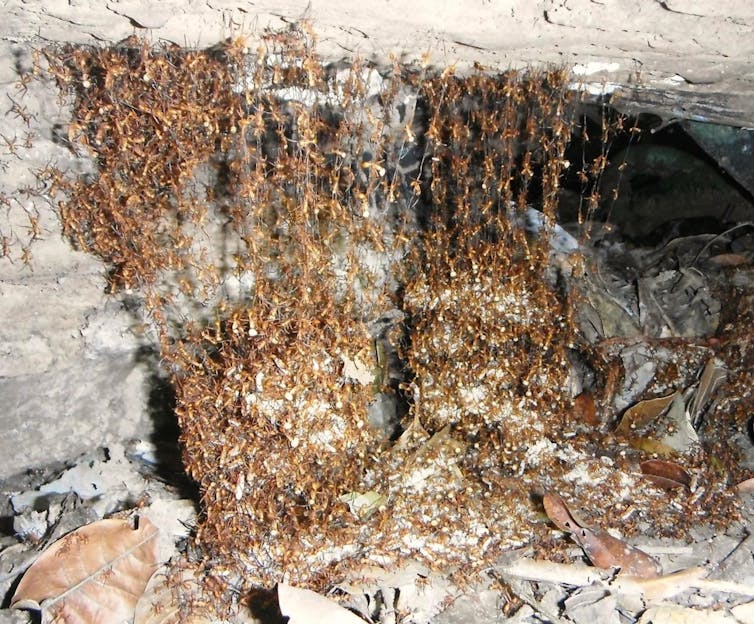
The research shows scaffolds act like a safety net for foraging army ants. They prevent walking ants from slipping and falling when their trail runs along steep ground.
Army ant scaffolds form up a wall (Chris R Reid)
The authors stalked the forests of Panama to find ant swarms, then redirected their trails along a platform that could tip between 20 and 90 degrees from a horizontal position.
The ants rarely formed scaffolds on slopes less than 40 degrees steep, while steeper inclines led to larger and faster-growing structures. Scaffolds were also more likely to be built when many workers were transporting heavy prey items.
And once a scaffold was in place, the number of falling ants would drop nearly to zero — even across a vertical surface.
Army ant scaffolding forming on steep trail (Simon Garnier)
Amazing self-assembling architects
Ants are masters of collective architecture. Several species are documented to self-assemble into functional structures to overcome challenges in their habitats.
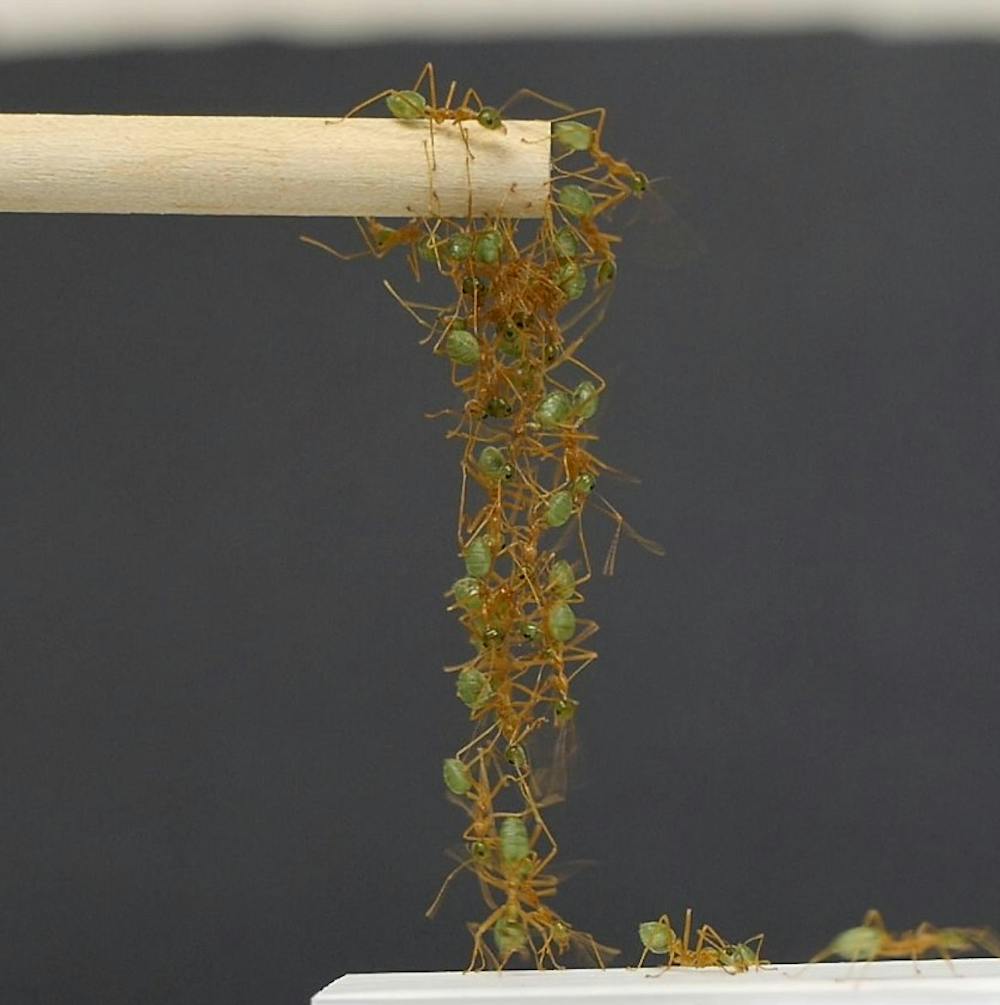
For instance, weaver ants (of the genus Oecophylla) line up in teams to form “pulling chains”, acting as living winches to bend leaves together when building their treetop nests.
Weaver ants form pulling chains to roll a leaf to nest in (Chris R Reid)
Entire colonies of fire ants (Solenopsis invicta) escape flooding by forming floating rafts that can sail for several days, until the water retreats and the colony can safely land ashore.
Army ants (of the genus Eciton), however, have mastered this ability and extended it to almost every aspect of their biology. Along a single foraging raid, army ants can form hundreds of pothole plugs.
Their bridges, which span several ant body-lengths, help ease their passage over the irregular ground of Central and South America’s rainforests. At the end of each day the entire colony self-assembles into a huge hanging nest called a “bivouac”.
A bivouac disassembling during emigration.Chris R Reid
The study published today adds “scaffolds” to the existing list of structures built by army ants to sustain their fast-paced lifestyle.
Self-assembling into structures which are orders of magnitude larger than an individual requires an extreme degree of coordination.
Strikingly, this is achieved without any leaders or external blueprints. Each individual can only respond to local interactions with its neighbours and changes in the environment.
Discovering how these one-on-one interactions among individuals lead to complex group formations presents a challenge for biologists, and a golden opportunity for engineers.
Scientists have a name for when relatively simple animals display sophisticated behaviour at a group level: “emergence”.
Take the mesmerising undulations flowing through groups of starlings as they evade predators in the air, or the lightning-fast escape waves seen in schools of fish. Such coordination was once thought to be the result of telepathic communication between group members.
A weaver ant pulling chain.Chris R Reid
Scientists now know simple one-on-one interactions can add up to more than the sum of their parts, explaining much about group-level patterns. But they’ve yet to fully understand how information at an individual level is combined and filtered to translate to a group-level response.
The recent research on army ant scaffolds provides new insight on this front, by developing a theoretical model of scaffold construction that centres around a simple mechanism.
That is: ants can sense how much they are slipping, and are more likely to stop and join scaffolds when their rate of slipping is high.
The ants don’t have to communicate with each other or assess the size of the structure. The properties of the group are modified simply by individuals sensing and correcting their own errors.
Future applications
The ability to form complex, adaptive structures using a minimum amount of sensing and information processing is extremely valuable to many engineering fields.
It could assist with the rapid production of biological products (biofabrication), designing self-healing materials such as metals or plastics that repair themselves when damaged, and in swarm robotics.
Weaver ants form a hanging chain.Daniele Carlesso
For instance, a swarm of simple, cheap and largely expendable robots could be deployed to autonomously explore dangerous environments such as disaster zones.
The swarm could self-assemble into structures that may help it bridge large gaps, or shore up a crumbling building – all the while locating and rescuing survivors.
Crucially, these abilities wouldn’t need to be explicitly programmed into the robots’ behavioural repertoire.
Rather, the abilities would “emerge” from simple rules about how the robots should interact with each other, allowing the swarm to adapt to new environments like never before.
Source: The Conversation (Au and NZ) – By Lisa Kewley, Director, ARC Centre for Excellence in All-Sky Astrophysics in 3D, Australian National University
It will take until at least 2080 before women make up just one-third of Australia’s professional astronomers, unless there is a significant boost to how we nurture female researchers’ careers.
Over the past decade, astronomy has been rightly recognised as leading the push towards gender equity in the sciences. But my new modelling, published today in Nature Astronomy, shows it is not working fast enough.
It’s a worthy, if modest, target. However, with new data from the academy’s Science in Australia Gender Equity (SAGE) program, I have modelled the effects of current hiring rates and practices and arrived at a depressing, if perhaps not surprising, conclusion. Without a change to the current mechanisms, it will take at least 60 years to reach that 30% level.
However, the modelling also suggests that the introduction of ambitious, affirmative hiring programs aimed at recruiting and retaining talented women astronomers could see the target reached in just over a decade – and then growing to 50% in a quarter of a century.
How did we get here?
Before looking at how that might be done, it’s worth examining how the gender imbalance in physics arose in the first place. To put it bluntly: how did we get to a situation in which 40% of astronomy PhDs are awarded to women, yet they occupy fewer than 20% of senior positions?
On a broad level, the answer is simple: my analysis shows women depart astronomy at two to three times the rate of men. In Australia, from postdoc status to assistant professor level, 62% of women leave the field, compared with just 17% of men. Between assistant professor and full professor level, 47% of women leave; the male departure rate is about half that. Women’s departure rates are similar in US astronomy.
Many women leave out of sheer disillusionment. Women in physics and astronomy say their careers progress more slowly than those of male colleagues, and that the culture is not welcoming.
They receive fewer career resources and opportunities. Randomised double blind trials and broad research studies in astronomy and across the sciences show implicit bias in astronomy, which means more men are published, cited, invited to speak at conferences, and given telescopetime.
It’s hard to build a solid research-based body of work when one’s access to tools and recognition is disproportionately limited.
Women astronomers get disproportionately less telescope time than their male colleagues.Wikimedia Commons, CC BY-SA
The loyalty problem
There is another factor that sometimes contributes to the loss of women astronomers: loyalty. In situations where a woman’s male partner is offered a new job in another town or city, the woman more frequently gives up her work to facilitate the move.
Encouraging universities or research institutes to help partners find suitable work nearby is thus one of the strategies I (and others) have suggested to help recruit women astrophysicists.
But the bigger task at hand requires institutions to identify, tackle and overcome inherent bias — a legacy of a conservative academic tradition that, research shows, is weighted towards men.
A key mechanism to achieve this was introduced in 2014 by the Astronomical Society of Australia. It devised a voluntary rating and assessment system known as the Pleiades Awards, which rewards institutions for taking concrete actions to advance the careers of women and close the gender gap.
Initiatives include longer-term postdoctoral positions with part-time options, support for returning to astronomy research after career breaks, increasing the fraction of permanent positions relative to fixed-term contracts, offering women-only permanent positions, recruitment of women directly to professorial levels, and mentoring of women for promotion to the highest levels.
Most if not all Australian organisations that employ astronomers have signed up to the Pleiades Awards, and are showing genuine commitment to change.
So why is progress still so slow?
Seven years on, we would expect to have seen an increase in women recruited to, and retained in, senior positions.
And we are, but the effect is far from uniform. My own organisation, the ARC Centre of Excellence in All-Sky Astrophysics in 3 Dimensions (ASTRO 3D), is on track for a 50:50 women-to-men ratio working at senior levels by the end of this year.
But these examples are outliers. At many institutions, inequitable hiring ratios and high departure rates persist despite a large pool of women astronomers at postdoc levels and the positive encouragement of the Pleiades Awards.
Using these results and my new workforce models, I have shown current targets of 33% or 50% of women at all levels is unattainable if the status quo remains.
How to move forward
I propose a raft of affirmative measures to increase the presence of women at all senior levels in Australian astronomy – and keep them there.
These include creating multiple women-only roles, creating prestigious senior positions for women, and hiring into multiple positions for men and women to avoid perceptions of tokenism. Improved workplace flexibility is crucial to allowing female researchers to develop their careers while balancing other responsibilities.
Australia is far from unique when it comes to dealing with gender disparities in astronomy. Broadly similar situations persist in China, the United States and Europe. An April 2019 paper outlined similar discrimination experienced by women astronomers in Europe.
Australia, however, is well placed to play a leading role in correcting the imbalance. With the right action, it wouldn’t take long to make our approach to gender equity as world-leading as our research.
It might be “comfortably below” the Coalition’s 6% threshold for commencing “fiscal repair” (another term for unpopular spending cuts), but the government is under unforeseen political pressure and is anything but relaxed and comfortable.
In any event, this 5.6% figure was from March, which is an important detail because it predated the wind-up of the JobKeeper wage subsidy.
Who knows what that means.
It could mean nothing much or we might see an uptick in jobs lost — employees shed from debt-addled “zombie” firms, which survived the crisis only to perish in the recovery.
At $90-plus billion, the JobKeeper wage subsidy scheme was the biggest single program in Australian history. And by any metric, it was a shining success. Any metric that is, if you exclude the country’s fourth biggest pre-pandemic export sector, education.
Higher education’s ‘long COVID’
Universities suffered a triple COVID hit — denied access to the JobKeeper program due to the way they were structured, denied overseas students from whom (admittedly too much) revenue was relied upon and denied any certainty about their return due to a snail-paced vaccine rollout.
As a result, a country that led the world through the 2020 pandemic trails it in 2021 through a bungled recovery program, while perhaps permanently hobbling one of its most lucrative and reliable exports.
Ever innovative, Australia may have found a way to give its university sector and therefore its own future growth the economic version of long COVID.
A terrible start to 2021
Politically, Prime Minister Scott Morrison’s options at the start of 2021 looked pretty inviting. Flush with that 2020 success — a combination of good judgement, good luck, and state government front-footedness — Morrison was riding high in public opinion. Inevitably, talk turned to a possible spring election to capitalise.
Labor’s end of the see-saw was weighed down. Doubts were aired about leader Anthony Albanese’s cut-through, his chances in an early poll, the pros and cons of a challenge.
Talk of an early election in 2021 has melted away.Lukas Coch/AAP
But events since have changed everything. Two months of attempting to politically nuance a series of negative stories and allegations regarding the treatment of women in politics have damaged the government, consumed its oxygen, and pricked the prime minister’s inflated reputation as the supreme pragmatist.
His unwillingness to get in front of the problem has instead evinced a strange defensiveness. His grudging late-stage efforts at political rescue have been less effective for their pointless delay and for the tightly qualified nature of the language used.
It was clear weeks ago that Holgate had been prejudicially forced from her job at Australia Post. The most senior political leverage in the land had been summarily and publicly applied. A prime ministerial apology was the obvious solution, not just for her but for him also.
The vaccine ‘eekout’
Twice-weekly national cabinet meetings began again on Monday, in a sign the prime minister understands the seriousness of Australia’s vaccine bungles. But his reluctant acknowledgement of multiple problems in the rollout to date reinforces his instinctive stubbornness.
The abject helplessness of Australia at the vaccine stage is also all the more jarring for its contrast with the 2020 suppression of the virus and the glowing vaccination expectations the government itself created.
Australia’s vaccination rollout has been plagued by supply issues and health concerns.James Ross/AAP
On these grounds alone, the prime minister’s political judgement is questionable. Australians were promised a world-class vaccine program in which we would be at the front of the queue. What it would lack in immediacy (a luxury of zero community infection, we were assured) would be more than made up for in logistical precision.
In fact, it has failed to materialise. Opaque and piecemeal, the rollout feels more like an eekout.
What will decide the next election?
Now, the Coalition looks to the May 11 Budget for political salvation.
Even with a jobless number of just 5.6%, it has limited political capital to spend and must use the balance sheet to repair its political stocks rather than the nation’s books.
JobKeeper, JobSeeker, and even JobMaker, have either gone or will not make enough difference to matter at the ballot box next year.
What the government really needs is what the country needs — JabMaker.
After all, it’s the jabless rate rather than the jobless rate that could decide the next election. It currently sits “comfortably” around 95%, with no certainty that the population will be vaccinated this calendar year.
The end of October target has been junked, replaced with … nothing.
Compare that to calamitous America where they expect to reach the full adult population by the end of July.
Last week, the US inoculated roughly the entire population of Australia. On one of those days alone, 4.6 million people received jabs of either Pfizer or others such as Moderna, and Johnson & Johnson.
Source: The Conversation (Au and NZ) – By Nathan Bartlett, Associate Professor, School of Biomedical Sciences and Pharmacy, University of Newcastle
Last week, the chief executive of Pfizer said anyone who receives its COVID-19 vaccine will probably need to have a third dose within 6-12 months after being fully immunised, and then likely one dose every year going forward.
We’ll need these because it’s likely that, for many of us, immunity will begin to wane within that time frame. The vaccine will also need to be tweaked to cover new coronavirus variants as they emerge.
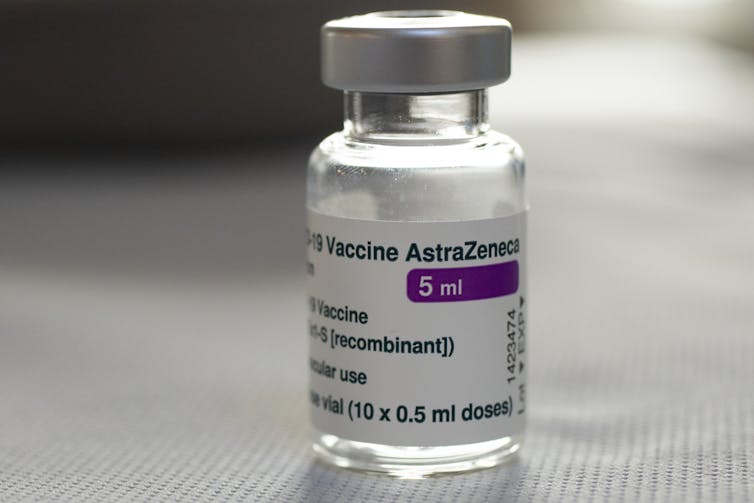
The advantage of mRNA vaccines like Pfizer’s is they’re much easier to update than the “viral vector” vaccines like AstraZeneca’s. We should still use AstraZeneca now for over-50s, but our best long-term strategy is to use mRNA COVID-19 vaccines, and therefore to develop the capacity to manufacture them here in Australia.
Immunity to coronaviruses doesn’t last
We know our immunity to different coronaviruses wanes over time. This is true for the four common cold (endemic) coronaviruses that circulate all the time — there are always sufficient numbers of people who have lost their immunity to ensure these viruses can persist and continue to cause respiratory illnesses.
Our immunity to SARS-CoV-2, the virus that causes COVID-19, also seems to wane quickly, although the rate at which this happens can be quite variable. Data suggest immunity acquired from the Pfizer shot is pretty robust for six months, but it isn’t clear how quickly our immunity is lost after that. However, it’s reasonable to predict that within 12 months of a population being vaccinated, a substantial number of people will have likely lost protection against SARS-CoV-2. This will particularly be the case if the prevalent SARS-CoV-2 strain circulating at that time is substantially different from the virus against which people were originally vaccinated.
This relates to the fact that some coronavirus variants have mutations that reduce the effectiveness of vaccine-induced immunity. They’ve been described as “variants of concern” and include a virus that originated in South Africa, which has reduced the efficacy of both the AstraZeneca and Pfizer vaccines. As the pandemic surges around the world, more variants will certainly crop up.
Both waning immunity and viral variants will conspire to reduce our protection over time. So we’ll need booster shots, ideally updated to deal with the viral variant that poses the greatest threat.
Using AstraZeneca is not our best long-term solution
I understand why Australia’s government originally prioritised getting the AstraZeneca vaccine. It’s easier to manufacture, store and distribute. It made sense in the early stages of the pandemic. And it’s still an effective vaccine that people, here and abroad, should be receiving as soon as possible — any immunity is better than none and you will certainly be protected from severe COVID-19.
But as time goes on, using the AstraZeneca shot isn’t the best long-term strategy.
One reason for this is what immunologists call “vector immunity”. The AstraZeneca and Johnson & Johnson vaccines use a viral vector, which is an inactivated (cannot replicate) form of a common type of virus called an “adenovirus”. They use this adenovirus as a delivery vehicle to get DNA into our cells to give them the instructions to develop immunity against the coronavirus. However, you can’t be repeatedly immunised with this type of vaccine because you’ll likely develop immunity to the adenovirus vector (the delivery vehicle) itself. When that happens your immune system interferes with the delivery vehicle getting into your cells and the effectiveness of these vaccines would erode over time.
We should still use the AstraZeneca vaccine now in over-50s. But using mRNA COVID vaccines like Pfizer’s will be our best long-term strategy.Peter Dejong/AP/AAP
What’s more, in a very, very small number of people, this viral vector seems to be linked with an extremely rare but serious blood clotting syndrome. In these people, it’s thought that a consequence of the immune response to the viral vector is their immune systems make “auto-antibodies”. These are antibodies that, in addition to fighting a foreign invader (or targeting the adenovirus-based vector used in the AstraZeneca vaccine), also attack our own cells. In this case, these auto-antibodies are attacking blood cells called platelets, leading to the blood clots and low platelet counts seen in around 1 in 250,000 people vaccinated with the AstraZeneca shot.
There are also clotting concerns with the Johnson & Johnson vaccine, which is also an adenovirus-vector-based vaccine, after six women developed the condition in the United States out of 6.8 million given the shot. However, this link is yet to be proven for this vaccine.
By contrast, mRNA vaccines like Pfizer’s (and Moderna’s) can be updated much more quickly. Pfizer just needs to rework its RNA sequence to cover variants, which is a minor modification. Nothing changes about the delivery system of the vaccine, so reapproval will likely be much easier. Regulatory bodies have indicated there will be a quick path for approval for vaccines updated for variants.
The mRNA vaccines consist of a lipid-based delivery system that protects the mRNA and gets it into cells. Then, the cells can start manufacturing the spike protein to present to your immune system. There’s no protein in the vaccine itself, so there’s no chance of developing immunity to the vaccine components.
mRNA vaccines are our best bet going forward
There’s a fear among researchers, including myself, that we’ll be chasing our tails with these new variants. We’ll identify a new variant and set out to update our vaccines against it, but by the time the formulation is updated, approved, manufactured and distributed, we may already be dealing with another variant, or many variants across different locations.
It’s absolutely vital Australia develops the ability to make mRNA vaccines onshore, particularly if new variants pop up here or in our region. This will be far more effective than waiting months to get new shots from overseas.
Right now, the AstraZeneca vaccine still has a role in Australia’s current vaccine strategy. We have it and we can make more of it, so let’s get it out there for over-50s as well as give those under 50 the opportunity to make an informed choice to have this vaccine.
So few Australians currently have immunity to the virus, so we remain vulnerable to outbreaks. If there are new outbreaks, we would have to rely on lockdowns, masks and other strategies again, and could find ourselves back to where we were last year. And let’s not forget people will become ill and some will die. The vaccine rollout is lagging, and we really need to catch up as soon as possible.
But as time goes on, the AstraZeneca vaccine will become less attractive, and mRNA vaccines such as Pfizer’s should eventually take its place.
Native deciduous trees are rare in Australia, which means many of the red, yellow and brown leaves we associate with autumn come from introduced species, such as maples, oaks and elms.
One native tree, however, stands out for its leaves with soft autumnal hues that drop in March and April: Australia’s red cedar. Don’t be fooled by its common name — red cedar is not a cedar at all, but naturally grows in rainforests throughout Southeast Asia and Australia.
You may be more familiar with its timber, which I’ve been acquainted with all of my life. My grandmothers had cedar chests of drawers they had inherited from their mothers or grandmothers, and I had assumed they were made from one of the Northern hemisphere cedar species. The wood still smelled of cedar after all this time in family homes – a scent I associate with grandparents and country homes.
By the time I was given one of these chests to restore, I knew much more about the tree and valued the chest of drawers all the more. So, with autumn putting a spotlight on Australian red cedars, let’s look at this species in more detail.
Majestic giants of the rainforest
I first encountered red cedar trees in the sub-tropical rainforests of Queensland and New South Wales in the 1980s. Then, its scientific name was called Cedrela toona and later Toona australis. Now, it’s recognised as Toona ciliata.
The various names reflect a taxonomic history in which the Australian species was once regarded as being separate from its Asian relatives, but all are now considered one.
Native red cedar trees can grow up to 60m tall.Shutterstock
The trees are awe-inspiring. Under the right conditions, it can grow to 60 metres tall (occasionally more) with a trunk diameter of up to 7m.
After losing its foliage in autumn, the new foliage in spring often has an attractive reddish tinge. In late spring it has small (5 milimetres) white or pale pink flowers, but they usually go unnoticed in the rainforest because of their height or the density of other tree canopies growing beneath.
Older red cedars have wonderful buttresses at the base of their trunk, a characteristic shared by many tall tropical trees. These buttresses have long been considered an advantage for species that can emerge above the canopy of a rainforest where winds are much stronger, with the buttresses and expanded root systems providing greater strength and resistance to the wind.
These buttresses also greatly increase the surface area of the base of the trees exposed to air, which facilitates the uptake of extra oxygen as the activity of micro-organisms in the soil can leave it oxygen-depleted.
Tiny white flowers are hard to see from the ground in a rainforest.Forest and Kim Starr/Wikimedia, CC BY-SA
Logged to near extinction
With a wide distribution throughout Asia and Australia, its uses in ancient times were many and varied. In traditional medicine, bark was used or digestive remedies as well as wound dressing and its resin was used for treating skin conditions.
Dyes, oils and tannins used for preparing leather could also be extracted by boiling various plant parts. Today the wood is used for culturing shiitake mushrooms, which are much in demand in restaurants.
But the recent history of red cedar is a typically sad colonial tale. The species belongs to the same family as mahogany (Meliaceae) and, not surprisingly, was exploited for its timber from the early days of colonisation.
You can find red cedar timber in many public buildings across Australia.denisbin/Flickr, CC BY-ND
The timber is durable, lightweight and suitable for naval use and so was very heavily logged, right along the east coast of Australia from the early 1800s until the early 20th century.
The rich deep red colour of its timber and the fact it was soft and easily worked meant it was used for furniture, ornate carvings in public buildings, town halls and parliaments, such as the State Library in Melbourne. It was also used for implements and handles, and for sailing and racing boats.
You’ve probably had a close encounter with the lovely red banisters on some of these old buildings that were made of red cedar, often darkened under the patina of so many hands.
The once common and widespread species was logged almost to extinction along the east coast by the mid-1900s, and to the point of practical commercial extinction with little timber available to industry by the 1960s.
So valued was the timber that in the late 1970s, a plan was hatched to remove red cedar from Queensland National Park rainforests using helicopters. Luckily, the idea did not fly and so some great trees persist. The species has a conservation status of concern, but is not considered to be endangered at present.
The leaves of red cedar begin to fall in late March.Peter Woodard/Wikimedia
A terrible pest
The fact they are deciduous makes them potentially very interesting and useful for horticultural use, but that potential remains largely unrealised. And given the value and quality of its timber, you may be wondering why it’s not being grown in plantations across the continent.
The reason is a native moth called the cedar tip moth (Hypsipyla robusta), which lays its eggs on the main growing shoot of the tree. When the eggs hatch the larvae bore down the shoot, which not only results in shoot dieback but also causes the trees to develop multiple stems and branches which reduce its timber value.
Despite this, they are still planted as a quick-growing ornamental tree for their shade in other parts of the world, such Hawaii and Zimbabwe.
The moths are attracted to the scent of the tree, so they’re very difficult to control. The moth does not attack the tree in South America, for instance, because the moth has not established there, so there are large plantations of red cedar in Brazil.
It’s an interesting reminder: often it’s the little things in ecology that can affect success, or failure. When we humans meddle without knowledge, things don’t necessarily go to plan, usually to our cost.
Education academics, women’s rights campaigners and many in between have criticised some of the material in the government’s new respectful relationships resource for schools.
While well-intentioned, the video is simplistic and likely to be viewed by secondary students as condescending. The video is designed to be a lesson in decision-making when someone crosses the line in relationships that may be abusive.
I reviewed the entire Good Society resource from a gender-justice perspective and found problems beyond those in the milkshake video. These include that gender-based violence isn’t addressed in the materials for the primary school years, and harmful gender norms are perpetuated in some of the materials around consent. The resource also overwhelmingly focuses on heterosexual relationships.
What is this resource?
The Good Society resource is part of the Australian government’s Respect Matters program, which aims “to support respectful relationships education in all Australian schools” and to “change the attitudes of young people towards violence, including domestic, family and sexual violence”. The Respect Matters program itself is part of the government’s National Plan to Reduce Violence against Women and their Children .
The resource includes more than 350 videos, podcasts and activities for children in the foundation year of school, up to year 12.
It’s divided into year levels (foundation–year 6, 7-9 and 10-12) with a series of activities for students to explore topics, including:
positive relationships, inclusion and exclusion, friendships and identity (foundation-year 6)
peer influence, social power and gender (years 7-9)
sexual consent and sexting (years 11-12).
There are positive aspects to this resource including teacher guides for each topic with clearly stated learning objectives. All content is linked directly to the Australian Curriculum and there are links in the resource to extensive professional learning support for teachers.
The resource draws on some powerful video material that foregrounds the voices of young people to stimulate students’ interest in, and discussion about, each of the topics. Some topics, like sexting, are addressed comprehensively.
But there are several serious issues.
Nothing on gender-based violence for young children
Children live in a very gender inequitable world and absorb its messages. And the unfortunate reality is young children experience unwanted sexual contact. They need the language and strategies to challenge these experiences and protect themselves.
There is strong evidence attesting to the significance of supporting young children in the early childhood and primary years to critically analyse harmful gender identities.
And we know young children are capable of understanding gender-based violence. In a recent study, my colleague and I observed a teacher in a year 1 to 2 class eliciting comments from students who defined different forms of gender-based violence including “when someone says girls can’t play soccer” and as “when boys are teased when they cry”.
This teacher was drawing on the teaching materials in the Victorian Respectful Relationships Education curriculum. These materials focus on defining gender-based violence and examining its effects through age-appropriate playground and school scenarios.
But such defining and analysis are absent in The Good Society materials from the first year to year 6. Gender identity features in some of the cartoon stories and there are some gestures to what gender respect might look like. But the materials are quite childish and condescending.
Of concern, some of the the stories reinforce gendered messages. One features a soccer game, where the male character outperforms the girls who “struggle to get the ball”. The girls are angry about the unfairness of the game and force him to pass the ball to them. Without proper critique, this story leaves gender binaries (boys as physically strong and in control and girls as less powerful) intact.
Young women presented as sexual gatekeepers
For years 11-12, The Good Society’s materials explore issues of sexual consent under the headings of influences (like social forces and technology) and situations (such as alcohol and drugs, and parties). These are important focus areas and there are some powerful videos in this section that could open up transformative conversations about gender justice.
But several of the videos about sexual consent reinforce the notion of females as sexual gatekeepers and males as sexual initiators.
One year 11-12 resource video called “Kiss” involves two teenagers engaged in a passionate kissing session that, for the young woman, is getting out of hand. She halts the process and is relieved when her male partner agrees to “keep it above the clothes”.
The teacher guidance associated with this video recognises tensions of ambivalence around sexual consent. But the decision-making centres on the sexual objectification of the woman. For instance, there are questions about whether the young woman should allow the young man to “squeeze her butt” or “squeeze her boobs”.
There is no real critical engagement with the gendered dimensions of sexual consent, such as the hetero-sexist presumptions that position boys with the power to sexualise and dehumanise girls, and girls with the responsibility to police boys’ excessive sexual appetites.
There’s a good resource available
Federal Education Minister Alan Tudge has said the resource was developed in consultation with experts, such as the eSafety Commissioner, Foundation for Young Australians, and parent, teacher and community groups.
I am surprised this consultation did not draw on the Victorian Respectful Relationships model currently being taken up in more than 1,850 Victorian government, Catholic and independent schools.
This program’s curriculum resources draw on an extensive evidence base. And it situates teaching and learning within a whole school approach, where gender respect and equality are examined and monitored in relation to staffing, school culture, professional learning, support for staff and students and community connections.
Source: The Conversation (Au and NZ) – By Ilan Noy, Chair in the Economics of Disasters and Climate Change, Te Herenga Waka — Victoria University of Wellington
What have we lost because of the pandemic? According to our calculations, a lot — and many of the worst hit countries and regions are far from world media attention.
Typically, damage from any disaster is measured in separate categories: the number of fatalities and injuries it caused, and the financial damage it led to (directly or indirectly).
Only by aggregating these various measures into a comprehensive total can we begin to formulate a fuller picture of the burden of disasters, including pandemics.
They do this based on surveys asking people how much they are willing to pay to reduce some risk (for example, improve a road they often use), or by calculating the additional compensation people demand when they take on high-risk occupations (for example, as a diver on an oil rig).
By observing the amount of money people associate with small changes in mortality risk, one can then calculate the overall price of a “statistical life” as valued by the average person.
By adding the dollar value of asset damage to the “priced” value of life lost (or injured), the overall cost of an adverse event (such as an earthquake or an epidemic) can be calculated.
The massive earthquake and tsunami that struck Japan in 2011 cost far less than COVID-19 in 2020.www.shutterstock.com
Calculating ‘lost life years’
But “value of life” prices can vary a lot between and even within countries. There is also an understandable public distaste for putting a price tag on human life. Governments typically don’t openly discuss these calculations, making it difficult to assess their legitimacy.
An alternative is a “life years lost index”. It is based on the World Health Organization (WHO) measure of “disability-adjusted life years” (DALY), calculated for a long list of diseases and published in a yearly account of the associated human costs.
In conventional measurements of the impact of disaster risk, the unit used is dollars. For this alternative index, the unit of measurement is “lost life years” — the loss of the equivalent of one year of full health.
This is a sum of three key measures of the pandemic’s impact: lost life years because of death and sickness from the disease, and the equivalent lost years due to decline in economic activity. The map below presents these figures per person, in order to enable the relevant comparison across countries.
For example, in the map above we see Australia has a life-years-lost figure of 0.02. This means, on average, every person in Australia lost just over seven life days from the pandemic. In New Zealand, where fewer people died and there have been only a few thousand cases, the figure is 0.01, meaning each person lost fewer than four life days.
In India, by contrast, the average person lost nearly 15 days and in Peru the equivalent figure is 25 days. That loss is based on a combination of the precipitous recession and the death and sickness caused by the virus directly.
So, how do we put this in context? Is losing 25 days a catastrophic loss that justifies the kinds of public actions we have observed around the world? We can answer that question by comparing the impact of COVID-19 to other disasters.
When we compare the total aggregate costs of the COVID-19 pandemic in 2020 with the average annual costs associated with all other disasters in the previous 20 years, we find the pandemic has indeed been extremely costly (in terms of lost life years).
This is despite those past two decades having seen many catastrophic events: horrific tsunamis in Indonesia (2004) and Japan (2011), very damaging hurricanes in the US (2005 and 2017), a high-mortality cyclone in Myanmar (2008), deadly earthquakes in India (2001), Pakistan (2005), China (2008), Haiti (2010) and Nepal (2015), and others.
The graph below shows the life years lost in 2020 by continent, per person, from COVID-19 compared to the average annual cost of all other disasters 2000-2019. As we can see, the costs of the pandemic are much higher — more than three times higher in Asia and more than 30 times higher in Europe.
The most vulnerable countries have been small, open economies such as Fiji, Maldives and Belize, which rely heavily on the export of services, especially tourism.
These are not necessarily countries that have experienced a high number of deaths from the pandemic, but their overall loss is staggering.
More generally, the per-capita loss associated with COVID-19 is particularly high in most of Latin America, southern Africa, southern Europe, India and some of the Pacific Islands. This is in stark contrast to where the global media’s attention has been directed (the US, UK and EU).
Costs will continue to rise
These measures are for 2020 only. Obviously, the pandemic is continuing to rage, and will most likely continue to have an impact on the global economy well into 2022. Many of the adverse economic impacts will still be felt years from now.
Worryingly, some of the countries that have already suffered the greatest economic impact have also been slow to secure enough vaccine doses for their populations. They may well see their economic slumps carry on into next year, especially with larger, richer countries having the resources to buy vaccines first.
Much public and media attention has focused on the death toll and immediate economic impact from COVID-19. But the human and social costs associated with that economic loss are potentially much greater, particularly in poorer countries.
The heavy burden many small countries have borne has, to some extent, been overlooked. Countries such as Lebanon and the Maldives are experiencing dramatic and painful crises, largely under the radar of world attention.
However, our conclusion that the human cost of the economic loss is possibly much higher than the cost associated with health loss does not imply public policies such as lockdowns, border restrictions and quarantines have been unwarranted.
If anything, countries that experienced a deeper health crisis also experienced a deeper economic crisis. There has been no effective trade-off between saving lives and saving livelihoods.
This story is part of a series The Conversation is running on the nexus between disaster, disadvantage and resilience. You can read the rest of the stories here.
Source: The Conversation (Au and NZ) – By Ben Phillips, Associate Professor, Centre for Social Research and Methods, Director, Centre for Economic Policy Research (CEPR), Australian National University
The good news from new research conducted by the Australian National University for Social Ventures Australia and the Brotherhood of St Laurence is that fewer of us are in severe financial stress, by which we mean missing meals, seeking help from charities or being unable to heat our homes.
The bad news is that for certain types of households the proportion in stress is growing, and for many the stress is getting worse.
It is well documented that JobSeeker households are faring poorly with high rates of poverty but less well documented that other working age households are also suffering from high financial stress.
We have used as a measure of severe stress answers to questions in the Bureau of Statistics household expenditure surveys in 1998, 2003, 2009 and 2015 about seeking assistance from charities, going without meals, and the ability to pay bills.
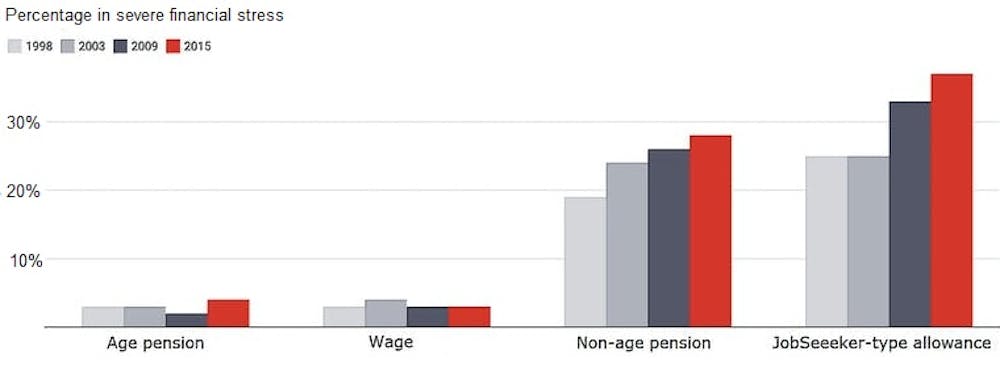
For households headed by wage earners and for age pensioners, financial stress remains low.
For households headed by recipients of non-age pensions such as disability, carers’ and single parent payments, and for households headed by Australians on unemployment and related benefits, the proportion in stress has been climbing.
Around 37% — more than one in three — households headed by Australians on allowances were in severe financial stress in 2015, up from one in four in 1998.
Twenty eight per cent of households headed by working-age pensioners were severely financially stressed, up from 19%.
The difference between a working-age pension and an allowance is that pensions are usually paid to people who aren’t expected to return to work for some time.
Allowances such as JobSeeker (previously Newstart) and Youth Allowance are usually paid to people who are expected to return to work, and are typically lower.
The reason households headed by both working-age pensioners and recipients of allowances are falling behind are complex.
Working-age pensioners have suffered from higher housing costs, limited liquid assets and tighter eligibility requirements which has meant those who have received working age pensions have been worse off.
Among households headed by age pensioners and wage earners, the incidence of financial stress was much lower, at 4% and 3%.
Twenty three per cent of households headed by single parents were in severe stress, compared to 3% of households headed by partnered parents.
Financial stress was at its most acute in households with children aged under five.
A lower 9% of single person households and 3% of couple-only households were in severe financial stress.
Renters better off, but still badly off
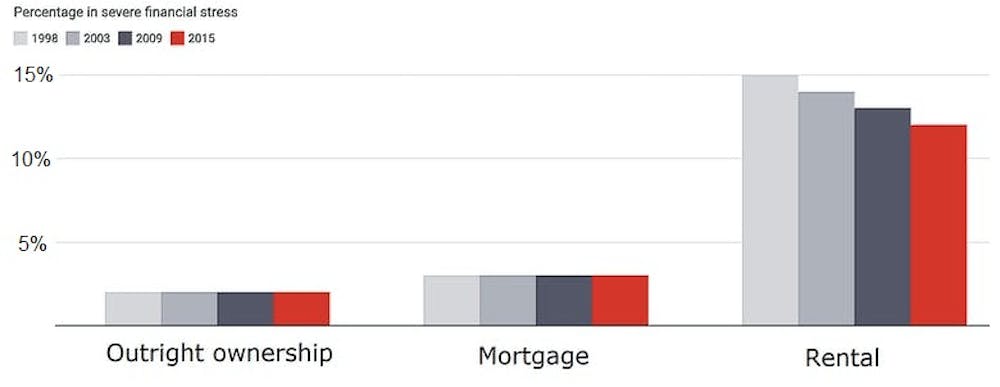
Renter households are much more likely to be in financial stress than homeowner households, but the proportion in severe stress has fallen from 15% to 12%
Beyond these broad brush observations, we find considerable unexplained variation in financial stress. That might be because some households are better at managing money than others and some are more risk averse.
When we run our findings through our model of the social security and tax system we find that while small increases in working-age payments would decrease the severity of financial stress, they wouldn’t do much to reduce the incidence of it.
A big increase in the overall social security budget would do a lot.
An increase of 10% could allow JobSeeker to increase from the current $620 per fortnight to $996 and disability support payments to increase from $953 per fortnight to $1060 and other working-age pensions to increase by similar amounts. Other payments would remain unchanged.
Our modelling shows that while increases to other payments could also lower severe financial stress, money spent on them would have less effect.
The scenario of a 10% increase in the social security budget that we put forward would cut the rate of severe financial stress among JobSeeker households by 16%.
The high rates of financial stress among households supported by working age payments is largely a policy choice. Extra money wouldn’t solve all of their problems but a decent safety net would go a long way.
In this series we pay tribute to the art we wish could visit — and hope to see once travel restrictions are lifted.
She’s called Maman, and she emerged into the world in 1999, just in time to find her feet and grace the opening of the Tate Modern in the heart of London.
Maman. The biggest spider you’ve ever seen at more than nine metres high. The extent to which you are entranced by her bears a direct correlation to whether, when you think “spider”, you think Charlotte in her web or Hobbit-bothering Shelob.
For her maker, that most fertile and perhaps febrile artist Louise Bourgeois (1911–2010), spiders represent maternal beings in their care of the young, and in their skillful making and repairing of the family web (that is, they are Charlotte, not Shelob).
A more typical human response is a severe case of the “ick” factor at best, and panic at worst. Yet under Bourgeois’ hands, something marvellous happens — new ways of seeing spiders, and with them the more-than-human world.
Her spiders have populated the globe since 1999. They are to be found poised, crouching, menacing or magnificent (depending on your attitude to arachnids) in Ottawa, Shanghai, Bilboa, Provence, Geneva, Zurich, New York, San Francisco, Moscow and elsewhere.
If I could go anywhere, one option would be to trail around the world on a Bourgeois spider-hunt, though I have always been uncomfortable around spiders.
In recent years, chagrined by my species-ism and captivated by videos of tiny dancing peacock spiders, I have been making valiant attempts to recognise their beauty; with some success. Recently, with much of Australia under floodwaters and my news-feeds full of stories of spiders desperately swarming up fenceposts and trees and human legs to escape death, I would leave this country and fly straight to London, to see Maman again.
I would take the underground from whichever dingy affordable flat I could find to rent, arriving at Southwark Station. I stood there in 2006 for nearly half an hour, entranced by Bill Fontana’s Harmonic Bridge. That work is the product of the Millennium Bridge vibrating under the feet of pedestrians crossing from St Paul’s to Bankside, and against the movement of the river below it and the wind that crosses it.
Like Bourgeois’ Maman, the sounds captured by Fontana and shaped into an audio sculpture have the capacity to shift one’s sense of lived experience and what it can mean.
Incidentally, in 2011 I visited Tate Modern to see Ai Weiwei’s 1-125,000,000 (2010), a hill of handcrafted sunflower seeds made of porcelain, fired and painted, displayed in the Turbine Hall. Gazing at the seeds, I found myself listening to percussive sounds coming from further up the building, and hunted about for a plaque to say it was also the work of Bill Fontana. Eventually I asked a nearby guide who the sound artist was and, without a hint of condescension, she smiled and said, “They’re doing some plumbing work next door”.
In my fantasy art trip now, I choke down that humiliating memory and walk the ten minutes or so down toward the Thames, back to what was the Bankside Power Station, and is now the Tate Modern.
And in my imagination, I retrace my steps to the Turbine Hall, greet Maman, and then wander up through gallery after gallery, through permanent collection and special exhibitions, all the way to the bar on Level … is it 5? I forget. There I buy a glass of wine, alone or with friends and colleagues, and gaze across the Thames to the dome of Christopher Wren’s St Paul’s cathedral.
St Paul’s is just around the corner from where my late aunt lived, in the brutalist Barbican estate.
She generously provided me a bed on various of my trips, and showed me the art at the heart of her city. I saw Benjamin Britten’s haunting, heartbreaking War Requiem in her private box at the Royal Albert Hall, that remarkable Victorian structure that resembles, to a stranger seated within, the inside of someone else’s mouth. Later she took me to Bach’s St Matthew Passion performed at the Barbican, where we sang along with the choir, lustily and not entirely in tune.
She took me, too, on her personalised tour of the city. I saw another Christopher Wren building, the church of St Stephen Walbrook, and its splendidly democratic Henry Moore altar. I saw remnants of that ancient Roman construction, the London Wall.
Just beyond my aunt’s apartment is Michael Ayrton’s priapic Minotaur sculpture, which, she told me, often boasts a shopping bag or scarf hooked by some passing wag across the phallus. We went to Postman’s Park, devised in the late 19th century by the artist George Frederick Watts as a place to remember everyday heroes who lost their lives in saving others.
I want to go back to London, a city all awash with art, and with history tucked between the glass and steel monoliths that characterise its skyline.
I want — in my imagination — to visit my aunt and Maman: to revisit women’s care for family; to remember my aunt’s knowledge of and passion for the city and its art, and her generosity to a niece landing on her doorstep, fresh from the antipodes.
Postman’s Park off Aldersgate Street, London.Shutterstock
As Scott Morrison gradually pivots his climate policy towards embracing a target of net zero emissions by 2050, he is seeking to distinguish the government from “inner city” types and political opponents who’ve been marching down that road for a long time.
The Prime Minister told a Business Council of Australia dinner on Monday the government was charting its own course “to ensure Australia is well placed to prosper through the great energy transition of our time, consistent with strong action on climate change”.
“The key to meeting our climate change ambitions is commercialisation of low emissions technology,” he said.
“We are going to meet our ambitions with the smartest minds, the best technology and the animal spirits of capitalism.”
Morrison was speaking ahead of this week’s two-day virtual summit on climate called by President Biden.
The Biden administration has made the issue a major policy priority, which has increased the pressure on Australia to sign up to the 2050 target before the Glasgow meeting on climate late in the year.
Morrison acknowledged that “we need to change our energy mix over the next 30 years on the road to net zero emissions”.
But he said “we will not achieve net zero in the cafes, dinner parties and wine bars of our inner cities.
“It will not be achieved by taxing our industries that provide livelihoods for millions of Australians off the planet, as our political opponents sort to do, when they were given the chance.
“It will be achieved by the pioneering entrepreneurialism and innovation of Australia’s industrial workhorses, farmers and scientists.
“It will be won in places like the Pilbara, the Hunter, Gladstone, Portland, Whyalla, Bell Bay, and the Riverina.
“In the factories of our regional towns and outer suburbs. In the labs of our best research institutes and scientists.
“It will be won in our energy sector. In our industrial sector. In our agricultural sector. In our manufacturing sector.
“This is where the road to net zero is being paved in Australia. And those industries and all who work in them, will reap the benefits of the changes they are making and pioneering.”
Morrison said Australia’s natural resources and its industries’ strength presented “a huge opportunity to capitalise on the new energy economy”.
“And let’s not forget that Australia already produces many of the products that will be in growing demand as part of a low carbon future – from copper to lithium.
“It is this practical approach of making new technologies commercial that will see us achieve our goals.”
He said Australia was making real progress.
“Our domestic emissions have already fallen by 36% from 2005 levels.
“Australia has deployed renewable energy ten times faster than the global average and four times faster than in Europe and the United States.
“One in four rooftops has solar, more than anywhere else in the world.
“Australia takes our emission reductions targets very seriously. We don’t make them lightly. We prepare our plan to achieve them and we follow through.”
Peter Dutton has begun his tenure as defence minister by delivering a very public slap to his most senior military adviser, chief of the Australian Defence Force Angus Campbell.
Dutton’s overriding of Campbell’s initial command decision to revoke a meritorious unit citation that had been awarded to some 3,000 special forces soldiers who served in Afghanistan is a humiliation to the general who is supposedly in command of the military.
The minister’s claim that he has full faith in Campbell does not alter this point.
On an issue that goes to the core of military professionalism, ethics and discipline, the government has not trusted Campbell’s judgement.
The opposition is no better – it has supported Dutton’s decision.
We don’t know how Campbell is taking it, but Dutton says he’s “pragmatic”. In such circumstances, some military leaders would be considering their position.
The salt has been rubbed in by Dutton seeking to highlight the override, with a leaked story in The Australian and media interviews.
Dutton’s argument that “the decision [Campbell] made in the first instance is perfectly reasonable. But my judgement is that we look at the circumstances now,” doesn’t pass (as the government might say) the pub test.
Of course the government overrule effectively came months ago, after the release of the Brereton report on allegations of misconduct by Australian special forces in Afghanistan, which said the citation should be revoked.
The war crimes inquiry said there was “credible information” of 23 incidents in which one or more non-combatants or prisoners of war “were unlawfully killed by or at the direction of members of the Special Operations Task Group”. It recommended the ADF chief refer 36 matters to the Australian Federal Police for criminal investigation, involving 19 individuals.
Faced with pressure from veterans and from some within the special forces, Scott Morrison was quick to indicate he opposed the proposal to revoke the citation, and Campbell began a tactical retreat.
Former defence minister Linda Reynolds smoothed the waters to give time for consideration. But it was always clear what was going to happen.
A less assertive minister, however, might have found a form of announcement to allow Campbell to have saved a little more face (assuming he wished to).
As he grasps the reins of a portfolio he has long coveted, Dutton is sending the message that (unlike his predecessor) he wants be an activist minister who is in the public eye.
In considering how the citation award has been handled, it is important to understand exactly what it is.
The Brereton inquiry made separate recommendations about the Meritorious Unit Citation which went to the Special Operations Task Group, and individual awards, and it explained the reasons for viewing them differently.
“Although many members of the Special Operations Task Group demonstrated great courage and commitment and although it had considerable achievements, what is now known must disentitle the unit as a whole to eligibility for recognition for sustained outstanding service.
“It has to be said that what this Report discloses is disgraceful and a profound betrayal of the Australian Defence Force’s professional standards and expectations. It is not meritorious.
“The inquiry has recommended the revocation of the award of the Meritorious Unit Citation, as an effective demonstration of the collective responsibility and accountability of the Special Operations Group as a whole for those events.
“In contrast, the cancellation of an individual award such as a distinguished service award impacts on the status and reputation of the individual concerned, could not be undertaken on a broad-brush collective basis, and would require procedural fairness.”
Brereton is making a very reasonable distinction between collective and individual responsibility, and the need to send a broad signal about, and from, the collective.
In rejecting Campbell’s judgment, Dutton and the government have rebuffed the official inquiry, led by a distinguished and experienced judge – a bad look of the political taking precedence over the legal.
One has to wonder just how much will finally be delivered as a result of the Brereton investigation. The process to get prosecutions for alleged crimes is underway but by its nature it will be incredibly complex and difficult.
Which, one could argue, made it even more important to carry through the symbolic gesture of removing the citation.
Meanwhile on another front, Morrison on Monday announced a royal commission into past suicides in the defence forces and among veterans.
This wasn’t the government’s preference. Its plan was for an ongoing commissioner on the issue, but that did not satisfy many families and veterans, and the government couldn’t muster the parliamentary numbers.
Now both processes will be undertaken, the government says.
The outcome on these very different issues – the citation and the royal commission – reflect the political power of veterans.
Source: The Conversation (Au and NZ) – By Tony Blakely, Professor of Epidemiology, Population Interventions Unit, Centre for Epidemiology and Biostatistics, Melbourne School of Population and Global Health, The University of Melbourne
Coinciding with the Trans-Tasman travel bubble starting today, over the past week there have been murmurings Australia could soon relax its borders further, through mechanisms such as home quarantine or letting in vaccinated people.
But what are the risks?
Here I propose three things we must consider:
the prevalence of the virus in the country from where travellers are coming, including the strain of virus
measures taken for the people travelling, including home quarantine and whether travellers are vaccinated
the percentage of our population who are immune.
Importantly, all these factors matter. It’s not simply a case of needing to ensure all travellers are vaccinated.
The level of infection in the country of origin matters enormously
At around Christmas time, roughly 2% of the UK population was infected. That percentage is now considerably less, but it’s still likely around 1,000 times higher or more than the risk in China and other East Asian countries. The risk is near zero for New Zealand, Taiwan and many Pacific countries.
However, things will change. At the moment the United States seems to be maintaining high infection rates while also rapidly vaccinating the population. This is probably because of more transmissible variants, and society loosening up, offsetting gains from more people being immune. But at some point, perhaps around mid-year, the infection rate in the US should plummet as the percentage of people immune increases to somewhere around 60-80%. All this is to say we can expect infection rates in countries to vary a lot in the next six to 12 months.
Let’s work through an example of the United Kingdom. Assume the UK has another surge of infections such that 0.5% of British people are infected and unaware of it, and could jump on a plane to Australia. Let’s assume we decide to let 10,000 Brits come to Australia each month. So 0.5% of 10,000 would mean roughly 50 infected people arriving per month.
We must assess infection rates in travellers’ home countries.Frank Augstein/AP/AAP
Mitigating the risk of travellers
Of course, we would do more to reduce the risk. We could test people before they get on the plane and when they arrive. Let’s assume that weeds out another 50%, as the other half may be still incubating and not yet testing positive. That’s 25 COVID-positive British people arriving per month.
Next, let’s assume we require all travellers to be vaccinated. That will reduce their risk of unwittingly carrying the virus (through either symptomatic or asymptomatic infection) by between 66% for the UK variant and 81% for “normal” virus for the AstraZeneca vaccine. Data are still sketchy on any infection for Pfizer, but it’s likely 90% or more, given 95% protection against symptomatic disease in Pfizer’s clinical trial. If we assume 80%, we are now down to five infected Brits arriving here per month.
Importantly, the vaccine also reduces both the duration of the disease and its infectiousness, for vaccinated people unlucky enough to get infected. We don’t know by how much as the real-world evidence is still accruing, although animal data on peak viral load and duration of likely infective viral load supports this contention.
If we assume (conservatively in my view) that there is a 50% reduction in duration and 50% reduction in peak infectivity for hapless vaccinated people who still get infected, that is 25% of the risk of passing it on (that is, 50% of 50%).
Therefore, if an unvaccinated person, infected with the UK variant, was going to infect an average of 3.5 people in the absence of any social measures such as mask-wearing, the infected-after-vaccination person would only infect 0.875 other people – a 75% reduction in the reproductive rate. So our remaining five infected Brits are less infectious.
Intensity of quarantine measures for arrivals
Let’s consider the option of home quarantine. We don’t know how effective this will be, because of potential compliance issues.
But the risk of home quarantine breaches can be reduced by technology like ankle bracelets, GPS tracking on travellers’ phones to ensure they stay home, and only allowing home quarantine if any other members of the household are also vaccinated, to give an extra layer of protection.
Let’s assume home quarantine with these extra measures stops 80% of infected people getting out and about in Australia while infectious.
So we are now down to one infected British person who has slipped through per month. But given they are also vaccinated, they’re less likely to pass on the infection. And this risk can be reduced further still by ensuring they’re wearing a mask – although if they “breached” home quarantine rules they may not be likely to wear a mask.
It’s important to remember even “proper” quarantine isn’t foolproof. About one in 250 infected people last year in hotel quarantine caused a leakage.
Is Australia a tinderbox?
Yes. Perhaps only 5% of us are immune. Even if, via the above measures, we get just one infected person a month in Australia – the situation could blow up. Keep in mind the above example assumes we’re only allowing travellers from one country too. More countries means more travellers means more risk – although as above, the risk varies based on the infection rate in the origin country.
You can play with various scenarios in our COVID-19 Pandemic Trade-offs tool, launched two weeks ago. What you’ll find is that until most adults in Australia are vaccinated, any loosening up of how we respond to the virus incursion is unwise. If contact tracing cannot mop up the inevitable incursions, we’ll still need to use social restrictions, including lockdowns, until the vaccination rollout is complete.
But we can probably think about inching forward to some increased risk once all over-50s are vaccinated (phase 2A), with some modest relaxation of the border. Yet we can never totally escape the risk of outbreaks.
Second, remove or greatly reduce quarantine for vaccinated travellers from many East Asian countries, which present a low risk to Australia. As an example, the average number of known active infectious people in China at any point in time recently is about 250. Let’s assume this equates to about 100 unknown infections at any point in time (that is, people who are not yet symptomatic or detected). For a population of 1.4 billion, that’s a 0.000007% risk of any person in China being infected.
This suggests that for 10,000 vaccinated arrivals from China per month with modified quarantine, the expected number of infected people unwittingly getting out into the Australian population per month is 0.000014. Or, put another way, our above UK example presents 70,000 times the risk of an arrival from China. Given such low risk, it’s hard to justify why university students from China cannot start in time for semester two this year if they’re vaccinated and going into some form of modified quarantine.
Third, we need a national framework to assess the risk. Focusing on one measure alone isn’t wise — you have to look at the whole system. Such a framework can be developed now, at the same time as setting our risk thresholds so policy-makers, airlines and other industries can start planning.
The US Congress is considering a proposed law to ban the import and sale of kangaroo parts. Backed by a campaign called Kangaroos Are Not Shoes, the bill is aimed at stopping Nike, Adidas and other big brands from using kangaroo leather in their products.
Supporters of the bill decry the “mass slaughter of kangaroos – more than two million a year”.
We have a combined 80 years experience in kangaroo management. In our view, this proposal is one of the most comprehensive own goals in history of improving kangaroo welfare. Our researchshows the kangaroo industry leads to better kangaroo welfare, more stable populations and improved conservation outcomes.
Weakening the industry will result in more kangaroo suffering, not less. If the bill succeeds, it would further suppress global demand for kangaroo products, and allow unregulated, uncontrolled and unmonitored killing by amateur hunters to flourish.
The bill aims to prevent major sports brands from making products, such as shoes, from kangaroo leather.Shutterstock
The industry state of play
Kangaroos are widely dispersed and abundant on the temperate Australian rangelands where cattle and sheep are raised. Over the past 200 years their numbers have increased steadily due to greater availability of pasture, increased watering points, dingo control and less Indigenous hunting. In the rangelands where aerial surveys are conducted, the kangaroo population is estimated at more than 40 million.
Harvesting of kangaroos in Australia is tightly controlled by state and federal governments, and quotas are set to ensure only a sustainable proportion of kangaroos are commercially harvested.
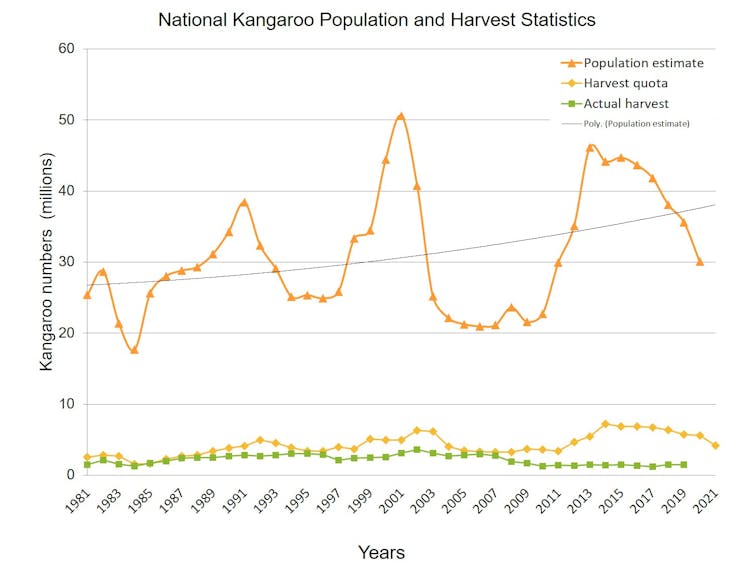
The graph below shows how only a tiny proportion of Australia’s kangaroo populations is harvested commercially each year, and at numbers far less than quotas allow.
In 2018 for example, the kangaroo population in commercial harvest areas in New South Wales, Queensland, South Australia and Western Australia was about 4.25 million. The following year, a sustainable quota of 674,000 was set (15.9% of the population). However, just 88,472 kangaroos, or about 2% of the population, were harvested.
The commercial kangaroo industry employs accredited, licensed shooters who kill kangaroos in the field at night using high-powered spotlights and rifles. A national code of practice requires that kangaroos are shot in the head and die immediately.
Abattoirs reject carcasses not killed with a headshot. Commercial shooters must not target females with obvious young in their pouch or at foot. If a mother is shot, the joeys must also be killed using sanctioned methods.
Kangaroo meat is sold in Australia – to the food service industry, retail outlets and as pet food – and exported to many countries.
National kangaroo population estimates, harvest quotas and actual harvest. Data from Department of Agriculture, Water and the Environment.
Managing kangaroo numbers
Kangaroo numbers decline in droughts and rise in good seasons. They roam from property to property, and in and out of national parks, seeking best pastures in response to local rainfall.
Overabundant kangaroos are a serious issue for threatened plants and animals and revegetation programs. They also compromise landholders’ ability to manage their properties. For example, during drought, kangaroos graze on valuable pasture, making it harder for farmers to keep cattle alive.
Because the commercial industry harvests so few kangaroos, landholders must take steps to prevent the animals from damaging their properties. They erect fences around clusters of properties, often with government support, to exclude kangaroos from pastures and watering points.
They use amateur shooters and even illegal poisons, to reduce kangaroo numbers on their properties. Our research shows the number of permits for non-commercial culling of kangaroos is increasing and in recent years exceeded the commercial harvest.
Overabundance can also affect the welfare of the animals themselves. During the recent drought, for example, millions of kangaroos starved and breeding was suppressed, causing kangaroo numbers to fall markedly.
According to the NSW Department of Primary Industries and the RSPCA, professional marksmen, operating within a commercial industry, are the most humane way to manage kangaroo populations.
When kangaroo kills are brought in for processing, regulators can monitor the industry’s compliance with welfare codes. Such monitoring is nonexistent with amateur culling.
We believe a further decline in the kangaroo industry – the goal of the proposed US legislation – will lead to worse animal welfare outcomes. It will prompt more amateur culling, and risks mass kangaroo starvation in the next drought.
Kangaroos are currently considered pests by many landholders and farmers.Shutterstock
Where to now?
We welcome the Australian government’s opposition to the bill. Regardless of whether the bill succeeds, a broader question remains: what should Australia’s future kangaroo industry look like?
We believe an alternative vision is required – one in which consumer demand for kangaroo products increases. Landholders would then consider kangaroos, including the young, valuable rather than pests – creating a form of custodianship and an incentive to integrate kangaroos with other farm enterprises. This would lead to more effective management and animal welfare outcomes.
Key to encouraging farmers to value kangaroos is increasing public demand for – and therefore the price of – kangaroo products. But in recent years, demand has been falling. For example, in 2016 California banned the import of kangaroo skins. This rendered them worthless and led to a processing plant at Broken Hill discarding them as town waste. Our research found in 2018 a kangaroo was worth as little as A$13 – much less than goats (A$70), sheep (A$100) or cattle (A$800).
Demand for kangaroo products could be increased by promoting:
The positive attributes of kangaroo products should be promoted.Shutterstock
Kangaroos can benefit landholders in other ways. Their soft feet cause less damage to soils than hard-hooved introduced livestock. And farmers could earn carbon credits through better management of grazing pressures and substituting high-emission meat and leather for kangaroo alternatives.
We urge the federal government to show leadership and work with the states to improve kangaroo management. Doing so would seem a great project for the Future Drought Fund.
A stronger kangaroo industry integrated with the other red meat industries, delivering high-value products, is possible. But the US bill is not the right way forward.
Fiji Prime Minister Voreqe Bainimarama says a breach in protocol in relation to the 53-year-old woman now testing positive of covid-19 should not have happened.
The woman who was working as a maid in a border quarantine facility developed symptoms last Thursday, but continued working and failed to notify authorities.
The woman who tested positive for covid-19 today has a “highly transmissible” case.
“Our investigation has revealed that she had an interaction with the soldier when he showed up early to his room as it was being cleaned.
“Protocol dictates that overlap should not have happened, that is why the woman was not tested before re-entering the public. We have to wait and see what further is revealed in the investigation.”
Bainimarama said the woman, who was a daytime worker, had travelled between Nadi and Lautoka and also attended a funeral in Tavakubu in Lautoka on Friday and Saturday.
“Perhaps most worryingly she attended a funeral in Tavakubu, Lautoka on Friday and Saturday traveling alongside other passengers by minivan.
“Her movement using public transport and her attendance in close proximity alongside many other Fijians at the two-day funeral makes further transmissions in the community highly likely.”
Fiji ‘faced with danger’ The Prime Minister said Fiji was faced with danger and the breach in the protocol should not have been repeated.
He said to limit the risk of mass transmission, authorities had established containment areas in Nadi and Lautoka and from Qeleloa, Vakabuli, and the Waiwai crossing bearing towards Ba.
Bainimarama said new stringent health protection measures had come into effect.
He said the Ministry of Health and Medical Services personnel and disciplined forces had rapidly established screening points at this entry point.
Praneeta Prakash is a multimedia journalist with FBC News.
Vanuatu’s capital island of Efate has gone into covid-19 lockdown for three days after a body was found on a beach near Port Vila.
The body, which tested positive for covid, was that of a Filipino crewman from the British-flagged liquified petroleum gas carrier Inge Kosan, a medium range tanker that supplies Pacific ports.
Inge Kosan was due today in Honiara, Solomon Islands, but has been detained in Port Vila.
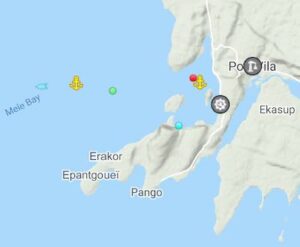
The MV Inge Kosan as positioned by MarineTracker. The ship is shown as a red dot. Image: TPN
Usually Inge Kosan sails to Vanuatu from ports on Australia’s east coast.
The body, which has yet to be named, was found on April 11 at Pango village beach, about 11 km from where the ship is now moored.
The Vanuatu National Disaster Management Office said that after the body was found it had been taken to the Vanuatu Central Hospital morgue where a covid test was conducted. It tested positive.
So all outbound travel from Efate island stopped for 3 days to allow contact tracing to be carried out
Police officers who handled the body have been tested and isolated. Contact tracing is underway.
Authorities said chances of community transmission were small.
Vanuatu’s opposition leader Ralph Regenvanu tweeted on the news: “So while imposing admirably strict quarantine protocols on all ports of entry into the country, we did not foresee that a dead body washed ashore and put in the only mortuary in the country where people gather to mourn every day could be carrying the COVID-19 virus.”
Contact tracing RNZ Pacific reports that as contact tracing began today, Director-General of Health, Russell Tamata, confirmed that 16 people had been put in quarantine at Ramada Hotel.
Most of them were police officers who attended the scene when the body was discovered.
Prime Minister Bob Loughman said business would operate as usual but he appealed to the people to abide by covid-19 safety protocols such as social distancing.
The dead body of the Filipino was still at the mortuary at Vila Central.
Vanuatu has reported only three previous cases of covid-19, all at the border.
The British-flagged liquified petroleum gas carrier Inge Kosan. Image: TPN
Republished from The Pacific Newsroom with permission.
While the trans-Tasman bubble today is “a significant day” for New Zealanders, any moves to open the borders to other countries will need to be be based on hard evidence, the prime minister says.
The prime ministers of New Zealand and Australia are describing it as a world-leading arrangement that promotes travel between the two countries, without letting covid-19 into the community.
Jacinda Ardern and Scott Morrison say the Pacific Islands are next on the list.
A May bubble is still intended with the Cook Islands but no firm date has been set as yet, Ardern said.
Opening up to the Pacific does not need to be done in lock-step with Australia, Ardern told RNZ Morning Report, because New Zealand has always aimed to have “a country-by-country framework”.
“It’s up to the discretion of each nation.”
Home quarantine? Morrison has suggested home quarantine for vaccinated travellers could be possible by the end of the year.
The NZ government was sceptical about home quarantine, Ardern said.
Ardern said this country would want to look closely at the research and data around that and the risk of transmission to others.
“Bubble time” – The New Zealand Herald’s front page today. Image: APR screenshot
“Our baseline is to get as many New Zealanders as we can vaccinated to a high degree before we look at opening up to countries that we consider to be higher risk than what we’re doing with Australia,” she said.
“Then there are a range of areas where we’re keeping an open mind but we really want the data to back up what we do.
“At the moment because those who are being vaccinated are not being regularly tested getting that research and data is a little difficult.”
While the chances of passing on Covid-19 were much lower for vaccinated people, more time was needed to establish solid data.
Border in stages The border would open in stages, Ardern said, and there may be a scenario such as a variant responding less effectively to the vaccine being used here, so there may have to be “different protocols” for people from some parts of the world.
Ardern agreed it was a “very significant day” for New Zealanders.
She said the two countries would not be in this position if both countries had not adopted a strict covid-19 management regime with everyone playing their part.
There will be ups and downs but to have a quarantine-free arrangement with another country: “I don’t know anywhere else in the world that’s doing that so it is a very big day and exciting for family and friends,” Ardern said.
Asked if any decision had been made on allowing flights to resume from India, she said nothing had been decided yet.
The government was mindful of worsening numbers there but also had to be aware of New Zealanders’ rights to come home and not be left stateless.
The government was considering options for tightening up pre-departure testing in India such as reducing the time between the test and flight departure, plus accrediting some laboratories.
Removing inequity Pre-departure quarantine within India would be very difficult to run, she said, in a country where covid-19 was so rampant.
The announcement by Immigration Minister Kris Faafoi later today was aimed at removing some inequity in the system relating to some migrants whose families had not been able to join them in New Zealand.
“This is us trying to work through an inequity in our system at the moment.”
She said there were spaces within managed isolation and quarantine at present.
While there are estimates that 5000 people are currently separated from their families, the numbers are imprecise in part because some have visas that are expiring, so they no longer qualify to have their families join them.
This article is republished under a community partnership agreement with RNZ.
The local West Papua action group in Dunedin has met Taieri MP Ingrid Leary and raised human rights and militarisation issues that members believe the New Zealand government should be pursuing with Indonesia.
Leary has a strong track record on Pacific human rights issues having worked in Fiji as a television journalist and educator and as a NZ regional director of the British Council with a mandate for Pacific cultural projects.
She is also sits on the parliamentary select committees for Foreign Affairs, Defence and Trade, and Finance and Expenditure.
She also met Dr David Robie, publisher and editor of Asia Pacific Report that covers West Papuan issues, and Del Abcede of the Auckland-based Asia-Pacific Human Rights Coalition (APHRC).
New Zealand’s defence relationship with Indonesia was critiqued in an article for RNZ National at the weekend by Maire Leadbeater, author of See No Evil: New Zealand’s Betrayal of the People of West Papua.
‘Human rights illusion’ “The recent exposure of New Zealand’s military exports to Saudi Arabia and other countries with terrible human rights records is very important,” Leadbeater wrote.
“The illusion of New Zealand as a human rights upholder has been shattered, and we have work ahead to ensure that we can restore not only our reputation but the reality on which it is based.”
The West Papua action group with Taieri MP Ingrid Leary in Dunedin … retired Methodist pastor Ken Russell (from left), Otago University doctoral candidate Jeremy Simons, group coordinator Barbara Frame, MP Ingrid Leary, Ashley McMillan (Otago PhD candidate), Dr David Robie (APR) and Del Abcede (APHRC).
She cited Official Information Act documentation which demonstrated that since 2008 New Zealand had exported military aircraft parts to the Indonesian Air Force.
“In most years, including 2020, these parts are listed as ‘P3 Orion, C130 Hercules & CASA Military Aircraft:Engines, Propellers & Components including Casa Hubs and Actuators’, she wrote.
The documentation also showed that New Zealand exported other ‘strategic goods’ to Indonesia, including so-called small arms including rifles and pistols.
“New Zealand’s human rights advocacy for West Papua is decidedly low-key, despite claims by some academics that Indonesia is responsible for the alleged crime of genocide against the indigenous people,” Leadbeater wrote.
“Pursuing lucrative arms exports, and training of human rights violators, undermines any message our government sends. As more is known about this complicity the challenge to the government’s Indonesia-first setting must grow.”
Massive militarisation Asia Pacific Report last month published an article by Suara Papua’s Arnold Belau which revealed that the Indonesian state had sent 21,369 troops to the “land of Papua” in the past three years.
This figure demonstrating massive militarisation of Papua did not include Kopassus (special forces), reinforcements and a number of other regional units or the Polri (Indonesian police).
Victor Yeimo, international spokesperson for the West Papua National Committee (KNPB), was cited as saying that Papua was now a “military operation zone”.
“This meant [that] Papua had truly become a protectorate where life and death was controlled by military force,” Belau wrote.
Source: The Conversation (Au and NZ) – By Katharine Kemp, Senior Lecturer, Faculty of Law, UNSW, and Academic Lead, UNSW Grand Challenge on Trust, UNSW
The Federal Court has found Google misled some users about personal location data collected through Android devices for two years, from January 2017 to December 2018.
The Australian Competition & Consumer Commission (ACCC) says this decision is a “world first” in relation to Google’s location privacy settings. The ACCC now intends to seek various orders against Google. These will include monetary penalties under the Australian Consumer Law (ACL), which could be up to A$10 million or 10% of Google’s local turnover.
Other companies too should be warned that representations in their privacy policies and privacy settings could lead to similar liability under the ACL.
But this won’t be a complete solution to the problem of many companies concealing what they do with data, including the way they share consumers’ personal information.
How did Google mislead consumers about their location history?
The Federal Court found Google’s previous location history settings would have led some reasonable consumers to believe they could prevent their location data being saved to their Google account. In fact, selecting “Don’t save my Location History in my Google Account” alone could not achieve this outcome.
Users needed to change an additional, separate setting to stop location data from being saved to their Google account. In particular, they needed to navigate to “Web & App Activity” and select “Don’t save my Web & App Activity to my Google Account”, even if they had already selected the “Don’t save” option under “Location History”.
ACCC Chair Rod Sims responded to the Federal Court’s findings, saying:
This is an important victory for consumers, especially anyone concerned about their privacy online, as the Court’s decision sends a strong message to Google and others that big businesses must not mislead their customers.
Google has since changed the way these settings are presented to consumers, but is still liable for the conduct the court found was likely to mislead some reasonable consumers for two years in 2017 and 2018.
ACCC has misleading privacy policies in its sights
This is the second recent case in which the ACCC has succeeded in establishing misleading conduct in a company’s representations about its use of consumer data.
In 2020, the medical appointment booking app HealthEngine admitted it had disclosed more than 135,000 patients’ non-clinical personal information to insurance brokers without the informed consent of those patients. HealthEngine paid fines of A$2.9 million, including approximately A$1.4 million relating to this misleading conduct.
The ACCC has two similar cases in the wings, including another case regarding Google’s privacy-related notifications and a case about Facebook’s representations about a supposedly privacy-enhancing app called Onavo.
In bringing proceedings against companies for misleading conduct in their privacy policies, the ACCC is following the US Federal Trade Commission which has sued many US companies for misleading privacy policies.
The ACCC has more cases in the wings about data privacy.Shutterstock
Will this solve the problem of confusing and unfair privacy policies?
The ACCC’s success against Google and HealthEngine in these cases sends an important message to companies: they must not mislead consumers when they publish privacy policies and privacy settings. And they may receive significant fines if they do.
However, this will not be enough to stop companies from setting privacy-degrading terms for their users, if they spell such conditions out in the fine print. Such terms are currently commonplace, even though consumers are increasingly concerned about their privacy and want more privacy options.
Consider the US experience. The US Federal Trade Commission brought action against the creators of a flashlight app for publishing a privacy policy which didn’t reveal the app was tracking and sharing users’ location information with third parties.
However, in the agreement settling this claim, the solution was for the creators to rewrite the privacy policy to disclose that users’ location and device ID data are shared with third parties. The question of whether this practice was legitimate or proportionate was not considered.
Major changes to Australian privacy laws will also be required before companies will be prevented from pervasively tracking consumers who do not wish to be tracked. The current review of the federal Privacy Act could be the beginning of a process to obtain fairer privacy practices for consumers, but any reforms from this review will be a long time coming.
This is an edited version of an article that originally appeared on UNSW Newsroom.
The Australian Competition and Consumer Commission has had a significant win against Google. The Federal Court found Google misled some Android users about how to disable personal location tracking.
Will this decision actually change the behaviour of the big tech companies? The answer will depend on the size of the penalty awarded in response to the misconduct.
In theory, the penalty is A$1.1 million per contravention. There is a contravention each time a reasonable person in the relevant class is misled. So the total award could, in theory, amount to many millions of dollars.
But the actual penalty will depend on how the court characterises the misconduct. We believe Google’s behaviour should not be treated as a simple accident, and the Federal Court should issue a heavy fine to deter Google and other companies from behaving this way in future.
Misleading conduct and privacy settings
The case arose from the representations made by Google to users of Android phones in 2018 about how it obtained personal location data.
The Federal Court held Google had misled some consumers by representing that “having Web & App Activity turned ‘on’ would not allow Google to obtain, retain and use personal data about the user’s location”.
In other words, some consumers were misled into thinking they could control Google’s location data collection practices by switching “off” Location History, whereas Web & App Activity also needed to be disabled to provide this protection.
The ACCC also argued consumers reading Google’s privacy statement would be misled into thinking personal data was collected for their own benefit rather than Google’s. However, the court dismissed this argument on the grounds that reasonable users wanting to turn the Location History “off”
would have assumed that Google was obtaining as much commercial advantage as it could from use of the user’s personal location data.
This is surprising and might deserve further attention from regulators concerned to protect consumers from corporations “data harvesting” for profit.
How much should Google pay?
The penalty and other enforcement orders against Google will be made at a later date.
The aim of the penalty is to deter Google specifically, and other firms like Google, from engaging in misleading conduct again. If penalties are too low they may be treated by wrongdoing firms as merely a “cost of doing business”.
However, in circumstances where there is a high degree of corporate culpability, the Federal Court has shown willingness to award higher amounts than in the past. This has occurred even where the regulator has not sought higher penalties. In the recent Volkswagen Aktiengesellschaft v ACCC judgement, the full Federal Court confirmed an award of A$125 million against Volkswagen for making false representations about compliance with Australian diesel emissions standards.
The Federal Court found Google’s information about local data tracking was misleading.Shutterstock
In setting Google’s penalty, a court will consider factors such as the nature and extent of the misleading conduct and any loss to consumers. The court will also take into account whether the wrongdoer was involved in “deliberate, covert or reckless conduct, as opposed to negligence or carelessness”.
At this point, Google may well argue that only some consumers were misled, that it was possible for consumers to be informed if they read more about Google’s privacy policies, that it was only one slip-up, and that its contravention of the law was unintentional. These might seem to reduce the seriousness or at least the moral culpability of the offence.
But we argue they should not unduly cap the penalty awarded. Google’s conduct may not appear as “egregious and deliberately deceptive” as the Volkswagen case.
But equally Google is a massively profitable company that makes its money precisely from obtaining, sorting and using its users’ personal data. We think therefore the court should look at the number of Android users potentially affected by the misleading conduct and Google’s responsibility for its own choice architecture, and work from there.
Only some consumers?
The Federal Court acknowledged not all consumers would be misled by Google’s representations. The court accepted many consumers would simply accept the privacy terms without reviewing them, an outcome consistent with the so-called privacy paradox. Others would review the terms and click through to more information about the options for limiting Google’s use of personal data to discover the scope of what was collected under the “Web & App Activity” default.
This might sound like the court was condoning consumers’ carelessness. In fact the court made use of insights from economists about the behavioural biases of consumers in making decisions.
Consumers have limited time to read legal terms and limited ability to understand the future risks arising from those terms. Thus, if consumers are concerned about privacy they might try to limit data collection by selecting various options, but are unlikely to be able to read and understand privacy legalese like a trained lawyer or with the background understanding of a data scientist.
If one option is labelled “Location History”, it is entirely rational for everyday consumers to assume turning it off limits location data collection by Google.
The number of consumers misled by Google’s representations will be difficult to assess. But even if a small proportion of Android users were misled, that will be a very large number of people.
There was evidence before the Federal Court that, after press reports of the tracking problem, the number of consumers switching off the “Web” option increased by 500%. Moreover, Google makes considerable profit from the large amounts of personal data it gathers and retains, and profit is important when it comes deterrence.
Google’s choice architecture
It has also been revealed that some employees at Google were not aware of the problem until an exposé in the press. An urgent meeting was held, referred to internally as the “Oh Shit” meeting.
The individual Google employees at the “Oh Shit” meeting may not have been aware of the details of the system. But that is not the point.
It is the company fault that is the question. And a company’s culpability is not just determined by what some executive or senior employee knew or didn’t know about its processes. Google’s corporate mindset is manifested or revealed in the systems it designs and puts in place.
Google designed the information system that faced consumers trying to manage their privacy settings. This kind of system design is sometimes referred to as “choice architecture”.
Here the choices offered to consumers steered them away from opting out of Google collecting, retaining and using personal location data.
The “Other Options” (for privacy) information failed to refer to the fact that location tracking was carried out via other processes beyond the one labelled “Location History”. Plus, the default option for “Web & App Activity” (which included location tracking) was set as “on”.
This privacy eroding system arose via the design of the “choice architecture”. It therefore warrants a serious penalty.
Canada has overtaken the United States. Chart by Keith Rankin.
Analysis by Keith Rankin – Covid-19: British Isles and Neo-European Countries
Canada has overtaken the United States. Chart by Keith Rankin.
Canada has overtaken the United States in the last week, with over 200 daily cases per million people, with the worst growth zones being Ontario, British Columbia and Saskatchewan. However, the United States has some states that are worse, especially Michigan with around 900 daily cases per million people. In the United States, all the states north and east of Pennsylvania (especially those closest to New York) have recent Covid19 infection rates similar to Ontario. Further, it appears that, within these states and provinces, the problem is especially focussed on the metropolitan cities. Canada’s present outbreak began in early March.
By and large, these are the parts of the United States and Canada which have had both high levels of restrictions, high levels of compliance to restrictions, and – at least in these US states – high levels of vaccination. They are expecting a resumption of high levels of death, and of younger people.
It’s easy to say that the problem is new “more infectious” and “more lethal” variants. But why is it happening in these states and provinces which were most assiduous in self-protection? I suspect the problem is that the natural immunity to respiratory infections – taken as a broad class of disease – of young and middle-age adults has been compromised by the duration of physical distancing and by the widespread (often mandated) use of facemasks even at times of low levels of Covid19 transmission.
The problem here is that, if the new covid wave is only new more lethal strains of Covid, then the natural policy response is to have tighter and more prolonged restrictions, and to have facemasks more widely mandated even at times when other restrictions are lifted.
If I am correct, and the main problem is a loss of short-lived natural immunity, immunity that must be recharged by exposure to common colds and the like, then the prolonged use of non-emergency ‘cultural restrictions’ – such as facemasks – will aggravate the problem. Indeed, these restrictions will have aggravated the problem of reduced natural immunity already – hence the present phase of Covid19 – and that the pandemic will continue to accelerate as these restrictions intensify. The problem is, I sense, not that facemasks and physical distancing do not work, but that they work too well, blocking the mild respiratory infections as well as the deadly ones.
If we in New Zealand can secure annual influenza and covid vaccines, we may never suffer what Canadians are suffering right now. Further, annual covid vaccines will most likely protect us from future common colds. But we will become viral virgins if we ever find ourselves without a supply of the vaccines we will come to depend on.
UK well down from historic fatality rates, but not ‘out of the woods’. Chart by Keith Rankin.
Death rates are a better historical measure of the size of an outbreak of Covid19, because they do not depend as much on rates of community testing, as do case data. The initial outbreak a year ago holds up as being a big event, with death rates in the anglosphere countries high in large part because of the numbers of elderly people in aged care facilities.
In the northern hemisphere, the January death peak confirms that the most dangerous times are both winter, and times of great human mobility. These data suggest that our homes become our most dangerous environments when people who live elsewhere come to visit. Indeed we note the Thanksgiving bulge in United States’ covid death rates. In the United Kingdom we see problems arising from the movement of people – tourists and tertiary students – in September, and again from the school holidays in the last week of October.
The challenge for the United Kingdom will now be to ensure that its residents will have sufficient immunity to respiratory diseases to get their people through the next winter.
Review: This is a Robbery: The World’s Biggest Art Heist, directed by Colin Barnicle.
After dreaming for many years of visiting Boston’s Isabella Stewart Gardner Museum, I was surprised by its dour presence when I finally arrived on its doorstep. The original building presented a rather austere face to the world, its stolid facade dwarfing an unobtrusive entrance. However, once inside, my every longed-for fantasy was realised.
The internal courtyard glowed with light sucked down from the glass ceiling. Palms and exotic ferns flourished in this hothouse environment. Visitors stood in awe — it looked like a Venetian palace, rooted like a tropical orchid in a frost-bitten landscape. In every room, masterpieces softly glowed within their gilt frames; antique furniture filled each nook, vases, and objects d’art on every surface. It was magical.
Then, on entering the Dutch gallery, the mood changed again. Hanging on the walls were empty frames, their vacant centres an aching tribute to the works that once resided there: Rembrandt’s Storm on the Sea of Galilee from 1633 and Vermeer’s The Concert painted soon after. Although still well-resourced with great works of art, the 1990 heist of 13 artworks had left a gaping hole in the Gardner’s collection.
Still unrecovered after 30 years, the US$200 million heist (at 1990 estimates, then equal to A$258 million) remains one of the most notorious art crimes of the century. Netflix’s four-part miniseries This is a Robbery digs deep into the myth and conjecture that surrounds this case. In the process, it provides insights into the criminal mind and dark machinations within the art world.
This is a rollicking good story, and director Colin Barnicle dives right in with fast editing and flashback clips that introduce us to the first of a huge cast of characters. We meet the museum director Anne Hawley, only six months into the role when the robbery occurred. We hear from the guards and police officers involved and local reporters who covered the news.
There are clues this might have been an inside job: the thieves spent 81 minutes in the gallery cutting paintings from their frames, unframing a tiny Rembrandt etching and unscrewing a finial from a Napoleonic banner.
An FBI photograph of the crime scene after the 1990 Isabella Stewart Gardner Museum robbery.Netflix
The careful exposition of the details of the crime in contrast to the rough handling of the artworks makes for engrossing television.
“It was incomprehensible to me that even if they were wanting to steal art that you would treat it that way,” explains Hawley. Footage pans again and again over the detritus of the thieves’ actions strewn across the gallery floor.
As the series progresses, we hear from security consultant Steve Keller about the museum’s poor protocols plus earlier botched robberies and attempts to vandalise the building.
The museum’s vulnerability was well known. Its poor state of repair also put the valuable artworks held within its walls at risk and the extent to which the place was woefully ill-prepared for the St Patrick’s day break-in is laid bare in the documentary.
On top of these security lapses, we meet an entertaining cast of crooks and hoodlums. Like the outrageous Myles Connor Jnr, who once walked out of the nearby Boston Museum of Fine Arts with a Rembrandt under his arm.
Then there are the colourful members of the Italian and Irish Mafias, stirring spaghetti sauce and wearing wires. Woven into the latter narrative is an exploration of the mechanics of large-scale art burglaries, used as collateral to underwrite drug sales and fund arms purchases for the IRA.
This roll call of crooks and dangerous criminals continues to expand and branch off over the four episodes until we begin to lose sight of the lost Rembrandts, Vermeers, Manets, and works by Degas.
Notorious art thief Myles Connor Jr definitely knows more than he’s letting on.Netflix
Indeed as the plot thickens, the theft of the paintings and their ultimate fate sneaks off stage right. The viewer may feel like they are watching an episode of The Sopranos, interspersed with announcements by the Gardner Museum they are offering a reward of first $1 million, then $2 million, then $5 million and finally $10 million for the return of priceless artworks.
In a sense, the series functions as a big budget appeal for information from the public — a kind of art theft episode of Crimestoppers.
A stolen Manet, Chez Tortoni, is among 13 works still missing. But tantalising sightings of the work are mentioned in the new Netflix series.AP Photo/Isabella Stewart Gardner Museum
Finally, as we near the end of our three-and-a half-hour odyssey into this mystery, the focus shifts back to the Gardner Museum and the deep sense of loss that still beguiles the main protagonists.
Each has a suggestion of where the 13 artworks might be and who took them.
“When Robert Gentile dies, something will shake loose … someone will come forward”, a reporter says he’s been told.
The works might be in Dublin, Australia, Saudi Arabia or France others speculate. But as Robert Fisher, former Assistant US Attorney, intones as the camera pans up to the empty frame that previously held Rembrandt’s Storm on the Sea of Galilee, “Until you have the paintings, it’s all still just a theory”.
Although it meanders through true crime anecdotes at times, this is a great tale well told and definitely worth the investment.
The lush Isabella Stewart Gardner Museum garden behind its dour facade.Netflix
Source: The Conversation (Au and NZ) – By Megan Munsie, Deputy Director – Centre for Stem Cell Systems and Head of Engagements, Ethics & Policy Program, Stem Cells Australia, The University of Melbourne
The recent announcement that scientists have made human-monkey embryos and cultured them in the lab for two weeks made international headlines.
The technology to make animals that contain cells from other species has been available for decades and used extensively in research. These organisms are called “chimeras”.
But this latest advance highlights the need to broaden the discussion around the possible benefits of such research and, specifically, how inter-species chimeric research should be conducted in future.
Human-animal chimeras blur the line about what it means to be human, and this raises serious ethical questions about how we should use them.
How to make a human-animal chimera?
Human-monkey chimeras were first made in 2019. Inter-species chimeras are made by mixing cells belonging to one species with those of another.
This usually involves conducting microsurgery to introduce “pluripotent” stem cells — which can develop into several different types of cells — into a host embryo from another species.
In the recent study, human stem cells were placed inside monkey embryos created by fertilisation. The human-monkey embryos comprised mostly of monkey cells and some human cells.
These embryos were then kept in a laboratory, where researchers monitored the interactions between the human and monkey cells for up to 14 days, although most embryos didn’t survive.
Why do this research?
Some will find the idea of mixing human cells with any animal embryo (let alone a primate embryo) highly questionable. For the researchers who led the study, the rationale was clear.
They were interested in addressing the shortage of life-saving organs for human transplantation. If done successfully, a chimera could grow an organ suitable for direct transplant into a human.
Researchers have previously created human-pig chimeras, where pig embryos containing human cells were allowed to grow into a foetus.
However, the contribution of human cells was low and the goal to create transplantable organs remained elusive. The question of how to solve this challenge is what led to the recent experiment.
In this recent study, researchers weren’t attempting to create human-monkey chimeras with a view to harvest organs. Rather, they created an in-vitro model (outside a living organism) to explore what happens to the transferred human cells.
They wanted to identify ways to enhance the survival of the human cells and ultimately improve human chimerism in pigs and other evolutionarily-distant species, with a view to developing transplantable “human” organs from animal donors.
What are the issues raised?
This project might conjure images of mad scientists (think Victor Frankenstein) meddling with nature, irresponsible and without oversight. But unlike Frankenstein’s experiments, this study was not done in secret.
In the paper, the researchers describe in detail the steps they took to comply with international guidelines. This included extensive ethics reviews undertaken within the institutions involved and consultation with external bioethicists.
Of note, the study involved the use of eggs harvested from female monkeys. While the animals weren’t killed, any use of non-human primates should be approached conservatively and be consistent with international standards.
Research involving non-human primates is carefully scrutinised. Such projects receive special consideration from regulatory bodies and ethics committees around the world.
Nonetheless, even when conducted with ample oversight, human-animal chimera research does raise ethical questions.
The thorniest ones are linked not to the creation of in-vitro chimeric embryos, but rather the eventual creation of live-born chimeras, such as a human-pig chimera, if future research can overcome current limitations.
Humans are widely (but not universally) thought to have a higher moral status than other animals. But human-animal chimeras blur this line. They are not fully human, nor fully non-human.
So the big question is whether (or under what conditions) we should be allowed to use them as a source of transplantable organs, in harmful research, or for other purposes we wouldn’t use humans for.
Of all non-human animal species, chimpanzees are genetically the closest to humans.Shutterstock
These concerns will be most acute for chimeras with human-like brains, wherein human cells are incorporated into an animal’s brain during development.
Humans pride themselves on their autonomy, rationality and sophisticated self-awareness. If a human-pig chimera developed this capacity, it may have a moral claim to be treated more like a human than a pig.
The study raises a second ethical concern that is more immediately relevant. Using recent advances in monkey-embryo culture, the researchers cultured some embryos until 19 days post-fertilisation.
Many jurisdictions explicitly limit human embryo research to the first 14 days of development, when what will become the central nervous system begins to develop.
Should the 14-day limit also apply to human-animal chimeric embryos?
Perhaps it should depend on the proportion of human cells in developing chimeric embryo. Although, this leaves us with the question of how many human cells is too many.
Or perhaps, as some have argued, the 14-day rule ought to be revised.
These standards, soon to be updated, explicitly recommend specialised review for human-animal chimera research. This includes monitoring chimeric animals for unexpected behaviours that indicate suffering, which could then be addressed under existing animal ethics principles.
Experts say it might be worth monitoring chimeric animals for evidence they may be autonomous, rational, or self-aware — and modifying their treatment accordingly.
Given the ethical complexity and sensitivity of human-animal chimera research, it’s crucial it receives careful oversight. As the field develops we must continuously review where the boundaries of the research lie.
And these conversations must not only explore animal welfare, but also how potential patients and the broader community view access to organs derived from donor animals.
New Zealand Parliament Buildings, Wellington, New Zealand.
Editor’s Note: Here below is a list of the main issues currently under discussion in New Zealand and links to media coverage. Click here to subscribe to Bryce Edwards’ Political Roundup and New Zealand Politics Daily.
COVID-19 lockdowns were a huge disruption for Australian universities. With students unable to come to campus, many universities turned to “online proctoring solutions” to monitor students during exam time.
Many of these systems rely on automated facial recognition or detection, often combined with human video-monitoring of students’ homes, leading to concerns about bias, inaccuracy and intrusiveness. The rapid rollout of these systems led to student protests in Australia and elsewhere.
We interviewed students, activists, tutors, academics, and managerial and technical staff at several Australian universities to explore the effect and experience of online proctoring. We found concerns from staff around the extra workload involved in maintaining “buggy” proprietary systems. Students, meanwhile, were worried about the invasiveness of the technology, and nervous at the prospect of platform glitches disrupting exams.
Over time, students have become more tolerant of online proctoring (or perhaps resigned to it). This habituation to the technology might serve as a lesson for how emerging uses of biometric surveillance are being incorporated into daily life — as well as how they need to be controlled and regulated.
The EdTech boom
The pandemic presented a golden opportunity for the mostly US-based education technology (or “EdTech”) industry. For these players, last year was a bonanza. Two months into the pandemic, the chief executive of “comprehensive learning integrity program” Proctorio told the Washington Post:
It’s insanity. I shouldn’t be happy. I know a lot of people aren’t doing so well right now, but for us — I can’t even explain it […] We’ll probably increase our value by four to five times just this year.
At least 24 universities in Australia and New Zealand used some sort of online proctoring tool last year. In some cases this simply involved the relatively low-tech use of Zoom, but many universities opted for proctoring platforms such as Proctorio, Examity or the most popular choice, ProctorU.
Typically, proctoring platforms use a combination of “human” monitoring and AI monitoring to monitor students’ conduct during exams.
Students take their exams before the unblinking eye of their laptop camera. The AI monitoring uses tools like face detection, gaze detection and keystroke biometrics to verify students’ identity and flag “suspicious” behaviour (such as looking around the room, or moving away from their desk).
Suspicious behaviour can be reviewed by a “live” remote proctor. This work is often outsourced to developing nations such as India and the Philippines, where remote proctors are reportedly paid around A$3.50 per hour.
It is also possible to use fully automated versions of such platforms — though as we found, even “fully” automated systems require a great deal of extra work for teaching staff.
Automation creates more work
Tutors we interviewed described the additional unseen work involved.
They had to write suitable assessment tasks, set up the proctoring parameters, and wade through post-exam reports to judge evidence of anomalies. Moreover, technical staff had to methodically review the content of every assessment to confirm it would be compatible with the software.
Even after all this work, exams were still troubled by glitches. One computer science tutor described the platforms as “totally, totally, buggy”. Staff have little direct control over how the platforms work, as the precise rules used to determine “suspicious” behaviour are tightly protected commercial secrets.
Problems with facial recognition
The emergence of online proctoring has been extremely controversial. Some see it as an invasion of students’ privacy based on an idea that students are inherently prone to cheating.
Critics have also argued the facial recognition tools these platforms depend on may be racially biased, and more likely to misrecognise people of colour. In the United States, facial recognition technologies have been banned outright in several cities.
The use of facial recognition is growing in Australia, with the federal government set to deploy the National Facial Biometric Matching Capability. However, debates around facial recognition’s impacts and implications have been much more muted here than overseas.
An initial wave of protests
The initial deployment of online proctoring nevertheless prompted a storm of protest on Australian campuses. Student protest leaders we interviewed found students considered remote proctoring an unacceptable invasion of privacy, and there was anxiety around the prospect of glitches affecting exam performance.
Even students who would not normally get involved in student politics were driven to protest. As one student organiser told us:
a lot of students are pretty apathetic to that kind of stuff [but] the response in terms of [the use of online proctoring] was a lot more visceral.
In the wake of these protests, online proctoring was limited or entirely removed in some university subjects.
‘That whole Big Brother scenario’
However, once exams had actually taken place using the platforms, some students became more “jaded” or “resigned” towards use of the technology. Some students we interviewed were even relatively positive about the convenience of taking exams from home. One student reflected:
convenience far outweighs anything [or] any sort of issue that could possibly come up […] it’s that whole Big Brother scenario, you sort of forget they’re watching you after a little bit.
Others felt the comfort and calmness of the home environment was favourable when compared to a busy and emotionally charged exam hall.
Some students find the home environment more suitable for taking exams.Shutterstock
Despite the controversy and added work of online proctoring, university administrators we spoke to were confident the technology would continue to be used in Australian institutions. As one technical support officer put it, it is rare to “un-procure” technology:
once we start (with) any new technology, it’s hard to just step back completely, and not make that offering anymore, that’s not […] how these things work.
Will an emergency fix become normal?
Online exam proctoring was introduced as an “emergency fix” during the pandemic, and may well become more prevalent as universities continue to incorporate online learning in the post-pandemic world. Before we accept it as normal, we should make sure it actually improves students’ experience of learning.
The introduction of online exam proctoring systems raises serious issues, including the impact on student education, the extra work required to keep “buggy” systems working, and the commercialisation and outsourcing of key university infrastructure.
The use and regulation of these systems must be guided by educational “best practice” principles: imbued with genuine respect for “users”, a substantive set of ethics, morals and political intent, and a meaningful contribution to the quality of higher education.
Source: The Conversation (Au and NZ) – By Blair Williams, Research Fellow, Global Institute for Women’s Leadership (GIWL), Australian National University
It feels like every day brings more harrowing claims of harassment, bullying and abuse of women in our community.
In the space of just two months, we have seen Brittany Higgins’ claims she was raped at parliament, historical rape allegations against Christian Porter (which he denies), staffers performing sex acts on the desks of female MPs, MP Andrew Laming’s harassment of women and Prime Minister Scott Morrison’s “bullying” of Australia Post CEO Christine Holgate.
Last week, senior Indigenous academics authored an open letter, decrying the lack of public concern and national planning about the violence against First Nations women. Indigenous people are 32 times more likely to be hospitalised for family violence than a non-Indigenous adult.
And as Australia marks 30 years since the royal commission into Aboriginal deaths in custody, the massive over-representation of Indigenous women in the prison population remains a “national shame”.
There is hope
Many women are understandably feeling traumatised, triggered, overwhelmed and exhausted. And it would be easy to think it is all bad news and nothing is changing.
But there is hope. As a result of what’s emerged, we’ve seen an outpouring of rage from people around Australia who are fed up with the way we treat women and victim-survivors. As an organiser of the recent March 4 Justice rally in Canberra, I saw firsthand the collective anger and frustration directed at federal parliament and wider society and the thirst for change.
I’m also taking heart from the many Australians — some household names, some less well-known — who are fighting for change and making a difference to gender equality. Here are just nine.
1. Grace Tame
Tame is the 2021 Australian of the Year for her advocacy for survivors of sexual assault. She is a prime example of how one person can make concrete change.
As a teenager, Tame was groomed and sexually abused by her school teacher. But despite his conviction and jailing, she was unable to publicly share her story because of Tasmania’s sexual assault victim gag laws.
Almost a decade later, her experience was a catalyst for the creation of the #LetHerSpeak campaign , which reformed these laws.
Tame is now redefining what it means to be a survivor of abuse. Her focus is on empowering survivors and using education as the primary method of prevention. As she says,
Change is happening and it’s happening right now.
2. Brittany Higgins
Higgins can arguably be credited as prompting Australia’s second #MeToo wave.
A former Liberal staffer, Higgins came forward in February with allegations she was raped in parliament house by a male colleague. In part, she was inspired by Tame’s call to arms a month earlier.
Brittany Higgins addressed protesters in Canberra in March.Lukas Coch/AAP
Higgins’ claims have rocked Australian politics, sparking a fresh focus into its toxic culture. In the weeks since, more allegations of sexism and assault in politics have emerged, with an independent inquiry into parliament house culture now underway.
But Higgins has also ignited the anger of many around Australia, resulting in nationwide protests against sexism and gendered violence. In her speech at the March 4 Justice rally in Canberra, she said,
I came forward with my story to hopefully protect other women.
3. Latoya Aroha Rule
Aroha Rule, a Wiradjuri and Māori Takatāpui person, is an activist and writer.
After their brother Wayne Fella Morrison died in custody, Aroha Rule created the #JusticeforFella campaign and helped organise nationwide protests calling for justice for the hundreds of Aboriginal people who have died in custody.
Around the recent March 4 Justice rallies, Aroha Rule played a pivotal role, drawing attention to the experiences of First Nations women.
Women’s liberation marches have been growing since the 1960s in Australia, just as the incarceration rates and deaths of Aboriginal women in custody have steadily increased.
They also point out the complexity of experiences and perspectives when it comes to equality, race, gender and sexuality.
4. Stella Donnelly
Donnelly is a singer-songwriter who writes music that critiques rape culture, the patriarchy and Australian politics.
Her first song, Boys Will Be Boys, was written about a friend’s sexual assault and released in 2017 during the “first wave” of the #MeToo movement in Australia. It was quickly adopted as an anthem by victim-survivors.
Why was she all alone
Wearing her shirt that low
They said, ‘boys will be boys’
Deaf to the word no
Through a “reel-‘em-in, knock-’em-out” comedic style of lyrics and indie-pop tunes, Donnelly sparks awareness of issues like sexism and sexual assault for a wide audience.
5. Amy McQuire
McQuire, a Darumbal and South Sea Islander woman from Rockhampton, is a journalist, writer and PhD candidate, researching media representations of violence against Aboriginal women.
She is one of a number of younger Indigenous voices who are helping to put First Nations women at the centre of conversations about violence against women and equality.
If you think Aboriginal women have been silent, it’s only because you haven’t heard us, our voices now hoarse after decades of screaming into the abyss of Australia’s apathy.
She also writes about the racism inherent in violence against Indigenous women.
In Australia, violence was not just used as a tool of patriarchy – it was and is used as a tool of colonialism.
When we talk about eliminating violence against Aboriginal women, we aren’t just talking about individual acts, or solely interpersonal violence. Sexual violence was and is used as a strategy to mark our bodies as acceptable for violation, not just by individuals, but by the forces of the state.
This generated debate about sexual consent laws and how they differ around the country. The NSW Law Reform Commission then reviewed the section of the Crimes Act that deals with sexual assault and consent (the final report was a disappointment to those wanting comprehensive reforms).
Mullins recently founded the Rape and Sexual Assault Research and Advocacy Centre. It aims to prevent sexual violence through reforming consent laws and raising public understanding of consent, healthy relationships and sex education.
I have moved into an advocacy position […] this feels like my resolution. This feels like me being able to finish this story how I think it should be finished with real change.
7. Yasmin Poole
Poole is a speaker, writer and youth advocate who champions the inclusion of young women, particularly women of colour, in political conversations.
In 2019, she was listed in both the 40 Under 40 Most Influential Asian Australians and the Australian Financial Review’s 100 Women of Influence. She was also named The Martin Luther King Jr Center’s 2021 Youth Influencer of the Year.
After the March 4 Justice, Poole criticised Morrison’s comments about the rally — he said protesters in other countries are often “met with bullets” — and the inadequate handling of Higgins’ allegations by the government.
I’m not thankful for not being shot. I’m furious. I am angry that any young woman that desires or aspires to go into politics now will have to think twice.
Poole clearly demonstrates that young women need not wait to speak up about political issues and create societal change. They aren’t simply “future leaders” but, like Poole, are already leading the way.
8. Nicole Lee
Lee is a family violence and disability activist. As a woman with disability and a survivor of family violence, Lee fights for the rights of survivors who are often excluded from this conversation altogether.
As a member of Victoria’s Victims Survivors Advisory Council, Lee has helped shaped the state’s response to family violence.
We can’t get away from the fact that women with disabilities are vulnerable. Society is slowly changing, but as much as people hate hearing it women are already on the back foot and then you add a disability […] we’re so much further behind.
She is the founder and CEO of Jasiri Australia, a youth-led movement that encourages girls to be leaders in their communities, and fights for the increased representation of women in politics through leading the Girls Takeover Parliament program.
Very recently in the Bay of Bengal a naval exercise took place involving India, France, Japan and Australia. While it received little or no coverage in New Zealand, it nonetheless represented a foreign policy challenge as serious as any other this country currently faces.
The exercise was an extension of what is known as the Quadrilateral Security Dialogue, or “Quad” for short. At the core of this relatively recent security grouping are the four major Indo-Pacific democracies: the United States, India, Japan and Australia.
The Quad group can also expand to include others. France was participating in the Indian exercise as part of a “Quad-plus” agreement — emblematic of emerging political alliances forming in response to perceived Chinese influence and belligerence in the region.
According to its joint statement, the Quad group is primarily committed to:
promoting a free, open rules-based order, rooted in international law to advance security and prosperity and counter threats to both in the Indo-Pacific and beyond. We support the rule of law, freedom of navigation and overflight, peaceful resolution of disputes, democratic values, and territorial integrity.
Given New Zealand’s strategic and economic relationships with China, one might expect this to be more widely discussed and debated. In fact, New Zealand has largely been missing from the picture when it comes to this major geopolitical shift. At some point, this will have to change.
Helicopters land on an aircraft carrier during the Malabar naval exercise between India, the US, Japan and Australia in 2020.AAP
Confronting China
According to the US intelligence community’s recently released Annual Threat Assessment, China can be expected to continue its efforts to spread its influence, and drive wedges between Washington and its allies and partners.
There is little doubt China has become noticeably more aggressive within its sphere of influence. It has all but swallowed Hong Kong, contrary to its commitments under the Joint Declaration.
Britain, France and Germany all recently declared against China’s island-building programme in the South China Sea, in breach of its obligations under the UN Convention on the Law of the Sea. China has responded by authorising its Coast Guard to fire on vessels in what it claims to be its territorial water.
China is increasingly provocative in its behaviour towards Taiwan, and continues to clash with India along the two countries’ poorly defined border, without the underlying issues being resolved.
Where China has worked with the international community, such as in the investigation into the origins of COVID-19, the process has been less than ideal.
Similarly, China has rejected claims of genocide against the Muslim Uyghur population, and UN attempts to investigate the situation seem permanently stalled.
US Vice President Kamala Harris, President Joe Biden and Secretary of State Anthony Blinken in a virtual meeting in March this year with leaders of Quadrilateral Security Dialogue countries.GettyImages
Of course, speaking up comes with clear risks, as Australia discovered when China responded to criticism with a barrage of trade restrictions.
Chinese sanctions now extend beyond nations to also cover parliamentarians, diplomats and even academics for actions or claims that “severely harm China’s sovereignty and interests and maliciously spread lies and disinformation”.
Even companies that question human rights standards within their supply chains risk boycotts and backlashes, such as happened to Nike and H&M.
The situation has now created the riddle of our epoch: how do we advance human rights, enhance respect for international agreements and secure economic prosperity — without sabre-rattling and increasing the risk of war?
So far, the focus of the Quad alliance has been on military cooperation. And while New Zealand has taken part in wider exercises, it has steered away from war games designed to demonstrate collective opposition to China.
Instead, New Zealand has preferred to make noises about democracy in Hong Kong, quietly grumble about the need for all countries to abide by the law of the sea, and express “grave concerns” over “credible” reports of severe human rights abuses in Xinjiang.
But New Zealand isn’t pushing as hard as its allies. When trade minister Damien O’Connor suggested other countries (notably Australia) “show respect” to China, it caused a minor diplomatic meltdown.
The government has even avoided joining 14 like-minded nations in signing a joint statement expressing concern over China’s cooperation during the World Health Organisation’s search for the origins of COVID-19.
There is merit in trying to be an honest broker, and it is part of New Zealand’s independent foreign policy position. But eventually we need some evidence of success (beyond a self-interested trade upgrade), and so far that evidence is missing.
Without progress in the next six months, or if tensions escalate before then, sticking to the middle ground will look less like wise diplomacy and more like appeasement. The values New Zealand professes to stand for – human rights, democracy and the rule of international law – have to be more than lip service.
New Zealand can either act as a genuine intermediary in negotiations with China about what a new, stable global order might look like. Or it can make a stand, with both words and actions, next to like-minded countries.
Putting its hand up for the next Quad-plus exercise is perhaps not ideal, but it’s an option that needs to be debated.
Australia’s aged-care system is in a state of a disaster. The aged care royal commission’s final report, released last month, is just the latest in a decades-long string of depressing reports and inquiries exposing horrific abuse, neglect, and systemic failures.
Aged care needs a complete overhaul. Piecemeal reform will not be enough. Although the two commissioners didn’t agree on everything, they did agree on the fundamental reforms needed to throw out the old paradigm of rationed care, which has left too many older Australians with inadequate care — or none at all.
In a new Grattan Institute report, we navigate the commissioners’ disagreements and identify four key criteria for transformational change.
Of course, fixing aged care won’t come cheap. We also set out some ideas as to how the government could secure the billions of additional dollars needed every year to fund a better aged-care system. In this regard, next month’s federal budget offers a crucial opportunity for the government to step up.
Forging a clear path to change: 4 steps
First, the government must develop a new Aged Care Act that enshrines the rights of older Australians and includes a universal entitlement to needs-based care. Reforms to create a single new integrated aged-care program that includes both home care and residential care categories would make care easier to access. This would also help ensure high-quality care for all older Australians who need it, without waiting times or co-payments for care.
Second, the government must introduce new independent governance arrangements, including independent pricing, independent quality standards, independent oversight, and regional governance structures. This would help address poor regulation and failures in the current market-based system that have meant many older Australians haven’t been getting the level or quality of care they need. Better governance and enhanced transparency would help create a properly functioning aged-care system dedicated to providing high-quality care.
Third, the government must announce major reforms to the aged-care workforce. It must set and enforce minimum care hours per resident in residential aged care, set up a national registration system for all personal care workers, and mandate that all aged-care workers complete Certificate III training at a minimum.
Finally, the government must announce a massive boost in aged-care funding — and detail how they’re going to finance it.
Last month, the aged care royal commission released its final report. It’s time now for the government to act.Dean Lewins/AAP
Coming up with the cash
People receiving care should contribute to their ordinary costs of living, such as accommodation. But the government should pay for their care costs, just as the government pays for patients’ costs in public hospitals (through Medicare).
This approach would provide universal insurance for people with high care needs, and would reduce the need for precautionary savings in older age, because people would not need to worry about how they are going to fund their possible care needs.
The royal commission identified a A$9.8 billion annual funding shortfall in aged care, and that figure will only increase as Australia’s population ages.
This funding gap could be financed through some combination of a Medicare-style levy on taxable income, changes to the pension assets test, reductions in tax breaks on superannuation, or other mechanisms.
The royal commission recommended a 1% aged-care levy on personal income tax, just like the Medicare levy, as a way to share costs across the community. This would raise about A$8 billion per year and cost the median taxpayer about A$610 per year.
Other tax measures targeted at wealthier older Australians would also help ensure equity in funding a better aged-care system.
The average household headed by someone aged 65-74 now has more than A$1.3 million in net assets. That figure has more than doubled in the past two decades. Counting more of the value of the family home in the pension assets test (a means test that determines your eligibility for the pension) above a certain threshold — such as A$500,000 — would make the pension fairer. It would also save the budget up to A$2 billion a year, which could be reallocated to aged care.
One of the critical areas to address is boosting staffing in aged care.Shutterstock
The government could also wind back excessively generous tax breaks for older Australians in superannuation, which result in only one in six people over 65 paying any income tax.
Superannuation earnings in retirement — currently untaxed for people with superannuation balances of less than A$1.6 million — should be taxed at 15%, the same as superannuation earnings before retirement. This would improve budget balances by about A$6 billion a year today, and much more in future.
Pre-budget leaks suggest the government is prepared to invest additional billions in aged care, but the amount foreshadowed in a media report over the weekend — A$10 billion over a four-year period — is below what experts identify as necessary to fix the problems revealed by the royal commission.
Just as important, if the additional funding is not accompanied by system reform, then an opportunity will have been wasted, and the spending will be wasted on system inefficiencies and excess management fees rather than on improved services for consumers.
The time is now
Properly administered, extra funding could transform the aged-care system. It could clear the 100,000-long waiting list for adequate home care, provide higher-level care at home for longer, employ at least 70,000 more aged-care workers, lift the amount of care per resident, and ensure a qualified nurse is on site 24/7 in all residential care homes. But achieving these needed changes will require more than what appears to be on offer in the pre-budget leak.
The government must seize this moment. It must sharpen its pencil and take this historic opportunity where there is substantial public support for transformative change and fund the necessary reform fully. Next month’s budget should include policies — and funding — to create an aged-care system in which all Australians can take pride.
Source: The Conversation (Au and NZ) – By Corey J. A. Bradshaw, Matthew Flinders Professor of Global Ecology and Models Theme Leader for the ARC Centre of Excellence for Australian Biodiversity and Heritage, Flinders University
They’re one of the most damaging environmental forces on Earth. They’ve colonised pretty much every place humans have set foot on the planet. Yet you might not even know they exist.
We’re talking about alien species. Not little green extraterrestrials, but invasive plants and animals not native to an ecosystem and which become pests. They might be plants from South America, starfish from Africa, insects from Europe or birds from Asia.
These species can threaten the health of plants and animals, including humans. And they cause huge economic harm. Our research, recently published in the journal Nature, puts a figure on that damage. We found that globally, invasive species cost US$1.3 trillion (A$1.7 trillion) in money lost or spent between 1970 and 2017.
The cost is increasing exponentially over time. And troublingly, most of the cost relates to the damage and losses invasive species cause. Meanwhile, far cheaper control and prevention measures are often ignored.
Yellow crazy ants, such as these attacking a gecko, are among thousands of invasive species causing ecological and economic havoc.Dinakarr, CC0, Wikimedia Commons
An expansive toll
Invasive species have been invading foreign territories for centuries. They hail from habitats as diverse as tropical forests, dry savannas, temperate lakes and cold oceans.
They arrived because we brought them — as pets, ornamental plants or as stowaways on our holidays or via commercial trade.
The problems they cause can be:
ecological, such as causing the extinction of native species
human health-related, such as causing allergies and spreading disease
economic, such as reducing crop yields or destroying human-built infrastructure.
In Australia, invasive species are one of our most serious environmental problems – and the biggest cause of extinctions.
Feral animals such as rabbits, goats, cattle, pigs and horses can degrade grazing areas and compact soil, damaging farm production. Feral rabbits take over the burrows of native animals, while feral cats and foxes hunt and kill native animals.
Wetlands in the Northern Territory damaged by invasive swamp buffalo (Bubalus bubalis)Warren White
Introduced insects, such as yellow crazy ants on Christmas Island, pose a serious threat to a native species. Across Australia, feral honeybees compete with native animals for nectar, pollen and habitat.
Invasive fish compete with native species, disturb aquatic vegetation and introduce disease. Some, such as plague minnows, prey on the eggs and tadpoles of frogs and attack native fish.
Of course, the problem is global – and examples abound. In Africa’s Lake Victoria, the huge, carnivorous Nile perch — introduced to boost fisheries – has wiped out more than 200 of the 300 known species of cichlid fish — prized by aquarium enthusiasts the world over.
And in the Florida Everglades, thousands of five metre-long Burmese pythons have gobbled up small, native mammals at alarming rates.
In Africa, numbers of the beautiful cichlid fish have been decimated by Nile perch.Shutterstock
Money talks
Despite the serious threat biological invasions pose, the problem receives little political, media or public attention.
Our research sought to reframe the problem of invasive species in terms of economic cost. But this was not an easy task.
The costs are diverse and not easily compared. Our analysis involved thousands of cost estimates, compiled and analysed over several years in our still-growingInvaCost database. Economists and ecologists helped fine-tune the data.
The results were staggering. We discovered invasive species have cost the world US$1.3 trillion (A$1.7 trillion) lost or spent between 1970 and 2017. The cost largely involves damages and losses; the cost of preventing or controlling the invasions were ten to 100 times lower.
Clearly, getting on top of control and prevention would have helped avoid the massive damage bill.
Average costs have been increasing exponentially over time — trebling each decade since 1970. For 2017 alone, the estimated cost of invasive species was more than US$163 billion. That’s more than 20 times higher than the combined budgets of the World Health Organisation and the United Nations in the same year.
Perhaps more alarming, this massive cost is a conservative estimate and likely represents only the tip of the iceberg, for several reasons:
we analysed only the most robust available data; had we included all published data, the cost figure would have been 33 times higher for the estimate in 2017
some damage caused by invasive species cannot be measured in dollars, such as carbon uptake and the loss of ecosystem services such as pollination
most of the impacts have not been properly estimated
most countries have little to no relevant data.
Prevention strategies, such as biosecurity controls, are a relatively cheap way to deal with invasive species.Shutterstock
Prevention is better than cure
National regulations for dealing with invasive species are patently insufficient. And because alien species do not respect borders, the problem also requires a global approach.
International cooperation must include financial assistance for developing countries where invasions are expected to increase substantially in the coming decades, and where regulations and management are most lacking.
Proactive measures to prevent invasion must become a priority. As the old saying goes, an ounce of prevention is better than a pound of cure. And this must happen early – if we miss the start of an invasion, control in many cases is impossible.
More and better research on the economic costs of biological invasions is essential. Our current knowledge is fragmented, hampering our understanding of patterns and trends, and our capacity to manage the problem efficiently.
We hope quantifying the economic impacts of invasive species will mean political leaders start to take notice. Certainly, confirmation of a A$1.7 trillion bill should be enough to get the ball rolling.
People may think of comics and science as worlds apart, but they have been cross-pollinating each other in more than ways than one.
Many classic comic book characters are inspired by biology such as Spider-Man, Ant-Man and Poison Ivy. And they can act as educational tools to gain some fun facts about the natural world.
Some superheroes have scientific careers alongside their alter egos. For example, Marvel’s The Unstoppable Wasp is a teenage scientist. And DC Comics’ super-villain Poison Ivy is a botanist who saved honey bees from colony collapse.
Superheroes have also crept into the world of taxonomy, with animals being named after famous comic book characters. These include a robber fly named after the Marvel character Deadpool (whose mask looks like the markings on the fly’s back) and a fish after Marvel hero Black Panther.
This robber fly was named Deadpool after the Marvel character whose mask looks like the markings on the fly’s back.CSIRO
I am a PhD student researching bee behaviour and I have spent most of my university life working at a comic book store. Here’s how superheroes could be used to make biology, and other types of science, more intriguing to school students.
While it’s hard to directly prove the advantages of comics over other forms of reading, they can be engaging, easy to understand learning tools.
Comics have similar benefits to classic textbooks in terms of understanding course content. But they can be more captivating.
A study of 114 business students showed they preferred graphic novels over classic textbooks for learning course content.
In another study in the United States, college biology students were given either a textbook or a graphic novel — Optical Allusions by scientist Jay Hosler, that follows a character discovering the science of vision — as supplementary reading for their biology course.
Both groups of students showed similar increases in course knowledge, but students who were given the graphic novel showed an increased interest in the course.
The Unstoppable Wasp is a teenage scientist.Marvel
Educational comics such as the Science Comics series, Jay Hosler’s The Way of the Hive and Abby Howard’s Earth Before Us series frequently have a narrative structure with a story consisting of a beginning, middle and resolution.
Students often find information inside storytelling easier to comprehend than when it’s provided matter-of-factly, such as in textbooks. As readers follow a story, they can use key information they have learnt along the way to understand and interpret the resolution.
2. They teach important concepts
In science-related comic books, as the story unfolds, scientific concepts are often sprinkled in along the way. For example, Science Comics: Bats, follows a bat going through a rehabilitation clinic while suffering from a broken wing. The reader learns about different bat species and their ecology on this journey.
Comics also have the advantage of permanance, meaning students can read, revisit and understand panels at their own pace.
Many science comics, including Optical Allusions, are written by scientists, allowing for reliable facts.
Using storytelling can also humanise scientists by creating relatable characters throughout comics. Some graphic novels showcase scientific careers and can be a great tool for removing stereotypes of the lab coat wearing scientist. For example, Jim Ottaviani and Maris Wick’s graphic novels Primates and Astronauts: Women on the Final Frontier showcase female scientists in labs, the field and even space.
The Marvel series’ Unstoppable Wasp also includes interviews with female scientists at the end of each issue.
3. They can give a visual insight into strange worlds
Imagery combined with an easy to follow narrative structure can also give a look into worlds that may otherwise be hard to visualise. For example, Science Comics: Plagues, and the Manga series, Cells at Work!, are told from the point of view of microbes and cells in the body.
Imagery can also show life cycles of animals that are potentially dangerous, or difficult to encounter, such as a honeybee colony, which was visualised through Clan Apis.
The author would like to acknowledge neuroscientist and cartoonist Matteo Farinella, whose advice helped shape this article.
The Australian government has abandoned its ambitious targets to have the adult population vaccinated by the end of October. It has, in fact, abandoned having any target.
We all sometimes find ourselves in tough positions and just want to call it a day. But this decision is not what we should expect from the nation’s leaders when so much is at stake. It also goes against decades of research and evidence on the importance of goal-setting.
In January Prime Minister Scott Morrison said the plan was to have four million Australians vaccinated by the end of March, and the entire adult population by the end of October. At the start of April, however, the actual number was less than 842,000. (As of April 15 the number was just over 1.4 million doses.)
Then, on April 11, in a video posted to his Facebook page at 11:35pm, Morrison announced there would be no more targets. “We are just getting on with it,” he said.
But without any target, what is the “it” we should be “getting on with”?
Imagine if at your next work meeting the boss echoed the prime minister’s words that “one of the things about COVID is it writes its own rules” and said something like:
This quarter, rather than set targets that can get knocked about by every to and fro, we are just getting on with it.
Will these words inspire your team to succeed?
According to leadership research, good management necessarily entails influencing others to achieve goals or objectives. This is a point made even in introductory undergraduate management textbooks.
To abandon goals or targets is, by definition, to abandon the mantle of leadership.
Study after study has demonstrated why setting ambitious targets is important for virtually any activity — from turning a couch potato into a marathon runner, to putting an astronaut on the Moon, to building a driverless car.
Of course, just setting an ambitious goal is not enough. Done poorly, they can be discouraging and undermine performance, and even lead people to behave unethically. To work, people and organisations need to have the capabilities and resources to address unexpected twists and turns, as well as strategy to manage risks and overcome any barriers that crop up.
We already see evidence of this in COVID vaccinations overseas.
The US government’s Operation Warp Speed, the private-public partnership to develop and distribute multiple vaccines in record time, started with this goal:
to deliver tens of millions of doses of a SARS-CoV-2 vaccine — with demonstrated safety and efficacy, and approved or authorised by the US Food and Drug administration for use in the US population by the end of 2020, and to have as many as 300 million doses deployed by mid-2021.
The goal was both ambitious and specific, defining the “it” that everyone should “get on with”. It formed the basis for planning that has started paying dividends after a year of death and economic destruction.
Goal setting and effective leadership
The federal government’s decision to abandon goals goes against research the Commonwealth itself commissioned just a few years ago.
In 2015, the federal Department of Employment and Workplace Relations funded the University of Melbourne’s Centre for Workplace Leadership to survey more than 3,500 Australian workplaces about how the quality of management and leadership affects productivity and innovation.
The Study of Australian Leadership, which surveyed both private and public sector organisations, found very basic management practices to be among the most important drivers of organisational performance and innovation. These basic practices include setting clear and ambitious targets, communicating them, and regularly monitoring progress.
Scott Morrison communicates via a Facebook video on April 11 that the Australian government has abandoned vaccination uptake targets.Facebook
Leading rapid implementation
Given the evidence, any government with claims to having competent leadership should be setting and communicating a clear and ambitious goal for its vaccination roll-out.
Successful roll-outs in other countries show this should be done in consultation with local and regional governments, health professionals and key players in the public and private sectors (who must also be involved in the design and implementation of strategies and processes).
Given the federal government’s own limited capacities at the local level (public hospitals, for example, are run by the state and territory governments), its engagement with other stakeholders must be meaningful — not just lip service. It must also resist the urge to control everything.
Let there be goals
When faced with complex problems, getting agreement on ambitious goals can be extremely powerful. Nor does it need to take forever, as is often claimed. Australia’s response to the pandemic in 2020 largely shows this.
There will be challenges with meeting targets. Vaccine supplies are limited. There will be hiccups. But abandoning any sense of ambition is not the answer.
Because COVID “writes its own rules”, as Morrison has rightly pointed out, the federal government should pursue multiple alternative paths to achieving its goals. In other words, it should not put all it eggs in one basket, as it did with its plan to rely on local GPs to deliver vaccines, rather than use “vaccination hubs” as other nations have done.
Abandoning vaccination targets now undermines all that has been sacrificed to be in the relatively good position the nation is now in. The economic and social costs, as well as the potential further loss of life, will mount unless the Morrison government reconsiders its misguided decision.
It must put aside concerns about the political fallout of missing targets. We cannot “get on with it” without leadership that defines the “it” to be gotten on with.
With the release of the first-world-war film Gallipoli in 1981, director Peter Weir could finally shrug off the nickname he had laboured under since making his first films: “Peter Weird”.
Idiosyncratic work like Homesdale (1971), The Cars That Ate Paris (1974), and the deeply atmospheric, metaphysical dramas Picnic at Hanging Rock (1975) and The Last Wave (1977) had earned Weir a reputation for making quirky, mysterious, genre-bending films. His gift for creating mood and atmosphere at times overwhelmed his concern with linear narrative.
This tendency seemed to change quite consciously with Gallipoli. Weir has said the inspiration for the story came from a trip to Anzac Cove in 1976. Flying back to Australia from London, he took a detour to Turkey. At the Gallipoli Peninsula, walking in still-extant trenches, Weir found not just shrapnel and bullet-casings, but also the personal effects of young soldiers. These tiny mementos poking out of the earth were probably the final objects held by some young men before they died.
The experience was profound. From this emotional rite of passage came the seeds of a work Weir has described as his “graduation film”.
The sensitivity and respect with which he approached the material in Gallipoli was striking. Playwright David Williamson was brought on to craft a screenplay from a story Weir had penned himself. For the two central characters, Weir chose Mark Lee as Archie, and Mel Gibson — fresh from the success of Mad Max — as Frank.
Originally envisioned as a detailed, epic narrative of war, Gallipoli was gradually narrowed in scope to focus on the experiences of the two friends, competitive runners who enlist in the army for slightly different reasons. Archie is the idealist — joining to do his duty. Frank is more cautious and self-centred, eventually talked into enlisting by his mates.
Archie and Frank bond quickly and suddenly find themselves transported to Egypt, on their way to Turkey and their respective appointments with destiny.
Frank and Archie bond quickly.Gallipoli (1981)
The ANZAC experiences in the first world war arguably cemented post-colonial Australian ideals of mateship, bravery and love for country. Yet while many of the character attributes and events the film celebrates are still very much part of the Australian consciousness, in Weir’s film, these attributes are genuinely — one might even say lovingly — treated in mythic fashion.
From Gallipoli’s opening frames, where blood-red credits play out on a black background as Tomaso Albinoni’s Adagio in G Minor plays, we immediately see a sober and attentive approach to the storytelling.
The opening scene finds Archie training to run on the farm. Courtesy of cinematographer Russell Boyd, the outback location is all burnished oranges, browns and reds.
There is an immaculate attentiveness to costume, set dressing and editing.
Both Mark Lee and elder statesman Bill Kerr (as his Uncle Jack) deliver beautiful — and beautifully directed — performances, perfectly establishing the central themes of love, family and belonging. It is clear from the opening minutes this is a story being told with a deft hand.
‘How fast are you gonna run?’ ‘As fast as a leopard.’
Gallipoli retains its focus on the emotional and psychological effects of war throughout the film; from the families left behind to the deep friendships torn asunder by death and violence, every character and situation in the film helps construct Weir’s portrait of innocence lost. (Gallipoli has far more in common with Terrence Malick’s The Thin Red Line than with Steven Spielberg’s Saving Private Ryan.)
Watching Gallipoli 40 years after its release is a fascinating experience. The film has lost none of its power, and the elegance of its construction has become even more pronounced after multiple viewings.
Having studied Williamson’s screenplay for the film (based on a story outline by Weir and marked as a third draft, dated 1979), I was struck by enormous differences — in both plot and overall tone — between the 1979 draft and the final cut of the film. Williamson’s draft spends much time establishing the geopolitical context for the conflict, much of the exposition of which is absent from the film.
Another significant excision from the screenplay is a romantic subplot between Archie and a young woman he plans to marry when he returns from the war. Weir would ultimately choose to make the central relationship the one between Archie and Frank, thus reinforcing the crucial themes of mateship and innocence destroyed by war.
An enormously important addition to the film is absent from the screenplay: the motif of running, and Archie’s extraordinary gift for running “as fast as a leopard”.
Weir begins and ends the story with scenes of Archie running in response to a whistle-blow. The context changes tragically: from practising for a race on the farm in the idyllic opening scene to running desperately across no-man’s land in the closing one.
Here, Weir’s myth-making hits us between the eyes with stark, tragic inevitability. Archie’s gift for running, which fills him with joy, has ultimately led him to a battlefield across which he has to run for his life, alone and unprotected, a hero embracing his fate.
From a place you’ve never heard of, comes a story you’ll never forget … Gallipoli.
After Gallipoli, which won eight Australian Film Institute (AFI) awards and was nominated for Best Foreign Film at the 1982 Golden Globe Awards, Weir would leave behind much of the overt quirk and mystery of his early work, and move to political dramas, thrillers and historical pieces — The Year of Living Dangerously (1982), Witness (1985), Dead Poets Society (1989), The Truman Show (1998), Master and Commander: The Far Side of the World (2003).
While retaining a love of beautifully-rendered atmosphere, Weir would go on to demonstrate a maturity of storytelling that has made him one of our greatest filmmakers. Perhaps Gallipoli represents its director’s coming-of-age as powerfully as it does its characters’.
The Labour Government received plaudits this week for its historic announcement that it will ban the live export of animals by sea. It’s said to be a world first. The decision comes after years of pressure, which increased after last year’s tragedy when the ship Gulf Livestock 1 left New Zealand, and sunk in a storm killing nearly 6000 cows and 41 sea crew. Of course, there has also been opposition to the ban, and important questions raised over some of the details.
The ban was announced on Wednesday by Damien O’Connor, Minister of Agriculture and Minister for Trade and Export Growth. It will mean that no animals can be shipped from New Zealand by sea from 2023 (at the latest) – see Jason Walls’ Live animal exports: NZ Government confirms ban from 2023. O’Connor explained: “At the heart of our decision is upholding New Zealand’s reputation for high standards of animal welfare”.
In this article, the move was celebrated by animal welfare advocatres. For example, World Animal Protection NZ labelled it “a significant moment in our history for animals”. And former head of Animal Welfare for the Ministry of Primary Industries, Dr John Hellstrom, is quoted saying “It’s a trade whose time has come, it’s a trade we should have got out of years ago.”
This article explains that there was already a Government review taking place, but a major influence on the ban decision was the sinking of Gulf Livestock 1: “Following that, the Government temporarily banned exports of live cattle, but allowed them to resume late last year with promises of improvements to the process. Now they’ve changed their minds again, with plans to scrap the trade completely. O’Connor said today many of the recommendations from a 2019 review of the trade had been introduced. But there were still growing calls for the ban.”
Praise for the ban
The must-read piece on the exporting ban is a Stuff newspaper editorial in favour of the decision – see: The tide goes out on animal exports. The newspaper argues this issue is an ethical one for the country, pointing out that former Minister of Agriculture, Jim Anderton, had rightly invoked philosopher Immanuel Kant’s words on the subject: “He who is cruel to animals becomes hard also in his dealings with men. We can judge the heart of a man by his treatment of animals.”
Furthermore, the editorial points to the related pragmatic angle: “As well as being a moral issue in a world more concerned than ever with ethics, animal welfare is now a reputational issue. New Zealand does not want to be associated in international markets with the mass death of animals at sea or under poor conditions overseas, no matter how statistically rare such deaths may be.”
The editorial also argues the decision closes a “loophole” in the current law, because a ban was brought in on shipping sheep for the purposes of slaughter in another country in 2003, and was extended to cattle in 2007, and “Yet a loophole remained in which animals continued to be exported for breeding.”
Science reporter Mirjam Guesgen points out in her explainer article on the ban that New Zealand will be “the first country in the world to introduce a comprehensive ban on live animal exports by sea” – see: Live animal exports have always been a problem.
She writes that “There are good reasons behind the decision”, drawing attention to the fact that deaths and mistreatment of animals on the voyages have been poorly reported, despite being required by existing government rules. What’s more, she points out that the animals suffer all sorts of atrocities on the sea voyages, which are not just extreme physical degradations, but emotional/mental ones too. Guesgen argues that the better way forward for agricultural industries is the export of semen and embryos.
Growing pressure for a ban
Pressure on the Labour Government to ban live exports has been building for years, with a number of articles making a very strong case.
One of the best pieces, was an RNZ investigation that was broadcast in September last year, which asked: Why do we still ship livestock overseas?. Former MAF chief veterinary officer John Hellstrom called the trade “scurrilous”, and explained that there are two big areas of concern with the practice: “he says the issue with live exports is as much about what happens to the animals when they get to their destination, as about conditions on board ships.
So, while many opinion pieces focus on the atrocious conditions that the animals have to endure en route, an area of growing concern and awareness is the unacceptable suffering and conditions in the destination countries. The above article reports: “New Zealand stopped sending sheep and goats overseas, partly because of the appalling conditions in some abattoirs and backyard slaughterhouses. But Hellstrom says conditions in many factory dairy farms in China and elsewhere are also harming our cows.”
Hellstrom is quoted: “The illusion is maintained that it is ethically, and from a welfare point of view okay, to send animals for breeding because they were going to a destination where they would live a long and happy life being a dairy cow and producing calves and milk… The reality is they are mainly going to large feedlot operations, where there is high mortality and poor fertility.”
New Plymouth district councillor Anneka Carlson wrote an opinion piece in March arguingWhy live exports need to be banned. She challenged the industry to refute accounts of extreme conditions faced by the exported animals: “If the above is not correct, then the industry should show the New Zealand public what it is like; have it verified by an independent party, and let’s see footage of the conditions on these ships, the farms overseas and how these animals are handled.”
In April the SPCA came out with a call for a ban, raising many question about how the industry functions – see 1News’ ‘We have blood on our hands’ — SPCA calls for total ban on exports of live farmed animals. The organisation’s chief scientific officer, Arnja Dale, is quoted as saying “Quite simply, we have blood on our hands. Cabinet has a responsibility to show that animal welfare is indeed important to our country.”
It wasn’t only animal rights activists and liberals arguing for a ban. For instance, columnist Mike Yardley wrote late last year that, although he’s hardly “a rabid animal rights campaigner”, he found the live animal trade “odious” and “beyond indecent” – see: We need to move now on live exports. He argued the whole industry was ultimately bad for the agricultural sector.
A farmer who has previously sent his stock overseas also spoke out last year, after having a change of heart about the practice. Taranaki farmer Brett Sanger was interviewed by Farah Hancock, and said “You start seeing some fairly appalling images of what’s happened on other ships and on reflection you think, do I really want to be doing this?” – see: A case against exporting live animals.
Is the ban about the voyage or the destination?
In explaining their decision, the Government has strongly played down concerns over what happens to New Zealand’s animals when they have arrived in their new countries.
For example, the Prime Minister is reported as saying the reason for the ban “is not about the destination at all, and is completely neutral of that” – see Newstalk ZB’s Jacinda Ardern defends ban on live animal exports by sea. Ardern stated: “For us, it’s about whether the act itself – and it is very much the act itself rather than the destination or what happens to the livestock upon arrival.”
Similarly, the Minister of Agriculture went out of his way to specify the ban being about the voyage and not anything to do with conditions in the destination countries. 1News reported him saying “There remains an ongoing level of concern with the welfare of these animals while being at sea for up to three weeks… The fact is that once animals leave New Zealand by sea, we have very limited ability to ensure their wellbeing before they reach their destination.”
The Government’s has clearly been at pains to avoid offending the Chinese Government, as China is the recipient of about 94 per cent of the live exports, and that volume has recently tripled. The same article reports: “O’Connor said the decision was ‘not about China’, and Beijing would understand New Zealand’s position.”
Others have written about their concerns for the extreme conditions experienced by the animals arriving in China. According to journalist Mirjam Guesgen, China has an Animal Protection Index rating of only E (in a range of A to G).
Former MAF chief veterinary officer John Hellstrom has spoken out about conditions in China, saying in the RNZ documentary, “The way they treat bobby calves shouldn’t be mentioned in public, and they don’t have any significant welfare protocols for transport or slaughter.”
Also in Farah Hancock’s article, above, she says “China has lower animal welfare standards than New Zealand. There’s no nation-wide laws prohibiting mistreatment. Once the cows are no longer used for breeding, Chinese law encourages but doesn’t require stunning before slaughter.”
It’s not surprising, then, that the New Zealand Government has been careful in handling the China-element of the decision to introduce the ban. 1News reported that the Government gave China an early warning of the ban with an approach to the Chinese Embassy last month.
Why is the Government taking so long to implement the ban?
One of the contentious elements of the ban is the long lead-in time – up to two years. The Government has not yet said exactly when the ban will start, with the 1News item above reporting O’Connor saying that “The ban would be in place after a transition period of up to two years, with a final timeframe to be announced after further advice from the Ministry of Primary Industries”.
1News challenged the Minister about the delay, receiving an explanation that “the process to wind down the practice was ‘complex’ and the Government had to be ‘fair’ to traders and allow a transition period.” O’Connor is reported saying: “We do accept that there’s risks on every shipment that goes out. We’ve done our best to minimise those.”
But the Save Animals From Exploitation group has said that this delay is problematic, pointing out that “Hundreds of thousands of cows could be exported during that time.”
Blogger No Right Turn has added further complaint, saying it gives “farmers two full years to continue to profit from extreme animal cruelty” – see: Why wait?.
He says this is unnecessary as the ban can be done by changes to the current regulations rather than parliamentary legislation: “There is a consultation requirement, but that doesn’t take two years, and neither does drafting and passing a regulation. So again, why wait? It’s hard to see this as anything other than deliberate foot-dragging by a government that still wants to pander to a particularly cruel and vicious industry.”
Opposition to the ban
Not everyone is happy with the ban. The Act Party has spoken out, saying it’s a “kick in the guts” for the rural sector. Spokesperson Mark Cameron also argues “This ban won’t improve animal welfare because live exports from New Zealand will be replaced by exports from other countries with lower animal welfare standards.”
Farmers, too, have expressed their dissatisfaction, with the Animal Genetics Trade Association complaining about a loss of income for those in the sector – see Esther Taunton’sOpponents label live export ban ‘immoral, ill-informed’. Spokesperson Dave Hayman has added: “The loss of foreign income will deeply hurt New Zealand’s economy, particularly if China takes offense and threatens our Free Trade Agreement.”
Broadcaster Mike Hosking has also picked up on the possibility of the ban causing offence to the Chinese, saying “Let’s hope in the ensuing period that the Chinese, who we are now hopelessly beholden to, don’t take umbrage and don’t see us like Australia” – see: Live export ban wrecks a growing industry. Hosking paints the ban as a general continuation of the Labour Government’s anti-business stance.
Andrew Sharp Peacock, for so long “the coming man” of Australian politics, has died in the United States aged 82.
Born in 1939, he was educated at Scotch College, Melbourne, acquired a law degree at the University of Melbourne, where he also met his first wife, Susan Rossiter, the daughter of Victorian Liberal politician Sir John Rossiter.
By the age of 26 he had been president of the Victorian Young Liberals and became president of the Victorian Division of the Liberal Party at a time when Victoria was the Liberals’ “jewel in the crown”.
Liberal warhorses, of whom Senator Magnus Cormack was one, saw Peacock as the future of the Liberal Party. Peacock also gained an impeccable contact with the past when, in 1966, he succeeded Sir Robert Menzies in the seat of Kooyong.
He immediately attracted attention when he arrived in Canberra, where in the Liberal Party Room he experienced the resentment of the envious and of the by-passed.
There was a minor setback when John Gorton in 1968 brought another Victorian, Phillip Lynch, into the ministry, overlooking Peacock who believed Gorton had promised him a promotion. Perhaps surprisingly, 35 years later Peacock was still expressing hurt at being overlooked.
In the parliamentary party, he joined the so-called Mushroom Club with other good friends like Jim Killen, Tom Hughes and Don Chipp, all of whom were expected to advance, and did so.
Gorton promoted Peacock after almost losing the supposedly the unlosable election of 1969. As minister for the army, Peacock found it difficult working under Defence Minister Malcolm Fraser, and would again feel a lasting pain when “Bill” McMahon, with Fraser’s help, displaced Gorton in March 1971.
Peacock survived a McMahon cull of Gorton supporters, performed well as minister for external territories, and stayed on the front bench after Gough Whitlam won the 1972 election.
The “coming man” appeared closer to arrival when Fraser appointed Peacock foreign minister in 1975, a move that benefited Fraser by keeping a potential challenger out of the country.
The job meant Peacock could do what he always did so well: meeting and greeting the high-ranking and influential from around the world. His natural charm, good looks and genuine goodwill, combined with a sympathy for people and an understanding of different countries’ situations, enabled him to work with and alongside Asians and Africans, Europeans, Americans and Pacific Islanders.
Cormack wanted his “pupil” to challenge Fraser for the leadership. Peacock flopped badly when, having previously moved to the seemingly unsuitable portfolio of industrial relations, he did try for the leadership in 1982.
At least he was well placed to succeed Fraser after the Coalition lost the 1983 election to Bob Hawke’s Labor Party. Peacock proceeded to lose two of his own – in 1984 and 1990 – while doing better than expected in adverse circumstances in opposing Hawke.
Critically, however, Peacock exposed a weakness that offset the advantages of intelligence, charm, and apparent self-possession. Beyond proclaiming the shibboleths, it was never clear just what he believed in and what he stood for.
During Peacock’s supposed rivalry with Howard – beneath the surface it was really one between their supporters – one senior moderate Liberal explained his own dilemma:
do I vote for Howard, whose views I dislike, or for Peacock, whose views remain a mystery?
A former federal president from the 1980s once described Peacock as a man who would denounce you in a “vile” manner and then walk through a door, see you, smile broadly and greet you warmly.
After losing in 1990, Peacock drifted towards the exit door of politics and looked more at ease as the Howard-appointed Ambassador to the United States. At the end of his tenure in 2000 he took various positions in business in America and Australia.
So, why did the “coming man” never arrive at the Lodge? Commentators usually scoffed at Peacock’s own explanation that he was never sure he really wanted the top job.
Yet, looking at how he went about his early career in the Liberal Party, where he was striving to advance himself and was not in a mood to accept setbacks, he was not the same man who reached for the party leadership three times in the 1980s.
Peacock with John Howard in 2000.AAP/Alan Porritt
Unlike Peacock, Fraser and Howard went for the leadership with agendas. They stood, most of the time, for identifiable and consistent positions and they were there for the long haul.
Peacock was probably at his best when he left that world behind him.
He married happily the third time, and through Penne Percy Korth gravitated to a world occupied by the more moderate Republicans. He also had a close relationship with his three daughters.
Beyond appearances, Peacock had the endearing quality of generating a natural warmth, charm and wit.
China’s state-run anti-monopoly bureau has tightened its regulations on big tech players, as shown by its recent move against the country’s largest e-commerce company, Alibaba Group.
Alibaba was hit with a record antitrust fine of 18.2 billion yuan (more than A$3.6 billion) over the weekend for supposedly abusing its market dominance. The company, which operates the digital payment platform Alipay and offers bank loans to entrepreneurs, issued a public apology:
Alibaba accepts the penalty with sincerity and will ensure its compliance with determination. To serve its responsibility to society, Alibaba will operate in accordance with the law with utmost diligence, continue to strengthen its compliance systems, and build on growth through innovation.
Meanwhile, questions have been asked about the whereabouts of Alibaba’s founder Jack Ma. In October last year, Ma lashed out at China’s financial watchdogs and banks.
Among other complaints, he criticised the state-managed financial sector and was subsequently hauled into a meeting with regulators. After that, the always-visible Ma was not seen in public for months.
Jack Ma, founder of Alibaba Group, put on a performance at the company’s 20th anniversary in 2019.ICHPL Imaginechina/AP
Ma’s sudden withdrawal is just one of several developments that point to a huge shift in the regulation of China’s digital space. The lenience once accorded to tech companies by the state no longer holds true.
And recent actions against Alibaba may signal the beginning of the end of the romance between Chinese big tech and the government.
A fawning apology
The first real test for this relationship came late last year. China’s State Administration for Market Regulation charged Alibaba’s affiliate Ant Group (also owned by Ma) with anti-competitive behaviour.
Some of Ma’s comments around that time were not received well in Beijing. In October, he claimed China’s banks operated with a “pawn-shop mentality”.
According to reports, President Xi Jinping himself authorised the subsequent withdrawal of Ant Group’s initial public offering launch on the Shanghai and Hong Kong stock exchanges.
The company was then forced to incorporate itself as a financial institution and subject itself to supervision by China’s state-controlled central bank.
The anti-monopoly ruling dealt out to Ant Group last year, and Alibaba more recently, aren’t incompatible with corporate governance in Western democracies. However, the chief executives of Western tech companies generally don’t make fawning apologies to government following accusations of anti-competitive behaviour.
Back when big tech was in the state’s pocket
There was a time in China when big tech firms lived the dream. Historically, China’s regulators have given its internet companies much more latitude than afforded to the tightly controlled state-owned media.
As my colleagues and I explain in our book, the Chinese government’s decision in 2007 to require all video-sharing platforms to be licensed led to the rapid market dominance of Baidu, Alibaba and Tencent. These were followed by Bytedance (which owns TikTok), Kuaishou and Meituan.
The licensing requirement was a response to pressure from international copyright holders, including the Motion Picture Association of America. It eliminated less financially robust operators, many of whom were breaching copyright.
Aware of their social responsibility, many big tech leaders espoused the Chinese Dream: Xi Jinping’s roadmap for national rejuvenation. And Alibaba led the way.
Over the past decade it set up rural e-commerce hubs called Taobao villages to play to the government’s tune of “rural revitalisation”.
In 2015, when the central government announced a campaign to activate grassroots entrepreneurship, Alibaba partnered with the local provincial government in Zhejiang. The resulting project was aptly named “Dream Town”, which the governor of Zhejiang described as:
a new type of mass entrepreneurial space, a giant incubator, a young entrepreneurial community, a new information economy motor, an internet start-up ecosystem.
All the while, Alibaba had been adding several enterprises to its war chest, mostly acquisitions of smaller companies. It took the major share of popular video site Youku Tudou and bought into the film business, getting closer to younger audiences.
The state steps in
China’s internet companies have built the infrastructure of China’s digital economy, which is now estimated to account for 36.2% of GDP. This growth is largely due to the forces unleashed by China’s new breed of digital capitalists.
Alibaba has invested heavily in research and development over the years. It has a modern campus in the Yuhang district in Hangzhou, recruiting foreign talent. Other tech giants aren’t far behind. Tencent has similar campuses in Guangzhou and Shenzhen, and Huawei has one in Dongguan.
The Alibaba lakeside laboratory in the city of Hangzhou, in China’s Zhejiang province.TOPHO/AP
As Stephen Barthlomeusz of the Sydney Morning Herald notes, the state regulator’s recent targeting of Alibaba (and other major tech companies) doesn’t come without cost.
China’s tech market has driven growth and innovation. In fact, China’s anti-monopoly laws have existed since at least 2007. But their enforcement was lacking, as the state opted for innovation by nationalising the tech sector and letting it develop.
Putting a squeeze on activities now runs the risk of slowing down China’s economy. At the same time, the Chinese public is growing disillusioned with the predatory practices of big tech. Sound familiar?
At the same time, China’s tech companies owe a great deal of their success to the government. The state allowed them to benefit from policies designed to keep foreign competitors at bay, and to attract human capital back to China to work in these enterprises.
In return, the companies have helped the Chinese state further its technocratic model of surveillance, through investing in the social credit system and facial recognition.
China’s social credit system is a national surveillance mechanism that will track citizens, companies and government entities, rating their ‘trustworthiness’. The state missed its rollout deadline for last year.Shutterstock
But the market no longer offers the pretence of distance from government intervention. And new laws allow the Chinese government to access information about the users of China’s tech platforms.
This is the status of the relationship going forward. The question now is whether this will lead to a permanent chill. In the year celebrating the 100th anniversary of the Chinese Communist Party, perhaps it would be more expedient for China’s tech companies to toe the party line.
With the state’s propaganda apparatus reminding people of its victory over capitalism, it’s in the interest of incumbent players to adopt the principles of socialism, rather than play to their shareholders.
University of Canberra Professorial Fellow Michelle Grattan and Director of the Institute for Governance & Policy Analysis Dr Lain Dare discuss the week in politics.
This week the pair discuss the evidence given by Christine Holgate before a senate inquiry into Australia post, and the political fallout which followed. They also discuss the vaccine rollout, Scott Morrison’s announcement that Australia will be withdrawing our remaining troops for Afghanistan, and the latest unemployment figures.
Recently, we have witnessed an uprising of thousands marching in the streets fuelled by outrage against the violence and sexual assault experienced by women.
Indigenous women and gender diverse people also marched and shared this outrage. They empathise with other women who have been subject to violence and sexual assault. Such empathy and outrage at the horrific statistics of violence against Indigenous women and our children, however, is rarely reciprocated.
The alleged rape of Brittany Higgins and the violent deaths of Hannah Clark and her children resulted in public anger from women across the nation. And we should be outraged at these horrific crimes.
And there is a noticeable silence in Australia when victims of violence are Indigenous. As Latoya Aroha Rule, an Aboriginal and Māori, Takatāpui person, tweeted:
Imagine if white women surrounded Parliament calling for justice for dead Black women.
Violence is being normalised and rendered invisible.
Aboriginal women have fought against gendered violence perpetrated by white men since day one. The allegations, cover up and silence on gendered violence in federal parliament is part of the same system of abuse and the same lack of legal and political consequences.
According to Antoinette Braybrook, the Kuku Yalanji CEO of Djirra, an Indigenous-run organisation that helps women dealing with domestic violence, Indigenous women are 32 times more likelyto be hospitalised as a result of family violence. According to Better Health, Indigenous women are 5 times more likely to die from homicide than non-Indigenous women.
When Aboriginal and Torres Strait Islander women seek help from authorities, they are often met with negligence or further violence. Munanjahli-Yugambeh-South Sea Islander scholar Chelsea Watego draws attention to a multitude of examples where authorities have failed Indigenous women or further subjected them to violence.
Violence against Indigenous women and their families is also extended to government-mandated acts, such as:
Violence against Indigenous women needs to be addressed
Instead of focusing on the perpetrators, the media often frame Indigenous women as somehow deserving of such violence. For example, Ms Daley bled to death in 2011 on a beach after being violently and sexually assaulted by two non-Indigenous men. One headline stated, “Wild sex” led to her death.
There was no public outrage. There were no vigils. Indigenous people, however, expressed their outrage and sorrow on social media. Yuin scholar Marlene Longbottom tweeted:
Aboriginal legal scholar Hannah McGlade, Longbottom and I recently published an open letter on social media venting our frustration about the lack of public concern or response to the assault and killing of Indigenous women.
We called for increased attention to violence against Indigenous women and support for the United Nations recommendation for a specific national action plan on violence against Indigenous women.
We are also calling for a national Aboriginal and Torres Strait Islander council on violence against Indigenous women, as we know the issues facing Indigenous women require our own leadership and direction.
as a member of the Human Rights Council […] it’s really time for Australia to take this issue seriously and take the blinkers off and start valuing the lives of Aboriginal women and girls of this country.
Sadly, such prioritising has not led to real change.
Indigenous women are exhausted by the efforts required to ensure the safety of our communities. We need the support of our government and for the public to speak out against gendered violence, instead of leaving us out of the conversation.
India only at Magnitude 4 for reported cases. Chart by Keith Rankin.
Analysis by Keith Rankin.
India only at Magnitude 4 for reported cases. Chart by Keith Rankin.
New Zealand has, for the rest of this month, banned all people who have been in India this month from entry into New Zealand. The decision is based not on the incidence of Covid19 in India; rather it is based on the numbers of New Zealanders arriving from India.
This would be like saying that, among convicted felons, ‘most felons convicted for fraud are men, therefore we will only gaol male fraudsters’.
The chart includes five other countries which became Magnitude 5 (ie about 100,000 daily cases per 100 million people) in March. A random person living in Brazil, Uruguay, Turkey, France or Hungary is about five times more likely to have been tested positive for Covid19 than a random person in India. Thus people departing from these countries are not safer to let into New Zealand than are people departing from India.
There are in fact 73 countries with more reported positive Covid19 cases per capita in the last week. At present, a random person in Turkey is 5.3 times more likely to have tested positive for Covid19 than a random person in India. Yes, there is almost certainly an undercount in India; but also there is almost certainly an undercount in Turkey, and Germany for that matter.
New Zealand is shown in this chart for comparison. We note that, up to August 2020, Hungary and Uruguay had case numbers per capita comparable with New Zealand. Yet, of countries with more than 300,000 people, these two were worst in the world for reported incidence of Covid19 at the end of March 2021.
India comparatively low on deaths, too. Chart by Keith Rankin.
Recorded deaths is a better historical measure of the impact of a disease such as Covid19. Thus Hungary has been a covid disaster since November, and especially since March. Uruguay, which barely registered until December, now has a daily Covid19 death rate of 20 per million, equivalent to 100 deaths a day in New Zealand.
India comes in at 84th in the post-Easter death league; much lower than all the others on the chart. Indeed Germany, not shown, is 46th. Eastern Europe continues to be the part of the world that has suffered vastly more than any other part of the world. Not that we would know it, given the way that Covid19 is reported.
While it will be true that India’s true death toll is greater than recorded, this will also be true of many of the other countries.
One important country whose Covid19 status is not at all well revealed by the statistics is Mexico. In Mexico’s case, the undercount for cases is much greater than the undercount for deaths. I have shown my estimate for covid deaths in Mexico on this chart, based on reports that the true death toll is at least 60 percent higher than the recorded toll. (While there has been some recent adjustment to Mexican official figures, I have simply multiplied all the official figures by 1.6.) Mexico probably has a true daily death rate about five times higher than India, at present.
All countries shown in this chart flatlined in the northern Hemisphere summer, except for many of those in the Americas. While the March to May outbreak of Covid19 in the Americas came from Europe, almost certainly the larger wave of the northern autumn came back to Europe from the Americas. The present wave is affecting many countries that were barely affected ten months ago. Of particular concern now is Asia; indeed, Thailand has also had a very recent splurge of cases. India will almost certainly get Covid19 worse than at present.
The government’s recently proposed changes to New Zealand’s counter-terrorism legislation are focusing attention on how best to equip law enforcement agencies with the tools to prevent the kind of atrocity witnessed in Christchurch on March 15, 2019.
However, by broadening the definition of a terrorist act to one intended to induce “fear” rather than “terror” in a population, there is a risk the new law may go too far.
Fear is highly subjective and the legislation seems to leave it open to interpretation. A patched gang member, for example, can induce fear at their local supermarket but it’s arguable whether this qualifies as terrorism.
Hypothetical, perhaps, but it helps illustrate a wider problem with attempts to rewrite the anti-terror and law enforcement rulebook. A recent call to expand New Zealand’s list of “designated terrorist entities” to include far right groups is a case in point.
It’s clear some foreign far right groups warrant this designation, such as the UK-based Sonnenkrieg Division, which was recently classified as terrorist by the Australian government.
But it’s questionable whether any of the currently active far right groups in New Zealand fit the criteria. While the actions of some individuals certainly warrant investigation, we don’t have any evidence local far right groups advocate or plan to engage in terrorism.
Sid Wilson, leader of the New Zealand National Front, addresses a crowd during a rally in Wellington in 2005.GettyImages
Far right not the only threat
Care should be taken to only add far right groups to the terror list if they legitimately present a threat, not because we dislike their politics. Banning all far right groups would be excessive, given many of them are non-violent.
Security Intelligence Service (SIS) head Rebecca Kitteridge recently announced the service has adopted new terminology to describe what it monitors — “faith motivated extremism” and “identity motivated violent extremism”, which includes violent extremism from white supremacists.
This is a vast improvement on focusing solely on Islamic extremism, and hopefully also includes monitoring the threat from the “Incel” (involuntary celibate) online subculture.
The SIS must be careful, however, not to ignore violent extremism of other kinds coming from the far left or radical environmentalism.
Prior to the attack on Christchurch’s Muslim community, the majority of far right violence came from neo-Nazi skinheads. This included the murders of Korean backpacker Jae Hyeon Kim, Māori sportsman Hemi Hutley and gay drifter James Bambrough, all of whom were killed by members of the notorious Fourth Reich gang.
But most violence from skinheads is not ideological and is usually directed inwards at other members or rival skinhead groups and criminal gangs.
Police Commissioner Andrew Coster and Director-General of Security Rebecca Kitteridge address media before the report of the Royal Commission of Inquiry into the Christchurch terror attack.GettyImages
The law of unintended consequences
Banning far right groups or designating them terrorist entities would mean first considering the potential consequences.
Firstly, will it force them underground? This would make monitoring them much harder for police and intelligence services. It could even encourage violence by effectively taking away their ability to protest and organise peacefully.
Secondly, far right groups, particularly larger ones, often contain non-violent members who hold less extreme views. These members tend to have a pacifying effect on the more extreme individuals who join such groups.
Banning groups may result in a higher number of isolated and non-affiliated individuals with extreme far right views. Again, they can be difficult to monitor.
Thirdly, there is a risk of glamorising membership of such groups, with some relishing opportunities to defy banning orders. This is something cautioned by an independent reviewer of terrorism legislation in the UK.
And fourthly, it is questionable how effective a ban would be. As we have seen in other countries, the far right is skilled at working around such laws. Groups simply disband and members form new groups or maintain informal networks. This happened in the UK after the neo-Nazi National Action group was designated a terrorist entity.
The risk from isolated individuals
Some far right groups may indeed still present a threat of violence and terrorism. In Australia, for example, a member of the neo-Nazi National Socialist Network was recently arrested for possessing a bomb and instructions for manufacturing explosive, prohibited and dangerous weapons.
But the primary terrorist threat is from isolated “lone wolf” extremists. As Victorian police deputy commissioner Ross Guenther has admitted, before the Christchurch attack the focus was very much on Muslim extremism:
The lens we would use now would be very different to the lens we would use three years ago, to be honest.
These lone extremists are very difficult for security services to detect. They radicalise in isolation and over the internet and are not members of groups, but rather exist on the fringes of the far right community. Such was the case with the Christchurch terrorist, despite earlier speculation he was involved in local far right groups.
The far right is constantly changing and evolving, and our counter-terrorism laws and strategies need to reflect this. We shouldn’t ignore far right groups as a possible threat, but banning them would be largely ineffective and do little to protect society from the most dangerous threat – lone actor terrorists.
The Australian public’s infection control literacy continues to expand. We know what PPE is, what “flattening the curve” means, and we are growing increasingly familiar with the term “deep clean”. But what does a deep clean involve, and when is it necessary?
This week, media reported that a ward at Brisbane’s Princess Alexandra Hospital was to undergo further “deep cleaning” after testing found a “COVID-19 related virus” in the ward. This was to be combined with further engineering reviews, although the ward’s isolation rooms were deemed to be functioning as expected.
What role does environmental cleaning play?
SARS-CoV-2, the virus that causes COVID-19, can survive on surfaces. This means if a surface is contaminated by someone with COVID-19, it is theoretically possible for other people to become infected if they touch those surfaces and then touch their nose, mouth, or eyes.
It is not clear how many cases of COVID-19 are acquired through surface transmission, although the risk from this transmission route is thought to be lower than other routes, such as droplets, aerosols and direct contact.
The other good news is that SARS-CoV-2 is easily broken down and can degrade quickly upon contact with particular cleaning agents and under certain environmental conditions.
Nonetheless, because SARS-CoV-2 can survive on surfaces and there is a theoretical risk, it is important that measures to reduce subsequent transmission include cleaning. This is on top of other, potentially more important measures such as increasing appropriate ventilation, waiting as long as possible before entering the space (at least several hours), and using personal protective equipment (PPE).
So, what is a deep clean?
There is no nationally agreed definition of what constitutes a “deep clean”. The term seems to have originated during disease outbreaks in hospitals in the 1990s and 2000s.
Cleaning is a complex and skilled process involving many facets. Evidence has shown that improving routine cleaning in hospitals can reduce infection risk, and that this is cost-effective. But what is the difference between a routine cleaning and deep cleaning?
There’s no agreed definition of a deep clean, but it goes a long way beyond mopping the floor.Masanori Inagaki/AP
In the absence of detailed guidelines, institutions and companies have developed their own approach to deep cleaning. In Victoria, there is some limited guidance of what a deep clean involves.
Broadly speaking, a deep clean should pay particular attention to cleaning objects or surfaces that may not be cleaned as part of a routine clean. These could include walls, ventilation ducts, curtains, and harder-to-reach surfaces that are touched less frequently. In contrast, routine cleaning focuses on surfaces that are frequently touched.
Deep cleaning typically involves the use of a disinfectant, as well as a detergent. Typically detergents are used to remove organic matter. Disinfectant can kill bacteria and viruses (depending on the type of disinfectant). Products or surfaces that are more difficult to clean, such as carpets, soft furnishings or certain equipment, may also be included in a more thorough clean, noting that care has to be taken not to damage such items in the process.
Training and auditing are also crucial for effective cleaning. Cleaners need to be properly trained, including in the correct use of PPE to ensure they are protected.
Regular auditing of cleaning can be done in various ways, including direct observation or by using fluorescent markers. Fluorescent markers are invisible to the naked eye, but are removed when a surface is cleaned. They can be applied before cleaning a surface and checked again after, to determine whether it has been effectively cleaned.
What about ‘fogging’?
Media footage often shows workers “fogging” rooms and facilities as part of a deep clean. This involves spraying the area with very fine droplets of disinfectant, and it certainly makes for compelling television.
The US Environmental Protection Agency does not recommend fogging or fumigation, unless the product label specifically includes disinfection directions. Australia’s Therapeutical Goods Administration has also noted that testing of disinfectants may not apply to techniques such as fogging.
Where to from here?
Like all things COVID-19, our understanding of the role of surface transmission and the benefits of deep cleaning continues to evolve. Any unusual transmission events or “mystery” cases, particularly in a health-care setting, need to be thoroughly investigated.
Technologies such as genomic testing, which provide detailed information about specific chains of transmission between people, could provide rich data to help us understand the role of the environment and inform future strategies.
Importantly, any findings from investigating these unusual events need to be made publicly available so the wider community can better understand how to combat the spread of COVID-19.
Rare-earth metals are critical to the high-tech society we live in as an essential component of mobile phones, computers and many other everyday devices. But increasing demand and limited global supply means we must urgently find a way to recover these metals efficiently from discarded products.
Rare-earth metals are currently mined or recovered via traditional e-waste recycling. But there are drawbacks, including high cost, environmental damage, pollution and risks to human safety. This is where our ongoing research comes in.
Our team in collaboration with the research centre Tecnalia in Spain has developed a way to use environmentally friendly chemicals to recover rare-earth metals. It involves a process called “electrodeposition”, in which a low electric current causes the metals to deposit on a desired surface.
This is important because if we roll out our process to scale, we can alleviate the pressure on global supply, and reduce our reliance on mining.
The increasing demand for rare-earth metals
Rare-earth metals is the collective name for a group of 17 elements: 15 from the “lanthanides series” in the periodic table, along with the elements scandium and yttrium. These elements have unique catalytic, metallurgical, nuclear, electrical, magnetic and luminescent properties.
The term “rare” refers to their even, but scarce, distribution around the world, noted after they were first discovered in the late 18th century.
These minerals are critical components of electronic devices, and vital for many green technologies; they’re in magnets for wind power turbines and in batteries for hybrid-electric vehicles. In fact, up to 600 kilograms of rare-earth metals are required to operate just one wind turbine.
Rare-earth metals are essential components of electric vehicles.Shutterstock
The annual demand for rare-earth metals doubled to 125,000 tonnes in 15 years, and the demand is projected to reach 315,000 tonnes in 2030, driven by increasing uptake in green technologies and advancing electronics. This is creating enormous pressure on global production.
Can’t we just mine for more rare metals?
Rare-earth metals are currently extracted through mining, which comes with a number of downsides.
First, it’s costly and inefficient because extracting even a very small amount of rare earth metals requires large areas to be mined.
Second, the process can have enormous environmental impacts. Mining for rare earth minerals generates large volumes of toxic and radioactive material, due to the co-extraction of thorium and uranium — radioactive metals which can cause problems for the environment and human health.
As the uptake in green technologies increases, so does the demand for rare-earth metals and the need to mine.AAP Image/Supplied by Granville Harbour Wind Farm
Third, most mining for rare-earth metals occurs in China, which produces more than 70% of global supply. This raises concerns about long-term availability, particularly after China threatened to restrict its supply in 2019 during its trade war with the US.
E-waste recycling is not the complete answer
Through e-waste recycling, rare-earth metals can be recovered from electronic products such as mobile phones, laptops and electric vehicles batteries, once they reach the end of their life.
For example, recovering them from electric vehicle batteries involves traditional hydrometallurgical (corrosive media treatment) and pyrometallurgical (heat treatment) processes. But these have several drawbacks.
Pyrometallurgy is energy-intensive, involving multiple stages that require high working temperatures, around 1,000℃. It also emits pollutants such as carbon dioxide, dioxins and furans into the atmosphere.
Meanwhile, hydrometallurgy generates large volumes of corrosive waste, such as highly alkaline or acidic substances like sodium hydroxide or sulfuric acid.
Similar recovery processes are also applied to other energy storage technologies, such as lithium ion batteries.
It’s vital to develop safer, more efficient ways to recycle e-waste and avoid mining, as demand for rare-earth metals increases.Shutterstock
Why our research is different
Given these challenges, we set out to find a sustainable method to recover rare-earth metals, using electrodeposition.
Electrodeposition is already used to recover other metals. In our case, we have designed an environmentally friendly composition based on ionic liquid (salt-based) systems.
We focused on recovering neodymium, an important rare-earth metal due to its outstanding magnetic properties, and in extremely high demand compared to other rare-earth metals. It’s used in electric motors in cars, mobile phones, wind turbines, hard disk drives and audio devices.
Ionic liquids are highly stable, which means it’s possible to recover neodymium without generating side products, which can affect the neodymium purity.
The novelty of our research using ionic liquids for electrodeposition is the presence of water in the mix, which improves the quantity of the final recovered neodymium metal.
Unlike previously reported methods, we can recover neodymium metal without using controlled atmosphere, and at working temperature lower than 100℃. These are key considerations to industrialising such a technology.
At this stage we have proof of concept at lab scale using a solution of ionic liquid with water, recovering neodymium in its most expensive metallic form in a few hours. We are currently looking at scaling up the process.
An important early step
In time, our method could avoid the need to mine for rare earth metals and minimises the generation of toxic and harmful waste. It also promises to help increase economic returns from e-waste.
Importantly, this method could be adapted to recover metals in other end-of-life applications, such as lithium ion batteries, as a 2019 report projected an 11% growth per annum in production in Europe.
Our research is an important early step towards establishing a clean and sustainable processing route for rare-earth metals, and alleviating the pressures on these critical elements.