Page 852

Was Phar Lap killed by gangsters? New research shows which conspiracies people believe in and why

Source: The Conversation (Au and NZ) – By Mathew Marques, Lecturer in Social Psychology, La Trobe University

The Apollo moon landings were faked, Lee Harvey Oswald did not act alone to assassinate JFK, governments are hiding the existence of UFOs.

These are some classic conspiracy theories that almost everyone has heard about, and a sizeable number of people agree with. But little research has investigated “homegrown” conspiracy theories in Australia and New Zealand, and what drives people in these countries to believe in conspiracies. Are we much different from conspiracy believers elsewhere?

Our new research published in the journal Political Psychology delved into “homegrown” conspiracy beliefs of everyday Aussies and Kiwis, shedding light on which ones we buy into and which we put in the “tin foil hat” basket.

What conspiracies to Aussies and Kiwis believe?

When it comes to specifically Australian and New Zealand conspiracies, we found a majority of people in both countries (56.7% of Aussies and 50.1% Kiwis) endorsed at least one of the ones we asked about.

Sporting conspiracy theories were the most believed. For instance, almost one third of Aussies believed the racehorse Phar Lap’s sudden death in San Francisco in 1932 was the result of poisoning by US gangsters.


Read more: Sport is full of conspiracy theories – Chris Froome’s horrific cycling crash is just the latest example


The most popular conspiracy theory amongst Kiwis was the All Blacks were deliberately poisoned prior to the 1995 Rugby World Cup final, which they narrowly lost to hosts South Africa.
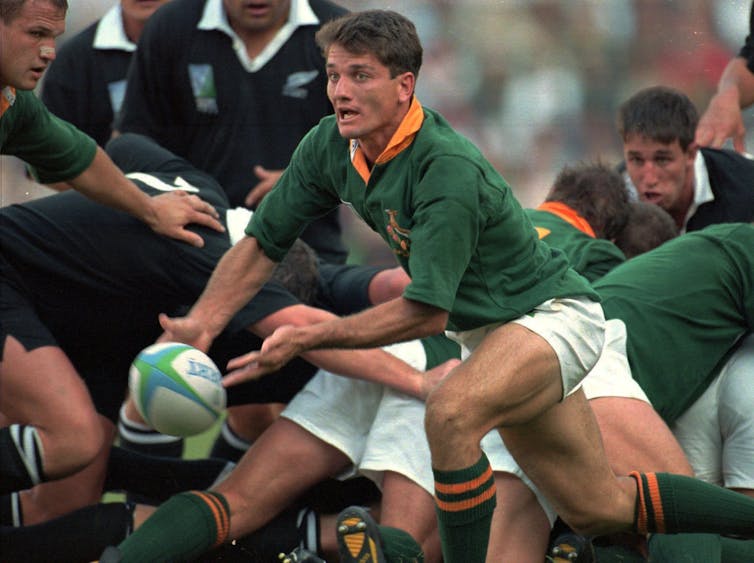
The All Blacks lost the 1995 final in extra time.
The All Blacks were stricken by a diarrhoea and vomiting bug two days before the final, a 15-12 loss in extra time. John Parkin/AP

These are relatively innocuous narratives that perhaps are not all that surprising, given how central sports are to national identity.

But there was also a sizeable minority of people (8-12%) who believed in darker and more sinister conspiracies, such as the Port Arthur and Christchurch massacres were false flag operations by government agents with the aim of further restricting gun ownership.

Also, troublingly, 20% of Australian respondents and 16% of New Zealanders believed their governments were covering up the health risks of the new 5G cellular network.

Why do people believe in conspiracies?

Conspiracies are found to be true on occasion, which renders them no longer “theories”. For example, in the 1960s and 70s, the CIA really did engage in secretive experiments to identify drugs to force confessions (Project MKUltra).

But what is surprising is the degree to which people seem to believe in unfounded conspiracies, especially given the lack of evidence.

Previous research has highlighted three potential motives for why people buy into conspiracy theories.

First, people may latch onto conspiracy theories as a way of understanding and explaining a chaotic world, drawing links between unconnected events to create a sense of certainty.

For example, studies show people who prefer an intuitive style of thinking — “going with their gut” — are more likely to believe in conspiracy theories, while those who engage in more deliberative, analytic thinking are less convinced.
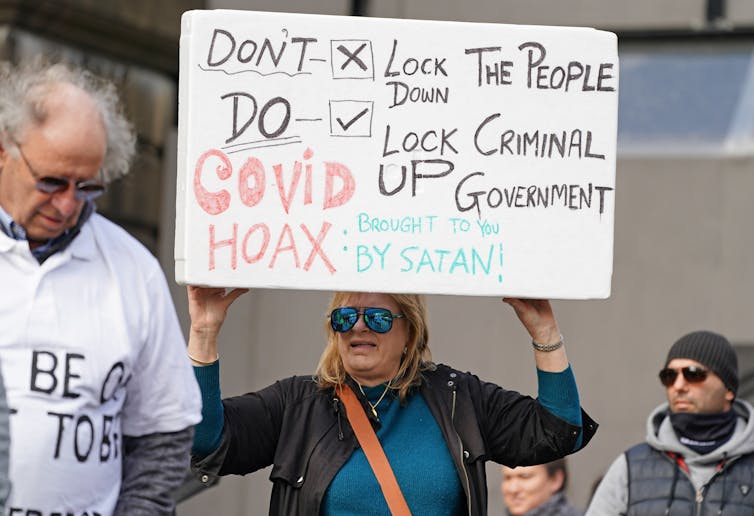
Anti-lockdown and anti-vaccine protest.
Anti-lockdown and anti-vaccine protests have been frequent sights in Australia throughout the pandemic. Scott Barbour/AAP

Second, for some people, believing in conspiracy theories gives them a greater sense of safety and control over the unknown. Central to this is a distrust of the “other” — as in, different types of people or groups.

Some researchers have pointed to this being evolutionary — a psychological mechanism that aims to minimise the risk of threats from enemies and maintain a safe environment for one’s “tribe”.


Read more: In defence of conspiracy theories (and why the term is a misnomer)


Lastly, conspiracy theories may serve as a way for people to maintain a positive sense of self and their identity as a member of a social group. This meets a fundamental human need for belonging. For example, those who felt socially excluded have been found to be more likely to engage in conspiracies.

In our research, we found evidence for all three motives being associated with belief in conspiracy theories.

We asked participants a series of validated questions and looked at their associations with beliefs in conspiracies. Those who were more likely to endorse conspiracy theories were less analytical in their thinking, less trusting of others, or felt alienated from mainstream society.

What does this mean for combating conspiracies?

Research has shown that belief in conspiracy theories, on balance, is harmful to society. Climate change conspiracy theories can motivate people away from social action, while conspiracy theories about 5G telecommunications have been associated with support for violent tendencies.

Also, research shows people who believe in one conspiracy theory tend to believe in others.


Read more: How misinformation about 5G is spreading within our government institutions – and who’s responsible


Our other recent research shows people who engage in some kinds of conspiratorial thinking are also more likely to reject beneficial scientific innovations.

For example, those who believe in criminal conspiracies within governments and conspiracies related to restrictions on personal health practices and liberties are more likely to reject childhood vaccinations.

Trying to extricate friends and family from these webs of conspiracies can be difficult. But appealing to why they believe in them — rather than just what they believe — may be more effective at countering these beliefs.

Research suggests avoiding ridicule, showing empathy, affirming critical thinking and appealing to trusted message sources can help when talking to someone who believes in conspiracy theories.

We are currently planning and conducting further research to track people’s beliefs over time so we can pinpoint the key ingredients to their continued endorsement of conspiracies — and what convinces them to climb out of the rabbit hole.

We hope this will help counter the pernicious effects conspiracy theories have on societal cohesion.

ref. Was Phar Lap killed by gangsters? New research shows which conspiracies people believe in and why – https://theconversation.com/was-phar-lap-killed-by-gangsters-new-research-shows-which-conspiracies-people-believe-in-and-why-158610


Yearning for touch — a photo essay

Source: The Conversation (Au and NZ) – By Cherine Fahd, Associate Professor, School of Design, University of Technology Sydney

In late November, I led a participatory performance, A Proxy for a Thousand Eyes, at the Sydney Opera House. Among the performers were three videographers and two photographers. Their role was to record a loosely choreographed routine of touching between myself and the participants who joined me at the specially designed, Covid-safe screens.

The pandemic has highlighted the desire and need for physical contact and the integral role touch plays in socialisation and well-being. COVID-19 has not only forced us to be physically apart but to perceive bodies — both our own and others — as risky.

Author supplied and taken by Pamela Pirovic., Author provided (No reuse)

Despite the risks, I was commissioned by the Sydney Opera House to respond creatively to the pandemic. My approach focused on social distancing and its alienating impact on communal gathering. Shielded by vinyl plastic, complete with the ritual of hand sanitising, I persuaded 50 people to act as my touching playmates on the day. Some were friends and acquaintances. Many were strangers.

Each participant was separated from me by a sheet of plastic. I stood on one side and they stood on the other. Despite the squeaking and slippery sensation of the plastic, I made sure the palms of our hands connected, our fingers and faces conjoined, the tips of our noses and lips caressed.

Author supplied and taken by Pamela Pirovic., Author provided (No reuse)

At the heart of this work is the desire to feel good. In a year of great uncertainty and grief, creativity has an enormous role to play in articulating the unspeakable, the unthinkable and what is often suppressed in traumatic times.

I wanted first and foremost for the participants to feel safe, to feel cared for and to trust me. And in return, to touch me so we could be together and safely apart.

Author supplied and taken by Pamela Pirovic., Author provided (No reuse)

The photographs and footage revealed the most tender encounters. An intimate and playful game of surrender is now a ten-minute video piece portraying touching as a form of public yearning.

Author supplied and taken by Pamela Pirovic., Author provided (No reuse)

Cherine Fahd’s ten-minute video piece Play Proximus will feature in Returning: Chapter 1 on Stream, part of Sydney Opera House’s new digital commissions launching on 30 April 2021 co-presented with the Japan Foundation Sydney.

An essay reflecting on this project will appear in Dystopian and Utopian Impulses in Art Making: The World We Want, edited by Grace McQuilten and Daniel Palmer, to be published by Intellect in 2022.

ref. Yearning for touch — a photo essay – https://theconversation.com/yearning-for-touch-a-photo-essay-159704

How lobed brain corals are helping solve the mystery of what general anaesthesia does to the brain

Source: The Conversation (Au and NZ) – By Adam David Hines, PhD Candidate, The University of Queensland

Many of us will undergo general anaesthesia at some point in our lives — losing consciousness so we can be operated on painlessly. But although humans have used general anaesthesia for more than 150 years, we still don’t fully understand how it affects the brain.

To find out, we turned to a genus of stony coral called lobed brain coral (Lobophyllia). Using a unique fluorescent molecule present in lobed brain coral, we managed to isolate an important target of general anaesthetic drugs in fruit fly brains. Our findings could help develop safer anaesthesia for humans.

Glow-in-the-dark coral

Lobed brain corals are bioluminescent, which means they can naturally produce and emit light. They’re found in the Indian and Pacific oceans, alongside other similar scientifically valuable creatures such as the crystal jelly Aequorea victoria.

Crystal jelly Aequorea victoria
Aequorea victoria is a bioluminescent jellyfish found in the Pacific Ocean. Shutterstock

Bioluminescent ocean-dwellers have equipped researchers with a powerful toolkit of fluorescent molecules to study and track biological processes. They even inspired the Nobel Prize-winning discovery of the green fluorescent protein.

The fluorescent molecule found in the lobed brain coral, Eos, has a rather surprising feature: it can change colour. This lets scientists observe the movement of proteins within living cells — something that was previously impossible.

Imagine you have a Christmas tree covered with lights but they were all lit the same colour; the tree might appear a bit blurry from afar. If one of the lights were to switch to a different colour, however, you’d spot it easily.

The same principles apply when scientists try to track moving proteins in cells. Proteins perform multiple vital tasks for a cell and tracking them can help us understand their function, but they’re usually too small to see with regular microscopes.

Using the Eos molecule, we can develop super-resolution microscopes that reveal even the smallest elements within cells, including proteins.

A multicoloured lobed brain coral (Lobophyllia) with yellow tips. Shutterstock

A sleeping brain isn’t ‘inactive’

Anaesthesia today generally involves injecting a patient’s vein with a dose of a sedative drug and painkiller. For instance, the combination of propofol and fentanyl will make you unconscious and prevent you from feeling pain.

Sedative drugs, including sleeping pills, use your brain’s natural ability to put you to sleep. They target the circuits in your brain that regulate wakefulness and stop them from being active.

However, the brain activity of a sleeping person is very different to that of someone under anaesthesia. A sleeping brain performs many tasks and is quite active. A brain under anaesthesia is largely unresponsive.

Why aren’t we able to be woken up while under general anaesthesia? To find out, scientists need to identify what else in the brain, apart from sleep pathways, is targeted by general anaesthetic drugs.


Read more: Why our brain needs sleep, and what happens if we don’t get enough of it


Anaesthesia stunts the brain’s processing power

Neurons, the cells in the brain, communicate with each other through a process known as synaptic neurotransmission. This is the main way our brains process information.

Synapse neurotransmitter release
Neurotransmission lets neurons to talk to one another and process information such as pain. Shutterstock

For neurotransmission to occur, specialised proteins within neurons must release chemicals called neurotransmitters (such as dopamine or glutamate). Proteins are dynamic. They can move freely inside neurons and are often needed in different parts of the cell.

For our research, we took the Eos molecule and attached it onto a protein called “syntaxin1A” — which is responsible for facilitating neurotransmission — to see how general anaesthetic drugs might affect its normal function in the brains of fruit flies.

We found syntaxin1A dynamics were altered with general anaesthetic drugs such as propofol and isoflurane. The protein became trapped in clusters of proteins and its movement was therefore restricted.

This may have been what reduced the efficiency of neurotransmission, preventing the brain from processing complex information.


Read more: Gene editing is revealing how corals respond to warming waters. It could transform how we manage our reefs


A goal to develop new, safer drugs

Many proteins apart from syntaxin1A are involved in neurotransmission. So it’s likely others are also affected by anaesthetic drugs.

This new way to observe individual protein behaviour in intact brain tissue will hopefully uncover more drug targets and explain the precise mechanisms that underpin general anaesthetics.

Consequently, this knowledge will aid in the development of safer drugs with fewer side effects. And targeted drug development could help prevent the abnormally long recovery times observed in some patients who undergo general anaesthesia.

Anaesthetic drug development will be enhanced once we better understand how these drugs affect us. Shutterstock

ref. How lobed brain corals are helping solve the mystery of what general anaesthesia does to the brain – https://theconversation.com/how-lobed-brain-corals-are-helping-solve-the-mystery-of-what-general-anaesthesia-does-to-the-brain-159541

NZ’s hate speech proposals need more detail and wider debate before they become law

Source: The Conversation (Au and NZ) – By Eddie Clark, Senior lecturer, Te Herenga Waka — Victoria University of Wellington

Promised changes to New Zealand’s hate speech regulations have been slower to emerge than first anticipated. But a recently released cabinet paper finally gives some idea of what is being considered.

The proposals were originally intended to be made public by late 2019 in the aftermath of the Christchurch terror attacks. In the end, it took until December 2020 for the matter to get to cabinet.

The delay, however, meant officials and ministers had the report of the royal commission of inquiry into the attacks (released in November 2020) to guide them.

The resulting proposals pull in two different directions: on one hand tightening definitions of what qualifies as hate speech, on the other significantly broadening the categories to which it can apply.

What the law says now

New Zealand currently has no comprehensive hate speech laws. The closest are provisions within section 21 of the Human Rights Act 1993 which prohibit incitement of racial disharmony.

These make it a criminal offence for a person to publicly use language which is “threatening, abusive, or insulting” to a group of people on the basis of their “colour, race, or ethnic or national origins”, and which is intended to “excite hostility or ill will against, or bring into contempt or ridicule” that group.

This is punishable by a fine of up to NZ$7,000 or up to three months imprisonment.


Read more: The gender gap in Australia’s hate speech laws


The Human Rights Act also contains a civil liability provision allowing individuals to complain to the Human Rights Commission about incitement of racial disharmony. Unlike the act’s criminal provisions, this doesn’t require intent — it focuses only on the likely effect of such incitement.

A complaint to the Human Rights Commission might involve its mediation services in the first instance, but can also result in the matter being referred to the Human Rights Review Tribunal.

If the tribunal upholds the complaint, it can offer a variety of remedies, including ordering a person to cease the offending speech, undertake training or pay monetary damages.

What the proposed reforms would do

As part of its broader recommendations to promote social cohesion, the royal commission suggested some reasonably narrow changes to the existing Human Rights Act provisions:

  • add incitement of disharmony on the basis of religion
  • move the criminal offence to the Crimes Act 1961 and increase the penalty
  • tighten the definitions within the provision.

The proposals in the cabinet paper would do all this, specifically increasing the punishment to a fine of up to $50,000 or maximum of three years imprisonment. This would put hate speech punishment in the same general league as making a false declaration or assault with intent to injure.

The language would also be revised to make it an offence to intentionally “stir up, maintain, or normalise hatred” against a nominated group through “threatening, abusive, or insulting communications, including inciting violence”.

This is narrower than the existing law, meaning speech intended to bring a group into “contempt or ridicule” would no longer be covered.


Read more: We tracked antisemitic incidents in Australia over four years. This is when they are most likely to occur


Where the cabinet paper goes significantly further than the royal commission is in its recommendation the new law be extended beyond race and religion to cover all categories protected under section 21 of the Human Rights Act. These include age, sex, disability, religion, race, sexual orientation, political opinion and a number of others.

The paper also proposes a similar expansion of the civil provision in the Human Rights Act (largely ignored by the royal commission), and adding a prohibition on incitement of discrimination.

It also proposes clarifying the grounds of discrimination to specifically include gender identity and sex characteristics.

A risk of over-reach

By and large, this is a measured proposal. The threshold for criminal liability is very high, requiring a high degree of animosity and an effect far beyond offending an individual.

Despite some claims to the contrary, the proposed laws would not cover (for example) the unkindness and rudeness implicit in casually mis-gendering a trans person.

But by including every ground of discrimination under section 21 of the Human Rights Act, there is some risk the proposed changes become overly broad. In particular, political opinion is an area in which robust, even hostile, debate is important, and there is potential for a “chilling effect”.

Reasonable people may well disagree on this and other aspects of the proposal. But at this stage the cabinet paper is just that — a set of proposals. A more detailed discussion document will be put out for public consultation. One would hope it will include a more precise draft of the proposed legislation.

Hate speech regulation is a fraught topic with important considerations on all sides. It deserves serious consideration and public debate before these proposals finally become law.

ref. NZ’s hate speech proposals need more detail and wider debate before they become law – https://theconversation.com/nzs-hate-speech-proposals-need-more-detail-and-wider-debate-before-they-become-law-159320

As Tasmanians head to the polls, Liberal Premier Peter Gutwein hopes to cash in on COVID management

Source: The Conversation (Au and NZ) – By Michael Lester, PhD candidate, University of Tasmania

Tasmanian Liberal Premier Peter Gutwein is gambling on an early election to cash in on his government’s popularity due to its management of the COVID pandemic. It is a reasonable strategy, given how voters in Queensland and Western Australia have rewarded their governments in recent months.

Gutwein announced the May 1 election on March 26 – a year earlier than it is due. This was possible because, while Tasmania has a four-year maximum term, it does not have a fixed term, unlike all other states and territories.

In 2018 the Liberals, under then-Premier Will Hodgman, were returned to government with a bare majority of 13 of the 25 members of the lower house. Gutwein took over the premiership following Hodgman’s resignation in January 2020.

Over the past three years, the majority government has at times looked shaky. This was typified by maverick Liberal Clark MP Sue Hickey winning the speakership ballot with the support of Labor and the Greens against her party’s candidate. She has since voted against government legislation and policy on a number of policy and social reform issues.

Five days before calling the election Gutwein informed Hickey she would not get Liberal re-endorsement for the next election. She resigned from the party, putting the government into minority.

Having engineered a minority government and, despite written assurances from Hickey and ex-Labor, independent MP Madeleine Ogilvie on confidence and supply, Gutwein then called the election to secure “stable majority government”. His reasoning was that this would keep Tasmania in safe hands for ongoing management of COVID.


Read more: Morrison’s ratings take a hit in Newspoll as Coalition notionally loses a seat in redistribution


A few days later, Ogilvie was endorsed as a Liberal candidate for Clark. This underlined the artificiality of the minority government argument.

Under Tasmania’s Hare-Clark proportional electoral system, five members are elected to each of five multi-member seats. These are Bass in the north, Braddon in the north west, Clark and Franklin in the greater Hobart and southern region, and the sprawling Lyons across the middle of the state.

Going into this election, the Liberals had 12 seats, Labor nine, Tasmanian Greens two and there were two independents.

In March 2020, before the pandemic, Labor leader Rebecca White was matching first Hodgman and then Gutwein as preferred premier.

However, that changed after Gutwein declared a state of emergency and the “toughest border restrictions in Australia”.

Like his counterparts in Queensland and WA, the hard-line stance was widely interpreted as keeping the state safe. Gutwein polled as high as 70% as preferred premier in opinion polls throughout 2020.

The election announcement caught Labor unprepared. The start of its campaign was sidetracked by factional battles over preselection of high-profile Kingborough Mayor Dean Winter for the seat of Franklin. It also had to deal with the resignation of state ALP president Ben McGregor from the campaign over crude text messages he sent to a female colleague some years ago.

The Liberals also have had their share of problems. Franklin candidate Dean Ewington was forced to resign when it was revealed he had attended anti-lockdown rallies against Gutwein’s policy. Ex-minister and now Braddon candidate Adam Brooks also faces police charges over alleged contraventions of gun storage law.

Tasmania has has three minority governments in the modern era. These are the 1989 Labor-Green Accord government, the 1996 Liberal minority government and the 2010 Labor-Green quasi-coalition government. In each case voters punished the major governing party at the following election.

Consequently, the prospect of a hung parliament is always a central election issue in this state. Both Labor and the Liberals have pledged to govern in majority or not at all. However, in their one campaign debate to date, both Gutwein and White indicated they would resign the leadership rather than lead a minority government. This seems to leave open the door for their replacements to take up negotiations to form government.

Federal issues and federal political leaders have had a minimal impact on the Tasmanian election. So far, Prime Minister Scott Morrison has not visited the state during the campaign, even for the Liberal campaign launch. Opposition Leader Anthony Albanese has visited twice, including for Labor’s launch.

While Tasmania’s economy has held up surprisingly well during the pandemic – due in no small part to Commonwealth JobKeeper and JobSeeker payments – the end of those payments is likely to have a negative impact on the state’s economy. Some have pointed to this as an underlying reason for going to an election early.

Concerns about delays to the roll-out of COVID vaccinations and the possible distraction from the key state Liberal campaign theme of management of the pandemic may be another reason for keeping federal ministers away.


Read more: WA election could be historical Labor landslide, but party with less than 1% vote may win upper house seat


For its part, Labor has campaigned on state Liberal failure to reduce hospital and housing waiting lists and the lack of action on a range of key infrastructure development promises made at the 2018 election. The opposition has also raised concerns about future budget spending cuts to fund high-cost COVID economic stimulus measures, TAFE privatisation and delays in replacing the Spirit of Tasmania ferries, which are vital for interstate transport, tourism and freight.

The Greens and key high-profile independent candidates such as Hickey and popular Glenorchy Mayor Kristie Johnston in Clark have raised concerns about government secrecy, ministerial accountability and the state’s weak laws on political donations and, associated with that, poker machine licensing reforms.

There have been no public political opinion polls so far during this campaign. However, successive surveys by Tasmanian pollsters EMRS throughout 2020 placed the Liberals as likely to win more than 52% of the vote state-wide.
Since, historically, a party winning anything over 48% is likely to secure majority government in Tasmania, if those polls are reflected in the election outcome on May 1, another majority Liberal government seems likely.

ref. As Tasmanians head to the polls, Liberal Premier Peter Gutwein hopes to cash in on COVID management – https://theconversation.com/as-tasmanians-head-to-the-polls-liberal-premier-peter-gutwein-hopes-to-cash-in-on-covid-management-159526

More people die in winter than summer, but climate change may see this reverse

Source: The Conversation (Au and NZ) – By Ivan Charles Hanigan, Data Scientist (Epidemiology), University of Sydney

Climate change not only poses enormous dangers to the planet, but also harms human health. In our study published today, we show some of the first evidence climate change has had observable impacts on Australians’ health between 1968 and 2018.

We found long-term heating is associated with changed seasonal balance of deaths in Australia, with relatively more deaths in summer months and relatively fewer deaths in winter months over recent decades.

Our findings can be explained by the gradual global warming associated with climate change. Over the 51 years of our study, annual average temperatures increased by more than 1°C in Australia. The last decade (2011 to 2020) was the hottest in the country’s recorded history.

If we continue on this trajectory, we’re likely to see many more climate-related deaths in the years to come.

What we did and found

Using the Australian Institute of Health and Welfare, the Australian Bureau of Statistics and other sources, we gathered mortality data for people aged 55 and over between 1968 and 2018. We then looked at deaths in summer compared to winter in each year.

We found that in 1968 there were approximately 73 deaths in summer for every 100 deaths in winter. By 2018, this had risen to roughly 83 deaths in summer for every 100 deaths in winter.

The same trend, albeit of varying strength, was evident in all states of Australia, among all age groups over 55, in females and males, and in the three broad causes of death we looked at (respiratory, heart and renal diseases).

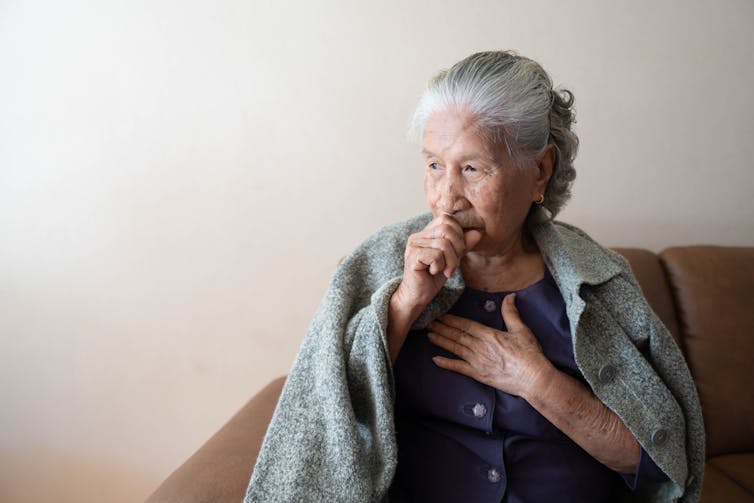
Elderly woman coughing with blanket over her
Historically, winter death rates have tended to be higher than in summer. But this is changing as our planet warms. Shutterstock

Hot and cold weather can have a variety of direct and indirect effects on our health. Winter death rates generally exceed those in summer months because infectious diseases, like influenza, tend to circulate more in winter. Meanwhile, heat stress can exacerbate chronic health conditions including heart disease and kidney disease, particularly for older adults.

But the gap between cold-related deaths and heat-related deaths appears to be narrowing. And when we compared deaths in the hottest summers with the coldest winters, we found particularly warm years increase the likelihood of seasonal mortality ratios approaching 1 to 1 (meaning equal deaths in summer and winter).

With summers expected to become hotter, we believe this is an early indication of the effects of climate change in the future.


Read more: Too hot, heading south: how climate change may drive one-third of doctors out of the NT


Our research is unique

Globally, our study is one of very few that directly shows the health impacts of climate change. Most other studies examine the effects of past weather or climate conditions on health and extrapolate these into the future based on projected climate change scenarios, with associated uncertainties. For example, demographic characteristics of the population are likely to change over time.

Climate change occurs slowly, so typically, we need at least 30–50 years of records to accurately show how climate change is affecting health. Suitable health information is seldom available for such periods due to a variety of challenges in collecting electronic health data (especially in low- and middle-income countries).

Further, long-term health trends can be influenced by numerous non-climate related factors, such as improvements in health care.

In our study, we used Australian mortality records that have been collected with remarkable consistency of detail and quality over the last half century. And by focusing on the ratio of summer to winter deaths within each year, we avoid possible confounding associated with, say, improvements to health care.


Read more: Seriously ugly: here’s how Australia will look if the world heats by 3°C this century


However, we were unable to consider some issues such as the different climate trends in small areas within each state/territory, or the effects of changing temperatures on different occupation groups, such as construction workers.

Our data also don’t allow us to account for the possible effects of people’s adaptation to warmer temperatures in the future.

Dry, cracked riverbed
Summer deaths will almost certainly increase in the years to come. Shutterstock

Looking ahead

The changing ratio of summer to winter deaths has previously been identified as a possible warning sign of the impact of climate change on human health.

In one study on the topic, the authors found Australia may initially experience a net reduction in temperature-related deaths. That is, increased deaths from heat during summer would be offset by fewer deaths in winter, as winters become more mild.

However, they predict this pattern would reverse by mid-century under the business-as-usual emissions scenario, with increases in heat-related deaths outweighing decreases in cold-related deaths over the long term.

Our findings support these worrying predictions. If warming trends continue, it’s almost certain summer deaths will increase, and come to dominate the burden of temperature-related deaths in Australia.

We found the speed of change in the ratio of summer to winter deaths was fastest in the hottest years within each decade. This strengthens our conclusion we’re observing an effect of long-term climate change.


Read more: The rise of ‘eco-anxiety’: climate change affects our mental health, too


Besides helping to answer the question, “does climate change affect human health?”, we believe our findings should inform planning for climate change mitigation and adaptation. The implications are considerable for the planning of hospital services and provision of health care, as well as for emergency services, housing, energy supply, holiday periods and bushfire disaster preparedness.

ref. More people die in winter than summer, but climate change may see this reverse – https://theconversation.com/more-people-die-in-winter-than-summer-but-climate-change-may-see-this-reverse-159135

This $1 billion energy deal promises to cut emissions and secure jobs. So why on earth is gas included?

Source: The Conversation (Au and NZ) – By Samantha Hepburn, Director of the Centre for Energy and Natural Resources Law, Deakin Law School, Deakin University

In case you missed it, a major A$1 billion energy deal between the Morrison and the South Australian government was revealed recently.

The bilateral deal represents a key driver for the national economic recovery from COVID. It promises to provide jobs in the energy sector and contribute to South Australia achieving net 100% renewables by 2030.

But there’s a big caveat: the agreement involves a joint commitment to accelerate new gas supplies into the east coast market.

With so much money on the table and other nations recently doubling down on climate commitments, let’s look at the good and bad bits of this landmark deal in more detail.

A gas-led economic recovery

The agreement was announced ahead of US President Joe Biden’s climate summit last week, which saw Australia spruik technology growth to cut emissions instead of committing to new climate targets.

In total, the federal government will contribute A$660 million and the South Australian government A$422 million towards the new deal.

Both governments have also agreed to a gas target of an additional 50 petajoules of energy per year by the end of 2023, and 80 petajoules by 2030. Their rationale is the need to improve energy security and reliability.

This focus on gas in the agreement stems from the federal government’s much-criticised, gas-led economic recovery plan, which argues new gas supplies are vital for future energy security.


Read more: Australia is at a crossroads in the global hydrogen race – and one path looks risky


In February, the Australian Competition and Consumer Commission outlined a potential shortfall of 30 petajoules of gas for the east-coast market leading up to 2024. This shortfall could impact energy supply, and the federal government has used this to help justify opening new gas reserves.

However, nothing is certain — COVID has reduced global demand for gas so any shortfall will likely be deferred. Meanwhile, renewable technology and hydrogen production and use are rapidly advancing.

Bad: investing in gas

With the seismic shift in the economics of renewables over the past decade, investing in new gas supply is unnecessary and retrograde. In fact, it’s now more expensive to transition from coal to gas than from coal to renewables.


Read more: 4 reasons why a gas-led economic recovery is a terrible, naïve idea


For example, the cost of lithium ion batteries used for battery storage has fallen over the past decade by nearly 90%. But the cost of gas — both economically and environmentally — has steadily risen. This inevitably means means its role in the energy market will diminish.

Eventually, gas generators will be retired without replacement. Victoria’s March quarter data, for example, shows black coal generation volumes dropped by 9.5% and gas generation dropped by 43%. Meanwhile, rooftop solar went up 25%, utility solar up by 40% and wind power by 24%.

Solar farm in the desert at sunset
Up to $110 million will be spent on solar thermal and other storage projects in South Australia. Shutterstock

And at the end of the day, gas is still a fossil fuel. There are approximately 22 major gas production and export projects proposed for Australia. A report from The Australia Institute in September 2020 suggested that, if produced, these projects could lead to about half a billion tonnes of emissions.

If all potential gas resources in Australia were tapped, the report indicates it could result in emissions equivalent to three times the current annual global emissions.

Good: investing in critical infrastructure

The energy deal sets aside $50 million towards the new $1.5 billion electricity interconnector between South Australia and NSW. This is critical infrastructure that will allow South Australia, Victoria and NSW to share energy reserves.

Indeed, the Australian Energy Market Operator has reported in excess of 5,000 megawatts of renewable energy projects near the proposed interconnector. This means South Australian wind and solar could contribute more significantly to electricity generation in both Victoria and NSW.

In turn, this will have a positive effect on pricing. Forecasts suggest the proposed new interconnector could reduce power bills by up to $66 a year in South Australia and $30 in NSW.

Angus Taylor sitting in front of an Australian flag, with a water bottle
Minister for Energy Angus Taylor attended US President Joe Biden’s cliamte summit last week, where Australia spruiked technology growth instead of new climate targets. AAP Image/Mick Tsikas

The energy deal also reserves funding for “investment priority areas”, which include carbon capture storage, electric vehicles and hydrogen. For example, $110 million is allocated for energy storage projects. This level of funding will help develop a world-class hydrogen export industry in South Australia.

The verdict

The energy deal is a funding win for renewable energy and technology, with energy technology advancing much faster than anticipated. However, its focus on gas is environmentally and economically regressive.

It’s completely inconsistent with the powerful climate plan announced by the Joe Biden administration at the Climate Summit last week, which includes a pause and review of oil and gas drilling on US federal land and doubling energy production from offshore windfarms by 2030.


Read more: More reasons for optimism on climate change than we’ve seen for decades: 2 climate experts explain


In March, the European Union’s parliament voted in favour of a Carbon Border Adjustment Mechanism. This will impose a tariff on products being sold into the EU according to the amount of carbon involved in making them. The Biden administration in the US has announced a similar plan.

What’s more, the European Union and the US, as outlined at the recent Climate Summit, are planning to impose fees or quotas on goods from countries failing to meet their climate and environmental obligations. This may mean Australian manufacturers will end up paying for the governments failure to take rapid action to drive down emissions.

Bilateral agreements provide critical planning and funding for Australia’s energy progression. However, they should not prolong the use of fossil fuels under the guise of energy security. To do so undermines global climate change imperatives and hinders Australia’s progress in a new energy era.

ref. This $1 billion energy deal promises to cut emissions and secure jobs. So why on earth is gas included? – https://theconversation.com/this-1-billion-energy-deal-promises-to-cut-emissions-and-secure-jobs-so-why-on-earth-is-gas-included-159342

All your transport options in one place: why mobility as a service needs a proper platform

Source: The Conversation (Au and NZ) – By S. Travis Waller, Professor and Head of the School of Civil and Environmental Engineering, UNSW

Uber, Ola, Car Next Door, GoGet, Urbi and Shareabike have transformed the mobility experience for millions of people, but are just the tip of the looming iceberg of changes in transport. Globally, 93 million travellers use the Uber app on a monthly basis. More Australians use Uber (22.9%) than taxis (21.8%).

The public clearly has an appetite for mobility as a service (MaaS). People want to plan, book and pay for various forms of transport via a digital platform.


Read more: For Mobility as a Service (MaaS) to solve our transport woes, some things need to change


However, mobility service providers are actors in search of a stage. As with software, computing and entertainment, only when a properly designed and managed platform underpins all the services will the real transformation be unlocked.

The 3 pillars of the platform

MaaS is part of a broader evolution as novel technologies have driven the rapid transformation of products and offerings into collections of services. Smartphone applications rely on digital distribution platforms such as Google Play Store, Apple Store, Microsoft Store and Amazon Cloud. Similarly, the evolving technologies and mechanisms of mobility systems require a platform for distribution.


Read more: We subscribe to movies and music, why not transport?


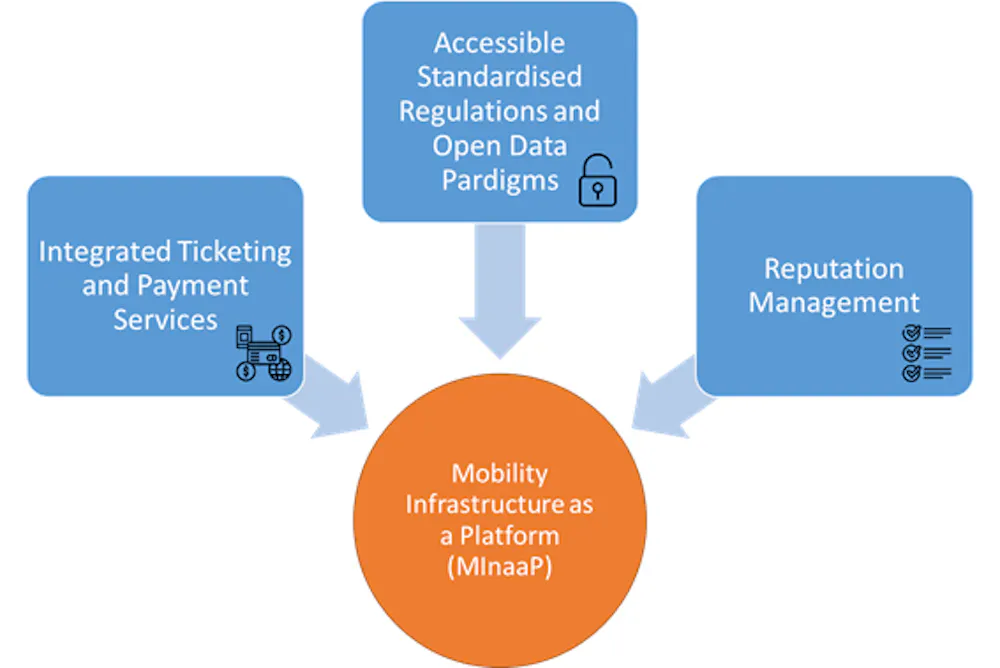
The platform concept should include at least three key elements:

  1. integrated ticketing and payment: user payments are managed in a uniform and adaptable manner across all providers

  2. accessible, standardised regulations with open data: regulations and data are managed to be accessible/plug-n-play, secure and equitable

  3. reputation management: reputations of providers and users are managed in a scalable, fair and efficient way.

If the platform is designed poorly, markets will be distorted, privacy will be violated, and escalating infrastructure costs will continue to burden taxpayers.

The 3 critical elements of mobility infrastructure as a platform
The critical elements of mobility infrastructure as a platform. Author provided

Moving towards integrated payment

Historically, the transport platform has simply been the physical networks – roads, walking paths, cycle paths, rail and so on – and the ancillary infrastructure such as stations, airports, ports, vehicle storage and parking. Governments must reimagine existing physical infrastructure as part of the mobility services platform.

Recent innovations have focused not only on infrastructure development – autonomous vehicle systems, for example – but also on managing existing infrastructure. For example, cities around the world have moved towards rail automation and smart ticketing for public transport (Opal, Oyster, Octopus and Myki cards). The smart cards market for public transport in the US alone was valued at US$57.2 billion (A$73.9bn) in 2018.

Setting up seamless payment across services is the first pillar of the platform needed to support mobility as a service. It removes a major barrier to entry for service providers and users.

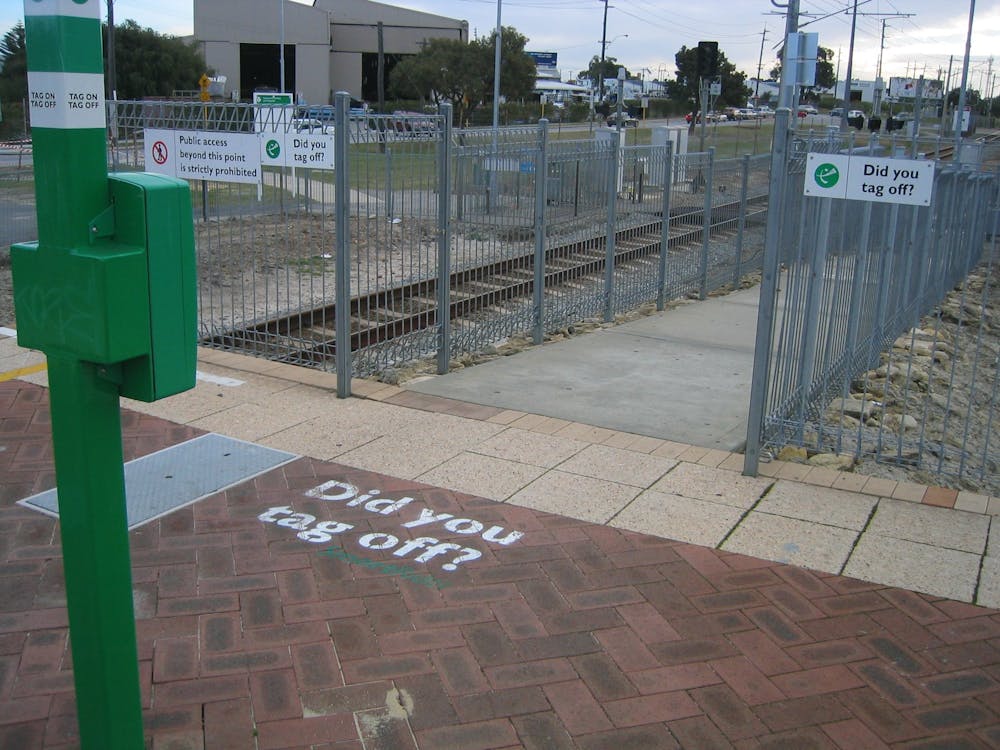
public transport station with the words 'Did you tag off?' painted on the pavement
Smart cards were an essential step towards an integrated system of ticketing, payments and patronage data. Wikimedia Commons

Significant efforts to integrate payments are ongoing. The other two essential pillars of a MaaS platform require much more attention.

Mobility as a service is seen as a solution to various transport problems, particularly by reducing private vehicle use. Customers are being promised efficient door-to-door multi-modal travel through a single holistic application. In reality, the infrastructure to achieve this is not yet present.

Research has raised questions about its benefits, social impacts and governance. For instance, emphasising smaller-scale, more flexible mobility services in unideal environments can increase congestion and undermine urban planning goals.

Why regulation is essential

The value and risks the platform creates for mobility providers, users, disadvantaged groups and society must all be kept in mind. The aim should be to create a fair marketplace that enables participation, innovation, equity and quality service.


Read more: Billions are pouring into mobility technology – will the transport revolution live up to the hype?


The second pillar, accessible, standardised regulations with open data paradigms, will enable service providers to participate in a market that delivers societal benefits. Innovations by providers must conform to a common “plug-n-play” approach that meets the mobility needs of the community as efficiently as possible. Crowd-sourced data (such as from Google or TomTom), user demand data from travel cards and traffic volume data should be available in the one platform for all service providers.

This is a complex undertaking, and data privacy must be a core component. It calls for strong professional leadership.

A big part of the challenge is that civil infrastructure cannot be unified in the same way as IT infrastructure or cloud computing. Civil infrastructure, especially transport infrastructure, is also expensive to build and maintain over its long lifespan, so the MaaS platform must be able to help optimise existing infrastructure to meet public mobility needs.

Regulation based on the protection and service of society is the only way to achieve this. The regulatory framework must be standardised, fair and accessible. This means any service providers adhering to the standards can join (and leave) the market without “insider” barriers.

Balancing profit with public benefits

Though it is a difficult task, we should apply the “everything as a service” concept with clear standardisation and regulation to deliver equitable and sustainable transport services.

This also offers a way to integrate profit maximisation and social welfare within transport but also involving adjacent services such as parking.

In the rail industry, standardisation has enabled more commoditised heavy and light rail systems and vehicles. Commoditisation is a process that creates reliable nearly identical products – rail services in this case – in the eyes of consumers. They can choose between these competing products based on cost and which best suits their needs at the time. This process has improved the economics, safety, accessibility and technology of rail services.

Over the past decade, the European Commission has implemented laws and policies to create a Single European Railway Area. The goal is to revitalise the sector by creating a single market for interoperable rail services that are more innovative and competitive.

map showing progress on Single European Railway Area
The Single European Railway Area is a long-term project that is starting to show the benefits of integration. Heinrich-Böll-Stiftung/European Union, CC BY

Managing reviews and reputations

Finally, reputation management is essential for a mobility infrastructure platform. Reviews and reputation management have been a driving force for Uber, Amazon, eBay, iTunes, Airbnb etc.

A user-driven reputational management system must be trustworthy, scalable and resistant to tampering and malignant reviews. Blockchain technologies could help build the required trust.

Mobility will increasingly be delivered as a service to travellers. New technologies combined with social awareness and strong professional leadership will all be needed to develop the platform.


This article was co-authored by Victor Prados-Valerio, a Senior Associate at the advisory firm TSA Management, who has been a project manager and senior rolling stock engineer on train, light rail and depot procurement projects in Australia and overseas.

ref. All your transport options in one place: why mobility as a service needs a proper platform – https://theconversation.com/all-your-transport-options-in-one-place-why-mobility-as-a-service-needs-a-proper-platform-157243

Indonesia slammed for inviting Myanmar coup leader to ASEAN

By Ryan Aditya in Jakarta

Commission for Missing Persons and Victims of Violence (Kontras) coordinator Fatia Maulidiyanti has condemned the invitation to Myanmar coup leader General Min Aung Hlaing to attend the ASEAN ministerial conference in Jakarta at the weekend as revealing Indonesia’s true colours — that it is accepting of human rights violators.

“Min Aung Hlaing’s arrival actually shows that Indonesia is indeed very apologetic towards human rights violators not just domestically but internationally,” said Maulidiyanti.

Maulidiyanti said that Indonesia had acted the same way when it received Sudan President Omar Al-Bashir at the Organisation of Islamic Cooperation (OIC) extraordinary leadership conference in 2016.

Yet, according to Maulidiyanti, Al-Bashir was a dictator and a fugitive of the International Criminal Court (ICC).

“Indonesia once did the same thing during the OIC Conference in 2016 when Indonesia also invited Omar Al-Bashir,” she said.

Based on the reception of these two human rights violators, Maulidiyanti questioned Indonesia’s position — which is actually reflected through President Joko “Jokowi” Widodo — with regard to protecting human rights.

The arrival of the Myanmar military junta leader is regrettable because it was as if Indonesia was paying no heed to the violence taking place in Myanmar.

Jakarta not heeding violence
“So here there is actually a question, what face is Indonesia presenting through President Joko Widodo and government officials by not heeding the violence occurring in Myanmar. The aim, rather than inviting the leader of the military junta, is to open dialogue,” she said.

Maulidiyanti questioned what the real aim was in inviting the lead of the Myanmar military junta to Jakarta.

Maulidiyanti emphasised that Indonesia should have invited the Myanmar National Unity Government (NUG) to the ASEAN meeting on Saturday afternoon.

“The government should have instead invited the NUG who are the elected representatives of the Myanmar people,” she said.

On the other hand, Maulidiyanti said that ASEAN had a very important role to play in resolving the problems in Myanmar. ASEAN should immediately take firm measures over the violence being committed by the Myanmar government.

The invitation of Min Aung Hlaing to the ASEAN conference proves that ASEAN was not a safe place for the protection of human rights.

“It can be seen from the cooperation where they don’t want to heed the situation or the importance of acting immediately against the Myanmar government today, meaning ASIAN is not a safe place for protecting human rights”, she said.

Widodo’s response

President Widodo said that the violence in Myanmar must stop. This was one of the points he stressed during the meeting with the eight leaders of ASEAN countries at the ASEAN Leaders Meeting in Jakarta.

“At the meeting earlier I conveyed several things. First, the situation developing in Myanmar is something which is unacceptable and cannot be allowed to continue,” said Widodo during a virtual press conference on the Presidential Secretariat YouTube channel.

“The violence must stop. Democracy and stability as well as peace in Myanmar must be restored immediately. The interests of the Myanmar people must always be the priority,” he said.

Second, Widodo emphasised the importance of General Min Aung Hlaing making two commitments.

An end to the use of violence by the Myanmar military and that all parties must restrain themselves so that tensions can be eased so that a process of dialogue can be begun.

“Political prisoners must be released immediately and an ASEAN special envoy needs to be established, namely the ASEAN secretary general and chairperson to promote dialogue between all parties in Myanmar,” said Widodo.

Third, he asked that access be given for humanitarian aid from ASEAN which would be coordinated by the ASEAN secretary general and the ASEAN Coordinating Center for Humanitarian Assistance (AHA Center).

Widodo also asserted that Indonesia wass committed to overseeing the above three commitments so that the crisis in Myanmar could be resolved.

“We thank God that what has been conveyed by Indonesia will turn out to be in accord with what has been conveyed by ASEAN leaders so it can be said that ASEAN leaders have reached a consensus,” said Widodo.

“The ASEAN secretary general has conveyed five points of concusses which will be conveyed by the ASEAN secretary general or chairperson. The contents are more or less the same as those that I conveyed earlier in the national statement which I conveyed earlier,” added the president.

The ASEAN leaders meeting which was held today in Jakarta was attended by the leaders of the nine countries in Southeast Asia: President Joko Widodo, Vietnam Prime Minister Pham Minh Chính, Brunei Darussalam Sultan Hassanal Bolkiah, Cambodian Prime Minister Hun Sen, Myanmar military chief General Min Aung Hlaing, Malaysian Prime Minister Muhyiddin Hassin, Laos Foreign Affairs Minister Laos Saleumxay Kommasith, Thai Foreign Affairs Minister Don Pramudwinai and Singapore Prime Minister Lee Hsien Loong.

Translated by James Balowski for IndoLeft News. The original title of the article was “Soroti Kehadiran Min Aung Hlaing, Kontras: Indonesia Apologetik kepada Pelanggar HAM”.

Print Friendly, PDF & Email

Article by AsiaPacificReport.nz

Jennifer Robinson – fighting for Assange, Papua and public education

RNZ Saturday Mornings with Kim Hill

Australian human rights lawyer Jennifer Robinson has been described as the go-to barrister for London’s rich and famous.

Standing by her clients WikiLeaks founder Julian Assange and US actress Amber Heard in the full glare of international media, she is based at a top London law firm Doughty Street Chambers.

Originally from the small town of Berry, NSW, Jennifer Robinson also has a long-term commitment to independence for West Papua and works with human rights activist Benny Wenda.

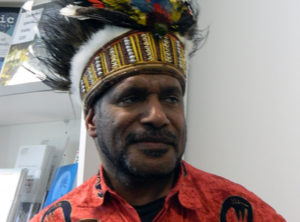
Benny Wenda
Exiled West Papuan leader Benny Wenda on a visit to New Zealand in 2013. Image: Del Abcede/APR

Her latest mission is to improve educational opportunities for public school children. She recently founded the Acacia Awards, in association with the Public Education Foundation in Australia.

Prominent people who were educated in the public system will sponsor a student from their former school or area, providing mentorship and a small scholarship.

This article is republished under a community partnership agreement with RNZ.

Print Friendly, PDF & Email

Article by AsiaPacificReport.nz

New clampdown on arrivals from India expected

Source: The Conversation (Au and NZ) – By Michelle Grattan, Professorial Fellow, University of Canberra

Arrivals from India are set to be cut further or flights suspended altogether by the federal cabinet’s national security committee when it meets on Tuesday.

It would be the second clampdown in less than a week on people coming from India, as the COVID crisis continues to escalate in that country, which on the latest figures is recording about 350,000 new cases a day.

Health Minister Greg Hunt on Monday said the national security committee would consider “whether the medical advice indicates that additional measures are required.

“And if those additional measures are recommended, we will take them with the heaviest of hearts but without any hesitation.”

Hunt said the meeting would also consider humanitarian support for India, including supplies of oxygen from the states.

“India is literally gasping for oxygen. And whilst we can assist with the national medical stockpile, their particular request is for […] the physical supply of oxygen.

“We are in a position to be able to supply non-invasive ventilators[…] We’ve reached out to the states who actually carry the supplies of oxygen,” he said.

The proportion of returnees from India among the COVID cases in quarantine rose sharply recently, prompting last week’s measures. A man who came back from India after getting married there was at the centre of the recent outbreak in Perth.

Last week national cabinet agreed to a 30% reduction in passenger numbers from India on government-facilitated flights during May, a delay of four of these flights from May to June, and a 30% cut in commercial flights direct from India.

But the worsening situation there and local pressure in Australia have forced a quick rethink.

Canada last week announced a ban on passenger flights from India and Pakistan.

Labor’s federal health spokesman Mark Butler said decisions “should be taken in accordance with public health advice”.

On Monday Western Australia Premier Mark McGowan announced the three-day lockdown ordered late last week would not be extended, although there will be transition restrictions.

In another round of the blame game McGowan – who has slashed the quota of overseas arrivals WA is willing to receive into quarantine – said at the weekend the states “have been shouldering all the load in hotels that were never built for this purpose now for 14 months.

“The simple reason the Commonwealth doesn’t want to do it is because it’s risk[…] and it’s work, and it’s hard.”

McGowan criticised the federal government for allowing too many people to travel overseas, and has also pressed for it to provide more quarantine facilities.

But Home Affairs Minister Karen Andrews said immigration detentions centres and defence facilities were not fit for purpose for quarantine.

Andrews also pointed to the restrictions announced after national cabinet last week on travel to high risk countries.

NSW premier Gladys Berejiklian criticised McGowan, saying cutbacks in WA quarantine placed more pressure on her state.

Butler said there should be a national quarantine system. “This is clearly a Commonwealth responsibility,” he said.

“Our quarantine system is in a mess and Scott Morrison has got to stop pretending that it’s not his job to fix it,” Butler said.

Hunt said: “My view is we actually have the best quarantine system, or at the very least the equal of the best, of any in the world”.

ref. New clampdown on arrivals from India expected – https://theconversation.com/new-clampdown-on-arrivals-from-india-expected-159726

New clamp on arrivals from India expected

Source: The Conversation (Au and NZ) – By Michelle Grattan, Professorial Fellow, University of Canberra

Arrivals from India are set to be cut further or flights suspended altogether by the federal cabinet’s national security committee when it meets on Tuesday.

It would be the second clampdown in less than a week on people coming from India, as the COVID crisis continues to escalate in that country, which is now recording more than 350,000 new cases a day.

Health Minister Greg Hunt on Monday said the national security committee would consider “whether the medical advice indicates that additional measures are required.

“And if those additional measures are recommended, we will take them with the heaviest of hearts but without any hesitation.”

Hunt said the meeting would also consider humanitarian support for India, including supplies of oxygen from the states.

“India is literally gasping for oxygen. And whilst we can assist with the national medical stockpile, their particular request is for […] the physical supply of oxygen.

“We are in a position to be able to supply non-invasive ventilators[…] We’ve reached out to the states who actually carry the supplies of oxygen,” he said.

The proportion of returnees from India among the COVID cases in quarantine rose sharply recently, prompting last week’s measures. A man who came back from India after getting married there was at the centre of the recent outbreak in Perth.

Last week national cabinet agreed to a 30% reduction in passenger numbers from India on government-facilitated flights during May, a delay of four of these flights from May to June, and a 30% cut in commercial flights direct from India.

But the worsening situation there and local pressure in Australia has forced a quick rethink.

Canada last week announced a ban on passenger flights from India and Pakistan.

Labor’s federal health spokesman Mark Butler said decisions “should be taken in accordance with public health advice”.

On Monday Western Australia Premier Mark McGowan announced the three-day lockdown ordered late last week would not be extended, although there will be transition restrictions.

In another round of the blame game McGowan – who has slashed the quota of overseas arrivals WA is willing to receive into quarantine – said at the weekend the states “have been shouldering all the load in hotels that were never built for this purpose now for 14 months.

“The simple reason the Commonwealth doesn’t want to do it is because it’s risk[…] and it’s work, and it’s hard.”

McGowan criticised the federal government for allowing too many people to travel overseas, and has also pressed for it to provide more quarantine facilities.

But Home Affairs Minister Karen Andrews said immigration detentions centres and defence facilities were not fit for purpose for quarantine.

Andrews also pointed to the restrictions announced after national cabinet last week on travel to high risk countries.

NSW premier Gladys Berejiklian criticised McGowan saying cutbacks in WA quarantine placed more pressure on her state.

Butler said there should be a national quarantine system. “This is clearly a Commonwealth responsibility,” he said.

“Our quarantine system is in a mess and Scott Morrison has got to stop pretending that it’s not his job to fix it,” Butler said.

Hunt said “My view is we actually have the best quarantine system, or at the very least the equal of the best, of any in the world”.

ref. New clamp on arrivals from India expected – https://theconversation.com/new-clamp-on-arrivals-from-india-expected-159726

Oscars 2021: 5 experts on the wins, the words, the wearable art and a big year for women

Source: The Conversation (Au and NZ) – By Julia Erhart, Associate Professor, Screen and Media, Flinders University, Flinders University

Chloé Zhao has made history at the 93rd Academy Awards as the first Asian-American woman and first woman of colour to win Best Director. She won for Nomadland, which Zhao also edited, produced, and adapted as a screenplay (from the book by Jessica Bruder).

Only one other woman has ever won Best Director: Kathryn Bigelow for The Hurt Locker in 2008. Zhao and fellow nominee Emerald Fennell (Promising Young Woman) were just the sixth and seventh women to receive nominations.

This was one of a trifecta of above-the-line prizes that went to women. Fennell won Best Original Screenplay for Promising Young Woman and Zhao for Best Picture.

Emerald Fennell, winner of the award for best original screenplay for Promising Young Woman, enters the press room. AP Photo/Chris Pizzello

These three awards put women in the spotlight as never before. But filmmaking is a collective art. Women were also celebrated in technical areas where sexism and gender disparity are even more entrenched.

Michelle Couttolenc won an award for Best Sound (Sound of Metal) and Jan Pascale for Best Set Decoration (Mank). Mia Neal and Jamika Wilson made history as the first African-American winners in the category of makeup and hairstyling (with Sergio Lopez-Rivera) for their contributions to Ma Rainey’s Black Bottom.

Women also accepted awards as film producers: Dana Murray won Best Animated Feature with Pete Docter (Soul), Alice Doyard won Best Documentary Short with Anthony Giacchino (Collette) and Pippa Ehrlich won Best Documentary Feature with James Reed (My Octopus Teacher).

This year, with shrinking audiences and pandemic restrictions, there was a bitter irony in the fact women won more Oscars, across new and highly visible categories, than ever before.

– Julia Erhart


Read more: How the Oscars finally made it less lonely for women at the top of their game


Best Picture

It’s no surprise Nomadland won Best Picture — it’s good, compelling stuff, and manages (like most Oscar contenders) to be formulaic to its core without appearing as such. In classic Hollywood fashion, beautiful images accompanied by derivative but affecting music reinscribe social and political history in the mode of melodramatic and intimate personal reflection.

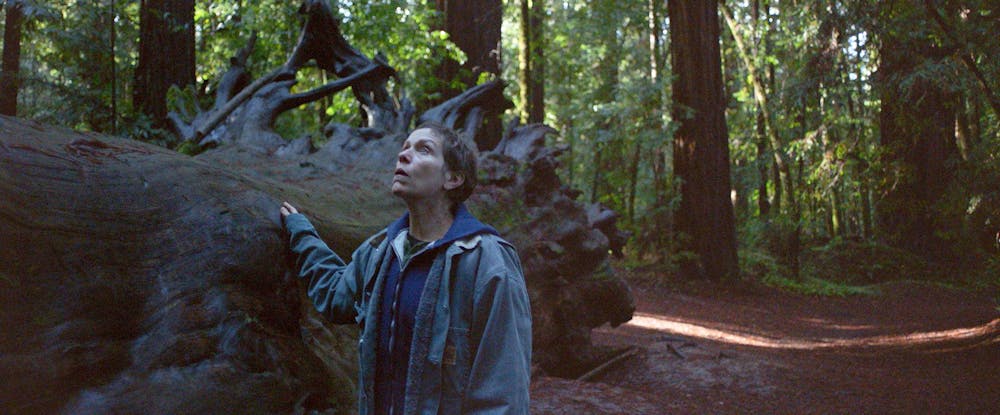
Following “salt of the earth” Fern (Frances McDormand) on her journey through the American West, we experience her ups and downs, recognising the emotional impact the devastation of precarious employment has had on her. The brutal 21st century reality of disempowered (non-unionised) workers becomes fodder for a narrative focusing on an individual’s personal growth — including happily working for Amazon no less (it’s “good pay,” Fern says).

Frances McDormand in a scene from Nomadland. Searchlight Pictures via AP

Still, it definitely works as a film, painting a starkly drawn but nuanced portrait of life in post-industrial America. It’s poetically charged in its understatement, and features excellent performances by McDormand and David Strathairn as her love interest.

It’s also better than most of its contenders, including the sophomoric Promising Young Woman and the irrepressibly dull Mank. The only exception is Judas and the Black Messiah: the best film nominated for an Oscar this year (if not the best film of the year).

-Ari Mattes

Acceptance speeches

To keep making and distributing movies over the past year has been an achievement in itself. Many speakers acknowledged colleagues who persisted in believing in film projects against a backdrop of ongoing adversity.

The movies nominated were a politically charged bunch. While presenters acknowledged the issues, winners largely allowed the movies to speak for their own politics.

There was mention of gun violence and slayings by police. H.E.R. (Best Original Song) proclaimed her role to “fight for my people”. Daniel Kaluuya (Best Supporting Actor) highlighted the spirituality and politics of the Black Panthers and said the work still to do was “on everyone in this room”. Mikkel Nielsen (Best Editing) did his bit for arts funding, praising the Danish Film School as his award vindicated support for it.

Best director Zhao praised those looking for the good in others, while Best Documentary winner Ehrlich credited courageous women “joining hands and fighting for justice”.

Generally, though, the acceptance speeches did not indulge in politicking. There was no direct mention of America’s 2020 election results, no Biden and nothing like the Trump mentions last year — just the art at hand.

-Tom Clark

Fashion

Couple on red carpet
Chloe Zhao arrives (with Joshua James Richards) for the 93rd annual Academy Awards. Chris Pizzello/POOL/EPA

The intimate Oscars ceremony (with only 170 VIP guests at LA’s Union Station) meant a reduced red carpet. However, attendees made up for the lack of numbers by bringing colour, glamour and scale in what they wore.

The dress code asked for “a fusion of Inspirational and Aspirational”. After spending 2020 in our most comfortable garments, this return to in-person awards called for spectacle.

The majority of guests followed the directive. Sure, winning director Zhao opted for sneakers, but she wore them with her pale Hermès sweater dress and French braids and looked effortlessly cool. Musical director Questlove dressed up his rubber Crocs by making them gold.

Early arrivals at the event included some of the best dressed men of the night, including Coleman Domingo in shocking, delicious pink Atelier Versace; LaKeith Stanfield in custom Saint Laurent 70s jumpsuit by Anthony Vaccarello; and the adorable young Alan S. Kim in Thom Browne short suit, bow tie and four-bar socks.

women in fancy dresses on red carpet
Colour and movement. From left: Amanda Seyfried, Angela Bassett, Reese Witherspoon, Halle Berry, Emerald Fennell and Regina King. AP Photo/Chris Pizzello

Perhaps the strongest trend was volume: in skirts, sleeves and bows. Maria Bakalova’s white tulle Louis Vuitton seemed directly related to Bjork’s iconic swan dress of 20 years ago, as did Laura Dern’s marabou feather Oscar de la Renta.

Regina King was resplendent in a custom Louis Vuitton powder-blue butterfly dress, with huge, bejewelled winged shoulders. Sleeves were also exaggerated in Angela Bassett’s red Alberta Ferretti and Marlee Matlin’s sparkling yet sustainably made Vivienne Westwood.

Carey Mulligan’s gold Valentino two-piece, Nicolette Robinson’s black taffeta Zuhair Murad and Amanda Seyfried’s red tulle Armani Privé all came with skirts made for social distancing.

woman in yellow dress
Zendaya in canary custom Valentino, Jimmy Choo heels and US$6 million worth of Bulgari diamonds. Chris Pizzello / POOL/EPA

The most aspirational? Surely Zendaya in a canary yellow, Cher-inspired strapless Valentino with over US$6 million (A$7.7 million) of yellow Bulgari diamonds.

And the most inspirational: 73-year old Youn Yuh-jung making history as the first Korean woman to win an Academy Award for acting, wearing a navy gown by Egyptian designer Marmar Halim with Chopard jewels. Perfect.

-Harriette Richards

Best Acting

Anthony Hopkins won for The Father, and Frances McDormand for Nomadland. Fair enough. Both are stellar actors who bring a quiet intensity to their performances in these films.

Both have carved out a niche for themselves within the Hollywood machine playing these kinds of characters, with Hopkins becoming synonymous in the 21st century with the broken patriarch and McDormand with the quirky baby boomer.

Each could have played their role in their sleep, one suspects, with neither seeming particularly challenged from a craft perspective. But if there’s one thing you can depend upon when it comes to the Oscars, it is middlebrow polite predictability, and these are both obvious choices.

In contrast, Riz Ahmed offers a less polished but stranger and more interesting performance in Sound of Metal, as does Andra Day, who overacts in the lead role but nonetheless masters our attention in The United States vs. Billie Holiday.

-Ari Mattes


Read more: We asked two experts to watch The Father and Supernova. These new films show the fear and loss that come with dementia


Best Original Score

Trent Reznor, Atticus Ross, and Jon Batiste’s win for their music for Soul in the Best Original Score category is unusual in at least three ways. First, Soul is an animated film, (the first to win as a soundtrack since Michael Giacchino’s Up in 2009).

Then there’s the fact that Soul is dominated not just by jazz music, but by jazz music played on screen — a genre rarely rewarded by the academy today. You’d have to go back to Round Midnight and Herbie Hancock in 1986 for something genuinely comparable.

Strangest of all, there’s a touch of category weirdness here. The academy rules state multiple composers on a single film are eligible only when they work closely together. That makes sense for Reznor and Ross, whose soundtrack careers can’t be meaningfully separated. But Batiste made markedly different music for Soul.

His is the film’s lively and virtuosic jazz often played on-screen by the film’s characters, while Reznor and Ross made ethereal, synth-heavy underscore for scenes set in the afterlife. In the end credits, Batiste — whose music does most of the heavy lifting in the film — isn’t even listed as composer. Instead, Pixar chose to list him with a “jazz compositions and arrangements by” credit.

Common sense prevailed this year, however, and perhaps it is time to rethink the Best Score eligibility rules. Of the other nominees, Terence Blanchard would have to feel hard done by after his wonderful music for a Spike Lee film (Da 5 Bloods) was overlooked again, while Emile Mosseri would be happy as a first time nominee despite his score for Minari arguably being the strongest of the bunch.

-Dan Golding

ref. Oscars 2021: 5 experts on the wins, the words, the wearable art and a big year for women – https://theconversation.com/oscars-2021-5-experts-on-the-wins-the-words-the-wearable-art-and-a-big-year-for-women-159697

Here are 9 ways we can make it easier for Australians to get the COVID-19 vaccine

Source: The Conversation (Au and NZ) – By Carissa Bonner, Research Fellow, University of Sydney

Between vaccine supply issues, confusion about the role of GPs, and changed advice for AstraZeneca, the Australian COVID-19 vaccine rollout is well behind schedule.

How can we make it easier for the majority of Australians who want to be vaccinated? Especially given all Australians over 50 years of age are eligible to be vaccinated from May 3 next week.

There are tangible things we can do now to help people understand the benefits and possible risks of COVID-19 vaccination, and get the vaccine quickly as soon as they’re eligible.

Improve understanding

We know communication about COVID-19 hasn’t met the needs of people with low health literacy or those who speak different languages. These groups are also more susceptible to misinformation so it’s vital we communicate well to them.

Here are some practical things we can do:

  1. use standard terms: governments need to develop a national glossary for COVID-19 vaccination terms. This would standardise and simplify information for diverse communities. For example, the Department of Health provides a glossary for mental health terms, which can ensure patient information and translations for words like “care plan” are consistent

  2. write for year 8 reading level: one study of COVID-19 information found government information in Australia, the US and UK was too complex for many people to understand; and it was worst for Australia. Online “readability” calculators can be used to check health information is at the recommended year 8 reading level. Real-time editing tools help writers avoid acronyms and uncommon words, and use shorter, simpler sentences

  3. use supporting images: we can make sure text is supported by helpful images such as the vaccination timeline, rather than negative images like pictures of needles that may scare people.


Read more: Pictures of COVID injections can scare the pants off people with needle phobias. Use these instead


Improve access

We know vaccine supply is a challenge but we can still make sure every available vaccine dose is used as soon as possible.

Strategies to do this could include:

  1. local vaccination: our COVID-19 testing model has been successful including pop up clinics in places where there have been localised outbreaks. But our vaccine distribution logistics are falling behind. The US has used community clinics, pharmacies and mobile field officers to vaccinate millions of people a day. While some testing clinics now offer vaccinations, we could be doing more to provide vaccines for free as locally as possible

  2. national registry: registries can keep track of vaccine doses and notify people as soon as they’re eligible. This is done in childhood vaccination, and notification systems are used effectively for cancer screening programs. We could use the existing Australian Immunisation Register to track and promote COVID-19 vaccination

  3. automated appointments: people could sign up for “opt out” appointments with their local GP or vaccination clinic. This means they would be automatically booked into an appointment as soon as they’re eligible and supply is available, or moved to an earlier appointment if there’s a cancellation. This pre-registration approach will reduce wasted vaccine doses when several doses must be used from the same vial in the same day.


Read more: How to really fix COVID-19 vaccine appointment scheduling


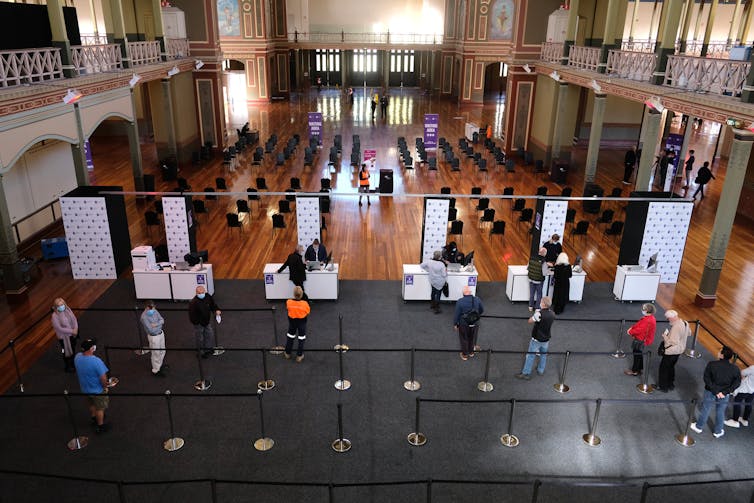
The mass vaccination hub at the Royal Exhibition Building in Melbourne
People could ‘pre-register’ so they can be automatically booked in as soon as COVID-19 vaccine supply is available. Luis Ascui/AAP

Improve motivation

Our research, published as a pre-print in February, shows motivation is a particular challenge for Australia. Many people perceive their individual risk of contracting COVID-19 to be lower given case numbers are so low, and many people therefore haven’t been as strict with distancing behaviours.

Even before the new risk of serious clots was identified with the AstraZeneca vaccine, the top barriers for getting the vaccine in 2020 were safety concerns and side effects, which may outweigh the individual risk of COVID-19 for some people.

But most Australians have high intentions to get vaccinated, and there are things we can do to maintain motivation:

  1. explain benefits AND risks: rather than focusing on single cases of serious side effects, we need to balance information in the media. We can use simple graphics to help people consider how the rare risk of serious side effects weighs up against the serious complications of COVID-19 for their age group during a local outbreak — which could still happen any time

  2. emphasise community benefits: since COVID-19 is well controlled in Australia, we can focus on emphasising the benefits to the community of getting vaccinated. This might help people understand why they should get vaccinated even though their individual risk might be low. Our research in 2020 found the top motivators were “to protect myself and others” and “belief in vaccination and science”. Even if a 25-year-old views their individual risk of COVID-19 complications as low, protecting family, friends, and wider society may be important to them

  3. provide incentives: getting vaccinated as soon as someone’s eligible could be linked to financial incentives. This has been used for childhood vaccination where access to childcare rebates is easier with up-to-date vaccination, and health professionals are incentivised to address vaccination gaps. However, this needs to be done carefully to avoid the concerns of coercive policies.

More coercive options include: mandatory vaccination, such as for certain jobs; financial sanctions like fines; and movement restrictions, including requiring a “vaccine passport” for travel.

These may increase vaccination uptake, but there are ethical concerns because such approaches could undermine trust and increase inequalities.

Australian vaccination communication experts have argued against a mandatory approach, in response to a suggestion Prime Minister Scott Morrison made in August last year that a COVID-19 vaccine would be “as mandatory as you can possibly make it”, which he later retracted.


Read more: 5 ways we can prepare the public to accept a COVID-19 vaccine (saying it will be ‘mandatory’ isn’t one)


We could be doing much more to improve understanding, access and motivation among Australians right now. We need to ensure everyone has the information they need to get a COVID-19 vaccine as soon as they’re eligible.

ref. Here are 9 ways we can make it easier for Australians to get the COVID-19 vaccine – https://theconversation.com/here-are-9-ways-we-can-make-it-easier-for-australians-to-get-the-covid-19-vaccine-159219

Indonesian submarine found: what might have happened to the KRI Nanggala in its final moments?

Source: The Conversation (Au and NZ) – By James Goldrick, Adjunct Professor in Naval and Maritime Strategy and Policy, Australian National University

After a five-day search, wreckage from Indonesia’s missing submarine KRI Nanggala has been discovered at a depth of more than 800 metres in the Bali Sea.

With no survivors from the 53-person crew — and no certainty the cause of disaster will ever be confirmed — the Indonesian Navy will need to decide how much effort it devotes to examining and salvaging the wreckage.

Footage from a deep catastrophe

Initial examination of the sunken vessel suggests the wreckage is in three pieces, with the boat’s hull and stern separated.

The Indonesian Navy (TNI-AL) has released video footage, taken by a remotely operated underwater vehicle belonging to the Singaporean Navy, which appears to show one of the fins mounted on the boat’s stern.

Submarine wreckage on sea floor
This image made available by the Indonesian Navy of the sunk navy submarine KRI Nanggala appears to show one of the fins mounted on the boat’s stern. Indonesian Navy/EPA

The other pictures may show sections of the interior, but it’s not immediately entirely clear exactly what part of the boat they are.

Submarine wreckage on sea floor
An image of the wreckage made available by the Indonesian Navy. Indonesian Navy/EPA

It took one year to find Argentinian submarine San Juan after it sank in 2017. Nanggala’s discovery so early in the search suggests the boat was near its last reported position. So whatever went wrong likely did so as the submarine was diving.

At this stage, it is impossible to know what triggered the incident. Causes could include a material or mechanical failure leading to catastrophic flooding of one or more compartments. It does not take much loss of buoyancy for a submarine to lose control of its depth.

There could have been a fire, something particularly feared by submariners in their enclosed environment. Or there could have been human error. Submariners, however, have very carefully developed and extensively drilled standard operating procedures. Material failure is the more likely cause.

Regardless of the trigger, the tragic fate of KRI Nanggala would have been sealed once it passed the depth at which its hull and fittings could not withstand the increasing pressure. There is no hard and fast figure for the exact depth at which this occurs.

Submarines such as Nanggala have an individual safe operating depth of at least 260m. What is known as the “crush depth” will be much more than that. But the risk of hull collapse increases very rapidly as depth increases. At 800m, Nanggala had no chance of surviving intact.

Submarine wreckage on sea floor
Photo released by the Indonesian Navy shows parts of submarine KRI Nanggala on the ocean floor. The German-made submarine was reported missing on April 21. Indonesian Navy/AP

How much recovery is worth the effort?

Indonesian authorities hope to salvage Nanggala’s wreckage, according to reports. This is possible and there is some precedent for this. The United State’s 1974 mission codenamed Project “Azorian” involved the covert recovery (from much deeper water) of large components of a sunken Soviet missile-carrying submarine.

Nevertheless, bringing some 1,300 tonnes of metal back to the surface from a depth of more than 800m remains a formidable proposition. Only a handful of salvage organisations would even be capable of such a task.

It would also be very expensive. One could argue the resource-constrained Indonesian Navy has better things to spend its money on, including its remaining four submarines.

Furthermore, there is no guarantee the specific cause of the disaster will ever be discovered. Submarines are large and complex machines and the “black box” systems in aviation would not cover all the possible problems that might have arisen with Nanggala.

The best approach would be to follow up the initial video examination of the wreckage with a more detailed mapping of the wreck site and all the material strewn on the seabed. Coupled with the selective recovery of components, this could help provide some answers.


Read more: Submarines are designed to hide – so what happens when one goes missing?


Preventing future disaster

The Indonesian Navy will now be subjecting its own organisation to examination. However likely it is Nanggala experienced a material failure, there will still be a review of training standards and operational procedures.

The navy’s submarine arm has been challenged by its recent expansion from a force of two to five boats. There were new commissionings in 2017, 2018 and as recently as last month — with the first submarine to be assembled in Indonesia, the KRI Aluguro, accepted into service.

Nanggala’s equally elderly sister-ship, Cakra, which has been subject to a recent modernisation and refit, may be taken out of commission to minimise the chance of another accident. In any case, Cakra will be examined closely to see if there are any hitherto unrecognised problems with metal fatigue or other potential causes of failure.

Despite the benefit of a full refit and the “zero lifing” of many key components this involves, as well as the replacement of old systems, the Cakra has been in commission for just over 40 years. This is a long time.

Solidarity from across the globe

The loss of 53 sailors is a tragedy for Indonesia and its navy. All over the world, naval people and submariners in particular will be sharing Indonesia’s sorrow.

Officer shows safety suit at press conference.
A military officer shows a safety escape suit believed to be from the sunk KRI Nanggala. According to reports, other objects found included prayer mat fragments and a bottle of periscope lubricant. Made Nagi/EPA

Submarine operations are inherently high-risk and are very demanding of every crew member. They require extraordinary levels of teamwork and absolute trust in the professionalism of everyone on board. So intense is this professional culture that, at times like this, an international solidarity manifests.

Apart from the immediacy and transparency of the Indonesian Navy’s management of the situation, it has been encouraging to see the readiness of other nations to provide immediate and effective assistance, and the speed with which they came together.

This was most clearly evidenced in the key role Singapore’s submarine rescue vessel played in the wreck’s discovery. But Australia, India, Malaysia, the United States and other countries were also quick to provide what help they could.


Read more: Lessons to learn, despite another report on missing flight MH370 and still no explanation


ref. Indonesian submarine found: what might have happened to the KRI Nanggala in its final moments? – https://theconversation.com/indonesian-submarine-found-what-might-have-happened-to-the-kri-nanggala-in-its-final-moments-159703

Indonesian submarine: what might have happened to the KRI Nanggala in its final moments?

Source: The Conversation (Au and NZ) – By James Goldrick, Adjunct Professor in Naval and Maritime Strategy and Policy, Australian National University

After a five-day search, wreckage from Indonesia’s missing submarine KRI Nanggala has been discovered at a depth of more than 800 metres in the Bali Sea.

With no survivors from the 53-person crew — and no certainty the cause of disaster will ever be confirmed — the Indonesian Navy will need to decide how much effort it devotes to examining and salvaging the wreckage.

Footage from a deep catastrophe

Initial examination of the sunken vessel suggests the wreckage is in three pieces, with the boat’s hull and stern separated.

The Indonesian Navy (TNI-AL) has released video footage, taken by a remotely operated underwater vehicle belonging to the Singaporean Navy, which appears to show one of the fins mounted on the boat’s stern.

Submarine wreckage on sea floor
This image made available by the Indonesian Navy from video recorded of the sunk navy submarine KRI Nanggala appears to show one of the fins mounted on the boat’s stern. Indonesian Navy/EPA

The other pictures may show sections of the interior, but it’s not immediately entirely clear exactly what part of the boat they are.

Submarine wreckage on sea floor
An image of the wreckage made available by the Indonesian Navy. Indonesian Navy/EPA

It took one year to find Argentinian submarine San Juan after it sank in 2017. Nanggala’s discovery so early in the search suggests the boat was near its last reported position. So whatever went wrong likely did so as the submarine was diving.

At this stage, it is impossible to know what triggered the incident. Causes could include a material or mechanical failure leading to catastrophic flooding of one or more compartments. It does not take much loss of buoyancy for a submarine to lose control of its depth.

There could have been a fire, something particularly feared by submariners in their enclosed environment. Or there could have been human error. Submariners, however, have very carefully developed and extensively drilled standard operating procedures. Material failure is the more likely cause.

Regardless of the trigger, the tragic fate of KRI Nanggala would have been sealed once it passed the depth at which its hull and fittings could not withstand the increasing pressure. There is no hard and fast figure for the exact depth at which this occurs.

Submarines such as Nanggala have an individual safe operating depth of at least 260m. What is known as the “crush depth” will be much more than that. But the risk of hull collapse increases very rapidly as depth increases. At 800m, Nanggala had no chance of surviving intact.

Submarine wreckage on sea floor
Photo released by the Indonesian Navy shows parts of submarine KRI Nanggala on the ocean floor. The German-made submarine was reported missing on April 21. Indonesian Navy/AP

How much recovery is worth the effort?

Indonesian authorities hope to salvage Nanggala’s wreckage, according to reports. This is possible and there is some precedent for this. The United State’s 1974 mission codenamed Project “Azorian” involved the covert recovery (from much deeper water) of large components of a sunken Soviet missile-carrying submarine.

Nevertheless, bringing some 1,300 tonnes of metal back to the surface from a depth of more than 800m remains a formidable proposition. Only a handful of salvage organisations would even be capable of such a task.

It would also be very expensive. One could argue the resource-constrained Indonesian Navy has better things to spend its money on, including its remaining four submarines.

Furthermore, there is no guarantee the specific cause of the disaster will ever be discovered. Submarines are large and complex machines and the “black box” systems in aviation would not cover all the possible problems that might have arisen with Nanggala.

The best approach would be to follow up the initial video examination of the wreckage with a more detailed mapping of the wreck site and all the material strewn on the seabed. Coupled with the selective recovery of components, this could help provide some answers.


Read more: Submarines are designed to hide – so what happens when one goes missing?


Preventing future disaster

The Indonesian Navy will now be subjecting its own organisation to examination. However likely it is Nanggala experienced a material failure, there will still be a review of training standards and operational procedures.

The navy’s submarine arm has been challenged by its recent expansion from a force of two to five boats. There were new commissionings in 2017, 2018 and as recently as last month — with the first submarine to be assembled in Indonesia, the KRI Aluguro, accepted into service.

Nanggala’s equally elderly sister-ship, Cakra, which has been subject to a recent modernisation and refit, may be taken out of commission to minimise the chance of another accident. In any case, Cakra will be examined closely to see if there are any hitherto unrecognised problems with metal fatigue or other potential causes of failure.

Despite the benefit of a full refit and the “zero lifing” of many key components this involves, as well as the replacement of old systems, the Cakra has been in commission for just over 40 years. This is a long time.

Solidarity from across the globe

The loss of 53 sailors is a tragedy for Indonesia and its navy. All over the world, naval people and submariners in particular will be sharing Indonesia’s sorrow.

Officer shows safety suit at press conference.
A military officer shows a safety escape suit believed to be from the sunk KRI Nanggala. According to reports, other objects found included prayer mat fragments and a bottle of periscope lubricant. Made Nagi/EPA

Submarine operations are inherently high-risk and are very demanding of every crew member. They require extraordinary levels of teamwork and absolute trust in the professionalism of everyone on board. So intense is this professional culture that, at times like this, an international solidarity manifests.

Apart from the immediacy and transparency of the Indonesian Navy’s management of the situation, it has been encouraging to see the readiness of other nations to provide immediate and effective assistance, and the speed with which they came together.

This was most clearly evidenced in the key role Singapore’s submarine rescue vessel played in the wreck’s discovery. But Australia, India, Malaysia, the United States and other countries were also quick to provide what help they could.


Read more: Lessons to learn, despite another report on missing flight MH370 and still no explanation


ref. Indonesian submarine: what might have happened to the KRI Nanggala in its final moments? – https://theconversation.com/indonesian-submarine-what-might-have-happened-to-the-kri-nanggala-in-its-final-moments-159703

Coalition and Morrison gain in Newspoll, and the new Resolve poll

Source: The Conversation (Au and NZ) – By Adrian Beaumont, Honorary Associate, School of Mathematics and Statistics, The University of Melbourne

This week’s Newspoll, conducted April 21-24 from a sample of 1,510, gave Labor a 51-49 lead, a one-point gain for the Coalition since the previous Newspoll, four weeks ago. Primary votes were 41% Coalition (up one), 38% Labor (steady), 10% Greens (down one) and 3% One Nation (up one). Figures are from The Poll Bludger.

59% (up four) were satisfied with Scott Morrison’s performance, and 37% (down three) were dissatisfied, for a net approval of +22, up seven points. Anthony Albanese’s net approval fell five points to -3. Morrison led as better PM by 56-30 (52-32 four weeks ago).

In my article last fortnight, I suggested a backlash against political correctness was making sexual misbehaviour more acceptable. The Coalition and Morrison’s recovery in this poll appears to validate that argument.


Read more: Has a backlash against political correctness made sexual misbehaviour more acceptable?


The adverse publicity regarding vaccination problems may have been expected to damage the government. But as long as there are very few local COVID cases, it appears the general public will forgive the rollout issues.

There is likely to be a strong economic recovery from COVID, and this is a problem for Labor. The new Resolve poll had the Coalition and Morrison ahead of Labor and Albanese by over 20 points on both the economy and COVID. In March, the unemployment rate was 5.6%, well down from the peak of 7.5% last July.

Many on the left want Albanese to resign in favour of a more left-wing candidate like Tanya Plibersek. But the polling indicates Labor’s leadership is not the problem, Morrison’s popularity is. In fact, given Morrison’s ratings, the Coalition would normally be expected to lead by a substantial margin.

Outside election campaigns, most voters pay little attention to the opposition. So it’s what the government does that drives voting intentions and the PM’s popularity.

New pollster for Nine newspapers

The Resolve Strategic poll will be conducted monthly for Nine newspapers from a normal sample of 1,600 interviewed by online methods. The first sample included an additional 400 live phone interviews. Fieldwork will be conducted during the month.

Every two months, state polls of Victoria and NSW will be released. Since Newspoll stopped doing regular state polling in 2015, there have been virtually no polls of either state outside election periods.

No two party vote is given, but primary votes in the first Resolve poll, with fieldwork up to April 16, were 38% Coalition, 33% Labor, 12% Greens and 6% One Nation.

One Nation’s vote is far higher than in Newspoll, but analyst Kevin Bonham says Newspoll is only asking for One Nation in seats they contested at the last election. Bonham estimates the two party vote from these primaries as a 50-50 tie.

Respondents were asked to rate the party leaders’ performance in recent weeks. Morrison had a 50% good, 38% poor rating (net +12), while Albanese was at 35% good, 41% poor (net -6). Morrison led Albanese as preferred PM by 47-25.

Voters were asked which party and leader would be better at various issues. However, offering “someone else” as an option disadvantages Labor, particularly on environmental issues where the Greens do best. The Coalition and Morrison led Labor and Albanese by 43-21 on economic management and by 42-20 on handling COVID.

Essential and Morgan polls

In last fortnight’s Essential poll, Morrison had a 54-37 approval rating; his +17 net approval dropped five points from the late March poll.

The large gender gap in Morrison’s ratings that I discussed last fortnight remained: his approval with men was 61%, but 46% with women. This gap was 16 points in late March.

Albanese’s net approval was down four points from mid-March to +5, and Morrison led as better PM by 47-28 (52-26 in mid-March).

The federal government had a 62-17 good rating on its response to COVID (70-12 in mid-March). This reverts to about where its COVID response was before a spike in November. State governments also saw falls in their COVID ratings. If Labor had been in power federally, by 44-37 voters were confident that they would have dealt well with COVID.

While Essential continues to give the federal government strong COVID ratings, a Morgan SMS poll, conducted April 9-10 – after Morrison announced the AstraZeneca vaccine would not be recommended for those under 50 – had voters disapproving of Morrison’s handling of COVID by 51-49.

Less than a week before Tasmanian election, poll has Liberals at just 41%

The Tasmanian election will be held on Saturday. A uComms poll for the left-wing Australia Institute, conducted April 21 from a sample of 1,023, gave the Liberals 41.4%, Labor 32.1%, the Greens 12.4%, Independents 11.0% and Others 3.1%.

This poll is in marked contrast to the last publicly available Tasmanian poll: an EMRS poll in February that gave the Liberals 52%, Labor 27%, Greens 14% and 7% for all Others. I will have more details of the Tasmanian election in a post on Wednesday.

WA election upper house final results

At the March 13 Western Australian election, Labor won 22 of the 36 upper house seats (up eight since 2017), the Liberals seven (down two), the Nationals three (down one), Legalise Cannabis two (up two), the Greens one (down three) and Daylight Saving one (up one). One Nation (three seats in 2017), the Shooters (one) and the Liberal Democrats (one) all failed to return to parliament.

This is the first time Labor has won a majority of seats in the WA upper house. They won 60.3% of the vote in the upper house, slightly higher than their 59.9% in the lower house. Labor won 21 of their 22 seats on raw quotas, and needed very slight help for their fourth seat in Mining and Pastoral region.


Read more: Labor obliterates Liberals in historic WA election; will win control of upper house for first time


Labor lost two seats they should have won to Legalise Cannabis under the Group Ticket Voting (GTV) system. That gave Legalise Cannabis double the seats of the Greens despite less than one-third of the Greens’ statewide vote (2.0% vs 6.4%).

The most ridiculous result occurred in the Mining and Pastoral region, where Daylight Saving were able to win a seat on just 98 first preference votes and 0.2% of the statewide vote. This occurred owing to both GTV and malapportionment. Every one of WA’s six regions elects six members, even though the Agricultural region has just 6% of enrolled voters and the Mining and Pastoral region 4%.

ABC election analyst Antony Green’s final lower house two party estimate is that Labor won by an Australian record for any state or territory of 69.7% to 30.3%, a 14.1% swing to Labor from what was already a thumping 2017 victory.

ref. Coalition and Morrison gain in Newspoll, and the new Resolve poll – https://theconversation.com/coalition-and-morrison-gain-in-newspoll-and-the-new-resolve-poll-159628

Ferdinand Magellan’s death 500 years ago is being remembered as an act of Indigenous resistance

Source: The Conversation (Au and NZ) – By Kate Fullagar, Professor of History, Institute for Humanities and Social Sciences, Australian Catholic University

This week, the Philippines is marking a significant event in the history of European colonialism in the Asia-Pacific region — the 500th anniversary of the death of Portuguese explorer Fernão de Magalhães (more commonly known as Ferdinand Magellan).

The Philippines government is hosting a series of events to mark the role that Indigenous people played in Magellan’s contested first circumnavigation of the earth in the 16th century.

European history books celebrate the expedition as a three-year Spanish-led voyage, carrying 270 men on five ships. But Filipino commemorations remind audiences that Magellan died halfway through the expedition in the Philippines and that only one ship with just 18 survivors limped home to Seville.

In particular, Filipinos remember how Lapu Lapu, the datu (leader) of the island of Mactan, inspired a force of Indigenous warriors to defeat Magellan’s crew — and the Spanish threat to their sovereignty — on April 27, 1521.

The Filipino commemorations show what an Indigenous-centred government approach to imperial history in the Pacific can look like. They also sit in stark contrast to the exhibitions, reenactments and publications that marked the 250th anniversary of James Cook’s arrival in Australia and New Zealand in recent years.

These commemorations mostly upheld the unique bravery of the British navigator, sidelining potentially deeper discussions of the violence to Indigenous people he and his crew also brought.

What happened to Magellan in 1521

Magellan reached what are now the Philippines in March 1521 after an arduous 100-day Pacific crossing. He set about using a combination of diplomacy and force to get local leaders and their followers to convert to Catholicism and submit to the authority of the far-away Spanish king.

Rajah Humabon of Cebu and other local rulers embraced an alliance with the Spanish, hoping to gain an advantage against their rivals.


Read more: 500 years after Ferdinand Magellan landed in Patagonia, there’s nothing to celebrate for its indigenous peoples


Magellan decided to attack Mactan, however, when Lapu Lapu refused to negotiate. About 60 European sailors and soldiers joined forces with Humabon and attacked Mactan at dawn, but they were met on the beach by Lapu Lapu and his armed warriors.

Weighed down by their armour, the Europeans stumbled in the shallows under arrow fire. Filipino folk histories say that an army of sea animals were also part of the resistance. Octopus wound their tentacles around the legs of the invaders, dragging them to their deaths. The battle was over within an hour.

A mural painting of the Mactan battle at the Mactan shrine in Cebu, Philippines. Shutterstock

Celebrating the victory at Mactan

The events organised by the Filipino government’s National Quincentennial Committee to mark Magellan’s death include a drone show, military parade and the televised unveiling of a new shrine to Lapu Lapu. All of these commemorations are designed to pay “tribute and recognition to Lapu Lapu and the Mactan heroes”.

The NQC also sponsored a national art competition centred on four themes connected to the Mactan victory — sovereignty, magnanimity, unity and legacy.

Matthius B. Garcia’s painting, Hindi Pasisiil (Never to be Conquered), recently took the grand prize in the “sovereignty” category.

In his work, the viewer’s eyes are drawn to the strong figure of Lapu Lapu. He is covered in Visayan tattoos and wears the bright red bandana and thick gold chains of a warrior and ruler. He leaps into the centre of the canvas, kampilan (sword) raised above his head, leading the charge of men rushing at the European invaders.

Magellan and his men, decked out in armour over puffy sleeves and stockings, fall over each other and into the sea to their deaths.

The artwork is Indigenous-centred because it was crafted by a Filipino artist for a Filipino audience. It is telling the story of what happened at Mactan from the point of view of the locals rather than the strangers.

Ordinary Filipinos have also been sharing their own artistic representations of the battle of Mactan on the NQC’s Facebook page, such as 5-year-old Miguel Alfonso Manzano Noriel’s painting, entitled The Battle of Mactan, below.

The Battle of Mactan by Miguel Alfonso Manzano Noriel.
The Battle of Mactan by Miguel Alfonso Manzano Noriel. Author provided

The NCQ has also encouraged children to print paper doll figures of Lapu Lapu and Magellan so they can re-enact the battle of Mactan at home.

In contrast to Garcia and Noriel’s fiery scenes of mayhem, the winning entries in the art competition’s “magnanimity” section remember the compassion that Filipinos showed to the explorers.

In Romane Elmira D. Contawi’s prize-winning painting, a local man holds out fruit to a bedraggled, hollow-eyed white man. The work illustrates the key role locals played in the expedition, giving provisions to Magellan’s fleet and sharing their expert knowledge on surviving the dangerous seas.

Remembering Cook in Australia and NZ

From 2018–20, the Australian and New Zealand governments also sponsored events related to a significant anniversary of European incursion into their lands — the arrival of Cook’s ship, the Endeavour, in 1769–70.

Some did aspire to take an Indigenous-centred viewpoint. But the majority ended up pushing, at best, a “shared histories” approach. They encouraged audiences to consider “both sides” of the beach when the Endeavour docked on Indigenous shores.


Read more: Explorer, navigator, coloniser: revisit Captain Cook’s legacy with the click of a mouse


National institutions in Australia held exhibitions entitled “Cook and the Pacific” or “Cook and the First Australians”. The New Zealand centrepiece event was a six-vessel flotilla — three European, three Pasifika — that stopped off at 14 communities to instigate “a balanced telling of a shared Māori and Pākehā history.”

In these performances, Cook was made to forego some of the limelight, but never to step off his pedestal entirely.

Other memorials did not achieve even this fuzzy sense of mutuality. Pre-existing statues of Cook, for instance, not only remained standing through the anniversary years, they were often protected from being defaced. In the case of the Cook statue in Sydney’s Hyde Park, this came in the form of dozens of police officers.

Police encircling the Cook statue in Sydney last year.
Police encircling the Cook statue in Sydney last year. Rick Rycroft/AP

Decolonised public histories

The Philippines’ approach to a more Indigenous-focused and critical form of public history is imperfect. The government has come under attack for silencing “unpatriotic” criticism” of national leaders today — and in the past.

And the government was criticised for its handling of the death of another Ferdinand – the Philippines’ former president Ferdinand Marcos, who ruled the country through martial law for nearly a decade. He was given a hero’s burial to the outrage of many.

Similarly, public histories that happily remember 16th-century rebellions against Spanish conquistadors so as to “uplift the cultural confidence of the Filipino people” can render invisible some modern Indigenous struggles for autonomy, particularly in the Philippines’ Islamic south. There is only room for patriotic versions of the country’s history that emphasise unity.


Read more: Cooking the books: how re-enactments of the Endeavour’s voyage perpetuate myths of Australia’s ‘discovery’


Despite these serious concerns, the Filipino approach to the era of European expansion offers a refreshing contrast to the dominant stories about Cook in Australia and New Zealand. It is not simply adding in Indigenous voices or awarding Indigenous people co-star status on commemorative occasions.

Rather, the Filipino attitude to Magellan flips colonial history on its head by focusing on Indigenous resistance.

The promise of decolonised public histories in the Pacific is not to punish, shame or settle scores. It is instead intended to help forge as-yet undreamed futures for the region that place original sovereigns at their heart.

ref. Ferdinand Magellan’s death 500 years ago is being remembered as an act of Indigenous resistance – https://theconversation.com/ferdinand-magellans-death-500-years-ago-is-being-remembered-as-an-act-of-indigenous-resistance-158226

Baghdad hospital fire: what happened and what it tells us about Iraq’s health system

Source: The Conversation (Au and NZ) – By Benjamin Isakhan, Professor of International Politics, Deakin University

At least 82 people are dead after a horrific fire swept through the COVID intensive care unit of one of Iraq’s main hospitals over the weekend. The Iraqi prime minster has suspended the nation’s health minister over the incident.

It’s been reported the blaze began when an accident caused an oxygen tank to explode at Ibn al-Khatib Hospital in Baghdad. According to media reports, the hospital “had no fire protection system and false ceilings allowed the flames to spread to highly flammable products”.

The tragedy, which saw COVID patients taken off ventilators as they attempted to flee, speaks volumes about the state of Iraq’s dilapidated health system.

Corruption, sanctions, conflict and years of brain drain have led to widespread systemic problems in many sectors, including health.


Read more: How the 2003 Iraq invasion devastated the country’s health service


A healthcare system under strain from decades of sustained shocks

The recent tragedy at an Iraqi hospital is not at all surprising when you trace Iraqi history and politics over the last few decades.

This begins with the authoritarian rule of the Ba’ath party from 1968 and under Sadaam Hussein from 1979. After the Gulf War of 1991, sanctions crippled the country and the health sector in particular. It became very difficult to get medicine, equipment and training.

If things were bad then, it got a whole lot worse after the 2003 invasion of Iraq, which unleashed waves of violence and political bickering. The consequences are still being felt today.

There was also a huge brain drain effect, which saw a lot of their best doctors and health administrators leave for other countries where pay and conditions were better.

And an already struggling Iraq was torn apart by the horrors unleashed by the Islamic State from 2014, an extremely aggressive and organised terrorist cell that, at one point, controlled more than a quarter of the country.

A lot of money, time and people had to go into fighting the Islamic State instead of making progress helping the system recover from previous shocks.

Then, reeling from all those crises, COVID hit — and hit hard. The vaccine has been rolled out with varying degrees of success.

But by then, hospitals were struggling with a health crisis it was never in a position to handle in the first place.

Mourners pray near the coffins of coronavirus patients who were killed in the hospital fire.
Mourners pray near the coffins of coronavirus patients who were killed in the hospital fire. AP Photo/Anmar Khalil

Corruption trickles into every part of Iraqi life, including healthcare

However, probably the biggest cause of the recent hospital tragedy is widespread corruption. It has emptied state coffers and crippled investment in important public infrastructure like hospitals.

Iraq is one of the most resource rich countries in the world, producing billions of dollars of oil each year. But, especially since 2003, much of this wealth has been siphoned out of the public pocket.

However, the state has been too weak to properly prosecute corruption, and for ordinary people this has affected everything from education to electricity provision, health services to not having potable water in your home.

This has relevant flow-on effects. Fire safety in a hospital is under resourced and comes very low on the list of problems to solve. You get hospitals with insufficient capacity to deal not only with COVID but an unexpected event like a fire. There may be insufficient training or systems in place to reduce fire risk or cope when one occurs. It’s not as though one instance of corruption caused this horrible fire but it’s easy to see how the broader problems of corruption can allow a situation like this to happen.


Read more: Iraq must now rebuild itself – and that means fixing its dreadful governance


First responders work the scene of a fire at a hospital in Baghdad.
First responders work the scene of a fire at a hospital in Baghdad. AP photo

The prime minister is limited in what he can do

Prime Minister Mustafa Al-Kadhimi has suspended Health Minister Hassan Al-Tamimi and Baghdad Governor Muhammad Jaber over the fire and ordered an investigation. I think that is probably a good move; if issues such as malpractice, corruption, neglect or insufficient funding or training were implicated in the fire then that will come out in the investigation.

The prime minister is largely seen as a man who listens to the people, so he is acting in response to public outcry over the fire.

However, it doesn’t solve the broader problems and you can’t just keep replacing people (other ministers have been suspended in the past over different scandals, yet problems persist).

Iraqi Prime Minister Mustafa al-Kadhemi is seen wearing a face mask.
The current prime minister seems to be very determined to fight corruption and doesn’t stand for poor governance. But he is limited in what he can do. EPA/GONZALO FUENTES / POOL MAXPPP OUT

What’s really needed is sustained, good governance that gradually erodes the power of corruption, inefficient governance and nepotism.

The current prime minister seems to be very determined to fight corruption and doesn’t stand for poor governance. But he is limited in what he can do; it’s hard to have an efficient government when you have people with allegiances across different places, some of which are linked to foreign interference.

The recent visit of the Pope to Iraq marked a moment of hope in the country’s history, with many seeing it as an opportunity to start a new chapter of change. It remains to be seen to what extent that hope can be realised.

ref. Baghdad hospital fire: what happened and what it tells us about Iraq’s health system – https://theconversation.com/baghdad-hospital-fire-what-happened-and-what-it-tells-us-about-iraqs-health-system-159700

Gagged West Papuan envoy blocked again from raising self-determination issue at UN

Report by Dr David Robie – Café Pacific.

West Papuan envoy John Anari
West Papuan envoy John Anari in New York … “moral and legal obligation” for the UN
over West Papua. IMAGE: John Anari FB

By DAVID ROBIE

A WEST Papuan envoy who was gagged while addressing the United Nations Permanent Forum on Indigenous Issues two years ago has been blocked again while trying to speak out.

For six years, John Anari, leader of the West Papua Liberation Organisation (WPLO) and an “ambassador” of the United Liberation Movement for West Papua (ULMWP), has been appealing to the forum to push for the Indonesian-ruled Melanesian region to be put on the UN Trusteeship Council.

He was speaking for the two groups combined as the West Papua Indigenous Organisation (WPIO), or Organisasi Pribumi Papua Barat, when he attempted to give his address at the forum last Thursday.

The West Papua letter to the UN Secretary-General
West Papuan envoy John Anari’s petitioning letter to the UN Secretary-General. IMAGE: APR screenshot

“I believe West Papua has been a UN Trust Territory since 1962 when the
General Assembly authorised [the] United Nations and Indonesia’s administration of West Papua,” he tried to say in his short declaration.

“I believe there is a moral and legal obligation for news of the authorisation, General Assembly resolution 1752 (XVII), to be placed on the agenda of the United Nations Trusteeship Council so that the Council can then ask the International Court of Justice (ICJ) for its advisory opinion on the proper status of West Papua in relation to the Charter of the United Nations.

“To restore United Nations awareness of the sovereign and human rights of our people, for
six years I have been asking this Permanent Forum [UNPFII] to advise the Economic and Social Council that it can and should place the missing agenda item on the agenda of the Trusteeship Council.

“Not only has this forum failed to relay our request, two years ago the moderator attempted to stop my reiteration of our request. This year I am also petitioning the Secretary-General to put news of the United Nations subjugation of West Papua on the agenda of the Trusteeship Council.

“If this forum will not relay our request, I ask you to explain to the international news media why this forum has not told the Economic and Social Council about General Assembly resolution 1752 under which West Papua is still suffering foreign administration and looting.”

The petition was presented to the Secretary-General, António Guterres.

Feed was silenced
A commentator on West Papuan affairs,
Andrew Johnson, writes: “GAGGED Again ! ! ! John was allowed to introduce himself and the second he began saying what the United Nations does NOT want the public to hear, his feed was silenced!

“No doubt the UNPFII will claim it was a lucky gremlin, but John’s video feed was up and working and only went silent as he called attention to the United Nations own responsibility for the on-going oppression, deaths, and looting of West Papua for these past 59 years!”

After Anari was gagged again, a small group of Papuan protesters staged a Morning Star demonstration outside the UN headquarters in New York.

Attack on journalist Mambor
Meanwhile, Suara Papua has published an article exposing the “terror” campaign being waged against leading Papuan journalist Victor Mambor, the founder of Tabloid Jubi and who visited New Zealand in 2014.

A car that he owns which was parked on the road near his home in the Papuan capital of Jayapura was vandalised on the night of Wednesday, April 21.

The windscreen and side windows of Mambor’s Isuzu Double Cabin DMax were smashed by a blunt object.

Victor Mambor
Journalist Victor Mambor on a visit to New Zealand’s Pacific Media Centre in 2014. IMAGE: Del Abcede

The left-side front and back doors were also defaced with orange spray paint.

The Jayapura branch of the Alliance of Independent Journalists (AJI) chairperson, Lucky Ireeuw, denounced what it regarded as a “terrorist” vandalism act over Mambor’s reporting on Papuan issues for Tabloid Jubi, The Jakarta Post and other media.

Tabloid Jubi and its website have frequently reported on human rights violations in Papua.

“This act of terror and intimidation is clearly a form of violence against journalists and threatens press freedom in Papua and in Indonesia,” declared Ireeuw.

Before the vandalism, Mambor had suffered other attacks.

“Digital attacks, doxing, and disseminating a flyer on social media the content of which painted Tabloid Jubi and Victor Mambor in a bad light, playing people off against each other and threats of criminal attacks on the media and Victor personally,” said Ireeuw about the types of attacks.

He appealed to attackers to respect media freedom in the “land of Papua”.

This article was first published on Café Pacific.

10 years after Finkelstein, media accountability in Australia has gone backwards

Source: The Conversation (Au and NZ) – By Denis Muller, Senior Research Fellow, Centre for Advancing Journalism, The University of Melbourne

In September, it will be ten years since the Gillard government established the Independent Inquiry into Media and Media Regulation in Australia, otherwise known as the Finkelstein inquiry. In the succeeding decade, media accountability in Australia has, if anything, got weaker.

The latest sign of this is the decision last week by the journalists’ union, the Media, Entertainment and Arts Alliance, to quit the Australian Press Council.

The MEAA said in its announcement that Australia’s media regulatory framework had failed to keep up to date with the effects of media convergence. It also said its members had become increasingly frustrated by the council’s inconsistent adjudications and poor governance.

The MEAA represents about 5,000 of Australia’s journalists.

It said the press council had lost credibility with journalists, and even with the publishers who make up its membership. This had been shown by the way adjudications were mocked or ignored.

Media regulation in Australia has always been weak, fragmented and lacking in public visibility. Even before the internet age, it was fractured along ownership, industrial and technological lines.

The Australian Press Council is the accountability body for the newspaper publishers and their online platforms – though not individual journalists. The accountability body for commercial radio and television and their online platforms is the Australian Communications and Media Authority, though once again not for individual journalists or broadcasters.

Neither of these bodies has any credibility among journalists. As the MEAA said in its announcement, its members are more concerned about getting a going-over on ABC TV’s Media Watch program than about anything the formal regulators do.

Journalists told me the same thing as long ago as 2003, when I was researching my doctoral thesis on the issue. “No one wants a guernsey on Media Watch,” one respondent said, echoing the sentiments of many.

It is easy to see why. Media Watch names and shames, and does so weekly. It is highly visible and fiercely independent, giving the ABC as much scrutiny as anyone else.

By contrast, the Press Council and the ACMA processes are sluggish and opaque, and their sanctions are derisory – or at least the use of them is. The press council’s only sanction is a negative adjudication, which many newspapers place as far back in the paper as possible under a jam-label heading such as “Press Council Adjudication No 1357”. Not a verb in sight.

As for the ACMA, it turns itself inside out trying to find ways to excuse bad behaviour by broadcasters. So even though it has powers to impose licence conditions on broadcasters or suspend or cancel a licence, it seldom uses them.

A good example was the way the ACMA handled the grotesque conduct of some Australian commercial television channels in their coverage of the Christchurch massacre in March 2019.

It found Australian television broadcasters screened discrete excerpts of the terrorist’s bodycam footage, and that some also included survivor mobile phone footage that showed dead and injured people inside the Linwood Islamic Centre.


Read more: Media watchdog’s report into Christchurch shootings goes soft on showing violent footage


Its sanction? To have “a productive conversation” with the television industry about whether its codes were adequately framed to deal with this type of material in the future. The answer to that question was clearly “no”, although the code had been signed off by the ACMA.

The whole episode was typical of the ACMA’s approach over many years.

In New Zealand, meanwhile, the Broadcasting Standards Authority found Sky News New Zealand’s use of clips taken from the terrorist’s bodycam footage was in breach of the broadcasting standards governing violence and law and order. It found the degree of potential harm that could be caused to audiences was greater than the level of public interest, and imposed $NZ4000 in costs against the broadcaster.

It is notable Sky News NZ took its feed from Sky News Australia.

The Finkelstein inquiry proposed a statutory authority to run a unified system of media accountability covering all media. It was howled down as tyrannical by the media organisations, and went nowhere.

The contemporaneous inquiry in Britain by Lord Leveson, following the phone-hacking scandal embroiling Rupert Murdoch’s News International newspapers there, proposed a statute-based system. That, too, fell foul of media antagonism and government gutlessness.

More recently, in 2019 the Australian Competition and Consumer Commission recommended what would require a statute-based unified accountability mechanism as part of the government’s response to the challenges posed by the global tech giants such as Google and Facebook.


Read more: Media Files: ACCC seeks to clip wings of tech giants like Facebook and Google but international effort is required


This recommendation has been sedulously ignored by the federal government, even though it has implemented the recommendation that the global platforms should pay Australian media organisations for news the platforms take.

At the present time, the Senate Environment and Communications References Committee is inquiring into media diversity in Australia. The issue of media accountability has been a recurring theme in the submissions sent to it.

What will come out of the inquiry is yet to be seen. But given the present government’s track record, especially concerning its relationship with News Corporation, it would be surprising if any recommendation to strengthen the existing threadbare system were to result in substantive policy action.

ref. 10 years after Finkelstein, media accountability in Australia has gone backwards – https://theconversation.com/10-years-after-finkelstein-media-accountability-in-australia-has-gone-backwards-159530

With Dutton in defence, the Morrison government risks progress on climate and Indigenous affairs

Source: The Conversation (Au and NZ) – By James Blackwell, Research Fellow (Indigenous Policy), UNSW

With Peter Dutton recently shifting into a more outward-facing portfolio as Australia’s new defence minister, we must begin to assess his past actions and statements through an international policy lens.

Placing someone like Dutton — a strong political partisan with a litany of controversial views — in the defence role has the potential to damage the department’s ability to achieve some of its long-term strategic objectives.

The defence portfolio is no longer concerned solely with Australia’s participation in conflicts overseas or our national self-defence. In recent years, defence has been forced to grapple with non-traditional security issues, such as climate change-related disaster relief, as well as the current pandemic. It has also put a concerted effort towards engaging more with First Nations communities.

These issues matter to our strategic allies, particularly those in the Pacific. Dutton’s climate change scepticism and attitudes toward First Nations people could prevent meaningful cooperation with many nations.

Dutton’s statements on climate change and First Nations people need to be examined as he takes on a new portfolio. Lukas Coch/AAP

For the Pacific Islands, climate change is an existential security threat, affecting not just their economies, but their homes. To have any hope of engaging successfully with the region, the defence minister needs to be aware of the security threat climate change poses — and plan for the worst case scenarios. A destabilised Pacific puts Australia at risk.

Pacific Islanders are also increasingly critical of the lack of First Nations people in Australian politics and policy-making, seeing it as a barrier to relationship building.

Australia’s domestic politics influence its relationship with its neighbours. So it’s worth questioning whether Dutton was the right choice and if he could do more harm than good to Australia’s vital security alliances.


Read more: Despite its Pacific ‘step-up’, Australia is still not listening to the region, new research shows


Why engagement with First Nations people matters to defence

The defence department’s strong relationships with First Nations communities and organisations are important for a number of reasons.

First, there is the strategic benefit of recruiting more First Nations people to the armed forces — something the department made a priority in its 2016 White Paper. The Australian Defence Force, as part of its commitment under its Reconciliation Action Plan, wants First Nations people to reach 5% of total recruits by 2025 — well above population parity — and roughly in line with the federal government’s own employment targets.

First Nations interests over land and sea are also of importance to defence. First Nations retain control over, in some form or another, more than half of this continent, with large portions in northern Australia. This region is of strategic interest to our national security, and defence has long understood this.


Read more: Peter Dutton: a menace to multicultural Australia


As recently as 2018, the Office of Northern Australia noted the region’s role as a focal point for Australia’s national security, including energy, resources, maritime, biosecurity, economic and trade, immigration, and border control.

Working to secure this area, the office said, involves developing strong relationships with First Nations communities and businesses to build the “capacity and capability of our defence industry across the north”.

As colleagues of ours have noted, the government recognises that working with Aboriginal and Torres Strait Islander communities to build trust — and involving them in this project in the north — “will provide economic and security benefits to the region”.

A Larrakia Elder advising army personnel
Larrakia Elder Eric Fejo (centre) advising Australian army and US marine corps personnel on heritage concerns for a joint training exercise in the NT in 2015. LCPL Kyle Genner/PR Image Handout

Even as reconciliation and true First Nations justice remain elusive — especially with the absence of a constitutionally enshrined Voice to Parliament — defence has been making strides in its engagement with First Nations people. The appointment of Dutton, who has a long history of disregarding us and our voices, could very much set these efforts back.

In 2008, for instance, Dutton was one of very few MPs who boycotted the parliamentary apology to the Stolen Generations. In the years following the Uluru Statement from the Heart, he has consistently mischaracterised a Voice to Parliament as a “third chamber”. And as home affairs minister, he criticised a High Court ruling expanding First Nations rights as something which “essentially creates another class of people”.

All of these examples are indicative of someone who is not attuned to the wishes, views and cultures of First Nations people, and someone First Nations communities are unlikely to be happy working with. Can defence continue to pursue these important relationships with Dutton as minister?


Read more: Why the defence portfolio could make or break Peter Dutton’s political career


No room for climate change scepticism

Moving beyond Australia, Dutton also falls short on climate change. The UN has called climate change the “greatest threat to global security”, and the ADF has recognised that deploying troops on numerous disaster relief missions simultaneously may stretch our capabilities and capacity.

It is important for our defence minister to be someone who not only believes in climate change, but also appreciates the security risks.

But here, too, Dutton’s past raises doubts about whether he is the person for this job. In 2015, he was caught making jokes about the risks of climate change in the Pacific. Discussing the Pacific Islands with then-Prime Minister Tony Abbott, Dutton said “time doesn’t mean anything when you’re about to have water lapping at your door”.

Dutton was forced to apologise for joking about Pacific islanders being threatened by rising seas. Mick Tsikas/AAP

This was not a one-off remark from him. Dutton has been downplaying the effects of climate change for years. Last year, he said the 2019-20 bushfires were caused by arson, giving little weight to the effects of climate change in Australia’s natural disasters.

This attitude runs counter to the ADF’s increasing recognition of the effects of climate change.

The 2016 Defence White Paper, for instance, highlights the role the ADF plays in emergency responses to natural disasters in Australia, such as bushfires and floods. We saw this last year during the Black Summer bushfires — defence provided vital support to communities through its Operation Bushfire Assist response.

By installing Dutton in the defence role, the Morrison government risks setting the department and the ADF’s work back many years. Without a proper understanding and appreciation of the threat of climate change, defence will be unprepared to handle the increasingly serious challenges we face.

While Dutton’s statements and actions by themselves do not disqualify him from serving as defence minister, it’s important to look at the totality of his political career and whether he can fulfill the defence department’s — and Australia’s — strategic goals.

For whatever reason Dutton was placed in the defence portfolio, he will have to reconcile his personal views and previous policy decisions in pursuit of Australia’s broader security agenda.

ref. With Dutton in defence, the Morrison government risks progress on climate and Indigenous affairs – https://theconversation.com/with-dutton-in-defence-the-morrison-government-risks-progress-on-climate-and-indigenous-affairs-158420

Why the defence portfolio could make or break Peter Dutton’s political career

Source: The Conversation (Au and NZ) – By Peter J. Dean, Chair of Defence Studies and Director, UWA Defence and Security Institute, The University of Western Australia

Defence is always one of the Australian government’s busiest — and most powerful — portfolios. Now, as Peter Dutton takes the helm, this is no exception, and he will have much work to do.

Challenges abound, both within Australia and in the region. Tensions continue to rise in the Indo-Pacific, and speculation persists about potential conflict with China over Taiwan. There are also warnings the impacts of climate change could “overwhelm” the defence force.

In addition, defence, often a portfolio that gets only sporadic attention from the public, is front and centre of much political debate at the moment. From bushfire assistance and the COVID-19 pandemic response, to the Brereton Report and twerking at ship launches, defence is never far from the news. As such, Dutton faces a series of major risks as he takes on the portfolio – but also opportunities.

The release of the Brereton Report, and the reaction to it, has brought the defence forces under intense scrutiny in recent months. Mick Tsikas/AAP

In terms of political risk, the role of defence minister seems like a death knell for a parliamentary career. Defence is one of the largest, most difficult and complex portfolios in government.

Few, if any, defence ministers go onto more senior roles in cabinet or leadership of their party. Only two of the past 14 defence ministers have served in the role for three years or more: Robert Hill and Stephen Smith. Eight of the 14 couldn’t even make two years in the role. It seems every new defence minister should be worried about their tenure, in cabinet and the parliament.

If the Morrison government is returned at the next federal election, Dutton has the opportunity to become one of the longest-serving defence ministers in decades. But this could prove elusive.

The next election must occur by May 21 2022. If the Morrison government falls at that hurdle, the maximum time Dutton could be defence minister is 417 days – less than his colleagues Linda Reynolds and Marise Payne, but more than Christopher Pyne and Kevin Andrews.

Despite the existential risk of political longevity, it seems Dutton was exceptionally keen to take on his new role. The main thrust of the argument for this change was that Dutton is a greater political force and would bring extensive ministerial experience to the role, having carved out a formidable reputation at home affairs.

Love him or loathe him, Dutton is a political presence that can’t be ignored. This has the potential to be a major source of strength for the minister and an opportunity for defence. Dutton brings considerable strategic weight and political gravitas inside cabinet, the parliament and with the media, but to many segments of the community he remains a controversial and divisive figure.

Such a spotlight carries as many risks as it does opportunities. The key challenge for Dutton will be how he goes about harnessing this power to advance the national interest and Australia’s security.

Despite being in the job only a few weeks, Dutton has made his presence felt immediately by denying Labor Senator Kristina Keneally the use of a government aircraft and overturning the chief of defence force’s recommendation to revoke the meritorious unit citation for special forces soldiers.


Read more: View from The Hill: Dutton humiliates defence force chief Angus Campbell over citation


These two actions have stamped Dutton’s authority in the role both in party-political terms and in his authority over the ADF. But they carry risk. The challenge for the new minister is threading the needle between demonstrating his strength while not undermining his senior advisers and the defence reform agenda.

Given the turnover of minsters in the portfolio in recent years, it is critical that defence has continuity of leadership in the department and the ADF. In department secretary Greg Moriarty and defence forces chief Angus Campbell, Dutton inherits two of the most thoughtful, respected, energetic and forceful leaders in the defence organisation in a generation. Forging a close working relationship with these two leaders and his other senior department and military advisers will be crucial to the minister’s ability to maximise opportunities and reduce risk.

Another critical area for any defence minister is capability acquisition. This is the big-ticket item in terms of public money.

Bringing some of the world’s most cutting-edge military technology into service is fraught with difficulty. Like all defence ministers, Dutton has to live with capability decisions of the past and the risks they entail into the future. But a new minister brings opportunities for change, greater governance and decision-making.

Acquiring new defence capability will be a key challenge for Dutton, as will maintaining what we have, such as the Collins-class submarines. Richard Wainwright/AAP

He has already fired his first broadside on this topic, saying he expects the future submarines and frigates to be delivered “on time and on budget”. This is perhaps where Dutton’s reputation for forcefulness and doggedness is most needed. He must maintain a laser-like focus on this area, as any blow-out in time or budget could easily threaten both his tenure and the nation’s security.


Read more: Submarines decision ultimately shows the merits of partisan debate on defence


Not only must Dutton shepherd in the next phase of the submarine replacement program, he also faces the challenge of keeping the highly effective Collins-class submarine in service well into the future. One of the greatest challenges here is in balancing the labour force and industry demands of servicing the current fleet while building the replacement fleet. As a non-partisan Queenslander, he could adjudicate in the battle between South Australia and Western Australia over full-cycle docking maintenance for the Collins-class submarines. On this, Dutton has the opportunity to make break the loggerhead that dogged his predecessor, WA Senator Linda Reynolds.

Other key areas for the new minister include taking the opportunity to build on the excellent work Reynolds did on strategic policy , force structure, and defence transformation strategy. He could also launch a much-needed force posture review, which would examine whether Australia and the ADF is correctly positioned to meet future strategic challenges.

Last, but certainly not least, is Dutton’s role in managing Australia’s defence relationships and the strategic environment. Given his past reputation for outspokenness on security issues, this has the potential to present major challenges. He will need to be as nimble and diplomatic on the international stage as he is dogged and forceful in domestic politics.

Dutton must deftly navigate the political reality of a new US administration – a huge shift from the Trump era. This includes dealing with President Joe Biden’s focus on climate change and the ongoing issues of our strategic competition and co-operation with China. At the same time, he must ensure his attention remains fixed on middle-power partners and emerging great powers such an India and Indonesia.

This is the realm that offers up the greatest opportunities and some of the biggest risks for the new minister. He would be wise to increase Australia’s engagement with Indonesia and Southeast Asia, as well as placing more emphasis on India and our strategic interests in the Indian Ocean.

There are many other major issues for the new minister to grapple with. In fact, to list them all would seem like diving into a bottomless pit. But before we get there we will have to wait and see if Dutton survives 2021. If history is anything to go by, this could be his greatest challenge of all.

ref. Why the defence portfolio could make or break Peter Dutton’s political career – https://theconversation.com/why-the-defence-portfolio-could-make-or-break-peter-duttons-political-career-159214

Vaccinating the highest-risk groups first was the plan. But people with disability are being left behind

Source: The Conversation (Au and NZ) – By Helen Dickinson, Professor, Public Service Research, UNSW

With Australia’s COVID vaccination campaign set to open up to over 50s on May 3, many at-risk Australians eligible under phase 1A are still waiting.

Last week we learned only 6.5% of residents in disability care homes had received the vaccine.

Aged care is faring slightly better, with roughly 30% of aged-care facilities having received both vaccine doses. But that’s still some way to go.

Also worrying, an estimated 15% of aged-care workers and only 1% of disability-care workers have so far been vaccinated.

Federal health department officials have conceded the vaccine rollout in the disability sector is progressing more slowly than they would have liked.

But critics like shadow minister for the National Disability Insurance Scheme (NDIS) Bill Shorten have described the situation as reflecting a “pathology of dangerous incompetence” in the government’s treatment of vulnerable Australians.

After failing to address the needs of people with disability at the height of the pandemic last year, the poorly executed rollout in disability care does little to reassure this group the government has their best interests at heart.


Read more: 4 ways Australia’s COVID vaccine rollout has been bungled


A high-risk group

Australians with disability are at heightened risk during the COVID pandemic because many have other health conditions (for example, respiratory problems, heart disease, and diabetes). This makes them more likely to get sicker or die if they become infected.

People with disability are also more likely to be poorer, unemployed and socially isolated, making them more likely to experience poor health outcomes.

Many people with disability, particularly those with complex needs, require personal support, which puts them in close contact with other people. Different workers will come through residential disability-care settings, sometimes moving between multiple homes and services, just as in aged care.

Should there be an outbreak of COVID-19 in residential disability care, there’s high potential for it to spread because some residents may have difficulties with physical distancing, personal hygiene, and other public health recommendations.

In Victoria’s second wave we saw outbreaks linked to at least 50 residential disability settings among workers and residents.

Two people with Down Syndrome cooking in the kitchen.
People with disability are at higher risk during the pandemic. Shutterstock

In other countries we’ve seen people with disability die from COVID-19 at higher rates than their non-disabled peers. In England, nearly six out of every ten people who died with COVID in 2020 were disabled, and this risk increases with level of disability.

While Australia has not seen these levels of deaths, the longer this group goes without being vaccinated, the longer they’re contending with this risk. Discussions about reopening international borders only serve to heighten fears.

Given the unique risks this group faces, the disability community fought hard to ensure disabled people living in residential care and their support workers were included in phase 1A of the vaccine rollout.


Read more: People with a disability are more likely to die from coronavirus – but we can reduce this risk


Repeating previous mistakes

Last year the disability royal commission was presented with extensive evidence to show the Australian government had not developed policies addressing the needs of people with disability in their initial emergency response plans.

For example, while others on welfare payments received the COVID supplement, people with disability and their carers were denied this.

Many schools didn’t make appropriate adjustments so children with disability could engage with remote learning. And families with a child with disability struggled to secure the basics.

Advocates did significant work before governments started to consider people with disability in their COVID response plans. But this was often made more challenging because no data were collected about disability in the case numbers, reflecting an endemic problem of lack of recognition of people with disability in the health system.

We’re seeing this again in the vaccine rollout, where daily updates on vaccination numbers group aged and disability care together, rather than breaking these figures down across the sectors.

Without this sort of data, we can’t effectively plan for people with disability.

Gloved hands prepare a syringe from a vial of AstraZeneca vaccine.
Only 6.5% of residents in disability-care homes have been vaccinated so far. Manu Fernandez/AP

Meanwhile, the government’s announcement that the Pfizer vaccine is recommended for under 50s because of the very rare but serious side effect of low platelet count (thrombocytopenia) and blood clots (thrombosis) will see further pressure on Australia’s limited Pfizer supplies.

It may be some time before people with disability under 50 living in residential care are vaccinated. Yet the government continues to roll out Pfizer in residential aged care where AstraZeneca could be used, further demonstrating the low priority of the disability sector.

It appears little has been learned from the government’s earlier pandemic response (or lack thereof) concerning people with a disability. This group is being forgotten once again.

Getting back on track

In the Senate’s recent COVID-19 committee we heard confirmation aged-care residents had been prioritised over disability-care residents as they’re perceived to be at higher risk. This has angered many in the disability community who were not told the phase 1a group would be broken into sub-groups.

The government has some way to go in mending its relationship with the disability community. In addition to bungling the vaccine rollout, at the moment there’s significant concern over proposed reforms to the NDIS.

What we need now is a clear plan to roll out vaccinations, not only to people with disability in residential care settings, but also those in the wider community and their support workers. The government needs to set a clear timeframe for vaccinating disability-care residents and staff — and stick to this.

The World Health Organization argues community engagement is key to a successful vaccination rollout. In this light, commonwealth and state governments need to do some substantial work to engage people with disability and the broader sector to turn this situation around.


Read more: ‘Dehumanising’ and ‘a nightmare’: why disability groups want NDIS independent assessments scrapped


ref. Vaccinating the highest-risk groups first was the plan. But people with disability are being left behind – https://theconversation.com/vaccinating-the-highest-risk-groups-first-was-the-plan-but-people-with-disability-are-being-left-behind-159439

More reasons for optimism on climate change than we’ve seen for decades: 2 climate experts explain

Source: The Conversation (Au and NZ) – By Gabi Mocatta, Lecturer in Communication, Deakin University, and Research Fellow in Climate Change Communication, Climate Futures Program, University of Tasmania

It’s unusual for researchers who study our catastrophically changing climate to use the words “optimism” and “climate change” in the same sentence.

As an Intergovernmental Panel on Climate Change (IPCC) lead author and a climate communication researcher, we well understand how grave the climate situation is. The science projections tell us we’re not on track to stay under the Paris Agreement’s 2℃ target. Our planet’s biodiversity and oceans are in peril. And if we reach climate tipping points, we’ll have little ability to mitigate runaway climate change.

But what if we were to come to a tipping point for climate action?

At Biden’s climate summit last week, the US committed to a 50-52% cut in greenhouse gas emissions reduction on 2005 levels by 2030. The UK promised a 78% emissions reduction by 2035, while the EU pledged to cut emissions 55% by 2030 on 1990 levels. And Japan committed to a 46% cut by 2030 on 2013 emissions.

Australia, however, brought nothing new to the table in terms of emissions, offering no further cuts to its planned 26-28% reduction on 2005 emissions by 2030.

Australia’s lack of ambition aside, the summit is not the only sign transformation in the global climate effort is underway. Recently, more reasons for optimism have emerged than we’ve seen for decades.

A groundswell of change

The science on climate change is now more detailed than ever. Although much of it is devastating, it’s also resoundingly clear. The IPCC’s AR6 reports — the latest assessment of the science and social responses to climate change — will be released in time for the next major climate summit, COP26, in Glasgow in November. This means policy makers will have a stronger directive than ever on the urgency to act.

It’s now also unequivocal that people want action. The largest ever global opinion survey on climate change, The Peoples’ Climate Vote, found in late 2020 that 64% of people consider the climate crisis a “global emergency”.

This poll also showed strong support for wide-ranging policy action. Support for climate action was above 80% in all countries among people with post-secondary education, underscoring the importance of education in advancing support for climate-friendly policy.


Read more: China just stunned the world with its step-up on climate action – and the implications for Australia may be huge


Policy makers at last seem to be taking both science and public will for action seriously. Some 120 countries have committed to achieving net zero emissions by 2050. Even the current largest emitter, China, has committed to carbon neutrality by 2060, or sooner.

Business and finance are also on board. Internationally, the Taskforce on Climate-related Financial Disclosures and, at home, the Australian Prudential Regulation Authority now consider climate change mitigation central to corporations’ due care and diligence. Company directors who fail to consider and disclose climate-related risks could now be held liable under Australia’s Corporations Act.

Joe Biden and other official sit around a table
Biden’s Earth Day summit saw many nations increase their climate change commitments. Kyodo via AP Images

International finance and insurers, are also progressively abandoning coal. And investment in climate solutions is garnering increasing interest. There is much opportunity in this domain: the OECD estimated in 2017 that investment of US$6.9 trillion a year over 15 years in clean energy infrastructure would be needed to keep global temperature rise under 2℃.

Carbon border taxes are also now being mooted, so countries will pay for their high-emissions supply chains in taxes on their exports. Australia is particularly exposed in this regard, given it’s slower to decarbonise than many of its trading partners.

Better social understanding of climate

The unprecedented student climate strikes in 2019 brought climate change repeatedly onto media agendas and into conversations around dinner tables. The student strikers can no doubt be credited with setting off the first domino in a tipping point for action that seems to be beginning now.

In the past two years, we have seen greater visibility and increased social understanding of climate change. Globally, films like David Attenborough’s climate testament, A Life on Our Planet, have made the climate and biodiversity crisis unflinchingly clear for audiences around the world. In Australia, popular media outputs — such as the film 2040, ABC’s Fight for Planet A and Big Weather — have enhanced Australians’ climate literacy.

Films like David Attenborough’s A Life on Our Planet increase social understanding of climate change.

While climate denial still exists, people overwhelmingly understand climate change is real and is contributing to disasters such as the 2019-2020 Black Summer bushfires. In fact, 82% of Australians think climate change will lead to more bushfires.

Though research on social understanding of climate has long shown climate change makes people feel powerless, we now have tools giving us agency to act by meaningfully reducing our own emissions, such as carbon accounting apps that help us track and minimise household emissions.

And such change from below is significant: some research shows household emissions account for 72% of the global total. So with the right incentives (we’ll need both carrots and sticks) behavioural change could contribute significantly to emissions reductions.

Burnt trees along a straight road
The damage to the Flinders Chase National Park after bushfires swept through on Kangaroo Island in January 2020. 82% of Australians think climate change will lead to more bushfire. AAP Image/David Mariuz

Actions for the decisive decade

For the first time, then, political will and global public opinion seem focused on profound action across many domains. This could mean we’re not bound to the current heating trajectory. But to elude a catastrophic temperature rise of 3-4℃ by 2100, we must make political ambitions, collective change and personal contributions concrete.

Actions for this decisive decade include putting the international commitments to deep emissions cuts into action, with clear pathways to net zero. Ambitions on cuts will have to be continually ratcheted up, this decade, with developed countries making the greatest reductions. Climate laggards – as Australia is increasingly characterised – will need to step up.

Scott Morrison and Angus Taylor sit with hands on their faces in front of Australian flags
Australia brought nothing new to the table in terms of emissions at Biden’s summit. AAP Image/Mick Tsikas

Coal will have to be phased out quickly, carbon pollution taxed and investment in climate solutions incentivised. People in developed countries will need to accept fundamental lifestyle changes and decision makers must construct policies to guide such change. Governments must make policy based on science — which the coronavirus pandemic has shown we can do.

It seems we’re heading for an “overshoot” scenario, where the global temperature rise will exceed 1.5℃, before we pull the temperature back down over decades with negative emissions. Investment in such technology initiatives as direct air carbon dioxide capture, must be massively scaled up. Nature-based solutions such as reafforestation and restoration of carbon sequestering ecosystems, on land and in the water, will also be crucial.

Above all, we need to act fast. The 2020s really are our final chance: our “Earthshot” moment to start to repair the planet after decades of inaction.


Read more: Spot the difference: As world leaders rose to the occasion at the Biden climate summit, Morrison faltered


ref. More reasons for optimism on climate change than we’ve seen for decades: 2 climate experts explain – https://theconversation.com/more-reasons-for-optimism-on-climate-change-than-weve-seen-for-decades-2-climate-experts-explain-159233

Young people learn about relationships from media. You can use books and movies to start discussions

Source: The Conversation (Au and NZ) – By Elizabeth Little, PhD Candidate, Deakin University

Chanel Contos’ recent petition called for an overhaul of sexual education at schools and for consent to be taught earlier on, and better.

Adequate, formal sexual education is important for young people, but discussions about consent can take place in many situations outside the sex education classroom and outside of school.

Novels, films and plays create a unique way of engaging with and learning about different issues.

But children’s literature includes ideas and beliefs young people may absorb subconsciously. This can be dangerous if readers don’t actively engage with, or interrogate actions on the page. In this way, they are passive and may just come to believe the book’s message — be it appropriate or not.

In a 2006 study, researchers interviewed 272 teenagers and found they internalised “scripts” about relationships and sexuality. The researchers wrote dynamics between characters “become so internalised and automatic that adolescents may become quite non-reflective about behaviours”.

This suggests some audiences fail to critique the messages they are consuming. The researchers also found young women in particular became involved in narratives.

Because teenagers are learning about sexuality and relationships from the texts they consume — whether they be books, plays or movies — equipping parents and teachers to tackle these topics is essential.


Read more: ‘I couldn’t escape. I wasn’t entirely sure I wanted to’: confusing messages about consent in young adult fantasy fiction


The Victoria Curriculum and Assessment Authority produces a list of books teachers can select from for English in year 12.

Two texts from the list — Jane Austen’s Pride and Prejudice and the 1954 film Rear Window — are great examples to show how teachers and parents can begin conversations with young people about consent. Each text provides an opportunity to interact with these issues without reading or viewing explicit scenes.

Pride and Prejudice and a woman’s agency

It’s important for young people to see real life sexual situations and to learn from them. But the topics of consent and power imbalances still appear in books and movies that don’t use explicit sex scenes. Seeing the broader context of consent in real life allows for exploring some of the more nuanced issues such as cultural pressures and gender expectations.

For instance, English teachers and parents can use Jane Austen’s Pride and Prejudice to launch a discussion around consent.

A key aspect of consent is a person’s ability to actually say yes or no, and be believed. When a person’s agency is limited, their ability to actively consent is compromised. In some cases, a person’s gender can negatively impact their agency. This is the case with Elizabeth Bennett.

Keira Knightley and Tom Hollander in Pride and Prejudice
Mr Collins doesn’t trust Elizabeth Bennett when she says no. IMDB

Let’s take the scene between William Collins and Elizabeth. As he proposes marriage and she refuses, Collins claims it is “the established custom of [her] sex to reject a man”, implying her refusal is customary rather than one of will.

Lizzie responds by saying: “You must give me leave to judge for myself, and pay me the compliment of believing what I say”. In other words, why won’t you take no for an answer?

Collins says he will not be “discouraged” by her clear refusal, and Lizzie again requests the “compliment of being believed sincere”. Collins then states that the “express authority” of her “excellent parents” will result in their marriage.

Collins does not trust Lizzie’s word because she is a woman, and he believes her father will force her to comply. Her ability to say no is complicated by the fact she is a woman.


Read more: Four in ten Australians think women lie about being victims of sexual assault


Teachers and parents could begin to interrogate this scene by asking:

  • why does Mr Collins not believe in Lizzie’s right to say no?

  • do you think our modern society encourages similar views?

  • what gives Lizzie’s father the right to say yes on her behalf?

  • do you think we value particular voices over others?

  • do you believe women when they say yes, or no?

This one moment in the text could begin conversations around society’s view on female agency and believing women.

Rear Window and the male gaze

The most popular text in the 2020 English exam, Rear Window, is told from the perspective of Jeff — a man in a wheelchair. Everything is viewed through his apartment window. The film raises questions about the male gaze.


Read more: Explainer: what does the ‘male gaze’ mean, and what about a female gaze?


Critics of the 1954 Alfred Hitchcock film have discussed the many ways Jeff violates women’s agency, especially in his treatment of Miss Torso.

To begin conversations about consent in Rear Window, I would discuss the film’s portrayal of Miss Torso.

As her nickname would suggest, Miss Torso is characterised almost entirely by her appearance. Jeff sees her dancing often and entertaining men. He sexualises Miss Torso even though he does not know her, and has never spoken to her.

Miss Torso is characterised almost entirely by her appearance.

Interestingly, when Jeff catches Detective Doyle leering at Miss Torso, he asks “How’s your wife?” Jeff identifies the inappropriateness of Doyle’s gaze, but not his own.

Teachers or parents could ask students:

  • does Jeff have a right to watch Miss Torso?

  • who is responsible for the way he views her?

  • although Jeff does not assault Miss Torso, how is she a victim?

  • how might Miss Torso react to knowing she was being watched?

  • what does our society think about victim blaming?

These two texts can be used to start discussions in school classrooms and around dining tables. The evidence shows entrenched ideas that contribute to violence and sexual assault need to be tackled through critical reflections about gender, relationships and sexuality.

Literature includes a rich array of ways to get teens talking about the tough issues.


Read more: Teaching young people about sex is too important to get wrong. Here are 5 videos that actually hit the mark


ref. Young people learn about relationships from media. You can use books and movies to start discussions – https://theconversation.com/young-people-learn-about-relationships-from-media-you-can-use-books-and-movies-to-start-discussions-158784

Loss of two-thirds of volunteers delivers another COVID blow to communities

Source: The Conversation (Au and NZ) – By Amanda Davies, Professor of Human Geography, The University of Western Australia

In a year of lockdowns, social distancing and working from home, Australia’s volunteering rate plunged. In 2020, two out of every three volunteers stopped volunteering. This equates to a loss of 12.2 million hours per week of community-focused work.

In 2021, volunteering has yet to fully recover. Only one in five people are now volunteering.

This plunge in volunteering comes off the back of significant declines in the national rate of volunteering. The rate had already fallen from 36% in 2010 to 29% in 2019.


Read more: Why don’t more people volunteer? Misconceptions don’t help


This decline is happening at a time when demand for volunteer services has increased. In a national survey of volunteering organisations in December 2020 and January 2021, 43% reported an increase in demand for their services. And 56% reported needing more volunteers.

To sustain and rebuild their volunteer workforces, volunteering organisations have had to adapt their operations to enable more online and episodic volunteering. While COVID has accelerated these adaptations, we argue that for some they are long overdue.

Australia now faces a critical shortage of volunteers. Over the longer term the increased flexibility in volunteering work arrangements might be just the thing to turn around the decline in volunteering.

Why are we volunteering less?

In March 2021, the Australian Bureau of Statistics (ABS) surveyed Australians to understand the impacts of the pandemic. Among those who normally volunteer, the ABS found COVID-19 restrictions presented a barrier for 14% of women and 11% of men. For these committed volunteers, short-term lockdowns and restrictions on gatherings curbed their ability to volunteer.

chart showing reasons of former volunteers for not volunteering in previous four weeks
Note: Includes unpaid volunteering for an organisation or group. More than one response may have been reported. Components are not able to be added together to produce a total. Data: ABS Household Impacts of COVID-19 Survey, CC BY

Some were unable to volunteer because their regular volunteering activities had been reduced or cancelled. Women were disproportionately affected, with 20% of women who normally volunteer, compared to 11% of men, not currently volunteering because their activities have been cancelled. This disparity reflects the highly gendered nature of volunteering in Australia.

There are many examples of cancelled community events and festivals. The volunteering sector’s own National Volunteering Conference was cancelled due to COVID-19.

Volunteering Australia reported that by February 2021 only 28% of volunteering organisations had returned to pre-pandemic levels of activity and 12% were still not operational.

COVID-19 has also caused uncertainty about how to volunteer. The ABS survey found 7% of regular volunteers are no longer sure how to engage in volunteering due to COVID restrictions, in spite of peak bodies offering advice to both volunteers and volunteering organisations.


Read more: As bushfire season approaches, we need to take action to recruit more volunteer firefighters


Informal volunteering has also decreased

COVID-19 has also had impacts on informal volunteering. Informal volunteering is when people provide unpaid help to someone living outside their household. This can be, for example, running errands, helping with childcare, or lending a hand with household cleaning and gardening.

Grandmother with granddaughter and grandson
Australians rely heavily on informal volunteering to help them, for example, with caring for their children. Shutterstock

The decline in informal volunteering is perhaps surprising given the emergence of neighbourhood support groups organised via social media and new online community activities.

The ABS survey asked people why they had not provided informal volunteering over a four-week period. Of this group, 17% of men and 13% of women did not informally volunteer as they wanted to protect their or others’ health by minimising exposure to other people. About 5% of people could not help out friends, family or neighbours because of COVID restrictions.

What are the impacts for communities?

Volunteers are ever-present in all aspects of community life. Volunteers provide health and emergency services. They run sporting activities, environment and building conservation efforts. And many are the stalwarts of membership associations and local committees.

As Australians venture back to “normal” work and social lives, the absence of volunteers and the variety of community activities they make possible will become increasingly obvious. Without volunteers, some community services and activities we have become used to will be diminished, or will no longer exist at all.

For regular volunteers, the loss of participation in volunteering could reduce their personal well-being, skill development and social networks.


Read more: Why doing good can do you good


Re-engaging volunteers

As many workplaces shifted activities online, so too did some volunteering organisations. As with workplaces, this transition enabled volunteers to “work from home”. An estimated 50% of volunteer organisations moved volunteer roles and activities online to comply with COVID-19 restrictions.

The ABS survey found online volunteering is now available to about one in five volunteers. Of those who had the option to volunteer online, 76% had done so.

Undoubtedly, COVID-19 has accelerated the rate of adaptation of organisations. Many more now provide diverse opportunities for volunteers to engage in episodic forms of virtual and face-to-face volunteering.

People’s preference for diverse forms of volunteering was already increasing. Many volunteers have been calling for more flexible ways to volunteer for years. The COVID-forced adaptation might just be what the sector needs for longer-term sustainability.

The challenge now will be for volunteer organisations to continue to adjust to changing volunteering practices and preferences. They also need to convince volunteers it is safe to do so.

ref. Loss of two-thirds of volunteers delivers another COVID blow to communities – https://theconversation.com/loss-of-two-thirds-of-volunteers-delivers-another-covid-blow-to-communities-159327

Post-JobKeeper, unemployment could head north of 7%: here’s why

Source: The Conversation (Au and NZ) – By Roger Wilkins, Professorial Fellow and Deputy Director (Research), HILDA Survey, Melbourne Institute of Applied Economic and Social Research, The University of Melbourne

It’s not just the end of JobKeeper that will push up unemployment in April.

The most-recently published figures, for March, had the unemployment rate coming down to 5.6%

The next ones, for April, won’t get published until May 20, nine days after next month’s budget.

They’ll show a substantial increase in the number of jobless as a result of the end of JobKeeper on March 28. Treasury believes it will cost 100,000 to 150,000 jobs.

Another estimate, from Melbourne University’s Jeff Borland, is much higher: as much as one quarter of a million.

If all of the extra people who lost their jobs remained available for work, they would push up the total number of unemployed Australians (Australians out of work who are also looking for work) from 778,100 to more than one million.

But JobKeeper isn’t the only thing that changed at the end of March.

The conditions attached to benefits are changing

At about the same time unemployment benefits in the form of JobSeeker (for those aged 22 and over) and Youth Allowance Other (for those aged under 22) were busted back to something closer to their pre-COVID levels.

Without the coronavirus supplement, which ended on April 1, the standard payment (excluding rent relief) fell from $715.70 to $620.80 per fortnight for single people and from $660.80 to $565.40 for partnered people.

And income tests were tightened, with the income singles can earn without losing benefits falling from $300 to $150 per fortnight, and the rate at which at which a partner’s income reduces benefits over a threshold climbing from 27% to 60%


Read more: The true cost of the government’s changes to JobSeeker is incalculable. It’s as if it didn’t learn from Robodebt


Perhaps more important has been a ramping back up of the mutual obligation requirements that were wound back in April 2020.

From April this year the recommended minimum number of applications job seekers need to report each month climbed to 15. From July it will climb to 20.

Exemptions for sole traders and self-employed jobseekers ended on April 1.

The result is likely to be an increase in the labour supply — more people looking for work.

More people looking for work

This is both because more recipients will be required to look for work and also because the mutual obligation requirements and lower payment levels will make it less attractive to remain on benefits.

More people looking for work means more people counted as unemployed.

This graph provides a sense of the potential size of the effect.

It presents the number of unemployment benefit recipients counted by Centrelink alongside the number of people identified as unemployed by the Bureau of Statistics in each month’s survey between March 2019 and March 2021.


Unemployment benefit recipients versus unemployed

Department of Social Services, ABS labour force survey

The two lines tracked each other closely up until March last year.

Then the number of unemployment benefit recipients roughly doubled to more than 1.6 million, while the number counted as unemployed climbed by much less — by only 200,000 to about one million.

The gap was largely because many recipients no longer had to look for work.

Moving back to pre-COVID settings where looking for work will be mandatory is likely to see the gap between these two lines narrow once again.

As many as 400,000 more jobseekers

The gap could narrow because up to 400,000 people leave unemployment benefits (lowering the red line) or because up to 400,000 people on benefits start looking for jobs and become formally unemployed (raising the grey line).

The unresolved question is the extent to which it will be the former rather than the latter.

If it is entirely the latter, it would increase the unemployment rate by nearly three percentage points.


Read more: What happens when you free unemployed Australians from ‘mutual obligations’ and boost their benefits? We just found out


The removal of JobKeeper and other economic headwinds mean employment growth is not likely to be strong in coming months.

This means that, for the unemployment rate not to rise significantly, more people will need to leave benefits and exit the labour force than stay on them and search for work.

This does not seem likely. It means we should not be surprised if the unemployment rate climbs back up above 7% within months.

ref. Post-JobKeeper, unemployment could head north of 7%: here’s why – https://theconversation.com/post-jobkeeper-unemployment-could-head-north-of-7-heres-why-159428

‘She beams goodness and light’: Rosemary’s Way is about a hero transforming the lives of migrant and refugee women

Source: The Conversation (Au and NZ) – By Kathomi Gatwiri, Senior lecturer, Southern Cross University

Film review: Rosemary’s Way, directed by Ros Horin.

I love finding myself new heroes. Rosemary Kariuki is an extraordinary change-maker and leader I have recently added to my list. As the 2021 recipient of the Australian of the Year Local Hero award she has been recognised for her strong advocacy and community building among migrant and refugee women in suburban Sydney.

A new film, Rosemary’s Way, celebrates her work as a charismatic community worker who has transformed the lives of thousands of women dealing with disconnection, domestic violence and trauma.

The film starts at Rosemary’s house, and in a “typical” African fashion, there is singing, dancing and food. Rosemary uses these familiar cultural symbols to build friendships and trust within members of the migrant communities she works with.

‘She’s the mum of everybody!’

From isolation to connection

Rosemary arrived in Australia in 1999, after escaping tribal clashes in Kenya following a disputed election. The challenges she experienced as a new migrant were a springboard towards her passion to support others who arrived after her.

Rosemary’s various community programs are aimed to reduce the sense of loneliness and isolation which have been cited as some of the biggest factors affecting people from migrant and refugee backgrounds in Australia.

Rosemary’s programs bring together migrants and refugees from European, Middle Eastern, South American, African and Asian backgrounds. “She’s the mum of everybody!” laughs one woman in the film. Rosemary affirms she is “a great believer in different cultures coming together,” to share what’s common among them rather than what is different.

One program she organises is the cultural exchange program. In the film we see Rosemary lead a group of migrant and refugee women to country towns in New South Wales where they are hosted by welcoming “local Aussies”. It’s an opportunity to “get out of the house”.

One woman reflects on her experience with the host family as being the “most generous anyone had been to her since she arrived in Australia”. Another says she “felt like a celebrity” when the host family brought her “tea on the veranda everyday, because they knew I was a bit depressed”.

Such small acts of kindness are experienced as symbols of acceptance. These moments of connection help build relationships that humanise migrants and refugees and foster strong bonds, promoting a sense of well-being and belonging.

Group of diverse people happily posing for photo together.
Rosemary brings together people from disparate backgrounds. Fan Force

Read more: Not a day passes without thinking about race: what African migrants told us about parenting in Australia


From marginalisation to community

My previous research shows community is not necessarily based on close familial ties, but in the value of collectivising and “walking together” to develop resilience to external stressors. Finding a group of people who share common or similar value systems, interests and experiences provides a social cushion that helps reduce the sense of isolation.

For refugees and migrants in Australia, finding communities of interest, attachment and purpose, where a sense of “feeling at home” is inculcated and strengthened, can provide the foundation for a successful new life.

Rosemary’s work as a multicultural liaison officer connects migrants and refugees with resources and each other, and in doing so, employs culturally affirming ways of “being and doing” to solve social problems. Many who engage with Rosemary’s programs report it to be an empowering process that gives them confidence to help others.

Gradually, as connections solidify, the community designs its own solutions to pressing social issues (such as domestic violence and loneliness) and psychological issues (such a depression and anxiety).


Read more: Battlegrounds: highly skilled Black African professionals on racial microaggressions at work


From trauma to healing

Many of the women Rosemary works with have complex life stories layered with unbearable trauma, grief and loss. Rosemary uses cultural symbols of eating together, dancing together, and being together, to build safe connections for these women.

The film includes moving moments as women share the “healing moments” they’ve experienced through Rosemary’s work. They reflect on the gift of being seen, heard and understood. For some, the experience of being cared for has empowered them to leave abusive relationships, enrol to study, and reengage socially with community in a healthy way.

All these individual “wins” are good for families, communities and for Australia. Rosemary’s community impact reminded me of an African proverb I grew up hearing a lot: if you want to go fast, go alone; but if you want to go far, go together.

People standing in field
Ubuntu philosophy argues we are made human when we humanise others. Fan Force

Towards ‘Ubuntu’

Rosemary’s work strongly aligns with the African collectivist ways of “doing” community work, which focus on principles of Ubuntu. This is an African philosophy centred on the premise: “I am because we are; and since we are, therefore I am”. The essence of being human is made possible through the process of humanising others.

Captured in Rosemary’s Way is the willingness to see, feel and enter the depth of other people’s experiences with deep care. This form of human-centred community practice produces interconnectedness and change. “In the end, I want us to all feel like human beings,” Rosemary says.

Woman with arms up
‘I met an angel on the street,’ says a woman in the film about Rosemary Kariuki. Fan Force

Read more: Growing Up African in Australia: racism, resilience and the right to belong


Lessons from Rosemary’s Way

Although there are harmful narratives about migrants and refugees in Australia, which are frequently deficit-focused and connected to negative racial stereotypes, Rosemary does not see migrants as problems that need “to be fixed.”

Instead she shows us real examples of how “strength-based approaches” underpinned by sharing food, dance, laughter and connection — regardless of our backgrounds — can offer a powerful way of fostering belonging among these communities.

I recommend screening this film at your work, church, school, book club, local cinema or wherever you connect with community. Reflect on the goodness, light, laughter and joy (and maybe some tears) Rosemary will beam into you … and then share that soft moment with someone else.

Rosemary’s Way is screening nationally.

ref. ‘She beams goodness and light’: Rosemary’s Way is about a hero transforming the lives of migrant and refugee women – https://theconversation.com/she-beams-goodness-and-light-rosemarys-way-is-about-a-hero-transforming-the-lives-of-migrant-and-refugee-women-159124

Marshall Islands as lone Pacific voice at climate summit pleads for help

RNZ Pacific

The Marshall Islands has issued a plea for help and a call to action at the US Leaders Summit on Climate Change.

Addressing the virtual meeting on Friday, President David Kabua laid out the existential threat facing his country and the Pacific.

Kabua was the lone Pacific leader invited by US President Joe Biden to the two-day talks.

Leaders Summit on Climate Change
Leaders Summit on Climate Change 2021

Kabua shared the stage with the world’s biggest economies and pressured those he said held the Pacific’s future in their hands.

President Kabua said there were a series of island nations already feeling the effects of rising oceans.

He said the Pacific now faced an even greater threat.

“We are low-lying atoll nations, barely a metre above sea level,” he said.

‘Navigated our islands’
“For millennia, our people have navigated between our islands to build thriving communities and cultures.

“Today, we are navigating through the storm of climate change, determined to do our part to steer the world to safety.”

Kabua told the world leaders their actions had a direct bearing upon the future of the Marshall Islands and others in the Pacific and beyond.

He called for stronger emission targets, a carbon levy to help the most vulnerable and for 50 percent of climate financing to go towards adapting to the devastating effects of climate change.

“We know what a safe harbour looks like.”

Marshall Islands President David Kabua
Marshall Islands President David Kabua … “Today, we are navigating through the storm of climate change.” Image: Marshall Islands govt

Kabua said the Marshall Islands, with AOSIS, fought for years to create consensus around a 1.5 degrees Celsius temperature goal.

“In 2015, we brought together the High Ambition Coalition to turn the 1.5 to stay alive rallying cry into a goal shared by all parties to the Paris Agreement.”

Role more important today
The role of the coalition is even more important today to ensure that 1.5 remains in reach, Kabua said.

He said the coalition’s key task this year was to ensure that updated national emissions commitments were in line with that goal.

“NCDs are where ambition moves from promise to plan. Given how far off-track the world is today, it is vital that we come together every five years to increase ambition.

“All nations should also be charting long-term net zero strategies and implementation pathways before COP26 in the UK in November.”

Too often, vulnerable countries hear the excuse that steep emissions cuts are too costly, Kabua said.

But he added political signals, especially from the major economies, shaped decisions on investment and innovations for low-carbon pathways.

The Marshall Islands leader said the recovery from covid-19 gave the country a rare chance to invest in a safer and healthier world.

Sector-wide transormations
Sector-wide transformations were possible, he said.

“Together with the Solomon Islands, we are pushing for stronger emissions action at the IMO through a carbon levy to fund research and help the most vulnerable.

“Leading from the front-lines, we were the first to strengthen our NDCs in 2018. And we have a 2050 net-zero strategy paired with an electricity roadmap as our implementation pathway.

“We recently celebrated the success of the Micronesia Challenge and will be joining the Local2030 Islands Network.”

But the President said all this would not be enough if the big emitters failed to act.

We feel the effects of climate change now, he said, and so the Marshalls is leading the way on adaptation.

Kabua said Majuro delivered its Adaptation Communication in 2020 and developing the National Adaptation Plan.

“Accessible financing’
“Adequate and accessible financing is key. And so I support the call for 50 percent of climate financing to go towards adaptation.”

Support for the world’s developing and worst-affected nations was a common theme at the virtual summit.

The issue was raised repeatedly by Biden and leaders from India, China, Germany, the EU and others.

Australian Prime Minister Scott Morrison said his country was providing US$1.5 billion in “practical climate finance, focusing on the blue Pacific family partners in our region”.

Morrison’s New Zealand counterpart, Jacinda Ardern, opened her address to the summit by saying her country’s “Pacific neighbours have identified climate change is the single biggest threat to their livelihoods, security and well being”.

“Our collective goal here at this summit and beyond has to be effective global action on climate change,” Ardern said.

‘Collective commitments’
“That means our collective commitments in 2021 will need to be enough to limit global warming to 1.5 degrees above pre-industrial temperatures.”

Developing countries said the United States still owed $US2 billion in aid for transitioning away from fossil fuels that former President Barack Obama had promised but President Donald Trump didn’t pay.

However, Biden delivered new pledges, saying the US would double climate funding help for less wealthy countries by 2024.

That cost would be more than made up for when “disasters and conflicts are avoided,” he said.

For the Marshall Islands and President David Kabua, it is not what the world is going to do to address the climate crisis but more when.

“I’ll conclude by asking my fellow leaders, how will you move from plans to implementation to align with a 1.5 degree future and help others do the same?

“Your answer will define the future for your children and grandchildren, and for mine.”

Pope Francis spells it out
The head of the Catholic Church warned a climate crisis will take on an even greater significance in the post-Covid-19 pandemic world.

In a video recorded in the Vatican, Pope Francis called on the leaders invited to US President Joe Biden’s Summit on Climate Change to ‘do more to protect the gift of nature’.

In his message, to mark Earth Day on Friday – an annual event calling for greater protection of the environment – Pope Francis said covid-19 had proved the global community could work together to tackle a catastrophic threat.

But he said if world leaders were not courageous and truthful in their efforts to combat climate change, the result would be self-destruction.

In 2017, then US President Donald Trump visited Rome and the Pope said said in his address that he had brought up the climate issue in their conversation.

Pope Francis had urged on the race to save the planet.

But a week later after meeting the former American leader, Trump announced the US would withdraw from the Paris climate agreement.

However, Trump’s successor Biden, a Catholic, appears more on the Pope’s wavelength.

This article is republished under a community partnership agreement with RNZ.

Print Friendly, PDF & Email

Article by AsiaPacificReport.nz

Biden’s pledge a start to restoring US climate change credibility

Asia Pacific Report newsdesk

A Chinese official characterised the US return to the international climate scene, not unfairly, as a “truant getting back to class”, reports Climate Change News.

Joe Biden just about scraped a pass with his first assignment this week, and inspired varying degrees of improvement from his slacker pals Japan, Canada and South Korea.

China may have a strong attendance record but will not win any school prizes for Xi Jinping’s long overdue acknowledgment that phasing out coal is essential to climate action.

Leaders Summit on Climate Change
Leaders Summit on Climate Change 2021

UK is the class swot, doing its homework with the Climate Change Committee breathing down its neck.

It is a status Boris Johnson appears uncomfortable with, casually insulting those who actually care about the environment as “bunny huggers”, to general bemusement.

You get the sense he would rather be sharing a cigarette with Scott Morrison behind the bike shed.

To stretch the metaphor, Greta Thunberg is the headteacher poking her head round the door to say they’ve all let the school down.

Except there is no authority dispensing discipline, just peer pressure.

The lone Pacific voice, Marshall Islands President David Kabua, appealed for help for the region.

Climate Change News live blogged all the opening speeches and US climate finance pledge.

Print Friendly, PDF & Email

Article by AsiaPacificReport.nz

Anzac Day war stories: The horror of napalm in Korea

RNZ News

A New Zealand veteran who fought in Korea told of his experience of war and the horror of seeing napalm used for the first time.

Gordon Sutherland, from Johnsonville, attended today’s Anzac Day dawn national service in Wellington.

“I’ll always remember what an experience it was to see, sitting on the hill, on the other side the worst experience I’ll ever have was seeing napalm used for the first time.

“Absolutely… I was so shocked that I even felt sorry for the enemy. The enemy that was a human being.

“I’ve never forgotten it and I’ve never talked about that occasion in Korea before. This is actually the first time.”

Gordon said he had attended commemoration services his entire life.

Connection for 80 years
“My connection goes back 80 years, from when I was a wee boy my father served in the First World War and I attended services from when I was four-years-old. I was born on Armistice Day and I’m still here today.

“I served in Korea… I suppose you’d call it fighting.”

He said when he returned to New Zealand he could not believe how green it was.

“It was wonderful to be home and since then I’ve experienced a wonderful life.

“It’s just so lovely to be here… I love our country.”

This article is republished under a community partnership agreement with RNZ.

Print Friendly, PDF & Email

Article by AsiaPacificReport.nz

An Anzac story: Sāmoa’s link to that wartime foreign field

By Michael Field of The Pacific Newsroom

In late 1913 one of the most famous men in Britain arrived in Pago Pago.

Rupert Brooke, 26, was a literary sensation at the time and was taking an escape from celebrity to explore the South Seas: “I want to walk a thousand miles, and write a thousand plays, and sing a thousand poems, and drink a thousand pots of beer, and kiss a thousand girls – oh, a million things.”

Brooke landed in Pago Pago and quickly moved onto German ruled Āpia.

He marvelled at his accommodation: “I lived in a Sāmoan house (the coolest in the world) with a man and his wife, nine children, ranging from a proud beauty of 18 to a round object of 1 year, a dog, a cat, a proud hysterical hen, and a gaudy scarlet and green parrot, who roved the roof and beams with a wicked eye; choosing a place whence to — twice a day, with humorous precision, on my hat and clothes.

“The Sāmoan girls have extraordinarily beautiful bodies, and walk like goddesses. They’re a lovely brown colour, without any black Melanesian admixture; their necks and shoulders would be the wild envy of any European beauty; and in carriage and face they remind me continually and vividly of my incomparable heartless and ever-loved X.”

The German officials running Sāmoa impressed him saying the two governors had blocked forces that might destroy Sāmoa.

‘Painful operation’
“Dr Schultz, I have been told by old residents of Samoa, was tattooed in the native style, as were certain of his officials. It is reasonable to suppose that this judge, administrator, and collator of Samoan proverbs at least has some ulterior and altruistic purpose in view in undergoing a very painful operation.

“A Samoan who is not tattooed —it extends almost solid from the hips to the knees — appears naked beside one who is; and in no way can the custom be considered as disfiguring.”

English inhabitants had little to complain of other than saying the Germans were “too kind to the natives – an admirable testimonial”.

Rupert Brooke
Literary celebrity Rupert Brooke … exploring the South Seas. Image: Wikipedia

A Royal Navy gunboat had visited Āpia and were entertained by Sāmoans with music and dance, provided by “an eminent and very charming young princess”. She was a famous beauty with a keen intelligence. Her glorious singing voice made for a successful party.

“The princess led her guests afterwards to the flagstaff. Before anyone could stop her, she leapt onto the pole and raced up the sixty feet of it.”

At the top, she seized the German flag and tore it to pieces.

After visiting Fiji and Auckland, Brooke headed to Tahiti, staying at Mataiea, outside Pape’ete. He met Taatamata: “I think I shall write a book about her – only I fear I’m too fond of her.”

Three poems, no book
“There were three poems, but never a book.

He returned to England, moving toward war.

The Great War broke out in August 1914 and Brooke in September 1914 become a sub-lieutenant in the Royal Navy Division, an unusual section of the British Army.

He heard that Deutsch-Sāmoa: “is ours,” he wrote, recalling his stay there a year earlier.

“Well, I know a princess who will have had the day of her life. Did they see [Robert Louis] Stevenson’s tomb gleaming high up on the hill, as they made for that passage in the reef….

“They must have landed from boats; and at noon, I see. How hot they got! I know that Āpia noon. Didn’t they rush to the Tivoli bar but I forget, New Zealanders are teetotalers.

“So, perhaps, the Sāmoans gave them the coolest of all drinks, kava; and they scored. And what dances in their honour, that night! but, again, I’m afraid the houla-houla would shock a New Zealander.

Sweetest South Sea songs
“I suppose they left a garrison, and went away. I can very vividly see them steaming out in the evening; and the crowd on shore would be singing them that sweetest and best-known of South Sea songs, which begins, ‘Good-bye, my Flenni’ (‘Friend,’ you’d pronounce it), and goes on in Sāmoan, a very beautiful tongue.

“I hope they’ll rule Sāmoa well.”

That last line was prophetic, given who buried Rupert Brooke.

George Richardson had been born in Britain but in years leading up to war, had been based in New Zealand. In December 1913, then Colonel Richardson sat as New Zealand’s representative on the Imperial General Staff in London.

With war, he became chief of staff of the new Royal Naval Division, an idea of First Sea Lord Winston Churchill to get unneeded sailors into the fighting as infantrymen. It was deployed to Gallipoli.

Rupert Brooke in December 1914 wrote to a friend from a camp in Dorset, that he had dreamt that he was back in Tahiti, where he met a woman who told him that Tahiti lover Taatamata was dead: “Perhaps it was the full moon that made me dream, because of the last full moon at (Tahiti).

“Perhaps it was my evil heart. I think the dream was true.”

A good time
Weeks later, Brooke received a letter from Taatamata, dated 2 May 1914 in which she told of having a good time with Argentinian sailors. She was always thinking of Brooke but wondered if he had already forgotten her.

After she died there were often rumours that Taatamata had a child, a girl, with Brooke and she grew up in Pape’ete.

Brooke wrote The Soldier:
If I should die, think only this of me;
That there’s some corner of a foreign field
That is forever England.

Two days out from the landings at Gallipoli, on Shakespeare’s birthday (and the same day he died), April 23, Brooke died, the result of an infected mosquito bite.

He was buried on the Aegean island of Skyros.

George Richardson, who after the war would become one of Sāmoa’s worst colonial administrators, was given the job of burying Brooke.

‘I selected his grave on a little knoll under an olive tree and there he lies peacefully today.”

Republished from The Pacific Newsroom with permission.

Rupert Brooke's grave
Rupert Brooke’s grave on the Aegean island of Skyros. Image: MF/TPN
Print Friendly, PDF & Email

Article by AsiaPacificReport.nz

A Palestinian prayer for Ramadan: May the voices of the oppressed be heard

Report by Dr David Robie – Café Pacific.

The struggle of the Palestinians is integral to a larger struggle for fundamental human rights
that can be witnessed throughout the Middle East. IMAGE: France 24

By RAMZY BAROUD

COVID-19 cases in Palestine, especially in Gaza, have reached record highs, largely due to the arrival of a greatly contagious coronavirus variant which was first identified in Britain.

Gaza has always been vulnerable to the deadly pandemic. Under a hermetic Israeli blockade since 2006, the densely populated Gaza Strip lacks basic services like clean water, electricity, or minimally-equipped hospitals. Therefore, long before covid-19 ravaged many parts of the world, Palestinians in Gaza were dying as a result of easily treatable diseases such as diarrhoea, salmonella and typhoid fever.

Needless to say, Gaza’s cancer patients have little fighting chance, as the besieged Strip is left without many life-saving medications. Many Palestinian cancer patients continue to cling to the hope that Israel’s military authorities will allow them access to the better equipped Palestinian West Bank hospitals.

Alas, quite often, death arrives before the long-awaited Israeli permit does.

The tragedy in Gaza – in fact in all of occupied Palestine – is long and painful. Still, it ought not to be classified as another sad occasion that invokes much despair but little action.


In fact, the struggle of the Palestinians is integral to a larger struggle for fundamental human rights that can be witnessed throughout the Middle East which, according to a recent Carnegie Corporation report, is one of the most economically unequal regions in the world.

From war-torn Libya to war-torn Syria, to Yemen, Iraq, Somalia, Sudan, Afghanistan and many parts of the Arab and Muslim world, the dual tragedy of war and want is a scathing reminder of the price ordinary people pay for frivolous power struggles that yield nothing but more uncertainty and achieve nothing but more hatred.

Tragedies still festering
Once more, the holy month of Ramadan visits the Muslim Ummah while its tragedies are still festering – new conflicts, unfinished wars, an ever-expanding death toll and a never-ending stream of refugees.

Sadly, not even Ramadan, a month associated with peace, mercy and unity, is enough to bring about however fleeting moments of tranquility, or a respite from hunger and war for numerous Muslim communities around the world.

In Palestine, the Israeli occupation often takes even more sinister turns during this month, as if to intentionally compound the suffering felt by Palestinians.

On April 14, Sheikh Muhammad Hussein, the Grand Mufti of Jerusalem and preacher of Al-Aqsa Mosque called on Arabs and Muslims to intervene so that Israel may cease its harassment of Palestinians at the holy shrines of Al Quds – occupied East Jerusalem.

Aside from the increased attacks by Jewish extremists, who are now storming Al-Aqsa Mosque at a significantly higher rate than ever before, the Israeli occupation authorities have “removed the doors of the Mosque’s minarets, cut the electrical wires of loudspeakers to prevent the Adhan (call to prayer) and seized (Ramadan) iftar meals, in addition to threatening to storm the Mosque on the final days of the holy month of Ramadan,” Sheikh Hussein said in a statement.

Israel fully comprehends the spiritual connection that Palestinians, whether Muslims or Christians, have to their religious symbols. For Muslims, this rapport is further accentuated during the holy month of Ramadan. Severing this connection is equal to breaking the collective spirit of the Palestinian people.

These are only a few examples of a multifaceted and deeply rooted tragedy felt by most Palestinians. Numerous similar stories, though of different political and spatial contexts, are communicated every day throughout the Muslim world.

No meaningful discussion
Yet, there is no meaningful discussion of a collective remedy, of a strategy, of a thoughtful answer.

Ramadan is intended to be a time when Muslims are united on the basis of a wholly different criterion: where political and ideological differences disappear in favor of spiritual unity which is expressed in fasting, prayer, charity and kindness.

Unfortunately, what we are witnessing is not Ramadan as it was intended to be, but different manifestations of the holy month, each catering to a different class – a painful but true expression of the disunity and inequality that have afflicted the Muslim Ummah.

There is the Ramadan of boundless wealth, finely catered iftar meals, coupled with endless, cheap entertainment. In this Ramadan, platitudes are often offered about charity and the poor, but little is delivered.

There is also the Ramadan of Palestine, Sudan and Yemen, of the Syrian refugee camps and of little dinghies dotting the Mediterranean, carrying thousands of desperate families, holding little but their hope of a better future beyond some horizon.

For them, Ramadan is a stream of prayers that the world, especially their Muslim brethren, may come to their rescue. For them, there is little entertainment because there is no electricity and there are no massive iftar feasts because there is no money.

“Dua” is Arabic for supplication. For the oppressed, dua is the last resort; at times, even a weapon against oppression in all of its forms. This is why we often see bereaved Muslims raising their open palms to the sky whenever tragedy has befallen them.

Hear their prayers
Ramadan is the month where the poor, destitute and oppressed raise their hands to Heaven, beseeching God in various accents and languages to hear their prayers.

They are reassured by such hadiths – sayings of Prophet Mohammed – as this: “The supplications of three persons are never turned away: a fasting person until he breaks his fast, a just ruler and the supplication of the oppressed which is raised by Allah above the clouds, the gates of Heaven are opened for it, and the Lord says: By my might, I will help you in due time.”

There has never been a more critical time for the Ummah to work together, to heal its collective wound, to uplift its down-trodden, to care for its poor, to embrace its refugees and to fight for its oppressed.

Many Muslim communities around the world are aching and their pain is unbearable. Perhaps this Ramadan can serve as the opportunity for social justice to be finally enacted and for the oppressed to be heard so that their hymn of torment and hope may rise above the clouds.

Dr Ramzy Baroud is a journalist and the Editor of The Palestine Chronicle. He is the author of five books. His latest is These Chains Will Be Broken: Palestinian Stories of Struggle and Defiance in Israeli Prisons (Clarity Press). Dr Baroud is a non-resident senior research fellow at the Center for Islam and Global Affairs (CIGA) and also at the Afro-Middle East Center (AMEC). His website is www.ramzybaroud.net

This article was first published on Café Pacific.

Here we go again — Perth’s snap lockdown raises familiar hotel quarantine questions

Source: The Conversation (Au and NZ) – By Hassan Vally, Associate Professor, La Trobe University

Perth is the latest Australian city to head into a snap lockdown aimed at stamping out a coronavirus cluster resulting from another breach in CBD hotel quarantine.

The three-day lockdown, covering Perth and the Peel region south of the city, comes in response to news a 54-year-old man evidently contracted COVID-19 from guests in an adjoining room. After leaving quarantine he then visited several locations around the city and infected a friend — Perth’s first case of community transmission in more than a year — before boarding a plane to Melbourne with 257 passengers on April 21 and subsequently testing positive.

If we needed it, this incident is another reminder the COVID epidemic is not over, and we’re still vulnerable to outbreaks in Australia.

Until we get a large proportion of the population vaccinated — right across the world, as well as in Australia — we have to be vigilant to the very real threat the disease will re-enter our communities.

The latest lockdown prompts several questions. None of these questions are new, and none of them has a clear-cut answer, but we have to keep asking them as we strive to understand as much as we can from this type of situation.


Read more: Perth is the latest city to suffer a COVID quarantine breach. Why does this keep happening?


Is the lockdown in Perth necessary?

The question of whether a lockdown is warranted cannot be definitively answered. It’s a judgement call based on a complex cost-benefit analysis, which in turn is limited by a number of unknowns.

The key consideration is the level of risk the authorities are willing to accept regarding the possibility of further community transmission. WA Premier Mark McGowan, as he has clearly articulated previously and repeated in his press conference yesterday, is not willing to “take any chances with the virus”. So in this regard, his decision to implement a circuit-breaker lockdown is consistent with a well articulated philosophy.

The rationale here is clear: it is much better to pay a price now, than have bear much bigger costs further down the track.


Read more: Brisbane’s COVID lockdown has a crucial difference: it aims to squash an outbreak before it even starts


Given that the man at the centre of the cluster spent five days moving through the community while potentially infectious, there has conceivably been an opportunity for the virus to have been spread to others. However, somewhat reassuringly, he was asymptomatic right up to being tested in Melbourne, and so makes it less likely he has transmitted the disease to anyone in Perth, or while in transit to Melbourne or at Melbourne airport.

Regardless, the aim of the lockdown is to limit contact between people for a period of time, which limits any further spread of the virus and allows public health authorities to get ahead of the situation.

Will Melbourne need a lockdown too?

The exposure to risk of community transmission in Melbourne is quite different to the exposure in Perth and Peel. The threat posed by the case, even if he was shedding virus on the aircraft while asymptomatic, should be able to be contained.

The case, having been notified by authorities at the airport that he was a contact of a hotel case in Perth, went straight home and had no contact with others and upon testing positive went into quarantine.

His close contacts on the aircraft all went into isolation before they should have had a chance to become infectious, so even if they are infected they won’t have had a chance to pass it on. Melbourne Airport Terminal One between 6.30 and 7.30pm on Wednesday April 21 has also been declared a tier 2 exposure site, so anyone who was there at the same time is required to isolate, get tested, and remain isolated until they get a negative result.

This looks to be a really effective public health response with a very good chance of preventing community spread. You can never be definitive about anything to do with COVID, but I am confident this threat will be brought under control.

Is it time to reconsider hotel quarantine?

This is the most pressing question to come out of this event. Yet again we have an example of transmission of the virus within hotel quarantine, and yet again aerosol transmission is the most likely explanation.

The more these types of events happen, and the more costly lockdowns we have to endure, the louder will be the calls for purpose-built quarantine centres to be set up away from major cities’ CBDs.

Quarantining in city-centre hotels is a real-time experiment that, even if we’re being generous, has delivered mixed results.


Read more: Another day, another hotel quarantine fail. So what can Australia learn from other countries?


No doubt one of the barriers to purpose-built centres is the time they would take to set up, and the worry that by the time this is done they may not be needed, and would become expensive white elephants.

But if we accept we have years to run with the pandemic — that is, until transmission has been brought under control all around the world — and this will not be the last pandemic we face, we may soon reach a point where the case for this becomes overwhelming.

ref. Here we go again — Perth’s snap lockdown raises familiar hotel quarantine questions – https://theconversation.com/here-we-go-again-perths-snap-lockdown-raises-familiar-hotel-quarantine-questions-159649

Tabloid Jubi journalist Victor Mambor ‘terrorised’ over Papua reports

By Reza Gunadha and Chyntia Sami Bhayangkara in Jayapura

Victor Mambor, journalist and editor of the Papua-based Tabloid Jubi, has become the target of a terrorist act this week.

A car that he owns which was parked on the road near his home in the Papuan capital of Jayapura was vandalised by unknown individuals between 12 midnight and 2am on Wednesday, April 21.

The windscreen of Mambor’s Isuzu Double Cabin DMax was smashed by a blunt object. The rear and left-side windows were also damaged by a sharp instrument.

Victor Mambor
Journalist Victor Mambor on a visit to New Zealand’s Pacific Media Centre in 2014. Image: Del Abcede

The left-side front and back doors were also spray painted with orange paint.

The Jayapura branch of the Alliance of Independent Journalists (AJI) chairperson, Lucky Ireeuw, suspects that the vandalism act was committed over reporting by Tabloid Jubi which a “certain party” disliked.

Tabloid Jubi and its website are known for consistently presenting the public with reports on human rights violations in Papua.

“This act of terror and intimidation is clearly a form of violence against journalists and threatens press freedom in Papua and more broadly in Indonesia,” said Ireeuw in a press release on Thursday, April 22.

‘Terrorism suffered’
“It is strongly suspected that the terrorism suffered by Victor is related to reporting by Tabloid Jubi which a certain party dislikes.”

Prior to the vandalism of his car, Mambor has suffered a series of attacks.

“Digital attacks, doxing, and disseminating a flyer on social media the content of which painted Tabloid Jubi and Victor Mambor in a bad light, playing people off against each other and threats of criminal attacks on the media and Victor personally,” Ireeuw said giving examples of the attacks.

The incident has already been reported to the authorities and Ireeuw is calling on the police to immediately investigate and arrest the perpetrators.

Ireeuw slammed the attack against Mambor and Tabloid Jubi and urged whoever committed it to stop such actions immediately.

“We appeal to all parties to respect the work of journalists and respect press freedom in the land of Papua,” he said.

Translated by James Balowski for IndoLeft News. The original title of the article was “Victor Mambor, Jurnalis Tabloid Jubi Papua Jadi Korban Aksi Teror”.

Print Friendly, PDF & Email

Article by AsiaPacificReport.nz

Papuan protest outside UN after Anari gagged for second time

Papuan protesters outside the United Nations headquarters yesterday after John Anari was gagged again from making a full statement at the UN Permanent Forum for Indigenous Issues. Image: Screenshot from the WPLO YouTube channel

COMMENT: By Andrew Johnson

Gagged again! West Papuan Liberation Organisation (WPLO) representative John Anari was allowed to introduce himself at the UN Permanent Forum on Indigenous Issues yesterday – and that was the end of his message.

The second he began saying what the United Nations does NOT want the public to hear, his feed was silenced!

Officials claimed he had used up his two minutes for the forum (UNPFII). Anari says he was shut down early.

No doubt the UNPFII will claim it was a lucky gremlin, but John’s video feed was up and working and only went silent as he called attention to the United Nations own responsibility for the ongoing oppression, deaths, and looting of West Papua for these past 59 years!

Print Friendly, PDF & Email

Article by AsiaPacificReport.nz