Page 831

With vision of a ‘free and open Indo-Pacific’, Quad leaders send a clear signal to China

Source: The Conversation (Au and NZ) – By Lavina Lee, Senior lecturer, Macquarie University
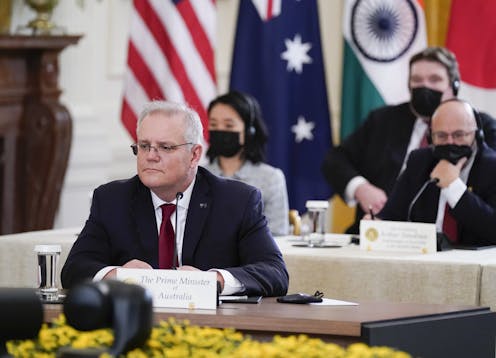
Evan Vucci/AP

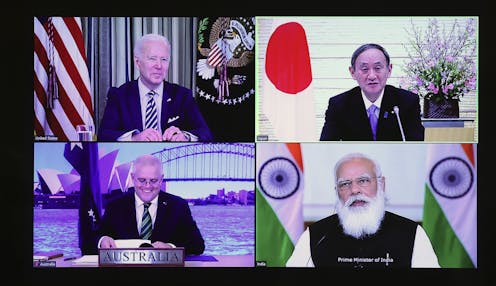
The Quad has come a long way since it was resurrected in 2017 as a loose coalition comprising the US, Australia, India and Japan. The face-to-face, leaders summit at the end of last week marked a new high point for the grouping.

Three of the members continue to suffer Chinese coercion in various forms: economic coercion in Australia’s case, and the use of military and grey-zone tactics to advance territorial claims when it comes to India and Japan.

It is an open secret the Quad’s primary and overwhelming raison d’etre is countering China. As a response, Beijing vacillates between outright scepticism and scornful indignation about the return of a “Cold War mentality” to the region.


Read more:
Explainer: what exactly is the Quad and what’s on the agenda for their Washington summit?


China’s Foreign Ministry spokesman Zhao Lijian for example, described the latest meeting in Washington as a “closed, exclusive clique targeting other countries”. He added the Quad

runs counter to the trend of the times and the aspirations of regional countries. It will find no support and is doomed to fail.

Beijing is wary of the Quad with good reason. While the Quad countries avoid mentioning China directly, Beijing knows the group is seeking to counter its ability to set the regional agenda, promote its own authoritarian norms and values, and dominate the most important technologies of the future.

China’s aims present a comprehensive challenge to the US-led liberal order in everything from diplomacy and trade to technology and military power. It is this Chinese ambition which has given momentum to the Quad.

A commitment to combat global problems

Friday’s summit made substantive progress on the initiatives flagged during the first Quad leaders’ virtual meeting in March. It also expanded the Quad agenda to include broader aspects to meet the China challenge.

These initiatives can be grouped into three broad categories:

First, the Quad wants to show that liberal democracies can deliver solutions to the greatest challenges of our time, and that their vision of a “free and open Indo-Pacific” is more attractive than the China-centric model Beijing promotes.

As part of this, the Quad countries have upped their COVID-19 vaccine pledge, now promising to donate 1.2 billion vaccine doses globally by the end of 2022.

While India has pledged to resume vaccine production for export in October, Japan set aside US$3.3 billion (A$4.5 billion) in loans and Australia US$212 million (A$291 million) in grant aid for Indo-Pacific countries to purchase vaccines.

Given the existential threat COVID-19 still presents to much of the region, this represents an attractive counter to Beijing’s vaccine diplomacy, which has been used to exert political influence.


Read more:
Why pushing for an economic ‘alliance’ with the US to counter Chinese coercion would be a mistake


And on climate change, the Quad announced three notable initiatives:

  • a taskforce dedicated to establishing “two to three low-emission or zero-emission shipping corridors by 2030” through the development of green-port infrastructure and clean bunkering fuels at scale

  • a clean-hydrogen partnership to “strengthen and reduce costs across all elements of the clean-hydrogen value chain”

  • a new cooperative space initiative to exchange satellite data to monitor climate change risks and manage the sustainable use of oceans and marine resources.

Secure technologies and supply chains

The second category of initiatives involves measures to foster an open, accessible, and secure technology ecosystem — a response to growing security concerns about the use of equipment from Chinese telecommunications companies to build 5G networks around the world.

The group pledged to work towards advancing more “secure, open, and transparent 5G and beyond-5G networks” — an indirect reference to developing an alternative to Chinese vendors.

And to prevent China from dominating the critical and essential technologies of the future, the Quad also launched an initiative to map vulnerabilities and bolster security in these supply chains, particularly semiconductors.

A counterpoint to Belt and Road

Finally, the third category of initiatives is targeted toward the creation and promotion of liberal rules, norms and economic standards throughout the region.

This includes the development of standards on quality infrastructure development, technology standards for the collection of big data, the use of artificial intelligence, and shared cyber standards for the development of “trustworthy digital infrastructure”.

All these programs are designed to counter Chinese economic practices (via its Belt and Road Initiative) and high-technology exports that undermine liberal democratic practices and enable government corruption and authoritarian-style control and surveillance of populations.


Read more:
Why is there so much furore over China’s Belt and Road Initiative?


However, an economic component capable of competing directly with China’s Belt and Road Initiative is still missing. The absence of a more comprehensive, Quad-based economic strategy remains the greatest weakness in its pitch to advance a “free and open Indo-Pacific”.

Without it, the Quad cannot counter Beijing’s narrative in the region that the path to economic prosperity is primarily dependent on China.

Still not a ‘security apparatus’

Also notably absent from the summit was discussion of greater military-strategic cooperation.

Prior to the meeting, a US administration official emphasised “the group is not a security meeting or security apparatus”.

The Quad is certainly not an alliance and it is unlikely to become an “Asian NATO”, despite Chinese claims this is what it is aiming to do.

Nevertheless, the four countries have advanced their abilities to conduct joint military operations, such as the Malabar naval exercise. They have also strengthened their cooperation in other areas — such as the sharing of military logistics and maritime surveillance and intelligence information — although this is in bilateral and trilateral formats so far.

And the momentous announcement of the AUKUS alliance between the US, UK and Australia will certainly complement the deterrent capabilities of the Quad.

In all of these initiatives, the Quad leaders have succeeded in dispelling Chinese Foreign Minister Wang Yi’s prediction the group would “dissipate like sea foam”.

Instead, it has become a genuine democratic bulwark against Chinese expansionism and is increasingly forcing Beijing to recalculate the costs of its actions.

The Conversation

Lavina Lee has received funding from the Australian Department of Defence. She is a member of the Australian Strategic Policy Institute Council.

ref. With vision of a ‘free and open Indo-Pacific’, Quad leaders send a clear signal to China – https://theconversation.com/with-vision-of-a-free-and-open-indo-pacific-quad-leaders-send-a-clear-signal-to-china-167896

View from The Hill: Barnaby Joyce falls (sort of) into step for the ‘net zero’ march

Source: The Conversation (Au and NZ) – By Michelle Grattan, Professorial Fellow, University of Canberra

Lukas Coch/AAP

The Coalition brigade is assembling, readying for the final march to a place it once regarded as enemy territory and poisoned ground, too dangerous to approach.

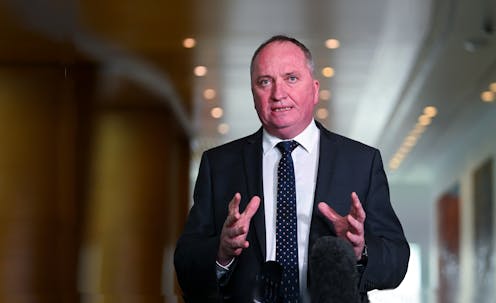
Josh Frydenberg waved the flag on Friday. Nationals leader Barnaby Joyce, a conscripted officer, is reluctantly falling (sort of) into step. Angus Taylor will be purchasing the requisite boots.

Scott Morrison, the general, will announce the arrival. But not until the details of a deal, heavy with technology and trade offs and pay offs, are landed with Joyce.

The Prime Minister wants – “needs” would be a better word – Australia to support a 2050 net zero emissions target at the November Glasgow climate conference.

No if or buts or qualifications. No having to say net zero “preferably” by 2050, as the government has been doing.

Morrison and Joyce have been talking at length about this imperative, because without the Nationals the journey – which seems so short to outsiders but so very arduous for the Coalition – cannot be completed.

Frydenberg on Friday delivered the blunt message that if Australia doesn’t step up to world expectations on climate policy, it will have trouble getting the capital it needs from overseas, in sufficient quantity and at the cheapest cost.


Read more:
Net-zero, carbon-neutral, carbon-negative … confused by all the carbon jargon? Then read this


The Treasurer’s speech was focused on finance, rather than the environment as such. He pitched his push for the firm target so as to appeal in hard-headed economic terms. It’s the markets (not the greenies) that are requiring us to do this, was the message.

Frydenberg is battle-hardened for the task. As energy minister, he was then prime minister Malcolm Turnbull’s lieutenant when they carried the standard for a National Energy Guarantee, the NEG.

That succumbed to an ambush from a group of rebel troops, leaving Turnbull mortally wounded. Morrison has better armour; anyway, the Liberal sceptics aren’t heard from nowadays. The noise comes from Nationals.


Read more:
Scott Morrison has embraced net-zero emissions – now it’s time to walk the talk


On Friday morning Joyce did his bit on ABC radio. His doubts were evident, as he pointed to power price rises and collapsing energy companies in Britain.

But he came through with the vital central line. Asked, “do you support net zero by 2050?” he replied, “I’ve got no problems with any plan that does not leave regional areas hurt”.

Later in the day he said: “Now, when people say do you support it and they don’t tell you how they’re going to do it, they’re opening themselves […] to a crisis like they’re experiencing in Europe, like they’re experiencing in the UK”.

Joyce will have problems with some of his followers, especially his one-time staffer, now senator, Matt Canavan, who can remind his leader how he not so long ago trashed the target.

But he’ll get plenty of loot for the Nationals in the final package. Even Frydenberg seems to have stopped worrying about the appallingly high cost of political living these days.

In Washington, Morrison was asked whether the government had made a decision on net zero.

“No, if Australia had made such a decision, I would have announced it,” he said. “Australia has not made any final decision on that matter … we’ll be considering further when I return to Australia the plan that we believe can help us achieve our ambition in this area”.


Read more:
Yes, it is entirely possible for Australia to phase out thermal coal within a decade


While the army’s destination seems clear, there’s still work to be done, and the Nationals say the actual map is yet to be laid out on the table.

But if anything were to derail the expedition now, it would be a shock to everyone – including Morrison, and no doubt to Joe Biden and Boris Johnson.

Morrison would be left in an intolerable position for Glasgow. Frydenberg made a point of noting 129 countries have committed to the 2050 target.

The PM would also be hobbled at the election, with climate an issue especially in the leafy city areas and independent candidates gearing up to run in various seats.

Embracing the 2050 target is a minimal requirement for a nation’s Glasgow policy, but the United States, Britain and other climate frontrunners are focused on countries being more ambitious in the medium term.

What Morrison and Joyce do about that will soon become the big question.

The Conversation

Michelle Grattan does not work for, consult, own shares in or receive funding from any company or organisation that would benefit from this article, and has disclosed no relevant affiliations beyond their academic appointment.

ref. View from The Hill: Barnaby Joyce falls (sort of) into step for the ‘net zero’ march – https://theconversation.com/view-from-the-hill-barnaby-joyce-falls-sort-of-into-step-for-the-net-zero-march-168671

Wenda blames nurse’s death on Indonesian military crackdown for Papuan mining, palm oil

Asia Pacific Report newsdesk

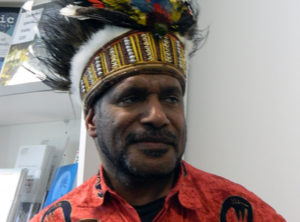
The United Liberation Movement of West Papua has blamed the Indonesian military over the attack at a hospital in Kiwirok, near the Papua New Guinean border, in which a nurse was killed.

Interim president Benny Wenda of the ULMWP has issued a statement in response to accusations by the Indonesian authorities against the West Papuan army, saying that the upsurge in violence is because of the militarisation of the region to protect business and a “destroy them” policy directive from Jakarta against West Papuan resistance.

Indonesia has accused the West Papuan army of attacking the hospital and killing nurse Gabriella Meliani in Kiwirok.

But Wenda claimed, according to sources he has spoken to, the clash was started by an Indonesian migrant doctor threatening people with a pistol.

“This triggered a West Papua Army investigation. A nurse fled from the scene and fell down a slope, fatally injuring herself,” said Wenda.

Indonesia had deployed more than 21,000 new troops since December 2018, displacing tens of thousands of civilians from Nduga, Intan Jaya, Puncak Jaya and Sorong.

Not keeping Papuans safe
“These troops are not there to defend Indonesia’s ‘sovereignty’ or keep my people safe; they are there to protect illegal mining operations, to defend the palm oil plantations that are destroying our rainforest, and to help build the Trans-Papua Highway that will be used for Indonesian business – not for the people of West Papua,” Wenda said.

“The Indonesian government is creating violence and chaos to feed these troops. As the head of the Indonesian Parliament, Bambang Soesatyo, ordered, ‘destroy them first. We will discuss human rights matters later’.

“He reiterated this statement [on Monday], and was backed by Coordinating Minister for Political, Legal and Security Affairs, Mahfud Md.”

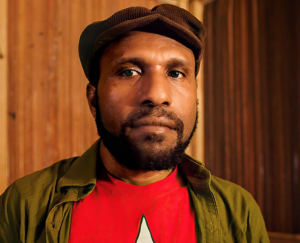
Benny Wenda
United Liberation Movement of West Papua leader Benny Wenda on a visit to New Zealand in 2013. Image: Del Abcede/APR

The killing of Pastor Yeremia Zanambani and his two brothers in April last year was an example of how this policy worked.

“Indonesian soldiers murdered the two brothers in April last year. Months later troops tortured and killed the pastor,” Wenda said.

Indonesian soldiers to blame
“In both cases, the military blamed the West Papua Army for the attacks – but Indonesia’s own human rights commission and military courts found that Indonesian soldiers were to blame. A similar pattern will unfold with the events in Kiwirok.”

Wenda said Indonesia must allow the UN High Commissioner for Human Rights into West Papua to investigate this violence and produce an independent, fact-based report, in line with the call of 84 international states.

“Indonesia’s ban on media, human rights groups and aid agencies from entering West Papua must be immediately lifted. If Indonesia is telling the truth about these events, why continue to hide West Papua from the world?,” he said.

“This war will never end until President Widodo sits down with me to solve this issue. This is not about ‘development’, about how many bridges and roads are built.

“This is about our sovereignty, our right to self-determination — our survival.”

Print Friendly, PDF & Email

Article by AsiaPacificReport.nz

Taliban ‘journalism rules’ open way to censorship, persecution, warns RSF

Asia Pacific Report newsdesk

Reporters Without Borders (RSF) says it is very disturbed by the “11 journalism rules” that the Taliban announced at a meeting with news media on September 19.

The rules that Afghan journalists will now have to implement are vaguely worded, dangerous and liable to be used to persecute them, the Paris-based global media freedom watchdog said.

Working as a journalist will now mean complying strictly with the 11 rules unveiled by Qari Mohammad Yousuf Ahmadi, the interim director of the Government Media and Information Centre (GMIC).

At first blush, some of them might seem reasonable, as they include an obligation to respect “the truth” and not “distort the content of the information”, said RSF.

But in reality they were “extremely dangerous” because they opened the way to censorship and persecution.

“Decreed without any consultation with journalists, these new rules are spine-chilling because of the coercive use that can be made of them, and they bode ill for the future of journalistic independence and pluralism in Afghanistan,” RSF secretary-general Christophe Deloire said.

“They establish a regulatory framework based on principles and methods that contradict the practice of journalism and leave room for oppressive interpretation, instead of providing a protective framework allowing journalists — including women — to go back to work in acceptable conditions.

‘Tyranny and persecution’
“These rules open the way to tyranny and persecution.”

The first three rules, which forbid journalists to broadcast or publish stories that are “contrary to Islam,” “insult national figures” or violate “privacy,” are loosely based on Afghanistan’s existing national media law, which also incorporated a requirement to comply with international norms, including Article 19 of the Universal Declaration of Human Rights and the International Covenant on Civil and Political Rights.

The absence of this requirement in the new rules opens the door to censorship and repression, because there is no indication as to who determines, or on what basis it is determined, that a comment or a report is contrary to Islam or disrespectful to a national figure.

Three of the rules tell journalists to conform to what are understood to be ethical principles:

  • They must “not try to distort news content”;
  • They must “respect journalistic principles”; and
  • They “must ensure that their reporting is balanced”.

But the absence of reference to recognised international norms means that these rules can also be misused or interpreted arbitrarily.

Rules 7 and 8 facilitate a return to news control or even prior censorship, which has not existed in Afghanistan for the past 20 years.

‘Handled carefully’
They state that, “matters that have not been confirmed by officials at the time of broadcasting or publication should be treated with care” and that “matters that could have a negative impact on the public’s attitude or affect morale should be handled carefully when being broadcast or published”.

The danger of a return to news control or prior censorship is enhanced by the last two rules (10 and 11), which reveal that the GMIC has “designed a specific form to make it easier for media outlets and journalists to prepare their reports in accordance with the regulations,” and that from now on, media outlets must “prepare detailed reports in coordination with the GMIC”.

The nature of these “detailed reports” has yet to be revealed.

The ninth rule, requiring media outlets to “adhere to the principle of neutrality in what they disseminate” and “only publish the truth,” could be open to a wide range of interpretations and further exposes journalists to arbitrary reprisals.

Afghanistan was ranked 122nd out of 180 countries in the 2021 World Press Freedom Index that RSF published in April.

Print Friendly, PDF & Email

Article by AsiaPacificReport.nz

Covid deaths soar in New Caledonian crisis – 16 in one day

RNZ Pacific

New Caledonia recorded 16 covid-19 deaths yesterday — the highest single day total since the delta strain of the virus arrived in the territory less than three weeks ago.

A spokesperson for the territorial government, Gilbert Tyuienon, said the archipelago “is going through a crisis never seen in its entire history”.

Fifty-two people are in intensive care and 323 hospitalised, while health authorities say the peak of the epidemic has yet to be reached.

Seventy three people have died so far in the emergency.

According to Medipole Noumea Hospital authorities, the territory is entering the hardest phase of the epidemic and it could last a long time despite measures to try and break chains of transmission.

These include containment and a curfew that will stay in place until October 4.

New Caledonians suffer from many co-morbidity factors, with 67 percent of adults obese and an estimated 10 percent who are diabetic.

These health problems mainly concern the indigenous Kanak and Wallisian populations, which also have the highest mistrust of vaccination.

A member of the government of Wallisian origin, Vaim’ua Muliava, begged his community to get vaccinated as soon as possible.

The president of the custom Senate, Yvon Kona, called on the government to ban the sale of alcohol during the lockdown, reports Les Nouvelles Calédoniennes.

“Too many victims linked to covid are recorded every day as well as the number of deaths,” he said.

The territory has a population if 288,000.

This article is republished under a community partnership agreement with RNZ.

Print Friendly, PDF & Email

Article by AsiaPacificReport.nz

Auckland mayor Goff makes ‘roll up your sleeves – take covid jab’ plea

Asia Pacific Report newsdesk

Auckland Mayor Phil Goff has appealed to the 1.7 million people in the city to “roll up your sleeves” and get vaccinated immediately to help New Zealand cope better with the covid-19 pandemic.

Writing in The New Zealand Herald today to back the newspaper’s 90% Project for maximum vaccination, Goff said the the city should be aiming for a “summer of freedom for Tāmaki Makaurau”.

“It’s a much better scenario than staying at home in our bubbles, locked down at level 4, and at risk of a disease that may put you or your family in hospital,” he said.

“The first option is one we all crave. To help achieve it, we need to get as many Aucklanders vaccinated as possible, as soon as possible.

“Ninety percent of the eligible population is a good target, which is why I support The New Zealand Herald’s 90% Project. If we can get higher than 90 per cent, that’s even better.

Goff said that yesterday the city had hit the target of 80 percent of Aucklanders having had at least one dose, with more than half of that number becoming fully vaccinated.

“More than 20,000 people a day have been getting immunised, but more than 200,000 still need to book or get their first vaccination,” he said.

Stringent measures
“New Zealand did the right thing in putting in place stringent measures to stop the incursion of covid-19 into our community. We did better than almost any other country.

“However, new variants of covid, currently delta, make it really hard to stop community transmission and we can’t continue indefinitely closing down our economy to stop its spread. The human and financial costs are huge. And sooner or later we will have to open up again to the world.”

Prime Minister Jacinda Ardern said at today’s covid media briefing that tools used in the future to fight covid-19 did not need to be as disruptive as the ones used now — such as lockdowns — as long as the country achieved a high vaccination rate.

Jacinda Ardern and Director-General of Health Dr Ashley Bloomfield were speaking after the release of new modelling which suggests lockdowns may still be needed if the country achieved an 80 percent vaccination rate.

Ardern said vaccine certificates, better ventilation, some mask use, and the possibility of changing border restrictions so a full 14-day quarantine was not required could be used in the future.

But for now vaccination was the main tool.

“It all comes down to vaccination.”

Lockdowns needed in first phase
She said lockdowns were needed in the first phase of the pandemic because there were no vaccines and everyone had to be isolated.

“With vaccines, we can turn that model on its head,” she said, so positive cases could be isolated as others have the protection of vaccines.

“Children can’t be vaccinated. It will reach them. And we’ve seen it reach them in this outbreak,” she said.

The plan was never zero cases, but “zero tolerance” for covid, she said.

The Health Ministry announced 15 new community cases of covid-19 today, a drop of seven on yesterday.

Ardern said the government’s plan for the future, included aggressively isolating cases, catching cases at the border, and ensuring the health system was not overwhelmed.

“It’s not the Aotearoa way to leave anyone behind,” she said.

“There remains one simple message – Get vaccinated.”

Today was the second day that Auckland was at alert level 3 after five weeks in lockdown.

This article is republished under a community partnership agreement with RNZ.

Print Friendly, PDF & Email

Article by AsiaPacificReport.nz

VIDEO: Michelle Grattan on AUKUS fallout and the government moving to net zero

Source: The Conversation (Au and NZ) – By Michelle Grattan, Professorial Fellow, University of Canberra

University of Canberra Professional Fellow Michelle Grattan alongside University of Canberra Associate Professor Caroline Fisher discuss the week in politics.

This week the pair discuss the announcement of the AUKUS, in particular the reaction of the French to what has been seen as a failure of democracy on behalf of Australia, who has reneged on their previous defence deal – resulting in ongoing tension between nations involved.

They also discuss Australia’s climate change policy, in particular Treasurer Josh Frydenburg’s recent announcement of the pathway forward for the nation towards emissions reductions. With this announcement has paved the way for Australia to take a firm emissions target to the coming Glasgow conference.

The Conversation

Michelle Grattan does not work for, consult, own shares in or receive funding from any company or organization that would benefit from this article, and has disclosed no relevant affiliations beyond their academic appointment.

ref. VIDEO: Michelle Grattan on AUKUS fallout and the government moving to net zero – https://theconversation.com/video-michelle-grattan-on-aukus-fallout-and-the-government-moving-to-net-zero-168654

Two governments claim to run Myanmar. So, who gets the country’s seat at the UN?

Source: The Conversation (Au and NZ) – By Adam Simpson, Senior Lecturer, University of South Australia

As world leaders have gathered for the UN General Assembly in New York this week, there has been uncertainty over who should be representing Myanmar.

Since a coup on February 1, Myanmar’s military has argued it is the legitimate government of the country and should have the power to appoint ambassadors to the UN and elsewhere.

However, a government in exile has also been formed — called the national unity government (or NUG for short) — which is comprised mainly of elected representatives of former leader Aung San Suu Kyi’s deposed government and ethnic minority groups.

It, too, says it’s the legitimate government of Myanmar and should be able to appoint the country’s ambassadors. Civil society groups in Myanmar have sent a letter to the General Assembly urging it to retain current UN ambassador Kyaw Moe Tun, who opposed the coup and is a vocal critic of the junta.

So, why does it matter who represents Myanmar on the global stage and who currently has the upper hand?

Kyaw Moe Tun, Myanmar's ambassador to the United Nations
Kyaw Moe Tun, Myanmar’s ambassador to the United Nations, shows a three-finger salute shared by opponents of the country’s military coup.
KYDPL KYODO/AP

What is the national unity government?

The NUG was formed in April in response to the coup and the junta’s brutal suppression of peaceful protesters, which has now led to over 1,100 deaths, some 6,600 arrests and hundreds more being forced into hiding or exile.

The NUG’s two main leaders are Suu Kyi and ousted President Win Myint, but they have both been under arrest since the coup so their roles are largely symbolic.

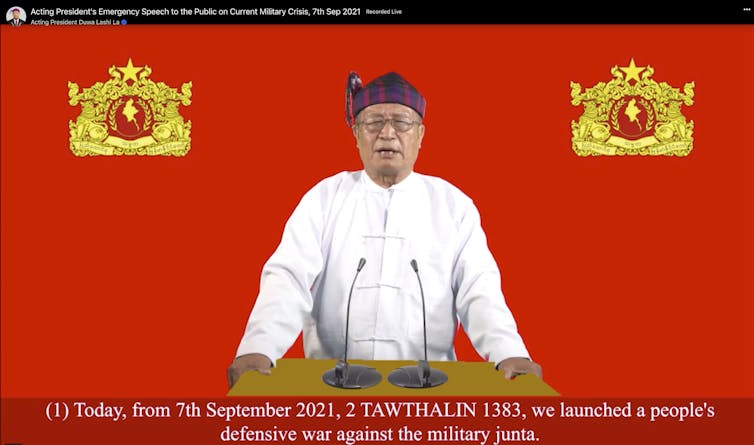
The rest of the leadership comprises acting Prime Minister Mahn Winn Khaing Thann, an ethnic Karen and Christian politician, and President Duwa Lashi La, an ethnic Kachin politician.

Duwa Lashi La of the national unity government
Duwa Lashi La, the acting president of the national unity government.
National Unity Government (NUG) via Facebook/AP

Many NUG ministers were part of the former government led by Suu Kyi’s National League for Democracy (NLD) party, but there has clearly been an effort to offer a more inclusive vision of the country’s leadership.

In addition to the NLD, the ministry draws on elected members of parliament from a wide range of political parties and a broad mix of ethnic minorities. Significantly, a Rohingya activist was appointed an advisor in the Ministry of Human Rights.

Most countries have been reticent to recognise the military as the legitimate government of Myanmar, but it has been difficult for the NUG to receive formal recognition, too.


Read more:
Sanctions against Myanmar’s junta have been tried before. Can they work this time?


The quest for international recognition

In addition to forming a cosmopolitan, multi-ethnic ministry, the NUG also reversed a controversial policy on citizenship that excluded the long-oppressed Rohingya.

And in a canny strategic manoeuvre, the NUG announced it would for the first time accept the jurisdiction of the International Criminal Court with respect to all international crimes committed in Myanmar since 2002.

Both the ICC and the International Court of Justice have cases underway related to alleged abuses against the Rohingya.

These moves may well be genuine reassessments of the former government’s much-criticised failure to support the Rohingya. Suu Kyi previously defended the military for driving hundreds of thousands of Rohingya from their homes into Bangladesh, denying it was a genocide.

But the NUG’s moves may also be engineered to gain international support. In particular, there was pressure from the US Congress to address the Rohingya issue prior to the US providing diplomatic and material support to the government in exile.

Diplomatic fight shifts to the UN

The key prize in this battle for recognition is Myanmar’s seat at the UN. The seat is important, as it reflects the will of the international community regarding the legitimate Myanmar government.

The NUG has been assisted by the general assembly’s rules, which dictate the incumbent ambassador keeps the seat if there is a credentialing dispute.

The UN was expected to make a formal decision on recognition in the lead-up to the current general assembly session. However, in a back-room compromise between the US and China (and informally endorsed by the European Union, the ASEAN bloc and Russia), it was agreed the military’s representatives would not be allowed to attend the meeting.

That means the current ambassador, Kyaw Moe Tun, was able to participate in the opening of the general assembly session, although the agreement required him to refrain from using any tough rhetoric against the military. Nevertheless, this was a big win for the NUG.

The nine-member credentialing panel, which includes the US, China and Russia, will now decide in November who formally takes Myanmar’s UN seat.

Is civil war inevitable?

While the NUG is angling for international recognition, it has simultaneously announced a “people’s defensive war” against the junta, abandoning the nonviolent tactics adopted by Suu Kyi during her years of house arrest.

This overt call for violence has caused unease in some quarters, although criticism from the US and UK embassies in Myanmar is relatively muted.

While it is understandable the people of Myanmar are desperate for a solution, it is far from certain that encouraging relatively untrained and poorly equipped civilians to attack the military will produce the desired result.

There is some evidence of collaboration between the highly trained ethnic armed groups and more recent recruits from the cities, but given the Myanmar military’s long history of absorbing significant casualties without caving in, it does not bode well for a settlement.

Nevertheless, people may feel war is their only option. Indeed, in the short term, the chances of a peaceful resolution to the long-running conflict between Myanmar’s military and its people may have disappeared the moment Suu Kyi and Win Myint were arrested in the early hours of February 1.


Read more:
We know how to cut off the financial valve to Myanmar’s military. The world just needs the resolve to act


The Conversation

Adam Simpson does not work for, consult, own shares in or receive funding from any company or organisation that would benefit from this article, and has disclosed no relevant affiliations beyond their academic appointment.

ref. Two governments claim to run Myanmar. So, who gets the country’s seat at the UN? – https://theconversation.com/two-governments-claim-to-run-myanmar-so-who-gets-the-countrys-seat-at-the-un-167885

Building trust with migrant and refugee communities is crucial for public health measures to work

Source: The Conversation (Au and NZ) – By Devaki Monani, Lecturer, Social Work, Charles Darwin University

Shutterstock

During COVID-19 we’ve seen racism and discrimination against migrant and refugee communities erode trust between them and authorities.

So as the Delta variant spreads, we must find ways to build that trust.

With greater trust, we can improve contact tracing and the chance of people following public health advice. This is essential if we are to help prevent more infection, illness and death.


Read more:
‘I will never come to Australia again’: new research reveals the suffering of temporary migrants during the COVID-19 crisis


More racism and discrimination

COVID-19 has exacerbated existing tensions between some migrant and refugee communities and parts of the wider population, including government and health authorities.

Migrants have been blamed for spreading COVID-19; international students have faced racism, and have reported poor mental and physical health; and people of Chinese background or those of “east Asian appearance” have suffered racist slurs and physical attacks.

Then there are the refugee communities of non-English speaking backgrounds. Many have arrived after experiencing war and human rights abuses by other governments only to face tough social distancing restrictions and the use of police and military to enforce lockdowns in Australia.


Read more:
Using military language and presence might not be the best approach to COVID and public health


This has led to some concerns about being reported to government, having their visa cancelled, being detained or deported.

As a result of this past trauma and the risk of losing their temporary visa status, some people have been reluctant to participate in contact tracing and follow public health advice.

Making matters worse has been some media outlets and social media sharing racist and harmful stereotypes.

Understand diversity

Building trust requires recognising the diversity of communities. For example, the phrase “culturally and linguistically diverse” is often used to describe migrant and refugee communities of non-English speaking backgrounds. While the phrase has merit in some situations, it disguises differences between and among communities.

For instance, the term “migrant” refers to people who have chosen to move from one country or area to another. Migrants can include international students, business owners, professionals and those wanting to work and join family already living in Australia.

In contrast, refugees arrive after suffering from psychological distress and trauma due to war, torture and/or conflict. Some refugees may have lower levels of education, literacy and financial support.


Read more:
How can governments communicate with multicultural Australians about COVID vaccines? It’s not as simple as having a poster in their language


Any projects aimed at communicating health information with such communities need to learn about the variations and differences within and between them. Differences include varying levels of education, language and literacy skills, preferences in old and new media, and differing cultural understandings of health.

Some communities have a more communal approach to health, which influences how to best share information. Rights and access to government supports also differ, including employment support and Medicare.

Engage with communities

We can improve contact tracing, the sharing of public health advice and, most importantly, build trust, by better engaging with communities.

This means involving communities in decision-making and how services are developed and delivered. Governments and health agencies should engage with communities and ask them what skills and support they need to manage the pandemic and daily life.

Bilingual community facilitators, also known as bicultural community workers, may be needed. These help bring together community members and health agencies to moderate discussions, hold workshops, develop solutions and build relationships and trust for the long term.


Read more:
We asked multicultural communities how best to communicate COVID-19 advice. Here’s what they told us


Know there’s more going on

We can also build trust by improving access to training, education, employment, affordable housing and other social factors. These can help improve health outcomes.

Without appropriate support and tailored health communications it’s more likely people will be forced to break COVID restrictions, like going to work when sick, or gather in family groups for support. Without understanding or trusting public health advice, contract tracing for COVID is much harder.


Read more:
Why some people don’t want to take a COVID-19 test


Help grow stronger communities

Communities of people with migrant and refugee backgrounds can be supported to find their own solutions to the challenges and opportunities of everyday life.

This “capacity building” might include holding workshops with families, or supporting young people to develop their abilities as leaders. For this to happen, governments need to work closely with non-government organisations.

Such programs would help build stronger relationships within Australian society that help more people feel like they belong. With stronger relationships and greater capacity in communities to deal with health issues, more people are likely to trust the procedures of contact tracing and public health advice.


Read more:
Understanding how African-Australians think about COVID can help tailor public health messaging


Where to now?

Health agencies, governments and others working with people from refugee and migrant communities can make real and positive differences by helping to build trust with migrant and refugee communities of non-English speaking backgrounds.

Our challenge now is doing this gradually and with care.

More respectful and sensitive engagement could be one of the most important ways we reduce the terrible illness and death from COVID, and combat the stigma and racism that has come with it.

The Conversation

Devaki Monani has previously received funding from NSW Multicultural Health Communication Service

Ben O’Mara has previously received funding from VicHealth, the Department of Heath and Ageing and the Australian and New Zealand School of Government. O’Mara also works as the Information Resources Manager at Motor Neurone Disease Australia.

Gemma Carey does not work for, consult, own shares in or receive funding from any company or organisation that would benefit from this article, and has disclosed no relevant affiliations beyond their academic appointment.

ref. Building trust with migrant and refugee communities is crucial for public health measures to work – https://theconversation.com/building-trust-with-migrant-and-refugee-communities-is-crucial-for-public-health-measures-to-work-167180

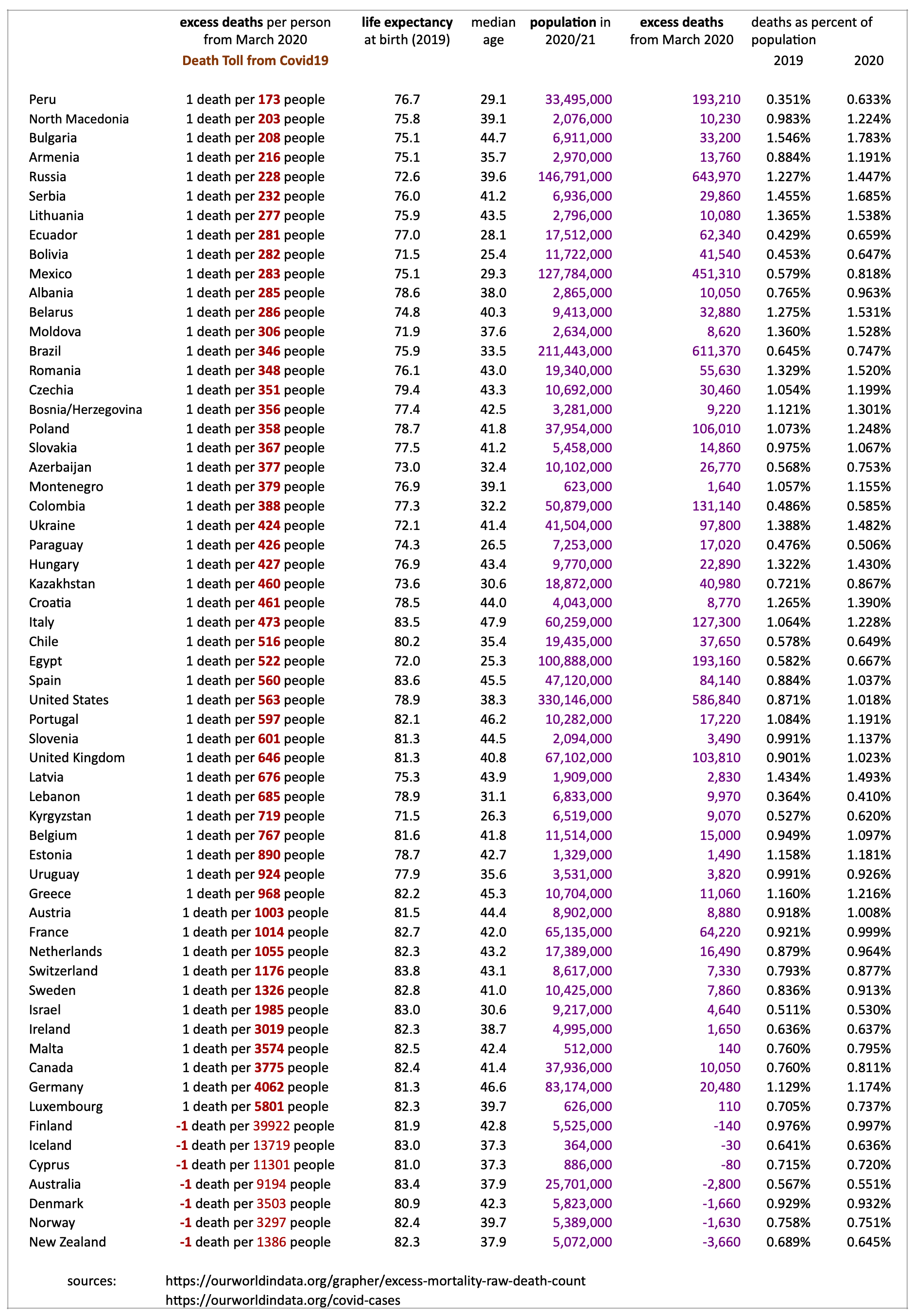
Keith Rankin Data Analysis – Table of Excess Deaths from Covid19

Data and Analysis by Keith Rankin.

Keith Rankin.

The table below uses raw-death data published downloaded from https://ourworldindata.org/grapher/excess-mortality-raw-death-count to predict what death numbers would have occurred in 2020 and 2021 had there been no Covid19 pandemic. The actual death numbers are compared with the predicted (counterfactual) numbers to calculated excess deaths. These countries are sorted from the one with most deaths per person (Peru) to that with the fewest deaths per person to date (New Zealand).

This is of course an interim table; the deaths attributable to the pandemic – even in these countries – are far from over. ‘Deaths attributable’ are not the same as deaths clinically diagnosed as Covid19. The pandemic affects non-covid death rates as well. Typically, public health restrictions reduce immediate non-covid deaths, but may contribute to higher than otherwise expected future deaths. This varies from delayed diagnoses and treatments for conditions such as heart disease and cancer, to effects associated with changes in mental health, to health consequences arising from the economic impact of the pandemic. Countries can also expect to experience different incidences of other infectious diseases. There may also be losses – or gains – to people’s ‘quality of life’ that cannot be assessed simply through mortality statistics.

This data source excludes countries for which death statistics are unreliable or incomplete. Most of these countries are in Asia and Africa. In addition, I have excluded countries for which the data is not recent enough, or (mainly Asian countries) for which the major Covid19 outbreak is too recent to show up in the available data.

We should also note that only a small proportion of these deaths are due to the ‘delta strain’ of Covid19; indeed most deaths in most listed countries are due to the original ‘Wuhan strain’, which struck Europe with a vengeance in the autumn months of 2020 and continued into the New Year. Most European countries also experienced severe ‘alpha’ outbreaks. Most Latin American countries suffered substantially from the ‘gamma strain’ of Covid19.

By far the worst affected so far by Covid19 are countries in East Europe and Latin America. The worst affected outside of these two regions is Italy. Of the world’s really large countries, the worst are Russia, Mexico and Brazil.

In most countries, to date non-covid deaths have fallen. In a few countries, the reduction in non-covid deaths is bigger than the level of covid deaths, meaning that excess deaths are negative. These are mainly countries in Scandinavia and Oceania. Of these countries, Denmark may have essentially come through the pandemic, while New Zealand and Australia may only be at the beginning of their Covid19 experience. While New Zealand looks good so far in terms of excess deaths, a matter of concern is its higher overall death rates in 2019 and 2020 than Australia, a country with very similar age demographics and life expectancy.

The demographics of countries in different regions of the world can be very different. For example, the general pattern in Eastern Europe is for a falling and aging population; hence deaths as a percent of the population were already very high before Covid19, and have been even higher since. By contrast, countries in Latin America have growing and young populations. While western Europe falls in between, the ‘Anglosphere’ countries – United States, United Kingdom, Canada, Australia, Ireland, New Zealand – have younger populations than those in Europe.

The following table reflects Covid19’s excess death toll in terms of information available in September 2021.

While the figures generally speak for themselves, it is important to note that the same pathogen has had very different impacts in different countries. And that those more prosperous countries which were first affected have by no means been the countries worst affected. We should also note that while all countries have taken some ‘barrier’ public health restrictions to defend themselves against the Covid19 pathogen – lockdowns, quarantines, physical distancing, facemasks – some countries that have implemented fewer such restrictions (such as Netherlands and Sweden) have achieved better outcomes than some much stricter countries. Denmark is coming to look like the exemplar country, which took strong protective measures in 2020, but also seems to have best-timed the removal of its emergency public health restrictions.

It is increasingly looking like the impact of Covid19 pandemic is going to be in proportion to the vulnerability of each country’s resident population, rather than to mutating strains of the pathogen; and noting that each country’s experience of the pandemic alters its vulnerability, commonly increasing its vulnerability to future pathogenic ‘attack’.

I will finish this note with a list of vulnerabilities:

  1. Low and/or falling immunity. While vaccinations significantly boost immunity, immunity – whether arising from infection or vaccination – itself diminishes over time; some immunities wane faster than others. Low or falling immunity to one pathogen of interest can, additionally, make a person vulnerable to other pathogens. Diminished exposure to endemic as well as epidemic pathogens reduces immunity to them. And diminishing general immunity increases vulnerability to inflammations and to non-infectious illnesses. People who already have such other health conditions are ‘comorbid’, are therefore less immune; they are more vulnerable to any pathogen in circulation. Clearly eastern countries in the European Union – such as Poland and Czechia, which largely missed Covid19’s first European wave – were more vulnerable to Covid19 in September 2020 than they were in March of that year; it seems likely that precautions they took earlier in 2020 aggravated the outcomes they faced later in 2020.
  2. Economic stress. This includes both poverty and inequality, and is manifest through various indicators of living conditions, such as housing, unemployment, underemployment, overemployment, inflation, malnutrition, food insecurity, access to healthcare, and immigration status. In and after a pandemic, levels of economic stress are not only high, but they are also changing. Historically much economic stress is relieved by migration to cities, to other provinces, or to other countries. We may note that one of the major reasons why most East European countries have populations that are old and poor is that most have experienced longstanding unresolved economic stresses which have induced substantial emigration. An important component of economic stress is excessive exposure – potentially lifelong exposure – to competitive market forces. While the marketplace plays a role in all of our lives, our lives should be much more than our struggles to achieve a living income. Economic stress also includes the marketing pressures we are placed under.
  3. Adversarial stress. This results from different people responding by coalescing into different ‘tribes’ which may act as information echo-chambers. The stress arises from people having to interact in some way with people affiliating with other tribes, or other factions of one’s own tribe. At its more extreme, adversarial stress includes invasions, civil wars, and political insurrections.
  4. Bureaucratic stress. This involves the many interactions with governments, and their associated rules and compliance procedures. It also involves regular interactions with non-government agents – especially employers and managers – who may themselves be undergoing substantial (and changing) bureaucratic stress. One major source of bureaucratic stress is the impediments placed by governments and adversaries onto people attempting to migrate their way to better lives. Another source of bureaucratic stress may be the enforced compliance with public health restrictions, all of which have costs as well as benefits, and some of which may have disputable benefits.
  5. Family stress. Having to deal with the stresses faced by or perpetrated by cohabitants (mainly family members). This can extend to having to provide support under sub-optimal conditions to high-needs people for which a caregiving person – and increasingly only that person – has a duty of care towards. While it may in reality require a village (or equivalent) to care for a needy person, in stressed societies the care of many needy people may be allocated, by default, to just one stressed person. Family stress will also arise where one or more people are afraid of another person or persons in their household.
  6. Mental unwellness. This can be a catch-all condition that both reflects the lonely desolation of material affluence, lack of personal autonomy, lack of sympathetic empathy, the absence of opportunities to live smaller less frenzied lives, and claustrophobic living conditions. And it reflects the accumulation of economic, adversarial, bureaucratic and family stresses. Too much stress can place an intolerable burden on the human nervous system.

It is these changing vulnerabilities that make people – and whole populations – at risk from a pandemic. The eventual Covid19 toll will reflect all these vulnerabilities.

————-

Keith Rankin (keith at rankin dot nz), trained as an economic historian, is a retired lecturer in Economics and Statistics. He lives in Auckland, New Zealand.

Angela Merkel’s career shows why we need more scientists in politics

Source: The Conversation (Au and NZ) – By Emma Johnston, Professor and Dean of Science, UNSW

For 16 years, German chancellor Angela Merkel has guided her country through wave after wave of uncertainty, from the 2008 global financial crisis to Brexit, the imperative to drop fossil fuels, and of course the COVID pandemic. Her leadership of the European Union’s largest economy has been described as one of assurance and sure-handedness and an anchor amid stormy times, and she has been called “the de facto leader of Europe”.

Merkel has outlasted seven Australian prime ministers, and there can be no single explanation for her long stretch of success. However, her career and training as a scientist presents useful insights.

As Merkel declines a fifth term and leaves her office this month, world politics loses another scientist. In Australia we find ourselves wondering, yet again: “Across all our politics – where are the scientists?”

The scientist and the leader

Globally, there have been shining examples of scientists who have entered the world of politics to great success. What are the qualities of scientists that might make them powerful and effective leaders?

Merkel retained many traits that are common among scientists throughout her long political career. She is patient and discerning. She has vision and strategy, and understands the value of planning for the long term. She is rational and empirical. And she builds collaboration and cooperation.

Finally, Merkel is known for drawing a clear boundary around what is known. She does not overstate the facts but, rather, promotes the temporary embrace of uncertainty until the data can be gathered to inform a decision.


Read more:
From ‘Mädchen’ to ‘Mutti’: as Angela Merkel departs, she leaves a great legacy of leadership


Merkel earned her doctorate in the field of quantum chemistry a specialisation within the broad field of quantum mechanics. Widely known for the macabre “Schrödingers cat” thought experiment, quantum mechanics is guiding scientists to discover and manipulate the characteristics of atoms and sub-atomic particles.

For many, Schrödinger’s cat mystifies more than it enlightens, but the counterintuitive nature of quantum mechanics in fact reveals the strength of science. By collecting data and developing theory, by following the trail of irreconcilable observations, scientists develop and test models of the world.

And like the greatest scientific models, quantum mechanics predicts more than we can immediately explain. It is a tool that moves past our human shortcomings, of emotion-driven bias and impulse, and allows us to pry at greater truths.

Amid pandemics of viruses and misinformation, a distrust of authority and erosion of meaning, Australia has never had greater need of the tools of science and the qualities of its scientists.

Where are Australia’s science-trained political leaders?

Just 17 of the 227 members of Australia’s federal parliament have training in scientific, technical, medical or engineering (STEM) fields. That’s only 7%.

Australia faces grave threats from many of the world’s most pressing challenges: climate change, the biodiversity crisis, pandemic variants, cybersecurity and AI challenges, and antibiotic resistance.

To meet these challenges, our national decision-makers need to objectively assess complex information, discern fact from fiction, and build collaboration and approaches that will take years, or decades, to fully come into their own.

We also need just and bold leadership with the confidence to adopt and rapidly deploy new technologies to reduce carbon emissions, build new economic sectors, and keep Australia’s digital assets safe.

What would a science-led Australia look like?

Can you imagine how things might be different if there were more scientists in Australia’s federal parliament? We can.

Australia would have responded to the Intergovernmental Panel on Climate Change “Code Red” report by introducing more ambitious carbon emissions targets, and an infrastructure investment plan to achieve them.


Read more:
How an approach to science helps define the political centre


It would have secured Australia’s place as a world-class digital economy, growing jobs and wealth and improving equity of access to work, schools and health care for all citizens.

The government would be taking a strong, bold and evidence-informed approach to building our economy, by strengthening investment in research and development. It would provide incentives for others to do the same, generating strong GDP returns and lifting Australia from the bottom of the OECD rankings for government investment in research and development.

Australia would be rapidly building the manufacturing, energy and data infrastructure to fast-track a transition to an economy that generates no waste.

Scientists of Australia, we need you

That science and politics go “hand-in-lab-glove” is no coincidence. Both seek order in a world of frightening complexity. The challenges of the 21st century – from COVID-19 to global warming – appear to be consuming us from the inside out, our national unity deteriorated by misinformation. How can a scientist make change in politics?

Angela Merkel has said her strategy was to take “many small steps” and avoid extreme reforms.

Progress can be made by invoking the rhythms of science (where decades-long projects are commonplace), by making decisions on the best available evidence, by establishing cause and consequence, and by developing and testing our models time and time again. In this way we can benefit from the steady accumulation of increasingly detailed and reliable knowledge.

In just 16 years Angela Merkel transitioned Germany from a 10% renewable energy mix to the world’s first major renewable energy economy. She established a net zero emission target by 2045 while making the German economy the fourth-largest in the world by GDP. This is one of many evidence-based changes implemented by her chancellorship and one of the many features of her legacy.

Science arose through necessity, as “a candle in the dark” from the dark ages. We have enjoyed the enlightenment in which science played a major role.

And as new shadows encroach on the world, science can help keep the flame alight. Australia’s scientists: we need you.


Read more:
Doctor, doctor: why so few scientists in top government jobs?


The Conversation

Professor Emma Johnston is the Dean of Science at the University of New South Wales.

Kylie Walker is CEO at the Australian Academy of Technology and Engineering.

ref. Angela Merkel’s career shows why we need more scientists in politics – https://theconversation.com/angela-merkels-career-shows-why-we-need-more-scientists-in-politics-168365

On the eve of an AFLM grand final like no other, can the shadow of the pandemic make us strive for something better?

Source: The Conversation (Au and NZ) – By Matthew Klugman, Research Fellow, Institute for Health & Sport, member of the Community, Identity and Displacement Research Network, and Co-convenor of the Olympic Research Network, Victoria University

On the last Saturday of September every year many of the inhabitants of Melbourne, and indeed of the whole of Australia and even in foreign lands, are stricken with a strange infirmity.

So wrote the Australian historian Manning Clark in 1981. He was speaking of the Grand Final of the Victorian Football League (men’s) competition. Of the way around 100,000 people would journey to a place

mistakenly known as the Melbourne Cricket Ground [MCG]. There for two and a half hours they lose the appearance of human beings and become like beasts of the field. They growl, they roar, they bellow, they yell and they howl.

Forty years later, the grand final of the (now) Australian Football League Men’s competition (AFLM) continues to provoke fervent anticipation in the millions who hold a passionate interest in the sport.

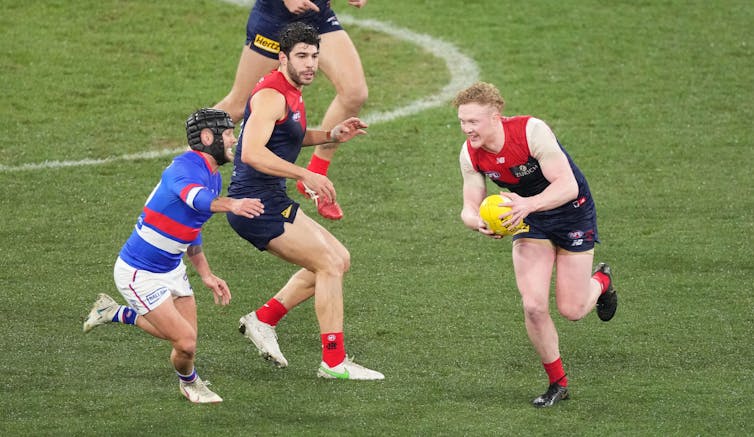
Once again, it is being held on the last Saturday of September. Once again “a strange infirmity” grips supporters of the two teams left to battle for the premiership – the Melbourne Demons and the Western Bulldogs. If Melbourne wins, some of their barrackers will inevitably note that they can now die happy – which testifies to the absurdly profound meaning the game still holds for many.

Yet for the second year running, the location of the AFLM Grand Final will not be in Melbourne at the cricket ground that remains a spiritual home of footy.

Part of the grief over the displacement of the AFLM Grand Final from the MCG is that COVID has made it impossible for so many lifelong barrackers of the Demons and Dogs to cheer, bellow, and roar from the stands as the game unfolds amid a babel of sound. However another part seems to be the dismay over the loss of what was once “normal”.

But should we be craving a return to normality, or striving for something better?

Football and place

Place is central to the stories that AFL tells. It is the only major spectator sport to be so intertwined with the emergence – and growth – of a city. The game was first codified in 1859 at a time when Melbourne was in its early years as a rapidly developing city fuelled by Victoria’s gold rush. The riches of gold lead to bountiful parks and gardens where football could be played.

The activism of Melbourne’s Stonemasons in 1856 – and the ensuing eight-hour work day – meant that many men, and soon women, had the leisure time to watch games of football.

The Western Bulldogs and the Melbourne Demons will face off for the 2021 premiership in Perth, a location the game’s founders perhaps never would have imagined.
AAP/Scott Barbour

The game quickly became not only popular, but a site of communal passion. It was supposed to produce good, strong white men. Yet by the 1880s, Melbourne was already more famous for its raucous, seemingly mad football spectators, or “barrackers” as they became known. In 1890 “JEB” wrote in a suburban Melbourne newspaper:

For an Englishman to visit Australia, and go home without having seen an Australian football match, with its attendant multitude of ardent barrackers, would be as unintelligible as for a Colonial to see London and omit the tower […]

For what an experience it is to be at one of the big
matches! What a babel of sound! What a magnificent uproar! What a glorious cloud-shattering eruption of profanity!

By 1900, Melbourne was already home to two major men’s Australian Rules football competitions: The Victorian Football League and the Victorian Football Association. The expectation was that everyone who lived in the city barracked for a team.

Migrants like the novelist Peter Temple quickly realised that “footy talk” was the city’s “lingua franca – it transcended class, transcended gender, you could talk about football to anyone”. By 1967 some Melbourne residents so abhorred the incessant “footy talk” that a rival Anti-Football League was created.


Read more:
The AFL sells an inclusive image of itself. But when it comes to race and gender, it still has a way to go


However, place in Australia is complex, layered, and inescapably leads back to questions of sovereignty and justice. Melbourne was built on a place called Naarm that has never been ceded by its original inhabitants. The form of football that grew with the city has been shaped by acts of invasion, migration, and the displacement, survival, and resistance of First Nations Peoples.

Tom Wills, one of the four white men who wrote the first laws of Australian Rules football, spent much of his childhood among the Djab-wurrung people in the western districts of Victoria, speaking their language and playing their games. How much Wills was influenced by one of these games – the football game of Marn Grook – is a contentious question. While some have dismissed any possible links, they rely on sources drawn solely from the archive that reflect an exclusively colonial memory.

As Barry Judd has noted,

It is a colonial past that history is able to reconstruct, a past that says little or nothing about Indigenous experience or Indigenous remembrance of that same past carried into the present from the other side of the colonial frontier.

Wills has been a celebrated figure in the folklore of Australian Rules football. He is memorialised in a statue outside the MCG. This past week, the football world has been rocked by the revelation of an account detailing Wills’ involvement in the horrific reprisals that followed the killing of his father and other pastoralists in Queensland in 1861 (which itself was a response to the murder of Gayiri men by a neighbour of Wills).

Yet even before this news, it was known Wills supported the massacres of Gayiri and other First Nations Peoples. Indeed Wills asked his cousin and co-author of the first laws of Australian Rules – H.C.A. Harrison – to send “good resolute men that will shoot every black they see.”

Wills was made an inaugural member of the Australian Football Hall of Fame in 1996. The brilliant Yorta Yorta player, administrator and activist (amongst many other things), Sir Doug Nicholls, is still yet to be inducted into that Hall of Fame, despite having an AFLM round named after him. There is a statue of Sir Doug (and Lady Gladys Nicholls) outside the Victorian Parliament, but none outside the MCG or other football grounds.


Read more:
The land we play on: equality doesn’t mean justice


Those attending this Saturday’s AFLM Grand Final, however, will walk past a statue of St Kilda legend Nicky Winmar. When the statue was announced, many people in the football world argued it should be in Melbourne, where in 1993 Winmar responded to racial abuse from opposing fans and players by raising his jumper, pointing to his skin and stating over and over that he was “Black and proud”.

But Winmar is a Noongar man, and he wanted the statue commemorating his call for justice to be on Noongar land.

Those attending the grand final in Perth will walk past this statue of Nicky Winmar, Noongar man and Saints star, in his famous gesture on the field in 1993.
AAP/Richard Wainwright

And then came COVID …

If anything, the pandemic has intensified Australia’s fascination with the football game that was first known as Melbourne Rules. Like the Olympics, it has provided a spar of meaning, joy, angst, relief, and at least momentary escape. The game has provided great comfort in a time of communal distress.

But the non-COVID happenings of the past football year – the continued racial abuse of Eddie Betts, the systemic racism found at Collingwood in its treatment of Héritier Lumumba, Taylor Walker’s racist vilification of Robbie Young, and the retirement of AFLW players because they are not being paid a living wage by Australia’s richest sporting body – reveals the need for the AFL to grapple more critically with its colonial past and present.

Reflecting more deeply on the game’s relationship to land and justice would be a good place to start.

The Conversation

Matthew Klugman has received funding from the Australian Research Council.

ref. On the eve of an AFLM grand final like no other, can the shadow of the pandemic make us strive for something better? – https://theconversation.com/on-the-eve-of-an-aflm-grand-final-like-no-other-can-the-shadow-of-the-pandemic-make-us-strive-for-something-better-167792

Tom Wills’ story is the AFL’s opportunity for truth telling about its ugly history

Source: The Conversation (Au and NZ) – By Jess Coyle, Lecturer, Sports Management, Western Sydney University

This article discusses colonial violence against First Nations peoples. There is reference to people who are now deceased.

There has been a new revelation by researcher Gary Fearon that cricketer and founding father of Australian (Rules) Football Tom Wills was an active participant in the mass murder of Aboriginal people. The research confirms that Wills was involved in an attack on Gayiri people in Queensland, in response to the murder of his father.

The new evidence uncovered by Fearon reflects the complex politics of settler-Aboriginal relations at the time. Through his relationship with Aboriginal people, Tom Wills was essentially existing on the boundary between settler and Indigenous peoples.

The discovery challenges popular understandings of Tom Wills as a peaceful friend of all Aboriginal people. It will be interesting to see how the Australian Football League (AFL) and Cricket Australia respond now this information has finally been made public.

Tom Wills as a cultured man

There is a common misconception that Aboriginal people exist as a single collective. However, there is an immense diversity that exists within Aboriginal communities in Australia; a fact that is visualised in the AIATSIS map of the continent.
This is why Wills treated Gayiri people as hostile outsiders despite having relationships with Djab Wurrung people.

It is also important to remember the cultural values and attitudes of the 1860s are not the same as those of the 2020s. Men and masculinity was something vastly different then and violent retribution was central to it. 19th century Australia was a violent place. However, this in no way justifies the atrocities against First Nations people.

Tom Wills childhood home in Moyston, 2021.
Barry Judd

Tom Wills spent his early childhood with Djab Wurrung people in western Victoria, and spoke in language. Following the murder of his father by the Gayiri people, Wills returned to Victoria and worked with Aboriginal cricketers who were Jardwadjali, Gunditjmara and Wotjobaluk peoples of Western Victoria.

The contemporary celebration of Tom Wills as the father of Australian football and as a pillar of settler-Aboriginal relations is one-dimensional, which demonstrates our inability to grapple with the messiness of Australia’s colonial history. That Wills took part in colonial violence demonstrates the extent to which violence featured on the frontier, a fact highlighted in this massacre map.

Most of the killings that followed the Gayiri attack where Wills’ father died were carried out by government-funded Indigenous and non-Indigenous Queensland Native Police. A part of history that has caused much pain to Aboriginal people in Australia.

This is an example of a colonial truth that is often difficult to discuss. Like Wills’ involvement in the retributions for his fathers murder, it is far easier to understand the frontier as representing a line between good and bad or right and wrong. That Wills, like the native police, straddled this line is often difficult to consider.

An 1895 Chicago Tribute article suggests Wills was more than just involved in the killing of 40 Gayari people in response to the Cullin-la-ringo massacres (of which his father was a victim), but that he might have orchestrated the attack, with Wills stating:

I turned to the drovers, who were crying like children, and ordered them to gallop to the neighbouring “runs” to spread the news.

The Cullin-la-ringo massacre where 19 people were killed, is known as the largest massacre of Europeans by Aboriginal people in Australia’s history. The total death toll of Aboriginal people as a result of retribution for the Cullin-la-ringo massacre is estimated to be between 370-1,000.

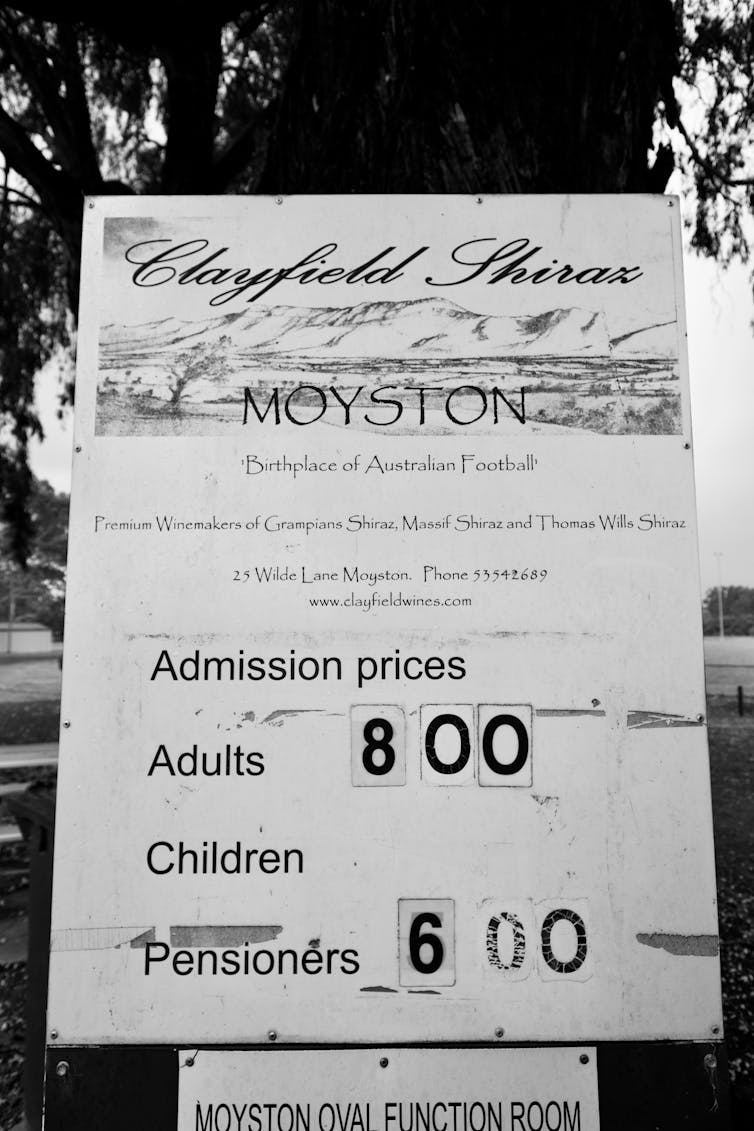
Promotional image of Wills exhibition in Moyston, 2021.
Barry Judd

In my research, I have found that Australia’s denial and systemic forgetting of colonial violence and Aboriginal peoples’ forced assimilation is an indicator of white belonging. White belonging is the need to forget and deny the past to be able to claim Australia as home in the present.

Fearon’s discovery therefore marks an important moment for the AFL. Will the AFL use this as an opportunity to engage in an honest discussion of its history and culture or turn a blind eye, deny and distance itself?

Opportunity for truth telling and reconciliation

Australian (Rules) Football has played a role in shaping contemporary Australia and is celebrated as a pillar of contemporary race relations in Australia. For example, Joe Johnson is celebrated as the first Indigenous VFL player. However, he was never actually able to reveal his Aboriginality at the time, as it would have ended his football career, a fact ignored today.

The AFL must move beyond enlightened racism and symbolic reconciliation to finally acknowledge Marngrook as the Aboriginal precursor of Australian (Rules) football, and the significance Aboriginal cultural knowledge and practice holds in Australian (Rules) Football.

The AFL needs to understand racism like the instances reported in 2019 documentaries “The Australian Dream” and “The Final Quarter” as symptomatic of a colonial culture of exclusion, denial and hyper masculinity. Both documentaries contextualised Adam Goodes’ experiences as an Aboriginal man within an organisational structure that does not understand the nuances of race and racism.

If the AFL truly wants to be a leader in the fight against racism, it must first acknowledge the messiness, the uncomfortable realities of exclusion and the legacy of frontier violence. More must be done beyond overdue apologies.

Rather than whitewash this discussion, listen to Aboriginal people, sit with the history as well as the contemporary truths. Despite the introduction of the AFL’s racial vilification rules and yearly education seminars, these issues are not going away.

Indigenous players continue to experience racism and are unable to embrace their culture within a sport that traces its origins to Wills’ interactions with the Djab Wurrung people.

Although the AFL has development programs for Indigenous players, the AFL remains an unsafe place for Indigenous people. The AFL needs to address the white privilege allowing them to lean on Aboriginal people to do all the educating, reconciliation and truth telling.

To paraphrase AFL footballer Eddie Betts, it’s not on Aboriginal people to make change. That change starts with honest conversation and recognition of the ugly truth of our shared history. Truth telling is fundamental to any process of reconciliation and highlights strategies the AFL can use to move forward in a culturally respectful and appropriate way.

If Wills is to be a figure of truth and reconciliation through his meaningful Aboriginal-settler relations, the reality of that relationship needs to be acknowledged. It is truth that makes reconciliation possible. If a history must be rewritten let it be one that draws on Aboriginal perspectives, centres Aboriginal voices and makes racism the responsibility of non-Indigenous people. For far too long First Nations peoples have had to carry the burden of our complacency.

A plaque for Tom Wills in Moyston, 2021.
Barry Judd

Rather than removing tributes or altering the record on Tom Wills as the celebrated father of Australian (Rules) Football, let this be an opportunity for change, to grapple with our shared difficult history. We need to learn to live with the shame and discomfort of our history and try to understand what Aboriginal people experience in this country.
We cannot do this if Tom Wills is wiped from public memory.

The Conversation

The authors do not work for, consult, own shares in or receive funding from any company or organisation that would benefit from this article, and have disclosed no relevant affiliations beyond their academic appointment.

ref. Tom Wills’ story is the AFL’s opportunity for truth telling about its ugly history – https://theconversation.com/tom-wills-story-is-the-afls-opportunity-for-truth-telling-about-its-ugly-history-168381

German election: the race to replace Angela Merkel and why it matters to New Zealand

Source: The Conversation (Au and NZ) – By Mathew Doidge, Senior Research Fellow, University of Canterbury

Shutterstock

From a distance, the big news about Germany’s coming election on September 26 is the end of Angela Merkel’s reign after 16 years of leadership in Germany and Europe. Closer up, with no clear front-runner to take Merkel’s place, the picture is far more complex.

Seemingly on track for a clear victory until February, the prospects of Merkel’s centre-right Christian Democratic Union (CDU) and its Bavarian sister party the Christian Social Union (CSU) have waned, as first the Greens and then the Social Democrats (SPD) narrowly topped the surprisingly volatile polls.

Merkel’s successor will be determined by the politics of coalition formation in an arrangement familiar to New Zealanders — Germany having provided the model for our own MMP system.

With another CDU/CSU-SPD grand coalition ruled out, the most likely outcome will see one of those parties leading a government comprising the Greens and the liberal Free Democrats (FDP) in a so-called “Jamaica” or “traffic light” coalition (named for the party colours).

A large undecided vote

But nothing is clear cut. In an unpredictable campaign dominated by missteps rather than policies, the fortunes of those battling for the chancellery – the CDU/CSU’s Armin Laschet, the SPD’s Olaf Scholz and the Greens’ Annalena Baerbock – have ebbed and flowed.

Caught guffawing during the German president’s remarks to victims of the July floods, alongside accusations of plagiarism (a problem to which the German political establishment seems particularly prone), Laschet has seen his party’s support plummet to the lowest-ever polled.


Read more:
Angela Merkel: gentle persuasion in an age of populism


Meanwhile, Baerbock’s aggressive response to her own charges of plagiarism, combined with a failure to declare income, have raised concerns about her personal credibility and seen her party slump from their surprise lead in April.

In contrast stands Scholz. The only candidate with federal executive experience, including currently as minister of finance and vice-chancellor in the CDU/CSU-SPD grand coalition, Scholz was initially welcomed with little fanfare.

However, his leadership during the pandemic (dispensing billions of euros in support), coupled with the absence of gaffes, has seen his personal popularity rise. In preferred chancellor polls, Scholz now leads on 40%, with Laschet on 19% and Baerbock on 13%. Somewhat soberingly this close to the election, 28% of respondents still “don’t know”.

Business as usual?

In an election devoid of real policy debate, it is difficult to say how the result will change Germany.

The answer may be “probably not much” if Laschet or Scholz gain the chancellery, with both in various ways casting themselves as continuity candidates (Scholz even going so far as to adopt Merkel’s patented rhombus hand gesture). But a strengthened Greens voice in any coalition – likely on current polling – will have an impact.

From a New Zealand perspective, there are three areas of interest: European integration, foreign policy and climate change. One way or another, each will affect the world beyond Germany’s borders.


Read more:
From ‘Mädchen’ to ‘Mutti’: as Angela Merkel departs, she leaves a great legacy of leadership


European integration

Germany is at the heart of the European project, and Merkel’s time as chancellor has been important to the union.

Taking office during the disarray following the collapse of the EU’s constitutional project, Merkel’s approach to integration was shorn of grand ambition. Instead, she has focused on stability and incremental reform in the face of subsequent crises (the Eurozone debt crisis, the European refugee crisis).

But the EU requires more than ad hoc incrementalism. It is increasingly difficult to reconcile the union’s significant economic footprint with its lack of foreign policy clout. In times of great power competition, the two are irrevocably interconnected. The role of the new chancellor in shaping European integration cannot be underestimated.


Read more:
Auf Wiedersehen, ‘Mutti’: How Angela Merkel’s centrist politics shaped Germany and Europe


Aside from the far-right Alternative for Germany (AfD), all parties standing are pro-European and all envision reforms to strengthen integration. For New Zealand, with US-China tensions threatening to spill over in unpredictable ways, a strong EU is essential to maintaining a stable and rules-based international order.

This is particularly significant for a small trading power, dependent on the predictability and enforceability of global rules. Any moves to make the EU more consistent, understandable and responsive will benefit New Zealand.

Climate change

The climate crisis will be at the core of policy, regardless of which coalition comes to power. All parties have been forced to address the issue, a priority driven home by the July floods.

Carbon neutrality is central to the platforms of the main parties, though differences exist on how to achieve this.

Germany’s approach will cause ripples beyond its borders, playing as it does a key role in defining EU policy, including the union’s expectations of trading partners such as New Zealand.


Read more:
How Germany’s Green party took on the far right to become a major political force


Foreign policy

There is also significant pressure for Germany to play a stronger global role to match its economic weight. This includes a more robust approach to powers such as China, something Merkel avoided.

Trade relations under Merkel were a priority. Separated from more contentious issues, it was an approach that pleased her Chinese counterparts. But complications darken the horizon: the EU has defined China as a “systemic rival”, and there have been calls for Germany to more actively confront Chinese assertiveness.

Developments in the Indo-Pacific are critical to New Zealand, which this week was surprised by the announcement of the formation of the AUKUS alliance between Australia, the US and UK. A more engaged Germany would be welcomed.


Read more:
State of the EU: tech and defence challenges cloud COVID success


A CDU-CSU victory is unlikely to see significant change, however. The party continues to prioritise trade in its international relationships, and Laschet has made some dubious foreign policy statements, raising questions as to what he would bring to the global stage.

The SPD also holds a conservative view of international engagement, aiming to avoid foreign conflicts. An emphasis on economic and trade policy is important for New Zealand, as negotiations for a free trade agreement with the EU near their end.

With only a few days until Germans cast their votes, the election remains anyone’s to win. Regardless of the outcome, New Zealand should continue to count Germany as an important friend in the EU. With Britain’s withdrawal in 2020, the relationship with Germany is more valuable than ever.

The Conversation

Mathew Doidge receives funding from the Erasmus+ programme of the European Union.

Serena Kelly receives funding from the Erasmus+ Programme of the European Union. She is affiliated with the New Zealand Institute of International Affairs and the European Studies Association of Australia and New Zealand.

ref. German election: the race to replace Angela Merkel and why it matters to New Zealand – https://theconversation.com/german-election-the-race-to-replace-angela-merkel-and-why-it-matters-to-new-zealand-168379

New preliminary evidence suggests coronavirus jumped from animals to humans multiple times

Source: The Conversation (Au and NZ) – By Hamish McCallum, Director, Centre for Planetary Health and Food Security, Griffith University

The origin of the SARS-CoV-2 virus, which has caused the COVID-19 pandemic, has been hotly debated.

This debate has caused substantial difficulties in the Australia-China relationship, with a call by Foreign Minister Marise Payne for another inquiry into its origin being considered by China as a hostile act.

What’s not in doubt is the closest relatives of the virus are found in bats. How, where and when the virus spilled over into humans is the contentious issue.

One widely supported hypothesis is the spillover occurred in the “wet markets” of Wuhan, where many species of wildlife from across China are held in crowded conditions.

However, there’s no evidence the species of bats in which the closest relatives of SARS-CoV-2 are found were sold through the Wuhan wet markets at any time in the two years before the pandemic. This hypothesis requires the existence of a “bridge host”, another species that becomes infected via spillover from the original bat hosts, and then passes the virus onto humans.

Bridge hosts are well-known in many emerging human diseases. For example, Hendra virus, which my group studies, has flying foxes as its reservoir. Hendra spills over to horses with some frequency. Horses then amplify the virus as a bridge host and can infect humans.

Fortunately, this is extremely rare, with only seven known cases. Tragically, four of those people died. Hendra has never been known to spread directly from flying foxes to humans.


À lire aussi :
I was the Australian doctor on the WHO’s COVID-19 mission to China. Here’s what we found about the origins of the coronavirus


More evidence a lab leak is very unlikely

A second, much more contentious hypothesis is the origin of the pandemic was the result of a “lab leak”.

Wuhan has one of the most sophisticated virological laboratories in China, and the laboratory does work on bat viruses. The suggestion is the virus may have inadvertently been released into the general community via one of the workers. No direct evidence supports this hypothesis.

A new pre-print study, released online this month, provides strong evidence to support the “natural spillover” hypothesis, with results that are hard to reconcile with the “lab leak” hypothesis.

The study is yet to be peer reviewed. But it’s based on a detailed examination of the genetic sequences of two early lineages obtained from people infected in late 2019 and early 2020.

For convenience, these two lineages are called A and B. The two lineages differ by just two nucleotides (letters in the genetic code) at two different key sites in the genetic sequence.

If there was a single lab escape event, the separation into lineages A and B must have happened after the lab escape. We would therefore expect to see a substantial number of intermediate lineages, with the lineage A nucleotide at one site, and the lineage B nucleotide at the other site.

However, if almost all of the genetic sequences obtained from humans are “pure” lineage A or pure lineage B, this suggests there were at least two different spillover events, either directly from bats or via bridge hosts.

And the evolution of the two lineages occurred before humans were infected.

The researchers downloaded all complete genetic sequences for SARS-CoV-2 that had been lodged in a widely used genomic database. Of these sequences, 369 were lineage A, 1,297 were lineage B and just 38 were intermediates.


À lire aussi :
Why it will soon be too late to find out where the COVID-19 virus originated


Genetic sequencing isn’t perfect. Close examination of the 38 intermediates strongly suggested they were more likely to be sequencing errors of pure lineage A or lineage B than to be true intermediates.

The genetic evidence, therefore, suggests very strongly there have been at least two separate spillover events into human populations, one being from lineage A and another being from lineage B.

Did a human bring SARS-CoV-2 to the wet markets?

The data don’t tell us there have been only two spillover events — there may have been more. Nor do they tell us whether these spillovers happened directly from bats, or whether some or all happened via an intermediate bridge host.

A Nature news article suggests this evidence points to the spillover having happened via the wildlife trade, but I think this is taking it a step too far.

While some of the wildlife species sold through the Wuhan wet market can indeed become infected with SARS-CoV-2 (for example raccoon dogs and mink), there’s no evidence any sold through the market were infected.

Many of the earliest human viral sequences (all lineage B) were recovered from the Wuhan seafood market, but wet markets and abattoirs are well-known to be places where the SARS-CoV-2 virus spreads very well from human to human.

So, it may have been a human who brought the virus to the Wuhan seafood market, rather than a species of wildlife.

One thing we do know is this pandemic originated through a human coming in contact with another species infected with the virus.

It’s unknown whether this was a bat or a bridge host, and whether this contact occurred in a wildlife market, or in a bat cave, or somewhere else entirely different.

Nevertheless, as humans encroach more and more on the habitats of wild animals and as wild animals are brought more frequently into close contact with humans, we can expect further spillovers and pandemics to occur.


À lire aussi :
How do viruses mutate and jump species? And why are ‘spillovers’ becoming more common?


The Conversation

Hamish McCallum receives funding from the Australian Reserch Council and from the US agencies NSF, NIH and DARPA

ref. New preliminary evidence suggests coronavirus jumped from animals to humans multiple times – https://theconversation.com/new-preliminary-evidence-suggests-coronavirus-jumped-from-animals-to-humans-multiple-times-168473

The sun’s shining and snakes are emerging, but they’re not out to get you. Here’s what they’re really up to

Source: The Conversation (Au and NZ) – By Timothy N. W. Jackson, Postdoctoral Research Fellow, Australian Venom Research Unit, The University of Melbourne

Shutterstock

It’s early spring in southern Australia and the sun is, gloriously, out. You decide to head to your local patch of greenery – by the creek, lake, or foreshore – with the sun on your face, the breeze in your hair, and your dog’s tongue blissfully lolling.

Suddenly you see it. Paused on the path just a few meters in front of your feet, soaking up those same springtime rays — a snake.

Love them or loathe them, snakes have been co-existing with, and haunting us, since well before our ancestors called themselves “human”. From the subtle tempter of Genesis to the feathered serpent deities of Mesoamerica, snakes have always been potent symbols of otherness.

Today, to encounter a snake is to brush up against the wild and mysterious heart of the natural world. Snakes are important members of every terrestrial ecosystem across Australia. Even in the most populous parts of the country, snakes inhabit the remnant bushland dispersed throughout our major cities.

But what exactly influences human–snake interactions? Whether you’re hoping to maximise your chances of seeing one of these shy, fascinating critters or wanting to avoid them at all costs, this article is for you.

Snakes in southern springtime

In southern Australia, a flurry of animal activity occurs in spring. As resources start becoming plentiful after the relatively lean months of winter, spring is the reproductive season for many plants and animals.

One such resource is heat — a particularly crucial resource for organisms such as reptiles, which don’t make their own body heat (unlike mammals). It’s a common misconception, however, that snakes want as much heat as they can get. Like Goldilocks, snakes want the temperature to be just right.

Southern springs are the right temperature for snakes to bask during the times of day we humans are also out and about. In summer, snakes, including venomous species such as tiger snakes and brown snakes, are typically more active very early in the morning, late in the evening, or during the night when temperatures are not too high for them.

During spring in south-eastern Australia, red-bellied blacksnakes are common in suburban areas.
Damian Lettoof, Author provided

After a slow winter, snakes are both hungry (they may have been fasting for months!) and on the lookout for eligible members of the opposite sex. Basking, hunting, and searching for a mate brings snakes out into the open in spring a bit more than at other times of year, so we’re most likely to encounter them during this time.

Snake activity in northern Australia

Like all things, snake activity is a little different in the north. Spare a thought for those poor northern Australians who will never know the joys of a snake-filled springtime.

Still, the north has far more snake species than the south, including many species of non-venomous python — the farther south you go, the more our snake fauna is dominated by venomous species (check out Australian Reptile Online Database for distribution maps).

Darwin carpet pythons (Morelia spilota variegata) are most often encountered in the cooler months of the year following the annual wet season.
Chris Jolly, Author provided

Because of the unforgiving year-round heat across northern Australia, temperature doesn’t drive snake activity as it does in the south. You will rarely see a basking snake in Australia’s Top End, they’re too busy avoiding the heat.

Instead, snake activity is driven by another important resource – rain. In the Top End, this means snakes are most often encountered following the wet season (April–June) when prey and water abound.

In other, more arid “boom and bust” systems, large rainfall events may only happen every five to ten years. When they do, they can trigger huge flurries of snake activity as the serpents emerge to take advantage of fleetingly available prey.

Snakes indicate ecosystem health

From the moment of birth, all species of snake are predatory, although some, like shovel-nosed snakes, prey only upon eggs.

Shovel-nosed snakes prey only on eggs.
Damian Lettoof, Author provided

In some terrestrial Australian ecosystems, snakes are near the top of the food chain. After reaching a certain size, they have few predators of their own. A two-metre coastal taipan in the cane fields of northern Queensland, for example, has more to fear from harvesters than it does from any natural predator.

For large snakes to persist in an environment, they need an abundance of their prey (mice, frogs and lizards), as well as all the species their prey feed upon (invertebrates, even smaller animals, or plants).

Coastal taipans (Oxyuranus scutellatus) are exceptionally elusive, but when they are (rarely) encountered, it is most often males observed while they are on the hunt for females during northern Australia’s winter.
Chris Jolly, Author provided

Snakes often also have specific habitat requirements. In general, they need shelter and protection from bigger predators, which might include birds of prey, predatory mammals such as native marsupials or introduced cats and foxes, or other snakes. They also need opportunities for safely regulating their body temperature.

This means a snake will only call a place home if it has both a functioning food-web and the necessary habitat complexity. So remember, if you see snakes in your backyard or local park, it’s a sign the ecosystem is doing pretty well.

Snakes don’t want to bite you

Snakes are awesome predators, but no Australian snake is interested in eating a human. In fact, they want as little to do with us giant hairless apes as possible.

Merri Creek in inner-city Melbourne is famously home to many snakes, including tiger snakes, who bask in the sun at springtime.
Shutterstock

Why? Because snakes are actually quite vulnerable animals. Compared to many other species, they are small, have no sharp claws or strong limbs, and limited energy to put up a fight — they are basically limbless lizards with different teeth.

For those that possess it, venom is a last resort and only a minority of species —such as taipans, brown snakes, tiger snakes, and death adders — can deliver a life-threatening bite to a person. But snakes would much rather use their venom to subdue prey (that’s what they have it for) than to defend themselves.

When snakes bite humans in Australia, it’s a defensive reaction to a large animal they view as a potential predator. Remember, they can’t understand your intentions, even if those intentions are good.

Tiger snakes and other venomous snakes won’t bite you if you respect their boundaries.
Damian Lettoof

If you’re lucky enough to see a wild snake, and if you respect its boundaries and give it personal space, it’s sure to do the same for you. Keep dogs on the lead in snakey areas and educate your kids to be snake-smart from as young as possible.

Even though snakes don’t want to bite, snakebite envenoming can be a life-threatening emergency. Learn first aid, and when you go for a walk in one of those sanctuaries of greenery that snakes like as much as we do, carry a compression bandage (or three).

It’s almost certain you will never need it, but it could just save a life.


Read more:
Does Australia really have the deadliest snakes? We debunk 6 common myths


The Conversation

Timothy N. W. Jackson receives funding from the National Health and Medical Research Council.

Chris J Jolly receives funding from National Environmental Science Program (Threatened Species Hub).

Damian Lettoof receives funding from HWRE.

ref. The sun’s shining and snakes are emerging, but they’re not out to get you. Here’s what they’re really up to – https://theconversation.com/the-suns-shining-and-snakes-are-emerging-but-theyre-not-out-to-get-you-heres-what-theyre-really-up-to-168089

Vital Signs: a simple way to cut carbon emissions — don’t let polluters hide

Source: The Conversation (Au and NZ) – By Richard Holden, Professor of Economics, UNSW

Shutterstock

World leaders and about 30,000 others from assorted interest groups will converge on Glasgow in November for the United Nations’ 26th annual climate summit, COP26 (“Conference of the Parties”).

It will be five years (allowing for a one-year Tokyo 2020-style pandemic hiatus) since the Paris Agreement adopted at COP21 in 2015.

There has been plenty of cynicism about that agreement, its structure and non-binding nature. Important emitters like China were effectively exempt from making meaningful carbon-reduction commitments.

Some OECD countries (such as Canada) have paid lip service to the agreement but done little. Still others (such as Australia) have made some progress reducing emissions but have no long-term plan, relying instead on bumper-sticker slogans about “technology not taxes” and, until recently, hiding behind dodgy accounting tricks.

That aside, it’s hard to see how the world solves what amounts to — as economists put it — a “coordination problem” without global agreements.

For roughly half a century economists have been unanimous about what those agreements must involve — a price on carbon. The 2018 economics Nobel prize awarded to William Nordhaus was belated recognition of this fact.

A price on carbon — in the form of a carbon tax or emissions trading scheme — is a way to use the power of the market’s price mechanism to balance the good that comes from emitting carbon (economic development) with the bad (climate change).

Set the price of carbon at the true social cost of carbon (taking into account all the ills that come from climate change) and the invisible hand of the market will balance the pros and cons. Think of it as Friedrich von Hayek meets Greta Thunberg.

But there is another, less dramatic way to harness market forces to reduce carbon emissions: disclosure.


Read more:
Vital Signs: a global carbon price could soon be a reality – Australia should prepare


Public disclosure works

The idea starts with this: plenty of consumers want to reduce their carbon footprint and are willing to pay for it. That’s why people recycle, use green energy even when it’s more expensive, buy low-carbon clothing, and drive electric cars. A bunch of folks are willing to pay to be green.

The success of companies such as eco-friendly sneaker company Allbirds and electic vehicle maker Tesla exist is evidence of the market catering to these consumer preferences. But can we make it easier for consumers to express their environmental preferences? Can we turbocharge the market for greener products?

A working paper published this month by the National Bureau of Economic Research suggests the answer is “yes”.

Authored by Carnegie Mellon University economists Lavender Yang, Nicholas Muller and Pierre Jinghong Liang, the paper looks at the US Environmental Protectino Agency’s Greenhouse Gas Reporting Program. In effect from 2010, this has required big carbon emitters (including all power plants that produce more than 25,000 tonnes of carbon dioxide a year) to publicly disclose how much they emit.

The authors look at the effect of this disclosure program on the electric power industry, which accounts for 27% of all US emissions.

The results are striking. Plants subject to greater scrutiny reduced their carbon emissions by 7%. Plants owned by publicly listed companies reduced their emissions by 10%. Large public companies, such as those in the S&P500 stock index, cut emissions even more (11%).


Accountability increases environmental performance

Change in estimated CO2 emissions for GHGRP plants and non-GHGRP plants by year using data from the US EPA's Emissions & Generation Resource Integrated Database (eGRID).
Change in estimated CO2 emissions for GHGRP plants and non-GHGRP plants by year using data from the US EPA’s Emissions & Generation Resource Integrated Database (eGRID).
NBER Working Paper 28984

Responding to investor concerns

The reason appears to be responsiveness to investors wanting companies to be more environmentally responsible. This explains why emissions went down more for public companies, and even more for large public companies, whose shares are more likely to be held by funds with an ESG (Environment, Social and Governance) mandate.

Some of these investors have pro-social preferences and want to invest their money in more sustainable companies. Others might not care about the environment per se, but know that lots of folks do. Businesses that cater to these consumer preferences have an advantage.


Read more:
Vital Signs: a 3-point plan to reach net-zero emissions by 2050


The dark side to this is that the decline in emissions by major plants was partially offset by an increase in emissions by plants under the 25,000-tonne threshold not subject to disclosure.

In other words, companies responded to the incentives provided by disclosure requirements. Those who could “hide” their emissions did not.

The lesson is that disclosure requirements work. They force companies to own up to their customers and investors, and face the reality of their emissions behaviour. But we need to apply it to all companies, not just big ones.

The Conversation

Richard Holden is President-elect of the Academy of the Social Sciences in Australia.

ref. Vital Signs: a simple way to cut carbon emissions — don’t let polluters hide – https://theconversation.com/vital-signs-a-simple-way-to-cut-carbon-emissions-dont-let-polluters-hide-168560

Hidden women of history: Annie Lock was a bolshie, outspoken Australian missionary, full of contradictions

Source: The Conversation (Au and NZ) – By Catherine Bishop, Postdoctoral Fellow, Macquarie University

Missionary Annie Lock with Enbarda (Betsy) left, and Dolly Cumming, both children from the Alice Springs area in Central Australia. Photo taken in Darwin.
National Archives of Australia

Aboriginal and Torres Straight Islander readers are advised this story contains images of people who have died.

“We have fared well out of native hands”, wrote missionary Annie Lock from Oodnadatta in South Australia in 1924. Four years later, having moved to Harding Soak north of Alice Springs, she declared the government should “give the natives food in place of their country”.

Lock’s recognition that white Australians had taken Aboriginal land and owed them compensation was ahead of her time, even if her idea of appropriate compensation was inadequate.

Born in 1876 into a Methodist sharefarming family of 14 children in South Australia’s Gilbert Valley, Lock was a practical woman with a very basic education. A dressmaker by trade, in 1903 she joined what would become the United Aborigines Mission.

It operated on faith lines: missionaries were unpaid and could not actively solicit donations, relying on prayer to answer all needs. Lock, like her colleagues, developed a nice line in inviting supporters to “join her in prayer” for very specific needs, such as “a nice staunch horse for £12”, hoping for a “practical” show of sympathy.


Read more:
Hidden women of history: Mary Jane Cain, land rights activist, matriarch and community builder


From 1903 to 1937, she lived in 10 mission camps across four states and territories. Renowned for being the “Big Boss”, she usually worked alone establishing “new work” — partly because her colleagues found her intensely uncollegial.

She wasn’t only out of step with many of her contemporaries in her belief Aboriginal Australians deserved compensation: she also believed Aboriginal people had a future and they could be “useful citizens” of Australia.

Once again, however, her view of their place in broader Australian society was narrow. She did not imagine Indigenous doctors, lawyers or politicians, but labourers, stockmen and domestic servants.

I first encountered Annie Lock through some of her letters in the South Australian archives. She berated government officials, demanding action and funding for (what she saw as) Aboriginal people’s interests. She was bolshie and outspoken.

At the time I was a young graduate student and naively thought I had uncovered a feminist heroine. I was quickly disabused: for all her intrepid and gutsy behaviour, Lock held intensely socially conservative views in line with her religious conviction.


Read more:
Hidden women of history: Isabel Flick, the tenacious campaigner who fought segregation in Australia


A grand adventure

Lock’s life was like a “girls’ own” adventure story – albeit a teetotal and highly moralistic one.

Text reads: Miss Annie Lock, the only white woman at Bonny Well.
A story on Annie Lock in the Adelaide Mail, November 1932.

She made epic horse and buggy journeys across the desert, camped in the middle of nowhere with few resources and was shipwrecked in a pearling lugger. She railed against white men’s abuse of Aboriginal women, and she “rode rough-shod over rules and regulations, always managing to come out on top”, in the words of her obituary from her longsuffering mission society.

Many white Australians felt she went too far. She cuddled Aboriginal children, nursed the sick, and shared her campfire – even “drinking tea out of the same cup”.

After the 1928 Coniston Massacre, in which a police party killed over 100 Aboriginal men, women and children in Central Australia, the Board of Enquiry, widely considered as a whitewash at the time, blamed the unrest leading to the events partly on “a woman missionary living among naked blacks, lowering their respect for whites”.

It was no coincidence that Lock was also one of the people who had publicised the massacre, forcing an enquiry in the first place, after Aboriginal people sought refuge in her camp and told her their horrifying tale.

In fact, rather than “lowering their respect” as a white woman living with Aboriginal people, Lock maintained her camp was an area of mutual respect and negotiation:

They told me their laws; […] I made my rules; they kept them; I kept theirs; we had no trouble.

At certain moments when researching her life, I found Lock seemed impressively broadminded. However, given the uneven distribution of power, the reality was not so idyllic.


Read more:
Hidden women of history: Wauba Debar, an Indigenous swimmer from Tasmania who saved her captors


A troublesome woman

Lock was an integral part of the colonial machine, with all its patronising ethnocentricity. As a white woman, Lock was never troubled by any sense that Aboriginal people were her equals.

She could be dictatorial and bloody-minded, with a highly developed sense of what she saw as right and wrong, approving harsh punishment for transgressors. At the Coniston enquiry itself she was critical of those Aboriginal men who killed cattle, suggesting “a good flogging” was called for.

In Western Australia, she actively took children from their families and she was instrumental in establishing Carrolup Native Settlement in 1915 — a forerunner of notorious Moore River Settlement — to which Aboriginal people were removed.


Read more:
Friday essay: ‘I am anxious to have my children home’: recovering letters of love written for Noongar children


In South Australia in 1924, she started what became Colebrook Home, in which Aboriginal children of mixed descent were institutionalised.

At Ooldea, when Lock was 58, the overworked and tired missionary let her guard slip. An Aboriginal man hit her after she punished his daughter. The daughter should be sent to Colebrook, she suggested, “to punish” him — deviating from the usual missionary script of “in the child’s best interests”.

Group of children at the first mission house at Oodnadatta, 1925.
State Library of South Australia

But history is complicated. One elderly Aboriginal woman smiled when she told an interviewer her memories of Lock, “a real fat one”, playing rounders at Ooldea. The image of a stout middle-aged missionary hitching up her skirts and charging around the sandhills with a bunch of Aboriginal kids is hard to beat.

In Central Australia, some remembered her as a caring for children “on country”, saving them from being sent away.

Lock was consistently vocal about Aboriginal girls’ rights to be protected from white men (although she condoned Aboriginal men’s violent “punishment” of their wives). And while she was irrepressibly evangelistic, she eventually learned Christianity could work with some aspects of Aboriginal culture. Sometimes, she wrote, Aboriginal people could “teach white people a lesson”. They were “real socialist”, sharing the clothes that she gave them. She waxed lyrical about their “corroboree songs” and appreciated the authority of elder generations over the younger.

In 1937, aged 60 and after 35 years in the mission field, Lock suddenly retired. Certainly she had been finding her “pioneering” missionary work more of a strain, and her health had suffered, but also, she told her supporters, God was giving her a “quieter work”. Much to everyone’s amazement, this independent woman had found herself a husband.

She married a retired bank manager and spent the last six years of her life evangelising in a caravan around Eyre Peninsula.

An old man and a woman.
Lock surprised many by retiring and marrying in her 60s.
United Aborigines Mission

Contradictions

In uncovering the life of Annie Lock, I found a woman who was both fascinating and discomfiting. We can try and judge her motivations and actions as an individual of her time, but we cannot ignore her impact.

She saved people’s lives by providing food and healthcare, and a refuge from more hostile forces. She also destroyed families by removing children. She introduced Christianity, which some found a welcome way of navigating the changing world. She was one of an army of “do-gooders” whose haphazard attempts to improve the lives of Aboriginal people did not always have the result that anyone would have desired.

Her personal impact could be positive – some remember her as “lovely” and “motherly”. But her impact as an active participant in “protectionist” government policies, which limited Aboriginal people’s lives and movement and tore families apart, was traumatic and has endured.


Catherine Bishop is the author of Too Much Cabbage and Jesus Christ: Australia’s “Mission Girl” Annie Lock, out now with Wakefield Press

The Conversation

Catherine Bishop receives funding from the Australian Research Council as a DECRA Research Fellow at Macquarie University. This project benefited from an Australian Religious History Fellowship at the State Library of NSW and an Australian Research Theology Inc travel grant.

ref. Hidden women of history: Annie Lock was a bolshie, outspoken Australian missionary, full of contradictions – https://theconversation.com/hidden-women-of-history-annie-lock-was-a-bolshie-outspoken-australian-missionary-full-of-contradictions-167781

Grattan on Friday: After the deal on security, Scott Morrison turns to the shift on climate

Source: The Conversation (Au and NZ) – By Michelle Grattan, Professorial Fellow, University of Canberra

One is tempted to think Scott Morrison’s hero must be Harry Houdini, the great escape artist. Put our prime minister in a corner, and he will talk his way out, or try to.

After President Biden rang President Macron this week to soothe hurt French feelings about AUKUS, a joint statement was issued.

It said in part, “The two leaders agreed that the situation would have benefited from open consultations among allies on matters of strategic interest to France and our European partners.”

Morrison refused to take this as any reflection on Australia’s diplomatic blundering in the way it handled the cancellation of its French submarines contract.

“They were dealing with different issues to Australia,” he argued. “The United States and France are NATO countries. And there are certain expectations amongst NATO partners about how they’re engaged with each other on national security issues.”

On any “trust” metric, Morrison has received a battering since the AUKUS announcement. An angry Macron is not yet willing even to accept his call.

But the Prime Minister probably won’t be too worried in domestic political terms. He’ll think the main takeout by his “quiet Australians” will be not that the French are accusatory, but that a big new deal is delivering nuclear-powered subs and other weaponry to protect against the Chinese, about whom polling shows people are increasingly worried.

Morrison might have been more disappointed that with AUKUS he didn’t manage to immediately wedge Labor. In other times, the Labor left would have been screaming about nuclear boats. But Anthony Albanese, determined to stay a small target, acted with lightning speed to have the opposition back in the agreement.

Albanese, however, will have to be watchful. As Labor frontbenchers started to ask about detail and proposed a Senate inquiry, Morrison quickly said, “If the Labor Party wants to have an each way bet on national security, the Australian people need to know that”. It was a campaign line.

It’s perfectly reasonable to pursue information about an agreement for which we have bones but no flesh, but Morrison will be ruthless in exploiting legitimate opposition probing.

Morrison’s behaviour towards the French, and his refusal to admit the government deceived them, invites broader questions about trust. It’s always an issue but domestically there are some checks. Put bluntly, while dudding foreigners might be reprehensible, doing it to voters can be downright dangerous, as various politicians have learned the hard way.


Read more:
View from The Hill: Morrison and Macron need to talk


When Morrison arrives back from the US, his attention will turn to executing a policy shuffle that’s important for him both internationally and electorally.

The Glasgow climate conference is only weeks away and for it Morrison needs, at the least, to firmly embrace the 2050 net zero target and present a pathway that has credible medium term markers.

Biden and British PM Boris Johnson, who’ve delivered AUKUS to Morrison, have been twisting his arm very hard to improve Australia’s climate ambition, and he needs to deliver.

The Nationals will be paid off, and Barnaby Joyce will have to cope with whatever dissent there is within his ranks. When, as acting PM, Joyce appeared on 7.30 on Thursday, he sounded like he knew he had to lock in with Morrison but wished he didn’t.

In a speech to be delivered on Friday Treasurer Josh Frydenberg is preparing the way for the shift from the present government line of reaching net zero emissions “preferably” by 2050 to the firm commitment.

Frydenberg warns if Australia is seen as a laggard on climate policy, the inflow of the capital – its cost and availability – will be hit, with consequences for everything from home interest rates to infrastructure projects.

“Australia has a lot at stake. We cannot run the risk that markets falsely assume we are not transitioning in line with the rest of the world,” Frydenberg says.

He also says the transition must be broad based with “investment in emissions reduction strategies across all sectors, be it agriculture, mining, manufacturing, and others”.

Moreover he directly takes on hardliners within the Nationals by declaring “it is wrong to assume that traditional sectors, like resources and agriculture, will face decline over the course of the transition. To the contrary, many businesses in these sectors are at the cutting-edge of innovation and technological change.”

The government is now walking quite fast rhetorically. Precisely how far it will go in policy remains to be seen.


Read more:
View from The Hill: For Morrison AUKUS is all about the deal, never mind the niceties


f

The position for Glasgow will become the government’s policy for the election, and Albanese won’t credibly be able to hold off much longer in producing Labor’s alternative. It will be a fine judgement for the opposition leader where that policy should be pitched. He will want it some distance from the government’s, but not far enough to dangerously increase Labor’s exposure.

Meanwhile the nation and its leaders, federal and state, are bracing for another sort of transition, which could be hellish. NSW and Victoria are preparing to open (at varying rates), and this is expected to send COVID cases soaring.

There’ll be severe pressures on hospitals in those states, and an increase in deaths. Morrison and NSW premier Gladys Berejiklian hope people will be so glad to be out of lockdown they’ll pay less attention to whatever health disasters might unfold.

The sniping between leaders won’t let up, as Western Australia and Queensland continue to attempt to keep COVID from invading, and their critics rail against border shut outs.

We could be headed into some of the most uncertain and difficult days of the pandemic, with fresh tests of community cohesion and resilience.

This week, in Melbourne’s serial protests, we saw how COVID can bring out the toxic underbelly of our society. Construction workers angry about compulsory vaccinations for the industry and then its shutdown, anti-vaxxers, and thugs from the extreme right came together in a menacing mob.

The recent growth of the extreme right (which ASIO has warned about) is particularly disturbing, because these people can exploit troubled times. Nevertheless, appalling as the protests have been, they should be kept in perspective. We’ve seen thuggery before (remember the 2006 violence in Melbourne against a G20 finance ministers meeting) although it is more dangerous when it comes in a crisis.

With rising vaccination rates and the planned openings, the new year holds promise. On the other hand, with the unpredictability of COVID, no one can be sure. Certainly not Morrison, as he works on his election strategy.


Read more:
Politics with Michelle Grattan: British High Commissioner Vicki Treadell on AUKUS and climate change


The Conversation

Michelle Grattan does not work for, consult, own shares in or receive funding from any company or organisation that would benefit from this article, and has disclosed no relevant affiliations beyond their academic appointment.

ref. Grattan on Friday: After the deal on security, Scott Morrison turns to the shift on climate – https://theconversation.com/grattan-on-friday-after-the-deal-on-security-scott-morrison-turns-to-the-shift-on-climate-168606

Josh Frydenberg prepares ground for Scott Morrison to commit to 2050 climate target

Source: The Conversation (Au and NZ) – By Michelle Grattan, Professorial Fellow, University of Canberra

Treasurer Josh Frydenberg will prepare the way for Scott Morrison to take a target of net zero emissions by 2050 to Glasgow, when he warns on Friday capital inflow will be at risk if Australia is seen as a climate laggard.

“Australia has a lot at stake. We cannot run the risk that markets falsely assume we are not transitioning in line with the rest of the world,” Frydenberg says in a speech to the Australian Industry Group released ahead of delivery.

“Were we to find ourselves in that position, it would increase the cost of capital and reduce its availability, be it debt or equity”.

Frydenberg says there must be investment in emissions reduction in all sectors, including agriculture, mining, and manufacturing.

He firmly rejects the claim – advanced by some critics especially in the Nationals – that the resources and agriculture sectors will face decline in the transition.

“To the contrary, many businesses in these sectors are at the cutting-edge of innovation and technological change,” he says.

The government is set to finalise its revised climate policy after the Prime Minister returns from the United States.

Morrison, who has been pressed hard on climate by President Joe Biden and Britain’s Prime Minister Boris Johnson while in the US this week, wants an unequivocal stand on the 2050 target for the November Glasgow climate conference.

The government’s present formulation is that it is committed to net zero “preferably” by 2050.

Morrison has been negotiating with Nationals leader Barnaby Joyce on a deal which will contain a major pay-off for the minor Coalition partner.

Frydenberg says in his speech that in a long term shift “markets are moving as governments, regulators, central banks and investors are preparing for a lower emissions future”. He points out 129 countries have committed to net zero by 2050.

“Markets are responding as participants make their own judgements as to what this new dynamic means for their existing portfolios and their future investment decisions.

“In particular, they are increasingly focusing on the physical risks to their investments of climate-related events and the transition risk to their investments as consumer preferences, technological and regulatory settings change.

“As a result, trillions of dollars are being mobilised globally in support of the transition.”

One of Australia’s major banks in the last year has coordinated more than 50 transactions worth $100 billion in climate finance related activities.

“Increasingly, institutional investors are themselves committing to the net zero goal, like BlackRock, Fidelity and Vanguard, three of the biggest fund managers in the world. For them, there is an alignment between the commercial opportunities and the environmental outcomes.”

Frydenberg emphasises the importance of Australian markets operating effectively, with investors able to make informed, timely decisions, and capital available at the lowest cost.

He says historically, Australia has relied heavily on imported capital, whether foreign investment or wholesale funding of the banking system. Foreign investors hold close to half the Commonwealth government bonds.

Reduced access to these capital markets would raise borrowing costs, affecting everything from the interest rates on housing and small business loans to the financial viability of big infrastructure projects, he says.

Frydenberg says Australia is addressing the challenges on two fronts.

Regulators have focused on the disclosure of material financial risks relating to climate change and promoted a best practice financial framework. And Australia is making progress in meeting its emissions reduction targets.

“To go the next step and achieve net zero will require more investment across the economy,” Frydenberg says.

“An economy-wide transition is needed, as in the words of the former Governor of the Bank of England, Mark Carney this ‘isn’t about funding only deep green activities, or blacklisting dark brown ones’”.

Frydenberg says “opportunities will abound and it will be those businesses that recognise these trends and put plans in place to adapt that will have the most promising futures”.

He says the message to Australian banks, super funds and insurers is “if you support the objective of net zero, do not walk away from the very sectors of our economy that will need investment to successfully transition.

“Climate change and its impacts are not going away.

“It represents a structural and systemic shift in our financial system, which will only gain pace over time.

“For Australia, this presents risks we must manage and opportunities we must seize.”

The Conversation

Michelle Grattan does not work for, consult, own shares in or receive funding from any company or organization that would benefit from this article, and has disclosed no relevant affiliations beyond their academic appointment.

ref. Josh Frydenberg prepares ground for Scott Morrison to commit to 2050 climate target – https://theconversation.com/josh-frydenberg-prepares-ground-for-scott-morrison-to-commit-to-2050-climate-target-168610

When fire hits, do koalas flee or stick to their tree? Answering these and other questions is vital

Source: The Conversation (Au and NZ) – By Pablo Negret, Postdoctoral research fellow, The University of Queensland

Figures released this week suggest Australia’s koala populations have plummeted by 30% in three years, and fewer than 58,000 now remain in the wild.

The statement from the Australian Koala Foundation has not been verified on the ground, giving it a high degree of uncertainty. But the claim aligns with a number of studies showing some koala populations are rapidly declining, particularly in Queensland and New South Whales.

Fire is an increasing threat to koalas; the 2019-20 megafires are estimated to have affected more than 60,000 koalas and reduced population numbers at multiple sites, including several areas of New South Wales. As bushfire risk increases under climate change, eucalyptus forest where koalas live are expected to suffer further impacts in the next 50-100 years.

So what’s the best way to protect these iconic animals from fires? Our new report for the National Environmental Science Program (NESP) sought to answer this question. We identified actions to reduce the risk of koalas being harmed by fires, and found gaps in scientific knowledge where more research is urgently needed.

The research explored how best to protect koalas from fires.
Shutterstock

A few big unknowns

Our research found scientific understanding of the interaction between fire management and koala conservation is lacking in three areas.

First, more research is needed on koala movements and their activity patterns before, during and after fires. For example, do koalas move during fire or stay in the same trees?

Evidence shows koalas rapidly move to and use recently burnt habitat. But it’s not known whether koalas found in recently burnt areas are new to that part of the forest or inhabited it before the fire.

After bushfires and prescribed burns, koalas can be injured by smouldering bark or burning embers when moving between trees. They can also become dehydrated. But how this affects koala movement and survival is barely understood.

Second, we need better understanding of how prescribed burning affects koala populations, in both the short and long term. Prescribed burning may benefit koalas if it reduces the severity of bushfires, but it can also kill or injure individual koalas. Better understanding the positives and negatives is crucial.

This might be achieved through long-term GPS radio-tracking of individual koalas, or compiling information about injured or dead koalas after prescribed burns and reporting it to conservation authorities.

Third, we need to know more about links between habitat connectivity, bushfire characteristics and koala population dynamics.

For example, fire can cause koala habitat to fragment. This makes habitat drier, which in turn may increase fire frequency and severity. But increased fragmentation can also limit the spread of fire and make it easier to control, which ultimately benefits koalas. More research into these trade-offs is required.


Read more:
Stopping koala extinction is agonisingly simple. But here’s why I’m not optimistic


Fire causes koala habitat to fragment.
Shutterstock

Fires and koalas: a roadmap

Koalas can be protected from fires in various ways, including managing fire risk or, when fires do occur, managing koala populations and habitat to increase the chance of recovery.

But to date, there’s been little guidance about how effective various management actions are, and how best to allocate resources.

Our framework, one of the first of its kind, sought to address these questions. It can be used by land managers, scientists, koala rehabilitation groups, the media and the general public.

The work involved reviewing existing literature on fire ecology and management, as well as koala ecology and conservation. We also gathered expert advice through individual discussions and workshops in Queensland and New South Wales.

We identified several goals that, if achieved, will help maintain koala populations in fire prone landscapes. They include:

  • improving or maintaining koala habitat and koala populations before and after fires. This might involve replanting, weed management, reforestation and pest control, long-term monitoring of koala populations and their habitat or minimising other threats, such as vehicle collisions, dog attacks, habitat loss and climate change

  • maintaining or restoring fire patterns suited to an ecosystem – for example, by conducting prescribed burning to make an area less flammable in the case of altered fire frequency, or so-called “mosaic” burning to create patches of burnt and unburnt areas

  • actions during bushfires, such as creating a low-intensity backburn that travels down a slope away from koala areas

  • exchanging knowledge between koala conservation organisations and Traditional Owners, Indigenous communities of the area and the various fire management authorities

  • effective post-fire management, such as quickly rescuing injured koalas for rehabilitation, and restoring key koala habitat.


Read more:
Scientists find burnt, starving koalas weeks after the bushfires


injured koala with gloved hands of carers
Koalas injured in fires should be quickly rehabilitated.
David Mariuz/AAP

Looking ahead

Our proposed strategies and actions should also take into account other priorities, such as human safety, property protection and cultural values of Indigenous people and others.

Our framework requires further development. But it’s a first step in bringing together information previously scattered across different sources and branches of knowledge.

The report gives those working to protect koalas, and other tree-dwelling species such as greater glider, a set of guidelines to manage fire and ensure koala conservation strategies are effective. Our research methods can also be used to identify fire management strategies for other species around the world.

The Conversation

Pablo Negret has previously been funded by the National Environmental Science Program’s Threatened Species Recovery Hub.

Daniel Lunney receives support from the Commonwealth and NSW State governments, and the University of Sydney.

ref. When fire hits, do koalas flee or stick to their tree? Answering these and other questions is vital – https://theconversation.com/when-fire-hits-do-koalas-flee-or-stick-to-their-tree-answering-these-and-other-questions-is-vital-168261

Australia is no stranger to earthquakes, yet our planning polices have not adapted

Source: The Conversation (Au and NZ) – By Mark Maund, Adjunct Senior Lecturer, School of Architecture and Built Environment, University of Newcastle

Southeastern Australia was yesterday rocked by a magnitude-5.8 earthquake with its epicentre near Mansfield in Victoria’s northeast.

The quake, which was followed by two smaller tremors, was powerful enough to damage buildings 130 kilometres away in Melbourne, and the shaking was felt as far away as Sydney, Canberra, Adelaide and Launceston.

Map showing earthquake location
Location of the Victorian earthquake.
Geoscience Australia

One Victorian acquaintance said they felt the ground shake so much that “I could see things outside shaking and was wondering if I should dive under the desk”, while Melburnians told of the terrifying swaying of apartment blocks. The damage to buildings confirmed the impact a large quake can have on our built environment.

The earthquake even prompted building evacuations in Newcastle, NSW, the scene of Australia’s most damaging earthquake on record in 1989. That quake, which had a magnitude of 5.6 and an epicentre roughly 15km southwest of the Newcastle CBD, killed 13 people and hospitalised 160, and left 1,000 people homeless.

Yet in the three decades since, many large buildings have been constructed in the Newcastle CBD, including a 22-storey residential tower. The result is that many more people now live near the site of Australia’s deadliest-ever earthquake.

This does not mean we should immediately abandon these popular areas. But we do need a consistent planning approach, to decide where we build and what level of risk we should accept. Natural hazards should be a central focus of planning, and communities should be told explicitly about the risks of living in a particular area.

Earthquakes are far from unknown in Australia. Yet our planning system does not explicitly consider which areas are at unacceptable risk from earthquakes. We continue to build in earthquake-prone areas across Australia, relying solely on building design to manage these risks.

This isn’t good enough. We urgently need a national planning policy that takes account of earthquake risk, to strengthen and support building standards. Building standards alone are not sufficient. We also need to consider the number of people in an area, their ability to relocate during a disaster, and their access to emergency accommodation and recovery support.

Broader planning issues such as secondary roads for evacuation and long-term evacuation centres for those displaced must form part of the design of our cities and towns.

What do the current standards say?

Australia’s national construction code ranks buildings primarily from 1 (minor structures that are unlikely to endanger human life if they fail) to 4 (such as buildings or structures that are essential to post-disaster recovery including medical and emergency services and emergency shelters), based on relevant building standards for earthquake risk. A higher category indicates more stringent construction requirements for all buildings in that category to withstand an earthquake.

The standards also provide a “hazard design factor” that indicates requirements for buildings to withstand an earthquake in different parts of Australia. These design factors consider places such as Meckering and Dowerin in Western Australia to be highly hazardous with regard to earthquakes, whereas places like Newcastle are designated as lower-risk, despite having experienced an earthquake. Shepparton in Victoria, which is near the epicentre of yesterday’s earthquake, has an even lower rating.

While these construction standards provide some useful guidance to architects and planners, they arguably miss a key point. Earthquakes, generally speaking, are very rare but potentially very damaging. So we need to adapt our planning strategies to take account of this, rather than just relying on building standards.


À lire aussi :
We may never be able to predict earthquakes – but we can already know enough to be prepared


We need a national planning policy

Australia doesn’t have a national planning agency, although such an agency would be vital to provide a consistent approach to planning issues such as natural hazards. At the very least, we urgently need a national planning policy that addresses the risk of natural hazards such as earthquakes. This policy needs to consider the legacy of historical planning decisions, and avoid future development in high-risk areas.

Similar to areas affected by floods or bushfires, we must think before we rebuild, and consider whether to rebuild in the same area at all. With specific regard to earthquakes, we need to consider whether a particular location allows us to construct buildings that will be safe, provide safe access and escape via road and public transport, and allow for adequate evacuation centres.

In earthquake-prone locations, we should consider the risk before approving tall buildings, those with large numbers of occupants, or those that cater for lots of people who are likely to need extra assistance in an emergency, such as hospitals, childcare and aged-care centres.


À lire aussi :
Earthquakes don’t kill people; buildings do. And those lovely decorative bits are the first to fall


With Australia’s population set to exceed 49 million by 2066, bringing ever-taller buildings and more urban sprawl, earthquakes may have a growing impact on our lives. We need a strong, consistent and nationwide approach to considering natural hazards in planning as part of meeting our housing, employment and environmental needs.

Without this, we will continue to rely heavily on building standards, continue to develop in hazard-prone areas, and continue to experience damaging disasters. A national policy, in contrast, will help us build communities that are more resilient and safer.

The Conversation

Mark works as an environmental planning consultant.

Kim Maund et Thayaparan Gajendran ne travaillent pas, ne conseillent pas, ne possèdent pas de parts, ne reçoivent pas de fonds d’une organisation qui pourrait tirer profit de cet article, et n’ont déclaré aucune autre affiliation que leur poste universitaire.

ref. Australia is no stranger to earthquakes, yet our planning polices have not adapted – https://theconversation.com/australia-is-no-stranger-to-earthquakes-yet-our-planning-polices-have-not-adapted-168470

PNG prepares to impose covid lockdown in several provinces

RNZ News

Papua New Guinea authorities are preparing for a four-week lockdown in at least three provinces at the end of the month.

The move has been prompted by a spike in covid-19 infection rates in Eastern Highlands province as well as the two provinces which sit on the border with Indonesia, Western and West Sepik.

While testing for covid-19 is limited in PNG, the delta variant was confirmed as being in the country in July, preceding a spike in patients at hospitals in these provinces.

It is understood the lockdown would begin in a week’s time, and entail closure of businesses, schools and churches, and restrictions in movement.

The cabinet and PNG’s pandemic advisory committee are also considering lockdowns in the National Capital District, Morobe Province, and other affected parts of the Highlands, including Enga.

The containment move was hinted at by Prime Minister James Marape before he flew to New York to attend the United Nations General Assembly this week.

Marape told local media that they were seeing evidence of the delta variant spreading across the country, and people dying as a result.

With Marape now abroad, it is expected that the acting Prime Minister, Soroi Eoe, will sign off on the lockdown measures before the weekend.

Case numbers vague
Since testing for covid in PNG was scaled back in June, the available data on this third wave of the pandemic in the country has been vague.

As of Tuesday, the main agency overseeing PNG’s pandemic response, the National Control Centre, said the total number of confirmed covid cases in the country was 19,069, with the death toll at 212.

However, the limited level of testing and habitual delays in reporting of case loads from the provinces suggest the true figure of those infected is far higher.

Earlier, the Eastern Highlands Coronavirus Steering Committee enforced a blanket ban on all public gatherings due to a spike in infections and deaths.

Also, West Sepik and Western continued to attempt to restrict movement of traditional border crossers back and forth to Indonesia, however capabilities to monitor the border are also limited.

Around 2 percent of the country’s population have been vaccinated, according to the National Control Centre.

This article is republished under a community partnership agreement with RNZ.

Print Friendly, PDF & Email

Article by AsiaPacificReport.nz

‘My way or highway’ bill a product of Fiji dictatorship, says Prasad

By Luke Nacei in Suva

Fiji’s pposition National Federation Party leader Professor Biman Prasad told Parliament yesterday that the Electoral Registration of Voters (Amendment) Bill was the product of dictatorship, pseudo-democracy and the “my way or the highway” approach to governance in a bid to ensure continuity of FijiFirst rule in the country.

Professor Prasad said the changes did not even remotely resemble the flaws exposed by the High Court about registration of names of voters after a successful case in the Court of Disputed Returns by SODELPA MP Niko Nawaikula.

Prasad said Nawaikula’s nominations for election candidature had been duly accepted and approved by the Supervisor of Elections twice, in 2014 and 2018.

He said the Supervisor of Elections failure rate in removing candidates for elections as well as members of Parliament was alarming.

“This Bill is the product of dictatorship, pseudo-democracy and my way or the highway approach to governance in order to ensure continuity of the FijiFirst rule in this country,” he said.

Attorney-General Aiyaz Sayed-Khaiyum said in 2015, the Supervisor of Elections, Mohammed Saneem had been asked by the Pacific Islands Forum to lead the observer mission group to Bougainville, in 2016 he had been part of the MSG Observer Mission to the Vanuatu snap elections and in 2017 he had been part of the observer mission to the Tongan elections.

He said Saneem also held elections in a “fair and credible” manner.

Parliament yesterday passed the Bill, which now requires Fijians to use the name as stated in their birth certificate and no other aliases.

The Bill, which has now become an Act of Parliament, was tabled by Attorney-General Aiyaz Sayed-Khaiyum, and fast-tracked under Standing Order 51.

Debating legislation in Parliament before the vote yesterday, Sayed-Khaiyum referred to the ruling of the Court of Disputed Returns last month in the case of Nawaikula.

He said Nawaikula’s case had a significant impact on the National Register of Voters, and the changes to the Electoral Registration of Voters Amendment Bill were necessary to ensure people registered with the names on their birth certificate.

Sayed-Khaiyum told Parliament that in its ruling, the court had stated that the law did not specifically require the use of birth certificate names and for the purpose of the registration as a voter allows the use of names other than the birth certificate name.

He said neither the court nor the legal counsel had considered the practical implications of such a strict literal reading of the law, and it was not brought to the court’s attention and therefore, they did not expect to make a ruling on that.

Fiji faces a general election next year.

Republished from The Fiji Times with permission.

Print Friendly, PDF & Email

Article by AsiaPacificReport.nz

In spite of relentless media negativity, NZ’s covid story is largely successful

Former New Zealand Prime Minister, Jacinda Ardern.

COMMENTARY: By Glen Johnson

On August 17, a 58-year-old man from Auckland became symptomatic and tested positive for covid-19. It was New Zealand’s first community case of the coronavirus in almost six months.

Within hours, the nation of five million moved into alert level four, part of its “go hard, go early” approach. All travel outside of people’s homes was forbidden, except to fetch supplies, visit pharmacies or exercise.

The country largely ground to a halt.

“We have seen the dire consequences of taking too long to act in other countries, not least our neighbours,” said Prime Minister Jacinda Ardern, while announcing the cabinet’s decision to impose a lockdown that evening.

Within a few days, one case had grown to 21 cases. After a week, to 148 cases. By August 31, the cluster contained 612 cases.

Snap lockdown
One month after imposing the snap lockdown, New Zealand has bent the curve and may be able to eliminate an outbreak of the potent delta variant of COVID-19 – though it is no sure thing.

As of September 20, some 1051 people in Auckland and 17 people in the capital city, Wellington, have been infected with the virus, of whom 694 have recovered.

Contact tracers have methodically identified tens of thousands of contacts – and hundreds of locations of interest – part of an updated track-and-trace system repurposed to cast a much wider net around the far more transmissible delta variant.

The outbreak, now spread across 20 subclusters, 10 of which have been epidemiologically linked, presents the most serious challenge to elimination that New Zealand has faced so far. With its fragmented public health system under intense strain from decades of under-funding, any unchecked spread of the delta variant would see hospitals rapidly overwhelmed.

But New Zealanders rallied behind the restrictions, sticking to their “bubbles”, masking up and watching patiently as cases peaked, then began to decline – though the outbreak’s tail is proving persistent.

If the country does eliminate this outbreak, it would once again validate the “go hard, go early” approach that officials have taken over the past 18 months.

With Auckland moving yesterday to the more permissive alert level three, case numbers over the coming weeks will be closely watched for any sign of uncontained spread.

Entitlement and denunciation
Yet, as with previous outbreaks, the clamour from critics of the government started almost immediately, a chorus of whinge.

Business special interests laundered their messaging through an uncritical media – “certainty” they chanted, while pressuring for a move down alert levels.

“We also know that in lockdown Treasury has forecast it to cost the country NZ$1.45 billion per week – and that’s just the economic impact,” Canterbury Employers’ Chamber of Commerce chief executive Leeann Watson told broadcaster Newstalk ZB.

Incredibly, less than a week into lockdown, Export New Zealand executive director Catherine Beard complained to Stuff, the country’s most popular news website, that the business environment was getting “tough” for exporters, while lobbying for more managed isolation spots for business travellers – or self-isolation.

“Some of these are multimillion-dollar deals, so the situation is very stressful,” she said.

Some in the hospitality sector complained about limits on gatherings and threatened to withhold tax, while demanding “targeted” assistance from the government.

“Now it’s 100 percent [Ministry of] Health running the show,” said Hospitality New Zealand chief executive Julie White, according to Stuff. “No one is advising them commercially.”

Most New Zealanders would, presumably, prefer that the Health Ministry – as opposed to hospitality interest groups – responds to the threat presented by a lethal, airborne pathogen.

‘Glacial’ pace criticised
The “glacial” pace of the country’s vaccine rollout was also riffed off in headline after headline.

Perhaps, as the political opposition and reporters contend, the rollout has been “sluggish”.

Perhaps the government could have instructed the medical regulator Medsafe to conduct a less rigorous assessment of the Pfizer vaccine, under emergency protocols.

“Another [possibility] is,” Craig McCulloch, Radio New Zealand’s deputy political editor speculated, “that the government’s negotiators came late to the party, did a poor job and got a raw deal.”

Or perhaps soaring global demand amid the pandemic, Pfizer’s finite ability to supply vaccines to a vast suite of countries and New Zealand’s limited purchasing power and largely covid-free status explains the “delay”.

Certainly, the World Health Organisation has described vaccine hoarding by wealthy nations as approaching a “catastrophic moral failure”.

When Pfizer became able to deliver large shipments midway through July, New Zealand saw a dramatic scale-up in the vaccination programme, as officials had promised for months.

Rollout a success story
If anything, the nation’s rollout — a massive logistical undertaking — has largely been a success story, conducted in an environment of incredible uncertainty and reliant upon an already stretched workforce.

It has additionally played a key role in supporting vaccination efforts in the Cook Islands.

As of September 20, some 4,711,410 doses of the vaccine have been administered, tracking close to supply, with 1,618,673 people now fully vaccinated.

Amid the rising racket, the entitlement and denunciation, even commentators from abroad got in on the act.

Fox News host Tucker Carlson — agitating anti-lockdown sentiment — suggested that New Zealand provided a model for how his viewers would be subjugated by Joe Biden’s administration.

“How far can they go? […] A single covid case in New Zealand, not a death from covid, but a case of covid has shut down the entire country.”

Writing in Britain’s Daily Telegraph, one commentator called the outbreak “poetic justice” and claimed a “once-welcoming nation is turning into an isolated dystopia, where liberties are taken away in a heartbeat and outsiders are shunned”.

While these criticisms are couched in the language of defending civil liberties, they reduce to variants of the “learn to live with covid” argument.

Or put another way: “The cure cannot be worse than the disease”.

The economy must reign supreme, after all.

Sound familiar?

‘Needles in my eyes’
New Zealand’s elimination strategy relies on public buy-in. Recent polling shows that some 84 percent of the public supports the latest lockdown.

As with previous outbreaks, Ardern has used clear, empathetic language to reassure and unify an often politically divided nation. These briefings are held in Parliament’s theatrette and usually feature the Director-General of Health, Dr Ashley Bloomfield.

For many in New Zealand, the daily press briefings provide a detailed window into how authorities manage outbreaks and have been the most visible key to the elimination strategy’s success.

“To all Aucklanders, you have done an amazing job so far protecting yourselves, your family and your community,” Ardern said on September 13, while announcing that Auckland would stay in alert level four for another week. “We owe you a huge debt of gratitude … but the cases are telling us we have additional work to do.”

Voters rewarded Ardern’s Labour Party for this kind of humane approach and its exceptional management of the viral threat in the national elections last October, granting it an outright majority.

The political opposition judges these briefings a political threat, and routinely denigrates them as Ardern speaking from “The Podium of Truth”.

With the return of daily briefings on August 17, right-wing broadcasters and some journalists began to deride the briefings, at exactly the moment when trust in the authorities needed to be reinforced.

Undermining public perceptions
There is a difference between “holding power to account” and deliberately attempting, for purely partisan political reasons, to undermine public perceptions that the covid-19 response is being well managed.

“I tried, I really did, but I wanted to stick needles in my eyes by about four minutes in,” said Newstalk ZB’s Kate Hawkesby, the day after the return of the 1pm press conferences. “I’d forgotten how soul-destroying it is to be spoken to like a three-year-old.”

On the same station, Hawkesby’s husband, Mike Hosking, overdubbed turkey “gobbles” and truck horn sound effects onto an interview recorded with Associate Health Minister Dr Ayesha Verrall.

Newstalk ZB’s political editor, Barry Soper, in a report about an Auckland man whose kidney surgery was postponed due to staffing shortages, loaded his story’s preamble with phrases like “their altar” and “practise what they preach”.

He also issued a remarkable dog-whistle to New Zealand’s far-right, the kind of people who believe Ardern – a fairly mild political centrist – is turning the country into a “communist dictatorship”.

“If you have ever wondered what it must have been like to live in a totalitarian state, then perhaps wonder no more.”

This nonsense went on and on.

Moaning media
Some press gallery reporters began to complain about the length of Ardern’s introductions, while Jason Walls, a political reporter with Newstalk ZB, took to Twitter to moan about Dr Bloomfield saying “finally” two times.

This speaks to how the media has fundamentally misunderstood what the briefings are: public service announcements.

They are for the public. Reporters are invited as a check and, as such, should resist the urge to demand a say in how these announcements are structured.

Even The New York Times managed to launder messaging that targeted the briefings, quoting former National Party staffer and political commentator Ben Thomas – who appears fixated on denigrating Dr Bloomfield.

“He [Dr Bloomfield] has … a cult-like following,” said Thomas. “The country has a huge kind of parasocial devotion to him, which is very new to New Zealand.”

Apparently, Thomas has not heard of Michael Joseph Savage, who founded New Zealand’s welfare state in the 1930s and whose framed photo hung in homes throughout the country for decades.

Regardless, all of this is a fairly obvious partisan political effort, driven by both ideology and market dynamics.

Many reporters and commentators at New Zealand Media and Entertainment (NZME), which owns The New Zealand Herald and Newstalk ZB, seem unable to accept that their preferred political tribe is no longer in power.

More critically, in an age where the news media increasingly attempts to attract subscribers by catering to their social and political values, NZME appears to be ring-fencing centre-to-far-right eyeballs.

It is, essentially, becoming New Zealand’s Fox News.

A brave new world
The sense in New Zealand is that this may be the last of the nation’s sledgehammer-style lockdowns, though one hopes officials do not retire lockdowns altogether.

The goal is to get as many people as possible vaccinated, assess the impact of opening up, and then tentatively start easing some border restrictions, if possible.

No doubt, certain industries – tourism, hospitality, horticulture, media – will continue to apply relentless pressure.

Yet, when the nation reconnects more fully to the networks of global trade and travel, the super-highways of hyper-globalisation that have spread disease and death around the world, when the inevitable outbreaks come, there will be a toll.

Glen Johnson is an independent New Zealand journalist who worked as a foreign correspondent for 11 years, predominantly out of the Middle East and North Africa. His work has appeared in The Chicago Tribune, The Los Angeles Times, The New York Times, Rolling Stone, The Seattle Times, Vice, The Daily Telegraph, The Guardian, Reuters, Le Monde Diplomatique, Balkan Insight, Al Jazeera and The New Zealand Herald, among others. His article was first published by Al Jazeera English and is republished with the permission of the author.

Print Friendly, PDF & Email

Article by AsiaPacificReport.nz

Detained West Papuan activist at risk of ‘dying in jail’, UN expert warns

Asia Pacific Report newsdesk

A United Nations expert has urged Indonesia to provide proper medical care to a Papuan independence activist to “keep him from dying in prison”, after reports emerged that his health had deteriorated, reports The Jakarta Post.

Victor Yeimo, 39, the international spokesman for the West Papua National Committee, was arrested in Jayapura in May.

He has been charged with treason and inciting violence and social unrest in relation to the pro-independence protests that swept the region for several weeks in 2019. Yeimo has denied the charges.

His trial went ahead in August despite repeated requests from his lawyer for a delay on medical grounds.

“I’ve seen it before: States deny medical care to ailing, imprisoned human rights defenders, which results in serious illness or death,” said Mary Lawlor, UN Special Rapporteur on the situation of human rights defenders.

“Indonesia must take urgent steps to ensure the fate does not await Mr. Yeimo.”

Political trial adjourned
The human rights watchdog TAPOL reports that Yeimo’s political trial was adjourned by the District Court of Jayapura on 31 August 2021 until he was declared physically fit by the hospital.

On the same day, the court also dismissed his pretrial motion, challenging his arrest and detention for violating criminal procedural law, on the grounds that the main trial had begun.

Victor Yeimo was finally hospitalised on August 30 despite the court having issued an order to hospitalise him since the evening of August 27.

The prosecutors defied the court’s order, which caused uproar among the public.

Papuan leader Victor Yeimo
Accused Papuan activist Victor Yeimo … his health has been a concern since the beginning of his detention in May 2021. Image: Foreign Correspondent

Dozens of people protested in front of the prosecutors’ office and their residence on August 28.

Hundreds of people protested again at the prosecutors’ office on August 30 before the prosecutors finally honoured the court order and took Yeimo to hospital.

Victor Yeimo’s health has been a concern since the beginning of his detention in May 2021.

Health deteriorated
His health deteriorated as he was placed in isolation and did not receive proper food or any medication.

Yeimo’s lawyers repeatedly asked that he be treated but were denied the request by the authorities. He was afforded only perfunctory medical tests on August 10 and 20.

During his first and second hearings, he told the court that he had never been told the results of these tests and had never been given any medicines or prescriptions.

He pleaded for help to the judges.

The prosecutors, having withheld the medical results stating that Victor Yeimo must be hospitalised, finally shared the medical results dated August 20 with Victor Yeimo’s lawyers on August 26.

On the same day, the court issued an order for Victor Yeimo to be treated at the hospital from 9 am to 6 pm the following day.

The prosecutors only appeared to take him to the hospital at 4 pm. At the hospital, Victor Yeimo pleaded to stay, but was dragged out by armed police despite still being on a drip.

At 11 pm, the court issued an order for Yeimo to be hospitalised.

Crackdown on peaceful protests
Peaceful protests demanding Victor Yeimo be released in seven cities across Indonesia during the period of 15 to 30 August 2021 were subjected to excessive use of force resulting in the death of protestor Ferianus Asso in Yahukimo, 104 arrests, and 40 people who were known to have been injured.

Those arrested have all been released. Internet freedom watchdogs found that the internet in Jayapura was shut down for three hours at around the time of Victor Yeimo’s trial.

Following TAPOL’s submission a week after Victor Yeimo’s arrest, the United Nations  Special Rapporteurs questioned the Indonesian government on the matter on June 30. The document was made public on August 31.

“We regret the government of Indonesia’s response which has distorted the facts. UN Special Rapporteurs on Human Rights Defenders, the Right to Freedom of Assembly, the Right to Health, and Anti-Racism yesterday have issued a press release calling for Indonesia to provide Victor Yeimo with ‘the basic care he so desperately needs’, said TAPOL.

“The UN experts also concluded that his prison conditions may have amounted to torture or cruel, inhuman or degrading treatment.”

Given the gravity of the situation and the treason charges that Yeimo is facing, TAPOL said it would provide a summary of each of his trial sessions so that they could be properly and transparently monitored.

“We would encourage international organisations and interested experts to actively monitor his trial once it has been resumed,” TAPOL said.

Print Friendly, PDF & Email

Article by AsiaPacificReport.nz

Fires review: new ABC drama helps teach important lessons about the realities of bushfires in Australia

Source: The Conversation (Au and NZ) – By Danielle Clode, Associate Professor (adjunct) in Creative Writing, Flinders University

Ben King/ABC

Bushfires are incredibly difficult to imagine, but once experienced are impossible to forget. They are events that most people would prefer not to think about — at least not in too much detail.

Just prior to Black Saturday, I was employed by the Victorian Country Fire Authority to research bushfire simulators, similar to earthquake or cyclone simulators, to help people prepare for the realities of a bushfire.

It sounds like a great idea, but it proved difficult to achieve. How do you expose someone to plus 40 degree heat, gale force winds, choking smoke and zero visibility? Never mind ask them to remember complex bushfire defence tasks while wearing fire-proof clothing, gloves, boots and goggles.

How do you simulate the approach of a 15 metre wall of flames that roars like a jet aircraft taking off? How do you simulate someone’s response to that experience without scaring them half to death? Dramatised stories are one approach, simultaneously acknowledging the experiences for those who were involved in the bushfires, and also sharing that experience with those who were not.

The new ABC TV drama Fires is a six-part series of interlinked stories inspired by the 2019-2020 Black Summer fire season. The series loosely follows two young volunteer firefighters from Queensland as they travel south on strike teams to help fight fires in New South Wales and Victoria.

Each episode tells a story of the decisions, experiences and responses of different communities and individuals on the way. This clever story structure showcases a wide diversity of circumstances and situations: from the generational losses of farming families to the disrupted holidays of tourists and shattered dreams of tree-change commuters.

The series explores the way in which people make decisions around fire preparation, defence and evacuation: when to protect property and animals and when to save yourself.


Read more:
Friday essay: living with fire and facing our fears


Responses to emergency, and its aftermath

The first episode introduces the linking characters of Tash (Eliza Scanlen) and Mott (Hunter Page-Lochard), highlighting the risks and sacrifices volunteer fire fighters and their families make in helping protect their communities. Tash has been a volunteer for five years, since she was 16, while Mott is a new recruit.

This episode may generate some heated technical discussions among Australia’s nearly 150,000 volunteer fire fighters around safety procedures, equipment and protocols (which are generally much better than depicted here) but hopefully the show will recruit new and younger members for fire brigades, which are currently at a 10-year low.

Production still: two firefighters
Australia’s nearly 150,000 volunteer firefighters are crucial, and Fires places two young volunteers at the heart of the show.
Ben King/ABC

Accurately depicting psychological responses to an emergency is probably difficult because few of us experience the hyper-charged adrenalin mode created by the imminent threat of death. It’s not the same as being stressed or worried.

Despite our expectations, people rarely panic or throw their hands in the air in an emergency, rather they develop tunnel vision and become highly focused on the tasks for which they have trained.

The everyday personal tensions that drive the plot of most TV dramas are utterly irrelevant in a fire emergency and quite literally displaced by well-practised drills and procedures. I can’t imagine firefighters failing to prioritise a colleague’s injuries or dithering with anxiety during a truck burn-over. Hyper-focus, not lack of focus, is a more common response.

The second episode more successfully depicts the traumatic aftermath of fires and the messy complexity of grief, anger and loss. Dairy farmers Kath (Miranda Otto) and Duncan (Richard Roxburgh) return to their property to discover their home destroyed and many of their cattle dead or needing to be put down. Otto and Roxburgh skillfully layer the pragmatic stoicism of rural life with the emotional detachment often generated by trauma.

This episode moves swiftly and lightly across the processes of bonding and fracturing that so often occur in fire-impacted communities, the cycles of blame and anger that scorch families and friendships and the pressures put upon relationships by the insistent demands of the media and even by those trying hardest to help.

Production image: Miranda Otto and Richard Roxburgh on a tractor
Miranda Otto and Richard Roxburgh give rich performances of the experience of grief, anger and loss.
Ben King/ABC


Read more:
Frequent extreme bushfires are our new reality. We need to learn how to live with smoke-filled air


A harsh reality

These early episodes feel somewhat sparsely populated in characters as they focus on just a handful of individuals at a time, rather than the broader community they live in, but I imagine the later episodes will layer these characters and themes and deepen some of the discussions as the show progresses towards its finale.

Production still: Anna Lise Phillips, Emil Jayan and Sachin Joab at campgrounds
Fires moves swiftly and lightly across the processes of bonding and fracturing so often seen in fire-impacted communities.
Ben King/ABC

The Black Summer bushfires, occurring as they did over a long season and large area of our most populated seaboard, exposed many more people than usual to the realities of fire. Our changing climate promises to make such fires an even more frequent and severe event.

No matter how much we don’t want to think about it, thorough and ongoing bushfire preparation and planning is the only way that people who live, visit or holiday outside urban areas can keep themselves safe from fires. TV shows like Fires play an important role in spreading that message and hopefully making more people take their own fire safety seriously.

Fires airs Sunday 26th September, on the ABC.

The Conversation

Danielle Clode worked for the Victorian Country Fire Authority as a research consultant on psychological preparedness for bushfires in 2009 and assisted with an Australian Research Alliance for Children and Youth funded project on children’s bushfire recovery. She is currently assisting the Adelaide Hills Council with their community resilience and readiness strategy.

ref. Fires review: new ABC drama helps teach important lessons about the realities of bushfires in Australia – https://theconversation.com/fires-review-new-abc-drama-helps-teach-important-lessons-about-the-realities-of-bushfires-in-australia-168191

Coalition still well ahead in NSW poll, Newspoll premiers’ ratings, and WA upper house electoral reforms

Source: The Conversation (Au and NZ) – By Adrian Beaumont, Honorary Associate, School of Mathematics and Statistics, The University of Melbourne

AAP/Bianca de Marchi

A New South Wales state Resolve poll for The Sydney Morning Herald gave the Coalition 41% of the primary vote (down two since July), Labor 30% (up two), the Greens 11% (down one), the Shooters 2% (up one) and independents 10% (steady).

Resolve does not provide two party estimates, but analyst Kevin Bonham estimated 53-47 to the Coalition, a two-point gain for Labor since July. I previously covered issues with the independent vote in Resolve and the lack of two party estimates.


Read more:
Coalition gains in federal Resolve poll, but Labor increases lead in Victoria


Incumbent Liberal Gladys Berejiklian led Labor’s Chris Minns by 48-21 as preferred premier (55-16 in July). This poll would have been conducted concurrently with the August and September federal polls from a sample of about 1,100. The federal Resolve polls in those months have had a strong lean to the Coalition compared with other polls (see below).

By 65-17, voters supported “the plan to ease restrictions in mid-October with 70% vaccination rates”. The SMH article implies the Coalition’s position was stronger in September than August, as vaccination uptake makes reopening soon realistic.

The same situation applies to the federal government. Once lockdowns are over, the economy is likely to rebound quickly, and this will assist the Coalition in an election in the first half of next year.

Newspoll: Andrews has best approval out of Vic, Qld and NSW premiers

The Poll Bludger reported that Newspoll asked for premiers’ ratings in last weekend’s poll from a larger than usual national sample of 2,144.

The states considered were NSW, Victoria and Queensland. Victorian Labor premier Daniel Andrews had a 64-35 satisfied rating (net +29). Queensland Labor premier Annastacia Palaszczuk had a 57-38 satisfied rating (net +19). Berejiklian had a 56-40 satisfied rating (net +16).

On handling COVID, Palaszczuk scored far better than her overall rating at 67-31 good, while Andrews and Berejiklian scored nearly the same (63-35 good for Andrews, 56-41 good for Berejiklian).

Nationally, Scott Morrison had a -4 net approval in Newspoll; he was at +15 in Queensland, -3 in NSW and -16 in Victoria.

Nationally, Morrison had a 49-48 poor rating for his handling of COVID, unchanged from six weeks ago. By 53-42, voters expressed more concern with relaxing restrictions too fast than too slowly (62-34 in January).

WA upper house electoral reform: group ticket voting and malapportionment to be scrapped

The massive WA Labor landslide at the March state election gave them large majorities in both chambers of the WA parliament – the first ever Labor majority in the upper house.


Read more:
Coalition and Morrison gain in Newspoll, and the new Resolve poll


Labor set up a committee to look at reforming the upper house’s electoral system. There are two current major problems: malapportionment and group ticket voting (GTV). The Mining & Pastoral region and Agricultural region elect one-third of the upper house on just 10% of the state’s population. GTV allowed Daylight Saving to win a seat in March on just 98 primary votes.

Labor will adopt the committee’s proposals to change to a statewide election of 37 members, up from the current 36. GTV will be replaced by optional above-the-line voting, in which a single “1” above the line will stay within the party it is cast for. Voters can number “2”, “3”, etc, above the line to continue directing preferences after their original party is excluded.

This system is the same as is currently used in elections for the NSW and SA upper houses. However, these states elect half their upper house at each election (21 seats up each election in NSW and 11 in SA). The WA proposal is for all 37 seats to be elected at once, so the quota will be just 2.63%.

With optional preferential voting, parties will be able to win seats from much lower vote shares than 2.63%. It’s likely to lead to cluttered ballot papers at the next election.

ABC election analyst Antony Green has much more on the WA reforms. I hope the Victorian government scraps GTV before the 2022 state election – Victoria is now the last Australian jurisdiction with GTV.

Other state developments: NT, Victoria and Tasmania

The Labor Northern Territory government gained Daly at a September 11 byelection by a 56.0-44.0 margin over the CLP, a 7.2% swing to Labor. Bonham said this is the first time a government gained from an opposition at a byelection anywhere in Australia since Benalla (Victoria state) in 2000.

Matthew Guy ousted Michael O’Brien as Victorian Liberal leader at a leadership spill on September 7. Guy led the Liberals to a landslide defeat at the November 2018 state election.

A Tasmanian EMRS poll, conducted August 7-9 from a sample of 1,000, gave the Liberals 49% (steady since the May election), Labor 28% (steady) and the Greens 13% (up one). Incumbent Peter Gutwein led Labor’s Rebecca White as preferred premier by 59-29 (61-26 in EMRS’ last state poll in February).

Coalition leads on estimated preference flows in federal Resolve poll

A federal Resolve poll for Nine newapapers, conducted September 15-19 from a sample of 1,606, gave the Coalition 39% of the primary vote (down one since August), Labor 31% (down one), the Greens 10% (down two), One Nation 4% (up two), Clive Palmer’s United Australia Party 3% and independents 9% (down one).

No two-party estimate was given, but Bonham estimated 51-49 to the Coalition, a one-point gain for the Coalition.

There’s divergence in voting intentions between Resolve and Newspoll, which was 53-47 to Labor. But there’s been movement in all recent polls to the Coalition, which was up one in Newspoll and up two in Morgan to a 52.5-47.5 Labor lead.

49% gave Morrison a good rating for his performance in recent weeks, and 45% a poor rating, for a net +4 rating, up five since August. Albanese’s net approval was up three to -16. Morrison led as preferred PM by 45-26 (46-23 in August).

The Liberals and Morrison led Labor and Albanese by 42-24 on economic management (44-19 in August). On COVID, the Liberals led by 37-24 (37-22 last time).

Canadian election called two years early gives nearly status quo result

I live blogged the results of the Canadian election that PM Justin Trudeau called two years early for The Poll Bludger. At the 2019 election, Trudeau’s centre-left Liberals won 157 of the 338 seats and the Conservatives 121, despite a 1.2% lead for the Conservatives in vote shares. In 2021, the results are nearly the same.

The German election will be held Sunday, with polls closing at 2am Monday AEST. Parties need to either win at least 5% nationally or three of the 299 single-member seats to qualify for a proportional seat allocation. The Guardian’s poll aggregate
suggests the overall left parties have a narrow lead over the overall right. I will be live blogging for The Poll Bludger.

The Conversation

Adrian Beaumont does not work for, consult, own shares in or receive funding from any company or organisation that would benefit from this article, and has disclosed no relevant affiliations beyond their academic appointment.

ref. Coalition still well ahead in NSW poll, Newspoll premiers’ ratings, and WA upper house electoral reforms – https://theconversation.com/coalition-still-well-ahead-in-nsw-poll-newspoll-premiers-ratings-and-wa-upper-house-electoral-reforms-168259

Beyond Zoom, Teams and video lectures — what do university students really want from online learning?

Source: The Conversation (Au and NZ) – By Dilani Gedera, Teaching and Learning Manager, Auckland University of Technology

Shutterstock

As any university student, lecturer or tutor can attest, the pandemic has turned learning and teaching upside down. So it’s important we understand what happens for students when their learning shifts online with little to no warning.

Since 2020, there’s been a growing body of important research into the impact of online learning for educators. But the student voice, which is essential to informing good design and facilitation of online learning, has been largely unexamined.

Our Student Online Learning Experiences (SOLE) research project aims to rectify this and give voice to those who are, arguably, at the heart of the COVID-19 education crisis.

The study uses data from nearly 1000 survey responses from students across all eight New Zealand universities. Through a combination of online questionnaires, individual and focus group interviews, we explored their experiences of online learning during the pandemic in 2020.

Challenges and benefits

Students are not a homogeneous group and online learning is not the same for everyone.

Our research shows that, even in so-called normal times, students face multiple challenges, such as access to technology and online resources, financial hardship, family responsibilities and challenging study environments. The pandemic has exacerbated these challenges.

A lot of my family members got [made] redundant, and they lost their house. There were 11 people staying in my house. I couldn’t study. I was also working at the same time. I had to pick up more shifts to help. Working more hours and trying to study on top of that was hard […] My house was always loud […] it was just hard for me.


Read more:
Delayed graduations, no formals — the class of 2021 has had a hell of a year. They need mental health support, and quickly


Among the challenges, however, there were some benefits. More than half the students acknowledged not having to travel and having the flexibility to learn at their own pace and place was positive.

Being able to cut out travel time has given me pretty much three hours of extra study time in a day. The flexibility has enabled me to fit [study] around my daily life. It reduced stress and anxiety. I feel more in control of the work that I do. I definitely work better when I feel like I have to take charge of my own learning.

They also appreciated “being able to access learning materials at any time and the ability to pause and continue” at their own pace. Students also reported they were able to “balance the children, household and study much more effectively”.

Support and communication key

Though many students felt less motivated and less focused, they became more used to online learning. They discovered they could leverage the good aspects of remote learning when they had the right support or knew where to get help, such as financial assistance, extensions, and disability support.

Some students found online learning took them a lot longer to process and engage with.

When it comes to posting something online, I like to make it perfect. Check my grammar, check my punctuation, and see if it makes sense. It’s like [a] mini assignment […] And then a tiny post might take forever for me to write, whereas in class we just have to say it.

However, most students also said regular updates and clear communication were key to helping them learn online by reducing the sense of isolation and distance.

It was good to see students/lecturers talking about their daily life before the online live lecture starts. This gave a sense of “interaction” rather than being talked at in campus lectures where I usually felt a bit of distance from lecturers.

Open-book versus closed-book

Our study also highlighted the need to rethink university assessment practices.
In the face of ongoing demands of family, work and lockdown life, many students found it challenging to sit an exam at a specified time.

They preferred time-based assessments (in which students complete an open-book exam or another type of assessment task within a specified time frame), rather than online exams at a fixed time.


Read more:
Digital learning is real-world learning. That’s why blended on-campus and online study is best


One respondent questioned whether universities were “assessing students in a way that’s actually effective and beneficial for their learning”.

Asked what they would like to see continued in future course design and teaching, a majority preferred open-book exams “that assess the application of knowledge as opposed to a stressful closed-book memory test”.

Such an approach might also help minimise problems with cheating and academic integrity in the online environment.

What do students say we should do?

Fundamentally, we need to get to know and consult with the students we work with and understand their needs and circumstances. We need to provide choice and negotiate learning possibilities, including such things as:

  • design more flexible and inclusive learning experiences (for example, allow students to choose from a selection of times to complete assessments)

  • develop student skills and competency online, provide video tutorials, allow time to experiment and have fun, give feedback and encouragement along the way

  • establish opportunities for students to give and receive self, peer and teacher feedback

  • foster social learning and social presence online by nurturing relationships and creating opportunities for group interaction

  • provide opportunities to participate in class or online workshops (post-pandemic), maximising the benefits of blended learning

  • inform students about the full range of support available and clearly communicate priorities for learning.


Read more:
How online mindfulness training can help students thrive during the pandemic


Better design, better learning

As pandemic conditions become the new normal, educators need to move beyond Zoom, Teams and video lectures to create inclusive learning environments. Using the Universal Design for Learning framework would be a good place to start.

Equity and diversity should be front of mind when we transition to blended, flexible or online modes of study. As one of our respondents aptly put it, we must

[…] recognise inequities and students who may have all kinds of difficulties accessing online learning, who may have physical disabilities that make online learning difficult, who may be having to take care of people.

Above all, we must listen more closely to those whose lives and learning are most affected by these changes — students.


You can read the full SOLE report here.

The Conversation

Dilani Gedera works for and receives funding from Auckland University of Technology (AUT).

Cheryl Brown receives funding from the Ministry of Business, Innovation & Employment.

Dianne Forbes works for, and has received research funding from, the University of Waikato. She is a Governance Group member for the Virtual Learning Network Community in Aotearoa, New Zealand.

Maggie Hartnett works for and receives funding from Massey University. She has previously received funding from InternetNZ. She is a member of the Digital Equity Coalition Aotearoa (DECA).

Ashwini Datt does not work for, consult, own shares in or receive funding from any company or organisation that would benefit from this article, and has disclosed no relevant affiliations beyond their academic appointment.

ref. Beyond Zoom, Teams and video lectures — what do university students really want from online learning? – https://theconversation.com/beyond-zoom-teams-and-video-lectures-what-do-university-students-really-want-from-online-learning-167705

After AUKUS, Russia sees a potential threat — and an opportunity to market its own submarines

Source: The Conversation (Au and NZ) – By Alexey D Muraviev, Associate Professor of National Security and Strategic Studies, Curtin University

Alexei Druzhinin/AP

The global opinions on the new AUKUS security pact between Australia, the US and the UK have been decidedly mixed. China and France immediately blasted the deal, while others, such as Japan and the Philippines, were more welcoming.

Russia, one of the other few nations armed with nuclear-powered submarines, was more low-key and cautious in its initial reaction.

The Kremlin limited its official commentary to a carefully crafted statement that said,

Before forming a position, we must understand the goals, objectives, means. These questions need to be answered first. There is little information so far.

Some Russian diplomatic officials joined their Chinese counterparts in expressing their concerns that Australia’s development of nuclear-powered submarines (with American and British help) would undermine the Nuclear Non-Proliferation Treaty and “speed up an arms race” in the region.

They suggested the construction of the nuclear submarine fleet would need to be overseen by the International Atomic Energy Agency — a proposition unlikely to be acceptable to Canberra.


À lire aussi :
Why nuclear submarines are a smart military move for Australia — and could deter China further


‘Prototype of an Asian NATO’

As more became known about the new security pact, the rhetoric of Kremlin officials began to shift.

For instance, former Australian ambassador to the US, Joe Hockey, boldly declared AUKUS was intended to counter not only China’s power in the Indo-Pacific region, but Russia’s, too.

Soon after, the secretary of Russia’s Security Council, Nikolai Patrushev, was calling the pact a “prototype of an Asian NATO”. He added,

Washington will try to involve other countries in this organisation, chiefly in order to pursue anti-China and anti-Russia policies

This change of rhetoric should not come as a surprise to Canberra. Russia has long considered any change to regional security — the creation of new alliances, for instance, or the deployment of new weapons systems — a military risk that would require a response.

Marketing its own nuclear submarines

So, what possible options could Russia entertain as part of its response?

Since Moscow’s view of AUKUS is more of a political and military risk, but not yet a threat, its immediate responses are likely to be limited to political manoeuvring and opportunity grabbing.


À lire aussi :
Russia not so much a (re)rising superpower as a skilled strategic spoiler


Perhaps most notably, Russia may see the AUKUS submarine deal as setting a precedent, allowing it to promote its own nuclear-submarine technology to interested parties in the region. This is not merely hypothetical — it has been suggested by defence experts with close links to Russia’s Ministry of Defence.

Historically, Russia has held back from sharing its nuclear submarine technology, which is considered among the best in the world, certainly superior to China’s nascent capabilities.

Thus far, Moscow has only entered into leasing arrangements with India, allowing its navy to operate Soviet- and Russian-made nuclear-powered attack submarines since 1987. But this has not entailed the transfer of technology to India.

Should Russia decide to market its nuclear-powered submarines to other nations, it would have no shortage of interested buyers. As one military expert suggested, Vietnam or Algeria are potential markets — but there could be others. As he put it,

Literally before our eyes, a new market for nuclear powered submarines is being created. […] Now we can safely offer a number of our strategic partners.

Expanding its submarine force in the Pacific

In the longer run, Russia will also not disregard the obvious: the new pact unites two nuclear-armed nations (the US and UK) and a soon-to-be-nuclear-capable Australia.

The expanded endurance and range of Australia’s future submarines could see them operating in the western and northwestern Pacific, areas of regular activity for Russia’s naval force.

A Russian Navy destroyer visiting the Philippines.
A Russian Navy destroyer visiting the Philippines in 2019.
Bullit Marquez/AP

Should the strike systems on board these submarines have the Russian far east or parts of Siberia within their range, it would be a game-changer for Moscow.

As a nuclear superpower, Russia will need to factor this into its strategic planning. And this means Australia must keep a close watch on Russia’s military activities in the Pacific in the coming years.

Over the next 12 months, for instance, the Russian Pacific Fleet is expected to receive at least three nuclear-powered submarines.

Two of these fourth-generation submarines (the Yasen-M class) are technologically superior to similar vessels currently being built by the Chinese and are believed to be almost comparable to the American nuclear submarines being considered an option for Australia.

The third is a 30,000-tonne, modified Oscar II class Belgorod submarine converted to carry several nuclear super-torpedos capable of destroying major naval bases.

By 2028, I estimate Russia’s navy will have a force of at least 14 nuclear-powered submarines and six conventional attack submarines in the Pacific.

Should Russia start considering AUKUS a military threat, we could expect more to arrive. Their area of operations could also be expanded to the South China Sea, and beyond.

Deepening naval ties with China

In the most dramatic scenario, Russia and China could form a loose maritime coalition to counter the combined military power of the AUKUS pact.

Given the deepening state of Russia-China defence relations, particularly in the naval sphere, this does not seem unrealistic.


À lire aussi :
Australia’s strategic blind spot: China’s newfound intimacy with once-rival Russia


This possible coalition is unlikely to become an actual maritime alliance, let alone the basis for larger bloc involving other countries. Still, if Russia and China were to coordinate their naval activities, that would be bad news for the AUKUS.

Should tensions escalate, Moscow and Beijing could see Australia as the weakest link of the pact. In its typical bombastic language, China’s Global Times newspaper has already referred to Australia as a “potential target for a nuclear strike”.

This might be a far-fetched scenario, but by entering the nuclear submarine race in the Indo-Pacific, Australia would become part of an elite club, some of whom would be adversaries. And there is the potential for this to lead to a naval Cold War of sorts in the Indo-Pacific.

Sceptics may say Moscow is likely to be all talk but no action and the risks posed by Russia to Australia are minimal. Let’s hope this is correct.

The Conversation

Alexey D Muraviev ne travaille pas, ne conseille pas, ne possède pas de parts, ne reçoit pas de fonds d’une organisation qui pourrait tirer profit de cet article, et n’a déclaré aucune autre affiliation que son organisme de recherche.

ref. After AUKUS, Russia sees a potential threat — and an opportunity to market its own submarines – https://theconversation.com/after-aukus-russia-sees-a-potential-threat-and-an-opportunity-to-market-its-own-submarines-168374

Can animals sense when an earthquake is about to happen?

Source: The Conversation (Au and NZ) – By Anne Quain, Lecturer, University of Sydney

He Gong/Unsplash, CC BY-SA

Within minutes of Melbourne being rattled by yesterday’s earthquake, my Victorian friends reported changes in the behaviour of their animals.

One friend wrote on social media that her dog Harvey stood in the hallway howling for five full minutes before the earth moved. A colleague reported his television reception went fuzzy, but when he walked outside to check the aerial, he noted an “unusual and striking absence of birdsong” before he felt the quake.

My friend’s cat Henry inexplicably disappeared before the quake, but returned home safe after a few hours. Conversely, her rough collie Angie — who is terrified of storms — was reportedly “totally chilled” before, during and after the seismic event.


À lire aussi :
Melbourne earthquake: what exactly happened, and what’s the best way to stay safe from aftershocks?


Earthquakes are unsettling, terrifying and potentially fatal. The 1989 Newcastle earthquake killed 13 people and injured 160. If our animal companions can give us a heads-up when an event like this is about to happen, it could be truly lifesaving. But can they really? Let’s have a look at the evidence.

The scholarly literature provides dozens of anecdotal reports of companion animals, livestock, wildlife and even insects behaving strangely before earthquakes.

But a review of 180 publications reporting 700 records of abnormal or unusual animal behaviours prior to 160 earthquakes found the evidence correlating these behaviours with subsequent earthquakes was weak.

The majority of reports were anecdotal, and were made after the earthquake, making them vulnerable to “recall bias”. Put simply, people may be more likely to interpret their animal’s behaviour as strange in the light of a particularly memorable or traumatic event.

To establish that unusual animal behaviours can predict earthquakes, scientists would need to observe animals under controlled environmental conditions for extended periods of time — long enough to be able to observe their behaviour before, during and after earthquakes. To be confident animals do indeed behave strangely before an earthquake, we would need to also see them not behaving strangely when there isn’t an impending quake.

Sadly, the evidence doesn’t come close to satisfying this. But the authors of the review did find the supposed “predictive” behaviour in animals occurred around the same time as “foreshocks” — smaller earthquakes that precede the main seismic event.

Puppy in grass looking nervous
Animals may simply be much better than us at detecting tiny vibrations or sounds in the ground.
Marcus Wallis/Unsplash, CC BY-SA

If this is the case, then what people interpret as animals’ ability to “predict” earthquakes may in fact be reactions to the vibrations or sounds from earthquakes that are too faint for us humans to detect.

This wouldn’t be surprising, given that animals often outperform us when it comes to sensory perception, such as smell. And it makes sense, given almost 60% of unusual animal behaviours associated with earthquakes occurred in the five minutes preceding the quake.

Fright and flight

Fear, anxiety or distress triggered by foreshocks might explain why animals display behaviours such as vocalising (like Harvey the howling dog) or fleeing to somewhere they feel safer (like Henry the disappearing cat).

But of course it’s possible Harvey and Henry behaved like this for purely non-earthquake-related reasons and the timing was sheer coincidence. There are many reasons a dog may howl (a courier opens the front gate) or a cat may go missing (your cat may hear a loud noise and hide under the bed), but we tend to make the connection only when we’re aware of the same stimuli.


À lire aussi :
Earthquakes don’t kill people; buildings do. And those lovely decorative bits are the first to fall


What we do know is that animals can be seriously affected by earthquakes, whether through injury, displacement or compromised access to food and water. Thousands of animals, along with 185 people, died in the 2011 Christchurch earthquake, and many more animals were left homeless by property damage.

Yesterday’s quake is also an important reminder for people with companion animals to include them in emergency planning. Dogs and cats should be identified with a collar and be tagged and microchipped. And don’t forget to update the contact details if you move house or change your phone number — that way you’ll more easily be reunited.

The Conversation

Anne Quain ne travaille pas, ne conseille pas, ne possède pas de parts, ne reçoit pas de fonds d’une organisation qui pourrait tirer profit de cet article, et n’a déclaré aucune autre affiliation que son organisme de recherche.

ref. Can animals sense when an earthquake is about to happen? – https://theconversation.com/can-animals-sense-when-an-earthquake-is-about-to-happen-168483

In the 19th century, a man was busted for pasting photos of women’s heads on naked bodies … sound familiar?

Source: The Conversation (Au and NZ) – By Jessica Lake, Research Fellow, Australian Catholic University

First Lady Frances Cleveland and the wives of members of Cleveland Cabinet pose for a photo in 1897. Frances B Johnston/Library of Congress

A new app can turn anyone into a porn star against their will. All you need is a photo and deep fake artificial intelligence technology will swap the person’s face into an adult video.

According to the MIT Technology Review the app breaches “an ethical line no other service has crossed before”.

Deep fake websites have existed since 2017 and research estimates 90-95% of videos produced are non-consensual porn or image-based abuse. The vast majority of victims are women.

However, while deep fake technology might be new, the problem certainly is not. Since the beginning of photography, men have been taking and sexually exploiting women’s images without their consent.

The method and tools might change, but the inclination to sexually abuse women by manipulating images has not. Addressing this problem — through law, technology or culture — means acknowledging its long and tenacious history.

‘Undraped Women’

Studio portrait of a young woman in the late 1800s.
Wikimedia Commons

The invention of photography in the 1830s radically altered the nature of portraiture. Images of individuals became more lifelike. They could also be captured, reproduced, manipulated and disseminated more easily.

In 1888, one of New York’s professional photographers, 30-year-old Le Grange Brown, was accused of showing and selling photographs of “undraped women” in local saloons. Brown had taken portraits of hundreds of young high society ladies during various social events and then cut and pasted their heads to images of naked women.

Sound familiar?

Due to this and other high-profile incidents, such as the unauthorised use of US first lady Francis Cleveland’s photograph on pharmaceuticals and tobacco, debate began about the problem of women’s images being taken and used without their consent.

As a result, in 1888, a bill to “protect ladies” was introduced to the US House of Representatives to prohibit the use of the portraits of “females” for advertising and trade purposes, without their consent in writing. It was vehemently opposed by groups of professional photographers and did not pass.

An article from the Ladies Home Journal in 1890 subsequently warned:

While the great majority of professional photographers are men of honour and responsibility […] women should always know the standing of the man to whom they entrust their negatives […] The negative once in his possession (if he is so disposed), he had the means of causing them great mortification by using it for base purposes.

‘Pretty girls’ and a ‘delightful pastime’

The capture and use of women’s photographs without consent intensified with the release of New York entrepreneur George Eastman’s Kodak camera in the 1880s.

Small, simple to use and cheap, the Kodak camera transformed photography into a “delightful pastime” for the ordinary man. Styled as a “detective camera”, due to its ability to be easily hidden from sight, it also led to a boom in surreptitious photography.

An 1889 ad for the new Kodak camera.
Kodak put cameras in the hands of everyday people.
Wikimedia Commons

Newspaper articles and marketing materials employed hunting and shooting metaphors, framing amateur photograph as an aggressive, masculine hobby. “There are no game laws for those who hunt with a Kodak,” declared one advertisement.

More often than not, it was men capturing the images of unwilling or unsuspecting women. An 1889 New York Times article described amateur photographers as “young knights of the camera” and “pretty girls” as their “natural prey”:

If the young lady refuses he will perhaps strive to get her picture when she is not on guard just out of spite.

‘Common property, circulated from hand to hand …’

In 1890, comic opera star Marion Manola had her photograph surreptitiously snapped by a theatre manager and professional photographer while performing on Broadway.

She wore an (at the time) revealing costume of tights, and the image was turned into an erotic postcard. Manola took the men to court. She did not want to be depicted as a sexual object, to become, in her words:

common property, circulated from hand to hand, and treasured by every fellow who can raise the price demanded.

Manola’s case was used as an example by jurists Samuel Warren and Louis Brandeis when they argued for a new legal “right to privacy” in their landmark Harvard Law Review article that same year.

In 1903, as a result of another case involving the unauthorised use of a woman’s photograph, the New York Legislature enacted the first right to privacy in the US and across the common law world, including Australia and the United Kingdom.

A mutating problem

Opera singer Marion Manola
Singer Marion Manola took on the men who abused her image in the 1890s.
Wikimedia Commons

The sexual exploitation of women’s images by men is not just something that emerged with the internet, apps and smart phones. It is a persistent cultural problem.

Laws – such as privacy rights and those criminalising image-based abuse – can provide victims with redress and justice.

However, until men’s sense of entitlement to use and abuse women’s bodies for the purposes of vengeance, spite, gratification or profit is tackled, this problem will simply evolve or mutate with each new technology.


Read more:
AI can now create fake porn, making revenge porn even more complicated


The Conversation

Jessica Lake does not work for, consult, own shares in or receive funding from any company or organisation that would benefit from this article, and has disclosed no relevant affiliations beyond their academic appointment.

ref. In the 19th century, a man was busted for pasting photos of women’s heads on naked bodies … sound familiar? – https://theconversation.com/in-the-19th-century-a-man-was-busted-for-pasting-photos-of-womens-heads-on-naked-bodies-sound-familiar-168081

COVID-19 increases the chance of getting an autoimmune condition. Here’s what the science says so far

Source: The Conversation (Au and NZ) – By Magdalena Plebanski, Professor of Immunology, RMIT University

Shutterstock

SARS-CoV-2, the virus that causes COVID-19, can sometimes cause the immune system to mistakenly attack the person’s own body. This process, known as “autoimmunity”, can damage a number of different organs.

After COVID-19, a small number of patients have developed a range of different autoimmune diseases. This includes Guillain-Barré syndrome, a disorder in which the immune system attacks nerves, often resulting in tingling and weakness in arms and legs.

There are also reports of autoimmune responses that don’t clearly correspond to any known autoimmune disease. This suggests COVID-19 disease may trigger new autoimmune illnesses.

The science on how and how often this occurs is still emerging. But here’s what we know so far.


Read more:
Explainer: what are autoimmune diseases?


First, a quick recap on the immune system

The immune system is tightly regulated. Within it, immune cells known as B and T lymphocytes – the soldiers of the immune system – are normally able to distinguish between itself versus external targets.

When the system becomes confused, B and T cells may start to target our own bodies, which we call autoimmunity.

Viral infection can sometimes trigger this confusion, resulting in autoimmune diseases.

How do viruses trigger autoimmunity?

Two of the key mechanisms are “molecular mimicry” and “bystander activation”.

Molecular mimicry occurs when the part of the virus the B or T cells recognise looks similar to a normal protein in our body.

The B or T cell then sees both the viral and the self-protein as something to attack and eliminate.


Read more:
Explainer: what is the immune system?


Viral infections can also cause organ damage and cell death directly. When our cells die and burst, they release self-proteins. These would normally stay hidden and wouldn’t trigger an immune reaction.

Bystander activation occurs when B and T cells accidentally get in contact with self-proteins, confusing the immune system, which otherwise is trained to ignore self-proteins.

What autoimmune conditions can COVID-19 trigger?

There are multiple reports of antibodies which recognise self-proteins, also known as autoantibodies, emerging in people with severe COVID-19.

Some of these autoantibodies that emerge in people with severe COVID recognise autoantibodies associated with well-known autoimmune diseases, including:

Close up of a person's had pushing their wheelchair.
Autoimmune conditions after COVID can affect the joints.
Shutterstock

In the reports that describe the onset of these diseases after COVID-19, the autoimmune symptoms start during or after the respiratory symptoms.

It’s unclear whether the patients were already predisposed to these diseases, or the infection unmasked an autoimmune process that had already begun. Or perhaps the infection triggered completely new autoimmunity. The triggers may even vary for different people.

COVID-19 may also trigger new autoimmune responses and, potentially, new autoimmune diseases. This has already occurred with a condition called multi-system inflammatory syndrome in children (MIS-C).

Originally described as a Kawasaki-like disease associated with COVID-19, MISC-C causes additional symptoms in children and adolescents with the condition. This includes rashes, shock, excessive bleeding, heart problems, and severe gastrointestinal symptoms.


Read more:
MIS-C is a rare but dangerous illness striking children weeks after they get COVID-19 – here’s what we know about it


Autoantibodies measured in children diagnosed with MIS-C have a large variety of targets. Many have no association to known autoimmune diseases, and instead are associated with the heart and surrounding tissue, as well as the gastrointestinal tract.

This indicates a potential mechanism for new autoimmune conditions that affect these organs.

What’s causing the damage?

Using computer-based prediction programs we recently identified regions of SARS-CoV-2 proteins that antibodies are likely to recognise and bind to.

We then compared them to all human proteins in the body, to identify potential similarities.

In doing so we were able to map the potential for SARS-CoV-2 infection to trigger autoantibody formation and existing or new autoimmune diseases, affecting different parts of the body.

Many of the human proteins we identified were associated with other diseases, including multiple sclerosis, SLE and rheumatoid arthritis.

Other human proteins we identified were associated with diseases of the heart and vascular system, airways, as well as epilepsy, all of which have been reported in COVID-19 patients.

Woman in a mask holds her chest above her heart.
Emerging evidence suggests autoimmune conditions after COVID may also affect the heart.
Shutterstock

Currently much of our work is driven by computer-based predictive work; future laboratory research is needed to confirm the results.

Ultimately, understanding the mechanisms, the immune system targets, and those who are at risk, may offer targeted treatments for autoimmune illnesses after COVID-19.

Could vaccination help?

It’s unclear if getting vaccinated reduces your likelihood of getting these autoimmune conditions.

Autoantibodies have mainly been found after severe disease – and vaccination decreases disease severity.

So vaccination could reduce the risk of autoimmune symptoms after COVID-19, but at this stage it’s just speculative.

What’s next for research in this area?

Most reports of autoimmune disease after COVID-19 studied small patient numbers or are case reports. Large studies reviewing the evidence are needed, especially covering multiple autoimmune diseases.

In one study, for example, five cases of Guillain-Barré Syndrome were reported out of 1,000-1,200 cases of COVID-19 admitted to the hospital. Although this indicates a small incidence in the autoimmune disease after COVID, it doesn’t tell us what is occurring worldwide.


Read more:
An autoimmune-like antibody response is linked with severe COVID-19


Reports of the percentage of people positive for autoantibodies to specific targets range from 5% to a massive 50% in COVID-19 positive cases.

But although autoantibodies are frequently found in severe COVID cases, the precise role they play in illness after COVID remains unknown, with further studies required.

The Conversation

The authors do not work for, consult, own shares in or receive funding from any company or organisation that would benefit from this article, and have disclosed no relevant affiliations beyond their academic appointment.

ref. COVID-19 increases the chance of getting an autoimmune condition. Here’s what the science says so far – https://theconversation.com/covid-19-increases-the-chance-of-getting-an-autoimmune-condition-heres-what-the-science-says-so-far-166819

We may never be able to predict earthquakes – but we can already know enough to be prepared

Source: The Conversation (Au and NZ) – By Hadi Ghasemi, Senior Seismologist, Geoscience Australia

Yesterday’s earthquake in eastern Victoria shook the ground for hundreds of kilometres around and damaged buildings as far away as Melbourne – and took many people by surprise.

While Australia doesn’t compare with seismic hotspots like New Zealand and Japan, relatively small quakes are expected, with Geoscience Australia’s quake tracker listing more than a dozen in the past week alone.


Read more:
Melbourne earthquake: what exactly happened, and what’s the best way to stay safe from aftershocks?


Even though earthquakes happen all the time, we still can’t predict when the next one will strike, or where, or how big it will be. Unfortunately, we may never be able to make that kind of prediction.

But we can estimate the likelihood of future quakes – and often, that’s enough to make sure our cities are prepared to cope with them.

Why we can’t predict earthquakes

Earthquakes are caused by sudden slips or ruptures in the rock beneath our feet, driven by the movement of the enormous tectonic plates that make up the Earth’s crust.

The exact timing and location of one of these slips are impossible for us to know in advance. Nobody has ever found a reliable and repeatable indicator that a quake is about to happen. We would need a highly detailed model of all the rock everywhere inside the Earth and an understanding of how it responds to tectonic stress to even stand a chance of predicting an earthquake.

However, suppose we understand the large forces driving the tectonic plates and the current level of earthquake activity, and we also study where faults have ruptured in the past. In that case, we can estimate the likelihood that different types of earthquakes might occur in the future.

What we can predict

To calculate the probability of future earthquakes, we look at the seismic activity measured since the development of seismometers about 100 years ago and knowledge of earlier earthquakes from the historical record, and combine these with information about the faults in the Earth’s crust where quakes can occur.

Australia has relatively little seismic activity, but we know there are hundreds of small faults beneath the Australian landmass. These are places where pressure created by the movement of tectonic plates can cause fault rupture or “slip”, which we experience as earthquakes that generate seismic waves and ground shaking.

Red lines show faults beneath Victoria detected by scientists. The orange circle shows the location of yesterday’s quake.
Geoscience Australia

When we discover a fault, from studying earthquakes or looking at aerial imagery, we often send out teams of geologists to dig trenches across the fault to find traces of past, often prehistoric, earthquake rupture. Depending on the type of signature past earthquakes have left in the soil profile, we can estimate the age and extent of fault movement and develop a history of earthquake activity extending hundreds or often thousands of years into the past.

Identifying prehistoric events is important because the time between large earthquakes on major faults may be longer than the instrumental or even historical record. Without knowledge of prehistoric events, we would have to rely exclusively on the relatively short history of instrumentally recorded earthquakes.

This may cause us to miss the big earthquakes that happen very rarely. We know that longer faults, for example, can usually produce bigger quakes – so if even if we haven’t seen a big quake at a long fault, we know it may be possible in future.


Read more:
The earthquake that rattled Melbourne was among Australia’s biggest in half a century, but rock records reveal far mightier ones


By combining knowledge of the large earthquake history of nearby faults, and the level of activity of random, smaller earthquakes that may not rupture major faults but occur often enough to be estimated from the instrumental record, we can make a computer model of the likelihood of earthquake occurrence.

For this earthquake occurrence model to be helpful in estimating hazard, we also need to calculate the strength of ground motion generated by each earthquake. This depends strongly on the depth, location, and size of each earthquake.

The ground motion also depends on the properties of rock in the Earth’s crust through which the seismic waves pass, with some rocks absorbing more energy than others. It also depends on the local geology and soil profile near the site of interest, with softer soil leading to stronger ground motion.

Mapping hazards

At Geoscience Australia, we have mapped some of these probabilities in the National Seismic Hazard Assessment. For everywhere in Australia, this map shows the ground motions that may be exceeded over the next 50 years, at certain levels of probability.

National Seismic Hazard Assessment of Australia map.
Geoscience Australia, CC BY-NC

This ground motion, usually expressed in terms of a fraction of the acceleration of gravity at the Earth’s surface, is what we call the seismic hazard. Its potential to damage things we value – buildings, for example, or human lives, is what we call “risk”.

From the “risk” point of view, we may not necessarily care if the hazard is high in a place where there are no people, for example, but we may be very concerned if the hazard is high in a big city.

Yesterday’s earthquake is a good example of this: a magnitude 5.9 earthquake in country Victoria is an exciting novelty for most, but the same earthquake occurring in Melbourne would cause huge problems.

Building codes use hazard maps like this to specify how much shaking buildings in an area need to withstand to keep the risk at an acceptable level. Engineers then make sure their buildings are constructed so they won’t fall when they experience the level of ground shaking forecast in the hazard map.


Read more:
Earthquakes don’t kill people; buildings do. And those lovely decorative bits are the first to fall


However, until the 1989 Newcastle earthquake, no one realised the Australian building code needed to account for earthquake hazard. Many buildings built before this may be vulnerable even to the level of ground shaking forecast by the hazard map.

An earthquake of magnitude 5.9, if it occurs as far from Melbourne as yesterday’s earthquake did, shouldn’t cause significant damage to buildings that follow the current building code. The fact that it did likely means some buildings are built to a lower standard, and indeed we can see from news photos that many of the damaged buildings look like they were built before 1989.

Insurance companies also use hazard maps to determine the likelihood of damaging earthquakes and set their premiums accordingly.

So, while we can’t tell you where the next earthquake will strike or how big it will be, we can quantify the likelihood of ground motion intensity at the location of interest to make sure we’re all ready for it.

The Conversation

Phil R. Cummins has received funding from the Australian Research Council.

Hadi Ghasemi does not work for, consult, own shares in or receive funding from any company or organization that would benefit from this article, and has disclosed no relevant affiliations beyond their academic appointment.

ref. We may never be able to predict earthquakes – but we can already know enough to be prepared – https://theconversation.com/we-may-never-be-able-to-predict-earthquakes-but-we-can-already-know-enough-to-be-prepared-168480

Instagram can make teens feel bad about their body, but parents can help. Here’s how

Source: The Conversation (Au and NZ) – By Gemma Sharp, NHMRC Early Career Senior Research Fellow, Monash University

Shutterstock

Last week Facebook’s internal research revealed Instagram’s toxic effects on some young people’s body image — particularly girls.

One study by Facebook of teen Instagram users in the US and UK found more than 40% of those who reported feeling “unattractive” said the feelings started when using Instagram.

Boys are also affected, with 14% reportedly saying Instagram made them feel worse about themselves.

As far as we are aware, there have been no reports from Facebook of the impacts on young people who identify as gender diverse. This group is at a particularly high risk of developing body image concerns.

The new information about Instagram’s effects on young people can be concerning for parents and may prompt some to want to ban their kids from using social media. But this is likely to cause significant friction between parents and young people.

Plus, young people often find ways to work around any such bans, making them self-defeating.

We suggest this is an excellent opportunity for parents to start an honest conversation with their children about their online lives. Parents can also encourage their kids to make their online experiences more positive.

What we know about social media and body image

The reports from Facebook are not a great surprise to researchers in the field of body image. A review published five years ago on the impacts of social networking sites found their use, among adults and young people, was related to body image concerns and disordered eating.

The review also showed it is not necessarily the amount of time spent on social media, but rather specific activities, such as viewing, editing and posting idealised photos, that are particularly problematic.


Read more:
Social media shots affect body image because we only show our best side


The photos or “selfies” posted by celebrities, influencers and even friends on social media may be highly staged and filtered to present the most attractive versions of themselves. Many of these photos are not a realistic portrayal of a person’s true appearance and serve to promote unattainable appearance ideals.

People commonly make comparisons between their own appearance and these edited and unrealistic photos and tend to judge themselves to be less attractive.

These types of comparisons can negatively impact body image and overall mood and can also promote increases in harmful dieting and exercise behaviours. Notably, the impacts of social media comparisons are worse than comparisons made in person. This is because people perceive others on social media to be much more attractive than themselves but only slightly more attractive in person.

But it’s not all negative

Other research highlights the many positive aspects of social media. For people with eating disorders, social media and older internet spaces such as chat rooms and forums, are often crucial spaces to share experiences and seek support. This adds a further layer of complexity to ongoing debates around social media and body image.

Social media is a core component of young people’s social lives which allows them to maintain and make new friendships. This form of communication has been vital during the COVID-19 pandemic lockdowns.

Social media activities are likely to form an important part of young people’s identity. So, wherever possible parents could try to keep an open mind and resist the urge to criticise.


Read more:
Yes, your child will be exposed to online porn. But don’t panic — here’s what to do instead


If parents are not sure how to use social media, they could ask their young person to show them around the platform(s) so they can understand more about the content they are consuming.

Such a conversation paves the way for increasing social media literacy in both parents and young people. Social media literacy involves the development of skills to critically analyse and evaluate media messaging and images.

Research has shown social media literacy has positive impacts on young people’s body image. Together with children, parents can discuss the use of filtering and retouching images and videos, and how what is shown online is not always the reality.

What else can parents do?

Parents can also role model eliminating appearance or weight-based conversations from their own vocabulary, in person and on social media. This includes conversations focused on our own bodies such as comments about a desire to lose weight.

Research has shown parents are a powerful influence on how young people view and speak about their bodies. Parents can be kind in the way they speak about their own and other bodies and praise their children for qualities other than their looks.

Parents can be key players in helping young people make their time on social media more positive and empowering.

Ask young people to check in on how they are feeling when using social media. If following particular accounts makes them feel negative about themselves, ask them to unfollow or mute that person. Instead, encourage them to follow accounts which inspire them in non-appearance based ways and foster a broad range of interests such as sport, travel, art and comedy.

Research has also shown seeking out and seeing positive body image content on social media can improve our sense of body image and overall mood.

To name just a few, we recommend accounts such @theselfloveproject, @naturally_alice and @thenutritiontea on Instagram and @iweigh, @bodyposipanda and @beautyisonlyphotoshopdeep on Facebook.

Parents can also help their children develop a range of coping skills to help them counteract negative thoughts they might have about themselves while using social and in face-to-face.

One such skill is employing self-compassion towards our bodies. Research shows this has positive effects. For example, the compassionate friend exercise involves asking young people: “How would you talk to your best friend if they said they were struggling with how they looked? Now talk to yourself in the same kind way.”


Read more:
Women can build positive body image by controlling what they view on social media


Some social media platforms, including Instagram, allow users to create multiple accounts. This can be helpful if a young person is seeing too much content that makes them unhappy. Research shows the positive value of having multiple, perhaps even pseudonymised, social media accounts. Young people can express different facets of their personality and interests through different accounts.

If you are looking for more information and tips for parents and young people, you can chat 24/7 with “KIT” the positive body image chatbot who lives on the Butterfly Foundation website and in Facebook Messenger.

If this article has raised issues for you, or if you’re concerned about someone
you know, visit the Butterfly Foundation, or call our national helpline on 1800 33 4673.

The Conversation

Gemma Sharp receives funding from an NHMRC Early Career Research Fellowship (Health Professional Category).

Jasmine Fardouly receives funding from an ARC Discovery Early Career Research Award.

Marilyn Bromberg has not previously received funding that is relevant to this grant.

Tama Leaver receives funding from the Australian Research Council (ARC) as a chief investigator in the ARC Centre of Excellence for the Digital Child.

Ysabel Gerrard has not previously received funding that is relevant to this article. Ysabel is also an un-contracted, unpaid, independent member of Facebook/Instagram’s Suicide and Self-Injury Advisory Board. Her role is to advise the company as an independent academic. She has not signed a non-disclosure agreement (NDA) or contract that prevents her from writing about the company’s policies, and there are no conflicts of interest or similar here.

ref. Instagram can make teens feel bad about their body, but parents can help. Here’s how – https://theconversation.com/instagram-can-make-teens-feel-bad-about-their-body-but-parents-can-help-heres-how-168093

Explainer: what exactly is the Quad and what’s on the agenda for their Washington summit?

Source: The Conversation (Au and NZ) – By Ian Hall, Deputy Director (Research), Griffith Asia Institute, Griffith University

Ryohei Moriya/Yomiuri Shimbun/AP

On Friday, the leaders of Australia, India, Japan and the US will meet in Washington for the first in-person Quad summit.

Hosted by US President Joe Biden, the attendees are slated to discuss a series of big issues, from COVID-19 to cybersecurity, but China will dominate the conversation.

So, what exactly is the Quad and what is it aiming to do?

A difficult start

The Quad first came together in May 2007, when diplomats from the four countries convened on the sidelines of an Association of Southeast Asian Nations (ASEAN) meeting in the Philippines for an exploratory discussion.

The idea was to see if the participants could build on work they were already doing in other forums — notably the Trilateral Security Dialogue involving Australia, Japan, and the US.

Their aim was to improve cooperation between the democracies in the Indo-Pacific region to manage China’s growing power and ambition.

This initial discussion did not get far. Beijing reacted angrily and lodged formal diplomatic protests. Questions were asked in all four capitals about the wisdom of the project.

Then, changes of government in both Canberra and Tokyo put paid to any further meetings for a decade.

Quad 2.0

When the Quad re-emerged in November 2017, it did so in the same place — in Manila, on the sidelines of the East Asia Summit.

But this time around, the participants were determined to keep the group together and develop it into something more substantive.

Since then, the Quad has evolved in leaps and bounds. For the first two years, officials from the four countries met regularly. In September 2019, they added a foreign ministers’ meeting into the calendar, holding the first discussion at the United Nations in New York.

In March 2020, they branched out, convening a “Quad plus” phone conference to discuss responses to COVID-19 with three other countries: New Zealand, South Korea, and Vietnam (the then-chair of ASEAN).

A year later, a newly inaugurated Biden convened a virtual Quad leaders’ meeting, paving the way for the first in-person summit this week.

Networked, not allied

Sometimes labelled an “Asian NATO”, the Quad is actually something very different.

For a start, it is not an alliance underpinned by a treaty. It does not commit its members to collective security – they are not bound to defend each other in a conflict. The Quad does not engage in joint military planning, nor does it have a dedicated military staff (as NATO does at its sprawling new headquarters in Brussels).

Instead, the Quad is a diplomatic forum for the members to share their concerns about regional issues and discuss ways to cooperate between them or with others outside the group.

As a result, it has a very broad agenda, running far beyond just defence cooperation.

Widening concerns

Back in late 2017, the Quad focused on four issues related to sustaining a regional “rules-based order”.

The first was maritime security, fuelled by a shared concern about China’s militarisation of the artificial islands it had built in the South China Sea and the prospect Beijing may try to control air and sea traffic in that area.

The second was “connectivity” — code for China’s ambitious Belt and Road Initiative, which aims to build infrastructure and boost influence around the world. The final two issues were counter-terrorism and North Korea’s nuclear weapons.

Since that initial meeting, several other topics have been added into the mix. Cyber issues found their way onto the agenda in 2018, reflecting mutual anxiety about espionage, disinformation and the security of digital infrastructure.


Read more:
Quad group makes vaccine deal as a wary China watches on


Economic growth and development followed a year later, as well as cooperation with regional organisations like ASEAN.

COVID-19 became a core concern in 2020, along with supply chains, so-called critical minerals and the resilience of critical infrastructure.

At the virtual leaders’ meeting in March 2021, working groups were established on COVID vaccines, technology and climate change.

Where to next?

The Quad has been criticised for many things, notably for being exclusive, failing to deliver tangible outcomes, and feeding China’s strategic paranoia.


Read more:
Why pushing for an economic ‘alliance’ with the US to counter Chinese coercion would be a mistake


There is unease in southeast Asia in particular about its potential impact on regional stability.

One task of the Washington meeting will be to address some of these concerns and better explain what the Quad is, what it is not, and how it works. This won’t be easy.

Fundamentally, the Quad is still driven by mutual concerns about China.
Its purpose is to find ways to work together to prevent Beijing from creating an Indo-Pacific region in which it

  • sets prices and standards for goods and services

  • controls trade and investment, as well as access to scarce raw materials and sensitive technologies

  • strengthens authoritarian client states and undermines democracies

  • and seizes what it wants, like the South China Sea or Taiwan, with impunity.

But, of course, this can’t be said openly, in so many words.

The Conversation

Ian Hall receives funding from the Australian Research Council, the Department of Defence, and the Department of Foreign Affairs and Trade.

ref. Explainer: what exactly is the Quad and what’s on the agenda for their Washington summit? – https://theconversation.com/explainer-what-exactly-is-the-quad-and-whats-on-the-agenda-for-their-washington-summit-167988

Calling the latest gene technologies ‘natural’ is a semantic distraction — they must still be regulated

Source: The Conversation (Au and NZ) – By Jack Heinemann, Professor of Molecular Biology and Genetics, University of Canterbury

Ivan YudinTASS via Getty Images

Legislators around the world are being asked to reconsider how to regulate the latest developments in gene technology, genome editing and gene silencing.

Both the European Court of Justice and the New Zealand High Court have ruled that genome editing techniques should remain under the regulations specific to genetically modified organisms.

But a few other countries, including Australia, have exempted some uses of these techniques from their regulations, based on similarities to what occurs in nature. The main argument is that the biochemical processes of editing are like the processes that cause natural mutations.

The “equivalent to nature” narrative blurs the boundary between natural processes and technology.

Unfortunately, the risks from technology don’t disappear by calling it natural. The risk of harm from gene technology accumulates over time and scale of production. In our new research, we propose a framework that regulates technologies depending on their scale of use.

Proponents of deregulation of gene technology use the naturalness argument to make their case. But we argue this is not a good basis for deciding whether a technology should be regulated.


Read more:
Human gene editing: who decides the rules?


Risk of harm grows with increased use

The notion of naturalness has been criticised as unscientific in the past, but now some scientists are using it to say that gene editing should be exempt from regulations.

Geneticists have long used the term “spontaneous” to refer to events that are outside of human control. Mutations can be either spontaneous or caused by people using gene technology. Differences in DNA sequences produced by either might give rise to a new trait.

In nature, if a new trait brings an advantage to the organism, it is amplified through reproductive fitness. When humans amplify a trait through selective breeding, we substitute our hands for the invisible hands of natural selection. We therefore create additional potential for harm through our interventions.

A petri dish with sprouting plant embryos that have been modified through the CRISPR-Cas9 editing process
Plants can be genetically modified to develop new traits.
Sean Gallup/Getty Images

Some uses and outcomes of gene technology can be made to appear natural, but this is a diversion from how and why gene technology should be regulated. Instead we should recognise that gene technologies allow more people to produce and amplify modified organisms more quickly and in more environments.

Any potential harmful outcomes of the use of gene technology increase as it is used more. What makes gene technology useful is also what makes it risky.

Complex risk

Nobel laureate Sydney Brenner described gene technology as a biological Archimedian lever for doing what could occur spontaneously in a faster, more concentrated and very different manner.

We now have the tools to speed up biological change and if this is carried out on a large enough scale, then we can say that if anything can happen it certainly will.

Safety increases with the use of some technologies, such as car brakes. The more cars with brakes, the safer our roads. No tool of gene technology, including gene silencing and genome editing, becomes safer the more it is used.

Gene technologies can be improved incrementally, but that isn’t making them safer when used more. Any potential risks multiply as more people use them more frequently and on more species. Regulation is our least imperfect tool to manage this risk.


Read more:
COVID-19 and gene editing: ethical and legal considerations


Imagine if other technologies with the capacity to harm were governed by resemblance to nature. Should we deregulate nuclear bombs because the natural decay chain of uranium-238 also produces heat, gamma radiation and alpha and beta particles?

We inherently recognise the fallacy of this logic. The technology risk equation is more complicated than a supercilious “it’s just like nature” argument.

Critical control points

We proposed the use of critical control points in a governance framework to regulate technology consistently with its risk to cause harm.

One such critical control point is between the introduction of mutations and the release of the organism. Another is the decision to make genome editing and gene silencing reagents available for sale to nearly anyone.

Deregulation and tiered regulatory frameworks release important critical control points from oversight. That is a problem even for what might be considered low-risk uses of genome editing and gene silencing because if they are used more without regulatory oversight, the likelihood of harm increases.

Critical control points tether governance to risk rather than downplay risk using metaphors that sound like science but are not. “No foreign DNA” or “just like nature” are slippery semantics — they are not measurable but make risk assessments sound quantitative and precise.

This approach raises misunderstanding of the underlying causes of harm from technology, inviting Brenner’s future where “if anything can happen it certainly will”.

Whether it is by sweeping or creeping deregulation, carefully chosen metaphors descale the risk of any kind of genetic engineering. By sleight of speech any technology can be made to sound like an extension of nature.

Critical control points instead inform both risk assessment and risk mitigation with precision. Regulated gene technologies can produce safe and possibly socially acceptable products, but we don’t get to them faster by taking short cuts.

The Conversation

Jack Heinemann has served as an expert witness for local government councils on GMO zoning regulations, the High Court of New Zealand, and has in the past received funding from institutions that are active on biotechnology issues, including NGOs, CRIs, government and international agencies. He is affiliated with the European Network of Scientists for Social and Environmental Sustainability and a member of the American Society for Microbiology and the New Zealand Microbiological Society and a board member of the Institute of Health and Environmental Research. He does not work for, consult, own shares in or receive funding from any company or organisation that would benefit from this article.

Brigitta Kurenbach, Deborah Paull, and Sophie Walker do not work for, consult, own shares in or receive funding from any company or organization that would benefit from this article, and have disclosed no relevant affiliations beyond their academic appointment.

ref. Calling the latest gene technologies ‘natural’ is a semantic distraction — they must still be regulated – https://theconversation.com/calling-the-latest-gene-technologies-natural-is-a-semantic-distraction-they-must-still-be-regulated-166352